Miltel Communications SPEEDHPTX15-17 Transmitter for an automatic meter reading system User Manual 13 pages
Miltel Communications Ltd Transmitter for an automatic meter reading system 13 pages
Contents
- 1. 13 pages
- 2. Changed manual
- 3. New changed manual
13 pages
Speed HPTx
Wireless Data Link
for Meter Reading
FCC ID: MLLSPEEDHPTX15-17
User Manual

Miltel Communications Ltd.
January 2001
Table of Contents
Chapter 1 Introduction................................................................................................ 4
1.1 Purpose and Use........................................................................................ 4
1.2 System General Description........................................................................ 4
Chapter 2 Theory of Operation.................................................................................... 5
2.1 General Description.................................................................................... 5
2.2 Block Diagram Description.......................................................................... 7
2.2.1 General ...................................................................................................... 7
2.2.1 Digital Section ............................................................................................ 8
2.2.3 RF Section ................................................................................................. 9
Chapter 3 Technical Characteristics...........................................................................10
3.1 Technical Specification ..............................................................................10
3.1.1 Electrical ...................................................................................................10
3.1.2 Physical.....................................................................................................10
3.2 Label Contents..........................................................................................11
Chapter 4 Installation Instructions..............................................................................12
4.1 General .....................................................................................................12
4.2 Installation.................................................................................................12

NOTICE
This equipment has been tested and found to comply with the limits for a
Class B digital device, pursuant to part 15 of the FCC Rules. These limits
are designed to provide reasonable protection against harmful interference
in a residential installation. This equipment generates, uses and can radiate
radio frequency energy and, if not installed and used in accordance with
the instructions, may cause harmful interference to radio communications.
However, there is no guarantee that interference will not occur in a
particular installation. If this equipment does cause harmful interference to
radio or television reception, which can be determined by turning the
equipment off and on, the user is encouraged to try to correct the
interference by one or more of the following measures:
-Reorient or relocate the receiving antenna.
-Increase the separation between the equipment and receiver.
-Connect the equipment into an outlet on a circuit different from that to
which the receiver is connected.
-Consult the dealer or an experienced radio/TV technician for help.

Chapter 1
Introduction
1.1 Purpose and Use
The Speed HPTx (FCC ID: MLLSPEEDHPTX15-17) is a data link transmitter that is used
for data acquisition in Miltel’s water consumption readings collection system. This
device is installed on-site by a professional field technician, thus it includes technical
terms. The equipment is not to be installed by a non-professional individual.
1.2 System General Description
The Speed HPTx system is a computerized fully automatic radio device. It requires
no human intervention after initial installation. The system enables remote,
continuous and accurate reading of water consumption. The Speed HPTx transmits
the data acquired from water meters to a regional. The concentrator transfers the data
to the central computer for data collection and for further analysis and reporting.

Chapter 2
Theory of Operation
2.1 General Description
The Speed HPTx is the first link in the water readings collection system. It is an
independent unit that does not require an external power source, wiring, or the
preparation of an infrastructure.
The unit is installed in proximity to the water meter/s and is connected to several
adjacent meters.
Figure 2-1 (see next page) shows a typical installation of a Speed HPTx unit,
connected to several meters (of various types) at a single location. The unit can be
connected to any type of meter which has a pulsed output (a passive magnetic
open/short reed relay).
The Speed HPTx acquires the consumption data from the water meters and stores
this data in its memory. The unit includes a miniature RF transmitter which transmits
data on a periodic basis to a regional concentrator.
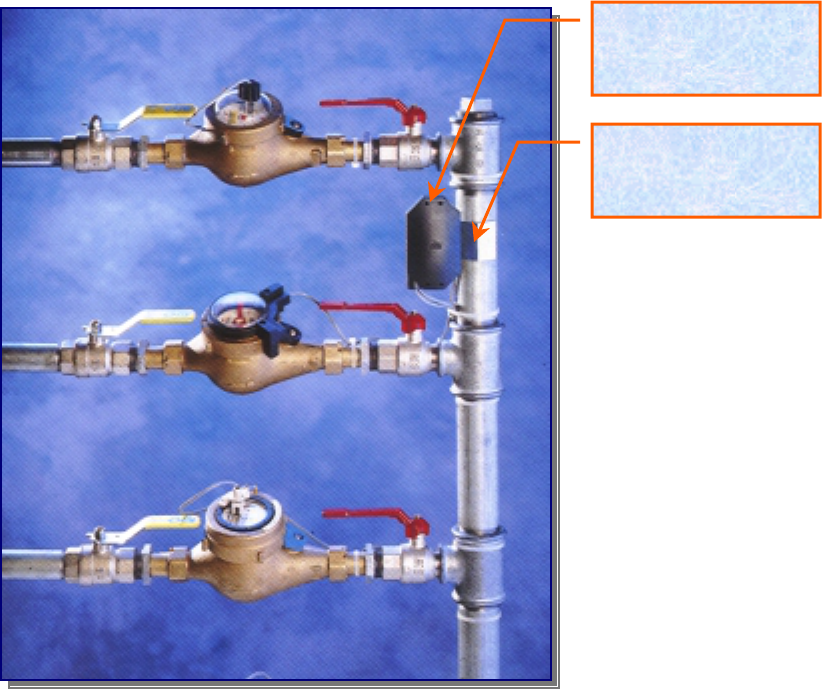
Figure 2-1: Speed HPTx Typical Installation
2.2 Block Diagram Description
2.2.1 General
Figure 2-2 describes the block diagram of the Speed HPTx unit. This device consists
of two major sections, all using a common power source:
! Digital section (Micro Controller)
! RF section
Transmitter
(Speed
Clamp
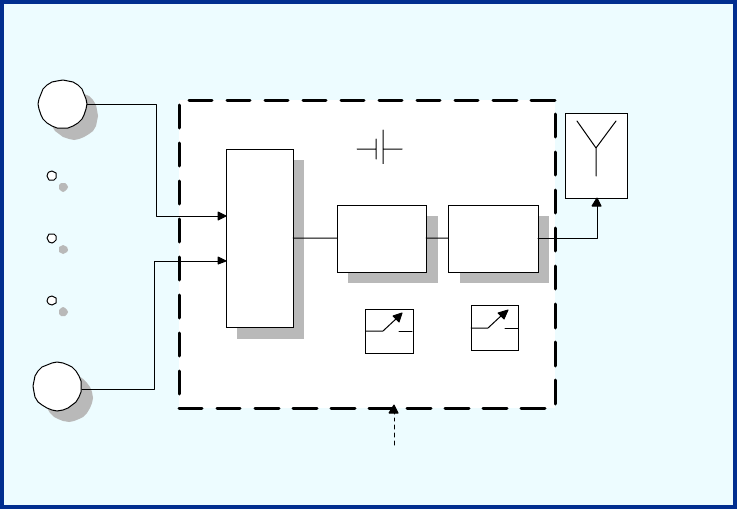
A 3.6 volts Lithium battery provides power to all parts of the device. The power
supply for the RF section is controlled via the Tx switch (not shown), thus cutting of
power to the transmitter unless necessary for actual data transmission (standby mode).
Figure 2-2: Speed HPTx Block Diagram
Meter
1
Meter
n
Sensing
and
Support
Circuitry
Micro-
Controller RF
Transmitter
Antenna
Battery
Device Enclosure
Magnetic
Switch
Tamper
Switch
2.2.2 Digital Section
The digital section of the Speed HPTx performs the following functions:
! Samples reed switches to detect short/open from each meter.
! Accumulates number of pulses for each meter separately
! Stores data (including battery and tamper alarms) and stores
information internal memory
! Interfaces the data to the RF section
The digital section is based on a central controller which accepts the following inputs:
a. Analog inputs (from reed-relay contacts) designated INPUT1 through INPUTn,
each indicating the advance of a single water meter. These are the only inputs
of the controller which are connected to the external source.
b. Magnetic switch input is utilized only for test.
c. The TAMPER SWITCH input is connected to a micro-switch that senses an
opening of the unit's box. This enables the Speed HPTx to generate and
transmit an alarm signal in the event of unauthorized opening of the unit casing.
d. The LOW VOLTAGE input of the controller is connected to battery via a Low
Voltage Detector in order to sense and generate a low battery alarm.
Each of the external analog inputs to the controller advances a separate counter in
singular steps. The counters in the controller are not pre-settable or resettable to
avoid unauthorized tampering (counter matching is thus performed only by the central
computer, ensuring excellent data security at the sites).
The controller gathers the data for several hours before initiating a transmission. If
any of the counters has advanced by more than a preset value, or any alarm (tamper
or low voltage) has been received, the controller generates a single message
immediately. Any further message will include alarm information along with counter
data, if alarm condition still exists. Note: The duration interval between two
transmissions is always greater than 1 Hr.
a. The messages generated by the controller are 16 bytes each, and are outputed
from the digital section to the RF section as serial data (RS-232 standard
protocol) via the DATA OUT output of the controller.
b. The Tx control output of the controller is used for activating the TX switch for
the duration of the message, to enable power supply to the RF section thus
enabling the transmission of the message (transmit mode).
2.2.3 RF Section
The RF section consists of a phased-locked loop (PLL) and a low-power amplifier
connected to an integral antenna.
The PLL reference is driven by a 20.0 MHz. crystal oscillator. This reference is
phase-compared by the Phase Detector with the divided output frequency.
The phase detection signal from the detector is filtered by the PLL Loop Filter and
then summed with the shaped signal received from the digital section by the Sum
Network block. The output of the Sum Network is the control signal that modulates
and locks the Voltage Control Oscillator (VCO).

Chapter 3
Technical Characteristics
3.1 Technical Specification
3.1.1 Electrical
Max Effective Radiated Power (ERP) 100 mw Peak (Complies
with FCC 90.205(d) )
Output frequency 150-170 MHz
Carrier wave modulation 2 Level FSK
Power supply Lithium battery, 3.6 Volt
Input Channels 1-10 Water Meters
Compatibility Any type of meter which has a reed relay
switch (pulsed output)
Transmission Duration 0.8 Sec. Max.
Duration between Transmissions 30 Min.
3.1.2 Physical
Operating temperature -30÷+50°C or 2
Water Resistance Splash resistance (IP-64)
(IP 68-optimal)
Length 11 cm.

Width 8 cm.
Depth 3 cm.
Weight (excluding clamp) 100 gr.
Weight (including clamp) 500 gr.
Clamp material Stainless steel
Clamp screws Protected from dismantling
3.2 Label Contents (see file: Speed HPTx ID Label)
FCC ID: MLLMLLSPEEDHPTX15-17
Mode: Speed HPTx
S/N: YY-nnnnnn
Miltel Communications Ltd. Made in Israel
This device complies with Part 15 of the FCC rules. Operation is subjected to the
following two conditions: (1) This device may not cause harmful interference, and
(2) this device must accept any interference that may cause undesired operation.
Figure 3-1: Label Design

Chapter 4
Installation Instructions
4.1 General
The Speed HPTx is installed by a professional technician. Several possibilities for
installation have been programmed into the system in order to provide solutions for
installation of various types of water meters. The Speed HPTx installation is
performed using a stainless steel clamp that enables connection to pipelines of
different diameters (0.75", 1.00", 1.50" or 2.00").
The Speed HPTx unit is protected so that it is impossible to open or dismantle the
box without breaking the four one-time screw locks.
4.2 Installation
For on-site installation of the Speed HPTx device, proceed as follows:
1) Loosen the four screws fastening the unit's box and open the box cover.
2) Install the unit's box base as required:
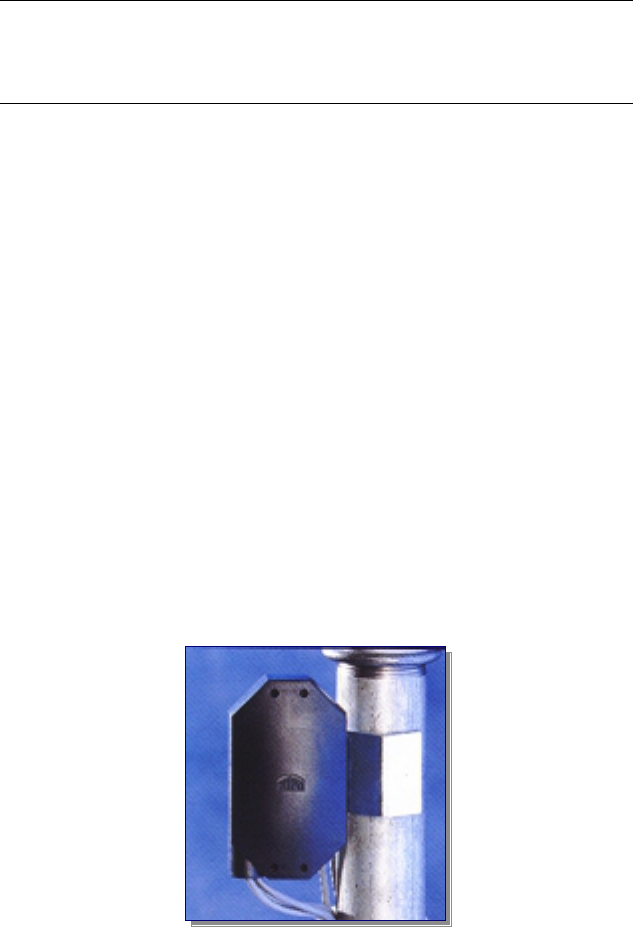
a. For pipeline installations (as in Figure 2-1), first attach the stainless steel
clamp (see Figure 4-1) to the pipeline, close it around the pipeline and
fasten the screw in the middle of the device. Place the unit's box base on
top of the screw and install it using two steel screws.
b. For wall mounting of the unit, install the base directly onto the wall or
surface using the two steel screws.
3) Connect the wire pairs from the water meters to the terminal blocks on the
PCB. Up to four such pairs can be connected, with unused connections left
open (i.e., no termination is required).
Note
Connect each pair of wires to the respective terminals; note the
connections for future reference.
4) Close the unit's box cover.
5) Perform functional radio test by touching box corner with strong magnet
(trigger transmission). Verify correct reception of data at base station
(concentrator). Update water actual readings for the respective meter.
6) Close the four screws fastening the cover.
7) Insert plastic protection plugs.
Figure 4-1: Speed HPTx - Pipeline Installation