Winncom Technologies WAF24-250 User Manual Manual
Winncom Technologies Inc. Manual
Contents
- 1. Manual
- 2. REVISED MANUAL
Manual
Amp_250_Inst_12_99 Page 1 of 5
RF POWER AMPLIFIER
The power amplifier is intended to increase receiver sensitivity and compensate for various line losses (in
the feeder, connectors and cable) as well as signal losses due to electromagnetic radiation, in order to
attain maximum allowable signal emission. The bi-directional amplifier operates in half-duplex mode in
the 2.4 - 2.5 GHz ISM frequency range.
The amplifier assembly consists of four main components:
1. Low-noise receive amplifier, transmit amplifier, and switching control unit assembled in a sealed
enclosure.
2. Bandpass filter, which determines the usable frequency band of the amplifier and its sensitivity to
interference outside of the selected RF band.
3. DC power injector. The DC power injector should be located near a transmitting device, such as a
radio modem or a bridge. The power injector connects to the transmitting device and the amplifier
assembly via 50 Ohm coaxial cable.
4. 110-220 VAC Power supply.
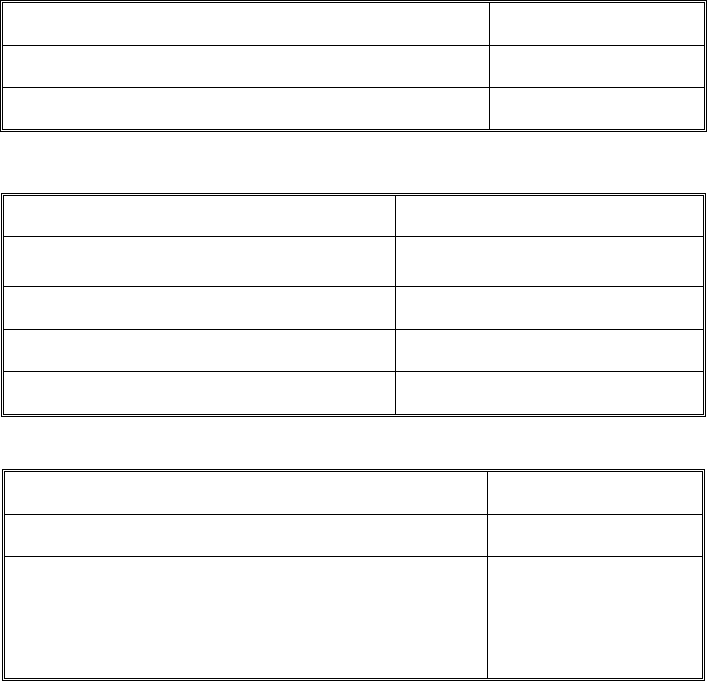
Technical Characteristics
Receive Amplifier
Gain, dB 25.0 ± 3.0
Noise figure, dB ≤ 3.0
Input saturation power, mW ≅ 10
Transmit Amplifier
Automatic gain & power control
Input power, mW 0.5 – 100
Max Output power, mW 250.00
Switching power, mW 0.5 ± 0.3
Switching time, mks ≤ 0.5
Bandpass Filter
Frequency band (with ripple 0.5 dB ), GHz 2.4 – 2.5
Attenuation in frequency band 2.4–2.5 GHz, (dB) 0.5
Out-of-Band Attenuation
@ 2 GHz, (dB)
@ 3 GHz, (dB)
60
60
Amp_250_Inst_12_99 Page 2 of 5
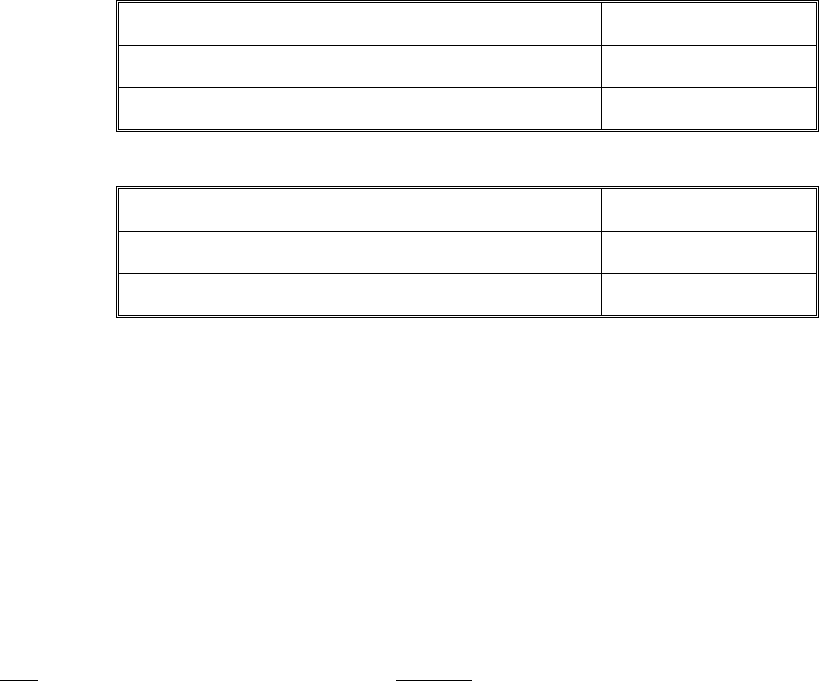
DC Power Injector
Frequency band (with ripple 0.5 dB ), GHz 2.4 – 2.5
Attenuation in frequency band 2.4–2.5 GHz, (dB) 0.6
RF connector type N-female
Power Supply
DC out, V 12
Max output power, W 12
DC Connector type BNC – male
Operating temperature range -50°C — +50°C
The filter determines the frequency characteristics of the amplifier. In standard configuration the amplifier
is shipped with a 100 MHz filter, main frequency of 2445 MHz, main frequency attenuation of 0.5 dB, and
an input shunt for quasi-direct currents. At the foregoing settings signal attenuation is > 60 dB in the 0 -
2.4 GHz and 2.5 - 18 GHz ranges.
The amplifier/filter set includes the following:
Item Quantity
Amplifier / Filter 1
DC Power injector 1
Power supply 1
Amplifier / filter mounting plate 1
U-shaped mast mounting brackets 2
Grounding strap 1

Amp_250_Inst_12_99 Page 3 of 5
Installation Instructions
Important Notice:
Read the following installation instructions and all warnings carefully prior to installing the
amplifier. Failure to follow installation instructions or tampering with the amplifier or the
power supply will void the warranty.
1. Install the amplifier mounting plate, with the amplifier and filter attached, on a mast near the external
antenna, using two U-shaped brackets (included). The amplifier can also be installed horizontally
on a mounting stand through predrilled holes in the mounting plate.
2. Connect the amplifier to the antenna and DC power injector, as marked, with 50 Ohm coaxial cable.
Important: In order for the amplifier to operate properly, and to avoid damage to the amplifier and
the power supply, the maximum input power to the amplifier must not exceed 100mW. User must
check for proper attenuation.
3. Following installation, a weather sealant of 100% silicone over electrical tape must be applied to all
external connectors to protect them from moisture (moisture can cause increased signal losses in the
feeder, diminished transmission quality, and possible damage to the connectors and the amplifier).
4. Grounding. Ensure that the mounting mast is properly grounded. Connect the amplifier assembly's
grounding strap to the mast with a bolt. Check the ground on the amplifier assembly with an Ω-
meter.
Warning:
Improper grounding can adversely affect amplifier performance and may lead to equipment
damage or personal injury. Failure to properly ground the amplifier will void the warranty.
The amplifier is not designed to withstand a lightning strike. Amplifier warranty does not
apply to damage caused by lightning.

Amp_250_Inst_12_99 Page 4 of 5
Operation of the Amplifier
• On power up, the amplifier will be in a "receive" mode. The mode switches to "transmit" when the
amplifier receives a signal from a radio modem or another transmitting device. A red light on the DC
injector indicates that the amplifier is in a "transmit" mode. The red light blinks when the amplifier is
connected to a radio bridge, and is half-lit when the amplifier is connected to a radio modem.
• A constant red light indicates that the amplifier is continuously in the "transmit" mode and is not
communicating properly. This is an abnormal condition that can be caused by any of the following:
- High noise level in the feeder of the transmitting device. With time, some radio modems
and other transmitting devices develop elevated natural noise levels, even in the "receive"
mode. This noise can cause the amplifier to switch from "receive" to "transmit" mode,
causing interruptions in communications. This problem can be diagnosed by measuring
the natural noise level of the transmitting device with an oscilloscope. If the problem is
detected, the transmitting device should be replaced.
- External interference. If the amplifier is not properly grounded, external interference can cause
the amplifier to intermittently switch to "transmit" mode. This condition has been observed with
certain brands of radio modems, due to the modems' poor shielding characteristics. Thus, if the
transmitting device is not adequately shielded, several such devices operating in close proximity
can interfere with the amplifier's operation.
• If the red light does not come on at all, the cable could be defective, or the cable length may exceed
maximum allowable length.
Important FCC Notice:
Operation of RF power amplifiers in the United States is subject to the Federal Communications
Commission's regulations in accordance with 47 USC 302. Use of the amplifiers with Part 15 transmitters
may be restricted by federal law. User is responsible for compliance with all applicable laws and
regulations.
FCC Regulatory Notice
This equipment complies with FCC Regulation 15.247, which specifies the license-free operation
of direct sequence, spread-spectrum wireless communications devices. This device operates in
the 2.4 to 2.4835 GHz frequency band reserved for industrial, scientific and medical applications.
Since this device generates radio frequency waves, it may interfere with other radio signals in
the same area unless the proper installation and operations procedures are followed. It has been

Amp_250_Inst_12_99 Page 5 of 5
proven in testing that this device complies within the limits of FCC Regulations that are designed
to provide reasonable protection against such interference in a commercial environment.
NOTE: Installation and maintenance must be performed by authorized Winncom Technologies
personnel, or those persons properly trained and authorized to do such procedures. Winncom
Technologies is not responsible for any damages, incidental or otherwise, in connection with use of this
manual by anyone not described above.
In order to comply with FCC adopted RF Exposure Requirements, the included antenna must
be installed in a manner that will provide clearance from the antenna, to any personnel
or member of the public, according to the following guide:
WRO2400-70 - 7dBi Omni …………………….. 20 cm
WRO2400-125 - 12.5 dBi Omni ………………. 20 cm
HGY15 – 13.5 dBi Yagi ………………………… 21 cm
WRO2400-24 – 24 dBi Grid Dish …………….. 71 cm