

File info: application/pdf · 39 pages · 6.52MB
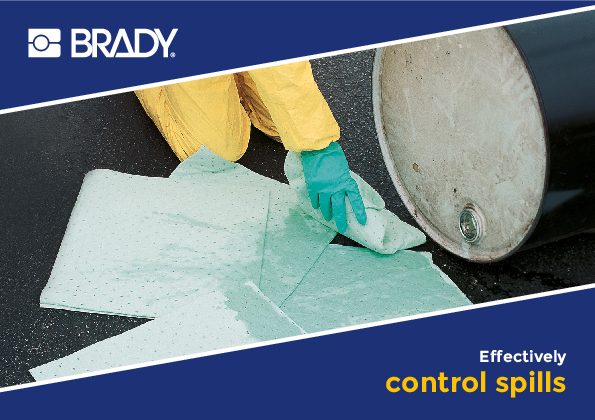
Effectively control spills
A clear set of instructions will help trained employees to safely control spills when they occur. Larger spills may require deployment of specialised teams, third party responders or governmental agencies. The following…
Full PDF Document

If the inline viewer fails, it will open the original document in compatibility mode automatically. You can also open the file directly.
Extracted Text
Effectively
control spills

Why this guide
Uncontrolled spills can have a devastating effect on the environment, on people and businesses in the vicinity of the spill, and on a company's future. Well prepared companies can stop spills before they cause workplace accidents, affect the health of employees and people living nearby, damage the environment and contaminate water. Investing in spill control tools can prevent major costs in fines, damages and pollution cleanup. Being prepared for potential spills is not only a good management practice. It is also required by law in most countries.
This Spill control guide book offers ideas on how to prepare for potential spills and what to do in case of a spill. The guide also includes a number of solutions that can be deployed to prevent spills from spreading and to remove spills.
2

CONTENTS

2 Why this guide?

4 Compliance

6 The cost of a spill

7 Spill prevention and response plan

23 10 steps to contain and remove spills

34 Spill control tools

35

Pro-active spill containment

37

Reactive spill containment

3

CONTENTS

Compliance
Spill control solutions can help make your company compliant. Controlling spills to protect the environment is a legal requirement in most parts of the world. International norms and legislation are applicable and in many countries compliance with national spill related legislation is mandatory.

International
� ISO 45001, Occupational health and safety
United States of America
� Clean Water Act: prevention of oil spills into navigable waters and adjoining shorelines
� Hazardous Waste Operations and Emergency Response Standard, Title 29 Code of Federal Regulations (CFR) Part 1910.120

European Union
� Water Framework Directive 2000/60/EC: protection of inland surface waters, transitional waters, coastal waters and groundwater
� Environmental Liability Directive 2004/35/EC: prevention and remediation of environmental damage under the polluter pays principle
� Offshore Safety Directive 2013/30/ EU: safety of offshore oil and gas operations
� Directive 2009/31/EC: geological storage of carbon dioxides
� Directive 2006/21/EC: management of waste from extractive industries

4

COMPLIANCE

The cost of a spill
Large spills that spread quickly can lead to extreme clean-up costs with a potentially devastating impact on the environment and company profitability. Even minor spills can prove costly if they lead to workplace accidents such as slips and falls.
5

SPILL COST

Quickly preventing spills from spreading is the most cost-efficient solution. If a spill is well contained, safety, compliance and cleanup costs will be lower and easier to absorb. Without a good containment plan, a spill may contaminate soil and water ways surrounding the plant leading to a quickly growing impact that is extremely difficult to control. Having a spill prevention and response plan in place can limit these costs to protect employees, the environment and company profitability.
6

THE COST OF A SPILL

Spill prevention and response plan
With a spill prevention and response plan in place, you will be better prepared to control spills when they occur. Do you know which chemicals are present on-site and which machinery is most likely to leak oil from time to time? If a leak occurs, which drain would the spill flow to, and where will that drain eventually lead your spill?
Controlling spills is all about being prepared. It is about setting up pro-active and reactive counter measures where they are needed and about training responsible employees.
7

A spill prevention and response plan should minimally include:

1. a risk assessment

2. a chemical inventory

3. a description of countermeasures

4. a site map with high risk

5. a procedure to notify

locations and

stakeholders

countermeasures

6. a procedure to contain and remove spills

8

SPILL PREVENTION AND RESPONSE PLAN

1. A risk assessment
A good start for your spill prevention and response plan is a risk assessment that covers the impact of potential accidents and damage to property or the environment, as well as the likelihood of a spill.

Catastrophic

Severity

Critical Marginal Negligible

Frequent
Extremely High
Extremely High
High
Medium

Probability

Likely
Extremely High
High

Occasional High High

Seldom High
Medium

Medium

Medium

Low

Low

Low

Low

Unlikely Medium
Low Low Low

9

SPILL PREVENTION AND RESPONSE PLAN

Spill probability, severity and maximum volume. Here are a few attention points to watch out for when determining spill probability, severity and maximum volume.

Spill probability: determine the probability a release will occur for stored drums, IBC's and other containers, for machinery, pipes and valves or for drills and refining equipment if relevant. Take potential flooding or fire hazards into account that may result in an undesired spill.

Spill severity: determine the extent of harm to people (acute, delayed, chronic) and take risk groups into account. Determine the potential damage to property (temporary, repairable, permanent) and to the environment (recoverable, permanent). Take into account any unusual environmental conditions. If your site is in a flood plain, the impact of a spill will be more severe.

Maximum spill volume: in the risk assessment, determine the maximum volume countermeasures can or should be able to handle. A rule of thumb is that the volume of a spill deck should be equal to the largest barrel stored, or minimum 10% of the total volume stored on the deck. However, if your plant is located in high risk areas, such as water extraction areas, this volume should be 100%.

10

SPILL PREVENTION AND RESPONSE PLAN

2. A chemical inventory
Keep an inventory of chemicals present on-site including name and CAS-number, quantity, hazard class and code, location, date received and date removed. Keeping track of chemicals will enable you to adapt available countermeasures to optimally control potential spills with the right tools. Templates are available to create adequate chemical inventories.
11

i Water based, oil based and chemical based spills may require different countermeasures that are able to absorb liquids spilled. For chemical based spills it is important to use a countermeasure that does not react with the chemical.
i With the GHS/CLP app from Brady Workstation, a compliant GHS/CLP label can easily be designed based on the chemical's CAS-number. Print it on a self-adhesive label with a Brady printer and apply!
SPILL PREVENTION AND RESPONSE PLAN

3. A description of countermeasures
Based on your risk assessment and chemical inventory, describe which countermeasures should be available, and how many.

12

SPILL PREVENTION AND RESPONSE PLAN

Countermeasures may include:
� pro-active containment:
� fixed, concrete containment basins � mobile containment basins or spill berms
� response equipment:
� chemical, oil and/or universal sorbents � drain covers � granulars � portable/moveable spill kits � spill stations to store and distribute
� personal protection equipment
� skin protection � eye protection

� indirect spill control equipment
� fire suppression tools for flammable spills � eye-wash stations for irritating spills
� medical cabinet or room
� training
� safety datasheets � training programmes for affected personnel
When the list of fitting countermeasures is complete, it is time to link the risk assessment, chemical inventory and countermeasures to a physical location in the plant.

A spill deck's total volume should be equal to the largest barrel, or minimum 10% of the total volume stored on the deck.

13

SPILL PREVENTION AND RESPONSE PLAN

4. A site map with high risk locations and countermeasures
Create a map of the plant to consolidate and link the information from your risk assessment, chemical inventory and countermeasures needed.
� indicate high risk areas, including leak prone areas, machinery and equipment, drums and IBC's
� indicate where specific chemicals are stored or located
� match risks with pro-active and responsive spill control and other safety equipment close by
The map will show you where countermeasures are needed to control spills. This will help ensure that appropriate spill control tools are quickly available where they are needed. You should be able to determine which amount of countermeasures is needed at every location based on the risk assessment of close by machinery, equipment and chemicals.

14

SPILL PREVENTION AND RESPONSE PLAN

Site map example Look at the below, stylised example of a production unit. High risk and leak prone areas are indicated.

2 1
3
15

4
5
SPILL PREVENTION AND RESPONSE PLAN

Site map example Area 1 is identified as a high risk area for oil spills, and needs a spill control solution that absorbs oil, while rejecting water.

1
1

Exterior Bulk Storage

Oil only spill control products are ideal to

2

combat outdoor leaks as they absorb oil and repel water.repel water.

3

4

5

16

SPILL PREVENTION AND RESPONSE PLAN

Site map example Area 2 is a fluid storage area with a high volume spill risk. It needs a spill control solution to handle these volumes.

2
2

Interior Fluid Storage Consider specialty items like drum top covers and spill pallets to manage all types of leaks.

1

3

4

5

17

SPILL PREVENTION AND RESPONSE PLAN

Site map example Area 3 houses machinery that is prone to leak and needs a pro-active solution to prevent spills from spreading.

2

1

3

3

Machinery & Equipment SOCs surround machinery to prevent leaks while pillows are placed underneath.
4

5

18

SPILL PREVENTION AND RESPONSE PLAN

Site map example Exits, bays and doors can be identified as a last line of defence with reactive spill control to keep spills from leaving the factory.

2 Shipping & Receiving
Keep spill kits near any entrances to prevent spills from reaching the environment. Industrial
1 rugs are durable enough for fork lift traffic.
3

4
4

5

19

SPILL PREVENTION AND RESPONSE PLAN

Site map example Area 5 is an area where a variety of smaller spills may occur. It needs a number of flexible, general purpose spill control solutions, both pro-active and reactive.

2
1
3
Production, Assembly & Maintenance Make sure to have plenty of pads and rolls on hand. These general purpose items come in a variety of sizes to support your facility needs.

4
5
5

20

SPILL PREVENTION AND RESPONSE PLAN

5. A procedure to notify stakeholders
Procedures to notify governments and stakeholders are included in national and or regional environmental legislation.
These procedures may require companies to immediately notify relevant governmental agencies, as well as industries and inhabitants that may be adversely impacted by a spill.
Governments will usually require fast reporting on a number of parametres, which may include:
� Company identification data � Time, nature, context and causes for the spill � Products involved � All data that can help determine the impact of the spill on people and the
environment � All measures and actions taken to control the spill
Requirements for stakeholder notification will be different on a country by country, or even on a regional basis.
We strongly recommend checking relevant legislation which may even include a form that can be completed in case of a spill to support faster communication of relevant information for all stakeholders involved.
21

6. A procedure to contain and remove spills
Your chemical inventory can be used as a starting point to determine a safe way to contain and remove spills. Which risks are involved? Should protective clothing be worn? Who should be contacted? Is it enough to remove a spill with available tools, or is further decontamination required?
i We have captured more information about containing and removing spills in the next chapter.

22

SPILL PREVENTION AND RESPONSE PLAN

10 steps to contain and remove spills
A clear set of instructions will help trained employees to safely control spills when they occur. Larger spills may require deployment of specialised teams, third party responders or governmental agencies.
The following 10 steps can be used as guidance to set up your spill containment and removal procedure.

23

10 STEPS TO CONTAIN AND REMOVE SPILLS

1. Assess risks
� Which substance is spilled?
� How big is the spill?
� Is the spill still spreading?
� Can the spill reach water?
� What size perimeter should be set up?
Help employees determine which substance has been spilled by using pipe markers or safety signs.

Get the pipe marking guide Get the safety sign guide
24

10 STEPS TO CONTAIN AND REMOVE SPILLS

2. Wear protective clothing
Provide appropriate protective clothing where needed so employees can protect themselves against harmful liquids when a spill occurs. Protective clothing can include a variety of items, most commonly gloves, goggles, mouth masks and overalls.

25

10 STEPS TO CONTAIN AND REMOVE SPILLS

3. Contain the spill
� Use absorbent pads, socks or booms to prevent the spill from spreading
� Use appropriate equipment to block drains, sewer grates or water outlets
� Shovel surrounding soil to create berms or dams for outdoor spills
26

4. Stop the source
� Shut down power � Close gas lines � Close valves � Seal leaky barrels � Repair leaky vehicles � Tighten hose connections

27

10 STEPS TO CONTAIN AND REMOVE SPILLS

5. Start clean up
Use absorbent pads or granular to absorb the spilled liquid

28

10 STEPS TO CONTAIN AND REMOVE SPILLS

6. Contact authorities
� Follow the procedure to contact stakeholders as described in the spill prevention and response plan
� Prepare a spill report in line with applicable laws and regulations

29

10 STEPS TO CONTAIN AND REMOVE SPILLS

7. Dispose spill control material
� Place used absorbent material in a bag or container. Take proper safety precautions, because absorbent materials also absorb the liquid's characteristics and may have become flammable, combustible, cause skin irritation or air contamination.
� Dig up contaminated soil and containerise. For heavily polluted spills, test kits can help determine how much soil to dig up.
� Properly dispose of spill residue

30

10 STEPS TO CONTAIN AND REMOVE SPILLS

8. Decontaminate
Depending on the product spilled, or on the volume of the spill, the cleanup isn't final before responders, tools, machines and the area are decontaminated.
Tools and measures to decontaminate should be ready at all times, so they can be used to quickly decontaminate workers before receiving medical treatment. The proper use of decontamination tools should be including in spill control training so they can be used and applied quickly, and in a correct way.

31

10 STEPS TO CONTAIN AND REMOVE SPILLS

9. Restock material
When a spill has been controlled and removed, determine which and how many disposable tools were used. Restock spill control tools to be ready for future occurrences.

32

10 STEPS TO CONTAIN AND REMOVE SPILLS

10. Review spill prevention and response plan
Evaluate your spill prevention and response plan.
� Were you able to quickly control the spill?
� Were appropriate tools available where needed?
� Was the spill controlled and removed in a safe and responsible manner?
If necessary, take steps to adjust or finetune the spill prevention and response plan.

33

10 STEPS TO CONTAIN AND REMOVE SPILLS

Spill control tools
Brady offers a number of spill control tools for land-based spills that can be deployed pro-actively or reactively, to absorb and/or prevent spills from spreading.

34

SPILL CONTROL TOOLS

Pro-active spill containment
Equipment and machinery that is prone to leak, or stored drums and IBC's, can proactively be equipped with spill containment tools to prevent pollution and workplace accidents.
Decks and Pallets With a capacity of 80 litres, our 2-drum, forklift-friendly spill decks are a cost effective way for containing potentially hazardous leaks in drum storage and dispensing areas. Each modular deck has built-in clips to easily and safely connect multiple decks to create a customised drum storage platform.
Berms To proactively contain spills from drums and IBCs, we offer a reusable, lightweight yet heavy-duty Rigid Lock Quickberm that is very practical to use and set up. Its sides can be collapsed to allow forklift traffic and can easily be redeployed for spill containment.

35

SPILL CONTROL TOOLS

Mats Spill control mats and rugs keep aisles and walkways slip-free by absorbing and containing oils, liquids or other spills. They are designed to hold up in your toughest applications and are ideal for high traffics areas and workstations. Compared to an entrance mat, absorbent mats and rugs offer better traction, reduce slipperiness and keep liquids from being tracked from one area to the next.
SOCs Absorbent SOCs are dependable, flexible tubes that contain and absorb liquids. SOCs mold around corners and conform to uneven surfaces to soak up spills and drips, preventing fluid from escaping to other areas.

Pillows Absorbent pillows are ideal for use under machines that are known to drip or leak. Pillows are easy to retrieve, and can soak up oil and water-based fluids in hard-to-reach areas including sumps, catch basins and outdoor ponds.

36

SPILL CONTROL TOOLS

Reactive spill containment
When pro-active spill containment is not enough, or not in place, spill control tools are available to prevent spills from spreading and finally remove them.
Pads Pre-cut pads are cost effective and convenient for wiping or catching drips. Minimal lint-versions are available and 3 categories are offered to choose from: heavyweight, medium and lightweight depending on the spill volumes to be removed.
Rolls Pads are also available on continuous rolls to quickly cover larger surfaces and absorb spills, leaks and drips that have already spread.

37

SPILL CONTROL TOOLS

Socs Primarily used as a pro-active tool, socs are flexible enough to quickly create a small dam to limit the spread of a spill when it has already occurred.
Granulars The small, loose particles of a granular absorbent make it ideal for applications where a pad or roll would not offer a proper fit. In those instances, a granular absorbent can absorb liquids from the cracks and crevices of a variety of surfaces.

38

SPILL CONTROL TOOLS

Africa Randburg, South Africa Tel: +27 11 704 3295 africa@bradycorp.com
Benelux Zele, Belgium Tel. +32 (0) 52 45 78 11 benelux@bradycorp.com
Central & Eastern Europe Bratislava, Slovakia Tel. +421 2 3300 4800 central_europe@bradycorp.com
Denmark Odense Tel. +45 66 14 44 00 denmark@bradycorp.com

France Roncq Tel. +33 (0) 3 20 76 94 48 france@bradycorp.com
Germany, Austria & Switzerland Egelsbach, Germany Tel. +49 (0) 6103 7598 660 germany@bradycorp.com
Hungary Buda�rs Tel. +36 23 500 275 central_europe@bradycorp.com
Italy Gorgonzola Tel: +39 02 26 00 00 22 italy@bradycorp.com

Middle East FZE Dubai, UAE Tel. +971 4881 2524 me@bradycorp.com
Norway Kjeller Tel. +47 70 13 40 00 norway@bradycorp.com
Romania Bucharest Tel: +40 21 202 3032 central_europe@bradycorp.com
Russia Moscow Tel: +7 495 269 47 87 central_europe@bradycorp.com

We identify and protect people, products and premises.
www.bradyeurope.com

Spain & Portugal Madrid, Spain Tel. +34 900 902 993 spain@bradycorp.com portugal@bradycorp.com
Sweden, Finland, Baltic States Kista, Sweden Tel. +46 (0) 8 590 057 30 sweden@bradycorp.com
Turkey Istanbul Tel. +90 212 264 02 20 / 264 02 21 turkey@bradycorp.com
UK & Ireland Banbury, UK Tel. +44 (0) 1295 228 288 uk@bradycorp.com

22/04/2020 EUR-M-990-EN � 2020 Brady Worldwide inc. All rights reserved