ATBS Technology AT69T Thru Flow TPMS External Sensor User Manual

ATBS Technology Co. Thru Flow TPMS External Sensor Users Manual

Users Manual

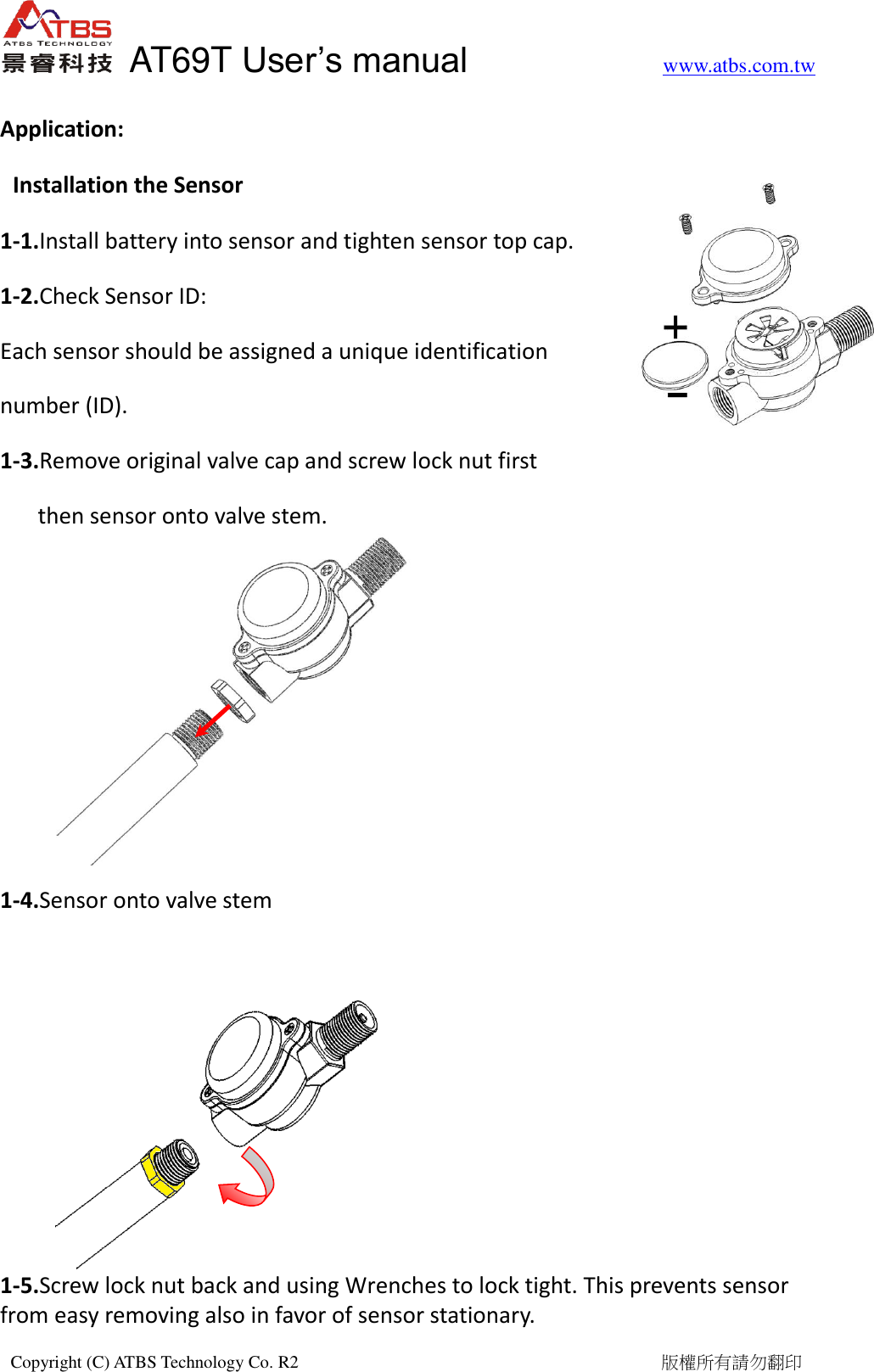
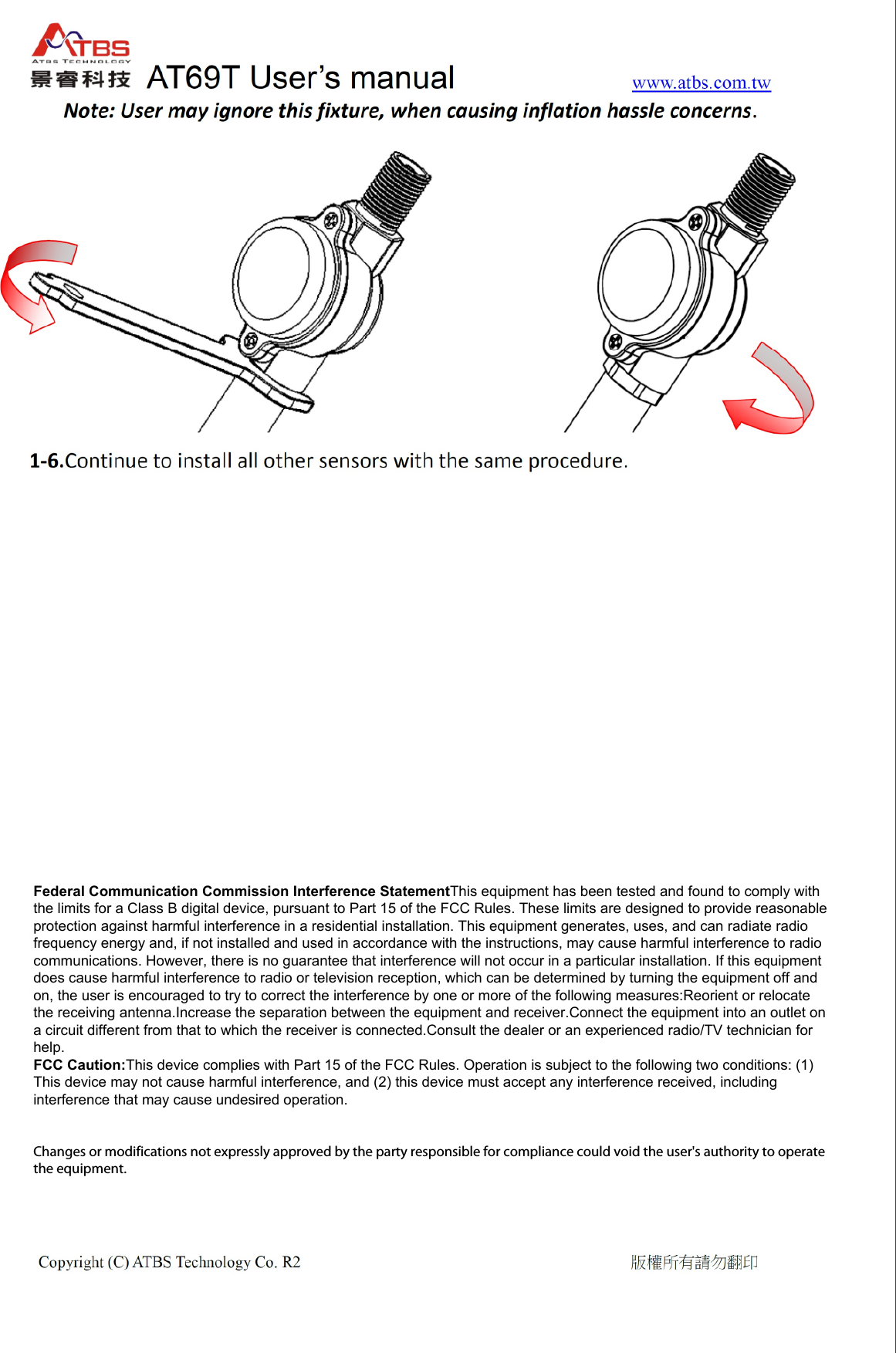
  AT69T User’s manual           www.atbs.com.tw  Copyright (C) ATBS Technology Co. R2                                                                                  版權所有請勿翻印    Application: Installation the Sensor 1-1.Install battery into sensor and tighten sensor top cap. 1-2.Check Sensor ID: Each sensor should be assigned a unique identification   number (ID). 1-3.Remove original valve cap and screw lock nut first   then sensor onto valve stem.       1-4.Sensor onto valve stem       1-5.Screw lock nut back and using Wrenches to lock tight. This prevents sensor from easy removing also in favor of sensor stationary.
Federal Communication Commission Interference StatementThis equipment has been tested and found to comply withthe limits for a Class B digital device, pursuant to Part 15 of the FCC Rules. These limits are designed to provide reasonableprotection against harmful interference in a residential installation. This equipment generates, uses, and can radiate radiofrequency energy and, if not installed and used in accordance with the instructions, may cause harmful interference to radiocommunications. However, there is no guarantee that interference will not occur in a particular installation. If this equipmentdoes cause harmful interference to radio or television reception, which can be determined by turning the equipment off andon, the user is encouraged to try to correct the interference by one or more of the following measures:Reorient or relocatethe receiving antenna.Increase the separation between the equipment and receiver.Connect the equipment into an outlet ona circuit different from that to which the receiver is connected.Consult the dealer or an experienced radio/TV technician forhelp.FCC Caution:This device complies with Part 15 of the FCC Rules. Operation is subject to the following two conditions: (1)This device may not cause harmful interference, and (2) this device must accept any interference received, includinginterference that may cause undesired operation.Changes or modifications not expressly approved by the party responsible for compliance could void the user's authority to operatethe equipment.

Navigation menu