Chi Mei Communication Systems 0602DBS01 Smart Phone User Manual Debussy
Chi Mei Communication Systems, Inc. Smart Phone Debussy
Contents
- 1. Manual
- 2. Revised Manual
Manual
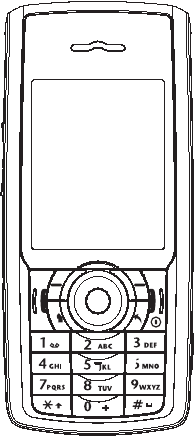
Smart Phone
GSM 850/900/1800/1900MHz
User‘s Guide

Contents
Phone Overview . . . . . . . . . . . . . . . . . . . . . . . . . . . . . . . . . 1
Menu Options . . . . . . . . . . . . . . . . . . . . . . . . . . . . . . . . . . . 3
Important Safety Precautions . . . . . . . . . . . . . . . . . . . . . . 5
Getting Started . . . . . . . . . . . . . . . . . . . . . . . . . . . . . . . . . . 9
Package Checklist . . . . . . . . . . . . . . . . . . . . . . . . . . . . . . 9
About This Manual . . . . . . . . . . . . . . . . . . . . . . . . . . . . . . 9
Installing the SIM Card . . . . . . . . . . . . . . . . . . . . . . . . . . 10
Installing the Battery . . . . . . . . . . . . . . . . . . . . . . . . . . . . 11
Charging the Battery. . . . . . . . . . . . . . . . . . . . . . . . . . . . 12
Battery Usage. . . . . . . . . . . . . . . . . . . . . . . . . . . . . . . . . 13
Turning Your Phone On/Off. . . . . . . . . . . . . . . . . . . . . . . 15
Adjusting Volume . . . . . . . . . . . . . . . . . . . . . . . . . . . . . . 15
Making a Call . . . . . . . . . . . . . . . . . . . . . . . . . . . . . . . . . 16
Answering a Call. . . . . . . . . . . . . . . . . . . . . . . . . . . . . . . 18
Basic Operation . . . . . . . . . . . . . . . . . . . . . . . . . . . . . . . . 19
Using the Display . . . . . . . . . . . . . . . . . . . . . . . . . . . . . . 19
Using the Home Key . . . . . . . . . . . . . . . . . . . . . . . . . . . . 21
Using the 4-Way Navigation Key. . . . . . . . . . . . . . . . . . . 22
Using the Action Button . . . . . . . . . . . . . . . . . . . . . . . . . 23
Using the Soft Keys . . . . . . . . . . . . . . . . . . . . . . . . . . . . 23
Using the Back Key. . . . . . . . . . . . . . . . . . . . . . . . . . . . . 24
Using Menus. . . . . . . . . . . . . . . . . . . . . . . . . . . . . . . . . . 25
Entering Text and Numbers . . . . . . . . . . . . . . . . . . . . . . 26
Viewing Phone Information. . . . . . . . . . . . . . . . . . . . . . . 32
Locking and Unlocking the Keypad. . . . . . . . . . . . . . . . . 32
Locking and Unlocking Your Phone . . . . . . . . . . . . . . . . 33
Locking and Unlocking Your SIM Card . . . . . . . . . . . . . . 35
Customizing Your Phone . . . . . . . . . . . . . . . . . . . . . . . . 36
Using Phone Settings . . . . . . . . . . . . . . . . . . . . . . . . . . 38
Using Sound Settings . . . . . . . . . . . . . . . . . . . . . . . . . . 39
Using Profiles . . . . . . . . . . . . . . . . . . . . . . . . . . . . . . . . 40
Changing the Home Screen . . . . . . . . . . . . . . . . . . . . . 44
Changing Regional Settings . . . . . . . . . . . . . . . . . . . . . 45
Setting Time-Out, Alert Volume, and Search Contacts Text
Mode . . . . . . . . . . . . . . . . . . . . . . . . . . . . . . . . . . . . . . . 45
Adjusting Date and Time. . . . . . . . . . . . . . . . . . . . . . . . 46
Entering Owner Information . . . . . . . . . . . . . . . . . . . . . 46
Configuring Power Management. . . . . . . . . . . . . . . . . . 46
Calling Features . . . . . . . . . . . . . . . . . . . . . . . . . . . . . . . 47
Redialing a Number . . . . . . . . . . . . . . . . . . . . . . . . . . . 47
Calling a Contacts Entry . . . . . . . . . . . . . . . . . . . . . . . . 47
Making a Call from the Call History List . . . . . . . . . . . . 54
Calling a Number in a Message . . . . . . . . . . . . . . . . . . 56
Calling an Emergency Number . . . . . . . . . . . . . . . . . . . 57
Calling with Speed Dial . . . . . . . . . . . . . . . . . . . . . . . . . 58
Using Voicemail. . . . . . . . . . . . . . . . . . . . . . . . . . . . . . . 59
Using Call Waiting. . . . . . . . . . . . . . . . . . . . . . . . . . . . . 59
Putting a Call on Hold . . . . . . . . . . . . . . . . . . . . . . . . . . 60
Muting a Call . . . . . . . . . . . . . . . . . . . . . . . . . . . . . . . . . 61
Using the Handsfree Function. . . . . . . . . . . . . . . . . . . . 61
Making a Conference Call. . . . . . . . . . . . . . . . . . . . . . . 62
Forwarding Calls . . . . . . . . . . . . . . . . . . . . . . . . . . . . . . 64
Barring Calls . . . . . . . . . . . . . . . . . . . . . . . . . . . . . . . . . 64
Monitoring Phone Use. . . . . . . . . . . . . . . . . . . . . . . . . . 64
Making Data Calls . . . . . . . . . . . . . . . . . . . . . . . . . . . . . 65
Messages and Online Chat . . . . . . . . . . . . . . . . . . . . . . 73
Configuring an Email Account. . . . . . . . . . . . . . . . . . . . 80
Receiving Email from the Internet. . . . . . . . . . . . . . . . . 82
Composing and Sending an Email or SMS Message. . . 85
Viewing Email/SMS Messages . . . . . . . . . . . . . . . . . . . . 89
Communicating with MSN® Messenger. . . . . . . . . . . . . 95
Advanced Features . . . . . . . . . . . . . . . . . . . . . . . . . . . . 100
Opening Applications with Speed Dial . . . . . . . . . . . . . 100
Synchronizing Information among Devices. . . . . . . . . . 104
Using a BluetoothTM Connection . . . . . . . . . . . . . . . . . 116
Using Your Phone as a Modem . . . . . . . . . . . . . . . . . . 119
Managing Files . . . . . . . . . . . . . . . . . . . . . . . . . . . . . . . 125
Managing Phone System Resources . . . . . . . . . . . . . . 127
Removing Programs . . . . . . . . . . . . . . . . . . . . . . . . . . . 129
Personal Information Management. . . . . . . . . . . . . . . . 130
Using the Contacts . . . . . . . . . . . . . . . . . . . . . . . . . . . . 130
Using Calendar . . . . . . . . . . . . . . . . . . . . . . . . . . . . . . . 134
Using Tasks . . . . . . . . . . . . . . . . . . . . . . . . . . . . . . . . . 138
Using Voice Recorder . . . . . . . . . . . . . . . . . . . . . . . . . . 140
Using Calculator . . . . . . . . . . . . . . . . . . . . . . . . . . . . . . 141
Media Center. . . . . . . . . . . . . . . . . . . . . . . . . . . . . . . . . . 143
Taking Photos . . . . . . . . . . . . . . . . . . . . . . . . . . . . . . . . 143
Viewing Photos . . . . . . . . . . . . . . . . . . . . . . . . . . . . . . . 147
Creating Picture Folder. . . . . . . . . . . . . . . . . . . . . . . . . 149
Playing Video Clips . . . . . . . . . . . . . . . . . . . . . . . . . . . . 152
Managing Media Files. . . . . . . . . . . . . . . . . . . . . . . . . . 152
Using Internet Explorer® . . . . . . . . . . . . . . . . . . . . . . . 154
Using Windows Media Player . . . . . . . . . . . . . . . . . . . . 157
Playing Games . . . . . . . . . . . . . . . . . . . . . . . . . . . . . . . 162
Managing Java® . . . . . . . . . . . . . . . . . . . . . . . . . . . . . . 165
Q & A . . . . . . . . . . . . . . . . . . . . . . . . . . . . . . . . . . . . . . . . 168
Care and Maintenance . . . . . . . . . . . . . . . . . . . . . . . . . . 173
Microsoft® End User License Agreement . . . . . . . . . . 176
1
Phone Overview
Welcome to the world of this smartphone device. Your
wireless phone delivers to you simplified communications,
increased productivity and the control to develop a superior
mobile experience whether at work, at home, on the road or
at play.
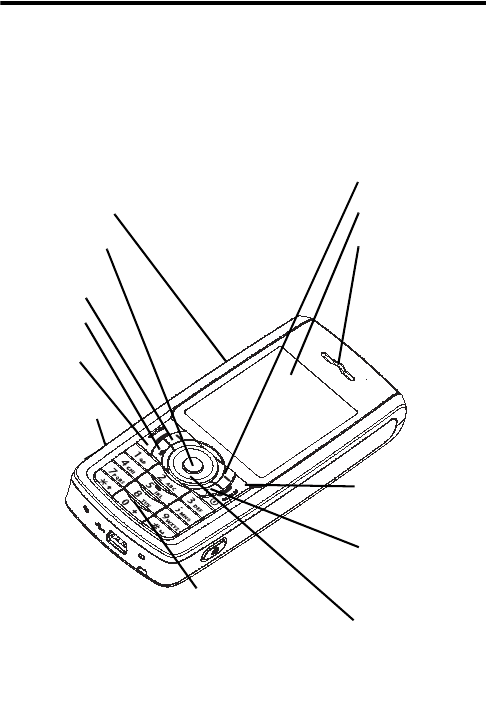
Power Button
Keypad
Earpiece
Display
Action Button
Right Soft Key
Back Key
End Key
Volume Button
Home Key
Send Key
4-Way
Navigation Key
Micro - SD
Left Soft Key
2
Company Name
Company Address
Company Phone Number
Company Website (Company Located Country)
Product Name is the registered trademark of Company Name Inc. in
Company Located Country and other countries. JVM is provided by
iaSolution. Java and all other Java-based marks are trademarks or
registered trademarks of Sun Microsystems, Inc. in the U.S. and other
countries. Bluetooth is the proprietary trademark and licensed to
Company Name. Microsoft, Windows, ActiveSync, and Windows Media
are the registered trademarks of Microsoft Inc. and Windows XP and
Windows Mobile are the trademarks of Microsoft Inc. All other product or
service names are the property of their respective owners.
© Company Name, Inc. 2005.
Software Copyright Notice
The products described in this manual may include copyrighted Company
Name and third-party software stored in semiconductor memories or
other media. Laws in Company Located Country and other countries
preserve for Company Name and third-party software providers certain
exclusive rights for copyrighted software, such as the exclusive rights to
distribute or reproduce the copyrighted software. Accordingly, any
copyrighted software contained in the products may not be modified,
reverse-engineered, distributed, or reproduced in any manner to the
extent allowed by law. Furthermore, the purchase of the products shall
not be deemed to grant either directly or by implication, estoppel, or
otherwise, any license under the copyrights, patents, or patent
applications of Company Name or any third-party software provider,
except for the normal, non-exclusive, royalty-free license to use that
arises by operation of law in the sale of a product.

3
Menu Options
This is the default menu on your smartphone. It can be
accessed by pressing
Start
from the Home screen of
your phone.
Note:
This is the standard main menu layout. Menu
organization and feature names may vary on your phone. Not
all features may be available on your phone.
* Optional network, SIM card, or subscription-dependent feature.
Internet Explorer *
Tasks
Windows Media *
Calendar
Messaging
• Text Message
• Outlook E-mail
Contacts
ActiveSync
Call History
Settings
• Phone *
• Sounds
• Profiles
• Home Screen
• Clock & Alarm
• Connections
• Security
• Remove Programs
• Power Management
• Accessibility
• Regional Settings
•Owner Information
• About
• Error Reporting
• Phone Settings
Games
Voice Recorder
Picture s& Videos
Accessories
•Calculator
• Download Agent
• Modem Link
File Explorer
File Manager
JBlend
Pocket MSN
Resource Manager
4
#
SIM manager
Speed Dial
T9 Settings
XLex Dictionary
Shortcuts
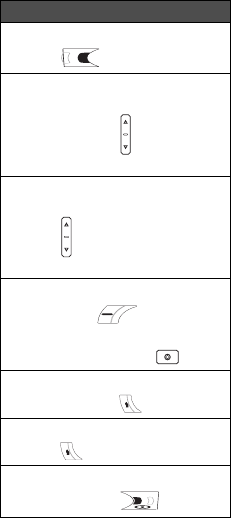
Go to dialed calls list:
Press (in idle).
Use Speech Recognition or
Voice Recorder:
Press and hold up or down
(in idle).
Adjust earpiece or speaker
volume:
Press up or down to increase
or decrease volume.
Take photos:
Press
Start
>
More
>
More
>
Video Camera
. Fix the
viewfinder and press .
Open Quick List:
Press and hold (in idle).
Go to Home screen:
Press .
Lock keypad:
Press and hold (in idle).
5
Important Safety Precautions
When using this product, the safety precautions below must be taken
against possible legal issues and damages.
SAFETY IN AIRCRAFT
The interference would be caused by this product
to an aircraft's navigation system and its network.
In most countries, using this product on board an
airplane is against the law.
SAFETY FOR ENVIRONMENTS
Do not use this product in gas stations. Also the
use of this product is prohibited in fuel storehouse,
chemical plants and locations containing
explosives.
SAFETY ON THE ROAD
Vehicle drivers in motion are not permitted to use
telephony services with the handheld device,
except in the case of emergency. In some
countries, using hand-free devices as an
alternative is allowed.
SAFETY ABOUT RADIATION
This product should be operated in the suggested
normal condition only to ensure the radiative
performance and safety of the interference.

6
Attention
SAFETY FOR MEDICAL EQUIPMENT
This product may cause malfunctions of medical
equipment. In most hospital or medical centers,
use of this product is forbidden.
There are no user serviceable parts inside this product.
If this product appears to be broken, call a qualified
service personnel or send this product to your original
dealer. Do not attempt to disassemble or repair this
product as it may result in electric shock or
unrecoverable damage to the product itself.
Keep this product out of reach of small children.
Store this product in its protective case in a cool dry
place.
Do not throw the battery into fire or other heat source.
Dispose of used batteries according to your local
regulations.
Caution:
RISK OF EXPLOSION IF BATTERY
IS REPLACED BY AN INCORRECT TYPE.
DISPOSE OF USED BATTERIES
ACCORDING TO THE INSTRUCTIONS.
7
Tips When Using
•
Avoid using the product near metal structures (for example, large
metal furniture or steel frames of a building). The transmission
and reception of signal can be effected by these objects.
•
Avoid using the product near strong electromagnetic sources,
such as microwave ovens, sound speakers, TV and radio.
•
Avoid using the product right after dramatic change of
temperature.

8
European Union Directives Conformance Statement
Hereby, Company Name declares that this product is in
compliance with
•
The essential requirements and other relevant provisions of
Directive 1999/5/EC
•
All other relevant EU Directives

9
Getting Started
Getting Started
Package Checklist
Your mobile phone comes with a battery, travel charger,
USB data cable, mono headset, companion CD, user’s
guide, and product user data. You can purchase other
accessories to customize your phone for maximum
performance and portability.
To purchase original accessories, contact the local
customer service centers, agencies or retailers.
About This Manual
This user’s guide describes how to use your phone to its
maximum potential.
Note:
In this user’s guide, “Feature Focus” always indicates
the feature's position from the Home screen.
Optional Features
This label identifies an optional network, SIM
card, or subscription-dependent feature that
may not be offered by all service providers in all
geographical areas. Contact your service
provider for more information.
Optional Accessories
This label identifies a feature that requires an
optional original accessory.
10
Getting Started
Installing the SIM Card
Your Subscriber Identity Module (SIM) card contains your
phone number, service details, phonebook entries, and
message memory.
Caution:
Do not bend or scratch your SIM card. Avoid
exposing your SIM card to static electricity, water, or dirt.
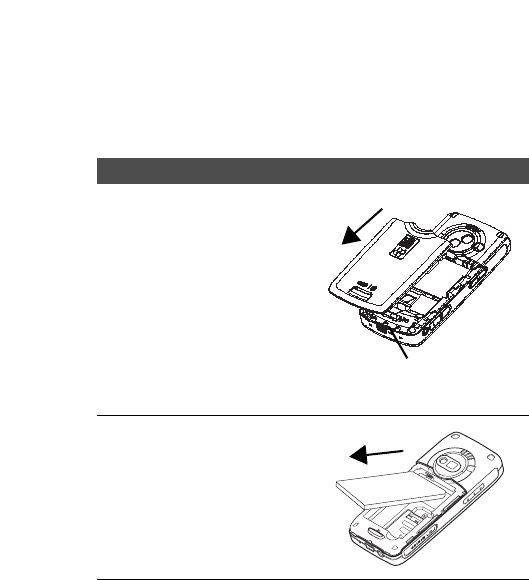
Steps
1
If the phone’s battery
door is already in
place, push down the
release latch and lift
the battery door off the
phone.
Note:
Turn off your
phone when you
insert/remove the SIM card.
2
Lift the battery up from
the bottom end and
remove it from the
battery compartment.
Latch
11
Getting Started
Installing the Battery
You must install and charge the battery for the first use of
your phone. Your phone is designed to use only Company
Name original batteries and accessories.
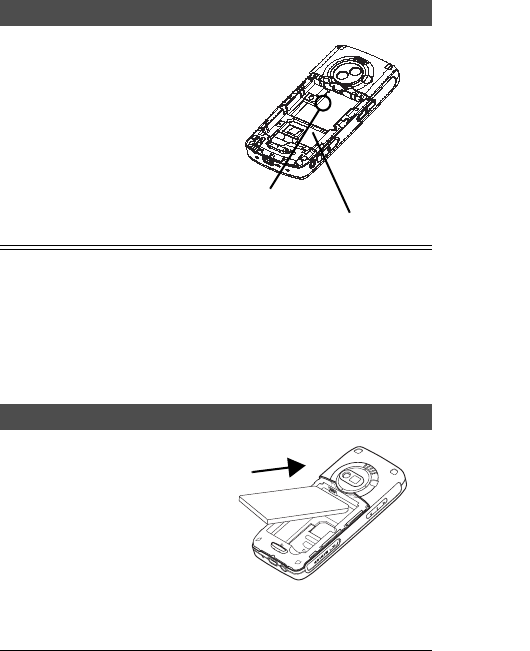
3
Hold the SIM card with
the gold contact side
facing down and the
cut corner on the top
left. Slide the SIM card
all the way into the SIM
card holder to secure
it.
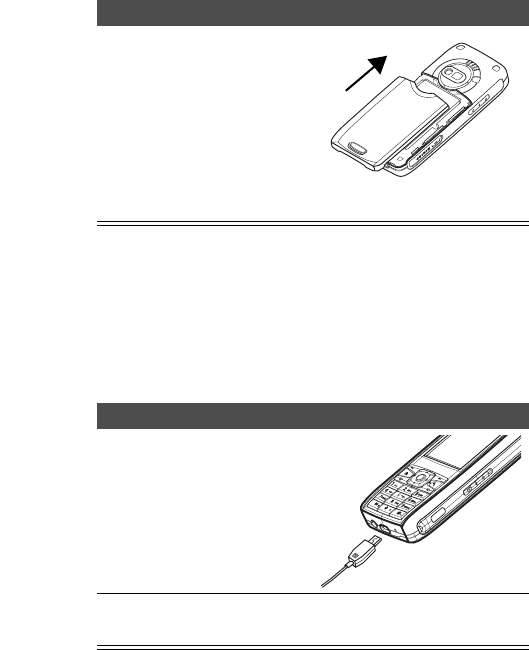
Steps
1
Insert the battery into
the battery
compartment, with the
metal contacts on the
top end of the battery
in alignment with those
on the battery
compartment. Push the bottom end of the
battery into into place.
Steps
SIM Card Holder
Cut Corner
12
Getting Started
Charging the Battery
New batteries are partially charged. Before using your
phone, charge the battery as described below. Some
batteries perform best after several full charge/discharge
cycles.
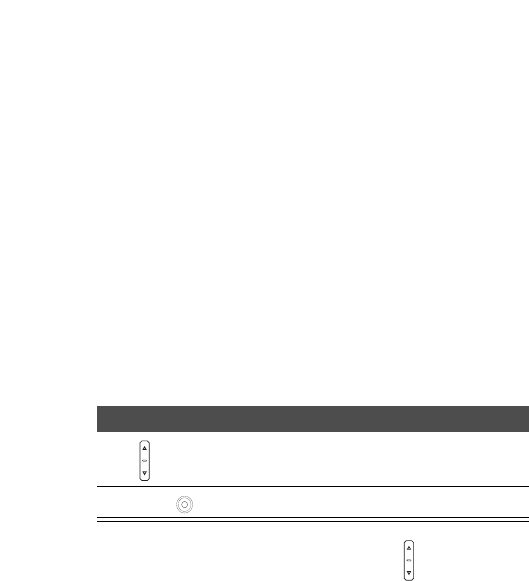
2
Place the battery door
back on the phone,
aligning the tabs on the
battery door with the
groove on the phone.
Slide the battery door
in the direction shown
until it clicks into place.
Steps
1
Plug the travel charger
connector into the
sync/charger port.
Note:
The connector
can only be inserted
one way.
2
Plug the other end of the travel charger into an
electrical outlet.
Steps

13
Getting Started
Battery Usage
Battery life depends on the network, signal strength,
temperature, features, and accessories you use.
•
When you charge the powered-off phone, the signal/
charging indicator flashes red lights which will
automatically turns off when the battery is fully
charged. After charging the battery for 15 minutes,
you can power the phone on. The signal/charging
indicator will automatically turn off and the battery will
take longer to fully charge accordingly. The battery
power level indicator in the display shows how much
of the charging process is complete.
•
Your phone will indicate a full charge before 24 hours
have passed. However, allow your phone to charge
for the full 24 hours before first use.
•
When battery power is low, a low battery message
displays. Charge the battery immediately.
•
If battery power is completely drained, the phone
turns off automatically.
•
New batteries or batteries stored for a long time or
drained batteries may take more time to charge, and
the signal/charging indicator may take several
minutes before appearing in the display. When the
indicator starts to flash red lights, the battery is being
charged.
•
Always use original batteries and chargers. The
warranty does not cover damage caused by incorrect
types of batteries and/or chargers.
14
Getting Started
•
When charging your battery, keep it near room
temperature.
•
When storing your battery, keep it uncharged in a
cool, dark, and dry place.
•
Never expose batteries to temperatures below -10°C
(14°F) or above 45°C (113°F). Always take your
phone with you when you leave your vehicle.
•
It is normal for batteries to gradually wear down and
require longer charging times. If you notice a change
in your battery life, it is probably time to purchase a
new battery.
Warning:
Contact your local recycling center for proper
battery disposal. Never dispose of batteries in a fire
because they may explode.
Adjusting Volume
Tip:
When a call is ringing/incoming, press up/down to
mute the ring.
Press To
1
up/down increase/decrease earpiece
volume in idle or during a call
2
Action
save the setting
15
Getting Started
Making a Call
You can make a call in several ways. The easiest way is to
dial a phone number from the Home screen.
Making an International Call
To make an international call from the Home screen, press
and hold to insert a “+”; then enter the country code,
area code (omitting the starting 0), and phone number
following it. Press
Send
to dial.
Dialing an Extension Number
To dial an extension number, you have to store it in a
contact.
Press To
1
keypad keys enter the phone number
Tip:
Press
Back
to delete
the last digit; press and hold
Back
to delete all digits.
2
Send
make the call
3
End
end the call
Feature Focus
Start
>
Contacts
16
Getting Started
To dial the extension number saved in your contact:
Press To
1
scroll to a desired entry
2
Action
select the entry
3
scroll to a desired phone
number
4
Edit
edit the phone number
5
Menu
open the options menu
6
Action
select
Insert Pause
to insert a “p”
letter indicating a 3-second
pause
Tip:
You can also press and
hold to select
abc
,
ABC
, or
ABC
text input mode, and
then press to enter “p”.
7
keypad keys enter an extension number to
dial
8
Done
save the setting
Feature Focus
Start
>
Contacts
Press To
1
scroll to a desired entry
2
Action
select the entry
17
Getting Started
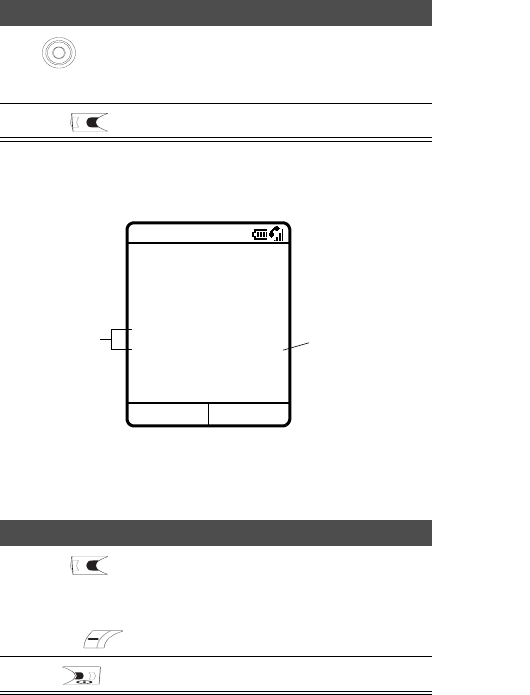
Answering a Call
When you receive a call, your phone rings and/or vibrates
and displays an incoming call message.
3
scroll to a desired phone
number including an
extension number
4
Send
make the call
Press To
1
Send
or
Accept
answer the call
2
End
end the call
Press To
Accept Reject
Line 1
Incoming
Cook, Scott
0920251825 w
Caller ID
information is
matched to a
contact.
Phone number is
identified as
Work
number in the
Contacts
.

18
Basic Operation
Basic Operation
Using the Display
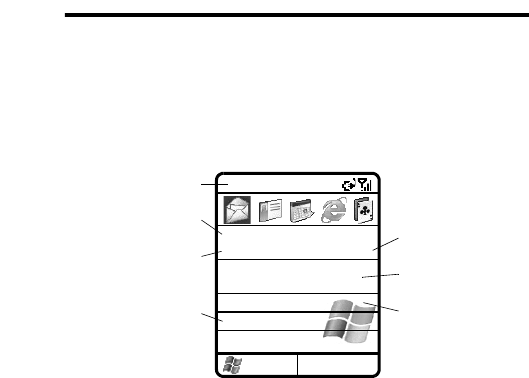
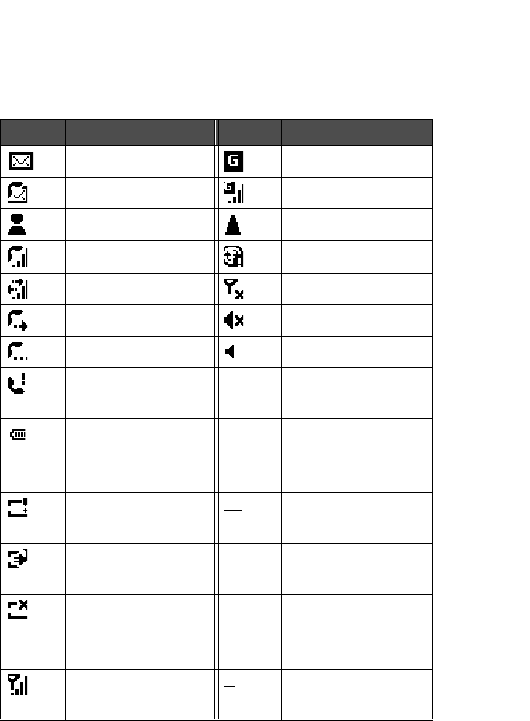
The Home screen (shown) is the standard display when
you are not on a call or using the menu.
On the Home screen, you will find:
•
The top of the display shows status indicators about
your phone’s current mode.
•
The center of the display shows the Home screen, as
well as
icons, appointments, other types of
information, and
messages.
•
The bottom of the display shows the soft key
commands.
Note:
The display shown may be different based on the
specific Home screen configuration chosen. To change
Home screen settings, see “” on page 42. The display will
show a photo Caller ID from an incoming call if you have
Start Contacts
Service Provider Name
10:46 AM 3/15/05
Review meeting
1:30 PM
Profile: Normal
Text Messages (2)
Status Indicators
Service Provider
Current Time
Number of
Unread Messages
Current Date
Next Appointment
Ring Type or
Volume Profile
1
19
Basic Operation
activated the
Photo Contact
option (see “Adding Photo Caller
ID” on page 37).
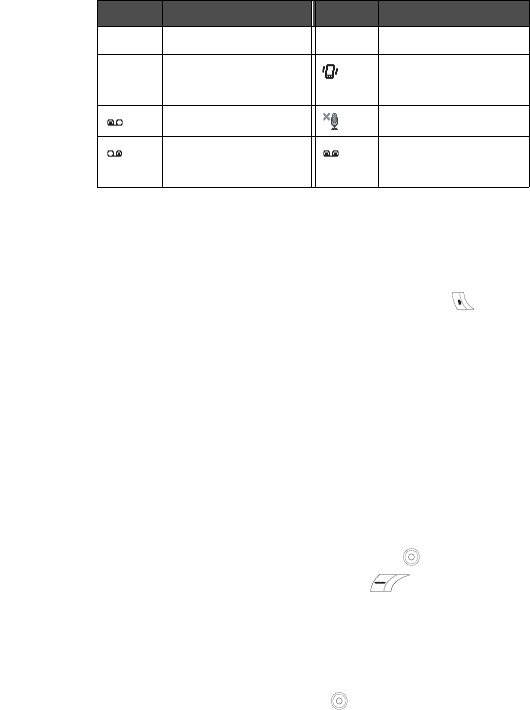
Status indicators display at the top of your phone’s screen.
The following table lists common status indicators and
their meanings.
Icon Meaning Icon Meaning
New email or SMS GPRS available
New voicemail GPRS in use
New instant message Roaming
Voice call active Sync error
Data call active Radio off
Call forwarding Ringer off
Call on hold Speaker on
Missed call abc Multipress text input
mode, lowercase
Battery level ABC Multipress text input
mode, first character
uppercase
Low battery ABC Multipress text input
mode, caps lock
Battery charging t9 T9 text input mode,
lowercase
No battery T9 T9 text input mode,
first character
uppercase
Signal strength T9 T9 text input mode,
caps lock
20
Basic Operation
Using the Home Key
Use the Home key
to do the following:
•
From the Home screen, press and hold
Home
to
access the
Quick List
. The
Quick List
displays a list of
available profile types and commands, such as turn
off your phone, manage wireless connection, lock
your phone’s keypad, and lock your phone.
•
Display the Home screen to dial a number.
•
The Home screen is your starting place for most
tasks. You can easily navigate to any program or
setting from this screen. The top of the Home screen
displays the last ten programs in icons you browsed.
Just select a program and press
Action
to open the
program. You can also press
Start
to enter the
programs on the Start list. The Home screen also
displays the current time and date, your next
appointment, your current profile, and the number of
unread messages in
Messaging
. Select your next
appointment and press
Action
to open the
Calendar
,
and see all of your appointments for the day. To read
messages, select the messaging status showing the
1Line 1 123 Numeric input mode
2Line 2 Vibrator on and ringer
off
New voicemail on line 1 Silent and speaker off
New voicemail on line 2 New voicemail on line 1
and line 2
Icon Meaning Icon Meaning

21
Basic Operation
number of unread messages, and press
Action
. To
view phonebook entries, press
Contacts
.
•
The Home screen automatically displays when you
turn on the phone or leave the phone idle, but you can
navigate to it at any time by pressing
Home
.
Using the 4-Way Navigation
Key
Use the 4-Way Navigation key to navigate the menu
system, change feature settings, and play games.
Tip:
Down and up are your primary movements within
menus and navigation through the contacts. Move left and
right to change feature settings and edit text.
From the Home screen, press to do the following:
•
Select a program in icon at the top of the screen, and
then press
Action
to open the program.
•
Select an item in the center of the Home screen, such
as your next appointment, your profile type, or your
messaging information, and then press
Action
to
access the settings associated with the item selected.
Using the Action Button
The Action button confirms your selection. Pressing
Action
is similar to pressing “Enter” on a keyboard. In
some cases, confirming your selection accesses a
program or setting. You can also press
Action
to check or
uncheck a feature.

22
Basic Operation
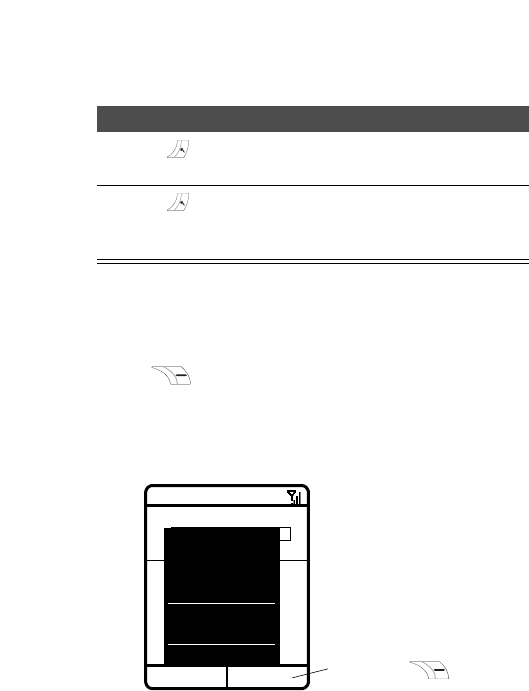
Using the Soft Keys
The two Soft keys on your phone are located directly
below the display screen. Each Soft key performs the
command displayed above it on the screen. Both Soft keys
are context sensitive — their function changes according
to the phone’s status, for example, when in a particular
application or making a phone call.
On the Home screen:
Press To
1
left soft key
(
Start
)
access programs in the
Start list
Tip:
The phone comes pre-
installed with core
programs that you can
start using immediately. To
install additional programs
on your phone, refer to the
companion CD that came
with your phone.
23
Basic Operation
You can also use numbers to navigate quickly to programs
or settings on the phone. Press the number on the keypad
that corresponds to the number of the program or setting
you want. For example, in the Start list, press to
launch the
Calendar
.
You can also use numbers to select menu options by
pressing the number that corresponds to the menu option.
For example, to select
Filter
in the list of
Contacts
menu
options, press .
2
right soft key
access the following
features during normal
use:
•
Contacts
: displays your
contacts list.
•
Voicemail
: displays a
received voicemail(s).
•
Messages
: displays a
new SMS or email
message(s).
Press To
24
Basic Operation
Using the Back Key
Press the Back key
to navigate to the previous screen, or
move the cursor back to delete one or more characters in
a text field.
Using Menus
On many screens, the Menu soft key
is the Right soft key.
Press
Menu
to display a list of options that are relevant
to the screen you are viewing. Selecting a menu option will
either perform the command or display another screen
where you can perform commands.
Press To
1
Back
backspace and remove one
character in a text field
2
Back
for a
while
backspace and remove
multiple characters in a text
field
Send Menu
New Message
To: someone@example.com
Cc.:
Subj.:
Press
Menu
to
display menu options.
1 Insert Contact
2Insert Text
3 Insert Recording
4Message Options
5 Postpone Message
6Send Message
7Cancel Compose
abc
25
Basic Operation
Tip:
Press up to move to the bottom of the menu.
Entering Text and Numbers
You can enter text and numbers on the phone using the
keypad. The phone supports three input modes for
entering text and numbers:
Multipress
,
T9
, and
Numeric
. The
Multipress
and
T9
modes are used for entering text, and the
Numeric
mode is used for entering numbers. When you
select a field that requires text or a numeric entry, the
phone automatically defaults to the appropriate input
mode. The status indicator on the top of the display shows
the input mode you are currently using.
Changing Input Modes
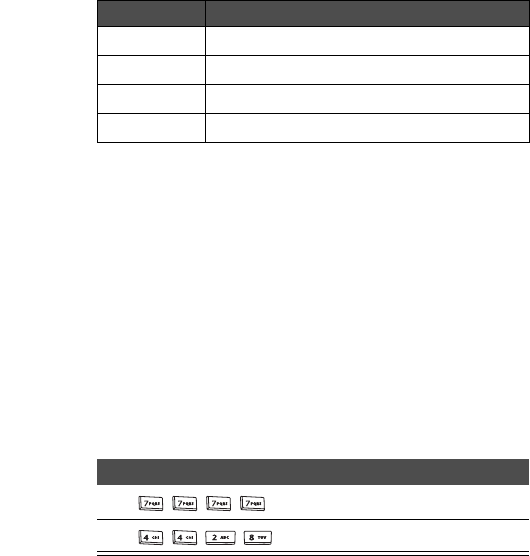
The following table shows the complete list of input mode
status indicators.
Steps
Press and hold until the status indicator for the
input mode you want is shown at the top of the
display. To change options in
Multipress
or
T9
, for
example, changes from
abc
to
ABC
, or from
T9
to
t9
,
press and release.
Indicator Mode
abc Multipress
text input mode, lowercase
ABC Multipress
text input mode, initial capital
letters
ABC Multipress
text input mode, uppercase
26
Basic Operation
Tip:
In
Multipress
or
T9
text input mode, the first letter of a
sentence is automatically capitalized.
Entering Text in Multipress Mode
You can enter a letter in
Multipress
mode by pressing the
number key on which the letter appears. To enter the first
letter on the number key, press the key once. To enter the
second letter, press the key twice, and so on. The letter
entered remains underlined until you complete the
keypresses and the cursor moves to the next position. For
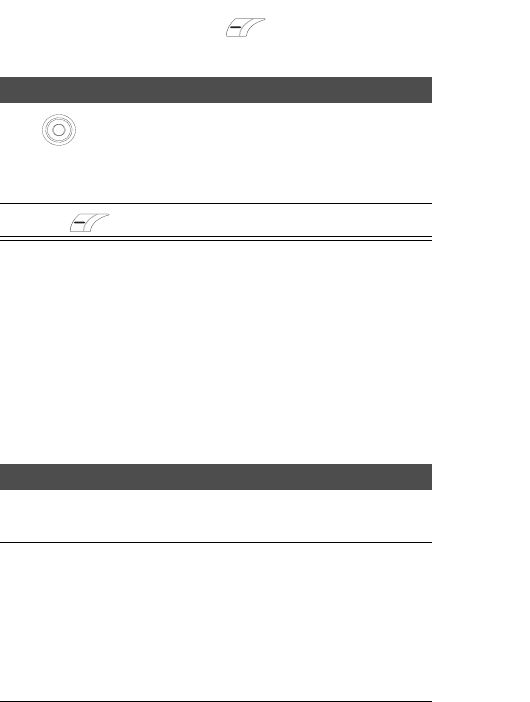
example:
When you enter letters that are on the same number key,
wait until the underline disappears before entering the next
letter so that your phone can process the first letter. This
pause is called the
Multipress
time out, and you can adjust
the length of the pause between keypresses.
t9 T9
text input mode, lowercase
T9 T9
text input mode, initial capital letters
T9 T9
text input mode, uppercase
123 Numeric
input mode
Press To
1
enter the letter
s
2
enter the word
hat
Indicator Mode
27
Basic Operation
To change the
Multipress
time out:
Entering Text in T9 Mode
T9
is a predictive text entry mode that lets you enter a word
using 1 keypress per letter.
Entering Common Words
You can enter common words embedded in the
T9
software.
Feature Focus
Start
>
Settings
>
Accessibility
Press To
1
left/right select the time interval you
want for the pause between
keypresses under
Multipress
time out
2
Done
save the setting
Press To
1
keypad key 1
time
enter the 1st letter of a word
2
keypad keys (1
per letter)
enter the rest of a word
Tip:
Alternative words and
letter combinations are
shown at the bottom of the
display. The word choices
update with each keypress.
28
Basic Operation
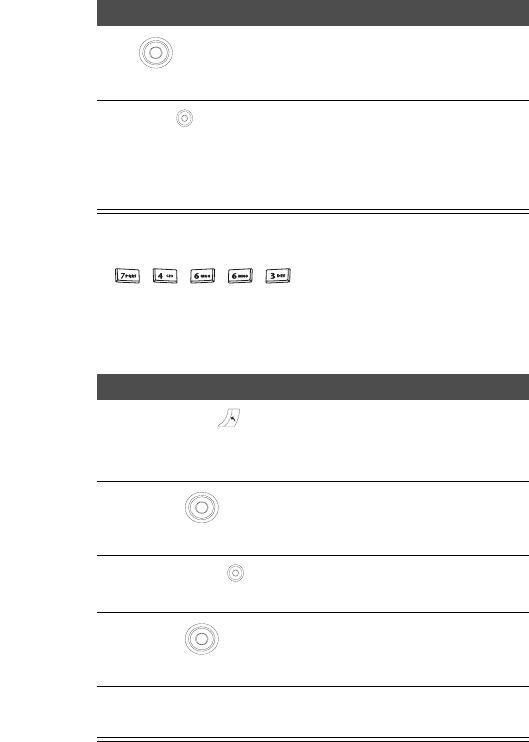
For example, to spell the word “phone,”
press . The display shows
phone
.
Entering Novel Words
You can coin words
T9
does not recognize.
3
up/down/
left/right
highlight the word you want
4
Action
enter the word at flashing
cursor location
Tip:
T9
automatically inserts a
space after each word.
Steps
1
Press
Back
one or more times to delete letters
until a letter combination matches the start of a
word.
2
Press up/down/left/right to highlight the
desired letter or letter combination.
3
Press
Action
to select the letter or letter
combination.
4
Press left to move cursor to the left and
“lock” the selected word portion.
5
Continue to enter letters and highlight the letter
combinations you want to spell a word.
Press To
29
Basic Operation
Your phone stores the unrecognized word and includes it
in the list of alternative word choices. When memory space
for unrecognized words is filled, your phone deletes the
oldest words as it adds new words.
Entering Numbers in Numeric Mode
When in
Numeric
mode, press the number(s) you want to
enter on the keypad. If a field permits a numerical entry
only, such as the
Work
phone field in the
Contacts
, the input
mode will automatically default to
Numeric
mode. To enter
an asterisk (
*
) or a hash sign (
#
), press the corresponding
key on the keypad. You can also press to select and
enter a symbol.
Entering Punctuation/Symbol
In
Multipress
and
T9
modes, there are two ways to enter
punctuation/symbol.
Option 1:
Option 2:
Press To
repetitively scroll through common
punctuation/symbol (. ? ! , @ '
- : ; ( ) & " ~ 1 0 ¿)
Press To
1
for a while open the
Pick a symbol
list
2
scroll to a desired
punctuation/symbol
30
Basic Operation
In
Numeric
mode, refer to the following steps to enter
punctuation/symbol:
Using Special Key Functions
In
Multipress
and
T9
modes:
In
Multipress
,
T9
, and
Numeric
modes:
3
OK
select and enter the
punctuation/symbol
Press To
1
for a while open the
Pick a symbol
list
2
scroll to a desired
punctuation/symbol
3
OK
select and enter the
punctuation/symbol
Press To
enter a space
Press To
Action
start a new line
Press To
31
Basic Operation
Viewing Phone Information
Use
About
settings to display information about your
phone’s operating system, including version numbers,
copyright information and available storage.
Locking and Unlocking the
Keypad
The keypad lock turns off the keypad function to prevent
accidental keypresses.
Locking the Keypad
On the Home screen:
Press To
(for a while) change to or from lowercase,
initial capital letters,
uppercase, or numbers
Feature Focus
Start
>
Settings
>
More
>
About
Steps
Press and hold
End
. The left soft key displays
Unlock
, indicating that the keypad is locked.
32
Basic Operation
Unlocking the Keypad
On the Home screen:
Tip:
You can still receive calls and make emergency calls
when the keypad is locked.
Locking and Unlocking Your
Phone
Locking the phone prevents access to personal data.
When you turn on this feature, the phone automatically
locks after a specified time of inactivity. A screen displays
requiring your phone lock password before access is
granted.
Tip:
You can still receive calls and make emergency calls
when the phone is locked.
Locking the Phone
On the Home screen:
Press To
1
Unlock
prepare to unlock the keypad
2
unlock the keypad
Press To
1
Home
for a
while
open the
Quick List
2
scroll to
Device lock
33
Basic Operation
Tip:
After you select the time delay and create a password,
you can quickly lock your phone from the
Quick List
, without
having to view these settings.
3
Action
select
Device lock
4
left/right select a time period the
phone is inactive before it
automatically locks under
Lock
phone after
5
keypad keys enter the password you want
to use to access the phone
when it is locked under
Password
6
keypad keys enter the password again
under
Confirm password
7
Done
save the settings
Tip:
Your phone will
automatically locks after the
setup. Refer to the following
section to unlock your phone.
If you unlock the phone, it will
automatically lock after the
preset inactive time period.
Press To
34
Basic Operation
Unlocking the Phone
On the Home screen:
Turning Phone Lock Off
Locking and Unlocking Your
SIM Card
Locking the SIM card prevents you and others from using
your phone until the correct password is entered. You can
still make emergency calls when the SIM card is locked.
Press To
1
Unlock
prepare to enter the
password
2
keypad keys enter the password
3
Unlock
unlock the phone
Feature Focus
Start
>
Settings
>
Security
Press To
1
Action
select
Disable Phone Lock
2
keypad keys enter the password
3
Done
turn phone lock off

35
Basic Operation
Locking the SIM Card
Unlocking the SIM Card
Feature Focus
Start
>
Settings
>
Security
>
Enable SIM PIN
Press To
1
keypad keys enter your PIN1 password
2
Done
lock your SIM card
Feature Focus
Start
>
Settings
>
Security
>
Disable SIM PIN
Press To
1
keypad keys enter your PIN1 password
2
Done
unlock your SIM card
36
Customizing Your Phone
Customizing Your
Phone
You can view and change settings to customize your
phone for the way you work. For example, you can change
the sounds or use your own sounds for ring tones,
notifications and reminders. You can also set up the
Call
Forwarding
and
Call Waiting
features, as well as download your
own images to customize the Home screen background.
Using Phone Settings
Use
Phone
settings to set options for
Caller ID
,
Call
Forwarding
, and
Call Waiting
.
Feature Focus
Start
>
Settings
>
Phone
Done
Settings
1Phone
2Sounds
3Profiles
4Home Screen
5Clock & Alarm
6 Connections
7 Security
8 Remove Programs
9More...
37
Customizing Your Phone
The following table lists the
Phone
settings and their
functions.
Using Sound Settings
Sounds
settings are used to customize the sounds for ring
tones, notifications, and reminders.
Option Description
Call Barring
block incoming and/or outgoing calls
Call Forwarding
forward calls in certain conditions to
another phone number or forward all
calls to another phone number
Call Options
change phone numbers, such as your
voicemail and SMS service center,
answer incoming calls by pressing any
key, and use advanced call options
Call Waiting
turn
Call Waiting
on or off
Caller ID
let your identification be known to all
callers, only your contacts, or no
callers
Channels
configure cell broadcast
Fixed Dialing
limit your calling area to one or more
specific phone numbers
Feature Focus
Start
>
Settings
>
Sounds
38
Customizing Your Phone
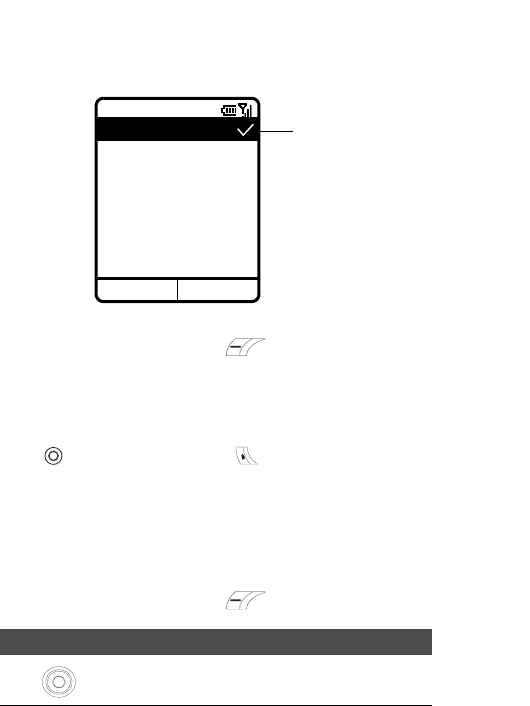
Using Your Own Sound
Using Profiles
Use
Profiles
settings to configure how your phone notifies
you about an incoming call, an approaching appointment,
or an arriving message. You can use
Profiles
to change
notifications quickly based on your situation. For example,
you may want the phone to ring louder if a client is calling,
Steps
1
Locate the sound file on your desktop computer
and copy the file. The file format must be .mp3,
.wav, or .mid (MIDI type 0).
2
Connect the phone to your desktop computer
through the USB data cable or infrared.
3
Open the
ActiveSync
®
application on your
desktop computer, click
Explore
, double-click
My
Smartphone
, double-click
Storage
, double-click
Application Data
, double-click
Sounds
, and then
paste the sound file into the Sounds folder.
Note:
If a Sounds folder does not exist in this
directory, create a new one.
4
On your phone’s Home screen, press
Start
,
select
Settings
, and then select
Sounds
.
5
In the
Ring tone
field, press left/right to select
the sound you copied to the Sounds folder.
6
Press
Done
to save the setting.
39
Customizing Your Phone
or you may not want the phone to ring at all, but want to
hear calendar reminders. The default profile used with
your phone is the
Normal
profile. The name of the current
profile displays on the Home screen.
Tip:
You can either assign
Profiles
settings by selecting
Profile: [Type]
from the Home screen, or select a different
profile using the
Quick List
by quickly pressing and releasing
Power
or holding down
Home
from the Home screen.
Note:
When a headset is plugged into the phone, the
Headset
profile is activated automatically.
Modifying a Profile
Feature Focus
Start
>
Settings
>
Profiles
Feature Focus
Start
>
Settings
>
Profiles
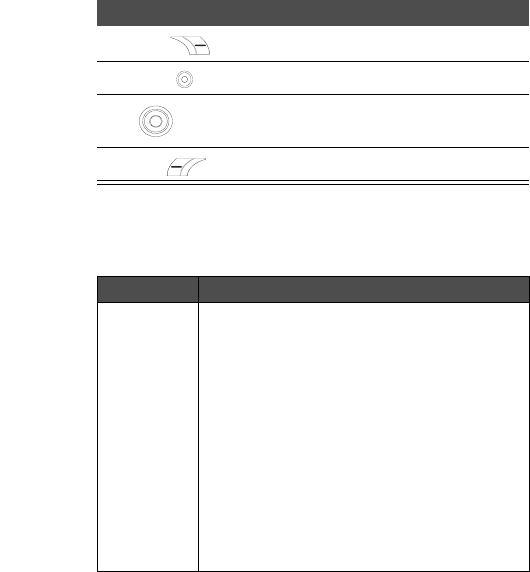
Press To
1
scroll to a desired profile
Done
Indicates your current
profile.
Profiles
1Normal
2Silent
3Meeting
4 Outdoor
5Automatic
6 Headset
7Car
8Speakerphone
Menu
40
Customizing Your Phone
Observe the following from your phone when in the
following modes:
2
Menu
open the options menu
3
Action
select
Edit
4
scroll to a desired option to
modify
5
Done
save the settings
Profile Description
Headset
This can only be activated when a
headset is connected to your phone.
The
Headset
profile is deactivated when
you remove the headset from your
phone. You cannot select or unselect
Headset
from the
Profile
item on the Home
screen. It has been placed in the
Profiles
menu in order to allow you to confirm
(through a check mark) that it has been
automatically selected upon connecting
to a headset.
Press To

41
Customizing Your Phone
Car
This can only be activated when a car
kit specifically designed for your phone
is connected to your handset. The
Car
profile is deactivated when you remove
the car kit from your handset. You
cannot select or unselect
Car
from the
Profile
item on the Home screen. It has
been placed in the
Profiles
menu in order
to allow you to confirm (through a check
mark) that it has been automatically
selected upon connecting to a car kit.
Profile Description
42
Customizing Your Phone
Speakerphone
While you are in a call, you can use the
options menu to activate the
speakerphone. The speakerphone is
deactivated when you manually turn it
off during a call or when you are ending
a call. You cannot select or unselect
Speakerphone
from the
Profile
item on the
Home screen. It has been placed in the
Profiles
menu in order to allow you to
confirm (through a check mark) that it
has been automatically selected upon
turning on the speakerphone.
Profile Description
Speakerphone
43
Customizing Your Phone
Changing the Home Screen
Use
Home Screen
settings to change the Home screen layout,
the color scheme, the background image, and the time
delay in the idle display.
Customizing the Home Screen with Your
Own Image
Feature Focus
Start
>
Settings
>
Home
Screen
Steps
1
Locate your image file on your desktop computer
and copy the image file. The file format must
be .gif, .jpg, or .bmp.
Tip:
For best results, use images with a 176 x
220 screen resolution to fit on your phone’s
Home screen.
2
Connect the phone to your desktop computer
through the USB data cable or infrared.
3
Open the
ActiveSync
application on your desktop
computer, click
Explore
, double-click
My
Smartphone
, double-click
Storage
, double-click
Application Data
, double-click
Home
, and then
paste the image file into the Home folder.
Note:
If a Home folder does not exist in this
directory, create a new one.
4
On your phone’s
Home screen, press
Start
,
select
Settings
, and then select
Home Screen
.

44
Customizing Your Phone
Changing Regional Settings
Use
Regional Settings
to change the language, date, and time
style of the phone, as well as number and currency
formatting options.
Setting Time-Out, Alert
Volume, and Search Contacts
Text Mode
Use
Accessibility
to configure the
Multipress
as well as the
confirmation time-outs, the in-call alert volume, and the
default text input mode to search your contacts list.
5
Under
Background image
, press left/right to
select the image you copied to the Home folder.
6
Press
Done
to save the setting.
Feature Focus
Start
>
Settings
>
More
>
Regional Settings
Feature Focus
Start
>
Settings
>
More
>
Accessibility
Steps

45
Customizing Your Phone
Adjusting Date and Time
Use
Date and Time
settings to change the local time zone and
current date and time, and to set the alarm.
Entering Owner Information
Use
Owner Information
settings to enter and display personal
information, such as your name, phone number, and email
address. If you lose your phone and it is found, you may
be contacted.
Configuring Power
Management
Use
Power Management
settings to adjust the backlight and
display time-outs, and to check the battery power level.
Feature Focus
Start
>
Settings
>
Clock & Alarm
>
Date and Time
Feature Focus
Start
>
Settings
>
More
>
Owner Information
Feature Focus
Start
>
Settings
>
More
>
Power Management
46
Calling Features
Calling Features
Redialing a Number
To redial the last number called from the Home screen:
Calling a Contacts Entry
As you enter a contact name, the phone searches the
Contacts
,
Call History
,
Speed Dial
lists, and the SIM card to find a
matching name and number.
Press To
Send
twice place a call to the last dialed
number
Save Menu
3708699
Cook, Scott w
Cook, Scott
Number matches contact.
Number matches entry in
Call History
.
1
47
Calling Features
Making a Call from the Home Screen
Making a Call from the Contacts
You can select a person’s name from your contacts list
and press
Send
to place the call. If a contact has more
than one phone number, such as
Work
,
Home
, and
Fax
, the
Work
phone number is set as the default.
Tip:
If you have a long list of contacts, enter the first few
letters of a contact’s name. Your phone searches the
entire contacts list to display the name.
Press To
1
keypad keys enter the contact name
(For example, to call Scott,
press
.)
2
select the name from your
contacts list
3
Send
make the call
Feature Focus
Start
>
Contacts
Press To
1
scroll to the contact name to
call
2
Send
make the call
48
Calling Features
Changing the Default Number for a Contact
Making a Call to a Desired Phone Number
Feature Focus
Start
>
Contacts
Press To
1
scroll to a desired contact
2
left/right change the default number
(For example, if you change
w
to
m
, the default number
changes from
Work
phone to
Mobile
phone.)
Feature Focus
Start
>
Contacts
Press To
1
scroll to the contact to call
2
Action
open the contact
3
scroll to the number you want
to call
4
Send
place the call
49
Calling Features
Making a Call from the Call
History List
The
Call History
list displays the last several calls you made,
received, or missed. Choose a name or number to call
from the list.
Managing Call History
Call History
displays the last several calls you have made,
received, and missed. Each entry in
Call History
contains the
start time of the call, the duration, the date, the caller’s
name (if saved in your contacts list), and the caller’s
number. The oldest calls are automatically deleted from
the list to make room for new calls.
Tip:
You can filter
Missed Calls
,
Incoming Calls
, and
Outgoing Calls
by
pressing
Menu
, selecting
Filter
, and selecting the filter
you want.
Sending an Email from Call History
Feature Focus
Start
>
Call History
Press To
1
scroll to the number or entry
to call
2
Send
place the call
Feature Focus
Start
>
Call History
Feature Focus
Start
>
Call History
50
Calling Features
Press To
1
scroll to a desired entry
2
Menu
open the options menu
3
scroll to
E-mail
4
Action
edit and send an email to the
entry’s recipient
51
Calling Features
Creating a New Contact from a Number in Call
History
Calling a Number in a Message
When you see an underlined phone number as a hyperlink
in a message, you can place a call to the phone number.
After opening a message:
Feature Focus
Start
>
Call History
Press To
1
scroll to a desired number
2
Menu
open the options menu
3
scroll to
Save to Contacts
4
Action
select
Save to Contacts
Note:
Make sure
<New Item>
is
highlighted.
5
Action
enter the contact information
Press To
1
scroll to the phone number as
a hyperlink
2
Action
place the call
52
Calling Features
Calling an Emergency Number
Calls to emergency service numbers can be made under
any circumstances, even if you have locked the SIM card
and/or the phone.
Your service provider programs one or more emergency
phone numbers, such as 911 or 112, that you can call
under any circumstances, even when your phone is locked
or the SIM card is not inserted.
Emergency numbers vary by country. Your phone’s
preprogrammed emergency number(s) may not work in all
locations, and sometimes an emergency call cannot be
placed due to network, environmental, or interference
issues.
Note:
Be aware that when the
Flight mode
feature is turned on,
the phone cannot receive and make a call, including an
emergency call. To receive and make a call, you must turn
the
Flight mode
feature off and re-engage the phone’s RF
capability. Always obey the instructions of your airline
crew.
On the Home screen:
Press To
1
keypad keys dial your local emergency
number
2
Send
place the call
53
Calling Features
Calling with Speed Dial
You can quickly dial phone numbers by assigning speed
dial numbers. Press and hold one or two keys from the
Home screen to make a speed dial call. Choose speed dial
entries from 2-99. The speed dial entry 1 is often reserved
to set up or dial your voicemail after initial setup.
Note:
The
Speed Dial
setting is available only for a phone
number stored in the
Contacts
of the phone memory.
To create a speed dial shortcut:
Tip:
You can also assign speed dial numbers to Web
addresses and email addresses that are stored in the
Contacts
on your phone.
Feature Focus
Start
>
Contacts
Press To
1
scroll to a desired contact
2
Action
open the contact
3
scroll to a desired phone
number
4
Menu
open the options menu
5
Action
select
Add Speed Dial
6
left/right enter the speed dial number
from 2-99 under
Keypad
assignment
7
Done
save the setting
54
Calling Features
To make a speed dial call from the Home screen:
Using Voicemail
On the Home screen:
Using Call Waiting
To answer the incoming call when you are
talking on the phone:
Steps
Press and hold the keypad number that you have
assigned as a speed dial number. If the keypad
assignment has two digits, press the first digit, then
press and hold the second digit.
Steps
Press and hold to automatically call voicemail
after initial setup.
Press To
Accept
or
Send
place the first call on hold,
and answer the second call
Tip:
Press
Send
to make
it active the first call or the
second call. If the second call
55
Calling Features
To end the first call before answering the incoming call:
To reject the incoming call when you are talking on the
phone:
Putting a Call on Hold
While a call is in progress, you can hold the call and then
reconnect it.
Tip:
already hangs up, press
Menu
>
Unhold
to continue
the first call.
Press To
1
End
end the first call
2
Accept
or
Send
answer the second call
Press To
Reject
reject the second call and
continue the first call
Press To
1
Menu
open the options menu
Press To
56
Calling Features
Muting a Call
You can mute the microphone for the active call. The other
party will not hear anything you say, but you can still hear
the other party.
Using the Handsfree Function
You can turn the speaker on during a call to use the
handsfree mobile phone.
2
scroll to
Hold
3
Action
place the active call on hold
Tip:
Select
Unhold
to activate
the call on hold.
Press To
1
Menu
open the options menu
2
scroll to
Mute
Tip:
Select
Unmute
to turn the
microphone back on for the
active call.
3
Action
mute the active call
Press To
1
Menu
open the options menu
Press To
57
Calling Features
Tip:
During an incoming or outgoing call, you can toggle
between the earpiece and speakerphone by holding down
Send
.
Making a Conference Call
You can join together all existing calls to make
a conference call, if you have subscribed to this
service.
On the Home screen:
2
scroll to
Speakerphone
Tip:
Select
Speakerphone Off
to
turn the speaker off and the
earpiece back on for the
active call.
3
Action
turn the speaker on and the
earpiece off
Press To
1
keypad keys enter a phone number for the
first call
2
Send
call the number
3
keypad keys enter a phone number for the
second call
Press To
58
Calling Features
Making a Call from a Conference Active
You can break one call out of a conference and make this
call active while the rest of the conference is on hold.
In a conference call:
Tip:
Press
End
to end an active call when multiple
parties are connected.
4
Send
call the second number
Note:
The first call is
automatically put on hold
when the second call is
active.
5
Menu
open the options menu
6
scroll to
Conference
7
Action
make a conference call
Press To
1
Menu
open the options menu
2
scroll to
Private
3
Action
select
Private
4
scroll to a desired call
5
Action
make the call active
Press To

59
Calling Features
Forwarding Calls
You can forward all or selected calls to another
number.
Barring Calls
You can block incoming and/or outgoing calls.
Monitoring Phone Use
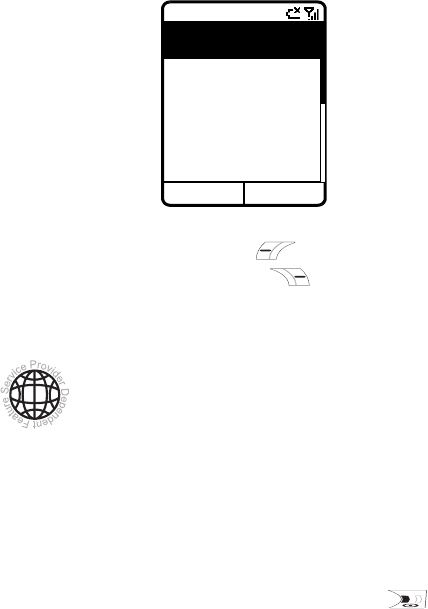
Call Timers
contains the length of your last call, the total
number of calls made and received, calls by type (
Incoming
,
Outgoing
,
Roaming
, and
Data
), and a lifetime counter. You can
use
Call Timers
to keep track of your calling patterns, to help
you choose a calling plan or estimate your monthly billing.
Feature Focus
Start
>
Settings
>
Phone
>
Call Forwarding
Feature Focus
Start
>
Settings
>
Phone
>
Call Barring
60
Calling Features
Making Data Calls
Use
Data Connections
settings to set up General
Packet Radio Service (GPRS), dial-up, Virtual
Private Network (VPN), proxy, and Wi-Fi
connections so you can connect to the Internet
or your corporate network. With a data connection, you
can browse the Web, download email, chat using
MSN
Messenger
, or synchronize wirelessly with the server.
Network connection time is the elapsed time from the
moment you connect to your service provider's network to
the moment you end the data call by pressing
End
.
This time includes busy signals and ringing.
The amount of network connection time you track on your
resettable timer may not equal the amount of time for which you
Feature Focus
Start
>
Call History
>
Menu
>
View Timers
Done Menu
Call Timers
Last call:
00:53
All calls:
7:32:16
Incoming calls:
05:48
Outgoing calls:
03:26
Roaming calls:
61
Calling Features
are billed by your service provider. For billing information, please
contact your service provider directly.
Note:
Your phone has already been configured to allow you
to browse and chat. Contact your Information Technology
(IT) manager for information on mobile Internet plans,
configuring email or wireless synchronizing with the
server.
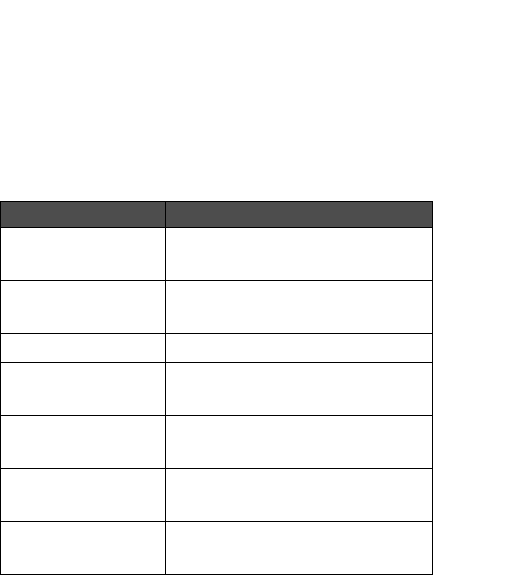
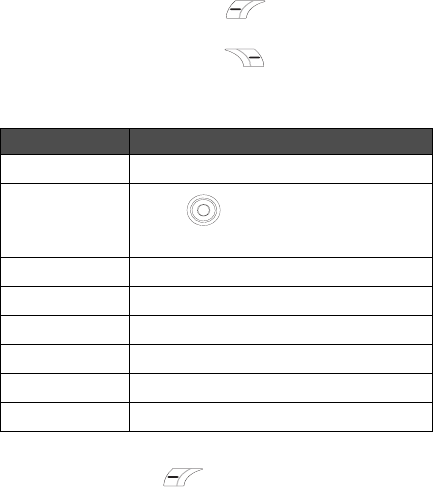
There are seven main data connections:
Data Connection Description
Internet connection
connect to your Internet service
provider
Work connection
connect to your work place
network
WAP connection
use WAP connection settings
Secure WAP connection
use secure WAP (WAPS)
connection settings
WAP Proxy
use WAP proxy connection
settings
MMS Network
use MMS network connection
settings
Secure WAP Proxy
use secure WAP (WAPS)
proxy connection settings
62
Calling Features
Creating GPRS Connection
A GPRS connection accesses the Internet, MMS network,
(secure) WAP network, or corporate network by using an
access point your service provider provides.
On the Home screen:
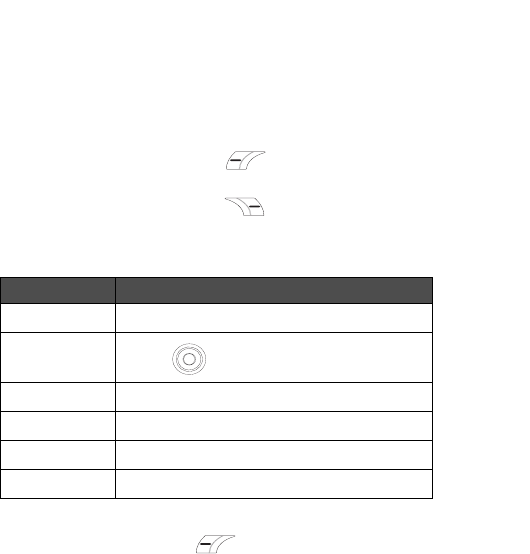
Fill in the blanks with the appropriate information:
Remember to press
Done
when you are ready.
Feature Focus
Start
>
Settings
>
Connections
>
GPRS
>
Menu
>
Add
Option Description
Description
enter a name for the connection
Connects to
press left/right to select a
network connection
Access point
enter in your access point
User name
enter in your user name
Password
enter in your password
Primary DNS
enter in your primary DNS
Secondary DNS
enter in your secondary DNS
IP address
enter in your IP address
63
Calling Features
Using Dial-Up Connection
You need to set up a dial-up connection to connect directly
to the Internet or your corporate network.
Creating a Dial-Up Connection to the Internet
On the Home screen:
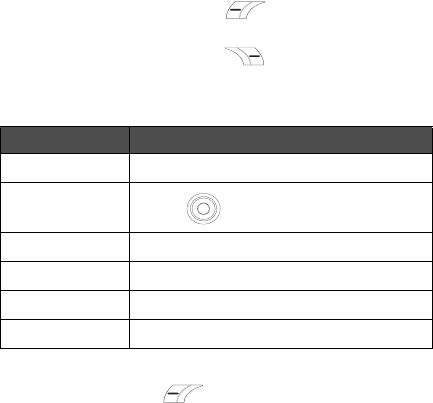
Fill in the blanks with the appropriate information:
Remember to press
Done
when you are ready.
Feature Focus
Start
>
Settings
>
Connections
>
Dial-up
>
Menu
>
Add
Option Description
Description
enter a name for the connection
Connects to
press left/right to select
The Internet
Phone number
enter in your phone number
User name
enter in your user name
Password
enter in your password
Domain
enter in your domain name
64
Calling Features
Creating a Dial-Up Connection to Your Corporate
Network
On the Home screen:
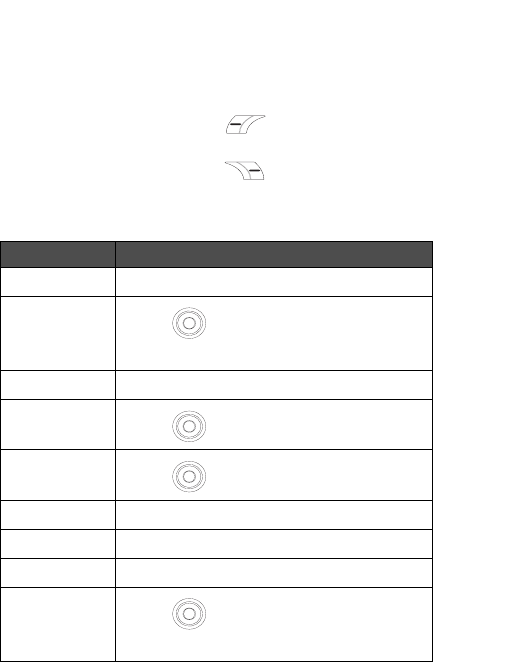
Fill in the blanks with the appropriate information:
Remember to press
Done
when you are ready.
Feature Focus
Start
>
Settings
>
Connections
>
Dial-up
>
Menu
>
Add
Option Description
Description
enter a name for the connection
Connects to
press left/right to select
Work
Phone number
enter in your phone number
User name
enter in your user name
Password
enter in your password
Domain
enter in your domain name
65
Calling Features
Creating VPN Connection
A VPN connection accesses your corporate network by
using an existing Internet connection.
On the Home screen:
Fill in the blanks with the appropriate information:
Feature Focus
Start
>
Settings
>
Connections
>
VPN
>
Menu
>
Add
Option Description
Description
enter a name for the connection
VPN type
press left/right to select a VPN
type
Server
enter in your server name
Connects from
press left/right to select
The Internet
Connects to
press left/right to select
Work
User name
enter in your user name
Password
enter in your password
Domain
enter in your domain name
IPSec
authentication
press left/right to select a IPSec
authentication type
66
Calling Features
Remember to press
Done
when you are ready.
Creating Proxy Connection
A proxy connection accesses the Internet using an existing
connection to your corporate network.
On the Home screen:
Fill in the blanks with the appropriate information:
IPSec Pre-
shared key
If you select
Pre-Shared Key
in the
IPSec
authentication
field, enter in this field the
appropriate information
Feature Focus
Start
>
Settings
>
Connections
>
Proxy
>
Menu
>
Add
Option Description
Description
enter a name for the connection
Connects from
press left/right to select
Work
Connects to
press left/right to select
The
Internet
Proxy (name:port)
enter in your proxy server name and
port
Option Description
67
Calling Features
Remember to press
Done
when you are ready.
Using Wi-Fi Connection
You need to set up a Wi-Fi connection to connect directly
to the Internet or your private network. If the network
connects to work via VPN, select Internet.
Creating a Wi-Fi Connection to the Internet
On the Home screen:
Fill in the blanks with the appropriate information:
Type
press left/right to select a proxy
server type
Tip:
Select
Socks4
to use
MSN
Messenger
.
User name
enter in your user name
Password
enter in your password
Feature Focus
Start
>
Settings
>
Connections
>
Wi-Fi
>
New
Option Description
Network name
enter a name for the network
Network type
press left/right to select
Internet
Option Description
68
Calling Features
Creating a Wi-Fi Connection to Your Private
Network
On the Home screen:
Fill in the blanks with the appropriate information:
Creating a Wi-Fi Connection to Another Device or
Computer
If you only want to connect directly to anoter device or
computer, and not to a network through an access point,
select “This is a deviece to device (ad-hoc) connection.”
On the Home screen:
Press to select “This is a deviece to device (ad-hoc)
connection.
Feature Focus
Start
>
Settings
>
Connections
>
Wi-Fi
>
New
Option Description
Network name
enter a name for the network
Network type
press left/right to select
Private/
Work Network
Feature Focus
Start
>
Settings
>
Connections
>
Wi-Fi
>
New

69
Messages and Online Chat
Messages and Online
Chat
Configuring an Email Account
Before sending and receiving email messages,
you may have to complete the email account
setup. Your service provider may have
configured email settings for your phone before
you received it. You can send email messages by
synchronizing or connecting directly to an email server
through an Internet Service Provider (ISP) or a corporate
network. You can only have one configurable
Outlook E-Mail
at
one time and therefore only synchronize one type of email,
either POP3 or desktop. If you choose to synchronize your
desktop email, it will wipe out your POP3 settings.
Fill in the blanks below with the appropriate information.
Tip:
Press
Next
to continue and
Finish
to complete
the email setup.
Feature Focus
Start
>
Messaging
>
Outlook E-Mail
>
Menu
>
Options
>
New Account
Option Description
Your name
enter in your name
E-mail address
enter in your email address
70
Messages and Online Chat
Automatic setup
If you check this feature, your
phone will obtain email
settings from the Internet. If
you uncheck this feature,
continue the following
settings.
User name
enter in your user name
Password
enter in your password
Domain (if necessary)
enter in your domain name, if
necessary
Save password
Check this feature and you
need not to enter in your
password repeatedly before
you send/receive emails.
Server type
select either
POP3
or
IMAP4
Account name
enter in your account name
Network
select
The Internet
Incoming Server
enter in your incoming mail
server
Require SSL connection
check this feature, if
necessary
Outgoing Server
enter in your outgoing mail
server
Outgoing server requires
authentication
check this feature, if
necessary
Option Description
71
Messages and Online Chat
Receiving Email from the
Internet
You can receive email messages through
Inbox
synchronization or by connecting to your email
server. You can then view all of your email
messages in
Messaging
>
Outlook E-Mail
. When you
connect to the email server or synchronize
Inbox
with your
desktop computer, only the first 5 KB of each new
message are downloaded by default to your phone. If you
are using an IMAP4 or POP3 server, only the first 1 KB of
each new message is downloaded by default. Small
attachments are downloaded and the original messages
remain on the email server or your desktop computer.
Tip:
For more information about
Inbox
synchronization, see
“Synchronizing Information among Devices” on page 90.
Download the following
messages
press left/right to select
messages you want to
receive
Connect automatically and
check for messages
press left/right to select
an option
Feature Focus
Start
>
Messaging
>
Outlook E-Mail
>
Menu
>
Send/
Receive
Option Description
72
Messages and Online Chat
Receiving Complete Email Messages
You can specify to receive email messages in full, instead
of receiving only the first 5 KB set by default. The complete
message will be retrieved the next time you synchronize
Inbox
or connect to your email server. Additionally, when
you delete an email message from your phone, it will also
be deleted from the email server the next time you
connect.
Receiving Email Attachments
You can download email attachments to your phone.
Attachments display as a list of hyperlinks at the bottom of
the email message, and are preceded by an attachment
icon. The text of the hyperlink contains the file name
followed by the size of the attachment, so that you can
determine whether to download the attachment. On POP3
Feature Focus
Start
>
Messaging
>
Outlook E-Mail
Press To
1
scroll to a desired email
message
2
Menu
open the options menu
3
scroll to
Mark for Download
4
Action
receive the email message in
full the next time you
synchronize
Inbox
or connect
to the email server
73
Messages and Online Chat
messages, the attachment size is omitted. The attachment
icon has three states:
Not downloaded
,
Downloaded
, and
Marked for Download
.
Feature Focus
Start
>
Messaging
>
Outlook E-Mail
Press To
1
scroll to a desired message
that contains an
attachment(s)
2
Action
select the message
3
scroll to a desired attachment
as a hyperlink
4
Action
download the attachment
5
Action
view the downloaded
attachment
Note:
You can view
attachments only for file types
that are supported by your
phone, such as .txt, .JPEG,
.asf, .asx, .wax, .wm, .wma,
.wmv, .wmx, .wvx, .mp3. A
third party application must
be installed to your phone to
view attachments in other
formats.

74
Messages and Online Chat
Composing and Sending an
Email or SMS Message
There are several ways to edit and send email or SMS
messages with your phone. The most common way is from
Messaging
or the
Contacts
.
To edit and send an email or SMS message from
Messaging
:
Feature Focus
Start
>
Messaging
>
Text Messages
/
Outlook E-Mail
>
New
Press To
1
keypad keys
or
Menu
>
Insert
Contact
enter in your recipient’s
(SMS) phone number or
email address in the
To
field
or
select a recipient from your
contacts list
Tip:
To add multiple recipients
either in the
To
field or in the
Cc
field (
Outlook E-Mail
only),
separate each with a
semicolon (;) by repeatedly
pressing in
Multipress
mode, which allows you to
enter in symbols such as @
or . in an email message.
75
Messages and Online Chat
Tip:
Enter in your subject in
the
Subj
field for an email
message.
2
down highlight the body text field
3
keypad keys enter in your message
4
Send
send your message
Press To
76
Messages and Online Chat
To edit and send an email or SMS message from the
Contacts
:
Feature Focus
Start
>
Contacts
Press To
1
scroll to a desired contact
2
Action
select the contact
3
scroll to a desired email
address or (SMS) phone
number
4
Action
select the email address or
(SMS) phone number
Tip:
If an email address is
selected, continue the
following steps. If a (SMS)
phone number is selected,
refer to steps 9-10.
5
scroll to
Text Messages
or
Outlook
E-Mail
for your email message
6
Action
select
Text Messages
or
Outlook E-
Mail
7
keypad keys enter in your subject in the
Subj
field
Tip:
To insert predefined text,
press
Menu
>
Insert Text
.
8
down highlight the body text field

77
Messages and Online Chat
Inserting an Audio Clip
Insert a voice recording into an email message when you
want to verbally explain information that is contained in the
email. You can create only one voice recording at a time. A
new voice recording replaces the prior recording.
In the body text field:
9
keypad keys enter in your message
Tip:
To insert predefined text,
press
Menu
>
Insert Text
.
10
Send
send your message
Tip:
You can request a
delivery receipt for your
message before it is sent. To
activate from the body text
field: Press
Menu
>
Message Options
> check
Request
message delivery notification
> press
Done
.
Press To
1
Menu
open the options menu
2
scroll to
Insert Recording
3
Record
start recording
Tip:
Press
Stop
to stop
recording.
Press To

78
Messages and Online Chat
Editing Predefined Text
You can also edit preset text to create new words or
phrases that you frequently use in messages.
Viewing Email/SMS Messages
Email and SMS messages that are sent to you are stored
in
Messaging
. SMS messages are not synchronized and you
cannot use them to send or receive attachments. By
default, the most recently received messages display at
the top of the
Inbox
list. Use the menu options to quickly
compose, delete, forward, and reply to messages. You
4
Done
insert the voice recording to
the newly created
Attach
field
Feature Focus
Start
>
Messaging
>
Multimedia Messages
/
Text Messages
/
Outlook E-Mail
>
Menu
>
Options
>
Edit My Text
Press To
1
scroll to a desired preset text
to modify
2
keypad keys edit the text
3
Done
save the text
Press To
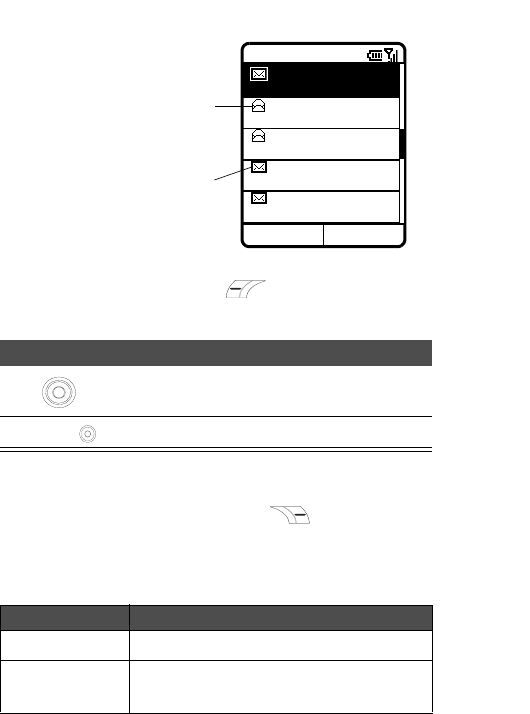
79
Messages and Online Chat
can also customize the
Messaging
settings to control the way
you send, receive, and view messages.
Tip:
If you want to create a contact card for the sender of
the selected message, press
Menu
>
Save to Contacts
.
The following table lists the
Messaging
menu options and
their functions:
Feature Focus
Start
>
Messaging
>
Text
Messages
/
Outlook E-Mail
Press To
1
scroll to a desired message
2
Action
view the message
Option Description
Delete
delete the selected message
Reply
reply to an open or selected
message
Outlook E-Mail
Sean Miller
Go surfing?
Calvin Sicher
Reminder
David Stone
Need your feedback
Jane Moore
Team Meeting
Peter Lee
RE: Status Review
New Menu
Indicates opened email.
Indicates new email.

80
Messages and Online Chat
Reply All
reply to the sender and all recipients
included in an open or selected
message
Forward
forward the selected message
Save to Contacts
create a contact card for the sender
of the selected message
Folders
display all
Messaging
folders
Switch Accounts
change among
Multimedia Messages
,
Text
Messages
, and
Outlook E-Mail
accounts
Move
move the selected message to a
desired folder
Mark as Read
change the selected unread
message to a read message
Mark as Unread
change the selected read message
to an unread message
Mark for Download
retrieve the entire email messages
from the email server the next time
you connect or synchronize
Inbox
Options
display a list of
Messaging
options that
you can customize:
•
Display
: change the message
information displayed on the
screen and sort messages.
•
Sending
: specify whether you
want to include an original copy
of the message in your reply,
save a copy of your sent
Option Description

81
Messages and Online Chat
•
messages, use Unicode for
SMS messages, and ask for a
notification when SMS
messages are successfully
sent.
•
Edit My Text
: edit the predefined
text that you can insert in
messages.
•
Signatures
: edit your own
signature that you can insert in
messages.
•
Account Setup
: configure your
phone to send and receive
email and MMS messages.
Your service provider or
network administrator can
provide you with the necessary
information to connect to the
email server or MMS network.
•
Import SIM Messages
: import SMS
messages from your SIM card
to
Messaging
>
Text Messages
. The
messages are not removed
from the SIM card after they are
imported.
Send/Receive
connect to your email server or
synchronize
Inbox
to send and
receive email messages
Option Description

82
Messages and Online Chat
Importing SMS Messages from Your SIM
Card to the Phone
You cannot export SMS messages from your phone to
your SIM card. SMS messages are not removed from the
SIM card after they are imported to
Messaging
of your phone.
Receiving Meeting Requests
When you accept a meeting request that arrives in
Messaging
, the meeting immediately appears in
Calendar
, and a
message will be sent back to the meeting organizer the
next time you synchronize
Calendar
.
Tip:
For more information about
Calendar
synchronization,
see “Synchronizing Information among Devices” on
page 90.
Feature Focus
Start
>
Messaging
>
Text
Messages
>
Menu
>
Options
>
Import SIM Messages
Feature Focus
Start
>
Messaging
>
Text
Messages
/
Outlook E-Mail
Press To
1
scroll to a desired meeting
request
2
Action
select the meeting request
3
Accept
accept the meeting request
83
Messages and Online Chat
Viewing Message Folders
Your phone stores messages in different folders. If your
email account supports folders, you can view multiple
folders that reflect the folder structure you have created on
the email server. Email messages you download from the
server will automatically be placed in the appropriate
folders on your phone.
Feature Focus
Start
>
Messaging
>
Text
Messages
/
Outlook E-Mail
>
Menu
>
Folders
Folder Description
Deleted Items
Deleted messages are stored until you
empty this folder.
Drafts
Messages that you are composing are
stored.
Inbox
All received messages arrive by default.
Outbox
Sent email messages are stored until
you synchronize or connect to your
email server. SMS messages are sent
immediately over the GSM/GPRS
network and will appear in the
Outbox
folder for only a few seconds.
Sent Items
Copies of email messages that you
send are stored.

84
Messages and Online Chat
Using Message Notifications
Your phone makes a sound to alert you new messages
arrive. The number of unopened messages displays on
the Home screen, depending on the Home screen
settings. You are notified in different ways for the types of
messages you receive. A closed envelope icon is
shown on the top of the display for new email or SMS
messages. You can read new email or SMS messages in
Messaging
>
Outlook E-Mail
or
Text Messages
. Additionally, an icon
is shown on the top of the display for voicemail
messages. To listen to new voicemail messages, press
Voicemail
or press and hold from the Home screen
to dial your voicemail service number.
To modify sound alerts for message notifications, press
Start
>
Settings
>
Sounds
from the Home screen.
Communicating with MSN
®
Messenger
You can use
MSN
Messenger
on your phone to
send instant messages.
MSN
Messenger
provides
the same chat environment as MSN Messenger
on your desktop computer. With the
MSN
Messenger
feature you can:
•
Send and receive Instant Messages (IMs).
•
View the status of others in your messenger contacts
list or change your own status.
•
Invite others to a chat conversation.
85
Messages and Online Chat
•
Block certain contacts from seeing your status or
sending you IMs.
To use
MSN
Messenger
, you need a Microsoft.net
TM
Passport
account unless you already have a hotmail account. To set
up a Microsoft.net Passport account, go to:
http://www.passport.net
.
Once you have this account, you
will need:
Signing In and Out of MSN Messenger
If you do not sign out of
MSN
Messenger
, you remain on a data
connection, which may result in additional charges from
your service provider. The session will not time out or end
unless one of the following occurs:
Feature Focus
Start
>
MSN Messenger
Press To
1
Sign In
prepare to sign in
MSN
Messenger
2
keypad keys enter in your sign-in name
(for example,
name_123@hotmail.com or
example@passport.com) and
password
3
Sign In
sign in
MSN
Messenger
4
Menu
open the options menu
5
scroll to
Sign out
6
Action
sign out of
MSN
Messenger
86
Messages and Online Chat
•
User ends instant messenger session.
•
User “Accepts” an incoming voice call.
•
An outgoing voice call is placed.
•
The device is turned off or moves out of range.
Sending Instant Messages
After signing into
MSN
Messenger
:
The menu options when you edit instant messages are
described in the following table:
Press To
1
scroll to the person to whom
you want to send instant
messages
2
Send
select the person
3
keypad keys enter in your message
4
Send
send your message
Option Description
My Text
add common text messages
Invite
invite a contact to an ongoing chat
Chats
see who is already chatting or change
between chats
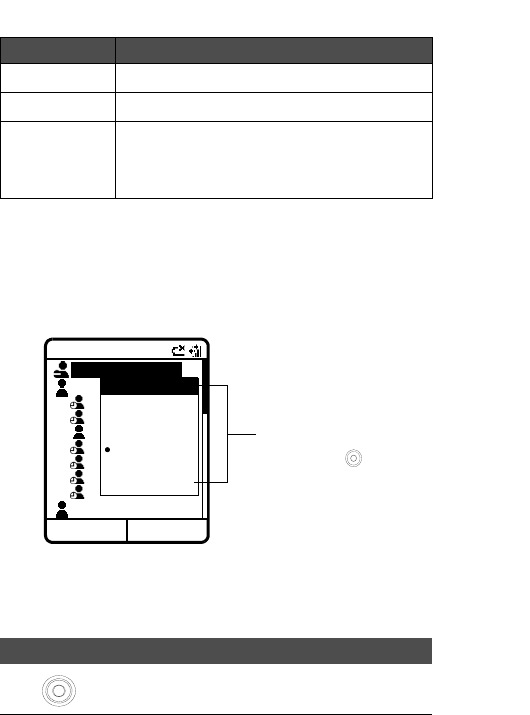
87
Messages and Online Chat
In the messenger contacts list, there are several menu
options for you to choose from:
Changing Your Status
You have to sign in
MSN Messenger
before changing your
current status.
In the messenger contacts list after you sign in
MSN
Messenger
:
Option Description
Add Contact
create a contact
Delete Contact
delete the selected contact
Block/Unblock
block/unblock the selected contact
from seeing your status and sending
you instant messages
Press To
1
scroll to your name
MSN Messenger
Mandy (On The Phone)
Online
Alan
Henry
Jane
Ken
Marvin
Peter
Wilbert
Not Online
Send Menu
Highlight your status and
press
Action
.
Online
Busy
Be Right Back
Away
On The Phone
Out To Lunch
Appear Offline
88
Messages and Online Chat
Changing Your Display Name
You must sign into
MSN Messenger
to change your display
name.
After signing into
MSN
Messenger
:
2
Action
select your name
3
scroll to a desired status
description
4
Action
select the status description
Press To
1
Options
open the options menu
2
Action
select
Passport Account
3
keypad keys enter in the name you want
others to see when you send
instant messages
Press To
89
Advanced Features
Advanced Features
Opening Applications with
Speed Dial
You can quickly launch applications by assigning speed
dial numbers. Press and hold one or two keys from the
Home screen to make a speed dial launcher. Choose
speed dial entries from 2-99. The speed dial entry 1 is
often reserved to set up or dial your voicemail after initial
setup.
To assign an application a speed dial number:
Feature Focus
Start
Press To
1
scroll to a desired application
2
Menu
open the options menu
3
Action
select
Add Speed Dial
4
left/right select a speed dial entry
under
Keypad assignment
5
Done
save the setting
90
Advanced Features
To quickly open an application from the Home screen:
Synchronizing Information
among Devices
You can use the Microsoft
®
ActiveSync
feature to
synchronize information on your desktop
computer or a Microsoft Exchange Server with
the information on your phone. The
ActiveSync
feature
compares your phone’s information with the information on
the desktop computer or the server, and then updates all
locations with the most recent information. Connecting to a
company server to synchronize information with your
phone requires assistance from an Information
Technology (IT) professional.
With the
ActiveSync
feature, you can:
•
Keep your Outlook information up-to-date by
synchronizing your phone with your desktop
computer.
•
Synchronize the
Inbox
,
Calendar
, and
Contacts
with a server
so that you have the latest information, even when
your desktop computer is turned off.
Steps
Press and hold the keypad number that you have
assigned as a speed dial launcher. If the keypad
assignment has two digits, press the first digit, then
press and hold the second digit.

91
Advanced Features
•
Copy (rather than synchronize) files between your
phone and your desktop computer.
•
Control when synchronization automatically occurs by
selecting a synchronization schedule.
•
Select which information types are synchronized and
control how much information is synchronized. For
example, you can choose how many weeks of past
appointments to synchronize.
Tip:
Using the
ActiveSync
feature, you can synchronize
information directly with a Microsoft Exchange Server if
your computer is running
Microsoft Mobile Information Server
2003
or later. For more information about the
ActiveSync
feature, see the
ActiveSync
feature
Help
on your desktop
computer.
Installing the ActiveSync Feature on Your
PC
The
ActiveSync
feature is already installed on your phone. To
install the
ActiveSync
feature (3.7.1 or later) on your personal
computer, use the companion CD included in your box or
download from the Microsoft website
(
http://www.microsoft.com
) by entering the word
ActiveSync in the search dialogue box.
Creating a Partnership
After the installation is complete, the
New Partnership Wizard
helps you set up a partnership between your phone and
your desktop computer or a server so that you can start
synchronizing information and customizing your
synchronization settings. Your first synchronization
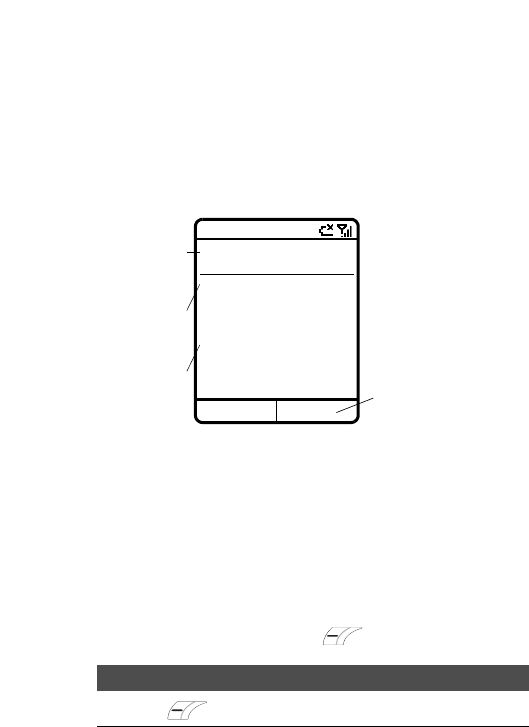
92
Advanced Features
process automatically begins when you finish using the
wizard.
Note:
If you have a firewall on your desktop, the wizard
may cause difficulties establishing the partnership with
your phone. To prevent synchronization problems, select
Synchronize with Microsoft
Mobile Information Server or this
desktop computer
in the
New Partnership Wizard
only if your
computer is running
Microsoft Mobile Information Server 2003
or later and you know the server name.
Starting and Stopping Synchronization
with Your PC
Connect your phone and desktop computer using the
infrared port on your phone or using the USB data cable
before you begin to synchronize information.
Feature Focus
Start
>
ActiveSync
Press To
1
Sync
start synchronization
Sync Menu
ActiveSync
Connected
Synchronize with Mobile
Information Server
Last: 3/15/05 9:18 AM
Synchronize with Windows PC
Last: 3/15/05 9:16 AM
Connection
Status
Server
Synchronization
Select to synchronize
through IR or change
synchronization
settings.
Desktop
Synchronization
93
Advanced Features
Regarding the infrared port, you can use an infrared
connection to quickly create a direct connection between
your phone and another desktop computer or mobile
device. This method is ideal for changing between multiple
devices, because there are no cables or adapters to
change. For more information about synchronizing using
an infrared connection, see the
ActiveSync
feature
Help
on
your desktop computer.
Tip:
To use this function, please ensure that the external
device support the infrared connection. Align your phone
to your personal computer or mobile device when using an
infrared connection to synchronize information.
Whenever the
ActiveSync
feature cannot successfully
synchronize your information, an error displays on your
phone. Press
Action
to display more information about
the error that occurred.
Note:
Some types of errors can interfere with automatic
synchronization. If you suspect that a scheduled automatic
synchronization has not occurred, you should attempt to
manually synchronize your information. Successfully
completing manual synchronization resets automatic
synchronization.
Setting Up the Server ActiveSync Feature
Before you can synchronize information with a server, you
may need to request server configuration information,
2
Stop
stop synchronization
Press To
94
Advanced Features
such as your user name, password, and the name of the
Microsoft Mobile Information Server, either from your
service provider or network administrator. This
configuration information may have already been set up on
your phone.
Fill in the blanks with the appropriate information:
Feature Focus
Start
>
ActiveSync
Press To
1
Menu
open the options menu
2
Action
select
Options
3
scroll to
Server Settings
4
Action
select
Server Settings
5
scroll to
Connection
6
Action
select
Connection
Option Description
User name
enter in your Microsoft Exchange user
name
Password
enter in your Microsoft Exchange
password
Domain
enter in your Microsoft Exchange
Server domain name (if required)
95
Advanced Features
Remember to press
Done
when you are ready.
Stopping Synchronizing an Information Type with
a Server
You can stop your phone synchronizing an information
type with a server. For more information about
synchronization, see the
ActiveSync
feature
Help
on the
desktop computer.
Save password
press left/right to check this
feature so that you need not enter it
repeatedly
Server Name
enter in your Microsoft Mobile
Information Server name
Feature Focus
Start
>
ActiveSync
Press To
1
Menu
open the options menu
2
Action
select
Options
3
scroll to
Server Settings
4
Action
select
Server Settings
Option Description
96
Advanced Features
Creating a Server Synchronization Schedule
You can create a server synchronization schedule so that
your information is automatically synchronized with the
server at specified time intervals.
To create a schedule so that your phone will sync with a
server when it is connected to a desktop computer:
5
scroll to the information type
that you no longer want to
synchronize with a server,
such as the
Calendar
,
Contacts
, or
Inbox
6
Action
select the information type
7
left/right clear the check box next to
the information type that you
no longer want to
synchronize with a server
8
Done
save the settings
Feature Focus
Start
>
ActiveSync
Press To
1
Menu
open the options menu
2
Action
select
Options
3
scroll to
Server Settings
4
Action
select
Server Settings
Press To
97
Advanced Features
To create a schedule so that your phone will sync with a
server when it is not connected to a desktop computer
(wireless synchronizing):
5
scroll to
Connection
6
Action
select
Connection
7
Menu
open the options menu
8
Action
select
Rules
9
left/right select a time interval to sync
with your server
10
Done
save the setting
Feature Focus
Start
>
ActiveSync
Press To
1
Menu
open the options menu
2
Action
select
Options
3
Action
select
Mobile Schedule
4
left/right select a length of time
5
Done
save the setting
Press To
98
Advanced Features
Synchronizing Remotely with Your PC
You can turn a desktop computer on and synchronize your
phone remotely with the computer after setting up the
server
ActiveSync
feature.
Fill in the blanks with the appropriate information:
Feature Focus
Start
>
ActiveSync
Press To
1
Menu
open the options menu
2
Action
select
Options
3
scroll to
PC Settings
4
Action
select
PC Settings
Option Description
Use
press left/right to select an
appropriate computer name
Use mobile schedule to
sync with this PC
press left/right to check this
feature if you want to use a
synchronization schedule to
sync with your PC
Sync with this PC during
manual sync
press left/right to check this
feaute if you want to sync with
your PC manually
99
Advanced Features
Remember to press
Done
when you are ready.
Exchanging Files Between Your Phone and
Desktop PC
With the
ActiveSync
feature, you can exchange files between
your phone and desktop PC.
Steps
1
Connect your phone to your desktop computer.
2
On your computer, open the
ActiveSync
feature
and click
Explore
to open the
Mobile Device
window for your phone.
3
In the
Mobile Device
window, click
My Smartphone
.
Browse to the file that you want to copy to your
desktop computer.
or
Browse to the file that you want to copy to your
phone.
4
To copy the file to your desktop computer, right-
click the file and select
Copy
. Place the cursor in
the desired folder for your desktop computer,
right-click, and select
Paste
.
or
To copy the file to your phone, right-click the file
and select
Copy
. Place the cursor in the desired
folder for your phone, right-click, and select
Paste
.
100
Advanced Features
Beaming Information
You can use your phone’s infrared port to send and
receive (beam) calendar appointments and contact cards
between your devices, and to synchronize information with
a mobile device or desktop computer that has an infrared
port.
Beaming a Contact Card
Feature Focus
Start
>
Contacts
Press To
1
scroll to a desired contact
(saved in the phone memory)
to beam
2
Menu
open the options menu
3
scroll to
Beam Contact
4
Action
select
Beam Contact
5
scroll to a desired IR device
your phone searches in its
range
6
Action
select the device
7
Beam
beam the contact
Note:
To beam a contact over
IR, align the infrared ports so
that they are unobstructed
and within close range of
each other.
101
Advanced Features
Status information then displays the name of the device
your phone is beaming to, and whether the beaming
process is pending, done, or failed.
Beaming an Appointment
Status information then displays the name of the device
your phone is beaming to, and whether the beaming
process is pending, done, or failed.
Feature Focus
Start
>
Calendar
Press To
1
scroll to a desired
appointment to beam
2
Action
open the appointment
3
Menu
open the options menu
4
scroll to
Beam Appointment
5
Action
select
Beam Appointment
6
scroll to a desired IR device
your phone searches in its
range
7
Action
select the device
8
Beam
beam the appointment
Note:
To beam an
appointment over IR, align
the infrared ports so that they
are unobstructed and within
close range of each other.
102
Advanced Features
Receiving Beamed Information
Your phone can receive beamed files of any type, but
some files must need to be copied to your desktop
computer for viewing.
Using a Bluetooth
TM
Connection
Note:
To use this function, please ensure that the
external device support the Bluetooth connection.
You can use a Bluetooth connection to quickly create a
direct connection between your phone and another
Bluetooth-enabled device. This method is ideal for
changing among multiple devices, because there are no
cables or adapters to change.
Feature Focus
Start
>
Settings
>
Beam
Press To
1
left/right check
Receive incoming beams
2
Done
receive beamed information
Note:
To receive beamed
information over IR, align the
infrared ports so that they are
unobstructed and within close
range of each other.
103
Advanced Features
Creating a Partnership from Your Phone
with a Bluetooth Device
When your phone is creating a bond with a Bluetooth
device that has headset or handsfree capabilities, you are
notified through the dialog boxes to set up that device as
your Bluetooth headset or handsfree by pressing
Yes
. When you are on a call using your Bluetooth
headset, you can transfer audio to your phone’s earpiece
by using the menu options. If you want to transfer audio
again to the Bluetooth headset, push the headset
hardware button.
Feature Focus
Start
>
Settings
>
Connections
>
Bluetooth
>
Menu
>
Devices
>
Menu
>
New
Press To
1
scroll to the Bluetooth-
enabled device you want to
pair with
2
Select
select the device
3
keypad keys enter a PIN on your phone to
create the partnership
4
keyboard keys enter the same PIN on the
device
5
Done
save the setting

104
Advanced Features
Tip:
You can stop a search if a Bluetooth device has been
found by pressing
Add
.
Accepting a Partnership from a Bluetooth
Device with Your Phone
On a Bluetooth device, you can configure a partnership
with your phone.
The partnership is created. Your phone can now be used
as a (data) modem. The phone automatically becomes a
data modem over the Bluetooth connection if a paired
device attempts to connect to it.
Feature Focus
Start
>
Settings
>
Connections
>
Bluetooth
Steps
1
Under
Bluetooth
, press left/right to select
Discoverable
and press
Done
. The Bluetooth
radio turns on and makes your phone
discoverable for 3 minutes.
2
On a Bluetooth device, select your phone and
attempt to pair with it.
3
Enter the same PIN both on the Bluetooth device
and on your phone to create the partnership.
105
Advanced Features
Managing Wireless
Connections
Using Wireless Manager, you can easily turn on/ off the
functions of Wi-Fi connection, Bluetooth connection, and
Phone features.
Note: Be aware that when the
Phone feature
is turned off, your
phone cannot receive and make a call, including an
emergency call. To receive and make a call, turn on the
Phone feature and re-engage your phone’s RF capability.
Feature Focus
Start
>
Settings
>
Connections
>
Wireless Manager
Option Description
All
press to turn on/ off the
functions of Wi-Fi, Bluetooth, and
Phone
Wi-Fi
press to turn on/ off the
functions of Wi-Fi connection
Bluetooth
press to turn on/ off the
functions of Bluetooth connection
Phone
press to turn on/ off the
functions of Phone features

106
Advanced Features
Using Your Phone as a Modem
Using
Modem Link
, you can use your phone as an
external (data) modem for another mobile
device or personal computer by using an
infrared or USB connection.
When you connect your phone to your personal computer
using a USB data cable, the screens shown and the step-
by-step instructions are specific to Windows 2000 users.
The screens may vary slightly by the Windows version. If
you have a different version of Windows and have any
further questions, please contact the computer’s
respective
Help
menu.
Installing the Phone As a Modem on Your
PC
Install the USB driver (
USBMDM
.inf
) on your C:\
drive from the companion CD first. Then follow
the steps below to install the phone modem USB
driver.
Note:
If your computer has automatically added your phone
as a new modem, you can skip the following steps.
Steps
1
Connect your phone to your computer with the
USB data cable. Your computer may prompt you
for the wireless USB modem driver with a
New
Hardware Wizard
menu screen. If it does not,
proceed to
To Set Up a USB Modem Connection
.
107
Advanced Features
56K modems are capable of receiving 56 Kbps from a
compatible service provider. Actual speeds will vary
depending on line conditions.
Activating the Modem Link
You can specify a type of connection (through USB or
infrared) for your phone as a data modem to link with your
personal computer.
A modem query is necessary to establish a PC and
modem connection. If the PC and modem connections are
2
Click
Next
from the opening screen of the
Install
Wizard
that states
Welcome to the New Found
Hardware Wizard
.
3
Click on
Search for a suitable driver for my device
(recommended)
.
4
Click
Specify a Location
and browse to the C:\
drive folder in which you downloaded the USB
driver.
5
Click
Next
to allow your computer to
automatically search and download the USB
driver file and click
Finish
.
6
After installing the driver, disconnect your phone
from the computer, and proceed to
To Set Up a
USB Modem Connection
. Your computer lists the
Smartphone 2003 Wireless USB Modem
in the
Device
Manager
window. This indicates the phone
modem has successfully been installed on your
personal computer.
Steps

108
Advanced Features
not established in approximately 30 seconds, the
ActiveSync
feature on the phone will take over the USB port.
In addition, an extra initialization string is needed on your
phone as a modem for setting up the GPRS server
configuration. Contact your wireless service provider for
the APN name, user name, and password.
Steps
1
On your computer, click on
Start
>
Settings
>
Control Panel
>
System
>
Hardware
>
Device
Manager
>
Modems
>
Smartphone 2003 Wireless USB
Modem
.
2
In the
Smartphone 2003 Wireless USB Modem
Properties
window, select the
Diagnostics
tab and
click
Query Modem
. The PC sends hyper terminal
AT commands and if the modem replies back
without an error, the modem is properly installed.
Steps
1
After querying the modem, click the
Advanced
tab
in the
Modem Properties
dialogue window.
2
Type in your extra initialization string and change
the APN name as needed.
3
For GPRS network’s extra initialization string,
use the following:
+CGDCONT=1,“IP”,“apnname”,“”,0,0
109
Advanced Features
Setting Up a USB Modem Connection
Setting Up an Infrared Modem Connection
Steps
1
Make sure that your phone is not connected to
your personal computer.
2
On the Home screen, press
Start
>
More
>
Accessories
>
Modem Link
.
3
Under
Connection
, press left/right to select
USB
.
4
Press
Menu
and select
Activate
.
5
Now connect your phone to your computer with
the USB data cable.
Steps
1
On the Home screen, press
Start
>
More
>
Accessories
>
Modem Link
.
2
Under
Connection
, press left/right to select
IrCOMM
.
3
Press
Menu
and select
Activate
.
4
Now connect your phone to your computer using
the infrared ports.

110
Advanced Features
Adding a New Dial-Up Connection
Tip:
Ensure
Smartphone 2003 Wireless USB Modem
is selected
and the hardware features are properly configured before
dialing.
Steps
1
From the
Control Panel
of your personal computer,
select
Network and Dial-up Connection
.
2
Double click
Make New Connection
and click
Next
.
3
Select
Dial-up to Internet
and click
Next
.
4
From the
Internet Connection Wizard
select
Internet
Connection Manually
and click
Next
.
5
Select
Connect Through Phone Line and Modem
.
6
From modem selection scroll down to
Smartphone
2003 Wireless USB Modem
and click
Next
.
7
Under
Telephone Number
, type the codes your
network administrator provides and uncheck
area codes and dialing rules; then click
Next
.
8
Fill in the
User Name
and
Password
and click
Next
.
9
Type in connection name (i.e. Smartphone USB
Cable GPRS) and click
Next
.
10
Select
No
then
Next
and click
Finish
.
111
Advanced Features
To double-check the new dial-up connection settings,
follow the steps below:
Deactivating the Modem Link
Deactivate the modem link when you are finished using it
in order to avoid potential problems when using the
ActiveSync
feature in the same session.
Steps
1
Open a newly created dial-up connection for your
personal computer.
2
Click
Properties
and verify
Smartphone 2003
Wireless USB Modem
is selected.
3
Click
Configure
and ensure all hardware features
are selected as shown above.
4
Click
OK
then
OK
.
5
After clicking
Dial
, you should see
Opening
,
Dialing
,
Verifying User Name and Password
, and
Registering Your Computer on the Network
. You are
GPRS connected when the dial-up dialogue
window changes to an icon in your system tray.
Feature Focus
Start
>
More
>
Accessories
>
Modem Link
>
Menu
>
Deactivate
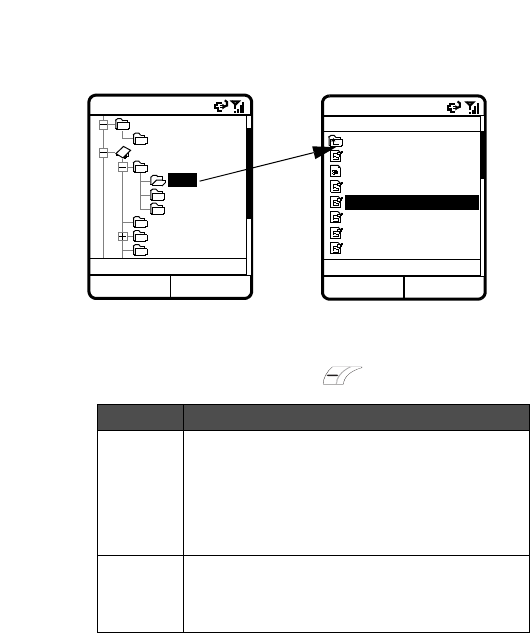
112
Advanced Features
Managing Files
File Manager
is for file and folder management in your phone.
It operates in two major views,
Tree View
and
List View
.
Feature Focus
Start
>
More
>
File Manager
Option Description
Tree View
displays the entire file structure in your
phone’s memory. The functions in
Tree View
primarily focus on folder management
(operates similar to Microsoft Windows
File Explorer
).
List View
displays the details of the selected folder
(its sub-folders and files). The functions in
List View
are basically file-oriented.
File Manager
profiles
default
Storage
Application Data
Home
Sounds
Volatile
ConnMgr
MAPI
My Documents
0 Folders/21 Files
List View Menu
Tree View
File Manager
\Storage\Application Data\Home
..
Hello.jpg
home0.hif
Beach.jpg
Businessman.jpg
Businesswom.jpg
Chill.jpg
Dots.jpg
1/22 3/15/05 1:27 PM
Tree View Menu
List View
20.1K
12.0K
20.9K
19.4K
26.0K
21.3K
38.8K

113
Advanced Features
There are a variety of key features for
File Manager
:
•
Delete, move, or copy/paste folders and files, and
create file shortcuts.
•
Sort listed files in a variety of ways (by
Name
,
Size
,
Type
,
or
Date of Last Change
, and by
Ascending
or
Descending
).
•
Search for files according to portions of filenames.
•
Send the selected files through email, infrared
beaming, MMS or Bluetooth radio, and receive files
through infrared beaming or Bluetooth radio.
•
View file or folder properties.
•
Confirm the file you want to replace or delete.
•
Refresh the folders and files on your phone.
When
File Manager
is initially invoked, it is in
Tree View
by
default. To switch to
List View
, press
List View
. In
Tree
View
, if the currently selected folder contains no subfolders,
pressing
Action
will also switch to
List View
. If the selected
folder in
Tree View
contains subfolders, press
Action
to
expand or collapse the tree for that folder. For most
functions, you must first select the file or folder you wish to
operate on, and then press
Menu
to select a desired
command from the options list. Press
Action
to
immediately run the selected file.
114
Advanced Features
Managing Phone System
Resources
Resource Manager
allows you to view and refresh the details of
battery power status and phone memory amount. It falls
into two features:
Task Manager
and
Space Manager
.
Using Task Manager
Tip:
To ex i t f r o m
Task Manager
, press
Quit
.
Option Description
Task Manager
lists all applications currently running
on your phone. You can easily
activate any currently running
application, terminate applications,
and refresh the list of running
applications.
Space Manager
lists all emails, SMS messages, MMS
messages, voice clips, speed dials,
and call history records stored on
your phone’s flash memory. You can
easily delete any of the files saved on
the flash memory and refresh the
amount of free flash memory.
Feature Focus
Start
>
More
>
Resource
Manager
>
Menu
>
Task
Manager
115
Advanced Features
The menu options for
Task Manager
are listed below:
Using Space Manager
Tip:
To ex i t f r o m
Space Manager
, press
Quit
.
The menu options for
Space Manager
are listed below:
Option Description
Kill
terminate the selected
application
Kill All
terminate all running
applications
Kill All Except Selected
terminate all running
applications except the selected
one
Refresh
refresh the list of running
applications
Feature Focus
Start
>
More
>
Resource
Manager
>
Menu
>
Space
Manager
Option Description
Erase Messages In
Messaging
delete all email, SMS, or MMS
messages from the selected
account and folder
Erase Call History
clear all call history records
Erase Speed Dial
delete all speed dial settings
Erase Voice Notes
delete all voice clips
116
Advanced Features
Removing Programs
The
Remove Programs
feature lets you remove programs
installed on your phone, with the exception of core
programs that came with the phone, such as the
Contacts
,
Calendar
, and
Internet Explorer
. If you accidentally remove a
program from the device, you can find it on the companion
CD to reinstall.
Erase All
delete all messages, call history
records, speed dials, and voice
clips
Refresh
refresh the free flash memory
amount
Feature Focus
Start
>
Settings
>
Remove Programs
Option Description
117
Personal Information Management
Personal Information
Management
Using the Contacts
You can think of the
Contacts
as an address book, where
you store information about people and businesses you
communicate with in contact cards. For example, you can
store multiple phone numbers, emails, and street
addresses, Web pages, and other information on such as
a birthday or anniversary date. You can use the
Contacts
to
dial phone numbers and compose email and SMS
messages directly from a contact card.
The contacts list displays the names of your contact cards
alphabetically, along with an abbreviation for the default
Feature Focus
Contacts
Contacts
Arthur, Bob w
Ashton, John w
Bacon, Tom m
Baker, Julia w
Campbell, Jack w
Chen, Henry w
Cook, Nelson h
Davidov, Alfred w
Duffy, Sean w
New Menu
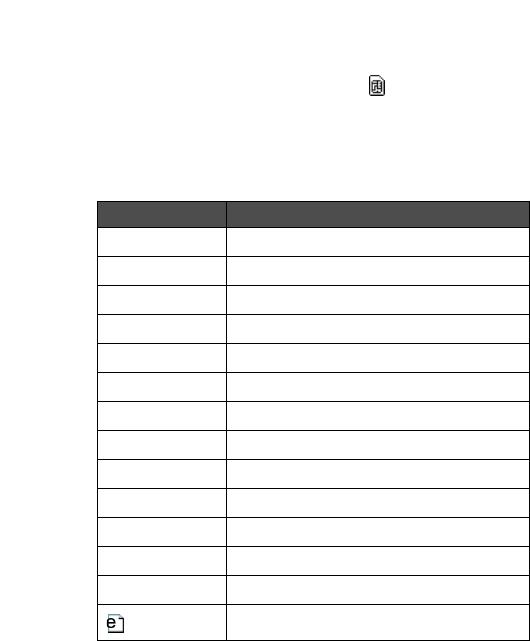
118
Personal Information Management
communication method, such as the person’s work phone
number (
w
) or home phone number (
h
).
Note:
If the contact card includes a work phone number,
your phone will automatically set it as the default number.
The contact cards along with the icon are the entries
stored on your SIM card.
The following table shows possible abbreviations and their
meanings that might display in your contacts list:
Abbreviation Description
w
work phone
w2
second work phone
h
home phone
h2
second home phone
m
mobile phone
pgr
pager
car
car phone
wfx
work fax
hfx
home fax
e
email address
e2
second email address
e3
third email address
txt
SMS address (SMS phone number)
Web page
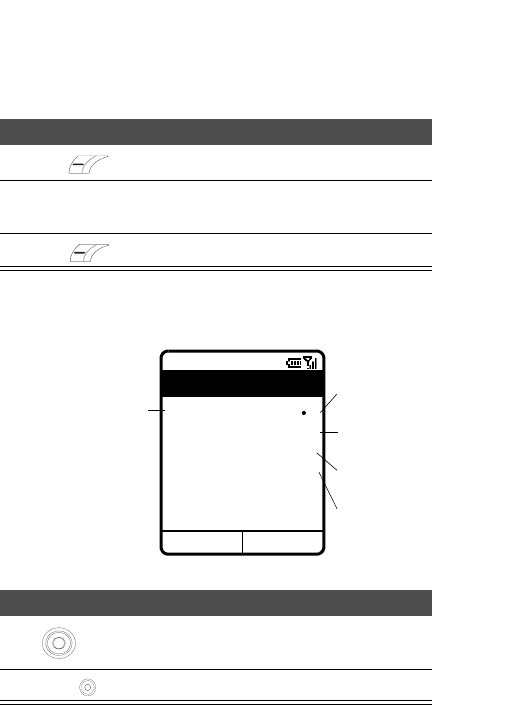
119
Personal Information Management
Creating a New Contact
When you create a new contact card on your phone, you
can synchronize the
Contacts
with your desktop computer or
a server to keep your contact information current in all
locations.
Viewing a Contact
Press To
1
New
open an empty contact card
2
keypad keys enter in the appropriate
information
3
Done
save the contact card
Press To
1
scroll to a desired contact
card
2
Action
view the contact card
Contact
Cook, Scott
370-8699 w
370-7399 m
someone@example.com e
370-7399 txt
Edit Menu
Number with a
black dot denotes
default number.
Work Number
Mobile Number
Email Address
SMS Message
Number

120
Personal Information Management
The following table lists the contact card menu options and
their functions:
Option Description
Add Speed Dial
* create a shortcut to the selected
phone number, email address, or
Web URL by assigning one or two
numbers as a speed dial entry
Send Text Message
compose and send an SMS
message to the selected contact
Tip:
By selecting an email address >
Outlook E-Mail
from an opened contact,
you can also compose and send an
email message to the selected
contact.
Save to SIM/
Save to Contacts
copy the selected contact saved in
the phone to your SIM card or vice
versa
Set as Default
set the selected phone number,
email address, or SMS message
number as the default
communication method for the
contact
Beam Contact
send the selected contact to
another mobile device or desktop
computer using infrared
Delete
remove the selected contact from
the contacts list
Edit
modify information on the selected
contact
121
Personal Information Management
* This feature is available only for the contact cards saved
in your phone memory.
Using Calendar
Calendar
is your phone’s scheduling program, where you can
create and view appointments by day, week, or month.
Creating a New Appointment
When you create a new appointment on your phone, you
can synchronize
Calendar
with your desktop computer or a
server to keep your schedule information current in all
locations.
Feature Focus
Start
>
Calendar
Press To
1
Menu
open the options menu
2
Action
select
New Appointment
3
keypad keys edit the appointment
Tip:
Under
Reminder
, select an
amount of time you want the
reminder to appear before the
appointment.
4
Done
save the appointment
122
Personal Information Management
Viewing an Appointment
Using Agenda View
You can view appointments using three different methods:
Agenda View
,
Week View
, and
Month View
.
Agenda View
is the default view for calendar information. This
view displays meetings and appointments scheduled for a
day. The appointments appear in chronological order
according to start time.
To display appointments for the current day:
Feature Focus
Start
>
Calendar
Press To
1
scroll to a desired
appointment
2
Action
display the appointment
Feature Focus
Start
>
Calendar
Press To
1
Menu
open the options menu (if you
are using
Week View
or
Month
View
)
2
scroll to
Agenda View
3
Action
select
Agenda View
to list all
appointments for the current
day
123
Personal Information Management
To display appointments for a specific day:
Using Week View
Week View
shows your schedule for five workdays in a
specified week. This view allows you to get a quick
indication of your free and busy time, and allows you to
create an appointment at a selected time easily.
Week View
displays the hours in 1-hour increments by default on the
left side of the screen and displays the days in 1-day
increments by default on the top side of the screen. You
can press to navigate through the hours/days on the
4
scroll to a desired
appointment
5
Action
display the appointment
Feature Focus
Start
>
Calendar
Press To
1
Menu
open the options menu
2
scroll to
Go to Date
3
Action
select
Go to Date
4
keypad keys enter in the date you want to
view
5
Done
display all appointments for
the specific day
Press To
124
Personal Information Management
screen. If you leave
Week View
, the hours/days last shown
will be displayed the next time you return to
Week View
.
Using Month View
Month View
provides an overview of your monthly schedule.
Arrow indicators pointing up represent morning
appointments. Arrows pointing down represent afternoon
appointments. A hollow box indicates an all-day event. A
solid box indicates you have morning and afternoon
appointments. If you have morning and afternoon
appointments plus an all-day event, a solid box is
surrounded by a hollow box.
Feature Focus
Start
>
Calendar
Press To
1
Menu
open the options menu
2
scroll to
Week View
3
Action
select
Week View
4
scroll to a desired time area
5
Action
display the appointment
Feature Focus
Start
>
Calendar
Press To
1
Menu
open the options menu
125
Personal Information Management
Using Tasks
Tasks
allows you to track a personal or work-related project,
assignment, or errand from beginning to completion. A
task can occur once or repeatedly. A recurring task can
repeat at regular intervals or repeat based on the date you
mark the task complete; for example, you might want to
pay a bill on the last Friday of every month or get a haircut
when one month has passed since your last haircut. The
Tasks
list shows your “things to do” schedule. An item
followed by an exclamation mark indicates high priority
and an item with a down arrow is marked as low priority.
Overdue tasks display bold and red. Completed tasks
display with the corresponding check box selected.
Creating a New Task
When you create a new task on your phone, you can
synchronize
Tasks
with your desktop computer to keep your
tasks list current in both locations. If you create a new task
with a reminder on your desktop computer, you can
synchronize
Tasks
so that you hear the reminder on your
2
scroll to
Month View
3
Action
select
Month View
4
scroll to a desired day
5
Action
display all appointments for
the selected day
Press To

126
Personal Information Management
phone. Completed tasks are removed from your phone
after synchronization. They are then displayed in gray with
a strikethrough on your desktop computer.
Marking a Task as Complete/Incomplete
Feature Focus
Start
>
More
>
More
>
Tasks
Press To
1
up select the
Enter new task here
field
2
keypad keys enter in the task
3
Action
save the task
Press To
1
scroll to a desired task
2
Complete
or
Activate
mark the task as complete
or
mark the task as incomplete
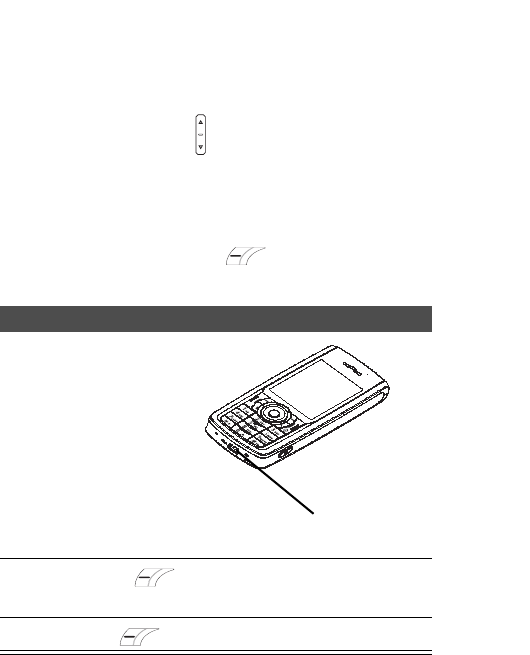
127
Personal Information Management
Using Voice Recorder
Use
Voice Recorder
to create audio clips. The length of time to
record a voice recording depends on the remaining phone
storage. Recordings are included in the
All Notes
list and are
named consecutively (
Recording1
,
Recording2
, and so on). You
can also press and hold down to quickly open
Voice
Recorder
from the Home screen.
Creating a New Audio Clip
Feature Focus
Start
>
More
>
Voice Recorder
Steps
1
Hold your
phone’s
microphone near
your mouth.
2
Press
Record
to begin recording an audio
clip.
3
Press
Stop
to stop recording the audio clip.
Microphone
128
Personal Information Management
Playing an Audio Clip
Using Calculator
You can use
Calculator
to perform any of the standard
operations for which you would normally use a handheld
calculator.
Calculator
performs basic arithmetic, such as
addition, subtraction, multiplication, and division.
Feature Focus
Start
>
More
>
More
>
Voice Recorder
Press To
1
scroll to a desired audio clip
2
Action
play the audio clip
Feature Focus
Start
>
More
>
Accessories
>
Calculator
Press To
1
number keys enter numbers
2
select a mathematical symbol
3
enter a decimal point
4
Clear
or
Back
delete the last input
5
Action
perform the calculation

129
Personal Information Management
Tip:
You can also press to display the available
mathematical symbols. Press Up for the plus sign (+),
Down for the minus sign (-), Left for the division sign (/),
and Right for the multiplication sign (x).
130
Media Center
Media Center
Taking Photos
You can capture images and store them in your phone or
memory card.
Feature Focus
Start
>
More
>
Pictures & Videos
>
Camera
Press To
1
up/down zoom in/out
2
left/right decrease/increase brightness
3
Action
take a photo and save the
photo automatically in
Smartphone > Storage > My
Documents > MyPhotos and
return to preview
Camera Lens
131
Media Center
The following table lists the menu options for the
Camera
mode. The icon shown on the right/down side of the
screen indicates pressing right soft key to open the
Camera
options menu from the below screen. To change
among menu options, press left/right; to specify a
configuration for the selected menu option, press up/
down; and to exit from options menu and return to preview,
press
Back
.
Option Description
Resolution
select the resolution of captured
photos (The higher the resolution,
the more space required to store
photos on the phone.)
White Balance
choose from a variety of presets
depending on your shooting
conditions
Brightness
adjust the brightness of the image
Zoom
zoom in/out
Mode
>
Timer
set the duration of timer for use in
taking delayed photos
Mode
>
Burst
set the maximum number of photos
that can be taken at a time
132
Media Center
Viewing Photos
You can use
Pictures & Videos
to view and manage still images
on the phone.
Folder
choose a different folder to store
photos (Press
Action
to select
Folder
; press up/down to scroll
to a folder where you want to save
photos; and press
Done
to save
the setting.)
Feature Focus
Start
>
More
>
Pictures
&Videos
>
Open File
Press To
1
up/down scroll to a desired directory
2
left/right collapse/expand the directory
3
up/down scroll to a desired folder
4
Action
select the folder
5
up/down scroll to a desired photo
6
Done
display the photo
Option Description
133
Media Center
The opened photo displays in the fit to screen view by
default. You can press
Action
once to display the photo in
the full screen view or press
Action
twice to display the
photo in the actual image view. In the actual image view,
press
Action
once to return to the fit to screen view.
When you are in any of the three image size views, press
different keys to do the following:
•
Press left/right to display previous/next photos in
the current folder.
•
Press up/down to magnify/minify the photo.
The following table lists the menu options when you launch
Pictures & Videos
:
Option Description
Open File
display an image file from the
selected directory
Send
send the current image to a contact
via text messages or outlook e-mail
Beam
beam the current image to other
devices using Bluetooth or Infrared
Save to contact
add the current image to a contact
saved in the phone memory
134
Media Center
Slide Show
play a slide show of all the images
in the current location
Tip:
When viewing a slide show, you
can also press left/right to
display previous/next images in the
current folder. Press
Menu
and
select an option to play/pause/stop
a slide show viewing, to turn the full
screen mode off and then view
images in the fit to screen mode, to
display images sequentially from
the first file to the last file or vice
versa, or to display images on slide
from left to right or right to left.
Edit
display the current image in the
actual size view or fit to screen view
and rotate the image 90 degrees to
the left, right, or horizontal
Use as Home
Screen
paste the current image on the
Home screen
Properties
see the properties of the current
image or change the image’s name
Option Description

135
Media Center
Creating Picure Folder
You can create new picture folders for managing different
kinds of pictures.
Playing Video Clips
Use
Windows Media
to play video clips, audio captures, and
music files directly from your phone or memory card (see
“Using Windows Media Player” on page 138). For best
results and performance, store video clips in your storage
card instead of the phone memory.
Using Internet Explorer
®
Using
Internet Explorer
, you can browse the Web
on the phone.
Internet Explorer
supports Wireless
Application Protocol (WAP), Hypertext Markup
Language (HTML), and compact Hypertext
Markup Language (cHTML). It also supports images and
sounds, but does not support frames on a Web page. With
Internet Explorer
, the Favorites list is displayed as the main
screen instead of a home page. You can add your own
URLs as favorites to this list for quick access to websites
you frequently visit. While you are connected to the
Internet, press
Home
to change between
Internet Explorer
Feature Focus
Start
>
More
>
Pictures &
Videos
>
Menu
>
Edit
>
New
Folder
136
Media Center
and other programs on your phone. This will not close your
Internet connection.
Viewing a Favorite
Displaying the Previous Web Page
Disconnecting from the Internet
Feature Focus
Start
>
Internet Explorer
Press To
1
scroll to a desired link on the
Favorites list
2
Go
connect to the link
Press To
Back
display the previous Web
page in the same session
Press To
End
terminate the Internet
connection
137
Media Center
Launch
Internet Explorer
and use the menu options to do the
following:
Option Description
Address Bar
edit a Web address and link to it
by pressing
Go
. Scroll
down to
View History
and press
Go
to view a list of the most
recently-visited Web pages
Refresh
update the Web pages you
visited
Add Favorite
add a Web page to your
Favorites list (Enter a name for
the website as you want it to
appear on the Favorites list and
press
Add
when done.)
Favorites
open the Favorites list
Layout
specify how Web pages are
displayed
Properties
view the Web page info
Add Folder
create a new folder on your
Favorites list
Edit
edit the current favorite/folder on
the Favorites list
Delete
delete the current favorite/folder
from the Favorites list
138
Media Center
Using Windows Media Player
Using
Windows Media
®
10.0, you can play media audio and
video files and MP3 audio files stored on your phone or
memory card.
It supports three different display screens:
Play
(the
default),
Now Playing
, and
Library
. The
Play
screen lets you
start/pause playing the current file, play next/previous files,
and adjust the speakerphone volume. The
Now Playing
screen displays a list of the files to play. The
Library
screen
lets you choose a folder which stores media files and
select a file to play.
To open the
Play
screen, scroll to a file you want to play or
select a folder and press
Play
. To open the
Now Playing
Options
>
General
change the way Web pages are
downloaded and displayed (You
can choose to omit displaying
images, turn sound off, request
a warning before moving from
secure Web pages to insecure
Web pages, allow cookies, or
change the language.)
Options
>
Connections
change your network connection
Options
>
Memory
clear the temporary Internet
files, cookies, and Web history
records
Feature Focus
Start
>
Windows Media
Option Description
139
Media Center
screen, press
Now Playing
from the
Play
screen. To open
the
Library
screen from the
Play
or
Now Playing
screen, press
Menu
>
Library
>
Back
(one or several times), or
press
Menu
>
Library
>
Menu
>
Library
>
My Device
(the
smartphone) or
Memory
.
Playing a Media File on Your Phone
On the
Play
screen:
On the
Now Playing
or
Library
screen:
Press To
1
Action
play/pause the file
2
left skip to the beginning of the
current file
3
left twice skip to the previous file
4
right skip to the next file
5
up/down
or
up/down
increase/decrease the
speaker volume
Press To
1
scroll to a desired file or
folder
140
Media Center
The following table lists the menu options that are
available for the
Play
screen:
2
Play
play the file or all the files in
the folder
3
left skip to the beginning of the
current file
4
left twice skip to the previous file
5
right skip to the next file
6
up/down
or
up/down
increase/decrease the
speaker volume
Option Description
Play/Pause
resume/pause the current file
Stop
stop the current file
Shuffle/Repeat
play all the files on the
Now Playing
playlist randomly or repeatedly
Full Screen
play the current video file in full
screen
Library
open the
Library
screen
Open URL
link to an edited URL and play a
streaming media file on network
Press To
141
Media Center
The following table lists the menu options that are
available for the
Now Playing
screen:
Options
adjust the
Windows Media
settings
Properties
display information about the current
file
About
display information about
Windows Media
Option Description
Library
open the
Library
screen
Move Up
move the current file up on the
Now
Playing
playlist
Move Down
move the current file down on the
Now Playing
playlist
Delete from Playlist
delete the current file from the
Now
Playing
playlist
Shuffle/Repeat
play all the files on the
Now Playing
playlist randomly or repeatedly
Clear Now Playing
delete all the files from the
Now
Playing
playlist
Error Details
view the error messages for the
current file (An exclamation mark
displaying before the file name
indicates an error operation
occurs for the file.)
Properties
display information about the
current file
Option Description
142
Media Center
The following table lists the menu options that are
available for the
Library
screen:
Tip:
You can also play a stream directly from a link in an
email. Just select a link in an email and press
Action
to
play the stream.
Option Description
Queue Up
add the current file to the
Now Playing
playlist
Delete from Library
delete the current file from the
Library
screen
Library
>
My Device
/
Memory
open the
Library
screen on the
phone or memory card
Update Library
search for folders on the phone or
memory card and add the folders
to the
Library
screen
Open File
play the files saved on the phone
or memory card, but you cannot
play the files listed on the
Library
screen
Properties
display information about the
current file
Done
close the
Library
screen and open
the
Play
screen

143
Media Center
Playing Games
Some people may be susceptible to epileptic seizures or
blackouts when exposed to blinking lights, such as when
watching television or playing video games. These
seizures or blackouts may occur even if a person never
had a previous seizure or blackout. If you have
experienced seizures or blackouts, or if you have a family
history of such occurrences, please consult with your
doctor before playing video games on your phone or
enabling a blinking-lights feature on your phone, if any.
Parents should monitor their children's use of video games
or other features that incorporate blinking lights on the
phones. All persons should discontinue use and consult a
doctor if any of the following symptoms occur: convulsion,
eye or muscle twitching, loss of awareness, involuntary
movements, or disorientation. To limit the likelihood of
such symptoms, please take the following safety
precautions:
•
Do not play or use a blinking-lights feature if you are
tired or need sleep.
•
Take a minimum of a 15-minute break hourly.
•
Play in a room in which all lights are on.
•
Play at the farthest distance possible from the screen.
144
Media Center
Playing Bubble Breaker
The object of
Bubble Breaker
is to have balls (more than one)
in the same color deleted from the screen. The fewer balls
you leave behind, the more scores you get.
Tip:
To start a new game, press
New
.
The related menu options are described below:
Feature Focus
Start
>
More
>
Games
>
Bubble Breaker
Press To
1
highlight a ball which is in the
same color as other ball(s)
around
2
Action
twice delete the balls from the
screen
Option Description
Undo
recall the balls you just deleted
New Game
start a new game
Statistics
select a style to display relative entries
(Press
Reset
to clear all the records
for the selected style.)
Options
turn the default play sound and the guest
mode on/off, and select a style and color
About
open the
About
dialog
145
Media Center
Playing Solitaire
The object of
Solitaire
is to use all the cards in the deck to
build up four suit stacks in ascending order, beginning with
the aces. You win the game when all cards are on the suit
stacks.
Feature Focus
Start
>
More
>
Games
>
Solitaire
Steps
1
Press the number or character above the card
stack displaying the card you want to move, and
press the number or character above the card
stack to which you want to move the card.
2
Move any aces on the seven stacks to the four
card spaces at the top of the screen, and then
make any other available plays.
Tip:
Press up to move a card to one of the
four card stacks on the upper right corner of the
screen if it belongs there. For example, if you
have an ace displayed in one of the seven
stacks, press the number above the ace, and
then press up. The card that is faced up on
the deck is always available for play.
3
When you have made all available plays, press
Draw
to turn over cards.

146
Media Center
Managing Java
®
You can download Java games on your phone. In addition,
you can configure the Java settings.
Downloading a Java Game
You can download Java games from the
Internet.
or
Feature Focus
Start
>
More
>
JBlend
Press To
Download
install Java games on your
phone
Feature Focus
Start
>
Internet Explorer
Press To
1
or
Menu
>
Address Bar
scroll to a desired link
or
enter a Web address
2
Go
connect to the link
3
scroll to a desired Java game
147
Media Center
The menu options for a chosen Java game are described
below:
4
Install
install the Java game on your
phone
Tip:
After the complete
installation, press
Action
to
start the Java game. To
terminate, press
End
.
Option Description
Remove
delete the Java game except the presets
Rename
rename the Java game
Update
update the Java game using the stored
information, such as the URL address
Options
select required settings for a Mobile
Information Device application (MIDlet) of
the Java game (Changes to permission
settings for a MIDlet in a multi-MIDlet
suite will affect the settings for the whole
suite.)
Info
display the size, version number, vendor,
domain and URL of the downloaded Java
game
Press To
148
Media Center
Java Info
display the following information:
•
Connected Limited Device
Configuration (CLDC) version
number
•
Mobile Information Device Profile
(MIDP) version number
•
Heapsize
•
SD Card free space
•
Phone storage free space
•
JSRs
Note:
The heapsize does not reflect the
memory installed, but the actual Jbed
FastDAC heapsize setting.
Java
Settings
sort all the Java games by a specified
type and turn the backlight on/off
Exit
exit from
Java Application
Option Description

154
Care and Maintenance
Care and Maintenance
It is recommended that you observe the cautions below to
prevent possible damage to your phone and to keep your
phone in good condition.
When using your phone
•
Avoid using your phone in dusty, extremely high or
low temperature environments.
•
Your phone does not provide water-proof capability.
Do not spill water onto the phone or use it in the water
or rain.
•
Avoid removing the battery without turning off the
phone in advance. If you want to remove the battery,
turn phone power off 1st.
•
Do not apply strong force or shock to the phone.
•
Keep the phone and its accessories away from small
children.
•
Do not insert metal objects into the battery charger
socket of the phone. This can short-circuit the battery
and result in danger.
•
Back up your Phonebook data regularly onto the SIM
card.
When cleaning your phone
•
Use soft, clean and slightly moistened cloth to clean
your phone. Do not let water come into any openings

155
Care and Maintenance
(such as earpiece and microphone) or remain on
metal surface (such as the metal contacts).
•
Do not wipe your phone with any corrosive liquid or
coarse objects. This can damage the outer case of
your phone.
When carrying or storing your phone
•
Do not leave your phone in hot enclosed places (such
as in a car under direct sunlight).
•
Avoid pressing and shaking the phone when you carry
it.
•
Remove the battery from phone if it is not going to be
used for a long period of time. Keep the phone and
battery in a cool and dry place.
When using the accessories
•
Use only approved batteries and accessories. Use of
non-approved accessories can cause damage to your
phone or even yourself.
•
Do not use the battery and charger for other
purposes.
When using your phone in public areas
Use the phone with manner. Turn it off or make it silent
when you are asked to.
When the phone appears to be broken
Do not attempt to disassemble or fix the phone by yourself.
Seek your original dealer for help.

149
Q & A
Q & A
Problem with your phone? If you have questions or need
help, please contact the local Customer Support Center.
Question Answer
Cannot turn on
the phone?
•
Is the battery empty?
•
Is the battery properly
installed?
•
Are the contacts on battery
and phone clean? If the
contacts appear to be soiled,
contact your dealer to clean
them.
Your voice cannot
be heard.
Have you already turned on the
in-call
Mute
function? Turn it off if
necessary.
Cannot use
certain call
functions?
To use certain advanced call
functions (such as
Call Forwarding
and
Call Barring
), you may need to
subscribe these services to your
operator first.
There are noises
during a phone
call.
Avoid using the phone near a
microwave oven, speaker or TV.
Their interference has adverse
effect to call quality.

150
Q & A
Unable to make/
receive calls?
•
Is the reception of network
signal in good condition?
Move to an open space, or a
place closer to window.
•
Is network setup properly? If
necessary, try to select your
network manually.
•
Have you already activated
the
Fixed Dialing
,
Call Forwarding
,
and
Call Barring
functions? If
yes, deactivate them
temporarily.
•
Are you using your phone
with other SIM cards when
the
Enable SIM PIN
function has
been activated? Deactivate
the function if necessary.
•
Check to make sure
Flight mode
is off.
Cannot connect
to the Internet?
•
Have you subscribed the
Internet (WAP) service to
your operator?
•
Did you enter correct setting
parameters (such as APN
and IP addresses) in WAP
profile setup?
Question Answer

151
Q & A
The battery
cannot be
charged.
•
Is the battery charger
correctly plugged into the
battery charger socket on the
phone?
•
Is the power cord of the
charger damaged?
•
Is the battery very old?
Replace with a new battery
and try again.
•
If the battery is “deeply
discharged” and you plug in a
charger, the phone will not
display that it is charging.
After charging for
approximately 15 minutes,
disconnect then reconnect
the charger to the phone. It
will then properly display that
it is charging (Whether the
charging indicator displays on
the screen varies by phones).
Cannot
synchronize
device with PC?
Check the following website for
several possible solutions:
http://support.microsoft.com
.
USB won’t
connect while
using the
ActiveSync
feature.
Upgrade to the latest version of
the ActiveSync feature. Use
version 3.7.1 or higher from
Microsoft downloads, available at:
h
ttp://www.microsoft.com/downloads
.
Question Answer
152
Q & A
The standby and
talk time is
apparently
shorter than ever.
•
Your phone consumes more
power when signal reception
is poor. Try to move to a
better location when you use
the phone.
•
Are you using a new battery?
It takes several charge and
discharge cycles for the
battery to reach its original
capacity.
•
Is the battery very old?
Replace it with a new one.
•
Are you using the phone in
very high or low temperature
environment? The efficiency
of a battery can be effected
by ambient temperature.
Phone appears to
operate slowly.
Check the free memory. Go to
Start
>
Settings
>
About
from the
Home screen. It is recommended
to have at least 1.5 to 2 MB of free
memory storage on your phone.
Remember to delete or transfer
(to micro-SD or computer) old
messages and pictures.
Question Answer

153
Q & A
Home Screen
Layout error
message
appears.
If the Home screen appears white
or another color, the Home screen
layout may not be selected. An
error message
Cannot find Home Screen
Layout
may also appear. To correct
this, you need to reselect the
Home screen. Go to
Start
>
Settings
>
Home Screen
from the Home
screen and select a Home screen
layout.
I’m having issues
with my email or I
can’t connect to
the GPRS/WAP
server.
•
Check your GPRS data
connection settings (see
“Creating GPRS Connection”
on page 62).
•
Try browsing the Web or your
service provider’s website.
•
Check your email settings:
user name, password, server
name, and server type (see
“Configuring an Email
Account” on page 69).
•
Try connecting to your email
server.
Question Answer

176
Microsoft
®
End User License
Agreement
You have acquired a device (“DEVICE”) that includes software licensed by
this company from Microsoft Licensing Inc. or its affiliates (“Microsoft”), for
use in connection with wireless network services provided under separate
agreement between you and a wireless telecommunications provider
(“Mobile Operator”). Those installed software products of Microsoft origin,
as well as associated media, printed materials, and “online” or electronic
documentation (“SOFTWARE”) are protected by international intellectual
property laws and treaties. SOFTWARE includes software already
installed on the DEVICE (“DEVICE Software”) and Microsoft software
contained on any CD-ROM disk accompanying the DEVICE (“Desktop
Software”).
The SOFTWARE is licensed, not sold. All rights reserved.
IF YOU DO NOT AGREE TO THIS END USER LICENSE AGREEMENT
(“EULA”), DO NOT USE THE DEVICE OR COPY THE SOFTWARE.
INSTEAD, PROMPTLY CONTACT THIS COMPANY FOR
INSTRUCTIONS ON RETURN OF THE UNUSED DEVICE(S) FOR A
REFUND. ANY USE OF THE SOFTWARE, INCLUDING BUT NOT
LIMITED TO USE ON THE DEVICE, WILL CONSTITUTE YOUR
AGREEMENT TO THIS EULA (OR RATIFICATION OF ANY PREVIOUS
CONSENT).
1. GRANT OF SOFTWARE LICENSE. This EULA grants you the
following license:
1.1. DEVICE Software. You may use the DEVICE Software as installed on
the DEVICE (including as installed on removable media installed in the
DEVICE). All or certain portions of the DEVICE Software may be
inoperable if a proper account is not established or maintained with an
appropriate Mobile Operator, or if the Mobile Operator’s network facilities
are not operating or configured to operate with the DEVICE software.
177
1.2. Desktop Software. Desktop Software is included with your DEVICE,
and you may install and use the Microsoft ActiveSync
®
3.7.1 component
on one (1) or more computers to exchange information with one (1) or
more computing devices that contain a compatible version of the
Microsoft Windows
®
for Smartphone 2003 Software. For other software
component(s) contained in the Desktop Software, you may install and use
such components only in accordance with the terms of the printed or
online end user license agreement(s) provided with such component(s).
In the absence of an end user license agreement for particular
component(s) of the Desktop Software, you may install and use only one
(1) copy of such component(s) on the DEVICE or a single computer with
which you use the DEVICE.
1.3. Back-up Copy. If this company has not included a back-up copy of the
DEVICE Software with the DEVICE, you may make a single back-up copy
of the DEVICE Software. You may use the back-up copy solely for archival
purposes.
1.4. Microsoft Windows
®
2003. If Microsoft Outlook
®
2002 is included
with your Device, the following terms apply to your use of Microsoft
Outlook
®
2002: (i) regardless of the information contained in “Software
Installation and Use” section of the online EULA you may install one (1)
copy of Microsoft Outlook
®
2002 on one (1) computer to use, exchange
data, share data, access and interact with the DEVICE, and (ii) the EULA
for Microsoft Outlook
®
2002 is between this company and the end user -
not between the PC manufacturer and end user.
2. Speech/Handwriting Recognition. If the Software includes speech and
or handwriting recognition component(s), you should understand that
speech and handwriting recognition are inherently statistical processes;
that recognition errors are inherent in the processes; that it is your
responsibility to provide for handling such errors and to monitor the
recognition processes and correct any errors. Neither this company nor its
suppliers shall be liable for any damages arising out of errors in the
speech and handwriting recognition processes.
178
3. Limitations on Reverse Engineering, Decompilation and Disassembly.
You may not reverse engineer, decompile, or disassemble the
SOFTWARE, except and only to the extent that such activity is expressly
permitted by applicable law notwithstanding this limitation.
4. Single DEVICE. The Device Software is licensed with the DEVICE as a
single integrated product. The DEVICE Software may only be used as
part of the DEVICE, notwithstanding any installation of the DEVICE
Software on removable media.
5. Single EULA. The package for the DEVICE may contain multiple
versions of this EULA, such as multiple translations and/or multiple media
versions (e.g., in the user documentation and in the software). Even if you
receive multiple versions of the EULA, you are licensed to use only one
(1) copy of the DEVICE Software.
6. Rental. You may not rent or lease the SOFTWARE.
7. Software Transfer. You may not permanently transfer any of your rights
under this EULA with regard to the DEVICE Software or Desktop
Software, except as permitted by the applicable Mobile Operator. In the
event that the Mobile Operator permits such transfer, you may
permanently transfer all of your rights under this EULA only as part of a
sale or transfer of the DEVICE, provided you retain no copies, you transfer
all of the SOFTWARE (including all component parts, the media and
printed materials, any upgrades or backup copies, this EULA and, if
applicable, the Certificate(s) of Authenticity), and the recipient agrees to
the terms of this EULA. If the Software is an upgrade, any transfer must
include all prior versions of the SOFTWARE.
8. Termination. Without prejudice to any other rights, this company or
Microsoft may terminate this EULA if you fail to comply with the terms and
conditions of this EULA. In such event, you must destroy all copies of the
SOFTWARE and all of its component parts.
9. Security Updates. The SOFTWARE may include digital rights
management technology. If SOFTWARE does contain digital rights
management technology, content providers are using the digital rights
179
management technology (“Microsoft DRM”) contained in the SOFTWARE
to protect the integrity of their content (“Secure Content”) so that their
intellectual property, including copyright, in such content is not
misappropriated. Owners of such Secure Content (“Secure Content
Owners”) may, from time to time, request Microsoft, Microsoft Corporation
or their subsidiaries to provide security related updates to the Microsoft
DRM components of the SOFTWARE (“Security Updates”) that may
affect your ability to copy, display and/or play Secure Content through
Microsoft software or third party applications that utilize Microsoft DRM.
You therefore agree that, if you elect to download a license from the
Internet which enables your use of Secure Content, Microsoft Corporation
or their subsidiaries may, in conjunction with such license, also download
onto your DEVICE such Security Updates that a Secure Content Owner
has requested that Microsoft, Microsoft Corporation or their subsidiaries
distribute. Microsoft, Microsoft Corporation or their subsidiaries will not
retrieve any personally identifiable information, or any other information,
from your DEVICE by downloading such Security Updates.
10. Consent to Use of Data. You agree that Microsoft, Microsoft
Corporation and their affiliates may collect and use technical information
gathered in any manner as part of product support services related to the
SOFTWARE. Microsoft, Microsoft Corporation and their affiliates may use
this information solely to improve their products or to provide customized
services or technologies to you. Microsoft, Microsoft Corporation and their
affiliates may disclose this information to others, but not in a form that
personally identifies you.
11. Internet Gaming/Update Features. If the SOFTWARE provides, and
you choose to utilize, the Internet gaming or update features within the
SOFTWARE, it is necessary to use certain computer system, hardware,
and software information to implement the features. By using these
features, you explicitly authorize Microsoft, Microsoft Corporation and/or
their designated agent to use this information solely to improve their
products or to provide customized services or technologies to you.
Microsoft or Microsoft Corporation may disclose this information to others,
but not in a form that personally identifies you.
180
12. Internet-Based Services Components. The SOFTWARE may contain
components that enable and facilitate the use of certain Internet-based
services. You acknowledge and agree that Microsoft Corporation or their
affiliates may automatically check the version of the SOFTWARE and/or
its components that you are utilizing and my provide upgrades or
supplements to the SOFTWARE that may be automatically downloaded
to your Device.
13. Links to Third Party Sites. The SOFTWARE may provide you with the
ability to link to third party sites through the use of the SOFTWARE. The
third party sites are NOT under the control of this company, Microsoft,
Microsoft Corporation or their affiliates. Neither this company, Microsoft
nor Microsoft Corporation nor their affiliates are responsible for (i) the
contents of any third party sites, any links contained in third sites, or any
changes or updates to third party sites, or (ii) webcasting or any other
form of transmission received from any third party sites. If the
SOFTWARE provides links to third party sites, those links are provided to
you only as a convenience, and the inclusion of any link does not imply an
endorsement of the third party site by this company, Microsoft, Microsoft
Corporation or their affiliates.
14. Additional Software/Services. The SOFTWARE may permit this
company, Microsoft, Microsoft Corporation or their affiliates to provide or
make available to you SOFTWARE updates, supplements, add-on
components, or Internet-based services components of the SOFTWARE
after the date you obtain your initial copy of the SOFTWARE
(“Supplemental Components”).
14.1.If this company provides or makes available to you Supplemental
Components and no other EULA terms are provided along with the
Supplemental Components, then the terms of this EULA shall apply.
14.2.If Microsoft, Microsoft Corporation or their affiliates make available
Supplemental Components, and no other EULA terms are provided, then
the terms of this EULA shall apply, except that the Microsoft, Microsoft
Corporation or affiliate entity providing the Supplemental Component(s)
shall be the licensor of the Supplemental Component(s).
181
14.3.This company, Microsoft, Microsoft Corporation and their affiliates
reserve the right to discontinue any Internet-based services provided to
you or made available to you through the use of the SOFTWARE.
15. UPGRADES AND RECOVERY MEDIA.
15.1.DEVICE Software. If the DEVICE Software is provided by this
company separate from the DEVICE on media such as a ROM chip, CD
ROM disk(s) or via web download or other means, and is labeled “For
Upgrade Purposes Only” or “For Recovery Purposes Only”, you may
install one copy of such DEVICE Software on the DEVICE as a
replacement copy for the existing DEVICE Software and use it in
accordance with the Grant of Software License section of this EULA.
15.2.Desktop Software. If any Desktop Software component(s) is
provided by this company separate from the DEVICE on CD ROM disk(s)
or via web download or other means, and labeled “For Upgrade Purposes
Only” or “For Recovery Purposes Only”, you may (i) install and use one
copy of such component(s) on the computer(s) you use to exchange data
with the DEVICE as a replacement copy for the existing Desktop Software
component(s).
16. COPYRIGHT. All title and intellectual property rights in and to the
SOFTWARE (including but not limited to any images, photographs,
animations, video, audio, music, text and “applets”, incorporated into the
SOFTWARE), the accompanying printed materials, and any copies of the
SOFTWARE, are owned by Microsoft or its suppliers (including Microsoft
Corporation). You may not copy the printed materials accompanying the
SOFTWARE. All title and intellectual property rights in and to the content
which may be accessed through use of the SOFTWARE is the property of
the respective content owner and may be protected by applicable
copyright or other intellectual property laws and treaties. This EULA
grants you no rights to use such content. All rights not specifically granted
under this EULA are reserved by Microsoft and its suppliers (including
Microsoft Corporation).
17. EXPORT RESTRICTIONS. You acknowledge that SOFTWARE is
subject to U.S. export jurisdiction. You agree to comply with all applicable
182
international and national laws that apply to the SOFTWARE, including
the U.S. Export Administration Regulations, as well as end-user, end-use
and destination restrictions issued by U.S. and other governments. For
additional information, see
http://www.microsoft.com/ exporting/
.
18. PRODUCT SUPPORT. Product support for the SOFTWARE is NOT
provided by Microsoft, its parent corporation, Microsoft Corporation, or
their affiliates or subsidiaries.
19. NO LIABILITY FOR CERTAIN DAMAGES. EXCEPT AS PROHIBITED
BY LAW, MICROSOFT SHALL HAVE NO LIABILTIY FOR ANY
INDIRECT, SPECIAL, CONSEQUENTIAL OR INCIDENTAL DAMAGES
ARISING FROM OR IN CONNECTION WITH THE USE OR
PERFORMANCE OF THE SOFTWARE. THIS LIMITATION SHALL
APPLY EVEN IF ANY REMEDY FAILS OF ITS ESSENTIAL PURPOSE.
20. FOR APPLICABLE LIMITED WARRANTIES AND SPECIAL
PROVISIONS PERTAINING TO YOUR PARTICULAR JURISDICTION,
PLEASE REFER TO YOUR WARRANTY BOOKLET INCLUDED WITH
THIS PACKAGE OR PROVIDED WITH THE SOFTWARE PRINTED
MATERIALS.

183
Federal Communications
Commission Regulations
This device complies with part 15 of FCC Rules. Operation is subject to
the folllowing two conditions: (1) This device may not cause harmful
interference, and (2) this device must accept any interference received
including interference that may cause undesired operation.
This mobile phone has been tested and found to comply with the limits for
Class B digital device, pursuant to Part 15 of the FCC Rules. These limits
are designed to provide reasonable protection against harmful
interference in a residential installation. This mobile phone generates,
uses, and can radiate radio frequency energy, and if not installed and
used in accordance with the instructions, may cause harmful interference
to radio communications. However, there is no gurantee that inferference
will not occur in a particular installation. If this mobile phone dose cause
harmful interference to radio or TV reception, which can be determined by
turning the mobile phone on and off. The user is encouraged to try to
correct the interference by one or more of the following measures.
--Reorient or relocate the receiving antenna.
--Increase the seperation between the equipment and the receiver.
--Connect the equipment into an outlet on a circuit different from to which
that the receiver is connected.
--Consult to the dealer of experienced radio/ TV technician for help.
Changes and modification not expressly approved by the party
responsible for compliance could void the user’s authority to operate the
mobile phone.
Max. SAR value- 1.11 W/kg for GSM head, 1.42 W/kg for GSM body,
0.576 W/kg for PCS head, 1.08 W/kg for PCS body
Max. SAR value of WLAN - 0.427 W/kg for head and 0.063 W/kg body