Chuango Security Technology D100 Door/Window Contact User Manual DWC 100 EN 1210 2 0

Chuango Security Technology Corporation Door/Window Contact DWC 100 EN 1210 2 0

User Manual

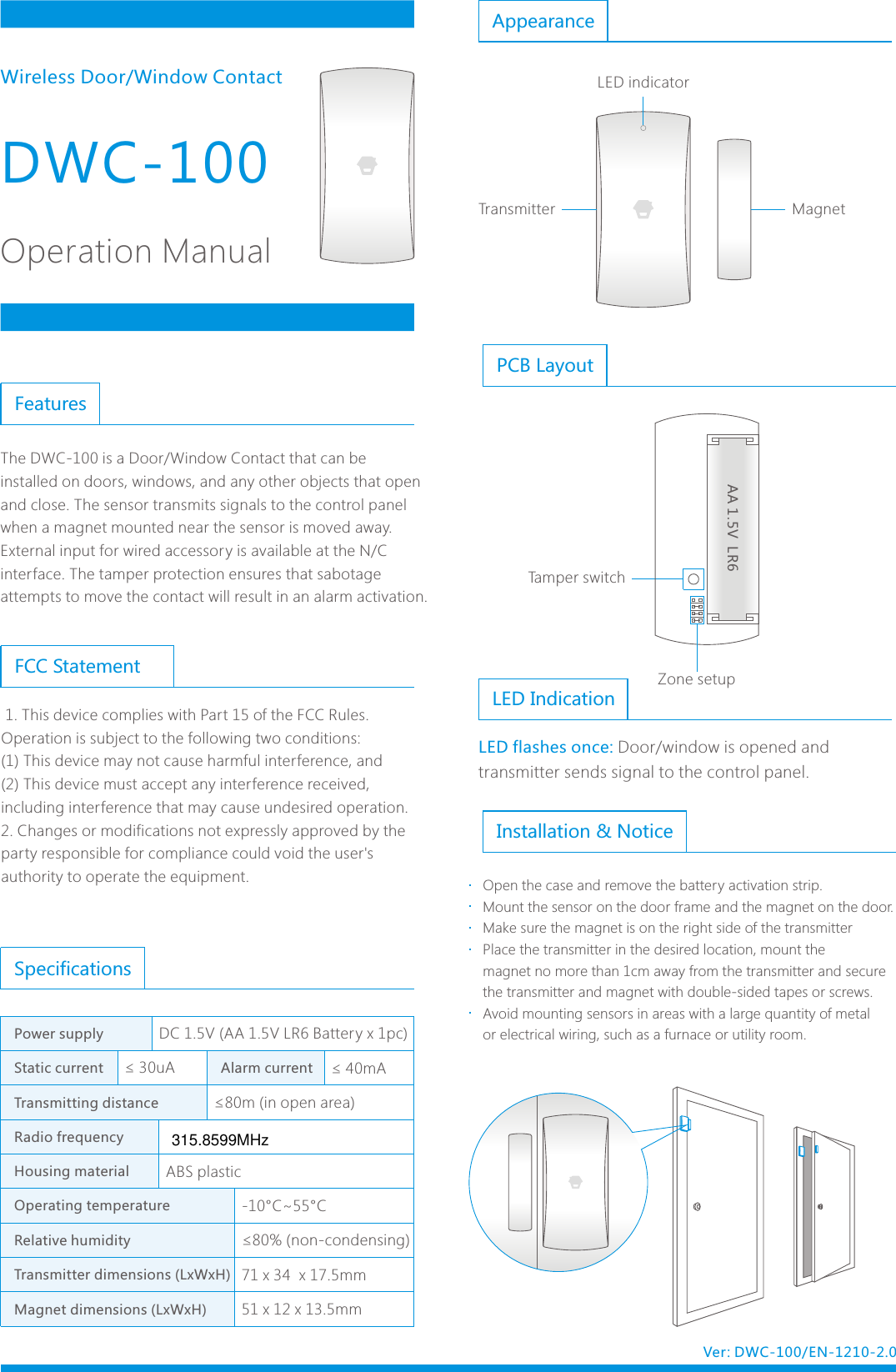
DWC-100Ver: DWC-100/EN-1210-2.0Operation ManualWireless Door/Window ContactThe DWC-100 is a Door/Window Contact that can be installed on doors, windows, and any other objects that open and close. The sensor transmits signals to the control panel when a magnet mounted near the sensor is moved away. External input for wired accessory is available at the N/C interface. The tamper protection ensures that sabotage attempts to move the contact will result in an alarm activation.FeaturesAppearanceTransmitter MagnetLED indicatorLED IndicationLED flashes once: Door/window is opened and transmitter sends signal to the control panel. AA 1.5V  LR6PCB LayoutTamper switchZone setupInstallation & NoticeOpen the case and remove the battery activation strip.Mount the sensor on the door frame and the magnet on the door. Make sure the magnet is on the right side of the transmitterPlace the transmitter in the desired location, mount the magnet no more than 1cm away from the transmitter and secure the transmitter and magnet with double-sided tapes or screws. Avoid mounting sensors in areas with a large quantity of metal or electrical wiring, such as a furnace or utility room.Specifications-10°C~55°C71 x 34  x 17.5mm51 x 12 x 13.5mmDC 1.5V (AA 1.5V LR6 Battery x 1pc)≤ 30uA ≤ 40mAPower supplyStatic current Alarm currentTransmitting distanceRadio frequencyHousing material ABS plasticOperating temperatureTransmitter dimensions (LxWxH)Magnet dimensions (LxWxH)Relative humidity ≤80% (non-condensing)≤80m (in open area)FCC Statement315.8599MHz 1. This device complies with Part 15 of the FCC Rules.Operation is subject to the following two conditions:(1) This device may not cause harmful interference, and(2) This device must accept any interference received, including interference that may cause undesired operation.2. Changes or modifications not expressly approved by the party responsible for compliance could void the user's authority to operate the equipment.

Navigation menu