Conexant Systems 36356A2 Access Point User Manual AccessPoint
Conexant Systems Inc. Access Point AccessPoint
manual
User Manual
11 Mbps Wireless LAN Access Point
Document version: preliminary 3
Document number: 555004.doc
Copyright © 2001 Intersil. All rights reserved.
2preliminary 3
Trademarks and copyright
Copyright © 2001 Intersil.
The publisher reserves the right to revise this publication and to make
changes to any or all parts of this manual at any time, without obligation
to notify any person or entity of such revisions or changes.
No part of this publication may be reproduced, stored in a retrieval
system, or transmitted in any form or by any means, whether electronic,
mechanical, photocopying, recording, or otherwise without the prior
written permission of the publisher.
AirLock, APCenter, ASBF Connect and KickStart are trademarks of
Intersil. Other product and company names are registered trademarks or
trademarks of their respective holders.
Safety
This equipment is designed with utmost care for the safety of those who
install and use it. However, special attention must be paid to the dangers
of electric shock and static electricity when working with electronic
equipment. All guidelines of this manual and of the computer
manufacturer must therefore be followed at all times to ensure the safe
use of the equipment.
Important Notice
This device is a 2.4 GHz low power RF
device intended for home and office use in
all EU member states except in France
where restrictive use applies.
Please refer to ‘Regulatory notes and
statements’ on page 43 in this manual for
further details.

555004.doc 3
Contents
Contents
1 Getting started . . . . . . . . . . . . . . . . . . . . . . . . . . . . . . . . . . .7
1.1 Introduction . . . . . . . . . . . . . . . . . . . . . . . . . . . . . . . . . . . . . . . . . . . . . . 7
1.2 Contents of this manual . . . . . . . . . . . . . . . . . . . . . . . . . . . . . . . . . . . . . 8
1.3 Where to implement a wireless LAN . . . . . . . . . . . . . . . . . . . . . . . . . . . 8
1.4 Adding Access Points to your (network) environment . . . . . . . . . . . . . . 9
1.4.1 Creating a wireless network . . . . . . . . . . . . . . . . . . . . . . . . . . . . . . . . . . 9
1.4.2 Extending a wired network with one or more Access Points . . . . . . . . 10
1.4.3 Connecting an Access Point directly to a computer . . . . . . . . . . . . . . . 11
2 Installing the Access Point . . . . . . . . . . . . . . . . . . . . . . . .13
2.1 Introduction . . . . . . . . . . . . . . . . . . . . . . . . . . . . . . . . . . . . . . . . . . . . . 13
2.2 Access Point environment . . . . . . . . . . . . . . . . . . . . . . . . . . . . . . . . . . 13
2.3 Physical installation of the Access Point . . . . . . . . . . . . . . . . . . . . . . . 13
2.4 Desktop mount installation . . . . . . . . . . . . . . . . . . . . . . . . . . . . . . . . . . 14
2.5 Wall mount installation . . . . . . . . . . . . . . . . . . . . . . . . . . . . . . . . . . . . . 15
2.6 Connecting the Access Point . . . . . . . . . . . . . . . . . . . . . . . . . . . . . . . . 16
2.6.1 Power adapter . . . . . . . . . . . . . . . . . . . . . . . . . . . . . . . . . . . . . . . . . . . 17
2.6.2 UTP port . . . . . . . . . . . . . . . . . . . . . . . . . . . . . . . . . . . . . . . . . . . . . . . . 17
2.7 LEDs . . . . . . . . . . . . . . . . . . . . . . . . . . . . . . . . . . . . . . . . . . . . . . . . . . 18
2.8 Unlocking the Access Point . . . . . . . . . . . . . . . . . . . . . . . . . . . . . . . . . 18
2.8.1 Unlocking the Access Point to reconfigure . . . . . . . . . . . . . . . . . . . . . . 18
2.8.2 Resetting to the default factory setting . . . . . . . . . . . . . . . . . . . . . . . . . 19
3 Configuring the Access Point . . . . . . . . . . . . . . . . . . . . .21
3.1 Introduction . . . . . . . . . . . . . . . . . . . . . . . . . . . . . . . . . . . . . . . . . . . . . 21
3.2 When to configure the Access Point . . . . . . . . . . . . . . . . . . . . . . . . . . 21

4preliminary 3
Contents
3.3 Starting the Web Interface . . . . . . . . . . . . . . . . . . . . . . . . . . . . . . . . . . .22
3.3.1 Installing KickStart . . . . . . . . . . . . . . . . . . . . . . . . . . . . . . . . . . . . . . . . .22
3.3.2 Launch KickStart . . . . . . . . . . . . . . . . . . . . . . . . . . . . . . . . . . . . . . . . . .23
3.3.3 Select wireless ethernet device . . . . . . . . . . . . . . . . . . . . . . . . . . . . . . .23
3.3.4 Device data . . . . . . . . . . . . . . . . . . . . . . . . . . . . . . . . . . . . . . . . . . . . . .24
3.3.5 Scanning and rescanning for devices . . . . . . . . . . . . . . . . . . . . . . . . . .24
3.3.6 IP settings . . . . . . . . . . . . . . . . . . . . . . . . . . . . . . . . . . . . . . . . . . . . . . .25
3.3.7 Static IP settings . . . . . . . . . . . . . . . . . . . . . . . . . . . . . . . . . . . . . . . . . .26
3.3.8 IP settings . . . . . . . . . . . . . . . . . . . . . . . . . . . . . . . . . . . . . . . . . . . . . . .27
3.3.9 Changing IP settings . . . . . . . . . . . . . . . . . . . . . . . . . . . . . . . . . . . . . . .27
3.3.10 Ready to start the Web Interface . . . . . . . . . . . . . . . . . . . . . . . . . . . . . .28
3.3.11 Web Interface is launched . . . . . . . . . . . . . . . . . . . . . . . . . . . . . . . . . . .28
3.4 Launching Web Interface manually . . . . . . . . . . . . . . . . . . . . . . . . . . . .29
3.5 Contents of Web Interface . . . . . . . . . . . . . . . . . . . . . . . . . . . . . . . . . . .29
3.5.1 Settings Summary . . . . . . . . . . . . . . . . . . . . . . . . . . . . . . . . . . . . . . . . .29
3.5.2 Wireless Settings . . . . . . . . . . . . . . . . . . . . . . . . . . . . . . . . . . . . . . . . . .30
3.5.3 Security against unauthorized network access . . . . . . . . . . . . . . . . . . .31
3.5.4 To add a a client to the exception list . . . . . . . . . . . . . . . . . . . . . . . . . .32
3.5.5 To delete a client from the exception list . . . . . . . . . . . . . . . . . . . . . . . .33
3.5.6 Security against eavesdropping . . . . . . . . . . . . . . . . . . . . . . . . . . . . . .34
3.5.7 Change WEP password . . . . . . . . . . . . . . . . . . . . . . . . . . . . . . . . . . . .34
3.5.8 Security against unauthorized configuration . . . . . . . . . . . . . . . . . . . . .35
3.5.9 Identity . . . . . . . . . . . . . . . . . . . . . . . . . . . . . . . . . . . . . . . . . . . . . . . . . .36
3.5.10 IP Settings . . . . . . . . . . . . . . . . . . . . . . . . . . . . . . . . . . . . . . . . . . . . . . .37
4 Troubleshooting . . . . . . . . . . . . . . . . . . . . . . . . . . . . . . . .39
4.1 If KickStart does not find the Access Point you are looking for . . . . . . .39
4.1.1 Problems on the wireless side . . . . . . . . . . . . . . . . . . . . . . . . . . . . . . . .39
4.1.2 Problems on the wired side . . . . . . . . . . . . . . . . . . . . . . . . . . . . . . . . . .40
5 Technical specifications 11 Mbps WLAN Access Point 41
5.1 General Specifications . . . . . . . . . . . . . . . . . . . . . . . . . . . . . . . . . . . . .41
5.2 Radio specifications . . . . . . . . . . . . . . . . . . . . . . . . . . . . . . . . . . . . . . .41
5.3 Security specifications . . . . . . . . . . . . . . . . . . . . . . . . . . . . . . . . . . . . .42
5.4 Other specifications . . . . . . . . . . . . . . . . . . . . . . . . . . . . . . . . . . . . . . . .42
6 Regulatory notes and statements . . . . . . . . . . . . . . . . . .43
6.1 Wireless LAN, Health and Authorization for use . . . . . . . . . . . . . . . . . .43
6.2 Regulatory Information/disclaimers . . . . . . . . . . . . . . . . . . . . . . . . . . . .43
6.3 USA-FCC (Federal Communications Commission) statement . . . . . . .43
6.4 FCC Radio Frequency Exposure statement . . . . . . . . . . . . . . . . . . . . .44
6.5 FCC Interference Statement . . . . . . . . . . . . . . . . . . . . . . . . . . . . . . . . .44
6.6 Export restrictions . . . . . . . . . . . . . . . . . . . . . . . . . . . . . . . . . . . . . . . . .44
6.7 Europe - EU R&TTE Declaration of Conformity . . . . . . . . . . . . . . . . . .45
6.8 Restricted Wireless LAN device use in EU . . . . . . . . . . . . . . . . . . . . . .46

555004.doc 5
Contents
A TCP and IP settings . . . . . . . . . . . . . . . . . . . . . . . . . . . . . .49
A.1 Introduction . . . . . . . . . . . . . . . . . . . . . . . . . . . . . . . . . . . . . . . . . . . . . 49
A.2 How do computers communicate in a network . . . . . . . . . . . . . . . . . . 49
A.2.1 IP address . . . . . . . . . . . . . . . . . . . . . . . . . . . . . . . . . . . . . . . . . . . . . . 50
A.2.2 Subnet mask . . . . . . . . . . . . . . . . . . . . . . . . . . . . . . . . . . . . . . . . . . . . 50
A.2.3 IP address range . . . . . . . . . . . . . . . . . . . . . . . . . . . . . . . . . . . . . . . . . 51
A.2.4 Reserved addresses . . . . . . . . . . . . . . . . . . . . . . . . . . . . . . . . . . . . . . 51
A.2.5 Gateway . . . . . . . . . . . . . . . . . . . . . . . . . . . . . . . . . . . . . . . . . . . . . . . . 51
A.2.6 MAC address . . . . . . . . . . . . . . . . . . . . . . . . . . . . . . . . . . . . . . . . . . . . 52
A.3 IP configuration . . . . . . . . . . . . . . . . . . . . . . . . . . . . . . . . . . . . . . . . . . 52
A.3.1 DHCP . . . . . . . . . . . . . . . . . . . . . . . . . . . . . . . . . . . . . . . . . . . . . . . . . . 52
A.3.2 Auto IP . . . . . . . . . . . . . . . . . . . . . . . . . . . . . . . . . . . . . . . . . . . . . . . . . 52
B Wireless LAN . . . . . . . . . . . . . . . . . . . . . . . . . . . . . . . . . . .55
B.1 Introduction . . . . . . . . . . . . . . . . . . . . . . . . . . . . . . . . . . . . . . . . . . . . . 55
B.2 Wireless LAN . . . . . . . . . . . . . . . . . . . . . . . . . . . . . . . . . . . . . . . . . . . . 55
B.3 The Access Point . . . . . . . . . . . . . . . . . . . . . . . . . . . . . . . . . . . . . . . . . 56
B.4 Service Set ID (SSID) . . . . . . . . . . . . . . . . . . . . . . . . . . . . . . . . . . . . . 56
B.5 Physics of an Access Point . . . . . . . . . . . . . . . . . . . . . . . . . . . . . . . . . 56
B.5.1 Range . . . . . . . . . . . . . . . . . . . . . . . . . . . . . . . . . . . . . . . . . . . . . . . . . . 56
B.5.2 Data rates . . . . . . . . . . . . . . . . . . . . . . . . . . . . . . . . . . . . . . . . . . . . . . . 56
B.5.3 Regulatory Domain . . . . . . . . . . . . . . . . . . . . . . . . . . . . . . . . . . . . . . . 57
B.5.4 Radio Channels . . . . . . . . . . . . . . . . . . . . . . . . . . . . . . . . . . . . . . . . . . 57
B.6 Security . . . . . . . . . . . . . . . . . . . . . . . . . . . . . . . . . . . . . . . . . . . . . . . . 57
B.6.1 IEEE authentication . . . . . . . . . . . . . . . . . . . . . . . . . . . . . . . . . . . . . . . 58
B.6.2 Open Systems method . . . . . . . . . . . . . . . . . . . . . . . . . . . . . . . . . . . . . 58
B.6.3 WEP method . . . . . . . . . . . . . . . . . . . . . . . . . . . . . . . . . . . . . . . . . . . . 58

6preliminary 3
Contents

555004.doc 7
1 Getting started
1.1 Introduction
Thank you for purchasing your 11 Mbps WLAN Access Point.
The package you have received contains the following items:
•user manual,
•11 Mbps WLAN Access Point,
•mounting material,
•power adapter,
•CD containing configuration software and this manual.
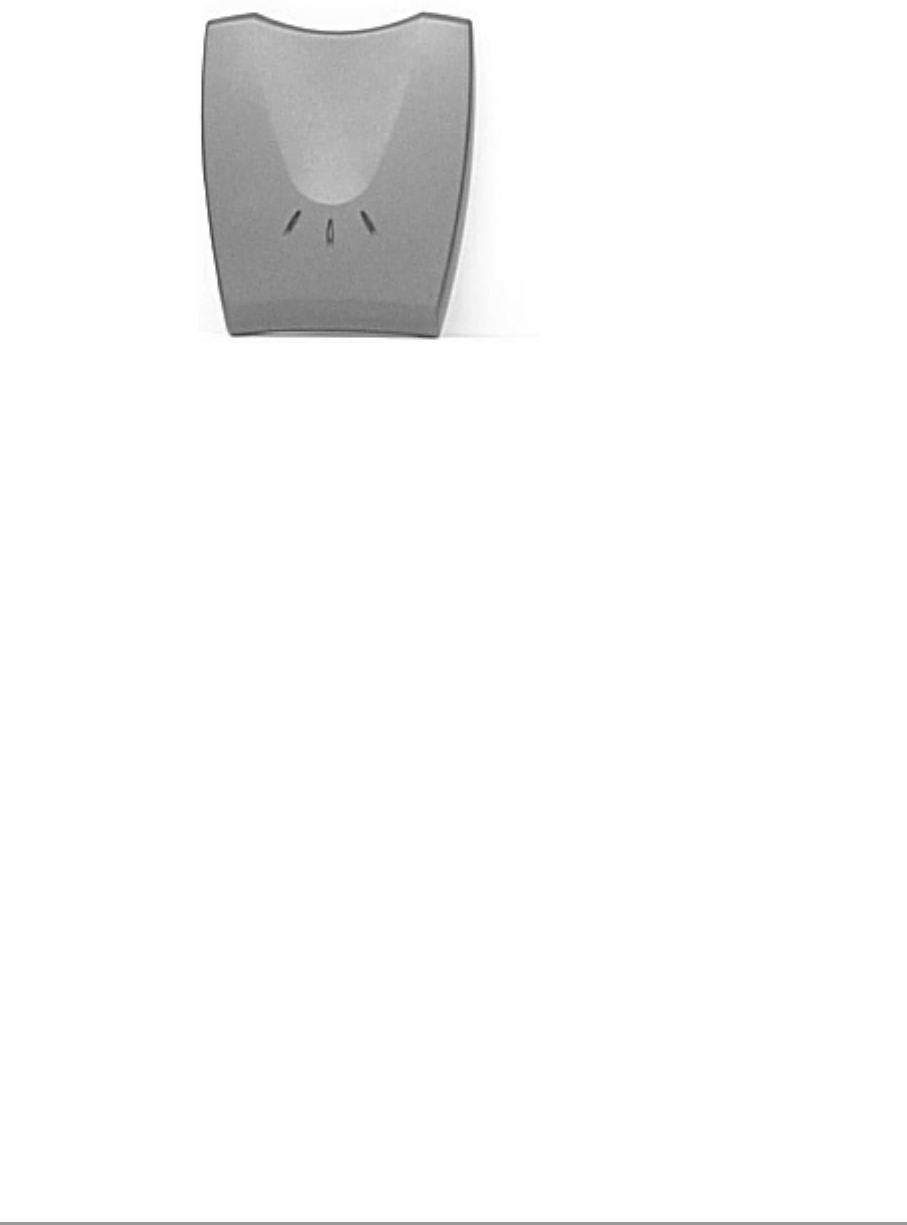
Figure 1-1 11 Mbps WLAN Access Point

8preliminary 3
Getting started
Contents of this manual
1.2 Contents of this manual
Table 1-1 gives an overview of the contents of this manual.
1.3 Where to implement a wireless LAN
Whether at home or at the office, a wireless LAN offers freedom moving
around the area with the radiographic reach of the Access Points.
Table 1-1 Contents of this manual
Chapter When to read:
This chapter (“Getting
started”)
Read this chapter on how to implement
a Wireless LAN in your (network)
environment.
Chapter 2: ‘Installing the
Access Point’ on page 13
Read this for information on how to
install and connect Access Point to
your (network) environment.
Chapter 3: ‘Configuring the
Access Point’ on page 21
Read this chapter when you want to
adjust the settings of an Access Point.
It is not always necessary to adjust the
settings of an Access Point. This
chapter will also explain when to adjust
the settings.
Chapter
4: ‘Troubleshooting’ on page
39
Read this chapter when the Access
Point does not function.
Chapter 5: ‘Technical
specifications 11 Mbps
WLAN Access
Point’ on page 41
This chapter contains the technical
specifications of the Access Point.
Appendix A: ‘TCP and IP
settings’ on page 49
This appendix contains background
information on TCP/IP settings.
Read this appendix when you are not
familiar with networking terminology.
Appendix B: ‘Wireless
LAN’ on page 55
This appendix contains some
background information on wireless
LAN’s.
Read this appendix when you are not
familiar with radiographic terminalogy
and wireless networking.

555004.doc 9
Getting started Adding Access Points to your (network) environment
An Access Point is like a hub. They are mounted at assigned places,
each covering its own area in which wireless nodes can operate.
The Access Points can be connected to a wired network to communicate
with each other and with servers and clients on that network.
The 11 Mbps WLAN Access Point can be connected to a 10 or 100
Mbps Ethernet network through an RJ45 (UTP) connector.
See chapter 5: ‘Technical specifications 11 Mbps WLAN Access
Point’ on page 41.
1.4 Adding Access Points to your (network) environment
Where to place and how to connect an Access Point depends entirely on
your specific (network) environment. In this section some guidelines on
how to add Access Points to your environment are given.
An Access Point can be used to
•create a wireless network (see section 1.4.1),
•extend an existing wired network (see section 1.4.2),
•connect to a single computer (see section 1.4.3).
1.4.1 Creating a wireless network
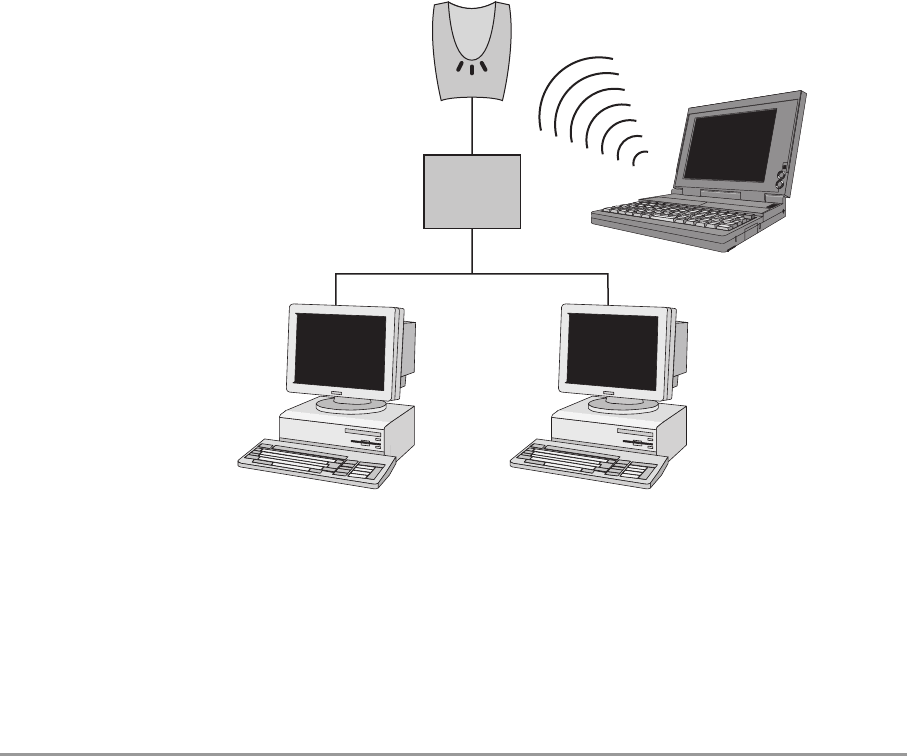
You can use an Access Point to set up a wireless network, see
Figure 1-2.
Figure 1-2 Wireless network
10 preliminary 3
Getting started
Adding Access Points to your (network) environment
When you install a new wireless network, follow these steps:
1. Configure one client.
2. Select the IP settings of this client.
3. Install the Access Point and connect it.
4. Optionally, configure the Access Point from the already configured
client using the Web Interface (see chapter 3: ‘Configuring the
Access Point’ on page 21).
5. Install other clients if this is applicable to your situation.
1.4.2 Extending a wired network with one or more Access Points
When your Access Point is an extension to a wired network, it is
recommended that you make sure that the wired network is completely
functional to exclude existing problems.
See Figure 1-3.
Follow these steps:
1. Install the Access Point and connect it.
Figure 1-3 Adding an Access Point to a wired network
555004.doc 11
Getting started Adding Access Points to your (network) environment
2. Optionally, configure the Access Point from an existing computer in
the network using Web Interface (see chapter 3: ‘Configuring the
Access Point’ on page 21).
The IP settings for the Access Point can be retrieved from the
network (see also Appendix A: ‘TCP and IP settings’ on page 49.
3. Install the client(s).
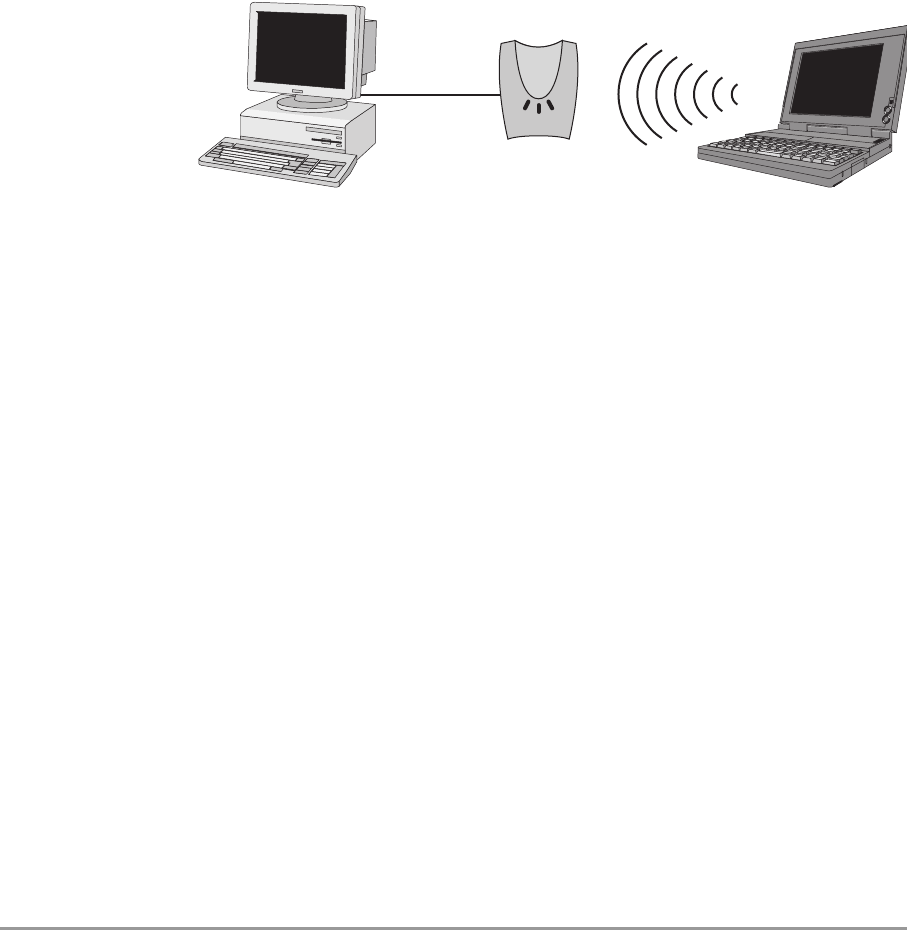
1.4.3 Connecting an Access Point directly to a computer
You can also add an Access Point directly to your computer. See
Figure 1-4.
Follow these steps:
1. Install the Access Point and connect it to a network card in your
computer.
2. Optionally, configure the Access Point from your computer using Web
Interface (see chapter 3: ‘Configuring the Access Point’ on page 21).
3. Install the client(s).
Figure 1-4 Connecting an Access Point directly to a computer. AP1

12 preliminary 3
Getting started
Adding Access Points to your (network) environment

555004.doc 13
Installing the Access Point Introduction
2 Installing the Access
Point
2.1 Introduction
This chapter describes the physical installation of an Access Point.
2.2 Access Point environment
When you install an Access Point, you must consider the following items:
•Connection to the electricity net.
•Connection to the network.
•Environment of device (heat/humidity): see chapter 5: ‘Technical
specifications 11 Mbps WLAN Access Point’ on page 41.
•Range of device: see chapter 5: ‘Technical specifications 11 Mbps
WLAN Access Point’ on page 41.
2.3 Physical installation of the Access Point
w
ww
w
The Access Point must be mounted in a vertical position always.
Table 2-1 Overview of this chapter.
Section Describes
2.2 Consideradions about the physical environment of
an Access Point.
2.3, 2.4, 2.5 How to install an Access Point.
2.6 How to connect the Access Point.
2.7 Explanation of the LEDs.
2.8 How to unlock/reset the Access Point.
14 preliminary 3
Installing the Access Point
Desktop mount installation
The Access Point can be installed in 2 different ways:
•desktop mount,
•wall mount.
The foot socket is used for the desktop mount.
2.4 Desktop mount installation
See chapter 5: ‘Technical specifications 11 Mbps WLAN Access
Point’ on page 41 for regulations on the required free space around the
Access Point.
Determine where you want to place the Access Point. Make sure you
have a clear area on a desktop.
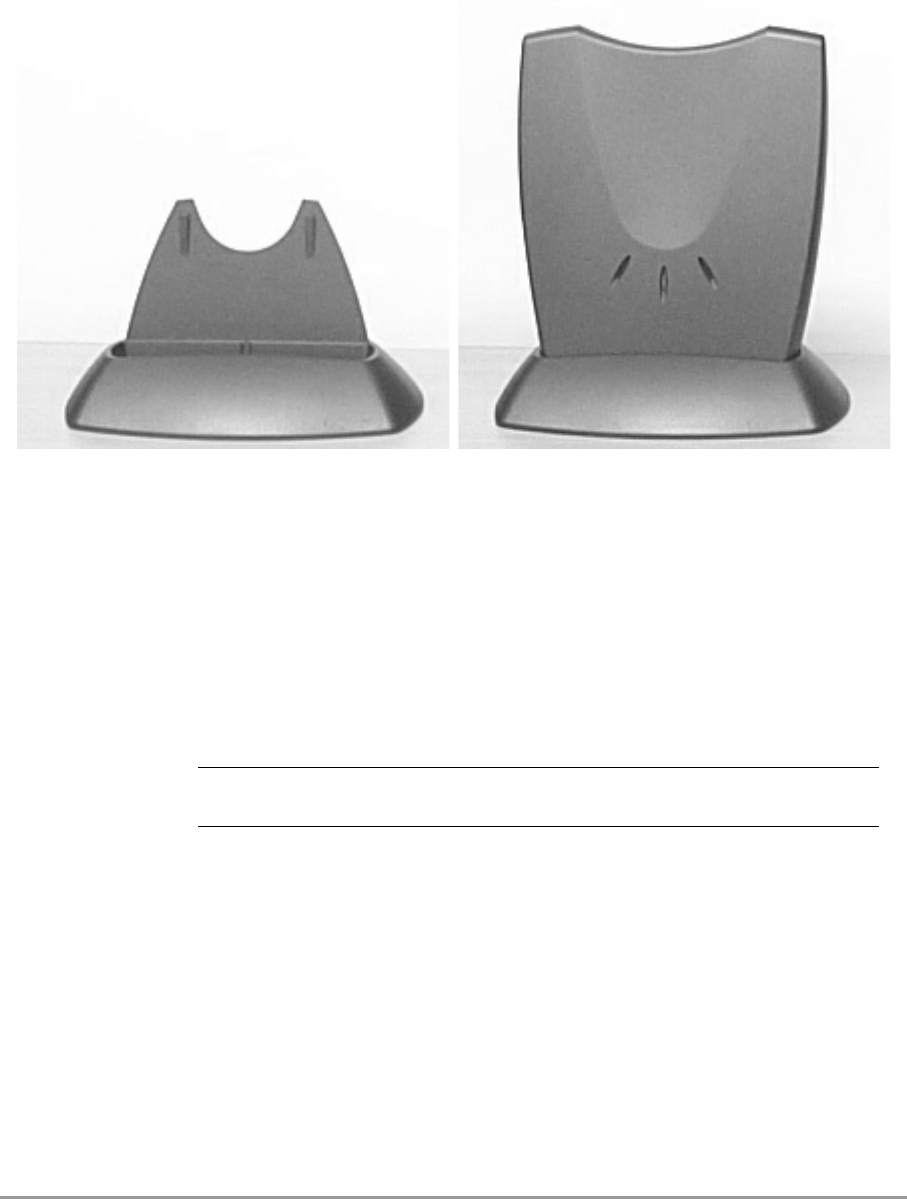
Figure 2-1 The Access Point
555004.doc 15
Installing the Access Point Wall mount installation
You can insert the Access Point in the foot socket as shown in
Figure 2-2: ‘Access Point for desktop use’ on page 15.
Step by step installation of the foot socket for desktop use:
Simply insert the Access Point into the foot socket.
2.5 Wall mount installation
See chapter 5: ‘Technical specifications 11 Mbps WLAN Access
Point’ on page 41 for regulations on the required free space around the
Access Point.
w
ww
w
Before you start drilling holes into a wall, make sure that part of the
wall is clear of electricity and water pipes.
Figure 2-2 Access Point for desktop use
16 preliminary 3
Installing the Access Point
Connecting the Access Point
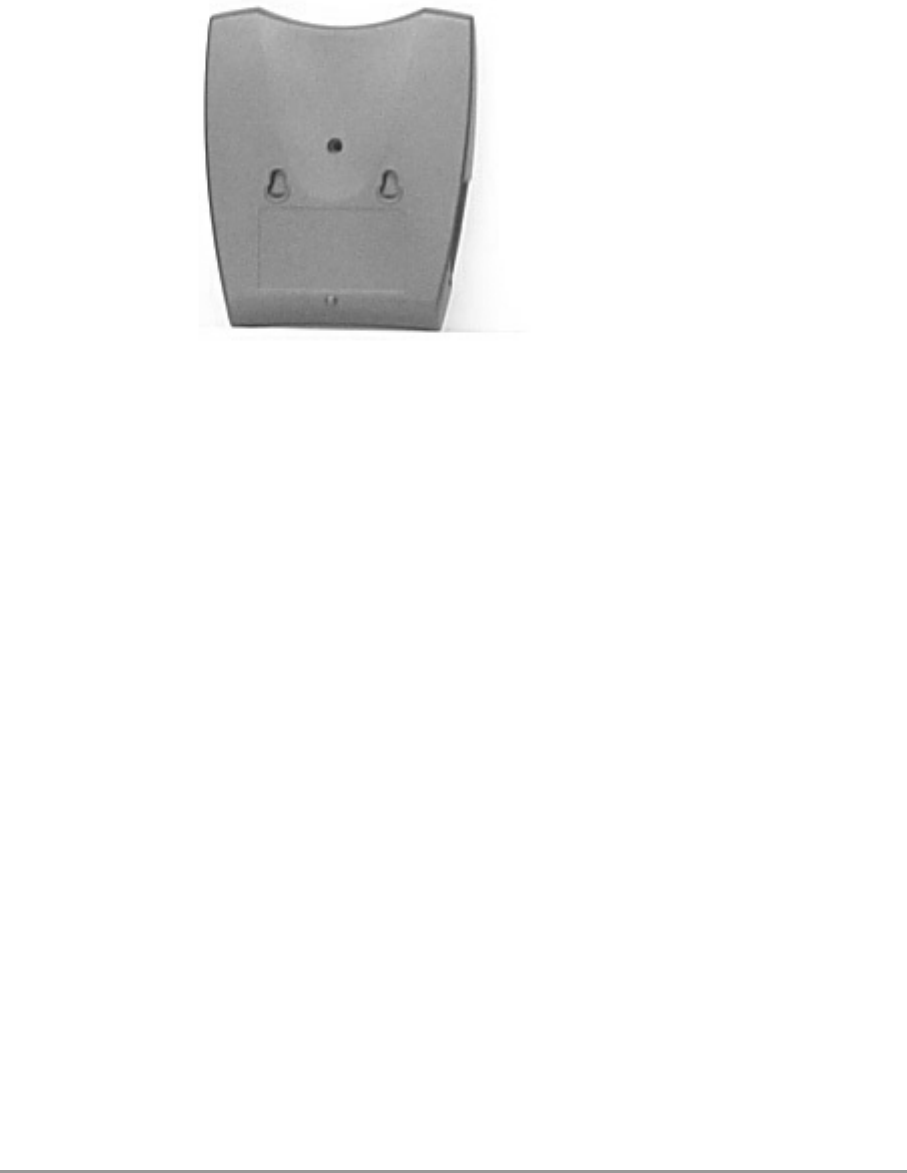
The wall mount socket package contains two screws and plugs to fasten
the socket to the wall (see Figure 2-3: ‘Backside of the Access
Point’ on page 16.
Step by step wall mount installation:
1. Determine the position of the screws. The screws must be 5 cm apart
to fit the keyholes at the back of the Access Point.
2. Drill holes in the wall at the location of the dots,
3. Insert the plugs into the holes.
4. Fasten the screws into the plugs, and leave about 3 mm of space
between wall and screw head.
5. Attach the Access Point to the screws.
2.6 Connecting the Access Point
Your Access Point is now ready to be connected to the electricity net and
to your network. See 1.4: ‘Adding Access Points to your (network)
environment’ on page 9 on how to add Access Points to your network or
environment.
Figure 2-3 Backside of the Access Point
555004.doc 17
Installing the Access Point Connecting the Access Point
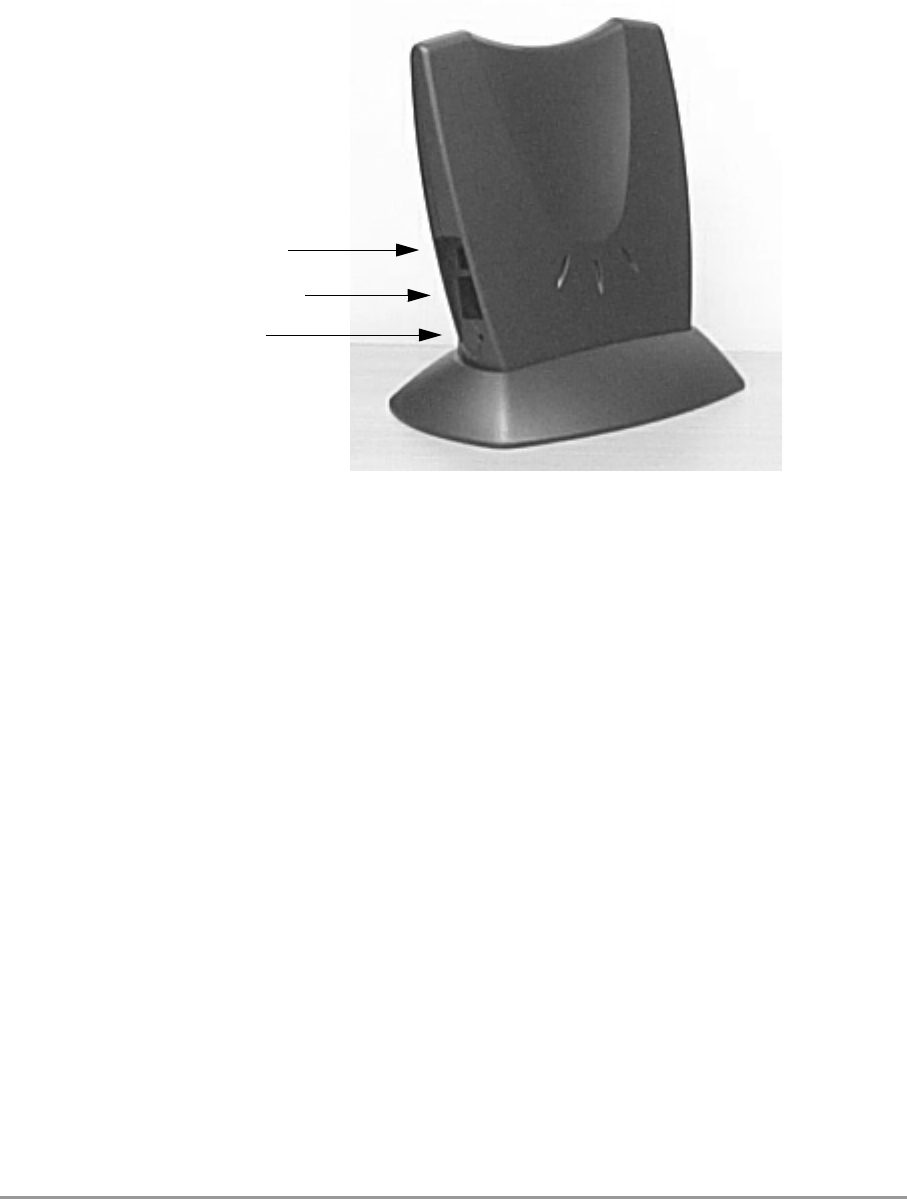
You can find the power input and the UTP port on the left hand side of
the Access Point.
2.6.1 Power adapter
The Access Point package contains a power adapter. Attach it to the
Access Point. and then check the power LED (see section
2.7: ‘LEDs’ on page 18.) to see if you are connected properly.
2.6.2 UTP port
The UTP port can be found next to the power connector on the Access
Point.
For a wired connection (see section 1.4.2: ‘Extending a wired network
with one or more Access Points’ on page 10 and section
1.4.3: ‘Connecting an Access Point directly to a computer’ on page 11),
attach the UTP Ethernet cable to the Access Point and connect the
cable on the other end to either a hub in the network, or a computer.
If you want to connect to an Access Point via a wired connection, it must
be connected correctly:
• if the Access Point is connected to a hub or switch, a ‘normal’ (not a
crosswired) cable must be used,
• if the Access Point is connected directly to a computer, a crosswired
cable must be used.
Figure 2-4 Connecting the Access Point
Power
UTP port
R
eset
18 preliminary 3
Installing the Access Point
LEDs
2.7 LEDs
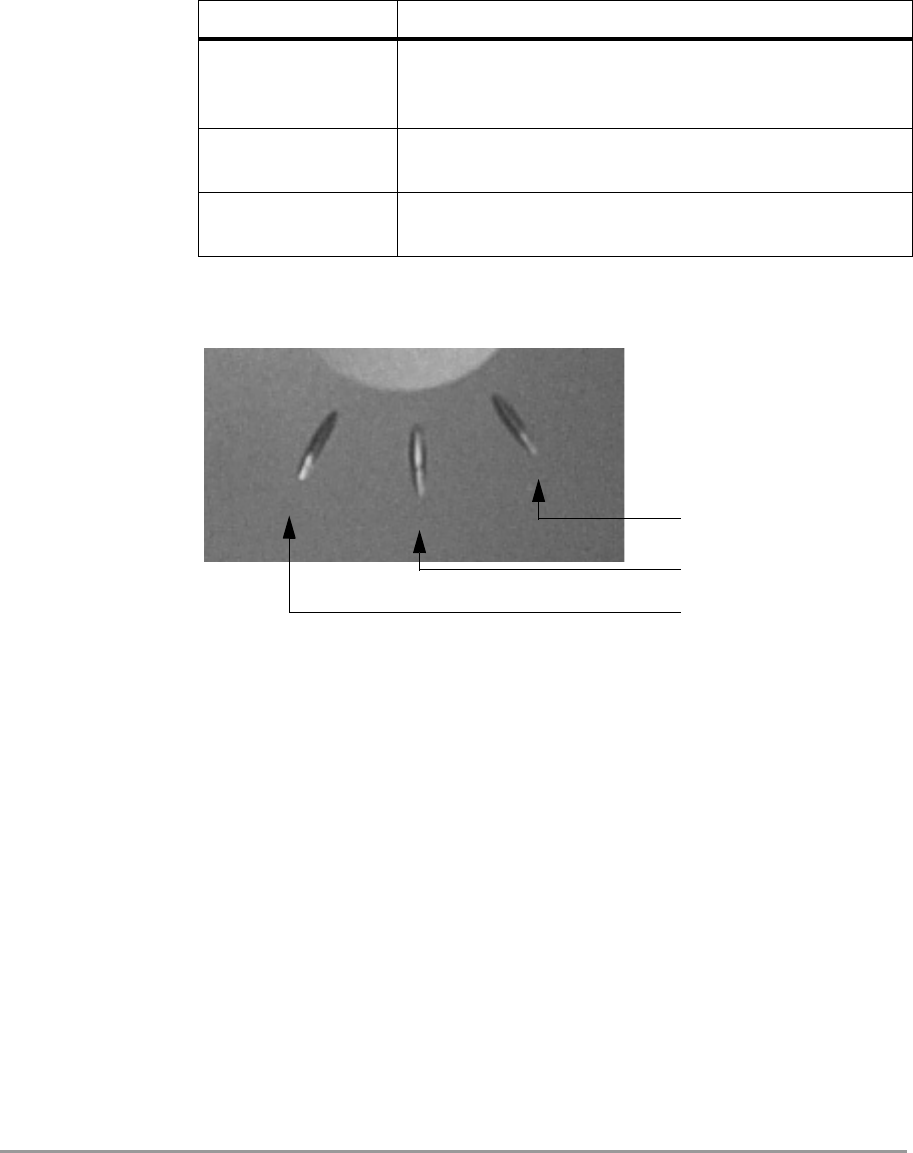
The Access Point has three LEDs.
Figure 2-5: ‘Access Point LEDs’ on page 18 shows the LEDs.
2.8 Unlocking the Access Point
The unlock/reset button is found underneath to the power connector and
UTP connector. It is a small hole for which you need the end of a
paperclip.
You can unlock the Access Point in order to reconfigure it, or reset it to
the default factory settings.
2.8.1 Unlocking the Access Point to reconfigure
From the Web Interface you can lock the Access Point, prohibiting
configuration changes to it (see section 3.5.8: ‘Security against
unauthorized configuration’).
Table 2-2 LEDs
LED Function
Power The power LED burns when the Access Point is
connected to the electricity net. See also section
2.6: ‘Connecting the Access Point’ on page 16
Radio signal The radio LED blinks when the Access Point is
active.
Network
connection
The network LED burns when the Access Point is
used in the network.
Figure 2-5 Access Point LEDs
Power LED
Radio LED
Network LED

555004.doc 19
Installing the Access Point Unlocking the Access Point
To unlock the Access Point so that the configuration changes are
allowed again:
1. Insert one end of a paperclip briefly in the hole of the reset button.
The Access Point lock is unlocked. All settings, including the IP
settings, are retained.
2. You can now use the Web Interface to manage the Access Point
again.
2.8.2 Resetting to the default factory setting
If you press the reset button longer, more than 5 seconds, the Access
Point will be reset to the default factory settings:
1. Insert one end of a paperclip into the hole for the reset button and
keep it pressed down.
The radio LED will first burn constantly.
2. Release the reset button when the LED has stopped burning.
All settings are deleted.
3. Use KickStart to install new IP settings.
If you have a DHCP server the IP settings will probably remain the
same.
4. You can now use the Web Interface to manage the Access Point
again.

20 preliminary 3
Installing the Access Point
Unlocking the Access Point

555004.doc 21
3 Configuring the Access
Point
3.1 Introduction
The Access Point is a ready to use device. It is delivered with default
settings which allow you to have access to it without configuring it.
When you do configure the Access Point, you can change the settings
with respect to security, radio channels, etc.
Whether you need to configure the Access Point or not, depends entirely
on how you apply the Access Point to your environment.
Section 3.2: ‘When to configure the Access Point’ on page 21 discusses
the consequences of configuring the Access Point or not.
Table 3-1 describes the contents of this chapter:
3.2 When to configure the Access Point
Configuring the Access Point means installing settings with respect to
the use of radio channels, security, identification, etc. You only need to
configure the Access Point when you want to change these settings.
Table 3-1 Overview of this chapter
Section Description
2 When to configure the Access Point
3 Starting the Web Interface for the first time.
4 Launching the Web Interface
5 Web Interface Settings

22 preliminary 3
Configuring the Access Point
Starting the Web Interface
IP settings can be installed automatically or manually.
3.3 Starting the Web Interface
When there is no DHCP server in your network, you can assign an IP
address to the Access Point and start up the Web Interface with the
KickStart application.
The KickStart application is needed only when:
•You start the Access Point for the first time, or
•You have reset the Access Point to factory defaults (see section
2.8.2: ‘Resetting to the default factory setting’ on page 19) and must
install the IP settings again.
The KickStart application can be found on the CD, see section
3.3: ‘Starting the Web Interface’ on page 22.
3.3.1 Installing KickStart
You can install KickStart on a PC in the network to which the Access
Point will be connected. Follow the instructions of the install wizard.
Table 3-2 Installing methods for IP settings
Install IP settings When
Automatically If the Access Point is part of a network with a
DHCP server, the DHCP server assigns the IP
settings to the Access Point for you. After that you
can configure the Access Point by starting a web
browser and inserting the IP address of the
Access Point on the address bar. This will start
the Web Interface, see section 3.4: ‘Launching
Web Interface manually’ on page 29.
Manually If there is no DHCP server, you need to install the
IP settings using the KickStart application, see
3.3: ‘Starting the Web Interface’ on page 22.
555004.doc 23
Configuring the Access Point Starting the Web Interface
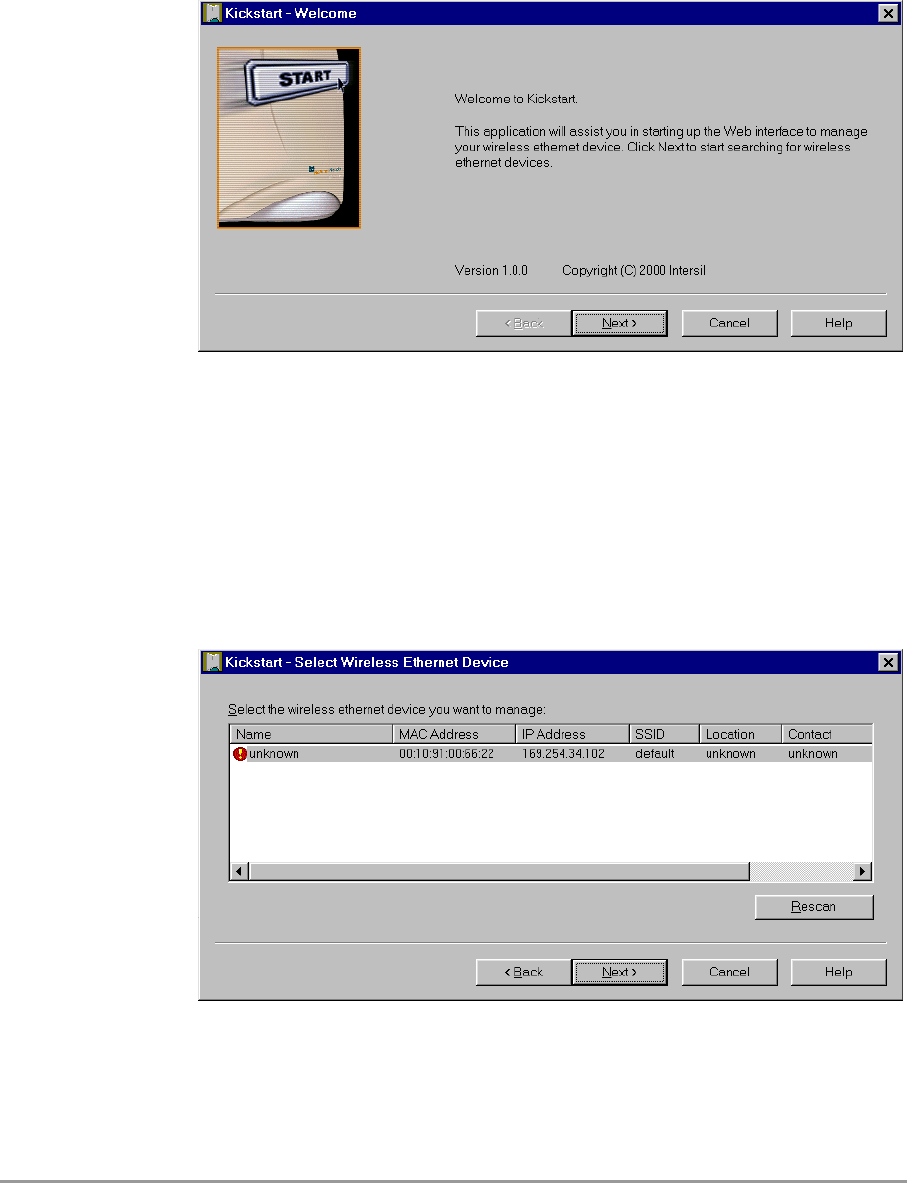
3.3.2 Launch KickStart
Double click the KickStart icon. The application starts up.
When you click Next, KickStart will search for all Access Points within
range, whether they have been configured properly or not.
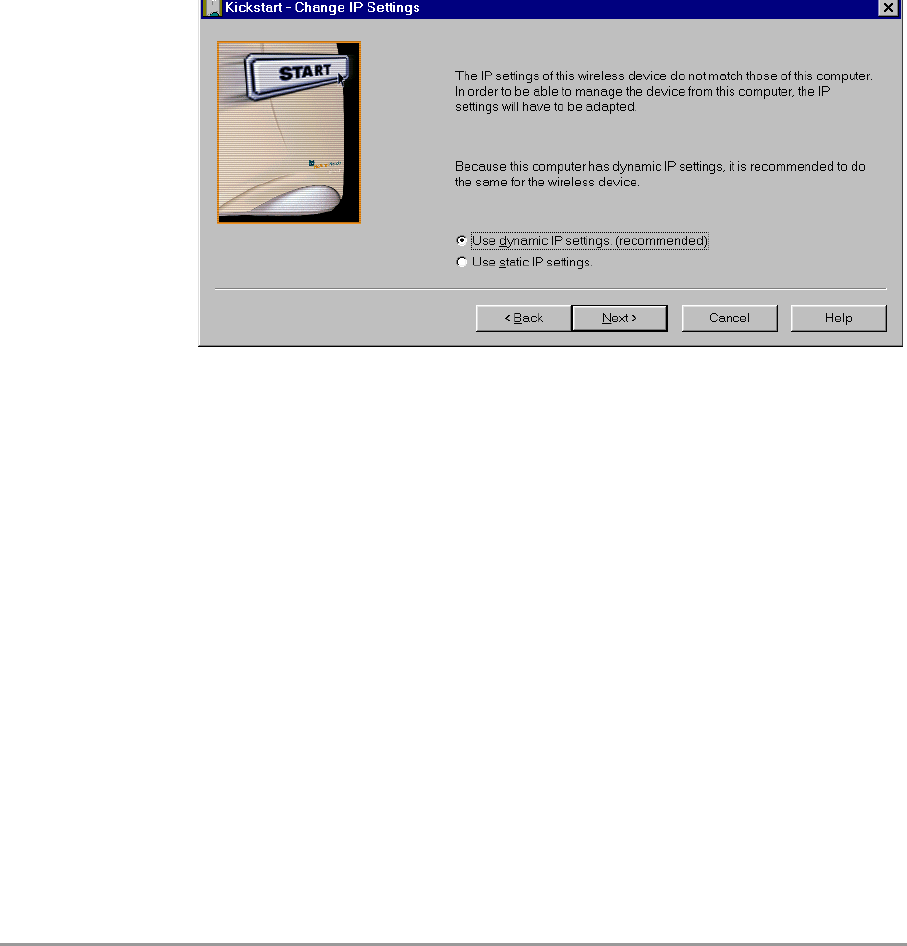
3.3.3 Select wireless ethernet device
You can select the device you want to manage from the list as shown in
Figure 3-2: ‘Screen: Select Wireless Ethernet Device’ on page 23.
Figure 3-1 Opening screen of the KickStart application
Figure 3-2 Screen: Select Wireless Ethernet Device

24 preliminary 3
Configuring the Access Point
Starting the Web Interface
After that you can
- click on Next to continue to the next screen, or
- click on Rescan (see section 3.3.5: ‘Scanning and rescanning for
devices’ on page 24) to rescan for a wireless device.
Section 3.3.4: ‘Device data’ on page 24 explains the data in this screen.
3.3.4 Device data
The columns in the Scan Screen contain the data of the wireless devices
that can be found. Table 3-3 explains the device data in these columns
(see also Appendix A: ‘TCP and IP settings’ on page 49):
3.3.5 Scanning and rescanning for devices
If the device that you want to manage is in the list, select it, and click
Next.
Table 3-3 Description of the device data in the Select Wireless Device
screen
Column Description
MAC address Every Ethernet device has a unique address that
is permanently linked to that device. It cannot be
changed.
See section A.2.6: ‘MAC address’ on page 52
IP address In order to access a TCP/IP network, a device
must have an IP address in addition to its MAC
address.
See Appendix A: ‘TCP and IP
settings’onpage49
SSID The SSID is also known as Service Set ID. This is
the name of your wireless network.
See section B.4: ‘Service Set ID
(SSID)’ on page 56
Location Here the location of the Access Point is displayed.
See section 3.5.9: ‘Identity’ on page 36 on how to
edit this field.
Contact Here the name of the contact person for the
Access Point is displayed.
See section 3.5.9: ‘Identity’ on page 36 on how to
edit this field.
555004.doc 25
Configuring the Access Point Starting the Web Interface
If you click the Rescan button, KickStart will search for Access Points
again. Use this e.g. to find Access Points that have just been switched
on or reset.
If the device that you want to manage is not in the list and is not found
after clicking the Rescan button, go to section 4.1: ‘If KickStart does not
find the Access Point you are looking for’ on page 39.
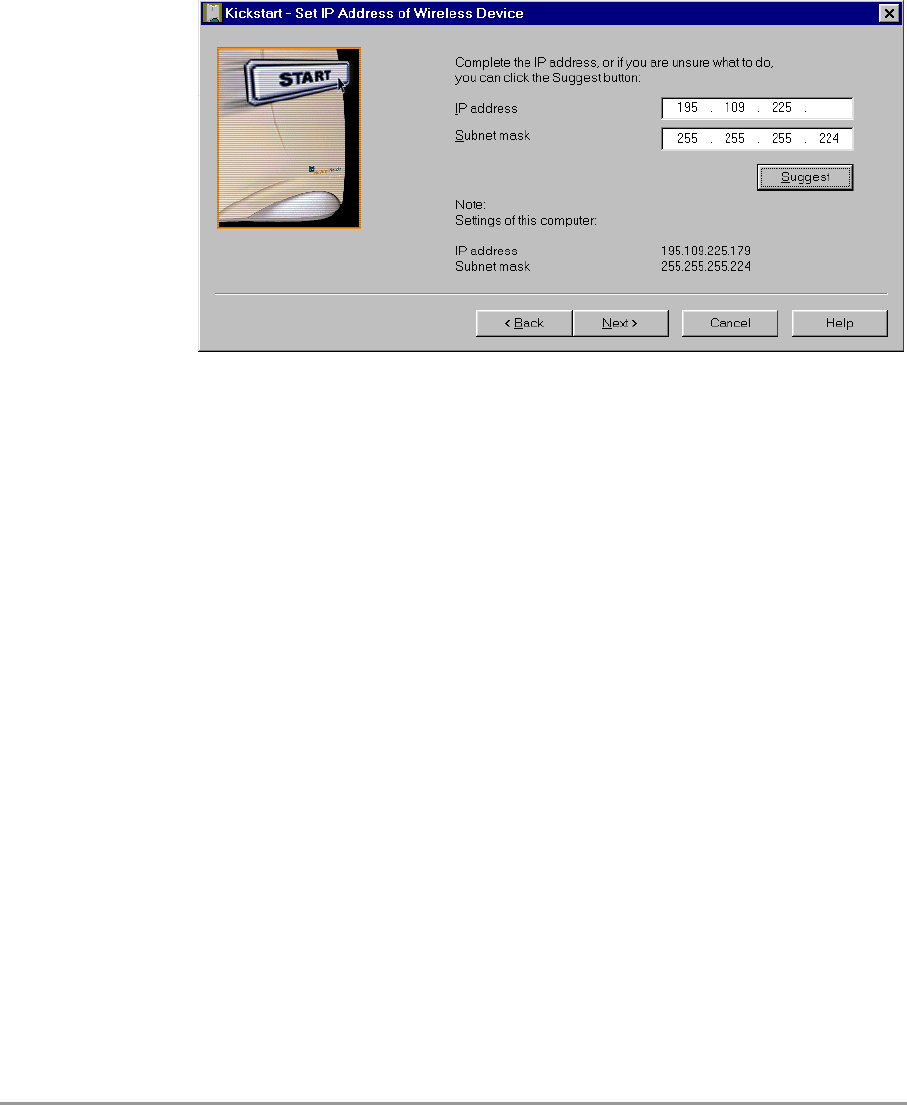
3.3.6 IP settings
In this screen you can select to either use dynamic or static IP settings.
(see chapter A: ‘TCP and IP settings’ on page 49).
Select Dynamic IP settings when you install the Access Point in a
network with a DHCP server or Auto IP.
Select Static IP settings when you want to configure the IP settings
manually.
Click on the Next button to continue to the next screen.
•If you selected the option Use dynamic IP settings, you will
continue to the screen Changing IP settings directly, see section
3.3.9: ‘Changing IP settings’ on page 27.
•If you selected the option Use static IP settings, you will
continue to the screen Set IP address of Wireless Device, see
section 3.3.7: ‘Static IP settings’ on page 26.
Figure 3-3 Screen: Change IP Settings
26 preliminary 3
Configuring the Access Point
Starting the Web Interface
3.3.7 Static IP settings
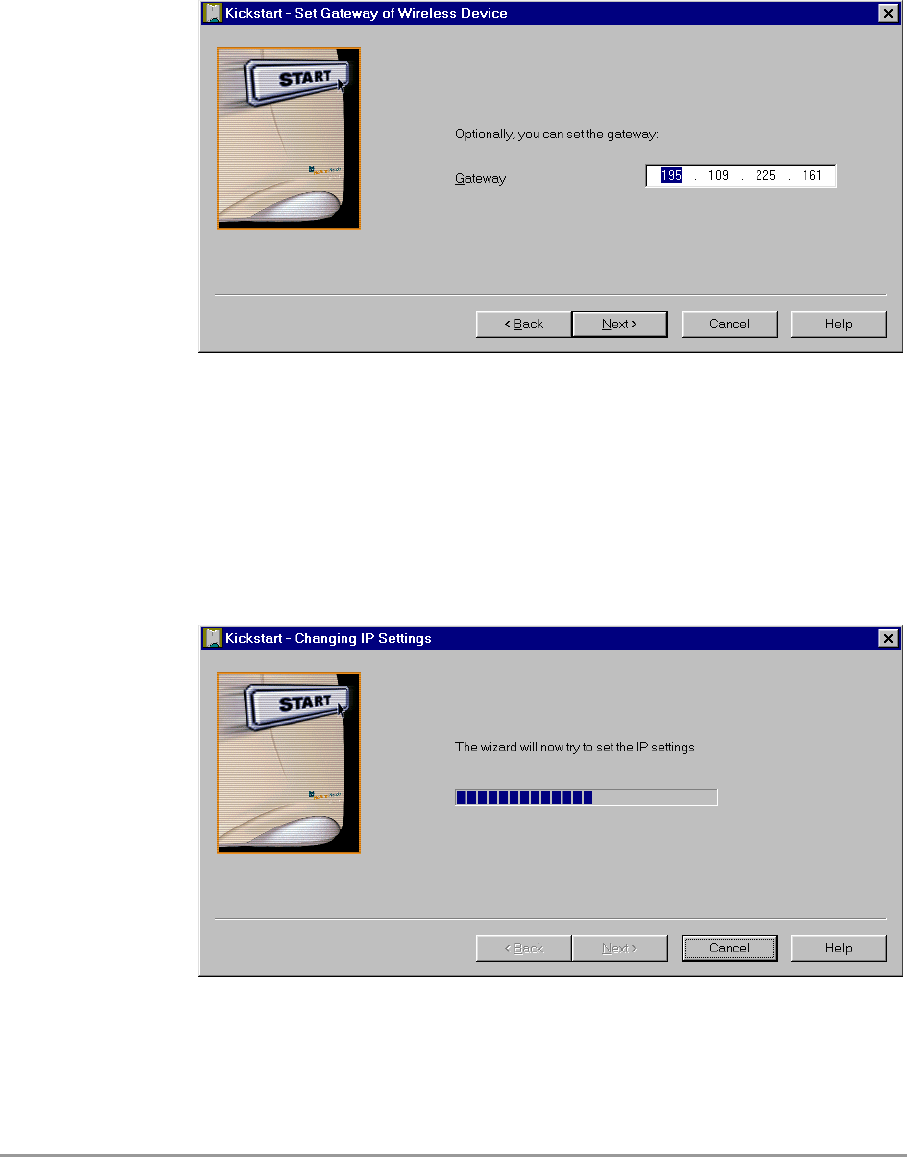
When you have selected the option Use static IP setting in
Figure 3-3: ‘Screen: Change IP Settings’ on page 25,
Figure 3-4: ‘Screen: Set IP Address of Wireless Device’ on page 26
appears..
In this screen you can either manually insert the IP address and/or
Subnet mask, or you can click on the button Suggest to let the system
find the IP settings.
Click Next to continue to the next screen. The screen “Set Gateway of
Wireless Device” appears, see section 3.3.8: ‘IP settings’ on page 27.
Figure 3-4 Screen: Set IP Address of Wireless Device
555004.doc 27
Configuring the Access Point Starting the Web Interface
3.3.8 IP settings
In this screen you can install the Gateway address of the wireless
device. Setting a Gateway is optional.
Click on Next to continue to the next screen, see section
3.3.9: ‘Changing IP settings’ on page 27.
3.3.9 Changing IP settings
KickStart will install the proper IP settings of the device.
Figure 3-5 Screen: Set Gateway of Wireless Device
Figure 3-6 Screen: Changing IP settings
28 preliminary 3
Configuring the Access Point
Starting the Web Interface
If it cannot install the proper IP settings, a warning is given. With the
Back button you can return to Figure 3-3: ‘Screen: Change IP
Settings’ on page 25 where you can select another method for installing
the IP settings.
If the IP settings were successful, the Next button becomes active. Click
on the Next button, and the screen “Ready to KickStart” appears.
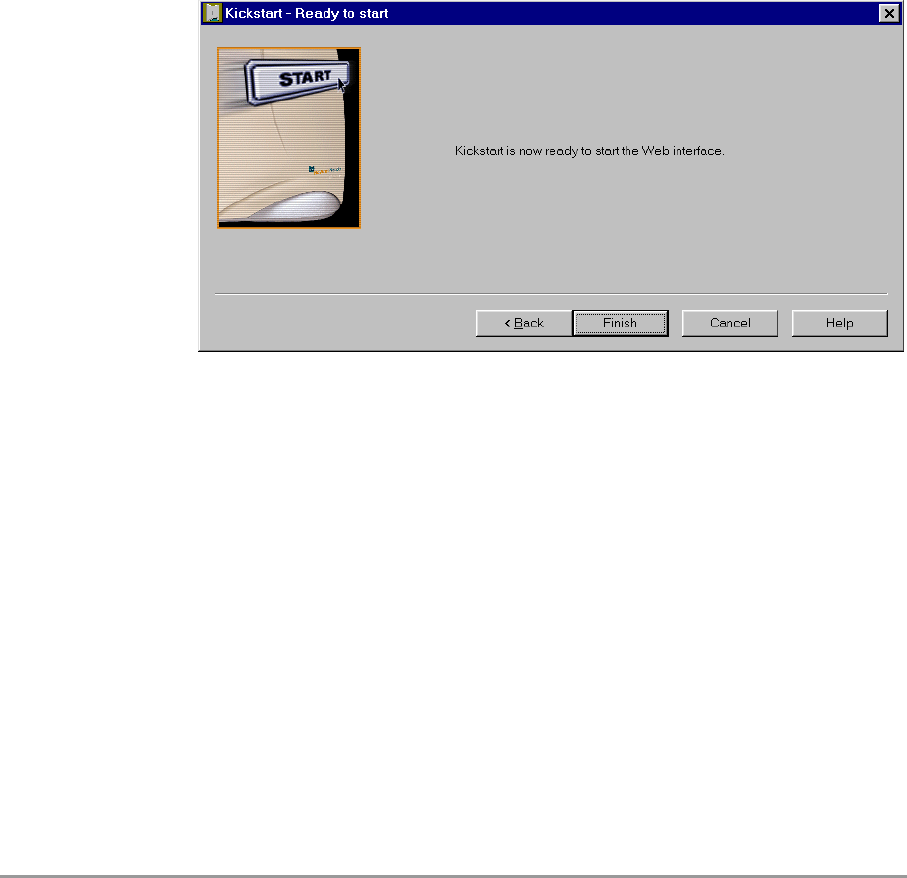
3.3.10 Ready to start the Web Interface
If you click Finish in this screen, KickStart will launch a Web browser
and open the administration page (Web interface) for the Access Point
you have chosen. Then KickStart quits.
You can now go to section 3.5: ‘Contents of Web Interface’ on page 29.
When you use KickStart to find an Access Point with correct IP settings,
KickStart will go to this page immediately.
It will not allow you to change the IP address settings. If you want to
change these, you must return to Figure 3-3: ‘Screen: Change IP
Settings’ on page 25 where you can select another method for installing
the IP settings.
3.3.11 Web Interface is launched
Once the KickStart application has finished and the Access Point is
available for configuration in the network, the Web Interface application
is launched in a web browser.
You can now edit the settings for the Access Point.
Figure 3-7 Screen: Finish KickStart
555004.doc 29
Configuring the Access Point Launching Web Interface manually
3.4 Launching Web Interface manually
When you know the IP address of an Access Point, you can launch the
Web Interface in a web browser for editing.
1. Open a web browser.
2. Insert the web address of the Access Point on the address bar as
follows:
http://IP address of the Access Point/
It is recommended to bookmark your web address for the Web Interface.
3.5 Contents of Web Interface
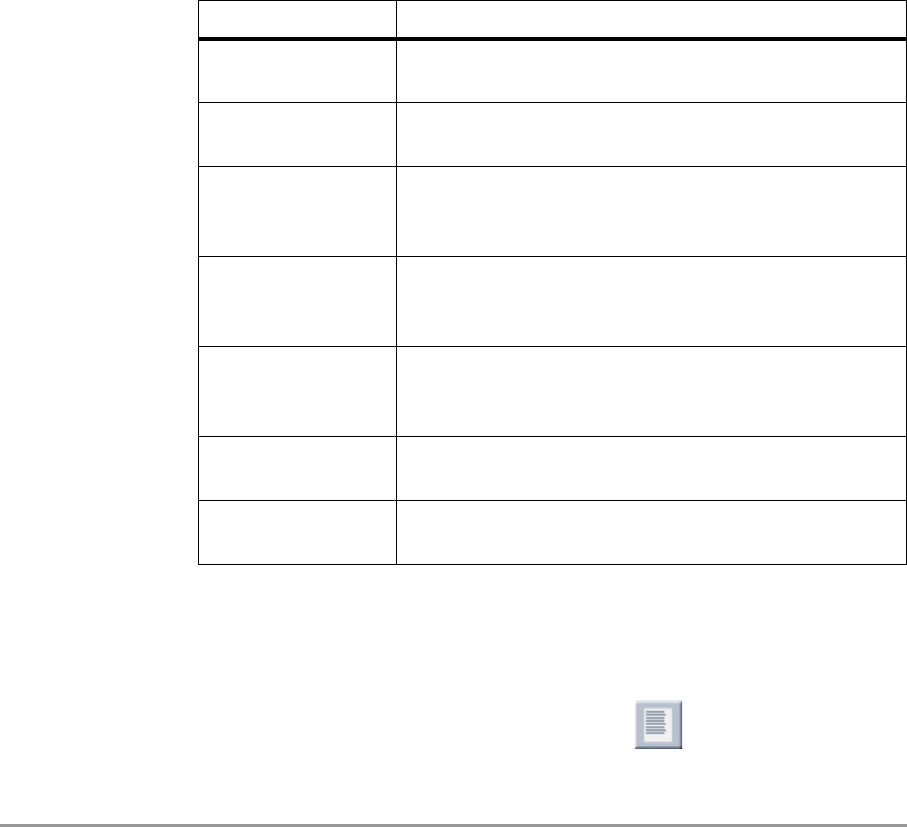
The Web Interface application contains the following subjects:
3.5.1 Settings Summary
This page contains a summary of the settings of the Access Point.
To display the Settings Summary page, click .
Table 3-4 Contents of Web Interface
Page Description
Settings
Summary
On this page you will find an overview of the
current settings.
Wireless Settings The settings of the wireless device are displayed
here, and you can edit some of these settings.
Security against
unauthorized
network access
On this page you can allow or deny access to the
Access Point by clients.
Security against
Eavesdropping
On this page you can install security methods to
prevent eavesdropping on the connection to the
Access Point.
Security against
unauthorized
configuration
On this page you can manage the Write
Community String for the Access Point and lock
the management of the Access Point.
Identity Here the identity data of the Access Point are
displayed, and you can edit some of these data.
IP Settings The IP, subnet, and gateway addresses of the
Access Point are displayed here.

30 preliminary 3
Configuring the Access Point
Contents of Web Interface
You cannot change any of the settings in this page. Table 3-5 contains
the references to the pages where these settings can be changed.
To change these settings:
SSID
IP address
Access Control
Eavesdropping mode
3.5.2 Wireless Settings
On this page you can install items such as the identification of the device
and the radio channel.
To display the Wireless Settings page, click .
Table 3-6 contains the descriptions of the options in this page.
Table 3-5 Web Interface page: Settings Summary
Setting Refer to Web Interface page
SSID see section 3.5.2: ‘Wireless Settings’ on page 30
IP address see section 3.3.8: ‘IP settings’ on page 27
Access Control see section 3.5.3: ‘Security against unauthorized
network access’ on page 31
Eavesdropping
mode
see section 3.5.6: ‘Security against
eavesdropping’ on page 34
Table 3-6 Web Interface page: Wireless Settings
Option Description
SSID This is the Service Set ID. Only Access Points
and clients that share the same SSID are able to
communicate with each other.
See also section B.4: ‘Service Set ID
(SSID)’ on page 56.

555004.doc 31
Configuring the Access Point Contents of Web Interface
3.5.3 Security against unauthorized network access
To protect your network against unauthorized network access you can
create an Access Control List (ACL).
To display the Security against unauthorized network page,
click .
You can choose to allow access to all clients or deny access to all
clients, and create a list of exceptions for both options.
The changes to the Access Control List on this page are accepted when
you click on the OK button.
Radio Channel This is the channel that the Access Point uses to
transmit and receive information (see also section
B.5.4: ‘Radio Channels’ on page 57).
The channel that you select here is restricted to
the channels that can be used within your
Regulatory domain.
Regulatory
Domain
The Regulatory domain is displayed here. Every
country has a Regulatory Domain concerning
radio channels that can be used to transmit and
receive signals (see also section
B.5.3: ‘Regulatory Domain’ on page 57).
This setting is a factory default that cannot be
changed.
Table 3-6 Web Interface page: Wireless Settings
Option Description

32 preliminary 3
Configuring the Access Point
Contents of Web Interface
The first section in this page contains two Access options. Table 3-7
describes these options.
Once you have selected whether you want to allow access to all clients
or deny all clients, you can create an Exception List. See section
3.5.4: ‘To add a a client to the exception list’ on page 32 and section
3.5.5: ‘To delete a client from the exception list’ on page 33.
n
Note. The title of the Exceptions list shows
•“denied clients” when the exceptions are applicable to the option
Allow access to all clients.
•“accepted clients” when the exceptions are applicable to the option
Deny access to all clients.
3.5.4 To add a a client to the exception list
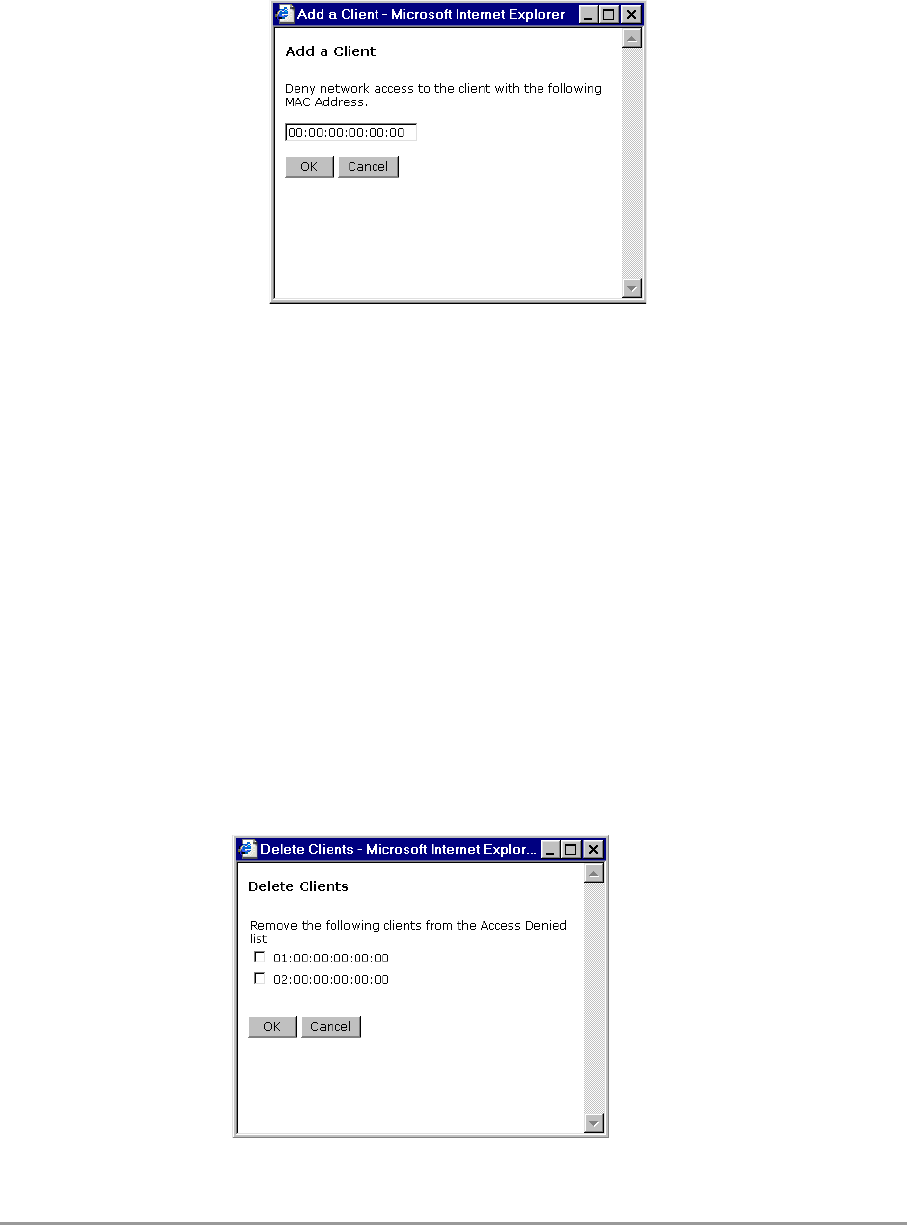
Follow these steps to add a client to the exception list (see section):
1. Click on the button Add client.... and a separate window opens
Table 3-7 Web Interface page: Security against unauthorized network
access.
Options Description
All clients are
accepted
When you select this option, you allow access to
all PC Cards, except for ones that you specify in
the Exception list.
This option can be useful if you do not want to
keep track of all PC Cards but you do know some
PC Cards that need to be denied access because
they were stolen.
Deny all clients When you select this option, you deny access to
all PC Cards except the ones you specify in the
Exception List
555004.doc 33
Configuring the Access Point Contents of Web Interface
(see Figure 3-8).
If you selected “Allow access to all clients, you can type the MAC
address of the client that you want to deny access to in the field MAC
Address.
If you selected “Deny access to all clients, you can type the MAC
address of the client that you want to allow access to in the field MAC
Address.
2. Then click on the button OK. The client is now added to the exception
list.
3.5.5 To delete a client from the exception list
Follow these steps to add a client to the exception list (see section):
1. Click on the button Delete clients. A separate window opens in
which the Exception list is displayed (see Figure 3-9). .
Figure 3-8 Web Interface dialog window: Add client
Figure 3-9 Web Interface dialog window: Delete clients

34 preliminary 3
Configuring the Access Point
Contents of Web Interface
2. Select the MAC Address(es) of the client(s) that you want to remove
from the list.
3. Then click on the button OK. The exception list is updated.
3.5.6 Security against eavesdropping
On this page you can install the encryption methods that secure the data
flow from and to the Access Point.
To display the Security against eavesdropping page,
click .
You can use the different authentication methods. Tabl e 3 - 8 describes
the available methods.
3.5.7 Change WEP password
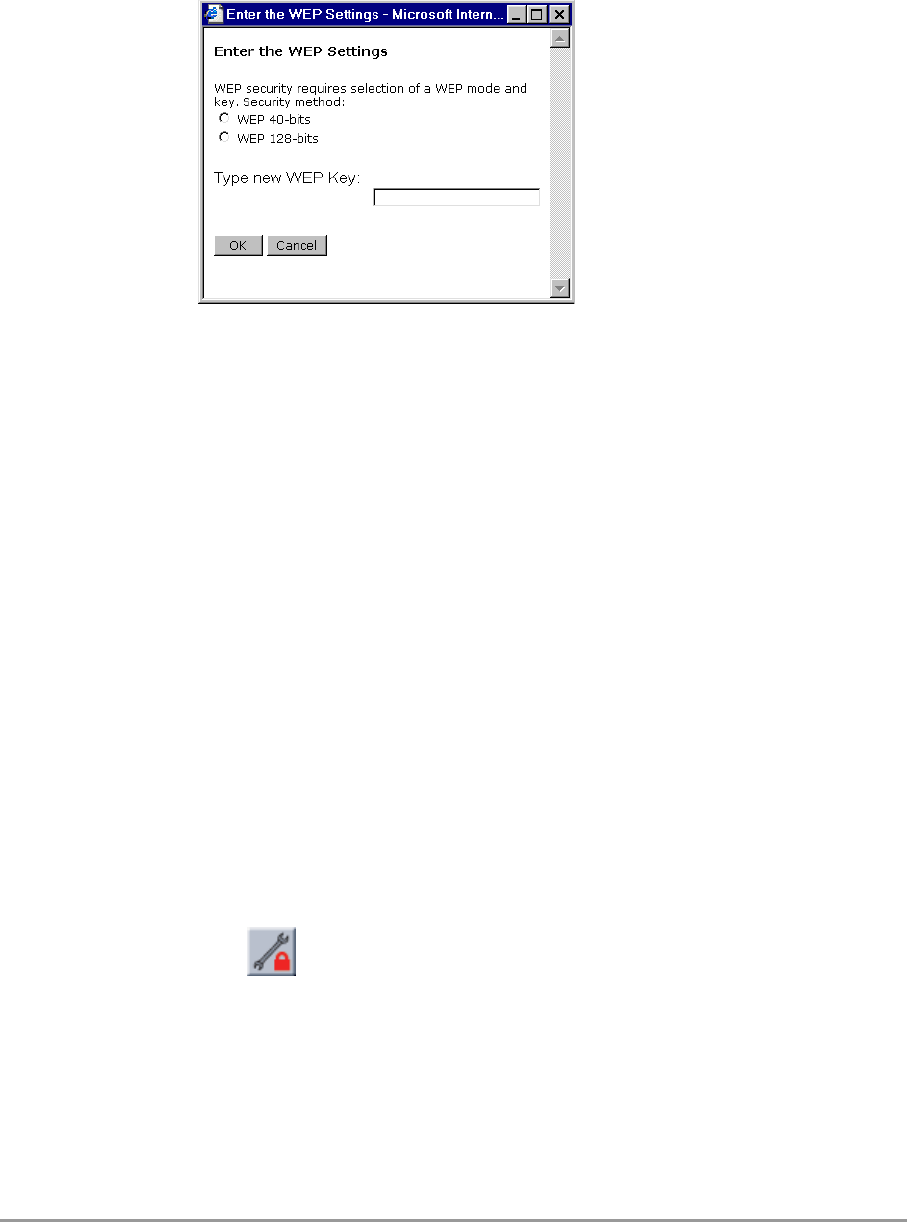
When you have selected the option WEP Change password, the web
page of Figure 3-10: ‘Web Interface dialog window: Enter the WEP
settings’ on page 35 appears. Follow the instructions below to change
Table 3-8 Web Interface page: Security against eavesdropping
Option Description
IEEE
Authentication
Select this method to allow clients to access to the
Access Point either without security (Open
Systems) or with a WEP security method. (See
Appendix B.6.1: ‘IEEE authentication’ on page 58.)
Open System When you select this option, clients have access
without a password. (See Appendix B.6.2: ‘Open
Systems method’ on page 58.)
WEP Change
password
When you select this option, you can activate the
WEP security method. (See Appendix B.6.3: ‘WEP
method’ on page 58.)
A Web Page Dialog called Enter New Password
appears, see section 3.5.7: ‘Change WEP
password’ on page 34.
555004.doc 35
Configuring the Access Point Contents of Web Interface
the WEP password:
1. Select the WEP method: 40 bit or 128 bit.
2. Enter a password:
WEP 40: the password must contain exactly 10 characters,
WEP 128: the password must contain exactly 26 characters.
n
Only the following alphanumeric characters are allowed in the password:
-0 to 9,
- a to f.
3. Click on OK.
3.5.8 Security against unauthorized configuration
On this page you can install a password, the so-called “Write Community
String”, that is required to make changes to the Access Point and lock
the Access Point.
To display the Security against unauthorized configuration page,
click .
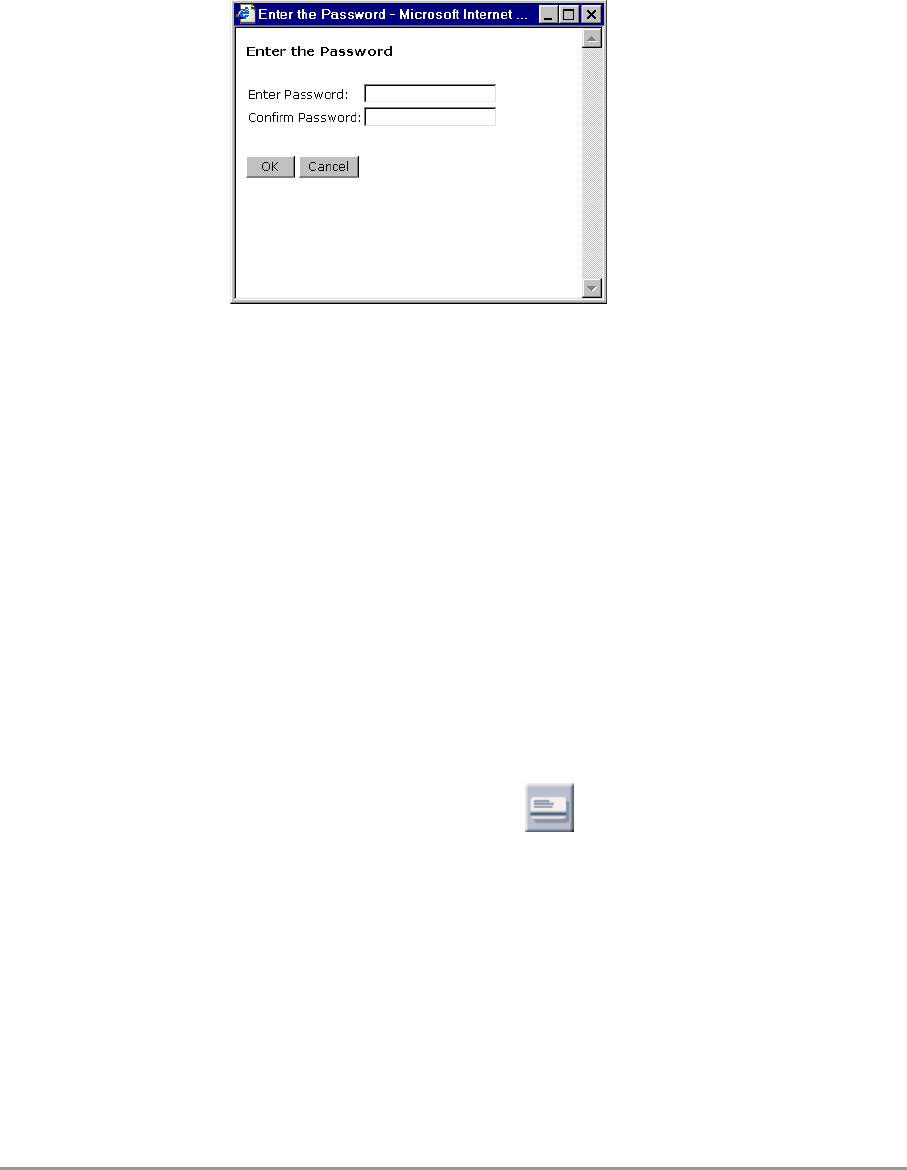
1. Change Password.
Figure 3-10 Web Interface dialog window: Enter the WEP settings
36 preliminary 3
Configuring the Access Point
Contents of Web Interface
Click on the button Change Password and a window opens (see
Figure 3-11) in which you can enter a password that is required to
edit the settings of the Access Point with the Web Interface.
2. Lock Access Point.
- Click on the button Lock Access Point to lock it.
A warning appears: “Are you sure to lock the Access Point? this will
immediately prevent making configuration changes. You will still be
able to view the current settings.”
- Click on OK to lock the Access Point.
No more configuration changes to the Access Point are allowed.
To unlock the Access Point: see section 2.8.1: ‘Unlocking the Access
Point to reconfigure’ on page 18.
3.5.9 Identity
This page contains the physical information on the Access Point.
To display the Identity page, click .
Figure 3-11 Web Interface dialog window: Enter the Password

555004.doc 37
Configuring the Access Point Contents of Web Interface
Table 3-9 explains the options in this web page.
When you have filled in or changed your data:
•Click on Cancel to discard the changes.
•CLick on Apply to apply the changes to the Access Point.
3.5.10 IP Settings
To display the IP Settings page, click .
On this web page the following IP settings are displayed:
•IP Address
•Subnet mask
•Gateway
It is not possible to change these addresses from within the Web
Interface.
If you want to change the IP settings of an Access Point that has already
proper IP settings, you need to use KickStart and change them manually
(see Section 3.3: ‘Starting the Web Interface’ on page 22).
Table 3-9 Web Interface page: Identity of the Access Point.
Option Description
Location This is a text field in which you can enter e.g.
where the Access Point is installed (“Room 412”).
You can put any text into this field; the text has no
influence on how the Access Point works.
Contact This is a text field in which you can enter e.g. the
name of the systems administrator responsible for
the Access Point (“admin@domain.com”).
You can put any text into this field; the text has no
influence on how the Access Point works.
MAC address The MAC address is displayed here.
See section A.2.6: ‘MAC address’
Access Point
Type
Information on your type of Access Point is
displayed here.
Firmware Version Here the version of the Access Point firmware is
displayed.

38 preliminary 3
Configuring the Access Point
Contents of Web Interface

555004.doc 39
4 Troubleshooting
4.1 If KickStart does not find the Access Point you are looking for
There are several possible causes depending on the way the Access
Point is connected to the network.
4.1.1 Problems on the wireless side
Always check the status of the LEDs to see whether you have:
•electricity problems,
•radio signal problems, or
•networking problems.
Table 4-1 Troubleshooting the wireless connection of an
Access Point
Possible cause Solution
Is the Access Point powered up. Check the power LED.
Check if the Access Point is
connected.
Is the Access Point is in range of
the WLAN card on your
computer?
Check the radio signal LED.
See section 5.2: ‘Radio
specifications’ on page 41 to
check for possible problems with
respect to range.

40 preliminary 3
Troubleshooting
If KickStart does not find the Access Point you are looking for
4.1.2 Problems on the wired side
Always check if your cables and connections are in good order and
properly installed.
Is there a network connection? Check the network LED.
The Access Point may take up to
a minute to find an IP address it
can use if Auto IP is used to
assign an IP address.
Client cannot make connection A wireless client is not (yet)
connected to the Access Point.
Refer to the manual of the
wireless client on how to connect.
Table 4-1 Troubleshooting the wireless connection of an
Access Point (vervolg)
Possible cause Solution
Table 4-2 Troubleshooting the wired connection of an Access Point
Possible cause Solution
Has the proper cable been used? •If the Access Point is
connected to a hub, a ‘normal’
(not a crosswired) cable must
be used,
•If the Access Point is
connected directly to a
computer, a crosswired cable
must be used.
555004.doc 41
5 Technical specifications
11 Mbps WLAN Access
Point
5.1 General Specifications
5.2 Radio specifications
Standards supported
Compliant with ETS 300 328 and ETS 300 826 (CE marked)
IEEE 802.11 standard for Wireless LAN
All major networking standards (including IP, IPX)
Environmental specifications
Operating temperature (ambient) 0°C to 40°C (32°F to 104°F)
Humidity 95%
Power specifications
DC power supply In 110-230 VAC 50 Hz 150 mA
Out 5 VDC 1 A
11 Mbps WLAN Access Point In 5 VDC 1 A
Supported bit rates
11 Mbps
5.5 Mbps
1 Mbps (IEEE 802.11 DSSS compliant devices, using ASBF™ )
2 Mbps (IEEE 802.11 DSSS compliant devices, using ASBF™
Range
Per cell indoors approx. 50 meters (150 ft.) or more
Per cell outdoors up to 300 meters (1000 ft.)
42 preliminary 3
Technical specifications 11 Mbps WLAN Access
Point
Security specifications
5.3 Security specifications
5.4 Other specifications
Transmit power
+18 dBm
Frequency range
2.4-2.4835 GHz, direct sequence spread spectrum
Number of Channels
Europe 13 (3 non-overlapping)
US 11 (3 non-overlapping)
France 4 (1 non-overlapping)
Antenna system
Dual antenna diversity system
2dB gain
Data encryption
AirLock™ Security Software, 128-bit key length
Key Management
Automatic Dynamic Key Allocation (ADKA) through public key
Utility Software
Web Interface
KickStart
Physical Dimensions
Height 145 mm
Width 121 mm, with foot socket 141 mm
Depth 26, with foot socket 10,1

555004.doc 43
6 Regulatory notes and
statements
6.1 Wireless LAN, Health and Authorization for use
Radio frequency electromagnetic energy is emitted from Wireless LAN
devices. The energy levels of these emissions however are far much
less than the electromagnetic energy emissions from wireless devices
like for example mobile phones. Wireless LAN devices are safe for use
by consumers, because they operate within the guidelines found in radio
frequency safety standards and recommendations. The use of Wireless
LAN devices may be restricted in some situations or environments for
example:
•On board of airplanes, or
•In an explosive environment, or
•In case the interference risk to other devices or services is perceived
or identified as harmful.
In case the policy regarding the use of Wireless LAN devices in specific
organizations or environments (e.g. airports, hospitals, chemical/oil/gas
industrial plants, private buildings etc.) is not clear, please ask for
authorization to use these devices prior to operating the equipment.
6.2 Regulatory Information/disclaimers
Installation and use of this Wireless LAN device must be in strict
accordance with the instructions included in the user documentation
provided with the product. Any changes or modifications made to this
device that are not expressly approved by the manufacturer may void
the user’s authority to operate the equipment. The Manufacturer is not
responsible for any radio or television interference caused by
unauthorized modification of this device, or the substitution or
attachment of connecting cables and equipment other than manufacturer
specified. It is the responsibility of the user to correct any interference
caused by such unauthorized modification, substitution or attachment.
Manufacturer and its authorized resellers or distributors will assume no
liability for any damage or violation of government regulations arising
from failing to comply with these guidelines.
6.3 USA-FCC (Federal Communications Commission) statement
This device complies with Part 15 of FCC Rules.
Operation is subject to the following two conditions:
1. This device may not cause interference, and
2. this device must accept any interference, including interference that
may cause undesired operation of this device.

44 preliminary 3
Regulatory notes and statements
FCC Radio Frequency Exposure statement
6.4 FCC Radio Frequency Exposure statement
This Wireless LAN radio device has been evaluated under FCC Bulletin
OET 65C and found compliant to the requirements as set forth in CFR
47 Sections 2.1091, 2.1093, and 15.247 (b) (4) addressing RF Exposure
from radio frequency devices. The radiated output power of this Wireless
LAN device is far below the FCC radio frequency exposure limits.
Nevertheless, this device shall be used in such a manner that the
potential for human contact during normal operation is minimized. When
using this device, a certain separation distance between antenna and
nearby persons has to be kept to ensure RF exposure compliance. In
order to comply with RF exposure limits established in the ANSI C95.1
standards, the distance between the antennas and the user should not
be less than 30 cm (12 inches).
6.5 FCC Interference Statement
This equipment has been tested and found to comply with the limits for a
Class B digital device, pursuant to Part 15 of the FCC Rules. These
limits are designed to provide reasonable protection against harmful
interference in a residential installation.
This equipment generates, uses, and can radiate radio frequency
energy. If not installed and used in accordance with the instructions, it
may cause harmful interference to radio communications. However,
there is no guarantee that interference will not occur in a particular
installation.
If this equipment does cause harmful interference to radio or television
reception, which can be determined by turning the equipment off and on,
the user is encouraged to try and correct the interference by one or more
of the following measures:
1. Reorient or relocate the receiving antenna.
2. Increase the distance between the equipment and the receiver.
3. Connect the equipment to an outlet on a circuit different from that to
which the receiver is connected.
4. Consult the dealer or an experienced radio/TV technician for help.
6.6 Export restrictions
This product or software contains encryption code which may not be
exported or transferred from the US or Canada without an approved US
Department of Commerce export license.

555004.doc 45
Regulatory notes and statements Europe - EU R&TTE Declaration of Conformity
6.7 Europe - EU R&TTE Declaration of Conformity
This Wireless LAN Radio device is tested to and conforms with the
essential radio test suites included in following standards:
and therefore complies with the essential requirements and provisions of
the Directive 1999/5/EC of the European Parliament and of the council
of 9 march 1999 on Radio equipment and Telecommunications Terminal
Equipment and the mutual recognition of their conformity and Annex IV
(Conformity Assessment procedure referred to in article 10(4)).
Standard Description
EN 60950,ed. (1992),
incl. A1(1993),
A2(1993), A3(1995)
and A4(1997)
Safety of information technology equipment, including electrical
business equipment.
ETSI EN 300 328
Part 1 V1.2.2 (2000-
07)
Part 2 V1.1.1 (2000-
07)
Electromagnetic compatibility and Radio spectrum Matters (ERM);
Wideband Transmission systems; data transmission equipment
operating in the 2,4 GHz ISM band and using spread spectrum
modulation techniques;
Part 1: Technical characteristics and test conditions
Part 2: Harmonized EN covering essential requirements under
article 3.2 of the R&TTE Directive.
ETSI EN 301 489
Part 1 V1.2.1 (2000-
08)
Part 17 V1.1.1 (2000-
09)
Electromagnetic compatibility and Radio spectrum Matters (ERM);
Electromagnetic Compatibility (EMC) standard for radio
equipment and services;
Part 1: Common technical requirements
Part 17: Specific conditions for Wideband data and HIPERLAN
equipment

46 preliminary 3
Regulatory notes and statements
Restricted Wireless LAN device use in EU
6.8 Restricted Wireless LAN device use in EU
Restricted use of this Wireless LAN device in EU member countries is as
follows:
EU country Local restriction
Belgium
/België
/Belgique
Indoor operation allowed in channels 1 to 13 in frequency band 2400-
2483.5MHz. Outdoor operation is limited to 2460-2483.5. Please contact
“Belgisch Instituut voor Post and Telecommunicatie” (BIPT) for
authorization, registration and licensing.
Gebruik binnen gebouwen toegestaan in frequentie band op kanalen 1 tot
en met 13 (2400-2483.5MHz). Gebruik buiten gebouwen is gelimiteerd tot
2460-2483.5MHz. Neem voor registratie of licentie contact op met
“Belgisch Instituut voor Post and Telecommunicatie” (BIPT).
L'utilisation en intérieur est autorise sur les canaux 1 a 13 (2400 - 2483.5
MHz). L'utilisation en extérieur est limitée au fréquences 2460 - 2483.5
MHz. Pour les autorisations, enregistrements et licences, veuillez
contacter l'IBPT (Belgisch Instituut voor Post en Telecommunicatie).
Germany
/Deutschland
Outdoor use allowed only with a license. Please contact
“Regulierungsbehörde für Telekommunikation und Post “ (REGTP) for
authorization, registration and licensing.
Im Freiengebrauch ließ nur mit einer Lizenz. Bitte kontaktes
“Regulierungsbehörde für Telekommunikation und Post “ (REGTP) für
Ermächtigung, Ausrichtung und das Genehmigen.
France Indoor use only, no outdoor use allowed. Only channels 10 to 13 (2457
MHz to 2483.5 MHz respectively) are authorized for indoor use in France.
Operation of this device on any other channel is not allowed. Indoor
installation is required to have a license. Please contact ART (Autorite de
Regulation des Telecommunications. Http://www.art-telecom.fr) for
authorization, registration and licensing.
Seuls les canaux 10 a 13 (2457-2483.5MHz) peuvent etre utilises en
France. L'utilisation de ce produit sur d'autres frequences n'est pas
autorisee. Toute utilisation , qu'elle soit interieure ou exterieure est
soumise a autorisation. Vous pouvez contacter l'ART (Autorite de
Regulation des Telecommunications. Http://www.art-telecom.fr) pour la
procedure a suivre.

555004.doc 47
Regulatory notes and statements Restricted Wireless LAN device use in EU
Italy
/Italia
Indoor use only, no outdoor use allowed. Indoor installation is required to
have a license. Please contact “Ministero delle Comunicazioni, Direzione
Generale Pianificazione e Gestione Frequenze” (DGPF) for authorization,
registration and licensing.
Usare soltanto all'interno, non e' consentito l'uso all'esterno. E' necessaria
l'installazione interna per ottenere una licenza. Per ottenere
l'autorizzazione, la registrazione e la licenza, contattate l' “Ministero delle
Comunicazioni, Direzione Generale Pianificazione e Gestione Frequenze”
(DGPF).
Netherlands /
Nederland
Indoor operation allowed in frequency band 2400-2483.5MHz. Outdoor
operation is limited to 2451-2471 MHz and is required to have a license.
Please contact “Rijks Dienst Radio communicatie” (RDR) for authorization,
registration and licensing.
Gebruik binnen gebouwen toegestaan in frequentie band
2400-2483.5 MHz. Gebruik buiten gebouwen is gelimiteerd tot
2451-2471 MHz en is gebonden aan een licentie. Neem voor registratie of
licentie contact op met de “Rijks Dienst Radio communicatie” (RDR).

48 preliminary 3
Regulatory notes and statements
Restricted Wireless LAN device use in EU

555004.doc 49
A TCP and IP settings
A.1 Introduction
Before installing a wireless network device you must analyze your the
network environment. The information in this appendix is only helpful in
determining which information is needed for a proper installation of such
a device.
This appendix explains how devices in a network are identified in order
to communicate with each other. Chapter 3: ‘Configuring the Access
Point’ on page 21 contains the instructions on how to apply this
information to your situation
A.2 How do computers communicate in a network
Computers use protocols to communicate to each other. The protocol
that is used between computers (and other network devices) that are
connected to the internet is TCP/IP (Transmission Control Protocol/
Internet Protocol). This is also the main protocol in many other computer
networks.
The internet resembles the telephone network to some extent. Like a
phone number that uniquely identifies one telephone connection, IP
addresses are used to determine to which computer the data must be
sent. An IP address looks like this: 192.168.201.160. Each of the four
groups is represented in the computer by one byte, so only numbers
from 0 to 255 can be used for a group.
IP addresses are meant to be unique world-wide. To achieve this, IP
addresses are assigned (you can’t just start using random addresses,
but you have to ask for them). Usually, your Internet Service Provider will
assign you a IP address range you can use.
Table A-1 Overview of this chapter
Section Description
A.2 Communication in a network
A.3 IP configuration

50 preliminary 3
TCP and IP settings
How do computers communicate in a network
A.2.1 IP address
An IP address consists of two parts. The table below describes these
two parts.
The division between network portion and node portion is not obvious
from what the IP address looks like. The division isn’t in a fixed place
either. This is because not all subnets have the same size. Subnets can
be small (16 computers) or very large (16 million computers).
To indicate which part of an IP address is the subnet, and which is the
computer identification, IP uses a Subnet mask.
A.2.2 Subnet mask
The subnet mask defines which IP addresses are ‘local’ (i.e. are part of
your subnet) and which are not local (but have to be reached via the
internet). Compare this to calling someone via telephone: you can reach
‘local’ numbers by just entering the subscriber’s number, but for numbers
that aren’t local you need the area code plus the subscriber’s number.
The subnet mask looks like an IP address. When you translate the
subnet mask to a binary number, it breaks down into two sections: first a
series of 1s and then a series of zeroes (e.g. a subnet mask of
255.255.255.0 translates to 11111111.11111111.11111111.00000000). The
1s identify the network portion, the zeroes identify the node portion of the
address. The subnet mask in this example has 8 bits available for local
addresses (i.e. 256 different local addresses can be used).
An example: on a computer, the network settings are defined with an IP
address of 192.168.201.173 and a subnet mask of 255.255.255.224.
These would be represented in binary like this:
Table A-2 Sections of the IP address
Part Identifies Description
First part
All addresses on
the subnet share
this part of the IP
address.
subnet (local
network) to which
the computer is
attached
This part of the address is
also known as the ‘network
portion’; it is similar to the
area code of a telephone
number.
Second part identification of
the device
This part of the address is
also known as the ‘node
portion’, it is like the
subscriber number in a
telephone number.

555004.doc 51
TCP and IP settings How do computers communicate in a network
IP address:
11000000.10101000.11001001.10101101
subnet mask:
11111111.11111111.11111111.11100000
The subnet mask shows that the first 27 bits are the network portion of
the address, the last 5 bits are the node portion, which means there is
room for 32 addresses on this network (all numbers between 00000 and
11111 in binary).
A.2.3 IP address range
All addresses in this network share the first 27 bits. The first address in
the local network is 192.168.201.160. The last address is
192.168.201.192. In binary:
First address:
11000000.10101000.11001001.10100000
Last address:
11000000.10101000.11001001.10111111
Such a group of addresses is also called an IP address range.
A.2.4 Reserved addresses
The first and last addresses in a range cannot be assigned to computers
in your network. These addresses have special functions.
The first address in a range is also known as the network address, the
last address is the broadcast address.
Subnet masks are sometimes written down as 192.168.201.160/27,
where 192.168.201.160 is the first address (or ‘network address’) in the
range, and 27 is the number of 1s in the binary representation of the
subnet mask (this subnet mask can also be written as 255.255.255.224).
A.2.5 Gateway
If a device wants to communicate with another device it will determine if
that IP address is in the same subnet as its own IP address. If it is, it can
communicate directly with the other, if it isn’t, the situation is more
complicated; it has to communicate with another subnet.
To communicate between subnets there has to be a connection between
the 2 subnets. This connection is made via devices known as gateways.
If a device wants to communicate with a device in another subnet it
sends the information to the gateway, and the gateway takes care of the
rest of the transport.

52 preliminary 3
TCP and IP settings
IP configuration
In order to do this, the sender needs to have the IP address of the
gateway for his subnet. Normally, the lowest available node number in
the subnet (the network address plus one) is used as the gateway
address.
A.2.6 MAC address
Every Ethernet device has a unique address that is permanently linked
to that device. It cannot be changed. On every wireless device, the MAC
address is printed on its type label.
The MAC address consists of six groups of two digits each (e.g.
00:10:91:00:00:00).
A.3 IP configuration
The most basic way to configure IP settings is by entering the numbers
manually on every host. This is somewhat complicated because every
host in the subnet has to have the same subnet number but a unique
node number. Also, the correct Subnet mask will have to be entered. Not
doing this properly will result in errors.
To simplify managing an IP network, several automated methods have
been introduced. The two most important ones are DHCP and Auto IP.
A.3.1 DHCP
When a network uses DHCP (Dynamic Host Configuration Protocol),
one host in the network contains a DHCP server. Whenever a device
joins the network it asks the DHCP server for an IP configuration.
The DHCP server sends back a unique IP address, the Subnet mask for
this subnet and the IP address of the Gateway. The DHCP server keeps
track of which hosts have requested an IP address and which IP they
have been given.
For large networks, DHCP is a convenient way of managing IP
configurations, but in small networks the benefits do not compensate the
overhead of managing the DHCP server.
You must make a reservation in the DHCP server for the MAC address
of a wireless network device before you configure the device. With the
KickStart application you are then able to scan for the MAC address and
obtain the IP address, subnet mask and/or gateway automatically.
A.3.2 Auto IP
Auto IP, also known as APIPA (Automatic Personal IP Assignment) is a
method in which no server is needed.

555004.doc 53
TCP and IP settings IP configuration
Every host that joins the network will look for a unique node number in
the subnet 169.254.___.___ (i.e. network address is 169.254.0.0,
Subnet mask is 255.255.000.000).
The host will do this by randomly choosing a node number and then
checking to make sure no other host is using that IP address. If the IP
address is already in use, the host will try again with another random IP
number.
It is possible the address is used by a computer which was not switched
on or connected during this verification; in that case you will likely get an
error message on both computers later (when the other computer is
switched on or connected).
APIPA is supposed to be used on a non-routed network (i.e. a network
that will never be connected to other networks or the internet).

54 preliminary 3
TCP and IP settings
IP configuration
555004.doc 55
B Wireless LAN
B.1 Introduction
This Appendix explains some of the basic terms and concepts of
Wireless LANs.
See the specifications of your device for details on the performance of
your device
B.2 Wireless LAN
Wireless LAN’s transmit and receive data through the air through radio
frequency (RF) technology, minimizing the need for wired connections.
Wireless LAN’s use Access Points (see section B.3: ‘The Access
Point’ on page 56) to connect computers to each other and to the
network.
Through Wireless LAN’s, you can access shared information without
looking for a place to plug in. A network administrators can install or
expand networks without installing or moving wires.
Applications and networking on a Wireless LAN function just like they do
on a wired LAN.
Most importantly: to use a wireless LAN, you do not need to be an
expert. All you have to do is to find an Access Point in the range of your
laptop and connect.
Table B-1 Contents of Appendix B. Wireless LAN’s
Section Description
B.2 This section explains the basic features of a
Wireless LAN.
B.3 This section explains the bsic features of an
Access Point.
B.4 Wireless LAN’s require an extra identification: the
Service Set Identification.
B.5 This section describes some of the physics of an
Access Point
B.6 Wireless LAN’s require extra security on
eavesdropping. This section describes some of the
security methods.

56 preliminary 3
Wireless LAN
The Access Point
B.3 The Access Point
An Access Point is similar to a hub. It connects computers to each other
and to a network. It functions as a node in a network. Only the Access
Points on a Wireless LAN require cabling.
An Access Point in itself cannot give access to the Internet because data
exchange with the Internet needs to be routed through a gateway.
Whether an Access Points also gives access to the Internet depends on
its firmware.
Different types of Access Points can use different types of Radio
Frequency signals that are not compatible. It is recommended to check
whether the type of Wireless LAN and your PC card are compatible
when you connect in a unfamiliar network environment.
B.4 Service Set ID (SSID)
The Service Set ID is the name of your wireless network that you
connect to.
All the wireless devices connected to each other must share this SSID.
B.5 Physics of an Access Point
B.5.1 Range
A wireless LAN device uses RF waves (Radio Frequency) to transmit
and receive data. The range of the propagated power depends on the
device and the environment. Indoor environments contain objects such
as walls, metal objects, and even people that can effect the propagation
of the radiated power.
Although RF energy can penetrate through most indoor walls and other
obstacles, these obstacles may influence the quality of the signal of the
wireless device.
When placing wireless LAN device you must consider all possible
obstacles and test the range of the device using a client device to make
a connection and moving around to test the strength of the signal.
When you place more than one wireless LAN device, consider the range
that each device covers.
For the range of your device(s); see the specifications of your device.
B.5.2 Data rates
Wireless LAN devices operate at much faster speeds than modems.
The data rates on a wireless link are determined by:

555004.doc 57
Wireless LAN Security
•the range of the device,
•proper propagation of the signal ((conducting) obstacles,),
•interference of other devices
•number of users.
Some devices can handle more than one data rate; see the
specifications of your device.
B.5.3 Regulatory Domain
Every region or country has an institution/agency that governs radio
transmissions. Such a region is called a regulatory domain.
A wireless LAN uses a spectrum of radio frequencies for which no end-
user license is needed.
Europe (excluding France and Spain) are governed by the ETSI (the
European Telecommunications Standards Institute). This is a non-profit
making organization whose mission is to produce telecommunications
standards.
The ETSI regulates the radio channels (see section B.5.4: ‘Radio
Channels’ on page 57) that can be used in your regulatory domain
B.5.4 Radio Channels
Each Access Point in the network forms the centre of a cell, i.e. an area
in which the radio signal of an Access Point is sufficiently good to join
with.
The radio channels that you are allowed to use depend on both the
capabilities of the PC cards you are deploying, as well as the regulations
in your area (see section B.5.3: ‘Regulatory Domain’ on page 57).
For a single Access Point you can choose any of the available channels.
However, when there are more Access Points in the neighborhood, they
must send and receive preferably on different channels for a maximum
throughput. The cells should overlap slightly to guarantee seamless
wireless connectivity everywhere.
B.6 Security
Wired LAN’s require security techniques against unauthorized access to
and management of the network.
Security on a Wireless LAN requires additional techniques to protect
from eavesdroppers that want to listen in on the Wireless LAN traffic.
Every node (Access Point, PC card) in a wireless network must be
secured against eavesdropping.

58 preliminary 3
Wireless LAN
Security
B.6.1 IEEE authentication
This method provides an encryption technique that makes it very difficult
to have unauthorized access to the network. Other authentication
methods may have been delivered for different types of Wireless LAN
devices.
B.6.2 Open Systems method
This is an IEEE authentication method that does not require password
protection.
B.6.3 WEP method
The IEEE 802.11 standard includes a shared key data privacy
mechanism, called 'Wired Equivalent Privacy'.
Only devices that share the same WEP key are allowed to communicate
with each other.
Features of WEP are:
•Data encryption using a
- 40 bit shared key (10 character password), or
- 128-bit shared key (26 character password).
•No key distribution mechanism. The shared key (password) must be
distributed manually to all personnel and either be remembered or
stored somewhere on the hard disk.
•Simple authentication of clients based on hardware address.

555004.doc 59
Index
A
Access Control List 31
Access Point 55,56
Allow clients 32
APIPA 52
Authentication method 34
Auto IP 52
B
Bit rates 41
Broadcast address 51
C
Contact 24,37
D
Data rates 56
Deny clients 32
DHCP 22,52
Dynamic IP settings 25
E
Exception List 32
G
Gateway 27,51
I
IEEE authentication 34,58
IP address 24,49,50
IP address range 49
IP settings 22,37
K
KickStart 22
L
Location 24,37
Lock Access Point 36
M
MAC address 24,37,52
N
Network address 51
Network LED 18
Network portion 50
Node portion 50
O
Open Systems 34,58
P
Power LED 18
R
Radio channel 31,42,57
Radio LED 18
Radio specifications 41
Range 41,56
Regulatory domain 31,57
Rescan 25
Reset Access Point 19
S
Security 57
SSID 24,30
Static IP settings 25,26
Subnet 50
Subnet mask 50
T
TCP/IP 24
U
Unlock Access Point 18
UTP port 17
W
Web Interface 28
WEP 34,35,58
Wired connection 17
Wireless LAN 55

60 preliminary 3
Index