Digitech Bp90 Owner S Manual
2014-07-05
: Digitech Digitech-Bp90-Owner-S-Manual digitech-bp90-owner-s-manual digitech pdf
Open the PDF directly: View PDF  .
.
Page Count: 48
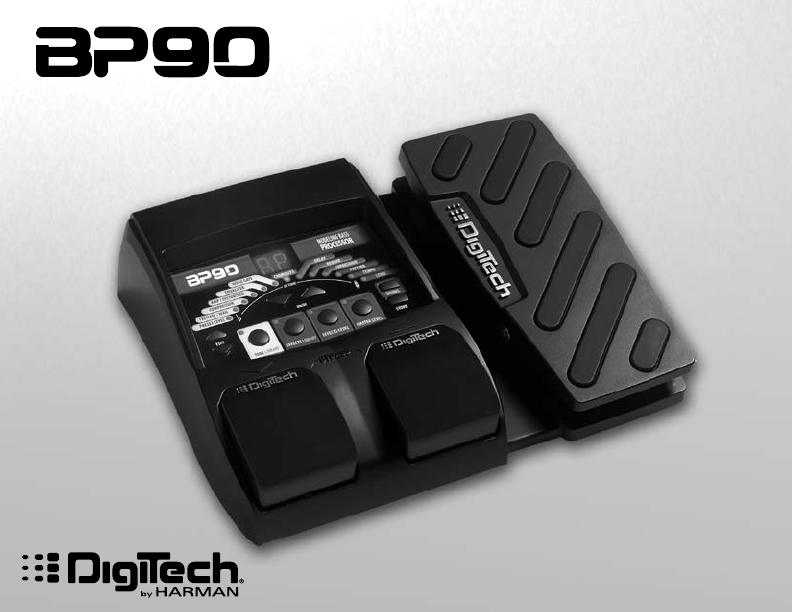
Modeling
Bass Processor
Owner’s
Manual
Professional audio equipment
WARNING FOR YOUR PROTECTION
PLEASE READ THE FOLLOWING:
KEEP THESE INSTRUCTIONS
HEED ALL WARNINGS
FOLLOW ALL INSTRUCTIONS
THE APPARATUS SHALL NOT BE EXPOSED TO DRIPPING OR SPLASHING LIQUID
AND NO OBJECT FILLED WITH LIQUID, SUCH AS VASES, SHALL BE PLACED
ON THE APPARATUS.
CLEAN ONLY WITH A DRY CLOTH.
DO NOT BLOCK ANY OF THE VENTILATION OPENINGS. INSTALL IN ACCORDANCE
WITH THE MANUFACTURER’S INSTRUCTIONS.
DO NOT INSTALL NEAR ANY HEAT SOURCES SUCH AS RADIATORS, HEAT
REGISTERS, STOVES, OR OTHER APPARATUS (INCLUDING AMPLIFIERS) THAT
PRODUCE HEAT.
ONLY USE ATTACHMENTS/ACCESSORIES SPECIFIED BY THE MANUFACTURER.
UNPLUG THIS APPARATUS DURING LIGHTNING STORMS OR WHEN UNUSED FOR
LONG PERIODS OF TIME.
Do not defeat the safety purpose of the polarized or grounding-type plug. A
polarized plug has two blades with one wider than the other. A grounding
type plug has two blades and a third grounding prong. The wide blade or
third prong are provided for your safety. If the provided plug does not fit
your outlet, consult an electrician for replacement of the obsolete outlet.
Protect the power cord from being walked on or pinched particularly at
plugs, convenience receptacles, and the point where they exit from the
apparatus.
Use only with the cart stand, tripod bracket, or table specified by the manu-
facture, or sold with the apparatus. When a cart is used, use caution when
moving the cart/apparatus combination to avoid injury from tip-over.
Refer all servicing to to qualified service personnel. Servicing is required
when the apparatus has been damaged in any way, such as power-supply
cord or plug is damaged, liquid has been spilled or objects have fallen into
the apparatus, the apparatus has been exposed to rain or moisture, does not
operate normally, or has been dropped.
POWER ON/OFF SWITCH: The Power switch used in this piece of equipment
DOES NOT break the connection from the mains.
MAINS DISCONNECT: The plug shall remain readily operable. For rack-mount
or installation where plug is not accessible, an all-pole mains switch with a
contact separation of at least 3 mm in each pole shall be incorporated into
the electrical installation of the rack or building.
The symbols shown above are internationally accepted symbols that warn of potential hazards with electri-
cal products. The lightning flash with arrowpoint in an equilateral triangle means that there are dangerous
voltages present within the unit. The exclamation point in an equilateral triangle indicates that it is necessary
for the user to refer to the owner’s manual.
These symbols warn that there are no user serviceable parts inside the unit. Do not open the unit. Do not
attempt to service the unit yourself. Refer all servicing to qualified personnel. Opening the chassis for any
reason will void the manufacturer’s warranty. Do not get the unit wet. If liquid is spilled on the unit, shut it
off immediately and take it to a dealer for service. Disconnect the unit during storms to prevent damage.
ELECTROMAGNETIC COMPATIBILITY
This device complies with part 15 of the FCC Rules and the Product Specifications noted on the
Declaration of Conformity. Operation is subject to the following two conditions:
• this device may not cause harmful interference, and
• this device must accept any interference received, including interference that may cause
undesired operation.
Operation of this unit within significant electromagnetic fields should be avoided.
• use only shielded interconnecting cables.
If you want to dispose this product, do not mix it with general household waste. There is a
separate collection system for used electronic products in accordance with legislation that
requires proper treatment, recovery and recycling.
Private household in the 25 member states of the EU, in Switzerland and Norway may return their used
electronic products free of charge to designated collection facilities or to a retailer (if you purchase a similar
new one).
For Countries not mentioned above, please contact your local authorities for a correct method of disposal.
By doing so you will ensure that your disposed product undergoes the necessary treatment, recovery and
recycling and thus prevent potential negative effects on the environment and human health.
DECLARATION OF CONFORMITY
Manufacturer’s Name: DigiTech
Manufacturer’s Address: 8760 S. Sandy Parkway
Sandy, Utah 84070, USA
declares that the product:
Product name: BP 90
Product option: all (requires Class II power adapter that conforms to the requirements of EN60065, EN60742, or equivalent.)
conforms to the following Product Specifications:
Safety: IEC 60065 -01+Amd 1
EMC: EN 55022:2006
EN 55024:1998
FCC Part 15
Supplementary Information:
The product herewith complies with the requirements of the:
Low Voltage Directive 2006/95/EC
EMC Directive 2004/108/EC.
RoHS Directive 2002/95/EC
WEEE Directive 2002/96/EC
EC Regulation 278/2009
With regard to Directive 2005/32/EC and EC Regulation 1275/2008 of 17 December 2008, this product is designed, produced, and
classified as Professional Audio Equipment and thus is exempt from this Directive.
Director, Engineering
Signal Processing
8760 S. Sandy Parkway
Sandy, Utah 84070, USA
Date: April 28, 2011
European Contact: Your local DigiTech Sales and Service Office or
Harman Music Group
8760 South Sandy Parkway
Sandy, Utah
84070 USA
Ph: (801) 566-8800
Fax: (801) 568-7583
Warranty
We at DigiTech® are very proud of our products and back up each one we sell with the following warranty:
1. The warranty registration card must be mailed within ten days after purchase date to validate this
warranty, or you can register via our website (www.digitech.com).
2. DigiTech warrants this product, when used solely within the U.S., to be free from defects in materials and
workmanship under normal use and service.
3. DigiTech liability under this warranty is limited to repairing or replacing defective materials that show
evidence of defect, provided the product is returned to DigiTech WITH RETURN AUTHORIZATION,
where all parts and labor will be covered up to a period of one year. A Return Authorization number
may be obtained from DigiTech by telephone. The company shall not be liable for any consequential
damage as a result of the product’s use in any circuit or assembly.
4. Proof-of-purchase is considered to be the burden of the consumer.
5. DigiTech reserves the right to make changes in design, or make additions to, or improvements upon this
product without incurring any obligation to install the same on products previously manufactured.
6. The consumer forfeits the benefits of this warranty if the product’s main assembly is opened and
tampered with by anyone other than a certified DigiTech technician or, if the product is used with AC
voltages outside of the range suggested by the manufacturer.
7. The foregoing is in lieu of all other warranties, expressed or implied, and DigiTech neither assumes nor
authorizes any person to assume any obligation or liability in connection with the sale of this product. In
no event shall DigiTech or its dealers be liable for special or consequential damages or from any delay in
the performance of this warranty due to causes beyond their control.
NOTE: The information contained in this manual is subject to change at any time without notification. Some
information contained in this manual may also be inaccurate due to undocumented changes in the product or
operating system since this version of the manual was completed. The information contained in this version of
the owner’s manual supersedes all previous versions.
Table of Contents
Section One - Introduction
Getting Acquainted .......................................................... 1
Included Items .................................................................. 1
About the BP90 ................................................................ 2
Performance Mode .......................................................2
Edit Mode ........................................................................ 2
Bypass Mode ................................................................... 2
Tuner Mode .....................................................................2
Tone Library Button...................................................... 4
Effects Library Button .................................................. 4
Effects Level Button ...................................................... 4
Master Level Button ..................................................... 4
Presets .............................................................................5
A Guided Tour of the BP90 ........................................... 6
Front Panel .....................................................................6
Rear Panel ..................................................................... 10
Getting Started ............................................................... 12
Making Connections ......................................................12
Mono Operation - Amplifier ....................................12
Stereo Operation ........................................................ 13
Applying Power ..............................................................15
Section Two - Editing Functions
Editing/Creating Presets ...............................................16
Storing/Copying a Preset..............................................17
Section Three - Models and Effects
About the Models .......................................................... 19
Model Definitions ..........................................................20
Fretless/Wah ...................................................................20
Compressor ....................................................................21
Amp/Distortion Models ...............................................22
Noise Gate ......................................................................23
EQ. ..................................................................................... 23
Chorus/FX. ......................................................................24
Chorus. ..........................................................................25
Flanger ...........................................................................25
Phaser ............................................................................25
Tremolo .........................................................................25
Panner ............................................................................ 25
Vibrato ........................................................................... 25
Octavider ......................................................................26
Envelope Filter .............................................................26
Ya Ya TM .............................................................................26
AutoYaTM .......................................................................26
Step Filter .....................................................................26
SynthTalkTM ...................................................................26
Detune ........................................................................... 27
Pitch Shift ......................................................................27
DigiTech Whammy™ .................................................27
Delay .................................................................................28
Reverb ..............................................................................30
Section Four - Other Functions
Expression Pedal Assign ................................................31
Drum Machine ................................................................ 33
Factory Reset ..................................................................33
Expression Pedal Calibration ......................................34
Section Five - Appendix
Specifications ................................................................... 35
Tone Library .................................................................... 37
Effects Library ................................................................. 38
Disclaimer: DigiTech, DigiTech Whammy, and AudioDNA2 are trademarks of HARMAN in the U.S. and other
countries. Ampeg SVT, Ashdown Bass Magnifier, Fender Bassman, Sunn 200S, SWR Interstellar Overdrive,
Trace-Elliot Commando, Ampeg B15, Hiwatt Custom 50, Mesa/Boogie 400+, SWR Basic Black, Fender Dual
Showman, Vox Clyde McCoy Wah, Guyatone OD-1, Voodoo Labs Sparkledrive, Boss DS-1, and Electro-Har-
monix Big Muff are products of DigiTech’s competitors and trademarks of their respective companies in the U.S.
and other countries and are not associated or affiliated with DigiTech or HARMAN. © 2010 HARMAN. All
Rights Reserved.

1
Section 1 - Introduction
Getting Acquainted
Congratulations on your purchase of the BP90. You now have an incredibly advanced modeling
bass processor that can keep up with your creative impulses and even increase them. Armed with
DigiTech®’s patented AudioDNA2® custom audio DSP chip, the BP90 gives you a huge selection of
tones and effects, right at your fingertips. When you easily select an amp or distortion tone and
an effects chain from the Tone Library or the Effects Library, you’ll appreciate the accuracy in each
model, and the dynamic interaction in each tone. Add a built-in drum machine, and you have the
BP90: the key to unlock your creative potential.
Included Items
Before you get started, please make sure that the following items have been included:
•BP90
•PowerSupply
•WarrantyCard
The utmost care was taken while your BP90 was being manufactured. Everything should be in-
cluded and in perfect working order. If anything is missing, contact the factory at once. Please help
us become acquainted with you and your needs by completing your warranty card or registering
online at www.digitech.com. It is your safeguard should a problem arise with your BP90.
1

2
About the BP90
Performance Mode
When you first apply power to the BP90, it powers up in Performance mode. Performance mode
provides access to all of the presets within the BP90 via the Up and Down Footswitches. The
Edit Up/Down buttons cycle through the effects in the matrix.
Edit Mode
When you select an Effect with the Edit Up/Down buttons, you can adjust the Effect with the
Value Up/Down buttons. (For descriptions of the Effects and their parameters, see page 20.)
When you make changes to a preset’s Effects, you must store the changes or they will be lost
when you select a different preset or disconnect power to the BP90. See page 17 for a description
of the Store procedure.
The BP90 presets can be bypassed for a clean, unprocessed bass signal. To bypass the BP90, press
and release both Footswitches simultaneously. The Display reads By indicating the preset is
bypassed. In Bypass mode, all buttons are disabled. Press either Footswitch to exit Bypass mode
and return the BP90 to the last preset used.
Tuner Mode
The Tuner in the BP90 allows you to quickly tune or check the tuning on your bass. Enter Tuner
mode by pressing and holding both Footswitches simultaneously. The Display briefly shows Tu
indicating that you are in Tuner mode. To begin tuning, play a note on your bass (a harmonic at the
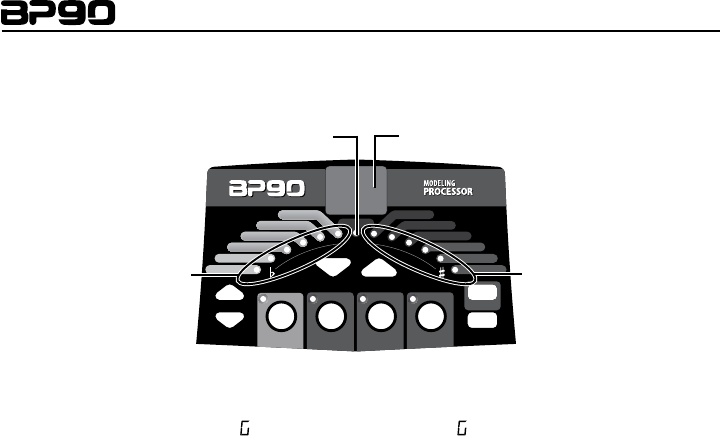
12th fret usually works best). The Display shows the note being played. The Matrix LEDs indicate
whether you are sharp or flat. The left 6 red LEDs indicate the note is flat and should be tuned
3
up. The right 6 red LEDs indicate the note is sharp and should be tuned down. The center LED
indicates the note is in tune. The output is muted in Tuner mode; rock the Expression Pedal to
regain volume.
DRUMS
DRUMS
EDIT
STORE
IN TUNE
VALUE
EFFECTS LIBRARY
EFFECTS LIBRARY EFFECTS LEVEL
EFFECTS LEVEL MASTER LEVEL
MASTER LEVEL
PRESET LEVEL
PRESET LEVEL
FRETLESS / WAH
FRETLESS / WAH
COMPRESSOR
COMPRESSOR
COMPRESSOR
AMP / DISTORTION
AMP / DISTORTION
EQUALIZER
EQUALIZER
NOISE GATE
NOISE GATE
CHORUS/FX
CHORUS/FX
DELAY
DELAY
REVERB
REVERB
EXPRESSION
EXPRESSION
PATTERN
PATTERN
TEMPO
TEMPO
LEVEL
LEVEL
LEVEL
TONE LIBRARY
TONE LIBRARY
BASS
BASS
Display shows
note played
Right LEDs indicate
note is sharp
Center LED indicates
note is in tune
Left LEDs indicate
note is flat
In Tuner mode, you can change your tuning reference with the Value Up/Down buttons. The
default factory setting is A=440 Hz (displayed as 40). Other tuning references are A=A flat (dis-
played as Ab), A=G (displayed as ), and A=G flat (displayed as b). The display window will briefly
flash the currently selected tuning preference.
Exit Tuner mode by pressing either Footswitch.

4
Tone Library Button
You can press this button at any time (except in Bypass or Tuner mode) to access the Tone Library,
and then use the Value Up/Down buttons to select from a variety of genre-based amp tone
defaults ranging from Blues to Metal to Country. Behind the scenes, the Fretless/Wah, Compres-
sor, Amp/Distortion, and EQ are configured to create a specified tone. You can further refine the
sound by editing the preset (see Editing/Creating Presets on page 16). Changing between different
Tone Library defaults does not change the Chorus/FX, Delay or Reverb, letting you experiment
with different amp styles quickly in the context of the current effect chain.
Effects Library Button
You can press this button at any time (except in Bypass or Tuner mode) to access the Effects Li-
brary and then use the Value Up/Down buttons to select from a variety of post-amplifier model
effect chains (Chorus, Chorus + Delay, Delay + Reverb, etc.). You can further refine the sound by
editing the preset (see Editing/Creating Presets on page 16). Changing between different Effects Li-
brary defaults does not change the Compressor, Distortion, Amp/Cabinet model, and EQ settings,
letting you experiment with different effect chains quickly in the context of the current amp tone.
Effects Level Button
You can press this button at any time (except in Bypass or Tuner mode) to access the Effects Level.
This button changes the relative level of the post-amp effects (Chorus/FX, Delay, and Reverb). This
can be thought of as an effects mix control, where increasing this button’s value increases the level
of these effects and decreasing its value decreases the level of these effects.
Master Level Button
Press this button and use the Value Up/Down buttons to set the overall output level of the BP90.
5
DRUMS
DRUMS
EDIT
STORE
IN TUNE
VALUE
EFFECTS LIBRARY
EFFECTS LIBRARY EFFECTS LEVEL
EFFECTS LEVEL MASTER LEVEL
MASTER LEVEL
PRESET LEVEL
PRESET LEVEL
FRETLESS / WAH
FRETLESS / WAH
COMPRESSOR
COMPRESSOR
COMPRESSOR
AMP / DISTORTION
AMP / DISTORTION
EQUALIZER
EQUALIZER
NOISE GATE
NOISE GATE
CHORUS/FX
CHORUS/FX
DELAY
DELAY
REVERB
REVERB
EXPRESSION
EXPRESSION
PATTERN
PATTERN
TEMPO
TEMPO
LEVEL
LEVEL
LEVEL
TONE LIBRARY
TONE LIBRARY
BASS
BASS
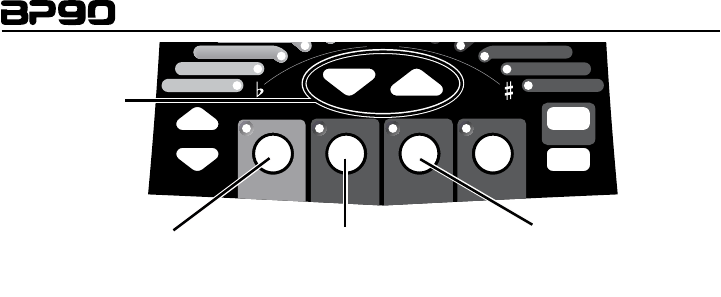
1. Access the Tone Library
with this button and select
a tone with the Value buttons.
2. Access the Effects Library
with this button and select
a tone with the Value buttons.
3. Access the effects level
with this button and adjust the
level with the Value buttons.
Value
Buttons
The Tone Library button, Effects Library button, and Effects Level button make it easy
to quickly load preset tones, effects, and effects chains.
To learn about storing changes to presets, see page 17.
Presets
Presets are numbered locations of programmed sounds which reside in the BP90. Presets are re-
called with the Footswitches. The active effects in each preset are indicated by lighted LEDs in the
Effect Matrix. The BP90 comes with 50 User presets (1-50) and 50 Factory presets (51-00). The
User presets are locations where your creations may be stored. The Factory presets do not allow
you to store any changes to them. From the factory, the 50 User presets are exact duplicates of
the 50 Factory presets. This allows you to create your own presets without losing the sounds that
came with the BP90.
6
A Guided Tour of the BP90
Front Panel
DRUMS
DRUMS
EDIT
STORE
IN TUNE
VALUE
EFFECTS LIBRARY
EFFECTS LIBRARY EFFECTS LEVEL
EFFECTS LEVEL MASTER LEVEL
MASTER LEVEL
PRESET LEVEL
PRESET LEVEL
FRETLESS / WAH
FRETLESS / WAH
COMPRESSOR
COMPRESSOR
COMPRESSOR
AMP / DISTORTION
AMP / DISTORTION
EQUALIZER
EQUALIZER
NOISE GATE
NOISE GATE
CHORUS/FX
CHORUS/FX
DELAY
DELAY
REVERB
REVERB
EXPRESSION
EXPRESSION
PATTERN
PATTERN
TEMPO
TEMPO
LEVEL
LEVEL
LEVEL
TONE LIBRARY
TONE LIBRARY
BASS
BASS
1
2
3
4
5
7
8
9
6

7
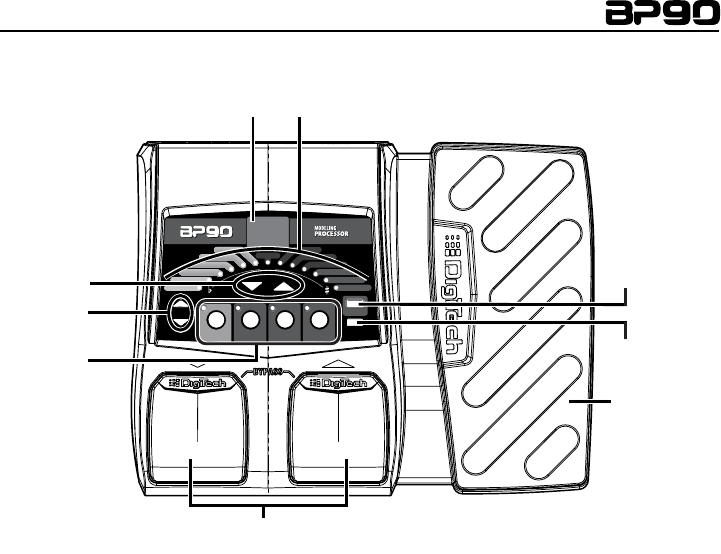
1. Footswitches
These two Footswitches select presets, access the Tuner, or bypass the BP90. The
Footswitch on the right will select the next preset up, and the Footswitch on the left will
select the next preset down. Pressing both Footswitches together will bypass the currently
selected preset. Pressing and holding both Footswitches for 2 seconds will access the Tuner.
Press either Footswitch to exit Bypass or Tuner mode.
2. Tone Library, Effects Library, Effects Level, and Master Level Buttons
At the heart of creating presets in the BP90 are the Tone Library, Effects Library, and Effects
Level buttons. By pressing one of these buttons and using the Value Up/Down buttons,
you can select from 20 amp/distortion tones, 20 effects chains, or the overall post amp/
distortion effects level respectively. The Master Level button accesses the master output vol-
ume parameter for the BP90. Each button is described in detail below.
ToneLibraryButton
The Tone Library button accesses a library of preset amp tones. Press this button
and then use the Value Up/Down buttons to select from a variety of genre-based
amp tones ranging from Blues to Metal to Country (see page 37 for a list of available
tones). Behind the scenes, the Fretless/Wah, Compressor, Amp/Distortion, and EQ are
configured to create a specified tone. You can further refine the sound by editing the
preset (see Editing/Creating Presets on page 16). Changing between different Tone Library
selections does not change the Chorus/FX, Delay, or Reverb settings, allowing you to
experiment with different amp styles quickly in the context of the current effect chain.
The Display will read cu (for “custom”) when any of the associated effects have been
changed from a default library setting.

8
EffectsLibraryButton
The Effects Library button accesses a library of preset effect configurations. Press this
button and use the Value Up/Down buttons to select a variety of post-amplifier model
effect chains (Chorus, Chorus + Delay, Delay + Reverb, etc…). You can further refine the
sound by editing the preset (see Editing/Creating Presets on page 16). Changing between
different Effects Library selections does not change the Fretless/Wah, Compressor, Amp/
Distortion and EQ settings, allowing you to experiment with different effect chains quickly
in the context of the current amp tone. The Display will read cu (for “custom”) when any
of the associated effects have been changed from a default library setting.
EffectsLevelButton
The Effects Level button lets you adjust the levels of post-amp model effects (Cho-
rus/FX, Delay, and Reverb). Press this button and use the Value Up/Down buttons to
change the relative level of the post-amp effects (Chorus/FX, Delay, and Reverb). Think
of it as an effects mix control where increasing this setting increases the level of these
effects, while decreasing this setting decreases the level of these effects.
MasterLevelButton
The Master Level button lets you adjust the output level of the BP90. Press this button
and use the Value Up/Down buttons to change the output level of the BP90.
3. Edit Up/Down
The Edit Up/Down buttons select which effect is to be edited. As each effect is selected,
the Display shows the effect setting. A decimal in the bottom right corner of the Display
turns on when a preset has been modified. The Edit Up/Down buttons are also used to
change the BP90 Drum Machine parameters (Note that Drum Machine settings are global
for all presets and are not saved with the preset).

9
4. Value Up/Down
The Value Up/Down buttons are used for editing effects, navigating Tone/Effects Libraries,
adjusting Effects and Master Levels, and adjusting Drum Machine settings.
5. Display
The Display provides information for different functions depending on the mode that has
been selected. In Performance mode, the Display shows the currently selected preset num-
ber. In Edit mode, the Display shows the value of the effect being adjusted. A decimal in
the bottom right corner of the Display turns on when a preset has been modified. In Tuner
mode, the Display shows the note being played.
6. Matrix
The matrix provides information regarding the current preset and Effect edit functions. In
Performance mode, the LEDs next to each Effect provide a visual indication of which Effects
are in use for the currently selected preset. While editing a preset, the LEDs indicate the
Effect currently selected for editing. In Tuner mode, the LEDs indicate whether the note
played is sharp, flat, or in tune.
7. Drums
The Drums button is used to turn on and off the BP90’s built-in drum machine. When the
Drums button is turned on, the Drums button LED lights and the selected drum pattern
plays continuously. Use the Value Up/Down buttons to change the pattern of the drum
machine. See page 33 for more information about the drum machine.
8. Store
The Store button is used to save your changes to the User presets. See page 17 for more
information about storing presets.
9. Expression Pedal
The Expression Pedal provides real-time control of the BP90’s Volume, Wah, or the assigned
effect parameter.
10
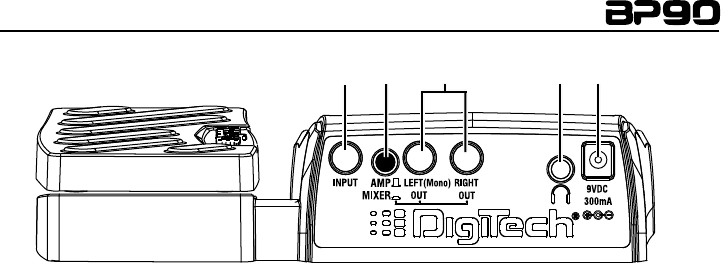
Rear Panel 1 2 3 4 5
1. Input
Connect your instrument to this high-impedance TS input.
2. Amp / Mixer
This button optimizes the BP90’s outputs for use when plugged into a bass amp or a mixer/
recording device. When set to Mixer (“In” position), the outputs are optimized for con-
necting to a mixer, recording device or headphones. When set to Amp (“Out” position), the
outputs are optimized for running directly in to the input of a bass amp.
3. Left (Mono) and Right Outputs
Connect the Left (Mono) output to the input of a single amplifier (or mixer input) for mono
operation. Connect the Left and Right outputs to the inputs of 2 amplifiers (or 2 mixer
channels) for stereo operation.

11
4. Headphones
Connect a pair of stereo headphones to this 1/8" jack. For proper frequency response,
the Amp/Mixer switch should be set to Mixer (“in” position) when using headphones.
Headphones with an impedance of 100 Ohms or less are recommended.
Note: The Headphones output can have either a mono or stereo signal, depending on what
1/4" outputs are connected. If neither (or both) 1/4" outputs are connected, the Headphones
output will be in stereo. If a cable is connected to the Left (Mono) 1/4" output only, the Head-
phones output will be in mono.
5. Power Input
Connect only the DigiTech® approved power supply to this jack (see table in Specifications).
12
Getting Started
Making Connections
There are several different connection options available with the BP90. Before connecting the
BP90, make sure that the power to your amplifier and the BP90 is turned off. There is no power
switch on the BP90. To turn the BP90 on or off, connect or disconnect the included power supply
from the PowerInput jack.
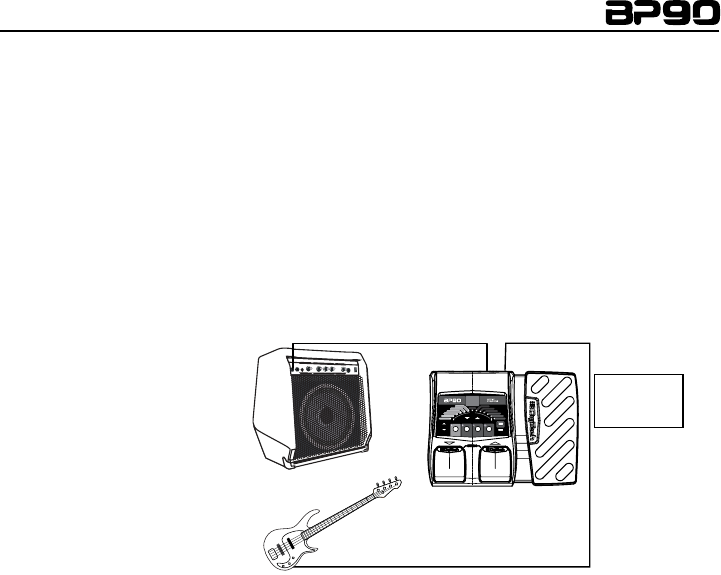
Mono Operation - Amplifier
Connect your bass to the Input of the BP90. Connect a single mono instrument cable from the
Left (Mono) output of the BP90 to the instrument input or effect return on your amplifier. Set
the Amp/Mixer switch to Amp.
Bass Amp Input/
Effect Return
Left (Mono)
Output Input
Amp/Mixer
switch set to
Amp.
DRUMS
DRUMS
EDIT
STORE
IN TUNE
VALUE
EFFECTS LIBRARY
EFFECTS LIBRARY EFFECTS LEVEL
EFFECTS LEVEL MASTER LEVEL
MASTER LEVEL
PRESET LEVEL
PRESET LEVEL
FRETLESS / WAH
FRETLESS / WAH
COMPRESSOR
COMPRESSOR
COMPRESSOR
AMP / DISTORTION
AMP / DISTORTION
EQUALIZER
EQUALIZER
NOISE GATE
NOISE GATE
CHORUS/FX
CHORUS/FX
DELAY
DELAY
REVERB
REVERB
EXPRESSION
EXPRESSION
PATTERN
PATTERN
TEMPO
TEMPO
LEVEL
LEVEL
LEVEL
TONE LIBRARY
TONE LIBRARY
BASS
BASS
DRUMS
DRUMS
EDIT
STORE
IN TUNE
VALUE
EFFECTS LIBRARY
EFFECTS LIBRARY EFFECTS LEVEL
EFFECTS LEVEL MASTER LEVEL
MASTER LEVEL
PRESET LEVEL
PRESET LEVEL
FRETLESS / WAH
FRETLESS / WAH
COMPRESSOR
COMPRESSOR
COMPRESSOR
AMP / DISTORTION
AMP / DISTORTION
EQUALIZER
EQUALIZER
NOISE GATE
NOISE GATE
CHORUS/FX
CHORUS/FX
DELAY
DELAY
REVERB
REVERB
EXPRESSION
EXPRESSION
PATTERN
PATTERN
TEMPO
TEMPO
LEVEL
LEVEL
LEVEL
TONE LIBRARY
TONE LIBRARY
BASS
BASS
NOTE: When using a
bass amp, it may be best to
connect the Output of the
BP90 to the effect return of
the amplifier.
13
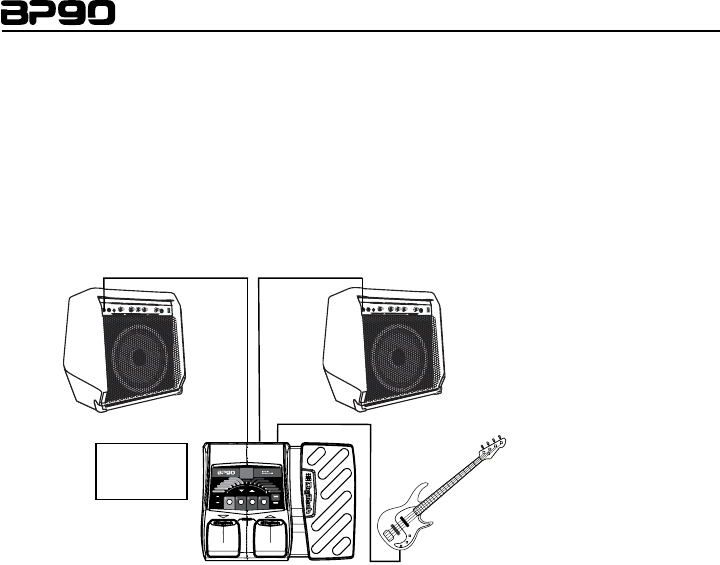
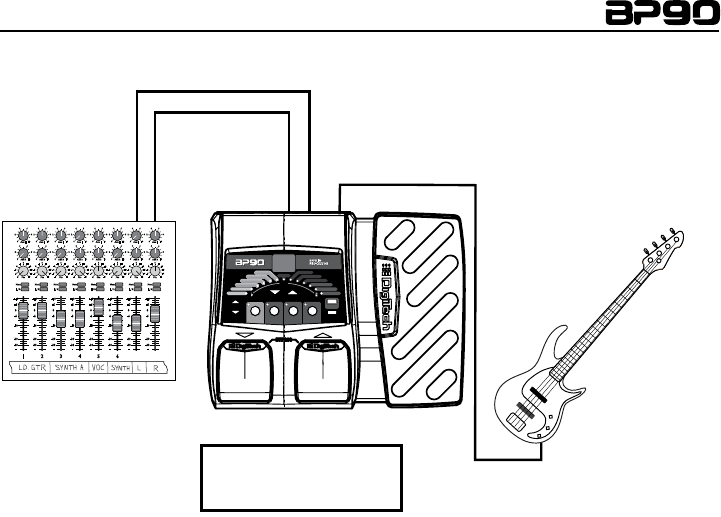
Stereo Operation
For stereo operation connect the bass to the Input of the BP90. Connect one cable to the
BP90’s Left (Mono) output, and another cable to the BP90’s Right output. Connect one cable
to the input of one amplifier, channel of a mixer, or power amp. Connect the second cable to a
second amplifier, second channel of a mixer, or power amp. If connecting to a mixing console, set
the pan controls of the mixer channels hard left and right in order to retain stereo separation. If
connecting to a mixer, set the Amp/Mixer switch to Mixer. If connecting to two amplifiers, set
the Amp/Mixer switch to Amp.
Stereo Amp Setup
Bass Amp Input/Effect Returns
Outputs Input
Amp/Mixer
switch set to
Amp.
DRUMS
DRUMS
EDIT
STORE
IN TUNE
VALUE
EFFECTS LIBRARY
EFFECTS LIBRARY EFFECTS LEVEL
EFFECTS LEVEL MASTER LEVEL
MASTER LEVEL
PRESET LEVEL
PRESET LEVEL
FRETLESS / WAH
FRETLESS / WAH
COMPRESSOR
COMPRESSOR
COMPRESSOR
AMP / DISTORTION
AMP / DISTORTION
EQUALIZER
EQUALIZER
NOISE GATE
NOISE GATE
CHORUS/FX
CHORUS/FX
DELAY
DELAY
REVERB
REVERB
EXPRESSION
EXPRESSION
PATTERN
PATTERN
TEMPO
TEMPO
LEVEL
LEVEL
LEVEL
TONE LIBRARY
TONE LIBRARY
BASS
BASS
DRUMS
DRUMS
EDIT
STORE
IN TUNE
VALUE
EFFECTS LIBRARY
EFFECTS LIBRARY EFFECTS LEVEL
EFFECTS LEVEL MASTER LEVEL
MASTER LEVEL
PRESET LEVEL
PRESET LEVEL
FRETLESS / WAH
FRETLESS / WAH
COMPRESSOR
COMPRESSOR
COMPRESSOR
AMP / DISTORTION
AMP / DISTORTION
EQUALIZER
EQUALIZER
NOISE GATE
NOISE GATE
CHORUS/FX
CHORUS/FX
DELAY
DELAY
REVERB
REVERB
EXPRESSION
EXPRESSION
PATTERN
PATTERN
TEMPO
TEMPO
LEVEL
LEVEL
LEVEL
TONE LIBRARY
TONE LIBRARY
BASS
BASS
NOTE: When using a bass
amp, it may be best to con-
nect the Output of the BP90
to the effect return of the
amplifier.
14
Stereo Mixer Setup
Outputs
Instrument Input
Pan
Mute
-10
0
+5
+10
-20
-30
-
-5
L / R
Mute
L / R
Mute
L / R
Mute
L / R
-5
-4
-3
-2
-1 0+1
+2
+3
+4
+5 Pan
-5
-4
-3
-2
-1 0+1
+2
+3
+4
+5 Pan
-5
-4
-3
-2
-1 0+1
+2
+3
+4
+5 Pan
-5
-4
-3
-2
-1 0+1
+2
+3
+4
+5 Pan
-5
-4
-3
-2
-1 0+1
+2
+3
+4
+5 Pan
-5
-4
-3
-2
-1 0+1
+2
+3
+4
+5 Pan
-5
-4
-3
-2
-1 0+1
+2
+3
+4
+5 Pan
-5
-4
-3
-2
-1 0+1
+2
+3
+4
+5
1 2 3 4
-10
0
+5
+10
-20
-30
-
-5
-10
0
+5
+10
-20
-30
-
-5
-10
0
+5
+10
-20
-30
-
-5
Mute
L / R
5
-10
0
+5
+10
-20
-30
-
-5
Mute
L / R
6
-10
0
+5
+10
-20
-30
-
-5
Mute
L / R
-10
0
+5
+10
-20
-30
-
-5
Aux 1
0
2
4 6
8
10
Aux 2
0
2
4 6
8
10
Aux 1
0
2
4 6
8
10
Aux 2
0
2
4 6
8
10
Aux 1
0
2
4 6
8
10
Aux 2
0
2
4 6
8
10
Aux 1
0
2
4 6
8
10
Aux 2
0
2
4 6
8
10
Aux 1
0
2
4 6
8
10
Aux 2
0
2
4 6
8
10
Aux 1
0
2
4 6
8
10
Aux 2
0
2
4 6
8
10
Aux 1
0
2
4 6
8
10
Aux 2
0
2
4 6
8
10
Aux 1
0
2
4 6
8
10
Aux 2
0
2
4 6
8
10
Mute
L / R
-10
0
+5
+10
-20
-30
-
-5
Mixer
Amp/Mixer switch
set to Mixer
DRUMS
DRUMS
EDIT
STORE
IN TUNE
VALUE
EFFECTS LIBRARY
EFFECTS LIBRARY EFFEC TS LEVEL
EFFECTS LEVEL MASTER LEVEL
MASTER LEVEL
PRESET LEVEL
PRESET LEVEL
FRETLESS / WAH
FRETLESS / WAH
COMPRESSOR
COMPRESSOR
COMPRESSOR
AMP / DISTORTION
AMP / DISTORTION
EQUALIZER
EQUALIZER
NOISE GATE
NOISE GATE
CHORUS/FX
CHORUS/FX
DELAY
DELAY
REVERB
REVERB
EXPRESSION
EXPRESSION
PATTERN
PATTERN
TEMPO
TEMPO
LEVEL
LEVEL
LEVEL
TONE LIBRARY
TONE LIBRARY
BASS
BASS
DRUMS
DRUMS
EDIT
STORE
IN TUNE
VALUE
EFFECTS LIBRARY
EFFECTS LIBRARY EFFEC TS LEVEL
EFFECTS LEVEL MASTER LEVEL
MASTER LEVEL
PRESET LEVEL
PRESET LEVEL
FRETLESS / WAH
FRETLESS / WAH
COMPRESSOR
COMPRESSOR
COMPRESSOR
AMP / DISTORTION
AMP / DISTORTION
EQUALIZER
EQUALIZER
NOISE GATE
NOISE GATE
CHORUS/FX
CHORUS/FX
DELAY
DELAY
REVERB
REVERB
EXPRESSION
EXPRESSION
PATTERN
PATTERN
TEMPO
TEMPO
LEVEL
LEVEL
LEVEL
TONE LIBRARY
TONE LIBRARY
BASS
BASS
15
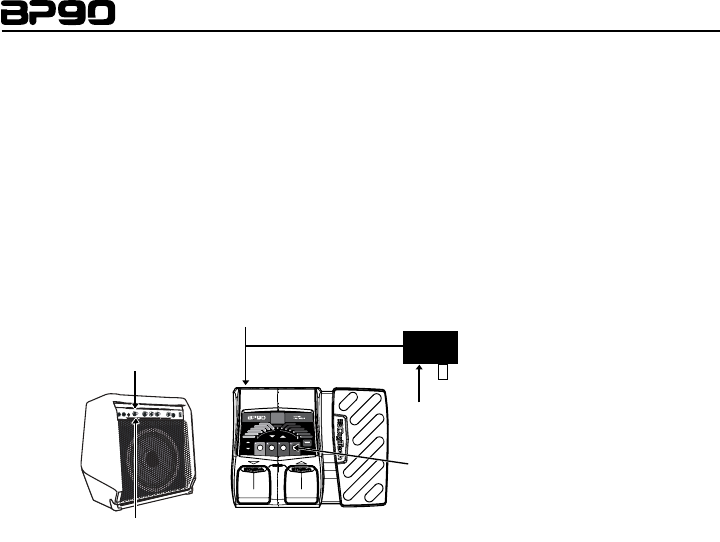
Applying Power
Before applying power to anything, set your amp(s) to a clean tone and set the tone controls to
a flat EQ response (on most amps, this would be 0 or 5 on the tone controls). Then follow the
steps listed below.
1. Turn the amp volume all the way down.
2. Connect the plug of the power supply to the power jack on the rear panel of the BP90.
3. Connect the other end of the power supply to an AC outlet. Use the Master Level but-
ton and the Value Up/Down buttons to set the BP90’s Master Level to “0”.
4. Turn the power of your amplifier(s) to the on position and adjust the volume(s) to a nor-
mal playing level.
5. Use the Master Level button and the Value Up/Down buttons to gradually increase the
BP90’s Master Level to achieve the desired volume.
DRUMS
DRUMS
EDIT
STORE
IN TUNE
VALUE
EFFECTS LIBRARY
EFFECTS LIBRARY EFFECTS LEVEL
EFFECTS LEVEL MASTER LEVEL
MASTER LEVEL
PRESET LEVEL
PRESET LEVEL
FRETLESS / WAH
FRETLESS / WAH
COMPRESSOR
COMPRESSOR
COMPRESSOR
AMP / DISTORTION
AMP / DISTORTION
EQUALIZER
EQUALIZER
NOISE GATE
NOISE GATE
CHORUS/FX
CHORUS/FX
DELAY
DELAY
REVERB
REVERB
EXPRESSION
EXPRESSION
PATTERN
PATTERN
TEMPO
TEMPO
LEVEL
LEVEL
LEVEL
TONE LIBRARY
TONE LIBRARY
BASS
BASS
DRUMS
DRUMS
EDIT
STORE
IN TUNE
VALUE
EFFECTS LIBRARY
EFFECTS LIBRARY EFFECTS LEVEL
EFFECTS LEVEL MASTER LEVEL
MASTER LEVEL
PRESET LEVEL
PRESET LEVEL
FRETLESS / WAH
FRETLESS / WAH
COMPRESSOR
COMPRESSOR
COMPRESSOR
AMP / DISTORTION
AMP / DISTORTION
EQUALIZER
EQUALIZER
NOISE GATE
NOISE GATE
CHORUS/FX
CHORUS/FX
DELAY
DELAY
REVERB
REVERB
EXPRESSION
EXPRESSION
PATTERN
PATTERN
TEMPO
TEMPO
LEVEL
LEVEL
LEVEL
TONE LIBRARY
TONE LIBRARY
BASS
BASS
4. Turn amp volume up
1. Turn amp volume down
2. Connect the power adapter to power jack
3. Connect the power adapter to
AC outlet and set the BP90’s Master
Level to “0”
5. Set the BP90’s Master Level to the
desired listening volume

16
Section Two - Editing Functions
Editing/Creating Presets
The BP90 is designed to make preset editing and creation easy and intuitive. When creating your
own sound, you must first start with an existing preset. Note that the preset you begin with
doesn’t have to be in the memory location you intend to have it reside, since you can store it to
any User preset location during the store procedure.
The easiest way to start is by using the Tone Library and Effects Library buttons. The Tone
Library button gives you access to a variety of pre-programmed amp/distortion tones (see page
37) based on different musical styles. The Effects Library button then lets you select from a pal-
ette of effects chains (see page 38), from simple delays to full multi-effect signals with modulation,
delay and reverb. Use the EffectsLevelButton to easily increase or decrease the Chorus/FX,
Delay and Reverb levels if desired. Using these three controls should get you close to a sound you
are after. From there you can then use the Edit buttons to select individual Effects, and the Value
Up/Down buttons to adjust their settings.
To edit and create a custom preset:
1. Use the Footswitches to select the preset you wish to edit. If you are trying to find some-
thing different from the existing presets, begin by using the Tone Library, Effects Library,
Effects Level and Value Up/Down buttons to get close to a sound you want.
2. Once you have a sound close to what you are after, begin editing the Effects by pressing the
Edit Up/Down buttons and selecting the Effect you want to adjust.
3. To turn an Effect on, select it with the Edit Up/Down buttons. Each Effect has multiple set-
tings to select from. Use the Value Up/Down buttons to change the values for the selected
Effect To turn an Effect off, press and hold the Value Down button until Ofappears in the
Display. (For EQs, b5, d5, and t5 are the settings with no boost or cut.)

17
Anytime a stored value within a preset is changed, you need to store the changes (with the Store
button), or the changes will be lost. Changing presets, or turning the power off before storing any
changes erases any edits made and the BP90 will revert to the stored values for the preset.
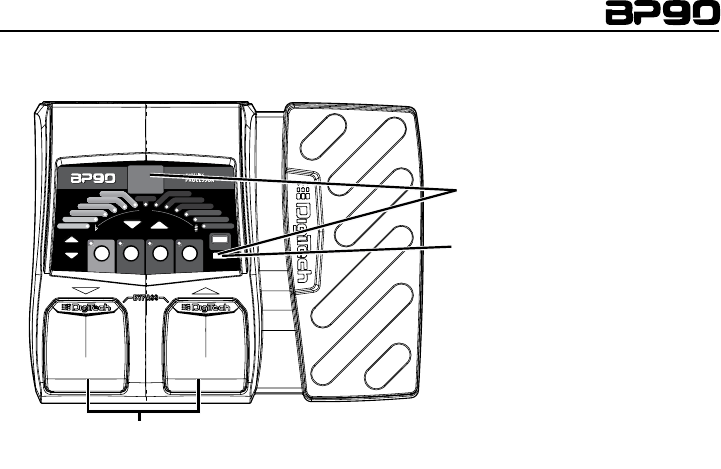
Storing/Copying a Preset
Once the preset has been modified to your liking, you may store your settings to any of the
50 User preset locations (presets 1-50). The following steps outline the procedure for storing
changes to a preset or copying a preset to a different location:
1. Press the Store button once and the current Preset location will flash in the Display. This
is asking you to select a new User Preset location where your new sound will reside.
2. If desired, select a new User Preset location using the Footswitches.
3. Press the Store button again to save the changes.
The procedure for copying one Preset to another Preset location is the same. Simply use the
Footswitches to select the Preset that you want to copy, then follow the steps listed above.
18
Storing/CopyingaPreset
DRUMS
DRUMS
EDIT
STORE
IN TUNE
VALUE
EFFECTS LIBRARY
EFFECTS LIBRARY EFFECTS LEVEL
EFFECTS LEVEL MASTER LEVEL
MASTER LEVEL
PRESET LEVEL
PRESET LEVEL
FRETLESS / WAH
FRETLESS / WAH
COMPRESSOR
COMPRESSOR
COMPRESSOR
AMP / DISTORTION
AMP / DISTORTION
EQUALIZER
EQUALIZER
NOISE GATE
NOISE GATE
CHORUS/FX
CHORUS/FX
DELAY
DELAY
REVERB
REVERB
EXPRESSION
EXPRESSION
PATTERN
PATTERN
TEMPO
TEMPO
LEVEL
LEVEL
LEVEL
TONE LIBRARY
TONE LIBRARY
BASS
BASS
2. Select a destination
with the Footswitches.
1. Press the Store button;
the Preset number flashes.
3. Press the Store button
again to save your changes.
DRUMS
DRUMS
EDIT
STORE
IN TUNE
VALUE
EFFECTS LIBRARY
EFFECTS LIBRARY EFFECTS LEVEL
EFFECTS LEVEL MASTER LEVEL
MASTER LEVEL
PRESET LEVEL
PRESET LEVEL
FRETLESS / WAH
FRETLESS / WAH
COMPRESSOR
COMPRESSOR
COMPRESSOR
AMP / DISTORTION
AMP / DISTORTION
EQUALIZER
EQUALIZER
NOISE GATE
NOISE GATE
CHORUS/FX
CHORUS/FX
DELAY
DELAY
REVERB
REVERB
EXPRESSION
EXPRESSION
PATTERN
PATTERN
TEMPO
TEMPO
LEVEL
LEVEL
LEVEL
TONE LIBRARY
TONE LIBRARY
BASS
BASS
19
Section Three - Models and Effects
About the Models
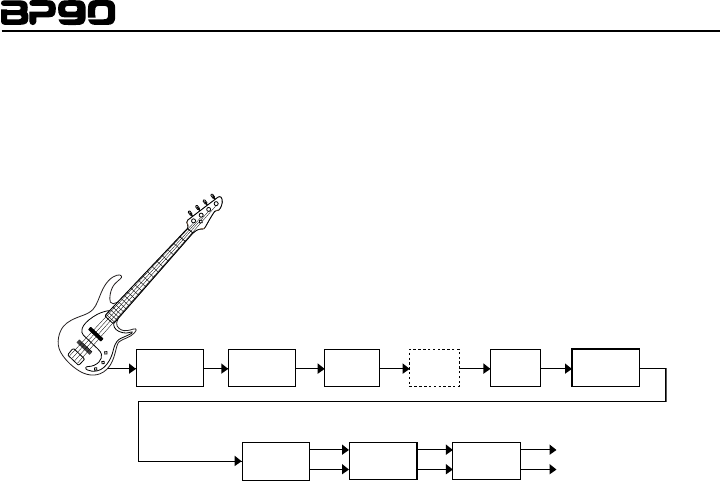
The BP90 can be thought of as several different “virtual” amplifiers and individual, high-tech
stompboxes in a single programmable package. With stompboxes, the order in which they are
connected affects the overall sound. The BP90 has placed the Amp and Effect models in an order
for optimum results. The following diagram shows the order in which they are connected.
Fretless/
WahCompressor EQ
Cabinet
Amp/
Distortion
Chorus/FX
Noise Gate
Delay Reverb

20
Model Definitions
Each Amp and Effect model within the BP90 has multiple settings to select from. Use the Value
Up/Down buttons to change the values for the selected Effect. The following overview of the
BP90’s Effects outlines the settings each Effect contains.
Fretless/Wah
The Fretless simulator creates a fretless bass sound when using a fretted bass. Wah is an effect
controlled by the expression pedal making the bass sound as if it’s saying “Wah.” The Value buttons
select the Fretless or Wah type that is simulated.
The Fretless effect has 30 types (10-39).The first digit (1-3) shows the fretless type, the second
digit (0-9) selects the fretless variation. When Cr, CY, or Fr are displayed, the Wah effect has
been selected and is controlled with the Expression Pedal. See page 31 on how to link the Wah
effect to the Expression Pedal.
The Fretless/Wah settings are:
OF Fretless/Wah is turned off.
10-39 Fretless settings
Cr Dunlop® Cry BabyTM wah
CY Vox ® Clyde McCoyTM wah
Fr Full range wah

21
Compressor
A Compressor is used to automatically limit the dynamic level of the bass signal. The Com-
pressor effect has 110 different settings (00-99; F0-F9).The first digit represents the crossover
frequency. Any signal below this frequency is compressed. The second digit (0-9) increases the
amount of compression. (Example: A compressor setting of 62 would be a crossover frequency of
400 Hz with a compression amount of 2.)
The settings for the compressor effect are:
OF Compressor is turned off
00-09 50Hz
10-19 63Hz
20-29 80Hz
30-39 100Hz
40-49 160Hz
50-59 250Hz
60-69 400Hz
70-79 630Hz
80-89 1kHz
90-99 1.6kHz
F0-F9 Full Range

22
Amp/Distortion Models
The BP90 has 11 amp and 5 distortion models to choose from. Each model is identified by a
single letter and has nine settings (for example, b1 through b9). As the setting increases, the
amp/distortion gain increases. Each amp model has a cabinet model assigned to it as shown in the
following list.
OF Amp/Distortion is turned off.
Amp Models
R1 - R9 Based on an Ampeg® SVT with an Ampeg SVT 8x10 cabinet
a1 - a9 Based on an Ashdown Bass Magnifier with an Eden D4x10XLT cabinet
b1 - b9 Based on a Fender® Bassman® with a Fender Bassman 4x10 cabinet
s1 - s9 Based on a Sunn® 200S with a Sunn 2x15 cabinet
O1 - O9 Based on an SWR® Interstellar Overdrive™ with an Eden D4x10XLT cabinet
t1 - t9 Based on a Trace-Elliot® Commando™ with a Sunn 2x15 cabinet
o1 - o9 Based on an Ampeg B15 with an Ampeg Portaflex™ 1x15 cabinet
H1 - H9 Based on a Hiwatt® Custom 50 with a Fender Bassman 4x10 cabinet
y1 - y9 Based on a Mesa Boogie® 400+ with an Ampeg SVT 8x10 cabinet
c1 - c9 Based on a SWR® Basic Black with an Ampeg Portaflex 1x15 cabinet
d1 - d9 Based on a Fender Dual Showman™ with a Sunn 2x15 cabinet
Disclaimer: DigiTech, DigiTech Whammy, and AudioDNA2 are trademarks of HARMAN in the U.S. and other
countries. Ampeg SVT, Ashdown Bass Magnifier, Fender Bassman, Sunn 200S, SWR Interstellar Overdrive,
Trace-Elliot Commando, Ampeg B15, Hiwatt Custom 50, Mesa/Boogie 400+, SWR Basic Black, Fender Dual
Showman, Vox Clyde McCoy Wah, Guyatone OD-1, Voodoo Labs Sparkledrive, Boss DS-1, and Electro-Har-
monix Big Muff are products of DigiTech’s competitors and trademarks of their respective companies in the U.S.
and other countries and are not associated or affiliated with DigiTech or HARMAN. © 2010 HARMAN. All
Rights Reserved.
23
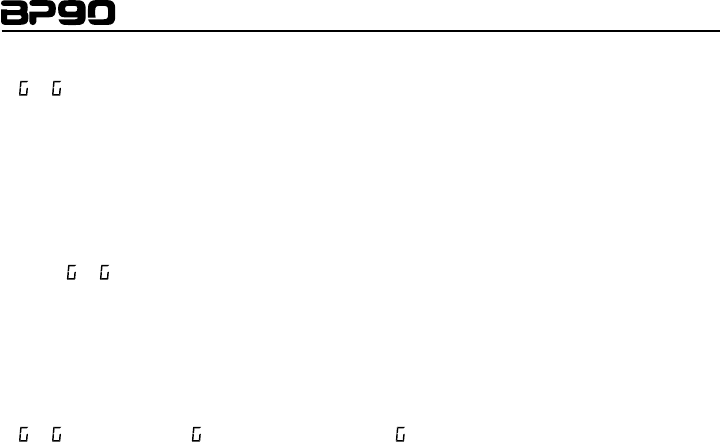
Distortion Models
f1-f9 DigiFuzz Fuzz distortion
1- 9 Based on a Guyatone® OD-1
p1-p9 Based on an EH® Big Muff® Pi
L1-L9 Based on a Voodoo Labs Sparkledrive
n1-n9 Based on a Boss® DS-1TM
Noise Gate
The Noise Gate effect includes two models: a Silencer gate and an Auto Swell (pluck detector
gate), each with nine settings.
A silencer gate is designed to eliminate noise while you are not playing. The Silencer gate’s nine
settings ( 1- 9) determine the threshold, which determines how loud a signal must be before it
can be heard. The higher the setting, the louder a signal must be in order to be heard.
The Auto Swell provides an automatic volume swell effect. The auto swell’s nine settings (S1-S9)
determine the attack time (how quickly the swell grows from the note you play). The higher the
setting, the faster the swell grows.
The noise gate settings are:
OF Noise gate effect is turned off
1- 9 Silencer gate. 1 is the lowest threshold, 9 is the highest threshold.
S1-S9 Auto Swell gate. S1 is the fastest attack time, s9 is the slowest attack time.
EQ
The BP90’s EQ helps further shape your tone with Bass, Midrange, and Treble controls. The EQ
settings are:

24
b1-b9 Bass tone control. b1-b4 cut bass frequencies by –12dB, –9dB, –6dB, and –3dB
respectively. b5 has no boost or cut. b6-b9 boost bass frequencies by 3dB, 6dB, 9dB,
and 12dB respectively.
d1-d9 Midrange tone control. d1-d4 cut midrange frequencies by –12dB, –9dB, –6dB, and
–3dB respectively. d5 has no boost or cut. b6-b9 boost midrange frequencies by
3dB, 6dB, 9dB, and 12dB respectively.
t1-t9 Treble tone control. t1 - t4 cut treble frequencies by –12dB, –9dB, –6dB, and –3dB
respectively. t5 has no boost or cut. t6-t9 boost treble frequencies by 3dB, 6dB,
9dB, and 12dB respectively.
Chorus/FX
The Chorus/FX model actually contains ten different modulation and pitch effects (described on
the following pages). Each effect includes nine settings which include a variety of configurations
that generally range from more subtle (lower settings) to more extreme (higher settings). The
Chorus/FX settings are:
OF Chorus/FX effect is turned off
C1-C9 Dual Chorus
F1-F9 Flanger
P1-P9 Phaser
t1-t9 Tremolo
n1-n9 Panner
b1-b9 Vibrato
o1-o9 Octavider
E1-E9 Envelope Filter
Y1-Y9 Ya Ya TM
A1-A9 AutoYa
L1-L9 Step Filter
S1-S9 SynthTalkTM
d1-d9 Detune
H1-H9 Pitch Shift
h1-h9 WhammyTM

25
Chorus
A Chorus adds a short delay to your signal. The delayed signal is modulated in and out of tune
and then mixed back with the original signal to create a thicker sound. The BP90 Chorus effect is
based on the Dual Chorus. Chorus settings are C1-C9.
Flanger
A Flanger uses the same principle as a Chorus but uses a shorter delay time and adds regeneration
(or repeats) to the modulating delay. This results in an exaggerated up and down sweeping motion
to the effect. Settings are F1-F9.
Phaser
A phaser splits the incoming signal, and then changes the phasing of the signal. This signal is then
taken in and out of phase and mixed back in with the original signal. As the phasing changes, differ-
ent frequencies get canceled resulting in a warm sort of twisting sound. Settings are P1-P9.
Tremolo
A Tremolo effect modulates the volume of the signal at an even rate. Settings are t1-t9.
Panner
A Panner modulates the sound from left to right at an even rate. Settings are n1-n9.
Vibrato
A Vibrato effect modulates the pitch of the incoming signal at an even rate. Settings are b1-b9.

26
Octavider
Based on the Boss® OC-2 OctaverTM, this adds two signals to your original bass signal. The first is
one octave below your bass, and the second is two octaves below your bass. Each additional signal
has its own volume control. Settings are o1-o9.
Envelope Filter
The Envelope Filter is a dynamic Wah effect that alters your sound based upon how hard you play.
Settings are E1-E9.
Ya Ya TM
AutoYa combines the characteristics of a Wah and a Flanger, creating an almost human vowel char-
acteristic as if the bass were saying “Yah.” Control the effect with the Expression Pedal. Settings are
Y1-Y9.
AutoYa™
Similar to the YaYa effect described above, AutoYa™ automatically provides this animation to the
sound at an even rate. Settings are A1-A9.
Step Filter
The Step Filter is like an automatic “random wah” with a square waveform. Settings are L1-L9.
SynthTalkTM
SynthTalk is another effect exclusive to DigiTech®. It makes your bass appear to speak based upon
the dynamics of your playing style. Settings are S1-S9.

27
Detune
A Detuner makes a copy of your incoming signal, takes the copied signal slightly out of tune from
the original, then mixes the two signals together. The result is a doubling type of effect as if two
bass guitars were playing the same part together. Settings are d1-d9.
PitchShift
A Pitch Shifter copies the incoming signal, then shifts the pitch of the copy to a different note. The
shifted note is then mixed back with the original signal, sounding as if two bass guitars were play-
ing different notes. Settings are H1-H9.
DigiTech® Whammy™
The DigiTech® WhammyTM is an effect that uses the Expression Pedal to bend the pitch of the in-
coming signal, or add a bendable harmony with the original signal. As the Pedal is moved, the note
bends either up or down. When DigiTech Whammy is selected, it is automatically placed before
the Amp modeling. Settings are h1-h9.

28
Delay
Delay is an effect that will record a portion of the incoming signal, and then play it back a short
time later. The recording can repeat just once or several times.
The BP90 offers four different delay models (Analog Delay, Digital Delay, Pong Delay, and Tape
Delay), each with 5 seconds of delay time available. There are two different parameters used to
program the delay: Delay Variation and Delay Time. The first parameter of the delay effect is Delay
Model type and Variation, which varies the amount of feedback (number of repeats) and level. The
second delay parameter is Delay Time. This is indicated by a value 1-99 (10ms-990ms), 1.0 - 5.0 (1
- 5 seconds respectively in 100ms increments) in the Preset Number display when the Delay LED
is lit. Delay settings are listed on the following page.

29
Delay Time
1-99 10ms-990ms in 10ms increments
1.0-5.0 1-5 seconds in 100ms increments
Delay Variation
OF Delay effect is turned off
Analog Delay
A1 feedback=5% level=15
A2 feedback=5% level=30
A3 feedback=5% level=50
A4 feedback=20% level=15
A5 feedback=20% level=30
A6 feedback=20% level=50
A7 feedback=45% level=15
A8 feedback=45% level=30
A9 feedback=45% level=50
Digital Delay
d1 feedback=5% level=15
d2 feedback=5% level=30
d3 feedback=5% level=50
d4 feedback=20% level=15
d5 feedback=20% level=30
d6 feedback=20% level=50
d7 feedback=45% level=15
d8 feedback=45% level=30
d9 feedback=45% level=50
Pong Delay
P1 feedback=5% level=15
P2 feedback=5% level=30
P3 feedback=5% level=50
P4 feedback=20% level=15
P5 feedback=20% level=30
P6 feedback=20% level=50
P7 feedback=45% level=15
P8 feedback=45% level=30
P9 feedback=45% level=50
Tape Delay
t1 feedback=5% level=15
t2 feedback=5% level=30
t3 feedback=5% level=50
t4 feedback=20% level=15
t5 feedback=20% level=30
t6 feedback=20% level=50
t7 feedback=45% level=15
t8 feedback=45% level=30
t9 feedback=45% level=50

30
Reverb
Using reverb in recorded program material gives the listener a sense that the material is being
performed in an actual room or hall. It is this similarity to actual acoustic spaces that makes rever-
beration a useful tool in recorded music. Settings are:
OF Reverb effect is turned off.
r1-r9 Room reverb
H1-H9 Hall reverb
p1-p9 Plate reverb
S1-S9 Studio reverb

31
Section Four - Other Functions
Expression Pedal Assign
The Expression Pedal on the BP90 can be assigned in each preset to control the Volume, Wah,
DigiTech® WhammyTM, or one of several other parameters in real time with your foot. The proce-
dure for assigning a parameter to the Expression Pedal is as follows:
1. Press the Edit Up button until the Expression LED lights up. An effect LED will also light
indicating which effect the Expression Pedal is currently assigned to and the currently linked
parameter will be shown in the display.
2. Press the Value Up/Down buttons until the desired effect LED is lit (NOTE: the effect must
be turned on in the preset before it can be selected). The Expression LED will stay lit during
your selection and the Display will show a two-digit character value to describe the effect
parameter that the Expression Pedal is assigned to (see page 32).
3. Once you have assigned a parameter, you can set the control range of that parameter. Press
the Edit Up button again. The number value shown is the minimum parameter value – this is
the value that will be reached when the Expression Pedal is rocked back (heel down).
4. Press the Edit Up button again. The number value shown is the maximum parameter value –
this is the value that will be reached when the Expression Pedal is rocked forward (toe down).
5. Use the Store procedure (see page 17) to save your changes to the preset.

32
Expression assignments available are as follows:
No Assignment OF
Volume Pr (Output Level Pre Delay)
Volume PS (Output Level Post Delay)
Wah AH (Expression Pedal acts as a Wah pedal)
Amp A (Expression Pedal controls the Amp Gain)
Chorus SP (Speed) LE (Level)
Flanger SP (Speed) LE (Level)
Phaser SP (Speed) LE (Level)
Tremolo SP (Speed) dP (Depth)
Panner SP (Speed) dP (Depth)
Vibrato SP (Speed) dP (Depth)
Octavider OL (Octavider level)
Envelope Filter ES (Sensitivity)
Ya Ya Pd (Expression Pedal acts as a YaYaTM Effect when engaged)
AutoYa SP (Speed) dP (Depth)
Detune LE (Level of the Detuned signal)
Pitch Shift LE (Level of the Pitch Shifted signal)
Whammy HY (Expression Pedal acts as a DigiTech® WhammyTM pedal)
Delay dL (Delay Level) dF (Delay Feedback)
Reverb rL (Reverb Level)

33
Drum Machine
The BP90 features a built-in drum machine, which is enabled by pressing the Drums button.
Select patterns, tempo, and level with the Edit Up/Down buttons. Change their values with the
Value Up/Down buttons. The drum machine has the following parameters
Drum Patterns 1-40
Drum Tempo 1-99 (equivalent of 40 – 240BPM)
Drum Level 0-99
Drum machine settings are globally set and not individually stored with each of the BP90’s user
presets.
Factory Reset
This function resets the BP90 to its original factory settings. This procedure erases all custom
User presets.
ATTENTION:Performingthisfunctionwillerasealluser-programmeddata.Allsuch
datawillbelostforever!BesureyouwanttoerasethememoryandreturntheBP90
to its factory default state before continuing with this procedure.
The procedure for performing a Factory Reset is as follows:
1. Press and hold the Store button while powering up the BP90.
2. When the display prompts you with FR, release the Store button.
3. Press and hold the Store button for 3 seconds until RS appears in the display and release. The
FactoryResetproceduretakesapproximately10seconds.
4. Once the factory reset has finished you will need to calibrate the Expression Pedal. Follow
steps 2-4 on the next page to complete calibration.

34
Expression Pedal Calibration
The Expression Pedal on the BP90 needs to be recalibrated for use after a factory reset has been
performed. This calibration procedure is automatically entered after a factory reset procedure.
(You can also initiate the calibration procedure by pressing and holding both Footswitches for
approximately 7 seconds.) In the event the Pedal’s calibration fails, or if the Pedal does not function
properly, it can be re-calibrated using the Pedal Calibration procedure. This will not erase the
User presets. The procedure for Calibrating the Expression Pedal is as follows:
1. Press and hold the Up/Down Footswitches until PC appears in the display (bY then tu
then -- will be displayed before PC is shown). Release the Footswitches at this time.
2. When the Display prompts you with td, rock the ExpressionPedal forward (toe down)
and press either Footswitch.
3. When the Display prompts you with hd, rock the ExpressionPedal back (heel down)
and press either Footswitch.
4. If calibration is successful, CS will appear briefly in the Display and the BP90 will return
to Performance mode. If the calibration procedure fails, Er will appear in the Display fol-
lowed by td. Steps 2 and 3 should be repeated until calibration is successful.

35
Section 5 - Appendix
Specifications
General Specifications
A/D/A Converter: 24-bit high performance audio
Sampling Frequency: 44.1 kHz
DSP Section: AudioDNA2™ DSP Processor
Simultaneous Effects: 9
Preset Memory: 50 User Presets (1-50) / 50 Factory Presets (51-00)
Drum Machine: 40 Patterns
Dimensions: 6.5" Length x 8.5" Width x 2" Height
Unit Weight: 1.52 lbs.
Analog Input Connections
Bass Input: 1/4" Unbalanced (TS)
Input Impedance: 500k Ohms
Analog Output Connections
Left/Right Outputs: 1/4" Unbalanced
Left/Right Output Impedance: 500 Ohms per side
Maximum Output: +7.0 dBu
Headphones: 1/8" Stereo (TRS) – 17.4mW per channel @ 50 Ohms
36
PowerRequirements
Power Adapter: *IMPORTANTNOTE: Use only the correct power supply according to the Voltage
in your Country (see below table).
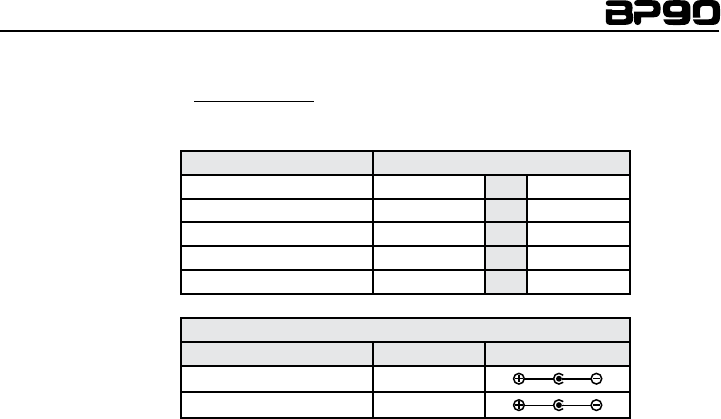
Country (Voltage) CompatiblePSUModel
Japan (100 VAC, 50/60 Hz): PS200R-100* or PS0913DC-01*
US and Canada (120 VAC, 60 Hz): PS200R-120* or PS0913DC-01*
Europe (230 VAC, 50 Hz): PS200R-230* or PS0913DC-01*
UK (240 VAC, 50 Hz): PS200R-240* or PS0913DC-02*
Australia (240 VAC, 50 Hz): PS200R-240-AU* or PS0913DC-02*
PowerSupplySpecs
Model Output Polarity
PS200R: 9 VDC 300 mA
PS0913DC: 9 VDC 1.3 A
37
Tone Library
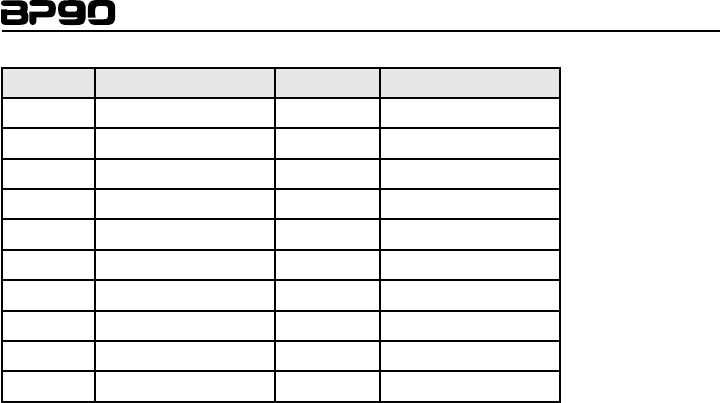
Display Name Display Name
1Rock 1 11 Fingerstyle
2Rock 2 12 Pick Style
3Slap 1 13 Groove
4Slap 2 14 Solo Bass
5Funk 15 Honky
6Clean 16 Sustain
7Drive 17 Grind
8Warm 18 Smooth
9Bright 19 Motown
10 Heavy 20 Vintage
38
Effects Library
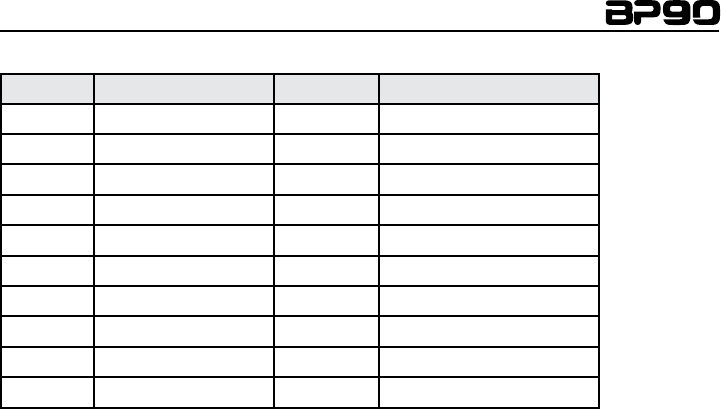
Display Name Display Name
1Chorus 11 Tape Delay
2Flanger 12 Hall Reverb
3Phaser 13 Room Reverb
4Pitch 14 Studio Reverb
5Fretless 15 Chorus + Digital Delay
6Octaver 16 Chorus + Hall Reverb
7Envelope Filter 17 Chorus + Delay + Reverb
8Digital Delay 18 Flanger + Analog Delay
9Analog Delay 19 Phaser + Tape Delay
10 Pong Delay 20 Vibrato + Analog Delay

39

40


DigiTech®
8760 South Sandy Parkway
Sandy, Utah 84070
PH (801) 566-8800
FAX (801) 566-7005
http://www.digitech.com
Printed in China
BP90 Owner’s Manual 5014596-A
©2012 HARMAN, all rights reserved.
Disclaimer: DigiTech, DigiTech Whammy, and AudioDNA2 are trademarks of HARMAN in
the U.S. and other countries. Ampeg SVT, Ashdown Bass Magnifier, Fender Bassman, Sunn
200S, SWR Interstellar Overdrive, Trace-Elliot Commando, Ampeg B15, Hiwatt Custom
50, Mesa/Boogie 400+, SWR Basic Black, Fender Dual Showman, Vox Clyde McCoy Wah,
Guyatone OD-1, Voodoo Labs Sparkledrive, Boss DS-1, and Electro-Harmonix Big Muff are
products of DigiTech’s competitors and trademarks of their respective companies in the
U.S. and other countries and are not associated or affiliated with DigiTech or HARMAN.
