Microsoft CA 2014 Lecture02 MIPS Instructionsx 1 Instructions
User Manual:
Open the PDF directly: View PDF  .
.
Page Count: 18

Lecture 2
MIPS Instructions
Byung-gi Kim
School of Computer Science and Engineering
Soongsil University

2. Instruction: Language of the Computer
(3rd edition)
2.1 Introduction
2.2 Operations of the Computer Hardware
2.3 Operands of the Computer Hardware
2.4 Representing Instructions in the Computer
2.5 Logical Operations
2.6 Instructions for Making Decisions
2.7 Supporting Procedures in Computer Hardware
2.8 Communicating with People
2.9 MIPS Addressing for 32-Bit Immediates and Addresses
2.19 Historical Perspective and Further Reading
Computer Architecture 2-1

2.1 Introduction
Instructions
The words of a machine's language
A single operation of a processor defined by an instruction set
architecture
Opcode + operand specifiers
Instruction set
The vocabulary of the language
Set of all instructions that a computer understands
RISC vs. CISC
Reduced Instruction Set Computer
Complex Instruction Set Computer
Computer Architecture 2-2

Common Goal of the Computer Designers
To find a language that makes it easy to build thehardwareand
the compiler, while maximizing performance and minimizing cost.
“Simplicity of the equipment”
KISS (Keep it short and simple or Keep it simple, stupid) principle
MIPS (Microprocessor without Interlocked Pipeline Stages)
MIPS Technologies, Inc.
1984: MIPS Computer Systems, Inc.
1992: SGI acquires MIPS Computer Systems -> MIPS Technologies, Inc.
1998: SGI decided to migrate to the Itanium architecture
-> spun out as an intellectual property licensing company
2000: SGI가 완전히 손을 뗌
Computer Architecture 2-3
Some of MIPS Processors
Computer Architecture 2-4
Instruction set Year Model Clock Cache Transistors
MIPS I 1987 R2000 16 MHz External (4K+4K ~ 32K+32K) 0.115 M
1990 R3000 33 MHz External (4K+4K ~ 64K+64K) 0.120 M
MIPS III
1991 R4000 100 MHz 8K + 8K 1.35 M
1993 R4400 150 MHz 16K + 16K 2.3 M
R4600 100 MHz 16K + 16K 1.9 M
1995 VR4300 133 MHz 16K + 8K 1.7 M
MIPS IV
1996 R5000 200 MHz 32K + 32K 3.9 M
R10000 200 MHz 32K + 32K 6.8 M
1999 R12000 300 MHz 32K + 32K 7.2 M
2002 R14000 600 MHz 32K + 32K 7.2 M
2.2 Operations of the Computer
Hardware
MIPS arithmetic instructions
add a,b,c # a = b + c
sub a,b,c # a = b - c
Example: f=(g+h)-(i+j);
add t0,g,h # t0 = g + h
add t1,i,j # t1 = i + j
sub f,t0,t1 # f = to - t1 = (g+h)-(i+j)
Computer Architecture 2-5
Design Principle 1 : Simplicity favors regularity.
Always three operands
Keeping the hardware simple
2.3 Operands of the Computer Hardware
Arithmetic instruction’s operands must be registers
Only 32 registers provided
Compiler associates variables with registers
What about programs with lots of variables
Processor I/O
Control
Datapath
Memory
Input
Output
Computer Architecture 2-6
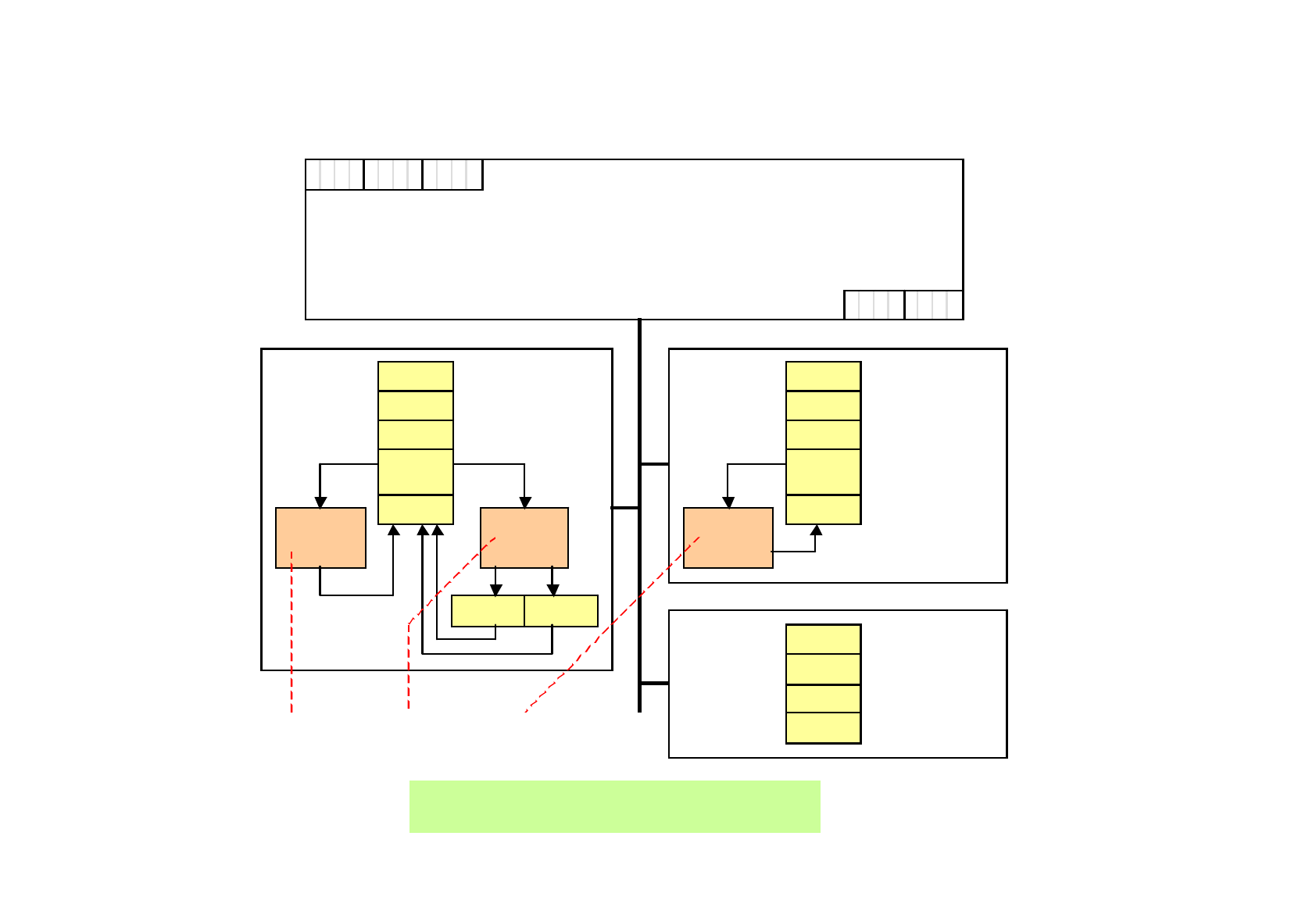
Memory and Processing Subsystems
Computer Architecture 2-7
Memory
up to 2 words
30
Loc 0 Loc 4 Loc 8
Loc
m 4
Loc
m 8
4 B / location
m 2
32
$0
$1
$2
$31
Hi Lo
ALU
$0
$1
$2
$31
FP
arith
EPC
Cause
BadVaddr
Status
EIU FPU
TMU
Execution
& integer
unit
Floating-
point unit
Trap &
memory
unit
. . .
. . .
(Coproc. 1)
(Coproc. 0)
(Main proc.)
Integer
mul/div
Chapter
10 Chapter
11 Chapter
12
Figure 5.1 of Parhami
32 registers
Variables
$s0, $s1, $s2, … $s7
Temporary registers
$t0, $t1, $t2, … $t9
Computer Architecture 2-8
Design Principle 2 : Smaller is faster.
A very large number of registers
Convenient for the programmers
But, longer distance to travel for the electronic signals
Increased clock cycle time
MIPS Registers: Figure 2.18

Example: f=(g+h)-(i+j);
int f, g, h, i, j;
f, g, h, i, j $s0, $s1, $s2, $s3, $s4
[Answer]
add $t0, $s1, $s2
add $t1, $s3, $s4
sub $s0, $t0, $t1
Computer Architecture 2-9

Memory Operands
Arrays and structures
Too many data elements
Stored in memory, not in registers
Data transfer instructions
load: lw (load word) in MIPS
store: sw (store word) in MIPS
Example: g = h + A[8];
base address of A $s3
int g, h, A[100];
[Answer]
lw $t0, 8($s3) # $t0 gets A[8] (actually wrong!)
add $s1, $s2, $t0 # g = h + A[8]
Computer Architecture 2-10
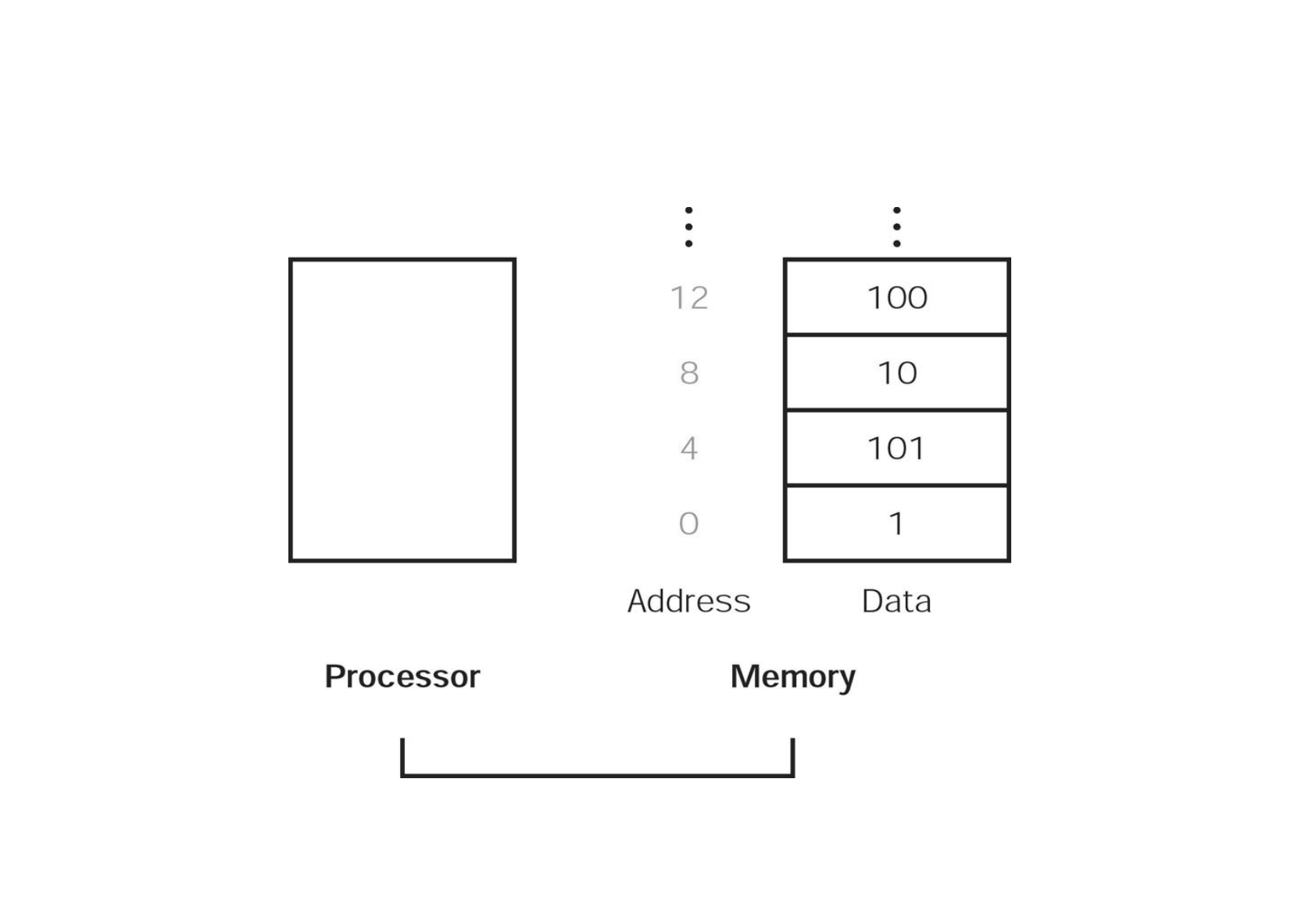
Actual MIPS Memory Structure
Figure 2.3
Computer Architecture 2-11
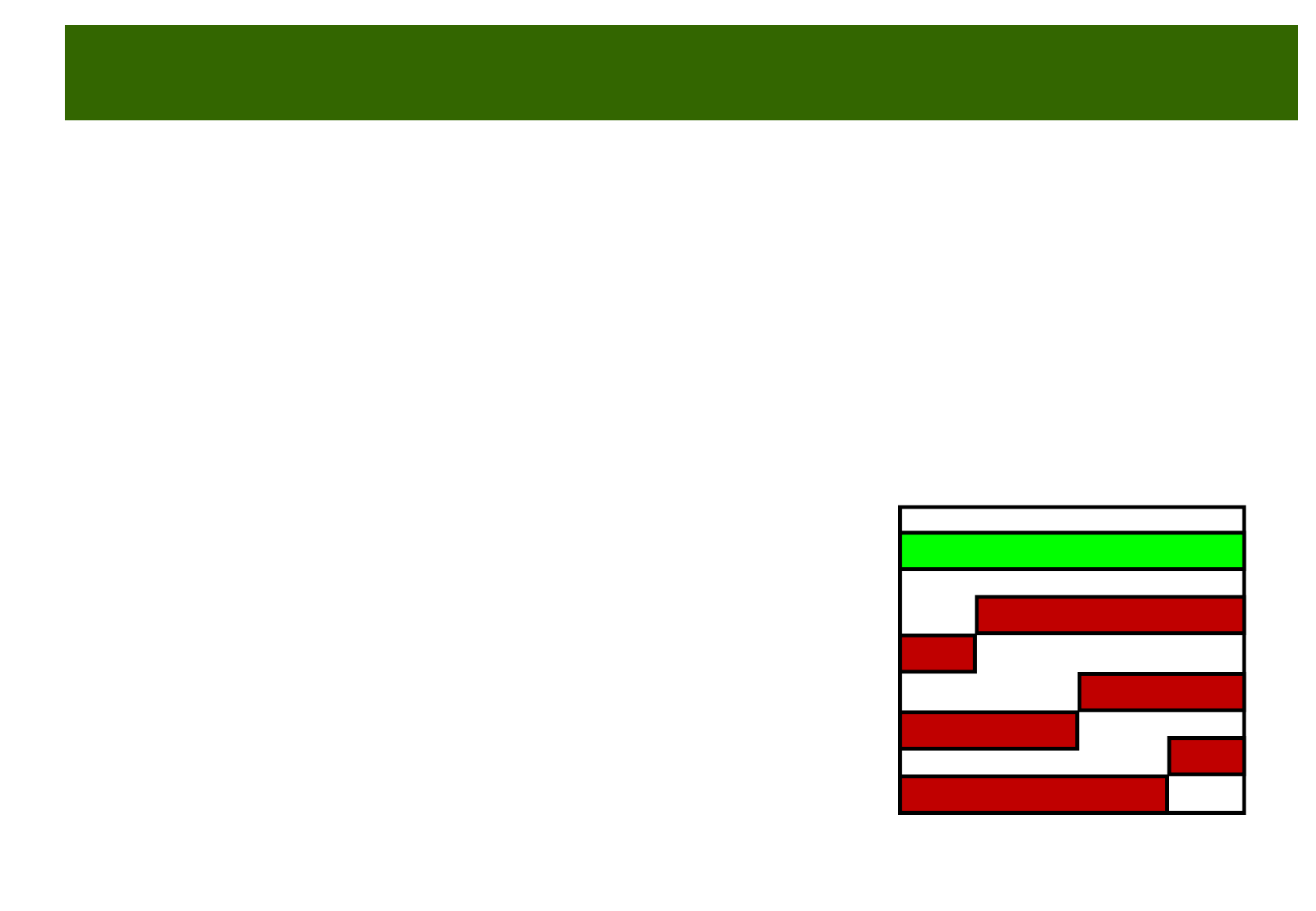
Byte addressing
Hardware architectures which support accessing individual bytes of data
rather than only words
Word addressing
Alignment restriction (aka memory alignment)
Putting the data at a memory
address equal to some multiple
of the data size
Increasing the system's
performance due to the way
the CPU handles memory
Hardware/Software Interface (1/2)
Computer Architecture 2-12
0 1 2 3
Aligned
Not
Aligned
Endianness
From Gulliver’s Travels by Jonathan Swift
Little endian
Using the address of the rightmost (or “little end”) byte as the word
address
Intel IA-32, DEC PDP 11, VAX-11, Alpha, Atmel AVR
Big endian
Using the address of the leftmost (or “big end”) byte as the word
address
MIPS, IBM S/360 and S/370, Motorola 680x0, SPARC, PA-RISC
Bi-endian
ARM, IA-64, PowerPC, Alpha, SPARC V9, MIPS, PA-RISC
Hardware/Software Interface (2/2)
Computer Architecture 2-13
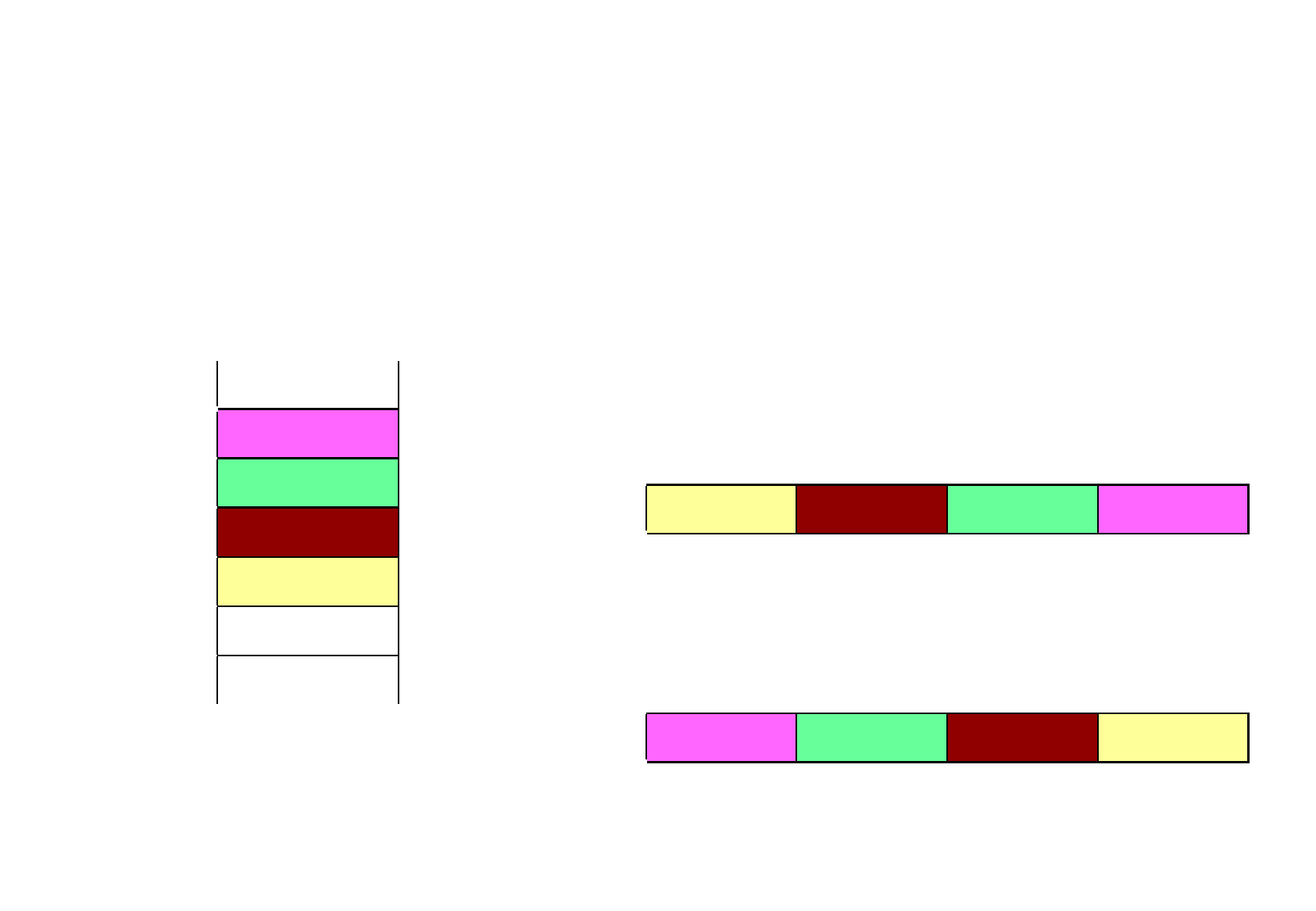
Endianness and Load
Load $s1 from M[200]
lw $s1,200($zero)
Little endian
199
200 81
201 C5
202 3B
203 02
204
205 Big endian
$s1 02 3B C5 81
$s1 81 C5 3B 02
Computer Architecture 2-14
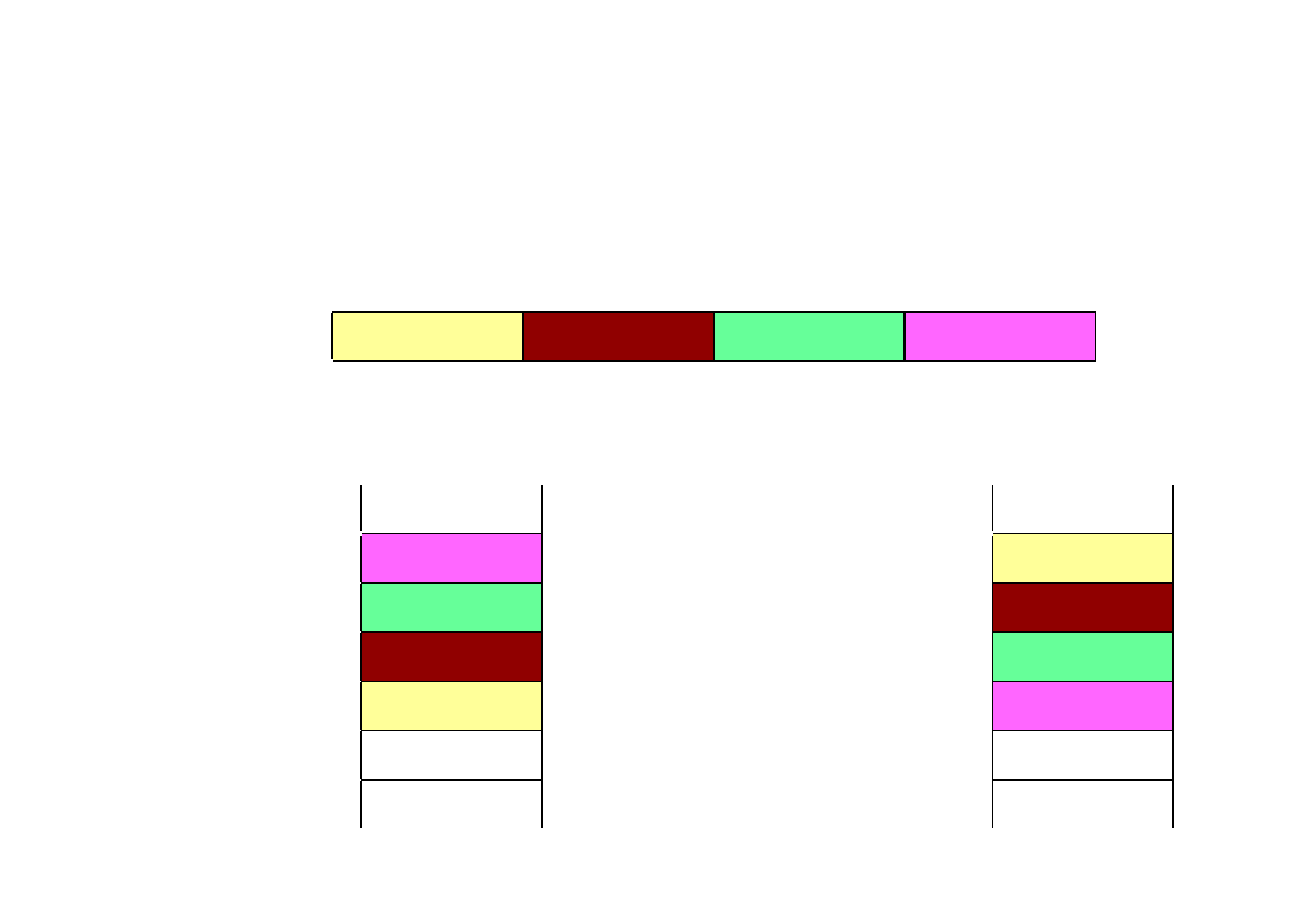
Endianness and Store
Store $s2 into M[100]
sw $s2,100($zero)
$s2 0000 0010 0011 1011 1100 0101 1000 0001
Little endian
99
100 1000 0001
101 1100 0101
102 0011 1011
103 0000 0010
104
105
99
100 0000 0010
101 0011 1011
102 1100 0101
103 1000 0001
104
105
Big endian
Computer Architecture 2-15
Example: A[12] = h + A[8];
base address of A$s3
h$s2
[Answer]
lw $t0,32($s3) # Temporary reg. $t0 gets A[8]
add $t0,$s2,$t0 # Temporary reg. $t0 gets h+A[8]
sw $t0,48($s3) # Stores h+A[8] back into A[12]
Register spilling
Hardware/Software Interface
Computer Architecture 2-16
Constant or Immediate Operands
Constant operands
More than half of the SPEC2000 operands
Adding 4 to $s3 without constant operand
lw $t0,AddrConstant4($s1) # $t0=constant 4
add $s3,$s3,$t0 # $s3=$s3+$t0 ($t0=4)
Faster version
addi(add immediate) instruction
addi $s3,$s3,4 # $s3=$s3+4
Computer Architecture 2-17
Design Principle 3 : Make the common case fast.
Constant operands are frequently used.
Arithmetic operations with constant operands.
