AArch64_ISA_interim_v15_00 ARM.Reference Manual
ARM.Reference_Manual_0
ARM.Reference_Manual
User Manual:
Open the PDF directly: View PDF  .
.
Page Count: 112 [warning: Documents this large are best viewed by clicking the View PDF Link!]
ARMv8 Instruction Set Overview
PRD03-GENC-010197 Copyright © 2009-2011 ARM Limited. All rights reserved. Page 1 of 112
ARMv8 Instruction Set Overview
Architecture Group
Document number: PRD03-GENC-010197 15.0
Date of Issue: 11 November 2011
© Copyright ARM Limited 2009-2011. All rights reserved.
Abstract
This document provides a high-level overview of the ARMv8 instructions sets, being mainly the new A64
instruction set used in AArch64 state but also those new instructions added to the A32 and T32 instruction sets
since ARMv7-A for use in AArch32 state. For A64 this document specifies the preferred architectural assembly
language notation to represent the new instruction set.
Keywords
AArch64, A64, AArch32, A32, T32, ARMv8

ARMv8 Instruction Set Overview
PRD03-GENC-010197 Copyright © 2009-2011 ARM Limited. All rights reserved. Page 2 of 112
Proprietary Notice
This specification is protected by copyright and the practice or implementation of the information herein may be
protected by one or more patents or pending applications. No part of this specification may be reproduced in any
form by any means without the express prior written permission of ARM. No license, express or implied, by
estoppel or otherwise to any intellectual property rights is granted by this specification.
Your access to the information in this specification is conditional upon your acceptance that you will not use or
permit others to use the information for the purposes of determining whether implementations of the ARM
architecture infringe any third party patents.
This specification is provided “as is”. ARM makes no representations or warranties, either express or implied,
included but not limited to, warranties of merchantability, fitness for a particular purpose, or non-infringement, that
the content of this specification is suitable for any particular purpose or that any practice or implementation of the
contents of the specification will not infringe any third party patents, copyrights, trade secrets, or other rights.
This specification may include technical inaccuracies or typographical errors.
To the extent not prohibited by law, in no event will ARM be liable for any damages, including without limitation
any direct loss, lost revenue, lost profits or data, special, indirect, consequential, incidental or punitive damages,
however caused and regardless of the theory of liability, arising out of or related to any furnishing, practicing,
modifying or any use of this specification, even if ARM has been advised of the possibility of such damages.
Words and logos marked with ® or TM are registered trademarks or trademarks of ARM Limited, except as
otherwise stated below in this proprietary notice. Other brands and names mentioned herein may be the
trademarks of their respective owners.
Copyright © 2009-2011 ARM Limited
110 Fulbourn Road, Cambridge, England CB1 9NJ
Restricted Rights Legend: Use, duplication or disclosure by the United States Government is subject to the
restrictions set forth in DFARS 252.227-7013 (c)(1)(ii) and FAR 52.227-19.
This document is Non-Confidential but any disclosure by you is subject to you providing notice to and the
acceptance by the recipient of, the conditions set out above.
In this document, where the term ARM is used to refer to the company it means “ARM or any of its subsidiaries as
appropriate”.

ARMv8 Instruction Set Overview
PRD03-GENC-010197 Copyright © 2009-2011 ARM Limited. All rights reserved. Page 3 of 112
Contents
1 ABOUT THIS DOCUMENT 6
1.1 Change control 6
1.1.1 Current status and anticipated changes 6
1.1.2 Change history 6
1.2 References 6
1.3 Terms and abbreviations 7
2 INTRODUCTION 8
3 A64 OVERVIEW 8
3.1 Distinguishing 32-bit and 64-bit Instructions 10
3.2 Conditional Instructions 10
3.3 Addressing Features 11
3.3.1 Register Indexed Addressing 11
3.3.2 PC-relative Addressing 11
3.4 The Program Counter (PC) 11
3.5 Memory Load-Store 11
3.5.1 Bulk Transfers 11
3.5.2 Exclusive Accesses 12
3.5.3 Load-Acquire, Store-Release 12
3.6 Integer Multiply/Divide 12
3.7 Floating Point 12
3.8 Advanced SIMD 13
4 A64 ASSEMBLY LANGUAGE 14
4.1 Basic Structure 14
4.2 Instruction Mnemonics 14
4.3 Condition Codes 15
4.4 Register Names 17
4.4.1 General purpose (integer) registers 17
4.4.2 FP/SIMD registers 18
4.5 Load/Store Addressing Modes 20
5 A64 INSTRUCTION SET 21

ARMv8 Instruction Set Overview
PRD03-GENC-010197 Copyright © 2009-2011 ARM Limited. All rights reserved. Page 4 of 112
5.1 Control Flow 22
5.1.1 Conditional Branch 22
5.1.2 Unconditional Branch (immediate) 22
5.1.3 Unconditional Branch (register) 22
5.2 Memory Access 23
5.2.1 Load-Store Single Register 23
5.2.2 Load-Store Single Register (unscaled offset) 24
5.2.3 Load Single Register (pc-relative, literal load) 25
5.2.4 Load-Store Pair 25
5.2.5 Load-Store Non-temporal Pair 26
5.2.6 Load-Store Unprivileged 27
5.2.7 Load-Store Exclusive 28
5.2.8 Load-Acquire / Store-Release 29
5.2.9 Prefetch Memory 31
5.3 Data Processing (immediate) 32
5.3.1 Arithmetic (immediate) 32
5.3.2 Logical (immediate) 33
5.3.3 Move (wide immediate) 34
5.3.4 Address Generation 35
5.3.5 Bitfield Operations 35
5.3.6 Extract (immediate) 37
5.3.7 Shift (immediate) 37
5.3.8 Sign/Zero Extend 37
5.4 Data Processing (register) 37
5.4.1 Arithmetic (shifted register) 38
5.4.2 Arithmetic (extending register) 39
5.4.3 Logical (shifted register) 40
5.4.4 Variable Shift 42
5.4.5 Bit Operations 43
5.4.6 Conditional Data Processing 43
5.4.7 Conditional Comparison 45
5.5 Integer Multiply / Divide 46
5.5.1 Multiply 46
5.5.2 Divide 47
5.6 Scalar Floating-point 48
5.6.1 Floating-point/SIMD Scalar Memory Access 48
5.6.2 Floating-point Move (register) 51
5.6.3 Floating-point Move (immediate) 51
5.6.4 Floating-point Convert 51
5.6.5 Floating-point Round to Integral 56
5.6.6 Floating-point Arithmetic (1 source) 57
5.6.7 Floating-point Arithmetic (2 source) 57
5.6.8 Floating-point Min/Max 58
5.6.9 Floating-point Multiply-Add 58
5.6.10 Floating-point Comparison 59
5.6.11 Floating-point Conditional Select 59
5.7 Advanced SIMD 60
5.7.1 Overview 60
5.7.2 Advanced SIMD Mnemonics 61
5.7.3 Data Movement 61

ARMv8 Instruction Set Overview
PRD03-GENC-010197 Copyright © 2009-2011 ARM Limited. All rights reserved. Page 5 of 112
5.7.4 Vector Arithmetic 62
5.7.5 Scalar Arithmetic 67
5.7.6 Vector Widening/Narrowing Arithmetic 70
5.7.7 Scalar Widening/Narrowing Arithmetic 73
5.7.8 Vector Unary Arithmetic 73
5.7.9 Scalar Unary Arithmetic 75
5.7.10 Vector-by-element Arithmetic 76
5.7.11 Scalar-by-element Arithmetic 78
5.7.12 Vector Permute 78
5.7.13 Vector Immediate 79
5.7.14 Vector Shift (immediate) 80
5.7.15 Scalar Shift (immediate) 82
5.7.16 Vector Floating Point / Integer Convert 84
5.7.17 Scalar Floating Point / Integer Convert 84
5.7.18 Vector Reduce (across lanes) 85
5.7.19 Vector Pairwise Arithmetic 86
5.7.20 Scalar Reduce (pairwise) 86
5.7.21 Vector Table Lookup 87
5.7.22 Vector Load-Store Structure 88
5.7.23 AArch32 Equivalent Advanced SIMD Mnemonics 91
5.7.24 Crypto Extension 99
5.8 System Instructions 100
5.8.1 Exception Generation and Return 100
5.8.2 System Register Access 101
5.8.3 System Management 101
5.8.4 Architectural Hints 104
5.8.5 Barriers and CLREX 104
6 A32 & T32 INSTRUCTION SETS 106
6.1 Partial Deprecation of IT 106
6.2 Load-Acquire / Store-Release 106
6.2.1 Non-Exclusive 106
6.2.2 Exclusive 107
6.3 VFP Scalar Floating-point 108
6.3.1 Floating-point Conditional Select 108
6.3.2 Floating-point minNum/maxNum 108
6.3.3 Floating-point Convert (floating-point to integer) 108
6.3.4 Floating-point Convert (half-precision to/from double-precision) 109
6.3.5 Floating-point Round to Integral 109
6.4 Advanced SIMD Floating-Point 110
6.4.1 Floating-point minNum/maxNum 110
6.4.2 Floating-point Convert 110
6.4.3 Floating-point Round to Integral 110
6.5 Crypto Extension 111
6.6 System Instructions 112
6.6.1 Halting Debug 112
6.6.2 Barriers and Hints 112

ARMv8 Instruction Set Overview
PRD03-GENC-010197 Copyright © 2009-2011 ARM Limited. All rights reserved. Page 6 of 112
1 ABOUT THIS DOCUMENT
1.1 Change control
1.1.1 Current status and anticipated changes
This document is a beta release specification and further changes to correct defects and improve clarity should be
expected.
1.1.2 Change history
Issue Date By Change
NJS Previous releases tracked in Domino
7.0 17th December 2010 NJS Beta0 release
8.0 25th February 2011 NJS Beta0 update 1
9.0 20th April 2011 NJS Beta1 release
10.0 14th July 2011 NJS Beta2 release
11.0 9th September 2011 NJS Beta2 update 1
12.0 28th September 2011 NJS Beta3 release
13.0 28th October 2011 NJS Beta3 update 1
14.0 28th October 2011 NJS Restructured and incorporated new AArch32 instructions.
15.0 11th November 2011 NJS First non-confidential release. Describe partial deprecation of the
IT instruction. Rename DRET to DRPS and clarify its behavior.
1.2 References
This document refers to the following documents.
Referenc
e Author Document number Title
[v7A] ARM ARM DDI 0406 ARM® Architecture Reference Manual, ARMv7-A and ARMv7-R
edition
[AES] NIST FIPS 197 Announcing the Advanced Encryption Standard (AES)
[SHA] NIST FIPS 180-2 Announcing the Secure Hash Standard (SHA)
[GCM] McGrew and
Viega n/a The Galois/Counter Mode of Operation (GCM)

ARMv8 Instruction Set Overview
PRD03-GENC-010197 Copyright © 2009-2011 ARM Limited. All rights reserved. Page 7 of 112
1.3 Terms and abbreviations
This document uses the following terms and abbreviations.
Term Meaning
AArch64 The 64-bit general purpose register width state of the ARMv8 architecture.
AArch32 The 32-bit general purpose register width state of the ARMv8 architecture, broadly
compatible with the ARMv7-A architecture.
Note: The register width state can change only upon a change of exception level.
A64 The new instruction set available when in AArch64 state, and described in this
document.
A32 The instruction set named ARM in the ARMv7 architecture, which uses 32-bit
instructions. The new A32 instructions added by ARMv8 are described in §6.
T32 The instruction set named Thumb in the ARMv7 architecture, which uses 16-bit
and 32-bit instructions. The new T32 instructions added by ARMv8 are described
in §6.
UNALLOCATED Describes an opcode or combination of opcode fields which do not select a valid
instruction at the current privilege level. Executing an UNALLOCATED encoding will
usually result in taking an Undefined Instruction exception.
RESERVED Describes an instruction field value within an otherwise allocated instruction which
should not be used within this specific instruction context, for example a value
which selects an unsupported data type or addressing mode. An instruction
encoding which contains a RESERVED field value is an UNALLOCATED encoding.

ARMv8 Instruction Set Overview
PRD03-GENC-010197 Copyright © 2009-2011 ARM Limited. All rights reserved. Page 8 of 112
2 INTRODUCTION
This document provides an overview of the ARMv8 instruction sets. Most of the document forms a description of
the new A64 instruction set used when the processor is operating in AArch64 register width state, and defines its
preferred architectural assembly language.
Section 6 below lists the extensions introduced by ARMv8 to the A32 and T32 instruction sets – known in ARMv7
as the ARM and Thumb instruction sets respectively – which are available when the processor is operating in
AArch32 register width state. The A32 and T32 assembly language syntax is unchanged from ARMv7.
In the syntax descriptions below the following conventions are used:
UPPER UPPER-CASE text is fixed, while lower-case text is variable. So register name Xn indicates that the `X’
is required, followed by a variable register number, e.g. X29.
< > Any item bracketed by < and > is a short description of a type of value to be supplied by the user in that
position. A longer description of the item is normally supplied by subsequent text.
{ } Any item bracketed by curly braces { and } is optional. A description of the item and of how its presence
or absence affects the instruction is normally supplied by subsequent text. In some cases curly braces
are actual symbols in the syntax, for example surrounding a register list, and such cases will be called
out in the surrounding text.
[ ] A list of alternative characters may be bracketed by [ and ]. A single one of the characters can be used
in that position and the the subsequent text will describe the meaning of the alternatives. In some cases
the symbols [ and ] are part of the syntax itself, such as addressing modes and vector elements, and
such cases will be called out in the surrounding text.
a | b Alternative words are separated by a vertical bar | and may be surrounded by parentheses to delimit
them, e.g. U(ADD|SUB)W represents UADDW or USUBW.
+/- This indicates an optional + or - sign. If neither is coded, then + is assumed.
3 A64 OVERVIEW
The A64 instruction set provides similar functionality to the A32 and T32 instruction sets in AArch32 or ARMv7.
However just as the addition of 32-bit instructions to the T32 instruction set rationalized some of the ARM ISA
behaviors, the A64 instruction set includes further rationalizations. The highlights of the new instruction set are as
follows:
• A clean, fixed length instruction set – instructions are 32 bits wide, register fields are contiguous bit fields
at fixed positions, immediate values mostly occupy contiguous bit fields.
• Access to a larger general-purpose register file with 31 unbanked registers (0-30), with each register
extended to 64 bits. General registers are encoded as 5-bit fields with register number 31 (0b11111)
being a special case representing:
• Zero Register: in most cases register number 31 reads as zero when used as a source register, and
discards the result when used as a destination register.
• Stack Pointer: when used as a load/store base register, and in a small selection of arithmetic
instructions, register number 31 provides access to the current stack pointer.
• The PC is never accessible as a named register. Its use is implicit in certain instructions such as PC-
relative load and address generation. The only instructions which cause a non-sequential change to the
PC are the designated Control Flow instructions (see §5.1) and exceptions. The PC cannot be specified
as the destination of a data processing instruction or load instruction.

ARMv8 Instruction Set Overview
PRD03-GENC-010197 Copyright © 2009-2011 ARM Limited. All rights reserved. Page 9 of 112
• The procedure call link register (LR) is unbanked, general-purpose register 30; exceptions save the restart
PC to the target exception level’s ELR system register.
• Scalar load/store addressing modes are uniform across all sizes and signedness of scalar integer, floating
point and vector registers.
• A load/store immediate offset may be scaled by the access size, increasing its effective offset range.
• A load/store index register may contain a 64-bit or 32-bit signed/unsigned value, optionally scaled by the
access size.
• Arithmetic instructions for address generation which mirror the load/store addressing modes, see §3.3.
• PC-relative load/store and address generation with a range of ±4GiB is possible using just two instructions
without the need to load an offset from a literal pool.
• PC-relative offsets for literal pool access and most conditional branches are extended to ±1MiB, and for
unconditional branches and calls to ±128MiB.
• There are no multiple register LDM, STM, PUSH and POP instructions, but load-store of a non-contiguous
pair of registers is available.
• Unaligned addresses are permitted for most loads and stores, including paired register accesses, floating
point and SIMD registers, with the exception of exclusive and ordered accesses (see §3.5.2).
• Reduced conditionality. Fewer instructions can set the condition flags. Only conditional branches, and a
handful of data processing instructions read the condition flags. Conditional or predicated execution is not
provided, and there is no equivalent of T32’s IT instruction (see §3.2).
• A shift option for the final register operand of data processing instructions is available:
o Immediate shifts only (as in T32).
o No RRX shift, and no ROR shift for ADD/SUB.
o The ADD/SUB/CMP instructions can first sign or zero-extend a byte, halfword or word in the final
register operand, followed by an optional left shift of 1 to 4 bits.
• Immediate generation replaces A32’s rotated 8-bit immediate with operation-specific encodings:
o Arithmetic instructions have a simple 12-bit immediate, with an optional left shift by 12.
o Logical instructions provide sophisticated replicating bit mask generation.
o Other immediates may be constructed inline in 16-bit “chunks”, extending upon the MOVW and
MOVT instructions of AArch32.
• Floating point support is similar to AArch32 VFP but with some extensions, as described in §3.6.
• Floating point and Advanced SIMD processing share a register file, in a similar manner to AArch32, but
extended to thirty-two 128-bit registers. Smaller registers are no longer packed into larger registers, but
are mapped one-to-one to the low-order bits of the 128-bit register, as described in §4.4.2.
• There are no SIMD or saturating arithmetic instructions which operate on the general purpose registers,
such operations being available only as part of the Advanced SIMD processing, described in §5.7.
• There is no access to CPSR as a single register, but new system instructions provide the ability to
atomically modify individual processor state fields, see §5.8.2.
• The concept of a “coprocessor” is removed from the architecture. A set of system instructions described in
§5.8 provides:
o System register access
o Cache/TLB management
o VA PA translation
o Barriers and CLREX
o Architectural hints (WFI, etc)
o Debug

ARMv8 Instruction Set Overview
PRD03-GENC-010197 Copyright © 2009-2011 ARM Limited. All rights reserved. Page 10 of 112
3.1 Distinguishing 32-bit and 64-bit Instructions
Most integer instructions in the A64 instruction set have two forms, which operate on either 32-bit or 64-bit values
within the 64-bit general-purpose register file. Where a 32-bit instruction form is selected, the following holds true:
• The upper 32 bits of the source registers are ignored;
• The upper 32 bits of the destination register are set to ZERO;
• Right shifts/rotates inject at bit 31, instead of bit 63;
• The condition flags, where set by the instruction, are computed from the lower 32 bits.
This distinction applies even when the result(s) of a 32-bit instruction form would be indistinguishable from the
lower 32 bits computed by the equivalent 64-bit instruction form. For example a 32-bit bitwise ORR could be
performed using a 64-bit ORR, and simply ignoring the top 32 bits of the result. But the A64 instruction set includes
separate 32 and 64-bit forms of the ORR instruction.
Rationale: The C/C++ LP64 and LLP64 data models – expected to be the most commonly used on AArch64 –
both define the frequently used int, short and char types to be 32 bits or less. By maintaining this semantic
information in the instruction set, implementations can exploit this information to avoid expending energy or cycles
to compute, forward and store the unused upper 32 bits of such data types. Implementations are free to exploit
this freedom in whatever way they choose to save energy.
As well as distinct sign/zero-extend instructions, the A64 instruction set also provides the ability to extend and shift
the final source register of an ADD, SUB or CMP instruction and the index register of a load/store instruction. This
allows for an efficient implementation of array index calculations involving a 64-bit array pointer and 32-bit array
index.
The assembly language notation is designed to allow the identification of registers holding 32-bit values as distinct
from those holding 64-bit values. As well as aiding readability, tools may be able to use this to perform limited type
checking, to identify programming errors resulting from the change in register size.
3.2 Conditional Instructions
The A64 instruction set does not include the concept of predicated or conditional execution. Benchmarking shows
that modern branch predictors work well enough that predicated execution of instructions does not offer sufficient
benefit to justify its significant use of opcode space, and its implementation cost in advanced implementations.
A very small set of “conditional data processing” instructions are provided. These instructions are unconditionally
executed but use the condition flags as an extra input to the instruction. This set has been shown to be beneficial
in situations where conditional branches predict poorly, or are otherwise inefficient.
The conditional instruction types are:
• Conditional branch: the traditional ARM conditional branch, together with compare and branch if register
zero/non-zero, and test single bit in register and branch if zero/non-zero – all with increased displacement.
• Add/subtract with carry: the traditional ARM instructions, for multi-precision arithmetic, checksums, etc.
• Conditional select with increment, negate or invert: conditionally select between one source register and a
second incremented/negated/inverted/unmodified source register. Benchmarking reveals these to be the
highest frequency uses of single conditional instructions, e.g. for counting, absolute value, etc. These
instructions also implement:
o Conditional select (move): sets the destination to one of two source registers, selected by the
condition flags. Short conditional sequences can be replaced by unconditional instructions
followed by a conditional select.
o Conditional set: conditionally select between 0 and 1 or -1, for example to materialize the
condition flags as a Boolean value or mask in a general register.
• Conditional compare: sets the condition flags to the result of a comparison if the original condition was
true, else to an immediate value. Permits the flattening of nested conditional expressions without using
conditional branches or performing Boolean arithmetic within general registers.

ARMv8 Instruction Set Overview
PRD03-GENC-010197 Copyright © 2009-2011 ARM Limited. All rights reserved. Page 11 of 112
3.3 Addressing Features
The prime motivation for a 64-bit architecture is access to a larger virtual address space. The AArch64 memory
translation system supports a 49-bit virtual address (48 bits per translation table). Virtual addresses are sign-
extended from 49 bits, and stored within a 64-bit pointer. Optionally, under control of a system register, the most
significant 8 bits of a 64-bit pointer may hold a “tag” which will be ignored when used as a load/store address or
the target of an indirect branch.
3.3.1 Register Indexed Addressing
The A64 instruction set extends on 32-bit T32 addressing modes, allowing a 64-bit index register to be added to
the 64-bit base register, with optional scaling of the index by the access size. Additionally it provides for sign or
zero-extension of a 32-bit value within an index register, again with optional scaling.
These register index addressing modes provide a useful performance gain if they can be performed within a single
cycle, and it is believed that at least some implementations will be able to do this. However, based on
implementation experience with AArch32, it is expected that other implementations will need an additional cycle to
execute such addressing modes.
Rationale: The architects intend that implementations should be free to fine-tune the performance trade-offs
within each implementation, and note that providing an instruction which in some implementations takes two
cycles, is preferable to requiring the dynamic grouping of two independent instructions in an implementation that
can perform this address arithmetic in a single cycle.
3.3.2 PC-relative Addressing
There is improved support for position-independent code and data addressing:
• PC-relative literal loads have an offset range of ±1MiB. This permits fewer literal pools, and more sharing
of literal data between functions – reducing I-cache and TLB pollution.
• Most conditional branches have a range of ±1MiB, expected to be sufficient for the majority of conditional
branches which take place within a single function.
• Unconditional branches, including branch and link, have a range of ±128MiB. Expected to be sufficient to
span the static code segment of most executable load modules and shared objects, without needing
linker-inserted trampolines or “veneers”.
• PC-relative load/store and address generation with a range of ±4GiB may be performed inline using only
two instructions, i.e. without the need to load an offset from a literal pool.
3.4 The Program Counter (PC)
The current Program Counter (PC) cannot be referred to by number as if part of the general register file and
therefore cannot be used as the source or destination of arithmetic instructions, or as the base, index or transfer
register of load/store instructions. The only instructions which read the PC are those whose function is to compute
a PC-relative address (ADR, ADRP, literal load, and direct branches), and the branch-and-link instructions which
store it in the link register (BL and BLR). The only way to modify the Program Counter is using explicit control flow
instructions: conditional branch, unconditional branch, exception generation and exception return instructions.
Where the PC is read by an instruction to compute a PC-relative address, then its value is the address of the
instruction, i.e. unlike A32 and T32 there is no implied offset of 4 or 8 bytes.
3.5 Memory Load-Store
3.5.1 Bulk Transfers
The LDM, STM, PUSH and POP instructions do not exist in A64, however bulk transfers can be constructed
using the LDP and STP instructions which load and store a pair of independent registers from consecutive
memory locations, and which support unaligned addresses when accessing normal memory. The LDNP and
ARMv8 Instruction Set Overview
PRD03-GENC-010197 Copyright © 2009-2011 ARM Limited. All rights reserved. Page 12 of 112
STNP instructions additionally provide a “streaming” or ”non-temporal” hint that the data does not need to be
retained in caches. The PRFM (prefetch memory) instructions also include hints for “streaming” or “non-temporal”
accesses, and allow targeting of a prefetch to a specific cache level.
3.5.2 Exclusive Accesses
Exclusive load-store of a byte, halfword, word and doubleword. Exclusive access to a pair of doublewords permit
atomic updates of a pair of pointers, for example circular list inserts. All exclusive accesses must be naturally
aligned, and exclusive pair access must be aligned to twice the data size (i.e. 16 bytes for a 64-bit pair).
3.5.3 Load-Acquire, Store-Release
Explicitly synchronising load and store instructions implement the release-consistency (RCsc) memory model,
reducing the need for explicit memory barriers, and providing a good match to emerging language standards for
shared memory. The instructions exist in both exclusive and non-exclusive forms, and require natural address
alignment. See §5.2.8 for more details.
3.6 Integer Multiply/Divide
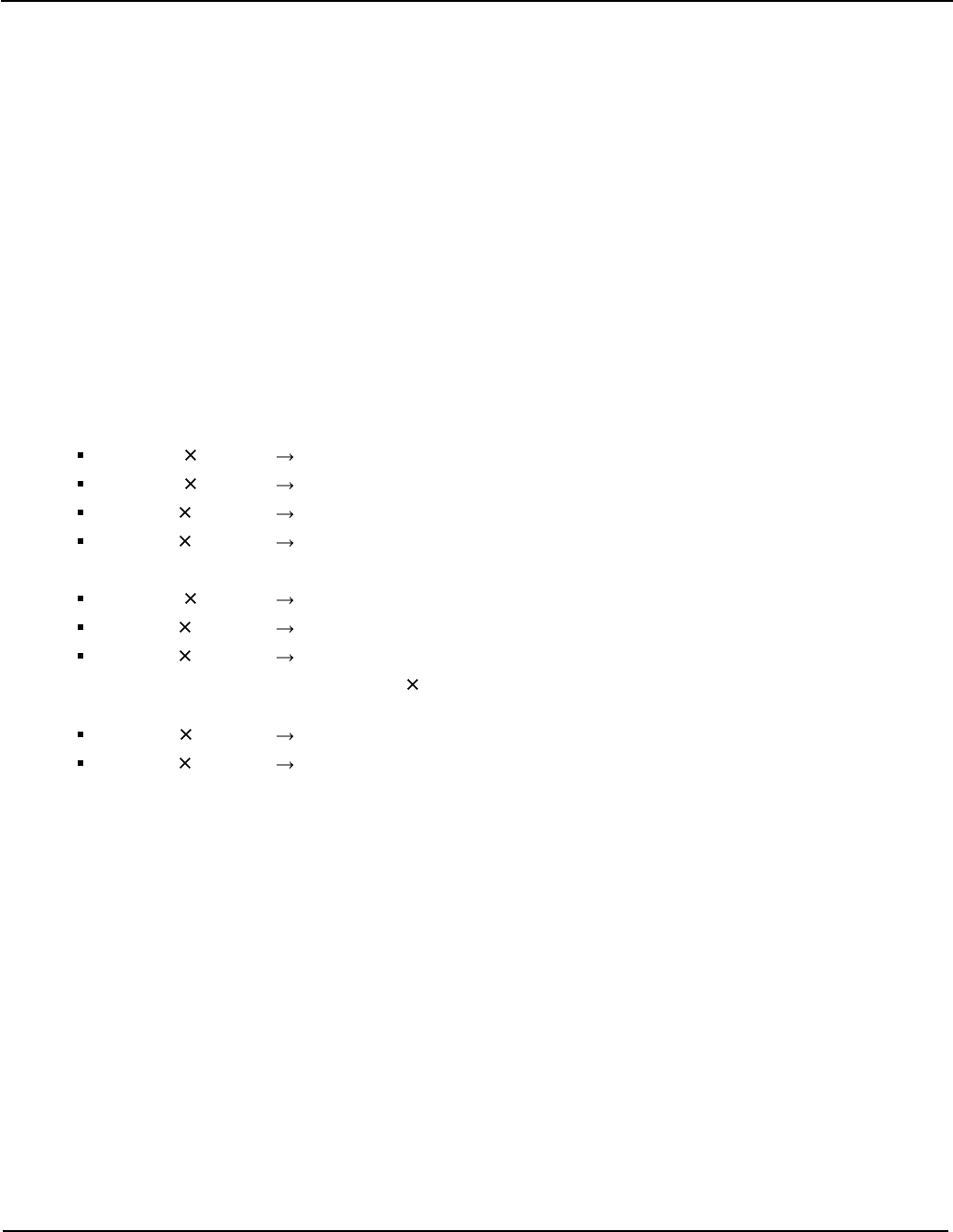
Including 32 and 64-bit multiply, with accumulation:
32 ± (32 32) 32
64 ± (64 64) 64
± (32 32) 32
± (64 64) 64
Widening multiply (signed and unsigned), with accumulation:
64 ± (32 32) 64
± (32 32) 64
(64 64) hi64 <127:64>
Multiply instructions write a single register. A 64 64 to 128-bit multiply requires a sequence of two instructions to
generate a pair of 64-bit result registers:
+ (64 64) <63:0>
(64 64) <127:64>
Signed and unsigned 32- and 64-bit divide are also provided. A remainder instruction is not provided, but a
remainder may be computed easily from the dividend, divisor and quotient using an MSUB instruction. There is no
hardware check for “divide by zero”, but this check can be performed in the shadow of a long latency division. A
divide by zero writes zero to the destination register.
3.7 Floating Point
AArch64 mandates hardware floating point wherever floating point arithmetic is required – there is no “soft-float”
variant of the AArch64 Procedure Calling Standard (PCS).
Floating point functionality is similar to AArch32 VFP, with the following changes:
• The deprecated “small vector” feature of VFP is removed.
• There are 32 S registers and 32 D registers. The S registers are not packed into D registers, but occupy
the low 32 bits of the corresponding D register. For example S31=D31<31:0>, not D15<63:32>.
• Load/store addressing modes identical to integer load/stores.
• Load/store of a pair of floating point registers.
• Floating point FCSEL and FCCMP equivalent to the integer CSEL and CCMP.

ARMv8 Instruction Set Overview
PRD03-GENC-010197 Copyright © 2009-2011 ARM Limited. All rights reserved. Page 13 of 112
• Floating point FCMP and FCCMP instructions set the integer condition flags directly, and do not modify the
condition flags in the FPSR.
• All floating-point multiply-add and multiply-subtract instructions are “fused”.
• Convert between 64-bit integer and floating point.
• Convert FP to integer with explicit rounding direction (towards zero, towards +Inf, towards -Inf, to nearest
with ties to even, and to nearest with ties away from zero).
• Round FP to nearest integral FP with explicit rounding direction (as above).
• Direct conversion between half-precision and double-precision.
• FMINNM & FMAXNM implementing the IEEE754-2008 minNum() and maxNum() operations, returning the
numerical value if one of the operands is a quiet NaN.
3.8 Advanced SIMD
See §5.7 below for a detailed description.

ARMv8 Instruction Set Overview
PRD03-GENC-010197 Copyright © 2009-2011 ARM Limited. All rights reserved. Page 14 of 112
4 A64 ASSEMBLY LANGUAGE
4.1 Basic Structure
The letter W is shorthand for a 32-bit word, and X for a 64-bit extended word. The letter X (extended) is used rather
than D (double), since D conflicts with its use for floating point and SIMD “double-precision” registers and the T32
load/store “double-register” instructions (e.g. LDRD).
An A64 assembler will recognise both upper and lower-case variants of instruction mnemonics and register
names, but not mixed case. An A64 disassembler may output either upper or lower-case mnemonics and register
names. The case of program and data labels is significant.
The fundamental statement format and operand order follows that used by AArch32 UAL assemblers and
disassemblers, i.e. a single statement per source line, consisting of one or more optional program labels, followed
by an instruction mnemonic, then a destination register and one or more source operands separated by commas.
{label:*} {opcode {dest{, source1{, source2{, source3}}}}}
This dest/source ordering is reversed for store instructions, in common with AArch32 UAL.
The A64 assembly language does not require the ‘#’ symbol to introduce immediate values, though an assembler
must allow it. An A64 disassembler shall always output a ‘#’ before an immediate value for readability.
Where a user-defined symbol or label is identical to a pre-defined register name (e.g. “X0”) then if it is used in a
context where its interpretation is ambiguous – for example in an operand position that would accept either a
register name or an immediate expression – then an assembler must interpret it as the register name. A symbol
may be disambiguated by using it within an expression context, i.e. by placing it within parentheses and/or
prefixing it with an explicit ‘#’ symbol.
In the examples below the sequence “//” is used as a comment leader, though A64 assemblers are also
expected to to support their legacy ARM comment syntax.
4.2 Instruction Mnemonics
An A64 instruction form can be identified by the following combination of attributes:
• The operation name (e.g. ADD) which indicates the instruction semantics.
• The operand container, usually the register type. An instruction writes to the whole container, but if it is not
the largest in its class, then the remainder of the largest container in the class is set to ZERO.
• The operand data subtype, where some operand(s) are a different size from the primary container.
• The final source operand type, which may be a register or an immediate value.
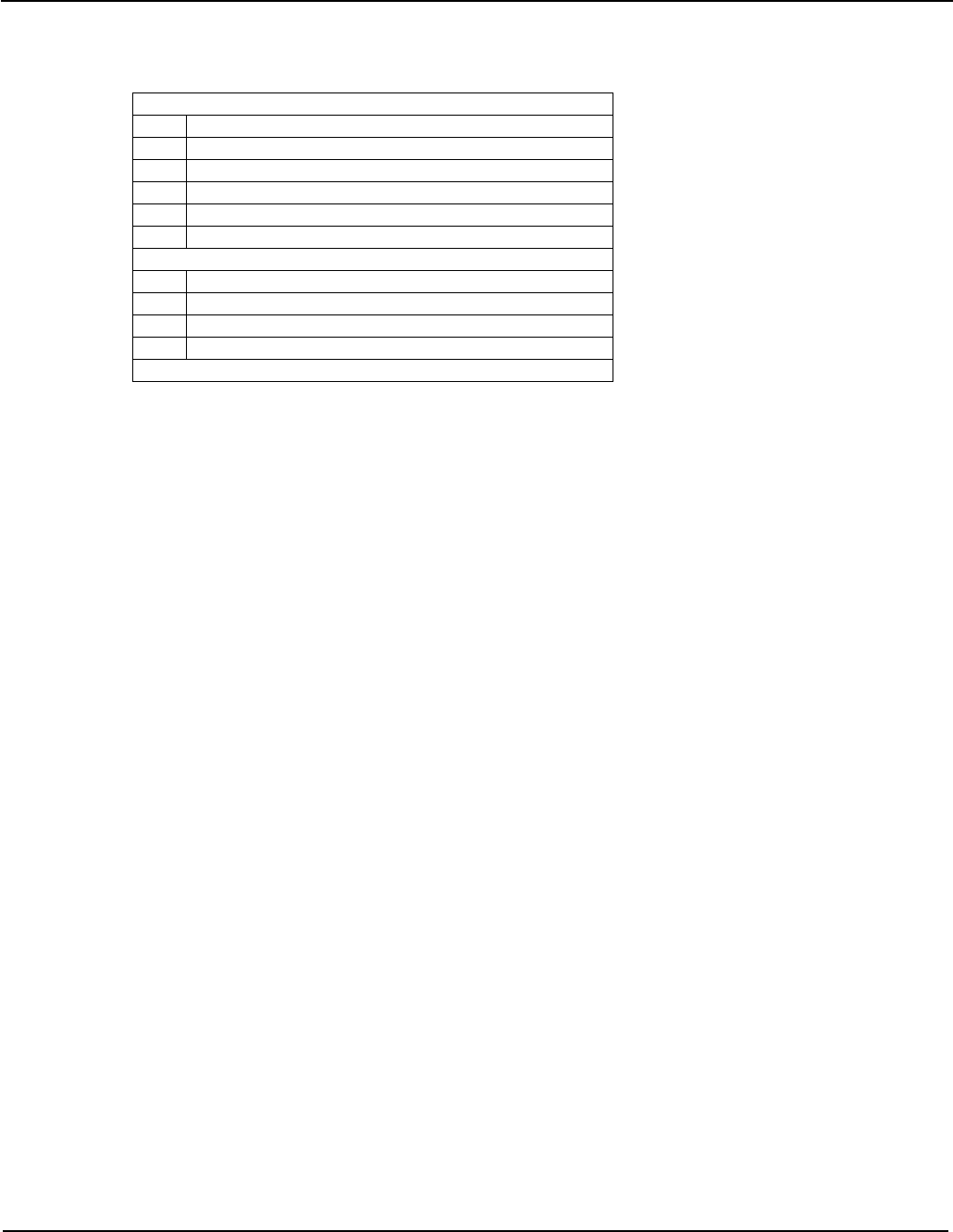
The container is one of:
Integer Class
W 32-bit integer
X 64-bit integer
SIMD Scalar & Floating Point Class
B 8-bit scalar
H 16-bit scalar & half-precision float
S 32-bit scalar & single-precision float
D 64-bit scalar & double-precision float
Q 128-bit scalar
ARMv8 Instruction Set Overview
PRD03-GENC-010197 Copyright © 2009-2011 ARM Limited. All rights reserved. Page 15 of 112
The subtype is one of:
Load-Store / Sign-Zero Extend
B byte
SB signed byte
H halfword
SH signed halfword
W word
SW signed word
Register Width Changes
H High (dst gets top half)
N Narrow (dst < src)
L Long (dst > src)
W Wide (dst == src1, src1 > src2)
etc
These attributes are combined in the assembly language notation to identify the specific instruction form. In order
to retain a close look and feel to the existing ARM assembly language, the following format has been adopted:
<name>{<subtype>} <container>
In other words the operation name and subtype are described by the instruction mnemonic, and the container size
by the operand name(s). Where subtype is omitted, it is inherited from container.
In this way an assembler programmer can write an instruction without having to remember a multitude of new
mnemonics; and the reader of a disassembly listing can straightforwardly read an instruction and see at a glance
the type and size of each operand.
The implication of this is that the A64 assembly language overloads instruction mnemonics, and distinguishes
between the different forms of an instruction based on the operand register names. For example the ADD
instructions below all have different opcodes, but the programmer only has to remember one mnemonic and the
assembler automatically chooses the correct opcode based on the operands – with the disassembler doing the
reverse.
ADD W0, W1, W2 // add 32-bit register
ADD X0, X1, X2 // add 64-bit register
ADD X0, X1, W2, SXTW // add 64-bit extending register
ADD X0, X1, #42 // add 64-bit immediate
4.3 Condition Codes
In AArch32 assembly language conditionally executed instructions are represented by directly appending the
condition to the mnemonic, without a delimiter. This leads to some ambiguity which can make assembler code
difficult to parse: for example ADCS, BICS, LSLS and TEQ look at first glance like conditional instructions.
The A64 ISA has far fewer instructions which set or test condition codes. Those that do will be identified as
follows:
1. Instructions which set the condition flags are notionally different instructions, and will continue to be
identified by appending an ‘S’ to the base mnemonic, e.g. ADDS.

ARMv8 Instruction Set Overview
PRD03-GENC-010197 Copyright © 2009-2011 ARM Limited. All rights reserved. Page 16 of 112
2. Instructions which are truly conditionally executed (i.e. when the condition is false they have no effect on
the architectural state, aside from advancing the program counter) have the condition appended to the
instruction with a '.' delimiter. For example B.EQ.
3. If there is more than one instruction extension, then the conditional extension is always last.
4. Where a conditional instruction has qualifiers, the qualifiers follow the condition.
5. Instructions which are unconditionally executed, but use the condition flags as a source operand, will
specify the condition to test in their final operand position, e.g. CSEL Wd,Wm,Wn,NE
To aid portability an A64 assembler may also provide the old UAL conditional mnemonics, so long as they have
direct equivalents in the A64 ISA. However, the UAL mnemonics will not be generated by an A64 disassembler –
their use is deprecated in 64-bit assembler code, and may cause a warning or error if backward compatibility is
not explicitly requested by the programmer.
The full list of condition codes is as follows:
Encoding Name
(&
alias) Meaning (integer) Meaning (floating point) Flags
0000 EQ Equal Equal Z==1
0001 NE Not equal Not equal, or unordered Z==0
0010 HS
(CS)
Unsigned higher or same
(Carry set) Greater than, equal, or unordered C==1
0011 LO
(CC)
Unsigned lower
(Carry clear) Less than C==0
0100 MI Minus (negative) Less than N==1
0101 PL Plus (positive or zero) Greater than, equal, or unordered N==0
0110 VS Overflow set Unordered V==1
0111 VC Overflow clear Ordered V==0
1000 HI Unsigned higher Greater than, or unordered C==1 && Z==0
1001 LS Unsigned lower or same Less than or equal !(C==1 && Z==0)
1010 GE Signed greater than or
equal Greater than or equal N==V
1011 LT Signed less than Less than or unordered N!=V
1100 GT Signed greater than Greater than Z==0 && N==V
1101 LE Signed less than or equal Less than, equal, or unordered !(Z==0 && N==V)
1110 AL
1111 NV† Always Always Any
†The condition code NV exists only to provide a valid disassembly of the ‘1111b’ encoding, and otherwise behaves
identically to AL.
ARMv8 Instruction Set Overview
PRD03-GENC-010197 Copyright © 2009-2011 ARM Limited. All rights reserved. Page 17 of 112
4.4 Register Names
4.4.1 General purpose (integer) registers
The thirty one general purpose registers in the main integer register bank are named R0 to R30, with special
register number 31 having different names, depending on the context in which it is used. However, when the
registers are used in a specific instruction form, they must be further qualified to indicate the operand data size (32
or 64 bits) – and hence the instruction’s data size.
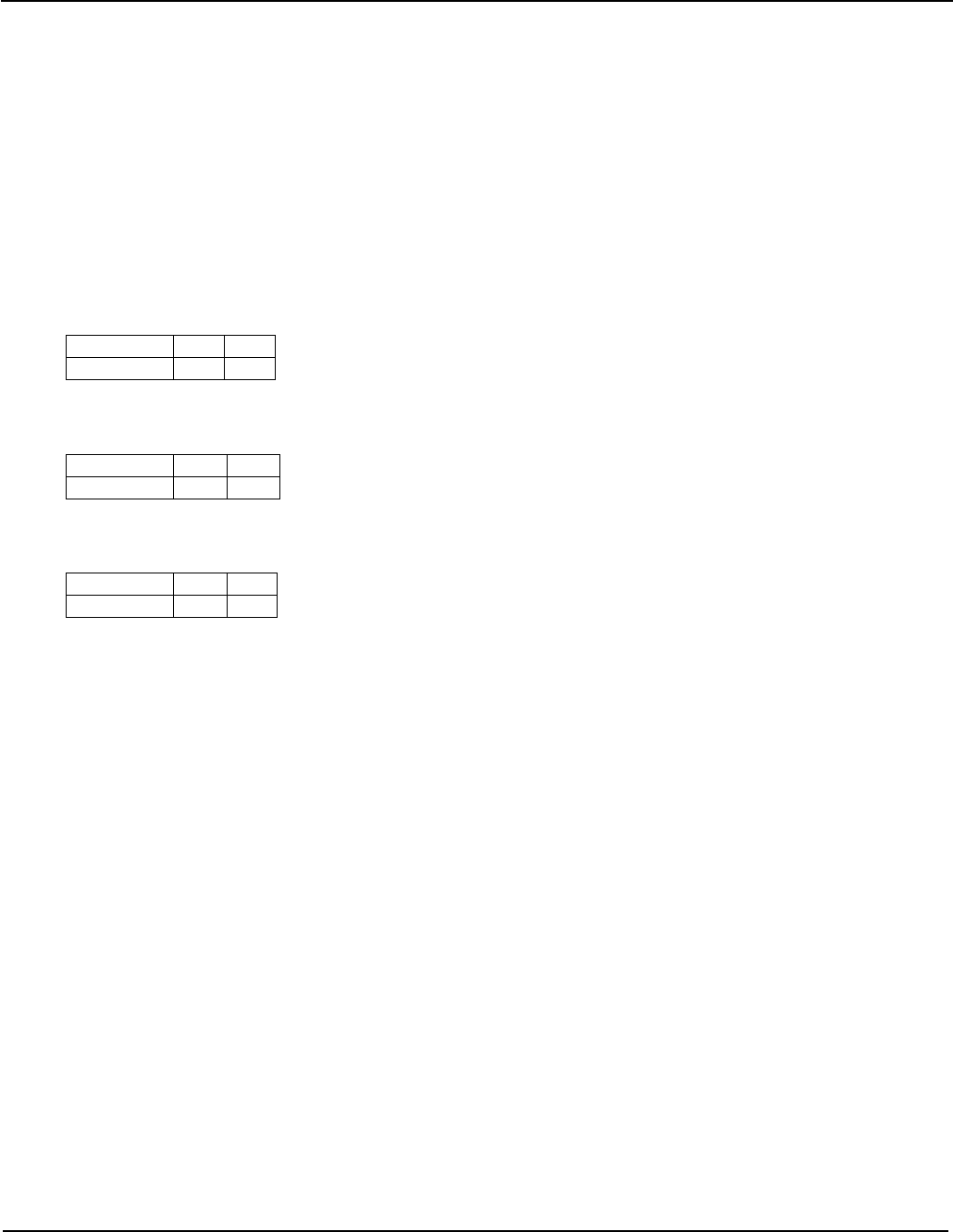
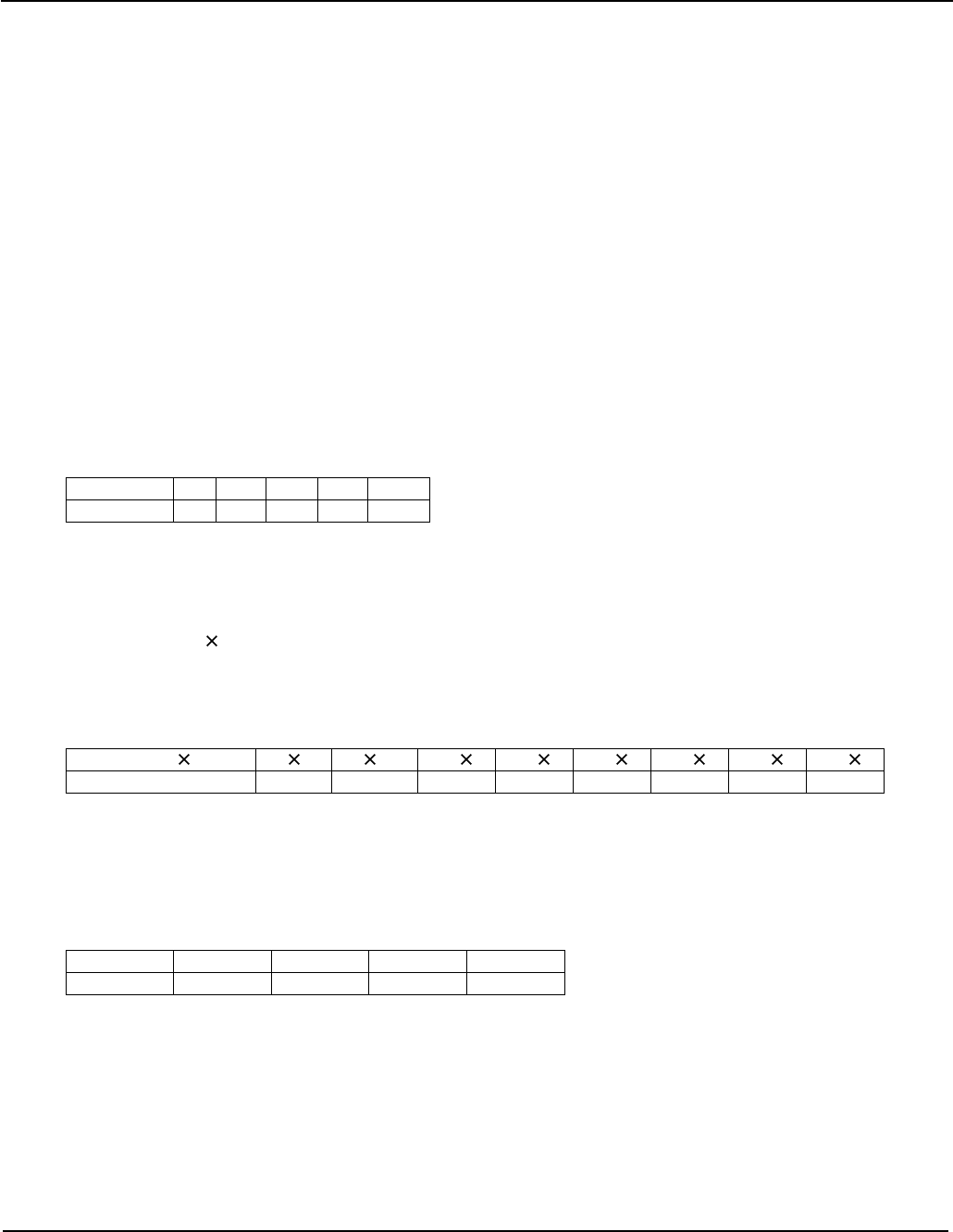
The qualified names for the general purpose registers are as follows, where ‘n’ is the register number 0 to 30:
Size (bits) 32b 64b
Name Wn Xn
Where register number 31 represents read zero or discard result (aka the “zero register”):
Size (bits) 32b 64b
Name WZR XZR
Where register number 31 represents the stack pointer:
Size (bits) 32b 64b
Name WSP SP
In more detail:
• The names Xn and Wn refer to the same architectural register.
• There is no register named W31 or X31.
• For instruction operands where register 31 in interpreted as the 64-bit stack pointer, it is represented by
the name SP. For operands which do not interpret register 31 as the 64-bit stack pointer this name shall
cause an assembler error.
• The name WSP represents register 31 as the stack pointer in a 32-bit context. It is provided only to allow a
valid disassembly, and should not be seen in correctly behaving 64-bit code.
• For instruction operands which interpret register 31 as the zero register, it is represented by the name XZR
in 64-bit contexts, and WZR in 32-bit contexts. In operand positions which do not interpret register 31 as
the zero register these names shall cause an assembler error.
• Where a mnemonic is overloaded (i.e. can generate different instruction encodings depending on the data
size), then an assembler shall determine the precise form of the instruction from the size of the first
register operand. Usually the other operand registers should match the size of the first operand, but in
some cases a register may have a different size (e.g. an address base register is always 64 bits), and a
source register may be smaller than the destination if it contains a word, halfword or byte that is being
widened by the instruction to 64 bits.
• The architecture does not define a special name for register 30 that reflects its special role as the link
register on procedure calls. Such software names may be defined as part of the Procedure Calling
Standard.
ARMv8 Instruction Set Overview
PRD03-GENC-010197 Copyright © 2009-2011 ARM Limited. All rights reserved. Page 18 of 112
4.4.2 FP/SIMD registers
The thirty two registers in the FP/SIMD register bank named V0 to V31 are used to hold floating point
operands for the scalar floating point instructions, and both scalar and vector operands for the Advanced
SIMD instructions. As with the general purpose integer registers, when they are used in a specific instruction
form the names must be further qualified to indicate the data shape (i.e. the data element size and number of
elements or lanes) held within them.
Note however that the data type, i.e. the interpretation of the bits within each register or vector element –
integer (signed, unsigned or irrelevant), floating point, polynomial or cryptographic hash – is not described by
the register name, but by the instruction mnemonics which operate on them. For more details see the
Advanced SIMD description in §5.7.
4.4.2.1 SIMD scalar register
In Advanced SIMD and floating point instructions which operate on scalar data the FP/SIMD registers behave
similarly to the main general-purpose integer registers, i.e. only the lower bits are accessed, with the unused
high bits ignored on a read and set to zero on a write. The qualified names for scalar FP/SIMD names indicate
the number of significant bits as follows, where ‘n’ is a register number 0 to 31:
Size (bits) 8b 16b
32b 64b 128b
Name Bn Hn Sn Dn Qn
4.4.2.2 SIMD vector register
When a register holds multiple data elements on which arithmetic will be performed in a parallel, SIMD
fashion, then a qualifier describes the vector shape: i.e. the element size, and the number of elements or
“lanes”. Where “bits lanes” does not equal 128, the upper 64 bits of the register are ignored when read and
set to zero on a write.
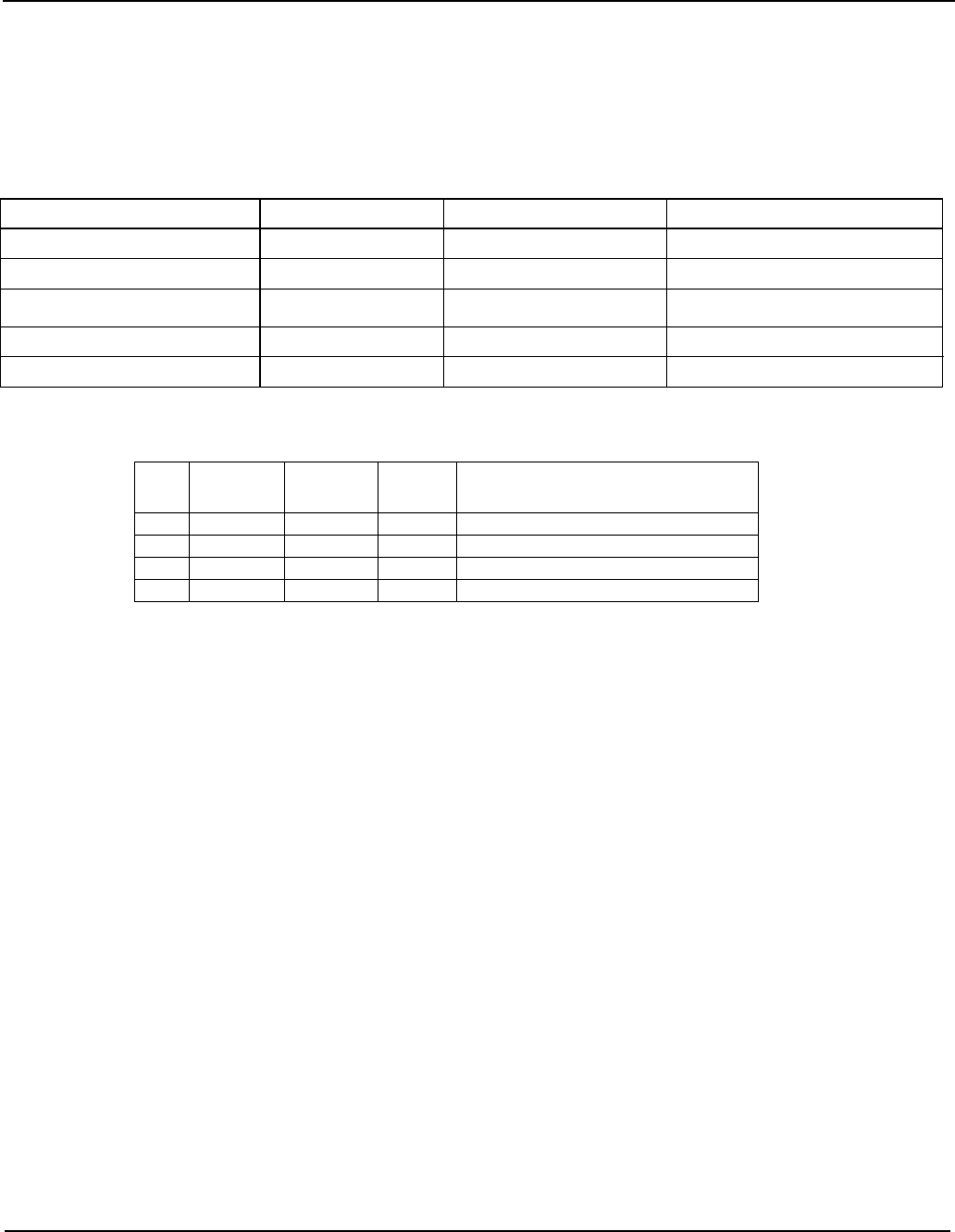
The fully qualified SIMD vector register names are as follows, where ‘n’ is the register number 0 to 31:
Shape (bits lanes) 8b 8 8b 16 16b 4
16b 8
32b 2
32b 4 64b 1 64b 2
Name Vn.8B Vn.16B Vn.4H Vn.8H Vn.2S Vn.4S Vn.1D Vn.2D
4.4.2.3 SIMD vector element
Where a single element from a SIMD vector register is used as a scalar operand, this is indicated by
appending a constant, zero-based “element index” to the vector register name, inside square brackets. The
number of lanes is not represented, since it is not encoded, and may only be inferred from the index value.
Size (bits) 8b 16b 32b 64b
Name Vn.B[i] Vn.H[i] Vn.S[i] Vn.D[i]
However an assembler shall accept a fully qualified SIMD vector register name as in §4.4.2.2, so long as the
number of lanes is greater than the index value. For example the following forms will both be accepted by an
assembler as the name for the 32-bit element in bits <63:32> of SIMD register 9:
V9.S[1] standard disassembly
V9.2S[1] optional number of lanes
V9.4S[1] optional number of lanes

ARMv8 Instruction Set Overview
PRD03-GENC-010197 Copyright © 2009-2011 ARM Limited. All rights reserved. Page 19 of 112
Note that the vector register element name Vn.S[0] is not equivalent to the scalar register name Sn.
Although they represent the same bits in the register, they select different instruction encoding forms, i.e.
vector element vs scalar form.
4.4.2.4 SIMD vector register list
Where an instruction operates on a “list” of vector registers – for example vector load-store and table lookup –
the registers are specified as a list within curly braces. This list consists of either a sequence of registers
separated by commas, or a register range separated by a hyphen. The registers must be numbered in
increasing order (modulo 32), in increments of one or two. The hyphenated form is preferred for disassembly
if there are more than two registers in the list, and the register numbers are monotonically increasing in
increments of one. The following are equivalent representations of a set of four registers V4 to V7, each
holding four lanes of 32-bit elements:
{V4.4S – V7.4S} standard disassembly
{V4.4S, V5.4S, V6.4S, V7.4S} alternative representation
4.4.2.5 SIMD vector element list
It is also possible for registers in a list to have a vector element form, for example LD4 loading one element
into each of four registers, in which case the index is appended to the list, as follows:
{V4.S - V7.S}[3] standard disassembly
{V4.4S, V5.4S, V6.4S, V7.4S}[3] alternative with optional number of lanes
ARMv8 Instruction Set Overview
PRD03-GENC-010197 Copyright © 2009-2011 ARM Limited. All rights reserved. Page 20 of 112
4.5 Load/Store Addressing Modes
Load/store addressing modes in the A64 instruction set broadly follows T32 consisting of a 64-bit base register
(Xn or SP) plus an immediate or register offset.
Type Immediate Offset
Register Offset Extended Register Offset
Simple register (exclusive) [base{,#0}] n/a n/a
Offset [base{,#imm}] [base,Xm{,LSL #imm}] [base,Wm,(S|U)XTW {#imm}]
Pre-indexed [base,#imm]! n/a n/a
Post-indexed [base],#imm n/a n/a
PC-relative (literal) load label n/a n/a
• An immediate offset is encoded in various ways, depending on the type of load/store instruction:
Bits Sign Scaling Write-
back? Load/Store Type
0 -
- - exclusive / acquire / release
7 signed
scaled option register pair
9 signed
unscaled option single register
12 unsigned
scaled no single register
• Where an immediate offset is scaled, it is encoded as a multiple of the data access size (except PC-
relative loads, where it is always a word multiple). The assembler always accepts a byte offset, which is
converted to the scaled offset for encoding, and a disassembler decodes the scaled offset encoding and
displays it as a byte offset. The range of byte offsets supported therefore varies according to the type of
load/store instruction and the data access size.
• The "post-indexed" forms mean that the memory address is the base register value, then base plus
offset is written back to the base register.
• The "pre-indexed" forms mean that the memory address is the base register value plus offset, then the
computed address is written back to the base register.
• A “register offset” means that the memory address is the base register value plus the value of 64-bit index
register Xm optionally scaled by the access size (in bytes), i.e. shifted left by log2(size).
• An “extended register offset” means that the memory address is the base register value plus the value of
32-bit index register Wm, sign or zero extended to 64 bits, then optionally scaled by the access size.
• An assembler should accept Xm as an extended index register, though Wm is preferred.
• The pre/post-indexed forms are not available with a register offset.
• There is no "down" option, so subtraction from the base register requires a negative signed immediate
offset (two's complement) or a negative value in the index register.
• When the base register is SP the stack pointer is required to be quadword (16 byte, 128 bit) aligned prior
to the address calculation and write-backs – misalignment will cause a stack alignment fault. The stack
pointer may not be used as an index register.
• Use of the program counter (PC) as a base register is implicit in literal load instructions and not permitted
in other load or store instructions. Literal loads do not include byte and halfword forms. See section 5
below for the definition of label.

ARMv8 Instruction Set Overview
PRD03-GENC-010197 Copyright © 2009-2011 ARM Limited. All rights reserved. Page 21 of 112
5 A64 INSTRUCTION SET
.The following syntax terms are used frequently throughout the A64 instruction set description. See also the
syntax notation described in section 2 above.
Xn Unless otherwise indicated a general register operand Xn or Wn interprets register 31 as the zero
register, represented by the names XZR or WZR respectively.
Xn|SP A general register operand of the form Xn|SP or Wn|WSP interprets register 31 as the stack pointer,
represented by the names SP or WSP respectively.
cond A standard ARM condition EQ, NE, CS|HS, CC|LO, MI, PL, VS, VC, HI, LS, GE, LT, GT,
LE, AL or NV with the same meanings as in AArch32. Note that although AL and NV represent different
encodings, as in AArch32 they are both interpreted as the “always true” condition. Unless stated
AArch64 instructions do not set or use the condition flags, but those that do set all of the condition flags.
If used in a pseudo-code expression this symbol represents a Boolean whose value is the truth of the
specified condition test.
invert(cond)
The inverse of cond, for example the inverse of GT is LE.
uimmn An n-bit unsigned (positive) immediate value.
simmn An n-bit two's complement signed immediate value (where n includes the sign bit).
label Represents a pc-relative reference from an instruction to a target code or data location. The precise
syntax is likely to be specific to individual toolchains, but the preferred form is “pcsym” or “pcsym±offs”,
where pcsym is:
a. The preferred architectural notation which is (at the choice of the disassembler) the character ‘.’
or string “{pc}” representing the referencing instruction’s address or offset.
b. For a programmers’ view where the instruction’s address in memory or offset within a
relocatable image is known and a list of symbols is available, then the symbol name whose
value is nearest to, and preferably less than or equal to the target location’s address or offset.
c. For a programmers’ view where the instruction’s address or offset is known but a list of symbols
is not available, then the target address or offset as a hexadecimal constant.
And where in all cases “±offs” gives the byte offset from pcsym to the target location’s address or
offset, which may be omitted if the offset is zero.
addr Represents an addressing mode that is some subset (documented for each class of instruction) of the
addressing modes in section 4.5 above.
lshift Represents an optional shift operator performed on the final source operand of a logical instruction,
taking chosen from LSL, LSR, ASR, or ROR, followed by a constant shift amount #imm in the range 0 to
regwidth-1. If omitted the default is “LSL #0”.
ashift Represents an optional shift operator to be performed on the final source operand of an arithmetic
instruction chosen from LSL, LSR, or ASR, followed by a constant shift amount #imm in the range 0 to
regwidth-1. If omitted the default is “LSL #0”.

ARMv8 Instruction Set Overview
PRD03-GENC-010197 Copyright © 2009-2011 ARM Limited. All rights reserved. Page 22 of 112
5.1 Control Flow
5.1.1 Conditional Branch
Unless stated, conditional branches have a branch offset range of ±1MiB from the program counter.
B.cond label
Branch: conditionally jumps to program-relative label if cond is true.
CBNZ Wn, label
Compare and Branch Not Zero: conditionally jumps to program-relative label if Wn is not equal to zero.
CBNZ Xn, label
Compare and Branch Not Zero (extended): conditionally jumps to label if Xn is not equal to zero.
CBZ Wn, label
Compare and Branch Zero: conditionally jumps to label if Wn is equal to zero.
CBZ Xn, label
Compare and Branch Zero (extended): conditionally jumps to label if Xn is equal to zero.
TBNZ Xn|Wn, #uimm6, label
Test and Branch Not Zero: conditionally jumps to label if bit number uimm6 in register Xn is not zero.
The bit number implies the width of the register, which may be written and should be disassembled as Wn
if uimm is less than 32. Limited to a branch offset range of ±32KiB.
TBZ Xn|Wn, #uimm6, label
Test and Branch Zero: conditionally jumps to label if bit number uimm6 in register Xn is zero. The bit
number implies the width of the register, which may be written and should be disassembled as Wn if
uimm6 is less than 32. Limited to a branch offset range of ±32KiB.
5.1.2 Unconditional Branch (immediate)
Unconditional branches support an immediate branch offset range of ±128MiB.
B label
Branch: unconditionally jumps to pc-relative label.
BL label
Branch and Link: unconditionally jumps to pc-relative label, writing the address of the next sequential
instruction to register X30.
5.1.3 Unconditional Branch (register)
BLR Xm
Branch and Link Register: unconditionally jumps to address in Xm, writing the address of the next
sequential instruction to register X30.
BR Xm
Branch Register: jumps to address in Xm, with a hint to the CPU that this is not a subroutine return.
RET {Xm}
Return: jumps to register Xm, with a hint to the CPU that this is a subroutine return. An assembler shall
default to register X30 if Xm is omitted.

ARMv8 Instruction Set Overview
PRD03-GENC-010197 Copyright © 2009-2011 ARM Limited. All rights reserved. Page 23 of 112
5.2 Memory Access
Aside from exclusive and explicitly ordered loads and stores, addresses may have arbitrary alignment unless strict
alignment checking is enabled (SCTLR.A==1). However if SP is used as the base register then the value of the
stack pointer prior to adding any offset must be quadword (16 byte) aligned, or else a stack alignment exception
will be generated.
A memory read or write generated by the load or store of a single general-purpose register aligned to the size of
the transfer is atomic. Memory reads or writes generated by the non-exclusive load or store of a pair of general-
purpose registers aligned to the size of the register are treated as two atomic accesses, one for each register. In
all other cases, unless otherwise stated, there are no atomicity guarantees.
5.2.1 Load-Store Single Register
The most general forms of load-store support a variety of addressing modes, consisting of base register Xn or SP,
plus one of:
• Scaled, 12-bit, unsigned immediate offset, without pre- and post-index options.
• Unscaled, 9-bit, signed immediate offset with pre- or post-index writeback.
• Scaled or unscaled 64-bit register offset.
• Scaled or unscaled 32-bit extended register offset.
If a Load instruction specifies writeback and the register being loaded is also the base register, then one of the
following behaviours can occur:
• The instruction is
UNALLOCATED
• The instruction is treated as a NOP
• The instruction performs the load using the specified addressing mode and the base register becomes
UNKNOWN. In addition, if an exception occurs during such an instruction, the base address might be
corrupted such that the instruction cannot be repeated.
If a Store instruction performs a writeback and the register being stored is also the base register, then one of the
following behaviours can occur:
• The instruction is
UNALLOCATED
• The instruction is treated as a NOP
• The instruction performs the stores of the register specified using the specified addressing mode but the
value stored is UNKNOWN
LDR Wt, addr
Load Register: loads a word from memory addressed by addr to Wt.
LDR Xt, addr
Load Register (extended): loads a doubleword from memory addressed by addr to Xt.
LDRB Wt, addr
Load Byte: loads a byte from memory addressed by addr, then zero-extends it to Wt.
LDRSB Wt, addr
Load Signed Byte: loads a byte from memory addressed by addr, then sign-extends it into Wt.
LDRSB Xt, addr
Load Signed Byte (extended): loads a byte from memory addressed by addr, then sign-extends it into Xt.
LDRH Wt, addr
Load Halfword: loads a halfword from memory addressed by addr, then zero-extends it into Wt.

ARMv8 Instruction Set Overview
PRD03-GENC-010197 Copyright © 2009-2011 ARM Limited. All rights reserved. Page 24 of 112
LDRSH Wt, addr
Load Signed Halfword: loads a halfword from memory addressed by addr, then sign-extends it into Wt.
LDRSH Xt, addr
Load Signed Halfword (extended): loads a halfword from memory addressed by addr, then sign-extends
it into Xt.
LDRSW Xt, addr
Load Signed Word (extended): loads a word from memory addressed by addr, then sign-extends it into
Xt.
STR Wt, addr
Store Register: stores word from Wt to memory addressed by addr.
STR Xt, addr
Store Register (extended): stores doubleword from Xt to memory addressed by addr.
STRB Wt, addr
Store Byte: stores byte from Wt to memory addressed by addr.
STRH Wt, addr
Store Halfword: stores halfword from Wt to memory addressed by addr.
5.2.2 Load-Store Single Register (unscaled offset)
The load-store single register (unscaled offset) instructions support an addressing mode of base register Xn or
SP, plus:
• Unscaled, 9-bit, signed immediate offset, without pre- and post-index options
These instructions use unique mnemonics to distinguish them from normal load-store instructions due to the
overlap of functionality with the scaled 12-bit unsigned immediate offset addressing mode when the offset is
positive and naturally aligned.
A programmer-friendly assembler could generate these instructions in response to the standard LDR/STR
mnemonics when the immediate offset is unambiguous, i.e. when it is negative or unaligned. Similarly a
disassembler could display these instructions using the standard LDR/STR mnemonics when the encoded
immediate is negative or unaligned. However this behaviour is not required by the architectural assembly
language.
LDUR Wt, [base,#simm9]
Load (Unscaled) Register: loads a word from memory addressed by base+simm9 to Wt.
LDUR Xt, [base,#simm9]
Load (Unscaled) Register (extended): loads a doubleword from memory addressed by base+simm9 to
Xt.
LDURB Wt, [base,#simm9]
Load (Unscaled) Byte: loads a byte from memory addressed by base+simm9, then zero-extends it into
Wt.
LDURSB Wt, [base,#simm9]
Load (Unscaled) Signed Byte: loads a byte from memory addressed by base+simm9, then sign-extends it
into Wt.
LDURSB Xt, [base,#simm9]
Load (Unscaled) Signed Byte (extended): loads a byte from memory addressed by base+simm9, then
sign-extends it into Xt.

ARMv8 Instruction Set Overview
PRD03-GENC-010197 Copyright © 2009-2011 ARM Limited. All rights reserved. Page 25 of 112
LDURH Wt, [base,#simm9]
Load (Unscaled) Halfword: loads a halfword from memory addressed by base+simm9, then zero-extends
it into Wt.
LDURSH Wt, [base,#simm9]
Load (Unscaled) Signed Halfword: loads a halfword from memory addressed by base+simm9, then sign-
extends it into Wt.
LDURSH Xt, [base,#simm9]
Load (Unscaled) Signed Halfword (extended): loads a halfword from memory addressed by base+simm9,
then sign-extends it into Xt.
LDURSW Xt, [base,#simm9]
Load (Unscaled) Signed Word (extended): loads a word from memory addressed by base+simm9, then
sign-extends it into Xt.
STUR Wt, [base,#simm9]
Store (Unscaled) Register: stores word from Wt to memory addressed by base+simm9.
STUR Xt, [base,#simm9]
Store (Unscaled) Register (extended): stores doubleword from Xt to memory addressed by base+simm9.
STURB Wt, [base,#simm9]
Store (Unscaled) Byte: stores byte from Wt to memory addressed by base+simm9.
STURH Wt, [base,#simm9]
Store (Unscaled) Halfword: stores halfword from Wt to memory addressed by base+simm9.
5.2.3 Load Single Register (pc-relative, literal load)
The pc-relative address from which to load is encoded as a 19-bit signed word offset which is shifted left by 2 and
added to the program counter, giving access to any word-aligned location within ±1MiB of the PC.
As a convenience assemblers will typically permit the notation “=value” in conjunction with the pc-relative literal
load instructions to automatically place an immediate value or symbolic address in a nearby literal pool and
generate a hidden label which references it. But that syntax is not architectural and will never appear in a
disassembly. A64 has other instructions to construct immediate values (section 5.3.3) and addresses (section
5.3.4) in a register which may be preferable to loading them from a literal pool.
LDR Wt, label | =value
Load Literal Register (32-bit): loads a word from memory addressed by label to Wt.
LDR Xt, label | =value
Load Literal Register (64-bit): loads a doubleword from memory addressed by label to Xt.
LDRSW Xt, label | =value
Load Literal Signed Word (extended): loads a word from memory addressed by label, then sign-extends
it into Xt.
5.2.4 Load-Store Pair
The load-store pair instructions support an addressing mode consisting of base register Xn or SP, plus:
• Scaled 7-bit signed immediate offset, with pre- and post-index writeback options

ARMv8 Instruction Set Overview
PRD03-GENC-010197 Copyright © 2009-2011 ARM Limited. All rights reserved. Page 26 of 112
If a Load Pair instruction specifies the same register for the two registers that are being loaded, then one of the
following behaviours can occur:
• The instruction is
UNALLOCATED
• The instruction is treated as a NOP
• The instruction performs all of the loads using the specified addressing mode and the register being
loaded takes an UNKNOWN value
If a Load Pair instruction specifies writeback and one of the registers being loaded is also the base register, then
one of the following behaviours can occur:
• The instruction is
UNALLOCATED
• The instruction is treated as a NOP
• The instruction performs all of the loads using the specified addressing mode and the base register
becomes UNKNOWN. In addition, if an exception occurs during such an instruction, the base address might
be corrupted such that the instruction cannot be repeated.
If a Store Pair instruction performs a writeback and one of the registers being stored is also the base register, then
one of the following behaviours can occur:
• The instruction is
UNALLOCATED
• The instruction is treated as a NOP
• The instruction performs all of the stores of the registers specified using the specified addressing mode
but the value stored for the base register is UNKNOWN
LDP Wt1, Wt2, addr
Load Pair Registers: loads two words from memory addressed by addr to Wt1 and Wt2.
LDP Xt1, Xt2, addr
Load Pair Registers (extended): loads two doublewords from memory addressed by addr to Xt1 and
Xt2.
LDPSW Xt1, Xt2, addr
Load Pair Signed Words (extended) loads two words from memory addressed by addr, then sign-extends
them into Xt1 and Xt2.
STP Wt1, Wt2, addr
Store Pair Registers: stores two words from Wt1 and Wt2 to memory addressed by addr.
STP Xt1, Xt2, addr
Store Pair Registers (extended): stores two doublewords from Xt1 and Xt2 to memory addressed by
addr.
5.2.5 Load-Store Non-temporal Pair
The LDNP and STNP non-temporal pair instructions provide a hint to the memory system that an access is “non-
temporal” or “streaming” and unlikely to be accessed again in the near future so need not be retained in data
caches. However depending on the memory type they may permit memory reads to be preloaded and memory
writes to be gathered, in order to accelerate bulk memory transfers.
Furthermore, as a special exception to the normal memory ordering rules, where an address dependency exists
between two memory reads and the second read was generated by a Load Non-temporal Pair instruction then, in
the absence of any other barrier mechanism to achieve order, those memory accesses can be observed in any
order by other observers within the shareability domain of the memory addresses being accessed.

ARMv8 Instruction Set Overview
PRD03-GENC-010197 Copyright © 2009-2011 ARM Limited. All rights reserved. Page 27 of 112
The LDNP and STNP instructions support an addressing mode of base register Xn or SP, plus:
• Scaled 7-bit signed immediate offset, without pre- and post-index options
If a Load Non-temporal Pair instruction specifies the same register for the two registers that are being loaded, then
one of the following behaviours can occur:
• The instruction is
UNALLOCATED
• The instruction is treated as a NOP
• The instruction performs all of the loads using the specified addressing mode and the register being
loaded takes an UNKNOWN value
LDNP Wt1, Wt2, [base,#imm]
Load Non-temporal Pair: loads two words from memory addressed by base+imm to Wt1 and Wt2, with a
non-temporal hint.
LDNP Xt1, Xt2, [base,#imm]
Load Non-temporal Pair (extended): loads two doublewords from memory addressed by base+imm to
Xt1 and Xt2, with a non-temporal hint.
STNP Wt1, Wt2, [base,#imm]
Store Non-temporal Pair: stores two words from Wt1 and Wt2 to memory addressed by base+imm, with a
non-temporal hint.
STNP Xt1, Xt2, [base,#imm]
Store Non-temporal Pair (extended): stores two doublewords from Xt1 and Xt2 to memory addressed by
base+imm, with a non-temporal hint.
5.2.6 Load-Store Unprivileged
The load-store unprivileged instructions may be used when the processor is at the EL1 exception level to perform
a memory access as if it were at the EL0 (unprivileged) exception level. If the processor is at any other exception
level, then a normal memory access for that level is performed. (The letter ‘T’ in these mnemonics is based on an
historical ARM convention which described an access to an unprivileged virtual address as being “translated”).
The load-store unprivileged instructions support an addressing mode of base register Xn or SP, plus:
• Unscaled, 9-bit, signed immediate offset, without pre- and post-index options
LDTR Wt, [base,#simm9]
Load Unprivileged Register: loads word from memory addressed by base+simm9 to Wt, using EL0
privileges when at EL1.
LDTR Xt, [base,#simm9]
Load Unprivileged Register (extended): loads doubleword from memory addressed by base+simm9 to
Xt, using EL0 privileges when at EL1.
LDTRB Wt, [base,#simm9]
Load Unprivileged Byte: loads a byte from memory addressed by base+simm9, then zero-extends it into
Wt, using EL0 privileges when at EL1.
LDTRSB Wt, [base,#simm9]
Load Unprivileged Signed Byte: loads a byte from memory addressed by base+simm9, then sign-extends
it into Wt, using EL0 privileges when at EL1.

ARMv8 Instruction Set Overview
PRD03-GENC-010197 Copyright © 2009-2011 ARM Limited. All rights reserved. Page 28 of 112
LDTRSB Xt, [base,#simm9]
Load Unprivileged Signed Byte (extended): loads a byte from memory addressed by base+simm9, then
sign-extends it into Xt, using EL0 privileges when at EL1.
LDTRH Wt, [base,#simm9]
Load Unprivileged Halfword: loads a halfword from memory addressed by base+simm9, then zero-
extends it into Wt, using EL0 privileges when at EL1.
LDTRSH Wt, [base,#simm9]
Load Unprivileged Signed Halfword: loads a halfword from memory addressed by base+simm9, then
sign-extends it into Wt, using EL0 privileges when at EL1.
LDTRSH Xt, [base,#simm9]
Load Unprivileged Signed Halfword (extended): loads a halfword from memory addressed by
base+simm9, then sign-extends it into Xt, using EL0 privileges when at EL1.
LDTRSW Xt, [base,#simm9]
Load Unprivileged Signed Word (extended): loads a word from memory addressed by base+simm9, then
sign-extends it into Xt, using EL0 privileges when at EL1.
STTR Wt, [base,#simm9]
Store Unprivileged Register: stores a word from Wt to memory addressed by base+simm9, using EL0
privileges when at EL1.
STTR Xt, [base,#simm9]
Store Unprivileged Register (extended): stores a doubleword from Xt to memory addressed by
base+simm9, using EL0 privileges when at EL1.
STTRB Wt, [base,#simm9]
Store Unprivileged Byte: stores a byte from Wt to memory addressed by base+simm9, using EL0
privileges when at EL1.
STTRH Wt, [base,#simm9]
Store Unprivileged Halfword: stores a halfword from Wt to memory addressed by base+simm9, using
EL0 privileges when at EL1.
5.2.7 Load-Store Exclusive
The load exclusive instructions mark the accessed physical address being accessed as an exclusive access,
which is checked by the store exclusive, permitting the construction of “atomic” read-modify-write operations on
shared memory variables, semaphores, mutexes, spinlocks, etc.
The load-store exclusive instructions support a simple addressing mode of base register Xn or SP only. An
optional offset of #0 must be accepted by the assembler, but may be omitted on disassembly.
Natural alignment is required: an unaligned address will cause an alignment fault. A memory access generated by
a load exclusive pair or store exclusive pair must be aligned to the size of the pair, and when a store exclusive pair
succeeds it will cause a single-copy atomic update of the entire memory location.
LDXR Wt, [base{,#0}]
Load Exclusive Register: loads a word from memory addressed by base to Wt. Records the physical
address as an exclusive access.
LDXR Xt, [base{,#0}]
Load Exclusive Register (extended): loads a doubleword from memory addressed by base to Xt.
Records the physical address as an exclusive access.

ARMv8 Instruction Set Overview
PRD03-GENC-010197 Copyright © 2009-2011 ARM Limited. All rights reserved. Page 29 of 112
LDXRB Wt, [base{,#0}]
Load Exclusive Byte: loads a byte from memory addressed by base, then zero-extends it into Wt.
Records the physical address as an exclusive access.
LDXRH Wt, [base{,#0}]
Load Exclusive Halfword: loads a halfword from memory addressed by base, then zero-extends it into
Wt. Records the physical address as an exclusive access.
LDXP Wt, Wt2, [base{,#0}]
Load Exclusive Pair Registers: loads two words from memory addressed by base, and to Wt and Wt2.
Records the physical address as an exclusive access.
LDXP Xt, Xt2, [base{,#0}]
Load Exclusive Pair Registers (extended): loads two doublewords from memory addressed by base to
Xt and Xt2. Records the physical address as an exclusive access.
STXR Ws, Wt, [base{,#0}]
Store Exclusive Register: stores word from Wt to memory addressed by base, and sets Ws to the returned
exclusive access status.
STXR Ws, Xt, [base{,#0}]
Store Exclusive Register (extended): stores doubleword from Xt to memory addressed by base, and sets
Ws to the returned exclusive access status.
STXRB Ws, Wt, [base{,#0}]
Store Exclusive Byte: stores byte from Wt to memory addressed by base, and sets Ws to the returned
exclusive access status.
STXRH Ws, Wt, [base{,#0}]
Store Exclusive Halfword: stores halfword from Xt to memory addressed by base, and sets Ws to the
returned exclusive access status.
STXP Ws, Wt, Wt2, [base{,#0}]
Store Exclusive Pair: stores two words from Wt and Wt2 to memory addressed by base, and sets Ws to
the returned exclusive access status.
STXP Ws, Xt, Xt2, [base{,#0}]
Store Exclusive Pair (extended): stores two doublewords from Xt and Xt2 to memory addressed by
base, and sets Ws to the returned exclusive access status.
5.2.8 Load-Acquire / Store-Release
A load-acquire is a load where it is guaranteed that all loads and stores appearing in program order after the load-
acquire will be observed by each observer after that observer observes the load-acquire, but says nothing about
loads and stores appearing before the load-acquire.
A store-release will be observed by each observer after that observer observes any loads or stores that appear in
program order before the store-release, but says nothing about loads and stores appearing after the store-release.
In addition, a store-release followed by a load-acquire will be observed by each observer in program order.
A further consideration is that all store-release operations must be multi-copy atomic: that is, if one agent has
seen a store-release, then all agents have seen the store-release. There are no requirements for ordinary stores
to be multi-copy atomic.
The load-acquire and store-release instructions support the simple addressing mode of base register Xn or SP
only. An optional offset of #0 must be accepted by the assembler, but may be omitted on disassembly.

ARMv8 Instruction Set Overview
PRD03-GENC-010197 Copyright © 2009-2011 ARM Limited. All rights reserved. Page 30 of 112
Natural alignment is required: an unaligned address will cause an alignment fault.
5.2.8.1 Non-exclusive
LDAR Wt, [base{,#0}]
Load-Acquire Register: loads a word from memory addressed by base to Wt.
LDAR Xt, [base{,#0}]
Load-Acquire Register (extended): loads a doubleword from memory addressed by base to Xt.
LDARB Wt, [base{,#0}]
Load-Acquire Byte: loads a byte from memory addressed by base, then zero-extends it into Wt.
LDARH Wt, [base{,#0}]
Load-Acquire Halfword: loads a halfword from memory addressed by base, then zero-extends it into Wt.
STLR Wt, [base{,#0}]
Store-Release Register: stores a word from Wt to memory addressed by base.
STLR Xt, [base{,#0}]
Store-Release Register (extended): stores a doubleword from Xt to memory addressed by base.
STLRB Wt, [base{,#0}]
Store-Release Byte: stores a byte from Wt to memory addressed by base.
STLRH Wt, [base{,#0}]
Store-Release Halfword: stores a halfword from Wt to memory addressed by base.
5.2.8.2 Exclusive
LDAXR Wt, [base{,#0}]
Load-Acquire Exclusive Register: loads word from memory addressed by base to Wt. Records the
physical address as an exclusive access.
LDAXR Xt, [base{,#0}]
Load-Acquire Exclusive Register (extended): loads doubleword from memory addressed by base to Xt.
Records the physical address as an exclusive access.
LDAXRB Wt, [base{,#0}]
Load-Acquire Exclusive Byte: loads byte from memory addressed by base, then zero-extends it into Wt.
Records the physical address as an exclusive access.
LDAXRH Wt, [base{,#0}]
Load-Acquire Exclusive Halfword: loads halfword from memory addressed by base, then zero-extends it
into Wt. Records the physical address as an exclusive access.
LDAXP Wt, Wt2, [base{,#0}]
Load-Acquire Exclusive Pair Registers: loads two words from memory addressed by base to Wt and Wt2.
Records the physical address as an exclusive access.
LDAXP Xt, Xt2, [base{,#0}]
Load-Acquire Exclusive Pair Registers (extended): loads two doublewords from memory addressed by
base to Xt and Xt2. Records the physical address as an exclusive access.
STLXR Ws, Wt, [base{,#0}]
Store-Release Exclusive Register: stores word from Wt to memory addressed by base, and sets Ws to
the returned exclusive access status.

ARMv8 Instruction Set Overview
PRD03-GENC-010197 Copyright © 2009-2011 ARM Limited. All rights reserved. Page 31 of 112
STLXR Ws, Xt, [base{,#0}]
Store-Release Exclusive Register (extended): stores doubleword from Xt to memory addressed by base,
and sets Ws to the returned exclusive access status.
STLXRB Ws, Wt, [base{,#0}]
Store-Release Exclusive Byte: stores byte from Wt to memory addressed by base, and sets Ws to the
returned exclusive access status.
STLXRH Ws, Xt|Wt, [base{,#0}]
Store-Release Exclusive Halfword: stores the halfword from Wt to memory addressed by base, and sets
Ws to the returned exclusive access status.
STLXP Ws, Wt, Wt2, [base{,#0}]
Store-Release Exclusive Pair: stores two words from Wt and Wt2 to memory addressed by base, and
sets Ws to the returned exclusive access status.
STLXP Ws, Xt, Xt2, [base{,#0}]
Store-Release Exclusive Pair (extended): stores two doublewords from Xt and Xt2 to memory addressed
by base, and sets Ws to the returned exclusive access status.
5.2.9 Prefetch Memory
The prefetch memory instructions signal the memory system that memory accesses from a specified address are
likely in the near future. The memory system can respond by taking actions that are expected to speed up the
memory accesses when they do occur, such as pre-loading the specified address into one or more caches. Since
these are only hints, it is valid for the CPU to treat any or all prefetch instructions as a no-op.
The prefetch instructions support a wide range of addressing modes, consisting of a base register Xn or SP, plus
one of:
• Scaled, 12-bit, unsigned immediate offset, without pre- and post-index options.
• Unscaled, 9-bit, signed immediate offset, without pre- and post-index options.
• Scaled or unscaled 64-bit register offset.
• Scaled or unscaled 32-bit extended register offset.
Additionally:
• A PC-relative address or label, within ±1MB of the current PC.
• Where an offset is scaled it is as if for an access size of 8 bytes.
PRFM <prfop>, addr|label
Prefetch Memory, using the <prfop> hint, where <prfop> is one of:
PLDL1KEEP, PLDL1STRM, PLDL2KEEP, PLDL2STRM, PLDL3KEEP, PLDL3STRM
PSTL1KEEP, PSTL1STRM, PSTL2KEEP, PSTL2STRM, PSTL3KEEP, PSTL3STRM
<prfop> ::= <type><target><policy> | #uimm5
<type> ::= “PLD” (prefetch for load) | “PST” (prefetch for store)
<target> ::= “L1” (L1 cache) | “L2” (L2 cache) | “L3” (L3 cache)
<policy> ::= “KEEP” (retained or temporal prefetch, i.e. allocate in cache normally)
|“STRM” (streaming or non-temporal prefetch, i.e. memory used only once)
#uimm5 ::= represents the unallocated hint encodings as a 5-bit immediate

ARMv8 Instruction Set Overview
PRD03-GENC-010197 Copyright © 2009-2011 ARM Limited. All rights reserved. Page 32 of 112
PRFUM <prfop>, addr
Prefetch Memory (unscaled offset), explicitly uses the 9-bit, signed, unscaled immediate offset addressing
mode, as described in section 5.2.2
5.3 Data Processing (immediate)
The following instruction groups are supported:
• Arithmetic (immediate)
• Logical (immediate)
• Move (immediate)
• Bitfield (operations)
• Shift (immediate)
• Sign/zero extend
5.3.1 Arithmetic (immediate)
These instructions accept an arithmetic immediate shown as aimm, which is encoded as a 12-bit unsigned
immediate shifted left by 0 or 12 bits. In the assembly language this may be written as:
#uimm12, LSL #sh
A 12-bit unsigned immediate, explicitly shifted left by 0 or 12.
#uimm24
A 24-bit unsigned immediate. An assembler shall determine the appropriate value of uimm12 with lowest
possible shift of 0 or 12 which generates the requested value; if the value contains non-zero bits in
bits<23:12> and in bits<11:0> then an error shall result.
#nimm25
A “programmer-friendly” assembler may accept a negative immediate between -(224-1) and -1 inclusive,
causing it to convert a requested ADD operation to a SUB, or vice versa, and then encode the absolute
value of the immediate as for uimm24. However this behaviour is not required by the architectural
assembly language.
A disassembler should normally output the arithmetic immediate using the uimm24 form, unless the encoded shift
amount is not the lowest possible shift that could have been used (for example #0,LSL #12 could not be output
using the uimm24 form).
The arithmetic instructions which do not set condition flags may read and/or write the current stack pointer, for
example to adjust the stack pointer in a function prologue or epilogue; the flag setting instructions can read the
stack pointer, but not write it.
ADD Wd|WSP, Wn|WSP, #aimm
Add (immediate): Wd|WSP = Wn|WSP + aimm.
ADD Xd|SP, Xn|SP, #aimm
Add (extended immediate): Xd|SP = Xn|SP + aimm.
ADDS Wd, Wn|WSP, #aimm
Add and set flags (immediate): Wd = Wn|WSP + aimm, setting the condition flags.

ARMv8 Instruction Set Overview
PRD03-GENC-010197 Copyright © 2009-2011 ARM Limited. All rights reserved. Page 33 of 112
ADDS Xd, Xn|SP, #aimm
Add and set flags (extended immediate): Xd = Xn|SP + aimm, setting the condition flags.
SUB Wd|WSP, Wn|WSP, #aimm
Subtract (immediate): Wd|WSP = Wn|WSP - aimm.
SUB Xd|SP, Xn|SP, #aimm
Subtract (extended immediate): Xd|SP = Xn|SP - aimm.
SUBS Wd, Wn|WSP, #aimm
Subtract and set flags (immediate): Wd = Wn|WSP - aimm, setting the condition flags.
SUBS Xd, Xn|SP, #aimm
Subtract and set flags (extended immediate): Xd = Xn|SP - aimm, setting the condition flags.
CMP Wn|WSP, #aimm
Compare (immediate): alias for SUBS WZR,Wn|WSP,#aimm.
CMP Xn|SP, #aimm
Compare (extended immediate): alias for SUBS XZR,Xn|SP,#aimm.
CMN Wn|WSP, #aimm
Compare negative (immediate): alias for ADDS WZR,Wn|WSP,#aimm.
CMN Xn|SP, #aimm
Compare negative (extended immediate): alias for ADDS XZR,Xn|SP,#aimm.
MOV Wd|WSP, Wn|WSP
Move (register): alias for ADD Wd|WSP,Wn|WSP,#0, but only when one or other of the registers is WSP. In
other cases the ORR Wd,WZR,Wn instruction is used.
MOV Xd|SP, Xn|SP
Move (extended register): alias for ADD Xd|SP,Xn|SP,#0, but only when one or other of the registers is
SP. In other cases the ORR Xd,XZR,Xn instruction is used.
5.3.2 Logical (immediate)
The logical immediate instructions accept a bitmask immediate bimm32 or bimm64. Such an immediate consists
EITHER of a single consecutive sequence with at least one non-zero bit, and at least one zero bit, within an
element of 2, 4, 8, 16, 32 or 64 bits; the element then being replicated across the register width, or the bitwise
inverse of such a value. The immediate values of all-zero and all-ones may not be encoded as a bitmask
immediate, so an assembler must either generate an error for a logical instruction with such an immediate, or a
programmer-friendly assembler may transform it into some other instruction which achieves the intended result.
The logical (immediate) instructions may write to the current stack pointer, for example to align the stack pointer in
a function prologue.
Note: Apart from ANDS, logical immediate instructions do not set the condition flags, but “interesting” results can
usually directly control a CBZ, CBNZ, TBZ or TBNZ conditional branch.
AND Wd|WSP, Wn, #bimm32
Bitwise AND (immediate): Wd|WSP = Wn AND bimm32.
AND Xd|SP, Xn, #bimm64
Bitwise AND (extended immediate): Xd|SP = Xn AND bimm64.

ARMv8 Instruction Set Overview
PRD03-GENC-010197 Copyright © 2009-2011 ARM Limited. All rights reserved. Page 34 of 112
ANDS Wd, Wn, #bimm32
Bitwise AND and Set Flags (immediate): Wd = Wn AND bimm32, setting N & Z condition flags based on
the result and clearing the C & V flags.
ANDS Xd, Xn, #bimm64
Bitwise AND and Set Flags (extended immediate): Xd = Xn AND bimm64, setting N & Z condition flags
based on the result and clearing the C & V flags.
EOR Wd|WSP, Wn, #bimm32
Bitwise exclusive OR (immediate): Wd|WSP = Wn EOR bimm32.
EOR Xd|SP, Xn, #bimm64
Bitwise exclusive OR (extended immediate): Xd|SP = Xn EOR bimm64.
ORR Wd|WSP, Wn, #bimm32
Bitwise inclusive OR (immediate): Wd|WSP = Wn OR bimm32.
ORR Xd|SP, Xn, #bimm64
Bitwise inclusive OR (extended immediate): Xd|SP = Xn OR bimm64.
MOVI Wd, #bimm32
Move bitmask (immediate): alias for ORR Wd,WZR,#bimm32, but may disassemble as MOV, see below.
MOVI Xd, #bimm64
Move bitmask (extended immediate): alias for ORR Xd,XZR,#bimm64, but may disassemble as MOV, see
below.
TST Wn, #bimm32
Bitwise test (immediate): alias for ANDS WZR,Wn,#bimm32.
TST Xn, #bimm64
Bitwise test (extended immediate): alias for ANDS XZR,Xn,#bimm64
5.3.3 Move (wide immediate)
These instructions insert a 16-bit immediate (or inverted immediate) into a 16-bit aligned position in the destination
register, with the value of the other destination register bits depending on the variant used. The shift amount pos
may be any multiple of 16 less than the register size. Omitting “LSL #pos” implies a shift of 0.
MOVZ Wt, #uimm16{, LSL #pos}
Move with Zero (immediate): Wt = LSL(uimm16, pos).
Usually disassembled as MOV, see below.
MOVZ Xt, #uimm16{, LSL #pos}
Move with Zero (extended immediate): Xt = LSL(uimm16, pos).
Usually disassembled as MOV, see below.
MOVN Wt, #uimm16{, LSL #pos}
Move with NOT (immediate): Wt = NOT(LSL(uimm16, pos)).
Usually disassembled as MOV, see below.
MOVN Xt, #uimm16{, LSL #pos}
Move with NOT (extended immediate): Xt = NOT(LSL(uimm16, pos)).
Usually disassembled as MOV, see below.
MOVK Wt, #uimm16{, LSL #pos}
Move with Keep (immediate): Wt<pos+15:pos> = uimm16.

ARMv8 Instruction Set Overview
PRD03-GENC-010197 Copyright © 2009-2011 ARM Limited. All rights reserved. Page 35 of 112
MOVK Xt, #uimm16{, LSL #pos}
Move with Keep (extended immediate): Xt<pos+15:pos> = uimm16.
5.3.3.1 Move (immediate)
MOV Wd, #simm32
A synthetic assembler instruction which generates a single MOVZ, MOVN or MOVI instruction that loads a
32-bit immediate value into register Wd. An assembler error shall result if the immediate cannot be created
by a single one of these instructions. If there is a choice, then to ensure reversability an assembler must
prefer a MOVZ to MOVN, and MOVZ or MOVN to MOVI. A disassembler may output MOVI, MOVZ and MOVN
as a MOV mnemonic, except when MOVI has an immediate that could be generated by a MOVZ or MOVN
instruction, or where a MOVN has an immediate that could be encoded by MOVZ, or where MOVZ/MOVN #0
have a shift amount other than LSL #0, in which case the machine-instruction mnemonic must be used.
MOV Xd, #simm64
As MOV but for loading a 64-bit immediate into register Xd.
5.3.4 Address Generation
ADRP Xd, label
Address of Page: sign extends a 21-bit offset, shifts it left by 12 and adds it to the value of the PC with its
bottom 12 bits cleared, writing the result to register Xd. This computes the base address of the 4KiB
aligned memory region containing label, and is designed to be used in conjunction with a load, store or
ADD instruction which supplies the bottom 12 bits of the label’s address. This permits position-
independent addressing of any location within ±4GiB of the PC using two instructions, providing that
dynamic relocation is done with a minimum granularity of 4KiB (i.e. the bottom 12 bits of the label’s
address are unaffected by the relocation). The term “page” is short-hand for the 4KiB relocation granule,
and is not necessarily related to the virtual memory page size.
ADR Xd, label
Address: adds a 21-bit signed byte offset to the program counter, writing the result to register Xd. Used to
compute the effective address of any location within ±1MiB of the PC.
5.3.5 Bitfield Operations
BFM Wd, Wn, #r, #s
Bitfield Move: if s>=r then Wd<s-r:0> = Wn<s:r>, else Wd<32+s-r,32-r> = Wn<s:0>.
Leaves other bits in Wd unchanged.
BFM Xd, Xn, #r, #s
Bitfield Move: if s>=r then Xd<s-r:0> = Xn<s:r>, else Xd<64+s-r,64-r> = Xn<s:0>.
Leaves other bits in Xd unchanged.
SBFM Wd, Wn, #r, #s
Signed Bitfield Move: if s>=r then Wd<s-r:0> = Wn<s:r>, else Wd<32+s-r,32-r> = Wn<s:0>.
Sets bits to the left of the destination bitfield to copies of its leftmost bit, and bits to the right to zero.
SBFM Xd, Xn, #r, #s
Signed Bitfield Move: if s>=r then Xd<s-r:0> = Xn<s:r>, else Xd<64+s-r,64-r> = Xn<s:0>.
Sets bits to the left of the destination bitfield to copies of its leftmost bit, and bits to the right to zero.
UBFM Wd, Wn, #r, #s
Unsigned Bitfield Move: if s>=r then Wd<s-r:0> = Wn<s:r>, else Wd<32+s-r,32-r> = Wn<s:0>.
Sets bits to the left and right of the destination bitfield to zero.

ARMv8 Instruction Set Overview
PRD03-GENC-010197 Copyright © 2009-2011 ARM Limited. All rights reserved. Page 36 of 112
UBFM Xd, Xn, #r, #s
Unsigned Bitfield Move: if s>=r then Xd<s-r:0> = Xn<s:r>, else Xd<32+s-r,32-r> = Xn<s:0>.
Sets bits to the left and right of the destination bitfield to zero.
The following aliases provide more familiar bitfield insert and extract mnemonics, with conventional bitfield lsb
and width operands, which must satisfy the constraints lsb >= 0 && width >= 1 && lsb+width <=
reg.size
BFI Wd, Wn, #lsb, #width
Bitfield Insert: alias for BFM Wd,Wn,#((32-lsb)&31),#(width-1).
Preferred for disassembly when s < r.
BFI Xd, Xn, #lsb, #width
Bitfield Insert (extended): alias for BFM Xd,Xn,#((64-lsb)&63),#(width-1).
Preferred for disassembly when s < r.
BFXIL Wd, Wn, #lsb, #width
Bitfield Extract and Insert Low: alias for BFM Wd,Wn,#lsb,#(lsb+width-1).
Preferred for disassembly when s >= r.
BFXIL Xd, Xn, #lsb, #width
Bitfield Extract and Insert Low (extended): alias for BFM Xd,Xn,#lsb,#(lsb+width-1).
Preferred for disassembly when s >= r.
SBFIZ Wd, Wn, #lsb, #width
Signed Bitfield Insert in Zero: alias for) SBFM Wd,Wn,#((32-lsb)&31),#(width-1).
Preferred for disassembly when s < r.
SBFIZ Xd, Xn, #lsb, #width
Signed Bitfield Insert in Zero (extended): alias for SBFM Xd,Xn,#((64-lsb)&63),#(width-1).
Preferred for disassembly when s < r.
SBFX Wd, Wn, #lsb, #width
Signed Bitfield Extract: alias for SBFM Wd,Wn,#lsb,#(lsb+width-1).
Preferred for disassembly when s >= r.
SBFX Xd, Xn, #lsb, #width
Signed Bitfield Extract (extended): alias for SBFM Xd,Xn,#lsb,#(lsb+width-1).
Preferred for disassembly when s >= r.
UBFIZ Wd, Wn, #lsb, #width
Unsigned Bitfield Insert in Zero: alias for UBFM Wd,Wn,#((32-lsb)&31),#(width-1).
Preferred for disassembly when s < r.
UBFIZ Xd, Xn, #lsb, #width
Unsigned Bitfield Insert in Zero (extended): alias for UBFM Xd,Xn,#((64-lsb)&63),#(width-1).
Preferred for disassembly when s < r.
UBFX Wd, Wn, #lsb, #width
Unsigned Bitfield Extract: alias for UBFM Wd,Wn,#lsb,#(lsb+width-1).
Preferred for disassembly when s >= r.
UBFX Xd, Xn, #lsb, #width
Unsigned Bitfield Extract (extended): alias for UBFM Xd,Xn,#lsb,#(lsb+width-1).
Preferred for disassembly when s >= r.

ARMv8 Instruction Set Overview
PRD03-GENC-010197 Copyright © 2009-2011 ARM Limited. All rights reserved. Page 37 of 112
5.3.6 Extract (immediate)
EXTR Wd, Wn, Wm, #lsb
Extract: Wd = Wn:Wm<lsb+31,lsb>. The bit position lsb must be in the range 0 to 31.
EXTR Xd, Xn, Xm, #lsb
Extract (extended): Xd = Xn:Xm<lsb+63,lsb>. The bit position lsb must be in the range 0 to 63.
5.3.7 Shift (immediate)
All immediate shifts and rotates are aliases, implemented using the Bitfield or Extract instructions. In all cases the
immediate shift amount uimm must be in the range 0 to (reg.size - 1).
ASR Wd, Wn, #uimm
Arithmetic Shift Right (immediate): alias for SBFM Wd,Wn,#uimm,#31.
ASR Xd, Xn, #uimm
Arithmetic Shift Right (extended immediate): alias for SBFM Xd,Xn,#uimm,#63.
LSL Wd, Wn, #uimm
Logical Shift Left (immediate): alias for UBFM Wd,Wn,#((32-uimm)&31),#(31-uimm).
LSL Xd, Xn, #uimm
Logical Shift Left (extended immediate): alias for UBFM Xd,Xn,#((64-uimm)&63),#(63-uimm)
LSR Wd, Wn, #uimm
Logical Shift Left (immediate): alias for UBFM Wd,Wn,#uimm,#31.
LSR Xd, Xn, #uimm
Logical Shift Left (extended immediate): alias for UBFM Xd,Xn,#uimm,#31.
ROR Wd, Wm, #uimm
Rotate Right (immediate): alias for EXTR Wd,Wm,Wm,#uimm.
ROR Xd, Xm, #uimm
Rotate Right (extended immediate): alias for EXTR Xd,Xm,Xm,#uimm.
5.3.8 Sign/Zero Extend
SXT[BH] Wd, Wn
Signed Extend Byte|Halfword: alias for SBFM Wd,Wn,#0,#7|15.
SXT[BHW] Xd, Wn
Signed Extend Byte|Halfword|Word (extended): alias for SBFM Xd,Xn,#0,#7|15|31.
UXT[BH] Wd, Wn
Unsigned Extend Byte|Halfword: alias for UBFM Wd,Wn,#0,#7|15.
UXT[BHW] Xd, Wn
Unsigned Extend Byte|Halfword|Word (extended): alias for UBFM Xd,Xn,#0,#7|15|31.
5.4 Data Processing (register)
The following instruction groups are supported:
• Arithmetic (shifted register)
• Arithmetic (extending register)

ARMv8 Instruction Set Overview
PRD03-GENC-010197 Copyright © 2009-2011 ARM Limited. All rights reserved. Page 38 of 112
• Logical (shifted register)
• Arithmetic (unshifted register)
• Shift (register)
• Bitwise operations
5.4.1 Arithmetic (shifted register)
The shifted register instructions apply an optional shift to the final source operand value before performing the
arithmetic operation. The register size of the instruction controls where new bits are fed in to the intermediate
result on a right shift or rotate (i.e. bit 63 or 31).
The shift operators LSL, ASR and LSR accept an immediate shift amount in the range 0 to reg.size - 1.
Omitting the shift operator implies “LSL #0” (i.e. no shift), and “LSL #0” should not be output by a disassembler;
all other shifts by zero must be output.
The register names SP and WSP may not be used with this class of instructions, instead see section 5.4.2.
ADD Wd, Wn, Wm{, ashift #imm}
Add (register): Wd = Wn + ashift(Wm, imm).
ADD Xd, Xn, Xm{, ashift #imm}
Add (extended register): Xd = Xn + ashift(Xm, imm).
ADDS Wd, Wn, Wm{, ashift #imm}
Add and Set Flags (register): Wd = Wn + ashift(Wm, imm), setting condition flags.
ADDS Xd, Xn, Xm{, ashift #imm}
Add and Set Flags (extended register): Xd = Xn + ashift(Xm, imm), setting condition flags.
SUB Wd, Wn, Wm{, ashift #imm}
Subtract (register): Wd = Wn - ashift(Wm, imm).
SUB Xd, Xn, Xm{, ashift #imm}
Subtract (extended register): Xd = Xn - ashift(Xm, imm).
SUBS Wd, Wn, Wm{, ashift #imm}
Subtract and Set Flags (register): Wd = Wn - ashift(Wm, imm), setting condition flags.
SUBS Xd, Xn, Xm{, ashift #imm}
Subtract and Set Flags (extended register): Xd = Xn - ashift(Xm, imm), setting condition flags.
CMN Wn, Wm{, ashift #imm}
Compare Negative (register): alias for ADDS WZR, Wn, Wm{, ashift #imm}.
CMN Xn, Xm{, ashift #imm}
Compare Negative (extended register): alias for ADDS XZR, Xn, Xm{, ashift #imm}.
CMP Wn, Wm{, ashift #imm}
Compare (register): alias for SUBS WZR, Wn, Wm{,ashift #imm}.
CMP Xn, Xm{, ashift #imm}
Compare (extended register): alias for SUBS XZR, Xn, Xm{, ashift #imm}.
NEG Wd, Wm{, ashift #imm}
Negate: alias for SUB Wd, WZR, Wm{, ashift #imm}.

ARMv8 Instruction Set Overview
PRD03-GENC-010197 Copyright © 2009-2011 ARM Limited. All rights reserved. Page 39 of 112
NEG Xd, Xm{, ashift #imm}
Negate (extended): alias for SUB Xd, XZR, Xm{, ashift #imm}.
NEGS Wd, Wm{, ashift #imm}
Negate and Set Flags: alias for SUBS Wd, WZR, Wm{, ashift #imm}.
NEGS Xd, Xm{, ashift #imm}
Negate and Set Flags (extended): alias for SUBS Xd, XZR, Xm{, ashift #imm}.
5.4.2 Arithmetic (extending register)
The extending register instructions differ from the shifted register forms in that:
1. Non-flag setting variants permit use of the stack pointer as either or both of the destination and first
source register. The flag setting variants only permit the stack pointer as the first source register.
2. They provide an optional sign or zero-extension of a portion of the second source register value, followed
by an optional immediate left shift between 1 and 4 inclusive.
The "extending shift" is described by the mandatory extend operator SXTB, SXTH, SXTW, SXTX, UXTB, UXTH,
UXTW or UXTX, which is followed by an optional left shift amount. If the shift amount is omitted then it defaults to
zero, and a zero shift amount should not be output by a disassembler.
For 64-bit instruction forms the operators UXTX and SXTX (UXTX preferred) both perform a “no-op” extension of
the second source register, followed by optional shift. If and only if UXTX used in combination with the register
name SP in at least one operand, then the alias LSL is preferred, and in this case both the operator and shift
amount may be omitted, implying “LSL #0”.
Similarly for 32-bit instruction forms the operators UXTW and SXTW (UXTW preferred) both perform a “no-op”
extension of the second source register, followed by optional shift. If and only if UXTW is used in combination with
the register name WSP in at least one operand, then the alias LSL is preferred. In the 64-bit form of these
instructions the final register operand is written as Wm for all but the (possibly omitted) UXTX/LSL and SXTX
operators. For example:
CMP X4, W5, SXTW
ADD X1, X2, W3, UXTB #2
SUB SP, SP, X1 // SUB SP, SP, X1, UXTX #0
ADD Wd|WSP, Wn|WSP, Wm, extend {#imm}
Add (register, extending): Wd|WSP = Wn|WSP + LSL(extend(Wm),imm).
ADD Xd|SP, Xn|SP, Wm, extend {#imm}
Add (extended register, extending): Xd|SP = Xn|SP + LSL(extend(Wm),imm).
ADD Xd|SP, Xn|SP, Xm{, UXTX|LSL #imm}
Add (extended register, extending): Xd|SP = Xn|SP + LSL(Xm,imm).
ADDS Wd, Wn|WSP, Wm, extend {#imm}
Add and Set Flags (register, extending): Wd = Wn|WSP + LSL(extend(Wm),imm), setting the
condition flags.
ADDS Xd, Xn|SP, Wm, extend {#imm}
Add and Set Flags (extended register, extending): Xd = Xn|SP + LSL(extend(Wm),imm), setting
the condition flags.

ARMv8 Instruction Set Overview
PRD03-GENC-010197 Copyright © 2009-2011 ARM Limited. All rights reserved. Page 40 of 112
ADDS Xd, Xn|SP, Xm{, UXTX|LSL #imm}
Add and Set Flags (extended register, extending): Xd = Xn|SP + LSL(Xm,imm), setting the condition
flags.
SUB Wd|WSP, Wn|WSP, Wm, extend {#imm}
Subtract (register, extending): Wd|WSP = Wn|WSP - LSL(extend(Wm),imm).
SUB Xd|SP, Xn|SP, Wm, extend {#imm}
Subtract (extended register, extending): Xd|SP = Xn|SP - LSL(extend(Wm),imm).
SUB Xd|SP, Xn|SP, Xm{, UXTX|LSL #imm}
Subtract (extended register, extending): Xd|SP = Xn|SP - LSL(Xm,imm).
SUBS Wd, Wn|WSP, Wm, extend {#imm}
Subtract and Set Flags (register, extending): Wd = Wn|WSP - LSL(extend(Wm),imm), setting the
condition flags.
SUBS Xd, Xn|SP, Wm, extend {#imm}
Subtract and Set Flags (extended register, extending): Xd = Xn|SP - LSL(extend(Wm),imm),
setting the condition flags.
SUBS Xd, Xn|SP, Xm{, UXTX|LSL #imm}
Subtract and Set Flags (extended register, extending): Xd = Xn|SP - LSL(Xm,imm), setting the
condition flags.
CMN Wn|WSP, Wm, extend {#imm}
Compare Negative (register, extending): alias for ADDS WZR,Wn,Wm,extend {#imm}.
CMN Xn|SP, Wm, extend {#imm}
Compare Negative (extended register, extending): alias for ADDS XZR,Xn,Wm,extend {#imm}.
CMN Xn|SP, Xm{, UXTX|LSL #imm}
Compare Negative (extended register, extending): alias for ADDS XZR,Xn,Xm{,UXTX|LSL #imm}.
CMP Wn|WSP, Wm, extend {#imm}
Compare (register, extending): alias for SUBS WZR,Wn,Wm,extend {#imm}.
CMP Xn|SP, Wm, extend {#imm}
Compare (extended register, extending): alias for SUBS XZR,Xn,Wm,extend {#imm}.
CMP Xn|SP, Xm{, UXTX|LSL #imm}
Compare (extended register, extending): alias for SUBS XZR,Xn,Xm{,UXTX|LSL #imm}.
5.4.3 Logical (shifted register)
The logical (shifted register) instructions apply an optional shift operator to their final source operand before
performing the main operation. The register size of the instruction controls where new bits are fed in to the
intermediate result on a right shift or rotate (i.e. bit 63 or 31).
The shift operators LSL, ASR, LSR and ROR accept an immediate shift amount in the range 0 to reg.size - 1.
Omitting the shift operator implies “LSL #0” (i.e. no shift), and an “LSL #0” should not be output by a
disassembler – however all other shifts by zero must be output.
Note: Apart from ANDS and BICS the logical instructions do not set the condition flags, but “interesting” results
can usually directly control a CBZ, CBNZ, TBZ or TBNZ conditional branch.

ARMv8 Instruction Set Overview
PRD03-GENC-010197 Copyright © 2009-2011 ARM Limited. All rights reserved. Page 41 of 112
AND Wd, Wn, Wm{, lshift #imm}
Bitwise AND (register): Wd = Wn AND lshift(Wm, imm).
AND Xd, Xn, Xm{, lshift #imm}
Bitwise AND (extended register): Xd = Xn AND lshift(Xm, imm).
ANDS Wd, Wn, Wm{, lshift #imm}
Bitwise AND and Set Flags (register): Wd = Wn AND lshift(Wm, imm), setting N & Z condition flags
based on the result and clearing the C & V flags.
ANDS Xd, Xn, Xm{, lshift #imm}
Bitwise AND and Set Flags (extended register): Xd = Xn AND lshift(Xm, imm), setting N & Z
condition flags based on the result and clearing the C & V flags.
BIC Wd, Wn, Wm{, lshift #imm}
Bit Clear (register): Wd = Wn AND NOT(lshift(Wm, imm)).
BIC Xd, Xn, Xm{, lshift #imm}
Bit Clear (extended register): Xd = Xn AND NOT(lshift(Xm, imm)).
BICS Wd, Wn, Wm{, lshift #imm}
Bit Clear and Set Flags (register): Wd = Wn AND NOT(lshift(Wm, imm)), setting N & Z condition
flags based on the result and clearing the C & V flags.
BICS Xd, Xn, Xm{, lshift #imm}
Bit Clear and Set Flags (extended register): Xd = Xn AND NOT(lshift(Xm, imm)), setting N & Z
condition flags based on the result and clearing the C & V flags.
EON Wd, Wn, Wm{, lshift #imm}
Bitwise exclusive OR NOT (register): Wd = Wn EOR NOT(lshift(Wm, imm)).
EON Xd, Xn, Xm{, lshift #imm}
Bitwise exclusive OR NOT (extended register): Xd = Xn EOR NOT(lshift(Xm, imm)).
EOR Wd, Wn, Wm{, lshift #imm}
Bitwise exclusive OR (register): Wd = Wn EOR lshift(Wm, imm).
EOR Xd, Xn, Xm{, lshift #imm}
Bitwise exclusive OR (extended register): Xd = Xn EOR lshift(Xm, imm).
ORR Wd, Wn, Wm{, lshift #imm}
Bitwise inclusive OR (register): Wd = Wn OR lshift(Wm, imm).
ORR Xd, Xn, Xm{, lshift #imm}
Bitwise inclusive OR (extended register): Xd = Xn OR lshift(Xm, imm).
ORN Wd, Wn, Wm{, lshift #imm}
Bitwise inclusive OR NOT (register): Wd = Wn OR NOT(lshift(Wm, imm)).
ORN Xd, Xn, Xm{, lshift #imm}
Bitwise inclusive OR NOT (extended register): Xd = Xn OR NOT(lshift(Xm, imm)).
MOV Wd, Wm
Move (register): alias for ORR Wd,WZR,Wm.
MOV Xd, Xm
Move (extended register): alias for ORR Xd,XZR,Xm.
MVN Wd, Wm{, lshift #imm}
Move NOT (register): alias for ORN Wd,WZR,Wm{,lshift #imm}.

ARMv8 Instruction Set Overview
PRD03-GENC-010197 Copyright © 2009-2011 ARM Limited. All rights reserved. Page 42 of 112
MVN Xd, Xm{, lshift #imm}
Move NOT (extended register): alias for ORN Xd,XZR,Xm{,lshift #imm}.
TST Wn, Wm{, lshift #imm}
Bitwise Test (register): alias for ANDS WZR,Wn,Wm{,lshift #imm}.
TST Xn, Xm{, lshift #imm}
Bitwise Test (extended register): alias for ANDS XZR,Xn,Xm{,lshift #imm}.
5.4.4 Variable Shift
The variable shift amount in Wm or Xm is positive, and modulo the register size. For example an extended 64-bit
shift with Xm containing the value 65 will result in a shift by (65 MOD 64) = 1 bit. The machine instructions are as
follows:
ASRV Wd, Wn, Wm
Arithmetic Shift Right Variable: Wd = ASR(Wn, Wm & 0x1f).
ASRV Xd, Xn, Xm
Arithmetic Shift Right Variable (extended): Xd = ASR(Xn, Xm & 0x3f).
LSLV Wd, Wn, Wm
Logical Shift Left Variable: Wd = LSL(Wn, Wm & 0x1f).
LSLV Xd, Xn, Xm
Logical Shift Left Variable (extended register): Xd = LSL(Xn, Xm & 0x3f).
LSRV Wd, Wn, Wm
Logical Shift Right Variable: Wd = LSR(Wn, Wm & 0x1f).
LSRV Xd, Xn, Xm
Logical Shift Right Variable (extended): Xd = LSR(Xn, Xm & 0x3f).
RORV Wd, Wn, Wm
Rotate Right Variable: Wd = ROR(Wn, Wm & 0x1f).
RORV Xd, Xn, Xm
Rotate Right Variable (extended): Xd = ROR(Xn, Xm & 0x3f).
However the “Variable Shift” machine instructions have a preferred set of “Shift (register)” aliases which match the
Shift (immediate) aliases described elsewhere:
ASR Wd, Wn, Wm
Arithmetic Shift Right (register): preferred alias for ASRV Wd, Wn, Wm.
ASR Xd, Xn, Xm
Arithmetic Shift Right (extended register): preferred alias for ASRV Xd, Xn, Xm.
LSL Wd, Wn, Wm
Logical Shift Left (register): preferred alias for LSLV Wd, Wn, Wm.
LSL Xd, Xn, Xm
Logical Shift Left (extended register): preferred alias for LSLV Xd, Xn, Xm.
LSR Wd, Wn, Wm
Logical Shift Right (register): preferred alias for LSRV Wd, Wn, Wm.
LSR Xd, Xn, Xm
Logical Shift Right (extended register): preferred alias for LSRV Xd, Xn, Xm.

ARMv8 Instruction Set Overview
PRD03-GENC-010197 Copyright © 2009-2011 ARM Limited. All rights reserved. Page 43 of 112
ROR Wd, Wn, Wm
Rotate Right (register): preferred alias for RORV Wd, Wn, Wm.
ROR Xd, Xn, Xm
Rotate Right (extended register): preferred alias for RORV Xd, Xn, Xm.
5.4.5 Bit Operations
CLS Wd, Wm
Count Leading Sign Bits: sets Wd to the number of consecutive bits following the topmost bit in Wm, that
are the same as the topmost bit. The count does not include the topmost bit itself, so the result will be in
the range 0 to 31 inclusive.
CLS Xd, Xm
Count Leading Sign Bits (extended): sets Xd to the number of consecutive bits following the topmost bit
in Xm, that are the same as the topmost bit. The count does not include the topmost bit itself, so the result
will be in the range 0 to 63 inclusive.
CLZ Wd, Wm
Count Leading Zeros: sets Wd to the number of binary zeros at the most significant end of Wm. The result
will be in the range 0 to 32 inclusive.
CLZ Xd, Xm
Count Leading Zeros: (extended) sets Xd to the number of binary zeros at the most significant end of Xm.
The result will be in the range 0 to 64 inclusive.
RBIT Wd, Wm
Reverse Bits: reverses the 32 bits from Wm, writing to Wd.
RBIT Xd, Xm
Reverse Bits (extended): reverses the 64 bits from Xm, writing to Xd.
REV Wd, Wm
Reverse Bytes: reverses the 4 bytes in Wm, writing to Wd.
REV Xd, Xm
Reverse Bytes (extended): reverses 8 bytes in Xm, writing to Xd.
REV16 Wd, Wm
Reverse Bytes in Halfwords: reverses the 2 bytes in each 16-bit element of Wm, writing to Wd.
REV16 Xd, Xm
Reverse Bytes in Halfwords (extended): reverses the 2 bytes in each 16-bit element of Xm, writing to Xd.
REV32 Xd, Xm
Reverse Bytes in Words (extended): reverses the 4 bytes in each 32-bit element of Xm, writing to Xd.
5.4.6 Conditional Data Processing
These instructions support two unshifted source registers, with the condition flags as a third source. Note that the
instructions are not conditionally executed: the destination register is always written.
ADC Wd, Wn, Wm
Add with Carry: Wd = Wn + Wm + C.
ADC Xd, Xn, Xm
Add with Carry (extended): Xd = Xn + Xm + C.

ARMv8 Instruction Set Overview
PRD03-GENC-010197 Copyright © 2009-2011 ARM Limited. All rights reserved. Page 44 of 112
ADCS Wd, Wn, Wm
Add with Carry and Set Flags: Wd = Wn + Wm + C, setting the condition flags.
ADCS Xd, Xn, Xm
Add with Carry and Set Flags (extended): Xd = Xn + Xm + C, setting the condition flags.
CSEL Wd, Wn, Wm, cond
Conditional Select: Wd = if cond then Wn else Wm.
CSEL Xd, Xn, Xm, cond
Conditional Select (extended): Xd = if cond then Xn else Xm.
CSINC Wd, Wn, Wm, cond
Conditional Select Increment: Wd = if cond then Wn else Wm+1.
CSINC Xd, Xn, Xm, cond
Conditional Select Increment (extended): Xd = if cond then Xn else Xm+1.
CSINV Wd, Wn, Wm, cond
Conditional Select Invert: Wd = if cond then Wn else NOT(Wm).
CSINV Xd, Xn, Xm, cond
Conditional Select Invert (extended): Xd = if cond then Xn else NOT(Xm).
CSNEG Wd, Wn, Wm, cond
Conditional Select Negate: Wd = if cond then Wn else -Wm.
CSNEG Xd, Xn, Xm, cond
Conditional Select Negate (extended): Xd = if cond then Xn else -Xm.
CSET Wd, cond
Conditional Set: Wd = if cond then 1 else 0.
Alias for CSINC Wd,WZR,WZR,invert(cond).
CSET Xd, cond
Conditional Set (extended): Xd = if cond then 1 else 0.
Alias for CSINC Xd,XZR,XZR,invert(cond)
CSETM Wd, cond
Conditional Set Mask: Wd = if cond then -1 else 0.
Alias for CSINV Wd,WZR,WZR,invert(cond).
CSETM Xd, cond
Conditional Set Mask (extended): Xd = if cond then -1 else 0.
Alias for CSINV Xd,WZR,WZR,invert(cond).
CINC Wd, Wn, cond
Conditional Increment: Wd = if cond then Wn+1 else Wn.
Alias for CSINC Wd,Wn,Wn,invert(cond).
CINC Xd, Xn, cond
Conditional Increment (extended): Xd = if cond then Xn+1 else Xn.
Alias for CSINC Xd,Xn,Xn,invert(cond).
CINV Wd, Wn, cond
Conditional Invert: Wd = if cond then NOT(Wn) else Wn.
Alias for CSINV Wd,Wn,Wn,invert(cond).

ARMv8 Instruction Set Overview
PRD03-GENC-010197 Copyright © 2009-2011 ARM Limited. All rights reserved. Page 45 of 112
CINV Xd, Xn, cond
Conditional Invert (extended): Xd = if cond then NOT(Xn) else Xn.
Alias for CSINV Xd,Xn,Xn,invert(cond).
CNEG Wd, Wn, cond
Conditional Negate: Wd = if cond then -Wn else Wn.
Alias for CSNEG Wd,Wn,Wn,invert(cond).
CNEG Xd, Xn, cond
Conditional Negate (extended): Xd = if cond then -Xn else Xn.
Alias for CSNEG Xd,Xn,Xn,invert(cond).
SBC Wd, Wn, Wm
Subtract with Carry: Wd = Wn - Wm - 1 + C.
SBC Xd, Xn, Xm
Subtract with Carry (extended): Xd = Xn - Xm - 1 + C.
SBCS Wd, Wn, Wm
Subtract with Carry and Set Flags: Wd = Wn - Wm - 1 + C , setting the condition flags.
SBCS Xd, Xn, Xm
Subtract with Carry and Set Flags (extended): Xd = Xn - Xm - 1 + C , setting the condition flags.
NGC Wd, Wm
Negate with Carry: Wd = -Wm - 1 + C.
Alias for SBC Wd,WZR,Wm.
NGC Xd, Xm
Negate with Carry (extended): Xd = -Xm - 1 + C.
Alias for SBC Xd,XZR,Xm.
NGCS Wd, Wm
Negate with Carry and Set Flags: Wd = -Wm - 1 + C, setting the condition flags.
Alias for SBCS Wd,WZR,Wm.
NGCS Xd, Xm
Negate with Carry and Set Flags (extended): Xd = -Xm - 1 + C, setting the condition flags.
Alias for SBCS Xd,XZR,Xm.
5.4.7 Conditional Comparison
Conditional comparison provides a “conditional select” for the NZCV condition flags, setting the flags to the result
of a comparison if the input condition is true, or to an immediate value if the input condition is false. There are
register and immediate forms, with the immediate form accepting a small 5-bit unsigned value.
The #uimm4 operand is the bitmask used to set the NZCV flags when the input condition is false, with bit 3 the
new value of the N flag, bit 2 the Z flag, bit 1 the C flag, and bit 0 the V flag.
CCMN Wn, Wm, #uimm4, cond
Conditional Compare Negative (register):
NZCV = if cond then CMP(Wn,-Wm) else uimm4.
CCMN Xn, Xm, #uimm4, cond
Conditional Compare Negative (extended register):
NZCV = if cond then CMP(Xn,-Xm) else uimm4.

ARMv8 Instruction Set Overview
PRD03-GENC-010197 Copyright © 2009-2011 ARM Limited. All rights reserved. Page 46 of 112
CCMN Wn, #uimm5, #uimm4, cond
Conditional Compare Negative (immediate):
NZCV = if cond then CMP(Wn,-uimm5) else uimm4.
CCMN Xn, #uimm5, #uimm4, cond
Conditional Compare Negative (extended immediate):
NZCV = if cond then CMP(Xn,-uimm5) else uimm4.
CCMP Wn, Wm, #uimm4, cond
Conditional Compare (register):
NZCV = if cond then CMP(Wn,Wm) else uimm4.
CCMP Xn, Xm, #uimm4, cond
Conditional Compare (extended register):
NZCV = if cond then CMP(Xn,Xm) else uimm4.
CCMP Wn, #uimm5, #uimm4, cond
Conditional Compare (immediate):
NZCV = if cond then CMP(Wn,uimm5) else uimm4.
CCMP Xn, #uimm5, #uimm4, cond
Conditional Compare (extended immediate):
NZCV = if cond then CMP(Xn,uimm5) else uimm4.
5.5 Integer Multiply / Divide
5.5.1 Multiply
MADD Wd, Wn, Wm, Wa
Multiply-Add: Wd = Wa + (Wn × Wm).
MADD Xd, Xn, Xm, Xa
Multiply-Add (extended): Xd = Xa + (Xn × Xm.)
MSUB Wd, Wn, Wm, Wa
Multiply-Subtract: Wd = Wa – (Wn × Wm).
MSUB Xd, Xn, Xm, Xa
Multiply-Subtract (extended): Xd = Xa – (Xn × Xm).
MNEG Wd, Wn, Wm
Multiply-Negate: Wd = –(Wn × Wm).
Alias for MSUB Wd, Wn, Wm, WZR.
MNEG Xd, Xn, Xm
Multiply-Negate (extended): Xd = –(Xn × Xm).
Alias for MSUB Xd, Xn, Xm, XZR.
MUL Wd, Wn, Wm
Multiply: Wd = Wn × Wm.
Alias for MADD Wd, Wn, Wm, WZR.
MUL Xd, Xn, Xm
Multiply (extended): Xd = Xn × Xm.
Alias for MADD Xd, Xn, Xm, XZR.
SMADDL Xd, Wn, Wm, Xa
Signed Multiply-Add Long: Xd = Xa + (Wn × Wm), treating source operands as signed.

ARMv8 Instruction Set Overview
PRD03-GENC-010197 Copyright © 2009-2011 ARM Limited. All rights reserved. Page 47 of 112
SMSUBL Xd, Wn, Wm, Xa
Signed Multiply-Subtract Long: Xd = Xa – (Wn × Wm), treating source operands as signed.
SMNEGL Xd, Wn, Wm
Signed Multiply-Negate Long: Xd = -(Wn × Wm), treating source operands as signed.
Alias for SMSUBL Xd, Wn, Wm, XZR.
SMULL Xd, Wn, Wm
Signed Multiply Long: Xd = Wn × Wm, treating source operands as signed.
Alias for SMADDL Xd, Wn, Wm, XZR.
SMULH Xd, Xn, Xm
Signed Multiply High: Xd = (Xn × Xm)<127:64>, treating source operands as signed.
UMADDL Xd, Wn, Wm, Xa
Unsigned Multiply-Add Long: Xd = Xa + (Wn × Wm), treating source operands as unsigned.
UMSUBL Xd, Wn, Wm, Xa
Unsigned Multiply-Subtract Long: Xd = Xa – (Wn × Wm), treating source operands as unsigned.
UMNEGL Xd, Wn, Wm
Unsigned Multiply-Negate Long: Xd = -(Wn × Wm), treating source operands as unsigned.
Alias for UMSUBL Xd, Wn, Wm, XZR.
UMULL Xd, Wn, Wm
Unsigned Multiply Long: Xd = Wn × Wm, treating source operands as unsigned.
Alias for UMADDL Xd, Wn, Wm, XZR.
UMULH Xd, Xn, Xm
Unsigned Multiply High: Xd = (Xn × Xm)<127:64>, treating source operands as unsigned.
5.5.2 Divide
The integer divide instructions compute (numerator÷denominator) and deliver the quotient, which is rounded
towards zero. The remainder may then be computed as numerator–(quotient denominator) using the MSUB
instruction.
If a signed integer division (INT_MIN ÷ -1) is performed, where INT_MIN is the most negative integer value
representable in the selected register size, then the result will overflow the signed integer range. No indication of
this overflow is produced and the result written to the destination register will be INT_MIN.
NOTE: The divide instructions do not generate a trap upon division by zero, but write zero to the destination
register.
SDIV Wd, Wn, Wm
Signed Divide: Wd = Wn ÷ Wm, treating source operands as signed.
SDIV Xd, Xn, Xm
Signed Divide (extended): Xd = Xn ÷ Xm, treating source operands as signed.
UDIV Wd, Wn, Wm
Unsigned Divide: Wd = Wn ÷ Wm, treating source operands as unsigned.
UDIV Xd, Xn, Xm
Unsigned Divide (extended): Xd = Xn ÷ Xm, treating source operands as unsigned.

ARMv8 Instruction Set Overview
PRD03-GENC-010197 Copyright © 2009-2011 ARM Limited. All rights reserved. Page 48 of 112
5.6 Scalar Floating-point
The A64 scalar floating point instruction set is based closely on ARM VFPv4, and unless explicitly mentioned in
individual instruction descriptions the handling and generation of denormals, infinities, non-numerics, and floating
point exceptions, replicates the behaviour of the equivalent VFPv4 instructions. Full details may be found in the
floating point pseudocode.
5.6.1 Floating-point/SIMD Scalar Memory Access
The FP/SIMD scalar load-store instructions operate on the scalar form of the FP/SIMD registers as described in
§4.4.2.1. The available memory addressing modes (see §4.5) are identical to the general-purpose register load-
store instructions, and like those instructions permit arbitrary address alignment unless strict alignment checking is
enabled. However, unlike the general-purpose load-store instructions, the FP/SIMD load-store instructions make
no guarantee of atomicity, even when the address is naturally aligned to the size of data.
5.6.1.1 Load-Store Single FP/SIMD Register
The most general forms of load-store support a range of addressing modes, consisting of base register Xn or SP,
plus one of:
• Scaled, 12-bit, unsigned immediate offset, without pre- and post-index options.
• Unscaled, 9-bit, signed immediate offset, with pre- and post-index options.
• Scaled or unscaled 64-bit register offset.
• Scaled or unscaled 32-bit extended register offset.
Additionally:
• For loads of 32 bits or larger only, a PC-relative address within ±1MiB of the program counter.
LDR Bt, addr
Load Register (byte): load a byte from memory addressed by addr to 8-bit Bt.
LDR Ht, addr
Load Register (half): load a halfword from memory addressed by addr to 16-bit Ht.
LDR St, addr
Load Register (single): load a word from memory addressed by addr to 32-bit St.
LDR Dt, addr
Load Register (double): load a doubleword from memory addressed by addr to 64-bit Dt.
LDR Qt, addr
Load Register (quad): load a quadword from memory addressed by addr and pack into 128-bit Qt.
STR Bt, addr
Store Register (byte): store byte from 8-bit Bt to memory addressed by addr.
STR Ht, addr
Store Register (half): store halfword from 16-bit Ht to memory addressed by addr.
STR St, addr
Store Register (single): store word from 32-bit St to memory addressed by addr.
STR Dt, addr
Store Register (double): store doubleword from 64-bit Dt to memory addressed by addr.

ARMv8 Instruction Set Overview
PRD03-GENC-010197 Copyright © 2009-2011 ARM Limited. All rights reserved. Page 49 of 112
STR Qt, addr
Store Register (quad): store quadword from 128-bit Qt to memory addressed by addr.
5.6.1.2 Load-Store Single FP/SIMD Register (unscaled offset)
Provides explicit access to the unscaled, 9-bit, signed offset form of load/store instruction, see §5.2.2 for more
information about this mnemonic.
LDUR Bt, [base,#simm9]
Load (Unscaled) Register (byte): load a byte from memory addressed by base+simm9 to 8-bit Bt.
LDUR Ht, [base,#simm9]
Load (Unscaled) Register (half): load a halfword from memory addressed by base+simm9 to 16-bit Ht.
LDUR St, [base,#simm9]
Load (Unscaled) Register (single): load a word from memory addressed by base+simm9 to 32-bit St.
LDUR Dt, [base,#simm9]
Load (Unscaled) Register (double): load a doubleword from memory addressed by base+simm9 to 64-bit
Dt.
LDUR Qt, [base,#simm9]
Load (Unscaled) Register (quad): load a quadword from memory addressed by base+simm9 and pack
into 128-bit Qt.
STUR Bt, [base,#simm9]
Store (Unscaled) Register (byte): store byte from 8-bit Bt to memory addressed by base+simm9.
STUR Ht, [base,#simm9]
Store (Unscaled) Register (half): store halfword from 16-bit Ht to memory addressed by base+simm9.
STUR St, [base,#simm9]
Store (Unscaled) Register (single): store word from 32-bit St to memory addressed by base+simm9.
STUR Dt, [base,#simm9]
Store (Unscaled) Register (double): store doubleword from 64-bit Dt to memory addressed by
base+simm9.
STUR Qt, [base,#simm9]
Store (Unscaled) Register (quad): store quadword from 128-bit Qt to memory addressed by
base+simm9.
5.6.1.3 Load-Store FP/SIMD Pair
The load-store pair instructions support an addressing mode consisting of base register Xn or SP, plus:
• Scaled, 7-bit, signed immediate offset, with pre- and post-index options
If a Load Pair instruction specifies the same register for the two registers that are being loaded, then one of the
following behaviours can occur:
• The instruction is
UNALLOCATED
• The instruction is treated as a NOP
• The instruction performs all of the loads using the specified addressing mode and the register being
loaded takes an UNKNOWN value

ARMv8 Instruction Set Overview
PRD03-GENC-010197 Copyright © 2009-2011 ARM Limited. All rights reserved. Page 50 of 112
LDP St1, St2, addr
Load Pair (single): load two consecutive words from memory addressed by addr to 32-bit St1 and St2.
LDP Dt1, Dt2, addr
Load Pair (double): load two consecutive doublewords from memory addressed by addr to 64-bit Dt1
and Dt2.
LDP Qt1, Qt2, addr
Load Pair (quad): load two consecutive quadwords from memory addressed by addr and to 128-bit Qt1
and Qt2.
STP St1, St2, addr
Store Pair (single): store two consecutive words from 32-bit St1 and St2 to memory addressed by addr.
STP Dt1, Dt2, addr
Store Pair (double): store two consecutive doublewords from 64-bit Dt1 and Dt2 to memory addressed
by addr.
STP Qt1, Qt2, addr
Store Pair (quad): store two consecutive quadwords from 128-bit Qt1 and Qt2 to memory addressed by
addr.
5.6.1.4 Load-Store FP/SIMD Non-Temporal Pair
The load-store non-temporal pair instructions provide a hint to the memory system that the data being accessed is
“non-temporal”, i.e. it is a “streaming” access to memory which is unlikely to be referenced again in the near
future, and need not be retained in data caches.
As a special exception to the normal memory ordering rules, where an address dependency exists between two
memory reads and the second read was generated by a Load Non-temporal Pair instruction then, in the absence
of any other barrier mechanism to achieve order, those memory accesses can be observed in any order by other
observers within the shareability domain of the memory addresses being accessed.
The load-store non-temporal pair instructions support an addressing mode of base register Xn or SP, plus:
• Scaled, 7-bit, signed immediate offset, without pre- and post-index options
If a Load Non-temporal Pair instruction specifies the same register for the two registers that are being loaded, then
one of the following behaviours can occur:
• The instruction is
UNALLOCATED
• The instruction is treated as a NOP
• The instruction performs all of the loads using the specified addressing mode and the register being
loaded takes an UNKNOWN value
LDNP St1, St2, [base,#imm]
Load Non-temporal Pair (single): load two consecutive words from memory addressed by base+imm to
32-bit St1 and St2, with a non-temporal hint.
LDNP Dt1, Dt2, [base,#imm]
Load Non-temporal Pair (double): load two consecutive doublewords from memory addressed by
base+imm to 64-bit Dt1 and Dt2, with a non-temporal hint.
LDNP Qt1, Qt2, [base,#imm]
Load Non-temporal Pair (quad): load two consecutive quadwords from memory addressed by base+imm
to 128-bit Qt1 and Qt2, with a non-temporal hint.
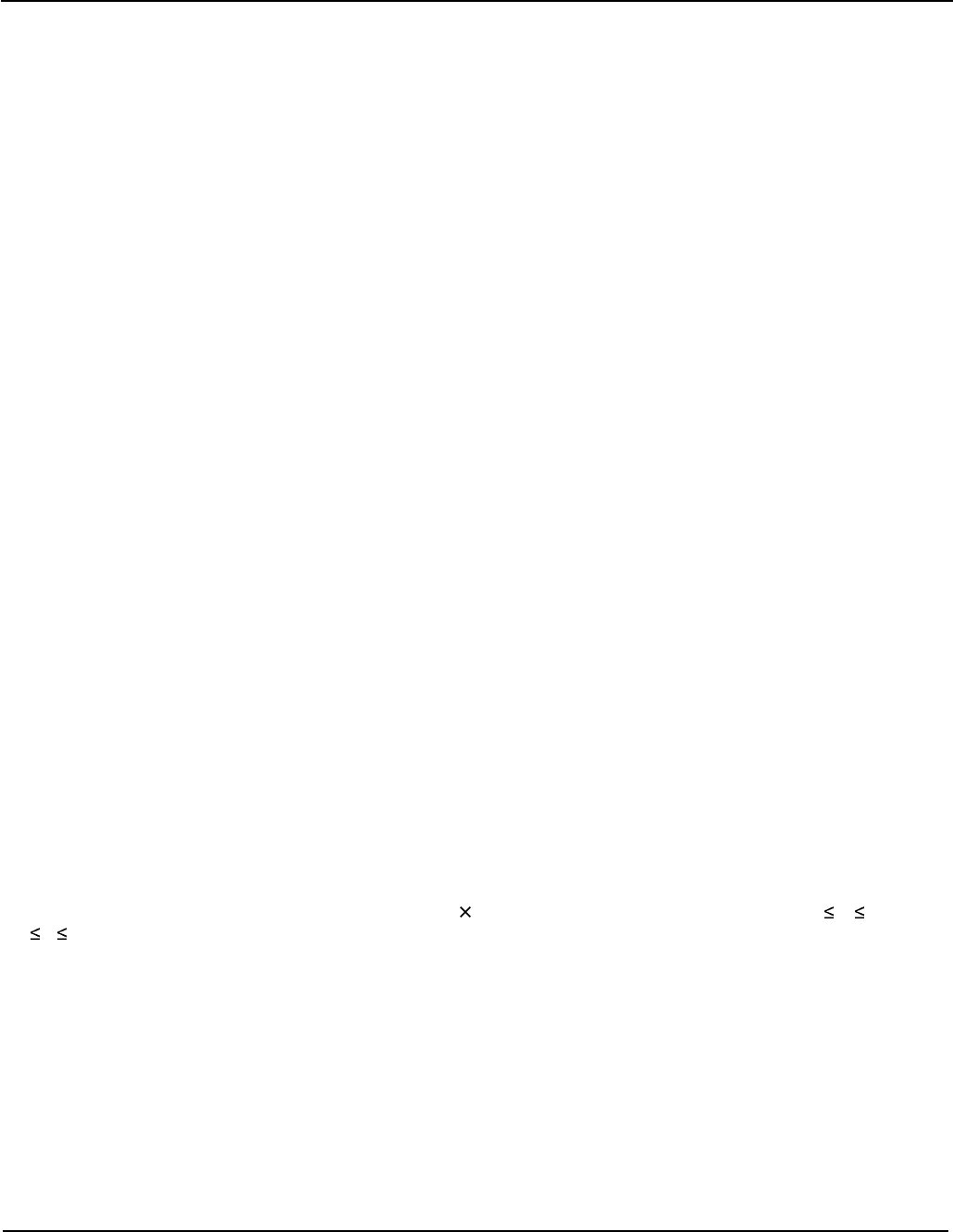
ARMv8 Instruction Set Overview
PRD03-GENC-010197 Copyright © 2009-2011 ARM Limited. All rights reserved. Page 51 of 112
STNP St1, St2, [base,#imm]
Store Non-temporal Pair (single): store two consecutive words from 32-bit St1 and St2 to memory
addressed by base+imm, with a non-temporal hint.
STNP Dt1, Dt2, [base,#imm]
Store Non-temporal Pair (double): store two consecutive doublewords from 64-bit Dt1 and Dt2 to
memory addressed by base+imm, with a non-temporal hint.
STNP Qt1, Qt2, [base,#imm]
Store Non-temporal Pair (quad): store two consecutive quadwords from 128-bit Qt1 and Qt2 to memory
addressed by base+imm, with a non-temporal hint.
5.6.2 Floating-point Move (register)
FMOV Sd, Sn
Move 32 bits unchanged from Sn to Sd.
FMOV Dd, Dn
Move 64 bits unchanged from Dn to Dd.
FMOV Wd, Sn
Move 32 bits unchanged from Sn to Wd.
FMOV Sd, Wn
Move 32 bits unchanged from Wn to Sd.
FMOV Xd, Dn
Move 64 bits unchanged from Dn to Xd.
FMOV Dd, Xn
Move 64 bits unchanged from Xn to Dd.
FMOV Xd, Vn.D[1]
Move 64 bits unchanged from Vn<127:64> to Xd.
FMOV Vd.D[1], Xn
Move 64 bits unchanged from Xn to Vd<127:64>, leaving the other bits in Vd unchanged.
5.6.3 Floating-point Move (immediate)
The floating point constant fpimm may be specified either in decimal notation (e.g. “12.0” or “-1.2e1”), or as a
string beginning “0x” followed by the hexadecimal representation of its IEEE754 encoding. A disassembler should
prefer the decimal notation, so long as the value can be displayed precisely.
The floating point value must be expressable as ±n÷16 2r, where n and r are integers such that 16 n 31 and
-3 r 4, i.e. a normalized binary floating point encoding with 1 sign bit, 4 bits of fraction and a 3-bit exponent.
Note that this encoding does not include the value 0.0, however this value may be loaded using a floating-point
move (register) instruction of the form FMOV Sd,WZR.
FMOV Sd, #fpimm
Single-precision floating-point move immediate Sd = fpimm.
FMOV Dd, #fpimm
Double-precision floating-point move immediate Dd = fpimm.
5.6.4 Floating-point Convert
5.6.4.1 Convert to/from Floating-point

ARMv8 Instruction Set Overview
PRD03-GENC-010197 Copyright © 2009-2011 ARM Limited. All rights reserved. Page 52 of 112
FCVT Sd, Hn
Convert from half-precision scalar in Hn to single-precision in Sd.
FCVT Hd, Sn
Convert from single-precision scalar in Sn to half-precision in Hd.
FCVT Dd, Hn
Convert from half-precision scalar in Hn to double-precision in Dd.
FCVT Hd, Dn
Convert from double-precision scalar in Dn to half-precision in Hd.
FCVT Dd, Sn
Convert from single-precision scalar in Sn to double-precision in Dd.
FCVT Sd, Dn
Convert from double-precision scalar in Dn to single-precision in Sd.
5.6.4.2 Convert to/from Integer
These instructions raise the Invalid Operation exception (FPSR.IOC) in response to a floating point input of NaN,
Infinity, or a numerical value that cannot be represented within the destination register. An out of range integer
result will also be saturated to the destination size. A numeric result which differs from the input will raise the
Inexact exception (FPSR.IXC). When flush-to-zero mode is enabled a denormal input will be replaced by a zero
and will raise the Input Denormal exception (FPSR.IDC).
FCVTAS Wd, Sn
Convert single-precision scalar in Sn to nearest signed 32-bit integer in Wd, with halfway cases rounding
away from zero.
FCVTAS Xd, Sn
Convert single-precision scalar in Sn to nearest signed 64-bit integer in Xd, with halfway cases rounding
away from zero.
FCVTAS Wd, Dn
Convert double-precision scalar in Dn to nearest signed 32-bit integer in Wd, with halfway cases rounding
away from zero.
FCVTAS Xd, Dn
Convert double-precision scalar in Dn to nearest signed 64-bit integer in Xd, with halfway cases rounding
away from zero.
FCVTAU Wd, Sn
Convert single-precision scalar in Sn to nearest unsigned 32-bit integer in Wd, with halfway cases
rounding away from zero.
FCVTAU Xd, Sn
Convert single-precision scalar in Sn to nearest unsigned 64-bit integer in Xd, with halfway cases
rounding away from zero.
FCVTAU Wd, Dn
Convert double-precision scalar in Dn to nearest unsigned 32-bit integer in Wd, with halfway cases
rounding away from zero.
FCVTAU Xd, Dn
Convert double-precision scalar in Dn to nearest unsigned 64-bit integer in Xd, with halfway cases
rounding away from zero.
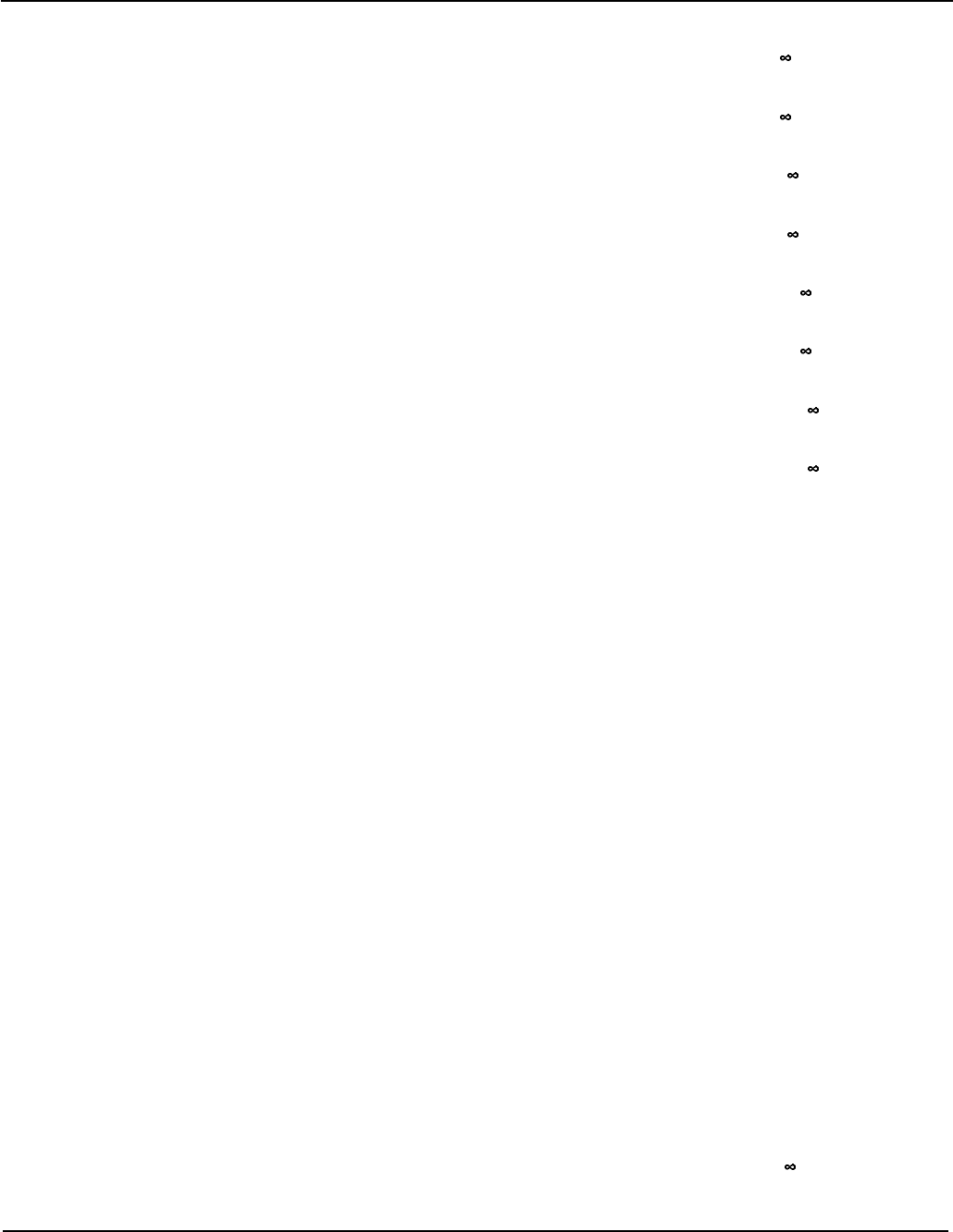
ARMv8 Instruction Set Overview
PRD03-GENC-010197 Copyright © 2009-2011 ARM Limited. All rights reserved. Page 53 of 112
FCVTMS Wd, Sn
Convert single-precision scalar in Sn to signed 32-bit integer in Wd, rounding towards - (RM).
FCVTMS Xd, Sn
Convert single-precision scalar in Sn to signed 64-bit integer in Xd, rounding towards - (RM).
FCVTMS Wd, Dn
Convert double-precision scalar in Dn to signed 32-bit integer in Wd, rounding towards - (RM).
FCVTMS Xd, Dn
Convert double-precision scalar in Dn to signed 64-bit integer in Xd, rounding towards - (RM).
FCVTMU Wd, Sn
Convert single-precision scalar in Sn to unsigned 32-bit integer in Wd, rounding towards - (RM).
FCVTMU Xd, Sn
Convert single-precision scalar in Sn to unsigned 64-bit integer in Xd, rounding towards - (RM).
FCVTMU Wd, Dn
Convert double-precision scalar in Dn to unsigned 32-bit integer in Wd, rounding towards - (RM).
FCVTMU Xd, Dn
Convert double-precision scalar in Dn to unsigned 64-bit integer in Xd, rounding towards - (RM).
FCVTNS Wd, Sn
Convert single-precision scalar in Sn to signed 32-bit integer in Wd, with halfway cases rounding to even
(RN).
FCVTNS Xd, Sn
Convert single-precision scalar in Sn to signed 64-bit integer in Xd, with halfway cases rounding to even
(RN).
FCVTNS Wd, Dn
Convert double-precision scalar in Dn to nearest signed 32-bit integer in Wd, with halfway cases rounding
to even (RN).
FCVTNS Xd, Dn
Convert double-precision scalar in Dn to nearest signed 64-bit integer in Xd, with halfway cases rounding
to even (RN).
FCVTNU Wd, Sn
Convert single-precision scalar in Sn to nearest unsigned 32-bit integer in Wd, with halfway cases
rounding to even (RN).
FCVTNU Xd, Sn
Convert single-precision scalar in Sn to nearest unsigned 64-bit integer in Xd, with halfway cases
rounding to even (RN).
FCVTNU Wd, Dn
Convert double-precision scalar in Dn to nearest unsigned 32-bit integer in Wd, with halfway cases
rounding to even (RN).
FCVTNU Xd, Dn
Convert double-precision scalar in Dn to nearest unsigned 64-bit integer in Xd, with halfway cases
rounding to even (RN).
FCVTPS Wd, Sn
Convert single-precision scalar in Sn to signed 32-bit integer in Wd, rounding towards + (RP).
ARMv8 Instruction Set Overview
PRD03-GENC-010197 Copyright © 2009-2011 ARM Limited. All rights reserved. Page 54 of 112
FCVTPS Xd, Sn
Convert single-precision scalar in Sn to signed 64-bit integer in Xd, rounding towards + (RP).
FCVTPS Wd, Dn
Convert double-precision scalar in Dn to signed 32-bit integer in Wd, rounding towards + (RP).
FCVTPS Xd, Dn
Convert double-precision scalar in Dn to signed 64-bit integer in Xd, rounding towards + (RP).
FCVTPU Wd, Sn
Convert single-precision scalar in Sn to unsigned 32-bit integer in Wd, rounding towards + (RP).
FCVTPU Xd, Sn
Convert single-precision scalar in Sn to unsigned 64-bit integer in Xd, rounding towards + (RP).
FCVTPU Wd, Dn
Convert double-precision scalar in Dn to unsigned 32-bit integer in Wd, rounding towards + (RP).
FCVTPU Xd, Dn
Convert double-precision scalar in Dn to unsigned 64-bit integer in Xd, rounding towards + (RP).
FCVTZS Wd, Sn
Convert single-precision scalar in Sn to signed 32-bit integer in Wd, rounding towards zero (RZ).
FCVTZS Xd, Sn
Convert single-precision scalar in Sn to signed 64-bit integer in Xd, rounding towards zero (RZ).
FCVTZS Wd, Dn
Convert double-precision scalar in Dn to signed 32-bit integer in Wd, rounding towards zero (RZ).
FCVTZS Xd, Dn
Convert double-precision scalar in Dn to signed 64-bit integer in Xd, rounding towards zero (RZ).
FCVTZU Wd, Sn
Convert single-precision scalar in Sn to unsigned 32-bit integer in Wd, rounding towards zero (RZ).
FCVTZU Xd, Sn
Convert single-precision scalar in Sn to unsigned 64-bit integer in Xd, rounding towards zero (RZ).
FCVTZU Wd, Dn
Convert double-precision scalar in Dn to unsigned 32-bit integer in Wd, rounding towards zero (RZ).
FCVTZU Xd, Dn
Convert double-precision scalar in Dn to unsigned 64-bit integer in Xd, rounding towards zero (RZ).
SCVTF Sd, Wn
Convert signed 32-bit integer in Wn to single-precision scalar in Sd, using FPCR rounding mode.
SCVTF Sd, Xn
Convert signed 64-bit integer in Xn to single-precision scalar in Sd, using FPCR rounding mode.
SCVTF Dd, Wn
Convert signed 32-bit integer in Wn to double-precision scalar in Dd, using FPCR rounding mode.
SCVTF Dd, Xn
Convert signed 64-bit integer in Xn to double-precision scalar in Dd, using FPCR rounding mode.
UCVTF Sd, Wn
Convert unsigned 32-bit integer in Wn to single-precision scalar in Sd, using FPCR rounding mode.

ARMv8 Instruction Set Overview
PRD03-GENC-010197 Copyright © 2009-2011 ARM Limited. All rights reserved. Page 55 of 112
UCVTF Sd, Xn
Convert unsigned 64-bit integer in Xn to single-precision scalar in Sd, using FPCR rounding mode.
UCVTF Dd, Wn
Convert unsigned 32-bit integer in Wn to double-precision scalar in Dd, using FPCR rounding mode.
UCVTF Dd, Xn
Convert unsigned 64-bit integer in Xn to double-precision scalar in Dd, using FPCR rounding mode.
5.6.4.3 Convert to/from Fixed-point
The #fbits operand indicates that the general register holds a fixed-point number with fbits bits after the
binary point, where fbits is in the range 1 to 32 for a 32-bit general register, or 1 to 64 for a 64-bit general
register.
These instructions raise the Invalid Operation exception (FPSR.IOC) in response to a floating point input of NaN,
Infinity, or a numerical value that cannot be represented within the destination register. An out of range fixed-point
result will also be saturated to the destination size. A numeric result which differs from the input will raise the
Inexact exception (FPSR.IXC). When flush-to-zero mode is enabled a denormal input will be replaced by a zero
and will raise the Input Denormal exception (FPSR.IDC).
FCVTZS Wd, Sn, #fbits
Convert single-precision scalar in Sn to signed 32-bit fixed-point in Wd, rounding towards zero.
FCVTZS Xd, Sn, #fbits
Convert single-precision scalar in Sn to signed 64-bit fixed-point in Xd, rounding towards zero.
FCVTZS Wd, Dn, #fbits
Convert double-precision scalar in Dn to signed 32-bit fixed-point in Wd, rounding towards zero.
FCVTZS Xd, Dn, #fbits
Convert double-precision scalar in Dn to signed 64-bit fixed-point in Xd, rounding towards zero.
FCVTZU Wd, Sn, #fbits
Convert single-precision scalar in Sn to unsigned 32-bit fixed-point in Wd, rounding towards zero.
FCVTZU Xd, Sn, #fbits
Convert single-precision scalar in Sn to unsigned 64-bit fixed-point in Xd, rounding towards zero.
FCVTZU Wd, Dn, #fbits
Convert double-precision scalar in Dn to unsigned 32-bit fixed-point in Wd, rounding towards zero.
FCVTZU Xd, Dn, #fbits
Convert double-precision scalar in Dn to unsigned 64-bit fixed-point in Xd, rounding towards zero.
SCVTF Sd, Wn, #fbits
Convert signed 32-bit fixed-point in Wn to single-precision scalar in Sd, using FPCR rounding mode.
SCVTF Sd, Xn, #fbits
Convert signed 64-bit fixed-point in Xn to single-precision scalar in Sd, using FPCR rounding mode.
SCVTF Dd, Wn, #fbits
Convert signed 32-bit fixed-point in Wn to double-precision scalar in Dd, using FPCR rounding mode.
SCVTF Dd, Xn, #fbits
Convert signed 64-bit fixed-point in Xn to double-precision scalar in Dd, using FPCR rounding mode.

ARMv8 Instruction Set Overview
PRD03-GENC-010197 Copyright © 2009-2011 ARM Limited. All rights reserved. Page 56 of 112
UCVTF Sd, Wn, #fbits
Convert unsigned 32-bit fixed-point in Wn to single-precision scalar in Sd, using FPCR rounding mode.
UCVTF Sd, Xn, #fbits
Convert unsigned 64-bit fixed-point in Xn to single-precision scalar in Sd, using FPCR rounding mode.
UCVTF Dd, Wn, #fbits
Convert unsigned 32-bit fixed-point in Wn to double-precision scalar in Dd, using FPCR rounding mode.
UCVTF Dd, Xn, #fbits
Convert unsigned 64-bit fixed-point in Xn to double-precision scalar in Dd, using FPCR rounding mode.
5.6.5 Floating-point Round to Integral
The round to integral instructions round a floating-point value to an integral floating-point value of the same size.
The only FPSR exception flags that can be raised by these instructions are: FPSR.IOC (Invalid Operation) for a
Signaling NaN input; FPSR.IDC (Input Denormal) for a denormal input when flush-to-zero mode is enabled; for
FRINTX only the FPSR.IXC (Inexact) exception if the result is numeric and does not have the same numerical
value as the source. A zero input gives a zero result with the same sign, an infinite input gives an infinite result
with the same sign, and a NaN is propagated as in normal arithmetic.
FRINTA Sd, Sn
Round to nearest integral with halfway cases rounding away from zero, single-precision, from Sn to Sd.
FRINTA Dd, Dn
Round to nearest integral with halfway cases rounding away from zero, double-precision, from Dn to Dd.
FRINTI Sd, Sn
Round to integral using FPCR rounding mode, single-precision, from Sn to Sd.
FRINTI Dd, Dn
Round to integral using FPCR rounding mode, double-precision, from Dn to Dd,.
FRINTM Sd, Sn
Round to integral towards - , single-precision, from Sn to Sd.
FRINTM Dd, Dn
Round to integral towards - , double-precision, from Dn to Dd.
FRINTN Sd, Sn
Round to nearest integral with halfway cases rounding to even, single-precision, from Sn to Sd,
FRINTN Dd, Dn
Round to nearest integral with halfway cases rounding to even, double-precision from Dn to Dd.
FRINTP Sd, Sn
Round to integral towards + , single-precision, from Sn to Sd.
FRINTP Dd, Dn
Round to integral towards + , double-precision, from Dn to Dd.
FRINTX Sd, Sn
Round to integral exact using FPCR rounding mode, single-precision, from Sn to Sd.
For a numerical input sets the Inexact flag if result does not have the same value as the input.
FRINTX Dd, Dn
Round to integral exact using FPCR rounding mode, double-precision, from Dn to Dd.
For a numerical input sets the Inexact flag if result does not have the same value as the input.

ARMv8 Instruction Set Overview
PRD03-GENC-010197 Copyright © 2009-2011 ARM Limited. All rights reserved. Page 57 of 112
FRINTZ Sd, Sn
Round to integral towards zero, single-precision, from Sn to Sd.
FRINTZ Dd, Dn
Round to integral towards zero, double-precision, from Dn to Dd.
5.6.6 Floating-point Arithmetic (1 source)
FABS Sd, Sn
Single-precision floating-point scalar absolute value: Sd = abs(Sn).
FABS Dd, Dn
Double-precision floating-point scalar absolute value: Dd = abs(Dn).
FNEG Sd, Sn
Single-precision floating-point scalar negation: Sd = -Sn.
FNEG Dd, Dn
Double-precision floating-point scalar negation: Dd = -Dn.
FSQRT Sd, Sn
Single-precision floating-point scalar square root: Sd = sqrt(Sn).
FSQRT Dd, Dn
Double-precision floating-point scalar square root: Dd = sqrt(Dn).
5.6.7 Floating-point Arithmetic (2 source)
FADD Sd, Sn, Sm
Single-precision floating-point scalar addition: Sd = Sn + Sm.
FADD Dd, Dn, Dm
Double-precision floating-point scalar addition: Dd = Dn + Dm.
FDIV Sd, Sn, Sm
Single-precision floating-point scalar division: Sd = Sn / Sm.
FDIV Dd, Dn, Dm
Double-precision floating-point scalar division: Dd = Dn / Dm.
FMUL Sd, Sn, Sm
Single-precision floating-point scalar multiply: Sd = Sn * Sm.
FMUL Dd, Dn, Dm
Double-precision floating-point scalar multipy: Dd = Dn * Dm.
FNMUL Sd, Sn, Sm
Single-precision floating-point scalar multiply-negate: Sd = -(Sn * Sm).
FNMUL Dd, Dn, Dm
Double-precision floating-point scalar multiply-negate: Dd = -(Dn * Dm).
FSUB Sd, Sn, Sm
Single-precision floating-point scalar subtraction: Sd = Sn - Sm.
FSUB Dd, Dn, Dm
Double-precision floating-point scalar subtraction: Dd = Dn - Dm.

ARMv8 Instruction Set Overview
PRD03-GENC-010197 Copyright © 2009-2011 ARM Limited. All rights reserved. Page 58 of 112
5.6.8 Floating-point Min/Max
The min(x,y) and max(x,y) operations behave similarly to the ARM v7 VMIN.F and VMAX.F instructions and
return a quiet NaN when either x or y is a NaN. In flush-to-zero mode subnormal operands are flushed to zero
before comparison, and if a flushed value is then the appropriate result the zero value is returned. Where both x
and y are zero (or subnormal values flushed to zero) with differing sign, then +0.0 is returned by max() and -0.0 by
min().
The minNum(x,y) and maxNum(x,y) operations follow the IEEE 754-2008 standard and return the numerical
operand when one operand is numerical and the other a quiet NaN. Apart from this additional handling of a single
quiet NaN the result is then identical to min(x,y) and max(x,y).
FMAX Sd, Sn, Sm
Single-precision floating-point scalar maximum: Sd = max(Sn,Sm).
FMAX Dd, Dn, Dm
Double-precision floating-point scalar maximum: Dd = max(Dn,Dm).
FMAXNM Sd, Sn, Sm
Single-precision floating-point scalar max number: Sd = maxNum(Sn,Sm).
FMAXNM Dd, Dn, Dm
Double-precision floating-point scalar max number: Dd = maxNum(Dn,Dm).
FMIN Sd, Sn, Sm
Single-precision floating-point scalar minimum: Sd = min(Sn,Sm).
FMIN Dd, Dn, Dm
Double-precision floating-point scalar minimum: Dd = min(Dn,Dm).
FMINNM Sd, Sn, Sm
Single-precision floating-point scalar min number: Sd = minNum(Sn,Sm).
FMINNM Dd, Dn, Dm
Double-precision floating-point scalar min number: Dd = minNum(Dn,Dm).
5.6.9 Floating-point Multiply-Add
FMADD Sd, Sn, Sm, Sa
Single-precision floating-point scalar fused multiply-add: Sd = Sa + Sn*Sm.
FMADD Dd, Dn, Dm, Da
Double-precision floating-point scalar fused multiply-add: Dd = Da + Dn*Dm.
FMSUB Sd, Sn, Sm, Sa
Single-precision floating-point scalar fused multiply-subtract: Sd = Sa + (-Sn)*Sm.
FMSUB Dd, Dn, Dm, Da
Double-precision floating-point scalar fused multiply-subtract: Dd = Da + (-Dn)*Dm.
FNMADD Sd, Sn, Sm, Sa
Single-precision floating-point scalar negated fused multiply-add: Sd = (-Sa) + (-Sn)*Sm.
FNMADD Dd, Dn, Dm, Da
Double-precision floating-point scalar negated fused multiply-add: Dd = (-Da) + (-Dn)*Dm.
FNMSUB Sd, Sn, Sm, Sa
Single-precision floating-point scalar negated fused multiply-subtract: Sd = (-Sa) + Sn*Sm.
FNMSUB Dd, Dn, Dm, Da
Double-precision floating-point scalar negated fused multiply-subtract: Dd = (-Da) + Dn*Dm.

ARMv8 Instruction Set Overview
PRD03-GENC-010197 Copyright © 2009-2011 ARM Limited. All rights reserved. Page 59 of 112
5.6.10 Floating-point Comparison
These instructions set the integer NZCV condition flags directly, and do not alter the condition flags in the FPSR.
In the conditional compare instructions, the #uimm4 operand is a bitmask used to set the NZCV flags when the
input condition is false, with bit 3 setting the N flag, bit 2 the Z flag, bit 1 the C flag, and bit 0 the V flag. If floating-
point comparisons are unordered the C and V flag bits are set and the N and Z bits cleared.
FCMP Sn, Sm|#0.0
Single-precision compare: set condition flags from floating point comparison of Sn with Sm or 0.0.
Invalid Operation exception only on signaling NaNs.
FCMP Dn, Dm|#0.0
Double-precision compare: set condition flags from floating point comparison of Dn with Dm or 0.0.
Invalid Operation exception only on signaling NaNs.
FCMPE Sn, Sm|#0.0
Single-precision compare, exceptional: set flags from floating point comparison of Sn with Sm or 0.0.
Invalid Operation exception on all NaNs.
FCMPE Dn, Dm|#0.0
Double-precision compare, exceptional: set flags from floating point comparison of Dn with Dm or 0.0.
Invalid Operation exception on all NaNs.
FCCMP Sn, Sm, #uimm4, cond
Single-precision conditional compare: NZCV = if cond then FPCompare(Sn, Sm) else uimm4.
Invalid Operation exception only on signaling NaNs when cond holds true.
FCCMP Dn, Dm, #uimm4, cond
Double-precision conditional compare: NZCV = if cond then FPcompare(Dn, Dm) else uimm4.
Invalid Operation exception only on signaling NaNs when cond holds true.
FCCMPE Sn, Sm, #uimm4, cond
Single-precision conditional compare, exceptional:
NZCV = if cond then FPCompare(Sn, Sm) else uimm4.
Invalid Operation exception on all NaNs when cond holds true.
FCCMPE Dn, Dm, #uimm4, cond
Double-precision conditional compare, exceptional:
NZCV = if cond then FPCompare(Dn, Dm) else uimm4.
Invalid Operation exception on all NaNs when cond holds true.
5.6.11 Floating-point Conditional Select
FCSEL Sd, Sn, Sm, cond
Single-precision conditional select: Sd = if cond then Sn else Sm.
FCSEL Dd, Dn, Dm, cond
Double-precision conditional select: Dd = if cond then Dn else Dm.

ARMv8 Instruction Set Overview
PRD03-GENC-010197 Copyright © 2009-2011 ARM Limited. All rights reserved. Page 60 of 112
5.7 Advanced SIMD
5.7.1 Overview
AArch64 Advanced SIMD is based upon the existing AArch32 Advanced SIMD extension, with the following
changes:
• In AArch64 Advanced SIMD, there are thirty two 128-bit wide vector registers, whereas AArch32
Advanced SIMD had sixteen 128-bit wide registers.
• There are thirty two 64-bit vectors and these are held in the lower 64 bits of each 128-bit register.
• Writes of 64 bits or less to a vector register result in the higher bits being zeroed (except for lane inserts).
• New lane insert and extract instructions have been added to support the new register packing scheme.
• Additional widening instructions are provided for generating the top 64 bits of a 128-bit vector register.
• Data-processing instructions which would generate more than one result register (e.g. widening a 128-bit
vector), or consume more than three sources (e.g. narrowing a 128-bit vector), have been split into
separate instructions.
• A set of scalar instructions have been added to implement loop heads and tails, but only where the
instruction does not already exist in the main scalar floating-point instruction set, and only when “over-
computing” using a vector form might have the side effect of setting the saturation or floating point
exception flags if there was “garbage” in unused higher lanes. Scalar operations on 64-bit integers are
also provided in this section, to avoid the cost of over-computing using a 128-bit vector.
• A new set of vector “reduction” operations provide across-lane sum, minimum and maximum.
• Some existing instructions have been extended to support 64-bit integer values: e.g. comparison,
addition, absolute value and negate, including saturating versions.
• Advanced SIMD now supports both single-precision (32-bit) and double-precision (64-bit) floating-point
vector data types and arithmetic as defined by the IEEE 754 floating-point standard, honoring the FPCR
Rounding Mode field, the Default NaN control, the Flush-to-Zero control, and (where supported by the
implementation) the Exception trap enable bits.
• The ARMv7 SIMD "chained" floating-point multiply-accumulate instructions have been replaced with
IEEE754 "fused" multiply-add. This includes the reciprocal step and reciprocal square root step
instructions.
• Convert float to integer (FCVTxU, FCVTxS) encode a directed rounding mode: towards zero, towards +Inf,
towards –Inf, to nearest with ties to even, and to nearest with ties away from zero.
• Round float to nearest integer in floating-point format (FRINTx) has been added, with the same directed
rounding modes, as well as rounding according to the ambient rounding mode.
• A new double to single precision down-convert instruction with “exact” rounding, suitable for ongoing
single to half-precision down-conversion with correct double to half rounding (FCVTXN).
• IEEE 754-2008 minNum() and maxNum() instructions have been added (FMINNM, FMAXNM).
• Instructions to accelerate floating point vector normalisation have been added (FRECPX, FMULX).
• Saturating instructions have been extended to include unsigned accumulate into signed, and vice-versa.

ARMv8 Instruction Set Overview
PRD03-GENC-010197 Copyright © 2009-2011 ARM Limited. All rights reserved. Page 61 of 112
5.7.2 Advanced SIMD Mnemonics
Although derived from the AArch32 Advanced SIMD syntax, a number of changes have been made to harmonise
with the AArch64 core integer and floating point instruction set syntax, and to unify AArch32’s divergent
“architectural” and “programmers’” notations:
• The ‘V’ mnemonic prefix has been removed, and S/U/F/P added to indicate signed/unsigned/floating-
point/polynomial data type. The mnemonic always indicates the data type(s) of the operation.
• The vector organisation (element size and number of lanes) is described by the register qualifiers and
never by a mnemonic qualifier. See the description of the vector register syntax in §4.4.2 above.
• The ‘P’ prefix for “pairwise” operations becomes a suffix.
• A ‘V’ suffix has been added for the new reduction (across-all-lanes) operations
• A ‘2’ suffix has been added for the new widening/narrowing “second part” instructions, described below.
• Vector compares now use the integer condition code names to indicate whether an integer comparison is
signed or unsigned (e.g. CMLT, CMLO, CMGE, CMHI, etc)
• Some mnemonics have been renamed where the removal of the V prefix caused clash with the core
instruction set mnemonics.
With the exception of the above changes, the mnemonics are based closely on AArch32 Advanced SIMD. As
such, the learning curve for existing Advanced SIMD programmers is reduced. A full list of the equivalent AArch32
mnemonics can be found in §5.7.23 below.
Widening instructions with a ‘2’ suffix implement the “second” or “top” part of a widening operation that would
otherwise need to write two 128-bit vectors: they get their input data from the high numbered lanes of the 128-bit
source vectors, and write the expanded results to the 128-bit destination.
Narrowing instructions with a ‘2’ suffix implement the “second” or “top” part of a narrowing operation that would
otherwise need to read two 128-bit vectors for each source operand: they get their input data from the 128-bit
source operands and insert their narrowed results into the high numbered lanes of the 128-bit destination, leaving
the lower lanes unchanged.
5.7.3 Data Movement
DUP Vd.<Td>, Vn.<Ts>[index]
Duplicate element (vector). Replicate single vector element from Vn to all elements of Vd. Where
<Td>/<Ts> may be 8B/B, 16B/B, 4H/H, 8H/H, 2S/S, 4S/S or 2D/D. The immediate index is a value in the
range 0 to nelem(<Ts>)-1.
DUP Vd.<T>, Wn
Duplicate 32-bit general register (vector). Replicate low order bits from 32-bit general register Wn to all
elements of vector Vd. Where <T> may be 8B, 16B, 4H, 8H, 2S or 4S.
DUP Vd.2D, Xn
Duplicate 64-bit general register (vector). Replicate 64-bit general register Xn to both elements of vector
Vd.
DUP <V>d, Vn.<T>[index]
Duplicate element (scalar). Copy single vector element from Vn to scalar register <V>d. Where <V>/<T>
may be B/B, H/H, S/S or D/D. The immediate index is a value in the range 0 to nelem(<T>)-1. Normally
disassembled as MOV.
INS Vd.<T>[index], Vn.<T>[index2]
Insert element (vector). Inserts a single vector element from Vn into a single element of Vd. Where <T>
may be B, H, S or D. Both immediates index and index2 are values in the range 0 to nelem(<T>)-1.
Normally disassembled as MOV.

ARMv8 Instruction Set Overview
PRD03-GENC-010197 Copyright © 2009-2011 ARM Limited. All rights reserved. Page 62 of 112
INS Vd.<T>[index], Wn
Insert 32-bit general register (vector). Inserts low order bits from 32-bit general register Wn into a single
vector element of Vd. Where <T> may be 8B, 16B, 4H, 8H, 2S or 4S. The immediate index is a value in
the range 0 to nelem(<T>)-1. Normally disassembled as MOV.
INS Vd.D[index], Xn
Insert 64-bit general register (vector). Inserts 64-bit general register Xn into a single vector element of Vd.
The immediate index is a value in the range 0 to 1. Normally disassembled as MOV.
MOV Vd.<T>[index], Vn.<T>[index2]
Move element. Moves a vector element from Vn to a vector element in Vd: alias for INS
Vd.<T>[index],Vn.<T>[index2].
MOV Vd.<T>[index], Wn
Move 32-bit general register to element. Moves a 32-bit general register Wn to vector element in Vd: alias
for INS Vd.<T>[index],Wn.
MOV Vd.2D[index], Xn
Move 64-bit general register to element. Moves a 64-bit general register Xn to a vector element in Vd:
alias for INS Vd.D[index],Xn.
MOV <V>d, Vn.<T>[index]
Move element (scalar). Moves a vector element from Vn to scalar register <V>d: alias for DUP
<V>d,Vn.<T>[index].
MOV <V>d, <V>n
Move (scalar). Moves a scalar register <V>n to scalar register <V>d: alias for DUP <V>d,Vn.<V>[0].
UMOV Wd, Vn.<Ts>[index]
Unsigned integer move element to 32-bit general register. Zero-extends an integer vector element from
Vn into 32-bit general register Wd. Where <Ts> may be 8B, 16B, 4H, 8H, 2S or 4S. The index is in the
range 0 to nelem(<Ts>)-1.
UMOV Xd, Vn.D[index]
Unsigned integer move element to 64-bit general register. Moves an unsigned 64-bit integer vector
element from Vn into 64-bit general register Wd. The immediate index is in the range 0 to 1.
SMOV Wd, Vn.<T>[index]
Signed integer move element to 32-bit general register. Sign-extends an integer vector element from Vn
into 32-bit general register Wd. Where <T> may be B or H. The index is a value is in the range 0 to
nelem(<T>)-1.
SMOV Xd, Vn.<T>[index]
Signed integer move element to 64-bit general register. Sign-extends an integer vector element from Vn
into 64-bit general register Xd. Where <T> may be B, H or S. The index is in the range 0 to nelem(<T>)-1.
5.7.4 Vector Arithmetic
UABA Vd.<T>, Vn.<T>, Vm.<T>
Unsigned integer absolute difference and accumulate (vector). Subtracts the elements of Vm from the
corresponding elements of Vn, and accumulates the absolute values of the results into the elements of
Vd. Operand and result elements are all unsigned integers of the same length: <T> is 8B, 16B, 4H, 8H,
2S or 4S.
SABA Vd.<T>, Vn.<T>, Vm.<T>
Signed integer absolute difference and accumulate (vector). Subtracts the elements of Vm from the
corresponding elements of Vn, and accumulates the absolute values of the results into the elements of
Vd. Operand and result elements are all signed integers of the same length: <T> is 8B, 16B, 4H, 8H, 2S
or 4S.

ARMv8 Instruction Set Overview
PRD03-GENC-010197 Copyright © 2009-2011 ARM Limited. All rights reserved. Page 63 of 112
UABD Vd.<T>, Vn.<T>, Vm.<T>
Unsigned integer absolute difference (vector). Subtracts the elements of Vm from the corresponding
elements of Vn, and places the absolute values of the results in the elements of Vd. Operand and result
elements are all integers of the same length: <T> is 8B, 16B, 4H, 8H, 2S or 4S.
SABD Vd.<T>, Vn.<T>, Vm.<T>
Signed integer absolute difference (vector). Subtracts the elements of Vm from the corresponding
elements of Vn, and places the absolute values of the results in the elements of Vd. Operand and result
elements are all integers of the same length: <T> is 8B, 16B, 4H, 8H, 2S or 4S.
FABD Vd.<T>, Vn.<T>, Vm.<T>
Floating-point absolute difference (vector). Subtracts the elements of Vm from the corresponding
elements of Vn, and places the absolute values of the results in the elements of Vd. Operand and result
elements are all of the same length: <T> is 2S, 4S or 2D.
ADD Vd.<T>, Vn.<T>, Vm.<T>
Integer add (vector). Where <T> is 8B, 16B, 4H, 8H, 2S, 4S or 2D
FADD Vd.<T>, Vn.<T>, Vm.<T>
Floating-point add (vector). Where <T> is 2S, 4S or 2D.
AND Vd.<T>, Vn.<T>, Vm.<T>
Bitwise AND (vector). Where <T> is 8B or 16B (though an assembler should accept any valid format).
BIC Vd.<T>, Vn.<T>, Vm.<T>
Bitwise bit clear (vector). Where <T> is 8B or 16B (though an assembler should accept any valid format).
BIF Vd.<T>, Vn.<T>, Vm.<T>
Bitwise insert if false (vector). Where <T> is 8B or 16B (though an assembler should accept any valid
format).
BIT Vd.<T>, Vn.<T>, Vm.<T>
Bitwise insert if true (vector). Where <T> is 8B or 16B (though an assembler should accept any valid
format).
BSL Vd.<T>, Vn.<T>, Vm.<T>
Bitwise select (vector). Where <T> is 8B or 16B (though an assembler should accept any valid format).
CMEQ Vd.<T>, Vn.<T>, Vm.<T>
Integer compare mask equal (vector). Where <T> is 8B, 16B, 4H, 8H, 2S, 4S or 2D.
CMEQ Vd.<T>, Vn.<T>, #0
Integer compare mask equal to zero (vector). Where <T> is 8B, 16B, 4H, 8H, 2S, 4S or 2D.
CMHS Vd.<T>, Vn.<T>, Vm.<T>
Unsigned integer compare mask higher or same (vector). Where <T> is 8B, 16B, 4H, 8H, 2S, 4S or 2D.
CMGE Vd.<T>, Vn.<T>, Vm.<T>
Signed integer compare mask greater than or equal (vector). Where <T> is 8B, 16B, 4H, 8H, 2S, 4S or
2D.
CMGE Vd.<T>, Vn.<T>, #0
Signed integer compare mask greater than or equal to zero (vector). Where <T> is 8B, 16B, 4H, 8H, 2S,
4S or 2D.
CMHI Vd.<T>, Vn.<T>, Vm.<T>
Unsigned integer compare mask higher (vector). Where <T> is 8B, 16B, 4H, 8H, 2S, 4S or 2D.
CMGT Vd.<T>, Vn.<T>, Vm.<T>
Signed integer compare mask greater than (vector). Where <T> is 8B, 16B, 4H, 8H, 2S, 4S or 2D.

ARMv8 Instruction Set Overview
PRD03-GENC-010197 Copyright © 2009-2011 ARM Limited. All rights reserved. Page 64 of 112
CMGT Vd.<T>, Vn.<T>, #0
Signed integer compare mask greater than zero (vector). Where <T> is 8B, 16B, 4H, 8H, 2S, 4S or 2D.
CMLS Vd.<T>, Vn.<T>, Vm.<T>
Unsigned integer compare mask lower or same (vector). Where <T> is 8B, 16B, 4H, 8H, 2S, 4S or 2D.
Alias for CMHS with operands reversed.
CMLE Vd.<T>, Vn.<T>, Vm.<T>
Signed integer compare mask less than or equal (vector). Where <T> is 8B, 16B, 4H, 8H, 2S, 4S or 2D.
Alias for CMGE with operands reversed.
CMLE Vd.<T>, Vn.<T>, #0
Signed integer compare mask less than or equal to zero (vector). Where <T> is 8B, 16B, 4H, 8H, 2S, 4S
or 2D.
CMLO Vd.<T>, Vn.<T>, Vm.<T>
Unsigned integer compare mask lower (vector). Where <T> is 8B, 16B, 4H, 8H, 2S, 4S or 2D.
Alias for CMHI with operands reversed.
CMLT Vd.<T>, Vn.<T>, Vm.<T>
Signed integer compare mask less than (vector). Where <T> is 8B, 16B, 4H, 8H, 2S, 4S or 2D.
Alias for CMGT with operands reversed.
CMLT Vd.<T>, Vn.<T>, #0
Signed integer compare mask less than zero (vector). Where <T> is 8B, 16B, 4H, 8H, 2S, 4S or 2D.
CMTST Vd.<T>, Vn.<T>, Vm.<T>
Integer compare mask bitwise test (vector). Where <T> is 8B, 16B, 4H, 8H, 2S, 4S or 2D.
FCMEQ Vd.<T>, Vn.<T>, Vm.<T>
Floating-point compare mask equal (vector). Where <T> is 2S, 4S or 2D.
FCMEQ Vd.<T>, Vn.<T>, #0
Floating-point compare mask equal to zero (vector). Where <T> is 2S, 4S or 2D.
FCMGE Vd.<T>, Vn.<T>, Vm.<T>
Floating-point compare mask greater than or equal (vector). Where <T> is 2S, 4S or 2D.
FCMGE Vd.<T>, Vn.<T>, #0
Floating-point compare mask greater than or equal to zero (vector). Where <T> is 2S, 4S or 2D.
FCMGT Vd.<T>, Vn.<T>, Vm.<T>
Floating-point compare mask greater than (vector). Where <T> is 2S, 4S or 2D.
FCMGT Vd.<T>, Vn.<T>, #0
Floating-point compare mask greater than zero (vector). Where <T> is 2S, 4S or 2D.
FCMLE Vd.<T>, Vn.<T>, Vm.<T>
Floating-point compare mask less than or equal (vector). Where <T> is 2S, 4S or 2D.
Alias for FCMGE with operands reversed.
FCMLE Vd.<T>, Vn.<T>, #0
Floating-point compare mask less than or equal to zero (vector). Where <T> is 2S, 4S or 2D.
FCMLT Vd.<T>, Vn.<T>, Vm.<T>
Floating-point compare mask less than (vector). Where <T> is 2S, 4S or 2D.
Alias for FCMGT with operands reversed.
FCMLT Vd.<T>, Vn.<T>, #0
Floating-point compare mask less than zero (vector). Where <T> is 2S, 4S or 2D.

ARMv8 Instruction Set Overview
PRD03-GENC-010197 Copyright © 2009-2011 ARM Limited. All rights reserved. Page 65 of 112
FACGE Vd.<T>, Vn.<T>, Vm.<T>
Floating-point absolute compare mask greater than or equal (vector). Where <T> is 2S, 4S or 2D.
FACGT Vd.<T>, Vn.<T>, Vm.<T>
Floating-point absolute compare mask greater than (vector). Where <T> is 2S, 4S or 2D.
FACLE Vd.<T>, Vn.<T>, Vm.<T>
Floating-point absolute compare mask less than or equal (vector). Where <T> is 2S, 4S or 2D.
Alias for FACGE with operands reversed.
FACLT Vd.<T>, Vn.<T>, Vm.<T>
Floating-point absolute compare mask less than (vector). Where <T> is 2S, 4S or 2D.
Alias for FACGT with operands reversed.
FDIV Vd.<T>, Vn.<T>, Vm.<T>
Floating-point divide (vector). Where <T> is 2S, 4S or 2D.
EOR Vd.<T>, Vn.<T>, Vm.<T>
Bitwise exclusive OR (vector). Where <T> is 8B or 16B (an assembler should accept any valid
arrangement).
UHADD Vd.<T>, Vn.<T>, Vm.<T>
Unsigned integer halving add (vector). Where <T> is 8B, 16B, 4H, 8H, 2S or 4S.
SHADD Vd.<T>, Vn.<T>, Vm.<T>
Signed integer halving add (vector). Where <T> is 8B, 16B, 4H, 8H, 2S or 4S.
UHSUB Vd.<T>, Vn.<T>, Vm.<T>
Unsigned integer halving subtract (vector). Where <T> is 8B, 16B, 4H, 8H, 2S or 4S.
SHSUB Vd.<T>, Vn.<T>, Vm.<T>
Signed integer halving subtract (vector). Where <T> is 8B, 16B, 4H, 8H, 2S or 4S.
UMAX Vd.<T>, Vn.<T>, Vm.<T>
Unsigned integer maximum (vector). Where <T> is 8B, 16B, 4H, 8H, 2S or 4S.
SMAX Vd.<T>, Vn.<T>, Vm.<T>
Signed integer maximum (vector). Where <T> is 8B, 16B, 4H, 8H, 2S or 4S.
FMAX Vd.<T>, Vn.<T>, Vm.<T>
Floating-point maximum (vector). Where <T> is 2S, 4S or 2D.
FMAXNM Vd.<T>, Vn.<T>, Vm.<T>
Floating-point maxNum (vector). Where <T> is 2S, 4S or 2D.
UMIN Vd.<T>, Vn.<T>, Vm.<T>
Unsigned integer minimum (vector). Where <T> is 8B, 16B, 4H, 8H, 2S or 4S.
SMIN Vd.<T>, Vn.<T>, Vm.<T>
Signed integer minimum (vector). Where <T> is 8B, 16B, 4H, 8H, 2S or 4S.
FMIN Vd.<T>, Vn.<T>, Vm.<T>
Floating-point minimum (vector). Where <T> is 2S, 4S or 2D.
FMINNM Vd.<T>, Vn.<T>, Vm.<T>
Floating-point minNum (vector). Where <T> is 2S, 4S or 2D.
MLA Vd.<T>, Vn.<T>, Vm.<T>
Integer multiply-accumulate (vector). Where <T> is 8B, 16B, 4H, 8H, 2S or 4S.
FMLA Vd.<T>, Vn.<T>, Vm.<T>
Floating-point fused multiply-accumulate (vector). Where <T> is 2S, 4S or 2D.

ARMv8 Instruction Set Overview
PRD03-GENC-010197 Copyright © 2009-2011 ARM Limited. All rights reserved. Page 66 of 112
MLS Vd.<T>, Vn.<T>, Vm.<T>
Integer multiply-subtract from accumulator (vector). Where <T> is 8B, 16B, 4H, 8H, 2S or 4S.
FMLS Vd.<T>, Vn.<T>, Vm.<T>
Floating-point fused multiply-subtract from accumulator (vector). Where <T> is 2S, 4S or 2D.
MUL Vd.<T>, Vn.<T>, Vm.<T>
Integer multiply (vector). Where <T> is 8B, 16B, 4H, 8H, 2S or 4S.
FMUL Vd.<T>, Vn.<T>, Vm.<T>
Floating-point multiply (vector). Where <T> is 2S, 4S or 2D.
FMULX Vd.<T>, Vn.<T>, Vm.<T>
Floating-point multiply extended, like FMUL but 0 ± ±2 (vector). Where <T> is 2S, 4S or 2D.
PMUL Vd.<T>, Vn.<T>, Vm.<T>
Polynomial multiply (vector). Where <T> is 8B or 16B.
ORN Vd.<T>, Vn.<T>, Vm.<T>
Bitwise OR NOT (vector). Where <T> is 8B or 16B (an assembler should accept any valid arrangement).
ORR Vd.<T>, Vn.<T>, Vm.<T>
Bitwise OR (vector). Where <T> is 8B or 16B (an assembler should accept any valid arrangement).
SQADD Vd.<T>, Vn.<T>, Vm.<T>
Signed integer saturating add (vector). Where <T> is 8B, 16B, 4H, 8H, 2S, 4S or 2D.
UQADD Vd.<T>, Vn.<T>, Vm.<T>
Unsigned integer saturating add (vector). Where <T> is 8B, 16B, 4H, 8H, 2S, 4S or 2D
SQDMULH Vd.<T>, Vn.<T>, Vm.<T>
Signed integer saturating doubling multiply high half (vector). Where <T> is 4H, 8H, 2S or 4S.
SQRDMULH Vd.<T>, Vn.<T>, Vm.<T>
Signed integer saturating rounding doubling multiply high half (vector). Where <T> is 4H, 8H, 2S or 4S.
UQRSHL Vd.<T>, Vn.<T>, Vm.<T>
Unsigned integer saturating rounding shift left (vector). Where <T> is 8B, 16B, 4H, 8H, 2S, 4S or 2D
SQRSHL Vd.<T>, Vn.<T>, Vm.<T>
Signed integer saturating rounding shift left (vector). Where <T> is 8B, 16B, 4H, 8H, 2S, 4S or 2D
UQSUB Vd.<T>, Vn.<T>, Vm.<T>
Unsigned integer saturating subtract (vector). Where <T> is 8B, 16B, 4H, 8H, 2S, 4S or 2D
SQSUB Vd.<T>, Vn.<T>, Vm.<T>
Signed integer saturating subtract (vector). Where <T> is 8B, 16B, 4H, 8H, 2S, 4S or 2D
URHADD Vd.<T>, Vn.<T>, Vm.<T>
Unsigned integer rounding halving add (vector). Where <T> is 8B, 16B, 4H, 8H, 2S or 4S.
SRHADD Vd.<T>, Vn.<T>, Vm.<T>
Signed integer rounding halving add (vector). Where <T> is 8B, 16B, 4H, 8H, 2S or 4S.
URSHL Vd.<T>, Vn.<T>, Vm.<T>
Unsigned integer rounding shift left (vector). Where <T> is 8B, 16B, 4H, 8H, 2S, 4S or 2D
SRSHL Vd.<T>, Vn.<T>, Vm.<T>
Signed integer rounding shift left (vector). Where <T> is 8B, 16B, 4H, 8H, 2S, 4S or 2D
UQSHL Vd.<T>, Vn.<T>, Vm.<T>
Unsigned integer saturating shift left (vector). Where <T> is 8B, 16B, 4H, 8H, 2S, 4S or 2D

ARMv8 Instruction Set Overview
PRD03-GENC-010197 Copyright © 2009-2011 ARM Limited. All rights reserved. Page 67 of 112
SQSHL Vd.<T>, Vn.<T>, Vm.<T>
Signed integer saturating shift left (vector). Where <T> is 8B, 16B, 4H, 8H, 2S, 4S or 2D
USHL Vd.<T>, Vn.<T>, Vm.<T>
Unsigned integer shift left (vector). Where <T> is 8B, 16B, 4H, 8H, 2S, 4S or 2D
SSHL Vd.<T>, Vn.<T>, Vm.<T>
Signed integer shift left (vector). Where <T> is 8B, 16B, 4H, 8H, 2S, 4S or 2D
SUB Vd.<T>, Vn.<T>, Vm.<T>
Integer subtract (vector). Where <T> is 8B, 16B, 4H, 8H, 2S, 4S or 2D
FSUB Vd.<T>, Vn.<T>, Vm.<T>
Floating-point subtract (vector). Where <T> is 2S, 4S or 2D.
FRECPS Vd.<T>, Vn.<T>, Vm.<T>
Floating-point reciprocal step (vector). Where <T> is 2S, 4S or 2D. The embedded multiply-accumulate is
fused in AArch64 FRECPS, whilst in AArch32 VRECPS it remains chained.
FRSQRTS Vd.<T>, Vn.<T>, Vm.<T>
Floating-point reciprocal square root step (vector). Where <T> is 2S, 4S or 2D. The embedded multiply-
accumulate is fused in AArch64 FRSQRTS, whilst in AArch32 VRSQRTS it remains chained.
5.7.5 Scalar Arithmetic
FABD <V>d, <V>n, <V>m
Floating-point absolute difference (scalar). Subtracts <V>m from <V>n, and places the absolute value of
the result in <V>d. Where <V>is S or D.
ADD Dd, Dn, Dm
Integer add (scalar).
CMEQ Dd, Dn, Dm
Integer compare mask equal (scalar).
CMEQ Dd, Dn, #0
Integer compare mask equal to zero (scalar).
CMHS Dd, Dn, Dm
Unsigned integer compare mask higher or same (scalar).
CMGE Dd, Dn, Dm
Signed integer compare mask greater than or equal (scalar).
CMGE Dd, Dn, #0
Signed integer compare mask greater than or equal to zero (scalar).
CMHI Dd, Dn, Dm
Unsigned integer compare mask higher (scalar).
CMGT Dd, Dn, Dm
Signed integer compare mask greater than (scalar).
CMGT Dd, Dn, #0
Signed integer compare mask greater than zero (scalar).
CMLS Dd, Dn, Dm
Unsigned integer compare mask lower or same (scalar).
Alias for CMHS with operands reversed.

ARMv8 Instruction Set Overview
PRD03-GENC-010197 Copyright © 2009-2011 ARM Limited. All rights reserved. Page 68 of 112
CMLE Dd, Dn, Dm
Signed integer compare mask less than or equal (scalar).
Alias for CMGE with operands reversed.
CMLE Dd, Dn, #0
Signed integer compare mask less than or equal to zero (scalar).
CMLO Dd, Dn, Dm
Unsigned integer compare mask lower (scalar).
Alias for CMHI with operands reversed.
CMLT Dd, Dn, Dm
Signed integer compare mask less than (scalar).
Alias for CMGT with operands reversed.
CMLT Dd, Dn, #0
Signed integer compare mask less than zero (scalar).
CMTST Dd, Dn, Dm
Integer compare mask bitwise test (scalar).
FCMEQ <V>d, <V>n, <V>m
Floating-point compare mask equal (scalar). Where <V>is S or D.
FCMEQ <V>d, <V>n, #0
Floating-point compare mask equal to zero (scalar). Where <V>is S or D.
FCMGE <V>d, <V>n, <V>m
Floating-point compare mask greater than or equal (scalar). Where <V>is S or D.
FCMGE <V>d, <V>n, #0
Floating-point compare mask greater than or equal to zero (scalar). Where <V>is S or D.
FCMGT <V>d, <V>n, <V>m
Floating-point compare mask greater than (scalar). Where <V>is S or D.
FCMGT <V>d, <V>n, #0
Floating-point compare mask greater than zero (scalar). Where <V>is S or D.
FCMLE <V>d, <V>n, <V>m
Floating-point compare mask less than or equal (scalar). Where <V>is S or D.
Alias for FCMGE with operands reversed.
FCMLE <V>d, <V>n, #0
Floating-point compare mask less than or equal to zero (scalar). Where <V>is S or D.
FCMLT <V>d, <V>n, <V>m
Floating-point compare mask less than (scalar). Where <V>is S or D.
Alias for FCMGT with operands reversed.
FCMLT <V>d, <V>n, #0
Floating-point compare mask less than zero (scalar). Where <V>is S or D.
FACGE <V>d, <V>n, <V>m
Floating-point absolute compare mask greater than or equal (scalar). Where <V>is S or D.
FACGT <V>d, <V>n, <V>m
Floating-point absolute compare mask greater than (scalar). Where <V>is S or D.

ARMv8 Instruction Set Overview
PRD03-GENC-010197 Copyright © 2009-2011 ARM Limited. All rights reserved. Page 69 of 112
FACLE <V>d, <V>n, <V>m
Floating-point absolute compare mask less than or equal (scalar). Where <V>is S or D.
Alias for FACGE with operands reversed.
FACLT <V>d, <V>n, <V>m
Floating-point absolute compare mask less than (scalar). Where <V>is S or D.
Alias for FACGT with operands reversed.
SQADD <V>d, <V>n, <V>m
Signed integer saturating add (scalar). Where <V> is B, H, S or D.
UQADD <V>d, <V>n, <V>m
Unsigned integer saturating add (scalar). Where <V> is B, H, S or D.
SQDMULH <V>d, <V>n, <V>m
Signed integer saturating doubling multiply high half (scalar). Where <V> is H or S.
SQRDMULH <V>d, <V>n, <V>m
Signed integer saturating rounding doubling multiply high half (scalar). Where <V> is H or S.
UQRSHL <V>d, <V>n, <V>m
Unsigned integer saturating rounding shift left (scalar). Where <V> is B, H, S or D.
SQRSHL <V>d, <V>n, <V>m
Signed integer saturating rounding shift left (scalar). Where <V> is B, H, S or D.
UQSUB <V>d, <V>n, <V>m
Unsigned integer saturating subtract (scalar). Where <V> is B, H, S or D.
SQSUB <V>d, <V>n, <V>m
Signed integer saturating subtract (scalar). Where <V> is B, H, S or D.
UQSHL <V>d, <V>n, <V>m
Unsigned integer saturating shift left (scalar). Where <V> is B, H, S or D.
SQSHL <V>d, <V>n, <V>m
Signed integer saturating shift left (scalar). Where <V> is B, H, S or D.
URSHL Dd, Dn, Dm
Unsigned integer rounding shift left (scalar).
SRSHL Dd, Dn, Dm
Signed integer rounding shift left (scalar).
USHL Dd, Dn, Dm
Unsigned integer shift left (scalar).
SSHL Dd, Dn, Dm
Signed integer shift left (scalar).
SUB Dd, Dn, Dm
Integer subtract (scalar).
FMULX <V>d, <V>n, <V>m
Floating-point multiply extended, like FMUL but 0 ± ±2 (scalar). Where <V> is S or D.
FRECPS <V>d, <V>n, <V>m
Floating-point reciprocal step (scalar). Where <V>is S or D. The embedded multiply-accumulate is fused
in AArch64 FRECPS, whilst in AArch32 VRECPS it remains chained.

ARMv8 Instruction Set Overview
PRD03-GENC-010197 Copyright © 2009-2011 ARM Limited. All rights reserved. Page 70 of 112
FRSQRTS <V>d, <V>n, <V>m
Floating-point reciprocal square root step (scalar). Where <V>is S or D. The embedded multiply-
accumulate is fused in AArch64 FRSQRTS, whilst in AArch32 VRSQRTS it remains chained.
5.7.6 Vector Widening/Narrowing Arithmetic
UABAL Vd.<Td>, Vn.<Ts>, Vm.<Ts>
Unsigned integer absolute difference and accumulate long (vector). Where the <Td>/<Ts> is 8H/8B,
4S/4H or 2D/2S.
UABAL2 Vd.<Td>, Vn.<Ts>, Vm.<Ts>
Unsigned integer absolute difference and accumulate long (vector, second part). Where the <Td>/<Ts> is
8H/16B, 4S/8H or 2D/4S.
SABAL Vd.<Td>, Vn.<Ts>, Vm.<Ts>
Signed integer absolute difference and accumulate long (vector). Where the <Td>/<Ts> is 8H/8B, 4S/4H
or 2D/2S.
SABAL2 Vd.<Td>, Vn.<Ts>, Vm.<Ts>
Signed integer absolute difference and accumulate long (vector, second part). Where the <Td>/<Ts> is
8H/16B, 4S/8H or 2D/4S.
UABDL Vd.<Td>, Vn.<Ts>, Vm.<Ts>
Unsigned integer absolute difference long (vector). Where the <Td>/<Ts> is 8H/8B, 4S/4H or 2D/2S.
UABDL2 Vd.<Td>, Vn.<Ts>, Vm.<Ts>
Unsigned integer absolute difference long (vector, second part). Where the <Td>/<Ts> is 8H/16B, 4S/8H
or 2D/4S.
SABDL Vd.<Td>, Vn.<Ts>, Vm.<Ts>
Signed integer absolute difference long (vector). Where the <Td>/<Ts> is 8H/8B, 4S/4H or 2D/2S.
SABDL2 Vd.<Td>, Vn.<Ts>, Vm.<Ts>
Signed integer absolute difference long (vector, second part). Where the <Td>/<Ts> is 8H/16B, 4S/8H or
2D/4S.
UADDL Vd.<Td>, Vn.<Ts>, Vm.<Ts>
Unsigned integer add long (vector). Where the <Td>/<Ts> is 8H/8B, 4S/4H or 2D/2S.
UADDL2 Vd.<Td>, Vn.<Ts>, Vm.<Ts>
Unsigned integer add long (vector, second part). Where the <Td>/<Ts> is 8H/16B, 4S/8H or 2D/4S.
SADDL Vd.<Td>, Vn.<Ts>, Vm.<Ts>
Signed integer add long (vector). Where the <Td>/<Ts> is 8H/8B, 4S/4H or 2D/2S.
SADDL2 Vd.<Td>, Vn.<Ts>, Vm.<Ts>
Signed integer add long (vector, second part). Where the <Td>/<Ts> is 8H/16B, 4S/8H or 2D/4S.
USUBL Vd.<Td>, Vn.<Ts>, Vm.<Ts>
Unsigned integer subtract long (vector). Where the <Td>/<Ts> is 8H/8B, 4S/4H or 2D/2S.
USUBL2 Vd.<Td>, Vn.<Ts>, Vm.<Ts>
Unsigned integer subtract long (vector, second part). Where the <Td>/<Ts> is 8H/16B, 4S/8H or 2D/4S.
SSUBL Vd.<Td>, Vn.<Ts>, Vm.<Ts>
Signed integer subtract long (vector). Where the <Td>/<Ts> is 8H/8B, 4S/4H or 2D/2S.
SSUBL2 Vd.<Td>, Vn.<Ts>, Vm.<Ts>
Signed integer subtract long (vector, second part). Where the <Td>/<Ts> is 8H/16B, 4S/8H or 2D/4S.

ARMv8 Instruction Set Overview
PRD03-GENC-010197 Copyright © 2009-2011 ARM Limited. All rights reserved. Page 71 of 112
UMLAL Vd.<Td>, Vn.<Ts>, Vm.<Ts>
Unsigned integer multiply-accumulate long (vector). Where the <Td>/<Ts> is 8H/8B, 4S/4H or 2D/2S.
UMLAL2 Vd.<Td>, Vn.<Ts>, Vm.<Ts>
Unsigned integer multiply-accumulate long (vector, second part). Where the <Td>/<Ts> is 8H/16B, 4S/8H
or 2D/4S.
SMLAL Vd.<Td>, Vn.<Ts>, Vm.<Ts>
Signed integer multiply-accumulate long (vector). Where the <Td>/<Ts> is 8H/8B, 4S/4H or 2D/2S.
SMLAL2 Vd.<Td>, Vn.<Ts>, Vm.<Ts>
Signed integer multiply-accumulate long (vector, second part). Where the <Td>/<Ts> is 8H/16B, 4S/8H or
2D/4S.
UMLSL Vd.<Td>, Vn.<Ts>, Vm.<Ts>
Unsigned integer multiply-subtract from accumulator long (vector). Where the <Td>/<Ts> is 8H/8B, 4S/4H
or 2D/2S.
UMLSL2 Vd.<Td>, Vn.<Ts>, Vm.<Ts>
Unsigned integer multiply-subtract from accumulator long (vector, second part). Where the <Td>/<Ts> is
8H/16B, 4S/8H or 2D/4S.
SMLSL Vd.<Td>, Vn.<Ts>, Vm.<Ts>
Signed integer multiply-subtract from accumulator long (vector). Where the <Td>/<Ts> is 8H/8B, 4S/4H or
2D/2S.
SMLSL2 Vd.<Td>, Vn.<Ts>, Vm.<Ts>
Signed integer multiply-subtract from accumulator long (vector, second part). Where the <Td>/<Ts> is
8H/16B, 4S/8H or 2D/4S.
UMULL Vd.<Td>, Vn.<Ts>, Vm.<Ts>
Unsigned integer multiply long (vector). Where the <Td>/<Ts> is 8H/8B, 4S/4H or 2D/2S.
UMULL2 Vd.<Td>, Vn.<Ts>, Vm.<Ts>
Unsigned integer multiply long (vector, second part). Where the <Td>/<Ts> is 8H/16B, 4S/8H or 2D/4S.
SMULL Vd.<Td>, Vn.<Ts>, Vm.<Ts>
Signed integer multiply long (vector). Where the <Td>/<Ts> is 8H/8B, 4S/4H or 2D/2S.
SMULL2 Vd.<Td>, Vn.<Ts>, Vm.<Ts>
Signed integer multiply long (vector, second part). Where the <Td>/<Ts> is 8H/16B, 4S/8H or 2D/4S.
PMULL Vd.8H, Vn.8B, Vm.8B
Polynomial multiply long (vector).
PMULL2 Vd.8H, Vn.16B, Vm.16B
Polynomial multiply long (vector, second part).
SQDMLAL Vd.<Td>, Vn.<Ts>, Vm.<Ts>
Signed integer saturating doubling multiply accumulate long (vector). Where the <Td>/<Ts> is 4S/4H or
2D/2S.
SQDMLAL2 Vd.<Td>, Vn.<Ts>, Vm.<Ts>
Signed integer saturating doubling multiply accumulate long (vector, second part). Where the <Td>/<Ts>
is 4S/8H or 2D/4S.
SQDMLSL Vd.<Td>, Vn.<Ts>, Vm.<Ts>
Signed integer saturating doubling multiply subtract from accumulator long (vector). Where the <Td>/<Ts>
is 4S/4H or 2D/2S.

ARMv8 Instruction Set Overview
PRD03-GENC-010197 Copyright © 2009-2011 ARM Limited. All rights reserved. Page 72 of 112
SQDMLSL2 Vd.<Td>, Vn.<Ts>, Vm.<Ts>
Signed integer saturating doubling multiply subtract from accumulator long (vector, second part). Where
the <Td>/<Ts> is 4S/8H or 2D/4S.
SQDMULL Vd.<Td>, Vn.<Ts>, Vm.<Ts>
Signed integer saturating doubling multiply long (vector). Where the <Td>/<Ts> is 4S/4H or 2D/2S.
SQDMULL2 Vd.<Td>, Vn.<Ts>, Vm.<Ts>
Signed integer saturating doubling multiply long (vector, second part). Where the <Td>/<Ts> is 4S/8H or
2D/4S.
UADDW Vd.<Td>, Vn.<Td>, Vm.<Ts>
Unsigned integer add wide (vector). Where the <Td>/<Ts> is 8H/8B, 4S/4H or 2D/2S.
UADDW2 Vd.<Td>, Vn.<Td>, Vm.<Ts>
Unsigned integer add wide (vector, second part). Where the <Td>/<Ts> is 8H/16B, 4S/8H or 2D/4S.
SADDW Vd.<Td>, Vn.<Td>, Vm.<Ts>
Signed integer add wide (vector). Where the <Td>/<Ts> is 8H/8B, 4S/4H or 2D/2S.
SADDW2 Vd.<Td>, Vn.<Td>, Vm.<Ts>
Signed integer add wide (vector, second part). Where the <Td>/<Ts> is 8H/16B, 4S/8H or 2D/4S.
USUBW Vd.<Td>, Vn.<Td>, Vm.<Ts>
Unsigned integer subtract wide (vector). Where the <Td>/<Ts> is 8H/8B, 4S/4H or 2D/2S.
USUBW2 Vd.<Td>, Vn.<Td>, Vm.<Ts>
Unsigned integer subtract wide (vector, second part). Where the <Td>/<Ts> is 8H/16B, 4S/8H or 2D/4S.
SSUBW Vd.<Td>, Vn.<Td>, Vm.<Ts>
Signed integer subtract wide (vector). Where the <Td>/<Ts> is 8H/8B, 4S/4H or 2D/2S.
SSUBW2 Vd.<Td>, Vn.<Td>, Vm.<Ts>
Signed integer subtract wide (vector, second part). Where the <Td>/<Ts> is 8H/16B, 4S/8H or 2D/4S.
RADDHN Vd.<Td>, Vn.<Ts>, Vm.<Ts>
Integer rounding add and narrow high half (vector). Where the <Td>/<Ts> is 8B/8H, 4H/4S or 2S/2D.
RADDHN2 Vd.<Td>, Vn.<Ts>, Vm.<Ts>
Integer rounding add and narrow high half (vector, second part). Where the <Td>/<Ts> is 16B/8H, 8H/4S
or 4S/2D.
RSUBHN Vd.<Td>, Vn.<Ts>, Vm.<Ts>
Integer rounding subtract and narrow high half (vector). Where the <Td>/<Ts> is 8B/8H, 4H/4S or 2S/2D.
RSUBHN2 Vd.<Td>, Vn.<Ts>, Vm.<Ts>
Integer rounding subtract and narrow high half (vector, second part). Where the <Td>/<Ts> is 16B/8H,
8H/4S or 4S/2D.
ADDHN Vd.<Td>, Vn.<Ts>, Vm.<Ts>
Integer add and narrow high half (vector). Where the <Td>/<Ts> is 8B/8H, 4H/4S or 2S/2D.
ADDHN2 Vd.<Td>, Vn.<Ts>, Vm.<Ts>
Integer add and narrow high half (vector, second part). Where the <Td>/<Ts> is 16B/8H, 8H/4S or 4S/2D.
SUBHN Vd.<Td>, Vn.<Ts>, Vm.<Ts>
Integer subtract and narrow high half (vector). Where the <Td>/<Ts> is 8B/8H, 4H/4S or 2S/2D.
SUBHN2 Vd.<Td>, Vn.<Ts>, Vm.<Ts>
Integer subtract and narrow high half (vector, second part). Where the <Td>/<Ts> is 16B/8H, 8H/4S or
4S/2D.

ARMv8 Instruction Set Overview
PRD03-GENC-010197 Copyright © 2009-2011 ARM Limited. All rights reserved. Page 73 of 112
5.7.7 Scalar Widening/Narrowing Arithmetic
SQDMLAL <Vd>d, <Vs>n, <Vs>m
Signed integer saturating doubling multiply accumulate long (scalar). Where the <Vd>/<Vs> is H/B, S/H or
D/S.
SQDMLSL <Vd>d, <Vs>n, <Vs>m
Signed integer saturating doubling multiply subtract from accumulator long (scalar). Where the <Vd>/<Vs>
is S/H or D/S.
SQDMULL <Vd>d, <Vs>n, <Vs>m
Signed integer saturating doubling multiply long (scalar). Where the <Vd>/<Vs> is S/H or D/S.
5.7.8 Vector Unary Arithmetic
ABS Vd.<T>, Vn.<T>
Integer absolute value (vector). Where <T> is 8B, 16B, 4H, 8H, 2S, 4S or 2D.
SQABS Vd.<T>, Vn.<T>
Signed integer saturating absolute (vector). Where <T> is 8B, 16B, 4H, 8H, 2S, 4S or 2D.
FABS Vd.<T>, Vn.<T>
Floating-point absolute value (vector). Where <T> is 2S, 4S or 2D.
NEG Vd.<T>, Vn.<T>
Integer negate (vector). Where <T> is 8B, 16B, 4H, 8H, 2S, 4S or 2D.
SQNEG Vd.<T>, Vn.<T>
Signed integer saturating negate (vector). Where <T> is 8B, 16B, 4H, 8H, 2S, 4S or 2D.
FNEG Vd.<T>, Vn.<T>
Floating-point negate (vector). Where <T> is 2S, 4S or 2D.
CLS Vd.<T>, Vn.<T>
Signed integer count leading sign bits (vector). Where <T> is 8B, 16B, 4H, 8H, 2S or 4S.
CLZ Vd.<T>, Vn.<T>
Integer count leading zero bits (vector). Where <T> is 8B, 16B, 4H, 8H, 2S or 4S.
CNT Vd.<T>, Vn.<T>
Count non-zero bits (vector). Where <T> is 8B or 16B.
NOT Vd.<T>, Vn.<T>
Bitwise invert (vector). Where <T> is 8B or 16B (an assembler should accept any valid arrangement).
Normally disassembled as MVN.
MVN Vd.<T>, Vn.<T>
Bitwise invert (vector). Where <T> is 8B or 16B (an assembler should accept any valid arrangement).
Alias for NOT Vd.<T>,Vn.<T>
SUQADD Vd.<T>, Vn.<T>
Signed integer saturating accumulate of unsigned value (vector). Where <T> is 8B, 16B, 4H, 8H, 2S, 4S
or 2D.
USQADD Vd.<T>, Vn.<T>
Unsigned integer saturating accumulate of signed value (vector). Where <T> is 8B, 16B, 4H, 8H, 2S, 4S
or 2D.
UADALP Vd.<Td>, Vn.<Ts>
Unsigned integer add and accumulate long pairwise (vector). Where <Td>/<Ts> is 4H/8B, 8H/16B, 2S/4H,
4S/8H, 1D/2S or 2D/4S.

ARMv8 Instruction Set Overview
PRD03-GENC-010197 Copyright © 2009-2011 ARM Limited. All rights reserved. Page 74 of 112
SADALP Vd.<Td>, Vn.<Ts>
Signed integer add and accumulate long pairwise (vector). Where <Td>/<Ts> is 4H/8B, 8H/16B, 2S/4H,
4S/8H, 1D/2S or 2D/4S.
UADDLP Vd.<Td>, Vn.<Ts>
Unsigned integer add long pair (vector). Where <Td>/<Ts> is 4H/8B, 8H/16B, 2S/4H, 4S/8H, 1D/2S or
2D/4S.
SADDLP Vd.<Td>, Vn.<Ts>
Signed integer add long pair (vector). Where <Td>/<Ts> is 4H/8B, 8H/16B, 2S/4H, 4S/8H, 1D/2S or
2D/4S.
FCVTL Vd.<Td>, Vn.<Ts>
Floating-point convert long half-precision to single-precision, or single-precision to double-precision
(vector). Where <Td>/<Ts> is 4S/4H or 2D/2S
FCVTL2 Vd.<Td>, Vn.<Ts>
Floating-point convert long half-precision to single-precision, or single-precision to double-precision
(vector, second part). Where <Td>/<Ts> is 4S/8H or 2D/4S
XTN Vd.<Td>, Vn.<Ts>
Integer narrow (vector). Where <Td>/<Ts> is 8B/8H, 4H/4S, or 2S/2D.
XTN2 Vd.<Td>, Vn.<Ts>
Integer narrow (vector, second part). Where <Td>/<Ts> is 16B/8H, 8H/4S, or 4S/2D.
SQXTUN Vd.<Td>, Vn.<Ts>
Signed integer saturating and unsigned narrow (vector). Where <Td>/<Ts> is 8B/8H, 4H/4S, or 2S/2D.
SQXTUN2 Vd.<Td>, Vn.<Ts>
Signed integer saturating and unsigned narrow (vector, second part). Where <Td>/<Ts> is 16B/8H,
8H/4S, or 4S/2D.
UQXTN Vd.<Td>, Vn.<Ts>
Unsigned integer saturating narrow (vector). Where <Td>/<Ts> is 8B/8H, 4H/4S, or 2S/2D.
UQXTN2 Vd.<Td>, Vn.<Ts>
Unsigned integer saturating narrow (vector, second part). Where <Td>/<Ts> is 16B/8H, 8H/4S, or 4S/2D.
SQXTN Vd.<Td>, Vn.<Ts>
Signed integer saturating narrow (vector). Where <Td>/<Ts> is 8B/8H, 4H/4S, or 2S/2D.
SQXTN2 Vd.<Td>, Vn.<Ts>
Signed integer saturating narrow (vector, second part). Where <Td>/<Ts> is 16B/8H, 8H/4S, or 4S/2D.
FCVTN Vd.<Td>, Vn.<Ts>
Floating-point convert narrow single-precision to half-precision, or double-precision to single-precision
(vector). Where <Td>/<Ts> is 4H/4S or 2S/2D.
FCVTN2 Vd.<Td>, Vn.<Ts>
Floating-point convert narrow single-precision to half-precision, or double-precision to single-precision
(vector, second part). Where <Td>/<Ts> is 8H/4S or 4S/2D.
FCVTXN Vd.2S, Vn.2D
Floating-point convert narrow double-precision to single-precision with “exact” rounding (vector). The
result is only suitable for further narrowing to half-precision without losing precision due to rounding twice.
FCVTXN2 Vd.4S, Vn.2D
Floating-point convert narrow double-precision to single-precision with “exact” rounding (vector, second
part). The result is only suitable for further narrowing to half-precision without losing precision due to
rounding twice.

ARMv8 Instruction Set Overview
PRD03-GENC-010197 Copyright © 2009-2011 ARM Limited. All rights reserved. Page 75 of 112
FRINTx Vd.<T>, Vn.<T>
Floating-point round to integral (vector). Where <T> is 2S, 4S or 2D. The letter x selects the rounding
mode: N (nearest, ties to even); A (nearest, ties away from zero), P (towards +Inf); M (towards –Inf), Z
(towards zero), I (using FPCR rounding mode) and X (using FPCR rounding mode, with exactness test).
FSQRT Vd.<T>, Vn.<T>
Floating-point square root (vector). Where <T> is 2S, 4S or 2D.
URECPE Vd.<T>, Vn.<T>
Unsigned integer reciprocal estimate (vector). Where <T> is 2S or 4S.
FRECPE Vd.<T>, Vn.<T>
Floating-point reciprocal estimate (vector). Where <T> is 2S, 4S or 2D.
URSQRTE Vd.<T>, Vn.<T>
Unsigned integer reciprocal square root estimate (vector). Where <T> is 2S or 4S.
FRSQRTE Vd.<T>, Vn.<T>
Floating-point reciprocal square root estimate (vector). Where <T> is 2S, 4S or 2D.
RBIT Vd.<T>, Vn.<T>
Bit reverse (vector): reverses the bits within each byte vector element. Where <T> is 8B or 16B.
REV16 Vd.<T>, Vn.<T>
Element reverse in 16-bit halfwords (vector). Where <T> is 8B or 16B.
REV32 Vd.<T>, Vn.<T>
Element reverse in 32-bit words (vector). Where <T> is 8B, 16B, 4H, or 8H.
REV64 Vd.<T>, Vn.<T>
Element reverse in 64-bit doublewords (vector). Where <T> is 8B, 16B, 4H, 8H, 2S or 4S.
5.7.9 Scalar Unary Arithmetic
ABS Dd, Dn
Signed 64-bit integer absolute (scalar).
SQABS <V>d, <V>n
Signed integer saturating absolute (scalar). Where <V> is B, H, S or D.
NEG Dd, Dn
Signed 64-bit integer negate (scalar).
SQNEG <V>d, <V>n
Signed integer saturating negate (scalar). Where <V> is B, H, S or D.
SUQADD <V>d, <V>n
Signed integer saturating accumulate of unsigned value (scalar). Where <V> is B, H, S or D.
USQADD <V>d, <V>n
Unsigned integer saturating accumulate of signed value Where <V> is B, H, S or D.
SQXTUN <Vd>d, <Vs>n
Signed integer saturating and unsigned narrow (scalar). Where <Vd>/<Vs> is B/H, H/S or S/D.
UQXTN <Vd>d, <Vs>n
Unsigned integer saturating narrow (scalar). Where <Vd>/<Vs> is B/H, H/S or S/D.
SQXTN <Vd>d, <Vs>n
Signed integer saturating narrow (scalar). Where <Vd>/<Vs> is B/H, H/S or S/D.

ARMv8 Instruction Set Overview
PRD03-GENC-010197 Copyright © 2009-2011 ARM Limited. All rights reserved. Page 76 of 112
FCVTXN Sd, Dn
Floating-point convert narrow double-precision to single-precision with “exact” rounding (scalar).
FRECPE <V>d, <V>n
Floating-point reciprocal estimate (scalar). Where <V> is S or D.
FRECPX <V>d, <V>n
Floating-point reciprocal exponent (scalar). Where <V> is S or D.
FRSQRTE <V>d, <V>n
Floating-point reciprocal square root estimate (scalar). Where <V> is S or D.
5.7.10 Vector-by-element Arithmetic
In all cases the immediate index is a constant in the range 0 to nelem(<Ts>)–1.
FMLA Vd.<T>, Vn.<T>, Vm.<Ts>[index]
Floating-point fused multiply add (vector, by element). Where <T>/<Ts> is 2S/S, 4S/S or 2D/D. If <Ts> is
S, then Vm must be in the range V0-V15.
FMLS Vd.<T>, Vn.<T>, Vm.<Ts>[index]
Floating-point fused multiply subtract (vector, by element). Where <T>/<Ts> is 2S/S, 4S/S or 2D/D. If
<Ts> is S, then Vm must be in the range V0-V15.
FMUL Vd.<T>, Vn.<T>, Vm.<Ts>[index]
Floating-point multiply (vector, by element). Where <Td>/<Ts> is 2S/S 4S/S or 2D/D. If <Ts> is S, then
Vm must be in the range V0-V15.
FMULX Vd.<T>, Vn.<T>, Vm.<Ts>[index]
Floating-point multiply extended (vector, by element): like FMUL but 0 ± ±2. Where <Td>/<Ts> is
2S/S, 4S/S or 2D/D. If <Ts> is S, then Vm must be in the range V0-V15.
MLA Vd.<T>, Vn.<T>, Vm.<Ts>[index]
Integer multiply accumulate (vector, by element). Where <T>/<Ts> is 4H/H, 8H/H, 2S/S or 4S/S. If <Ts> is
H, then Vm must be in the range V0-V15.
MLS Vd.<T>, Vn.<T>, Vm.<Ts>[index]
Integer multiply subtract (vector, by element). Where <T>/<Ts> is 4H/H, 8H/H, 2S/S or 4S/S. If <Ts> is H,
then Vm must be in the range V0-V15.
MUL Vd.<T>, Vn.<T>, Vm.<Ts>[index]
Integer multiply (vector, by element). Where <T>/<Ts> is 4H/H, 8H/H, 2S/S or 4S/S. If <Ts> is H, then Vm
must be in the range V0-V15.
SMLAL Vd.<Ta>, Vn.<Tb>, Vm.<Ts>[index]
Signed integer multiply accumulate long (vector, by element). Where <Ta>/<Tb>/<Ts> is 4S/4H/H or
2D/2S/S. If <Ts> is H, then Vm must be in the range V0-V15.
SMLAL2 Vd.<Ta>, Vn.<Tb>, Vm.<Ts>[index]
Signed integer multiply accumulate long (vector, by element, second part). Where <Ta>/<Tb>/<Ts> is
4S/8H/H or 2D/4S/S. If <Ts> is H, then Vm must be in the range V0-V15.
SMLSL Vd.<Ta>, Vn.<Tb>, Vm.<Ts>[index]
Signed integer multiply subtract long (vector, by element). Where <Ta>/<Tb>/<Ts> is 4S/4H/H or
2D/2S/S. If <Ts> is H, then Vm must be in the range V0-V15.
SMLSL2 Vd.<Ta>, Vn.<Tb>, Vm.<Ts>[index]
Signed integer multiply subtract long (vector, by element, second part). Where <Ta>/<Tb>/<Ts> is
4S/8H/H or 2D/4S/S. If <Ts> is H, then Vm must be in the range V0-V15. If <Ts> is H, then Vm must be in
the range V0-V15.

ARMv8 Instruction Set Overview
PRD03-GENC-010197 Copyright © 2009-2011 ARM Limited. All rights reserved. Page 77 of 112
SMULL Vd.<Ta>, Vn.<Tb>, Vm.<Ts>[index]
Signed integer multiply long (vector, by element). Where <Ta>/<Tb>/<Ts> is 4S/4H/H or 2D/2S/S. If <Ts>
is H, then Vm must be in the range V0-V15.
SMULL2 Vd.<Ta>, Vn.<Tb>, Vm.<Ts>[index]
Signed integer multiply long (vector, by element, second part). Where <Ta>/<Tb>/<Ts> is 4S/8H/H or
2D/4S/S. If <Ts> is H, then Vm must be in the range V0-V15.
UMLAL Vd.<Ta>, Vn.<Tb>, Vm.<Ts>[index]
Unsigned integer multiply accumulate long (vector, by element). Where <Ta>/<Tb>/<Ts> is 4S/4H/H or
2D/2S/S. If <Ts> is H, then Vm must be in the range V0-V15.
UMLAL2 Vd.<Ta>, Vn.<Tb>, Vm.<Ts>[index]
Unsigned integer multiply accumulate long (vector, by element, second part). Where <Ta>/<Tb>/<Ts> is
4S/8H/H or 2D/4S/S. If <Ts> is H, then Vm must be in the range V0-V15.
UMLSL Vd.<Ta>, Vn.<Tb>, Vm.<Ts>[index]
Unsigned integer multiply subtract long (vector, by element). Where <Ta>/<Tb>/<Ts> is 4S/4H/H or
2D/2S/S. If <Ts> is H, then Vm must be in the range V0-V15.
UMLSL2 Vd.<Ta>, Vn.<Tb>, Vm.<Ts>[index]
Unsigned integer multiply subtract long (vector, by element, second part). Where <Ta>/<Tb>/<Ts> is
4S/8H/H or 2D/4S/S. If <Ts> is H, then Vm must be in the range V0-V15.
UMULL Vd.<Ta>, Vn.<Tb>, Vm.<Ts>[index]
Unsigned integer multiply long (vector, by element). Where <Ta>/<Tb>/<Ts> is 4S/4H/H or 2D/2S/S. If
<Ts> is H, then Vm must be in the range V0-V15.
UMULL2 Vd.<Ta>, Vn.<Tb>, Vm.<Ts>[index]
Unsigned integer multiply long (vector, by element, second part). Where <Ta>/<Tb>/<Ts> is 4S/8H/H or
2D/4S/S. If <Ts> is H, then Vm must be in the range V0-V15.
SQDMLAL Vd.<Ta>, Vn.<Tb>, Vm.<Ts>[index]
Signed integer saturating doubling multiply accumulate long (vector, by element). Where <Ta>/<Tb>/<Ts>
is 4S/4H/H or 2D/2S/S. If <Ts> is H, then Vm must be in the range V0-V15.
SQDMLAL2 Vd.<Ta>, Vn.<Tb>, Vm.<Ts>[index]
Signed integer saturating doubling multiply accumulate long (vector, by element, second part). Where
<Ta>/<Tb>/<Ts> is 4S/8H/H or 2D/4S/S. If <Ts> is H, then Vm must be in the range V0-V15.
SQDMLSL Vd.<Ta>, Vn.<Tb>, Vm.<Ts>[index]
Signed integer saturating doubling multiply subtract long (vector, by element). Where <Ta>/<Tb>/<Ts> is
4S/4H/H or 2D/2S/S. If <Ts> is H, then Vm must be in the range V0-V15.
SQDMLSL2 Vd.<Ta>, Vn.<Tb>, Vm.<Ts>[index]
Signed integer saturating doubling multiply subtract long (vector, by element, second part). Where
<Ta>/<Tb>/<Ts> is 4S/8H/H or 2D/4S/S. If <Ts> is H, then Vm must be in the range V0-V15.
SQDMULL Vd.<Ta>, Vn.<Tb>, Vm.<Ts>[index]
Signed integer saturating doubling multiply long (vector, by element). Where <Ta>/<Tb>/<Ts> is 4S/4H/H
or 2D/2S/S. If <Ts> is H, then Vm must be in the range V0-V15.
SQDMULL2 Vd.<Ta>, Vn.<Tb>, Vm.<Ts>[index]
Signed integer saturating doubling multiply long (vector, by element, second part). Where
<Ta>/<Tb>/<Ts> is 4S/8H/H or 2D/4S/S. If <Ts> is H, then Vm must be in the range V0-V15.
SQDMULH Vd.<Td>, Vn.<Td>, Vm.<Ts>[index]
Signed integer saturating doubling multiply returning high half (vector, by element). Where <Td>/<Ts> is
4H/H, 8H/H, 2S/S or 4S/S. If <Ts> is H, then Vm must be in the range V0-V15.

ARMv8 Instruction Set Overview
PRD03-GENC-010197 Copyright © 2009-2011 ARM Limited. All rights reserved. Page 78 of 112
SQRDMULH Vd.<Td>, Vn.<Td>, Vm.<Ts>[index]
Signed integer saturating rounding doubling multiply returning high half (vector, by element). Where
<Td>/<Ts> is 4H/H, 8H/H, 2S/S or 4S/S. If <Ts> is H, then Vm must be in the range V0-V15.
5.7.11 Scalar-by-element Arithmetic
In all cases the immediate index is a constant in the range 0 to nelem(<Ts>)–1.
FMLA <V>d, <V>n, Vm.<Ts>[index]
Floating-point fused multiply add (scalar, by element). Where <V>/<Ts> is S/S or D/D. If <Ts> is S, then
Vm must be in the range V0-V15.
FMLS <V>d, <V>n, Vm.<Ts>[index]
Floating-point fused multiply subtract (scalar, by element). Where <V>/<Ts> is S/S or D/D. If <Ts> is S,
then Vm must be in the range V0-V15.
FMUL <V>d, <V>n, Vm.<Ts>[index]
Floating-point multiply (scalar, by element). Where <V>/<Ts> is S/S or D/D. If <Ts> is S, then Vm must be
in the range V0-V15.
FMULX <V>d, <V>n, Vm.<Ts>[index]
Floating-point multiply extended (scalar, by element): like FMUL but 0 ± ±2. Where <V>/<Ts> is S/S,
or D/D. If <Ts> is S, then Vm must be in the range V0-V15.
SQDMLAL <Va>d, <Vb>n, Vm.<Ts>[index]
Signed integer saturating doubling multiply accumulate long (scalar, by element). Where <Va>/<Vb>/<Ts>
is S/H/H or D/S/S. If <Ts> is H, then Vm must be in the range V0-V15.
SQDMLSL <Va>d, <Vb>n, Vm.<Ts>[index]
Signed integer saturating doubling multiply subtract long (scalar, by element). Where <Va>/<Vb>/<Ts> is
S/H/H or D/S/S. If <Ts> is H, then Vm must be in the range V0-V15.
SQDMULL <Va>d, <Vb>n, Vm.<Ts>[index]
Signed integer saturating doubling multiply long (scalar, by element). Where <Va>/<Vb>/<Ts> is S/H/H or
D/S/S. If <Ts> is H, then Vm must be in the range V0-V15.
SQDMULH <V>d, <V>n, Vm.<Ts>[index]
Signed integer saturating doubling multiply returning high half (scalar, by element). Where <V>/<Ts> is
H/H or S/S. If <Ts> is H, then Vm must be in the range V0-V15.
SQRDMULH <V>d, <V>n, Vm.<Ts>[index]
Signed integer saturating rounding doubling multiply returning high half (scalar, by element). Where
<V>/<Ts> is H/H or S/S. If <Ts> is H, then Vm must be in the range V0-V15.
5.7.12 Vector Permute
EXT Vd.<T>, Vn.<T>, Vm.<T>, #index
Bitwise extract (vector). Where <T> is either 8B or 16B. The index is an immediate value in the range 0 to
nelem(<T>)-1.
The following are replacements for the ARMv7 VTRN, VUZP and VZIP instructions which had two destination
registers. Semantically these are identical to the ARMv7 instruction except that UZP1/TRN1/ZIP1 produce what
would have been the Dn/Qn output of the ARMv7 instruction, whilst UZP2/TRN2/ZIP2 produce what would have
been the Dm/Qm output.
TRN1 Vd.<T>, Vn.<T>, Vm.<T>
Vector element transpose (first part). Where <T> is 8B, 16B, 4H, 8H, 2S, 4S or 2D.
TRN2 Vd.<T>, Vn.<T>, Vm.<T>
Vector element transpose (second part). Where <T> is 8B, 16B, 4H, 8H, 2S, 4S or 2D.

ARMv8 Instruction Set Overview
PRD03-GENC-010197 Copyright © 2009-2011 ARM Limited. All rights reserved. Page 79 of 112
UZP1 Vd.<T>, Vn.<T>, Vm.<T>
Vector element unzip (first part). Where <T> is 8B, 16B, 4H, 8H, 2S, 4S or 2D.
UZP2 Vd.<T>, Vn.<T>, Vm.<T>
Vector element unzip (second part). Where <T> is 8B, 16B, 4H, 8H, 2S, 4S or 2D.
ZIP1 Vd.<T>, Vn.<T>, Vm.<T>
Vector element zip (first part). Where <T> is 8B, 16B, 4H, 8H, 2S, 4S or 2D.
ZIP2 Vd.<T>, Vn.<T>, Vm.<T>
Vector element zip (second part). Where <T> is 8B, 16B, 4H, 8H, 2S, 4S or 2D.
5.7.13 Vector Immediate
MOVI Vn.<T>, #uimm8{, LSL #shift}
Move immediate (vector, shifted): replicates LSL(uimm8,shift) into each 32-bit element. Where <T> is 2S
or 4S, and shift is 0, 8, 16 or 24 (default 0).
MOVI Vn.<T>, #uimm8, MSL #shift
Move immediate (vector, masked): replicates MSL(uimm8,shift) into each 32-bit element. Where <T> is
2S or 4S, and shift is 8 or 16. The MSL operator is a left shift, but filling the low order bits with ones
instead of zeros.
MOVI Vn.<T>, #uimm8{, LSL #shift}
Move immediate (vector, shifted): replicates LSL(uimm8,shift) into each 16-bit element. Where <T> is 4H
or 8H, and shift is 0 or 8 (default 0).
MOVI Vn.<T>, #uimm8
Move immediate (vector) : replicates uimm8 into each 8-bit element. Where <T> is 8B or 16B.
MOVI Vn.2D, #uimm64
Move immediate (vector) : replicates a “byte mask immediate” consisting of 8 bytes, each byte having only
the value 0x00 or 0xff, into each 64-bit element.
MOVI Dn, #uimm64
Move immediate (scalar) : moves a “byte mask” immediate consisting of 8 bytes, each byte having only
the value 0x00 or 0xff, into a 64-bit vector register.
MVNI Vn.<T>, #uimm8{, LSL #shift}
Move inverted immediate (vector, shifted): replicates NOT(LSL(uimm8,shift)) into each 32-bit element.
Where <T> is 2S or 4S, and shift is 0, 8, 16 or 24 (default 0).
MVNI Vn.<T>, #uimm8, MSL #shift
Move inverted immediate (vector, masked): replicates NOT(MSL(uimm8,shift)) into each 32-bit element.
Where <T> is 2S or 4S, and shift is 8 or 16. The MSL operator is a left shift, but filling the low order bits
with ones instead of zeros.
MVNI Vn.<T>, #uimm8{, LSL #shift}
Move inverted immediate (vector, shifted): replicates NOT(LSL(uimm8,shift)) into each 16-bit element.
Where <T> is 4H or 8H, and shift is 0 or 8 (default 0).
FMOV Vn.<T>, #fpimm
Floating point move immediate (vector). Where <T> is 2S, 4S or 2D, and fpimm is a floating point constant
replicated into each vector element. The constant may be specified either in decimal notation (e.g. “12.0”
or “-1.2e1”), or as a string beginning “0x” followed by the hexadecimal representation of its IEEE754
encoding. A disassembler should prefer the decimal notation, so long as the value can be displayed
precisely. The floating point value must be expressable as ±n÷16 2r, where n and r are integers such that
16 n 31 and -3 r 4, i.e. a normalized binary floating point encoding with sign, 4 bits of fraction and
a 3-bit exponent.

ARMv8 Instruction Set Overview
PRD03-GENC-010197 Copyright © 2009-2011 ARM Limited. All rights reserved. Page 80 of 112
BIC Vn.<T>, #uimm8{, LSL #shift}
Bitwise bit clear immediate (vector): bitwise AND of NOT(LSL(uimm8,shift)) with each 32-bit element.
Where <T> is 2S or 4S, and shift is 0, 8, 16 or 24 (default 0).
BIC Vn.<T>, #uimm8{, LSL #shift}
Bitwise bit clear immediate (vector): bitwise AND of NOT(LSL(uimm8,shift)) with each 16-bit element.
Where <T> is 4H or 8H, and shift is 0 or 8 (default 0).
ORR Vn.<T>, #uimm8{, LSL #shift}
Bitwise OR immediate (vector): bitwise OR of LSL(uimm8,shift) with each 32-bit element. Where <T> is
2S or 4S, and shift is 0, 8, 16 or 24 (default 0).
ORR Vn.<T>, #uimm8{, LSL #shift}
Bitwise OR immediate (vector): bitwise OR of LSL(uimm8,shift) with each 16-bit element. Where <T> is
4H or 8H, and shift is 0 or 8 (default 0).
5.7.14 Vector Shift (immediate)
USHR Vd.<T>, Vn.<T>, #shift
Unsigned integer shift right (vector). Where <T> is 8B, 16B, 4H, 8H, 2S, 4S or 2D; and shift is in the range
1 to elsize(<T>).
SSHR Vd.<T>, Vn.<T>, #shift
Signed integer shift right (vector). Where <T> is 8B, 16B, 4H, 8H, 2S, 4S or 2D; and shift is in the range 1
to elsize(<T>).
URSHR Vd.<T>, Vn.<T>, #shift
Unsigned integer rounding shift right (vector). Where <T> is 8B, 16B, 4H, 8H, 2S, 4S or 2D; and shift is in
the range 1 to elsize(<T>).
SRSHR Vd.<T>, Vn.<T>, #shift
Signed integer rounding shift right (vector). Where <T> is 8B, 16B, 4H, 8H, 2S, 4S or 2D; and shift is in
the range 1 to elsize(<T>).
USRA Vd.<T>, Vn.<T>, #shift
Unsigned integer shift right and accumulate (vector). Where <T> is 8B, 16B, 4H, 8H, 2S, 4S or 2D; and
shift is in the range 1 to elsize(<T>).
SSRA Vd.<T>, Vn.<T>, #shift
Signed integer shift right and accumulate (vector). Where <T> is 8B, 16B, 4H, 8H, 2S, 4S or 2D; and shift
is in the range 1 to elsize(<T>).
URSRA Vd.<T>, Vn.<T>, #shift
Unsigned integer rounding shift right and accumulate (vector). Where <T> is 8B, 16B, 4H, 8H, 2S, 4S or
2D; and shift is in the range 1 to elsize(<T>).
SRSRA Vd.<T>, Vn.<T>, #shift
Signed integer rounding shift right and accumulate (vector). Where <T> is 8B, 16B, 4H, 8H, 2S, 4S or 2D;
and shift is in the range 1 to elsize(<T>).
SRI Vd.<T>, Vn.<T>, #shift
Integer shift right and insert (vector). Where <T> is 8B, 16B, 4H, 8H, 2S, 4S or 2D; and shift is in the
range 1 to elsize(<T>).
SHRN Vd.<Td>, Vn.<Ts>, #shift
Integer shift right narrow (vector). Where <Td>/<Ts> is 8B/8H, 4H/4S, or 2S/2D; and shift is in the range 1
to elsize(<Td>).

ARMv8 Instruction Set Overview
PRD03-GENC-010197 Copyright © 2009-2011 ARM Limited. All rights reserved. Page 81 of 112
SHRN2 Vd.<Td>, Vn.<Ts>, #shift
Integer shift right narrow (vector, second part). Where <Td>/<Ts> is 16B/8H, 8H/4S, or 4S/2D; and shift is
in the range 1 to elsize(<Td>).
UQSHRN Vd.<Td>, Vn.<Ts>, #shift
Unsigned integer saturating shift right narrow (vector). Where <Td>/<Ts> is 8B/8H, 4H/4S, or 2S/2D; and
shift is in the range 1 to elsize(<Td>).
UQSHRN2 Vd.<Td>, Vn.<Ts>, #shift
Unsigned integer saturating shift right narrow (vector, second part). Where <Td>/<Ts> is 16B/8H, 8H/4S,
or 4S/2D; and shift is in the range 1 to elsize(<Td>).
SQSHRN Vd.<Td>, Vn.<Ts>, #shift
Signed integer saturating shift right narrow (vector). Where <Td>/<Ts> is 8B/8H, 4H/4S, or 2S/2D; and
shift is in the range 1 to elsize(<Td>).
SQSHRN2 Vd.<Td>, Vn.<Ts>, #shift
Signed integer saturating shift right narrow (vector, second part). Where <Td>/<Ts> is 16B/8H, 8H/4S, or
4S/2D; and shift is in the range 1 to elsize(<Td>).
RSHRN Vd.<Td>, Vn.<Ts>, #shift
Integer rounding shift right narrow (vector). Where <Td>/<Ts> is 8B/8H, 4H/4S, or 2S/2D; and shift is in
the range 1 to elsize(<Td>).
RSHRN2 Vd.<Td>, Vn.<Ts>, #shift
Integer rounding shift right narrow (vector, second part). Where <Td>/<Ts> is 16B/8H, 8H/4S, or 4S/2D;
and shift is in the range 1 to elsize(<Td>).
UQRSHRN Vd.<Td>, Vn.<Ts>, #shift
Unsigned integer saturating rounding shift right narrow (vector). Where <Td>/<Ts> is 8B/8H, 4H/4S, or
2S/2D; and shift is in the range 1 to elsize(<Td>).
UQRSHRN2 Vd.<Td>, Vn.<Ts>, #shift
Unsigned integer saturating rounding shift right narrow (vector, second part). Where <Td>/<Ts> is
16B/8H, 8H/4S, or 4S/2D; and shift is in the range 1 to elsize(<Td>).
SQRSHRN Vd.<Td>, Vn.<Ts>, #shift
Signed integer saturating rounding shift right narrow (vector). Where <Td>/<Ts> is 8B/8H, 4H/4S, or
2S/2D; and shift is in the range 1 to elsize(<Td>).
SQRSHRN2 Vd.<Td>, Vn.<Ts>, #shift
Signed integer saturating rounding shift right narrow (vector, second part). Where <Td>/<Ts> is 16B/8H,
8H/4S, or 4S/2D; and shift is in the range 1 to elsize(<Td>).
SQSHRUN Vd.<Td>, Vn.<Ts>, #shift
Signed integer saturating shift right unsigned narrow (vector). Where <Td>/<Ts> is 8B/8H, 4H/4S, or
2S/2D; and shift is in the range 1 to elsize(<Td>).
SQSHRUN2 Vd.<Td>, Vn.<Ts>, #shift
Signed integer saturating shift right unsigned narrow (vector, second part). Where <Td>/<Ts> is 16B/8H,
8H/4S, or 4S/2D; and shift is in the range 1 to elsize(<Td>).
SQRSHRUN Vd.<Td>, Vn.<Ts>, #shift
Signed integer saturating rounding shift right unsigned narrow (vector). Where <Td>/<Ts> is 8B/8H,
4H/4S, or 2S/2D; and shift is in the range 1 to elsize(<Td>).
SQRSHRUN2 Vd.<Td>, Vn.<Ts>, #shift
Signed integer saturating rounding shift right unsigned narrow (vector, second part). Where <Td>/<Ts> is
16B/8H, 8H/4S, or 4S/2D; and shift is in the range 1 to elsize(<Td>).

ARMv8 Instruction Set Overview
PRD03-GENC-010197 Copyright © 2009-2011 ARM Limited. All rights reserved. Page 82 of 112
SHL Vd.<T>, Vn.<T>, #shift
Unsigned integer shift left (vector). Where <T> is 8B, 16B, 4H, 8H, 2S, 4S or 2D; and shift is in the range
0 to elsize(<T>)-1.
UQSHL Vd.<T>, Vn.<T>, #shift
Unsigned integer saturating shift left (vector). Where <T> is 8B, 16B, 4H, 8H, 2S, 4S or 2D; and shift is in
the range 0 to elsize(<T>)-1.
SQSHL Vd.<T>, Vn.<T>, #shift
Signed integer saturating shift left (vector). Where <T> is 8B, 16B, 4H, 8H, 2S, 4S or 2D; and shift is in the
range 0 to elsize(<T>)-1.
SQSHLU Vd.<T>, Vn.<T>, #shift
Signed integer saturating shift left unsigned (vector). Where <T> is 8B, 16B, 4H, 8H, 2S, 4S or 2D; and
shift is in the range 0 to elsize(<T>)-1.
SLI Vd.<T>, Vn.<T>, #shift
Integer shift left and insert (vector). Where <T> is 8B, 16B, 4H, 8H, 2S, 4S or 2D; and shift is in the range
0 to elsize(<T>)-1.
USHLL Vd.<Td>, Vn.<Ts>, #shift
Unsigned integer shift left long (vector). Where <Td>/<Ts> is 8H/8B, 4S/4H, or 2D/2S; and shift is in the
range 0 to elsize(<Ts>)-1.
USHLL2 Vd.<Td>, Vn.<Ts>, #shift
Unsigned integer shift left long (vector, second part). Where <Td>/<Ts> is 8H/16B, 4S/8H, or 2D/4S; and
shift is in the range 0 to elsize(<Ts>)-1.
UXTL Vd.<Td>, Vn.<Ts>
Unsigned integer lengthen (vector). Where <Td>/<Ts> is 8H/8B, 4S/4H, or 2D/2S.
Alias for USHLL Vd.<Td>,Vn.<Ts>,#0.
UXTL2 Vd.<Td>, Vn.<Ts>
Unsigned integer lengthen (vector, second part). Where <Td>/<Ts> is 8H/16B, 4S/8H, or 2D/4S.
Alias for USHLL2 Vd.<Td>,Vn.<Ts>,#0.
SSHLL Vd.<Td>, Vn.<Ts>, #shift
Signed integer shift left long (vector). Where <Td>/<Ts> is 8H/8B, 4S/4H, or 2D/2S; and shift is in the
range 0 to elsize(<Ts>)-1.
SSHLL2 Vd.<Td>, Vn.<Ts>, #shift
Signed integer shift left long (vector, second part). Where <Td>/<Ts> is 8H/16B, 4S/8H, or 2D/4S; and
shift is in the range 0 to elsize(<Ts>)-1.
SXTL Vd.<Td>, Vn.<Ts>
Signed integer lengthen (vector). Where <Td>/<Ts> is 8H/8B, 4S/4H, or 2D/2S.
Alias for SSHLL Vd.<Td>,Vn.<Ts>,#0.
SXTL2 Vd.<Td>, Vn.<Ts>
Signed integer lengthen (vector, second part). Where <Td>/<Ts> is 8H/16B, 4S/8H, or 2D/4S.
Alias for SSHLL2 Vd.<Td>,Vn.<Ts>,#0.
5.7.15 Scalar Shift (immediate)
USHR Dd, Dn, #shift
Unsigned integer shift right (scalar). Where shift is in the range 1 to 64.
SSHR Dd, Dn, #shift
Signed integer shift right (scalar). Where shift is in the range 1 to 64.

ARMv8 Instruction Set Overview
PRD03-GENC-010197 Copyright © 2009-2011 ARM Limited. All rights reserved. Page 83 of 112
URSHR Dd, Dn, #shift
Unsigned integer rounding shift right (scalar). Where shift is in the range 1 to 64.
SRSHR Dd, Dn, #shift
Signed integer rounding shift right (scalar). Where shift is in the range 1 to 64.
USRA Dd, Dn, #shift
Unsigned integer shift right and accumulate (scalar). Where shift is in the range 1 to 64.
SSRA Dd, Dn, #shift
Signed integer shift right and accumulate (scalar). Where shift is in the range 1 to 64.
URSRA Dd, Dn, #shift
Unsigned integer rounding shift right and accumulate (scalar). Where shift is in the range 1 to 64.
SRSRA Dd, Dn, #shift
Signed integer rounding shift right and accumulate (scalar). Where shift is in the range 1 to 64.
SRI Dd, Dn, #shift
Integer shift right and insert (scalar). Where shift is in the range 1 to 64.
UQSHRN <Vd>d, <Vs>n, #shift
Unsigned integer saturating shift right narrow (scalar). Where <Vd>/<Vs> is B/H, H/S, or S/D; and shift is
in the range 1 to elsize(<Vd>).
SQSHRN <Vd>d, <Vs>n, #shift
Signed integer saturating shift right narrow (scalar). Where <Vd>/<Vs> is B/H, H/S, or S/D; and shift is in
the range 1 to elsize(<Vd>).
UQRSHRN <Vd>d, <Vs>n, #shift
Unsigned integer saturating rounding shift right narrow (scalar). Where <Vd>/<Vs> is B/H, H/S, or S/D;
and shift is in the range 1 to elsize(<Vd>).
SQRSHRN <Vd>d, <Vs>n, #shift
Signed integer saturating rounding shift right narrow (scalar). Where <Vd>/<Vs> is B/H, H/S, or S/D; and
shift is in the range 1 to elsize(<Vd>).
SQSHRUN <Vd>d, <Vs>n, #shift
Signed integer saturating shift right unsigned narrow (scalar). Where <Vd>/<Vs> is B/H, H/S, or S/D; and
shift is in the range 1 to elsize(<Vd>).
SQRSHRUN <Vd>d, <Vs>n, #shift
Signed integer saturating rounding shift right unsigned narrow (scalar). Where <Vd>/<Vs> is B/H, H/S, or
S/D; and shift is in the range 1 to elsize(<Vd>).
SHL Dd, Dn, #shift
Unsigned integer shift left (scalar). Where shift is in the range 0 to 63.
UQSHL <V>d, <V>n, #shift
Unsigned integer saturating shift left (scalar). Where <V> is 8B, 16B, 4H, 8H, 2S, 4S or 2D; and shift is in
the range 0 to elsize(<V>)-1.
SQSHL <V>d, <V>n, #shift
Signed integer saturating shift left (scalar). Where <V> is 8B, 16B, 4H, 8H, 2S, 4S or 2D; and shift is in the
range 0 to elsize(<V>)-1.
SQSHLU <V>d, <V>n, #shift
Signed integer saturating shift left unsigned (scalar). Where <V> is 8B, 16B, 4H, 8H, 2S, 4S or 2D; and
shift is in the range 0 to elsize(<V>)-1.

ARMv8 Instruction Set Overview
PRD03-GENC-010197 Copyright © 2009-2011 ARM Limited. All rights reserved. Page 84 of 112
SLI Dd, Dn, #shift
Integer shift left and insert (scalar). Where shift is in the range 0 to 63.
5.7.16 Vector Floating Point / Integer Convert
These instructions raise the Invalid Operation exception (FPSR.IOC) in response to a floating point input of NaN,
Infinity, or a numerical value that cannot be represented within the destination register. An out of range integer or
fixed-point result will also be saturated to the destination size. A numeric result which differs from the input will
raise the Inexact exception (FPSR.IXC).
FCVTxS Vd.<T>, Vn.<T>
Floating-point convert to signed integer of same size (vector). Where <T> is 2S, 4S or 2D. The letter x
selects the rounding mode: N (nearest, ties to even); A (nearest, ties away from zero), P (towards +Inf); M
(towards –Inf), Z (towards zero).
FCVTZS Vd.<T>, Vn.<T>, #fbits
Floating-point convert to signed fixed-point of same size (vector) with rounding towards zero. Where <T>
is 2S, 4S or 2D. The number of fractional bits is represented by fbits in the range 1 to 64.
FCVTxU Vd.<T>, Vn.<T>
Floating-point convert to unsigned integer of same size (vector). Where <T> is 2S, 4S or 2D. The letter x
selects the rounding mode: N (nearest, ties to even); A (nearest, ties away from zero), P (towards +Inf); M
(towards –Inf), Z (towards zero).
FCVTZU Vd.<T>, Vn.<T>, #fbits
Floating-point convert to unsigned fixed-point of same size (vector) with rounding towards zero. Where
<T> is 2S, 4S or 2D. The number of fractional bits is represented by fbits in the range 1 to 64.
SCVTF Vd.<T>, Vn.<T>
Signed integer convert to floating-point of same size (vector). Where <T> is 2S, 4S or 2D.
SCVTF Vd.<T>, Vn.<T>, #fbits
Signed fixed-point convert to floating-point of same size (vector). Where <T> is 2S, 4S or 2D. The number
of fractional bits is represented by fbits in the range 1 to 64.
UCVTF Vd.<T>, Vn.<T>
Unsigned integer convert to floating-point of same size (vector). Where <T> is 2S, 4S or 2D.
UCVTF Vd.<T>, Vn.<T>, #fbits
Unsigned fixed-point convert to floating-point of same size (vector). Where <T> is 2S, 4S or 2D. The
number of fractional bits is represented by fbits in the range 1 to 64.
5.7.17 Scalar Floating Point / Integer Convert
These instructions raise the Invalid Operation exception (FPSR.IOC) in response to a floating point input of NaN,
Infinity, or a numerical value that cannot be represented within the destination register. An out of range integer or
fixed-point result will also be saturated to the destination size. A numeric result which differs from the input will
raise the Inexact exception (FPSR.IXC).
FCVTxS <V>d, <V>n
Floating-point convert to signed integer of same size (scalar). Where <V> is S or D. The letter x selects
the rounding mode: N (nearest, ties to even); A (nearest, ties away from zero), P (towards +Inf); M
(towards –Inf), Z (towards zero).
FCVTZS <V>d, <V>n, #fbits
Floating-point convert to signed fixed-point of same size (scalar) with rounding towards zero. Where <V>
is S or D. The number of fractional bits is represented by fbits in the range 1 to 64.

ARMv8 Instruction Set Overview
PRD03-GENC-010197 Copyright © 2009-2011 ARM Limited. All rights reserved. Page 85 of 112
FCVTxU <V>d, <V>n
Floating-point convert to unsigned integer of same size (scalar). Where <V> is S or D. The letter x selects
the rounding mode: N (nearest, ties to even); A (nearest, ties away from zero), P (towards +Inf); M
(towards –Inf), Z (towards zero).
FCVTZU <V>d, <V>n, #fbits
Floating-point convert to unsigned fixed-point of same size (scalar) with rounding towards zero. Where
<V> is S or D. The number of fractional bits is represented by fbits in the range 1 to 64.
SCVTF <V>d, <V>n
Signed integer convert to floating-point of same size (scalar). Where <V> is S or D.
SCVTF <V>d, <V>n, #fbits
Signed fixed-point convert to floating-point of same size (scalar). Where <V> is S or D. The number of
fractional bits is represented by fbits in the range 1 to 64.
UCVTF <V>d, <V>n
Unsigned integer convert to floating-point of same size (scalar). Where <V> is S or D.
UCVTF <V>d, <V>n, #fbits
Unsigned fixed-point convert to floating-point of same size (scalar). Where <V> is S or D. The number of
fractional bits is represented by fbits in the range 1 to 64.
5.7.18 Vector Reduce (across lanes)
ADDV <V>d, Vn.<T>
Integer sum elements to scalar (vector). Where <V>/<T> is B/8B, B/16B, H/4H, H/8H, S/2S, or S/4S.
SADDLV <V>d, Vn.<T>
Signed integer sum elements to scalar long (vector). Where <V>/<T> is H/8B, H/16B, S/4H, S/8H, D/2S,
or D/4S.
UADDLV <V>d, Vn.<T>
Unsigned integer sum elements to scalar long (vector). Where <V>/<T> is H/8B, H/16B, S/4H, S/8H,
D/2S, or D/4S.
SMAXV <V>d, Vn.<T>
Signed integer maximum element to scalar (vector). Where <V>/<T> is B/8B, B/16B, H/4H, H/8H, S/2S, or
S/4S.
SMINV <V>d, Vn.<T>
Signed integer minimum element to scalar (vector). Where <V>/<T> is B/8B, B/16B, H/4H, H/8H, S/2S, or
S/4S.
UMAXV <V>d, Vn.<T>
Unsigned integer maximum element to scalar (vector). Where <V>/<T> is B/8B, B/16B, H/4H, H/8H, S/2S,
or S/4S.
UMINV <V>d, Vn.<T>
Unsigned integer minimum element to scalar (vector). Where <V>/<T> is B/8B, B/16B, H/4H, H/8H, S/2S,
or S/4S.
FMAXV Sd, Vn.4S
Floating-point maximum element to scalar (vector), equivalent to a sequence of pairwise reductions.
FMAXNMV Sd, Vn.4S
Floating-point maxNum element to scalar (vector), equivalent to a sequence of pairwise reductions.
FMINV Sd, Vn.4S
Floating-point minimum element to scalar (vector), equivalent to a sequence of pairwise reductions.

ARMv8 Instruction Set Overview
PRD03-GENC-010197 Copyright © 2009-2011 ARM Limited. All rights reserved. Page 86 of 112
FMINNMV Sd, Vn.4S
Floating-point minNum element to scalar (vector), equivalent to a sequence of pairwise reductions.
5.7.19 Vector Pairwise Arithmetic
ADDP Vd.<T>, Vn.<T>, Vm.<T>
Integer add pair (vector). Where <T> is 8B, 16B, 4H, 8H, 2S, 4S or 2D.
FADDP Vd.<T>, Vn.<T>, Vm.<T>
Floating-point add pair (vector). Where <T> is 2S, 4S or 2D.
SMAXP Vd.<T>, Vn.<T>, Vm.<T>
Signed integer maximum pair (vector). Where <T> is 8B, 16B, 4H, 8H, 2S or 4S.
UMAXP Vd.<T>, Vn.<T>, Vm.<T>
Unsigned integer maximum pair (vector). Where <T> is 8B, 16B, 4H, 8H, 2S or 4S.
FMAXP Vd.<T>, Vn.<T>, Vm.<T>
Floating-point maximum pair (vector). Where <T> is 2S, 4S or 2D.
FMAXNMP Vd.<T>, Vn.<T>, Vm.<T>
Floating-point maxNum pair (vector). Where <T> is 2S, 4S or 2D.
SMINP Vd.<T>, Vn.<T>, Vm.<T>
Signed integer minimum pair (vector). Where <T> is 8B, 16B, 4H, 8H, 2S or 4S.
UMINP Vd.<T>, Vn.<T>, Vm.<T>
Unsigned integer minimum pair (vector). Where <T> is 8B, 16B, 4H, 8H, 2S or 4S.
FMINP Vd.<T>, Vn.<T>, Vm.<T>
Floating-point minimum pair (vector). Where <T> is 2S, 4S or 2D.
FMINNMP Vd.<T>, Vn.<T>, Vm.<T>
Floating-point minNum pair (vector). Where <T> is 2S, 4S or 2D.
5.7.20 Scalar Reduce (pairwise)
ADDP Dd, Vn.2D
Integer pairwise sum (scalar).
FADDP <V>d, Vn.<T>
Floating-point pairwise sum (scalar). Where <V>/<T> is S/2S or D/2D.
FMAXP <V>d, Vn.<T>
Floating-point pairwise maximum (scalar). Where <V>/<T> is S/2S or D/2D.
FMAXNMP <V>d, Vn.<T>
Floating-point pairwise maxNum (scalar). Where <V>/<T> is S/2S or D/2D.
FMINP <V>d, Vn.<T>
Floating-point pairwise minimum (scalar). Where <V>/<T> is S/2S or D/2D.
FMINNMP <V>d, Vn.<T>
Floating-point pairwise minNum (scalar). Where <V>/<T> is S/2S or D/2D.

ARMv8 Instruction Set Overview
PRD03-GENC-010197 Copyright © 2009-2011 ARM Limited. All rights reserved. Page 87 of 112
5.7.21 Vector Table Lookup
TBL Vd.<T>, {Vn*.16B}, Vm.<T>
Table lookup (vector). Where <T> may be 8B or 16B, and Vn* is a list of between one and four
consecutively numbered vector registers each holding sixteen 8-bit table elements. The list braces “{ }”
are concrete symbols, and do not indicate an optional field as elsewhere in this manual.
TBX Vd.<T>, {Vn*.16B}, Vm.<T>
Table lookup extension (vector). Where <T> may be 8B or 16B, and Vn* is a list of between one and four
consecutively numbered vector registers each holding sixteen 8-bit table elements. The list braces “{ }”
are concrete symbols, and do not indicate an optional field as elsewhere in this manual.

ARMv8 Instruction Set Overview
PRD03-GENC-010197 Copyright © 2009-2011 ARM Limited. All rights reserved. Page 88 of 112
5.7.22 Vector Load-Store Structure
All SIMD load-store structure instructions use the syntax term vaddr as shorthand for the following addressing
modes:
[base]
Memory addressed by base register Xn or SP.
[base],Xm
Memory addressed by base register Xn or SP, post-incremented by 64-bit index register Xm.
[base],#imm
Memory addressed by Xn or SP, post-incremented by an immediate value which must equal the total
number of bytes transferred to/from memory.
Register notation of the form Vt+n in the register lists below indicates that the register number is required to be
equal to (t + n) MOD 32. Furthemore the list braces “{ }” are concrete symbols, and do not indicate an
optional field as elsewhere in this manual.
Like other load-store instructions they permit arbitrary address alignment, unless strict alignment checking is
enabled, in which case alignment to the size of the element is checked. However unlike the general-purpose load-
store instructions, the vector load-store instructions make no guarantee of atomicity, even when the address is
naturally aligned to the size of element.
5.7.22.1 Load-Store Multiple Structures
In all of these instructions <T> is one of 8B, 16B, 4H, 8H, 2S, 4S, 2D and additionally the LD1 and ST1
instructions support the 1D format. The post-increment immediate offset, if present, must be 8, 16, 24, 32, 48 or
64, depending on the number of elements transferred.
LD1 {Vt.<T>}, vaddr
Load multiple 1-element structures (to one register)
LD1 {Vt.<T>, Vt+1.<T>}, vaddr
Load multiple 1-element structures (to two consecutive registers)
LD1 {Vt.<T>, Vt+1.<T>, Vt+2.<T>}, vaddr
Load multiple 1-element structures (to three consecutive registers)
LD1 {Vt.<T>, Vt+1.<T>, Vt+2.<T>, Vt+3.<T>}, vaddr
Load multiple 1-element structures (to four consecutive registers)
LD2 {Vt.<T>, Vt+1.<T>}, vaddr
Load multiple 2-element structures (to two consecutive registers)
LD2 {Vt.<T>, Vt+2.<T>}, vaddr
Load multiple 2-element structures (to two alternating registers)
LD3 {Vt.<T>, Vt+1.<T>, Vt+2.<T>}, vaddr
Load multiple 3-element structures (to three consecutive registers)
LD3 {Vt.<T>, Vt+2.<T>, Vt+4.<T>}, vaddr
Load multiple 3-element structures (to three alternating registers)
LD4 {Vt.<T>, Vt+1.<T>, Vt+2.<T>, Vt+3.<T>}, vaddr
Load multiple 4-element structures (to four consecutive registers)
LD4 {Vt.<T>, Vt+2.<T>, Vt+4.<T>, Vt+6.<T>}, vaddr
Load multiple 4-element structures (to four alternating registers)

ARMv8 Instruction Set Overview
PRD03-GENC-010197 Copyright © 2009-2011 ARM Limited. All rights reserved. Page 89 of 112
ST1 {Vt.<T>}, vaddr
Store multiple 1-element structures (from one register)
ST1 {Vt.<T>, Vt+1.<T>}, vaddr
Store multiple 1-element structures (from two consecutive registers)
ST1 {Vt.<T>, Vt+1.<T>, Vt+2.<T>}, vaddr
Store multiple 1-element structures (from three consecutive registers)
ST1 {Vt.<T>, Vt+1.<T>, Vt+2.<T>, Vt+3.<T>}, vaddr
Store multiple 1-element structures (from four consecutive registers)
ST2 {Vt.<T>, Vt+1.<T>}, vaddr
Store multiple 2-element structures (from two consecutive registers)
ST2 {Vt.<T>, Vt+2.<T>}, vaddr
Store multiple 2-element structures (from two alternating registers)
ST3 {Vt.<T>, Vt+1.<T>, Vt+2.<T>}, vaddr
Store multiple 3-element structures (from three consecutive registers)
ST3 {Vt.<T>, Vt+2.<T>, Vt+4.<T>}, vaddr
Store multiple 3-element structures (from three alternating registers)
ST4 {Vt.<T>, Vt+1.<T>, Vt+2.<T>, Vt+3.<T>}, vaddr
Store multiple 4-element structures (from four consecutive registers)
ST4 {Vt.<T>, Vt+2.<T>, Vt+4.<T>, Vt+6.<T>}, vaddr
Store multiple 4-element structures (from four alternating registers)
5.7.22.2 Load-Store Single Structure
In all of these instructions <T> is one of B, H, S or D, except that type B is not available in conjunction with the
alternate register variant. The post-increment immediate offset, if present, must be 1, 2, 3, 4, 6, 8, 12, 16, 24 or
32, depending on the number of elements transferred.
LD1 {Vt.<T>}[index], vaddr
Load single 1-element structure to one lane (of one register)
LD2 {Vt.<T>, Vt+1.<T>}[index], vaddr
Load single 2-element structure to one lane (of two consecutive registers)
LD2 {Vt.<T>, Vt+2.<T>}[index], vaddr
Load single 2-element structure to one lane (of two alternating registers)
LD3 {Vt.<T>, Vt+1.<T>, Vt+2.<T>}[index], vaddr
Load single 3-element structure to one lane (of three consecutive registers)
LD3 {Vt.<T>, Vt+2.<T>, Vt+4.<T>}[index], vaddr
Load single 3-element structure to one lane (of three alternating registers)
LD4 {Vt.<T>, Vt+1.<T>, Vt+2.<T>, Vt+3.<T>}[index], vaddr
Load single 4-element structure to one lane (of four consecutive registers)
LD4 {Vt.<T>, Vt+2.<T>, Vt+4.<T>, Vt+6.<T>}[index], vaddr
Load single 4-element structure to one lane (of four alternating registers)
ST1 {Vt.<T>}[index], vaddr
Store single 1-element structure from one lane (of one register)
ST2 {Vt.<T>, Vt+1.<T>}[index], vaddr
Store single 2-element structure from one lane (of two consecutive registers)

ARMv8 Instruction Set Overview
PRD03-GENC-010197 Copyright © 2009-2011 ARM Limited. All rights reserved. Page 90 of 112
ST2 {Vt.<T>, Vt+2.<T>}[index], vaddr
Store single 2-element structure from one lane (of two alternating registers)
ST3 {Vt.<T>, Vt+1.<T>, Vt+2.<T>}[index], vaddr
Store single 3-element structure from one lane (of three consecutive registers)
ST3 {Vt.<T>, Vt+2.<T>, Vt+4.<T>}[index], vaddr
Store single 3-element structure from one lane (of three alternating registers)
ST4 {Vt.<T>, Vt+1.<T>, Vt+2.<T>, Vt+3.<T>}[index], vaddr
Store single 4-element structure from one lane (of four consecutive registers)
ST4 {Vt.<T>, Vt+2.<T>, Vt+4.<T>, Vt+6.<T>}[index], vaddr
Store single 4-element structure from one lane (of four alternating registers)
5.7.22.3 Load Single Structure and Replicate
In all of these instructions <T> is one of 8B, 16B, 4H, 8H, 2S, 4S, 1D or 2D. The post-increment immediate offset,
if present, must be 1, 2, 3, 4, 6, 8, 12, 16, 24 or 32, depending on the number of elements transferred.
LD1R {Vt.<T>}, vaddr
Load single 1-element structure to all lanes (of one register)
LD1R {Vt.<T>, Vt+1.<T>}, vaddr
Load single 1-element structure to all lanes (of two consecutive registers)
LD2R {Vt.<T>, Vt+1.<T>}, vaddr
Load single 2-element structure to all lanes (of two consecutive registers)
LD2R {Vt.<T>, Vt+2.<T>}, vaddr
Load single 2-element structure to all lanes (of two alternating registers)
LD3R {Vt.<T>, Vt+1.<T>, Vt+2.<T>}, vaddr
Load single 3-element structure to all lanes (of three consecutive registers)
LD3R {Vt.<T>, Vt+2.<T>, Vt+4.<T>}, vaddr
Load single 3-element structure to all lanes (of three alternating registers)
LD4R {Vt.<T>, Vt+1.<T>, Vt+2.<T>, Vt+3.<T>}, vaddr
Load single 4-element structure to all lanes (of four consecutive registers)
LD4R {Vt.<T>, Vt+2.<T>, Vt+4.<T>, Vt+6.<T>}, vaddr
Load single 4-element structure to all lanes (of four alternating registers)

ARMv8 Instruction Set Overview
PRD03-GENC-010197 Copyright © 2009-2011 ARM Limited. All rights reserved. Page 91 of 112
5.7.23 AArch32 Equivalent Advanced SIMD Mnemonics
New or changed functionality is highlighted.
AArch64
Integer
AArch32 Agnosti
c Unsigne
d Signed Floating
point Poly
Description
VABA UABA SABA
Integer vector
absolute difference
and accumulate
VABAL UABAL
UABAL2 SABAL
SABAL2
Integer vector
absolute difference
and accumulate
long
VABD UABD SABD FABD Vector absolute
difference
VABDL UABDL
UABDL2 SABDL
SABDL2
Integer vector
absolute difference
long
VABS ABS FABS Vector absolute
value
VACGE FACGE
Floating-point
vector absolute
compare greater
than or equal
VACGT FACGT
Floating-point
vector absolute
compare greater
than
VACLE FACLE
Floating-point
vector absolute
compare less than
or equal
VACLT FACLT
Floating-point
vector absolute
compare less than
VADD ADD FADD Vector add
VADDHN ADDHN
ADDHN2
Integer vector add
and narrow high
half
VADDL UADDL
UADDL2 SADDL
SADDL2 Integer vector add
long
VADDW UADDW
UADDW2 SADDW
SADDW2 Integer vector add
wide
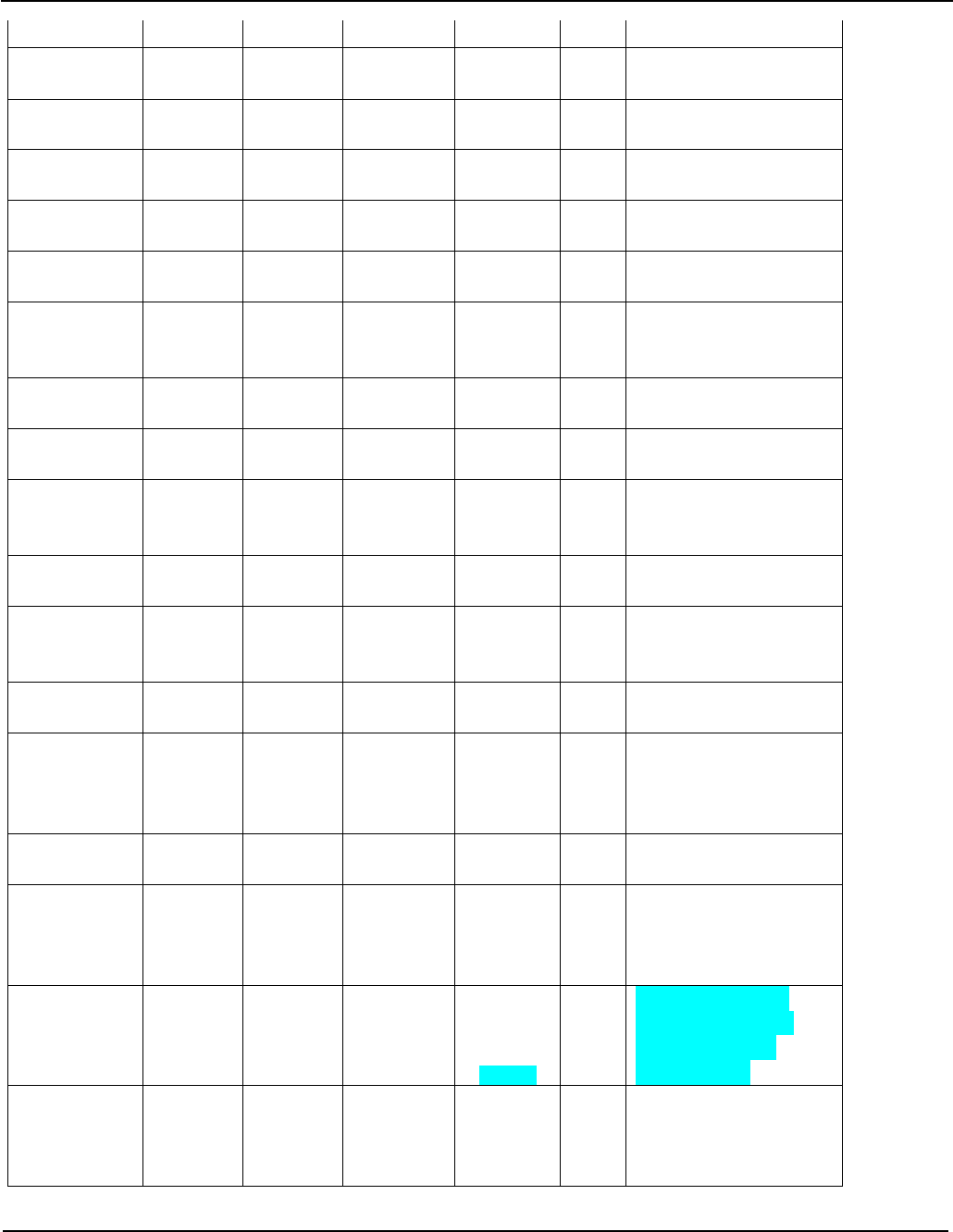
ARMv8 Instruction Set Overview
PRD03-GENC-010197 Copyright © 2009-2011 ARM Limited. All rights reserved. Page 92 of 112
VAND AND Bitwise vector AND
VBIC BIC Bitwise vector bit
clear
VBIF BIF Bitwise vector insert
if false
VBIT BIT Bitwise vector insert
if true
VBSL BSL Bitwise vector
select
VCEQ CMEQ FCMEQ Vector compare
equal
VCGE CMHS CMGE FCMGE
Vector compare
greater than or
equal
VCGT CMHI CMGT FCMGT Vector compare
greater than
VCLE CMLS CMLE FCMLE Vector compare
less than or equal
VCLS CLS
Integer vector
count leading sign
bits
VCLT CMLO CMLT FCMLT Vector compare
less than
VCLZ CLZ
Integer vector
count leading zero
bits
VCMP FCMP Floating-point
compare
VCMPE FCMPE
Floating-point
compare
(exceptions on
quiet NaNs)
VCNT CNT Vector count non-
zero bits
VCVT.s32.f32 FCVTZS
Vector floating-
point convert to
signed integer
(round to zero)
new FCVTxS
Vector floating-
point convert to
signed integer
(round to x)
VCVT.u32.f32 FCVTZU
Vector floating-
point convert to
unsigned integer
(round to zero)
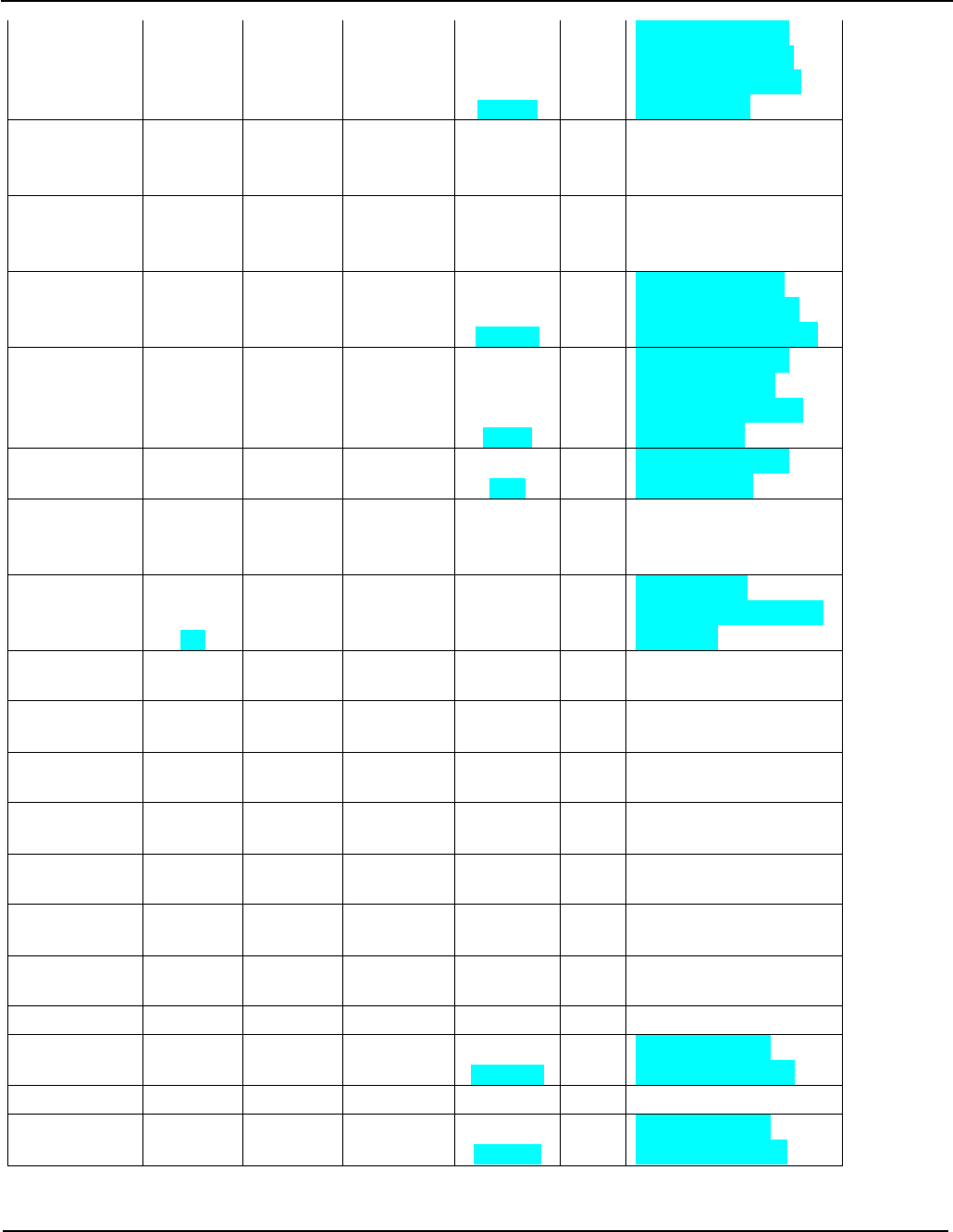
ARMv8 Instruction Set Overview
PRD03-GENC-010197 Copyright © 2009-2011 ARM Limited. All rights reserved. Page 93 of 112
new FCVTxU
Vector floating-
point convert to
unsigned integer
(round to x)
VCVT.f32.i32 UCVTF SCVTF
Vector integer
convert to floating-
point
VCVT.f*.f* FCVTN
FCVTL
Vector convert
floating-point
precision
new FCVTXN
Vector convert
double to single-
precision (inexact)
new FRINTx
Vector floating-
point round to
integral f-p value
(towards x)
new FDIV
Vector floating-
point divide
VDUP DUP
Duplicate single
vector element to
all elements
new INS
Insert single
element in another
element
VEOR EOR Bitwise vector
exclusive OR
VEXT EXT Bitwise vector
extract
VHADD UHADD SHADD Integer vector
halving add
VHSUB UHSUB SHSUB Integer vector
halving subtract
VLD1..4 LD1..4 Vector structure
/element load
VLD1..4 LD1..4R Vector replicated
element load
VLDM/VLDR LDP/LDR Vector load
pair/register
VMAX UMAX SMAX FMAX Vector maximum
new FMAXNM
Floating-point
vector maxNum
VMIN UMIN SMIN FMIN Vector minimum
new FMINNM
Floating-point
vector minNum
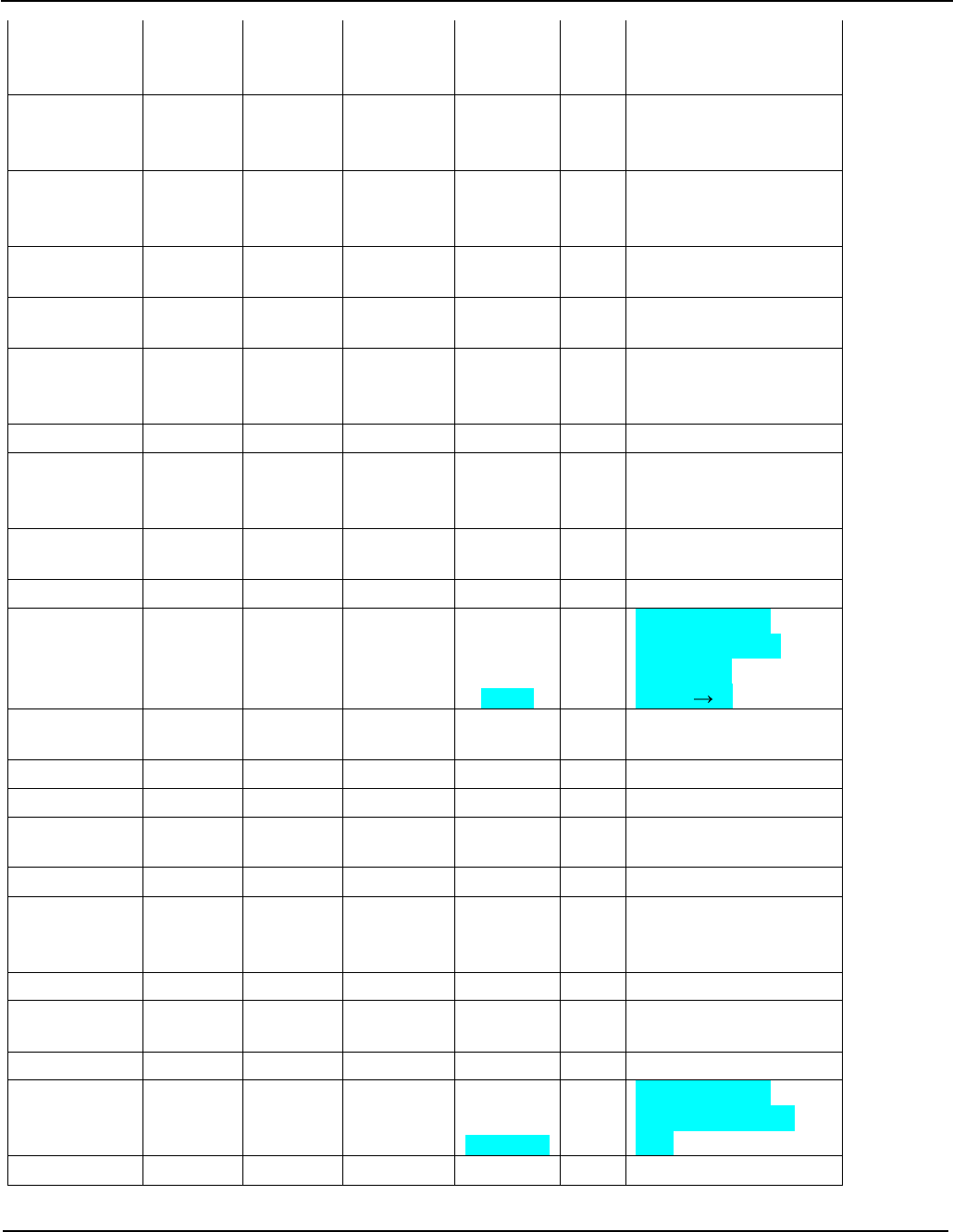
ARMv8 Instruction Set Overview
PRD03-GENC-010197 Copyright © 2009-2011 ARM Limited. All rights reserved. Page 94 of 112
VMLA MLA n/a
Vector chained
multiply-
accumulate
VFMA FMLA
Vector fused
multiply-
accumulate
VMLAL UMLAL
UMLAL2 SMLAL
SMLAL2
Integer vector
multiply-
accumulate long
VMLS MLS n/a
Vector chained
multiply-subtract
VFMS FMLS
Vector fused
multiply-subtract
VMLSL UMLSL
UMLSL2 SMLSL
SMLSL2
Integer vector
multiply-subtract
long
VMOV MOV UMOV SMOV FMOV
Vector move
VMOVL UXTL
UXTL2 SXTL SXTL2
Integer vector
lengthen (pseudo
for USHLL/SSHL #0)
VMOVN XTN Integer vector
narrow
VMUL MUL FMUL PMUL Vector multiply
new FMULX
Floating-point
vector multiply
extended
(0xINF 2)
VMULL UMULL
UMULL2 SMULL
SMULL2 PMUL
L Vector multiply
long
VMVN MVN Bitwise vector NOT
VNEG NEG FNEG Vector negate
VORN ORN Bitwise vector OR
NOT
VORR ORR Bitwise vector OR
VPADAL UADALP SADALP
Integer vector add
and accumulate
long pair
VPADD ADDP FADDP Vector add pair
VPADDL UADDLP SADDLP Integer vector add
long pair
VPMAX UMAXP SMAXP FMAXP Vector max pair
new FMAXNMP
Floating-point
vector maxNum
pair
VPMIN UMINP SMINP FMINP Vector min pair
ARMv8 Instruction Set Overview
PRD03-GENC-010197 Copyright © 2009-2011 ARM Limited. All rights reserved. Page 95 of 112
new FMINNMP Floating-point
vector minNum pair
VQABS SQABS
Signed integer
saturating vector
absolute
VQADD SQADD UQADD Integer saturating
vector add
new SUQADD
Signed integer
saturating vector
accumulate of
unsigned value
new USQADD
Unsigned integer
saturating vector
accumulate of signed
value
VQDMLAL SQDMLAL
SQDMLAL2
Signed integer
saturating vector
doubling multiply
accumulate long
VQDMLSL SQDMLSL
SQDMLSL2
Signed integer
saturating vector
doubling multiply
subtract from
accumulator long
VQDMULH SQDMULH
Signed integer
saturating vector
doubling multiply
high half
VQDMULL SQDMULL
SQDMULL2
Signed integer
saturating vector
doubling multiply
long
VQMOVN UQXTN
UQXTN2 SQXTN
SQXTN2 Integer saturating
vector narrow
VQMOVUN SQXTUN
SQXTUN2
Signed integer
saturating vector
and unsigned
narrow
VQNEG SQNEG
Signed integer
saturating vector
negate
VQRDMULH SQRDMULH
Signed integer
vector saturating
rounding doubling
multiply high half
ARMv8 Instruction Set Overview
PRD03-GENC-010197 Copyright © 2009-2011 ARM Limited. All rights reserved. Page 96 of 112
VQRSHL UQRSHL SQRSHL
Integer saturating
vector rounding
shift left
VQRSHRN UQRSHRN SQRSHRN
Integer saturating
vector shift right
rounded narrow
VQRSHRUN SQRSHRUN
Signed integer
saturating vector
shift right rounded
unsigned narrow
VQSHL UQSHL SQSHL Integer saturating
vector shift left
VQSHLU SQSHLU
Signed integer
saturating vector
shift left unsigned
VQSHRN UQSHRN SQSHRN
Integer saturating
vector shift right
narrow
VQSHRUN SQSHRUN
Signed integer
saturating vector
shift right unsigned
narrow
VQSUB UQSUB SQSUB Integer saturating
vector subtract
VRADDHN RADDHN
Integer vector
rounding add and
narrow high half
VRECPE URECPE FRECPE Vector reciprocal
estimate
VRECPS FRECPS
Floating-point
vector reciprocal
step (FRECPS uses
fused mac; VRECPS
remains non-fused)
new FRECPX
Floating-point
reciprocal
exponent
new RBIT
Vector reverse bits
in bytes
VREV16
VREV32
VREV64
REV16
REV32
REV64 Vector reverse
elements
VRHADD URHADD SRHADD Integer rounding
vector halving add
VRSHL URSHL SRSHL Integer rounding
vector shift left
ARMv8 Instruction Set Overview
PRD03-GENC-010197 Copyright © 2009-2011 ARM Limited. All rights reserved. Page 97 of 112
VRSHR URSHR SRSHR Integer rounding
vector shift right
VRSHRN RSHRN
RSHRN2
Integer rounding
vector shift right
narrow
VRSQRTE URSQRTE FRSQRTE
Vector reciprocal
square root
estimate
VRSQRTS FRSQRTS
Floating-point
reciprocal square
root step (FRSQRTS
uses fused mac;
VRSQRTS remains
non-fused)
VRSRA URSRA SRSRA
Integer rounding
vector shift right
and accumulate
VRSUBHN RSUBHN
RSUBHN2
Integer rounding
vector subtract
and narrow high
half
VSHL SHL Integer vector shift
left
VSHLL USHLL SSHLL Integer vector shift
left long
VSHR USHR SSHR Integer vector shift
right
VSHRN SHRN
SHRN2 Integer vector shift
right narrow
VSLI SLI Integer vector shift
left and insert
new FSQRT
Floating-point
vector square root
VSRA USRA SSRA
Integer vector shift
right and
accumulate
VSRI SRI Integer vector shift
right and insert
VST1..4 ST1..4 Vector structure
store
VSTM/VSTR STP/STR Vector store
pair/register
VSUB SUB FSUB Vector subtract
VSUBHN SUBHN
SUBHN2
Integer vector
subtract and
narrow high half
ARMv8 Instruction Set Overview
PRD03-GENC-010197 Copyright © 2009-2011 ARM Limited. All rights reserved. Page 98 of 112
VSUBL USUBL
USUBL2 SSUBL
SSUBL2 Integer vector
subtract long
VSUBW USUBW
USUBW2 SSUBW
SSUBW2 Integer vector
subtract wide
VSWP n/a Vector swap
VTBL TBL Vector table
lookup
VTBX TBX Vector table
extension
VTRN TRN1
TRN2 Vector element
transpose
VTST CMTST Vector test bits
VUZP UZP1
UZP2 Vector element
unzip
VZIP ZIP ZIP2 Vector element zip
new ADDV Integer sum
elements in vector
new SADDLV UADDLV
Integer sum
elements in vector
long
new SMAXV UMAXV FMAXV
Maximum element
in vector
new FMAXNM
V
Floating-point
maxNum element
in vector
new SMINV UMINV FMINV
Minimum element
in vector
new FMINNMV
Floating-point
minNum element in
vector

ARMv8 Instruction Set Overview
PRD03-GENC-010197 Copyright © 2009-2011 ARM Limited. All rights reserved. Page 99 of 112
5.7.24 Crypto Extension
The optional Crypto extension shares the FP/SIMD register file. For more information see [AES], [GCM] and
[SHA].
PMULL Vd.1Q, Vn.1D, Vm.1D
Polynomial multiply long (vector): AES-GCM acceleration 64x64 to 128-bit.
PMULL2 Vd.1Q, Vn.2D, Vm.2D
Polynomial multiply long (vector, second part). Upper lanes AES-GCM acceleration 64x64 to 128-bit.
AESE Vd.16B, Vn.16B
AES single round encryption.
AESD Vd.16B, Vn.16B
AES single round decryption.
AESMC Vd.16B, Vn.16B
AES mix columns.
AESIMC Vd.16B, Vn.16B
AES inverse mix columns.
SHA256H Qd, Qn, Vm.4S
SHA256 hash update accelerator.
SHA256H2 Qd, Qn, Vm.4S
SHA256 hash update accelerator, upper part.
SHA256SU0 Vd.4S, Vn.4S
SHA256 schedule update accelerator, first part
SHA256SU1 Vd.4S, Vn.4S, Vm.4S
SHA256 schedule update accelerator, second part
SHA1C Qd, Sn, Vm.4S
SHA1 hash update accelerator (choose).
SHA1P Qd, Sn, Vm.4S
SHA1 hash update accelerator (parity).
SHA1M Qd, Sn, Vm.4S
SHA1 hash update accelerator (majority).
SHA1H Sd, Sn
SHA1 hash update accelerator (rotate left by 30).
SHA1SU0 Vd.4S, Vn.4S, Vm.4S
SHA1 schedule update accelerator, first part
SHA1SU1 Vd.4S, Vn.4S
SHA1 schedule update accelerator, second part

ARMv8 Instruction Set Overview
PRD03-GENC-010197 Copyright © 2009-2011 ARM Limited. All rights reserved. Page 100 of 112
5.8 System Instructions
The following instruction groups are supported:
• Exception generating instructions
• System register access
• System management
• Architectural hints
• Barriers and CLREX
In several of the system instructions described in this section, the following terms are used to describe operands:
op0
A 2-bit opcode field with an immediate value 2 or 3.
op1, op2
A 3-bit opcode field with an immediate value in the range 0 to 7.
Cn
A 4-bit opcode field named for historical reasons C0 – C15.
Cm
A 4-bit opcode field named for historical reasons C0 – C15.
5.8.1 Exception Generation and Return
5.8.1.1 Non-debug exceptions
SVC #uimm16
Generate exception targeted at exception level 1 (system), with 16-bit payload in uimm16.
HVC #uimm16
Generate exception targeted at exception level 2 (hypervisor) , with 16-bit payload in uimm16.
SMC #uimm16
Generate exception targeted at exception level 3 (secure monitor), with 16-bit payload in uimm16.
ERET
Exception return: reconstructs the processor state from the current exception level’s SPSR_ELn register,
and branches to the address in ELR_ELn.
5.8.1.2 Debug exceptions
BRK #uimm16
Monitor mode software breakpoint: exception routed to a debug monitor executing in EL1 or EL2, with 16-
bit payload in uimm16.
HLT #uimm16
Halting mode software breakpoint: enters halting mode debug state if enabled, else treated as
UNALLOCATED. With 16-bit payload in uimm16.
DCPS1 {#uimm16}
Debug Change Processor State to EL1 (valid in halting mode debug state only), the optional 16-bit
immediate uimm16 defaults to zero and is ignored by the hardware.

ARMv8 Instruction Set Overview
PRD03-GENC-010197 Copyright © 2009-2011 ARM Limited. All rights reserved. Page 101 of 112
DCPS2 {#uimm16}
Debug Change Processor State to EL2 (valid in halting mode debug state only), the optional 16-bit
immediate uimm16 defaults to zero and is ignored by the hardware.
DCPS3 {#uimm16}
Debug Change Processor State to EL3 (valid in halting mode debug state only), the optional 16-bit
immediate uimm16 defaults to zero and is ignored by the hardware.
DRPS
Debug Restore Processor State: restores the processor to the exception level and mode recorded in the
current exception level’s SPSR_ELn register (valid in halting mode debug state only).
5.8.2 System Register Access
MRS Xt, <system_register>
Move <system_register> to Xt, where <system_register> is a system register name, or for
implementation-defined registers a name of the form “S<op0>_<op1>_<Cn>_<Cm>_<op2>”, e.g.
“S3_4_c13_c9_7”.
MSR <system_register>, Xt
Move Xt to <system_register>, where <system_register> is a system register name, or for
implementation-defined registers a name of the form “S<op0>_<op1>_<Cn>_<Cm>_<op2>”, e.g.
“S3_4_c13_c9_7”..
MSR DAIFClr, #uimm4
Uses uimm4 as a bitmask to select the clearing of one or more of the DAIF exception mask bits: bit 3
selects the D mask, bit 2 the A mask, bit 1 the I mask and bit 0 the F mask.
MSR DAIFSet, #uimm4
Uses uimm4 as a bitmask to select the setting of one or more of the DAIF exception mask bits: bit 3
selects the D mask, bit 2 the A mask, bit 1 the I mask and bit 0 the F mask.
MSR SPSel, #uimm4
Uses uimm4 as a control value to select the stack pointer: if bit 0 is set it selects the current exception
level’s stack pointer, if bit 0 is clear it selects shared EL0 stack pointer. Bits 1 to 3 of uimm4 are reserved
and should be zero.
5.8.3 System Management
Where the operands of a SYS instruction match an entry in the <xx_op> tables below, then the associated alias is
the preferred disassembly. Otherwise the SYS or SYSL mnemonics shall be used, permitting generation and
disassembly of arbitrary implementation-defined system instructions.
SYS #op1, Cn, Cm, #op2{, Xt}
Perform system maintenance instruction with optional source register Xt (defaulting to XZR), with the
operation selected by op1, Cn, Cm, and op2.
SYSL Xt, #op1, Cn, Cm, #op2
Perform system maintenance instruction returning a result in destination register Xt, with the operation
selected by op1, Cn, Cm, and op2.
IC <ic_op>{, Xt}
Instruction cache maintenance instruction, where Xt is the address argument as required (defaulting to
XZR) and <ic_op> is defined as:
<ic_op> ::= <function><type><point>{<domain>}
<function> ::= “I” (invalidate)
<type> ::= “ALL” (entire cache) | “VA” (by virtual address)
ARMv8 Instruction Set Overview
PRD03-GENC-010197 Copyright © 2009-2011 ARM Limited. All rights reserved. Page 102 of 112
<point> ::= “U” (to point of unification)
<domain> ::= “IS” (inner sharable)
This is the preferred alias for the SYS instruction with the following operand values:
<ic_op> op1 Cn Cm op2
{Xt}
IALLUIS 0 C7 C1 0
IALLU 0 C7 C5 0
IVAU 3 C7 C5 1
DC <dc_op>, Xt
Data cache maintenance instruction, where Xt is the address argument and <dc_op> is defined as:
<dc_op> ::= <function><type>{<point>}
<function> ::= “I” (invalidate) | “C” (clean) | “CI” (clean & invalidate)
| “Z” (zero)
<type> ::= “VA” (by virtual address) | “SW” (by set/way)
<point> ::= “C” (to point of coherency) | “U” (to point of unification)
This is the preferred alias for the SYS instruction with the following operand values:
<dc_op> op1 Cn Cm op2
ZVA 3 C7 C4 1
IVAC 0 C7 C6 1
ISW 0 C7 C6 2
CVAC 3 C7 C10 1
CSW 0 C7 C10 2
CVAU 3 C7 C11 1
CIVAC 3 C7 C14 1
CISW 0 C7 C14 2
AT <at_op>, Xt
Address Translation instruction, where Xt is the address argument and <at_op> is defined as:
<at_op> ::= <type><level><readwrite>
<type> ::= “S1” (stage 1 translation) | “S12” (stage 1 and 2 translation)
<level> ::= “E0” (exception level 0) |“E1” (exception level 1)
|“E2” (exception level 2) |“E3” (exception level 3)
<readwrite> ::= “R” (read) | “W” (write)
This is the preferred alias for the SYS instruction with the following operand values:
<at_op> op1 Cn Cm op2
S1E1R 0 C7 C8 0
S1E2R 4 C7 C8 0
S1E3R 6 C7 C8 0
S1E1W 0 C7 C8 1
S1E2W 4 C7 C8 1
S1E3W 6 C7 C8 1
S1E0R 0 C7 C8 2
S1E0W 0 C7 C8 3
S12E1R 4 C7 C8 4
S12E1W 4 C7 C8 5
S12E0R 4 C7 C8 6
S12E0W 4 C7 C8 7
ARMv8 Instruction Set Overview
PRD03-GENC-010197 Copyright © 2009-2011 ARM Limited. All rights reserved. Page 103 of 112
TLBI <tlbi_op>{, Xt}
TLB invalidation instruction, where Xt is the address argument if required (defaulting to XZR).
<tlbi_op> ::= <type><level>{<domain>}
<type> ::= “ALL” (all translations at level)
| “VMALL” (all stage 1 translations, current VMID)
| “VMALLS12” (all stage 1 & 2 translations, current VMID)
| “ASID” (translations matching ASID)
| “VA” (translations matching VA and ASID)
| “VAL” (last-level translations matching VA and ASID)
| “VAA” (translations matching VA, all ASIDs)
| “VAAL” (last-level translations matching VA, all ASIDs)
| “IPAS2” (stage 2 translations matching IPA, current VMID)
| “IPAS2L” (last-level stage 2 translations matching IPA, current VMID)
<level> ::= “E0” (exception level 0) |“E1” (exception level 1)
|“E2” (exception level 2) |“E3” (exception level 3)
<domain> ::= “IS” (inner sharable)
This is the preferred alias for the SYS instruction with the following operand values:
<tlbi_op> op1 Cn Cm op2
{Xt}
IPAS2E1IS 4 C8 C0 1
IPAS2LE1IS 4 C8 C0 5
VMALLE1IS 0 C8 C3 0
ALLE2IS 4 C8 C3 0
ALLE3IS 6 C8 C3 0
VAE1IS 0 C8 C3 1
VAE2IS 4 C8 C3 1
VAE3IS 6 C8 C3 1
ASIDE1IS 0 C8 C3 2
VAAE1IS 0 C8 C3 3
ALLE1IS 4 C8 C3 4
VALE1IS 0 C8 C3 5
VAALE1IS 0 C8 C3 7
VMALLE1 0 C8 C7 0
ALLE2 4 C8 C7 0
VALE2IS 4 C8 C3 5
VALE3IS 6 C8 C3 5
VMALLS12E1IS 4 C8 C3 6
ALLE3 6 C8 C7 0
IPAS2E1 4 C8 C4 1
IPAS2LE1 4 C8 C4 5
VAE1 0 C8 C7 1
VAE2 4 C8 C7 1
VAE3 6 C8 C7 1
ASIDE1 0 C8 C7 2
VAAE1 0 C8 C7 3
ALLE1 4 C8 C7 4
VALE1 0 C8 C7 5
VALE2 4 C8 C7 5
VALE3 6 C8 C7 5
VMALLS12E1 4 C8 C7 6
VAALE1 0 C8 C7 7

ARMv8 Instruction Set Overview
PRD03-GENC-010197 Copyright © 2009-2011 ARM Limited. All rights reserved. Page 104 of 112
5.8.4 Architectural Hints
NOP
No Operation. May be used to enforce instruction alignment, but has no execution timing constraints and
so may be safely deleted from the instruction stream.
YIELD
Yield hint.
WFE
Wait For Event.
WFI
Wait For Interrupt.
SEV
Send Event: send event globally. Note that in ARMv8 a DSB and SEV instruction are in most cases not
required following a synchronization operation such as unlocking a spin-lock or releasing a semaphore. A
memory transaction which clears a processor’s global exclusive monitor also implicitly generates an event
for that processor, as held in the Event register and used by the WFE instruction.
SEVL
Send Event Local: send event locally, without being required to affect other processors, for example to
prime a wait-loop which starts with a WFE instruction.
HINT #uimm7
Unallocated hint, where uimm7 is in the range 6-127. The unallocated hint instructions behave as a NOP
but might be allocated to other hint functionality in future revisions of the architecture.
5.8.5 Barriers and CLREX
CLREX {#uimm4}
Clear Exclusive: clears the local record of the executing processor that an address has had a request for
an exclusive access. The 4-bit immediate uimm4 defaults to 0xf if omitted, with all other values
unallocated.
DSB <option>|#uimm4
Data Synchronization Barrier, where <option> is any barrier option, as below, or a 4-bit immediate
uimm4 for unallocated values of option:
DMB <option>|#uimm4
Data Memory Barrier, where <option> is any barrier option, as below, or a 4-bit immediate uimm4 for
unallocated values of option.
ISB {SY|#uimm4}
Instruction Synchronization Barrier, where SY encoded as value 0xf is the default, or a 4-bit immediate
uimm4 for other unallocated values of option.
The following table defines the allocated values of data barrier option. Unallocated values behave as SY but might
be allocated to other barrier functionality in future revisions of the architecture.
ARMv8 Instruction Set Overview
PRD03-GENC-010197 Copyright © 2009-2011 ARM Limited. All rights reserved. Page 105 of 112
<option> Value Shareability
Domain Ordered Accesses
(before-after)
OSHLD 0x1 Load-Load, Load-Store
OSHST 0x2 Store-Store
OSH 0x3
Outer shareable
Any-Any
NSHLD 0x5 Load-Load, Load-Store
NSHST 0x6 Store-Store
NSH 0x7
Non-shareable
Any-Any
ISHLD 0x9 Load-Load, Load-Store
ISHST 0xa Store-Store
ISH 0xb
Inner shareable
Any-Any
LD 0xd Load-Load, Load-Store
ST 0xe Store-Store
SY 0xf
Full system
Any-Any
ARMv8 Instruction Set Overview
PRD03-GENC-010197 Copyright © 2009-2011 ARM Limited. All rights reserved. Page 106 of 112
6 A32 & T32 INSTRUCTION SETS
Some of the new functionality found in the A64 instruction set is independent of the general purpose register
width, and is therefore equally applicable to AArch32 state, namely the enhanced barrier types and load-
acquire/store-release, the new IEEE 754-2008 operations, and the cryptography extensions. These new functions
are added as part of ARMv8 to the A32 and T32 instruction sets as described in this section.
Note that the A32 and T32 assembler syntax remains unchanged from ARMv7 UAL. The syntax term <c> where
used below represents a standard ARM condition code – mnemonics which do not include <c> may not be
conditionally executed.
6.1 Partial Deprecation of IT
In conjunction with the reduction of conditionality in the A64 instruction set, and to facilitate higher performance
implementations of the architecture in the future, ARMv8 deprecates some uses of the T32 IT instruction. All uses
of IT that apply to other than a single subsequent 16-bit instruction from a restricted set are deprecated, as are
explicit references to R15 (i.e. PC) within that single 16-bit instruction. This permits the non-deprecated forms of
IT and subsequent instruction to be treated by the processor as a single 32-bit conditional instruction. The
restricted set of 16-bit instructions which are not deprecated when used in conjunction with IT are as follows:
Permitted 16-Bit Instructions Class But deprecated…
MOV, MVN Move when Rm or Rd is PC
LDR, LDRB, LDRH, LDRSB, LDRSH Load for PC-relative “load literal”
forms
STR, STRB, STRH Store
ADD, ADC, RSB, SBC, SUB Add/Subtract ADD/SUB SP,SP,#imm
or when Rm, Rdn or Rdm is PC
CMP, CMN Compare when Rm or Rn is PC
MUL Multiply
ASR, LSL, LSR, ROR Shift
AND, BIC, EOR, ORR, TST Logical
BX, BLX Branch to register
when Rm is PC
The IT instruction remains fully available in order to execute ARMv7 T32 code, but to verify conformance with the
deprecation a new control bit permits privileged software to disable the deprecated forms of the IT instruction,
causing them to generate an Undefined Instruction exception.
6.2 Load-Acquire / Store-Release
These new instructions provide similar functionality to the A64 instructions described in section 5.2.8 above.
Natural alignment is required in all cases, and to 8 bytes in the case of LDRAEXD and STRLEXD: an unaligned
address will cause an alignment fault.
6.2.1 Non-Exclusive
LDRA<c> Rt, [Rn{,#0}]
Load-Acquire Word: loads a word from memory addressed by Rn into Rt.

ARMv8 Instruction Set Overview
PRD03-GENC-010197 Copyright © 2009-2011 ARM Limited. All rights reserved. Page 107 of 112
LDRAB<c> Rt, [Rn{,#0}]
Load-Acquire Byte: loads a byte from memory addressed by Rn and zero-extends it into Rt.
LDRAH<c> Rt, [Rn{,#0}]
Load-Acquire Halfword: loads a halfword from memory addressed by Rn and zero-extends it into Rt.
STRL<c> Rt, [Rn{,#0}]
Store-Release Word: stores a word from Rt to memory addressed by Rn.
STRLB<c> Rt, [Rn{,#0}]
Store-Release Byte: stores a byte from Rt to memory addressed by Rn.
STRLH<c> Rt, [Rn{,#0}]
Store-Release Halfword: stores a halfword from Rt to memory addressed by Rn.
6.2.2 Exclusive
LDRAEX<c> Rt, [Rn{,#0}]
Load-Acquire Exclusive Word: loads a word from memory addressed by Rn into Rt. Records the physical
address as an exclusive access.
LDRAEXB<c> Rt, [Rn{,#0}]
Load-Acquire Exclusive Byte: loads a byte from memory addressed by Rn and zero-extends it into Rt.
Records the physical address as an exclusive access.
LDRAEXH<c> Rt, [Rn{,#0}]
Load-Acquire Exclusive Halfword: loads a halfword from memory addressed by Rn and zero-extends it
into Rt. Records the physical address as an exclusive access.
LDRAEXD<c> Rt, Rt2, [Rn{,#0}]
Load-Acquire Exclusive Double: loads two words from memory addressed by base to Rt and Rt2.
Records the physical address as an exclusive access. The register Rt must be an even-numbered
register less than 14 and Rt2 must be R(t+1).
STRLEX<c> Rd, Rt, [Rn{,#0}]
Store-Release Exclusive: stores a word from Rt to memory addressed by Rn, and sets Rd to the returned
exclusive access status.
STRLEXB<c> Rd, Rt, [Rn{,#0}]
Store-Release Exclusive Byte: stores a byte from Rt to memory addressed by Rn, and sets Rd to the
returned exclusive access status.
STRLEXH<c> Rd, Rt, [Rn{,#0}]
Store-Release Exclusive Halfword: stores a halfword from Rt to memory addressed by Rn, and sets Rd to
the returned exclusive access status.
STRLEXD<c> Rd, Rt, Rt2, [Rn{,#0}]
Store-Release Exclusive Double: stores two words from Rt and Rt2 to memory addressed by Rn, and
sets Rd to the returned exclusive access status. The register Rt must be an even-numbered register less
than 14 and Rt2 must be R(t+1).

ARMv8 Instruction Set Overview
PRD03-GENC-010197 Copyright © 2009-2011 ARM Limited. All rights reserved. Page 108 of 112
6.3 VFP Scalar Floating-point
6.3.1 Floating-point Conditional Select
The new VSEL instruction is equivalent of the A64 FCSEL instruction in section 5.6.11, For A32 it provides an
alternative to a pair of conditional VMOV instructions, while for T32 as it does not use an IT prefix it compensates
for the partial deprecation of IT described in §6.1 above. The condition code <fc> may be one of GE, GT, EQ and
VS only; the effect of the inverted conditions LT, LE, NE and VC may be achieved by reversing the order of the
source operands.
VSEL<fc>.F32 Sd, Sn, Sm
Single-precision conditional select: Sd = if <fc> then Sn else Sm.
VSEL<fc>.F64 Dd, Dn, Dm
Double-precision conditional select: Dd = if <fc> then Dn else Dm.
6.3.2 Floating-point minNum/maxNum
The new VMAXNNM and VMINNM instructions implement the minNum(x,y) and maxNum(x,y) operations defined
by the IEEE 754-2008 standard, and are equivalent to A64’s FMAXNM and FMINNM instructions. They return the
numerical operand when one operand is numerical and the other is a quiet NaN, but otherwise the result is
identical to VFP VMAX and VMIN. These instructions may not be conditional.
VMAXNM.F32 Sd, Sn, Sm
Single-precision maxNum (scalar).
VMAXNM.F64 Dd, Dn, Dm
Double-precision maxNum (scalar).
VMINNM.F32 Sd, Sn, Sm
Single-precision minNum (scalar).
VMINNM.F64 Dd, Dn, Dm
Double-precision minNum (scalar).
6.3.3 Floating-point Convert (floating-point to integer)
These new instructions extend the existing ARMv7 VFP VCVT instructions by providing four additional explicit
rounding modes, where ARMv7 VCVT rounds towards zero, giving an equivalent set of options to the A64 FCVTS
and FCVTU instructions described in section 5.6.4.2. The syntax term <r> selects the rounding direction as
follows: N (nearest, ties to even), A (nearest, ties away from zero), P (towards +Inf) or M (towards –Inf). These
instructions may not be conditional.
VCVT<r>.S32.F64 Sd, Dm
Convert double-precision floating-point to signed 32-bit integer with explicit rounding direction (scalar).
VCVT<r>.S32.F32 Sd, Sm
Convert single-precision floating-point to signed 32-bit integer with explicit rounding direction (scalar).
VCVT<r>.U32.F64 Sd, Dm
Convert double-precision floating-point to unsigned 32-bit integer with explicit rounding direction (scalar).
VCVT<r>.U32.F32 Sd, Sm
Convert single-precision floating-point to unsigned 32-bit integer with explicit rounding direction (scalar).

ARMv8 Instruction Set Overview
PRD03-GENC-010197 Copyright © 2009-2011 ARM Limited. All rights reserved. Page 109 of 112
6.3.4 Floating-point Convert (half-precision to/from double-precision)
The VFP VCVTT and VCVTB instructions are extended to permit direct conversion between half-precision and
double-precision floating-point as a single operation, preventing double rounding errors. The syntax term <y>
below is either T (top half) or B (bottom half).
VCVT<y><c>.F64.F16 Dd, Sm
Convert from half-precision value in top or bottom of Sm to double-precision in Dd (scalar).
VCVT<y><c>.F16.F64 Sd, Dm
Convert from double-precision value in Dm to in half-precision value in top or bottom of Sd (scalar).
6.3.5 Floating-point Round to Integral
The new “round to integral” instructions round a floating-point value to the nearest integral floating-point value of
the same size, equivalent to the A64 FRINT* instructions in section 5.6.5. The only floating-point exceptions that
can be raised by these instructions are FPSCR.IOC (Invalid Operation) for a Signaling NaN input, or FPSCR.IDC
(Input Denormal) for a denormal input when flush-to-zero mode is enabled. For VRINTX only the FPSCR.IXC
(Inexact) exception may be raised if the result is numeric and does not have the same numerical value as the
source. A zero input gives a zero result with the same sign, an infinite input gives an infinite result with the same
sign, and a NaN is propagated as for normal arithmetic.
A subset of the rounding instructions may be conditional when the syntax term <x> selects the rounding direction
as follows: Z (towards zero), R (FPSCR rounding mode), or X (FPSCR rounding mode and signal inexactness).
VRINT<x><c>.F64.F64 Dd, Dm
Round a double-precision value to nearest integral double-precision value (scalar), with half-way cases
rounding according to <x>.
VRINT<x><c>.F32.F32 Sd, Sm
Round a single-precision value to nearest integral single-precision value (scalar), with half-way cases
rounding according to <x>.
The remaing rounding instructions are not conditional when syntax term <r> selects the rounding direction as
follows: N (nearest, ties to even), A (nearest, ties away from zero), P (towards +Inf) or M (towards –Inf).
VRINT<r>.F64.F64 Dd, Dm
Round a double-precision value to nearest integral double-precision value (scalar), with half-way cases
rounding according to <r>.
VRINT<r>.F32.F32 Sd, Sm
Round a single-precision value to nearest integral single-precision value (scalar), with half-way cases
rounding according to <r>.

ARMv8 Instruction Set Overview
PRD03-GENC-010197 Copyright © 2009-2011 ARM Limited. All rights reserved. Page 110 of 112
6.4 Advanced SIMD Floating-Point
The AArch32 Advanced SIMD extension continues to support only single-precision (32-bit) floating-point data
types, with fixed operating modes of Round to Nearest, Default NaN and Flush-to-Zero. However it is extended
with the addition of the following new instructions.
6.4.1 Floating-point minNum/maxNum
Vector forms of the new VMAXNM and VMINNM instructions described in section 6.3.2 above.
VMAXNM.F32 Dd, Dn, Dm
VMAXNM.F32 Qd, Qn, Qm
Single-precision maxNum (vector).
VMINNM.F32 Dd, Dn, Dm
VMINNM.F32 Qd, Qn, Qm
Single-precision minNum (vector).
6.4.2 Floating-point Convert
Vector forms of the floating-point to integer convert instructions described in section 6.3.3 above. The syntax term
<r> selects the rounding direction: N (nearest, ties to even), A (nearest, ties away from zero), P (towards +Inf) or
M (towards –Inf).
VCVT<r>.S32.F32 Dd, Dm
VCVT<r>.S32.F32 Qd, Qm
Convert single-precision floating-point to signed 32-bit integer with explicit rounding direction (vector).
VCVT<r>.U32.F32 Dd, Dm
VCVT<r>.U32.F32 Qd, Qm
Convert single-precision floating-point to unsigned 32-bit integer with explicit rounding direction (vector).
6.4.3 Floating-point Round to Integral
Vector forms of the floating-point rounding instructions described in section 6.3.5 above. The syntax term <rx>
selects the rounding direction as follows: N (nearest, ties to even), A (nearest, ties away from zero), P (towards
+Inf) or M (towards –Inf), Z (towards zero), or X (nearest, ties to even, signal inexactness)
VRINT<rx>.F32.F32 Qd, Qm
VRINT<rx>.F32.F32 Dd, Dm
Round a single-precision value to nearest integral single-precision value (vector), with half-way cases
rounding according to <rx>.

ARMv8 Instruction Set Overview
PRD03-GENC-010197 Copyright © 2009-2011 ARM Limited. All rights reserved. Page 111 of 112
6.5 Crypto Extension
Equivalent to the A64 cryptographic instructions listed in section 5.7.24.
AESD.8 Qd, Qm
AES single round decryption.
AESE.8 Qd, Qm
AES single round encryption.
AESIMC.8 Qd, Qm
AES inverse mix columns.
AESMC.8 Qd, Qm
AES mix columns.
SHA1C.32 Qd, Qn, Qm
SHA1 hash update accelerator (choose).
SHA1M.32 Qd, Qn, Qm
SHA1 hash update accelerator (majority).
SHA1P.32 Qd, Qn, Qm
SHA1 hash update accelerator (parity).
SHA1H.32 Qd, Qm
SHA1 hash update accelerator (rotate left by 30).
SHA1SU0.32 Qd, Qn, Qm
SHA1 schedule update accelerator, first part
SHA1SU1.32 Qd, Qm
SHA1 schedule update accelerator, second part
SHA256H.32 Qd, Qn, Qm
SHA256 hash update accelerator.
SHA256H2.32 Qd, Qn, Qm
SHA256 hash update accelerator upper part.
SHA256SU0.32 Qd, Qm
SHA256 schedule update accelerator, first part
SHA256SU1.32 Qd, Qn, Qm
SHA256 schedule update accelerator, second part
VMULL.P64 Qd, Dn, Dm
Polynomial multiply long, AES-GCM acceleration 64x64 to 128-bit.

ARMv8 Instruction Set Overview
PRD03-GENC-010197 Copyright © 2009-2011 ARM Limited. All rights reserved. Page 112 of 112
6.6 System Instructions
6.6.1 Halting Debug
New halting mode debug support instructions.
DCPS1
Debug switch to EL1 (valid in halting mode debug state only).
DCPS2
Debug switch to EL2 (valid in halting mode debug state only).
DCPS3
Debug switch to EL3 (valid in halting mode debug state only).
HLT #uimm6
Halting mode software breakpoint: enters halting mode debug state if enabled, else treated as
UNALLOCATED. With 6-bit payload in uimm6.
6.6.2 Barriers and Hints
New barrier options and hint instructions to match those in A64, as described in section 5.8.5.
DMB <option>
Data Memory Barrier is extended to support the new A64 Load-Load/Store options.
DSB <option>
Data Synchronization Barrier is extended to support the new A64 Load-Load/Store options.
SEVL
Send Event Locally without being required to affect other processors, for example to prime a wait-loop
which starts with a WFE instruction.
