Extended Media Surface Rigid Air Filters Carbon Filtration Whitepaper
User Manual: Extended Media Surface Rigid Air Filters
Open the PDF directly: View PDF  .
.
Page Count: 6
Effects of Carbon Filtration Type on Filter Efficiency
and Efficacy: Granular Loose-Fill vs. Bonded Filters
Chambre, Andre: CEO, Air Science, LLC
March 2014
Abstract
Activated carbon is used in a wide variety of purification techniques including
gas and water purification, metal extraction, water purification, pharmaceutical
manufacturing, gas masks, and air filters. Several physical forms of activated
carbon exist, including powdered, bead, and extruded, yet granular activated
carbon is one of the most commonly used for air filtration.
Activated carbon filters are produced in two main styles, granular multi-layer
free fill and bonded filters. Granular multi-layer carbon filters contain loose fill car-
bon media layered to meet specific chemical filtration needs. Bonded filters utilize
various chemical processes to bond the carbon particles into a rigid matrix.
This study tested the hypothesis that granular activated carbon filters, specifically
Air Science filters utilizing the Multiplex™ Filtration System, have a longer useful
life and greater filtering efficiency with no associated performance defects than
bonded filters.
To test this hypothesis, a third-party laboratory (IBR Laboratories) analyzed the
adsorption efficiency of an Air Science granular loose fill filter and a dimensionally
identical bonded carbon filter from RSE Incorporated based on the SEFA 9
(2010) benchmark testing methods.
The Air Science ASTM-001 granular filter retained 1709.7 grams of isopropanol at a
run time of 450 minutes before reaching 1% threshold limit value (TLV). The bonded
filter ASTM200-001 retained 1348.8 grams of isopropanol after 355 minutes before
reaching 1% TLV. This difference of 360.9 grams represents a 26.8% greater efficiency
than a comparable bonded filter. The Air Science filter took 95 minutes longer to
reach the 1% TLV saturation, suggesting a significantly longer useful life than that
of the bonded filter.
The results of this study verify that under similar laboratory settings, Air Science
granular carbon filters have a higher filtering efficiency and will maintain safe
operating conditions for a longer period of time than similarly-sized bonded filters.
Air Science granular carbon filters are also easier for operators to change out,
have greater stability in shipping / packaging, and offer a variety of chemical
impregnation options to meet specific filtration needs.
p:2Andre Chambre, CEO, Air Science, LLC. March, 2014
Air Science 120 6th Street • Fort Myers, FL 33907 • T/239.489.0024 • Toll Free/800.306.0656 • F/800.306.0677 • www.airscience.com
Background
Activated carbon includes a wide range of amorphous car-
bon-based materials prepared to exhibit a high degree of poros-
ity and an extended interparticulate surface area. These qualities
give activated carbon excellent adsorbent characteristics that
make carbon very useful for a wide variety of processes including
filtration, purification, deodorization, decolorization, purification
and separation.
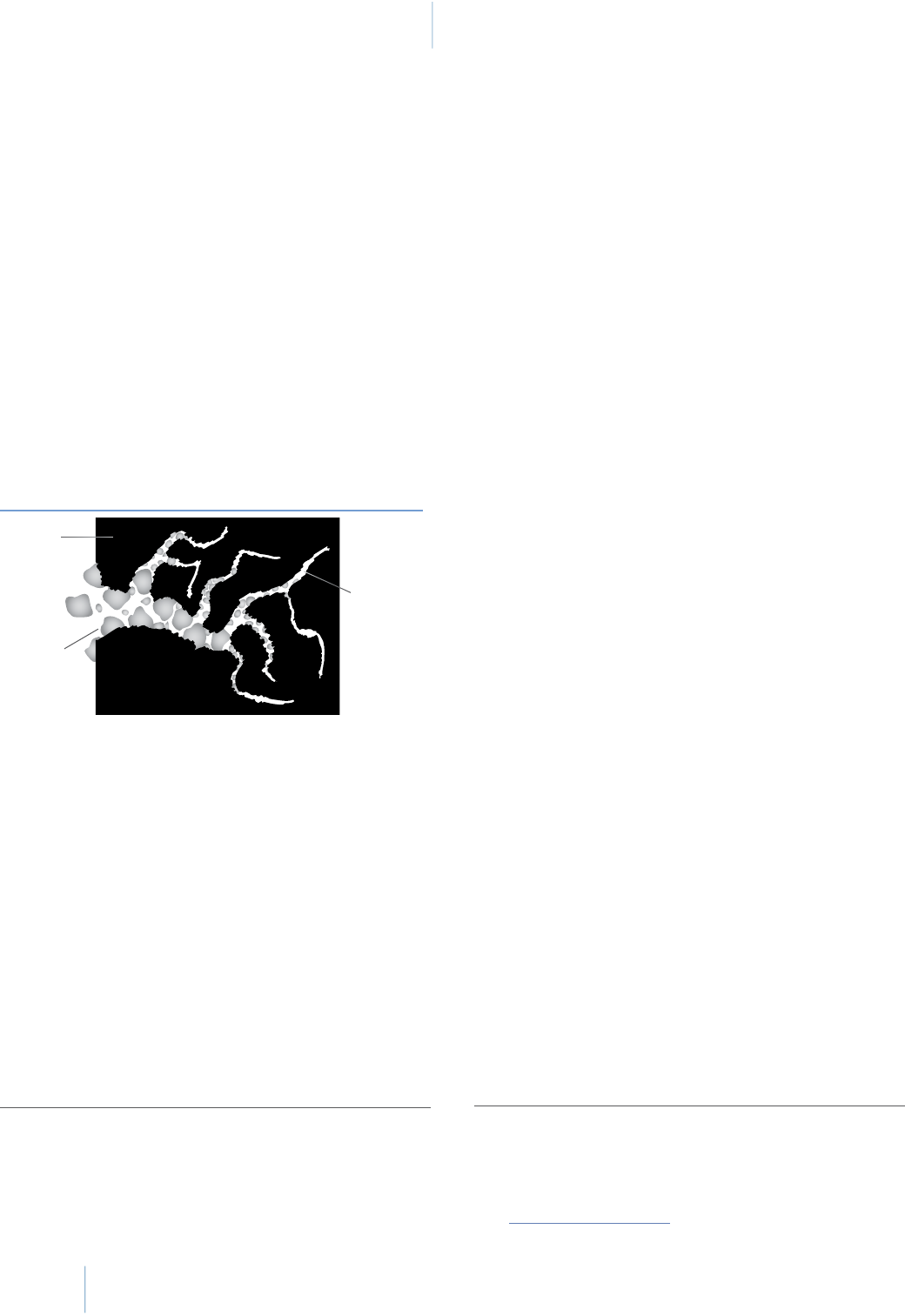
The effectiveness of activated carbon as an adsorbent is
attributed to its unique properties, including “large surface area,
a high degree of surface reactivity, universal adsorption effect,
and pore size” (Figure 1). Due to its increased porosity, a single
gram of activated carbon contains 500-2,000m2 aggregate
surface area.1
Activated carbon is widely used in critical purification techniques
in gas purification, metal extraction, water purification, medicine,
gas masks, and air filters.
Figure 1: Internal Pore of Activated Carbon Granule
GASES AND
CHEMICALS
PORES
ACTIVATED
CARBON
Production
Activated carbon is produced from a wide variety of carbon-rich
raw materials, including wood, coal, peat, coconut shells, nut
shells, bones and fruit stones. New materials are currently under
investigation as sources for activated carbon.
The two primary types of activation are:
• Chemical Activation. This technique is generally used for the
activation of peat and wood based raw materials. The raw
material is impregnated with a strong dehydrating agent;
typically phosphoric acid or zinc chloride mixed into a paste
and then heated to temperatures of 500 - 800°C to activate
the carbon. The resultant activated carbon is washed, dried
and ground to powder.
• Steam Activation. This technique is generally used for the
activation of coal and coconut shell raw material which is
usually processed in a carbonized form. Activation is carried
out at temperatures of 800 - 1100°C in the presence of steam.
1 Value Added Products from Gasification – Activated
Carbon, By Shoba Jhadhav, The Combustion, Gasification
and Propulsion Laboratory (CGPL) at the Indian Institute of
Science(IISc).
Principles of Adsorption
The main principle on which the filtration of gas molecules
is based is the concept of adsorption. Two main processes
by which adsorption take place are physical adsorption
and chemisorption.2
Physical Adsorption
Physical adsorption is non-specific and adsorption of the gas
molecule is by diffusion (Brownian movement) or adsorption/
condensation using Van Der Waals’ forces.The gas molecules
move into an empty area and diffuse into the pore where they
impact the walls and are trapped. The number of pores present
in the carbon is vast and therefore the total surface area is
extremely large. Depending on the carbon used and the type of
filter, aggregate surface area can be in the range of 2,000m2/g
(roughly equivalent to about 4 football fields).3
Chemisorption
The physical process of adsorption is followed by chemical
adsorption (chemisorption). This is a chemical reaction in which
the two substances react together and the resultant chemical
is trapped on the filter material.The impregnation of filter media
can greatly extend the range of gases that can be removed from
the air stream.
A number of physical forms of activated carbon exist, including
powdered, bead, and extruded, yet granular activated car-
bon is the most commonly used for air filtration. Compared to
powdered activated carbon, granular activated carbon has a
much larger particle size with a small external surface, which
increases its diffusion rate and makes it the carbon of choice for
vapor adsorption. Activated carbon filters can be manufactured
in a number of forms, including bonded, multi-layer free fill, and
hybrid which can be impregnated with chemicals to assist in the
adsorption process and increase filter efficacy.
2 Value Added Products from Gasification – Activated
Carbon, By Shoba Jhadhav, The Combustion, Gasification
and Propulsion Laboratory (CGPL) at the Indian Institute of
Science(IISc).
3 www.airscience.com/22
p:3Effects of Carbon Filtration Type on Filter Efficiency and Efficacy: Granular Loose-Fill vs. Bonded Filters
Regulations / Compliance
Carbon filter manufacturers can perform testing and compliance
reviews for a number of state, local, and internal company
standards; however the methods most widely used as general
industry guidelines are the Scientific Equipment & Furniture
Association (SEFA) 9-2010 Recommended Practices for Ductless
Enclosures. Manufacturers will typically request a questionnaire
be completed during the purchase of a filter to ensure that the
list of chemicals to be used in the fume hood are sufficiently
compatible with the filter type based on SEFA 9-2010 standards.4
The SEFA 9-2010 guidelines provide recommended benchmark
testing for ductless fume hood filtration according to three
classifications:
• DH I: Nuisance odors and non-toxic vapors only.
No testing required.
• DH II and DH III: General laboratory fume hoods
containing noxious or potentially harmful fumes.
Testing, hood maintenance, and calibration must
be closely monitored and recorded.4
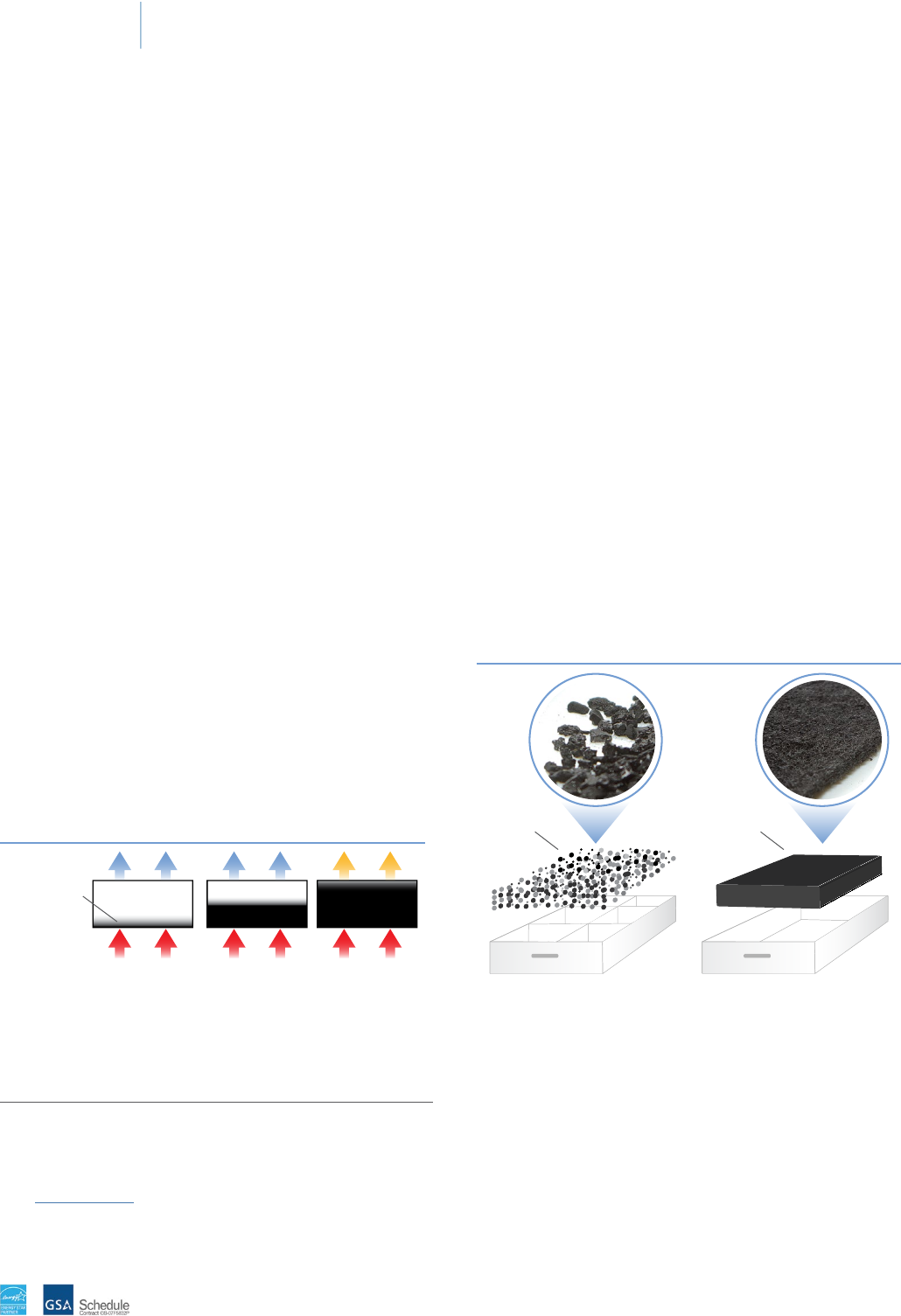
Filter monitoring should aim to detect the period of initial break-
through (Figure 2) and in all cases should warn the operator well
before the permissible exposure level (PEL) is reached.5 For the
purposes of this study, reaching 1% threshold limit value (TLV)
was a sufficient benchmark in both concentration and temporal
monitoring to determine the efficiency of carbon filtration under
normal operating conditions. Threshold limit value is the level
at which the American Conference of Governmental Industrial
Hygienists (ACGIH) believes a worker can be exposed to a chemi-
cal daily for a working lifetime without adverse health effects.5
A concentration of 1% TLV captured for most chemicals is deter-
mined an accurate measure of filter efficiency, as determined
by SEFA 9-2010, 4.3.1 (for more information on benchmark testing
procedures see SEFA 9-2010, 4.3.1 and ASHRAE 110-1995 for
instrumentation setup).
Figure 2: Chemical Adsorption and Breakthrough
of Carbon Filter
ACTIVE FILTER
ZONE NEW FILTER MIDLIFE END OF USE
Adsorption takes place in a filter bed in what is known as the active
filter zone (represented above as dark saturated area). As the filter
is used this active zone progressively moves up the filter bed until it
approaches the top surface of the filter. At this point there is an initial
breakthrough by the contaminant vapor(s), and thereafter the percent-
age of contaminant gas that escapes filtration increases.
4 Recommended Practices for Ductless Enclosures. Scientific
Equipment & Furniture Association (SEFA) 9-2010. Fourth
Edition, Version 1.0.
5 www.acgih.org
Types of Carbon Filters
Activated carbon filters are constructed in two main styles,
granular multi-layer free fill and bonded filters. Granular multi-
layer carbon filters contain loose fill carbon media layered to
meet specific filtration needs. Granular carbon media is filled into
a solid filter frame which allows minimal media settling for optimal
airflow through the loose carbon fill. Granular activated carbon
filters can contain carbon impregnated for a single target analyte
or can be layered with carbon impregnated for a number of
analytes, increasing the range of containment. Granular filtration
maintains the original physical and chemical properties of
the carbon and offers the greatest amount of surface area for
chemical bonding sites.
Bonded filters utilize the same granulated carbon as loose-fill
carbon filters, but use various chemical processes to bond the
carbon together into a solid matrix. This creates a rigid carbon
filtration system that is often chosen for its convenience of
handling. Bonded filter manufacturers claim that due to the solid
nature of the filter, there is less chance of user exposure to the
chemicals contained within a used filter. Bonded filters are also
typically claimed to be “dust-free” because the carbon particles
are bonded together in a solid form. It is possible, however, that
as a result of the brittleness of the bonded filter, that partial filter
erosion may take place in shipping and allow fine particles to
be exhausted during initial fume hood start-up following a filter
change out.
Figure 3: Granular Loose-Fill vs Bonded Carbon
Filter Construction
LOOSE-FILL
CARBON
BONDED
CARBON

p:4Andre Chambre, CEO, Air Science, LLC. March, 2014
Air Science 120 6th Street • Fort Myers, FL 33907 • T/239.489.0024 • Toll Free/800.306.0656 • F/800.306.0677 • www.airscience.com
Issues with Bonded Carbon Filters
Bonded carbon filters are widely marketed as having equal,
if not better efficacy than loose fill granulated carbon filters.
Manufacturers claim that a solid filter matrix minimizes dead
zones in the filters and maximizes capacity. Others in the industry,
however, have questioned the effect that a solid matrix has on
filter performance.
Regardless of the proprietary process, to create a solid matrix
from loose granulated carbon, the physical and chemical
properties of the carbon particles must be altered. These
alterations likely have detrimental effects on the ability of the
carbon particles to bond with target compounds and could
also decrease flow rate compared to a loose fill filter.
The Bonding Process
The bonding process typically requires the activated carbon
be soaked in water for approximately 24-hours prior to being
bonded. This soaking can leach out the impregnated chemicals
required to effectively manage certain types of vapors, decreas-
ing the efficacy of the final filter.
Additionally, the bonding agents used to create bonded
carbon filters are normally a type of resin, such as polystyrene.
The amount of resin used has a critical impact on the adsorption
capacity of the filter and it is not inconceivable that over half
of the space on the carbon granules can be covered with the
bonding agent. This renders the filtering capacity of the carbon
granules at least temporarily useless and may have long term
effects on filter efficiency.
This study was derived to test the efficacy and performance of
granular loose fill filters (specifically Air Science Brand, ASTM001
filters) against that of a general purpose bonded filter (RSE
Incorporated) based on all of the aforementioned performance
issues with bonded filters.
Hypothesis
Granular Activated Carbon filters, specifically Air Science filters
utilizing the Multiplex Filtration System, have a longer useful life
than bonded filters with none of the associated performance
defects. Granular loose fill filters will have a greater filtering
efficiency (higher retention capacity) than bonded filters do
and will have a longer life before reaching 1% of TLV.
Granular loose fill filters may also have additional perform-
ance benefits in the form of ease of handling, more stability
in shipping / packaging, and fewer chemical impregnation
issues compared to bonded filters.
Methods
To test this hypothesis, a third-party laboratory (IBR Laboratories)
analyzed the adsorption efficiency of an Air Science granular
loose fill filter compared to a dimensionally identical bonded
carbon filter from RSE Incorporated based on the SEFA 9-2010
benchmark testing methods.
The carbon filters were loaded into a Purair 10 Advanced Ductless
Fume Hood and 99.9% isopropanol was evaporated from a hot
plate placed inside the hood. Total mass of isopropanol evap-
orated and the concentration of isopropanol in downstream
sample air (parts per million or ppm) was measured over time
by a MIRAN® SapphIRe Ambient Air Analyzer placed 18 inches
above the center of the exhaust grid. Air concentration readings
were recorded every 15 minutes until the reading measured 1%
of TLV as determined by SEFA 9-2010 recommendations.6,7
Similar cabinet conditions were maintained throughout testing
for both the granular loose fill filter and the bonded filter. Table
1 depicts environmental and equipment conditions maintained
during testing of both filter types.
Table 1: Conditions of Ductless Fume Hoods During Testing
Granular Filter Bonded Filter
Temperature ºF 71 70
Relative Humidity % 46 49
Barometric Pressure mm Hg 739 737
Face Velocity FPM 100 100
6 IBR Test Report: Job Number 14709, January 11, 2014. IBR
Laboratories.
7 IBR Test Report: Job Number 113576A, January 21, 2013. IBR
Laboratories.
p:5Effects of Carbon Filtration Type on Filter Efficiency and Efficacy: Granular Loose-Fill vs. Bonded Filters
Results
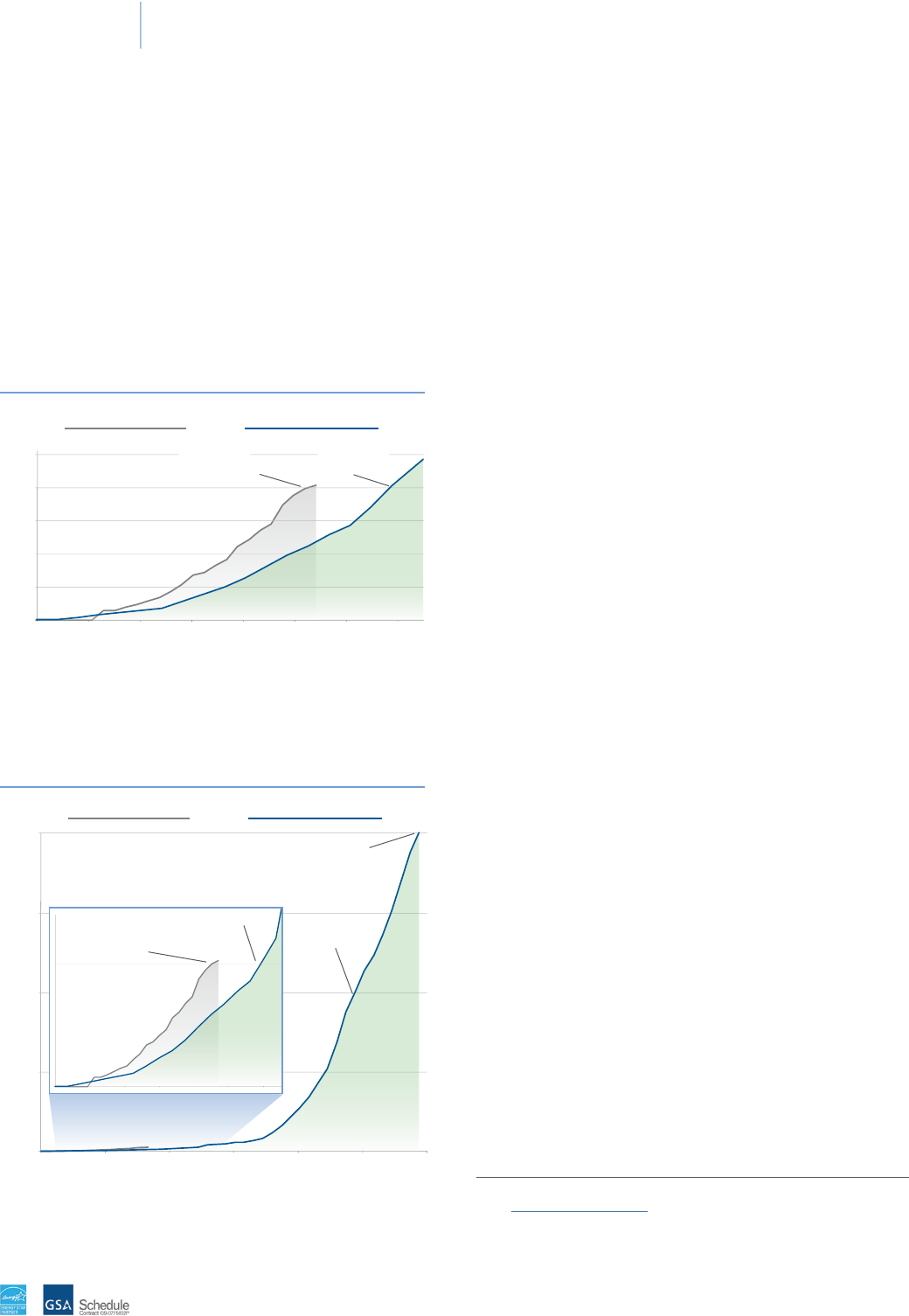
The graphs below depict the concentration of isopropanol
absorbed over time by each of the two filters. The Air Science
ASTM-001 granular filter was able to retain 1709.7 grams of isopro-
panol at a run time of 450 minutes before reaching 1% TLV. The
bonded filter ASTM200-001 retained 1348.8 grams of isopropanol
after 355 minutes before reaching 1% TLV. This difference of 360.9
grams represents a 26.8% greater efficiency than comparable
bonded filter. Additionally, the Air Science filter took 95 minutes
longer to reach the 1% TLV saturation, indicating a significantly
longer useful life than that of the bonded filter.
Graph 1: Filtration Efficiency of a Granular Loose-Fill
Carbon Filter Compared to a Bonded Carbon Filter
0.0
1.0
2.0
3.0
4.0
5.0
0.0
0.0 200 400 600 800 1000 1200
114.0 228.0 341.9 455.9 569.9 683.9 797.9 911.9 1025.8 1139.8 1253.8 1367.8
1400
concentration
Evaporated Ivo...
0.0
1.0
2.0
3.0
4.0
5.0
0.0 250 500 750 1000 1250 1500 1750
concentration
Time
.0
.20
.40
.60
.80
1.4
1.2
1.0
1.6
percentage
.0
.20
.40
.60
.80
1.4
1.2
1.0
percentage
0 75 150 225 300 375 450
Downstream Concentration (PPM)
Total Mass of lsopropanol Evaporated (grams)
5
4
3
2
1
0
0250 500 750 1,000 1,25 0 1,500 1,750
Bonded Carbon Filter Granular Carbon Filter
Graph developed from the provided IBR Laboratories data, showing
concentration of isopropanol over time for both filters comparatively.
Graph 2: Time to Reach TLV for a Granular Loose-Fill
Carbon Filter and a Bonded Carbon Filter
0.0
1.0
2.0
3.0
4.0
5.0
0.0
0.0 200 400 600 800 1000 1200
114.0 228.0 341.9 455.9 569.9 683.9 797.9 911.9 1025.8 1139.8 1253.8 1367.8
1400
concentration
Evaporated Ivo...
0.0
1.0
2.0
3.0
4.0
5.0
0.0 250 500 750 1000 1250 1500 1750
concentration
Time
.0
.20
.40
.60
.80
1.4
1.2
1.0
1.6
percentage
.0
.20
.40
.60
.80
1.4
1.2
1.0
percentage
0 75 150 225 300 375 450
Percentage of TLV
0200 400 600 800 1,000 1,200
Time (minutes)
100
75
50
25
0
Bonded Carbon Filter Granular Carbon Filter
50% TLV
AT 960 MIN
10 0% TLV
AT 1,155 MIN
0.0
1.0
2.0
3.0
4.0
5.0
0.0
0.0 200 400 600 800 1000 1200
114.0 228.0 341.9 455.9 569.9 683.9 797.9 911.9 1025.8 1139.8 1253.8 1367.8
1400
concentration
Evaporated Ivo...
0.0
1.0
2.0
3.0
4.0
5.0
0.0 250 500 750 1000 1250 1500 1750
concentration
Time
.0
.20
.40
.60
.80
1.4
1.2
1.0
1.6
percentage
.0
.20
.40
.60
.80
1.4
1.2
1.0
percentage
0 75 150 225 300 375 450
1% TLV
AT 355 MIN
1% TLV
AT 450 MIN
A Granular Filter and
a Bonded Filter at 1% TLV
Graph showing 1% TLV, 50% TLV, and 100% TLV for granular loose-fill
carbon filter as determined by SEFA 9-2010 testing.
Discussion
The results of this study verify that under similar laboratory
settings, granular carbon filters will maintain safe operating
conditions for a longer period of time than bonded carbon filters.
Bonded manufacturing causes some of the pores on the carbon
(sites of reaction) to be crushed or destroyed, which decreases
the adsorption capabilities. This can lead to additional negative
effects, including a noticeable pressure drop in the fume hood
and less efficient air filtering capabilities over the life of the filter.
Additional Downsides to Bonded Carbon Filters
Bonded filters tend to weigh more than granular filters (34 lbs.
for the bonded filter versus 22 lbs. for the granular carbon filter
in this test) which can make filter change out more difficult, while
their brittle nature can lead to quality issues in the shipping and
handling process.
Additionally, bonded filters are typically only offered with a
single type of impregnation due to the difficulty associated with
leaching during the bonding process. This can limit the use of
the fume hood in which bonded filters are installed and increase
the expense of maintaining compliance for certain laboratory
operating procedures.
Benefits of Air Science Granular Carbon Filters
Air Science granular carbon filters have none of the issues associ-
ated with bonded filters, and provide a higher retention capabil-
ity over the useful life of the filters. This decreases the frequency
and associated downtime and expense of filter change outs.
Air Science granular carbon filters utilize the MultiplexFiltration
System, which consists of a pre-filter, main filter and optional
safety filter to create a combination of chemical and physical
architecture customized to each application. The multiplex
option permits one or more filtration types to be combined within
a single filter housing to meet a wider range of multiple-use
applications. Multiplexing allows for the capture of acids, bases,
and when paired with HEPA or ULPA filters, particulates such as
biological aerosols.8
An additional benefit of the Air Science granular carbon filter is
fire suppression. Granular carbon filters used in enclosure fire tests
resisted ignition and helped suppress the fire. It is suspected that
under similar test conditions, bonded filters would display some
ignition due to the various chemical resins used to bond the
carbon particulates together.
The Air Science granular carbon filter outperforms bonded filters in
nearly every way. Air Science granular carbon filters are self-con-
tained assemblies sized to fit the specified product model number,
and configured to optimize air flow across 100% of the filter surface
area for maximum efficiency, prolonged filter life, optimal diffusion
and saturation capacity, and enhanced user safety.
8 www.airscience.com
1% TLV AT
1709.7 GRAMS
1% TLV AT
1348.8 GRAMS

120 6th Street • Fort Myers, FL 33907
T/239.489.0024 • Toll Free/800.306.0656 • F/800.306.0677
www.airscience.com
©2014 Air Science OW 10578 03/14
Effects of Carbon Filtration Type on Filter Efficiency and Efficacy: Granular Loose-Fill vs. Bonded Filters
Air Science, Multiplex and Purair are registered trademarks of Air Science Corporation.
p:6
Andre Chambre
Andy Chambre is the founder and CEO of Air Science, LLC and
has been associated with the ductless fume hood industry for
more than 25 years. He was formerly the US Vice President for
Captair Labx and President of Astec Microflow US. He was named
President of Filtco Corporation in 2003 and currently also serves
as a Director of Air Science Technologies Ltd. in the UK.
Mr. Chambre has written numerous articles on fume hood
safety and assisted in the development of safety standards by
serving on various committees such as the Canadian Standards
Association subcommittee on fume hoods and the SEFA 9
Ductless Enclosures Committee.
Acknowledgements
This study was completed as an independent test by IBR
Laboratories on products provided by Air Science USA LLC.
Sources
• Value Added Products from Gasification – Activated
Carbon, By Shoba Jhadhav, The Combustion, Gasification
and Propulsion Laboratory (CGPL) at the Indian Institute of
Science(IISc).
• Recommended Practices for Ductless Enclosures. Scientific
Equipment & Furniture Association (SEFA) 9-2010. Fourth
Edition, Version 1.0. Accessed: www.sefalabs.com/files/
public/SEFA-9-2010-Ductless.pdf.
• IBR Test Report: Job Number 14709, January 11, 2014.
IBR Laboratories.
• IBR Test Report: Job Number 113576A, January 21, 2013.
IBR Laboratories.
Additional Information Sources
• www.airscience.com/22
• www.acgih.org
