ARM® Compiler V5.06 For µVision® Armcc User Guide DUI0375G 02 Mdk
User Manual:
Open the PDF directly: View PDF  .
.
Page Count: 863 [warning: Documents this large are best viewed by clicking the View PDF Link!]
- ARM® Compiler v5.06 for µVision® armcc User Guide
- Contents
- List of Figures
- List of Tables
- Preface
- 1 : Overview of the Compiler
- 2 : Getting Started with the Compiler
- 2.1 : Compiler command-line syntax
- 2.2 : Compiler command-line options listed by group
- 2.3 : Default compiler behavior
- 2.4 : Order of compiler command-line options
- 2.5 : Using stdin to input source code to the compiler
- 2.6 : Directing output to stdout
- 2.7 : Filename suffixes recognized by the compiler
- 2.8 : Compiler output files
- 2.9 : Factors influencing how the compiler searches for header files
- 2.10 : Compiler command-line options and search paths
- 2.11 : Compiler search rules and the current place
- 2.12 : The ARMCC5INC environment variable
- 2.13 : Code compatibility between separately compiled and assembled modules
- 2.14 : Linker feedback during compilation
- 2.15 : Unused function code
- 2.16 : Minimizing code size by eliminating unused functions during compilation
- 2.17 : Compilation build time
- 2.17.1 : Compilation build time
- 2.17.2 : Minimizing compilation build time
- 2.17.3 : Minimizing compilation build time with a single armcc invocation
- 2.17.4 : Effect of --multifile on compilation build time
- 2.17.5 : Minimizing compilation build time with parallel make
- 2.17.6 : Compilation build time on Windows
- 3 : Compiler Features
- 3.1 : Compiler intrinsics
- 3.2 : Performance benefits of compiler intrinsics
- 3.3 : ARM assembler instruction intrinsics
- 3.4 : Generic intrinsics
- 3.5 : Compiler intrinsics for controlling IRQ and FIQ interrupts
- 3.6 : Compiler intrinsics for inserting optimization barriers
- 3.7 : Compiler intrinsics for inserting native instructions
- 3.8 : Compiler intrinsics for Digital Signal Processing (DSP)
- 3.9 : Compiler support for European Telecommunications Standards Institute (ETSI) basic operations
- 3.10 : Overflow and carry status flags for C and C++ code
- 3.11 : Texas Instruments (TI) C55x intrinsics for optimizing C code
- 3.12 : Compiler support for accessing registers using named register variables
- 3.13 : Pragmas recognized by the compiler
- 3.14 : Compiler and processor support for bit-banding
- 3.15 : Compiler type attribute, __attribute__((bitband))
- 3.16 : --bitband compiler command-line option
- 3.17 : How the compiler handles bit-band objects placed outside bit-band regions
- 3.18 : Compiler support for thread-local storage
- 3.19 : Compiler support for literal pools
- 3.20 : Compiler eight-byte alignment features
- 3.21 : Precompiled Header (PCH) files
- 3.22 : Automatic Precompiled Header (PCH) file processing
- 3.23 : Precompiled Header (PCH) file processing and the header stop point
- 3.24 : Precompiled Header (PCH) file creation requirements
- 3.25 : Compilation with multiple Precompiled Header (PCH) files
- 3.26 : Obsolete Precompiled Header (PCH) files
- 3.27 : Manually specifying the filename and location of a Precompiled Header (PCH) file
- 3.28 : Selectively applying Precompiled Header (PCH) file processing
- 3.29 : Suppressing Precompiled Header (PCH) file processing
- 3.30 : Message output during Precompiled Header (PCH) processing
- 3.31 : Performance issues with Precompiled Header (PCH) files
- 3.32 : Default compiler options that are affected by optimization level
- 4 : Compiler Coding Practices
- 4.1 : The compiler as an optimizing compiler
- 4.2 : Compiler optimization for code size versus speed
- 4.3 : Compiler optimization levels and the debug view
- 4.4 : Selecting the target processor at compile time
- 4.5 : Enabling FPU for bare-metal
- 4.6 : Optimization of loop termination in C code
- 4.7 : Loop unrolling in C code
- 4.8 : Compiler optimization and the volatile keyword
- 4.9 : Code metrics
- 4.10 : Code metrics for measurement of code size and data size
- 4.11 : Stack use in C and C++
- 4.12 : Benefits of reducing debug information in objects and libraries
- 4.13 : Methods of reducing debug information in objects and libraries
- 4.14 : Guarding against multiple inclusion of header files
- 4.15 : Methods of minimizing function parameter passing overhead
- 4.16 : Returning structures from functions through registers
- 4.17 : Functions that return the same result when called with the same arguments
- 4.18 : Comparison of pure and impure functions
- 4.19 : Recommendation of postfix syntax when qualifying functions with ARM function modifiers
- 4.20 : Inline functions
- 4.21 : Compiler decisions on function inlining
- 4.22 : Automatic function inlining and static functions
- 4.23 : Inline functions and removal of unused out-of-line functions at link time
- 4.24 : Automatic function inlining and multifile compilation
- 4.25 : Restriction on overriding compiler decisions about function inlining
- 4.26 : Compiler modes and inline functions
- 4.27 : Inline functions in C++ and C90 mode
- 4.28 : Inline functions in C99 mode
- 4.29 : Inline functions and debugging
- 4.30 : Types of data alignment
- 4.31 : Advantages of natural data alignment
- 4.32 : Compiler storage of data objects by natural byte alignment
- 4.33 : Relevance of natural data alignment at compile time
- 4.34 : Unaligned data access in C and C++ code
- 4.35 : The __packed qualifier and unaligned data access in C and C++ code
- 4.36 : Unaligned fields in structures
- 4.37 : Performance penalty associated with marking whole structures as packed
- 4.38 : Unaligned pointers in C and C++ code
- 4.39 : Unaligned Load Register (LDR) instructions generated by the compiler
- 4.40 : Comparisons of an unpacked struct, a __packed struct, and a struct with individually __packed fields, and of a __packed struct and a #pragma packed struct
- 4.41 : Compiler support for floating-point arithmetic
- 4.42 : Default selection of hardware or software floating-point support
- 4.43 : Example of hardware and software support differences for floating-point arithmetic
- 4.44 : Vector Floating-Point (VFP) architectures
- 4.45 : Limitations on hardware handling of floating-point arithmetic
- 4.46 : Implementation of Vector Floating-Point (VFP) support code
- 4.47 : Compiler and library support for half-precision floating-point numbers
- 4.48 : Half-precision floating-point number format
- 4.49 : Compiler support for floating-point computations and linkage
- 4.50 : Types of floating-point linkage
- 4.51 : Compiler options for floating-point linkage and computations
- 4.52 : Floating-point linkage and computational requirements of compiler options
- 4.53 : Processors and their implicit Floating-Point Units (FPUs)
- 4.54 : Integer division-by-zero errors in C code
- 4.55 : Software floating-point division-by-zero errors in C code
- 4.56 : About trapping software floating-point division-by-zero errors
- 4.57 : Identification of software floating-point division-by-zero errors
- 4.58 : Software floating-point division-by-zero debugging
- 4.59 : New language features of C99
- 4.60 : New library features of C99
- 4.61 : // comments in C99 and C90
- 4.62 : Compound literals in C99
- 4.63 : Designated initializers in C99
- 4.64 : Hexadecimal floating-point numbers in C99
- 4.65 : Flexible array members in C99
- 4.66 : __func__ predefined identifier in C99
- 4.67 : inline functions in C99
- 4.68 : long long data type in C99 and C90
- 4.69 : Macros with a variable number of arguments in C99
- 4.70 : Mixed declarations and statements in C99
- 4.71 : New block scopes for selection and iteration statements in C99
- 4.72 : _Pragma preprocessing operator in C99
- 4.73 : Restricted pointers in C99
- 4.74 : Additional <math.h> library functions in C99
- 4.75 : Complex numbers in C99
- 4.76 : Boolean type and <stdbool.h> in C99
- 4.77 : Extended integer types and functions in <inttypes.h> and <stdint.h> in C99
- 4.78 : <fenv.h> floating-point environment access in C99
- 4.79 : <stdio.h> snprintf family of functions in C99
- 4.80 : <tgmath.h> type-generic math macros in C99
- 4.81 : <wchar.h> wide character I/O functions in C99
- 4.82 : How to prevent uninitialized data from being initialized to zero
- 5 : Compiler Diagnostic Messages
- 5.1 : Severity of compiler diagnostic messages
- 5.2 : Options that change the severity of compiler diagnostic messages
- 5.3 : Controlling compiler diagnostic messages with pragmas
- 5.4 : Prefix letters in compiler diagnostic messages
- 5.5 : Compiler exit status codes and termination messages
- 5.6 : Compiler data flow warnings
- 6 : Using the Inline and Embedded Assemblers of the ARM Compiler
- 6.1 : Compiler support for inline assembly language
- 6.2 : Inline assembler support in the compiler
- 6.3 : Restrictions on inline assembler support in the compiler
- 6.4 : Inline assembly language syntax with the __asm keyword in C and C++
- 6.5 : Inline assembly language syntax with the asm keyword in C++
- 6.6 : Inline assembler rules for compiler keywords __asm and asm
- 6.7 : Restrictions on inline assembly operations in C and C++ code
- 6.8 : Inline assembler register restrictions in C and C++ code
- 6.9 : Inline assembler processor mode restrictions in C and C++ code
- 6.10 : Inline assembler Thumb instruction set restrictions in C and C++ code
- 6.11 : Inline assembler Vector Floating-Point (VFP) restrictions in C and C++ code
- 6.12 : Inline assembler instruction restrictions in C and C++ code
- 6.13 : Miscellaneous inline assembler restrictions in C and C++ code
- 6.14 : Inline assembler and register access in C and C++ code
- 6.15 : Inline assembler and the # constant expression specifier in C and C++ code
- 6.16 : Inline assembler and instruction expansion in C and C++ code
- 6.17 : Expansion of inline assembler instructions that use constants
- 6.18 : Expansion of inline assembler load and store instructions
- 6.19 : Inline assembler effect on processor condition flags in C and C++ code
- 6.20 : Inline assembler expression operands in C and C++ code
- 6.21 : Inline assembler register list operands in C and C++ code
- 6.22 : Inline assembler intermediate operands in C and C++ code
- 6.23 : Inline assembler function calls and branches in C and C++ code
- 6.24 : Inline assembler branches and labels in C and C++ code
- 6.25 : Inline assembler and virtual registers
- 6.26 : Embedded assembler support in the compiler
- 6.27 : Embedded assembler syntax in C and C++
- 6.28 : Effect of compiler ARM and Thumb states on embedded assembler
- 6.29 : Restrictions on embedded assembly language functions in C and C++ code
- 6.30 : Compiler generation of embedded assembly language functions
- 6.31 : Access to C and C++ compile-time constant expressions from embedded assembler
- 6.32 : Differences between expressions in embedded assembler and C or C++
- 6.33 : Manual overload resolution in embedded assembler
- 6.34 : __offsetof_base keyword for related base classes in embedded assembler
- 6.35 : Compiler-supported keywords for calling class member functions in embedded assembler
- 6.36 : __mcall_is_virtual(D, f)
- 6.37 : __mcall_is_in_vbase(D, f)
- 6.38 : __mcall_offsetof_vbase(D, f)
- 6.39 : __mcall_this_offset(D, f)
- 6.40 : __vcall_offsetof_vfunc(D, f)
- 6.41 : Calling nonstatic member functions in embedded assembler
- 6.42 : Calling a nonvirtual member function
- 6.43 : Calling a virtual member function
- 6.44 : Accessing sp (r13), lr (r14), and pc (r15)
- 6.45 : Differences in compiler support for inline and embedded assembly code
- 7 : Compiler Command-line Options
- 7.1 : -Aopt
- 7.2 : --allow_fpreg_for_nonfpdata, --no_allow_fpreg_for_nonfpdata
- 7.3 : --allow_null_this, --no_allow_null_this
- 7.4 : --alternative_tokens, --no_alternative_tokens
- 7.5 : --anachronisms, --no_anachronisms
- 7.6 : --apcs=qualifier...qualifier
- 7.7 : --arm
- 7.8 : --arm_only
- 7.9 : --asm
- 7.10 : --asm_dir=directory_name
- 7.11 : --autoinline, --no_autoinline
- 7.12 : --bigend
- 7.13 : --bitband
- 7.14 : --branch_tables, --no_branch_tables
- 7.15 : --brief_diagnostics, --no_brief_diagnostics
- 7.16 : --bss_threshold=num
- 7.17 : -c
- 7.18 : -C
- 7.19 : --c90
- 7.20 : --c99
- 7.21 : --code_gen, --no_code_gen
- 7.22 : --compatible=name
- 7.23 : --compile_all_input, --no_compile_all_input
- 7.24 : --conditionalize, --no_conditionalize
- 7.25 : --cpp
- 7.26 : --cpp11
- 7.27 : --cpp_compat
- 7.28 : --cpu=list
- 7.29 : --cpu=name compiler option
- 7.30 : --create_pch=filename
- 7.31 : -Dname[(parm-list)][=def]
- 7.32 : --data_reorder, --no_data_reorder
- 7.33 : --debug, --no_debug
- 7.34 : --debug_macros, --no_debug_macros
- 7.35 : --default_extension=ext
- 7.36 : --dep_name, --no_dep_name
- 7.37 : --depend=filename
- 7.38 : --depend_dir=directory_name
- 7.39 : --depend_format=string
- 7.40 : --depend_single_line, --no_depend_single_line
- 7.41 : --depend_system_headers, --no_depend_system_headers
- 7.42 : --depend_target=target
- 7.43 : --diag_error=tag[,tag,...]
- 7.44 : --diag_remark=tag[,tag,...]
- 7.45 : --diag_style=arm|ide|gnu compiler option
- 7.46 : --diag_suppress=tag[,tag,...]
- 7.47 : --diag_suppress=optimizations
- 7.48 : --diag_warning=tag[,tag,...]
- 7.49 : --diag_warning=optimizations
- 7.50 : --dollar, --no_dollar
- 7.51 : --dwarf2
- 7.52 : --dwarf3
- 7.53 : -E
- 7.54 : --echo
- 7.55 : --emit_frame_directives, --no_emit_frame_directives
- 7.56 : --enum_is_int
- 7.57 : --errors=filename
- 7.58 : --exceptions, --no_exceptions
- 7.59 : --exceptions_unwind, --no_exceptions_unwind
- 7.60 : --execute_only
- 7.61 : --extended_initializers, --no_extended_initializers
- 7.62 : --feedback=filename
- 7.63 : --float_literal_pools, --no_float_literal_pools
- 7.64 : --force_new_nothrow, --no_force_new_nothrow
- 7.65 : --forceinline
- 7.66 : --fp16_format=format
- 7.67 : --fpmode=model
- 7.68 : --fpu=list
- 7.69 : --fpu=name compiler option
- 7.70 : --friend_injection, --no_friend_injection
- 7.71 : -g
- 7.72 : --global_reg=reg_name[,reg_name,...]
- 7.73 : --gnu
- 7.74 : --gnu_defaults
- 7.75 : --gnu_instrument, --no_gnu_instrument
- 7.76 : --gnu_version=version
- 7.77 : --guiding_decls, --no_guiding_decls
- 7.78 : --help
- 7.79 : -Idir[,dir,...]
- 7.80 : --ignore_missing_headers
- 7.81 : --implicit_include, --no_implicit_include
- 7.82 : --implicit_include_searches, --no_implicit_include_searches
- 7.83 : --implicit_key_function, --no_implicit_key_function
- 7.84 : --implicit_typename, --no_implicit_typename
- 7.85 : --info=totals
- 7.86 : --inline, --no_inline
- 7.87 : --integer_literal_pools, --no_integer_literal_pools
- 7.88 : --interface_enums_are_32_bit
- 7.89 : --interleave
- 7.90 : -Jdir[,dir,...]
- 7.91 : --kandr_include
- 7.92 : -Lopt
- 7.93 : --library_interface=lib
- 7.94 : --library_type=lib
- 7.95 : --liclinger=seconds
- 7.96 : --licretry
- 7.97 : --link_all_input, --no_link_all_input
- 7.98 : --list
- 7.99 : --list_dir=directory_name
- 7.100 : --list_macros
- 7.101 : --littleend
- 7.102 : --locale=lang_country
- 7.103 : --long_long
- 7.104 : --loop_optimization_level=opt
- 7.105 : --loose_implicit_cast
- 7.106 : --lower_ropi, --no_lower_ropi
- 7.107 : --lower_rwpi, --no_lower_rwpi
- 7.108 : -M
- 7.109 : --md
- 7.110 : --message_locale=lang_country[.codepage]
- 7.111 : --min_array_alignment=opt
- 7.112 : --mm
- 7.113 : --multibyte_chars, --no_multibyte_chars
- 7.114 : --multifile, --no_multifile
- 7.115 : --multiply_latency=cycles
- 7.116 : --narrow_volatile_bitfields
- 7.117 : --nonstd_qualifier_deduction, --no_nonstd_qualifier_deduction
- 7.118 : -o filename
- 7.119 : -Onum
- 7.120 : --old_specializations, --no_old_specializations
- 7.121 : --old_style_preprocessing
- 7.122 : --omf_browse
- 7.123 : --ool_section_name, --no_ool_section_name
- 7.124 : -Ospace
- 7.125 : -Otime
- 7.126 : --output_dir=directory_name
- 7.127 : -P
- 7.128 : --parse_templates, --no_parse_templates
- 7.129 : --pch
- 7.130 : --pch_dir=dir
- 7.131 : --pch_messages, --no_pch_messages
- 7.132 : --pch_verbose, --no_pch_verbose
- 7.133 : --pending_instantiations=n
- 7.134 : --phony_targets
- 7.135 : --pointer_alignment=num
- 7.136 : --preinclude=filename
- 7.137 : --preprocess_assembly
- 7.138 : --preprocessed
- 7.139 : --protect_stack, --no_protect_stack
- 7.140 : --reassociate_saturation, --no_reassociate_saturation
- 7.141 : --reduce_paths, --no_reduce_paths
- 7.142 : --relaxed_ref_def, --no_relaxed_ref_def
- 7.143 : --remarks
- 7.144 : --remove_unneeded_entities, --no_remove_unneeded_entities
- 7.145 : --restrict, --no_restrict
- 7.146 : --retain=option
- 7.147 : --rtti, --no_rtti
- 7.148 : --rtti_data, --no_rtti_data
- 7.149 : -S
- 7.150 : --share_inlineable_strings, --no_share_inlineable_strings
- 7.151 : --show_cmdline
- 7.152 : --signed_bitfields, --unsigned_bitfields
- 7.153 : --signed_chars, --unsigned_chars
- 7.154 : --split_ldm
- 7.155 : --split_sections
- 7.156 : --strict, --no_strict
- 7.157 : --strict_warnings
- 7.158 : --string_literal_pools, --no_string_literal_pools
- 7.159 : --sys_include
- 7.160 : --thumb
- 7.161 : --trigraphs, --no_trigraphs
- 7.162 : --type_traits_helpers, --no_type_traits_helpers
- 7.163 : -Uname
- 7.164 : --unaligned_access, --no_unaligned_access
- 7.165 : --use_frame_pointer, --no_use_frame_pointer
- 7.166 : --use_pch=filename
- 7.167 : --using_std, --no_using_std
- 7.168 : --version_number
- 7.169 : --vfe, --no_vfe
- 7.170 : --via=filename
- 7.171 : --vla, --no_vla
- 7.172 : --vsn
- 7.173 : -W
- 7.174 : --wchar, --no_wchar
- 7.175 : --wchar16
- 7.176 : --wchar32
- 7.177 : --whole_program
- 7.178 : --wrap_diagnostics, --no_wrap_diagnostics
- 8 : Language Extensions
- 8.1 : Preprocessor extensions
- 8.2 : #assert
- 8.3 : #include_next
- 8.4 : #unassert
- 8.5 : #warning
- 8.6 : C99 language features available in C90
- 8.7 : // comments
- 8.8 : Subscripting struct
- 8.9 : Flexible array members
- 8.10 : C99 language features available in C++ and C90
- 8.11 : Variadic macros
- 8.12 : long long
- 8.13 : restrict
- 8.14 : Hexadecimal floats
- 8.15 : Standard C language extensions
- 8.16 : Constant expressions
- 8.17 : Array and pointer extensions
- 8.18 : Block scope function declarations
- 8.19 : Dollar signs in identifiers
- 8.20 : Top-level declarations
- 8.21 : Benign redeclarations
- 8.22 : External entities
- 8.23 : Function prototypes
- 8.24 : Standard C++ language extensions
- 8.25 : ? operator
- 8.26 : Declaration of a class member
- 8.27 : friend
- 8.28 : Read/write constants
- 8.29 : Scalar type constants
- 8.30 : Specialization of nonmember function templates
- 8.31 : Type conversions
- 8.32 : Standard C and Standard C++ language extensions
- 8.33 : Address of a register variable
- 8.34 : Arguments to functions
- 8.35 : Anonymous classes, structures and unions
- 8.36 : Assembler labels
- 8.37 : Empty declaration
- 8.38 : Hexadecimal floating-point constants
- 8.39 : Incomplete enums
- 8.40 : Integral type extensions
- 8.41 : Label definitions
- 8.42 : Long float
- 8.43 : Nonstatic local variables
- 8.44 : Structure, union, enum, and bitfield extensions
- 8.45 : GNU extensions to the C and C++ languages
- 9 : Compiler-specific Features
- 9.1 : Keywords and operators
- 9.2 : __align
- 9.3 : __ALIGNOF__
- 9.4 : __alignof__
- 9.5 : __asm
- 9.6 : __forceinline
- 9.7 : __global_reg
- 9.8 : __inline
- 9.9 : __int64
- 9.10 : __INTADDR__
- 9.11 : __irq
- 9.12 : __packed
- 9.13 : __pure
- 9.14 : __smc
- 9.15 : __softfp
- 9.16 : __svc
- 9.17 : __svc_indirect
- 9.18 : __svc_indirect_r7
- 9.19 : __value_in_regs
- 9.20 : __weak
- 9.21 : __writeonly
- 9.22 : __declspec attributes
- 9.23 : __declspec(noinline)
- 9.24 : __declspec(noreturn)
- 9.25 : __declspec(nothrow)
- 9.26 : __declspec(notshared)
- 9.27 : __declspec(thread)
- 9.28 : Function attributes
- 9.29 : __attribute__((alias)) function attribute
- 9.30 : __attribute__((always_inline)) function attribute
- 9.31 : __attribute__((const)) function attribute
- 9.32 : __attribute__((constructor[(priority)])) function attribute
- 9.33 : __attribute__((deprecated)) function attribute
- 9.34 : __attribute__((destructor[(priority)])) function attribute
- 9.35 : __attribute__((format)) function attribute
- 9.36 : __attribute__((format_arg(string-index))) function attribute
- 9.37 : __attribute__((malloc)) function attribute
- 9.38 : __attribute__((noinline)) function attribute
- 9.39 : __attribute__((no_instrument_function)) function attribute
- 9.40 : __attribute__((nomerge)) function attribute
- 9.41 : __attribute__((nonnull)) function attribute
- 9.42 : __attribute__((noreturn)) function attribute
- 9.43 : __attribute__((notailcall)) function attribute
- 9.44 : __attribute__((nothrow)) function attribute
- 9.45 : __attribute__((pcs("calling_convention"))) function attribute
- 9.46 : __attribute__((pure)) function attribute
- 9.47 : __attribute__((section("name"))) function attribute
- 9.48 : __attribute__((sentinel)) function attribute
- 9.49 : __attribute__((unused)) function attribute
- 9.50 : __attribute__((used)) function attribute
- 9.51 : __attribute__((visibility("visibility_type"))) function attribute
- 9.52 : __attribute__((warn_unused_result))
- 9.53 : __attribute__((weak)) function attribute
- 9.54 : __attribute__((weakref("target"))) function attribute
- 9.55 : Type attributes
- 9.56 : __attribute__((bitband)) type attribute
- 9.57 : __attribute__((aligned)) type attribute
- 9.58 : __attribute__((packed)) type attribute
- 9.59 : __attribute__((transparent_union)) type attribute
- 9.60 : Variable attributes
- 9.61 : __attribute__((alias)) variable attribute
- 9.62 : __attribute__((at(address))) variable attribute
- 9.63 : __attribute__((aligned)) variable attribute
- 9.64 : __attribute__((deprecated)) variable attribute
- 9.65 : __attribute__((noinline)) constant variable attribute
- 9.66 : __attribute__((packed)) variable attribute
- 9.67 : __attribute__((section("name"))) variable attribute
- 9.68 : __attribute__((unused)) variable attribute
- 9.69 : __attribute__((used)) variable attribute
- 9.70 : __attribute__((visibility("visibility_type"))) variable attribute
- 9.71 : __attribute__((weak)) variable attribute
- 9.72 : __attribute__((weakref("target"))) variable attribute
- 9.73 : __attribute__((zero_init)) variable attribute
- 9.74 : Pragmas
- 9.75 : #pragma anon_unions, #pragma no_anon_unions
- 9.76 : #pragma arm
- 9.77 : #pragma arm section [section_type_list]
- 9.78 : #pragma diag_default tag[,tag,...]
- 9.79 : #pragma diag_error tag[,tag,...]
- 9.80 : #pragma diag_remark tag[,tag,...]
- 9.81 : #pragma diag_suppress tag[,tag,...]
- 9.82 : #pragma diag_warning tag[, tag, ...]
- 9.83 : #pragma exceptions_unwind, #pragma no_exceptions_unwind
- 9.84 : #pragma GCC system_header
- 9.85 : #pragma hdrstop
- 9.86 : #pragma import symbol_name
- 9.87 : #pragma import(__use_full_stdio)
- 9.88 : #pragma import(__use_smaller_memcpy)
- 9.89 : #pragma inline, #pragma no_inline
- 9.90 : #pragma no_pch
- 9.91 : #pragma Onum
- 9.92 : #pragma once
- 9.93 : #pragma Ospace
- 9.94 : #pragma Otime
- 9.95 : #pragma pack(n)
- 9.96 : #pragma pop
- 9.97 : #pragma push
- 9.98 : #pragma softfp_linkage, #pragma no_softfp_linkage
- 9.99 : #pragma thumb
- 9.100 : #pragma unroll [(n)]
- 9.101 : #pragma unroll_completely
- 9.102 : #pragma weak symbol, #pragma weak symbol1 = symbol2
- 9.103 : Instruction intrinsics
- 9.104 : __breakpoint intrinsic
- 9.105 : __cdp intrinsic
- 9.106 : __clrex intrinsic
- 9.107 : __clz intrinsic
- 9.108 : __current_pc intrinsic
- 9.109 : __current_sp intrinsic
- 9.110 : __disable_fiq intrinsic
- 9.111 : __disable_irq intrinsic
- 9.112 : __dmb intrinsic
- 9.113 : __dsb intrinsic
- 9.114 : __enable_fiq intrinsic
- 9.115 : __enable_irq intrinsic
- 9.116 : __fabs intrinsic
- 9.117 : __fabsf intrinsic
- 9.118 : __force_loads intrinsic
- 9.119 : __force_stores intrinsic
- 9.120 : __isb intrinsic
- 9.121 : __ldrex intrinsic
- 9.122 : __ldrexd intrinsic
- 9.123 : __ldrt intrinsic
- 9.124 : __memory_changed intrinsic
- 9.125 : __nop intrinsic
- 9.126 : __pld intrinsic
- 9.127 : __pli intrinsic
- 9.128 : __promise intrinsic
- 9.129 : __qadd intrinsic
- 9.130 : __qdbl intrinsic
- 9.131 : __qsub intrinsic
- 9.132 : __rbit intrinsic
- 9.133 : __rev intrinsic
- 9.134 : __return_address intrinsic
- 9.135 : __ror intrinsic
- 9.136 : __schedule_barrier intrinsic
- 9.137 : __semihost intrinsic
- 9.138 : __sev intrinsic
- 9.139 : __sqrt intrinsic
- 9.140 : __sqrtf intrinsic
- 9.141 : __ssat intrinsic
- 9.142 : __strex intrinsic
- 9.143 : __strexd intrinsic
- 9.144 : __strt intrinsic
- 9.145 : __swp intrinsic
- 9.146 : __usat intrinsic
- 9.147 : __wfe intrinsic
- 9.148 : __wfi intrinsic
- 9.149 : __yield intrinsic
- 9.150 : ARMv6 SIMD intrinsics
- 9.151 : ETSI basic operations
- 9.152 : C55x intrinsics
- 9.153 : VFP status intrinsic
- 9.154 : __vfp_status intrinsic
- 9.155 : Fused Multiply Add (FMA) intrinsics
- 9.156 : Named register variables
- 9.157 : GNU built-in functions
- 9.158 : Predefined macros
- 9.159 : Built-in function name variables
- 10 : C and C++ Implementation Details
- 10.1 : Character sets and identifiers in ARM C and C++
- 10.2 : Basic data types in ARM C and C++
- 10.3 : Operations on basic data types ARM C and C++
- 10.4 : Structures, unions, enumerations, and bitfields in ARM C and C++
- 10.5 : Using the ::operator new function in ARM C++
- 10.6 : Tentative arrays in ARM C++
- 10.7 : Old-style C parameters in ARM C++ functions
- 10.8 : Anachronisms in ARM C++
- 10.9 : Template instantiation in ARM C++
- 10.10 : Namespaces in ARM C++
- 10.11 : C++ exception handling in ARM C++
- 10.12 : Extern inline functions in ARM C++
- 10.13 : C++11 supported features
- 11 : What is Semihosting?
- 11.1 : What is semihosting?
- 11.2 : The semihosting interface
- 11.3 : Can I change the semihosting operation numbers?
- 11.4 : Debug agent interaction SVCs
- 11.5 : angel_SWIreason_EnterSVC (0x17)
- 11.6 : angel_SWIreason_ReportException (0x18)
- 11.7 : SYS_CLOSE (0x02)
- 11.8 : SYS_CLOCK (0x10)
- 11.9 : SYS_ELAPSED (0x30)
- 11.10 : SYS_ERRNO (0x13)
- 11.11 : SYS_FLEN (0x0C)
- 11.12 : SYS_GET_CMDLINE (0x15)
- 11.13 : SYS_HEAPINFO (0x16)
- 11.14 : SYS_ISERROR (0x08)
- 11.15 : SYS_ISTTY (0x09)
- 11.16 : SYS_OPEN (0x01)
- 11.17 : SYS_READ (0x06)
- 11.18 : SYS_READC (0x07)
- 11.19 : SYS_REMOVE (0x0E)
- 11.20 : SYS_RENAME (0x0F)
- 11.21 : SYS_SEEK (0x0A)
- 11.22 : SYS_SYSTEM (0x12)
- 11.23 : SYS_TICKFREQ (0x31)
- 11.24 : SYS_TIME (0x11)
- 11.25 : SYS_TMPNAM (0x0D)
- 11.26 : SYS_WRITE (0x05)
- 11.27 : SYS_WRITEC (0x03)
- 11.28 : SYS_WRITE0 (0x04)
- 12 : ARMv6 SIMD Instruction Intrinsics
- 12.1 : ARMv6 SIMD intrinsics by prefix
- 12.2 : ARMv6 SIMD intrinsics, summary descriptions, byte lanes, affected flags
- 12.3 : ARMv6 SIMD intrinsics, compatible processors and architectures
- 12.4 : ARMv6 SIMD instruction intrinsics and APSR GE flags
- 12.5 : __qadd16 intrinsic
- 12.6 : __qadd8 intrinsic
- 12.7 : __qasx intrinsic
- 12.8 : __qsax intrinsic
- 12.9 : __qsub16 intrinsic
- 12.10 : __qsub8 intrinsic
- 12.11 : __sadd16 intrinsic
- 12.12 : __sadd8 intrinsic
- 12.13 : __sasx intrinsic
- 12.14 : __sel intrinsic
- 12.15 : __shadd16 intrinsic
- 12.16 : __shadd8 intrinsic
- 12.17 : __shasx intrinsic
- 12.18 : __shsax intrinsic
- 12.19 : __shsub16 intrinsic
- 12.20 : __shsub8 intrinsic
- 12.21 : __smlad intrinsic
- 12.22 : __smladx intrinsic
- 12.23 : __smlald intrinsic
- 12.24 : __smlaldx intrinsic
- 12.25 : __smlsd intrinsic
- 12.26 : __smlsdx intrinsic
- 12.27 : __smlsld intrinsic
- 12.28 : __smlsldx intrinsic
- 12.29 : __smuad intrinsic
- 12.30 : __smuadx intrinsic
- 12.31 : __smusd intrinsic
- 12.32 : __smusdx intrinsic
- 12.33 : __ssat16 intrinsic
- 12.34 : __ssax intrinsic
- 12.35 : __ssub16 intrinsic
- 12.36 : __ssub8 intrinsic
- 12.37 : __sxtab16 intrinsic
- 12.38 : __sxtb16 intrinsic
- 12.39 : __uadd16 intrinsic
- 12.40 : __uadd8 intrinsic
- 12.41 : __uasx intrinsic
- 12.42 : __uhadd16 intrinsic
- 12.43 : __uhadd8 intrinsic
- 12.44 : __uhasx intrinsic
- 12.45 : __uhsax intrinsic
- 12.46 : __uhsub16 intrinsic
- 12.47 : __uhsub8 intrinsic
- 12.48 : __uqadd16 intrinsic
- 12.49 : __uqadd8 intrinsic
- 12.50 : __uqasx intrinsic
- 12.51 : __uqsax intrinsic
- 12.52 : __uqsub16 intrinsic
- 12.53 : __uqsub8 intrinsic
- 12.54 : __usad8 intrinsic
- 12.55 : __usada8 intrinsic
- 12.56 : __usat16 intrinsic
- 12.57 : __usax intrinsic
- 12.58 : __usub16 intrinsic
- 12.59 : __usub8 intrinsic
- 12.60 : __uxtab16 intrinsic
- 12.61 : __uxtb16 intrinsic
- 13 : Via File Syntax
- 14 : Summary Table of GNU Language Extensions
- 15 : Standard C Implementation Definition
- 15.1 : Implementation definition
- 15.2 : Translation
- 15.3 : Environment
- 15.4 : Identifiers
- 15.5 : Characters
- 15.6 : Integers
- 15.7 : Floating-point
- 15.8 : Arrays and pointers
- 15.9 : Registers
- 15.10 : Structures, unions, enumerations, and bitfields
- 15.11 : Qualifiers
- 15.12 : Expression evaluation
- 15.13 : Preprocessing directives
- 15.14 : Library functions
- 15.15 : Behaviors considered undefined by the ISO C Standard
- 16 : Standard C++ Implementation Definition
- 17 : C and C++ Compiler Implementation Limits

ARM® Compiler v5.06 for µVision®
Version 5
armcc User Guide
Confidential - Draft - Beta
Copyright © 2007, 2008, 2011, 2012, 2014, 2015 ARM. All rights reserved.
ARM DUI0375G_02

ARM® Compiler v5.06 for µVision®
armcc User Guide
Copyright © 2007, 2008, 2011, 2012, 2014, 2015 ARM. All rights reserved.
Release Information
Document History
Issue Date Confidentiality Change
A May 2007 Non-Confidential Release for RVCT v3.1 Release for µVision
B December 2008 Non-Confidential Release for RVCT v4.0 Release for µVision
C June 2011 Non-Confidential Release for ARM Compiler v4.1 for µVision
D July 2012 Non-Confidential Release for ARM Compiler v5.02 for µVision
E 30 May 2014 Non-Confidential Release for ARM Compiler v5.04 for µVision
F 12 December 2014 Non-Confidential Release for ARM Compiler v5.05 for µVision
G-02 15 August 2015 Confidential - Draft Release for ARM Compiler v5.06 for µVision
Confidential Proprietary Notice
This document is CONFIDENTIAL and any use by you is subject to the terms of the agreement between you and ARM or the
terms of the agreement between you and the party authorised by ARM to disclose this document to you.
This document is protected by copyright and other related rights and the practice or implementation of the information contained in
this document may be protected by one or more patents or pending patent applications. No part of this document may be
reproduced in any form by any means without the express prior written permission of ARM. No license, express or implied, by
estoppel or otherwise to any intellectual property rights is granted by this document unless specifically stated.
Your access to the information in this document is conditional upon your acceptance that you will not use or permit others to use
the information: (i) for the purposes of determining whether implementations infringe any third party patents; (ii) for developing
technology or products which avoid any of ARM’s intellectual property; or (iii) as a reference for modifying existing patents or
patent applications or creating any continuation, continuation in part, or extension of existing patents or patent applications; or (iv)
for generating data for publication or disclosure to third parties, which compares the performance or functionality of the ARM
technology described in this document with any other products created by you or a third party, without obtaining ARM’s prior
written consent.
THIS DOCUMENT IS PROVIDED “AS IS”. ARM PROVIDES NO REPRESENTATIONS AND NO WARRANTIES,
EXPRESS, IMPLIED OR STATUTORY, INCLUDING, WITHOUT LIMITATION, THE IMPLIED WARRANTIES OF
MERCHANTABILITY, SATISFACTORY QUALITY, NON-INFRINGEMENT OR FITNESS FOR A PARTICULAR PURPOSE
WITH RESPECT TO THE DOCUMENT. For the avoidance of doubt, ARM makes no representation with respect to, and has
undertaken no analysis to identify or understand the scope and content of, third party patents, copyrights, trade secrets, or other
rights.
This document may include technical inaccuracies or typographical errors.
TO THE EXTENT NOT PROHIBITED BY LAW, IN NO EVENT WILL ARM BE LIABLE FOR ANY DAMAGES,
INCLUDING WITHOUT LIMITATION ANY DIRECT, INDIRECT, SPECIAL, INCIDENTAL, PUNITIVE, OR
CONSEQUENTIAL DAMAGES, HOWEVER CAUSED AND REGARDLESS OF THE THEORY OF LIABILITY, ARISING
OUT OF ANY USE OF THIS DOCUMENT, EVEN IF ARM HAS BEEN ADVISED OF THE POSSIBILITY OF SUCH
DAMAGES.
This document consists solely of commercial items. You shall be responsible for ensuring that any use, duplication or disclosure of
this document complies fully with any relevant export laws and regulations to assure that this document or any portion thereof is
not exported, directly or indirectly, in violation of such export laws. Use of the word “partner” in reference to ARM’s customers is
not intended to create or refer to any partnership relationship with any other company. ARM may make changes to this document at
any time and without notice.
If any of the provisions contained in these terms conflict with any of the provisions of any signed written agreement covering this
document with ARM, then the signed written agreement prevails over and supersedes the conflicting provisions of these terms.
ARM® Compiler v5.06 for µVision®
ARM DUI0375G_02 Copyright © 2007, 2008, 2011, 2012, 2014, 2015 ARM. All rights
reserved.
2
Confidential - Draft - Beta

This document may be translated into other languages for convenience, and you agree that if there is any conflict between the
English version of this document and any translation, the terms of the English version of the Agreement shall prevail.
Words and logos marked with ® or ™ are registered trademarks or trademarks of ARM Limited or its affiliates in the EU and/or
elsewhere. All rights reserved. Other brands and names mentioned in this document may be the trademarks of their respective
owners. Please follow ARM’s trademark usage guidelines at http://www.arm.com/about/trademarks/guidelines/index.php
Copyright © [2007, 2008, 2011, 2012, 2014, 2015], ARM Limited or its affiliates. All rights reserved.
ARM Limited. Company 02557590 registered in England.
110 Fulbourn Road, Cambridge, England CB1 9NJ.
LES-PRE-20348
Additional Notices
Some material in this document is based on IEEE 754-1985 IEEE Standard for Binary Floating-Point Arithmetic. The IEEE
disclaims any responsibility or liability resulting from the placement and use in the described manner.
Confidentiality Status
This document is Confidential. This document may only be used and distributed in accordance with the terms of the agreement
entered into by ARM and the party that ARM delivered this document to.
Product Status
The information in this document is for a Beta product, that is a product under development.
Web Address
http://www.arm.com
ARM® Compiler v5.06 for µVision®
ARM DUI0375G_02 Copyright © 2007, 2008, 2011, 2012, 2014, 2015 ARM. All rights
reserved.
3
Confidential - Draft - Beta

Contents
ARM® Compiler v5.06 for µVision® armcc User
Guide
Preface
About this book ..................................................... ..................................................... 24
Chapter 1 Overview of the Compiler
1.1 The compiler ............................................................................................................ 1-28
1.2 Source language modes of the compiler ................................ ................................ 1-29
1.3 Language extensions .............................................................................................. 1-31
1.4 Language compliance .............................................. .............................................. 1-32
1.5 The C and C++ libraries .......................................................................................... 1-33
Chapter 2 Getting Started with the Compiler
2.1 Compiler command-line syntax ....................................... ....................................... 2-35
2.2 Compiler command-line options listed by group ...................................................... 2-36
2.3 Default compiler behavior ........................................................................................ 2-42
2.4 Order of compiler command-line options ................................ ................................ 2-43
2.5 Using stdin to input source code to the compiler .......................... .......................... 2-44
2.6 Directing output to stdout ............................................ ............................................ 2-46
2.7 Filename suffixes recognized by the compiler ............................ ............................ 2-47
2.8 Compiler output files ................................................................................................ 2-49
2.9 Factors influencing how the compiler searches for header files .............................. 2-50
2.10 Compiler command-line options and search paths ........................ ........................ 2-51
2.11 Compiler search rules and the current place ............................. ............................. 2-52
ARM DUI0375G_02 Copyright © 2007, 2008, 2011, 2012, 2014, 2015 ARM. All rights
reserved.
4
Confidential - Draft - Beta

2.12 The ARMCC5INC environment variable .................................................................. 2-53
2.13 Code compatibility between separately compiled and assembled modules ............ 2-54
2.14 Linker feedback during compilation .................................... .................................... 2-55
2.15 Unused function code .............................................................................................. 2-56
2.16 Minimizing code size by eliminating unused functions during compilation .............. 2-57
2.17 Compilation build time .............................................. .............................................. 2-58
Chapter 3 Compiler Features
3.1 Compiler intrinsics ................................................. ................................................. 3-64
3.2 Performance benefits of compiler intrinsics .............................. .............................. 3-65
3.3 ARM assembler instruction intrinsics ................................... ................................... 3-66
3.4 Generic intrinsics .................................................. .................................................. 3-67
3.5 Compiler intrinsics for controlling IRQ and FIQ interrupts ................... ................... 3-68
3.6 Compiler intrinsics for inserting optimization barriers .............................................. 3-69
3.7 Compiler intrinsics for inserting native instructions .................................................. 3-70
3.8 Compiler intrinsics for Digital Signal Processing (DSP) ..................... ..................... 3-71
3.9 Compiler support for European Telecommunications Standards Institute (ETSI) basic
operations ................................................................................................................ 3-72
3.10 Overflow and carry status flags for C and C++ code ....................... ....................... 3-74
3.11 Texas Instruments (TI) C55x intrinsics for optimizing C code .................................. 3-75
3.12 Compiler support for accessing registers using named register variables .............. 3-76
3.13 Pragmas recognized by the compiler ...................................................................... 3-79
3.14 Compiler and processor support for bit-banding .......................... .......................... 3-81
3.15 Compiler type attribute, __attribute__((bitband)) .......................... .......................... 3-82
3.16 --bitband compiler command-line option ................................ ................................ 3-83
3.17 How the compiler handles bit-band objects placed outside bit-band regions .......... 3-84
3.18 Compiler support for thread-local storage ............................... ............................... 3-85
3.19 Compiler support for literal pools ...................................... ...................................... 3-86
3.20 Compiler eight-byte alignment features ................................. ................................. 3-87
3.21 Precompiled Header (PCH) files ...................................... ...................................... 3-88
3.22 Automatic Precompiled Header (PCH) file processing ............................................ 3-90
3.23 Precompiled Header (PCH) file processing and the header stop point ......... ......... 3-91
3.24 Precompiled Header (PCH) file creation requirements ..................... ..................... 3-93
3.25 Compilation with multiple Precompiled Header (PCH) files .................. .................. 3-95
3.26 Obsolete Precompiled Header (PCH) files .............................................................. 3-96
3.27 Manually specifying the filename and location of a Precompiled Header (PCH) file ....
.................................................................................................................................. 3-97
3.28 Selectively applying Precompiled Header (PCH) file processing ............................ 3-98
3.29 Suppressing Precompiled Header (PCH) file processing ........................................ 3-99
3.30 Message output during Precompiled Header (PCH) processing ............. ............. 3-100
3.31 Performance issues with Precompiled Header (PCH) files ................. ................. 3-101
3.32 Default compiler options that are affected by optimization level ............................ 3-102
Chapter 4 Compiler Coding Practices
4.1 The compiler as an optimizing compiler ................................................................ 4-106
4.2 Compiler optimization for code size versus speed ................................................ 4-107
4.3 Compiler optimization levels and the debug view .................................................. 4-108
4.4 Selecting the target processor at compile time ...................................................... 4-111
4.5 Enabling FPU for bare-metal ........................................ ........................................ 4-112
4.6 Optimization of loop termination in C code ............................................................ 4-113
ARM DUI0375G_02 Copyright © 2007, 2008, 2011, 2012, 2014, 2015 ARM. All rights
reserved.
5
Confidential - Draft - Beta

4.7 Loop unrolling in C code ........................................................................................ 4-115
4.8 Compiler optimization and the volatile keyword .......................... .......................... 4-117
4.9 Code metrics .......................................................................................................... 4-119
4.10 Code metrics for measurement of code size and data size ................. ................. 4-120
4.11 Stack use in C and C++ ............................................ ............................................ 4-121
4.12 Benefits of reducing debug information in objects and libraries ............................ 4-123
4.13 Methods of reducing debug information in objects and libraries ............. ............. 4-124
4.14 Guarding against multiple inclusion of header files ....................... ....................... 4-125
4.15 Methods of minimizing function parameter passing overhead ............... ............... 4-126
4.16 Returning structures from functions through registers ..................... ..................... 4-127
4.17 Functions that return the same result when called with the same arguments ... ... 4-128
4.18 Comparison of pure and impure functions .............................. .............................. 4-129
4.19 Recommendation of postfix syntax when qualifying functions with ARM function
modifiers ................................................................................................................ 4-130
4.20 Inline functions ................................................... ................................................... 4-131
4.21 Compiler decisions on function inlining ................................ ................................ 4-132
4.22 Automatic function inlining and static functions .......................... .......................... 4-133
4.23 Inline functions and removal of unused out-of-line functions at link time ....... ....... 4-134
4.24 Automatic function inlining and multifile compilation ...................... ...................... 4-135
4.25 Restriction on overriding compiler decisions about function inlining .......... .......... 4-136
4.26 Compiler modes and inline functions .................................. .................................. 4-137
4.27 Inline functions in C++ and C90 mode .................................................................. 4-138
4.28 Inline functions in C99 mode ........................................ ........................................ 4-139
4.29 Inline functions and debugging .............................................................................. 4-141
4.30 Types of data alignment ............................................ ............................................ 4-142
4.31 Advantages of natural data alignment ................................. ................................. 4-143
4.32 Compiler storage of data objects by natural byte alignment .................................. 4-144
4.33 Relevance of natural data alignment at compile time ............................................ 4-145
4.34 Unaligned data access in C and C++ code ............................. ............................. 4-146
4.35 The __packed qualifier and unaligned data access in C and C++ code ....... ....... 4-147
4.36 Unaligned fields in structures ........................................ ........................................ 4-148
4.37 Performance penalty associated with marking whole structures as packed .... .... 4-149
4.38 Unaligned pointers in C and C++ code .................................................................. 4-150
4.39 Unaligned Load Register (LDR) instructions generated by the compiler ....... ....... 4-151
4.40 Comparisons of an unpacked struct, a __packed struct, and a struct with individually
__packed fields, and of a __packed struct and a #pragma packed struct ...... ...... 4-152
4.41 Compiler support for floating-point arithmetic ........................................................ 4-154
4.42 Default selection of hardware or software floating-point support ............. ............. 4-156
4.43 Example of hardware and software support differences for floating-point arithmetic ....
................................................................................................................................ 4-157
4.44 Vector Floating-Point (VFP) architectures .............................. .............................. 4-159
4.45 Limitations on hardware handling of floating-point arithmetic ................................ 4-160
4.46 Implementation of Vector Floating-Point (VFP) support code ............... ............... 4-161
4.47 Compiler and library support for half-precision floating-point numbers ........ ........ 4-163
4.48 Half-precision floating-point number format ............................. ............................. 4-164
4.49 Compiler support for floating-point computations and linkage ............... ............... 4-165
4.50 Types of floating-point linkage ....................................... ....................................... 4-166
4.51 Compiler options for floating-point linkage and computations ............... ............... 4-167
4.52 Floating-point linkage and computational requirements of compiler options .... .... 4-169
4.53 Processors and their implicit Floating-Point Units (FPUs) .................. .................. 4-171
ARM DUI0375G_02 Copyright © 2007, 2008, 2011, 2012, 2014, 2015 ARM. All rights
reserved.
6
Confidential - Draft - Beta

4.54 Integer division-by-zero errors in C code ............................... ............................... 4-173
4.55 Software floating-point division-by-zero errors in C code ...................................... 4-175
4.56 About trapping software floating-point division-by-zero errors ............... ............... 4-176
4.57 Identification of software floating-point division-by-zero errors .............................. 4-177
4.58 Software floating-point division-by-zero debugging ....................... ....................... 4-179
4.59 New language features of C99 .............................................................................. 4-180
4.60 New library features of C99 ......................................... ......................................... 4-182
4.61 // comments in C99 and C90 ........................................ ........................................ 4-183
4.62 Compound literals in C99 ...................................................................................... 4-184
4.63 Designated initializers in C99 ................................................................................ 4-185
4.64 Hexadecimal floating-point numbers in C99 .......................................................... 4-186
4.65 Flexible array members in C99 .............................................................................. 4-187
4.66 __func__ predefined identifier in C99 .................................................................... 4-188
4.67 inline functions in C99 ............................................. ............................................. 4-189
4.68 long long data type in C99 and C90 ...................................................................... 4-190
4.69 Macros with a variable number of arguments in C99 ............................................ 4-191
4.70 Mixed declarations and statements in C99 ............................................................ 4-192
4.71 New block scopes for selection and iteration statements in C99 ............. ............. 4-193
4.72 _Pragma preprocessing operator in C99 ............................... ............................... 4-194
4.73 Restricted pointers in C99 .......................................... .......................................... 4-195
4.74 Additional <math.h> library functions in C99 ............................ ............................ 4-196
4.75 Complex numbers in C99 ...................................................................................... 4-197
4.76 Boolean type and <stdbool.h> in C99 ................................. ................................. 4-198
4.77 Extended integer types and functions in <inttypes.h> and <stdint.h> in C99 ........ 4-199
4.78 <fenv.h> floating-point environment access in C99 ....................... ....................... 4-200
4.79 <stdio.h> snprintf family of functions in C99 .......................................................... 4-201
4.80 <tgmath.h> type-generic math macros in C99 ........................... ........................... 4-202
4.81 <wchar.h> wide character I/O functions in C99 .......................... .......................... 4-203
4.82 How to prevent uninitialized data from being initialized to zero .............. .............. 4-204
Chapter 5 Compiler Diagnostic Messages
5.1 Severity of compiler diagnostic messages .............................. .............................. 5-206
5.2 Options that change the severity of compiler diagnostic messages ...................... 5-207
5.3 Controlling compiler diagnostic messages with pragmas ...................................... 5-209
5.4 Prefix letters in compiler diagnostic messages ...................................................... 5-211
5.5 Compiler exit status codes and termination messages .................... .................... 5-212
5.6 Compiler data flow warnings ........................................ ........................................ 5-213
Chapter 6 Using the Inline and Embedded Assemblers of the ARM Compiler
6.1 Compiler support for inline assembly language .......................... .......................... 6-216
6.2 Inline assembler support in the compiler ............................... ............................... 6-217
6.3 Restrictions on inline assembler support in the compiler ................... ................... 6-218
6.4 Inline assembly language syntax with the __asm keyword in C and C++ ...... ...... 6-219
6.5 Inline assembly language syntax with the asm keyword in C++ ............. ............. 6-220
6.6 Inline assembler rules for compiler keywords __asm and asm .............. .............. 6-221
6.7 Restrictions on inline assembly operations in C and C++ code .............. .............. 6-222
6.8 Inline assembler register restrictions in C and C++ code ...................................... 6-223
6.9 Inline assembler processor mode restrictions in C and C++ code ........................ 6-224
6.10 Inline assembler Thumb instruction set restrictions in C and C++ code ................ 6-225
6.11 Inline assembler Vector Floating-Point (VFP) restrictions in C and C++ code ...... 6-226
ARM DUI0375G_02 Copyright © 2007, 2008, 2011, 2012, 2014, 2015 ARM. All rights
reserved.
7
Confidential - Draft - Beta

6.12 Inline assembler instruction restrictions in C and C++ code .................................. 6-227
6.13 Miscellaneous inline assembler restrictions in C and C++ code ............. ............. 6-228
6.14 Inline assembler and register access in C and C++ code .................. .................. 6-229
6.15 Inline assembler and the # constant expression specifier in C and C++ code ...... 6-231
6.16 Inline assembler and instruction expansion in C and C++ code ............................ 6-232
6.17 Expansion of inline assembler instructions that use constants .............. .............. 6-233
6.18 Expansion of inline assembler load and store instructions .................................... 6-234
6.19 Inline assembler effect on processor condition flags in C and C++ code .............. 6-235
6.20 Inline assembler expression operands in C and C++ code ................. ................. 6-236
6.21 Inline assembler register list operands in C and C++ code ................. ................. 6-237
6.22 Inline assembler intermediate operands in C and C++ code ................ ................ 6-238
6.23 Inline assembler function calls and branches in C and C++ code ............ ............ 6-239
6.24 Inline assembler branches and labels in C and C++ code .................................... 6-241
6.25 Inline assembler and virtual registers .................................................................... 6-242
6.26 Embedded assembler support in the compiler ...................................................... 6-243
6.27 Embedded assembler syntax in C and C++ .......................................................... 6-244
6.28 Effect of compiler ARM and Thumb states on embedded assembler ......... ......... 6-245
6.29 Restrictions on embedded assembly language functions in C and C++ code ... ... 6-246
6.30 Compiler generation of embedded assembly language functions ............ ............ 6-247
6.31 Access to C and C++ compile-time constant expressions from embedded assembler ...
................................................................................................................................ 6-249
6.32 Differences between expressions in embedded assembler and C or C++ ............ 6-250
6.33 Manual overload resolution in embedded assembler ............................................ 6-251
6.34 __offsetof_base keyword for related base classes in embedded assembler ........ 6-252
6.35 Compiler-supported keywords for calling class member functions in embedded
assembler .............................................................................................................. 6-253
6.36 __mcall_is_virtual(D, f) .......................................................................................... 6-254
6.37 __mcall_is_in_vbase(D, f) .......................................... .......................................... 6-255
6.38 __mcall_offsetof_vbase(D, f) ........................................ ........................................ 6-256
6.39 __mcall_this_offset(D, f) ........................................................................................ 6-257
6.40 __vcall_offsetof_vfunc(D, f) ......................................... ......................................... 6-258
6.41 Calling nonstatic member functions in embedded assembler ............... ............... 6-259
6.42 Calling a nonvirtual member function .................................................................... 6-260
6.43 Calling a virtual member function .......................................................................... 6-261
6.44 Accessing sp (r13), lr (r14), and pc (r15) ............................... ............................... 6-262
6.45 Differences in compiler support for inline and embedded assembly code ...... ...... 6-263
Chapter 7 Compiler Command-line Options
7.1 -Aopt ...................................................................................................................... 7-268
7.2 --allow_fpreg_for_nonfpdata, --no_allow_fpreg_for_nonfpdata .............. .............. 7-269
7.3 --allow_null_this, --no_allow_null_this ................................. ................................. 7-270
7.4 --alternative_tokens, --no_alternative_tokens ........................... ........................... 7-271
7.5 --anachronisms, --no_anachronisms .................................. .................................. 7-272
7.6 --apcs=qualifier...qualifier ........................................... ........................................... 7-273
7.7 --arm ...................................................................................................................... 7-277
7.8 --arm_only ...................................................... ...................................................... 7-278
7.9 --asm .......................................................... .......................................................... 7-279
7.10 --asm_dir=directory_name .......................................... .......................................... 7-280
7.11 --autoinline, --no_autoinline ......................................... ......................................... 7-281
7.12 --bigend ........................................................ ........................................................ 7-282
ARM DUI0375G_02 Copyright © 2007, 2008, 2011, 2012, 2014, 2015 ARM. All rights
reserved.
8
Confidential - Draft - Beta

7.13 --bitband ................................................................................................................ 7-283
7.14 --branch_tables, --no_branch_tables .................................. .................................. 7-284
7.15 --brief_diagnostics, --no_brief_diagnostics ............................................................ 7-286
7.16 --bss_threshold=num .............................................. .............................................. 7-287
7.17 -c ............................................................................................................................ 7-288
7.18 -C ............................................................. ............................................................. 7-289
7.19 --c90 ...................................................................................................................... 7-290
7.20 --c99 ...................................................................................................................... 7-291
7.21 --code_gen, --no_code_gen .................................................................................. 7-292
7.22 --compatible=name ................................................................................................ 7-293
7.23 --compile_all_input, --no_compile_all_input .......................................................... 7-295
7.24 --conditionalize, --no_conditionalize ...................................................................... 7-296
7.25 --cpp ...................................................................................................................... 7-297
7.26 --cpp11 ......................................................... ......................................................... 7-298
7.27 --cpp_compat .................................................... .................................................... 7-299
7.28 --cpu=list ................................................................................................................ 7-301
7.29 --cpu=name compiler option .................................................................................. 7-302
7.30 --create_pch=filename ............................................. ............................................. 7-304
7.31 -Dname[(parm-list)][=def] ........................................... ........................................... 7-305
7.32 --data_reorder, --no_data_reorder .................................... .................................... 7-306
7.33 --debug, --no_debug .............................................................................................. 7-307
7.34 --debug_macros, --no_debug_macros .................................................................. 7-308
7.35 --default_extension=ext ............................................ ............................................ 7-309
7.36 --dep_name, --no_dep_name ................................................................................ 7-310
7.37 --depend=filename ................................................ ................................................ 7-311
7.38 --depend_dir=directory_name ....................................... ....................................... 7-312
7.39 --depend_format=string ............................................ ............................................ 7-313
7.40 --depend_single_line, --no_depend_single_line .................................................... 7-314
7.41 --depend_system_headers, --no_depend_system_headers ................ ................ 7-315
7.42 --depend_target=target .......................................................................................... 7-316
7.43 --diag_error=tag[,tag,...] ............................................ ............................................ 7-317
7.44 --diag_remark=tag[,tag,...] .......................................... .......................................... 7-318
7.45 --diag_style=arm|ide|gnu compiler option .............................................................. 7-319
7.46 --diag_suppress=tag[,tag,...] .................................................................................. 7-320
7.47 --diag_suppress=optimizations .............................................................................. 7-321
7.48 --diag_warning=tag[,tag,...] .................................................................................... 7-322
7.49 --diag_warning=optimizations ................................................................................ 7-323
7.50 --dollar, --no_dollar ................................................................................................ 7-324
7.51 --dwarf2 ........................................................ ........................................................ 7-325
7.52 --dwarf3 ........................................................ ........................................................ 7-326
7.53 -E ............................................................. ............................................................. 7-327
7.54 --echo .................................................................................................................... 7-328
7.55 --emit_frame_directives, --no_emit_frame_directives ..................... ..................... 7-329
7.56 --enum_is_int .................................................... .................................................... 7-330
7.57 --errors=filename ................................................. ................................................. 7-331
7.58 --exceptions, --no_exceptions ....................................... ....................................... 7-332
7.59 --exceptions_unwind, --no_exceptions_unwind .......................... .......................... 7-333
7.60 --execute_only ................................................... ................................................... 7-334
7.61 --extended_initializers, --no_extended_initializers ........................ ........................ 7-335
7.62 --feedback=filename .............................................................................................. 7-336
ARM DUI0375G_02 Copyright © 2007, 2008, 2011, 2012, 2014, 2015 ARM. All rights
reserved.
9
Confidential - Draft - Beta

7.63 --float_literal_pools, --no_float_literal_pools .......................................................... 7-337
7.64 --force_new_nothrow, --no_force_new_nothrow ......................... ......................... 7-338
7.65 --forceinline ............................................................................................................ 7-339
7.66 --fp16_format=format .............................................. .............................................. 7-340
7.67 --fpmode=model .................................................................................................... 7-341
7.68 --fpu=list ........................................................ ........................................................ 7-343
7.69 --fpu=name compiler option ......................................... ......................................... 7-344
7.70 --friend_injection, --no_friend_injection ................................ ................................ 7-347
7.71 -g ............................................................. ............................................................. 7-348
7.72 --global_reg=reg_name[,reg_name,...] .................................................................. 7-349
7.73 --gnu ...................................................................................................................... 7-350
7.74 --gnu_defaults ........................................................................................................ 7-351
7.75 --gnu_instrument, --no_gnu_instrument ................................................................ 7-352
7.76 --gnu_version=version ............................................. ............................................. 7-353
7.77 --guiding_decls, --no_guiding_decls ...................................................................... 7-354
7.78 --help .......................................................... .......................................................... 7-355
7.79 -Idir[,dir,...] .............................................................................................................. 7-356
7.80 --ignore_missing_headers .......................................... .......................................... 7-357
7.81 --implicit_include, --no_implicit_include ................................ ................................ 7-358
7.82 --implicit_include_searches, --no_implicit_include_searches ................................ 7-359
7.83 --implicit_key_function, --no_implicit_key_function ....................... ....................... 7-360
7.84 --implicit_typename, --no_implicit_typename ........................................................ 7-361
7.85 --info=totals ............................................................................................................ 7-362
7.86 --inline, --no_inline ................................................ ................................................ 7-363
7.87 --integer_literal_pools, --no_integer_literal_pools ........................ ........................ 7-364
7.88 --interface_enums_are_32_bit ....................................... ....................................... 7-365
7.89 --interleave ...................................................... ...................................................... 7-366
7.90 -Jdir[,dir,...] ...................................................... ...................................................... 7-367
7.91 --kandr_include ...................................................................................................... 7-368
7.92 -Lopt ...................................................................................................................... 7-369
7.93 --library_interface=lib .............................................. .............................................. 7-370
7.94 --library_type=lib .................................................................................................... 7-372
7.95 --liclinger=seconds ................................................ ................................................ 7-373
7.96 --licretry .................................................................................................................. 7-374
7.97 --link_all_input, --no_link_all_input ........................................................................ 7-375
7.98 --list ........................................................................................................................ 7-376
7.99 --list_dir=directory_name ........................................... ........................................... 7-378
7.100 --list_macros .......................................................................................................... 7-379
7.101 --littleend ................................................................................................................ 7-380
7.102 --locale=lang_country ............................................................................................ 7-381
7.103 --long_long ...................................................... ...................................................... 7-382
7.104 --loop_optimization_level=opt ................................................................................ 7-383
7.105 --loose_implicit_cast .............................................................................................. 7-384
7.106 --lower_ropi, --no_lower_ropi ........................................ ........................................ 7-385
7.107 --lower_rwpi, --no_lower_rwpi ....................................... ....................................... 7-386
7.108 -M .......................................................................................................................... 7-387
7.109 --md ........................................................... ........................................................... 7-388
7.110 --message_locale=lang_country[.codepage] ............................ ............................ 7-389
7.111 --min_array_alignment=opt ......................................... ......................................... 7-390
7.112 --mm ...................................................................................................................... 7-391
ARM DUI0375G_02 Copyright © 2007, 2008, 2011, 2012, 2014, 2015 ARM. All rights
reserved.
10
Confidential - Draft - Beta

7.113 --multibyte_chars, --no_multibyte_chars ............................... ............................... 7-392
7.114 --multifile, --no_multifile ............................................ ............................................ 7-393
7.115 --multiply_latency=cycles ........................................... ........................................... 7-394
7.116 --narrow_volatile_bitfields ...................................................................................... 7-395
7.117 --nonstd_qualifier_deduction, --no_nonstd_qualifier_deduction ............................ 7-396
7.118 -o filename ...................................................... ...................................................... 7-397
7.119 -Onum .................................................................................................................... 7-399
7.120 --old_specializations, --no_old_specializations .......................... .......................... 7-402
7.121 --old_style_preprocessing .......................................... .......................................... 7-403
7.122 --omf_browse .................................................... .................................................... 7-404
7.123 --ool_section_name, --no_ool_section_name ........................... ........................... 7-405
7.124 -Ospace ........................................................ ........................................................ 7-406
7.125 -Otime .................................................................................................................... 7-407
7.126 --output_dir=directory_name ........................................ ........................................ 7-408
7.127 -P ............................................................. ............................................................. 7-409
7.128 --parse_templates, --no_parse_templates .............................. .............................. 7-410
7.129 --pch ........................................................... ........................................................... 7-411
7.130 --pch_dir=dir .......................................................................................................... 7-412
7.131 --pch_messages, --no_pch_messages ................................ ................................ 7-413
7.132 --pch_verbose, --no_pch_verbose .................................... .................................... 7-414
7.133 --pending_instantiations=n .................................................................................... 7-415
7.134 --phony_targets .................................................. .................................................. 7-416
7.135 --pointer_alignment=num ........................................... ........................................... 7-417
7.136 --preinclude=filename ............................................................................................ 7-418
7.137 --preprocess_assembly ............................................ ............................................ 7-419
7.138 --preprocessed ...................................................................................................... 7-420
7.139 --protect_stack, --no_protect_stack ................................... ................................... 7-421
7.140 --reassociate_saturation, --no_reassociate_saturation .................... .................... 7-422
7.141 --reduce_paths, --no_reduce_paths ...................................................................... 7-423
7.142 --relaxed_ref_def, --no_relaxed_ref_def ................................................................ 7-424
7.143 --remarks ....................................................... ....................................................... 7-425
7.144 --remove_unneeded_entities, --no_remove_unneeded_entities ............. ............. 7-426
7.145 --restrict, --no_restrict ............................................................................................ 7-427
7.146 --retain=option ................................................... ................................................... 7-428
7.147 --rtti, --no_rtti .......................................................................................................... 7-429
7.148 --rtti_data, --no_rtti_data ........................................................................................ 7-430
7.149 -S ............................................................. ............................................................. 7-431
7.150 --share_inlineable_strings, --no_share_inlineable_strings .................................... 7-432
7.151 --show_cmdline .................................................. .................................................. 7-434
7.152 --signed_bitfields, --unsigned_bitfields .................................................................. 7-435
7.153 --signed_chars, --unsigned_chars .................................... .................................... 7-436
7.154 --split_ldm .............................................................................................................. 7-437
7.155 --split_sections ................................................... ................................................... 7-438
7.156 --strict, --no_strict ................................................. ................................................. 7-439
7.157 --strict_warnings .................................................................................................... 7-440
7.158 --string_literal_pools, --no_string_literal_pools ...................................................... 7-441
7.159 --sys_include .................................................... .................................................... 7-443
7.160 --thumb .................................................................................................................. 7-444
7.161 --trigraphs, --no_trigraphs ...................................................................................... 7-445
7.162 --type_traits_helpers, --no_type_traits_helpers .......................... .......................... 7-446
ARM DUI0375G_02 Copyright © 2007, 2008, 2011, 2012, 2014, 2015 ARM. All rights
reserved.
11
Confidential - Draft - Beta

7.163 -Uname .................................................................................................................. 7-447
7.164 --unaligned_access, --no_unaligned_access ........................................................ 7-448
7.165 --use_frame_pointer, --no_use_frame_pointer ...................................................... 7-450
7.166 --use_pch=filename ............................................... ............................................... 7-451
7.167 --using_std, --no_using_std ......................................... ......................................... 7-452
7.168 --version_number .................................................................................................. 7-453
7.169 --vfe, --no_vfe ........................................................................................................ 7-454
7.170 --via=filename ........................................................................................................ 7-455
7.171 --vla, --no_vla .................................................... .................................................... 7-456
7.172 --vsn ........................................................... ........................................................... 7-457
7.173 -W .......................................................................................................................... 7-458
7.174 --wchar, --no_wchar ............................................... ............................................... 7-459
7.175 --wchar16 ....................................................... ....................................................... 7-460
7.176 --wchar32 ....................................................... ....................................................... 7-461
7.177 --whole_program ................................................. ................................................. 7-462
7.178 --wrap_diagnostics, --no_wrap_diagnostics .......................................................... 7-463
Chapter 8 Language Extensions
8.1 Preprocessor extensions ........................................... ........................................... 8-466
8.2 #assert ......................................................... ......................................................... 8-467
8.3 #include_next ........................................................................................................ 8-468
8.4 #unassert ....................................................... ....................................................... 8-469
8.5 #warning ................................................................................................................ 8-470
8.6 C99 language features available in C90 ................................................................ 8-471
8.7 // comments ..................................................... ..................................................... 8-472
8.8 Subscripting struct ................................................ ................................................ 8-473
8.9 Flexible array members ............................................ ............................................ 8-474
8.10 C99 language features available in C++ and C90 ........................ ........................ 8-475
8.11 Variadic macros .................................................. .................................................. 8-476
8.12 long long ................................................................................................................ 8-477
8.13 restrict .................................................................................................................... 8-478
8.14 Hexadecimal floats ................................................................................................ 8-479
8.15 Standard C language extensions .......................................................................... 8-480
8.16 Constant expressions ............................................................................................ 8-481
8.17 Array and pointer extensions ........................................ ........................................ 8-482
8.18 Block scope function declarations .................................... .................................... 8-483
8.19 Dollar signs in identifiers ........................................................................................ 8-484
8.20 Top-level declarations ............................................................................................ 8-485
8.21 Benign redeclarations ............................................................................................ 8-486
8.22 External entities .................................................. .................................................. 8-487
8.23 Function prototypes ............................................... ............................................... 8-488
8.24 Standard C++ language extensions ...................................................................... 8-489
8.25 ? operator .............................................................................................................. 8-490
8.26 Declaration of a class member .............................................................................. 8-491
8.27 friend ...................................................................................................................... 8-492
8.28 Read/write constants .............................................. .............................................. 8-493
8.29 Scalar type constants ............................................................................................ 8-494
8.30 Specialization of nonmember function templates .................................................. 8-495
8.31 Type conversions ................................................. ................................................. 8-496
8.32 Standard C and Standard C++ language extensions ............................................ 8-497
ARM DUI0375G_02 Copyright © 2007, 2008, 2011, 2012, 2014, 2015 ARM. All rights
reserved.
12
Confidential - Draft - Beta

8.33 Address of a register variable ................................................................................ 8-498
8.34 Arguments to functions .......................................................................................... 8-499
8.35 Anonymous classes, structures and unions .......................................................... 8-500
8.36 Assembler labels ................................................. ................................................. 8-501
8.37 Empty declaration .................................................................................................. 8-502
8.38 Hexadecimal floating-point constants .................................................................... 8-503
8.39 Incomplete enums ................................................ ................................................ 8-504
8.40 Integral type extensions ............................................ ............................................ 8-505
8.41 Label definitions .................................................. .................................................. 8-506
8.42 Long float ....................................................... ....................................................... 8-507
8.43 Nonstatic local variables ........................................................................................ 8-508
8.44 Structure, union, enum, and bitfield extensions .......................... .......................... 8-509
8.45 GNU extensions to the C and C++ languages ........................... ........................... 8-510
Chapter 9 Compiler-specific Features
9.1 Keywords and operators ........................................................................................ 9-515
9.2 __align ......................................................... ......................................................... 9-516
9.3 __ALIGNOF__ ................................................... ................................................... 9-517
9.4 __alignof__ ............................................................................................................ 9-518
9.5 __asm .................................................................................................................... 9-519
9.6 __forceinline .......................................................................................................... 9-520
9.7 __global_reg .......................................................................................................... 9-521
9.8 __inline .................................................................................................................. 9-523
9.9 __int64 ......................................................... ......................................................... 9-524
9.10 __INTADDR__ ................................................... ................................................... 9-525
9.11 __irq ........................................................... ........................................................... 9-526
9.12 __packed ....................................................... ....................................................... 9-527
9.13 __pure ......................................................... ......................................................... 9-529
9.14 __smc .................................................................................................................... 9-530
9.15 __softfp .................................................................................................................. 9-531
9.16 __svc .......................................................... .......................................................... 9-532
9.17 __svc_indirect ........................................................................................................ 9-533
9.18 __svc_indirect_r7 .................................................................................................. 9-534
9.19 __value_in_regs .................................................................................................... 9-535
9.20 __weak .................................................................................................................. 9-536
9.21 __writeonly ............................................................................................................ 9-538
9.22 __declspec attributes .............................................. .............................................. 9-539
9.23 __declspec(noinline) .............................................................................................. 9-540
9.24 __declspec(noreturn) .............................................. .............................................. 9-541
9.25 __declspec(nothrow) .............................................. .............................................. 9-542
9.26 __declspec(notshared) .......................................................................................... 9-543
9.27 __declspec(thread) ................................................................................................ 9-544
9.28 Function attributes ................................................ ................................................ 9-545
9.29 __attribute__((alias)) function attribute .................................................................. 9-547
9.30 __attribute__((always_inline)) function attribute .................................................... 9-549
9.31 __attribute__((const)) function attribute ................................ ................................ 9-550
9.32 __attribute__((constructor[(priority)])) function attribute ........................................ 9-551
9.33 __attribute__((deprecated)) function attribute ........................... ........................... 9-552
9.34 __attribute__((destructor[(priority)])) function attribute .......................................... 9-553
9.35 __attribute__((format)) function attribute ............................... ............................... 9-554
ARM DUI0375G_02 Copyright © 2007, 2008, 2011, 2012, 2014, 2015 ARM. All rights
reserved.
13
Confidential - Draft - Beta

9.36 __attribute__((format_arg(string-index))) function attribute ................. ................. 9-555
9.37 __attribute__((malloc)) function attribute ............................... ............................... 9-556
9.38 __attribute__((noinline)) function attribute .............................. .............................. 9-557
9.39 __attribute__((no_instrument_function)) function attribute .................................... 9-558
9.40 __attribute__((nomerge)) function attribute ............................. ............................. 9-559
9.41 __attribute__((nonnull)) function attribute .............................................................. 9-560
9.42 __attribute__((noreturn)) function attribute ............................................................ 9-561
9.43 __attribute__((notailcall)) function attribute ............................. ............................. 9-562
9.44 __attribute__((nothrow)) function attribute .............................. .............................. 9-563
9.45 __attribute__((pcs("calling_convention"))) function attribute ................ ................ 9-564
9.46 __attribute__((pure)) function attribute .................................................................. 9-565
9.47 __attribute__((section("name"))) function attribute ................................................ 9-566
9.48 __attribute__((sentinel)) function attribute .............................. .............................. 9-567
9.49 __attribute__((unused)) function attribute .............................. .............................. 9-568
9.50 __attribute__((used)) function attribute ................................ ................................ 9-569
9.51 __attribute__((visibility("visibility_type"))) function attribute ................. ................. 9-570
9.52 __attribute__((warn_unused_result)) .................................. .................................. 9-571
9.53 __attribute__((weak)) function attribute ................................ ................................ 9-572
9.54 __attribute__((weakref("target"))) function attribute ....................... ....................... 9-573
9.55 Type attributes ................................................... ................................................... 9-574
9.56 __attribute__((bitband)) type attribute ................................. ................................. 9-575
9.57 __attribute__((aligned)) type attribute ................................. ................................. 9-576
9.58 __attribute__((packed)) type attribute ................................. ................................. 9-577
9.59 __attribute__((transparent_union)) type attribute .................................................. 9-578
9.60 Variable attributes .................................................................................................. 9-579
9.61 __attribute__((alias)) variable attribute .................................................................. 9-580
9.62 __attribute__((at(address))) variable attribute ........................... ........................... 9-581
9.63 __attribute__((aligned)) variable attribute .............................................................. 9-582
9.64 __attribute__((deprecated)) variable attribute ........................... ........................... 9-583
9.65 __attribute__((noinline)) constant variable attribute .............................................. 9-584
9.66 __attribute__((packed)) variable attribute .............................................................. 9-585
9.67 __attribute__((section("name"))) variable attribute ................................................ 9-586
9.68 __attribute__((unused)) variable attribute .............................. .............................. 9-587
9.69 __attribute__((used)) variable attribute ................................ ................................ 9-588
9.70 __attribute__((visibility("visibility_type"))) variable attribute ................. ................. 9-589
9.71 __attribute__((weak)) variable attribute ................................ ................................ 9-590
9.72 __attribute__((weakref("target"))) variable attribute ....................... ....................... 9-591
9.73 __attribute__((zero_init)) variable attribute ............................................................ 9-592
9.74 Pragmas ................................................................................................................ 9-593
9.75 #pragma anon_unions, #pragma no_anon_unions ....................... ....................... 9-594
9.76 #pragma arm .................................................... .................................................... 9-595
9.77 #pragma arm section [section_type_list] ............................... ............................... 9-596
9.78 #pragma diag_default tag[,tag,...] .......................................................................... 9-598
9.79 #pragma diag_error tag[,tag,...] ...................................... ...................................... 9-599
9.80 #pragma diag_remark tag[,tag,...] .................................... .................................... 9-600
9.81 #pragma diag_suppress tag[,tag,...] ...................................................................... 9-601
9.82 #pragma diag_warning tag[, tag, ...] ...................................................................... 9-602
9.83 #pragma exceptions_unwind, #pragma no_exceptions_unwind ............. ............. 9-603
9.84 #pragma GCC system_header .............................................................................. 9-604
9.85 #pragma hdrstop ................................................. ................................................. 9-605
ARM DUI0375G_02 Copyright © 2007, 2008, 2011, 2012, 2014, 2015 ARM. All rights
reserved.
14
Confidential - Draft - Beta

9.86 #pragma import symbol_name .............................................................................. 9-606
9.87 #pragma import(__use_full_stdio) .................................... .................................... 9-607
9.88 #pragma import(__use_smaller_memcpy) ............................................................ 9-608
9.89 #pragma inline, #pragma no_inline ................................... ................................... 9-609
9.90 #pragma no_pch .................................................................................................... 9-610
9.91 #pragma Onum ...................................................................................................... 9-611
9.92 #pragma once ........................................................................................................ 9-612
9.93 #pragma Ospace ................................................. ................................................. 9-613
9.94 #pragma Otime ...................................................................................................... 9-614
9.95 #pragma pack(n) ................................................. ................................................. 9-615
9.96 #pragma pop .................................................... .................................................... 9-617
9.97 #pragma push ........................................................................................................ 9-618
9.98 #pragma softfp_linkage, #pragma no_softfp_linkage ............................................ 9-619
9.99 #pragma thumb .................................................. .................................................. 9-620
9.100 #pragma unroll [(n)] ............................................... ............................................... 9-621
9.101 #pragma unroll_completely ......................................... ......................................... 9-623
9.102 #pragma weak symbol, #pragma weak symbol1 = symbol2 ................ ................ 9-624
9.103 Instruction intrinsics ............................................... ............................................... 9-625
9.104 __breakpoint intrinsic .............................................. .............................................. 9-626
9.105 __cdp intrinsic ........................................................................................................ 9-627
9.106 __clrex intrinsic ...................................................................................................... 9-628
9.107 __clz intrinsic .................................................... .................................................... 9-629
9.108 __current_pc intrinsic ............................................................................................ 9-630
9.109 __current_sp intrinsic ............................................................................................ 9-631
9.110 __disable_fiq intrinsic ............................................................................................ 9-632
9.111 __disable_irq intrinsic ............................................................................................ 9-633
9.112 __dmb intrinsic ...................................................................................................... 9-635
9.113 __dsb intrinsic ........................................................................................................ 9-636
9.114 __enable_fiq intrinsic .............................................. .............................................. 9-637
9.115 __enable_irq intrinsic .............................................. .............................................. 9-638
9.116 __fabs intrinsic ................................................... ................................................... 9-639
9.117 __fabsf intrinsic ...................................................................................................... 9-640
9.118 __force_loads intrinsic ............................................. ............................................. 9-641
9.119 __force_stores intrinsic .......................................................................................... 9-642
9.120 __isb intrinsic .................................................... .................................................... 9-643
9.121 __ldrex intrinsic ...................................................................................................... 9-644
9.122 __ldrexd intrinsic .................................................................................................... 9-646
9.123 __ldrt intrinsic ........................................................................................................ 9-647
9.124 __memory_changed intrinsic ........................................ ........................................ 9-648
9.125 __nop intrinsic ................................................... ................................................... 9-649
9.126 __pld intrinsic .................................................... .................................................... 9-651
9.127 __pli intrinsic .......................................................................................................... 9-652
9.128 __promise intrinsic ................................................ ................................................ 9-653
9.129 __qadd intrinsic .................................................. .................................................. 9-654
9.130 __qdbl intrinsic ................................................... ................................................... 9-655
9.131 __qsub intrinsic ...................................................................................................... 9-656
9.132 __rbit intrinsic ........................................................................................................ 9-657
9.133 __rev intrinsic ........................................................................................................ 9-658
9.134 __return_address intrinsic .......................................... .......................................... 9-659
9.135 __ror intrinsic .................................................... .................................................... 9-660
ARM DUI0375G_02 Copyright © 2007, 2008, 2011, 2012, 2014, 2015 ARM. All rights
reserved.
15
Confidential - Draft - Beta

9.136 __schedule_barrier intrinsic ......................................... ......................................... 9-661
9.137 __semihost intrinsic ............................................... ............................................... 9-662
9.138 __sev intrinsic ........................................................................................................ 9-664
9.139 __sqrt intrinsic ................................................... ................................................... 9-665
9.140 __sqrtf intrinsic ...................................................................................................... 9-666
9.141 __ssat intrinsic ................................................... ................................................... 9-667
9.142 __strex intrinsic ...................................................................................................... 9-668
9.143 __strexd intrinsic .................................................................................................... 9-670
9.144 __strt intrinsic ........................................................................................................ 9-672
9.145 __swp intrinsic ................................................... ................................................... 9-673
9.146 __usat intrinsic ................................................... ................................................... 9-674
9.147 __wfe intrinsic ........................................................................................................ 9-675
9.148 __wfi intrinsic .................................................... .................................................... 9-676
9.149 __yield intrinsic ...................................................................................................... 9-677
9.150 ARMv6 SIMD intrinsics .......................................................................................... 9-678
9.151 ETSI basic operations ............................................. ............................................. 9-679
9.152 C55x intrinsics ................................................... ................................................... 9-681
9.153 VFP status intrinsic ................................................................................................ 9-682
9.154 __vfp_status intrinsic .............................................. .............................................. 9-683
9.155 Fused Multiply Add (FMA) intrinsics ...................................................................... 9-684
9.156 Named register variables ........................................... ........................................... 9-685
9.157 GNU built-in functions ............................................................................................ 9-689
9.158 Predefined macros ................................................................................................ 9-697
9.159 Built-in function name variables ...................................... ...................................... 9-703
Chapter 10 C and C++ Implementation Details
10.1 Character sets and identifiers in ARM C and C++ ....................... ....................... 10-705
10.2 Basic data types in ARM C and C++ ................................. ................................. 10-707
10.3 Operations on basic data types ARM C and C++ ................................................ 10-709
10.4 Structures, unions, enumerations, and bitfields in ARM C and C++ ......... ......... 10-710
10.5 Using the ::operator new function in ARM C++ ......................... ......................... 10-715
10.6 Tentative arrays in ARM C++ ....................................... ....................................... 10-716
10.7 Old-style C parameters in ARM C++ functions .................................................... 10-717
10.8 Anachronisms in ARM C++ ........................................ ........................................ 10-718
10.9 Template instantiation in ARM C++ .................................. .................................. 10-719
10.10 Namespaces in ARM C++ ......................................... ......................................... 10-720
10.11 C++ exception handling in ARM C++ .................................................................. 10-722
10.12 Extern inline functions in ARM C++ .................................. .................................. 10-723
10.13 C++11 supported features ......................................... ......................................... 10-724
Chapter 11 What is Semihosting?
11.1 What is semihosting? ............................................. ............................................. 11-729
11.2 The semihosting interface .................................................................................... 11-730
11.3 Can I change the semihosting operation numbers? ............................................ 11-731
11.4 Debug agent interaction SVCs ...................................... ...................................... 11-732
11.5 angel_SWIreason_EnterSVC (0x17) ................................. ................................. 11-733
11.6 angel_SWIreason_ReportException (0x18) ............................ ............................ 11-734
11.7 SYS_CLOSE (0x02) ............................................................................................ 11-736
11.8 SYS_CLOCK (0x10) ............................................................................................ 11-737
11.9 SYS_ELAPSED (0x30) ........................................................................................ 11-738
ARM DUI0375G_02 Copyright © 2007, 2008, 2011, 2012, 2014, 2015 ARM. All rights
reserved.
16
Confidential - Draft - Beta

11.10 SYS_ERRNO (0x13) ............................................. ............................................. 11-739
11.11 SYS_FLEN (0x0C) ............................................... ............................................... 11-740
11.12 SYS_GET_CMDLINE (0x15) ....................................... ....................................... 11-741
11.13 SYS_HEAPINFO (0x16) ...................................................................................... 11-742
11.14 SYS_ISERROR (0x08) ........................................................................................ 11-743
11.15 SYS_ISTTY (0x09) .............................................................................................. 11-744
11.16 SYS_OPEN (0x01) .............................................................................................. 11-745
11.17 SYS_READ (0x06) ............................................... ............................................... 11-746
11.18 SYS_READC (0x07) ............................................................................................ 11-747
11.19 SYS_REMOVE (0x0E) ............................................ ............................................ 11-748
11.20 SYS_RENAME (0x0F) ............................................ ............................................ 11-749
11.21 SYS_SEEK (0x0A) ............................................... ............................................... 11-750
11.22 SYS_SYSTEM (0x12) .......................................................................................... 11-751
11.23 SYS_TICKFREQ (0x31) ...................................................................................... 11-752
11.24 SYS_TIME (0x11) ................................................................................................ 11-753
11.25 SYS_TMPNAM (0x0D) ........................................................................................ 11-754
11.26 SYS_WRITE (0x05) .............................................. .............................................. 11-755
11.27 SYS_WRITEC (0x03) .......................................................................................... 11-756
11.28 SYS_WRITE0 (0x04) ............................................. ............................................. 11-757
Chapter 12 ARMv6 SIMD Instruction Intrinsics
12.1 ARMv6 SIMD intrinsics by prefix .................................... .................................... 12-760
12.2 ARMv6 SIMD intrinsics, summary descriptions, byte lanes, affected flags .... .... 12-762
12.3 ARMv6 SIMD intrinsics, compatible processors and architectures .......... .......... 12-765
12.4 ARMv6 SIMD instruction intrinsics and APSR GE flags ...................................... 12-766
12.5 __qadd16 intrinsic ............................................... ............................................... 12-768
12.6 __qadd8 intrinsic ................................................ ................................................ 12-769
12.7 __qasx intrinsic .................................................................................................... 12-770
12.8 __qsax intrinsic .................................................................................................... 12-771
12.9 __qsub16 intrinsic ................................................................................................ 12-772
12.10 __qsub8 intrinsic .................................................................................................. 12-773
12.11 __sadd16 intrinsic ................................................................................................ 12-774
12.12 __sadd8 intrinsic .................................................................................................. 12-775
12.13 __sasx intrinsic .................................................................................................... 12-776
12.14 __sel intrinsic ................................................... ................................................... 12-777
12.15 __shadd16 intrinsic .............................................................................................. 12-778
12.16 __shadd8 intrinsic ................................................................................................ 12-779
12.17 __shasx intrinsic .................................................................................................. 12-780
12.18 __shsax intrinsic .................................................................................................. 12-781
12.19 __shsub16 intrinsic .............................................................................................. 12-782
12.20 __shsub8 intrinsic ................................................................................................ 12-783
12.21 __smlad intrinsic .................................................................................................. 12-784
12.22 __smladx intrinsic ................................................................................................ 12-785
12.23 __smlald intrinsic ................................................ ................................................ 12-786
12.24 __smlaldx intrinsic ............................................... ............................................... 12-787
12.25 __smlsd intrinsic .................................................................................................. 12-788
12.26 __smlsdx intrinsic ................................................................................................ 12-789
12.27 __smlsld intrinsic ................................................ ................................................ 12-790
12.28 __smlsldx intrinsic ............................................... ............................................... 12-791
12.29 __smuad intrinsic ................................................ ................................................ 12-792
ARM DUI0375G_02 Copyright © 2007, 2008, 2011, 2012, 2014, 2015 ARM. All rights
reserved.
17
Confidential - Draft - Beta

12.30 __smuadx intrinsic ............................................... ............................................... 12-793
12.31 __smusd intrinsic ................................................ ................................................ 12-794
12.32 __smusdx intrinsic ............................................... ............................................... 12-795
12.33 __ssat16 intrinsic ................................................ ................................................ 12-796
12.34 __ssax intrinsic .................................................................................................... 12-797
12.35 __ssub16 intrinsic ................................................................................................ 12-798
12.36 __ssub8 intrinsic .................................................................................................. 12-799
12.37 __sxtab16 intrinsic ............................................... ............................................... 12-800
12.38 __sxtb16 intrinsic ................................................ ................................................ 12-801
12.39 __uadd16 intrinsic ............................................... ............................................... 12-802
12.40 __uadd8 intrinsic ................................................ ................................................ 12-803
12.41 __uasx intrinsic .................................................................................................... 12-804
12.42 __uhadd16 intrinsic .............................................. .............................................. 12-805
12.43 __uhadd8 intrinsic ............................................... ............................................... 12-806
12.44 __uhasx intrinsic .................................................................................................. 12-807
12.45 __uhsax intrinsic .................................................................................................. 12-808
12.46 __uhsub16 intrinsic .............................................................................................. 12-809
12.47 __uhsub8 intrinsic ................................................................................................ 12-810
12.48 __uqadd16 intrinsic .............................................................................................. 12-811
12.49 __uqadd8 intrinsic ............................................... ............................................... 12-812
12.50 __uqasx intrinsic .................................................................................................. 12-813
12.51 __uqsax intrinsic .................................................................................................. 12-814
12.52 __uqsub16 intrinsic .............................................................................................. 12-815
12.53 __uqsub8 intrinsic ................................................................................................ 12-816
12.54 __usad8 intrinsic .................................................................................................. 12-817
12.55 __usada8 intrinsic ................................................................................................ 12-818
12.56 __usat16 intrinsic ................................................ ................................................ 12-819
12.57 __usax intrinsic .................................................................................................... 12-820
12.58 __usub16 intrinsic ................................................................................................ 12-821
12.59 __usub8 intrinsic .................................................................................................. 12-822
12.60 __uxtab16 intrinsic ............................................... ............................................... 12-823
12.61 __uxtb16 intrinsic ................................................ ................................................ 12-824
Chapter 13 Via File Syntax
13.1 Overview of via files .............................................. .............................................. 13-826
13.2 Via file syntax rules .............................................................................................. 13-827
Chapter 14 Summary Table of GNU Language Extensions
14.1 Supported GNU extensions ........................................ ........................................ 14-829
Chapter 15 Standard C Implementation Definition
15.1 Implementation definition .......................................... .......................................... 15-833
15.2 Translation ..................................................... ..................................................... 15-834
15.3 Environment ................................................... ................................................... 15-835
15.4 Identifiers ...................................................... ...................................................... 15-837
15.5 Characters ..................................................... ..................................................... 15-838
15.6 Integers ................................................................................................................ 15-840
15.7 Floating-point ................................................... ................................................... 15-841
15.8 Arrays and pointers .............................................. .............................................. 15-842
15.9 Registers ............................................................................................................ 15-843
ARM DUI0375G_02 Copyright © 2007, 2008, 2011, 2012, 2014, 2015 ARM. All rights
reserved.
18
Confidential - Draft - Beta

15.10 Structures, unions, enumerations, and bitfields ......................... ......................... 15-844
15.11 Qualifiers ...................................................... ...................................................... 15-848
15.12 Expression evaluation ............................................ ............................................ 15-849
15.13 Preprocessing directives .......................................... .......................................... 15-850
15.14 Library functions .................................................................................................. 15-851
15.15 Behaviors considered undefined by the ISO C Standard .................................... 15-852
Chapter 16 Standard C++ Implementation Definition
16.1 Integral conversion .............................................................................................. 16-854
16.2 Calling a pure virtual function .............................................................................. 16-855
16.3 Major features of language support .................................. .................................. 16-856
16.4 Standard C++ library implementation definition ......................... ......................... 16-857
Chapter 17 C and C++ Compiler Implementation Limits
17.1 C++ ISO/IEC standard limits ....................................... ....................................... 17-859
17.2 Limits for integral numbers .................................................................................. 17-861
17.3 Limits for floating-point numbers .................................... .................................... 17-862
ARM DUI0375G_02 Copyright © 2007, 2008, 2011, 2012, 2014, 2015 ARM. All rights
reserved.
19
Confidential - Draft - Beta

List of Figures
ARM® Compiler v5.06 for µVision® armcc User
Guide
Figure 4-1 Half-precision floating-point format ...................................................................................... 4-164
Figure 9-1 Nonpacked structure S ........................................................................................................ 9-615
Figure 9-2 Packed structure SP ............................................................................................................ 9-615
Figure 10-1 Conventional nonpacked structure example ...................................................................... 10-711
Figure 10-2 Bitfield allocation 1 ............................................................................................................. 10-712
Figure 10-3 Bitfield allocation 2 ............................................................................................................. 10-713
Figure 11-1 Semihosting overview ........................................................................................................ 11-729
Figure 15-1 Conventional nonpacked structure example ..................................................................... 15-845
Figure 15-2 Bitfield allocation 1 ............................................................................................................. 15-847
Figure 15-3 Bitfield allocation 2 ............................................................................................................. 15-847
ARM DUI0375G_02 Copyright © 2007, 2008, 2011, 2012, 2014, 2015 ARM. All rights
reserved.
20
Confidential - Draft - Beta

List of Tables
ARM® Compiler v5.06 for µVision® armcc User
Guide
Table 2-1 Filename suffixes recognized by the compiler ....................................................................... 2-47
Table 2-2 Include file search paths ........................................................................................................ 2-51
Table 4-1 C code for incrementing and decrementing loops ............................................................... 4-113
Table 4-2 C Disassembly for incrementing and decrementing loops ................................................... 4-113
Table 4-3 C code for rolled and unrolled bit-counting loops ................................................................ 4-115
Table 4-4 Disassembly for rolled and unrolled bit-counting loops ....................................................... 4-116
Table 4-5 C code for nonvolatile and volatile buffer loops ................................................................... 4-117
Table 4-6 Disassembly for nonvolatile and volatile buffer loop ............................................................ 4-118
Table 4-7 C code for pure and impure functions ................................................................................. 4-129
Table 4-8 Disassembly for pure and impure functions ........................................................................ 4-129
Table 4-9 Compiler storage of data objects by byte alignment ............................................................ 4-144
Table 4-10 C code for an unpacked struct, a packed struct, and a struct with individually packed fields ... 4-
152
Table 4-11 Disassembly for an unpacked struct, a packed struct, and a struct with individually packed
fields .................................................................................................................................... 4-152
Table 4-12 C code for a packed struct and a pragma packed struct ..................................................... 4-153
Table 4-13 Compiler options for floating-point linkage and floating-point computations ....................... 4-167
Table 4-14 FPU-option capabilities and requirements ........................................................................... 4-169
Table 4-15 Implicit FPUs of processors ................................................................................................. 4-171
Table 5-1 Severity of diagnostic messages ........................................................................................ 5-206
Table 5-2 Identifying diagnostic messages .......................................................................................... 5-211
Table 6-1 Differences between inline and embedded assembler ........................................................ 6-263
ARM DUI0375G_02 Copyright © 2007, 2008, 2011, 2012, 2014, 2015 ARM. All rights
reserved.
21
Confidential - Draft - Beta

Table 7-1 Compiling with the --asm option .......................................................................................... 7-279
Table 7-2 Compatible processor or architecture combinations ........................................................... 7-293
Table 7-3 Compiling with the --interleave option ................................................................................. 7-366
Table 7-4 Compiling with the -o option ................................................................................................ 7-397
Table 7-5 Compiling without the -o option ........................................................................................... 7-397
Table 8-1 Behavior of constant value initializers in comparison with ISO Standard C ........................ 8-481
Table 9-1 Keyword extensions that the ARM compiler supports ......................................................... 9-515
Table 9-2 __declspec attributes that the compiler supports, and their equivalents ............................. 9-539
Table 9-3 Function attributes that the compiler supports, and their equivalents ................................. 9-545
Table 9-4 Type attributes that the compiler supports, and their equivalents ....................................... 9-574
Table 9-5 Variable attributes that the compiler supports, and their equivalents .................................. 9-579
Table 9-6 Pragmas that the compiler supports .................................................................................... 9-593
Table 9-7 Instruction intrinsics that the ARM compiler supports .......................................................... 9-625
Table 9-8 Access widths that the __ldrex intrinsic supports ................................................................ 9-644
Table 9-9 Access widths that the __ldrex intrinsic supports ................................................................ 9-646
Table 9-10 Access widths that the __ldrt intrinsic supports ................................................................... 9-647
Table 9-11 Access widths that the __strex intrinsic supports ................................................................ 9-668
Table 9-12 Access widths that the __strexd intrinsic supports .............................................................. 9-670
Table 9-13 Access widths that the __strt intrinsic supports ................................................................... 9-672
Table 9-14 Access widths that the __swp intrinsic supports ................................................................. 9-673
Table 9-15 ETSI basic operations that the ARM compilation tools support ........................................... 9-679
Table 9-16 ETSI status flags exposed in the ARM compilation tools .................................................... 9-679
Table 9-17 TI C55x intrinsics that the compilation tools support ........................................................... 9-681
Table 9-18 Modifying the FPSCR flags ................................................................................................. 9-683
Table 9-19 Named registers available on ARM architecture-based processors .................................... 9-686
Table 9-20 Named registers available on targets with floating-point hardware ..................................... 9-686
Table 9-21 Predefined macros .............................................................................................................. 9-697
Table 9-22 Thumb architecture versions in relation to ARM architecture versions ............................... 9-702
Table 9-23 built-in variables ................................................................................................................... 9-703
Table 10-1 Character escape codes .................................................................................................... 10-705
Table 10-2 Size and alignment of data types ...................................................................................... 10-707
Table 11-1 Hardware vector reason codes .......................................................................................... 11-734
Table 11-2 Software reason codes ...................................................................................................... 11-734
Table 11-3 Value of mode ................................................................................................................... 11-745
Table 12-1 ARMv6 SIMD intrinsics by prefix ....................................................................................... 12-760
Table 12-2 ARMv6 SIMD intrinsics, summary descriptions, byte lanes, affected flags ....................... 12-762
Table 12-3 ARMv6 SIMD intrinsics, compatible processors and architectures ................................... 12-765
Table 12-4 ARMv6 SIMD instruction intrinsics and APSR GE flags .................................................... 12-766
Table 14-1 Supported GNU extensions ............................................................................................... 14-829
Table 15-1 Character escape codes .................................................................................................... 15-838
Table 16-1 Major feature support for language .................................................................................. 16-856
Table 17-1 Implementation limits ......................................................................................................... 17-859
Table 17-2 Integer ranges ................................................................................................................... 17-861
Table 17-3 Floating-point limits ........................................................................................................... 17-862
Table 17-4 Other floating-point characteristics ................................................................................... 17-862
ARM DUI0375G_02 Copyright © 2007, 2008, 2011, 2012, 2014, 2015 ARM. All rights
reserved.
22
Confidential - Draft - Beta


About this book
ARM® Compiler v5.05 for µVision® armcc User Guide. This manual provides user information for the
ARM compiler, armcc. armcc is an optimizing C and C++ compiler that compiles Standard C and
Standard C++ source code into machine code for ARM architecture-based processors. Available as PDF.
Using this book
This book is organized into the following chapters:
Chapter 1 Overview of the Compiler
Gives an overview of the ARM compiler, the languages and extensions it supports, and the
provided libraries.
Chapter 2 Getting Started with the Compiler
Introduces some of the more common ARM compiler command-line options.
Chapter 3 Compiler Features
Provides an overview of ARM-specific features of the compiler.
Chapter 4 Compiler Coding Practices
Describes programming techniques and practices to help you increase the portability, efficiency
and robustness of your C and C++ source code.
Chapter 5 Compiler Diagnostic Messages
Describes the format of compiler diagnostic messages and how to control the output during
compilation.
Chapter 6 Using the Inline and Embedded Assemblers of the ARM Compiler
Describes the optimizing inline assembler and non-optimizing embedded assembler of the ARM
compiler, armcc.
Chapter 7 Compiler Command-line Options
Describes the armcc compiler command-line options.
Chapter 8 Language Extensions
Describes the language extensions that the compiler supports.
Chapter 9 Compiler-specific Features
Describes compiler-specific features including ARM extensions to the C and C++ Standards,
ARM-specific pragmas and intrinsics, and predefined macros.
Chapter 10 C and C++ Implementation Details
Describes the language implementation details for the compiler. Some language implementation
details are common to both C and C++, while others are specific to C++.
Chapter 11 What is Semihosting?
Describes the semihosting mechanism.
Chapter 12 ARMv6 SIMD Instruction Intrinsics
Describes the ARMv6 SIMD instruction intrinsics. SIMD instructions allow the processor to
operate on packed 8-bit or 16-bit values in 32-bit registers.
Chapter 13 Via File Syntax
Describes the syntax of via files accepted by the armcc.
Chapter 14 Summary Table of GNU Language Extensions
Describes ARM compiler support for GNU extensions to the C and C++ languages.
Chapter 15 Standard C Implementation Definition
Provides information required by the ISO C standard for conforming C implementations.
Preface
About this book
ARM DUI0375G_02 Copyright © 2007, 2008, 2011, 2012, 2014, 2015 ARM. All rights
reserved.
24
Confidential - Draft - Beta

Chapter 16 Standard C++ Implementation Definition
Lists the C++ language features defined in the ISO/IEC standard for C++, and states whether or
not ARM C++ supports that language feature.
Chapter 17 C and C++ Compiler Implementation Limits
Describes the implementation limits when using the ARM compiler to compile C and C++.
Glossary
The ARM Glossary is a list of terms used in ARM documentation, together with definitions for those
terms. The ARM Glossary does not contain terms that are industry standard unless the ARM meaning
differs from the generally accepted meaning.
See the ARM Glossary for more information.
Typographic conventions
italic
Introduces special terminology, denotes cross-references, and citations.
bold
Highlights interface elements, such as menu names. Denotes signal names. Also used for terms
in descriptive lists, where appropriate.
monospace
Denotes text that you can enter at the keyboard, such as commands, file and program names,
and source code.
monospace
Denotes a permitted abbreviation for a command or option. You can enter the underlined text
instead of the full command or option name.
monospace italic
Denotes arguments to monospace text where the argument is to be replaced by a specific value.
monospace bold
Denotes language keywords when used outside example code.
<and>
Encloses replaceable terms for assembler syntax where they appear in code or code fragments.
For example:
MRC p15, 0, <Rd>, <CRn>, <CRm>, <Opcode_2>
SMALL CAPITALS
Used in body text for a few terms that have specific technical meanings, that are defined in the
ARM glossary. For example, IMPLEMENTATION DEFINED, IMPLEMENTATION SPECIFIC, UNKNOWN, and
UNPREDICTABLE.
Feedback
Feedback on this product
If you have any comments or suggestions about this product, contact your supplier and give:
• The product name.
• The product revision or version.
• An explanation with as much information as you can provide. Include symptoms and diagnostic
procedures if appropriate.
Feedback on content
If you have comments on content then send an e-mail to errata@arm.com. Give:
• The title ARM® Compiler v5.06 for µVision® armcc User Guide.
• The number ARM DUI0375G_02.
Preface
About this book
ARM DUI0375G_02 Copyright © 2007, 2008, 2011, 2012, 2014, 2015 ARM. All rights
reserved.
25
Confidential - Draft - Beta

• If applicable, the page number(s) to which your comments refer.
• A concise explanation of your comments.
ARM also welcomes general suggestions for additions and improvements.
Note
ARM tests the PDF only in Adobe Acrobat and Acrobat Reader, and cannot guarantee the quality of the
represented document when used with any other PDF reader.
Other information
•ARM Information Center.
•ARM Technical Support Knowledge Articles.
•Support and Maintenance.
•ARM Glossary.
Preface
About this book
ARM DUI0375G_02 Copyright © 2007, 2008, 2011, 2012, 2014, 2015 ARM. All rights
reserved.
26
Confidential - Draft - Beta

Chapter 1
Overview of the Compiler
Gives an overview of the ARM compiler, the languages and extensions it supports, and the provided
libraries.
It contains the following sections:
•1.1 The compiler on page 1-28.
•1.2 Source language modes of the compiler on page 1-29.
•1.3 Language extensions on page 1-31.
•1.4 Language compliance on page 1-32.
•1.5 The C and C++ libraries on page 1-33.
ARM DUI0375G_02 Copyright © 2007, 2008, 2011, 2012, 2014, 2015 ARM. All rights
reserved.
1-27
Confidential - Draft - Beta

1.1 The compiler
The compiler, armcc, is an optimizing C and C++ compiler that compiles Standard C and Standard C++
source code into machine code for ARM architecture-based processors.
Command-line options enable you to control the level of optimization.
The compiler compiles the following different varieties of C and C++ source code into ARM and
Thumb® code:
• ISO Standard C:1990 source.
• ISO Standard C:1999 source.
• ISO Standard C++:2003 source.
• ISO Standard C++:2011 source.
Publications on the C and C++ standards are available from national standards bodies. For example,
AFNOR in France and ANSI in the USA.
armcc complies with the Base Standard Application Binary Interface for the ARM Architecture (BSABI).
In particular, the compiler:
• Generates output objects in ELF format.
• Generates Debug With Arbitrary Record Format Debugging Standard Version 3 (DWARF 3) debug
information and contains support for DWARF 2 debug tables.
• Uses the Edison Design Group (EDG) front end.
Many features of the compiler are designed to take advantage of the target processor or architecture that
your code is designed to run on, so knowledge of your target processor or architecture is useful, and in
some cases, essential, when working with the compiler.
Note
Be aware of the following:
• Generated code might be different between two ARM® Compiler releases.
• For a feature release, there might be significant code generation differences.
Note
The command-line option descriptions and related information in the individual ARM Compiler tools
documents describe all the features that ARM Compiler supports. Any features not documented are not
supported and are used at your own risk. You are responsible for making sure that any generated code
using unsupported features is operating correctly.
Related information
The DWARF Debugging Standard, http://dwarfstd.org/.
Application Binary Interface (ABI) for the ARM Architecture.
1 Overview of the Compiler
1.1 The compiler
ARM DUI0375G_02 Copyright © 2007, 2008, 2011, 2012, 2014, 2015 ARM. All rights
reserved.
1-28
Confidential - Draft - Beta

1.2 Source language modes of the compiler
The compiler can compile different varieties of C and C++ source code.
ISO C90
The compiler compiles C as defined by the 1990 C standard and addenda.
• ISO/IEC 9899:1990. The 1990 International Standard for C.
• ISO/IEC 9899 AM1. The 1995 Normative Addendum 1, adding international character
support through wchar.h and wtype.h.
ISO C99
The compiler compiles C as defined by the 1999 C standard and addenda:
• ISO/IEC 9899:1999. The 1999 International Standard for C.
• ISO/IEC 9899:1999/Cor 2:2004. Technical Corrigendum 2.
ISO C++03
The compiler compiles C++ as defined by the 2003 standard, excepting wide streams and export
templates:
• ISO/IEC 14882:2003. The 2003 International Standard for C++.
ISO C++11
The compiler compiles supported features of C++11 as defined by the 2011 standard.
• ISO/IEC 14882:2011. The 2011 International Standard for C++.
The compiler provides support for numerous extensions to the C and C++ languages. For example, it
supports some GNU compiler extensions. The compiler has several modes in which compliance with a
source language is either enforced or relaxed:
Strict mode
In strict mode the compiler enforces compliance with the language standard relevant to the
source language.
To compile in strict mode, use the command-line option --strict.
GNU mode
In GNU mode all the GNU compiler extensions to the relevant source language are available.
To compile in GNU mode, use the compiler option --gnu.
Throughout this document, the term:
C90
Means ISO C90, together with the ARM extensions.
Use the compiler option --c90 to compile C90 code. This is the default.
Strict C90
Means C as defined by the 1990 C standard and addenda.
Use the compiler options --C90 --strict to enforce strict C90 code. Because C90 is the
default, you could omit --C90.
C99
Means ISO C99, together with the ARM and GNU extensions.
Use the compiler option --c99 to compile C99 code.
Strict C99
Means C as defined by the 1999 C standard and addenda.
Use the compiler options --c99 --strict to compile strict C99 code.
Standard C
Means C90 or C99 as appropriate.
1 Overview of the Compiler
1.2 Source language modes of the compiler
ARM DUI0375G_02 Copyright © 2007, 2008, 2011, 2012, 2014, 2015 ARM. All rights
reserved.
1-29
Confidential - Draft - Beta

C
Means any of C90, strict C90, C99, strict C99, and Standard C.
C++03
Means ISO C++03, excepting wide streams and export templates, either with or without the
ARM extensions.
Use the compiler option --cpp to compile C++03 code.
Use the compiler options --cpp --cpp_compat to maximize binary compatibility with C++03
code compiled using older compiler versions.
strict C++03
Means ISO C++03, excepting wide streams and export templates.
Use the compiler options --cpp --strict to compile strict C++03 code.
C++11
Means ISO C++11, excepting wide streams and export templates, either with or without the
ARM extensions.
Use the compiler option --cpp11 to compile C++11 code.
Use the compiler options --cpp11 --cpp_compat to compile a subset of C++11 code that
maximizes compatibility with code compiled to the C++ 2003 standard.
strict C++11
Means ISO C++11, excepting wide streams and export templates.
Use the compiler options --cpp11 --strict to compile strict C++11 code.
Standard C++
Means strict C++03 or strict C++11 as appropriate.
C++
Means any of C++03, strict C++03, C++11, strict C++11.
Related concepts
4.59 New language features of C99 on page 4-180.
4.64 Hexadecimal floating-point numbers in C99 on page 4-186.
Related references
1.3 Language extensions on page 1-31.
1.4 Language compliance on page 1-32.
1.3 Language extensions on page 1-31.
1.4 Language compliance on page 1-32.
15.1 Implementation definition on page 15-833.
16.4 Standard C++ library implementation definition on page 16-857.
1 Overview of the Compiler
1.2 Source language modes of the compiler
ARM DUI0375G_02 Copyright © 2007, 2008, 2011, 2012, 2014, 2015 ARM. All rights
reserved.
1-30
Confidential - Draft - Beta

1.3 Language extensions
The compiler supports numerous extensions to its various source languages.
These language extensions are categorized as follows:
C99 features
The compiler makes some language features of C99 available:
• As extensions to strict C90, for example, //-style comments.
• As extensions to both Standard C++ and strict C90, for example, restrict pointers.
Standard C extensions
The compiler supports numerous extensions to strict C99, for example, function prototypes that
override old-style nonprototype definitions.
These extensions to Standard C are also available in C90.
Standard C++ extensions
The compiler supports numerous extensions to strict C++, for example, qualified names in the
declaration of class members.
These extensions are not available in either Standard C or C90.
Standard C and Standard C++ extensions
The compiler supports some extensions specific to strict C++ and strict C90, for example,
anonymous classes, structures, and unions.
GNU extensions
The compiler supports some GNU extensions.
ARM-specific extensions
The compiler supports a range of extensions specific to the ARM compiler, for example,
instruction intrinsics and other built-in functions.
Related references
8.6 C99 language features available in C90 on page 8-471.
8.10 C99 language features available in C++ and C90 on page 8-475.
8.15 Standard C language extensions on page 8-480.
8.24 Standard C++ language extensions on page 8-489.
8.32 Standard C and Standard C++ language extensions on page 8-497.
1.4 Language compliance on page 1-32.
Chapter 14 Summary Table of GNU Language Extensions on page 14-828.
1 Overview of the Compiler
1.3 Language extensions
ARM DUI0375G_02 Copyright © 2007, 2008, 2011, 2012, 2014, 2015 ARM. All rights
reserved.
1-31
Confidential - Draft - Beta

1.4 Language compliance
The compiler provides several command-line options for either enforcing or relaxing compliance with
the available source languages.
Strict mode
In strict mode the compiler enforces compliance with the language standard relevant to the
source language. For example, the use of //-style comments results in an error when compiling
strict C90.
To compile in strict mode, use the command-line option --strict.
GNU mode
In GNU mode all the GNU compiler extensions to the relevant source language are available.
For example, in GNU mode:
• Case ranges in switch statements are available when the source language is any of C90, C99
or nonstrict C++.
• C99-style designated initializers are available when the source language is either C90 or
nonstrict C++.
To compile in GNU mode, use the compiler option --gnu.
Note
Some GNU extensions are also available when you are in a nonstrict mode.
Examples
The following examples illustrate combining source language modes with language compliance modes:
• Compiling a .cpp file with the command-line option --strict compiles Standard C++03.
• Compiling a C source file with the command-line option --gnu compiles GNU mode C90.
• Compiling a .c file with the command-line options --strict and --gnu is an error.
Related references
7.73 --gnu on page 7-350.
7.156 --strict, --no_strict on page 7-439.
8.45 GNU extensions to the C and C++ languages on page 8-510.
2.7 Filename suffixes recognized by the compiler on page 2-47.
Chapter 14 Summary Table of GNU Language Extensions on page 14-828.
1 Overview of the Compiler
1.4 Language compliance
ARM DUI0375G_02 Copyright © 2007, 2008, 2011, 2012, 2014, 2015 ARM. All rights
reserved.
1-32
Confidential - Draft - Beta

1.5 The C and C++ libraries
ARM provides a number of runtime C and C++ libraries, including the ARM C libraries, the Rogue
Wave Standard C++ Library, and ARM C libraries.
The following runtime C and C++ libraries are provided:
The ARM C libraries
The ARM C libraries provide standard C functions, and helper functions used by the C and C++
libraries. The C libraries also provide target-dependent functions that implement the standard C
library functions such as printf() in a semihosted environment. The C libraries are structured
so that you can redefine target-dependent functions in your own code to remove semihosting
dependencies.
The ARM libraries comply with:
• The C Library ABI for the ARM Architecture (CLIBABI).
• The C++ ABI for the ARM Architecture (CPPABI).
Rogue Wave Standard C++ Library
The Rogue Wave Standard C++ Library, as supplied by Rogue Wave Software, Inc., provides
Standard C++ functions and objects such as cout. It includes data structures and algorithms
known as the Standard Template Library (STL). The C++ libraries use the C libraries to provide
target-specific support. The Rogue Wave Standard C++ Library is provided with C++
exceptions enabled.
For more information on the Rogue Wave libraries, see the Rogue Wave HTML documentation.
These manuals might be installed with the documentation of your ARM product. If they are not
installed, you can view them at Rogue Wave Standard C++ Library Documentation
Support libraries
The ARM C libraries provide additional components to enable support for C++ and to compile
code for different architectures and processors.
The C and C++ libraries are provided as binaries only. There is a variant of the 1990 ISO Standard C
library for each combination of major build options, such as the byte order of the target system, whether
interworking is selected, and whether floating-point support is selected.
Related information
ARM DS-5 License Management Guide.
Application Binary Interface (ABI) for the ARM Architecture.
Compliance with the Application Binary Interface (ABI) for the ARM architecture.
The ARM C and C++ Libraries.
1 Overview of the Compiler
1.5 The C and C++ libraries
ARM DUI0375G_02 Copyright © 2007, 2008, 2011, 2012, 2014, 2015 ARM. All rights
reserved.
1-33
Confidential - Draft - Beta

Chapter 2
Getting Started with the Compiler
Introduces some of the more common ARM compiler command-line options.
It contains the following sections:
•2.1 Compiler command-line syntax on page 2-35.
•2.2 Compiler command-line options listed by group on page 2-36.
•2.3 Default compiler behavior on page 2-42.
•2.4 Order of compiler command-line options on page 2-43.
•2.5 Using stdin to input source code to the compiler on page 2-44.
•2.6 Directing output to stdout on page 2-46.
•2.7 Filename suffixes recognized by the compiler on page 2-47.
•2.8 Compiler output files on page 2-49.
•2.9 Factors influencing how the compiler searches for header files on page 2-50.
•2.10 Compiler command-line options and search paths on page 2-51.
•2.11 Compiler search rules and the current place on page 2-52.
•2.12 The ARMCC5INC environment variable on page 2-53.
•2.13 Code compatibility between separately compiled and assembled modules on page 2-54.
•2.14 Linker feedback during compilation on page 2-55.
•2.15 Unused function code on page 2-56.
•2.16 Minimizing code size by eliminating unused functions during compilation on page 2-57.
•2.17 Compilation build time on page 2-58.
ARM DUI0375G_02 Copyright © 2007, 2008, 2011, 2012, 2014, 2015 ARM. All rights
reserved.
2-34
Confidential - Draft - Beta

2.1 Compiler command-line syntax
Use the armcc command from the command-line to invoke the compiler. Specify the source files you
want to compile, together with any options you need to control compiler behavior.
The command for invoking the compiler is:
armcc [options] [source]
where:
options
are compiler command-line options that affect the behavior of the compiler.
source
provides the filenames of one or more text files containing C or C++ source code. By default,
the compiler looks for source files and creates output files in the current directory.
If a source file is an assembly file, that is, one with an extension of .s, the compiler activates the
ARM assembler to process the source file.
When you invoke the compiler, you normally specify one or more source files. However, a
minority of compiler command-line options do not require you to specify a source file. For
example, armcc --version_number.
The compiler accepts one or more input files, for example:
armcc -c [options] input_file_1 ... input_file_n
Specifying a dash - for an input file causes the compiler to read from stdin. To specify that all
subsequent arguments are treated as filenames, not as command switches, use the POSIX option --.
The -c option instructs the compiler to perform the compilation step, but not the link step.
Related concepts
2.2 Compiler command-line options listed by group on page 2-36.
Related references
7.17 -c on page 7-288.
Related information
Rules for specifying command-line options.
Toolchain environment variables.
2 Getting Started with the Compiler
2.1 Compiler command-line syntax
ARM DUI0375G_02 Copyright © 2007, 2008, 2011, 2012, 2014, 2015 ARM. All rights
reserved.
2-35
Confidential - Draft - Beta

2.2 Compiler command-line options listed by group
This topic lists the compiler command-line options, ordered by functional group.
Note
The following characters are interchangeable:
• Nonprefix hyphens and underscores. For example, --version_number and --version-number.
• Equals signs and spaces. For example, armcc --cpu=list and armcc --cpu list.
This applies to all tools provided with the compiler.
The compiler command-line options are as follows:
Help
•--echo
•--help
•--show_cmdline
•--version_number
•--vsn
Source languages
•--c90
•--c99
•--compile_all_input, --no_compile_all_input
•--cpp
•--cpp11
•--cpp_compat
•--gnu
•--strict, --no_strict
•--strict_warnings
Search paths
•-Idir[,dir,...]
•-Jdir[,dir,...]
•--kandr_include
•--preinclude=filename
•--reduce_paths, --no_reduce_paths
•--sys_include
•--ignore_missing_headers
Precompiled headers
•--create_pch=filename
•--pch
•--pch_dir=dir
•--pch_messages, --no_pch_messages
•--pch_verbose, --no_pch_verbose
•--use_pch=filename
2 Getting Started with the Compiler
2.2 Compiler command-line options listed by group
ARM DUI0375G_02 Copyright © 2007, 2008, 2011, 2012, 2014, 2015 ARM. All rights
reserved.
2-36
Confidential - Draft - Beta

Preprocessor
•-C
•--code_gen, --no_code_gen
•-Dname[(parm-list)][=def]
•-E
•-M
•--old_style_preprocessing
•-P
•--preprocess_assembly
•--preprocessed
•-Uname
C++
•--allow_null_this
•--anachronisms, --no_anachronisms
•--dep_name, --no_dep_name
•--force_new_nothrow, --no_force_new_nothrow
•--friend_injection, --no_friend_injection
•--guiding_decls, --no_guiding_decls
•--implicit_include, --no_implicit_include
•--implicit_include_searches, --no_implicit_include_searches
•--implicit_typename, --no_implicit_typename
•--nonstd_qualifier_deduction, --no_nonstd_qualifier_deduction
•--old_specializations, --no_old_specializations
•--parse_templates, --no_parse_templates
•--pending_instantiations=n
•--rtti, --no_rtti
•--rtti_data
•--type_traits_helpers
•--using_std, --no_using_std
•--vfe, --no_vfe
Output format
•--asm
•--asm_dir
•-c
•--default_extension=ext
•--depend=filename
•--depend_dir
•--depend_format=string
•--depend_single_line
•--depend_system_headers, --no_depend_system_headers
•--depend_target
•--errors
•--info=totals
•--interleave
•--list
•--list_dir
•--list_macros
•--md
•--mm
•-o filename
•--output_dir
•--phony_targets
•-S
•--split_sections
2 Getting Started with the Compiler
2.2 Compiler command-line options listed by group
ARM DUI0375G_02 Copyright © 2007, 2008, 2011, 2012, 2014, 2015 ARM. All rights
reserved.
2-37
Confidential - Draft - Beta

Target architectures and processors
•--arm
•--arm_only
•--compatible=name
•--cpu=list
•--cpu=name
•--fpu=list
•--fpu=name
•--thumb
Floating-point support
•--fp16_format=format
•--fpmode=model
•--fpu=list
•--fpu=name
Debug
•--debug, --no_debug
•--debug_macros, --no_debug_macros
•--dwarf2
•--dwarf3
•-g
•--remove_unneeded_entities, --no_remove_unneeded_entities
•--emit_frame_directives
2 Getting Started with the Compiler
2.2 Compiler command-line options listed by group
ARM DUI0375G_02 Copyright © 2007, 2008, 2011, 2012, 2014, 2015 ARM. All rights
reserved.
2-38
Confidential - Draft - Beta

Code generation
•--allow_fpreg_for_nonfpdata, --no_allow_fpreg_for_nonfpdata
•--alternative_tokens, --no_alternative_tokens
•--bigend
•--bitband
•--branch_tables
•--bss_threshold=num
•--conditionalize, --no_conditionalize
•--default_definition_visibility
•--dollar, --no_dollar
•--enum_is_int
•--exceptions, --no_exceptions
•--exceptions_unwind, --no_exceptions_unwind
•--execute_only
•--float_literal_pools
•--export_defs_implicitly, --no_export_defs_implicitly
•--extended_initializers, --no_extended_initializers
•--global_reg
•--gnu_defaults
•--gnu_instrument
•--gnu_version
•--implicit_key_function
•--integer_literal_pools
•--interface_enums_are_32_bit
•--littleend
•--locale=lang_country
•--long_long
•--loose_implicit_cast
•--message_locale=lang_country[.codepage]
•--min_array_alignment=opt
•--multibyte_chars, --no_multibyte_chars
•--multiply_latency
•--narrow_volatile_bitfields
•--pointer_alignment=num
•--protect_stack, --no_protect_stack
•--restrict, --no_restrict
•--relaxed_ref_def
•--share_inlineable_strings
•--signed_bitfields, --unsigned_bitfields
•--signed_chars, --unsigned_chars
•--split_ldm
•--string_literal_pools
•--trigraphs
•--unaligned_access, --no_unaligned_access
•--use_frame_pointer
•--vla, --no_vla
•--wchar
•--wchar16
•--wchar32
2 Getting Started with the Compiler
2.2 Compiler command-line options listed by group
ARM DUI0375G_02 Copyright © 2007, 2008, 2011, 2012, 2014, 2015 ARM. All rights
reserved.
2-39
Confidential - Draft - Beta

Optimization
•--autoinline, --no_autoinline
•--data_reorder, --no_data_reorder
•--forceinline
•--fpmode=model
•--inline, --no_inline
•--library_interface=lib
•--library_type=lib
•--loop_optimization_level=opt
•--lower_ropi, --no_lower_ropi
•--lower_rwpi, --no_lower_rwpi
•--multifile, --no_multifile
•-Onum
•-Ospace
•-Otime
•--reassociate_saturation
•--retain=option
•--whole_program
Note
Optimization options can limit the debug information generated by the compiler.
Diagnostics
•--brief_diagnostics, --no_brief_diagnostics
•--diag_error=tag[,tag,...]
•--diag_remark=tag[,tag,...]
•--diag_style={arm|ide|gnu}
•--diag_suppress=tag[,tag,...]
•--diag_suppress=optimizations
•--diag_warning=tag[,tag,...]
•--diag_warning=optimizations
•--errors=filename
•--link_all_input
•--remarks
•-W
•--wrap_diagnostics, --no_wrap_diagnostics
Command-line options in a text file
•--via=filename
Linker feedback
•--feedback=filename
Procedure call standard
•--apcs=qualifier...qualifier
Licensing
•--liclinger
•--licretry
Passing options to other tools
•-Aopt
•-Lopt
2 Getting Started with the Compiler
2.2 Compiler command-line options listed by group
ARM DUI0375G_02 Copyright © 2007, 2008, 2011, 2012, 2014, 2015 ARM. All rights
reserved.
2-40
Confidential - Draft - Beta

Other options
•--omf_browse
Related concepts
2.4 Order of compiler command-line options on page 2-43.
Related references
Chapter 7 Compiler Command-line Options on page 7-264.
2 Getting Started with the Compiler
2.2 Compiler command-line options listed by group
ARM DUI0375G_02 Copyright © 2007, 2008, 2011, 2012, 2014, 2015 ARM. All rights
reserved.
2-41
Confidential - Draft - Beta

2.3 Default compiler behavior
By default, the compiler determines the source language by examining the source filename extension.
For example, filename.c indicates C, while filename.cpp indicates C++03, although the command-
line options --c90, --c99, --cpp, and --cpp11 let you override this.
The default compiler target instruction set depends on the target processor (--cpu=name):
• For processors that support ARM instructions, the default instruction set is ARM. Use the --thumb
command-line option to specify Thumb®.
• For processors that do not support ARM instructions, the default instruction set is Thumb.
When you compile multiple files with a single command, all files must be of the same type, either C or
C++. The compiler cannot switch the language based on the file extension. The following example
produces an error because the specified source files have different languages:
armcc -c test1.c test2.cpp
If you specify files with conflicting file extensions you can force the compiler to compile both files for C
or for C++, regardless of file extension. For example:
armcc -c --cpp test1.c test2.cpp
Where an unrecognized extension begins with .c, for example, filename.cmd, an error message is
generated.
Support for processing Precompiled Header (PCH) files is not available when you specify multiple
source files in a single compilation. If you request PCH processing and specify more than one primary
source file, the compiler issues an error message, and aborts the compilation.
Note
Support for Precompiled Header (PCH) files is deprecated from ARM Compiler 5.05 onwards on all
platforms. Note that ARM Compiler on Windows 8 never supported PCH files.
armcc can in turn invoke armasm and armlink. For example, if your source code contains embedded
assembly code, armasm is called. armcc searches for the armasm and armlink binaries in the following
locations, in this order:
1. The same location as armcc.
2. The PATH locations.
Related concepts
3.21 Precompiled Header (PCH) files on page 3-88.
2.4 Order of compiler command-line options on page 2-43.
2.9 Factors influencing how the compiler searches for header files on page 2-50.
2.11 Compiler search rules and the current place on page 2-52.
2.12 The ARMCC5INC environment variable on page 2-53.
2.2 Compiler command-line options listed by group on page 2-36.
2.1 Compiler command-line syntax on page 2-35.
Related tasks
2.5 Using stdin to input source code to the compiler on page 2-44.
Related references
2.7 Filename suffixes recognized by the compiler on page 2-47.
2.8 Compiler output files on page 2-49.
2 Getting Started with the Compiler
2.3 Default compiler behavior
ARM DUI0375G_02 Copyright © 2007, 2008, 2011, 2012, 2014, 2015 ARM. All rights
reserved.
2-42
Confidential - Draft - Beta

2.4 Order of compiler command-line options
In general, compiler command-line options can appear in any order in a single compiler invocation.
However, the effects of some options depend on the order they appear in the command line and how they
are combined with other related options.
The compiler enables you to use multiple options even where these might conflict. This means that you
can append new options to an existing command line, for example, in a makefile or a via file.
Where options override previous options on the same command line, the last option specified always
takes precedence. For example:
armcc -O1 -O2 -Ospace -Otime ...
is executed by the compiler as:
armcc -O2 -Otime
You can use the environment variable ARMCC5_CCOPT to specify compiler command-line options. Options
specified on the command line take precedence over options specified in the environment variable.
To see how the compiler has processed the command line, use the --show_cmdline option. This shows
nondefault options that the compiler used. The contents of any via files are expanded. In the example
used here, although the compiler executes armcc -O2 -Otime, the output from --show_cmdline does
not include -O2. This is because -O2 is the default optimization level, and --show_cmdline does not
show options that apply by default.
Related concepts
2.2 Compiler command-line options listed by group on page 2-36.
2 Getting Started with the Compiler
2.4 Order of compiler command-line options
ARM DUI0375G_02 Copyright © 2007, 2008, 2011, 2012, 2014, 2015 ARM. All rights
reserved.
2-43
Confidential - Draft - Beta

2.5 Using stdin to input source code to the compiler
Instead of creating a file for your source code, you can use stdin to input source code directly on the
command line.
This is useful if you want to test a short piece of code without having to create a file for it.
Procedure
1. Invoke the compiler with the command-line options you want to use. The default compiler mode is C.
Use the minus character (-) as the source filename to instruct the compiler to take input from stdin.
For example:
armcc --bigend -c -
If you want an object file to be written, use the -o option. If you want preprocessor output to be sent
to the output stream, use the -E option. If you want the output to be sent to stdout, use the -o-
option. If you want an assembly listing of the keyboard input to be sent to the output stream after
input has been terminated, use none of these options.
2. You cannot input on the same line after the minus character. You must press the return key if you
have not already done so.
The command prompt waits for you to enter more input.
3. Enter your input. For example:
#include <stdio.h>
int main(void)
{ printf("Hello world\n"); }
4. Terminate your input by entering:
•Ctrl+Z then Return on Microsoft Windows systems.
•Ctrl+D on Red Hat Linux systems.
An assembly listing for the keyboard input is sent to the output stream after input has been terminated if
both the following are true:
• No output file is specified.
• No preprocessor-only option is specified, for example -E.
Otherwise, an object file is created or preprocessor output is sent to the standard output stream,
depending on whether you used the -o option or the -E option.
The compiler accepts source code from the standard input stream in combination with other files, when
performing a link step. For example, the following are permitted:
•armcc -o output.axf - object.o mylibrary.a
•armcc -o output.axf --c90 source.c -
Executing the following command compiles the source code you provide on standard input, and links it
into test.axf:
armcc -o test.axf -
You can only combine standard input with other source files when you are linking code. If you attempt to
combine standard input with other source files when not linking, the compiler generates an error.
Related concepts
2.1 Compiler command-line syntax on page 2-35.
2.2 Compiler command-line options listed by group on page 2-36.
Related information
Rules for specifying command-line options.
Toolchain environment variables.
2 Getting Started with the Compiler
2.5 Using stdin to input source code to the compiler
ARM DUI0375G_02 Copyright © 2007, 2008, 2011, 2012, 2014, 2015 ARM. All rights
reserved.
2-44
Confidential - Draft - Beta


2.6 Directing output to stdout
If you want output to be sent to the standard output stream, use the -o- option.
For example:
armcc -c -o- hello.c
This outputs an assembly listing of the source code to stdout.
To send preprocessor output to stdout, use the -E option.
Related concepts
2.1 Compiler command-line syntax on page 2-35.
2.2 Compiler command-line options listed by group on page 2-36.
Related information
Rules for specifying command-line options.
Toolchain environment variables.
2 Getting Started with the Compiler
2.6 Directing output to stdout
ARM DUI0375G_02 Copyright © 2007, 2008, 2011, 2012, 2014, 2015 ARM. All rights
reserved.
2-46
Confidential - Draft - Beta
2.7 Filename suffixes recognized by the compiler
The compiler uses filename suffixes to identify the classes of file involved in compilation and in the link
stage.
The filename suffixes recognized by the compiler are described in the following table.
Note
Explicitly specifying --c90, --c99, --cpp, or --cpp11 overrides the effect of filename suffixes.
Table 2-1 Filename suffixes recognized by the compiler
Suffix Description Usage notes
.c C source file Implies --c90
.C C or C++ source file Implies --c90.
.cpp
.c++
.cxx
.cc
.CC
C++ source file Implies --cpp
The compiler uses the suffixes .cc and .CC to identify files for implicit inclusion.
.d Dependency list file .d is the default output filename suffix for files output using the --md option.
.h C or C++ header file -
.i C or C++ source file A C or C++ file that has already been preprocessed, and is to be compiled without
additional preprocessing.
.ii C++ source file A C++ file that has already been preprocessed, and is to be compiled without additional
preprocessing.
.lst Error and warning list file .lst is the default output filename suffix for files output using the --list option.
.a
.lib
.o
.obj
.so
ARM, Thumb, or mixed ARM and
Thumb object file or library.
-
.pch Precompiled header file .pch is the default output filename suffix for files output using the --pch option.
Note
Support for Precompiled Header (PCH) files is deprecated from ARM Compiler 5.05
onwards on all platforms. Note that ARM Compiler on Windows 8 never supported
PCH files.
.s ARM, Thumb, or mixed ARM and
Thumb assembly language source
file.
For files in the input file list suffixed with .s, the compiler invokes the assembler,
armasm, to assemble the file.
.s is the default output filename suffix for files output using either the option -S or --
asm.
2 Getting Started with the Compiler
2.7 Filename suffixes recognized by the compiler
ARM DUI0375G_02 Copyright © 2007, 2008, 2011, 2012, 2014, 2015 ARM. All rights
reserved.
2-47
Confidential - Draft - Beta
Table 2-1 Filename suffixes recognized by the compiler (continued)
Suffix Description Usage notes
.S ARM, Thumb, or mixed ARM and
Thumb assembly language source
file.
.S is equivalent to .s.
.sx ARM, Thumb, or mixed ARM and
Thumb assembly language source
file.
For files in the input file list suffixed with .sx, the compiler preprocesses the assembly
source before passing that source to the assembler.
.txt Text file .txt is the default output filename suffix for files output using the -S or --asm option
in combination with the --interleave option.
Related references
7.7 --arm on page 7-277.
7.89 --interleave on page 7-366.
7.98 --list on page 7-376.
7.109 --md on page 7-388.
7.129 --pch on page 7-411.
7.149 -S on page 7-431.
7.23 --compile_all_input, --no_compile_all_input on page 7-295.
10.9 Template instantiation in ARM C++ on page 10-719.
2 Getting Started with the Compiler
2.7 Filename suffixes recognized by the compiler
ARM DUI0375G_02 Copyright © 2007, 2008, 2011, 2012, 2014, 2015 ARM. All rights
reserved.
2-48
Confidential - Draft - Beta

2.8 Compiler output files
By default, output files created by the compiler are located in the current directory. Object files are
written in ARM ELF.
Related information
ELF for the ARM Architecture.
2 Getting Started with the Compiler
2.8 Compiler output files
ARM DUI0375G_02 Copyright © 2007, 2008, 2011, 2012, 2014, 2015 ARM. All rights
reserved.
2-49
Confidential - Draft - Beta

2.9 Factors influencing how the compiler searches for header files
Several factors influence how the compiler searches for #include header files and source files.
• The value of the environment variable ARMCC5INC.
• The value of the environment variable ARMINC.
• The -I and -J compiler options.
• The --kandr_include and --sys_include compiler options.
• Whether the filename is an absolute filename or a relative filename.
• Whether the filename is between angle brackets or double quotes.
Related concepts
2.12 The ARMCC5INC environment variable on page 2-53.
2.11 Compiler search rules and the current place on page 2-52.
Related references
2.10 Compiler command-line options and search paths on page 2-51.
7.79 -Idir[,dir,...] on page 7-356.
7.90 -Jdir[,dir,...] on page 7-367.
7.91 --kandr_include on page 7-368.
7.159 --sys_include on page 7-443.
Related information
Toolchain environment variables.
2 Getting Started with the Compiler
2.9 Factors influencing how the compiler searches for header files
ARM DUI0375G_02 Copyright © 2007, 2008, 2011, 2012, 2014, 2015 ARM. All rights
reserved.
2-50
Confidential - Draft - Beta
2.10 Compiler command-line options and search paths
The following table shows how the specified compiler command-line options affect the search path used
by the compiler when it searches for header and source files.
Table 2-2 Include file search paths
Compiler option <include> search order "include" search order
Neither -Idir[,dir,...]
nor -Jdir[,dir,...]
1. ARMCC5INC
2. ARMINC
3. ../include
1. The current place on page 2-52.
2. ARMCC5INC
3. ARMINC
4. ../include
-Idir[,dir,...] 1. ARMCC5INC
2. ARMINC
3. ../include
4. The directory or directories specified
by -Idir[,dir,...] .
1. The current place on page 2-52.
2. The directory or directories specified by -
Idir[,dir,...].
3. ARMCC5INC
4. ARMINC
5. ../include
-Jdir[,dir,...] The directory or directories specified by -
Jdir[,dir,...].
1. The current place on page 2-52.
2. The directory or directories specified by -
Jdir[,dir,...].
Both -Idir[,dir,...]
and -Jdir[,dir,...]
1. The directory or directories specified
by -Jdir[,dir,...].
2. The directory or directories specified
by -Idir[,dir,...].
1. The current place on page 2-52.
2. The directory or directories specified by -
Idir[,dir,...].
3. The directory or directories specified by -
Jdir[,dir,...].
--sys_include No effect. Removes the current place on page 2-52 from the search
path.
--kandr_include No effect. Uses Kernighan and Ritchie search rules.
Related concepts
2.12 The ARMCC5INC environment variable on page 2-53.
2.11 Compiler search rules and the current place on page 2-52.
2.9 Factors influencing how the compiler searches for header files on page 2-50.
Related references
7.79 -Idir[,dir,...] on page 7-356.
7.90 -Jdir[,dir,...] on page 7-367.
7.91 --kandr_include on page 7-368.
7.159 --sys_include on page 7-443.
2 Getting Started with the Compiler
2.10 Compiler command-line options and search paths
ARM DUI0375G_02 Copyright © 2007, 2008, 2011, 2012, 2014, 2015 ARM. All rights
reserved.
2-51
Confidential - Draft - Beta

2.11 Compiler search rules and the current place
By default, the compiler uses Berkeley UNIX search rules, so source files and #include header files are
searched for relative to the current place. The current place is the directory containing the source or
header file currently being processed by the compiler.
When a file is found relative to an element of the search path, the directory containing that file becomes
the new current place. When the compiler has finished processing that file, it restores the previous
current place. At each instant there is a stack of current places corresponding to the stack of nested
#include directives. For example, if the current place is the include directory ...\include, and the
compiler is seeking the include file sys\defs.h, it locates ...\include\sys\defs.h if it exists. When
the compiler begins to process defs.h, the current place becomes ...\include\sys. Any file included
by defs.h that is not specified with an absolute path name, is searched for relative to ...\include\sys.
The original current place ...\include is restored only when the compiler has finished processing
defs.h.
You can disable the stacking of current places by using the compiler option --kandr_include. This
option makes the compiler use Kernighan and Ritchie search rules whereby each nonrooted user
#include is searched for relative to the directory containing the source file that is being compiled.
Related concepts
2.12 The ARMCC5INC environment variable on page 2-53.
2.9 Factors influencing how the compiler searches for header files on page 2-50.
Related references
2.10 Compiler command-line options and search paths on page 2-51.
7.79 -Idir[,dir,...] on page 7-356.
7.90 -Jdir[,dir,...] on page 7-367.
7.91 --kandr_include on page 7-368.
7.159 --sys_include on page 7-443.
2 Getting Started with the Compiler
2.11 Compiler search rules and the current place
ARM DUI0375G_02 Copyright © 2007, 2008, 2011, 2012, 2014, 2015 ARM. All rights
reserved.
2-52
Confidential - Draft - Beta

2.12 The ARMCC5INC environment variable
The ARMCC5INC environment variable points to the location of the included header and source files that
are provided with the compilation tools.
This variable might be initialized with the correct path to the header files when the ARM compilation
tools are installed or when configured with server modules. You can change this variable, but you must
ensure that any changes you make do not break the installation.
The list of directories specified by the ARMCC5INC environment variable is semi-colon separated.
If you want to include files from other locations, use the -I and -J command-line options as required.
When compiling, directories specified with ARMCC5INC are searched immediately after directories
specified by the -I option have been searched, for user include files.
If you use the -J option, ARMCC5INC is ignored.
Related concepts
2.11 Compiler search rules and the current place on page 2-52.
2.9 Factors influencing how the compiler searches for header files on page 2-50.
Related references
2.10 Compiler command-line options and search paths on page 2-51.
7.79 -Idir[,dir,...] on page 7-356.
7.90 -Jdir[,dir,...] on page 7-367.
7.91 --kandr_include on page 7-368.
7.159 --sys_include on page 7-443.
Related information
Toolchain environment variables.
2 Getting Started with the Compiler
2.12 The ARMCC5INC environment variable
ARM DUI0375G_02 Copyright © 2007, 2008, 2011, 2012, 2014, 2015 ARM. All rights
reserved.
2-53
Confidential - Draft - Beta

2.13 Code compatibility between separately compiled and assembled modules
By writing code that adheres to the ARM Architecture Procedure Call Standard (AAPCS), you can
ensure that separately compiled and assembled modules can work together.
The AAPCS forms part of the Base Standard Application Binary Interface for the ARM Architecture
specification.
Interworking qualifiers associated with the --apcs compiler command-line option control interworking.
Position independence qualifiers, also associated with the --apcs compiler command-line option, control
position independence, and affect the creation of reentrant and thread-safe code.
Note
This does not mean that you must use the same --apcs command-line options to get your modules to
work together. You must be familiar with the AAPCS.
Related references
7.6 --apcs=qualifier...qualifier on page 7-273.
Related information
Procedure Call Standard for the ARM Architecture.
ARM C libraries and multithreading.
2 Getting Started with the Compiler
2.13 Code compatibility between separately compiled and assembled modules
ARM DUI0375G_02 Copyright © 2007, 2008, 2011, 2012, 2014, 2015 ARM. All rights
reserved.
2-54
Confidential - Draft - Beta

2.14 Linker feedback during compilation
The compiler can use feedback files produced by the linker to optimize code generation.
Feedback from the linker to the compiler enables:
• Efficient elimination of unused functions.
• Reduction of compilation required for interworking.
Related concepts
2.15 Unused function code on page 2-56.
Related tasks
2.16 Minimizing code size by eliminating unused functions during compilation on page 2-57.
2 Getting Started with the Compiler
2.14 Linker feedback during compilation
ARM DUI0375G_02 Copyright © 2007, 2008, 2011, 2012, 2014, 2015 ARM. All rights
reserved.
2-55
Confidential - Draft - Beta

2.15 Unused function code
Unused function code can unnecessarily increase code size. Feedback from the linker to the compiler can
remove unused function code, minimizing code size.
Unused function code might occur in the following situations.
• Where you have legacy functions that are no longer used in your source code. Rather than manually
remove the unused function code from your source code, you can use linker feedback to remove the
unused object code automatically from the final image.
• Where a function is inlined. Where an inlined function is not declared as static, the out-of-line
function code is still present in the object file, but there is no longer a call to that code.
In addition, the linker can detect when an ARM function is being called from a Thumb state, and when a
Thumb function is being called from an ARM state. You can use feedback from the linker to avoid
compiling functions for interworking that are never used in an interworking context.
Note
Reduction of compilation required for interworking is only applicable to ARMv4T architectures.
ARMv5T and later processors can interwork without penalty.
The linker option --feedback=filename creates a feedback file, and the --feedback_type option
controls the different types of feedback generated.
Related tasks
2.16 Minimizing code size by eliminating unused functions during compilation on page 2-57.
Related references
2.14 Linker feedback during compilation on page 2-55.
2 Getting Started with the Compiler
2.15 Unused function code
ARM DUI0375G_02 Copyright © 2007, 2008, 2011, 2012, 2014, 2015 ARM. All rights
reserved.
2-56
Confidential - Draft - Beta

2.16 Minimizing code size by eliminating unused functions during compilation
Feedback from the linker to the compiler enables efficient elimination of unused functions.
Procedure
1. Compile your source code.
2. Use the linker option --feedback=filename to create a feedback file.
3. Use the linker option --feedback_type to control which feedback the linker generates.
By default, the linker generates feedback to eliminate unused functions. This is equivalent to
--feedback_type=unused,noiw. The linker can also generate feedback to avoid compiling functions
for interworking that are never used in an interworking context. Use the linker option
--feedback_type=unused,iw to eliminate both types of unused function.
Note
Reduction of compilation required for interworking is only applicable to ARMv4T architectures.
ARMv5T and later processors can interwork without penalty.
4. Re-compile using the compiler option --feedback=filename to feed the feedback file to the
compiler.
The compiler uses the feedback file generated by the linker to compile the source code in a way that
enables the linker to subsequently discard the unused functions.
Note
To obtain maximum benefit from linker feedback, do a full compile and link at least twice. A single
compile and link using feedback from a previous build is normally sufficient to obtain some benefit.
Note
Always ensure that you perform a full clean build immediately before using the linker feedback file. This
minimizes the risk of the feedback file becoming out of date with the source code it was generated from.
You can specify the --feedback=filename option even when no feedback file exists. This enables you
to use the same build commands or makefile regardless of whether a feedback file exists, for example:
armcc -c --feedback=unused.txt test.c -o test.o
armlink --feedback=unused.txt test.o -o test.axf
The first time you build the application, it compiles normally but the compiler warns you that it cannot
read the specified feedback file because it does not exist. The link command then creates the feedback
file and builds the image. Each subsequent compilation step uses the feedback file from the previous link
step to remove any unused functions that are identified.
Related concepts
2.15 Unused function code on page 2-56.
Related references
2.14 Linker feedback during compilation on page 2-55.
7.62 --feedback=filename on page 7-336.
Related information
--feedback_type=type linker option.
About linker feedback.
2 Getting Started with the Compiler
2.16 Minimizing code size by eliminating unused functions during compilation
ARM DUI0375G_02 Copyright © 2007, 2008, 2011, 2012, 2014, 2015 ARM. All rights
reserved.
2-57
Confidential - Draft - Beta

2.17 Compilation build time
Compilation build time is affected by the compiler optimizations you use and the applicaitons running on
your host platform.
This section contains the following subsections:
•2.17.1 Compilation build time on page 2-58.
•2.17.2 Minimizing compilation build time on page 2-59.
•2.17.3 Minimizing compilation build time with a single armcc invocation on page 2-60.
•2.17.4 Effect of --multifile on compilation build time on page 2-60.
•2.17.5 Minimizing compilation build time with parallel make on page 2-61.
•2.17.6 Compilation build time on Windows on page 2-61.
2.17.1 Compilation build time
Modern software applications can comprise many thousands of source code files. These files can take a
considerable amount of time to compile. The many different techniques that the ARM compilation tools
use to optimize for small code size and high performance can also increase build time.
When you invoke the compiler, the following steps occur:
1. The compiler loads and begins to execute.
2. The compiler tries to obtain a license.
3. The compiler compiles your code.
Loading and beginning to execute the compiler normally takes a fixed period of time.
The time taken to obtain a license does not generally vary if a license is available. However, if a floating
license is being used, the time taken to obtain a license depends on network traffic and whether or not a
license is free on the server. In most cases, rather than terminate with error if a license is not immediately
available, the compiler waits for a license to become available.
The process of obtaining a floating license is more involved than obtaining a node-locked license. With a
node-locked license, the compiler only has to parse the file to check that there is a valid license. With a
floating license, the compiler has to check where the license is, send a message through the TCP/IP
stacks over the network to the server, then wait for a response. When the compiler receives the response,
it then has to check whether or not it has been granted a license. When the compilation is complete, the
license has to be returned back to the server.
Floating licenses provide flexibility, but at the cost of speed. If speed is your priority, consider obtaining
node-locked licenses for your build machines, or some node-locked licenses locked to USB network
cards that can be moved between machines as required.
Setting the environment variable TCP_NODELAY to 1 improves FlexNet license server system
performance when processing license requests. However, you must use this with caution, because it
might cause an increase in network traffic.
The time taken to compile your code depends on the size and complexity of the file being compiled.
Compiling a small number of large files might be quicker than compiling a larger number of small files.
This is because the longer compilation time per file might be offset by the smaller amount of time spent
loading and unloading the compiler and obtaining licenses.
Related tasks
2.17.2 Minimizing compilation build time on page 2-59.
Related references
2.17.3 Minimizing compilation build time with a single armcc invocation on page 2-60.
2.17.4 Effect of --multifile on compilation build time on page 2-60.
2.17.5 Minimizing compilation build time with parallel make on page 2-61.
2 Getting Started with the Compiler
2.17 Compilation build time
ARM DUI0375G_02 Copyright © 2007, 2008, 2011, 2012, 2014, 2015 ARM. All rights
reserved.
2-58
Confidential - Draft - Beta

Compilation build time and operating system choice.
4.13 Methods of reducing debug information in objects and libraries on page 4-124.
Related information
Optimizing license checkouts from a floating license server.
Licensed features of ARM Compiler.
2.17.2 Minimizing compilation build time
There are a number of actions you can take to minimize how long the compiler takes to compile your
source code.
These actions include:
• Avoid compiling at -O3 level. -O3 gives maximum optimization in the code that is generated, but can
result in longer build times to achieve such results.
• Minimize the amount of debug information the compiler generates.
• Guard against multiple inclusion of header files.
• Use the restrict keyword if you can safely do so, to avoid the compiler having to do compile-time
checks for pointer aliasing.
• Try to keep the number of include paths to a minimum. If you have many include paths, ensure that
the files you include most often exist in directories near the start of the include search path.
• Try compiling a small number of large files instead of a large number of small files. The longer
compilation time per file might be offset by less time spent unloading and unloading the compiler and
obtaining licenses, particularly if using floating licenses.
• Try compiling multiple files within a single invocation of armcc (and single license checkout),
instead of multiple armcc invocations.
• Floating licenses provide flexibility, but at the cost of speed. Consider obtaining node-locked licenses
for your build machines, or some node-locked licenses locked to USB network cards that can be
moved between machines as required.
• Consider using or avoiding --multifile compilation, depending on the resulting build time.
Note
— In RVCT 4.0, if you compile with -O3, --multifile is enabled by default.
— In ARM Compiler 4.1 and later, --multifile is disabled by default, regardless of the
optimization level.
• If you are using a makefile-based build environment, consider using a make tool that can apply some
form of parallelism.
• Consider your choice of operating system for cross-compilation. Linux generally gives better build
speed than Windows, but there are general performance-tuning techniques you can apply on
Windows that might help improve build times.
Related concepts
2.17.1 Compilation build time on page 2-58.
3.21 Precompiled Header (PCH) files on page 3-88.
4.14 Guarding against multiple inclusion of header files on page 4-125.
Vectorization on loops containing pointers.
Related references
2.17.3 Minimizing compilation build time with a single armcc invocation on page 2-60.
2.17.4 Effect of --multifile on compilation build time on page 2-60.
2.17.5 Minimizing compilation build time with parallel make on page 2-61.
Compilation build time and operating system choice.
4.13 Methods of reducing debug information in objects and libraries on page 4-124.
7.30 --create_pch=filename on page 7-304.
2 Getting Started with the Compiler
2.17 Compilation build time
ARM DUI0375G_02 Copyright © 2007, 2008, 2011, 2012, 2014, 2015 ARM. All rights
reserved.
2-59
Confidential - Draft - Beta

7.114 --multifile, --no_multifile on page 7-393.
7.119 -Onum on page 7-399.
7.129 --pch on page 7-411.
7.130 --pch_dir=dir on page 7-412.
7.145 --restrict, --no_restrict on page 7-427.
Related information
Licensed features of ARM Compiler.
2.17.3 Minimizing compilation build time with a single armcc invocation
Using a single armcc invocation rather than multiple invocations helps minimize compilation build time.
The following type of script incurs multiple loads and unloads of the compiler and multiple license
checkouts:
armcc file1.c ...
armcc file2.c ...
armcc file3.c ...
Instead, you can try modifying your script to compile multiple files within a single invocation of armcc.
For example, armcc file1.c file2.c file3.c ...
For convenience, you can also list all your .c files in a single via file invoked with
armcc -via sources.txt.
Although this mechanism can dramatically reduce license checkouts and loading and unloading of the
compiler to give significant improvements in build time, the following limitations apply:
• All files are compiled with the same options.
• Converting existing build systems could be difficult.
• Usability depends on source file structure and dependencies.
• An IDE might be unable to report which file had compilation errors.
• After detecting an error, the compiler does not compile subsequent files.
Related concepts
2.17.1 Compilation build time on page 2-58.
Related tasks
2.17.2 Minimizing compilation build time on page 2-59.
Related references
7.114 --multifile, --no_multifile on page 7-393.
7.119 -Onum on page 7-399.
7.170 --via=filename on page 7-455.
Related information
Licensed features of ARM Compiler.
2.17.4 Effect of --multifile on compilation build time
When compiling with --multifile, the compiler might generate code with additional optimizations by
compiling across several source files to produce a single object file. These additional cross-source
optimizations can increase compilation time.
Conversely, if there is little additional optimization to apply, and only small amounts of code to check for
possible optimizations, then using --multifile to generate a single object file instead of several might
2 Getting Started with the Compiler
2.17 Compilation build time
ARM DUI0375G_02 Copyright © 2007, 2008, 2011, 2012, 2014, 2015 ARM. All rights
reserved.
2-60
Confidential - Draft - Beta

reduce compilation time as a result of time recovered from creating (opening and closing) multiple object
files.
Note
• In RVCT 4.0, if you compile with -O3, --multifile is enabled by default.
• In ARM Compiler 4.1 and later, --multifile is disabled by default, regardless of the optimization
level.
Related concepts
2.17.1 Compilation build time on page 2-58.
Related tasks
2.17.2 Minimizing compilation build time on page 2-59.
Related references
7.114 --multifile, --no_multifile on page 7-393.
7.119 -Onum on page 7-399.
Related information
Licensed features of ARM Compiler.
2.17.5 Minimizing compilation build time with parallel make
If you are using a makefile-based build environment, you could consider using a make tool that can
apply some form of parallelism to minimize compilation build time.
For example, with GNU make you can typically use make -j N, where N is the number of compile
processes you want to have running in parallel.
Even on a single machine with a single processor, a performance boost can be achieved. This is because
running processes in parallel can hide the effects of network delays and general I/O accesses such as
loading and saving files to disk, by fully utilizing the processor during these times with another
compilation process.
If you have multiple processor machines, you can extend the use of parallelism with make -j N * M,
where M is the number of processors.
Related concepts
2.17.1 Compilation build time on page 2-58.
Related tasks
2.17.2 Minimizing compilation build time on page 2-59.
2.17.6 Compilation build time on Windows
There are ways to tune the performance of the Windows operating system at a general level. This might
help with increasing the percentage of processor time that is being used for your build.
At a simple level, turning off virus checking software can help, but an Internet search for "tune windows
performance" provides plenty of information.
2 Getting Started with the Compiler
2.17 Compilation build time
ARM DUI0375G_02 Copyright © 2007, 2008, 2011, 2012, 2014, 2015 ARM. All rights
reserved.
2-61
Confidential - Draft - Beta

Chapter 3
Compiler Features
Provides an overview of ARM-specific features of the compiler.
It contains the following sections:
•3.1 Compiler intrinsics on page 3-64.
•3.2 Performance benefits of compiler intrinsics on page 3-65.
•3.3 ARM assembler instruction intrinsics on page 3-66.
•3.4 Generic intrinsics on page 3-67.
•3.5 Compiler intrinsics for controlling IRQ and FIQ interrupts on page 3-68.
•3.6 Compiler intrinsics for inserting optimization barriers on page 3-69.
•3.7 Compiler intrinsics for inserting native instructions on page 3-70.
•3.8 Compiler intrinsics for Digital Signal Processing (DSP) on page 3-71.
•3.9 Compiler support for European Telecommunications Standards Institute (ETSI) basic operations
on page 3-72.
•3.10 Overflow and carry status flags for C and C++ code on page 3-74.
•3.11 Texas Instruments (TI) C55x intrinsics for optimizing C code on page 3-75.
•3.12 Compiler support for accessing registers using named register variables on page 3-76.
•3.13 Pragmas recognized by the compiler on page 3-79.
•3.14 Compiler and processor support for bit-banding on page 3-81.
•3.15 Compiler type attribute, __attribute__((bitband)) on page 3-82.
•3.16 --bitband compiler command-line option on page 3-83.
•3.17 How the compiler handles bit-band objects placed outside bit-band regions on page 3-84.
•3.18 Compiler support for thread-local storage on page 3-85.
•3.19 Compiler support for literal pools on page 3-86.
•3.20 Compiler eight-byte alignment features on page 3-87.
•3.21 Precompiled Header (PCH) files on page 3-88.
•3.22 Automatic Precompiled Header (PCH) file processing on page 3-90.
ARM DUI0375G_02 Copyright © 2007, 2008, 2011, 2012, 2014, 2015 ARM. All rights
reserved.
3-62
Confidential - Draft - Beta

•3.23 Precompiled Header (PCH) file processing and the header stop point on page 3-91.
•3.24 Precompiled Header (PCH) file creation requirements on page 3-93.
•3.25 Compilation with multiple Precompiled Header (PCH) files on page 3-95.
•3.26 Obsolete Precompiled Header (PCH) files on page 3-96.
•3.27 Manually specifying the filename and location of a Precompiled Header (PCH) file
on page 3-97.
•3.28 Selectively applying Precompiled Header (PCH) file processing on page 3-98.
•3.29 Suppressing Precompiled Header (PCH) file processing on page 3-99.
•3.30 Message output during Precompiled Header (PCH) processing on page 3-100.
•3.31 Performance issues with Precompiled Header (PCH) files on page 3-101.
•3.32 Default compiler options that are affected by optimization level on page 3-102.
3 Compiler Features
ARM DUI0375G_02 Copyright © 2007, 2008, 2011, 2012, 2014, 2015 ARM. All rights
reserved.
3-63
Confidential - Draft - Beta

3.1 Compiler intrinsics
Compiler intrinsics are functions provided by the compiler. They enable you to easily incorporate
domain-specific operations in C and C++ source code without resorting to complex implementations in
assembly language.
The C and C++ languages are suited to a wide variety of tasks but they do not provide in-built support
for specific areas of application, for example, Digital Signal Processing (DSP).
Within a given application domain, there is usually a range of domain-specific operations that have to be
performed frequently. However, often these operations cannot be efficiently implemented in C or C++. A
typical example is the saturated add of two 32-bit signed two’s complement integers, commonly used in
DSP programming. The following example shows a C implementation of saturated add operation
#include <limits.h>
int L_add(const int a, const int b)
{
int c;
c = a + b;
if (((a ^ b) & INT_MIN) == 0)
{
if ((c ^ a) & INT_MIN)
{
c = (a < 0) ? INT_MIN : INT_MAX;
}
}
return c;
}
Using compiler intrinsics, you can achieve more complete coverage of target architecture instructions
than you would from the instruction selection of the compiler.
An intrinsic function has the appearance of a function call in C or C++, but is replaced during
compilation by a specific sequence of low-level instructions. When implemented using an intrinsic, for
example, the saturated add function previous example has the form:
#include <dspfns.h> /* Include ETSI intrinsics */
...
int a, b, result;
...
result = L_add(a, b); /* Saturated add of a and b */
Related concepts
3.5 Compiler intrinsics for controlling IRQ and FIQ interrupts on page 3-68.
3.9 Compiler support for European Telecommunications Standards Institute (ETSI) basic operations
on page 3-72.
3.11 Texas Instruments (TI) C55x intrinsics for optimizing C code on page 3-75.
Related references
3.2 Performance benefits of compiler intrinsics on page 3-65.
3.3 ARM assembler instruction intrinsics on page 3-66.
9.151 ETSI basic operations on page 9-679.
9.103 Instruction intrinsics on page 9-625.
9.152 C55x intrinsics on page 9-681.
3 Compiler Features
3.1 Compiler intrinsics
ARM DUI0375G_02 Copyright © 2007, 2008, 2011, 2012, 2014, 2015 ARM. All rights
reserved.
3-64
Confidential - Draft - Beta

3.2 Performance benefits of compiler intrinsics
The use of compiler intrinsics offers a number of performance benefits:
• The low-level instructions substituted for an intrinsic might be more efficient than corresponding
implementations in C or C++, resulting in both reduced instruction and cycle counts. To implement
the intrinsic, the compiler automatically generates the best sequence of instructions for the specified
target architecture. For example, the L_add intrinsic maps directly to the ARM assembly language
instruction qadd:
QADD r0, r0, r1 /* Assuming r0 = a, r1 = b on entry */
• More information is given to the compiler than the underlying C and C++ language is able to convey.
This enables the compiler to perform optimizations and to generate instruction sequences that it could
not otherwise have performed.
These performance benefits can be significant for real-time processing applications. However, care is
required because the use of intrinsics can decrease code portability.
Related concepts
3.1 Compiler intrinsics on page 3-64.
3.5 Compiler intrinsics for controlling IRQ and FIQ interrupts on page 3-68.
3.9 Compiler support for European Telecommunications Standards Institute (ETSI) basic operations
on page 3-72.
3.11 Texas Instruments (TI) C55x intrinsics for optimizing C code on page 3-75.
3 Compiler Features
3.2 Performance benefits of compiler intrinsics
ARM DUI0375G_02 Copyright © 2007, 2008, 2011, 2012, 2014, 2015 ARM. All rights
reserved.
3-65
Confidential - Draft - Beta

3.3 ARM assembler instruction intrinsics
The compiler provides a range of instruction intrinsics for generating ARM assembly language
instructions from within your C or C++ code.
Collectively, these intrinsics enable you to emulate inline assembly code using a combination of C code
and instruction intrinsics.
ARM provides the following types of compiler intrinsics:
• Generic intrinsics.
• Compiler intrinsics for controlling IRQ and FIQ interrupts.
• Compiler intrinsics for inserting optimization barriers.
• Compiler intrinsics for inserting native instructions.
• Compiler intrinsics for Digital Signal Processing (DSP).
Related concepts
3.1 Compiler intrinsics on page 3-64.
3.5 Compiler intrinsics for controlling IRQ and FIQ interrupts on page 3-68.
3.9 Compiler support for European Telecommunications Standards Institute (ETSI) basic operations
on page 3-72.
3.11 Texas Instruments (TI) C55x intrinsics for optimizing C code on page 3-75.
3.6 Compiler intrinsics for inserting optimization barriers on page 3-69.
3.8 Compiler intrinsics for Digital Signal Processing (DSP) on page 3-71.
Related references
3.4 Generic intrinsics on page 3-67.
3.7 Compiler intrinsics for inserting native instructions on page 3-70.
3 Compiler Features
3.3 ARM assembler instruction intrinsics
ARM DUI0375G_02 Copyright © 2007, 2008, 2011, 2012, 2014, 2015 ARM. All rights
reserved.
3-66
Confidential - Draft - Beta

3.4 Generic intrinsics
The compiler provides a number of generic intrinsics, that is, intrinsics not targeted towards any
particular area of application.
The following generic intrinsics are ARM language extensions to the ISO C and C++ standards:
•__breakpoint intrinsic.
•__current_pc intrinsic.
•__current_sp intrinsic.
•__nop intrinsic.
•__return_address intrinsic.
•__semihost intrinsic.
Implementations of these intrinsics are available across all architectures.
Related references
9.104 __breakpoint intrinsic on page 9-626.
9.108 __current_pc intrinsic on page 9-630.
9.109 __current_sp intrinsic on page 9-631.
9.125 __nop intrinsic on page 9-649.
9.134 __return_address intrinsic on page 9-659.
9.137 __semihost intrinsic on page 9-662.
3 Compiler Features
3.4 Generic intrinsics
ARM DUI0375G_02 Copyright © 2007, 2008, 2011, 2012, 2014, 2015 ARM. All rights
reserved.
3-67
Confidential - Draft - Beta

3.5 Compiler intrinsics for controlling IRQ and FIQ interrupts
The intrinsics __disable_irq, __enable_irq, __disable_fiq and __enable_fiq control IRQ and FIQ
interrupts.
You cannot use these intrinsics to change any other CPSR bits, including the mode, state, and imprecise
data abort setting. This means that the intrinsics can be used only if the processor is already in a
privileged mode, because the control bits of the CPSR and SPSR cannot be changed in User mode.
These intrinsics are available for all processor architectures in both ARM and Thumb state, as follows:
• If you are compiling for processors that support ARMv6 (or later), a CPS instruction is generated
inline for these functions, for example:
CPSID i
• If you are compiling for processors that support ARMv4 or ARMv5 in ARM state, the compiler
inlines a sequence of MRS and MSR instructions, for example:
MRS r0, CPSR
ORR r0, r0, #0x80
MSR CPSR_c, r0
• If you are compiling for processors that support ARMv4 or ARMv5 in Thumb state, or if
--compatible is being used, the compiler calls a helper function, for example:
BL __ARM_disable_irq
Related concepts
3.1 Compiler intrinsics on page 3-64.
3.9 Compiler support for European Telecommunications Standards Institute (ETSI) basic operations
on page 3-72.
3.11 Texas Instruments (TI) C55x intrinsics for optimizing C code on page 3-75.
Related references
3.2 Performance benefits of compiler intrinsics on page 3-65.
3.3 ARM assembler instruction intrinsics on page 3-66.
9.110 __disable_fiq intrinsic on page 9-632.
9.111 __disable_irq intrinsic on page 9-633.
9.114 __enable_fiq intrinsic on page 9-637.
9.115 __enable_irq intrinsic on page 9-638.
3 Compiler Features
3.5 Compiler intrinsics for controlling IRQ and FIQ interrupts
ARM DUI0375G_02 Copyright © 2007, 2008, 2011, 2012, 2014, 2015 ARM. All rights
reserved.
3-68
Confidential - Draft - Beta

3.6 Compiler intrinsics for inserting optimization barriers
The optimization barrier intrinsics __schedule_barrier, __force_stores, __force_loads, and
__memory_changed let you override compiler optimizations by disabling instruction re-ordering and
forcing memory updates.
The compiler can perform a range of optimizations, including re-ordering instructions and merging some
operations. In some cases, such as system level programming where memory is being accessed
concurrently by multiple processes, it might be necessary to disable instruction re-ordering and force
memory to be updated.
The optimization barrier intrinsics __schedule_barrier, __force_stores, __force_loads and
__memory_changed do not generate code, but they can result in slightly increased code size and
additional memory accesses.
Note
On some systems the memory barrier intrinsics might not be sufficient to ensure memory consistency.
For example, the __memory_changed intrinsic forces values held in registers to be written out to memory.
However, if the destination for the data is held in a region that can be buffered it might wait in a write
buffer. In this case you might also have to write to CP15 or use a memory barrier instruction to drain the
write buffer. See the Technical Reference Manual for your ARM processor for more information.
Related references
9.119 __force_stores intrinsic on page 9-642.
9.124 __memory_changed intrinsic on page 9-648.
9.136 __schedule_barrier intrinsic on page 9-661.
9.118 __force_loads intrinsic on page 9-641.
3 Compiler Features
3.6 Compiler intrinsics for inserting optimization barriers
ARM DUI0375G_02 Copyright © 2007, 2008, 2011, 2012, 2014, 2015 ARM. All rights
reserved.
3-69
Confidential - Draft - Beta

3.7 Compiler intrinsics for inserting native instructions
The compiler provides a number of intrinsics that insert ARM processor instructions into the instruction
stream generated by the compiler.
Related references
9.105 __cdp intrinsic on page 9-627.
9.106 __clrex intrinsic on page 9-628.
9.121 __ldrex intrinsic on page 9-644.
9.123 __ldrt intrinsic on page 9-647.
9.126 __pld intrinsic on page 9-651.
9.127 __pli intrinsic on page 9-652.
9.132 __rbit intrinsic on page 9-657.
9.133 __rev intrinsic on page 9-658.
9.135 __ror intrinsic on page 9-660.
9.138 __sev intrinsic on page 9-664.
9.142 __strex intrinsic on page 9-668.
9.144 __strt intrinsic on page 9-672.
9.145 __swp intrinsic on page 9-673.
9.147 __wfe intrinsic on page 9-675.
9.148 __wfi intrinsic on page 9-676.
9.149 __yield intrinsic on page 9-677.
3 Compiler Features
3.7 Compiler intrinsics for inserting native instructions
ARM DUI0375G_02 Copyright © 2007, 2008, 2011, 2012, 2014, 2015 ARM. All rights
reserved.
3-70
Confidential - Draft - Beta

3.8 Compiler intrinsics for Digital Signal Processing (DSP)
The compiler provides intrinsics that assist in the implementation of DSP algorithms.
These intrinsics introduce the appropriate target instructions for:
• ARM, on architectures from ARMv5TE onwards.
• Thumb, on architectures with Thumb-2 technology.
Not every instruction has its own intrinsic. The compiler can combine several intrinsics, or combinations
of intrinsics and C operators to generate more powerful instructions. For example, the ARMv5TE QDADD
instruction is generated by a combination of __qadd and __qdbl.
Related references
9.107 __clz intrinsic on page 9-629.
9.116 __fabs intrinsic on page 9-639.
9.117 __fabsf intrinsic on page 9-640.
9.129 __qadd intrinsic on page 9-654.
9.130 __qdbl intrinsic on page 9-655.
9.131 __qsub intrinsic on page 9-656.
9.139 __sqrt intrinsic on page 9-665.
9.140 __sqrtf intrinsic on page 9-666.
9.141 __ssat intrinsic on page 9-667.
9.146 __usat intrinsic on page 9-674.
9.150 ARMv6 SIMD intrinsics on page 9-678.
3 Compiler Features
3.8 Compiler intrinsics for Digital Signal Processing (DSP)
ARM DUI0375G_02 Copyright © 2007, 2008, 2011, 2012, 2014, 2015 ARM. All rights
reserved.
3-71
Confidential - Draft - Beta

3.9 Compiler support for European Telecommunications Standards Institute
(ETSI) basic operations
ARM Compiler 4.1 and later provide support for the ETSI basic operations to help implement coding of
speech.
ETSI has produced several recommendations for the coding of speech, for example, the G.723.1 and G.
729 recommendations. These recommendations include source code and test sequences for reference
implementations of the codecs.
Model implementations of speech codecs supplied by ETSI are based on a collection of C functions
known as the ETSI basic operations. The ETSI basic operations include 16-bit, 32-bit and 40-bit
operations for saturated arithmetic, 16-bit and 32-bit logical operations, and 16-bit and 32-bit operations
for data type conversion.
Note
Version 2.0 of the ETSI collection of basic operations, as described in the ITU-T Software Tool Library
2005 User's manual, introduces new 16-bit, 32-bit and 40 bit-operations. These operations are not
supported in the ARM compilation tools.
The ETSI basic operations serve as a set of primitives for developers publishing codec algorithms, rather
than as a library for use by developers implementing codecs in C or C++.
ARM Compiler 4.1 and later provide support for the ETSI basic operations through the header file
dspfns.h. The dspfns.h header file contains definitions of the ETSI basic operations as a combination
of C code and intrinsics.
See dspfns.h for a complete list of the ETSI basic operations supported in ARM Compiler 4.1 and later.
ARM Compiler 4.1 and later support the original ETSI family of basic operations as described in the
ETSI G.729 recommendation Coding of speech at 8 kbit/s using conjugate-structure algebraic-code-
excited linear prediction (CS-ACELP), including:
• 16-bit and 32-bit saturated arithmetic operations, such as add and sub. For example, add(v1, v2)
adds two 16-bit numbers v1 and v2 together, with overflow control and saturation, returning a 16-bit
result.
• 16-bit and 32-bit multiplication operations, such as mult and L_mult. For example, mult(v1, v2)
multiplies two 16-bit numbers v1 and v2 together, returning a scaled 16-bit result.
• 16-bit arithmetic shift operations, such as shl and shr. For example, the saturating left shift operation
shl(v1, v2) arithmetically shifts the 16-bit input v1 left v2 positions. A negative shift count shifts
v1 right v2 positions.
• 16-bit data conversion operations, such as extract_l, extract_h, and round. For example,
round(L_v1) rounds the lower 16 bits of the 32-bit input L_v1 into the most significant 16 bits with
saturation.
Note
Beware that both the dspfns.h header file and the ISO C99 header file math.h both define (different
versions of) the function round(). Take care to avoid this potential conflict.
Related concepts
3.1 Compiler intrinsics on page 3-64.
3.5 Compiler intrinsics for controlling IRQ and FIQ interrupts on page 3-68.
3.11 Texas Instruments (TI) C55x intrinsics for optimizing C code on page 3-75.
3.10 Overflow and carry status flags for C and C++ code on page 3-74.
3 Compiler Features
3.9 Compiler support for European Telecommunications Standards Institute (ETSI) basic operations
ARM DUI0375G_02 Copyright © 2007, 2008, 2011, 2012, 2014, 2015 ARM. All rights
reserved.
3-72
Confidential - Draft - Beta

Related references
3.2 Performance benefits of compiler intrinsics on page 3-65.
3.3 ARM assembler instruction intrinsics on page 3-66.
9.151 ETSI basic operations on page 9-679.
3 Compiler Features
3.9 Compiler support for European Telecommunications Standards Institute (ETSI) basic operations
ARM DUI0375G_02 Copyright © 2007, 2008, 2011, 2012, 2014, 2015 ARM. All rights
reserved.
3-73
Confidential - Draft - Beta

3.10 Overflow and carry status flags for C and C++ code
The implementation of the European Telecommunications Standards Institute (ETSI) basic operations in
dspfns.h exposes the status flags Overflow and Carry.
These flags are available as global variables for use in your own C or C++ programs. For example:
#include <dspfns.h> /* include ETSI intrinsics */
#include <stdio.h>
...
const int BUFLEN=255;
int a[BUFLEN], b[BUFLEN], c[BUFLEN];
...
Overflow = 0; /* clear overflow flag */
for (i = 0; i < BUFLEN; ++i) {
c[i] = L_add(a[i], b[i]); /* saturated add of a[i] and b[i] */
}
if (Overflow)
{
fprintf(stderr, "Overflow on saturated addition\n");
}
Generally, saturating functions have a sticky effect on overflow. That is, the overflow flag remains set
until it is explicitly cleared.
Related concepts
3.9 Compiler support for European Telecommunications Standards Institute (ETSI) basic operations
on page 3-72.
3 Compiler Features
3.10 Overflow and carry status flags for C and C++ code
ARM DUI0375G_02 Copyright © 2007, 2008, 2011, 2012, 2014, 2015 ARM. All rights
reserved.
3-74
Confidential - Draft - Beta

3.11 Texas Instruments (TI) C55x intrinsics for optimizing C code
The ARM compilation tools support the emulation of selected TI C55x intrinsics.
The TI C55x compiler recognizes a number of intrinsics for the optimization of C code. The ARM
compilation tools support the emulation of selected TI C55x intrinsics through the header file, c55x.h.
c55x.h gives a complete list of the TI C55x intrinsics that are emulated by the ARM compilation tools.
TI C55x intrinsics that are emulated in c55x.h include:
• Intrinsics for addition, subtraction, negation and absolute value, such as _sadd and _ssub. For
example, _sadd(v1, v2) returns the 16-bit saturated sum of v1 and v2.
• Intrinsics for multiplication and shifting, such as _smpy and _sshl. For example, _smpy(v1, v2)
returns the saturated fractional-mode product of v1 and v2.
• Intrinsics for rounding, saturation, bitcount and extremum, such as _round and _count. For example,
_round(v1) returns the value v1 rounded by adding 215 using unsaturated arithmetic, clearing the
lower 16 bits.
• Associative variants of intrinsics for addition and multiply-and-accumulate. This includes all TI C55x
intrinsics prefixed with _a_, for example, _a_sadd and _a_smac.
• Rounding variants of intrinsics for multiplication and shifting, for example, _smacr and _smasr.
The following TI C55x intrinsics are not supported in c55x.h:
• All long long variants of intrinsics. This includes all TI C55x intrinsics prefixed with _ll, for
example, _llsadd and _llshl. long long variants of intrinsics are not supported in the ARM
compilation tools because they operate on 40-bit data.
• All arithmetic intrinsics with side effects. For example, the TI C55x intrinsics _firs and _lms are not
defined in c55x.h.
• Intrinsics for ETSI support functions, such as L_add_c and L_sub_c.
Note
An exception is the ETSI support function for saturating division, divs. This intrinsic is supported in
c55x.h.
Related concepts
3.1 Compiler intrinsics on page 3-64.
3.5 Compiler intrinsics for controlling IRQ and FIQ interrupts on page 3-68.
3.9 Compiler support for European Telecommunications Standards Institute (ETSI) basic operations
on page 3-72.
Related references
3.2 Performance benefits of compiler intrinsics on page 3-65.
3.3 ARM assembler instruction intrinsics on page 3-66.
Related information
Texas Instruments, http://www.ti.com.
3 Compiler Features
3.11 Texas Instruments (TI) C55x intrinsics for optimizing C code
ARM DUI0375G_02 Copyright © 2007, 2008, 2011, 2012, 2014, 2015 ARM. All rights
reserved.
3-75
Confidential - Draft - Beta

3.12 Compiler support for accessing registers using named register variables
You can use named register variables to access registers of an ARM architecture-based processor.
Named register variables are declared by combining the register keyword with the __asm keyword.
The __asm keyword takes one parameter, a character string, that names the register. For example, the
following declaration declares R0 as a named register variable for the register r0:
register int R0 __asm("r0");
Any type of the same size as the register being named can be used in the declaration of a named register
variable. The type can be a structure, but bitfield layout is sensitive to endianness.
You must declare core registers as global rather than local named register variables. Your program might
still compile if you declare them locally, but you risk unexpected runtime behavior if you do. There is no
restriction on the scope of named register variables for other registers.
Note
A global named register variable is global to the source file in which it is declared, not global to the
program. It has no effect on other files, unless you use multifile compilation or you declare it in a header
file.
A typical use of named register variables is to access bits in the Application Program Status Register
(APSR). The following example shows how to use named register variables to set the saturation flag Q in
the APSR.
#ifndef __BIG_ENDIAN // bitfield layout of APSR is sensitive to endianness
typedef union
{
struct
{
int mode:5;
int T:1;
int F:1;
int I:1;
int _dnm:19;
int Q:1;
int V:1;
int C:1;
int Z:1;
int N:1;
} b;
unsigned int word;
} PSR;
#else /* __BIG_ENDIAN */
typedef union
{
struct
{
int N:1;
int Z:1;
int C:1;
int V:1;
int Q:1;
int _dnm:19;
int I:1;
int F:1;
int T:1;
int mode:5;
} b;
unsigned int word;
} PSR;
#endif /* __BIG_ENDIAN */
/* Declare PSR as a register variable for the "apsr" register */
register PSR apsr __asm("apsr");
void set_Q(void)
{
apsr.b.Q = 1;
}
3 Compiler Features
3.12 Compiler support for accessing registers using named register variables
ARM DUI0375G_02 Copyright © 2007, 2008, 2011, 2012, 2014, 2015 ARM. All rights
reserved.
3-76
Confidential - Draft - Beta

The following example shows how to use a named register variable to clear the Q flag in the APSR.
register unsigned int _apsr __asm("apsr");
void ClearQFlag(void)
{
_apsr = _apsr & ~0x08000000; // clear Q flag
}
Compiling this example using --cpu=7-M results in the following assembly code:
ClearQFlag
MRS r0,APSR ; formerly CPSR
BIC r0,r0,#0x80000000
MSR APSR_nzcvq,r0; formerly CPSR_f
BX lr
The following example shows how to use named register variables to set up stack pointers.
register unsigned int _control __asm("control");
register unsigned int _msp __asm("msp");
register unsigned int _psp __asm("psp");
void init(void)
{
_msp = 0x30000000; // set up Main Stack Pointer
_control = _control | 3; // switch to User Mode with Process Stack
_psp = 0x40000000; // set up Process Stack Pointer
}
Compiling this example using --cpu=7-M results in the following assembly code:
init
MOV r0,0x30000000
MSR MSP,r0
MRS r0,CONTROL
ORR r0,r0,#3
MSR CONTROL,r0
MOV r0,#0x40000000
MSR PSP,r0
BX lr
You can also use named register variables to access registers within a coprocessor. The string syntax
within the declaration corresponds to how you intend to use the variable. For example, to declare a
variable that you intend to use with the MCR instruction, look up the instruction syntax for this instruction
and use this syntax when you declare your variable. The following example shows how to use a named
register variable to set bits in a coprocessor register.
register unsigned int PMCR __asm("cp15:0:c9:c12:0");
void __reset_cycle_counter(void)
{
PMCR = 4;
}
Compiling this example using --cpu=7-M results in the following assembly code:
__reset_cycle_counter PROC
MOV r0,#4
MCR p15,#0x0,r0,c9,c12,#0 ; move from r0 to c9
BX lr
ENDP
In the above example, PMCR is declared as a register variable of type unsigned int, that is associated
with the cp15 coprocessor, with CRn = c9, CRm = c12, opcode1 = 0, and opcode2 = 0 in an MCR or MRC
instruction. The MCR encoding in the disassembly corresponds with the register variable declaration.
The physical coprocessor register is specified with a combination of the two register numbers, CRn and
CRm, and two opcode numbers. This maps to a single physical register.
The same principle applies if you want to manipulate individual bits in a register, but you write normal
variable arithmetic in C, and the compiler does a read-modify-write of the coprocessor register. The
following example shows how to manipulate bits in a coprocessor register using a named register
variable
register unsigned int SCTLR __asm("cp15:0:c1:c0:0");
/* Set bit 11 of the system control register */
3 Compiler Features
3.12 Compiler support for accessing registers using named register variables
ARM DUI0375G_02 Copyright © 2007, 2008, 2011, 2012, 2014, 2015 ARM. All rights
reserved.
3-77
Confidential - Draft - Beta

void enable_branch_prediction(void)
{
SCTLR |= (1 << 11);
}
Compiling this example using --cpu=7-M results in the following assembly code:
__enable_branch_prediction PROC
MRC p15,#0x0,r0,c1,c0,#0
ORR r0,r0,#0x800
MCR p15,#0x0,r0,c1,c0,#0
BX lr
ENDP
Related references
9.5 __asm on page 9-519.
9.156 Named register variables on page 9-685.
Related information
Application Program Status Register.
MRC and MRC2.
3 Compiler Features
3.12 Compiler support for accessing registers using named register variables
ARM DUI0375G_02 Copyright © 2007, 2008, 2011, 2012, 2014, 2015 ARM. All rights
reserved.
3-78
Confidential - Draft - Beta

3.13 Pragmas recognized by the compiler
The compiler recognizes a number of pragmas, used to instruct the compiler to use particular features.
The compiler recognizes the following pragmas:
Pragmas for saving and restoring the pragma state
•#pragma pop
•#pragma push
Pragmas controlling optimization goals
•#pragma Onum
•#pragma Ospace
•#pragma Otime
Pragmas controlling code generation
•#pragma arm
•#pragma thumb
•#pragma exceptions_unwind, #pragma no_exceptions_unwind
Pragmas controlling loop unrolling
•#pragma unroll [(n)]
•#pragma unroll_completely
Pragmas controlling Precompiled Header (PCH) processing
•#pragma hdrstop
•#pragma no_pch
Pragmas controlling anonymous structures and unions
•#pragma anon_unions, #pragma no_anon_unions
Pragmas controlling diagnostic messages
•#pragma diag_default tag[,tag,...]
•#pragma diag_error tag[,tag,...]
•#pragma diag_remark tag[,tag,...]
•#pragma diag_suppress tag[,tag,...]
•#pragma diag_warning tag[, tag, ...]
Miscellaneous pragmas
•#pragma arm section [section_type_list]
•#pragma import(__use_full_stdio)
•#pragma inline, #pragma no_inline
•#pragma once
•#pragma pack(n)
•#pragma softfp_linkage, #pragma no_softfp_linkage
•#pragma import symbol_name
Related references
9.75 #pragma anon_unions, #pragma no_anon_unions on page 9-594.
9.76 #pragma arm on page 9-595.
9.77 #pragma arm section [section_type_list] on page 9-596.
9.78 #pragma diag_default tag[,tag,...] on page 9-598.
9.79 #pragma diag_error tag[,tag,...] on page 9-599.
9.80 #pragma diag_remark tag[,tag,...] on page 9-600.
9.81 #pragma diag_suppress tag[,tag,...] on page 9-601.
3 Compiler Features
3.13 Pragmas recognized by the compiler
ARM DUI0375G_02 Copyright © 2007, 2008, 2011, 2012, 2014, 2015 ARM. All rights
reserved.
3-79
Confidential - Draft - Beta

9.82 #pragma diag_warning tag[, tag, ...] on page 9-602.
9.83 #pragma exceptions_unwind, #pragma no_exceptions_unwind on page 9-603.
9.85 #pragma hdrstop on page 9-605.
9.86 #pragma import symbol_name on page 9-606.
9.87 #pragma import(__use_full_stdio) on page 9-607.
9.88 #pragma import(__use_smaller_memcpy) on page 9-608.
9.89 #pragma inline, #pragma no_inline on page 9-609.
9.90 #pragma no_pch on page 9-610.
9.91 #pragma Onum on page 9-611.
9.92 #pragma once on page 9-612.
9.93 #pragma Ospace on page 9-613.
9.94 #pragma Otime on page 9-614.
9.95 #pragma pack(n) on page 9-615.
9.96 #pragma pop on page 9-617.
9.97 #pragma push on page 9-618.
9.98 #pragma softfp_linkage, #pragma no_softfp_linkage on page 9-619.
9.99 #pragma thumb on page 9-620.
9.100 #pragma unroll [(n)] on page 9-621.
9.101 #pragma unroll_completely on page 9-623.
9.102 #pragma weak symbol, #pragma weak symbol1 = symbol2 on page 9-624.
3 Compiler Features
3.13 Pragmas recognized by the compiler
ARM DUI0375G_02 Copyright © 2007, 2008, 2011, 2012, 2014, 2015 ARM. All rights
reserved.
3-80
Confidential - Draft - Beta

3.14 Compiler and processor support for bit-banding
The compiler supports bit-banding for processors that provide the feature.
The compiler supports bit-banding in the following ways:
•__attribute((bitband)) language extension.
•--bitband command-line option.
Bit-banding is a feature of the Cortex-M3 and Cortex-M4 processors (--cpu=Cortex-M3 and
--cpu=Cortex-M4) and some derivatives (for example, --cpu=Cortex-M3-rev0). This functionality is
not available on other ARM processors.
Related concepts
3.15 Compiler type attribute, __attribute__((bitband)) on page 3-82.
3.16 --bitband compiler command-line option on page 3-83.
3.17 How the compiler handles bit-band objects placed outside bit-band regions on page 3-84.
Related references
9.56 __attribute__((bitband)) type attribute on page 9-575.
9.62 __attribute__((at(address))) variable attribute on page 9-581.
7.13 --bitband on page 7-283.
3 Compiler Features
3.14 Compiler and processor support for bit-banding
ARM DUI0375G_02 Copyright © 2007, 2008, 2011, 2012, 2014, 2015 ARM. All rights
reserved.
3-81
Confidential - Draft - Beta

3.15 Compiler type attribute, __attribute__((bitband))
__attribute__((bitband)) is a type attribute that lets you bit-band type definitions of structures.
In the following example, the unplaced bit-banded objects must be relocated into the bit-band region.
This can be achieved by either using an appropriate scatter-loading description file or by using the
--rw_base linker command-line option.
/* foo.c */
typedef struct {
int i : 1;
int j : 2;
int k : 3;
} BB __attribute__((bitband));
BB value; // Unplaced object
void update_value(void)
{
value.i = 1;
value.j = 0;
}
/* end of foo.c */
Alternatively, you can use __attribute__((at())) to place bit-banded objects at a particular address in
the bit-band region, as in the following example:
/* foo.c */
typedef struct {
int i : 1;
int j : 2;
int k : 3;
} BB __attribute((bitband));
BB value __attribute__((at(0x20000040))); // Placed object
void update_value(void)
{
value.i = 1;
value.j = 0;
}
/* end of foo.c */
Related concepts
3.14 Compiler and processor support for bit-banding on page 3-81.
3.16 --bitband compiler command-line option on page 3-83.
3.17 How the compiler handles bit-band objects placed outside bit-band regions on page 3-84.
Related references
9.56 __attribute__((bitband)) type attribute on page 9-575.
9.62 __attribute__((at(address))) variable attribute on page 9-581.
7.13 --bitband on page 7-283.
Related information
Scatter-loading Features.
--rw_base=address linker option.
3 Compiler Features
3.15 Compiler type attribute, __attribute__((bitband))
ARM DUI0375G_02 Copyright © 2007, 2008, 2011, 2012, 2014, 2015 ARM. All rights
reserved.
3-82
Confidential - Draft - Beta

3.16 --bitband compiler command-line option
The --bitband command-line option bit-bands all non const global structure objects.
In the following example, when --bitband is applied to foo.c, the write to value.i is bit-banded. That
is, the value 0x00000001 is written to the bit-band alias word that value.i maps to in the bit-band
region.
Accesses to value.j and value.k are not bit-banded.
/* foo.c */
typedef struct {
int i : 1;
int j : 2;
int k : 3;
} BB;
BB value __attribute__((at(0x20000040))); // Placed object
void update_value(void)
{
value.i = 1;
value.j = 0;
}
/* end of foo.c */
armcc supports the bit-banding of objects accessed through absolute addresses. When --bitband is
applied to foo.c in the following example, the access to rts is bit-banded.
/* foo.c */
typedef struct {
int rts : 1;
int cts : 1;
unsigned int data;
} uart;
#define com2 (*((volatile uart *)0x20002000))
void put_com2(int n)
{
com2.rts = 1;
com2.data = n;
}
/* end of foo.c */
Related concepts
3.14 Compiler and processor support for bit-banding on page 3-81.
3.15 Compiler type attribute, __attribute__((bitband)) on page 3-82.
3.17 How the compiler handles bit-band objects placed outside bit-band regions on page 3-84.
Related references
9.56 __attribute__((bitband)) type attribute on page 9-575.
9.62 __attribute__((at(address))) variable attribute on page 9-581.
7.13 --bitband on page 7-283.
3 Compiler Features
3.16 --bitband compiler command-line option
ARM DUI0375G_02 Copyright © 2007, 2008, 2011, 2012, 2014, 2015 ARM. All rights
reserved.
3-83
Confidential - Draft - Beta

3.17 How the compiler handles bit-band objects placed outside bit-band regions
Bit-band objects must not be placed outside bit-band regions.
If you do inadvertently place a bit-band object outside a bit-band region, either using the at attribute, or
using an integer pointer to a particular address, the compiler responds as follows:
• If the bitband attribute is applied to an object type and --bitband is not specified on the command
line, the compiler generates an error.
• If the bitband attribute is applied to an object type and --bitband is specified on the command line,
the compiler generates a warning, and ignores the request to bit-band.
• If the bitband attribute is not applied to an object type and --bitband is specified on the command
line, the compiler ignores the request to bit-band.
Related concepts
3.14 Compiler and processor support for bit-banding on page 3-81.
3.15 Compiler type attribute, __attribute__((bitband)) on page 3-82.
3.16 --bitband compiler command-line option on page 3-83.
Related references
9.56 __attribute__((bitband)) type attribute on page 9-575.
9.62 __attribute__((at(address))) variable attribute on page 9-581.
7.13 --bitband on page 7-283.
3 Compiler Features
3.17 How the compiler handles bit-band objects placed outside bit-band regions
ARM DUI0375G_02 Copyright © 2007, 2008, 2011, 2012, 2014, 2015 ARM. All rights
reserved.
3-84
Confidential - Draft - Beta

3.18 Compiler support for thread-local storage
Thread-local storage is a class of static storage that, like the stack, is private to each thread of execution.
Each thread in a process is given a location where it can store thread-specific data. Variables are
allocated so that there is one instance of the variable for each existing thread.
Before each thread terminates, it releases its dynamic memory and any pointers to thread-local variables
in that thread become invalid.
Related references
9.27 __declspec(thread) on page 9-544.
3 Compiler Features
3.18 Compiler support for thread-local storage
ARM DUI0375G_02 Copyright © 2007, 2008, 2011, 2012, 2014, 2015 ARM. All rights
reserved.
3-85
Confidential - Draft - Beta

3.19 Compiler support for literal pools
Literal pools are areas of constant data in a code section.
No single instruction can generate a 4 byte constant, so the compiler generates code that loads these
constants from a literal pool.
In the following example, the compiler generates code that loads the integer constant 0xdeadbeef from a
literal pool (marked with ***).
int f(void) {
return 0xdeadbeef;
}
** Section #1 '.text' (SHT_PROGBITS) [SHF_ALLOC + SHF_EXECINSTR]
Size : 12 bytes (alignment 4)
Address: 0x00000000
$a
.text
f
0x00000000: e59f0000 .... LDR r0,[pc,#0] ; [0x8] = 0xdeadbeef
0x00000004: e12fff1e ../. BX lr
$d
0x00000008: deadbeef .... DCD 3735928559 ***
An alternative to using literal pools is to generate the constant in a register with a MOVW/MOVT instruction
pair:
** Section #1 '.text' (SHT_PROGBITS) [SHF_ALLOC + SHF_EXECINSTR]
Size : 12 bytes (alignment 4)
Address: 0x00000000
$a
.text
f
0x00000000: e30b0eef .... MOV r0,#0xbeef
0x00000004: e34d0ead ..M. MOVT r0,#0xdead
0x00000008: e12fff1e ../. BX lr
In most cases, generating literal pools improves performance and code size. However, in some specific
cases you might prefer to generate code without literal pools.
The following compiler options control literal pools:
•--integer_literal_pools.
•--string_literal_pools.
•--branch_tables.
•--float_literal_pools.
Related references
7.87 --integer_literal_pools, --no_integer_literal_pools on page 7-364.
7.158 --string_literal_pools, --no_string_literal_pools on page 7-441.
7.14 --branch_tables, --no_branch_tables on page 7-284.
7.63 --float_literal_pools, --no_float_literal_pools on page 7-337.
3 Compiler Features
3.19 Compiler support for literal pools
ARM DUI0375G_02 Copyright © 2007, 2008, 2011, 2012, 2014, 2015 ARM. All rights
reserved.
3-86
Confidential - Draft - Beta

3.20 Compiler eight-byte alignment features
The compiler has the following eight-byte alignment features:
• The Procedure Call Standard for the ARM Architecture (AAPCS) requires that the stack is eight-byte
aligned at all external interfaces. The compiler and C libraries preserve the eight-byte alignment of
the stack. In addition, the default C library memory model maintains eight-byte alignment of the
heap.
• Code is compiled in a way that requires and preserves the eight-byte alignment constraints at external
interfaces.
• If you have assembly language files, or legacy objects, or libraries in your project, it is your
responsibility to check that they preserve eight-byte stack alignment, and correct them if required.
• In RVCT v2.0 and later, and in ARM Compiler 4.1 and later, double and long long data types are
eight-byte aligned for compliance with the Application Binary Interface for the ARM Architecture
(AEABI). This enables efficient use of the LDRD and STRD instructions in ARMv5TE and later.
• The default implementations of malloc(), realloc(), and calloc() maintain an eight-byte aligned
heap.
• The default implementation of alloca() returns an eight-byte aligned block of memory.
Related information
Procedure Call Standard for the ARM Architecture.
Application Binary Interface (ABI) for the ARM Architecture.
Alignment restrictions in load and store element and structure instructions.
alloca().
Section alignment with the linker.
3 Compiler Features
3.20 Compiler eight-byte alignment features
ARM DUI0375G_02 Copyright © 2007, 2008, 2011, 2012, 2014, 2015 ARM. All rights
reserved.
3-87
Confidential - Draft - Beta

3.21 Precompiled Header (PCH) files
Precompiled Header files can help reduce compilation time when the same header file is used by
multiple source files.
Note
Support for Precompiled Header (PCH) files is deprecated from ARM Compiler 5.05 onwards on all
platforms. Note that ARM Compiler on Windows 8 never supported PCH files.
When you compile source files, the included header files are also compiled. If a header file is included in
more than one source file, it is recompiled when each source file is compiled. Also, you might include
header files that introduce many lines of code, but the primary source files that include them are
relatively small. Therefore, it is often desirable to avoid recompiling a set of header files by precompiling
them. These are referred to as PCH files.
The compiler can precompile and use PCH files automatically with the --pch option, or you can use the
--create_pch and --use_pch options to manually control the use of PCH files.
By default, when the compiler creates a PCH file, it:
• Takes the name of the primary source file and replaces the suffix with .pch.
• Creates the file in the same directory as the primary source file.
Note
Support for PCH processing is not available when you specify multiple source files in a single
compilation. In such a case, the compiler issues an error message and aborts the compilation.
Note
Do not assume that if a PCH file is available, it is used by the compiler. In some cases, system
configuration issues mean that the compiler might not always be able to use the PCH file. Address Space
Randomization on Red Hat Enterprise Linux 3 (RHE3) is one example of a possible system
configuration issue.
Related concepts
2.4 Order of compiler command-line options on page 2-43.
3.22 Automatic Precompiled Header (PCH) file processing on page 3-90.
3.23 Precompiled Header (PCH) file processing and the header stop point on page 3-91.
3.24 Precompiled Header (PCH) file creation requirements on page 3-93.
3.25 Compilation with multiple Precompiled Header (PCH) files on page 3-95.
3.26 Obsolete Precompiled Header (PCH) files on page 3-96.
3.27 Manually specifying the filename and location of a Precompiled Header (PCH) file on page 3-97.
3.28 Selectively applying Precompiled Header (PCH) file processing on page 3-98.
3.29 Suppressing Precompiled Header (PCH) file processing on page 3-99.
3.30 Message output during Precompiled Header (PCH) processing on page 3-100.
3.31 Performance issues with Precompiled Header (PCH) files on page 3-101.
3.22 Automatic Precompiled Header (PCH) file processing on page 3-90.
3.23 Precompiled Header (PCH) file processing and the header stop point on page 3-91.
3.24 Precompiled Header (PCH) file creation requirements on page 3-93.
3.25 Compilation with multiple Precompiled Header (PCH) files on page 3-95.
3.26 Obsolete Precompiled Header (PCH) files on page 3-96.
3.27 Manually specifying the filename and location of a Precompiled Header (PCH) file on page 3-97.
3 Compiler Features
3.21 Precompiled Header (PCH) files
ARM DUI0375G_02 Copyright © 2007, 2008, 2011, 2012, 2014, 2015 ARM. All rights
reserved.
3-88
Confidential - Draft - Beta

3.28 Selectively applying Precompiled Header (PCH) file processing on page 3-98.
3.29 Suppressing Precompiled Header (PCH) file processing on page 3-99.
3.30 Message output during Precompiled Header (PCH) processing on page 3-100.
3.31 Performance issues with Precompiled Header (PCH) files on page 3-101.
Related references
7.131 --pch_messages, --no_pch_messages on page 7-413.
9.85 #pragma hdrstop on page 9-605.
9.90 #pragma no_pch on page 9-610.
7.129 --pch on page 7-411.
7.130 --pch_dir=dir on page 7-412.
7.132 --pch_verbose, --no_pch_verbose on page 7-414.
3 Compiler Features
3.21 Precompiled Header (PCH) files
ARM DUI0375G_02 Copyright © 2007, 2008, 2011, 2012, 2014, 2015 ARM. All rights
reserved.
3-89
Confidential - Draft - Beta

3.22 Automatic Precompiled Header (PCH) file processing
The --pch command-line option enables automatic PCH file processing.
Note
Support for Precompiled Header (PCH) files is deprecated from ARM Compiler 5.05 onwards on all
platforms. Note that ARM Compiler on Windows 8 never supported PCH files.
Automatic PCH file processing means that the compiler automatically looks for a qualifying PCH file,
and reads it if found. Otherwise, the compiler creates one for use on a subsequent compilation.
When the compiler creates a PCH file, it takes the name of the primary source file and replaces the suffix
with .pch. The PCH file is created in the directory of the primary source file unless the --pch_dir
option is specified.
Related concepts
3.21 Precompiled Header (PCH) files on page 3-88.
3.21 Precompiled Header (PCH) files on page 3-88.
3.23 Precompiled Header (PCH) file processing and the header stop point on page 3-91.
3.24 Precompiled Header (PCH) file creation requirements on page 3-93.
3.25 Compilation with multiple Precompiled Header (PCH) files on page 3-95.
3.26 Obsolete Precompiled Header (PCH) files on page 3-96.
3.27 Manually specifying the filename and location of a Precompiled Header (PCH) file on page 3-97.
3.28 Selectively applying Precompiled Header (PCH) file processing on page 3-98.
3.29 Suppressing Precompiled Header (PCH) file processing on page 3-99.
3.30 Message output during Precompiled Header (PCH) processing on page 3-100.
3.31 Performance issues with Precompiled Header (PCH) files on page 3-101.
3.23 Precompiled Header (PCH) file processing and the header stop point on page 3-91.
3.24 Precompiled Header (PCH) file creation requirements on page 3-93.
3.25 Compilation with multiple Precompiled Header (PCH) files on page 3-95.
3.26 Obsolete Precompiled Header (PCH) files on page 3-96.
3.27 Manually specifying the filename and location of a Precompiled Header (PCH) file on page 3-97.
3.28 Selectively applying Precompiled Header (PCH) file processing on page 3-98.
3.29 Suppressing Precompiled Header (PCH) file processing on page 3-99.
3.30 Message output during Precompiled Header (PCH) processing on page 3-100.
3.31 Performance issues with Precompiled Header (PCH) files on page 3-101.
Related references
7.129 --pch on page 7-411.
7.130 --pch_dir=dir on page 7-412.
3 Compiler Features
3.22 Automatic Precompiled Header (PCH) file processing
ARM DUI0375G_02 Copyright © 2007, 2008, 2011, 2012, 2014, 2015 ARM. All rights
reserved.
3-90
Confidential - Draft - Beta

3.23 Precompiled Header (PCH) file processing and the header stop point
The PCH file contains a snapshot of all the code that precedes a header stop point.
Note
Support for Precompiled Header (PCH) files is deprecated from ARM Compiler 5.05 onwards on all
platforms. Note that ARM Compiler on Windows 8 never supported PCH files.
Typically, the header stop point is the first token in the primary source file that does not belong to a
preprocessing directive. In the following example, the header stop point is int and the PCH file contains
a snapshot that reflects the inclusion of xxx.h and yyy.h:
#include "xxx.h"
#include "yyy.h"
int i;
You can manually specify the header stop point with #pragma hdrstop. If you use this pragma, it must
appear before the first token that does not belong to a preprocessing directive. In this example, it must be
placed before int, as follows:
#include "xxx.h"
#include "yyy.h"
#pragma hdrstop
int i;
If a conditional directive block (#if, #ifdef, or #ifndef) encloses the first non-preprocessor token or
#pragma hdrstop, the header stop point is the outermost enclosing conditional directive.
For example:
#include "xxx.h"
#ifndef YYY_H
#define YYY_H 1
#include "yyy.h"
#endif
#if TEST /* Header stop point lies immediately before #if TEST */
int i;
#endif
In this example, the first token that does not belong to a preprocessing directive is int, but the header
stop point is the start of the #if block containing it. The PCH file reflects the inclusion of xxx.h and,
conditionally, the definition of YYY_H and inclusion of yyy.h. It does not contain the state produced by
#if TEST.
Related concepts
3.21 Precompiled Header (PCH) files on page 3-88.
3.22 Automatic Precompiled Header (PCH) file processing on page 3-90.
3.21 Precompiled Header (PCH) files on page 3-88.
3.22 Automatic Precompiled Header (PCH) file processing on page 3-90.
3.24 Precompiled Header (PCH) file creation requirements on page 3-93.
3.25 Compilation with multiple Precompiled Header (PCH) files on page 3-95.
3.26 Obsolete Precompiled Header (PCH) files on page 3-96.
3.27 Manually specifying the filename and location of a Precompiled Header (PCH) file on page 3-97.
3.28 Selectively applying Precompiled Header (PCH) file processing on page 3-98.
3.29 Suppressing Precompiled Header (PCH) file processing on page 3-99.
3.30 Message output during Precompiled Header (PCH) processing on page 3-100.
3.31 Performance issues with Precompiled Header (PCH) files on page 3-101.
3.24 Precompiled Header (PCH) file creation requirements on page 3-93.
3.25 Compilation with multiple Precompiled Header (PCH) files on page 3-95.
3 Compiler Features
3.23 Precompiled Header (PCH) file processing and the header stop point
ARM DUI0375G_02 Copyright © 2007, 2008, 2011, 2012, 2014, 2015 ARM. All rights
reserved.
3-91
Confidential - Draft - Beta

3.26 Obsolete Precompiled Header (PCH) files on page 3-96.
3.27 Manually specifying the filename and location of a Precompiled Header (PCH) file on page 3-97.
3.28 Selectively applying Precompiled Header (PCH) file processing on page 3-98.
3.29 Suppressing Precompiled Header (PCH) file processing on page 3-99.
3.30 Message output during Precompiled Header (PCH) processing on page 3-100.
3.31 Performance issues with Precompiled Header (PCH) files on page 3-101.
Related references
7.129 --pch on page 7-411.
7.130 --pch_dir=dir on page 7-412.
9.85 #pragma hdrstop on page 9-605.
3 Compiler Features
3.23 Precompiled Header (PCH) file processing and the header stop point
ARM DUI0375G_02 Copyright © 2007, 2008, 2011, 2012, 2014, 2015 ARM. All rights
reserved.
3-92
Confidential - Draft - Beta

3.24 Precompiled Header (PCH) file creation requirements
A PCH file is produced only if the header stop point and the code preceding it, mainly the header files,
meet specific requirements.
Note
Support for Precompiled Header (PCH) files is deprecated from ARM Compiler 5.05 onwards on all
platforms. Note that ARM Compiler on Windows 8 never supported PCH files.
These requirements are as follows:
• The header stop point must appear at file scope. It must not be within an unclosed scope established
by a header file. For example, a PCH file is not created in this case:
// xxx.h
class A
{
// xxx.c
#include "xxx.h"
int i;
};
• The header stop point must not be inside a declaration that is started within a header file. Also, in
C++, it must not be part of a declaration list of a linkage specification. For example, in the following
case the header stop point is int, but because it is not the start of a new declaration, no PCH file is
created:
// yyy.h
static
// yyy.c
#include "yyy.h"
int i;
• The header stop point must not be inside a #if block or a #define that is started within a header file.
• The processing that precedes the header stop point must not have produced any errors.
Note
Warnings and other diagnostics are not reproduced when the PCH file is reused.
• No references to predefined macros __DATE__ or __TIME__ must appear.
• No instances of the #line preprocessing directive must appear.
•#pragma no_pch must not appear.
• The code preceding the header stop point must have introduced a sufficient number of declarations to
justify the overhead associated with precompiled headers.
Related concepts
3.21 Precompiled Header (PCH) files on page 3-88.
3.22 Automatic Precompiled Header (PCH) file processing on page 3-90.
3.23 Precompiled Header (PCH) file processing and the header stop point on page 3-91.
3.21 Precompiled Header (PCH) files on page 3-88.
3.22 Automatic Precompiled Header (PCH) file processing on page 3-90.
3.23 Precompiled Header (PCH) file processing and the header stop point on page 3-91.
3.25 Compilation with multiple Precompiled Header (PCH) files on page 3-95.
3.26 Obsolete Precompiled Header (PCH) files on page 3-96.
3.27 Manually specifying the filename and location of a Precompiled Header (PCH) file on page 3-97.
3.28 Selectively applying Precompiled Header (PCH) file processing on page 3-98.
3.29 Suppressing Precompiled Header (PCH) file processing on page 3-99.
3.30 Message output during Precompiled Header (PCH) processing on page 3-100.
3.31 Performance issues with Precompiled Header (PCH) files on page 3-101.
3.25 Compilation with multiple Precompiled Header (PCH) files on page 3-95.
3 Compiler Features
3.24 Precompiled Header (PCH) file creation requirements
ARM DUI0375G_02 Copyright © 2007, 2008, 2011, 2012, 2014, 2015 ARM. All rights
reserved.
3-93
Confidential - Draft - Beta

3.26 Obsolete Precompiled Header (PCH) files on page 3-96.
3.27 Manually specifying the filename and location of a Precompiled Header (PCH) file on page 3-97.
3.28 Selectively applying Precompiled Header (PCH) file processing on page 3-98.
3.29 Suppressing Precompiled Header (PCH) file processing on page 3-99.
3.30 Message output during Precompiled Header (PCH) processing on page 3-100.
3.31 Performance issues with Precompiled Header (PCH) files on page 3-101.
Related references
7.129 --pch on page 7-411.
7.130 --pch_dir=dir on page 7-412.
7.131 --pch_messages, --no_pch_messages on page 7-413.
7.132 --pch_verbose, --no_pch_verbose on page 7-414.
9.85 #pragma hdrstop on page 9-605.
9.90 #pragma no_pch on page 9-610.
3 Compiler Features
3.24 Precompiled Header (PCH) file creation requirements
ARM DUI0375G_02 Copyright © 2007, 2008, 2011, 2012, 2014, 2015 ARM. All rights
reserved.
3-94
Confidential - Draft - Beta

3.25 Compilation with multiple Precompiled Header (PCH) files
More than one PCH file might apply to a given compilation. If so, the compiler uses the largest PCH file.
Note
Support for Precompiled Header (PCH) files is deprecated from ARM Compiler 5.05 onwards on all
platforms. Note that ARM Compiler on Windows 8 never supported PCH files.
That is, the compiler uses the PCH file representing the most preprocessing directives from the primary
source file.
For example, a primary source file might begin with:
#include "xxx.h"
#include "yyy.h"
#include "zzz.h"
If there is one PCH file for xxx.h and a second for xxx.h and yyy.h, the latter PCH file is selected,
assuming that both apply to the current compilation. Additionally, after the PCH file for the first two
headers is read in and the third is compiled, a new PCH file for all three headers is created if the
requirements for PCH file creation are met.
Related concepts
3.21 Precompiled Header (PCH) files on page 3-88.
3.22 Automatic Precompiled Header (PCH) file processing on page 3-90.
3.23 Precompiled Header (PCH) file processing and the header stop point on page 3-91.
3.24 Precompiled Header (PCH) file creation requirements on page 3-93.
3.21 Precompiled Header (PCH) files on page 3-88.
3.22 Automatic Precompiled Header (PCH) file processing on page 3-90.
3.23 Precompiled Header (PCH) file processing and the header stop point on page 3-91.
3.24 Precompiled Header (PCH) file creation requirements on page 3-93.
3.26 Obsolete Precompiled Header (PCH) files on page 3-96.
3.27 Manually specifying the filename and location of a Precompiled Header (PCH) file on page 3-97.
3.28 Selectively applying Precompiled Header (PCH) file processing on page 3-98.
3.29 Suppressing Precompiled Header (PCH) file processing on page 3-99.
3.30 Message output during Precompiled Header (PCH) processing on page 3-100.
3.31 Performance issues with Precompiled Header (PCH) files on page 3-101.
3.26 Obsolete Precompiled Header (PCH) files on page 3-96.
3.27 Manually specifying the filename and location of a Precompiled Header (PCH) file on page 3-97.
3.28 Selectively applying Precompiled Header (PCH) file processing on page 3-98.
3.29 Suppressing Precompiled Header (PCH) file processing on page 3-99.
3.30 Message output during Precompiled Header (PCH) processing on page 3-100.
3.31 Performance issues with Precompiled Header (PCH) files on page 3-101.
3 Compiler Features
3.25 Compilation with multiple Precompiled Header (PCH) files
ARM DUI0375G_02 Copyright © 2007, 2008, 2011, 2012, 2014, 2015 ARM. All rights
reserved.
3-95
Confidential - Draft - Beta

3.26 Obsolete Precompiled Header (PCH) files
In automatic PCH processing mode the compiler identifies and deletes obsolete PCH files.
Note
Support for Precompiled Header (PCH) files is deprecated from ARM Compiler 5.05 onwards on all
platforms. Note that ARM Compiler on Windows 8 never supported PCH files.
The compiler indicates that a PCH file is obsolete, and deletes it, under the following circumstances:
• If the PCH file is based on at least one out-of-date header file but is otherwise applicable for the
current compilation.
• If the PCH file has the same base name as the source file being compiled, for example, xxx.pch and
xxx.c, but is not applicable for the current compilation, for example, because you have used different
command-line options.
These describe some common cases. You must delete other PCH files as required.
Related concepts
3.21 Precompiled Header (PCH) files on page 3-88.
3.22 Automatic Precompiled Header (PCH) file processing on page 3-90.
3.23 Precompiled Header (PCH) file processing and the header stop point on page 3-91.
3.24 Precompiled Header (PCH) file creation requirements on page 3-93.
3.25 Compilation with multiple Precompiled Header (PCH) files on page 3-95.
3.21 Precompiled Header (PCH) files on page 3-88.
3.22 Automatic Precompiled Header (PCH) file processing on page 3-90.
3.23 Precompiled Header (PCH) file processing and the header stop point on page 3-91.
3.24 Precompiled Header (PCH) file creation requirements on page 3-93.
3.25 Compilation with multiple Precompiled Header (PCH) files on page 3-95.
3.27 Manually specifying the filename and location of a Precompiled Header (PCH) file on page 3-97.
3.28 Selectively applying Precompiled Header (PCH) file processing on page 3-98.
3.29 Suppressing Precompiled Header (PCH) file processing on page 3-99.
3.30 Message output during Precompiled Header (PCH) processing on page 3-100.
3.31 Performance issues with Precompiled Header (PCH) files on page 3-101.
3.27 Manually specifying the filename and location of a Precompiled Header (PCH) file on page 3-97.
3.28 Selectively applying Precompiled Header (PCH) file processing on page 3-98.
3.29 Suppressing Precompiled Header (PCH) file processing on page 3-99.
3.30 Message output during Precompiled Header (PCH) processing on page 3-100.
3.31 Performance issues with Precompiled Header (PCH) files on page 3-101.
3 Compiler Features
3.26 Obsolete Precompiled Header (PCH) files
ARM DUI0375G_02 Copyright © 2007, 2008, 2011, 2012, 2014, 2015 ARM. All rights
reserved.
3-96
Confidential - Draft - Beta

3.27 Manually specifying the filename and location of a Precompiled Header (PCH)
file
You can manually specify the filename and location of PCH files for the compiler to create and use.
Note
Support for Precompiled Header (PCH) files is deprecated from ARM Compiler 5.05 onwards on all
platforms. Note that ARM Compiler on Windows 8 never supported PCH files.
Use the following compiler command-line options to specify PCH filenames and locations:
•--create_pch=filename
•--pch_dir=directory
•--use_pch=filename
If you use --create_pch or --use_pch with the --pch_dir option, the indicated filename is appended
to the directory name, unless the filename is an absolute path name.
Note
If multiple options are specified on the same command line, the following rules apply:
•--use_pch takes precedence over --pch.
•--create_pch takes precedence over all other PCH file options.
Related concepts
3.21 Precompiled Header (PCH) files on page 3-88.
3.22 Automatic Precompiled Header (PCH) file processing on page 3-90.
3.23 Precompiled Header (PCH) file processing and the header stop point on page 3-91.
3.24 Precompiled Header (PCH) file creation requirements on page 3-93.
3.25 Compilation with multiple Precompiled Header (PCH) files on page 3-95.
3.26 Obsolete Precompiled Header (PCH) files on page 3-96.
3.21 Precompiled Header (PCH) files on page 3-88.
3.22 Automatic Precompiled Header (PCH) file processing on page 3-90.
3.23 Precompiled Header (PCH) file processing and the header stop point on page 3-91.
3.24 Precompiled Header (PCH) file creation requirements on page 3-93.
3.25 Compilation with multiple Precompiled Header (PCH) files on page 3-95.
3.26 Obsolete Precompiled Header (PCH) files on page 3-96.
3.28 Selectively applying Precompiled Header (PCH) file processing on page 3-98.
3.29 Suppressing Precompiled Header (PCH) file processing on page 3-99.
3.30 Message output during Precompiled Header (PCH) processing on page 3-100.
3.31 Performance issues with Precompiled Header (PCH) files on page 3-101.
3.28 Selectively applying Precompiled Header (PCH) file processing on page 3-98.
3.29 Suppressing Precompiled Header (PCH) file processing on page 3-99.
3.30 Message output during Precompiled Header (PCH) processing on page 3-100.
3.31 Performance issues with Precompiled Header (PCH) files on page 3-101.
Related references
7.30 --create_pch=filename on page 7-304.
7.129 --pch on page 7-411.
7.130 --pch_dir=dir on page 7-412.
7.166 --use_pch=filename on page 7-451.
3 Compiler Features
3.27 Manually specifying the filename and location of a Precompiled Header (PCH) file
ARM DUI0375G_02 Copyright © 2007, 2008, 2011, 2012, 2014, 2015 ARM. All rights
reserved.
3-97
Confidential - Draft - Beta

3.28 Selectively applying Precompiled Header (PCH) file processing
You can selectively include and exclude header files for PCH file processing, even if you are using
automatic PCH file processing.
Note
Support for Precompiled Header (PCH) files is deprecated from ARM Compiler 5.05 onwards on all
platforms. Note that ARM Compiler on Windows 8 never supported PCH files.
Use the #pragma hdrstop directive to insert a manual header stop point in the primary source file. Insert
it before the first token that does not belong to a preprocessing directive. This enables you to specify
where the set of header files that is subject to precompilation ends. For example,
#include "xxx.h"
#include "yyy.h"
#pragma hdrstop
#include "zzz.h"
In this example, the PCH file includes the processing state for xxx.h and yyy.h but not for zzz.h. This
is useful if you decide that the information following the #pragma hdrstop does not justify the creation
of another PCH file.
Related concepts
3.21 Precompiled Header (PCH) files on page 3-88.
3.22 Automatic Precompiled Header (PCH) file processing on page 3-90.
3.23 Precompiled Header (PCH) file processing and the header stop point on page 3-91.
3.24 Precompiled Header (PCH) file creation requirements on page 3-93.
3.25 Compilation with multiple Precompiled Header (PCH) files on page 3-95.
3.26 Obsolete Precompiled Header (PCH) files on page 3-96.
3.27 Manually specifying the filename and location of a Precompiled Header (PCH) file on page 3-97.
3.21 Precompiled Header (PCH) files on page 3-88.
3.22 Automatic Precompiled Header (PCH) file processing on page 3-90.
3.23 Precompiled Header (PCH) file processing and the header stop point on page 3-91.
3.24 Precompiled Header (PCH) file creation requirements on page 3-93.
3.25 Compilation with multiple Precompiled Header (PCH) files on page 3-95.
3.26 Obsolete Precompiled Header (PCH) files on page 3-96.
3.27 Manually specifying the filename and location of a Precompiled Header (PCH) file on page 3-97.
3.29 Suppressing Precompiled Header (PCH) file processing on page 3-99.
3.30 Message output during Precompiled Header (PCH) processing on page 3-100.
3.31 Performance issues with Precompiled Header (PCH) files on page 3-101.
3.29 Suppressing Precompiled Header (PCH) file processing on page 3-99.
3.29 Suppressing Precompiled Header (PCH) file processing on page 3-99.
3.29 Suppressing Precompiled Header (PCH) file processing on page 3-99.
3.30 Message output during Precompiled Header (PCH) processing on page 3-100.
3.31 Performance issues with Precompiled Header (PCH) files on page 3-101.
Related references
9.85 #pragma hdrstop on page 9-605.
9.90 #pragma no_pch on page 9-610.
3 Compiler Features
3.28 Selectively applying Precompiled Header (PCH) file processing
ARM DUI0375G_02 Copyright © 2007, 2008, 2011, 2012, 2014, 2015 ARM. All rights
reserved.
3-98
Confidential - Draft - Beta

3.29 Suppressing Precompiled Header (PCH) file processing
To suppress PCH file processing, use the #pragma no_pch directive in the primary source file.
Note
Support for Precompiled Header (PCH) files is deprecated from ARM Compiler 5.05 onwards on all
platforms. Note that ARM Compiler on Windows 8 never supported PCH files.
You do not have to place this directive at the beginning of the file for it to take effect. For example, no
PCH file is created if you compile the following source code with armcc --create_pch=foo.pch
myprog.c:
#include "xxx.h"
#pragma no_pch
#include "zzz.h"
If you want to selectively enable PCH processing, for example, subject xxx.h to PCH file processing, but
not zzz.h, replace #pragma no_pch with #pragma hdrstop, as follows:
#include "xxx.h"
#pragma hdrstop
#include "zzz.h"
Related concepts
3.21 Precompiled Header (PCH) files on page 3-88.
3.22 Automatic Precompiled Header (PCH) file processing on page 3-90.
3.23 Precompiled Header (PCH) file processing and the header stop point on page 3-91.
3.24 Precompiled Header (PCH) file creation requirements on page 3-93.
3.25 Compilation with multiple Precompiled Header (PCH) files on page 3-95.
3.26 Obsolete Precompiled Header (PCH) files on page 3-96.
3.27 Manually specifying the filename and location of a Precompiled Header (PCH) file on page 3-97.
3.28 Selectively applying Precompiled Header (PCH) file processing on page 3-98.
3.28 Selectively applying Precompiled Header (PCH) file processing on page 3-98.
3.21 Precompiled Header (PCH) files on page 3-88.
3.22 Automatic Precompiled Header (PCH) file processing on page 3-90.
3.23 Precompiled Header (PCH) file processing and the header stop point on page 3-91.
3.24 Precompiled Header (PCH) file creation requirements on page 3-93.
3.25 Compilation with multiple Precompiled Header (PCH) files on page 3-95.
3.26 Obsolete Precompiled Header (PCH) files on page 3-96.
3.27 Manually specifying the filename and location of a Precompiled Header (PCH) file on page 3-97.
3.28 Selectively applying Precompiled Header (PCH) file processing on page 3-98.
3.30 Message output during Precompiled Header (PCH) processing on page 3-100.
3.31 Performance issues with Precompiled Header (PCH) files on page 3-101.
3.28 Selectively applying Precompiled Header (PCH) file processing on page 3-98.
3.30 Message output during Precompiled Header (PCH) processing on page 3-100.
3.31 Performance issues with Precompiled Header (PCH) files on page 3-101.
Related references
9.85 #pragma hdrstop on page 9-605.
9.90 #pragma no_pch on page 9-610.
3 Compiler Features
3.29 Suppressing Precompiled Header (PCH) file processing
ARM DUI0375G_02 Copyright © 2007, 2008, 2011, 2012, 2014, 2015 ARM. All rights
reserved.
3-99
Confidential - Draft - Beta

3.30 Message output during Precompiled Header (PCH) processing
Whenever the compiler creates or uses a PCH file, it displays a message. You can suppress these
messages or make them more verbose.
Note
Support for Precompiled Header (PCH) files is deprecated from ARM Compiler 5.05 onwards on all
platforms. Note that ARM Compiler on Windows 8 never supported PCH files.
When the compiler creates or uses a PCH file, it displays the following kind of message:
test.c: creating precompiled header file test.pch
You can suppress this message with the compiler command-line option --no_pch_messages.
The --pch_verbose option enables verbose mode. In verbose mode, the compiler displays a message for
each PCH file that it considers but does not use, giving the reason why it cannot be used.
Related concepts
3.21 Precompiled Header (PCH) files on page 3-88.
3.22 Automatic Precompiled Header (PCH) file processing on page 3-90.
3.23 Precompiled Header (PCH) file processing and the header stop point on page 3-91.
3.24 Precompiled Header (PCH) file creation requirements on page 3-93.
3.25 Compilation with multiple Precompiled Header (PCH) files on page 3-95.
3.26 Obsolete Precompiled Header (PCH) files on page 3-96.
3.27 Manually specifying the filename and location of a Precompiled Header (PCH) file on page 3-97.
3.28 Selectively applying Precompiled Header (PCH) file processing on page 3-98.
3.29 Suppressing Precompiled Header (PCH) file processing on page 3-99.
3.21 Precompiled Header (PCH) files on page 3-88.
3.22 Automatic Precompiled Header (PCH) file processing on page 3-90.
3.23 Precompiled Header (PCH) file processing and the header stop point on page 3-91.
3.24 Precompiled Header (PCH) file creation requirements on page 3-93.
3.25 Compilation with multiple Precompiled Header (PCH) files on page 3-95.
3.26 Obsolete Precompiled Header (PCH) files on page 3-96.
3.27 Manually specifying the filename and location of a Precompiled Header (PCH) file on page 3-97.
3.28 Selectively applying Precompiled Header (PCH) file processing on page 3-98.
3.29 Suppressing Precompiled Header (PCH) file processing on page 3-99.
3.31 Performance issues with Precompiled Header (PCH) files on page 3-101.
3.31 Performance issues with Precompiled Header (PCH) files on page 3-101.
Related references
7.131 --pch_messages, --no_pch_messages on page 7-413.
7.132 --pch_verbose, --no_pch_verbose on page 7-414.
3 Compiler Features
3.30 Message output during Precompiled Header (PCH) processing
ARM DUI0375G_02 Copyright © 2007, 2008, 2011, 2012, 2014, 2015 ARM. All rights
reserved.
3-100
Confidential - Draft - Beta

3.31 Performance issues with Precompiled Header (PCH) files
Typically, the overhead of creating and reading a PCH file is small, even for reasonably large header
files. If the PCH file is used, there is typically a significant decrease in compilation time. However, PCH
files can range in size from about 250KB to several megabytes or more, so you might not want to create
many PCH files.
Note
Support for Precompiled Header (PCH) files is deprecated from ARM Compiler 5.05 onwards on all
platforms. Note that ARM Compiler on Windows 8 never supported PCH files.
PCH processing might not always be appropriate, for example, where you have an arbitrary set of files
with non-uniform initial sequences of preprocessing directives.
The benefits of PCH processing occur when several source files can share the same PCH file. The more
sharing, the less disk space is consumed. Sharing minimizes the disadvantage of large PCH files, without
giving up the advantage of a significant decrease in compilation times.
Therefore, to take full advantage of header file precompilation, you might have to re-order the #include
sections of your source files, or group #include directives within a commonly used header file.
Different environments and different projects might have differing requirements. Be aware, however, that
making the best use of PCH support might require some experimentation and probably some minor
changes to source code.
Related concepts
3.21 Precompiled Header (PCH) files on page 3-88.
3.22 Automatic Precompiled Header (PCH) file processing on page 3-90.
3.23 Precompiled Header (PCH) file processing and the header stop point on page 3-91.
3.24 Precompiled Header (PCH) file creation requirements on page 3-93.
3.25 Compilation with multiple Precompiled Header (PCH) files on page 3-95.
3.26 Obsolete Precompiled Header (PCH) files on page 3-96.
3.27 Manually specifying the filename and location of a Precompiled Header (PCH) file on page 3-97.
3.28 Selectively applying Precompiled Header (PCH) file processing on page 3-98.
3.29 Suppressing Precompiled Header (PCH) file processing on page 3-99.
3.30 Message output during Precompiled Header (PCH) processing on page 3-100.
3.21 Precompiled Header (PCH) files on page 3-88.
3.22 Automatic Precompiled Header (PCH) file processing on page 3-90.
3.23 Precompiled Header (PCH) file processing and the header stop point on page 3-91.
3.24 Precompiled Header (PCH) file creation requirements on page 3-93.
3.25 Compilation with multiple Precompiled Header (PCH) files on page 3-95.
3.26 Obsolete Precompiled Header (PCH) files on page 3-96.
3.27 Manually specifying the filename and location of a Precompiled Header (PCH) file on page 3-97.
3.28 Selectively applying Precompiled Header (PCH) file processing on page 3-98.
3.29 Suppressing Precompiled Header (PCH) file processing on page 3-99.
3.30 Message output during Precompiled Header (PCH) processing on page 3-100.
3 Compiler Features
3.31 Performance issues with Precompiled Header (PCH) files
ARM DUI0375G_02 Copyright © 2007, 2008, 2011, 2012, 2014, 2015 ARM. All rights
reserved.
3-101
Confidential - Draft - Beta

3.32 Default compiler options that are affected by optimization level
In general, optimization levels are independent from the default behavior of command-line options.
However, there are a small number of exceptions where the level of optimization you use changes the
default option.
These exceptions are:
•--autoinline, --no_autoinline.
•--data_reorder, --no_data_reorder.
Depending on the value of -Onum you use (-O0, -O1, -O2, or -O3), the default option changes as
specified. See the individual command-line option reference descriptions for more information.
Related references
7.11 --autoinline, --no_autoinline on page 7-281.
7.32 --data_reorder, --no_data_reorder on page 7-306.
7.119 -Onum on page 7-399.
3 Compiler Features
3.32 Default compiler options that are affected by optimization level
ARM DUI0375G_02 Copyright © 2007, 2008, 2011, 2012, 2014, 2015 ARM. All rights
reserved.
3-102
Confidential - Draft - Beta

Chapter 4
Compiler Coding Practices
Describes programming techniques and practices to help you increase the portability, efficiency and
robustness of your C and C++ source code.
It contains the following sections:
•4.1 The compiler as an optimizing compiler on page 4-106.
•4.2 Compiler optimization for code size versus speed on page 4-107.
•4.3 Compiler optimization levels and the debug view on page 4-108.
•4.4 Selecting the target processor at compile time on page 4-111.
•4.5 Enabling FPU for bare-metal on page 4-112.
•4.6 Optimization of loop termination in C code on page 4-113.
•4.7 Loop unrolling in C code on page 4-115.
•4.8 Compiler optimization and the volatile keyword on page 4-117.
•4.9 Code metrics on page 4-119.
•4.10 Code metrics for measurement of code size and data size on page 4-120.
•4.11 Stack use in C and C++ on page 4-121.
•4.12 Benefits of reducing debug information in objects and libraries on page 4-123.
•4.13 Methods of reducing debug information in objects and libraries on page 4-124.
•4.14 Guarding against multiple inclusion of header files on page 4-125.
•4.15 Methods of minimizing function parameter passing overhead on page 4-126.
•4.16 Returning structures from functions through registers on page 4-127.
•4.17 Functions that return the same result when called with the same arguments on page 4-128.
•4.18 Comparison of pure and impure functions on page 4-129.
•4.19 Recommendation of postfix syntax when qualifying functions with ARM function modifiers
on page 4-130.
•4.20 Inline functions on page 4-131.
•4.21 Compiler decisions on function inlining on page 4-132.
ARM DUI0375G_02 Copyright © 2007, 2008, 2011, 2012, 2014, 2015 ARM. All rights
reserved.
4-103
Confidential - Draft - Beta

•4.22 Automatic function inlining and static functions on page 4-133.
•4.23 Inline functions and removal of unused out-of-line functions at link time on page 4-134.
•4.24 Automatic function inlining and multifile compilation on page 4-135.
•4.25 Restriction on overriding compiler decisions about function inlining on page 4-136.
•4.26 Compiler modes and inline functions on page 4-137.
•4.27 Inline functions in C++ and C90 mode on page 4-138.
•4.28 Inline functions in C99 mode on page 4-139.
•4.29 Inline functions and debugging on page 4-141.
•4.30 Types of data alignment on page 4-142.
•4.31 Advantages of natural data alignment on page 4-143.
•4.32 Compiler storage of data objects by natural byte alignment on page 4-144.
•4.33 Relevance of natural data alignment at compile time on page 4-145.
•4.34 Unaligned data access in C and C++ code on page 4-146.
•4.35 The __packed qualifier and unaligned data access in C and C++ code on page 4-147.
•4.36 Unaligned fields in structures on page 4-148.
•4.37 Performance penalty associated with marking whole structures as packed on page 4-149.
•4.38 Unaligned pointers in C and C++ code on page 4-150.
•4.39 Unaligned Load Register (LDR) instructions generated by the compiler on page 4-151.
•4.40 Comparisons of an unpacked struct, a __packed struct, and a struct with individually __packed
fields, and of a __packed struct and a #pragma packed struct on page 4-152.
•4.41 Compiler support for floating-point arithmetic on page 4-154.
•4.42 Default selection of hardware or software floating-point support on page 4-156.
•4.43 Example of hardware and software support differences for floating-point arithmetic
on page 4-157.
•4.44 Vector Floating-Point (VFP) architectures on page 4-159.
•4.45 Limitations on hardware handling of floating-point arithmetic on page 4-160.
•4.46 Implementation of Vector Floating-Point (VFP) support code on page 4-161.
•4.47 Compiler and library support for half-precision floating-point numbers on page 4-163.
•4.48 Half-precision floating-point number format on page 4-164.
•4.49 Compiler support for floating-point computations and linkage on page 4-165.
•4.50 Types of floating-point linkage on page 4-166.
•4.51 Compiler options for floating-point linkage and computations on page 4-167.
•4.52 Floating-point linkage and computational requirements of compiler options on page 4-169.
•4.53 Processors and their implicit Floating-Point Units (FPUs) on page 4-171.
•4.54 Integer division-by-zero errors in C code on page 4-173.
•4.55 Software floating-point division-by-zero errors in C code on page 4-175.
•4.56 About trapping software floating-point division-by-zero errors on page 4-176.
•4.57 Identification of software floating-point division-by-zero errors on page 4-177.
•4.58 Software floating-point division-by-zero debugging on page 4-179.
•4.59 New language features of C99 on page 4-180.
•4.60 New library features of C99 on page 4-182.
•4.61 // comments in C99 and C90 on page 4-183.
•4.62 Compound literals in C99 on page 4-184.
•4.63 Designated initializers in C99 on page 4-185.
•4.64 Hexadecimal floating-point numbers in C99 on page 4-186.
•4.65 Flexible array members in C99 on page 4-187.
•4.66 __func__ predefined identifier in C99 on page 4-188.
•4.67 inline functions in C99 on page 4-189.
•4.68 long long data type in C99 and C90 on page 4-190.
•4.69 Macros with a variable number of arguments in C99 on page 4-191.
•4.70 Mixed declarations and statements in C99 on page 4-192.
•4.71 New block scopes for selection and iteration statements in C99 on page 4-193.
•4.72 _Pragma preprocessing operator in C99 on page 4-194.
•4.73 Restricted pointers in C99 on page 4-195.
•4.74 Additional <math.h> library functions in C99 on page 4-196.
•4.75 Complex numbers in C99 on page 4-197.
4 Compiler Coding Practices
ARM DUI0375G_02 Copyright © 2007, 2008, 2011, 2012, 2014, 2015 ARM. All rights
reserved.
4-104
Confidential - Draft - Beta

•4.76 Boolean type and <stdbool.h> in C99 on page 4-198.
•4.77 Extended integer types and functions in <inttypes.h> and <stdint.h> in C99 on page 4-199.
•4.78 <fenv.h> floating-point environment access in C99 on page 4-200.
•4.79 <stdio.h> snprintf family of functions in C99 on page 4-201.
•4.80 <tgmath.h> type-generic math macros in C99 on page 4-202.
•4.81 <wchar.h> wide character I/O functions in C99 on page 4-203.
•4.82 How to prevent uninitialized data from being initialized to zero on page 4-204.
4 Compiler Coding Practices
ARM DUI0375G_02 Copyright © 2007, 2008, 2011, 2012, 2014, 2015 ARM. All rights
reserved.
4-105
Confidential - Draft - Beta

4.1 The compiler as an optimizing compiler
The compiler is highly optimizing for small code size and high performance, performing a range of
optimization techniques.
The compiler performs optimizations common to other optimizing compilers, for example, data-flow
optimizations such as common sub-expression elimination and loop optimizations such as loop
combining and distribution.
In addition, the compiler performs a range of optimizations specific to ARM architecture-based
processors.
Although the compiler performs a number of architecture independent optimizations, you can often
significantly improve the performance of your C or C++ code by selecting correct optimization criteria,
and the correct target processor and architecture.
Note
Optimization options can limit debug information generated by the compiler.
Related concepts
4.2 Compiler optimization for code size versus speed on page 4-107.
4.3 Compiler optimization levels and the debug view on page 4-108.
4.6 Optimization of loop termination in C code on page 4-113.
4.8 Compiler optimization and the volatile keyword on page 4-117.
Related tasks
4.4 Selecting the target processor at compile time on page 4-111.
Related references
7.11 --autoinline, --no_autoinline on page 7-281.
7.29 --cpu=name compiler option on page 7-302.
7.32 --data_reorder, --no_data_reorder on page 7-306.
7.65 --forceinline on page 7-339.
7.67 --fpmode=model on page 7-341.
7.86 --inline, --no_inline on page 7-363.
7.93 --library_interface=lib on page 7-370.
7.94 --library_type=lib on page 7-372.
7.106 --lower_ropi, --no_lower_ropi on page 7-385.
7.107 --lower_rwpi, --no_lower_rwpi on page 7-386.
7.114 --multifile, --no_multifile on page 7-393.
7.119 -Onum on page 7-399.
7.124 -Ospace on page 7-406.
7.125 -Otime on page 7-407.
7.146 --retain=option on page 7-428.
4 Compiler Coding Practices
4.1 The compiler as an optimizing compiler
ARM DUI0375G_02 Copyright © 2007, 2008, 2011, 2012, 2014, 2015 ARM. All rights
reserved.
4-106
Confidential - Draft - Beta

4.2 Compiler optimization for code size versus speed
The compiler can optimize for either code size or performance.
The following options control whether the compiler optimizes for code size or performance:
-Ospace
This option causes the compiler to optimize mainly for code size. This is the default option.
-Otime
This option causes the compiler to optimize mainly for speed.
For best results, you must build your application using the most appropriate command-line option.
Note
These command-line options instruct the compiler to use optimizations that deliver the effect wanted in
the vast majority of cases. However, it is not guaranteed that -Otime always generates faster code, or that
-Ospace always generates smaller code.
Related references
7.124 -Ospace on page 7-406.
7.125 -Otime on page 7-407.
4 Compiler Coding Practices
4.2 Compiler optimization for code size versus speed
ARM DUI0375G_02 Copyright © 2007, 2008, 2011, 2012, 2014, 2015 ARM. All rights
reserved.
4-107
Confidential - Draft - Beta

4.3 Compiler optimization levels and the debug view
The precise optimizations performed by the compiler depend both on the level of optimization chosen,
and whether you are optimizing for performance or code size.
The compiler supports the following optimization levels:
0
Minimum optimization. Turns off most optimizations. When debugging is enabled, this option
gives the best possible debug view because the structure of the generated code directly
corresponds to the source code. All optimization that interferes with the debug view is disabled.
In particular:
• Breakpoints can be set on any reachable point, including dead code.
• The value of a variable is available everywhere within its scope, except where it is
uninitialized.
• Backtrace gives the stack of open function activations that is expected from reading the
source.
Note
Although the debug view produced by -O0 corresponds most closely to the source code, users
might prefer the debug view produced by -O1 because this improves the quality of the code
without changing the fundamental structure.
Note
Dead code includes reachable code that has no effect on the result of the program, for example
an assignment to a local variable that is never used. Unreachable code is specifically code that
cannot be reached via any control flow path, for example code that immediately follows a return
statement.
1
Restricted optimization. The compiler only performs optimizations that can be described by
debug information. Removes unused inline functions and unused static functions. Turns off
optimizations that seriously degrade the debug view. If used with --debug, this option gives a
generally satisfactory debug view with good code density.
The differences in the debug view from –O0 are:
• Breakpoints cannot be set on dead code.
• Values of variables might not be available within their scope after they have been initialized.
For example if their assigned location has been reused.
• Functions with no side-effects might be called out of sequence, or might be omitted if the
result is not needed.
• Backtrace might not give the stack of open function activations that is expected from reading
the source because of the presence of tailcalls.
The optimization level –O1 produces good correspondence between source code and object
code, especially when the source code contains no dead code. The generated code can be
significantly smaller than the code at –O0, which can simplify analysis of the object code.
4 Compiler Coding Practices
4.3 Compiler optimization levels and the debug view
ARM DUI0375G_02 Copyright © 2007, 2008, 2011, 2012, 2014, 2015 ARM. All rights
reserved.
4-108
Confidential - Draft - Beta

2
High optimization. If used with --debug, the debug view might be less satisfactory because the
mapping of object code to source code is not always clear. The compiler might perform
optimizations that cannot be described by debug information.
This is the default optimization level.
The differences in the debug view from –O1 are:
• The source code to object code mapping might be many to one, because of the possibility of
multiple source code locations mapping to one point of the file, and more aggressive
instruction scheduling.
• Instruction scheduling is allowed to cross sequence points. This can lead to mismatches
between the reported value of a variable at a particular point, and the value you might expect
from reading the source code.
• The compiler automatically inlines functions.
3
Maximum optimization. When debugging is enabled, this option typically gives a poor debug
view. ARM recommends debugging at lower optimization levels.
If you use -O3 and -Otime together, the compiler performs extra optimizations that are more
aggressive, such as:
• High-level scalar optimizations, including loop unrolling. This can give significant
performance benefits at a small code size cost, but at the risk of a longer build time.
• More aggressive inlining and automatic inlining.
These optimizations effectively rewrite the input source code, resulting in object code with the
lowest correspondence to source code and the worst debug view. The
--loop_optimization_level=option controls the amount of loop optimization performed at
–O3 –Otime. The higher the amount of loop optimization the worse the correspondence between
source and object code.
Use of the --vectorize option also lowers the correspondence between source and object code.
For extra information about the high level transformations performed on the source code at
–O3 –Otime use the --remarks command-line option.
Because optimization affects the mapping of object code to source code, the choice of optimization level
with -Ospace and -Otime generally impacts the debug view.
The option -O0 is the best option to use if a simple debug view is required. Selecting -O0 typically
increases the size of the ELF image by 7 to 15%. To reduce the size of your debug tables, use the
--remove_unneeded_entities option.
Related concepts
4.12 Benefits of reducing debug information in objects and libraries on page 4-123.
Related references
4.13 Methods of reducing debug information in objects and libraries on page 4-124.
7.33 --debug, --no_debug on page 7-307.
7.34 --debug_macros, --no_debug_macros on page 7-308.
7.51 --dwarf2 on page 7-325.
7.52 --dwarf3 on page 7-326.
7.119 -Onum on page 7-399.
7.124 -Ospace on page 7-406.
7.125 -Otime on page 7-407.
7.144 --remove_unneeded_entities, --no_remove_unneeded_entities on page 7-426.
4 Compiler Coding Practices
4.3 Compiler optimization levels and the debug view
ARM DUI0375G_02 Copyright © 2007, 2008, 2011, 2012, 2014, 2015 ARM. All rights
reserved.
4-109
Confidential - Draft - Beta


4.4 Selecting the target processor at compile time
You can often significantly improve the performance of your C or C++ code by selecting the appropriate
target processor at compile time.
Each new version of the ARM architecture typically supports extra instructions, extra modes of
operation, pipeline differences, and register renaming.
Procedure
1. Decide whether the compiled program is to run on a specific ARM architecture-based processor or on
different ARM processors.
2. Obtain the name, or names, of the target processors recognized by the compiler using the following
compiler command-line option:
--cpu=list
3. If the compiled program is to run on a specific ARM architecture-based processor, having obtained
the name of the processor with the --cpu=list option, select the target processor using the
--cpu=name compiler command-line option.
For example, to compile code to run on a Cortex-A9 processor:
armcc --cpu=Cortex-A9 myprog.c
Alternatively, if the compiled program is to run on different ARM processors, choose the lowest
common denominator architecture appropriate for the application and then specify that architecture in
place of the processor name. For example, to compile code for processors supporting the ARMv6
architecture:
armcc --cpu=6 myprog.c
Selecting the target processor using the --cpu=name command-line option lets the compiler:
• Make full use of all available instructions for that particular processor.
• Perform processor-specific optimizations such as instruction scheduling.
--cpu=list lists all the processors and architectures that the compiler supports.
Related references
7.28 --cpu=list on page 7-301.
7.29 --cpu=name compiler option on page 7-302.
4 Compiler Coding Practices
4.4 Selecting the target processor at compile time
ARM DUI0375G_02 Copyright © 2007, 2008, 2011, 2012, 2014, 2015 ARM. All rights
reserved.
4-111
Confidential - Draft - Beta

4.5 Enabling FPU for bare-metal
If the compiler knows that an FPU is available, for example if you use the --cpu option to specify a
processor with an FPU, then the compiler might introduce FPU instructions into your code.
These instructions can be introduced even if you are not deliberately performing any floating-point
operations.
If you want to build an image that does not use any FPU instructions, and does not require that the FPU
be enabled, you can use the --fpu=none option when building all your source files.
When targeting bare-metal and compiling for a processor with an FPU, you must enable the FPU in your
startup code before you can execute FPU instructions. See the Technical Reference Manual for your
processor.
For example, the following startup code enables FPU hardware for a Cortex-M3 processor (TBD: Need
code for M3):
__asm void StartHere(void)
{
MRC p15,0,r0,c1,c0,2 // Read CP Access register
ORR r0,r0,#0x00f00000 // Enable full access to NEON/VFP (Coprocessors 10 and 11)
MCR p15,0,r0,c1,c0,2 // Write CP Access register
ISB
MOV r0,#0x40000000 // Switch on the VFP and NEON hardware
MSR FPEXC,r0 // Set EN bit in FPEXC
IMPORT __main
B __main // Enter normal C run-time environment & library start-up
}
To compile this code:
armcc -c --cpu=Cortex-M3 main.c
armlink --entry=StartHere main.o
Related tasks
4.4 Selecting the target processor at compile time on page 4-111.
Related references
7.29 --cpu=name compiler option on page 7-302.
7.69 --fpu=name compiler option on page 7-344.
Related information
--startup=symbol, --no_startup linker option.
4 Compiler Coding Practices
4.5 Enabling FPU for bare-metal
ARM DUI0375G_02 Copyright © 2007, 2008, 2011, 2012, 2014, 2015 ARM. All rights
reserved.
4-112
Confidential - Draft - Beta

4.6 Optimization of loop termination in C code
Loops are a common construct in most programs. Because a significant amount of execution time is
often spent in loops, it is worthwhile paying attention to time-critical loops.
The loop termination condition can cause significant overhead if written without caution. Where
possible:
• Use simple termination conditions.
• Write count-down-to-zero loops.
• Use counters of type unsigned int.
• Test for equality against zero.
Following any or all of these guidelines, separately or in combination, is likely to result in better code.
The following table shows two sample implementations of a routine to calculate n! that together
illustrate loop termination overhead. The first implementation calculates n! using an incrementing loop,
while the second routine calculates n! using a decrementing loop.
Table 4-1 C code for incrementing and decrementing loops
Incrementing loop Decrementing loop
int fact1(int n)
{
int i, fact = 1;
for (i = 1; i <= n; i++)
fact *= i;
return (fact);
}
int fact2(int n)
{
unsigned int i, fact = 1;
for (i = n; i != 0; i--)
fact *= i;
return (fact);
}
The following table shows the corresponding disassembly of the machine code produced by the compiler
for each of the sample implementations above, where the C code for both implementations has been
compiled using the options -O2 -Otime.
Table 4-2 C Disassembly for incrementing and decrementing loops
Incrementing loop Decrementing loop
fact1 PROC
MOV r2, r0
MOV r0, #1
CMP r2, #1
MOV r1, r0
BXLT lr
|L1.20|
MUL r0, r1, r0
ADD r1, r1, #1
CMP r1, r2
BLE |L1.20|
BX lr
ENDP
fact2 PROC
MOVS r1, r0
MOV r0, #1
BXEQ lr
|L1.12|
MUL r0, r1, r0
SUBS r1, r1, #1
BNE |L1.12|
BX lr
ENDP
Comparing the disassemblies shows that the ADD and CMP instruction pair in the incrementing loop
disassembly has been replaced with a single SUBS instruction in the decrementing loop disassembly. This
is because a compare with zero can be used instead.
In addition to saving an instruction in the loop, the variable n does not have to be saved across the loop,
so the use of a register is also saved in the decrementing loop disassembly. This eases register allocation.
It is even more important if the original termination condition involves a function call. For example:
for (...; i < get_limit(); ...);
The technique of initializing the loop counter to the number of iterations required, and then decrementing
down to zero, also applies to while and do statements.
4 Compiler Coding Practices
4.6 Optimization of loop termination in C code
ARM DUI0375G_02 Copyright © 2007, 2008, 2011, 2012, 2014, 2015 ARM. All rights
reserved.
4-113
Confidential - Draft - Beta


4.7 Loop unrolling in C code
Loops are a common construct in most programs. Because a significant amount of execution time is
often spent in loops, it is worthwhile paying attention to time-critical loops.
Small loops can be unrolled for higher performance, with the disadvantage of increased code size. When
a loop is unrolled, a loop counter needs to be updated less often and fewer branches are executed. If the
loop iterates only a few times, it can be fully unrolled so that the loop overhead completely disappears.
The compiler unrolls loops automatically at -O3 -Otime. Otherwise, any unrolling must be done in
source code.
Note
Manual unrolling of loops might hinder the automatic re-rolling of loops and other loop optimizations by
the compiler.
The advantages and disadvantages of loop unrolling can be illustrated using the two sample routines
shown in the following table. Both routines efficiently test a single bit by extracting the lowest bit and
counting it, after which the bit is shifted out.
The first implementation uses a loop to count bits. The second routine is the first implementation
unrolled four times, with an optimization applied by combining the four shifts of n into one shift.
Unrolling frequently provides new opportunities for optimization.
Table 4-3 C code for rolled and unrolled bit-counting loops
Bit-counting loop Unrolled bit-counting loop
int countbit1(unsigned int n)
{
int bits = 0;
while (n != 0)
{
if (n & 1) bits++;
n >>= 1;
}
return bits;
}
int countbit2(unsigned int n)
{
int bits = 0;
while (n != 0)
{
if (n & 1) bits++;
if (n & 2) bits++;
if (n & 4) bits++;
if (n & 8) bits++;
n >>= 4;
}
return bits;
}
The following table shows the corresponding disassembly of the machine code produced by the compiler
for each of the sample implementations above, where the C code for each implementation has been
compiled using the option -O2.
4 Compiler Coding Practices
4.7 Loop unrolling in C code
ARM DUI0375G_02 Copyright © 2007, 2008, 2011, 2012, 2014, 2015 ARM. All rights
reserved.
4-115
Confidential - Draft - Beta

Table 4-4 Disassembly for rolled and unrolled bit-counting loops
Bit-counting loop Unrolled bit-counting loop
countbit1 PROC
MOV r1, #0
B |L1.20|
|L1.8|
TST r0, #1
ADDNE r1, r1, #1
LSR r0, r0, #1
|L1.20|
CMP r0, #0
BNE |L1.8|
MOV r0, r1
BX lr
ENDP
countbit2 PROC
MOV r1, r0
MOV r0, #0
B |L1.48|
|L1.12|
TST r1, #1
ADDNE r0, r0, #1
TST r1, #2
ADDNE r0, r0, #1
TST r1, #4
ADDNE r0, r0, #1
TST r1, #8
ADDNE r0, r0, #1
LSR r1, r1, #4
|L1.48|
CMP r1, #0
BNE |L1.12|
BX lr
ENDP
On the ARM9 processor, checking a single bit takes six cycles in the disassembly of the bit-counting
loop shown in the leftmost column. The code size is only nine instructions. The unrolled version of the
bit-counting loop checks four bits at a time per loop iteration, taking on average only three cycles per bit.
However, the cost is the larger code size of fifteen instructions.
Related concepts
4.6 Optimization of loop termination in C code on page 4-113.
4 Compiler Coding Practices
4.7 Loop unrolling in C code
ARM DUI0375G_02 Copyright © 2007, 2008, 2011, 2012, 2014, 2015 ARM. All rights
reserved.
4-116
Confidential - Draft - Beta

4.8 Compiler optimization and the volatile keyword
Higher optimization levels can reveal problems in some programs that are not apparent at lower
optimization levels, for example, missing volatile qualifiers.
This can manifest itself in a number of ways. Code might become stuck in a loop while polling hardware,
multi-threaded code might exhibit strange behavior, or optimization might result in the removal of code
that implements deliberate timing delays. In such cases, it is possible that some variables are required to
be declared as volatile.
The declaration of a variable as volatile tells the compiler that the variable can be modified at any time
externally to the implementation, for example, by the operating system, by another thread of execution
such as an interrupt routine or signal handler, or by hardware. Because the value of a volatile-qualified
variable can change at any time, the actual variable in memory must always be accessed whenever the
variable is referenced in code. This means the compiler cannot perform optimizations on the variable, for
example, caching its value in a register to avoid memory accesses. Similarly, when used in the context of
implementing a sleep or timer delay, declaring a variable as volatile tells the compiler that a specific
type of behavior is intended, and that such code must not be optimized in such a way that it removes the
intended functionality.
In contrast, when a variable is not declared as volatile, the compiler can assume its value cannot be
modified in unexpected ways. Therefore, the compiler can perform optimizations on the variable.
The use of the volatile keyword is illustrated in the two sample routines of the following table. Both of
these routines loop reading a buffer until a status flag buffer_full is set to true. The state of
buffer_full can change asynchronously with program flow.
The two versions of the routine differ only in the way that buffer_full is declared. The first routine
version is incorrect. Notice that the variable buffer_full is not qualified as volatile in this version. In
contrast, the second version of the routine shows the same loop where buffer_full is correctly qualified
as volatile.
Table 4-5 C code for nonvolatile and volatile buffer loops
Nonvolatile version of buffer loop Volatile version of buffer loop
int buffer_full;
int read_stream(void)
{
int count = 0;
while (!buffer_full)
{
count++;
}
return count;
}
volatile int buffer_full;
int read_stream(void)
{
int count = 0;
while (!buffer_full)
{
count++;
}
return count;
}
The following table shows the corresponding disassembly of the machine code produced by the compiler
for each of the examples above, where the C code for each implementation has been compiled using the
option -O2.
4 Compiler Coding Practices
4.8 Compiler optimization and the volatile keyword
ARM DUI0375G_02 Copyright © 2007, 2008, 2011, 2012, 2014, 2015 ARM. All rights
reserved.
4-117
Confidential - Draft - Beta

Table 4-6 Disassembly for nonvolatile and volatile buffer loop
Nonvolatile version of buffer loop Volatile version of buffer loop
read_stream PROC
LDR r1, |L1.28|
MOV r0, #0
LDR r1, [r1, #0]
|L1.12|
CMP r1, #0
ADDEQ r0, r0, #1
BEQ |L1.12| ; infinite loop
BX lr
ENDP
|L1.28|
DCD ||.data||
AREA ||.data||, DATA, ALIGN=2
buffer_full
DCD 0x00000000
read_stream PROC
LDR r1, |L1.28|
MOV r0, #0
|L1.8|
LDR r2, [r1, #0]; ; buffer_full
CMP r2, #0
ADDEQ r0, r0, #1
BEQ |L1.8|
BX lr
ENDP
|L1.28|
DCD ||.data||
AREA ||.data||, DATA, ALIGN=2
buffer_full
DCD 0x00000000
In the disassembly of the nonvolatile version of the buffer loop in the above table, the statement LDR r0,
[r0, #0] loads the value of buffer_full into register r0 outside the loop labeled |L1.12|. Because
buffer_full is not declared as volatile, the compiler assumes that its value cannot be modified
outside the program. Having already read the value of buffer_full into r0, the compiler omits
reloading the variable when optimizations are enabled, because its value cannot change. The result is the
infinite loop labeled |L1.12|.
In contrast, in the disassembly of the volatile version of the buffer loop, the compiler assumes the value
of buffer_full can change outside the program and performs no optimizations. Consequently, the value
of buffer_full is loaded into register r0 inside the loop labeled |L1.8|. As a result, the loop |L1.8| is
implemented correctly in assembly code.
To avoid optimization problems caused by changes to program state external to the implementation, you
must declare variables as volatile whenever their values can change unexpectedly in ways unknown to
the implementation.
In practice, you must declare a variable as volatile whenever you are:
• Accessing memory-mapped peripherals.
• Sharing global variables between multiple threads.
• Accessing global variables in an interrupt routine or signal handler.
The compiler does not optimize the variables you have declared as volatile.
4 Compiler Coding Practices
4.8 Compiler optimization and the volatile keyword
ARM DUI0375G_02 Copyright © 2007, 2008, 2011, 2012, 2014, 2015 ARM. All rights
reserved.
4-118
Confidential - Draft - Beta

4.9 Code metrics
Code metrics provide a means of objectively evaluating code quality. The compiler and linker provide
several facilities for generating simple code metrics and improving code quality.
In particular, you can:
• Measure code and data sizes.
• Generate dynamic callgraphs.
• Measure stack use.
Related concepts
4.10 Code metrics for measurement of code size and data size on page 4-120.
4.11 Stack use in C and C++ on page 4-121.
Related information
--info=topic[,topic,...] fromelf option.
--info=topic[,topic,...] linker option.
--map, --no_map linker option.
--callgraph, --no_callgraph linker option.
4 Compiler Coding Practices
4.9 Code metrics
ARM DUI0375G_02 Copyright © 2007, 2008, 2011, 2012, 2014, 2015 ARM. All rights
reserved.
4-119
Confidential - Draft - Beta

4.10 Code metrics for measurement of code size and data size
The compiler, linker, and fromelf image converter let you measure code and data size.
Use the following command-line options:
•--info=sizes (armlink and fromelf).
•--info=totals (armcc, armlink, and fromelf).
•--map (armlink).
Related references
7.85 --info=totals on page 7-362.
4 Compiler Coding Practices
4.10 Code metrics for measurement of code size and data size
ARM DUI0375G_02 Copyright © 2007, 2008, 2011, 2012, 2014, 2015 ARM. All rights
reserved.
4-120
Confidential - Draft - Beta

4.11 Stack use in C and C++
C and C++ both use the stack intensively.
For example, the stack holds:
• The return address of functions.
• Registers that must be preserved, as determined by the ARM Architecture Procedure Call Standard
(AAPCS), for instance, when register contents are saved on entry into subroutines.
• Local variables, including local arrays, structures, unions, and in C++, classes.
Some stack usage is not obvious, such as:
• Local integer or floating point variables are allocated stack memory if they are spilled (that is, not
allocated to a register).
• Structures are normally allocated to the stack. A space equivalent to sizeof(struct) padded to a
multiple of four bytes is reserved on the stack. The compiler tries to allocate structures to registers
instead.
• If the size of an array size is known at compile time, the compiler allocates memory on the stack.
Again, a space equivalent to sizeof(struct) padded to a multiple of four bytes is reserved on the
stack.
Note
Memory for variable length arrays is allocated at runtime, on the heap.
• Several optimizations can introduce new temporary variables to hold intermediate results. The
optimizations include: CSE elimination, live range splitting and structure splitting. The compiler tries
to allocate these temporary variables to registers. If not, it spills them to the stack.
• Generally, code compiled for processors that support only 16-bit encoded Thumb instructions makes
more use of the stack than ARM code and code compiled for processors that support 32-bit encoded
Thumb instructions. This is because 16-bit encoded Thumb instructions have only eight registers
available for allocation, compared to fourteen for ARM code and 32-bit encoded Thumb instructions.
• The AAPCS requires that some function arguments are passed through the stack instead of the
registers, depending on their type, size, and order.
Methods of estimating stack usage
Stack use is difficult to estimate because it is code dependent, and can vary between runs depending on
the code path that the program takes on execution. However, it is possible to manually estimate the
extent of stack utilization using the following methods:
• Link with --callgraph to produce a static callgraph. This shows information on all functions,
including stack use.
• Link with --info=stack or --info=summarystack to list the stack usage of all global symbols.
• Use the debugger to set a watchpoint on the last available location in the stack and see if the
watchpoint is ever hit.
Note
Running your program under a debug monitor like a Real-Time System Model (RTSM), in DS-5
Debugger or RealView Debugger, has a severe performance penalty, because the watched address is
checked for every instruction. Using DSTREAM or RealView ICE and RealView Trace has no such
penalty.
• Use the debugger, and:
1. Allocate space in memory for the stack that is much larger than you expect to require.
2. Fill the stack space with copies of a known value, for example, 0xDEADDEAD.
3. Run your application, or a fixed portion of it. Aim to use as much of the stack space as possible in
the test run. For example, try to execute the most deeply nested function calls and the worst case
path found by the static analysis. Try to generate interrupts where appropriate, so that they are
included in the stack trace.
4 Compiler Coding Practices
4.11 Stack use in C and C++
ARM DUI0375G_02 Copyright © 2007, 2008, 2011, 2012, 2014, 2015 ARM. All rights
reserved.
4-121
Confidential - Draft - Beta

4. After your application has finished executing, examine the stack space of memory to see how
many of the known values have been overwritten. The space has garbage in the used part and the
known values in the remainder.
5. Count the number of garbage values and multiply by four, to give their size, in bytes.
The result of the calculation shows how the size of the stack has grown, in bytes.
• Use RTSM, and define a region of memory where access is not allowed directly below your stack in
memory, with a map file. If the stack overflows into the forbidden region, a data abort occurs, which
can be trapped by the debugger.
Methods of reducing stack usage
In general, you can lower the stack requirements of your program by:
• Writing small functions that only require a small number of variables.
• Avoiding the use of large local structures or arrays.
• Avoiding recursion, for example, by using an alternative algorithm.
• Minimizing the number of variables that are in use at any given time at each point in a function.
• Using C block scope and declaring variables only where they are required, so overlapping the
memory used by distinct scopes.
The use of C block scope involves declaring variables only where they are required. This minimizes use
of the stack by overlapping memory required by distinct scopes.
Note
Code performance is optimized by locating the stack in fast (zero wait-state), on-chip, 32-bit RAM. The
ARM (LDMFD and STMFD) and Thumb (PUSH and POP) stack access instructions both push and pop a
number of 32-bit registers on or off the stack. If the stack is in 32-bit memory, each register access takes
one cycle. However, if the stack is in 16-bit memory then each register access takes two cycles, reducing
overall performance.
Related information
Getting Started with DS-5, ARM DS-5 Product Overview, About Fixed Virtual Platform (FVP).
ARM DS-5 Using the Debugger.
ARM DS-5 EB FVP Reference Guide.
Fixed Virtual Platforms VE and MPS FVP Reference Guide.
Procedure Call Standard for the ARM Architecture.
--info=topic[,topic,...] fromelf option.
--info=topic[,topic,...] linker option.
--callgraph, --no_callgraph linker option.
4 Compiler Coding Practices
4.11 Stack use in C and C++
ARM DUI0375G_02 Copyright © 2007, 2008, 2011, 2012, 2014, 2015 ARM. All rights
reserved.
4-122
Confidential - Draft - Beta

4.12 Benefits of reducing debug information in objects and libraries
Reducing the amount of debug information in objects and libraries has a number of code size and
performance benefits.
Reducing the level of debug information:
• Reduces the size of objects and libraries, thereby reducing the amount of disk space required to store
them.
• Speeds up link time. In the compilation cycle, most of the link time is consumed by reading in all the
debug sections and eliminating the duplicates.
• Minimizes the size of the final image. This facilitates the fast loading and processing of debug
symbols by a debugger.
Related concepts
4.3 Compiler optimization levels and the debug view on page 4-108.
Related references
4.13 Methods of reducing debug information in objects and libraries on page 4-124.
4 Compiler Coding Practices
4.12 Benefits of reducing debug information in objects and libraries
ARM DUI0375G_02 Copyright © 2007, 2008, 2011, 2012, 2014, 2015 ARM. All rights
reserved.
4-123
Confidential - Draft - Beta

4.13 Methods of reducing debug information in objects and libraries
There are a number of ways to reduce the amount of debug information being generated per source file.
For example, you can:
• Avoid conditional use of #define in header files. This might make it more difficult for the linker to
eliminate duplicate information.
• Modify your C or C++ source files so that header files are #included in the same order.
• Partition header information into smaller blocks. That is, use a larger number of smaller header files
rather than a smaller number of larger header files. This helps the linker to eliminate more of the
common blocks.
• Only include a header file in a C or C++ source file if it is really required.
• Guard against the multiple inclusion of header files. Place multiple-inclusion guards inside the header
file, rather than around the #include statement. For example, if you have a header file foo.h, add:
#ifndef foo_h
#define foo_h
...
// rest of header file as before
...
#endif /* foo_h */
You can use the compiler option --remarks to warn about unguarded header files.
• Compile your code with the --no_debug_macros command-line option to discard preprocessor
macro definitions from debug tables.
• Consider using (or not using) --remove_unneeded_entities.
Caution
Although --remove_unneeded_entities can help to reduce the amount of debug information
generated per file, it has the disadvantage of reducing the number of debug sections that are common
to many files. This reduces the number of common debug sections that the linker is able to remove at
final link time, and can result in a final debug image that is larger than necessary. For this reason, use
--remove_unneeded_entities only when necessary.
Related concepts
2.17.1 Compilation build time on page 2-58.
4.12 Benefits of reducing debug information in objects and libraries on page 4-123.
4.3 Compiler optimization levels and the debug view on page 4-108.
Related tasks
2.17.2 Minimizing compilation build time on page 2-59.
Related references
7.34 --debug_macros, --no_debug_macros on page 7-308.
7.143 --remarks on page 7-425.
7.144 --remove_unneeded_entities, --no_remove_unneeded_entities on page 7-426.
4 Compiler Coding Practices
4.13 Methods of reducing debug information in objects and libraries
ARM DUI0375G_02 Copyright © 2007, 2008, 2011, 2012, 2014, 2015 ARM. All rights
reserved.
4-124
Confidential - Draft - Beta

4.14 Guarding against multiple inclusion of header files
Guarding against multiple inclusion of header files has a number of benefits.
Specifically, guarding against multiple inclusion of header files:
• Improves compilation time.
• Reduces the size of object files generated using the -g compiler command-line option, which can
speed up link time.
• Avoids compilation errors that arise from including the same code multiple times.
For example:
/* foo.h */
#ifndef FOO_H
#define FOO_H 1
...
#endif
/* bar.c */
#ifndef FOO_H
#include "foo.h"
#endif
Related references
7.71 -g on page 7-348.
4 Compiler Coding Practices
4.14 Guarding against multiple inclusion of header files
ARM DUI0375G_02 Copyright © 2007, 2008, 2011, 2012, 2014, 2015 ARM. All rights
reserved.
4-125
Confidential - Draft - Beta

4.15 Methods of minimizing function parameter passing overhead
There are a number of ways in which you can minimize the overhead of passing parameters to functions.
For example:
• Ensure that functions take four or fewer arguments if each argument is a word or less in size. In C++,
ensure that nonstatic member functions take three or fewer arguments because of the implicit this
pointer argument that is usually passed in R0.
• Ensure that a function does a significant amount of work if it requires more than four arguments, so
that the cost of passing the stacked arguments is outweighed.
• Put related arguments in a structure, and pass a pointer to the structure in any function call. This
reduces the number of parameters and increases readability.
• Minimize the number of long long parameters, because these take two argument words that have to
be aligned on an even register index.
• Minimize the number of double parameters when using software floating-point.
• Avoid functions with a variable number of parameters. Functions taking a variable number of
arguments effectively pass all their arguments on the stack.
Related concepts
4.16 Returning structures from functions through registers on page 4-127.
4 Compiler Coding Practices
4.15 Methods of minimizing function parameter passing overhead
ARM DUI0375G_02 Copyright © 2007, 2008, 2011, 2012, 2014, 2015 ARM. All rights
reserved.
4-126
Confidential - Draft - Beta

4.16 Returning structures from functions through registers
The compiler allows functions to return structures containing multiple values through the registers, rather
than the stack.
In C and C++, one way of returning multiple values from a function is to use a structure. Normally,
structures are returned on the stack, with all the associated expense this entails.
To reduce memory traffic and reduce code size, the compiler enables functions to return multiple values
through the registers. A function can return up to four words in a struct by qualifying the function with
__value_in_regs. For example:
typedef struct s_coord { int x; int y; } coord;
coord reflect(int x1, int y1) __value_in_regs;
You can use __value_in_regs anywhere where multiple values have to be returned from a function.
Examples include:
• Returning multiple values from C and C++ functions.
• Returning multiple values from embedded assembly language functions.
• Making supervisor calls.
• Re-implementing __user_initial_stackheap.
Related concepts
4.15 Methods of minimizing function parameter passing overhead on page 4-126.
Related references
9.19 __value_in_regs on page 9-535.
4 Compiler Coding Practices
4.16 Returning structures from functions through registers
ARM DUI0375G_02 Copyright © 2007, 2008, 2011, 2012, 2014, 2015 ARM. All rights
reserved.
4-127
Confidential - Draft - Beta

4.17 Functions that return the same result when called with the same arguments
A function that always returns the same result when called with the same arguments, and does not
change any global data, is referred to as a pure function.
By definition, it is sufficient to evaluate any particular call to a pure function only once. Because the
result of a call to the function is guaranteed to be the same for any identical call, each subsequent call to
the function in code can be replaced with the result of the original call.
Using the keyword __pure when declaring a function indicates that the function is a pure function.
By definition, pure functions cannot have side effects. For example, a pure function cannot read or write
global state by using global variables or indirecting through pointers, because accessing global state can
violate the rule that the function must return the same value each time when called twice with the same
parameters. Therefore, you must use __pure carefully in your programs. Where functions can be
declared __pure, however, the compiler can often perform powerful optimizations, such as Common
Subexpression Eliminations (CSEs).
Related references
9.31 __attribute__((const)) function attribute on page 9-550.
9.46 __attribute__((pure)) function attribute on page 9-565.
4.18 Comparison of pure and impure functions on page 4-129.
9.13 __pure on page 9-529.
4 Compiler Coding Practices
4.17 Functions that return the same result when called with the same arguments
ARM DUI0375G_02 Copyright © 2007, 2008, 2011, 2012, 2014, 2015 ARM. All rights
reserved.
4-128
Confidential - Draft - Beta

4.18 Comparison of pure and impure functions
The two sample routines in the following table illustrate the use of the __pure keyword.
Both routines call a function fact() to calculate the sum of n! and n!. fact() depends only on its input
argument n to compute n!. Therefore, fact() is a pure function.
The first routine shows a naive implementation of the function fact(), where fact() is not declared
__pure. In the second implementation, fact() is qualified as __pure to indicate to the compiler that it is
a pure function.
Table 4-7 C code for pure and impure functions
A pure function not declared __pure A pure function declared __pure
int fact(int n)
{
int f = 1;
while (n > 0)
f *= n--;
return f;
}
int foo(int n)
{
return fact(n)+fact(n);
}
int fact(int n) __pure
{
int f = 1;
while (n > 0)
f *= n--;
return f;
}
int foo(int n)
{
return fact(n)+fact(n);
}
The following table shows the corresponding disassembly of the machine code produced by the compiler
for each of the sample implementations above, where the C code for each implementation has been
compiled using the option -O2, and inlining has been suppressed.
Table 4-8 Disassembly for pure and impure functions
A pure function not declared __pure A pure function declared __pure
fact PROC
...
foo PROC
MOV r3, r0
PUSH {lr}
BL fact
MOV r2, r0
MOV r0, r3
BL fact
ADD r0, r0, r2
POP {pc}
ENDP
fact PROC
...
foo PROC
PUSH {lr}
BL fact
LSL r0,r0,#1
POP {pc}
ENDP
In the disassembly where fact() is not qualified as __pure, fact() is called twice because the compiler
does not know that the function is a candidate for Common Subexpression Elimination (CSE). In
contrast, in the disassembly where fact() is qualified as __pure, fact() is called only once, instead of
twice, because the compiler has been able to perform CSE when adding fact(n) + fact(n).
Related concepts
4.17 Functions that return the same result when called with the same arguments on page 4-128.
Related references
9.13 __pure on page 9-529.
4 Compiler Coding Practices
4.18 Comparison of pure and impure functions
ARM DUI0375G_02 Copyright © 2007, 2008, 2011, 2012, 2014, 2015 ARM. All rights
reserved.
4-129
Confidential - Draft - Beta

4.19 Recommendation of postfix syntax when qualifying functions with ARM
function modifiers
You can use function modifiers such as __pure either prefix or postfix, that is before the function
declaration or after the parameter list. ARM recommends using the more precise postfix syntax.
Many ARM keyword extensions modify the behavior or calling sequence of a function. For example,
__pure, __irq, __swi, __swi_indirect , __softfp, and __value_in_regs all behave in this way.
These function modifiers all have a common syntax. A function modifier such as __pure can qualify a
function declaration either:
• Before the function declaration. For example:
__pure int foo(int);
• After the closing parenthesis on the parameter list. For example:
int foo(int) __pure;
For simple function declarations, each syntax is unambiguous. However, for a function whose return type
or arguments are function pointers, the prefix syntax is imprecise. For example, the following function
returns a function pointer, but it is not clear whether __pure modifies the function itself or its returned
pointer type:
__pure int (*foo(int)) (int); /* declares 'foo' as a (pure?) function
that returns a pointer to a (pure?)
function.
It is ambiguous which of the two
function types is pure. */
In fact, the single __pure keyword at the front of the declaration of foo modifies both foo itself and the
function pointer type returned by foo.
In contrast, the postfix syntax enables clear distinction between whether __pure applies to the argument,
the return type, or the base function, when declaring a function whose argument and return types are
function pointers. For example:
int (*foo1(int) __pure) (int); /* foo1 is a pure function
returning a pointer to
a normal function */
int (*foo2(int)) (int) __pure; /* foo2 is a function
returning a pointer to
a pure function */
int (*foo3(int) __pure) (int) __pure; /* foo3 is a pure function
returning a pointer to
a pure function */
In this example:
•foo1 and foo3 are modified themselves.
•foo2 and foo3 return a pointer to a modified function.
• The functions foo3 and foo are identical.
Because the postfix syntax is more precise than the prefix syntax, ARM recommends that, where
possible, you make use of the postfix syntax when qualifying functions with ARM function modifiers.
Related references
9.11 __irq on page 9-526.
9.13 __pure on page 9-529.
9.15 __softfp on page 9-531.
9.16 __svc on page 9-532.
9.17 __svc_indirect on page 9-533.
9.19 __value_in_regs on page 9-535.
4 Compiler Coding Practices
4.19 Recommendation of postfix syntax when qualifying functions with ARM function modifiers
ARM DUI0375G_02 Copyright © 2007, 2008, 2011, 2012, 2014, 2015 ARM. All rights
reserved.
4-130
Confidential - Draft - Beta

4.20 Inline functions
Inline functions offer a trade-off between code size and performance. By default, the compiler decides
for itself whether to inline code or not.
As a general rule, when compiling with -Ospace, the compiler makes sensible decisions about inlining
with a view to producing code of minimal size. This is because code size for embedded systems is of
fundamental importance. When compiling with -Otime, the compiler inlines in most cases, but still
avoids large code growth. On NEON, calls to non-inline functions from within a loop inhibit
vectorization, and require explicit indication that they are to be inlined for vectorization to take place.
In most circumstances, the decision to inline a particular function is best left to the compiler. However,
you can give the compiler a hint that a function is required to be inlined by using the appropriate inline
keyword.
Functions that are qualified with the __inline, inline, or __forceinline keywords are called inline
functions. In C++, member functions that are defined inside a class, struct, or union, are also inline
functions.
The compiler also offers a range of other facilities for modifying its behavior with respect to inlining.
There are several factors you must take into account when deciding whether to use these facilities, or
more generally, whether to inline a function at all.
The linker is able to apply some degree of function inlining to functions that are very short.
Related concepts
4.21 Compiler decisions on function inlining on page 4-132.
4.22 Automatic function inlining and static functions on page 4-133.
4.23 Inline functions and removal of unused out-of-line functions at link time on page 4-134.
4.24 Automatic function inlining and multifile compilation on page 4-135.
4.26 Compiler modes and inline functions on page 4-137.
4.27 Inline functions in C++ and C90 mode on page 4-138.
4.28 Inline functions in C99 mode on page 4-139.
4.29 Inline functions and debugging on page 4-141.
Related references
4.25 Restriction on overriding compiler decisions about function inlining on page 4-136.
7.11 --autoinline, --no_autoinline on page 7-281.
7.65 --forceinline on page 7-339.
9.6 __forceinline on page 9-520.
9.8 __inline on page 9-523.
7.86 --inline, --no_inline on page 7-363.
Related information
--inline, --no_inline linker option.
4 Compiler Coding Practices
4.20 Inline functions
ARM DUI0375G_02 Copyright © 2007, 2008, 2011, 2012, 2014, 2015 ARM. All rights
reserved.
4-131
Confidential - Draft - Beta

4.21 Compiler decisions on function inlining
When function inlining is enabled, the compiler uses a complex decision tree to decide if a function is to
be inlined.
The following simplified algorithm is used:
1. If the function is qualified with __forceinline, the function is inlined if it is possible to do so.
2. If the function is qualified with __inline and the option --forceinline is selected, the function is
inlined if it is possible to do so.
If the function is qualified with __inline and the option --forceinline is not selected, the function
is inlined if it is practical to do so.
3. If the optimization level is -O2 or higher, or --autoinline is specified, the compiler automatically
inlines functions if it is practical to do so, even if you do not explicitly give a hint that function
inlining is wanted.
When deciding if it is practical to inline a function, the compiler takes into account several other criteria,
such as:
• The size of the function, and how many times it is called.
• The current optimization level.
• Whether it is optimizing for speed (-Otime) or size (-Ospace).
• Whether the function has external or static linkage.
• How many parameters the function has.
• Whether the return value of the function is used.
Ultimately, the compiler can decide not to inline a function, even if the function is qualified with
__forceinline. As a general rule:
• Smaller functions stand a better chance of being inlined.
• Compiling with -Otime increases the likelihood that a function is inlined.
• Large functions are not normally inlined because this can adversely affect code density and
performance.
A recursive function is never inlined into itself, even if __forceinline is used.
Related concepts
4.20 Inline functions on page 4-131.
4.22 Automatic function inlining and static functions on page 4-133.
4.23 Inline functions and removal of unused out-of-line functions at link time on page 4-134.
4.24 Automatic function inlining and multifile compilation on page 4-135.
4.26 Compiler modes and inline functions on page 4-137.
4.27 Inline functions in C++ and C90 mode on page 4-138.
4.28 Inline functions in C99 mode on page 4-139.
4.29 Inline functions and debugging on page 4-141.
Related references
4.25 Restriction on overriding compiler decisions about function inlining on page 4-136.
7.11 --autoinline, --no_autoinline on page 7-281.
7.65 --forceinline on page 7-339.
9.6 __forceinline on page 9-520.
9.8 __inline on page 9-523.
7.86 --inline, --no_inline on page 7-363.
7.119 -Onum on page 7-399.
7.124 -Ospace on page 7-406.
7.125 -Otime on page 7-407.
4 Compiler Coding Practices
4.21 Compiler decisions on function inlining
ARM DUI0375G_02 Copyright © 2007, 2008, 2011, 2012, 2014, 2015 ARM. All rights
reserved.
4-132
Confidential - Draft - Beta

4.22 Automatic function inlining and static functions
At -O2 and -O3 levels of optimization, or when --autoinline is specified, the compiler can
automatically inline functions if it is practical and possible to do so, even if the functions are not declared
as __inline or inline.
This works best for static functions, because if all use of a static function can be inlined, no out-of-line
copy is required. Unless a function is explicitly declared as static (or __inline), the compiler has to
retain the out-of-line version of it in the object file in case it is called from some other module.
It is best to mark all non-inline functions as static if they are not used outside the translation unit where
they are defined (a translation unit being the preprocessed output of a source file together with all of the
headers and source files included as a result of the #include directive). Typically, you do not want to
place definitions of non-inline functions in header files.
If you fail to declare functions that are never called from outside a module as static, code can be
adversely affected. In particular, you might have:
• A larger code size, because out-of-line versions of functions are retained in the image.
When a function is automatically inlined, both the in-line version and an out-of-line version of the
function might end up in the final image, unless the function is declared as static. This might
increase code size.
• An unnecessarily complicated debug view, because there are both inline versions and out-of-line
versions of functions to display.
Retaining both inline and out-of-line copies of a function in code can sometimes be confusing when
setting breakpoints or single-stepping in a debug view. The debugger has to display both in-line and
out-of-line versions in its interleaved source view so that you can see what is happening when
stepping through either the in-line or out-of-line version.
Because of these problems, declare non-inline functions as static when you are sure that they can never
be called from another module.
Related concepts
4.20 Inline functions on page 4-131.
4.21 Compiler decisions on function inlining on page 4-132.
4.23 Inline functions and removal of unused out-of-line functions at link time on page 4-134.
4.24 Automatic function inlining and multifile compilation on page 4-135.
4.26 Compiler modes and inline functions on page 4-137.
4.27 Inline functions in C++ and C90 mode on page 4-138.
4.28 Inline functions in C99 mode on page 4-139.
4.29 Inline functions and debugging on page 4-141.
Related references
4.25 Restriction on overriding compiler decisions about function inlining on page 4-136.
7.11 --autoinline, --no_autoinline on page 7-281.
7.119 -Onum on page 7-399.
4 Compiler Coding Practices
4.22 Automatic function inlining and static functions
ARM DUI0375G_02 Copyright © 2007, 2008, 2011, 2012, 2014, 2015 ARM. All rights
reserved.
4-133
Confidential - Draft - Beta

4.23 Inline functions and removal of unused out-of-line functions at link time
The linker cannot remove unused out-of-line functions from an object unless you place the unused out-
of-line functions in their own sections.
Use one of the following methods to place unused out-of-line functions in their own sections:
•--split_sections.
•__attribute__((section("name"))).
•#pragma arm section [section_type_list].
• Linker feedback.
--feedback is typically an easier method of enabling unused function removal.
Related concepts
4.20 Inline functions on page 4-131.
4.21 Compiler decisions on function inlining on page 4-132.
4.22 Automatic function inlining and static functions on page 4-133.
4.24 Automatic function inlining and multifile compilation on page 4-135.
4.26 Compiler modes and inline functions on page 4-137.
4.27 Inline functions in C++ and C90 mode on page 4-138.
4.28 Inline functions in C99 mode on page 4-139.
4.29 Inline functions and debugging on page 4-141.
Related references
4.25 Restriction on overriding compiler decisions about function inlining on page 4-136.
7.62 --feedback=filename on page 7-336.
7.155 --split_sections on page 7-438.
9.67 __attribute__((section("name"))) variable attribute on page 9-586.
9.77 #pragma arm section [section_type_list] on page 9-596.
4 Compiler Coding Practices
4.23 Inline functions and removal of unused out-of-line functions at link time
ARM DUI0375G_02 Copyright © 2007, 2008, 2011, 2012, 2014, 2015 ARM. All rights
reserved.
4-134
Confidential - Draft - Beta

4.24 Automatic function inlining and multifile compilation
If you are compiling with the --multifile option, the compiler can perform automatic inlining for calls
to functions that are defined in other translation units.
In RVCT 4.0 the --multifile option is enabled by default at -O3 level.
In ARM Compiler 4.1 and later the --multifile option is disabled by default, regardless of the
optimization level.
For --multifile, both translation units must be compiled in the same invocation of the compiler.
Related concepts
4.20 Inline functions on page 4-131.
4.21 Compiler decisions on function inlining on page 4-132.
4.22 Automatic function inlining and static functions on page 4-133.
4.23 Inline functions and removal of unused out-of-line functions at link time on page 4-134.
4.26 Compiler modes and inline functions on page 4-137.
4.27 Inline functions in C++ and C90 mode on page 4-138.
4.28 Inline functions in C99 mode on page 4-139.
4.29 Inline functions and debugging on page 4-141.
Related references
4.25 Restriction on overriding compiler decisions about function inlining on page 4-136.
7.11 --autoinline, --no_autoinline on page 7-281.
7.86 --inline, --no_inline on page 7-363.
7.114 --multifile, --no_multifile on page 7-393.
7.119 -Onum on page 7-399.
4 Compiler Coding Practices
4.24 Automatic function inlining and multifile compilation
ARM DUI0375G_02 Copyright © 2007, 2008, 2011, 2012, 2014, 2015 ARM. All rights
reserved.
4-135
Confidential - Draft - Beta

4.25 Restriction on overriding compiler decisions about function inlining
You can enable and disable function inlining, but you cannot override decisions the compiler makes
about when it is practical to inline a function.
For example, you cannot force a function to be inlined if the compiler thinks it is not sensible to do so.
Even if you use --forceinline or __forceinline, the compiler only inlines functions if it is possible
to do so.
Related concepts
4.20 Inline functions on page 4-131.
4.21 Compiler decisions on function inlining on page 4-132.
4.22 Automatic function inlining and static functions on page 4-133.
4.23 Inline functions and removal of unused out-of-line functions at link time on page 4-134.
4.24 Automatic function inlining and multifile compilation on page 4-135.
4.26 Compiler modes and inline functions on page 4-137.
4.27 Inline functions in C++ and C90 mode on page 4-138.
4.28 Inline functions in C99 mode on page 4-139.
4.29 Inline functions and debugging on page 4-141.
Related references
7.11 --autoinline, --no_autoinline on page 7-281.
7.65 --forceinline on page 7-339.
9.6 __forceinline on page 9-520.
9.8 __inline on page 9-523.
7.86 --inline, --no_inline on page 7-363.
4 Compiler Coding Practices
4.25 Restriction on overriding compiler decisions about function inlining
ARM DUI0375G_02 Copyright © 2007, 2008, 2011, 2012, 2014, 2015 ARM. All rights
reserved.
4-136
Confidential - Draft - Beta

4.26 Compiler modes and inline functions
Compiler modes affect the behavior of inline functions.
ARM provides information about inline functions in C++, C90, and C99 modes.
The GNU Compiler Collection (GCC) web site provides information about inline functions in GNU C90
mode.
Related concepts
4.20 Inline functions on page 4-131.
4.21 Compiler decisions on function inlining on page 4-132.
4.22 Automatic function inlining and static functions on page 4-133.
4.23 Inline functions and removal of unused out-of-line functions at link time on page 4-134.
4.24 Automatic function inlining and multifile compilation on page 4-135.
4.27 Inline functions in C++ and C90 mode on page 4-138.
4.28 Inline functions in C99 mode on page 4-139.
4.29 Inline functions and debugging on page 4-141.
Related references
4.25 Restriction on overriding compiler decisions about function inlining on page 4-136.
4 Compiler Coding Practices
4.26 Compiler modes and inline functions
ARM DUI0375G_02 Copyright © 2007, 2008, 2011, 2012, 2014, 2015 ARM. All rights
reserved.
4-137
Confidential - Draft - Beta

4.27 Inline functions in C++ and C90 mode
The inline keyword is not available in C90. The effect of __inline in C90, and __inline and inline
in C++, is identical.
When declaring an extern function to be inline, you must define it in every translation unit that it is used
in. You must ensure that you use the same definition in each translation unit.
The requirement of defining the function in every translation unit applies even though it has external
linkage.
If an inline function is used by more than one translation unit, its definition is typically placed in a header
file.
ARM does not recommend placing definitions of non-inline functions in header files, because this can
result in the creation of a separate function in each translation unit. If the non-inline function is an
extern function, this leads to duplicate symbols at link time. If the non-inline function is static, this
can lead to unwanted code duplication.
Member functions defined within a C++ structure, class, or union declaration, are implicitly inline. They
are treated as if they are declared with the inline or __inline keyword.
Inline functions have extern linkage unless they are explicitly declared static. If an inline function is
declared to be static, any out-of-line copies of the function must be unique to their translation unit, so
declaring an inline function to be static could lead to unwanted code duplication.
The compiler generates a regular call to an out-of-line copy of a function when it cannot inline the
function, and when it decides not to inline it.
The requirement of defining a function in every translation unit it is used in means that the compiler is
not required to emit out-of-line copies of all extern inline functions. When the compiler does emit out-
of-line copies of an extern inline function, it uses Common Groups, so that the linker eliminates
duplicates, keeping at most one copy in the same out-of-line function from different object files.
Related concepts
4.20 Inline functions on page 4-131.
4.21 Compiler decisions on function inlining on page 4-132.
4.22 Automatic function inlining and static functions on page 4-133.
4.23 Inline functions and removal of unused out-of-line functions at link time on page 4-134.
4.24 Automatic function inlining and multifile compilation on page 4-135.
4.26 Compiler modes and inline functions on page 4-137.
4.28 Inline functions in C99 mode on page 4-139.
4.29 Inline functions and debugging on page 4-141.
Related references
4.25 Restriction on overriding compiler decisions about function inlining on page 4-136.
7.86 --inline, --no_inline on page 7-363.
9.8 __inline on page 9-523.
Related information
Elimination of common groups or sections.
4 Compiler Coding Practices
4.27 Inline functions in C++ and C90 mode
ARM DUI0375G_02 Copyright © 2007, 2008, 2011, 2012, 2014, 2015 ARM. All rights
reserved.
4-138
Confidential - Draft - Beta

4.28 Inline functions in C99 mode
The rules for C99 inline functions with external linkage differ from those of C++.
C99 distinguishes between inline definitions and external definitions. Within a given translation unit
where the inline function is defined, if the inline function is always declared with inline and never with
extern, it is an inline definition. Otherwise, it is an external definition. These inline definitions do not
generate out-of-line copies, even when --no_inline is used.
Each use of an inline function might be inlined using a definition from the same translation unit (that
might be an inline definition or an external definition), or it might become a call to an external definition.
If an inline function is used, it must have exactly one external definition in some translation unit. This is
the same rule that applies to using any external function. In practise, if all uses of an inline function are
inlined, no error occurs if the external definition is missing. If you use --no_inline, only external
definitions are used.
Typically, you put inline functions with external linkage into header files as inline definitions, using
inline, and not using extern. There is also an external definition in one source file. For example:
/* example_header.h */
inline int my_function (int i)
{
return i + 42; // inline definition
}
/* file1.c */
#include "example_header.h"
... // uses of my_function()
/* file2.c */
#include "example_header.h"
... // uses of my_function()
/* myfile.c */
#include "example_header.h"
extern inline int my_function(int); // causes external definition.
This is the same strategy that is typically used for C++, but in C++ there is no special external definition,
and no requirement for it.
The definitions of inline functions can be different in different translation units. However, in typical use,
as in the above example, they are identical.
When compiling with --multifile, calls in one translation unit might be inlined using the external
definition in another translation unit.
C99 places some restrictions on inline definitions. They cannot define modifiable local static objects.
They cannot reference identifiers with static linkage.
In C99 mode, as with all other modes, the effects of __inline and inline are identical.
Inline functions with static linkage have the same behavior in C99 as in C++.
Related concepts
4.20 Inline functions on page 4-131.
4.21 Compiler decisions on function inlining on page 4-132.
4.22 Automatic function inlining and static functions on page 4-133.
4.23 Inline functions and removal of unused out-of-line functions at link time on page 4-134.
4.24 Automatic function inlining and multifile compilation on page 4-135.
4.26 Compiler modes and inline functions on page 4-137.
4.27 Inline functions in C++ and C90 mode on page 4-138.
4.29 Inline functions and debugging on page 4-141.
Related references
4.25 Restriction on overriding compiler decisions about function inlining on page 4-136.
7.86 --inline, --no_inline on page 7-363.
4 Compiler Coding Practices
4.28 Inline functions in C99 mode
ARM DUI0375G_02 Copyright © 2007, 2008, 2011, 2012, 2014, 2015 ARM. All rights
reserved.
4-139
Confidential - Draft - Beta


4.29 Inline functions and debugging
The debug view generated for inline functions is generally good. However, it is sometimes useful to
avoid inlining functions because in some situations, debugging is clearer if they are not inlined.
You can enable and disable the inlining of functions using the --no_inline, --inline, --autoinline
and --no_autoinline command-line options.
The debug view can also be adversely affected by retaining both inline and out-of-line copies of a
function when out-of-line copies are not required. Functions that are never called from outside a module
can be declared as static functions to avoid an unnecessarily complicated debug view.
Related concepts
4.20 Inline functions on page 4-131.
4.21 Compiler decisions on function inlining on page 4-132.
4.22 Automatic function inlining and static functions on page 4-133.
4.23 Inline functions and removal of unused out-of-line functions at link time on page 4-134.
4.24 Automatic function inlining and multifile compilation on page 4-135.
4.26 Compiler modes and inline functions on page 4-137.
4.27 Inline functions in C++ and C90 mode on page 4-138.
4.28 Inline functions in C99 mode on page 4-139.
Related references
4.25 Restriction on overriding compiler decisions about function inlining on page 4-136.
7.11 --autoinline, --no_autoinline on page 7-281.
7.65 --forceinline on page 7-339.
9.6 __forceinline on page 9-520.
9.8 __inline on page 9-523.
7.86 --inline, --no_inline on page 7-363.
Related information
--inline, --no_inline linker option.
4 Compiler Coding Practices
4.29 Inline functions and debugging
ARM DUI0375G_02 Copyright © 2007, 2008, 2011, 2012, 2014, 2015 ARM. All rights
reserved.
4-141
Confidential - Draft - Beta

4.30 Types of data alignment
All access to data in memory can be classified into a number of different categories.
These categories are as follows:
• Natural alignment, for example, on a word boundary at 0x1004. The ARM compiler normally aligns
variables and pads structures so that these items are accessed efficiently using LDR and STR
instructions.
• Known but non-natural alignment, for example, a word at address 0x1001. This type of alignment
commonly occurs when structures are packed to remove unnecessary padding. In C and C++, the
__packed qualifier or the #pragma pack(n) pragma let you signify that a structure is packed.
• Unknown alignment, for example, a word at an arbitrary address. This type of alignment commonly
occurs when defining a pointer that can point to a word at any address. In C and C++, the __packed
qualifier or the #pragma pack(n) pragma let you signify that a pointer can access a word on a non-
natural alignment boundary.
Related concepts
4.31 Advantages of natural data alignment on page 4-143.
4.34 Unaligned data access in C and C++ code on page 4-146.
4.35 The __packed qualifier and unaligned data access in C and C++ code on page 4-147.
Related references
4.32 Compiler storage of data objects by natural byte alignment on page 4-144.
4.33 Relevance of natural data alignment at compile time on page 4-145.
9.95 #pragma pack(n) on page 9-615.
4 Compiler Coding Practices
4.30 Types of data alignment
ARM DUI0375G_02 Copyright © 2007, 2008, 2011, 2012, 2014, 2015 ARM. All rights
reserved.
4-142
Confidential - Draft - Beta

4.31 Advantages of natural data alignment
The various C data types are aligned on specific byte boundaries to maximize storage potential and to
provide for fast, efficient memory access with the ARM instruction set.
For example, the ARM architecture can access a four-byte variable using only one instruction when the
object is stored at an address divisible by four, so four-byte objects are located on four-byte boundaries.
ARM and Thumb processors are designed to efficiently access naturally aligned data, that is,
doublewords that lie on addresses that are multiples of eight, words that lie on addresses that are
multiples of four, halfwords that lie on addresses that are multiples of two, and single bytes that lie at any
byte address. Such data is located on its natural size boundary.
Related concepts
4.30 Types of data alignment on page 4-142.
4.34 Unaligned data access in C and C++ code on page 4-146.
4.35 The __packed qualifier and unaligned data access in C and C++ code on page 4-147.
Related references
4.32 Compiler storage of data objects by natural byte alignment on page 4-144.
4.33 Relevance of natural data alignment at compile time on page 4-145.
4 Compiler Coding Practices
4.31 Advantages of natural data alignment
ARM DUI0375G_02 Copyright © 2007, 2008, 2011, 2012, 2014, 2015 ARM. All rights
reserved.
4-143
Confidential - Draft - Beta

4.32 Compiler storage of data objects by natural byte alignment
C data types are aligned on specific byte boundaries, depending on their type.
By default, the compiler stores data objects by byte alignment as shown in the following table.
Table 4-9 Compiler storage of data objects by byte alignment
Type Bytes Alignment
char, bool, _Bool 1 Located at any byte address.
short, wchar_t 2 Located at any address that is evenly divisible by 2.
float, int, long, pointer 4 Located at an address that is evenly divisible by 4.
long long, double, long double 8 Located at an address that is evenly divisible by 8.
Related concepts
4.30 Types of data alignment on page 4-142.
4.31 Advantages of natural data alignment on page 4-143.
4.34 Unaligned data access in C and C++ code on page 4-146.
4.35 The __packed qualifier and unaligned data access in C and C++ code on page 4-147.
Related references
4.33 Relevance of natural data alignment at compile time on page 4-145.
4 Compiler Coding Practices
4.32 Compiler storage of data objects by natural byte alignment
ARM DUI0375G_02 Copyright © 2007, 2008, 2011, 2012, 2014, 2015 ARM. All rights
reserved.
4-144
Confidential - Draft - Beta

4.33 Relevance of natural data alignment at compile time
Data alignment becomes relevant when the compiler allocates memory locations to variables.
For example, in the following structure, a three-byte gap is required between bmem and cmem.
struct example_st {
int amem;
char bmem;
int cmem;
};
Related concepts
4.30 Types of data alignment on page 4-142.
4.31 Advantages of natural data alignment on page 4-143.
4.34 Unaligned data access in C and C++ code on page 4-146.
4.35 The __packed qualifier and unaligned data access in C and C++ code on page 4-147.
Related references
4.32 Compiler storage of data objects by natural byte alignment on page 4-144.
4 Compiler Coding Practices
4.33 Relevance of natural data alignment at compile time
ARM DUI0375G_02 Copyright © 2007, 2008, 2011, 2012, 2014, 2015 ARM. All rights
reserved.
4-145
Confidential - Draft - Beta

4.34 Unaligned data access in C and C++ code
It can be necessary to access unaligned data in memory, for example, when porting legacy code from a
CISC architecture where instructions are available to directly access unaligned data in memory.
On ARMv4 and ARMv5 architectures, and on the ARMv6 architecture depending on how it is
configured, care is required when accessing unaligned data in memory, to avoid unexpected results. For
example, when C or C++ source code uses a conventional pointer to read a word in C or C++ source
code, the ARM compiler generates assembly language code that reads the word using an LDR instruction.
This works as expected when the address is a multiple of four, for example if it lies on a word boundary.
However, if the address is not a multiple of four, the LDR instruction returns a rotated result rather than
performing a true unaligned word load. Generally, this rotation is not what the programmer expects.
On ARMv6 and later architectures, unaligned access is fully supported.
Related concepts
4.30 Types of data alignment on page 4-142.
4.31 Advantages of natural data alignment on page 4-143.
4.35 The __packed qualifier and unaligned data access in C and C++ code on page 4-147.
Related references
4.32 Compiler storage of data objects by natural byte alignment on page 4-144.
4.33 Relevance of natural data alignment at compile time on page 4-145.
4 Compiler Coding Practices
4.34 Unaligned data access in C and C++ code
ARM DUI0375G_02 Copyright © 2007, 2008, 2011, 2012, 2014, 2015 ARM. All rights
reserved.
4-146
Confidential - Draft - Beta

4.35 The __packed qualifier and unaligned data access in C and C++ code
The __packed qualifier sets the alignment of any valid type to 1.
This enables objects of packed type to be read or written using unaligned access.
Examples of objects that can be packed include:
• Structures.
• Unions.
• Pointers.
Related concepts
4.30 Types of data alignment on page 4-142.
4.31 Advantages of natural data alignment on page 4-143.
4.34 Unaligned data access in C and C++ code on page 4-146.
4.36 Unaligned fields in structures on page 4-148.
4.37 Performance penalty associated with marking whole structures as packed on page 4-149.
Related references
4.32 Compiler storage of data objects by natural byte alignment on page 4-144.
4.33 Relevance of natural data alignment at compile time on page 4-145.
9.12 __packed on page 9-527.
9.95 #pragma pack(n) on page 9-615.
4 Compiler Coding Practices
4.35 The __packed qualifier and unaligned data access in C and C++ code
ARM DUI0375G_02 Copyright © 2007, 2008, 2011, 2012, 2014, 2015 ARM. All rights
reserved.
4-147
Confidential - Draft - Beta

4.36 Unaligned fields in structures
You can use the __packed qualifier to create unaligned fields in structures. This saves space because the
compiler does not need to pad fields to their natural size boundary.
For efficiency, fields in a structure are positioned on their natural size boundary. This means that the
compiler often inserts padding between fields to ensure that they are naturally aligned.
When space is at a premium, you can use the __packed qualifier to create structures without padding
between fields. Structures can be packed in the following ways:
• The entire struct can be declared as __packed. For example:
__packed struct mystruct
{
char c;
short s;
} // not recommended
Each field of the structure inherits the __packed qualifier.
Declaring an entire struct as __packed typically incurs a penalty both in code size and performance.
• Individual non-aligned fields within the struct can be declared as __packed. For example:
struct mystruct
{
char c;
__packed short s; // recommended
}
This is the recommended approach to packing structures.
Note
The same principles apply to unions. You can declare either an entire union as __packed, or use the
__packed attribute to identify components of the union that are unaligned in memory.
Related concepts
4.35 The __packed qualifier and unaligned data access in C and C++ code on page 4-147.
4.37 Performance penalty associated with marking whole structures as packed on page 4-149.
4.40 Comparisons of an unpacked struct, a __packed struct, and a struct with individually __packed
fields, and of a __packed struct and a #pragma packed struct on page 4-152.
Related references
9.12 __packed on page 9-527.
9.95 #pragma pack(n) on page 9-615.
4 Compiler Coding Practices
4.36 Unaligned fields in structures
ARM DUI0375G_02 Copyright © 2007, 2008, 2011, 2012, 2014, 2015 ARM. All rights
reserved.
4-148
Confidential - Draft - Beta

4.37 Performance penalty associated with marking whole structures as packed
Reading from and writing to whole structures qualified with __packed requires unaligned accesses and
can therefore incur a performance penalty.
When optimizing a struct that is packed, the compiler tries to deduce the alignment of each field, to
improve access. However, it is not always possible for the compiler to deduce the alignment of each field
in a __packed struct. In contrast, when individual fields in a struct are declared as __packed, fast
access is guaranteed to naturally aligned members within the struct. Therefore, when the use of a
packed structure is required, ARM recommends that you always pack individual fields of the structure,
rather than the entire structure itself.
Note
Declaring individual non-aligned fields of a struct as __packed also has the advantage of making it
clearer to the programmer which fields of the struct are not naturally aligned.
Related concepts
4.35 The __packed qualifier and unaligned data access in C and C++ code on page 4-147.
4.36 Unaligned fields in structures on page 4-148.
4.40 Comparisons of an unpacked struct, a __packed struct, and a struct with individually __packed
fields, and of a __packed struct and a #pragma packed struct on page 4-152.
Related references
9.12 __packed on page 9-527.
9.95 #pragma pack(n) on page 9-615.
4 Compiler Coding Practices
4.37 Performance penalty associated with marking whole structures as packed
ARM DUI0375G_02 Copyright © 2007, 2008, 2011, 2012, 2014, 2015 ARM. All rights
reserved.
4-149
Confidential - Draft - Beta

4.38 Unaligned pointers in C and C++ code
If you want to define a pointer that can point to a word at any address, you must specify the __packed
qualifier.
By default, the compiler expects conventional C and C++ pointers to point to naturally aligned words in
memory because this enables the compiler to generate more efficient code.
For example, to specify an unaligned pointer:
__packed int *pi; // pointer to unaligned int
When a pointer is declared as __packed, the compiler generates code that correctly accesses the
dereferenced value of the pointer, regardless of its alignment. The generated code consists of a sequence
of byte accesses, or variable alignment-dependent shifting and masking instructions, rather than a simple
LDR instruction. Consequently, declaring a pointer as __packed incurs a performance and code size
penalty.
Related concepts
4.39 Unaligned Load Register (LDR) instructions generated by the compiler on page 4-151.
Related references
9.12 __packed on page 9-527.
7.164 --unaligned_access, --no_unaligned_access on page 7-448.
4 Compiler Coding Practices
4.38 Unaligned pointers in C and C++ code
ARM DUI0375G_02 Copyright © 2007, 2008, 2011, 2012, 2014, 2015 ARM. All rights
reserved.
4-150
Confidential - Draft - Beta

4.39 Unaligned Load Register (LDR) instructions generated by the compiler
In some circumstances, where it is legal to do so, the compiler might intentionally generate unaligned
LDR instructions.
In particular, the compiler can do this to load halfwords from memory, even where the architecture
supports dedicated halfword load instructions.
For example, to access an unaligned short within a __packed structure, the compiler might load the
required halfword into the top half of a register and then shift it down to the bottom half. This operation
requires only one memory access, whereas performing the same operation using LDRB instructions
requires two memory accesses, plus instructions to merge the two bytes.
Related concepts
4.38 Unaligned pointers in C and C++ code on page 4-150.
Related references
9.12 __packed on page 9-527.
7.164 --unaligned_access, --no_unaligned_access on page 7-448.
4 Compiler Coding Practices
4.39 Unaligned Load Register (LDR) instructions generated by the compiler
ARM DUI0375G_02 Copyright © 2007, 2008, 2011, 2012, 2014, 2015 ARM. All rights
reserved.
4-151
Confidential - Draft - Beta

4.40 Comparisons of an unpacked struct, a __packed struct, and a struct with
individually __packed fields, and of a __packed struct and a #pragma packed
struct
These comparisons illustrate the differences between the methods of packing structures.
Comparison of an unpacked struct, a __packed struct, and a struct with individually
__packed fields
The differences between not packing a struct, packing an entire struct, and packing individual fields
of a struct are illustrated by the three implementations of a struct shown in the following table.
Table 4-10 C code for an unpacked struct, a packed struct, and a struct with individually packed fields
Unpacked struct __packed struct __packed fields
struct foo
{
char one;
short two;
char three;
int four;
} c;
__packed struct foo
{
char one;
short two;
char three;
int four;
} c;
struct foo
{
char one;
__packed short two;
char three;
int four;
} c;
In the first implementation, the struct is not packed. In the second implementation, the entire structure
is qualified as __packed. In the third implementation, the __packed attribute is removed from the
structure and the individual field that is not naturally aligned is declared as __packed.
The following table shows the corresponding disassembly of the machine code produced by the compiler
for each of the sample implementations of the preceding table, where the C code for each implementation
has been compiled using the option -O2.
Table 4-11 Disassembly for an unpacked struct, a packed struct, and a struct with individually packed fields
Unpacked struct __packed struct __packed fields
; r0 contains address of c
; char one
LDRB r1, [r0, #0]
; short two
LDRSH r2, [r0, #2]
; char three
LDRB r3, [r0, #4]
; int four
LDR r12, [r0, #8]
; r0 contains address of c
; char one
LDRB r1, [r0, #0]
; short two
LDRB r2, [r0, #1]
LDRSB r12, [r0, #2]
ORR r2, r12, r2, LSL #8
; char three
LDRB r3, [r0, #3]
; int four
ADD r0, r0, #4
BL __aeabi_uread4
; r0 contains address of c
; char one
LDRB r1, [r0, #0]
; short two
LDRB r2, [r0, #1]
LDRSB r12, [r0, #2]
ORR r2, r12, r2, LSL #8
; char three
LDRB r3, [r0, #3]
; int four
LDR r12, [r0, #4]
Note
The -Ospace and -Otime compiler options control whether accesses to unaligned elements are made
inline or through a function call. Using -Otime results in inline unaligned accesses. Using -Ospace
results in unaligned accesses made through function calls.
In the disassembly of the unpacked struct example above, the compiler always accesses data on aligned
word or halfword addresses. The compiler is able to do this because the struct is padded so that every
member of the struct lies on its natural size boundary.
In the disassembly of the __packed struct example above, fields one and three are aligned on their
natural size boundaries by default, so the compiler makes aligned accesses. The compiler always carries
out aligned word or halfword accesses for fields it can identify as being aligned. For the unaligned field
4 Compiler Coding Practices
4.40 Comparisons of an unpacked struct, a __packed struct, and a struct with individually __packed fields, and of a __packed struct and a
#pragma packed struct
ARM DUI0375G_02 Copyright © 2007, 2008, 2011, 2012, 2014, 2015 ARM. All rights
reserved.
4-152
Confidential - Draft - Beta

two, the compiler uses multiple aligned memory accesses (LDR/STR/LDM/STM), combined with fixed
shifting and masking, to access the correct bytes in memory. The compiler calls the ARM Embedded
Application Binary Interface (AEABI) runtime routine __aeabi_uread4 for reading an unsigned word at
an unknown alignment to access field four because it is not able to determine that the field lies on its
natural size boundary.
In the disassembly of the struct with individually packed fields example above, fields one, two, and
three are accessed in the same way as in the case where the entire struct is qualified as __packed. In
contrast to the situation where the entire struct is packed, however, the compiler makes a word-aligned
access to the field four. This is because the presence of the __packed short within the structure helps
the compiler to determine that the field four lies on its natural size boundary.
Comparison of a __packed struct and a #pragma packed struct
The differences between a __packed struct and a #pragma packed struct are illustrated by the two
implementations of a struct shown in the following table.
Table 4-12 C code for a packed struct and a pragma packed struct
__packed struct #pragma packed struct
__packed struct foobar
{
char x;
short y[10];
};
short get_y0(struct foobar *s)
{
// Unaligned-capable load
return *s->y;
}
short *get_y(struct foobar *s)
{
return s->y; // Compile error
}
#pragma push
#pragma pack(1)
struct foobar
{
char x;
short y[10];
};
#pragma pop
short get_y0(struct foobar *s)
{
// Unaligned-capable load
return *s->y;
}
short *get_y(struct foobar *s)
{
return s->y; // No error
// Potentially illegal unaligned load,
// depending on use of result
}
In the first implementation, taking the address of a field in a __packed struct or a __packed field in a
struct yields a __packed pointer, and the compiler generates a type error if you try to implicitly cast
this to a non-__packed pointer. In the second implementation, in contrast, taking the address of a field in
a #pragma packed struct does not yield a __packed-qualified pointer. However, the field might not be
properly aligned for its type, and dereferencing such an unaligned pointer results in Undefined behavior.
Related concepts
4.36 Unaligned fields in structures on page 4-148.
4.37 Performance penalty associated with marking whole structures as packed on page 4-149.
Related references
7.124 -Ospace on page 7-406.
7.125 -Otime on page 7-407.
9.12 __packed on page 9-527.
9.58 __attribute__((packed)) type attribute on page 9-577.
9.66 __attribute__((packed)) variable attribute on page 9-585.
9.95 #pragma pack(n) on page 9-615.
Related information
Application Binary Interface (ABI) for the ARM Architecture.
4 Compiler Coding Practices
4.40 Comparisons of an unpacked struct, a __packed struct, and a struct with individually __packed fields, and of a __packed struct and a
#pragma packed struct
ARM DUI0375G_02 Copyright © 2007, 2008, 2011, 2012, 2014, 2015 ARM. All rights
reserved.
4-153
Confidential - Draft - Beta

4.41 Compiler support for floating-point arithmetic
The compiler provides many features for managing floating-point arithmetic both in hardware and in
software.
For example, you can specify software or hardware support for floating-point, particular hardware
architectures, and the level of conformance to IEEE floating-point standards.
The selection of floating-point options determines various trade-offs between floating-point performance,
system cost, and system flexibility. To obtain the best trade-off between performance, cost, and
flexibility, you have to make sensible choices in your selection of floating-point options.
Floating-point arithmetic can be supported, either:
• In software, through the floating-point library fplib. This library provides functions that can be
called to implement floating-point operations using no additional hardware.
• In hardware, using a hardware Vector Floating Point (VFP) coprocessor with the ARM processor to
provide the required floating-point operations. VFP is a coprocessor architecture that implements
IEEE floating-point and supports single and double precision, but not extended precision.
Note
In practice, floating-point arithmetic in the VFP is implemented using a combination of hardware,
that executes the common cases, and software, that deals with the uncommon cases, and cases
causing exceptions.
Code that uses hardware support for floating-point arithmetic is more compact and offers better
performance than code that performs floating-point arithmetic in software. However, hardware support
for floating-point arithmetic requires a VFP coprocessor.
Related concepts
4.42 Default selection of hardware or software floating-point support on page 4-156.
4.43 Example of hardware and software support differences for floating-point arithmetic on page 4-157.
4.44 Vector Floating-Point (VFP) architectures on page 4-159.
4.45 Limitations on hardware handling of floating-point arithmetic on page 4-160.
4.46 Implementation of Vector Floating-Point (VFP) support code on page 4-161.
4.47 Compiler and library support for half-precision floating-point numbers on page 4-163.
4.48 Half-precision floating-point number format on page 4-164.
4.49 Compiler support for floating-point computations and linkage on page 4-165.
4.50 Types of floating-point linkage on page 4-166.
4.51 Compiler options for floating-point linkage and computations on page 4-167.
Related references
4.52 Floating-point linkage and computational requirements of compiler options on page 4-169.
4.53 Processors and their implicit Floating-Point Units (FPUs) on page 4-171.
9.98 #pragma softfp_linkage, #pragma no_softfp_linkage on page 9-619.
7.29 --cpu=name compiler option on page 7-302.
9.116 __fabs intrinsic on page 9-639.
7.66 --fp16_format=format on page 7-340.
7.67 --fpmode=model on page 7-341.
7.68 --fpu=list on page 7-343.
7.69 --fpu=name compiler option on page 7-344.
9.139 __sqrt intrinsic on page 9-665.
9.157 GNU built-in functions on page 9-689.
9.158 Predefined macros on page 9-697.
4 Compiler Coding Practices
4.41 Compiler support for floating-point arithmetic
ARM DUI0375G_02 Copyright © 2007, 2008, 2011, 2012, 2014, 2015 ARM. All rights
reserved.
4-154
Confidential - Draft - Beta

9.153 VFP status intrinsic on page 9-682.
8.14 Hexadecimal floats on page 8-479.
8.38 Hexadecimal floating-point constants on page 8-503.
17.3 Limits for floating-point numbers on page 17-862.
Related information
Institute of Electrical and Electronics Engineers.
Floating-point Support.
4 Compiler Coding Practices
4.41 Compiler support for floating-point arithmetic
ARM DUI0375G_02 Copyright © 2007, 2008, 2011, 2012, 2014, 2015 ARM. All rights
reserved.
4-155
Confidential - Draft - Beta

4.42 Default selection of hardware or software floating-point support
The default target FPU architecture is derived from use of the --cpu option.
If the processor specified with --cpu has a VFP coprocessor, the default target FPU architecture is the
VFP architecture for that processor. For example, the option --cpu ARM1136JF-S implies the option
--fpu vfpv2.
If a VFP coprocessor is present, VFP instructions are generated. If there is no VFP coprocessor, the
compiler generates code that makes calls to the software floating-point library fplib to carry out
floating-point operations. fplib is available as part of the standard distribution of the ARM compilation
tools suite of C libraries.
Related concepts
4.41 Compiler support for floating-point arithmetic on page 4-154.
4.43 Example of hardware and software support differences for floating-point arithmetic on page 4-157.
4.44 Vector Floating-Point (VFP) architectures on page 4-159.
4.45 Limitations on hardware handling of floating-point arithmetic on page 4-160.
4.46 Implementation of Vector Floating-Point (VFP) support code on page 4-161.
4.47 Compiler and library support for half-precision floating-point numbers on page 4-163.
4.48 Half-precision floating-point number format on page 4-164.
4.49 Compiler support for floating-point computations and linkage on page 4-165.
4.50 Types of floating-point linkage on page 4-166.
4.51 Compiler options for floating-point linkage and computations on page 4-167.
Related references
4.52 Floating-point linkage and computational requirements of compiler options on page 4-169.
4.53 Processors and their implicit Floating-Point Units (FPUs) on page 4-171.
Related information
Floating-point Support.
4 Compiler Coding Practices
4.42 Default selection of hardware or software floating-point support
ARM DUI0375G_02 Copyright © 2007, 2008, 2011, 2012, 2014, 2015 ARM. All rights
reserved.
4-156
Confidential - Draft - Beta

4.43 Example of hardware and software support differences for floating-point
arithmetic
This example shows how the compiler deals with floating-point arithmetic for different processors
supporting either hardware or software floating-point arithmetic.
The following example shows a function implementing floating-point arithmetic in C code.
float foo(float num1, float num2)
{
float temp, temp2;
temp = num1 + num2;
temp2 = num2 * num2;
return temp2 - temp;
}
When the example C code is compiled with the command-line options --cpu 5TE and --fpu softvfp,
the compiler produces machine code with the disassembly shown below. In this case, floating-point
arithmetic is performed in software through calls to library routines such as __aeabi_fmul.
||foo|| PROC
PUSH {r4-r6, lr}
MOV r4, r1
BL __aeabi_fadd
MOV r5, r0
MOV r1, r4
MOV r0, r4
BL __aeabi_fmul
MOV r1, r5
POP {r4-r6, lr}
B __aeabi_fsub
ENDP
However, when the example C code is compiled with the command-line option --fpu vfp, the compiler
produces machine code with the disassembly shown below. In this case, floating-point arithmetic is
performed in hardware through floating-point arithmetic instructions such as VMUL.F32.
||foo|| PROC
VADD.F32 s2, s0, s1
VMUL.F32 s0, s1, s1
VSUB.F32 s0, s0, s2
BX lr
ENDP
Related concepts
4.41 Compiler support for floating-point arithmetic on page 4-154.
4.42 Default selection of hardware or software floating-point support on page 4-156.
4.44 Vector Floating-Point (VFP) architectures on page 4-159.
4.45 Limitations on hardware handling of floating-point arithmetic on page 4-160.
4.46 Implementation of Vector Floating-Point (VFP) support code on page 4-161.
4.47 Compiler and library support for half-precision floating-point numbers on page 4-163.
4.48 Half-precision floating-point number format on page 4-164.
4.49 Compiler support for floating-point computations and linkage on page 4-165.
4.50 Types of floating-point linkage on page 4-166.
4.51 Compiler options for floating-point linkage and computations on page 4-167.
Related references
4.52 Floating-point linkage and computational requirements of compiler options on page 4-169.
4.53 Processors and their implicit Floating-Point Units (FPUs) on page 4-171.
7.29 --cpu=name compiler option on page 7-302.
7.28 --cpu=list on page 7-301.
7.68 --fpu=list on page 7-343.
7.69 --fpu=name compiler option on page 7-344.
4 Compiler Coding Practices
4.43 Example of hardware and software support differences for floating-point arithmetic
ARM DUI0375G_02 Copyright © 2007, 2008, 2011, 2012, 2014, 2015 ARM. All rights
reserved.
4-157
Confidential - Draft - Beta

Related information
Application Binary Interface (ABI) for the ARM Architecture.
4 Compiler Coding Practices
4.43 Example of hardware and software support differences for floating-point arithmetic
ARM DUI0375G_02 Copyright © 2007, 2008, 2011, 2012, 2014, 2015 ARM. All rights
reserved.
4-158
Confidential - Draft - Beta

4.44 Vector Floating-Point (VFP) architectures
ARM supports several versions of the VFP architecture, implemented in different ARM architectures.
VFP architectures provide both single and double precision operations. Many operations can take place
in either scalar form or in vector form. Several versions of the architecture are supported, including:
• VFPv2, implemented in:
— VFP9-S, available as a separately licensable option for the ARM926E, ARM946E and ARM966E
processors.
• VFPv3, implemented on ARM architecture v7 and later. VFPv3 is backwards compatible with
VFPv2, except that it cannot trap floating point exceptions. It requires no software support code.
VFPv3 has 32 double-precision registers.
• VFPv3_fp16, VFPv3 with half-precision extensions. These extensions provide conversion functions
between half-precision floating-point numbers and single-precision floating-point numbers, in both
directions. They can be implemented with any VFP implementation that supports single-precision
floating-point numbers.
• VFPv3-D16, an implementation of VFPv3 that provides 16 double-precision registers. It is
implemented on ARM architecture v7 processors that support VFP without NEON technology.
• VFPv3U, an implementation of VFPv3 that can trap floating-point exceptions. It requires software
support code.
• VFPv4, implemented on ARM architecture v7 and later. VFPv4 has 32 double-precision registers.
VFPv4 adds both half-precision extensions and fused multiply-add instructions to the features of
VFPv3.
• VFPv4-D16, an implementation of VFPv4 that provides 16 double-precision registers. It is
implemented on ARM architecture v7 processors that support VFP without NEON technology.
• VFPv4U, an implementation of VFPv4 that can trap floating-point exceptions. It requires software
support code.
Note
Particular implementations of the VFP architecture might provide additional implementation-specific
functionality. For example, the VFP coprocessor hardware might include extra registers for describing
exceptional conditions. This extra functionality is known as sub-architecture functionality.
Related concepts
4.41 Compiler support for floating-point arithmetic on page 4-154.
4.42 Default selection of hardware or software floating-point support on page 4-156.
4.43 Example of hardware and software support differences for floating-point arithmetic on page 4-157.
4.45 Limitations on hardware handling of floating-point arithmetic on page 4-160.
4.46 Implementation of Vector Floating-Point (VFP) support code on page 4-161.
4.47 Compiler and library support for half-precision floating-point numbers on page 4-163.
4.48 Half-precision floating-point number format on page 4-164.
4.49 Compiler support for floating-point computations and linkage on page 4-165.
4.50 Types of floating-point linkage on page 4-166.
4.51 Compiler options for floating-point linkage and computations on page 4-167.
Related references
4.52 Floating-point linkage and computational requirements of compiler options on page 4-169.
4.53 Processors and their implicit Floating-Point Units (FPUs) on page 4-171.
Related information
ARM Application Note 133 - Using VFP with RVDS.
4 Compiler Coding Practices
4.44 Vector Floating-Point (VFP) architectures
ARM DUI0375G_02 Copyright © 2007, 2008, 2011, 2012, 2014, 2015 ARM. All rights
reserved.
4-159
Confidential - Draft - Beta

4.45 Limitations on hardware handling of floating-point arithmetic
ARM Vector Floating-Point (VFP) coprocessors are optimized to process well-defined floating-point
code in hardware. Arithmetic operations that occur too rarely, or that are too complex, are not handled in
hardware.
Instead, processing of these cases must be handled in software. This approach minimizes the amount of
coprocessor hardware required and reduces costs.
Code provided to handle cases the VFP hardware is unable to process is known as VFP support code.
When the VFP hardware is unable to deal with a situation directly, it bounces the case to VFP support
code for more processing. For example, VFP support code might be called to process any of the
following:
• Floating-point operations involving NaNs.
• Floating-point operations involving denormals.
• Floating-point overflow.
• Floating-point underflow.
• Inexact results.
• Division-by-zero errors.
• Invalid operations.
When support code is in place, the VFP supports a fully IEEE 754-compliant floating-point model.
Related concepts
4.41 Compiler support for floating-point arithmetic on page 4-154.
4.42 Default selection of hardware or software floating-point support on page 4-156.
4.43 Example of hardware and software support differences for floating-point arithmetic on page 4-157.
4.44 Vector Floating-Point (VFP) architectures on page 4-159.
4.46 Implementation of Vector Floating-Point (VFP) support code on page 4-161.
4.47 Compiler and library support for half-precision floating-point numbers on page 4-163.
4.48 Half-precision floating-point number format on page 4-164.
4.49 Compiler support for floating-point computations and linkage on page 4-165.
4.50 Types of floating-point linkage on page 4-166.
4.51 Compiler options for floating-point linkage and computations on page 4-167.
Related references
4.52 Floating-point linkage and computational requirements of compiler options on page 4-169.
4.53 Processors and their implicit Floating-Point Units (FPUs) on page 4-171.
Related information
Institute of Electrical and Electronics Engineers.
4 Compiler Coding Practices
4.45 Limitations on hardware handling of floating-point arithmetic
ARM DUI0375G_02 Copyright © 2007, 2008, 2011, 2012, 2014, 2015 ARM. All rights
reserved.
4-160
Confidential - Draft - Beta

4.46 Implementation of Vector Floating-Point (VFP) support code
For convenience, an implementation of VFP support code that can be used in your system is provided
with your installation of the ARM compilation tools.
The support code comprises:
• The libraries vfpsupport.l and vfpsupport.b for emulating VFP operations bounced by the
hardware.
These files are located in the \lib\armlib subdirectory of your installation.
• C source code and assembly language source code implementing top-level, second-level and user-
level interrupt handlers.
These files can be found in the vfpsupport subdirectory of the Examples directory of your ARM
compilation tools distribution at install_directory\Examples\...\vfpsupport.
These files might require modification to integrate VFP support with your operating system.
• C source code and assembly language source code for accessing subarchitecture functionality of VFP
coprocessors.
These files are located in the vfpsupport subdirectory of the Examples directory of your ARM
compilation tools distribution at install_directory\Examples\...\vfpsupport.
When the VFP coprocessor bounces an instruction, an Undefined Instruction exception is signaled to the
processor and the VFP support code is entered through the Undefined Instruction vector. The top-level
and second-level interrupt handlers perform some initial processing of the signal, for example, ensuring
that the exception is not caused by an illegal instruction. The user-level interrupt handler then calls the
appropriate library function in the library vfpsupport.l or vfpsupport.b to emulate the VFP operation
in software.
Note
You do not have to use VFP support code:
• When building with --fpmode=std.
• When no trapping of uncommon or exceptional cases is required.
• When the VFP coprocessor is operating in RunFast mode.
• When the hardware coprocessor is a VFPv3-based system.
Related concepts
4.41 Compiler support for floating-point arithmetic on page 4-154.
4.42 Default selection of hardware or software floating-point support on page 4-156.
4.43 Example of hardware and software support differences for floating-point arithmetic on page 4-157.
4.44 Vector Floating-Point (VFP) architectures on page 4-159.
4.45 Limitations on hardware handling of floating-point arithmetic on page 4-160.
4.47 Compiler and library support for half-precision floating-point numbers on page 4-163.
4.48 Half-precision floating-point number format on page 4-164.
4.49 Compiler support for floating-point computations and linkage on page 4-165.
4.50 Types of floating-point linkage on page 4-166.
4.51 Compiler options for floating-point linkage and computations on page 4-167.
Related references
4.52 Floating-point linkage and computational requirements of compiler options on page 4-169.
4.53 Processors and their implicit Floating-Point Units (FPUs) on page 4-171.
7.67 --fpmode=model on page 7-341.
4 Compiler Coding Practices
4.46 Implementation of Vector Floating-Point (VFP) support code
ARM DUI0375G_02 Copyright © 2007, 2008, 2011, 2012, 2014, 2015 ARM. All rights
reserved.
4-161
Confidential - Draft - Beta


4.47 Compiler and library support for half-precision floating-point numbers
Half-precision is a floating-point format that occupies 16 bits.
Half-precision floating-point numbers are provided by:
• The Vector Floating-Point (VFP) Version 4 architecture.
• An optional extension to the VFPv3 architecture.
If a VFP coprocessor is not available, or if a VFPv3 coprocessor is used that does not have the extension,
half-precision floating-point numbers are supported through the floating-point library fplib.
Half-precision floating-point numbers can only be used when selected with the --fp16_format=format
compiler command-line option.
The C++ name mangling for the half-precision data type is specified in the C++ generic Application
Binary Interface (ABI).
Related concepts
4.41 Compiler support for floating-point arithmetic on page 4-154.
4.42 Default selection of hardware or software floating-point support on page 4-156.
4.43 Example of hardware and software support differences for floating-point arithmetic on page 4-157.
4.44 Vector Floating-Point (VFP) architectures on page 4-159.
4.45 Limitations on hardware handling of floating-point arithmetic on page 4-160.
4.46 Implementation of Vector Floating-Point (VFP) support code on page 4-161.
4.48 Half-precision floating-point number format on page 4-164.
4.49 Compiler support for floating-point computations and linkage on page 4-165.
4.50 Types of floating-point linkage on page 4-166.
4.51 Compiler options for floating-point linkage and computations on page 4-167.
Related references
4.52 Floating-point linkage and computational requirements of compiler options on page 4-169.
4.53 Processors and their implicit Floating-Point Units (FPUs) on page 4-171.
7.66 --fp16_format=format on page 7-340.
Related information
C++ ABI for the ARM Architecture.
Floating-point Support.
4 Compiler Coding Practices
4.47 Compiler and library support for half-precision floating-point numbers
ARM DUI0375G_02 Copyright © 2007, 2008, 2011, 2012, 2014, 2015 ARM. All rights
reserved.
4-163
Confidential - Draft - Beta

4.48 Half-precision floating-point number format
The half-precision floating-point formats available are ieee and alternative. In both formats, the basic
layout of the 16-bit number is the same.
The half-precision floating-point format is as follows:
15 14 13 12 11 10 9 8 7 6 5 4 3 2 1 0
S E T
Figure 4-1 Half-precision floating-point format
Where:
S (bit[15]): Sign bit
E (bits[14:10]): Biased exponent
T (bits[9:0]): Mantissa.
The meanings of these fields depend on the format that is selected.
The IEEE half-precision format is as follows:
IF E==31:
IF T==0: Value = Signed infinity
IF T!=0: Value = Nan
T[9] determines Quiet or Signalling:
0: Quiet NaN
1: Signalling NaN
IF 0<E<31:
Value = (-1)^S x 2^(E-15) x (1 + (2^(-10) x T))
IF E==0:
IF T==0: Value = Signed zero
IF T!=0: Value = (-1)^S x 2^(-14) x (0 + (2^(-10) x T))
The alternative half-precision format is as follows:
IF 0<E<32:
Value = (-1)^S x 2^(E-15) x (1 + (2^(-10) x T))
IF E==0:
IF T==0: Value = Signed zero
IF T!=0: Value = (-1)^S x 2^(-14) x (0 + (2^(-10) x T))
Related concepts
4.41 Compiler support for floating-point arithmetic on page 4-154.
4.42 Default selection of hardware or software floating-point support on page 4-156.
4.43 Example of hardware and software support differences for floating-point arithmetic on page 4-157.
4.44 Vector Floating-Point (VFP) architectures on page 4-159.
4.45 Limitations on hardware handling of floating-point arithmetic on page 4-160.
4.46 Implementation of Vector Floating-Point (VFP) support code on page 4-161.
4.47 Compiler and library support for half-precision floating-point numbers on page 4-163.
4.49 Compiler support for floating-point computations and linkage on page 4-165.
4.50 Types of floating-point linkage on page 4-166.
4.51 Compiler options for floating-point linkage and computations on page 4-167.
Related references
4.52 Floating-point linkage and computational requirements of compiler options on page 4-169.
4.53 Processors and their implicit Floating-Point Units (FPUs) on page 4-171.
7.66 --fp16_format=format on page 7-340.
Related information
Institute of Electrical and Electronics Engineers.
4 Compiler Coding Practices
4.48 Half-precision floating-point number format
ARM DUI0375G_02 Copyright © 2007, 2008, 2011, 2012, 2014, 2015 ARM. All rights
reserved.
4-164
Confidential - Draft - Beta

4.49 Compiler support for floating-point computations and linkage
It is important to understand the difference between floating-point computations and floating-point
linkage.
Floating-point computations are performed by hardware coprocessor instructions or by library functions.
Floating-point linkage is concerned with how arguments are passed between functions that use floating-
point variables.
Related concepts
4.41 Compiler support for floating-point arithmetic on page 4-154.
4.42 Default selection of hardware or software floating-point support on page 4-156.
4.43 Example of hardware and software support differences for floating-point arithmetic on page 4-157.
4.44 Vector Floating-Point (VFP) architectures on page 4-159.
4.45 Limitations on hardware handling of floating-point arithmetic on page 4-160.
4.46 Implementation of Vector Floating-Point (VFP) support code on page 4-161.
4.47 Compiler and library support for half-precision floating-point numbers on page 4-163.
4.48 Half-precision floating-point number format on page 4-164.
4.50 Types of floating-point linkage on page 4-166.
4.51 Compiler options for floating-point linkage and computations on page 4-167.
Related references
4.52 Floating-point linkage and computational requirements of compiler options on page 4-169.
4.53 Processors and their implicit Floating-Point Units (FPUs) on page 4-171.
9.45 __attribute__((pcs("calling_convention"))) function attribute on page 9-564.
9.15 __softfp on page 9-531.
4 Compiler Coding Practices
4.49 Compiler support for floating-point computations and linkage
ARM DUI0375G_02 Copyright © 2007, 2008, 2011, 2012, 2014, 2015 ARM. All rights
reserved.
4-165
Confidential - Draft - Beta

4.50 Types of floating-point linkage
Different types of floating-point linkage provide different benefits.
The types of floating-point linkage are:
• Software floating-point linkage.
• Hardware floating-point linkage.
Software floating-point linkage means that the parameters and return value for a function are passed
using the ARM integer registers r0 to r3 and the stack.
Hardware floating-point linkage uses the Vector Floating-Point (VFP) coprocessor registers to pass the
arguments and return value.
The benefit of using software floating-point linkage is that the resulting code can be run on a processor
with or without a VFP coprocessor. It is not dependent on the presence of a VFP hardware coprocessor,
and it can be used with or without a VFP coprocessor present.
The benefit of using hardware floating-point linkage is that it is more efficient than software floating-
point linkage, but you must have a VFP coprocessor.
Related concepts
4.41 Compiler support for floating-point arithmetic on page 4-154.
4.42 Default selection of hardware or software floating-point support on page 4-156.
4.43 Example of hardware and software support differences for floating-point arithmetic on page 4-157.
4.44 Vector Floating-Point (VFP) architectures on page 4-159.
4.45 Limitations on hardware handling of floating-point arithmetic on page 4-160.
4.46 Implementation of Vector Floating-Point (VFP) support code on page 4-161.
4.47 Compiler and library support for half-precision floating-point numbers on page 4-163.
4.48 Half-precision floating-point number format on page 4-164.
4.49 Compiler support for floating-point computations and linkage on page 4-165.
4.51 Compiler options for floating-point linkage and computations on page 4-167.
Related references
4.52 Floating-point linkage and computational requirements of compiler options on page 4-169.
4.53 Processors and their implicit Floating-Point Units (FPUs) on page 4-171.
Related information
Procedure Call Standard for the ARM Architecture.
4 Compiler Coding Practices
4.50 Types of floating-point linkage
ARM DUI0375G_02 Copyright © 2007, 2008, 2011, 2012, 2014, 2015 ARM. All rights
reserved.
4-166
Confidential - Draft - Beta

4.51 Compiler options for floating-point linkage and computations
Compiler options determine the type of floating-point linkage and floating-point computations.
By specifying the type of floating-point linkage and floating-point computations you require, you can
determine, from the following table, the associated compiler command-line options that are available.
Table 4-13 Compiler options for floating-point linkage and floating-point computations
Linkage Computations
Hardware FP
linkage
Software FP
linkage
Hardware FP
coprocessor
Software FP
library (fplib)
Compiler options
No Yes No Yes --fpu=softvfp --apcs=/
softfp
No Yes Yes No --fpu=softvfp+vfpv2
--fpu=softvfp+vfpv3
--fpu=softvfp+vfpv3_fp16
--fpu=softvfp+vfpv3_d16
--fpu=softvfp+vfp3_d16_fp16
--fpu=softvfp+vfpv4
--fpu=softvfp+vfpv4_d16
--fpu=softvfp+fpv4-sp
--apcs=/
softfp
Yes No Yes No --fpu=vfp
--fpu=vfpv2
--fpu=vfpv3
--fpu=vfpv3_fp16
--fpu=vfpv3_dp16
--fpu=vfpv3_d16_fp16
--fpu=vpfv4
--fpu=vfpv4_d16
--fpu=fpv4-sp
--apcs=/
hardfp
softvfp specifies software floating-point linkage. When software floating-point linkage is used, either:
• The calling function and the called function must be compiled using one of the options --softvfp,
--fpu softvfp+vfpv2, --fpu softvfp+vfpv3, --fpu softvfp+vfpv3_fp16, softvfp+vfpv3_d16,
softvfp+vfpv3_d16_fp16, softvfp+vfpv4, softvfp+vfpv4_d16, or softvfp+fpv4-sp.
• The calling function and the called function must be declared using the __softfp keyword.
Each of the options --fpu softvfp, --fpu softvfp+vfpv2,--fpu softvfp+vfpv3,
--fpu softvfp+vfpv3_fp16, --fpu softvfpv3_d16, --fpu softvfpv3_d16_fp16,
--fpu softvfp+vfpv4, softvfp+vfpv4_d16 and softvfp+fpv4-sp specify software floating-point
linkage across the whole file. In contrast, the __softfp keyword enables software floating-point linkage
to be specified on a function by function basis.
Note
Rather than having separate compiler options to select the type of floating-point linkage you require and
the type of floating-point computations you require, you use one compiler option, --fpu, to select both.
4 Compiler Coding Practices
4.51 Compiler options for floating-point linkage and computations
ARM DUI0375G_02 Copyright © 2007, 2008, 2011, 2012, 2014, 2015 ARM. All rights
reserved.
4-167
Confidential - Draft - Beta

For example, --fpu=softvfp+vfpv2 selects software floating-point linkage, and a hardware coprocessor
for the computations. Whenever you use softvfp, you are specifying software floating-point linkage.
If you use the --fpu option, you must know the VFP architecture version implemented in the target
processor. An alternative to --fpu=softvfp+... is --apcs=/softfp. This gives software linkage with
whatever VFP architecture version is implied by --cpu. --apcs=/softfp and --apcs=/hardfp are
alternative ways of requesting the integer or floating-point variant of the Procedure Call Standard for the
ARM Architecture (AAPCS).
Related concepts
4.41 Compiler support for floating-point arithmetic on page 4-154.
4.42 Default selection of hardware or software floating-point support on page 4-156.
4.43 Example of hardware and software support differences for floating-point arithmetic on page 4-157.
4.44 Vector Floating-Point (VFP) architectures on page 4-159.
4.45 Limitations on hardware handling of floating-point arithmetic on page 4-160.
4.46 Implementation of Vector Floating-Point (VFP) support code on page 4-161.
4.47 Compiler and library support for half-precision floating-point numbers on page 4-163.
4.48 Half-precision floating-point number format on page 4-164.
4.49 Compiler support for floating-point computations and linkage on page 4-165.
4.50 Types of floating-point linkage on page 4-166.
Related references
4.52 Floating-point linkage and computational requirements of compiler options on page 4-169.
4.53 Processors and their implicit Floating-Point Units (FPUs) on page 4-171.
7.6 --apcs=qualifier...qualifier on page 7-273.
7.69 --fpu=name compiler option on page 7-344.
7.93 --library_interface=lib on page 7-370.
9.15 __softfp on page 9-531.
9.98 #pragma softfp_linkage, #pragma no_softfp_linkage on page 9-619.
Related information
Procedure Call Standard for the ARM Architecture.
4 Compiler Coding Practices
4.51 Compiler options for floating-point linkage and computations
ARM DUI0375G_02 Copyright © 2007, 2008, 2011, 2012, 2014, 2015 ARM. All rights
reserved.
4-168
Confidential - Draft - Beta

4.52 Floating-point linkage and computational requirements of compiler options
There are various valid combinations of FPU options and processors.
The following table sets out the FPU options, and their capabilities and requirements.
Table 4-14 FPU-option capabilities and requirements
FPU name Hardware
FP linkage
d0-d15
registers
d16-d31
registers
VFP
instructions
Half
precision
Single
precision
Double
precision
softvfp No No No No No No No
softvfp+vfpv2 No Yes No Yes No Yes Yes
softvfp+vfpv3 No Yes Yes Yes No Yes Yes
softvfp
+vfpv3_fp16
No Yes Yes Yes Yes Yes Yes
softvfp+vfpv3_d16 No Yes No Yes No Yes Yes
softvfp
+vfpv3_d16_fp16
No Yes No Yes Yes Yes Yes
softvfp
+vfpv3_sp_d16
No Yes No Yes Yes Yes No
softvfp+vfpv4 No Yes Yes Yes Yes Yes Yes
softvfp+vfpv4_d16 No Yes No Yes Yes Yes Yes
softvfp
+vfpv4_sp_d16
No Yes No Yes Yes Yes No
softvfp+fpv4-sp No Yes No Yes Yes Yes No
vfp Yes Yes No Yes No Yes Yes
vfpv2 Yes Yes No Yes No Yes Yes
vfpv3 Yes Yes Yes Yes No Yes Yes
vfpv3_fp16 Yes Yes Yes Yes Yes Yes Yes
vfpv3_d16 Yes Yes No Yes No Yes Yes
vfpv3_d16_fp16 Yes Yes No Yes Yes Yes Yes
vfpv3_sp_d16 Yes Yes No Yes Yes Yes No
vfpv4 Yes Yes Yes Yes Yes Yes Yes
vfpv4_d16 Yes Yes No Yes Yes Yes Yes
vfpv4_sp_d16 Yes Yes No Yes Yes Yes No
fpv4-sp Yes Yes No Yes Yes Yes No
Note
You can specify the floating-point linkage, independently of the VFP architecture, with --apcs.
Related concepts
4.41 Compiler support for floating-point arithmetic on page 4-154.
4 Compiler Coding Practices
4.52 Floating-point linkage and computational requirements of compiler options
ARM DUI0375G_02 Copyright © 2007, 2008, 2011, 2012, 2014, 2015 ARM. All rights
reserved.
4-169
Confidential - Draft - Beta

4.42 Default selection of hardware or software floating-point support on page 4-156.
4.43 Example of hardware and software support differences for floating-point arithmetic on page 4-157.
4.44 Vector Floating-Point (VFP) architectures on page 4-159.
4.45 Limitations on hardware handling of floating-point arithmetic on page 4-160.
4.46 Implementation of Vector Floating-Point (VFP) support code on page 4-161.
4.47 Compiler and library support for half-precision floating-point numbers on page 4-163.
4.48 Half-precision floating-point number format on page 4-164.
4.49 Compiler support for floating-point computations and linkage on page 4-165.
4.50 Types of floating-point linkage on page 4-166.
4.51 Compiler options for floating-point linkage and computations on page 4-167.
Related references
4.53 Processors and their implicit Floating-Point Units (FPUs) on page 4-171.
7.6 --apcs=qualifier...qualifier on page 7-273.
7.69 --fpu=name compiler option on page 7-344.
4 Compiler Coding Practices
4.52 Floating-point linkage and computational requirements of compiler options
ARM DUI0375G_02 Copyright © 2007, 2008, 2011, 2012, 2014, 2015 ARM. All rights
reserved.
4-170
Confidential - Draft - Beta

4.53 Processors and their implicit Floating-Point Units (FPUs)
Not every ARM processor has an FPU, but every one has an implicit --fpu option.
The following table lists the implicit --fpu option for each processor --cpu option.
Table 4-15 Implicit FPUs of processors
Processor name FPU name
ARM processors designed by ARM Limited
ARM7EJ-S SoftVFP
ARM7TDMI SoftVFP
ARM7TDMI-S SoftVFP
ARM720T SoftVFP
ARM9E-S SoftVFP
ARM9TDMI SoftVFP
ARM920T SoftVFP
ARM922T SoftVFP
ARM926EJ-S SoftVFP
ARM946E-S SoftVFP
ARM966E-S SoftVFP
Cortex-M0 SoftVFP
Cortex-M0plus SoftVFP
Cortex-M1 SoftVFP
Cortex-M1.os_extension SoftVFP
Cortex-M1.no_os_extension SoftVFP
Cortex-M3 SoftVFP
Cortex-M3-rev0 SoftVFP
Cortex-M4 SoftVFP
Cortex-M4.fp.sp FPv4-SP
Cortex-M7 SoftVFP
Cortex-M7.fp.sp FPv5-SP
Cortex-M7.fp.dp FPv5_D16
Cortex-R4 SoftVFP
Cortex-R4F VFPv3_D16
Cortex-R5 SoftVFP
Cortex-R5-rev1 SoftVFP
Cortex-R5F VFPv3_D16
Cortex-R5F-rev1 VFPv3_D16
Cortex-R5F-rev1.sp VFPv3_SP_D16
4 Compiler Coding Practices
4.53 Processors and their implicit Floating-Point Units (FPUs)
ARM DUI0375G_02 Copyright © 2007, 2008, 2011, 2012, 2014, 2015 ARM. All rights
reserved.
4-171
Confidential - Draft - Beta

Table 4-15 Implicit FPUs of processors (continued)
Processor name FPU name
Cortex-R7 VFPv3_D16_FP16
Cortex-R7.no_vfp SoftVFP
SC000 SoftVFP
SC300 SoftVFP
ARM processors designed by ARM licensees
Note
You can:
• Specify a different FPU with --fpu.
• Specify the floating-point linkage, independently of the FPU architecture, with --apcs.
• Display the complete expanded command line, including the FPU, with --echo.
Related concepts
4.41 Compiler support for floating-point arithmetic on page 4-154.
4.42 Default selection of hardware or software floating-point support on page 4-156.
4.43 Example of hardware and software support differences for floating-point arithmetic on page 4-157.
4.44 Vector Floating-Point (VFP) architectures on page 4-159.
4.45 Limitations on hardware handling of floating-point arithmetic on page 4-160.
4.46 Implementation of Vector Floating-Point (VFP) support code on page 4-161.
4.47 Compiler and library support for half-precision floating-point numbers on page 4-163.
4.48 Half-precision floating-point number format on page 4-164.
4.49 Compiler support for floating-point computations and linkage on page 4-165.
4.50 Types of floating-point linkage on page 4-166.
4.51 Compiler options for floating-point linkage and computations on page 4-167.
Related references
4.52 Floating-point linkage and computational requirements of compiler options on page 4-169.
7.6 --apcs=qualifier...qualifier on page 7-273.
7.54 --echo on page 7-328.
7.69 --fpu=name compiler option on page 7-344.
4 Compiler Coding Practices
4.53 Processors and their implicit Floating-Point Units (FPUs)
ARM DUI0375G_02 Copyright © 2007, 2008, 2011, 2012, 2014, 2015 ARM. All rights
reserved.
4-172
Confidential - Draft - Beta

4.54 Integer division-by-zero errors in C code
For targets that do not support hardware division instructions (for example SDIV and UDIV), you can trap
and identify integer division-by-zero errors with the appropriate C library helper functions,
__aeabi_idiv0() and __rt_raise().
Trapping integer division-by-zero errors with __aeabi_idiv0()
You can trap integer division-by-zero errors with the C library helper function __aeabi_idiv0() so that
division by zero returns some standard result, for example zero.
Integer division is implemented in code through the C library helper functions __aeabi_idiv() and
__aeabi_uidiv(). Both functions check for division by zero.
When integer division by zero is detected, a branch to __aeabi_idiv0() is made. To trap the division by
zero, therefore, you only have to place a breakpoint on __aeabi_idiv0().
The library provides two implementations of __aeabi_idiv0(). The default one does nothing, so if
division by zero is detected, the division function returns zero. However, if you use signal handling, an
alternative implementation is selected that calls __rt_raise(SIGFPE, DIVBYZERO).
If you provide your own version of __aeabi_idiv0(), then the division functions call this function. The
function prototype for __aeabi_idiv0() is:
int __aeabi_idiv0(void);
If __aeabi_idiv0() returns a value, that value is used as the quotient returned by the division function.
On entry into __aeabi_idiv0(), the link register LR contains the address of the instruction after the call
to the __aeabi_uidiv() division routine in your application code.
The offending line in the source code can be identified by looking up the line of C code in the debugger
at the address given by LR.
If you want to examine parameters and save them for postmortem debugging when trapping
__aeabi_idiv0, you can use the $Super$$ and $Sub$$ mechanism:
1. Prefix __aeabi_idiv0() with $Super$$ to identify the original unpatched function
__aeabi_idiv0().
2. Use __aeabi_idiv0() prefixed with $Super$$ to call the original function directly.
3. Prefix __aeabi_idiv0() with $Sub$$ to identify the new function to be called in place of the
original version of __aeabi_idiv0().
4. Use __aeabi_idiv0() prefixed with $Sub$$ to add processing before or after the original function
__aeabi_idiv0().
The following example shows how to intercept __aeabi_div0 using the $Super$$ and $Sub$$
mechanism.
extern void $Super$$__aeabi_idiv0(void);
/* this function is called instead of the original __aeabi_idiv0() */
void $Sub$$__aeabi_idiv0()
{
// insert code to process a divide by zero
...
// call the original __aeabi_idiv0 function
$Super$$__aeabi_idiv0();
}
Trapping integer division-by-zero errors with __rt_raise()
By default, integer division by zero returns zero. If you want to intercept division by zero, you can re-
implement the C library helper function __rt_raise().
The function prototype for __rt_raise() is:
void __rt_raise(int signal, int type);
4 Compiler Coding Practices
4.54 Integer division-by-zero errors in C code
ARM DUI0375G_02 Copyright © 2007, 2008, 2011, 2012, 2014, 2015 ARM. All rights
reserved.
4-173
Confidential - Draft - Beta

If you re-implement __rt_raise(), then the library automatically provides the signal-handling library
version of __aeabi_idiv0(), which calls __rt_raise(), then that library version of __aeabi_idiv0()
is included in the final image.
In that case, when a divide-by-zero error occurs, __aeabi_idiv0() calls __rt_raise(SIGFPE,
DIVBYZERO). Therefore, if you re-implement __rt_raise(), you must check (signal == SIGFPE) &&
(type == DIVBYZERO) to determine if division by zero has occurred.
Related information
Run-time ABI for the ARM Architecture.
4 Compiler Coding Practices
4.54 Integer division-by-zero errors in C code
ARM DUI0375G_02 Copyright © 2007, 2008, 2011, 2012, 2014, 2015 ARM. All rights
reserved.
4-174
Confidential - Draft - Beta

4.55 Software floating-point division-by-zero errors in C code
Floating-point division-by-zero errors in software can be trapped and identified using a combination of
intrinsics and C library helper functions.
Specifically:
• The __ieee_status intrinsic lets you trap floating-point division-by-zero errors.
• Placing a breakpoint on _fp_trapveneer() lets you identify software floating-point division-by-zero
errors.
• Intercepting _fp_trapveneer() using the $Super$$ and $Sub$$ mechanism lets you save
parameters for debugging.
Related concepts
4.56 About trapping software floating-point division-by-zero errors on page 4-176.
4.57 Identification of software floating-point division-by-zero errors on page 4-177.
4.58 Software floating-point division-by-zero debugging on page 4-179.
4 Compiler Coding Practices
4.55 Software floating-point division-by-zero errors in C code
ARM DUI0375G_02 Copyright © 2007, 2008, 2011, 2012, 2014, 2015 ARM. All rights
reserved.
4-175
Confidential - Draft - Beta

4.56 About trapping software floating-point division-by-zero errors
Software floating-point division-by-zero errors can be trapped with the __ieee_status intrinsic.
__ieee_status(FE_IEEE_MASK_ALL_EXCEPT, FE_IEEE_MASK_DIVBYZERO);
This traps any division-by-zero errors in code, and untraps all other exceptions, as illustrated in the
following example:
#include <stdio.h>
#include <fenv.h>
int main(void)
{ float a, b, c;
// Trap the Invalid Operation exception and untrap all other
// exceptions:
__ieee_status(FE_IEEE_MASK_ALL_EXCEPT, FE_IEEE_MASK_DIVBYZERO);
c = 0;
a = b / c;
printf("b / c = %f, ", a); // trap division-by-zero error
return 0;
}
Related concepts
4.55 Software floating-point division-by-zero errors in C code on page 4-175.
4.57 Identification of software floating-point division-by-zero errors on page 4-177.
4.58 Software floating-point division-by-zero debugging on page 4-179.
Related information
__ieee_status().
4 Compiler Coding Practices
4.56 About trapping software floating-point division-by-zero errors
ARM DUI0375G_02 Copyright © 2007, 2008, 2011, 2012, 2014, 2015 ARM. All rights
reserved.
4-176
Confidential - Draft - Beta

4.57 Identification of software floating-point division-by-zero errors
You can use the C library helper function _fp_trapveneer() to identify the location of a software
floating-point division-by-zero error.
_fp_trapveneer() is called whenever an exception occurs. On entry into this function, the state of the
registers is unchanged from when the exception occurred. Therefore, to find the address of the function
in the application code that contains the arithmetic operation that resulted in the exception, a breakpoint
can be placed on the function _fp_trapveneer() and LR can be inspected.
For example, consider the following example C code:
#include <stdio.h>
#include <fenv.h>
int main(void)
{ float a, b, c;
// Trap the Invalid Operation exception and untrap all other
// exceptions:
__ieee_status(FE_IEEE_MASK_ALL_EXCEPT, FE_IEEE_MASK_DIVBYZERO);
c = 0;
b = 5.366789;
a = b / c;
printf("b / c = %f, ", a); // trap division-by-zero error
return 0;
}
This example code is compiled with the following command:
armcc --fpmode ieee_full
The compiled example disassembles to the following code:
main:
0x000080E0 : PUSH {r4,lr}
0x000080E4 : MOV r1,#0x200
0x000080E8 : MOV r0,#0x9f00
0x000080EC : BL __ieee_status ; 0xB9B8
0x000080F0 : MOV r4,#0
0x000080F4 : LDR r0,[pc,#40] ; [0x8124] = 0x891E2153
0x000080F8 : LDR r1,[pc,#40] ; [0x8128] = 0x40157797
0x000080FC : BL __aeabi_d2f ; 0xA948
0x00008100 : MOV r1,r4
0x00008104 : BL __aeabi_fdiv ; 0xB410
0x00008108 : BL __aeabi_f2d ; 0xB388
0x0000810C : MOV r2,r0
0x00008110 : MOV r3,r1
0x00008114 : ADR r0,{pc}+0x18 ; 0x812c
0x00008118 : BL __2printf ; 0x813C
0x0000811C : MOV r0,#0
0x00008120 : POP {r4,pc}
0x00008124 : DCD 0x891E2153
0x00008128 : DCD 0x40157797
0x0000812C : DCD 0x202F2062
0x00008130 : DCD 0x203D2063
0x00008134 : DCD 0x202C6625
0x00008138 : DCD 0x00000000
Placing a breakpoint on _fp_trapveneer() and executing the disassembly in the debug monitor
produces:
> run
Execution stopped at breakpoint 1: S:0x0000BAC8
In _fp_trapveneer (no debug info)
S:0x0000BAC8 PUSH {r12,lr}
Then, inspection of the registers shows:
r0: 0x40ABBCBC r1: 0x00000000 r2: 0x00000000 r3: 0x00000000
r4: 0x0000C1DC r5: 0x0000BD44 r6: 0x00000000 r7: 0x00000000
r8: 0x00000000 r9: 0x00000000 r10: 0x0000BC1C r11: 0x00000000
r12: 0x08000004 SP: 0x0FFFFFF8 LR: 0x00008108 PC: 0x0000BAC8
CPSR: 0x000001D3
4 Compiler Coding Practices
4.57 Identification of software floating-point division-by-zero errors
ARM DUI0375G_02 Copyright © 2007, 2008, 2011, 2012, 2014, 2015 ARM. All rights
reserved.
4-177
Confidential - Draft - Beta

The address contained in the link register LR is set to 0x8108, the address of the instruction after the
instruction BL __aeabi_fdiv that resulted in the exception.
Related concepts
4.55 Software floating-point division-by-zero errors in C code on page 4-175.
4.56 About trapping software floating-point division-by-zero errors on page 4-176.
4.58 Software floating-point division-by-zero debugging on page 4-179.
4 Compiler Coding Practices
4.57 Identification of software floating-point division-by-zero errors
ARM DUI0375G_02 Copyright © 2007, 2008, 2011, 2012, 2014, 2015 ARM. All rights
reserved.
4-178
Confidential - Draft - Beta

4.58 Software floating-point division-by-zero debugging
Parameters for postmortem debugging can be saved by intercepting _fp_trapveneer().
You can use the $Super$$ and $Sub$$ mechanism to intervene in all calls to _fp_trapveneer().
For example:
AREA foo, CODE
IMPORT |$Super$$_fp_trapveneer|
EXPORT |$Sub$$_fp_trapveneer|
|$Sub$$_fp_trapveneer|
;; Add code to save whatever registers you require here
;; Take care not to corrupt any needed registers
B |$Super$$_fp_trapveneer|
END
Related concepts
4.55 Software floating-point division-by-zero errors in C code on page 4-175.
4.56 About trapping software floating-point division-by-zero errors on page 4-176.
4.57 Identification of software floating-point division-by-zero errors on page 4-177.
Related information
Use of $Super$$ and $Sub$$ to patch symbol definitions.
4 Compiler Coding Practices
4.58 Software floating-point division-by-zero debugging
ARM DUI0375G_02 Copyright © 2007, 2008, 2011, 2012, 2014, 2015 ARM. All rights
reserved.
4-179
Confidential - Draft - Beta

4.59 New language features of C99
The 1999 C99 standard introduces several new language features.
These new features include:
• Some features similar to extensions to C90 offered in the GNU compiler, for example, macros with a
variable number of arguments.
Note
The implementations of extensions to C90 in the GNU compiler are not always compatible with the
implementations of similar features in C99.
• Some features available in C++, such as // comments and the ability to mix declarations and
statements.
• Some entirely new features, for example complex numbers, restricted pointers and designated
initializers.
• New keywords and identifiers.
• Extended syntax for the existing C90 language.
A selection of new features in C99 that might be of interest to developers using them for the first time are
documented.
Note
C90 is compatible with Standard C++ in the sense that the language specified by the standard is a subset
of C++, except for a few special cases. New features in the C99 standard mean that C99 is no longer
compatible with C++ in this sense.
Some examples of special cases where the language specified by the C90 standard is not a subset of C++
include support for // comments and merging of the typedef and structure tag namespaces. For example,
in C90 the following code expands to x = a / b - c; because /* hello world */ is deleted, but in C
++ and C99 it expands to x = a - c; because everything from // to the end of the first line is deleted:
x = a //* hello world */ b
- c;
The following code demonstrates how typedef and the structure tag are treated differently between C (90
and 99) and C++ because of their merged namespaces:
typedef int a;
{
struct a { int x, y; };
printf("%d\n", sizeof(a));
}
In C 90 and C99, this code defines two types with separate names whereby a is a typedef for int and
struct a is a structure type containing two integer data types. sizeof(a) evaluates to sizeof(int).
In C++, a structure type can be addressed using only its tag. This means that when the definition of
struct a is in scope, the name a used on its own refers to the structure type rather than the typedef, so
in C++ sizeof(a) is greater than sizeof(int).
Related concepts
4.61 // comments in C99 and C90 on page 4-183.
4.62 Compound literals in C99 on page 4-184.
4.63 Designated initializers in C99 on page 4-185.
4.64 Hexadecimal floating-point numbers in C99 on page 4-186.
4.65 Flexible array members in C99 on page 4-187.
4.66 __func__ predefined identifier in C99 on page 4-188.
4 Compiler Coding Practices
4.59 New language features of C99
ARM DUI0375G_02 Copyright © 2007, 2008, 2011, 2012, 2014, 2015 ARM. All rights
reserved.
4-180
Confidential - Draft - Beta

4.67 inline functions in C99 on page 4-189.
4.68 long long data type in C99 and C90 on page 4-190.
4.69 Macros with a variable number of arguments in C99 on page 4-191.
4.70 Mixed declarations and statements in C99 on page 4-192.
4.71 New block scopes for selection and iteration statements in C99 on page 4-193.
4.72 _Pragma preprocessing operator in C99 on page 4-194.
4.73 Restricted pointers in C99 on page 4-195.
4.75 Complex numbers in C99 on page 4-197.
4 Compiler Coding Practices
4.59 New language features of C99
ARM DUI0375G_02 Copyright © 2007, 2008, 2011, 2012, 2014, 2015 ARM. All rights
reserved.
4-181
Confidential - Draft - Beta

4.60 New library features of C99
The C99 standard introduces several new library features of interest to programmers.
These new features include:
• Some features similar to extensions to the C90 standard libraries offered in UNIX standard libraries,
for example, the snprintf family of functions.
• Some entirely new library features, for example, the standardized floating-point environment offered
in <fenv.h>.
• New libraries, and new macros and functions for existing C90 libraries.
A selection of new features in C99 that might be of interest to developers using them for the first time are
documented.
Note
C90 is compatible with Standard C++ in the sense that the language specified by the standard is a subset
of C++, except for a few special cases. New features in the C99 standard mean that C99 is no longer
compatible with C++ in this sense.
Many library features that are new to C99 are available in C90 and C++. Some require macros such as
USE_C99_ALL or USE_C99_MATH to be defined before the #include.
Related concepts
4.74 Additional <math.h> library functions in C99 on page 4-196.
4.75 Complex numbers in C99 on page 4-197.
4.76 Boolean type and <stdbool.h> in C99 on page 4-198.
4.77 Extended integer types and functions in <inttypes.h> and <stdint.h> in C99 on page 4-199.
4.78 <fenv.h> floating-point environment access in C99 on page 4-200.
4.79 <stdio.h> snprintf family of functions in C99 on page 4-201.
4.80 <tgmath.h> type-generic math macros in C99 on page 4-202.
4.81 <wchar.h> wide character I/O functions in C99 on page 4-203.
4 Compiler Coding Practices
4.60 New library features of C99
ARM DUI0375G_02 Copyright © 2007, 2008, 2011, 2012, 2014, 2015 ARM. All rights
reserved.
4-182
Confidential - Draft - Beta

4.61 // comments in C99 and C90
In C99 you can use // to indicate the start of a one-line comment, like in C++. In C90 mode you can
use // comments providing you do not specify --strict.
Related concepts
4.59 New language features of C99 on page 4-180.
4.62 Compound literals in C99 on page 4-184.
4.63 Designated initializers in C99 on page 4-185.
4.64 Hexadecimal floating-point numbers in C99 on page 4-186.
4.65 Flexible array members in C99 on page 4-187.
4.66 __func__ predefined identifier in C99 on page 4-188.
4.67 inline functions in C99 on page 4-189.
4.68 long long data type in C99 and C90 on page 4-190.
4.69 Macros with a variable number of arguments in C99 on page 4-191.
4.70 Mixed declarations and statements in C99 on page 4-192.
4.71 New block scopes for selection and iteration statements in C99 on page 4-193.
4.72 _Pragma preprocessing operator in C99 on page 4-194.
4.73 Restricted pointers in C99 on page 4-195.
4.75 Complex numbers in C99 on page 4-197.
Related references
7.156 --strict, --no_strict on page 7-439.
8.7 // comments on page 8-472.
4 Compiler Coding Practices
4.61 // comments in C99 and C90
ARM DUI0375G_02 Copyright © 2007, 2008, 2011, 2012, 2014, 2015 ARM. All rights
reserved.
4-183
Confidential - Draft - Beta

4.62 Compound literals in C99
ISO C99 supports compound literals. A compound literal looks like a cast followed by an initializer.
Its value is an object of the type specified in the cast, containing the elements specified in the initializer.
It is an lvalue.
For example:
int *y = (int []) {1, 2, 3};
int *z = (int [3]) {1};
Note
int *y = (int []) {1, 2, 3}; is accepted by the compiler, but int y[] = (int []) {1, 2, 3};
is not accepted as a high-level (global) initialization.
In the following example source code, the compound literals are:
•(struct T) { 43, "world"}
•&(struct T) {.b = "hello", .a = 47}
•&(struct T) {43, "hello"}
•(int[]){1, 2, 3}
struct T
{
int a;
char *b;
} t2;
void g(const struct T *t);
void f()
{
int x[10];
...
t2 = (struct T) {43, "world"};
g(&(struct T) {.b = "hello", .a = 47});
g(&(struct T) {43, "bye"});
memcpy(x, (int[]){1, 2, 3}, 3 * sizeof(int));
}
Related concepts
4.59 New language features of C99 on page 4-180.
4.61 // comments in C99 and C90 on page 4-183.
4.63 Designated initializers in C99 on page 4-185.
4.64 Hexadecimal floating-point numbers in C99 on page 4-186.
4.65 Flexible array members in C99 on page 4-187.
4.66 __func__ predefined identifier in C99 on page 4-188.
4.67 inline functions in C99 on page 4-189.
4.68 long long data type in C99 and C90 on page 4-190.
4.69 Macros with a variable number of arguments in C99 on page 4-191.
4.70 Mixed declarations and statements in C99 on page 4-192.
4.71 New block scopes for selection and iteration statements in C99 on page 4-193.
4.72 _Pragma preprocessing operator in C99 on page 4-194.
4.73 Restricted pointers in C99 on page 4-195.
4.75 Complex numbers in C99 on page 4-197.
4 Compiler Coding Practices
4.62 Compound literals in C99
ARM DUI0375G_02 Copyright © 2007, 2008, 2011, 2012, 2014, 2015 ARM. All rights
reserved.
4-184
Confidential - Draft - Beta

4.63 Designated initializers in C99
In C90, there is no way to initialize specific members of arrays, structures, or unions. C99 supports the
initialization of specific members of an array, structure, or union by either name or subscript through the
use of designated initializers.
For example:
typedef struct
{
char *name;
int rank;
} data;
data vars[10] = { [0].name = "foo", [0].rank = 1,
[1].name = "bar", [1].rank = 2,
[2].name = "baz",
[3].name = "gazonk" };
Members of an aggregate that are not explicitly initialized are initialized to zero by default.
Related concepts
4.59 New language features of C99 on page 4-180.
4.61 // comments in C99 and C90 on page 4-183.
4.62 Compound literals in C99 on page 4-184.
4.64 Hexadecimal floating-point numbers in C99 on page 4-186.
4.65 Flexible array members in C99 on page 4-187.
4.66 __func__ predefined identifier in C99 on page 4-188.
4.67 inline functions in C99 on page 4-189.
4.68 long long data type in C99 and C90 on page 4-190.
4.69 Macros with a variable number of arguments in C99 on page 4-191.
4.70 Mixed declarations and statements in C99 on page 4-192.
4.71 New block scopes for selection and iteration statements in C99 on page 4-193.
4.72 _Pragma preprocessing operator in C99 on page 4-194.
4.73 Restricted pointers in C99 on page 4-195.
4.75 Complex numbers in C99 on page 4-197.
4 Compiler Coding Practices
4.63 Designated initializers in C99
ARM DUI0375G_02 Copyright © 2007, 2008, 2011, 2012, 2014, 2015 ARM. All rights
reserved.
4-185
Confidential - Draft - Beta

4.64 Hexadecimal floating-point numbers in C99
C99 supports floating-point numbers that can be written in hexadecimal format.
For example:
float hex_floats(void)
{
return 0x1.fp3; // 1 15/16 * 2^3
}
In hexadecimal format the exponent is a decimal number that indicates the power of two by which the
significant part is multiplied. Therefore 0x1.fp3 = 1.9375 * 8 = 1.55e1.
C99 also adds %a and %A format for printf().
Related concepts
4.59 New language features of C99 on page 4-180.
4.61 // comments in C99 and C90 on page 4-183.
4.62 Compound literals in C99 on page 4-184.
4.63 Designated initializers in C99 on page 4-185.
4.65 Flexible array members in C99 on page 4-187.
4.66 __func__ predefined identifier in C99 on page 4-188.
4.67 inline functions in C99 on page 4-189.
4.68 long long data type in C99 and C90 on page 4-190.
4.69 Macros with a variable number of arguments in C99 on page 4-191.
4.70 Mixed declarations and statements in C99 on page 4-192.
4.71 New block scopes for selection and iteration statements in C99 on page 4-193.
4.72 _Pragma preprocessing operator in C99 on page 4-194.
4.73 Restricted pointers in C99 on page 4-195.
4.75 Complex numbers in C99 on page 4-197.
4 Compiler Coding Practices
4.64 Hexadecimal floating-point numbers in C99
ARM DUI0375G_02 Copyright © 2007, 2008, 2011, 2012, 2014, 2015 ARM. All rights
reserved.
4-186
Confidential - Draft - Beta

4.65 Flexible array members in C99
In a struct with more than one member, the last member of the struct can have incomplete array type.
Such a member is called a flexible array member of the struct.
Note
When a struct has a flexible array member, the entire struct itself has incomplete type.
Flexible array members enable you to mimic dynamic type specification in C in the sense that you can
defer the specification of the array size to runtime. For example:
extern const int n;
typedef struct
{
int len;
char p[];
} str;
void foo(void)
{
size_t str_size = sizeof(str); // equivalent to offsetoff(str, p)
str *s = malloc(str_size + (sizeof(char) * n));
}
Related concepts
4.59 New language features of C99 on page 4-180.
4.61 // comments in C99 and C90 on page 4-183.
4.62 Compound literals in C99 on page 4-184.
4.63 Designated initializers in C99 on page 4-185.
4.64 Hexadecimal floating-point numbers in C99 on page 4-186.
4.66 __func__ predefined identifier in C99 on page 4-188.
4.67 inline functions in C99 on page 4-189.
4.68 long long data type in C99 and C90 on page 4-190.
4.69 Macros with a variable number of arguments in C99 on page 4-191.
4.70 Mixed declarations and statements in C99 on page 4-192.
4.71 New block scopes for selection and iteration statements in C99 on page 4-193.
4.72 _Pragma preprocessing operator in C99 on page 4-194.
4.73 Restricted pointers in C99 on page 4-195.
4.75 Complex numbers in C99 on page 4-197.
4 Compiler Coding Practices
4.65 Flexible array members in C99
ARM DUI0375G_02 Copyright © 2007, 2008, 2011, 2012, 2014, 2015 ARM. All rights
reserved.
4-187
Confidential - Draft - Beta

4.66 __func__ predefined identifier in C99
The __func__ predefined identifier provides a means of obtaining the name of the current function.
For example, the function:
void foo(void)
{
printf("This function is called '%s'.\n", __func__);
}
prints:
This function is called 'foo'.
Related concepts
4.59 New language features of C99 on page 4-180.
4.61 // comments in C99 and C90 on page 4-183.
4.62 Compound literals in C99 on page 4-184.
4.63 Designated initializers in C99 on page 4-185.
4.64 Hexadecimal floating-point numbers in C99 on page 4-186.
4.65 Flexible array members in C99 on page 4-187.
4.67 inline functions in C99 on page 4-189.
4.68 long long data type in C99 and C90 on page 4-190.
4.69 Macros with a variable number of arguments in C99 on page 4-191.
4.70 Mixed declarations and statements in C99 on page 4-192.
4.71 New block scopes for selection and iteration statements in C99 on page 4-193.
4.72 _Pragma preprocessing operator in C99 on page 4-194.
4.73 Restricted pointers in C99 on page 4-195.
4.75 Complex numbers in C99 on page 4-197.
Related references
9.159 Built-in function name variables on page 9-703.
4 Compiler Coding Practices
4.66 __func__ predefined identifier in C99
ARM DUI0375G_02 Copyright © 2007, 2008, 2011, 2012, 2014, 2015 ARM. All rights
reserved.
4-188
Confidential - Draft - Beta

4.67 inline functions in C99
The C99 keyword inline hints to the compiler that invocations of a function qualified with inline are
to be expanded inline.
For example:
inline int max(int a, int b)
{
return (a > b) ? a : b;
}
The compiler inlines a function qualified with inline only if it is reasonable to do so. It is free to ignore
the hint if inlining the function adversely affects performance.
Note
The __inline keyword is available in C90.
Note
The semantics of inline in C99 are different to the semantics of inline in Standard C++.
Related concepts
4.59 New language features of C99 on page 4-180.
4.61 // comments in C99 and C90 on page 4-183.
4.62 Compound literals in C99 on page 4-184.
4.63 Designated initializers in C99 on page 4-185.
4.64 Hexadecimal floating-point numbers in C99 on page 4-186.
4.65 Flexible array members in C99 on page 4-187.
4.66 __func__ predefined identifier in C99 on page 4-188.
4.68 long long data type in C99 and C90 on page 4-190.
4.69 Macros with a variable number of arguments in C99 on page 4-191.
4.70 Mixed declarations and statements in C99 on page 4-192.
4.71 New block scopes for selection and iteration statements in C99 on page 4-193.
4.72 _Pragma preprocessing operator in C99 on page 4-194.
4.73 Restricted pointers in C99 on page 4-195.
4.75 Complex numbers in C99 on page 4-197.
4.20 Inline functions on page 4-131.
4 Compiler Coding Practices
4.67 inline functions in C99
ARM DUI0375G_02 Copyright © 2007, 2008, 2011, 2012, 2014, 2015 ARM. All rights
reserved.
4-189
Confidential - Draft - Beta

4.68 long long data type in C99 and C90
C99 supports the integral data type long long.
This type is 64 bits wide in the ARM compilation tools.
For example:
long long int j = 25902068371200; // length of light
// day, meters
unsigned long long int i = 94607304725808000ULL; // length of light
// year, meters
long long is also available in C90 when not using --strict.
__int64 is a synonym for long long. __int64 is always available.
Related concepts
4.59 New language features of C99 on page 4-180.
4.61 // comments in C99 and C90 on page 4-183.
4.62 Compound literals in C99 on page 4-184.
4.63 Designated initializers in C99 on page 4-185.
4.64 Hexadecimal floating-point numbers in C99 on page 4-186.
4.65 Flexible array members in C99 on page 4-187.
4.66 __func__ predefined identifier in C99 on page 4-188.
4.67 inline functions in C99 on page 4-189.
4.69 Macros with a variable number of arguments in C99 on page 4-191.
4.70 Mixed declarations and statements in C99 on page 4-192.
4.71 New block scopes for selection and iteration statements in C99 on page 4-193.
4.72 _Pragma preprocessing operator in C99 on page 4-194.
4.73 Restricted pointers in C99 on page 4-195.
4.75 Complex numbers in C99 on page 4-197.
Related references
8.12 long long on page 8-477.
4 Compiler Coding Practices
4.68 long long data type in C99 and C90
ARM DUI0375G_02 Copyright © 2007, 2008, 2011, 2012, 2014, 2015 ARM. All rights
reserved.
4-190
Confidential - Draft - Beta

4.69 Macros with a variable number of arguments in C99
You can declare a macro in C99 that accepts a variable number of arguments.
The syntax for defining such a macro is similar to that of a function. For example:
#define debug(format, ...) fprintf (stderr, format, __VA_ARGS__)
void Variadic_Macros_0()
{
debug ("a test string is printed out along with %x %x %x\n", 12, 14, 20);
}
Related concepts
4.59 New language features of C99 on page 4-180.
4.61 // comments in C99 and C90 on page 4-183.
4.62 Compound literals in C99 on page 4-184.
4.63 Designated initializers in C99 on page 4-185.
4.64 Hexadecimal floating-point numbers in C99 on page 4-186.
4.65 Flexible array members in C99 on page 4-187.
4.66 __func__ predefined identifier in C99 on page 4-188.
4.67 inline functions in C99 on page 4-189.
4.68 long long data type in C99 and C90 on page 4-190.
4.70 Mixed declarations and statements in C99 on page 4-192.
4.71 New block scopes for selection and iteration statements in C99 on page 4-193.
4.72 _Pragma preprocessing operator in C99 on page 4-194.
4.73 Restricted pointers in C99 on page 4-195.
4.75 Complex numbers in C99 on page 4-197.
4 Compiler Coding Practices
4.69 Macros with a variable number of arguments in C99
ARM DUI0375G_02 Copyright © 2007, 2008, 2011, 2012, 2014, 2015 ARM. All rights
reserved.
4-191
Confidential - Draft - Beta

4.70 Mixed declarations and statements in C99
C99 enables you to mix declarations and statements within compound statements, like in C++.
For example:
void foo(float i)
{
i = (i > 0) ? -i : i;
float j = sqrt(i); // illegal in C90
}
Related concepts
4.59 New language features of C99 on page 4-180.
4.61 // comments in C99 and C90 on page 4-183.
4.62 Compound literals in C99 on page 4-184.
4.63 Designated initializers in C99 on page 4-185.
4.64 Hexadecimal floating-point numbers in C99 on page 4-186.
4.65 Flexible array members in C99 on page 4-187.
4.66 __func__ predefined identifier in C99 on page 4-188.
4.67 inline functions in C99 on page 4-189.
4.68 long long data type in C99 and C90 on page 4-190.
4.69 Macros with a variable number of arguments in C99 on page 4-191.
4.71 New block scopes for selection and iteration statements in C99 on page 4-193.
4.72 _Pragma preprocessing operator in C99 on page 4-194.
4.73 Restricted pointers in C99 on page 4-195.
4.75 Complex numbers in C99 on page 4-197.
4 Compiler Coding Practices
4.70 Mixed declarations and statements in C99
ARM DUI0375G_02 Copyright © 2007, 2008, 2011, 2012, 2014, 2015 ARM. All rights
reserved.
4-192
Confidential - Draft - Beta

4.71 New block scopes for selection and iteration statements in C99
In a for loop, the first expression can be a declaration, like in C++. The scope of the declaration extends
to the body of the loop only.
For example:
extern int max;
for (int n = max - 1; n >= 0; n--)
{
// body of loop
}
is equivalent to:
extern int max;
{
int n = max - 1;
for (; n >= 0; n--)
{
// body of loop
}
}
Note
Unlike in C++, you cannot introduce new declarations in a for-test, if-test or switch-expression.
Related concepts
4.59 New language features of C99 on page 4-180.
4.61 // comments in C99 and C90 on page 4-183.
4.62 Compound literals in C99 on page 4-184.
4.63 Designated initializers in C99 on page 4-185.
4.64 Hexadecimal floating-point numbers in C99 on page 4-186.
4.65 Flexible array members in C99 on page 4-187.
4.66 __func__ predefined identifier in C99 on page 4-188.
4.67 inline functions in C99 on page 4-189.
4.68 long long data type in C99 and C90 on page 4-190.
4.69 Macros with a variable number of arguments in C99 on page 4-191.
4.70 Mixed declarations and statements in C99 on page 4-192.
4.72 _Pragma preprocessing operator in C99 on page 4-194.
4.73 Restricted pointers in C99 on page 4-195.
4.75 Complex numbers in C99 on page 4-197.
4 Compiler Coding Practices
4.71 New block scopes for selection and iteration statements in C99
ARM DUI0375G_02 Copyright © 2007, 2008, 2011, 2012, 2014, 2015 ARM. All rights
reserved.
4-193
Confidential - Draft - Beta

4.72 _Pragma preprocessing operator in C99
C90 does not permit a #pragma directive to be produced as the result of a macro expansion. However, the
C99 _Pragma operator enables you to embed a preprocessor macro in a pragma directive.
_Pragma is permitted in C90 if --strict is not specified.
For example:
# define RWDATA(X) PRAGMA(arm section rwdata=#X)
# define PRAGMA(X) _Pragma(#X)
RWDATA(foo) // same as #pragma arm section rwdata="foo"
int y = 1; // y is placed in section "foo"
Related concepts
4.59 New language features of C99 on page 4-180.
4.61 // comments in C99 and C90 on page 4-183.
4.62 Compound literals in C99 on page 4-184.
4.63 Designated initializers in C99 on page 4-185.
4.64 Hexadecimal floating-point numbers in C99 on page 4-186.
4.65 Flexible array members in C99 on page 4-187.
4.66 __func__ predefined identifier in C99 on page 4-188.
4.67 inline functions in C99 on page 4-189.
4.68 long long data type in C99 and C90 on page 4-190.
4.69 Macros with a variable number of arguments in C99 on page 4-191.
4.70 Mixed declarations and statements in C99 on page 4-192.
4.71 New block scopes for selection and iteration statements in C99 on page 4-193.
4.73 Restricted pointers in C99 on page 4-195.
4.75 Complex numbers in C99 on page 4-197.
4 Compiler Coding Practices
4.72 _Pragma preprocessing operator in C99
ARM DUI0375G_02 Copyright © 2007, 2008, 2011, 2012, 2014, 2015 ARM. All rights
reserved.
4-194
Confidential - Draft - Beta

4.73 Restricted pointers in C99
The C99 keyword restrict is an indication to the compiler that different object pointer types and
function parameter arrays do not point to overlapping regions of memory.
This enables the compiler to perform optimizations that might otherwise be prevented because of
possible aliasing.
In the following example, pointer a does not, and must not, point to the same region of memory as
pointer b:
void copy_array(int n, int *restrict a, int *restrict b)
{
while (n-- > 0)
*a++ = *b++;
}
void test(void)
{
extern int array[100];
copy_array(50, array + 50, array); // valid
copy_array(50, array + 1, array); // undefined behavior
}
Pointers qualified with restrict can however point to different arrays, or to different regions within an
array.
It is your responsibility to ensure that restrict-qualified pointers do not point to overlapping regions of
memory.
__restrict, permitted in C90 and C++, is a synonym for restrict.
--restrict enables restrict to be used in C90 and C++.
Related concepts
4.59 New language features of C99 on page 4-180.
4.61 // comments in C99 and C90 on page 4-183.
4.62 Compound literals in C99 on page 4-184.
4.63 Designated initializers in C99 on page 4-185.
4.64 Hexadecimal floating-point numbers in C99 on page 4-186.
4.65 Flexible array members in C99 on page 4-187.
4.66 __func__ predefined identifier in C99 on page 4-188.
4.67 inline functions in C99 on page 4-189.
4.68 long long data type in C99 and C90 on page 4-190.
4.69 Macros with a variable number of arguments in C99 on page 4-191.
4.70 Mixed declarations and statements in C99 on page 4-192.
4.71 New block scopes for selection and iteration statements in C99 on page 4-193.
4.72 _Pragma preprocessing operator in C99 on page 4-194.
4.75 Complex numbers in C99 on page 4-197.
Related references
7.145 --restrict, --no_restrict on page 7-427.
4 Compiler Coding Practices
4.73 Restricted pointers in C99
ARM DUI0375G_02 Copyright © 2007, 2008, 2011, 2012, 2014, 2015 ARM. All rights
reserved.
4-195
Confidential - Draft - Beta

4.74 Additional <math.h> library functions in C99
C99 supports additional macros, types, and functions in the standard header <math.h> that are not found
in the corresponding C90 standard header.
New macros found in C99 that are not found in C90 include:
INFINITY // positive infinity
NAN // IEEE not-a-number
New generic function macros found in C99 that are not found in C90 include:
#define isinf(x) // non-zero only if x is positive or negative infinity
#define isnan(x) // non-zero only if x is NaN
#define isless(x, y) // 1 only if x < y and x and y are not NaN, and 0 otherwise
#define isunordered(x, y) // 1 only if either x or y is NaN, and 0 otherwise
New mathematical functions found in C99 that are not found in C90 include:
double acosh(double x); // hyperbolic arccosine of x
double asinh(double x); // hyperbolic arcsine of x
double atanh(double x); // hyperbolic arctangent of x
double erf(double x); // returns the error function of x
double round(double x); // returns x rounded to the nearest integer
double tgamma(double x); // returns the gamma function of x
C99 supports the new mathematical functions for all real floating-point types.
Single precision versions of all existing <math.h> functions are also supported.
Related concepts
4.60 New library features of C99 on page 4-182.
4.75 Complex numbers in C99 on page 4-197.
4.76 Boolean type and <stdbool.h> in C99 on page 4-198.
4.77 Extended integer types and functions in <inttypes.h> and <stdint.h> in C99 on page 4-199.
4.78 <fenv.h> floating-point environment access in C99 on page 4-200.
4.79 <stdio.h> snprintf family of functions in C99 on page 4-201.
4.80 <tgmath.h> type-generic math macros in C99 on page 4-202.
4.81 <wchar.h> wide character I/O functions in C99 on page 4-203.
Related information
Institute of Electrical and Electronics Engineers.
4 Compiler Coding Practices
4.74 Additional <math.h> library functions in C99
ARM DUI0375G_02 Copyright © 2007, 2008, 2011, 2012, 2014, 2015 ARM. All rights
reserved.
4-196
Confidential - Draft - Beta

4.75 Complex numbers in C99
In C99 mode, the compiler supports complex and imaginary numbers. In GNU mode, the compiler
supports complex numbers only.
For example:
#include <stdio.h>
#include <complex.h>
int main(void)
{
complex float z = 64.0 + 64.0*I;
printf("z = %f + %fI\n", creal(z), cimag(z));
return 0;
}
The complex types are:
•float complex.
•double complex.
•long double complex.
Related concepts
4.59 New language features of C99 on page 4-180.
4.61 // comments in C99 and C90 on page 4-183.
4.62 Compound literals in C99 on page 4-184.
4.63 Designated initializers in C99 on page 4-185.
4.64 Hexadecimal floating-point numbers in C99 on page 4-186.
4.65 Flexible array members in C99 on page 4-187.
4.66 __func__ predefined identifier in C99 on page 4-188.
4.67 inline functions in C99 on page 4-189.
4.68 long long data type in C99 and C90 on page 4-190.
4.69 Macros with a variable number of arguments in C99 on page 4-191.
4.70 Mixed declarations and statements in C99 on page 4-192.
4.71 New block scopes for selection and iteration statements in C99 on page 4-193.
4.72 _Pragma preprocessing operator in C99 on page 4-194.
4.73 Restricted pointers in C99 on page 4-195.
4.60 New library features of C99 on page 4-182.
4.74 Additional <math.h> library functions in C99 on page 4-196.
4.76 Boolean type and <stdbool.h> in C99 on page 4-198.
4.77 Extended integer types and functions in <inttypes.h> and <stdint.h> in C99 on page 4-199.
4.78 <fenv.h> floating-point environment access in C99 on page 4-200.
4.79 <stdio.h> snprintf family of functions in C99 on page 4-201.
4.80 <tgmath.h> type-generic math macros in C99 on page 4-202.
4.81 <wchar.h> wide character I/O functions in C99 on page 4-203.
4 Compiler Coding Practices
4.75 Complex numbers in C99
ARM DUI0375G_02 Copyright © 2007, 2008, 2011, 2012, 2014, 2015 ARM. All rights
reserved.
4-197
Confidential - Draft - Beta

4.76 Boolean type and <stdbool.h> in C99
C99 introduces the native type _Bool.
The associated standard header <stdbool.h> introduces the macros bool, true and false for Boolean
tests. For example:
#include <stdbool.h>
bool foo(FILE *str)
{
bool err = false;
...
if (!fflush(str))
{
err = true;
}
...
return err;
}
Note
The C99 semantics for bool are intended to match those of C++.
Related concepts
4.60 New library features of C99 on page 4-182.
4.74 Additional <math.h> library functions in C99 on page 4-196.
4.75 Complex numbers in C99 on page 4-197.
4.77 Extended integer types and functions in <inttypes.h> and <stdint.h> in C99 on page 4-199.
4.78 <fenv.h> floating-point environment access in C99 on page 4-200.
4.79 <stdio.h> snprintf family of functions in C99 on page 4-201.
4.80 <tgmath.h> type-generic math macros in C99 on page 4-202.
4.81 <wchar.h> wide character I/O functions in C99 on page 4-203.
4 Compiler Coding Practices
4.76 Boolean type and <stdbool.h> in C99
ARM DUI0375G_02 Copyright © 2007, 2008, 2011, 2012, 2014, 2015 ARM. All rights
reserved.
4-198
Confidential - Draft - Beta

4.77 Extended integer types and functions in <inttypes.h> and <stdint.h> in C99
In C90, the long data type can serve both as the largest integral type, and as a 32-bit container. C99
removes this ambiguity through the new standard library header files <inttypes.h> and <stdint.h>.
The header file <stdint.h> introduces the new types:
•intmax_t and uintmax_t, that are maximum width signed and unsigned integer types.
•intptr_t and unintptr_t, that are integer types capable of holding signed and unsigned object
pointers.
The header file <inttypes.h> provides library functions for manipulating values of type intmax_t,
including:
intmax_t imaxabs(intmax_t x); // absolute value of x
imaxdiv_t imaxdiv(intmax_t x, intmax_t y) // returns the quotient and remainder
// of x / y
These header files are also available in C90 and C++.
Related concepts
4.60 New library features of C99 on page 4-182.
4.74 Additional <math.h> library functions in C99 on page 4-196.
4.75 Complex numbers in C99 on page 4-197.
4.76 Boolean type and <stdbool.h> in C99 on page 4-198.
4.78 <fenv.h> floating-point environment access in C99 on page 4-200.
4.79 <stdio.h> snprintf family of functions in C99 on page 4-201.
4.80 <tgmath.h> type-generic math macros in C99 on page 4-202.
4.81 <wchar.h> wide character I/O functions in C99 on page 4-203.
4 Compiler Coding Practices
4.77 Extended integer types and functions in <inttypes.h> and <stdint.h> in C99
ARM DUI0375G_02 Copyright © 2007, 2008, 2011, 2012, 2014, 2015 ARM. All rights
reserved.
4-199
Confidential - Draft - Beta

4.78 <fenv.h> floating-point environment access in C99
The C99 standard header file <fenv.h> provides access to an IEEE 754-compliant floating-point
environment for numerical programming.
The library introduces two types and numerous macros and functions for managing and controlling
floating-point state.
The new types supported are:
•fenv_t, representing the entire floating-point environment.
•fexcept_t, representing the floating-point state.
New macros supported include:
•FE_DIVBYZERO, FE_INEXACT, FE_INVALID, FE_OVERFLOW and FE_UNDERFLOW for managing floating-
point exceptions.
•FE_DOWNWARD, FE_TONEAREST, FE_TOWARDZERO, FE_UPWARD for managing rounding in the represented
rounding direction.
•FE_DFL_ENV, representing the default floating-point environment.
New functions include:
int feclearexcept(int ex); // clear floating-point exceptions selected by ex
int feraiseexcept(int ex); // raise floating point exceptions selected by ex
int fetestexcept(int ex); // test floating point exceptions selected by ex
int fegetround(void); // return the current rounding mode
int fesetround(int mode); // set the current rounding mode given by mode
int fegetenv(fenv_t *penv); return the floating-point environment in penv
int fesetenv(const fenv_t *penv); // set the floating-point environment to penv
Related concepts
4.60 New library features of C99 on page 4-182.
4.74 Additional <math.h> library functions in C99 on page 4-196.
4.75 Complex numbers in C99 on page 4-197.
4.76 Boolean type and <stdbool.h> in C99 on page 4-198.
4.77 Extended integer types and functions in <inttypes.h> and <stdint.h> in C99 on page 4-199.
4.79 <stdio.h> snprintf family of functions in C99 on page 4-201.
4.80 <tgmath.h> type-generic math macros in C99 on page 4-202.
4.81 <wchar.h> wide character I/O functions in C99 on page 4-203.
Related information
Institute of Electrical and Electronics Engineers.
4 Compiler Coding Practices
4.78 <fenv.h> floating-point environment access in C99
ARM DUI0375G_02 Copyright © 2007, 2008, 2011, 2012, 2014, 2015 ARM. All rights
reserved.
4-200
Confidential - Draft - Beta

4.79 <stdio.h> snprintf family of functions in C99
Using the sprintf family of functions found in the C90 standard header <stdio.h> can be dangerous.
In the statement:
sprintf(buffer, size, "Error %d: Cannot open file '%s'", errno, filename);
the variable size specifies the minimum number of characters to be inserted into buffer. Consequently,
more characters can be output than might fit in the memory allocated to the string.
The snprintf functions found in the C99 version of <stdio.h> are safe versions of the sprintf
functions that prevent buffer overrun. In the statement:
snprintf(buffer, size, "Error %d: Cannot open file '%s'", errno, filename);
the variable size specifies the maximum number of characters that can be inserted into buffer. The
buffer can never be overrun, provided its size is always greater than the size specified by size.
Related concepts
4.60 New library features of C99 on page 4-182.
4.74 Additional <math.h> library functions in C99 on page 4-196.
4.75 Complex numbers in C99 on page 4-197.
4.76 Boolean type and <stdbool.h> in C99 on page 4-198.
4.77 Extended integer types and functions in <inttypes.h> and <stdint.h> in C99 on page 4-199.
4.78 <fenv.h> floating-point environment access in C99 on page 4-200.
4.80 <tgmath.h> type-generic math macros in C99 on page 4-202.
4.81 <wchar.h> wide character I/O functions in C99 on page 4-203.
4 Compiler Coding Practices
4.79 <stdio.h> snprintf family of functions in C99
ARM DUI0375G_02 Copyright © 2007, 2008, 2011, 2012, 2014, 2015 ARM. All rights
reserved.
4-201
Confidential - Draft - Beta

4.80 <tgmath.h> type-generic math macros in C99
The new standard header <tgmath.h> defines several families of mathematical functions that are type
generic in the sense that they are overloaded on floating-point types.
For example, the trigonometric function cos works as if it has the overloaded declaration:
extern float cos(float x);
extern double cos(double x);
extern long double cos(long double x);
...
A statement such as:
p = cos(0.78539f); // p = cos(pi / 4)
calls the single-precision version of the cos function, as determined by the type of the literal 0.78539f.
Note
Type-generic families of mathematical functions can be defined in C++ using the operator overloading
mechanism. The semantics of type-generic families of functions defined using operator overloading in
C++ are different from the semantics of the corresponding families of type-generic functions defined in
<tgmath.h>.
Related concepts
4.60 New library features of C99 on page 4-182.
4.74 Additional <math.h> library functions in C99 on page 4-196.
4.75 Complex numbers in C99 on page 4-197.
4.76 Boolean type and <stdbool.h> in C99 on page 4-198.
4.77 Extended integer types and functions in <inttypes.h> and <stdint.h> in C99 on page 4-199.
4.78 <fenv.h> floating-point environment access in C99 on page 4-200.
4.79 <stdio.h> snprintf family of functions in C99 on page 4-201.
4.81 <wchar.h> wide character I/O functions in C99 on page 4-203.
4 Compiler Coding Practices
4.80 <tgmath.h> type-generic math macros in C99
ARM DUI0375G_02 Copyright © 2007, 2008, 2011, 2012, 2014, 2015 ARM. All rights
reserved.
4-202
Confidential - Draft - Beta

4.81 <wchar.h> wide character I/O functions in C99
Wide character I/O functions have been incorporated into C99. These enable you to read and write wide
characters from a file in much the same way as normal characters.
The ARM C Library supports all of the C99 functions defined in wchar.h.
Related concepts
4.60 New library features of C99 on page 4-182.
4.74 Additional <math.h> library functions in C99 on page 4-196.
4.75 Complex numbers in C99 on page 4-197.
4.76 Boolean type and <stdbool.h> in C99 on page 4-198.
4.77 Extended integer types and functions in <inttypes.h> and <stdint.h> in C99 on page 4-199.
4.78 <fenv.h> floating-point environment access in C99 on page 4-200.
4.79 <stdio.h> snprintf family of functions in C99 on page 4-201.
4.80 <tgmath.h> type-generic math macros in C99 on page 4-202.
4 Compiler Coding Practices
4.81 <wchar.h> wide character I/O functions in C99
ARM DUI0375G_02 Copyright © 2007, 2008, 2011, 2012, 2014, 2015 ARM. All rights
reserved.
4-203
Confidential - Draft - Beta

4.82 How to prevent uninitialized data from being initialized to zero
The ANSI C specification states that static data that is not explicitly initialized, is to be initialized to
zero.
Therefore, by default, the compiler puts both zero-initialized and uninitialized data into the same ZI data
section, which is populated with zeroes at runtime by the C library initialization code.
You can prevent uninitialized data from being initialized to zero by placing that data in a different
section. This can be achieved using #pragma arm section, or with the GNU compiler extension
__attribute__((section("name"))).
The following example shows how to retain uninitialized data using #pragma arm section:
#pragma arm section zidata = "non_initialized"
int i, j; // uninitialized data in non_initialized section (without the pragma,
would be in .bss section by default)
#pragma arm section zidata // back to default (.bss section)
int k = 0, l = 0; // zero-initialized data in .bss section
The non_initialized section is placed into its own UNINIT execution region, as follows:
LOAD_1 0x0
{
EXEC_1 +0
{
* (+RO)
* (+RW)
* (+ZI) ; ZI data gets initialized to zero
}
EXEC_2 +0 UNINIT
{
* (non_init) ; ZI data does not get initialized to zero
}
}
Related references
9.77 #pragma arm section [section_type_list] on page 9-596.
9.67 __attribute__((section("name"))) variable attribute on page 9-586.
Related information
Execution region attributes.
4 Compiler Coding Practices
4.82 How to prevent uninitialized data from being initialized to zero
ARM DUI0375G_02 Copyright © 2007, 2008, 2011, 2012, 2014, 2015 ARM. All rights
reserved.
4-204
Confidential - Draft - Beta

Chapter 5
Compiler Diagnostic Messages
Describes the format of compiler diagnostic messages and how to control the output during compilation.
The compiler issues messages about potential portability problems and other hazards. It is possible to:
• Turn off specific messages. For example, warnings can be turned off if you are in the early stages of
porting a program written in old-style C. In general, however, it is better to check the code than to
turn off messages.
• Change the severity of specific messages.
It contains the following sections:
•5.1 Severity of compiler diagnostic messages on page 5-206.
•5.2 Options that change the severity of compiler diagnostic messages on page 5-207.
•5.3 Controlling compiler diagnostic messages with pragmas on page 5-209.
•5.4 Prefix letters in compiler diagnostic messages on page 5-211.
•5.5 Compiler exit status codes and termination messages on page 5-212.
•5.6 Compiler data flow warnings on page 5-213.
ARM DUI0375G_02 Copyright © 2007, 2008, 2011, 2012, 2014, 2015 ARM. All rights
reserved.
5-205
Confidential - Draft - Beta
5.1 Severity of compiler diagnostic messages
Diagnostic messages have an associated severity.
The following table describes each of the different severities.
Table 5-1 Severity of diagnostic messages
Severity Description
Internal fault Internal faults indicate an internal problem with the compiler. Contact your supplier with feedback.
Error Errors indicate problems that cause the compilation to stop. These errors include command line errors, internal errors,
missing include files, and violations in the syntactic or semantic rules of the C or C++ language. If multiple source files
are specified, no more source files are compiled.
Warning Warnings indicate unusual conditions in your code that might indicate a problem. Compilation continues, and object
code is generated unless any more problems with an Error severity are detected.
Remark Remarks indicate common, but sometimes unconventional, use of C or C++. These diagnostics are not displayed by
default. Compilation continues, and object code is generated unless any more problems with an Error severity are
detected.
Related concepts
5.2 Options that change the severity of compiler diagnostic messages on page 5-207.
5.3 Controlling compiler diagnostic messages with pragmas on page 5-209.
5.4 Prefix letters in compiler diagnostic messages on page 5-211.
5.5 Compiler exit status codes and termination messages on page 5-212.
5.6 Compiler data flow warnings on page 5-213.
5 Compiler Diagnostic Messages
5.1 Severity of compiler diagnostic messages
ARM DUI0375G_02 Copyright © 2007, 2008, 2011, 2012, 2014, 2015 ARM. All rights
reserved.
5-206
Confidential - Draft - Beta

5.2 Options that change the severity of compiler diagnostic messages
You can change the diagnostic severity of all remarks and warnings, and a limited number of errors.
These options let you change severities:
--diag_error=tag[, tag, ...]
Sets the diagnostic messages that have the specified tag, or tags, to Error severity.
--diag_error=warning
Upgrades all warning messages to Error severity.
--diag_remark=tag[, tag, ...]
Sets the diagnostic messages that have the specified tag, or tags, to Remark severity.
--diag_warning=tag[, tag, ...]
Sets the diagnostic messages that have the specified tag, or tags, to Warning severity.
--diag_warning=error
Sets all downgradable error messages to Warning severity.
The format tag[, tag, ...] indicates a comma-separated list of the error messages that you want to
change. For example, you might want to change a warning message with the number 1293 to Remark
severity, because remarks are not displayed by default.
Note
tag is the four-digit number, nnnn, with the tool letter prefix, but without the letter suffix indicating the
severity.
To do this, use the following command:
armcc --diag_remark=1293 ...
Only errors with a suffix of -D following the error number can be downgraded by changing them into
warnings or remarks.
Note
These options also have pragma equivalents.
The following diagnostic messages can be changed:
• Messages with the number format #nnnn-D.
• Warning messages with the number format CnnnnW.
It is also possible to apply changes to optimization messages as a group. For example,
--diag_warning=optimizations. By default, optimization messages are remarks.
Related concepts
5.3 Controlling compiler diagnostic messages with pragmas on page 5-209.
5.4 Prefix letters in compiler diagnostic messages on page 5-211.
5.5 Compiler exit status codes and termination messages on page 5-212.
5.6 Compiler data flow warnings on page 5-213.
Related references
5.1 Severity of compiler diagnostic messages on page 5-206.
9.78 #pragma diag_default tag[,tag,...] on page 9-598.
9.79 #pragma diag_error tag[,tag,...] on page 9-599.
9.80 #pragma diag_remark tag[,tag,...] on page 9-600.
9.81 #pragma diag_suppress tag[,tag,...] on page 9-601.
9.82 #pragma diag_warning tag[, tag, ...] on page 9-602.
5 Compiler Diagnostic Messages
5.2 Options that change the severity of compiler diagnostic messages
ARM DUI0375G_02 Copyright © 2007, 2008, 2011, 2012, 2014, 2015 ARM. All rights
reserved.
5-207
Confidential - Draft - Beta

9.96 #pragma pop on page 9-617.
9.97 #pragma push on page 9-618.
7.43 --diag_error=tag[,tag,...] on page 7-317.
7.44 --diag_remark=tag[,tag,...] on page 7-318.
7.45 --diag_style=arm|ide|gnu compiler option on page 7-319.
7.46 --diag_suppress=tag[,tag,...] on page 7-320.
7.47 --diag_suppress=optimizations on page 7-321.
7.48 --diag_warning=tag[,tag,...] on page 7-322.
7.49 --diag_warning=optimizations on page 7-323.
5 Compiler Diagnostic Messages
5.2 Options that change the severity of compiler diagnostic messages
ARM DUI0375G_02 Copyright © 2007, 2008, 2011, 2012, 2014, 2015 ARM. All rights
reserved.
5-208
Confidential - Draft - Beta

5.3 Controlling compiler diagnostic messages with pragmas
Pragmas let you suppress, enable, or change the severity of specific diagnostic messages from within
your code.
For example, you can suppress a particular diagnostic message when compiling one specific function.
Note
You can alternatively use command-line options to suppress or change the severity of messages, but the
change applies for the entire compilation.
Examples
The following example shows three identical functions, foo1(), foo2(), and foo3(), all of which would
normally provoke diagnostic message #177-D: variable "x" was declared but never
referenced.
For foo1(), the current pragma state is pushed to the stack and #pragma diag_suppress suppresses the
message. The message is re-enabled by #pragma pop before compiling foo2(). In foo3(), the message
is not suppressed because the #pragma push and #pragma pop do not enclose the full scope responsible
for the generation of the message:
#pragma push
#pragma diag_suppress 177
void foo1( void )
{
/* Here we do not expect a diagnostic, because we suppressed it. */
int x;
}
#pragma pop
void foo2( void )
{
/* Here we do, because the suppression was inside push/pop. */
int x;
}
void foo3( void )
{
#pragma push
#pragma diag_suppress 177
/* Here, the suppression fails because the push/pop must enclose the whole function. */
int x;
#pragma pop
}
Diagnostic messages use the pragma state in place at the time they are generated. If you use pragmas to
control a message in your code, you must be aware of when that message is generated. For example, the
following code is intended to suppress the diagnostic message #177-D: function "dummy" was
declared but never referenced:
#include <stdio.h>
#pragma push
#pragma diag_suppress 177
static int dummy(void)
{
printf("This function is never called.");
return 1;
}
#pragma pop
main(void){
printf("Hello world!\n");
}
However, message 177 is only generated after all functions have been processed. Therefore, the message
is generated after pragma pop restores the pragma state, and message 177 is not suppressed.
Removing pragma push and pragma pop would correctly suppress message 177, but would suppress
messages for all unreferenced functions rather than for only the dummy() function.
5 Compiler Diagnostic Messages
5.3 Controlling compiler diagnostic messages with pragmas
ARM DUI0375G_02 Copyright © 2007, 2008, 2011, 2012, 2014, 2015 ARM. All rights
reserved.
5-209
Confidential - Draft - Beta

Related concepts
5.2 Options that change the severity of compiler diagnostic messages on page 5-207.
5.4 Prefix letters in compiler diagnostic messages on page 5-211.
5.5 Compiler exit status codes and termination messages on page 5-212.
5.6 Compiler data flow warnings on page 5-213.
Related references
5.1 Severity of compiler diagnostic messages on page 5-206.
9.78 #pragma diag_default tag[,tag,...] on page 9-598.
9.79 #pragma diag_error tag[,tag,...] on page 9-599.
9.80 #pragma diag_remark tag[,tag,...] on page 9-600.
9.81 #pragma diag_suppress tag[,tag,...] on page 9-601.
9.82 #pragma diag_warning tag[, tag, ...] on page 9-602.
9.96 #pragma pop on page 9-617.
9.97 #pragma push on page 9-618.
7.43 --diag_error=tag[,tag,...] on page 7-317.
7.44 --diag_remark=tag[,tag,...] on page 7-318.
7.45 --diag_style=arm|ide|gnu compiler option on page 7-319.
7.46 --diag_suppress=tag[,tag,...] on page 7-320.
7.47 --diag_suppress=optimizations on page 7-321.
7.48 --diag_warning=tag[,tag,...] on page 7-322.
7.49 --diag_warning=optimizations on page 7-323.
5 Compiler Diagnostic Messages
5.3 Controlling compiler diagnostic messages with pragmas
ARM DUI0375G_02 Copyright © 2007, 2008, 2011, 2012, 2014, 2015 ARM. All rights
reserved.
5-210
Confidential - Draft - Beta

5.4 Prefix letters in compiler diagnostic messages
The compilation tools automatically insert an identification letter to diagnostic messages.
The following table shows the prefix letters used by the compilation tools. Using these prefix letters
enables the tools to use overlapping message ranges.
Table 5-2 Identifying diagnostic messages
Prefix letter Tool
C armcc
A armasm
Larmlink or armar
Q fromelf
The following rules apply:
• All of the compilation tools act on a message number without a prefix.
• A message number with a prefix is only acted on by the tool with the matching prefix.
• A tool does not act on a message with a non-matching prefix.
Therefore, the compiler prefix C can be used with --diag_error, --diag_remark, and
--diag_warning, or when suppressing messages, for example:
armcc --diag_suppress=C1287,C4017 ...
Use the prefix letters to control options that are passed from the compiler to other tools, for example,
include the prefix letter L to specify linker message numbers.
Related concepts
5.2 Options that change the severity of compiler diagnostic messages on page 5-207.
5.3 Controlling compiler diagnostic messages with pragmas on page 5-209.
5.5 Compiler exit status codes and termination messages on page 5-212.
5.6 Compiler data flow warnings on page 5-213.
Related references
5.1 Severity of compiler diagnostic messages on page 5-206.
5 Compiler Diagnostic Messages
5.4 Prefix letters in compiler diagnostic messages
ARM DUI0375G_02 Copyright © 2007, 2008, 2011, 2012, 2014, 2015 ARM. All rights
reserved.
5-211
Confidential - Draft - Beta

5.5 Compiler exit status codes and termination messages
If the compiler detects any warnings or errors during compilation, it writes the messages to stderr.
At the end of the messages, a summary message is displayed that gives the total number of each type of
message of the form:
filename: n warnings, n errors
where n indicates the number of warnings or errors detected.
Note
Remarks are not displayed by default. To display remarks, use the --remarks compiler option. No
summary message is displayed if only remark messages are generated.
The signals SIGINT (caused by a user interrupt, like ^C) and SIGTERM (caused by a UNIX kill
command) are trapped by the compiler and cause abnormal termination.
On completion, the compiler returns a value greater than zero if an error is detected. If no error is
detected, a value of zero is returned.
Related concepts
5.2 Options that change the severity of compiler diagnostic messages on page 5-207.
5.3 Controlling compiler diagnostic messages with pragmas on page 5-209.
5.4 Prefix letters in compiler diagnostic messages on page 5-211.
5.6 Compiler data flow warnings on page 5-213.
Related references
5.1 Severity of compiler diagnostic messages on page 5-206.
5 Compiler Diagnostic Messages
5.5 Compiler exit status codes and termination messages
ARM DUI0375G_02 Copyright © 2007, 2008, 2011, 2012, 2014, 2015 ARM. All rights
reserved.
5-212
Confidential - Draft - Beta

5.6 Compiler data flow warnings
The compiler performs data flow analysis as part of its optimization process. This information can help
identify potential problems in your code, for example, issuing warnings about the use of uninitialized
variables.
The data flow analysis can only warn about local variables that are held in processor registers, not global
variables held in memory or variables or structures that are placed on the stack.
Be aware that:
• In ARM Compiler 5.04 and later, data flow warnings are suppressed by default. To output them, use
the --diag_warning=4017 option. In RealView Compiler Tools (RVCT) v2.0 and earlier, data flow
warnings are issued only if you specify the -fa option.
• Data flow analysis is disabled at optimization level -O0, even if you specify --diag_warning=4017.
For example, the following code produces the warning C4017W: i may be used before being set, if
you have enabled it, when compiling at -O1 and above:
int f(void)
{
int i;
return i++;
}
The results of the analysis vary with the level of optimization used. This means that higher optimization
levels might produce a number of warnings that do not appear at lower levels.
The data flow analysis cannot reliably identify faulty code and any C4017W warnings issued by the
compiler are intended only as an indication of possible problems. For a full analysis of your code, use an
appropriate third-party analysis tool, for example Lint.
Related concepts
5.2 Options that change the severity of compiler diagnostic messages on page 5-207.
5.3 Controlling compiler diagnostic messages with pragmas on page 5-209.
5.4 Prefix letters in compiler diagnostic messages on page 5-211.
5.5 Compiler exit status codes and termination messages on page 5-212.
Related references
5.1 Severity of compiler diagnostic messages on page 5-206.
5 Compiler Diagnostic Messages
5.6 Compiler data flow warnings
ARM DUI0375G_02 Copyright © 2007, 2008, 2011, 2012, 2014, 2015 ARM. All rights
reserved.
5-213
Confidential - Draft - Beta

Chapter 6
Using the Inline and Embedded Assemblers of the
ARM Compiler
Describes the optimizing inline assembler and non-optimizing embedded assembler of the ARM
compiler, armcc.
Note
Using intrinsics is generally preferable to using inline or embedded assembly language.
It contains the following sections:
•6.1 Compiler support for inline assembly language on page 6-216.
•6.2 Inline assembler support in the compiler on page 6-217.
•6.3 Restrictions on inline assembler support in the compiler on page 6-218.
•6.4 Inline assembly language syntax with the __asm keyword in C and C++ on page 6-219.
•6.5 Inline assembly language syntax with the asm keyword in C++ on page 6-220.
•6.6 Inline assembler rules for compiler keywords __asm and asm on page 6-221.
•6.7 Restrictions on inline assembly operations in C and C++ code on page 6-222.
•6.8 Inline assembler register restrictions in C and C++ code on page 6-223.
•6.9 Inline assembler processor mode restrictions in C and C++ code on page 6-224.
•6.10 Inline assembler Thumb instruction set restrictions in C and C++ code on page 6-225.
•6.11 Inline assembler Vector Floating-Point (VFP) restrictions in C and C++ code on page 6-226.
•6.12 Inline assembler instruction restrictions in C and C++ code on page 6-227.
•6.13 Miscellaneous inline assembler restrictions in C and C++ code on page 6-228.
•6.14 Inline assembler and register access in C and C++ code on page 6-229.
•6.15 Inline assembler and the # constant expression specifier in C and C++ code on page 6-231.
•6.16 Inline assembler and instruction expansion in C and C++ code on page 6-232.
ARM DUI0375G_02 Copyright © 2007, 2008, 2011, 2012, 2014, 2015 ARM. All rights
reserved.
6-214
Confidential - Draft - Beta

•6.17 Expansion of inline assembler instructions that use constants on page 6-233.
•6.18 Expansion of inline assembler load and store instructions on page 6-234.
•6.19 Inline assembler effect on processor condition flags in C and C++ code on page 6-235.
•6.20 Inline assembler expression operands in C and C++ code on page 6-236.
•6.21 Inline assembler register list operands in C and C++ code on page 6-237.
•6.22 Inline assembler intermediate operands in C and C++ code on page 6-238.
•6.23 Inline assembler function calls and branches in C and C++ code on page 6-239.
•6.24 Inline assembler branches and labels in C and C++ code on page 6-241.
•6.25 Inline assembler and virtual registers on page 6-242.
•6.26 Embedded assembler support in the compiler on page 6-243.
•6.27 Embedded assembler syntax in C and C++ on page 6-244.
•6.28 Effect of compiler ARM and Thumb states on embedded assembler on page 6-245.
•6.29 Restrictions on embedded assembly language functions in C and C++ code on page 6-246.
•6.30 Compiler generation of embedded assembly language functions on page 6-247.
•6.31 Access to C and C++ compile-time constant expressions from embedded assembler
on page 6-249.
•6.32 Differences between expressions in embedded assembler and C or C++ on page 6-250.
•6.33 Manual overload resolution in embedded assembler on page 6-251.
•6.34 __offsetof_base keyword for related base classes in embedded assembler on page 6-252.
•6.35 Compiler-supported keywords for calling class member functions in embedded assembler
on page 6-253.
•6.36 __mcall_is_virtual(D, f) on page 6-254.
•6.37 __mcall_is_in_vbase(D, f) on page 6-255.
•6.38 __mcall_offsetof_vbase(D, f) on page 6-256.
•6.39 __mcall_this_offset(D, f) on page 6-257.
•6.40 __vcall_offsetof_vfunc(D, f) on page 6-258.
•6.41 Calling nonstatic member functions in embedded assembler on page 6-259.
•6.42 Calling a nonvirtual member function on page 6-260.
•6.43 Calling a virtual member function on page 6-261.
•6.44 Accessing sp (r13), lr (r14), and pc (r15) on page 6-262.
•6.45 Differences in compiler support for inline and embedded assembly code on page 6-263.
6 Using the Inline and Embedded Assemblers of the ARM Compiler
ARM DUI0375G_02 Copyright © 2007, 2008, 2011, 2012, 2014, 2015 ARM. All rights
reserved.
6-215
Confidential - Draft - Beta

6.1 Compiler support for inline assembly language
The compiler provides an inline assembler that enables you to write optimized assembly language
routines, and to access features of the target processor not available from C or C++.
Related concepts
6.2 Inline assembler support in the compiler on page 6-217.
6.3 Restrictions on inline assembler support in the compiler on page 6-218.
6.4 Inline assembly language syntax with the __asm keyword in C and C++ on page 6-219.
6.5 Inline assembly language syntax with the asm keyword in C++ on page 6-220.
6.6 Inline assembler rules for compiler keywords __asm and asm on page 6-221.
6.7 Restrictions on inline assembly operations in C and C++ code on page 6-222.
6.14 Inline assembler and register access in C and C++ code on page 6-229.
6.15 Inline assembler and the # constant expression specifier in C and C++ code on page 6-231.
6.19 Inline assembler effect on processor condition flags in C and C++ code on page 6-235.
6.20 Inline assembler expression operands in C and C++ code on page 6-236.
6.21 Inline assembler register list operands in C and C++ code on page 6-237.
6.22 Inline assembler intermediate operands in C and C++ code on page 6-238.
6.45 Differences in compiler support for inline and embedded assembly code on page 6-263.
6.23 Inline assembler function calls and branches in C and C++ code on page 6-239.
6.24 Inline assembler branches and labels in C and C++ code on page 6-241.
6.16 Inline assembler and instruction expansion in C and C++ code on page 6-232.
Related references
9.156 Named register variables on page 9-685.
Related information
armasm User Guide.
6 Using the Inline and Embedded Assemblers of the ARM Compiler
6.1 Compiler support for inline assembly language
ARM DUI0375G_02 Copyright © 2007, 2008, 2011, 2012, 2014, 2015 ARM. All rights
reserved.
6-216
Confidential - Draft - Beta

6.2 Inline assembler support in the compiler
The inline assembler supports ARM assembly language for all architectures, and Thumb assembly
language in ARMv6T2, ARMv6M, and ARMv7.
For ARMv7, the inline assembler supports:
• Most ARM instructions.
• Most Thumb instructions.
For ARMv6T2, the inline assembler supports most Thumb instructions.
For ARMv6, the inline assembler supports most ARM instructions, including the complete set of
ARMv6 Single Instruction Multiple Data (SIMD) instructions.
For ARMv5, the inline assembler supports most ARM instructions, including generic coprocessor
instructions.
For ARMv4, the inline assembler supports most ARM instructions, including generic coprocessor
instructions.
VFPv2 instructions are supported in the inline assembler.
6 Using the Inline and Embedded Assemblers of the ARM Compiler
6.2 Inline assembler support in the compiler
ARM DUI0375G_02 Copyright © 2007, 2008, 2011, 2012, 2014, 2015 ARM. All rights
reserved.
6-217
Confidential - Draft - Beta

6.3 Restrictions on inline assembler support in the compiler
The inline assembler in the compiler does not support a number of instructions.
Specifically, the inline assembler does not support:
• Thumb assembly language in processors without Thumb-2 technology.
• VFP instructions that were added in VFPv3 or higher.
• The ARMv6 SETEND instruction and some of the system extensions.
• ARMv5 BX, BLX, and BXJ instructions.
6 Using the Inline and Embedded Assemblers of the ARM Compiler
6.3 Restrictions on inline assembler support in the compiler
ARM DUI0375G_02 Copyright © 2007, 2008, 2011, 2012, 2014, 2015 ARM. All rights
reserved.
6-218
Confidential - Draft - Beta

6.4 Inline assembly language syntax with the __asm keyword in C and C++
The inline assembler is invoked with the assembler specifier, __asm, and is followed by a list of
assembler instructions inside braces or parentheses.
You can specify inline assembly code using the following formats:
• On a single line, for example:
__asm("instruction[;instruction]");
__asm{instruction[;instruction]}
You cannot include comments.
• Using multiple adjacent strings, for example:
__asm("ADD x, x, #1\n"
"MOV y, x\n");
This enables you to use macros to generate inline assembly, for example:
#define ADDLSL(x, y, shift) __asm ("ADD " #x ", " #y ", LSL " #shift)
• On multiple lines, for example:
__asm
{
...
instruction
...
}
You can use C or C++ comments anywhere in an inline assembly language block.
You can use an __asm statement wherever a statement is expected.
6 Using the Inline and Embedded Assemblers of the ARM Compiler
6.4 Inline assembly language syntax with the __asm keyword in C and C++
ARM DUI0375G_02 Copyright © 2007, 2008, 2011, 2012, 2014, 2015 ARM. All rights
reserved.
6-219
Confidential - Draft - Beta

6.5 Inline assembly language syntax with the asm keyword in C++
When compiling C++, the compiler supports the asm syntax proposed in the ISO C++ Standard.
You can specify inline assembly code using the following formats:
• On a single line, for example:
asm("instruction[;instruction]");
asm{instruction[;instruction]}
You cannot include comments.
• Using multiple adjacent strings, for example:
asm("ADD x, x, #1\n"
"MOV y, x\n");
This enables you to use macros to generate inline assembly, for example:
#define ADDLSL(x, y, shift) asm ("ADD " #x ", " #y ", LSL " #shift)
• On multiple lines, for example:
asm
{
...
instruction
...
}
You can use C or C++ comments anywhere in an inline assembly language block.
You can use an asm statement wherever a statement is expected.
6 Using the Inline and Embedded Assemblers of the ARM Compiler
6.5 Inline assembly language syntax with the asm keyword in C++
ARM DUI0375G_02 Copyright © 2007, 2008, 2011, 2012, 2014, 2015 ARM. All rights
reserved.
6-220
Confidential - Draft - Beta

6.6 Inline assembler rules for compiler keywords __asm and asm
There are a number of rule that apply to the __asm and asm keywords.
These rules are as follows:
• Multiple instructions on the same line must be separated with a semicolon (;).
• If an instruction requires more than one line, line continuation must be specified with the backslash
character (\).
• For the multiple line format, C and C++ comments are permitted anywhere in the inline assembly
language block. However, comments cannot be embedded in a line that contains multiple
instructions.
• The comma (,) is used as a separator in assembly language, so C expressions with the comma
operator must be enclosed in parentheses to distinguish them:
__asm
{
ADD x, y, (f(), z)
}
• Labels must be followed by a colon, :, like C and C++ labels.
• An asm statement must be inside a C++ function. An asm statement can be used anywhere a C++
statement is expected.
• Register names in inline assembly code are treated as C or C++ variables. They do not necessarily
relate to the physical register of the same name. If the register is not declared as a C or C++ variable,
the compiler generates a warning.
• Registers must not be saved and restored in inline assembly code. The compiler does this for you.
Also, the inline assembler does not provide direct access to the physical registers. However, indirect
access is provided through variables that act as virtual registers.
If registers other than ASPR, CPSR, and SPSR are read without being written to, an error message is
issued. For example:
int f(int x)
{
__asm
{
STMFD sp!, {r0} // save r0 - illegal: read before write
ADD r0, x, 1
EOR x, r0, x
LDMFD sp!, {r0} // restore r0 - not needed.
}
return x;
}
The function must be written as:
int f(int x)
{
int r0;
__asm
{
ADD r0, x, 1
EOR x, r0, x
}
return x;
}
6 Using the Inline and Embedded Assemblers of the ARM Compiler
6.6 Inline assembler rules for compiler keywords __asm and asm
ARM DUI0375G_02 Copyright © 2007, 2008, 2011, 2012, 2014, 2015 ARM. All rights
reserved.
6-221
Confidential - Draft - Beta

6.7 Restrictions on inline assembly operations in C and C++ code
There are a number of restrictions on the operations that can be performed in inline assembly code.
These restrictions provide a measure of safety, and ensure that the assumptions in compiled C and C++
code are not violated in the assembled assembly code.
Related concepts
6.8 Inline assembler register restrictions in C and C++ code on page 6-223.
6.9 Inline assembler processor mode restrictions in C and C++ code on page 6-224.
6.10 Inline assembler Thumb instruction set restrictions in C and C++ code on page 6-225.
6.11 Inline assembler Vector Floating-Point (VFP) restrictions in C and C++ code on page 6-226.
6.12 Inline assembler instruction restrictions in C and C++ code on page 6-227.
6.13 Miscellaneous inline assembler restrictions in C and C++ code on page 6-228.
6 Using the Inline and Embedded Assemblers of the ARM Compiler
6.7 Restrictions on inline assembly operations in C and C++ code
ARM DUI0375G_02 Copyright © 2007, 2008, 2011, 2012, 2014, 2015 ARM. All rights
reserved.
6-222
Confidential - Draft - Beta

6.8 Inline assembler register restrictions in C and C++ code
Registers such as r0-r3, sp, lr, and the NZCV flags in the CPSR must be used with caution.
If C or C++ expressions are used, these might be used as temporary registers and NZCV flags might be
corrupted by the compiler when evaluating the expression.
The pc, lr, and sp registers cannot be explicitly read or modified using inline assembly code because
there is no direct access to any physical registers. However, you can use the intrinsics __current_pc,
__current_sp, and __return_address to read these registers.
Related concepts
6.7 Restrictions on inline assembly operations in C and C++ code on page 6-222.
6.9 Inline assembler processor mode restrictions in C and C++ code on page 6-224.
6.10 Inline assembler Thumb instruction set restrictions in C and C++ code on page 6-225.
6.11 Inline assembler Vector Floating-Point (VFP) restrictions in C and C++ code on page 6-226.
6.12 Inline assembler instruction restrictions in C and C++ code on page 6-227.
6.13 Miscellaneous inline assembler restrictions in C and C++ code on page 6-228.
6.14 Inline assembler and register access in C and C++ code on page 6-229.
Related references
9.108 __current_pc intrinsic on page 9-630.
9.109 __current_sp intrinsic on page 9-631.
9.134 __return_address intrinsic on page 9-659.
6 Using the Inline and Embedded Assemblers of the ARM Compiler
6.8 Inline assembler register restrictions in C and C++ code
ARM DUI0375G_02 Copyright © 2007, 2008, 2011, 2012, 2014, 2015 ARM. All rights
reserved.
6-223
Confidential - Draft - Beta

6.9 Inline assembler processor mode restrictions in C and C++ code
ARM strongly recommends that you do not change processor modes or modify coprocessor states in
inline assembly code.
Caution
The compiler does not recognize such changes.
Instead of attempting to change processor modes or coprocessor states from within inline assembly code,
see if there are any intrinsics available that provide what you require. If no such intrinsics are available,
use embedded assembly code if absolutely necessary.
Related concepts
6.7 Restrictions on inline assembly operations in C and C++ code on page 6-222.
6.8 Inline assembler register restrictions in C and C++ code on page 6-223.
6.10 Inline assembler Thumb instruction set restrictions in C and C++ code on page 6-225.
6.11 Inline assembler Vector Floating-Point (VFP) restrictions in C and C++ code on page 6-226.
6.12 Inline assembler instruction restrictions in C and C++ code on page 6-227.
6.13 Miscellaneous inline assembler restrictions in C and C++ code on page 6-228.
3.1 Compiler intrinsics on page 3-64.
6.26 Embedded assembler support in the compiler on page 6-243.
Related information
Processor modes, and privileged and unprivileged software execution.
6 Using the Inline and Embedded Assemblers of the ARM Compiler
6.9 Inline assembler processor mode restrictions in C and C++ code
ARM DUI0375G_02 Copyright © 2007, 2008, 2011, 2012, 2014, 2015 ARM. All rights
reserved.
6-224
Confidential - Draft - Beta

6.10 Inline assembler Thumb instruction set restrictions in C and C++ code
The inline assembler supports Thumb state in ARM architectures v6T2, v6M, and v7. There are a
number of Thumb-specific restrictions.
These restrictions are as follows:
1. TBB, TBH, CBZ, and CBNZ instructions are not supported.
2. In some cases, the compiler can replace IT blocks with branched code.
3. The instruction width specifier .N denotes a preference, but not a requirement, to the compiler. This is
because, in rare cases, optimizations and register allocation can make it inefficient to generate a 16-
bit encoding.
For ARMv6 and lower architectures, the inline assembler does not assemble any Thumb instructions.
Instead, on finding inline assembly while in Thumb state, the compiler switches to ARM state
automatically. Code that relies on this switch is currently supported, but this practise is deprecated. For
ARMv6T2 and higher, the automatic switch from Thumb to ARM state is made if the code is valid ARM
assembly but not Thumb.
ARM state can be set deliberately. Inline assembly language can be included in a source file that contains
code to be compiled for Thumb in ARMv6 and lower, by enclosing the functions containing inline
assembly code between #pragma arm and #pragma thumb statements. For example:
... // Thumb code
#pragma arm // ARM code. Switch code generation to the ARM instruction set so
// that the inline assembler is available for Thumb in ARMv6 and lower.
int add(int i, int j)
{
int res;
__asm
{
ADD res, i, j // add here
}
return res;
}
#pragma thumb // Thumb code. Switch back to the Thumb instruction set.
// The inline assembler is no longer available for Thumb in ARMv6 and
// lower.
The code must also be compiled using the --apcs /interwork compiler command-line option.
Related concepts
6.7 Restrictions on inline assembly operations in C and C++ code on page 6-222.
6.8 Inline assembler register restrictions in C and C++ code on page 6-223.
6.9 Inline assembler processor mode restrictions in C and C++ code on page 6-224.
6.11 Inline assembler Vector Floating-Point (VFP) restrictions in C and C++ code on page 6-226.
6.12 Inline assembler instruction restrictions in C and C++ code on page 6-227.
6.13 Miscellaneous inline assembler restrictions in C and C++ code on page 6-228.
Related references
7.6 --apcs=qualifier...qualifier on page 7-273.
9.74 Pragmas on page 9-593.
Related information
Instruction width specifiers.
IT.
TBB and TBH.
CBZ and CBNZ.
6 Using the Inline and Embedded Assemblers of the ARM Compiler
6.10 Inline assembler Thumb instruction set restrictions in C and C++ code
ARM DUI0375G_02 Copyright © 2007, 2008, 2011, 2012, 2014, 2015 ARM. All rights
reserved.
6-225
Confidential - Draft - Beta

6.11 Inline assembler Vector Floating-Point (VFP) restrictions in C and C++ code
The inline assembler provides direct support for VFPv2 instructions.
For example:
float foo(float f, float g)
{
float h;
__asm
{
VADD h, f, 0.5*g; // h = f + 0.5*g
}
return h;
}
If you change the FPSCR register using inline assembly code, it produces runtime effects on the inline
VFP code and on subsequent compiler-generated VFP code.
Note
• Do not use inline assembly code to change VFP vector mode. Inline assembly code must not be used
for this purpose, and VFP vector mode is deprecated.
• ARM strongly discourages the use of inline assembly coprocessor instructions to interact with VFP in
any way.
Related concepts
6.7 Restrictions on inline assembly operations in C and C++ code on page 6-222.
6.8 Inline assembler register restrictions in C and C++ code on page 6-223.
6.9 Inline assembler processor mode restrictions in C and C++ code on page 6-224.
6.10 Inline assembler Thumb instruction set restrictions in C and C++ code on page 6-225.
6.12 Inline assembler instruction restrictions in C and C++ code on page 6-227.
6.13 Miscellaneous inline assembler restrictions in C and C++ code on page 6-228.
4.41 Compiler support for floating-point arithmetic on page 4-154.
Related information
VMOV (between one ARM register and single precision VFP).
6 Using the Inline and Embedded Assemblers of the ARM Compiler
6.11 Inline assembler Vector Floating-Point (VFP) restrictions in C and C++ code
ARM DUI0375G_02 Copyright © 2007, 2008, 2011, 2012, 2014, 2015 ARM. All rights
reserved.
6-226
Confidential - Draft - Beta

6.12 Inline assembler instruction restrictions in C and C++ code
There are a number of instructions that the inline assembler does not support.
Specifically, the following instructions are not supported:
•BKPT, BX, BXJ, and BLX instructions.
Note
You can insert a BKPT instruction in C and C++ code by using the __breakpoint() intrinsic.
•LDR Rn, =expression pseudo-instruction. Use MOV Rn, expression instead. (This can generate a
load from a literal pool.)
•LDRT, LDRBT, STRT, and STRBT instructions.
•MUL, MLA, UMULL, UMLAL, SMULL, and SMLAL flag setting instructions.
•MOV or MVN flag-setting instructions where the second operand is a constant.
• The special LDM instructions used in system or supervisor mode to load the user-mode banked
registers, written with a ^ after the register list, such as:
LDMIA sp!, {r0-r12, lr, pc}^
•ADR and ADRL pseudo-instructions.
Note
You can use MOV Rn, &expression; instead of the ADR and ADRL pseudo-instructions.
• ARM recommends not using the LDREX and STREX instructions. This is because the compiler might
generate loads and stores between LDREX and STREX, potentially clearing the exclusive monitor set by
LDREX. This recommendation also applies to the byte, halfword, and doubleword variants LDREXB,
STREXB, LDREXH, STREXH, LDREXD, and STREXD.
Related concepts
6.7 Restrictions on inline assembly operations in C and C++ code on page 6-222.
6.8 Inline assembler register restrictions in C and C++ code on page 6-223.
6.9 Inline assembler processor mode restrictions in C and C++ code on page 6-224.
6.10 Inline assembler Thumb instruction set restrictions in C and C++ code on page 6-225.
6.11 Inline assembler Vector Floating-Point (VFP) restrictions in C and C++ code on page 6-226.
6.13 Miscellaneous inline assembler restrictions in C and C++ code on page 6-228.
Related references
9.104 __breakpoint intrinsic on page 9-626.
6 Using the Inline and Embedded Assemblers of the ARM Compiler
6.12 Inline assembler instruction restrictions in C and C++ code
ARM DUI0375G_02 Copyright © 2007, 2008, 2011, 2012, 2014, 2015 ARM. All rights
reserved.
6-227
Confidential - Draft - Beta

6.13 Miscellaneous inline assembler restrictions in C and C++ code
Compared with armasm or embedded assembly language, the inline assembler has a number of
restrictions.
Specifically, these restrictions are as follows:
• The inline assembler is a high-level assembler, and the code it generates might not always be exactly
what you write. Do not use it to generate more efficient code than the compiler generates. Use the
embedded assembler or the ARM assembler armasm for this purpose.
• Some low-level features that are available in the ARM assembler armasm, such as writing to PC, are
not supported.
• Label expressions are not supported.
• You cannot get the address of the current instruction using dot notation (.) or {PC}.
• You cannot use the & operator to denote hexadecimal constants. Use the 0x prefix instead. For
example:
__asm { AND x, y, 0xF00 }
• The notation to specify the actual rotation of an 8-bit constant is not available in inline assembly
language. This means that where an 8-bit shifted constant is used, the C flag must be regarded as
corrupted if the NZCV flags are updated.
• You must not modify the stack pointer. This is not necessary because the compiler automatically
stacks and restores any working registers as required. The compiler does not permit you to explicitly
stack and restore work registers.
Related concepts
6.7 Restrictions on inline assembly operations in C and C++ code on page 6-222.
6.8 Inline assembler register restrictions in C and C++ code on page 6-223.
6.9 Inline assembler processor mode restrictions in C and C++ code on page 6-224.
6.10 Inline assembler Thumb instruction set restrictions in C and C++ code on page 6-225.
6.11 Inline assembler Vector Floating-Point (VFP) restrictions in C and C++ code on page 6-226.
6.12 Inline assembler instruction restrictions in C and C++ code on page 6-227.
6 Using the Inline and Embedded Assemblers of the ARM Compiler
6.13 Miscellaneous inline assembler restrictions in C and C++ code
ARM DUI0375G_02 Copyright © 2007, 2008, 2011, 2012, 2014, 2015 ARM. All rights
reserved.
6-228
Confidential - Draft - Beta

6.14 Inline assembler and register access in C and C++ code
The inline assembler provides no direct access to the physical registers of an ARM processor. If an ARM
register name is used as an operand in an inline assembler instruction it becomes a reference to a variable
of the same name, and not the physical ARM register.
The variable can be thought of as a virtual register.
The compiler declares variables for physical registers as appropriate during optimization and code
generation. However, the physical register used in the assembled code might be different to that specified
in the instruction, or it might be stored on the stack. You can explicitly declare variables representing
physical registers as normal C or C++ variables. The compiler implicitly declares registers R0 to R12 and
r0 to r12 as auto signed int local variables, regardless of whether or not they are used. If you want to
declare them to be of a different data type, you can do so. For example, in the following code, the
compiler does not implicitly declare r1 and r2 as auto signed int because they are explicitly declared
as char and float types respectively:
void bar(float *);
int add(int x)
{
int a = 0;
char r1 = 0;
float r2 = 0.0;
bar(&r2);
__asm
{
ADD r1, a, #100
}
...
return r1;
}
The compiler does not implicitly declare variables for any other registers, so you must explicitly declare
variables for registers other than R0 to R12 and r0 to r12 in your C or C++ code. No variables are
declared for the sp (r13), lr (r14), and pc (r15) registers, and they cannot be read or directly modified
in inline assembly code.
There is no virtual Processor Status Register (PSR). Any references to the PSR are always to the physical
PSR.
The size of the variables is the same as the physical registers.
The compiler-declared variables have function local scope, that is, within a single function, multiple asm
statements or declarations that reference the same variable name access the same virtual register.
Existing inline assembly code that conforms to previously documented guidelines continues to perform
the same function as in previous versions of the compiler, although the actual registers used in each
instruction might be different.
The initial value in each variable representing a physical register is UNKNOWN. You must write to these
variables before reading them. The compiler generates an error if you attempt to read such a variable
before writing to it, for example, if you attempt to read the variable associated with the physical register
r1.
Any variables that you use in inline assembly code to refer to registers must be explicitly declared in
your C or C++ code, unless they are implicitly declared by the compiler. However, it is better to
explicitly declare them in your C or C++ code. You do not have to declare them to be of the same data
type as the implicit declarations. For example, although the compiler implicitly declares register R0 to be
of type signed int, you can explicitly declare R0 as an unsigned integer variable if required.
It is also better to use C or C++ variables as instruction operands. The compiler generates a warning the
first time a variable or physical register name is used, regardless of whether it is implicitly or explicitly
declared, and only once for each translation unit. For example, if you use register r3 without declaring it,
a warning is displayed. You can suppress the warning with --diag_suppress.
6 Using the Inline and Embedded Assemblers of the ARM Compiler
6.14 Inline assembler and register access in C and C++ code
ARM DUI0375G_02 Copyright © 2007, 2008, 2011, 2012, 2014, 2015 ARM. All rights
reserved.
6-229
Confidential - Draft - Beta

Related concepts
6.18 Expansion of inline assembler load and store instructions on page 6-234.
6.8 Inline assembler register restrictions in C and C++ code on page 6-223.
Related references
7.46 --diag_suppress=tag[,tag,...] on page 7-320.
6 Using the Inline and Embedded Assemblers of the ARM Compiler
6.14 Inline assembler and register access in C and C++ code
ARM DUI0375G_02 Copyright © 2007, 2008, 2011, 2012, 2014, 2015 ARM. All rights
reserved.
6-230
Confidential - Draft - Beta

6.15 Inline assembler and the # constant expression specifier in C and C++ code
The constant expression specifier # is optional. If it is used, the expression following it must be a
constant.
6 Using the Inline and Embedded Assemblers of the ARM Compiler
6.15 Inline assembler and the # constant expression specifier in C and C++ code
ARM DUI0375G_02 Copyright © 2007, 2008, 2011, 2012, 2014, 2015 ARM. All rights
reserved.
6-231
Confidential - Draft - Beta

6.16 Inline assembler and instruction expansion in C and C++ code
An ARM instruction in inline assembly code might be expanded into several instructions in the compiled
object.
The expansion depends on the instruction, the number of operands specified in the instruction, and the
type and value of each operand.
Related concepts
6.17 Expansion of inline assembler instructions that use constants on page 6-233.
6.18 Expansion of inline assembler load and store instructions on page 6-234.
6.1 Compiler support for inline assembly language on page 6-216.
6 Using the Inline and Embedded Assemblers of the ARM Compiler
6.16 Inline assembler and instruction expansion in C and C++ code
ARM DUI0375G_02 Copyright © 2007, 2008, 2011, 2012, 2014, 2015 ARM. All rights
reserved.
6-232
Confidential - Draft - Beta

6.17 Expansion of inline assembler instructions that use constants
A constant operand specified in an instruction is not limited to the values permitted by the instruction.
Instead, the compiler might translate the instruction into a sequence of instructions with the same effect.
For example:
ADD r0,r0,#1023
might be translated into:
ADD r0,r0,#1024
SUB r0,r0,#1
Another example of expansion possibility is:
MOV rn,0x12345678
With the exception of coprocessor instructions, all ARM instructions with a constant operand support
instruction expansion. In addition, the MUL instruction can be expanded into a sequence of adds and shifts
when the third operand is a constant.
The effect of updating the CPSR by an expanded instruction is:
• Arithmetic instructions set the NZCV flags correctly.
• Logical instructions:
— Set the NZ flags correctly.
— Do not change the V flag.
— Corrupt the C flag.
Related concepts
6.16 Inline assembler and instruction expansion in C and C++ code on page 6-232.
6 Using the Inline and Embedded Assemblers of the ARM Compiler
6.17 Expansion of inline assembler instructions that use constants
ARM DUI0375G_02 Copyright © 2007, 2008, 2011, 2012, 2014, 2015 ARM. All rights
reserved.
6-233
Confidential - Draft - Beta

6.18 Expansion of inline assembler load and store instructions
The LDM, STM, LDRD, and STRD instructions might be replaced by equivalent ARM instructions.
In this case the compiler outputs a warning message informing you that it might expand instructions. The
warning can be suppressed with --diag_suppress.
Inline assembly code must be written in such a way that it does not depend on the number of expected
instructions or on the expected execution time for each specified instruction.
Instructions that normally place constraints on pairs of operand registers, such as LDRD and STRD, are
replaced by a sequence of instructions with equivalent functionality and without the constraints.
However, these might be recombined into LDRD and STRD instructions.
All LDM and STM instructions are expanded into a sequence of LDR and STR instructions with equivalent
effect. However, the compiler might subsequently recombine the separate instructions into an LDM or STM
during optimization.
Related concepts
6.14 Inline assembler and register access in C and C++ code on page 6-229.
6.16 Inline assembler and instruction expansion in C and C++ code on page 6-232.
Related references
7.46 --diag_suppress=tag[,tag,...] on page 7-320.
6 Using the Inline and Embedded Assemblers of the ARM Compiler
6.18 Expansion of inline assembler load and store instructions
ARM DUI0375G_02 Copyright © 2007, 2008, 2011, 2012, 2014, 2015 ARM. All rights
reserved.
6-234
Confidential - Draft - Beta

6.19 Inline assembler effect on processor condition flags in C and C++ code
An inline assembly language instruction might explicitly or implicitly attempt to update the processor
condition flags.
Inline assembly language instructions that involve only virtual register operands or simple expression
operands have predictable behavior. The condition flags are set by the instruction if either an implicit or
an explicit update is specified. The condition flags are unchanged if no update is specified.
If any of the instruction operands are not simple operands, then the condition flags might be corrupted
unless the instruction updates them.
In general, the compiler cannot easily diagnose potential corruption of the condition flags. However, for
operands that require the construction and subsequent destruction of C++ temporaries the compiler gives
a warning if the instruction attempts to update the condition flags. This is because the destruction might
corrupt the condition flags.
Related concepts
6.20 Inline assembler expression operands in C and C++ code on page 6-236.
6.21 Inline assembler register list operands in C and C++ code on page 6-237.
6 Using the Inline and Embedded Assemblers of the ARM Compiler
6.19 Inline assembler effect on processor condition flags in C and C++ code
ARM DUI0375G_02 Copyright © 2007, 2008, 2011, 2012, 2014, 2015 ARM. All rights
reserved.
6-235
Confidential - Draft - Beta

6.20 Inline assembler expression operands in C and C++ code
Function arguments, C or C++ variables, and other C or C++ expressions can be specified as register
operands in an inline assembly language instruction.
The type of an expression used in place of an ARM integer register must be either an integral type (that
is, char, short, int or long), excluding long long, or a pointer type. No sign extension is performed
on char or short types. You must perform sign extension explicitly for these types. The compiler might
add code to evaluate these expressions and allocate them to registers.
When an operand is used as a destination, the expression must be a modifiable lvalue if used as an
operand where the register is modified. For example, a destination register or a base register with a base-
register update.
For an instruction containing more than one expression operand, the order that expression operands are
evaluated is unspecified.
An expression operand of a conditional instruction is only evaluated if the conditions for the instruction
are met.
A C or C++ expression that is used as an inline assembly code operand might result in the instruction
being expanded into several instructions. This happens if the value of the expression does not meet the
constraints set out for the instruction operands in the ARM Architecture Reference Manual.
If an expression used as an operand creates a temporary that requires destruction, then the destruction
occurs after the inline assembly instruction is executed. This is analogous to the C++ rules for
destruction of temporaries.
A simple expression operand is one of the following:
• A variable value.
• The address of a variable.
• The dereferencing of a pointer variable.
• A compile-time constant.
Any expression containing one of the following is not a simple expression operand:
• An implicit function call, such as for division, or explicit function call.
• The construction of a C++ temporary.
• An arithmetic or logical operation.
Related concepts
6.21 Inline assembler register list operands in C and C++ code on page 6-237.
6.22 Inline assembler intermediate operands in C and C++ code on page 6-238.
Related information
ARM Architecture Reference Manual.
6 Using the Inline and Embedded Assemblers of the ARM Compiler
6.20 Inline assembler expression operands in C and C++ code
ARM DUI0375G_02 Copyright © 2007, 2008, 2011, 2012, 2014, 2015 ARM. All rights
reserved.
6-236
Confidential - Draft - Beta

6.21 Inline assembler register list operands in C and C++ code
A register list can contain a maximum of 16 operands. These operands can be virtual registers or
expression register operands.
The order that virtual registers and expression operands are specified in a register list is significant. The
register list operands are read or written in left-to-right order. The first operand uses the lowest address,
and subsequent operands use addresses formed by incrementing the previous address by four. This
behavior is in contrast to the usual operation of the LDM or STM instructions where the lowest numbered
physical register is always stored to the lowest memory address. This difference in behavior is a
consequence of the virtualization of registers.
An expression operand or virtual register can appear more than once in a register list and is used each
time it is specified.
The base register is updated, if specified. The update overwrites any value loaded into the base register
during a memory load operation.
The inline assembler does not support operating on User mode registers when in a privileged mode, by
specifying ^ after a register list.
Related concepts
6.20 Inline assembler expression operands in C and C++ code on page 6-236.
6.22 Inline assembler intermediate operands in C and C++ code on page 6-238.
6 Using the Inline and Embedded Assemblers of the ARM Compiler
6.21 Inline assembler register list operands in C and C++ code
ARM DUI0375G_02 Copyright © 2007, 2008, 2011, 2012, 2014, 2015 ARM. All rights
reserved.
6-237
Confidential - Draft - Beta

6.22 Inline assembler intermediate operands in C and C++ code
A C or C++ constant expression of an integral type might be used as an immediate value in an inline
assembly language instruction.
A constant expression that specifies an immediate shift must have a value that lies in the range defined in
the ARM Architecture Reference Manual, as appropriate for the shift operation.
A constant expression that specifies an immediate offset for a memory or coprocessor data transfer
instruction must have a value with suitable alignment.
Related concepts
6.20 Inline assembler expression operands in C and C++ code on page 6-236.
6.21 Inline assembler register list operands in C and C++ code on page 6-237.
6 Using the Inline and Embedded Assemblers of the ARM Compiler
6.22 Inline assembler intermediate operands in C and C++ code
ARM DUI0375G_02 Copyright © 2007, 2008, 2011, 2012, 2014, 2015 ARM. All rights
reserved.
6-238
Confidential - Draft - Beta

6.23 Inline assembler function calls and branches in C and C++ code
The BL and SVC instructions of the inline assembler enable you to specify three optional lists following
the normal instruction fields.
These instructions have the following format:
SVC{cond} svc_num, {input_param_list}, {output_value_list}, {corrupt_reg_list}
BL{cond} function, {input_param_list}, {output_value_list}, {corrupt_reg_list}
Note
RVCT v3.0 renamed the SWI instruction to SVC. The inline assembler still accepts SWI in place of SVC.
If you are compiling for architecture 5TE or later, the linker converts BL function instructions to BLX
function instructions if appropriate. However, you cannot use BLX function instructions directly
within inline assembly code.
•input_param_list specifies the expressions or variables that are the input parameters to the function
call or SVC instruction, and the physical registers that contain the expressions or variables. They are
specified as assignments to physical registers or as physical register names. A single list can contain
both types of input register specification.
The inline assembler ensures that the correct values are present in the specified physical registers
before the BL or SVC instruction is entered. A physical register name that is specified without
assignment ensures that the value in the virtual register of the same name is present in the physical
register. This ensures backwards compatibility with existing inline assembly language code.
For example, the instruction:
BL foo, { r0=expression1, r1=expression2, r2 }
generates the following pseudocode:
MOV (physical) r0, expression1
MOV (physical) r1, expression2
MOV (physical) r2, (virtual) r2
BL foo
By default, if you do not specify any input_param_list input parameters, registers r0 to r3 are used
as input parameters.
Note
It is not possible to specify the lr, sp, or pc registers in the input parameter list.
•output_value_list specifies the physical registers that contain the output values from the BL or SVC
instruction and where they must be stored. The output values are specified as assignments from
physical registers to modifiable lvalue expressions or as single physical register names.
The inline assembler takes the values from the specified physical registers and assigns them into the
specified expressions. A physical register name specified without assignment causes the virtual
register of the same name to be updated with the value from the physical register.
For example, the instruction:
BL foo, { }, { result1=r0, r1 }
generates the following pseudocode:
BL foo
MOV result1, (physical) r0
MOV (virtual) r1, (physical) r1
6 Using the Inline and Embedded Assemblers of the ARM Compiler
6.23 Inline assembler function calls and branches in C and C++ code
ARM DUI0375G_02 Copyright © 2007, 2008, 2011, 2012, 2014, 2015 ARM. All rights
reserved.
6-239
Confidential - Draft - Beta

By default, if you do not specify any output_value_list output values, register r0 is used for the
output value.
Note
It is not possible to specify the lr, sp, or pc registers in the output value list.
•corrupt_reg_list specifies the physical registers that are corrupted by the called function. If the
condition flags are modified by the called function, you must specify the PSR in the corrupted register
list.
The BL and SVC instructions always corrupt lr.
If corrupt_reg_list is omitted then for BL and SVC, the registers r0-r3, lr and the PSR are
corrupted.
Only the branch instruction, B, can jump to labels within a single C or C++ function.
By default, if you do not specify any corrupt_reg_list registers, r0 to r3, r14, and the PSR can be
corrupted.
Note
It is not possible to specify the lr, sp, or pc registers in the corrupt register list.
If you do not specify any lists, then:
•r0-r3 are used as input parameters.
•r0 is used for the output value and can be corrupted.
•r0-r3, r14, and the PSR can be corrupted.
Note
• The BX, BLX, and BXJ instructions are not supported in the inline assembler.
• It is not possible to specify the lr, sp, or pc registers in any of the input, output, or corrupted register
lists.
• The sp register must not be changed by any SVC instruction or function call.
6 Using the Inline and Embedded Assemblers of the ARM Compiler
6.23 Inline assembler function calls and branches in C and C++ code
ARM DUI0375G_02 Copyright © 2007, 2008, 2011, 2012, 2014, 2015 ARM. All rights
reserved.
6-240
Confidential - Draft - Beta

6.24 Inline assembler branches and labels in C and C++ code
Labels defined in inline assembly code can be used as targets for branches or C and C++ goto
statements.
They must be followed by a colon, :, like C and C++ labels, and they must be defined within the same
function that they are called from.
Labels defined in C and C++ can be used as targets by branch instructions in inline assembly code, in the
form:
B{cond} label
For example:
int foo(int x, int y)
{
__asm
{
SUBS x,x,y
BEQ end
}
return 1;
end:
return 0;
}
6 Using the Inline and Embedded Assemblers of the ARM Compiler
6.24 Inline assembler branches and labels in C and C++ code
ARM DUI0375G_02 Copyright © 2007, 2008, 2011, 2012, 2014, 2015 ARM. All rights
reserved.
6-241
Confidential - Draft - Beta

6.25 Inline assembler and virtual registers
Inline assembly code for the compiler always specifies virtual registers.
The compiler chooses the physical registers to be used for each instruction during code generation, and
enables the compiler to fully optimize the assembly code and surrounding C or C++ code.
The pc (r15), lr (r14), and sp (r13) registers cannot be accessed at all. An error message is generated
when these registers are accessed.
The initial values of virtual registers are undefined. Therefore, you must write to virtual registers before
reading them. The compiler warns you if code reads a virtual register before writing to it. The compiler
also generates these warnings for legacy code that relies on particular values in physical registers at the
beginning of inline assembly code, for example:
int add(int i, int j)
{
int res;
__asm
{
ADD res, r0, r1 // relies on i passed in r0 and j passed in r1
}
return res;
}
This code generates warning and error messages.
The errors are generated because virtual registers r0 and r1 are read before writing to them. The
warnings are generated because r0 and r1 must be defined as C or C++ variables. The corrected code is:
int add(int i, int j)
{
int res;
__asm
{
ADD res, i, j
}
return res;
}
Related concepts
6.14 Inline assembler and register access in C and C++ code on page 6-229.
6 Using the Inline and Embedded Assemblers of the ARM Compiler
6.25 Inline assembler and virtual registers
ARM DUI0375G_02 Copyright © 2007, 2008, 2011, 2012, 2014, 2015 ARM. All rights
reserved.
6-242
Confidential - Draft - Beta

6.26 Embedded assembler support in the compiler
The compiler enables you to include assembly code out-of-line in one or more C or C++ function
definitions.
Embedded assembly code provides unrestricted, low-level access to the target processor, enables you to
use the C and C++ preprocessor directives, and gives easy access to structure member offsets. The
embedded assembler supports ARM and Thumb states.
Related concepts
6.27 Embedded assembler syntax in C and C++ on page 6-244.
6.28 Effect of compiler ARM and Thumb states on embedded assembler on page 6-245.
6.29 Restrictions on embedded assembly language functions in C and C++ code on page 6-246.
6.30 Compiler generation of embedded assembly language functions on page 6-247.
6.31 Access to C and C++ compile-time constant expressions from embedded assembler on page 6-249.
6.32 Differences between expressions in embedded assembler and C or C++ on page 6-250.
6.33 Manual overload resolution in embedded assembler on page 6-251.
6.34 __offsetof_base keyword for related base classes in embedded assembler on page 6-252.
6.35 Compiler-supported keywords for calling class member functions in embedded assembler
on page 6-253.
6.41 Calling nonstatic member functions in embedded assembler on page 6-259.
6.42 Calling a nonvirtual member function on page 6-260.
6.43 Calling a virtual member function on page 6-261.
Related information
armasm User Guide.
6 Using the Inline and Embedded Assemblers of the ARM Compiler
6.26 Embedded assembler support in the compiler
ARM DUI0375G_02 Copyright © 2007, 2008, 2011, 2012, 2014, 2015 ARM. All rights
reserved.
6-243
Confidential - Draft - Beta

6.27 Embedded assembler syntax in C and C++
An embedded assembly language function definition is marked by the __asm function qualifier in C and
C++, or the asm function qualifier in C++.
The __asm and asm function qualifiers can be used on:
• Member functions.
• Non-member functions.
• Template functions.
• Template class member functions.
Functions declared with __asm or asm can have arguments, and return a type. They are called from C and
C++ in the same way as normal C and C++ functions. The syntax of an embedded assembly language
function is:
__asm return-type function-name(parameter-list)
{
// ARM/Thumb assembly code
instruction{;comment is optional}
...
instruction
}
Note
Argument names are permitted in the parameter list, but they cannot be used in the body of the embedded
assembly function. For example, the following function uses integer i in the body of the function, but
this is not valid in assembly:
__asm int f(int i)
{
ADD i, i, #1 // error
}
You can use, for example, r0 instead of i.
The following example shows a string copy routine as a not very optimal embedded assembler routine.
#include <stdio.h>
__asm void my_strcpy(const char *src, char *dst)
{
loop
LDRB r2, [r0], #1
STRB r2, [r1], #1
CMP r2, #0
BNE loop
BX lr
}
int main(void)
{
const char *a = "Hello world!";
char b[20];
my_strcpy (a, b);
printf("Original string: '%s'\n", a);
printf("Copied string: '%s'\n", b);
return 0;
}
Related concepts
6.26 Embedded assembler support in the compiler on page 6-243.
6 Using the Inline and Embedded Assemblers of the ARM Compiler
6.27 Embedded assembler syntax in C and C++
ARM DUI0375G_02 Copyright © 2007, 2008, 2011, 2012, 2014, 2015 ARM. All rights
reserved.
6-244
Confidential - Draft - Beta

6.28 Effect of compiler ARM and Thumb states on embedded assembler
The initial state of the embedded assembler, ARM or Thumb state, is determined by the initial state of
the compiler, as specified on the command line.
This means that:
• If the compiler starts in ARM state, the embedded assembler uses --arm.
• If the compiler starts in Thumb state, the embedded assembler uses --thumb.
The embedded assembler state at the start of each function is as set by the invocation of the compiler, as
modified by #pragma arm and #pragma thumb pragmas.
You can change the state of the embedded assembler within a function by using explicit ARM, THUMB, or
CODE16 directives in the embedded assembler function. Such a directive within an __asm function does
not affect the ARM or Thumb state of subsequent __asm functions.
If you are compiling for a 32-bit Thumb capable processor, you can use both 32-bit encoded Thumb
instructions and 16-bit encoded Thumb instructions when in Thumb state.
If you are compiling for a 16-bit Thumb capable processor, you can only use 16-bit encoded Thumb
instructions when in Thumb state.
Related concepts
6.26 Embedded assembler support in the compiler on page 6-243.
6 Using the Inline and Embedded Assemblers of the ARM Compiler
6.28 Effect of compiler ARM and Thumb states on embedded assembler
ARM DUI0375G_02 Copyright © 2007, 2008, 2011, 2012, 2014, 2015 ARM. All rights
reserved.
6-245
Confidential - Draft - Beta

6.29 Restrictions on embedded assembly language functions in C and C++ code
A number of restrictions apply to embedded assembly language functions.
Specifically:
• After preprocessing, __asm functions can only contain assembly code, with the exception of the
following embedded assembler built-ins:
__cpp(expr)
__offsetof_base(D, B)
__mcall_is_virtual(D, f)
__mcall_is_in_vbase(D, f)
__mcall_offsetof_base(D, f)
__mcall_this_offset(D, f)
__vcall_offsetof_vfunc(D, f)
• No return instructions are generated by the compiler for an __asm function. If you want to return from
an __asm function, you must include the return instructions, in assembly code, in the body of the
function.
Note
This makes it possible to fall through to the next function, because the embedded assembler
guarantees to emit the __asm functions in the order you define them. However, inlined and template
functions behave differently. Do not assume that code execution falls out of an inline or template
function into another embedded assembly function.
•__asm functions do not change the ARM Architecture Procedure Call Standard (AAPCS) rules that
apply. This means that all calls between an __asm function and a normal C or C++ function must
adhere to the AAPCS, even though there are no restrictions on the assembly code that an __asm
function can use (for example, change state).
Related concepts
6.26 Embedded assembler support in the compiler on page 6-243.
6.34 __offsetof_base keyword for related base classes in embedded assembler on page 6-252.
6.35 Compiler-supported keywords for calling class member functions in embedded assembler
on page 6-253.
6.30 Compiler generation of embedded assembly language functions on page 6-247.
6.31 Access to C and C++ compile-time constant expressions from embedded assembler on page 6-249.
6.35 Compiler-supported keywords for calling class member functions in embedded assembler
on page 6-253.
6 Using the Inline and Embedded Assemblers of the ARM Compiler
6.29 Restrictions on embedded assembly language functions in C and C++ code
ARM DUI0375G_02 Copyright © 2007, 2008, 2011, 2012, 2014, 2015 ARM. All rights
reserved.
6-246
Confidential - Draft - Beta

6.30 Compiler generation of embedded assembly language functions
The bodies of all the __asm functions in a translation unit are assembled as if they are concatenated into a
single file that is then passed to the ARM assembler.
The order of __asm functions in the assembly language file that is passed to the assembler is guaranteed
to be the same order as in the source file, except for functions that are generated using a template
instantiation.
Note
This means that it is possible for control to pass from one __asm function to another by falling off the end
of the first function into the next __asm function in the file, if the return instruction is omitted.
When you invoke armcc, the object file produced by the assembler is combined with the object file of the
compiler by a partial link that produces a single object file.
The compiler generates an AREA directive for each __asm function, as in the following example:
#include <cstddef>
struct X
{
int x,y;
void addto_y(int);
};
__asm void X::addto_y(int)
{
LDR r2, [r0, #__cpp(offsetof(X, y))]
ADD r1, r2, r1
STR r1, [r0, #__cpp(offsetof(X, y))]
BX lr
}
For this function, the compiler generates:
AREA ||.emb_text||, CODE, READONLY
EXPORT |_ZN1X7addto_yEi|
#line num "file"
|_ZN1X7addto_yEi| PROC
LDR r2, [r0, #4]
ADD r1, r2, r1
STR r1, [r0, #4]
BX lr
ENDP
END
The use of offsetof must be inside __cpp() because it is the normal offsetof macro from the cstddef
header file.
Ordinary __asm functions are put in an ELF section with the name .emb_text. That is, embedded
assembly functions are never inlined. However, implicitly instantiated template functions and out-of-line
copies of inline functions are placed in an area with a name that is derived from the name of the function,
and an extra attribute that marks them as common. This ensures that the special semantics of these kinds
of functions are maintained.
Note
Because of the special naming of the area for out-of-line copies of inline functions and template
functions, these functions are not in the order of definition, but in an arbitrary order. Therefore, do not
assume that code execution falls out of an inline or template function and into another __asm function.
Related concepts
6.26 Embedded assembler support in the compiler on page 6-243.
6.29 Restrictions on embedded assembly language functions in C and C++ code on page 6-246.
6 Using the Inline and Embedded Assemblers of the ARM Compiler
6.30 Compiler generation of embedded assembly language functions
ARM DUI0375G_02 Copyright © 2007, 2008, 2011, 2012, 2014, 2015 ARM. All rights
reserved.
6-247
Confidential - Draft - Beta


6.31 Access to C and C++ compile-time constant expressions from embedded
assembler
You can use the __cpp keyword to access C and C++ compile-time constant expressions, including the
addresses of data or functions with external linkage, from the assembly code.
The expression inside the __cpp must be a constant expression suitable for use as a C++ static
initialization. See 3.6.2 Initialization of non-local objects and 5.19 Constant expressions in ISO/IEC
14882:2003.
The following example shows a constant replacing the use of __cpp(expr):
LDR r0, =__cpp(&some_variable)
LDR r1, =__cpp(some_function)
BL __cpp(some_function)
MOV r0, #__cpp(some_constant_expr)
Names in the __cpp expression are looked up in the C++ context of the __asm function. Any names in
the result of a __cpp expression are mangled as required and automatically have IMPORT statements
generated for them.
Related concepts
6.26 Embedded assembler support in the compiler on page 6-243.
6.29 Restrictions on embedded assembly language functions in C and C++ code on page 6-246.
6.33 Manual overload resolution in embedded assembler on page 6-251.
6.32 Differences between expressions in embedded assembler and C or C++ on page 6-250.
6 Using the Inline and Embedded Assemblers of the ARM Compiler
6.31 Access to C and C++ compile-time constant expressions from embedded assembler
ARM DUI0375G_02 Copyright © 2007, 2008, 2011, 2012, 2014, 2015 ARM. All rights
reserved.
6-249
Confidential - Draft - Beta

6.32 Differences between expressions in embedded assembler and C or C++
There are a number of differences between embedded assembly and C or C++.
Specifically:
• Assembly expressions are always unsigned. The same expression might have different values
between assembly and C or C++. For example:
MOV r0, #(-33554432 / 2) // result is 0x7f000000
MOV r0, #__cpp(-33554432 / 2) // result is 0xff000000
• Assembly numbers with leading zeros are still decimal. For example:
MOV r0, #0700 // decimal 700
MOV r0, #__cpp(0700) // octal 0700 == decimal 448
• Assembly operator precedence differs from C and C++. For example:
MOV r0, #(0x23 :AND: 0xf + 1) // ((0x23 & 0xf) + 1) => 4
MOV r0, #__cpp(0x23 & 0xf + 1) // (0x23 & (0xf + 1)) => 0
• Assembly strings are not NUL-terminated:
DCB "Hello world!" // 12 bytes (no trailing NUL)
DCB __cpp("Hello world!") // 13 bytes (trailing NUL)
Note
The embedded assembly rules apply outside __cpp, and the C or C++ rules apply inside __cpp.
Related concepts
6.26 Embedded assembler support in the compiler on page 6-243.
6.31 Access to C and C++ compile-time constant expressions from embedded assembler on page 6-249.
6 Using the Inline and Embedded Assemblers of the ARM Compiler
6.32 Differences between expressions in embedded assembler and C or C++
ARM DUI0375G_02 Copyright © 2007, 2008, 2011, 2012, 2014, 2015 ARM. All rights
reserved.
6-250
Confidential - Draft - Beta

6.33 Manual overload resolution in embedded assembler
The following example shows the use of C++ casts to do overload resolution for nonvirtual function
calls.
void g(int);
void g(long);
struct T
{
int mf(int);
int mf(int,int);
};
__asm void f(T*, int, int)
{
BL __cpp(static_cast<int (T::*)(int, int)>(&T::mf)) // calls T::mf(int, int)
BL __cpp(static_cast<void (*)(int)>(g)) // calls g(int)
BX lr
}
Related concepts
6.26 Embedded assembler support in the compiler on page 6-243.
6.31 Access to C and C++ compile-time constant expressions from embedded assembler on page 6-249.
6 Using the Inline and Embedded Assemblers of the ARM Compiler
6.33 Manual overload resolution in embedded assembler
ARM DUI0375G_02 Copyright © 2007, 2008, 2011, 2012, 2014, 2015 ARM. All rights
reserved.
6-251
Confidential - Draft - Beta

6.34 __offsetof_base keyword for related base classes in embedded assembler
The __offsetof_base keyword enables you to determine the offset from the beginning of an object to a
base class sub-object within it.
__offsetof_base(D, B)
B must be an unambiguous, nonvirtual base class of D.
Returns the offset from the beginning of a D object to the start of the B base subobject within it. The
result might be zero. The following example shows the offset (in bytes) that must be added to a D* p to
implement the equivalent of static_cast<B*>(p).
__asm B* my_static_base_cast(D* /*p*/) // equivalent to:
// return static_cast<B*>(p)
{
if __offsetof_base(D, B) <> 0 // optimize zero offset case
ADD r0, r0, #__offsetof_base(D, B)
endif
BX lr
}
The __offsetof_base, __mcall_*, and _vcall_offsetof_vfunc keywords are converted into integer
or logical constants in the assembly source code. You can only use it in __asm functions, not in __cpp
expressions.
Related concepts
6.26 Embedded assembler support in the compiler on page 6-243.
6.29 Restrictions on embedded assembly language functions in C and C++ code on page 6-246.
6 Using the Inline and Embedded Assemblers of the ARM Compiler
6.34 __offsetof_base keyword for related base classes in embedded assembler
ARM DUI0375G_02 Copyright © 2007, 2008, 2011, 2012, 2014, 2015 ARM. All rights
reserved.
6-252
Confidential - Draft - Beta

6.35 Compiler-supported keywords for calling class member functions in
embedded assembler
The following embedded assembler built-ins facilitate the calling of virtual and nonvirtual member
functions from an __asm function.
Those beginning with __mcall can be used for both virtual and nonvirtual functions. Those beginning
with __vcall can be used only with virtual functions. They do not particularly help in calling static
member functions.
•__mcall_is_virtual(D, f).
•__mcall_is_in_vbase(D, f).
•__mcall_offsetof_vbase(D, f).
•__mcall_this_offset(D, f).
•__vcall_offsetof_vfunc(D, f).
Related concepts
6.26 Embedded assembler support in the compiler on page 6-243.
6.36 __mcall_is_virtual(D, f) on page 6-254.
6.37 __mcall_is_in_vbase(D, f) on page 6-255.
6.38 __mcall_offsetof_vbase(D, f) on page 6-256.
6.39 __mcall_this_offset(D, f) on page 6-257.
6.40 __vcall_offsetof_vfunc(D, f) on page 6-258.
6.41 Calling nonstatic member functions in embedded assembler on page 6-259.
6.29 Restrictions on embedded assembly language functions in C and C++ code on page 6-246.
6 Using the Inline and Embedded Assemblers of the ARM Compiler
6.35 Compiler-supported keywords for calling class member functions in embedded assembler
ARM DUI0375G_02 Copyright © 2007, 2008, 2011, 2012, 2014, 2015 ARM. All rights
reserved.
6-253
Confidential - Draft - Beta

6.36 __mcall_is_virtual(D, f)
Results in {TRUE} if f is a virtual member function found in D, or a base class of D, otherwise {FALSE}.
If it returns {TRUE} the call can be done using virtual dispatch, otherwise the call must be done directly.
Related concepts
6.35 Compiler-supported keywords for calling class member functions in embedded assembler
on page 6-253.
6.42 Calling a nonvirtual member function on page 6-260.
6.43 Calling a virtual member function on page 6-261.
6 Using the Inline and Embedded Assemblers of the ARM Compiler
6.36 __mcall_is_virtual(D, f)
ARM DUI0375G_02 Copyright © 2007, 2008, 2011, 2012, 2014, 2015 ARM. All rights
reserved.
6-254
Confidential - Draft - Beta

6.37 __mcall_is_in_vbase(D, f)
Results in {TRUE} if f is a nonstatic member function found in a virtual base class of D, otherwise
{FALSE}.
If it returns {TRUE} the this adjustment must be done using __mcall_offsetof_vbase(D, f),
otherwise it must be done with __mcall_this_offset(D, f).
Related concepts
6.35 Compiler-supported keywords for calling class member functions in embedded assembler
on page 6-253.
6.42 Calling a nonvirtual member function on page 6-260.
6.43 Calling a virtual member function on page 6-261.
6 Using the Inline and Embedded Assemblers of the ARM Compiler
6.37 __mcall_is_in_vbase(D, f)
ARM DUI0375G_02 Copyright © 2007, 2008, 2011, 2012, 2014, 2015 ARM. All rights
reserved.
6-255
Confidential - Draft - Beta

6.38 __mcall_offsetof_vbase(D, f)
Returns the negative offset from the value of the vtable pointer of the vtable slot that holds the base
offset (from the beginning of a D object to the start of the base that f is defined in).
Where D is a class type and f is a nonstatic member function defined in a virtual base class of D, in other
words __mcall_is_in_vbase(D,f) returns {TRUE}.
The base offset is the this adjustment necessary when making a call to f with a pointer to a D.
Note
The offset returns a positive number that then has to be subtracted from the value of the vtable pointer.
Related concepts
6.35 Compiler-supported keywords for calling class member functions in embedded assembler
on page 6-253.
6.42 Calling a nonvirtual member function on page 6-260.
6.43 Calling a virtual member function on page 6-261.
6 Using the Inline and Embedded Assemblers of the ARM Compiler
6.38 __mcall_offsetof_vbase(D, f)
ARM DUI0375G_02 Copyright © 2007, 2008, 2011, 2012, 2014, 2015 ARM. All rights
reserved.
6-256
Confidential - Draft - Beta

6.39 __mcall_this_offset(D, f)
Returns the offset from the beginning of a D object to the start of the base in which f is defined.
This is the this adjustment necessary when making a call to f with a pointer to a D. It is either zero if f
is found in D or the same as __offsetof_base(D,B), where B is a nonvirtual base class of D that contains
f.
Where D is a class type and f is a nonstatic member function defined in D or a nonvirtual base class of D.
If __mcall_this_offset(D,f) is used when f is found in a virtual base class of D it returns an arbitrary
value designed to cause an assembly error if used. This is so that such invalid uses of
__mcall_this_offset can occur in sections of assembly code that are to be skipped.
Related concepts
6.35 Compiler-supported keywords for calling class member functions in embedded assembler
on page 6-253.
6.42 Calling a nonvirtual member function on page 6-260.
6.43 Calling a virtual member function on page 6-261.
6 Using the Inline and Embedded Assemblers of the ARM Compiler
6.39 __mcall_this_offset(D, f)
ARM DUI0375G_02 Copyright © 2007, 2008, 2011, 2012, 2014, 2015 ARM. All rights
reserved.
6-257
Confidential - Draft - Beta

6.40 __vcall_offsetof_vfunc(D, f)
Returns the offset of the slot in the vtable that holds the pointer to the virtual function, f.
Where D is a class and f is a virtual function defined in D, or a base class of D.
If __vcall_offsetof_vfunc(D, f) is used when f is not a virtual member function it returns an
arbitrary value designed to cause an assembly error if used.
Related concepts
6.35 Compiler-supported keywords for calling class member functions in embedded assembler
on page 6-253.
6.42 Calling a nonvirtual member function on page 6-260.
6.43 Calling a virtual member function on page 6-261.
6 Using the Inline and Embedded Assemblers of the ARM Compiler
6.40 __vcall_offsetof_vfunc(D, f)
ARM DUI0375G_02 Copyright © 2007, 2008, 2011, 2012, 2014, 2015 ARM. All rights
reserved.
6-258
Confidential - Draft - Beta

6.41 Calling nonstatic member functions in embedded assembler
You can use keywords beginning with __mcall and __vcall to call nonvirtual and virtual functions from
__asm functions.
There is no __mcall_is_static to detect static member functions because static member functions have
different parameters (that is, no this), so call sites are likely to already be specific to calling a static
member function.
Related concepts
6.26 Embedded assembler support in the compiler on page 6-243.
6.35 Compiler-supported keywords for calling class member functions in embedded assembler
on page 6-253.
6.42 Calling a nonvirtual member function on page 6-260.
6.43 Calling a virtual member function on page 6-261.
6 Using the Inline and Embedded Assemblers of the ARM Compiler
6.41 Calling nonstatic member functions in embedded assembler
ARM DUI0375G_02 Copyright © 2007, 2008, 2011, 2012, 2014, 2015 ARM. All rights
reserved.
6-259
Confidential - Draft - Beta

6.42 Calling a nonvirtual member function
The following example shows code that calls a nonvirtual function in either a virtual or nonvirtual base.
// rp contains a D* and we want to do the equivalent of rp->f() where f is a
// nonvirtual function
// all arguments other than the this pointer are already set up
// assumes f does not return a struct
if __mcall_is_in_vbase(D, f)
LDR r12, [rp] // fetch vtable pointer
LDR r0, [r12, #-__mcall_offsetof_vbase(D, f)] // fetch the vbase offset
ADD r0, r0, rp // do this adjustment
else
ADD r0, rp, #__mcall_this_offset(D, f) // set up and adjust this
// pointer for D*
endif
BL __cpp(&D::f) // call D::f
Related concepts
6.26 Embedded assembler support in the compiler on page 6-243.
6.41 Calling nonstatic member functions in embedded assembler on page 6-259.
6.43 Calling a virtual member function on page 6-261.
6 Using the Inline and Embedded Assemblers of the ARM Compiler
6.42 Calling a nonvirtual member function
ARM DUI0375G_02 Copyright © 2007, 2008, 2011, 2012, 2014, 2015 ARM. All rights
reserved.
6-260
Confidential - Draft - Beta

6.43 Calling a virtual member function
The following example shows code that calls a virtual function in either a virtual or nonvirtual base.
// rp contains a D* and we want to do the equivalent of rp->f() where f is a
// virtual function
// all arguments other than the this pointer are already set up
// assumes f does not return a struct
if __mcall_is_in_vbase(D, f)
LDR r12, [rp] // fetch vtable pointer
LDR r0, [r12, #-__mcall_offsetof_vbase(D, f)] // fetch the base offset
ADD r0, r0, rp // do this adjustment
LDR r12, [r0] // fetch vbase vtable pointer
else
MOV r0, rp // set up this pointer for D*
LDR r12, [rp] // fetch vtable pointer
ADD r0, r0, #__mcall_this_offset(D, f) // do this adjustment
endif
MOV lr, pc // prepare lr
LDR pc, [r12, #__vcall_offsetof_vfunc(D, f)] // calls rp->f()
Related concepts
6.26 Embedded assembler support in the compiler on page 6-243.
6.41 Calling nonstatic member functions in embedded assembler on page 6-259.
6.42 Calling a nonvirtual member function on page 6-260.
6 Using the Inline and Embedded Assemblers of the ARM Compiler
6.43 Calling a virtual member function
ARM DUI0375G_02 Copyright © 2007, 2008, 2011, 2012, 2014, 2015 ARM. All rights
reserved.
6-261
Confidential - Draft - Beta

6.44 Accessing sp (r13), lr (r14), and pc (r15)
The following methods enable you to access the sp, lr, and pc registers correctly in your source code.
The first method uses the compiler intrinsics in inline assembly, for example:
void printReg()
{
unsigned int spReg, lrReg, pcReg;
__asm
{
MOV spReg, __current_sp()
MOV pcReg, __current_pc()
MOV lrReg, __return_address()
}
printf("SP = 0x%X\n",spReg);
printf("PC = 0x%X\n",pcReg);
printf("LR = 0x%X\n",lrReg);
}
The second method uses embedded assembly to access physical ARM registers from within a C or C++
source file, for example:
__asm void func()
{
MOV r0, lr
...
BX lr
}
This enables the return address of a function to be captured and displayed, for example, for debugging
purposes, to show the call tree.
Note
The compiler might also inline a function into its caller function. If a function is inlined, then the return
address is the return address of the function that calls the inlined function. Also, a function might be tail
called.
Related concepts
6.26 Embedded assembler support in the compiler on page 6-243.
Related references
9.134 __return_address intrinsic on page 9-659.
9.108 __current_pc intrinsic on page 9-630.
9.109 __current_sp intrinsic on page 9-631.
6 Using the Inline and Embedded Assemblers of the ARM Compiler
6.44 Accessing sp (r13), lr (r14), and pc (r15)
ARM DUI0375G_02 Copyright © 2007, 2008, 2011, 2012, 2014, 2015 ARM. All rights
reserved.
6-262
Confidential - Draft - Beta
6.45 Differences in compiler support for inline and embedded assembly code
There are differences between the ways inline and embedded assembly are compiled.
Specifically:
• Inline assembly code uses a high level of processor abstraction, and is integrated with the C and C++
code during code generation. Therefore, the compiler optimizes the C and C++ code and the
assembly code together.
• Unlike inline assembly code, embedded assembly code is assembled separately from the C and C++
code to produce a compiled object that is then combined with the object from the compilation of the
C or C++ source.
• Inline assembly code can be inlined by the compiler, but embedded assembly code cannot be inlined,
either implicitly or explicitly.
The following table summarizes the main differences between inline assembler and embedded assembler.
Table 6-1 Differences between inline and embedded assembler
Feature Embedded assembler Inline assembler
Instruction set ARM and Thumb. ARM on all processors.
Thumb on processors with Thumb-2 technology.
ARM assembler directives All supported. None supported.
ARMv6 instructions All supported. Supports most instructions, with some exceptions, for
example SETEND and some of the system extensions. The
complete set of ARMv6 SIMD instructions is supported.
ARMv7 instructions All supported. Supports most instructions.
VFP instructions All supported. VFPv2 only.
C/C++ expressions Constant expressions only. Full C/C++ expressions.
Optimization of assembly code No optimization. Full optimization.
Inlining Never. Possible.
Register access Specified physical registers are used.
You can also use PC, LR and SP.
Uses virtual registers. Using sp (r13), lr (r14), and pc
(r15) gives an error.
Return instructions You must add them in your code. Generated automatically. (The BX, BXJ, and BLX instructions
are not supported.)
BKPT instruction Supported directly. Not supported.
6 Using the Inline and Embedded Assemblers of the ARM Compiler
6.45 Differences in compiler support for inline and embedded assembly code
ARM DUI0375G_02 Copyright © 2007, 2008, 2011, 2012, 2014, 2015 ARM. All rights
reserved.
6-263
Confidential - Draft - Beta

Chapter 7
Compiler Command-line Options
Describes the armcc compiler command-line options.
It contains the following sections:
•7.1 -Aopt on page 7-268.
•7.2 --allow_fpreg_for_nonfpdata, --no_allow_fpreg_for_nonfpdata on page 7-269.
•7.3 --allow_null_this, --no_allow_null_this on page 7-270.
•7.4 --alternative_tokens, --no_alternative_tokens on page 7-271.
•7.5 --anachronisms, --no_anachronisms on page 7-272.
•7.6 --apcs=qualifier...qualifier on page 7-273.
•7.7 --arm on page 7-277.
•7.8 --arm_only on page 7-278.
•7.9 --asm on page 7-279.
•7.10 --asm_dir=directory_name on page 7-280.
•7.11 --autoinline, --no_autoinline on page 7-281.
•7.12 --bigend on page 7-282.
•7.13 --bitband on page 7-283.
•7.14 --branch_tables, --no_branch_tables on page 7-284.
•7.15 --brief_diagnostics, --no_brief_diagnostics on page 7-286.
•7.16 --bss_threshold=num on page 7-287.
•7.17 -c on page 7-288.
•7.18 -C on page 7-289.
•7.19 --c90 on page 7-290.
•7.20 --c99 on page 7-291.
•7.21 --code_gen, --no_code_gen on page 7-292.
•7.22 --compatible=name on page 7-293.
•7.23 --compile_all_input, --no_compile_all_input on page 7-295.
ARM DUI0375G_02 Copyright © 2007, 2008, 2011, 2012, 2014, 2015 ARM. All rights
reserved.
7-264
Confidential - Draft - Beta

•7.24 --conditionalize, --no_conditionalize on page 7-296.
•7.25 --cpp on page 7-297.
•7.26 --cpp11 on page 7-298.
•7.27 --cpp_compat on page 7-299.
•7.28 --cpu=list on page 7-301.
•7.29 --cpu=name compiler option on page 7-302.
•7.30 --create_pch=filename on page 7-304.
•7.31 -Dname[(parm-list)][=def] on page 7-305.
•7.32 --data_reorder, --no_data_reorder on page 7-306.
•7.33 --debug, --no_debug on page 7-307.
•7.34 --debug_macros, --no_debug_macros on page 7-308.
•7.35 --default_extension=ext on page 7-309.
•7.36 --dep_name, --no_dep_name on page 7-310.
•7.37 --depend=filename on page 7-311.
•7.38 --depend_dir=directory_name on page 7-312.
•7.39 --depend_format=string on page 7-313.
•7.40 --depend_single_line, --no_depend_single_line on page 7-314.
•7.41 --depend_system_headers, --no_depend_system_headers on page 7-315.
•7.42 --depend_target=target on page 7-316.
•7.43 --diag_error=tag[,tag,...] on page 7-317.
•7.44 --diag_remark=tag[,tag,...] on page 7-318.
•7.45 --diag_style=arm|ide|gnu compiler option on page 7-319.
•7.46 --diag_suppress=tag[,tag,...] on page 7-320.
•7.47 --diag_suppress=optimizations on page 7-321.
•7.48 --diag_warning=tag[,tag,...] on page 7-322.
•7.49 --diag_warning=optimizations on page 7-323.
•7.50 --dollar, --no_dollar on page 7-324.
•7.51 --dwarf2 on page 7-325.
•7.52 --dwarf3 on page 7-326.
•7.53 -E on page 7-327.
•7.54 --echo on page 7-328.
•7.55 --emit_frame_directives, --no_emit_frame_directives on page 7-329.
•7.56 --enum_is_int on page 7-330.
•7.57 --errors=filename on page 7-331.
•7.58 --exceptions, --no_exceptions on page 7-332.
•7.59 --exceptions_unwind, --no_exceptions_unwind on page 7-333.
•7.60 --execute_only on page 7-334.
•7.61 --extended_initializers, --no_extended_initializers on page 7-335.
•7.62 --feedback=filename on page 7-336.
•7.63 --float_literal_pools, --no_float_literal_pools on page 7-337.
•7.64 --force_new_nothrow, --no_force_new_nothrow on page 7-338.
•7.65 --forceinline on page 7-339.
•7.66 --fp16_format=format on page 7-340.
•7.67 --fpmode=model on page 7-341.
•7.68 --fpu=list on page 7-343.
•7.69 --fpu=name compiler option on page 7-344.
•7.70 --friend_injection, --no_friend_injection on page 7-347.
•7.71 -g on page 7-348.
•7.72 --global_reg=reg_name[,reg_name,...] on page 7-349.
•7.73 --gnu on page 7-350.
•7.74 --gnu_defaults on page 7-351.
•7.75 --gnu_instrument, --no_gnu_instrument on page 7-352.
•7.76 --gnu_version=version on page 7-353.
•7.77 --guiding_decls, --no_guiding_decls on page 7-354.
•7.78 --help on page 7-355.
•7.79 -Idir[,dir,...] on page 7-356.
7 Compiler Command-line Options
ARM DUI0375G_02 Copyright © 2007, 2008, 2011, 2012, 2014, 2015 ARM. All rights
reserved.
7-265
Confidential - Draft - Beta

•7.80 --ignore_missing_headers on page 7-357.
•7.81 --implicit_include, --no_implicit_include on page 7-358.
•7.82 --implicit_include_searches, --no_implicit_include_searches on page 7-359.
•7.83 --implicit_key_function, --no_implicit_key_function on page 7-360.
•7.84 --implicit_typename, --no_implicit_typename on page 7-361.
•7.85 --info=totals on page 7-362.
•7.86 --inline, --no_inline on page 7-363.
•7.87 --integer_literal_pools, --no_integer_literal_pools on page 7-364.
•7.88 --interface_enums_are_32_bit on page 7-365.
•7.89 --interleave on page 7-366.
•7.90 -Jdir[,dir,...] on page 7-367.
•7.91 --kandr_include on page 7-368.
•7.92 -Lopt on page 7-369.
•7.93 --library_interface=lib on page 7-370.
•7.94 --library_type=lib on page 7-372.
•7.95 --liclinger=seconds on page 7-373.
•7.96 --licretry on page 7-374.
•7.97 --link_all_input, --no_link_all_input on page 7-375.
•7.98 --list on page 7-376.
•7.99 --list_dir=directory_name on page 7-378.
•7.100 --list_macros on page 7-379.
•7.101 --littleend on page 7-380.
•7.102 --locale=lang_country on page 7-381.
•7.103 --long_long on page 7-382.
•7.104 --loop_optimization_level=opt on page 7-383.
•7.105 --loose_implicit_cast on page 7-384.
•7.106 --lower_ropi, --no_lower_ropi on page 7-385.
•7.107 --lower_rwpi, --no_lower_rwpi on page 7-386.
•7.108 -M on page 7-387.
•7.109 --md on page 7-388.
•7.110 --message_locale=lang_country[.codepage] on page 7-389.
•7.111 --min_array_alignment=opt on page 7-390.
•7.112 --mm on page 7-391.
•7.113 --multibyte_chars, --no_multibyte_chars on page 7-392.
•7.114 --multifile, --no_multifile on page 7-393.
•7.115 --multiply_latency=cycles on page 7-394.
•7.116 --narrow_volatile_bitfields on page 7-395.
•7.117 --nonstd_qualifier_deduction, --no_nonstd_qualifier_deduction on page 7-396.
•7.118 -o filename on page 7-397.
•7.119 -Onum on page 7-399.
•7.120 --old_specializations, --no_old_specializations on page 7-402.
•7.121 --old_style_preprocessing on page 7-403.
•7.122 --omf_browse on page 7-404.
•7.123 --ool_section_name, --no_ool_section_name on page 7-405.
•7.124 -Ospace on page 7-406.
•7.125 -Otime on page 7-407.
•7.126 --output_dir=directory_name on page 7-408.
•7.127 -P on page 7-409.
•7.128 --parse_templates, --no_parse_templates on page 7-410.
•7.129 --pch on page 7-411.
•7.130 --pch_dir=dir on page 7-412.
•7.131 --pch_messages, --no_pch_messages on page 7-413.
•7.132 --pch_verbose, --no_pch_verbose on page 7-414.
•7.133 --pending_instantiations=n on page 7-415.
•7.134 --phony_targets on page 7-416.
•7.135 --pointer_alignment=num on page 7-417.
7 Compiler Command-line Options
ARM DUI0375G_02 Copyright © 2007, 2008, 2011, 2012, 2014, 2015 ARM. All rights
reserved.
7-266
Confidential - Draft - Beta

•7.136 --preinclude=filename on page 7-418.
•7.137 --preprocess_assembly on page 7-419.
•7.138 --preprocessed on page 7-420.
•7.139 --protect_stack, --no_protect_stack on page 7-421.
•7.140 --reassociate_saturation, --no_reassociate_saturation on page 7-422.
•7.141 --reduce_paths, --no_reduce_paths on page 7-423.
•7.142 --relaxed_ref_def, --no_relaxed_ref_def on page 7-424.
•7.143 --remarks on page 7-425.
•7.144 --remove_unneeded_entities, --no_remove_unneeded_entities on page 7-426.
•7.145 --restrict, --no_restrict on page 7-427.
•7.146 --retain=option on page 7-428.
•7.147 --rtti, --no_rtti on page 7-429.
•7.148 --rtti_data, --no_rtti_data on page 7-430.
•7.149 -S on page 7-431.
•7.150 --share_inlineable_strings, --no_share_inlineable_strings on page 7-432.
•7.151 --show_cmdline on page 7-434.
•7.152 --signed_bitfields, --unsigned_bitfields on page 7-435.
•7.153 --signed_chars, --unsigned_chars on page 7-436.
•7.154 --split_ldm on page 7-437.
•7.155 --split_sections on page 7-438.
•7.156 --strict, --no_strict on page 7-439.
•7.157 --strict_warnings on page 7-440.
•7.158 --string_literal_pools, --no_string_literal_pools on page 7-441.
•7.159 --sys_include on page 7-443.
•7.160 --thumb on page 7-444.
•7.161 --trigraphs, --no_trigraphs on page 7-445.
•7.162 --type_traits_helpers, --no_type_traits_helpers on page 7-446.
•7.163 -Uname on page 7-447.
•7.164 --unaligned_access, --no_unaligned_access on page 7-448.
•7.165 --use_frame_pointer, --no_use_frame_pointer on page 7-450.
•7.166 --use_pch=filename on page 7-451.
•7.167 --using_std, --no_using_std on page 7-452.
•7.168 --version_number on page 7-453.
•7.169 --vfe, --no_vfe on page 7-454.
•7.170 --via=filename on page 7-455.
•7.171 --vla, --no_vla on page 7-456.
•7.172 --vsn on page 7-457.
•7.173 -W on page 7-458.
•7.174 --wchar, --no_wchar on page 7-459.
•7.175 --wchar16 on page 7-460.
•7.176 --wchar32 on page 7-461.
•7.177 --whole_program on page 7-462.
•7.178 --wrap_diagnostics, --no_wrap_diagnostics on page 7-463.
7 Compiler Command-line Options
ARM DUI0375G_02 Copyright © 2007, 2008, 2011, 2012, 2014, 2015 ARM. All rights
reserved.
7-267
Confidential - Draft - Beta

7.1 -Aopt
Specifies command-line options to pass to the assembler when it is invoked by the compiler to assemble
either .s input files or embedded assembly language functions.
Syntax
-Aopt
Where:
opt
is a command-line option to pass to the assembler.
Note
Some compiler command-line options are passed to the assembler automatically whenever it is
invoked by the compiler. For example, if the option --cpu is specified on the compiler
command line, then this option is passed to the assembler whenever it is invoked to assemble .s
files or embedded assembly code.
To see the compiler command-line options passed by the compiler to the assembler, use the
compiler command-line option -A--show_cmdline.
Restrictions
If an unsupported option is passed through using -A, an error is generated by the assembler.
Example
armcc -A--predefine="NEWVERSION SETL {TRUE}" main.c
Related references
7.92 -Lopt on page 7-369.
7.151 --show_cmdline on page 7-434.
7.7 --arm on page 7-277.
7.22 --compatible=name on page 7-293.
7.28 --cpu=list on page 7-301.
7.29 --cpu=name compiler option on page 7-302.
7 Compiler Command-line Options
7.1 -Aopt
ARM DUI0375G_02 Copyright © 2007, 2008, 2011, 2012, 2014, 2015 ARM. All rights
reserved.
7-268
Confidential - Draft - Beta

7.2 --allow_fpreg_for_nonfpdata, --no_allow_fpreg_for_nonfpdata
Enables and disables the use of VFP registers and data transfer instructions for non-VFP data.
Usage
--allow_fpreg_for_nonfpdata enables the compiler to use VFP registers and instructions for data
transfer operations on non-VFP data. This is useful when demand for integer registers is high. For the
compiler to use the VFP registers, the default options for the processor or the specified options must
enable the hardware.
--no_allow_fpreg_for_nonfpdata prevents VFP registers from being used for non-VFP data. When
this option is specified, the compiler uses VFP registers for VFP data only. This is useful when you want
to confine the number of places in your code where the compiler generates VFP instructions.
Default
The default is --no_allow_fpreg_for_nonfpdata.
Related references
7.67 --fpmode=model on page 7-341.
7.68 --fpu=list on page 7-343.
7.69 --fpu=name compiler option on page 7-344.
Related information
Extension register bank mapping.
VFP views of the extension register bank.
7 Compiler Command-line Options
7.2 --allow_fpreg_for_nonfpdata, --no_allow_fpreg_for_nonfpdata
ARM DUI0375G_02 Copyright © 2007, 2008, 2011, 2012, 2014, 2015 ARM. All rights
reserved.
7-269
Confidential - Draft - Beta

7.3 --allow_null_this, --no_allow_null_this
Allows and disallows null this pointers in C++.
Usage
Allowing null this pointers gives well-defined behavior when a nonvirtual member function is called on
a null object pointer.
Disallowing null this pointers enables the compiler to perform optimizations, and conforms with the
C++ standard.
Default
The default is --no_allow_null_this.
Related references
7.74 --gnu_defaults on page 7-351.
7 Compiler Command-line Options
7.3 --allow_null_this, --no_allow_null_this
ARM DUI0375G_02 Copyright © 2007, 2008, 2011, 2012, 2014, 2015 ARM. All rights
reserved.
7-270
Confidential - Draft - Beta

7.4 --alternative_tokens, --no_alternative_tokens
Enables and disables the recognition of alternative tokens in C and C++.
Usage
In C and C++, use this option to control recognition of the digraphs. In C++, use this option to control
recognition of operator keywords, for example, and and bitand.
Default
The default is --alternative_tokens.
7 Compiler Command-line Options
7.4 --alternative_tokens, --no_alternative_tokens
ARM DUI0375G_02 Copyright © 2007, 2008, 2011, 2012, 2014, 2015 ARM. All rights
reserved.
7-271
Confidential - Draft - Beta

7.5 --anachronisms, --no_anachronisms
Enables and disables anachronisms in C++.
Mode
This option is effective only if the source language is C++.
Default
The default is --no_anachronisms.
Example
typedef enum { red, white, blue } tricolor;
inline tricolor operator++(tricolor c, int)
{
int i = static_cast<int>(c) + 1;
return static_cast<tricolor>(i);
}
void foo(void)
{
tricolor c = red;
c++; // okay
++c; // anachronism
}
Compiling this code with the option --anachronisms generates a warning message.
Compiling this code without the option --anachronisms generates an error message.
Related references
7.25 --cpp on page 7-297.
7.156 --strict, --no_strict on page 7-439.
7.157 --strict_warnings on page 7-440.
10.8 Anachronisms in ARM C++ on page 10-718.
7 Compiler Command-line Options
7.5 --anachronisms, --no_anachronisms
ARM DUI0375G_02 Copyright © 2007, 2008, 2011, 2012, 2014, 2015 ARM. All rights
reserved.
7-272
Confidential - Draft - Beta

7.6 --apcs=qualifier...qualifier
Controls interworking and position independence when generating code.
By specifying qualifiers to the --apcs command-line option, you can define the variant of the Procedure
Call Standard for the ARM architecture (AAPCS) used by the compiler.
Syntax
--apcs=qualifier...qualifier
Where qualifier...qualifier denotes a list of qualifiers. There must be:
• At least one qualifier present.
• No spaces separating individual qualifiers in the list.
Each instance of qualifier must be one of:
/interwork
/nointerwork
Generates code with or without ARM/Thumb interworking support. The default
is /nointerwork, except for ARMv5T and later where the default is /interwork.
/ropi
/noropi
Enables or disables the generation of Read-Only Position-Independent (ROPI) code. The default
is /noropi.
/[no]pic is an alias for /[no]ropi.
/rwpi
/norwpi
Enables or disables the generation of Read/Write Position-Independent (RWPI) code. The
default is /norwpi.
/[no]pid is an alias for /[no]rwpi.
/fpic
/nofpic
Enables or disables the generation of read-only position-independent code where relative
address references are independent of the location where your program is loaded.
/hardfp
/softfp
Requests hardware or software floating-point linkage. This enables the procedure call standard
to be specified separately from the version of the floating-point hardware available through the
--fpu option. It is still possible to specify the procedure call standard by using the --fpu option,
but ARM recommends that you use --apcs instead.
Note
The / prefix is optional for the first qualifier, but must be present to separate subsequent qualifiers in the
same --apcs option. For example, --apcs=/nointerwork/noropi/norwpi is equivalent to
--apcs=nointerwork/noropi/norwpi.
You can specify multiple qualifiers using either a single --apcs option or multiple --apcs options. For
example, --apcs=/nointerwork/noropi/norwpi is equivalent to --apcs=/nointerwork
--apcs=noropi/norwpi.
Default
If you do not specify an --apcs option, the compiler assumes
--apcs=/nointerwork/noropi/norwpi/nofpic.
7 Compiler Command-line Options
7.6 --apcs=qualifier...qualifier
ARM DUI0375G_02 Copyright © 2007, 2008, 2011, 2012, 2014, 2015 ARM. All rights
reserved.
7-273
Confidential - Draft - Beta

Usage
/interwork
/nointerwork
By default, code is generated:
• Without interworking support, that is /nointerwork, unless you specify a --cpu option that
corresponds to architecture ARMv5T or later.
• With interworking support, that is /interwork, on ARMv5T and later. ARMv5T and later
architectures provide direct support to interworking by using instructions such as BLX and
load to program counter instructions.
/ropi
/noropi
If you select the /ropi qualifier to generate ROPI code, the compiler:
• Addresses read-only code and data PC-relative.
• Sets the Position Independent (PI) attribute on read-only output sections.
Note
--apcs=/ropi is not supported when compiling C++.
/rwpi
/norwpi
If you select the /rwpi qualifier to generate RWPI code, the compiler:
• addresses writable data using offsets from the static base register sb. This means that:
— The base address of the RW data region can be fixed at runtime.
— Data can have multiple instances.
— Data can be, but does not have to be, position-independent.
• Sets the PI attribute on read/write output sections.
Note
Because the --lower_rwpi option is the default, code that is not RWPI is automatically
transformed into equivalent code that is RWPI. This static initialization is done at runtime by the
C++ constructor mechanism, even for C.
/fpic
/nofpic
If you select this option, the compiler:
• Accesses all static data using PC-relative addressing.
• Accesses all imported or exported read-write data using a Global Offset Table (GOT) entry
created by the linker.
• Accesses all read-only data relative to the PC.
You do not have to compile with /fpic if you are building either a static image or static library.
The use of /fpic is supported when compiling C++. In this case, virtual function tables and
typeinfo are placed in read-write areas so that they can be accessed relative to the location of
the PC.
7 Compiler Command-line Options
7.6 --apcs=qualifier...qualifier
ARM DUI0375G_02 Copyright © 2007, 2008, 2011, 2012, 2014, 2015 ARM. All rights
reserved.
7-274
Confidential - Draft - Beta

/hardfp
If you use /hardfp, the compiler generates code for hardware floating-point linkage. Hardware
floating-point linkage uses the FPU registers to pass the arguments and return values.
/hardfp interacts with or overrides explicit or implicit use of --fpu as follows:
The /hardfp and /softfp qualifiers are mutually exclusive.
• If floating-point support is not permitted (for example, because --fpu=none is specified, or
because of other means), /hardfp is ignored.
• If floating-point support is permitted, but without floating-point hardware
(--fpu=softvfp), /hardfp gives an error.
• If floating-point hardware is available and the hardfp calling convention is used
(--fpu=vfp...), /hardfp is ignored.
• If floating-point hardware is present and the softfp calling convention is used
(--fpu=softvfp+vfp...), /hardfp gives an error.
/softfp
If you use /softfp, software floating-point linkage is used. Software floating-point linkage
means that the parameters and return value for a function are passed using the ARM integer
registers r0 to r3 and the stack.
/softfp interacts with or overrides explicit or implicit use of --fpu as follows:
The /hardfp and /softfp qualifiers are mutually exclusive.
• If floating-point support is not permitted (for example, because --fpu=none is specified, or
because of other means), /softfp is ignored.
• If floating-point support is permitted, but without floating-point hardware
(--fpu=softvfp), /softfp is ignored because the state is already /softfp.
• If floating-point hardware is present, /softfp forces the softfp (--fpu=softvfp+vfp...)
calling convention.
Restrictions
There are restrictions when you compile code with /ropi, or /rwpi, or /fpic.
/ropi
The main restrictions when compiling with /ropi are:
• The use of --apcs=/ropi is not supported when compiling C++. You can compile only the
C subset of C++ with /ropi.
• Some constructs that are legal C do not work when compiled for --apcs=/ropi. For
example:
extern const int ci; // ro
const int *p2 = &ci; // this static initialization
// does not work with --apcs=/ropi
To enable such static initializations to work, compile your code using the --lower_ropi
option. For example:
armcc --apcs=/ropi --lower_ropi
7 Compiler Command-line Options
7.6 --apcs=qualifier...qualifier
ARM DUI0375G_02 Copyright © 2007, 2008, 2011, 2012, 2014, 2015 ARM. All rights
reserved.
7-275
Confidential - Draft - Beta

/rwpi
The main restrictions when compiling with /rwpi are:
• Some constructs that are legal C do not work when compiled for --apcs=/rwpi. For
example:
int i; // rw
int *p1 = &i; // this static initialization
// does not work with --apcs=/rwpi
// --no_lower_rwpi
To enable such static initializations to work, compile your code using the --lower_rwpi
option. For example:
armcc --apcs=/rwpi
Note
You do not have to specify --lower_rwpi, because this is the default.
Related concepts
4.51 Compiler options for floating-point linkage and computations on page 4-167.
4.42 Default selection of hardware or software floating-point support on page 4-156.
Related references
7.69 --fpu=name compiler option on page 7-344.
7.106 --lower_ropi, --no_lower_ropi on page 7-385.
7.107 --lower_rwpi, --no_lower_rwpi on page 7-386.
__declspec(dllexport).
Related information
Procedure Call Standard for the ARM Architecture.
ARM C libraries and multithreading.
Overview of veneers.
7 Compiler Command-line Options
7.6 --apcs=qualifier...qualifier
ARM DUI0375G_02 Copyright © 2007, 2008, 2011, 2012, 2014, 2015 ARM. All rights
reserved.
7-276
Confidential - Draft - Beta

7.7 --arm
Targets the ARM instruction set. The compiler is permitted to generate both ARM and Thumb code, but
recognizes that ARM code is preferred.
Note
This option is not relevant for Thumb-only processors such as Cortex-M4, Cortex-M3, Cortex-M1, and
Cortex-M0.
Default
This is the default option for targets supporting the ARM instruction set.
Related references
7.8 --arm_only on page 7-278.
7.160 --thumb on page 7-444.
9.76 #pragma arm on page 9-595.
7.1 -Aopt on page 7-268.
7.22 --compatible=name on page 7-293.
7.28 --cpu=list on page 7-301.
7.29 --cpu=name compiler option on page 7-302.
Related information
ARM architectures supported by the toolchain.
7 Compiler Command-line Options
7.7 --arm
ARM DUI0375G_02 Copyright © 2007, 2008, 2011, 2012, 2014, 2015 ARM. All rights
reserved.
7-277
Confidential - Draft - Beta

7.8 --arm_only
Enforces ARM-only code. The compiler behaves as if Thumb is absent from the target architecture.
The compiler propagates the --arm_only option to the assembler and the linker.
Default
For targets that support the ARM instruction set, the default is --arm. For targets that do not support the
ARM instruction set, the default is --thumb.
Example
armcc --arm_only myprog.c
Note
If you specify armcc --arm_only --thumb myprog.c, this does not mean that the compiler checks your
code to ensure that no Thumb code is present. It means that --thumb overrides --arm_only, because of
command-line ordering.
Related references
7.7 --arm on page 7-277.
7.160 --thumb on page 7-444.
Related information
--16 assembler option.
--32 assembler option.
Order of options on the command line.
7 Compiler Command-line Options
7.8 --arm_only
ARM DUI0375G_02 Copyright © 2007, 2008, 2011, 2012, 2014, 2015 ARM. All rights
reserved.
7-278
Confidential - Draft - Beta
7.9 --asm
Instructs the compiler to write a listing to a file of the disassembly of the machine code generated by the
compiler.
Object code is generated when this option is selected. The link step is also performed, unless the -c
option is chosen.
Note
To produce a disassembly of the machine code generated by the compiler, without generating object
code, select -S instead of --asm.
Usage
The action of --asm, and the full name of the disassembly file produced, depends on the combination of
options used:
Table 7-1 Compiling with the --asm option
Compiler option Action
--asm Writes a listing to a file of the disassembly of the compiled source.
The link step is also performed, unless the -c option is used.
The disassembly is written to a text file whose name defaults to the name of the input file with the filename
extension .s.
--asm -c As for --asm, except that the link step is not performed.
--asm --interleave As for --asm, except that the source code is interleaved with the disassembly.
The disassembly is written to a text file whose name defaults to the name of the input file with the filename
extension .txt.
--asm --multifile As for --asm, except that the compiler produces empty object files for the files merged into the main file.
--asm -o filename As for --asm, except that the object file is named filename.
The disassembly is written to the file filename.s.
The name of the object file must not have the filename extension .s. If the filename extension of the object
file is .s, the disassembly is written over the top of the object file.
Related references
7.17 -c on page 7-288.
7.89 --interleave on page 7-366.
7.114 --multifile, --no_multifile on page 7-393.
7.118 -o filename on page 7-397.
7.149 -S on page 7-431.
2.7 Filename suffixes recognized by the compiler on page 2-47.
7 Compiler Command-line Options
7.9 --asm
ARM DUI0375G_02 Copyright © 2007, 2008, 2011, 2012, 2014, 2015 ARM. All rights
reserved.
7-279
Confidential - Draft - Beta

7.10 --asm_dir=directory_name
Specifies a directory for disassembly output files created by the --asm and -S options.
Default
If the --asm_dir option is not used, disassembly output is placed in the directory specified by
--output_dir, or if --output_dir is not specified, in the default location (for example, the current
directory).
Note
The --asm_dir option has no effect unless you also specify either the --asm or the -S options.
Example
armcc -c --output_dir=obj --asm f1.c f2.c --asm_dir=asm
Result:
asm/f1.s
asm/f2.s
obj/f1.o
obj/f2.o
Related references
7.9 --asm on page 7-279.
7.38 --depend_dir=directory_name on page 7-312.
7.99 --list_dir=directory_name on page 7-378.
7.126 --output_dir=directory_name on page 7-408.
7 Compiler Command-line Options
7.10 --asm_dir=directory_name
ARM DUI0375G_02 Copyright © 2007, 2008, 2011, 2012, 2014, 2015 ARM. All rights
reserved.
7-280
Confidential - Draft - Beta

7.11 --autoinline, --no_autoinline
Enables and disables automatic inlining of functions.
The compiler automatically inlines functions at the higher optimization levels where it is sensible to do
so. The -Ospace and -Otime options, together with some other factors such as function size, influence
how the compiler automatically inlines functions.
Selecting -Otime, in combination with various other factors, increases the likelihood that functions are
inlined.
In general, when automatic inlining is enabled, the compiler inlines any function that is sensible to inline.
When automatic inlining is disabled, only functions marked as __inline are candidates for inlining.
Usage
Use these options to control the automatic inlining of functions at the highest optimization levels (-O2
and -O3).
Default
For optimization levels -O0 and -O1, the default is --no_autoinline.
For optimization levels -O2 and -O3, the default is --autoinline.
Related concepts
3.32 Default compiler options that are affected by optimization level on page 3-102.
Related references
7.65 --forceinline on page 7-339.
7.86 --inline, --no_inline on page 7-363.
7.119 -Onum on page 7-399.
7.124 -Ospace on page 7-406.
7.125 -Otime on page 7-407.
7 Compiler Command-line Options
7.11 --autoinline, --no_autoinline
ARM DUI0375G_02 Copyright © 2007, 2008, 2011, 2012, 2014, 2015 ARM. All rights
reserved.
7-281
Confidential - Draft - Beta

7.12 --bigend
Generates code suitable for an ARM processor using big-endian memory.
The ARM architecture defines the following big-endian modes:
BE8
Byte Invariant Addressing mode (ARMv6 and later).
BE32
Legacy big-endian mode.
The selection of BE8 versus BE32 is specified at link time.
Default
The compiler assumes --littleend unless --bigend is explicitly specified.
Related references
7.101 --littleend on page 7-380.
Related information
--be8 linker option.
--be32 linker option.
7 Compiler Command-line Options
7.12 --bigend
ARM DUI0375G_02 Copyright © 2007, 2008, 2011, 2012, 2014, 2015 ARM. All rights
reserved.
7-282
Confidential - Draft - Beta

7.13 --bitband
Bit-bands all non const global structure objects. It enables a word of memory to be mapped to a single bit
in the bit-band region. This enables efficient atomic access to single-bit values in SRAM and Peripheral
regions of the memory architecture.
For peripherals that are width sensitive, byte, halfword, and word stores or loads to the alias space are
generated for char, short, and int types of bitfields of bit-banded structs respectively.
Restrictions
The following restrictions apply:
• This option only affects struct types. Any union type or other aggregate type with a union as a
member cannot be bit-banded.
• Members of structs cannot be bit-banded individually.
• Bit-banded accesses are generated only for single-bit bitfields.
• Bit-banded accesses are not generated for const objects, pointers, and local objects.
• Bit-banding is only available on some processors. For example, the Cortex-M4 and Cortex-M3
processors.
Example
In this example, the writes to bitfields i and k are bit-banded when compiled using the --bitband
command-line option.
typedef struct {
int i : 1;
int j : 2;
int k : 1;
} BB;
BB value;
void update_value(void)
{
value.i = 1;
value.k = 1;
}
Related concepts
3.14 Compiler and processor support for bit-banding on page 3-81.
7 Compiler Command-line Options
7.13 --bitband
ARM DUI0375G_02 Copyright © 2007, 2008, 2011, 2012, 2014, 2015 ARM. All rights
reserved.
7-283
Confidential - Draft - Beta

7.14 --branch_tables, --no_branch_tables
Controls whether the compiler places branch tables for switch statements in the code section or a
separate data section.
The compiler uses several different techniques to generate code for switch statements. Some of these
techniques create a table of branch offsets.
With the --branch_tables option, the compiler places the branch offset table in the code section. In the
following example, lines highlighted with *** contain these branch offsets:
** Section #1 '.text' (SHT_PROGBITS) [SHF_ALLOC + SHF_EXECINSTR]
Size : 72 bytes (alignment 2)
Address: 0x00000000
$t
.text
f
0x00000000: b510 .. PUSH {r4,lr}
0x00000002: 2807 .( CMP r0,#7
0x00000004: d21b .. BCS {pc}+0x3a ; 0x3e
0x00000006: e8dff000 .... TBB [pc,r0]
$d
0x0000000a: 0704 .. DCW 1796 ***
0x0000000c: 13100d0a .... DCDU 319819018 ***
0x00000010: 0016 .. DCW 22 ***
$t
0x00000012: 2005 . MOVS r0,#5
0x00000014: f7fffffe .... BL g
The --no_branch_tables option instructs the compiler to insert the branch offset table into a separate
data section instead:
** Section #1 '.text' (SHT_PROGBITS) [SHF_ALLOC + SHF_EXECINSTR]
Size : 72 bytes (alignment 4)
Address: 0x00000000
$t
.text
f
0x00000000: b510 .. PUSH {r4,lr}
0x00000002: 2807 .( CMP r0,#7
0x00000004: d218 .. BCS {pc}+0x34 ; 0x38
0x00000006: 4b0f .K LDR r3,[pc,#60] ; [0x44] = 0
0x00000008: e8d3f000 .... TBB [r3,r0]
0x0000000c: 2005 . MOVS r0,#5
0x0000000e: f7fffffe .... BL g
...
** Section #4 'c.f.00000006' (SHT_PROGBITS) [SHF_ALLOC]
Size : 7 bytes
Address: 0x00000000
0x000000: 00 03 06 09 0c 0f 12 .......
Default
The default is --branch_tables.
--execute_only implies --no_branch_tables, unless --branch_tables is explicitly specified.
Note
Do not use --execute_only in conjunction with --branch_tables. If you do, then the compiler places
the branch offset table in an unreadable, execute-only code region.
Related concepts
3.19 Compiler support for literal pools on page 3-86.
Related references
7.87 --integer_literal_pools, --no_integer_literal_pools on page 7-364.
7 Compiler Command-line Options
7.14 --branch_tables, --no_branch_tables
ARM DUI0375G_02 Copyright © 2007, 2008, 2011, 2012, 2014, 2015 ARM. All rights
reserved.
7-284
Confidential - Draft - Beta

7.158 --string_literal_pools, --no_string_literal_pools on page 7-441.
7.63 --float_literal_pools, --no_float_literal_pools on page 7-337.
7.60 --execute_only on page 7-334.
7 Compiler Command-line Options
7.14 --branch_tables, --no_branch_tables
ARM DUI0375G_02 Copyright © 2007, 2008, 2011, 2012, 2014, 2015 ARM. All rights
reserved.
7-285
Confidential - Draft - Beta

7.15 --brief_diagnostics, --no_brief_diagnostics
Enables and disables the output of brief diagnostic messages.
When enabled, the original source line is not displayed, and error message text is not wrapped if it is too
long to fit on a single line.
Default
The default is --no_brief_diagnostics.
Example
/* main.c */
#include <stdio.h>
int main(void)
{
printf(""Hello, world\n"); // Intentional quotation mark error
return 0;
}
Compiling this code with --brief_diagnostics produces:
"main.c", line 5: Error: #18: expected a ")"
"main.c", line 5: Error: #7: unrecognized token
"main.c", line 5: Error: #8: missing closing quote
"main.c", line 6: Error: #65: expected a ";"
Related references
7.43 --diag_error=tag[,tag,...] on page 7-317.
7.44 --diag_remark=tag[,tag,...] on page 7-318.
7.45 --diag_style=arm|ide|gnu compiler option on page 7-319.
7.46 --diag_suppress=tag[,tag,...] on page 7-320.
7.47 --diag_suppress=optimizations on page 7-321.
7.48 --diag_warning=tag[,tag,...] on page 7-322.
7.178 --wrap_diagnostics, --no_wrap_diagnostics on page 7-463.
7.49 --diag_warning=optimizations on page 7-323.
7.57 --errors=filename on page 7-331.
7.173 -W on page 7-458.
9.79 #pragma diag_error tag[,tag,...] on page 9-599.
9.80 #pragma diag_remark tag[,tag,...] on page 9-600.
9.81 #pragma diag_suppress tag[,tag,...] on page 9-601.
7.143 --remarks on page 7-425.
Chapter 5 Compiler Diagnostic Messages on page 5-205.
7 Compiler Command-line Options
7.15 --brief_diagnostics, --no_brief_diagnostics
ARM DUI0375G_02 Copyright © 2007, 2008, 2011, 2012, 2014, 2015 ARM. All rights
reserved.
7-286
Confidential - Draft - Beta

7.16 --bss_threshold=num
Controls the placement of small global ZI data items in sections. A small global ZI data item is an
uninitialized data item that is eight bytes or less in size.
Syntax
--bss_threshold=num
Where:
num
is either:
0
place small global ZI data items in ZI data sections
8
place small global ZI data items in RW data sections.
Usage
In RVCT 2.1 and later, the compiler might place small global ZI data items in RW data sections as an
optimization. In RVCT 2.0.1 and earlier, small global ZI data items were placed in ZI data sections by
default.
Use --bss_threshold=0 to emulate the behavior of RVCT 2.0.1 and earlier with respect to the
placement of small global ZI data items in ZI data sections.
Note
Selecting the option --bss_threshold=0 instructs the compiler to place all small global ZI data items in
the current compilation module in a ZI data section. To place specific variables in:
• A ZI data section, use __attribute__((zero_init)).
• A specific ZI data section, use a combination of __attribute__((section("name"))) and
__attribute__((zero_init)).
Default
If you do not specify a --bss_threshold option, the compiler assumes --bss_threshold=8.
If you specify an ARM Linux configuration file on the command line and you use --translate_gcc or
--translate_g++, the compiler assumes --bss_threshold=0.
Example
int glob1; /* ZI (.bss) in RVCT 2.0.1 and earlier */
/* RW (.data) in RVCT 2.1 and later */
Compiling this code with --bss_threshold=0 places glob1 in a ZI data section.
Related references
9.77 #pragma arm section [section_type_list] on page 9-596.
9.67 __attribute__((section("name"))) variable attribute on page 9-586.
9.73 __attribute__((zero_init)) variable attribute on page 9-592.
7 Compiler Command-line Options
7.16 --bss_threshold=num
ARM DUI0375G_02 Copyright © 2007, 2008, 2011, 2012, 2014, 2015 ARM. All rights
reserved.
7-287
Confidential - Draft - Beta

7.17 -c
Instructs the compiler to perform the compilation step, but not the link step.
Note
This option is different from the uppercase -C option.
Usage
ARM recommends using the -c option in projects with more than one source file.
Related references
7.9 --asm on page 7-279.
7.98 --list on page 7-376.
7.118 -o filename on page 7-397.
7.149 -S on page 7-431.
7 Compiler Command-line Options
7.17 -c
ARM DUI0375G_02 Copyright © 2007, 2008, 2011, 2012, 2014, 2015 ARM. All rights
reserved.
7-288
Confidential - Draft - Beta

7.18 -C
Instructs the compiler to retain comments in preprocessor output.
Choosing this option implicitly selects the option -E.
Note
This option is different from the lowercase -c option.
Related references
7.53 -E on page 7-327.
7 Compiler Command-line Options
7.18 -C
ARM DUI0375G_02 Copyright © 2007, 2008, 2011, 2012, 2014, 2015 ARM. All rights
reserved.
7-289
Confidential - Draft - Beta

7.19 --c90
Enables the compilation of C90 source code.
It enforces C only, and C++ syntax is not accepted.
Usage
This option can also be combined with other source language command-line options. For example,
armcc --c90 --gnu.
To ensure conformance with ISO/IEC 9899:1990, the 1990 International Standard for C and ISO/IEC
9899 AM1, the 1995 Normative Addendum 1, you must also use the --strict option.
Default
This option is implicitly selected for files having a suffix of .c, .ac, or .tc.
Note
If you are migrating from RVCT, be aware that filename extensions .ac and .tc are deprecated in ARM
Compiler 4.1 and later.
Related references
7.20 --c99 on page 7-291.
7.73 --gnu on page 7-350.
7.25 --cpp on page 7-297.
7.156 --strict, --no_strict on page 7-439.
7.26 --cpp11 on page 7-298.
7.27 --cpp_compat on page 7-299.
1.2 Source language modes of the compiler on page 1-29.
2.7 Filename suffixes recognized by the compiler on page 2-47.
7 Compiler Command-line Options
7.19 --c90
ARM DUI0375G_02 Copyright © 2007, 2008, 2011, 2012, 2014, 2015 ARM. All rights
reserved.
7-290
Confidential - Draft - Beta

7.20 --c99
Enables the compilation of C99 source code.
It enforces C only, and C++ syntax is not accepted.
Usage
This option can also be combined with other source language command-line options. For example,
armcc --c99 --gnu.
To ensure conformance with the ISO/IEC 9899:1999, the 1999 International Standard for C, you must
also use the --strict option.
Default
For files having a suffix of .c, .ac, or .tc, --c90 applies by default.
Related references
7.19 --c90 on page 7-290.
7.73 --gnu on page 7-350.
7.25 --cpp on page 7-297.
7.156 --strict, --no_strict on page 7-439.
7.26 --cpp11 on page 7-298.
7.27 --cpp_compat on page 7-299.
1.2 Source language modes of the compiler on page 1-29.
2.7 Filename suffixes recognized by the compiler on page 2-47.
7 Compiler Command-line Options
7.20 --c99
ARM DUI0375G_02 Copyright © 2007, 2008, 2011, 2012, 2014, 2015 ARM. All rights
reserved.
7-291
Confidential - Draft - Beta

7.21 --code_gen, --no_code_gen
Enables and disables the generation of object code.
When generation of object code is disabled, the compiler performs error checking only, without creating
an object file.
Default
The default is --code_gen.
7 Compiler Command-line Options
7.21 --code_gen, --no_code_gen
ARM DUI0375G_02 Copyright © 2007, 2008, 2011, 2012, 2014, 2015 ARM. All rights
reserved.
7-292
Confidential - Draft - Beta

7.22 --compatible=name
Generates code that is compatible with multiple target processors.
Syntax
--compatible=name
Where:
name
is the name of a target processor or None.
Processor names are not case-sensitive.
Specifying None generates code only for the processor specified by --cpu.
If multiple instances of this option are present on the command line, the last one specified
overrides the previous instances. Specify --compatible=None at the end of the command line to
turn off all other instances of the option.
Default
The default is None.
Usage
Using this option avoids having to recompile the same source code for different targets.
See the following table. The valid combinations are:
•--cpu=CPU_from_group1 --compatible=CPU_from_group2.
•--cpu=CPU_from_group2 --compatible=CPU_from_group1.
Table 7-2 Compatible processor or architecture combinations
Group 1 ARM7TDMI
Group 2 Cortex-M0, Cortex-M1, Cortex-M3, Cortex-M4, 7-M, 6-M, 6S-M, SC300, SC000
No other combinations are permitted.
The effect is to generate code that is compatible with both --cpu and --compatible. This means that
only 16-bit Thumb instructions are used. (This is the intersection of the capabilities of group 1 and group
2.)
Note
Although the generated code is compatible with multiple targets, this code might be less efficient than
compiling for a single target processor or architecture.
Example
To generate code that is compatible with both the ARM7TDMI processor and the Cortex-M4 processor,
specify:
armcc --cpu=arm7tdmi --compatible=cortex-m4 myprog.c
Related references
7.1 -Aopt on page 7-268.
7.7 --arm on page 7-277.
7 Compiler Command-line Options
7.22 --compatible=name
ARM DUI0375G_02 Copyright © 2007, 2008, 2011, 2012, 2014, 2015 ARM. All rights
reserved.
7-293
Confidential - Draft - Beta


7.23 --compile_all_input, --no_compile_all_input
Enables and disables the suppression of filename extension processing, enabling the compiler to compile
files with any filename extensions.
When enabled, the compiler suppresses filename extension processing entirely, treating all input files as
if they have the suffix .c.
Default
The default is --no_compile_all_input.
Related references
7.97 --link_all_input, --no_link_all_input on page 7-375.
2.7 Filename suffixes recognized by the compiler on page 2-47.
7 Compiler Command-line Options
7.23 --compile_all_input, --no_compile_all_input
ARM DUI0375G_02 Copyright © 2007, 2008, 2011, 2012, 2014, 2015 ARM. All rights
reserved.
7-295
Confidential - Draft - Beta

7.24 --conditionalize, --no_conditionalize
Enables and disables the generation of conditional instructions, that is instructions with the condition
code suffix.
--conditionalize enables the compiler to generate conditional instructions such as ADDEQ and LDRGE.
When you compile with --no_conditionalize, the compiler does not generate conditional instructions
such as ADDEQ and LDRGE. It generates conditional branch instructions such as BEQ and BLGE to execute
conditional code. The only instructions that can be conditional are B, BL, BX, BLX, and BXJ.
Default
The default is --conditionalize.
Related information
Conditional instructions.
Condition code suffixes.
Comparison of condition code meanings.
7 Compiler Command-line Options
7.24 --conditionalize, --no_conditionalize
ARM DUI0375G_02 Copyright © 2007, 2008, 2011, 2012, 2014, 2015 ARM. All rights
reserved.
7-296
Confidential - Draft - Beta

7.25 --cpp
Enables the compilation of C++03 source code.
Usage
This option can also be combined with other source language command-line options. For example,
armcc --cpp --cpp_compat.
Default
This option is implicitly selected for files having a suffix of .cpp, .cxx, .c++, .cc, or .CC.
Related references
7.5 --anachronisms, --no_anachronisms on page 7-272.
7.19 --c90 on page 7-290.
7.20 --c99 on page 7-291.
7.73 --gnu on page 7-350.
7.156 --strict, --no_strict on page 7-439.
7.26 --cpp11 on page 7-298.
7.27 --cpp_compat on page 7-299.
1.2 Source language modes of the compiler on page 1-29.
2.7 Filename suffixes recognized by the compiler on page 2-47.
7 Compiler Command-line Options
7.25 --cpp
ARM DUI0375G_02 Copyright © 2007, 2008, 2011, 2012, 2014, 2015 ARM. All rights
reserved.
7-297
Confidential - Draft - Beta

7.26 --cpp11
Enables the compilation of C++11 source code.
Usage
This option can also be combined with other source language command-line options. For example,
armcc --cpp11 --cpp_compat.
When compiling C++11 code you must use the --cpp11 command line option. The default source
language mode when a C++ filename suffix is detected is C++03.
Default
For files with a suffix of .cpp, .cxx, .c++, .cc, or .CC, --cpp applies by default.
Related references
7.19 --c90 on page 7-290.
7.20 --c99 on page 7-291.
7.73 --gnu on page 7-350.
7.25 --cpp on page 7-297.
7.156 --strict, --no_strict on page 7-439.
7.27 --cpp_compat on page 7-299.
1.2 Source language modes of the compiler on page 1-29.
2.7 Filename suffixes recognized by the compiler on page 2-47.
10.13 C++11 supported features on page 10-724.
7 Compiler Command-line Options
7.26 --cpp11
ARM DUI0375G_02 Copyright © 2007, 2008, 2011, 2012, 2014, 2015 ARM. All rights
reserved.
7-298
Confidential - Draft - Beta

7.27 --cpp_compat
Compiles C++ code to maximize binary compatibility.
Usage
Use --cpp11 --cpp_compat to compile C++11 source code using a subset of features that maximizes
compatibility with source code compiled with C++03.
Use --cpp --cpp_compat to compile C++03 source code maximizing binary compatibility with C++03
code compiled using older compiler versions.
The --cpp11 --cpp_compat options behave in the same way as --cpp11 with the following restrictions:
• When the --exceptions option is selected, the array new operator with a length not known at
compile time does not perform bounds checking. This means that std::bad_alloc is thrown if there
is an error rather than std::bad_array_new_length.
• When the --exceptions option is selected, the delegating constructors language feature is disabled.
Any use of delegating constructors when the --cpp_compat is selected results in an error message.
armcc passes the --cpp_compat option to armlink if it invokes armlink to perform a final link step.
You can combine the --cpp_compat option with other source language command-line options. For
example:
•armcc --cpp_compat --cpp11
•armcc --cpp_compat --cpp
•armcc --cpp_compat --cpp --gnu
Examples
When compiling with --cpp11 --exceptions, code can catch std::bad_array_new_length:
void variable_length_array_new(unsigned i) {
bool exception_thrown = false;
try {
new int[i + 0x40000000];
} catch (std::bad_array_new_length e)
}
When compiling with --cpp11 --cpp_compat --exceptions, code can only catch std::bad_alloc:
void variable_length_array_new_cpp_compat(unsigned i) {
bool exception_thrown = false;
try {
new int[i + 0x40000000];
} catch (std::bad_alloc e)
}
Default
By default, the --cpp_compat option is not enabled.
For files with a suffix of .cpp, .cxx, .c++, .cc, or .CC, the --cpp option applies by default.
Related references
7.19 --c90 on page 7-290.
7.20 --c99 on page 7-291.
7.73 --gnu on page 7-350.
7.25 --cpp on page 7-297.
7.156 --strict, --no_strict on page 7-439.
7.26 --cpp11 on page 7-298.
1.2 Source language modes of the compiler on page 1-29.
7 Compiler Command-line Options
7.27 --cpp_compat
ARM DUI0375G_02 Copyright © 2007, 2008, 2011, 2012, 2014, 2015 ARM. All rights
reserved.
7-299
Confidential - Draft - Beta


7.28 --cpu=list
Lists the architecture and processor names that are supported by the --cpu=name option.
Syntax
--cpu=list
Related references
7.29 --cpu=name compiler option on page 7-302.
4.53 Processors and their implicit Floating-Point Units (FPUs) on page 4-171.
7 Compiler Command-line Options
7.28 --cpu=list
ARM DUI0375G_02 Copyright © 2007, 2008, 2011, 2012, 2014, 2015 ARM. All rights
reserved.
7-301
Confidential - Draft - Beta

7.29 --cpu=name compiler option
Enables code generation for the selected ARM processor
Syntax
--cpu=name
Where name is the name of a processor. Enter name as shown on ARM data sheets, for example, Cortex-
M3.
Processor names are not case-sensitive.
Default
armcc assumes --cpu=ARM7TDMI if you do not specify a --cpu option.
Usage
The following general points apply to processor options:
Processors
• Selecting the processor selects the appropriate architecture, Floating-Point Unit (FPU), and
memory organization.
• If you specify a processor for the --cpu option, the generated code is optimized for that
processor. This enables the compiler to use specific coprocessors or instruction scheduling
for optimum performance.
FPU
• Some specifications of --cpu imply an --fpu selection.
For example, when building with the --arm option, --cpu=Cortex-R4F implies
--fpu=vfpv3_d16.
Note
Any explicit FPU, set with --fpu on the command line, overrides an implicit FPU.
• If no --fpu option is specified and no --cpu option is specified, --fpu=softvfp is used.
7 Compiler Command-line Options
7.29 --cpu=name compiler option
ARM DUI0375G_02 Copyright © 2007, 2008, 2011, 2012, 2014, 2015 ARM. All rights
reserved.
7-302
Confidential - Draft - Beta

ARM/Thumb
• Specifying a processor or architecture that supports Thumb instructions, such as
--cpu=ARM7TDMI, does not make the compiler generate Thumb code. It only enables features
of the processor to be used, such as long multiply. Use the --thumb option to generate
Thumb code, unless the processor is a Thumb-only processor, for example Cortex-M4. In
this case, --thumb is not required.
Note
Specifying the target processor or architecture might make the generated object code
incompatible with other ARM processors. For example, code generated for architecture
ARMv6 might not run on an ARM920T processor, if the generated object code includes
instructions specific to ARMv6. Therefore, you must choose the lowest common
denominator processor suited to your purpose.
• If you are building for mixed ARM/Thumb systems for processors that support ARMv4T or
ARMv5T, then you must specify the interworking option --apcs=/interwork. By default,
this is enabled for processors that support ARMv5T or above.
• If you build for Thumb, that is with the --thumb option on the command line, the compiler
generates as much of the code as possible using the Thumb instruction set. However, the
compiler might generate ARM code for some parts of the compilation. For example, if you
are generating code for a 16-bit Thumb processor and using VFP, any function containing
floating-point operations is compiled for ARM.
Restrictions
You cannot specify both a processor and an architecture on the same command-line.
Related references
7.6 --apcs=qualifier...qualifier on page 7-273.
7.28 --cpu=list on page 7-301.
7.69 --fpu=name compiler option on page 7-344.
7.160 --thumb on page 7-444.
9.14 __smc on page 9-530.
Related information
SMC.
7 Compiler Command-line Options
7.29 --cpu=name compiler option
ARM DUI0375G_02 Copyright © 2007, 2008, 2011, 2012, 2014, 2015 ARM. All rights
reserved.
7-303
Confidential - Draft - Beta

7.30 --create_pch=filename
Instructs the compiler to create a Precompiled Header (PCH) file with the specified filename.
Note
This option is deprecated.
Support for Precompiled Header (PCH) files is deprecated from ARM Compiler 5.05 onwards on all
platforms. Note that ARM Compiler on Windows 8 never supported PCH files.
This option takes precedence over all other PCH options.
Syntax
--create_pch=filename
Where:
filename
is the name of the PCH file to be created.
Related concepts
3.27 Manually specifying the filename and location of a Precompiled Header (PCH) file on page 3-97.
3.21 Precompiled Header (PCH) files on page 3-88.
Related references
7.129 --pch on page 7-411.
7.130 --pch_dir=dir on page 7-412.
7.131 --pch_messages, --no_pch_messages on page 7-413.
7.132 --pch_verbose, --no_pch_verbose on page 7-414.
7.166 --use_pch=filename on page 7-451.
9.85 #pragma hdrstop on page 9-605.
9.90 #pragma no_pch on page 9-610.
7 Compiler Command-line Options
7.30 --create_pch=filename
ARM DUI0375G_02 Copyright © 2007, 2008, 2011, 2012, 2014, 2015 ARM. All rights
reserved.
7-304
Confidential - Draft - Beta

7.31 -Dname[(parm-list)][=def]
Defines the macro name.
Syntax
-Dname[(parm-list)][=def]
Where:
name
Is the name of the macro to be defined.
parm-list
Is an optional list of comma-separated macro parameters. By appending a macro parameter list
to the macro name, you can define function-style macros.
The parameter list must be enclosed in parentheses. When specifying multiple parameters, do
not include spaces between commas and parameter names in the list.
=def
Is an optional macro definition.
If =def is omitted, the compiler defines name as the value 1.
To include characters recognized as tokens on the command line, enclose the macro definition in
double quotes.
Usage
Specifying a macro and a definition with -Dmacro=def has the same effect as placing the text #define
macro def at the head of each source file.
Specifying a macro without a definition with -Dmacro has the same effect as placing the text #define
macro 1 at the head of each source file.
Restrictions
The compiler defines and undefines macros in the following order:
1. Compiler predefined macros.
2. Macros defined explicitly, using -Dname.
3. Macros explicitly undefined, using -Uname.
Example
Specifying the option:
-DMAX(X,Y)="((X > Y) ? X : Y)"
on the command line is equivalent to defining the macro:
#define MAX(X, Y) ((X > Y) ? X : Y)
at the head of each source file.
Related references
7.18 -C on page 7-289.
7.53 -E on page 7-327.
7.163 -Uname on page 7-447.
9.158 Predefined macros on page 9-697.
7 Compiler Command-line Options
7.31 -Dname[(parm-list)][=def]
ARM DUI0375G_02 Copyright © 2007, 2008, 2011, 2012, 2014, 2015 ARM. All rights
reserved.
7-305
Confidential - Draft - Beta

7.32 --data_reorder, --no_data_reorder
Enables and disables automatic reordering of top-level data items, for example global variables.
The compiler can save memory by eliminating wasted space between data items. However,
--data_reorder can break legacy code, if the code makes invalid assumptions about ordering of data by
the compiler.
The ISO C Standard does not guarantee data order, so you must try to avoid writing code that depends on
any assumed ordering. If you require data ordering, place the data items into a structure.
Default
The default is optimization-level dependent:
-O0:
--no_data_reorder
-O1, -O2, -O3:
--data_reorder
Related concepts
3.32 Default compiler options that are affected by optimization level on page 3-102.
Related references
7.119 -Onum on page 7-399.
7 Compiler Command-line Options
7.32 --data_reorder, --no_data_reorder
ARM DUI0375G_02 Copyright © 2007, 2008, 2011, 2012, 2014, 2015 ARM. All rights
reserved.
7-306
Confidential - Draft - Beta

7.33 --debug, --no_debug
Enables and disables the generation of debug tables.
The compiler produces the same code regardless of whether --debug is used. The only difference is the
existence of debug tables.
Default
The default is --no_debug.
Using --debug does not affect optimization settings. By default, using the --debug option alone is
equivalent to:
--debug --dwarf3 --debug_macros
Related references
7.34 --debug_macros, --no_debug_macros on page 7-308.
7.51 --dwarf2 on page 7-325.
7.52 --dwarf3 on page 7-326.
7.119 -Onum on page 7-399.
7 Compiler Command-line Options
7.33 --debug, --no_debug
ARM DUI0375G_02 Copyright © 2007, 2008, 2011, 2012, 2014, 2015 ARM. All rights
reserved.
7-307
Confidential - Draft - Beta

7.34 --debug_macros, --no_debug_macros
Enables and disables the generation of debug table entries for preprocessor macro definitions.
Usage
Using --no_debug_macros might reduce the size of the debug image.
This option must be used with the --debug option.
Default
The default is --debug_macros.
Related references
7.33 --debug, --no_debug on page 7-307.
7.74 --gnu_defaults on page 7-351.
7 Compiler Command-line Options
7.34 --debug_macros, --no_debug_macros
ARM DUI0375G_02 Copyright © 2007, 2008, 2011, 2012, 2014, 2015 ARM. All rights
reserved.
7-308
Confidential - Draft - Beta

7.35 --default_extension=ext
Changes the filename extension for object files from the default extension (.o) to an extension of your
choice.
Syntax
--default_extension=ext
Where:
ext
is the filename extension of your choice.
Default
By default, the filename extension for object files is .o.
Example
The following example creates an object file called test.obj, instead of test.o:
armcc --default_extension=obj -c test.c
Note
The -o filename option overrides this. For example, the following command results in an object file
named test.o:
armcc --default_extension=obj -o test.o -c test.c
7 Compiler Command-line Options
7.35 --default_extension=ext
ARM DUI0375G_02 Copyright © 2007, 2008, 2011, 2012, 2014, 2015 ARM. All rights
reserved.
7-309
Confidential - Draft - Beta

7.36 --dep_name, --no_dep_name
Enables and disables dependent name processing in C++.
The C++ standard states that lookup of names in templates occurs:
• At the time the template is parsed, if the name is nondependent.
• At the time the template is parsed, or at the time the template is instantiated, if the name is dependent.
When the option --no_dep_name is selected, the lookup of dependent names in templates can occur only
at the time the template is instantiated. That is, the lookup of dependent names at the time the template is
parsed is disabled.
Note
The option --no_dep_name is provided only as a migration aid for legacy source code that does not
conform to the C++ standard. ARM does not recommend its use.
Mode
This option is effective only if the source language is C++.
Default
The default is --dep_name.
Restrictions
The option --dep_name cannot be combined with the option --no_parse_templates, because parsing is
done by default when dependent name processing is enabled.
Errors
When the options --dep_name and --no_parse_templates are combined, the compiler generates an
error.
Related references
7.128 --parse_templates, --no_parse_templates on page 7-410.
10.9 Template instantiation in ARM C++ on page 10-719.
7 Compiler Command-line Options
7.36 --dep_name, --no_dep_name
ARM DUI0375G_02 Copyright © 2007, 2008, 2011, 2012, 2014, 2015 ARM. All rights
reserved.
7-310
Confidential - Draft - Beta

7.37 --depend=filename
Writes makefile dependency lines to a file during compilation.
Syntax
--depend=filename
Where:
filename
is the name of the dependency file to be output.
Usage
If you specify multiple source files on the command line then the dependency file accumulates the
dependency lines from each source file. The output file is suitable for use by a make utility. To change
the output format to be compatible with UNIX make utilities, use the --depend_format option.
Related references
7.39 --depend_format=string on page 7-313.
7.38 --depend_dir=directory_name on page 7-312.
7.41 --depend_system_headers, --no_depend_system_headers on page 7-315.
7.42 --depend_target=target on page 7-316.
7.40 --depend_single_line, --no_depend_single_line on page 7-314.
7.134 --phony_targets on page 7-416.
7.80 --ignore_missing_headers on page 7-357.
7.98 --list on page 7-376.
7.108 -M on page 7-387.
7.109 --md on page 7-388.
7 Compiler Command-line Options
7.37 --depend=filename
ARM DUI0375G_02 Copyright © 2007, 2008, 2011, 2012, 2014, 2015 ARM. All rights
reserved.
7-311
Confidential - Draft - Beta

7.38 --depend_dir=directory_name
Specifies the directory for dependency output files.
Examples
armcc -c --output_dir=obj f1.c f2.c --depend_dir=depend
This command outputs the following files:
depend/f1.d
depend/f2.d
obj/f1.o
obj/f2.o
If you specify a dependency file, --depend=deps, then the dependency file accumulates the dependency
lines from each source file, for example:
armcc -c --output_dir=obj f1.c f2.c --depend_dir=depend --depend=deps
This command outputs the following files:
depend/deps.d
obj/f1.o
obj/f2.o
Related references
7.37 --depend=filename on page 7-311.
7.10 --asm_dir=directory_name on page 7-280.
7.99 --list_dir=directory_name on page 7-378.
7.126 --output_dir=directory_name on page 7-408.
7 Compiler Command-line Options
7.38 --depend_dir=directory_name
ARM DUI0375G_02 Copyright © 2007, 2008, 2011, 2012, 2014, 2015 ARM. All rights
reserved.
7-312
Confidential - Draft - Beta

7.39 --depend_format=string
Specifies the format of output dependency files, for compatibility with some UNIX make programs.
Syntax
--depend_format=string
Where string is one of:
unix
generate dependency file entries using UNIX-style path separators.
unix_escaped
is the same as unix, but escapes spaces with \.
unix_quoted
is the same as unix, but surrounds path names with double quotes.
Usage
unix
On Windows systems, --depend_format=unix forces the use of UNIX-style path names. That
is, the UNIX-style path separator symbol / is used in place of \.
unix_escaped
On Windows systems, --depend_format=unix_escaped forces UNIX-style path names, and
escapes spaces with \.
unix_quoted
On Windows systems, --depend_format=unix_quoted forces UNIX-style path names and
surrounds them with "".
Default
If you do not specify a --depend_format option, then the format of output dependency files is either
Windows-style paths or UNIX-style paths, whichever is given.
Example
On a Windows system, compiling a file main.c containing the line:
#include "..\include\header files\common.h"
using the options --depend=depend.txt --depend_format=unix_escaped produces a dependency file
depend.txt containing the entries:
main.axf: main.c
main.axf: ../include/header\ files/common.h
Related references
7.37 --depend=filename on page 7-311.
7.41 --depend_system_headers, --no_depend_system_headers on page 7-315.
7.42 --depend_target=target on page 7-316.
7.80 --ignore_missing_headers on page 7-357.
7.108 -M on page 7-387.
7.109 --md on page 7-388.
7.134 --phony_targets on page 7-416.
7 Compiler Command-line Options
7.39 --depend_format=string
ARM DUI0375G_02 Copyright © 2007, 2008, 2011, 2012, 2014, 2015 ARM. All rights
reserved.
7-313
Confidential - Draft - Beta

7.40 --depend_single_line, --no_depend_single_line
Specifies the format of the makefile dependency lines output by the compiler.
--depend_single_line instructs the compiler to format the makefile with one dependency line for each
compilation unit. The compiler wraps long lines to improve readability.
--no_depend_single_line instructs the compiler to format the makefile with one line for each include
file or source file.
Default
The default is --no_depend_single_line.
Example
/* hello.c */
#include <stdio.h>
int main(void)
{
printf("Hello, world!\n");
return 0;
}
Compiling this code with armcc hello.c -M --depend_single_line produces:
__image.axf: hello.c ...\include\...\stdio.h
Compiling this code with armcc hello.c -M --no_depend_single_line produces:
__image.axf: hello.c
__image.axf: ...\include\...\stdio.h
Related references
7.41 --depend_system_headers, --no_depend_system_headers on page 7-315.
7.37 --depend=filename on page 7-311.
7.39 --depend_format=string on page 7-313.
7.42 --depend_target=target on page 7-316.
7.80 --ignore_missing_headers on page 7-357.
7.108 -M on page 7-387.
7.109 --md on page 7-388.
7.134 --phony_targets on page 7-416.
7 Compiler Command-line Options
7.40 --depend_single_line, --no_depend_single_line
ARM DUI0375G_02 Copyright © 2007, 2008, 2011, 2012, 2014, 2015 ARM. All rights
reserved.
7-314
Confidential - Draft - Beta

7.41 --depend_system_headers, --no_depend_system_headers
Enables and disables the output of system include dependency lines when generating makefile
dependency information using either the -M option or the --md option.
Default
The default is --depend_system_headers.
Example
/* hello.c */
#include <stdio.h>
int main(void)
{
printf("Hello, world!\n");
return 0;
}
Compiling this code with the option -M produces:
__image.axf: hello.c
__image.axf: ...\include\...\stdio.h
Compiling this code with the options -M --no_depend_system_headers produces:
__image.axf: hello.c
Related references
7.40 --depend_single_line, --no_depend_single_line on page 7-314.
7.37 --depend=filename on page 7-311.
7.39 --depend_format=string on page 7-313.
7.42 --depend_target=target on page 7-316.
7.80 --ignore_missing_headers on page 7-357.
7.108 -M on page 7-387.
7.109 --md on page 7-388.
7.134 --phony_targets on page 7-416.
7 Compiler Command-line Options
7.41 --depend_system_headers, --no_depend_system_headers
ARM DUI0375G_02 Copyright © 2007, 2008, 2011, 2012, 2014, 2015 ARM. All rights
reserved.
7-315
Confidential - Draft - Beta

7.42 --depend_target=target
Specifies the target for makefile dependency generation.
Usage
Use this option to override the default target.
Restriction
This option is analogous to -MT in GCC. However, behavior differs when specifying multiple targets. For
example, gcc -M -MT target1 -MT target2 file.c might give a result of target1 target2:
file.c header.h, whereas --depend_target=target1 --depend_target=target2 treats target2 as
the target.
Related references
7.37 --depend=filename on page 7-311.
7.39 --depend_format=string on page 7-313.
7.41 --depend_system_headers, --no_depend_system_headers on page 7-315.
7.80 --ignore_missing_headers on page 7-357.
7.108 -M on page 7-387.
7.109 --md on page 7-388.
7.134 --phony_targets on page 7-416.
7 Compiler Command-line Options
7.42 --depend_target=target
ARM DUI0375G_02 Copyright © 2007, 2008, 2011, 2012, 2014, 2015 ARM. All rights
reserved.
7-316
Confidential - Draft - Beta

7.43 --diag_error=tag[,tag,...]
Sets diagnostic messages that have a specific tag to Error severity.
Note
This option has the #pragma equivalent #pragma diag_error.
Syntax
--diag_error=tag[,tag,…]
Where tag can be:
• A diagnostic message number to set to error severity. This is the four-digit number, nnnn, with the
tool letter prefix, but without the letter suffix indicating the severity.
•warning, to treat all warnings as errors.
Usage
The severity of the following types of diagnostic messages can be changed:
• Messages with the number format #nnnn-D.
• Warning messages with the number format CnnnnW.
Related references
7.15 --brief_diagnostics, --no_brief_diagnostics on page 7-286.
7.44 --diag_remark=tag[,tag,...] on page 7-318.
7.45 --diag_style=arm|ide|gnu compiler option on page 7-319.
7.46 --diag_suppress=tag[,tag,...] on page 7-320.
7.47 --diag_suppress=optimizations on page 7-321.
7.48 --diag_warning=tag[,tag,...] on page 7-322.
7.178 --wrap_diagnostics, --no_wrap_diagnostics on page 7-463.
7.49 --diag_warning=optimizations on page 7-323.
7.57 --errors=filename on page 7-331.
7.173 -W on page 7-458.
9.79 #pragma diag_error tag[,tag,...] on page 9-599.
9.80 #pragma diag_remark tag[,tag,...] on page 9-600.
9.81 #pragma diag_suppress tag[,tag,...] on page 9-601.
7.143 --remarks on page 7-425.
Chapter 5 Compiler Diagnostic Messages on page 5-205.
7 Compiler Command-line Options
7.43 --diag_error=tag[,tag,...]
ARM DUI0375G_02 Copyright © 2007, 2008, 2011, 2012, 2014, 2015 ARM. All rights
reserved.
7-317
Confidential - Draft - Beta

7.44 --diag_remark=tag[,tag,...]
Sets diagnostic messages that have a specific tag to Remark severity.
The --diag_remark option behaves analogously to --diag_error, except that the compiler sets the
diagnostic messages having the specified tags to Remark severity rather than Error severity.
Note
Remarks are not displayed by default. Use the --remarks option to display these messages.
Note
This option has the #pragma equivalent #pragma diag_remark.
Syntax
--diag_remark=tag[,tag,…]
Where tag is a comma-separated list of diagnostic message numbers. This is the four-digit number,
nnnn, with the tool letter prefix, but without the letter suffix indicating the severity.
Related references
7.15 --brief_diagnostics, --no_brief_diagnostics on page 7-286.
7.43 --diag_error=tag[,tag,...] on page 7-317.
7.45 --diag_style=arm|ide|gnu compiler option on page 7-319.
7.46 --diag_suppress=tag[,tag,...] on page 7-320.
7.47 --diag_suppress=optimizations on page 7-321.
7.48 --diag_warning=tag[,tag,...] on page 7-322.
7.178 --wrap_diagnostics, --no_wrap_diagnostics on page 7-463.
7.49 --diag_warning=optimizations on page 7-323.
7.57 --errors=filename on page 7-331.
7.173 -W on page 7-458.
9.79 #pragma diag_error tag[,tag,...] on page 9-599.
9.80 #pragma diag_remark tag[,tag,...] on page 9-600.
9.81 #pragma diag_suppress tag[,tag,...] on page 9-601.
7.143 --remarks on page 7-425.
Chapter 5 Compiler Diagnostic Messages on page 5-205.
7 Compiler Command-line Options
7.44 --diag_remark=tag[,tag,...]
ARM DUI0375G_02 Copyright © 2007, 2008, 2011, 2012, 2014, 2015 ARM. All rights
reserved.
7-318
Confidential - Draft - Beta

7.45 --diag_style=arm|ide|gnu compiler option
Specifies the display style for diagnostic messages.
Syntax
--diag_style=string
Where string is one of:
arm
Display messages using the ARM compiler style.
ide
Include the line number and character count for any line that is in error. These values are
displayed in parentheses.
gnu
Display messages in the format used by gcc.
Default
The default is --diag_style=arm.
Usage
--diag_style=gnu matches the format reported by the GNU Compiler, gcc.
--diag_style=ide matches the format reported by Microsoft Visual Studio.
Choosing the option --diag_style=ide implicitly selects the option --brief_diagnostics. Explicitly
selecting --no_brief_diagnostics on the command line overrides the selection of
--brief_diagnostics implied by --diag_style=ide.
Selecting either the option --diag_style=arm or the option --diag_style=gnu does not imply any
selection of --brief_diagnostics.
Related references
7.15 --brief_diagnostics, --no_brief_diagnostics on page 7-286.
7.43 --diag_error=tag[,tag,...] on page 7-317.
7.44 --diag_remark=tag[,tag,...] on page 7-318.
7.46 --diag_suppress=tag[,tag,...] on page 7-320.
7.47 --diag_suppress=optimizations on page 7-321.
7.48 --diag_warning=tag[,tag,...] on page 7-322.
7.178 --wrap_diagnostics, --no_wrap_diagnostics on page 7-463.
7.49 --diag_warning=optimizations on page 7-323.
7.57 --errors=filename on page 7-331.
7.173 -W on page 7-458.
9.79 #pragma diag_error tag[,tag,...] on page 9-599.
9.80 #pragma diag_remark tag[,tag,...] on page 9-600.
9.81 #pragma diag_suppress tag[,tag,...] on page 9-601.
7.143 --remarks on page 7-425.
Chapter 5 Compiler Diagnostic Messages on page 5-205.
7 Compiler Command-line Options
7.45 --diag_style=arm|ide|gnu compiler option
ARM DUI0375G_02 Copyright © 2007, 2008, 2011, 2012, 2014, 2015 ARM. All rights
reserved.
7-319
Confidential - Draft - Beta

7.46 --diag_suppress=tag[,tag,...]
Suppresses diagnostic messages that have a specific tag.
Behaves analogously to --diag_error, except that the compiler suppresses the diagnostic messages
having the specified tags rather than setting them to have Error severity.
Note
This option has the #pragma equivalent #pragma diag_suppress.
Syntax
--diag_suppress=tag[,tag,…]
Where tag can be:
• A diagnostic message number to be suppressed. This is the four-digit number, nnnn, with the tool
letter prefix, but without the letter suffix indicating the severity.
•error, to suppress all errors that can be downgraded.
•warning, to suppress all warnings.
Related references
7.15 --brief_diagnostics, --no_brief_diagnostics on page 7-286.
7.43 --diag_error=tag[,tag,...] on page 7-317.
7.44 --diag_remark=tag[,tag,...] on page 7-318.
7.45 --diag_style=arm|ide|gnu compiler option on page 7-319.
7.47 --diag_suppress=optimizations on page 7-321.
7.48 --diag_warning=tag[,tag,...] on page 7-322.
7.178 --wrap_diagnostics, --no_wrap_diagnostics on page 7-463.
7.49 --diag_warning=optimizations on page 7-323.
7.57 --errors=filename on page 7-331.
7.173 -W on page 7-458.
9.79 #pragma diag_error tag[,tag,...] on page 9-599.
9.80 #pragma diag_remark tag[,tag,...] on page 9-600.
9.81 #pragma diag_suppress tag[,tag,...] on page 9-601.
7.143 --remarks on page 7-425.
Chapter 5 Compiler Diagnostic Messages on page 5-205.
7 Compiler Command-line Options
7.46 --diag_suppress=tag[,tag,...]
ARM DUI0375G_02 Copyright © 2007, 2008, 2011, 2012, 2014, 2015 ARM. All rights
reserved.
7-320
Confidential - Draft - Beta

7.47 --diag_suppress=optimizations
Suppresses diagnostic messages for high-level optimizations.
Default
By default, optimization messages have Remark severity. Specifying --diag_suppress=optimizations
suppresses optimization messages.
Note
Use the --remarks option to see optimization messages having Remark severity.
Usage
The compiler performs certain high-level vector and scalar optimizations when compiling at the
optimization level -O3 -Otime, for example, loop unrolling. Use this option to suppress diagnostic
messages relating to these high-level optimizations.
Example
int factorial(int n)
{
int result=1;
while (n > 0)
result *= n--;
return result;
}
Compiling this code with the options -O3 -Otime --remarks --diag_suppress=optimizations
suppresses optimization messages.
Related references
7.15 --brief_diagnostics, --no_brief_diagnostics on page 7-286.
7.43 --diag_error=tag[,tag,...] on page 7-317.
7.44 --diag_remark=tag[,tag,...] on page 7-318.
7.45 --diag_style=arm|ide|gnu compiler option on page 7-319.
7.46 --diag_suppress=tag[,tag,...] on page 7-320.
7.48 --diag_warning=tag[,tag,...] on page 7-322.
7.178 --wrap_diagnostics, --no_wrap_diagnostics on page 7-463.
7.49 --diag_warning=optimizations on page 7-323.
7.57 --errors=filename on page 7-331.
7.173 -W on page 7-458.
9.79 #pragma diag_error tag[,tag,...] on page 9-599.
9.80 #pragma diag_remark tag[,tag,...] on page 9-600.
9.81 #pragma diag_suppress tag[,tag,...] on page 9-601.
7.143 --remarks on page 7-425.
Chapter 5 Compiler Diagnostic Messages on page 5-205.
7 Compiler Command-line Options
7.47 --diag_suppress=optimizations
ARM DUI0375G_02 Copyright © 2007, 2008, 2011, 2012, 2014, 2015 ARM. All rights
reserved.
7-321
Confidential - Draft - Beta

7.48 --diag_warning=tag[,tag,...]
Sets diagnostic messages that have a specific tag to Warning severity.
The --diag_warning option behaves analogously to --diag_error, except that the compiler sets the
diagnostic messages having the specified tags to warning severity rather than error severity.
Note
This option has the #pragma equivalent #pragma diag_warning.
Syntax
--diag_warning=tag[,tag,…]
Where tag can be:
• A diagnostic message number to set to warning severity. This is the four-digit number, nnnn, with the
tool letter prefix, but without the letter suffix indicating the severity.
•error, to set all errors that can be downgraded to warnings.
Example
--diag_warning=A1234,error causes message A1234 and all downgradable errors to be treated as
warnings, providing changing the severity of A1234 is permitted.
Related references
7.15 --brief_diagnostics, --no_brief_diagnostics on page 7-286.
7.43 --diag_error=tag[,tag,...] on page 7-317.
7.44 --diag_remark=tag[,tag,...] on page 7-318.
7.45 --diag_style=arm|ide|gnu compiler option on page 7-319.
7.46 --diag_suppress=tag[,tag,...] on page 7-320.
7.47 --diag_suppress=optimizations on page 7-321.
7.178 --wrap_diagnostics, --no_wrap_diagnostics on page 7-463.
7.49 --diag_warning=optimizations on page 7-323.
7.57 --errors=filename on page 7-331.
7.173 -W on page 7-458.
9.79 #pragma diag_error tag[,tag,...] on page 9-599.
9.80 #pragma diag_remark tag[,tag,...] on page 9-600.
9.81 #pragma diag_suppress tag[,tag,...] on page 9-601.
7.143 --remarks on page 7-425.
Chapter 5 Compiler Diagnostic Messages on page 5-205.
7 Compiler Command-line Options
7.48 --diag_warning=tag[,tag,...]
ARM DUI0375G_02 Copyright © 2007, 2008, 2011, 2012, 2014, 2015 ARM. All rights
reserved.
7-322
Confidential - Draft - Beta

7.49 --diag_warning=optimizations
Sets high-level optimization diagnostic messages to have Warning severity.
Default
By default, optimization messages have Remark severity.
Usage
The compiler performs certain high-level vector and scalar optimizations when compiling at the
optimization level -O3 -Otime, for example, loop unrolling. Use this option to display diagnostic
messages relating to these high-level optimizations.
Example
int factorial(int n)
{
int result=1;
while (n > 0)
result *= n--;
return result;
}
Compiling this code with the options
--vectorize --cpu=Cortex-A8 -O3 -Otime --diag_warning=optimizations generates
optimization warning messages.
Related references
7.15 --brief_diagnostics, --no_brief_diagnostics on page 7-286.
7.43 --diag_error=tag[,tag,...] on page 7-317.
7.44 --diag_remark=tag[,tag,...] on page 7-318.
7.45 --diag_style=arm|ide|gnu compiler option on page 7-319.
7.46 --diag_suppress=tag[,tag,...] on page 7-320.
7.47 --diag_suppress=optimizations on page 7-321.
7.48 --diag_warning=tag[,tag,...] on page 7-322.
7.178 --wrap_diagnostics, --no_wrap_diagnostics on page 7-463.
7.57 --errors=filename on page 7-331.
7.173 -W on page 7-458.
9.79 #pragma diag_error tag[,tag,...] on page 9-599.
9.80 #pragma diag_remark tag[,tag,...] on page 9-600.
9.81 #pragma diag_suppress tag[,tag,...] on page 9-601.
7.143 --remarks on page 7-425.
Chapter 5 Compiler Diagnostic Messages on page 5-205.
7 Compiler Command-line Options
7.49 --diag_warning=optimizations
ARM DUI0375G_02 Copyright © 2007, 2008, 2011, 2012, 2014, 2015 ARM. All rights
reserved.
7-323
Confidential - Draft - Beta

7.50 --dollar, --no_dollar
Enables and disables the use of dollar signs, $, in identifiers.
Default
If the options --strict or --strict_warnings are specified, the default is --no_dollar. Otherwise,
the default is --dollar.
Related references
7.156 --strict, --no_strict on page 7-439.
8.19 Dollar signs in identifiers on page 8-484.
7.157 --strict_warnings on page 7-440.
7 Compiler Command-line Options
7.50 --dollar, --no_dollar
ARM DUI0375G_02 Copyright © 2007, 2008, 2011, 2012, 2014, 2015 ARM. All rights
reserved.
7-324
Confidential - Draft - Beta

7.51 --dwarf2
Uses DWARF 2 debug table format.
Default
The compiler assumes --dwarf3 unless --dwarf2 is explicitly specified.
Related references
7.52 --dwarf3 on page 7-326.
Related information
The DWARF Debugging Standard, http://dwarfstd.org/.
7 Compiler Command-line Options
7.51 --dwarf2
ARM DUI0375G_02 Copyright © 2007, 2008, 2011, 2012, 2014, 2015 ARM. All rights
reserved.
7-325
Confidential - Draft - Beta

7.52 --dwarf3
Uses DWARF 3 debug table format.
Default
The compiler assumes --dwarf3 unless --dwarf2 is explicitly specified.
Related references
7.51 --dwarf2 on page 7-325.
Related information
The DWARF Debugging Standard, http://dwarfstd.org/.
7 Compiler Command-line Options
7.52 --dwarf3
ARM DUI0375G_02 Copyright © 2007, 2008, 2011, 2012, 2014, 2015 ARM. All rights
reserved.
7-326
Confidential - Draft - Beta

7.53 -E
Executes the preprocessor step only.
By default, output from the preprocessor is sent to the standard output stream and can be redirected to a
file using standard UNIX and MS-DOS notation.
You can also use the -o option to specify a file for the preprocessed output. By default, comments are
stripped from the output. The preprocessor accepts source files with any extension, for example, .o, .s,
and .txt.
To generate interleaved macro definitions and preprocessor output, use -E --list_macros.
Note
C++ implicit inclusion does not take place when using the armcc -E preprocessor. Normally,
compilation expands all explicit #include header files. In addition, some C++ files such as .cc files are
added implicitly. However, using -E prevents implicit inclusion of these files. Therefore, if template
entities are defined in a .cc file, armcc -E fails to include such definitions.
Example
armcc -E source.c > raw.c
Related references
7.18 -C on page 7-289.
7.100 --list_macros on page 7-379.
7.109 --md on page 7-388.
7.118 -o filename on page 7-397.
7.121 --old_style_preprocessing on page 7-403.
7.127 -P on page 7-409.
Related information
Why does armcc -E preprocessing result in linker undefined symbol error?.
7 Compiler Command-line Options
7.53 -E
ARM DUI0375G_02 Copyright © 2007, 2008, 2011, 2012, 2014, 2015 ARM. All rights
reserved.
7-327
Confidential - Draft - Beta

7.54 --echo
Displays the complete expanded command line, and any separate commands that invoke other external
applications, such as armasm or armlink.
Examples
To compile and link:
armcc --echo foo.c -o foo.axf
[armcc --echo -ofoo.axf foo.c]
[armlink -o foo.axf foo.o --fpu=SoftVFP --li]
To compile only:
armcc -c --echo foo.c -o foo.axf
[armcc --echo -c -ofoo.axf foo.c]
7 Compiler Command-line Options
7.54 --echo
ARM DUI0375G_02 Copyright © 2007, 2008, 2011, 2012, 2014, 2015 ARM. All rights
reserved.
7-328
Confidential - Draft - Beta

7.55 --emit_frame_directives, --no_emit_frame_directives
Places DWARF FRAME directives into disassembly output.
Default
The default is --no_emit_frame_directives.
Examples
armcc --asm --emit_frame_directives foo.c
armcc -S emit_frame_directives foo.c
Related references
7.9 --asm on page 7-279.
7.149 -S on page 7-431.
Related information
Frame directives.
7 Compiler Command-line Options
7.55 --emit_frame_directives, --no_emit_frame_directives
ARM DUI0375G_02 Copyright © 2007, 2008, 2011, 2012, 2014, 2015 ARM. All rights
reserved.
7-329
Confidential - Draft - Beta

7.56 --enum_is_int
Forces the size of all enumeration types to be at least four bytes.
Note
ARM does not recommend the --enum_is_int option for general use.
Default
This option is switched off by default. The smallest data type that can hold the values of all enumerators
is used.
Related references
7.88 --interface_enums_are_32_bit on page 7-365.
10.4 Structures, unions, enumerations, and bitfields in ARM C and C++ on page 10-710.
7 Compiler Command-line Options
7.56 --enum_is_int
ARM DUI0375G_02 Copyright © 2007, 2008, 2011, 2012, 2014, 2015 ARM. All rights
reserved.
7-330
Confidential - Draft - Beta

7.57 --errors=filename
Redirects the output of diagnostic messages from stderr to the specified errors file.
Syntax
--errors=filename
Where:
filename
is the name of the file to which errors are to be redirected.
Diagnostics that relate to problems with the command options are not redirected, for example, if you type
an option name incorrectly. However, if you specify an invalid argument to an option, for example
--cpu=999, the related diagnostic is redirected to the specified filename.
Usage
This option is useful on systems where output redirection of files is not well supported.
Related references
7.15 --brief_diagnostics, --no_brief_diagnostics on page 7-286.
7.43 --diag_error=tag[,tag,...] on page 7-317.
7.44 --diag_remark=tag[,tag,...] on page 7-318.
7.45 --diag_style=arm|ide|gnu compiler option on page 7-319.
7.46 --diag_suppress=tag[,tag,...] on page 7-320.
7.47 --diag_suppress=optimizations on page 7-321.
7.48 --diag_warning=tag[,tag,...] on page 7-322.
7.178 --wrap_diagnostics, --no_wrap_diagnostics on page 7-463.
7.49 --diag_warning=optimizations on page 7-323.
7.173 -W on page 7-458.
9.79 #pragma diag_error tag[,tag,...] on page 9-599.
9.80 #pragma diag_remark tag[,tag,...] on page 9-600.
9.81 #pragma diag_suppress tag[,tag,...] on page 9-601.
7.143 --remarks on page 7-425.
Chapter 5 Compiler Diagnostic Messages on page 5-205.
7 Compiler Command-line Options
7.57 --errors=filename
ARM DUI0375G_02 Copyright © 2007, 2008, 2011, 2012, 2014, 2015 ARM. All rights
reserved.
7-331
Confidential - Draft - Beta

7.58 --exceptions, --no_exceptions
Enables and disables exception handling.
In C++, the --exceptions option enables the use of throw and try/catch, causes function exception
specifications to be respected, and causes the compiler to emit unwinding tables to support exception
propagation at runtime.
In C++, when the --no_exceptions option is specified, throw and try/catch are not permitted in source
code. However, function exception specifications are still parsed, but most of their meaning is ignored.
In C, the behavior of code compiled with --no_exceptions is undefined if an exception is thrown
through the compiled functions. You must use --exceptions, if you want exceptions to propagate
correctly though C functions.
Default
The default is --no_exceptions.
Related references
10.11 C++ exception handling in ARM C++ on page 10-722.
7.59 --exceptions_unwind, --no_exceptions_unwind on page 7-333.
9.83 #pragma exceptions_unwind, #pragma no_exceptions_unwind on page 9-603.
7 Compiler Command-line Options
7.58 --exceptions, --no_exceptions
ARM DUI0375G_02 Copyright © 2007, 2008, 2011, 2012, 2014, 2015 ARM. All rights
reserved.
7-332
Confidential - Draft - Beta

7.59 --exceptions_unwind, --no_exceptions_unwind
Enables and disables function unwinding for exception-aware code. This option is only effective if
--exceptions is enabled.
When you use --no_exceptions_unwind and --exceptions then no exception can propagate through
the compiled functions. std::terminate is called instead.
Default
The default is --exceptions_unwind.
Related references
10.11 C++ exception handling in ARM C++ on page 10-722.
7.58 --exceptions, --no_exceptions on page 7-332.
9.83 #pragma exceptions_unwind, #pragma no_exceptions_unwind on page 9-603.
7 Compiler Command-line Options
7.59 --exceptions_unwind, --no_exceptions_unwind
ARM DUI0375G_02 Copyright © 2007, 2008, 2011, 2012, 2014, 2015 ARM. All rights
reserved.
7-333
Confidential - Draft - Beta

7.60 --execute_only
Generates execute-only code by adding the EXECONLY attribute to the AREA directive for all code sections,
preventing the compiler from generating any data accesses to code sections.
To keep code and data in separate sections, the compiler disables literal pools and branch tables. That is,
specifying --execute_only implicitly specifies the following compiler options:
•--no_integer_literal_pools.
•--no_float_literal_pools.
•--no_string_literal_pools.
•--no_branch_tables.
Restrictions
Execute-only code must be Thumb code.
Execute-only code is only supported for:
• Processors that support the ARMv7-M architecture, such as Cortex-M3, Cortex-M4, and Cortex-M7.
• Processors that support the ARMv6-M architecture.
Note
ARM has only performed limited testing of execute-only code on ARMv6-M targets.
If your application calls library functions, the library objects included in the image are not execute-only
compliant. You must ensure these objects are not assigned to an execute-only memory region.
Note
ARM does not provide libraries that are built without literal pools. The libraries still use literal pools,
even when you use the various --no_*_literal_pools options.
Related concepts
3.19 Compiler support for literal pools on page 3-86.
Related references
7.87 --integer_literal_pools, --no_integer_literal_pools on page 7-364.
7.158 --string_literal_pools, --no_string_literal_pools on page 7-441.
7.14 --branch_tables, --no_branch_tables on page 7-284.
7.63 --float_literal_pools, --no_float_literal_pools on page 7-337.
Related information
AREA (assembler directive).
Building applications for execute-only memory.
7 Compiler Command-line Options
7.60 --execute_only
ARM DUI0375G_02 Copyright © 2007, 2008, 2011, 2012, 2014, 2015 ARM. All rights
reserved.
7-334
Confidential - Draft - Beta

7.61 --extended_initializers, --no_extended_initializers
Enables and disables the use of extended constant initializers even when compiling with --strict or
--strict_warnings.
When certain nonportable but widely supported constant initializers such as the cast of an address to an
integral type are used, --extended_initializers causes the compiler to produce the same general
warning concerning constant initializers that it normally produces in nonstrict mode, rather than specific
errors stating that the expression must have a constant value or have arithmetic type.
Default
The default is --no_extended_initializers when compiling with --strict or --strict_warnings.
The default is --extended_initializers when compiling in nonstrict mode.
Related references
7.156 --strict, --no_strict on page 7-439.
7.157 --strict_warnings on page 7-440.
8.16 Constant expressions on page 8-481.
7 Compiler Command-line Options
7.61 --extended_initializers, --no_extended_initializers
ARM DUI0375G_02 Copyright © 2007, 2008, 2011, 2012, 2014, 2015 ARM. All rights
reserved.
7-335
Confidential - Draft - Beta

7.62 --feedback=filename
Enables the linker to communicate with the compiler to eliminate unused functions.
Syntax
--feedback=filename
Where:
filename
is the feedback file created by a previous execution of the ARM linker.
Usage
You can perform multiple compilations using the same feedback file. The compiler places each unused
function identified in the feedback file into its own ELF section in the corresponding object file.
The feedback file contains information about a previous build. Because of this:
• The feedback file might be out of date. That is, a function previously identified as being unused
might be used in the current source code. The linker removes the code for an unused function only if
it is not used in the current source code.
Note
— For this reason, eliminating unused functions using linker feedback is a safe optimization, but
there might be a small impact on code size.
— The usage requirements for reducing compilation required for interworking are more strict than
for eliminating unused functions. If you are reducing interworking compilation, it is critical that
you keep your feedback file up to date with the source code that it was generated from.
• You have to do a full compile and link at least twice to get the maximum benefit from linker
feedback. However, a single compile and link using feedback from a previous build is usually
sufficient.
Related references
7.155 --split_sections on page 7-438.
2.14 Linker feedback during compilation on page 2-55.
Related information
--feedback_type=type linker option.
7 Compiler Command-line Options
7.62 --feedback=filename
ARM DUI0375G_02 Copyright © 2007, 2008, 2011, 2012, 2014, 2015 ARM. All rights
reserved.
7-336
Confidential - Draft - Beta

7.63 --float_literal_pools, --no_float_literal_pools
Controls whether the compiler places floating-point and vector constants in literal pools.
With the --float_literal_pools option, where there are floating-point or vector constants in source
code and hardware support is available, the compiler generates code that loads those constants from
literal pools using VFP instructions:
** Section #1 '.text' (SHT_PROGBITS) [SHF_ALLOC + SHF_EXECINSTR]
Size : 12 bytes (alignment 4)
Address: 0x00000000
$a
.text
main
0x00000000: ed9f0a00 .... VLDR s0,[pc,#0] ; [0x8] = 0x42280000
0x00000004: eafffffe .... B f
$d
0x00000008: 42280000 ..(B DCD 1109917696
With the --no_float_literal_pools option, the compiler generates code that loads these constants
using core instruction set loads and reinterprets them as floats or vectors:
** Section #1 '.text' (SHT_PROGBITS) [SHF_ALLOC + SHF_EXECINSTR]
Size : 16 bytes (alignment 4)
Address: 0x00000000
$a
.text
main
0x00000000: e59f0004 .... LDR r0,[pc,#4] ; [0xc] = 0x42280000
0x00000004: ee000a10 .... VMOV s0,r0
0x00000008: eafffffe .... B f
$d
0x0000000c: 42280000 ..(B DCD 1109917696
If you also specify the --no_integer_literal_pools option, the compiler constructs these constants
with sequences of MOVW and MOVT instructions.
This option also controls integer vectors.
Default
The default is --float_literal_pools.
--execute_only implies --no_float_literal_pools, unless --float_literal_pools is explicitly
specified.
Note
Do not use --execute_only in conjunction with --float_literal_pools. If you do, then the compiler
places the literal pool in an unreadable, execute-only code region.
Related concepts
3.19 Compiler support for literal pools on page 3-86.
Related references
7.87 --integer_literal_pools, --no_integer_literal_pools on page 7-364.
7.158 --string_literal_pools, --no_string_literal_pools on page 7-441.
7.14 --branch_tables, --no_branch_tables on page 7-284.
7.60 --execute_only on page 7-334.
7 Compiler Command-line Options
7.63 --float_literal_pools, --no_float_literal_pools
ARM DUI0375G_02 Copyright © 2007, 2008, 2011, 2012, 2014, 2015 ARM. All rights
reserved.
7-337
Confidential - Draft - Beta

7.64 --force_new_nothrow, --no_force_new_nothrow
Controls the behavior of new expressions in C++.
The C++ standard states that only a no throw operator new declared with throw() is permitted to
return NULL on failure. Any other operator new is never permitted to return NULL and the default
operator new throws an exception on failure.
If you use --force_new_nothrow, the compiler treats expressions such as new T(...args...), that use
the global ::operator new or ::operator new[], as if they are new (std::nothrow)
T(...args...).
--force_new_nothrow also causes any class-specific operator new or any overloaded global operator
new to be treated as no throw.
Note
The option --force_new_nothrow is provided only as a migration aid for legacy source code that does
not conform to the C++ standard. ARM does not recommend its use.
Mode
This option is effective only if the source language is C++.
Default
The default is --no_force_new_nothrow.
Example
struct S
{
void* operator new(std::size_t);
void* operator new[](std::size_t);
};
void *operator new(std::size_t, int);
With the --force_new_nothrow option in effect, this is treated as:
struct S
{
void* operator new(std::size_t) throw();
void* operator new[](std::size_t) throw();
};
void *operator new(std::size_t, int) throw();
Related references
10.5 Using the ::operator new function in ARM C++ on page 10-715.
7 Compiler Command-line Options
7.64 --force_new_nothrow, --no_force_new_nothrow
ARM DUI0375G_02 Copyright © 2007, 2008, 2011, 2012, 2014, 2015 ARM. All rights
reserved.
7-338
Confidential - Draft - Beta

7.65 --forceinline
Forces all inline functions to be treated as if they are qualified with __forceinline.
Inline functions are functions that are qualified with inline or __inline. In C++, inline functions are
functions that are defined inside a struct, class, or union definition.
If you use --forceinline, the compiler always attempts to inline those functions, if possible. However,
it does not inline a function if doing so causes problems. For example, a recursive function is never
inlined into itself.
__forceinline behaves like __inline except that the compiler tries harder to do the inlining.
Related references
7.86 --inline, --no_inline on page 7-363.
9.8 __inline on page 9-523.
9.6 __forceinline on page 9-520.
9.30 __attribute__((always_inline)) function attribute on page 9-549.
7 Compiler Command-line Options
7.65 --forceinline
ARM DUI0375G_02 Copyright © 2007, 2008, 2011, 2012, 2014, 2015 ARM. All rights
reserved.
7-339
Confidential - Draft - Beta

7.66 --fp16_format=format
Enables the use of half-precision floating-point numbers as an optional extension to the VFPv3
architecture. If a format is not specified, use of the __fp16 data type is faulted by the compiler.
Syntax
--fp16_format=format
Where format is one of:
alternative
An alternative to ieee that provides additional range, but has no NaN or infinity values.
ieee
Half-precision binary floating-point format defined by IEEE 754r, a revision to the IEEE 754
standard.
none
This is the default setting. It is equivalent to not specifying a format and means that the compiler
faults use of the __fp16 data type.
Restrictions
The following restrictions apply when you use the __fp16 data type:
• When used in a C or C++ expression, an __fp16 type is promoted to single precision. Subsequent
promotion to double precision can occur if required by one of the operands.
• A single precision value can be converted to __fp16. A double precision value is converted to single
precision and then to __fp16, that could involve double rounding. This reflects the lack of direct
double-to-16-bit conversion in the ARM architecture.
• When using fpmode=fast, no floating-point exceptions are raised when converting to and from half-
precision floating-point format.
• Function formal arguments cannot be of type __fp16. However, pointers to variables of type __fp16
can be used as function formal argument types.
•__fp16 values can be passed as actual function arguments. In this case, they are converted to single-
precision values.
•__fp16 cannot be specified as the return type of a function. However, a pointer to an __fp16 type can
be used as a return type.
• An __fp16 value is converted to a single-precision or double-precision value when used as a return
value for a function that returns a float or double.
Related concepts
4.47 Compiler and library support for half-precision floating-point numbers on page 4-163.
Related references
7.67 --fpmode=model on page 7-341.
7 Compiler Command-line Options
7.66 --fp16_format=format
ARM DUI0375G_02 Copyright © 2007, 2008, 2011, 2012, 2014, 2015 ARM. All rights
reserved.
7-340
Confidential - Draft - Beta

7.67 --fpmode=model
Specifies floating-point standard conformance. This controls which floating-point optimizations the
compiler can perform, and also influences library selection.
Syntax
--fpmode=model
Where model is one of:
ieee_full
All facilities, operations, and representations guaranteed by the IEEE standard are available in
single and double-precision. Modes of operation can be selected dynamically at runtime.
This defines the symbols:
__FP_IEEE
__FP_FENV_EXCEPTIONS
__FP_FENV_ROUNDING
__FP_INEXACT_EXCEPTION
ieee_fixed
IEEE standard with round-to-nearest and no inexact exceptions.
This defines the symbols:
__FP_IEEE
__FP_FENV_EXCEPTIONS
ieee_no_fenv
IEEE standard with round-to-nearest and no exceptions. This mode is stateless and is compatible
with the Java floating-point arithmetic model.
This defines the symbol __FP_IEEE.
none
The compiler permits --fpmode=none as an alternative to --fpu=none, indicating that source
code is not permitted to use floating-point types of any kind.
std
IEEE finite values with denormals flushed to zero, round-to-nearest, and no exceptions. This is
compatible with standard C and C++ and is the default option.
Normal finite values are as predicted by the IEEE standard. However:
• NaNs and infinities might not be produced in all circumstances defined by the IEEE model.
When they are produced, they might not have the same sign.
• The sign of zero might not be that predicted by the IEEE model.
• Using NaNs in arithmetic operations with --fpmode=std causes undefined behavior.
7 Compiler Command-line Options
7.67 --fpmode=model
ARM DUI0375G_02 Copyright © 2007, 2008, 2011, 2012, 2014, 2015 ARM. All rights
reserved.
7-341
Confidential - Draft - Beta

fast
Perform more aggressive floating-point optimizations that might cause a small loss of accuracy
to provide a significant performance increase. This option defines the symbol __FP_FAST.
This option results in behavior that is not fully compliant with the ISO C or C++ standard.
However, numerically robust floating-point programs are expected to behave correctly.
A number of transformations might be performed, including:
• Double-precision math functions might be converted to single precision equivalents if all
floating-point arguments can be exactly represented as single precision values, and the result
is immediately converted to a single-precision value.
This transformation is only performed when the selected library contains the single-precision
equivalent functions, for example, when the selected library is armcc or aeabi_glibc.
For example:
float f(float a)
{
return sqrt(a);
}
is transformed to
float f(float a)
{
return sqrtf(a);
}
• Double-precision floating-point expressions that are narrowed to single-precision are
evaluated in single-precision when it is beneficial to do so. For example, float y =
(float)(x + 1.0) is evaluated as float y = (float)x + 1.0f.
• Division by a floating-point constant is replaced by multiplication with the inverse. For
example, x / 3.0 is evaluated as x * (1.0 / 3.0).
• It is not guaranteed that the value of errno is compliant with the ISO C or C++ standard
after math functions have been called. This enables the compiler to inline the VFP square
root instructions in place of calls to sqrt() or sqrtf().
Using a NaN with --fpmode=fast can produce undefined behavior.
Note
Initialization code might be required to enable the VFP.
Default
The default is --fpmode=std.
Related concepts
4.45 Limitations on hardware handling of floating-point arithmetic on page 4-160.
Related references
7.69 --fpu=name compiler option on page 7-344.
Related information
ARM Application Note 133 - Using VFP with RVDS.
7 Compiler Command-line Options
7.67 --fpmode=model
ARM DUI0375G_02 Copyright © 2007, 2008, 2011, 2012, 2014, 2015 ARM. All rights
reserved.
7-342
Confidential - Draft - Beta

7.68 --fpu=list
Lists the FPU architectures that are supported by the --fpu=name option.
Deprecated options are not listed.
Related references
7.69 --fpu=name compiler option on page 7-344.
7 Compiler Command-line Options
7.68 --fpu=list
ARM DUI0375G_02 Copyright © 2007, 2008, 2011, 2012, 2014, 2015 ARM. All rights
reserved.
7-343
Confidential - Draft - Beta

7.69 --fpu=name compiler option
Specifies the target FPU architecture.
If you specify this option, it overrides any implicit FPU option that appears on the command line, for
example, where you use the --cpu option.
The compiler sets a build attribute corresponding to name in the object file. The linker determines
compatibility between object files, and selection of libraries, accordingly.
To obtain a full list of FPU architectures use the --fpu=list option.
Syntax
--fpu=name
Where name is one of:
none
Selects no floating-point option. No floating-point code is to be used. This makes your object
file compatible with other object files built with any FPU.
This produces an error if your code contains float types.
vfp
This is a synonym for vfpv2.
vfpv2
Selects a hardware vector floating-point unit conforming to architecture VFPv2.
Note
If you enter armcc --thumb --fpu=vfpv2 on the command line, the compiler compiles as
much of the code using the Thumb instruction set as possible, but hard floating-point sensitive
functions are compiled to ARM code. In this case, the value of the predefine __thumb is not
correct.
vfpv3
Selects a hardware vector floating-point unit conforming to architecture VFPv3. VFPv3 is
backwards compatible with VFPv2 except that VFPv3 cannot trap floating-point exceptions.
vfpv3_fp16
Selects a hardware vector floating-point unit conforming to architecture VFPv3 that also
provides the half-precision extensions.
vfpv3_d16
Selects a hardware vector floating-point unit conforming to VFPv3-D16 architecture.
vfpv3_d16_fp16
Selects a hardware vector floating-point unit conforming to VFPv3-D16 architecture, that also
provides the half-precision extensions.
vfpv4
Selects a hardware floating-point unit conforming to the VFPv4 architecture.
vfpv4_d16
Selects a hardware floating-point unit conforming to the VFPv4-D16 architecture.
fpv4-sp
Selects a hardware floating-point unit conforming to the single precision variant of the FPv4
architecture.
fpv5_d16
Selects a hardware floating-point unit conforming to the FPv5-D16 architecture.
fpv5-sp
Selects a hardware floating-point unit conforming to the single precision variant of the FPv5
architecture.
7 Compiler Command-line Options
7.69 --fpu=name compiler option
ARM DUI0375G_02 Copyright © 2007, 2008, 2011, 2012, 2014, 2015 ARM. All rights
reserved.
7-344
Confidential - Draft - Beta

softvfp
Selects software floating-point support where floating-point operations are performed by a
floating-point library, fplib. This is the default if you do not specify a --fpu option, or if you
select a processor that does not have an FPU.
softvfp+vfpv2
Selects a hardware vector floating-point unit conforming to VFPv2, with software floating-point
linkage. Select this option if you are interworking Thumb code with ARM code on a system that
implements a VFP unit.
If you select this option:
• Building with --thumb behaves in a similar way to --fpu=softvfp except that it links with
floating-point libraries that use VFP instructions.
• Building with --arm behaves in a similar way to --fpu=vfpv2 except that all functions are
given software floating-point linkage. This means that functions pass and return floating-
point arguments and results in the same way as --fpu=softvfp, but use VFP instructions
internally.
Note
If you specify softvfp+vfpv2 with the --arm or --thumb option for C code, it ensures that your
interworking floating-point code is compiled to use software floating-point linkage.
softvfp+vfpv3
Selects a hardware vector floating-point unit conforming to VFPv3, with software floating-point
linkage.
softvfp+vfpv3_fp16
Selects a hardware vector floating-point unit conforming to VFPv3-fp16, with software floating-
point linkage.
softvfp+vfpv3_d16
Selects a hardware vector floating-point unit conforming to VFPv3-D16, with software floating-
point linkage.
softvfp+vfpv3_d16_fp16
Selects a hardware vector floating-point unit conforming to VFPv3-D16-fp16, with software
floating-point linkage.
softvfp+vfpv4
Selects a hardware floating-point unit conforming to FPv4, with software floating-point linkage.
softvfp+vfpv4_d16
Selects a hardware floating-point unit conforming to VFPv4-D16, with software floating-point
linkage.
softvfp+fpv4-sp
Selects a hardware floating-point unit conforming to FPv4-SP, with software floating-point
linkage.
softvfp+fpv5_d16
Selects a hardware floating-point unit conforming to FPv5-D16, with software floating-point
linkage.
softvfp+fpv5-sp
Selects a hardware floating-point unit conforming to FPv5-SP, with software floating-point
linkage.
Usage
Any FPU explicitly selected using the --fpu option always overrides any FPU implicitly selected using
the --cpu option.
To control floating-point linkage without affecting the choice of FPU, you can use --apcs=/softfp or
--apcs=/hardfp.
7 Compiler Command-line Options
7.69 --fpu=name compiler option
ARM DUI0375G_02 Copyright © 2007, 2008, 2011, 2012, 2014, 2015 ARM. All rights
reserved.
7-345
Confidential - Draft - Beta

Restrictions
The compiler only permits hardware VFP architectures (for example, --fpu=vfpv3,
--fpu=softvfp+vfpv2), to be specified when MRRC and MCRR instructions are supported in the processor
instruction set. MRRC and MCRR instructions are not supported in 4, 4T, 5T and 6-M. Therefore, the
compiler does not allow the use of these architectures with hardware VFP architectures.
Other than this, the compiler does not check that --cpu and --fpu combinations are valid. Beyond the
scope of the compiler, additional architectural constraints apply. For example, VFPv3 is not supported
with architectures prior to ARMv7. Therefore, the combination of --fpu and --cpu options permitted by
the compiler does not necessarily translate to the actual device in use.
The compiler only generates scalar floating-point operations. If you want to use VFP vector operations,
you must do this using assembly code.
Default
The default target FPU architecture is derived from the use of the --cpu option.
If the processor specified with --cpu has a VFP coprocessor, the default target FPU architecture is the
VFP architecture for that processor. If a VFP coprocessor is present, VFP instructions are generated.
If there is no VFP coprocessor, the compiler generates code that makes calls to the software floating-
point library fplib to carry out floating-point operations.
Related concepts
4.44 Vector Floating-Point (VFP) architectures on page 4-159.
4.49 Compiler support for floating-point computations and linkage on page 4-165.
Related references
7.6 --apcs=qualifier...qualifier on page 7-273.
7.7 --arm on page 7-277.
7.29 --cpu=name compiler option on page 7-302.
7.67 --fpmode=model on page 7-341.
7.160 --thumb on page 7-444.
9.15 __softfp on page 9-531.
Related information
MRC and MRC2.
7 Compiler Command-line Options
7.69 --fpu=name compiler option
ARM DUI0375G_02 Copyright © 2007, 2008, 2011, 2012, 2014, 2015 ARM. All rights
reserved.
7-346
Confidential - Draft - Beta

7.70 --friend_injection, --no_friend_injection
Controls the visibility of friend declarations in C++.
In C++, it controls whether or not the name of a class or function that is declared only in friend
declarations is visible when using the normal lookup mechanisms.
When friend names are declared, they are visible to these lookups. When friend names are not
declared as required by the standard, function names are visible only when using argument-dependent
lookup, and class names are never visible.
Note
The option --friend_injection is provided only as a migration aid for legacy source code that does
not conform to the C++ standard. ARM does not recommend its use.
Mode
This option is effective only if the source language is C++.
Default
The default is --no_friend_injection.
Related references
8.27 friend on page 8-492.
7 Compiler Command-line Options
7.70 --friend_injection, --no_friend_injection
ARM DUI0375G_02 Copyright © 2007, 2008, 2011, 2012, 2014, 2015 ARM. All rights
reserved.
7-347
Confidential - Draft - Beta

7.71 -g
Enables the generation of debug tables.
The compiler produces the same code regardless of whether -g is used. The only difference is the
existence of debug tables.
Using -g does not affect optimization settings.
Default
By default, using the -g option alone is equivalent to:
-g --dwarf3 --debug_macros
Related references
7.33 --debug, --no_debug on page 7-307.
7.34 --debug_macros, --no_debug_macros on page 7-308.
7.51 --dwarf2 on page 7-325.
7.52 --dwarf3 on page 7-326.
7.119 -Onum on page 7-399.
7 Compiler Command-line Options
7.71 -g
ARM DUI0375G_02 Copyright © 2007, 2008, 2011, 2012, 2014, 2015 ARM. All rights
reserved.
7-348
Confidential - Draft - Beta

7.72 --global_reg=reg_name[,reg_name,...]
Treats the specified register names as fixed registers, and prevents the compiler from generating code
that uses these registers.
Note
Try to avoid using this option, because it restricts the compiler in terms of register allocation and can
potentially give a negative effect on code generation and performance.
Syntax
--global_reg=reg_name[,reg_name,...]
Where reg_name is the AAPCS name of the register, denoted by an integer value in the range 1 to 8.
Register names 1 to 8 map sequentially onto registers r4 to r11.
If reg_name is unspecified, the compiler faults use of --global_reg.
Restrictions
This option has the same restrictions as the __global_reg storage class specifier.
Example
--global_reg=1,4,5
Reserves registers r4, r7 and r8
Related references
9.7 __global_reg on page 9-521.
7 Compiler Command-line Options
7.72 --global_reg=reg_name[,reg_name,...]
ARM DUI0375G_02 Copyright © 2007, 2008, 2011, 2012, 2014, 2015 ARM. All rights
reserved.
7-349
Confidential - Draft - Beta

7.73 --gnu
Enables the GNU compiler extensions that the ARM compiler supports.
The version of GCC the extensions are compatible with can be determined by inspecting the predefined
macros __GNUC__ and __GNUC_MINOR__.
In addition, in GNU mode, the ARM compiler emulates GCC in its conformance to the C/C++ standards,
whether more or less strict.
Usage
This option can also be combined with other source language command-line options. For example,
armcc --c90 --gnu.
Related references
7.19 --c90 on page 7-290.
7.20 --c99 on page 7-291.
7.25 --cpp on page 7-297.
7.156 --strict, --no_strict on page 7-439.
7.26 --cpp11 on page 7-298.
7.27 --cpp_compat on page 7-299.
1.2 Source language modes of the compiler on page 1-29.
2.7 Filename suffixes recognized by the compiler on page 2-47.
7.74 --gnu_defaults on page 7-351.
7.76 --gnu_version=version on page 7-353.
8.45 GNU extensions to the C and C++ languages on page 8-510.
9.158 Predefined macros on page 9-697.
7 Compiler Command-line Options
7.73 --gnu
ARM DUI0375G_02 Copyright © 2007, 2008, 2011, 2012, 2014, 2015 ARM. All rights
reserved.
7-350
Confidential - Draft - Beta

7.74 --gnu_defaults
Alters the default settings of certain other options to match the default behavior found in GCC.
Usage
When you use --gnu_defaults, the following options are enabled:
•--allow_null_this.
•--gnu.
•--no_debug_macros.
•--no_implicit_include.
•--signed_bitfields.
•--wchar32.
--gnu does not set these defaults. It only enables the GNU compiler extensions.
Related references
7.3 --allow_null_this, --no_allow_null_this on page 7-270.
7.34 --debug_macros, --no_debug_macros on page 7-308.
7.73 --gnu on page 7-350.
7.81 --implicit_include, --no_implicit_include on page 7-358.
7.152 --signed_bitfields, --unsigned_bitfields on page 7-435.
7.174 --wchar, --no_wchar on page 7-459.
7 Compiler Command-line Options
7.74 --gnu_defaults
ARM DUI0375G_02 Copyright © 2007, 2008, 2011, 2012, 2014, 2015 ARM. All rights
reserved.
7-351
Confidential - Draft - Beta

7.75 --gnu_instrument, --no_gnu_instrument
Inserts GCC-style instrumentation calls for profiling entry and exit to functions.
Note
The --gnu_instrument option is deprecated from ARM Compiler 5.05 onwards.
Usage
After function entry and before function exit, the following profiling functions are called with the
address of the current function and its call site:
void __cyg_profile_func_enter(void *current_func, void *callsite);
void __cyg_profile_func_exit(void *current_func, void *callsite);
Restrictions
You must provide definitions of __cyg_profile_func_enter() and __cyg_profile_func_exit().
It is necessary to explicitly mark __cyg_profile_func_enter() and __cyg_profile_func_exit()
with __attribute__((no_instrument_function)).
Related references
9.39 __attribute__((no_instrument_function)) function attribute on page 9-558.
7 Compiler Command-line Options
7.75 --gnu_instrument, --no_gnu_instrument
ARM DUI0375G_02 Copyright © 2007, 2008, 2011, 2012, 2014, 2015 ARM. All rights
reserved.
7-352
Confidential - Draft - Beta

7.76 --gnu_version=version
Attempts to make the compiler compatible with a particular version of GCC.
Syntax
--gnu_version=version
Where version is a decimal number denoting the version of GCC that you are attempting to make the
compiler compatible with.
Mode
This option is for when GNU compatibility mode is being used.
Usage
This option is for expert use. It is provided for dealing with legacy code. You are not normally required
to use it.
The maximum supported values for --gnu_version in armcc are as follows:
armcc GCC
4.0, 4.1 40300 (GCC 4.3)
5.0, 5.01, 5.02, 5.03, 5.04 40400 (GCC 4.4)
5.05, 5.06 40800 (GCC 4.8)
Default
In ARM Compiler 5.06, the default is 40700. This corresponds to GCC version 4.7.0.
In ARM Compiler 4.1 through to 5.05, the default is 40200. This corresponds to GCC version 4.2.0.
Example
--gnu_version=30401 makes the compiler compatible with GCC 3.4.1 as far as possible.
Related references
7.73 --gnu on page 7-350.
7 Compiler Command-line Options
7.76 --gnu_version=version
ARM DUI0375G_02 Copyright © 2007, 2008, 2011, 2012, 2014, 2015 ARM. All rights
reserved.
7-353
Confidential - Draft - Beta

7.77 --guiding_decls, --no_guiding_decls
Enables and disables the recognition of guiding declarations for template functions in C++.
A guiding declaration is a function declaration that matches an instance of a function template but has no
explicit definition because its definition derives from the function template.
If --no_guiding_decls is combined with --old_specializations, a specialization of a nonmember
template function is not recognized. It is treated as a definition of an independent function.
Note
The option --guiding_decls is provided only as a migration aid for legacy source code that does not
conform to the C++ standard. ARM does not recommend its use.
Mode
This option is effective only if the source language is C++.
Default
The default is --no_guiding_decls.
Example
template <class T> void f(T)
{
...
}
void f(int);
When regarded as a guiding declaration, f(int) is an instance of the template. Otherwise, it is an
independent function so you must supply a definition.
Related references
7.120 --old_specializations, --no_old_specializations on page 7-402.
7.6 --apcs=qualifier...qualifier on page 7-273.
7 Compiler Command-line Options
7.77 --guiding_decls, --no_guiding_decls
ARM DUI0375G_02 Copyright © 2007, 2008, 2011, 2012, 2014, 2015 ARM. All rights
reserved.
7-354
Confidential - Draft - Beta

7.78 --help
Displays a summary of the main command-line options.
Default
This is the default if you specify armcc without any options or source files.
Related references
7.151 --show_cmdline on page 7-434.
7.172 --vsn on page 7-457.
7 Compiler Command-line Options
7.78 --help
ARM DUI0375G_02 Copyright © 2007, 2008, 2011, 2012, 2014, 2015 ARM. All rights
reserved.
7-355
Confidential - Draft - Beta

7.79 -Idir[,dir,...]
Adds the specified directory, or comma-separated list of directories, to the list of places that are searched
to find included files.
If you specify more than one directory, the directories are searched in the same order as the -I options
specifying them.
Syntax
-Idir[,dir,...]
Where:
dir[,dir,...]
is a comma-separated list of directories to be searched for included files.
At least one directory must be specified.
When specifying multiple directories, do not include spaces between commas and directory
names in the list.
Related concepts
2.9 Factors influencing how the compiler searches for header files on page 2-50.
Related references
7.90 -Jdir[,dir,...] on page 7-367.
7.91 --kandr_include on page 7-368.
7.136 --preinclude=filename on page 7-418.
7.159 --sys_include on page 7-443.
2.10 Compiler command-line options and search paths on page 2-51.
7 Compiler Command-line Options
7.79 -Idir[,dir,...]
ARM DUI0375G_02 Copyright © 2007, 2008, 2011, 2012, 2014, 2015 ARM. All rights
reserved.
7-356
Confidential - Draft - Beta

7.80 --ignore_missing_headers
Prints dependency lines for header files even if the header files are missing.
This option only takes effect when dependency generation options (--md or -M) are specified.
Warning and error messages on missing header files are suppressed, and compilation continues.
Usage
This option is used for automatically updating makefiles. It is analogous to the GCC -MG command-line
option.
Related references
7.37 --depend=filename on page 7-311.
7.39 --depend_format=string on page 7-313.
7.41 --depend_system_headers, --no_depend_system_headers on page 7-315.
7.42 --depend_target=target on page 7-316.
7.108 -M on page 7-387.
7.109 --md on page 7-388.
7.134 --phony_targets on page 7-416.
7 Compiler Command-line Options
7.80 --ignore_missing_headers
ARM DUI0375G_02 Copyright © 2007, 2008, 2011, 2012, 2014, 2015 ARM. All rights
reserved.
7-357
Confidential - Draft - Beta

7.81 --implicit_include, --no_implicit_include
Controls the implicit inclusion of source files as a method of finding definitions of template entities to be
instantiated in C++.
Mode
This option is effective only if the source language is C++.
Default
The default is --implicit_include.
Related references
7.82 --implicit_include_searches, --no_implicit_include_searches on page 7-359.
7.74 --gnu_defaults on page 7-351.
10.9 Template instantiation in ARM C++ on page 10-719.
7 Compiler Command-line Options
7.81 --implicit_include, --no_implicit_include
ARM DUI0375G_02 Copyright © 2007, 2008, 2011, 2012, 2014, 2015 ARM. All rights
reserved.
7-358
Confidential - Draft - Beta

7.82 --implicit_include_searches, --no_implicit_include_searches
Controls how the compiler searches for implicit include files for templates in C++.
When the option --implicit_include_searches is selected, the compiler uses the search path to look
for implicit include files based on partial names of the form filename.*. The search path is determined
by -I, -J, the ARMCC5INC environment variable, and the ARMINC environment variable. The search path
also includes the default ../include directory if -J, ARMCC5INC, and ARMINC are not set.
When the option --no_implicit_include_searches is selected, the compiler looks for implicit include
files based on the full names of files, including path names.
Mode
This option is effective only if the source language is C++.
Default
The default is --no_implicit_include_searches.
Related references
7.79 -Idir[,dir,...] on page 7-356.
7.81 --implicit_include, --no_implicit_include on page 7-358.
7.90 -Jdir[,dir,...] on page 7-367.
10.9 Template instantiation in ARM C++ on page 10-719.
2.10 Compiler command-line options and search paths on page 2-51.
Related information
Toolchain environment variables.
7 Compiler Command-line Options
7.82 --implicit_include_searches, --no_implicit_include_searches
ARM DUI0375G_02 Copyright © 2007, 2008, 2011, 2012, 2014, 2015 ARM. All rights
reserved.
7-359
Confidential - Draft - Beta

7.83 --implicit_key_function, --no_implicit_key_function
Controls whether an implicitly instantiated template member function can be selected as a key function.
Normally the key, or decider, function for a class is its first non-inline virtual function, in declaration
order, that is not pure virtual. However, in the case of an implicitly instantiated template function, the
function would have vague linkage, that is, might be multiply defined.
Remark #2819-D is produced when a key function is implicit. This remark can be seen with --remarks
or with --diag_warning=2819.
Default
The default is --implicit_key_function.
Related references
7.48 --diag_warning=tag[,tag,...] on page 7-322.
7.143 --remarks on page 7-425.
7 Compiler Command-line Options
7.83 --implicit_key_function, --no_implicit_key_function
ARM DUI0375G_02 Copyright © 2007, 2008, 2011, 2012, 2014, 2015 ARM. All rights
reserved.
7-360
Confidential - Draft - Beta

7.84 --implicit_typename, --no_implicit_typename
Controls the implicit determination, from context, whether a template parameter dependent name is a
type or nontype in C++.
Note
The option --implicit_typename is provided only as a migration aid for legacy source code that does
not conform to the C++ standard. ARM does not recommend its use.
Mode
This option is effective only if the source language is C++.
Default
The default is --no_implicit_typename.
Note
The --implicit_typename option has no effect unless you also specify --no_parse_templates.
Related references
7.36 --dep_name, --no_dep_name on page 7-310.
7.128 --parse_templates, --no_parse_templates on page 7-410.
10.9 Template instantiation in ARM C++ on page 10-719.
7 Compiler Command-line Options
7.84 --implicit_typename, --no_implicit_typename
ARM DUI0375G_02 Copyright © 2007, 2008, 2011, 2012, 2014, 2015 ARM. All rights
reserved.
7-361
Confidential - Draft - Beta

7.85 --info=totals
Reports total sizes of the object code and data for each object file.
The compiler returns the same totals that fromelf returns when fromelf --text -z is used, in a similar
format. The totals include embedded assembly code sizes when embedded assembly exists in the source
code.
Example
Code (inc. data) RO Data RW Data ZI Data Debug File Name
3308 1556 0 44 10200 8402 dhry_1.o
Code (inc. data) RO Data RW Data ZI Data Debug File Name
416 28 0 0 0 7722 dhry_2.o
The (inc. data) column gives the size of constants, string literals, and other data items used as part of
the code. The Code column, shown in the example, includes this value.
Related concepts
4.9 Code metrics on page 4-119.
Related references
7.98 --list on page 7-376.
Related information
--info=topic[,topic,...] fromelf option.
--text fromelf option.
--info=topic[,topic,...] linker option.
7 Compiler Command-line Options
7.85 --info=totals
ARM DUI0375G_02 Copyright © 2007, 2008, 2011, 2012, 2014, 2015 ARM. All rights
reserved.
7-362
Confidential - Draft - Beta

7.86 --inline, --no_inline
Enables and disables the inlining of functions. Disabling the inlining of functions can help to improve the
debug illusion.
When the option --inline is selected, the compiler considers inlining each function. Compiling your
code with --inline does not guarantee that all functions are inlined, as the compiler uses a complex
decision tree to decide whether to inline a particular function.
When the option --no_inline is selected, the compiler does not attempt to inline functions, other than
functions qualified with __forceinline.
Default
The default is --inline.
Related references
7.11 --autoinline, --no_autoinline on page 7-281.
7.119 -Onum on page 7-399.
7.124 -Ospace on page 7-406.
7.125 -Otime on page 7-407.
9.6 __forceinline on page 9-520.
9.8 __inline on page 9-523.
2.14 Linker feedback during compilation on page 2-55.
7.65 --forceinline on page 7-339.
9.8 __inline on page 9-523.
9.6 __forceinline on page 9-520.
9.30 __attribute__((always_inline)) function attribute on page 9-549.
7 Compiler Command-line Options
7.86 --inline, --no_inline
ARM DUI0375G_02 Copyright © 2007, 2008, 2011, 2012, 2014, 2015 ARM. All rights
reserved.
7-363
Confidential - Draft - Beta

7.87 --integer_literal_pools, --no_integer_literal_pools
Controls whether the compiler places integer and address constants in literal pools.
With the --integer_literal_pools option, when the compiler cannot construct integer and address
constants in a single instruction, it often places them in literal pools:
** Section #1 '.text' (SHT_PROGBITS) [SHF_ALLOC + SHF_EXECINSTR]
Size : 12 bytes (alignment 4)
Address: 0x00000000
$a
.text
f
0x00000000: e59f0000 .... LDR r0,[pc,#0] ; [0x8] = 0xdeadbeef
0x00000004: e12fff1e ../. BX lr
$d
0x00000008: deadbeef .... DCD 3735928559
The --no_integer_literal_pools option instructs the compiler to use sequences of MOVW and MOVT
instructions to construct these constants:
** Section #1 '.text' (SHT_PROGBITS) [SHF_ALLOC + SHF_EXECINSTR]
Size : 12 bytes (alignment 4)
Address: 0x00000000
$a
.text
f
0x00000000: e30b0eef .... MOV r0,#0xbeef
0x00000004: e34d0ead ..M. MOVT r0,#0xdead
0x00000008: e12fff1e ../. BX lr
64-bit integers are constructed with two MOVW instructions and two MOVT instructions.
Note
You cannot use the --no_integer_literal_pools option with target architectures earlier than v6T2.
Default
The default is --integer_literal_pools.
--execute_only implies --no_integer_literal_pools, unless --integer_literal_pools is
explicitly specified.
Note
Do not use --execute_only in conjunction with --integer_literal_pools. If you do, then the
compiler places the literal pool in an unreadable, execute-only code region.
Related concepts
3.19 Compiler support for literal pools on page 3-86.
Related references
7.158 --string_literal_pools, --no_string_literal_pools on page 7-441.
7.14 --branch_tables, --no_branch_tables on page 7-284.
7.63 --float_literal_pools, --no_float_literal_pools on page 7-337.
7.60 --execute_only on page 7-334.
7 Compiler Command-line Options
7.87 --integer_literal_pools, --no_integer_literal_pools
ARM DUI0375G_02 Copyright © 2007, 2008, 2011, 2012, 2014, 2015 ARM. All rights
reserved.
7-364
Confidential - Draft - Beta

7.88 --interface_enums_are_32_bit
Helps to provide compatibility between external code interfaces, with regard to the size of enumerated
types.
Usage
It is not possible to link an object file compiled with --enum_is_int, with another object file that is
compiled without --enum_is_int. The linker is unable to determine whether or not the enumerated
types are used in a way that affects the external interfaces, so on detecting these build differences, it
produces a warning or an error. You can avoid this by compiling with --interface_enums_are_32_bit.
The resulting object file can then be linked with any other object file, without the linker-detected conflict
that arises from different enumeration type sizes.
Note
When you use this option, you are making a promise to the compiler that all the enumerated types used
in your external interfaces are 32 bits wide. For example, if you ensure that every enum you declare
includes at least one value larger than 2 to the power of 16, the compiler is forced to make the enum 32
bits wide, whether or not you use --enum_is_int. It is up to you to ensure that the promise you are
making to the compiler is true. (Another method of satisfying this condition is to ensure that you have no
enums in your external interface.)
Default
By default, the smallest data type that can hold the values of all enumerators is used.
Related references
7.56 --enum_is_int on page 7-330.
7 Compiler Command-line Options
7.88 --interface_enums_are_32_bit
ARM DUI0375G_02 Copyright © 2007, 2008, 2011, 2012, 2014, 2015 ARM. All rights
reserved.
7-365
Confidential - Draft - Beta
7.89 --interleave
Interleaves C or C++ source code line by line as comments within the assembly listing.
Usage
Use the --interleave option with the --asm option or -S option.
The action of --interleave depends on the combination of options used:
Table 7-3 Compiling with the --interleave option
Compiler option Action
--asm
--interleave
Writes a listing to a file of the disassembly of the compiled source, interleaving the source code with the
disassembly.
The link step is also performed, unless the -c option is used.
The disassembly is written to a text file whose name defaults to the name of the input file with the filename
extension .txt
-S --interleave Writes a listing to a file of the disassembly of the compiled source, interleaving the source code with the
disassembly.
The disassembly is written to a text file whose name defaults to the name of the input file with the filename
extension .txt
Restrictions
• You cannot re-assemble an assembly listing generated with --asm --interleave or
-S --interleave.
• Preprocessed source files contain #line directives. When compiling preprocessed files using
--asm --interleave or -S --interleave, the compiler searches for the original files indicated by
any #line directives, and uses the correct lines from those files. This ensures that compiling a
preprocessed file gives exactly the same output and behavior as if the original files were compiled.
If the compiler cannot find the original files, it is unable to interleave the source. Therefore, if you
have preprocessed source files with #line directives, but the original unpreprocessed files are not
present, you must remove all the #line directives before you compile with --interleave.
Related references
7.9 --asm on page 7-279.
7.149 -S on page 7-431.
7 Compiler Command-line Options
7.89 --interleave
ARM DUI0375G_02 Copyright © 2007, 2008, 2011, 2012, 2014, 2015 ARM. All rights
reserved.
7-366
Confidential - Draft - Beta

7.90 -Jdir[,dir,...]
Adds the specified directory, or comma-separated list of directories, to the list of system includes.
Downgradable errors, warnings, and remarks are suppressed, even if --diag_error is used.
Angle-bracketed include files are searched for first in the list of system includes, followed by any include
list specified with the option -I.
Note
On Windows systems, you must enclose ARMCC5INC in double quotes if you specify this environment
variable on the command line, because the default path defined by the variable contains spaces. For
example:
armcc -J"%ARMCC5INC%" -c main.c
Syntax
-Jdir[,dir,...]
Where:
dir[,dir,...]
is a comma-separated list of directories to be added to the list of system includes.
At least one directory must be specified.
When specifying multiple directories, do not include spaces between commas and directory
names in the list.
Related concepts
2.9 Factors influencing how the compiler searches for header files on page 2-50.
Related references
7.79 -Idir[,dir,...] on page 7-356.
7.91 --kandr_include on page 7-368.
7.136 --preinclude=filename on page 7-418.
7.159 --sys_include on page 7-443.
2.10 Compiler command-line options and search paths on page 2-51.
Related information
Toolchain environment variables.
7 Compiler Command-line Options
7.90 -Jdir[,dir,...]
ARM DUI0375G_02 Copyright © 2007, 2008, 2011, 2012, 2014, 2015 ARM. All rights
reserved.
7-367
Confidential - Draft - Beta

7.91 --kandr_include
Ensures that Kernighan and Ritchie search rules are used for locating included files.
The current place is defined by the original source file and is not stacked.
Default
If you do not specify --kandr_include, Berkeley-style searching applies.
Related concepts
2.9 Factors influencing how the compiler searches for header files on page 2-50.
Related references
7.90 -Jdir[,dir,...] on page 7-367.
7.79 -Idir[,dir,...] on page 7-356.
7.136 --preinclude=filename on page 7-418.
7.159 --sys_include on page 7-443.
2.10 Compiler command-line options and search paths on page 2-51.
7 Compiler Command-line Options
7.91 --kandr_include
ARM DUI0375G_02 Copyright © 2007, 2008, 2011, 2012, 2014, 2015 ARM. All rights
reserved.
7-368
Confidential - Draft - Beta

7.92 -Lopt
Specifies command-line options to pass to the linker when a link step is being performed after
compilation.
Options can be passed when creating a partially-linked object or an executable image.
Syntax
-Lopt
Where:
opt
is a command-line option to pass to the linker.
Restrictions
If an unsupported linker option is passed to it using -L, an error is generated by the linker.
Example
armcc main.c -L--map
Related references
7.1 -Aopt on page 7-268.
7.151 --show_cmdline on page 7-434.
7 Compiler Command-line Options
7.92 -Lopt
ARM DUI0375G_02 Copyright © 2007, 2008, 2011, 2012, 2014, 2015 ARM. All rights
reserved.
7-369
Confidential - Draft - Beta

7.93 --library_interface=lib
Generates code that is compatible with the selected library type.
Syntax
--library_interface=lib
Where lib is one of:
none
Specifies that the compiler output works with any ISO C90 library.
In general, the compiler avoids the use of AEABI-defined library functions. For example, this
option suppresses the use of AEABI-defined functions that are introduced only as an
optimization such as __aeabi_memcpy.
AEABI-defined library functions are only used to handle operations that do not have a short
machine code equivalent. For example, the __aeabi_uidiv function is used for integer division
where there is no divide instruction available in the target instruction set.
armcc
Specifies that the compiler output works with the ARM runtime libraries in ARM Compiler 4.1
and later.
armcc_c90
Behaves similarly to --library_interface=armcc. The difference is that references in the
input source code to function names that are not reserved by C90, are not modified by the
compiler. Otherwise, some C99 math.h function names might be prefixed with __hardfp_, for
example __hardfp_tgamma.
aeabi_clib90
Specifies that the compiler output works with any ISO C90 library compliant with the ARM
Embedded Application Binary Interface (AEABI).
aeabi_clib99
Specifies that the compiler output works with any ISO C99 library compliant with the AEABI.
aeabi_clib
Specifies that the compiler output works with any ISO C library compliant with the AEABI.
Selecting the option --library_interface=aeabi_clib is equivalent to specifying either
--library_interface=aeabi_clib90 or --library_interface=aeabi_clib99, depending
on the choice of source language used.
The choice of source language is dependent both on the command-line options selected and on
the filename suffixes used.
aeabi_glibc
Specifies that the compiler output works with an AEABI-compliant version of the GNU C
library.
rvct30
Specifies that the compiler output is compatible with RVCT 3.0 runtime libraries.
rvct30_c90
Behaves similarly to rvct30. In addition, specifies that the compiler output is compatible with
any ISO C90 library.
rvct31
Specifies that the compiler output is compatible with RVCT 3.1 runtime libraries.
rvct31_c90
Behaves similarly to rvct31. In addition, specifies that the compiler output is compatible with
any ISO C90 library.
rvct40
Specifies that the compiler output is compatible with RVCT 4.0 runtime libraries.
7 Compiler Command-line Options
7.93 --library_interface=lib
ARM DUI0375G_02 Copyright © 2007, 2008, 2011, 2012, 2014, 2015 ARM. All rights
reserved.
7-370
Confidential - Draft - Beta

rvct40_c90
Behaves similarly to rvct40. In addition, specifies that the compiler output is compatible with
any ISO C90 library.
Default
If you do not specify --library_interface, the compiler assumes --library_interface=armcc.
Usage
• Use the option --library_interface=armcc to exploit the full range of compiler and library
optimizations when linking.
• Use an option of the form --library_interface=aeabi_* when linking with an ABI-compliant C
library. Options of the form --library_interface=aeabi_* ensure that the compiler does not
generate calls to any optimized functions provided by the ARM C library.
Note
_hardfp options are not supported by ARM C libraries.
Example
If your code calls functions, provided by an embedded operating system, that replace functions provided
by the ARM C library, then compile your code with the option --library_interface=aeabi_clib.
This option disables calls to any special ARM variants of the library functions replaced by the operating
system.
Related information
Compliance with the Application Binary Interface (ABI) for the ARM architecture.
7 Compiler Command-line Options
7.93 --library_interface=lib
ARM DUI0375G_02 Copyright © 2007, 2008, 2011, 2012, 2014, 2015 ARM. All rights
reserved.
7-371
Confidential - Draft - Beta

7.94 --library_type=lib
Enables the selected library to be used at link time.
Note
This option can be overridden at link time by providing it to the linker.
Syntax
--library_type=lib
Where lib is one of:
standardlib
Specifies that the full ARM runtime libraries are selected at link time.
Use this option to exploit the full range of compiler optimizations when linking.
microlib
Specifies that the C micro-library (microlib) is selected at link time.
Default
If you do not specify --library_type, the compiler assumes --library_type=standardlib.
Related information
About microlib.
Building an application with microlib.
--library_type=lib linker option.
7 Compiler Command-line Options
7.94 --library_type=lib
ARM DUI0375G_02 Copyright © 2007, 2008, 2011, 2012, 2014, 2015 ARM. All rights
reserved.
7-372
Confidential - Draft - Beta

7.95 --liclinger=seconds
The time in seconds that a license is to remain checked out.
Syntax
--liclinger=seconds
7 Compiler Command-line Options
7.95 --liclinger=seconds
ARM DUI0375G_02 Copyright © 2007, 2008, 2011, 2012, 2014, 2015 ARM. All rights
reserved.
7-373
Confidential - Draft - Beta

7.96 --licretry
If you are using floating licenses, armcc makes up to 10 attempts to obtain a license when invoked.
Note
This option is always enabled. armcc ignores this option if you specify it.
Related information
ARM DS-5 License Management Guide.
--licretry assembler option.
--licretry fromelf option.
Toolchain environment variables.
--licretry linker option.
7 Compiler Command-line Options
7.96 --licretry
ARM DUI0375G_02 Copyright © 2007, 2008, 2011, 2012, 2014, 2015 ARM. All rights
reserved.
7-374
Confidential - Draft - Beta

7.97 --link_all_input, --no_link_all_input
Enables and disables the suppression of errors for unrecognized input filename extensions.
When enabled, the compiler suppresses errors for unrecognized input filename extensions, and treats all
unrecognized input files as object files or libraries to be passed to the linker.
Default
The default is --no_link_all_input.
Related references
7.23 --compile_all_input, --no_compile_all_input on page 7-295.
2.7 Filename suffixes recognized by the compiler on page 2-47.
7 Compiler Command-line Options
7.97 --link_all_input, --no_link_all_input
ARM DUI0375G_02 Copyright © 2007, 2008, 2011, 2012, 2014, 2015 ARM. All rights
reserved.
7-375
Confidential - Draft - Beta

7.98 --list
Generates raw listing information for a source file.
The name of the raw listing file defaults to the name of the input file with the filename extension .lst.
If you specify multiple source files on the command line, the compiler generates listings for all of the
source files, writing each to a separate listing file whose name is generated from the corresponding
source file name. However, when --multifile is used, a concatenated listing is written to a single
listing file, whose name is generated from the first source file name.
Usage
Typically, you use raw listing information to generate a formatted listing. The raw listing file contains
raw source lines, information on transitions into and out of include files, and diagnostics generated by the
compiler. Each line of the listing file begins with any of the following key characters that identifies the
type of line:
N
A normal line of source. The rest of the line is the text of the line of source.
X
The expanded form of a normal line of source. The rest of the line is the text of the line. This
line appears following the N line, and only if the line contains nontrivial modifications.
Comments are considered trivial modifications, and macro expansions, line splices, and
trigraphs are considered nontrivial modifications. Comments are replaced by a single space in
the expanded-form line.
S
A line of source skipped by an #if or similar. The rest of the line is text.
Note
The #else, #elseif, or #endif that ends a skip is marked with an N.
L
Indicates a change in source position. That is, the line has a format similar to the # line-
identifying directive output by the preprocessor:
L line-number "filename" key
where key can be:
1
For entry into an include file.
2
For exit from an include file.
Otherwise, key is omitted. The first line in the raw listing file is always an L line identifying the
primary input file. L lines are also output for #line directives where key is omitted. L lines
indicate the source position of the following source line in the raw listing file.
R/W/E
Indicates a diagnostic, where:
R
Indicates a remark.
W
Indicates a warning.
E
Indicates an error.
7 Compiler Command-line Options
7.98 --list
ARM DUI0375G_02 Copyright © 2007, 2008, 2011, 2012, 2014, 2015 ARM. All rights
reserved.
7-376
Confidential - Draft - Beta

The line has the form:
type "filename" line-number column-number message-text
where type can be R, W, or E.
Errors at the end of file indicate the last line of the primary source file and a column number of
zero.
Command-line errors are errors with a filename of "<command line>". No line or column
number is displayed as part of the error message.
Internal errors are errors with position information as usual, and message-text beginning with
(Internal fault).
When a diagnostic message displays a list, for example, all the contending routines when there
is ambiguity on an overloaded call, the initial diagnostic line is followed by one or more lines
with the same overall format. However, the code letter is the lowercase version of the code letter
in the initial line. The source position in these lines is the same as that in the corresponding
initial line.
Example
/* main.c */
#include <stdbool.h>
int main(void)
{
return(true);
}
Compiling this code with the option --list produces the raw listing file:
L 1 "main.c"
N#include <stdbool.h>
L 1 "...\include\...\stdbool.h" 1
N/* stdbool.h */
N
...
N #ifndef __cplusplus /* In C++, 'bool', 'true' and 'false' and keywords */
N #define bool _Bool
N #define true 1
N #define false 0
N #endif
...
L 2 "main.c" 2
N
Nint main(void)
N{
N return(true);
X return(1);
N}
Related references
7.9 --asm on page 7-279.
7.17 -c on page 7-288.
7.37 --depend=filename on page 7-311.
7.39 --depend_format=string on page 7-313.
7.85 --info=totals on page 7-362.
7.89 --interleave on page 7-366.
7.99 --list_dir=directory_name on page 7-378.
7.109 --md on page 7-388.
7.149 -S on page 7-431.
5.1 Severity of compiler diagnostic messages on page 5-206.
7 Compiler Command-line Options
7.98 --list
ARM DUI0375G_02 Copyright © 2007, 2008, 2011, 2012, 2014, 2015 ARM. All rights
reserved.
7-377
Confidential - Draft - Beta

7.99 --list_dir=directory_name
Specifies a directory for --list output.
Example
armcc -c --list_dir=lst --list f1.c f2.c
Result:
lst/f1.lst
lst/f2.lst
Related references
7.10 --asm_dir=directory_name on page 7-280.
7.38 --depend_dir=directory_name on page 7-312.
7.98 --list on page 7-376.
7.126 --output_dir=directory_name on page 7-408.
7 Compiler Command-line Options
7.99 --list_dir=directory_name
ARM DUI0375G_02 Copyright © 2007, 2008, 2011, 2012, 2014, 2015 ARM. All rights
reserved.
7-378
Confidential - Draft - Beta

7.100 --list_macros
Lists macro definitions to stdout after processing a specified source file.
The listed output contains macro definitions that are used on the command line, predefined by the
compiler, and found in header and source files, depending on usage.
Usage
To list macros that are defined on the command line, predefined by the compiler, and found in header and
source files, use --list_macros with a non-empty source file.
To list only macros predefined by the compiler and specified on the command line, use --list_macros
with an empty source file.
Restrictions
Code generation is suppressed.
Related references
9.158 Predefined macros on page 9-697.
7.31 -Dname[(parm-list)][=def] on page 7-305.
7.53 -E on page 7-327.
7.151 --show_cmdline on page 7-434.
7.170 --via=filename on page 7-455.
7 Compiler Command-line Options
7.100 --list_macros
ARM DUI0375G_02 Copyright © 2007, 2008, 2011, 2012, 2014, 2015 ARM. All rights
reserved.
7-379
Confidential - Draft - Beta

7.101 --littleend
Generates code suitable for an ARM processor using little-endian memory.
With little-endian memory, the least significant byte of a word has the lowest address.
Default
The compiler assumes --littleend unless --bigend is explicitly specified.
Related references
7.12 --bigend on page 7-282.
7 Compiler Command-line Options
7.101 --littleend
ARM DUI0375G_02 Copyright © 2007, 2008, 2011, 2012, 2014, 2015 ARM. All rights
reserved.
7-380
Confidential - Draft - Beta

7.102 --locale=lang_country
Specifies the locale for source files.
Syntax
--locale=lang_country
Where:
lang_country
is the new default locale.
Use this option in combination with --multibyte_chars.
Default
If you do not specify this option, the system locale is used.
Restrictions
The locale name might be case-sensitive, depending on the host platform.
The permitted settings of locale are determined by the host platform.
Ensure that you have installed the appropriate locale support for the host platform.
Note
If the source file encoding is UTF-8 or UTF-16, and the file starts with a byte order mark then the
compiler ignores the --locale and --[no_]multibyte_chars options and interprets the file as UTF-8
or UTF-16.
Example
To compile Japanese source files on an English-based Windows workstation, use:
--multibyte_chars --locale=japanese
Related references
7.110 --message_locale=lang_country[.codepage] on page 7-389.
7.113 --multibyte_chars, --no_multibyte_chars on page 7-392.
7 Compiler Command-line Options
7.102 --locale=lang_country
ARM DUI0375G_02 Copyright © 2007, 2008, 2011, 2012, 2014, 2015 ARM. All rights
reserved.
7-381
Confidential - Draft - Beta

7.103 --long_long
Permits use of the long long data type in strict mode.
Example
To successfully compile the following code in strict mode, you must use --strict --long_long.
long long f(long long x, long long y)
{
return x*y;
}
Related references
7.156 --strict, --no_strict on page 7-439.
7 Compiler Command-line Options
7.103 --long_long
ARM DUI0375G_02 Copyright © 2007, 2008, 2011, 2012, 2014, 2015 ARM. All rights
reserved.
7-382
Confidential - Draft - Beta

7.104 --loop_optimization_level=opt
Trades code size for performance by controlling how much loop optimization the compiler performs.
The compiler can use several different techniques for specifically targeting loop optimizations, such as
loop unrolling and inlining. However, these techniques can impact code size.
Syntax
--loop_optimization_level=opt
Where opt is one of:
0
Specifies that the compiler does not perform any loop optimization. This option is usually best
for code size.
1
Specifies that the compiler performs some loop optimization. This option tries to balance code
size and performance.
2
Specifies that the compiler performs high-level optimization, including aggressive loop
optimization. This option is usually best for performance.
Restrictions
This option can only be used when both -O3 and -Otime options are given. That is:
armcc -O3 -Otime --loop_optimization_level=2 ...
Default
The default is 1.
Specifying -O3 -Otime implies --loop_optimization_level=1.
Related concepts
4.20 Inline functions on page 4-131.
4.7 Loop unrolling in C code on page 4-115.
Related references
7.119 -Onum on page 7-399.
7.125 -Otime on page 7-407.
7 Compiler Command-line Options
7.104 --loop_optimization_level=opt
ARM DUI0375G_02 Copyright © 2007, 2008, 2011, 2012, 2014, 2015 ARM. All rights
reserved.
7-383
Confidential - Draft - Beta

7.105 --loose_implicit_cast
Makes illegal implicit casts legal, such as implicit casts of a nonzero integer to a pointer.
Example
int *p = 0x8000;
Compiling this example without the option --loose_implicit_cast, generates an error.
Compiling this example with the option --loose_implicit_cast, generates a warning message, that
you can suppress.
7 Compiler Command-line Options
7.105 --loose_implicit_cast
ARM DUI0375G_02 Copyright © 2007, 2008, 2011, 2012, 2014, 2015 ARM. All rights
reserved.
7-384
Confidential - Draft - Beta

7.106 --lower_ropi, --no_lower_ropi
Enables and disables less restrictive C when compiling with --apcs=/ropi.
Default
The default is --no_lower_ropi.
Note
If you compile with --lower_ropi, then the static initialization is done at runtime by the C++
constructor mechanism for both C and C++ code. This enables these static initializations to work with
ROPI code.
Related concepts
2.13 Code compatibility between separately compiled and assembled modules on page 2-54.
Related references
7.107 --lower_rwpi, --no_lower_rwpi on page 7-386.
7.6 --apcs=qualifier...qualifier on page 7-273.
7 Compiler Command-line Options
7.106 --lower_ropi, --no_lower_ropi
ARM DUI0375G_02 Copyright © 2007, 2008, 2011, 2012, 2014, 2015 ARM. All rights
reserved.
7-385
Confidential - Draft - Beta

7.107 --lower_rwpi, --no_lower_rwpi
Enables and disables less restrictive C and C++ when compiling with --apcs=/rwpi.
Default
The default is --lower_rwpi.
Note
If you compile with --lower_rwpi, then the static initialization is done at runtime by the C++
constructor mechanism, even for C. This enables these static initializations to work with RWPI code.
Related concepts
2.13 Code compatibility between separately compiled and assembled modules on page 2-54.
Related references
7.106 --lower_ropi, --no_lower_ropi on page 7-385.
7.6 --apcs=qualifier...qualifier on page 7-273.
7 Compiler Command-line Options
7.107 --lower_rwpi, --no_lower_rwpi
ARM DUI0375G_02 Copyright © 2007, 2008, 2011, 2012, 2014, 2015 ARM. All rights
reserved.
7-386
Confidential - Draft - Beta

7.108 -M
Produces a list of makefile dependency lines suitable for use by a make utility.
The compiler executes only the preprocessor step of the compilation. By default, output is on the
standard output stream.
If you specify multiple source files, a single dependency file is created.
If you specify the -o filename option, the dependency lines generated on standard output make
reference to filename.o, and not to source.o. However, no object file is produced with the combination
of -M -o filename.
Use the --md option to generate dependency lines and object files for each source file.
Example
You can redirect output to a file by using standard UNIX and MS-DOS notation, for example:
armcc -M source.c > Makefile
Related references
7.18 -C on page 7-289.
7.37 --depend=filename on page 7-311.
7.41 --depend_system_headers, --no_depend_system_headers on page 7-315.
7.53 -E on page 7-327.
7.109 --md on page 7-388.
7.40 --depend_single_line, --no_depend_single_line on page 7-314.
7.118 -o filename on page 7-397.
7 Compiler Command-line Options
7.108 -M
ARM DUI0375G_02 Copyright © 2007, 2008, 2011, 2012, 2014, 2015 ARM. All rights
reserved.
7-387
Confidential - Draft - Beta

7.109 --md
Creates makefile dependency lists.
Make utilities use makefile dependency lists to determine dependencies between files, for example to
determine header file dependencies.
The compiler names the makefile dependency list filename.d, where filename is the name of the
source file. If you specify multiple source files, a dependency file is created for each source file.
If you want to produce makefile dependencies and preprocessor source file output in a single step, you
can do so using the combination --md -E (or --md -P to suppress line number generation).
Related references
7.37 --depend=filename on page 7-311.
7.39 --depend_format=string on page 7-313.
7.41 --depend_system_headers, --no_depend_system_headers on page 7-315.
7.53 -E on page 7-327.
7.108 -M on page 7-387.
7.40 --depend_single_line, --no_depend_single_line on page 7-314.
7.118 -o filename on page 7-397.
7 Compiler Command-line Options
7.109 --md
ARM DUI0375G_02 Copyright © 2007, 2008, 2011, 2012, 2014, 2015 ARM. All rights
reserved.
7-388
Confidential - Draft - Beta

7.110 --message_locale=lang_country[.codepage]
Specifies the language for error and warning messages.
Syntax
--message_locale=lang_country[.codepage]
Where:
lang_country[.codepage]
is the new default language for the display of error and warning messages.
The permitted languages are independent of the host platform.
The following settings are supported:
•en_US.
•ja_JP.
Default
If you do not specify --message_locale, the compiler assumes --message_locale=en_US.
Restrictions
Ensure that you have installed the appropriate locale support for the host platform.
The locale name might be case-sensitive, depending on the host platform.
The ability to specify a codepage, and its meaning, depends on the host platform.
Errors
If you specify a setting that is not supported, the compiler generates an error message.
Example
To display messages in Japanese, use:
--message_locale=ja_JP
Related references
7.102 --locale=lang_country on page 7-381.
7.113 --multibyte_chars, --no_multibyte_chars on page 7-392.
7 Compiler Command-line Options
7.110 --message_locale=lang_country[.codepage]
ARM DUI0375G_02 Copyright © 2007, 2008, 2011, 2012, 2014, 2015 ARM. All rights
reserved.
7-389
Confidential - Draft - Beta

7.111 --min_array_alignment=opt
Specifies the minimum alignment of arrays.
Syntax
--min_array_alignment=opt
Where:
opt
specifies the minimum alignment of arrays. The value of opt is one of:
1
byte alignment, or unaligned
2
two-byte, halfword alignment
4
four-byte, word alignment
8
eight-byte, doubleword alignment.
Usage
ARM does not recommend using this option, unless required in certain specialized cases. For example,
porting code to systems that have different data alignment requirements. Use of this option can result in
increased code size at the higher opt values, and reduced performance at the lower opt values. If you
only want to affect the alignment of specific arrays (rather than all arrays), use the __align keyword
instead.
Default
If you do not use this option, arrays are unaligned (byte aligned).
Example
Compiling the following code with --min_array_alignment=8 gives the alignment described in the
comments:
char arr_c1[1]; // alignment == 8
char c1; // alignment == 1
Related references
9.2 __align on page 9-516.
9.3 __ALIGNOF__ on page 9-517.
7 Compiler Command-line Options
7.111 --min_array_alignment=opt
ARM DUI0375G_02 Copyright © 2007, 2008, 2011, 2012, 2014, 2015 ARM. All rights
reserved.
7-390
Confidential - Draft - Beta

7.112 --mm
This option has the same effect as -M --no_depend_system_headers.
Related references
7.108 -M on page 7-387.
7.41 --depend_system_headers, --no_depend_system_headers on page 7-315.
7 Compiler Command-line Options
7.112 --mm
ARM DUI0375G_02 Copyright © 2007, 2008, 2011, 2012, 2014, 2015 ARM. All rights
reserved.
7-391
Confidential - Draft - Beta

7.113 --multibyte_chars, --no_multibyte_chars
Enables and disables processing for multibyte character sequences in comments, string literals, and
character constants.
Default
--multibyte_chars is the default, but the option only has an effect in locales that use multibyte
characters.
Usage
Multibyte encodings are used for character sets such as the Japanese Shift-Japanese Industrial Standard
(Shift-JIS).
Note
If the source file encoding is UTF-8 or UTF-16, and the file starts with a byte order mark then the
compiler ignores the --locale and --[no_]multibyte_chars options and interprets the file as UTF-8
or UTF-16.
Related references
7.102 --locale=lang_country on page 7-381.
7.110 --message_locale=lang_country[.codepage] on page 7-389.
7 Compiler Command-line Options
7.113 --multibyte_chars, --no_multibyte_chars
ARM DUI0375G_02 Copyright © 2007, 2008, 2011, 2012, 2014, 2015 ARM. All rights
reserved.
7-392
Confidential - Draft - Beta

7.114 --multifile, --no_multifile
Enables and disables multifile compilation.
When --multifile is selected, the compiler performs optimizations across all files specified on the
command line, instead of on each individual file. The specified files are compiled into one single object
file.
The combined object file is named after the first source file you specify on the command line. To specify
a different name for the combined object file, use the -o filename option.
To meet the requirements of standard make systems, an empty object file is created for each subsequent
source file specified on the command line. However, only a single combined object file is created if you
also specify -o filename.
Note
Compiling with --multifile has no effect if only a single source file is specified on the command line.
Default
The default is --no_multifile.
Usage
When --multifile is selected, the compiler might be able to perform additional optimizations by
compiling across several source files.
There is no limit to the number of source files that can be specified on the command line. However,
depending on the number of source files and structure of the program, the compiler might require
significantly more memory and significantly more compilation time. For the best optimization results,
choose small groups of functionally related source files.
As a guideline, you can expect --multifile to scale well up to modules in the low hundreds of
thousands of lines of code.
Example
armcc -c --multifile test1.c ... testn.c -o test.o
Because -o is used, a single combined object file named test.o is created..
Related references
7.17 -c on page 7-288.
7.35 --default_extension=ext on page 7-309.
7.118 -o filename on page 7-397.
7.119 -Onum on page 7-399.
7.177 --whole_program on page 7-462.
9.158 Predefined macros on page 9-697.
7 Compiler Command-line Options
7.114 --multifile, --no_multifile
ARM DUI0375G_02 Copyright © 2007, 2008, 2011, 2012, 2014, 2015 ARM. All rights
reserved.
7-393
Confidential - Draft - Beta

7.115 --multiply_latency=cycles
Tells the compiler the number of cycles used by the hardware multiplier.
Syntax
--multiply_latency=cycles
Where cycles is the number of cycles used.
Usage
Use this option to tell the compiler how many cycles the MUL instruction takes to use the multiplier
block and related parts of the chip. Until finished, these parts of the chip cannot be used for another
instruction and the result of the MUL is not available for any later instructions to use.
It is possible that a processor might have two or more multiplier options that are set for a given hardware
implementation. For example, one implementation might be configured to take one cycle to execute. The
other implementation might take 33 cycles to execute. This option lets you convey the correct number of
cycles for a given processor.
Default
The default number of cycles used by the hardware multiplier is processor-specific. See the Technical
Reference Manual for the processor architecture you are compiling for.
Example
--multiply_latency=33
Related information
MUL.
7 Compiler Command-line Options
7.115 --multiply_latency=cycles
ARM DUI0375G_02 Copyright © 2007, 2008, 2011, 2012, 2014, 2015 ARM. All rights
reserved.
7-394
Confidential - Draft - Beta

7.116 --narrow_volatile_bitfields
Accesses volatile bitfields using the smallest access size that contains the entire bitfield.
The AEABI specifies that volatile bitfields are accessed as the size of their container type. However,
some versions of GCC instead use the smallest access size that contains the entire bitfield.
--narrow_volatile_bitfields emulates this non-AEABI compliant behavior.
Related information
Application Binary Interface (ABI) for the ARM Architecture.
7 Compiler Command-line Options
7.116 --narrow_volatile_bitfields
ARM DUI0375G_02 Copyright © 2007, 2008, 2011, 2012, 2014, 2015 ARM. All rights
reserved.
7-395
Confidential - Draft - Beta

7.117 --nonstd_qualifier_deduction, --no_nonstd_qualifier_deduction
Controls whether or not nonstandard template argument deduction is performed in the qualifier portion
of a qualified name in C++.
With this feature enabled, a template argument for the template parameter T can be deduced in contexts
like A<T>::B or T::B. The standard deduction mechanism treats these as nondeduced contexts that use
the values of template parameters that were either explicitly specified or deduced elsewhere.
Note
The option --nonstd_qualifier_deduction is provided only as a migration aid for legacy source code
that does not conform to the C++ standard. ARM does not recommend its use.
Mode
This option is effective only if the source language is C++.
Default
The default is --no_nonstd_qualifier_deduction.
7 Compiler Command-line Options
7.117 --nonstd_qualifier_deduction, --no_nonstd_qualifier_deduction
ARM DUI0375G_02 Copyright © 2007, 2008, 2011, 2012, 2014, 2015 ARM. All rights
reserved.
7-396
Confidential - Draft - Beta
7.118 -o filename
Specifies the name of the output file.
The full name of the output file produced depends on the combination of options used, as described in
the following tables.
Syntax
If you specify a -o option, the compiler names the output file according to the conventions described by
the following table.
Table 7-4 Compiling with the -o option
Compiler option Action Usage notes
-o- writes output to the standard output stream filename is -.-S is assumed unless -E is
specified.
-o filename produces an executable image with name filename
-c -o filename produces an object file with name filename
-S -o filename produces an assembly language file with name filename
-E -o filename produces a file containing preprocessor output with name filename
Note
This option overrides the --default_extension option.
Default
If you do not specify a -o option, the compiler names the output file according to the conventions
described by the following table.
Table 7-5 Compiling without the -o option
Compiler option Action Usage notes
-c produces an object file whose name defaults to the name of the input file with
the filename extension .o
-S produces an output file whose name defaults to the name of the input file with
the filename extension .s
-E writes output from the preprocessor to the standard output stream
(No option) produces an executable image with the default name of __image.axf none of -o, -c, -E or -S is
specified on the command line
Related references
7.9 --asm on page 7-279.
7.17 -c on page 7-288.
7.35 --default_extension=ext on page 7-309.
7.37 --depend=filename on page 7-311.
7.39 --depend_format=string on page 7-313.
7.53 -E on page 7-327.
7.89 --interleave on page 7-366.
7.98 --list on page 7-376.
7 Compiler Command-line Options
7.118 -o filename
ARM DUI0375G_02 Copyright © 2007, 2008, 2011, 2012, 2014, 2015 ARM. All rights
reserved.
7-397
Confidential - Draft - Beta


7.119 -Onum
Specifies the level of optimization to be used when compiling source files.
Syntax
-Onum
Where num is one of the following:
0
Minimum optimization. Turns off most optimizations. When debugging is enabled, this option
gives the best possible debug view because the structure of the generated code directly
corresponds to the source code. All optimization that interferes with the debug view is disabled.
In particular:
• Breakpoints can be set on any reachable point, including dead code.
• The value of a variable is available everywhere within its scope, except where it is
uninitialized.
• Backtrace gives the stack of open function activations that is expected from reading the
source.
Note
Although the debug view produced by -O0 corresponds most closely to the source code, users
might prefer the debug view produced by -O1 because this improves the quality of the code
without changing the fundamental structure.
Note
Dead code includes reachable code that has no effect on the result of the program, for example
an assignment to a local variable that is never used. Unreachable code is specifically code that
cannot be reached via any control flow path, for example code that immediately follows a return
statement.
1
Restricted optimization. The compiler only performs optimizations that can be described by
debug information. Removes unused inline functions and unused static functions. Turns off
optimizations that seriously degrade the debug view. If used with --debug, this option gives a
generally satisfactory debug view with good code density.
The differences in the debug view from –O0 are:
• Breakpoints cannot be set on dead code.
• Values of variables might not be available within their scope after they have been initialized.
For example if their assigned location has been reused.
• Functions with no side-effects might be called out of sequence, or might be omitted if the
result is not needed.
• Backtrace might not give the stack of open function activations that is expected from reading
the source because of the presence of tailcalls.
The optimization level –O1 produces good correspondence between source code and object
code, especially when the source code contains no dead code. The generated code can be
significantly smaller than the code at –O0, which can simplify analysis of the object code.
7 Compiler Command-line Options
7.119 -Onum
ARM DUI0375G_02 Copyright © 2007, 2008, 2011, 2012, 2014, 2015 ARM. All rights
reserved.
7-399
Confidential - Draft - Beta

2
High optimization. If used with --debug, the debug view might be less satisfactory because the
mapping of object code to source code is not always clear. The compiler might perform
optimizations that cannot be described by debug information.
This is the default optimization level.
The differences in the debug view from –O1 are:
• The source code to object code mapping might be many to one, because of the possibility of
multiple source code locations mapping to one point of the file, and more aggressive
instruction scheduling.
• Instruction scheduling is allowed to cross sequence points. This can lead to mismatches
between the reported value of a variable at a particular point, and the value you might expect
from reading the source code.
• The compiler automatically inlines functions.
3
Maximum optimization. When debugging is enabled, this option typically gives a poor debug
view. ARM recommends debugging at lower optimization levels.
If you use -O3 and -Otime together, the compiler performs extra optimizations that are more
aggressive, such as:
• High-level scalar optimizations, including loop unrolling. This can give significant
performance benefits at a small code size cost, but at the risk of a longer build time.
• More aggressive inlining and automatic inlining.
These optimizations effectively rewrite the input source code, resulting in object code with the
lowest correspondence to source code and the worst debug view. The
--loop_optimization_level=option controls the amount of loop optimization performed at
–O3 –Otime. The higher the amount of loop optimization the worse the correspondence between
source and object code.
Use of the --vectorize option also lowers the correspondence between source and object code.
For extra information about the high level transformations performed on the source code at
–O3 –Otime use the --remarks command-line option.
Note
The performance of floating-point code can be influenced by selecting an appropriate numerical model
using the --fpmode option.
Note
Do not rely on the implementation details of these optimizations, because they might change in future
releases.
Note
By default, the compiler optimizes to reduce image size at the expense of a possible increase in execution
time. That is, -Ospace is the default, rather than -Otime. Note that -Ospace is not affected by the
optimization level -Onum. That is, -O3 -Ospace enables more optimizations than -O2 -Ospace, but does
not perform more aggressive size reduction.
Default
If you do not specify -Onum, the compiler assumes -O2.
7 Compiler Command-line Options
7.119 -Onum
ARM DUI0375G_02 Copyright © 2007, 2008, 2011, 2012, 2014, 2015 ARM. All rights
reserved.
7-400
Confidential - Draft - Beta

Related concepts
4.1 The compiler as an optimizing compiler on page 4-106.
4.3 Compiler optimization levels and the debug view on page 4-108.
Related references
7.11 --autoinline, --no_autoinline on page 7-281.
7.33 --debug, --no_debug on page 7-307.
7.65 --forceinline on page 7-339.
7.67 --fpmode=model on page 7-341.
7.86 --inline, --no_inline on page 7-363.
7.114 --multifile, --no_multifile on page 7-393.
7.124 -Ospace on page 7-406.
7.125 -Otime on page 7-407.
7.104 --loop_optimization_level=opt on page 7-383.
7 Compiler Command-line Options
7.119 -Onum
ARM DUI0375G_02 Copyright © 2007, 2008, 2011, 2012, 2014, 2015 ARM. All rights
reserved.
7-401
Confidential - Draft - Beta

7.120 --old_specializations, --no_old_specializations
Controls the acceptance of old-style template specializations in C++.
Old-style template specializations do not use the template<> syntax.
Note
The option --old_specializations is provided only as a migration aid for legacy source code that
does not conform to the C++ standard. ARM does not recommend its use.
Mode
This option is effective only if the source language is C++.
Default
The default is --no_old_specializations.
7 Compiler Command-line Options
7.120 --old_specializations, --no_old_specializations
ARM DUI0375G_02 Copyright © 2007, 2008, 2011, 2012, 2014, 2015 ARM. All rights
reserved.
7-402
Confidential - Draft - Beta

7.121 --old_style_preprocessing
Performs preprocessing in the style of legacy compilers that do not follow the ISO C Standard.
Related references
7.53 -E on page 7-327.
7 Compiler Command-line Options
7.121 --old_style_preprocessing
ARM DUI0375G_02 Copyright © 2007, 2008, 2011, 2012, 2014, 2015 ARM. All rights
reserved.
7-403
Confidential - Draft - Beta

7.122 --omf_browse
Enables the generation and storing of source browser information.
Syntax
--omf_browse=filename.crf
Where:
filename
is the name of the file where the source browser information is stored.
7 Compiler Command-line Options
7.122 --omf_browse
ARM DUI0375G_02 Copyright © 2007, 2008, 2011, 2012, 2014, 2015 ARM. All rights
reserved.
7-404
Confidential - Draft - Beta

7.123 --ool_section_name, --no_ool_section_name
Controls whether #pragma arm section code affects out-of-line copies of inline functions.
The #pragma arm section code pragma places functions in a separate named section.
With --no_ool_section_name, the compiler ignores this pragma for inline functions. Out-of-line copies
of inline functions are placed in the .text section.
With --ool_section_name, the compiler respects the pragma for inline functions. Out-of-line copies of
inline functions are placed in the specified section.
Default
The default is --ool_section_name.
Related references
9.77 #pragma arm section [section_type_list] on page 9-596.
7 Compiler Command-line Options
7.123 --ool_section_name, --no_ool_section_name
ARM DUI0375G_02 Copyright © 2007, 2008, 2011, 2012, 2014, 2015 ARM. All rights
reserved.
7-405
Confidential - Draft - Beta

7.124 -Ospace
Performs optimizations to reduce image size at the expense of a possible increase in execution time.
Use this option if code size is more critical than performance. For example, when the -Ospace option is
selected, large structure copies are done by out-of-line function calls instead of inline code.
If required, you can compile the time-critical parts of your code with -Otime, and the rest with -Ospace.
Default
If you do not specify either -Ospace or -Otime, the compiler assumes -Ospace.
Related references
9.91 #pragma Onum on page 9-611.
9.94 #pragma Otime on page 9-614.
9.93 #pragma Ospace on page 9-613.
7.119 -Onum on page 7-399.
7.125 -Otime on page 7-407.
7 Compiler Command-line Options
7.124 -Ospace
ARM DUI0375G_02 Copyright © 2007, 2008, 2011, 2012, 2014, 2015 ARM. All rights
reserved.
7-406
Confidential - Draft - Beta

7.125 -Otime
Performs optimizations to reduce execution time at the expense of a possible increase in image size.
Use this option if execution time is more critical than code size. If required, you can compile the time-
critical parts of your code with -Otime, and the rest with -Ospace.
Default
If you do not specify -Otime, the compiler assumes -Ospace.
Example
When the -Otime option is selected, the compiler compiles:
while (expression) body;
as:
if (expression)
{
do body;
while (expression);
}
Related references
7.114 --multifile, --no_multifile on page 7-393.
7.119 -Onum on page 7-399.
7.124 -Ospace on page 7-406.
9.91 #pragma Onum on page 9-611.
9.93 #pragma Ospace on page 9-613.
9.94 #pragma Otime on page 9-614.
7 Compiler Command-line Options
7.125 -Otime
ARM DUI0375G_02 Copyright © 2007, 2008, 2011, 2012, 2014, 2015 ARM. All rights
reserved.
7-407
Confidential - Draft - Beta

7.126 --output_dir=directory_name
Specifies an output directory for object files and depending on the other options you use, certain other
types of compiler output.
The directory for assembler output can be specified using --asm_dir. The directory for dependency
output can be specified using --depend_dir. The directory for --list output can be specified using
--list_dir. If these options are not used, the corresponding output is placed in the directory specified
by --output_dir, or if --output_dir is not specified, in the default location (for example, the current
directory).
The executable is placed in the default location.
Example
armcc -c --output_dir=obj f1.c f2.c
Result:
obj/f1.o
obj/f2.o
Related references
7.10 --asm_dir=directory_name on page 7-280.
7.38 --depend_dir=directory_name on page 7-312.
7.99 --list_dir=directory_name on page 7-378.
7 Compiler Command-line Options
7.126 --output_dir=directory_name
ARM DUI0375G_02 Copyright © 2007, 2008, 2011, 2012, 2014, 2015 ARM. All rights
reserved.
7-408
Confidential - Draft - Beta

7.127 -P
Preprocesses source code without compiling, but does not generate line markers in the preprocessed
output.
Usage
This option can be of use when the preprocessed output is destined to be parsed by a separate script or
utility.
Related references
7.53 -E on page 7-327.
7 Compiler Command-line Options
7.127 -P
ARM DUI0375G_02 Copyright © 2007, 2008, 2011, 2012, 2014, 2015 ARM. All rights
reserved.
7-409
Confidential - Draft - Beta

7.128 --parse_templates, --no_parse_templates
Enables and disables the parsing of nonclass templates in their generic form in C++, that is, when the
template is defined and before it is instantiated.
Note
The option --no_parse_templates is provided only as a migration aid for legacy source code that does
not conform to the C++ standard. ARM does not recommend its use.
Mode
This option is effective only if the source language is C++.
Default
The default is --parse_templates.
Note
--no_parse_templates cannot be used with --dep_name, because parsing is done by default if
dependent name processing is enabled. Combining these options generates an error.
Related references
7.36 --dep_name, --no_dep_name on page 7-310.
10.9 Template instantiation in ARM C++ on page 10-719.
7 Compiler Command-line Options
7.128 --parse_templates, --no_parse_templates
ARM DUI0375G_02 Copyright © 2007, 2008, 2011, 2012, 2014, 2015 ARM. All rights
reserved.
7-410
Confidential - Draft - Beta

7.129 --pch
Uses a PCH file if it exists, creates a PCH file otherwise.
Note
This option is deprecated.
Support for Precompiled Header (PCH) files is deprecated from ARM Compiler 5.05 onwards on all
platforms. Note that ARM Compiler on Windows 8 never supported PCH files.
When the option --pch is specified, the compiler searches for a PCH file with the name filename.pch,
where filename.* is the name of the primary source file. The compiler uses the PCH file filename.pch
if it exists, and creates a PCH file named filename.pch in the same directory as the primary source file
otherwise.
Restrictions
This option has no effect if you include either the option --use_pch=filename or the option
--create_pch=filename on the same command line.
Related concepts
3.21 Precompiled Header (PCH) files on page 3-88.
3.22 Automatic Precompiled Header (PCH) file processing on page 3-90.
3.23 Precompiled Header (PCH) file processing and the header stop point on page 3-91.
3.24 Precompiled Header (PCH) file creation requirements on page 3-93.
3.27 Manually specifying the filename and location of a Precompiled Header (PCH) file on page 3-97.
Related references
7.130 --pch_dir=dir on page 7-412.
7.131 --pch_messages, --no_pch_messages on page 7-413.
7.132 --pch_verbose, --no_pch_verbose on page 7-414.
7.30 --create_pch=filename on page 7-304.
7.166 --use_pch=filename on page 7-451.
9.85 #pragma hdrstop on page 9-605.
9.90 #pragma no_pch on page 9-610.
7 Compiler Command-line Options
7.129 --pch
ARM DUI0375G_02 Copyright © 2007, 2008, 2011, 2012, 2014, 2015 ARM. All rights
reserved.
7-411
Confidential - Draft - Beta

7.130 --pch_dir=dir
Specifies the directory where PCH files are stored.
Note
This option is deprecated.
Support for Precompiled Header (PCH) files is deprecated from ARM Compiler 5.05 onwards on all
platforms. Note that ARM Compiler on Windows 8 never supported PCH files.
The directory is accessed whenever PCH files are created or used.
You can use this option with automatic or manual PCH mode.
Syntax
--pch_dir=dir
Where:
dir
is the name of the directory where PCH files are stored.
If dir is unspecified, the compiler faults use of --pch_dir.
Errors
If the specified directory dir does not exist, the compiler generates an error.
Related concepts
3.21 Precompiled Header (PCH) files on page 3-88.
3.22 Automatic Precompiled Header (PCH) file processing on page 3-90.
3.23 Precompiled Header (PCH) file processing and the header stop point on page 3-91.
3.24 Precompiled Header (PCH) file creation requirements on page 3-93.
3.27 Manually specifying the filename and location of a Precompiled Header (PCH) file on page 3-97.
Related references
7.30 --create_pch=filename on page 7-304.
7.129 --pch on page 7-411.
7.131 --pch_messages, --no_pch_messages on page 7-413.
7.132 --pch_verbose, --no_pch_verbose on page 7-414.
7.166 --use_pch=filename on page 7-451.
9.85 #pragma hdrstop on page 9-605.
9.90 #pragma no_pch on page 9-610.
7 Compiler Command-line Options
7.130 --pch_dir=dir
ARM DUI0375G_02 Copyright © 2007, 2008, 2011, 2012, 2014, 2015 ARM. All rights
reserved.
7-412
Confidential - Draft - Beta

7.131 --pch_messages, --no_pch_messages
Enables and disables the display of messages indicating that a PCH file is used in the current
compilation.
Note
This option is deprecated.
Support for Precompiled Header (PCH) files is deprecated from ARM Compiler 5.05 onwards on all
platforms. Note that ARM Compiler on Windows 8 never supported PCH files.
Default
The default is --pch_messages.
Related concepts
3.21 Precompiled Header (PCH) files on page 3-88.
3.24 Precompiled Header (PCH) file creation requirements on page 3-93.
3.30 Message output during Precompiled Header (PCH) processing on page 3-100.
Related references
7.30 --create_pch=filename on page 7-304.
7.129 --pch on page 7-411.
7.130 --pch_dir=dir on page 7-412.
7.132 --pch_verbose, --no_pch_verbose on page 7-414.
7.166 --use_pch=filename on page 7-451.
9.85 #pragma hdrstop on page 9-605.
9.90 #pragma no_pch on page 9-610.
7 Compiler Command-line Options
7.131 --pch_messages, --no_pch_messages
ARM DUI0375G_02 Copyright © 2007, 2008, 2011, 2012, 2014, 2015 ARM. All rights
reserved.
7-413
Confidential - Draft - Beta

7.132 --pch_verbose, --no_pch_verbose
Enables and disables the display of messages giving reasons why a file cannot be precompiled.
Note
This option is deprecated.
Support for Precompiled Header (PCH) files is deprecated from ARM Compiler 5.05 onwards on all
platforms. Note that ARM Compiler on Windows 8 never supported PCH files.
In automatic PCH mode, this option ensures that for each PCH file that cannot be used for the current
compilation, a message is displayed giving the reason why the file cannot be used.
Default
The default is --no_pch_verbose.
Related concepts
3.21 Precompiled Header (PCH) files on page 3-88.
3.24 Precompiled Header (PCH) file creation requirements on page 3-93.
3.30 Message output during Precompiled Header (PCH) processing on page 3-100.
Related references
7.30 --create_pch=filename on page 7-304.
7.129 --pch on page 7-411.
7.130 --pch_dir=dir on page 7-412.
7.132 --pch_verbose, --no_pch_verbose on page 7-414.
7.131 --pch_messages, --no_pch_messages on page 7-413.
7.166 --use_pch=filename on page 7-451.
9.85 #pragma hdrstop on page 9-605.
9.90 #pragma no_pch on page 9-610.
7 Compiler Command-line Options
7.132 --pch_verbose, --no_pch_verbose
ARM DUI0375G_02 Copyright © 2007, 2008, 2011, 2012, 2014, 2015 ARM. All rights
reserved.
7-414
Confidential - Draft - Beta

7.133 --pending_instantiations=n
Specifies the maximum number of concurrent instantiations of a template in C++.
Syntax
--pending_instantiations=n
Where:
n
is the maximum number of concurrent instantiations permitted.
If n is zero, there is no limit.
Mode
This option is effective only if the source language is C++.
Default
If you do not specify a --pending_instantiations option, then the compiler assumes
--pending_instantiations=64.
Usage
Use this option to detect runaway recursive instantiations.
7 Compiler Command-line Options
7.133 --pending_instantiations=n
ARM DUI0375G_02 Copyright © 2007, 2008, 2011, 2012, 2014, 2015 ARM. All rights
reserved.
7-415
Confidential - Draft - Beta

7.134 --phony_targets
Emits dummy makefile rules. These rules work around make errors that are generated if you remove
header files without a corresponding update to the makefile.
This option is analogous to the GCC command-line option, -MP.
Example
Example output:
source.o: source.c
source.o: header.h
header.h:
Related references
7.37 --depend=filename on page 7-311.
7.39 --depend_format=string on page 7-313.
7.41 --depend_system_headers, --no_depend_system_headers on page 7-315.
7.42 --depend_target=target on page 7-316.
7.80 --ignore_missing_headers on page 7-357.
7.108 -M on page 7-387.
7.109 --md on page 7-388.
7 Compiler Command-line Options
7.134 --phony_targets
ARM DUI0375G_02 Copyright © 2007, 2008, 2011, 2012, 2014, 2015 ARM. All rights
reserved.
7-416
Confidential - Draft - Beta

7.135 --pointer_alignment=num
Specifies unaligned pointer support required for an application.
Syntax
--pointer_alignment=num
Where num is one of:
1
Accesses through pointers have an alignment of one, that is, byte-aligned or unaligned.
2
Accesses through pointers have an alignment of at most two, that is, at most halfword aligned.
4
Accesses through pointers have an alignment of at most four, that is, at most word aligned.
8
Accesses through pointers have normal alignment, that is, at most doubleword aligned.
If numis unspecified, the compiler faults use of --pointer_alignment.
Usage
This option can help you port source code that has been written for architectures without alignment
requirements. You can achieve finer control of access to unaligned data, with less impact on the quality
of generated code, using the __packed qualifier.
Restrictions
De-aligning pointers might increase the code size, even on processors with unaligned access support.
This is because only a subset of the load and store instructions benefit from unaligned access support.
The compiler is unable to use multiple-word transfers or coprocessor-memory transfers, including
hardware floating-point loads and stores, directly on unaligned memory objects.
Note
• Code size might increase significantly when compiling for processors without hardware support for
unaligned access, for example, pre-v6 architectures.
• This option does not affect the placement of objects in memory, nor the layout and padding of
structures.
Related references
9.12 __packed on page 9-527.
9.95 #pragma pack(n) on page 9-615.
4.32 Compiler storage of data objects by natural byte alignment on page 4-144.
7 Compiler Command-line Options
7.135 --pointer_alignment=num
ARM DUI0375G_02 Copyright © 2007, 2008, 2011, 2012, 2014, 2015 ARM. All rights
reserved.
7-417
Confidential - Draft - Beta

7.136 --preinclude=filename
Includes the source code of the specified file at the beginning of the compilation.
Syntax
--preinclude=filename
Where:
filename
is the name of the file whose source code is to be included.
If filename is unspecified, the compiler faults use of --preinclude.
Usage
Use this option to establish standard macro definitions. The filename is searched for in the directories
on the include search list.
It is possible to repeatedly specify this option on the command line. This results in pre-including the files
in the order specified.
Example
armcc --preinclude file1.h --preinclude file2.h -c source.c
Related concepts
2.9 Factors influencing how the compiler searches for header files on page 2-50.
Related references
7.90 -Jdir[,dir,...] on page 7-367.
7.79 -Idir[,dir,...] on page 7-356.
7.91 --kandr_include on page 7-368.
7.159 --sys_include on page 7-443.
2.10 Compiler command-line options and search paths on page 2-51.
7 Compiler Command-line Options
7.136 --preinclude=filename
ARM DUI0375G_02 Copyright © 2007, 2008, 2011, 2012, 2014, 2015 ARM. All rights
reserved.
7-418
Confidential - Draft - Beta

7.137 --preprocess_assembly
Relaxes certain rules when producing preprocessed compiler output, to provide greater flexibility when
preprocessing assembly language source code.
Usage
Use this option to relax certain preprocessor rules when generating preprocessed output from assembly
language source files. Specifically, the following special cases are permitted that would normally
produce a compiler error:
• Lines beginning with a '#' character followed by a space and a number, that would normally indicate a
GNU non-standard line marker, are ignored and copied verbatim into the preprocessed output.
• Unrecognized preprocessing directives are ignored and copied verbatim into the preprocessed output.
• Where the token-paste '#' operator is used in a function-like macro, if it is used with a name that is
not a macro parameter, the name is copied verbatim into the preprocessed output together with the
preceding '#' character.
For example if the source file contains:
# define mymacro(arg) foo #bar arg
mymacro(x)
using the --preprocess_assembly option produces a preprocessed output that contains:
foo #bar x
Restrictions
This option is only valid when producing preprocessed output without continuing compilation, for
example when using the -E, -P or -C command line options. It is ignored in other cases.
Related references
7.127 -P on page 7-409.
7.18 -C on page 7-289.
7.53 -E on page 7-327.
7 Compiler Command-line Options
7.137 --preprocess_assembly
ARM DUI0375G_02 Copyright © 2007, 2008, 2011, 2012, 2014, 2015 ARM. All rights
reserved.
7-419
Confidential - Draft - Beta

7.138 --preprocessed
Forces the preprocessor to handle files with .i filename extensions as if macros have already been
substituted.
Usage
This option gives you the opportunity to use a different preprocessor. Generate your preprocessed code
and then give the preprocessed code to the compiler in the form of a filename.i file, using --
preprocessed to inform the compiler that the file has already been preprocessed.
Restrictions
This option only applies to macros. Trigraphs, line concatenation, comments and all other preprocessor
items are preprocessed by the preprocessor in the normal way.
If you use --compile_all_input, the .i file is treated as a .c file. The preprocessor behaves as if no
prior preprocessing has occurred.
Example
armcc --preprocessed foo.i -c -o foo.o
Related references
7.23 --compile_all_input, --no_compile_all_input on page 7-295.
7.53 -E on page 7-327.
7 Compiler Command-line Options
7.138 --preprocessed
ARM DUI0375G_02 Copyright © 2007, 2008, 2011, 2012, 2014, 2015 ARM. All rights
reserved.
7-420
Confidential - Draft - Beta

7.139 --protect_stack, --no_protect_stack
Inserts a guard variable onto the stack frame for each vulnerable function.
The guard variable is inserted between any buffers and the return address entry.
A function is considered vulnerable if it contains a vulnerable array. A vulnerable array is one that has:
• Automatic storage duration.
• A character type (char or wchar_t).
In addition to inserting the guard variable and check, the compiler also moves vulnerable arrays to the
top of the stack, immediately preceding the guard variable. The compiler stores a copy of the guard
variable's value at another location, and uses the copy to check that the guard has not been overwritten,
indicating a buffer overflow.
Usage
Use --protect_stack to enable the stack protection feature. Use --no_protect_stack to explicitly
disable this feature. If both options are specified, the last option specified takes effect.
The --protect_stack_all option adds this protection to all functions regardless of their vulnerability.
With stack protection, when a vulnerable function is called, the initial value of its guard variable is taken
from a global variable:
void *__stack_chk_guard;
You must provide this variable with a suitable value, such as a random value. The value can change
during the life of the program. For example, a suitable implementation might be to have the value
constantly changed by another thread. In addition, you must implement this function:
void __stack_chk_fail(void);
It is called by the checking code on detection of corruption of the guard. In general, such a function
would exit, possibly after reporting a fault.
For consistency with GNU tools, the option -fstack-protector is treated identically to
--protect-stack. Similarly, the -fstack-protector-all option is treated identically to
--protect_stack_all.
Default
The default is --no_protect_stack.
Example
In the following function, the array buf is vulnerable and the function is protected when compiled with
--protect_stack:
void copy(const char *p)
{
char buf[4];
strcpy(buf, p);
}
7 Compiler Command-line Options
7.139 --protect_stack, --no_protect_stack
ARM DUI0375G_02 Copyright © 2007, 2008, 2011, 2012, 2014, 2015 ARM. All rights
reserved.
7-421
Confidential - Draft - Beta

7.140 --reassociate_saturation, --no_reassociate_saturation
Enables and disables more aggressive optimization in loops that use saturating arithmetic.
Usage
Saturating addition is not associative. That is, (x+y)+z might not be equal to x+(y+z). For example, with
a saturating maximum of 50, (40+20)-10 = 40 while 40+(20-10) = 50.
Some compiler optimizations rely on associativity, using re-association to rearrange expressions into a
more efficient sequence.
The --no_reassociate_saturation option prohibits re-association of saturating addition, and therefore
limits the level of optimization on saturating arithmetic.
The --reassociate_saturation option instructs the compiler to re-associate saturating additions, and
might enable optimizations when compiling with other options, such as -O3 -Otime.
Restriction
Saturating addition is not associative, so enabling --reassociate_saturation could affect the result
with a reduction in accuracy.
Default
The default is --no_reassociate_saturation.
Examples
The following code contains the function L_mac, which performs saturating additions.
#include <dspfns.h>
int f(short *a, short *b)
{
int i;
int r = 0;
for (i = 0; i < 100; i++)
r=L_mac(r,a[i],b[i]);
return r;
}
7 Compiler Command-line Options
7.140 --reassociate_saturation, --no_reassociate_saturation
ARM DUI0375G_02 Copyright © 2007, 2008, 2011, 2012, 2014, 2015 ARM. All rights
reserved.
7-422
Confidential - Draft - Beta

7.141 --reduce_paths, --no_reduce_paths
Enables and disables the elimination of redundant path name information in file paths.
When elimination of redundant path name information is enabled, the compiler removes sequences of the
form xyz\.. from directory paths passed to the operating system. This includes system paths constructed
by the compiler itself, for example, for #include searching.
Note
The removal of sequences of the form xyz\.. might not be valid if xyz is a link.
Mode
This option is effective on Windows systems only.
Usage
Windows systems impose a 260 character limit on file paths. Where path names exist whose absolute
names expand to longer than 260 characters, you can use the --reduce_paths option to reduce absolute
path name length by matching up directories with corresponding instances of .. and eliminating the
directory/.. sequences in pairs.
Note
ARM recommends that you avoid using long and deeply nested file paths, in preference to minimizing
path lengths using the --reduce_paths option.
Default
The default is --no_reduce_paths.
Example
Compiling the file
..\..\..\xyzzy\xyzzy\objects\file.c
from the directory
\foo\bar\baz\gazonk\quux\bop
results in an actual path of
\foo\bar\baz\gazonk\quux\bop\..\..\..\xyzzy\xyzzy\objects\file.o
Compiling the same file from the same directory using the option --reduce_paths results in an actual
path of
\foo\bar\baz\xyzzy\xyzzy\objects\file.c
7 Compiler Command-line Options
7.141 --reduce_paths, --no_reduce_paths
ARM DUI0375G_02 Copyright © 2007, 2008, 2011, 2012, 2014, 2015 ARM. All rights
reserved.
7-423
Confidential - Draft - Beta

7.142 --relaxed_ref_def, --no_relaxed_ref_def
Permits multiple object files to use tentative definitions of global variables.
Some traditional programs are written using this declaration style.
Usage
This option is primarily provided for compatibility with GNU C. ARM does not recommend using this
option for new application code.
Default
The default is strict references and definitions. (Each global variable can only be declared in one object
file.)
Restrictions
This option is not available in C++.
7 Compiler Command-line Options
7.142 --relaxed_ref_def, --no_relaxed_ref_def
ARM DUI0375G_02 Copyright © 2007, 2008, 2011, 2012, 2014, 2015 ARM. All rights
reserved.
7-424
Confidential - Draft - Beta

7.143 --remarks
Enables the display of remark messages, including any messages redesignated to remark severity using
--diag_remark.
Note
The compiler does not issue remarks by default.
Related references
7.15 --brief_diagnostics, --no_brief_diagnostics on page 7-286.
7.43 --diag_error=tag[,tag,...] on page 7-317.
7.44 --diag_remark=tag[,tag,...] on page 7-318.
7.45 --diag_style=arm|ide|gnu compiler option on page 7-319.
7.46 --diag_suppress=tag[,tag,...] on page 7-320.
7.47 --diag_suppress=optimizations on page 7-321.
7.48 --diag_warning=tag[,tag,...] on page 7-322.
7.178 --wrap_diagnostics, --no_wrap_diagnostics on page 7-463.
7.49 --diag_warning=optimizations on page 7-323.
7.57 --errors=filename on page 7-331.
7.173 -W on page 7-458.
9.79 #pragma diag_error tag[,tag,...] on page 9-599.
9.80 #pragma diag_remark tag[,tag,...] on page 9-600.
9.81 #pragma diag_suppress tag[,tag,...] on page 9-601.
Chapter 5 Compiler Diagnostic Messages on page 5-205.
7 Compiler Command-line Options
7.143 --remarks
ARM DUI0375G_02 Copyright © 2007, 2008, 2011, 2012, 2014, 2015 ARM. All rights
reserved.
7-425
Confidential - Draft - Beta

7.144 --remove_unneeded_entities, --no_remove_unneeded_entities
Controls whether debug information is generated for all source symbols, or only for those source
symbols actually used.
Usage
Use --remove_unneeded_entities to reduce the amount of debug information in an ELF object. Faster
linkage times can also be achieved.
Caution
Although --remove_unneeded_entities can help to reduce the amount of debug information generated
per file, it has the disadvantage of reducing the number of debug sections that are common to many files.
This reduces the number of common debug sections that the linker is able to remove at final link time,
and can result in a final debug image that is larger than necessary. For this reason, use --
remove_unneeded_entities only when necessary.
Restrictions
The effects of these options are restricted to debug information.
Default
The default is --no_remove_unneeded_entities.
Related information
The DWARF Debugging Standard, http://dwarfstd.org/.
7 Compiler Command-line Options
7.144 --remove_unneeded_entities, --no_remove_unneeded_entities
ARM DUI0375G_02 Copyright © 2007, 2008, 2011, 2012, 2014, 2015 ARM. All rights
reserved.
7-426
Confidential - Draft - Beta

7.145 --restrict, --no_restrict
Enables and disables the use of the C99 keyword restrict.
Note
The alternative keywords __restrict and __restrict__ are supported as synonyms for restrict.
These alternative keywords are always available, regardless of the use of the --restrict option.
Default
When compiling ISO C99 source code, use of the C99 keyword restrict is enabled by default.
When compiling ISO C90 or ISO C++ source code, use of the C99 keyword restrict is disabled by
default.
Related references
8.13 restrict on page 8-478.
7 Compiler Command-line Options
7.145 --restrict, --no_restrict
ARM DUI0375G_02 Copyright © 2007, 2008, 2011, 2012, 2014, 2015 ARM. All rights
reserved.
7-427
Confidential - Draft - Beta

7.146 --retain=option
Restricts the optimizations performed by the compiler.
Syntax
--retain=option
Where option is one of the following:
fns
prevents the removal of unused functions
inlinefns
prevents the removal of unused inline functions
noninlinefns
prevents the removal of unused non-inline functions
paths
prevents path-removing optimizations, such as a||b transformed to a|b. This supports Modified
Condition Decision Coverage (MCDC) testing.
calls
prevents calls being removed, for example by inlining or tailcalling.
calls:distinct
prevents calls being merged, for example by cross-jumping (that is, common tail path merging).
libcalls
prevents calls to library functions being removed, for example by inline expansion.
data
prevents data being removed.
rodata
prevents read-only data being removed.
rwdata
prevents read-write data being removed.
data:order
prevents data being reordered.
If option is unspecified, the compiler faults use of --retain.
Usage
This option might be useful when performing validation, debugging, and coverage testing. In most other
cases, it is not required.
Using this option can have a negative effect on code size and performance.
Related references
9.40 __attribute__((nomerge)) function attribute on page 9-559.
9.43 __attribute__((notailcall)) function attribute on page 9-562.
7 Compiler Command-line Options
7.146 --retain=option
ARM DUI0375G_02 Copyright © 2007, 2008, 2011, 2012, 2014, 2015 ARM. All rights
reserved.
7-428
Confidential - Draft - Beta

7.147 --rtti, --no_rtti
Controls support for the RTTI features dynamic_cast and typeid in C++.
Usage
Use --no_rtti to disable source-level RTTI features such as dynamic_cast.
Note
You are permitted to use dynamic_cast without --rtti in cases where RTTI is not required, such as
dynamic cast to an unambiguous base, and dynamic cast to (void *). If you try to use dynamic_cast
without --rtti in cases where RTTI is required, the compiler generates an error.
Mode
These options are effective only if the source language is C++.
Default
The default is --rtti.
Related references
7.148 --rtti_data, --no_rtti_data on page 7-430.
7 Compiler Command-line Options
7.147 --rtti, --no_rtti
ARM DUI0375G_02 Copyright © 2007, 2008, 2011, 2012, 2014, 2015 ARM. All rights
reserved.
7-429
Confidential - Draft - Beta

7.148 --rtti_data, --no_rtti_data
Enables and disables the generation of C++ RTTI data.
Usage
Use --no_rtti_data to disable both source-level features and the generation of most RTTI data. Even if
--no_rtti_data is set, RTTI data are generated for exceptions.
Mode
These options are effective only if the source language is C++.
Default
The default is --rtti_data.
Related references
7.58 --exceptions, --no_exceptions on page 7-332.
7.147 --rtti, --no_rtti on page 7-429.
7 Compiler Command-line Options
7.148 --rtti_data, --no_rtti_data
ARM DUI0375G_02 Copyright © 2007, 2008, 2011, 2012, 2014, 2015 ARM. All rights
reserved.
7-430
Confidential - Draft - Beta

7.149 -S
Outputs the disassembly of the machine code generated by the compiler to a file.
Unlike the --asm option, object modules are not generated. The name of the assembly output file
defaults to filename.s in the current directory, where filename is the name of the source file stripped
of any leading directory names. The default filename can be overridden with the -o option.
You can use armasm to assemble the output file and produce object code. The compiler adds ASSERT
directives for command-line options such as AAPCS variants and byte order to ensure that compatible
compiler and assembler options are used when re-assembling the output. You must specify the same
AAPCS settings to both the assembler and the compiler.
Related references
7.6 --apcs=qualifier...qualifier on page 7-273.
7.9 --asm on page 7-279.
7.17 -c on page 7-288.
7.85 --info=totals on page 7-362.
7.89 --interleave on page 7-366.
7.98 --list on page 7-376.
7.118 -o filename on page 7-397.
Related information
armasm User Guide.
7 Compiler Command-line Options
7.149 -S
ARM DUI0375G_02 Copyright © 2007, 2008, 2011, 2012, 2014, 2015 ARM. All rights
reserved.
7-431
Confidential - Draft - Beta

7.150 --share_inlineable_strings, --no_share_inlineable_strings
Controls whether multiple instances of the same inlined string literal use the same object.
With the --share_inlineable_strings option, all instances of an inlined string literal use the same
object. Specifically:
• String literals in the same translation unit are the same object in that translation unit.
• String literals in externally-visible inline functions are the same object in all translation units.
This can also cause different string literals with the same value to be the same object.
The --no_share_inlineable_strings option suppresses this behavior. That is, the compiler only
shares string literals if it provides a performance or code size benefit. For example, consider a string
literal that is out of range of an ADR instruction. In this case, the address must be loaded from a literal
pool, which costs 4 bytes and is slower than an ADR instruction. As a result, with –Otime the compiler
would not share any strings that were out of range, and with –Ospace the compiler would not share any
strings smaller than 4 bytes.
Note
The --share_inlineable_strings and --no_share_inlineable_strings options affect string literals
in:
• C or C++ functions not declared inline, but which the compiler has chosen to inline.
• C inline functions.
The behavior of strings in C++ inline functions is separate from these options, and is defined by the C++
ABI.
Example
Consider the following example code:
#include <stdio.h>
extern inline char *getString(void) { return "abc"; }
int main(int argc, char **argv)
{
char *a = getString();
char *(*ptr)() = getString;
char *b = ptr();
int a_addr=(int)a;
int b_addr=(int)b;
printf("String \"%s\" from getString() called directly is an object at address: %d
\n", a, a_addr);
printf("String \"%s\" from getString() called using a pointer is an object at address: %d
\n", b, b_addr);
if (a_addr == b_addr) {
printf("Objects are the same.\n");
} else {
printf("Objects are different.\n");
}
}
By default (that is, with the --share_inlineable_strings option) both instances of the string literal
use a single, shared, object:
armcc --share_inlineable_strings --c99 test.c -o-
7 Compiler Command-line Options
7.150 --share_inlineable_strings, --no_share_inlineable_strings
ARM DUI0375G_02 Copyright © 2007, 2008, 2011, 2012, 2014, 2015 ARM. All rights
reserved.
7-432
Confidential - Draft - Beta

Running the compiled image produces the following output:
String "abc" from getString() called directly is an object at address: 36812
String "abc" from getString() called using a pointer is an object at address: 36812
Objects are the same.
Compiling the same code with the --no_share_inlineable_strings option results in multiple string
objects:
armcc --no_share_inlineable_strings --c99 test.c -o-
Running the compiled image produces the following output:
String "abc" from getString() called directly is an object at address: 33004
String "abc" from getString() called using a pointer is an object at address: 36616
Objects are different.
Related references
7.124 -Ospace on page 7-406.
7.125 -Otime on page 7-407.
7 Compiler Command-line Options
7.150 --share_inlineable_strings, --no_share_inlineable_strings
ARM DUI0375G_02 Copyright © 2007, 2008, 2011, 2012, 2014, 2015 ARM. All rights
reserved.
7-433
Confidential - Draft - Beta

7.151 --show_cmdline
Outputs the command line used by the compiler.
Usage
Shows the command line after processing by the compiler, and can be useful to check:
• The command line a build system is using.
• How the compiler is interpreting the supplied command line, for example, the ordering of command-
line options.
The commands are shown normalized, and the contents of any via files are expanded.
The output is sent to the standard error stream (stderr).
Related references
7.78 --help on page 7-355.
7.1 -Aopt on page 7-268.
7.54 --echo on page 7-328.
7.92 -Lopt on page 7-369.
7.170 --via=filename on page 7-455.
7 Compiler Command-line Options
7.151 --show_cmdline
ARM DUI0375G_02 Copyright © 2007, 2008, 2011, 2012, 2014, 2015 ARM. All rights
reserved.
7-434
Confidential - Draft - Beta

7.152 --signed_bitfields, --unsigned_bitfields
Makes bitfields of type int signed or unsigned.
The C Standard specifies that if the type specifier used in declaring a bitfield is either int, or a typedef
name defined as int, then whether the bitfield is signed or unsigned is dependent on the implementation.
Default
The default is --unsigned_bitfields.
Note
The AAPCS requirement for bitfields to default to unsigned on ARM, is relaxed in version 2.03 of the
standard.
Example
typedef int integer;
struct
{
integer x : 1;
} bf;
Compiling this code with --signed_bitfields causes x to be treated as a signed bitfield.
Related information
Procedure Call Standard for the ARM Architecture.
7 Compiler Command-line Options
7.152 --signed_bitfields, --unsigned_bitfields
ARM DUI0375G_02 Copyright © 2007, 2008, 2011, 2012, 2014, 2015 ARM. All rights
reserved.
7-435
Confidential - Draft - Beta

7.153 --signed_chars, --unsigned_chars
Makes the char type signed or unsigned.
When char is signed, the macro __FEATURE_SIGNED_CHAR is also defined by the compiler.
Note
• Care must be taken when mixing translation units that have been compiled with and without this
option, and that share interfaces or data structures.
• The ARM ABI defines char as an unsigned byte, and this is the interpretation used by the C++
libraries.
Default
The default is --unsigned_chars.
Related references
9.158 Predefined macros on page 9-697.
7 Compiler Command-line Options
7.153 --signed_chars, --unsigned_chars
ARM DUI0375G_02 Copyright © 2007, 2008, 2011, 2012, 2014, 2015 ARM. All rights
reserved.
7-436
Confidential - Draft - Beta

7.154 --split_ldm
Splits LDM and STM instructions performing large numbers of register transfers into multiple LDM or
STM instructions, to help reduce interrupt latency on some ARM systems.
When --split_ldm is selected, the maximum number of register transfers for an LDM or STM instruction
is limited to:
• Five, for all STMs.
• Five, for LDMs that do not load the PC.
• Four, for LDMs that load the PC.
Where register transfers beyond these limits are required, multiple LDM or STM instructions are used.
Usage
The --split_ldm option can reduce interrupt latency on ARM systems that:
• Do not have a cache or a write buffer, for example, a cacheless ARM7TDMI.
• Use zero-wait-state, 32-bit memory.
Note
Using --split_ldm increases code size and decreases performance slightly.
Restrictions
• Inline assembler LDM and STM instructions are split by default when --split_ldm is used. However,
the compiler might subsequently recombine the separate instructions into an LDM or STM.
• Only LDM and STM instructions are split when --split_ldm is used.
• Some target hardware does not benefit from code built with --split_ldm. For example:
— It has no significant benefit for cached systems, or for processors with a write buffer.
— It has no benefit for systems with non zero-wait-state memory, or for systems with slow
peripheral devices. Interrupt latency in such systems is determined by the number of cycles
required for the slowest memory or peripheral access. Typically, this is much greater than the
latency introduced by multiple register transfers.
Related concepts
6.16 Inline assembler and instruction expansion in C and C++ code on page 6-232.
7 Compiler Command-line Options
7.154 --split_ldm
ARM DUI0375G_02 Copyright © 2007, 2008, 2011, 2012, 2014, 2015 ARM. All rights
reserved.
7-437
Confidential - Draft - Beta

7.155 --split_sections
Generates one ELF section for each function in the source file.
Output sections are named with the same name as the function that generates the section, but with an i.
prefix.
Note
If you want to place specific data items or structures in separate sections, mark them individually with
__attribute__((section(...))).
If you want to remove unused functions, ARM recommends that you use the linker feedback
optimization in preference to this option. This is because linker feedback produces smaller code by
avoiding the overhead of splitting all sections.
Restrictions
This option reduces the potential for sharing addresses, data, and string literals between functions.
Consequently, it might increase code size slightly for some functions.
Example
int f(int x)
{
return x+1;
}
Compiling this code with --split_sections produces:
AREA ||i.f||, CODE, READONLY, ALIGN=2
f PROC
ADD r0,r0,#1
BX lr
ENDP
Related references
7.32 --data_reorder, --no_data_reorder on page 7-306.
7.62 --feedback=filename on page 7-336.
7.114 --multifile, --no_multifile on page 7-393.
9.47 __attribute__((section("name"))) function attribute on page 9-566.
9.77 #pragma arm section [section_type_list] on page 9-596.
2.14 Linker feedback during compilation on page 2-55.
7 Compiler Command-line Options
7.155 --split_sections
ARM DUI0375G_02 Copyright © 2007, 2008, 2011, 2012, 2014, 2015 ARM. All rights
reserved.
7-438
Confidential - Draft - Beta

7.156 --strict, --no_strict
Enforces or relaxes strict C or strict C++, depending on the choice of source language used.
When --strict is selected:
• Features that conflict with ISO C or ISO C++ are disabled.
• Error messages are returned when nonstandard features are used.
Default
The default is --no_strict.
Usage
--strict enforces compliance with:
ISO C90
• ISO/IEC 9899:1990, the 1990 International Standard for C.
• ISO/IEC 9899 AM1, the 1995 Normative Addendum 1.
ISO C99
ISO/IEC 9899:1999, the 1999 International Standard for C.
ISO C++
ISO/IEC 14822:2003, the 2003 International Standard for C++.
Errors
When --strict is in force and a violation of the relevant ISO standard occurs, the compiler issues an
error message.
The severity of diagnostic messages can be controlled using the --diag_error, --diag_remark, and
--diag_warning options.
Example
void foo(void)
{
long long i; /* okay in nonstrict C90 */
}
Compiling this code with --strict generates an error.
Related references
7.5 --anachronisms, --no_anachronisms on page 7-272.
7.19 --c90 on page 7-290.
7.20 --c99 on page 7-291.
7.73 --gnu on page 7-350.
7.25 --cpp on page 7-297.
7.26 --cpp11 on page 7-298.
7.27 --cpp_compat on page 7-299.
1.2 Source language modes of the compiler on page 1-29.
2.7 Filename suffixes recognized by the compiler on page 2-47.
7.43 --diag_error=tag[,tag,...] on page 7-317.
7.44 --diag_remark=tag[,tag,...] on page 7-318.
7.48 --diag_warning=tag[,tag,...] on page 7-322.
7.157 --strict_warnings on page 7-440.
8.19 Dollar signs in identifiers on page 8-484.
7 Compiler Command-line Options
7.156 --strict, --no_strict
ARM DUI0375G_02 Copyright © 2007, 2008, 2011, 2012, 2014, 2015 ARM. All rights
reserved.
7-439
Confidential - Draft - Beta

7.157 --strict_warnings
Diagnostics that are errors in --strict mode are downgraded to warnings, where possible.
It is sometimes not possible for the compiler to downgrade a strict error, for example, where it cannot
construct a legitimate program to recover.
Errors
When --strict_warnings is in force and a violation of the relevant ISO standard occurs, the compiler
normally issues a warning message.
The severity of diagnostic messages can be controlled using the --diag_error, --diag_remark, and
--diag_warning options.
Note
In some cases, the compiler issues an error message instead of a warning when it detects something that
is strictly illegal, and terminates the compilation. For example:
#ifdef $Super$
extern void $Super$$__aeabi_idiv0(void); /* intercept __aeabi_idiv0 */
#endif
Compiling this code with --strict_warnings generates an error if you do not use the --dollar option.
Example
void foo(void)
{
long long i; /* okay in nonstrict C90 */
}
Compiling this code with --strict_warnings generates a warning message.
Compilation continues, even though the expression long long is strictly illegal.
Related references
7.5 --anachronisms, --no_anachronisms on page 7-272.
7.43 --diag_error=tag[,tag,...] on page 7-317.
7.44 --diag_remark=tag[,tag,...] on page 7-318.
7.48 --diag_warning=tag[,tag,...] on page 7-322.
7.157 --strict_warnings on page 7-440.
8.19 Dollar signs in identifiers on page 8-484.
1.2 Source language modes of the compiler on page 1-29.
7 Compiler Command-line Options
7.157 --strict_warnings
ARM DUI0375G_02 Copyright © 2007, 2008, 2011, 2012, 2014, 2015 ARM. All rights
reserved.
7-440
Confidential - Draft - Beta

7.158 --string_literal_pools, --no_string_literal_pools
Controls whether the compiler places string constants in literal pools.
With the --string_literal_pools option, where there are string literals in source code, the compiler
usually places the character data in a literal pool:
** Section #1 '.text' (SHT_PROGBITS) [SHF_ALLOC + SHF_EXECINSTR]
Size : 32 bytes (alignment 4)
Address: 0x00000000
$a
.text
main
0x00000000: e92d4010 .@-. PUSH {r4,lr}
0x00000004: e28f0008 .... ADR r0,{pc}+0x10 ; 0x14
0x00000008: ebfffffe .... BL puts
0x0000000c: e3a00000 .... MOV r0,#0
0x00000010: e8bd8010 .... POP {r4,pc}
$d
0x00000014: 6c6c6548 Hell DCD 1819043144
0x00000018: 6f77206f o wo DCD 1870078063
0x0000001c: 00646c72 rld. DCD 6581362
The --no_string_literal_pools option instructs the compiler to place string constants in a
separate .conststring or .constdata section, and load the address of the character data from an
integer literal pool, as follows:
** Section #1 '.text' (SHT_PROGBITS) [SHF_ALLOC + SHF_EXECINSTR]
Size : 24 bytes (alignment 4)
Address: 0x00000000
$a
.text
main
0x00000000: e59f000c .... LDR r0,[pc,#12] ; [0x14] = 0
0x00000004: e92d4010 .@-. PUSH {r4,lr}
0x00000008: ebfffffe .... BL puts
0x0000000c: e3a00000 .... MOV r0,#0
0x00000010: e8bd8010 .... POP {r4,pc}
$d
0x00000014: 00000000 .... DCD 0
** Section #4 '.conststring' (SHT_PROGBITS) [SHF_ALLOC + SHF_MERGE + SHF_STRINGS]
Size : 12 bytes (alignment 4)
Address: 0x00000000
0x000000: 48 65 6c 6c 6f 20 77 6f 72 6c 64 00 Hello world.
If you also specify the --no_integer_literal_pools option, the compiler constructs the address of the
character data with a pair of MOVW/MOVT instructions.
Default
The default is --string_literal_pools.
--execute_only implies --no_string_literal_pools, unless --string_literal_pools is explicitly
specified.
Note
Do not use --execute_only in conjunction with --string_literal_pools. If you do, then the
compiler places the literal pool in an unreadable, execute-only code region.
Related concepts
3.19 Compiler support for literal pools on page 3-86.
Related references
7.87 --integer_literal_pools, --no_integer_literal_pools on page 7-364.
7.14 --branch_tables, --no_branch_tables on page 7-284.
7 Compiler Command-line Options
7.158 --string_literal_pools, --no_string_literal_pools
ARM DUI0375G_02 Copyright © 2007, 2008, 2011, 2012, 2014, 2015 ARM. All rights
reserved.
7-441
Confidential - Draft - Beta

7.63 --float_literal_pools, --no_float_literal_pools on page 7-337.
7.60 --execute_only on page 7-334.
7 Compiler Command-line Options
7.158 --string_literal_pools, --no_string_literal_pools
ARM DUI0375G_02 Copyright © 2007, 2008, 2011, 2012, 2014, 2015 ARM. All rights
reserved.
7-442
Confidential - Draft - Beta

7.159 --sys_include
Removes the current place from the include search path.
Quoted include files are treated in a similar way to angle-bracketed include files, except that quoted
include files are always searched for first in the directories specified by -I, and angle-bracketed include
files are searched for first in the -J directories.
Related concepts
2.9 Factors influencing how the compiler searches for header files on page 2-50.
Related references
7.90 -Jdir[,dir,...] on page 7-367.
7.79 -Idir[,dir,...] on page 7-356.
7.91 --kandr_include on page 7-368.
7.136 --preinclude=filename on page 7-418.
2.10 Compiler command-line options and search paths on page 2-51.
7 Compiler Command-line Options
7.159 --sys_include
ARM DUI0375G_02 Copyright © 2007, 2008, 2011, 2012, 2014, 2015 ARM. All rights
reserved.
7-443
Confidential - Draft - Beta

7.160 --thumb
Targets the Thumb instruction set.
Default
This is the default option for targets that do not support the ARM instruction set.
Related tasks
4.4 Selecting the target processor at compile time on page 4-111.
Related references
7.7 --arm on page 7-277.
9.76 #pragma arm on page 9-595.
9.99 #pragma thumb on page 9-620.
Related information
ARM architectures supported by the toolchain.
7 Compiler Command-line Options
7.160 --thumb
ARM DUI0375G_02 Copyright © 2007, 2008, 2011, 2012, 2014, 2015 ARM. All rights
reserved.
7-444
Confidential - Draft - Beta

7.161 --trigraphs, --no_trigraphs
Enables and disables trigraph recognition.
Default
The default is --trigraphs, except in GNU mode, where the default is --no_trigraphs.
Related information
ISO/IEC 9899:TC2.
7 Compiler Command-line Options
7.161 --trigraphs, --no_trigraphs
ARM DUI0375G_02 Copyright © 2007, 2008, 2011, 2012, 2014, 2015 ARM. All rights
reserved.
7-445
Confidential - Draft - Beta

7.162 --type_traits_helpers, --no_type_traits_helpers
Enables and disables support for C++ type traits helpers (such as __is_union and
__has_virtual_destructor).
Type traits helpers are enabled in non-GNU C++ mode by default, and in GNU C++ mode when
emulating g++ 4.3 and later.
Related references
7.76 --gnu_version=version on page 7-353.
7 Compiler Command-line Options
7.162 --type_traits_helpers, --no_type_traits_helpers
ARM DUI0375G_02 Copyright © 2007, 2008, 2011, 2012, 2014, 2015 ARM. All rights
reserved.
7-446
Confidential - Draft - Beta

7.163 -Uname
Removes any initial definition of the specified macro.
The macro name can be either:
• A predefined macro.
• A macro specified using the -D option.
Note
Not all compiler predefined macros can be undefined.
Syntax
-Uname
Where:
name
is the name of the macro to be undefined.
Usage
Specifying -Uname has the same effect as placing the text #undef name at the head of each source file.
Restrictions
The compiler defines and undefines macros in the following order:
1. Compiler predefined macros.
2. Macros defined explicitly, using -Dname.
3. Macros explicitly undefined, using -Uname.
Related references
7.18 -C on page 7-289.
7.31 -Dname[(parm-list)][=def] on page 7-305.
7.53 -E on page 7-327.
7.108 -M on page 7-387.
9.158 Predefined macros on page 9-697.
7 Compiler Command-line Options
7.163 -Uname
ARM DUI0375G_02 Copyright © 2007, 2008, 2011, 2012, 2014, 2015 ARM. All rights
reserved.
7-447
Confidential - Draft - Beta

7.164 --unaligned_access, --no_unaligned_access
Enables and disables unaligned accesses to data on ARM architecture-based processors.
Default
The default is --unaligned_access on ARM-architecture based processors that support unaligned
accesses to data. This includes:
• All ARMv6 architecture-based processors.
• ARMv7-R and ARMv7-M architecture-based processors.
The default is --no_unaligned_access on ARM-architecture based processors that do not support
unaligned accesses to data. This includes:
• All pre-ARMv6 architecture-based processors.
• ARMv6-M architecture-based processors.
Usage
--unaligned_access
Use --unaligned_access on processors that support unaligned accesses to data, for example
--cpu=ARM1136J-S, to speed up accesses to packed structures.
To enable unaligned support in ARMv6, except ARMv6-M, you must:
• Clear the A bit, bit 1, of CP15 register 1 in your initialization code.
• Set the U bit, bit 22, of CP15 register 1 in your initialization code.
The initial value of the U bit is determined by the UBITINIT input to the processor. The
MMU must be on, and the memory marked as normal memory.
ARMv6-M faults all unaligned data accesses.
To enable unaligned support in ARMv7:
• In ARMv7-R, clear the A bit, bit 1, in the System Control Register (SCTLR).
• In ARMv7-M, clear the UNALIGN_TRP bit, bit 3, in the Configuration and Control Register
(CCR).
The libraries include special versions of certain library functions designed to exploit unaligned
accesses. When unaligned access support is enabled, the compilation tools use these library
functions to take advantage of unaligned accesses.
7 Compiler Command-line Options
7.164 --unaligned_access, --no_unaligned_access
ARM DUI0375G_02 Copyright © 2007, 2008, 2011, 2012, 2014, 2015 ARM. All rights
reserved.
7-448
Confidential - Draft - Beta

--no_unaligned_access
Use --no_unaligned_access to disable the generation of unaligned word and halfword
accesses on ARMv6 and ARMv7 processors.
To enable modulo four-byte alignment checking on an ARMv6 target without unaligned
accesses, you must:
• Set the A bit, bit 1, of CP15 register 1 in your initialization code.
• Set the U bit, bit 22, of CP15 register 1 in your initialization code.
The initial value of the U bit is determined by the UBITINIT input to the processor.
To enable alignment fault checking in ARMv7:
• In ARMv7-R, set the A bit, bit 1, in the SCTLR.
• In ARMv7-M, set the UNALIGN_TRP bit, bit 3, in the CCR.
Note
ARM processors do not provide support for unaligned doubleword accesses, for example
unaligned accesses to long long integers. Doubleword accesses must be either eight-byte or
four-byte aligned.
The libraries include special versions of certain library functions designed to exploit unaligned
accesses. To prevent these enhanced library functions being used when unaligned access support
is disabled, you have to specify --no_unaligned_access on both the compiler command line
and the assembler command line when compiling a mixture of C and C++ source files and
assembly language source files.
Restrictions
Code compiled for processors supporting unaligned accesses to data can run correctly only if the choice
of alignment support in software matches the choice of alignment support on the processor.
Related references
7.29 --cpu=name compiler option on page 7-302.
Related information
--unaligned_access, --no_unaligned_access assembler option.
7 Compiler Command-line Options
7.164 --unaligned_access, --no_unaligned_access
ARM DUI0375G_02 Copyright © 2007, 2008, 2011, 2012, 2014, 2015 ARM. All rights
reserved.
7-449
Confidential - Draft - Beta

7.165 --use_frame_pointer, --no_use_frame_pointer
Sets the frame pointer to the current stack frame.
Using the --use_frame_pointer option reserves a register to store the frame pointer.
For newer processors that support Thumb-2 technology (ARMv6T2 and later), the reserved register is
always R11.
For older processors that do not support Thumb-2 technology, the reserved register is R11 in ARM code
and R7 in Thumb code.
Default
The default is --no_use_frame_pointer. That is, register R11 (or register R7 for Thumb code on older
processors) is available for use as a general-purpose register.
Related information
ARM registers.
General-purpose registers.
7 Compiler Command-line Options
7.165 --use_frame_pointer, --no_use_frame_pointer
ARM DUI0375G_02 Copyright © 2007, 2008, 2011, 2012, 2014, 2015 ARM. All rights
reserved.
7-450
Confidential - Draft - Beta

7.166 --use_pch=filename
Uses the specified PCH file as part of the current compilation.
Note
This option is deprecated.
Support for Precompiled Header (PCH) files is deprecated from ARM Compiler 5.05 onwards on all
platforms. Note that ARM Compiler on Windows 8 never supported PCH files.
This option takes precedence if you include --pch on the same command line.
Syntax
--use_pch=filename
Where:
filename
is the PCH file to be used as part of the current compilation.
Restrictions
The effect of this option is negated if you include --create_pch=filename on the same command line.
Errors
If the specified file does not exist, or is not a valid PCH file, the compiler generates an error.
Related concepts
3.27 Manually specifying the filename and location of a Precompiled Header (PCH) file on page 3-97.
3.21 Precompiled Header (PCH) files on page 3-88.
Related references
7.30 --create_pch=filename on page 7-304.
7.129 --pch on page 7-411.
7.130 --pch_dir=dir on page 7-412.
7.131 --pch_messages, --no_pch_messages on page 7-413.
7.132 --pch_verbose, --no_pch_verbose on page 7-414.
9.85 #pragma hdrstop on page 9-605.
9.90 #pragma no_pch on page 9-610.
7 Compiler Command-line Options
7.166 --use_pch=filename
ARM DUI0375G_02 Copyright © 2007, 2008, 2011, 2012, 2014, 2015 ARM. All rights
reserved.
7-451
Confidential - Draft - Beta

7.167 --using_std, --no_using_std
Enables or disables implicit use of the std namespace when standard header files are included in C++.
Note
This option is provided only as a migration aid for legacy source code that does not conform to the C++
standard. ARM does not recommend its use.
Mode
This option is effective only if the source language is C++.
Default
The default is --no_using_std.
Related references
10.10 Namespaces in ARM C++ on page 10-720.
7 Compiler Command-line Options
7.167 --using_std, --no_using_std
ARM DUI0375G_02 Copyright © 2007, 2008, 2011, 2012, 2014, 2015 ARM. All rights
reserved.
7-452
Confidential - Draft - Beta

7.168 --version_number
Displays the version of armcc you are using.
Usage
The compiler displays the version number in the format nnnbbbb, where:
•nnn is the version number.
•bbbb is the build number.
Example
Version 5.06 build 0019 is displayed as 5060019.
Related references
7.172 --vsn on page 7-457.
7.78 --help on page 7-355.
7 Compiler Command-line Options
7.168 --version_number
ARM DUI0375G_02 Copyright © 2007, 2008, 2011, 2012, 2014, 2015 ARM. All rights
reserved.
7-453
Confidential - Draft - Beta

7.169 --vfe, --no_vfe
Enables and disables Virtual Function Elimination (VFE) in C++.
VFE enables unused virtual functions to be removed from code. When VFE is enabled, the compiler
places the information in special sections with the prefix .arm_vfe_. These sections are ignored by
linkers that are not VFE-aware, because they are not referenced by the rest of the code. Therefore, they
do not increase the size of the executable. However, they increase the size of the object files.
Mode
This option is effective only if the source language is C++.
Default
The default is --vfe, except for the case where legacy object files compiled with a pre-RVCT v2.1
compiler do not contain VFE information.
Related references
16.2 Calling a pure virtual function on page 16-855.
Related information
Elimination of unused virtual functions.
7 Compiler Command-line Options
7.169 --vfe, --no_vfe
ARM DUI0375G_02 Copyright © 2007, 2008, 2011, 2012, 2014, 2015 ARM. All rights
reserved.
7-454
Confidential - Draft - Beta

7.170 --via=filename
Reads an additional list of input filenames and compiler options from filename.
Syntax
--via=filename
Where filename is the name of a via file containing options to be included on the command line.
Usage
You can enter multiple --via options on the compiler command line. The --via options can also be
included within a via file.
Example
Given a source file main.c, a via file apcs.txt containing the line:
--apcs=/rwpi --no_lower_rwpi --via=L_apcs.txt
and a second via file L_apcs.txt containing the line:
-L--rwpi -L--callgraph
compiling main.c with the command line:
armcc main.c -L-o"main.axf" --via=apcs.txt
compiles main.c using the command line:
armcc --no_lower_rwpi --apcs=/rwpi -L--rwpi -L--callgraph -L-o"main.axf" main.c
Related references
13.2 Via file syntax rules on page 13-827.
Related information
Methods of specifying command-line options.
7 Compiler Command-line Options
7.170 --via=filename
ARM DUI0375G_02 Copyright © 2007, 2008, 2011, 2012, 2014, 2015 ARM. All rights
reserved.
7-455
Confidential - Draft - Beta

7.171 --vla, --no_vla
Enables or disables support for variable length arrays.
Default
C90 and Standard C++ do not support variable length arrays by default. Select the option --vla to
enable support for variable length arrays in C90 or Standard C++.
Variable length arrays are supported both in Standard C and the GNU compiler extensions. The option --
vla is implicitly selected either when the source language is C99 or the option --gnu is specified.
Note
Memory for variable length arrays is allocated at runtime, on the heap.
Example
size_t arr_size(int n)
{
char array[n]; // variable length array, dynamically allocated
return sizeof array; // evaluated at runtime
}
Related references
7.19 --c90 on page 7-290.
7.20 --c99 on page 7-291.
7.25 --cpp on page 7-297.
7.73 --gnu on page 7-350.
7 Compiler Command-line Options
7.171 --vla, --no_vla
ARM DUI0375G_02 Copyright © 2007, 2008, 2011, 2012, 2014, 2015 ARM. All rights
reserved.
7-456
Confidential - Draft - Beta

7.172 --vsn
Displays the version information and the license details.
Example
> armcc --vsn
Product: ARM Compiler N.nn
Component: ARM Compiler N.nn (toolchain_build_number)
Tool: armcc [build_number]
license_type
Software supplied by: ARM Limited
Related references
7.78 --help on page 7-355.
7.168 --version_number on page 7-453.
7 Compiler Command-line Options
7.172 --vsn
ARM DUI0375G_02 Copyright © 2007, 2008, 2011, 2012, 2014, 2015 ARM. All rights
reserved.
7-457
Confidential - Draft - Beta

7.173 -W
Suppresses all warning messages.
Related references
7.15 --brief_diagnostics, --no_brief_diagnostics on page 7-286.
7.43 --diag_error=tag[,tag,...] on page 7-317.
7.44 --diag_remark=tag[,tag,...] on page 7-318.
7.45 --diag_style=arm|ide|gnu compiler option on page 7-319.
7.46 --diag_suppress=tag[,tag,...] on page 7-320.
7.47 --diag_suppress=optimizations on page 7-321.
7.48 --diag_warning=tag[,tag,...] on page 7-322.
7.178 --wrap_diagnostics, --no_wrap_diagnostics on page 7-463.
7.49 --diag_warning=optimizations on page 7-323.
7.57 --errors=filename on page 7-331.
9.79 #pragma diag_error tag[,tag,...] on page 9-599.
9.80 #pragma diag_remark tag[,tag,...] on page 9-600.
9.81 #pragma diag_suppress tag[,tag,...] on page 9-601.
7.143 --remarks on page 7-425.
Chapter 5 Compiler Diagnostic Messages on page 5-205.
7 Compiler Command-line Options
7.173 -W
ARM DUI0375G_02 Copyright © 2007, 2008, 2011, 2012, 2014, 2015 ARM. All rights
reserved.
7-458
Confidential - Draft - Beta

7.174 --wchar, --no_wchar
Permits or forbids the use of wchar_t.
It does not necessarily fault declarations, providing they are unused.
Usage
Use this option to create an object file that is independent of wchar_t size.
Restrictions
If --no_wchar is specified:
•wchar_t fields in structure declarations are faulted by the compiler, regardless of whether or not the
structure is used.
•wchar_t in a typedef is faulted by the compiler, regardless of whether or not the typedef is used.
Default
The default is --wchar.
Related references
7.175 --wchar16 on page 7-460.
7.176 --wchar32 on page 7-461.
7 Compiler Command-line Options
7.174 --wchar, --no_wchar
ARM DUI0375G_02 Copyright © 2007, 2008, 2011, 2012, 2014, 2015 ARM. All rights
reserved.
7-459
Confidential - Draft - Beta

7.175 --wchar16
Changes the type of wchar_t to unsigned short.
Selecting this option modifies both the type of the defined type wchar_t in C and the type of the native
type wchar_t in C++. It also affects the values of WCHAR_MIN and WCHAR_MAX.
Default
The compiler assumes --wchar16 unless --wchar32 is explicitly specified.
Related references
7.174 --wchar, --no_wchar on page 7-459.
7.176 --wchar32 on page 7-461.
9.158 Predefined macros on page 9-697.
7 Compiler Command-line Options
7.175 --wchar16
ARM DUI0375G_02 Copyright © 2007, 2008, 2011, 2012, 2014, 2015 ARM. All rights
reserved.
7-460
Confidential - Draft - Beta

7.176 --wchar32
Changes the type of wchar_t to unsigned int.
Selecting this option modifies both the type of the defined type wchar_t in C and the type of the native
type wchar_t in C++. It also affects the values of WCHAR_MIN and WCHAR_MAX.
Default
The compiler assumes --wchar16 unless --wchar32 is explicitly specified.
Related references
9.158 Predefined macros on page 9-697.
7.175 --wchar16 on page 7-460.
7.174 --wchar, --no_wchar on page 7-459.
7.74 --gnu_defaults on page 7-351.
7 Compiler Command-line Options
7.176 --wchar32
ARM DUI0375G_02 Copyright © 2007, 2008, 2011, 2012, 2014, 2015 ARM. All rights
reserved.
7-461
Confidential - Draft - Beta

7.177 --whole_program
Promises the compiler that the source files specified on the command line form the whole program.
The compiler is then able to apply optimizations based on the knowledge that the source code visible to it
is the complete set of source code for the program being compiled. Without this knowledge, the compiler
is more conservative when applying optimizations to the code.
Usage
Use this option to gain maximum performance from a small program.
Restriction
Do not use this option if you do not have all of the source code to give to the compiler.
Related references
7.114 --multifile, --no_multifile on page 7-393.
7 Compiler Command-line Options
7.177 --whole_program
ARM DUI0375G_02 Copyright © 2007, 2008, 2011, 2012, 2014, 2015 ARM. All rights
reserved.
7-462
Confidential - Draft - Beta

7.178 --wrap_diagnostics, --no_wrap_diagnostics
Enables and disables the wrapping of error message text when it is too long to fit on a single line.
Default
The default is --no_wrap_diagnostics.
Related references
7.15 --brief_diagnostics, --no_brief_diagnostics on page 7-286.
7.43 --diag_error=tag[,tag,...] on page 7-317.
7.44 --diag_remark=tag[,tag,...] on page 7-318.
7.45 --diag_style=arm|ide|gnu compiler option on page 7-319.
7.46 --diag_suppress=tag[,tag,...] on page 7-320.
7.47 --diag_suppress=optimizations on page 7-321.
7.48 --diag_warning=tag[,tag,...] on page 7-322.
7.49 --diag_warning=optimizations on page 7-323.
7.57 --errors=filename on page 7-331.
7.173 -W on page 7-458.
9.79 #pragma diag_error tag[,tag,...] on page 9-599.
9.80 #pragma diag_remark tag[,tag,...] on page 9-600.
9.81 #pragma diag_suppress tag[,tag,...] on page 9-601.
7.143 --remarks on page 7-425.
Chapter 5 Compiler Diagnostic Messages on page 5-205.
7 Compiler Command-line Options
7.178 --wrap_diagnostics, --no_wrap_diagnostics
ARM DUI0375G_02 Copyright © 2007, 2008, 2011, 2012, 2014, 2015 ARM. All rights
reserved.
7-463
Confidential - Draft - Beta

Chapter 8
Language Extensions
Describes the language extensions that the compiler supports.
It contains the following sections:
•8.1 Preprocessor extensions on page 8-466.
•8.2 #assert on page 8-467.
•8.3 #include_next on page 8-468.
•8.4 #unassert on page 8-469.
•8.5 #warning on page 8-470.
•8.6 C99 language features available in C90 on page 8-471.
•8.7 // comments on page 8-472.
•8.8 Subscripting struct on page 8-473.
•8.9 Flexible array members on page 8-474.
•8.10 C99 language features available in C++ and C90 on page 8-475.
•8.11 Variadic macros on page 8-476.
•8.12 long long on page 8-477.
•8.13 restrict on page 8-478.
•8.14 Hexadecimal floats on page 8-479.
•8.15 Standard C language extensions on page 8-480.
•8.16 Constant expressions on page 8-481.
•8.17 Array and pointer extensions on page 8-482.
•8.18 Block scope function declarations on page 8-483.
•8.19 Dollar signs in identifiers on page 8-484.
•8.20 Top-level declarations on page 8-485.
•8.21 Benign redeclarations on page 8-486.
•8.22 External entities on page 8-487.
•8.23 Function prototypes on page 8-488.
ARM DUI0375G_02 Copyright © 2007, 2008, 2011, 2012, 2014, 2015 ARM. All rights
reserved.
8-464
Confidential - Draft - Beta

•8.24 Standard C++ language extensions on page 8-489.
•8.25 ? operator on page 8-490.
•8.26 Declaration of a class member on page 8-491.
•8.27 friend on page 8-492.
•8.28 Read/write constants on page 8-493.
•8.29 Scalar type constants on page 8-494.
•8.30 Specialization of nonmember function templates on page 8-495.
•8.31 Type conversions on page 8-496.
•8.32 Standard C and Standard C++ language extensions on page 8-497.
•8.33 Address of a register variable on page 8-498.
•8.34 Arguments to functions on page 8-499.
•8.35 Anonymous classes, structures and unions on page 8-500.
•8.36 Assembler labels on page 8-501.
•8.37 Empty declaration on page 8-502.
•8.38 Hexadecimal floating-point constants on page 8-503.
•8.39 Incomplete enums on page 8-504.
•8.40 Integral type extensions on page 8-505.
•8.41 Label definitions on page 8-506.
•8.42 Long float on page 8-507.
•8.43 Nonstatic local variables on page 8-508.
•8.44 Structure, union, enum, and bitfield extensions on page 8-509.
•8.45 GNU extensions to the C and C++ languages on page 8-510.
8 Language Extensions
ARM DUI0375G_02 Copyright © 2007, 2008, 2011, 2012, 2014, 2015 ARM. All rights
reserved.
8-465
Confidential - Draft - Beta

8.1 Preprocessor extensions
The compiler supports several extensions to the preprocessor, including the #assert preprocessing
extensions of System V release 4.
Related references
8.2 #assert on page 8-467.
8.3 #include_next on page 8-468.
8.4 #unassert on page 8-469.
8.5 #warning on page 8-470.
8 Language Extensions
8.1 Preprocessor extensions
ARM DUI0375G_02 Copyright © 2007, 2008, 2011, 2012, 2014, 2015 ARM. All rights
reserved.
8-466
Confidential - Draft - Beta

8.2 #assert
The #assert preprocessing extensions of System V release 4 are permitted. These enable definition and
testing of predicate names.
Such names are in a namespace distinct from all other names, including macro names.
Syntax
#assert name
#assert name[(token-sequence)]
Where:
name
is a predicate name
token-sequence
is an optional sequence of tokens.
If the token sequence is omitted, name is not given a value.
If the token sequence is included, name is given the value token-sequence.
Usage
You can test a predicate name defined using #assert in a #if expression, for example:
#if #name(token-sequence)
This has the value 1 if a #assert of the name name with the token-sequence token-sequence has
appeared, and 0 otherwise.
A predicate can have multiple values. That is, subsequent assertions do not override preceding assertions.
Example
The following example assigns multiple values and shows the results #if expressions:
#assert foo(one) // Assigns the value "one"
#assert foo(two) // Assigns the value "two"
#assert foo(three) // Assigns the value "three"
#unassert foo(two) // Unassigns the value "two"
#if #foo(one)... // 1
#if #foo(two)... // 0, because of #unassert
#if #foo(three)... // 1
#if #foo(four)... // 0, because this value was never asserted
Related references
8.4 #unassert on page 8-469.
8 Language Extensions
8.2 #assert
ARM DUI0375G_02 Copyright © 2007, 2008, 2011, 2012, 2014, 2015 ARM. All rights
reserved.
8-467
Confidential - Draft - Beta

8.3 #include_next
This preprocessor directive is a variant of the #include directive. It searches for the named file only in
the directories on the search path that follow the directory where the current source file is found, that is,
the one containing the #include_next directive.
Note
This preprocessor directive is a GNU compiler extension that the ARM compiler supports.
8 Language Extensions
8.3 #include_next
ARM DUI0375G_02 Copyright © 2007, 2008, 2011, 2012, 2014, 2015 ARM. All rights
reserved.
8-468
Confidential - Draft - Beta

8.4 #unassert
You can delete a predicate name using the #unassert preprocessing directive.
Syntax
#unassert name
#unassert name[(token-sequence)]
Where:
name
is a predicate name
token-sequence
is an optional sequence of tokens.
If the token sequence is omitted, all definitions of name are removed.
If the token sequence is included, only the indicated definition is removed. All other definitions
are left intact.
Related references
8.2 #assert on page 8-467.
8 Language Extensions
8.4 #unassert
ARM DUI0375G_02 Copyright © 2007, 2008, 2011, 2012, 2014, 2015 ARM. All rights
reserved.
8-469
Confidential - Draft - Beta

8.5 #warning
The preprocessing directive #warning is supported. Like the #error directive, this produces a user-
defined warning at compilation time. However, it does not halt compilation.
Restrictions
The #warning directive is not available if the --strict option is specified. If used, it produces an error.
Related references
7.156 --strict, --no_strict on page 7-439.
8 Language Extensions
8.5 #warning
ARM DUI0375G_02 Copyright © 2007, 2008, 2011, 2012, 2014, 2015 ARM. All rights
reserved.
8-470
Confidential - Draft - Beta

8.6 C99 language features available in C90
The compiler supports numerous extensions to the ISO C90 standard, for example, C99-style //
comments. These extensions are available if the source language is C90 and you are compiling in
nonstrict mode.
These extensions are not available if the source language is C90 and the compiler is restricted to
compiling strict C90 using the --strict compiler option.
Note
Language features of Standard C and Standard C++, for example C++-style // comments, might be
similar to the C90 language extensions. Such features continue to remain available if you are compiling
strict Standard C or strict Standard C++ using the --strict compiler option.
Related references
8.7 // comments on page 8-472.
8.8 Subscripting struct on page 8-473.
8.9 Flexible array members on page 8-474.
8 Language Extensions
8.6 C99 language features available in C90
ARM DUI0375G_02 Copyright © 2007, 2008, 2011, 2012, 2014, 2015 ARM. All rights
reserved.
8-471
Confidential - Draft - Beta

8.7 // comments
The character sequence // starts a one line comment, like in C99 or C++.
// comments in C90 have the same semantics as // comments in C99.
Example
// this is a comment
Related concepts
4.59 New language features of C99 on page 4-180.
8 Language Extensions
8.7 // comments
ARM DUI0375G_02 Copyright © 2007, 2008, 2011, 2012, 2014, 2015 ARM. All rights
reserved.
8-472
Confidential - Draft - Beta

8.8 Subscripting struct
In C90, arrays that are not lvalues still decay to pointers, and can be subscripted.
However, you must not modify or use them after the next sequence point, and you must not apply the
unary & operator to them. Arrays of this kind can be subscripted in C90, but they do not decay to pointers
outside C99 mode.
Example
struct Subscripting_Struct
{
int a[4];
};
extern struct Subscripting_Struct Subscripting_0(void);
int Subscripting_1 (int index)
{
return Subscripting_0().a[index];
}
8 Language Extensions
8.8 Subscripting struct
ARM DUI0375G_02 Copyright © 2007, 2008, 2011, 2012, 2014, 2015 ARM. All rights
reserved.
8-473
Confidential - Draft - Beta

8.9 Flexible array members
The last member of a struct can have an incomplete array type.
The last member must not be the only member of the struct, otherwise the struct is zero in size.
Example
typedef struct
{
int len;
char p[]; // incomplete array type, for use in a malloc’d data structure
} str;
Related concepts
4.59 New language features of C99 on page 4-180.
8 Language Extensions
8.9 Flexible array members
ARM DUI0375G_02 Copyright © 2007, 2008, 2011, 2012, 2014, 2015 ARM. All rights
reserved.
8-474
Confidential - Draft - Beta

8.10 C99 language features available in C++ and C90
The compiler supports numerous extensions to the ISO C++ standard and to the C90 language, for
example, function prototypes that override old-style nonprototype definitions.
These extensions are available if:
• The source language is C++ and you are compiling in nonstrict mode.
• The source language is C90 and you are compiling in nonstrict mode.
These extensions are not available if:
• The source language is C++ and the compiler is restricted to compiling strict Standard C++ using the
--strict compiler option.
• The source language is C90 and the compiler is restricted to compiling strict Standard C using the
--strict compiler option.
Note
Language features of Standard C, for example long long integers, might be similar to the C++ and C90
language extensions. Such features continue to remain available if you are compiling strict Standard C++
or strict C90 using the --strict compiler option.
Related references
8.11 Variadic macros on page 8-476.
8.12 long long on page 8-477.
8.13 restrict on page 8-478.
8.14 Hexadecimal floats on page 8-479.
8 Language Extensions
8.10 C99 language features available in C++ and C90
ARM DUI0375G_02 Copyright © 2007, 2008, 2011, 2012, 2014, 2015 ARM. All rights
reserved.
8-475
Confidential - Draft - Beta

8.11 Variadic macros
In C90 and C++ you can declare a macro to accept a variable number of arguments.
The syntax for declaring a variadic macro in C90 and C++ follows the C99 syntax for declaring a
variadic macro, unless the option --gnu is selected. If the option --gnu is specified, the syntax follows
GNU syntax for variadic macros.
Example
#define debug(format, ...) fprintf (stderr, format, __VA_ARGS__)
void variadic_macros(void)
{
debug ("a test string is printed out along with %x %x %x\n", 12, 14, 20);
}
Related concepts
4.59 New language features of C99 on page 4-180.
Related references
7.73 --gnu on page 7-350.
8 Language Extensions
8.11 Variadic macros
ARM DUI0375G_02 Copyright © 2007, 2008, 2011, 2012, 2014, 2015 ARM. All rights
reserved.
8-476
Confidential - Draft - Beta

8.12 long long
The ARM compiler supports 64-bit integer types through the type specifiers long long and unsigned
long long.
They behave analogously to long and unsigned long with respect to the usual arithmetic conversions.
__int64 is a synonym for long long.
Integer constants can have:
• An ll suffix to force the type of the constant to long long, if it fits, or to unsigned long long if it
does not fit.
• A ull or llu suffix to force the type of the constant to unsigned long long.
Format specifiers for printf() and scanf() can include ll to specify that the following conversion
applies to a long long argument, as in %lld or %llu.
Also, a plain integer constant is of type long long or unsigned long long if its value is large enough.
There is a warning message from the compiler indicating the change. For example, in strict 1990 ISO
Standard C 2147483648 has type unsigned long. In ARM C and C++ it has the type long long. One
consequence of this is the value of an expression such as:
2147483648 > –1
This expression evaluates to 0 in strict C and C++, and to 1 in ARM C and C++.
The long long types are accommodated in the usual arithmetic conversions.
Related references
9.9 __int64 on page 9-524.
8 Language Extensions
8.12 long long
ARM DUI0375G_02 Copyright © 2007, 2008, 2011, 2012, 2014, 2015 ARM. All rights
reserved.
8-477
Confidential - Draft - Beta

8.13 restrict
The restrict keyword is a C99 feature. It enables you to convey a declaration of intent to the compiler
that different pointers and function parameter arrays do not point to overlapping regions of memory at
runtime.
This enables the compiler to perform optimizations that can otherwise be prevented because of possible
aliasing.
Usage
The keywords __restrict and __restrict__ are supported as synonyms for restrict and are always
available.
You can specify --restrict to allow the use of the restrict keyword in C90 or C++.
Restrictions
The declaration of intent is effectively a promise to the compiler that, if broken, results in undefined
behavior.
Examples
The following example shows use of the restrict keyword applied to function parameter arrays.
void copy_array(int n, int *restrict a, int *restrict b)
{
while (n-- > 0)
*a++ = *b++;
}
The following example shows use of the restrict keyword applied to different pointers that exist in the
form of local variables.
void copy_bytes(int n, int *a, int *b)
{
int *restrict x;
int *restrict y;
x = a;
y = b;
while (n-- > 0)
*q++ = *s++;
}
Related concepts
4.59 New language features of C99 on page 4-180.
Related references
7.145 --restrict, --no_restrict on page 7-427.
8 Language Extensions
8.13 restrict
ARM DUI0375G_02 Copyright © 2007, 2008, 2011, 2012, 2014, 2015 ARM. All rights
reserved.
8-478
Confidential - Draft - Beta

8.14 Hexadecimal floats
C90 and C++ support floating-point numbers that can be written in hexadecimal format.
Example
float hex_floats(void)
{
return 0x1.fp3; // 1.55e1
}
Related concepts
4.59 New language features of C99 on page 4-180.
8 Language Extensions
8.14 Hexadecimal floats
ARM DUI0375G_02 Copyright © 2007, 2008, 2011, 2012, 2014, 2015 ARM. All rights
reserved.
8-479
Confidential - Draft - Beta

8.15 Standard C language extensions
The compiler supports numerous extensions to the ISO C99 standard, for example, function prototypes
that override old-style nonprototype definitions.
These extensions are available if:
• The source language is C99 and you are compiling in nonstrict mode
• the source language is C90 and you are compiling in nonstrict mode.
None of these extensions is available if:
• The source language is C90 and the compiler is restricted to compiling strict C90 using the --strict
compiler option.
• The source language is C99 and the compiler is restricted to compiling strict Standard C using the
--strict compiler option.
• The source language is C++.
Related references
8.16 Constant expressions on page 8-481.
8.17 Array and pointer extensions on page 8-482.
8.18 Block scope function declarations on page 8-483.
8.19 Dollar signs in identifiers on page 8-484.
8.20 Top-level declarations on page 8-485.
8.21 Benign redeclarations on page 8-486.
8.22 External entities on page 8-487.
8.23 Function prototypes on page 8-488.
8 Language Extensions
8.15 Standard C language extensions
ARM DUI0375G_02 Copyright © 2007, 2008, 2011, 2012, 2014, 2015 ARM. All rights
reserved.
8-480
Confidential - Draft - Beta

8.16 Constant expressions
Extended constant expressions are supported in initializers.
The following examples show the compiler behavior for the default, --strict_warnings, and --strict
compiler modes.
Example 1, assigning the address of variable
Your code might contain constant expressions that assign the address of a variable at file scope, for
example:
int i;
int j = (int)&i; /* but not allowed by ISO */
When compiling for C, this produces the following behavior:
• In default mode a warning is produced.
• In --strict_warnings mode a warning is produced.
• In --strict mode, an error is produced.
Example 2, constant value initializers
The following table compares the behavior of the ARM compilation tools with the ISO C Standard.
If compiling with --strict_warnings in place of --strict, the example source code that is not valid
with --strict become valid. The --strict error message is downgraded to a warning message.
Table 8-1 Behavior of constant value initializers in comparison with ISO Standard C
Example source code ISO C Standard ARM compilation tools
--strict mode Nonstrict mode
extern int const c = 10; Valid Valid Valid
extern int const x = c + 10; Not valid Not valid Valid
static int y = c + 10; Not valid Not valid Valid
static int const z = c + 10; Not valid Not valid Valid
extern int *const cp = (int*)0x100; Valid Valid Valid
extern int *const xp = cp + 0x100; Not valid Not valid Valid
static int *yp = cp + 0x100; Not valid Not valid Valid
static int *const zp = cp + 0x100; Not valid Not valid Valid
Related references
7.61 --extended_initializers, --no_extended_initializers on page 7-335.
7.156 --strict, --no_strict on page 7-439.
7.157 --strict_warnings on page 7-440.
8 Language Extensions
8.16 Constant expressions
ARM DUI0375G_02 Copyright © 2007, 2008, 2011, 2012, 2014, 2015 ARM. All rights
reserved.
8-481
Confidential - Draft - Beta

8.17 Array and pointer extensions
The compiler supports a number of array and pointer extensions, for example permitting assignment
between pointers to types that are interchangeable but not identical.
The following array and pointer extensions are supported:
• Assignment and pointer differences are permitted between pointers to types that are interchangeable
but not identical, for example, unsigned char * and char *. This includes pointers to same-sized
integral types, typically, int * and long *. A warning is issued.
Assignment of a string constant to a pointer to any kind of character is permitted without a warning.
• Assignment of pointer types is permitted in cases where the destination type has added type qualifiers
that are not at the top level, for example, assigning int ** to const int **. Comparisons and
pointer difference of such pairs of pointer types are also permitted. A warning is issued.
• In operations on pointers, a pointer to void is always implicitly converted to another type if
necessary. Also, a null pointer constant is always implicitly converted to a null pointer of the right
type if necessary. In ISO C, some operators permit these, and others do not.
• Pointers to different function types can be assigned or compared for equality (==) or inequality (!=)
without an explicit type cast. A warning or error is issued.
This extension is prohibited in C++ mode.
• A pointer to void can be implicitly converted to, or from, a pointer to a function type.
• In an initializer, a pointer constant value can be cast to an integral type if the integral type is big
enough to contain it.
• A non lvalue array expression is converted to a pointer to the first element of the array when it is
subscripted or similarly used.
8 Language Extensions
8.17 Array and pointer extensions
ARM DUI0375G_02 Copyright © 2007, 2008, 2011, 2012, 2014, 2015 ARM. All rights
reserved.
8-482
Confidential - Draft - Beta

8.18 Block scope function declarations
The compiler supports the following extensions to block scope function declarations.
• A block-scope function declaration also declares the function name at file scope.
• A block-scope function declaration can have static storage class, thereby causing the resulting
declaration to have static linkage by default.
Example
void f1(void)
{
static void g(void); /* static function declared in local scope */
/* use of static keyword is illegal in strict ISO C */
}
void f2(void)
{
g(); /* uses previous local declaration */
}
static void g(int i)
{ } /* error - conflicts with previous declaration of g */
8 Language Extensions
8.18 Block scope function declarations
ARM DUI0375G_02 Copyright © 2007, 2008, 2011, 2012, 2014, 2015 ARM. All rights
reserved.
8-483
Confidential - Draft - Beta

8.19 Dollar signs in identifiers
Dollar ($) signs are permitted in identifiers.
Note
When compiling with the --strict option, you can use the --dollar command-line option to permit
dollar signs in identifiers.
Example
#define DOLLAR$
Related references
7.50 --dollar, --no_dollar on page 7-324.
7.156 --strict, --no_strict on page 7-439.
8 Language Extensions
8.19 Dollar signs in identifiers
ARM DUI0375G_02 Copyright © 2007, 2008, 2011, 2012, 2014, 2015 ARM. All rights
reserved.
8-484
Confidential - Draft - Beta

8.20 Top-level declarations
A C input file can contain no top-level declarations.
Errors
A remark is issued if a C input file contains no top-level declarations.
Note
Remarks are not displayed by default. To see remark messages, use the compiler option --remarks.
Related references
7.143 --remarks on page 7-425.
8 Language Extensions
8.20 Top-level declarations
ARM DUI0375G_02 Copyright © 2007, 2008, 2011, 2012, 2014, 2015 ARM. All rights
reserved.
8-485
Confidential - Draft - Beta

8.21 Benign redeclarations
Benign redeclarations of typedef names are permitted.
That is, a typedef name can be redeclared in the same scope as the same type.
Example
typedef int INT;
typedef int INT; /* redeclaration */
8 Language Extensions
8.21 Benign redeclarations
ARM DUI0375G_02 Copyright © 2007, 2008, 2011, 2012, 2014, 2015 ARM. All rights
reserved.
8-486
Confidential - Draft - Beta

8.22 External entities
External entities declared in other scopes are visible.
Errors
The compiler generates a warning if an external entity declared in another scope is visible.
Example
void f1(void)
{
extern void f();
}
void f2(void)
{
f(); /* Out of scope declaration */
}
8 Language Extensions
8.22 External entities
ARM DUI0375G_02 Copyright © 2007, 2008, 2011, 2012, 2014, 2015 ARM. All rights
reserved.
8-487
Confidential - Draft - Beta

8.23 Function prototypes
The compiler recognizes function prototypes that override old-style nonprototype definitions that appear
at a later position in your code.
Errors
The compiler generates a warning message if you use old-style function prototypes.
Example
int function_prototypes(char);
// Old-style function definition.
int function_prototypes(x)
char x;
{
return x == 0;
}
8 Language Extensions
8.23 Function prototypes
ARM DUI0375G_02 Copyright © 2007, 2008, 2011, 2012, 2014, 2015 ARM. All rights
reserved.
8-488
Confidential - Draft - Beta

8.24 Standard C++ language extensions
The compiler supports numerous extensions to the ISO C++ standard, for example, qualified names in
the declaration of class members.
These extensions are available if the source language is C++ and you are compiling in nonstrict mode.
These extensions are not available if the source language is C++ and the compiler is restricted to
compiling strict Standard C++ using the --strict compiler option.
Related references
8.25 ? operator on page 8-490.
8.26 Declaration of a class member on page 8-491.
8.27 friend on page 8-492.
8.28 Read/write constants on page 8-493.
8.29 Scalar type constants on page 8-494.
8.30 Specialization of nonmember function templates on page 8-495.
8.31 Type conversions on page 8-496.
8 Language Extensions
8.24 Standard C++ language extensions
ARM DUI0375G_02 Copyright © 2007, 2008, 2011, 2012, 2014, 2015 ARM. All rights
reserved.
8-489
Confidential - Draft - Beta

8.25 ? operator
A ? operator whose second and third operands are string literals or wide string literals can be implicitly
converted to char * or wchar_t *.
In C++ string literals are const. There is an implicit conversion that enables conversion of a string literal
to char * or wchar_t *, dropping the const. That conversion, however, applies only to simple string
literals. Permitting it for the result of a ? operation is an extension.
Example
char *p = x ? "abc" : "def";
8 Language Extensions
8.25 ? operator
ARM DUI0375G_02 Copyright © 2007, 2008, 2011, 2012, 2014, 2015 ARM. All rights
reserved.
8-490
Confidential - Draft - Beta

8.26 Declaration of a class member
A qualified name can be used in the declaration of a class member.
Errors
A warning is issued if a qualified name is used in the declaration of a class member.
Example
struct A
{
int A::f(); // is the same as int f();
};
8 Language Extensions
8.26 Declaration of a class member
ARM DUI0375G_02 Copyright © 2007, 2008, 2011, 2012, 2014, 2015 ARM. All rights
reserved.
8-491
Confidential - Draft - Beta

8.27 friend
A friend declaration for a class can omit the class keyword.
Access checks are not carried out on friend declarations by default. Use the --strict command-line
option to force access checking.
Example
class B;
class A
{
friend B; // is the same as "friend class B"
};
Related references
7.156 --strict, --no_strict on page 7-439.
8 Language Extensions
8.27 friend
ARM DUI0375G_02 Copyright © 2007, 2008, 2011, 2012, 2014, 2015 ARM. All rights
reserved.
8-492
Confidential - Draft - Beta

8.28 Read/write constants
A linkage specification for external constants indicates that a constant can be dynamically initialized or
have mutable members.
Note
The use of "C++:read/write" linkage is only necessary for code compiled with --apcs /rwpi. If you
recompile existing code with this option, you must change the linkage specification for external
constants that are dynamically initialized or have mutable members.
Compiling C++ with the --apcs /rwpi option deviates from the ISO C++ Standard. The declarations in
this example assume that x is in a read-only segment:
extern const T x;
extern "C++" const T x;
extern "C" const T x;
Dynamic initialization of x including user-defined constructors is not possible for constants and T cannot
contain mutable members. The new linkage specification in this example declares that x is in a read/write
segment even if it is initialized with a constant. Dynamic initialization of x is permitted and T can contain
mutable members. The definitions of x, y, and z in another file must have the same linkage
specifications.
extern const int z; // in read-only segment, cannot
// be dynamically initialized
extern "C++:read/write" const int y; // in read/write segment
// can be dynamically
// initialized
extern "C++:read/write"
{
const int i=5; // placed in read-only segment,
// not extern because implicitly
// static
extern const T x=6; // placed in read/write segment
struct S
{
static const T T x; // placed in read/write segment
};
}
Constant objects must not be redeclared with another linkage. The code in the following example
produces a compile error.
extern "C++" const T x;
extern "C++:read/write" const T x; /* error */
Note
Because C does not have the linkage specifications, you cannot use a const object declared in C++ as
extern "C++:read/write" from C.
Related references
7.6 --apcs=qualifier...qualifier on page 7-273.
8 Language Extensions
8.28 Read/write constants
ARM DUI0375G_02 Copyright © 2007, 2008, 2011, 2012, 2014, 2015 ARM. All rights
reserved.
8-493
Confidential - Draft - Beta

8.29 Scalar type constants
Constants of scalar type can be defined within classes. This is an old form. The modern form uses an
initialized static data member.
Errors
A warning is issued if you define a member of constant integral type within a class.
Example
class A
{
const int size = 10; // must be static const int size = 10;
int a[size];
};
8 Language Extensions
8.29 Scalar type constants
ARM DUI0375G_02 Copyright © 2007, 2008, 2011, 2012, 2014, 2015 ARM. All rights
reserved.
8-494
Confidential - Draft - Beta

8.30 Specialization of nonmember function templates
As an extension, it is permitted to specify a storage class on a specialization of a nonmember function
template.
8 Language Extensions
8.30 Specialization of nonmember function templates
ARM DUI0375G_02 Copyright © 2007, 2008, 2011, 2012, 2014, 2015 ARM. All rights
reserved.
8-495
Confidential - Draft - Beta

8.31 Type conversions
Type conversion between a pointer to an extern "C" function and a pointer to an extern "C++"
function is permitted.
Example
extern "C" void f(); // f’s type has extern "C" linkage
void (*pf)() = &f; // pf points to an extern "C++" function
// error unless implicit conversion is allowed
8 Language Extensions
8.31 Type conversions
ARM DUI0375G_02 Copyright © 2007, 2008, 2011, 2012, 2014, 2015 ARM. All rights
reserved.
8-496
Confidential - Draft - Beta

8.32 Standard C and Standard C++ language extensions
The compiler supports numerous extensions to both the ISO C99 and the ISO C++ Standards, such as
various integral type extensions, various floating-point extensions, hexadecimal floating-point constants,
and anonymous classes, structures, and unions.
These extensions are available if:
• The source language is C++ and you are compiling in nonstrict mode.
• The source language is C99 and you are compiling in nonstrict mode.
• The source language is C90 and you are compiling in nonstrict mode.
These extensions are not available if:
• The source language is C++ and the compiler is restricted to compiling strict C++ using the --strict
compiler option.
• The source language is C99 and the compiler is restricted to compiling strict Standard C using the
--strict compiler option.
• The source language is C90 and the compiler is restricted to compiling strict C90 using the --strict
compiler option.
Related references
8.33 Address of a register variable on page 8-498.
8.34 Arguments to functions on page 8-499.
8.35 Anonymous classes, structures and unions on page 8-500.
8.36 Assembler labels on page 8-501.
8.37 Empty declaration on page 8-502.
8.38 Hexadecimal floating-point constants on page 8-503.
8.39 Incomplete enums on page 8-504.
8.40 Integral type extensions on page 8-505.
8.41 Label definitions on page 8-506.
8.42 Long float on page 8-507.
8.43 Nonstatic local variables on page 8-508.
8.44 Structure, union, enum, and bitfield extensions on page 8-509.
8 Language Extensions
8.32 Standard C and Standard C++ language extensions
ARM DUI0375G_02 Copyright © 2007, 2008, 2011, 2012, 2014, 2015 ARM. All rights
reserved.
8-497
Confidential - Draft - Beta

8.33 Address of a register variable
The address of a variable with register storage class can be taken.
Errors
The compiler generates a warning if you take the address of a variable with register storage class.
Example
void foo(void)
{
register int i;
int *j = &i;
}
8 Language Extensions
8.33 Address of a register variable
ARM DUI0375G_02 Copyright © 2007, 2008, 2011, 2012, 2014, 2015 ARM. All rights
reserved.
8-498
Confidential - Draft - Beta

8.34 Arguments to functions
Default arguments can be specified for function parameters other than those of a top-level function
declaration. For example, they are accepted on typedef declarations and on pointer-to-function and
pointer-to-member-function declarations.
8 Language Extensions
8.34 Arguments to functions
ARM DUI0375G_02 Copyright © 2007, 2008, 2011, 2012, 2014, 2015 ARM. All rights
reserved.
8-499
Confidential - Draft - Beta

8.35 Anonymous classes, structures and unions
Anonymous classes, structures, and unions are supported as an extension. Anonymous structures and
unions are supported in C and C++.
Anonymous unions are available by default in C++. However, you must specify the anon_unions
pragma if you want to use:
• Anonymous unions and structures in C.
• Anonymous classes and structures in C++.
An anonymous union can be introduced into a containing class by a typedef name. Unlike a true
anonymous union, it does not have to be declared directly. For example:
typedef union
{
int i, j;
} U; // U identifies a reusable anonymous union.
#pragma anon_unions
class A
{
U; // Okay -- references to A::i and A::j are allowed.
};
The extension also enables anonymous classes and anonymous structures, as long as they have no C++
features. For example, no static data members or member functions, no nonpublic members, and no
nested types (except anonymous classes, structures, or unions) are allowed in anonymous classes and
anonymous structures. For example:
#pragma anon_unions
struct A
{
struct
{
int i, j;
}; // Okay -- references to i and j
}; // through class A are allowed.
int foo(int m)
{
A a;
a.i = m;
return a.i;
}
Related references
9.75 #pragma anon_unions, #pragma no_anon_unions on page 9-594.
8 Language Extensions
8.35 Anonymous classes, structures and unions
ARM DUI0375G_02 Copyright © 2007, 2008, 2011, 2012, 2014, 2015 ARM. All rights
reserved.
8-500
Confidential - Draft - Beta

8.36 Assembler labels
Assembly labels specify the assembly code name to use for a C symbol.
For example, you might have assembly code and C code that uses the same symbol name, such as
counter. Therefore, you can export a different name to be used by the assembler:
int counter __asm__("counter_v1") = 0;
This exports the symbol counter_v1 and not the symbol counter.
Related references
9.5 __asm on page 9-519.
8 Language Extensions
8.36 Assembler labels
ARM DUI0375G_02 Copyright © 2007, 2008, 2011, 2012, 2014, 2015 ARM. All rights
reserved.
8-501
Confidential - Draft - Beta

8.37 Empty declaration
An empty declaration, that is a semicolon with nothing before it, is permitted.
Example
; // do nothing
8 Language Extensions
8.37 Empty declaration
ARM DUI0375G_02 Copyright © 2007, 2008, 2011, 2012, 2014, 2015 ARM. All rights
reserved.
8-502
Confidential - Draft - Beta

8.38 Hexadecimal floating-point constants
The ARM compiler implements an extension to the syntax of numeric constants in C to enable explicit
specification of floating-point constants as IEEE bit patterns.
Syntax
The syntax for specifying floating-point constants as IEEE bit patterns is:
0f_n
Interpret an 8-digit hex number n as a float constant. There must be exactly eight digits.
0d_nn
Interpret a 16-digit hex number nn as a double constant. There must be exactly 16 digits.
8 Language Extensions
8.38 Hexadecimal floating-point constants
ARM DUI0375G_02 Copyright © 2007, 2008, 2011, 2012, 2014, 2015 ARM. All rights
reserved.
8-503
Confidential - Draft - Beta

8.39 Incomplete enums
Forward declarations of enums are supported.
Example
enum Incomplete_Enums_0;
int Incomplete_Enums_2 (enum Incomplete_Enums_0 * passon)
{
return 0;
}
int Incomplete_Enums_1 (enum Incomplete_Enums_0 * passon)
{
return Incomplete_Enums_2(passon);
}
enum Incomplete_Enums_0 { ALPHA, BETA, GAMMA };
8 Language Extensions
8.39 Incomplete enums
ARM DUI0375G_02 Copyright © 2007, 2008, 2011, 2012, 2014, 2015 ARM. All rights
reserved.
8-504
Confidential - Draft - Beta

8.40 Integral type extensions
In an integral constant expression, an integral constant can be cast to a pointer type and then back to an
integral type.
8 Language Extensions
8.40 Integral type extensions
ARM DUI0375G_02 Copyright © 2007, 2008, 2011, 2012, 2014, 2015 ARM. All rights
reserved.
8-505
Confidential - Draft - Beta

8.41 Label definitions
In Standard C and Standard C++, a statement must follow a label definition. In C and C++, a label
definition can be followed immediately by a right brace.
Errors
The compiler generates a warning if a label definition is followed immediately by a right brace.
Example
void foo(char *p)
{
if (p)
{
/* ... */
label:
}
}
8 Language Extensions
8.41 Label definitions
ARM DUI0375G_02 Copyright © 2007, 2008, 2011, 2012, 2014, 2015 ARM. All rights
reserved.
8-506
Confidential - Draft - Beta

8.42 Long float
long float is accepted as a synonym for double.
8 Language Extensions
8.42 Long float
ARM DUI0375G_02 Copyright © 2007, 2008, 2011, 2012, 2014, 2015 ARM. All rights
reserved.
8-507
Confidential - Draft - Beta

8.43 Nonstatic local variables
Nonstatic local variables of an enclosing function can be referenced in a non-evaluated expression.
For example, a sizeof expression inside a local class. A warning is issued.
8 Language Extensions
8.43 Nonstatic local variables
ARM DUI0375G_02 Copyright © 2007, 2008, 2011, 2012, 2014, 2015 ARM. All rights
reserved.
8-508
Confidential - Draft - Beta

8.44 Structure, union, enum, and bitfield extensions
The following structure, union, enum, and bitfield extensions are supported.
• In C, the element type of a file-scope array can be an incomplete struct or union type. The element
type must be completed before its size is required, for example, if the array is subscripted. If the array
is not extern, the element type must be completed by the end of the compilation.
• The final semicolon preceding the closing brace } of a struct or union specifier can be omitted. A
warning is issued.
• An initializer expression that is a single value and initializes an entire static array, struct, or union,
does not have to be enclosed in braces. ISO C requires the braces.
• An extension is supported to enable constructs similar to C++ anonymous unions, including the
following:
— Not only anonymous unions but also anonymous structs are permitted. The members of
anonymous structs are promoted to the scope of the containing struct and looked up like
ordinary members.
— They can be introduced into the containing struct by a typedef name. That is, they do not have
to be declared directly, as is the case with true anonymous unions.
— A tag can be declared but only in C mode.
To enable support for anonymous structures and unions, you must use the anon_unions pragma.
• An extra comma is permitted at the end of an enum list but a remark is issued.
•enum tags can be incomplete. You can define the tag name and resolve it later, by specifying the
brace-enclosed list.
• The values of enumeration constants can be given by expressions that evaluate to unsigned quantities
that fit in the unsigned int range but not in the int range. For example:
/* When ints are 32 bits: */
enum a { w = -2147483648 }; /* No error */
enum b { x = 0x80000000 }; /* No error */
enum c { y = 0x80000001 }; /* No error */
enum d { z = 2147483649 }; /* Error */
• In C, oversized bitfields are supported. Oversized bitfields are part of standard C++. The semantics of
oversized bitfields in ARM C is the same as for standard C++.
An oversized bitfield is a field in a structure which has the form basetype v:N or basetype:N where
the size in bits of basetype is less than N. For example, in char a:16; type char has 8 bits while the
bitfield has 16 bits. The extra bits are treated as padding.
• Bitfields can have base types that are enum types or integral types besides int and unsigned int.
Related concepts
4.59 New language features of C99 on page 4-180.
Related references
9.74 Pragmas on page 9-593.
8 Language Extensions
8.44 Structure, union, enum, and bitfield extensions
ARM DUI0375G_02 Copyright © 2007, 2008, 2011, 2012, 2014, 2015 ARM. All rights
reserved.
8-509
Confidential - Draft - Beta

8.45 GNU extensions to the C and C++ languages
GNU provides many extensions to the C and C++ languages, and the ARM compiler supports many of
these extensions. In GNU mode, all the GNU extensions to the relevant source language are available.
Some GNU extensions are also available when you compile in a nonstrict mode.
To compile in GNU mode, use --gnu.
The following Standard C99 features are supported as GNU extensions in C90 and C++ when GNU
mode is enabled:
• Compound literals.
• Designated initializers.
• Elements of an aggregate initializer for an automatic variable are not required to be constant
expressions.
The asm keyword is a Standard C++ feature that is supported as a GNU extension in C90 when GNU
mode is enabled.
The following features are not part of any ISO standard but are supported as GNU extensions in either
C90, C99, or C++ modes, when GNU mode is enabled:
• Alternate keywords (C90, C99, C++).
• Case ranges (C90, C99, C++).
• Character escape sequence '\e' for escape character <ESC> (ASCII 27), (C90, C99, C++).
• Dollar signs in identifiers (C90, C99, C++).
• Labels as values (C90, C99 and C++).
• Omission of middle operand in conditional statement if result is to be same as the test (C90, C99,
C++).
• Pointer arithmetic on void pointers and function pointers (C90 and C99 only).
• Statement expressions (C90, C99 and C++).
• Union casts (C90 and C99 only).
• Unnamed fields in embedded structures and unions (C90, C99 and C++).
• Zero-length arrays (C90 and C99 only).
Related references
7.73 --gnu on page 7-350.
1.4 Language compliance on page 1-32.
2.7 Filename suffixes recognized by the compiler on page 2-47.
14.1 Supported GNU extensions on page 14-829.
Related information
Which GNU language extensions are supported by the ARM Compiler?.
8 Language Extensions
8.45 GNU extensions to the C and C++ languages
ARM DUI0375G_02 Copyright © 2007, 2008, 2011, 2012, 2014, 2015 ARM. All rights
reserved.
8-510
Confidential - Draft - Beta

Chapter 9
Compiler-specific Features
Describes compiler-specific features including ARM extensions to the C and C++ Standards, ARM-
specific pragmas and intrinsics, and predefined macros.
It contains the following sections:
•9.1 Keywords and operators on page 9-515.
•9.2 __align on page 9-516.
•9.3 __ALIGNOF__ on page 9-517.
•9.4 __alignof__ on page 9-518.
•9.5 __asm on page 9-519.
•9.6 __forceinline on page 9-520.
•9.7 __global_reg on page 9-521.
•9.8 __inline on page 9-523.
•9.9 __int64 on page 9-524.
•9.10 __INTADDR__ on page 9-525.
•9.11 __irq on page 9-526.
•9.12 __packed on page 9-527.
•9.13 __pure on page 9-529.
•9.14 __smc on page 9-530.
•9.15 __softfp on page 9-531.
•9.16 __svc on page 9-532.
•9.17 __svc_indirect on page 9-533.
•9.18 __svc_indirect_r7 on page 9-534.
•9.19 __value_in_regs on page 9-535.
•9.20 __weak on page 9-536.
•9.21 __writeonly on page 9-538.
•9.22 __declspec attributes on page 9-539.
ARM DUI0375G_02 Copyright © 2007, 2008, 2011, 2012, 2014, 2015 ARM. All rights
reserved.
9-511
Confidential - Draft - Beta

•9.23 __declspec(noinline) on page 9-540.
•9.24 __declspec(noreturn) on page 9-541.
•9.25 __declspec(nothrow) on page 9-542.
•9.26 __declspec(notshared) on page 9-543.
•9.27 __declspec(thread) on page 9-544.
•9.28 Function attributes on page 9-545.
•9.29 __attribute__((alias)) function attribute on page 9-547.
•9.30 __attribute__((always_inline)) function attribute on page 9-549.
•9.31 __attribute__((const)) function attribute on page 9-550.
•9.32 __attribute__((constructor[(priority)])) function attribute on page 9-551.
•9.33 __attribute__((deprecated)) function attribute on page 9-552.
•9.34 __attribute__((destructor[(priority)])) function attribute on page 9-553.
•9.35 __attribute__((format)) function attribute on page 9-554.
•9.36 __attribute__((format_arg(string-index))) function attribute on page 9-555.
•9.37 __attribute__((malloc)) function attribute on page 9-556.
•9.38 __attribute__((noinline)) function attribute on page 9-557.
•9.39 __attribute__((no_instrument_function)) function attribute on page 9-558.
•9.40 __attribute__((nomerge)) function attribute on page 9-559.
•9.41 __attribute__((nonnull)) function attribute on page 9-560.
•9.42 __attribute__((noreturn)) function attribute on page 9-561.
•9.43 __attribute__((notailcall)) function attribute on page 9-562.
•9.44 __attribute__((nothrow)) function attribute on page 9-563.
•9.45 __attribute__((pcs("calling_convention"))) function attribute on page 9-564.
•9.46 __attribute__((pure)) function attribute on page 9-565.
•9.47 __attribute__((section("name"))) function attribute on page 9-566.
•9.48 __attribute__((sentinel)) function attribute on page 9-567.
•9.49 __attribute__((unused)) function attribute on page 9-568.
•9.50 __attribute__((used)) function attribute on page 9-569.
•9.51 __attribute__((visibility("visibility_type"))) function attribute on page 9-570.
•9.52 __attribute__((warn_unused_result)) on page 9-571.
•9.53 __attribute__((weak)) function attribute on page 9-572.
•9.54 __attribute__((weakref("target"))) function attribute on page 9-573.
•9.55 Type attributes on page 9-574.
•9.56 __attribute__((bitband)) type attribute on page 9-575.
•9.57 __attribute__((aligned)) type attribute on page 9-576.
•9.58 __attribute__((packed)) type attribute on page 9-577.
•9.59 __attribute__((transparent_union)) type attribute on page 9-578.
•9.60 Variable attributes on page 9-579.
•9.61 __attribute__((alias)) variable attribute on page 9-580.
•9.62 __attribute__((at(address))) variable attribute on page 9-581.
•9.63 __attribute__((aligned)) variable attribute on page 9-582.
•9.64 __attribute__((deprecated)) variable attribute on page 9-583.
•9.65 __attribute__((noinline)) constant variable attribute on page 9-584.
•9.66 __attribute__((packed)) variable attribute on page 9-585.
•9.67 __attribute__((section("name"))) variable attribute on page 9-586.
•9.68 __attribute__((unused)) variable attribute on page 9-587.
•9.69 __attribute__((used)) variable attribute on page 9-588.
•9.70 __attribute__((visibility("visibility_type"))) variable attribute on page 9-589.
•9.71 __attribute__((weak)) variable attribute on page 9-590.
•9.72 __attribute__((weakref("target"))) variable attribute on page 9-591.
•9.73 __attribute__((zero_init)) variable attribute on page 9-592.
•9.74 Pragmas on page 9-593.
•9.75 #pragma anon_unions, #pragma no_anon_unions on page 9-594.
•9.76 #pragma arm on page 9-595.
•9.77 #pragma arm section [section_type_list] on page 9-596.
•9.78 #pragma diag_default tag[,tag,...] on page 9-598.
9 Compiler-specific Features
ARM DUI0375G_02 Copyright © 2007, 2008, 2011, 2012, 2014, 2015 ARM. All rights
reserved.
9-512
Confidential - Draft - Beta

•9.79 #pragma diag_error tag[,tag,...] on page 9-599.
•9.80 #pragma diag_remark tag[,tag,...] on page 9-600.
•9.81 #pragma diag_suppress tag[,tag,...] on page 9-601.
•9.82 #pragma diag_warning tag[, tag, ...] on page 9-602.
•9.83 #pragma exceptions_unwind, #pragma no_exceptions_unwind on page 9-603.
•9.84 #pragma GCC system_header on page 9-604.
•9.85 #pragma hdrstop on page 9-605.
•9.86 #pragma import symbol_name on page 9-606.
•9.87 #pragma import(__use_full_stdio) on page 9-607.
•9.88 #pragma import(__use_smaller_memcpy) on page 9-608.
•9.89 #pragma inline, #pragma no_inline on page 9-609.
•9.90 #pragma no_pch on page 9-610.
•9.91 #pragma Onum on page 9-611.
•9.92 #pragma once on page 9-612.
•9.93 #pragma Ospace on page 9-613.
•9.94 #pragma Otime on page 9-614.
•9.95 #pragma pack(n) on page 9-615.
•9.96 #pragma pop on page 9-617.
•9.97 #pragma push on page 9-618.
•9.98 #pragma softfp_linkage, #pragma no_softfp_linkage on page 9-619.
•9.99 #pragma thumb on page 9-620.
•9.100 #pragma unroll [(n)] on page 9-621.
•9.101 #pragma unroll_completely on page 9-623.
•9.102 #pragma weak symbol, #pragma weak symbol1 = symbol2 on page 9-624.
•9.103 Instruction intrinsics on page 9-625.
•9.104 __breakpoint intrinsic on page 9-626.
•9.105 __cdp intrinsic on page 9-627.
•9.106 __clrex intrinsic on page 9-628.
•9.107 __clz intrinsic on page 9-629.
•9.108 __current_pc intrinsic on page 9-630.
•9.109 __current_sp intrinsic on page 9-631.
•9.110 __disable_fiq intrinsic on page 9-632.
•9.111 __disable_irq intrinsic on page 9-633.
•9.112 __dmb intrinsic on page 9-635.
•9.113 __dsb intrinsic on page 9-636.
•9.114 __enable_fiq intrinsic on page 9-637.
•9.115 __enable_irq intrinsic on page 9-638.
•9.116 __fabs intrinsic on page 9-639.
•9.117 __fabsf intrinsic on page 9-640.
•9.118 __force_loads intrinsic on page 9-641.
•9.119 __force_stores intrinsic on page 9-642.
•9.120 __isb intrinsic on page 9-643.
•9.121 __ldrex intrinsic on page 9-644.
•9.122 __ldrexd intrinsic on page 9-646.
•9.123 __ldrt intrinsic on page 9-647.
•9.124 __memory_changed intrinsic on page 9-648.
•9.125 __nop intrinsic on page 9-649.
•9.126 __pld intrinsic on page 9-651.
•9.127 __pli intrinsic on page 9-652.
•9.128 __promise intrinsic on page 9-653.
•9.129 __qadd intrinsic on page 9-654.
•9.130 __qdbl intrinsic on page 9-655.
•9.131 __qsub intrinsic on page 9-656.
•9.132 __rbit intrinsic on page 9-657.
•9.133 __rev intrinsic on page 9-658.
•9.134 __return_address intrinsic on page 9-659.
9 Compiler-specific Features
ARM DUI0375G_02 Copyright © 2007, 2008, 2011, 2012, 2014, 2015 ARM. All rights
reserved.
9-513
Confidential - Draft - Beta

•9.135 __ror intrinsic on page 9-660.
•9.136 __schedule_barrier intrinsic on page 9-661.
•9.137 __semihost intrinsic on page 9-662.
•9.138 __sev intrinsic on page 9-664.
•9.139 __sqrt intrinsic on page 9-665.
•9.140 __sqrtf intrinsic on page 9-666.
•9.141 __ssat intrinsic on page 9-667.
•9.142 __strex intrinsic on page 9-668.
•9.143 __strexd intrinsic on page 9-670.
•9.144 __strt intrinsic on page 9-672.
•9.145 __swp intrinsic on page 9-673.
•9.146 __usat intrinsic on page 9-674.
•9.147 __wfe intrinsic on page 9-675.
•9.148 __wfi intrinsic on page 9-676.
•9.149 __yield intrinsic on page 9-677.
•9.150 ARMv6 SIMD intrinsics on page 9-678.
•9.151 ETSI basic operations on page 9-679.
•9.152 C55x intrinsics on page 9-681.
•9.153 VFP status intrinsic on page 9-682.
•9.154 __vfp_status intrinsic on page 9-683.
•9.155 Fused Multiply Add (FMA) intrinsics on page 9-684.
•9.156 Named register variables on page 9-685.
•9.157 GNU built-in functions on page 9-689.
•9.158 Predefined macros on page 9-697.
•9.159 Built-in function name variables on page 9-703.
9 Compiler-specific Features
ARM DUI0375G_02 Copyright © 2007, 2008, 2011, 2012, 2014, 2015 ARM. All rights
reserved.
9-514
Confidential - Draft - Beta

9.1 Keywords and operators
This topic lists the function keywords and operators that the compiler armcc supports.
The following table lists keywords that are ARM extensions to the C and C++ Standards. Standard C and
Standard C++ keywords that do not have behavior or restrictions specific to the ARM compiler are not
documented in the table.
Table 9-1 Keyword extensions that the ARM compiler supports
Keywords
__align __int64 __svc
__ALIGNOF__ __INTADDR__ __svc_indirect
__asm __irq __svc_indirect_r7
__declspec __packed __value_in_regs
__forceinline __pure __weak
__global_reg __softfp __writeonly
__inline __smc
9 Compiler-specific Features
9.1 Keywords and operators
ARM DUI0375G_02 Copyright © 2007, 2008, 2011, 2012, 2014, 2015 ARM. All rights
reserved.
9-515
Confidential - Draft - Beta

9.2 __align
The __align keyword instructs the compiler to align a variable on an n-byte boundary.
__align is a storage class modifier. It does not affect the type of the function.
Syntax
__align(n)
Where:
n
is the alignment boundary.
For local variables, n can take the values 1, 2, 4, or 8.
For global variables, n can take any value up to 0x80000000 in powers of 2.
Usage
__align(n) is useful when the normal alignment of the variable being declared is less than n. Eight-byte
alignment can give a significant performance advantage with VFP instructions.
__align can be used in conjunction with extern and static.
Restrictions
Because __align is a storage class modifier, it cannot be used on:
• Types, including typedefs and structure definitions.
• Function parameters.
You can only overalign. That is, you can make a two-byte object four-byte aligned but you cannot align a
four-byte object at 2 bytes.
Example
__align(8) char buffer[128]; // buffer starts on eight-byte boundary
void foo(void)
{
...
__align(16) int i; // this alignment value is not permitted for
// a local variable
...
}
__align(16) int i; // permitted as a global variable.
Related references
9.63 __attribute__((aligned)) variable attribute on page 9-582.
7.111 --min_array_alignment=opt on page 7-390.
9 Compiler-specific Features
9.2 __align
ARM DUI0375G_02 Copyright © 2007, 2008, 2011, 2012, 2014, 2015 ARM. All rights
reserved.
9-516
Confidential - Draft - Beta

9.3 __ALIGNOF__
The __ALIGNOF__ keyword returns the alignment requirement for a specified type, or for the type of a
specified object.
Syntax
__ALIGNOF__(type)
__ALIGNOF__(expr)
Where:
type
is a type
expr
is an lvalue.
Return value
__ALIGNOF__(type) returns the alignment requirement for the type type, or 1 if there is no alignment
requirement.
__ALIGNOF__(expr) returns the alignment requirement for the type of the lvalue expr, or 1 if there is no
alignment requirement. The lvalue itself is not evaluated.
Example
typedef struct s_foo { int i; short j; } foo;
typedef __packed struct s_bar { int i; short j; } bar;
return __ALIGNOF(struct s_foo); // returns 4
return __ALIGNOF(foo); // returns 4
return __ALIGNOF(bar); // returns 1
Related references
7.111 --min_array_alignment=opt on page 7-390.
9.4 __alignof__ on page 9-518.
9 Compiler-specific Features
9.3 __ALIGNOF__
ARM DUI0375G_02 Copyright © 2007, 2008, 2011, 2012, 2014, 2015 ARM. All rights
reserved.
9-517
Confidential - Draft - Beta

9.4 __alignof__
The __alignof__ keyword enables you to enquire about the alignment of a type or variable.
Note
This keyword is a GNU compiler extension that the ARM compiler supports.
Syntax
__alignof__(type)
__alignof__(expr)
Where:
type
is a type
expr
is an lvalue.
Return value
__alignof__(type) returns the alignment requirement for the type type, or 1 if there is no alignment
requirement.
__alignof__(expr) returns the alignment requirement for the type of the lvalue expr, or 1 if there is no
alignment requirement.
Example
int Alignment_0(void)
{
return __alignof__(int);
}
Related references
9.3 __ALIGNOF__ on page 9-517.
9 Compiler-specific Features
9.4 __alignof__
ARM DUI0375G_02 Copyright © 2007, 2008, 2011, 2012, 2014, 2015 ARM. All rights
reserved.
9-518
Confidential - Draft - Beta

9.5 __asm
This keyword passes information from the compiler to the ARM assembler armasm.
The precise action of this keyword depends on its usage.
Usage
Embedded assembly
The __asm keyword can declare or define an embedded assembly function. For example:
__asm void my_strcpy(const char *src, char *dst);
Inline assembly
The __asm keyword can incorporate inline assembly into a function. For example:
int qadd(int i, int j)
{
int res;
__asm
{
QADD res, i, j
}
return res;
}
Assembly labels
The __asm keyword can specify an assembly label for a C symbol. For example:
int count __asm__("count_v1"); // export count_v1, not count
Named register variables
The __asm keyword can declare a named register variable. For example:
register int foo __asm("r0");
Related concepts
6.26 Embedded assembler support in the compiler on page 6-243.
6.1 Compiler support for inline assembly language on page 6-216.
Related references
9.156 Named register variables on page 9-685.
8.36 Assembler labels on page 8-501.
9 Compiler-specific Features
9.5 __asm
ARM DUI0375G_02 Copyright © 2007, 2008, 2011, 2012, 2014, 2015 ARM. All rights
reserved.
9-519
Confidential - Draft - Beta

9.6 __forceinline
The __forceinline keyword forces the compiler to compile a C or C++ function inline.
The semantics of __forceinline are exactly the same as those of the C++ inline keyword. The
compiler attempts to inline the function regardless of its characteristics.
In some circumstances the compiler may choose to ignore the __forceinline keyword and not inline a
function. For example:
• A recursive function is never inlined into itself.
• Functions making use of alloca() are never inlined.
__forceinline is a storage class qualifier. It does not affect the type of a function.
Note
This keyword has the function attribute equivalent __attribute__((always_inline)).
Example
__forceinline static int max(int x, int y)
{
return x > y ? x : y; // always inline if possible
}
Related references
7.65 --forceinline on page 7-339.
9.30 __attribute__((always_inline)) function attribute on page 9-549.
9 Compiler-specific Features
9.6 __forceinline
ARM DUI0375G_02 Copyright © 2007, 2008, 2011, 2012, 2014, 2015 ARM. All rights
reserved.
9-520
Confidential - Draft - Beta

9.7 __global_reg
The __global_reg storage class specifier causes the compiler to reserve a register for a specific global
variable.
Syntax
__global_reg(n) type varName
Where:
n
Is an integer between one and eight.
type
Is one of the following types:
• Any integer type, except long long.
• Any char type.
• Any pointer type.
varName
Is the name of a global variable.
Usage
__global_reg assigns a global variable to a specific register. It prevents the compiler from generating
code that otherwise uses the register, in the same way as the --global_reg command-line option. The
register number specified must be in the range 1-8. This corresponds to a register in the range r4 to r11.
Restrictions
If you use this storage class, you cannot use any additional storage class such as extern, static, or
typedef.
In C, global register variables cannot be qualified or initialized at declaration. In C++, any initialization
is treated as a dynamic initialization.
The number of available registers varies depending on the variant of the AAPCS being used, there are
between five and seven registers available for use as global variable registers.
In practice, ARM recommends that you do not use more than:
• Three global register variables in ARM or Thumb on a processor with Thumb-2 technology.
• One global register variable in Thumb on a processor without Thumb-2 technology.
• Half the number of available floating-point registers as global floating-point register variables.
If you declare too many global variables, code size increases significantly. In some cases, your program
might not compile.
Caution
You must take care when using global register variables because:
• There is no check at link time to ensure that direct calls between different compilation units are
sensible. If possible, define global register variables used in a program in each compilation unit of the
program. In general, it is best to place the definition in a global header file. You must set up the value
in the global register early in your code, before the register is used.
• A global register variable maps to a callee-saved register, so its value is saved and restored across a
call to a function in a compilation unit that does not use it as a global register variable, such as a
library function.
• Calls back into a compilation unit that uses a global register variable are dangerous. For example, if a
function using a global register is called from a compilation unit that does not declare the global
register variable, the function reads the wrong values from its supposed global register variables.
9 Compiler-specific Features
9.7 __global_reg
ARM DUI0375G_02 Copyright © 2007, 2008, 2011, 2012, 2014, 2015 ARM. All rights
reserved.
9-521
Confidential - Draft - Beta

• This storage class can only be used at file scope.
• Volatile variables with the __global_reg storage class specifier are not treated as volatile.
Examples
This example declares a global variable x and reserves r5 for it:
__global_reg(2) int x; // r5 is reserved for x
This example produces an error because global registers must be specified in all declarations of the same
variable:
int x;
__global_reg(1) int x; // error
In C, __global_reg variables cannot be initialized at definition. This example produces an error in C,
but not in C++:
__global_reg(1) int x=1; // error in C, OK in C++
Related references
7.72 --global_reg=reg_name[,reg_name,...] on page 7-349.
9 Compiler-specific Features
9.7 __global_reg
ARM DUI0375G_02 Copyright © 2007, 2008, 2011, 2012, 2014, 2015 ARM. All rights
reserved.
9-522
Confidential - Draft - Beta

9.8 __inline
The __inline keyword suggests to the compiler that it compiles a C or C++ function inline, if it is
sensible to do so.
The semantics of __inline are exactly the same as those of the inline keyword. However, inline is
not available in C90.
__inline is a storage class qualifier. It does not affect the type of a function.
Example
__inline int f(int x)
{
return x*5+1;
}
int g(int x, int y)
{
return f(x) + f(y);
}
Related concepts
4.20 Inline functions on page 4-131.
Related references
7.65 --forceinline on page 7-339.
7.86 --inline, --no_inline on page 7-363.
9.6 __forceinline on page 9-520.
9.30 __attribute__((always_inline)) function attribute on page 9-549.
9 Compiler-specific Features
9.8 __inline
ARM DUI0375G_02 Copyright © 2007, 2008, 2011, 2012, 2014, 2015 ARM. All rights
reserved.
9-523
Confidential - Draft - Beta

9.9 __int64
The __int64 keyword is a synonym for the keyword sequence long long.
__int64 is accepted even when using --strict.
Related references
8.12 long long on page 8-477.
7.156 --strict, --no_strict on page 7-439.
9 Compiler-specific Features
9.9 __int64
ARM DUI0375G_02 Copyright © 2007, 2008, 2011, 2012, 2014, 2015 ARM. All rights
reserved.
9-524
Confidential - Draft - Beta

9.10 __INTADDR__
The __INTADDR__ operation treats the enclosed expression as a constant expression, and converts it to an
integer constant.
Note
This is used in the offsetof macro.
Syntax
__INTADDR(expr)
Where:
expr
is an integral constant expression.
Return value
__INTADDR__(expr) returns an integer constant equivalent to expr.
Related concepts
6.29 Restrictions on embedded assembly language functions in C and C++ code on page 6-246.
9 Compiler-specific Features
9.10 __INTADDR__
ARM DUI0375G_02 Copyright © 2007, 2008, 2011, 2012, 2014, 2015 ARM. All rights
reserved.
9-525
Confidential - Draft - Beta

9.11 __irq
The __irq keyword enables a C or C++ function to be used as an exception handler.
__irq is a function qualifier. It affects the type of the function.
Usage
The __irq keyword causes the compiler to generate a function in a manner that makes it suitable for use
as an exception handler. This means that the compiler makes the function:
• Preserve all processor registers, not only those required to be preserved by the AAPCS. Floating-
point registers are not preserved.
• Return using an instruction that is architecturally defined as causing an exception return.
Restrictions
No arguments or return values can be used with __irq functions. __irq functions are incompatible with
--apcs /rwpi.
Note
In ARMv6-M and ARMv7-M the architectural exception handling mechanism preserves all processor
registers, and a standard function return can cause an exception return. Therefore, specifying __irq does
not affect the behavior of the compiled output. However, ARM recommends using __irq on exception
handlers for clarity and easier software porting.
Note
• For architectures that support ARM and Thumb-2 technology, for example ARMv6T2, ARMv7-A,
and ARMv7-R, functions specified as __irq compile to ARM or Thumb code depending on whether
the compile option or #pragma specify ARM or Thumb.
• For Thumb only architectures, for example ARMv6-M and ARMv7-M, functions specified as __irq
compile to Thumb code.
• For architectures before ARMv6T2, functions specified as __irq compile to ARM code even if you
compile with --thumb or #pragma thumb.
Related references
7.160 --thumb on page 7-444.
7.7 --arm on page 7-277.
9.99 #pragma thumb on page 9-620.
9.76 #pragma arm on page 9-595.
Related information
ARM, Thumb, and ThumbEE instruction sets.
9 Compiler-specific Features
9.11 __irq
ARM DUI0375G_02 Copyright © 2007, 2008, 2011, 2012, 2014, 2015 ARM. All rights
reserved.
9-526
Confidential - Draft - Beta

9.12 __packed
The __packed qualifier is useful to map a structure to an external data structure, or for accessing
unaligned data, but it is generally not useful to save data size because of the relatively high cost of
unaligned access.
Usage
The __packed qualifier sets the alignment of any valid type to 1.
This means that:
• There is no padding inserted to align the packed object.
• Objects of packed type are read or written using unaligned accesses.
The __packed qualifier applies to all members of a structure or union when it is declared using
__packed. There is no padding between members, or at the end of the structure. All substructures of a
packed structure must be declared using __packed. Integral subfields of an unpacked structure can be
packed individually.
Only packing fields in a structure that requires packing can reduce the number of unaligned accesses.
Note
On ARM processors that do not support unaligned access in hardware, for example, pre-ARMv6, access
to unaligned data can be costly in terms of code size and execution speed. Data accesses through packed
structures must be minimized to avoid increase in code size and performance loss.
Restrictions
The following restrictions apply to the use of __packed:
• The __packed qualifier cannot be used on structures that were previously declared without __packed.
• Unlike other type qualifiers you cannot have both a __packed and non-__packed version of the same
structure type.
• The __packed qualifier does not affect local variables of integral type.
• A packed structure or union is not assignment-compatible with the corresponding unpacked structure.
Because the structures have a different memory layout, the only way to assign a packed structure to
an unpacked structure is by a field-by-field copy.
• The effect of casting away __packed is undefined, except on char types. The effect of casting a
nonpacked structure to a packed structure, or a packed structure to a nonpacked structure, is
undefined. A pointer to an integral type that is not packed can be legally cast, explicitly or implicitly,
to a pointer to a packed integral type.
• There are no packed array types. A packed array is an array of objects of packed type. There is no
padding in the array.
Errors
Taking the address of a field in a __packed structure or a __packed-qualified field yields a __packed-
qualified pointer. The compiler produces a type error if you attempt to implicitly cast this pointer to a
non-__packed pointer. This contrasts with its behavior for address-taken fields of a #pragma packed
structure.
Examples
This example shows that a pointer can point to a packed type.
typedef __packed int* PpI; /* pointer to a __packed int */
__packed int *p; /* pointer to a __packed int */
PpI p2; /* 'p2' has the same type as 'p' */
/* __packed is a qualifier */
/* like 'const' or 'volatile' */
typedef int *PI; /* pointer to int */
__packed PI p3; /* a __packed pointer to a normal int */
9 Compiler-specific Features
9.12 __packed
ARM DUI0375G_02 Copyright © 2007, 2008, 2011, 2012, 2014, 2015 ARM. All rights
reserved.
9-527
Confidential - Draft - Beta

/* -- not the same type as 'p' and 'p2' */
int *__packed p4; /* 'p4' has the same type as 'p3' */
This example shows that when a packed object is accessed using a pointer, the compiler generates code
that works and that is independent of the pointer alignment.
typedef __packed struct
{
char x; // all fields inherit the __packed qualifier
int y;
} X; // 5 byte structure, natural alignment = 1
int f(X *p)
{
return p->y; // does an unaligned read
}
typedef struct
{
short x;
char y;
__packed int z; // only pack this field
char a;
} Y; // 8 byte structure, natural alignment = 2
int g(Y *p)
{
return p->z + p->x; // only unaligned read for z
}
Related concepts
4.35 The __packed qualifier and unaligned data access in C and C++ code on page 4-147.
4.40 Comparisons of an unpacked struct, a __packed struct, and a struct with individually __packed
fields, and of a __packed struct and a #pragma packed struct on page 4-152.
Related references
9.58 __attribute__((packed)) type attribute on page 9-577.
9.66 __attribute__((packed)) variable attribute on page 9-585.
9.95 #pragma pack(n) on page 9-615.
10.4 Structures, unions, enumerations, and bitfields in ARM C and C++ on page 10-710.
9 Compiler-specific Features
9.12 __packed
ARM DUI0375G_02 Copyright © 2007, 2008, 2011, 2012, 2014, 2015 ARM. All rights
reserved.
9-528
Confidential - Draft - Beta

9.13 __pure
The __pure keyword asserts that a function declaration is pure.
Usage
A function is pure only if:
• The result depends exclusively on the values of its arguments.
• The function has no side effects.
__pure is a function qualifier. It affects the type of a function.
Note
This keyword has the function attribute equivalent __attribute__((const)).
Pure functions are candidates for common subexpression elimination.
Default
By default, functions are assumed to be impure.
Restrictions
A function that is declared as pure can have no side effects. For example, pure functions:
• Cannot call impure functions.
• Cannot use global variables or dereference pointers, because the compiler assumes that the function
does not access memory, except stack memory.
• Must return the same value each time when called twice with the same parameters.
Example
int factr(int n) __pure
{
int f = 1;
while (n > 0)
f *= n--;
return f;
}
Related concepts
4.17 Functions that return the same result when called with the same arguments on page 4-128.
4.19 Recommendation of postfix syntax when qualifying functions with ARM function modifiers
on page 4-130.
Related references
4.18 Comparison of pure and impure functions on page 4-129.
9.31 __attribute__((const)) function attribute on page 9-550.
9 Compiler-specific Features
9.13 __pure
ARM DUI0375G_02 Copyright © 2007, 2008, 2011, 2012, 2014, 2015 ARM. All rights
reserved.
9-529
Confidential - Draft - Beta

9.14 __smc
The __smc keyword declares an SMC (Secure Monitor Call) function.
Syntax
__smc(int smc_num) return-type function-name([argument-list]);
Where:
smc_num
Is a 4-bit immediate value used in the SMC instruction.
The value of smc_num is ignored by the ARM processor, but can be used by the SMC exception
handler to determine what service is being requested.
Usage
A call to the SMC function inserts an SMC instruction into the instruction stream generated by the
compiler at the point of function invocation.
Note
The SMC instruction replaces the SMI instruction used in previous versions of the ARM assembly
language.
__smc is a function qualifier. It affects the type of a function.
Restrictions
The SMC instruction is available for selected ARM architecture-based processors, if they have the
Security Extensions.
The compiler generates an error if you compile source code containing the __smc keyword for an
architecture that does not support the SMC instruction.
Example
__smc(5) void mycall(void); /* declare a name by which SMC #5 can be called */
...
mycall(); /* invoke the function */
Related references
7.29 --cpu=name compiler option on page 7-302.
Related information
SMC.
9 Compiler-specific Features
9.14 __smc
ARM DUI0375G_02 Copyright © 2007, 2008, 2011, 2012, 2014, 2015 ARM. All rights
reserved.
9-530
Confidential - Draft - Beta

9.15 __softfp
The __softfp keyword asserts that a function uses software floating-point linkage. It is implicitly added
to functions when softfp linkage is used.
__softfp is a function qualifier. It affects the type of the function.
Note
This keyword has the #pragma equivalent #pragma __softfp_linkage.
Usage
Calls to the function pass floating-point arguments in integer registers. If the result is a floating-point
value, the value is returned in integer registers. This duplicates the behavior of compilation targeting
software floating-point.
This keyword enables the same library to be used by sources compiled to use hardware and software
floating-point.
Note
In C++, if a virtual function qualified with the __softfp keyword is to be overridden, the overriding
function must also be declared as __softfp. If the functions do not match, the compiler generates an
error.
Related concepts
4.49 Compiler support for floating-point computations and linkage on page 4-165.
Related references
7.69 --fpu=name compiler option on page 7-344.
9.98 #pragma softfp_linkage, #pragma no_softfp_linkage on page 9-619.
9.45 __attribute__((pcs("calling_convention"))) function attribute on page 9-564.
9 Compiler-specific Features
9.15 __softfp
ARM DUI0375G_02 Copyright © 2007, 2008, 2011, 2012, 2014, 2015 ARM. All rights
reserved.
9-531
Confidential - Draft - Beta

9.16 __svc
The __svc keyword declares a SuperVisor Call (SVC) function taking up to four integer-like arguments
and returning up to four results in a value_in_regs structure.
__svc is a function qualifier. It affects the type of a function.
Syntax
__svc(int svc_num) return-type function-name([argument-list]);
Where:
svc_num
Is the immediate value used in the SVC instruction.
It is an expression evaluating to an integer in the range:
• 0 to 224–1 (a 24-bit value) in an ARM instruction.
• 0-255 (an 8-bit value) in a 16-bit Thumb instruction.
Usage
This causes function invocations to be compiled inline as an AAPCS-compliant operation that behaves
similarly to a normal call to a function.
You can use the __value_in_regs qualifier to specify that a small structure of up to 16 bytes is returned
in registers, rather than by the usual structure-passing mechanism defined in the AAPCS.
Errors
When an ARM architecture variant or ARM architecture-based processor that does not support an SVC
instruction is specified on the command line using the --cpu option, the compiler generates an error.
Example
__svc(42) void terminate_1(int procnum); // terminate_1 returns no results
__svc(42) int terminate_2(int procnum); // terminate_2 returns one result
typedef struct res_type
{
int res_1;
int res_2;
int res_3;
int res_4;
} res_type;
__svc(42) __value_in_regs res_type terminate_3(int procnum);
// terminate_3 returns more than
// one result
Related references
9.17 __svc_indirect on page 9-533.
9.18 __svc_indirect_r7 on page 9-534.
7.29 --cpu=name compiler option on page 7-302.
9.19 __value_in_regs on page 9-535.
Related information
SVC.
9 Compiler-specific Features
9.16 __svc
ARM DUI0375G_02 Copyright © 2007, 2008, 2011, 2012, 2014, 2015 ARM. All rights
reserved.
9-532
Confidential - Draft - Beta

9.17 __svc_indirect
You can use __svc_indirect to implement indirect SVCs.
Syntax
__svc_indirect(int svc_num) return-type function-name(int real_num[, argument-list]);
Where:
svc_num
Is the immediate value used in the SVC instruction.
It is an expression evaluating to an integer in the range:
• 0 to 224–1 (a 24-bit value) in an ARM instruction.
• 0-255 (an 8-bit value) in a 16-bit Thumb instruction.
real_num
Is the value passed in r12 to the handler to determine the function to perform.
To use the indirect mechanism, your system handlers must make use of the r12 value to select the
required operation.
Usage
The __svc_indirect keyword passes an operation code to the SVC handler in r12.
__svc_indirect is a function qualifier. It affects the type of a function.
Errors
When an ARM architecture variant or ARM architecture-based processor that does not support an SVC
instruction is specified on the command line using the --cpu option, the compiler generates an error.
Example
int __svc_indirect(0) ioctl(int svcino, int fn, void *argp);
Calling:
ioctl(IOCTL+4, RESET, NULL);
compiles to SVC #0 with IOCTL+4 in r12.
Related references
9.16 __svc on page 9-532.
9.18 __svc_indirect_r7 on page 9-534.
7.29 --cpu=name compiler option on page 7-302.
9.19 __value_in_regs on page 9-535.
Related information
SVC.
9 Compiler-specific Features
9.17 __svc_indirect
ARM DUI0375G_02 Copyright © 2007, 2008, 2011, 2012, 2014, 2015 ARM. All rights
reserved.
9-533
Confidential - Draft - Beta

9.18 __svc_indirect_r7
The __svc_indirect_r7 keyword behaves like __svc_indirect, but uses r7 instead of r12.
__svc_indirect_r7 is a function qualifier. It affects the type of a function.
Syntax
__svc_indirect_r7(int svc_num) return-type function-name(int real_num[, argument-
list]);
Where:
svc_num
Is the immediate value used in the SVC instruction.
It is an expression evaluating to an integer in the range:
• 0 to 224–1 (a 24-bit value) in an ARM instruction.
• 0-255 (an 8-bit value) in a 16-bit Thumb instruction.
real_num
Is the value passed in r7 to the handler to determine the function to perform.
Usage
You can use this feature to implement indirect SVCs.
Example
long __svc_indirect_r7(0) \
SVC_write(unsigned, int fd, const char * buf, size_t count);
#define write(fd, buf, count) SVC_write(4, (fd), (buf), (count))
Calling:
write(fd, buf, count);
compiles to SVC #0 with r0 = fd, r1 = buf, r2 = count, and r7 = 4.
Errors
When an ARM architecture variant or ARM architecture-based processor that does not support an SVC
instruction is specified on the command line using the --cpu option, the compiler generates an error.
Related references
9.16 __svc on page 9-532.
9.17 __svc_indirect on page 9-533.
7.29 --cpu=name compiler option on page 7-302.
9.19 __value_in_regs on page 9-535.
Related information
SVC.
9 Compiler-specific Features
9.18 __svc_indirect_r7
ARM DUI0375G_02 Copyright © 2007, 2008, 2011, 2012, 2014, 2015 ARM. All rights
reserved.
9-534
Confidential - Draft - Beta

9.19 __value_in_regs
The __value_in_regs qualifier instructs the compiler to return a structure of up to four integer words in
integer registers or up to four floats or doubles in floating-point registers rather than using memory.
__value_in_regs is a function qualifier. It affects the type of a function.
Syntax
__value_in_regs return-type function-name([argument-list]);
Where:
return-type
is the type of a structure of up to four words in size.
Usage
Declaring a function __value_in_regs can be useful when calling functions that return more than one
result.
Restrictions
A C++ function cannot return a __value_in_regs structure if the structure requires copy constructing.
If a virtual function declared as __value_in_regs is to be overridden, the overriding function must also
be declared as __value_in_regs. If the functions do not match, the compiler generates an error.
Errors
Where the structure returned in a function qualified by __value_in_regs is too big, a warning is
produced and the __value_in_regs structure is then ignored.
Example
typedef struct int64_struct
{
unsigned int lo;
unsigned int hi;
} int64_struct;
__value_in_regs extern
int64_struct mul64(unsigned a, unsigned b);
Related concepts
4.16 Returning structures from functions through registers on page 4-127.
9 Compiler-specific Features
9.19 __value_in_regs
ARM DUI0375G_02 Copyright © 2007, 2008, 2011, 2012, 2014, 2015 ARM. All rights
reserved.
9-535
Confidential - Draft - Beta

9.20 __weak
This keyword instructs the compiler to export symbols weakly.
The __weak keyword can be applied to function and variable declarations, and to function definitions.
Usage
Functions and variable declarations
For declarations, this storage class specifies an extern object declaration that, even if not
present, does not cause the linker to fault an unresolved reference.
For example:
__weak void f(void);
...
f(); // call f weakly
If the reference to a missing weak function is made from code that compiles to a branch or
branch link instruction, then either:
• The reference is resolved as branching to the next instruction. This effectively makes the
branch a NOP.
• The branch is replaced by a NOP instruction.
Function definitions
Functions defined with __weak export their symbols weakly. A weakly defined function behaves
like a normally defined function unless a nonweakly defined function of the same name is
linked into the same image. If both a nonweakly defined function and a weakly defined function
exist in the same image then all calls to the function resolve to call the nonweak function. If
multiple weak definitions are available, the linker generates an error message, unless the linker
option --muldefweak is used. In this case, the linker chooses one for use by all calls.
Functions declared with __weak and then defined without __weak behave as nonweak functions.
Restrictions
There are restrictions when you qualify function and variable declarations, and function definitions, with
__weak.
9 Compiler-specific Features
9.20 __weak
ARM DUI0375G_02 Copyright © 2007, 2008, 2011, 2012, 2014, 2015 ARM. All rights
reserved.
9-536
Confidential - Draft - Beta

Functions and variable declarations
A function or variable cannot be used both weakly and nonweakly in the same compilation. For
example, the following code uses f() weakly from g() and h():
void f(void);
void g()
{
f();
}
__weak void f(void);
void h()
{
f();
}
It is not possible to use a function or variable weakly from the same compilation that defines the
function or variable. The following code uses f() nonweakly from h():
__weak void f(void);
void h()
{
f();
}
void f() {}
The linker does not load the function or variable from a library unless another compilation uses
the function or variable nonweakly. If the reference remains unresolved, its value is assumed to
be NULL. Unresolved references, however, are not NULL if the reference is from code to a
position-independent section or to a missing __weak function.
Function definitions
Weakly defined functions cannot be inlined.
Example
__weak const int c; // assume 'c' is not present in final link
const int *f1() { return &c; } // '&c' returns non-NULL if
// compiled and linked /ropi
__weak int i; // assume 'i' is not present in final link
int *f2() { return &i; } // '&i' returns non-NULL if
// compiled and linked /rwpi
__weak void f(void); // assume 'f' is not present in final link
typedef void (*FP)(void);
FP g() { return f; } // 'g' returns non-NULL if
// compiled and linked /ropi
Related information
--muldefweak, --no_muldefweak linker option.
9 Compiler-specific Features
9.20 __weak
ARM DUI0375G_02 Copyright © 2007, 2008, 2011, 2012, 2014, 2015 ARM. All rights
reserved.
9-537
Confidential - Draft - Beta

9.21 __writeonly
The __writeonly type qualifier indicates that a data object cannot be read from.
In the C and C++ type system it behaves as a cv-qualifier like const or volatile. Its specific effect is
that an lvalue with __writeonly type cannot be converted to an rvalue.
Assignment to a __writeonly bitfield is not allowed if the assignment is implemented as read-modify-
write. This is implementation-dependent.
Example
void foo(__writeonly int *ptr)
{
*ptr = 0; // allowed
printf("ptr value = %d\n", *ptr); // error
}
9 Compiler-specific Features
9.21 __writeonly
ARM DUI0375G_02 Copyright © 2007, 2008, 2011, 2012, 2014, 2015 ARM. All rights
reserved.
9-538
Confidential - Draft - Beta

9.22 __declspec attributes
The __declspec keyword enables you to specify special attributes of objects and functions.
For example, you can use the __declspec keyword to declare imported or exported functions and
variables, or to declare Thread Local Storage (TLS) objects.
The __declspec keyword must prefix the declaration specification. For example:
__declspec(noreturn) void overflow(void);
__declspec(thread) int i;
The following table summarizes the available __declspec attributes. __declspec attributes are storage
class modifiers. They do not affect the type of a function or variable.
Table 9-2 __declspec attributes that the compiler supports, and their equivalents
__declspec attribute non __declspec equivalent
__declspec(noinline) __attribute__((noinline))
__declspec(noreturn) __attribute__((noreturn))a
__declspec(nothrow) -
__declspec(notshared) -
__declspec(thread) -
aA GNU compiler extension that the ARM compiler supports.
9 Compiler-specific Features
9.22 __declspec attributes
ARM DUI0375G_02 Copyright © 2007, 2008, 2011, 2012, 2014, 2015 ARM. All rights
reserved.
9-539
Confidential - Draft - Beta

9.23 __declspec(noinline)
The __declspec(noinline) attribute suppresses the inlining of a function at the call points of the
function.
__declspec(noinline) can also be applied to constant data, to prevent the compiler from using the
value for optimization purposes, without affecting its placement in the object. This is a feature that can
be used for patchable constants, that is, data that is later patched to a different value. It is an error to try
to use such constants in a context where a constant value is required. For example, an array dimension.
Note
This __declspec attribute has the function attribute equivalent __attribute__((noinline)).
Example
/* Prevent y being used for optimization */
__declspec(noinline) const int y = 5;
/* Suppress inlining of foo() wherever foo() is called */
__declspec(noinline) int foo(void);
Related references
9.38 __attribute__((noinline)) function attribute on page 9-557.
9.65 __attribute__((noinline)) constant variable attribute on page 9-584.
9.89 #pragma inline, #pragma no_inline on page 9-609.
9 Compiler-specific Features
9.23 __declspec(noinline)
ARM DUI0375G_02 Copyright © 2007, 2008, 2011, 2012, 2014, 2015 ARM. All rights
reserved.
9-540
Confidential - Draft - Beta

9.24 __declspec(noreturn)
Informs the compiler that the function does not return. The compiler can then perform optimizations by
removing code that is never reached.
Note
This attribute has the GNU-style equivalent __attribute__((noreturn)).
If the function reaches an explicit or implicit return, __declspec(noreturn) is ignored and the compiler
generates a warning:
Warning: #1461-D: function declared with "noreturn" does return
Usage
Use this attribute to reduce the cost of calling a function that never returns, such as exit().
Best practice is to always terminate non-returning functions with while(1);.
Example
__declspec(noreturn) void overflow(void); // called on overflow
int negate(int x)
{
if (x == 0x80000000) overflow();
return -x;
}
void overflow(void)
{
__asm {
SVC 0x123; // hypothetical exception-throwing system service
}
while (1);
}
Related references
9.42 __attribute__((noreturn)) function attribute on page 9-561.
9 Compiler-specific Features
9.24 __declspec(noreturn)
ARM DUI0375G_02 Copyright © 2007, 2008, 2011, 2012, 2014, 2015 ARM. All rights
reserved.
9-541
Confidential - Draft - Beta

9.25 __declspec(nothrow)
The __declspec(nothrow) attribute asserts that a call to a function never results in a C++ exception
being propagated from the callee into the caller.
The ARM library headers automatically add this qualifier to declarations of C functions that, according
to the ISO C Standard, can never throw an exception. However, there are some restrictions on the
unwinding tables produced for the C library functions that might throw an exception in a C++ context,
for example, bsearch and qsort.
Note
This __declspec attribute has the function attribute equivalent __attribute__((nothrow)).
Usage
If the compiler knows that a function can never throw an exception, it might be able to generate smaller
exception-handling tables for callers of that function.
Restrictions
If a call to a function results in a C++ exception being propagated from the callee into the caller, the
behavior is undefined.
This modifier is ignored when not compiling with exceptions enabled.
Example
struct S
{
~S();
};
__declspec(nothrow) extern void f(void);
void g(void)
{
S s;
f();
}
Related references
7.64 --force_new_nothrow, --no_force_new_nothrow on page 7-338.
10.5 Using the ::operator new function in ARM C++ on page 10-715.
9.44 __attribute__((nothrow)) function attribute on page 9-563.
9 Compiler-specific Features
9.25 __declspec(nothrow)
ARM DUI0375G_02 Copyright © 2007, 2008, 2011, 2012, 2014, 2015 ARM. All rights
reserved.
9-542
Confidential - Draft - Beta

9.26 __declspec(notshared)
The __declspec(notshared) attribute prevents a specific class from having its virtual functions table
and RTTI exported.
This holds true regardless of other options you apply.
Example
struct __declspec(notshared) X
{
virtual int f();
}; // do not export this
int X::f()
{
return 1;
}
struct Y : X
{
virtual int g();
}; // do export this
int Y::g()
{
return 1;
}
9 Compiler-specific Features
9.26 __declspec(notshared)
ARM DUI0375G_02 Copyright © 2007, 2008, 2011, 2012, 2014, 2015 ARM. All rights
reserved.
9-543
Confidential - Draft - Beta

9.27 __declspec(thread)
The __declspec(thread) attribute asserts that variables are thread-local and have thread storage
duration, so that the linker arranges for the storage to be allocated automatically when a thread is created.
Note
The keyword __thread is supported as a synonym for __declspec(thread).
Restrictions
File-scope thread-local variables cannot be dynamically initialized.
Example
__declspec(thread) int i;
__thread int j; // same as __decspec(thread) int j;
9 Compiler-specific Features
9.27 __declspec(thread)
ARM DUI0375G_02 Copyright © 2007, 2008, 2011, 2012, 2014, 2015 ARM. All rights
reserved.
9-544
Confidential - Draft - Beta

9.28 Function attributes
The __attribute__ keyword enables you to specify special attributes of variables or structure fields,
functions, and types.
The keyword format is either of the following:
__attribute__((attribute1, attribute2, ...))
__attribute__((__attribute1__, __attribute2__, ...))
For example:
void * Function_Attributes_malloc_0(int b) __attribute__((malloc));
static int b __attribute__((__unused__));
The following table summarizes the available function attributes.
Table 9-3 Function attributes that the compiler supports, and their equivalents
Function attribute Non-attribute equivalent
__attribute__((alias)) -
__attribute__((always_inline)) __forceinline
__attribute__((const)) __pure
__attribute__((constructor[(priority)])) -
__attribute__((deprecated)) -
__attribute__((destructor[(priority)])) -
__attribute__((format_arg(string-index))) -
__attribute__((malloc)) -
__attribute__((noinline)) __declspec(noinline)
__attribute__((nomerge)) -
__attribute__((nonnull)) -
__attribute__((noreturn)) __declspec(noreturn))
__attribute__((notailcall)) -
__attribute__((nothrow)) __declspec(nothrow))
__attribute__((pcs("calling_convention"))) -
__attribute__((pure)) -
__attribute__((section("name"))) -
__attribute__((unused)) -
__attribute__((used)) -
__attribute__((visibility("visibility_type"))) -
__attribute__((weak)) __weak
__attribute__((weakref("target"))) -
9 Compiler-specific Features
9.28 Function attributes
ARM DUI0375G_02 Copyright © 2007, 2008, 2011, 2012, 2014, 2015 ARM. All rights
reserved.
9-545
Confidential - Draft - Beta

Usage
You can set these function attributes in the declaration, the definition, or both. For example:
void AddGlobals(void) __attribute__((always_inline));
__attribute__((always_inline)) void AddGlobals(void) {...}
When function attributes conflict, the compiler uses the safer or stronger one. For example,
__attribute__((used)) is safer than __attribute__((unused)), and __attribute__((noinline))
is safer than __attribute__((always_inline)).
9 Compiler-specific Features
9.28 Function attributes
ARM DUI0375G_02 Copyright © 2007, 2008, 2011, 2012, 2014, 2015 ARM. All rights
reserved.
9-546
Confidential - Draft - Beta

9.29 __attribute__((alias)) function attribute
This function attribute enables you to specify multiple aliases for a function.
Aliases must be defined in the same translation unit as the original function.
Note
You cannot specify aliases in block scope. The compiler ignores aliasing attributes attached to local
function definitions and treats the function definition as a normal local definition.
In the output object file, the compiler replaces alias calls with a call to the original function name, and
emits the alias alongside the original name. For example:
static int oldname(int x, int y) {
return x + y;
}
static int newname(int x, int y) __attribute__((alias("oldname")));
int caller(int x, int y) {
return oldname(x,y) + newname(x,y);
}
This code compiles to:
AREA ||.text||, CODE, READONLY, ALIGN=2
newname ; Alternate entry point
oldname PROC
MOV r2,r0
ADD r0,r2,r1
BX lr
ENDP
caller PROC
PUSH {r4,r5,lr}
MOV r3,r0
MOV r4,r1
MOV r1,r4
MOV r0,r3
BL oldname
MOV r5,r0
MOV r1,r4
MOV r0,r3
BL oldname
ADD r0,r0,r5
POP {r4,r5,pc}
ENDP
Note
This function attribute is a GNU compiler extension that the ARM compiler supports.
Note
Variables names might also be aliased using the corresponding variable attribute
__attribute__((alias)).
Syntax
return-type newname([argument-list]) __attribute__((alias("oldname")));
Where:
oldname
is the name of the function to be aliased
newname
is the new name of the aliased function.
9 Compiler-specific Features
9.29 __attribute__((alias)) function attribute
ARM DUI0375G_02 Copyright © 2007, 2008, 2011, 2012, 2014, 2015 ARM. All rights
reserved.
9-547
Confidential - Draft - Beta

Example
#include <stdio.h>
void foo(void)
{
printf("%s\n", __FUNCTION__);
}
void bar(void) __attribute__((alias("foo")));
void gazonk(void)
{
bar(); // calls foo
}
Related references
9.61 __attribute__((alias)) variable attribute on page 9-580.
9 Compiler-specific Features
9.29 __attribute__((alias)) function attribute
ARM DUI0375G_02 Copyright © 2007, 2008, 2011, 2012, 2014, 2015 ARM. All rights
reserved.
9-548
Confidential - Draft - Beta

9.30 __attribute__((always_inline)) function attribute
This function attribute indicates that a function must be inlined.
The compiler attempts to inline the function, regardless of the characteristics of the function.
In some circumstances the compiler may choose to ignore the __attribute__((always_inline))
attribute and not inline a function. For example:
• A recursive function is never inlined into itself.
• Functions making use of alloca() are never inlined.
Note
This function attribute is a GNU compiler extension that the ARM compiler supports. It has the keyword
equivalent __forceinline.
Example
static int max(int x, int y) __attribute__((always_inline));
static int max(int x, int y)
{
return x > y ? x : y; // always inline if possible
}
Related references
7.65 --forceinline on page 7-339.
9.6 __forceinline on page 9-520.
9 Compiler-specific Features
9.30 __attribute__((always_inline)) function attribute
ARM DUI0375G_02 Copyright © 2007, 2008, 2011, 2012, 2014, 2015 ARM. All rights
reserved.
9-549
Confidential - Draft - Beta

9.31 __attribute__((const)) function attribute
The const function attribute specifies that a function examines only its arguments, and has no effect
except for the return value. That is, the function does not read or modify any global memory.
If a function is known to operate only on its arguments then it can be subject to common sub-expression
elimination and loop optimizations.
This is a much stricter class than __attribute__((pure)) because functions are not permitted to read
global memory.
Note
This function attribute is a GNU compiler extension that the ARM compiler supports. It has the keyword
equivalent __pure.
Example
#include <stdio.h>
// __attribute__((const)) functions do not read or modify any global memory
int my_double(int b) __attribute__((const));
int my_double(int b) {
return b*2;
}
int main(void) {
int i;
int result;
for (i = 0; i < 10; i++)
{
result = my_double(i);
printf (" i = %d ; result = %d \n", i, result);
}
}
Related concepts
4.17 Functions that return the same result when called with the same arguments on page 4-128.
Related references
9.46 __attribute__((pure)) function attribute on page 9-565.
9 Compiler-specific Features
9.31 __attribute__((const)) function attribute
ARM DUI0375G_02 Copyright © 2007, 2008, 2011, 2012, 2014, 2015 ARM. All rights
reserved.
9-550
Confidential - Draft - Beta

9.32 __attribute__((constructor[(priority)])) function attribute
This attribute causes the function it is associated with to be called automatically before main() is
entered.
Note
This attribute is a GNU compiler extension that the ARM compiler supports.
Syntax
__attribute__((constructor[(priority)]))
Where priority is an optional integer value denoting the priority. A constructor with a low integer
value runs before a constructor with a high integer value. A constructor with a priority runs before a
constructor without a priority.
Priority values up to and including 100 are reserved for internal use. If you use these values, the compiler
gives a warning. Priority values above 100 are not reserved.
Usage
You can use this attribute for start-up or initialization code.
Example
In the following example, the constructor functions are called before execution enters main(), in the
order specified:
int my_constructor(void) __attribute__((constructor));
int my_constructor2(void) __attribute__((constructor(101)));
int my_constructor3(void) __attribute__((constructor(102)));
int my_constructor(void) /* This is the 3rd constructor */
{ /* function to be called */
...
return 0;
}
int my_constructor2(void) /* This is the 1st constructor */
{ /* function to be called */
...
return 0;
}
int my_constructor3(void) /* This is the 2nd constructor */
{ /* function to be called */
...
return 0;
}
Related references
--translate_g++.
--translate_gcc.
--translate_gld.
Related information
--init=symbol linker option.
9 Compiler-specific Features
9.32 __attribute__((constructor[(priority)])) function attribute
ARM DUI0375G_02 Copyright © 2007, 2008, 2011, 2012, 2014, 2015 ARM. All rights
reserved.
9-551
Confidential - Draft - Beta

9.33 __attribute__((deprecated)) function attribute
This function attribute indicates that a function exists but the compiler must generate a warning if the
deprecated function is used.
Note
This function attribute is a GNU compiler extension that the ARM compiler supports.
In GNU mode, this attribute takes an optional string parameter to appear in the message,
__attribute__((deprecated("message")))
Example
int Function_Attributes_deprecated_0(int b) __attribute__((deprecated));
9 Compiler-specific Features
9.33 __attribute__((deprecated)) function attribute
ARM DUI0375G_02 Copyright © 2007, 2008, 2011, 2012, 2014, 2015 ARM. All rights
reserved.
9-552
Confidential - Draft - Beta

9.34 __attribute__((destructor[(priority)])) function attribute
This attribute causes the function it is associated with to be called automatically after main() completes
or after exit() is called.
Note
This attribute is a GNU compiler extension that the ARM compiler supports.
Syntax
__attribute__((destructor[(priority)]))
Where priority is an optional integer value denoting the priority. A destructor with a high integer value
runs before a destructor with a low value. A destructor with a priority runs before a destructor without a
priority.
Priority values up to and including 100 are reserved for internal use. If you use these values, the compiler
gives a warning. Priority values above 100 are not reserved.
Example
int my_destructor(void) __attribute__((destructor));
int my_destructor(void) /* This function is called after main() */
{ /* completes or after exit() is called. */
...
return 0;
}
Related references
--translate_g++.
--translate_gcc.
--translate_gld.
Related information
--fini=symbol linker option.
9 Compiler-specific Features
9.34 __attribute__((destructor[(priority)])) function attribute
ARM DUI0375G_02 Copyright © 2007, 2008, 2011, 2012, 2014, 2015 ARM. All rights
reserved.
9-553
Confidential - Draft - Beta

9.35 __attribute__((format)) function attribute
This attribute causes the compiler to check that the supplied arguments are in the correct format for the
specified function.
Syntax
__attribute__((format(function, string-index, first-to-check)))
Where function is a printf-style function, such as printf(), scanf(), strftime(), gnu_printf(),
gnu_scanf(), gnu_strftime(), or strfmon().
string-index specifies the index of the string argument in your function (starting from one).
first-to-check is the index of the first argument to check against the format string.
Example
#include <stdio.h>
extern char *myFormatText1 (const char *, ...);
extern char *myFormatText2 (const char *, ...) __attribute__((format(printf, 1, 2)));
int main(void) {
int a, b;
float c;
a = 5;
b = 6;
c = 9.099999;
myFormatText1("Here are some integers: %d , %d\n", a, b); // No type checking. Types match.
myFormatText1("Here are some integers: %d , %d\n", a, c); // No type checking. Type
mismatch, but no warning.
myFormatText2("Here are some integers: %d , %d\n", a, b); // Type checking. Types match.
myFormatText2("Here are some integers: %d , %d\n", a, c); // Type checking. Warning: 181-D:
argument is incompatible...
}
myFormatText1() is a function that is given a string and two arguments to print. It has no format
checking, so when it is passed a float argument and the function is expecting an integer, there is a silent
type-mismatch.
myFormatText2() is identical to myFormatText1(), except it has __attribute__((format())). When
it receives an argument of an unexpected type, it raises a warning message.
9 Compiler-specific Features
9.35 __attribute__((format)) function attribute
ARM DUI0375G_02 Copyright © 2007, 2008, 2011, 2012, 2014, 2015 ARM. All rights
reserved.
9-554
Confidential - Draft - Beta

9.36 __attribute__((format_arg(string-index))) function attribute
This attribute specifies that a function takes a format string as an argument. Format strings can contain
typed placeholders that are intended to be passed to printf-style functions such as printf(), scanf(),
strftime(), or strfmon().
This attribute causes the compiler to perform placeholder type checking on the specified argument when
the output of the function is used in calls to a printf-style function.
Note
This function attribute is a GNU compiler extension that the ARM compiler supports.
Syntax
__attribute__((format_arg(string-index)))
Where string-index specifies the argument that is the format string argument (starting from one).
Example
The following example declares two functions, myFormatText1() and myFormatText2(), that provide
format strings to printf().
The first function, myFormatText1(), does not specify the format_arg attribute. The compiler does not
check the types of the printf arguments for consistency with the format string.
The second function, myFormatText2(), specifies the format_arg attribute. In the subsequent calls to
printf(), the compiler checks that the types of the supplied arguments a and b are consistent with the
format string argument to myFormatText2(). The compiler produces a warning when a float is
provided where an int is expected.
#include <stdio.h>
// Function used by printf. No format type checking.
extern char *myFormatText1 (const char *);
// Function used by printf. Format type checking on argument 1.
extern char *myFormatText2 (const char *) __attribute__((format_arg(1)));
int main(void) {
int a;
float b;
a = 5;
b = 9.099999;
printf(myFormatText1("Here is an integer: %d\n"), a); // No type checking. Types match
anyway.
printf(myFormatText1("Here is an integer: %d\n"), b); // No type checking. Type mismatch,
but no warning
printf(myFormatText2("Here is an integer: %d\n"), a); // Type checking. Types match.
printf(myFormatText2("Here is an integer: %d\n"), b); // Type checking. Type mismatch
results in Warning: #181-D
}
$ armcc format_arg_test.c -c
"format_arg_test.c", line 18: Warning: #181-D: argument is incompatible with corresponding
format string conversion
printf(myFormatText2("Here is an integer: %d\n"), b);
^
format_arg_test.c: 1 warning, 0 errors
9 Compiler-specific Features
9.36 __attribute__((format_arg(string-index))) function attribute
ARM DUI0375G_02 Copyright © 2007, 2008, 2011, 2012, 2014, 2015 ARM. All rights
reserved.
9-555
Confidential - Draft - Beta

9.37 __attribute__((malloc)) function attribute
This function attribute indicates that the function can be treated like malloc and the compiler can
perform the associated optimizations.
Example
void * foo(int b) __attribute__((malloc));
9 Compiler-specific Features
9.37 __attribute__((malloc)) function attribute
ARM DUI0375G_02 Copyright © 2007, 2008, 2011, 2012, 2014, 2015 ARM. All rights
reserved.
9-556
Confidential - Draft - Beta

9.38 __attribute__((noinline)) function attribute
This function attribute suppresses the inlining of a function at the call points of the function.
Note
This function attribute is a GNU compiler extension that the ARM compiler supports. It has the
__declspec equivalent __declspec(noinline).In GNU mode, if this attribute is applied to a type
instead of a function, the result is a warning rather than an error.
Example
int fn(void) __attribute__((noinline));
int fn(void)
{
return 42;
}
Related references
9.65 __attribute__((noinline)) constant variable attribute on page 9-584.
9.89 #pragma inline, #pragma no_inline on page 9-609.
9.23 __declspec(noinline) on page 9-540.
9 Compiler-specific Features
9.38 __attribute__((noinline)) function attribute
ARM DUI0375G_02 Copyright © 2007, 2008, 2011, 2012, 2014, 2015 ARM. All rights
reserved.
9-557
Confidential - Draft - Beta

9.39 __attribute__((no_instrument_function)) function attribute
Functions marked with this attribute are not profiled by --gnu_instrument.
Note
The --gnu_instrument option and this function attribute are deprecated from ARM Compiler 5.05
onwards.
Related references
7.75 --gnu_instrument, --no_gnu_instrument on page 7-352.
9 Compiler-specific Features
9.39 __attribute__((no_instrument_function)) function attribute
ARM DUI0375G_02 Copyright © 2007, 2008, 2011, 2012, 2014, 2015 ARM. All rights
reserved.
9-558
Confidential - Draft - Beta

9.40 __attribute__((nomerge)) function attribute
This function attribute prevents calls to the function that are distinct in the source from being combined
in the object code.
Related references
9.43 __attribute__((notailcall)) function attribute on page 9-562.
7.146 --retain=option on page 7-428.
9 Compiler-specific Features
9.40 __attribute__((nomerge)) function attribute
ARM DUI0375G_02 Copyright © 2007, 2008, 2011, 2012, 2014, 2015 ARM. All rights
reserved.
9-559
Confidential - Draft - Beta

9.41 __attribute__((nonnull)) function attribute
This function attribute specifies function parameters that are not supposed to be null pointers. This
enables the compiler to generate a warning on encountering such a parameter.
Syntax
__attribute__((nonnull[(arg-index, ...)]))
Where [(arg-index, ...)] denotes an optional argument index list.
If no argument index list is specified, all pointer arguments are marked as nonnull.
Examples
The following declarations are equivalent:
void * my_memcpy (void *dest, const void *src, size_t len) __attribute__((nonnull (1, 2)));
void * my_memcpy (void *dest, const void *src, size_t len) __attribute__((nonnull));
9 Compiler-specific Features
9.41 __attribute__((nonnull)) function attribute
ARM DUI0375G_02 Copyright © 2007, 2008, 2011, 2012, 2014, 2015 ARM. All rights
reserved.
9-560
Confidential - Draft - Beta

9.42 __attribute__((noreturn)) function attribute
Informs the compiler that the function does not return. The compiler can then perform optimizations by
removing code that is never reached.
Note
This function attribute is a GNU compiler extension that the ARM compiler supports. It has the
__declspec equivalent __declspec(noreturn).
If the function reaches an explicit or implicit return, __attribute__((noreturn)) is ignored and the
compiler generates a warning:
Warning: #1461-D: function declared with "noreturn" does return
Usage
Use this attribute to reduce the cost of calling a function that never returns, such as exit().
Best practice is to always terminate non-returning functions with while(1);.
Example
void overflow(void) __attribute__((noreturn)); // called on overflow
int negate(int x)
{
if (x == 0x80000000) overflow();
return -x;
}
void overflow(void)
{
__asm {
SVC 0x123; // hypothetical exception-throwing system service
}
while (1);
}
Related references
9.24 __declspec(noreturn) on page 9-541.
9 Compiler-specific Features
9.42 __attribute__((noreturn)) function attribute
ARM DUI0375G_02 Copyright © 2007, 2008, 2011, 2012, 2014, 2015 ARM. All rights
reserved.
9-561
Confidential - Draft - Beta

9.43 __attribute__((notailcall)) function attribute
This function attribute prevents tailcalling of the function. That is, the function is always called with a
branch-and-link, even if (because the call occurs at the end of a function) the branch-and-link could be
converted to a branch.
Related references
9.40 __attribute__((nomerge)) function attribute on page 9-559.
7.146 --retain=option on page 7-428.
9 Compiler-specific Features
9.43 __attribute__((notailcall)) function attribute
ARM DUI0375G_02 Copyright © 2007, 2008, 2011, 2012, 2014, 2015 ARM. All rights
reserved.
9-562
Confidential - Draft - Beta

9.44 __attribute__((nothrow)) function attribute
This function attribute asserts that a call to a function never results in a C++ exception being propagated
from the call into the caller.
Note
This function attribute is a GNU compiler extension that the ARM compiler supports. It has the
__declspec equivalent __declspec(nothrow).
Example
struct S
{
~S();
};
extern void f(void) __attribute__((nothrow));
void g(void)
{
S s;
f();
}
9 Compiler-specific Features
9.44 __attribute__((nothrow)) function attribute
ARM DUI0375G_02 Copyright © 2007, 2008, 2011, 2012, 2014, 2015 ARM. All rights
reserved.
9-563
Confidential - Draft - Beta

9.45 __attribute__((pcs("calling_convention"))) function attribute
This function attribute specifies the calling convention on targets with hardware floating-point, as an
alternative to the __softfp keyword.
Note
This function attribute is a GNU compiler extension that the ARM compiler supports.
Syntax
__attribute__((pcs("calling_convention")))
Where calling_convention is one of the following:
aapcs
uses integer registers, as for __softfp.
aapcs-vfp
uses floating-point registers.
Related concepts
4.49 Compiler support for floating-point computations and linkage on page 4-165.
Related references
9.15 __softfp on page 9-531.
9 Compiler-specific Features
9.45 __attribute__((pcs("calling_convention"))) function attribute
ARM DUI0375G_02 Copyright © 2007, 2008, 2011, 2012, 2014, 2015 ARM. All rights
reserved.
9-564
Confidential - Draft - Beta

9.46 __attribute__((pure)) function attribute
Many functions have no effects except to return a value, and their return value depends only on the
parameters and global variables. Functions of this kind can be subject to data flow analysis and might be
eliminated.
Note
This function attribute is a GNU compiler extension that the ARM compiler supports.
Although related, this function attribute is not equivalent to the __pure keyword. The function attribute
equivalent to __pure is __attribute__((const)).
Example
int Function_Attributes_pure_0(int b) __attribute__((pure));
int Function_Attributes_pure_0(int b)
{
return b++;
}
int foo(int b)
{
int aLocal=0;
aLocal += Function_Attributes_pure_0(b);
aLocal += Function_Attributes_pure_0(b);
return 0;
}
The call to Function_Attributes_pure_0 in this example might be eliminated because its result is not
used.
Related concepts
4.17 Functions that return the same result when called with the same arguments on page 4-128.
Related references
9.31 __attribute__((const)) function attribute on page 9-550.
9 Compiler-specific Features
9.46 __attribute__((pure)) function attribute
ARM DUI0375G_02 Copyright © 2007, 2008, 2011, 2012, 2014, 2015 ARM. All rights
reserved.
9-565
Confidential - Draft - Beta

9.47 __attribute__((section("name"))) function attribute
The section function attribute enables you to place code in different sections of the image.
Note
This function attribute is a GNU compiler extension that the ARM compiler supports.
Examples
In the following example, Function_Attributes_section_0 is placed into the RO section
new_section rather than .text.
void Function_Attributes_section_0 (void)
__attribute__((section ("new_section")));
void Function_Attributes_section_0 (void)
{
static int aStatic =0;
aStatic++;
}
In the following example, section function attribute overrides the #pragma arm section setting.
#pragma arm section code="foo"
int f2()
{
return 1;
} // into the 'foo' area
__attribute__((section ("bar"))) int f3()
{
return 1;
} // into the 'bar' area
int f4()
{
return 1;
} // into the 'foo' area
#pragma arm section
Related references
9.77 #pragma arm section [section_type_list] on page 9-596.
9 Compiler-specific Features
9.47 __attribute__((section("name"))) function attribute
ARM DUI0375G_02 Copyright © 2007, 2008, 2011, 2012, 2014, 2015 ARM. All rights
reserved.
9-566
Confidential - Draft - Beta

9.48 __attribute__((sentinel)) function attribute
This function attribute generates a warning if the specified parameter in a function call is not NULL.
Syntax
__attribute__ ((sentinel(p)))
Where:
p
is an optional integer position argument. If this argument is supplied, the compiler checks the
parameter at position p counting backwards from the end of the argument list.
By default, the compiler checks the parameter at position zero, the last parameter of the function
call. That is, __attribute__ ((sentinel)) is equivalent to __attribute__
((sentinel(0)))
9 Compiler-specific Features
9.48 __attribute__((sentinel)) function attribute
ARM DUI0375G_02 Copyright © 2007, 2008, 2011, 2012, 2014, 2015 ARM. All rights
reserved.
9-567
Confidential - Draft - Beta

9.49 __attribute__((unused)) function attribute
The unused function attribute prevents the compiler from generating warnings if the function is not
referenced. This does not change the behavior of the unused function removal process.
Note
This function attribute is a GNU compiler extension that the ARM compiler supports.
Example
static int Function_Attributes_unused_0(int b) __attribute__((unused));
9 Compiler-specific Features
9.49 __attribute__((unused)) function attribute
ARM DUI0375G_02 Copyright © 2007, 2008, 2011, 2012, 2014, 2015 ARM. All rights
reserved.
9-568
Confidential - Draft - Beta

9.50 __attribute__((used)) function attribute
This function attribute informs the compiler that a static function is to be retained in the object file, even
if it is unreferenced.
Functions marked with __attribute__((used)) are tagged in the object file to avoid removal by linker
unused section removal.
Note
Static variables can also be marked as used using __attribute__((used)).
Example
static int lose_this(int);
static int keep_this(int) __attribute__((used)); // retained in object file
static int keep_this_too(int) __attribute__((used)); // retained in object file
Related references
9.69 __attribute__((used)) variable attribute on page 9-588.
9.47 __attribute__((section("name"))) function attribute on page 9-566.
Related information
Elimination of unused sections.
9 Compiler-specific Features
9.50 __attribute__((used)) function attribute
ARM DUI0375G_02 Copyright © 2007, 2008, 2011, 2012, 2014, 2015 ARM. All rights
reserved.
9-569
Confidential - Draft - Beta

9.51 __attribute__((visibility("visibility_type"))) function attribute
This function attribute affects the visibility of ELF symbols.
Note
This attribute is a GNU compiler extension that the ARM compiler supports.
Syntax
__attribute__((visibility("visibility_type")))
Where visibility_type is one of the following:
default
The assumed visibility of symbols can be changed by other options. Default visibility overrides
such changes. Default visibility corresponds to external linkage.
hidden
The symbol is not placed into the dynamic symbol table, so no other executable or shared
library can directly reference it. Indirect references are possible using function pointers.
internal
Unless otherwise specified by the processor-specific Application Binary Interface (psABI),
internal visibility means that the function is never called from another module.
protected
The symbol is placed into the dynamic symbol table, but references within the defining module
bind to the local symbol. That is, the symbol cannot be overridden by another module.
Usage
Except when specifying default visibility, this attribute is intended for use with declarations that would
otherwise have external linkage.
You can apply this attribute to functions and variables in C and C++. In C++, it can also be applied to
class, struct, union, and enum types, and namespace declarations.
Example
void __attribute__((visibility("internal"))) foo()
{
...
}
Related references
9.70 __attribute__((visibility("visibility_type"))) variable attribute on page 9-589.
--arm_linux.
--visibility_inlines_hidden.
--hide_all, --no_hide_all.
9 Compiler-specific Features
9.51 __attribute__((visibility("visibility_type"))) function attribute
ARM DUI0375G_02 Copyright © 2007, 2008, 2011, 2012, 2014, 2015 ARM. All rights
reserved.
9-570
Confidential - Draft - Beta

9.52 __attribute__((warn_unused_result))
In GNU-mode, warn if a function returns a result that is never used.
9 Compiler-specific Features
9.52 __attribute__((warn_unused_result))
ARM DUI0375G_02 Copyright © 2007, 2008, 2011, 2012, 2014, 2015 ARM. All rights
reserved.
9-571
Confidential - Draft - Beta

9.53 __attribute__((weak)) function attribute
Functions defined with __attribute__((weak)) export their symbols weakly.
Functions declared with __attribute__((weak)) and then defined without __attribute__((weak))
behave as weak functions. This is not the same behavior as the __weak keyword.
Note
This function attribute is a GNU compiler extension that the ARM compiler supports.
Example
extern int Function_Attributes_weak_0 (int b) __attribute__((weak));
Related references
9.71 __attribute__((weak)) variable attribute on page 9-590.
9.20 __weak on page 9-536.
9 Compiler-specific Features
9.53 __attribute__((weak)) function attribute
ARM DUI0375G_02 Copyright © 2007, 2008, 2011, 2012, 2014, 2015 ARM. All rights
reserved.
9-572
Confidential - Draft - Beta

9.54 __attribute__((weakref("target"))) function attribute
This function attribute marks a function declaration as an alias that does not by itself require a function
definition to be given for the target symbol.
Syntax
__attribute__((weakref("target")))
Where target is the target symbol.
Example
In the following example, foo() calls y() through a weak reference:
extern void y(void);
static void x(void) __attribute__((weakref("y")));
void foo (void)
{
...
x();
...
}
Restrictions
This attribute can only be used on functions with static linkage.
9 Compiler-specific Features
9.54 __attribute__((weakref("target"))) function attribute
ARM DUI0375G_02 Copyright © 2007, 2008, 2011, 2012, 2014, 2015 ARM. All rights
reserved.
9-573
Confidential - Draft - Beta

9.55 Type attributes
The __attribute__ keyword enables you to specify special attributes of variables or structure fields,
functions, and types.
The keyword format is either of the following:
__attribute__((attribute1, attribute2, ...))
__attribute__((__attribute1__, __attribute2__, ...))
For example:
void * Function_Attributes_malloc_0(int b) __attribute__((malloc));
static int b __attribute__((__unused__));
The following table summarizes the available type attributes.
Table 9-4 Type attributes that the compiler supports, and their equivalents
Type attribute Non-attribute equivalent
__attribute__((bitband)) -
__attribute__((aligned)) __align
__attribute__((packed)) __packedb
__attribute__((transparent_union)) -
bThe __packed qualifier does not affect type in GNU mode.
9 Compiler-specific Features
9.55 Type attributes
ARM DUI0375G_02 Copyright © 2007, 2008, 2011, 2012, 2014, 2015 ARM. All rights
reserved.
9-574
Confidential - Draft - Beta

9.56 __attribute__((bitband)) type attribute
__attribute__((bitband)) is a type attribute that gives you efficient atomic access to single-bit values
in SRAM and Peripheral regions of the memory architecture.
It is possible to set or clear a single bit directly with a single memory access in certain memory regions,
rather than having to use the traditional read, modify, write approach. It is also possible to read a single
bit directly rather than having to use the traditional read then shift and mask operation.
The following example illustrates the use of __attribute__((bitband)).
typedef struct {
int i : 1;
int j : 2;
int k : 3;
} BB __attribute__((bitband));
BB bb __attribute__((at(0x20000004));
void foo(void)
{
bb.i = 1;
}
For peripherals that are sensitive to the memory access width, byte, halfword, and word stores or loads to
the alias space are generated for char, short, and int types of bitfields of bit-banded structs
respectively.
In the following example, bit-banded access is generated for bb.i.
typedef struct {
char i : 1;
int j : 2;
int k : 3;
} BB __attribute__((bitband));
BB bb __attribute__((at(0x20000004)));
void foo()
{
bb.i = 1;
}
If you do not use __attribute__((at())) to place the bit-banded variable in the bit-band region, you
must relocate it using another method. You can do this by either using an appropriate scatter-loading
description file or by using the --rw_base linker command-line option. See the Linker Reference for
more information.
Restrictions
The following restrictions apply:
• This type attribute can only be used with struct. Any union type or other aggregate type with a
union as a member cannot be bit-banded.
• Members of structs cannot be bit-banded individually.
• Bit-banded accesses are only generated for single-bit bitfields.
• Bit-banded accesses are not generated for const objects, pointers, and local objects.
• Bit-banding is only available on some processors. For example, the Cortex-M3 and Cortex-M4
processors.
Related references
7.13 --bitband on page 7-283.
9.62 __attribute__((at(address))) variable attribute on page 9-581.
Related information
--rw_base=address (linker option).
9 Compiler-specific Features
9.56 __attribute__((bitband)) type attribute
ARM DUI0375G_02 Copyright © 2007, 2008, 2011, 2012, 2014, 2015 ARM. All rights
reserved.
9-575
Confidential - Draft - Beta

9.57 __attribute__((aligned)) type attribute
The aligned type attribute specifies a minimum alignment for the type.
9 Compiler-specific Features
9.57 __attribute__((aligned)) type attribute
ARM DUI0375G_02 Copyright © 2007, 2008, 2011, 2012, 2014, 2015 ARM. All rights
reserved.
9-576
Confidential - Draft - Beta

9.58 __attribute__((packed)) type attribute
The packed type attribute specifies that a type must have the smallest possible alignment.
Note
This type attribute is a GNU compiler extension that the ARM compiler supports.
In non-GNU mode, this attribute is equivalent to __packed, and has stronger constraints than when used
in GNU-mode.
GNU mode
To enable GNU-mode, use the --gnu option.
In GNU mode, __attribute__((packed)) has the effect of #pragma packed. Taking the address of a
field covered by __attribute__((packed)) does not produce a __packed qualified pointer.
In non-GNU-mode, __attribute__((packed)) has the effect of __packed. Taking the address of a field
covered by __attribute__((packed)) produces a __packed qualified pointer.
struct foobar {
char x;
short y[10] __attribute__((packed));
};
short get_y0(struct foobar *s){
return *s->y; // Unaligned-capable load
}
short *get_y(struct foobar *s){
return s->y; // Compile error unless --gnu is used.
}
Errors
Taking the address of a field with the packed attribute or in a structure with the packed attribute yields a
__packed-qualified pointer. The compiler produces a type error if you attempt to implicitly cast this
pointer to a non-__packed pointer. This contrasts with its behavior for address-taken fields of a #pragma
packed structure.
The compiler generates a warning message if you use this attribute in a typedef.
Related concepts
4.35 The __packed qualifier and unaligned data access in C and C++ code on page 4-147.
4.40 Comparisons of an unpacked struct, a __packed struct, and a struct with individually __packed
fields, and of a __packed struct and a #pragma packed struct on page 4-152.
Related references
7.73 --gnu on page 7-350.
9.66 __attribute__((packed)) variable attribute on page 9-585.
9.95 #pragma pack(n) on page 9-615.
9.12 __packed on page 9-527.
10.4 Structures, unions, enumerations, and bitfields in ARM C and C++ on page 10-710.
9 Compiler-specific Features
9.58 __attribute__((packed)) type attribute
ARM DUI0375G_02 Copyright © 2007, 2008, 2011, 2012, 2014, 2015 ARM. All rights
reserved.
9-577
Confidential - Draft - Beta

9.59 __attribute__((transparent_union)) type attribute
The transparent_union type attribute enables you to specify a transparent_union type, that is, a union
data type qualified with __attribute__((transparent_union))__.
When a function is defined with a parameter having transparent union type, a call to the function with an
argument of any type in the union results in the initialization of a union object whose member has the
type of the passed argument and whose value is set to the value of the passed argument.
When a union data type is qualified with __attribute__((transparent_union)), the transparent
union applies to all function parameters with that type.
Note
This type attribute is a GNU compiler extension that the ARM compiler supports.
Mode
Supported in GNU mode only.
Example
typedef union { int i; float f; } U __attribute__((transparent_union));
void foo(U u)
{
static int s;
s += u.i; /* Use the 'int' field */
}
void caller(void)
{
foo(1); /* u.i is set to 1 */
foo(1.0f); /* u.f is set to 1.0f */
}
9 Compiler-specific Features
9.59 __attribute__((transparent_union)) type attribute
ARM DUI0375G_02 Copyright © 2007, 2008, 2011, 2012, 2014, 2015 ARM. All rights
reserved.
9-578
Confidential - Draft - Beta

9.60 Variable attributes
The __attribute__ keyword enables you to specify special attributes of variables or structure fields,
functions, and types.
The keyword format is either of the following:
__attribute__((attribute1, attribute2, ...))
__attribute__((__attribute1__, __attribute2__, ...))
For example:
void * Function_Attributes_malloc_0(int b) __attribute__((malloc));
static int b __attribute__((__unused__));
The following table summarizes the available variable attributes.
Table 9-5 Variable attributes that the compiler supports, and their equivalents
Variable attribute Non-attribute equivalent
__attribute__((alias)) on page 9-580 -
__attribute__((at(address))) on page 9-581 -
__attribute__((aligned)) on page 9-582 -
__attribute__((deprecated)) on page 9-583 -
__attribute__((noinline)) on page 9-584
__attribute__((packed)) on page 9-585 -
__attribute__((section("name"))) on page 9-586 -
__attribute__((unused)) on page 9-587 -
__attribute__((used)) on page 9-588 -
__attribute__((visibility("visibility_type"))) on page 9-589 -
__attribute__((weak)) on page 9-590 __weak on page 9-536
__attribute__((weakref("target"))) on page 9-591
__attribute__((zero_init)) on page 9-592 -
9 Compiler-specific Features
9.60 Variable attributes
ARM DUI0375G_02 Copyright © 2007, 2008, 2011, 2012, 2014, 2015 ARM. All rights
reserved.
9-579
Confidential - Draft - Beta

9.61 __attribute__((alias)) variable attribute
This variable attribute enables you to specify multiple aliases for a variable.
Syntax
type newname __attribute__((alias("oldname")));
Where:
oldname
is the name of the variable to be aliased
newname
is the new name of the aliased variable.
Usage
Aliases must be defined in the same translation unit as the original variable.
Note
You cannot specify aliases in block scope. The compiler ignores aliasing attributes attached to local
variable definitions and treats the variable definition as a normal local definition.
In the output object file, the compiler replaces alias references with a reference to the original variable
name, and emits the alias alongside the original name. For example:
int oldname = 1;
extern int newname __attribute__((alias("oldname")));
This code compiles to:
LDR r1,[r0,#0] ; oldname
...
oldname
newname
DCD 0x00000001
If the original variable is defined as static but the alias is defined as extern, then the compiler changes
the original variable to be external.
Note
Function names might also be aliased using the corresponding function attribute
__attribute__((alias)).
Example
#include <stdio.h>
int oldname = 1;
extern int newname __attribute__((alias("oldname"))); // declaration
void foo(void)
{
printf("newname = %d\n", newname); // prints 1
}
Related references
9.29 __attribute__((alias)) function attribute on page 9-547.
9 Compiler-specific Features
9.61 __attribute__((alias)) variable attribute
ARM DUI0375G_02 Copyright © 2007, 2008, 2011, 2012, 2014, 2015 ARM. All rights
reserved.
9-580
Confidential - Draft - Beta

9.62 __attribute__((at(address))) variable attribute
This variable attribute enables you to specify the absolute address of a variable.
Syntax
__attribute__((at(address)))
Where:
address
is the desired address of the variable.
Usage
The variable is placed in its own section, and the section containing the variable is given an appropriate
type by the compiler:
• Read-only variables are placed in a section of type RO.
• Initialized read-write variables are placed in a section of type RW.
Variables explicitly initialized to zero are placed in:
— A section of type ZI in RVCT 4.0 and later.
— A section of type RW (not ZI) in RVCT 3.1 and earlier. Such variables are not candidates for the
ZI-to-RW optimization of the compiler.
• Uninitialized variables are placed in a section of type ZI.
Note
GNU compilers do not support this variable attribute.
Restrictions
The linker is not always able to place sections produced by the at variable attribute.
The compiler faults use of the at attribute when it is used on declarations with incomplete types.
Errors
The linker gives an error message if it is not possible to place a section at a specified address.
Example
const int x1 __attribute__((at(0x10000))) = 10; /* RO */
int x2 __attribute__((at(0x12000))) = 10; /* RW */
int x3 __attribute__((at(0x14000))) = 0; /* RVCT 3.1 and earlier: RW.
* RVCT 4.0 and later: ZI. */
int x4 __attribute__((at(0x16000))); /* ZI */
Related information
Placement of __at sections at a specific address.
9 Compiler-specific Features
9.62 __attribute__((at(address))) variable attribute
ARM DUI0375G_02 Copyright © 2007, 2008, 2011, 2012, 2014, 2015 ARM. All rights
reserved.
9-581
Confidential - Draft - Beta

9.63 __attribute__((aligned)) variable attribute
The aligned variable attribute specifies a minimum alignment for the variable or structure field,
measured in bytes.
Note
This variable attribute is a GNU compiler extension that the ARM compiler supports.
Example
/* Aligns on 16-byte boundary */
int x __attribute__((aligned (16)));
/* In this case, the alignment used is the maximum alignment for a scalar data type. For
ARM, this is 8 bytes. */
short my_array[3] __attribute__((aligned));
Related references
9.2 __align on page 9-516.
9 Compiler-specific Features
9.63 __attribute__((aligned)) variable attribute
ARM DUI0375G_02 Copyright © 2007, 2008, 2011, 2012, 2014, 2015 ARM. All rights
reserved.
9-582
Confidential - Draft - Beta

9.64 __attribute__((deprecated)) variable attribute
The deprecated variable attribute enables the declaration of a deprecated variable without any warnings
or errors being issued by the compiler. However, any access to a deprecated variable creates a warning
but still compiles.
The warning gives the location where the variable is used and the location where it is defined. This helps
you to determine why a particular definition is deprecated.
Note
This variable attribute is a GNU compiler extension that the ARM compiler supports.
Example
extern int Variable_Attributes_deprecated_0 __attribute__((deprecated));
extern int Variable_Attributes_deprecated_1 __attribute__((deprecated));
void Variable_Attributes_deprecated_2()
{
Variable_Attributes_deprecated_0=1;
Variable_Attributes_deprecated_1=2;
}
Compiling this example generates two warning messages.
9 Compiler-specific Features
9.64 __attribute__((deprecated)) variable attribute
ARM DUI0375G_02 Copyright © 2007, 2008, 2011, 2012, 2014, 2015 ARM. All rights
reserved.
9-583
Confidential - Draft - Beta

9.65 __attribute__((noinline)) constant variable attribute
The noinline variable attribute prevents the compiler from making any use of a constant data value for
optimization purposes, without affecting its placement in the object.
You can use this feature for patchable constants, that is, data that is later patched to a different value. It is
an error to try to use such constants in a context where a constant value is required. For example, an
array dimension.
Example
__attribute__((noinline)) const int m = 1;
Related references
9.38 __attribute__((noinline)) function attribute on page 9-557.
9.89 #pragma inline, #pragma no_inline on page 9-609.
9.23 __declspec(noinline) on page 9-540.
9 Compiler-specific Features
9.65 __attribute__((noinline)) constant variable attribute
ARM DUI0375G_02 Copyright © 2007, 2008, 2011, 2012, 2014, 2015 ARM. All rights
reserved.
9-584
Confidential - Draft - Beta

9.66 __attribute__((packed)) variable attribute
The packed variable attribute specifies that a variable or structure field has the smallest possible
alignment. That is, one byte for a variable, and one bit for a field, unless you specify a larger value with
the aligned attribute.
Example
struct
{
char a;
int b __attribute__((packed));
} Variable_Attributes_packed_0;
Related concepts
4.35 The __packed qualifier and unaligned data access in C and C++ code on page 4-147.
4.40 Comparisons of an unpacked struct, a __packed struct, and a struct with individually __packed
fields, and of a __packed struct and a #pragma packed struct on page 4-152.
Related references
9.58 __attribute__((packed)) type attribute on page 9-577.
9.95 #pragma pack(n) on page 9-615.
9.12 __packed on page 9-527.
10.4 Structures, unions, enumerations, and bitfields in ARM C and C++ on page 10-710.
9 Compiler-specific Features
9.66 __attribute__((packed)) variable attribute
ARM DUI0375G_02 Copyright © 2007, 2008, 2011, 2012, 2014, 2015 ARM. All rights
reserved.
9-585
Confidential - Draft - Beta

9.67 __attribute__((section("name"))) variable attribute
The section attribute specifies that a variable must be placed in a particular data section.
Normally, the ARM compiler places the objects it generates in sections like .data and .bss. However,
you might require additional data sections or you might want a variable to appear in a special section, for
example, to map to special hardware.
If you use the section attribute, read-only variables are placed in RO data sections, read-write variables
are placed in RW data sections unless you use the zero_init attribute. In this case, the variable is placed
in a ZI section.
Note
This variable attribute is a GNU compiler extension that the ARM compiler supports.
Example
/* in RO section */
const int descriptor[3] __attribute__((section ("descr"))) = { 1,2,3 };
/* in RW section */
long long rw_initialized[10] __attribute__((section ("INITIALIZED_RW"))) = {5};
/* in RW section */
long long rw[10] __attribute__((section ("RW")));
/* in ZI section */
long long altstack[10] __attribute__((section ("STACK"), zero_init));
Related information
How to find where a symbol is placed when linking.
9 Compiler-specific Features
9.67 __attribute__((section("name"))) variable attribute
ARM DUI0375G_02 Copyright © 2007, 2008, 2011, 2012, 2014, 2015 ARM. All rights
reserved.
9-586
Confidential - Draft - Beta

9.68 __attribute__((unused)) variable attribute
Normally, the compiler warns if a variable is declared but is never referenced. This attribute informs the
compiler that you expect a variable to be unused and tells it not to issue a warning if it is not used.
Note
This variable attribute is a GNU compiler extension that the ARM compiler supports.
Example
void Variable_Attributes_unused_0()
{
static int aStatic =0;
int aUnused __attribute__((unused));
int bUnused;
aStatic++;
}
In this example, the compiler warns that bUnused is declared but never referenced, but does not warn
about aUnused.
Note
The GNU compiler does not give any warning.
9 Compiler-specific Features
9.68 __attribute__((unused)) variable attribute
ARM DUI0375G_02 Copyright © 2007, 2008, 2011, 2012, 2014, 2015 ARM. All rights
reserved.
9-587
Confidential - Draft - Beta

9.69 __attribute__((used)) variable attribute
This variable attribute informs the compiler that a static variable is to be retained in the object file, even
if it is unreferenced.
Usage
Static variables marked as used are emitted to a single section, in the order they are declared. You can
specify the section that variables are placed in using __attribute__((section("name"))).
Data marked with __attribute__((used)) is tagged in the object file to avoid removal by linker
unused section removal.
Note
This variable attribute is a GNU compiler extension that the ARM compiler supports.
Note
Static functions can also be marked as used using __attribute__((used)).
You can use __attribute__((used)) to build tables in the object.
Example
static int lose_this = 1;
static int keep_this __attribute__((used)) = 2; // retained in object file
static int keep_this_too __attribute__((used)) = 3; // retained in object file
Related references
9.50 __attribute__((used)) function attribute on page 9-569.
9.47 __attribute__((section("name"))) function attribute on page 9-566.
Related information
Elimination of unused sections.
9 Compiler-specific Features
9.69 __attribute__((used)) variable attribute
ARM DUI0375G_02 Copyright © 2007, 2008, 2011, 2012, 2014, 2015 ARM. All rights
reserved.
9-588
Confidential - Draft - Beta

9.70 __attribute__((visibility("visibility_type"))) variable attribute
This variable attribute affects the visibility of ELF symbols.
Note
This attribute is a GNU compiler extension that the ARM compiler supports.
Syntax
__attribute__((visibility("visibility_type")))
Where visibility_type is one of the following:
default
The assumed visibility of symbols can be changed by other options. Default visibility overrides
such changes. Default visibility corresponds to external linkage.
hidden
The symbol is not placed into the dynamic symbol table, so no other executable or shared
library can directly reference it. Indirect references are possible using function pointers.
internal
Unless otherwise specified by the processor-specific Application Binary Interface (psABI),
internal visibility means that the function is never called from another module.
protected
The symbol is placed into the dynamic symbol table, but references within the defining module
bind to the local symbol. That is, the symbol cannot be overridden by another module.
Usage
Except when specifying default visibility, this attribute is intended for use with declarations that would
otherwise have external linkage.
You can apply this attribute to functions and variables in C and C++. In C++, you can also apply it to
class, struct, union, and enum types, and namespace declarations.
Example
int i __attribute__((visibility("hidden")));
Related references
9.51 __attribute__((visibility("visibility_type"))) function attribute on page 9-570.
--arm_linux.
--visibility_inlines_hidden.
--hide_all, --no_hide_all.
9 Compiler-specific Features
9.70 __attribute__((visibility("visibility_type"))) variable attribute
ARM DUI0375G_02 Copyright © 2007, 2008, 2011, 2012, 2014, 2015 ARM. All rights
reserved.
9-589
Confidential - Draft - Beta

9.71 __attribute__((weak)) variable attribute
The declaration of a weak variable is permitted, and acts in a similar way to __weak.
• In GNU mode:
extern int Variable_Attributes_weak_1 __attribute__((weak));
• The equivalent in non-GNU mode is:
__weak int Variable_Attributes_weak_compare;
Note
The extern qualifier is required in GNU mode. In non-GNU mode the compiler assumes that if the
variable is not extern then it is treated like any other non weak variable.
Note
This variable attribute is a GNU compiler extension that the ARM compiler supports.
Related references
9.53 __attribute__((weak)) function attribute on page 9-572.
9.20 __weak on page 9-536.
9 Compiler-specific Features
9.71 __attribute__((weak)) variable attribute
ARM DUI0375G_02 Copyright © 2007, 2008, 2011, 2012, 2014, 2015 ARM. All rights
reserved.
9-590
Confidential - Draft - Beta

9.72 __attribute__((weakref("target"))) variable attribute
This variable attribute marks a variable declaration as an alias that does not by itself require a definition
to be given for the target symbol.
Note
This variable attribute is a GNU compiler extension that the ARM compiler supports.
Syntax
__attribute__((weakref("target")))
Where target is the target symbol.
Restrictions
This attribute can only be used on variables that are declared as static.
Example
In the following example, a is assigned the value of y through a weak reference:
extern int y;
static int x __attribute__((weakref("y")));
void foo (void)
{
int a = x;
...
}
9 Compiler-specific Features
9.72 __attribute__((weakref("target"))) variable attribute
ARM DUI0375G_02 Copyright © 2007, 2008, 2011, 2012, 2014, 2015 ARM. All rights
reserved.
9-591
Confidential - Draft - Beta

9.73 __attribute__((zero_init)) variable attribute
The section attribute specifies that a variable must be placed in a particular data section. The
zero_init attribute specifies that a variable with no initializer is placed in a ZI data section. If an
initializer is specified, an error is reported.
Example
__attribute__((zero_init)) int x; /* in section ".bss" */
__attribute__((section("mybss"), zero_init)) int y; /* in section "mybss" */
Related references
9.47 __attribute__((section("name"))) function attribute on page 9-566.
9 Compiler-specific Features
9.73 __attribute__((zero_init)) variable attribute
ARM DUI0375G_02 Copyright © 2007, 2008, 2011, 2012, 2014, 2015 ARM. All rights
reserved.
9-592
Confidential - Draft - Beta

9.74 Pragmas
The ARM compiler recognizes a number of ARM-specific pragmas
Note
Pragmas override related command-line options. For example, #pragma arm overrides the command-line
option --thumb.
The following table summarizes the available pragmas.
Table 9-6 Pragmas that the compiler supports
Pragmas
#pragma anon_unions, #pragma
no_anon_unions
#pragma hdrstop #pragma pack(n)
#pragma arm #pragma import symbol_name #pragma pop
#pragma arm section
[section_type_list]
#pragma import(__use_full_stdio) #pragma push
#pragma diag_default
tag[,tag,...]
#pragma import(__use_smaller_memcpy) #pragma softfp_linkage,
no_softfp_linkage
#pragma diag_error tag[,tag,...] #pragma inline, #pragma no_inline #pragma unroll [(n)]
#pragma diag_remark tag[,tag,...] #pragma no_pch #pragma unroll_completely
#pragma diag_suppress
tag[,tag,...]
#pragma Onum #pragma thumb
#pragma diag_warning
tag[,tag,...]
#pragma once #pragma weak symbol
#pragma [no_]exceptions_unwind #pragma Ospace #pragma weak symbol1 =
symbol2
#pragma GCC system_header #pragma Otime
9 Compiler-specific Features
9.74 Pragmas
ARM DUI0375G_02 Copyright © 2007, 2008, 2011, 2012, 2014, 2015 ARM. All rights
reserved.
9-593
Confidential - Draft - Beta

9.75 #pragma anon_unions, #pragma no_anon_unions
These pragmas enable and disable support for anonymous structures and unions.
Default
The default is #pragma no_anon_unions.
Related references
8.35 Anonymous classes, structures and unions on page 8-500.
9.59 __attribute__((transparent_union)) type attribute on page 9-578.
9 Compiler-specific Features
9.75 #pragma anon_unions, #pragma no_anon_unions
ARM DUI0375G_02 Copyright © 2007, 2008, 2011, 2012, 2014, 2015 ARM. All rights
reserved.
9-594
Confidential - Draft - Beta

9.76 #pragma arm
This pragma switches code generation to the ARM instruction set. It overrides the --thumb compiler
option.
Usage
Use #pragma push and #pragma pop on #pragma arm or #pragma thumb outside of functions, but not
inside of them, to change state. This is because #pragma arm and #pragma thumb only apply at the
function level. Instead, put them around the function definition.
Related references
9.96 #pragma pop on page 9-617.
9.97 #pragma push on page 9-618.
9.99 #pragma thumb on page 9-620.
7.7 --arm on page 7-277.
7.160 --thumb on page 7-444.
9 Compiler-specific Features
9.76 #pragma arm
ARM DUI0375G_02 Copyright © 2007, 2008, 2011, 2012, 2014, 2015 ARM. All rights
reserved.
9-595
Confidential - Draft - Beta

9.77 #pragma arm section [section_type_list]
This pragma specifies a section name to be used for subsequent functions or objects. This includes
definitions of anonymous objects the compiler creates for initializations.
Note
You can use __attribute__((section(..))) for functions or variables as an alternative to #pragma
arm section.
Syntax
#pragma arm section [section_type_list]
Where:
section_type_list
specifies an optional list of section names to be used for subsequent functions or objects. The
syntax of section_type_list is:
section_type[[=]"name"] [,section_type="name"]*
Valid section types are:
•code.
•rodata.
•rwdata.
•zidata.
Usage
Use #pragma arm section [section_type_list] to place functions and variables in separate named
sections. You can then use the scatter-loading description file to locate these at a particular address in
memory.
Restrictions
This option has no effect on:
• Inline functions and their local static variables if the --no_ool_section_name command-line option
is specified.
• Template instantiations and their local static variables.
• Elimination of unused variables and functions. However, using #pragma arm section might enable
the linker to eliminate a function or variable that might otherwise be kept because it is in the same
section as a used function or variable.
• The order that definitions are written to the object file.
Example
int x1 = 5; // in .data (default)
int y1[100]; // in .bss (default)
int const z1[3] = {1,2,3}; // in .constdata (default)
#pragma arm section rwdata = "foo", rodata = "bar"
int x2 = 5; // in foo (data part of region)
int y2[100]; // in .bss
int const z2[3] = {1,2,3}; // in bar
char *s2 = "abc"; // s2 in foo, "abc" in .conststring
#pragma arm section rodata
int x3 = 5; // in foo
int y3[100]; // in .bss
int const z3[3] = {1,2,3}; // in .constdata
char *s3 = "abc"; // s3 in foo, "abc" in .conststring
#pragma arm section code = "foo"
int add1(int x) // in foo (code part of region)
{
return x+1;
}
#pragma arm section code
9 Compiler-specific Features
9.77 #pragma arm section [section_type_list]
ARM DUI0375G_02 Copyright © 2007, 2008, 2011, 2012, 2014, 2015 ARM. All rights
reserved.
9-596
Confidential - Draft - Beta

Related references
9.47 __attribute__((section("name"))) function attribute on page 9-566.
7.123 --ool_section_name, --no_ool_section_name on page 7-405.
Related information
Scatter-loading Features.
9 Compiler-specific Features
9.77 #pragma arm section [section_type_list]
ARM DUI0375G_02 Copyright © 2007, 2008, 2011, 2012, 2014, 2015 ARM. All rights
reserved.
9-597
Confidential - Draft - Beta

9.78 #pragma diag_default tag[,tag,...]
This pragma returns the severity of the diagnostic messages that have the specified tags to the severities
that were in effect before any pragmas were issued. Diagnostic messages are messages whose message
numbers are postfixed by -D, for example, #550-D.
Syntax
#pragma diag_default tag[,tag,...]
Where:
tag[,tag,...]
is a comma-separated list of diagnostic message numbers specifying the messages whose
severities are to be changed. This is the four-digit number, nnnn, with the tool letter prefix, but
without the letter suffix indicating the severity.
At least one diagnostic message number must be specified.
Example
// <stdio.h> not #included deliberately
#pragma diag_error 223
void hello(void)
{
printf("Hello ");
}
#pragma diag_default 223
void world(void)
{
printf("world!\n");
}
Compiling this code with the option --diag_warning=223 generates diagnostic messages to report that
the function printf() is declared implicitly.
The effect of #pragma diag_default 223 is to return the severity of diagnostic message 223 to
Warning severity, as specified by the --diag_warning command-line option.
Related concepts
5.3 Controlling compiler diagnostic messages with pragmas on page 5-209.
Related references
9.79 #pragma diag_error tag[,tag,...] on page 9-599.
9.80 #pragma diag_remark tag[,tag,...] on page 9-600.
9.81 #pragma diag_suppress tag[,tag,...] on page 9-601.
9.82 #pragma diag_warning tag[, tag, ...] on page 9-602.
7.48 --diag_warning=tag[,tag,...] on page 7-322.
9 Compiler-specific Features
9.78 #pragma diag_default tag[,tag,...]
ARM DUI0375G_02 Copyright © 2007, 2008, 2011, 2012, 2014, 2015 ARM. All rights
reserved.
9-598
Confidential - Draft - Beta

9.79 #pragma diag_error tag[,tag,...]
This pragma sets the diagnostic messages that have the specified tags to Error severity.
Diagnostic messages are messages whose message numbers are postfixed by -D, for example, #550-D.
Syntax
#pragma diag_error tag[,tag,...]
Where:
tag[,tag,...]
is a comma-separated list of diagnostic message numbers specifying the messages whose
severities are to be changed. This is the four-digit number, nnnn, with the tool letter prefix, but
without the letter suffix indicating the severity.
At least one diagnostic message number must be specified.
Related references
7.15 --brief_diagnostics, --no_brief_diagnostics on page 7-286.
7.43 --diag_error=tag[,tag,...] on page 7-317.
7.44 --diag_remark=tag[,tag,...] on page 7-318.
7.45 --diag_style=arm|ide|gnu compiler option on page 7-319.
7.46 --diag_suppress=tag[,tag,...] on page 7-320.
7.47 --diag_suppress=optimizations on page 7-321.
7.48 --diag_warning=tag[,tag,...] on page 7-322.
7.178 --wrap_diagnostics, --no_wrap_diagnostics on page 7-463.
7.49 --diag_warning=optimizations on page 7-323.
7.57 --errors=filename on page 7-331.
7.173 -W on page 7-458.
9.80 #pragma diag_remark tag[,tag,...] on page 9-600.
9.81 #pragma diag_suppress tag[,tag,...] on page 9-601.
7.143 --remarks on page 7-425.
Chapter 5 Compiler Diagnostic Messages on page 5-205.
9 Compiler-specific Features
9.79 #pragma diag_error tag[,tag,...]
ARM DUI0375G_02 Copyright © 2007, 2008, 2011, 2012, 2014, 2015 ARM. All rights
reserved.
9-599
Confidential - Draft - Beta

9.80 #pragma diag_remark tag[,tag,...]
This pragma sets the diagnostic messages that have the specified tags to Remark severity.
Diagnostic messages are messages whose message numbers are postfixed by -D, for example, #550-D.
#pragma diag_remark behaves analogously to #pragma diag_error, except that the compiler sets the
diagnostic messages having the specified tags to Remark severity rather than Error severity.
Note
Remarks are not displayed by default. Use the --remarks compiler option to see remark messages.
Syntax
#pragma diag_remark tag[,tag,...]
Where:
tag[,tag,...]
is a comma-separated list of diagnostic message numbers specifying the messages whose
severities are to be changed. This is the four-digit number, nnnn, with the tool letter prefix, but
without the letter suffix indicating the severity.
Related references
7.15 --brief_diagnostics, --no_brief_diagnostics on page 7-286.
7.43 --diag_error=tag[,tag,...] on page 7-317.
7.44 --diag_remark=tag[,tag,...] on page 7-318.
7.45 --diag_style=arm|ide|gnu compiler option on page 7-319.
7.46 --diag_suppress=tag[,tag,...] on page 7-320.
7.47 --diag_suppress=optimizations on page 7-321.
7.48 --diag_warning=tag[,tag,...] on page 7-322.
7.178 --wrap_diagnostics, --no_wrap_diagnostics on page 7-463.
7.49 --diag_warning=optimizations on page 7-323.
7.57 --errors=filename on page 7-331.
7.173 -W on page 7-458.
9.79 #pragma diag_error tag[,tag,...] on page 9-599.
9.81 #pragma diag_suppress tag[,tag,...] on page 9-601.
7.143 --remarks on page 7-425.
Chapter 5 Compiler Diagnostic Messages on page 5-205.
9 Compiler-specific Features
9.80 #pragma diag_remark tag[,tag,...]
ARM DUI0375G_02 Copyright © 2007, 2008, 2011, 2012, 2014, 2015 ARM. All rights
reserved.
9-600
Confidential - Draft - Beta

9.81 #pragma diag_suppress tag[,tag,...]
This pragma disables all diagnostic messages that have the specified tags.
Diagnostic messages are messages whose message numbers are postfixed by -D, for example, #550-D.
#pragma diag_suppress behaves analogously to #pragma diag_error, except that the compiler
suppresses the diagnostic messages having the specified tags rather than setting them to have Error
severity.
Syntax
#pragma diag_suppress tag[,tag,...]
Where:
tag[,tag,...]
is a comma-separated list of diagnostic message numbers specifying the messages to be
suppressed. This is the four-digit number, nnnn, with the tool letter prefix, but without the letter
suffix indicating the severity.
Related references
7.15 --brief_diagnostics, --no_brief_diagnostics on page 7-286.
7.43 --diag_error=tag[,tag,...] on page 7-317.
7.44 --diag_remark=tag[,tag,...] on page 7-318.
7.45 --diag_style=arm|ide|gnu compiler option on page 7-319.
7.46 --diag_suppress=tag[,tag,...] on page 7-320.
7.47 --diag_suppress=optimizations on page 7-321.
7.48 --diag_warning=tag[,tag,...] on page 7-322.
7.178 --wrap_diagnostics, --no_wrap_diagnostics on page 7-463.
7.49 --diag_warning=optimizations on page 7-323.
7.57 --errors=filename on page 7-331.
7.173 -W on page 7-458.
9.79 #pragma diag_error tag[,tag,...] on page 9-599.
9.80 #pragma diag_remark tag[,tag,...] on page 9-600.
7.143 --remarks on page 7-425.
Chapter 5 Compiler Diagnostic Messages on page 5-205.
9 Compiler-specific Features
9.81 #pragma diag_suppress tag[,tag,...]
ARM DUI0375G_02 Copyright © 2007, 2008, 2011, 2012, 2014, 2015 ARM. All rights
reserved.
9-601
Confidential - Draft - Beta

9.82 #pragma diag_warning tag[, tag, ...]
This pragma sets the diagnostic messages that have the specified tags to Warning severity.
Diagnostic messages are messages whose message numbers are postfixed by -D, for example, #550-D.
#pragma diag_warning behaves analogously to #pragma diag_error, except that the compiler sets the
diagnostic messages having the specified tags to Warning severity rather than Error severity.
Syntax
#pragma diag_warning tag[,tag,...]
Where:
tag[,tag,...]
is a comma-separated list of diagnostic message numbers specifying the messages whose
severities are to be changed. This is the four-digit number, nnnn, with the tool letter prefix, but
without the letter suffix indicating the severity.
Related concepts
5.3 Controlling compiler diagnostic messages with pragmas on page 5-209.
Related references
9.78 #pragma diag_default tag[,tag,...] on page 9-598.
9.79 #pragma diag_error tag[,tag,...] on page 9-599.
9.80 #pragma diag_remark tag[,tag,...] on page 9-600.
9.81 #pragma diag_suppress tag[,tag,...] on page 9-601.
7.48 --diag_warning=tag[,tag,...] on page 7-322.
9 Compiler-specific Features
9.82 #pragma diag_warning tag[, tag, ...]
ARM DUI0375G_02 Copyright © 2007, 2008, 2011, 2012, 2014, 2015 ARM. All rights
reserved.
9-602
Confidential - Draft - Beta

9.83 #pragma exceptions_unwind, #pragma no_exceptions_unwind
These pragmas enable and disable function unwinding.
Usage
The --[no_]exceptions_unwind command-line option sets the default behavior for whether unwind
tables are generated for functions. #pragma [no_]exceptions_unwind overrides this behavior.
Default
The default is #pragma exceptions_unwind.
Related references
10.11 C++ exception handling in ARM C++ on page 10-722.
7.59 --exceptions_unwind, --no_exceptions_unwind on page 7-333.
7.58 --exceptions, --no_exceptions on page 7-332.
9 Compiler-specific Features
9.83 #pragma exceptions_unwind, #pragma no_exceptions_unwind
ARM DUI0375G_02 Copyright © 2007, 2008, 2011, 2012, 2014, 2015 ARM. All rights
reserved.
9-603
Confidential - Draft - Beta

9.84 #pragma GCC system_header
This pragma is available in GNU mode. It causes subsequent declarations in the current file to be marked
as if they occur in a system header file.
This pragma can affect the severity of some diagnostic messages.
Related references
7.73 --gnu on page 7-350.
9 Compiler-specific Features
9.84 #pragma GCC system_header
ARM DUI0375G_02 Copyright © 2007, 2008, 2011, 2012, 2014, 2015 ARM. All rights
reserved.
9-604
Confidential - Draft - Beta

9.85 #pragma hdrstop
This pragma enables you to specify where the set of precompilation header files end.
Note
This pragma is deprecated.
Support for Precompiled Header (PCH) files is deprecated from ARM Compiler 5.05 onwards on all
platforms. Note that ARM Compiler on Windows 8 never supported PCH files.
This pragma must appear before the first token that does not belong to a preprocessing directive.
Related concepts
3.21 Precompiled Header (PCH) files on page 3-88.
3.23 Precompiled Header (PCH) file processing and the header stop point on page 3-91.
3.24 Precompiled Header (PCH) file creation requirements on page 3-93.
3.28 Selectively applying Precompiled Header (PCH) file processing on page 3-98.
3.29 Suppressing Precompiled Header (PCH) file processing on page 3-99.
Related references
7.30 --create_pch=filename on page 7-304.
7.129 --pch on page 7-411.
7.130 --pch_dir=dir on page 7-412.
7.131 --pch_messages, --no_pch_messages on page 7-413.
7.132 --pch_verbose, --no_pch_verbose on page 7-414.
7.166 --use_pch=filename on page 7-451.
9.90 #pragma no_pch on page 9-610.
9 Compiler-specific Features
9.85 #pragma hdrstop
ARM DUI0375G_02 Copyright © 2007, 2008, 2011, 2012, 2014, 2015 ARM. All rights
reserved.
9-605
Confidential - Draft - Beta

9.86 #pragma import symbol_name
This pragma generates an importing reference to symbol_name.
This is the same as the assembler directive:
IMPORT symbol_name
Syntax
#pragma import symbol_name
Where:
symbol_name
is a symbol to be imported.
Usage
You can use this pragma to select certain features of the C library, such as the heap implementation or
real-time division. For example:
#pragma import(__use_realtime_division)
If a feature described in this book requires a symbol reference to be imported, the required symbol is
specified.
Related information
IMPORT and EXTERN (assembler directives).
Using the C library with an application.
9 Compiler-specific Features
9.86 #pragma import symbol_name
ARM DUI0375G_02 Copyright © 2007, 2008, 2011, 2012, 2014, 2015 ARM. All rights
reserved.
9-606
Confidential - Draft - Beta

9.87 #pragma import(__use_full_stdio)
This pragma selects an extended version of microlib that uses full standard ANSI C input and output
functionality.
Note
Microlib is an alternative library to the default C library. Only use this pragma if you are using microlib.
The following exceptions apply:
•feof() and ferror() always return 0.
•setvbuf() and setbuf() are guaranteed to fail.
feof() and ferror() always return 0 because the error and end-of-file indicators are not supported.
setvbuf() and setbuf() are guaranteed to fail because all streams are unbuffered.
This version of microlib stdio can be retargeted in the same way as the standardlib stdio functions.
Related references
7.94 --library_type=lib on page 7-372.
Related information
About microlib.
Tailoring input/output functions in the C and C++ libraries.
9 Compiler-specific Features
9.87 #pragma import(__use_full_stdio)
ARM DUI0375G_02 Copyright © 2007, 2008, 2011, 2012, 2014, 2015 ARM. All rights
reserved.
9-607
Confidential - Draft - Beta

9.88 #pragma import(__use_smaller_memcpy)
This pragma selects a smaller, but slower, version of memcpy() for use with the C micro-library
(microlib).
A byte-by-byte implementation of memcpy() using LDRB and STRB is used.
Note
Microlib is an alternative library to the default C library. Only use this pragma if you are using microlib.
Default
The default version of memcpy() used by microlib is a larger, but faster, word-by-word implementation
using LDR and STR.
Related references
7.94 --library_type=lib on page 7-372.
Related information
The ARM C Micro-library.
9 Compiler-specific Features
9.88 #pragma import(__use_smaller_memcpy)
ARM DUI0375G_02 Copyright © 2007, 2008, 2011, 2012, 2014, 2015 ARM. All rights
reserved.
9-608
Confidential - Draft - Beta

9.89 #pragma inline, #pragma no_inline
These pragmas control inlining, similar to the --inline and --no_inline command-line options.
A function defined under #pragma no_inline is not inlined into other functions, and does not have its
own calls inlined.
The effect of suppressing inlining into other functions can also be achieved by marking the function as
__declspec(noinline) or __attribute__((noinline)).
Default
The default is #pragma inline.
Related references
7.86 --inline, --no_inline on page 7-363.
9.38 __attribute__((noinline)) function attribute on page 9-557.
9.65 __attribute__((noinline)) constant variable attribute on page 9-584.
9.23 __declspec(noinline) on page 9-540.
9 Compiler-specific Features
9.89 #pragma inline, #pragma no_inline
ARM DUI0375G_02 Copyright © 2007, 2008, 2011, 2012, 2014, 2015 ARM. All rights
reserved.
9-609
Confidential - Draft - Beta

9.90 #pragma no_pch
This pragma suppresses Precompiled Header (PCH) processing.
Note
This pragma is deprecated.
Support for Precompiled Header (PCH) files is deprecated from ARM Compiler 5.05 onwards on all
platforms. Note that ARM Compiler on Windows 8 never supported PCH files.
Related concepts
3.21 Precompiled Header (PCH) files on page 3-88.
3.24 Precompiled Header (PCH) file creation requirements on page 3-93.
3.28 Selectively applying Precompiled Header (PCH) file processing on page 3-98.
3.29 Suppressing Precompiled Header (PCH) file processing on page 3-99.
Related references
7.30 --create_pch=filename on page 7-304.
7.129 --pch on page 7-411.
7.130 --pch_dir=dir on page 7-412.
7.131 --pch_messages, --no_pch_messages on page 7-413.
7.132 --pch_verbose, --no_pch_verbose on page 7-414.
7.166 --use_pch=filename on page 7-451.
9.85 #pragma hdrstop on page 9-605.
9 Compiler-specific Features
9.90 #pragma no_pch
ARM DUI0375G_02 Copyright © 2007, 2008, 2011, 2012, 2014, 2015 ARM. All rights
reserved.
9-610
Confidential - Draft - Beta

9.91 #pragma Onum
This pragma changes the optimization level for all subsequent functions.
Syntax
#pragma Onum
Where:
num
is the new optimization level.
The value of num is 0, 1, 2 or 3.
Usage
To assign a new optimization level to all subsequent functions, use #pragma Onum. For example,
compiling with armcc -O1:
void function1(void){
... // Optimized at O1 (from armcc -O1)
}
#pragma O3
void function2(void){
... // Optimized at O3
}
void function3(void){
... // Optimized at O3
}
To assign a new optimization level to an individual function, use #pragma Onum together with #pragma
push and #pragma pop. For example, compiling with armcc -O1:
void function1(void){
... // Optimized at O1 (from armcc -O1)
}
#pragma push
#pragma O3
void function2(void){
... // Optimized at O3
}
#pragma pop
void function3(void){
... // Optimized at O1 (from armcc -O1)
}
Restriction
The pragma must be placed outside a function.
Related references
9.93 #pragma Ospace on page 9-613.
9.94 #pragma Otime on page 9-614.
7.119 -Onum on page 7-399.
9 Compiler-specific Features
9.91 #pragma Onum
ARM DUI0375G_02 Copyright © 2007, 2008, 2011, 2012, 2014, 2015 ARM. All rights
reserved.
9-611
Confidential - Draft - Beta

9.92 #pragma once
This pragma enables the compiler to skip subsequent includes of that header file.
#pragma once is accepted for compatibility with other compilers, and enables you to use other forms of
header guard coding. However, it is preferable to use #ifndef and #define coding because this is more
portable.
Example
The following example shows the placement of a #ifndef guard around the body of the file, with a
#define of the guard variable after the #ifndef.
#ifndef FILE_H
#define FILE_H
#pragma once // optional
... body of the header file ...
#endif
The #pragma once is marked as optional in this example. This is because the compiler recognizes the
#ifndef header guard coding and skips subsequent includes even if #pragma once is absent.
9 Compiler-specific Features
9.92 #pragma once
ARM DUI0375G_02 Copyright © 2007, 2008, 2011, 2012, 2014, 2015 ARM. All rights
reserved.
9-612
Confidential - Draft - Beta

9.93 #pragma Ospace
This pragma optimizes all subsequent functions for code size, performing optimizations to reduce image
size at the expense of a possible increase in execution time.
Usage
To optimize all subsequent functions for code size, use #pragma Ospace. For example, when compiling
with armcc -Otime:
void function1(void){
... // Optimized for execution time (from armcc -Otime)
}
#pragma Ospace
void function2(void){
... // Optimized for code size
}
void function3(void){
... // Optimized for code size
}
To optimize an individual function for code size, use #pragma Ospace together with #pragma push and
#pragma pop. For example, when compiling with armcc -Otime:
void function1(void){
... // Optimized for execution time (from armcc -Otime)
}
#pragma push
#pragma Ospace
void function2(void){
... // Optimized for code size
}
#pragma pop
void function3(void){
... // Optimized for execution time (from armcc -Otime)
}
Restriction
The pragma must be placed outside a function.
Related references
7.124 -Ospace on page 7-406.
9.91 #pragma Onum on page 9-611.
9.94 #pragma Otime on page 9-614.
7.119 -Onum on page 7-399.
9 Compiler-specific Features
9.93 #pragma Ospace
ARM DUI0375G_02 Copyright © 2007, 2008, 2011, 2012, 2014, 2015 ARM. All rights
reserved.
9-613
Confidential - Draft - Beta

9.94 #pragma Otime
This pragma optimizes all subsequent functions for speed, performing optimizations to reduce execution
time at the expense of a possible increase in image size.
Usage
To optimize all subsequent functions for execution time, use #pragma Otime. For example, when
compiling with armcc -Ospace (the default):
void function1(void){
... // Optimized for code size (from armcc -Ospace)
}
#pragma Otime
void function2(void){
... // Optimized for execution time
}
void function3(void){
... // Optimized for execution time
}
To optimize an individual function for execution time, use #pragma Otime together with #pragma push
and #pragma pop. For example, when compiling with armcc -Ospace (the default):
void function1(void){
... // Optimized for code size (from armcc -Ospace)
}
#pragma push
#pragma Otime
void function2(void){
... // Optimized for execution time
}
#pragma pop
void function3(void){
... // Optimized for code size (from armcc -Ospace)
}
Restriction
The pragma must be placed outside a function.
Related references
9.91 #pragma Onum on page 9-611.
9.93 #pragma Ospace on page 9-613.
7.119 -Onum on page 7-399.
7.125 -Otime on page 7-407.
9 Compiler-specific Features
9.94 #pragma Otime
ARM DUI0375G_02 Copyright © 2007, 2008, 2011, 2012, 2014, 2015 ARM. All rights
reserved.
9-614
Confidential - Draft - Beta

9.95 #pragma pack(n)
This pragma aligns members of a structure to the minimum of n and their natural alignment. Packed
objects are read and written using unaligned accesses.
Note
This pragma is a GNU compiler extension that the ARM compiler supports.
Syntax
#pragma pack(n)
Where:
n
is the alignment in bytes, valid alignment values being 1, 2, 4 and 8.
Default
The default is #pragma pack(8).
Errors
Taking the address of a field in a #pragma packed struct does not yield a __packed pointer, so the
compiler does not produce an error if you assign this address to a non-__packed pointer. However, the
field might not be properly aligned for its type, and dereferencing such an unaligned pointer results in
undefined behavior.
Example
This example demonstrates how pack(2) aligns integer variable b to a 2-byte boundary.
typedef struct
{
char a;
int b;
} S;
#pragma pack(2)
typedef struct
{
char a;
int b;
} SP;
S var = { 0x11, 0x44444444 };
SP pvar = { 0x11, 0x44444444 };
The layout of S is:
a
b
0 1 2 3
bb b
4
padding
5 6 7
Figure 9-1 Nonpacked structure S
The layout of SP is:
a
b
0 1 2 3
b
45
x b b
Figure 9-2 Packed structure SP
9 Compiler-specific Features
9.95 #pragma pack(n)
ARM DUI0375G_02 Copyright © 2007, 2008, 2011, 2012, 2014, 2015 ARM. All rights
reserved.
9-615
Confidential - Draft - Beta

Note
In this layout, x denotes one byte of padding.
SP is a 6-byte structure. There is no padding after b.
Related concepts
4.35 The __packed qualifier and unaligned data access in C and C++ code on page 4-147.
4.40 Comparisons of an unpacked struct, a __packed struct, and a struct with individually __packed
fields, and of a __packed struct and a #pragma packed struct on page 4-152.
Related references
9.66 __attribute__((packed)) variable attribute on page 9-585.
9.58 __attribute__((packed)) type attribute on page 9-577.
9.12 __packed on page 9-527.
10.4 Structures, unions, enumerations, and bitfields in ARM C and C++ on page 10-710.
9 Compiler-specific Features
9.95 #pragma pack(n)
ARM DUI0375G_02 Copyright © 2007, 2008, 2011, 2012, 2014, 2015 ARM. All rights
reserved.
9-616
Confidential - Draft - Beta

9.96 #pragma pop
This pragma restores the previously saved pragma state.
Related concepts
5.3 Controlling compiler diagnostic messages with pragmas on page 5-209.
Related references
9.97 #pragma push on page 9-618.
9 Compiler-specific Features
9.96 #pragma pop
ARM DUI0375G_02 Copyright © 2007, 2008, 2011, 2012, 2014, 2015 ARM. All rights
reserved.
9-617
Confidential - Draft - Beta

9.97 #pragma push
This pragma saves the current pragma state.
Related concepts
5.3 Controlling compiler diagnostic messages with pragmas on page 5-209.
Related references
9.96 #pragma pop on page 9-617.
9 Compiler-specific Features
9.97 #pragma push
ARM DUI0375G_02 Copyright © 2007, 2008, 2011, 2012, 2014, 2015 ARM. All rights
reserved.
9-618
Confidential - Draft - Beta

9.98 #pragma softfp_linkage, #pragma no_softfp_linkage
These pragmas control software floating-point linkage.
#pragma softfp_linkage adds an implicit __softfp qualifier to all subsequent function declarations
and definitions.
#pragma no_softfp_linkage removes any implicit __softfp qualifiers from all subsequent function
declarations and definitions. Explicit __softfp qualifiers are still respected.
When using command-line options that enable software floating-point linkage, implicit __softfp
qualifiers are added to each function.
Default
The default floating-point linkage type depends on the target FPU architecture.
Related concepts
4.51 Compiler options for floating-point linkage and computations on page 4-167.
Related references
9.15 __softfp on page 9-531.
9 Compiler-specific Features
9.98 #pragma softfp_linkage, #pragma no_softfp_linkage
ARM DUI0375G_02 Copyright © 2007, 2008, 2011, 2012, 2014, 2015 ARM. All rights
reserved.
9-619
Confidential - Draft - Beta

9.99 #pragma thumb
This pragma switches code generation to the Thumb instruction set. It overrides the --arm compiler
option.
If you are compiling code for a Thumb processor without Thumb-2 technology and using VFP, any
function containing floating-point operations is compiled for ARM.
Usage
Use #pragma push and #pragma pop on #pragma arm or #pragma thumb outside of functions, but not
inside of them, to change state. This is because #pragma arm and #pragma thumb only apply at the
function level. Instead, put them around the function definition.
#pragma push // in arm state, save current pragma state
#pragma thumb // change to thumb state
void bar(void)
{
__asm
{
NOP
}
}
#pragma pop // restore saved pragma state, back to arm state
int main(void)
{
bar();
}
Related references
7.7 --arm on page 7-277.
7.160 --thumb on page 7-444.
9.76 #pragma arm on page 9-595.
9.96 #pragma pop on page 9-617.
9.97 #pragma push on page 9-618.
9 Compiler-specific Features
9.99 #pragma thumb
ARM DUI0375G_02 Copyright © 2007, 2008, 2011, 2012, 2014, 2015 ARM. All rights
reserved.
9-620
Confidential - Draft - Beta

9.100 #pragma unroll [(n)]
This pragma instructs the compiler to unroll a loop by n iterations.
Syntax
#pragma unroll
#pragma unroll (n)
Where:
n
is an optional value indicating the number of iterations to unroll.
Default
If you do not specify a value for n, the compiler assumes #pragma unroll (4).
Usage
This pragma is only applicable if you are compiling with -O3 -Otime. When compiling with
-O3 -Otime, the compiler automatically unrolls loops where it is beneficial to do so. You can use this
pragma to ask the compiler to unroll a loop that has not been unrolled automatically.
Note
Use this pragma only when you have evidence, for example from --diag_warning=optimizations, that
the compiler is not unrolling loops optimally by itself.
You cannot determine whether this pragma is having any effect unless you compile with
--diag_warning=optimizations or examine the generated assembly code, or both.
Restrictions
This pragma can only take effect when you compile with -O3 -Otime. Even then, the use of this pragma
is a request to the compiler to unroll a loop that has not been unrolled automatically. It does not
guarantee that the loop is unrolled.
#pragma unroll [(n)] can be used only immediately before a for loop, a while loop, or a do ... while
loop.
Example
void matrix_multiply(float ** __restrict dest, float ** __restrict src1,
float ** __restrict src2, unsigned int n)
{
unsigned int i, j, k;
for (i = 0; i < n; i++)
{
for (k = 0; k < n; k++)
{
float sum = 0.0f;
/* #pragma unroll */
for(j = 0; j < n; j++)
sum += src1[i][j] * src2[j][k];
dest[i][k] = sum;
}
}
}
In this example, the compiler does not normally complete its loop analysis because src2 is indexed as
src2[j][k] but the loops are nested in the opposite order, that is, with j inside k. When #pragma
unroll is uncommented in the example, the compiler proceeds to unroll the loop four times.
If the intention is to multiply a matrix that is not a multiple of four in size, for example an n * n matrix,
#pragma unroll (m) might be used instead, where m is some value so that n is an integral multiple of m.
9 Compiler-specific Features
9.100 #pragma unroll [(n)]
ARM DUI0375G_02 Copyright © 2007, 2008, 2011, 2012, 2014, 2015 ARM. All rights
reserved.
9-621
Confidential - Draft - Beta

Related concepts
4.7 Loop unrolling in C code on page 4-115.
Related references
9.101 #pragma unroll_completely on page 9-623.
7.48 --diag_warning=tag[,tag,...] on page 7-322.
7.119 -Onum on page 7-399.
7.125 -Otime on page 7-407.
9 Compiler-specific Features
9.100 #pragma unroll [(n)]
ARM DUI0375G_02 Copyright © 2007, 2008, 2011, 2012, 2014, 2015 ARM. All rights
reserved.
9-622
Confidential - Draft - Beta

9.101 #pragma unroll_completely
This pragma instructs the compiler to completely unroll a loop. It has an effect only if the compiler can
determine the number of iterations the loop has.
Usage
This pragma is only applicable if you are compiling with -O3 -Otime. When compiling with
-O3 -Otime, the compiler automatically unrolls loops where it is beneficial to do so. You can use this
pragma to ask the compiler to completely unroll a loop that has not automatically been unrolled
completely.
Note
Use this #pragma only when you have evidence, for example from --diag_warning=optimizations,
that the compiler is not unrolling loops optimally by itself.
You cannot determine whether this pragma is having any effect unless you compile with
--diag_warning=optimizations or examine the generated assembly code, or both.
Restrictions
This pragma can only take effect when you compile with -O3 -Otime. Even then, the use of this pragma
is a request to the compiler to unroll a loop that has not been unrolled automatically. It does not
guarantee that the loop is unrolled.
#pragma unroll_completely can only be used immediately before a for loop, a while loop, or a do ...
while loop.
Using #pragma unroll_completely on an outer loop can prevent vectorization. On the other hand,
using #pragma unroll_completely on an inner loop might help in some cases.
Related concepts
4.7 Loop unrolling in C code on page 4-115.
Related references
9.100 #pragma unroll [(n)] on page 9-621.
7.48 --diag_warning=tag[,tag,...] on page 7-322.
7.119 -Onum on page 7-399.
7.125 -Otime on page 7-407.
9 Compiler-specific Features
9.101 #pragma unroll_completely
ARM DUI0375G_02 Copyright © 2007, 2008, 2011, 2012, 2014, 2015 ARM. All rights
reserved.
9-623
Confidential - Draft - Beta

9.102 #pragma weak symbol, #pragma weak symbol1 = symbol2
This pragma is a deprecated language extension to mark symbols as weak or to define weak aliases of
symbols.
It is an alternative to using the __weak keyword.
Example
In the following example, weak_fn is declared as a weak alias of __weak_fn:
extern void weak_fn(int a);
#pragma weak weak_fn = __weak_fn
void __weak_fn(int a)
{
...
}
Related references
9.61 __attribute__((alias)) variable attribute on page 9-580.
9.29 __attribute__((alias)) function attribute on page 9-547.
9.53 __attribute__((weak)) function attribute on page 9-572.
9.71 __attribute__((weak)) variable attribute on page 9-590.
9 Compiler-specific Features
9.102 #pragma weak symbol, #pragma weak symbol1 = symbol2
ARM DUI0375G_02 Copyright © 2007, 2008, 2011, 2012, 2014, 2015 ARM. All rights
reserved.
9-624
Confidential - Draft - Beta

9.103 Instruction intrinsics
This topic describes instruction intrinsics for realizing ARM machine language instructions from C or
C++ code.
The following table summarizes the available intrinsics.
Table 9-7 Instruction intrinsics that the ARM compiler supports
Instruction intrinsics
__breakpoint __cdp __clrex __clz
__current_pc __current_sp __disable_fiq __disable_irq
__dmb __dsb __enable_fiq __enable_irq
__fabs __fabsf __force_loads __force_stores
__isb __ldrex __ldrexd __ldrt
__memory_changed __nop __pld __pldw
__pli __promise __qadd __qdbl
__qsub __rbit __return_address __rev
__ror __schedule_barrier __semihost __sev
__sqrt __sqrtf __ssat __strex
__strexd __strt __swp __usat
__wfe __wfi __yield
9 Compiler-specific Features
9.103 Instruction intrinsics
ARM DUI0375G_02 Copyright © 2007, 2008, 2011, 2012, 2014, 2015 ARM. All rights
reserved.
9-625
Confidential - Draft - Beta

9.104 __breakpoint intrinsic
This intrinsic inserts a BKPT instruction into the instruction stream generated by the compiler.
It enables you to include a breakpoint instruction in your C or C++ code.
Syntax
void __breakpoint(int val)
Where:
val
is a compile-time constant integer whose range is:
0 ... 65535
if you are compiling source as ARM code
0 ... 255
if you are compiling source as Thumb code.
Errors
The compiler does not recognize the __breakpoint intrinsic when compiling for a target that does not
support the BKPT instruction. The compiler generates either a warning or an error in this case, depending
on the source language:
• In C code: Warning: #223-D: function "__breakpoint" declared implicitly.
• In C++ code: Error: #20: identifier "__breakpoint" is undefined.
The undefined instruction trap is taken if a BKPT instruction is executed on an architecture that does not
support it.
Example
void func(void)
{
...
__breakpoint(0xF02C);
...
}
Related information
BKPT.
9 Compiler-specific Features
9.104 __breakpoint intrinsic
ARM DUI0375G_02 Copyright © 2007, 2008, 2011, 2012, 2014, 2015 ARM. All rights
reserved.
9-626
Confidential - Draft - Beta

9.105 __cdp intrinsic
This intrinsic inserts a CDP or CDP2 instruction into the instruction stream generated by the compiler. It
enables you to include coprocessor data operations in your C or C++ code.
Syntax
__cdp(unsigned int coproc, unsigned int ops, unsigned int regs)
Where:
coproc
Identifies the coprocessor the instruction is for.
coproc must be an integer in the range 0 to 15.
ops
Is an encoding of the two opcodes for the CDP or CDP2 instruction, (opcode1<<4) | opcode2,
where:
• The first opcode, opcode1, occupies the 4-bit coprocessor-specific opcode field in the
instruction.
• The second opcode, opcode2, occupies the 3-bit coprocessor-specific opcode field in the
instruction.
Add 0x100 to ops to generate a CDP2 instruction.
regs
Is an encoding of the coprocessor registers, (CRd<<8) | (CRn<<4) | CRm, where CRd, CRn and
CRm are the coprocessor registers for the CDP or CDP2 instruction.
Usage
The use of these instructions depends on the coprocessor. See your coprocessor documentation for more
information.
Example
void copro_example()
{
const unsigned int ops = 0xA3; // opcode1 = 0xA, opcode2 = 0x3
const unsigned int regs = 0xCDE; // CRd = 0xC (12), CRn = 0xD (13), CRm = 0xE (14)
__cdp(4,ops,regs); // coprocessor number 4
// This intrinsic produces the instruction CDP p4,#0xa,c12,c13,c14,#3
}
Related information
CDP and CDP2.
9 Compiler-specific Features
9.105 __cdp intrinsic
ARM DUI0375G_02 Copyright © 2007, 2008, 2011, 2012, 2014, 2015 ARM. All rights
reserved.
9-627
Confidential - Draft - Beta

9.106 __clrex intrinsic
This intrinsic inserts a CLREX instruction into the instruction stream generated by the compiler.
It enables you to include a CLREX instruction in your C or C++ code.
Syntax
void __clrex(void)
Errors
The compiler does not recognize the __clrex intrinsic when compiling for a target that does not support
the CLREX instruction. The compiler generates either a warning or an error in this case, depending on the
source language:
• In C code: Warning: #223-D: function "__clrex" declared implicitly.
• In C++ code: Error: #20: identifier "__clrex" is undefined.
Related information
CLREX.
9 Compiler-specific Features
9.106 __clrex intrinsic
ARM DUI0375G_02 Copyright © 2007, 2008, 2011, 2012, 2014, 2015 ARM. All rights
reserved.
9-628
Confidential - Draft - Beta

9.107 __clz intrinsic
This intrinsic inserts a CLZ instruction or an equivalent code sequence into the instruction stream
generated by the compiler. It enables you to count the number of leading zeros of a data value in your C
or C++ code.
Syntax
unsigned char __clz(unsigned int val)
Where:
val
is an unsigned int.
Return value
The __clz intrinsic returns the number of leading zeros in val.
Related references
9.157 GNU built-in functions on page 9-689.
Related information
CLZ.
9 Compiler-specific Features
9.107 __clz intrinsic
ARM DUI0375G_02 Copyright © 2007, 2008, 2011, 2012, 2014, 2015 ARM. All rights
reserved.
9-629
Confidential - Draft - Beta

9.108 __current_pc intrinsic
This intrinsic enables you to determine the current value of the program counter at the point in your
program where the intrinsic is used.
Syntax
unsigned int __current_pc(void)
Return value
The __current_pc intrinsic returns the current value of the program counter at the point in the program
where the intrinsic is used.
Related references
9.109 __current_sp intrinsic on page 9-631.
9.134 __return_address intrinsic on page 9-659.
9 Compiler-specific Features
9.108 __current_pc intrinsic
ARM DUI0375G_02 Copyright © 2007, 2008, 2011, 2012, 2014, 2015 ARM. All rights
reserved.
9-630
Confidential - Draft - Beta

9.109 __current_sp intrinsic
This intrinsic returns the value of the stack pointer at the current point in your program.
Syntax
unsigned int __current_sp(void)
Return value
The __current_sp intrinsic returns the current value of the stack pointer at the point in the program
where the intrinsic is used.
Related references
9.108 __current_pc intrinsic on page 9-630.
9.134 __return_address intrinsic on page 9-659.
9.157 GNU built-in functions on page 9-689.
9 Compiler-specific Features
9.109 __current_sp intrinsic
ARM DUI0375G_02 Copyright © 2007, 2008, 2011, 2012, 2014, 2015 ARM. All rights
reserved.
9-631
Confidential - Draft - Beta

9.110 __disable_fiq intrinsic
This intrinsic disables FIQ interrupts.
Note
Typically, this intrinsic disables FIQ interrupts by setting the F-bit in the CPSR. However, for v7-M it
sets the fault mask register (FAULTMASK). FIQ interrupts are not supported in v6-M.
Syntax
int __disable_fiq(void);
void __disable_fiq(void);
Usage
int __disable_fiq(void); disables fast interrupts and returns the value the FIQ interrupt mask has in
the PSR before disabling interrupts.
void __disable_fiq(void); disables fast interrupts.
Return value
int __disable_fiq(void); returns the value the FIQ interrupt mask has in the PSR before disabling
FIQ interrupts.
Restrictions
int __disable_fiq(void); is not supported when compiling with --cpu=7. This is because of the
difference between the generic ARMv7 architecture and the ARMv7 R and M-profiles in the exception
handling model. This means that when you compile with --cpu=7, the compiler is unable to generate an
instruction sequence that works on all ARMv7 processors and therefore int __disable_fiq(void); is
not supported. You can use the void __disable_fiq(void); function prototype with --cpu=7.
The __disable_fiq intrinsic can only be executed in privileged modes, that is, in non-user modes. In
User mode this intrinsic does not change the interrupt flags in the CPSR.
Example
void foo(void)
{
int was_masked = __disable_fiq();
/* ... */
if (!was_masked)
__enable_fiq();
}
Related references
9.114 __enable_fiq intrinsic on page 9-637.
9 Compiler-specific Features
9.110 __disable_fiq intrinsic
ARM DUI0375G_02 Copyright © 2007, 2008, 2011, 2012, 2014, 2015 ARM. All rights
reserved.
9-632
Confidential - Draft - Beta

9.111 __disable_irq intrinsic
This intrinsic disables IRQ interrupts.
Note
Typically, this intrinsic disables IRQ interrupts by setting the I-bit in the CPSR. However, for M-profile it
sets the exception mask register (PRIMASK).
Syntax
int __disable_irq(void);
void __disable_irq(void);
Usage
int __disable_irq(void); disables interrupts and returns the value the IRQ interrupt mask has in the
PSR before disabling interrupts.
void __disable_irq(void); disables interrupts.
Return value
int __disable_irq(void); returns the value the IRQ interrupt mask has in the PSR before disabling
IRQ interrupts.
Example
void foo(void)
{
int was_masked = __disable_irq();
/* ... */
if (!was_masked)
__enable_irq();
}
Restrictions
int __disable_irq(void); is not supported when compiling with --cpu=7. This is because of the
difference between the generic ARMv7 architecture and the ARMv7 R- and M-profiles in the exception
handling model. This means that when you compile with --cpu=7, the compiler is unable to generate an
instruction sequence that works on all ARMv7 processors and therefore int __disable_irq(void); is
not supported. You can use the void __disable_irq(void); function prototype with --cpu=7.
The following example shows the difference between compiling for ARMv7-M and ARMv7-R:
/* test.c */
void DisableIrq(void)
{
__disable_irq();
}
int DisableIrq2(void)
{
return __disable_irq();
}
armcc -c --cpu=Cortex-M3 -o m3.o test.c
DisableIrq
0x00000000: b672 r. CPSID i
0x00000002: 4770 pG BX lr
DisableIrq2
0x00000004: f3ef8010 .... MRS r0,PRIMASK
0x00000008: f0000001 .... AND r0,r0,#1
0x0000000c: b672 r. CPSID i
0x0000000e: 4770 pG BX lr
9 Compiler-specific Features
9.111 __disable_irq intrinsic
ARM DUI0375G_02 Copyright © 2007, 2008, 2011, 2012, 2014, 2015 ARM. All rights
reserved.
9-633
Confidential - Draft - Beta

armcc -c --cpu=Cortex-R4 --thumb -o r4.o test.c
DisableIrq
0x00000000: b672 r. CPSID i
0x00000002: 4770 pG BX lr
DisableIrq2
0x00000004: f3ef8000 .... MRS r0,APSR ; formerly CPSR
0x00000008: f00000080 .... AND r0,r0,#0x80
0x0000000c: b672 r. CPSID i
0x0000000e: 4770 pG BX lr
In all cases, the __disable_irq intrinsic can only be executed in privileged modes, that is, in non-user
modes. In User mode this intrinsic does not change the interrupt flags in the CPSR.
Related references
9.115 __enable_irq intrinsic on page 9-638.
9 Compiler-specific Features
9.111 __disable_irq intrinsic
ARM DUI0375G_02 Copyright © 2007, 2008, 2011, 2012, 2014, 2015 ARM. All rights
reserved.
9-634
Confidential - Draft - Beta

9.112 __dmb intrinsic
This intrinsic inserts a DMB or equivalent instruction into the instruction stream generated by the compiler.
The DMB instruction ensures the observed ordering of memory accesses.
If the target does not support the DMB instruction, the compiler treats this intrinsic as an optimization
barrier.
Syntax
void __dmb(unsigned int val)
Where val is a numeric argument indicating the scope and access type of the barrier. See ARM C
Language Extensions for more information.
Related references
9.124 __memory_changed intrinsic on page 9-648.
9.136 __schedule_barrier intrinsic on page 9-661.
9.119 __force_stores intrinsic on page 9-642.
9.118 __force_loads intrinsic on page 9-641.
9.113 __dsb intrinsic on page 9-636.
9.120 __isb intrinsic on page 9-643.
Related information
ARM C Language Extensions.
9 Compiler-specific Features
9.112 __dmb intrinsic
ARM DUI0375G_02 Copyright © 2007, 2008, 2011, 2012, 2014, 2015 ARM. All rights
reserved.
9-635
Confidential - Draft - Beta

9.113 __dsb intrinsic
This intrinsic inserts a DSB or equivalent instruction into the instruction stream generated by the compiler.
The DSB instruction ensures the completion of memory accesses.
If the target does not support the DSB instruction, the compiler treats this intrinsic as an optimization
barrier.
Syntax
void __dsb(unsigned int val)
Where val is a numeric argument indicating the scope and access type of the barrier. See ARM C
Language Extensions for more information.
Related references
9.124 __memory_changed intrinsic on page 9-648.
9.136 __schedule_barrier intrinsic on page 9-661.
9.119 __force_stores intrinsic on page 9-642.
9.112 __dmb intrinsic on page 9-635.
9.118 __force_loads intrinsic on page 9-641.
9.120 __isb intrinsic on page 9-643.
Related information
ARM C Language Extensions.
9 Compiler-specific Features
9.113 __dsb intrinsic
ARM DUI0375G_02 Copyright © 2007, 2008, 2011, 2012, 2014, 2015 ARM. All rights
reserved.
9-636
Confidential - Draft - Beta

9.114 __enable_fiq intrinsic
This intrinsic enables FIQ interrupts.
Note
Typically, this intrinsic enables FIQ interrupts by clearing the F-bit in the CPSR. However, for v7-M, it
clears the fault mask register (FAULTMASK). FIQ interrupts are not supported in v6-M.
Syntax
void __enable_fiq(void)
Restrictions
The __enable_fiq intrinsic can only be executed in privileged modes, that is, in non-user modes. In
User mode this intrinsic does not change the interrupt flags in the CPSR.
Related references
9.110 __disable_fiq intrinsic on page 9-632.
9 Compiler-specific Features
9.114 __enable_fiq intrinsic
ARM DUI0375G_02 Copyright © 2007, 2008, 2011, 2012, 2014, 2015 ARM. All rights
reserved.
9-637
Confidential - Draft - Beta

9.115 __enable_irq intrinsic
This intrinsic enables IRQ interrupts.
Note
Typically, this intrinsic enables IRQ interrupts by clearing the I-bit in the CPSR. However, for Cortex M-
profile processors, it clears the exception mask register (PRIMASK).
Syntax
void __enable_irq(void)
Restrictions
The __enable_irq intrinsic can only be executed in privileged modes, that is, in non-user modes. In
User mode this intrinsic does not change the interrupt flags in the CPSR.
Related references
9.111 __disable_irq intrinsic on page 9-633.
9 Compiler-specific Features
9.115 __enable_irq intrinsic
ARM DUI0375G_02 Copyright © 2007, 2008, 2011, 2012, 2014, 2015 ARM. All rights
reserved.
9-638
Confidential - Draft - Beta

9.116 __fabs intrinsic
This intrinsic inserts a VABS instruction or an equivalent code sequence into the instruction stream
generated by the compiler. It enables you to obtain the absolute value of a double-precision floating-point
value from within your C or C++ code.
Note
The __fabs intrinsic is an analog of the standard C library function fabs(). It differs from the standard
library function in that a call to __fabs is guaranteed to be compiled into a single, inline, machine
instruction on an ARM architecture-based processor equipped with a VFP coprocessor.
Syntax
double __fabs(double val)
Where:
val
is a double-precision floating-point value.
Return value
The __fabs intrinsic returns the absolute value of val as a double.
Related references
9.117 __fabsf intrinsic on page 9-640.
Related information
VABS (floating-point).
9 Compiler-specific Features
9.116 __fabs intrinsic
ARM DUI0375G_02 Copyright © 2007, 2008, 2011, 2012, 2014, 2015 ARM. All rights
reserved.
9-639
Confidential - Draft - Beta

9.117 __fabsf intrinsic
This intrinsic is a single-precision version of the __fabs intrinsic.
It is functionally equivalent to __fabs, except that:
• It takes an argument of type float instead of an argument of type double.
• It returns a float value instead of a double value.
Syntax
float __fabs(float val)
9 Compiler-specific Features
9.117 __fabsf intrinsic
ARM DUI0375G_02 Copyright © 2007, 2008, 2011, 2012, 2014, 2015 ARM. All rights
reserved.
9-640
Confidential - Draft - Beta

9.118 __force_loads intrinsic
This intrinsic causes all variables that are visible outside the current function, such as variables that have
pointers to them passed into or out of the function, to be reloaded from memory.
This intrinsic also acts as a scheduling barrier.
Syntax
void __force_loads(void)
Related references
9.124 __memory_changed intrinsic on page 9-648.
9.136 __schedule_barrier intrinsic on page 9-661.
9.119 __force_stores intrinsic on page 9-642.
9.112 __dmb intrinsic on page 9-635.
9.113 __dsb intrinsic on page 9-636.
9.120 __isb intrinsic on page 9-643.
9 Compiler-specific Features
9.118 __force_loads intrinsic
ARM DUI0375G_02 Copyright © 2007, 2008, 2011, 2012, 2014, 2015 ARM. All rights
reserved.
9-641
Confidential - Draft - Beta

9.119 __force_stores intrinsic
This intrinsic causes all variables that are visible outside the current function, such as variables that have
pointers to them passed into or out of the function, to be written back to memory if they have been
changed.
This intrinsic also acts as a scheduling barrier.
Syntax
void __force_stores(void)
Related references
9.124 __memory_changed intrinsic on page 9-648.
9.136 __schedule_barrier intrinsic on page 9-661.
9.118 __force_loads intrinsic on page 9-641.
9.112 __dmb intrinsic on page 9-635.
9.113 __dsb intrinsic on page 9-636.
9.120 __isb intrinsic on page 9-643.
9 Compiler-specific Features
9.119 __force_stores intrinsic
ARM DUI0375G_02 Copyright © 2007, 2008, 2011, 2012, 2014, 2015 ARM. All rights
reserved.
9-642
Confidential - Draft - Beta

9.120 __isb intrinsic
This intrinsic inserts an ISB or equivalent instruction into the instruction stream generated by the
compiler.
The ISB instruction flushes the processor pipeline fetch buffers, so that subsequent instructions are
fetched from cache or memory.
If the target does not support the ISB instruction, the compiler treats this intrinsic as an optimization
barrier.
Syntax
void __isb(unsigned int val)
Where val is a numeric argument indicating the scope and access type of the barrier. The only supported
value for the __isb intrinsic is 15. See ARM C Language Extensions for more information.
Related references
9.124 __memory_changed intrinsic on page 9-648.
9.136 __schedule_barrier intrinsic on page 9-661.
9.119 __force_stores intrinsic on page 9-642.
9.112 __dmb intrinsic on page 9-635.
9.113 __dsb intrinsic on page 9-636.
9.118 __force_loads intrinsic on page 9-641.
Related information
ARM C Language Extensions.
9 Compiler-specific Features
9.120 __isb intrinsic
ARM DUI0375G_02 Copyright © 2007, 2008, 2011, 2012, 2014, 2015 ARM. All rights
reserved.
9-643
Confidential - Draft - Beta

9.121 __ldrex intrinsic
The __ldrex intrinsic lets you load data from memory in your C or C++ code using an LDREX[size]
instruction.
size in LDREX[size] is B for byte loads or H for halfword loads. If no size is specified, word loads are
performed.
Note
This intrinsic is deprecated.
Note
The compiler does not guarantee to preserve the state of the exclusive monitor. It might generate load
and store instructions between the LDREX instruction generated for the __ldrex intrinsic and the STREX
instruction generated for the __strex intrinsic. Because memory accesses can clear the exclusive
monitor, code using the __ldrex and __strex intrinsics can have unexpected behavior. Where LDREX
and STREX instructions are needed, ARM recommends using embedded assembly.
Syntax
unsigned int __ldrex(volatile void *ptr)
Where:
ptr
points to the address of the data to be loaded from memory. To specify the type of the data to be
loaded, cast the parameter to an appropriate pointer type.
Table 9-8 Access widths that the __ldrex intrinsic supports
Instruction Size of data loaded Pointer type
LDREXB byte unsigned char *
LDREXB byte signed char *
LDREXH halfword unsigned short *
LDREXH halfword signed short *
LDREX word int *
Return value
The __ldrex intrinsic returns the data loaded from the memory address pointed to by ptr.
Errors
The compiler does not recognize the __ldrex intrinsic when compiling for a target that does not support
the LDREX instruction. The compiler generates either a warning or an error in this case, depending on the
source language:
• In C code: Warning: #223-D: function "__ldrex" declared implicitly.
• In C++ code: Error: #20: identifier "__ldrex" is undefined.
The __ldrex intrinsic does not support access to doubleword data. The compiler generates an error if
you specify an access width that is not supported.
Example
int foo(void)
{
int loc = 0xff;
9 Compiler-specific Features
9.121 __ldrex intrinsic
ARM DUI0375G_02 Copyright © 2007, 2008, 2011, 2012, 2014, 2015 ARM. All rights
reserved.
9-644
Confidential - Draft - Beta

return __ldrex((volatile char *)loc);
}
Compiling this code with the command-line option --cpu=6k produces
||foo|| PROC
MOV r0,#0xff
LDREXB r0,[r0]
BX lr
ENDP
Related references
9.122 __ldrexd intrinsic on page 9-646.
9.142 __strex intrinsic on page 9-668.
9.143 __strexd intrinsic on page 9-670.
Related information
LDREX.
9 Compiler-specific Features
9.121 __ldrex intrinsic
ARM DUI0375G_02 Copyright © 2007, 2008, 2011, 2012, 2014, 2015 ARM. All rights
reserved.
9-645
Confidential - Draft - Beta

9.122 __ldrexd intrinsic
The __ldrexd intrinsic lets you load doubleword data from memory in your C or C++ code using an
LDREXD instruction.
Note
This intrinsic is deprecated.
Note
The compiler does not guarantee to preserve the state of the exclusive monitor. It might generate load
and store instructions between the LDREXD instruction generated for the __ldrexd intrinsic and the
STREXD instruction generated for the __strexd intrinsic. Because memory accesses can clear the
exclusive monitor, code using the __ldrexd and __strexd intrinsics can have unexpected behavior.
Where LDREXD and STREXD instructions are needed, ARM recommends using embedded assembly.
Syntax
unsigned long long __ldrexd(volatile void *ptr)
Where:
ptr
points to the address of the data to be loaded from memory. To specify the type of the data to be
loaded, cast the parameter to an appropriate pointer type.
Table 9-9 Access widths that the __ldrex intrinsic supports
Instruction Size of data loaded Pointer type
LDREXD long long long long *
Return value
The __ldrexd intrinsic returns the data loaded from the memory address pointed to by ptr.
Errors
The compiler does not recognize the __ldrexd intrinsic when compiling for a target that does not
support the LDREXD instruction. The compiler generates either a warning or an error in this case,
depending on the source language:
• In C code: Warning: #223-D: function "__ldrexd" declared implicitly.
• In C++ code: Error: #20: identifier "__ldrexd" is undefined.
The __ldrexd intrinsic only supports access to doubleword data. The compiler generates an error if you
specify an access width that is not supported.
Related references
9.121 __ldrex intrinsic on page 9-644.
9.142 __strex intrinsic on page 9-668.
9.143 __strexd intrinsic on page 9-670.
Related information
LDREX.
9 Compiler-specific Features
9.122 __ldrexd intrinsic
ARM DUI0375G_02 Copyright © 2007, 2008, 2011, 2012, 2014, 2015 ARM. All rights
reserved.
9-646
Confidential - Draft - Beta

9.123 __ldrt intrinsic
The __ldrt intrinsic lets you load data from memory in your C or C++ code using an LDR{size}T
instruction.
Syntax
unsigned int __ldrt(const volatile void *ptr)
Where:
ptr
Points to the address of the data to be loaded from memory. To specify the size of the data to be
loaded, cast the parameter to an appropriate integral type.
Table 9-10 Access widths that the __ldrt intrinsic supports
InstructioncSize of data loaded Pointer type
LDRSBT byte signed char *
LDRBT byte unsigned char *
LDRSHT halfword signed short *
LDRHT halfword unsigned short *
LDRT word int *
Return value
The __ldrt intrinsic returns the data loaded from the memory address pointed to by ptr.
Errors
The compiler does not recognize the __ldrt intrinsic when compiling for a target that does not support
the LDRT instruction. The compiler generates either a warning or an error in this case, depending on the
source language:
• In C code: Warning: #223-D: function "__ldrt" declared implicitly.
• In C++ code: Error: #20: identifier "__ldrt" is undefined.
The __ldrt intrinsic does not support access to doubleword data. The compiler generates an error if you
specify an access width that is not supported.
Example
int foo(void)
{
int loc = 0xff;
return __ldrt((const volatile int *)loc);
}
Compiling this code with the default options produces:
||foo|| PROC
MOV r1,#0xff
LDRT r0,[r1],#0
BX lr
ENDP
Related references
7.160 --thumb on page 7-444.
Related information
LDR, unprivileged.
cIf the target instruction set does not have the listed instruction, the compiler generates a sequence of instructions with equivalent behavior instead.
9 Compiler-specific Features
9.123 __ldrt intrinsic
ARM DUI0375G_02 Copyright © 2007, 2008, 2011, 2012, 2014, 2015 ARM. All rights
reserved.
9-647
Confidential - Draft - Beta

9.124 __memory_changed intrinsic
This intrinsic causes the compiler to behave as if all C objects had their values both read and written at
that point in time.
The compiler ensures that the stored value of each C object is correct at that point in time and treats the
stored value as unknown afterwards.
Syntax
void __memory_changed(void)
Related references
9.119 __force_stores intrinsic on page 9-642.
9.136 __schedule_barrier intrinsic on page 9-661.
9.118 __force_loads intrinsic on page 9-641.
9.112 __dmb intrinsic on page 9-635.
9.113 __dsb intrinsic on page 9-636.
9.120 __isb intrinsic on page 9-643.
9 Compiler-specific Features
9.124 __memory_changed intrinsic
ARM DUI0375G_02 Copyright © 2007, 2008, 2011, 2012, 2014, 2015 ARM. All rights
reserved.
9-648
Confidential - Draft - Beta

9.125 __nop intrinsic
This intrinsic inserts a NOP instruction or an equivalent code sequence into the instruction stream.
Syntax
void __nop(void)
Usage
The compiler does not optimize away the NOP instructions, except for normal unreachable code
elimination. One NOP instruction is generated for each __nop intrinsic in the source.
ARMv6 and previous architectures do not have a NOP instruction, so the compiler generates a MOV r0,r0
instruction instead.
In addition, __nop creates a special sequence point that prevents operations with side effects from
moving past it under all circumstances. Normal sequence points allow operations with side effects past if
they do not affect program behavior. Operations without side effects are not restricted by the intrinsic,
and the compiler can move them past the sequence point. The __schedule_barrier intrinsic also
creates this special sequence point, without inserting a NOP instruction.
Section 5.1.2.3 of the C standard defines operations with side effects as those that change the state of the
execution environment. These operations:
• Access volatile objects.
• Modify a memory location.
• Modify a file.
• Call a function that does any of the above.
Examples
In the following example, the compiler ensures that the read from the volatile variable x is enclosed
between two NOP instructions.
volatile int x;
int z;
int read_variable(int y)
{
int i;
int a = 0;
__nop();
a = x;
__nop();
return z + y;
}
If the __nop intrinsics are removed, and the compilation is performed at -O3 -Otime for
--cpu=Cortex-M3, for example, then the compiler can schedule the read of the non-volatile variable z to
be before the read of variable x.
In the following example, the compiler ensures that the write to variable z is enclosed between two NOP
instructions.
int x;
int z;
int write_variable(int y)
{
int i;
for (i = 0; i < 10; i++)
{
__nop();
z = y;
__nop();
x += y;
}
return z;
}
9 Compiler-specific Features
9.125 __nop intrinsic
ARM DUI0375G_02 Copyright © 2007, 2008, 2011, 2012, 2014, 2015 ARM. All rights
reserved.
9-649
Confidential - Draft - Beta

In this case, if the __nop intrinsics are removed, then with -O3 -Otime --cpu=Cortex-A8, the compiler
can fold away the loop.
In the following example, because pure_func has no side effects, the compiler can move the call to it to
outside of the loop. Still, the compiler ensures that the call to func is enclosed between two NOP
instructions.
int func(int x);
int pure_func(int x) __pure;
int read(int x)
{
int i;
int a=0;
for (i=0; i<10; i++)
{
__nop();
a += pure_func(x) + func(x);
__nop();
}
return a;
}
Note
• You can use the __schedule_barrier intrinsic to insert a scheduling barrier without generating a
NOP instruction.
• In the examples above, the compiler would treat __schedule_barrier in the same way as __nop.
Related references
9.13 __pure on page 9-529.
9.136 __schedule_barrier intrinsic on page 9-661.
3.4 Generic intrinsics on page 3-67.
9.138 __sev intrinsic on page 9-664.
9.147 __wfe intrinsic on page 9-675.
9.148 __wfi intrinsic on page 9-676.
9.149 __yield intrinsic on page 9-677.
Related information
NOP.
9 Compiler-specific Features
9.125 __nop intrinsic
ARM DUI0375G_02 Copyright © 2007, 2008, 2011, 2012, 2014, 2015 ARM. All rights
reserved.
9-650
Confidential - Draft - Beta

9.126 __pld intrinsic
This intrinsic inserts a data prefetch, for example PLD, into the instruction stream generated by the
compiler. It enables you to signal to the memory system from your C or C++ program that a data load
from an address is likely in the near future.
Syntax
void __pld(...)
Where:
...
denotes any number of pointer or integer arguments specifying addresses of memory to prefetch.
Restrictions
If the target architecture does not support data prefetching, the compiler generates neither a PLD
instruction nor a NOP instruction, but ignores the intrinsic.
Example
extern int data1;
extern int data2;
volatile int *interrupt = (volatile int *)0x8000;
volatile int *uart = (volatile int *)0x9000;
void get(void)
{
__pld(data1, data2);
while (!*interrupt);
*uart = data1; // trigger uart as soon as interrupt occurs
*(uart+1) = data2;
}
Related references
9.127 __pli intrinsic on page 9-652.
Related information
PLD and PLI.
9 Compiler-specific Features
9.126 __pld intrinsic
ARM DUI0375G_02 Copyright © 2007, 2008, 2011, 2012, 2014, 2015 ARM. All rights
reserved.
9-651
Confidential - Draft - Beta

9.127 __pli intrinsic
This intrinsic inserts an instruction prefetch, for example PLI, into the instruction stream generated by
the compiler. It enables you to signal to the memory system from your C or C++ program that an
instruction load from an address is likely in the near future.
Syntax
void __pli(...)
Where:
...
denotes any number of pointer or integer arguments specifying addresses of instructions to
prefetch.
Restrictions
If the target architecture does not support instruction prefetching, the compiler generates neither a PLI
instruction nor a NOP instruction, but ignores the intrinsic.
Related references
9.126 __pld intrinsic on page 9-651.
Related information
PLD and PLI.
9 Compiler-specific Features
9.127 __pli intrinsic
ARM DUI0375G_02 Copyright © 2007, 2008, 2011, 2012, 2014, 2015 ARM. All rights
reserved.
9-652
Confidential - Draft - Beta

9.128 __promise intrinsic
This intrinsic represents a promise you make to the compiler that a given expression always has a
nonzero value. This enables the compiler to perform more aggressive optimization when vectorizing
code.
Syntax
void __promise(expr)
Where expr is an expression that evaluates to nonzero.
Usage
__promise(expr) is similar but complementary to assert(expr). Unlike assert(expr),
__promise(expr) is effective when NDEBUG is defined.
If assertions are enabled (by including assert.h and not defining NDEBUG) then the promise is checked at
runtime by evaluating expr as part of assert(expr).
Related concepts
Indicating loop iteration counts to the compiler with __promise(expr).
9 Compiler-specific Features
9.128 __promise intrinsic
ARM DUI0375G_02 Copyright © 2007, 2008, 2011, 2012, 2014, 2015 ARM. All rights
reserved.
9-653
Confidential - Draft - Beta

9.129 __qadd intrinsic
This intrinsic inserts a QADD instruction into the instruction stream generated by the compiler. It enables
you to obtain the result of a saturating add of two integers from within your C or C++ code.
Note
The compiler might optimize your code when it detects an opportunity to do so, using equivalent
instructions from the same family to produce fewer instructions.
Syntax
int __qadd(int val1, int val2)
Where:
val1
is the first summand of the saturating add operation
val2
is the second summand of the saturating add operation.
Return value
The __qadd intrinsic returns the saturating add of val1 and val2.
Errors
The compiler does not recognize the __qadd intrinsic when compiling for a target that does not support
the QADD instruction. The compiler generates either a warning or an error in this case, depending on the
source language:
• In C code: Warning: #223-D: function "__qadd" declared implicitly.
• In C++ code: Error: #20: identifier "__qadd" is undefined.
Related references
9.130 __qdbl intrinsic on page 9-655.
9.131 __qsub intrinsic on page 9-656.
Related information
QADD.
9 Compiler-specific Features
9.129 __qadd intrinsic
ARM DUI0375G_02 Copyright © 2007, 2008, 2011, 2012, 2014, 2015 ARM. All rights
reserved.
9-654
Confidential - Draft - Beta

9.130 __qdbl intrinsic
This intrinsic inserts instructions equivalent to the saturating addition of an integer with itself into the
instruction stream generated by the compiler. It enables you to obtain the saturating double of an integer
from within your C or C++ code.
Syntax
int __qdbl(int val)
Where:
val
is the data value to be doubled.
Return value
The __qdbl intrinsic returns the saturating add of val with itself, or equivalently, __qadd(val, val).
Errors
The compiler does not recognize the __qdbl intrinsic when compiling for a target that does not support
the QADD instruction. The compiler generates either a warning or an error in this case, depending on the
source language:
• In C code: Warning: #223-D: function "__qdbl" declared implicitly.
• In C++ code: Error: #20: identifier "__qdbl" is undefined.
Related references
9.129 __qadd intrinsic on page 9-654.
9.131 __qsub intrinsic on page 9-656.
9 Compiler-specific Features
9.130 __qdbl intrinsic
ARM DUI0375G_02 Copyright © 2007, 2008, 2011, 2012, 2014, 2015 ARM. All rights
reserved.
9-655
Confidential - Draft - Beta

9.131 __qsub intrinsic
This intrinsic inserts a QSUB instruction or an equivalent code sequence into the instruction stream
generated by the compiler. It enables you to obtain the saturating subtraction of two integers from within
your C or C++ code.
Note
The compiler might optimize your code when it detects opportunity to do so, using equivalent
instructions from the same family to produce fewer instructions.
Syntax
int __qsub(int val1, int val2)
Where:
val1
is the minuend of the saturating subtraction operation
val2
is the subtrahend of the saturating subtraction operation.
Return value
The __qsub intrinsic returns the saturating subtraction of val1 and val2.
Errors
The compiler does not recognize the __qsub intrinsic when compiling for a target that does not support
the QSUB instruction. The compiler generates either a warning or an error in this case, depending on the
source language:
• In C code: Warning: #223-D: function "__qsub" declared implicitly.
• In C++ code: Error: #20: identifier "__qsub" is undefined.
Related references
9.129 __qadd intrinsic on page 9-654.
9.130 __qdbl intrinsic on page 9-655.
Related information
QSUB.
9 Compiler-specific Features
9.131 __qsub intrinsic
ARM DUI0375G_02 Copyright © 2007, 2008, 2011, 2012, 2014, 2015 ARM. All rights
reserved.
9-656
Confidential - Draft - Beta

9.132 __rbit intrinsic
This intrinsic inserts an RBIT instruction into the instruction stream generated by the compiler. It enables
you to reverse the bit order in a 32-bit word from within your C or C++ code.
Syntax
unsigned int __rbit(unsigned int val)
Where:
val
is the data value whose bit order is to be reversed.
Return value
The __rbit intrinsic returns the value obtained from val by reversing its bit order.
Errors
The compiler does not recognize the __rbit intrinsic when compiling for a target that does not support
the RBIT instruction. The compiler generates either a warning or an error in this case, depending on the
source language:
• In C code: Warning: #223-D: function "__rbit" declared implicitly.
• In C++ code: Error: #20: identifier "__rbit" is undefined.
Related information
RBIT.
9 Compiler-specific Features
9.132 __rbit intrinsic
ARM DUI0375G_02 Copyright © 2007, 2008, 2011, 2012, 2014, 2015 ARM. All rights
reserved.
9-657
Confidential - Draft - Beta

9.133 __rev intrinsic
This intrinsic inserts a REV instruction or an equivalent code sequence into the instruction stream
generated by the compiler. It enables you to convert a 32-bit big-endian data value into a little-endian
data value, or a 32-bit little-endian data value into a big-endian data value from within your C or C++
code.
Note
The __rev intrinsic is available irrespective of the target processor or architecture you are compiling for.
However, if the REV instruction is not available on the target, the compiler compensates with an
alternative code sequence that could increase the number of instructions, effectively expanding the
intrinsic into a function.
Note
The compiler introduces REV automatically when it recognizes certain expressions.
Syntax
unsigned int __rev(unsigned int val)
Where:
val
is an unsigned int.
Return value
The __rev intrinsic returns the value obtained from val by reversing its byte order.
Related information
REV.
9 Compiler-specific Features
9.133 __rev intrinsic
ARM DUI0375G_02 Copyright © 2007, 2008, 2011, 2012, 2014, 2015 ARM. All rights
reserved.
9-658
Confidential - Draft - Beta

9.134 __return_address intrinsic
This intrinsic returns the return address of the current function.
Syntax
unsigned int __return_address(void)
Return value
The __return_address intrinsic returns the value of the link register that is used in returning from the
current function.
Restrictions
The __return_address intrinsic does not affect the ability of the compiler to perform optimizations
such as inlining, tailcalling, and code sharing. Where optimizations are made, the value returned by
__return_address reflects the optimizations performed:
No optimization
When no optimizations are performed, the value returned by __return_address from within a
function foo() is the return address of foo().
Inline optimization
If a function foo() is inlined into a function bar() then the value returned by
__return_address from within foo() is the return address of bar().
Tail-call optimization
If a function foo() is tail-called from a function bar() then the value returned by
__return_address from within foo() is the return address of bar().
Related references
9.108 __current_pc intrinsic on page 9-630.
9.109 __current_sp intrinsic on page 9-631.
9.157 GNU built-in functions on page 9-689.
9 Compiler-specific Features
9.134 __return_address intrinsic
ARM DUI0375G_02 Copyright © 2007, 2008, 2011, 2012, 2014, 2015 ARM. All rights
reserved.
9-659
Confidential - Draft - Beta

9.135 __ror intrinsic
This intrinsic inserts a ROR instruction or operand rotation into the instruction stream generated by the
compiler. It enables you to rotate a value right by a specified number of places from within your C or
C++ code.
Note
The compiler introduces ROR automatically when it recognizes certain expressions.
Syntax
unsigned int __ror(unsigned int val, unsigned int shift)
Where:
val
is the value to be shifted right
shift
is a constant shift in the range 1-31.
Return value
The __ror intrinsic returns the value of val rotated right by shift number of places.
Related information
ROR.
9 Compiler-specific Features
9.135 __ror intrinsic
ARM DUI0375G_02 Copyright © 2007, 2008, 2011, 2012, 2014, 2015 ARM. All rights
reserved.
9-660
Confidential - Draft - Beta

9.136 __schedule_barrier intrinsic
This intrinsic creates a special sequence point that prevents operations with side effects from moving past
it under all circumstances. Normal sequence points allow operations with side effects past if they do not
affect program behavior. Operations without side effects are not restricted by the intrinsic, and the
compiler can move them past the sequence point.
Unlike the __force_stores intrinsic, the __schedule_barrier intrinsic does not cause memory to be
updated. The __schedule_barrier intrinsic is similar to the __nop intrinsic, only differing in that it
does not generate a NOP instruction.
Syntax
void __schedule_barrier(void)
Related references
9.119 __force_stores intrinsic on page 9-642.
9.124 __memory_changed intrinsic on page 9-648.
9.125 __nop intrinsic on page 9-649.
9.118 __force_loads intrinsic on page 9-641.
9.112 __dmb intrinsic on page 9-635.
9.113 __dsb intrinsic on page 9-636.
9.120 __isb intrinsic on page 9-643.
9 Compiler-specific Features
9.136 __schedule_barrier intrinsic
ARM DUI0375G_02 Copyright © 2007, 2008, 2011, 2012, 2014, 2015 ARM. All rights
reserved.
9-661
Confidential - Draft - Beta

9.137 __semihost intrinsic
This intrinsic inserts an SVC or BKPT instruction into the instruction stream generated by the compiler. It
enables you to make semihosting calls from C or C++ that are independent of the target architecture.
Syntax
int __semihost(int val, const void *ptr)
Where:
val
Is the request code for the semihosting request.
ptr
Is a pointer to an argument/result block.
Return value
The results of semihosting calls are passed either as an explicit return value or as a pointer to a data
block.
Usage
Use this intrinsic from C or C++ to generate the appropriate semihosting call for your target and
instruction set:
0x123456
In ARM state for all architectures.
0xAB
In Thumb state, excluding M-profile architectures. This behavior is not guaranteed on all debug
targets from ARM or from third parties.
0xAB
For M-profile architectures (Thumb only).
Restrictions
ARM processors earlier than ARMv7 use SVC instructions to make semihosting calls. However, if you
are compiling for a Cortex M-profile processor, semihosting is implemented using the BKPT instruction.
Example
char buffer[100];
...
void foo(void)
{
__semihost(0x01, (const void *)buf); // equivalent in thumb state to
// int __svc(0xAB) my_svc(int, int *);
// result = my_svc(0x1, &buffer);
}
Compiling this code with the option --thumb generates:
||foo|| PROC
...
LDR r1,|L1.12|
MOVS r0,#1
SVC #0xab
...
|L1.12|
...
buffer
% 400
Related concepts
11.2 The semihosting interface on page 11-730.
9 Compiler-specific Features
9.137 __semihost intrinsic
ARM DUI0375G_02 Copyright © 2007, 2008, 2011, 2012, 2014, 2015 ARM. All rights
reserved.
9-662
Confidential - Draft - Beta

Related references
7.28 --cpu=list on page 7-301.
7.160 --thumb on page 7-444.
9.16 __svc on page 9-532.
Related information
BKPT.
SVC.
9 Compiler-specific Features
9.137 __semihost intrinsic
ARM DUI0375G_02 Copyright © 2007, 2008, 2011, 2012, 2014, 2015 ARM. All rights
reserved.
9-663
Confidential - Draft - Beta

9.138 __sev intrinsic
This intrinsic inserts a SEV instruction into the instruction stream generated by the compiler.
In some architectures, for example the v6T2 architecture, the SEV instruction executes as a NOP
instruction.
Syntax
void __sev(void)
Errors
The compiler does not recognize the __sev intrinsic when compiling for a target that does not support
the SEV instruction. The compiler generates either a warning or an error in this case, depending on the
source language:
• In C code: Warning: #223-D: function "__sev" declared implicitly.
• In C++ code: Error: #20: identifier "__sev" is undefined.
Related references
9.125 __nop intrinsic on page 9-649.
9.147 __wfe intrinsic on page 9-675.
9.148 __wfi intrinsic on page 9-676.
9.149 __yield intrinsic on page 9-677.
Related information
NOP.
SEV.
9 Compiler-specific Features
9.138 __sev intrinsic
ARM DUI0375G_02 Copyright © 2007, 2008, 2011, 2012, 2014, 2015 ARM. All rights
reserved.
9-664
Confidential - Draft - Beta

9.139 __sqrt intrinsic
This intrinsic inserts a VFP VSQRT instruction into the instruction stream generated by the compiler. It
enables you to obtain the square root of a double-precision floating-point value from within your C or
C++ code.
Note
The __sqrt intrinsic is an analog of the standard C library function sqrt(). It differs from the standard
library function in that a call to __sqrt is guaranteed to be compiled into a single, inline, machine
instruction on an ARM architecture-based processor equipped with a VFP coprocessor.
Syntax
double __sqrt(double val)
Where:
val
is a double-precision floating-point value.
Return value
The __sqrt intrinsic returns the square root of val as a double.
Errors
The compiler does not recognize the __sqrt intrinsic when compiling for a target that is not equipped
with a VFP coprocessor. The compiler generates either a warning or an error in this case, depending on
the source language:
• In C code: Warning: #223-D: function "__sqrt" declared implicitly.
• In C++ code: Error: #20: identifier "__sqrt" is undefined.
Related references
9.140 __sqrtf intrinsic on page 9-666.
9 Compiler-specific Features
9.139 __sqrt intrinsic
ARM DUI0375G_02 Copyright © 2007, 2008, 2011, 2012, 2014, 2015 ARM. All rights
reserved.
9-665
Confidential - Draft - Beta

9.140 __sqrtf intrinsic
This intrinsic is a single-precision version of the __sqrt intrinsic.
It is functionally equivalent to __sqrt, except that:
• It takes an argument of type float instead of an argument of type double.
• It returns a float value instead of a double value.
Related references
9.139 __sqrt intrinsic on page 9-665.
9 Compiler-specific Features
9.140 __sqrtf intrinsic
ARM DUI0375G_02 Copyright © 2007, 2008, 2011, 2012, 2014, 2015 ARM. All rights
reserved.
9-666
Confidential - Draft - Beta

9.141 __ssat intrinsic
This intrinsic inserts an SSAT instruction into the instruction stream generated by the compiler.
It enables you to saturate a signed value from within your C or C++ code.
Syntax
int __ssat(int val, unsigned int sat)
Where:
val
Is the value to be saturated.
sat
Is the bit position to saturate to.
sat must be in the range 1 to 32.
Return value
The __ssat intrinsic returns val saturated to the signed range –2sat–1 ≤ x ≤ 2sat–1 –1.
Errors
The compiler does not recognize the __ssat intrinsic when compiling for a target that does not support
the SSAT instruction. The compiler generates either a warning or an error in this case, depending on the
source language:
• In C code: Warning: #223-D: function "__ssat" declared implicitly.
• In C++ code: Error: #20: identifier "__ssat" is undefined.
Related references
9.146 __usat intrinsic on page 9-674.
Related information
SSAT.
9 Compiler-specific Features
9.141 __ssat intrinsic
ARM DUI0375G_02 Copyright © 2007, 2008, 2011, 2012, 2014, 2015 ARM. All rights
reserved.
9-667
Confidential - Draft - Beta

9.142 __strex intrinsic
The __strex intrinsic lets you use an STREX[size] instruction in your C or C++ code to store data to
memory.
Note
This intrinsic is deprecated.
Note
The compiler does not guarantee to preserve the state of the exclusive monitor. It might generate load
and store instructions between the LDREX instruction generated for the __ldrex intrinsic and the STREX
instruction generated for the __strex intrinsic. Because memory accesses can clear the exclusive
monitor, code using the __ldrex and __strex intrinsics can have unexpected behavior. Where LDREX
and STREX instructions are needed, ARM recommends using embedded assembly.
Syntax
int __strex(unsigned int val, volatile void *ptr)
Where:
val
is the value to be written to memory.
ptr
points to the address of the data to be written to in memory. To specify the size of the data to be
written, cast the parameter to an appropriate integral type.
Table 9-11 Access widths that the __strex intrinsic supports
Instruction Size of data stored Pointer type
STREXB byte char *
STREXH halfword short *
STREX word int *
Return value
The __strex intrinsic returns:
0
if the STREX instruction succeeds
1
if the STREX instruction is locked out.
Errors
The compiler does not recognize the __strex intrinsic when compiling for a target that does not support
the STREX instruction. The compiler generates either a warning or an error in this case, depending on the
source language:
• In C code: Warning: #223-D: function "__strex" declared implicitly.
• In C++ code: Error: #20: identifier "__strex" is undefined.
The __strex intrinsic does not support access to doubleword data. The compiler generates an error if
you specify an access width that is not supported.
9 Compiler-specific Features
9.142 __strex intrinsic
ARM DUI0375G_02 Copyright © 2007, 2008, 2011, 2012, 2014, 2015 ARM. All rights
reserved.
9-668
Confidential - Draft - Beta

Example
int foo(void)
{
int loc=0xff;
return(!__strex(0x20, (volatile char *)loc));
}
Compiling this code with the command-line option --cpu=6k produces
||foo|| PROC
MOV r0,#0xff
MOV r2,#0x20
STREXB r1,r2,[r0]
CMP r1,#0
MOVEQ r0,#1
MOVNE r0,#0
BX lr
ENDP
Related references
9.121 __ldrex intrinsic on page 9-644.
9.122 __ldrexd intrinsic on page 9-646.
9.143 __strexd intrinsic on page 9-670.
Related information
STREX.
9 Compiler-specific Features
9.142 __strex intrinsic
ARM DUI0375G_02 Copyright © 2007, 2008, 2011, 2012, 2014, 2015 ARM. All rights
reserved.
9-669
Confidential - Draft - Beta

9.143 __strexd intrinsic
The __strexd intrinsic lets you use an STREXD instruction in your C or C++ code to perform an exclusive
doubleword data store to memory.
Note
This intrinsic is deprecated.
Note
The compiler does not guarantee to preserve the state of the exclusive monitor. It might generate load
and store instructions between the LDREXD instruction generated for the __ldrexd intrinsic and the
STREXD instruction generated for the __strexd intrinsic. Because memory accesses can clear the
exclusive monitor, code using the __ldrexd and __strexd intrinsics can have unexpected behavior.
Where LDREXD and STREXD instructions are needed, ARM recommends using embedded assembly.
Syntax
int __strexd(unsigned long long val, volatile void *ptr)
Where:
val
is the value to be written to memory.
ptr
points to the address of the data to be written to in memory. To specify the size of the data to be
written, cast the parameter to an appropriate integral type.
Table 9-12 Access widths that the __strexd intrinsic supports
Instruction Size of data stored Pointer type
STREXD long long long long *
Return value
The __strexd intrinsic returns:
0
if the STREXD instruction succeeds
1
if the STREXD instruction is locked out.
Errors
The compiler does not recognize the __strexd intrinsic when compiling for a target that does not
support the STREXD instruction. The compiler generates either a warning or an error in this case,
depending on the source language:
• In C code: Warning: #223-D: function "__strexd" declared implicitly.
• In C++ code: Error: #20: identifier "__strexd" is undefined.
The __strexd intrinsic only supports access to doubleword data. The compiler generates an error if you
specify an access width that is not supported.
Related references
9.121 __ldrex intrinsic on page 9-644.
9.122 __ldrexd intrinsic on page 9-646.
9.142 __strex intrinsic on page 9-668.
9 Compiler-specific Features
9.143 __strexd intrinsic
ARM DUI0375G_02 Copyright © 2007, 2008, 2011, 2012, 2014, 2015 ARM. All rights
reserved.
9-670
Confidential - Draft - Beta


9.144 __strt intrinsic
The __strt intrinsic lets you store data to memory in your C or C++ code using an STR{size}T
instruction.
Syntax
void __strt(unsigned int val, volatile void *ptr)
Where:
val
Is the value to be written to memory.
ptr
Points to the address of the data to be written to in memory. To specify the size of the data to be
written, cast the parameter to an appropriate integral type.
Table 9-13 Access widths that the __strt intrinsic supports
Instruction Size of data stored Pointer type
STRBT byte char *
STRHT halfword short *
STRT word int *
Errors
The compiler does not recognize the __strt intrinsic when compiling for a target that does not support
the STRT instruction. The compiler generates either a warning or an error in this case, depending on the
source language:
• In C code: Warning: #223-D: function "__strt" declared implicitly.
• In C++ code: Error: #20: identifier "__strt" is undefined.
The __strt intrinsic does not support access either to signed data or to doubleword data. The compiler
generates an error if you specify an access width that is not supported. The unused most-significant bits
of val are ignored when signed data is stored.
Example
void foo(void)
{
int loc=0xff;
__strt(0x20, (volatile char *)loc);
}
Compiling this code produces:
||foo|| PROC
MOV r0,#0xff
MOV r1,#0x20
STRBT r1,[r0],#0
BX lr
ENDP
Related references
7.160 --thumb on page 7-444.
Related information
STR, unprivileged.
9 Compiler-specific Features
9.144 __strt intrinsic
ARM DUI0375G_02 Copyright © 2007, 2008, 2011, 2012, 2014, 2015 ARM. All rights
reserved.
9-672
Confidential - Draft - Beta

9.145 __swp intrinsic
The __swp intrinsic lets you use a SWP{size} instruction to swap data between registers and memory
from your C or C++ code.
The SWP{size} instruction reads a value into a processor register and writes a value to a memory
location as an atomic operation.
Note
The use of SWP and SWPB is deprecated in ARMv6 and above.
Syntax
unsigned int __swp(unsigned int val, volatile void *ptr)
Where:
val
Is the data value to be written to memory.
ptr
Points to the address of the data to be written to in memory. To specify the size of the data to be
written, cast the parameter to an appropriate integral type.
Table 9-14 Access widths that the __swp intrinsic supports
Instruction Size of data Pointer type
SWPB byte char *
SWP word int *
Return value
The __swp intrinsic returns the data value in the memory address pointed to by ptr immediately before
the SWP instruction overwrites it with val.
Example
int foo(void)
{
int loc=0xff;
return(__swp(0x20, (volatile int *)loc));
}
Compiling this code produces
||foo|| PROC
MOV r1, #0xff
MOV r0, #0x20
SWP r0, r0, [r1]
BX lr
ENDP
Related information
SWP and SWPB.
9 Compiler-specific Features
9.145 __swp intrinsic
ARM DUI0375G_02 Copyright © 2007, 2008, 2011, 2012, 2014, 2015 ARM. All rights
reserved.
9-673
Confidential - Draft - Beta

9.146 __usat intrinsic
This intrinsic inserts a USAT instruction into the instruction stream generated by the compiler.
It enables you to saturate an unsigned value from within your C or C++ code.
Syntax
int __usat(unsigned int val, unsigned int sat)
Where:
val
Is the value to be saturated.
sat
Is the bit position to saturate to.
usat must be in the range 0 to 31.
Return value
The __usat intrinsic returns val saturated to the unsigned range 0 ≤ x ≤ 2sat –1.
Errors
The compiler does not recognize the __usat intrinsic when compiling for a target that does not support
the USAT instruction. The compiler generates either a warning or an error in this case, depending on the
source language:
• In C code: Warning: #223-D: function "__usat" declared implicitly.
• In C++ code: Error: #20: identifier "__usat" is undefined.
Related references
9.141 __ssat intrinsic on page 9-667.
Related information
USAT.
9 Compiler-specific Features
9.146 __usat intrinsic
ARM DUI0375G_02 Copyright © 2007, 2008, 2011, 2012, 2014, 2015 ARM. All rights
reserved.
9-674
Confidential - Draft - Beta

9.147 __wfe intrinsic
This intrinsic inserts a WFE instruction into the instruction stream generated by the compiler.
In some architectures, for example the v6T2 architecture, the WFE instruction executes as a NOP
instruction.
Syntax
void __wfe(void)
Errors
The compiler does not recognize the __wfe intrinsic when compiling for a target that does not support
the WFE instruction. The compiler generates either a warning or an error in this case, depending on the
source language:
• In C code: Warning: #223-D: function "__wfe" declared implicitly.
• In C++ code: Error: #20: identifier "__wfe" is undefined.
Related references
9.138 __sev intrinsic on page 9-664.
9.125 __nop intrinsic on page 9-649.
9.148 __wfi intrinsic on page 9-676.
9.149 __yield intrinsic on page 9-677.
Related information
NOP.
WFE.
9 Compiler-specific Features
9.147 __wfe intrinsic
ARM DUI0375G_02 Copyright © 2007, 2008, 2011, 2012, 2014, 2015 ARM. All rights
reserved.
9-675
Confidential - Draft - Beta

9.148 __wfi intrinsic
This intrinsic inserts a WFI instruction into the instruction stream generated by the compiler.
In some architectures, for example the v6T2 architecture, the WFI instruction executes as a NOP
instruction.
Syntax
void __wfi(void)
Errors
The compiler does not recognize the __wfi intrinsic when compiling for a target that does not support
the WFI instruction. The compiler generates either a warning or an error in this case, depending on the
source language:
• In C code: Warning: #223-D: function "__wfi" declared implicitly.
• In C++ code: Error: #20: identifier "__wfi" is undefined.
Related references
9.138 __sev intrinsic on page 9-664.
9.125 __nop intrinsic on page 9-649.
9.147 __wfe intrinsic on page 9-675.
9.149 __yield intrinsic on page 9-677.
Related information
NOP.
WFI.
9 Compiler-specific Features
9.148 __wfi intrinsic
ARM DUI0375G_02 Copyright © 2007, 2008, 2011, 2012, 2014, 2015 ARM. All rights
reserved.
9-676
Confidential - Draft - Beta

9.149 __yield intrinsic
This intrinsic inserts a YIELD instruction into the instruction stream generated by the compiler.
In some architectures, for example the v6T2 architecture, the YIELD instruction executes as a NOP
instruction.
Syntax
void __yield(void)
Errors
The compiler does not recognize the __yield intrinsic when compiling for a target that does not support
the YIELD instruction. The compiler generates either a warning or an error in this case, depending on the
source language:
• In C code: Warning: #223-D: function "__yield" declared implicitly.
• In C++ code: Error: #20: identifier "__yield" is undefined.
Related references
9.138 __sev intrinsic on page 9-664.
9.125 __nop intrinsic on page 9-649.
9.147 __wfe intrinsic on page 9-675.
9.148 __wfi intrinsic on page 9-676.
Related information
NOP.
YIELD.
9 Compiler-specific Features
9.149 __yield intrinsic
ARM DUI0375G_02 Copyright © 2007, 2008, 2011, 2012, 2014, 2015 ARM. All rights
reserved.
9-677
Confidential - Draft - Beta

9.150 ARMv6 SIMD intrinsics
The ARM Architecture v6 Instruction Set Architecture adds many Single Instruction Multiple Data
(SIMD) instructions to ARMv6 for the efficient software implementation of high-performance media
applications. The ARM compiler supports intrinsics that map to the ARMv6 SIMD instructions.
These intrinsics are available when compiling your code for an ARMv6 architecture or processor. If the
chosen architecture does not support the ARMv6 SIMD instructions, compilation generates a warning
and subsequent linkage fails with an undefined symbol reference.
Note
Each ARMv6 SIMD intrinsic is guaranteed to be compiled into a single, inline, machine instruction for
an ARMv6 architecture or processor. However, the compiler might use optimized forms of underlying
instructions when it detects opportunities to do so.
The ARMv6 SIMD instructions can set the GE[3:0] bits in the Application Program Status Register
(APSR). Some SIMD instructions update these flags to indicate the greater than or equal to status of
each 8 or 16-bit slice of an SIMD operation.
The ARM compiler treats the GE[3:0] bits as a global variable. To access these bits from within your C
or C++ program, either:
• Access bits 16-19 of the APSR through a named register variable.
• Use the __sel intrinsic to control a SEL instruction.
Related references
9.156 Named register variables on page 9-685.
Chapter 12 ARMv6 SIMD Instruction Intrinsics on page 12-758.
Related information
SEL.
VFP Programming.
ARM registers.
9 Compiler-specific Features
9.150 ARMv6 SIMD intrinsics
ARM DUI0375G_02 Copyright © 2007, 2008, 2011, 2012, 2014, 2015 ARM. All rights
reserved.
9-678
Confidential - Draft - Beta

9.151 ETSI basic operations
The compilation tools support the original ETSI family of basic operations through intrinsics.
The original ETSI family of basic operations are described in the ETSI G.729 recommendation Coding
of speech at 8 kbit/s using conjugate-structure algebraic-code-excited linear prediction (CS-ACELP).
To make use of the ETSI basic operations in your own code, include the standard header file dspfns.h.
The intrinsics supplied in dspfns.h are listed in the following table.
Table 9-15 ETSI basic operations that the ARM compilation tools support
Intrinsics
abs_s L_add_c L_mult L_sub_c norm_l
add L_deposit_h L_negate mac_r round
div_s L_deposit_l L_sat msu_r saturate
extract_h L_mac L_shl mult shl
extract_l L_macNs L_shr mult_r shr
L_abs L_msu L_shr_r negate shr_r
L_add L_msuNs L_sub norm_s sub
The header file dspfns.h also exposes certain status flags as global variables for use in your C or C++
programs. The status flags exposed by dspfns.h are listed in the following table.
Table 9-16 ETSI status flags exposed in the ARM compilation tools
Status flag Description
Overflow Overflow status flag.
Generally, saturating functions have a sticky effect on overflow.
Carry Carry status flag.
Example
#include <limits.h>
#include <stdint.h>
#include <dspfns.h> // include ETSI basic operations
int32_t C_L_add(int32_t a, int32_t b)
{
int32_t c = a + b;
if (((a ^ b) & INT_MIN) == 0)
{
if ((c ^ a) & INT_MIN)
{
c = (a < 0) ? INT_MIN : INT_MAX;
}
}
return c;
}
__asm int32_t asm_L_add(int32_t a, int32_t b)
{
qadd r0, r0, r1
bx lr
}
int32_t foo(int32_t a, int32_t b)
{
int32_t c, d, e, f;
Overflow = 0; // set global overflow flag
c = C_L_add(a, b); // C saturating add
d = asm_L_add(a, b); // assembly language saturating add
e = __qadd(a, b); // ARM intrinsic saturating add
f = L_add(a, b); // ETSI saturating add
9 Compiler-specific Features
9.151 ETSI basic operations
ARM DUI0375G_02 Copyright © 2007, 2008, 2011, 2012, 2014, 2015 ARM. All rights
reserved.
9-679
Confidential - Draft - Beta

return Overflow ? -1 : c == d == e == f; // returns 1, unless overflow
}
Related concepts
3.9 Compiler support for European Telecommunications Standards Institute (ETSI) basic operations
on page 3-72.
Related information
ETSI Recommendation G.191: Software tools for speech and audio coding standardization.
ETSI Recommendation G.729: Coding of speech at 8 kbit/s using conjugate-structure algebraic-code-
excited linear prediction (CS-ACELP).
ETSI Recommendation G723.1 : Dual rate speech coder for multimedia communications transmitting at
5.3 and 6.3 kbit/s.
9 Compiler-specific Features
9.151 ETSI basic operations
ARM DUI0375G_02 Copyright © 2007, 2008, 2011, 2012, 2014, 2015 ARM. All rights
reserved.
9-680
Confidential - Draft - Beta

9.152 C55x intrinsics
The ARM compiler supports the emulation of selected TI C55x compiler intrinsics.
To make use of the TI C55x intrinsics in your own code, include the standard header file c55x.h. The
intrinsics supplied in c55x.h are listed in the following table.
Table 9-17 TI C55x intrinsics that the compilation tools support
Intrinsics
_a_lsadd _a_sadd _a_smac _a_smacr
_a_smas _a_smasr _abss _count
_divs _labss _lmax _lmin
_lmpy _lmpysu _lmpyu _lnorm
_lsadd _lsat _lshl _shrs
_lsmpy _lsmpyi _lsmpyr _lsmpysu
_lsmpysui _lsmpyu _lsmpyui _lsneg
_lsshl _lssub _max _min
_norm _rnd _round _roundn
_sadd _shl _shrs _smac
_smaci _smacr _smacsu _smacsui
_smas _smasi _smasr _smassu
_smassui _smpy _sneg _sround
_sroundn _sshl _ssub -
Restrictions
The C55x intrinsics are only supported on targets that support the __qadd, __qdbl, and __qsub intrinsics.
Otherwise, no error message is generated, instead the compiler silently generates a call to a
corresponding function __qadd, __qdbl, or __qsub.
Example
#include <limits.h>
#include <stdint.h>
#include <c55x.h> // include TI C55x intrinsics
__asm int32_t asm_lsadd(int32_t a, int32_t b)
{
qadd r0, r0, r1
bx lr}
int32_t foo(int32_t a, int32_t b)
{
int32_t c, d, e;
c = asm_lsadd(a, b); // assembly language saturating add
d = __qadd(a, b); // ARM intrinsic saturating add
e = _lsadd(a, b); // TI C55x saturating add
return c == d == e; // returns 1
}
9 Compiler-specific Features
9.152 C55x intrinsics
ARM DUI0375G_02 Copyright © 2007, 2008, 2011, 2012, 2014, 2015 ARM. All rights
reserved.
9-681
Confidential - Draft - Beta

9.153 VFP status intrinsic
The compiler provides an intrinsic for reading the Floating Point and Status Control Register (FPSCR).
Note
ARM recommends using a named register variable as an alternative method of reading this register. This
provides a more efficient method of access than using the intrinsic.
Related references
9.154 __vfp_status intrinsic on page 9-683.
9.156 Named register variables on page 9-685.
9 Compiler-specific Features
9.153 VFP status intrinsic
ARM DUI0375G_02 Copyright © 2007, 2008, 2011, 2012, 2014, 2015 ARM. All rights
reserved.
9-682
Confidential - Draft - Beta

9.154 __vfp_status intrinsic
This intrinsic reads or modifies the FPSCR.
Syntax
unsigned int __vfp_status(unsigned int mask, unsigned int flags);
Usage
Use this intrinsic to read or modify the flags in FPSCR.
The intrinsic returns the value of FPSCR, unmodified, if mask and flags are 0.
You can clear, set, or toggle individual flags in FPSCR using the bits in mask and flags, as shown in the
following table. The intrinsic returns the modified value of FPSCR if mask and flags are not both 0.
Table 9-18 Modifying the FPSCR flags
mask bit flags bit Effect on FPSCR flag
0 0 Does not modify the flag
0 1 Toggles the flag
1 1 Sets the flag
1 0 Clears the flag
Note
If you want to read or modify only the exception flags in FPSCR, then ARM recommends that you use
the standard C99 features in <fenv.h>.
Errors
The compiler generates an error if you attempt to use this intrinsic when compiling for a target that does
not have VFP.
Related concepts
4.78 <fenv.h> floating-point environment access in C99 on page 4-200.
Related information
VFP system registers.
9 Compiler-specific Features
9.154 __vfp_status intrinsic
ARM DUI0375G_02 Copyright © 2007, 2008, 2011, 2012, 2014, 2015 ARM. All rights
reserved.
9-683
Confidential - Draft - Beta

9.155 Fused Multiply Add (FMA) intrinsics
These intrinsics perform the calculation result = a × b + c, incurring only a single rounding step.
Performing the calculation with a single rounding step, rather than multiplying and then adding with two
roundings, can result in a better degree of accuracy.
Declared in math.h, the FMA intrinsics are:
double fma(double a, double b, double c);
float fmaf(float a, float b, float c);
long double fmal(long double a, long double b, long double c);
Note
• These intrinsics are only available in C99 mode.
• They are only supported for the Cortex-M4 processor.
• If compiling for the Cortex-M4 processor, only fmaf() is available.
9 Compiler-specific Features
9.155 Fused Multiply Add (FMA) intrinsics
ARM DUI0375G_02 Copyright © 2007, 2008, 2011, 2012, 2014, 2015 ARM. All rights
reserved.
9-684
Confidential - Draft - Beta

9.156 Named register variables
The compiler enables you to access registers of an ARM architecture-based processor or coprocessor
using named register variables.
Syntax
register type var-name __asm(reg);
Where:
type
is the type of the named register variable.
Any type of the same size as the register being named can be used in the declaration of a named
register variable. The type can be a structure, but bitfield layout is sensitive to endianness.
var-name
is the name of the named register variable.
9 Compiler-specific Features
9.156 Named register variables
ARM DUI0375G_02 Copyright © 2007, 2008, 2011, 2012, 2014, 2015 ARM. All rights
reserved.
9-685
Confidential - Draft - Beta

reg
is a character string denoting the name of a register on an ARM architecture-based processor, or
for coprocessor registers, a string syntax that identifies the coprocessor and corresponds with
how you intend to use the variable.
Registers available for use with named register variables on ARM architecture-based processors
are shown in the following table.
Table 9-19 Named registers available on ARM architecture-based processors
Register Character string for __asm Processors
APSR "apsr" All processors
CPSR "cpsr" All processors, apart from Cortex-M series processors.
BASEPRI "basepri" ARMv7-M processors
BASEPRI_MAX "basepri_max" ARMv7-M processors
CONTROL "control" ARMv6-M and ARMv7-M processors
DSP "dsp" ARMv6-M and ARMv7-M processors
EAPSR "eapsr" ARMv6-M and ARMv7-M processors
EPSR "epsr" ARMv6-M and ARMv7-M processors
FAULTMASK "faultmask" ARMv7-M processors
IAPSR "iapsr" ARMv6-M and ARMv7-M processors
IEPSR "iepsr" ARMv6-M and ARMv7-M processors
IPSR "ipsr" ARMv6-M and ARMv7-M processors
MSP "msp" ARMv6-M and ARMv7-M processors
PRIMASK "primask" ARMv6-M and ARMv7-M processors
PSP "psp" ARMv6-M and ARMv7-M processors
PSR "psr" ARMv6-M and ARMv7-M processors
r0 to r12 "r0" to "r12" All processors
r13 or sp "r13" or "sp" All processors
r14 or lr "r14" or "lr" All processors
r15 or pc "r15" or "pc" All processors
SPSR "spsr" All processors, apart from Cortex-M series processors.
XPSR "xpsr" ARMv6-M and ARMv7-M processors
On targets with floating-point hardware, the registers listed in the following table are also
available for use with named register variables.
Table 9-20 Named registers available on targets with floating-point hardware
Register Character string for __asm
FPSID "fpsid"
FPSCR "fpscr"
FPEXC "fpexc"
FPINST "fpinst"
FPINST2 "fpinst2"
9 Compiler-specific Features
9.156 Named register variables
ARM DUI0375G_02 Copyright © 2007, 2008, 2011, 2012, 2014, 2015 ARM. All rights
reserved.
9-686
Confidential - Draft - Beta

Table 9-20 Named registers available on targets with floating-point hardware (continued)
Register Character string for __asm
FPSR "fpsr"
MVFR0 "mvfr0"
MVFR1 "mvfr1"
Note
Some registers are not available on some architectures.
Usage
You must declare core registers as global rather than local named register variables. Your program might
still compile if you declare them locally, but you risk unexpected runtime behavior if you do. There is no
restriction on the scope of named register variables for other registers.
Note
A global named register variable is global to the source file in which it is declared, not global to the
program. It has no effect on other files, unless you use multifile compilation or you declare it in a header
file.
Restrictions
Declaring a core register as a named register variable means that register is not available to the compiler
for other operations. If you declare too many named register variables, code size increases significantly.
In some cases, your program might not compile, for example if there are insufficient registers available
to compute a particular expression.
Register usage defined by the Procedure Call Standard for the ARM Architecture (AAPCS) is not
affected by declaring named register variables. For example, r0 is always used to return result values
from functions even if it is declared as a named register variable.
Named register variables are a compiler-only feature. With the exception of r12, tools such as linkers do
not change register usage in object files. The AAPCS reserves r12 as the inter-procedural scratch
register. You must not declare r12 as a named register variable if you require its value to be preserved
across function calls.
Examples
In the following example, apsr is declared as a named register variable for the "apsr" register:
register unsigned int apsr __asm("apsr");
apsr = ~(~apsr | 0x40);
This generates the following instruction sequence:
MRS r0,APSR ; formerly CPSR
BIC r0,r0,#0x40
MSR CPSR_c, r0
In the following example, PMCR is declared as a register variable associated with coprocessor cp15, with
CRn = c9, CRm = c12, opcode1 = 0, and opcode2 = 0, in an MCR or an MRC instruction:
register unsigned int PMCR __asm("cp15:0:c9:c12:0");
__inline void __reset_cycle_counter(void)
{
PMCR = 4;
}
9 Compiler-specific Features
9.156 Named register variables
ARM DUI0375G_02 Copyright © 2007, 2008, 2011, 2012, 2014, 2015 ARM. All rights
reserved.
9-687
Confidential - Draft - Beta

The disassembled output is as follows:
__reset_cycle_counter PROC
MOV r0,#4
MCR p15,#0x0,r0,c9,c12,#0
BX lr
ENDP
In the following example, cp15_control is declared as a register variable for accessing a coprocessor
register. This example enables the MMU using CP15:
register unsigned int cp15_control __asm("cp15:0:c1:c0:0");
cp15_control |= 0x1;
The following instruction sequence is generated:
MRC p15,#0x0,r0,c1,c0,#0
ORR r0,r0,#1
MCR p15,#0x0,r0,c1,c0,#0
The following example for Cortex-M3 declares _msp, _control and _psp as named register variables to
set up stack pointers:
register unsigned int _control __asm("control");
register unsigned int _msp __asm("msp");
register unsigned int _psp __asm("psp");void init(void)
{
_msp = 0x30000000; // set up Main Stack Pointer
_control = _control | 3; // switch to User Mode with Process Stack
_psp = 0x40000000; // set up Process Stack Pointer
}
This generates the following instruction sequence:
init
MOV r0,#0x30000000
MSR MSP,r0
MRS r0,CONTROL
ORR r0,r0,#3
MSR CONTROL,r0
MOV r0,#0x40000000
MSR PSP,r0
BX lr
Related concepts
3.12 Compiler support for accessing registers using named register variables on page 3-76.
Related information
Procedure Call Standard for the ARM Architecture.
9 Compiler-specific Features
9.156 Named register variables
ARM DUI0375G_02 Copyright © 2007, 2008, 2011, 2012, 2014, 2015 ARM. All rights
reserved.
9-688
Confidential - Draft - Beta

9.157 GNU built-in functions
These functions provide compatibility with GNU library header files. The functions are described in the
GNU documentation.
See GCC, the GNU Compiler Collection for more information.
Nonstandard functions
•__builtin_alloca()
•__builtin_bcmp()
•__builtin_exit()
•__builtin_gamma()
•__builtin_gammaf()
•__builtin_gammal()
•__builtin_index()
•__builtin__memcpy_chk()
•__builtin__memmove_chk()
•__builtin_mempcpy()
•__builtin__mempcpy_chk()
•__builtin__memset_chk()
•__builtin_object_size()
•__builtin_rindex()
•__builtin__snprintf_chk()
•__builtin__sprintf_chk()
•__builtin_stpcpy()
•__builtin__stpcpy_chk()
•__builtin_strcat_chk()
•__builtin__strcpy_chk()
•__builtin_strcasecmp()
•__builtin_strncasecmp()
•__builtin__strncat_chk()
•__builtin__strncpy_chk()
•__builtin__vsnprintf_chk()
•__builtin__vsprintf_chk()
C99 functions
•__builtin_exit()
•__builtin_acoshf()
•__builtin_acoshl()
•__builtin_acosh()
•__builtin_asinhf(
•__builtin_asinhl()
•__builtin_asinh()
•__builtin_atanhf()
•__builtin_atanhl()
•__builtin_atanh()
•__builtin_cabsf()
•__builtin_cabsl()
•__builtin_cabs()
•__builtin_cacosf()
•__builtin_cacoshf()
•__builtin_cacoshl()
•__builtin_cacosh()
•__builtin_cacosl()
•__builtin_cacos()
•__builtin_cargf()
9 Compiler-specific Features
9.157 GNU built-in functions
ARM DUI0375G_02 Copyright © 2007, 2008, 2011, 2012, 2014, 2015 ARM. All rights
reserved.
9-689
Confidential - Draft - Beta

•__builtin_cargl()
•__builtin_carg()
•__builtin_casinf()
•__builtin_casinhf()
•__builtin_casinhl()
•__builtin_casinh()
•__builtin_casinl()
•__builtin_casin()
•__builtin_catanf()
•__builtin_catanhf()
•__builtin_catanhl()
•__builtin_catanh()
•__builtin_catanl()
•__builtin_catan()
•__builtin_cbrtf()
•__builtin_cbrtl()
•__builtin_cbrt()
•__builtin_ccosf()
•__builtin_ccoshf()
•__builtin_ccoshl()
•__builtin_ccosh()
•__builtin_ccosl()
•__builtin_ccos()
•__builtin_cexpf()
•__builtin_cexpl()
•__builtin_cexp()
•__builtin_cimagf()
•__builtin_cimagl()
•__builtin_cimag()
•__builtin_clogf()
•__builtin_clogl()
•__builtin_clog()
•__builtin_conjf()
•__builtin_conjl()
•__builtin_conj()
•__builtin_copysignf()
•__builtin_copysignl()
•__builtin_copysign()
•__builtin_cpowf()
•__builtin_cpowl()
•__builtin_cpow()
•__builtin_cprojf()
•__builtin_cprojl()
•__builtin_cproj()
•__builtin_crealf()
•__builtin_creall()
•__builtin_creal()
•__builtin_csinf()
•__builtin_csinhf()
•__builtin_csinhl()
•__builtin_csinh()
•__builtin_csinl()
•__builtin_csin()
•__builtin_csqrtf()
•__builtin_csqrtl()
•__builtin_csqrt()
9 Compiler-specific Features
9.157 GNU built-in functions
ARM DUI0375G_02 Copyright © 2007, 2008, 2011, 2012, 2014, 2015 ARM. All rights
reserved.
9-690
Confidential - Draft - Beta

•__builtin_ctanf()
•__builtin_ctanhf()
•__builtin_ctanhl()
•__builtin_ctanh()
•__builtin_ctanl()
•__builtin_ctan()
•__builtin_erfcf()
•__builtin_erfcl()
•__builtin_erfc()
•__builtin_erff()
•__builtin_erfl()
•__builtin_erf()
•__builtin_exp2f()
•__builtin_exp2l()
•__builtin_exp2()
•__builtin_expm1f()
•__builtin_expm1l()
•__builtin_expm1()
•__builtin_fdimf()
•__builtin_fdiml()
•__builtin_fdim()
•__builtin_fmaf()
•__builtin_fmal()
•__builtin_fmaxf()
•__builtin_fmaxl()
•__builtin_fmax()
•__builtin_fma()
•__builtin_fminf()
•__builtin_fminl()
•__builtin_fmin()
•__builtin_hypotf()
•__builtin_hypotl()
•__builtin_hypot()
•__builtin_ilogbf()
•__builtin_ilogbl()
•__builtin_ilogb()
•__builtin_imaxabs()
•__builtin_isblank()
•__builtin_isfinite()
•__builtin_isinf()
•__builtin_isnan()
•__builtin_isnanf()
•__builtin_isnanl()
•__builtin_isnormal()
•__builtin_iswblank()
•__builtin_lgammaf()
•__builtin_lgammal()
•__builtin_lgamma()
•__builtin_llabs()
•__builtin_llrintf()
•__builtin_llrintl()
•__builtin_llrint()
•__builtin_llroundf()
•__builtin_llroundl()
•__builtin_llround()
•__builtin_log1pf()
9 Compiler-specific Features
9.157 GNU built-in functions
ARM DUI0375G_02 Copyright © 2007, 2008, 2011, 2012, 2014, 2015 ARM. All rights
reserved.
9-691
Confidential - Draft - Beta

•__builtin_log1pl()
•__builtin_log1p()
•__builtin_log2f()
•__builtin_log2l()
•__builtin_log2()
•__builtin_logbf()
•__builtin_logbl()
•__builtin_logb()
•__builtin_lrintf()
•__builtin_lrintl()
•__builtin_lrint()
•__builtin_lroundf()
•__builtin_lroundl()
•__builtin_lround()
•__builtin_nearbyintf()
•__builtin_nearbyintl()
•__builtin_nearbyint()
•__builtin_nextafterf()
•__builtin_nextafterl()
•__builtin_nextafter()
•__builtin_nexttowardf()
•__builtin_nexttowardl()
•__builtin_nexttoward()
•__builtin_remainderf()
•__builtin_remainderl()
•__builtin_remainder()
•__builtin_remquof()
•__builtin_remquol()
•__builtin_remquo()
•__builtin_rintf()
•__builtin_rintl()
•__builtin_rint()
•__builtin_roundf()
•__builtin_roundl()
•__builtin_round()
•__builtin_scalblnf()
•__builtin_scalblnl()
•__builtin_scalbln()
•__builtin_scalbnf()
•__builtin_calbnl()
•__builtin_scalbn()
•__builtin_signbit()
•__builtin_signbitf()
•__builtin_signbitl()
•__builtin_snprintf()
•__builtin_tgammaf()
•__builtin_tgammal()
•__builtin_tgamma()
•__builtin_truncf()
•__builtin_truncl()
•__builtin_trunc()
•__builtin_vfscanf()
•__builtin_vscanf()
•__builtin_vsnprintf()
•__builtin_vsscanf()
9 Compiler-specific Features
9.157 GNU built-in functions
ARM DUI0375G_02 Copyright © 2007, 2008, 2011, 2012, 2014, 2015 ARM. All rights
reserved.
9-692
Confidential - Draft - Beta

C99 functions in the C90 reserved namespace
•__builtin_acosf()
•__builtin_acosl()
•__builtin_asinf()
•__builtin_asinl()
•__builtin_atan2f()
•__builtin_atan2l()
•__builtin_atanf()
•__builtin_atanl()
•__builtin_ceilf()
•__builtin_ceill()
•__builtin_cosf()
•__builtin_coshf()
•__builtin_coshl()
•__builtin_cosl()
•__builtin_expf()
•__builtin_expl()
•__builtin_fabsf()
•__builtin_fabsl()
•__builtin_floorf()
•__builtin_floorl()
•__builtin_fmodf()
•__builtin_fmodl()
•__builtin_frexpf()
•__builtin_frexpl()
•__builtin_ldexpf()
•__builtin_ldexpl()
•__builtin_log10f()
•__builtin_log10l()
•__builtin_logf()
•__builtin_logl()
•__builtin_modfl()
•__builtin_modf()
•__builtin_powf()
•__builtin_powl()
•__builtin_sinf()
•__builtin_sinhf()
•__builtin_sinhl()
•__builtin_sinl()
•__builtin_sqrtf()
•__builtin_sqrtl()
•__builtin_tanf()
•__builtin_tanhf()
•__builtin_tanhl()
•__builtin_tanl()
C94 functions
•__builtin_swalnum()
•__builtin_iswalpha()
•__builtin_iswcntrl()
•__builtin_iswdigit()
•__builtin_iswgraph()
•__builtin_iswlower()
•__builtin_iswprint()
•__builtin_iswpunct()
•__builtin_iswspace()
9 Compiler-specific Features
9.157 GNU built-in functions
ARM DUI0375G_02 Copyright © 2007, 2008, 2011, 2012, 2014, 2015 ARM. All rights
reserved.
9-693
Confidential - Draft - Beta

•__builtin_iswupper()
•__builtin_iswxdigit()
•__builtin_towlower()
•__builtin_towupper()
C90 functions
•__builtin_abort()
•__builtin_abs()
•__builtin_acos()
•__builtin_asin()
•__builtin_atan2()
•__builtin_atan()
•__builtin_calloc()
•__builtin_cosh()
•__builtin_cos()
•__builtin_exit()
•__builtin_exp()
•__builtin_fabs()
•__builtin_floor()
•__builtin_fmod()
•__builtin_fprintf()
•__builtin_fputc()
•__builtin_fputs()
•__builtin_frexp()
•__builtin_fscanf()
•__builtin_isalnum()
•__builtin_isalpha()
•__builtin_iscntrl()
•__builtin_isdigit()
•__builtin_isgraph()
•__builtin_islower()
•__builtin_isprint()
•__builtin_ispunct()
•__builtin_isspace()
•__builtin_isupper()
•__builtin_isxdigit()
•__builtin_tolower()
•__builtin_toupper()
•__builtin_labs()
•__builtin_ldexp()
•__builtin_log10()
•__builtin_log()
•__builtin_malloc()
•__builtin_memchr()
•__builtin_memcmp()
•__builtin_memcpy()
•__builtin_memset()
•__builtin_modf()
•__builtin_pow()
•__builtin_printf()
•__builtin_putchar()
•__builtin_puts()
•__builtin_scanf()
•__builtin_sinh()
•__builtin_sin()
•__builtin_snprintf()
9 Compiler-specific Features
9.157 GNU built-in functions
ARM DUI0375G_02 Copyright © 2007, 2008, 2011, 2012, 2014, 2015 ARM. All rights
reserved.
9-694
Confidential - Draft - Beta

•__builtin_sprintf()
•__builtin_sqrt()
•__builtin_sscanf()
•__builtin_strcat()
•__builtin_strchr()
•__builtin_strcmp()
•__builtin_strcpy()
•__builtin_strcspn()
•__builtin_strlen()
•__builtin_strncat()
•__builtin_strncmp()
•__builtin_strncpy()
•__builtin_strpbrk()
•__builtin_strrchr()
•__builtin_strspn()
•__builtin_strstr()
•__builtin_tanh()
•__builtin_tan()
•__builtin_va_copy()
•__builtin_va_end()
•__builtin_va_start()
•__builtin_vfprintf()
•__builtin_vprintf()
•__builtin_vsprintf()
The __builtin_va_list type is also supported. It is equivalent to the va_list type declared in
stdarg.h.
C99 floating-point functions
•__builtin_huge_val()
•__builtin_huge_valf()
•__builtin_huge_vall()
•__builtin_inf()
•__builtin_nan()
•__builtin_nanf()
•__builtin_nanl()
•__builtin_nans()
•__builtin_nansf()
•__builtin_nansl()
GNU atomic memory access functions
•__sync_fetch_and_add()
•__sync_fetch_and_sub()
•__sync_fetch_and_or()
•__sync_fetch_and_and()
•__sync_fetch_and_xor()
•__sync_fetch_and_nand()
•__sync_add_and_fetch()
•__sync_sub_and_fetch()
•__sync_or_and_fetch()
•__sync_and_and_fetch()
•__sync_xor_and_fetch()
•__sync_nand_and_fetch()
•__sync_bool_compare_and_swap()
•__sync_val_compare_and_swap()
•__sync_lock_test_and_set()
9 Compiler-specific Features
9.157 GNU built-in functions
ARM DUI0375G_02 Copyright © 2007, 2008, 2011, 2012, 2014, 2015 ARM. All rights
reserved.
9-695
Confidential - Draft - Beta

•__sync_lock_release()
•__sync_synchronize()
Other built-in functions
•__builtin_choose_expr()
•__builtin_clz()
•__builtin_types_compatible_p()
•__builtin_constant_p()
•__builtin_ctz()
•__builtin_ctzl()
•__builtin_ctzll()
•__builtin_expect()
•__builtin_ffs()
•__builtin_ffsl()
•__builtin_ffsll()
•__builtin_frame_address()
•__builtin_offsetof()
•__builtin_prefetch()
•__builtin_return_address()
•__builtin_popcount()
•__builtin_signbit()
9 Compiler-specific Features
9.157 GNU built-in functions
ARM DUI0375G_02 Copyright © 2007, 2008, 2011, 2012, 2014, 2015 ARM. All rights
reserved.
9-696
Confidential - Draft - Beta

9.158 Predefined macros
The ARM compiler predefines a number of macros. These macros provide information about toolchain
version numbers and compiler options.
The following table lists the macro names predefined by the ARM compiler for C and C++. Where the
value field is empty, the symbol is only defined.
Table 9-21 Predefined macros
Name Value When defined
__arm__ - Always defined for the ARM compiler, even when you specify the
--thumb option.
See also __ARMCC_VERSION.
__ARMCC_VERSION ver Always defined. It is a decimal number, and is guaranteed to
increase between releases. The format is PVVbbbb where:
•P is the major version
•VV is the minor version
•bbbb is the build number.
Note
Use this macro to distinguish between ARM Compiler 4.1 or later,
and other tools that define __arm__.
__APCS_INTERWORK - When you specify the --apcs /interwork option or set the target
processor architecture to ARMv5T or later.
__APCS_ROPI - When you specify the --apcs /ropi option.
__APCS_RWPI - When you specify the --apcs /rwpi option.
__APCS_FPIC - When you specify the --apcs /fpic option.
__ARRAY_OPERATORS - In C++ compiler mode, to specify that array new and delete are
enabled.
__BASE_FILE__ name Always defined. Similar to __FILE__, but indicates the primary
source file rather than the current one (that is, when the current file
is an included file).
__BIG_ENDIAN - If compiling for a big-endian target.
_BOOL - In C++ compiler mode, to specify that bool is a keyword.
__cplusplus - In C++ compiler mode.
__CC_ARM 1 Always set to 1 for the ARM compiler, even when you specify the
--thumb option.
__CHAR_UNSIGNED__ - In GNU mode. It is defined if and only if char is an unsigned type.
__DATE__ date Always defined.
__EDG__ - Always defined.
__EDG_IMPLICIT_USING_STD - In C++ mode when you specify the --using_std option.
9 Compiler-specific Features
9.158 Predefined macros
ARM DUI0375G_02 Copyright © 2007, 2008, 2011, 2012, 2014, 2015 ARM. All rights
reserved.
9-697
Confidential - Draft - Beta

Table 9-21 Predefined macros (continued)
Name Value When defined
__EDG_VERSION__ - Always set to an integer value that represents the version number of
the Edison Design Group (EDG) front-end. For example, version 3.8
is represented as 308.
Note
The version number of the EDG front-end does not necessarily
match the version number of the ARM compiler toolchain.
__EXCEPTIONS 1 In C++ mode when you specify the --exceptions option.
__FEATURE_SIGNED_CHAR - When you specify the --signed_chars option (used by
CHAR_MIN and CHAR_MAX).
__FILE__ name Always defined as a string literal.
__FP_FAST - When you specify the --fpmode=fast option.
__FP_FENV_EXCEPTIONS - When you specify the --fpmode=ieee_full or --
fpmode=ieee_fixed options.
__FP_FENV_ROUNDING - When you specify the --fpmode=ieee_full option.
__FP_IEEE - When you specify the --fpmode=ieee_full, --
fpmode=ieee_fixed, or --fpmode=ieee_no_fenv options.
__FP_INEXACT_EXCEPTION - When you specify the --fpmode=ieee_full option.
__GNUC__ ver When you specify the --gnu option. It is an integer that shows the
current major version of the GNU mode being used.
__GNUC_MINOR__ ver When you specify the --gnu option. It is an integer that shows the
current minor version of the GNU mode being used.
__GNUG__ ver In GNU mode when you specify the --cpp option. It has the same
value as __GNUC__.
__IMPLICIT_INCLUDE - When you specify the --implicit_include option.
__INTMAX_TYPE__ - In GNU mode. It defines the correct underlying type for the
intmax_t typedef.
__LINE__ num Always set. It is the source line number of the line of code
containing this macro.
__MODULE__ mod Contains the filename part of the value of __FILE__.
__MULTIFILE - When you explicitly or implicitly use the --multifile option.d
__NO_INLINE__ - When you specify the --no_inline option in GNU mode.
__OPTIMISE_LEVEL num Always set to 2 by default, unless you change the optimization level
using the -Onum option.d
__OPTIMISE_SPACE - When you specify the -Ospace option.
__OPTIMISE_TIME - When you specify the -Otime option.
__OPTIMIZE__ - When -O1, -O2, or -O3 is specified in GNU mode.
dARM recommends that if you have source code reliant on the __OPTIMISE_LEVEL macro to determine whether or not --multifile is in effect, you change to
using__MULTIFILE.
9 Compiler-specific Features
9.158 Predefined macros
ARM DUI0375G_02 Copyright © 2007, 2008, 2011, 2012, 2014, 2015 ARM. All rights
reserved.
9-698
Confidential - Draft - Beta
Table 9-21 Predefined macros (continued)
Name Value When defined
__OPTIMIZE_SIZE__ - When -Ospace is specified in GNU mode.
__PLACEMENT_DELETE - In C++ mode to specify that placement delete (that is, an operator
delete corresponding to a placement operator new, to be called if
the constructor throws an exception) is enabled. This is only relevant
when using exceptions.
__PTRDIFF_TYPE__ - In GNU mode. It defines the correct underlying type for the
ptrdiff_t typedef.
__RTTI - In C++ mode when RTTI is enabled.
__sizeof_int 4 For sizeof(int), but available in preprocessor expressions.
__sizeof_long 4 For sizeof(long), but available in preprocessor expressions.
__sizeof_ptr 4 For sizeof(void *), but available in preprocessor expressions.
__SIZE_TYPE__ - In GNU mode. It defines the correct underlying type for the size_t
typedef.
__SOFTFP__ - If compiling to use the software floating-point calling standard and
library. Set when you specify the --fpu=softvfp option for ARM
or Thumb, or when you specify --fpu=softvfp+vfpv2 for
Thumb.
__STDC__ - In all compiler modes.
__STDC_VERSION__ - Standard version information.
__STRICT_ANSI__ - When you specify the --strict option.
__SUPPORT_SNAN__ - Support for signalling NaNs when you specify --
fpmode=ieee_fixed or --fpmode=ieee_full.
__TARGET_ARCH_ARM num The number of the ARM base architecture of the target processor
irrespective of whether the compiler is compiling for ARM or
Thumb. For possible values of __TARGET_ARCH_ARM in relation to
the ARM architecture versions, see the table below.
__TARGET_ARCH_THUMB num The number of the Thumb base architecture of the target processor
irrespective of whether the compiler is compiling for ARM or
Thumb. The value is defined as zero if the target does not support
Thumb. For possible values of __TARGET_ARCH_THUMB in relation
to the ARM architecture versions, see the table below.
__TARGET_ARCH_XX -XX represents the target architecture and its value depends on the
target architecture. For example, if you specify the compiler options
--cpu=4T or --cpu=ARM7TDMI then __TARGET_ARCH_4T is
defined.
9 Compiler-specific Features
9.158 Predefined macros
ARM DUI0375G_02 Copyright © 2007, 2008, 2011, 2012, 2014, 2015 ARM. All rights
reserved.
9-699
Confidential - Draft - Beta
Table 9-21 Predefined macros (continued)
Name Value When defined
__TARGET_CPU_XX -XX represents the target processor. The value of XX is derived from
the --cpu compiler option, or the default if none is specified. For
example, if you specify the compiler option --cpu=ARM7TM then
__TARGET_CPU_ARM7TM is defined and no other symbol starting
with __TARGET_CPU_ is defined.
If you specify the target architecture, then
__TARGET_CPU_generic is defined.
If the processor name specified with --cpu is in lowercase, it is
converted to uppercase. For example, --cpu=Cortex-R4 results in
__TARGET_CPU_CORTEX_R4 being defined (rather than
__TARGET_CPU_Cortex_R4).
If the processor name contains hyphen (-) characters, these are
mapped to an underscore (_). For example, --cpu=ARM1136JF-S
is mapped to __TARGET_CPU_ARM1136JF_S.
__TARGET_FEATURE_DIVIDE - If the target architecture supports the hardware divide instruction
(that is, ARMv7-M or ARMv7-R).
__TARGET_FEATURE_DOUBLEWORD - ARMv5T and above.
__TARGET_FEATURE_DSPMUL - If the DSP-enhanced multiplier is available, for example ARMv5TE.
__TARGET_FEATURE_EXTENSION_REGISTER_COUNT num The number of 64-bit extension registers available in NEON or VFP.
__TARGET_FEATURE_MULTIPLY - If the target architecture supports the long multiply instructions
MULL and MULAL.
__TARGET_FEATURE_THUMB - If the target architecture supports Thumb, ARMv4T or later.
9 Compiler-specific Features
9.158 Predefined macros
ARM DUI0375G_02 Copyright © 2007, 2008, 2011, 2012, 2014, 2015 ARM. All rights
reserved.
9-700
Confidential - Draft - Beta

Table 9-21 Predefined macros (continued)
Name Value When defined
__TARGET_FPU_xx - One of the following is set to indicate the FPU usage:
•__TARGET_FPU_NONE
•__TARGET_FPU_VFP
•__TARGET_FPU_SOFTVFP
In addition, if compiling with one of the following --fpu options,
the corresponding target name is set:
•--fpu=softvfp+vfpv2, __TARGET_FPU_SOFTVFP_VFPV2
•--fpu=softvfp+vfpv3, __TARGET_FPU_SOFTVFP_VFPV3
•--fpu=softvfp+vfpv3_fp16,
__TARGET_FPU_SOFTVFP_VFPV3_FP16
•--fpu=softvfp+vfpv3_d16,
__TARGET_FPU_SOFTVFP_VFPV3_D16
•--fpu=softvfp+vfpv3_d16_fp16,
__TARGET_FPU_SOFTVFP_VFPV3_D16_FP16
•--fpu=softvfp+vfpv4, __TARGET_FPU_SOFTVFP_VFPV4
•--fpu=softvfp+vfpv4_d16,
__TARGET_FPU_SOFTVFP_VFPV4_D16
•--fpu=softvfp+fpv4-sp,
__TARGET_FPU_SOFTVFP_FPV4_SP
•--fpu=vfp, __TARGET_FPU_VFPV2
•--fpu=vfpv2, __TARGET_FPU_VFPV2
•--fpu=vfpv3, __TARGET_FPU_VFPV3
•--fpu=vfpv3_fp16, __TARGET_FPU_VFPV3_FP16
•--fpu=vfpv3_d16, __TARGET_FPU_VFPV3_D16
•--fpu=vfpv3_d16_fp16,
__TARGET_FPU_VFPV3_D16_FP16
•--fpu=vfpv4, __TARGET_FPU_VFPV4
•--fpu=vfpv4_d16, __TARGET_FPU_VFPV4_D16
•--fpu=fpv4-sp, __TARGET_FPU_FPV4_SP
__TARGET_PROFILE_R When you specify the --cpu=7-R option.
__TARGET_PROFILE_M When you specify any of the following options:
•--cpu=6-M
•--cpu=6S-M
•--cpu=7-M
__thumb__ - When the compiler is in Thumb state. That is, you have either
specified the --thumb option on the command-line or #pragma
thumb in your source code.
Note
• The compiler might generate some ARM code even if it is
compiling for Thumb.
•__thumb and __thumb__ become defined or undefined when
using #pragma thumb or #pragma arm, but do not change in
cases where Thumb functions are generated as ARM code for
other reasons (for example, a function specified as __irq).
__TIME__ time Always defined.
9 Compiler-specific Features
9.158 Predefined macros
ARM DUI0375G_02 Copyright © 2007, 2008, 2011, 2012, 2014, 2015 ARM. All rights
reserved.
9-701
Confidential - Draft - Beta

Table 9-21 Predefined macros (continued)
Name Value When defined
__UINTMAX_TYPE__ - In GNU mode. It defines the correct underlying type for the
uintmax_t typedef.
__USER_LABEL_PREFIX__ In GNU mode. It defines an empty string.
__VERSION__ ver When you specify the --gnu option. It is a string that shows the
current version of the GNU mode being used.
_WCHAR_T - In C++ mode, to specify that wchar_t is a keyword.
__WCHAR_TYPE__ - In GNU mode. It defines the correct underlying type for the
wchar_t typedef.
__WCHAR_UNSIGNED__ - In GNU mode when you specify the --cpp option. It is defined if
and only if wchar_t is an unsigned type.
__WINT_TYPE__ - In GNU mode. It defines the correct underlying type for the wint_t
typedef.
The following table shows the possible values for __TARGET_ARCH_THUMB, and how these values relate to
versions of the ARM architecture.
Table 9-22 Thumb architecture versions in relation to ARM architecture versions
ARM architecture __TARGET_ARCH_ARM __TARGET_ARCH_THUMB
v4 4 0
v4T 4 1
v5T, v5TE, v5TEJ 5 2
v6, v6K, v6Z 6 3
v6T2 6 4
v6-M, v6S-M 0 3
v7-R 7 4
v7-M, v7E-M 0 4
Related references
9.159 Built-in function name variables on page 9-703.
9 Compiler-specific Features
9.158 Predefined macros
ARM DUI0375G_02 Copyright © 2007, 2008, 2011, 2012, 2014, 2015 ARM. All rights
reserved.
9-702
Confidential - Draft - Beta

9.159 Built-in function name variables
The following table lists built-in variables that the compiler supports for C and C++.
Table 9-23 built-in variables
Name Value
__FUNCTION__ Holds the name of the function as it appears in the source.
__FUNCTION__ is a constant string literal. You cannot use the preprocessor to join the contents to other
text to form new tokens.
__PRETTY_FUNCTION__ Holds the name of the function as it appears pretty printed in a language-specific fashion.
__PRETTY_FUNCTION__ is a constant string literal. You cannot use the preprocessor to join the contents
to other text to form new tokens.
Related references
9.158 Predefined macros on page 9-697.
9 Compiler-specific Features
9.159 Built-in function name variables
ARM DUI0375G_02 Copyright © 2007, 2008, 2011, 2012, 2014, 2015 ARM. All rights
reserved.
9-703
Confidential - Draft - Beta

Chapter 10
C and C++ Implementation Details
Describes the language implementation details for the compiler. Some language implementation details
are common to both C and C++, while others are specific to C++.
It contains the following sections:
•10.1 Character sets and identifiers in ARM C and C++ on page 10-705.
•10.2 Basic data types in ARM C and C++ on page 10-707.
•10.3 Operations on basic data types ARM C and C++ on page 10-709.
•10.4 Structures, unions, enumerations, and bitfields in ARM C and C++ on page 10-710.
•10.5 Using the ::operator new function in ARM C++ on page 10-715.
•10.6 Tentative arrays in ARM C++ on page 10-716.
•10.7 Old-style C parameters in ARM C++ functions on page 10-717.
•10.8 Anachronisms in ARM C++ on page 10-718.
•10.9 Template instantiation in ARM C++ on page 10-719.
•10.10 Namespaces in ARM C++ on page 10-720.
•10.11 C++ exception handling in ARM C++ on page 10-722.
•10.12 Extern inline functions in ARM C++ on page 10-723.
•10.13 C++11 supported features on page 10-724.
ARM DUI0375G_02 Copyright © 2007, 2008, 2011, 2012, 2014, 2015 ARM. All rights
reserved.
10-704
Confidential - Draft - Beta

10.1 Character sets and identifiers in ARM C and C++
Describes the character set and identifier implementation details in ARM C and C++.
The following point applies to the identifiers expected by the compiler:
• Uppercase and lowercase characters are distinct in all internal and external identifiers. An identifier
can also contain a dollar ($) character unless the --strict compiler option is specified. To permit
dollar signs in identifiers with the --strict option, also use the --dollar command-line option.
The following points apply to the character sets expected by the compiler:
• Calling setlocale(LC_CTYPE, "ISO8859-1") makes the isupper() and islower() functions
behave as expected over the full 8-bit Latin-1 alphabet, rather than over the 7-bit ASCII subset. The
locale must be selected at link time.
• Source files are compiled according to the currently selected locale. You might have to change the
locale using the --locale command-line option if the source file contains non-ASCII characters. If
you do not specify --locale, the system locale is used.
• The compiler supports multibyte character sets, such as Unicode. You can control this support using
the --[no_]multibyte_chars options.
• If the source file encoding is UTF-8 or UTF-16, and the file starts with a byte order mark then the
compiler ignores the --[no_]multibyte_chars and --locale options and interprets the file as
UTF-8 or UTF-16.
• Other properties of the source character set are host-specific.
The properties of the execution character set are target-specific. The ARM C and C++ libraries support
the ISO 8859-1 (Latin-1 Alphabet) character set with the following consequences:
• The execution character set is identical to the source character set.
• There are eight bits in a character in the execution character set.
• There are four characters (bytes) in an int. If the memory system is:
Little-endian
The bytes are ordered from least significant at the lowest address to most significant at the
highest address.
Big-endian
The bytes are ordered from least significant at the highest address to most significant at the
lowest address.
• In C all character constants have type int. In C++ a character constant containing one character has
the type char and a character constant containing more than one character has the type int. Up to
four characters of the constant are represented in the integer value. The last character in the constant
occupies the lowest-order byte of the integer value. Up to three preceding characters are placed at
higher-order bytes. Unused bytes are filled with the NUL (\0) character.
• All integer character constants that contain a single character, or character escape sequence, are
represented in both the source and execution character sets.The following table lists the supported
character escape codes.
Table 10-1 Character escape codes
Escape sequence Char value Description
\a 7 Attention (bell)
\b 8 Backspace
\t 9 Horizontal tab
\n 10 New line (line feed)
\v 11 Vertical tab
\f 12 Form feed
10 C and C++ Implementation Details
10.1 Character sets and identifiers in ARM C and C++
ARM DUI0375G_02 Copyright © 2007, 2008, 2011, 2012, 2014, 2015 ARM. All rights
reserved.
10-705
Confidential - Draft - Beta

Table 10-1 Character escape codes (continued)
Escape sequence Char value Description
\r 13 Carriage return
\xnn 0xnn ASCII code in hexadecimal
\nnn 0nnn ASCII code in octal
• Characters of the source character set in string literals and character constants map identically into the
execution character set.
• Data items of type char are unsigned by default. They can be explicitly declared as signed char or
unsigned char:
— the --signed_chars option makes the char signed
— the --unsigned_chars option makes the char unsigned.
Note
Care must be taken when mixing translation units that have been compiled with and without the
--signed_chars and --unsigned_chars options, and that share interfaces or data structures.
The ARM ABI defines char as an unsigned byte, and this is the interpretation used by the C++
libraries supplied with the ARM compilation tools.
• Converting multibyte characters into the corresponding wide characters for a wide character constant
does not use a locale. This is not relevant to the generic implementation.
10 C and C++ Implementation Details
10.1 Character sets and identifiers in ARM C and C++
ARM DUI0375G_02 Copyright © 2007, 2008, 2011, 2012, 2014, 2015 ARM. All rights
reserved.
10-706
Confidential - Draft - Beta
10.2 Basic data types in ARM C and C++
Describes the basic data types implemented in ARM C and C++:
Size and alignment of basic data types
The following table gives the size and natural alignment of the basic data types.
Table 10-2 Size and alignment of data types
Type Size in bits Natural alignment in bytes Range of values
char 8 1 (byte-aligned) 0 to 255 (unsigned) by default.
–128 to 127 (signed) when compiled with
--signed_chars.
signed char 8 1 (byte-aligned) –128 to 127
unsigned char 8 1 (byte-aligned) 0 to 255
(signed) short 16 2 (halfword-aligned) –32,768 to 32,767
unsigned short 16 2 (halfword-aligned) 0 to 65,535
(signed) int 32 4 (word-aligned) –2,147,483,648 to 2,147,483,647
unsigned int 32 4 (word-aligned) 0 to 4,294,967,295
(signed) long 32 4 (word-aligned) –2,147,483,648 to 2,147,483,647
unsigned long 32 4 (word-aligned) 0 to 4,294,967,295
(signed) long long 64 8 (doubleword-aligned) –9,223,372,036,854,775,808 to 9,223,372,036,854,775,807
unsigned long long 64 8 (doubleword-aligned) 0 to 18,446,744,073,709,551,615
float 32 4 (word-aligned) 1.175494351e-38 to 3.40282347e+38 (normalized values)
double 64 8 (doubleword-aligned) 2.22507385850720138e-308 to 1.79769313486231571e
+308 (normalized values)
long double 64 8 (doubleword-aligned) 2.22507385850720138e-308 to 1.79769313486231571e
+308 (normalized values)
wchar_t 16
32
2 (halfword-aligned)
4 (word-aligned)
0 to 65,535 by default.
0 to 4,294,967,295 when compiled with --wchar32.
All pointers 32 4 (word-aligned) Not applicable.
bool (C++ only) 8 1 (byte-aligned) false or true
_Bool (C onlye) 8 1 (byte-aligned) false or true
Type alignment varies according to the context:
• Local variables are usually kept in registers, but when local variables spill onto the stack, they are
always word-aligned. For example, a spilled local char variable has an alignment of 4.
• The natural alignment of a packed type is 1.
Integer
Integers are represented in two's complement form. The low word of a long long is at the low address
in little-endian mode, and at the high address in big-endian mode.
estdbool.h lets you define the bool macro in C.
10 C and C++ Implementation Details
10.2 Basic data types in ARM C and C++
ARM DUI0375G_02 Copyright © 2007, 2008, 2011, 2012, 2014, 2015 ARM. All rights
reserved.
10-707
Confidential - Draft - Beta

Float
Floating-point quantities are stored in IEEE format:
•float values are represented by IEEE single-precision values
•double and long double values are represented by IEEE double-precision values.
For double and long double quantities the word containing the sign, the exponent, and the most
significant part of the mantissa is stored with the lower machine address in big-endian mode and at the
higher address in little-endian mode.
Arrays and pointers
The following statements apply to all pointers to objects in C and C++, except pointers to members:
• Adjacent bytes have addresses that differ by one.
• The macro NULL expands to the value 0.
• Casting between integers and pointers results in no change of representation.
• The compiler warns of casts between pointers to functions and pointers to data.
• The type size_t is defined as unsigned int.
• The type ptrdiff_t is defined as signed int.
10 C and C++ Implementation Details
10.2 Basic data types in ARM C and C++
ARM DUI0375G_02 Copyright © 2007, 2008, 2011, 2012, 2014, 2015 ARM. All rights
reserved.
10-708
Confidential - Draft - Beta

10.3 Operations on basic data types ARM C and C++
Describes the basic data type arithmetic operation implementation details in ARM C and C++.
The ARM compiler performs the usual arithmetic conversions set out in relevant sections of the ISO C99
and ISO C++ standards. The following information describes additional points that relate to arithmetic
operations.
Operations on integral types
The following statements apply to operations on the integral types:
• All signed integer arithmetic uses a two's complement representation.
• Bitwise operations on signed integral types follow the rules that arise naturally from two's
complement representation. No sign extension takes place.
• Right shifts on signed quantities are arithmetic.
• For values of type int,
— Shifts outside the range 0 to 127 are undefined.
— Left shifts of more than 31 give a result of zero.
— Right shifts of more than 31 give a result of zero from a shift of an unsigned value or positive
signed value. They yield –1 from a shift of a negative signed value.
• For values of type long long, shifts outside the range 0 to 63 are undefined.
• The remainder on integer division has the same sign as the numerator, as required by the ISO C99
standard.
• If a value of integral type is truncated to a shorter signed integral type, the result is obtained by
discarding an appropriate number of most significant bits. If the original number is too large, positive
or negative, for the new type, there is no guarantee that the sign of the result is going to be the same
as the original.
• A conversion between integral types does not raise an exception.
• Integer overflow does not raise an exception.
• Integer division by zero returns zero by default.
Operations on floating-point types
The following statements apply to operations on floating-point types:
• Normal IEEE 754 rules apply.
• Rounding is to the nearest representable value by default.
• Floating-point exceptions are disabled by default.
Note
The IEEE 754 standard for floating-point processing states that the default action to an exception is to
proceed without a trap. You can modify floating-point error handling by tailoring the functions and
definitions in fenv.h.
Pointer subtraction
The following statements apply to all pointers in C. They also apply to pointers in C++, other than
pointers to members:
• When one pointer is subtracted from another, the difference is the result of the expression:
((int)a - (int)b) / (int)sizeof(type pointed to)
• If the pointers point to objects whose alignment is the same as their size, this alignment ensures that
division is exact.
• If the pointers point to objects whose alignment is less than their size, such as packed types and most
structs, both pointers must point to elements of the same array.
10 C and C++ Implementation Details
10.3 Operations on basic data types ARM C and C++
ARM DUI0375G_02 Copyright © 2007, 2008, 2011, 2012, 2014, 2015 ARM. All rights
reserved.
10-709
Confidential - Draft - Beta

10.4 Structures, unions, enumerations, and bitfields in ARM C and C++
Describes the implementation of the structured data types union, enum, and struct. It also describes
structure padding and bitfield implementation.
Unions
When a member of a union is accessed using a member of a different type, the resulting value can be
predicted from the representation of the original type. No error is given.
Enumerations
An object of type enum is implemented in the smallest integral type that contains the range of the enum.
In C mode, and in C++ mode without --enum_is_int, if an enum contains only positive enumerator
values, the storage type of the enum is the first unsigned type from the following list, according to the
range of the enumerators in the enum. In other modes, and in cases where an enum contains any negative
enumerator values, the storage type of the enum is the first of the following, according to the range of the
enumerators in the enum:
•unsigned char if not using --enum_is_int
•signed char if not using --enum_is_int
•unsigned short if not using --enum_is_int
•signed short if not using --enum_is_int
•signed int
•unsigned int except C with --strict
•signed long long except C with --strict
•unsigned long long except C with --strict.
Note
• In RVCT 4.0, the storage type of the enum being the first unsigned type from the list was only
applicable in GNU (--gnu) mode.
• In ARM Compiler 4.1 and later, the storage type of the enum being the first unsigned type from the
list applies irrespective of mode.
Implementing enum in this way can reduce data size. The command-line option --enum_is_int forces
the underlying type of enum to at least as wide as int.
See the description of C language mappings in the Procedure Call Standard for the ARM® Architecture
specification for more information.
Note
Care must be taken when mixing translation units that have been compiled with and without the
--enum_is_int option, and that share interfaces or data structures.
In strict C, enumerator values must be representable as ints. That is, they must be in the range
-2147483648 to +2147483647, inclusive. A warning is issued for out-of-range enumerator values:
#66: enumeration value is out of "int" range
Such values are treated the same way as in C++, that is, they are treated as unsigned int, long long, or
unsigned long long.
To ensure that out-of-range Warnings are reported, use the following command to change them into
Errors:
armcc --diag_error=66 ...
10 C and C++ Implementation Details
10.4 Structures, unions, enumerations, and bitfields in ARM C and C++
ARM DUI0375G_02 Copyright © 2007, 2008, 2011, 2012, 2014, 2015 ARM. All rights
reserved.
10-710
Confidential - Draft - Beta

Structures
The following points apply to:
• all C structures
• all C++ structures and classes not using virtual functions or base classes.
Structures can contain padding to ensure that fields are correctly aligned and that the structure itself is
correctly aligned. The following diagram shows an example of a conventional, nonpacked structure.
Bytes 1, 2, and 3 are padded to ensure correct field alignment. Bytes 11 and 12 are padded to ensure
correct structure alignment. The sizeof() function returns the size of the structure including padding.
0 1 2 3
c
s
x
padding
struct {char c; int x; short s} ex1;
padding
4 5 7 8
9 10 11 12
Figure 10-1 Conventional nonpacked structure example
The compiler pads structures in one of the following ways, according to how the structure is defined:
• Structures that are defined as static or extern are padded with zeros.
• Structures on the stack or heap, such as those defined with malloc() or auto, are padded with
whatever is previously stored in those memory locations. You cannot use memcmp() to compare
padded structures defined in this way.
Use the --remarks option to view the messages that are generated when the compiler inserts padding in
a struct.
Structures with empty initializers are permitted in C++:
struct
{
int x;
} X = { };
However, if you are compiling C, or compiling C++ with the --cpp and--c90 options, an error is
generated.
Bitfields
In nonpacked structures, ARM Compiler allocates bitfields in containers. A container is a correctly
aligned object of a declared type.
Bitfields are allocated so that the first field specified occupies the lowest-addressed bits of the word,
depending on configuration:
Little-endian
Lowest addressed means least significant.
Big-endian
Lowest addressed means most significant.
A bitfield container can be any of the integral types.
Note
In strict 1990 ISO Standard C, the only types permitted for a bit field are int, signed int, and
unsigned int. For non-int bitfields, the compiler displays an error.
10 C and C++ Implementation Details
10.4 Structures, unions, enumerations, and bitfields in ARM C and C++
ARM DUI0375G_02 Copyright © 2007, 2008, 2011, 2012, 2014, 2015 ARM. All rights
reserved.
10-711
Confidential - Draft - Beta

A plain bitfield, declared without either signed or unsigned qualifiers, is treated as unsigned. For
example, int x:10 allocates an unsigned integer of 10 bits.
A bitfield is allocated to the first container of the correct type that has a sufficient number of unallocated
bits, for example:
struct X
{
int x:10;
int y:20;
};
The first declaration creates an integer container and allocates 10 bits to x. At the second declaration, the
compiler finds the existing integer container with a sufficient number of unallocated bits, and allocates y
in the same container as x.
A bitfield is wholly contained within its container. A bitfield that does not fit in a container is placed in
the next container of the same type. For example, the declaration of z overflows the container if an
additional bitfield is declared for the structure:
struct X
{
int x:10;
int y:20;
int z:5;
};
The compiler pads the remaining two bits for the first container and assigns a new integer container for z.
Bitfield containers can overlap each other, for example:
struct X
{
int x:10;
char y:2;
};
The first declaration creates an integer container and allocates 10 bits to x. These 10 bits occupy the first
byte and two bits of the second byte of the integer container. At the second declaration, the compiler
checks for a container of type char. There is no suitable container, so the compiler allocates a new
correctly aligned char container.
Because the natural alignment of char is 1, the compiler searches for the first byte that contains a
sufficient number of unallocated bits to completely contain the bitfield. In the example structure, the
second byte of the int container has two bits allocated to x, and six bits unallocated. The compiler
allocates a char container starting at the second byte of the previous int container, skips the first two
bits that are allocated to x, and allocates two bits to y.
If y is declared char y:8, the compiler pads the second byte and allocates a new char container to the
third byte, because the bitfield cannot overflow its container. The following figure shows the bitfield
allocation for the following example structure:
struct X
{
int x:10;
char y:8;
};
1 10 9 8 7 6 5 4 3 2 1 0
xyunallocated padding
Bit number
31 30 29 28 27 26 25 24 23 22 21 20 19 18 17 16 15 14 13 12 1
Figure 10-2 Bitfield allocation 1
10 C and C++ Implementation Details
10.4 Structures, unions, enumerations, and bitfields in ARM C and C++
ARM DUI0375G_02 Copyright © 2007, 2008, 2011, 2012, 2014, 2015 ARM. All rights
reserved.
10-712
Confidential - Draft - Beta
Note
The same basic rules apply to bitfield declarations with different container types. For example, adding an
int bitfield to the example structure gives:
struct X
{
int x:10;
char y:8;
int z:5;
}
The compiler allocates an int container starting at the same location as the int x:10 container and
allocates a byte-aligned char and 5-bit bitfield, as follows:
1 10 9 8 7 6 5 4 3 2 1 0
x
yz padding
Bit number
free
31 30 29 28 27 26 25 24 23 22 21 20 19 18 17 16 15 14 13 12 1
Figure 10-3 Bitfield allocation 2
You can explicitly pad a bitfield container by declaring an unnamed bitfield of size zero. A bitfield of
zero size fills the container up to the end if the container is not empty. A subsequent bitfield declaration
starts a new empty container.
Note
As an optimization, the compiler might overwrite padding bits in a container with unspecified values
when a bitfield is written. This does not affect normal usage of bitfields.
Packing and alignment of bitfields
Using __attribute__((aligned(n))) makes the bitfield member n-byte aligned, not just its container,
but the bitfield is aligned to the packed alignment at most. It is ignored on bitfields in __packed and
__attribute__((packed)) structs.
The alignment of a bitfield member's container is the same as the alignment of that bitfield member. The
size of a bitfield container is the least multiple of the alignment that fully covers the bitfield, but no
larger than the size of the container-type. The following code examples show this:
#pragma pack(2)
/* The container of b must start at a 2 byte alignment boundary, and must
* have a size no larger than the container type, in this case the size of
* a short. The container of b cannot start at offset 0 (overlapping with a)
* as the bitfield b would then start at offset 2, and would not fully lie
* within the container. Therefore the container for b must start at offset
* 2.
*
* Data layout: 0x11 0x00 0x22 0x22
* Container layout:| a | | b |
*/
struct {
char a;
short b : 16;
} var1 = { 0x11, 0x2222 };
/* The container of b can be up to 4 bytes. Its size must be either 2
* or 4 bytes, as these are the multiples of the alignment that are no
* larger than the size of the container type. With a 4 byte container
* starting at 0, the bitfield b can start at offset 1 and fully lie
* within the container.
*
* Data layout: 0x11 0x22 0x22 0x00
* Container layout:| a |
* | b |
*/
struct {
10 C and C++ Implementation Details
10.4 Structures, unions, enumerations, and bitfields in ARM C and C++
ARM DUI0375G_02 Copyright © 2007, 2008, 2011, 2012, 2014, 2015 ARM. All rights
reserved.
10-713
Confidential - Draft - Beta

char a;
int b : 16;
} var2 = { 0x11, 0x2222 };
Packed bitfield containers, including all bitfield containers in packed structures, have an alignment of 1.
Therefore the maximum bit padding inserted to align a packed bitfield container is 7 bits.
For an unpacked bitfield container, the maximum bit padding is 8*sizeof(container-type)-1 bits.
Tail-padding is always inserted into the structure as necessary to ensure arrays of the structure have their
elements correctly aligned.
A packed bitfield container is only large enough (in bytes) to hold the bitfield that declared it. Non-
packed bitfield containers are the size of their type.
The following examples illustrate these interactions.
struct A { int z:17; }; // sizeof(A) = 4, alignment = 4
struct A { __packed int z:17; }; // sizeof(A) = 3, alignment = 1
__packed struct A { int z:17; }; // sizeof(A) = 3, alignment = 1
struct A { char y:1; int z:31; }; // sizeof(A) = 4, alignment = 4
struct A { char y:1; __packed int z:31; }; // sizeof(A) = 4, alignment = 1
__packed struct A { char y:1; int z:31; }; // sizeof(A) = 4, alignment = 1
struct A { char y:1; int z:32; }; // sizeof(A) = 8, alignment = 4
struct A { char y:1; __packed int z:32; }; // sizeof(A) = 5, alignment = 1
__packed struct A { char y:1; int z:32; }; // sizeof(A) = 5, alignment = 1
struct A { int x; char y:1; int z:31; }; // sizeof(A) = 8, alignment = 4
struct A { int x; char y:1; __packed int z:31; }; // sizeof(A) = 8, alignment = 4
__packed struct A { int x; char y:1; int z:31; }; // sizeof(A) = 8, alignment = 1
struct A { int x; char y:1; int z:32; }; // sizeof(A) = 12, alignment = 4 [1]
struct A { int x; char y:1; __packed int z:32; }; // sizeof(A) = 12, alignment = 4 [2]
__packed struct A { int x; char y:1; int z:32; }; // sizeof(A) = 9, alignment = 1
Note that [1] and [2] are not identical; the location of z within the structure and the tail-padding differ.
struct example1
{
int a : 8; /* 4-byte container at offset 0 */
__packed int b : 8; /* 1-byte container at offset 1 */
__packed int c : 24; /* 3-byte container at offset 2 */
}; /* Total size 8 (3 bytes tail padding) */;
struct example2
{
__packed int a : 8; /* 1-byte container at offset 0 */
__packed int b : 8; /* 1-byte container at offset 1 */
int c : 8; /* 4-byte container at offset 0 */
}; /* Total size 4 (No tail padding) */
struct example3
{
int a : 8; /* 4-byte container at offset 0 */
__packed int b : 32; /* 4-byte container at offset 1 */
__packed int c : 32; /* 4-byte container at offset 5 */
int d : 16; /* 4-byte container at offset 8 */
int e : 16; /* 4-byte container at offset 12 */
int f : 16; /* In previous container */
}; /* Total size 16 (No tail padding) */
Related references
9.12 __packed on page 9-527.
9.58 __attribute__((packed)) type attribute on page 9-577.
9.66 __attribute__((packed)) variable attribute on page 9-585.
9.95 #pragma pack(n) on page 9-615.
10 C and C++ Implementation Details
10.4 Structures, unions, enumerations, and bitfields in ARM C and C++
ARM DUI0375G_02 Copyright © 2007, 2008, 2011, 2012, 2014, 2015 ARM. All rights
reserved.
10-714
Confidential - Draft - Beta

10.5 Using the ::operator new function in ARM C++
In accordance with the ISO C++ Standard, the ::operator new(std::size_t) throws an exception
when memory allocation fails rather than raising a signal. If the exception is not caught,
std::terminate() is called.
The compiler option --force_new_nothrow turns all new calls in a compilation into calls to ::operator
new(std::size_t, std::nothrow_t&) or ::operator new[](std::size_t, std::nothrow_t&).
However, this does not affect operator new calls in libraries, nor calls to any class-specific operator
new.
Legacy support
In RVCT v2.0, when the ::operator new function ran out of memory, it raised the signal
SIGOUTOFHEAP, instead of throwing a C++ exception.
In the current release, it is possible to install a new_handler to raise a signal and so restore the RVCT
v2.0 behavior.
Note
Do not rely on the implementation details of this behavior, because it might change in future releases.
10 C and C++ Implementation Details
10.5 Using the ::operator new function in ARM C++
ARM DUI0375G_02 Copyright © 2007, 2008, 2011, 2012, 2014, 2015 ARM. All rights
reserved.
10-715
Confidential - Draft - Beta

10.6 Tentative arrays in ARM C++
The ADS v1.2 and RVCT v1.2 C++ compilers enabled you to use tentative, that is, incomplete array
declarations, for example, int a[]. You cannot use tentative arrays when compiling C++ with the RVCT
v2.x compilers or later, or with ARM Compiler 4.1 or later.
10 C and C++ Implementation Details
10.6 Tentative arrays in ARM C++
ARM DUI0375G_02 Copyright © 2007, 2008, 2011, 2012, 2014, 2015 ARM. All rights
reserved.
10-716
Confidential - Draft - Beta

10.7 Old-style C parameters in ARM C++ functions
The ADS v1.2 and RVCT v1.2 C++ compilers enabled you to use old-style C parameters in C++
functions.
That is,
void f(x) int x; { }
In the RVCT v2.x compilers or above, you must use the --anachronisms compiler option if your code
contains any old-style parameters in functions. The compiler warns you if it finds any instances.
10 C and C++ Implementation Details
10.7 Old-style C parameters in ARM C++ functions
ARM DUI0375G_02 Copyright © 2007, 2008, 2011, 2012, 2014, 2015 ARM. All rights
reserved.
10-717
Confidential - Draft - Beta

10.8 Anachronisms in ARM C++
You can enable support for anachronisms using the --anachronisms option.
The following anachronisms are accepted:
•overload is permitted in function declarations. It is accepted and ignored.
• Definitions are not required for static data members that can be initialized using default initialization.
The anachronism does not apply to static data members of template classes, because these must
always be defined.
• The number of elements in an array can be specified in an array delete operation. The value is
ignored.
• You can overload both prefix and postfix operations with a single operator++() and operator--()
function.
• The base class name can be omitted in a base class initializer if there is only one immediate base
class.
• Assignment to the this pointer in constructors and destructors is permitted.
• A bound function pointer, that is, a pointer to a member function for a given object, can be cast to a
pointer to a function.
• A nested class name can be used as a non-nested class name provided no other class of that name has
been declared. The anachronism is not applied to template classes.
• A reference to a non-const type can be initialized from a value of a different type. A temporary is
created, it is initialized from the converted initial value, and the reference is set to the temporary.
• A reference to a non const class type can be initialized from an rvalue of the class type or a class
derived from that class type. No, additional, temporary is used.
• A function with old-style parameter declarations is permitted and can participate in function
overloading as if it were prototyped. Default argument promotion is not applied to parameter types of
such functions when the check for compatibility is done, so that the following declares the
overloading of two functions named f:
int f(int);
int f(x) char x; { return x; }
Note
In C, this code is legal but has a different meaning. A tentative declaration of f is followed by its
definition.
Related references
7.5 --anachronisms, --no_anachronisms on page 7-272.
10 C and C++ Implementation Details
10.8 Anachronisms in ARM C++
ARM DUI0375G_02 Copyright © 2007, 2008, 2011, 2012, 2014, 2015 ARM. All rights
reserved.
10-718
Confidential - Draft - Beta

10.9 Template instantiation in ARM C++
The compiler does all template instantiations automatically, and makes sure there is only one definition
of each template entity left after linking.
The compiler does this by emitting template entities in named common sections. Therefore, all duplicate
common sections, that is, common sections with the same name, are eliminated by the linker.
Note
You can limit the number of concurrent instantiations of a given template with the
--pending_instantiations compiler option.
Implicit inclusion
When implicit inclusion is enabled, the compiler assumes that if it requires a definition to instantiate a
template entity declared in a .h file it can implicitly include the corresponding .cc file to get the source
code for the definition. For example, if a template entity ABC::f is declared in file xyz.h, and an
instantiation of ABC::f is required in a compilation but no definition of ABC::f appears in the source
code processed by the compilation, then the compiler checks to see if a file xyz.cc exists. If this file
exists, the compiler processes the file as if it were included at the end of the main source file.
To find the template definition file for a given template entity the compiler has to know the full path
name of the file where the template is declared and whether the file is included using the system include
syntax, for example, #include <file.h>. This information is not available for preprocessed source
containing #line directives. Consequently, the compiler does not attempt implicit inclusion for source
code containing #line directives.
The compiler looks for the definition-file suffixes .cc and .CC.
You can turn implicit inclusion mode on or off with the command-line options --implicit_include and
--no_implicit_include.
Implicit inclusions are only performed during the normal compilation of a file, that is, when not using the
-E command-line option.
10 C and C++ Implementation Details
10.9 Template instantiation in ARM C++
ARM DUI0375G_02 Copyright © 2007, 2008, 2011, 2012, 2014, 2015 ARM. All rights
reserved.
10-719
Confidential - Draft - Beta

10.10 Namespaces in ARM C++
When doing name lookup in a template instantiation, some names must be found in the context of the
template definition. Other names can be found in the context of the template instantiation.
The compiler implements two different instantiation lookup algorithms:
• The algorithm required by the standard, and referred to as dependent name lookup.
• The algorithm that exists before dependent name lookup is implemented.
Dependent name lookup is done in strict mode, unless explicitly disabled by another command-line
option, or when dependent name processing is enabled by either a configuration flag or a command-line
option.
Dependent name lookup processing
When doing dependent name lookup, the compiler implements the instantiation name lookup rules
specified in the standard. This processing requires that nonclass prototype instantiations be done. This in
turn requires that the code be written using the typename and template keywords as required by the
standard.
Lookup using the referencing context
When not using dependent name lookup, the compiler uses a name lookup algorithm that approximates
the two-phase lookup rule of the standard, but in a way that is more compatible with existing code and
existing compilers.
When a name is looked up as part of a template instantiation, but is not found in the local context of the
instantiation, it is looked up in a synthesized instantiation context. This synthesized instantiation context
includes both names from the context of the template definition and names from the context of the
instantiation. For example:
namespace N
{
int g(int);
int x = 0;
template <class T> struct A
{
T f(T t) { return g(t); }
T f() { return x; }
};
}
namespace M {
int x = 99;
double g(double);
N::A<int> ai;
int i = ai.f(0); // N::A<int>::f(int) calls N::g(int)
int i2 = ai.f(); // N::A<int>::f() returns 0 (= N::x)
N::A<double> ad;
double d = ad.f(0); // N::A<double>::f(double) calls M::g(double)
double d2 = ad.f(); // N::A<double>::f() also returns 0 (= N::x)
}
The lookup of names in template instantiations does not conform to the rules in the standard in the
following respects:
• Although only names from the template definition context are considered for names that are not
functions, the lookup is not limited to those names visible at the point where the template is defined.
• Functions from the context where the template is referenced are considered for all function calls in
the template. Functions from the referencing context are only visible for dependent function calls.
Argument-dependent lookup
When argument-dependent lookup is enabled, functions that are made visible using argument-dependent
lookup can overload with those made visible by normal lookup. The standard requires that this
overloading occur even when the name found by normal lookup is a block extern declaration. The
compiler does this overloading, but in default mode, argument-dependent lookup is suppressed when the
normal lookup finds a block extern.
10 C and C++ Implementation Details
10.10 Namespaces in ARM C++
ARM DUI0375G_02 Copyright © 2007, 2008, 2011, 2012, 2014, 2015 ARM. All rights
reserved.
10-720
Confidential - Draft - Beta

This means a program can have different behavior, depending on whether it is compiled with or without
argument-dependent lookup, even if the program makes no use of namespaces. For example:
struct A { };
A operator+(A, double);
void f()
{
A a1;
A operator+(A, int);
a1 + 1.0; // calls operator+(A, double) with arg-dependent lookup
} // enabled but otherwise calls operator+(A, int);
10 C and C++ Implementation Details
10.10 Namespaces in ARM C++
ARM DUI0375G_02 Copyright © 2007, 2008, 2011, 2012, 2014, 2015 ARM. All rights
reserved.
10-721
Confidential - Draft - Beta

10.11 C++ exception handling in ARM C++
The ARM compilation tools fully support C++ exception handling. However, the compiler does not
support this by default. You must enable C++ exception handling with the --exceptions option.
Note
The Rogue Wave Standard C++ Library is provided with C++ exceptions enabled.
You can exercise limited control over exception table generation.
Function unwinding at runtime
By default, functions compiled with --exceptions can be unwound at runtime. Function unwinding
includes destroying C++ automatic variables, and restoring register values saved in the stack frame.
Function unwinding is implemented by emitting an exception table describing the operations to be
performed.
You can enable or disable unwinding for specific functions with the pragmas #pragma
exceptions_unwind and #pragma no_exceptions_unwind. The --exceptions_unwind option sets the
initial value of this pragma.
Disabling function unwinding for a function has the following effects:
• Exceptions cannot be thrown through that function at runtime, and no stack unwinding occurs for that
throw. If the throwing language is C++, then std::terminate is called.
• The exception table representation that describes the function is very compact. This assists smart
linkers with table optimization.
• Function inlining is restricted, because the caller and callee must interact correctly.
Therefore, #pragma no_exceptions_unwind lets you forcibly prevent unwinding in a way that requires
no additional source decoration.
By contrast, in C++ an empty function exception specification permits unwinding as far as the protected
function, then calls std::unexpected() in accordance with the ISO C++ Standard.
Related references
7.59 --exceptions_unwind, --no_exceptions_unwind on page 7-333.
7.58 --exceptions, --no_exceptions on page 7-332.
9.83 #pragma exceptions_unwind, #pragma no_exceptions_unwind on page 9-603.
7.59 --exceptions_unwind, --no_exceptions_unwind on page 7-333.
10 C and C++ Implementation Details
10.11 C++ exception handling in ARM C++
ARM DUI0375G_02 Copyright © 2007, 2008, 2011, 2012, 2014, 2015 ARM. All rights
reserved.
10-722
Confidential - Draft - Beta

10.12 Extern inline functions in ARM C++
The ISO C++ Standard requires inline functions to be defined wherever you use them. To prevent the
clashing of multiple out-of-line copies of inline functions, the C++ compiler emits out-of-line extern
functions in common sections.
Out-of-line inline functions
The compiler emits inline functions out-of-line, in the following cases:
• The address of the function is taken, for example:
inline int g()
{
return 1;
}
int (*fp)() = &g;
• The function cannot be inlined, for example, a recursive function:
inline unsigned int fact(unsigned int n) {
return n < 2 ? 1 : n * fact(n - 1);
}
• The heuristic that is used by the compiler decides that it is better not to inline the function. -Ospace
and -Otime influence the heuristic. If you use -Otime, the compiler inlines more functions. You can
override this heuristic by declaring a function with __forceinline. For example:
__forceinline int g()
{
return 1;
}
Note
__forceinline does not guarantee the function is inlined, since the decision ultimately lies with the
compiler. Using __forceinline provides a hint, telling the compiler to inline the function if possible.
10 C and C++ Implementation Details
10.12 Extern inline functions in ARM C++
ARM DUI0375G_02 Copyright © 2007, 2008, 2011, 2012, 2014, 2015 ARM. All rights
reserved.
10-723
Confidential - Draft - Beta

10.13 C++11 supported features
ARM Compiler supports a large subset of the language features of C++11.
Fully supported C++11 features
ARM Compiler fully supports the following language features as defined by the C++11 language
standard:
•auto can be used as a type specifier in declaration of a variable or reference.
•constexpr.
• Trailing return types are allowed in top-level function declarators.
• Variadic templates.
• Alias and alias template declarations such as using X = int.
• Support for double right angle bracket token >> interpreted as template argument list termination.
•static_assert.
• Scoped enumerations with enum classes.
• Unrestricted unions.
• Extended friend class syntax extensions.
•noexcept operator and specifier.
• Non-static data member initializers.
• Local and unnamed types can be used for template type arguments.
• Use of extern keyword to suppress an explicit template instantiation.
• Keyword final on class types and virtual functions.
• Keyword override can be used on virtual functions.
• Generation of move constructor and move assignment operator special member functions.
• Functions can be deleted with =delete.
• Raw and UTF-8 string literals.
• Support for char16_t and char32_t character types and u and U string literals.
• C99 language features accepted by the C++11 standard.
• Type conversion functions can be marked explicit.
• Inline namespaces.
• Support for expressions in template deduction contexts.
Partially supported C++11 features with restrictions
ARM Compiler partially supports the following language features. You can use the feature, but
restrictions might apply.
•nullptr.
ARM Compiler supports the keyword nullptr. However, the standard library header file does not
contain a definition of std::nullptr_t. It can be defined manually using:
namespace std
{
typedef decltype(nullptr) nullptr_t;
}
• Rvalue references.
ARM Compiler supports rvalue references and reference qualified member functions. However, the
standard library provided with ARM Compiler does not come with an implementation of std::move
or std::forward.
Both std::move and std::forward are a static_cast with the target type deduced via template
argument deduction. An example implementation is as follows:
namespace std
{
template< class T > struct remove_reference {typedef T type;};
template< class T > struct remove_reference<T&> {typedef T type;};
template< class T > struct remove_reference<T&&> {typedef T type;};
template<class T>
typename remove_reference<T>::type&&
10 C and C++ Implementation Details
10.13 C++11 supported features
ARM DUI0375G_02 Copyright © 2007, 2008, 2011, 2012, 2014, 2015 ARM. All rights
reserved.
10-724
Confidential - Draft - Beta

move(T&& a) noexcept
{
typedef typename remove_reference<T>::type&& RvalRef;
return static_cast<RvalRef>(a);
}
template<class T>
T&&
forward(typename remove_reference<T>::type& a) noexcept
{
return static_cast<T&&>(a);
}
}
ARM Compiler does not implement the C++11 value categories such as prvalue, xvalue and glvalue
as described in A Taxonomy of Expression Value Categories. Instead it implements the draft C++0x
definitions of lvalue and rvalue. In rare cases this may result in some differences in behavior from
the C++11 standard when returning rvalue references from functions.
• Initializer lists and uniform initialization.
ARM Compiler supports initializer lists and uniform initialization, but the standard library does not
provide an implementation of std::initializer_list. With a user-supplied implementation of
std::initializer_list initializer lists and uniform initialization can be used.
• Lambda functions
ARM Compiler supports lambda functions. The standard library provided with the ARM Compiler
does not provide an implementation of std::function. This means that lambda functions can only
be used when type deduction is used.
Within a function auto can be used to store the generated lambda function, a lambda can also be
passed as a parameter to a function template, for example:
#include <iostream>
template<typename T> void call_lambda(T lambda)
{
lambda();
}
void function()
{
auto lambda = [] () { std::cout << “Hello World”; };
call_lambda(lambda);
}
• Range-based for loops.
ARM Compiler supports range-based for loops. However an implementation of
std::initializer_list is required for range-based for loops with braced initializers, for example:
for(auto x : {1,2,3}) { std::cout << x << std::endl; }
• Decltype
The decltype operator is supported, but does not include the C++11 extensions N3049 and N3276.
This means that decltype cannot be used in all places allowed by the standard. In summary the
following uses of decltype are not supported:
— As a name qualifier, for example decltype(x)::count.
— In destructor calls, for example p->~decltype(x)();.
— As a base specifier, for example class X : decltype(Y) {};.
— decltype construct cannot be a call to a function that has an incomplete type.
• C++11 attribute syntax
ARM Compiler supports the [[noreturn]] attribute.
ARM Compiler ignores the [[carries_dependency]] attribute.
• Delegating constructors
Delegating constructors are supported by the compiler. However when exceptions are enabled you
must link against up-to-date C++ runtime libraries.
• Support of =default for special member functions
10 C and C++ Implementation Details
10.13 C++11 supported features
ARM DUI0375G_02 Copyright © 2007, 2008, 2011, 2012, 2014, 2015 ARM. All rights
reserved.
10-725
Confidential - Draft - Beta

Special member functions can be explicitly given default implementation with =default. ARM
Compiler does not support this for the move constructor or move assignment operator special
member functions. All other special member functions are supported. For example:
struct X
{
// The constructor, destructor, copy constructor
// and copy assignment operator are supported
X() = default;
~X() = default;
X(const X&) = default;
X& operator=(const X&) = default;
// The move constructor and move assignment operator are not supported
X(const X&&) = default;
X& operator=(const X&&) = default;
};
Unsupported C++11 features
The following language features are not supported in any way by ARM Compiler:
• C++11 memory model guarantees for std::atomic.
• The alignof operator and alignas specifier.
• Inheriting constructors.
• Thread local storage keyword thread_local.
• User-defined literals.
• Smart pointers.
Note
The C++ libraries provided with ARM Compiler 5 do not support C++11.
10 C and C++ Implementation Details
10.13 C++11 supported features
ARM DUI0375G_02 Copyright © 2007, 2008, 2011, 2012, 2014, 2015 ARM. All rights
reserved.
10-726
Confidential - Draft - Beta

Chapter 11
What is Semihosting?
Describes the semihosting mechanism.
It contains the following sections:
•11.1 What is semihosting? on page 11-729.
•11.2 The semihosting interface on page 11-730.
•11.3 Can I change the semihosting operation numbers? on page 11-731.
•11.4 Debug agent interaction SVCs on page 11-732.
•11.5 angel_SWIreason_EnterSVC (0x17) on page 11-733.
•11.6 angel_SWIreason_ReportException (0x18) on page 11-734.
•11.7 SYS_CLOSE (0x02) on page 11-736.
•11.8 SYS_CLOCK (0x10) on page 11-737.
•11.9 SYS_ELAPSED (0x30) on page 11-738.
•11.10 SYS_ERRNO (0x13) on page 11-739.
•11.11 SYS_FLEN (0x0C) on page 11-740.
•11.12 SYS_GET_CMDLINE (0x15) on page 11-741.
•11.13 SYS_HEAPINFO (0x16) on page 11-742.
•11.14 SYS_ISERROR (0x08) on page 11-743.
•11.15 SYS_ISTTY (0x09) on page 11-744.
•11.16 SYS_OPEN (0x01) on page 11-745.
•11.17 SYS_READ (0x06) on page 11-746.
•11.18 SYS_READC (0x07) on page 11-747.
•11.19 SYS_REMOVE (0x0E) on page 11-748.
•11.20 SYS_RENAME (0x0F) on page 11-749.
•11.21 SYS_SEEK (0x0A) on page 11-750.
•11.22 SYS_SYSTEM (0x12) on page 11-751.
•11.23 SYS_TICKFREQ (0x31) on page 11-752.
ARM DUI0375G_02 Copyright © 2007, 2008, 2011, 2012, 2014, 2015 ARM. All rights
reserved.
11-727
Confidential - Draft - Beta

•11.24 SYS_TIME (0x11) on page 11-753.
•11.25 SYS_TMPNAM (0x0D) on page 11-754.
•11.26 SYS_WRITE (0x05) on page 11-755.
•11.27 SYS_WRITEC (0x03) on page 11-756.
•11.28 SYS_WRITE0 (0x04) on page 11-757.
11 What is Semihosting?
ARM DUI0375G_02 Copyright © 2007, 2008, 2011, 2012, 2014, 2015 ARM. All rights
reserved.
11-728
Confidential - Draft - Beta
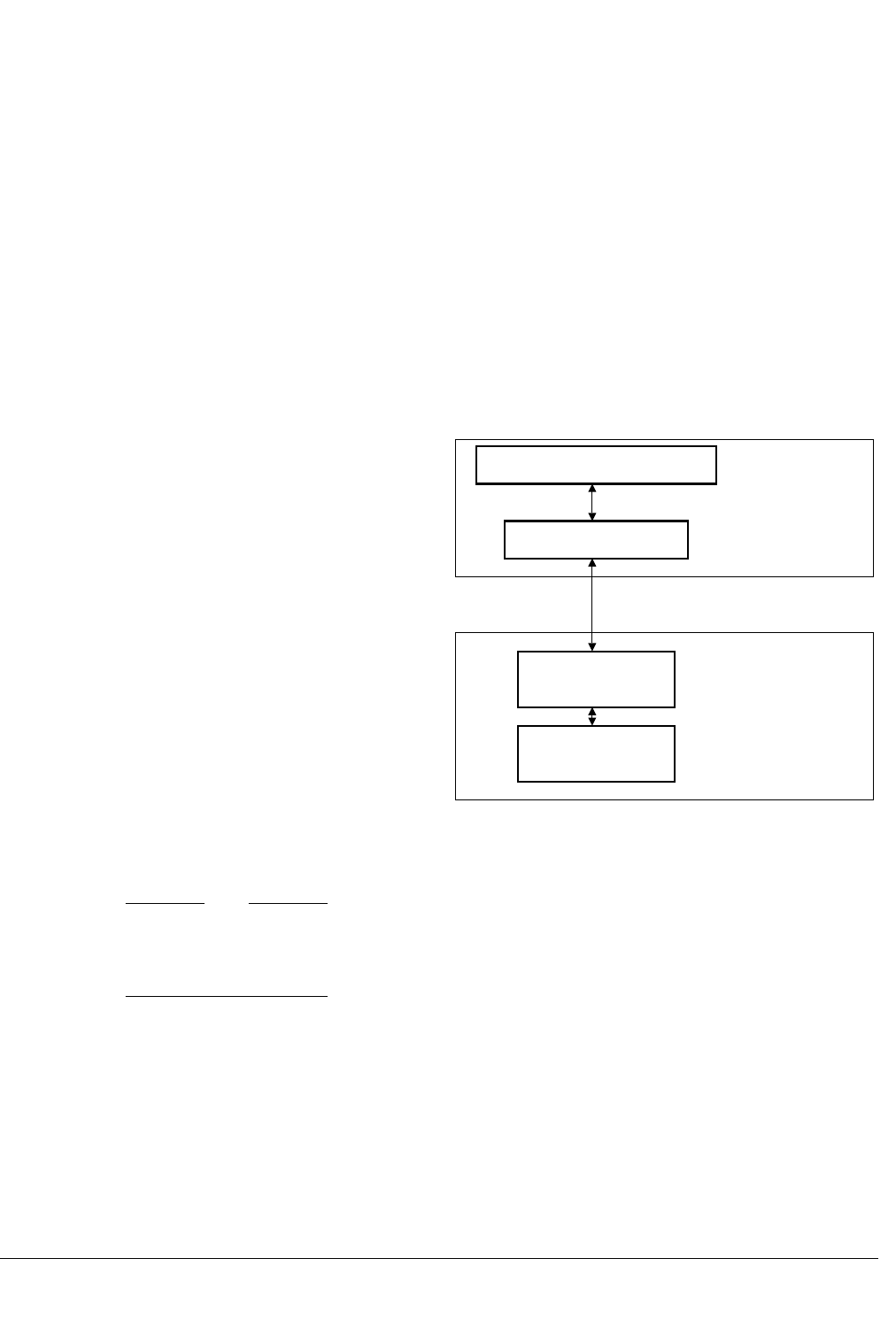
11.1 What is semihosting?
Semihosting is a mechanism that enables code running on an ARM target to communicate and use the
Input/Output facilities on a host computer that is running a debugger.
Examples of these facilities include keyboard input, screen output, and disk I/O. For example, you can
use this mechanism to enable functions in the C library, such as printf() and scanf(), to use the screen
and keyboard of the host instead of having a screen and keyboard on the target system.
This is useful because development hardware often does not have all the input and output facilities of the
final system. Semihosting enables the host computer to provide these facilities.
Semihosting is implemented by a set of defined software instructions, for example SVCs, that generate
exceptions from program control. The application invokes the appropriate semihosting call and the debug
agent then handles the exception. The debug agent provides the required communication with the host.
The semihosting interface is common across all debug agents provided by ARM. Semihosted operations
work when you are debugging applications on your development platform, as shown in the following
figure:
SVC C Library Code
debugger
Target
Host
printf()
hello
printf(“hello\n”);
Text displayed
on host screen
Application Code
SVC handled by
debug agent
Communication
with debugger
running on host
Figure 11-1 Semihosting overview
In many cases, semihosting is invoked by code within library functions. The application can also invoke
the semihosting operation directly.
Note
ARM processors use the SVC instructions, formerly known as SWI instructions, to make semihosting
calls. However, if you are compiling for an ARMv6-M or ARMv7-M, for example a Cortex-M1 or
Cortex-M3 processor, semihosting is implemented using the BKPT instruction.
Related concepts
11.2 The semihosting interface on page 11-730.
11.3 Can I change the semihosting operation numbers? on page 11-731.
11.4 Debug agent interaction SVCs on page 11-732.
Related information
The ARM C and C++ libraries.
11 What is Semihosting?
11.1 What is semihosting?
ARM DUI0375G_02 Copyright © 2007, 2008, 2011, 2012, 2014, 2015 ARM. All rights
reserved.
11-729
Confidential - Draft - Beta

11.2 The semihosting interface
The ARM and Thumb SVC instructions contain a field that encodes the SVC number used by the
application code.
Note
If you are compiling for the ARMv6-M or ARMv7-M, the Thumb BKPT instruction is used instead of the
Thumb SVC instruction. Both BKPT and SVC take an 8-bit immediate value. In all other respects,
semihosting is the same for all supported ARM processors.
The system SVC handler can decode the SVC number. Semihosting operations are requested using a
single SVC number, leaving the other numbers available for use by the application or operating system.
The SVC number used for semihosting depends on the target architecture or processor:
SVC 0x123456
In ARM state for all architectures.
SVC 0xAB
In ARM state and Thumb state, excluding ARMv6-M and ARMv7-M. This behavior is not
guaranteed on all debug targets from ARM or from third parties.
BKPT 0xAB
For ARMv6-M and ARMv7-M, Thumb state only.
The SVC number indicates to the debug agent that the SVC instruction is a semihosting request. To
distinguish between operations, the operation type is passed in R0. All other parameters are passed in a
block that is pointed to by R1.
The result is returned in R0, either as an explicit return value or as a pointer to a data block. Even if no
result is returned, assume that R0 is corrupted.
The available semihosting operation numbers passed in R0 are allocated as follows:
0x00-0x31
Used by ARM.
0x32-0xFF
Reserved for future use by ARM.
0x100-0x1FF
Reserved for user applications. These are not used by ARM.
If you are writing your own SVC operations, however, you are advised to use a different SVC
number rather than using the semihosted SVC number and these operation type numbers.
0x200-0xFFFFFFFF
Undefined and currently unused. It is recommended that you do not use these.
In the following sections, the number in parentheses after the operation name is the value placed into R0,
for example SYS_OPEN (0x01).
If you are calling SVCs from assembly language code ARM recommends that you define the
semihosting operation names, to their respective operation numbers, with the EQU directive. For example:
SYS_OPEN EQU 0x01
SYS_CLOSE EQU 0x02
Related concepts
11.1 What is semihosting? on page 11-729.
11.3 Can I change the semihosting operation numbers? on page 11-731.
11.4 Debug agent interaction SVCs on page 11-732.
11 What is Semihosting?
11.2 The semihosting interface
ARM DUI0375G_02 Copyright © 2007, 2008, 2011, 2012, 2014, 2015 ARM. All rights
reserved.
11-730
Confidential - Draft - Beta

11.3 Can I change the semihosting operation numbers?
ARM strongly recommends that you do not change the semihosting operation numbers.
However, if you have to do this, you must:
• change all the code in your system, including library code, to use the new number
• reconfigure your debugger to use the new number.
Related concepts
11.1 What is semihosting? on page 11-729.
11.2 The semihosting interface on page 11-730.
11 What is Semihosting?
11.3 Can I change the semihosting operation numbers?
ARM DUI0375G_02 Copyright © 2007, 2008, 2011, 2012, 2014, 2015 ARM. All rights
reserved.
11-731
Confidential - Draft - Beta

11.4 Debug agent interaction SVCs
In addition to the C library semihosted functions, some other SVCs support interaction with the debug
agent.
These are:
•angel_SWIreason_EnterSVC (0x17)
•angel_SWIreason_ReportException (0x18).
Related references
11.5 angel_SWIreason_EnterSVC (0x17) on page 11-733.
11.6 angel_SWIreason_ReportException (0x18) on page 11-734.
11 What is Semihosting?
11.4 Debug agent interaction SVCs
ARM DUI0375G_02 Copyright © 2007, 2008, 2011, 2012, 2014, 2015 ARM. All rights
reserved.
11-732
Confidential - Draft - Beta

11.5 angel_SWIreason_EnterSVC (0x17)
Sets the processor to Supervisor mode and disables all interrupts by setting both interrupt mask bits in
the new CPSR.
With a debug hardware unit, such as ARM RVI™ debug unit or ARM DSTREAM™ debug and trace unit:
• the User stack pointer, R13_USR, is copied to the Supervisor mode stack pointer, R13_SVC
• the I and F bits in the current CPSR are set, which disables normal and fast interrupts.
Entry
Register R1 is not used. The CPSR can specify User or Supervisor mode.
Return
On exit, R0 contains the address of a function to be called to return to User mode. The function has the
following prototype:
void ReturnToUSR(void)
If EnterSVC is called in User mode, this routine returns the caller to User mode and restores the interrupt
flags. Otherwise, the action of this routine is undefined.
If entered in User mode, the Supervisor mode stack is lost as a result of copying the user stack pointer.
The return to User routine restores R13_SVC to the Supervisor mode stack value, but this stack must not
be used by applications.
After executing the SVC, the current link register is R14_SVC, not R14_USR. If the value of R14_USR is
required after the call, it must be pushed onto the stack before the call and popped afterwards, as for a BL
function call.
11 What is Semihosting?
11.5 angel_SWIreason_EnterSVC (0x17)
ARM DUI0375G_02 Copyright © 2007, 2008, 2011, 2012, 2014, 2015 ARM. All rights
reserved.
11-733
Confidential - Draft - Beta

11.6 angel_SWIreason_ReportException (0x18)
This SVC can be called by an application to report an exception to the debugger directly. The most
common use is to report that execution has completed, using ADP_Stopped_ApplicationExit.
Entry
On entry R1 is set to one of the values listed in the following tables. These values are defined in
angel_reasons.h.
The hardware exceptions are generated if the debugger variable vector_catch is set to catch that
exception type, and the debug agent is capable of reporting that exception type. The following table
shows the hardware vector reason codes:
Table 11-1 Hardware vector reason codes
Name Hexadecimal value
ADP_Stopped_BranchThroughZero 0x20000
ADP_Stopped_UndefinedInstr 0x20001
ADP_Stopped_SoftwareInterrupt 0x20002
ADP_Stopped_PrefetchAbort 0x20003
ADP_Stopped_DataAbort 0x20004
ADP_Stopped_AddressException 0x20005
ADP_Stopped_IRQ 0x20006
ADP_Stopped_FIQ 0x20007
Exception handlers can use these SVCs at the end of handler chains as the default action, to indicate that
the exception has not been handled. The following table shows the software reason codes:
Table 11-2 Software reason codes
Name Hexadecimal value
ADP_Stopped_BreakPoint 0x20020
ADP_Stopped_WatchPoint 0x20021
ADP_Stopped_StepComplete 0x20022
ADP_Stopped_RunTimeErrorUnknown *0x20023
ADP_Stopped_InternalError *0x20024
ADP_Stopped_UserInterruption 0x20025
ADP_Stopped_ApplicationExit 0x20026
ADP_Stopped_StackOverflow *0x20027
ADP_Stopped_DivisionByZero *0x20028
ADP_Stopped_OSSpecific *0x20029
In this table, a * next to a value indicates that the value is not supported by the ARM debugger. The
debugger reports an Unhandled ADP_Stopped exception for these values.
11 What is Semihosting?
11.6 angel_SWIreason_ReportException (0x18)
ARM DUI0375G_02 Copyright © 2007, 2008, 2011, 2012, 2014, 2015 ARM. All rights
reserved.
11-734
Confidential - Draft - Beta

Return
No return is expected from these calls. However, it is possible for the debugger to request that the
application continue by performing an RDI_Execute request or equivalent. In this case, execution
continues with the registers as they were on entry to the SVC, or as subsequently modified by the
debugger.
11 What is Semihosting?
11.6 angel_SWIreason_ReportException (0x18)
ARM DUI0375G_02 Copyright © 2007, 2008, 2011, 2012, 2014, 2015 ARM. All rights
reserved.
11-735
Confidential - Draft - Beta

11.7 SYS_CLOSE (0x02)
Closes a file on the host system. The handle must reference a file that was opened with SYS_OPEN.
Entry
On entry, R1 contains a pointer to a one-word argument block:
word 1
contains a handle for an open file.
Return
On exit, R0 contains:
• 0 if the call is successful
• –1 if the call is not successful.
Related references
11.16 SYS_OPEN (0x01) on page 11-745.
11 What is Semihosting?
11.7 SYS_CLOSE (0x02)
ARM DUI0375G_02 Copyright © 2007, 2008, 2011, 2012, 2014, 2015 ARM. All rights
reserved.
11-736
Confidential - Draft - Beta

11.8 SYS_CLOCK (0x10)
Returns the number of centiseconds since the execution started.
Values returned by this SVC can be of limited use for some benchmarking purposes because of
communication overhead or other agent-specific factors. For example, with a debug hardware unit such
as RVI or DSTREAM, the request is passed back to the host for execution. This can lead to unpredictable
delays in transmission and process scheduling.
Use this function to calculate time intervals, by calculating differences between intervals with and
without the code sequence to be timed.
Entry
Register R1 must contain zero. There are no other parameters.
Return
On exit, R0 contains:
• the number of centiseconds since some arbitrary start point, if the call is successful
• –1 if the call is not successful, for example, because of a communications error.
Related references
11.9 SYS_ELAPSED (0x30) on page 11-738.
11.23 SYS_TICKFREQ (0x31) on page 11-752.
11 What is Semihosting?
11.8 SYS_CLOCK (0x10)
ARM DUI0375G_02 Copyright © 2007, 2008, 2011, 2012, 2014, 2015 ARM. All rights
reserved.
11-737
Confidential - Draft - Beta

11.9 SYS_ELAPSED (0x30)
Returns the number of elapsed target ticks since execution started.
Use SYS_TICKFREQ to determine the tick frequency.
Entry
On entry, R1 points to a two-word data block to be used for returning the number of elapsed ticks:
word 1
the least significant word and is at the low address
word 2
the most significant word and is at the high address.
Return
On exit:
• On success, R1 points to a doubleword that contains the number of elapsed ticks. On failure, R1
contains -1.
• On success, R0 contains 0. On failure, R0 contains -1.
Note
Some debuggers might not support this SVC when connected though RVI or DSTREAM, and they
always return –1 in R0.
11 What is Semihosting?
11.9 SYS_ELAPSED (0x30)
ARM DUI0375G_02 Copyright © 2007, 2008, 2011, 2012, 2014, 2015 ARM. All rights
reserved.
11-738
Confidential - Draft - Beta

11.10 SYS_ERRNO (0x13)
Returns the value of the C library errno variable associated with the host implementation of the
semihosting SVCs.
The errno variable can be set by a number of C library semihosted functions, including:
•SYS_REMOVE
•SYS_OPEN
•SYS_CLOSE
•SYS_READ
•SYS_WRITE
•SYS_SEEK.
Whether errno is set or not, and to what value, is entirely host-specific, except where the ISO C standard
defines the behavior.
Entry
There are no parameters. Register R1 must be zero.
Return
On exit, R0 contains the value of the C library errno variable.
Related references
11.7 SYS_CLOSE (0x02) on page 11-736.
11.16 SYS_OPEN (0x01) on page 11-745.
11.17 SYS_READ (0x06) on page 11-746.
11.19 SYS_REMOVE (0x0E) on page 11-748.
11.21 SYS_SEEK (0x0A) on page 11-750.
11.26 SYS_WRITE (0x05) on page 11-755.
11 What is Semihosting?
11.10 SYS_ERRNO (0x13)
ARM DUI0375G_02 Copyright © 2007, 2008, 2011, 2012, 2014, 2015 ARM. All rights
reserved.
11-739
Confidential - Draft - Beta

11.11 SYS_FLEN (0x0C)
Returns the length of a specified file.
Entry
On entry, R1 contains a pointer to a one-word argument block:
word 1
A handle for a previously opened, seekable file object.
Return
On exit, R0 contains:
• the current length of the file object, if the call is successful
• –1 if an error occurs.
11 What is Semihosting?
11.11 SYS_FLEN (0x0C)
ARM DUI0375G_02 Copyright © 2007, 2008, 2011, 2012, 2014, 2015 ARM. All rights
reserved.
11-740
Confidential - Draft - Beta

11.12 SYS_GET_CMDLINE (0x15)
Returns the command line used for the call to the executable, that is, argc and argv.
Entry
On entry, R1 points to a two-word data block to be used for returning the command string and its length:
word 1
a pointer to a buffer of at least the size specified in word two
word 2
the length of the buffer in bytes.
Return
On exit:
• Register R1 points to a two-word data block:The debug agent might impose limits on the maximum
length of the string that can be transferred. However, the agent must be able to transfer a command
line of at least 80 bytes.
word 1
a pointer to null-terminated string of the command line
word 2
the length of the string.
• Register R0 contains an error code:
— 0 if the call is successful
— –1 if the call is not successful, for example, because of a communications error.
11 What is Semihosting?
11.12 SYS_GET_CMDLINE (0x15)
ARM DUI0375G_02 Copyright © 2007, 2008, 2011, 2012, 2014, 2015 ARM. All rights
reserved.
11-741
Confidential - Draft - Beta

11.13 SYS_HEAPINFO (0x16)
Returns the system stack and heap parameters.
The values returned are typically those used by the C library during initialization. For a debug hardware
unit, such as RVI or DSTREAM, the values returned are the image location and the top of memory.
The C library can override these values.
The host debugger determines the actual values to return by using the top_of_memory debugger variable.
Entry
On entry, R1 contains the address of a pointer to a four-word data block. The contents of the data block
are filled by the function. The following example shows the structure of the data block and return values.
struct block {
int heap_base;
int heap_limit;
int stack_base;
int stack_limit;
};
struct block *mem_block, info;
mem_block = &info;
AngelSWI(SYS_HEAPINFO, (unsigned) &mem_block);
Note
If word one of the data block has the value zero, the C library replaces the zero with Image$$ZI$$Limit.
This value corresponds to the top of the data region in the memory map.
Return
On exit, R1 contains the address of the pointer to the structure.
If one of the values in the structure is 0, the system was unable to calculate the real value.
11 What is Semihosting?
11.13 SYS_HEAPINFO (0x16)
ARM DUI0375G_02 Copyright © 2007, 2008, 2011, 2012, 2014, 2015 ARM. All rights
reserved.
11-742
Confidential - Draft - Beta

11.14 SYS_ISERROR (0x08)
Determines whether the return code from another semihosting call is an error status or not.
This call is passed a parameter block containing the error code to examine.
Entry
On entry, R1 contains a pointer to a one-word data block:
word 1
The required status word to check.
Return
On exit, R0 contains:
• 0 if the status word is not an error indication
• a nonzero value if the status word is an error indication.
11 What is Semihosting?
11.14 SYS_ISERROR (0x08)
ARM DUI0375G_02 Copyright © 2007, 2008, 2011, 2012, 2014, 2015 ARM. All rights
reserved.
11-743
Confidential - Draft - Beta

11.15 SYS_ISTTY (0x09)
Checks whether a file is connected to an interactive device.
Entry
On entry, R1 contains a pointer to a one-word argument block:
word 1
A handle for a previously opened file object.
Return
On exit, R0 contains:
• 1 if the handle identifies an interactive device
• 0 if the handle identifies a file
• a value other than 1 or 0 if an error occurs.
11 What is Semihosting?
11.15 SYS_ISTTY (0x09)
ARM DUI0375G_02 Copyright © 2007, 2008, 2011, 2012, 2014, 2015 ARM. All rights
reserved.
11-744
Confidential - Draft - Beta

11.16 SYS_OPEN (0x01)
Opens a file on the host system.
The file path is specified either as relative to the current directory of the host process, or absolute, using
the path conventions of the host operating system.
ARM targets interpret the special path name :tt as meaning the console input stream, for an open-read
or the console output stream, for an open-write. Opening these streams is performed as part of the
standard startup code for those applications that reference the C stdio streams.
Entry
On entry, R1 contains a pointer to a three-word argument block:
word 1
A pointer to a null-terminated string containing a file or device name.
word 2
An integer that specifies the file opening mode. The following table gives the valid values for
the integer, and their corresponding ISO C fopen() mode.
word 3
An integer that gives the length of the string pointed to by word 1.
The length does not include the terminating null character that must be present.
Table 11-3 Value of mode
mode 0 1 2 3 4 5 6 7 8 9 10 11
ISO C fopen modefr rb r+ r+b w wb w+ w+b a ab a+ a+b
Return
On exit, R0 contains:
• a nonzero handle if the call is successful
• –1 if the call is not successful.
fThe non-ANSI option t is not supported.
11 What is Semihosting?
11.16 SYS_OPEN (0x01)
ARM DUI0375G_02 Copyright © 2007, 2008, 2011, 2012, 2014, 2015 ARM. All rights
reserved.
11-745
Confidential - Draft - Beta

11.17 SYS_READ (0x06)
Reads the contents of a file into a buffer.
The file position is specified either:
• explicitly by a SYS_SEEK
• implicitly one byte beyond the previous SYS_READ or SYS_WRITE request.
The file position is at the start of the file when it is opened, and is lost when the file is closed. Perform
the file operation as a single action whenever possible. For example, do not split a read of 16KB into
four 4KB chunks unless there is no alternative.
Entry
On entry, R1 contains a pointer to a four-word data block:
word 1
contains a handle for a file previously opened with SYS_OPEN
word 2
points to a buffer
word 3
contains the number of bytes to read to the buffer from the file.
Return
On exit:
•R0 contains zero if the call is successful.
• If R0 contains the same value as word 3, the call has failed and EOF is assumed.
• If R0 contains a smaller value than word 3, the call was partially successful. No error is assumed, but
the buffer has not been filled.
If the handle is for an interactive device, that is, SYS_ISTTY returns –1. A nonzero return from SYS_READ
indicates that the line read did not fill the buffer.
11 What is Semihosting?
11.17 SYS_READ (0x06)
ARM DUI0375G_02 Copyright © 2007, 2008, 2011, 2012, 2014, 2015 ARM. All rights
reserved.
11-746
Confidential - Draft - Beta

11.18 SYS_READC (0x07)
Reads a byte from the console.
Entry
Register R1 must contain zero. There are no other parameters or values possible.
Return
On exit, R0 contains the byte read from the console.
11 What is Semihosting?
11.18 SYS_READC (0x07)
ARM DUI0375G_02 Copyright © 2007, 2008, 2011, 2012, 2014, 2015 ARM. All rights
reserved.
11-747
Confidential - Draft - Beta

11.19 SYS_REMOVE (0x0E)
Deletes a specified file on the host filing system.
Entry
On entry, R1 contains a pointer to a two-word argument block:
word 1
points to a null-terminated string that gives the path name of the file to be deleted
word 2
the length of the string.
Return
On exit, R0 contains:
• 0 if the delete is successful
• a nonzero, host-specific error code if the delete fails.
11 What is Semihosting?
11.19 SYS_REMOVE (0x0E)
ARM DUI0375G_02 Copyright © 2007, 2008, 2011, 2012, 2014, 2015 ARM. All rights
reserved.
11-748
Confidential - Draft - Beta

11.20 SYS_RENAME (0x0F)
Renames a specified file.
Entry
On entry, R1 contains a pointer to a four-word data block:
word 1
a pointer to the name of the old file
word 2
the length of the old filename
word 3
a pointer to the new filename
word 4
the length of the new filename.
Both strings are null-terminated.
Return
On exit, R0 contains:
• 0 if the rename is successful
• a nonzero, host-specific error code if the rename fails.
11 What is Semihosting?
11.20 SYS_RENAME (0x0F)
ARM DUI0375G_02 Copyright © 2007, 2008, 2011, 2012, 2014, 2015 ARM. All rights
reserved.
11-749
Confidential - Draft - Beta

11.21 SYS_SEEK (0x0A)
Seeks to a specified position in a file using an offset specified from the start of the file.
The file is assumed to be a byte array and the offset is given in bytes.
Entry
On entry, R1 contains a pointer to a two-word data block:
word 1
a handle for a seekable file object
word 2
the absolute byte position to search to.
Return
On exit, R0 contains:
• 0 if the request is successful
• A negative value if the request is not successful. Use SYS_ERRNO to read the value of the host errno
variable describing the error.
Note
The effect of seeking outside the current extent of the file object is undefined.
11 What is Semihosting?
11.21 SYS_SEEK (0x0A)
ARM DUI0375G_02 Copyright © 2007, 2008, 2011, 2012, 2014, 2015 ARM. All rights
reserved.
11-750
Confidential - Draft - Beta

11.22 SYS_SYSTEM (0x12)
Passes a command to the host command-line interpreter.
This enables you to execute a system command such as dir, ls, or pwd. The terminal I/O is on the host,
and is not visible to the target.
Caution
The command passed to the host is executed on the host. Ensure that any command passed has no
unintended consequences.
Entry
On entry, R1 contains a pointer to a two-word argument block:
word 1
points to a string to be passed to the host command-line interpreter
word 2
the length of the string.
Return
On exit, R0 contains the return status.
11 What is Semihosting?
11.22 SYS_SYSTEM (0x12)
ARM DUI0375G_02 Copyright © 2007, 2008, 2011, 2012, 2014, 2015 ARM. All rights
reserved.
11-751
Confidential - Draft - Beta

11.23 SYS_TICKFREQ (0x31)
Returns the tick frequency.
Entry
Register R1 must contain 0 on entry to this routine.
Return
On exit, R0 contains either:
• the number of ticks per second
• –1 if the target does not know the value of one tick. Some debuggers might not support this SVC
when connected though RVI or DSTREAM and they always return –1 in R0.
11 What is Semihosting?
11.23 SYS_TICKFREQ (0x31)
ARM DUI0375G_02 Copyright © 2007, 2008, 2011, 2012, 2014, 2015 ARM. All rights
reserved.
11-752
Confidential - Draft - Beta

11.24 SYS_TIME (0x11)
Returns the number of seconds since 00:00 January 1, 1970.
This is real-world time, regardless of any debug agent configuration, such as RVI or DSTREAM.
Entry
There are no parameters.
Return
On exit, R0 contains the number of seconds.
11 What is Semihosting?
11.24 SYS_TIME (0x11)
ARM DUI0375G_02 Copyright © 2007, 2008, 2011, 2012, 2014, 2015 ARM. All rights
reserved.
11-753
Confidential - Draft - Beta

11.25 SYS_TMPNAM (0x0D)
Returns a temporary name for a file identified by a system file identifier.
Entry
On entry, R1 contains a pointer to a three-word argument block:
word 1
A pointer to a buffer.
word 2
A target identifier for this filename. Its value must be an integer in the range 0 to 255.
word 3
Contains the length of the buffer. The length must be at least the value of L_tmpnam on the host
system.
Return
On exit, R0 contains:
• 0 if the call is successful
• –1 if an error occurs.
The buffer pointed to by R1 contains the filename, prefixed with a suitable directory name.
If you use the same target identifier again, the same filename is returned.
Note
The returned string must be null-terminated.
11 What is Semihosting?
11.25 SYS_TMPNAM (0x0D)
ARM DUI0375G_02 Copyright © 2007, 2008, 2011, 2012, 2014, 2015 ARM. All rights
reserved.
11-754
Confidential - Draft - Beta

11.26 SYS_WRITE (0x05)
Writes the contents of a buffer to a specified file at the current file position.
The file position is specified either:
• explicitly, by a SYS_SEEK
• implicitly as one byte beyond the previous SYS_READ or SYS_WRITE request.
The file position is at the start of the file when the file is opened, and is lost when the file is closed.
Perform the file operation as a single action whenever possible. For example, do not split a write of
16KB into four 4KB chunks unless there is no alternative.
Entry
On entry, R1 contains a pointer to a three-word data block:
word 1
contains a handle for a file previously opened with SYS_OPEN
word 2
points to the memory containing the data to be written
word 3
contains the number of bytes to be written from the buffer to the file.
Return
On exit, R0 contains:
• 0 if the call is successful
• the number of bytes that are not written, if there is an error.
11 What is Semihosting?
11.26 SYS_WRITE (0x05)
ARM DUI0375G_02 Copyright © 2007, 2008, 2011, 2012, 2014, 2015 ARM. All rights
reserved.
11-755
Confidential - Draft - Beta

11.27 SYS_WRITEC (0x03)
Writes a character byte, pointed to by R1, to the debug channel.
When executed under an ARM debugger, the character appears on the host debugger console.
Entry
On entry, R1 contains a pointer to the character.
Return
None. Register R0 is corrupted.
11 What is Semihosting?
11.27 SYS_WRITEC (0x03)
ARM DUI0375G_02 Copyright © 2007, 2008, 2011, 2012, 2014, 2015 ARM. All rights
reserved.
11-756
Confidential - Draft - Beta

11.28 SYS_WRITE0 (0x04)
Writes a null-terminated string to the debug channel.
When executed under an ARM debugger, the characters appear on the host debugger console.
Entry
On entry, R1 contains a pointer to the first byte of the string.
Return
None. Register R0 is corrupted.
11 What is Semihosting?
11.28 SYS_WRITE0 (0x04)
ARM DUI0375G_02 Copyright © 2007, 2008, 2011, 2012, 2014, 2015 ARM. All rights
reserved.
11-757
Confidential - Draft - Beta

Chapter 12
ARMv6 SIMD Instruction Intrinsics
Describes the ARMv6 SIMD instruction intrinsics. SIMD instructions allow the processor to operate on
packed 8-bit or 16-bit values in 32-bit registers.
It contains the following sections:
•12.1 ARMv6 SIMD intrinsics by prefix on page 12-760.
•12.2 ARMv6 SIMD intrinsics, summary descriptions, byte lanes, affected flags on page 12-762.
•12.3 ARMv6 SIMD intrinsics, compatible processors and architectures on page 12-765.
•12.4 ARMv6 SIMD instruction intrinsics and APSR GE flags on page 12-766.
•12.5 __qadd16 intrinsic on page 12-768.
•12.6 __qadd8 intrinsic on page 12-769.
•12.7 __qasx intrinsic on page 12-770.
•12.8 __qsax intrinsic on page 12-771.
•12.9 __qsub16 intrinsic on page 12-772.
•12.10 __qsub8 intrinsic on page 12-773.
•12.11 __sadd16 intrinsic on page 12-774.
•12.12 __sadd8 intrinsic on page 12-775.
•12.13 __sasx intrinsic on page 12-776.
•12.14 __sel intrinsic on page 12-777.
•12.15 __shadd16 intrinsic on page 12-778.
•12.16 __shadd8 intrinsic on page 12-779.
•12.17 __shasx intrinsic on page 12-780.
•12.18 __shsax intrinsic on page 12-781.
•12.19 __shsub16 intrinsic on page 12-782.
•12.20 __shsub8 intrinsic on page 12-783.
•12.21 __smlad intrinsic on page 12-784.
•12.22 __smladx intrinsic on page 12-785.
ARM DUI0375G_02 Copyright © 2007, 2008, 2011, 2012, 2014, 2015 ARM. All rights
reserved.
12-758
Confidential - Draft - Beta

•12.23 __smlald intrinsic on page 12-786.
•12.24 __smlaldx intrinsic on page 12-787.
•12.25 __smlsd intrinsic on page 12-788.
•12.26 __smlsdx intrinsic on page 12-789.
•12.27 __smlsld intrinsic on page 12-790.
•12.28 __smlsldx intrinsic on page 12-791.
•12.29 __smuad intrinsic on page 12-792.
•12.30 __smuadx intrinsic on page 12-793.
•12.31 __smusd intrinsic on page 12-794.
•12.32 __smusdx intrinsic on page 12-795.
•12.33 __ssat16 intrinsic on page 12-796.
•12.34 __ssax intrinsic on page 12-797.
•12.35 __ssub16 intrinsic on page 12-798.
•12.36 __ssub8 intrinsic on page 12-799.
•12.37 __sxtab16 intrinsic on page 12-800.
•12.38 __sxtb16 intrinsic on page 12-801.
•12.39 __uadd16 intrinsic on page 12-802.
•12.40 __uadd8 intrinsic on page 12-803.
•12.41 __uasx intrinsic on page 12-804.
•12.42 __uhadd16 intrinsic on page 12-805.
•12.43 __uhadd8 intrinsic on page 12-806.
•12.44 __uhasx intrinsic on page 12-807.
•12.45 __uhsax intrinsic on page 12-808.
•12.46 __uhsub16 intrinsic on page 12-809.
•12.47 __uhsub8 intrinsic on page 12-810.
•12.48 __uqadd16 intrinsic on page 12-811.
•12.49 __uqadd8 intrinsic on page 12-812.
•12.50 __uqasx intrinsic on page 12-813.
•12.51 __uqsax intrinsic on page 12-814.
•12.52 __uqsub16 intrinsic on page 12-815.
•12.53 __uqsub8 intrinsic on page 12-816.
•12.54 __usad8 intrinsic on page 12-817.
•12.55 __usada8 intrinsic on page 12-818.
•12.56 __usat16 intrinsic on page 12-819.
•12.57 __usax intrinsic on page 12-820.
•12.58 __usub16 intrinsic on page 12-821.
•12.59 __usub8 intrinsic on page 12-822.
•12.60 __uxtab16 intrinsic on page 12-823.
•12.61 __uxtb16 intrinsic on page 12-824.
12 ARMv6 SIMD Instruction Intrinsics
ARM DUI0375G_02 Copyright © 2007, 2008, 2011, 2012, 2014, 2015 ARM. All rights
reserved.
12-759
Confidential - Draft - Beta

12.1 ARMv6 SIMD intrinsics by prefix
The following table shows the intrinsics according to prefix name.
Each intrinsic's prefix indicates the type of arithmetic performed, as follows:
•__s, signed.
•__q, signed saturating.
•__sh, signed halving.
•__u, unsigned.
•__uq, unsigned saturating.
•__uh, unsigned halving.
The __sel() intrinsic falls outside the classifications shown in the table. This intrinsic selects bytes
according to GE bit values.
Table 12-1 ARMv6 SIMD intrinsics by prefix
ARMv6 SIMD instruction intrinsics grouped by prefix
Intrinsic classification __s __q __sh __u __uq __uh
Byte addition __sadd8 __qadd8 __shadd8 __uadd8 __uqadd8 __uhadd8
Byte subtraction __ssub8 __qsub8 __shsub8 __usub8 __uqsub8 __uhsub8
Halfword addition __sadd16 __qadd16 __shadd16 __uadd16 __uqadd16 __uhadd16
Halfword subtraction __ssub16 __qsub16 __shsub16 __usub16 __uqsub16 __uhsub16
Exchange halfwords within one operand, add high
halfwords, subtract low halfwords
__sasx __qasx __shasx __uasx __uqasx __uhasx
Exchange halfwords within one operand, subtract
high halfwords, add low halfwords
__ssax __qsax __shsax __usax __uqsax __uhsax
Unsigned sum of absolute difference - - - __usad8 - -
Unsigned sum of absolute difference and
accumulate
---__usada8 - -
Saturation to selected width __ssat16 - - __usat16 - -
Extract values (bit positions [23:16][7:0]), zero-
extend to 16 bits
---__uxtb16 - -
Extract values (bit positions [23:16][7:0]) from
second operand, zero-extend to 16 bits, add to first
operand
---__uxtab16 - -
Sign-extend __sxtb16 -----
Sign-extend, add __sxtab16 -----
Signed multiply, add products __smuad -----
Exchange halfwords of one operand, signed
multiply, add products
__smuadx -----
Signed multiply, subtract products __smusd -----
Exchange halfwords of one operand, signed
multiply, subtract products
__smusdx -----
Signed multiply, add both results to another operand __smlad -----
12 ARMv6 SIMD Instruction Intrinsics
12.1 ARMv6 SIMD intrinsics by prefix
ARM DUI0375G_02 Copyright © 2007, 2008, 2011, 2012, 2014, 2015 ARM. All rights
reserved.
12-760
Confidential - Draft - Beta
Table 12-1 ARMv6 SIMD intrinsics by prefix (continued)
ARMv6 SIMD instruction intrinsics grouped by prefix
Intrinsic classification __s __q __sh __u __uq __uh
Exchange halfwords of one operand, perform 2x16-
bit multiplication, add both results to another
operand
__smladx -----
Perform 2x16-bit multiplication, add both results to
another operand
__smlald -----
Exchange halfwords of one operand, perform 2x16-
bit multiplication, add both results to another
operand
__smlaldx -----
Perform 2x16-bit signed multiplications, take
difference of products, subtracting high halfword
product from low halfword product, and add
difference to a 32-bit accumulate operand
__smlsd -----
Exchange halfwords of one operand, perform two
signed 16-bit multiplications, add difference of
products to a 32-bit accumulate operand
__smlsdx -----
Perform 2x16-bit signed multiplications, take
difference of products, subtracting high halfword
product from low halfword product, add difference
to a 64-bit accumulate operand
__smlsld -----
Exchange halfwords of one operand, perform 2x16-
bit multiplications, add difference of products to a
64-bit accumulate operand
__smlsldx -----
12 ARMv6 SIMD Instruction Intrinsics
12.1 ARMv6 SIMD intrinsics by prefix
ARM DUI0375G_02 Copyright © 2007, 2008, 2011, 2012, 2014, 2015 ARM. All rights
reserved.
12-761
Confidential - Draft - Beta

12.2 ARMv6 SIMD intrinsics, summary descriptions, byte lanes, affected flags
The following table describes each ARMv6 SIMD intrinsic, providing a summary description together
with information about byte lanes and affected flags.
Table 12-2 ARMv6 SIMD intrinsics, summary descriptions, byte lanes, affected flags
Intrinsic Summary description Byte lanes Affected flags
Returns Operands
__qadd16 2 x 16-bit addition, saturated to range -215 ≤ x ≤ 215 - 1. int16x2 int16x2, int16x2 None
__qadd8 4 x 8-bit addition, saturated to range -27 ≤ x ≤ 27 - 1. int8x4 int8x4, int8x4 None
__qasx Exchange halfwords of second operand, add high halfwords, subtract
low halfwords, saturating in each case.
int16x2 int16x2, int16x2 None
__qsax Exchange halfwords of second operand, subtract high halfwords, add
low halfwords, saturating in each case.
int16x2 int16x2, int16x2 None
__qsub16 2 x 16-bit subtraction with saturation. int16x2 int16x2, int16x2 None
__qsub8 4 x 8-bit subtraction with saturation. int8x4 int8x4, int8x4 None
__sadd16 2 x 16-bit signed addition. int16x2 int16x2, int16x2 APSR.GE bits
__sadd8 4 x 8-bit signed addition. int8x4 int8x4, int8x4 APSR.GE bits
__sasx Exchange halfwords of second operand, add high halfwords, subtract
low halfwords.
int16x2 int16x2, int16x2 APSR.GE bits
__sel Select each byte of the result from either the first operand or the
second operand, according to the values of the GE bits. For each
result byte, if the corresponding GE bit is set, the byte from the first
operand is selected, otherwise the byte from the second operand is
selected. Because of the way that int16x2 operations set two
(duplicate) GE bits per value, the __sel intrinsic works equally well
on (u)int16x2 and (u)int8x4 data.
uint8x4 uint8x4, uint8x4 None
__shadd16 2x16-bit signed addition, halving the results. int16x2 int16x2, int16x2 None
__shadd8 4x8-bit signed addition, halving the results. int8x4 int8x4, int8x4 None
__shasx Exchange halfwords of the second operand, add high halfwords and
subtract low halfwords, halving the results.
int16x2 int16x2, int16x2 None
__shsax Exchange halfwords of the second operand, subtract high halfwords
and add low halfwords, halving the results.
int16x2 int16x2, int16x2 None
__shsub16 2x16-bit signed subtraction, halving the results. int16x2 int16x2, int16x2 None
__shsub8 4x8-bit signed subtraction, halving the results. int8x4 int8x4, int8x4 None
__smlad 2x16-bit multiplication, adding both results to third operand. int32 int16x2, int16x2,
int32
Q bit
__smladx Exchange halfwords of the second operand, 2x16-bit multiplication,
adding both results to third operand.
int16x2 int16x2, int16x2 Q bit
__smlald 2x16-bit multiplication, adding both results to third operand.
Overflow in addition is not detected.
int64 int16x2, int16x2,
int64
None
12 ARMv6 SIMD Instruction Intrinsics
12.2 ARMv6 SIMD intrinsics, summary descriptions, byte lanes, affected flags
ARM DUI0375G_02 Copyright © 2007, 2008, 2011, 2012, 2014, 2015 ARM. All rights
reserved.
12-762
Confidential - Draft - Beta
Table 12-2 ARMv6 SIMD intrinsics, summary descriptions, byte lanes, affected flags (continued)
Intrinsic Summary description Byte lanes Affected flags
Returns Operands
__smlaldx Exchange halfwords of second operand, perform 2x16-bit
multiplication, adding both results to third operand. Overflow in
addition is not detected.
int64 int16x2, int16x2,
int64
None
__smlsd 2x16-bit signed multiplications. Take difference of products, subtract
high halfword product from low halfword product, add difference to
third operand.
int32 int16x2, int16x2,
int32
Q bit
__smlsdx Exchange halfwords of second operand, then 2x16-bit signed
multiplications. Product difference is added to a third accumulate
operand.
int32 int16x2, int16x2,
int32
Q bit
__smlsld 2x16-bit signed multiplications. Take difference of products,
subtracting high halfword product from low halfword product, and
add difference to third operand. Overflow in addition is not detected.
int64 int16x2, int16x2,
int64
None
__smlsldx Exchange halfwords of second operand, then 2x16-bit signed
multiplications. Take difference of products, subtracting high
halfword product from low halfword product, and add difference to
third operand. Overflow in addition is not detected.
int64 int16x2, int16x2,
u64
None
__smuad 2x16-bit signed multiplications, adding the products together. int32 int16x2, int16x2 Q bit
__smusd 2x16-bit signed multiplications. Take difference of products,
subtracting high halfword product from low halfword product.
int32 int16x2, int16x2 None
__smusdx 2x16-bit signed multiplications. Product of high halfword of first
operand and low halfword of second operand is subtracted from
product of low halfword of first operand and high halfword of
second operand, and difference is added to third operand.
int32 int16x2, int16x2 None
__ssat16 2x16-bit signed saturation to a selected width. int16x2 int16x2, /
*constant*/
unsigned int
Q bit
__ssax Exchange halfwords of second operand, subtract high halfwords and
add low halfwords.
int16x2 int16x2, int16x2 APSR.GE bits
__ssub16 2x16-bit signed subtraction. int16x2 int16x2, int16x2 APSR.GE bits
__ssub8 4x8-bit signed subtraction. int8x4 int8x4 APSR.GE bits
__smuadx Exchange halfwords of second operand, perform 2x16-bit signed
multiplications, and add products together.
int32 int16x2, int16x2 Q bit
__sxtab16 Two values at bit positions [23:16][7:0] are extracted from second
operand, sign-extended to 16 bits, and added to first operand.
int16x2 int8x4, int16x2 None
__sxtb16 Two values at bit positions [23:16][7:0] are extracted from the
operand and sign-extended to 16 bits.
int16x2 int8x4 None
__uadd16 2x16-bit unsigned addition. uint16x2 uint16x2, uint16x2 APSR.GE bits
__uadd8 4x8-bit unsigned addition. uint8x4 uint8x4, uint8x4 APSR.GE bits
__uasx Exchange halfwords of second operand, add high halfwords and
subtract low halfwords.
uint16x2 uint16x2, uint16x2 APSR.GE bits
__uhadd16 2x16-bit unsigned addition, halving the results. uint16x2 uint16x2, uint16x2 None
12 ARMv6 SIMD Instruction Intrinsics
12.2 ARMv6 SIMD intrinsics, summary descriptions, byte lanes, affected flags
ARM DUI0375G_02 Copyright © 2007, 2008, 2011, 2012, 2014, 2015 ARM. All rights
reserved.
12-763
Confidential - Draft - Beta

Table 12-2 ARMv6 SIMD intrinsics, summary descriptions, byte lanes, affected flags (continued)
Intrinsic Summary description Byte lanes Affected flags
Returns Operands
__uhadd8 4x8-bit unsigned addition, halving the results. uint8x4 uint8x4, uint8x4 None
__uhasx Exchange halfwords of second operand, add high halfwords and
subtract low halfwords, halving the results.
uint16x2 uint16x2, uint16x2 None
__uhsax Exchange halfwords of second operand, subtract high halfwords and
add low halfwords, halving the results.
uint16x2 uint16x2, uint16x2 None
__uhsub16 2x16-bit unsigned subtraction, halving the results. uint16x2 uint16x2, uint16x2 None
__uhsub8 4x8-bit unsigned subtraction, halving the results. uint8x4 uint8x4 None
__uqadd16 2x16-bit unsigned addition, saturating to range 0 ≤ x ≤ 216 - 1. uint16x2 uint16x2, uint16x2 None
__uqadd8 4x8-bit unsigned addition, saturating to range 0 ≤ x ≤ 28 - 1. uint8x4 uint8x4, uint8x4 None
__uqasx Exchange halfwords of second operand, perform saturating unsigned
addition on high halfwords and saturating unsigned subtraction on
low halfwords.
uint16x2 uint16x2, uint16x2 None
__uqsax Exchange halfwords of second operand, perform saturating unsigned
subtraction on high halfwords and saturating unsigned addition on
low halfwords.
uint16x2 uint16x2, uint16x2 None
__uqsub16 2x16-bit unsigned subtraction, saturating to range 0 ≤ x ≤ 216 - 1. uint16x2 uint16x2, uint16x2 None
__uqsub8 4x8-bit unsigned subtraction, saturating to range 0 ≤ x ≤ 28 - 1. uint8x4 uint8x4, uint8x4 None
__usad8 4x8-bit unsigned subtraction, add absolute values of the differences
together, return result as single unsigned integer.
uint32 uint8x4, uint8x4 None
__usada8 4x8-bit unsigned subtraction, add absolute values of the differences
together, and add result to third operand.
uint32 uint8x4, uint8x4,
uint32
None
__usax Exchange halfwords of second operand, subtract high halfwords and
add low halfwords.
uint16x2 uint16x2, uint16x2 APSR.GE bits
__usat16 Saturate two 16-bit values to a selected unsigned range. Input values
are signed and output values are non-negative.
int16x2 int16x2, /
*constant*/
unsigned int
Q flag
__usub16 2x16-bit unsigned subtraction. uint16x2 uint16x2, uint16x2 APSR.GE bits
__usub8 4x8-bit unsigned subtraction. uint8x4 uint8x4, uint8x4 APSR.GE bits
__uxtab16 Two values at bit positions [23:16][7:0] are extracted from the
second operand, zero-extended to 16 bits, and added to the first
operand.
uint16x2 uint8x4, uint16x2 None
__uxtb16 Two values at bit positions [23:16][7:0] are extracted from the
operand and zero-extended to 16 bits.
uint16x2 uint8x4 None
12 ARMv6 SIMD Instruction Intrinsics
12.2 ARMv6 SIMD intrinsics, summary descriptions, byte lanes, affected flags
ARM DUI0375G_02 Copyright © 2007, 2008, 2011, 2012, 2014, 2015 ARM. All rights
reserved.
12-764
Confidential - Draft - Beta

12.3 ARMv6 SIMD intrinsics, compatible processors and architectures
The following table lists some ARMv6 SIMD instruction intrinsics and compatible processors and
architectures, as examples of compatibility.
Use of intrinsics that are not available on your target platform results in linkage failure with undefined
symbols.
Table 12-3 ARMv6 SIMD intrinsics, compatible processors and architectures
Intrinsics Compatible --cpu options
__qadd16,
__qadd8, __qasx
6, 6K, 6T2, 6Z, 7-R, Cortex-R4, Cortex-R4F, Cortex-R7, Cortex-R7.no_vfp, Cortex-
M4, Cortex-M4.fp.sp, Cortex-M7, Cortex-M7.fp.sp, Cortex-M7.fp.dp, ARM1136J-S,
ARM1136JF-S, ARM1136J-S-rev1, ARM1136JF-S-rev1, ARM1156T2-S, ARM1156T2F-S,
ARM1176JZ-S, ARM1176JZF-S, MPCore, MPCore.no_vfp, MPCoreNoVFP
Related references
7.28 --cpu=list on page 7-301.
7.29 --cpu=name compiler option on page 7-302.
12 ARMv6 SIMD Instruction Intrinsics
12.3 ARMv6 SIMD intrinsics, compatible processors and architectures
ARM DUI0375G_02 Copyright © 2007, 2008, 2011, 2012, 2014, 2015 ARM. All rights
reserved.
12-765
Confidential - Draft - Beta

12.4 ARMv6 SIMD instruction intrinsics and APSR GE flags
The following table describes the action and operation of the APSR.GE flags for each ARMv6 SIMD
instruction intrinsic.
Table 12-4 ARMv6 SIMD instruction intrinsics and APSR GE flags
Intrinsic APSR.GE flag action APSR.GE operation
__sel Reads GE flags if APSR.GE[0] == 1 then res[7:0] = val1[7:0] else val2[7:0]
if APSR.GE[1] == 1 then res[15:8] = val1[15:8] else val2[15:8]
if APSR.GE[2] == 1 then res[23:16] = val1[23:16] else val2[23:16]
if APSR.GE[3] == 1 then res[31:24] = val1[31:24] else val2[31:24]
__sadd16 Sets or clears GE flags if sum1 ≥ 0 then APSR.GE[1:0] = 11 else 00
if sum2 ≥ 0 then APSR.GE[3:2] = 11 else 00
__sadd8 Sets or clears GE flags if sum1 ≥ 0 then APSR.GE[0] = 1 else 0
if sum2 ≥ 0 then APSR.GE[1] = 1 else 0
if sum3 ≥ 0 then APSR.GE[2] = 1 else 0
if sum4 ≥ 0 then APSR.GE[3] = 1 else 0
__sasx Sets or clears GE flags if diff ≥ 0 then APSR.GE[1:0] = 11 else 00
if sum ≥ 0 then APSR.GE[3:2] = 11 else 00
__ssax Sets or clears GE flags if sum ≥ 0 then APSR.GE[1:0] = 11 else 00
if diff ≥ 0 then APSR.GE[3:2] = 11 else 00
__ssub16 Sets or clears GE flags if diff1 ≥ 0 then APSR.GE[1:0] = 11 else 00
if diff2 ≥ 0 then APSR.GE[3:2] = 11 else 00
__ssub8 Sets or clears GE flags if diff1 ≥ 0 then APSR.GE[0] = 1 else 0
if diff2 ≥ 0 then APSR.GE[1] = 1 else 0
if diff3 ≥ 0 then APSR.GE[2] = 1 else 0
if diff4 ≥ 0 then APSR.GE[3] = 1 else 0
__uadd16 Sets or clears GE flags if sum1 ≥ 0x10000 then APSR.GE[1:0] = 11 else 00
if sum2 ≥ 0x10000 then APSR.GE[3:2] = 11 else 00
__uadd8 Sets or clears GE flags if sum1 ≥ 0x100 then APSR.GE[0] = 1 else 0
if sum2 ≥ 0x100 then APSR.GE[1] = 1 else 0
if sum3 ≥ 0x100 then APSR.GE[2] = 1 else 0
if sum4 ≥ 0x100 then APSR.GE[3] = 1 else 0
__uasx Sets or clears GE flags if diff ≥ 0 then APSR.GE[1:0] = 11 else 00
if sum ≥ 0x10000 then APSR.GE[3:2] = 11 else 00
__usax Sets or clears GE flags if sum ≥ 0x10000 then APSR.GE[1:0] = 11 else 00
if diff ≥ 0 then APSR.GE[3:2] = 11 else 00
12 ARMv6 SIMD Instruction Intrinsics
12.4 ARMv6 SIMD instruction intrinsics and APSR GE flags
ARM DUI0375G_02 Copyright © 2007, 2008, 2011, 2012, 2014, 2015 ARM. All rights
reserved.
12-766
Confidential - Draft - Beta

Table 12-4 ARMv6 SIMD instruction intrinsics and APSR GE flags (continued)
Intrinsic APSR.GE flag action APSR.GE operation
__usub16 Sets or clears GE flags if diff1 ≥ 0 then APSR.GE[1:0] = 11 else 00
if diff2 ≥ 0 then APSR.GE[3:2] = 11 else 00
__usub8 Sets or clears GE flags if diff1 ≥ 0 then APSR.GE[0] = 1 else 0
if diff2 ≥ 0 then APSR.GE[1] = 1 else 0
if diff3 ≥ 0 then APSR.GE[2] = 1 else 0
if diff4 ≥ 0 then APSR.GE[3] = 1 else 0
12 ARMv6 SIMD Instruction Intrinsics
12.4 ARMv6 SIMD instruction intrinsics and APSR GE flags
ARM DUI0375G_02 Copyright © 2007, 2008, 2011, 2012, 2014, 2015 ARM. All rights
reserved.
12-767
Confidential - Draft - Beta

12.5 __qadd16 intrinsic
This intrinsic inserts a QADD16 instruction into the instruction stream generated by the compiler.
It enables you to perform two 16-bit integer arithmetic additions in parallel, saturating the results to the
16-bit signed integer range -215 ≤ x ≤ 215 - 1.
Syntax
unsigned int __qadd16(unsigned int val1, unsigned int val2)
Where:
val1
holds the first two 16-bit summands
val2
holds the second two 16-bit summands.
Return value
The __qadd16 intrinsic returns:
• The saturated addition of the low halfwords in the low halfword of the return value
• The saturated addition of the high halfwords in the high halfword of the return value.
The returned results are saturated to the 16-bit signed integer range -215 ≤ x ≤ 215 - 1.
Example
unsigned int add_halfwords(unsigned int val1, unsigned int val2)
{
unsigned int res;
res = __qadd16(val1, val2); /* res[15:0] = val1[15:0] + val2[15:0]
res[16:31] = val1[31:16] + val2[31:16]
*/
return res;
}
Related references
9.150 ARMv6 SIMD intrinsics on page 9-678.
Related information
QADD16.
Saturating instructions.
ARM and Thumb instruction summary.
12 ARMv6 SIMD Instruction Intrinsics
12.5 __qadd16 intrinsic
ARM DUI0375G_02 Copyright © 2007, 2008, 2011, 2012, 2014, 2015 ARM. All rights
reserved.
12-768
Confidential - Draft - Beta

12.6 __qadd8 intrinsic
This intrinsic inserts a QADD8 instruction into the instruction stream generated by the compiler.
It enables you to perform four 8-bit integer additions, saturating the results to the 8-bit signed integer
range -27 ≤ x ≤ 27 - 1.
Syntax
unsigned int __qadd8(unsigned int val1, unsigned int val2)
Where:
val1
holds the first four 8-bit summands
val2
holds the other four 8-bit summands.
Return value
The __qadd8 intrinsic returns:
• The saturated addition of the first byte of each operand in the first byte of the return value
• The saturated addition of the second byte of each operand in the second byte of the return value
• The saturated addition of the third byte of each operand in the third byte of the return value
• The saturated addition of the fourth byte of each operand in the fourth byte of the return value.
The returned results are saturated to the 8-bit signed integer range -27 ≤ x ≤ 27 - 1.
Example
unsigned int add_bytes(unsigned int val1, unsigned int val2)
{
unsigned int res;
res = __qadd8(val1,val2); /* res[7:0] = val1[7:0] + val2[7:0]
res[15:8] = val1[15:8] + val2[15:8]
res[23:16] = val1[23:16] + val2[23:16]
res[31:24] = val1[31:24] + val2[31:24]
*/
return res;
}
Related references
9.150 ARMv6 SIMD intrinsics on page 9-678.
Related information
QADD8.
Saturating instructions.
ARM and Thumb instruction summary.
12 ARMv6 SIMD Instruction Intrinsics
12.6 __qadd8 intrinsic
ARM DUI0375G_02 Copyright © 2007, 2008, 2011, 2012, 2014, 2015 ARM. All rights
reserved.
12-769
Confidential - Draft - Beta

12.7 __qasx intrinsic
This intrinsic inserts a QASX instruction into the instruction stream generated by the compiler.
It enables you to exchange the halfwords of the one operand, then add the high halfwords and subtract
the low halfwords, saturating the results to the 16-bit signed integer range -215 ≤ x ≤ 215 - 1.
Syntax
unsigned int __qasx(unsigned int val1, unsigned int val2)
Where:
val1
holds the first operand for the subtraction in the low halfword, and the first operand for the
addition in the high halfword
val2
holds the second operand for the subtraction in the high halfword, and the second operand for
the addition in the low halfword.
Return value
The __qasx intrinsic returns:
• The saturated subtraction of the high halfword in the second operand from the low halfword in the
first operand, in the low halfword of the return value.
• The saturated addition of the high halfword in the first operand and the low halfword in the second
operand, in the high halfword of the return value.
The returned results are saturated to the 16-bit signed integer range -215 ≤ x ≤ 215 - 1.
Example
unsigned int exchange_add_and_subtract(unsigned int val1, unsigned int val2)
{
unsigned int res;
res = __qasx(val1,val2); /* res[15:0] = val1[15:0] - val2[31:16]
res[31:16] = val1[31:16] + val2[15:0]
*/
/* Alternative equivalent representation:
val2[15:0][31:16] = val2[31:16][15:0]
res[15:0] = val1[15:0] - val2[15:0]
res[31:16] = val[31:16] + val2[31:16]
*/
return res;
}
Related references
9.150 ARMv6 SIMD intrinsics on page 9-678.
Related information
QASX.
Saturating instructions.
ARM and Thumb instruction summary.
12 ARMv6 SIMD Instruction Intrinsics
12.7 __qasx intrinsic
ARM DUI0375G_02 Copyright © 2007, 2008, 2011, 2012, 2014, 2015 ARM. All rights
reserved.
12-770
Confidential - Draft - Beta

12.8 __qsax intrinsic
This intrinsic inserts a QSAX instruction into the instruction stream generated by the compiler.
It enables you to exchange the halfwords of one operand, then subtract the high halfwords and add the
low halfwords, saturating the results to the 16-bit signed integer range -215 ≤ x ≤ 215 - 1.
Syntax
unsigned int __qsax(unsigned int val1, unsigned int val2)
Where:
val1
holds the first operand for the addition in the low halfword, and the first operand for the
subtraction in the high halfword
val2
holds the second operand for the addition in the high halfword, and the second operand for the
subtraction in the low halfword.
Return value
The __qsax intrinsic returns:
• The saturated addition of the low halfword of the first operand and the high halfword of the second
operand, in the low halfword of the return value.
• The saturated subtraction of the low halfword of the second operand from the high halfword of the
first operand, in the high halfword of the return value.
The returned results are saturated to the 16-bit signed integer range -215 ≤ x ≤ 215 - 1.
Example
unsigned int exchange_subtract_and_add(unsigned int val1, unsigned int val2)
{
unsigned int res;
res = __qsax(val1,val2); /* res[15:0] = val1[15:0] + val2[31:16]
res[31:16] = val1[31:16] - val2[15:0]
*/
/* Alternative equivalent representation:
val2[15:0][31:16] = val2[31:16][15:0]
res[15:0] = val1[15:0] + val2[15:0]
res[31:16] = val[31:16] - val2[31:16]
*/
return res;
}
Related references
9.150 ARMv6 SIMD intrinsics on page 9-678.
Related information
QSAX.
Saturating instructions.
ARM and Thumb instruction summary.
12 ARMv6 SIMD Instruction Intrinsics
12.8 __qsax intrinsic
ARM DUI0375G_02 Copyright © 2007, 2008, 2011, 2012, 2014, 2015 ARM. All rights
reserved.
12-771
Confidential - Draft - Beta

12.9 __qsub16 intrinsic
This intrinsic inserts a QSUB16 instruction into the instruction stream generated by the compiler.
It enables you to perform two 16-bit integer subtractions, saturating the results to the 16-bit signed
integer range -215 ≤ x ≤ 215 - 1.
Syntax
unsigned int __qsub16(unsigned int val1, unsigned int val2)
Where:
val1
holds the first halfword operands
val2
holds the second halfword operands.
Return value
The __qsub16 intrinsic returns:
• The saturated subtraction of the low halfword in the second operand from the low halfword in the
first operand, in the low halfword of the returned result.
• The saturated subtraction of the high halfword in the second operand from the high halfword in the
first operand, in the high halfword of the returned result.
The returned results are saturated to the 16-bit signed integer range -215 ≤ x ≤ 215 - 1.
Example
unsigned int subtract_halfwords(unsigned int val1, unsigned int val2)
{
unsigned int res;
res = __qsub16(val1,val2); /* res[15:0] = val1[15:0] - val2[15:0]
res[31:16] = val1[31:16] - val2[31:16]
*/
return res;
}
Related references
9.150 ARMv6 SIMD intrinsics on page 9-678.
Related information
QSUB16.
Saturating instructions.
ARM and Thumb instruction summary.
12 ARMv6 SIMD Instruction Intrinsics
12.9 __qsub16 intrinsic
ARM DUI0375G_02 Copyright © 2007, 2008, 2011, 2012, 2014, 2015 ARM. All rights
reserved.
12-772
Confidential - Draft - Beta

12.10 __qsub8 intrinsic
This intrinsic inserts a QSUB8 instruction into the instruction stream generated by the compiler.
It enables you to perform four 8-bit integer subtractions, saturating the results to the 8-bit signed integer
range -27 ≤ x ≤ 27 - 1.
Syntax
unsigned int __qsub8(unsigned int val1, unsigned int val2)
Where:
val1
holds the first four 8-bit operands
val2
holds the second four 8-bit operands.
Return value
The __qsub8 intrinsic returns:
• The subtraction of the first byte in the second operand from the first byte in the first operand, in the
first byte of the return value.
• The subtraction of the second byte in the second operand from the second byte in the first operand, in
the second byte of the return value.
• The subtraction of the third byte in the second operand from the third byte in the first operand, in the
third byte of the return value.
• The subtraction of the fourth byte in the second operand from the fourth byte in the first operand, in
the fourth byte of the return value.
The returned results are saturated to the 8-bit signed integer range -27 ≤ x ≤ 27 - 1.
Example
unsigned int subtract_bytes(unsigned int val1, unsigned int val2)
{
unsigned int res;
res = __qsub8(val1,val2); /* res[7:0] = val1[7:0] - val2[7:0]
res[15:8] = val1[15:8] - val2[15:8]
res[23:16] = val1[23:16] - val2[23:16]
res[31:24] = val1[31:24] - val2[31:24]
*/
return res;
}
Related references
9.150 ARMv6 SIMD intrinsics on page 9-678.
Related information
QSUB8.
Saturating instructions.
ARM and Thumb instruction summary.
12 ARMv6 SIMD Instruction Intrinsics
12.10 __qsub8 intrinsic
ARM DUI0375G_02 Copyright © 2007, 2008, 2011, 2012, 2014, 2015 ARM. All rights
reserved.
12-773
Confidential - Draft - Beta

12.11 __sadd16 intrinsic
This intrinsic inserts an SADD16 instruction into the instruction stream generated by the compiler.
It enables you to perform two 16-bit signed integer additions. The GE bits in the Application Program
Status Register (APSR) are set according to the results of the additions.
Syntax
unsigned int __sadd16(unsigned int val1, unsigned int val2)
Where:
val1
holds the first two 16-bit summands
val2
holds the second two 16-bit summands.
Return value
The __sadd16 intrinsic returns:
• The addition of the low halfwords in the low halfword of the return value.
• The addition of the high halfwords in the high halfword of the return value.
Each bit in APSR.GE is set or cleared for each byte in the return value, depending on the results of the
operation. If res is the return value, then:
• If res[15:0] ≥ 0 then APSR.GE[1:0] = 11 else 00.
• If res[31:16] ≥ 0 then APSR.GE[3:2] = 11 else 00.
Example
unsigned int add_halfwords(unsigned int val1, unsigned int val2)
{
unsigned int res;
res = __sadd16(val1,val2); /* res[15:0] = val1[15:0] + val2[15:0]
res[31:16] = val1[31:16] + val2[31:16]
*/
return res;
}
Related references
9.150 ARMv6 SIMD intrinsics on page 9-678.
12.14 __sel intrinsic on page 12-777.
Related information
SADD16.
Saturating instructions.
ARM and Thumb instruction summary.
12 ARMv6 SIMD Instruction Intrinsics
12.11 __sadd16 intrinsic
ARM DUI0375G_02 Copyright © 2007, 2008, 2011, 2012, 2014, 2015 ARM. All rights
reserved.
12-774
Confidential - Draft - Beta

12.12 __sadd8 intrinsic
This intrinsic inserts an SADD8 instruction into the instruction stream generated by the compiler.
It enables you to perform four 8-bit signed integer additions. The GE bits in the APSR are set according
to the results of the additions.
Syntax
unsigned int __sadd8(unsigned int val1, unsigned int val2)
Where:
val1
holds the first four 8-bit summands
val2
holds the second four 8-bit summands.
Return value
The __sadd8 intrinsic returns:
• The addition of the first bytes from each operand, in the first byte of the return value.
• The addition of the second bytes of each operand, in the second byte of the return value.
• The addition of the third bytes of each operand, in the third byte of the return value.
• The addition of the fourth bytes of each operand, in the fourth byte of the return value.
Each bit in APSR.GE is set or cleared for each byte in the return value, depending on the results of the
operation. If res is the return value, then:
• If res[7:0] ≥ 0 then APSR.GE[0] = 1 else 0.
• If res[15:8] ≥ 0 then APSR.GE[1] = 1 else 0.
• If res[23:16] ≥ 0 then APSR.GE[2] = 1 else 0.
• If res[31:24] ≥ 0 then APSR.GE[3] = 1 else 0.
Example
unsigned int add_bytes(unsigned int val1, unsigned int val2)
{
unsigned int res;
res = __sadd16(val1,val2); /* res[7:0] = val1[7:0] + val2[7:0]
res[15:8] = val1[15:8] + val2[15:8]
res[23:16] = val1[23:16] + val2[23:16]
res[31:24] = val1[31:24] + val2[31:24]
*/
return res;
}
Related references
12.14 __sel intrinsic on page 12-777.
9.150 ARMv6 SIMD intrinsics on page 9-678.
Related information
SADD8.
Saturating instructions.
ARM and Thumb instruction summary.
12 ARMv6 SIMD Instruction Intrinsics
12.12 __sadd8 intrinsic
ARM DUI0375G_02 Copyright © 2007, 2008, 2011, 2012, 2014, 2015 ARM. All rights
reserved.
12-775
Confidential - Draft - Beta

12.13 __sasx intrinsic
This intrinsic inserts an SASX instruction into the instruction stream generated by the compiler.
It enables you to exchange the halfwords of the second operand, add the high halfwords and subtract the
low halfwords. The GE bits in the APSR are set according to the results.
Syntax
unsigned int __sasx(unsigned int val1, unsigned int val2)
Where:
val1
holds the first operand for the subtraction in the low halfword, and the first operand for the
addition in the high halfword
val2
holds the second operand for the subtraction in the high halfword, and the second operand for
the addition in the low halfword.
Return value
The __sasx intrinsic returns:
• The subtraction of the high halfword in the second operand from the low halfword in the first
operand, in the low halfword of the return value.
• The addition of the high halfword in the first operand and the low halfword in the second operand, in
the high halfword of the return value.
Each bit in APSR.GE is set or cleared for each byte in the return value, depending on the results of the
operation. If res is the return value, then:
• If res[15:0] ≥ 0 then APSR.GE[1:0] = 11 else 00.
• If res[31:16] ≥ 0 then APSR.GE[3:2] = 11 else 00.
Example
unsigned int exchange_subtract_add(unsigned int val1, unsigned int val2)
{
unsigned int res;
res = __sasx(val1,val2); /* res[15:0] = val1[15:0] - val2[31:16]
res[31:16] = val1[31:16] + val2[15:0]
*/
return res;
}
Related references
12.14 __sel intrinsic on page 12-777.
9.150 ARMv6 SIMD intrinsics on page 9-678.
12 ARMv6 SIMD Instruction Intrinsics
12.13 __sasx intrinsic
ARM DUI0375G_02 Copyright © 2007, 2008, 2011, 2012, 2014, 2015 ARM. All rights
reserved.
12-776
Confidential - Draft - Beta

12.14 __sel intrinsic
This intrinsic inserts a SEL instruction into the instruction stream generated by the compiler.
It enables you to select bytes from the input parameters, whereby the bytes that are selected depend on
the results of previous SIMD instruction intrinsics. The results of previous SIMD instruction intrinsics
are represented by the Greater than or Equal flags in the APSR.
The __sel intrinsic works equally well on both halfword and byte operand intrinsic results. This is
because halfword operand operations set two (duplicate) GE bits per value. For example, the __sasx
intrinsic.
Syntax
unsigned int __sel(unsigned int val1, unsigned int val2)
Where:
val1
holds four selectable bytes
val2
holds four selectable bytes.
Return value
The __sel intrinsic selects bytes from the input parameters and returns them in the return value, res,
according to the following criteria:
if APSR.GE[0] == 1 then res[7:0] = val1[7:0] else res[7:0] = val2[7:0]
if APSR.GE[1] == 1 then res[15:8] = val1[15:8] else res[15:8] = val2[15:8]
if APSR.GE[2] == 1 then res[23:16] = val1[23:16] else res[23:16] = val2[23:16]
if APSR.GE[3] == 1 then res[31:24] = val1[31:24] else res = val2[31:24]
Example
unsigned int ge_filter(unsigned int val1, unsigned int val2)
{
unsigned int res;
res = __sel(val1,val2);
return res;
}
unsigned int foo(unsigned int a, unsigned int b)
{
int res;
int filtered_res;
res = __sasx(a,b); /* This intrinsic sets the GE flags */
filtered_res = ge_filter(res); /* Filter the results of the __sasx */
/* intrinsic. Some results are filtered */
/* out based on the GE flags. */
return filtered_res;
}
Related references
12.11 __sadd16 intrinsic on page 12-774.
12.13 __sasx intrinsic on page 12-776.
12.34 __ssax intrinsic on page 12-797.
12.36 __ssub8 intrinsic on page 12-799.
12.35 __ssub16 intrinsic on page 12-798.
9.150 ARMv6 SIMD intrinsics on page 9-678.
Related information
SEL.
ARM and Thumb instruction summary.
12 ARMv6 SIMD Instruction Intrinsics
12.14 __sel intrinsic
ARM DUI0375G_02 Copyright © 2007, 2008, 2011, 2012, 2014, 2015 ARM. All rights
reserved.
12-777
Confidential - Draft - Beta

12.15 __shadd16 intrinsic
This intrinsic inserts a SHADD16 instruction into the instruction stream generated by the compiler.
It enables you to perform two signed 16-bit integer additions, halving the results.
Syntax
unsigned int __shadd16(unsigned int val1, unsigned int val2)
Where:
val1
holds the first two 16-bit summands
val2
holds the second two 16-bit summands.
Return value
The __shadd16 intrinsic returns:
• The halved addition of the low halfwords from each operand, in the low halfword of the return value.
• The halved addition of the high halfwords from each operand, in the high halfword of the return
value.
Example
unsigned int add_and_halve(unsigned int val1, unsigned int val2)
{
unsigned int res;
res = __shadd16(val1,val2); /* res[15:0] = (val1[15:0] + val2[15:0]) >> 1
res[31:16] = (val1[31:16] + val2[31:16]) >> 1
*/
return res;
}
Related references
9.150 ARMv6 SIMD intrinsics on page 9-678.
Related information
SHADD16.
ARM and Thumb instruction summary.
12 ARMv6 SIMD Instruction Intrinsics
12.15 __shadd16 intrinsic
ARM DUI0375G_02 Copyright © 2007, 2008, 2011, 2012, 2014, 2015 ARM. All rights
reserved.
12-778
Confidential - Draft - Beta

12.16 __shadd8 intrinsic
This intrinsic inserts a SHADD8 instruction into the instruction stream generated by the compiler.
It enables you to perform four signed 8-bit integer additions, halving the results.
Syntax
unsigned int __shadd8(unsigned int val1, unsigned int val2)
Where:
val1
holds the first four 8-bit summands
val2
holds the second four 8-bit summands.
Return value
The __shadd8 intrinsic returns:
• The halved addition of the first bytes from each operand, in the first byte of the return value.
• The halved addition of the second bytes from each operand, in the second byte of the return value.
• The halved addition of the third bytes from each operand, in the third byte of the return value.
• The halved addition of the fourth bytes from each operand, in the fourth byte of the return value.
Example
unsigned int add_and_halve(unsigned int val1, unsigned int val2)
{
unsigned int res;
res = __shadd8(val1,val2); /* res[7:0] = (val1[7:0] + val2[7:0]) >> 1
res[15:8] = (val1[15:8] + val2[15:8]) >> 1
res[23:16] = (val1[23:16] + val2[23:16]) >> 1
res[31:24] = (val1[31:24] + val2[31:24]) >> 1
*/
return res;
}
Related references
9.150 ARMv6 SIMD intrinsics on page 9-678.
Related information
SHADD8.
ARM and Thumb instruction summary.
12 ARMv6 SIMD Instruction Intrinsics
12.16 __shadd8 intrinsic
ARM DUI0375G_02 Copyright © 2007, 2008, 2011, 2012, 2014, 2015 ARM. All rights
reserved.
12-779
Confidential - Draft - Beta

12.17 __shasx intrinsic
This intrinsic inserts a SHASX instruction into the instruction stream generated by the compiler.
It enables you to exchange the two halfwords of one operand, perform one signed 16-bit integer addition
and one signed 16-bit subtraction, and halve the results.
Syntax
unsigned int __shasx(unsigned int val1, unsigned int val2)
Where:
val1
holds the first halfword operands
val2
holds the second halfword operands.
Return value
The __shasx intrinsic returns:
• The halved subtraction of the high halfword in the second operand from the low halfword in the first
operand, in the low halfword of the return value.
• The halved subtraction of the low halfword in the second operand from the high halfword in the first
operand, in the high halfword of the return value.
Example
unsigned int exchange_add_subtract_halve(unsigned int val1, unsigned int val2)
{
unsigned int res;
res = __shasx(val1,val2); /* res[15:0] = (val1[15:0] - val2[31:16]) >> 1
res[31:16] = (val1[31:16] - val2[15:0]) >> 1
*/
return res;
}
Related references
9.150 ARMv6 SIMD intrinsics on page 9-678.
Related information
SHASX.
ARM and Thumb instruction summary.
12 ARMv6 SIMD Instruction Intrinsics
12.17 __shasx intrinsic
ARM DUI0375G_02 Copyright © 2007, 2008, 2011, 2012, 2014, 2015 ARM. All rights
reserved.
12-780
Confidential - Draft - Beta

12.18 __shsax intrinsic
This intrinsic inserts a SHSAX instruction into the instruction stream generated by the compiler.
It enables you to exchange the two halfwords of one operand, perform one signed 16-bit integer
subtraction and one signed 16-bit addition, and halve the results.
Syntax
unsigned int __shsax(unsigned int val1, unsigned int val2)
Where:
val1
holds the first halfword operands
val2
holds the second halfword operands.
Return value
The __shsax intrinsic returns:
• The halved addition of the low halfword in the first operand and the high halfword in the second
operand, in the low halfword of the return value.
• The halved subtraction of the low halfword in the second operand from the high halfword in the first
operand, in the high halfword of the return value.
Example
unsigned int exchange_subtract_add_halve(unsigned int val1, unsigned int val2)
{
unsigned int res;
res = __shsax(val1,val2); /* res[15:0] = (val1[15:0] + val2[31:16]) >> 1
res[31:16] = (val1[31:16] - val2[15:0]) >> 1
*/
return res;
}
Related references
9.150 ARMv6 SIMD intrinsics on page 9-678.
Related information
SHSAX.
ARM and Thumb instruction summary.
12 ARMv6 SIMD Instruction Intrinsics
12.18 __shsax intrinsic
ARM DUI0375G_02 Copyright © 2007, 2008, 2011, 2012, 2014, 2015 ARM. All rights
reserved.
12-781
Confidential - Draft - Beta

12.19 __shsub16 intrinsic
This intrinsic inserts a SHSUB16 instruction into the instruction stream generated by the compiler.
It enables you to perform two signed 16-bit integer subtractions, halving the results.
Syntax
unsigned int __shsub16(unsigned int val1, unsigned int val2)
Where:
val1
holds the first halfword operands
val2
holds the second halfword operands.
Return value
The __shsub16 intrinsic returns:
• The halved subtraction of the low halfword in the second operand from the low halfword in the first
operand, in the low halfword of the return value.
• The halved subtraction of the high halfword in the second operand from the high halfword in the first
operand, in the high halfword of the return value.
Example
unsigned int add_and_halve(unsigned int val1, unsigned int val2)
{
unsigned int res;
res = __shsub16(val1,val2); /* res[15:0] = (val1[15:0] - val2[15:0]) >> 1
res[31:16] = (val1[31:16] - val2[31:16]) >> 1
*/
return res;
}
Related references
9.150 ARMv6 SIMD intrinsics on page 9-678.
Related information
SHSUB16.
ARM and Thumb instruction summary.
12 ARMv6 SIMD Instruction Intrinsics
12.19 __shsub16 intrinsic
ARM DUI0375G_02 Copyright © 2007, 2008, 2011, 2012, 2014, 2015 ARM. All rights
reserved.
12-782
Confidential - Draft - Beta

12.20 __shsub8 intrinsic
This intrinsic inserts a SHSUB8 instruction into the instruction stream generated by the compiler.
It enables you to perform four signed 8-bit integer subtractions, halving the results.
Syntax
unsigned int __shsub8(unsigned int val1, unsigned int val2)
Where:
val1
holds the first four operands
val2
holds the second four operands.
Return value
The __shsub8 intrinsic returns:
• The halved subtraction of the first byte in the second operand from the first byte in the first operand,
in the first byte of the return value.
• The halved subtraction of the second byte in the second operand from the second byte in the first
operand, in the second byte of the return value.
• The halved subtraction of the third byte in the second operand from the third byte in the first operand,
in the third byte of the return value.
• The halved subtraction of the fourth byte in the second operand from the fourth byte in the first
operand, in the fourth byte of the return value.
Example
unsigned int subtract_and_halve(unsigned int val1, unsigned int val2)
{
unsigned int res;
res = __shsub8(val1,val2); /* res[7:0] = (val1[7:0] - val2[7:0]) >> 1
res[15:8] = (val1[15:8] - val2[15:8]) >> 1
res[23:16] = (val1[23:16] - val2[23:16] >> 1
res[31:24] = (val1[31:24] - val2[31:24] >> 1
*/
return res;
}
Related references
9.150 ARMv6 SIMD intrinsics on page 9-678.
Related information
SHSUB8.
ARM and Thumb instruction summary.
12 ARMv6 SIMD Instruction Intrinsics
12.20 __shsub8 intrinsic
ARM DUI0375G_02 Copyright © 2007, 2008, 2011, 2012, 2014, 2015 ARM. All rights
reserved.
12-783
Confidential - Draft - Beta

12.21 __smlad intrinsic
This intrinsic inserts an SMLAD instruction into the instruction stream generated by the compiler.
It enables you to perform two signed 16-bit multiplications, adding both results to a 32-bit accumulate
operand. The Q bit is set if the addition overflows. Overflow cannot occur during the multiplications.
Syntax
unsigned int __smlad(unsigned int val1, unsigned int val2, unsigned int val3)
Where:
val1
holds the first halfword operands for each multiplication
val2
holds the second halfword operands for each multiplication
val3
holds the accumulate value.
Return value
The __smlad intrinsic returns the product of each multiplication added to the accumulate value, as a 32-
bit integer.
Example
unsigned int dual_multiply_accumulate(unsigned int val1, unsigned int val2, unsigned int
val3)
{
unsigned int res;
res = __smlad(val1,val2,val3); /* p1 = val1[15:0] × val2[15:0]
p2 = val1[31:16] × val2[31:16]
res[31:0] = p1 + p2 + val3[31:0]
*/
return res;
}
Related references
9.150 ARMv6 SIMD intrinsics on page 9-678.
Related information
SMLAD.
ARM and Thumb instruction summary.
12 ARMv6 SIMD Instruction Intrinsics
12.21 __smlad intrinsic
ARM DUI0375G_02 Copyright © 2007, 2008, 2011, 2012, 2014, 2015 ARM. All rights
reserved.
12-784
Confidential - Draft - Beta

12.22 __smladx intrinsic
This intrinsic inserts an SMLADX instruction into the instruction stream generated by the compiler.
It enables you to exchange the halfwords of the second operand, perform two signed 16-bit
multiplications, adding both results to a 32-bit accumulate operand. The Q bit is set if the addition
overflows. Overflow cannot occur during the multiplications.
Syntax
unsigned int __smladx(unsigned int val1, unsigned int val2, unsigned int val3)
Where:
val1
holds the first halfword operands for each multiplication
val2
holds the second halfword operands for each multiplication
val3
holds the accumulate value.
Return value
The __smladx intrinsic returns the product of each multiplication added to the accumulate value, as a 32-
bit integer.
Example
unsigned int dual_multiply_accumulate(unsigned int val1, unsigned int val2, unsigned int
val3)
{
unsigned int res;
res = __smladx(val1,val2,val3); /* p1 = val1[15:0] × val2[31:16]
p2 = val1[31:16] × val2[15:0]
res[31:0] = p1 + p2 + val3[31:0]
*/
return res;
}
Related references
9.150 ARMv6 SIMD intrinsics on page 9-678.
Related information
SMLAD.
ARM and Thumb instruction summary.
12 ARMv6 SIMD Instruction Intrinsics
12.22 __smladx intrinsic
ARM DUI0375G_02 Copyright © 2007, 2008, 2011, 2012, 2014, 2015 ARM. All rights
reserved.
12-785
Confidential - Draft - Beta

12.23 __smlald intrinsic
This intrinsic inserts an SMLALD instruction into the instruction stream generated by the compiler.
It enables you to perform two signed 16-bit multiplications, adding both results to a 64-bit accumulate
operand. Overflow is only possible as a result of the 64-bit addition. This overflow is not detected if it
occurs. Instead, the result wraps around modulo 264.
Syntax
unsigned long long __smlald(unsigned int val1, unsigned int val2, unsigned long long
val3)
Where:
val1
holds the first halfword operands for each multiplication
val2
holds the second halfword operands for each multiplication
val3
holds the accumulate value.
Return value
The __smlald intrinsic returns the product of each multiplication added to the accumulate value.
Example
unsigned int dual_multiply_accumulate(unsigned int val1, unsigned int val2, unsigned int
val3)
{
unsigned int res;
res = __smlald(val1,val2,val3); /* p1 = val1[15:0] × val2[15:0]
p2 = val1[31:16] × val2[31:16]
sum = p1 + p2 + val3[63:32][31:0]
res[63:32] = sum[63:32]
res[31:0] = sum[31:0]
*/
return res;
}
Related references
9.150 ARMv6 SIMD intrinsics on page 9-678.
Related information
SMLALD.
ARM and Thumb instruction summary.
12 ARMv6 SIMD Instruction Intrinsics
12.23 __smlald intrinsic
ARM DUI0375G_02 Copyright © 2007, 2008, 2011, 2012, 2014, 2015 ARM. All rights
reserved.
12-786
Confidential - Draft - Beta

12.24 __smlaldx intrinsic
This intrinsic inserts an SMLALDX instruction into the instruction stream generated by the compiler.
It enables you to exchange the halfwords of the second operand, and perform two signed 16-bit
multiplications, adding both results to a 64-bit accumulate operand. Overflow is only possible as a result
of the 64-bit addition. This overflow is not detected if it occurs. Instead, the result wraps around modulo
264.
Syntax
unsigned long long __smlaldx(unsigned int val1, unsigned int val2, unsigned long long
val3)
Where:
val1
holds the first halfword operands for each multiplication
val2
holds the second halfword operands for each multiplication
val3
holds the accumulate value.
Return value
The __smlald intrinsic returns the product of each multiplication added to the accumulate value.
Example
unsigned int dual_multiply_accumulate(unsigned int val1, unsigned int val2, unsigned int
val3)
{
unsigned int res;
res = __smlald(val1,val2,val3); /* p1 = val1[15:0] × val2[31:16]
p2 = val1[31:16] × val2[15:0]
sum = p1 + p2 + val3[63:32][31:0]
res[63:32] = sum[63:32]
res[31:0] = sum[31:0]
*/
return res;
}
Related references
9.150 ARMv6 SIMD intrinsics on page 9-678.
Related information
SMLALDX.
ARM and Thumb instruction summary.
12 ARMv6 SIMD Instruction Intrinsics
12.24 __smlaldx intrinsic
ARM DUI0375G_02 Copyright © 2007, 2008, 2011, 2012, 2014, 2015 ARM. All rights
reserved.
12-787
Confidential - Draft - Beta

12.25 __smlsd intrinsic
This intrinsic inserts an SMLSD instruction into the instruction stream generated by the compiler.
It enables you to perform two 16-bit signed multiplications, take the difference of the products,
subtracting the high halfword product from the low halfword product, and add the difference to a 32-bit
accumulate operand. The Q bit is set if the accumulation overflows. Overflow cannot occur during the
multiplications or the subtraction.
Syntax
unsigned int __smlsd(unsigned int val1, unsigned int val2, unsigned int val3)
Where:
val1
holds the first halfword operands for each multiplication
val2
holds the second halfword operands for each multiplication
val3
holds the accumulate value.
Return value
The __smlsd intrinsic returns the difference of the product of each multiplication, added to the
accumulate value.
Example
unsigned int dual_multiply_diff_prods(unsigned int val1, unsigned int val2, unsigned int
val3)
{
unsigned int res;
res = __smlsd(val1,val2,val3); /* p1 = val1[15:0] × val2[15:0]
p2 = val1[31:16] × val2[31:16]
res[31:0] = p1 - p2 + val3[31:0]
*/
return res;
}
Related references
9.150 ARMv6 SIMD intrinsics on page 9-678.
Related information
SMLSD.
ARM and Thumb instruction summary.
12 ARMv6 SIMD Instruction Intrinsics
12.25 __smlsd intrinsic
ARM DUI0375G_02 Copyright © 2007, 2008, 2011, 2012, 2014, 2015 ARM. All rights
reserved.
12-788
Confidential - Draft - Beta

12.26 __smlsdx intrinsic
This intrinsic inserts an SMLSDX instruction into the instruction stream generated by the compiler.
It enables you to exchange the halfwords in the second operand, then perform two 16-bit signed
multiplications. The difference of the products is added to a 32-bit accumulate operand. The Q bit is set
if the addition overflows. Overflow cannot occur during the multiplications or the subtraction.
Syntax
unsigned int __smlsdx(unsigned int val1, unsigned int val2, unsigned int val3)
Where:
val1
holds the first halfword operands for each multiplication
val2
holds the second halfword operands for each multiplication
val3
holds the accumulate value.
Return value
The __smlsd intrinsic returns the difference of the product of each multiplication, added to the
accumulate value.
Example
unsigned int dual_multiply_diff_prods(unsigned int val1, unsigned int val2, unsigned int
val3)
{
unsigned int res;
res = __smlsd(val1,val2,val3); /* p1 = val1[15:0] × val2[31:16]
p2 = val1[31:16] × val2[15:0]
res[31:0] = p1 - p2 + val3[31:0]
*/
return res;
}
Related references
9.150 ARMv6 SIMD intrinsics on page 9-678.
Related information
SMLSDX.
ARM and Thumb instruction summary.
12 ARMv6 SIMD Instruction Intrinsics
12.26 __smlsdx intrinsic
ARM DUI0375G_02 Copyright © 2007, 2008, 2011, 2012, 2014, 2015 ARM. All rights
reserved.
12-789
Confidential - Draft - Beta

12.27 __smlsld intrinsic
This intrinsic inserts an SMLSLD instruction into the instruction stream generated by the compiler.
It enables you to perform two 16-bit signed multiplications, take the difference of the products,
subtracting the high halfword product from the low halfword product, and add the difference to a 64-bit
accumulate operand. Overflow cannot occur during the multiplications or the subtraction. Overflow can
occur as a result of the 64-bit addition, and this overflow is not detected. Instead, the result wraps round
to modulo 264.
Syntax
unsigned long long __smlsld(unsigned int val1, unsigned int val2, unsigned long long
val3)
Where:
val1
holds the first halfword operands for each multiplication
val2
holds the second halfword operands for each multiplication
val3
holds the accumulate value.
Return value
The __smlsld intrinsic returns the difference of the product of each multiplication, added to the
accumulate value.
Example
unsigned long long dual_multiply_diff_prods(unsigned int val1, unsigned int val2, unsigned
long long val3)
{
unsigned int res;
res = __smlsld(val1,val2,val3); /* p1 = val1[15:0] × val2[15:0]
p2 = val1[31:16] × val2[31:16]
res[63:0] = p1 - p2 + val3[63:0]
*/
return res;
}
Related references
9.150 ARMv6 SIMD intrinsics on page 9-678.
Related information
SMLSLD.
ARM and Thumb instruction summary.
12 ARMv6 SIMD Instruction Intrinsics
12.27 __smlsld intrinsic
ARM DUI0375G_02 Copyright © 2007, 2008, 2011, 2012, 2014, 2015 ARM. All rights
reserved.
12-790
Confidential - Draft - Beta

12.28 __smlsldx intrinsic
This intrinsic inserts an SMLSLDX instruction into the instruction stream generated by the compiler.
It enables you to exchange the halfwords of the second operand, perform two 16-bit multiplications,
adding the difference of the products to a 64-bit accumulate operand. Overflow cannot occur during the
multiplications or the subtraction. Overflow can occur as a result of the 64-bit addition, and this overflow
is not detected. Instead, the result wraps round to modulo 264.
Syntax
unsigned long long __smlsldx(unsigned int val1, unsigned int val2, unsigned long long
val3)
Where:
val1
holds the first halfword operands for each multiplication
val2
holds the second halfword operands for each multiplication
val3
holds the accumulate value.
Return value
The __smlsld intrinsic returns the difference of the product of each multiplication, added to the
accumulate value.
Example
unsigned long long dual_multiply_diff_prods(unsigned int val1, unsigned int val2, unsigned
long long val3)
{
unsigned int res;
res = __smlsld(val1,val2,val3); /* p1 = val1[15:0] × val2[31:16]
p2 = val1[31:16] × val2[15:0]
res[63:0] = p1 - p2 + val3[63:0]
*/
return res;
}
Related references
9.150 ARMv6 SIMD intrinsics on page 9-678.
Related information
SMLSLDX.
ARM and Thumb instruction summary.
12 ARMv6 SIMD Instruction Intrinsics
12.28 __smlsldx intrinsic
ARM DUI0375G_02 Copyright © 2007, 2008, 2011, 2012, 2014, 2015 ARM. All rights
reserved.
12-791
Confidential - Draft - Beta

12.29 __smuad intrinsic
This intrinsic inserts an SMUAD instruction into the instruction stream generated by the compiler.
It enables you to perform two 16-bit signed multiplications, adding the products together. The Q bit is set
if the addition overflows.
Syntax
unsigned int __smuad(unsigned int val1, unsigned int val2)
Where:
val1
holds the first halfword operands for each multiplication
val2
holds the second halfword operands for each multiplication.
Return value
The __smuad intrinsic returns the products of the two 16-bit signed multiplications.
Example
unsigned int dual_multiply_prods(unsigned int val1, unsigned int val2)
{
unsigned int res;
res = __smuad(val1,val2); /* p1 = val1[15:0] × val2[15:0]
p2 = val1[31:16] × val2[31:16]
res[31:0] = p1 + p2
*/
return res;
}
Related references
9.150 ARMv6 SIMD intrinsics on page 9-678.
Related information
SMUAD.
ARM and Thumb instruction summary.
12 ARMv6 SIMD Instruction Intrinsics
12.29 __smuad intrinsic
ARM DUI0375G_02 Copyright © 2007, 2008, 2011, 2012, 2014, 2015 ARM. All rights
reserved.
12-792
Confidential - Draft - Beta

12.30 __smuadx intrinsic
This intrinsic inserts an SMUADX instruction into the instruction stream generated by the compiler.
It enables you to exchange the halfwords of the second operand, perform two 16-bit signed integer
multiplications, and add the products together. Exchanging the halfwords of the second operand produces
top × bottom and bottom × top multiplication. The Q flag is set if the addition overflows. The
multiplications cannot overflow.
Syntax
unsigned int __smuadx(unsigned int val1, unsigned int val2)
Where:
val1
holds the first halfword operands for each multiplication
val2
holds the second halfword operands for each multiplication.
Return value
The __smuadx intrinsic returns the products of the two 16-bit signed multiplications.
Example
unsigned int exchange_dual_multiply_prods(unsigned int val1, unsigned int val2)
{
unsigned int res;
res = __smuadx(val1,val2); /* val2[31:16][15:0] = val2[15:0][31:16]
p1 = val1[15:0] × val2[15:0]
p2 = val1[31:16] × val2[31:16]
res[31:0] = p1 + p2
*/
return res;
}
Related references
9.150 ARMv6 SIMD intrinsics on page 9-678.
Related information
SMUADX.
ARM and Thumb instruction summary.
12 ARMv6 SIMD Instruction Intrinsics
12.30 __smuadx intrinsic
ARM DUI0375G_02 Copyright © 2007, 2008, 2011, 2012, 2014, 2015 ARM. All rights
reserved.
12-793
Confidential - Draft - Beta

12.31 __smusd intrinsic
This intrinsic inserts an SMUSD instruction into the instruction stream generated by the compiler.
It enables you to perform two 16-bit signed multiplications, taking the difference of the products by
subtracting the high halfword product from the low halfword product.
Syntax
unsigned int __smusd(unsigned int val1, unsigned int val2)
Where:
val1
holds the first halfword operands for each multiplication
val2
holds the second halfword operands for each multiplication.
Return value
The __smusd intrinsic returns the difference of the products of the two 16-bit signed multiplications.
Example
unsigned int dual_multiply_prods(unsigned int val1, unsigned int val2)
{
unsigned int res;
res = __smuad(val1,val2); /* p1 = val1[15:0] × val2[15:0]
p2 = val1[31:16] × val2[31:16]
res[31:0] = p1 - p2
*/
return res;
}
Related references
9.150 ARMv6 SIMD intrinsics on page 9-678.
Related information
SMUSD.
ARM and Thumb instruction summary.
12 ARMv6 SIMD Instruction Intrinsics
12.31 __smusd intrinsic
ARM DUI0375G_02 Copyright © 2007, 2008, 2011, 2012, 2014, 2015 ARM. All rights
reserved.
12-794
Confidential - Draft - Beta

12.32 __smusdx intrinsic
This intrinsic inserts an SMUSDX instruction into the instruction stream generated by the compiler.
It enables you to perform two 16-bit signed multiplications, subtracting one of the products from the
other. The halfwords of the second operand are exchanged before performing the arithmetic. This
produces top × bottom and bottom × top multiplication.
Syntax
unsigned int __smusdx(unsigned int val1, unsigned int val2)
Where:
val1
holds the first halfword operands for each multiplication
val2
holds the second halfword operands for each multiplication.
Return value
The __smusdx intrinsic returns the difference of the products of the two 16-bit signed multiplications.
Example
unsigned int dual_multiply_prods(unsigned int val1, unsigned int val2)
{
unsigned int res;
res = __smuad(val1,val2); /* p1 = val1[15:0] × val2[31:16]
p2 = val1[31:16] × val2[15:0]
res[31:0] = p1 - p2
*/
return res;
}
Related references
9.150 ARMv6 SIMD intrinsics on page 9-678.
Related information
SMUSDX.
ARM and Thumb instruction summary.
12 ARMv6 SIMD Instruction Intrinsics
12.32 __smusdx intrinsic
ARM DUI0375G_02 Copyright © 2007, 2008, 2011, 2012, 2014, 2015 ARM. All rights
reserved.
12-795
Confidential - Draft - Beta

12.33 __ssat16 intrinsic
This intrinsic inserts an SSAT16 instruction into the instruction stream generated by the compiler.
It enables you to saturate two signed 16-bit values to a selected signed range.
The Q bit is set if either operation saturates.
Syntax
unsigned int __saturate_halfwords(unsigned int val1, unsigned int val2)
Where:
val1
holds the two signed 16-bit values to be saturated
val2
is the bit position for saturation, an integral constant expression in the range 1 to 16.
Return value
The __ssat16 intrinsic returns:
• The signed saturation of the low halfword in val1, saturated to the bit position specified in val2 and
returned in the low halfword of the return value.
• The signed saturation of the high halfword in val1, saturated to the bit position specified in val2 and
returned in the high halfword of the return value.
Example
unsigned int saturate_halfwords(unsigned int val1, unsigned int val2)
{
unsigned int res;
res = __ssat16(val1,val2); /* Saturate halfwords in val1 to the signed
range specified by the bit position in val2 */
return res;
}
Related references
9.150 ARMv6 SIMD intrinsics on page 9-678.
Related information
SSAT16.
Saturating instructions.
ARM and Thumb instruction summary.
12 ARMv6 SIMD Instruction Intrinsics
12.33 __ssat16 intrinsic
ARM DUI0375G_02 Copyright © 2007, 2008, 2011, 2012, 2014, 2015 ARM. All rights
reserved.
12-796
Confidential - Draft - Beta

12.34 __ssax intrinsic
This intrinsic inserts an SSAX instruction into the instruction stream generated by the compiler.
It enables you to exchange the two halfwords of one operand and perform one 16-bit integer subtraction
and one 16-bit addition.
The GE bits in the APSR are set according to the results.
Syntax
unsigned int __ssax(unsigned int val1, unsigned int val2)
Where:
val1
holds the first operand for the addition in the low halfword, and the first operand for the
subtraction in the high halfword
val2
holds the second operand for the addition in the high halfword, and the second operand for the
subtraction in the low halfword.
Return value
The __ssax intrinsic returns:
• The addition of the low halfword in the first operand and the high halfword in the second operand, in
the low halfword of the return value.
• The subtraction of the low halfword in the second operand from the high halfword in the first
operand, in the high halfword of the return value.
Each bit in APSR.GE is set or cleared for each byte in the return value, depending on the results of the
operation. If res is the return value, then:
• If res[15:0] ≥ 0 then APSR.GE[1:0] = 11 else 00.
• If res[31:16] ≥ 0 then APSR.GE[3:2] = 11 else 00.
Example
unsigned int exchange_subtract_add(unsigned int val1, unsigned int val2)
{
unsigned int res;
res = __ssax(val1,val2); /* res[15:0] = val1[15:0] + val2[31:16]
res[31:16] = val1[31:16] - val2[15:0]
*/
return res;
}
Related references
12.14 __sel intrinsic on page 12-777.
9.150 ARMv6 SIMD intrinsics on page 9-678.
Related information
SSAX.
ARM and Thumb instruction summary.
12 ARMv6 SIMD Instruction Intrinsics
12.34 __ssax intrinsic
ARM DUI0375G_02 Copyright © 2007, 2008, 2011, 2012, 2014, 2015 ARM. All rights
reserved.
12-797
Confidential - Draft - Beta

12.35 __ssub16 intrinsic
This intrinsic inserts an SSUB16 instruction into the instruction stream generated by the compiler.
It enables you to perform two 16-bit signed integer subtractions.
The GE bits in the APSR are set according to the results.
Syntax
unsigned int __ssub16(unsigned int val1, unsigned int val2)
Where:
val1
holds the first operands of each subtraction in the low and the high halfwords
val2
holds the second operands for each subtraction in the low and the high halfwords.
Return value
The __ssub16 intrinsic returns:
• The subtraction of the low halfword in the second operand from the low halfword in the first operand,
in the low halfword of the return value.
• The subtraction of the high halfword in the second operand from the high halfword in the first
operand, in the high halfword of the return value.
Each bit in APSR.GE is set or cleared for each byte in the return value, depending on the results of the
operation. If res is the return value, then:
• If res[15:0] ≥ 0 then APSR.GE[1:0] = 11 else 00.
• If res[31:16] ≥ 0 then APSR.GE[3:2] = 11 else 00.
Example
unsigned int subtract halfwords(unsigned int val1, unsigned int val2)
{
unsigned int res;
res = __ssub16(val1,val2); /* res[15:0] = val1[15:0] - val2[15:0]
res[31:16] = val1[31:16] - val2[31:16]
*/
return res;
}
Related references
12.14 __sel intrinsic on page 12-777.
9.150 ARMv6 SIMD intrinsics on page 9-678.
Related information
SSUB16.
ARM and Thumb instruction summary.
12 ARMv6 SIMD Instruction Intrinsics
12.35 __ssub16 intrinsic
ARM DUI0375G_02 Copyright © 2007, 2008, 2011, 2012, 2014, 2015 ARM. All rights
reserved.
12-798
Confidential - Draft - Beta

12.36 __ssub8 intrinsic
This intrinsic inserts an SSUB8 instruction into the instruction stream generated by the compiler.
It enables you to perform four 8-bit signed integer subtractions.
The GE bits in the APSR are set according to the results.
Syntax
unsigned int __ssub8(unsigned int val1, unsigned int val2)
Where:
val1
holds the first four 8-bit operands of each subtraction
val2
holds the second four 8-bit operands of each subtraction.
Return value
The __ssub8 intrinsic returns:
• The subtraction of the first byte in the second operand from the first byte in the first operand, in the
first bytes of the return value.
• The subtraction of the second byte in the second operand from the second byte in the first operand, in
the second byte of the return value.
• The subtraction of the third byte in the second operand from the third byte in the first operand, in the
third byte of the return value.
• The subtraction of the fourth byte in the second operand from the fourth byte in the first operand, in
the fourth byte of the return value.
Each bit in APSR.GE is set or cleared for each byte in the return value, depending on the results of the
operation. If res is the return value, then:
• If res[8:0] ≥ 0 then APSR.GE[0] = 1 else 0.
• If res[15:8] ≥ 0 then APSR.GE[1] = 1 else 0.
• If res[23:16] ≥ 0 then APSR.GE[2] = 1 else 0.
• If res[31:24] ≥ 0 then APSR.GE[3] = 1 else 0.
Example
unsigned int subtract bytes(unsigned int val1, unsigned int val2)
{
unsigned int res;
res = __ssub8(val1,val2); /* res[7:0] = val1[7:0] - val2[7:0]
res[15:8] = val1[15:8] - val2[15:8]
res[23:16] = val1[23:16] - val2[23:16]
res[31:24] = val1[31:24] - val2[31:24]
*/
return res;
}
Related references
12.14 __sel intrinsic on page 12-777.
9.150 ARMv6 SIMD intrinsics on page 9-678.
Related information
SSUB8.
ARM and Thumb instruction summary.
12 ARMv6 SIMD Instruction Intrinsics
12.36 __ssub8 intrinsic
ARM DUI0375G_02 Copyright © 2007, 2008, 2011, 2012, 2014, 2015 ARM. All rights
reserved.
12-799
Confidential - Draft - Beta

12.37 __sxtab16 intrinsic
This intrinsic inserts an SXTAB16 instruction into the instruction stream generated by the compiler.
It enables you to extract two 8-bit values from the second operand (at bit positions [7:0] and [23:16]),
sign-extend them to 16-bits each, and add the results to the first operand.
Syntax
unsigned int __sxtab16(unsigned int val1, unsigned int val2)
Where:
val1
holds the values that the extracted and sign-extended values are added to
val2
holds the two 8-bit values to be extracted and sign-extended.
Return value
The __sxtab16 intrinsic returns the addition of val1 and val2, where the 8-bit values in val2[7:0] and
val2[23:16] have been extracted and sign-extended before the addition.
Example
unsigned int extract_sign_extend_and_add(unsigned int val1, unsigned int val2)
{
unsigned int res;
res = __sxtab16(val1,val2); /* res[15:0]
= val1[15:0] + SignExtended(val2[7:0])
res[31:16]
= val1[31:16] + SignExtended(val2[23:16])
*/
return res;
}
Related references
9.150 ARMv6 SIMD intrinsics on page 9-678.
Related information
SXTAB16.
ARM and Thumb instruction summary.
12 ARMv6 SIMD Instruction Intrinsics
12.37 __sxtab16 intrinsic
ARM DUI0375G_02 Copyright © 2007, 2008, 2011, 2012, 2014, 2015 ARM. All rights
reserved.
12-800
Confidential - Draft - Beta

12.38 __sxtb16 intrinsic
This intrinsic inserts an SXTB16 instruction into the instruction stream generated by the compiler.
It enables you to extract two 8-bit values from an operand and sign-extend them to 16 bits each.
Syntax
unsigned int __sxtb16(unsigned int val)
Where val[7:0] and val[23:16] hold the two 8-bit values to be sign-extended.
Return value
The __sxtb16 intrinsic returns the 8-bit values sign-extended to 16-bit values.
Example
unsigned int sign_extend(unsigned int val)
{
unsigned int res;
res = __sxtb16(val1,val2); /* res[15:0] = SignExtended(val[7:0]
res[31:16] = SignExtended(val[23:16]
*/
return res;
}
Related references
9.150 ARMv6 SIMD intrinsics on page 9-678.
Related information
SXTB16.
ARM and Thumb instruction summary.
12 ARMv6 SIMD Instruction Intrinsics
12.38 __sxtb16 intrinsic
ARM DUI0375G_02 Copyright © 2007, 2008, 2011, 2012, 2014, 2015 ARM. All rights
reserved.
12-801
Confidential - Draft - Beta

12.39 __uadd16 intrinsic
This intrinsic inserts a UADD16 instruction into the instruction stream generated by the compiler.
It enables you to perform two 16-bit unsigned integer additions.
The GE bits in the APSR are set according to the results.
Syntax
unsigned int __uadd16(unsigned int val1, unsigned int val2)
Where:
val1
holds the first two halfword summands for each addition
val2
holds the second two halfword summands for each addition.
Return value
The __uadd16 intrinsic returns:
• The addition of the low halfwords in each operand, in the low halfword of the return value.
• The addition of the high halfwords in each operand, in the high halfword of the return value.
Each bit in APSR.GE is set or cleared for each byte in the return value, depending on the results of the
operation. If res is the return value, then:
• If res[15:0] ≥ 0x10000 then APSR.GE[0] = 11 else 00.
• If res[31:16] ≥ 0x10000 then APSR.GE[1] = 11 else 00.
Example
unsigned int add_halfwords(unsigned int val1, unsigned int val2)
{
unsigned int res;
res = __uadd16(val1,val2); /* res[15:0] = val1[15:0] + val2[15:0]
res[31:16] = val1[31:16] + val2[31:16]
*/
return res;
}
Related references
9.150 ARMv6 SIMD intrinsics on page 9-678.
Related information
UADD16.
ARM and Thumb instruction summary.
12 ARMv6 SIMD Instruction Intrinsics
12.39 __uadd16 intrinsic
ARM DUI0375G_02 Copyright © 2007, 2008, 2011, 2012, 2014, 2015 ARM. All rights
reserved.
12-802
Confidential - Draft - Beta

12.40 __uadd8 intrinsic
This intrinsic inserts a UADD8 instruction into the instruction stream generated by the compiler.
It enables you to perform four unsigned 8-bit integer additions.
The GE bits in the APSR are set according to the results.
Syntax
unsigned int __uadd8(unsigned int val1, unsigned int val2)
Where:
val1
holds the first four 8-bit summands for each addition
val2
holds the second four 8-bit summands for each addition.
Return value
The __uadd8 intrinsic returns:
• The addition of the first bytes in each operand, in the first byte of the return value.
• The addition of the second bytes in each operand, in the second byte of the return value.
• The addition of the third bytes in each operand, in the third byte of the return value.
• The addition of the fourth bytes in each operand, in the fourth byte of the return value.
Each bit in APSR.GE is set or cleared for each byte in the return value, depending on the results of the
operation. If res is the return value, then:
• If res[7:0] ≥ 0x100 then APSR.GE[0] = 1 else 0.
• If res[15:8] ≥ 0x100 then APSR.GE[1] = 1 else 0.
• If res[23:16] ≥ 0x100 then APSR.GE[2] = 1 else 0.
• If res[31:24] ≥ 0x100 then APSR.GE[3] = 1 else 0.
Example
unsigned int add_bytes(unsigned int val1, unsigned int val2)
{
unsigned int res;
res = __uadd8(val1,val2); /* res[7:0] = val1[7:0] + val2[7:0]
res[15:8] = val1[15:8] + val2[15:8]
res[23:16] = val1[23:16] + val2[23:16]
res[31:24] = val1[31:24] + val2[31:24]
*/
return res;
}
Related references
9.150 ARMv6 SIMD intrinsics on page 9-678.
Related information
UADD8.
ARM and Thumb instruction summary.
12 ARMv6 SIMD Instruction Intrinsics
12.40 __uadd8 intrinsic
ARM DUI0375G_02 Copyright © 2007, 2008, 2011, 2012, 2014, 2015 ARM. All rights
reserved.
12-803
Confidential - Draft - Beta

12.41 __uasx intrinsic
This intrinsic inserts a UASX instruction into the instruction stream generated by the compiler.
It enables you to exchange the two halfwords of the second operand, add the high halfwords and subtract
the low halfwords.
The GE bits in the APSR are set according to the results.
Syntax
unsigned int __uasx(unsigned int val1, unsigned int val2)
Where:
val1
holds the first operand for the subtraction in the low halfword, and the first operand for the
addition in the high halfword
val2
holds the second operand for the subtraction in the high halfword and the second operand for the
addition in the low halfword.
Return value
The __uasx intrinsic returns:
• The subtraction of the high halfword in the second operand from the low halfword in the first
operand, in the low halfword of the return value.
• The addition of the high halfword in the first operand and the low halfword in the second operand, in
the high halfword of the return value.
Each bit in APSR.GE is set or cleared for each byte in the return value, depending on the results of the
operation. If res is the return value, then:
• If res[15:0] ≥ 0 then APSR.GE[1:0] = 11 else 00.
• If res[31:16] ≥ 0x10000 then APSR.GE[3:2] = 11 else 00.
Example
unsigned int exchange_add_subtract(unsigned int val1, unsigned int val2)
{
unsigned int res;
res = __uasx(val1,val2); /* res[15:0] = val1[15:0] - val2[31:16]
res[31:16] = val1[31:16] + val2[15:0]
*/
return res;
}
Related references
9.150 ARMv6 SIMD intrinsics on page 9-678.
Related information
UASX.
ARM and Thumb instruction summary.
12 ARMv6 SIMD Instruction Intrinsics
12.41 __uasx intrinsic
ARM DUI0375G_02 Copyright © 2007, 2008, 2011, 2012, 2014, 2015 ARM. All rights
reserved.
12-804
Confidential - Draft - Beta

12.42 __uhadd16 intrinsic
This intrinsic inserts a UHADD16 instruction into the instruction stream generated by the compiler.
It enables you to perform two unsigned 16-bit integer additions, halving the results.
Syntax
unsigned int __uhadd16(unsigned int val1, unsigned int val2)
Where:
val1
holds the first two 16-bit summands
val2
holds the second two 16-bit summands.
Return value
The __uhadd16 intrinsic returns:
• The halved addition of the low halfwords in each operand, in the low halfword of the return value.
• The halved addition of the high halfwords in each operand, in the high halfword of the return value.
Example
unsigned int add_halfwords_then_halve(unsigned int val1, unsigned int val2)
{
unsigned int res;
res = __uhadd16(val1,val2); /* res[15:0] = (val1[15:0] + val2[15:0]) >> 1
res[31:16] = (val1[31:16] + val2[31:16]) >> 1
*/
return res;
}
Related references
9.150 ARMv6 SIMD intrinsics on page 9-678.
Related information
UHADD16.
ARM and Thumb instruction summary.
12 ARMv6 SIMD Instruction Intrinsics
12.42 __uhadd16 intrinsic
ARM DUI0375G_02 Copyright © 2007, 2008, 2011, 2012, 2014, 2015 ARM. All rights
reserved.
12-805
Confidential - Draft - Beta

12.43 __uhadd8 intrinsic
This intrinsic inserts a UHADD8 instruction into the instruction stream generated by the compiler.
It enables you to perform four unsigned 8-bit integer additions, halving the results.
Syntax
unsigned int __uhadd8(unsigned int val1, unsigned int val2)
Where:
val1
holds the first four 8-bit summands
val2
holds the second four 8-bit summands.
Return value
The __uhadd8 intrinsic returns:
• The halved addition of the first bytes in each operand, in the first byte of the return value.
• The halved addition of the second bytes in each operand, in the second byte of the return value.
• The halved addition of the third bytes in each operand, in the third byte of the return value.
• The halved addition of the fourth bytes in each operand, in the fourth byte of the return value.
Example
unsigned int add_bytes_then_halve(unsigned int val1, unsigned int val2)
{
unsigned int res;
res = __uhadd8(val1,val2); /* res[7:0] = (val1[7:0] + val2[7:0]) >> 1
res[15:8] = (val1[15:8] + val2[15:8]) >> 1
res[23:16] = (val1[23:16] + val2[23:16]) >> 1
res[31:24] = (val1[31:24] + val2[31:24]) >> 1
*/
return res;
}
Related references
9.150 ARMv6 SIMD intrinsics on page 9-678.
Related information
UHADD8.
ARM and Thumb instruction summary.
12 ARMv6 SIMD Instruction Intrinsics
12.43 __uhadd8 intrinsic
ARM DUI0375G_02 Copyright © 2007, 2008, 2011, 2012, 2014, 2015 ARM. All rights
reserved.
12-806
Confidential - Draft - Beta

12.44 __uhasx intrinsic
This intrinsic inserts a UHASX instruction into the instruction stream generated by the compiler.
It enables you to exchange the halfwords of the second operand, add the high halfwords and subtract the
low halfwords, halving the results.
Syntax
unsigned int __uhasx(unsigned int val1, unsigned int val2)
Where:
val1
holds the first operand for the subtraction in the low halfword, and the first operand for the
addition in the high halfword
val2
holds the second operand for the subtraction in the high halfword, and the second operand for
the addition in the low halfword.
Return value
The __uhasx intrinsic returns:
• The halved subtraction of the high halfword in the second operand from the low halfword in the first
operand.
• The halved addition of the high halfword in the first operand and the low halfword in the second
operand.
Example
unsigned int exchange_add_subtract(unsigned int val1, unsigned int val2)
{
unsigned int res;
res = __uhasx(val1,val2); /* res[15:0] = (val1[15:0] - val2[31:16]) >> 1
res[31:16] = (val1[31:16] + val2[15:0]) >> 1
*/
return res;
}
Related references
9.150 ARMv6 SIMD intrinsics on page 9-678.
Related information
UHASX.
ARM and Thumb instruction summary.
12 ARMv6 SIMD Instruction Intrinsics
12.44 __uhasx intrinsic
ARM DUI0375G_02 Copyright © 2007, 2008, 2011, 2012, 2014, 2015 ARM. All rights
reserved.
12-807
Confidential - Draft - Beta

12.45 __uhsax intrinsic
This intrinsic inserts a UHSAX instruction into the instruction stream generated by the compiler.
It enables you to exchange the halfwords of the second operand, subtract the high halfwords and add the
low halfwords, halving the results.
Syntax
unsigned int __uhsax(unsigned int val1, unsigned int val2)
Where:
val1
holds the first operand for the addition in the low halfword, and the first operand for the
subtraction in the high halfword
val2
holds the second operand for the addition in the high halfword, and the second operand for the
subtraction in the low halfword.
Return value
The __uhsax intrinsic returns:
• The halved addition of the high halfword in the second operand and the low halfword in the first
operand, in the low halfword of the return value.
• The halved subtraction of the low halfword in the second operand from the high halfword in the first
operand, in the high halfword of the return value.
Example
unsigned int exchange_subtract_add(unsigned int val1, unsigned int val2)
{
unsigned int res;
res = __uhsax(val1,val2); /* res[15:0] = (val1[15:0] + val2[31:16]) >> 1
res[31:16] = (val1[31:16] - val2[15:0]) >> 1
*/
return res;
}
Related references
9.150 ARMv6 SIMD intrinsics on page 9-678.
Related information
UHSAX.
ARM and Thumb instruction summary.
12 ARMv6 SIMD Instruction Intrinsics
12.45 __uhsax intrinsic
ARM DUI0375G_02 Copyright © 2007, 2008, 2011, 2012, 2014, 2015 ARM. All rights
reserved.
12-808
Confidential - Draft - Beta

12.46 __uhsub16 intrinsic
This intrinsic inserts a UHSUB16 instruction into the instruction stream generated by the compiler.
It enables you to perform two unsigned 16-bit integer subtractions, halving the results.
Syntax
unsigned int __uhsub16(unsigned int val1, unsigned int val2)
Where:
val1
holds the first two 16-bit operands
val2
holds the second two 16-bit operands.
Return value
The __uhsub16 intrinsic returns:
• The halved subtraction of the low halfword in the second operand from the low halfword in the first
operand, in the low halfword of the return value.
• The halved subtraction of the high halfword in the second operand from the high halfword in the first
operand, in the high halfword of the return value.
Example
unsigned int subtract_and_halve(unsigned int val1, unsigned int val2)
{
unsigned int res;
res = __uhsub16(val1,val2); /* res[15:0] = (val1[15:0] + val2[15:0]) >> 1
res[31:16] = (val1[31:16] - val2[31:16]) >> 1
*/
return res;
}
Related references
9.150 ARMv6 SIMD intrinsics on page 9-678.
Related information
UHSUB16.
ARM and Thumb instruction summary.
12 ARMv6 SIMD Instruction Intrinsics
12.46 __uhsub16 intrinsic
ARM DUI0375G_02 Copyright © 2007, 2008, 2011, 2012, 2014, 2015 ARM. All rights
reserved.
12-809
Confidential - Draft - Beta

12.47 __uhsub8 intrinsic
This intrinsic inserts a UHSUB8 instruction into the instruction stream generated by the compiler.
It enables you to perform four unsigned 8-bit integer subtractions, halving the results.
Syntax
unsigned int __uhsub8(unsigned int val1, unsigned int val2)
Where:
val1
holds the first four 8-bit operands
val2
holds the second four 8-bit operands.
Return value
The __uhsub8 intrinsic returns:
• The halved subtraction of the first byte in the second operand from the first byte in the first operand,
in the first byte of the return value.
• The halved subtraction of the second byte in the second operand from the second byte in the first
operand, in the second byte of the return value.
• The halved subtraction of the third byte in the second operand from the third byte in the first operand,
in the third byte of the return value.
• The halved subtraction of the fourth byte in the second operand from the fourth byte in the first
operand, in the fourth byte of the return value.
Example
unsigned int subtract_and_halve(unsigned int val1, unsigned int val2)
{
unsigned int res;
res = __uhsub8(val1,val2); /* res[7:0] = (val1[7:0] - val2[7:0]) >> 1
res[15:8] = (val1[15:8] - val2[15:8]) >> 1
res[23:16] = (val1[23:16] - val2[23:16]) >> 1
res[31:24] = (val1[31:24] - val2[31:24]) >> 1
*/
return res;
}
Related references
9.150 ARMv6 SIMD intrinsics on page 9-678.
12 ARMv6 SIMD Instruction Intrinsics
12.47 __uhsub8 intrinsic
ARM DUI0375G_02 Copyright © 2007, 2008, 2011, 2012, 2014, 2015 ARM. All rights
reserved.
12-810
Confidential - Draft - Beta

12.48 __uqadd16 intrinsic
This intrinsic inserts a UQADD16 instruction into the instruction stream generated by the compiler.
It enables you to perform two unsigned 16-bit integer additions, saturating the results to the 16-bit
unsigned integer range 0 ≤ x ≤ 216 - 1.
Syntax
unsigned int __uqadd16(unsigned int val1, unsigned int val2)
Where:
val1
holds the first two halfword summands
val2
holds the second two halfword summands.
Return value
The __uqadd16 intrinsic returns:
• The addition of the low halfword in the first operand and the low halfword in the second operand.
• The addition of the high halfword in the first operand and the high halfword in the second operand, in
the high halfword of the return value.
The results are saturated to the 16-bit unsigned integer range 0 ≤ x ≤ 216 - 1.
Example
unsigned int add_halfwords(unsigned int val1, unsigned int val2)
{
unsigned int res;
res = __uqadd16(val1,val2); /* res[15:0] = val1[15:0] + val2[15:0]
res[31:16] = val1[31:16] + val2[31:16]
*/
return res;
}
Related references
9.150 ARMv6 SIMD intrinsics on page 9-678.
Related information
UQADD16.
ARM and Thumb instruction summary.
12 ARMv6 SIMD Instruction Intrinsics
12.48 __uqadd16 intrinsic
ARM DUI0375G_02 Copyright © 2007, 2008, 2011, 2012, 2014, 2015 ARM. All rights
reserved.
12-811
Confidential - Draft - Beta

12.49 __uqadd8 intrinsic
This intrinsic inserts a UQADD8 instruction into the instruction stream generated by the compiler.
It enables you to perform four unsigned 8-bit integer additions, saturating the results to the 8-bit
unsigned integer range 0 ≤ x ≤ 28 - 1.
Syntax
unsigned int __uqadd8(unsigned int val1, unsigned int val2)
Where:
val1
holds the first four 8-bit summands
val2
holds the second four 8-bit summands.
Return value
The __uqadd8 intrinsic returns:
• The addition of the first bytes in each operand, in the first byte of the return value.
• The addition of the second bytes in each operand, in the second byte of the return value.
• The addition of the third bytes in each operand, in the third byte of the return value.
• The addition of the fourth bytes in each operand, in the fourth byte of the return value.
The results are saturated to the 8-bit unsigned integer range 0 ≤ x ≤ 28 - 1.
Example
unsigned int add_bytes(unsigned int val1, unsigned int val2)
{
unsigned int res;
res = __uqadd8(val1,val2); /* res[7:0] = val1[7:0] + val2[7:0]
res[15:8] = val1[15:8] + val2[15:8]
res[23:16] = val1[23:16] + val2[23:16]
res[31:24] = val1[31:24] + val2[31:24]
*/
return res;
}
Related references
9.150 ARMv6 SIMD intrinsics on page 9-678.
Related information
UQADD8.
ARM and Thumb instruction summary.
12 ARMv6 SIMD Instruction Intrinsics
12.49 __uqadd8 intrinsic
ARM DUI0375G_02 Copyright © 2007, 2008, 2011, 2012, 2014, 2015 ARM. All rights
reserved.
12-812
Confidential - Draft - Beta

12.50 __uqasx intrinsic
This intrinsic inserts a UQASX instruction into the instruction stream generated by the compiler.
It enables you to exchange the halfwords of the second operand and perform one unsigned 16-bit integer
addition and one unsigned 16-bit subtraction, saturating the results to the 16-bit unsigned integer range 0
≤ x ≤ 216 - 1.
Syntax
unsigned int __uqasx(unsigned int val1, unsigned int val2)
Where:
val1
holds the first two halfword operands
val2
holds the second two halfword operands.
Return value
The __uqasx intrinsic returns:
• The subtraction of the high halfword in the second operand from the low halfword in the first
operand, in the low halfword of the return value.
• The subtraction of the low halfword in the second operand from the high halfword in the first
operand, in the high halfword of the return value.
The results are saturated to the 16-bit unsigned integer range 0 ≤ x ≤ 216 - 1.
Example
unsigned int exchange_add_subtract(unsigned int val1, unsigned int val2)
{
unsigned int res;
res = __uqasx(val1,val2); /* res[15:0] = val1[15:0] - val2[31:16]
res[31:16] = val1[31:16] + val2[15:0]
*/
return res;
}
Related references
9.150 ARMv6 SIMD intrinsics on page 9-678.
Related information
UQASX.
ARM and Thumb instruction summary.
12 ARMv6 SIMD Instruction Intrinsics
12.50 __uqasx intrinsic
ARM DUI0375G_02 Copyright © 2007, 2008, 2011, 2012, 2014, 2015 ARM. All rights
reserved.
12-813
Confidential - Draft - Beta

12.51 __uqsax intrinsic
This intrinsic inserts a UQSAX instruction into the instruction stream generated by the compiler.
It enables you to exchange the halfwords of the second operand and perform one unsigned 16-bit integer
subtraction and one unsigned 16-bit addition, saturating the results to the 16-bit unsigned integer range 0
≤ x ≤ 216 - 1.
Syntax
unsigned int __uqsax(unsigned int val1, unsigned int val2)
Where:
val1
holds the first 16-bit operand for the addition in the low halfword, and the first 16-bit operand
for the subtraction in the high halfword
val2
holds the second 16-bit halfword for the addition in the high halfword, and the second 16-bit
halfword for the subtraction in the low halfword.
Return value
The __uqsax intrinsic returns:
• The addition of the low halfword in the first operand and the high halfword in the second operand, in
the low halfword of the return value.
• The subtraction of the low halfword in the second operand from the high halfword in the first
operand, in the high halfword of the return value.
The results are saturated to the 16-bit unsigned integer range 0 ≤ x ≤ 216 - 1.
Example
unsigned int exchange_subtract_add(unsigned int val1, unsigned int val2)
{
unsigned int res;
res = __uqsax(val1,val2); /* res[15:0] = val1[15:0] + val2[31:16]
res[31:16] = val1[31:16] - val2[15:0]
*/
return res;
}
Related references
9.150 ARMv6 SIMD intrinsics on page 9-678.
Related information
UQSAX.
ARM and Thumb instruction summary.
12 ARMv6 SIMD Instruction Intrinsics
12.51 __uqsax intrinsic
ARM DUI0375G_02 Copyright © 2007, 2008, 2011, 2012, 2014, 2015 ARM. All rights
reserved.
12-814
Confidential - Draft - Beta

12.52 __uqsub16 intrinsic
This intrinsic inserts a UQSUB16 instruction into the instruction stream generated by the compiler.
It enables you to perform two unsigned 16-bit integer subtractions, saturating the results to the 16-bit
unsigned integer range 0 ≤ x ≤ 216 - 1.
Syntax
unsigned int __uqsub16(unsigned int val1, unsigned int val2)
Where:
val1
holds the first halfword operands for each subtraction
val2
holds the second halfword operands for each subtraction.
Return value
The __uqsub16 intrinsic returns:
• The subtraction of the low halfword in the second operand from the low halfword in the first operand,
in the low halfword of the return value.
• The subtraction of the high halfword in the second operand from the high halfword in the first
operand, in the high halfword of the return value.
The results are saturated to the 16-bit unsigned integer range 0 ≤ x ≤ 216 - 1.
Example
unsigned int subtract_halfwords(unsigned int val1, unsigned int val2)
{
unsigned int res;
res = __uqsub16(val1,val2); /* res[15:0] = val1[15:0] - val2[15:0]
res[31:16] = val1[31:16] - val2[31:16]
*/
return res;
}
Related references
9.150 ARMv6 SIMD intrinsics on page 9-678.
Related information
UQSUB16.
ARM and Thumb instruction summary.
12 ARMv6 SIMD Instruction Intrinsics
12.52 __uqsub16 intrinsic
ARM DUI0375G_02 Copyright © 2007, 2008, 2011, 2012, 2014, 2015 ARM. All rights
reserved.
12-815
Confidential - Draft - Beta

12.53 __uqsub8 intrinsic
This intrinsic inserts a UQSUB8 instruction into the instruction stream generated by the compiler.
It enables you to perform four unsigned 8-bit integer subtractions, saturating the results to the 8-bit
unsigned integer range 0 ≤ x ≤ 28 - 1.
Syntax
unsigned int __uqsub8(unsigned int val1, unsigned int val2)
Where:
val1
holds the first four 8-bit operands
val2
holds the second four 8-bit operands.
Return value
The __uqsub8 intrinsic returns:
• The subtraction of the first byte in the second operand from the first byte in the first operand, in the
first byte of the return value.
• The subtraction of the second byte in the second operand from the second byte in the first operand, in
the second byte of the return value.
• The subtraction of the third byte in the second operand from the third byte in the first operand, in the
third byte of the return value.
• The subtraction of the fourth byte in the second operand from the fourth byte in the first operand, in
the fourth byte of the return value.
The results are saturated to the 8-bit unsigned integer range 0 ≤ x ≤ 28 - 1.
Example
unsigned int subtract_bytes(unsigned int val1, unsigned int val2)
{
unsigned int res;
res = __uqsub8(val1,val2); /* res[7:0] = val1[7:0] - val2[7:0]
res[15:8] = val1[15:8] - val2[15:8]
res[23:16] = val1[23:16] - val2[23:16]
res[31:24] = val1[31:24] - val2[31:24]
*/
return res;
}
Related references
9.150 ARMv6 SIMD intrinsics on page 9-678.
Related information
UQSUB8.
ARM and Thumb instruction summary.
12 ARMv6 SIMD Instruction Intrinsics
12.53 __uqsub8 intrinsic
ARM DUI0375G_02 Copyright © 2007, 2008, 2011, 2012, 2014, 2015 ARM. All rights
reserved.
12-816
Confidential - Draft - Beta

12.54 __usad8 intrinsic
This intrinsic inserts a USAD8 instruction into the instruction stream generated by the compiler.
It enables you to perform four unsigned 8-bit subtractions, and add the absolute values of the differences
together, returning the result as a single unsigned integer.
Syntax
unsigned int __usad8(unsigned int val1, unsigned int val2)
Where:
val1
holds the first four 8-bit operands for the subtractions
val2
holds the second four 8-bit operands for the subtractions.
Return value
The __usad8 intrinsic returns the sum of the absolute differences of:
• The subtraction of the first byte in the second operand from the first byte in the first operand.
• The subtraction of the second byte in the second operand from the second byte in the first operand.
• The subtraction of the third byte in the second operand from the third byte in the first operand.
• The subtraction of the fourth byte in the second operand from the fourth byte in the first operand.
The sum is returned as a single unsigned integer.
Example
unsigned int subtract_add_abs(unsigned int val1, unsigned int val2)
{
unsigned int res;
res = __usad8(val1,val2); /* absdiff1 = val1[7:0] - val2[7:0]
absdiff2 = val1[15:8] - val2[15:8]
absdiff3 = val1[23:16] - val2[23:16]
absdiff4 = val1[31:24] - val2[31:24]
res[31:0] = absdiff1 + absdiff2 + absdiff3
+ absdiff4
*/
return res;
}
Related references
9.150 ARMv6 SIMD intrinsics on page 9-678.
Related information
USAD8.
ARM and Thumb instruction summary.
12 ARMv6 SIMD Instruction Intrinsics
12.54 __usad8 intrinsic
ARM DUI0375G_02 Copyright © 2007, 2008, 2011, 2012, 2014, 2015 ARM. All rights
reserved.
12-817
Confidential - Draft - Beta

12.55 __usada8 intrinsic
This intrinsic inserts a USADA8 instruction into the instruction stream generated by the compiler.
It enables you to perform four unsigned 8-bit subtractions, and add the absolute values of the differences
to a 32-bit accumulate operand.
Syntax
unsigned int __usada8(unsigned int val1, unsigned int val2, unsigned int val3)
Where:
val1
holds the first four 8-bit operands for the subtractions
val2
holds the second four 8-bit operands for the subtractions
val3
holds the accumulation value.
Return value
The __usada8 intrinsic returns the sum of the absolute differences of the following bytes, added to the
accumulation value:
• The subtraction of the first byte in the second operand from the first byte in the first operand.
• The subtraction of the second byte in the second operand from the second byte in the first operand.
• The subtraction of the third byte in the second operand from the third byte in the first operand.
• The subtraction of the fourth byte in the second operand from the fourth byte in the first operand.
Example
unsigned int subtract_add_diff_accumulate(unsigned int val1, unsigned int val2, unsigned int
val3)
{
unsigned int res;
res = __usada8(val1,val2,val3); /* absdiff1 = val1[7:0] - val2[7:0]
absdiff2 = val1[15:8] - val2[15:8]
absdiff3 = val1[23:16] - val2[23:16]
absdiff4 = val1[31:24] - val2[31:24]
sum = absdiff1 + absdiff2 + absdiff3
+ absdiff4
res[31:0] = sum[31:0] + val3[31:0]
*/
return res;
}
Related references
9.150 ARMv6 SIMD intrinsics on page 9-678.
Related information
USADA8.
ARM and Thumb instruction summary.
12 ARMv6 SIMD Instruction Intrinsics
12.55 __usada8 intrinsic
ARM DUI0375G_02 Copyright © 2007, 2008, 2011, 2012, 2014, 2015 ARM. All rights
reserved.
12-818
Confidential - Draft - Beta

12.56 __usat16 intrinsic
This intrinsic inserts a USAT16 instruction into the instruction stream generated by the compiler.
It enables you to saturate two signed 16-bit values to a selected unsigned range. The Q flag is set if either
operation saturates.
Syntax
unsigned int __usat16(unsigned int val1, /* constant */ unsigned int val2)
Where:
val1
holds the two 16-bit values that are to be saturated
val2
specifies the bit position for saturation, and must be an integral constant expression.
Return value
The __usat16 intrinsic returns the saturation of the two signed 16-bit values, as non-negative values.
Example
unsigned int saturate_halfwords(unsigned int val1)
{
unsigned int res;
#define VAL2 12
res = __usat16(val1,VAL2); /* Saturate halfwords in val1 to the unsigned
range specified by the bit position in VAL2
*/
return res;
}
Related references
9.150 ARMv6 SIMD intrinsics on page 9-678.
Related information
USAT16.
ARM and Thumb instruction summary.
12 ARMv6 SIMD Instruction Intrinsics
12.56 __usat16 intrinsic
ARM DUI0375G_02 Copyright © 2007, 2008, 2011, 2012, 2014, 2015 ARM. All rights
reserved.
12-819
Confidential - Draft - Beta

12.57 __usax intrinsic
This intrinsic inserts a USAX instruction into the instruction stream generated by the compiler.
It enables you to exchange the halfwords of the second operand, subtract the high halfwords and add the
low halfwords.
The GE bits in the APSR are set according to the results.
Syntax
unsigned int __usax(unsigned int val1, unsigned int val2)
Where:
val1
holds the first operand for the addition in the low halfword, and the first operand for the
subtraction in the high halfword
val2
holds the second operand for the addition in the high halfword, and the second operand for the
subtraction in the low halfword.
Return value
The __usax intrinsic returns:
• The addition of the low halfword in the first operand and the high halfword in the second operand, in
the low halfword of the return value.
• The subtraction of the low halfword in the second operand from the high halfword in the first
operand, in the high halfword of the return value.
Each bit in APSR.GE is set or cleared for each byte in the return value, depending on the results of the
operation. If res is the return value, then:
• If res[15:0] ≥ 0x10000 then APSR.GE[1:0] = 11 else 00.
• If res[31:16] ≥ 0 then APSR.GE[3:2] = 11 else 00.
Example
unsigned int exchange_subtract_add(unsigned int val1, unsigned int val2)
{
unsigned int res;
res = __usax(val1,val2); /* res[15:0] = val1[15:0] + val2[31:16]
res[31:16] = val1[31:16] - val2[15:0]
*/
return res;
}
Related references
9.150 ARMv6 SIMD intrinsics on page 9-678.
Related information
USAX.
ARM and Thumb instruction summary.
12 ARMv6 SIMD Instruction Intrinsics
12.57 __usax intrinsic
ARM DUI0375G_02 Copyright © 2007, 2008, 2011, 2012, 2014, 2015 ARM. All rights
reserved.
12-820
Confidential - Draft - Beta

12.58 __usub16 intrinsic
This intrinsic inserts a USUB16 instruction into the instruction stream generated by the compiler.
It enables you to perform two 16-bit unsigned integer subtractions.
The GE bits in the APSR are set according to the results.
Syntax
unsigned int __usub16(unsigned int val1, unsigned int val2)
Where:
val1
holds the first two halfword operands
val2
holds the second two halfword operands.
Return value
The __usub16 intrinsic returns:
• The subtraction of the low halfword in the second operand from the low halfword in the first operand,
in the low halfword of the return value.
• The subtraction of the high halfword in the second operand from the high halfword in the first
operand, in the high halfword of the return value.
Each bit in APSR.GE is set or cleared for each byte in the return value, depending on the results of the
operation. If res is the return value, then:
• If res[15:0] ≥ 0 then APSR.GE[1:0] = 11 else 00.
• If res[31:16] ≥ 0 then APSR.GE[3:2] = 11 else 00.
Example
unsigned int subtract_halfwords(unsigned int val1, unsigned int val2)
{
unsigned int res;
res = __usub16(val1,val2); /* res[15:0] = val1[15:0] - val2[15:0]
res[31:16] = val1[31:16] - val2[31:16]
*/
return res;
}
Related references
9.150 ARMv6 SIMD intrinsics on page 9-678.
Related information
USUB16.
ARM and Thumb instruction summary.
12 ARMv6 SIMD Instruction Intrinsics
12.58 __usub16 intrinsic
ARM DUI0375G_02 Copyright © 2007, 2008, 2011, 2012, 2014, 2015 ARM. All rights
reserved.
12-821
Confidential - Draft - Beta

12.59 __usub8 intrinsic
This intrinsic inserts a USUB8 instruction into the instruction stream generated by the compiler.
It enables you to perform four 8-bit unsigned integer subtractions.
The GE bits in the APSR are set according to the results.
Syntax
unsigned int __usub8(unsigned int val1, unsigned int val2)
Where:
val1
holds the first four 8-bit operands
val2
holds the second four 8-bit operands.
Return value
The __usub8 intrinsic returns:
• The subtraction of the first byte in the second operand from the first byte in the first operand, in the
first byte of the return value.
• The subtraction of the second byte in the second operand from the second byte in the first operand, in
the second byte of the return value.
• The subtraction of the third byte in the second operand from the third byte in the first operand, in the
third byte of the return value.
• The subtraction of the fourth byte in the second operand from the fourth byte in the first operand, in
the fourth byte of the return value.
Each bit in APSR.GE is set or cleared for each byte in the return value, depending on the results of the
operation. If res is the return value, then:
• If res[7:0] ≥ 0 then APSR.GE[0] = 1 else 0.
• If res[15:8] ≥ 0 then APSR.GE[1] = 1 else 0.
• If res[23:16] ≥ 0 then APSR.GE[2] = 1 else 0.
• If res[31:24] ≥ 0 then APSR.GE[3] = 1 else 0.
Example
unsigned int subtract(unsigned int val1, unsigned int val2)
{
unsigned int res;
res = __usub8(val1,val2); /* res[7:0] = val1[7:0] - val2[7:0]
res[15:8] = val1[15:8] - val2[15:8]
res[23:16] = val1[23:16] - val2[23:16]
res[31:24] = val1[31:24] - val2[31:24]
*/
return res;
}
Related references
9.150 ARMv6 SIMD intrinsics on page 9-678.
Related information
USUB8.
ARM and Thumb instruction summary.
12 ARMv6 SIMD Instruction Intrinsics
12.59 __usub8 intrinsic
ARM DUI0375G_02 Copyright © 2007, 2008, 2011, 2012, 2014, 2015 ARM. All rights
reserved.
12-822
Confidential - Draft - Beta

12.60 __uxtab16 intrinsic
This intrinsic inserts a UXTAB16 instruction into the instruction stream generated by the compiler.
It enables you to extract two 8-bit values from one operand, zero-extend them to 16 bits each, and add
the results to two 16-bit values from another operand.
Syntax
unsigned int __uxtab16(unsigned int val1, unsigned int val2)
Where val2[7:0] and val2[23:16] hold the two 8-bit values to be zero-extended.
Return value
The __uxtab16 intrinsic returns the 8-bit values in val2, zero-extended to 16-bit values and added to
val1.
Example
unsigned int extend_add(unsigned int val1, unsigned int val2)
{
unsigned int res;
res = __uxtab16(val1,val2); /* res[15:0] = ZeroExt(val2[7:0] to 16 bits)
+ val1[15:0]
res[31:16] = ZeroExt(val2[31:16] to 16 bits)
+ val1[31:16]
*/
return res;
}
Related references
9.150 ARMv6 SIMD intrinsics on page 9-678.
Related information
UXTAB16.
ARM and Thumb instruction summary.
12 ARMv6 SIMD Instruction Intrinsics
12.60 __uxtab16 intrinsic
ARM DUI0375G_02 Copyright © 2007, 2008, 2011, 2012, 2014, 2015 ARM. All rights
reserved.
12-823
Confidential - Draft - Beta

12.61 __uxtb16 intrinsic
This intrinsic inserts a UXTB16 instruction into the instruction stream generated by the compiler.
It enables you to extract two 8-bit values from an operand and zero-extend them to 16 bits each.
Syntax
unsigned int __uxtb16(unsigned int val)
Where val[7:0] and val[23:16] hold the two 8-bit values to be zero-extended.
Return value
The __uxtb16 intrinsic returns the 8-bit values zero-extended to 16-bit values.
Example
unsigned int zero_extend(unsigned int val)
{
unsigned int res;
res = __uxtb16(val1,val2); /* res[15:0] = ZeroExtended(val[7:0])
res[31:16] = ZeroExtended(val[23:16])
*/
return res;
}
Related references
9.150 ARMv6 SIMD intrinsics on page 9-678.
Related information
UXTB16.
ARM and Thumb instruction summary.
12 ARMv6 SIMD Instruction Intrinsics
12.61 __uxtb16 intrinsic
ARM DUI0375G_02 Copyright © 2007, 2008, 2011, 2012, 2014, 2015 ARM. All rights
reserved.
12-824
Confidential - Draft - Beta

Chapter 13
Via File Syntax
Describes the syntax of via files accepted by the armcc.
It contains the following sections:
•13.1 Overview of via files on page 13-826.
•13.2 Via file syntax rules on page 13-827.
ARM DUI0375G_02 Copyright © 2007, 2008, 2011, 2012, 2014, 2015 ARM. All rights
reserved.
13-825
Confidential - Draft - Beta

13.1 Overview of via files
Via files are plain text files that allow you to specify compiler command-line arguments and options.
Typically, you use a via file to overcome the command-line length limitations. However, you might want
to create multiple via files that:
• Group similar arguments and options together.
• Contain different sets of arguments and options to be used in different scenarios.
Note
In general, you can use a via file to specify any command-line option to a tool, including --via. This
means that you can call multiple nested via files from within a via file.
Via file evaluation
When the compiler is invoked it:
1. Replaces the first specified --via via_file argument with the sequence of argument words
extracted from the via file, including recursively processing any nested --via commands in the via
file.
2. Processes any subsequent --via via_file arguments in the same way, in the order they are
presented.
That is, via files are processed in the order you specify them, and each via file is processed completely
including processing nested via files before processing the next via file.
Related references
13.2 Via file syntax rules on page 13-827.
7.170 --via=filename on page 7-455.
13 Via File Syntax
13.1 Overview of via files
ARM DUI0375G_02 Copyright © 2007, 2008, 2011, 2012, 2014, 2015 ARM. All rights
reserved.
13-826
Confidential - Draft - Beta

13.2 Via file syntax rules
Via files must conform to some syntax rules.
• A via file is a text file containing a sequence of words. Each word in the text file is converted into an
argument string and passed to the tool.
• Words are separated by whitespace, or the end of a line, except in delimited strings, for example:
--c90 --strict (two words)
--c90--strict (one word)
• The end of a line is treated as whitespace, for example:
--c90--strict
This is equivalent to:
--c90 --strict
• Strings enclosed in quotation marks ("), or apostrophes (') are treated as a single word. Within a
quoted word, an apostrophe is treated as an ordinary character. Within an apostrophe delimited word,
a quotation mark is treated as an ordinary character.
Use quotation marks to delimit filenames or path names that contain spaces, for example:
-I C:\My Project\includes (three words)
-I "C:\My Project\includes" (two words)
Use apostrophes to delimit words that contain quotes, for example:
-DNAME='"ARM Compiler"' (one word)
• Characters enclosed in parentheses are treated as a single word, for example:
--option(x, y, z) (one word)
--option (x, y, z) (two words)
• Within quoted or apostrophe delimited strings, you can use a backslash (\) character to escape the
quote, apostrophe, and backslash characters.
• A word that occurs immediately next to a delimited word is treated as a single word, for example:
-I"C:\Project\includes"
This is treated as the single word:
-IC:\Project\includes
• Lines beginning with a semicolon (;) or a hash (#) character as the first nonwhitespace character are
comment lines. A semicolon or hash character that appears anywhere else in a line is not treated as
the start of a comment, for example:
-o objectname.axf ;this is not a comment
A comment ends at the end of a line, or at the end of the file. There are no multi-line comments, and
there are no part-line comments.
• Lines that include the preprocessor option -Dsymbol="value" must be delimited with a single quote,
either as '-Dsymbol="value"' or as -Dsymbol='"value"'. For example:
-c -DFOO_VALUE='"FOO_VALUE"'
Related concepts
13.1 Overview of via files on page 13-826.
Related references
7.170 --via=filename on page 7-455.
13 Via File Syntax
13.2 Via file syntax rules
ARM DUI0375G_02 Copyright © 2007, 2008, 2011, 2012, 2014, 2015 ARM. All rights
reserved.
13-827
Confidential - Draft - Beta

Chapter 14
Summary Table of GNU Language Extensions
Describes ARM compiler support for GNU extensions to the C and C++ languages.
It contains the following sections:
•14.1 Supported GNU extensions on page 14-829.
ARM DUI0375G_02 Copyright © 2007, 2008, 2011, 2012, 2014, 2015 ARM. All rights
reserved.
14-828
Confidential - Draft - Beta

14.1 Supported GNU extensions
Describes ARM compiler support for GNU extensions to the C and C++ languages.
Table 14-1 Supported GNU extensions
GNU extension Origin Modes supported
9.4 __alignof__ on page 9-518 GCC-Specific. C90, C99, C++, GNU C90, GNU C99, GNU
C++.
Aggregate initializer elements for automatic variables Standard C99,
Standard C++.
C99, C++, GNU C90, GNU C99, GNU C++.
Alternate keywords GCC-specific. GNU C90, GNU C99, GNU C++.
asm keyword Standard C++. C++, GNU C90, GNU C++.
Assembler labels - C90, C99, C++, GNU C90, GNU C99, GNU
C++.
Case ranges GCC-specific. GNU C90, GNU C99, GNU C++.
Cast of a union GCC-specific. GNU C90, GNU C99.
Character escape sequence GCC-specific. GNU C90, GNU C99, GNU C++.
Compound literals Standard C99. C99, GNU C90, GNU C99, GNU C++.
Conditional statements with omitted operands GCC-specific. GNU C90, GNU C99, GNU C++.
Designated initializers Standard C99. C99, GNU C90, GNU C99, GNU C++.
Dollar signs in identifiers GCC-specific. GNU C90, GNU C99, GNU C++.
Extended lvalues gStandard C++. C++, GNU C90, GNU C99, GNU C++.
9.28 Function attributes on page 9-545 - C90, C99, C++, GNU C90, GNU C99, GNU
C++.
9.157 GNU built-in functions on page 9-689 - -
Inline functions Standard C99,
Standard C++.
C99, C++, GNU C90, GNU C99, GNU C++.
Labels as values GCC-specific. GNU C90, GNU C99, GNU C++.
Pointer arithmetic on void pointers and function pointers GCC-specific. GNU C90, GNU C99.
Statement expressions GCC-specific. GNU C90, GNU C99, GNU C++.
Unnamed embedded structures or unions GCC-specific. GNU C90, GNU C99, GNU C++.
9.29 __attribute__((alias)) function attribute on page 9-547 GCC-specific. C90, C99, C++, GNU C90, GNU C99, GNU
C++.
9.57 __attribute__((aligned)) type attribute on page 9-576 GCC-specific. C90, C99, C++, GNU C90, GNU C99, GNU
C++.
9.63 __attribute__((aligned)) variable attribute on page 9-582 GCC-specific. C90, C99, C++, GNU C90, GNU C99, GNU
C++.
9.30 __attribute__((always_inline)) function attribute
on page 9-549
GCC-specific. C90, C99, C++, GNU C90, GNU C99, GNU
C++.
gOnly accepted for certain values of --gnu_version.
14 Summary Table of GNU Language Extensions
14.1 Supported GNU extensions
ARM DUI0375G_02 Copyright © 2007, 2008, 2011, 2012, 2014, 2015 ARM. All rights
reserved.
14-829
Confidential - Draft - Beta
Table 14-1 Supported GNU extensions (continued)
GNU extension Origin Modes supported
9.31 __attribute__((const)) function attribute on page 9-550 GCC-specific. C90, C99, C++, GNU C90, GNU C99, GNU
C++.
9.32 __attribute__((constructor[(priority)])) function attribute
on page 9-551
GCC-specific. C90, C99, C++, GNU C90, GNU C99, GNU
C++.
9.64 __attribute__((deprecated)) variable attribute on page 9-583 GCC-specific. C90, C99, C++, GNU C90, GNU C99, GNU
C++.
9.34 __attribute__((destructor[(priority)])) function attribute
on page 9-553
GCC-specific. C90, C99, C++, GNU C90, GNU C99, GNU
C++.
9.35 __attribute__((format)) function attribute on page 9-554 GCC-specific. C90, C99, C++, GNU C90, GNU C99, GNU
C++.
9.36 __attribute__((format_arg(string-index))) function attribute
on page 9-555
GCC-specific. C90, C99, C++, GNU C90, GNU C99, GNU
C++.
9.37 __attribute__((malloc)) function attribute on page 9-556 GCC-specific. C90, C99, C++, GNU C90, GNU C99, GNU
C++.
9.38 __attribute__((noinline)) function attribute on page 9-557 GCC-specific. C90, C99, C++, GNU C90, GNU C99, GNU
C++.
9.39 __attribute__((no_instrument_function)) function attribute
on page 9-558
GCC-specific. C90, C99, C++, GNU C90, GNU C99, GNU
C++.
9.41 __attribute__((nonnull)) function attribute on page 9-560 GCC-specific. C90, C99, C++, GNU C90, GNU C99, GNU
C++.
9.42 __attribute__((noreturn)) function attribute on page 9-561 GCC-specific. C90, C99, C++, GNU C90, GNU C99, GNU
C++.
9.44 __attribute__((nothrow)) function attribute on page 9-563 GCC-specific. C90, C99, C++, GNU C90, GNU C99, GNU
C++.
9.58 __attribute__((packed)) type attribute on page 9-577 GCC-specific. GNU C90, GNU C99, GNU C++.
9.66 __attribute__((packed)) variable attribute on page 9-585 GCC-specific. C90, C99, GNU C90, GNU C99, GNU C++.
9.46 __attribute__((pure)) function attribute on page 9-565 GCC-specific. C90, C99, C++, GNU C90, GNU C99, GNU
C++.
9.67 __attribute__((section("name"))) variable attribute
on page 9-586
GCC-specific. C99, GNU C90, GNU C99, GNU C++.
9.48 __attribute__((sentinel)) function attribute on page 9-567 GCC-specific. C90, C99, C++, GNU C90, GNU C99, GNU
C++.
9.59 __attribute__((transparent_union)) type attribute
on page 9-578
GCC-specific. GNU C90, GNU C99.
9.68 __attribute__((unused)) variable attribute on page 9-587 GCC-specific. C90, C99, C++, GNU C90, GNU C99, GNU
C++.
9.69 __attribute__((used)) variable attribute on page 9-588 GCC-specific. C90, C99, GNU C90, GNU C99.
9.70 __attribute__((visibility("visibility_type"))) variable attribute
on page 9-589
GCC-specific. C90, C99, C++, GNU C90, GNU C99, GNU
C++.
9.52 __attribute__((warn_unused_result)) on page 9-571 GCC-specific. C90, C99, C++, GNU C90, GNU C99, GNU
C++.
14 Summary Table of GNU Language Extensions
14.1 Supported GNU extensions
ARM DUI0375G_02 Copyright © 2007, 2008, 2011, 2012, 2014, 2015 ARM. All rights
reserved.
14-830
Confidential - Draft - Beta
Table 14-1 Supported GNU extensions (continued)
GNU extension Origin Modes supported
9.53 __attribute__((weak)) function attribute on page 9-572 GCC-specific. C90, C99, C++, GNU C90, GNU C99, GNU
C++.
9.71 __attribute__((weak)) variable attribute on page 9-590 GCC-specific. C90, C99, C++, GNU C90, GNU C99, GNU
C++.
9.54 __attribute__((weakref("target"))) function attribute
on page 9-573
GCC-specific. C90, C99, C++, GNU C90, GNU C99, GNU
C++.
9.72 __attribute__((weakref("target"))) variable attribute
on page 9-591
GCC-specific. C90, C99, C++, GNU C90, GNU C99, GNU
C++.
Variadic macros Standard C99. C90, C99, C++, GNU C90, GNU C99, GNU
C++ . h
Zero-length arrays GCC-specific. GNU C90, GNU C99.
Related references
7.73 --gnu on page 7-350.
Related information
Which GNU language extensions are supported by the ARM Compiler?.
hIf --gnu is specified (GNU modes), GNU-specific syntax applies.
14 Summary Table of GNU Language Extensions
14.1 Supported GNU extensions
ARM DUI0375G_02 Copyright © 2007, 2008, 2011, 2012, 2014, 2015 ARM. All rights
reserved.
14-831
Confidential - Draft - Beta

Chapter 15
Standard C Implementation Definition
Provides information required by the ISO C standard for conforming C implementations.
It contains the following sections:
•15.1 Implementation definition on page 15-833.
•15.2 Translation on page 15-834.
•15.3 Environment on page 15-835.
•15.4 Identifiers on page 15-837.
•15.5 Characters on page 15-838.
•15.6 Integers on page 15-840.
•15.7 Floating-point on page 15-841.
•15.8 Arrays and pointers on page 15-842.
•15.9 Registers on page 15-843.
•15.10 Structures, unions, enumerations, and bitfields on page 15-844.
•15.11 Qualifiers on page 15-848.
•15.12 Expression evaluation on page 15-849.
•15.13 Preprocessing directives on page 15-850.
•15.14 Library functions on page 15-851.
•15.15 Behaviors considered undefined by the ISO C Standard on page 15-852.
ARM DUI0375G_02 Copyright © 2007, 2008, 2011, 2012, 2014, 2015 ARM. All rights
reserved.
15-832
Confidential - Draft - Beta

15.1 Implementation definition
Appendix G of the ISO C standard (ISO/IEC 9899:1990 (E)) collates information about portability
issues. Sub-clause G3 lists the behavior that each implementation must document. The following topics
correspond to the relevant sections of sub-clause G3. They describe aspects of the ARM C compiler and
C library, not defined by the ISO C standard, that are implementation-defined.
Note
The support for the wctype.h and wchar.h headers excludes wide file operations.
Related references
15.2 Translation on page 15-834.
15.3 Environment on page 15-835.
15.4 Identifiers on page 15-837.
15.5 Characters on page 15-838.
15.6 Integers on page 15-840.
15.7 Floating-point on page 15-841.
15.8 Arrays and pointers on page 15-842.
15.9 Registers on page 15-843.
15.10 Structures, unions, enumerations, and bitfields on page 15-844.
15.11 Qualifiers on page 15-848.
15.12 Expression evaluation on page 15-849.
15.13 Preprocessing directives on page 15-850.
15.14 Library functions on page 15-851.
15 Standard C Implementation Definition
15.1 Implementation definition
ARM DUI0375G_02 Copyright © 2007, 2008, 2011, 2012, 2014, 2015 ARM. All rights
reserved.
15-833
Confidential - Draft - Beta

15.2 Translation
Describes implementation-defined aspects of the ARM C compiler and C library relating to translation,
as required by the ISO C standard.
Diagnostic messages produced by the compiler are of the form:
source-file, line-number: severity: error-code: explanation
where severity is one of:
[blank]
If the severity is blank, this is a remark and indicates common, but sometimes unconventional,
use of C or C++. Remarks are not displayed by default. Use the --remarks option to display
remark messages. Compilation continues.
Warning
Flags unusual conditions in your code that might indicate a problem. Compilation continues.
Error
Indicates a problem that causes the compilation to stop. For example, violations in the syntactic
or semantic rules of the C or C++ language.
Internal fault
Indicates an internal problem with the compiler. Contact your supplier.
Here:
error-code
Is a number identifying the error type.
explanation
Is a text description of the error.
Related references
Chapter 5 Compiler Diagnostic Messages on page 5-205.
15 Standard C Implementation Definition
15.2 Translation
ARM DUI0375G_02 Copyright © 2007, 2008, 2011, 2012, 2014, 2015 ARM. All rights
reserved.
15-834
Confidential - Draft - Beta

15.3 Environment
Describes implementation-defined aspects of the ARM C compiler and C library relating to environment,
as required by the ISO C standard requires.
The mapping of a command line from the ARM architecture-based environment into arguments to
main() is implementation-specific. The generic ARM C library supports the following:
main()
The arguments given to main() are the words of the command line not including input/output
redirections, delimited by whitespace, except where the whitespace is contained in double quotes.
Note
• A whitespace character is any character where the result of isspace() is true.
• A double quote or backslash character \ inside double quotes must be preceded by a backslash
character.
• An input/output redirection is not recognized inside double quotes.
Interactive device
In a nonhosted implementation of the ARM C library, the term interactive device might be meaningless.
The generic ARM C library supports a pair of devices, both called :tt, intended to handle keyboard
input and VDU screen output. In the generic implementation:
• No buffering is done on any stream connected to :tt unless input/output redirection has occurred.
• If input/output redirection other than to :tt has occurred, full file buffering is used except that line
buffering is used if both stdout and stderr were redirected to the same file.
Redirecting standard input, output, and error streams
Using the generic ARM C library, the standard input, output and error streams can be redirected at
runtime. For example, if mycopy is a program running on a host debugger that copies the standard input
to the standard output, the following line runs the program:
mycopy < infile > outfile 2> errfile
and redirects the files as follows:
stdin
The standard input stream is redirected to infile.
stdout
The standard output stream is redirected to outfile.
stderr
The standard error stream is redirected to errfile.
The permitted redirections are:
0< filename
Reads stdin from filename.
< filename
Reads stdin from filename.
1> filename
Writes stdout to filename.
> filename
Writes stdout to filename.
2> filename
Writes stderr to filename.
2>&1
Writes stderr to the same place as stdout.
15 Standard C Implementation Definition
15.3 Environment
ARM DUI0375G_02 Copyright © 2007, 2008, 2011, 2012, 2014, 2015 ARM. All rights
reserved.
15-835
Confidential - Draft - Beta

>& file
Writes both stdout and stderr to filename.
>> filename
Appends stdout to filename.
>>& filename
Appends both stdout and stderr to filename.
To redirect stdin, stdout, and stderr on the target, you must define:
#pragma import(_main_redirection)
File redirection is done only if either:
• The invoking operating system supports it.
• The program reads and writes characters and has not replaced the C library functions fputc() and
fgetc().
Related references
9.86 #pragma import symbol_name on page 9-606.
15 Standard C Implementation Definition
15.3 Environment
ARM DUI0375G_02 Copyright © 2007, 2008, 2011, 2012, 2014, 2015 ARM. All rights
reserved.
15-836
Confidential - Draft - Beta

15.4 Identifiers
Describes implementation-defined aspects of the ARM C compiler and C library relating to identifiers,
as required by the ISO C standard.
The following point applies to the identifiers expected by the compiler:
• Uppercase and lowercase characters are distinct in all internal and external identifiers. An identifier
can also contain a dollar ($) character unless the --strict compiler option is specified. To permit
dollar signs in identifiers with the --strict option, also use the --dollar command-line option.
15 Standard C Implementation Definition
15.4 Identifiers
ARM DUI0375G_02 Copyright © 2007, 2008, 2011, 2012, 2014, 2015 ARM. All rights
reserved.
15-837
Confidential - Draft - Beta

15.5 Characters
Describes implementation-defined aspects of the ARM C compiler and C library relating to characters, as
required by the ISO C standard.
The following points apply to the character sets expected by the compiler:
• Calling setlocale(LC_CTYPE, "ISO8859-1") makes the isupper() and islower() functions
behave as expected over the full 8-bit Latin-1 alphabet, rather than over the 7-bit ASCII subset. The
locale must be selected at link time.
• Source files are compiled according to the currently selected locale. You might have to change the
locale using the --locale command-line option if the source file contains non-ASCII characters. If
you do not specify --locale, the system locale is used.
• The compiler supports multibyte character sets, such as Unicode. You can control this support using
the --[no_]multibyte_chars options.
• If the source file encoding is UTF-8 or UTF-16, and the file starts with a byte order mark then the
compiler ignores the --[no_]multibyte_chars and --locale options and interprets the file as
UTF-8 or UTF-16.
• Other properties of the source character set are host-specific.
The properties of the execution character set are target-specific. The ARM C and C++ libraries support
the ISO 8859-1 (Latin-1 Alphabet) character set with the following consequences:
• The execution character set is identical to the source character set.
• There are eight bits in a character in the execution character set.
• There are four characters (bytes) in an int. If the memory system is:
Little-endian
The bytes are ordered from least significant at the lowest address to most significant at the
highest address.
Big-endian
The bytes are ordered from least significant at the highest address to most significant at the
lowest address.
• In C all character constants have type int. In C++ a character constant containing one character has
the type char and a character constant containing more than one character has the type int. Up to
four characters of the constant are represented in the integer value. The last character in the constant
occupies the lowest-order byte of the integer value. Up to three preceding characters are placed at
higher-order bytes. Unused bytes are filled with the NUL (\0) character.
• All integer character constants that contain a single character, or character escape sequence, are
represented in both the source and execution character sets.The following table lists the supported
character escape codes.
Table 15-1 Character escape codes
Escape sequence Char value Description
\a 7 Attention (bell)
\b 8 Backspace
\t 9 Horizontal tab
\n 10 New line (line feed)
\v 11 Vertical tab
\f 12 Form feed
\r 13 Carriage return
15 Standard C Implementation Definition
15.5 Characters
ARM DUI0375G_02 Copyright © 2007, 2008, 2011, 2012, 2014, 2015 ARM. All rights
reserved.
15-838
Confidential - Draft - Beta

Table 15-1 Character escape codes (continued)
Escape sequence Char value Description
\xnn 0xnn ASCII code in hexadecimal
\nnn 0nnn ASCII code in octal
• Characters of the source character set in string literals and character constants map identically into the
execution character set.
• Data items of type char are unsigned by default. They can be explicitly declared as signed char or
unsigned char:
— the --signed_chars option makes the char signed
— the --unsigned_chars option makes the char unsigned.
Note
Care must be taken when mixing translation units that have been compiled with and without the
--signed_chars and --unsigned_chars options, and that share interfaces or data structures.
The ARM ABI defines char as an unsigned byte, and this is the interpretation used by the C++
libraries supplied with the ARM compilation tools.
• Converting multibyte characters into the corresponding wide characters for a wide character constant
does not use a locale. This is not relevant to the generic implementation.
15 Standard C Implementation Definition
15.5 Characters
ARM DUI0375G_02 Copyright © 2007, 2008, 2011, 2012, 2014, 2015 ARM. All rights
reserved.
15-839
Confidential - Draft - Beta

15.6 Integers
Describes implementation-defined aspects of the ARM C compiler and C library relating to integers, as
required by the ISO C standard.
Integers are represented in two's complement form. The low word of a long long is at the low address
in little-endian mode, and at the high address in big-endian mode.
15 Standard C Implementation Definition
15.6 Integers
ARM DUI0375G_02 Copyright © 2007, 2008, 2011, 2012, 2014, 2015 ARM. All rights
reserved.
15-840
Confidential - Draft - Beta

15.7 Floating-point
Describes implementation-defined aspects of the ARM C compiler and C library relating to floating-
point operations, as required by the ISO C standard.
Floating-point quantities are stored in IEEE format:
•float values are represented by IEEE single-precision values
•double and long double values are represented by IEEE double-precision values.
For double and long double quantities the word containing the sign, the exponent, and the most
significant part of the mantissa is stored with the lower machine address in big-endian mode and at the
higher address in little-endian mode.
15 Standard C Implementation Definition
15.7 Floating-point
ARM DUI0375G_02 Copyright © 2007, 2008, 2011, 2012, 2014, 2015 ARM. All rights
reserved.
15-841
Confidential - Draft - Beta

15.8 Arrays and pointers
Describes implementation-defined aspects of the ARM C compiler and C library relating to arrays and
pointers, as required by the ISO C standard.
The following statements apply to all pointers to objects in C and C++, except pointers to members:
• Adjacent bytes have addresses that differ by one.
• The macro NULL expands to the value 0.
• Casting between integers and pointers results in no change of representation.
• The compiler warns of casts between pointers to functions and pointers to data.
• The type size_t is defined as unsigned int.
• The type ptrdiff_t is defined as signed int.
15 Standard C Implementation Definition
15.8 Arrays and pointers
ARM DUI0375G_02 Copyright © 2007, 2008, 2011, 2012, 2014, 2015 ARM. All rights
reserved.
15-842
Confidential - Draft - Beta

15.9 Registers
Describes implementation-defined aspects of the ARM C compiler and C library relating to registers, as
required by the ISO C standard.
Using the ARM compiler, you can declare any number of local objects to have the storage class
register.
15 Standard C Implementation Definition
15.9 Registers
ARM DUI0375G_02 Copyright © 2007, 2008, 2011, 2012, 2014, 2015 ARM. All rights
reserved.
15-843
Confidential - Draft - Beta

15.10 Structures, unions, enumerations, and bitfields
Describes implementation-defined aspects of the ARM C compiler and C library relating to structures,
unions, enumerations, and bitfields, as required by the ISO C standard.
The ISO/IEC C standard requires the following implementation details to be documented for structured
data types:
• The outcome when a member of a union is accessed using a member of different type.
• The padding and alignment of members of structures.
• Whether a plain int bitfield is treated as a signed int bitfield or as an unsigned int bitfield.
• The order of allocation of bitfields within a unit.
• Whether a bitfield can straddle a storage-unit boundary.
• The integer type chosen to represent the values of an enumeration type.
Unions
When a member of a union is accessed using a member of a different type, the resulting value can be
predicted from the representation of the original type. No error is given.
Enumerations
An object of type enum is implemented in the smallest integral type that contains the range of the enum.
In C mode, and in C++ mode without --enum_is_int, if an enum contains only positive enumerator
values, the storage type of the enum is the first unsigned type from the following list, according to the
range of the enumerators in the enum. In other modes, and in cases where an enum contains any negative
enumerator values, the storage type of the enum is the first of the following, according to the range of the
enumerators in the enum:
•unsigned char if not using --enum_is_int
•signed char if not using --enum_is_int
•unsigned short if not using --enum_is_int
•signed short if not using --enum_is_int
•signed int
•unsigned int except C with --strict
•signed long long except C with --strict
•unsigned long long except C with --strict.
Note
• In RVCT 4.0, the storage type of the enum being the first unsigned type from the list was only
applicable in GNU (--gnu) mode.
• In ARM Compiler 4.1 and later, the storage type of the enum being the first unsigned type from the
list applies irrespective of mode.
Implementing enum in this way can reduce data size. The command-line option --enum_is_int forces
the underlying type of enum to at least as wide as int.
See the description of C language mappings in the Procedure Call Standard for the ARM® Architecture
specification for more information.
Note
Care must be taken when mixing translation units that have been compiled with and without the
--enum_is_int option, and that share interfaces or data structures.
15 Standard C Implementation Definition
15.10 Structures, unions, enumerations, and bitfields
ARM DUI0375G_02 Copyright © 2007, 2008, 2011, 2012, 2014, 2015 ARM. All rights
reserved.
15-844
Confidential - Draft - Beta

In strict C, enumerator values must be representable as ints. That is, they must be in the range
-2147483648 to +2147483647, inclusive. A warning is issued for out-of-range enumerator values:
#66: enumeration value is out of "int" range
Such values are treated the same way as in C++, that is, they are treated as unsigned int, long long, or
unsigned long long.
To ensure that out-of-range Warnings are reported, use the following command to change them into
Errors:
armcc --diag_error=66 ...
Padding and alignment of structures
The following points apply to:
• all C structures
• all C++ structures and classes not using virtual functions or base classes.
Structures can contain padding to ensure that fields are correctly aligned and that the structure itself is
correctly aligned. The following diagram shows an example of a conventional, nonpacked structure.
Bytes 1, 2, and 3 are padded to ensure correct field alignment. Bytes 11 and 12 are padded to ensure
correct structure alignment. The sizeof() function returns the size of the structure including padding.
0 1 2 3
c
s
x
padding
struct {char c; int x; short s} ex1;
padding
4 5 7 8
9 10 11 12
Figure 15-1 Conventional nonpacked structure example
The compiler pads structures in one of the following ways, according to how the structure is defined:
• Structures that are defined as static or extern are padded with zeros.
• Structures on the stack or heap, such as those defined with malloc() or auto, are padded with
whatever is previously stored in those memory locations. You cannot use memcmp() to compare
padded structures defined in this way.
Use the --remarks option to view the messages that are generated when the compiler inserts padding in
a struct.
Structures with empty initializers are permitted in C++:
struct
{
int x;
} X = { };
However, if you are compiling C, or compiling C++ with the --cpp and--c90 options, an error is
generated.
Bitfields
In nonpacked structures, ARM Compiler allocates bitfields in containers. A container is a correctly
aligned object of a declared type.
Bitfields are allocated so that the first field specified occupies the lowest-addressed bits of the word,
depending on configuration:
15 Standard C Implementation Definition
15.10 Structures, unions, enumerations, and bitfields
ARM DUI0375G_02 Copyright © 2007, 2008, 2011, 2012, 2014, 2015 ARM. All rights
reserved.
15-845
Confidential - Draft - Beta

Little-endian
Lowest addressed means least significant.
Big-endian
Lowest addressed means most significant.
A bitfield container can be any of the integral types.
Note
In strict 1990 ISO Standard C, the only types permitted for a bit field are int, signed int, and
unsigned int. For non-int bitfields, the compiler displays an error.
A plain bitfield, declared without either signed or unsigned qualifiers, is treated as unsigned. For
example, int x:10 allocates an unsigned integer of 10 bits.
A bitfield is allocated to the first container of the correct type that has a sufficient number of unallocated
bits, for example:
struct X
{
int x:10;
int y:20;
};
The first declaration creates an integer container and allocates 10 bits to x. At the second declaration, the
compiler finds the existing integer container with a sufficient number of unallocated bits, and allocates y
in the same container as x.
A bitfield is wholly contained within its container. A bitfield that does not fit in a container is placed in
the next container of the same type. For example, the declaration of z overflows the container if an
additional bitfield is declared for the structure:
struct X
{
int x:10;
int y:20;
int z:5;
};
The compiler pads the remaining two bits for the first container and assigns a new integer container for z.
Bitfield containers can overlap each other, for example:
struct X
{
int x:10;
char y:2;
};
The first declaration creates an integer container and allocates 10 bits to x. These 10 bits occupy the first
byte and two bits of the second byte of the integer container. At the second declaration, the compiler
checks for a container of type char. There is no suitable container, so the compiler allocates a new
correctly aligned char container.
Because the natural alignment of char is 1, the compiler searches for the first byte that contains a
sufficient number of unallocated bits to completely contain the bitfield. In the example structure, the
second byte of the int container has two bits allocated to x, and six bits unallocated. The compiler
allocates a char container starting at the second byte of the previous int container, skips the first two
bits that are allocated to x, and allocates two bits to y.
If y is declared char y:8, the compiler pads the second byte and allocates a new char container to the
third byte, because the bitfield cannot overflow its container. The following figure shows the bitfield
allocation for the following example structure:
struct X
{
int x:10;
15 Standard C Implementation Definition
15.10 Structures, unions, enumerations, and bitfields
ARM DUI0375G_02 Copyright © 2007, 2008, 2011, 2012, 2014, 2015 ARM. All rights
reserved.
15-846
Confidential - Draft - Beta
char y:8;
};
1 10 9 8 7 6 5 4 3 2 1 0
xyunallocated padding
Bit number
31 30 29 28 27 26 25 24 23 22 21 20 19 18 17 16 15 14 13 12 1
Figure 15-2 Bitfield allocation 1
Note
The same basic rules apply to bitfield declarations with different container types. For example, adding an
int bitfield to the example structure gives:
struct X
{
int x:10;
char y:8;
int z:5;
}
The compiler allocates an int container starting at the same location as the int x:10 container and
allocates a byte-aligned char and 5-bit bitfield, as follows:
1 10 9 8 7 6 5 4 3 2 1 0
x
yz padding
Bit number
free
31 30 29 28 27 26 25 24 23 22 21 20 19 18 17 16 15 14 13 12 1
Figure 15-3 Bitfield allocation 2
You can explicitly pad a bitfield container by declaring an unnamed bitfield of size zero. A bitfield of
zero size fills the container up to the end if the container is not empty. A subsequent bitfield declaration
starts a new empty container.
Note
As an optimization, the compiler might overwrite padding bits in a container with unspecified values
when a bitfield is written. This does not affect normal usage of bitfields.
15 Standard C Implementation Definition
15.10 Structures, unions, enumerations, and bitfields
ARM DUI0375G_02 Copyright © 2007, 2008, 2011, 2012, 2014, 2015 ARM. All rights
reserved.
15-847
Confidential - Draft - Beta

15.11 Qualifiers
Describes implementation-defined aspects of the ARM C compiler and C library relating to qualifiers, as
required by the ISO C standard.
An object that has a volatile-qualified type is accessed as a word, halfword, or byte as determined by its
size and alignment. For volatile objects larger than a word, the order of accesses to the parts of the object
is undefined. Updates to volatile bitfields generally require a read-modify-write. Accesses to aligned
word, halfword and byte types are atomic. Other volatile accesses are not necessarily atomic.
Otherwise, reads and writes to volatile qualified objects occur as directly implied by the source code, in
the order implied by the source code.
15 Standard C Implementation Definition
15.11 Qualifiers
ARM DUI0375G_02 Copyright © 2007, 2008, 2011, 2012, 2014, 2015 ARM. All rights
reserved.
15-848
Confidential - Draft - Beta

15.12 Expression evaluation
Describes implementation-defined aspects of the ARM C compiler and C library relating to expression
evaluation, as required by the ISO C standard.
The compiler can re-order expressions involving only associative and commutative operators of equal
precedence, even in the presence of parentheses. For example, a + (b + c) might be evaluated as (a +
b) + c if a, b, and c are integer expressions.
Between sequence points, the compiler can evaluate expressions in any order, regardless of parentheses.
Therefore, side effects of expressions between sequence points can occur in any order.
The compiler can evaluate function arguments in any order.
Any aspect of evaluation order not prescribed by the relevant standard can be varied by:
• The optimization level you are compiling at.
• The release of the compiler you are using.
15 Standard C Implementation Definition
15.12 Expression evaluation
ARM DUI0375G_02 Copyright © 2007, 2008, 2011, 2012, 2014, 2015 ARM. All rights
reserved.
15-849
Confidential - Draft - Beta

15.13 Preprocessing directives
Describes implementation-defined aspects of the ARM C compiler and C library relating to
preprocessing directives, as required by the ISO C standard.
The ISO standard C header files can be referred to as described in the standard, for example, #include
<stdio.h>.
Quoted names for includable source files are supported. The compiler accepts host filenames or UNIX
filenames. For UNIX filenames, the compiler tries to translate the filename to a Windows equivalent.
The following C99 pragmas are recognized by the compiler, but ignored:
STDC CX_LIMITED_RANGE
See ISO/IEC 9899:1999/Cor 2:2004, Section 7.3.4.
STDC FENV_ACCESS
See ISO/IEC 9899:1999/Cor 2:2004, Section 7.6.1.
STDC FP_CONTRACT
See ISO/IEC 9899:1999/Cor 2:2004, Section 7.12.2.
Related references
1.2 Source language modes of the compiler on page 1-29.
15 Standard C Implementation Definition
15.13 Preprocessing directives
ARM DUI0375G_02 Copyright © 2007, 2008, 2011, 2012, 2014, 2015 ARM. All rights
reserved.
15-850
Confidential - Draft - Beta

15.14 Library functions
Describes implementation-defined aspects of the ARM C compiler and C library relating to library
functions, as required by the ISO C standard.
The ISO C library variants are listed in ARM C and C++ Libraries and Floating-Point Support User
Guide.
The precise nature of each C library is unique to the particular implementation. The generic ARM C
library has, or supports, the following features:
• The macro NULL expands to the integer constant 0.
• If a program redefines a reserved external identifier such as printf, an error might occur when the
program is linked with the standard libraries. If it is not linked with standard libraries, no error is
detected.
• The __aeabi_assert() function prints details of the failing diagnostic on stderr and then calls the
abort() function:
*** assertion failed: expression, file name, line number
Note
The behavior of the assert macro depends on the conditions in operation at the most recent
occurrence of #include <assert.h>.
For implementation details of mathematical functions, macros, locale, signals, and input/output see ARM
C and C++ Libraries and Floating-Point Support User Guide.
Related information
The ARM C and C++ Libraries.
15 Standard C Implementation Definition
15.14 Library functions
ARM DUI0375G_02 Copyright © 2007, 2008, 2011, 2012, 2014, 2015 ARM. All rights
reserved.
15-851
Confidential - Draft - Beta

15.15 Behaviors considered undefined by the ISO C Standard
Describes implementation-defined aspects of the ARM C compiler and C library relating to behaviors
considered undefined by the ISO C Standard, as required by the ISO C standard.
The following are considered undefined behavior by the ISO C Standard:
• In character and string escapes, if the character following the \ has no special meaning, the value of
the escape is the character itself. For example, a warning is generated if you use \s because it is the
same as s.
• A struct that has no named fields but at least one unnamed field is accepted by default, but
generates an error in strict 1990 ISO Standard C.
15 Standard C Implementation Definition
15.15 Behaviors considered undefined by the ISO C Standard
ARM DUI0375G_02 Copyright © 2007, 2008, 2011, 2012, 2014, 2015 ARM. All rights
reserved.
15-852
Confidential - Draft - Beta

Chapter 16
Standard C++ Implementation Definition
Lists the C++ language features defined in the ISO/IEC standard for C++, and states whether or not
ARM C++ supports that language feature.
The ARM compiler supports the majority of the language features described in the standard.
Note
This documentation does not duplicate information that is part of the standard C implementation
Note
When compiling C++ in ISO C mode, the ARM compiler is identical to the ARM C compiler. Where
there is an implementation feature specific to either C or C++, this is noted in the text.
It contains the following sections:
•16.1 Integral conversion on page 16-854.
•16.2 Calling a pure virtual function on page 16-855.
•16.3 Major features of language support on page 16-856.
•16.4 Standard C++ library implementation definition on page 16-857.
ARM DUI0375G_02 Copyright © 2007, 2008, 2011, 2012, 2014, 2015 ARM. All rights
reserved.
16-853
Confidential - Draft - Beta

16.1 Integral conversion
During integral conversion, if the destination type is signed, the value is unchanged if it can be
represented in the destination type and bitfield width. Otherwise, the value is truncated to fit the size of
the destination type.
Note
This topic is related to Section 4.7 Integral conversions, in the ISO/IEC standard.
16 Standard C++ Implementation Definition
16.1 Integral conversion
ARM DUI0375G_02 Copyright © 2007, 2008, 2011, 2012, 2014, 2015 ARM. All rights
reserved.
16-854
Confidential - Draft - Beta

16.2 Calling a pure virtual function
Calling a pure virtual function is illegal. If your code calls a pure virtual function, then the compiler
includes a call to the library function __cxa_pure_virtual.
__cxa_pure_virtual raises the signal SIGPVFN. The default signal handler prints an error message
and exits.
16 Standard C++ Implementation Definition
16.2 Calling a pure virtual function
ARM DUI0375G_02 Copyright © 2007, 2008, 2011, 2012, 2014, 2015 ARM. All rights
reserved.
16-855
Confidential - Draft - Beta

16.3 Major features of language support
The following table shows the major features of the language that this release of ARM C++ supports.
Table 16-1 Major feature support for language
Major feature ISO/IEC standard section Support
Core language 1 to 13 Yes.
Templates 14 Yes, with the exception of export templates.
Exceptions 15 Yes.
Libraries 17 to 27 See ARM C and C++ Libraries and Floating-Point Support User Guide.
16 Standard C++ Implementation Definition
16.3 Major features of language support
ARM DUI0375G_02 Copyright © 2007, 2008, 2011, 2012, 2014, 2015 ARM. All rights
reserved.
16-856
Confidential - Draft - Beta

16.4 Standard C++ library implementation definition
The Rogue Wave Standard C++ provides a subset of the library defined in the standard. There are small
differences from the 1999 ISO C standard.
For information on the implementation definition, see ARM C and C++ Libraries and Floating-Point
Support User Guide.
The library can be used with user-defined functions to produce target-dependent applications. See ARM
C and C++ Libraries and Floating-Point Support User Guide.
16 Standard C++ Implementation Definition
16.4 Standard C++ library implementation definition
ARM DUI0375G_02 Copyright © 2007, 2008, 2011, 2012, 2014, 2015 ARM. All rights
reserved.
16-857
Confidential - Draft - Beta

Chapter 17
C and C++ Compiler Implementation Limits
Describes the implementation limits when using the ARM compiler to compile C and C++.
It contains the following sections:
•17.1 C++ ISO/IEC standard limits on page 17-859.
•17.2 Limits for integral numbers on page 17-861.
•17.3 Limits for floating-point numbers on page 17-862.
ARM DUI0375G_02 Copyright © 2007, 2008, 2011, 2012, 2014, 2015 ARM. All rights
reserved.
17-858
Confidential - Draft - Beta

17.1 C++ ISO/IEC standard limits
The ISO/IEC C++ standard recommends minimum limits that a conforming compiler must accept. You
must be aware of these when porting applications between compilers.
The following table gives a summary of these limits.
In this table, a limit of memory indicates that the ARM compiler imposes no limit, other than that
imposed by the available memory.
Table 17-1 Implementation limits
Description Recommended ARM
Nesting levels of compound statements, iteration control structures, and selection control structures. 256 memory
Nesting levels of conditional inclusion. 256 memory
Pointer, array, and function declarators (in any combination) modifying an arithmetic, structure,
union, or incomplete type in a declaration.
256 memory
Nesting levels of parenthesized expressions within a full expression. 256 memory
Number of initial characters in an internal identifier or macro name. 1 024 memory
Number of initial characters in an external identifier. 1 024 memory
External identifiers in one translation unit. 65 536 memory
Identifiers with block scope declared in one block. 1 024 memory
Macro identifiers simultaneously defined in one translation unit. 65 536 memory
Parameters in one function declaration. 256 memory
Arguments in one function call. 256 memory
Parameters in one macro definition. 256 memory
Arguments in one macro invocation. 256 memory
Characters in one logical source line. 65 536 memory
Characters in a character string literal or wide string literal after concatenation. 65 536 memory
Size of a C or C++ object (including arrays). 262 144 4 294 967 296
Nesting levels of #include file. 256 memory
Case labels for a switch statement, excluding those for any nested switch statements. 16 384 memory
Data members in a single class, structure, or union. 16 384 memory
Enumeration constants in a single enumeration. 4 096 memory
Levels of nested class, structure, or union definitions in a single struct declaration-list. 256 memory
Functions registered by atexit(). 32 33
Direct and indirect base classes. 16 384 memory
Direct base classes for a single class. 1 024 memory
Members declared in a single class. 4 096 memory
Final overriding virtual functions in a class, accessible or not. 16 384 memory
Direct and indirect virtual bases of a class. 1 024 memory
Static members of a class. 1 024 memory
17 C and C++ Compiler Implementation Limits
17.1 C++ ISO/IEC standard limits
ARM DUI0375G_02 Copyright © 2007, 2008, 2011, 2012, 2014, 2015 ARM. All rights
reserved.
17-859
Confidential - Draft - Beta
Table 17-1 Implementation limits (continued)
Description Recommended ARM
Friend declarations in a class. 4 096 memory
Access control declarations in a class. 4 096 memory
Member initializers in a constructor definition. 6 144 memory
Scope qualifications of one identifier. 256 memory
Nested external specifications. 1 024 memory
Template arguments in a template declaration. 1 024 memory
Recursively nested template instantiations. 17 memory
Handlers per try block. 256 memory
Throw specifications on a single function declaration. 256 memory
17 C and C++ Compiler Implementation Limits
17.1 C++ ISO/IEC standard limits
ARM DUI0375G_02 Copyright © 2007, 2008, 2011, 2012, 2014, 2015 ARM. All rights
reserved.
17-860
Confidential - Draft - Beta

17.2 Limits for integral numbers
The following table gives the ranges for integral numbers in ARM C and C++.
The Value column of the table gives the numerical value of the range endpoint. The Hex value column
gives the bit pattern (in hexadecimal) that is interpreted as this value by the ARM compiler. These
constants are defined in the limits.h include file.
When entering a constant, choose the size and sign with care. Constants are interpreted differently in
decimal and hexadecimal/octal. See the appropriate C or C++ standard, or any of the recommended C
and C++ textbooks for more information, as described in the ARM Compiler Getting Started Guide.
Table 17-2 Integer ranges
Constant Meaning Value Hex value
CHAR_MAX Maximum value of char 255 0xFF
CHAR_MIN Minimum value of char 00x00
SCHAR_MAX Maximum value of signed char 127 0x7F
SCHAR_MIN Minimum value of signed char –128 0x80
UCHAR_MAX Maximum value of unsigned char 255 0xFF
SHRT_MAX Maximum value of short 32 767 0x7FFF
SHRT_MIN Minimum value of short –32 768 0x8000
USHRT_MAX Maximum value of unsigned short 65 535 0xFFFF
INT_MAX Maximum value of int 2 147 483 647 0x7FFFFFFF
INT_MIN Minimum value of int –2 147 483 648 0x80000000
LONG_MAX Maximum value of long 2 147 483 647 0x7FFFFFFF
LONG_MIN Minimum value of long –2 147 483 648 0x80000000
ULONG_MAX Maximum value of unsigned long 4 294 967 295 0xFFFFFFFF
LLONG_MAX Maximum value of long long 9.2E+18 0x7FFFFFFFFFFFFFFF
LLONG_MIN Minimum value of long long –9.2E+18 0x8000000000000000
ULLONG_MAX Maximum value of unsigned long long 1.8E+19 0xFFFFFFFFFFFFFFFF
17 C and C++ Compiler Implementation Limits
17.2 Limits for integral numbers
ARM DUI0375G_02 Copyright © 2007, 2008, 2011, 2012, 2014, 2015 ARM. All rights
reserved.
17-861
Confidential - Draft - Beta

17.3 Limits for floating-point numbers
This topic describes the characteristics of floating-point numbers.
The following table gives the limits for floating-point numbers. These constants are defined in the
float.h include file.
Table 17-3 Floating-point limits
Constant Meaning Value
FLT_MAX Maximum value of float. 3.40282347e+38F
FLT_MIN Minimum normalized positive floating-point number value of float. 1.175494351e–38F
DBL_MAX Maximum value of double. 1.79769313486231571e+308
DBL_MIN Minimum normalized positive floating-point number value of double. 2.22507385850720138e–308
LDBL_MAX Maximum value of long double. 1.79769313486231571e+308
LDBL_MIN Minimum normalized positive floating-point number value of long double. 2.22507385850720138e–308
FLT_MAX_EXP Maximum value of base 2 exponent for type float. 128
FLT_MIN_EXP Minimum value of base 2 exponent for type float. –125
DBL_MAX_EXP Maximum value of base 2 exponent for type double. 1 024
DBL_MIN_EXP Minimum value of base 2 exponent for type double. –1 021
LDBL_MAX_EXP Maximum value of base 2 exponent for type long double. 1 024
LDBL_MIN_EXP Minimum value of base 2 exponent for type long double. –1 021
FLT_MAX_10_EXP Maximum value of base 10 exponent for type float. 38
FLT_MIN_10_EXP Minimum value of base 10 exponent for type float. –37
DBL_MAX_10_EXP Maximum value of base 10 exponent for type double. 308
DBL_MIN_10_EXP Minimum value of base 10 exponent for type double. –307
LDBL_MAX_10_EXP Maximum value of base 10 exponent for type long double. 308
LDBL_MIN_10_EXP Minimum value of base 10 exponent for type long double. –307
The following table describes other characteristics of floating-point numbers. These constants are also
defined in the float.h include file.
Table 17-4 Other floating-point characteristics
Constant Meaning Value
FLT_RADIX Base (radix) of the ARM floating-point number representation. 2
FLT_ROUNDS Rounding mode for floating-point numbers. (nearest) 1
FLT_DIG Decimal digits of precision for float. 6
DBL_DIG Decimal digits of precision for double. 15
LDBL_DIG Decimal digits of precision for long double. 15
FLT_MANT_DIG Binary digits of precision for type float. 24
DBL_MANT_DIG Binary digits of precision for type double. 53
17 C and C++ Compiler Implementation Limits
17.3 Limits for floating-point numbers
ARM DUI0375G_02 Copyright © 2007, 2008, 2011, 2012, 2014, 2015 ARM. All rights
reserved.
17-862
Confidential - Draft - Beta

Table 17-4 Other floating-point characteristics (continued)
Constant Meaning Value
LDBL_MANT_DIG Binary digits of precision for type long double. 53
FLT_EPSILON Smallest positive value of x that 1.0 + x != 1.0 for type float. 1.19209290e–7F
DBL_EPSILON Smallest positive value of x that 1.0 + x != 1.0 for type double. 2.2204460492503131e–16
LDBL_EPSILON Smallest positive value of x that 1.0 + x != 1.0 for type long double. 2.2204460492503131e–16L
Note
• When a floating-point number is converted to a shorter floating-point number, it is rounded to the
nearest representable number.
• Floating-point arithmetic conforms to IEEE 754.
17 C and C++ Compiler Implementation Limits
17.3 Limits for floating-point numbers
ARM DUI0375G_02 Copyright © 2007, 2008, 2011, 2012, 2014, 2015 ARM. All rights
reserved.
17-863
Confidential - Draft - Beta
