PT 042 Fabrication Guide
User Manual: PT-042
Open the PDF directly: View PDF  .
.
Page Count: 24
Fabrication Guide
Makrolon®polycarbonate sheet

3
Contents
Fabricating
Sawing . . . . . . . . . . . . . . . . . . . . . . . . . . . . . . . . . . . . . . . . . .4
Routing
. . . . . . . . . . . . . . . . . . . . . . . . . . . . . . . . . . . . .5
Shearing . . . . . . . . . . . . . . . . . . . . . . . . . . . . . . . . . . . . . . . .
5
Laser Cutting
. . . . . . . . . . . . . . . . . . . . . . . . . . . . . . . . .5
Die Cutting
. . . . . . . . . . . . . . . . . . . . . . . . . . . . . . . . . .6
Drilling
. . . . . . . . . . . . . . . . . . . . . . . . . . . . . . . . . . . . .6
Forming
Brake Bending . . . . . . . . . . . . . . . . . . . . . . . . . . . . . . . . . . . .
7
Cold Bending . . . . . . . . . . . . . . . . . . . . . . . . . . . . . . . . . . . . .
7
Thermoforming . . . . . . . . . . . . . . . . . . . . . . . . . . . . . . . . . . .
7
Predrying . . . . . . . . . . . . . . . . . . . . . . . . . . . . . . . . . . . . . . . .
7
Forming Equipment . . . . . . . . . . . . . . . . . . . . . . . . . . . . . . . .
7
Heaters . . . . . . . . . . . . . . . . . . . . . . . . . . . . . . . . . . . . . . . . .
7
Heating Cycle . . . . . . . . . . . . . . . . . . . . . . . . . . . . . . . . . . . . .
8
Shading or Screening . . . . . . . . . . . . . . . . . . . . . . . . . . . . . . .
8
Troubleshooting . . . . . . . . . . . . . . . . . . . . . . . . . . . . . .9
Molds
. . . . . . . . . . . . . . . . . . . . . . . . . . . . . . . . . . . . .10
Mold Design . . . . . . . . . . . . . . . . . . . . . . . . . . . . . . . . . . . .
10
Free Blown Billow Forming of Dome . . . . . . . . . . . . . . . . . .
12
.
Free Drawn Vacuum Dome Forming
. . . . . . . . . . . . . . . . .12
Registration Forming . . . . . . . . . . . . . . . . . . . . . . . . . . . . . .
12
Drape Forming
. . . . . . . . . . . . . . . . . . . . . . . . . . . . . . .13
Strip Heating . . . . . . . . . . . . . . . . . . . . . . . . . . . . . . . . . . . .
13
Bonding/Fastening
Mechanical Fastening
. . . . . . . . . . . . . . . . . . . . . . . . . .14
Solvent Bonding . . . . . . . . . . . . . . . . . . . . . . . . . . . . . . . . .
14
Transfer Tape Bonding . . . . . . . . . . . . . . . . . . . . . . . . . . . . .
15
Welding . . . . . . . . . . . . . . . . . . . . . . . . . . . . . . . . . . . . . . . .
15
Finishing
Sanding . . . . . . . . . . . . . . . . . . . . . . . . . . . . . . . . . . . . . . . . . .
16
Jointing-Planing . . . . . . . . . . . . . . . . . . . . . . . . . . . . . . . . . . . .
16
Solvent Polishing
. . . . . . . . . . . . . . . . . . . . . . . . . . . . . . . 16
Hot Stamping. . . . . . . . . . . . . . . . . . . . . . . . . . . . . . . . . . . . .
16
Screen Printing
. . . . . . . . . . . . . . . . . . . . . . . . . . . . . . . . 16
Painting
. . . . . . . . . . . . . . . . . . . . . . . . . . . . . . . . . . . . . . 17
Paint and Ink . . . . . . . . . . . . . . . . . . . . . . . . . . . . . . . . . . . . . .
17
Glazing Information
Installation Guidelines and Procedures
. . . . . . . . . . . . . . . . 18
Cleaning and Maintenance. . . . . . . . . . . . . . . . . . . . . . . . . . . .
19
Product Selector
Product Features
. . . . . . . . . . . . . . . . . . . . . . . . . . . . . . . 20
Competitive Offsets . . . . . . . . . . . . . . . . . . . . . . . . . . . . . . . . .
20
Warranties
. . . . . . . . . . . . . . . . . . . . . . . . . . . . . . . . . . . . 21
Technical Information
Physical Properties . . . . . . . . . . . . . . . . . . . . . . . . . . . . 22
Environmental Resistance . . . . . . . . . . . . . . . . . . . . . . . 23
Saw Blade Suppliers:
Forrest Manufacturing General Saw Corp.
457 River Road 2518 Andalusia Blvd.
Clifton, NJ 07014 Cape Coral, FL 33909
Tel: (800) 733-7111 Tel: (800) 772-3691
www.forrestmanufacturing.comwww.generalsaw.com
Dino Saw Company FTM, Inc.
340 Power Ave. 6160 Cobblestone Rd.
Hudson, NY 12534 Placerville, CA 95667
Tel: (518) 828-9942 Tel: (530) 626-1986
www.dinosaw.com www.thefabricatorssource.com
4
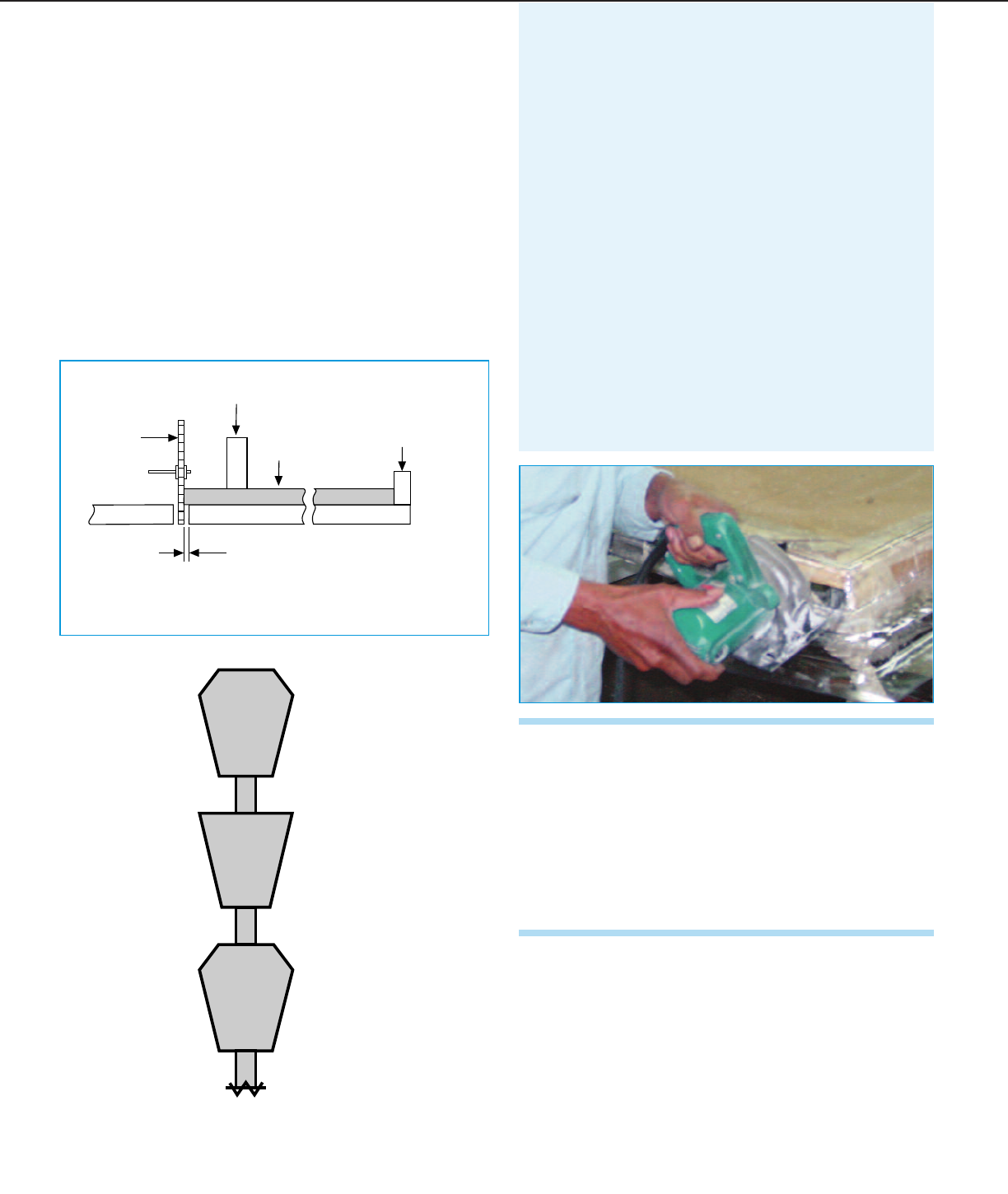
Gap between saw
blade and table–
minimize
Blade Makrolon®
Hold Down
Fence
Triple Chip Alternate
Tooth Design
Router Bit Suppliers:
Dino Saw Company
340 Power Ave.
Hudson, NY 12534
Tel: (518) 828-9942
www.dinosaw.com
Boshco Inc.
144-A Rangeway Road
North Billerica, MA 01862
Tel: (978) 667-1911
www.boshco.com
Onsrud Cutter
800 Liberty Drive
Libertyville, IL 60048
Tel: (800) 234-1560
www.onsrud.com
CIRCULAR SAWS
A circular saw blade with carbide teeth utilizing the “triple
chip” tooth design is the preferred method of cutting
Makrolon®Polycarbonate Sheet. Table or overhead
panel saws are normally used.
Circular saws should be run in the speed range of 6000-
8000 ft/min. Blades for cutting 3/32˝ and thicker material
should have 3-5 teeth per inch. The hook or rake angle
should be 10°-15°. When sawing thin-gauge Makrolon
Polycarbonate Sheet, it is important to have a good
supporting edge on the saw table with minimal gap
between the saw blade and table supporting edge. Be sure
tabletops are smooth and free from projections that might
scratch or mar Makrolon Polycarbonate Sheet.
Fabricating
CIRCULAR SAW TROUBLESHOOTING
PROBLEM: Melting or Gummed Edges
SUGGESTED SOLUTIONS:
1. Increase blade tooth size
2. Reduce saw speed
3. Increase feed rate
4. Use air to cool blade
5. Use blade lubricant compatible with
Makrolon Polycarbonate Sheet
6. Inspect blade for sharpness
7. Check blade-fence alignment
8. Reduce number of sheets in stack
PROBLEM: Chipping
SUGGESTED SOLUTIONS:
1. Decrease blade tooth size
2. Increase saw size
3. Provide better clamping and/or support for sheet stack
4. Reduce feed rate
5. Check blade and arbor for wobble
6. Inspect blade for sharpness
5
ROUTING
Routing produces a smooth edge on Makrolon Polycar-
bonate Sheet and may also be used to cut curved
or irregular shapes. Routers with a speed of 20,000 to
25,000 rpm are preferred. Use straight (fluted 2 or 3)
carbide-tipped or high-speed steel router bits. Bits should
be 1/4˝ to 1/2˝ diameter for best results. Use a router with
at least 1 H.P. motor.
Special care must be used when routing–Use proper
guarding and eye protection. Stock feed rates must be
monitored closely. Feeding Makrolon Polycarbonate Sheet
at excessive rates can cause vibration and cracking.
BAND SAWS
Band saws are useful for trimming formed parts or irregular
shapes. Band saws should be run at 2500-3000 ft/min
and have 8-12 teeth per inch. Coarser (larger tooth)
blades perform better with thicker gauge Makrolon®
Polycarbonate Sheet. Proper support of the part to be
trimmed is important because vibration may induce
cracking if the cut is not smooth. Sanding the edge
smooth after cutting is recommended.
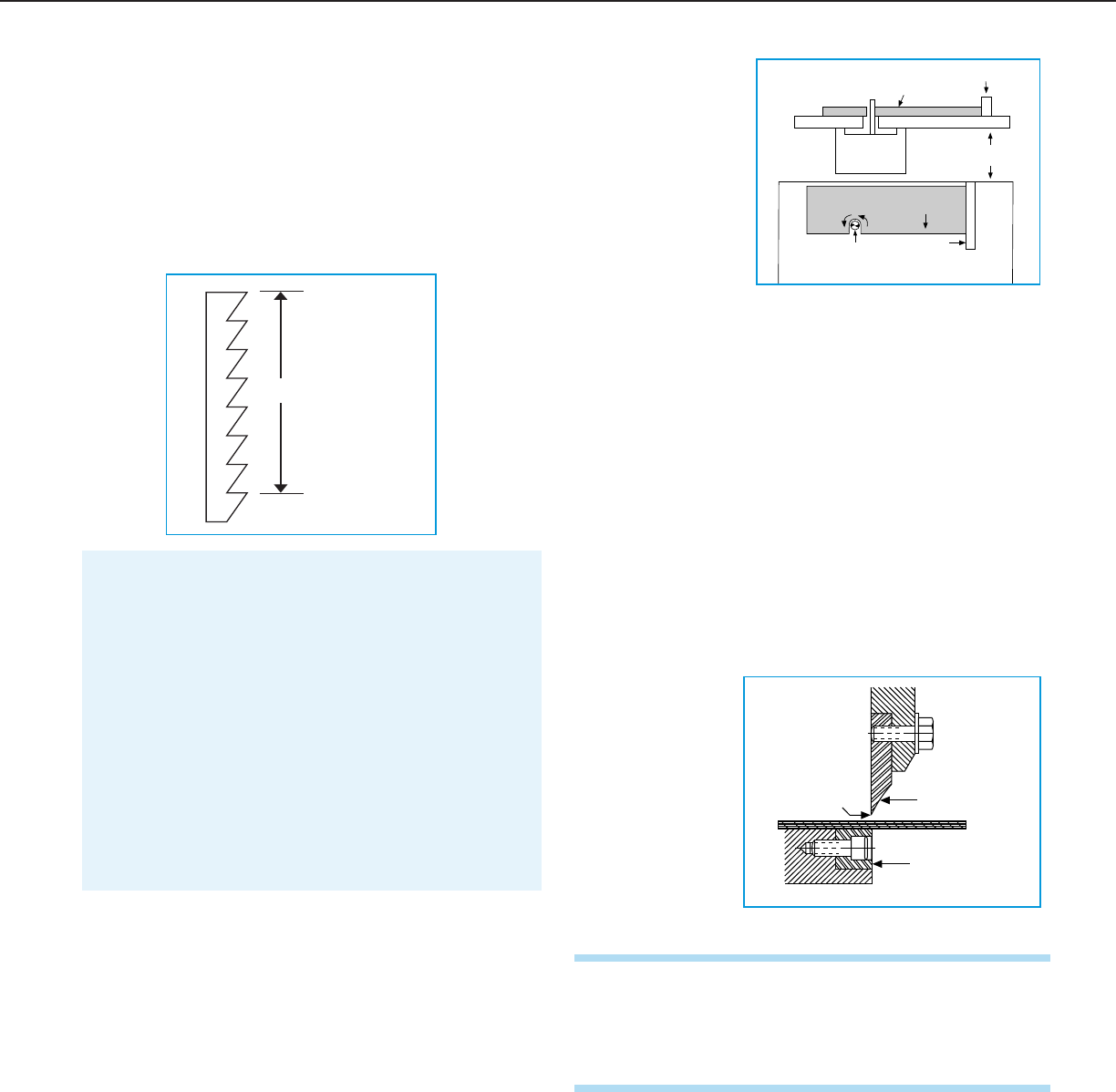
Knife
Edge Top Blade
Bed Blade
LASER CUTTING
Makrolon Polycarbonate Sheet can be cut using industrial
cutting lasers. Edges may become amber or brown when
laser cutting. For information on laser cutting equipment and
part cutting services, contact the manufacturer of your
equipment or the suppliers listed on this page.
SHEARING
Makrolon Polycarbonate Sheet may be sheared using a
conventional sheet metal power shear. It is important to
adjust the top blade clearance in relationship to the bed
blade. A clearance of .001˝ is desirable to avoid a rough
edge cut. Shear single sheets only.
Laser Cut Parts:
Laser Engineering Inc. Preco Laser Systems
444 North York Road 500 Laser Drive
Elmhurst, IL 60126 Somerset, WI 54025
Tel: (630) 530-0500 Tel: (715) 247-3285
www.laserengineering.com www.precolaser.com
Laser Cutting Equipment Supplier:
Preco Laser Systems
500 Laser Drive
Somerset, WI 54025
Tel: (715) 247-3285
www.precolaser.com
1˝ 8-12 teeth
per inch
BAND SAW BLADE DESIGN
BAND SAW TROUBLESHOOTING
PROBLEM: Melting or Gummed Edges
SUGGESTED SOLUTIONS:
1. Increase tooth size
2. Reduce saw speed
3. Use air to cool blade
4. Check blade sharpness
PROBLEM: Chipping
SUGGESTED SOLUTIONS:
1. Decrease tooth size
2. Slow down stock feed rate
3. Provide better clamping and/or support
to eliminate vibration
4. Check blade sharpness
It is important to
feed the sheet
against the rotation
of the router bit and
to provide a fence
for sizing when
making straight cuts.
Makrolon®
Polycarbonate Sheet
Router Bit
Table
Fence
Fence
Feed Direction
Die Cutting Equipment Suppliers:
National Steel Rule Die Co. Atlas Die, Inc.
3580 Lightner Boulevard 2000 Middlebury Street
Vandalia, OH 45377 Elkhart, IN 46516
Tel: (937) 667-8407 Tel: (574) 295-0050
www.zedindustries.com www.atlasdie.com
Specialty Drill Bit Suppliers:
Craftics, Inc. FTM, Inc.
PO Box 91930 6160 Cobblestone Road
Albuquerque, NM 87199 Placerville, CA 95667
Tel: (505) 338-0005 Tel: (530) 626-1986
www.craftics.com www.thefabricatorssource.com
DIE CUTTING
Die cutting Makrolon®Polycarbonate Sheet in
gauges up to .080˝ thick is normally achieved utilizing the
following steps.
Steel rule dies mounted in a press provide good results.
The shear strength of Makrolon Polycarbonate Sheet is
10,000 psi which is appropriate for die cutting methods.
Calculating the required press tonnage to cut Makrolon
Polycarbonate Sheet:
F= P x A
2,000
F= Required force in tonnage of the press
P=10,000 psi (shear strength of Makrolon
Polycarbonate Sheet)
A=The sectional area to be cut
Example: Die cut 12˝ x 20˝ x .030˝ thick rectangle
Total length of cut = 20˝ + 20˝ + 12˝ + 12˝ = 64˝
Shear area = Total length x thickness (.030˝)
or 64˝ x .030˝ =1.92 in2
Required force = P = 10,000 psi
F= P x A =10,000 psi x 1.92 in2= 9.6
2,000 2,000 lbs.
Press tonnage (PT.) = 9.6
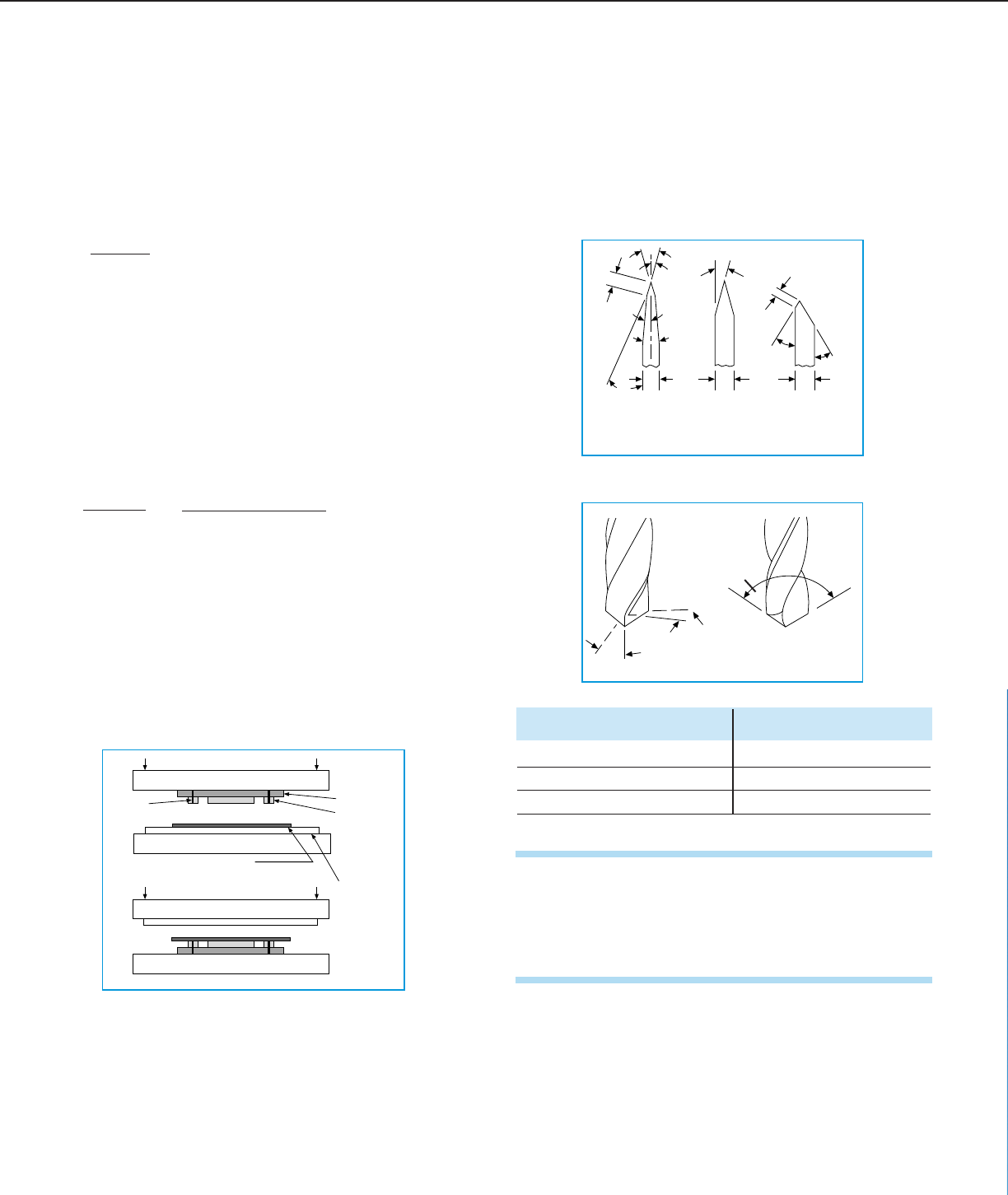
Use 3 PT. (.042˝) thick steel to fabricate steel rule die. Flush
or center bevel ground rule provides a clean cut. Facet
ground steel rule is used to cut thicker gauge Makrolon
Polycarbonate Sheet (above .060˝).
Be sure platens are parallel and that the backup pad is in
good condition. Backup pads can be made from a wide
variety of materials such as nylon, HDPE, etc.
DRILLING
Makrolon Polycarbonate Sheet is easily drilled using ordinary
high-speed steel drill bits.
6
Regulate pressure and speed until a continuous spiraling chip
is observed. Use air or water as a coolant if required. Using
cutting oils may cause crazing. Be extremely careful if using
taps or self-tapping screws; tapping creates notches that
can result in stress cracks because polycarbonate is a notch-
sensitive material, like most clear plastics. Recommended
drill speed is 350-1750 rpm.
30°
30°
.030˝
15°
30°
15°
5°
.084˝
10°
10°-15°
.042˝
.020˝
.042˝
Upper Press Platen
Lower Press Platen
Reversed
Makrolon®
Polycarbonate Sheet
Plywood
Foam
Rubber
Backup
Pad
Steel
Rule
90°-188°
included
cutting-lip
angle
Clearance angle
0°-5° negative rake
15°
Facet Center Side
Bevel Bevel Bevel
CROSS SECTION-BLADE GRINDS
DRILL BIT DESIGN
Hole Dia. Drill Speed (RPM)
1/8˝ 1750
1/4˝ 1000-1500
1/2˝ 350-500
Fabricating cont’d.
7
1/8˝ 12.5˝
3/16˝ 18.7˝
1/4˝ 25.0˝
Note: Makrolon® AR Polycarbonate Sheet is recommended for flat
glazing only.
COLD BEND RADII
THERMOFORMING
Makrolon Polycarbonate Sheet can be thermoformed on
standard equipment. Vacuum forming, free blown forming,
and line bending are the most extensively used processes.
While most standard forming techniques can be used,
critical process modifications specific to polycarbonate are
necessary to ensure uniform and repeatable formed parts.
PREDRYING Makrolon®
POLYCARBONATE SHEET
Makrolon Polycarbonate Sheet must be dried before
thermoforming because polycarbonate absorbs moisture at a
high rate. Trapped moisture forms vapor above 250°F, and the
vapor expansion creates bubbles in the sheet.
Sheets of Makrolon Polycarbonate sheet should be placed
in a dehumidifying air circulating oven for predrying.
Temperature should be 250°F and monitored with controls.
Recommended predrying time periods are shown below.
Be cautious. Polycarbonate sheet begins absorbing
moisture immediately upon removal from the predrying
oven. The rate of absorption is dependent upon the ambient
dew point. For this reason, it is crucial to transfer the sheet
directly to the forming machine as quickly as possible.
FORMING EQUIPMENT
The thermoforming machine should be capable of generating
and maintaining a vacuum of 20 in. Hg pressure throughout
the thermoforming cycle.
Vacuum forming machines with infrared heating elements
perform well for Makrolon Polycarbonate Sheet forming.
Rotary and shuttle designs with automatic or semi-automatic
controls are most suitable. Key features of this type for
equipment are timer control accuracy, uniform heating
sources, and sufficient vacuum power. Single-sided heating
has proven effective for Makrolon Polycarbonate Sheet in
gauges up to .177˝. For thicknesses above .177˝, it is
recommended that dual-sided heating ovens be used for
effective radiation penetration.
HEATERS
Infrared cal rod, coiled nichrome or ceramic heating elements
provide the best heating sources. Gas-fired heaters or
convection ovens are not normally used with polycarbonate.
Uniform heating of the sheet is critical. Radiation absorption
graphs for polycarbonate are available. These graphs help
match the emissivity of the heating element with the sheet
for the most efficient heat penetration.
BRAKE BENDING
Makrolon®Polycarbonate Sheet can be brake bent to 90°
angles in gauges ≤.10 0˝. Attempts at bending heavier
gauges can result in cracks or breakage at the time of
bending or later due to high levels of stress in the bend
area. For this reason strip heat bending is recommended on
all gauges ≥.118˝.
COLD BENDING
Makrolon®GP and Makrolon®SL Polycarbonate Sheets may
be cold-bent with the minimum radius based upon the sheet
thickness. As a guideline, the material can be radiused to
100 times the thickness: (R=T x100).
Sheet Thickness (T)Minimum Radius (R)
THICKNESS 250°F 180°F
.093˝ 4 8
.118˝ 6 14
.150˝ 8 20
.177˝ 12 30
.236 24 50
Note: Makrolon®AR Polycarbonate Sheet is recommended for flat
glazing only.
DRYING TIME (HOURS)
Forming
HEATING CYCLE
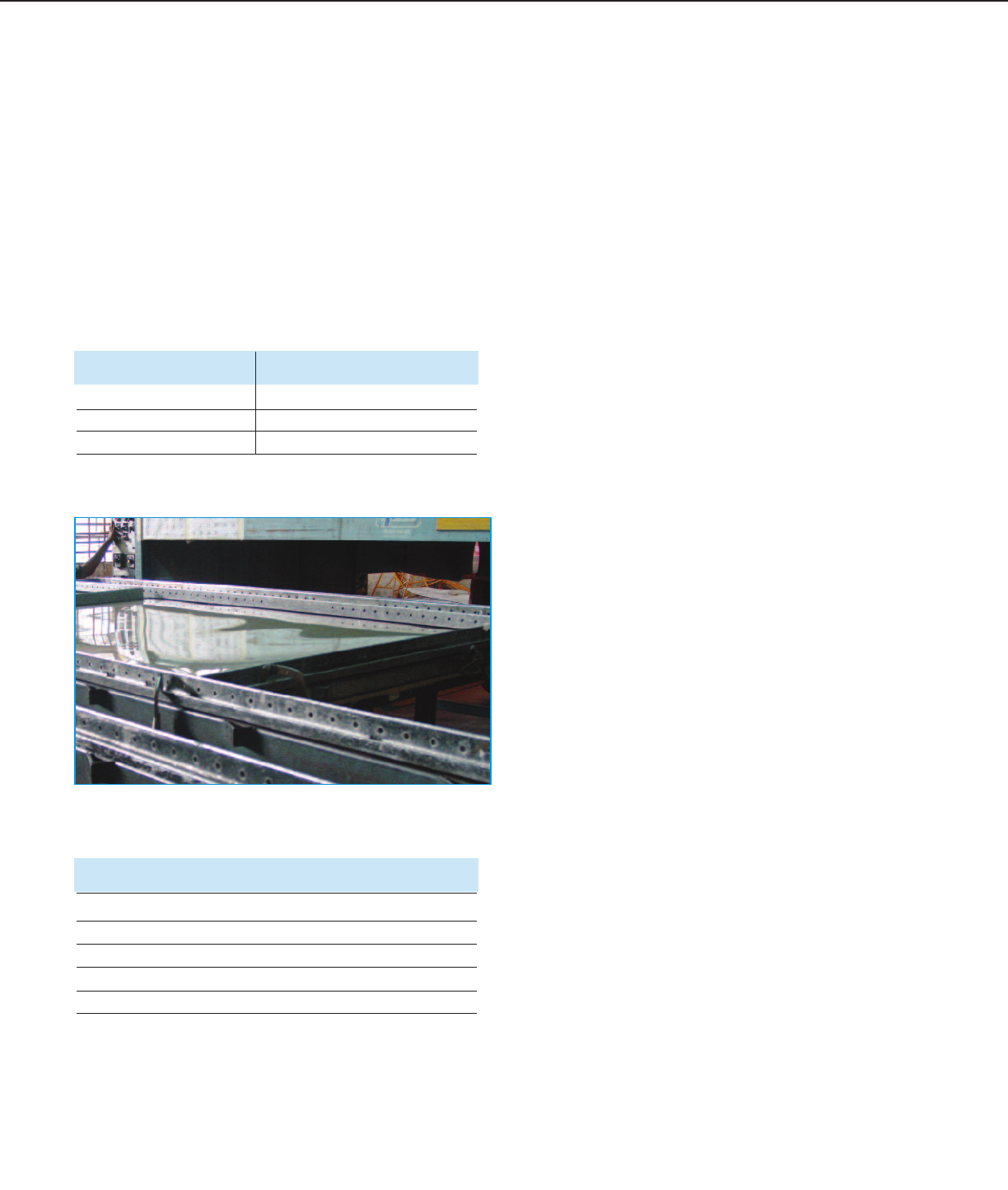
Heating Makrolon®Polycarbonate Sheet for vacuum forming
requires heat penetration to achieve a 350°F to 360°F. The
heat required will be higher for more complex shapes. When
Makrolon Polycarbonate Sheet reaches forming
temperature, uniform “sag” occurs. The amount
of sag depends on the size and thickness of the sheet.
A 12˝ x 12˝ x .060˝ sheet will sag approximately 1˝.
A 36˝ x 36˝ x .177˝ sheet may sag 4˝- 6˝ at the center.
Once uniform temperature has been achieved, timers can
accurately reproduce the condition, and part-to-part
consistency can be maintained.
PROCEDURE:
O Sheet thicknesses up to .177˝ gauge can be heated
from one side. Above .177˝ gauge, two-sided heating is
normally required to significantly enhance productivity.
O Heat source is removed and heated sheet is forced over
or into mold where vacuum is applied.
HELPFUL HINT:
OMakrolon Polycarbonate Sheet “sets up” very quickly
compared to other thermoplastics and can be removed
from the mold in a short period of time.
Caution:
Makrolon Polycarbonate Sheet remains quite hot
during this cycle and care must be observed when
handling finished parts.
O Throughout the vacuum forming process, it is
imperative that dust and dirt be controlled. Makrolon
Polycarbonate Sheet has a static charge that attracts
foreign particles which can create surface imperfections.
Molds also attract dust particles and should be cleaned
to avoid creating surface defects.
8
SHADING OR SCREENING
Shading is often used to balance out hot spots in an oven
for uniform temperature. Shading may also be used to
control the sag of Makrolon Polycarbonate Sheet
during heating.
PROCEDURE:
OUse heavy-duty metal screening to shade the major
portion of the clamped sheet, leaving several inches
along the edges unshaded to compensate for
cooler areas.
OScreens can be installed permanently or placed loosely
above the sheet, depending on how much shading
is required.
HELPFUL HINTS:
OUse slow heating. This is particularly important with
heavier gauges in order to prevent gradient heating.
OAllow heat to reach uniformity at the center of
the sheet.
OThe heating rate may be reduced by lowering the
heat intensity or by moving the sheet farther away
from the heaters.
Forming cont’d.
9
Thermoforming Machines:
Brown Machine Plasti-Vac, Inc.
Division John Brown Plastics 214 Dalton Avenue
330 North Ross Street P.O. Box 5543
Beaverton, MI 48612 Charlotte, NC 28206
Tel: (517) 435-7741 Tel: (800) 438-4139
www.brownmachine.com www.pvi-plastivac.com
Plastic Thermoforming Systems
The Shuman Company
3232 South Boulevard
Charlotte, NC 28209
Tel: (704) 525-9980
www.shuman.biz
Drying Ovens:
Grieve Corporation
500 Hart Road
Round Lake, IL 60073
Tel: (847) 546-8225
www.grievecorp.com
Thermoforming troubleshooting
PROBLEM POSSIBLE CAUSE SUGGESTED SOLUTION
Bubbles or blisters Too much moisture in sheet - Predry sheet for longer time period
- Check predry oven temperature
Pinholes or surface marks Vacuum holes too large - Use smaller diameter vacuum holes
Mark off Mold surface too smooth - Vapor hone or use extra fine emery
cloth to lightly abrade mold surface
Mold surface too rough - Preheat mold
Sheet pulls out of damping
frame during forming Sheet too cold to form - Heat sheet for longer time period
Non-uniform sag Uneven heating - Check heaters
- Screen “hot” areas
Incomplete part formation detail Sheet too cold - Heat sheet for longer time period
Inadequate vacuum - Check vacuum system for leakage
- Increase vacuum
Webbing Sheet too hot - Reduce heating cycle
Improper mold spacing - Redesign mold
- Use mechanical assist/bridging
10
MOLD DESIGN
Draft Angles: Minimum 5°-7° or greater for ease of part
removal from the mold.
Radii and Fillets: Use generous radii wherever possible for
more uniform walls and greater rigidity. On female tooling,
use permanent corner fillets.
Vacuum Holes: In order to form the sheet as rapidly as
possible, use sufficient holes for fast evacuation of air from
between the sheet and the mold. In female molds, use air
evacuation holes at all deep draw areas, especially around
the mold perimeter where the sheet will be drawn last.
HELPFUL HINTS:
OKeep the diameter of the holes small (approximately
1/64˝-1/32˝ diameter) to avoid marking on the sheet.
Long, thin slots may be designed for air evacuation in
female tooling.
OUse vapor honed or fine sanded finishes.
OAvoid sharp corners to minimize stress.
OAvoid highly polished surfaces that can cause mark off.
OAlways preheat mold. Cold molds can create surface
defects and/or warped parts.
OIf mold temperature becomes too high during thermo-
forming runs, Makrolon Polycarbonate Sheet
could stick to the mold. It is recommended that the
mold temperature not exceed 260°F.
FORMING GUIDELINES
Sheet Temperature:
Typical: 340˚F-380˚F
Optimum: 350˚F-360˚F
Mold Temperature: 210˚F-260˚F
MOLD MATERIALS AND MOLD DESIGN
Makrolon Polycarbonate Sheet allows the use of a variety of
mold materials: wood, filled and unfilled polyesters, epoxies,
and metals.
Molds for vacuum forming need to take only 14 psi, so there
is little wear on the tooling with low pressure of the material
against the mold surface.
MOLDS
In general, male molds are more suitable for vacuum
forming. However, other factors such as part size, finish,
and shape dictate mold design. Choice of mold materials
should be determined by considering the length of the
production run. For optimum cost-effectiveness, use the
least expensive material that will take the entire run.
It is evident that thermal transfer is much more efficient with
aluminum than wood. Wood, however, can be utilized for
short-run projects.
Makrolon®Polycarbonate Sheet reproduces mold surface
finish accurately, even to the point of replicating wood grain
in a smooth wood mold.
Sometimes it is desirable to reduce the polish on a steel or
aluminum mold by utilizing a vapor hone or bead blast. This
is due to the fact that if the mold surface is too smooth, air
entrapment can occur creating “mark off.” For best results,
use fine hand sanding on the surfaces. Sanding provides
tiny channels for air evacuation to prevent air entrapment.
This may have to be repeated on long production runs, as
the sanded finish smoothes out from extended use.
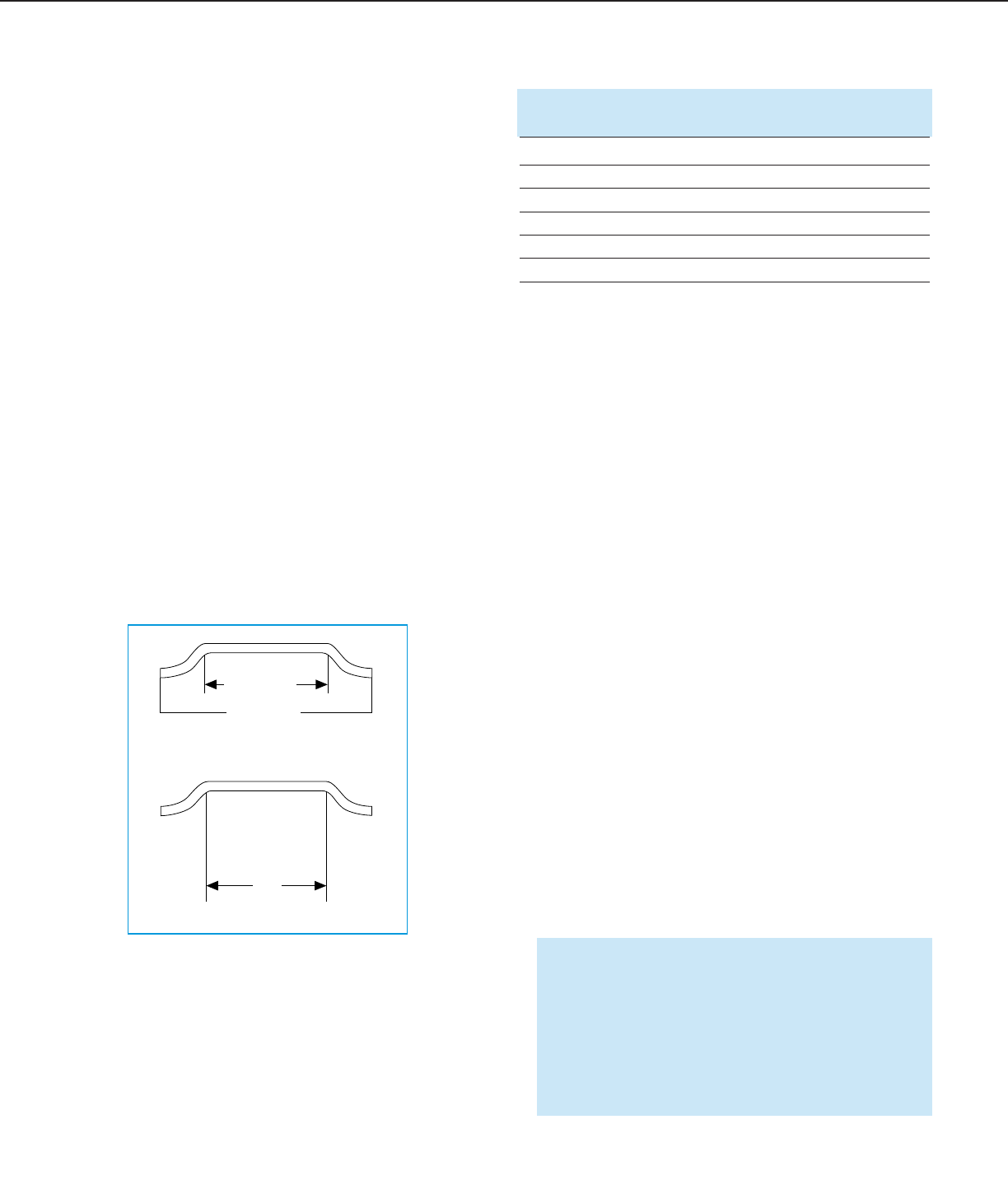
When constructing the mold, mold shrinkage should be a
design consideration. Shrinkage for Makrolon Polycarbonate
Sheet is .005˝-.007˝. The heating/cooling cycle and the type
of vacuum forming equipment will also influence results.
Mold
3.00˝ Part
3.021˝
MOLD SHRINKAGE
Material Heat Transfer K Value
Rate Factor btu/hr/sf/f/ft
Aluminum 6190 130
Steel 1238 26
Aluminum filled epoxy 24-47 .52-.87
Plaster of Paris 8.29 .17
Epoxy 6.24 .13
Wood (maple) 4.48 .09
TYPICAL MOLD MATERIALS
THERMAL CONDUCTIVITY PROPERTIES
Forming cont’d.
1
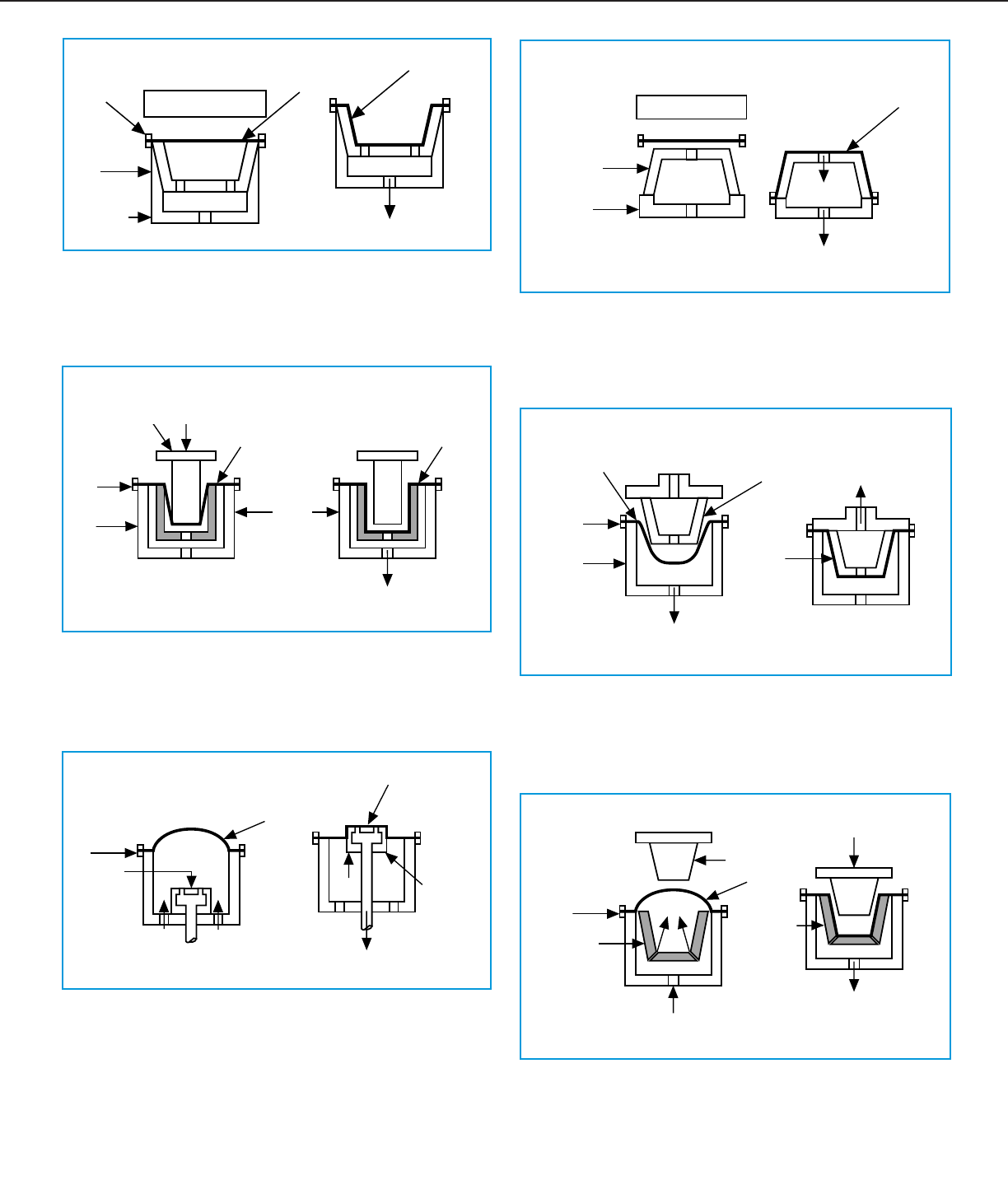
Thinning of material in deep-mold cavities can
be overcome by use of plug assists designed for
fast penetration. Vacuum forming with snap-back can reduce
starting sheet size, aid material distribution, and
minimize chill marks.
Forming with billow plug is often used to produce
thin-wall items with depth-to-diameter draw ratios
up to 1.5:1.
Air-slip forming is similar to vacuum snap-back
except that heated sheet is billowed up and
mold rises to meet it.
11
CLAMP
WORK
TABLE
MOLD
SHEET
VACUUM
FORCE
PLUG
CLAMP
VACUUM
BOX
VACUUM
MALE
MOLD
VACUUM
SHEET
MALE
MOLD
PLUG
CLAMP
HEATED
SHEET
FEMALE
MOLD
VACUUM DRAWS
SHEET AGAINST MOLD
AIR BLOWS SHEET UP
HEATED SHEET
FORCE
Drape forming over a male mold usually results in
better material distribution and depth-to-diameter
draw ratios.
HEATER
CLAMP
SHEET
VACUUM
WORK
TABLE
MALE
MOLD
Straight vacuum forming in a female mold is
recommended for low-profile parts where deep
draw is not a requirement.
FEMALE
MOLD
WORK
TABLE
HEATER
SHEET
SHEET
VACUUM
HEATED SHEET
AIR
ENTERING VACUUM APPLIED
SHEET
MOLD
SHEET
2
34
HEATED SHEET
5
CLAMP
6
CLAMP
Heater
Sag
Electric
Eye
Clamp
Frame
Vacuum
Box
Vacuum Line
Apply Vacuum
Makrolon®
Polycarbonate
Sheet
Heat Source
Clamp
Frame
Air
Box
Air Inlet
Sag
Electric
Eye
Air Pressure
Microswitch
12
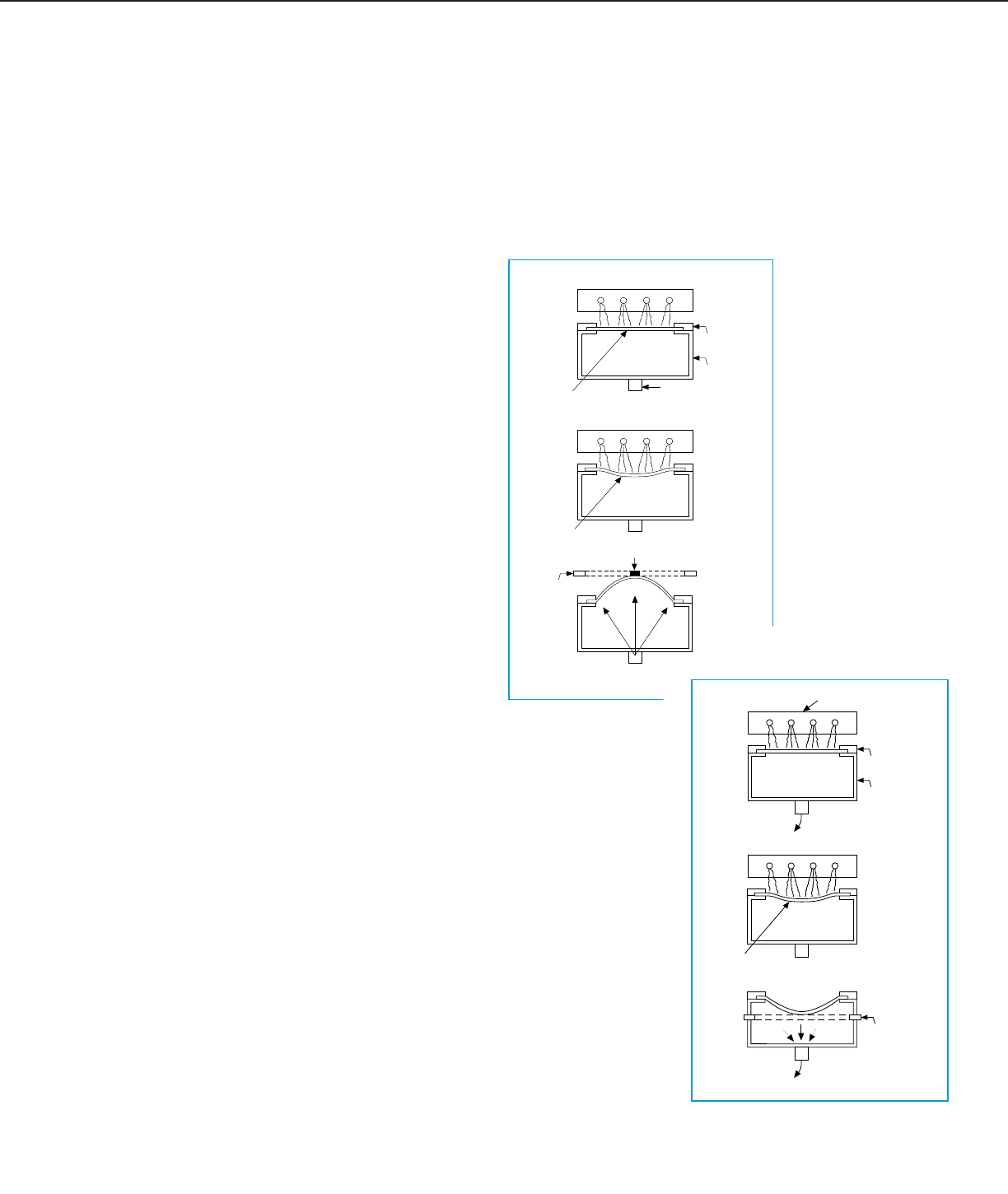
BLOWN DOME FORMING
DRAWN DOME FORMING
REGISTRATION FORMING
Makrolon Polycarbonate Sheet is suitable for registration
vacuum forming. Because the material is extruded, it is
important to orient the sheet so that each part is screened
and formed in the same direction each time. Material should
be specially ordered for this application. Dimensional stability
tests indicate Makrolon Polycarbonate Sheet in free form
releases stress about 2-4% in the direction of extrusion and
1% across the extrusion web.
FREE BLOWN BILLOW FORMING OF DOME
This process is utilized for forming dome shapes from
Makrolon®Polycarbonate Sheet. The procedures and
equipment are the same as vacuum forming with the
exception of the mold. Billow forming can be done
with positive air pressure (free blown) or negative
pressure (vacuum).
PROCEDURE:
OPreheat all clamps and tooling (240°F-260°F).
OPredry Makrolon Polycarbonate Sheet in air
circulating oven at 250°F. (See page 7 for
recommended drying times.)
OPlace Makrolon Polycarbonate Sheet in
clamping frame of thermoforming machine.
OHeat sheet until uniform sag occurs (340°F-380°F).
ORemove heat source.
OLower pressure box to seal air supply pressure.
OApply air pressure. Initial air pressure is high, and as
dome is created, air pressure is reduced.
OWhen overall height is achieved, maintain positive
air pressure until part cools.
OBe sure air source is properly filtered and uniformly
dispersed for even formation of dome.
OUtilize electric eye designs or microswitches to
assure consistent product.
OWhen dome reaches electric eye, set height. The
eye controls air pressure through a solenoid valve to
control cooling.
ORemove and trim.
FREE DRAWN VACUUM DOME FORMING
Follow steps involved in vacuum thermoforming,
including predrying.
PROCEDURE:
OPlace sheet in clamping frame of thermoforming
machine.
OHeat sheet until uniform sag occurs (340°F-380°F).
ORemove heat source.
OApply vacuum seal box and apply vacuum pressure.
OUse electric eye or microswitch to assure consistency of
depth of dome.
ORetain small amount of vacuum pressure until dome
sets up.
ORemove and trim.
Forming cont’d.
13
DRAPE FORMING
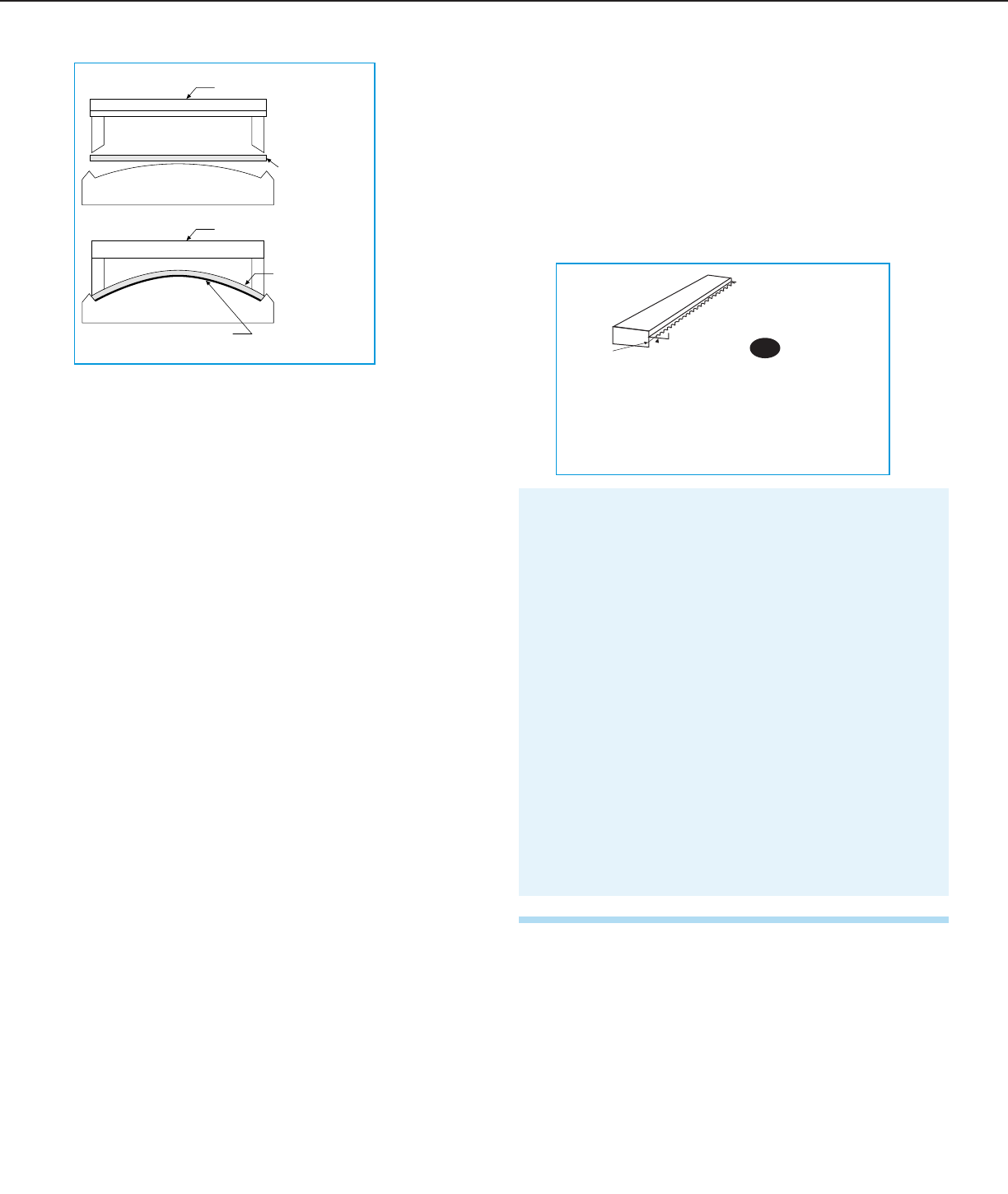
Simple contours can be achieved by drape forming
Makrolon®Polycarbonate Sheet. This method can be
utilized to manufacture a part requiring a simple radius of
curvature. Mold material can be wood, fiberglass or
aluminum covered with felt.
PROCEDURE:
OPredrying Makrolon Polycarbonate Sheet may
not be necessary.
OBring to forming temperature of about 300°F-320°F in
the oven.
ORemove parts and immediately place over a male mold
covered with felt.
OApply pressure until cool.
STRIP HEATING Makrolon®
POLYCARBONATE SHEET
Strip heating or line bending is commonly used for producing
localized angular bends in polycarbonate. Generally, predrying
is not required for material thicknesses of .118˝ or less.
PROCEDURE:
ORemove protective masking in bend area.
ORegulate nichrome heat source to 340°F-365°F maximum.
OPlace sheet over heat source at bend area.
OAllow heat to soften material–time depends on gauge.
ORemove sheet and make desired bend on wood or heavy
fabric-covered aluminum fixture.
OBend immediately–polycarbonate sets up quickly.
OAllow sheet to cool in fixture.
O Some bends may require a degree of overbending to
achieve desired angle after sheet sets up. Strip heating
works best for relatively short parts–wide parts may warp.
Pressure Frame
Mold
Mold
Pressure Frame
Makrolon®
Polycarbonate
Sheet
Makrolon
Polycarbonate
Sheet
Felt Covering for Mold
Strip Heaters:
FTM Inc. C.R. Clark & Co.
6160 Cobblestone Road 1272 Aquila Loop
Placerville, CA 95667 Celebration, FL 34747
Tel: (530) 626-1986 Tel: (800) 676-7133
www.thefabricatorssource.com www.crclark.com
Craftics, Inc.
PO Box 91930
Albuquerque, NM 87199
Tel: (505) 338-0005
www.craftics.com
HEAT BENDING DEVICE
3/4˝
Transite
approx.
6˝ wide
Nichrome
resistance
wire (or
Calrod
type
heater)
Rheostat
for temp.
control
Milled groove to accept Nichrome
wire (approximately 1/16˝-1/8˝
below surface of Makrolon®
Polycarbonate Sheet). Do not allow
wire to contact sheet directly.
DRAPE FORMING
OAvoid bending short tabs on wide parts; warping
may occur.
OFor thicker gauge sheet, use two-sided heating. (Repeated
turning with one-side heating may also achieve sufficient
heat penetration.)
OThicker gauge sheet (above 1/8˝) can be grooved with
a 1/16˝ radius to allow sharper bends.
STRIP HEATING TROUBLESHOOTING
PROBLEM: Bubbles in bent area
POSSIBLE CAUSE: Too much heat
SUGGESTED SOLUTION: Reduce temperature
PROBLEM: Warpage
POSSIBLE CAUSE: Part too wide for heat bending
SUGGESTED SOLUTION: Heat from both sides to provide
more uniform heat penetration
PROBLEM: Heating not uniform
SUGGESTED SOLUTION: Check for air drafts which may
affect uniform cooling
PROBLEM: Cooling not uniform
SUGGESTED SOLUTION: Do not try to bend short
(under 1˝) sections
PROBLEM: Mark off
POSSIBLE CAUSE: Heater is contacting plastic. Transite is too
hot. Masking is not removed over sufficient
area where heat is being applied
SUGGESTED SOLUTION: Lower heat source
14
Adhesive Suppliers:
Industrial Polychemical Pacer Tech Industrial Hartel Enterprises Lord Corp.
Weld-On Adhesives 9420 Santa Anita Ave. 12970 Branford St., Suite F 2000 West Grandview Blvd.
17109 South Main Street Rancho Cucamonga, CA 91730 Pacoima, CA 91331 Erie, PA 16514
Gardena, CA 90247 Tel: (800) 538-3091 Tel: (818) 767-0861 Tel: (814) 868-3611
Tel: (800) 421-2677 www.supergluecorporation.com www.lord.com
www.ipscorp.com
Dow-Corning Corporation General Electric Company Ciba Specialty Chemicals Performance Polymers
3901 South Saginaw 260 Hudson River Road 4917 Dawn Avenue
Midland, MI 48640 Waterford, NY 12188 East Lansing, MI 48823
Tel: (989) 496-4000 Tel: (518) 237-3330 Tel: (800) 367-8793
www.dowcorning.com www.gesilicones.com www.loctite.com
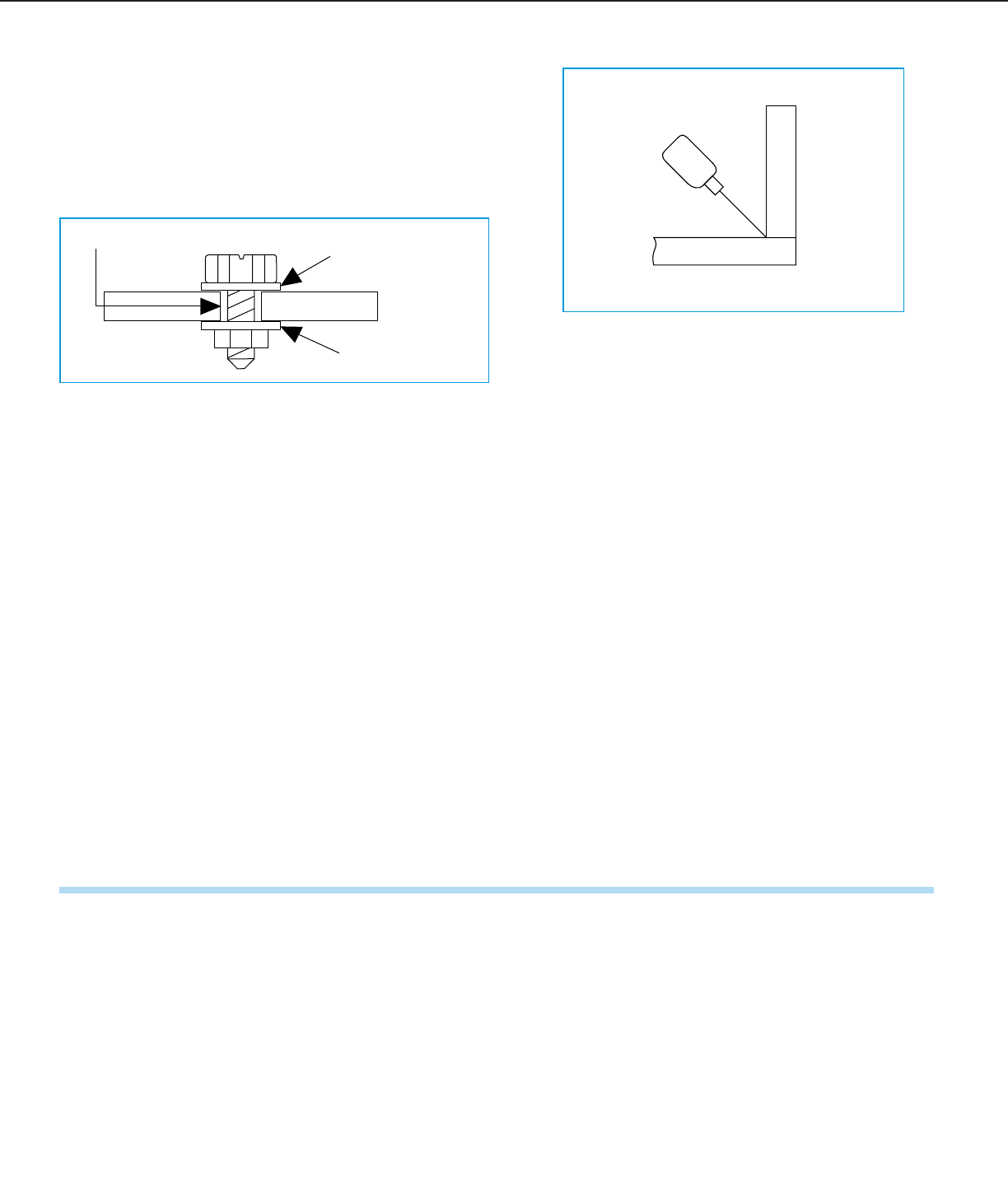
Oversized
Hole
Resilient
Washer
Resilient
Washer
Makrolon®
polycarbonate
sheet
NEEDLE APPLICATOR
Bonding and fastening
MECHANICAL FASTENING
Aluminum rivets and machine screws may be used to join
Makrolon®Polycarbonate Sheet to other materials by
utilizing proper attachment methods.
Drill oversized holes and use washers to distribute and
cushion localized stress. Be sure to consider differentials in
expansion factors for dissimilar materials. Be sure drilled
holes are smooth and free from cracks.
SOLVENT BONDING
Many applications for Makrolon Polycarbonate Sheet
involve fabrication of sheets to construct three-dimensional
shapes.The most popular method is to solvent bond.
Makrolon Polycarbonate Sheet solvent bonding can be
achieved using methods employed in fabricating other
thermoplastics such as acrylic. The two most common
methods are needle type applicator capillary action and
edge dipping. Both methods rely on smooth edge
preparation, pressure, and curing.
It should be noted that solvent bonding will significantly
reduce the strength of polycarbonate.
PROCEDURE:
OSmaller items with flat surfaces can be bonded by
placing the pieces together and applying the solvent
along the edges using a needle applicator or hypodermic
syringe. Make sure the solvent flows along the entire joint.
OFor bonding larger items, immerse the surfaces to be
joined in the solvent until the material is softened.
OClamp them in position and hold until the bond is set.
HELPFUL HINTS:
OEdges must be clean and free from dirt.
OSurfaces should be smooth and properly aligned.
OApply even pressure to reduce bubbles in the bond area.
TECHNIQUES TO REDUCE WHITENING:
1. Fabricate in a climate-controlled area with low
relative humidity.
2. The addition of 10% glacial acetic acid in the solvent
reduces whitening.
3. Thickening the solvent with polycarbonate resin or
sawdust promotes slower curing and reduces whitening.
4. Joint cure time is somewhat longer than acrylic. Be sure
to retain fixture pressure until the joint is solid.
Note: Use extreme caution when working with solvents. Adequate ventilation is essential.
Control exposure levels according to OSHA guidelines. Obtain Material Safety Data
Sheets from the solvent manufacturer.
15
WELDING
While mechanical fastening and solvent bonding are the
most often recommended methods for joining plastics,
another alternative is welding. Ultrasonic, radio frequency,
and spin welding have proven to be appropriate. Contact
manufacturers of ultrasonic welding equipment for recom-
mendations on section and joint design.
TRANSFER TAPE BONDING
Achieving a strong edge bond using solvents on
thin-gauge thermoplastics is extremely difficult due to
the reduced size of the bond area. Structural bonding of
thin-gauge Makrolon®Polycarbonate Sheet can be
accomplished, however, by utilizing acrylic-based transfer
tapes along with slight design modifications.
PROCEDURE:
OBend a small return on the appropriate part to be
fastened approximately the width of the transfer tape.
OClean tape contact areas with 50/50 isopropyl
alcohol-water mixture.
OApply transfer tape to the return.
ORemove tape masking and press the part into place.
HELPFUL HINTS:
ORolling the bonded area with a small wood or rubber
roller improves bond strength.
OA nonstick slip sheet is useful for proper positioning of
large or hard to handle parts.
OPeel strength of long, lineal bonded areas can be
increased with the addition of a mechanical fastener at
both ends of the bond.
Transfer Tape Suppliers:
3M/Industrial Specialties Division St. Gobain Performance Plastics
3M Center, Bldg. 220-7E-01 1 Sealant Park
St. Paul, MN 55144-1000 Granville, NY 12832
Tel: (800) 227-5085 Tel: (518) 642-2200
www.3m.com/us/mfg_industrial/adhesives/ www.nortonfoam.com
Ultrasonic Welding Equipment:
Branson Ultrasonics Corp.
41 Eagle Road, Suite 1
Danbury, CT 06813-1961
Tel: (203) 796-0400
www.bransonultrasonics.com
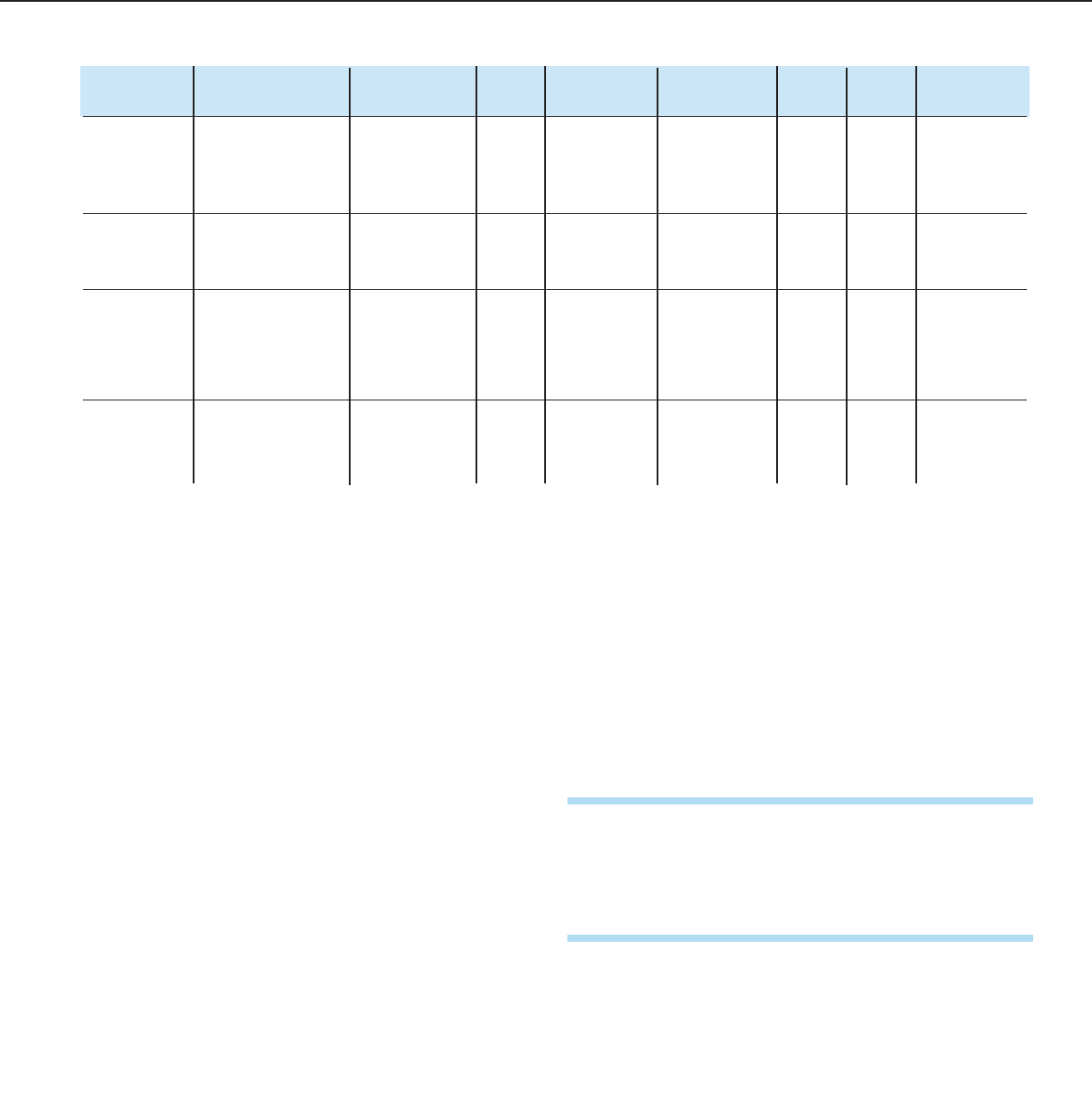
ADHESIVE JOINS MAKROLON COMMENTS COLOR 1-OR 2-PART APPLICATION SETUP CURE SUPPLIER
SHEET TO SYSTEM METHOD TIME TIME
Methylene Makrolon - Clear Solvent Clear One Flow 20 sec. 48 hrs Chemical
Chloride Polycarbonate Sheet - High tensile @ 75°F Supply House
strength products
Acrylic - Low-impact
resistance
Weld-On Series Makrolon - Various viscosities Clear One Flow 1 min. 24 hrs. IPS/Weld-On
Polycarbonate Sheet offering quick
bonds
Butyrate
Urethane Virtually Anything - Clear, flexible Hartel
high-impact bond 5 hrs. Enterprises, Inc.
- Excellent peel Clear Two Flow 8 hrs. @ 150°F
strength @ 75°F or 7 days Formulated
- Excellent shear @ 75°F Systems Group
strength
RTV Silicone Metal/Plastic/Wood - Excellent heat Various One Tubes, Caulkers 60 min. 24 hrs. Dow-Corning
resistance Colors @ 75°F
- Good thermal GE Silicones
expansion
Makrolon®POLYCARBONATE SHEET ADHESIVE GUIDE
16
SANDING
Makrolon®Polycarbonate Sheet can be sanded using both
wet and dry techniques. Gumming can result from dry
sanding. Wet sanding produces a smooth finish. In both
instances, the part will require further finishing in order to
restore its high gloss.
Makrolon Polycarbonate Sheet can also be buffed using a
2-wheel system. The first wheel uses a buffing compound to
remove shallow scratches. The second buffing wheel is
used for restoring the gloss.
JOINTING-PLANING
A standard woodworking jointer-planer is an excellent edge
finishing machine for Makrolon Polycarbonate Sheet. Blades
must be carbide or high-speed steel. Avoid removal of too
much stock on each pass. 1/64˝ or less stock removal
normally yields the cleanest edge. Trying to remove too
much material results in a rough edge or cracking of
the sheet.
If smoother edges are required, wet sanding with fine grit
sandpaper is recommended.
SOLVENT POLISHING
In order to improve the look of saw-cut edges, begin by
sanding the edges smooth. For smoother, glossy edges,
consider solvent polishing with MEK or methylene
dichloride. To prevent humidity blush after drying, it may be
necessary to add a small amount of a slow-drying
component such as diacetone alcohol or glacial acetic acid.
Since Makrolon Polycarbonate Sheet has such good
chemical resistance properties, keep in mind that solvent
polishing cannot be expected to totally eliminate sand
marks from the sheet edge.
Note: Use extreme caution when working with solvents. Adequate ventilation is
essential. Control exposure levels according to OSHA guidelines. Obtain Material
Safety Data Sheets from the solvent manufacturer.
HOT STAMPING
Makrolon Polycarbonate Sheet is easily decorated by hot
stamping. Normal operating conditions are: head (die)
temperatures 375°F; dwell time 2-3 seconds at 60 psi.
Contact foil manufacturer for recommended application
guidelines.
SCREEN PRINTING
Standard silk screening equipment with screens of varying
mesh 8x-16x regulating the amount of ink coverage on
Makrolon Polycarbonate Sheet provides excellent
sign product.
As with all thermoplastics, Makrolon Polycarbonate Sheet
must be clean and free from surface residuals prior
to screening. Many screeners use a prerinse of 50%
water and 50% isopropyl alcohol to clean the surface of
Makrolon Polycarbonate Sheet. Be sure to use soft
nonabrasive cloths when cleaning to avoid scratching
Makrolon Polycarbonate Sheet. Ionized air also provides a
good method for removing lint and dust.
After screening, separate sheets on a drying rack until ink
is completely dry. DO NOT pack sheets for shipment until
inks are dry.
UV cure inks can be used with heavy gauge
Makrolon Polycarbonate Sheet, but intense or prolonged
UV may have a damaging effect on thin gauges. It is not
recommended for Makrolon Polycarbonate Sheet under
.060 gauge as some loss of physical properties occurs.
Finishing
17
PAINTING
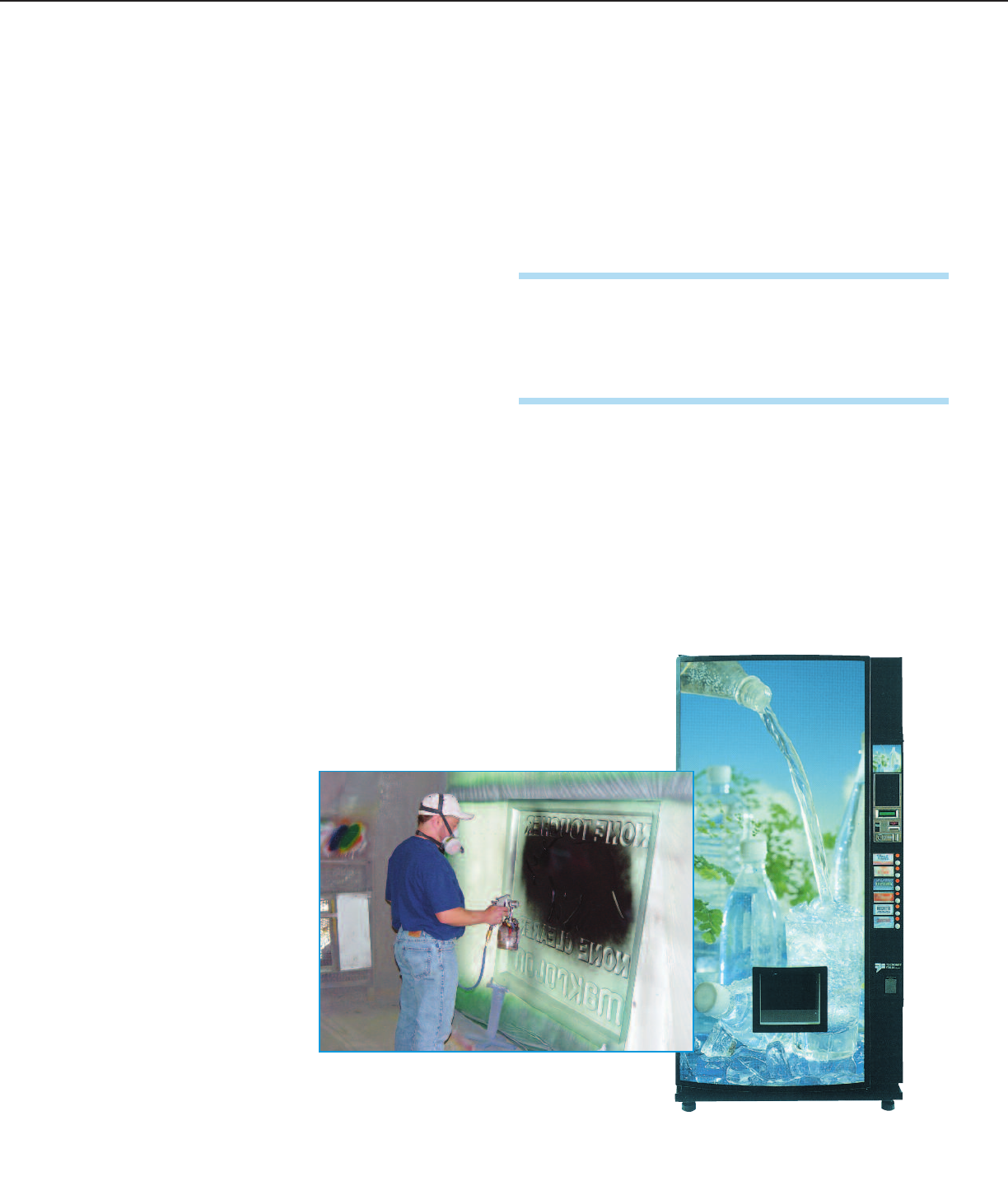
Many paint systems are available for Makrolon®Polycar-
bonate Sheet. As with screen printing it is important that the
surface of the Makrolon Polycarbonate Sheet be clean and
free from surface residuals prior to painting. Many painters
use a mixture of 50% water and 50% isopropyl alcohol to
clean the surface of the sheet. Be sure to dry thoroughly prior
to painting. Use a soft nonabrasive cloth
or sponge to avoid scratching Makrolon Polycarbonate
Sheet. Conventional spray, spray masked, roller coat and
brush are common application methods.
Avoid using paints containing toluene, xylene or solvents
that will craze Makrolon Polycarbonate Sheet. Be
careful when using the paper masking for the design.
Sharp knives can notch Makrolon Polycarbonate Sheet and
allow crazing to occur. Be sure not to allow razor
knives to penetrate the Makrolon Polycarbonate Sheet when
cutting through masking paper.
A number of companies market paint systems for Makrolon
Polycarbonate Sheet and provide technical advice on
application.
PAINT AND INK REMOVAL
Use caution when removing overspray or drips. Be sure
that the solvent will not attack and craze polycarbonate.
Isopropyl alcohol, VM&P naptha or similar solvents have
been successfully used. Be sure to rinse with clear
water after solvent application. Do not use scrapers,
blades, knives, etc., as they will scratch Makrolon
Polycarbonate Sheet. Always test a small area and observe
possible attack before subjecting large sheet to solvent.
NOTES ON Makrolon®AR
POLYCARBONATE SHEET
Coated sides of Makrolon AR Polycarbonate
Sheet cannot be painted because of the abrasion-
resistant coating. However, sheet
that is only coated on one-side
(Makrolon AR-1 Polycarbonate
Sheet) can be reverse screened
on the uncoated side using
standard painting techniques for
polycarbonate. This material is
an excellent choice for durable
graphics applications in high
traffic areas.
Hot Stamping Foil Suppliers:
Transfer Print Foils, Inc. Foilmark
9 Cotters Lane 40 Melville Park Road
East Brunswick, NJ 08816 Melville, NY 11747
Tel: (908) 238-1800 Tel: (800) 645-9177
(800) 235-3645 www.foilmark.com
hmt.com/holography.TPF
Crown Roll Leaf, Inc.
91 Illinois Ave.
Paterson, NJ 07503
Tel: (800) 631-3831
www.crownrollleaf.com
Screen Print Ink Supplier:
NazDar
1087 N. Northbranch Street
Chicago, IL 60622
Tel: (800) 736-7636
www.nazdar.com
Paint Suppliers:
Spraylat Corporation Red Spot Paint & Varnish Co., Inc.
716 South Columbus Avenue 1107 E. Louisiana Street
Mt.Vernon, NY 10550 Evansville, IN 47711
Tel: (914) 699-3030 Tel: (800) 457-3544
(800) 336-1936 www.redspot.com
www.spraylat.com
Mathews Paint Company
8201100 Street
Pleasant Prairie, WI 53158
Tel: (800) 323-6593
www.mathewspaint.com
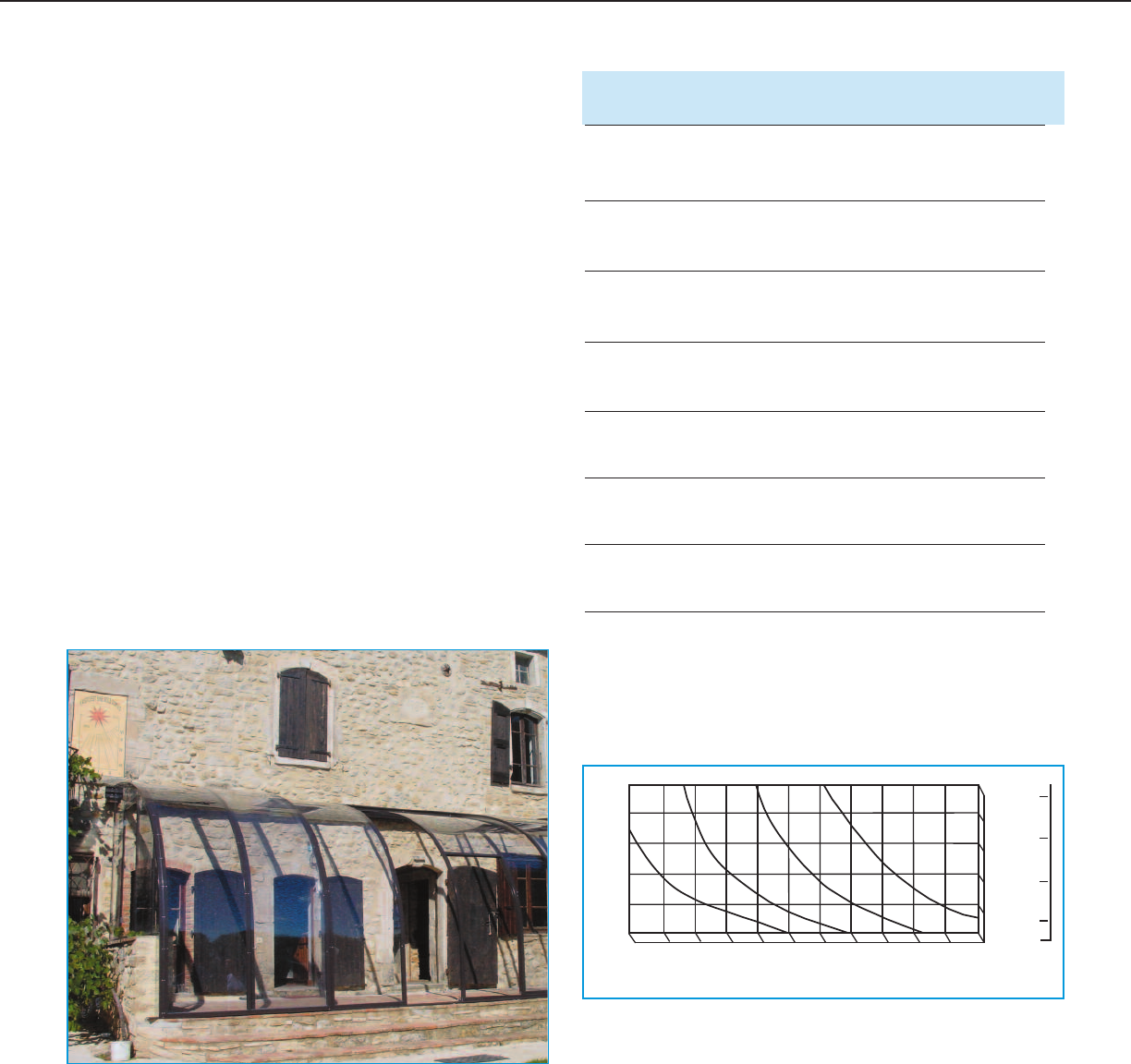
Short Dimension (Inches)
Windload (PSF)
50
40
30
20
10
0
Wind Velocity MPH
84 96
1/8"
3/16" 1/4"
3/8"
1/2"
24 30 4236485460667278
120
80
100
60
WIND LOAD PERFORMANCE
RECOMMENDED SEALANTS, GASKETS, AND TAPES
INSTALLATION GUIDELINES
Makrolon®Polycarbonate Sheet may be installed using wet
or dry glazing systems. However, Bayer MaterialScience
warns against the use of PVC gasketing. The material may
also be used for double-glazing or over-glazing applications
for added insulation and security. Maintain adequate
separation between the glazing panels to prevent touching
during high humidity and/or high heat conditions.
INSTALLATION PROCEDURES
1. Clean sash and prime if necessary. For replacement
glazing, make sure all old sealant and projections are
removed. Rabbet should be free of burrs and of the
proper depth to allow for expansion of the Makrolon
Polycarbonate Sheet glazing panel.
2. Carefully measure the sash opening. Determine
the appropriate edge engagement and expansion
allowance from Table (on next page). Cut Makrolon
Polycarbonate Sheet to the exact size required, making
sure cut edges are smooth and free of chips and notches.
3. Glaze Makrolon Polycarbonate Sheet with the proper
compatible sealant. While smaller lites allow for the use of
nonhardening oil-based and acrylic-latex caulks (up to
24˝ x 24˝), the thermal and load movements in larger sheet
sizes require high performance, low modulus elastomers
such as silicones.
18
Glazing information
Product Product Manufacturer
Type Name
Silicone Dow 795 Dow-Corning Corp
Dow 999 Midland, MI
Trademate® (517) 496-4000
Silicone Silpruf® General Electric Co.
Construction Waterford, NY
1200® (800) 255-8886
Silicone Spectrem Tremco
Columbus, OH
(800) 321-7906
Gasket EPDM (60,70D) Tremco
Columbus, OH
(800) 321-6357
Tape 440 Tremco
Beechwood, OH
(800) 321-7906
Gasket/Tape Norrene®Foam Norton Company
V-2100 Urethane Granville, NY
(518) 642-2200
Butyl Tape Isocryl 5600 Schnee-Morehead
Irving, TX
(214) 438-9111
Many other glazing materials are commercially available which are compatible with
Makrolon Polycarbonate Sheet. Please contact those manufacturers for their
recommended products.
Trademate is a registered trademark of Dow-Corning Corp.
Silpruf is a registered trademark of General Electric Company
Norrene is a registered trademark of Norton Company
CLEANING AND MAINTENANCE
Thoroughly rinse with warm water using a soft cloth or
sponge. Wash with mild soap or detergent and rinse
thoroughly with clean water. To prevent water spots,
thoroughly dry the glazing with a chamois or moist sponge.
Do not use abrasive cleaners. Avoid cleaning in direct
sunlight to prevent streaking.
COMPATIBLE CLEANERS
The following cleaning agents are compatible with Makrolon
Polycarbonate Sheet products when used according to the
manufacturer's recommendations:
OFormula 409®
OTop Job, Joy®
OPalmolive Liquid®
OWindex D with Ammonia D®
Formula 409 is a registered trademark of Clorox Company
Top Job and Joy are registered trademarks of Proctor & Gamble
Palmolive is a registered trademark of Colgate Palmolive
Windex D is a registered trademark of Drackett Products Company
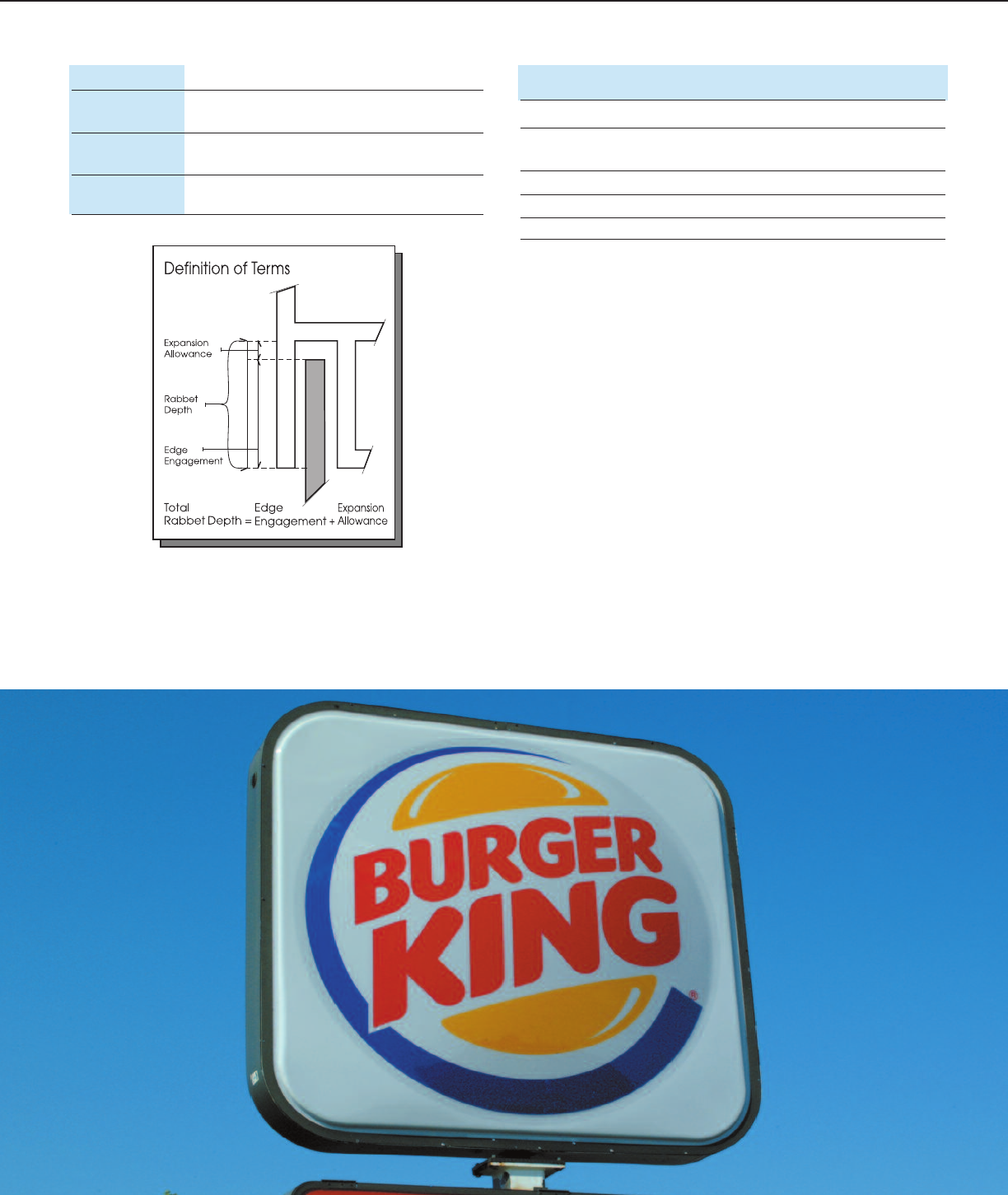
EXPANSION ALLOWANCES
As a general guideline, glazing systems should be
designed to allow 1/16˝ per foot of length and width as
the expansion in the sash.
18
19
EXPANSION ALLOWANCES–EDGE ENGAGEMENTS
Sheet Size 24˝x24˝ 24˝x36˝ 36˝x48˝ 48˝x60˝
Expansion 1/8˝x1/8˝ 1/8˝x3/16˝ 3/16˝x1/4˝ 1/4˝x5/16˝
Allowance
Edge 3/8˝ 1/2˝ 9/16˝ 3/4˝
Engagement
Rabbet 1/2˝ 11/16˝ 13/16˝ 1-1/16˝
Depth
COMPARATIVE EXPANSION RATES
Material in./in. °F
Glass .0000050
Makrolon®
Polycarbonate Sheet .0000375
Aluminum .0000129
Steel .0000063
Acrylic .0000410
20
LIGHT AND ENERGY TRANSMITTANCE
By allowing up to 90% of solar energy and 88% of visible
light through, clear Makrolon Polycarbonate Sheet is an
excellent glazing material for applications designed to
maximize solar gain. In areas of solar intensity where higher
shading or privacy is required, tinted materials may be used.
Product selector
Product Features
Makrolon® Makrolon® Makrolon® Makrolon®
Makrolon®
Privacy Makrolon®
GP SN AR SL (SunLife) FI Patterns CG Hygard®
Superior Impact Strength
Enhanced UV Resistance
Forced Entry Protection (UL 972) N/A
Enhanced Abrasion Resistance
Thermoformable
Cold-Formable
Patterned Sheet ✝
Flame Inhibiting
COMPETITIVE OFF-SETS
Makrolon®Grade Description GE Grade AtoHaas Grade
Makrolon®GP General purpose grade for fabrication LEXAN® 9030, 9034 TUFFAK®A
and glazing DL 4630, DL 4634
Makrolon®GP Matte Matte texture for privacy glazing N/A N/A
Makrolon®GP Pebble Pebble patterns for privacy glazing LEXAN 90318 P.A.G. TUFFAK A P-66
Makrolon®FD FDA compliant material LEXAN 9440 TUFFAK T
Makrolon®FI Flame inhibiting grade LEXAN 9600 N/A
Makrolon®FI Flame inhibiting LEXAN 1200 TUFFAK FI-8
Makrolon®SL Thermoformable enhanced UV resistance LEXAN SG 100 TUFFAK XL
Makrolon®AR Abrasion & UV resistance LEXAN MarGard TUFFAK CM-2
Makrolon®CG 375 Physical attack resistant LEXGARD®MPC 375 N/A
Makrolon®CG 500 Physical attack resistant LEXGARD MPC 500 N/A
Makrolon®CG 750 Physical attack resistant LEXGARD RC 750 N/A
Hygard®750 Bullet resistant LEXGARD MP 750 N/A
Hygard®1000 Bullet/physical attack resistant LEXGARD MP 1000 N/A
Hygard®1250 Bullet/physical attack resistant LEXGARD SP 1250 N/A
Makrolon®WG Window Grade–high impact strength Westlake Zelux N/A
Makrolon®TG Optically clear, enhanced abrasion LEXAN FRA460, N/A
& UV resistance FRA236
Lexan and Lexgard are registered trademarks of General Electric Corp.
TUFFAK is a registered trademark of AtoHaas.
Light Transmission (Initial)
Clear Bronze or Gray
Gauge Visible Solar Energy Visible Solar Energy
3/32˝ 87% 90% 50% 58%
1/8˝ 86% 89% 50% 58%
3/16˝ 84% 88% 50% 58%
1/4˝ 82% 86% 50% 58%

21
COMPETITIVE EDGE
Bayer MaterialScience sets rigid raw material requirements
for its polycarbonate resins supplied by Bayer Corporation.
These materials, coupled with state-of-the-art production
and quality control technology, assure that the physical
properties of Makrolon Polycarbonate Sheet will meet or
exceed any directly competitive product on the market today.
Bayer MaterialScience will not be responsible for the use of this information relative to
actual application. Users must make their own determination of its suitability for their
specific use. No warranty is made for the fitness of any product, and nothing herein
waives any of the seller’s conditions of sale.
Technical information
TYPICAL Makrolon®GP POLYCARBONATE SHEET PROPERTIES
Property MAKROLON Units Test Method
General
Specific gravity 1.2 - ASTM D-792
Water Absorption 24 hrs. 0.15 % ASTM D-570
Refractive Index 1.586 - ASTM D-542
Mechanical
Tensile Strength, Yield, .125˝ 9,000 psi ASTM D-638
Tensile Strength, Ultimate 9,500 psi ASTM D-638
Tensile Modulus 345,000 psi ASTM D-638
Shear Strength 6,000 psi ASTM D-732
Compressive Strength 12,500 psi ASTM D-695
Flexural Strength at 5% Strain 13,500 psi ASTM D-790
Flexural Modulus .125˝ 345,000 psi ASTM D-790
Izod Impact Notched .125˝ 12-16 ft.lb/in of notch ASTM D-256
Rockwell Hardness 118 R Scale ASTM D-785
Gardner Impact 1/2˝ Diameter Dart .125˝ >320 in.lbs ASTM D-5420
Instrumented Impact .125˝ >45 ft.lbs ASTM D-3763
Thermal
Heat Deflection Temperature 264 psi 270 °F ASTM D-648
Heat Deflection Temperature 68 psi 280 °F ASTM D-648
Coefficient of Thermal Expansion 3.75 x 10⁻⁵ in/in/°F ASTM D-696
Coefficient of Thermal Conductivity 1.35 BTU/hr/ft2/°F ASTM D-177
Smoke Density 68 - ASTM D-2843
Shading Coefficient Clear .125˝ 1.02 - ASHRAE
Shading Coefficient Gray/Bronze .125˝ .70 - ASHRAE
Shading Coefficient Dark Gray .125˝ .58 - ASHRAE
Brittle Temperature -200 °F ASTM D-746
Flammability
Horizontal Burn, AEB .125˝ <1 in ASTM D-635
Horizontal Burn, ATB .125˝ <1 min ASTM D-635
Self Ignition Temperature 1070 °F ASTM D-1929
Flash Ignition Temperature 800 °F ASTM D-1929
UL 94 Clear ≥ .060˝ V-2 - UL 94
UL 94 Clear ≥ .250˝ V-0 - UL 94
Optical
Transmittance Clear .125˝ >88 % ASTM D-1003
Haze Clear .125˝ <1 % ASTM D-1003
Electrical
Dielectric Constant 10 Hz 2.96 - ASTM D-150
Dielectric Constant 60 Hz 3.17 - ASTM D-150
Volume Resistivity 8.2 x 10¹⁶ ohm-cm ASTM D-257
Dissipation Factor 60 Hz 0.0009 - ASTM D-150
Dissipation Factor 1 MHz 0.010 - ASTM D-150
Arc Resistance
Stainless Steel Strip Electrodes 10-11 sec ASTM D-495
Tungsten Electrodes 120 sec ASTM D-495
DOCUMENTATION AND TECHNICAL SUPPORT
Specific product information, warranty details, and further
information regarding proper fabrication and/or use of
materials can be received by contacting your local
Makrolon Polycarbonate Sheet distributor or by visiting
us at www.materialscience.bayer.com.
Makrolon®POLYCARBONATE
SHEET COMBUSTIBILITY
Although the least combustible glazing material, Polycar-
bonate Sheet will ignite when exposed to an
ignition source over 800°F.

22
Makrolon®POLYCARBONATE SHEET IS RESISTANT AT 70°F AND 0% STRAIN TO:
CHEMICALS:
Amyl Alcohol Chromic Acid (20%) Lactic Acid (20%) Potassium Bromate Sodium Chloride
Aluminum Chloride Citric Acid (40%) Magnesium Chloride Potassium Bromide Sodium Hypochlorite
Aluminum Sulfate Copper Chloride Magnesium Sulfate Potassium Nitrate Sodium Sulfate
Ammonium Chloride Copper Sulfate Manganese Sulfate Potassium Perchlorate Stannous Chloride
Ammonium Nitrate Formic Acid (10%) Mercuric Chloride Potassium Permanganate Sulfur
Ammonium Sulfate Formalin (30%) Nickel Sulfate Potassium Persulfate Sulfuric Acid (10%)*
Antimony Trichloride Glycerine Nitric Acid (10%) Potassium Sulfate Sulfuric Acid (50%)
Arsenic Acid Heptane Nitric Acid (20%) Silicone Oil Tartaric Acid (30%)
Butyl Alcohol Hydrochloric Acid (10%) Oleic Acid Silver Nitrate Zinc Chloride
Calcium Nitrate Hydrogen Peroxide (30%) Oxalic acid Sodium Bicarbonate Zinc Sulfate
Chlorinated Lime Paste Hydrofluoric Acid (10%) Pentane Sodium Bisulfate
Chrome Alum Isopropanol Phosphoric Acid (10%) Sodium Carbonate
*Sulfuric Acid at 1% attacks polycarbonate sheet
Environmental resistance of
Makrolon®polycarbonate sheet
COMMON HOUSEHOLD MATERIALS Makrolon®
POLYCARBONATE IS RESISTANT TO:
CHEMICALS:
Borax Joy Liquid Detergent Rum
Cocoa Insulating Tape Salad Oil
Cement Linseed Oil Salt Solution (10%)
Chocolate Liquor Soap (Soft/Hard)
Cod Liver Oil Milk Table Vinegar
Cognac Mineral Water Tincture of Iodine (5%)
Coffee Mustard Tomato Juice
Detergents Olive Oil Vodka
Fish Oil Onions Washing Soap
Fruit Syrup Orange Juice Water
Grapefruit Juice Paraffin Oil Wine
Gypsum Rapeseed Oil
PETROLEUM PRODUCTS Makrolon®
POLYCARBONATE SHEET IS RESISTANT TO:
Compressor Oil Spindle Oil
Diesel Oil Transformer Oil
Kerosene Vacuum Pump Oil
Refined Oil
Note: Elevated temperature and/or strain significantly alters
resistance to industrial petroleum products.
LIMITED RESISTANCE AT 70°F AND 0% STRAIN TO:
Antifreeze Hydrochloric Acid (conc.)
Calcium Chloride Milk or Lime (CaOH)
Cyclohexanol Nitric Acid (conc.)
Ethylene Glycol Sulfuric Acid (conc.)
Makrolon®POLYCARBONATE SHEET IS NOT RESISTANT TO:
CHEMICALS:
Acetaldehyde Benzyl Alcohol Chlorobenzene Formic Acid (conc.) Phosphorus Trichloride
Acetic Acid (conc.) Brake Fluid Chlorothene Freon (refrigerant/propellant) Proplonic Acid
Acetone Bromobenzene Cutting Oils Gasoline Sodium Sulfide
Acrylonitrile Butylic Acid Cyclo Hexanone Lacquer Thinner Sodium Hydroxide
Ammonia Carbon Tetrachloride Cyclohexene Methyl Alcohol Sodium Nitrate
Ammonium Fluoride Carbon Disulfide Dimethyl Formamide Nitrobenzene Tetrahydronaphthalene
Ammonium Hydroxide Carbolic Acid Ethane Tetrachloride Nitrocellulose Lacquer Thiophene
Ammonium Sulfide Caustic Potash Sol. (5%) Ethylamine Ozone Toluene
Benzene Caustic Soda Sol. (5%) Ethyl Ether Phenol Turpentine
Benzoic Acid Chloride Ethylene Chlorohydrin Phosphorus Hydroxy Xylene
Makrolon®POLYCARBONATE SHEET IS DISSOLVED BY:
Chloroform, Cresol, Dioxane, Ethylene Dichloride,Methylene Chloride, Pyridine
EFFECTS OF MOISTURE ON Makrolon®POLYCARBONATE SHEET:
bonate Sheet to repeated steam cleaning or dishwashing can
create hydraulic crazing. The result can be a clouding of the
surface and ultimately a loss of physical strength properties.
Makrolon Polycarbonate Sheet has good resistance to water up
to approximately 150°F. Above this temperature, the effect of
moisture is time-temperature related. Exposing Makrolon Polycar-
23
BROAD RANGE OF PRODUCTS FOR THE
MOST DEMANDING APPLICATIONS
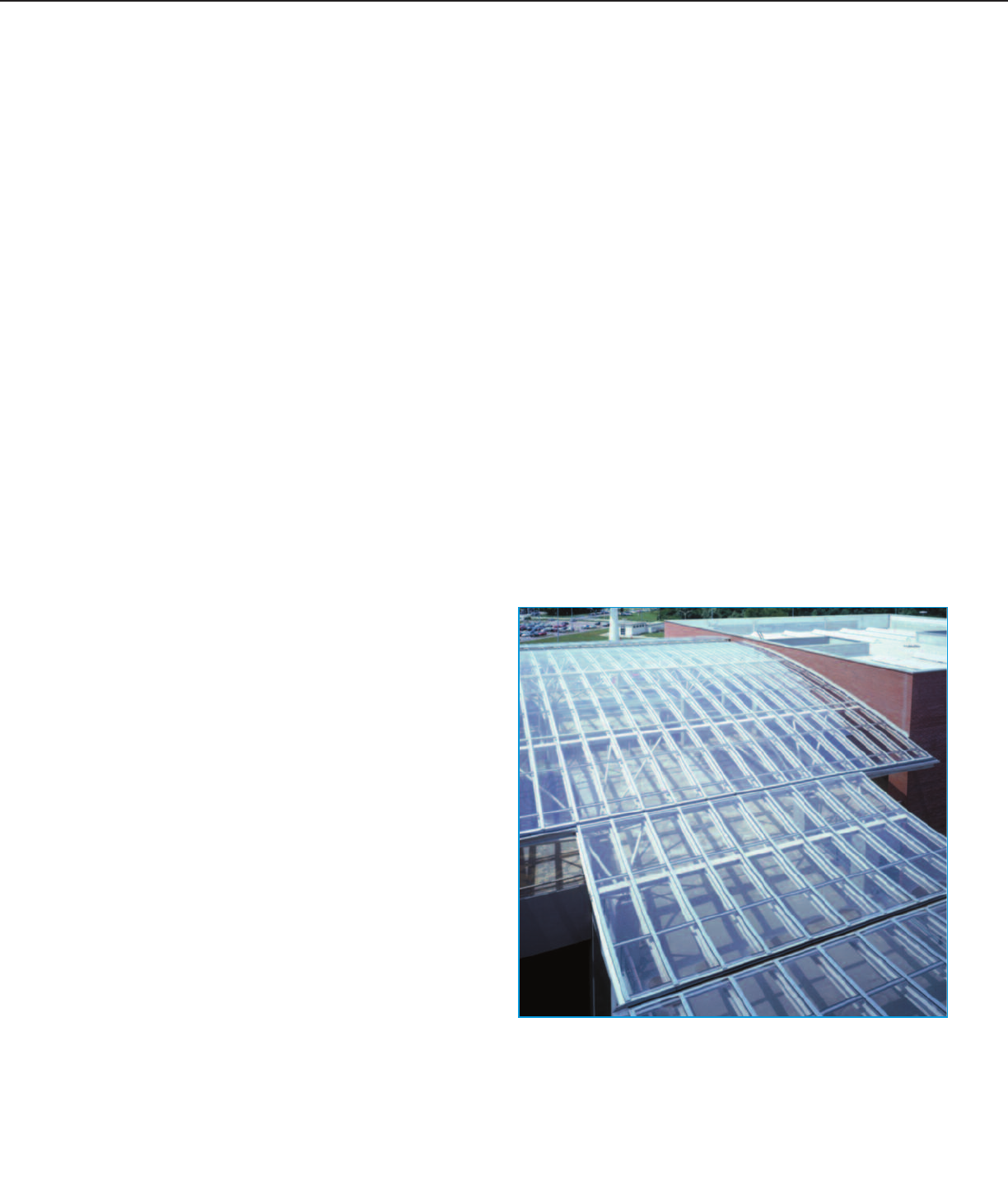
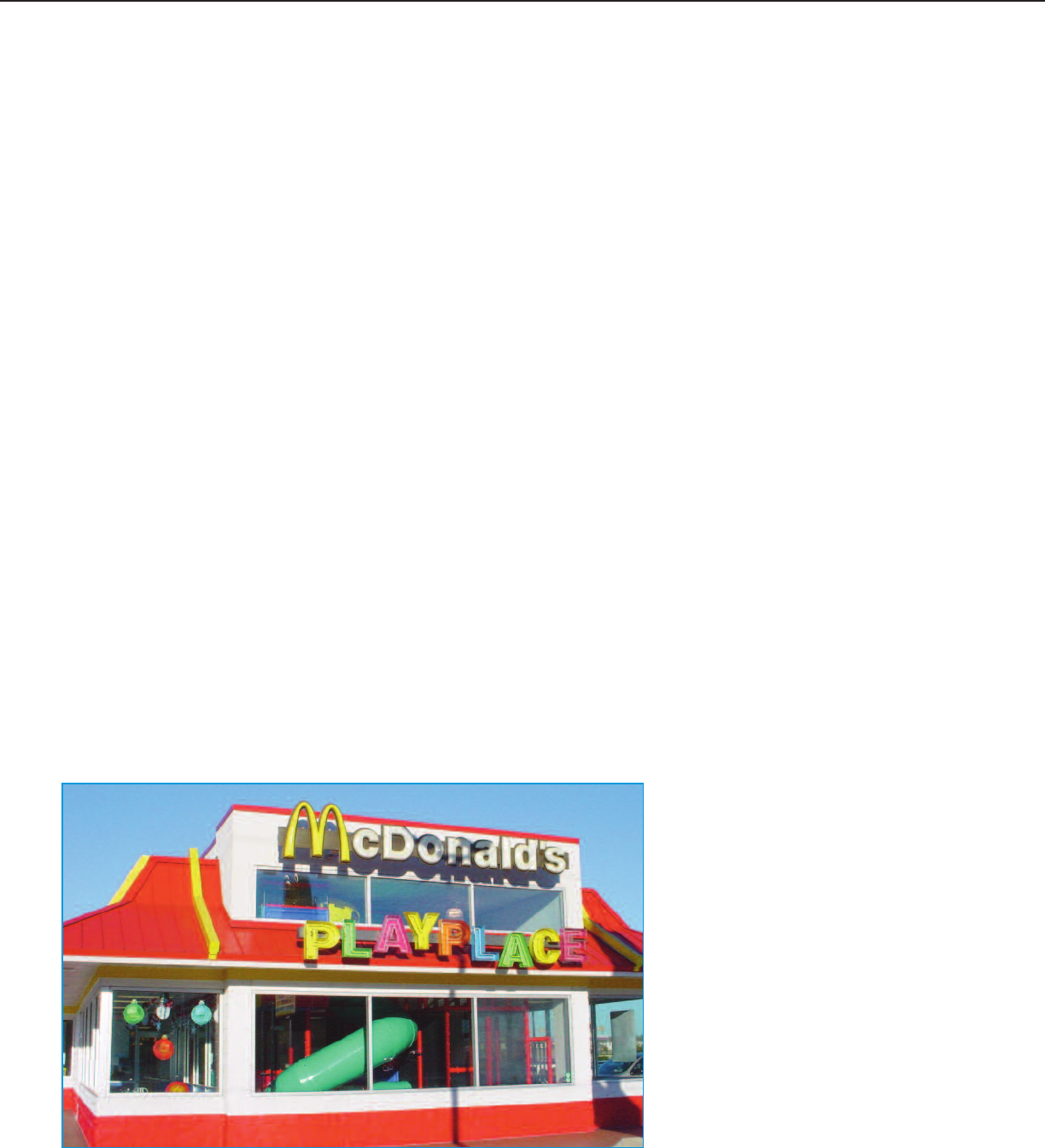
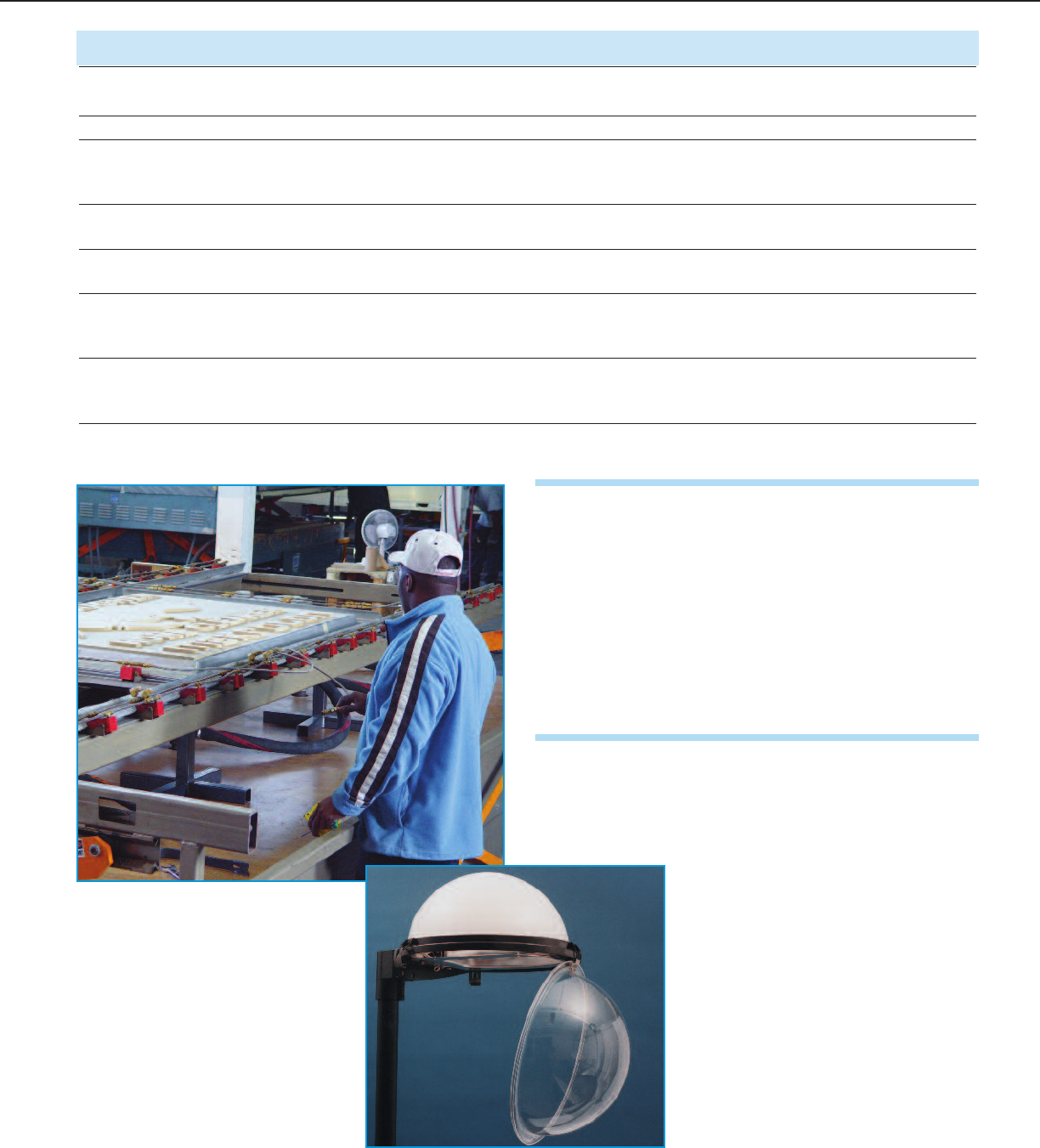
From lofty barrel vault skylights exposed to extreme sunlight
to street level signs that require resistance to graffiti and
vandalism...from precision machined parts to the simple
toughness of domed playground windows, there is a
Makrolon®Polycarbonate Sheet product that's right for
your application.
Makrolon®GP Polycarbonate Sheet
is UV-stabilized and incorporates both economy and high
performance in every sheet. One attribute that sets it apart
from the competition is the UL 94 VO rating on gauges .220˝
and greater, making it cost effective in a wide range
of industrial and design applications.
Makrolon®SL Polycarbonate Sheet
is enhanced, UV resistance polycarbonate sheet that offers
exceptional weatherability. Superior impact strength and
formability makes this product an ideal choice for exterior
factory/plant glazing; guards used in outdoor equipment;
or other applications requiring increased weatherability and
UV resistance.
Makrolon®polycarbonate sheet...
For detailed product or limited warranty
information on any Bayer MaterialScience sheet
product please call: 800/254-1707, or visit our
web site at www.materialscience.bayer.com.
Makrolon®AR Polycarbonate Sheet
offers UV resistance, glass-like surface hardness, high
impact strength, and excellent chemical resistance,
making it an outstanding choice for flat, noncurved
machine guards.
Hygard®Laminates
offer unsurpassed protection from ballistic and
physical attack in bullet resistant and containment
glazing applications.

The manner in which you use and the purpose to which you put and utilize our products, technical
assistance and information (whether verbal, written or by way of production evaluations), including
any suggested formulations and recommendations are beyond our control. Therefore, it is
imperative that you test our products, technical assistance and information to determine to your
own satisfaction whether our products, technical assistance and information are suitable for your
intended uses and applications. This application-specific analysis must at least include testing to
determine suitability from a technical as well as health, safety, and environmental standpoint.
Such testing has not necessarily been done by us. Unless we otherwise agree in writing, all
products are sold strictly pursuant to the terms of our standard conditions of sale which are
available upon request. All information and technical assistance is given without warranty or
guarantee and is subject to change without notice. It is expressly understood and agreed that you
assume and hereby expressly release us from all liability, in tort, contract or otherwise, incurred in
connection with the use of our products, technical assistance, and information. Any statement or
recommendation not contained herein is unauthorized and shall not bind us. Nothing herein shall
be construed as a recommendation to use any product in conflict with any claim of any patent
relative to any material or its use. No license is implied or in fact granted under the claims
of any patent.
Bayer MaterialScience
119 Salisbury Road
Sheffield, MA 01257
Toll Free: 800.254.1707
Fax: 800.457.3553
info@sheffieldplastics.com
www.materialscience.bayer.com
©Copyright, Bayer, 2012
Bayer, the Bayer Cross and Makrolon® are registered trademarks of Bayer MAKFABGUIDE0412
For more information please contact
Bayer MaterialScience
customer service department
Phone: 800.254.1707
FAX: 800.457.3553
www.materialscience.bayer.com
E-mail: info@sheffieldplastics.com
