Guide For Authors 5
User Manual:
Open the PDF directly: View PDF  .
.
Page Count: 12

Author Submission Guide
for Annual Reviews Journals: Setting Up
Your L
A
T
E
X 2εFiles
1. INTRODUCTION
This is a guide for authors using LaTeX to prepare their submission to Annual Reviews.
These instructions are meant as a supplement to the L
A
T
E
X manual, and give only a brief
introduction to using the L
A
T
E
X document preparation system and address issues specific
to Annual Reviews’ style.
The following is a brief description of the files used for preparing articles for submission
to Annual Reviews:
ar-1col.cls: This is the style file used to create the article. The naming convention and
usage of commands closely follow the standard style file article.cls, referred to in the
L
A
T
E
X manual.
ar-style5.bst: This file is used to create the bibliography.
Template-for-Authors-5.tex: This file can be used as a starting point for preparing
an article. Template-for-Authors-5.tex contains common commands laid out in a
typical order for an Annual Reviews manuscript. Authors can simply type in their
article contents between the tags.
Note: Authors are requested not to modify any of these files, in any way, for their use or
for distribution, under their original name. However, they can be modified under a different
name for use by the authors. For example, the file Template-for-Authors-5.tex should
be renamed before beginning to edit.
Use of L
A
T
E
X defaults will result in a uniform layout and font selection. Do not make
ad hoc changes to these. Also avoid use of direct formatting unless necessary.
1.1. Introduction to L
A
T
E
X
L
A
T
E
X is constructed as a series of macros on top of the TE
X typesetting program. L
A
T
E
X
adds to T
E
X a collection of facilities which simplify typesetting for authors by allowing
them to concentrate on the logical structure of the document rather than its visual layout.
Careful use of the L
A
T
E
X mark-up philosophy results in a uniform layout rather than the
ad hoc results of some word-processing systems. Authors are advised to let the defaults
control font selection.
The L
A
T
E
X system provides a consistent and comprehensive document preparation inter-
face. Among other things, L
A
T
E
X can automatically number list entries, equations, figures,
tables, and footnotes, as well as sections and subsections. With this numbering system,
bibliographic citations, page references, and cross references to any other numbered entity
(e.g., sections, equations, and figures) are straightforward.
1

1.2. The AR Document Class
The use of L
A
T
E
X document classes allows a simple change of class to transform the appear-
ance of your document. The ar-1col class file preserves the standard L
A
T
E
X interface such
that any document that can be produced using the standard L
A
T
E
Xarticle class can also
be produced with the ar-1col class files.
Author should submit a PDF along with the L
A
T
E
X files required for their manuscript.
Note that the layout of the L
A
T
E
X-generated PDF is NOT the final typeset article. For this
reason, we ask you to ignore details such as slightly long lines, page stretching, or figures
falling out of synchronization because these details will be dealt with when the article is
prepared for publication.
Use symbolic references (\ref) in order to protect against reference reordering during
revision.
2. USING THE AR CLASS FILE
If the file ar-1col.cls is not already in the appropriate system directory for L
A
T
E
X files,
either place the file there or copy it to your working directory. The AR document class is
implemented as a complete class, not as a document style option. In order to use the AR
document class, replace article by ar-1col.cls in the \documentclass command at the
beginning of your document:
\documentclass{article}
is replaced by
\documentclass{ar-1col}
In general, the following standard document style options should not be used with the AR
class file:
1. 10pt,11pt,12pt — unavailable;
2. twoside (no associated style file) — twoside is the default;
3. fleqn,leqno,titlepage — should not be used.
2.1. Additional Document Class Options
Place any additional command definitions at the very start of the L
A
T
E
X file, before the
\begin{document}. For example, user-defined \def and \newcommand commands that define
macros for technical expressions should be placed here. Other author-defined macros should
be kept to a minimum.
The commands that differ from the standard L
A
T
E
X interface, or that are provided in
addition to the standard interface, are explained in this guide. This guide is not a substitute
for the L
A
T
E
X manual itself. Authors planning to submit their reviews in L
A
T
E
X are advised
to use ar-1col.cls.
3. ARTICLE FEATURES AND FORMATTING
In addition to all the standard L
A
T
E
X design elements, the ar-1col class file includes the
following features. Authors should leave these commands empty when submitting their
articles; the Production Editor will add the correct information.
2 Setting Up Your L
A
T
E
X 2εFiles

1. Use of the \jname{...} command for journal name.
2. Use of the \jvol{...} command for volume number.
3. Use of the \jyear{...} command for year.
4. Use of the \doi{...} command for DOI number.
5. Use of the \firstpagenote{...} command to place note on first page under
DOI/copyright info.
6. Use of the \tableofcontents command to generate table of contents.
In general, once you have used the additional ar-1col.cls facilities in your document, do
not process it with a standard L
A
T
E
X class file.
3.1. Titles, Author Name(s), and Affiliation(s)
The title of the article, author name(s), and affiliation(s) are used at the beginning of the
article for the main title. These can be produced using the following code:
\title{This is an example of an article title}
\author{Author One,$^1$ Author Two,$^2$ and Author Three$^3$
\affil{$^1$Author’s Affiliation}
\affil{$^2$Author’s Affiliation}
\affil{$^3$Author’s Affiliation}}
3.2. Abstracts and Keywords
At the beginning of your article, the title should be generated in the usual way using the
\maketitle command. The abstract should be enclosed within an abstract environment,
followed by the keywords enclosed in a keywords environment. These can be produced
using the following code:
\begin{abstract}
This guide is for authors who are preparing papers for Annual Reviews
using the \LaTeX document preparation system and the {\tt AR} class file.
\end{abstract}
\begin{keywords}
marmoset, myelinated and nonmyelinated nerve fibers, posterior cricoarytenoid
muscle, thin muscle fiber
\end{keywords}
\maketitle
\tableofcontents
The headings “Abstract” and “Keywords” are generated automatically. You can generate
the article’s table of contents using the command \tableofcontents.
3.3. Landscape Page Orientation
If a table is too wide to fit the standard measure, it may be turned, with its caption, 90
degrees. Landscape tables cannot be produced directly using the ar-1col class file because
T
E
X itself cannot turn the page, and not all device drivers provide such a facility. The
following procedure can be used to produce such tables.
www.annualreviews.org •Setting Up Your L
A
T
E
X 2εFiles 3

1. Use the package rotating in your document and change the coding from
\begin{table}...\end{table}
to
\begin{sidewaystable}...\end{sidewaystable}
to rotate your table on the appropriate page of your document. For example:
\begin{sidewaystable}
\caption{Landscape table caption.}
\label{landtab}
\begin{tabular}{lccc}
.
.
.
\end{tabular}
\end{sidewaystable}
3.4. Sections
L
A
T
E
X 2εprovides four levels of section headings and they are all defined in the AR class file:
\section
\subsection
\subsubsection
\paragraph
Section headings are automatically converted to boldface style and generated with numbers.
3.5. Floating Terms and Definitions
The AR class file allows authors to place terms and definitions in the margin alongside the
text (see the left-hand margin of this page). These can be produced by
XANES: X-ray
absorption near-edge
structure
EXAFS: extended
X-ray absorption
fine structure
XFEL: X-ray
free-electron laser
HHG:
higher-harmonic
generation
\begin{marginnote}[120pt]
\entry{XANES}{X-ray absorption near-edge structure}
\entry{EXAFS}{extended X-ray absorption fine structure}
\entry{XFEL}{X-ray free-electron laser}
\entry{HHG}{higher-harmonic generation}
\end{marginnote}
The AR class file also allows authors to include annotations to references, which can be
produced by
\bibnote[<skip value>]{......}
There is an option to move notes vertically in the margin, by inserting the value within
square brackets. The value can be either positive or negative.
3.6. Sidebars
The AR class file permits authors to include sidebars. These may be placed at the top of
the page (t), the bottom of the page (b), or “here” (h), for example,
4 Setting Up Your L
A
T
E
X 2εFiles

CHARGE TRANSFER
Although Mulliken (83) long ago used theory to anticipate the importance of ground state CT in inter-
molecular interactions, it now appears that electron delocalization may play an even more widespread role
in aqueous chemistry than previously suspected (84). Ion–water CT (85–92) and the affinity of ions for
aqueous interfaces (130–133), as well as the influence of ion–water and electron–water interactions.
It can be produced by
\begin{textbox}[h]
\section{CHARGE TRANSFER}
Although Mulliken (83) long ago used theory to anticipate the importance of
ground state CT in intermolecular interactions, it now appears that electron
delocalization may play an even more widespread role in aqueous chemistry
than previously suspected (84). Ion--water CT (85--92) and the affinity of
ions for aqueous interfaces (130--133), as well as the influence of ion--water
and electron--water interactions.
\end{textbox}
3.7. Extracts
The AR class file provides the standard extract environment:
This is an example of an extract. This is an example of an extract. This is an example of an
extract. This is an example of an extract.
It can be produced by
\begin{extract}
This is an example of an extract. This is an example of an extract.
This is an example of an extract. This is an example of an extract.
\end{extract}
3.8. Lists
The AR class file allows for unnumbered lists using the unnumlist environment, for example,
First unnumbered item, which has no label and is indented from the left margin.
Second unnumbered item.
Third unnumbered item, which has no label and is indented from the left margin.
It can be produced by:
\begin{unnumlist}
\item First unnumbered item...
\item Second unnumbered item...
\item Third unnumbered item...
\end{unnumlist}
www.annualreviews.org •Setting Up Your L
A
T
E
X 2εFiles 5

Numbered lists are also provided in the AR class file using the enumerate environment,
for example,
1. The attenuated and diluted stellar radiation,
2. Scattered radiation, and
3. Reradiation from other grains.
It can be produced by:
\begin{enumerate}
\item The attenuated...
\item Scattered radiation, and...
\item Reradiation from other grains...
\end{enumerate}
Bulleted lists are also provided in the AR class file using the itemize environment, for
example,
•This is an example of a bulleted list.
•This is an example of a bulleted list.
•This is an example of a bulleted list.
It can be produced by:
\begin{itemize}
\item This is an example of a bulleted list.
\item This is an example of a bulleted list.
\item This is an example of a bulleted list.
\end{itemize}
3.9. Figures
The AR class file will address the positioning of your figures and therefore you should avoid
using other positional instructions in the figure environment that would override these.
The \caption command should appear after the figure. Figures can be resized using
the options available in \includegraphics command. The first option is used for modifying
figure width and the second option is used for modifying figure height. For example, Figure 1
is produced using the following commands:
\begin{figure}
\includegraphics[width=3in,height=1.5in]{SampleFigure.eps}
\caption{This is an example of a figure caption. (\textit{a}) This is
a description of part a, and (\textit{b}) this is a description for part b.}
\label{fig1}
\end{figure}
Figure captions will be automatically placed on the side of a page if the width of the
figure exceeds that of the text. Cross-referencing of figures, tables, and numbered display
equations using the \label and \ref commands is encouraged. For example, in referencing
Figure 1 above, we used Figure \ref{fig1}. Please note that the layout of the L
A
T
E
X-
generated PDF will likely be different from the final typeset PDF.
6 Setting Up Your L
A
T
E
X 2εFiles
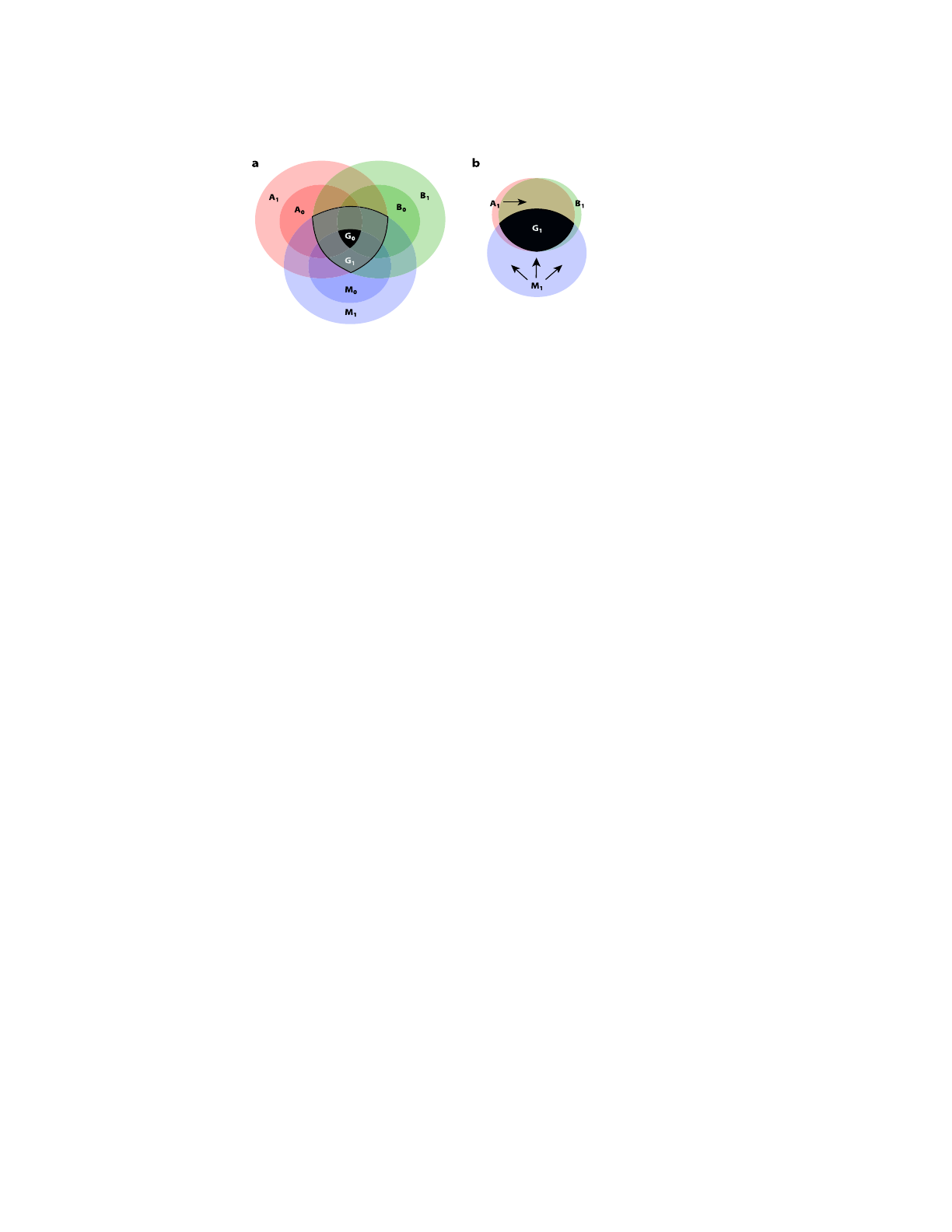
Figure 1 This is an example of a figure caption. (a) This is a description for part a, and
(b) this is a description for part b.
3.10. Tables
The ar-1col class file will address the positioning of your tables and therefore you should
avoid using the optional positional instructions in the table environment that would over-
ride these.
Table headings/titles should be at the top of the table. Units in the headers should be
enclosed in parentheses “(...)” (unless indicating concentration).
\begin{table}
\caption{Reactivity calculations through {\itshape LIGRe} algorithm for
{\itshape M. thermophila} laccase at pH 9.0}\label{tab1}
\begin{center}
\begin{tabular}{@{}l|c|c@{}}
\hline
Ionizable group$^{\rm a}$ &p$K_a$ (PROPKA)$^{\rm b}$ &{\itshape LIGRe}
(pH 9)$^{\rm c}$\\
\hline
N-term &8.0 &10.0\\\hline
Tyr$^{286}$ &9.12 &0.75\\\hline
Tyr$^{214}$ &9.66 &0.21\\\hline
Lys$^{128}$ &9.80 &0.15\\\hline
Tyr$^{391}$ &9.83 &0.14\\\hline
Lys$^{339}$ &9.94 &0.11\\\hline
Lys$^{56}$ &10.08 &0.08\\\hline
Tyr$^{546}$ &10.21 &0.06\\\hline
Lys$^{205}$ &10.22 &0.06\\\hline
Lys$^{353}$ &10.22 &0.06\\
\hline
\end{tabular}
\end{center}
\begin{tabnote}
$^{\rm a}$Prepared from 0.15 wt\% dispersion in water; $^{\rm b}$S-ZrO$_2$
fiber diameter; $^{\rm c}$S-ZrO$_2$ fiber volume fraction.
\end{tabnote}
\end{table}
www.annualreviews.org •Setting Up Your L
A
T
E
X 2εFiles 7
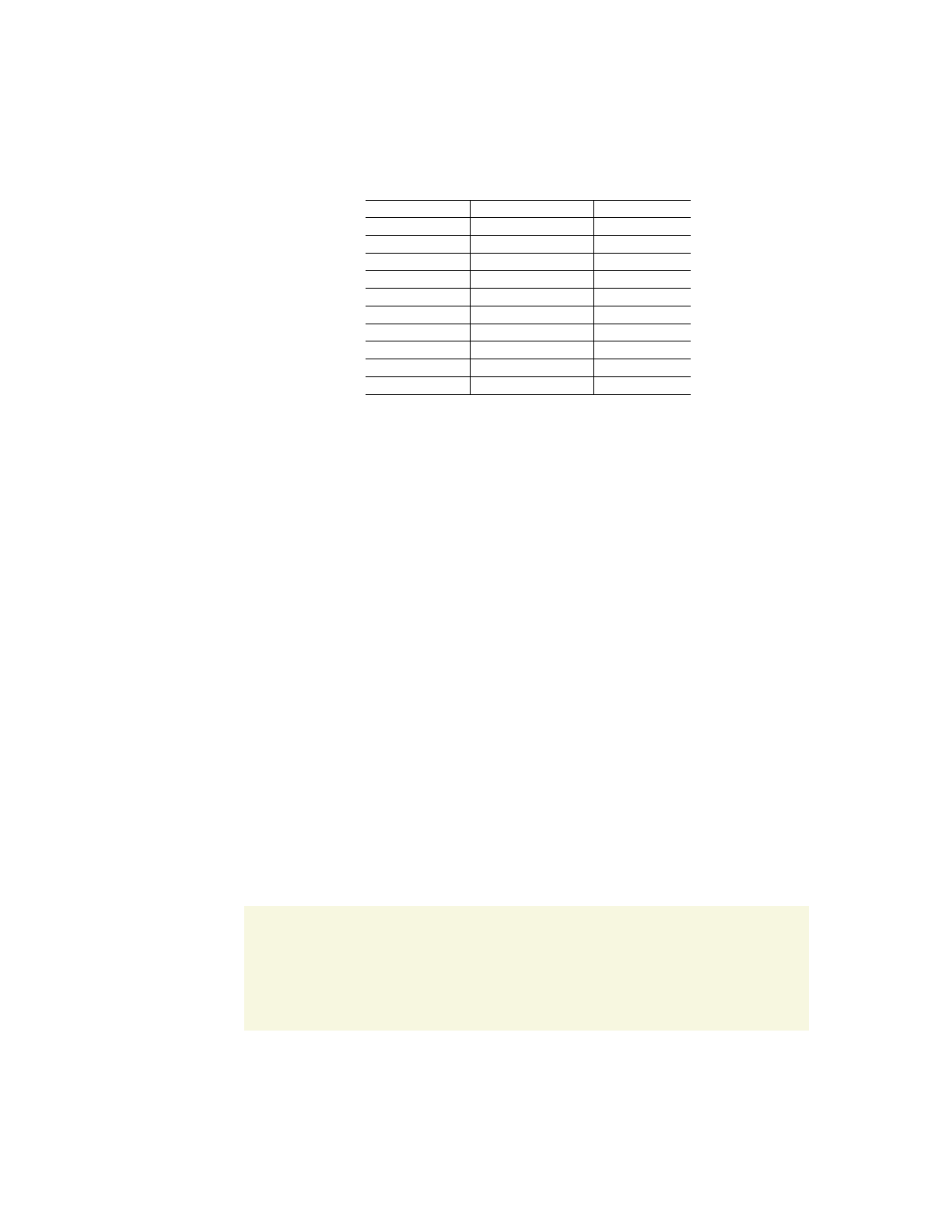
Table 1 Reactivity calculations through LIGRe algorithm for M. thermophila laccase
at pH 9.0
Ionizable groupapKa(PROPKA)bLIGRe (pH 9)c
N-term 8.0 10.0
Tyr286 9.12 0.75
Tyr214 9.66 0.21
Lys128 9.80 0.15
Tyr391 9.83 0.14
Lys339 9.94 0.11
Lys56 10.08 0.08
Tyr546 10.21 0.06
Lys205 10.22 0.06
Lys353 10.22 0.06
aPrepared from 0.15 wt% dispersion in water; bS-ZrO2fiber diameter; cS-ZrO2fiber volume fraction.
3.11. Typesetting of Mathematics
The AR class file will center displayed mathematics provided that you use the L
A
T
E
X 2ε
standard of open and closed square brackets as delimiters.
The equation
p
X
i=1
λi= (S)
was typeset using the AR class file with the commands
\[
\sum_{i=1}^p \lambda_i = (S)
\]
For displayed equations, cross-referencing is encouraged. For example,
\begin{equation}
(n-1)^{-1} \sum^n_{i=1} (X_i - \overline{X})^2.
\label{eq:samplevar}
\end{equation}
Equation \ref{eq:samplevar} gives the formula for sample variance.
3.12. Summary Points and Future Issues
You can set special sections like SUMMARY POINTS or FUTURE ISSUES using the AR class file,
for example,
SUMMARY POINTS
1. New X-ray light sources will enable nonlinear spectroscopy of core excitations in
molecules.
2. Stimulated X-ray Raman spectroscopies launch and probe valence electron
wavepackets though core-excited state intermediates.
8 Setting Up Your L
A
T
E
X 2εFiles

3. X-ray four-wave mixing can reveal coupling between core-excited states.
4. Pulse wavevectors, phases, polarizations, and delays can be used to control the
nonlinear signals.
You can get this output using the below coding:
\begin{summary}[SUMMARY POINTS]
\begin{enumerate}
\item New X-ray light sources will enable nonlinear spectroscopy of core
excitations in molecules.
\item Stimulated X-ray Raman spectroscopies launch and probe valence
electron wavepackets though core-excited state intermediates.
\item X-ray four-wave mixing can reveal coupling between core-excited states.
\item Pulse wavevectors, phases, polarizations, and delays can be used
to control the nonlinear signals.
\end{enumerate}
\end{summary}
FUTURE ISSUES
1. More elaborate pulse sequences can be designed to apply the rapidly developing X-
ray light source technology to the exploration of fundamental questions regarding
many-body interactions in molecular systems.
2. By adapting existing coherent, classical, nonlinear techniques to experiments using
quantum and noisy sources, investigators can design new classes of signals, and
additional opportunities to measure them with existing XFEL sources will be made
possible.
3. Complete control over the phase and amplitude of an intense X-ray pulse would
allow sophisticated shaping techniques used in optical and IR spectroscopy to be
applied to the X-ray regime.
You can get this output using the below coding:
\begin{issues}[FUTURE ISSUES]
\begin{enumerate}
\item More elaborate pulse .....
\item By adapting existing .....
\item Complete control over .....
\end{enumerate}
\end{issues}
3.13. Disclosure Statement
At the time of manuscript submission, please disclose any financial interest of your own,
or of any member of your authorship team, that might be favorably or adversely affected
by your review. Prior to publication, all authors will be asked to complete and sign a
www.annualreviews.org •Setting Up Your L
A
T
E
X 2εFiles 9

disclosure statement. The possibility of conflict of interest does not disqualify anyone from
authorship. We will, however, disclose the potential conflict of interest to our readers. If
you have nothing to disclose, the following statement will be used: The authors are not
aware of any affiliations, memberships, funding, or financial holdings that might
be perceived as affecting the objectivity of this review.
3.14. Acknowledgments
Please include any acknowledgments in a separate section above the Literature Cited section.
4. LITERATURE CITED
The bibliography follows the acknowledgments, and is the last significant body of text in
the article. It is produced by the usual L
A
T
E
X commands.
In ar-1col.cls,\begin{thebibliography}{} ... \end{thebibliography} command
can be used to produce the bibliography.
The user is encouraged to let L
A
T
E
X produce the bibliography with the \bibliography
command, letting BIBT
E
X handle the formatting of the entries. There are six bibliography
styles available for Annual Reviews journals:
ar-style1.bst Harvard Style (not numbered). References include titles.
ar-style2.bst Harvard Style (not numbered). References DO NOT include
titles.
ar-style3.bst Numbered, in order of appearance, including titles
ar-style4.bst Numbered, in order of appearance, no titles
ar-style5.bst Numbered, in order of appearance (formatted for Nuclear
and Particle Science)
ar-style6.bst Numbered, alphabetical
Use any bibliography style file name using the below command between the
\begin{document} and the \end{document} to generate bibliography file according to the
house style for the journal:
\bibliographystyle{<.bst file name>}
When submitting the document source (.tex) file to Annual Reviews, it is recommended
that the BIBT
E
X .bbl file be manually copied into the document (within the traditional
L
A
T
E
X bibliography environment) so as not to depend on external files to generate the
bibliography and to prevent the possibility of changes occurring therein. The conventional
\cite command will generate citations as usual in L
A
T
E
X. We recommend the use of the
natbib.sty package as it provides the following commands as well:
Command Author-year mode Numerical mode
======= ================ ==============
\citet{key} Jones et al. (1990) Jones et al. (3)
\citet*{key} Jones, Baker & Smith (1990) Jones, Baker & Smith (3)
\citep{key} (Jones et al. 1990) (3)
\citep*{key} (Jones, Baker & Smith 1990) (3)
\citep[chap. 2]{key} (Jones et al. 1990, chap. 2) (3, chap. 2)
\citep[e.g.,][]{key} (e.g., Jones et al. 1990) (e.g., 3)
10 Setting Up Your L
A
T
E
X 2εFiles

\citep[e.g.,][p. 32]{key} (e.g., Jones et al. p. 32) (e.g., 3, p. 32)
\citeauthor{key} Jones et al. --
\citeauthor*{key} Jones, Baker & Smith --
\citeyear{key} 1990 --
For more information regarding these commands, the authors can refer to the documenta-
tion of the natbib package.
The coding of the bibliography for a journal following Style 5 is as follows:
\begin{thebibliography}{96}
\expandafter\ifx\csname
natexlab\endcsname\relax\def\natexlab#1{#1}\fi
\bibitem{Glashow:1961tr}
Glashow SL. \textit{Nucl. Phys.} 22:579 (1961)
\bibitem{Weinberg:1967tq}
Weinberg S. \textit{Phys. Rev. Lett.} 19:1264 (1967)
\bibitem{Salam}
Salam A. In \textit{Elementary Particle Theory: Relativistic
Groups and Analyticity. Proceedings of the 8th Nobel Symposium},
ed. N~Svartholm, p. 367. Stockholm: Almqvist \& Wiksell (1968)
\bibitem{Fritzsch:1973pi}
Fritzsch H, Gell-Mann M, Leutwyler H. \textit{Phys. Lett.} \textit{B} 47:365
(1973)
\bibitem{Gross:1973id}
Gross DJ, Wilczek F. \textit{Phys. Rev. Lett.} 30:1343 (1973)
\bibitem{Politzer:1973fx}
Politzer HD. \textit{Phys. Rev. Lett.} 30:1346 (1973)
\bibitem{Kronfeld:2010bx}
Kronfeld AS, Quigg C. \textit{Am. J. Phys.} 78:1081 (2010)
\bibitem{Langacker:2010}
Langacker P. \textit{The Standard Model and Beyond. Series in
High Energy Physics, Cosmology, and Gravitation}. Boca Raton:
CRC/Taylor \& Francis (2010)
\bibitem{GT2}
Quigg C. \textit{Gauge Theories of the Strong, Weak, and
Electromagnetic Interactions}. Princeton, NJ: Princeton
Univ. Press. 2nd ed. (2013)
\bibitem{MattS}
www.annualreviews.org •Setting Up Your L
A
T
E
X 2εFiles 11

Schwartz MD. \textit{Quantum Field Theory and the Standard Model}.
Cambridge, UK: Cambridge Univ. Press (2013)
\bibitem{DynSM}
Donoghue JF, Golowich E, Holstein BR. \textit{Dynamics of the
Standard Model}. Cambridge, UK/New York: Cambridge
Univ. Press. 2nd ed. (2014)
\end{thebibliography}
This coding results in the following formatted bibliography:
LITERATURE CITED
1. Glashow SL. Nucl. Phys. 22:579 (1961)
2. Weinberg S. Phys. Rev. Lett. 19:1264 (1967)
3. Salam A. In Elementary Particle Theory: Relativistic Groups and Analyticity. Proceed-
ings of the 8th Nobel Symposium, ed. N Svartholm, p. 367. Stockholm: Almqvist &
Wiksell (1968)
4. Fritzsch H, Gell-Mann M, Leutwyler H. Phys. Lett. B 47:365 (1973)
5. Gross DJ, Wilczek F. Phys. Rev. Lett. 30:1343 (1973)
6. Politzer HD. Phys. Rev. Lett. 30:1346 (1973)
7. Kronfeld AS, Quigg C. Am. J. Phys. 78:1081 (2010)
8. Langacker P. The Standard Model and Beyond. Series in High Energy Physics, Cos-
mology, and Gravitation. Boca Raton: CRC/Taylor & Francis (2010)
9. Quigg C. Gauge Theories of the Strong, Weak, and Electromagnetic Interactions.
Princeton, NJ: Princeton Univ. Press. 2nd ed. (2013)
10. Schwartz MD. Quantum Field Theory and the Standard Model. Cambridge, UK: Cam-
bridge Univ. Press (2013)
11. Donoghue JF, Golowich E, Holstein BR. Dynamics of the Standard Model. Cambridge,
UK/New York: Cambridge Univ. Press. 2nd ed. (2014)
12 Setting Up Your L
A
T
E
X 2εFiles
