Ko Manual 1
User Manual:
Open the PDF directly: View PDF  .
.
Page Count: 27
Manual to accompany MATLAB package for
Bayesian VAR models
Gary Koop
University of Strathclyde
Dimitris Korobilis
University of Strathclyde
Glasgow, September 2009
Contents
1 Introduction 2
2 VAR models 4
2.1 Analytical results for VAR models . . . . . . . . . . . . . . . . . . . . 4
2.1.1 TheDiffusePrior.......................... 5
2.1.2 The Natural Conjugate Prior . . . . . . . . . . . . . . . . . . . 5
2.1.3 The Minnesota Prior . . . . . . . . . . . . . . . . . . . . . . . . 5
2.2 Estimation of VARs using the Gibbs sampler . . . . . . . . . . . . . 6
2.2.1 The Independent Normal-Wishart Prior-Posterior algorithm . 6
2.2.2 Stochastic Search Variable Selection in VAR models . . . . . 7
2.2.3 Flexible Variable Selection in VAR models . . . . . . . . . . . 9
3 Time-Varying parameters VAR models 12
3.1 Homoskedastic TVP-VAR . . . . . . . . . . . . . . . . . . . . . . . . . 12
3.1.1 Variable Selection in the Homoskedastic TVP-VAR . . . . . . 13
3.2 HierarchicalTVP-VAR........................... 13
3.3 Heteroskedastic TVP-VAR . . . . . . . . . . . . . . . . . . . . . . . . . 15
4 Factor models 18

1 Introduction 2
4.1 Staticfactormodel............................. 18
4.2 Dynamic factor model (DFM) . . . . . . . . . . . . . . . . . . . . . . 18
4.3 Factor-augmented VAR (FAVAR) . . . . . . . . . . . . . . . . . . . . . 19
4.4 Time-varying parameters Factor-augmented VAR (FAVAR) . . . . . . 20
4.5 Data used for factor model applications . . . . . . . . . . . . . . . . 22
1 Introduction
This notes manual accompanies the monograph on empirical VAR models and
the associated MATLAB code. The ultimate purpose is to introduce academics,
students and applied economists to the world of Bayesian time series modelling
combining theory with easily digestable computer code. For that reason, we
present code in a format that follows the theoretical equations as close as pos-
sible, so that users can make the connection easily and understand the models
they are estimating. This means that in some cases the code might not be as
computationally efficient as it should be in practice, if there is the danger to sac-
rifice clarity. We try to avoid structure arrays which can be confusing, that is we
only represent our variables as vectors or matrices (the SSVS model is the only
exception, where we use the MATLAB cell array capabilities).
The directories in the file BAYES_VARS.zip, are:

1 Introduction 3
BV AR_Analytical VAR models using analytical results
BV AR_GIBBS VAR models using the Gibbs sampler
BV AR_F U LL
Programs to replicate Empirical
Illustration 1. This code uses simulation
to get the posterior parameters with a
flexible choice of 6 different priors.
SSV S VAR with SSVS mixture prior as in George,
Sun and Ni (2008)
V AR_Selection Variable selection in VARs as in
Korobilis (2009b)
T V P _V AR_CK TVP-VAR model using the Carter and
Kohn (1994) smoother as in Primiceri(2005)
T V P _V AR_DK TVP-VAR model using the Durbin and
Koopman (2002) smoother
T V P _V AR_GCK Mixture innovations TVP-VAR as in Koop,
Leon-Gonzales and Strachan (2009)
HierarchicalT V P _V AR Hierarchical TVP-VAR as in Chib and
Greenberg (1995)
F actor_Models Estimation of static and dynamic factor
models
F AV AR FAVAR as in Bernanke, Boivin and
Eliasz (2005)
T V P _F AV AR TVP-FAVAR as in Korobilis (2009a)
GAUSS2M AT LAB Some usefull GAUSS routines, transcribed
for MATLAB

2 VAR models 4
2 VAR models
2.1 Analytical results for VAR models
The simple, reduced-form VAR model can be writen as
Yt=XtA+"t, with "tN(0;) (1)
As we have shown in the previous subsection, this model can be written in the
form
yt= (IMXt)+"t(2)
or compactly
yt=Zt+"t(3)
where a=vec (A).
In the computations presented henceforth, we will need the OLS estimates of
a,Aand . Subsequently, using the notation X= (X1; :::; XT)0, we define
b=XZ0
tZt1XZ0
tyt(4)
the OLS estimate of a,
b
A= (X0X)1(X0Y)(5)
the OLS estimate of A,
b
S=YXb
A0YXb
A(6)
the sum of squared errors of the VAR, and
b
= b
S= (TK)(7)
the OLS estimate of .
Code BVAR_ANALYT.m (found in folder BVAR_Analytical) gives posterior means
and variances of parameters & predictives, using the analytical formulas.
Code BVAR_FULL.m (found in the folder BVAR_FULL) estimates the BVAR
model combining all the priors discussed below, and provides predictions and
impulse responses (check Empirical Application 1 in the monograph)

2.1 Analytical results for VAR models 5
2.1.1 The Diffuse Prior
The diffuse (or Jeffreys’) prior for aand takes the form
p(; ) / jj(M+1)=2
The conditional posteriors are easily derived, and it is proven that they are of the
form
j; y N(ba; ) ,jyIW b
S; T K
2.1.2 The Natural Conjugate Prior
The natural conjugate prior has the form
jN(; V)
and
1Wv; S1
The posterior for ais
j; y N; V
where V=V1+X0X1and =vec Awith A=VV1A+X0Xb
A:
The posterior for is
1jyW; S1
where =T+and S=S+S+b
A0X0Xb
A+A0V1AA0V1+X0XA.
2.1.3 The Minnesota Prior
The Minnesota Prior refers mainly to restricting the hyperparameters of a. The
data-based restrictions are the ones presented in the monograph. The prior for
ais still normal and the posteriors are the similar to the Natural conjugate prior
case. is assumed known in this case (for example equal to b
).

2.2 Estimation of VARs using the Gibbs sampler 6
2.2 Estimation of VARs using the Gibbs sampler
2.2.1 The Independent Normal-Wishart Prior-Posterior algorithm
We write the VAR as:
yt=Zt+"t
where Zt=IMXtand "tis N(0;).
It can be seen that the restricted VAR can be written as a Normal linear
regression model with an error covariance matrix of a particular form. A very
general prior for this model (which does not involve the restrictions inherent in
the natural conjugate prior) is the independent Normal-Wishart prior:
p; 1=p()p1
where
N; V (8)
and
1W; S1:(9)
Note that this prior allows for the prior covariance matrix, V, to be anything the
researcher chooses, rather than the restrictive Vform of the natural conjugate
prior. For instance, the researcher could choose a prior similar in spirit to the
Minnesota prior, but allow for different forms of shrinkage in different equations.
A noninformative prior can be obtained by setting =S=V1
= 0.
The conditional posteriors are:
Posterior on =vec (B)
jy; 1N; V ;(10)
where =VV1
+PT
i=1 Z0
t1ytand V=V1
+PT
t=1 Z0
t1Zt1
Posterior on

2.2 Estimation of VARs using the Gibbs sampler 7
1jy; W; S1(11)
where =T+and S=S+PT
t=1 (ytZt) (ytZt)0.
The one-step ahead predictive density, conditional on the parameters of the
model is:
ytjZt; ; N(Zt; )
As we note in the monograph, in order to calculate reasonable predictions, Zt
should contain lags of the dependent variables, and exogenous variables which
are observed at time th, where his the desired forecast horizon. This result,
along with a Gibbs sampler producing draws (r);(r)for r= 1; ::; R allows for
predictive inference.1For instance, the predictive mean (a popular point forecast)
could be obtained as:
E(yjZ) = PR
r=1 Zt(r)
R
and other predictive moments can be calculated in a similar fashion. Alterna-
tively, predictive simulation can be done at each Gibbs sampler draw, but this
can be computationally demanding. For forecast horizons greater than one, the
direct method can be used. This strategy for doing predictive analysis can be
used with any of the models discussed below.
Code BVAR_GIBBS.m (found in the folder BVAR_Gibbs) estimates this model,
but also allows the prior mean and covariance of (i.e. the hyperparameters
; V ) to be set as in the Minnesota case.
2.2.2 Stochastic Search Variable Selection in VAR models
In the VAR model
Yt=XtA+"t(12)
we can introduce the SSVS prior (George and McCullogh, 1993) which is a hier-
archical prior of the form
ajN(0; D)(13)
1Typically, some initial draws are discarded as the “burn in”. Accordingly, r= 1; ::; R should
be the post-burn in draws.

2.2 Estimation of VARs using the Gibbs sampler 8
where =vec (A) = (1; :::; KM )0and Dis a diagonal matrix. If we write its
jth diagonal element as Dj;j, this prior implies that there is dependence on a
hyperparameter = (1; :::; KM )0of the following form
Dj;j =(2
0jif j= 0
2
1jif j= 1 (14)
where we a-priori set the hyperparameters 2
0j!0and 2
1j! 1. This prior
implies that when j= 0 the prior variance of the jth element of a, call it aj, will
be equal to 2
0j, which is very low since 2
0j!0. Subsequently, the posterior of the
jth parameter will be restricted in this case to shrink towards the prior mean,
which is 0. In the alternative case, j= 1, the parameter will remain unrestricted
and the posterior will be determined mainly by the likelihood. The SSVS prior
in (13) can be written in a mixture of Normals form, which is more illuminating
about the effect of each jon the prior of aj:
jjj1jN0; 2
0j+jN0; 2
1j
The way in which it is determined whether jis 0 or 1 (and hence whether
ajis restricted or not) is not chosen by the researcher, as in the case of the
Minnesota prior which favors only own lags and the constant parameters (and
restricts the other R.H.S. variables in a semi-data-based way). The value of j
should is determined fully in a data-based fashion, and hence a prior is assigned
to . In a Bayesian context, a prior on a binomial variable which results in easy
computations is the Bernoulli density. Note also that it helps calculations if we
assume that the elements of are independent of each other and sample each j
individually. Subsequently, the prior for is of the form
jjnjBernoulli 1; qj
This prior can also be written in the form: Pr j= 1=qjand Pr j= 0= 1 qj.
A typical "noninformative" value of the hyperparameter qjis 0.5, although the
reader might want to consult Chipman et al. (2001) and George and McCullogh
(1997) on this issue.
Finally for we assume the standard Wishart prior
1;Wv; S1
2.2 Estimation of VARs using the Gibbs sampler 9
George, Sun and Ni (2008) provide details on how to implement the restriction
search (SSVS prior) on elements of . The MATLAB code implements this ap-
proach, but it is not discussed here. The reader is referred to the article by
George, Sun and Ni.
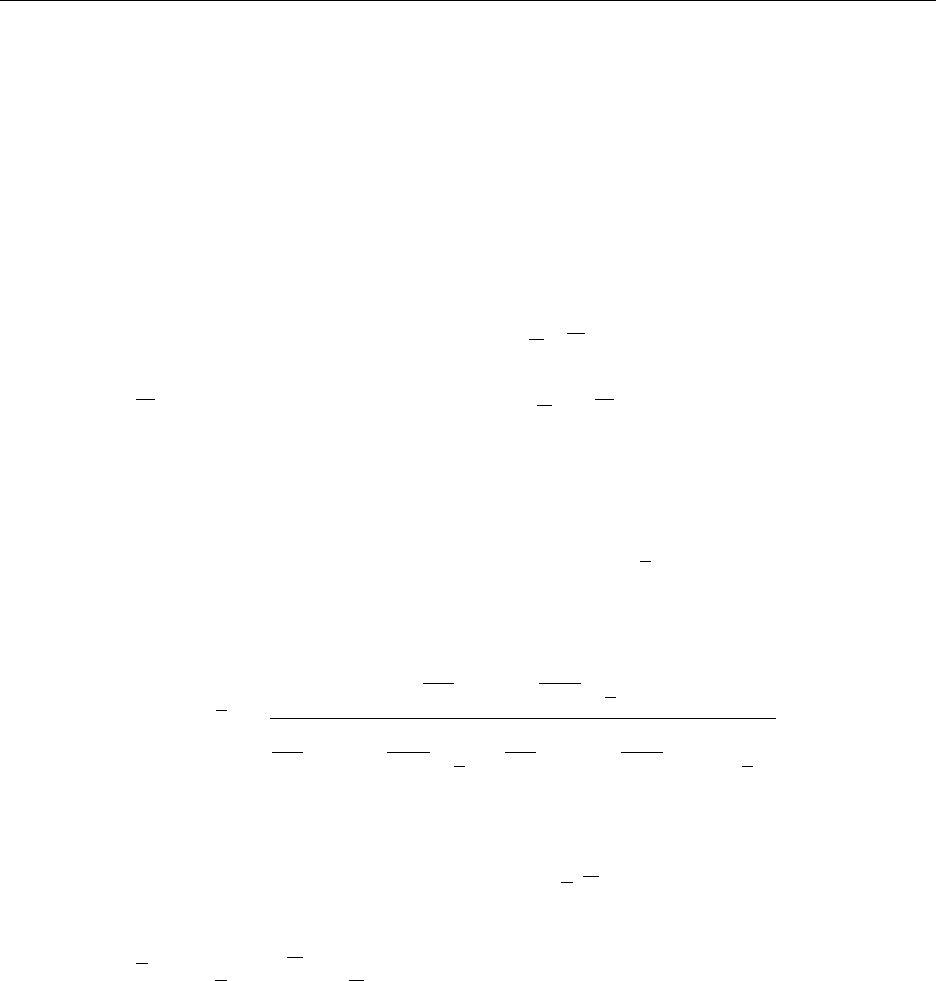
The conditional posteriors are
1. Sample from the density
jy; ; N(; V );
where V= [1(X0X)+(DD)1]1and =V[(0)(X0X)^]where ^is
the OLS estimate of .
2. Sample jfrom the density
jjnj; b; y; Z Bernoulli 1;qj(15)
where
qj=
1
1j
exp 2
j
22
1jqj
1
1j
exp 2
j
22
1jqj+1
0j
exp 2
j
22
0j1qj
3. Sample 1from the density
1W ishart v; S
where v=T+vand S=S1+PT
t=1 (YtZt)0(YtZt)1.
Code SSVS_VAR.m and SSVS_VAR_CONST.m (found in the folder SSVS_VAR)
estimate this model. The first model assumes that all parameters are subject to
restriction search. The second code allows the intercepts to be unrestricted, as
in the example of George, Sun and Ni (2008).
2.2.3 Flexible Variable Selection in VAR models
Another way to incorporate variable selection in the VAR model is to explicitly
restrict the parameter to be zero, when the indicator variable is zero. As we

2.2 Estimation of VARs using the Gibbs sampler 10
explain in the monograph, the VAR model
yt=Zt+"t
can be written now as
yt=Zt+"t
where = and = diag () = diag (1; :::; KM ). If we denote by jthe j-th
element of the vector (which is also the j-th diagonal element of the matrix ),
and by =jthe vector where the j-th element is removed, a Gibbs sampler for
this model takes the following form:
Priors:
NMK ; V (16)
jjnjBernoulli (1; )(17)
1W ishart (v; S)(18)
Conditional posteriors:
1. Sample from the density
j; H; y; Z NM K ; V (19)
where V=V1+PT
t=1 Z0
t1Z
t1and =VV1+PT
t=1 Z0
t1Yt, and
Z
t=Zt.
2. Sample jfrom the density
jjnj; b; y; Z Bernoulli (1; j)(20)
preferably in random order j, where j=l0j
l0j+l1j, and
l0j= exp 1
2tr T
X
t=1
(YtZt)01(YtZt)!!0j
l1j= exp 1
2tr T
X
t=1
(YtZt)01(YtZt)!!(1 0j):
2.2 Estimation of VARs using the Gibbs sampler 11
Here we define to be equal to but with the jth element j=j(i.e.
when j= 1). Similarly, we define to be equal to but with the jth
element j= 0 (i.e. when j= 0).
3. Sample 1from the density
1W ishart v; S
where v=T+vand S=S1+PT
t=1 (YtZt)0(YtZt)1.
Code VAR_SELECTION.m (found in the folder VAR_Selection) estimates this
model.

3 Time-Varying parameters VAR models 12
3 Time-Varying parameters VAR models
3.1 Homoskedastic TVP-VAR
The basic TVP-VAR can be written as:
yt=Ztt+"t, (21)
and
t+1 =t+ut, (22)
where "tis i.i.d. N(0;) and utis i.i.d. N(0; Q)."tand usare independent of one
another for all sand t.
In this model, using priors of the form
0N; V
1W; S1
QWQ; S1
Q
we sample t(conditional on the values of and Q) using the Kalman filter and
a smoother (see the monograph for more information), and from the usual
Wishart density as
1jt; Q; y W; S1(23)
where =T+and S=S+PT
t=1 (ytZtt) (ytZtt)0.
Finally we sample Qfrom the Wishart density
Q1jt;; y WQ; S1
Q(24)
where Q=T+Qand SQ=SQ+PT
t=1 tt1tt10.
There are two different versions of this model. The one is Homo_TVP_VAR.m
(found in the folder TVP_VAR_CK) which estimates this model plus impulse re-
sponses, using the Carter and Kohn (1994) algorithm. Thes second code is
Homo_TVP_VAR_DK.m (found in the folder TVP_VAR_DK) which estimates this
model plus impulse responses, using the Durbin and Koopman (2002) algorithm.

3.2 Hierarchical TVP-VAR 13
3.1.1 Variable Selection in the Homoskedastic TVP-VAR
Variable selection is defined by rewritting the TVP-VAR model as
yt=Ztt+"t,
t+1 =t+ut,
where now t= tand is a diagonal matrix (see also the variable selection in
the simple VAR case, when tis constant).
The time-varying parameters tand the covariance are generated exactly
as in the homoskedastic TVP-VAR, described in the previous subsection, but
conditional on the RHS variables being Z
t=Zt. The extra step added to the
standard Gibbs sampler for TVP-VAR models, is sampling of the indicators j.
These are generated - preferably in random order j- as in (20). The only mod-
ification required in this case is that in equations (??) and (??) the densities
pyjj; nj; j= 1and pyjj; nj; j= 0are derived from the full likelihood of
the TVP-VAR model, and hence l0jand l1jare written as
l0j=0jexp 1
2
T
X
t=1
(YtZt
t)01
t(YtZt
t)!
l1j= (1 0j) exp 1
2
T
X
t=1
(YtZt
t)01
t(YtZt
t)!
Code TVP_VAR_SELECTION.m (found in the folder VAR_Selection) estimates
this model.
3.2 Hierarchical TVP-VAR
The hierarchical TVP-VAR, based on the model of Chib and Greenberg (1995) is
yt=Ztt+"t
t+1 =A0t+1 +ut;(25)
t+1 =t+t:
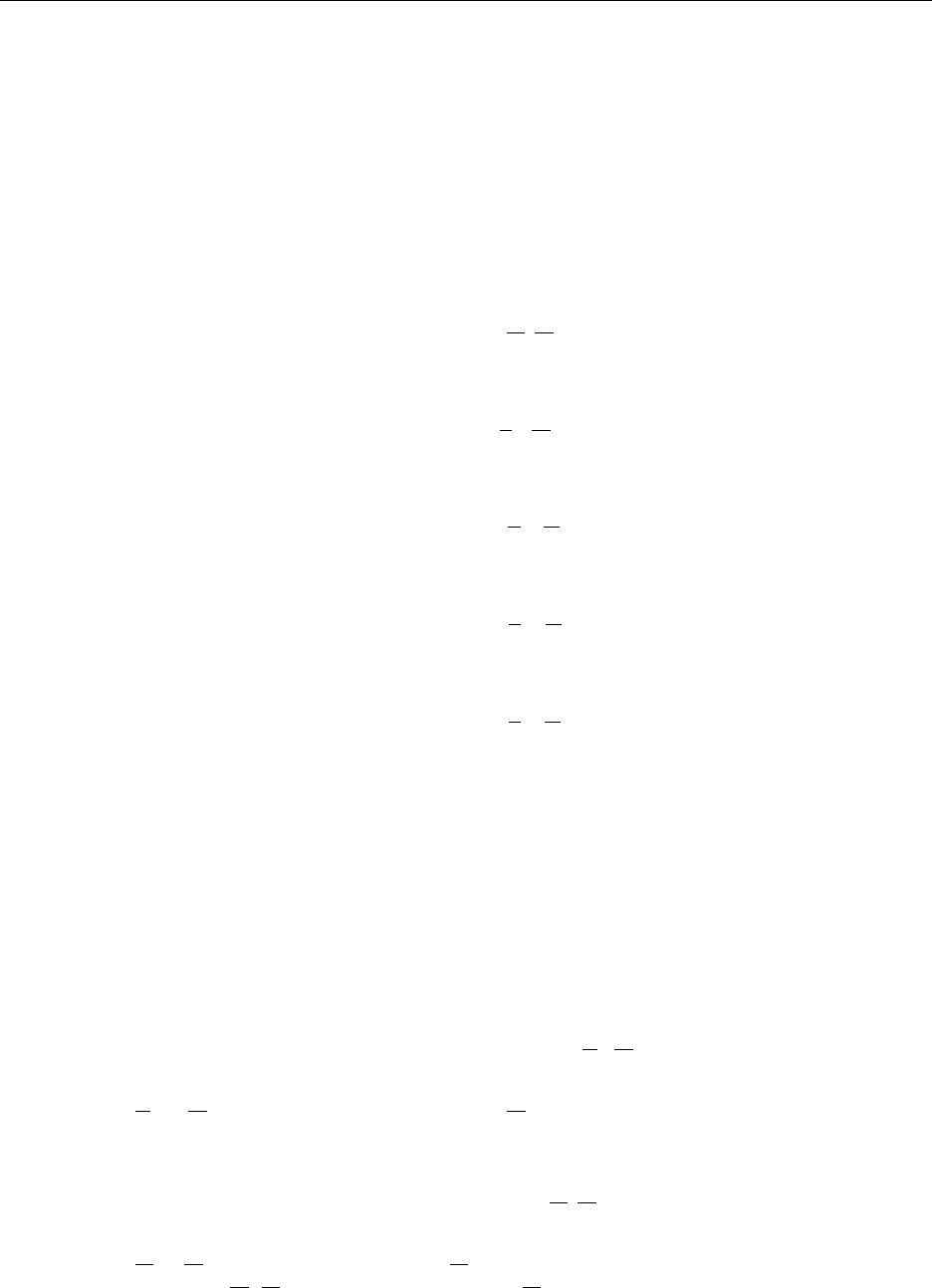
3.2 Hierarchical TVP-VAR 14
where 2
6
4
"t
ut
t
3
7
5iid
N0
B
@0;2
6
4
0 0
0Q0
0 0 R
3
7
51
C
A:
The priors for this model are
Prior on A0
A0N(A; V A)
Prior on t
0N0; V 0
Prior on
1Wv; S1
Prior on Q
Q1WvQ; S1
Q
Prior on R
R1WvR; S1
R
By defining priors on these parameters, we also implicitly specify a prior for
tof the form
tjA0; 0; Q N(A0t; Q), for t= 0; ::; T:
The conditional posteriors are
1. Sample tfrom
tj; A0; t; Q; ytNt; V
where t=V(Q1(A0t) + Zt1yt)and V= (Q1+Z0
t1Zt)1.
2. Sample A0from
A0jt; t; Q NA; V A
where A=VA(VAA+0Q1)and VA= (VA+0Q1)1.

3.3 Heteroskedastic TVP-VAR 15
3. Sample from
1jA0; t; t; Q; ytWv; S1
where v=T+vand S=S+PT
t=1 (ytZtt)0(ytZtt).
4. Sample Qfrom
Q1jA0; t; tWvQ; S1
Q
where vQ=T+vQand SQ=SQ+PT
t=1 (tA0t)0(tA0t).
5. Sample Rfrom
R1jtWvR; S1
R
where vR=T+vRand SR=SR+PT
t=1 (tt1)0(tt1).
6. Sample tusing Carter and Kohn (1994)
Code HierarchicalTVP_VAR.m (found in the folder HierarchicalTVP_VAR) es-
timates the parameters of this model.
3.3 Heteroskedastic TVP-VAR
The Heteroskedastic TVP-VAR takes the form
yt=Ztt+"t
where "tN(0;t), and t=L1DtDtL10where Dtis a diagonal matrix with di-
agonal elements dit = exp 1
2hitbeing the error time-varying standard deviations,
and Lis a lower triangular matrix of time-varying covariances, with ones on the
diagonal. For instance, in the M= 3 case we have
L=2
6
4
100
L21 1 0
L31 L32 1
3
7
5
If we first stack the unrestricted elements of Lby rows into a M(M1)
2vector
as lt=L21;t; L31;t; L32;t; ::; Lp(p1);t0and ht= (h1t; :::; hMt)0, then t,ltand htfollow
independent random walks

3.3 Heteroskedastic TVP-VAR 16
t+1 =t+ut
lt+1 =lt+t
ht+1 =ht+t
The errors in the three state equations are
2
6
4
ut
t
t
3
7
5iid
N0
B
@0;2
6
4
Q0 0
0S0
0 0 W
3
7
51
C
A
The state-space methods used to estimate tcan also be used to estimate ltand
ht. We remind that Ztis of dimensions MKM, so that the number of elements of
each column vector tis n=KM (for each t). Similarly, the number of elements
in each column ltis nl=M(M1)
2, and the number of elements in each column
vector htis nh=M. The priors (initial condition at time t= 0) on the time-varying
parameters are:
0N0;4In
l0N(0;4Inl)(26)
h0N(0;4Inh)
and the priors on their error covariances, are
Q1W1 + n;(kQ)2(1 + n)In1
S1W1 + nl;(kS)2(1 + nl)Inl1(27)
W1W1 + nh;(kW)2(1 + nh)Inh1
where the hyperparameters are set to kQ= 0:01,kS= 0:1and kW= 0:01, and Imis
the identity matrix of dimensions mm. The user can also specify a prior based
on the OLS estimates of a constant parameters VAR on a training sample (see
Primiceri (2005) and the code for this approach).
One can inform the priors using a training sample. In particular, assume that

3.3 Heteroskedastic TVP-VAR 17
b
OLS and Vb
OLS are the mean and variance respectively of the OLS estimate (or
a Bayesian estimate using noninformative priors) of =f; l; hgbased on a VAR
with constant parameters using an initial, training sample. Then the priors can
be rewritten as
0N(OLS ;4V(OLS))
l0N(lOLS ;4V(lOLS )) (28)
h0N(hOLS ;4V(hOLS ))
Q1W1 + n;(kQ)2(1 + n)V(OLS )1
S1W1 + nl;(kS)2(1 + nl)V(lOLS )1(29)
W1W 1 + nh;(kW)2(1 + nh)Vh.
.
.OLS 1!
The posterior of tis easily obtained, as in the case of the Homoskedastic VAR.
The only difference is that now, we draw tconditional on the VAR covariance
matrix being t. Draws of ltand htwill provide us with draws of Ltand Dt
respectively, and then we can recover tusing t=L1
tDtDtL10
t. For detailed
info see the monograph, and the appendix Primiceri (2005).
Code Hetero_TVP_VAR.m (found in the folder TVP_VAR_CK) estimates the
parameters and impulse responses from this model.

4 Factor models 18
4 Factor models
4.1 Static factor model
The static factor model is (ignoring the intercept)
yt=ft+"t
where ytis an M1vector of observed time series variables, ftis a q1vector of
unobserved factors with ftN(0; Iq),is an Mqmatrix of coefficients (factor
loadings), and "tN(0;) with = diag (2
1; :::; 2
M). A popular way to identify this
model (see Lopes and West, 2004, and Geweke and Zhou, 1996) is to impose
to be block lower triangular with diagonal elements strictly positive, i.e. jj >0
and jk = 0 for j > k,j= 1; ::; q. Since the covariance matrix is diagonal, we
can treat this model as Mindepedent regressions (conditional on knowing ft).
Subsequently we set proper priors of the Normal - inverse-Gamma form, and
is sampled with the restriction that its diagonal elements come from a truncated
normal density, while the upper diagonal elements are zero.
Code BFM.m (found in folder Factor_Models) replicates this model, following
Lopes and West (2004).
4.2 Dynamic factor model (DFM)
The dynamic factor model assumes that the factors follow a VAR. A simple form
of this model is
yit =0i+ift+"it
ft= 1ft1+:: + pftp+"f
t
This model needs only a small modification in order to write it as a linear state-
space model, with ftthe state variable. This modification is to write the p-lag
state equation as a first order Markov system (i.e. transform the VAR(p) equation
ft= 1ft1+:: + pftp+"f
t, into a VAR(1) model; we have seen how to do this
in the simple VAR models when we wanted to compute the impulse responses).
Conditional on this transformation, a Gibbs sampler is used to draw ftusing
the Carter and Kohn (1994) algorithm, while conditional on the draw of ftthe
parameters can be estimated using any of the VAR priors of section 2 (see also
the monograph). In the first (the measurement) equation, conditional on ft, we

4.3 Factor-augmented VAR (FAVAR) 19
sample each iusing the arguments for simple regression models, i.e. a prior of
the Normal-Gamma form (see Koop, 2003).
Code BAYES_DFM.m (found in folder Factor_Models) estimates the above
model.
4.3 Factor-augmented VAR (FAVAR)
The factor augmented VAR builds on the dynamic factor model structure and
allows to identify monetary policy shocks. We use the simple formulation of
Bernanke, Boivin and Eliasz (2005) which is
yit =ift+irt+"it;(30)
ft
rt!=e
1 ft1
rt1!+:: +e
p ftp
rtp!+e"f
t(31)
where e"f
tis i.i.d. N0;e
fand rtis a kr1vector of observed variables. For
instance, Bernanke, Boivin and Eliasz (2005) set rtto be the Fed Funds rate (a
monetary policy instrument) and, thus, kr= 1. All other assumptions about the
measurement equation are the same as for the DFM.
Note that conditional on the parameters, the factors can be sampled using
state-space methods (see the previous section) where ftis the unobserved state
variable. This is easily implemented if we convert equation (31) from a VAR(p)
model into a VAR(1) model (so that ftis Markov, which is a necessary assump-
tion in order to use the Kalman filter). Subsequently, the parameter matrices
e
and e
fhave to be augmented with zeros in order to conform with the VAR(1)
transformation, but we sample the non-zero elements the usual way.
A different option is to use Principal Components to approximate the factors
ft. Bayesian estimation provides us with dynamic factors, with covariance e
f.
Principal Components provide us only with static factors with normalized covari-
ance I(since Principal Components provide a solution only to the factor equation
(30) without taking into account the dynamics of the factors in equation (31)).
PC estimates is a computationally tractable method regardless of the dimension
of the data or the factors we want to extract but are subject to sampling error.
MCMC estimation can be cumbersome in very large problems, but having the full

4.4 Time-varying parameters Factor-augmented VAR (FAVAR) 20
posterior of the factors eliminates any sampling error uncertainty. MCMC esti-
mation (and in general likelihood-based estimation) of dynamic factors using the
Kalman filter requires strong identification restrictions which may lead to factors
with poor economic content. Subsequently the practitioner of this model should
be very carefull when choosing a specific method to sample latent factors. Our
empirical application proceeds with Principal Components, due to their compu-
tational simplicity. No matter the chosen method, the parameters are sampled
conditional on the current draw (for MCMC) or final estimate (if using PC) of the
factors, i.e. just as if the factors were observed data.
In (30) we have Mindependent equations, so we can sample the parameters
iand iequation-by-equation. Subsequently, we have Munivariate regression
models and a standard conjugate prior that can be used for the parameters is
the Normal-Gamma (see Koop, 2003). Equation (31) is a VAR model on ft
rt!
and the reader is free to use any of the priors discussed in the respective Section
about VAR models. For the purpose of the empirical illustration, we use the
Noninformative prior. To summarize, we use priors of the form:
iN(0; cI)
2
i1G(a; )
e
;e
f_e
f
(M+kr+1)=2
where, in the absense of prior information, c,aand can be used in a data-based
fashion, or set to uninformative values, like 100,0:01 and 0:01, respectively.
Code FAVAR.m (found in folder FAVAR) estimates this model using Principal
Components and gives impulse responses for 115 + 3 variables in total. There is
the option to use MCMC estimation of the factors, but this is not done automat-
ically. There are directions to the user in order to comment some parts of the
code, and uncomment others, in order to do that.
4.4 Time-varying parameters Factor-augmented VAR (FAVAR)
Extending the FAVAR model into a model with time-varying parameters is as
"easy" as extending the VAR model into the TVP-VAR model we examined in
the previous section. Given that one can still use a principal components ap-

4.4 Time-varying parameters Factor-augmented VAR (FAVAR) 21
proximation of the factors in the TVP-FAVAR model, questions of interest are
which parameters should be allowed to vary over time2? For the purpose of our
empirical illustration, we extend the FAVAR model of the previous subsection,
equations (30) - (31) by allowing e
= he
1; ::::; e
piand e
fto be time-varying in a
form which is exactly the same as the Heteroskedastic VAR model already dis-
cussed (i.e. random walk evolution on each parameter). Exact details are given
in the monograph, and section 3.3. We only have to note here that in contrast
with the empirical illustration of the Homoskedastic and Heteroskedastic TVP-
VARs, we do not use a training sample for the TVP-FAVAR application (though
the reader can define a training sample in the same fashion as in section 3.3).
Subsequently, the priors on the parameters e
tand e
f
tare given by equations
(26) and (27). The priors for the constant parameters iand iare the ones used
in the FAVAR model above.
One can allow the loadings matrix to be time varying, as well as the log-
variances of the errors in the equation (30). However the loadings matrix con-
tains many parameters, so the reader should be carefull to avoid overparame-
trization when relaxing the assumption of constant loadings.
Code TVP_FAVAR_FULL.m (found in folder TVP-FAVAR) estimates the TVP-
FAVAR model and gives impulse responses for 115 + 3 variables in total.
2This issue is addressed in Korobilis (2009a) and the reader is referred to this paper for more
information.

4.5 Data used for factor model applications 22
4.5 Data used for factor model applications
All series were downloaded from St. Louis’ FRED database and cover the quar-
ters Q1:1959 to Q3:2006. The series HHSNTN, PMNO, PMDEL, PMNV, MOCMQ,
MSONDQ (series numbered 152 - 157 in the following table) were kindly provided
by Mark Watson and come from the Global Insights Basic Economics Database.
All series were seasonally adjusted: either taken adjusted from FRED or by ap-
plying to the non-seasonally adjusted series a quarterly X11 filter based on an
AR(4) model (after testing for seasonality). Some series in the database were ob-
served only on a monthly basis and quarterly values were computed by averag-
ing the monthly values over the quarter. Following [?], the fast moving variables
are interest rates, stock returns, exchange rates and commodity prices. The
rest of the variables in the dataset are the slow moving variables (output, em-
ployment/unemployment etc). All variables are transformed to be approximate
stationary. In particular, if zi;t is the original untransformed series, the transfor-
mation codes are (column Tcode below): 1 - no transformation (levels), xi;t =zi;t;
2 - first difference, xi;t =zi;t zi;t1; 4 - logarithm, xi;t = log zi;t; 5 - first difference
of logarithm, xi;t = log zi;t log zi;t1.
# Mnemonic Tcode Description
1 CBI 1 Change in Private Inventories
2 GDPC96 5 Real Gross Domestic Product, 3 Decimal
3 FINSLC96 5 Real Final Sales of Domestic Product, 3 Decimal
4 CIVA 1 Corporate Inventory Valuation Adjustment
5 CP 5 Corporate Profits After Tax
6 CNCF 5 Corporate Net Cash Flow
7 GDPCTPI 5 Gross Domestic Product: Chain-type Price Index
8 FPI 5 Fixed Private Investment
9 GSAVE 5 Gross Saving

4.5 Data used for factor model applications 23
10 PRFI 5 Private Residential Fixed Investment
11 CMDEBT 5 Household Sector: Liabilites: Household Credit
Market Debt Outstanding
12 INDPRO 5 Industrial Production Index
13 NAPM 1 ISM Manufacturing: PMI Composite Index
14 HCOMPBS 5 Business Sector: Compensation Per Hour
15 HOABS 5 Business Sector: Hours of All Persons
16 RCPHBS 5 Business Sector: Real Compensation Per Hour
17 ULCBS 5 Business Sector: Unit Labor Cost
18 COMPNFB 5 Nonfarm Business Sector: Compensation Per
Hour
19 HOANBS 5 Nonfarm Business Sector: Hours of All Persons
20 COMPRNFB 5 Nonfarm Business Sector: Real Compensation
Per Hour
21 ULCNFB 5 Nonfarm Business Sector: Unit Labor Cost
22 UEMPLT5 5 Civilians Unemployed - Less Than 5 Weeks
23 UEMP5TO14 5 Civilian Unemployed for 5-14 Weeks
24 UEMP15OV 5 Civilians Unemployed - 15 Weeks & Over
25 UEMP15T26 5 Civilians Unemployed for 15-26 Weeks
26 UEMP27OV 5 Civilians Unemployed for 27 Weeks & Over
27 NDMANEMP 5 All Employees: Nondurable Goods Manufactur-
ing
28 MANEMP 5 Employees on Nonfarm Payrolls: Manufacturing
29 SRVPRD 5 All Employees: Service-Providing Industries
30 USTPU 5 All Employees: Trade, Transportation & Utilities
31 USWTRADE 5 All Employees: Wholesale Trade
32 USTRADE 5 All Employees: Retail Trade
33 USFIRE 5 All Employees: Financial Activities
34 USEHS 5 All Employees: Education & Health Services
35 USPBS 5 All Employees: Professional & Business Services

4.5 Data used for factor model applications 24
36 USINFO 5 All Employees: Information Services
37 USSERV 5 All Employees: Other Services
38 USPRIV 5 All Employees: Total Private Industries
39 USGOVT 5 All Employees: Government
40 USLAH 5 All Employees: Leisure & Hospitality
41 AHECONS 5 Average Hourly Earnings: Construction
42 AHEMAN 5 Average Hourly Earnings: Manufacturing
43 AHETPI 5 Average Hourly Earnings: Total Private Indus-
tries
44 AWOTMAN 1 Average Weekly Hours: Overtime: Manufactur-
ing
45 AWHMAN 1 Average Weekly Hours: Manufacturing
46 HOUST 4 Housing Starts: Total: New Privately Owned
Housing Units Started
47 HOUSTNE 4 Housing Starts in Northeast Census Region
48 HOUSTMW 4 Housing Starts in Midwest Census Region
49 HOUSTS 4 Housing Starts in South Census Region
50 HOUSTW 4 Housing Starts in West Census Region
51 HOUST1F 4 Privately Owned Housing Starts: 1-Unit Struc-
tures
52 PERMIT 4 New Private Housing Units Authorized by Build-
ing Permit
53 NONREVSL 5 Total Nonrevolving Credit Outstanding, SA, Bil-
lions of Dollars
54 USGSEC 5 U.S. Government Securities at All Commercial
Banks
55 OTHSEC 5 Other Securities at All Commercial Banks
56 TOTALSL 5 Total Consumer Credit Outstanding
57 BUSLOANS 5 Commercial and Industrial Loans at All Com-
mercial Banks
58 CONSUMER 5 Consumer (Individual) Loans at All Commercial
Banks
59 LOANS 5 Total Loans and Leases at Commercial Banks
60 LOANINV 5 Total Loans and Investments at All Commercial
Banks

4.5 Data used for factor model applications 25
61 INVEST 5 Total Investments at All Commercial Banks
62 REALLN 5 Real Estate Loans at All Commercial Banks
63 BOGAMBSL 5 Board of Governors Monetary Base, Adjusted for
Changes in Reserve Requirements
64 TRARR 5 Board of Governors Total Reserves, Adjusted for
Changes in Reserve Requirements
65 BOGNONBR 5 Non-Borrowed Reserves of Depository Institu-
tions
66 NFORBRES 1 Net Free or Borrowed Reserves of Depository In-
stitutions
67 M1SL 5 M1 Money Stock
68 CURRSL 5 Currency Component of M1
69 CURRDD 5 Currency Component of M1 Plus Demand De-
posits
70 DEMDEPSL 5 Demand Deposits at Commercial Banks
71 TCDSL 5 Total Checkable Deposits
72 TB3MS 1 3-Month Treasury Bill: Secondary Market Rate
73 TB6MS 1 6-Month Treasury Bill: Secondary Market Rate
74 GS1 1 1-Year Treasury Constant Maturity Rate
75 GS3 1 3-Year Treasury Constant Maturity Rate
76 GS5 1 5-Year Treasury Constant Maturity Rate
77 GS10 1 10-Year Treasury Constant Maturity Rate
78 MPRIME 1 Bank Prime Loan Rate
79 AAA 1 Moody’s Seasoned Aaa Corporate Bond Yield
80 BAA 1 Moody’s Seasoned Baa Corporate Bond Yield
81 sTB3MS 1 TB3MS - FEDFUNDS
82 sTB6MS 1 TB6MS - FEDFUNDS
83 sGS1 1 GS1 - FEDFUNDS
84 sGS3 1 GS3 - FEDFUNDS
85 sGS5 1 GS5 - FEDFUNDS

4.5 Data used for factor model applications 26
86 sGS10 1 GS10 - FEDFUNDS
87 sMPRIME 1 MPRIME - FEDFUNDS
88 sAAA 1 AAA - FEDFUNDS
89 sBAA 1 BBB - FEDFUNDS
90 EXSZUS 5 Switzerland / U.S. Foreign Exchange Rate
91 EXJPUS 5 Japan / U.S. Foreign Exchange Rate
92 PPIACO 5 Producer Price Index: All Commodities
93 PPICRM 5 Producer Price Index: Crude Materials for Fur-
ther Processing
94 PPIFCF 5 Producer Price Index: Finished Consumer Foods
95 PPIFCG 5 Producer Price Index: Finished Consumer Goods
96 PFCGEF 5 Producer Price Index: Finished Consumer Goods
Excluding Foods
97 PPIFGS 5 Producer Price Index: Finished Goods
98 PPICPE 5 Producer Price Index Finished Goods: Capital
Equipment
99 PPIENG 5 Producer Price Index: Fuels & Related Products
& Power
100 PPIIDC 5 Producer Price Index: Industrial Commodities
101 PPIITM 5 Producer Price Index: Intermediate Materials:
Supplies & Components
102 CPIAUCSL 5 Consumer Price Index For All Urban Consumers:
All Items
103 CPIUFDSL 5 Consumer Price Index for All Urban Consumers:
Food
104 CPIENGSL 5 Consumer Price Index for All Urban Consumers:
Energy
105 CPILEGSL 5 Consumer Price Index for All Urban Consumers:
All Items Less Energy
106 CPIULFSL 5 Consumer Price Index for All Urban Consumers:
All Items Less Food
107 CPILFESL 5 Consumer Price Index for All Urban Consumers:
All Items Less Food & Energy

4.5 Data used for factor model applications 27
108 OILPRICE 5 Spot Oil Price: West Texas Intermediate
109 HHSNTN 1 Uni. of Mich. Index of Consumer Expectations
(BCD-83)
110 PMI 1 Purchasing Managers’ Index
111 PMNO 1 NAPM New Orders Index
112 PMDEL 1 NAPM Vendor Deliveries Index
113 PMNV 1 NAPM Inventories Index
114 MOCMQ 5 New Orders (NET) - Consumer Goods & Materi-
als, 1996 Dollars (BCI)
115 MSONDQ 5 New Orders - Non-defence Capital Goods, 1996
Dollars (BCI)
