Pro75_Instructions_March2005 Pro75 Instructions
User Manual:
Open the PDF directly: View PDF  .
.
Page Count: 6
Pro75® Instructions, March 2005 revision
Pro75® High-Power Reloadable Rocket Motor Systems
FOR USE ONLY BY CERTIFIED HIGH-POWER ROCKETRY USERS 18 YEARS OF AGE OR OLDER
Sale to persons under 18 years of age is prohibited by Federal law
FLAMMABLE MATERIAL – KEEP AWAY FROM OPEN FLAME, CIGARETTES OR OTHER HEAT SOURCES AT ALL TIMES
USE WITHIN 1 YEAR OF MANUFACTURING DATE TEMPERATURE RANGE: -5 to 30°C
Read this BEFORE you start assembly:
• If you have any questions or require assistance, please contact your dealer. If you are unable to resolve your
questions or problems then please contact the manufacturer directly. Assistance is available Mon – Fri. 9am –
4:30pm at (905) 887-2370. Ask for ProXX motor products technical support.
• Read all instructions carefully and be sure you fully understand each step before proceeding with motor assembly.
• Inspect the components of your reload kit carefully before you start assembly. DO NOT use any parts that appear
damaged or faulty in any way.
• Do not tamper with or modify the hardware or reload kit components in any way. Not only will this void all product
warranty, it could cause catastrophic failure of your motor system and result in damage to your rocket vehicle,
launch equipment and create a hazard to persons or property.
• Reload kit components are designed for ONE USE ONLY, and may not be reused. Reuse of any of these
components could result in motor failure and will void product warranty.
• Follow the safety code and all rules and regulations of your sport rocketry association. Also ensure that you are in
compliance with all local, state/provincial, and Federal laws in all activities involving high power rockets and rocket
motors.
Parts checklist:
Pro75® Instructions, March 2005 revision
Pro75® hardware components (if used): Reload kit components:
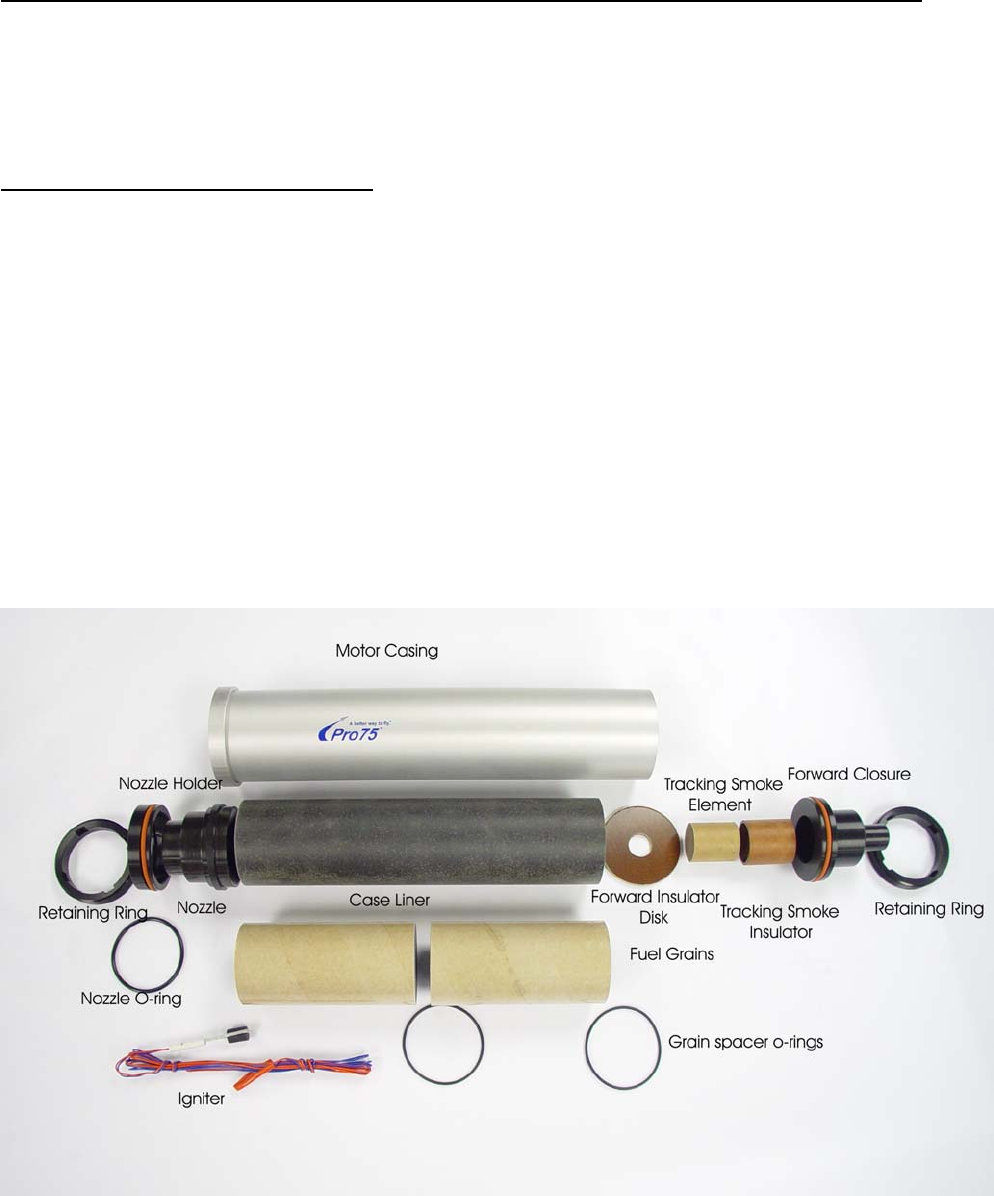
Appropriate size of motor case
Forward closure
Nozzle holder
Threaded retaining rings (2)
Case liner (phenolic tube)
Nozzle
Forward insulator disk
P75-ORK (o-ring kit)
P75-TSI-KIT (smoke tracking grain/insulator & igniter kit)
Propellant grains (check reload kit package for number
and type required for your motor)
Assembly instructions
• Be sure to follow the correct instructions for the brand of motor hardware you are using!
• Step 1 is the same for both brands of hardware.
• All o-rings are pre-lubricated at the factory where required.
• Three o-rings are supplied in the P75-ORK o-ring kits. The two larger o-rings are used with both Pro75®
and RMS™ hardware. The smaller o-ring is only used with Pro75® hardware.
• Do not apply lubricant to the grain spacer o-rings, they are for spacing only.
• Phenolic and phenolic/paper components such as the nozzle and case liner tube are brittle and can be
cracked, broken or otherwise damaged by excessive force or impact. Please be careful during handling
and assembly. If you suspect a part has been damaged in any way, STOP and do not proceed with
assembly and especially firing until inspected and replaced if necessary.
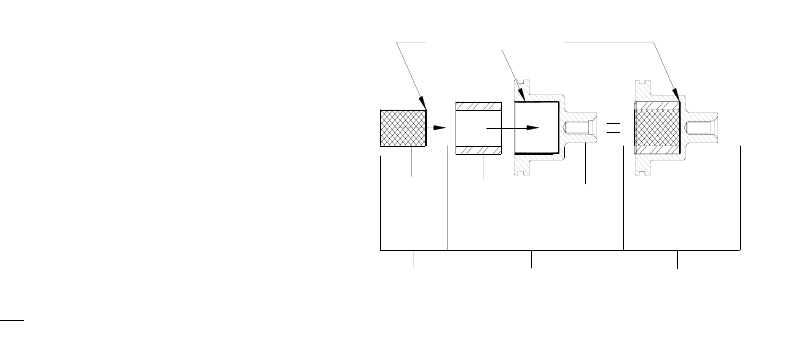
1. Forward Closure Assembly
1.1. Apply a light coating of o-ring lubricant or
grease to the inside of the cavity in the
forward closure. Insert the smoke tracking
charge insulator into this cavity and
ensure it is seated fully.
1.2. Apply a liberal layer of grease or o-ring
lubricant to one end of the smoke tracking
grain. Be sure the entire face is coated.
1.3. Insert the smoke tracking grain into the
smoke tracking charge insulator, coated
end first. Push the grain in with sufficient
force to fully seat it and spread the
lubricant as shown. The excess lubricant
will help prevent gas leakage forward as
well as protecting the forward closure from
heat and combustion products from the
smoke tracking charge.
Smoke
Tracking
Grain
Step 1.2 Step 1.3
Step 1.1
Tracking
Charge
Insulator
Forward
Closure
Lubricant/Grease
You may now proceed to the remainder of the instructions for your brand of motor hardware.
Step 2 is for Pro75® hardware users.
Step 3 is for RMS™ hardware users.
Pro75® Instructions, March 2005 revision
2. Motor Assembly: Pro75® Hardware.
Before proceeding, inspect the external o-ring grooves on the forward closure and nozzle
holder, as well as the internal groove on the nozzle holder. Clean thoroughly if necessary
to remove ALL combustion residue and debris. Also ensure that the inside of the motor
case has been thoroughly cleaned.
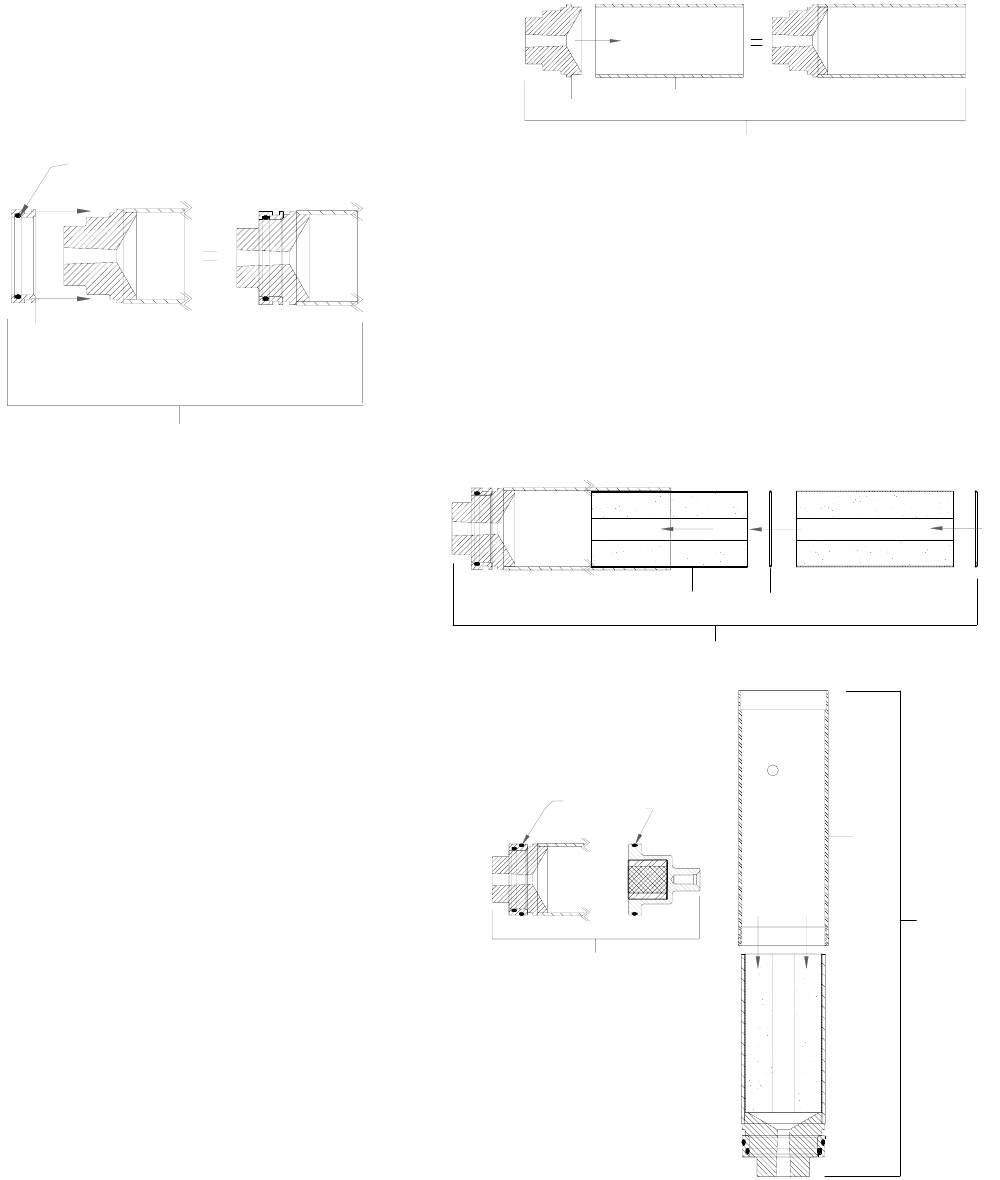
2.1. Check both ends of the phenolic case liner to
ensure that the inside ends have been chamfered or
deburred. If not, use a hobby knife or coarse
sandpaper to remove the sharp inner edge to allow
components to be inserted easily.
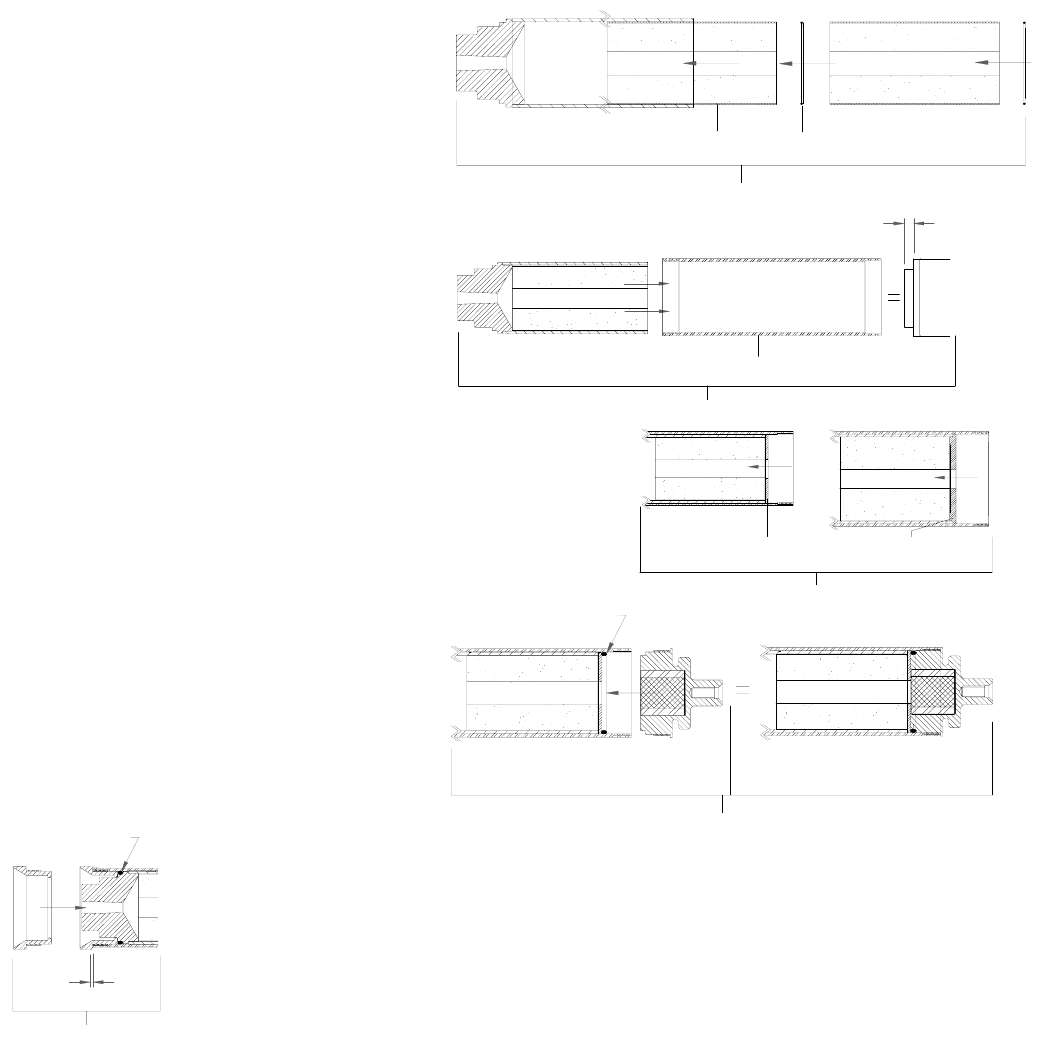
2.2. Fit the nozzle to one end of the paper/phenolic
case liner tube. It may be a snug fit. Push it
carefully but with sufficient force to seat the
shoulder on the nozzle all the way into the
insulator tube.
2.3. Locate the smaller o-ring in the P75-ORK o-ring
kit. Fit the o-ring to the internal groove of the
nozzle holder. Push the nozzle holder over the
nozzle until fully seated. Apply additional lubricant
to the nozzle exit section if necessary to facilitate
assembly.
2.4. For steps 2.5 – 2.6 work with the nozzle/case liner
assembly and motor case horizontally on your
work surface.
2.5. Insert one propellant grain into the forward
end of the case liner and push it a short
way into the tube. Fit one grain spacer o-
ring to the top face of the grain, ensuring it
sits flat on the end of the grain. Insert the
second grain, push it in a short ways, then
add another grain spacer, and so on until
you have loaded all propellant grains into
the case liner.
2.5.1. There should be sufficient space after the last grain is inserted to fit the
last spacer in place so that it is flush or extends only slightly from the
end of the tube. If it extends out by more than 1/3 of its own thickness,
remove it and do not use. Only this spacer may be omitted and only if
necessary to fit.
2.6. Carefully install the two larger o-rings into the
external grooves of the nozzle holder and
forward closure. Handle these components with
care from this point on so as not to damage or
contaminate the o-rings.
2.7. Place the case liner/nozzle assembly on your
work surface with the nozzle end down, and
slide the motor case down rear end first (end
with thrust ring) over the top of the liner towards the nozzle. Note: a light coat
of grease on the liner exterior will aid assembly, disassembly and cleanup!
2.8. Lay the motor case assembly down horizontally, and push on the nozzle ring
until the assembly is far enough inside the case that the threads are partly
exposed and the screw ring can be threaded into the rear of the case. Don’t
push on the nozzle itself as you will push it out of the nozzle holder.
Step 2.7
Pro75 R
Motor
Case
Nozzle Phenolic Case
Liner
Step 2.1 & 2.2
O-ring in
internal groove
Nozzle
Holder
Step 2.3
Grain Grain Spacer
Step 2.5
O-ring in
external groove
Pro75® Instructions, March 2005 revision
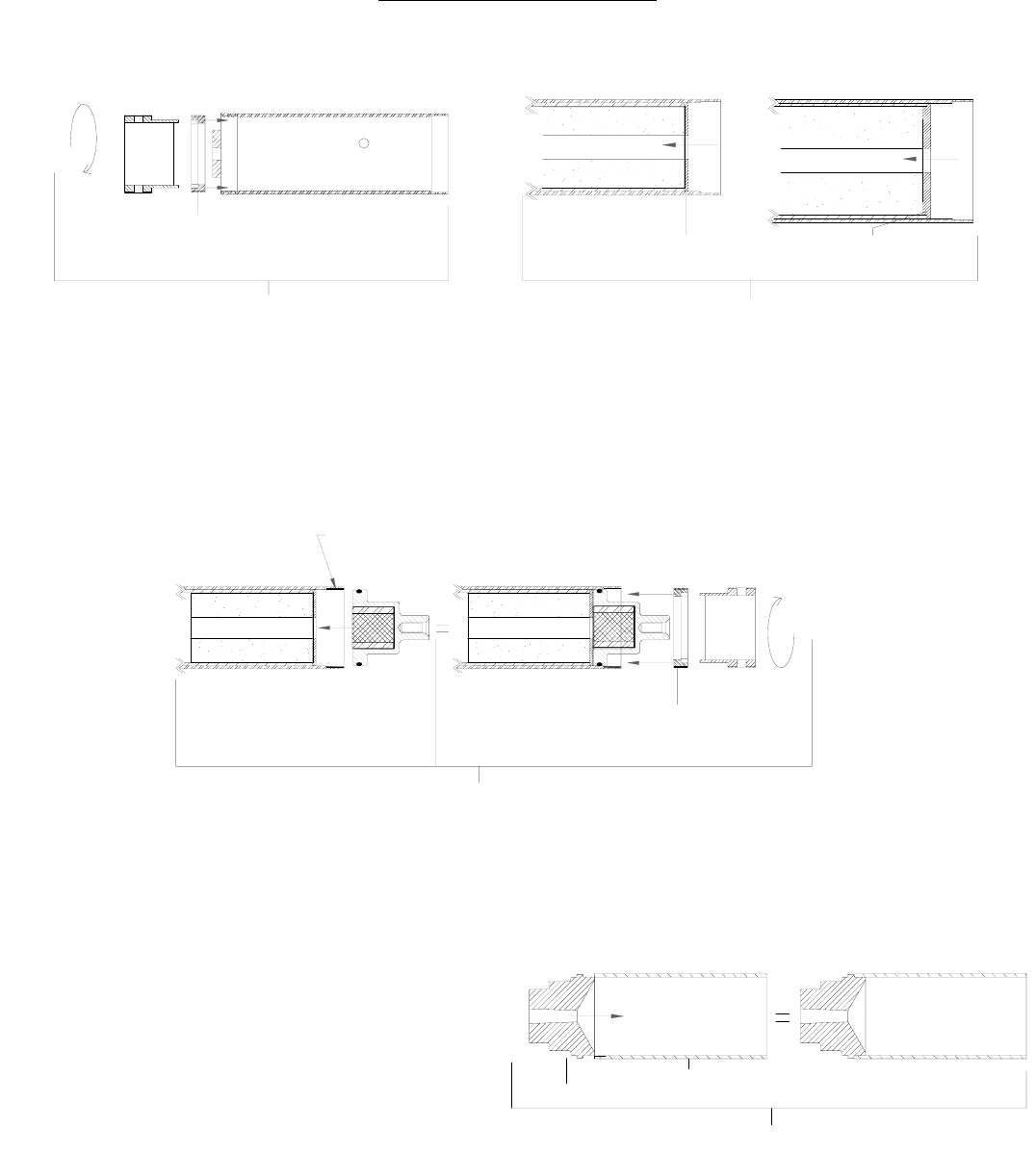
2.9. Screw in the nozzle retaining ring using the supplied wrench, pushing the nozzle/nozzle ring/case
liner assembly forward as you proceed. Screw it in only until the retaining ring is exactly even with
the end of the motor case - do not thread it in as far as it will go. Then, back the retaining ring out
one half of a turn.
2.10. Fit the forward insulating disk to the top of the case liner, checking that the top grain spacer (if
used) is still properly in place.
2.11. Verify that the inside of the motor case is clean ahead of the liner assembly before proceeding. Wipe with a clean rag, tissue
or wet-wipe if required. Apply a light coat of silicone o-ring lubricant onto this area after cleaning.
2.12. Insert the assembled forward closure into the top of the motor case, pushing it down carefully with your fingers until you can
thread in the retaining ring. Thread in the forward retaining ring using the wrench, until you feel it take up a load against the
top of the case liner. At this point the ring should be approximately flush with the end of the motor case, or slightly
submerged. If it extends out the case at this point by more than about one half a turn, check the nozzle end to make sure the
ring is not screwed in too far forward. If so, unscrew the nozzle retaining ring another half turn and screw the forward closure
retainer in further.
NOTE: it is best to have the forward closure retaining ring flush or slightly submerged and the nozzle retaining ring protruding by a
half turn or so, than vice versa. There is more tolerance for o-ring location at the nozzle end. There will always be some minor
variation in the length of internal components due to manufacturing tolerances.
2.13. Skip ahead to Section 4, Preflight preparation.
3. Motor Assembly, RMS™ Hardware.
3.1. Check both ends of the phenolic case liner to ensure
that the inside ends have been chamfered or
deburred. If not, use a hobby knife or coarse
sandpaper to remove the sharp inner edge to allow
components to be inserted easily.
3.2. Fit the nozzle to one end of the paper/phenolic case
liner tube. It may be a snug fit. Push it carefully but
with sufficient force to seat the shoulder on the
nozzle all the way into the insulator tube.
3.3. For steps 3.4 – 3.8 work with the nozzle/case liner assembly and motor case horizontally on your work surface.
Pro75 R
CLOCKWISE
Nozzle
Retaining
Ring
Wrench
Step 2.9
Pro75 Insulating
Disk Pro98 Insulating
Disk
Step 2.10
Lubricant/Grease
Forward
Retaining
Ring
CLOCKWISE
Wrench
Step 2.11 & 2.12
Nozzle Phenolic Case
Liner
Ste
p
3.2
Pro75® Instructions, March 2005 revision
3.4. Insert one propellant grain into the forward end of
the case liner and push it a short way into the tube.
Fit one grain spacer o-ring to the top face of the
grain, ensuring it sits flat on the end of the grain.
Insert the second grain, push it in a short ways,
then add another grain spacer, and so on until you
have loaded all propellant grains into the case liner.
3.4.1. There should be sufficient space after the last
grain is inserted to fit the last spacer in place
so that it is flush or extends only slightly from
the end of the tube. If it extends out by more
than 1/3 of its own thickness, remove it and do
not use. Only this spacer may be omitted and
only if necessary to fit.
3.5. Slide the completed liner/nozzle/grain assembly into
the motor case until the nozzle protrudes about 1/8”
from the end of the case. Note: a light coat of
grease on the liner exterior will aid assembly,
disassembly and cleanup!
3.6. Fit the forward insulating disk to the top of the case liner, checking that the
top grain spacer (if used) is still properly in place.
3.7. Place one of the larger pre-lubricated o-rings from the P75-ORK kit into
the forward end of the case until it is seated against the forward insulator.
3.8. Thread the completed forward closure into the forward end of the motor
case by hand until it is seated against the case.
NOTE: There will be considerable resistance to
threading in the closure in the last 1/8” to 3/16” of
travel, due to compression of the o-ring.
3.9. Hold the motor vertically on your work surface with
the forward closure downwards, and push down on
the nozzle to ensure the liner/nozzle assembly is
seated fully forward.
3.10. Place the other identical o-ring into the groove in the nozzle.
3.11. Thread the aft closure into the motor case until it is seated. It is normal for a small gap (up to
about 1/16”) to remain between the closure and the end of the case, due to manufacturing
tolerances on internal components. Note: There will be considerable resistance to threading
in the closure in the last 1/8” to 3/16” of travel, due to compression of the o-ring.
3.12. Proceed to Section 4, Preflight preparation.
Step 3.4
Grain
Spacer
Grain
Motor
Case
Step 3.5
1/8" (75mm)
1" (98mm)
Step 3.6
75mm Insulating
Disk 98mm Insulating
Disk
Buna o-ring
(Step 3.10)
Step 3.10 & 3.11
MAX
1/16"
Gap
Step 3.7 & 3.8
Buna o-ring
(Step 3.7)
Pro75® Instructions, March 2005 revision
4. Preflight Preparation.
4.1. Prepare the rocket’s recovery system, before motor installation if possible.
4.2. Install the motor in your rocket, ensuring that it is securely mounted with a positive means of retention to prevent it from being
ejected during any phase of the rocket’s flight.
4.3. IMPORTANT: DO NOT INSTALL THE IGNITER IN THE MOTOR UNTIL YOU HAVE THE ROCKET ON THE LAUNCH
PAD, OR IN A SAFE AREA DESIGNATED BY THE RANGE SAFETY OFFICER. Follow all rules and regulations of your
rocketry association, and/or the National Fire Protection Association (NFPA) Code 1127 where applicable.
4.4. Install the supplied igniter, ensuring that it travels forward until it is in contact with the forward closure. Securely retain the
igniter to the motor nozzle with tape, or (if supplied) the plastic cap, routing the wires through one of the vent holes. Ensure
that whatever means you use provides a vent for igniter gases to prevent premature igniter ejection.
4.5. Launch the rocket in accordance with all Federal, State/Provincial, and municipal laws as well as the Safety Code of your
rocketry association, as well as NFPA Code 1127 where applicable.
5. Post Flight Cleanup.
Do not try to dismount or disassemble your motor until it has thoroughly cooled down after firing. Some components such as the
nozzle may be extremely hot for some time after firing.
Perform motor cleanup as soon as possible after firing, however, as combustion residues are corrosive to motor components, and
become very difficult to remove after several hours.
5.1. Unthread and remove the forward and rear closures. Remove the nozzle holder from the nozzle.
5.2. Remove the phenolic tracking smoke charge insulator from the forward closure.
5.3. Remove all o-rings.
5.4. Discard all reload kit components with regular household waste, after they have completely cooled down.
5.5. Use wet wipes, or paper towels or rags dampened with water or vinegar to thoroughly clean all residue, grease etc. off all
hardware components. Pay close attention to internal and external o-ring grooves. A cotton swab or small stick of balsa is an
excellent tool for cleaning these grooves.
5.6. Apply a light coat of grease or o-ring lubricant to all threaded sections and reassemble threaded components for storage.
MEANS OF DISPOSAL: The propellant grains, smoke tracking charge, and the igniter are extremely flammable and burn with an
intense, hot flame. The remainder of the components are inert and may be disposed of with household trash. To destroy the flammable
components, dig a shallow hole in the ground in a remote area, away from any buildings, trees, people, or any other combustibles.
Place the propellant grains and smoke tracking module in the hole. Install the igniter into the core of one of the propellant grains and
secure with tape. Ignite electrically from a minimum distance of 15 meters. Douse any smoldering paper residue and discard. Ensure
that you are not in violation of any local or state regulations for this procedure. If in doubt, contact your local fire department. Please
direct any questions regarding safe disposal to our technical support number on page one of this document.
First Aid: If ingested, induce vomiting. Burns from flames are to be treated as regular burns with normal first aid procedures. In
either case, seek medical attention.
Cesaroni Technology Incorporated (“CTI”) certifies that it has exercised reasonable care in the design and manufacture of its products. We do
not assume any responsibility for product storage, transportation or usage. CTI shall not be held responsible for any personal injury or property
damage resulting from the improper handling, storage or use of their products. The buyer assumes all risks and liabilities and accepts and uses
CTI products on these conditions. No warranty either expressed or implied is made regarding Pro75® products, except for replacement or repair, at
CTI’s option, of those products which are proven to be defective in manufacture within one (1) year from the date of original purchase. For repair
or replacement under this warranty, please contact your point of purchase. Proof of purchase will be required. Your province or state may provide
additional rights not covered by this warranty.
⇒ Check out our web site at http://www.Pro-X.ca for tech tips, FAQ’s, user feedback and photos, or e-mail us at ProX@cesaroni.net
⇒ For technical and warranty inquiries, please contact your Pro75® dealer.
Pro75® is a registered trademark of Cesaroni Technology Incorporated. Patent # US06079202. Other patents pending. Made in Canada.
