SFST Manual
User Manual:
Open the PDF directly: View PDF  .
.
Page Count: 14
SFST Manual
Helmut Schmid
Institute for Natural Language Processing
University of Stuttgart
schmid@ims.uni-stuttgart.de
1 Introduction
The Stuttgart Finite State Transducer (SFST) tools are a collection of software tools for
the generation, manipulation and processing of finite-state automata and transducers. A
finite state transducer (FST) maps strings from one regular language (surface language) onto
strings from another regular language (analysis language). One important application of
FSTs is morphological analysis, where a word form such as translations might be mapped
to the analysis string translate<V>ion<N><pl>. The mapping between surface strings
and analysis strings is reversible. The same transducer can be used to generate (i) analyses
for a surface form (in analysis mode) and (ii) to generate surface forms for an analysis (in
generation mode). The number of generated output strings is non necessarily 1, but can be
anywhere between 0 and infinite.
Other important applications of FSTs are lemmatization, tokenization, lexicon representa-
tion, spell checking, grapheme to phoneme conversion, low-level parsing, and much more.
The SFST tools comprise
•a programming language for the implementation of finite state transducers called “SFST-
PL”
•a compiler for SFST programs called fst-compiler
•a set of tools for applying, printing, and comparing finite state transducers and
•a finite state transducer library written in C++
The implementation of the compiler and the other tools is based on the C++ library. The
following description of the SFST tools assumes some familiarity with finite state transducers.
2 The SFST Programming Language
SFST transducers are specified by means of the SFST programming language. Any regular
expression is already a valid SFST program. An example is the expression:
Hello\ world\!
1
It defines a transducer which maps the string Hello world! onto itself and rejects any other
input. The blank and the exclamation mark have to be quoted with a backslash because un-
quoted blank and tab characters are ignored and unquoted exclamation marks are interpreted
as negation operators.
Because the output of the previous transducer is always identical to its input, it is equivalent
to a finite state automaton. The following expression specifies a real transducer which (in
generation mode) maps a string of a’s, b’s, and c’s to a string where the c’s are unchanged
and the a’s have been replaced with b’s and vice versa. The string abcba, for instance, would
be mapped to bacab.
(a:b | b:a | c:c)*
This expression uses the union operator (|) and Kleene’s star operator (*). The colon op-
erator separates an input symbol and an output symbol. a:b maps the input symbol ato
bin generation mode and bto ain analysis mode. The expression c:c could have been
abbreviated to c.
Note that the analysis level is viewed as the lower level and the surface level as the upper
level in SFST. (Other formalism sometimes visualize the surface as the lower level.)
A less trivial mapping is performed by the following transducer for the inflection of the nouns
foot,house, and mouse:
(house | foot | mouse) <N>:<> <sg>:<> |\
(house<>:s | f o:e o:e t | {mouse}:{mice}) <N>:<> <pl>:<>
Strings which are enclosed in angle brackets (such as <N>,<sg>, and <pl> in the previous
example) are multi-character symbols. They are treated in the same way as single-character
symbols. ’<>’ is a special symbol representing the empty string. The expression ’house<>:s’
therefore maps house to houses (in generation mode). ’fo:eo:et’ specifies a transducer which
maps foot to feet. The expression {mouse}:{mice} is equivalent to m:mo:iu:cs:ee:<> and
maps mouse to mice.
Regular expressions terminate at the end of a line unless the end of the line is quoted with
a backslash. This was the reason for adding a backslash at the end of the first line in the
previous example.
Variables
An SFST program is essentially a regular expression. This expression may be quite com-
plex for transducers which perform sophisticated tasks. Therefore we use variables to build
complex expressions from smaller units. The preceding program, for instance, can be refor-
mulated as follows:
$Nsg$ = house | foot | mouse
$Npl$ = house<>:s | f o:e o:e t | {mouse}:{mice}
$Nsg$ <N>:<> <sg>:<> | $Npl$ <N>:<> <pl>:<>
The first two lines define the variables $Nsg$ and $Npl$. Variable names begin and end with
a dollar sign. The right-hand side of a variable definition is any valid regular expression (see
the next section).
2
There is a second type of variables for character ranges. They start and end with the
symbol ‘#’. The following program defines a variable for lower-case characters, a variable for
upper-case characters and a transducer which maps strings of lower-case characters to the
corresponding strings of upper-case characters (in generation mode).
#LC# = a-z
#UC# = A-Z
[#LC#]:[#UC#]*
SFST programs usually consist of a long sequence of variable definitions followed by a single
expression which specifies the result transducer.
Agreement Variables
Variables whose name starts with the symbol “=” are called agreement variables. They are
treated specially by the compiler: if an expression contains several instances of the same
agreement variable, their values are correlated. Consider the following example program:
$=c$ = [abc]
$=c$ X $=c$
The result transducer for this program maps the strings aXa, bXb, and cXc onto themselves.
Only acyclic transducers (i.e. transducers with a finite set of strings mappings) can be assigned
to agreement variables.
There are also agreement variables for character ranges. The following transducer maps aX
to aXa, bX to bXb, and cX to cXc (in generation mode).
#=c# = abc
[#=c#] X <>:[#=c#]
Basic Regular Expressions
The transducer expressions are defined over a set of symbol pairs. Symbols are specified
in one of the following ways:
•single characters such as ‘A’ or ‘´a’
•quoted characters such as ’\’ or ’\!’
•quoted numbers such as ’\32’ which are translated to the character with the respective
code (’\32’ translates to the blank character.)
•multi-character symbols such as <N> or <k$ln_5> which are enclosed in angle brackets
•the special symbol <> which designates the empty string
3
The following expressions are examples of basic regular expressions:
a:b defines a transducer which maps the symbol ato the symbol b.
ais identical to a:a
a:. maps the symbol ato any symbol bfor which the symbol pair a:b is an
element of the alphabet. (The alphabet is described below.)
.is identical to .:.. The transducer defined by this expression performs any
mapping of a single symbol allowed by the alphabet.
[abc]:[de] is identical to a:d |b:e |c:e (“|” is the or-operator which is introduced below.)
[a-d]:[A-C] is identical to [abcd]:[ABC].
[abc] is a short form of [abc]:[abc].
[ˆabc] maps any symbol other than a, b, or c onto itself. I.e. [ˆabc] is the complement
of [abc] with respect to the alphabet.
{abc}:{de}is identical to a:d b:e c:<> This expression maps abc to de.
$var$ the value of a variable $var$ is the expression which was previously assigned
to it (see below).
Operators
More complex expressions are built by combining transducer expressions with operators.
SFST-PL supports the following set of operators:
rs concatenation
If rmaps the string αto βand smaps γto δ, then rs maps the string αγ to βδ.
r|sor-operator (union, disjunction)
r|smaps αto βiff ror smaps αto β.
r||scomposition
r||smaps αto γiff rmaps αto some βand smaps βto γ.
r&s and-operator (intersection, conjunction)
r&s maps the string a1a2...anto b1b2...bniff both rand smap a1a2...anto b1b2...bn
by aligning aiwith bifor all 1 ≤i≤n.aiand biare either a single character, a
single multi character symbol or the empty symbol <>.
Note: Although a:b and a:<><>:b both map the string ato b, the result of a:b &
(a:<><>:b) is nevertheless empty because the alignment is different.
4

!r Negation (complement)
!r maps the string a1a2...anto b1b2...bniff the alphabet contains ai:bifor all
1≤i≤n, and r&(a1:b1a2:b2...an:bn) is the empty transducer. Either aior biis
allowed to be the empty symbol.
r–l minus (subtraction, difference, relative complement)
l-r is equivalent to l & !r.
r? optionality
identical to <>|r
r* Kleene’s star operator
if rmaps αto β, then r* maps nrepetitions of αto nrepetitions of βfor n= 0,1,2, ....
r+ Kleene’s plus
identical to r r*
ˆr range (extraction of the surface language)
maps βto βiff rmaps some string αto β.
Note: SFST considers the surface language as the upper language and the analysis
language as the lower language!
rdomain (extraction of the analysis/deep language)
maps αto αiff rmaps αto some string β.
ˆ r inversion
maps αto βiff rmaps βto α.
r<<xinsertion
freely inserts the symbol pair xinto the transducer r. The expression ab << <x>,
for instance, is equivalent to <x>*a<x>*b<x>*.
SFST supports two-level rules. However, the syntax differs slightly from that in Koskenniemi
(1983) and multiple contexts are not supported.
l a <=b r obligatorily maps the symbol ato bif lprecedes and rfollows. (Elsewhere,
the mapping of ato bis optional. land rare arbitrary regular expressions.)
This expression is identical to !(.* l (a:. & !a:b) r .*)
Note that the alphabet must contain the pair a:b here.
l a =>b r allows the mapping of symbol ato bonly if lprecedes and rfollows. (The
mapping of ato bis optional in this context.)
The expression is equivalent to !(!(.* l) a:b .* |.* a:b !(r .*))
l a <=>b r maps the symbol ato bif and only if lprecedes and rfollows.
The expression is identical to (l a =>b r) & (l a <=b r)
The single characters aand bin a two-level rule may be replaced by character ranges such as
[a-z¨a¨o¨u]. The left and right context of a two-level rule should be surrounded by parentheses
in order to ensure correct interpretation by the compiler.
5

The SFST formalism comprises replace operators similar to those described in Karttunen
(1995). (Note the two underscores between the left and right context!)
c ˆ–>l r upward replacement
Each substring sof the input string which is in the analysis/deep language
of the transducer cand whose left context is matched by the expression
.*l and whose right context is matched by r.* is mapped to the respective
surface strings defined by transducer c. Any other character is mapped to
the characters specified in the alphabet. The left and right contexts must
be automata (i.e. transducers which map strings onto themselves).
The rule {aa}:{bb} ^-> c__c, for instance, maps the string caacac to
cbbcac in generation mode.
Note that the alphabet must contain the characters aand b, but not the pair
a:b (unless you want wo allow this replacement everywhere in the context).
c –>l r downward replacement
Each substring sof the input string which is in the surface language of cand
whose left context is matched by the expression .*l and whose right context
is matched by r.* is mapped to the respective analysis strings defined by c.
c /–>l r rightward replacement
The left context lmust match the left surface context and the right context
rmust match the right analysis context.
c\–>l r leftward replacement
The left context lmust match the left analysis context and the right context
rmust match the right surface context.
If a replace operator is followed by a question mark (?), the replacement becomes optional.
Note that replace operations (unlike the two-level rules) can only be combined by composition
and not by intersection!
Furthermore, the SFST tools support some of the restriction and coercion operators defined
in Yli-Jyr¨a and Koskenniemi (2004). These operators can also be used with multiple contexts
which are separated by commas.
c=>l r restriction operator
This operator allows any (substring) mapping defined by the transducer c
only if it occurs in the context land r. Symbols outside of the matching
substrings are mapped to any symbol allowed by the alphabet.
c<=l r coercion operator
This operator requires that one of the mappings defined by the transducer
cmust occur in each context land r.
c<=>l r restriction and coercion
This operator is equivalent to the intersection c => l__r & c <= l__r
and requires that the mappings defined by coccur always and only in the
given contexts.
c ˆ=>l r surface restriction operator
This operator specifies that a string from the analysis language of the
transducer cmay only be mapped to one of its surface strings (according
to transducer c) if it appears in the context land r.
c ˆ<=l r surface coercion operator
This operator specifies that a string from the source language of the trans-
ducer calways has to the mapped to one of its target strings according to
transducer cif it appears in some context land r.
6
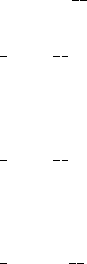
c ˆ<=>l r surface restriction and coercion
equivalent to the intersection c ^=> l__r & c ^<= l__r.
c=>l r deep restriction operator
This operator specifies that a string from the target language of the trans-
ducer cmay only be mapped (in analysis direction) to one of its source
strings (according to transducer c) if it appears in the context land r.
c<=l r deep coercion operator
This operator specifies that a string from the target language of the trans-
ducer calways has to the mapped to one of its source strings according to
transducer cif it appears in the context land r.
c<=>l r deep restriction and coercion
equivalent to the intersection c \_=> l__r & c \_<= l__r.
Finally, there are two commands which create transducers from files and one command which
writes intermediate transducers to a file.
”file” lexicon reader
reads a text file named file and returns the union of the lines of
the file (see below). Whitespace at the end of the line is ignored
unless it is quoted.
”<file>”transducer reader
reads a precompiled transducer from a binary file named file and
returns it (see below).
t>> ”file” output operator
writes the transducer “t” to the file named file.tis any valid
transducer expression.
The Alphabet
The alphabet contains a set of symbol pairs which is required for the interpretation of the
wildcard symbol ’.’. The following SFST program e.g. defines a transducer which maps a
sequence of letters to the same sequence of letters, but with lower-case letters replaced by
upper-case characters (in generation mode):
ALPHABET = [A-Z] [a-z]:[A-Z]
.*
The first line defines the alphabet. The right-hand side of this assignment is a transducer
expression. The set of symbol pairs is obtained by (i) compiling the expression to a transducer
and (ii) extracting the symbol pairs from all state transitions of the transducer.
The definition of an alphabet is also required by the negation operator, the two-level rules,
and Yli-Jyr¨a’s coercion and restriction operators.
Comments
Comments in SFST programs start with a percent character (%) and extend up to the end
of the line. The following lines of code return the expression abc.
7
% This is a comment
abc % This is another comment
% This comment also extends up to the end of the line % cde
Lexica
The lexicon entries of morphological analyzers are usually stored in a separate file, one entry
per line. SFST-PL provides the operator "lexicon" to read lexicon entries from a file called
lexicon. The result of the operator is a union of all the lines from the file. If the file lexicon
contains the following entries
house
mouse
foot
then the result of the operator "lexicon" is the expression house|mouse|foot. The file
reader treats all characters literally except for :, \, and angle brackets which are part of a
multi-character symbol. Blanks and tab characters are deleted at the end of a lexicon line
because such whitespace is usually added unintentionally.
Include Command
Complex computer programs are usually stored in a set of files rather than a single file, and
the compiler combines these files to a single program. The same can be done with SFST
programs. The command #include "file.fst" instructs the compiler to insert the contents
of the file file.fst at the current position.
SFST programs create complex transducers by combining simpler transducers. If the com-
pilation of some component transducer is expensive and the respective source code is seldom
modified, it is useful to pre-compile this transducer. To this end, a separate SFST program
has to be written which implements the component transducer. This program is compiled
and the resulting transducer is stored e.g. in a file named inc.a. The main program reads
the precompiled transducer with the command "<inc.a>".
A Simple Example
The following very simple example shows the implementation of an inflectional component
for English adjectives such as easy,late, or dark. It will correctly analyze forms such as
easier,latest, or darkest and produce the analyses easy<ADJ><comp>,late<ADJ><sup>, and
dark<ADJ><sup>.
% Define the set of valid symbol pairs for the two-level rules.
% The symbol # is used to mark the boundary between the stem and
% the inflectional suffix. It is deleted here.
ALPHABET = [A-Za-z] y:i [e\#]:<>
% Read the lexical items from a separate file
% each line of which contains a form like "dark"
8

$WORDS$ = "adj"
% Define a rule which replaces y with i
% if a morpheme boundary and an e follows
% easy#er -> easier
$R1$ = y<=>i (\#:<> e)
% Define a rule which eliminates e before "#e"
% late#er -> later
$R2$ = e<=><> (\#:<> e)
% Compute the intersection of the two rule transducers
$R$ = $R1$ & $R2$
% Define a transducer for the inflectional endings
$INFL$ = <ADJ>:<> (<pos>:<> | <comp>:{er} | <sup>:{est})
% Concatenate the lexical forms and the inflectional endings and
% put a morpheme boundary in between which is not printed in the analysis
$S$ = $WORDS$ <>:\# $INFL$
% Apply the two level rules
% The result transducer is stored in the output file
$S$ || $R$
3 Compilation
The SFST compiler translates the SFST source code to a minimized1transducer which is
stored in the output file. The compiler is quite efficient and was successfully used to compile
SMOR, a large German computational morphology.
The SFST tools support three different transducer formats which are optimized for flexibility,
processing speed and start-up time/memory efficiency, respectively. The implementation of
the SFST tools is based on a C++ class library which facilitates the development of new
analysis tools.
4 Unicode
SFST supports UTF8 encoding or characters. In order to compile an SFST program with
UTF8 encoding, you have to use the fst-compiler-utf8 rather than the fst-compiler program.
Both compilers store the type of encoding (8-Bit ASCII extension vs. UTF8) in the transducer
file. Other programs such as fst-infl or fst-mor are therefore able to determine the appropriate
character encoding.
1The minimization will not change the alignment between surface and analysis symbols. Therefore smaller
transducers with different alignments may exist.
9
5 Usage of the SFST Programs
The command fst-compiler ex.fst ex.a compiles the program stored in the file ex.fst
into a transducer which is written to the file ex.a.
The command fst-mor ex.a reads the transducer from the file and prompts the user to
enter words. Entering an empty line will switch fst-mor into generation mode. Entering
another empty line will turn on the analysis mode, again. Entering qterminates the session.
Here is a sample session:
> fst-compiler ex.fst ex.a
> fst-mor ex.a
reading transducer...
finished.
analyze> easy
easy<ADJ><pos>
analyze> easier
easy<ADJ><comp>
analyze> easiest
easy<ADJ><sup>
analyze>
generate> easy<ADJ><sup>
easiest
generate> q
fst-infl is a similar tool for batch mode analysis. It is used in one of the following ways:
> fst-infl ex.a file
> echo easiest | fst-infl ex.a
fst-infl has no generation mode. In order to use fst-infl for generation, you should
compile the transducer using the option -s which tells the compiler to switch the surface and
analysis symbols of the resulting transducer. fst-infl processes the input by converting
each line into an automaton, composing the transducer with this automaton, extracting the
domain of the resulting transducer and printing all strings generated by this automaton.
fst-infl2 has the same functionality as fst-infl, but uses a more compact binary trans-
ducer format and a different analysis algorithm (traversal of the transducer with backtrack-
ing) which is more efficient if the degree of ambiguity is low. Use the compiler option -c or
the separate program called fst-compact in order to generate the compact transducer format
required by fst-infl2.
fst-infl3 is the third member of the fst-infl family which supports the “lowmem” transducer
format generated either by the compiler switch -l or by the separate conversion program fst-
lowmem. fst-infl3 avoids reading the transducer into memory by directly accessing it on disc.
This program start very quickly but processing is slower than with the other programs.
If you need information about the available options of one of the tools, just call it with the
option -h or have a look at the man pages.
10

5.1 Other Tools
The command fst-print prints transducers in text form. fst-compare checks whether two
transducers are equivalent. fst-generate enumerates the set of mappings of analysis to
surface forms for the argument transducer.
fst-match is similar to fst-infl2 but treats the input as a sequence of words that are to
be analyzed, rather than a single word. fst-match repeatedly determines the longest prefix
of the input which can be analyzed by the transducer, returns the respective analysis2and
continues processing after the match.
fst-parse is able to compose several transducers at runtime. It converts the input into an
automaton, composes the first argument transducer with it and then composes the second
argument transducer with the result of the first composition and so on. Finally the analysis
layer is extracted and the output is generated. fst-parse is typically used when the com-
position of two transducers cannot be computed offline. The transducer resulting from the
composition of a two-level morphology and a finite-state grammar e.g. is usually too big to
be computed with the compiler. The result of composing the input sentence with the mor-
phological analyzer, on the other hand, is small enough to be composed with the transducer
of the finite state grammar.
fst-text2bin converts transducers from text form to binary format. The two commands
fst-print transducer.a > transducer.txt and fst-text2bin transducer.txt > transducer2.a
should produce a transducer transducer2.a which is equivalent to (but not necessarily iden-
tical with) transducer.a.
Finally, there is a tool called fst-infl2-daemon which creates a daemon which communicates
with application programs via sockets. It is used analogously to fst-infl2 but reads and
writes from/to a socket. The Perl script socket-client.pl in the directory src is an
example application which communicates with fst-infl2-daemon:
> fst-infl2-daemon 7100 /corpora/mlex/smor.ca &
> echo "schlief" | ./socket-client.pl
> schlief
schlafen<+V><1><Sg><Past><Ind>
schlafen<+V><3><Sg><Past><Ind>
See the man pages for more information on all these commands.
5.2 Tricks
The compiler prints the name of the file and the line number that it is currently processing.
It issues a warning when an empty transducer is assigned to a variable.
If some intermediate transducer is rarely changed and its compilation takes a long time, then
it is a good idea to compile it separately and to include it in the main file by means of the
"<file>" command.
During debugging, it can be useful to write intermediate results of the compilation to a file,
e.g. by using the command x >> "file" which stores the transducer x in a file named file.
fst-print,fst-generate, and fst-mor can be used to examine the transducer.
2If there is more than one mapping for the longest match, only one of them is printed.
11
5.3 Caveats
SFST operations sometimes produce other results than the user might have expected. This
section discusses some typical examples.
Problems with Negation
Consider the following SFST program
ALPHABET = [a-z]
!(x)
One might expect that this transducer fails to analyze the string abx. But this is not the
case. It only rejects the string xbut accepts any other letter sequence.
Here is another example:
ALPHABET = a a:b a:<> b b:a b:<> <>:a <>:b
!{ab}:{ba}
Does this transducer generate the string ba from ab? Yes, it does! There are several ways
in which the above transducer can map the string ab to ba, one of them consisting of the
steps (i) mapping of ato the empty symbol (ii) mapping of b onto itself, and (iii) insertion
of aafter b. The crucial point is that the negation operation here disallows one particular
mapping of the analysis string to the surface string, but still allows many others which are
equivalent.
(The above transducer generates an infinite number of different surface forms for the string
ab. Therefore you will get an error message if you try to actually generate from the string
ab.)
Conjunction of Replace Rules
Now, consider this example:
ALPHABET = a b c
$Rule1$ = (a:b+) ^-> (b__b)
$Rule2$ = (a:c+) ^-> (c__c)
$Rule1$ & $Rule2$
The first rule generates bbb from bab and the second rules generates ccc from cac. It might be
expected that the conjunction of the two rules performs both mappings. This is not the case,
however. The transducer for the first rule maps bab to bbb, but cac to cac. The conjunction
of the two rules therefore fails to generate from the string cac and similarly from the string
bab.
In order to obtain the intended mapping for both strings, the two rules have to be combined
by composition rather than conjunction.
12
Insertion With Replace Rules
Replace rules are used to exchange a string in a certain context for another string. The
following rule maps an ain between two b’s to c.
ALPHABET = a b c
a:c ^-> (b__b)
It might be expected that a similar replace rule could be used to insert a string in a certain
context:
ALPHABET = a b c
<>:c ^-> (b__b)
This will not work! The replace operation is unable to replace the empty string. A slightly
different rule will do the job, however:
ALPHABET = a b c
b:{bc} ^-> (__b)
5.4 Compilation Efficiency
Sometimes intermediate transducers generated by the compiler are much bigger than the final
transducer and the compilation becomes slow. In such cases, it often helps to change the
order in which the final transducer is built. Assume for instance that you have a sequence of
10 phonological rules which are stored in the variables $rule1$ up to $rule10$. These rules
are applied to a set of wordforms stored in variable $lexicon$ by a sequence of composition
operations. This can be done as follows:
$lexicon$ || $rule1$ || $rule2$ || ... || $rule10$
This command will compose $lexicon$ and $rule1$. Then it composes the result with
$rule2$ and so on. At the end, the transducer is minimised. The following sequence of
commands does basically the same but minimises after each composition operation:
$tmp$ = $lexicon$ || $rule1$
$tmp$ = $tmp$ || $rule2$
...
$tmp$ = $tmp$ || $rule9$
$tmp$ || $rule10$
It is also possible to first compile all rules into a single transducer which is then applied to
the wordforms.
$rules$ = $rule1$ || $rule2$ || ... || $rule10$
$lexicon$ || $rules$
The rules can also be applied in chunks:
13
$rulesA$ = $rule1$ || $rule2$ || $rule3$
$rulesB$ = $rule4$ || $rule5$ || $rule6$
$rulesC$ = $rule7$ || $rule8$ || $rule9$ || $rule10$
$tmp$ = $lexicon$ || $rulesA$
$tmp$ = $tmp$ || $rulesB$
$tmp$ || $rulesC$
The result transducer is always the same. Which version is most efficient depends on the
circumstances. If all the rules can easily be compiled into a single transducer (version 3
above), this is often a good choice because the rules transducer can be precompiled and
stored in a file. If the rules transducer gets too big, it is better to use version 4 where the
rules are applied in chunks. Again the chunks can be precompiled and stored in files.
References
Karttunen, L. (1995). The replace operator. In Proceedings of the 33rd Annual Meeting of
the Association for Computational Linguistics (ACL), pages 16–23, Cambridge, Mass.
Koskenniemi, K. (1983). Two-Level Morphology: A General Computational Model for Word-
Form Recognition and Production. PhD thesis, University of Helsinki.
Yli-Jyr¨a, A. M. and Koskenniemi, K. (2004). Compiling contextual restrictions on strings
into finite-state automata. In Cleophas, L. and Watson, B. W., editors, Proceedings of the
Eindhoven FASTAR Days, volume 04 of Computer Science Reports, Eindhoven, Nether-
lands. Technische Universiteit Eindhoven.
14
