Safety Manual
User Manual:
Open the PDF directly: View PDF  .
.
Page Count: 28

MARCH, 2018
FREE FOR CIRCULATION IN FRC
6024
S A F E T Y | C O M E S | F I R S T
MARCH 2018
ISSUE No.: 01 FREE

Safety Is Everyone’s Responsibility
We endeavour to provide a wonderful
experience to all our team members, mentors,
parents, visitors by providing them with a very
safe, clean and well organised work spaces.
To achieve this, we will adopt the best
operational practices, safety training and
personal protective equipment.
We will strive to make everyone more
responsible and accountable for Safety.
“Safety doesn’t happen by accident!
It is always the result of intelligent and
sustained effort!!!”

"Safety doesn't happen by accident"
TABLE OF CONTENTS
S A F E T Y | C O M E S | F I R S T
Subject Page
General Safety Procedures 7
Standard Operating Procedures 8-10
Emergency Procedures 11
Housekeeping and 5S Technique 12
Inventory Management - Bin System 13-14
Safety Awareness and Implementation 15-16
Handling and Disposal of Hazardous Waste 17
Material Safety Data Sheets 18-19
Kaizen 20-23
PIT Management 24
The Safety Team 25

7
S A F E T Y | C O M E S | F I R S T
R - FACTOR frc team 6024
"Safety doesn't happen by accident"
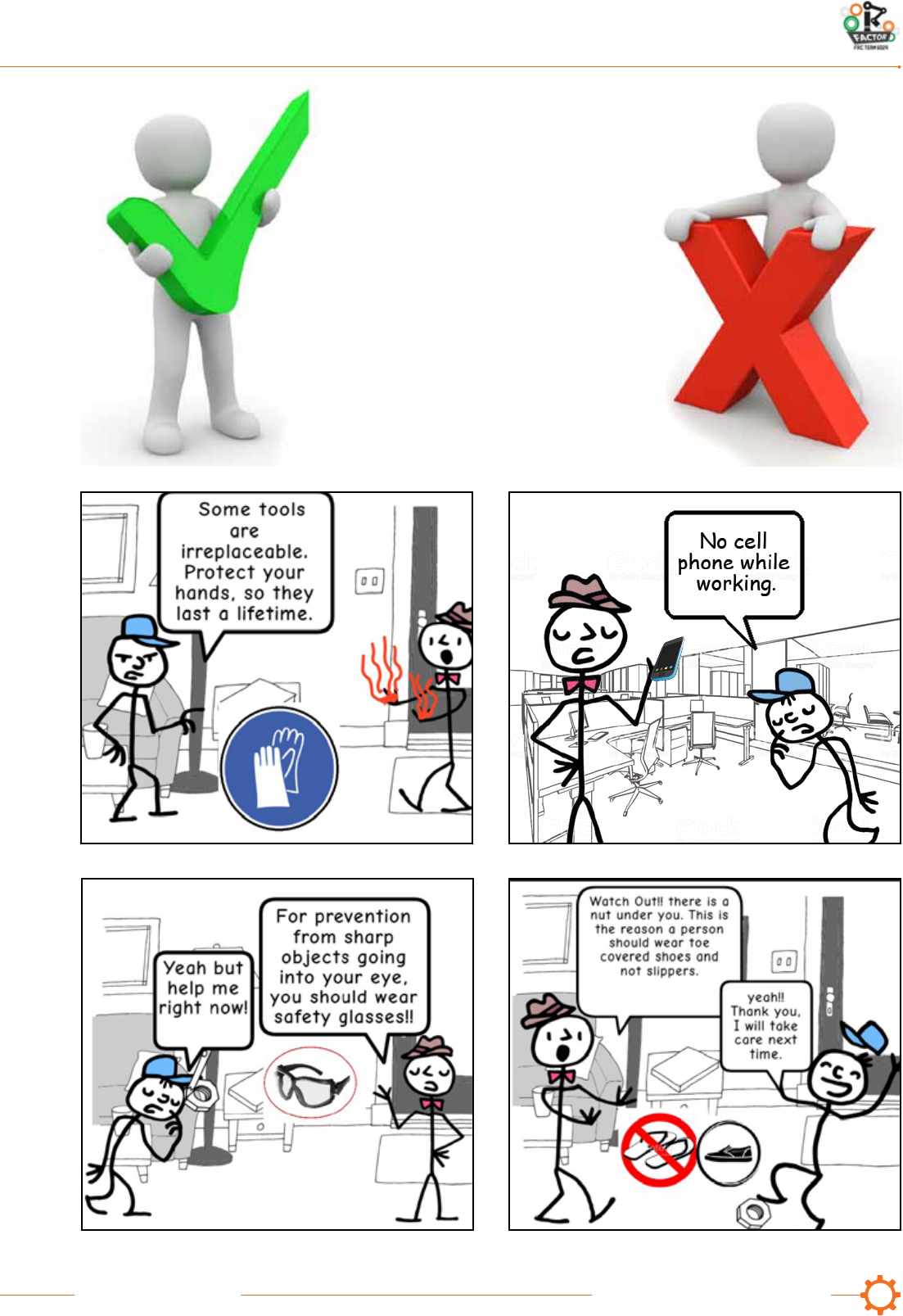
General Safety Procedures
In competitions like FRC,
where countless loose parts
are used, you can easily hurt
yourself if you aren’t careful.
Nevertheless, accidents can be
reduced - if not prevented -
if team members are fully
aware of their surroundings and
knowledged in knowing how to
react to any given incident.
8S A F E T Y | C O M E S | F I R S T R - FactoR frc team 6024
"Safety doesn't happen by accident"
Standard Operating Procedures
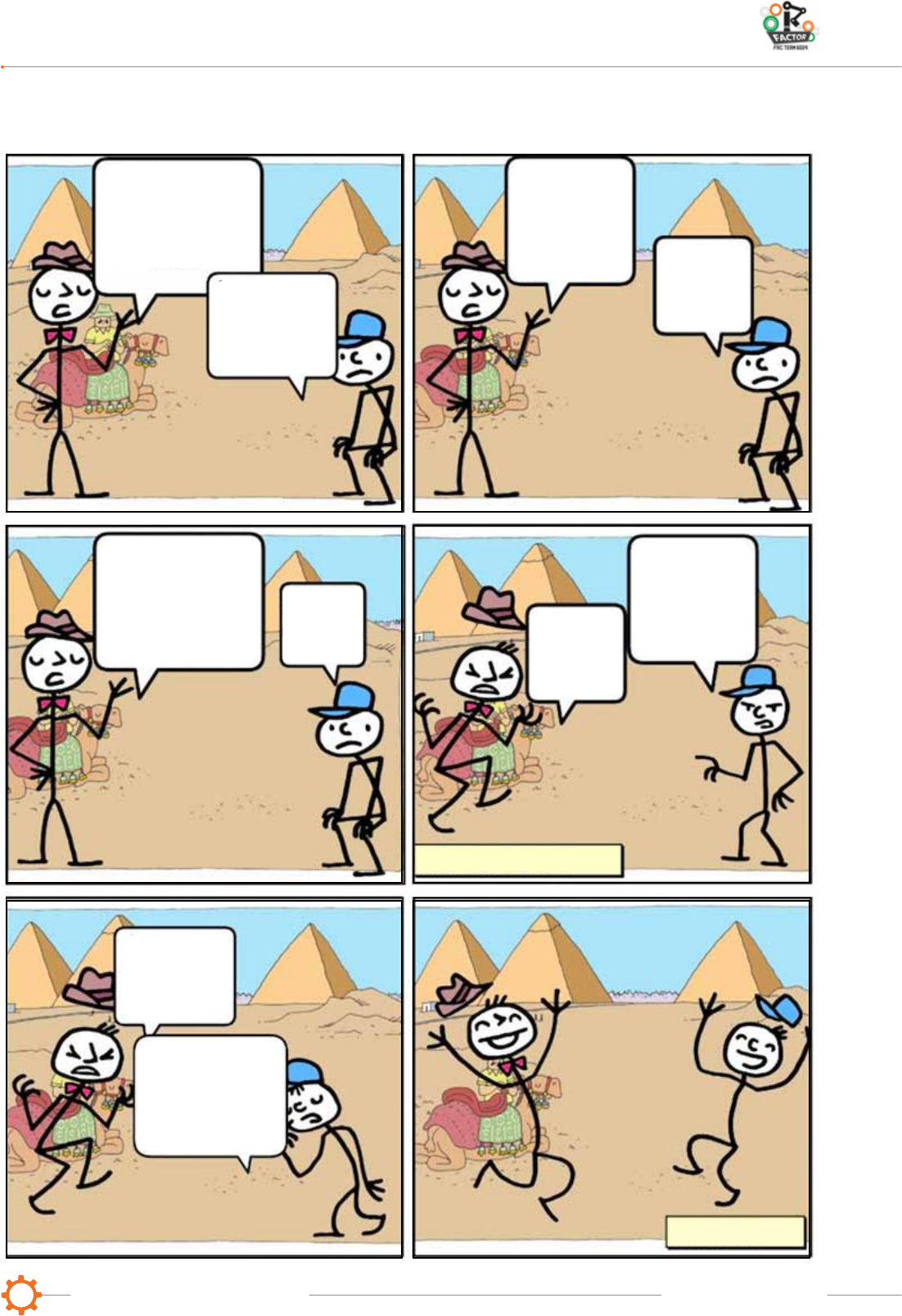
LOOK HOW THE STICK FIGURES WERE HAPPY IN THE END, THAT’S HOW HAPPY YOU WILL
BE WHEN YOU DON’T CUT YOUR HAND OR DRILL INTO YOUR PALM…
Firstly, while drilling
the hole, you should
make sure that the
drill is perpendicular
to the hole you are
drilling and wear
gloves.
While drilling
the hole, the
drill went into my
hand somehow.
I was trying
to pick up the
robot, I don’t
know what
happened??
What
happened
to you
today??
I was
trying
to drill a
hole.
THE END...
THE NEXT DAY...
Ohh!! I
will take
care next
time
What happened to
you?? Why is your
back always bent
like this??
You...lifted it
with your back
You shouldn’t
have done that!!
Always lift with
your knees.
I know
what
happened!!
What??

9
S A F E T Y | C O M E S | F I R S T
R - FactoR frc team 6024
"Safety doesn't happen by accident"
Standard Operating Procedures
These tips would help
you a lot, believe me:
Drilling
Always wear safety gear (safety goggles, safety gloves etc.)
Keep the drill on the correct mode (Forward direction)
Keep the drill exactly perpendicular to the object being drilled
Use the correct sized bit for a particular hole
Lifting
Always keep your back straight
Bend your knees, not your back
Pick up from non-harmful places (not from sharp edges)
Use appropriate safety gear
Bolting
Keep the driver exactly
perpendicular to the the
object being screwed in
Keep it on max torque only
when needed
Keep the driver on the
correct mode (forward
direction)
Cutting
Keep the power off while
clamping the wood, metal
or polycarbonate sheets
Clamp it only according
to the marking or longer,
because if it’s small then
you can’t make it longer
Clamp it tightly so that the
piece doesn’t fly off
Keep the other size held
with the correct size
spanner if needed
Use the correct sized bit
for a particular screw
Use appropriate safety
gear (safety goggles,
safety gloves, etc.)
Be on the front and on the
side of the cutter so that
no shards fly towards you
Always keep the lid down
Use appropriate safety
gear (safety goggles,
safety gloves, etc.)
10 S A F E T Y | C O M E S | F I R S T R - FactoR frc team 6024
"Safety doesn't happen by accident"
Standard Operating Procedures
When working with energy:
1. You should wear and use necessary personnel
protective devices.
2. The wearing of appropriate eye protection
equipment is mandatory for team personnel when
operating pneumatic tools.
3. Pneumatic tools should be laid down in such a
manner that no harm can be done if the switch is
accidently tripped.
4. Pneumatic tools and air-lines may be fitted with
quick-disconnect fittings. These should incorporate
an automatic excess-flow shut off valve. This valve
automatically shuts off the air at the air-lines before
changing grinding wheels, needles, chisels, or other
cutting or drilling bits.
1. DO ask grown-ups to put safety caps on all unused
electrical outlets. Covering outlets will also help save
energy by stopping cold drafts.
2. DO make sure all electric cords are tucked away, neat
and tidy. To keep it organised and to get to know
which wire is what motor.
3. DO ask a coach or the captain for help when you need
to use something that uses electricity.
4. DO keep electrical stuff far away from water. Most
electrical accidents around the workplace happen
when people use electricity near water.
1. DON’T fly a kite near power lines. The kite and the
string may conduct electricity – sending it right
through you to the ground.(Ask Ben Franklin)
2. DON’T yank an electrical cord from the wall. Pulling
on a cord can damage the appliance, the plug or the
outlet.
3. DON’T plug a bunch of stuff into one outlet or
extension cord. It could damage the electrical system
in the factory or even cause a fire.
Do’s
Do’s
Don’ts
Don’ts
Electric Energy
Pneumatic Energy
1. Pneumatic tools shall not be connected to, or driven
by air pressure in excess of that for which the tools
are designed.
2. No idle tools should be left in a standing position.
3. Pneumatic tools should not be kept in bad operating
condition. They should be thoroughly inspected at
regular intervals with particular attention given to the
ON-OFF control valve trigger guard (if installed), hose
connections, guide clips on hammers, and the chucks
of reamers and drills.
11
S A F E T Y | C O M E S | F I R S T
R - FactoR frc team 6024
"Safety doesn't happen by accident"
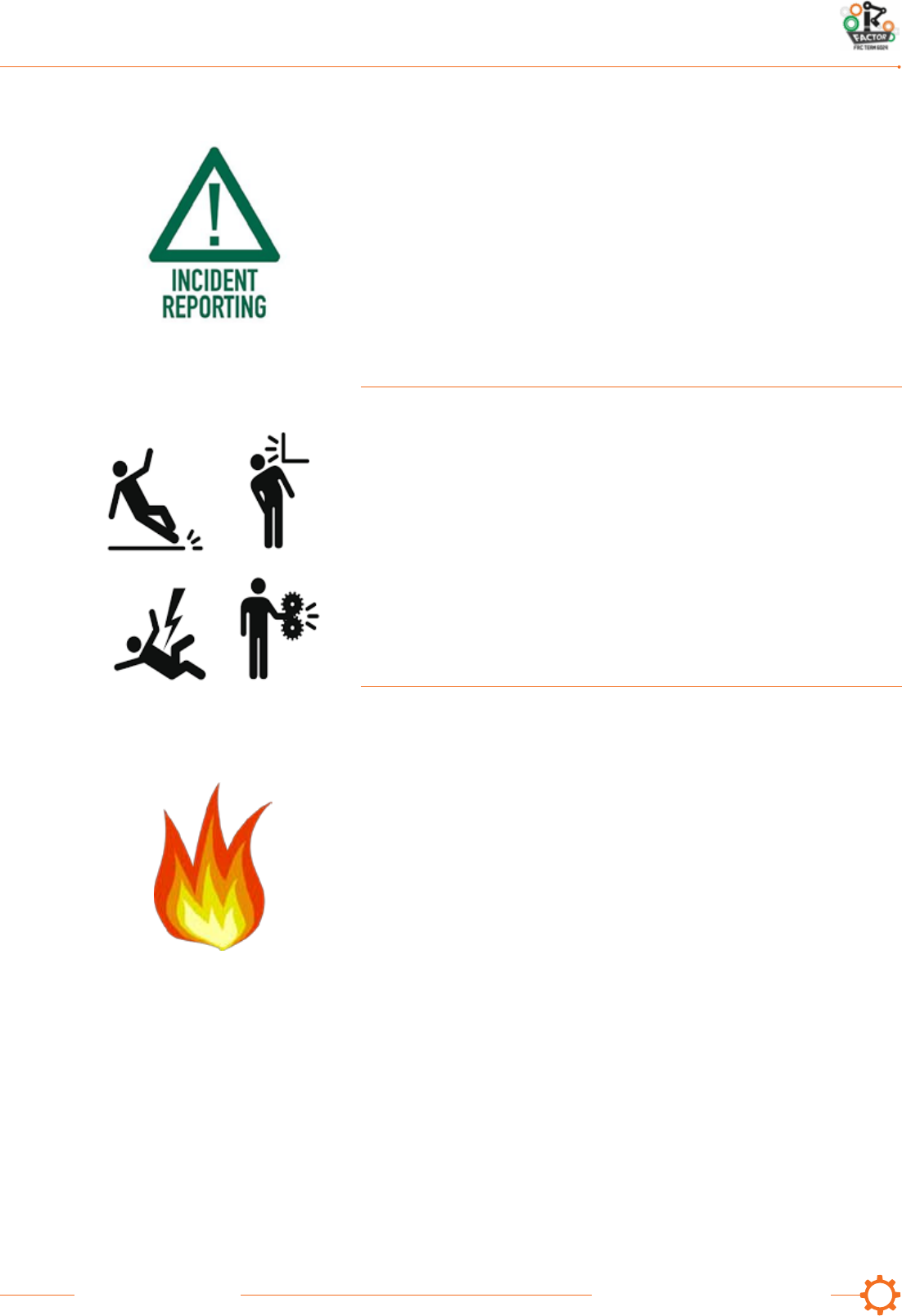
Emergency Procedures
Procedures to be followed:
In case of an incident
1. Attend to the incident
2. Assess whether incident needs emergency procedures to be activated
3. Attend to the situation / tool that has caused the incident
4. Follow the SOP for the situation
In case of an accident
1. Safety first, so get the FIRST AID KIT
2. Incase of grievous injury, contact the following:
Police - 100
Fire - 101
Cooper Hospital - 22 2620 7254
In case of a fire
1. Pull the alarm trigger
2. Inform everyone
3. Follow the walkway / pathway and assemble at the assembly point
4. Contact the following emergency numbers:
Police - 100
Fire - 101
Cooper Hospital - 22 2620 7254

12 S A F E T Y | C O M E S | F I R S T R - FactoR frc team 6024
"Safety doesn't happen by accident"
Housekeeping and 5S Technique
5S Methodology
Establish orderly flow
Eliminate waste
Organize the workplace
SUSTAIN
Ongoing application of
knowledge, skills, and
abilities gained from the
5S process in order to
improve organizational
wide eectiveness.
SORT
Divide items in the
workplace into 3
categories: Retain,
return and rid.
SET IN ORDER
Find a place for
everything and put
everything its place.
Organizing, arranging
and storing material,
equipment and
information.
SHINE
Cleaning the workplace
and maintaining its
appearance daily.
Try establishing
preventative measures
to produce ongoing
cleanliness.
STANDARDIZE
Maintain and make the
“SORT”, “SET in ORDER”,
and “SHINE” habitual 5S
becomes a part of the
regular work routine.
i. Sort - To make sure that all waste
is disposed of properly, we have
separate bins so that at the end
of the day, each type of waste will
be safely disposed.
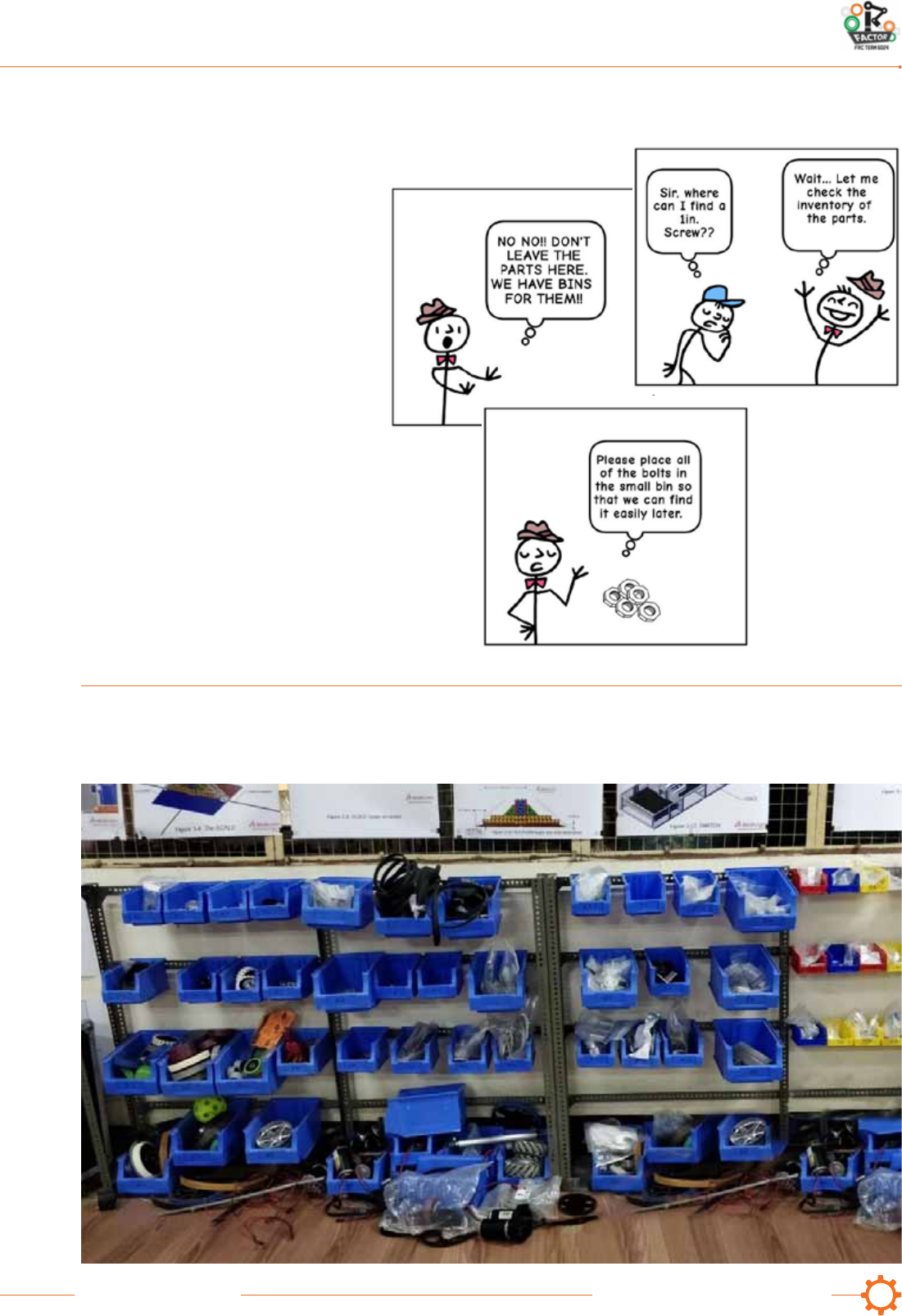
ii. Set in Order- We have separated
and sorted all our pieces
according to their types in
different bins which are colored
and labelled appropriately so
that we can keep track of all our
parts in an efficient manner.
iii. Shine - We make sure that our
workplace is clean everyday and
all the waste material is disposed
of properly. This allows us to
work well.
iv. Standardize - We have a set of
standardized rules to ensure that
discipline and safety are the top
priority.
For example, we have made
a register to mark everyone
everyday, if someone comes
with open shoes or shorts, they
will be marked on the register and
they will do some task that does
not include the robot for that day
so that we can avoid injuries and
accidents. Everyone also has to
wear all safety equipment while
working on or being around the
robot.
v. Sustain - By adopting the above
practices, we are able to ensure
sustainability.
HOW DO WE MAKE SURE SURE THAT ALL THIS HAPPENS?
13
S A F E T Y | C O M E S | F I R S T
R - FactoR frc team 6024
"Safety doesn't happen by accident"
TO EXECUTE THIS EASILY, ALL PARTS HAVE BEEN PUT IN DIFFERENT BINS WITH NUMBERS
SO THAT ONE CAN FIND EVERY PART EFFORTLESSLY WHEN THEY NEED IT. WE HAVE BINS
OF DIFFERENT SIZES FOR DIFFERENT KIND AND QUANTITIES OF PARTS.
Inventory Management - BIN System
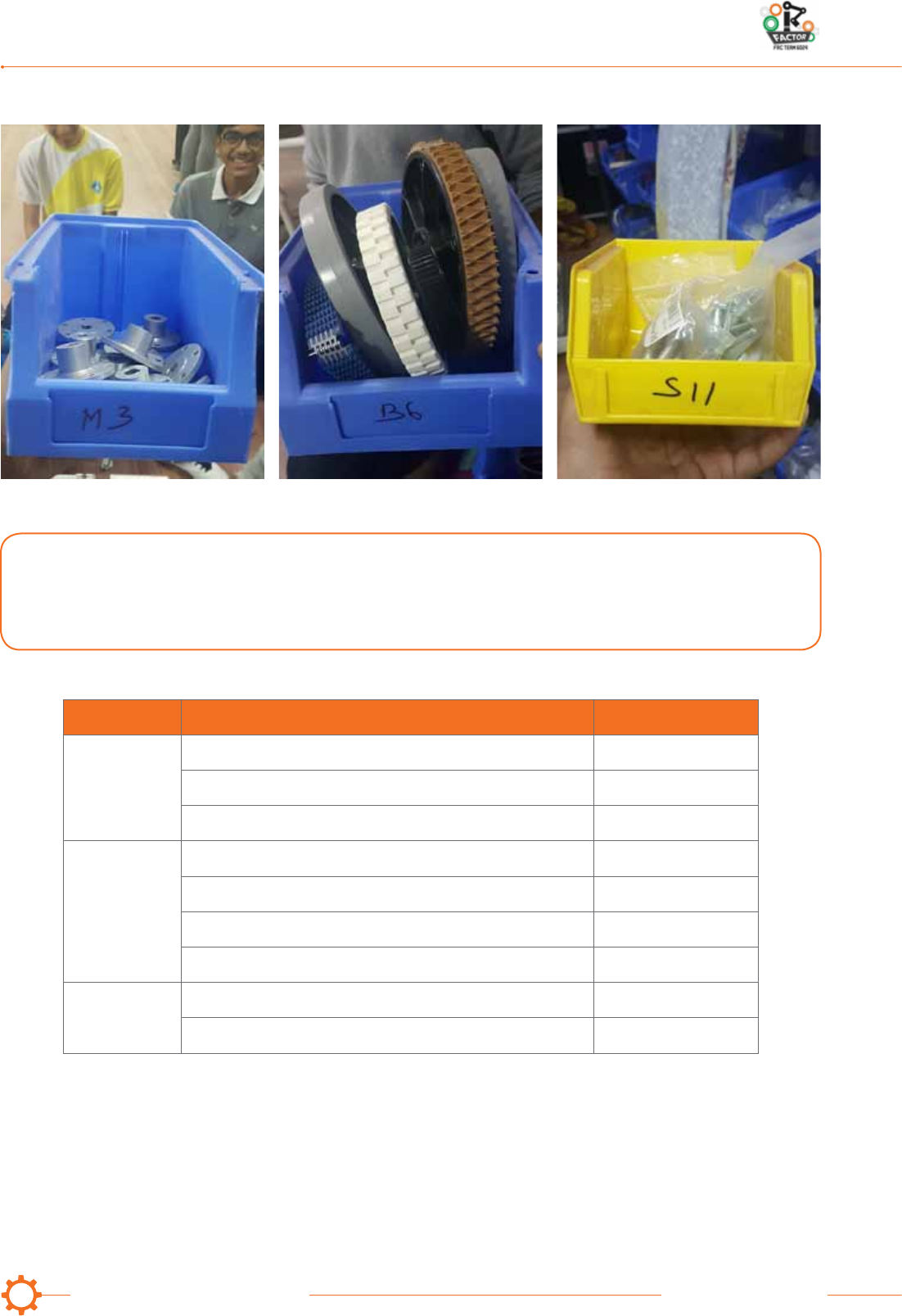
To manage the inventory of our
resources efficiently, effectively and
conveniently we use a “BIN System” as
follows:
1. Every part / component is classified
based on it’s function / use
2. All parts falling under similar use are
classified as one category. Many such
categories are defined. For example:
3. “Wheels”, “Nuts, Bolts, Screws”,
“Flanges & Hubs”, “DC Motors”,
“Geared Motors”, “Bearings”, “Gear
Boxes”, “Gears” so on and so forth
4. Based on the size of the component,
3 BINS are used – Small (S), Medium
(M) and Large (L)
5 Numeric serial numbers are then
given to the types of the BINS used
like S1, S2………M4, M5…………L9, L10
6 A table enumerating the Part
Description, BIN Number and
Quantity is displayed prominently
on the work space as well as in the
system
WHILE BUILDING A ROBOT, FINDING THE PARTS YOU NEED INSTANTLY IS VERY IMPORTANT.
14 S A F E T Y | C O M E S | F I R S T R - FactoR frc team 6024
"Safety doesn't happen by accident"
An inventory has also been created which includes the name, number and quantity of every part besides the bin
number which leads to no confusion while finding a part and gets work done in no time.
Link to Inventory of Parts.
All parts are searched up on http://www.andymark.com/ for the right name and number of the part.
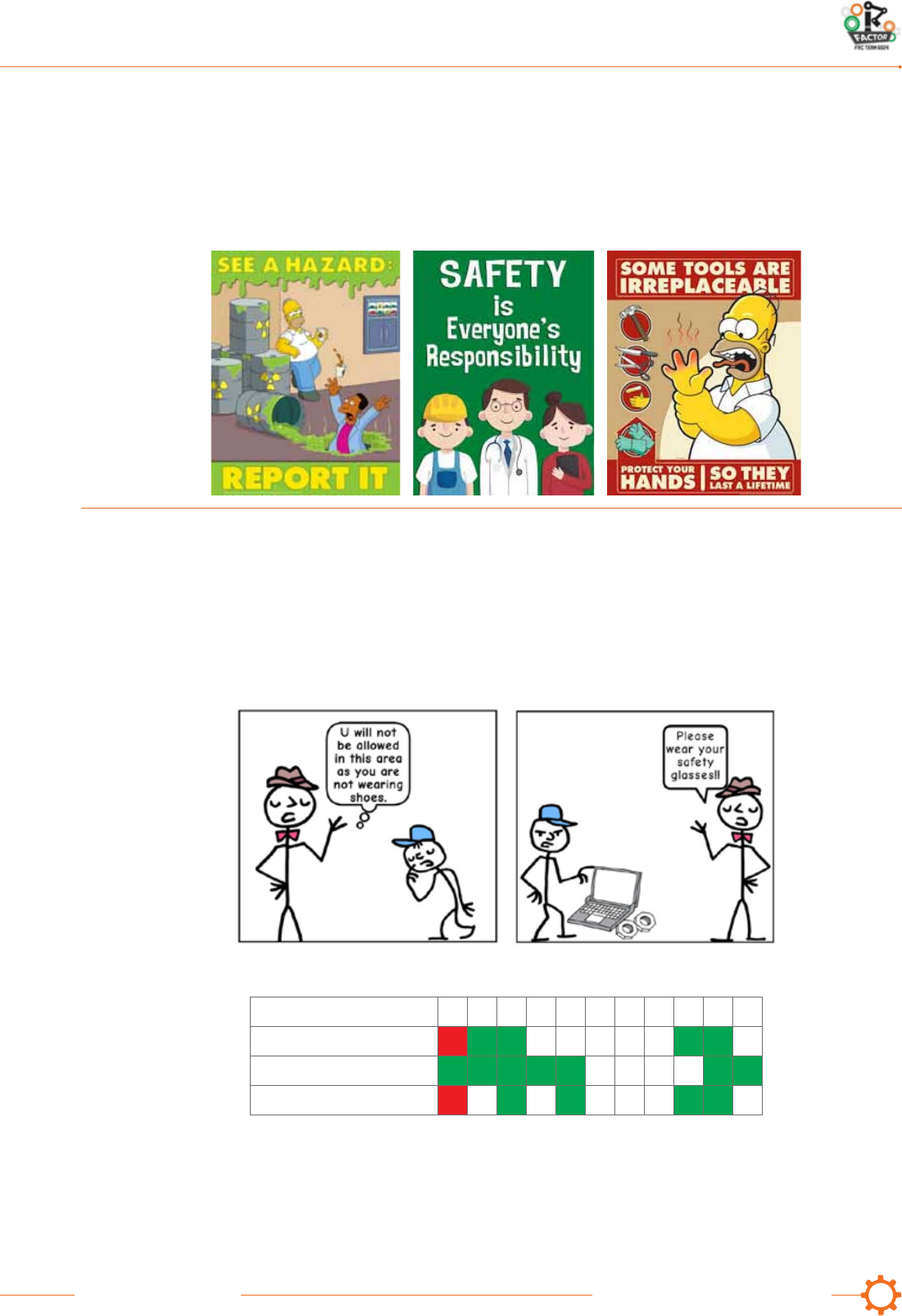
1. Big bins are used to keep
parts like wheels, threads,
brackets and electric wires.
2. Medium sized bins are used
to store parts like, hubs,
spacers, intake wheels,
churros etc.
3. Small bins are used to store
all kinds of screws, washers
and bolts.
Inventory Management - BIN System
Bin No. Description Qty. (Packets)
S16
Nut Bolts Am: 1215 2
Screws Am: 1193 1
Screws Am: 3296 1
S17
Screws Am: 1232 8
Screws Am: 2021 1
Nut Am: 1015 1
Nut Am: 1038 1
S17 Screws Am: 1197 2
Nut Bolts Am: 1054 1
15
S A F E T Y | C O M E S | F I R S T
R - FactoR frc team 6024
"Safety doesn't happen by accident"
We created a sustainable framework by implementing best operational practices, using personal protective
equipment and safety training. Our motto was “Safety Is Everyone’s Responsibility”
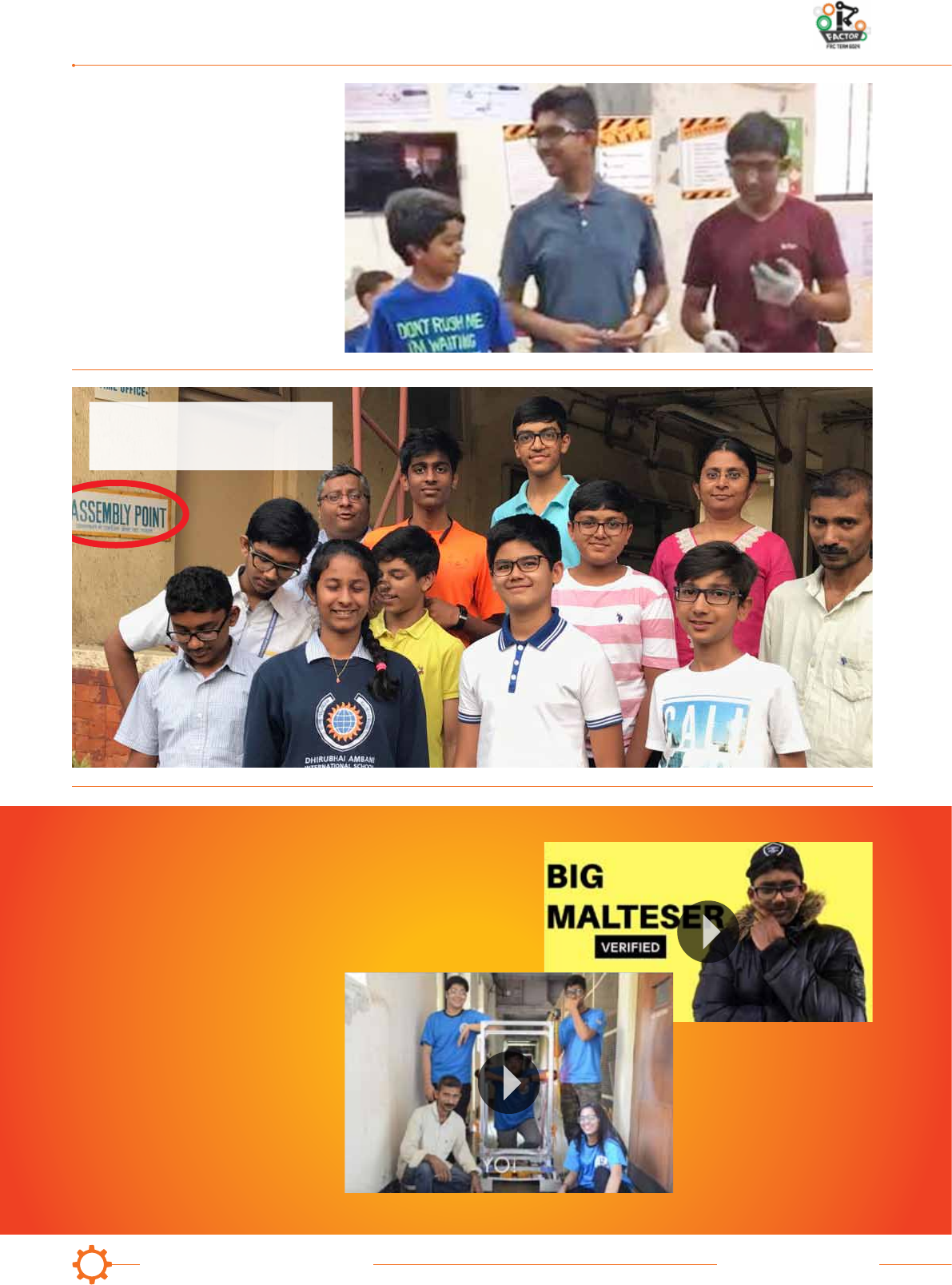
1. Put posters about safety for awareness.
2. Set fixed dress codes.
Everyone must wear:
• Full pants
• Toe covered shoes
• Safety glasses
• Gloves and mask if required
We have a safety checklist which tells us when one has not worn the proper outfit.
Student Name 21 22 23 24 25 26 27 28 29 30 31
Aadit Lakhani S FLL FLL
Aarav Parikh FLL FLL
Aarushi Majumder S FLL FLL
For our team members who were found to be short on safety - we conducted intensive safety training program
and sensitization.
WHAT DID STUDENTS OF TEAM R FACTOR DO TO SPREAD AWARENESS ABOUT SAFETY AT
OUR WORKSHOP?
Safety Awareness and Implementation
16 S A F E T Y | C O M E S | F I R S T R - FactoR frc team 6024
"Safety doesn't happen by accident"
Safety Awareness and Implementation
5. Made a parody on “Man’s
Not Hot” called “Mans Not
Safe” to promote safety.
This video was shared and
showed to friends, family,
other FRC teams from all
around the world and the
students taking part in
the FIRST Lego League
Mumbai Regionals to
promote safety.
These are some of the
ways Team R Factor
learned and spread
awareness about safety.
4. We conducted a fire drill to
ensure everyone understands
our emergency procedure.
3. Safety Training Sessions
Students and parents were
informed about the rules and
punishments that would take
place if safety precautions were
not taken.
We also discussed why safety is
important and how it will help us
be successful in Sydney.
17
S A F E T Y | C O M E S | F I R S T
R - FactoR frc team 6024
"Safety doesn't happen by accident"
Handling and Disposal of Hazardous Waste
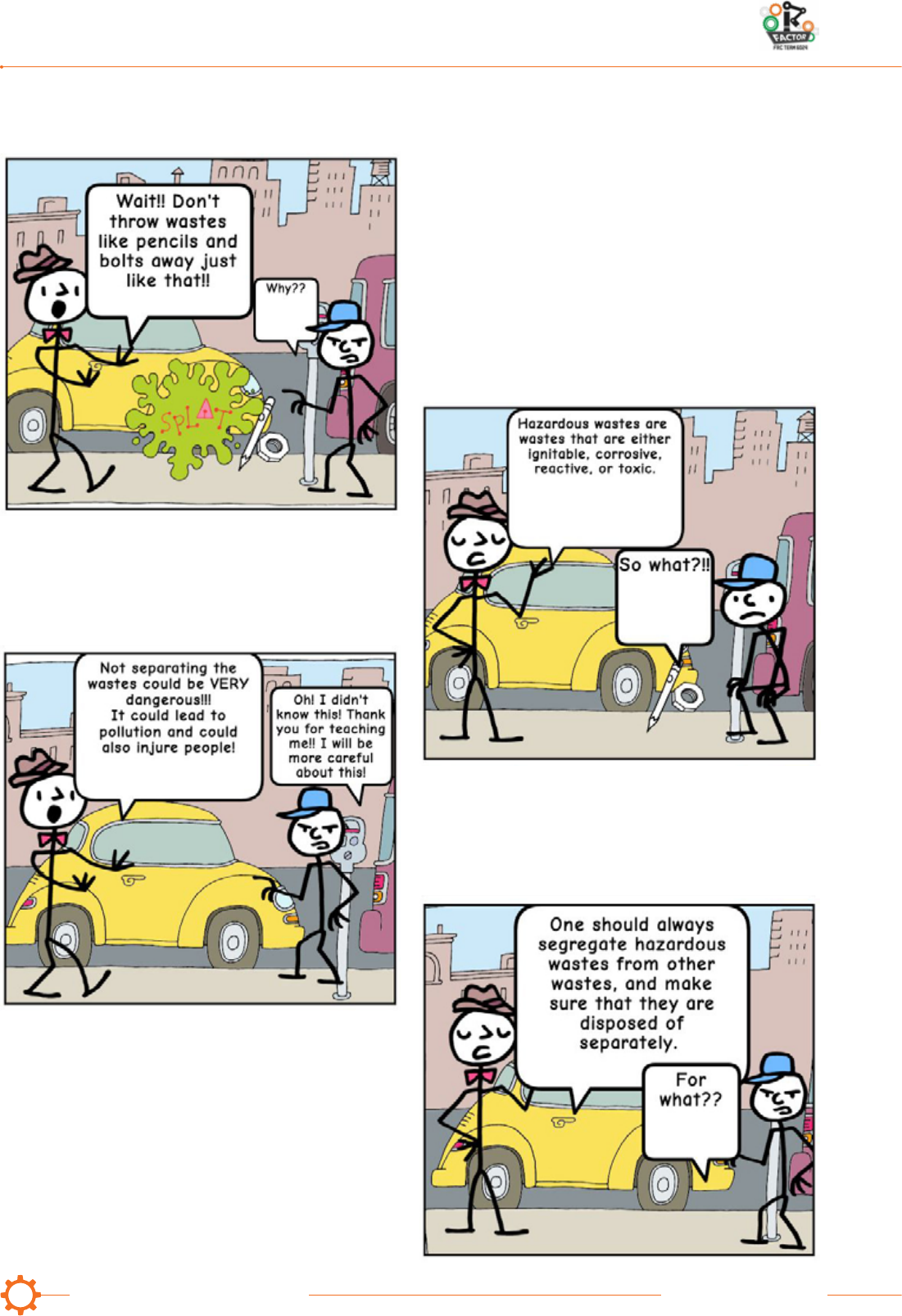
Hazardous waste is essentially any material that is either ignitable, reactive, corrosive, or toxic.
It is harmful to humans, animals, natural resources, environment and our ecosystem. It has to managed well and
disposed off correctly.
These characteristics are further defined by the following parameters:
IGNITABILITY: Wastes that spontaneously ignite under temperatures less than 60ºC.
Examples: flammable compressed gas, oxidizers
REACTIVITY: Wastes that are unstable and react vigorously with water or air, generate toxic gases, and explode
under either normal conditions or high temperatures
Examples: cyanide/sulfur-bearing waste, peroxides, ethers
CORROSIVITY: Waste of pH < 2.0 or > 12.0 with the ability to corrode steel
Examples: strong acids, alkaline degreasers, (waste) - water treatment chemicals
TOXICITY: Wastes which release toxic materials
Examples: lead, mercury, cadmium, elements classified in the TCLP (Toxicity Characteristic Leaching Procedure)
table
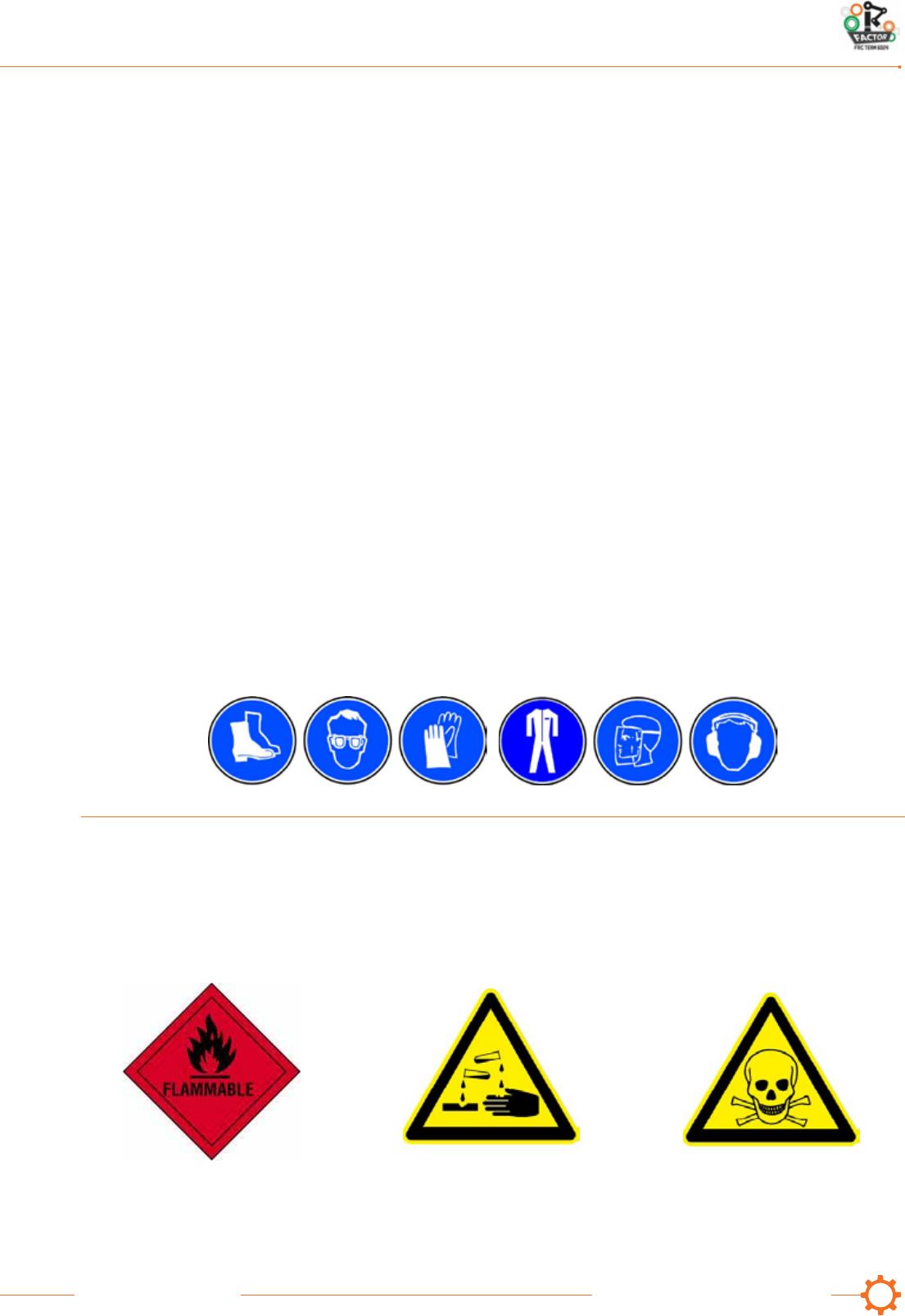
Given these characteristics, such waste needs to be handled with care. You need to wear your personal protective
equipment i.e. safety glasses, lab coats, gloves, etc. - it’s not an option.
“THERE IS NO SUCH THING AS ‘AWAY’.
WHEN WE THROW SOMETHING AWAY IT MUST GO SOMEWHERE”
~ ANNIE LEONARD
When using toxic materials, wear
a mask to prevent inhalation of
any fumes and don’t eat anything
(even if you’re hungry).
When using ignitable materials,
make sure you’re working
in a cool environment (with
ventilation) and that there’s no
fire-source in the area.
When using reactive or corrosive
materials, ensure that you do
not make ANY physical contact
with these substances. If you do,
treat it immediately!
In addition to that:
Flammable Corrosive Toxic
18 S A F E T Y | C O M E S | F I R S T R - FactoR frc team 6024
"Safety doesn't happen by accident"
Material Safety Data Sheets
The process that we follow is as follows:
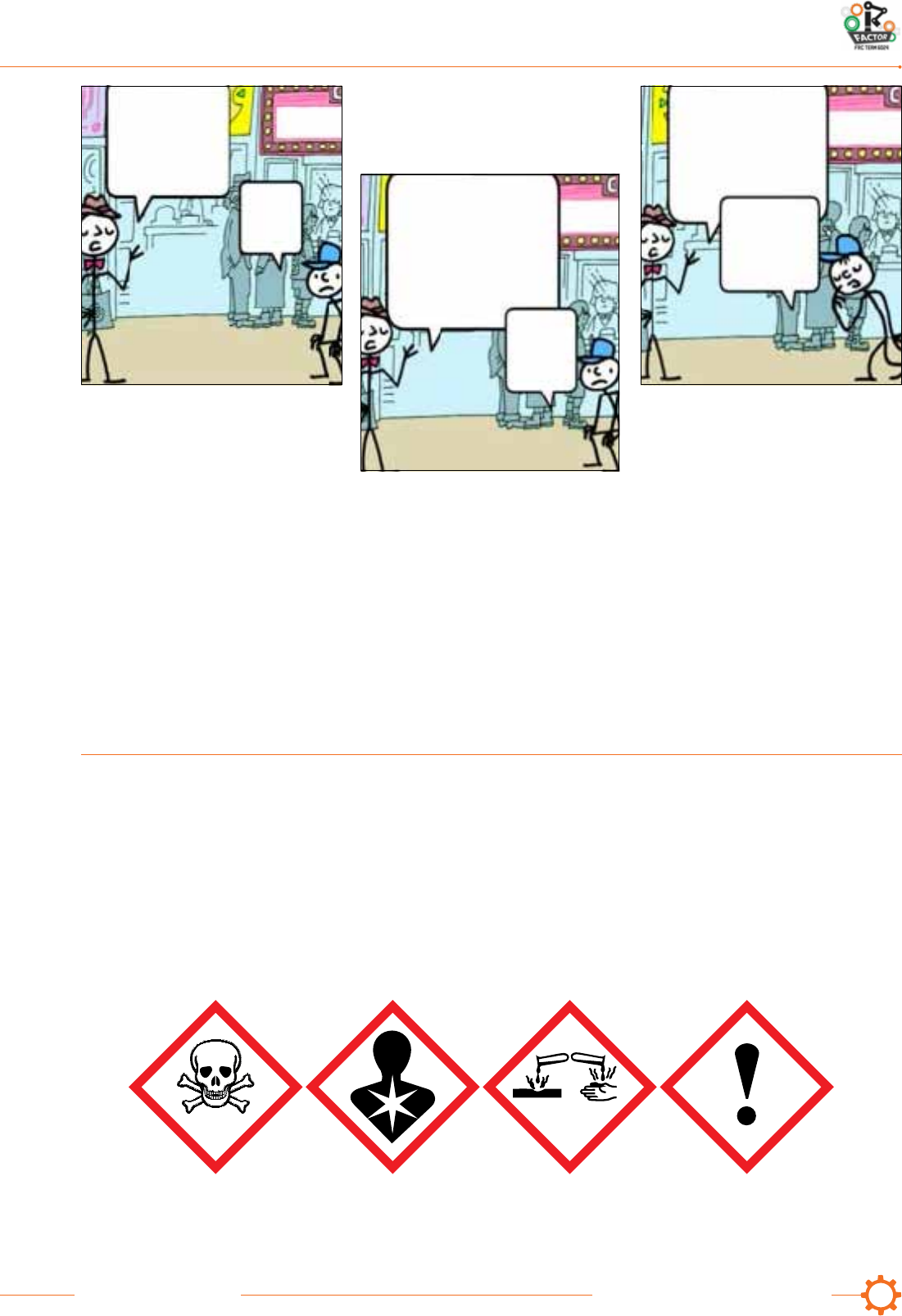
1. Segregate all hazardous waste
2. Identify and label this waste
3. Deliver this waste to another local factory
(eg: ParleG, as that’s where our workshop is
located) so that they can dispose of this well
SIMILARLY, THESE CAN NOT BE DISPOSED USING CONVENTIONAL METHODS, EITHER,
INSTEAD, A RATHER TEDIOUS METHOD OF DISPOSAL IS TO BE IMPLEMENTED FOR THIS.
19
S A F E T Y | C O M E S | F I R S T
R - FactoR frc team 6024
"Safety doesn't happen by accident"
A MSDS is very important to have for every type of part
that is being used. We have made sure that we can collect
different material safety data sheets for things like our
batteries so that we can react appropriately if any hazard
or accident happens and we would generally know how to
use the part, battery or power tool, safely and effectively.
We have put up printouts of different material safety data
sheets in our workplace so that in case we need to know
anything, it will be right there. We have also read them to
understand everything about that certain component
and this helps us use it in the most productive way. Here’s
one of our MSDS.
Hazard Statements
• Harmful if swallowed
• Harmful in contact with skin
• Fatal if inhaled
• Causes severe skin burn and damage
• May cause an allergic skin reaction
• May cause cancer
• May damage fertility or the unborn child
• May cause respiratory irritation
• Causes damage to organs through prolonged or
repeated exposure
This product is an article (battery) which contains chemical substances. Intended use of the product should not result
in exposure to the chemical substances. In case of rupture, the above hazards exits.
Appearance-Solid Physical state-Solid Odor-None
Material Safety Data Sheets
WD-40 Company:
Hazards: Flammable aerosol, may be irritating to eyes and skin. Low oral toxicity. May cause gastrointestinal irritation,
nausea, vomiting and diarrhea. Product is an aspiration hazard. May cause nasal and respiratory irritation if inhaled.
Intentional abuse may be harmful or fatal.
NOMENCLATURE FOR ALL MSDS
Emergency Overview
Signal Word - Danger
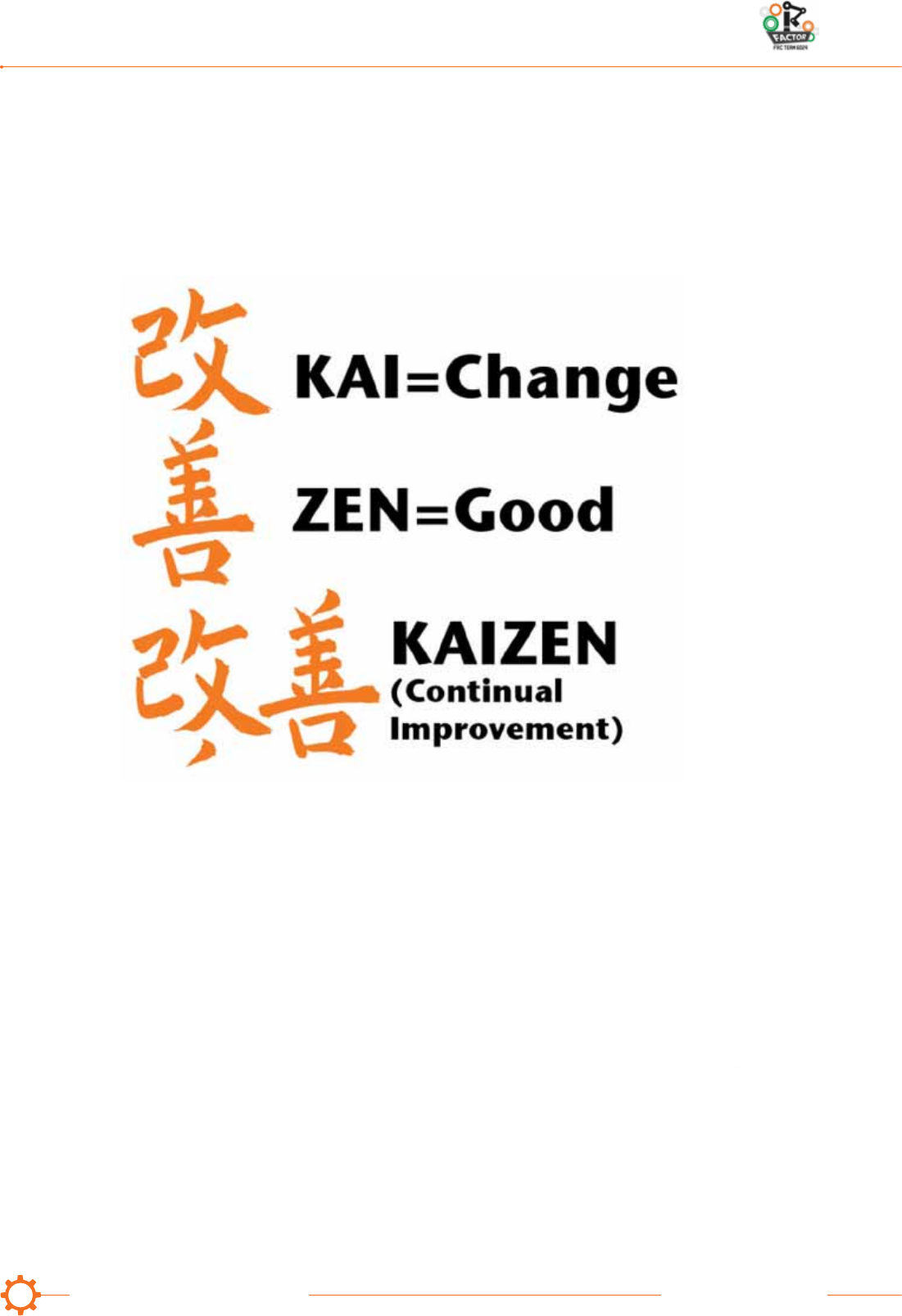
You should !!! In case of fire,
one should use things like
safety glasses, rests and
gloves to be safe.
On that’s
treat but
why is this
needed??
Contact with chemicals
in the battery can cause
skin burns, blindness and
mary more injuries.
Thank you so
much for the
information. I’ll
watch out for
that.
Do you know that
battery leaks can
cause fires and are
hazardous?
Ahh...
I don’t
really
care
20 S A F E T Y | C O M E S | F I R S T R - FactoR frc team 6024
"Safety doesn't happen by accident"
Kaizen
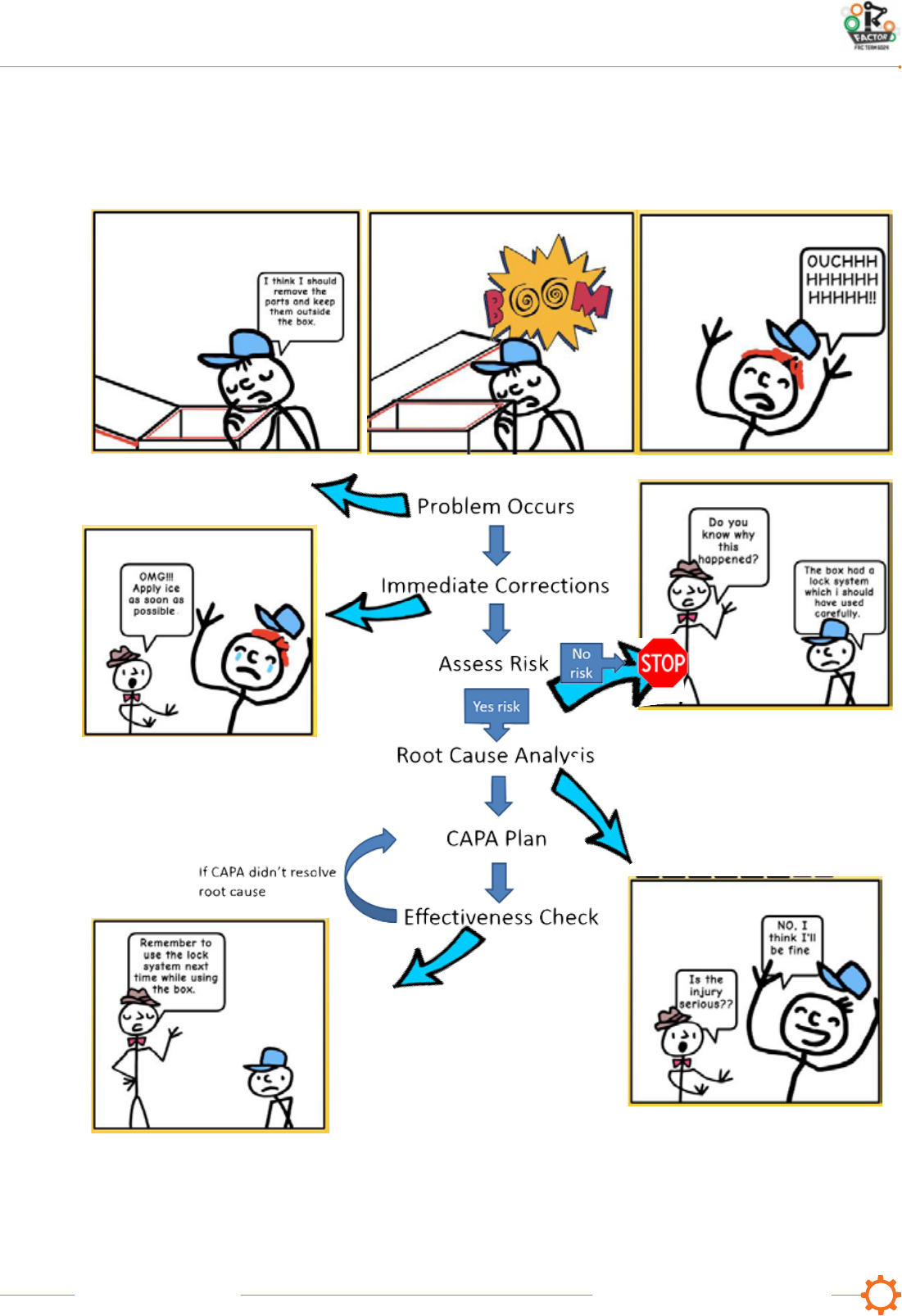
KAIZEN IS THE JAPANESE OPERATIONS PHILOSOPHY OF CONTINUOUS IMPROVEMENT OF
WORKING PRACTICES, PERSONAL EFFICIENCY, PROCESSES AND PROCEDURES.
1. Identify a problem (recurring
acute problems / not random
problems)
2. Use CAPA – take corrective
action to mitigate the adverse
effect of the identified problem.
If the problem is identified take
preventive actions to avoid
the future occurrence of the
problem. Deploy the actions
across for all similar situations to
prevent any other eventuality. If
the proble is not easily identified
use Ishikawa Fishbone Analysis
3. Identify possible causes using
the Ishikawa Fishbone Analysis
4. Identify the Root Cause or
Causes
5. Use PDCA concept to: a)
Plan – make a plan / solution
for elimination of the cause /
minimise the adverse effects
of the cause b) Do – execute
the plan / solution c) Check
– implement the solution /
carryout testing to check if
the planned goals / objectives
are achieved d) Act – if the
implementation / testing is
successful, prepare a SOP /
revised SOP and communicate
to all concerned. If unsuccessful,
begin the PDCA again with other
causes / root causes
Automotive giants like Toyota reaped huge benefits of this philosophy to introduce to the world very effective
concepts like Standardisation, Modularisation, Lean Manufacturing, Just In Time (JIT), Root Cause Analysis – Ishikawa
Fishbone Analysis, Plan-Do-Check-Act concept etc.
The above techniques are applied in the following way:
21
S A F E T Y | C O M E S | F I R S T
R - FactoR frc team 6024
"Safety doesn't happen by accident"
Corrective Action / Preventive Action
Kaizen
CorreCtive aCtion / preventive aCtion
CAPA (Corrective and Preventive Action) is a system implemented in order to assist with the collection and analysis of
data, which is later used to identify and investigate key problems, and hence resolve any existing issues.

22 S A F E T Y | C O M E S | F I R S T R - FactoR frc team 6024
"Safety doesn't happen by accident"
Kaizen
The ishikawa diagram (fishbone diagram) is a visual cause-and-effect analysis breakdown of any procedure, used to
continuously improve the workings of a system or setup.
In a recent school trip, one of our team members injured herself badly. Misinterpreting the instructions, her partner
forgot to latch the heavy machine while she was using it. As a result, the machine’s lever slipped and hit her, leading to
a broken nose.
Reflecting upon the incident, she evaluated the plausible contributing factors with the help of the ishikawa diagram.
ishikaWa / root Cause analysis
Man
Motivation issues
Unclear tasks
Unclear process
Poor maintenance
Unclear rules and
policy
chaotic
environment
Poor supervision
Old rusted
material
incorrect
material
specication
Lock of SOPs
Inadequate
training
Iteration in process
Lock of process
control
Machine
Management
Materials
Method/Process
The plausible factors contributing to the incident have been indicated with a flag in the diagram above
Injury of a
team member on
a school trip.
23
S A F E T Y | C O M E S | F I R S T
R - FactoR frc team 6024
"Safety doesn't happen by accident"
PLAN
1
4
2
5
3
6
CHECK
DO
ACT PDCA
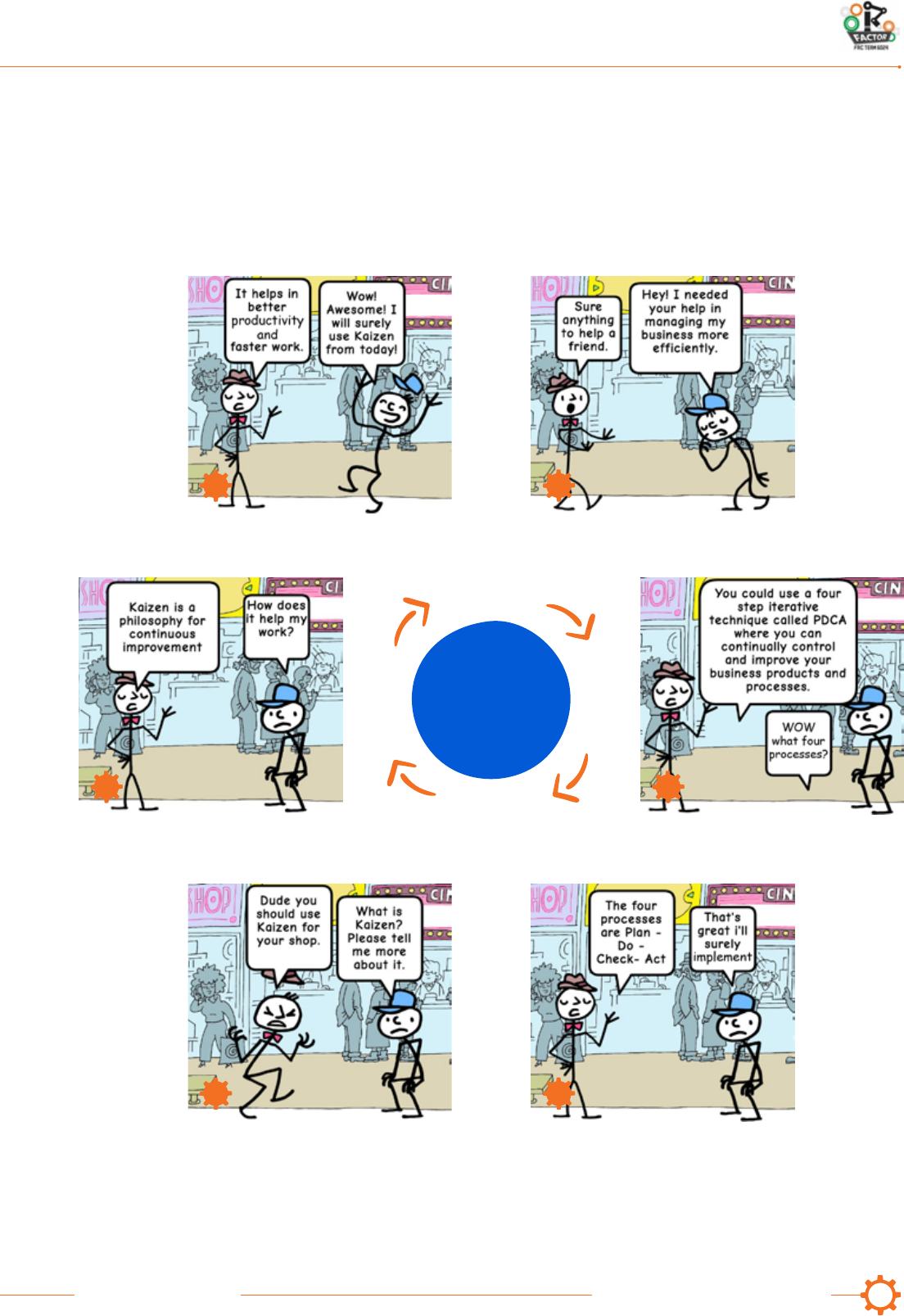
PDCA IS A PROCESS WHICH PROVIDES A SIMPLE AND EFFECTIVE APPROACH
to problem-solving anD managing Change more praCtiCally to
GAIN GOALS OR DESIRED RESULTS.
Kaizen
24 S A F E T Y | C O M E S | F I R S T R - FactoR frc team 6024
"Safety doesn't happen by accident"
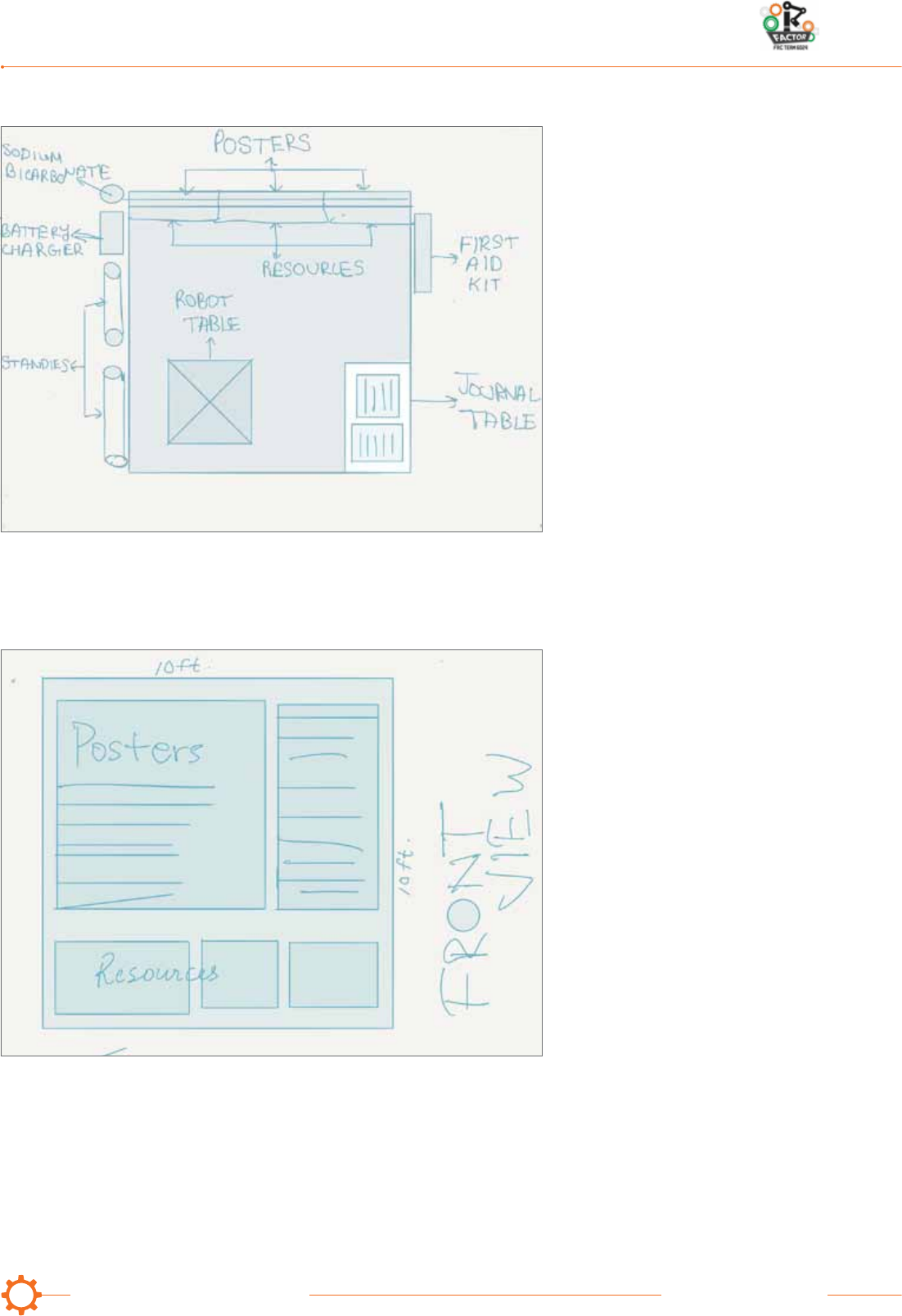
OUR PIT WOULD BE 10 FEET
BY 10 FEET.
It would include:
• 1 Table for the robot
• 1 Journal table
• 1 First aid kit
• 2 Standees (text and images)
• 1 Battery charger (3 battery ports)
• 1 Bucket of sodium bicarbonate
(for battery leaks)
• 1 First aid kit
• And 1 3 frame by 3 frame poster
• 3-5 Resource boxes
PIT Management
THE 3 FRAME BY 3 FRAME
WILL HAVE MULTIPLE
RESOURCE BOXES IN THE
BOTTOM 3 FRAMES AND
POSTERS IN THE TOP 6.
People in the pit:
In the pit there would be:
• Maximum 5 people (Including
coach)
• 1 Safety team member at all times
• 2 construction team members, 1
electricals team members and 1
team member during maintenance
time.
• Backup pit team during team
matches (including safety)
• Members of drive team right after
matches (to explain the problems)
PIT LAYOUT
ELEVATION OF FRONT FACE OF PIT LAYOUT

25
S A F E T Y | C O M E S | F I R S T
R - FactoR frc team 6024
"Safety doesn't happen by accident"
Safety Team
The Safety Team
Aadit Lakhani
Jai Jariwala
Radhika Sekhsaria
Shiv Kampani
Soham Warke
Vansh Diora
Vedanshi Shah
Yashvi Jaju

NOTES
"Safety doesn't happen by accident"
“Safety doesn’t happen by accident!
It is always the result of intelligent and
sustained effort!!!”
