TM 9 6115 645 10 V 1 0 Body_fixed OPERATOR'S MANUAL FOR GENERATOR SET, SKID MOUNTED, TACTICAL QUIET, 60 KW, 50/60 HZ MEP 806A (NSN: 01 274 7390) (EIC: VG7) 400 816A 7395) VN6)
User Manual: TM-9-6115-645-10 OPERATOR'S MANUAL FOR GENERATOR SET, SKID MOUNTED, TACTICAL QUIET, 60 KW, 50/60 HZ MEP-806A (NSN: 6115-01-274-7390) (EIC: VG7) GENERATOR SET, SKID MOUNTED, TACTICAL QUIET, 60 KW, 400 HZ MEP-816A (NSN: 6115-01-274-7395) (EIC: VN6) Military Generators == MEP 816A
Open the PDF directly: View PDF  .
.
Page Count: 168 [warning: Documents this large are best viewed by clicking the View PDF Link!]
- TABLE OF CONTENTS
- WARNING
- HOW TO USE THIS MANUAL
- CHAPTERS
- WORK PACKAGES
- INDEX
- PAGES
- PAGE 0001-1
- PAGE 0001-2
- PAGE 0001-3
- PAGE 0002-1
- PAGE 0002-2
- PAGE 0002-4
- PAGE 0003-1
- PAGE 0003-2
- PAGE 0003-3
- PAGE 0003-4
- PAGE 0003-5
- PAGE 0003-6
- PAGE 0003-7
- PAGE 0003-8
- PAGE 0004-2
- PAGE 0004-3
- PAGE 0004-5
- PAGE 0004-6
- PAGE 0005-1
- PAGE 0005-2
- PAGE 0005-3
- PAGE 0005-4
- PAGE 0005-5
- PAGE 0005-6
- PAGE 0005-7
- PAGE 0005-8
- PAGE 0005-9
- PAGE 0005-10
- PAGE 0005-11
- PAGE 0005-12
- PAGE 0005-13
- PAGE 0005-14
- PAGE 0005-15
- PAGE 0005-16
- PAGE 0005-17
- PAGE 0005-18
- PAGE 0006-1
- PAGE 0006-2
- PAGE 0006-3
- PAGE 0006-4
- PAGE 0011-1
- PAGE 0014-1
- PAGE 0015-1
- PAGE 0015-2
- PAGE 0016-1
- PAGE 0017-1
- PAGE 0018-1
- PAGE 0018-2
- PAGE 0020-1
- PAGE 0021-1
- PAGE 0021-2
- PAGE 0021-3
- PAGE 0021-4
- PAGE 0022-1
- PAGE 0023-1
- PAGE 0025-2
- PAGE 0025-3
- PAGE 0026-2
- PAGE 0027-3
- PAGE 0028-1
- PAGE 0019-1
- PAGE 0005-19

TECHNICAL MANUAL
OPERATOR'S MANUAL
FOR
GENERATOR SET, SKID MOUNTED, TACTICAL QUIET,
60 kW, 50/60 Hz
MEP-806A
(NSN: 6115-01-274-7390) (EIC: VG7)
GENERATOR SET, SKID MOUNTED, TACTICAL QUIET,
60 kW, 400 Hz
MEP-816A
(NSN: 6115-01-274-7395) (EIC: VN6)
*ARMY TM 9-6115-645-10
AIR FORCE TO 35C2-3-444-11
MARINE CORPS TM 09244A/09245A-10/1A
*SUPERSEDURE NOTICE - This manual supersedes TM 9-6115-645-10, TO 35C2-3-444-11, & TM 09244A/09245A-10/1 dated 30 July 1993. Date
of issue for the revised manual is: 15 March 2010.
DISTRIBUTION STATEMENT A - Approved for public release; distribution is unlimited.
HEADQUARTERS, DEPARTMENTS OF THE ARMY, AIR
FORCE AND HEADQUARTERS, U.S. MARINE CORPS
15 MARCH 2010 PCN: 184 092441 00
FIRST AID
For First Aid information, refer to FM 4-25.11.
5 SAFETY STEPS TO FOLLOW IF SOMEONE IS THE VICTIM OF ELECTRICAL
SHOCK:
DO NOT TRY TO PULL OR GRAB THE INDIVIDUAL.
IF POSSIBLE, TURN OFF THE ELECTRICAL POWER.
IF YOU CANNOT TURN OFF THE ELECTRICAL POWER, PULL, PUSH OR LIFT THE
PERSON TO SAFETY USING A DRY WOODEN POLE OR A DRY ROPE OR SOME
OTHER INSULATING MATERIAL.
SEND FOR HELP AS SOON AS POSSIBLE.
AFTER THE INJURED PERSON IS FREE OF CONTACT WITH THE SOURCE OF
ELECTRICAL SHOCK, MOVE THE PERSON A SHORT DISTANCE AWAY AND IMME-
DIATELY START ARTIFICIAL RESUSCITATION.
TM 9-6115-645-10
WARNING SUMMARY
a

WARNING AND CAUTION STATEMENTS
Warning and Caution statements have been strategically placed throughout this text prior to operating
procedures, practices, or conditions considered essential to the protection of personnel (WARNING) or equipment
and property (CAUTION).
A WARNING or CAUTION will apply each time the related step is repeated. Prior to starting any task the
WARNINGs or CAUTIONs included in the text for that task must be reviewed and understood. Refer to the
materials list at the beginning of the appropriate manual section for materials used during maintenance of this
equipment. This warning summary contains the WARNINGs and CAUTIONs included in the manual. The detailed
warnings for hazardous materials only are listed separately in the warning summary as the "Hazardous Materials
Warnings" section.
WARNING
All metal jewelry can conduct electricity and become entangled in generator set components.
Remove all jewelry when working on generator set. Failure to comply with this warning can
cause injury or death to personnel.
WARNING
High voltage is produced when this generator set is in operation. Ensure engine
control and DEAD CRANK switches are set to OFF, negative battery cable is
disconnected. and unit is completely shut down and free of any power source
before attempting any troubleshooting or maintenance on unit. Failure to comply
may cause injury or death to personnel.
WARNING
Shut down generator set before performing inspection of wiring. Failure to comply with this
warning can cause injury or death to personnel.
WARNING
High voltage is produced when generator set is in operation. Never attempt to
start the generator set unless it is properly grounded. Do not ground yourself in
standing water. Never attempt to connect or disconnect load cables while the
generator set is running. Failure to comply may cause injury or death to
personnel.
WARNING
Ensure nuts on ground terminals are properly secured creating a good ground. Failure to comply
with this warning can cause injury or death to personnel.
WARNING
High voltage is produced when the generator set is in operation. DO NOT touch live voltage
connections. Never attempt to connect or disconnect load cables or paralleling cables while the
generator set is running. Failure to comply with this warning can cause injury or death to
personnel.
WARNING
Dangerous voltage exists on live circuits. Always observe precautions and never work alone.
Failure to comply with this warning can cause injury or death to personnel.
WARNING
If it is necessary to move a generator set which has been operating in parallel with another
generator set, shut down remaining generator set connected to the load, prior to removing load
and ground cables. Failure to comply with this warning can cause injury or death to personnel.
TM 9-6115-645-10
WARNING SUMMARY - Continued
b

WARNING
Power is available when the main contactor is open. Avoid accidental contact. Failure to comply
with this warning can cause injury or death to personnel.
WARNING
Diesel fuel is flammable and toxic to eyes, skin, and respiratory tract. Skin and eye protection
are required when working in contact with diesel fuel. Avoid repeated or prolonged contact.
Provide adequate ventilation. Operators are to wash exposed skin and change chemical soaked
clothing promptly if exposed to fuel. Failure to comply with this warning can cause injury or death
to personnel.
WARNING
Fuels used in the generator set are flammable. Do not smoke or use open flames when
performing maintenance. Failure to comply with this warning can cause injury or death to
personnel, and damage to the generator set.
WARNING
Fuels used in the generator set are flammable. When filling the fuel tank, maintain
metal-to-metal contact between filler nozzle and fuel tank opening to eliminate static electrical
discharge. Failure to comply with this warning can cause injury or death to personnel, and
damage to the generator set.
WARNING
Hot engine surfaces from the engine and generator circuitry are possible sources of ignition.
When hot refueling with DF-1, DF-2, JP5 or JP8, avoid fuel splash and fuel spill. Do not smoke
or use open flame when performing refueling. Remember PMCS is still required. Failure to
comply with this warning can cause injury or death to personnel, and damage to the generator
set.
WARNING
Cooling system operates at high temperatures and pressure. Contact with high pressure steam
and/or liquids can result in burns and scalding. Shut down generator set, and allow system to
cool before performing checks, services and maintenance, or wear gloves and additional
protective clothing and goggles as required. Failure to comply with this warning can cause injury
or death to personnel.
WARNING
Operating the generator set exposes personnel to a high noise level. Hearing protection must be
worn when operating or working near the generator set when the generator set is running.
Failure to comply with this warning can cause hearing damage to personnel.
WARNING
Exhaust discharge contains deadly gases including carbon monoxide. DO NOT operate
generator set in enclosed areas unless exhaust discharge is properly vented outside. Failure to
comply with this warning can cause injury or death to personnel.
WARNING
Top housing panels and exhaust system can get very hot. Shut down generator set, and allow
system to cool before performing checks, services and maintenance. Failure to comply with this
warning can cause severe burns and injury to personnel.
TM 9-6115-645-10
WARNING SUMMARY - Continued
c

WARNING
Top housing panels and exhaust system can get very hot. When performing DURING PMCS,
wear gloves and additional protective clothing as required. Failure to comply with this warning
can cause severe burns and injury to personnel.
WARNING
Exercise extreme caution when performing DURING PMCS checks inside engine compartment.
Avoid contact with moving or hot engine parts. Failure to comply with this warning can cause
injury or death to personnel.
WARNING
When running, winterization heater has hot metal surfaces that will burn flesh on contact. Shut
down generator set and allow heater to cool before performing maintenance. Wear gloves and
additional protective clothing as required. Failure to comply with this warning can cause injury or
death to personnel.
WARNING
Battery acid can cause burns to unprotected skin. Wear safety goggles and chemical gloves and
avoid acid splash while working on batteries. Failure to comply with this warning can cause injury
to personnel.
WARNING
Solvent used to clean parts is potentially dangerous to personnel and property. Clean parts in a
well-ventilated area. Avoid inhalation of solvent fumes. Wear goggles and rubber gloves to
protect eyes and skin. Wash exposed skin thoroughly. Do not smoke or use near open flame or
excessive heat. Failure to comply with this warning can cause injury to personnel, and damage
to the equipment.
WARNING
Jumper will not be removed unless the equipment being powered specifically requires an
isolated ground (floating ground). Failure to comply with this warning can cause injury or death to
personnel.
TM 9-6115-645-10
WARNING SUMMARY - Continued
d

Front Cover 0
Blank 0
Warning summary (4pgs) 0
i-ix 0
Chp 1 title page 0
Chp 1 Index 0
WP 0001 (4 pgs) 0
WP 0002 (8 pgs) 0
WP 0003 (8 pgs) 0
Chp 2 title page 0
Chp 2 Index 0
WP 0004 (6 pgs) 0
WP 0005 (20 pgs) 0
WP 0006 (4 pgs) 0
WP 0007 (2 pgs) 0
Chp 3 title page 0
Chp 3 Index 0
WP 0008 (2 pgs) 0
WP 0009 (10 pgs) 0
Chp 4 title page 0
Chp 4 Index 0
WP 0010 (4 pgs) 0
WP 0011 (8 pgs) 0
WP 0012 (2 pgs) 0
WP 0013 (2 pgs) 0
WP 0014 (2 pgs) 0
WP 0015 (2 pgs) 0
WP 0016 (2 pgs) 0
WP 0017 (2 pgs) 0
WP 0018 (2 pgs) 0
WP 0019 (2 pgs) 0
Chp 5 title page 0
Chp 5 Index 0
WP 0020 (2 pgs) 0
WP 0021 (6 pgs) 0
WP 0022 (2 pgs) 0
WP 0023 (2 pgs) 0
Chp 6 title page 0
Chp 6 Index 0
WP 0024 (2 pgs) 0
WP 0025 (4 pgs) 0
WP 0026 (2 pgs) 0
WP 0027 (4 pgs) 0
WP 0028 (2 pgs) 0
WP 0029 (2 pgs) 0
INDEX-1 - INDEX-6 0
Inside back cover 0
Back cover 0
TM 9-6115-645-10
LIST OF EFFECTIVE PAGES / WORK PACKAGES
NOTE: This manual supersedes TM 9-6115-645-10, TO 35C2-3-444-11, & TM 09244A/09245A-10/1 dated 30
July 1993. Date of issue for the revised manual is: 15 March 2010. Zero in the "Change No." column
indicates an original page or work package.
Date of issue for revision is:
Revision 15 MARCH 2010
TOTAL NUMBER OF PAGES FOR FRONT AND REAR MATTER IS 34 AND TOTAL NUMBER OF WORK
PACKAGES IS 29, CONSISTING OF THE FOLLOWING:
Page / WP No. Change No. Page / WP No. Change No.
A/(B blank) USA

TECHNICAL MANUAL
AND HEADQUARTERS, U.S. MARINE CORPS
DEPARTMENTS OF THE ARMY, AIR FORCE
HEADQUARTERS
OPERATOR'S MANUAL
GENERATOR SET, SKID MOUNTED, TACTICAL QUIET,
60 kW, 50/60 Hz
MEP-806A
(NSN: 6115-01-274-7390) (EIC: VG7)
GENERATOR SET, SKID MOUNTED, TACTICAL QUIET,
60 kW, 400 Hz
MEP-816A
(NSN: 6115-01-274-7395) (EIC: VN6)
REPORTING ERRORS AND RECOMMENDING IMPROVEMENTS
You can help improve this manual. If you find any mistakes or if you know of a way to improve the procedures,
please let us know. Reports, as applicable by the requiring Service, should be submitted as follows:
(a) (A) Army - Mail your letter or DA Form 2028 (Recommended Changes to Publications and Blank Forms),
located in the back of this manual, directly to: Commander, U.S. Army CECOM (LCMC) and Fort
Monmouth, ATTN: AMSEL-LC-LEO-E-CM, Fort Monmouth, NJ 07703-5006. You may also send in your
recommended changes via electronic mail or by fax. Our fax number is 732-532-3421, DSN 992-3421. Our
e-mail address is MONM-AMSELLEOPUBSCHG@conus.army.mil. Our online web address for entering
and submitting DA Form 2028s is http://edm.monmouth.army.mil/pubs/2028.html.
(b) (B) Marine Corps -Submit notice of discrepancies or suggest changes on a NAVMC 10772 The NAVMC
may be submitted via the Internet using website https://www.ala.usmc.mil, click on Publications, Technical
Publications, follow the instructions, and then click on the NAVMC 10772. it may also be submitted by
electronic mail to smb.log.tech.pubs.fct@usmc.mil, or by mailing a paper copy NAVMC 10772 in an
envelope addressed to Commander, Marine Corps systems Command, ATTN. Assistant Commander
Acquisitioin and Logistics (AC LCL/TP), 814 Radford Blvd, suite 20343, Albany, Georgia 31704-0343. In
addition, forward an information copy to the Project Officer at the following address: Commander, Marine
Corps Systems Command (GTES-EPS), 2200 Lester Street, Quantico, VA. 22134-6050
(c) (C) Air Force - By Air Force AFTO Form 22 (Technical Manual (TM) change Recommendation and Reply)
in accordance with paragraph 6-5, Section VI, TO 00 5 1 directly to prime ALC/MST.
A reply will be furnished to you.
*ARMY TM 9-6115-645-10
AIR FORCE TO 35C2-3-444-11
MARINE CORPS TM 09244A/09245A-10/1A
WASHINGTON, D.C., 15 MARCH 2010
*SUPERSEDURE NOTICE - This manual supersedes TM 9-6115-645-10, TO 35C2-3-444-11, & TM 09244A/09245A-10/1 dated 30 July 1993. Date
of issue for the revised manual is: 15 March 2010.
DISTRIBUTION STATEMENT A - Approved for public release; distribution is unlimited.
i

TABLE OF CONTENTS
Page No.
WP Sequence No.
How to Use This Manual
Chapter 1 - General Information, Equipment Description and Theory of Operation
General Information .............................................................................................................................. WP 0001
Scope .................................................................................................................................................0001-1
Model Numbers and Equipment Names.............................................................................................0001-1
Purpose of Equipment ........................................................................................................................0001-1
Figure 1. Generator Set, 60 kW, Tactical Quiet..................................................................................0001-2
Maintenance Forms, Records, and Reports.......................................................................................0001-2
Reporting Equipment Improvement Recommendation (EIR) .............................................................0001-3
Corrosion Prevention and Control (CPC) ...........................................................................................0001-3
Destruction of Army Materiel to Prevent Enemy Use .........................................................................0001-3
Preparation for Storage or Shipment..................................................................................................0001-3
Warranty Information ..........................................................................................................................0001-3
List of Abbreviations/Acronyms ..........................................................................................................0001-3
Equipment Description and Data .......................................................................................................... WP 0002
Equipment Description .......................................................................................................................0002-1
Location and Description of Major Components.................................................................................0002-1
Figure 1. Generator Set Components ................................................................................................0002-2
Equipment Differences .......................................................................................................................0002-4
Equipment Data..................................................................................................................................0002-4
Table 1. Leading Particulars...............................................................................................................0002-4
Theory of Operation .............................................................................................................................. WP 0003
Engine Starting System ......................................................................................................................0003-1
Figure 1. Engine Starting System.......................................................................................................0003-2
Fuel System........................................................................................................................................0003-3
Figure 2. Fuel System ........................................................................................................................0003-3
Engine Cooling System ......................................................................................................................0003-4
Figure 3. Engine Cooling System .......................................................................................................0003-4
Lubrication System .............................................................................................................................0003-5
Figure 4. Engine Lubrication System..................................................................................................0003-5
Air Intake and Exhaust System ..........................................................................................................0003-6
Figure 5. Air Intake and Exhaust System ...........................................................................................0003-6
Output Supply System........................................................................................................................0003-6
Figure 6. Output Supply System.........................................................................................................0003-7
Winterization Kit..................................................................................................................................0003-8
Chapter 2 - Operator Instructions
Description and Use of Operator Controls and Indicators .................................................................... WP 0004
Figure 1. Control Panel/Controls Bracket Assembly ..........................................................................0004-2
Table 1. Control Panel Controls and Indicators..................................................................................0004-3
Figure 2. Malfunction Indicator Panel .................................................................................................0004-5
Table 2. Malfunction Indicator Panel. .................................................................................................0004-6
Operation Under Usual Conditions ....................................................................................................... WP 0005
TM 9-6115-645-10
ii

TABLE OF CONTENTS - Continued
Page No.
WP Sequence No.
Assembly and Preparation for Use.....................................................................................................0005-1
Installation of Ground Rod..................................................................................................................0005-1
Figure 1. Grounding Connections.......................................................................................................0005-2
Installation of Load Cables .................................................................................................................0005-3
Table 1. Load Terminal, AC Reconnection Board and VM-AM Transfer Switch Selection. ...............0005-3
Figure 2. Installation of Load Cables ..................................................................................................0005-4
Daily Checks.......................................................................................................................................0005-5
Initial Adjustments ..............................................................................................................................0005-5
Self Test .............................................................................................................................................0005-5
Operating Procedures ........................................................................................................................0005-5
Starting Procedure..............................................................................................................................0005-6
Stopping Procedure............................................................................................................................0005-7
Parallel Unit Operation (load Sharing)................................................................................................0005-7
Figure 3. Parallel Operation Setup .....................................................................................................0005-8
Pre-operation......................................................................................................................................0005-8
Operation............................................................................................................................................0005-9
Removal From Parallel Operation ......................................................................................................0005-10
Decals and Instruction Plates .............................................................................................................0005-10
Figure 4. Operating Instructions Plates (Front and Right Side)..........................................................0005-11
Figure 5. Operating Instructions Plates (Rear and Left Side).............................................................0005-12
Figure 6. Operating Instructions Plate ................................................................................................0005-13
Figure 7. Identification Plates .............................................................................................................0005-14
Figure 8. IUID Identification Plates .....................................................................................................0005-15
Figure 9. Set Rating Identification Plates ...........................................................................................0005-15
Figure 10. Fuel System Diagram Plate...............................................................................................0005-16
Figure 11. Voltage Connection Caution Plate ....................................................................................0005-16
Figure 12. Grounding Stud Plate ........................................................................................................0005-17
Figure 13. NATO Slave Receptacle Plate ..........................................................................................0005-17
Figure 14. Paralleling Receptacle Plate .............................................................................................0005-17
Figure 15. Convenience Receptacle Plate .........................................................................................0005-17
Figure 16. External Fuel Supply Plate ................................................................................................0005-17
Figure 17. Battery Connection Instruction Plate .................................................................................0005-18
Figure 18. Lifting and Tiedown Diagram Plate ...................................................................................0005-18
Figure 19. Diagnostics Plate...............................................................................................................0005-19
Figure 20. Generator Identification Plates ..........................................................................................0005-19
Preparation for Movement ..................................................................................................................0005-19
Operation Under Unusual Conditions ................................................................................................... WP 0006
Operation In Extreme Heat Above 120 °F(48.8 °C)...........................................................................0006-1
Operation In Dusty or Sandy Areas....................................................................................................0006-1
Operation Under Rainy or Humid Conditions .....................................................................................0006-2
Operation In Salt Water Areas............................................................................................................0006-2
Operation At High Altitudes ................................................................................................................0006-3
Operation While In Contaminated Areas ............................................................................................0006-3
Use of the Convenience Receptacle ..................................................................................................0006-4
TM 9-6115-645-10
iii

TABLE OF CONTENTS - Continued
Page No.
WP Sequence No.
Emergency Information......................................................................................................................... WP 0007
Chapter 3 - Operator Troubleshooting Procedures
Troubleshooting Index .......................................................................................................................... WP 0008
Troubleshooting Procedures................................................................................................................. WP 0009
Chapter 4 - Operator Maintenance Instructions
Preventive Maintenance Checks and Services (PMCS) Introduction ................................................... WP 0010
Preventive Maintenance Checks and Services (PMCS)....................................................................... WP 0011
Table 1. Operator Preventative Maintenance Checks and Services. .................................................0011-1
Operator Lubrication Instructions.......................................................................................................... WP 0012
Generator Set Inspection and Service .................................................................................................. WP 0013
Batteries: Inspection, Servicing............................................................................................................. WP 0014
Inspection ...........................................................................................................................................0014-1
Servicing.............................................................................................................................................0014-1
Air Cleaner Assembly: Inspection, Servicing ........................................................................................ WP 0015
Inspection ...........................................................................................................................................0015-1
Figure 1. Air Cleaner Element Replacement ......................................................................................0015-2
Servicing.............................................................................................................................................0015-2
Cooling System: Inspection, Servicing.................................................................................................. WP 0016
Inspection ...........................................................................................................................................0016-1
Servicing.............................................................................................................................................0016-1
Table 1. Coolant. ................................................................................................................................0016-1
Fuel Tank: Inspection, Servicing........................................................................................................... WP 0017
Inspection ...........................................................................................................................................0017-1
Servicing.............................................................................................................................................0017-1
Table 1. Diesel Fuel............................................................................................................................0017-1
Fuel Filter/Water Separator: Inspection, Servicing ............................................................................... WP 0018
Inspection ...........................................................................................................................................0018-1
Figure 1. Draining Fuel Filter/Water Separator...................................................................................0018-1
Servicing.............................................................................................................................................0018-2
Lubrication System: Inspection, Servicing ............................................................................................ WP 0019
Inspection ...........................................................................................................................................0019-1
Servicing.............................................................................................................................................0019-1
Chapter 5 - Supporting Information
References............................................................................................................................................ WP 0020
Scope .................................................................................................................................................0020-1
Components of End Item (COEI) and Basic Issue Items (BII) Lists...................................................... WP 0021
Scope .................................................................................................................................................0021-1
General...............................................................................................................................................0021-1
Table 1. Components of End Item List. ..............................................................................................0021-1
TM 9-6115-645-10
iv

TABLE OF CONTENTS - Continued
Page No.
WP Sequence No.
Figure 1. Item 1. Basic Issue Items Lubrication Order LO 9-6115-645-12 .........................................0021-2
Figure 2. Item 2. Basic Issue Items Technical Manual TM 9-6115-645-10 ........................................0021-3
Figure 3. Item 3. Basic Issue Items Warranty Technical Bulletin TB 9-6115-645-24 .........................0021-4
Table 2. Basic Issue Items List...........................................................................................................0021-4
Additional Authorization List (AAL) ....................................................................................................... WP 0022
Scope .................................................................................................................................................0022-1
General...............................................................................................................................................0022-1
Table 1. Additional Authorization List. ................................................................................................0022-1
Expendable and Durable Items List ...................................................................................................... WP 0023
Explanation of Columns In the Expendable/durable Items List ..........................................................0023-1
Table 1. Expendable and Durable Items List......................................................................................0023-1
Chapter 6 - Winterization Kit
Winterization Kit, General Information .................................................................................................. WP 0024
Winterization Kit, Equipment Description and Data .............................................................................. WP 0025
Figure 1. Location of Major Components ...........................................................................................0025-2
Table 1. Description of Major Winterization Kit Components. ............................................................0025-3
Table 2. Heater Operating Data. ........................................................................................................0025-3
Winterization Kit, Troubleshooting Procedures..................................................................................... WP 0026
Figure 1. Heater Function Codes Plate ..............................................................................................0026-2
Winterization Kit, Preventive Maintenance Checks and Services (PMCS) Introduction ....................... WP 0027
Figure 1. Operator PMCS Routing Diagram.......................................................................................0027-3
Winterization Kit, Preventive Maintenance Checks and Services (PMCS)........................................... WP 0028
Table 1. Operator Preventive Maintenance Checks and Services. ....................................................0028-1
Winterization Kit, Maintenance Procedures .......................................................................................... WP 0029
Index
TM 9-6115-645-10
v

How to Use This Manual
This manual contains operator instructions for the MEP-806 and MEP-816A Tactical Quiet Generator (TQG) Sets.
NOTE
Throughout the family of manuals, directional orientation in relation to the equipment is described
from the point of view of the operator facing the operator's controls looking out over the
equipment. From this perspective, the end of the equipment containing the operator's controls will
be referred to as the rear.
This manual provides operating procedures, troubleshooting, maintenance, and supporting information required to
operate and maintain the MEP-806 and MEP-816A Tactical Quiet Generator (TQG) Sets. Listed below are some
of the features included in this TM to help locate and use the provided information.
WORK PACKAGES
This TM has been organized using the WP concept. Each chapter contains a series of WPs rather than sections
and paragraphs. Each WP is designed to stand alone as a complete information module; if the user keeps the
section(s) of this TM in a loose-leaf binder, the user will be able to remove just the WP needed to complete a
specific task. Here are some WP features of which the user should be aware.
Each WP is numbered using a four-digit number beginning with WP 0001. WPs are numbered sequentially
throughout the TM (ex. WP 0016. WP 0020. etc.). The Table of Contents lists each chapter and WP title as well
as all figures and tables contained within each. Figures and tables are numbered sequentially for each WP.
The WP number is located at the top right of each page. It is also located at the bottom of the page with the WP
page number included (0001-1 would be page 1 of the General Information WP (WP 0001, General Information)).
Each WP starts on a right-hand page. This is done so the user can remove a single WP from the paper TM if
needed for a task. Blank pages are assigned a number, but it appears on the preceding or following page. For
example. if page 0001-10 of a WP is blank. page 0001-9 will have the number 0001-9/10 blank; or if page 0001-1
of a WP is blank, page 0001-2 will have the number 0001-1 blank/2.
Each WP containing step-by-step maintenance or troubleshooting procedures will end with the words END OF
TASK, and each WP ends with the statement END OF WORK PACKAGE. Think of each WP as a small,
standalone TM.
Typographical conventions are as follows:
[Unload] indicates a soft key or a switch.
[Previous] + [Next] indicates two simultaneous key presses.[+][-]indicates two sequential key presses.
References to equipment Data and Description Plates are printed as they appear on the equipment whenever
possible.
Warnings, Cautions and Notes Definitions
Warnings, cautions, notes. chapter titles, and paragraph headings are printed in bold type. Icons related to
warnings are shown directly above the warning text.
The following definitions apply to WARNINGS, CAUTIONS and NOTES found throughout this publication.
Warning, cautions and notes provide supplemental information. Personnel must understand and apply these
Warnings, Cautions and Notes during many phases of operation and maintenance to ensure personnel safety and
health and the protection of property. Portions of this information may be repeated in certain chapters of this
publication for emphasis.
WARNING
A warning identifies a clear danger to the person doing that procedure.
CAUTION
A caution identifies risk of damage to the equipment.
TM 9-6115-645-10
vi

NOTE
A note highlights essential procedures, conditions, or statements or conveys important
instructional data to the user.
CHAPTER OVERVIEW
Chapter 1 - General Information, Equipment Description and Theory of Operation
Chapter 1 provides an introduction to the generator sets. It is divided into three work packages, as follows:
General Information. This work package provides general information about this manual and the related forms
and records. Instructions are provided for making equipment improvement recommendations. Coverage includes
a reference to the TM that contains instructions on destruction of materiel to prevent enemy use. Also, a list of
abbreviations and acronyms are included.
Equipment Description and Data. This work package describes capabilities, characteristics, and features. It
provides basic equipment data and shows the locations of major components. Descriptions of the major
components are also provided.
Theory of Operation. This work package provides functional descriptions of the equipment.
Chapter 2 - Operator Instructions
Chapter 2 provides instructions for operating the generator sets. The chapter is divided into three work packages,
as follows:
Description and Use of Operator Controls and Indicators. This work package provides references to the
applicable generator set technical manuals and trailer technical manuals. Those references contain information
on operator's controls and indicators for the equipment.
Operation Under Usual Conditions. This work package contains instructions for preparing the equipment for
use and operation under normal conditions. Coverage includes connection instructions and preparation
instructions for movement to a new worksite.
Operation Under Unusual Conditions. This work package provides unusual operating procedures or references
to the applicable accompanying technical manuals.
Chapter 3 - Operator Troubleshooting Procedures
Chapter 3 covers troubleshooting procedures of the generator sets to be performed by the operator. The chapter
is divided as follows:
Operator Troubleshooting Index. This work package provides troubleshooting procedures and corrective
actions that are to be performed by the operator. It also provides references to the applicable technical manuals.
Chapter 4 - Operator Maintenance Instructions
Chapter 4 covers maintenance procedures for the generator sets to be performed by the operator. Its purpose is
to provide you with the information that you need to keep the equipment in good operating condition. The chapter
is divided as follows:
Preventive Maintenance Checks and Services (PMCS) Introduction. This work package provides a detailed
explanation of each table entry in the PMCS table along with applicable warnings, cautions and notes prior to
starting on the PMCS procedures.
Preventive Maintenance Checks and Services (PMCS). This work package contains detailed instructions that
the operator must perform before, during, and after preventive maintenance checks and services. Coverage
includes all operator PMCS for the equipment.
Operator Lubrication Instructions. This work package section provides references to the applicable lubrication
instructions.
Maintenance Procedures. These work packages refer the operator to the preventive maintenance checks and
services required by WP 0010.
TM 9-6115-645-10
vii

Chapter 5 - Supporting Information
Components of End Item (COEI) and Basic Issue Items (BII) Lists. This work package lists the items usually
packaged separately but needed for installation and operation of the equipment. The work package has three
sections, as follows:
Introduction. This section explains the entries in Tables 1 and 2.
Components of End Item. The equipment is normally shipped fully assembled, so this section is not
applicable.
Basic Issue Items. This section contains a list of the accessories needed for installation and operation of the
equipment.
Additional Authorization List (AAL). This work package lists additional items you are authorized for support of
the equipment. This work package contains two sections, as follows:
Introduction. This section explains the entries in Tables 1.
Additional Authorized Items List. This table lists the Additional Authorized Items.
Expendable and Durable Items List. This work package lists expendable/durable supplies and materials
needed to operate and maintain your equipment. The work package contains two sections, as follows:
Expendable and Durable Items List. The list indicates the maintenance level that needs each item and identifies
the items by National Stock Number (NSN), description, and unit of measure.
Chapter 6 - Winterization Kit
Chapter 6 provides information on the operation, troubleshooting and maintenance of the winterization kit
designed to be mounted in generator sets where extreme cold temperatures are anticipated. The chapter is
divided into six work packages, as follows:
General Information. This section describes and illustrates the components of the winterization kit to ensure
proper operation of the kit when installed on all generator sets.
Equipment Description and Data. This work package describes winterization kit capabilities, characteristics,
and features. It provides descriptions of the major components and tabulated data for the heater.
Preventive Maintenance Checks and Services (PMCS) Introduction. This work package provides a detailed
explanation of each table entry in the PMCS table along with applicable warnings, cautions and notes prior to
starting on the PMCS procedures of the winterization kit.
Preventive Maintenance Checks and Services (PMCS). This work package contains detailed instructions that
must be performed before, during, and after preventive maintenance checks and services of the winterization kit.
Troubleshooting Procedures. This section provides troubleshooting procedures and corrective actions that are
to be performed by the operator.
Maintenance Procedures. This section refers the operator to the preventive maintenance checks and services
required by WP 0010.
TM 9-6115-645-10
viii

HOW TO FIX A GENERATOR SET MALFUNCTION
Determining the Cause. Finding the cause of a malfunction, troubleshooting, is the first step in fixing the
generator set and returning it to operation. Follow these simple steps to determine the root of the problem:
1. Turn to the Table of Contents in this manual.
2. Locate "Troubleshooting" under the chapter that covers your level of maintenance. Turn to the page
indicated.
3. For operator troubleshooting, find the malfunction listing in the troubleshooting symptom index. Follow the
instructions provided as indicated by the symptom index.
Preparing for a Task. Be sure that you understand the entire maintenance procedure before beginning any
maintenance task. Make sure that all parts, materials, and tools are handy. Read all steps before beginning.
Prepare to do the task as follows:
1. Carefully read the entire task before starting. It tells you what you will need and what you have to know to
start the task. DO NOT START THE TASK UNTIL:
a. You know what is needed
b. You have everything you need
c. You understand what to do
2. If parts are listed, they can be drawn from technical supply. Before you start the task, check to make sure you
can get the needed parts.
3. If expendable/durable supplies or materials are needed, get them before starting the task. Refer to WP 0022
for the correct nomenclature and NSN.
How to Do the Task. Before starting, read the entire task. Be sure that you understand the entire procedure
before you begin the task. As you read, remember the following:
1. PAY ATTENTION TO WARNINGS, CAUTIONS, AND NOTES.
2. Use the List of Abbreviations/Acronyms if you do not understand the special abbreviations or unusual terms
used in this manual.
3. The following are standard maintenance practices. Instructions about these practices are usually not included
in task steps. When standard maintenance practices do not apply, the task steps will tell you.
a. Tag electrical wiring before disconnecting it.
b. Discard used preformed packing, retainers, gaskets, cotter pins, lockwashers, and similar items. Install
new parts to replace the discarded items.
c. Coat packing before installation, in accordance with the task instructions.
d. Disassembly procedures describe the disassembly needed for total authorized repair. You may not need
to disassemble an item as far as described in the task. Follow the disassembly steps only as far as
needed to repair/replace worn or damaged parts.
e. Clean the assembly, subassembly, or part before inspecting it.
f. Before installing components having mating surfaces, inspect the mating surfaces to make sure they are
in serviceable condition.
g. Hold the bolt (or screw) head with a wrench (or screwdriver) while tightening or loosening a nut on the
bolt (or screw).
h. Torque to the special torque cited when the task instructions include the words "torque to." Use standard
torques at all other times.
i. When a cotter pin is required, align the cotter pin holes within the allowable torque range.
j. Inspect for foreign objects after performing maintenance.
TM 9-6115-645-10
ix/(x blank)


CHAPTER 1
GENERAL INFORMATION, EQUIPMENT DESCRIPTION AND THEORY OF OPERATION
WORK PACKAGE INDEX
Title WP Sequence No.
General Information.............................................................................................................................................0001
Equipment Description and Data.........................................................................................................................0002
Theory of Operation.............................................................................................................................................0003
TM 9-6115-645-10
OPERATOR MAINTENANCE
60 kW 50/60 AND 400 Hz SKID MOUNTED TACTICAL QUIET GENERATOR SETS
GENERAL INFORMATION
SCOPE
This manual is designed to help you operate and maintain the MEP-806A and MEP-816A Tactocal Quiet
Generator (TQG) Sets. Warning pages are located in the front of this manual. Read the warnings before operating
or doing maintenance on the equipment.
Type of Manual
This manual contains operation and operator maintenance instructions for the Tactical Quiet (TQ), 60 kW 50/60
and 400 Hz Generator Sets (Figure 1), herein referred to as generator set. Included are descriptions of major
components and their functions in relation to other components.
Model Numbers and Equipment Names
Model Number Equipment Name
MEP-806A Generator Set, Skid Mounted, Tactical Quiet, 60 kW 50/60 Hz
MEP-816A Generator Set, Skid Mounted, Tactical Quiet, 60 kW 400 Hz
Purpose of Equipment
The generator set provides tactical quiet AC power. The generator set is easily transported, operated, and
maintained.
TM 9-6115-645-10 0001
0001-1
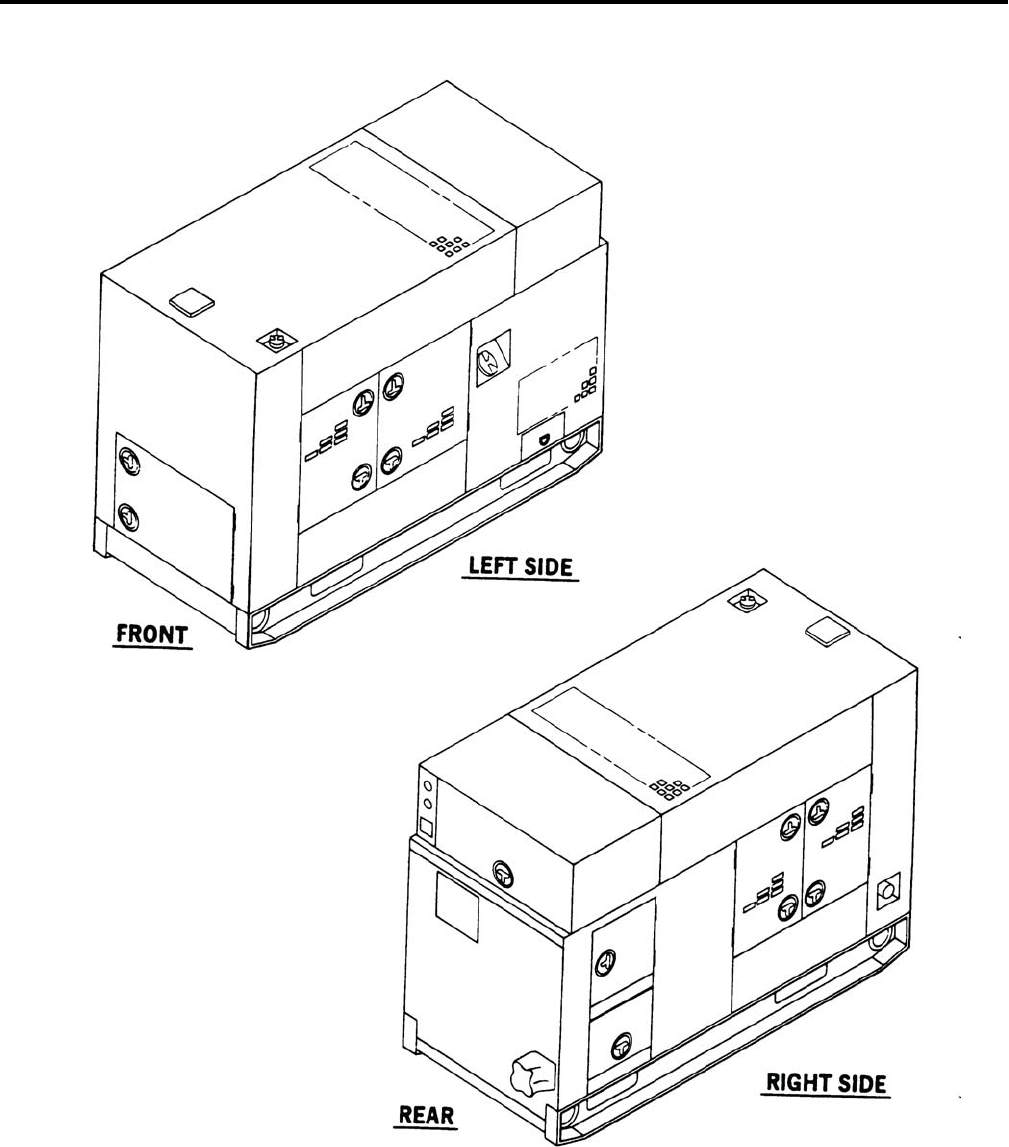
Figure 1. Generator Set, 60 kW, Tactical Quiet.
MAINTENANCE FORMS, RECORDS, AND REPORTS
(1) (A) Department of the Army forms and procedures used for equipment maintenance will be those prescribed
by (as applicable) DA PAM 750-8, The Army Maintenance Management System (TAMMS) Users Manual; DA
PAM 738-751, Functional Users Manual for the Army Maintenance Management Systems - Aviation
(TAMMS-A); or AR 700-138, Army Logistics Readiness and Sustainability.
TM 9-6115-645-10 0001
0001-2

(2) (MC) Maintenance forms and records used by Marine Corps personnel are prescribed by TM 4700-15/1.
(3) (F) Maintenance forms and records used by Air Force personnel are prescribed in AFI 21-101 and the
applicable TO 00-20 Series Technical Orders.
REPORTING EQUIPMENT IMPROVEMENT RECOMMENDATION (EIR)
If your generator set needs improvement, let us know. Send us an EIR. You, the user, are the only one who can
tell us what you don't like about your equipment. Let us know why you don't like the design or performance. If you
have Internet access, the easiest and fastest way to report problems or suggestions is to go to
https://aeps.ria.army.mil/aepspublic.cfm (scroll down and choose the "Submit Quality Deficiency Report" bar). The
Internet form lets you choose to submit an Equipment Improvement Recommendation (EIR), a Product Quality
Deficiency Report (PQDR or a Warranty Claim Action (WCA). You may also submit your information using an SF
368 (Product Quality Deficiency Report). You can send your SF 368 via e-mail, regular mail, or facsimile using the
addresses/facsimile numbers specified in DA PAM 750-8, The Army Maintenance Management System (TAMMS)
Users Manual. We will send you a reply.
(F)USAF Deficiency Reporting and Investigating System, TO 00-35D-54, Appendix A procedures will be used for
electronic submission. Submit mailed forms to: Robins AFB, WRALC/LGMTC, 375 Perry Street, Robins AFB, GA
31098-1865.
CORROSION PREVENTION AND CONTROL (CPC)
Corrosion Prevention and Control (CPC) of Army materiel is a continuing concern. It is important that any
corrosion problems with this item be reported so that the problem can be corrected and improvements can be
made to prevent the problem in future items.
Corrosion specifically occurs with metals. It is an electrochemical process that causes the degradation of metals.
It is commonly caused by exposure to moisture, acids, bases, or salts. An example is the rusting of iron.
Corrosion damage in metals can be seen, depending on the metal, as tarnishing, pitting, fogging, surface residue,
and/or cracking.
Plastics, composites, and rubbers can also degrade. Degradation is caused by thermal (heat), oxidation (oxygen),
solvation (solvents), or photolytic (light, typically UV) processes. The most common exposures are excessive heat
or light. Damage from these processes will appear as cracking, softening, swelling, and/or breaking.
SF Form 368, Product Quality Deficiency Report should be submitted to the address specified in DA PAM 750-8,
The Army Maintenance Management System (TAMMS) Users Manual.
DESTRUCTION OF ARMY MATERIEL TO PREVENT ENEMY USE
Destruction of Army materiel to prevent enemy use shall be in accordance with TM 750-244-3.
PREPARATION FOR STORAGE OR SHIPMENT
Information on Preparation for Storage or Shipment, refer to WP 0005, Preparation for Movement.
WARRANTY INFORMATION
The generator sets (MEP-806A and MEP-816A) manufactured under contract number DAAK01-88-D-D082 are
warranted by Libby Corporation for a period of 36 months or 1800 operating hours, whichever occurs first. The
generator sets manufactured under contract number DAAK01-94-D-0036 are warranted by Fermont, Inc. for a
period of 36 months or 1800 operating hours, whichever occurs first. Refer to Warranty Technical Bulletin TB
9-6115-645-24. The warranty starts on the date found in block 23, DA Form 2408-9, in the logbook. Report all
defects in material or workmanship to your supervisor, who will take appropriate action through your Unit
Maintenance Shop.
TM 9-6115-645-10 0001
0001-3

LIST OF ABBREVIATIONS/ACRONYMS
Abbreviation/Acronym Name
°C Degrees Celsius
°F Degrees Fahrenheit
AAL Additional Authorization List
AOAP Army Oil Analysis Program
BII Basic Issue Item
BOI Basis Of Issue
CAGE Commercial And Government Entity
CAGEC Commercial And Government Entity Code
COEI Components Of End Item
CPC Corrosion Prevention and Control
CTA Common Table of Allowance
DMWR Depot Maintenance Work Requirement
DoD Department of Defense
EIR Equipment Improvement Recommendation
FGC Functional Group Code
ft•lbf Foot Pound-Force
Hz Hertz
JTA Joint Table Of Allowances
kg Kilogram
kPa Kilopascals
kW Kilowatt
m Meter (Metric Measure)
MTOE Modification Table of Organization and Equipment
NATO North Atlantic Treaty Organization
NHA Next Higher Assembly
NIIN National Item Identification Number
NSN National Stock Number
N•m Newton-Meter
P/N Part Number
PMCS Preventive Maintenance Checks and Services
SMR Source, Maintenance, and Recoverability
TAMMS The Army Maintenance Management System
UOC Usable On Code
END OF WORK PACKAGE
TM 9-6115-645-10 0001
0001-4

OPERATOR MAINTENANCE
60 kW 50/60 AND 400 Hz SKID MOUNTED TACTICAL QUIET GENERATOR SETS
EQUIPMENT DESCRIPTION AND DATA
EQUIPMENT CHARACTERISTICS, CAPABILITIES, AND FEATURES
The generator sets, models MEP-806A and MEP-816A (Figure 1), are fully enclosed, self-contained,
skidmounted, portable units. They are equipped with controls, instruments and accessories necessary for
operation as single units or in parallel with another unit of the same class and mode. The generator sets consist of
a diesel engine, brushless generator, excitation system, speed governing system, fuel system, 24 VDC starting
system, control system and fault system.
LOCATION AND DESCRIPTION OF MAJOR COMPONENTS
NOTE
All locations (index numbers) referenced in Figure 1 are given facing the control panel assembly
(rear) of the generator set.
TM 9-6115-645-10 0002
0002-1
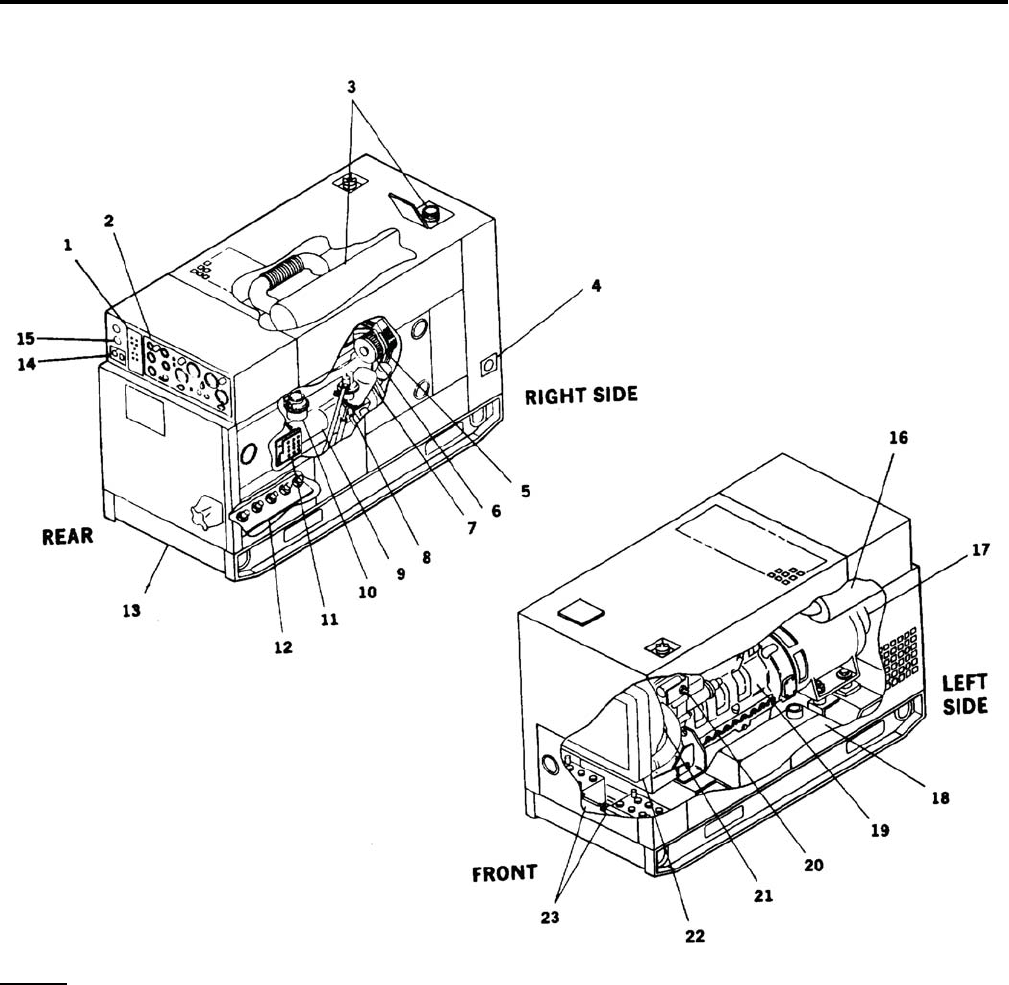
LEGEND
1 Malfunction Indicator Panel 13 Skid Base
2 Control Panel Assembly 14 Convenience Receptacle
3 Muffler 15 Paralleling Receptacle
4 NATO Slave Receptacle 16 Air Cleaner Assembly
5 Fan Belt 17 AC Generator
6 Battery charging Alternator 18 Fuel Tank
7 Oil Filter 19 Engine
8 Dipstick 20 Dead Crank Switch
9 Starter 21 Water Pump
10 Fuel filter/Water Separator 22 Radiator
11 Voltage Reconnection Terminal Board 23 Batteries
12 Load Output Terminal Board
Figure 1. Generator Set Components.
TM 9-6115-645-10 0002
0002-2

Malfunction Indicator Panel (1). The malfunction indicator panel is located to the left of the control panel
assembly. It indicates malfunctions of the generator set components.
Control Panel Assembly (2). The generator set control panel assembly is located at the rear of the generator set
and contains controls and instruments for operating the engine and the generator.
Muffler (3). The muffler and exhaust tubing are connected to the exhaust manifold on the engine. The exhaust
exits from the top of the generator set housing. Gases are exhausted upward.
NATO Slave Receptacle (4). The NATO slave receptacle is located on the right side (front) of the generator set.
It is used for slave starting.
Fan Belts (5). The fan belts are located in the engine compartment on the front of the engine. The belts drive the
fan, water pump, and battery charging alternator.
Battery Charging Alternator (6). The battery charging alternator is located on the right side of the engine. It is
capable of maintaining the batteries in a state of full charge in addition to providing the required 24 VDC control
power.
Oil Filter (7). The oil filter is located in the engine compartment on the left side. The filter removes impurities from
the engine lubricating oil.
Dipstick (8). The dipstick is located in the engine compartment on the right side. The dipstick shows the
lubricating oil level in the engine crankcase.
Starter (9). The starter is located on the right side of the engine. The electric starter mechanically engages the
engine flywheel in order to start the diesel engine.
Fuel Filter/Water Separator (10). The fuel filter/water separator is located in the engine compartment on the right
side. The element removes impurities and water from the diesel fuel.
Voltage Reconnection Terminal Board (11). The voltage reconnection terminal board is located on the right
side (rear) of the generator set. The board allows reconfiguration from 120/208 to 240/416 VAC output.
Load Output Terminal Board (12). The load output terminal board is located on the right side (rear) of the
generator set. There are four output terminals located on the board. They are marked L1, L2, L3 and L0. A fifth
terminal, marked GND, is located next to the output terminals and serves as equipment ground for the generator
set. A removable, solid copper bar is connected between the L0 and GND terminals.
Skid Base (13). The skid base supports the generator set. It has fork lift access openings and cross members for
short distance movement. The skid base has provisions in the bottom for installation of the generator set on a
trailer.
Convenience Receptacle (14). The convenience receptacle is a 10 Amp, 120 VAC receptacle used to operate
small plug in type equipment. It is protected by a Ground Fault Circuit Interrupter located below the Malfunction
Indicator Panel (1-9.12), an overload circuit breaker located inside the control box, and an in-line fuse on
generator sets, contract number DAAKO1-88-D-0082. The convenience receptacle power is available at all times
during operation of the generator set.
Paralleling Receptacle (15). The Paralleling receptacle is used to connect the paralleling cable between two
generator sets of the same size and mode to operate in parallel.
Air Cleaner Assembly (16). The air cleaner assembly is located on the left side behind the air cleaner access
door. It consists of a dry-type, disposable paper element and canister. The air cleaner assembly features a dust
collector which traps large dust particles. The air cleaner assembly has a restriction indicator which will indicate
when the air cleaner element requires servicing.
AC Generator (17). The AC generator is a single bearing, drip-proof, synchronous, brushless, three phase,
fan-cooled generator. The generator is coupled directly to the rear of the diesel engine.
Fuel Tank (18). The fuel tank is located below the engine and between the skid base side members. The fuel
tank has a capacity of 43 gallons (162.7 liters) which will allow the generator set to operate for at least 8 hours
without refueling.
Engine (19). The generator is powered by a six cylinder, four cycle, fuel injected, turbocharged, liquidcooled
diesel engine which occupies the front half of the generator set. The engine is also equipped with a fuel
filter/water separator, oil filter, and an air cleaner assembly. Protection devices automatically stop the engine
during conditions of high coolant temperature, low oil pressure, no fuel, over-speed, or over-voltage.
TM 9-6115-645-10 0002
0002-3

Dead Crank Switch (20). The Dead Crank switch is located in the engine compartment on the left side. The
switch allows the engine to be cranked without starting for maintenance purposes.
Water Pump (21). The water pump is located in the engine compartment on the front of the engine. The pump
circulates the engine coolant through the engine block and the radiator.
Radiator (22). The radiator is located at the front of the generator set. It acts as a heat exchanger for the engine
coolant.
Batteries (23). Two batteries are located at front of the generator set. The batteries are electrolyte serviceable,
lead acid, 12 volt type, connected in series. After starting, the generator set is capable of operating with batteries
removed. A diode and a fuse, located behind the control panel assembly, protect the generator set if the batteries
are incorrectly connected.
Winterization Kit. See Chapter 6 for detailed information and breakdown.
DIFFERENCES BETWEEN MODELS
The differences between models of the generator sets covered in this manual are as follows:
Model MEP-806A is equipped with a 50/60 Hz generator.
Model MEP-816A is equipped with a 400 Hz generator.
EQUIPMENT DATA
For a list of Leading Particulars refer to Table 1.
Table 1. Leading Particulars.
1. Generator Set:
Model Number:
60 kW 50/60 Hz Tactical Quiet MEP-806A
60 kW 400 Hz with Tactical Quiet MEP-816A
National Stock Number (NSN):
MEP-806A 6115-01-274-7390
MEP-816A 6115-01-274-7395
Overall Length:
MEP-806A 87 in. (221 cm.)
MEP-816A 87 in. (221 cm.)
Overall Width:
MEP-806A 35.7 in. (90.8 cm.)
MEP-816A 35.7 in. (90.8 cm.)
Overall Height:
MEP-806A 59 in. (149.9 cm.)
MEP-816A 59 in. (149.9 cm.)
Overall Weights (less Basic Issue Items):
MEP-806A 3556 lb. (1613 kg.)
MEP-816A 3606 lb. (1635.7 kg.)
Wet Weights:
MEP-806A 3992 lb. (1810.8 kg.)
MEP-816A 4042 lb. (1833.5 kg.)
TM 9-6115-645-10 0002
0002-4

Table 1. Leading Particulars. - Continued
2. Engine:
Manufacturer John Deere
Model 6059T
Type Six cylinder, four cycle, turbocharged, diesel
Displacement 359 cu. in. (5.9 liters)
Altitude Degradation, 4,000 ft. (1,220 m.) to 8,000 ft.
(2,440 m.)
3.5% per 1000 ft. (305 m.)
Firing Order 1, 5, 3, 6, 2, 4
Cold Weather Starting Aid System Use 40 °F(4°C) or below
Valve Tappet Clearance Adjustment:
Hot or Cold (Intake) 0.014 in. (0.35 mm.)
Hot or Cold (Exhaust) 0.018 in. (0.45 mm.)
3. Cooling System:
Type Pressurized radiator and pump
Capacity 20.5 qt. (19.4 liters)
Normal Operating Temperature 170-200 °F (77-93 °C)
Temperature Indicating System Voltage Rating 24 VDC
4. Lubricating System:
Type Full flow, circulating pressure
Oil Pump Type Positive displacement gear
Normal Operating Pressure 25-60 psi. (172-414 kPa.)
Oil Filter Type Full flow, spin-on, replaceable element
Capacity 18 qt. (17 liters)
Pressure Indicating System Voltage Rating 24 VDC
5. Fuel System:
Type of Fuel DF-1, DF-2, DF-A, JP4, JP5, JP8
Fuel Tank Capacity 43 gal. (162.7 liters)
Fuel Consumption Rate (50/60 Hz): 5.06 gal. (19.2 liters) per hour
Fuel Consumption Rate (400 Hz): 5.37 gal. (20.3 liters) per hour
Auxiliary Fuel Pump:
Voltage Rating 24 VDC
Delivery Pressure 5.0-6.5 psi. (34.5-65.5 kPa.) (max)
Fuel Level Switch:
Type Float
Current 3.0 amps at 6-32 VDC
TM 9-6115-645-10 0002
0002-5

Table 1. Leading Particulars. - Continued
6. Engine Starting System:
Batteries Two 12 volt, connected in series
Starter:
Manufacturer Nippondenso Co. Ltd
Model RE39930A
Voltage Rating 24 VDC
Drive Type Gear reduction
Battery Charging Alternator:
Manufacturer Prestolite
Model 8EM3002GC
Amperage Rating 42 amps at 24 VDC
Protective Fuse 50 amps
7. AC Generator:
Manufacturer Marathon Electric
Type Rotating field synchronous
Load Capacity 60 kW
Current Ratings: 50 Hz 60 Hz 400 Hz
120/208 volt connection 172 amps 208 amps 208 amps
240/416 volt connection 82 amps 104 amps 104 amps
Power Factor 0.8
Cooling Fan cooled
Drive Type Direct coupling
Duty Classification Continuous
8. Governing System:
Load Measuring Unit:
Manufacturer Technology Research
Model 19310
Governor Control Unit:
Manufacturer Barber-Colman
Model DYNA 10502-003-0-2
9. Protection Devices:
Low Oil Pressure Switch:
Trip Pressure 15±3 psi. (103.4±20.7 kPa.)
Operating Voltage 12/24 VDC
Current Rating 7 amps resistive; 4 amps inductive
Coolant High Temperature Switch:
Trip Temperature 225±3.5 °F (107±2.1 °C)
TM 9-6115-645-10 0002
0002-6

Table 1. Leading Particulars. - Continued
Voltage Rating 12-120 VDC
Current Rating 2 amps
Overspeed Switch:
Element Trip and Reset 2200±40 RPM
Voltage Rating 28 VDC
Current Rating 1 amp
Overvoltage:
Trip Point Conditions 153±3 VAC for no less than 200 milliseconds (120 VAC
coil winding)
Trip Point No more than 1.25 seconds after trip conditions exist
END OF WORK PACKAGE
TM 9-6115-645-10 0002
0002-7/(8 blank)

OPERATOR MAINTENANCE
60 kW 50/60 AND 400 Hz SKID MOUNTED TACTICAL QUIET GENERATOR SETS
THEORY OF OPERATION
INTRODUCTION
This section contains functional descriptions of the generator set and explains how the controls and indicators
interact with the system.
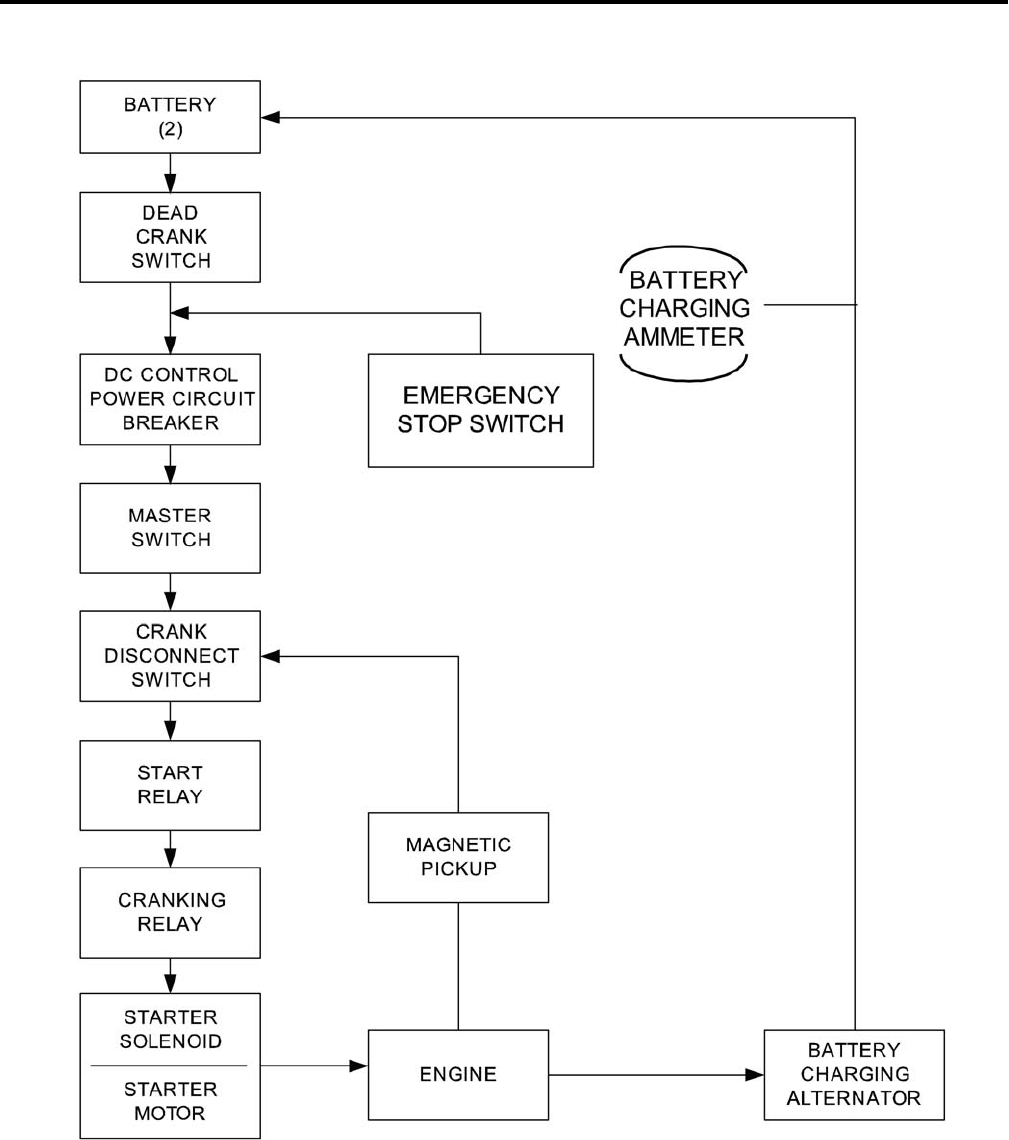
ENGINE STARTING SYSTEM
The Engine Starting System (Figure 1), consists of two 12-volt batteries connected in series, a starter, a 24 volt
battery charging alternator, a magnetic pickup (for sensing engine speed) and the related switches and relays
required for control of the starting system. For engine cranking, battery power is supplied to the starter motor
through the starter solenoid which in turn is controlled by the cranking relay. The starter then engages the engine
flywheel causing the engine to turn over. For engine starting, the DEAD CRANK switch must be in the NORMAL
position, the DC Control power circuit breaker must be pushed in, the EMERGENCY STOP switch must be in the
OUT position and the MASTER SWITCH is moved to the START position. The cranking relay is then controlled
by a circuit consisting of the start relay and crank disconnect switch. As the engine accelerates to the preset
speed (sensed by the magnetic pickup), the crank disconnect switch opens and deenergizes the cranking relay to
stop and disengage the starter. The starting sequence may also be stopped by moving the MASTER SWITCH to
OFF. The engine may be cranked without starting by use of the DEAD CRANK switch. With the DEAD CRANK
switch in the CRANK position, the cranking relay, starter solenoid and starter motor are energized without
activating any other starting or control function. The batteries are charged by the battery charging alternator that is
belt driven by the engine. Generator set control system power is also supplied by the battery charging alternator.
The BATTERY CHARGE ammeter indicates the charge/discharge rate of the batteries, from -10 AMPS to +20
AMPS, in 5 AMPS increments. Normal operating indication depends on the state of charge in the batteries. A low
charge, such as exists immediately after engine starting, will cause a high reading (needle moves toward
CHARGE area). When the charge in the batteries has been restored, the indicator moves near zero.
TM 9-6115-645-10 0003
0003-1
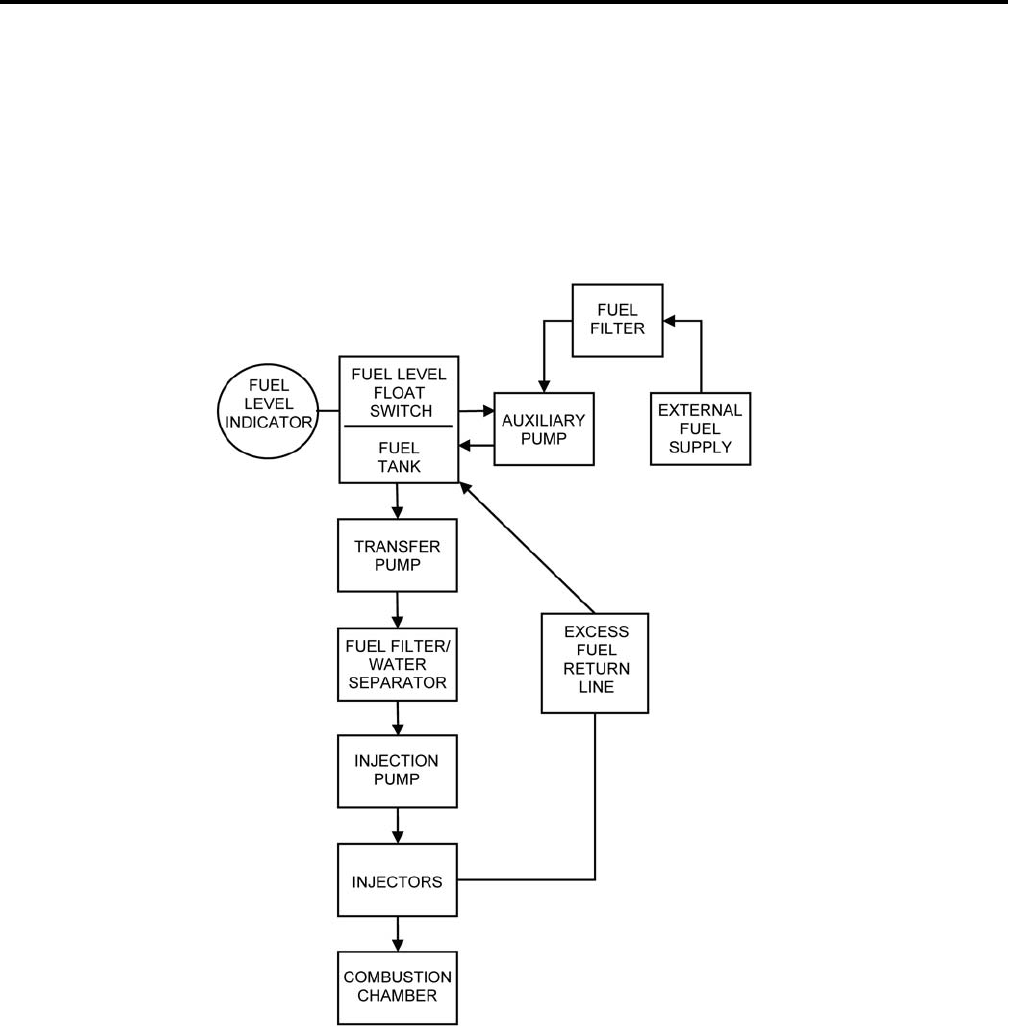
FUEL SYSTEM
The Fuel System (Figure 2), consists of piping, fuel tank, transfer pump, fuel filter/water separator, injection pump
and injectors. Fuel is drawn from the fuel tank by the transfer pump. After reaching the transfer pump, fuel passes
through a fuel filter/water separator where water and small impurities are removed. The fuel then goes to an
injection pump where it is pressurized and pushed into the injectors. Through the injectors fuel enters the diesel
engine combustion chamber, where it is mixed with air and ignited. The fuel that is not used is returned to the fuel
tank via an excess fuel return line.
Figure 2. Fuel System.
The Auxiliary Fuel System consists of an external fuel supply, fuel filter, piping, a 24 VDC auxiliary fuel pump, and
a fuel level float switch. When the MASTER SWITCH is set on PRIME & RUN AUX FUEL it actuates the auxiliary
fuel pump and transfers fuel from the external fuel supply to the generator set fuel tank. The fuel level float switch
shuts off the auxiliary fuel pump when the generator set fuel tank is full and reactivates the pump as the level
drops. The FUEL LEVEL indicator indicates fuel level of generator set fuel tank from (E) empty to (F) full in
quarter tank increments.
TM 9-6115-645-10 0003
0003-3
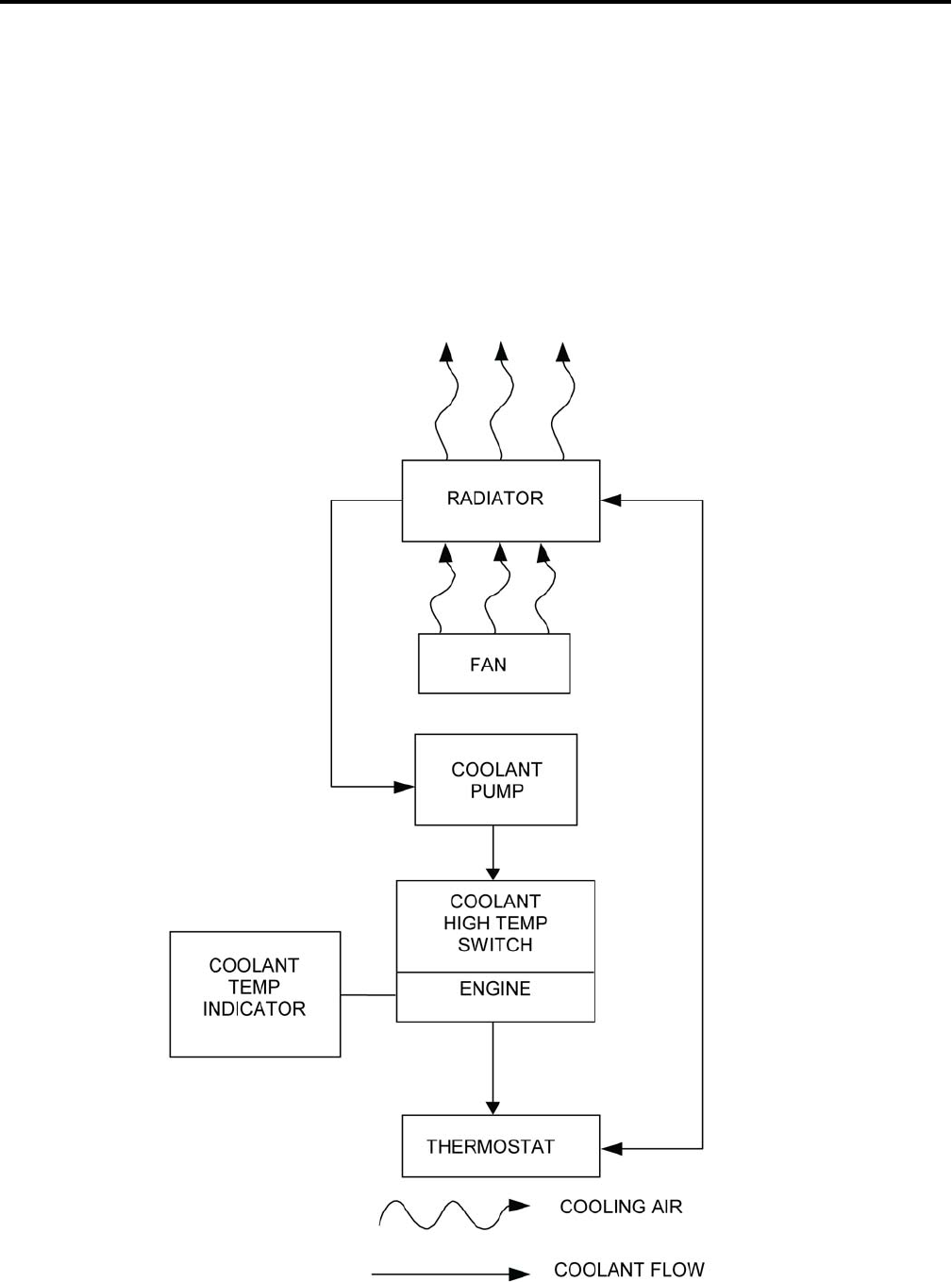
ENGINE COOLING SYSTEM
The Engine Cooling System (Figure 3) consists of a radiator, hoses, thermostat, water pump, a belt driven fan,
cooling jackets, and oil cooler. The water pump forces coolant through passages (cooling jackets) in the engine
block and cylinder head where the coolant absorbs heat from the engine. When the engine reaches normal
operating temperature, the thermostat opens and the heated coolant flows through the upper radiator hose
assembly into the radiator. The cooling fan circulates air through the radiator where the coolant temperature is
reduced.
A coolant high temperature switch provides automatic shut down in the event that coolant temperature exceeds
225±3.5 °F (107±2.1 °C). The COOLANT TEMP indicator indicates the engine coolant temperature, from 120 to
240 °F (48 to 115 °C).
Figure 3. Engine Cooling System.
TM 9-6115-645-10 0003
0003-4
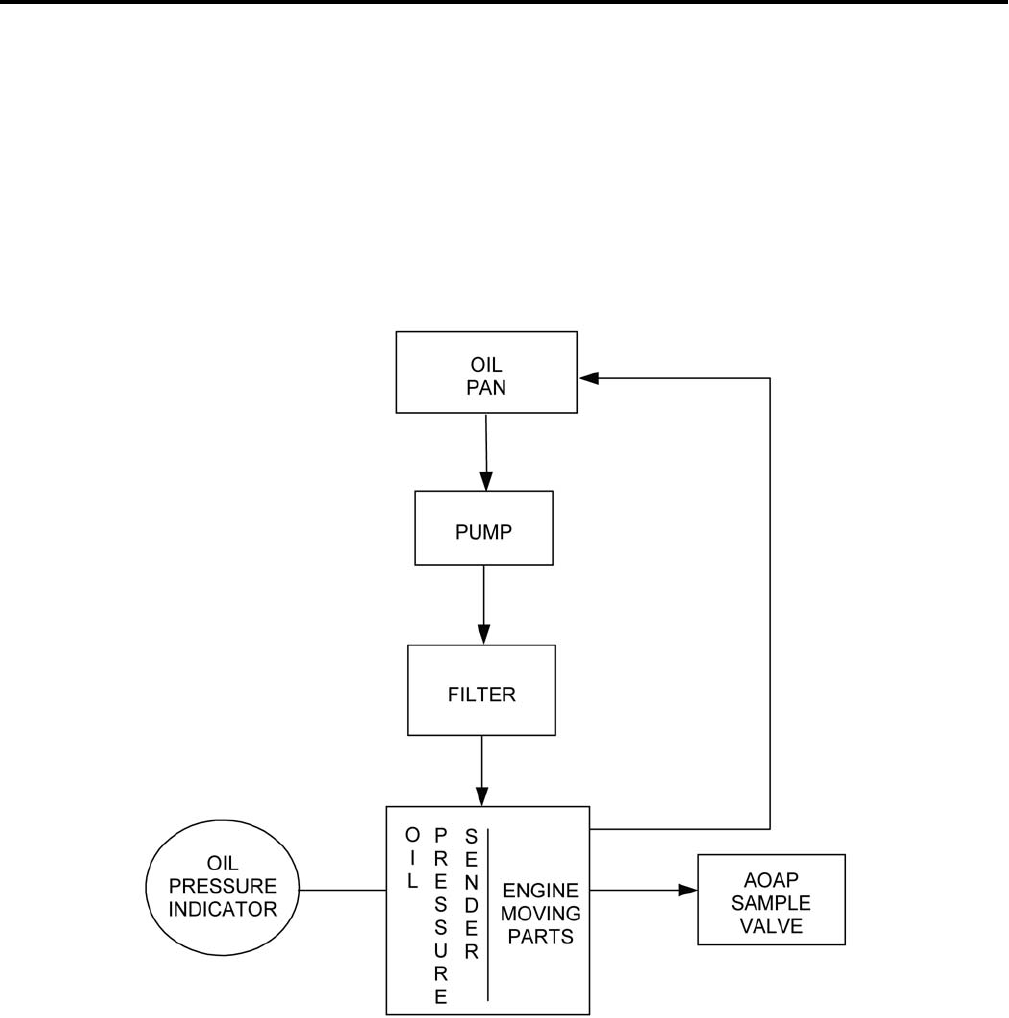
LUBRICATION SYSTEM
The Lubrication System (Figure 4) consists of an oil pan, dipstick, pump, oil pressure sender, AOAP sample
valve, and filter. The oil pan is a reservoir for engine lubricating oil. The dipstick indicates oil level in the oil pan. A
pump draws oil from the oil pan and through a screen removing large impurities. The oil then passes through a
spin-on type filter where small impurities are removed. From the filter, oil enters the engine and is distributed to
the engine's internal moving parts. After passing through the engine, the oil returns to the oil pan. The OIL
PRESSURE indicator indicates oil pressure sensed by the oil pressure sender in the engine. The engine will shut
off automatically if the oil pressure drops to a dangerously low level. The oil level can be checked with engine
running.
Figure 4. Engine Lubrication System.
TM 9-6115-645-10 0003
0003-5
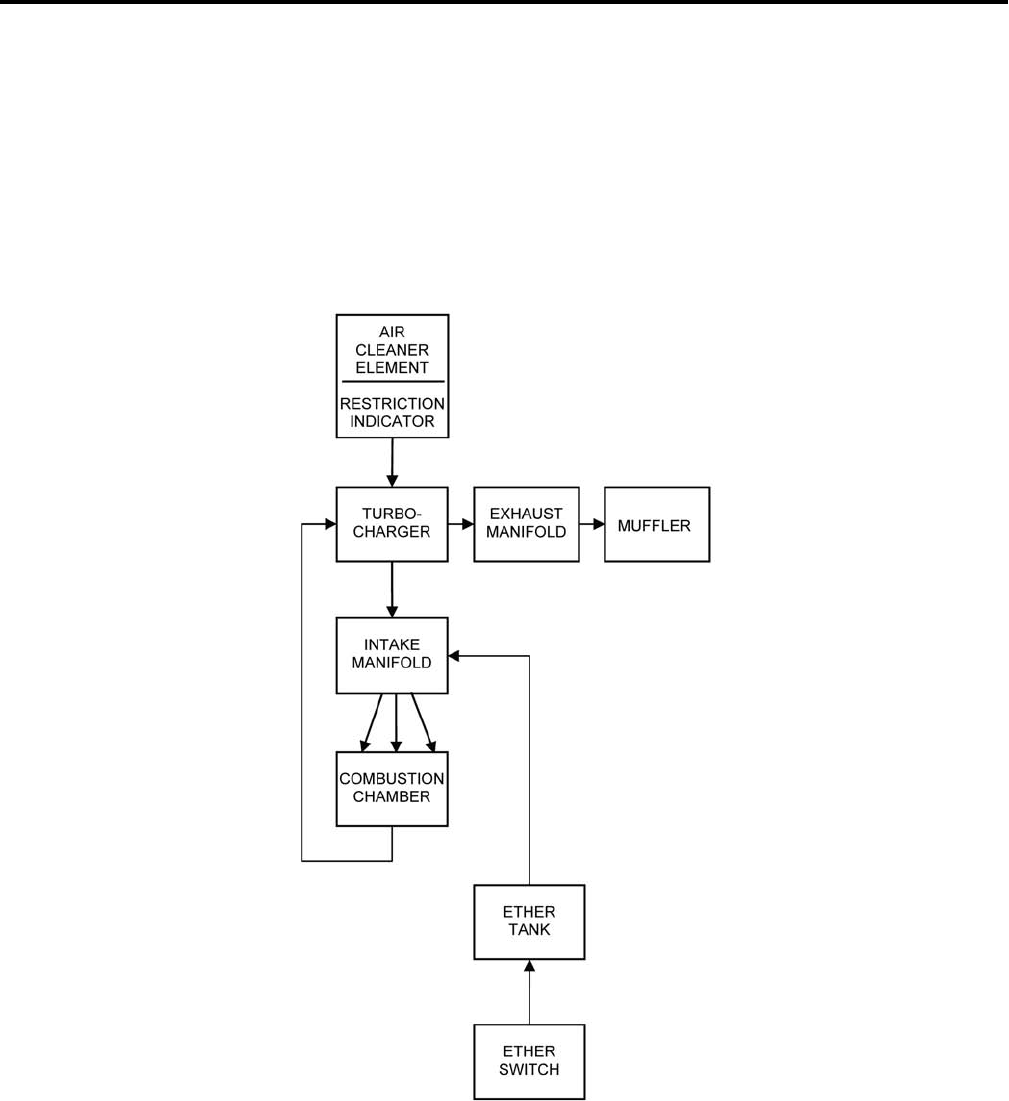
AIR INTAKE AND EXHAUST SYSTEM
The Air Intake and Exhaust System (Figure 5), consists of an air cleaner assembly, intake manifold, turbocharger,
exhaust manifold, and muffler. Ambient air is drawn into the air cleaner assembly where it passes through the air
cleaner element. Airborne dirt is removed and trapped in the element. A restriction indicator, located on the air
cleaner assembly housing, displays red when the air cleaner element should be serviced. Dirt can be removed
from the air cleaner housing by pinching an evacuator valve.
Filtered air is drawn out of the air cleaner assembly through air intake tubes to the turbocharger where it is forced
into the intake manifold where it passes into the combustion chambers and is mixed with fuel from the injectors.
Figure 5. Air Intake and Exhaust System.
The engine exhaust gases are released into the turbocharger. The exhaust gases drive the turbocharger forcing
large amounts of air into the intake manifold. After passing through the turbocharger, the exhaust gasses are
channeled into the muffler that deadens the sound of the exhaust gases. The gases pass from the muffler through
the muffler outlet and are vented upward from the generator set housing.
Cold outside temperatures make starting the engine difficult. To improve engine starting at temperatures above
-25 °F (-31.6 °C), a cold weather starting aid has been provided that features an ether injection system. Ether is
injected into the combustion chamber when the ETHER switch is ON and the MASTER SWITCH is in the START
position. For engine starting at temperatures from -50 to -25 °F (-45.5 to -31.6 °C), a cold weather starting kit
(Winterization Kit) can be installed. See Chapter 6 for Winterization Kit Operating Procedures.
TM 9-6115-645-10 0003
0003-6
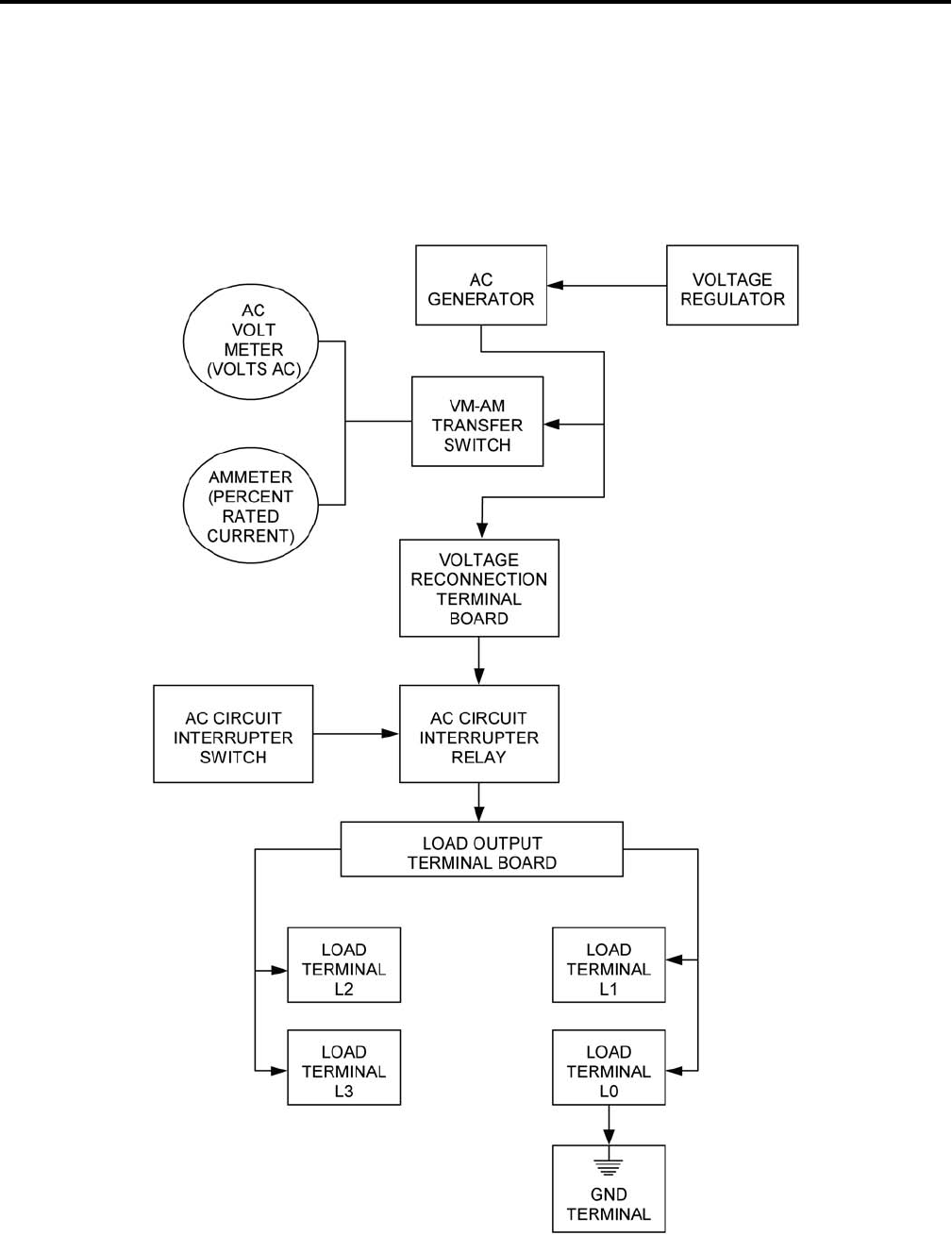
OUTPUT SUPPLY SYSTEM
The Output Supply System (Figure 6) consists primarily of the AC generator, the output load terminal board, the
voltage reconnection terminal board, the VM-AM transfer switch, and the AC circuit interrupter relay. Power
created by the AC generator is supplied through the voltage reconnection terminal board and the AC circuit
interrupter relay to the output load terminals on the output load terminal board. The voltage reconnection terminal
board allows configuration of the generator set for 120/208 volt connections or 240/416 volt connections.
Figure 6. Output Supply System.
TM 9-6115-645-10 0003
0003-7

The AC CIRCUIT INTERRUPTER switch closes and opens the AC circuit interrupter relay. This enables or
interrupts the power flow between the voltage reconnection terminal board and the output load terminals. The AC
circuit interrupter relay is also opened automatically during any of the specified set faults. The voltage regulator
senses AC generator output voltage and provides control voltage to the AC generator exciter to maintain the
desired AC generator output voltage. The position of the VM-AM transfer switch selects the output load terminals
from which current and voltage are measured and are indicated on the AC voltmeter (VOLTS AC) and the
ammeter (PERCENT RATED CURRENT).
WINTERIZATION KIT
See Chapter 6 for Operating Procedures.
END OF WORK PACKAGE
TM 9-6115-645-10 0003
0003-8


CHAPTER 2
OPERATOR INSTRUCTIONS
WORK PACKAGE INDEX
Title WP Sequence No.
Description and Use of Operator Controls and Indicators ...................................................................................0004
Operation Under Usual Conditions......................................................................................................................0005
Operation Under Unusual Conditions..................................................................................................................0006
Emergency Information .......................................................................................................................................0007
TM 9-6115-645-10

OPERATOR MAINTENANCE
60 kW 50/60 AND 400 Hz SKID MOUNTED TACTICAL QUIET GENERATOR SETS
DESCRIPTION AND USE OF OPERATOR CONTROLS AND INDICATORS
GENERAL
This work package describes and illustrates the controls and indicators to ensure proper operation of the
generator set.
CONTROL PANEL ASSEMBLY
The control panel assembly contains most of the operating controls and indicators for the generator set. Figure 1
shows the control panel assembly layout and Table 1 describes each control and indicator.
TM 9-6115-645-10 0004
0004-1
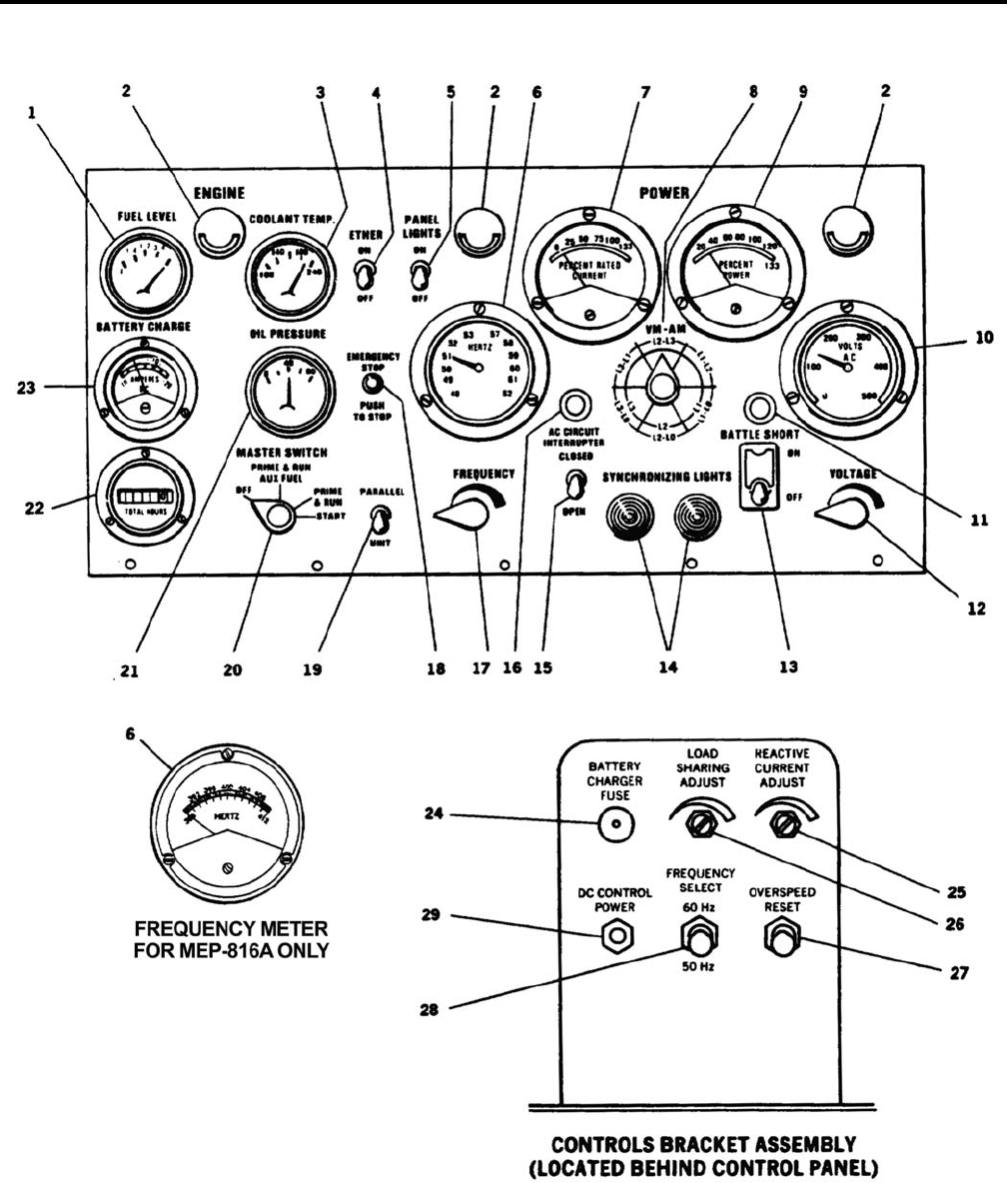
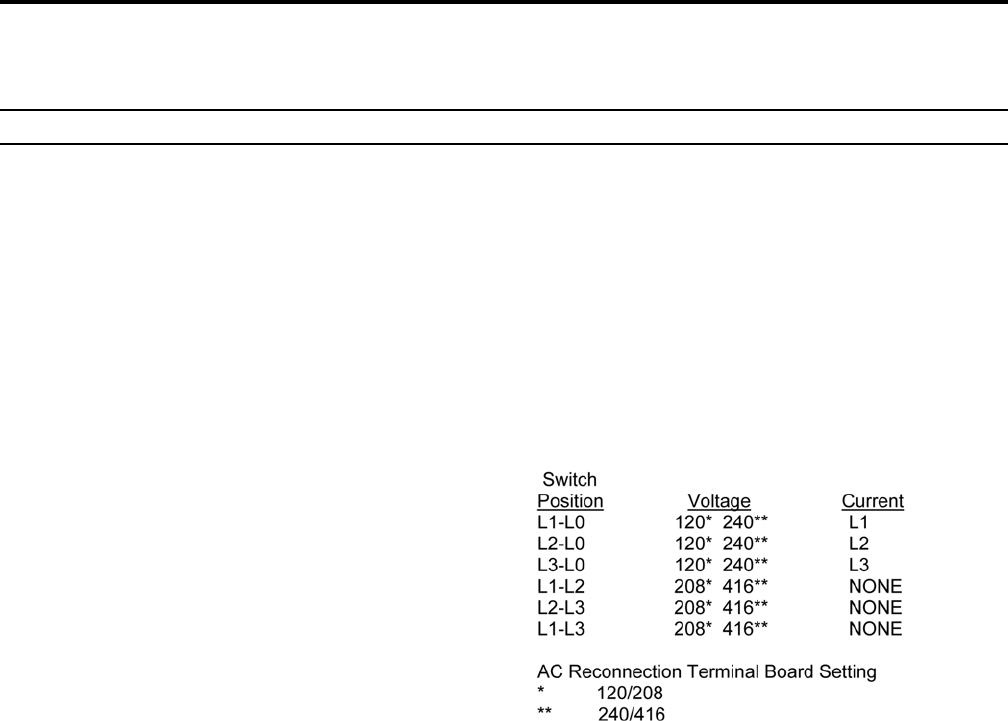
Table 1. Control Panel Controls and Indicators.
Key Control/Indicator Function
1. FUEL LEVEL indicator Indicates fuel level.
2. Panel lights Illuminates control panel.
3. COOLANT TEMP indicator Indicates engine coolant temperature.
4. ETHER switch Activates or deactivates cold starting aid system.
5. PANEL LIGHTS switch Activates or deactivates panel lights.
6. FREQUENCY meter (HERTZ) Indicates generator set output frequency.
7. Ammeter (PERCENT RATED
CURRENT)
Indicates generator set load current as a percent of rated
current.
8. VM-AM transfer switch Allows selection of current and voltage readings between output
load terminals as follows:
9. Kilowattmeter (PERCENT
POWER)
Indicates generator set output power as a percent of rated
power.
10. AC Voltmeter (VOLTS AC) Indicates output voltage of generator set.
11. BATTLE SHORT light Amber light indicates switch on.
12. VOLTAGE adjust
potentiometer
Adjusts generator set voltage.
13. BATTLE SHORT switch Bypasses protective devices.
14. SYNCHRONIZING LIGHTS Indicates synchronization of units to be paralleled.
15. AC CIRCUIT INTERRUPTER
switch
Opens or closes AC circuit interrupter relay.
16. AC CIRCUIT INTERRUPTER
light
Green light indicates AC circuit interrupter is closed.
17. FREQUENCY adjust
potentiometer
Adjusts frequency of generator set.
18. EMERGENCY STOP
pushbutton
Shuts down generator set.
19. PARALLEL UNIT switch Energizes or deenergizes paralleling circuits.
20. MASTER SWITCH OFF - De-energizes all circuits, except panel lights.
PRIME & RUN AUX FUEL - Energizes generator set run
circuits with auxiliary fuel pump operating.
PRIME & RUN - Energizes generator set run circuits with
auxiliary fuel system de-energized.
START - Energizes starter
TM 9-6115-645-10 0004
0004-3

Table 1. Control Panel Controls and Indicators. - Continued
Key Control/Indicator Function
21. OIL PRESSURE indicator Indicates oil pressure.
22. Time meter (TOTAL HOURS) Indicates total engine operating hours.
23. BATTERY CHARGE ammeter Indicates charge/discharge rate of batteries.
24. BATTERY CHARGER FUSE
(Located on controls bracket
assembly)
Protects battery charging alternator from overload.
25. REACTIVE CURRENT
ADJUST rheostat (Located on
controls bracket assembly)
Adjusts current for load sharing requirements (maintenance
personnel only).
26. LOAD SHARING ADJUST
rheostat (Located on controls
bracket assembly)
Adjusts power for load sharing requirements (maintenance
personnel only).
27. OVERSPEED RESET switch
(Located on controls bracket
assembly)
Resets generator set after an overspeed condition
(maintenance personnel only).
28. FREQUENCY SELECT switch
(MEP-806A only) (Located on
controls bracket assembly)
Allows selection of 50 Hz or 60 Hz.
29. DC CONTROL POWER circuit
breaker (Located on controls
bracket assembly)
Energizes or de-energizes DC circuits.
TM 9-6115-645-10 0004
0004-4
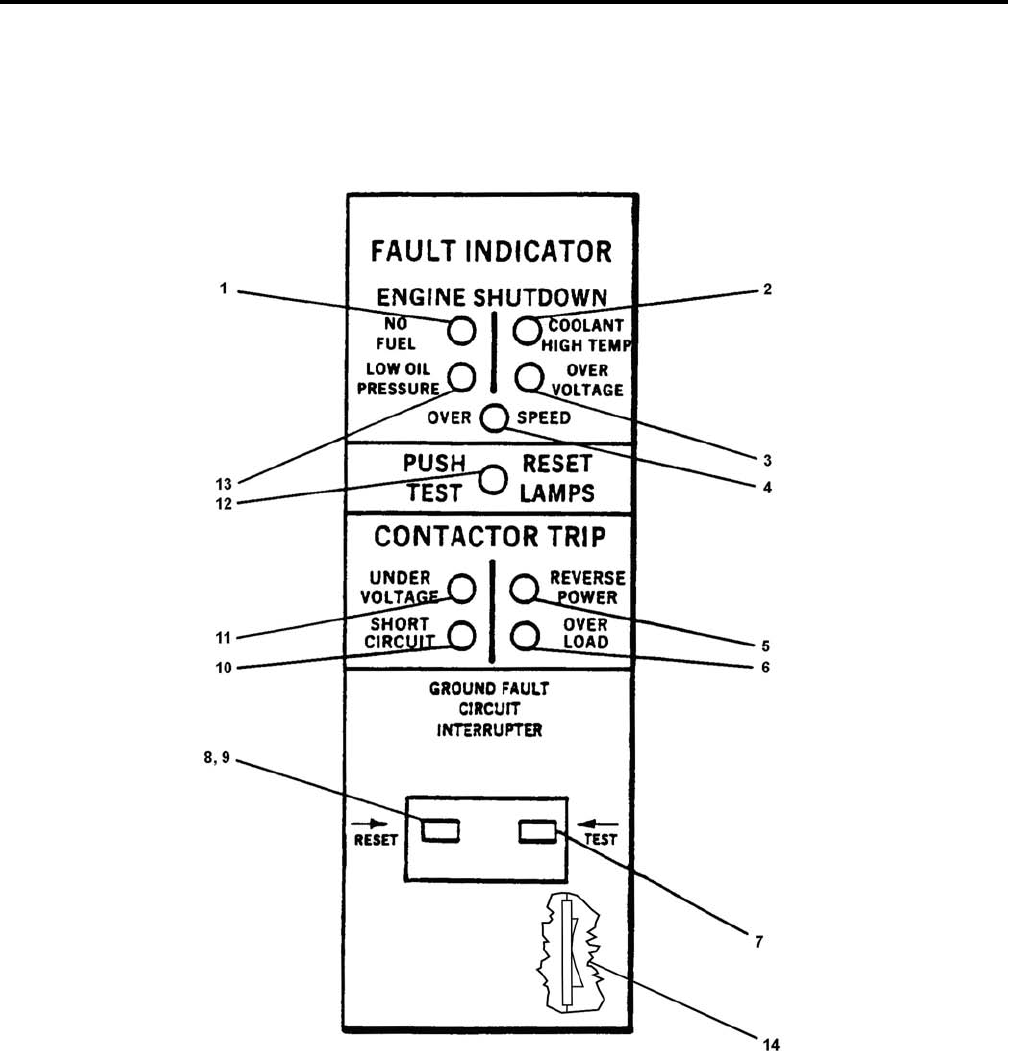
MALFUNCTION INDICATOR PANEL
The malfunction indicator panel (Figure 2) is located to the left of the control panel. It contains a series of lights
which indicate a generator set failure or abnormal operating condition. Table 2 describes each indicator light.
Figure 2. Malfunction Indicator Panel.
TM 9-6115-645-10 0004
0004-5

Table 2. Malfunction Indicator Panel.
Key Control/Indicator Function
1. NO FUEL indicator Lights when fuel level in fuel tank is below preset level.
2. COOLANT HIGH TEMP
indicator
Lights when engine coolant temperature exceeds 225±3.5 °F
(107±2.1 °C).
3. OVERVOLTAGE indicator Lights when voltage in 120 volt generator coil exceeds 153±3
volts.
4. OVERSPEED indicator Lights when engine speed exceeds 2200±40 RPM.
5. REVERSE POWER indicator Lights when power flow into generator set exceeds 20±3
percent of rated current.
6. OVER LOAD indicator Lights when current in any phase exceeds 110 percent of rated
current.
7. GROUND FAULT CIRCUIT
INTERRUPTER TEST
pushbutton
Tests GROUND FAULT CIRCUIT INTERRUPTER.
8. GROUND FAULT CIRCUIT
INTERRUPTER indicator
Indicates a ground fault condition.
9. GROUND FAULT CIRCUIT
INTERRUPTER RESET
pushbutton
Resets GROUND FAULT CIRCUIT INTERRUPTER.
10. SHORT CIRCUIT indicator Lights when generator set output in any phase exceeds 425±25
percent of rated current.
11. UNDERVOLTAGE indicator Lights when voltage in 120 volt generator coil winding drops
below 99±4 VAC.
12. PUSH TEST RESET LAMPS
switch
Tests and resets fault indicator lamps.
13. LOW OIL PRESSURE
indicator
Lights when engine lubrication systems pressure is less than
15±3 psi (103.4±20.7 kPa) during engine operation.
14. Convenience Receptacle
Overload Circuit Breaker
(10-amp in-line fuse on
generator sets, contract
number DAAK01-88-D-0082)
Circuit breaker trips when load on convenience receptacle
exceeds 10 amps (fuse blows on generator sets, contract
number DAAK01-88-D-0082).
END OF WORK PACKAGE
TM 9-6115-645-10 0004
0004-6
OPERATOR MAINTENANCE
60 kW 50/60 AND 400 Hz SKID MOUNTED TACTICAL QUIET GENERATOR SETS
OPERATION UNDER USUAL CONDITIONS
INITIAL SETUP:
Tools and Special Tools
Generator Mechanicla Tool Kit
Materials/Parts
Ground Rod Assembly, ground conductor/cable
Personnel Required
One
References
FM 5-424
WP 0004
Starting Procedure (WP 0005-6)
Stopping Procedure (WP 0005-7)
WP 0011
Equipment Condition
Generator set grounded, off & operational
GENERAL
This work package provides information and guidance for generator set operation under normal conditions; refer
to FM 5-424.
ASSEMBLY AND PREPARATION FOR USE
Installation of Ground Rod
WARNING
All metal jewelry can conduct electricity and become entangled in generator set components.
Remove all jewelry when working on generator set. Failure to comply with this warning can cause
injury or death to personnel.
WARNING
High voltage is produced when generator set is in operation. Never attempt to start
the generator set unless it is properly grounded. Do not ground yourself in
standing water. Never attempt to connect or disconnect load cables while the
generator set is running. Failure to comply may cause injury or death to personnel.
1. Insert ground cable (Figure 1, Item 2) through slot on load output terminal board terminal marked GND (1).
Tighten terminal nut.
2. Connect coupling (5) to ground rod (4) and screw driving stud (3) into coupling (5). Make sure that driving
stud (3) seats on ground rod (4).
3. Drive ground rod into ground until coupling is just above surface.
4. Remove driving stud and install another section of ground rod.
5. Install another coupling (5) and driving stud (3). Drive ground rod down until new coupling is just above
ground surface.
6. Repeat Steps 4 and 5 until ground rod has been driven eight feet or deeper, providing an effective ground.
7. Connect clamp (6) and ground cable (2) to ground rod (4) and tighten clamp screw.
TM 9-6115-645-10 0005
0005-1
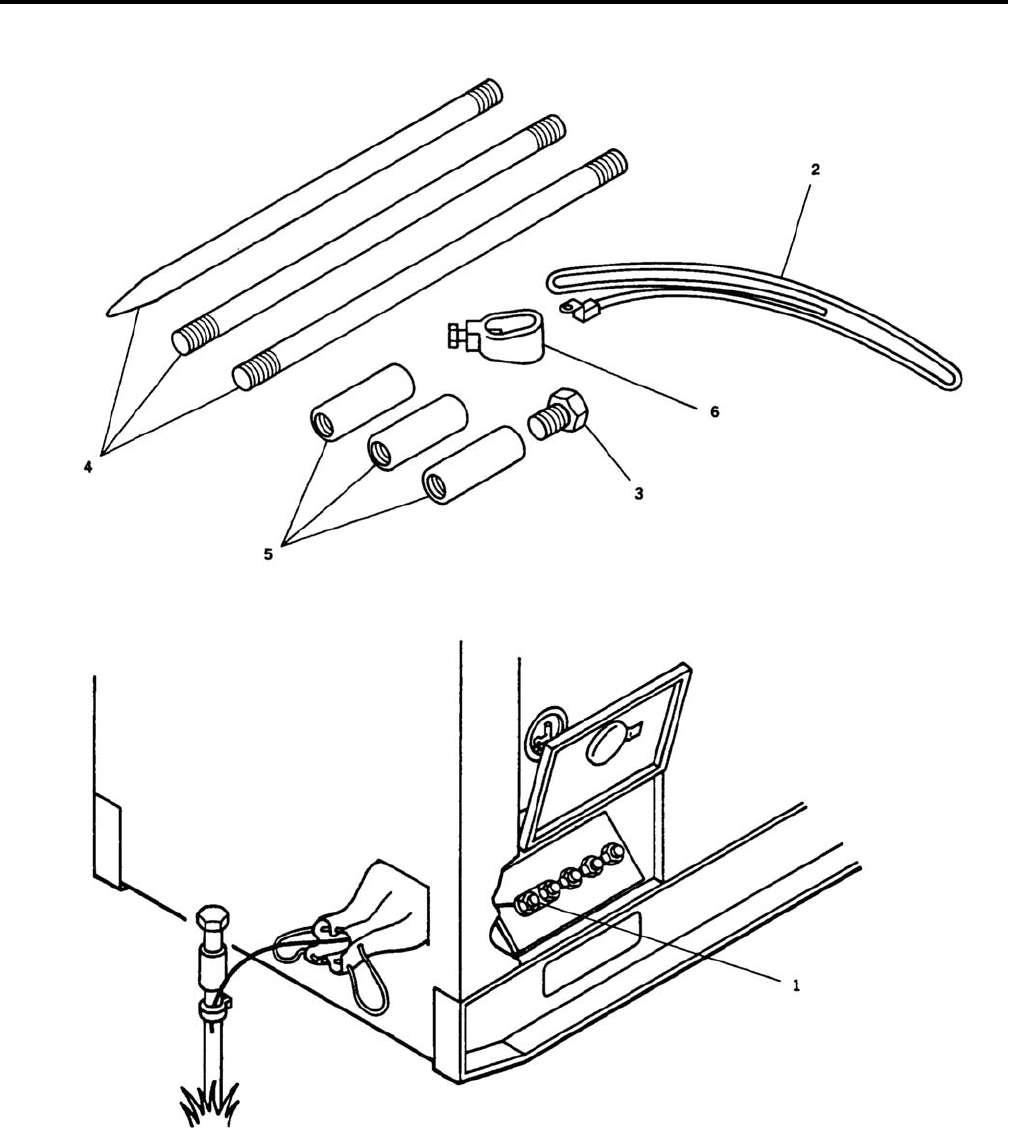

Installation of Load Cables
WARNING
All metal jewelry can conduct electricity and become entangled in generator set components.
Remove all jewelry when working on generator set. Failure to comply with this warning can cause
injury or death to personnel.
WARNING
High voltage is produced when generator set is in operation. Never attempt to start
the generator set unless it is properly grounded. Do not ground yourself in
standing water. Never attempt to connect or disconnect load cables while the
generator set is running. Failure to comply may cause injury or death to personnel.
WARNING
Dangerous voltage exists on live circuits. Always observe precautions and never work alone.
Failure to comply with this warning can cause injury or death to personnel.
WARNING
High voltage is produced when this generator set is in operation. Ensure engine
control and DEAD CRANK switches are set to OFF, negative battery cable is
disconnected. and unit is completely shut down and free of any power source
before attempting any troubleshooting or maintenance on unit. Failure to comply
may cause injury or death to personnel.
CAUTION
Do not connect the load cables to the convenience receptacle. Failure to observe this caution can
result in damage to the generator set.
1. Shutdown generator set.
2. Select required output terminals from Table 1.
3. Open output load terminal door.
WARNING
Jumper will not be removed unless the equipment being powered specifically requires an isolated
ground (floating ground). Failure to comply with this warning can cause injury or death to
personnel.
4. Ensure that jumper is securely fastened between L0 and ground.
5. Using terminal nut wrench (Figure 2, Item 3) loosen terminal nuts (1) on terminals (2) selected in Step 2.
6. Insert ends of load cables through load cable entrance box. Insert ends of cables into slots of load terminal
studs (2).
7. Tighten load terminal nuts (1).
8. Secure wrench (3) in bracket inside load terminal board door, and close door.
CAUTION
When using single phase connections, always attempt to balance loads between terminals (do
not connect all loads between one terminal and L0). Failure to observe this caution can result in
damage to the generator set.
TM 9-6115-645-10 0005
0005-3
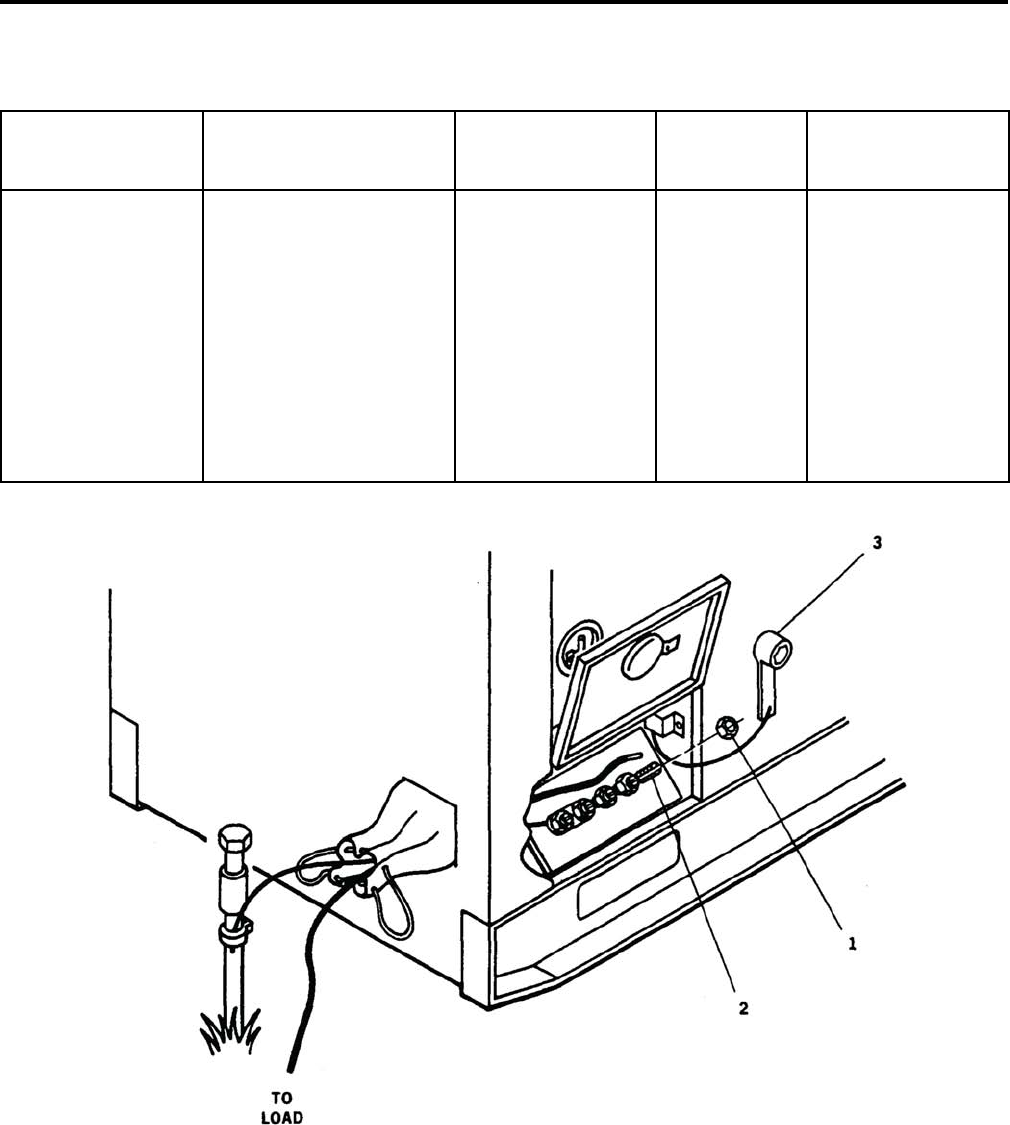
Table 1. Load Terminal, AC Reconnection Board and VM-AM Transfer Switch Selection.
RECONNECTION
BOARD POSITION
TERMINALS VM-AM TRANSFER
SWITCH POSITION
VOLTAGE
READING
CURRENT
READING
(TERMINAL)
120/208 L1, L2, L3, L0
3 PHASE. (SINGLE
PHASE LOADS CAN BE
SERVED USING ANY
TERMINAL TO L0)
L1-L0
L2-L0
L3-L0
L1-L2
L2-L3
L3-L1
120 VOLTS
120 VOLTS
120 VOLTS
208 VOLTS
208 VOLTS
208 VOLTS
L1
L2
L3
NONE
NONE
NONE
240/416 L1, L2, L3, L0
3 PHASE. (SINGLE
PHASE LOADS CAN BE
SERVED USING ANY
TERMINAL TO L0)
L1-L0
L2-L0
L3-L0
L1-L2
L2-L3
L3-L1
240 VOLTS
240 VOLTS
240 VOLTS
416 VOLTS
416 VOLTS
416 VOLTS
L1
L2
L3
NONE
NONE
NONE
Figure 2. Installation of Load Cables.
END OF TASK
TM 9-6115-645-10 0005
0005-4

DAILY CHECKS, INITIAL ADJUSTMENTS AND SELF TEST
Daily Checks
Perform all before (B) PMCS; refer to WP 0010, Table 1.
Initial Adjustments
1. Place DEAD CRANK switch in NORMAL position.
2. Push DC CONTROL POWER circuit breaker in.
3. Place FREQUENCY SELECT switch to required position (MEP-806A).
4. Ensure voltage reconnection terminal board is positioned to match voltage requirements. If voltage
reconnection terminal board must be changed, notify next higher maintenance level.
5. Place VM-AM transfer switch in a position corresponding to output terminal load connections; refer to Table
1.
6. Place PARALLEL UNIT switch in UNIT position.
7. Pull out Emergency Stop Switch.
END OF TASK
Self Test
1. Place MASTER SWITCH to PRIME & RUN position.
2. Push PRESS TO TEST pushbutton on malfunction indicator panel. Ensure all indicator lights are lit. When
PRESS TO TEST pushbutton is released, all lights should go out.
3. Press BATTLE SHORT press to test light on the control panel assembly. Ensure indicator light is lit. When
press to test light is released, light should go out.
4. Press AC CIRCUIT INTERRUPTER press to test light on the control panel assembly. Ensure indicator light is
lit. When press to test light is released light should go out.
END OF TASK
OPERATING PROCEDURES
WARNING
High voltage is produced when generator set is in operation. Never attempt to start
the generator set unless it is properly grounded. Do not ground yourself in
standing water. Never attempt to connect or disconnect load cables while the
generator set is running. Failure to comply may cause injury or death to personnel.
WARNING
High voltage is produced when the generator set is in operation. DO NOT touch live voltage
connections. Never attempt to connect or disconnect load cables or paralleling cables while the
generator set is running. Failure to comply with this warning can cause injury or death to
personnel.
WARNING
Exhaust discharge contains deadly gases including carbon monoxide. DO NOT operate
generator set in enclosed areas unless exhaust discharge is properly vented outside. Failure to
comply with this warning can cause injury or death to personnel.
TM 9-6115-645-10 0005
0005-5

NOTE
If generator set is to be operated in parallel with another unit, refer to PARALLEL UNIT
OPERATION (LOAD SHARING).
Starting Procedure
WARNING
High voltage is produced when generator set is in operation. Never attempt to start
the generator set unless it is properly grounded. Do not ground yourself in
standing water. Never attempt to connect or disconnect load cables while the
generator set is running. Failure to comply may cause injury or death to personnel.
WARNING
Operating the generator set exposes personnel to a high noise level. Hearing protection must be
worn when operating or working near the generator set when the generator set is running. Failure
to comply with this warning can cause hearing damage to personnel.
CAUTION
Do not crank engine in excess of fifteen seconds. Allow starter to cool at least fifteen seconds
between attempted starts. Failure to observe this caution could result in damage to the starter.
NOTE
At temperatures below 40 °F(4°C) it may be necessary to use the Cold Weather Starting Aid.
NOTE
Ensure all generator set access doors, except control panel access door, are closed.
1. Rotate MASTER SWITCH to START position.
2. In cold weather conditions, push ETHER switch to ON position as required, until engine accelerates to
governed speed.
TM 9-6115-645-10 0005
0005-6

3. Hold MASTER SWITCH in START position until oil pressure reaches at least 25 psi (172 kPa), voltage has
increased to its approximate rated value, and engine has reached stable operating speed.
4. Release MASTER SWITCH to PRIME & RUN position.
5. If operating with an auxiliary fuel source, rotate MASTER SWITCH to PRIME & RUN AUX FUEL position.
NOTE
Warm up engine without load for five minutes. (If required, load can be applied immediately).
6. Check COOLANT TEMP [170-200 °F (77-93 °C)] and OIL PRESSURE [25-60 psi (172-414 kPa)] indicators
for normal readings.
7. Turn VOLTAGE and FREQUENCY adjust potentiometers to required values for voltage and frequency.
8. Press GROUND FAULT CIRCUIT INTERRUPTER TEST pushbutton. Ensure indicator window is clear.
Press RESET pushbutton and ensure indicator is red.
9. Place AC CIRCUIT INTERRUPTER switch to CLOSED position.
10. Ensure voltage and frequency are still at rated values. Adjust if necessary.
11. Rotate VM-AM transfer switch to each phase position while observing ammeter (PERCENT RATED
CURRENT). If more than rated load is indicated in any phase, reduce load.
12. Check kilowattmeter (PERCENT POWER). If indication is more than 100 percent rated load, reduce load.
13. Perform all DURING (D) OPERATION PMCS requirements in accordance with WP 0010, Table 1.
END OF TASK
Stopping Procedure
1. Place AC CIRCUIT INTERRUPTER switch in OPEN position.
2. Allow generator set to operate five minutes with no load applied.
3. Place MASTER SWITCH in OFF position.
4. Perform all AFTER (A) OPERATION PMCS requirements in accordance with WP 0010, Table 1.
5. Place DEAD CRANK switch in OFF position.
END OF TASK
PARALLEL UNIT OPERATION (LOAD SHARING)
CAUTION
Ensure generator sets are the same size and mode before attempting parallel operation.
General
The following method of parallel operation will be used to share the load between two generator sets. Refer to
WP 0004, Figure 1 for location of operator controls and indicators mentioned below and Figure 3 for proper
paralleling configuration.
TM 9-6115-645-10 0005
0005-7
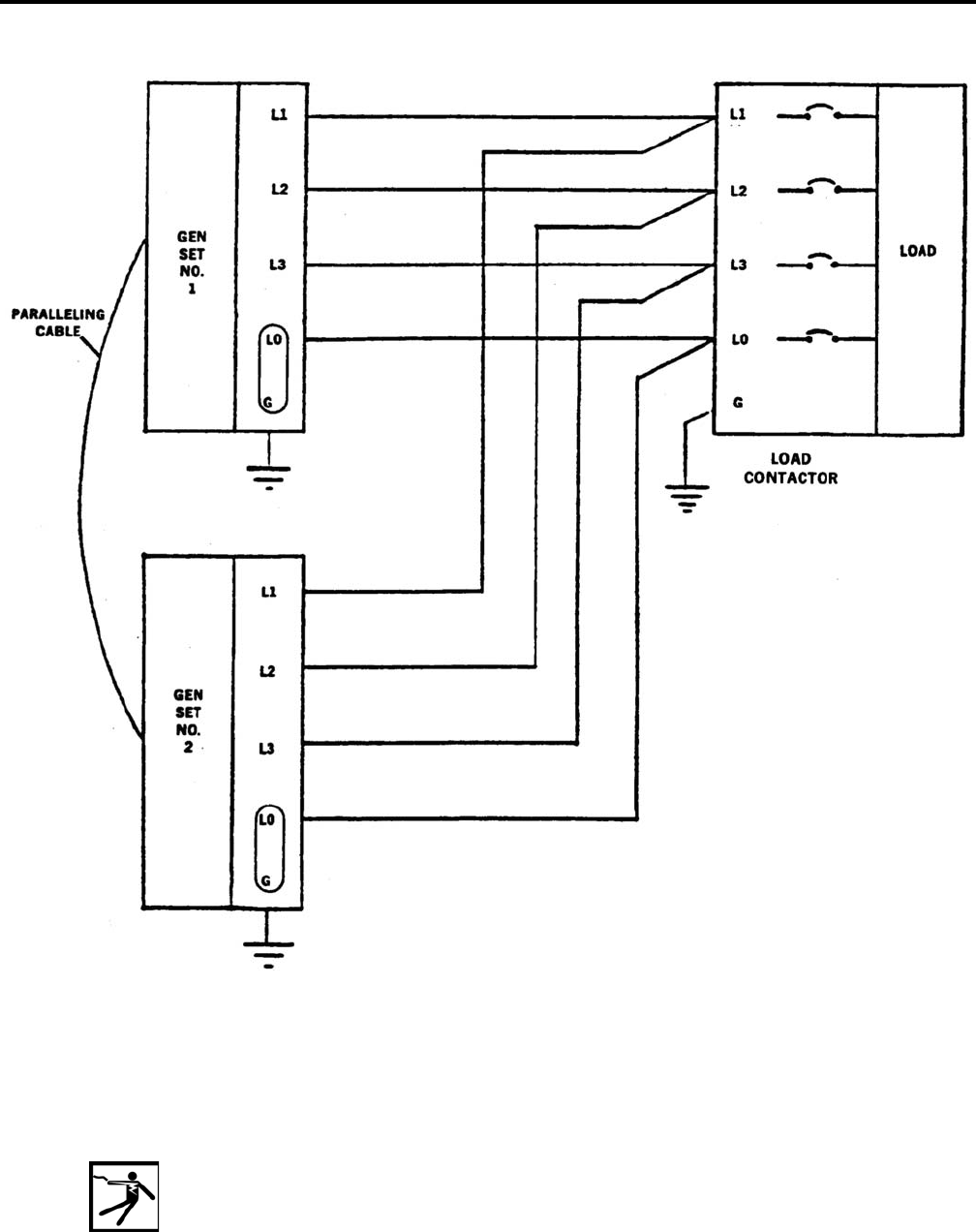
Figure 3. Parallel Operation Setup.
Pre-Operation
WARNING
High voltage is produced when this generator set is in operation. Ensure engine
control and DEAD CRANK switches are set to OFF, negative battery cable is
disconnected. and unit is completely shut down and free of any power source
before attempting any troubleshooting or maintenance on unit. Failure to comply
may cause injury or death to personnel.
TM 9-6115-645-10 0005
0005-8

WARNING
Dangerous voltage exists on live circuits. Always observe precautions and never work alone.
Failure to comply with this warning can cause injury or death to personnel.
1. Ensure that load requirement is equal or below the combined rated capacity of the two generator sets.
WARNING
High voltage is produced when generator set is in operation. Never attempt to
start the generator set unless it is properly grounded. Do not ground yourself
in standing water. Never attempt to connect or disconnect load cables while
the generator set is running. Failure to comply may cause injury or death to
personnel.
2. Determine voltage requirements of load and position voltage reconnection terminal boards of the two
generator sets to the required voltage connection. Ensure FREQUENCY SELECT switch (MEP-806A) for
both generator sets are positioned for the same load requirements.
3. Identify one generator set as No. 1 and the other as No. 2.
4. Remove paralleling cable from storage box located inside battery compartment access door.
5. Connect the paralleling cable between the two generator sets. Connect the generator sets to the load
observing the proper phase polarity.
CAUTION
Do not close the AC CIRCUIT INTERRUPTER switch on either of the generator sets, nor
close the load contactor at load until specifically directed to do so. Closing any of these
devices at any other time may severely damage one or both of the generator sets.
END OF TASK
Operation
1. Start each generator set; refer to Starting Procedure.
2. Rotate both VOLTAGE adjust potentiometers to obtain the same voltage indication on each set.
3. Rotate both FREQUENCY adjust potentiometers to obtain the same frequency indication on both sets.
Ensure load contactor at load is open.
4. Position and hold AC CIRCUIT INTERRUPTER switch, on generator set No. 1, to CLOSED until indicator
lights.
5. Place the UNIT-PARALLEL switch on both units in PARALLEL position.
CAUTION
If synchronizing lights on generator set No. 2 do not glow bright and dark in unison, the
phasing is wrong. Shut down generator sets and check that load cables are connected
properly. Failure to observe this caution can result in damage to generator sets.
WARNING
Power is available when the main contactor is open. Avoid accidental contact. Failure to
comply with this warning can cause injury or death to personnel.
6. Observe synchronizing lights on generator set No. 2. The lights should be glowing bright and dark in unison.
7. Adjust frequency of generator set No. 2 until synchronizing lights glow bright and dark in unison at 2 to 3
second intervals.
CAUTION
Check that load contactor at load is open before attempting to place generator sets on line.
Failure to observe this caution can result in damage to generator sets.
TM 9-6115-645-10 0005
0005-9

8. When both synchronizing lights are dark, position and hold AC CIRCUIT INTERRUPTER switch of generator
set No. 2 to the CLOSED position until indicator lights.
NOTE
The generator sets are now operating in parallel with no load.
9. Rotate FREQUENCY adjust potentiometer of generator set No. 1 until kilowattmeter (PERCENT POWER)
indicates approximately "0".
10. Rotate the VOLTAGE adjust potentiometer of generator set No. 1 until ammeter (PERCENT RATED
CURRENT) reads approximately "0".
11. Close the load contactor at the load.
NOTE
If the REVERSE POWER indicator of either generator set lights, and the AC Circuit
Interrupter relay opens, open the load contactor at load and resynchronize the generator
sets. (Repeat the necessary Steps 4 through 11 above.)
12. Compare ammeter (PERCENT RATED CURRENT) readings of both generator sets. If readings are not
within 10 percent, notify next higher level of maintenance.
13. Compare kilowattmeter (PERCENT POWER) readings of both generator sets. If readings are not within 10
percent, notify next higher level of maintenance.
END OF TASK
Removal from Parallel Operation
WARNING
High voltage is produced when the generator set is in operation. DO NOT touch live voltage
connections. Never attempt to connect or disconnect load cables or paralleling cables while the
generator set is running. Failure to comply with this warning can cause injury or death to
personnel.
WARNING
If it is necessary to move a generator set which has been operating in parallel with another
generator set, shut down remaining generator set connected to the load, prior to removing load
and ground cables. Failure to comply with this warning can cause injury or death to personnel.
CAUTION
Prior to removal of generator set from parallel operation, make sure load does not exceed full
load rating of generator set remaining on line. Failure to observe this caution can result in
damage to generator set.
1. Position AC CIRCUIT INTERRUPTER switch to OPEN until indicator goes out.
2. Return UNIT-PARALLEL switch to UNIT position.
3. Refer to Stopping Procedure to stop generator set.
END OF TASK
DECALS AND INSTRUCTION PLATES
There are identification and instruction plates on the generator set. Figure 4 through Figure 18 show the location
and contents of each plate on the generator set.
TM 9-6115-645-10 0005
0005-10
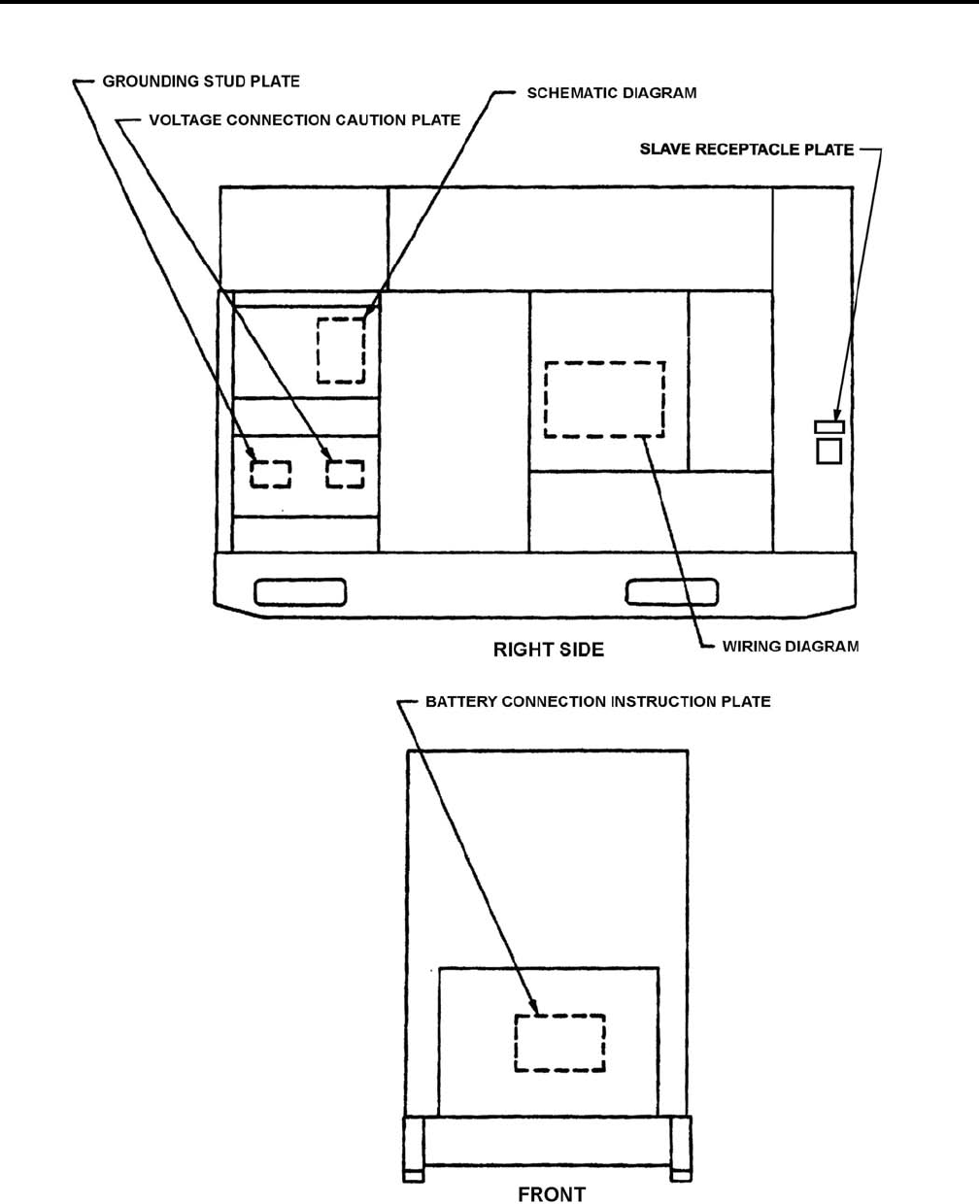
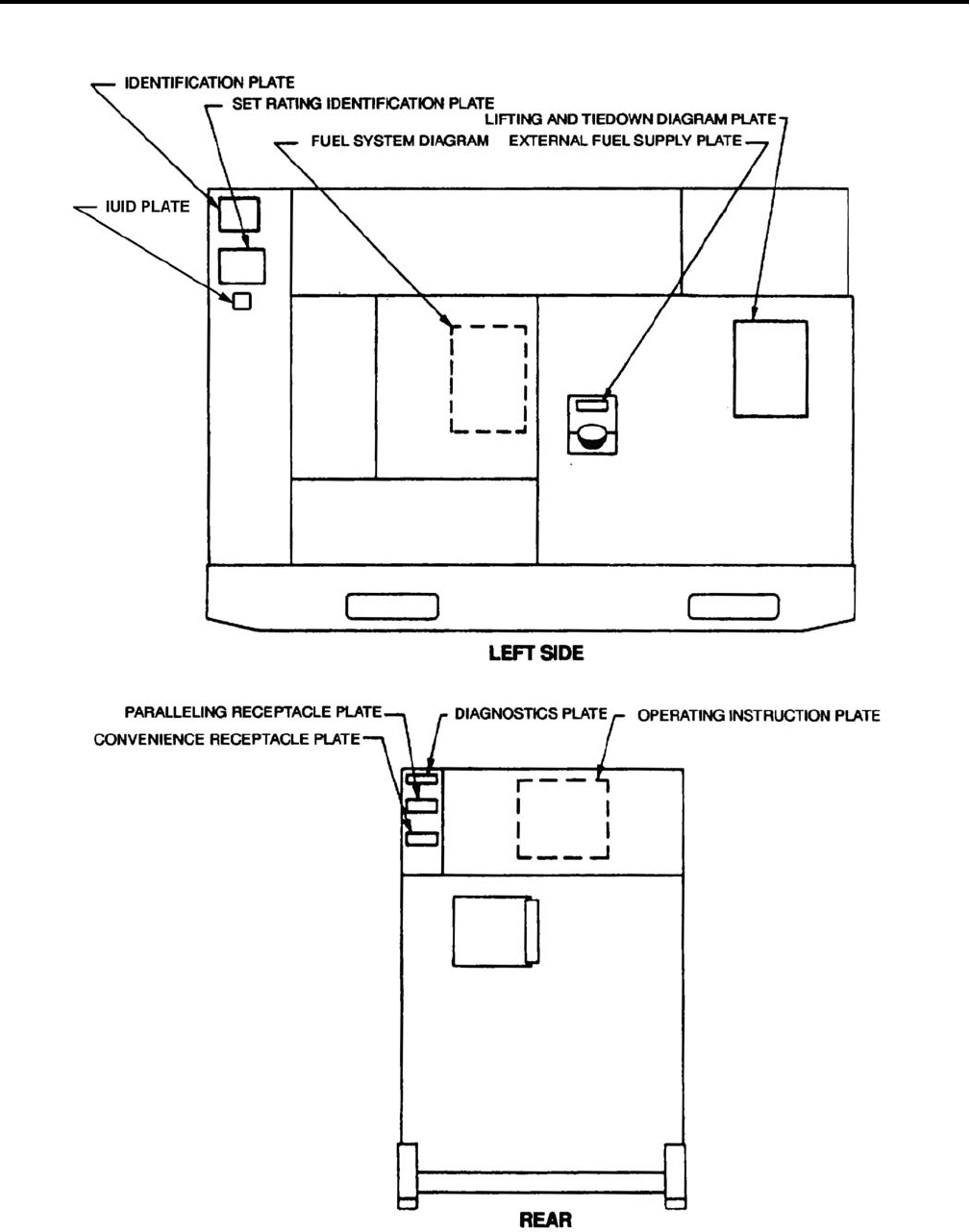
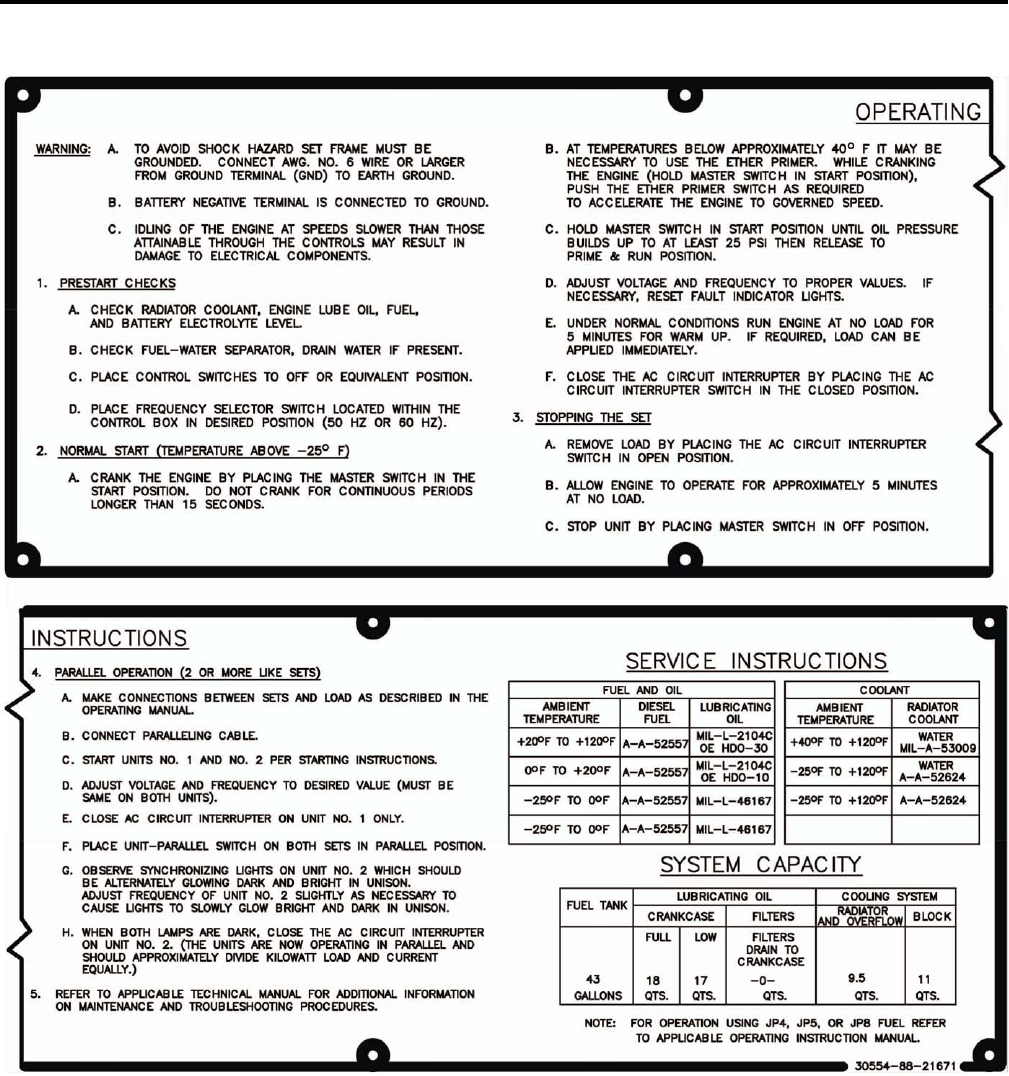
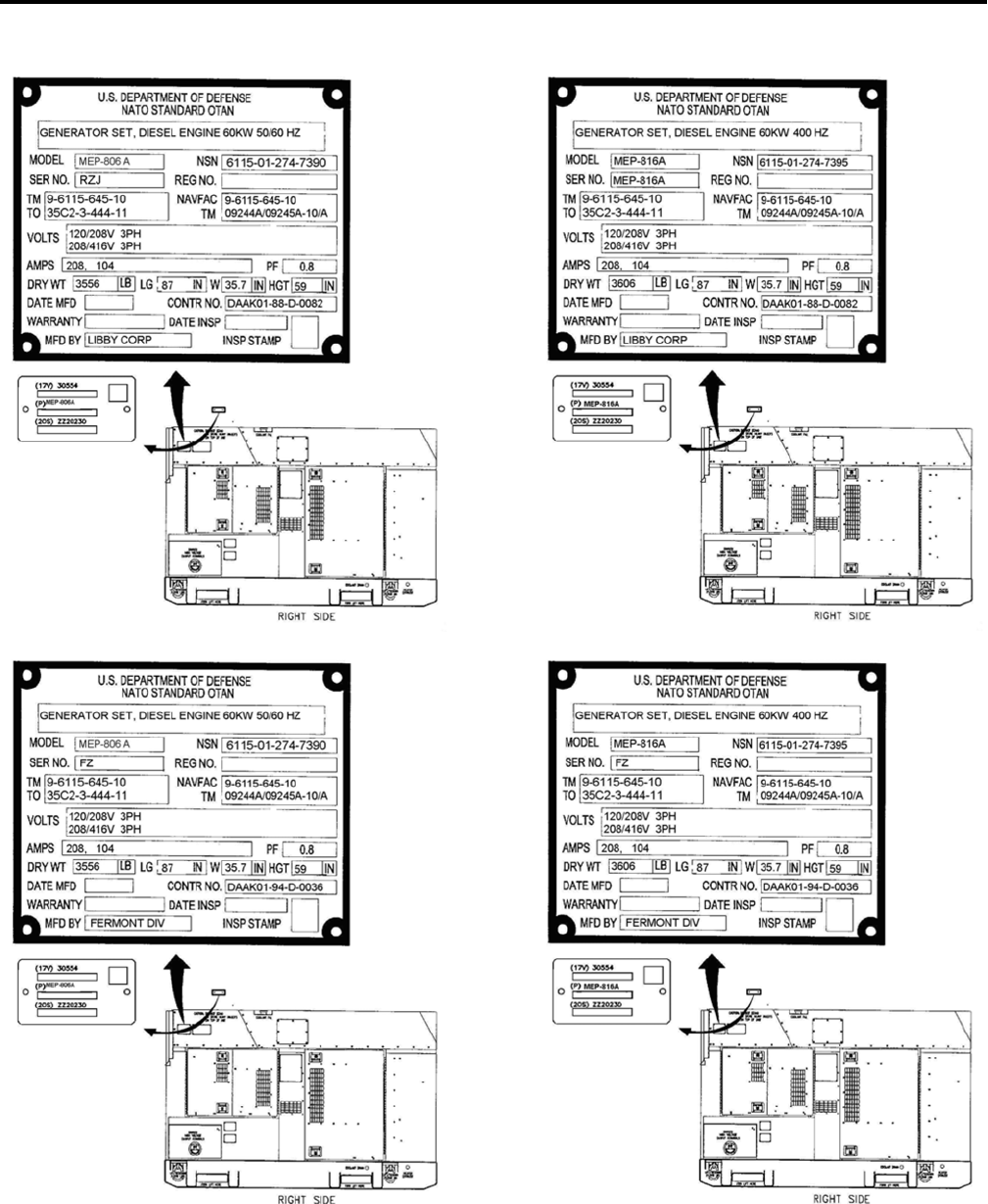
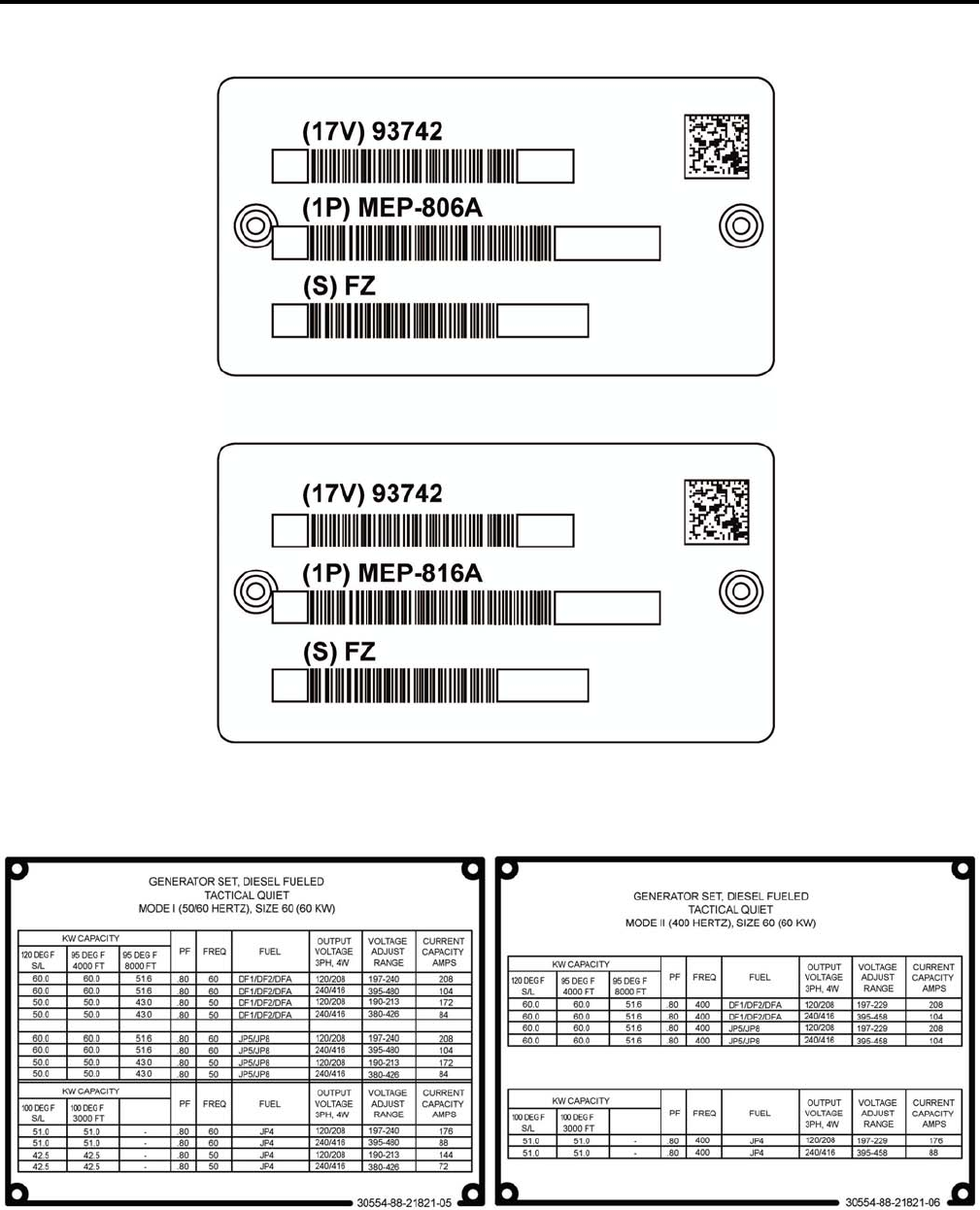
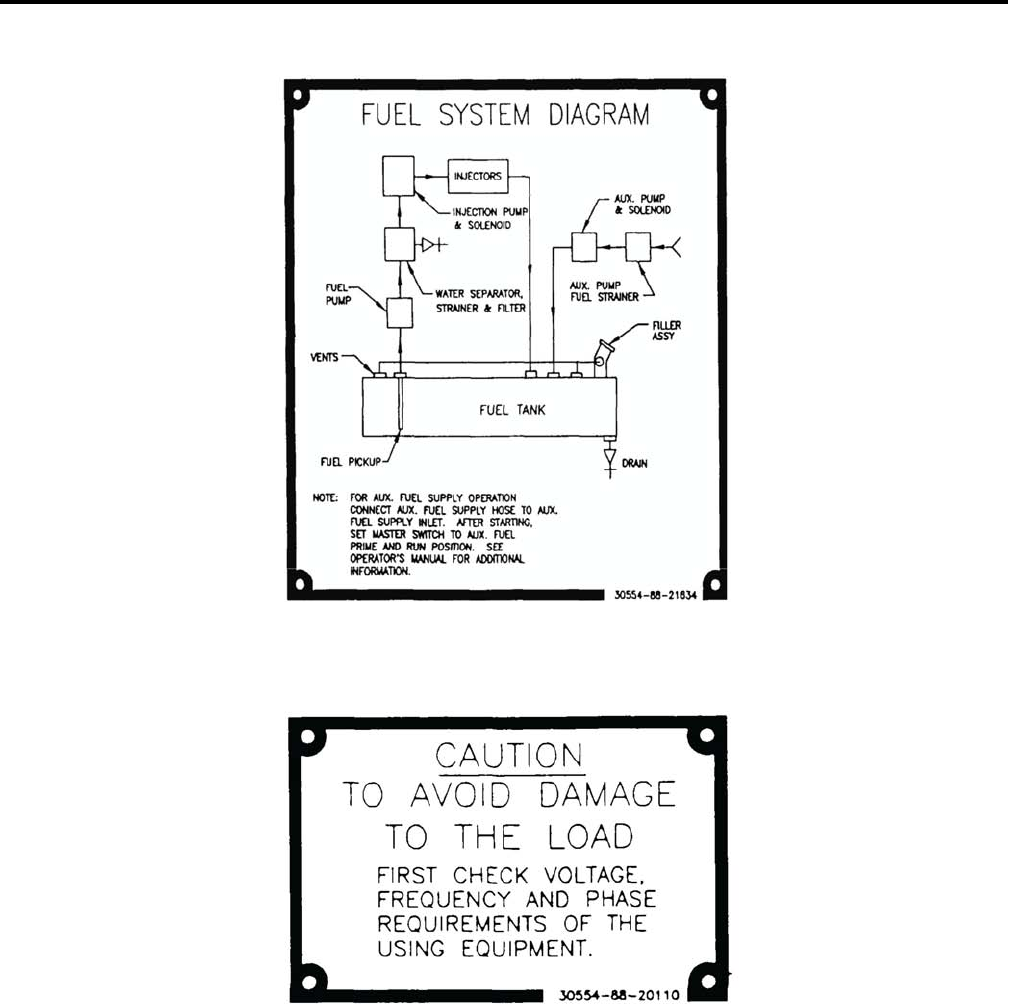
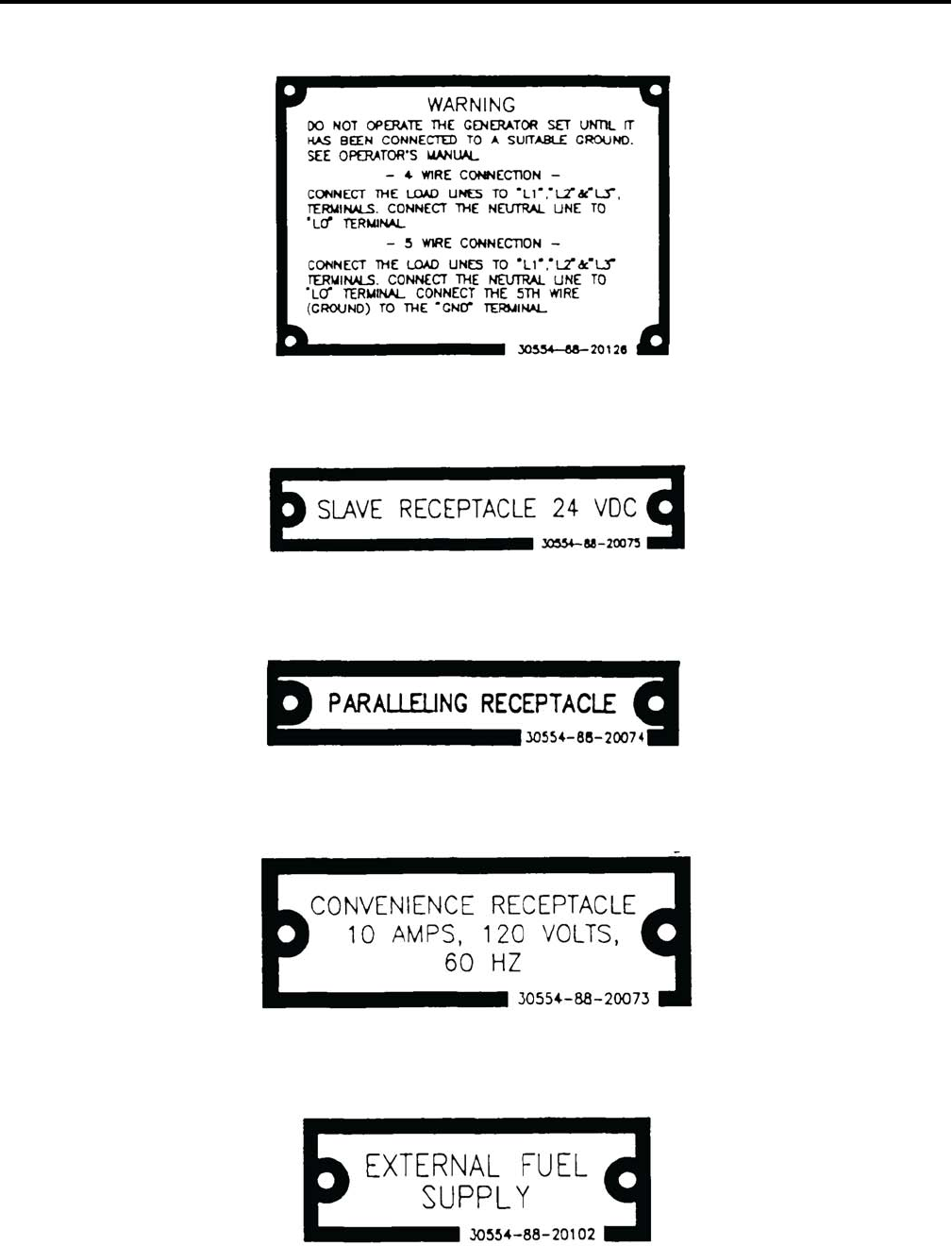
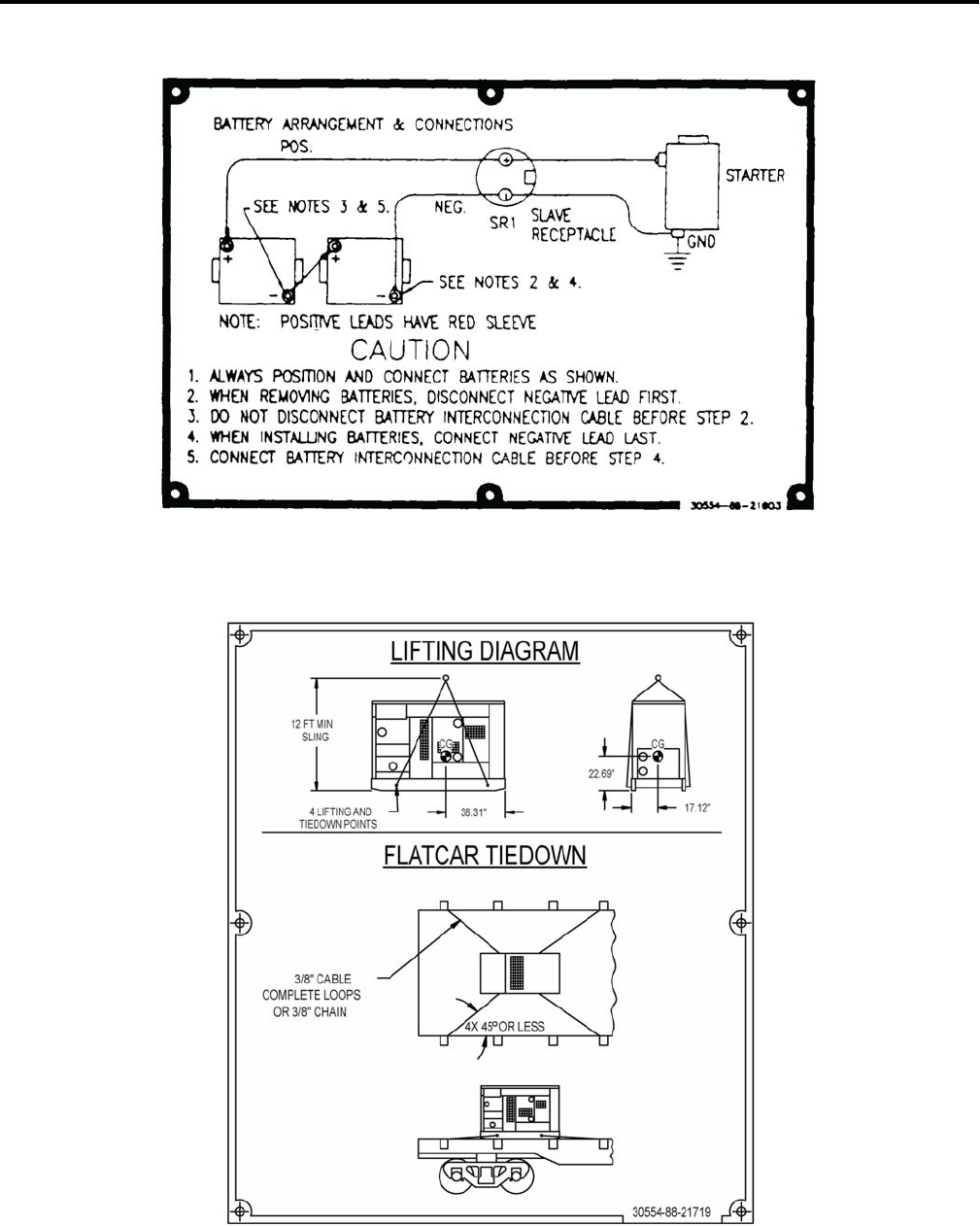
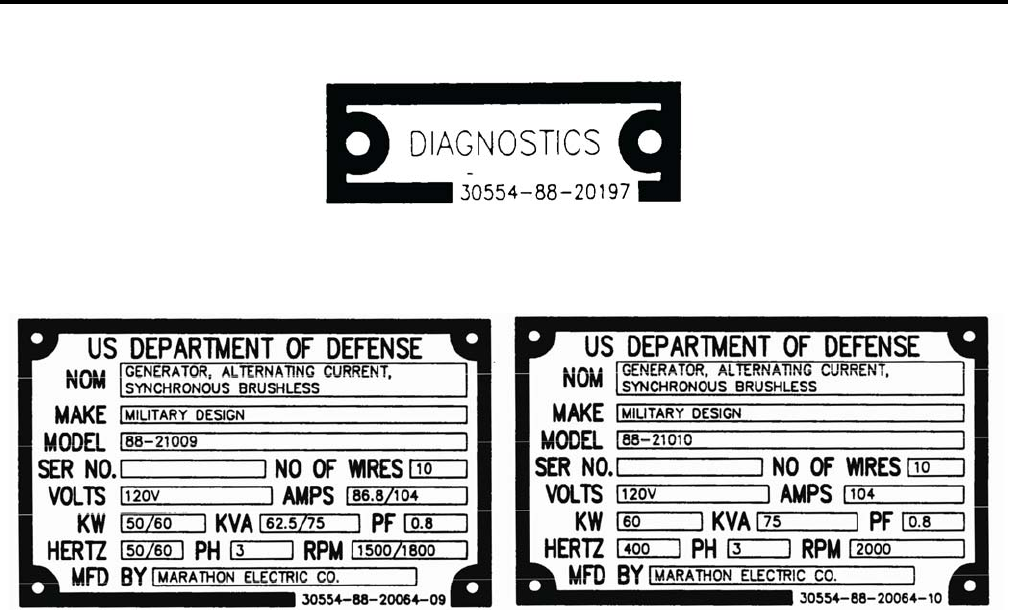
Figure 19. Diagnostics Plate.
Figure 20. Generator Identification Plates.
PREPARATION FOR MOVEMENT
1. Shut down generator set; refer to Stopping Procedure. If generator set is operating in parallel, refer to
Removal from Parallel Operation.
2. Disconnect load cables.
3. Disconnect paralleling cable, if used, and store in storage box.
4. When using auxiliary fuel line, disconnect line, drain excess fuel from line and store line in storage box.
5. Disconnect ground cable and remove ground rods. Store ground rods in holding clips located inside housing
left side generator set. Store cable and couplings in storage box.
6. Secure all generator set access doors and panels.
7. For assembly and preparation for use, refer to Assembly and Preparation for Use at the beginning of this
work package.
END OF TASK
END OF WORK PACKAGE
TM 9-6115-645-10 0005
0005-19/(20 blank)

OPERATOR MAINTENANCE
60 kW 50/60 AND 400 Hz SKID MOUNTED TACTICAL QUIET GENERATOR SETS
OPERATION UNDER UNUSUAL CONDITIONS
INITIAL SETUP:
Tools and Special Tools
Generator Mechanical Tool Kit
Materials/Parts
Antifreeze Coolant
Personnel Required
One
References
FM 3-11.3, FM 3-11.4 & FM 3-11.5
WP 0005, Starting Procedures
Equipment Condition
Generator set grounded, off & operational
UNUSUAL ENVIRONMENT / WEATHER
OPERATION IN EXTREME COLD WEATHER BELOW -25 °F (-31 °C)
The generator set operates in ambient temperatures as low as -25 °F (-31 °C) without special winterization
equipment. To ensure satisfactory operation under extreme cold weather the following steps must be taken:
WARNING
All metal jewelry can conduct electricity and become entangled in generator set components.
Remove all jewelry when working on generator set. Failure to comply with this warning can cause
injury or death to personnel.
WARNING
High voltage is produced when the generator set is in operation. DO NOT touch live voltage
connections. Never attempt to connect or disconnect load cables or paralleling cables while the
generator set is running. Failure to comply with this warning can cause injury or death to
personnel.
1. Keep generator set and surrounding area as free of ice and snow as practical.
2. Keep fuel tank full to protect against moisture, condensation, and accumulation of water.
3. Ensure that proper grade diesel fuel is used.
4. Keep batteries free from corrosion and in a well charged condition.
END OF TASK
OPERATION IN EXTREME HEAT ABOVE 120 °F (48.8 °C)
1. Check vents and radiator air passages frequently for obstructions.
2. Check coolant temperature indicator frequently for any indication of overheating.
3. Allow sufficient space for fuel expansion when filling fuel tank.
4. Keep generator set clean and free of dirt. Clean obstructions from generator set intake and outlet screens.
5. Clean external surface of engine when generator set is not operating.
END OF TASK
OPERATION IN DUSTY OR SANDY AREAS
TM 9-6115-645-10 0006
0006-1

1. If possible, provide a shelter for generator set. Use available natural barriers to shield generator set from
blowing dust or sand.
2. Wet down dusty and sandy surface areas around generator set frequently if water is available.
3. Keep all access doors closed, as much as possible, to prevent entry of dust and sand into housing assembly.
4. Wipe dust and sand frequently from the generator set external surface and components. Wash exterior
surfaces frequently with clean water when generator set is not operating.
5. Service engine air cleaner assembly frequently to compensate for intake of additional dust or sand.
6. Drain sediment frequently from fuel filter/water separator. When servicing fuel tank be careful to prevent dust
or sand from entering fuel tank.
7. Change engine oil and oil filter frequently.
8. Store oil and fuel in dust-free containers.
9. Ensure that generator set ground connections are free of dust and sand and connections are tight before
starting the unit.
END OF TASK
OPERATION UNDER RAINY OR HUMID CONDITIONS
CAUTION
Failure to remove waterproof material before operating generator set could result in equipment
damage.
1. If possible, provide a shelter for generator set. Cover generator set with canvas or other waterproof material
when it is not being operated.
2. Provide adequate drainage to prevent water from accumulating on operation site.
3. Keep all generator set access doors closed, as much as possible, to prevent entry of water into housing
assembly.
4. Drain water frequently from fuel filter/water separator.
WARNING
Dangerous voltage exists on live circuits. Always observe precautions and never work alone.
Failure to comply with this warning can cause injury or death to personnel.
5. Remove moisture from generator set components before and after each operating period.
6. Keep fuel tank full to protect against moisture, condensation and accumulation of water.
END OF TASK
OPERATION IN SALT WATER AREAS
CAUTION
Failure to remove waterproof material before operating generator set could result in equipment
damage.
1. If possible, provide a shelter for the generator set. Locate generator set so that radiator faces into prevailing
winds. Use natural barriers or, if possible, construct a barrier to protect generator set from salt water. Cover
generator set with canvas or other waterproof material when it is not being operated.
2. Keep all generator access doors closed, as much as possible, to prevent entry of salt water into housing
assembly.
3. Wash exterior surfaces frequently with clean water when generator set is not operating.
4. Check wiring connections for corrosion and wire insulation for signs of deterioration.
TM 9-6115-645-10 0006
0006-2

END OF TASK
OPERATION AT HIGH ALTITUDES
The generator set will operate at elevations up to 4000 feet (1219.1 meters) above sea level without special
adjustment or reduction in load. At elevations greater than 4000 feet (1219.1 meters) above sea level, the kilowatt
rating is reduced approximately 3.5 percent for each additional 1000 feet (304.8 meters).
END OF TASK
INTERIM NUCLEAR, BIOLOGICAL, AND CHEMICAL (NBC) DECONTAMINATION PROCEDURES
OPERATION WHILE IN CONTAMINATED AREAS
The generator set is capable of being operated by personnel wearing chemical, biological, radiological, or nuclear,
(CBRN) protective clothing without special tools or supporting equipment. Refer to FM 3-11.5, CBRN
Decontamination for information on decontamination procedures. Specific procedures for the generator set are
the following:
1. Control panel indicators sealing gasket, rubber sleeves, and rope draw cords at output terminal access ports,
control panel door gaskets, access door gaskets, rubber tubing, and belts within the engine compartment,
coverings for electrical conduits, external water drain tubing, and retaining cords for slave receptacle covers
will absorb and retain chemical agents. Replacement of these items is the recommended method of
decontamination.
2. Lubricants, fuel, coolant, or battery fluids may be present on the external surfaces of the generator set or
components due to leaks or normal operation. These fluids will absorb NBC agents. The preferred method of
decontamination is removal of these fluids using conventional decontamination methods in accordance with
FM 3-11.5.
3. Continued decontamination of external generator set surfaces with supertropical bleach (STB)/
decontamination solution number 2 (DS2) will degrade clear plastic indicator coverings to a point where
reading indicators will become impossible. This problem will become more evident for soldiers wearing
protective masks. Therefore, the use of STB or DS2 decontamination in these areas should be minimized.
Indicators should be decontaminated with warm soapy water.
4. External surfaces of the control panel that are marked with painted or stamped lettering will not withstand
repeated decontamination with STB or DS2 without degradation of this lettering. Therefore, the
recommended method of decontamination for these areas is with warm soapy water.
5. Areas that will entrap contaminants, making efficient decontamination extremely difficult, include the
following:
a. Exposed heads of screws.
b. Areas adjacent to and behind exposed wiring conduits.
c. Hinged areas or access doors.
d. Retaining chains for external receptacle covers.
e. Areas around the tie-down/lifting rings, crevices around access doors, external screens covering
ventilation areas, the external oil drain valve, and areas adjacent to the external fuel drain valve.
f. Areas behind knobs and switches on the control panel, externally mounted equipment specification
data plates, external receptacle covers, access doors, access door locking mechanisms, recessed
wells for access door handles, fuel cap, load terminal board, slave receptacles, and frequency
adjustment controls.
NOTE
Replacement of these items, if available, is the preferred method of decontamination.
Conventional methods of decontamination should be used on these areas, while stressing the
importance of thoroughness and the probability of some degree of continuing contact and vapor
hazard.
TM 9-6115-645-10 0006
0006-3

6. In an CBRN contaminated environment, the generator set should be operated with all access doors closed to
reduce the effects of contamination.
7. The use of overhead shelters or chemical protective covers is recommended as an additional means of
protection against contamination in accordance with FM 3-11.5. However, if using covers, care should be
taken to provide adequate space for air flow and exhaust.
8. For additional CBRN information, refer to FM 3-11.3 and FM 3-11.4.
END OF TASK
USE OF THE CONVENIENCE RECEPTACLE
WARNING
Power is available when the main contactor is open. Avoid accidental contact. Failure to comply
with this warning can cause injury or death to personnel.
CAUTION
The maximum power rating for the convenience receptacle is 10 Amps. Continuous operation
above 10 Amps can result in damage to the generator set.
1. Start the generator set if it is not operating; refer to WP 0005, Starting Procedure.
2. Ensure the load does not exceed the maximum rating.
3. Reset the Ground Fault Circuit Interrupter.
4. Plug appropriate connector into convenience receptacle.
END OF TASK
END OF WORK PACKAGE
TM 9-6115-645-10 0006
0006-4
OPERATOR MAINTENANCE
60 kW 50/60 AND 400 Hz SKID MOUNTED TACTICAL QUIET GENERATOR SETS
EMERGENCY INFORMATION
INITIAL SETUP:
Materials/Parts
Coolant (WP 0016, Table 1, Item 8)
Oil (WP 0016, Table 1, Item 4)
Gloves
Cloth (WP 0016, Table 1, Item 7)
Fuel
Personnel Required
One
References
WP 0005, Operation Under Usual Conditions
WP 0009, Trouble Shooting Procedures
WP 0012, Generator Set Servicing and
Inspection
LO 9-6115-645-12
NATO SLAVE RECEPTACLE START OPERATION
WARNING
All metal jewelry can conduct electricity and become entangled in generator set
components. Remove all jewelry when working on generator set. Failure to comply
with this warning can cause injury or death to personnel.
WARNING
High voltage is produced when the generator set is in operation. DO NOT touch live
voltage connections. Never attempt to connect or disconnect load cables or
paralleling cables while the generator set is running. Failure to comply with this
warning can cause injury or death to personnel.
General
The NATO slave receptacle can be used to start the generator set when batteries are discharged.
NATO Slave Emergency Starting Procedure
1. Connect one end of NATO slave cable to fully charged 24 VDC system and other end to
discharged generator set's NATO SLAVE RECEPTACLE.
2. Start discharged generator set; refer to WP 0005, Starting Procedure.
3. Remove NATO slave cable after generator set starts.
XXXXXXXXXXXXXXX
TM 9-6115-645-10 0007
0007-1
XXXXXXXXXXXXXXX
X
X
X
X
X
X
X
X
X
X
X
X
X

OPERATION USING BATTLE SHORT SWITCH
CAUTION
Continued operation using the BATTLE SHORT switch can result in damage to the
generator set.
NOTE
If any emergency situation requires continued operation of the generator set, the
BATTLE SHORT switch is used to override all protection devices and EMERGENCY
STOP functions.
NOTE
BATTLE SHORT switch must be OFF to start the generator set.
1. Start generator set if set is not running; refer to WP 0005, Starting Procedure.
2. Lift cover on BATTLE SHORT switch and position switch to ON position.
CAUTION
If the OVERSPEED light on the malfunction indicator panel is illuminated, position the
AC circuit interrupter to the OPEN position until indicator goes out on each set.
END OF TASK
END OF WORK PACKAGE
XXXXXXXXXXXXXXX
700001-546-5116-9MT
0007-2
XXXXXXXXXXXXXXX
X
X
X
X
X
X
X
X
X
X
X
X
X


CHAPTER 3
OPERATOR TROUBLESHOOTING PROCEDURES
WORK PACKAGE INDEX
Title WP Sequence No.
Troubleshooting Index.........................................................................................................................................0008
Troubleshooting Procedures ...............................................................................................................................0009
TM 9-6115-645-10
OPERATOR MAINTENANCE
60 kW 50/60 AND 400 Hz SKID MOUNTED TACTICAL QUIET GENERATOR SETS
TROUBLESHOOTING INDEX
GENERAL
This section lists common malfunctions you may find during operation of the generator set. You should perform
the tests/inspections and corrective actions in the order listed observing all notes, cautions and warnings.
This manual cannot list all malfunctions that may occur, nor all tests or inspections and corrective actions. If a
malfunction is not listed or is not corrected by listed corrective actions, notify your supervisor.
NOTE
Air Force users and Marine Corps users may perform maintenance only as authorized.
Malfunction/Symptom Troubleshooting
Procedure
ENGINE
Fails to crank 1
Cranks but fails to start 2
Starts but stops when MASTER SWITCH is released from START position 3
Stops suddenly 4
Runs erratically or misfires 5
Does not develop full power 6
Knocks 7
EXHAUST SYSTEM
Blue or white exhaust smoke 8
Black exhaust smoke 9
LUBRICATION SYSTEM
Low oil pressure 10
COOLING SYSTEM
COOLANT TEMPERATURE indicator Indicates engine overheating 11
ELECTRICAL SYSTEM
BATTERY CHARGE ammeter shows low or no charge 12
BATTERY CHARGE ammeter shows excessive charging after prolonged operation 13
AC voltmeter (VOLTS AC) indicates low voltage 14
AC voltmeter (VOLTS AC) indicates correct voltage, but frequency meter (HERTZ) is off
scale
15
AC voltmeter (VOLTS AC) fluctuates 16
Frequency meter (HERTZ) fluctuates 17
AC CIRCUIT INTERRUPTER light fails to light when AC CIRCUIT INTERRUPTER switch
is closed
18
SYNCHRONIZING LIGHTS fail to light 19
TM 9-6115-645-10 0008
0008-1

TROUBLESHOOTING INDEX - Continued
Malfunction/Symptom Troubleshooting
Procedure
SYNCHRONIZING LIGHTS on generator set No. 2 do not glow bright and dark in unison
during parallel operation
20
AC CIRCUIT INTERRUPTER light fails to come on generator set No. 2 in parallel
operation
21
No voltage at the Convenience Receptacle 22
END OF WORK PACKAGE
TM 9-6115-645-10 0008
0008-2
OPERATOR MAINTENANCE
60 kW 50/60 AND 400 Hz SKID MOUNTED TACTICAL QUIET GENERATOR SETS
TROUBLESHOOTING PROCEDURES
INITIAL SETUP:
References
LO 9-6115-645-12
WP 0002
WP 0004
WP 0005
WP 0013
WP 0014
WP 0015
WP 0016
WP 0017
Equipment Condition
Generator grounded, off & operational
WARNING
All metal jewelry can conduct electricity and become entangled in generator set components.
Remove all jewelry when working on generator set. Failure to comply with this warning can cause
injury or death to personnel.
WARNING
High voltage is produced when this generator set is in operation. Ensure engine
control and DEAD CRANK switches are set to OFF, negative battery cable is
disconnected. and unit is completely shut down and free of any power source
before attempting any troubleshooting or maintenance on unit. Failure to comply
may cause injury or death to personnel.
WARNING
High voltage is produced when generator set is in operation. Never attempt to start
the generator set unless it is properly grounded. Do not ground yourself in
standing water. Never attempt to connect or disconnect load cables while the
generator set is running. Failure to comply may cause injury or death to personnel.
MALFUNCTION
1. ENGINE FAILS TO CRANK.
TEST OR INSPECTION
Step 1. Check that DEAD CRANK switch is in the NORMAL position.
CORRECTIVE ACTION
Place switch in NORMAL position.
TEST OR INSPECTION
Step 2. Check that DC CONTROL POWER circuit breaker is energized (in).
CORRECTIVE ACTION
If DC CONTROL POWER circuit breaker is de-energized (out), go to Step 4.
TEST OR INSPECTION
TM 9-6115-645-10 0009
0009-1

Step 3. Check that Emergency Stop Switch is out.
TEST OR INSPECTION
Step 4. Defect in Engine Starting/Electrical System. Check battery connections.
CORRECTIVE ACTION
If loose or corroded, notify next higher maintenance level.
MALFUNCTION
2. ENGINE CRANKS BUT FAILS TO START.
TEST OR INSPECTION
Step 1. Cold ambient temperature.
CORRECTIVE ACTION
If ambient temperature is below 40 °F(4°C) turn MASTER SWITCH to START and position ETHER
switch to ON; refer to WP 0005, Starting Procedure.
TEST OR INSPECTION
Step 2. Check for dirty air cleaner element.
CORRECTIVE ACTION
Service air cleaner assembly; refer to WP 0014, Servicing.
TEST OR INSPECTION
Step 3. Check for dirty fuel filter/water separator.
CORRECTIVE ACTION
Service fuel filter/water separator; refer to WP 0017, Servicing. If engine still fails to start, notify next
higher maintenance level.
MALFUNCTION
3. ENGINE STARTS BUT STOPS WHEN MASTER SWITCH IS RELEASED FROM START POSITION.
TEST OR INSPECTION
Step 1. Check for proper starting procedure.
CORRECTIVE ACTION
Hold MASTER SWITCH in START position until 25 psi (172 kPa) is reached; refer to WP 0005,
Starting Procedure.
TEST OR INSPECTION
Step 2. Check to see if any FAULT INDICATOR lights are lit.
CORRECTIVE ACTION
NO FUEL light is lit; refer to WP 0015, Servicing. If any other lights are lit, notify next higher
maintenance level.
MALFUNCTION
4. ENGINE STOPS SUDDENLY.
TEST OR INSPECTION
Step 1. Check to see if any FAULT INDICATOR lights are lit.
CORRECTIVE ACTION
NO FUEL light is lit; refer to WP 0015, Servicing. If any other lights are lit, go to Step 2.
TM 9-6115-645-10 0009
0009-2

TEST OR INSPECTION
Step 2. Check that DC CONTROL POWER circuit breaker is energized (in).
CORRECTIVE ACTION
If DC CONTROL POWER circuit breaker is de-energized (out), notify next higher maintenance level.
MALFUNCTION
5. ENGINE RUNS ERRATICALLY OR MISFIRES.
TEST OR INSPECTION
Step 1. Check for dirty air cleaner element.
CORRECTIVE ACTION
Service air cleaner assembly; refer to WP 0014, Servicing.
TEST OR INSPECTION
Step 2. Check for contaminated fuel.
CORRECTIVE ACTION
Service fuel filter/water separator; refer to WP 0017, Servicing.
TEST OR INSPECTION
Step 3. Check for improper type of fuel.
CORRECTIVE ACTION
If improper type of fuel is suspected, refer to WP 0016, Table 1, notify next higher maintenance
level.
MALFUNCTION
6. ENGINE DOES NOT DEVELOP FULL POWER.
TEST OR INSPECTION
Step 1. Check for dirty air cleaner element.
CORRECTIVE ACTION
Service air cleaner assembly; refer to WP 0014, Servicing.
TEST OR INSPECTION
Step 2. Check for contaminated fuel.
CORRECTIVE ACTION
Service fuel filter/water separator; refer to WP 0017, Servicing.
TEST OR INSPECTION
Step 3. Check for restricted exhaust system.
CORRECTIVE ACTION
Make sure exhaust opening is free from obstructions. If no obstructions are found, notify next higher
maintenance level.
TEST OR INSPECTION
Step 4. Check for improper type of fuel.
CORRECTIVE ACTION
If improper type of fuel is suspected, refer to WP 0016, Table 1, notify next higher maintenance
level.
MALFUNCTION
TM 9-6115-645-10 0009
0009-3

7. ENGINE KNOCKS.
TEST OR INSPECTION
Step 1. Check for low lubrication oil level.
CORRECTIVE ACTION
If necessary add oil; refer to LO 9-6115-645-12.
TEST OR INSPECTION
Step 2. Check for loose parts or foreign objects in engine compartment.
CORRECTIVE ACTION
If no loose parts or foreign objects are found, go to Step 3.
TEST OR INSPECTION
Step 3. Check for improper type of fuel.
CORRECTIVE ACTION
If improper type of fuel is suspected, refer to WP 0016, Table 1, notify next higher maintenance
level.
MALFUNCTION
8. BLUE OR WHITE EXHAUST SMOKE.
TEST OR INSPECTION
Check for improper type of fuel.
CORRECTIVE ACTION
If improper type of fuel is suspected, refer to WP 0016, Table 1, notify next higher maintenance
level.
MALFUNCTION
9. BLACK EXHAUST SMOKE.
TEST OR INSPECTION
Step 1. Check for improper type of fuel.
CORRECTIVE ACTION
If improper type of fuel is suspected, refer to WP 0016, Table 1, notify next higher maintenance
level.
TEST OR INSPECTION
Step 2. Check for dirty air cleaner element.
CORRECTIVE ACTION
Service air cleaner assembly; refer to WP 0014, Servicing.
TEST OR INSPECTION
Step 3. Check for generator set overload.
CORRECTIVE ACTION
Check for generator set overload by checking the ammeter (PERCENT RATED CURRENT) and the
kilowattmeter (PERCENT POWER) on the control panel assembly; refer to WP 0004, Figure 1. If
unable to adjust, notify next higher maintenance level.
MALFUNCTION
10. LOW OIL PRESSURE.
TM 9-6115-645-10 0009
0009-4

TEST OR INSPECTION
Step 1. Check for low lubrication oil level.
TM 9-6115-645-10 0009
0009-5

CORRECTIVE ACTION
If necessary add oil; refer to LO 9-6115-645-12.
TEST OR INSPECTION
Step 2. Check for high coolant temperature, above 200 °F (93 °C); refer to WP 0004, Figure 1.
CORRECTIVE ACTION
If coolant temperature is high, go to Step 3.
TEST OR INSPECTION
Step 3. Check coolant level.
CORRECTIVE ACTION
If low, add coolant; refer to WP 0015, Servicing. If full, go to Step 4.
TEST OR INSPECTION
Step 4. Check for obstruction in air intake system.
CORRECTIVE ACTION
If obstructions are found, remove debris. If no obstructions are found, go to Step 5.
TEST OR INSPECTION
Step 5. Check for loose fan belts.
CORRECTIVE ACTION
If loose, notify next higher maintenance level.
MALFUNCTION
11. COOLANT TEMPERATURE INDICATOR INDICATES ENGINE OVERHEATING.
TEST OR INSPECTION
Step 1. Check for generator set overload.
CORRECTIVE ACTION
Check for generator set overload by checking the ammeter (PERCENT RATED CURRENT) and the
kilowattmeter (PERCENT POWER) on the control panel assembly; refer to WP 0004, Figure 1. If
unable to adjust, notify next higher maintenance level.
TEST OR INSPECTION
Step 2. Check coolant level.
CORRECTIVE ACTION
If low, add coolant; refer to WP 0015, Servicing. If full, go to Step 3.
TEST OR INSPECTION
Step 3. Check for low lubrication oil level.
CORRECTIVE ACTION
If necessary add oil; refer to LO 9-6115-645-12. If full, go to Step 4.
TEST OR INSPECTION
Step 4. Check for obstruction in air intake system.
CORRECTIVE ACTION
If obstructions are found, remove debris. If no obstructions are found, go to Step 5.
TM 9-6115-645-10 0009
0009-6

TEST OR INSPECTION
Step 5. Check for loose fan belts.
CORRECTIVE ACTION
If loose, notify next higher maintenance level.
MALFUNCTION
12. BATTERY CHARGE AMMETER SHOWS LOW OR NO CHARGE.
TEST OR INSPECTION
Step 1. Check BATTERY CHARGER FUSE.
CORRECTIVE ACTION
If BATTERY CHARGER FUSE (WP 0004, Figure 1) is blown, notify next higher maintenance level.
TEST OR INSPECTION
Step 2. Check fan belts.
CORRECTIVE ACTION
If loose (WP 0002, Figure 1), notify next higher maintenance level.
TEST OR INSPECTION
Step 3. Check for loose or broken wires.
CORRECTIVE ACTION
Check for loose or broken wires at the back of the battery charging alternator (WP 0002, Figure 1)
and BATTERY CHARGE ammeter (WP 0004, Figure 1). If wires are loose or broken, notify next
higher maintenance level.
MALFUNCTION
13. BATTERY CHARGE AMMETER SHOWS EXCESSIVE CHARGING AFTER PROLONGED OPERATION.
TEST OR INSPECTION
Step 1. Check batteries for low electrolyte level.
CORRECTIVE ACTION
If low, refer to WP 0013, Servicing. If level is correct, go to Step 2.
TEST OR INSPECTION
Step 2. Check battery connections.
CORRECTIVE ACTION
If loose or corroded, notify next higher maintenance level.
MALFUNCTION
14. AC VOLTMETER (VOLTS AC) INDICATES LOW VOLTAGE.
TEST OR INSPECTION
Step 1. Check that VM-AM transfer switch position corresponds to readings on the AC voltmeter (VOLTS
AC); refer to WP 0005, Table 1.
CORRECTIVE ACTION
Set VOLTAGE adjust potentiometer.
TM 9-6115-645-10 0009
0009-7

TEST OR INSPECTION
Step 2. Check for loose or broken wires at back of VM-AM transfer switch, VOLTAGE adjust
potentiometer, and AC voltmeter (VOLTS AC).
CORRECTIVE ACTION
If wires are loose or broken, notify next higher maintenance level.
MALFUNCTION
15. AC VOLTMETER (VOLTS AC) INDICATES CORRECT VOLTAGE, BUT FREQUENCY METER (HERTZ)
IS OFF SCALE.
TEST OR INSPECTION
Step 1. Check FREQUENCY adjust potentiometer.
CORRECTIVE ACTION
Set FREQUENCY adjust potentiometer.
TEST OR INSPECTION
Step 2. Check for loose or broken wires at back of FREQUENCY adjust potentiometer.
CORRECTIVE ACTION
If wires are loose or broken, notify next higher maintenance level.
MALFUNCTION
16. AC VOLTMETER (VOLTS AC) FLUCTUATES.
TEST OR INSPECTION
Check back of AC voltmeter (VOLTS AC) for loose or broken wires.
CORRECTIVE ACTION
If wires are loose or broken, notify next higher maintenance level.
MALFUNCTION
17. FREQUENCY METER (HERTZ) FLUCTUATES.
TEST OR INSPECTION
Check back of frequency meter (HERTZ) for loose or broken wires.
CORRECTIVE ACTION
If wires are loose or broken, notify next higher maintenance level.
MALFUNCTION
18. AC CIRCUIT INTERRUPTER LIGHT FAILS TO LIGHT WHEN AC CIRCUIT INTERRUPTER SWITCH IS
CLOSED.
TEST OR INSPECTION
Step 1. Test AC CIRCUIT INTERRUPTER light by depressing.
CORRECTIVE ACTION
If light fails to light, refer to next higher maintenance level.
TEST OR INSPECTION
Step 2. Check load cables for proper connection.
TM 9-6115-645-10 0009
0009-8

CORRECTIVE ACTION
For proper connection of the load cables, refer to WP 0005, Installation of Load Cables. If correct go
to Step 3.
TEST OR INSPECTION
Step 3. Ensure load does not exceed generator set rating.
CORRECTIVE ACTION
Decrease load. If load is correct, refer to next higher maintenance level.
MALFUNCTION
19. SYNCHRONIZING LIGHTS FAIL TO LIGHT.
TEST OR INSPECTION
Step 1. Check that parallel cable is connected.
CORRECTIVE ACTION
Connect paralleling cable; refer to WP 0005, Pre-Operation.
TEST OR INSPECTION
Step 2. Check PARALLEL UNIT switch.
CORRECTIVE ACTION
Place PARALLEL UNIT switch in correct position.
MALFUNCTION
20. SYNCHRONIZING LIGHTS ON GENERATOR SET NO. 2 DO NOT GLOW BRIGHT AND DARK IN
UNISON DURING PARALLEL OPERATION.
TEST OR INSPECTION
Step 1. Check that load cables are connected properly.
CORRECTIVE ACTION
For proper connection of load cables, refer to WP 0005, Installation of Load Cables. If properly
connected, go to Step 2.
TEST OR INSPECTION
Step 2. Ensure FREQUENCY SELECT switches are in correct positions.
CORRECTIVE ACTION
Frequency must be the same on both generator sets (MEP-806A).
MALFUNCTION
21. AC CIRCUIT INTERRUPTER LIGHT FAILS TO COME ON GENERATOR SET NO. 2 IN PARALLEL
OPERATION.
TEST OR INSPECTION
Step 1. Test light by depressing. If light fails to light, notify next higher maintenance level.
CORRECTIVE ACTION
If light comes on, go to Step 2.
TEST OR INSPECTION
Step 2. FREQUENCY adjust potentiometer is not properly adjusted.
CORRECTIVE ACTION
Set FREQUENCY adjust potentiometer.
TM 9-6115-645-10 0009
0009-9

MALFUNCTION
22. NO VOLTAGE AT THE CONVENIENCE RECEPTACLE.
TEST OR INSPECTION
Step 1. Open control panel and inspect circuit breaker on side of Ground Fault Circuit Interrupter device.
CORRECTIVE ACTION
If tripped, reset device. Check fuse on black wire of Ground Fault Circuit Interrupter for generator
sets, contract number DAAK01-88-D-0082.
TEST OR INSPECTION
Step 2. Check the Ground Fault Circuit Interrupter.
CORRECTIVE ACTION
If the indicator is BLACK, reset by pressing the reset button. If the indicator is ORANGE, refer to
next higher maintenance level.
END OF WORK PACKAGE
TM 9-6115-645-10 0009
0009-10


CHAPTER 4
OPERATOR MAINTENANCE INSTRUCTIONS
WORK PACKAGE INDEX
Title WP Sequence No.
Preventive Maintenance Checks and Services (PMCS) Introduction..................................................................0010
Preventive Maintenance Checks and Services (PMCS) .....................................................................................0011
Operator Lubrication Instructions ........................................................................................................................0012
Generator Set Inspection and Service.................................................................................................................0013
Batteries: Inspection, Servicing ...........................................................................................................................0014
Air Cleaner Assembly: Inspection, Servicing.......................................................................................................0015
Cooling System: Inspection, Servicing ................................................................................................................0016
Fuel Tank: Inspection, Servicing .........................................................................................................................0017
Fuel Filter/Water Separator: Inspection, Servicing ..............................................................................................0018
Lubrication System: Inspection, Servicing...........................................................................................................0019
TM 9-6115-645-10

OPERATOR MAINTENANCE
60 kW 50/60 AND 400 Hz SKID MOUNTED TACTICAL QUIET GENERATOR SETS
PREVENTIVE MAINTENANCE CHECKS AND SERVICES (PMCS) INTRODUCTION
INITIAL SETUP:
Not Applicable
GENERAL
To ensure that the generator set is ready for operation at all times, it must be inspected so that defects can be
discovered and corrected before they result in serious damage or failure.
PMCS, Before Operations
Always keep in mind the CAUTIONS and WARNINGS. Perform your before (B) PMCS.
PMCS, During Operations
Always keep in mind the CAUTIONS and WARNINGS. Perform your during (D) PMCS.
PMCS, After Operation
Be sure to perform your after (A) PMCS.
If Your Equipment Fails to Operate
If your equipment does not perform as required, refer to Chapter 3 under Troubleshooting for possible problems.
Report any malfunctions or failures on the proper DA Form 2404, or refer to DA PAM 750-8.
PMCS PROCEDURES
NOTE
For general location of the items to be inspected in WP 0010, Table 1, refer to WP 0002, Figure 1
and WP 0004, Figure 1.
Purpose of PMCS Table
Preventive Maintenance Checks and Services (WP 0010, Table 1) list the inspections and care of your equipment
required to keep it in good operating condition.
Warnings, Cautions, and Notes
Always observe the WARNINGS, CAUTIONS, and NOTES appearing in your PMCS table. Warnings and
cautions appear before applicable procedures. You must observe these WARNINGS to prevent serious injury to
yourself and others. You must observe CAUTIONS to prevent your equipment from being damaged. You must
observe NOTES to ensure procedures are performed properly.
Explanation of Table Entries
The PMCS Table is divided into five columns. Each column is explained in the following paragraphs.
Item No. Column. Numbers in this column are for reference. When completing DA Form 2404 (Equipment
Inspection and Maintenance Worksheet), include the item number for the check/service indicating a fault. Item
numbers also appear in the order that you must do checks and services for the intervals listed.
Interval Column. This column tells you when you must do the procedure in the procedure column. "Before"
procedures must be done before you operate the power plant or power unit for its intended mission. "During"
procedures must be done during the time you are operating the power plant or power unit for its intended mission.
"After" procedures must be done immediately after you have operated a power plant, immediately after shutting
down one of the generator sets on a power plant, or immediately after you have operated a power unit. Perform
"Weekly" procedures at the listed interval.
Location, Item to Check/Service Column. This column lists the location and the item to be checked or serviced.
The item location is underlined.
TM 9-6115-645-10 0010
0010-1

Procedure Column. This column gives the procedure for checking or servicing the item listed in the location, item
to check/service column. You must perform the procedure to know if the power plant or power unit is ready or
available for its intended mission or operation. You must do the procedure at the time stated in the interval
column.
Not Fully Mission Capable If: Column. Information in this column tells you what faults will keep your power
plant or power unit from being capable of performing its primary mission. If you make checks or services that
show faults listed in this column, do not operate the power plant or power unit.
Other Table Entries
Be sure to observe all special information and notes that appear in your table.
Special Instructions
Preventive maintenance is not limited to performing the checks and services listed in the PMCS Table. Covering
unused receptacles, stowing unused accessories and performing other routine procedures such as equipment
inventory, cleaning components, and touch-up painting are not listed in the table. These are things you should do
any time you see that they need to be done. If a routine check is listed in the PMCS Table, it is because
experience has shown that problems may occur with this item. Take along tools and cleaning cloths needed to
perform the required checks and services. Use the information in the following paragraphs to help you identify
problems at any time and to help identify potential problems before and during checks and services.
WARNING
High voltage is produced when this generator set is in operation. Ensure engine
control and DEAD CRANK switches are set to OFF, negative battery cable is
disconnected. and unit is completely shut down and free of any power source
before attempting any troubleshooting or maintenance on unit. Failure to comply
may cause injury or death to personnel.
WARNING
Solvent used to clean parts is potentially dangerous to personnel and property. Clean parts in a
well-ventilated area. Avoid inhalation of solvent fumes. Wear goggles and rubber gloves to
protect eyes and skin. Wash exposed skin thoroughly. Do not smoke or use near open flame or
excessive heat. Failure to comply with this warning can cause injury to personnel, and damage to
the equipment.
CAUTION
Keep cleaning solvents, fuels and lubricants away from rubber or soft plastic parts. They will
deteriorate material.
1. Keep the generator set clean. Dirt, grease, and oil get in the way and may cover up a serious problem. Use
cleaning solvent to clean metal services.
2. Use soap and water to clean rubber or plastic parts and material.
3. Check all bolts, nuts, and screws to make sure they are not loose, missing, bent, or broken. Do not try to
check them with a tool, but look for chipped paint, bare metal, or rust around bolt heads. If you find one loose,
report it to the next-higher level of maintenance.
4. Inspect welds for loose or chipped paint, rust, or gaps where parts are welded together. If a broken weld is
found, report it to the next-higher level of maintenance.
TM 9-6115-645-10 0010
0010-2

5. Inspect electrical wires, connectors, terminals, and receptacles for cracked or broken insulation, bare wires,
and loose or broken connectors. Tighten loose connectors. Examine terminals and receptacles for
serviceability. If deficiencies are found, report them to the next-higher level of maintenance.
6. Inspect hoses and fluid lines. Look for wear, damage, and leaks. Make sure that clamps and fittings are tight.
Wet spots and stains around a fitting or connector can mean a leak. If a leak comes from a loose connector
or if something is broken or worn out, report it to the next-higher level of maintenance.
Fluid Leakage
You must know how fluid leakage affects the status of your equipment. The following are definitions of the
types/classes of leakage you need to know to be able to determine the status of your equipment. Learn and be
familiar with them. When in doubt, notify your supervisor.
Leakage Class Leakage Definition
Class I Seepage of fluid (as indicated by wetness or discoloration) not great enough to form drops.
Class II Leakage of fluid great enough to form drops, but not enough to cause drops to drip from the
item being checked/inspected.
Class III Leakage of fluid great enough to form drops that fall from the item being checked/inspected.
Operation of Power Plant/Power Unit with Minor Leaks
CAUTION
Equipment operation is allowable with minor leakage (Class I or II) of any fluid except fuel. Fluid
capacity must be considered before deciding to continue operation of the equipment with minor
leaks. When operating with Class I or II leaks, fluid level must be checked more often than
required by the PMCS table. Parts without fluid will stop working and/or cause equipment
damage.
1. Consider the equipment's capacity for the fluid that is leaking. If the capacity is small, the fluid level may soon
become too low for continued operation. If in doubt, notify your supervisor.
2. Check the fluid level more often than required in the PMCS Table. Add fluid as needed.
3. All leaks should be reported to the next higher level of maintenance.
Corrosion Prevention and Control (CPC)
CPC of Army material is of continuing concern. It is important that any corrosion problems with the equipment be
reported so that the problem can be corrected and improvements can be made to prevent the problem in future
items. Although corrosion is typically associated with rusting of metals, it can also include deterioration of other
materials, such as rubber and plastic. Unusual cracking, softening, swelling, or breaking of these materials may
be a corrosion problem. If a corrosion problem is identified, it can be reported using Standard Form 368, Product
Quality Deficiency Report. Use of key words such as "corrosion," "rust," "deterioration," or "cracking" will ensure
that the information is identified as a CPC problem. The form should be submitted to the address specified in DA
PAM 750-8.
Removal of Assemblies/Equipment to Perform PMCS
There is no requirement to remove assemblies/equipment prior to performing the PMCS.
Winterization Kit
See Chapter 6, WP 0027 for PMCS Procedures.
END OF WORK PACKAGE
TM 9-6115-645-10 0010
0010-3/(4 blank)
OPERATOR MAINTENANCE
60 kW 50/60 AND 400 Hz SKID MOUNTED TACTICAL QUIET GENERATOR SETS
PREVENTIVE MAINTENANCE CHECKS AND SERVICES (PMCS)
INITIAL SETUP:
Tools and Special Tools
Generator Mechanical Tool Kit
Materials/Parts
Expendable Durable Items List
Personnel Required
One
Equipment Condition
Generator grounded, off & operational
Table 1. Operator Preventative Maintenance Checks and Services.
ITEM
NO. INTERVAL
ITEM TO BE CHECKED
OR SERVICED PROCEDURE
EQUIPMENT NOT
READY/AVAILABLE IF:
GENERATOR SET
EXTERIOR
NOTE
The generator set can be operated continuously at any load from no load up to and including rated
load. However, at light loads (less than 25% of set rating), an oily residue (unburned fuel oil) may
occasionally be noticed In the exhaust system outlet and around connection joints in the exhaust
system. This residue is caused by the inability of the fuel injection system to consistently meter the
small amount of fuel required to operate at these low load levels and is not a defect in the fuel
system. The oily residue could affect engine performance and create a cosmetic problem on and
around the generator set. Operation at rated load will burn off this oily residue. The length of time
required at rated load depends on the amount of residue. The muffler may also need to be removed
and cleaned if excessive build up occurs. This oily residue can be prevented by increasing the elec-
trical load on the set.
NOTE
If the equipment must be kept in continuous operation, check and service only those Items that can
be checked and serviced without disrupting operations. Complete all checks and services when
equipment is shut down.
1 Before HOUSING Check doors, panels, hinges, and
latches for damage, loose, or
corroded items.
Cannot secure doors.
Inspect air intake and exhaust grills
for debris.
2 Before IDENTIFICATION
PLATES
Check to ensure identification plates
are secure.
3 Before SKID BASE Inspect skid base for cracks and/or
corrosion.
Skid base is cracked or
shows signs of structural
damage.
4 Before ACOUSTICAL MATER-
IALS
Ensure that acoustical materials are
free of damage and not missing.
ENGINE ASSEMBLY
TM 9-6115-645-10 0011
0011-1

Table 1. Operator Preventative Maintenance Checks and Services. - Continued
ITEM
NO. INTERVAL
ITEM TO BE CHECKED
OR SERVICED PROCEDURE
EQUIPMENT NOT
READY/AVAILABLE IF:
WARNING
Operating the generator set exposes personnel to a high noise level. Hearing protection must be
worn when operating or working near the generator set when the generator set is running. Failure to
comply with this warning can cause hearing damage to personnel.
WARNING
Fuels used in the generator set are flammable. Do not smoke or use open flames when performing
maintenance. Failure to comply with this warning can cause injury or death to personnel, and
damage to the generator set.
5 Before ENGINE ASSEMBLY Inspect for loose, damaged, or
missing hardware.
Any loose, damaged, or
missing hardware.
6 Before FUEL SYSTEM Inspect for leaks, damaged, loose, or
missing hardware.
Any fuel leaks, damaged,
loose or missing parts.
7 Before FUEL FILTER/WATER
SEPARATOR
Inspect for leaks, cracks, damage,
proper mounting, loose or missing
parts.
Any fuel leaks.
Drain water from fuel filter/water
separator.
Water not drained.
8 Before ETHER START
SYSTEM
Inspect for deteriorated, loose or
missing parts.
Any deteriorated, loose or
missing parts.
NOTE
Pull dipstick from oil dipstick tube and take reading. If recheck is desired:
Wipe dipstick clean.
Reinsert dipstick into oil dipstick tube (dipstick must remain in oil dipstick tube for 5 seconds
minimum).
Pull dipstick from oil dipstick tube and take reading.
9 Before LUBRICATION
SYSTEM
Inspect for leaks, damage, loose or
missing parts.
Class Ill leaks, damage,
loose or missing parts.
Inspect oil level. Oil level is low.
Inspect for contamination. Oil shows signs of
contamination.
COOLING SYSTEM
TM 9-6115-645-10 0011
0011-2
Table 1. Operator Preventative Maintenance Checks and Services. - Continued
ITEM
NO. INTERVAL
ITEM TO BE CHECKED
OR SERVICED PROCEDURE
EQUIPMENT NOT
READY/AVAILABLE IF:
WARNING
Cooling system operates at high temperatures and pressure. Contact with high pressure steam and/
or liquids can result in burns and scalding. Shut down generator set, and allow system to cool before
performing checks, services and maintenance, or wear gloves and additional protective clothing and
goggles as required. Failure to comply with this warning can cause injury or death to personnel.
10 Before RADIATOR Inspect for leaks, damage, loose or
missing parts.
Class Ill leaks or missing
radiator cap.
11 Before HOSES Inspect for leaks, cracks, or missing
parts.
Class Ill leaks or missing
clamps or hoses.
12 Before COOLING FAN Inspect for obstruction, damage, or
looseness.
Damaged or loose.
Inspect for unusual noise in fan area. Unusual noise from area.
13 Before WATER PUMP Inspect for leaks.
14 Before FAN BELTS Inspect for cracks, fraying, or loose-
ness.
Broken or missing belt(s).
15 Before OVERFLOW BOTTLE Inspect for proper mounting, leaks, or
missing hardware.
Class Ill leaks or missing
hardware.
EXHAUST/INTAKE
SYSTEM
WARNING
Exhaust discharge contains deadly gases including carbon monoxide. DO NOT operate generator
set in enclosed areas unless exhaust discharge is properly vented outside. Failure to comply with this
warning can cause injury or death to personnel.
16 Before EXHAUST SYSTEM Inspect for leaks, corrosion, and
missing parts.
Leaks, damaged, or
missing parts.
17 Before AIR CLEANER
ASSEMBLY
Inspect for loose, damaged, or
missing parts.
Loose or missing parts.
Inspect restriction indicator for
clogged air cleaner element.
Clogged air cleaner
element.
GROUNDING ROD
ASSEMBLY
TM 9-6115-645-10 0011
0011-3
Table 1. Operator Preventative Maintenance Checks and Services. - Continued
ITEM
NO. INTERVAL
ITEM TO BE CHECKED
OR SERVICED PROCEDURE
EQUIPMENT NOT
READY/AVAILABLE IF:
WARNING
High voltage is produced when generator set is in operation. Never attempt to start
the generator set unless it is properly grounded. Do not ground yourself in standing
water. Never attempt to connect or disconnect load cables while the generator set is
running. Failure to comply may cause injury or death to personnel.
WARNING
Ensure nuts on ground terminals are properly secured creating a good ground. Failure to comply with
this warning can cause injury or death to personnel.
18 Before GROUND ROD CABLE
AND CONNECTIONS
Inspect for damage, corrosion, and
loose connections.
Damaged, corroded, or
loose connections.
ELECTRICAL SYSTEM
WARNING
Battery acid can cause burns to unprotected skin. Wear safety goggles and chemical gloves and
avoid acid splash while working on batteries. Failure to comply with this warning can cause injury to
personnel.
WARNING
Dangerous voltage exists on live circuits. Always observe precautions and never work alone. Failure
to comply with this warning can cause injury or death to personnel.
19 Before BATTERIES Inspect electrolyte level. Electrolyte is below
battery plates.
20 Before BATTERY CABLES Inspect for corrosion, damage, loose
connections, or missing parts.
Damaged, loose, or
missing parts.
21 Before OUTPUT BOX
ASSEMBLY
Inspect cables for damage or loose
connections.
Damaged, loose, or
missing parts.
Inspect output terminals for damage
or missing hardware.
Damaged or missing
hardware.
CONTROL BOX
ASSEMBLY
22 Before CONTROLS AND
INDICATORS
Inspect for damage or missing parts. Damaged or missing
parts.
WARNING
High voltage is produced when this generator set is in operation. Ensure engine
control and DEAD CRANK switches are set to OFF, negative battery cable is discon-
nected. and unit is completely shut down and free of any power source before
attempting any troubleshooting or maintenance on unit. Failure to comply may cause
injury or death to personnel.
TM 9-6115-645-10 0011
0011-4

Table 1. Operator Preventative Maintenance Checks and Services. - Continued
ITEM
NO. INTERVAL
ITEM TO BE CHECKED
OR SERVICED PROCEDURE
EQUIPMENT NOT
READY/AVAILABLE IF:
23 Before CONTROL BOX
HARNESS
Inspect for damage and looseness. Damaged or loose.
GENERATOR SET
EXTERIOR
WARNING
Operating the generator set exposes personnel to a high noise level. Hearing protection must be
worn when operating or working near the generator set when the generator set is running. Failure to
comply with this warning can cause hearing damage to personnel.
WARNING
Fuels used in the generator set are flammable. Do not smoke or use open flames when performing
maintenance. Failure to comply with this warning can cause injury or death to personnel, and
damage to the generator set.
WARNING
Top housing panels and exhaust system can get very hot. When performing DURING PMCS, wear
gloves and additional protective clothing as required. Failure to comply with this warning can cause
severe burns and injury to personnel.
WARNING
Exercise extreme caution when performing DURING PMCS checks inside engine compartment.
Avoid contact with moving or hot engine parts. Failure to comply with this warning can cause injury or
death to personnel.
NOTE
If the equipment must be kept in continuous operation, check and service only those items that can
be checked and serviced without disrupting operations. Complete all checks and services when
equipment is shut down.
24 During HOUSING Check doors, panels, hinges, and
latches for damage, loose, or
corroded items.
Cannot secure doors.
ENGINE ASSEMBLY
25 During ENGINE ASSEMBLY Inspect for loose, damaged, or
missing hardware.
Any loose, damaged, or
missing hardware.
26 During FUEL SYSTEM Inspect for leaks, damaged, loose, or
missing hardware.
Any fuel leaks, damaged,
loose or missing parts.
NOTE
Pull dipstick from oil dipstick tube and take reading. If recheck is desired:
Wipe dipstick clean.
Reinsert dipstick into oil dipstick tube (dipstick must remain in oil dipstick tube for 5 seconds
minimum).
Pull dipstick from oil dipstick tube and take reading.
TM 9-6115-645-10 0011
0011-5

Table 1. Operator Preventative Maintenance Checks and Services. - Continued
ITEM
NO. INTERVAL
ITEM TO BE CHECKED
OR SERVICED PROCEDURE
EQUIPMENT NOT
READY/AVAILABLE IF:
27 During LUBRICATION
SYSTEM
Inspect for leaks, damage, loose or
missing parts.
Class III leaks, damage,
loose or missing parts.
Inspect oil level. Oil level is low.
Inspect for contamination. Oil shows signs of
contamination.
COOLING SYSTEM
28 During COOLING FAN Inspect for obstruction, damage, or
looseness.
Damaged or loose.
Inspect for unusual noise in fan area. Unusual noise from area.
29 During OVERFLOW BOTTLE Inspect for proper mounting, leaks, or
missing hardware.
Class III leaks or missing
hardware.
GROUNDING ROD
ASSEMBLY
30 During GROUND ROD CABLE
AND CONNECTIONS
Inspect for damage, corrosion, and
loose connections.
Damaged, corroded, or
loose connections.
CONTROL BOX
ASSEMBLY
WARNING
High voltage is produced when the generator set is in operation. DO NOT touch live voltage connec-
tions. Never attempt to connect or disconnect load cables or paralleling cables while the generator
set is running. Failure to comply with this warning can cause injury or death to personnel.
31 During CONTROLS AND
INDICATORS
Inspect indicators are operating prop-
erly.
Indicators are not oper-
ating properly.
GENERATOR SET
EXTERIOR
WARNING
Top housing panels and exhaust system can get very hot. Shut down generator set, and allow
system to cool before performing checks, services and maintenance. Failure to comply with this
warning can cause severe burns and injury to personnel.
NOTE
If the equipment must be kept in service continuous operation, check only those items that can be
checked and serviced without disrupting operations. Complete all checks and services when equip-
ment is shut down.
32 After HOUSING Check door panels, hinges, and
latches for damage, loose, or
corroded items.
Cannot secure door.
TM 9-6115-645-10 0011
0011-6

Table 1. Operator Preventative Maintenance Checks and Services. - Continued
ITEM
NO. INTERVAL
ITEM TO BE CHECKED
OR SERVICED PROCEDURE
EQUIPMENT NOT
READY/AVAILABLE IF:
33 After IDENTIFICATION
PLATES
Check to ensure identification plates
are secure.
34 After SKID BASE Inspect skid base for cracks and/or
corrosion.
Skid base is cracked or
shows signs of structural
damage.
WARNING
Fuels used in the generator set are flammable. Do not smoke or use open flames when performing
maintenance. Failure to comply with this warning can cause injury or death to personnel, and
damage to the generator set.
WARNING
Diesel fuel is flammable and toxic to eyes, skin, and respiratory tract. Skin and eye protection are
required when working in contact with diesel fuel. Avoid repeated or prolonged contact. Provide
adequate ventilation. Operators are to wash exposed skin and change chemical soaked clothing
promptly if exposed to fuel. Failure to comply with this warning can cause injury or death to
personnel.
35 After ENGINE ASSEMBLY Inspect for loose, damaged, or
missing hardware.
Loose, damaged, or
missing hardware.
FUEL SYSTEM
36 After FUEL SYSTEM Inspect for leaks, damage, loose, or
missing hardware.
Any fuel leaks, damage,
loose or missing parts.
37 After FUEL FILTER/ WATER
SEPARATOR
Inspect for leaks, cracks, damage,
proper mounting, loose or missing
parts.
Any fuel leaks.
Drain water. Water not drained.
NOTE
Pull dipstick from oil dipstick tube and take reading. If recheck is desired:
Wipe dipstick clean.
Reinsert dipstick into oil dipstick tube (dipstick must remain in oil dipstick tube for 5 seconds
minimum).
Pull dipstick from oil dipstick tube and take reading.
38 After LUBRICATION
SYSTEM
Inspect for leaks, damage, loose or
missing parts.
Class III leaks, damage,
loose or missing parts.
Inspect oil level. Oil level is low.
Inspect for contamination. Oil shows signs of
contamination.
COOLING SYSTEM
TM 9-6115-645-10 0011
0011-7
Table 1. Operator Preventative Maintenance Checks and Services. - Continued
ITEM
NO. INTERVAL
ITEM TO BE CHECKED
OR SERVICED PROCEDURE
EQUIPMENT NOT
READY/AVAILABLE IF:
WARNING
Cooling system operates at high temperatures and pressure. Contact with high pressure steam and/
or liquids can result in burns and scalding. Shut down generator set, and allow system to cool before
performing checks, services and maintenance, or wear gloves and additional protective clothing and
goggles as required. Failure to comply with this warning can cause injury or death to personnel.
39 After RADIATOR Inspect for leaks, damage, loose or
missing parts.
Class III leaks or missing
radiator cap.
40 After HOSES Inspect for leaks, cracks, or missing
parts.
Class III leaks or missing
clamps or hoses.
41 After FAN BELTS Inspect for cracks, fraying, or loose-
ness.
Broken or missing belt(s).
CONTROL BOX
ASSEMBLY
42 After CONTROLS AND
INDICATORS
Inspect for damaged or missing parts. Damaged or missing
parts.
Mandatory Replacement Parts List
There are no replacement parts required for these PMCS procedures.
END OF WORK PACKAGE
TM 9-6115-645-10 0011
0011-8


OPERATOR MAINTENANCE
60 kW 50/60 AND 400 Hz SKID MOUNTED TACTICAL QUIET GENERATOR SETS
GENERATOR SET INSPECTION AND SERVICE
INITIAL SETUP:
INTRODUCTION
This chapter contains operator maintenance procedures. Deficiencies noted during inspection which are beyond
the maintenance scope of the operator shall be reported to next higher maintenance level.
END OF WORK PACKAGE
TM 9-6115-645-10 0013
0013-1/(2 blank)
OPERATOR MAINTENANCE
60 kW 50/60 AND 400 Hz SKID MOUNTED TACTICAL QUIET GENERATOR SETS
BATTERIES: INSPECTION, SERVICING
INITIAL SETUP:
Tools and Special Tools
Generator Mechanical Tool Kit
Materials/Parts
Safety Goggles
Chemical Gloves
Distilled Water
Personnel Required
One
References
WP 0005, Stopping/Starting Procedure
Equipment Condition
Generator set grounded, off & operational
WARNING
Battery acid can cause burns to unprotected skin. Wear safety goggles and chemical gloves and
avoid acid splash while working on batteries. Failure to comply with this warning can cause injury
to personnel.
INSPECTION
1. Shut down generator set; refer to WP 0005, Stopping Procedure.
2. Open battery access door.
3. Inspect for damaged battery case, corrosion, or damaged and loose connections on terminal cable, and
damaged or missing battery caps.
4. Remove battery caps.
CAUTION
Electrolyte level must cover battery plates in all cells. Failure to observe this caution can cause
damage to the battery.
NOTE
Electrolyte level should be at bottom of each cap cylinder.
5. Inspect electrolyte level.
6. Perform service procedures if required.
7. Install battery caps.
8. Close battery access door.
END OF TASK
SERVICING
1. Shut down generator set; refer to WP 0005, Stopping Procedure.
2. Open battery access door.
3. Remove battery caps.
TM 9-6115-645-10 0014
0014-1

NOTE
Electrolyte level should be at bottom of each cap cylinder.
4. Add distilled water to each battery cell as required.
5. Replace battery caps.
6. Close battery access door.
7. If necessary contact next higher level of maintenance to clean or replace batteries or battery terminals.
END OF TASK
END OF WORK PACKAGE
TM 9-6115-645-10 0014
0014-2
OPERATOR MAINTENANCE
60 kW 50/60 AND 400 Hz SKID MOUNTED TACTICAL QUIET GENERATOR SETS
AIR CLEANER ASSEMBLY: INSPECTION, SERVICING
INITIAL SETUP:
Tools and Special Tools
Generator Mechanical Tool Kit
Materials/Parts
Air Cleaner Element
Clean Lint-free Cloth (WP 0022)
Personnel Required
One
References
WP 0005, Stopping Procedure
WP 0022
Equipment Condition
Generator grounded, off & operational
INSPECTION
1. Shut down generator set; refer to WP 0005, Stopping Procedure.
2. Open air cleaner access door (rear of generator set).
3. Open left side engine compartment access door.
4. Inspect air cleaner housing (Figure 1, Item 5) for dents, corrosion, missing hardware and other damage.
5. Inspect restriction indicator (6) for indication of a clogged air cleaner element (4).
6. Close air cleaner access door.
TM 9-6115-645-10 0015
0015-1
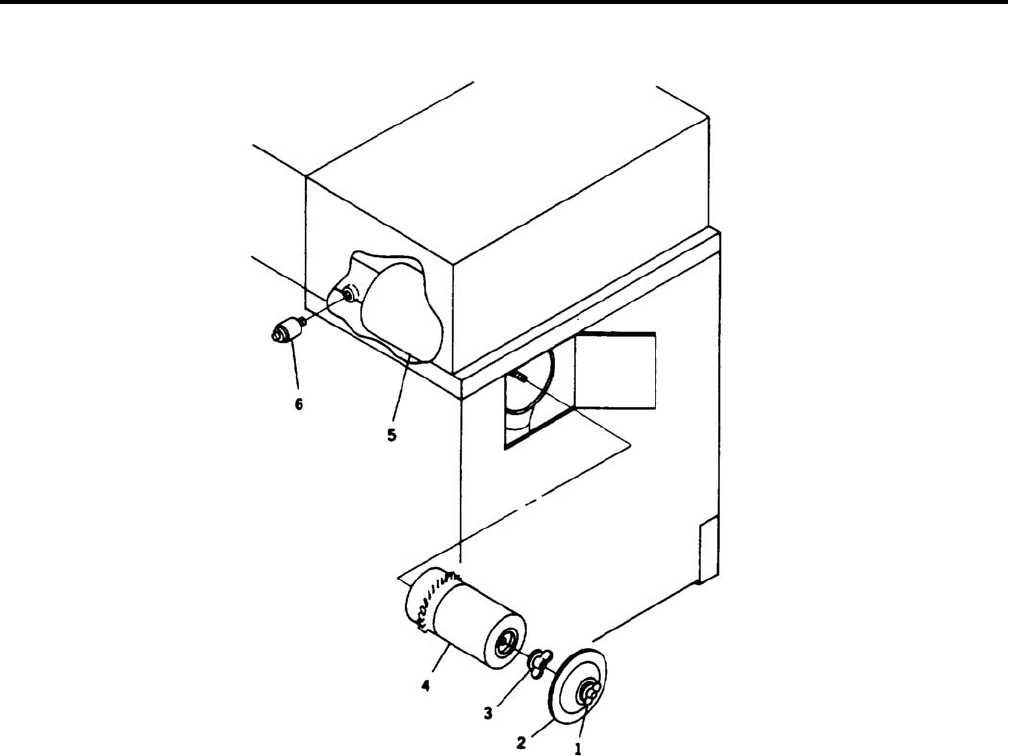
Figure 1. Air Cleaner Element Replacement.
END OF TASK
SERVICING
1. Shut down generator set; refer to WP 0005, Stopping Procedure.
2. Open air cleaner access door (rear of generator set).
3. Loosen wing nut (Figure 1, Item 1) and remove end cap (2) on air cleaner housing (5).
4. Remove wing nut (3) and air cleaner element (4). If fouled, discard air cleaner element.
5. Inspect inside of air cleaner housing (5) for debris. Wipe housing interior with clean lint-free cloth (WP 0022,
Item 3).
6. Install air cleaner element (4), wing nut (3), end cap (2) and hand tighten wing nut (1).
7. Close air cleaner access door.
END OF TASK
END OF WORK PACKAGE
TM 9-6115-645-10 0015
0015-2

OPERATOR MAINTENANCE
60 kW 50/60 AND 400 Hz SKID MOUNTED TACTICAL QUIET GENERATOR SETS
COOLING SYSTEM: INSPECTION, SERVICING
INITIAL SETUP:
Tools and Special Tools
Generator Mechanical Tool Kit
Materials/Parts
Coolant (MIL-A-53009A (1)
Antifreeze (A-A-52624A)
Personnel Required
One
References
WP 0005, Stopping Procedure
Equipment Condition
Generator grounded, off & operational
INSPECTION
WARNING
All metal jewelry can conduct electricity and become entangled in generator set components.
Remove all jewelry when working on generator set. Failure to comply with this warning can cause
injury or death to personnel.
1. Shut down generator set; refer to WP 0005, Stopping Procedure.
2. Open both engine access doors.
WARNING
Cooling system operates at high temperatures and pressure. Contact with high pressure steam
and/or liquids can result in burns and scalding. Shut down generator set, and allow system to cool
before performing checks, services and maintenance, or wear gloves and additional protective
clothing and goggles as required. Failure to comply with this warning can cause injury or death to
personnel.
3. Check radiator for dirt, leaves, insects, etc. blocking air flow.
4. Check radiator and hoses for leaks, loose connections, loose mountings, corrosion, chafing, and missing
parts.
5. Check coolant level at coolant recovery (overflow) bottle.
6. Close both engine access doors.
END OF TASK
SERVICING
WARNING
Cooling system operates at high temperatures and pressure. Contact with high pressure steam
and/or liquids can result in burns and scalding. Shut down generator set, and allow system to cool
before performing checks, services and maintenance, or wear gloves and additional protective
clothing and goggles as required. Failure to comply with this warning can cause injury or death to
personnel.
TM 9-6115-645-10 0016
0016-1
Table 1. Coolant.
COOLANT
AMBIENT TEMPERATURE RADIATOR COOLANT RATIO
+40 TO +120 °F
(+4 TO +49 °C)
Water: MIL-A-53009A (1)
INHIBITOR, CORROSION
35:1
-25 TO +120 °F
(-32 TO +49 °C)
Water: A-A-52624A
ANTIFREEZE
1:1
-25 TO +120 °F
(-32 TO +49 °C)
Water: A-A-52624A
ANTIFREEZE
NA
1. Shut down generator set; refer to WP 0005, Stopping Procedure.
2. Open right side engine access door.
3. Remove cap on coolant recovery (overflow) bottle.
4. Fill coolant recovery (overflow) bottle to HOT line if coolant is hot or to COLD line if coolant is cold with proper
coolant/antifreeze in accordance with Table 1.
5. Install coolant recovery (overflow) bottle cap.
6. Close right side engine access door.
END OF TASK
END OF WORK PACKAGE
TM 9-6115-645-10 0016
0016-2

OPERATOR MAINTENANCE
60 kW 50/60 AND 400 Hz SKID MOUNTED TACTICAL QUIET GENERATOR SETS
FUEL TANK: INSPECTION, SERVICING
INITIAL SETUP:
Tools and Special Tools
Generator Mechanical Tool Kit
Materials/Parts
Disel/Turbine Fuel A-A-52557A GRADE 2-D
MIL-DTL-831-33E, JP-8
Disel/Turbine Fuel A-A-52557A GRADE 1-D
MIL-DTL-5624T, JP-5
Personnel Required
One
References
WP 0005, Stopping Procedure
Equipment Condition
Generator grounded, off & operational
INSPECTION
WARNING
Fuels used in the generator set are flammable. Do not smoke or use open flames when
performing maintenance. Failure to comply with this warning can cause injury or death to
personnel, and damage to the generator set.
1. Place MASTER SWITCH in PRIME & RUN or PRIME & RUN AUX FUEL position.
2. Check fuel level by observing FUEL LEVEL indicator.
3. Remove fuel cap and ensure strainer is free of dirt and other foreign material.
END OF TASK
SERVICING
WARNING
Fuels used in the generator set are flammable. Do not smoke or use open flames when
performing maintenance. Failure to comply with this warning can cause injury or death to
personnel, and damage to the generator set.
CAUTION
Use only specified diesel fuel to service the fuel tank; refer to Table 1. Otherwise, equipment
damage could result.
1. Shut down generator set; refer to WP 0005, Stopping Procedure.
2. Remove fuel cap.
3. Remove fuel strainer, clean as necessary, and reinstall.
NOTE
Fuel tank holds 23 gallons (87.1 liters).
4. Add diesel fuel to fuel tank.
5. Install fuel cap.
TM 9-6115-645-10 0017
0017-1
Table 1. Diesel Fuel.
FUEL
AMBIENT
TEMPERATURE
DIESEL/TURBINE FUEL
+20 TO +120 °F
(-7 TO +49 °C)
A-A-52557A, GRADE 2-D
MIL-DTL-83133E, JP-8
-25 TO +20 °F
(-32 TO +7 °C)
A-A-52557A, GRADE 1-D
MIL-DTL-5624T, JP-5
END OF TASK
END OF WORK PACKAGE
TM 9-6115-645-10 0017
0017-2
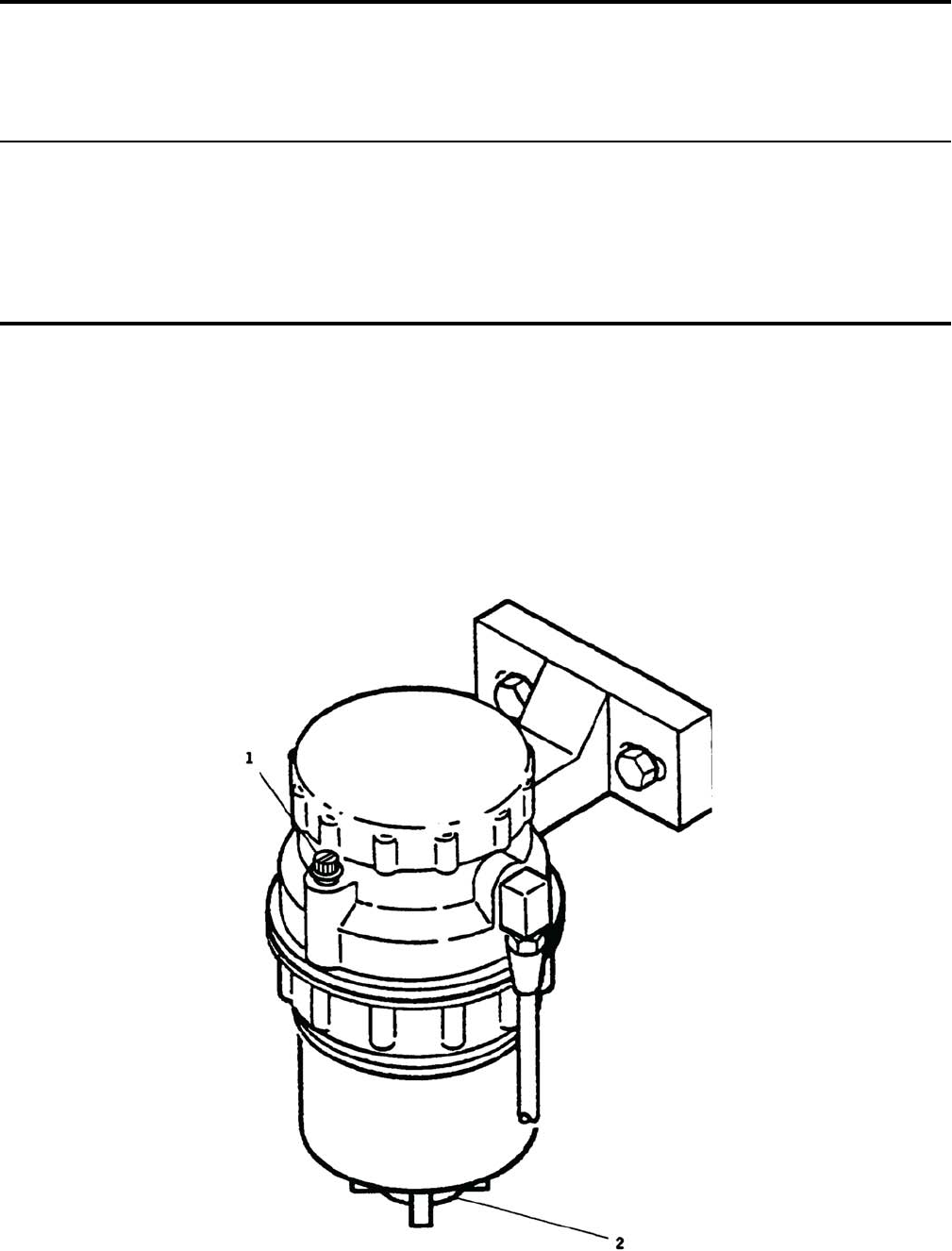
OPERATOR MAINTENANCE
60 kW 50/60 AND 400 Hz SKID MOUNTED TACTICAL QUIET GENERATOR SETS
FUEL FILTER/WATER SEPARATOR: INSPECTION, SERVICING
INITIAL SETUP:
Tools and Special Tools
Generator Mechanical Tool Kit
Personnel Required
One
References
WP 0005, Stopping Procedure
Equipment Condition
Generator grounded, off & operational
INSPECTION
1. Shut down generator set; refer to WP 0005, Stopping Procedure.
2. Open right side engine access door.
3. Inspect fuel filter/water separator assembly for proper mounting, cracks, dents, leaks, loose fuel lines and
other damage.
4. Close right side engine access door.
Figure 1. Draining Fuel Filter/Water Separator.
TM 9-6115-645-10 0018
0018-1

END OF TASK
SERVICING
1. Shut down generator set; refer to WP 0005, Stopping Procedure.
2. Open right side engine access door.
3. Open fuel drain cock (Figure 1, Item 2) and air vent (1) on fuel filter/water separator assembly and drain any
sediment and water into a suitable container.
4. Close drain cock (2) and air vent (1).
5. Close right side engine access door.
END OF TASK
END OF WORK PACKAGE
TM 9-6115-645-10 0018
0018-2

OPERATOR MAINTENANCE
60 kW 50/60 AND 400 Hz SKID MOUNTED TACTICAL QUIET GENERATOR SETS
LUBRICATION SYSTEM: INSPECTION, SERVICING
INITIAL SETUP:
Tools and Special Tools
Generator Mechanical Tool Kit
Materials/Parts
Oil
Personnel Required
One
References
WP 0005, Stopping Procedure
LO 9-6115-645-12
Equipment Condition
Grounded, off & operational
INSPECTION
1. Shut down generator set; refer to WP 0005, Stopping Procedure.
2. Open both engine access doors.
3. Inspect engine assembly for oil leaks.
4. Check for damage, proper mounting, or missing parts.
CAUTION
The dipstick is marked so that the crankcase oil can be checked while engine is stopped or
running. Always make sure correct side of dipstick is checked. Remove oil filler cap when
checking oil with engine running.
5. Check engine crankcase oil level; refer to LO 9-6115-645-12.
6. Close both engine access doors.
END OF TASK
SERVICING
1. Shut down generator set; refer to WP 0005, Stopping Procedure.
2. Open right side engine access door.
3. Remove oil filter cap.
4. Add oil to engine crankcase; refer to LO 9-6115-645-12.
5. Install oil filter cap.
6. Close right side engine access door.
END OF TASK
END OF WORK PACKAGE
TM 9-6115-645-10 0019
0019-1/(2 blank)


CHAPTER 5
SUPPORTING INFORMATION
WORK PACKAGE INDEX
Title WP Sequence No.
References ..........................................................................................................................................................0020
Components of End Item (COEI) and Basic Issue Items (BII) Lists ....................................................................0021
Additional Authorization List (AAL)......................................................................................................................0022
Expendable and Durable Items List.....................................................................................................................0023
TM 9-6115-645-10

OPERATOR MAINTENANCE
60 kW 50/60 AND 400 Hz SKID MOUNTED TACTICAL QUIET GENERATOR SETS
REFERENCES
SCOPE
This work package lists all forms, regulations, pamphlets, specifications, standards, technical manuals, technical
bulletins, lubrication orders, field manuals, and miscellaneous publications referenced in this TM.
FORMS
DA Form 2028 Recommended Changes to Publications and Blank Forms
DA Form 2028-2 Recommended Changes to Equipment Technical Publications
DA Form 2404 Equipment Inspection and Maintenance Worksheet
DA Form 2407 Maintenance Request
DA Form 2408 Equipment Log Assembly (Records)
DA Form 2408-9 Equipment Control Record
DA Form 2408-20 Oil Analysis Log
DA Form 5988-E Equipment Inspection and Maintenance Worksheet
DD Form 314 Preventive Maintenance Schedule and Record
SF Form 364 Report of Discrepancy
SF Form 368 Product Quality Deficiency Report
ARMY REGULATIONS
AR 310-25 Dictionary of United States Army Terms
DEPARTMENT OF THE ARMY PAMPHLETS
DA PAM 750-8 The Army Maintenance Management System (TAMMS)
MILITARY SPECIFICATIONS
MIL-A-53009A(1) Additive, Antifreeze Extender, Liquid Cooling Systems
MIL-DTL-5624T Turbine Fuel, Aviation, Grades JP-4, JP-5, and JP-5/JP-8 ST
MIL-DTL-83133E Turbine Fuels, Aviation, Kerosene Types, NATO F-34 (JP-8), NATO F-35
and JP-8+100
COMMERCIAL ITEM DESCRIPTIONS
A-A-52557A Fuel Oil, Diesel; for Posts, Camps, and Stations
A-A-52624A Antifreeze, Multi Engine Type
ASME-Y14.38M Abbreviations for Use on Drawings, and in Specifications, Standards and
Technical Documents
MILITARY STANDARDS
None
TM 9-6115-645-10 0020
0020-1

TECHNICAL MANUALS
TM 4700-15/1 Marine Corps Forms
TM 750-244-3 Procedures for Destruction of Equipment to Prevent Enemy Use (Mobility
Equipment Command)
TECHNICAL BULLETINS
TB 43-0125 Installation of Communications Electronic Equipment: Hookup of Electrical
Cables to Mobile Generator Sets on Fielded Equipment to Meet Electrical
Safety Standards
TB 9-6115-645-24 Warranty Technical Bulletin
LUBE ORDERS
LO 9-6115-645-12 Generator Set, Skid Mounted, Tactical Quiet 60 kW, 50/60 and 400 Hz
MEP-806A, Tactical Quiet, 50/60 Hz, NSN 6115-01-274-7390 MEP-816A,
Tactical Quiet, 400 Hz, NSN 6115-01-274-7395
FIELD MANUALS
FM 3-113 Multiservice Tactics, Techniques and Procedures for Chemical, Biological,
Radiological, and Nuclear Contamination Avoidance
FM 3-114 Multiservice Tactics, Techniques, and Procedures for Nuclear, Biological,
and Chemical (NBC) Protection
FM 3-115 Multiservice Tactics, Techniques, and Procedures for Chemical, Biological,
Radiological, and Nuclear Decontamination
FM 4-25.11 First Aid
FM 5-424 Theater of Operations, Electrical Systems
FM 9-207 Operation and Maintenance of Ordnance Materiel in Cold Weather (0° to
-65°)
FM 21-6 Techniques of Military Instruction
FM 21-30 Military Symbols
FM 21-40 Chemical, Biological, Radiological, and Nuclear Defense
FM 31-70 Basic Cold Weather Manual
FM 31-71 Northern Operations
FM 90-6 Mountain Operations
MISCELLANEOUS PUBLICATIONS
AFR 66-1 Air Force Maintenance Forms and Records
AR 700-138 Army Logistics Readiness and Sustainability
AR 735-11-2 Reporting of Supply Discrepancies
AR 750-1 Army Materiel Maintenance Policy and Retail Maintenance Operations
AR 750-244-2 Procedures for Destruction of Electronics Materiel to Prevent Enemy Use
CTA 8-100 Army Medical Department Expendable/Durable Items
CTA 50-970 Expendable Items (Except Medical Class V, Repair Parts, and Heraldic
Items)
END OF WORK PACKAGE
TM 9-6115-645-10 0020
0020-2

OPERATOR MAINTENANCE
60 kW 50/60 AND 400 Hz SKID MOUNTED TACTICAL QUIET GENERATOR SETS
COMPONENTS OF END ITEM (COEI) AND BASIC ISSUE ITEMS (BII) LISTS
INTRODUCTION
Scope
This work package lists COEI and BII for the generator set to help you inventory items for safe and efficient
operation of the equipment.
General
The COEI and BII information is divided into the following lists:
Components of End Item (COEI). This list is for information purposes only and is not authority to requisition
replacements. These items are part of the end item. As part of the end item, these items must be with the end
item whenever it is issued or transferred between property accounts. Items of COEI are removed and separately
packaged for transportation or shipment only when necessary. Illustrations are furnished to help you find and
identify the items.
Basic Issue Items (BII). These essential items are required to place the generator set in operation, operate it, and
to do emergency repairs. Although shipped separately packaged, BII must be with the generator set during
operation and when it is transferred between property accounts. Listing these items is your authority to
request/requisition them for replacement based on authorization of the end item by the TOE/MTOE. Illustrations
are furnished to help you find and identify the items.
Explanation of Columns in the COEI List and BII List
Column (1) Illus Number. Gives you the number of the item illustrated.
Column (2) National Stock Number (NSN). Identifies the stock number of the item to be used for requisitioning
purposes.
Column (3) Description, Part Number/(CAGEC). Identifies the Federal item name (in all capital letters) followed by
a minimum description when needed. The stowage location of COEI and BII is also included in this column. The
last line below the description is the part number and the Commercial and Government Entity Code (CAGEC) (in
parentheses).
Column (4) Usable On Code. When applicable, gives you a code if the item you need is not the same for different
models of equipment.
Column (5) U/I. Unit of Issue (U/I) indicates the physical measurement or count of the item as issued per the
National Stock Number shown in column (2).
Column (6) Qty Rqr. Indicates the quantity required.
Table 1. Components of End Item List.
(1) (2) (3) (4) (5) (6)
Illus
Number
National Stock
Number (NSN) Description, Part Number / (CAGEC)
Usable
On Code U/I Qty Rqr
NONE
TM 9-6115-645-10 0021
0021-1
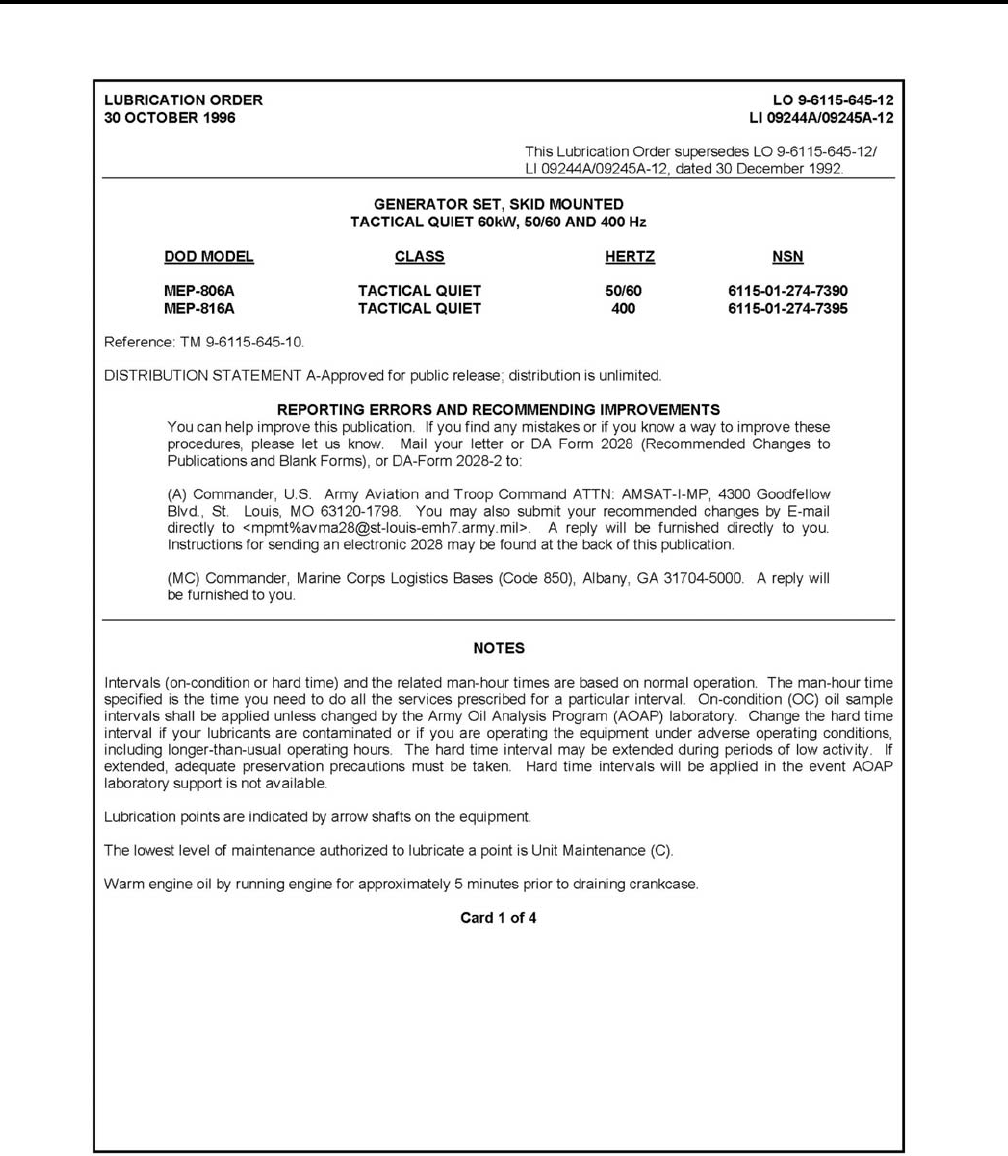

Table 2. Basic Issue Items List.
(1) (2) (3) (4) (5) (6)
Illus
Number
National Stock
Number (NSN) Description, Part Number / (CAGEC)
Usable
On Code U/I Qty Rqr
1 LUBRICATION ORDER, LO 9-6115-645-12 EA 1
2 TECHNICAL MANUAL, TM 9-6115-645-10 EA 1
3 WARRANTY TECHNICAL BULLETIN, TB
9-6115-645-24
EA 1
END OF WORK PACKAGE
TM 9-6115-645-10 0021
0021-5/(6 blank)

OPERATOR MAINTENANCE
60 kW 50/60 AND 400 Hz SKID MOUNTED TACTICAL QUIET GENERATOR SETS
ADDITIONAL AUTHORIZATION LIST (AAL)
INTRODUCTION
Scope
This work package lists additional items you are authorized for the support of the generator set.
General
This list identifies items that do not have to accompany the generator set and that do not have to be turned in with
it. These items are all authorized to you by CTA, MTOE, TDA, or JTA.
Explanation of Entries in the AAL
Column (1) National Stock Number (NSN). Identifies the stock number of the item to be used for requisitioning
purposes.
Column (2) Description, Part Number/(CAGEC). Identifies the Federal item name (in all capital letters) followed by
a minimum description when needed. The last line below the description is the part number and the Commercial
and Government Entity Code (CAGEC) (in parentheses).
Column (3) Usable On Code. When applicable, gives you a code if the item you need is not the same for different
models of equipment.
Column (4) U/I. Unit of Issue (U/I) indicates the physical measurement or count of the item as issued per the
National Stock Number shown in column (1).
Column (5) Qty Recm. Indicates the quantity recommended.
Table 1. Additional Authorization List.
(1) (2) (3) (4) (5)
National Stock
Number (NSN)
Description, Part Number /
(CAGEC) Usable On Code U/I Qty Recm
5342-00-066-1235 ADAPTER, CONTAINER
13211E7541 (97403)
EA 1
4210-00-361-6921 EXTINGUISHER, FIRE, CARBON
DIOXIDE, 5 LB
322 (54905)
EA 1
7240-00-177-6154 FLEXIBLE SPOUT
MIL-S-1285 (81349)
EA 1
7240-01-337-5269 FUEL CAN EA 1
5120-01-013-1676 HAMMER, SLIDE, GROUND
0116-1810 (93742)
EA 1
END OF WORK PACKAGE
TM 9-6115-645-10 0022
0022-1/(2 blank)

OPERATOR MAINTENANCE
60 kW 50/60 AND 400 Hz SKID MOUNTED TACTICAL QUIET GENERATOR SETS
EXPENDABLE AND DURABLE ITEMS LIST
EXPENDABLE AND DURABLE ITEMS LIST
Scope
This work package lists expendable and durable items that you will need to operate and maintain the generator
set. This list is for information only and is not authority to requisition the listed items. These items are authorized
to you by CTA 50-970, Expendable/Durable Items (Except Medical, Class V Repair Parts, and Heraldic Items),
CTA 50-909, Field and Garrison Furnishings and Equipment or CTA 8-100, Army Medical Department
Expendable/Durable Items.
Explanation of Columns in the Expendable/Durable Items List
Column (1) Item No. This number is assigned to the entry in the list and is referenced in the narrative
instructions to identify the item (e.g., Use brake fluid (WP 0098, Item 5)).
Column (2) Level. This column identifies the lowest level of maintenance that requires the listed item (include
as applicable: C = Crew, O = AMC, F = Maintainer or ASB, H = BelowDepot or TASMG, D = Depot).
Column (3) National Stock Number (NSN). This is the NSN assigned to the item which you can use to
requisition it.
Column (4) Item Name, Description, Part Number/(CAGEC). This column provides the other information you
need to identify the item. The last line below the description is the part number and the Commercial and
Government Entity Code (CAGEC) (in parentheses).
Column (5) U/I. Unit of Issue (U/I) code shows the physical measurement or count of an item, such as gallon,
dozen, gross, etc.
Table 1. Expendable and Durable Items List.
(1) (2) (3) (4) (5)
Item No. Level
National Stock
Number (NSN)
Item Name, Description, Part Number /
(CAGEC) U/I
1 F 8040-00-664-4318 Adhesive
9995460 (18876)
EA
2 F 6850-00-181-7929 Antifreeze
A-A-52624 (81349)
GL
3 F 6850-01-331-3349 Cleaning compound, solvent
P-D-680 (81348)
EA
4 F 6850-01-331-3350 Cleaning compound, solvent
P-D-680 (81348)
EA
5 F 7920-01-338-3329 Cloth, Cleaning EA
6 F 9150-00-190-0904 Grease, Automotive/artillery GAA
MIL-PRF-10924 (81349)
EA
7 F 9150-00-189-6727 Oil, Lubrication OE/HDO-10
MIL-PRF-2104 (81349)
EA
8 F Solder
Sn60Pb40 (81348)
EA
9 F 6810-00-107-1510 Water, Distilled GL
END OF WORK PACKAGE
TM 9-6115-645-10 0023
0023-1/(2 blank)


CHAPTER 6
WINTERIZATION KIT
WORK PACKAGE INDEX
Title WP Sequence No.
Winterization Kit, General Information.................................................................................................................0024
Winterization Kit, Equipment Description and Data.............................................................................................0025
Winterization Kit, Troubleshooting Procedures ...................................................................................................0026
Winterization Kit, Preventive Maintenance Checks and Services (PMCS) Introduction......................................0027
Winterization Kit, Preventive Maintenance Checks and Services (PMCS) .........................................................0028
Winterization Kit, Maintenance Procedures.........................................................................................................0029
TM 9-6115-645-10

OPERATOR MAINTENANCE
60 kW 50/60 AND 400 Hz SKID MOUNTED TACTICAL QUIET GENERATOR SETS
WINTERIZATION KIT, GENERAL INFORMATION
SCOPE
This Winterization Kit (NSN 6115-01-474-8344) is designed to be mounted in 60 kW Tactical Quiet Generator
(TQG) Sets where extreme cold temperatures are anticipated. The kit contains a coolant heater that allows the
generator set to operate to -50 °F (-45.6 °C). The kit heater pump circulates the generator set coolant through the
heater pump, heats the coolant and then returns the coolant back through the radiator of the generator set. This
cycle continues in high heat mode until the temperature reaches 176 °F (80 °C). The heater then switches into a
low heat mode. If the coolant temperature drops to 158 °F (70 °C) the heater will automatically switch to the high
heat mode.
END OF WORK PACKAGE
TM 9-6115-645-10 0024
0024-1/(2 blank)

OPERATOR MAINTENANCE
60 kW 50/60 AND 400 Hz SKID MOUNTED TACTICAL QUIET GENERATOR SETS
WINTERIZATION KIT, EQUIPMENT DESCRIPTION AND DATA
EQUIPMENT CHARACTERISTICS, CAPABILITIES AND FEATURES
Characteristics
The Winterization Kit contains a coolant heater that heats the coolant and allows the generator set to operate to
-50 °F (-45.6 °C).
Capabilities and Features
The heater burns fuel from the generator set fuel tank to heat the coolant that is pumped back through the engine
block. The kit consists of a heater and coolant pump, a control unit, an ON-OFF switch, a fuel pump and line,
coolant circulating lines, a wiring harness and mounting hardware to ensure operation to -50 °F (-45.6 °C).
LOCATION AND DESCRIPTION OF MAJOR COMPONENTS
Figure 1 illustrates the major components of the kit and shows their locations on the 60 kW TQG Set. (Refer to
Table 1 for item names).
TM 9-6115-645-10 0025
0025-1
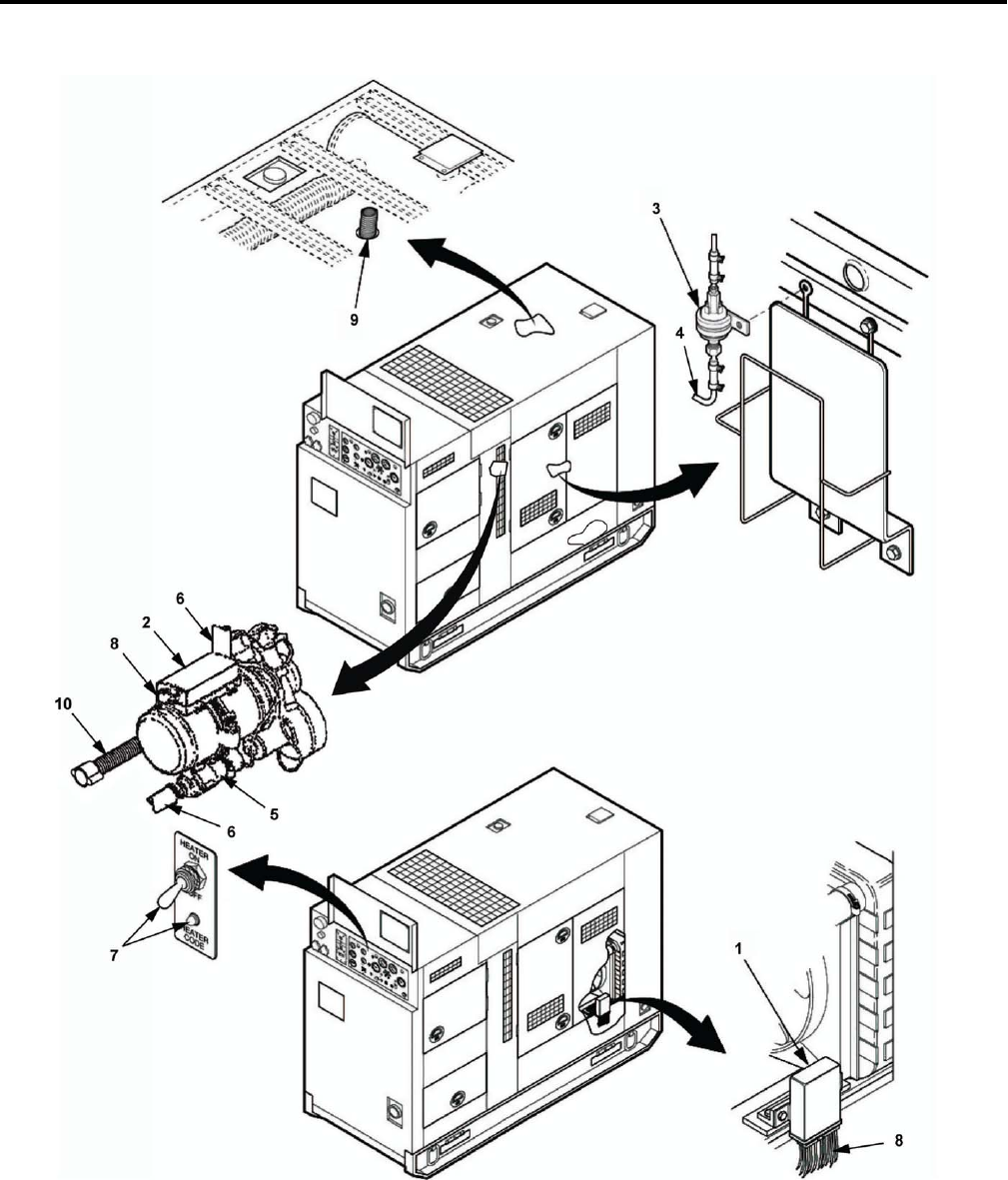

Table 1. Description of Major Winterization Kit Components.
Item No. Item Name Description
Winterization Kit A fuel-burning heater, pre-heats engine coolant permitting gener-
ator set operation to -50 °F (-45.6 °C).
1 Control Unit Controls heater operations.
2 Heater Heats coolant for operation in extreme cold temperatures.
3 Fuel Pump Pumps fuel from the generator set fuel tank to the heater.
4 Fuel Lines Provides a means of transporting fuel to heater.
5 Coolant Pump Circulates coolant from generator set through the heater.
6 Coolant Lines Provides a means of transporting coolant for circulation.
7 Switch / Lamp Switches heater on or off / indicates heater function codes.
8 Wiring Harness Electrically connects Winterization Kit components.
9 Exhaust Hose Provides a means of exhausting combustion gases from heater.
10 Air Inlet Hose Provides intake air to Winterization Kit heater.
TABULATED/ILLUSTRATED DATA
Tabulated data for the heater is located in Table 2.
Table 2. Heater Operating Data.
Item Name Data
1. Winterization Kit
a. National Stock Number 6115-01-474-8344
b. Overall Length 10.787 inches
c. Overall Width 5.984 inches
d. Overall Height 7.815 inches
e. Weight 15 lbs
2. Heater
a. Manufacturer Active Gear
b. Model D5W
3. Heating Water Coolant
Capacity High: 17,000 BTU/Hr.
Low: 4250 BTU/Hr.
4. Rated Voltage 24 VDC
a. Operating Voltage Range 20 to 28 VDC
b. Current at 24 VDC Start: 20 Amps/Hr.
Running High: 1.8 Amps/Hr.
Running Low: 1.2 Amps/Hr.
TM 9-6115-645-10 0025
0025-3
Table 2. Heater Operating Data. - Continued
Item Name Data
5. Fuel Diesel
Fuel Consumption High: 0.06 Gal/Hr.
Low: 0.04 Gal/Hr.
6. Coolant Pump Flow 250 Gal/Hr.
END OF WORK PACKAGE
TM 9-6115-645-10 0025
0025-4

OPERATOR MAINTENANCE
60 kW 50/60 AND 400 Hz SKID MOUNTED TACTICAL QUIET GENERATOR SETS
WINTERIZATION KIT, TROUBLESHOOTING PROCEDURES
GENERAL
Refer to WP 0008 for generator set troubleshooting procedures. This section lists common malfunctions you may
find during operation of the generator set with the Winterization Kit installed and the generator set is running. You
should perform the tests/inspections and corrective actions in the order listed. The troubleshooting symptom index
cannot list all faults that may occur, nor all the tests or inspections and corrective actions. If a malfunction is not
listed or cannot be corrected by listed corrective actions, notify your supervisor.
Code Light Troubleshooting
The indicator light near the heater switch is designed to blink on codes sequences to signal malfunctions in the
system; refer to Code Light Pulses.
Code Light Pulses
The indicator light near the heater ON-OFF switch will blink in different sequences of long and short to indicate
malfunctions. A plate (Figure 1) mounted on the generator control panel access door lists the malfunctions and
shows each sequence of pulses. If you see any of these series of pulses, notify the next-higher level of
maintenance.
NOTE
Before performing troubleshooting procedures, turn off heater and attempt restart.
SYMPTOM INDEX, WINTERIZATION KIT
NOTE
When the heater is switched on, the light will perform one of the sequences of light pulses shown
visually on the Function Codes Plate mounted inside the generator control panel cover (Figure 1).
Before each symptom, this index lists in parentheses the light sequence associated with it.
(long dash, short dash, long dash) - Start, glow period
(long dash, short dash, long dash) - Start, glow period
(continuous dash) - Normal Function
(long dash, long dash) - Purge Cycle and Restart
(dash, dash) - Heater Restart attempted During Purge Cycle
(dash, 5 dots, dash) - Warning: Power supply
(10 dots) -Overheating
(dot, dot) - Flame Sensor Short-circuit
(2 dots, 2 dots) - Flame Cutout-LOW
(3 dots, 3 dots) - Flame Cutout-HIGH
(4 dots, 4 dots) - Glow Plug Defect
(dash, dash) - Burner Motor Defect
(dash, dot, dash, dot) - Under voltage
(dash, 2 dots, dash, 2 dots) - Over voltage
(dash, 3 dots, dash, 3 dots) - Non-start
(2 dots, dash, 2 dots, dash) - Temperature Sensor Defective
(3 dots, dash, 3 dots, dash) - Fuel pump short circuit
TM 9-6115-645-10 0026
0026-1
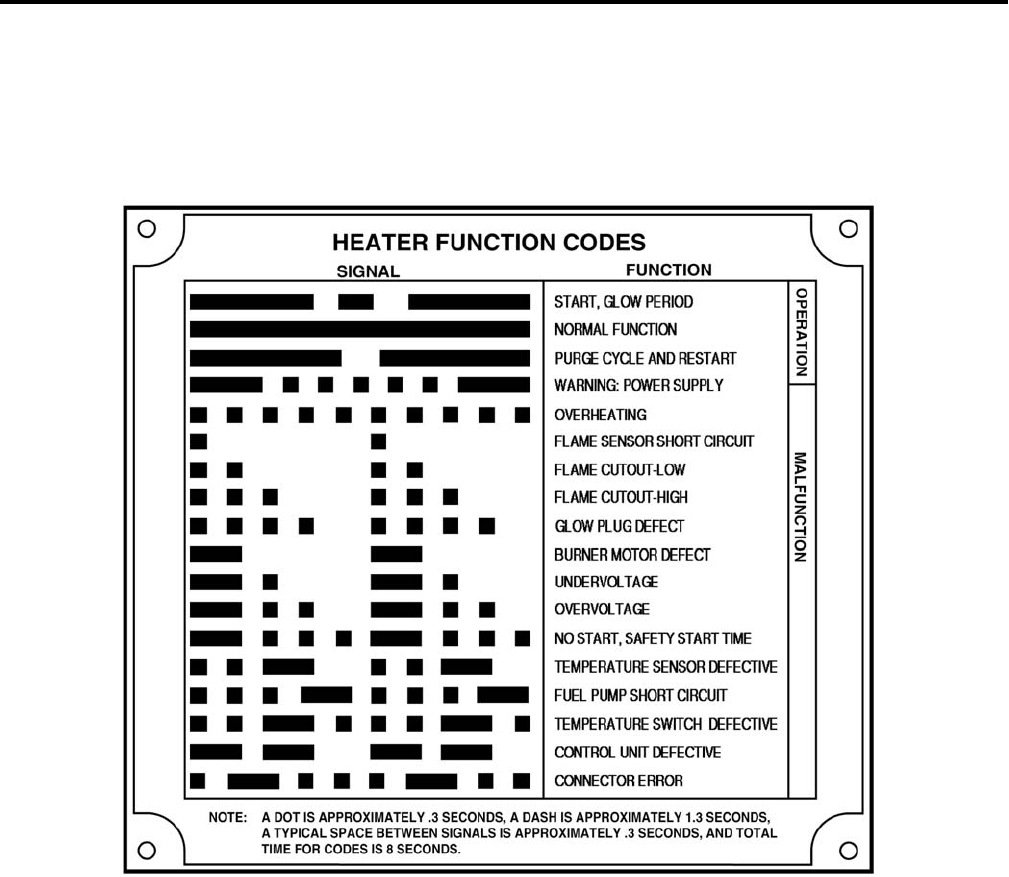

OPERATOR MAINTENANCE
60 kW 50/60 AND 400 Hz SKID MOUNTED TACTICAL QUIET GENERATOR SETS
WINTERIZATION KIT, PREVENTIVE MAINTENANCE CHECKS AND SERVICES (PMCS) INTRODUCTION
GENERAL
WP 0027, Table 1 (PMCS Table) has been provided so you can keep your equipment in good operating condition
and ready for its primary mission.
Warnings, Cautions, and Notes
Always observe the WARNINGS, CAUTIONS, and NOTES appearing in your PMCS table. Warnings and
cautions appear before applicable procedures. You must observe these WARNINGS to prevent serious injury to
yourself and others. You must observe CAUTIONS to prevent your equipment from being damaged. You must
observe NOTES to ensure procedures are performed properly.
Explanation of Table Entries
The PMCS Table is divided into five columns. Each column is explained in the following paragraphs.
Item No. Column. Numbers in this column are for reference. When completing DA Form 2404 (Equipment
Inspection and Maintenance Worksheet), include the item number for the check/service indicating a fault. Item
numbers also appear in the order that you must do checks and services for the intervals listed.
Interval Column. This column tells you when you must do the procedure in the procedure column. "Before"
procedures must be done before you operate the power plant or power unit for its intended mission. "During"
procedures must be done during the time you are operating the power plant or power unit for its intended mission.
"After" procedures must be done immediately after you have operated a power plant, immediately after shutting
down one of the generator sets on a power plant, or immediately after you have operated a power unit. Perform
"Weekly" procedures at the listed interval.
Item to be Checked or Serviced Column. This column lists the location and the item to be checked or serviced.
The item location is underlined.
Procedure Column. This column gives the procedure for checking or servicing the item listed in the location, item
to check/service column. You must perform the procedure to know if the power plant or power unit is ready or
available for its intended mission or operation. You must do the procedure at the time stated in the interval
column.
Equipment Not Ready/Available if: Column. Information in this column tells you what faults will keep your
power plant or power unit from being capable of performing its primary mission. If you make checks or services
that show faults listed in this column, do not operate the power plant or power unit.
Other Table Entries
Be sure to observe all special information and notes that appear in your table.
Special Instructions
Preventive maintenance is not limited to performing the checks and services listed in the PMCS Table. Covering
unused receptacles, stowing unused accessories and performing other routine procedures such as equipment
inventory, cleaning components, and touch-up painting are not listed in the table. These are things you should do
any time you see that they need to be done. If a routine check is listed in the PMCS Table, it is because
experience has shown that problems may occur with this item. Take along tools and cleaning cloths needed to
perform the required checks and services. Use the information in the following paragraphs to help you identify
problems at any time and to help identify potential problems before and during checks and services.
WARNING
High voltage is produced when this generator set is in operation. Ensure engine
control and DEAD CRANK switches are set to OFF, negative battery cable is
disconnected. and unit is completely shut down and free of any power source
before attempting any troubleshooting or maintenance on unit. Failure to comply
may cause injury or death to personnel.
TM 9-6115-645-10 0027
0027-1

WARNING
Solvent used to clean parts is potentially dangerous to personnel and property. Clean parts in a
well-ventilated area. Avoid inhalation of solvent fumes. Wear goggles and rubber gloves to
protect eyes and skin. Wash exposed skin thoroughly. Do not smoke or use near open flame or
excessive heat. Failure to comply with this warning can cause injury to personnel, and damage to
the equipment.
CAUTION
Keep cleaning solvents, fuels and lubricants away from rubber or soft plastic parts. They will
deteriorate material.
1. Keep the generator set clean. Dirt, grease, and oil get in the way and may cover up a serious problem. Use
cleaning solvent to clean metal services.
2. Use soap and water to clean rubber or plastic parts and material.
3. Check all bolts, nuts, and screws to make sure they are not loose, missing, bent, or broken. Do not try to
check them all with a tool, but look for chipped paint, bare metal, or rust around bolt heads. If you find one
loose, tighten it or report it to the next-higher level of maintenance.
4. Inspect welds. Look for loose or chipped paint, rust, or gaps where parts are welded together. If a broken
weld is found, report it to the next-higher level of maintenance.
5. Inspect electrical wires, connectors, terminals, and receptacles. Look for cracked or broken insulation, bare
wires, and loose or broken connectors. Tighten loose connectors and make sure wires are in good condition.
Examine terminals and receptacles for serviceability. If deficiencies are found, report them to the next-higher
level of maintenance.
6. Inspect hoses and fluid lines. Look for wear, damage, and leaks. Make sure that clamps and fittings are tight.
Wet spots and stains around a fitting or connector can mean a leak. If a leak comes from a loose connector
or if something is broken or worn out, report it to the next-higher level of maintenance.
Leakage Definitions
You must know how fluid leakage affects the status of your equipment. The following are definitions of the
types/classes of leakage you need to know to be able to determine the status of your equipment. Learn and be
familiar with them. When in doubt, notify your supervisor.
Leakage Class Leakage Definition
Class I Seepage of fluid (as indicated by wetness or discoloration) not great enough to form drops.
Class II Leakage of fluid great enough to form drops, but not enough to cause drops to drip from the
item being checked/inspected.
Class III Leakage of fluid great enough to form drops that fall from the item being checked/inspected.
Order in Which PMCS Will Be Done
Figure 1 shows the order in which you are to perform your PMCS. The figure shows a generator set to which a kit
has been added. The number call outs on Figure 1 correspond to the numbers in the Item No. column of WP
0028, Table 1 (for BEFORE/DURING/AFTER PMCS).
NOTE
Be sure Generator Set PMCS is completed first in accordance with WP 0010.
TM 9-6115-645-10 0027
0027-2
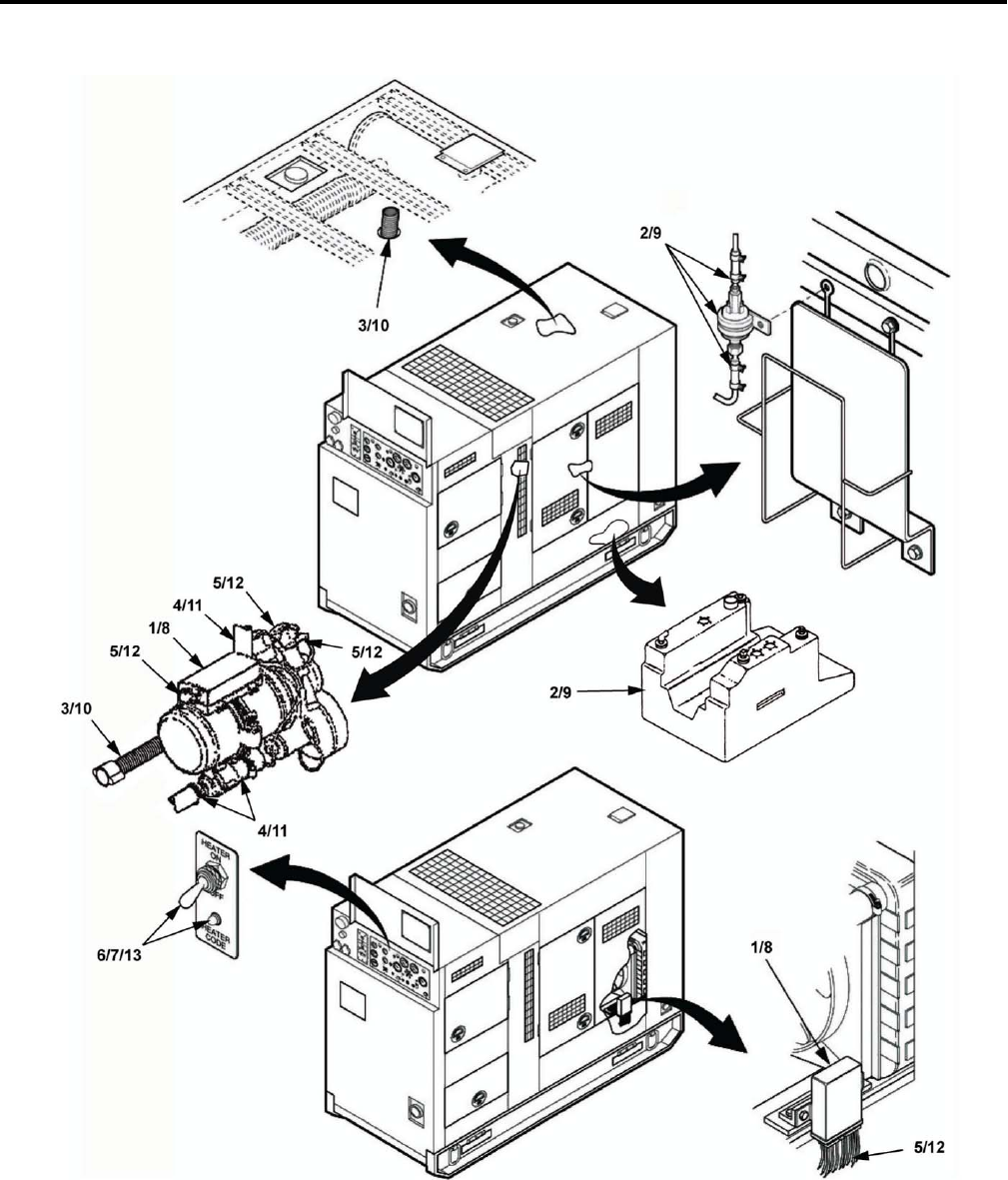

OPERATOR MAINTENANCE
60 kW 50/60 AND 400 Hz SKID MOUNTED TACTICAL QUIET GENERATOR SETS
WINTERIZATION KIT, PREVENTIVE MAINTENANCE CHECKS AND SERVICES (PMCS)
NOTE
Be sure that Generator Set PMCS is completed first in accordance with WP 0010 and TM
9-6115-644-10 (Chapter 2).
Table 1. Operator Preventive Maintenance Checks and Services.
ITEM
NO. INTERVAL
ITEM TO BE CHECKED
OR SERVICED PROCEDURE
EQUIPMENT NOT
READY/AVAILABLE IF:
VISUAL INSPECTION
1 Before HEATER ASSEMBLY a. Check for damage. Damage that renders
equipment unsafe.
b. Ensure that heater assembly is
mounted securely.
Heater not mounted
securely.
CONTROL UNIT Check for loose or broken wires or
damage.
Wires loose or broken or
control unit damaged.
2 Before FUEL LEVEL Check for sufficient fuel supply. Generator is low on fuel.
FUEL LINES Inspect winterization kit fuel lines for
kinks, leaks, loose or damaged
clamps.
Fuel lines damaged;
clamps missing.
FUEL PUMP Inspect fuel pump for leaks. Any fuel leak.
3 Before EXHAUST HOSE Inspect for obstruction, missing or
damaged mounting clamp.
Hose obstructed; hose or
clamp missing or
damaged.
AIR INLET HOSE Inspect for obstruction, missing or
damaged mounting clamp.
Inlet hose obstructed.
WARNING
Cooling system operates at high temperatures and pressure. Contact with high pressure steam and/
or liquids can result in burns and scalding. Shut down generator set, and allow system to cool before
performing checks, services and maintenance, or wear gloves and additional protective clothing and
goggles as required. Failure to comply with this warning can cause injury or death to personnel.
4 Before WINTERIZATION KIT
COOLANT LINES
Inspect for loose, damaged or missing
clamps.
Class III leaks or missing
clamps or hoses.
Inspect for leaks. Class III leaks or missing
clamps or hoses.
COOLANT PUMP Inspect for leaks. Class III leaks or missing
clamps or hoses.
5 Before WIRE HARNESS Inspect wiring for burned or frayed
insulation or loose terminals.
Wiring is loose or burned.
6 Before HEATER CONTROL
AND SWITCH LAMP
Check that indicator light is operable. Indicator light not oper-
able.
Check Heater Function Code Plate. Heater Function Code
Plate missing.
TM 9-6115-645-10 0028
0028-1

Table 1. Operator Preventive Maintenance Checks and Services. - Continued
ITEM
NO. INTERVAL
ITEM TO BE CHECKED
OR SERVICED PROCEDURE
EQUIPMENT NOT
READY/AVAILABLE IF:
7 During HEATER CONTROL
AND SWITCH LAMP
a. Check that indicator light is on
when heater is operating.
b. Check Heater function Code
Plate.
Lamp blinks showing
failure in accordance with
Heater Function Code
Plate.
8 After HEATER ASSEMBLY a. Check for damage. Damage that renders
equipment unsafe.
b. Ensure that heater assembly is
mounted securely.
Heater not mounted
securely.
CONTROL UNIT Loose or broken wires or damage. Wires loose or broken or
control unit damaged.
9 After FUEL LEVEL Check for sufficient fuel supply. Generator is low on fuel.
FUEL LINES Inspect winterization kit fuel lines for
kinks, leaks, loose or damaged
clamps.
Fuel lines damaged,
clamps missing, or any
leaks.
FUEL PUMP Inspect fuel pump for leaks. Any fuel leak.
10 After EXHAUST HOSE Inspect for obstruction, missing or
damaged mounting clamp.
Obstructed exhaust.
AIR INLET HOSE Inspect for obstruction, missing or
damaged mounting clamp.
Air inlet obstructed.
WARNING
Cooling system operates at high temperatures and pressure. Contact with high pressure steam and/
or liquids can result in burns and scalding. Shut down generator set, and allow system to cool before
performing checks, services and maintenance, or wear gloves and additional protective clothing and
goggles as required. Failure to comply with this warning can cause injury or death to personnel.
11 After WINTERIZATION KIT
COOLANT LINES
Inspect for loose, damaged, or
missing clamps.
Class III leaks or missing
clamps or hoses.
Inspect for leaks. Class III leaks or missing
clamps or hoses.
COOLANT PUMP Inspect for leaks. Class III leaks or missing
clamps or hoses.
12 After WIRE HARNESS Inspect wiring for burned or frayed
insulation or loose terminals.
Wiring is loose or
damaged.
13 After HEATER CONTROL
AND SWITCH LAMP
Check that indicator light is operable. Indicator light not oper-
able.
Check Heater Function Code Plate. Heater Function Code
Plate missing.
END OF WORK PACKAGE
TM 9-6115-645-10 0028
0028-2

OPERATOR MAINTENANCE
60 kW 50/60 AND 400 Hz SKID MOUNTED TACTICAL QUIET GENERATOR SETS
WINTERIZATION KIT, MAINTENANCE PROCEDURES
MAINTENANCE
Refer to Chapter 4, Maintenance Instructions, WP 0012 through WP 0018 for generator set maintenance
procedures. Operator maintenance functions for the kit are limited to those described in WP 0027, Table 1,
Operator Preventive Maintenance Checks and Services.
END OF WORK PACKAGE
TM 9-6115-645-10 0029
0029-1/(2 blank)

A
Abbreviations/Acronyms, List of .............................................................................................................. 0001-
AC Generator, Location of....................................................................................................................... 0002-3
Additional Authorization List (AAL).......................................................................................................... 0022-1
After You Operate PMCS ........................................................................................................................ 0010-1
Air Cleaner Assembly, Location of .......................................................................................................... 0002-3
Air Cleaner Assembly: Inspection, Servicing........................................................................................... 0015-1
Air Intake and Exhaust System, Description of ....................................................................................... 0003-6
Assembly and Preparation for Use.......................................................................................................... 0005-1
B
Batteries, Location of............................................................................................................................... 0002-4
Batteries: Inspection, Servicing ............................................................................................................... 0014-1
Battery Charging Alternator, Location of ................................................................................................. 0002-3
Before You Operate PMCS ..................................................................................................................... 0010-1
C
Components Of End Item (COEI) and Basic Issue Items (BII) Lists ....................................................... 0021-1
Control Panel Assembly, Description of .................................................................................................. 0004-1
Control Panel Assembly, Location of....................................................................................................... 0002-3
Control Panel Controls and Indicators..................................................................................................... 0004-
Convenience Receptacle, Location of..................................................................................................... 0002-3
Convenience Receptacle, Use of ............................................................................................................ 0006-4
Coolant Specifications............................................................................................................................. 0016-1
Cooling System: Inspection, Servicing .................................................................................................... 0016-1
D
Daily Checks............................................................................................................................................ 0005-5
Daily Checks, Initial Adjustments and Self Test ...................................................................................... 0005-5
Dead Crank Switch, Location of .............................................................................................................. 0002-4
Description and Use of Operator Controls and Indicators ....................................................................... 0004-1
Description of Major Winterization Kit Components ................................................................................ 0025-1
Destruction of Army Materiel to Prevent Enemy Use .............................................................................. 0001-3
Diesel Fuel Specifications ....................................................................................................................... 0017-1
Differences Between Models................................................................................................................... 0002-4
Dipstick, Location of ................................................................................................................................ 0002-3
E
Emergency Information ........................................................................................................................... 0007-1
Engine, Location of.................................................................................................................................. 0002-3
Engine, Servicing Lube Oil ...................................................................................................................... 0019-1
TM 9-6115-645-10
INDEX
Subject WP Sequence No. - Page No.
Index-1

Engine Characteristics, Capabilities and Features.................................................................................. 0002-4
Engine Cooling System, Description of ................................................................................................... 0003-4
Engine Starting System, Description of ................................................................................................... 0003-1
Equipment Characteristics, Capabilities and Features, Winterization Kit................................................ 0025-1
Equipment Data....................................................................................................................................... 0002-4
Equipment Description ............................................................................................................................ 0002-1
Equipment Description and Data............................................................................................................. 0002-1
Equipment Description and Data, Winterization Kit................................................................................. 0025-1
Expendable and Durable Items List......................................................................................................... 0023-1
F
Fan Belts, Location of.............................................................................................................................. 0002-3
Fuel Filter/Water Separator, Location of.................................................................................................. 0002-3
Fuel Filter/Water Separator: Inspection, Servicing .................................................................................. 0018-1
Fuel Specifications .................................................................................................................................. 0017-1
Fuel System, Description of..................................................................................................................... 0003-3
Fuel Tank, Location of............................................................................................................................. 0002-3
Fuel Tank: Inspection, Servicing ............................................................................................................. 0017-1
G
General Information................................................................................................................................. 0001-1
General Information, Winterization Kit..................................................................................................... 0024-1
Generator Set Inspection and Service..................................................................................................... 0013-1
Grounding Rod, Installation of................................................................................................................. 0005-1
H
Heater Operating Data ............................................................................................................................ 0025-3
How to Use This Manual ......................................................................................................................... -vi
I
If Your Equipment Fails to Operate ......................................................................................................... 0010-1
Initial Adjustments ................................................................................................................................... 0005-5
Installation of Grounding Rod.................................................................................................................. 0005-1
Installation of Load Cables ...................................................................................................................... 0005-3
IUID Identification Plates ......................................................................................................................... 0005-14
L
Leading Particulars.................................................................................................................................. 0002-4
Leakage Definitions for Operators PMCS ............................................................................................... 0010-1
Leakage Definitions for Operators PMCS, Winterization Kit ................................................................... 0027-1
List of Abbreviations ................................................................................................................................ 0001-
Load Cables, Installation of ..................................................................................................................... 0005-3
TM 9-6115-645-10
INDEX
Subject WP Sequence No. - Page No.
Index-2

Load Output Terminal Board, Location of................................................................................................ 0002-3
Location and Description of Major Components...................................................................................... 0002-1
Location and Description of Major Winterization Kit Components........................................................... 0025-1
Lubrication Order..................................................................................................................................... 0012-1
Lubrication System, Description of .......................................................................................................... 0003-5
Lubrication System: Inspection, Servicing............................................................................................... 0019-1
M
Maintenance Forms and Records ........................................................................................................... 0001-
Maintenance Procedures, Winterization Kit............................................................................................. 0029-1
Malfunction Indicator Panel, Description of ............................................................................................. 0004-5
Malfunction Indicator Panel, Location of.................................................................................................. 0002-3
Model Numbers and Equipment Names.................................................................................................. 0001-1
Muffler, Location of.................................................................................................................................. 0002-3
N
NATO Slave Receptacle, Location of...................................................................................................... 0002-3
O
Oil, Engine, Checking and Adding........................................................................................................... 0019-1
Oil Filter, Location of................................................................................................................................ 0002-3
Operating Instructions On Plates............................................................................................................. 0005-10
Operating Procedures ............................................................................................................................. 0005-5
Operation at High Altitudes...................................................................................................................... 0006-3
Operation In Dusty Or Sandy Areas........................................................................................................ 0006-1
Operation in Extreme Cold Weather -25 °F (-31 °C) ............................................................................... 0006-1
Operation in Extreme Heat Above 120 °F (48.8 °C)................................................................................ 0006-1
Operation in Salt Water Areas................................................................................................................. 0006-2
Operation Under Rainy or Humid Conditions .......................................................................................... 0006-2
Operation Under Unusual Conditions...................................................................................................... 0006-1
Operation Under Usual Conditions.......................................................................................................... 0005-1
Operation While in Contaminated Areas ................................................................................................. 0006-3
Operator Lubrication Instructions ............................................................................................................ 0012-1
Output Supply System, Description of..................................................................................................... 0003-7
P
Paralleling Receptacle, Location of ......................................................................................................... 0002-3
Parallel Unit Operation (Load Sharing).................................................................................................... 0005-7
PMCS Procedures................................................................................................................................... 0010-1
PMCS Table ............................................................................................................................................ 0011-1
Preparation for Movement....................................................................................................................... 0005-19
TM 9-6115-645-10
INDEX
Subject WP Sequence No. - Page No.
Index-3

Preparation For Storage or Shipment...................................................................................................... 0001-3
Preventive Maintenance Checks and Services (PMCS) ......................................................................... 0011-1
Preventive Maintenance Checks and Services (PMCS), Winterization Kit ............................................. 0028-1
Preventive Maintenance Checks and Services (PMCS) Introduction...................................................... 0010-1
Preventive Maintenance Checks and Services (PMCS) Introduction, Winterization Kit.......................... 0027-1
Purpose of Equipment............................................................................................................................. 0001-1
R
Radiator, Location of ............................................................................................................................... 0002-4
References .............................................................................................................................................. 0020-1
Removal from Parallel Operation ............................................................................................................ 0005-10
Reporting Equipment Improvement Recommendations (EIR) ................................................................ 0001-3
S
Scope of Technical Manual ..................................................................................................................... 0001-1
Self Test .................................................................................................................................................. 0005-5
Skid Base, Location of............................................................................................................................. 0002-3
Starter, Location of .................................................................................................................................. 0002-3
Starting Procedure................................................................................................................................... 0005-6
Stopping Procedure................................................................................................................................. 0005-7
Symptom Index, Troubleshooting............................................................................................................ 0008-1
Symptom Index, Winterization Kit............................................................................................................ 0026-1
T
Tabulated/Illustrated Data ....................................................................................................................... 0025-3
Theory Of Operation................................................................................................................................ 0003-1
Troubleshooting Index............................................................................................................................. 0008-1
Troubleshooting Procedures ................................................................................................................... 0009-1
Troubleshooting Procedures, Winterization Kit ....................................................................................... 0026-1
Type of Manual........................................................................................................................................ 0001-1
V
Voltage Reconnection Terminal Board, Location of ................................................................................ 0002-3
W
Warranty Information............................................................................................................................... 0001-3
Water Pump, Location of......................................................................................................................... 0002-4
While You Operate PMCS....................................................................................................................... 0010-1
Winterization Kit, Description of............................................................................................................... 0003-8
Winterization Kit, Equipment Description and Data................................................................................. 0025-1
Winterization Kit, General Information..................................................................................................... 0024-1
Winterization Kit, Location of................................................................................................................... 0002-4
TM 9-6115-645-10
INDEX
Subject WP Sequence No. - Page No.
Index-4

Winterization Kit, Maintenance Procedures............................................................................................. 0029-1
Winterization Kit, Preventive Maintenance Checks and Services (PMCS) ............................................. 0028-1
Winterization Kit, Preventive Maintenance Checks and Services (PMCS) Introduction.......................... 0027-1
Winterization Kit, Troubleshooting Procedures ....................................................................................... 0026-1
TM 9-6115-645-10
INDEX
Subject WP Sequence No. - Page No.
Index-5/(6 blank)
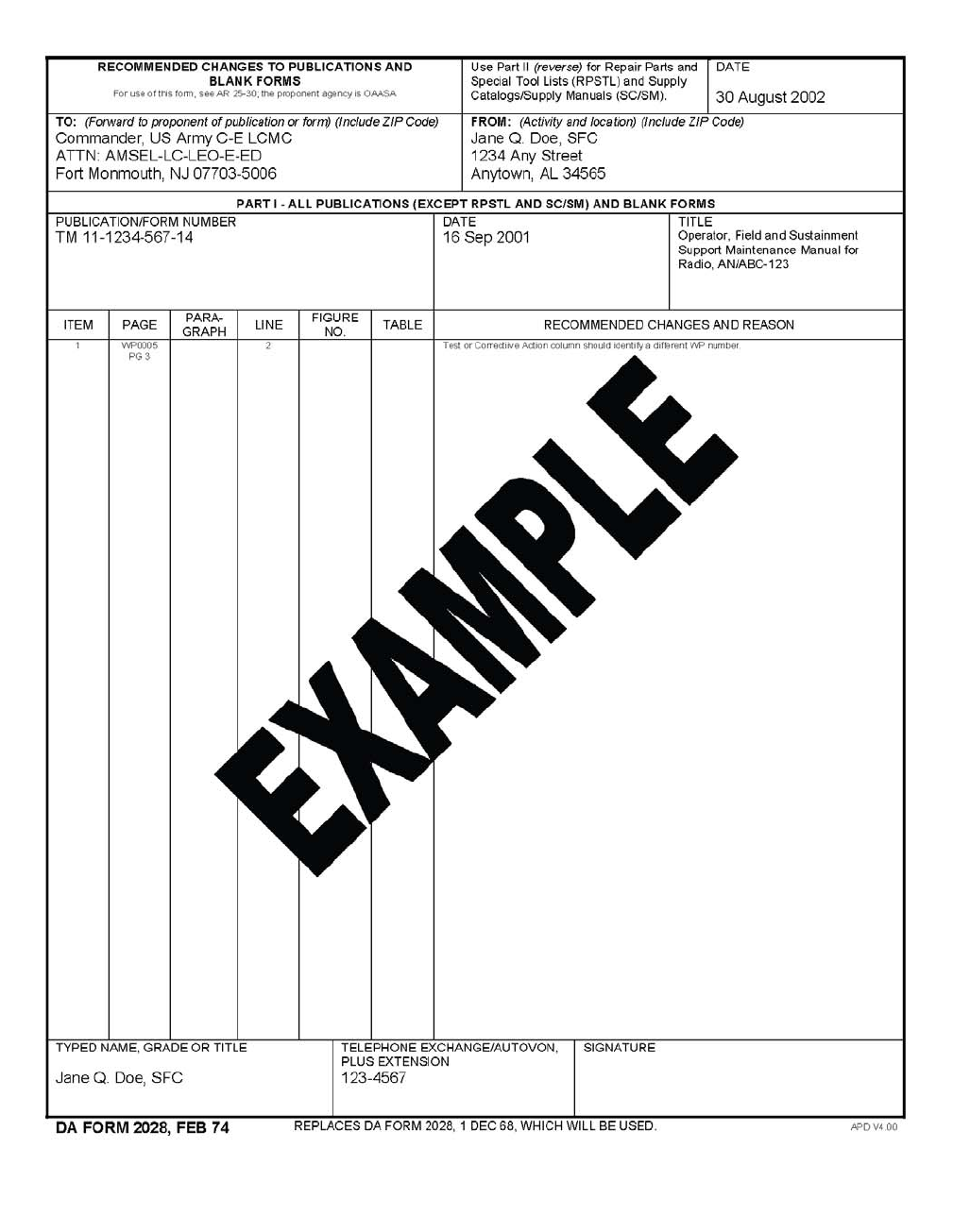

TM 9-6115-645-10
By Order of the Secretary of the Army:
GEORGE W. CASEY, JR.
General, United States Army
Chief of Staff
Official:
JOYCE E. MORROW
Administrative Assistant to the
Secretary of the Army
1009105
By Order of the Secretary of the Air Force:
NORTON A. SCHWARTZ
General, USAF
Chief of Staff, USAF
Official:
DONALD J. HOFFMAN
General, USAF
Commander, AFMC
M.A. MICUCCI
COL, USMC, Product Group Director, PG-15
Ground Transportation Engineer Systems
Marine Corps. System Command
Army Distribution:
DISTRIBUTION: To be distributed in accordance with the initial distribution number 255269
requirements for TM 9-6115-645-10.
Marine Corps Distribution:
To be distributed in accordance with PCN 184 092441 00.
By Order of the Marine Corps.

PIN: 071030-000
