K10022 5PR Vista 12E Program Manual
User Manual: Vista-12E Program Manual AlarmHow.net Library
Open the PDF directly: View PDF  .
.
Page Count: 24

ADEMCO VISTA-12E
Security Systems
Programming Guide
K10022-5PR 10/05 Rev. A
– 2 –
TO START PROGRAM MODE, use method A or B (must use alpha keypad connected to keypad terminals):
A. POWER UP, then press both [∗] and [#] at same time within 50 seconds of powering up.
(if
∗98 was used to exit program mode, this is the only method that can be used to start program mode again)
B. Initially, key: Installer Code (4 + 1 + 1 + 2) plus 8 + 0 + 0.
Data Field Programming Procedures
Task Procedure
Go to a Data Field Press [∗] + [Field Number], followed by the required entry.
Entering Data When the desired field number appears, simply make the required entry. When the last entry for a field
is entered, the keypad beeps three times and automatically displays the next data field in sequence.
If the number of digits that you need to enter in a data field is less than the maximum digits available
(for example, the phone number fields *41, *42), enter the desired data, then press [∗] to end the entry.
Review a Data Field Press [#] + [Field Number].
Data will be displayed for that field number. No changes will be accepted in this mode.
Deleting an Entry Press [∗] + [Field Number] + [∗]. (Applies only to fields ∗40–∗43, ∗45, ∗94, and pager programming
fields)
Menu Mode Programming (∗
∗∗
∗56, ∗
∗∗
∗57, ∗
∗∗
∗58, ∗
∗∗
∗79, ∗
∗∗
∗80, ∗
∗∗
∗81, ∗
∗∗
∗82, ∗
∗∗
∗83)
Press [✱] + [Interactive Mode No.] (for example, ∗56). The alpha keypad displays the first of a series of prompts.
Interactive Mode Used to Program
✱56 Zone Programming Zone characteristics, report codes, alpha descriptors, and serial numbers for 5800 RF
transmitters.
✱57 Function Key Programming Unlabeled keypad keys (known as ABCD keys) for special functions
✱58 Zone Programming Same options as *56 mode, but with fewer prompts. Intended for those familiar with
(Expert mode) this type of programming, otherwise *56 mode is recommended.
✱79 Output Device Mapping Assign module addresses and map individual relays/powerline carrier devices
✱80 Output Programming 4229 or 4204 Relay modules, 6164 output relay, Powerline Carrier devices, or on-
board triggers
✱81 Zone List Programming Zone Lists for relay/powerline carrier activation, chime zones, pager zones, etc.
✱82 Alpha Programming Zone alpha descriptors
✱83 Configurable Zone type Prog Attributes for configurable zone types
INITIALIZE DOWNLOAD and RESET DEFAULTS (complete Default Tables are listed on page 20)
✱
✱✱
✱96 Initializes download ID and subscriber account number.
✱
✱✱
✱97 Sets all data fields to original factory default values as follows:
The VISTA-12E has two unique sets (tables) of default entries.
Press ∗97 while in Program Mode, then press 1 or 2 to load the desired set of factory defaults (see Default Tables
listed on page 20). This resets all data fields to the respective default table values.
User Code Defaults: To reset only the user codes to default values, press ∗97, then press 3.
TO EXIT PROGRAMMING MODE:
✱
✱✱
✱98 Exits programming mode and
prevents
re-entry by: Installer Code + 8 + 0 + 0. If ✱98 is used to exit programming
mode, system must be powered down, and method 1 above used to enter the programming mode.
✱
✱✱
✱99 Exits programming mode and
allows
re-entry by: Installer Code + 8 + 0 + 0 or method A above.
Special Messages
OC = OPEN CIRCUIT (no communication between keypad and Control).
EE or ENTRY ERROR = ERROR (invalid field number entered; re-enter valid field number).
After powering up, AC, dI (disabled) or Busy Standby and NOT READY will be displayed after approximately 4 seconds.
This will revert to a “Ready” message in approximately 1 minute, which allows PIRS, etc. to stabilize. You can bypass this
delay by pressing [#] + [0].
If E4 or E8 appears, more zones than the expansion units can handle have been programmed. Correct the programming
and then completely de-power and re-power the control to clear this indication and remove the disable indication.
– 3 –
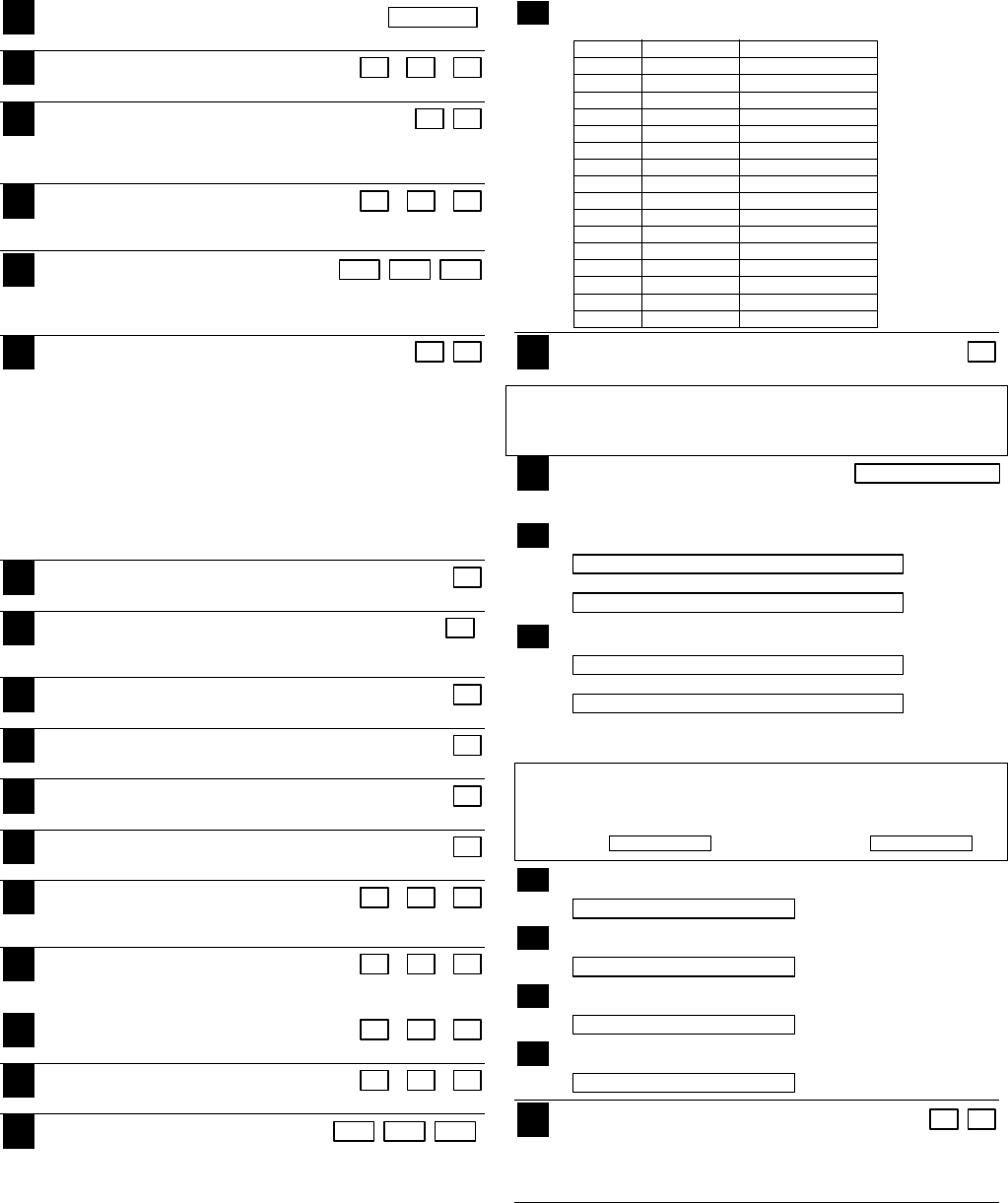
PROGRAMMING FORM
Entry of a number other than one specified will give unpredictable results. Default values are shown in brackets, with unique table 1 and table 2
values indicated where applicable (DT1 = default table 1; DT2 = default table 2); see page 20 for a complete list of factory default tables 1 and 2.
∗
∗∗
∗20 Installer Code [4112] | | |
0–9 = 4 digit installer code
∗
∗∗
∗21 Quick Arm Enable [1,1,1]
0 = no quick arm; 1 = allow quick arm Part. 1 Part. 2 Com
∗
∗∗
∗22 RF Options [0,0]
Entry 1 - 0 = no RF Jam detection; 1 = detect RF Jam Jam Supv
Entry 2 – supervision interval; 0 = 12 hour; 1 = 2 hour; 2 = 20 min if
disarmed/2 hrs if armed; 3 = 12 hrs for burg zones/3 hrs for fire zones
∗
∗∗
∗23 Quick (Forced) Bypass [0,0,0]
0 = no quick bypass Part. 1 Part. 2 Com
1 = allow quick bypass (code + [6] + [#])
∗
∗∗
∗24 RF House ID Code [00,00,00] | | |
00 = disable all wireless keypad usage Part. 1 Part. 2 Com
01–31 = house ID for use with 5827, 5827BD keypad or
5804BD/5804BDV keyfob
∗
∗∗
∗25 Arming Prevention Override [6,0]
If no override is selected, system will not arm when there is either a
supervision failure, system low battery, AC loss, or tamper.
Entry 1 0 = no arming prevention override
1 = allow system to arm with an RF supervision failure
2 = allow system to be armed with an AC Mains Loss
4 = allow system to be armed with a system low battery
E.g., To select arm with “supervision failure” and “system low
battery”, enter 5 (1 + 4);
Entry 2 0 = no tamper override (see field *175 for more tamper options)
1 = allow system to be armed with a tamper fault
2 = allow system to be armed with a tamper fault once
NOTE: If tamper option 1 or 2 is selected, field *175 digit 2 must be “0.”
∗
∗∗
∗26 Chime By Zone [0]
0 = no; 1 = yes (select chime zones on zone list 3, see *81 Menu mode)
∗
∗∗
∗27 Powerline Carrier (X–10) House Code [0]
0 = A; 1 = B, 2 = C, 3 = D, 4 = E, 5 = F, 6 = G, 7 = H, 8 = I, 9 = J,
#10 = K, #11 = L, #12 = M, #13 = N, #14 = O, #15 = P
∗
∗∗
∗29 ECP Contact ID Output for ACM [0]
0 = no; 1 = use Contact ID output on ECP terms. (e.g. TCP-IP ethernet)
∗
∗∗
∗31 Single Alarm Sounding/Zone [0]
0 = no; 1 = yes, only one alarm sounding per armed period per zone
∗
∗∗
∗32 Fire Alarm Sounder (Bell) Timeout [0]
0 = sounder stops at timeout; 1 = no sounder timeout
∗
∗∗
∗33 Siren (Burglary) Timeout [3]
0=none; 1 =1 min; 2 =2 min; 3 =3 min; 4 =4 min; 5 =8 min; 6 =16 min
∗
∗∗
∗34 Exit Delay [97,97,97]
00 to 96 = 00 to 96 seconds respectively Part 1 Part 2 Com
97 = 120 seconds
∗
∗∗
∗35 Entry Delay 1 (zone type 01) [30,30,30]
00 to 96 = 00 to 96 seconds respectively Part 1 Part 2 Com
97 will = 120 seconds; 98 will = 180 seconds; 99 will = 240 seconds
∗
∗∗
∗36 Entry Delay 2 (zone type 02) [30,30,30]
See *35 for entries. Part 1 Part 2 Com
∗
∗∗
∗37 Audible Exit Warning [0,0,0]
0 = no; 1 = yes Part 1 Part 2 Com
∗
∗∗
∗38 Confirm. Arming Ding [00,00,00] | | |
Entry 1 for each partition selects Part 1 Part 2 Com
whether arming from wired keypads causes siren ding:
0 = no; 1 = yes, ding and siren for time selected in entry 2
Entry 2 for each partition selects whether arming from keyswitch and/or
remote RF devices causes siren ding and/or activates trigger 2 output;
also selects ding/trigger activation duration (arm = 2 dings of selected
duration with 1 second off between; disarm = 1 ding of selected
duration).
(field *38 continued at top of next column)
∗
∗∗
∗38 Confirm. Arming Ding (continued)
( Enter 0-15 from table.
Entry Ding at Siren Trigger 2 Output
0 none none NOTE:
1 none 250mS If using trigger 2
2 none 1 second output for arming
3 none 4 seconds ding, do not assign
4 250mS none any other functions
5 250mS 250mS to trigger 2.
6 250mS 1 second
7 250mS 4 seconds
8 1 second none
9 1 second 250mS
#+10 1 second 1 second
#+11 1 second 4 seconds
#+12 4 seconds none
#+13 4 seconds 250mS
#+14 4 seconds 1 second
#+15 4 seconds 4 seconds
∗
∗∗
∗39 Power-Up In Previous State [1]
0 = always power-up disarmed; 1 = power-up in previous state
For dialer fields ∗40 – ∗42, enter the number of digits shown. Do not fill
unused spaces. Enter 0–9; #+11 for '∗'; #+12 for '#'; #+13 for a 2-second
pause. If fewer than the maximum digits entered, exit the field by pressing [✶].
The next data field is displayed.
∗
∗∗
∗40 PABX Access Code | | | | |
Enter up to 6 digits. If fewer than 6 digits are entered, exit by pressing
[✶]. To clear entries from field, press ∗40∗
∗
∗∗
∗41 Primary Phone No.
| | | | | | | | | | | | | |
| | | | | | | | | | | | | |
∗
∗∗
∗42 Second Phone No.
| | | | | | | | | | | | | |
| | | | | | | | | | | | | |
Enter up to 30 digits for each phone number. To clear entries, press
∗41∗ or ∗42∗ respectively.
For fields *43, *44 , *45, *46, *51 and *52, enter 4, 6 (Robofon 8), or 10
digits, depending on selection in *48 Report Format. Enter 0–9; #+11 for B;
#+12 for C; #+13 for D; #+14 for E; #+15 for F. To clear entries from field,
press *43*, *44*, *45*, *46*, *51* or*52* respectively. Examples: For Acct.
1234, enter 1 | 2 | 3 | 4 ; For Acct. B234, enter #+11| 2 | 3 | 4
∗
∗∗
∗43 Primary Subscriber ID # (Part. 1)
| | | | | | | | |
∗
∗∗
∗44 Secondary Subscriber ID # (Part. 1)
| | | | | | | | |
∗
∗∗
∗45 Primary Subscriber ID # (Part. 2)
| | | | | | | | |
∗
∗∗
∗46 Secondary Subscriber ID # (Part. 2)
| | | | | | | | |
∗
∗∗
∗47 Phone System Select/Dialer Attempts
Phone System Select: [3,8] Select Attempts
If Cent. Sta. IS NOT on a satellite link: 0=Pulse Dial; 1=Tone Dial;
if Cent. Sta. IS on a satellite link: 2 = Pulse Dial ; 3 = Tone Dial
Dialer Attempts: 1 – 10 (for 10, enter #+10)
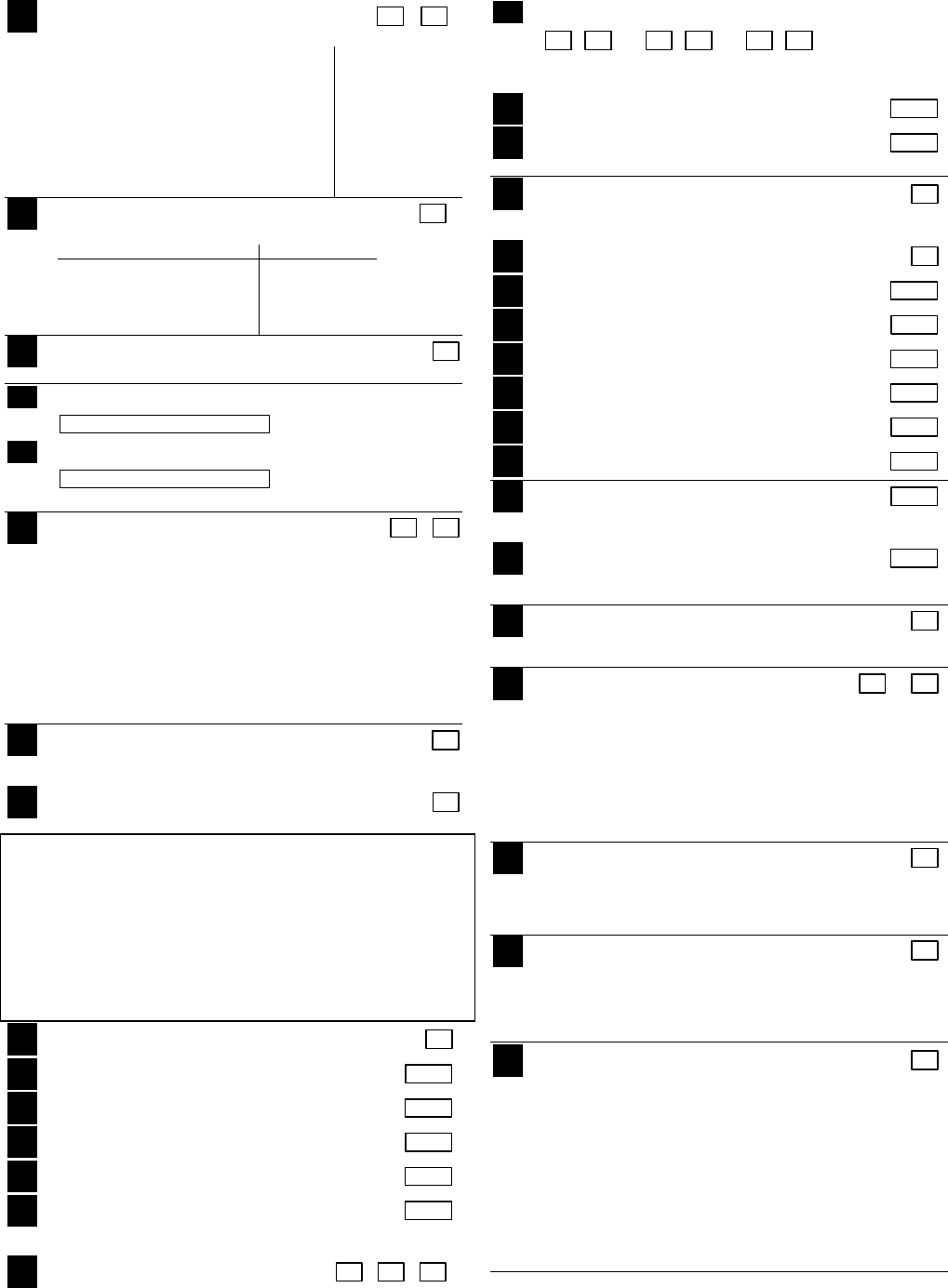
– 4 –
∗
∗∗
∗48 Report Format [7,7]
0 = 3+1,4+1, ADEMCO L/S STANDARD prim. second
1 = 3+1,4+1, RADIONICS STANDARD NOTES: To enable
2 = 4+2, ADEMCO L/S STANDARD audio “beeps” format
3 = 4+2, RADIONICS STANDARD (Follow-Me feature),
5 = CID using 10-digit subs account (ID) no. refer to the
System
6 = 4+2, ADEMCO EXPRESS
Communication and
7 = CID using 4-digit subs account (ID) no.
Operation
section in
8 = 3+1,4+1, ADEMCO L/S EXPANDED the Instr’s. Also see
9 = 3+1,4+1, RADIONICS EXPANDED *53 and *188 for
#+10 = ROBOFON 8 (6-digit subs acc’nt no.) notes on certain
#+11 = ROBOFON Contact ID Contact ID codes.
∗
∗∗
∗49 Split/Dual Reporting [0]
0 = Disable (standard/backup reporting only)
Primary Phone No. Second Phone No.
1 = Alarms, Restore, Cancel Others
2 = All except Open/Close, Test Open/Close, Test
3 = Alarms, Restore, Cancel All
4 = All except Open/Close, Test All
5 = All All
∗
∗∗
∗50 Dialer Delay (Burg) [0]
0 = none; 1 = 15 seconds; 2 = 30 seconds; 3 = 45 seconds
∗
∗∗
∗51 Primary Subscriber ID # (Common Part.)
| | | | | | | | |
∗
∗∗
∗52 Secondary Subscriber ID # (Common Part.)
| | | | | | | | |
Fields *51 and *52 see box above ∗43 for entries.
∗
∗∗
∗53 SESCOA/Radionics and CID Enbl [0,0]
SESCOA/Radionics Select: Ses/Rad CID
0 = Radionics (0-9, B-F); 1 = SESCOA (0-9)
CID Enable:
0 = disable both Time/Date Inaccurate and Successful
Download/Access reports
1 = enable Time/Date Inaccurate report (code 626)
2 = enable Successful Download/Access report (code 412)
3 = enable both Time/Date Inaccurate and Successful
Download/Access reports
NOTE: Time/Date Inaccurate report (CID 626) and Successful
Download/Access report (CID 412) are sent only if Contact ID format
is selected as reporting format in field *48.
∗
∗∗
∗54 Dynamic Signaling Delay [0]
Delay selectable from 0 to 225 secs in 15-sec increments.
0 = no delay (both signals sent); 1 = 15 secs; 2 = 30 secs, etc.
∗
∗∗
∗55 Dynamic Signaling Priority [0]
0 = Primary Dialer first; 1 = ECP Contact ID first (e.g., TCP-IP ethernet)
TO PROGRAM SYSTEM STATUS, & RESTORE REPORT CODES:
For 3+1 or 4+1 Standard Format: Enter a code in the
first
box: 1–9,
#+10 for 0, #+11 for B, #+12 for C, #+13 for D, #+14 for E, #+15 for F.
A 0 (
not
#+10) in the
first
box will disable a report. A 0 (
not
#+10) in the
second
box will result in automatic advance to the next field.
For Expanded or 4+2 Format: Enter codes in
both
boxes (1st and 2nd digits)
for 1–9, 0, or B–F, as described above.
A 0 (
not
#+10) in the
second
box will eliminate the expanded message for
that report. A 0 (
not
#+10) in
both
boxes will disable the report.
For ADEMCO Contact ID® Reporting: Enter any digit (other than 0) in the
first
box, to enable zone to report (entries in the
second
boxes are ignored).
A 0 (
not
#+10) in the
first
box disables the report.
∗
∗∗
∗59 Exit Error Report Code [0]
∗
∗∗
∗60 Trouble Report Code [10] |
∗
∗∗
∗61 Bypass Report Code [10] |
∗
∗∗
∗62 AC Loss Report Code [10] |
∗
∗∗
∗63 Low Bat Report Code [10] |
∗
∗∗
∗64 Test Report Code [10] |
First test report sent 12 hours after exiting program mode.
Use Scheduling mode to change periodic test report schedule.
∗
∗∗
∗65 Open Report Code [0,0,0]
Part. 1 Part. 2 Com
∗
∗∗
∗66 Arm Away/Stay Rpt Code
[1,0;1,0;1,0]
AWAY STAY AWAY STAY AWAY STAY
Part. 1 Part. 2 Common
∗
∗∗
∗67 RF Trans. Low Bat Report Code [10] |
∗
∗∗
∗68 Cancel Report Code [00] |
1 = dynamically as the fault clears; 2 = only after a disarm
∗
∗∗
∗69 Alarm Restores [1]
Send restore code (if fault cleared):
0 = at siren timeout (if restored) or at disarm (whether restored or not)
∗
∗∗
∗70 Alarm Restore Rpt Code [1]
∗
∗∗
∗71 Trouble Restore Rpt Code [10] |
∗
∗∗
∗72 Bypass Rest. Rpt Code [10] |
∗
∗∗
∗73 AC Restore Rpt Code [10] |
∗
∗∗
∗74 Low Bat Restore Rpt Code [10] |
∗
∗∗
∗75 RF Low Battery Restore Rpt Code [10] |
∗
∗∗
∗76 Test Restore Rpt Code [10] |
∗
∗∗
∗77 Summer Time Start\End Month [00] |
0 = Disabled; 1-12 = month (1 = January, 2 = February, etc)
#+10 = October; #+11 = November; #+12 = December
∗
∗∗
∗78 Summer Time Start\End Weekend [00] |
0 = disabled; 1 = first; 2 = second; 3 = third
4 = fourth; 5 = last; 6 = next to last; 7 = third to last
∗
∗∗
∗84 Auto Stay Arm [0]
0 = none; 1 = partition 1; 2 = partition 2; 4 = partition 3
Add the values for multiple partitions.
∗
∗∗
∗85 Linked Zone Verification Timer/ [0,0]
Up and About Timer Linked Up/about
Linked Zone: Assign linked zones on zone list 4, with *81 Menu mode.
0 = 15 seconds 4 = 90 seconds 8 = 4 min #+12 = 8 min
1 = 30 seconds 5 = 2 minutes 9 = 5 min #+13 = 10 min
2 = 45 seconds 6 = 2-1/2 min #+10 = 6 min #+14 = 12 min
3 = 60 seconds 7 = 3 min #+11 = 7 min #+15 = 15 min
Up and About Timer: 1-15 hours (also need to program up and about
schedule for time window that up and about feature is active; value set
in this field is time within the schedule that activity must occur)
∗
∗∗
∗86 Cancel Verify Keypad Display [0]
0 = no “alarm canceled” display
1 = display “Alarm Canceled” when system is disarmed after an alarm
has occurred. (To clear the “ALARM CANCELED” display, the
user must enter the security code + OFF again.)
∗
∗∗
∗87 Misc. Fault Delay Time [0]
(for Configurable Zone Type zones - alarm/trouble processing option)
0 = 15 seconds 4 = 90 seconds 8 = 4 min #+12 = 8 min
1 = 30 seconds 5 = 2 minutes 9 = 5 min #+13 = 10 min
2 = 45 seconds 6 = 2-1/2 min #+10 = 6 min #+14 = 12 min
3 = 60 seconds 7 = 3 min #+11 = 7 min #+15 = 15 min
∗
∗∗
∗88 Exit Options [1]
0 = all intrusion zones must be intact before arming(must be 0 if
system uses zone type 82 - Blockschloss)
1 = All intrusion zones except in exit path (zone list 12) must be
intact before arming. Exit path zones cause alarm if not restored
at end of exit time
2 = All intrusion zones except in exit path (zone list 12) must be
intact before arming. Exit path zones are bypassed if not restored
at end of exit time
3 = Final contact set: All intrusion zones except in exit path
(zone list 12) must be intact before arming. Once armed, exit
delay remains on indefinitely until the last zone, as defined in
zone list 8, is restored; then there is 5-second exit delay before
arming state is active
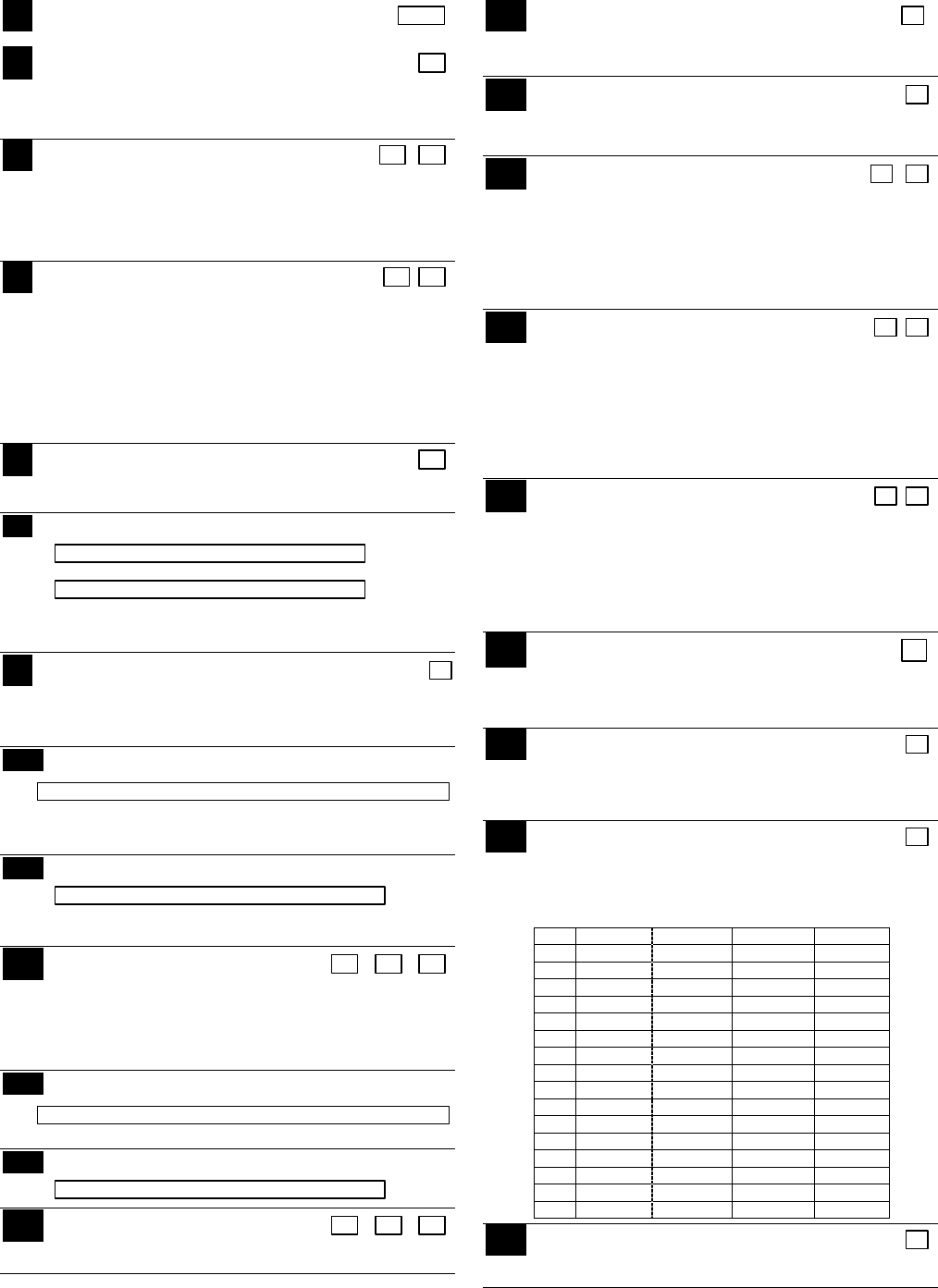
– 5 –
∗
∗∗
∗89 Event Log Full Report Code [00] |
See box above ∗59 for entries.
∗
∗∗
∗90 Event Log Enables [15]
0 = None; 1 = Alarm/Alarm Restore; 2 = Trouble/Trouble Restore;
4 = Bypass/Bypass Restore; 8 = Open/Close. Ex: For “Alarm/Restore”
and “Open/Close”, enter 9 (1 + 8); To select all, enter #15.
NOTE: System messages logged when any non-zero entry is made.
∗
∗∗
∗91 Miscellaneous Options [0.1]
Entry 1: 0 = None; 4 = Audio Alarm Verification (AAV); 1 2
8 = Exit Delay Restart; #+12 = AAV (4) and Exit Delay
Restart (8)
Entry 2: 0 = allow keypad output activation commands
(user code + # + 7 and user code + # + 8)
1 = do not allow keypad output activation commands
∗
∗∗
∗92 Telecom Monitor Enable [0,0]
Entry 1: 0 = disabled 1 2
1-15 = enabled, after 1 15 min. line outage
(#+10 = 10 min; #+11 = 11 min; #+12 = 12 min;
#+13 = 13 min; #+14 = 14 min; #+15 = 15 min)
Entry 2: 0 = keypad display when line is faulted
1 = keypad display plus keypad trouble sound
2 = Same as “1”, plus programmed output device STARTS. If
any partition is armed, external sounder also activates.
NOTE: Output Device must either be programmed to be STOPPED
in field ∗80 or STOPPED by Code + # + 8 + output number.
∗
∗∗
∗93 No. of Reports in Armed Period [0]
Per Zone (Intermittent Sensor)
0 = Unlimited Reports; 1 - 6 = 1 - 6 report pairs
∗
∗∗
∗94 Download Phone No.
| | | | | | | | | | | | | |
| | | | | | | | | | | | | |
Enter up to 30 digits, 0–9; #+11 for '∗'; #+12 for '#'; #+13 for a 2-
second pause. Do not fill unused spaces. If fewer than 30 digits, exit
field by pressing ∗. To clear entries from field, press ∗94∗.
∗
∗∗
∗95 Ring Count For Downloading [15]
0 = Disable Monitoring Station Initiated Download;
1–14 = number of rings (1–9, # +10 =10, # +11 =11, # +12 =12,
# +13 =13, # +14 =14);
15 = Answering machine/fax defeat (# +15 =15).
∗
∗∗
∗160 Pager 1 Phone No.
| | | | | | | | | | | | | | | | | | |
Enter up to 20 digits, 0–9; #+11 for '∗'; #+12 for '#'; #+13 for a 2-
second pause. Do not fill unused spaces. If fewer than 20 digits, exit
field by pressing ∗. To clear entries from field, press ∗160∗.
∗
∗∗
∗161 Pager 1 Characters
| | | | | | | | | | | | | | |
Enter the optional prefix characters, up to 16 digits.
0–9; #+11 = '∗'; #+12 = '#'; #+13 = 2-second pause.
∗
∗∗
∗162 Pager 1 Reporting Options
For each partition, select from: [0,0,0] Part. 1 Part. 2 Part 3
0 = no reports sent; 1 = Open/close all users; 4 = All alarms and troubles
5 = All alarms / troubles, and open/closes for all users
12 = Alarms / troubles for zones entered in zone list 9
13 = Alarms / troubles for zones entered in zone list 9, and
opens/closes for all users
∗
∗∗
∗163 Pager 2 Phone No. (See field *160 for entries.)
| | | | | | | | | | | | | | | | | | |
∗
∗∗
∗164 Pager 2 Characters (See field *161 for entries.)
| | | | | | | | | | | | | | |
∗
∗∗
∗165 Pager 2 Reporting Options
See field *162 for entries. [0,0,0] Part. 1 Part. 2 Part 3
Use zone list 10 if using options 12 or 13.
∗
∗∗
∗166 Pager Delay Option For Alarms [0]
0 = none, 1 = 1 minute, 2 = 2 minutes, 3 = 3 minutes
This delay is for ALL pagers in the system. The delay does not reset
for new alarms occurring while an existing pager delay is in progress.
∗
∗∗
∗173 RF Reporting Options [1]
0 = none; 1 = RF Tamper reports during disarm
2 = RF keyfobs send low battery
3 = RF Tamper reports during disarm and RF keyfobs send low battery
∗
∗∗
∗175 Tamper Options [0,0]
(see field *25 for tamper override options when arming) 1 2
Entry 1: 0 = standard tamper protection
1 = detect tamper from bypassed zones
2 = detect tamper when in Test mode
3 = detect tamper when in Test mode from bypassed zones
Entry 2: 0 = all users can clear a tamper (must be “0” if field *25 digit
2 set to 1 or 2)
1 = only the installer can clear a tamper
∗
∗∗
∗176 Siren Options [0,0]
Entry 1: 0 = external siren; 1 = self-activated external siren 1 2
Entry 2: 0 = disable (2nd digit ignored if 1st digit not set to ext. siren)
1 = enable 30 second ext. siren and dialer delay during entry
delay period when armed AWAY (if entry delay is active
and an instant zone is faulted, the siren is delayed 30
seconds, and the report is delayed 30 secs. unless field
*50 is set for a greater delay)
2 = external siren and dialer delayed 15-seconds when
armed in STAY mode
∗
∗∗
∗177 Device Duration 1, 2 [0,0]
(used in *80 Output Definitions menu -Device Actions 5/6) 1 2
Duration 1 – Device Action 5 Timer
0 = 15 seconds 4 = 90 secs 8 = 4 min #+12 = 8 min
1 = 30 seconds 5 = 2 min 9 = 5 min #+13 = 10 min
2 = 45 seconds 6 = 2-1/2 min #+10 = 6 min #+14 = 12 min
3 = 60 seconds 7 = 3 min #+11 = 7 min #+15 = 15 min
Duration 2 – Device Action 6 Timer (Strobe Timer)
1 – 7 = 1 to 7 days
∗
∗∗
∗178 RF Supervision and RF Jam Option [0]
0 = Basic RF supervision and RF jam detection
1 = Report RF supervision failure as tamper alarm when armed
2 = Report RF Jam as tamper alarm when armed
3 = Report RF Jam & RF supervision failure as tamper alarm when armed
∗
∗∗
∗180 Zone Bypass Limit [0]
0 = unlimited zone bypasses in each partition
1-7 = number of zone bypasses allowed in each partition
(each partition individually uses this entry)
8 = zone bypass disabled (no zones can be bypassed)
∗
∗∗
∗181 AC and Clock Display Options [5]
Use the following table to select the desired options for real-time
clock synchronization (50Hz, 60Hz, Crystal), AC Loss display
(independent of AC Loss report enabled in *62), and clock display
(time displayed on bottom line of alpha keypads).
“X10” indicates the AC frequency used for powerline carrier devices.
Entry AC Freq. Crystal for AC Loss disp Clock disp
0 60Hz clock backup no no
1 50Hz clock backup no no
2 60Hz clock no no
3 50Hz clock no no
4 60Hz clock backup yes no
5 50Hz clock backup yes no
6 60Hz clock yes no
7 50Hz clock yes no
8 60Hz clock backup no yes
9 50Hz clock backup no yes
#+10 60Hz clock no yes
#+11 50Hz clock no yes
#+12 60Hz clock backup yes yes
#+13 50Hz clock backup yes yes
#+14 60Hz clock yes yes
#+15 50Hz clock yes yes
∗
∗∗
∗182 Summer Time Switchover Day [0]
0 = switch on Sunday morning; 1= switch on Saturday morning
2 = switch on Friday morning
– 6 –
∗
∗∗
∗183 Date/Time Format [3]
0 = 12-hour time/MMDDYY date 2 = 24-hour time/MMDDYY date
1 = 12-hour time/DDMMYY date 3 = 24-hour time/DDMMYY date
∗
∗∗
∗185 Downloader Suppression Options [0]
0 = no suppression; 1 = suppress user code viewing
2 = suppress commands and program download when armed
3 = suppress user code viewing, commands, and program download
when armed
∗
∗∗
∗186 Display Options [0,0]
Entry 1: Latch the first alarm in the display: 0 = disable; 1 = enable
Entry 2: Turn off the display (except for AC loss) except during exit
delay. Turns off when exit delay expires, or 30 seconds after
disarm; 0 = disable; 1 = enable
∗
∗∗
∗187 Sounder Mimic on Trigger 1 [0]
0 = no sound output on trigger 1
1 = mimic keypad 1, address 16 5 = mimic keypad 5, address 20
2 = mimic keypad 2, address 17 6 = mimic keypad 6, address 21
3 = mimic keypad 3, address 18 7 = mimic keypad 7, address 22
4 = mimic keypad 4, address 19 8 = mimic keypad 8, address 23
NOTE: If used, do not assign any other functions to trigger 1.
∗
∗∗
∗188 Keypad Sabotage Options [0,0]
Entry 1: Keypad Lockout: 0 = disable; 1 = enable 15 minute lockout
NOTE: 461 Wrong Code Entry is sent only if Contact ID
format is selected as reporting format in field *48 (if
Contact ID format is not being used, this event is not
reported)
Entry 2: Keypad Supervision and Tamper Fault Detection:
0 = no, 1 = yes
NOTE: All lockout, supervision, and tamper events are recorded in
the event log regardless of the settings in entries 1 and 2.
∗
∗∗
∗189 AUI Device 1 and 2 Enable [0,0]
(for Touch Screen Style Keypads) AUI 1 AU2
System supports up to two touch screen style keypads (e.g., Symphony
Advanced User Interface, and 6270 Touch Screen Keypad).
AUI Compatibility Note: To ensure proper AUI device operation, use
AUI devices with the following rev levels: 6270 series use version
1.0.9 or higher; 8132/8142 (Symphony) series use version 1.1.175 or
higher.
Touch Screen (AUI) device 1: Must set AUI device address to 1
Touch Screen (AUI) device 2: Must set AUI device address to 2
Enter each AUI’s home partition.
0 = disabled
1 = partition 1; 2 = partition 2; 3 = common partition
KEYPAD OPTIONS
NOTES: 1. Keypad 1 (addr 16) options are factory set and cannot be changed.
2. Each keypad must be assigned a unique address. Keypads
programmed with the same address will give unpredictable results.
∗
∗∗
∗190 Keypad 2 Device Address 17 [0] [0]
Partition: 0 = keypad disabled; 1-3 = part. no. Part. Sound
Sound: 0 = no suppression
1 = suppress arm/disarm and E/E beeps
2 = suppress chime beeps only
3 = suppress arm/disarm, E/E, & chime beeps
Fields*191-*196 see field ∗190 for entries. Part. Sound
∗
∗∗
∗191 Keypad 3 Device Address 18 [0] [0]
∗
∗∗
∗192 Keypad 4 Device Address 19 [0] [0]
∗
∗∗
∗193 Keypad 5 Device Address 20 [0] [0]
∗
∗∗
∗194 Keypad 6 Device Address 21 [0] [0]
∗
∗∗
∗195 Keypad 7 Device Address 22 [0] [0]
∗
∗∗
∗196 Keypad 8 Device Address 23 [0] [0]
∗
∗∗
∗197 Exit Time Display Interval [0]
0 = no display; 1-5 = seconds between display refresh
∗
∗∗
∗198 Display Partition Number [0]
0 = no; 1 = yes (partition number displays on alpha keypads)
∗
∗∗
∗199 ECP Device Fail Display [0]
0 = 3-digit display (“1” + device address); for 6148, 6164
1 = 2-digit fixed-display as “91;” for 6128 series keypads
– 7 –
✱
✱✱
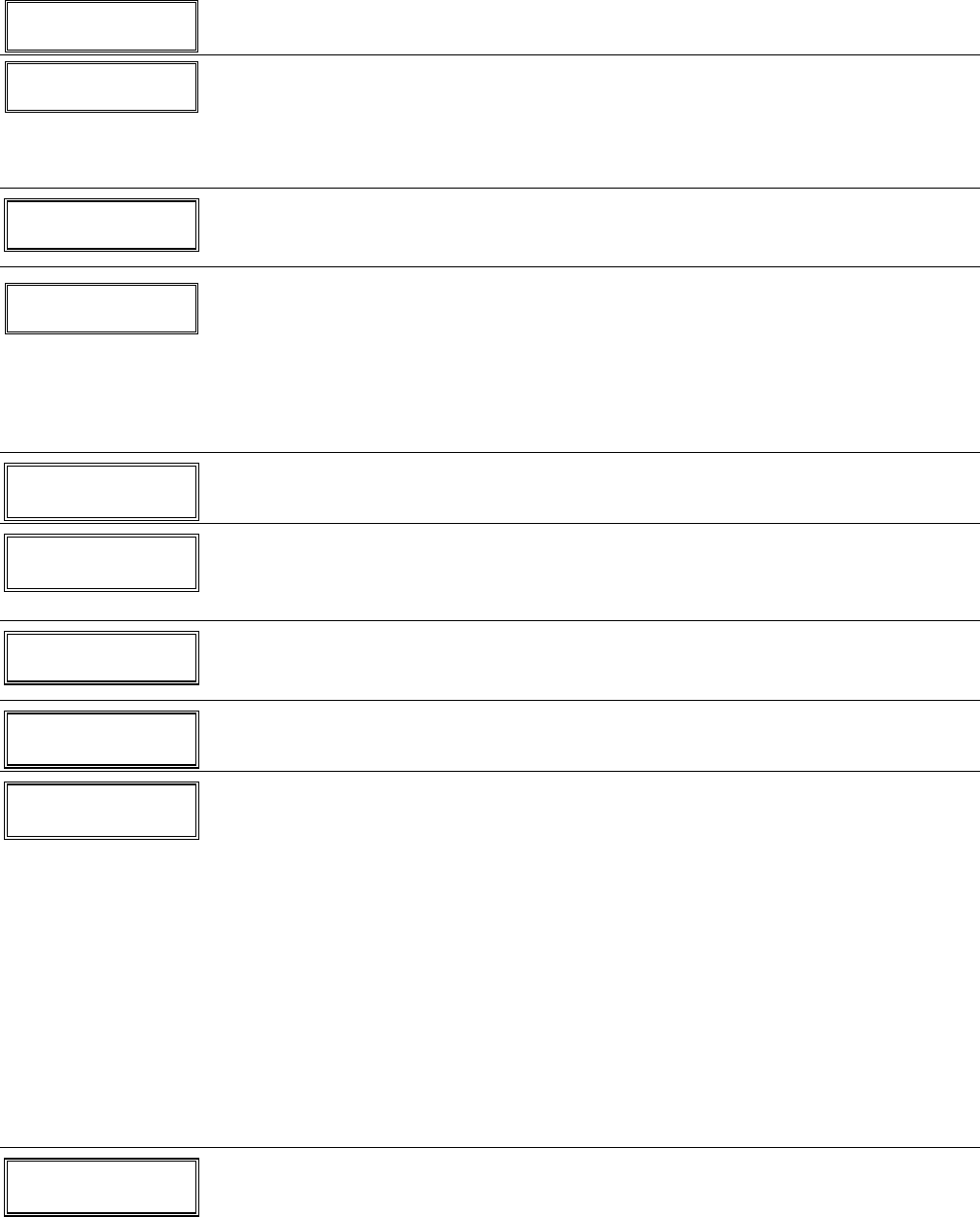
✱56 ZONE PROGRAMMING WORKSHEET [default values shown in brackets]
Zone Zn Type Partition Report Basic Wired Type Response Time Location
1 [01] [1]
[yes] [EOL] [1]
2 [04] [1] [yes] [EOL] [1]
3 [03] [1] [yes] [EOL] [1]
4 [03] [1] [yes] [EOL] [1]
5 [03] [1] [yes] [EOL] [1]
6 [03] [1] [yes] [EOL] [1]
Zone Zn Type Partition Report Input Type Loop Serial Number Location
9
10
11
12
13
14
15
16
17
18
19
20
21
22
23
24
49 [1] [yes] [BR]
50 [1] [yes] [BR]
51 [1] [yes] [BR]
52 [1] [yes] [BR]
53 [1] [yes] [BR]
54 [1] [yes] [BR]
55 [1] [yes] [BR]
56 [1] [yes] [BR]
57 [1] [yes] [BR]
58 [1] [yes] [BR]
59 [1] [yes] [BR]
60 [1] [yes] [BR]
61 [1] [yes] [BR]
62 [1] [yes] [BR]
63 [1] [yes] [BR]
64 [1] [yes] [BR]
91 [05] N/A [yes] N/A N/A N/A Addressable Device Report
92 N/A N/A
N/A N/A N/A Duress Report
95 [00]
N/A N/A N/A keypad [1] / [∗]
96 [00]
N/A N/A N/A keypad [3] / [#]
99 [07]
[yes] N/A N/A N/A keypad [∗] / [#]
NOTES:
Zone Type: see chart on next page
Basic wired Type (zns 1-6):
0 = EOL
1 = NC
2 = NO
3 = zone doubling
4 = double-balanced
Input Type:
2 = AW (zones 17-24)
3 = RF (zones 9-24)
4 = UR (zones 9-24)
5 = BR (zones 49-64)
7 = RM (zones 9-24)
NOTE: Zones 9-14 not available depending on whether zone
doubling enabled on zones 1-6.
Report:
yes = Contact ID reporting enabled for this zone; entered as 01 00 in appropriate data
fields.
Response Time:
0 = 10msec
1 = 400msec
2 = 700msec
3 = 1.2 sec
NOTE: If zone doubling is selected, the response time selected for the basic zone
automatically applies to the associated doubled zone.
Reserved Zones
91 = addressable device report enable/disable
default zone type = [05].
92 = Duress report enable/disable
– 8 –
∗
∗∗
∗56 ZONE PROGRAMMING MENU MODE (press ✱
✱✱
✱56 while in Program mode)
SET TO CONFIRM?
0 = NO 1 = YES
0 = no
1 = yes (prompt appears after entering the serial and loop numbers to confirm each transmitter)
We recommend that you confirm the programming of every transmitter.
Enter Zn Num.
(00 = Quit) 10
Enter the zone number being programmed:
wired zones 01-6 and 10-14 for zone doubling; expansion zones 17-24; wireless zones 09-24; RF button
zones 49-64
91 = addr. device report enable (Enter a report code for zone 91 to enable addressable device reporting.
92 = duress report enable (Enter a report code for zone 92 to enable duress reporting)
95, 96, 99 =emergency zones
00 to quit; [∗] to continue
Zn ZT P RC In: L
10 00 1 10 RF: 1
Summary Screen
[∗] to continue; “IN: L” = input type and loop; “IN: AD” = wired expansion module address
“HW: RT” = basic wired zone configuration (EOL, NO, NC, zone doubling, double-balanced) and response
time
10 Zone Type
Perimeter 03
Enter the desired ;zone type from the list below. If 00 is entered, Delete Zone ? is displayed.
00 = Not used 08 = 24-Hr Aux 21 = Arm–AWAY*
01 = Entry/exit #1 09 = Fire 22 = Disarm*
02 = Entry/exit #2 10 = Interior w/Delay 23 = No Alarm Resp
03 = Perimeter 12 = Monitor Zone 24 = Silent Burglary
04 = Interior Follower 14 = Gas 77 = Keyswitch
05 = Trouble Day/Alarm Night 15 = Medical 81 = AAV Monitor Zone
06 = 24-Hr Silent 16 = Fire w/Verify 82 = Blockschloss Keyswitch
07 = 24-Hr Audible 20 = Arm–STAY* 90-93 = Configurable
*5800 button-type transmitters only
10 Partition
1
Enter the desired partition for this zone
1-3 = partition
[∗] to continue
10 Report Code
1st 01 2nd 00 10
Enter the report code for this zone, which consists of 2 hexadecimal digits, each in turn consisting of 2
numerical digits. For example, for a report code of “10,” enter 01 and 00.
For Contact ID®, entering any non-zero entry as the first digit enables the report code for this zone.
1-9, 10 for A, 11 for B, 12 for C, 13 for D, 14 for E, 15 for F
00 to disable; [∗] to continue
02 HARDWIRE TYPE
EOL 0
This prompt appears only for zone numbers 01-06.
Enter the desired basic wired type:
0 = EOL; 1 = NC; 2 = NO; 3 = zone doubling (ZD); 4 = double-balanced (DB)
[∗] to continue
02 Response Time
1
This prompt appears only for basic wired zones 01-06 (zone 02 is used as an example in display).
0 = 10mSec; 1 = 400mSec; 2 = 700mSec; 3 = 1.2 seconds
[∗] to continue
10 INPUT TYPE
RF TRANS 3
This prompt is skipped for zones 1-6, and for zones 9-14 if zone-doubling enabled at “Hardwire Type” prompt.
All of the RF transmitters have one or more unique input loops (see list below). Each of the input loops
requires its own programming zone (e.g., a 5804's four inputs requires four zones).
2 = AW (Aux wired zone)
3 = RF (supervised RF transmitter; sends fault, restore, and low-battery signals, and sends periodic check-in
signals; transmitter must stay within receiver's range)
4 = UR (unsupervised RF transmitter; sends fault, restore, and low-battery signals, but periodic check-in
signals are not supervised; transmitter may be carried off-premises)
5 = BR (unsupervised button type RF transmitter; sends fault and low battery signals when activated, does
not send restore or check-in signals; transmitter may be carried off-premises)
7 = RM (supervised RF motion detector; sends fault and low battery signals, and sends periodic check-in
signals; panel ignores detector restore signals but automatically restores the zone to “ready” after a few
seconds; transmitter must stay within receiver's range)
NOTE: While the system is disarmed, faults from input type RM devices might not be seen on the keypad
display because the subsequent automatic restore can occur more quickly than the display is refreshed.
[∗] to continue
NOTES:
• For the built-in basic wired zones, the Input Type is automatically displayed as HW and cannot be edited.
• To change the input type of a previously programmed wireless device (type RF, UR, BR, RM) to a wired
zone (type AW), you must first delete the transmitter’s serial number.
10 INPUT S/N: L
A022-4064 1
For wireless transmitters, enroll the serial number and loop number as follows:
1. a. Transmit two open/close sequences. If using a button-type transmitter, press and release the button
twice, but wait about 4 seconds before pressing the button the second time.
OR
b. Manually enter the 7-digit serial number printed on the label of the transmitter.
Press the [∗] key to move to the “L” position, then enter the loop number.
If desired, you can press the [C] key to copy the previously enrolled serial number (used when
programming a transmitter with several input loops). The cursor moves to the loop number position.
c. To delete an existing serial number, enter 0 in the loop number field. The serial number will change to
0's. If 0 was entered in error, simply re-enter the loop number or press [#], and the serial number will
return to the display.
2. Press [∗] to continue. The system now checks for a duplicate serial/loop number combination.
– 9 –
10 INPUT S/N L
A022-4064 1
If the serial/loop number combination is not a duplicate in the system, a display showing the serial number
and loop number entry appears.
[∗] to continue
XMIT TO CONFIRM
PRESS ✱ TO SKIP
This prompt will only appear if you answered “Yes” at the first prompt in this section.
The system will enter a confirmation mode so that the operation of the actual programmed input can be
confirmed.
Activate the loop input or button that corresponds to this zone.
[∗] to continue
Entd A022-4063 1
Rcvd A022-4064 1
If the serial/loop number transmitted does not match the serial number entered, a display showing the
entered and the received serial/loop numbers appears.
If so, activate the loop input or button on the transmitter once again. If a match is not obtained (i.e.,
summary display does not appear), press the [#] key twice and then enter (or transmit) the correct serial
number.
[∗] to continue
Zn ZT RC In: L
10 03 10 RF: 1s
If the serial number transmitted matches the serial number entered, the keypad will beep 3 times and
a summary display will appear, showing that zone's programming. An “s” indicates that a
transmitter’s serial number has been enrolled.
[∗] to accept the zone information and continue
PROGRAM ALPHA?
0 = NO 1 = YES 0
If you want to program descriptors for zones now, enter 1 (Yes) and refer to the *82 Descriptor Programming
section for procedures. To program descriptors later, enter 0 (no).
[∗] to continue
ENTER ZN NUM.
(00 = QUIT) 11
If 0 (No) was entered at the Program Alpha prompt, the system will return you to the ENTER ZN NUM.
prompt for the next zone.
When all zones have been programmed, enter 00 to quit.
✱
✱✱
✱58 Expert Programming Mode Procedures (press ∗
∗∗
∗58 while in Data Programming mode)
SET TO CONFIRM?
0 = NO 1 = YES
0 = no
1 = yes (prompt appears after entering the serial and loop numbers to confirm each transmitter)
We recommend that you confirm the programming of every transmitter.
Zn ZT P RC HW: RT
01 09 1 10 EL 1
Zn ZT P RC IN: L
10 – – – : –
A summary screen will appear, showing zone 1’s currently programmed values.
Enter the zone number being programmed, then press [∗]. In this example, zone 10 is being entered.
01-06, 09-24, and 49-64 = zone number
[D] = for assigning wireless key programming templates (see Wireless Key Programming Templates section
in i/i); lets you choose from a series of preset templates for easy programming of wireless key zones
00 = quit (when all zones have been programmed, press “00” to quit this menu mode)
[∗] to continue
Zn ZT P RC IN: L
10 00 1 10 RF 1
A summary screen with the selected zone’s current programming appears.
Begin programming zone information as follows:
Enter Zone Type (ZT; see Zone Type chart shown in *56 Menu Mode “Zone Type” prompt), Partition (P),
Report Code (RC) 0-9 only (use *56 mode for hex codes), and Input Device Type (IN)* sequentially (Loop
Number (L) is entered at the next prompt).
• Use the [A] (Advance) and [B] (Back) keys on the keypad to move the cursor within the screen.
• Use the [C] key to copy the previous zone’s attributes.
* If HW (basic wired) or AW (Auxiliary) is entered for Input Device Type, the display will be similar to the
prompt shown, except that HW or AW will be under “IN”.
Press [∗] to save the programming and continue. If needed, press the [#] key to back up without saving.
For wireless devices (input types RF, UR, BR, RM), continue to the serial number/loop number prompt.
For wired devices, return to the initial summary screen prompt to begin programming the next zone.
10 INPUT S/N: L
AXXX-XXX –
Zn ZT P RC In L
10 03 1 10 RF: 1s
Manually enter the serial number (found on the transmitter label), by entering the digits in the “X” locations,
using the [A] (advance) or [B] (back) keys as required.
OR
Transmit two open/close sequences. If using a button-type transmitter, press and release the button twice,
but wait about 4 seconds before pressing the button the second time.
If you want to copy the previous zone’s serial number, press the [C] key.
Press [∗] to advance to the loop number, then enter loop number.
Press [∗] to accept the existing serial and loop number and continue to the “Confirm” prompt described in *56
Menu mode above.
If necessary, press [#] to back up and re-enter or edit the serial number.
If the serial number transmitted matches the serial number entered, the keypad will beep 3 times and a
summary display will appear, showing the programmed information for that zone.
Press [∗] to begin programming the next zone. See first “Summary Screen” prompt paragraph on previous
page.
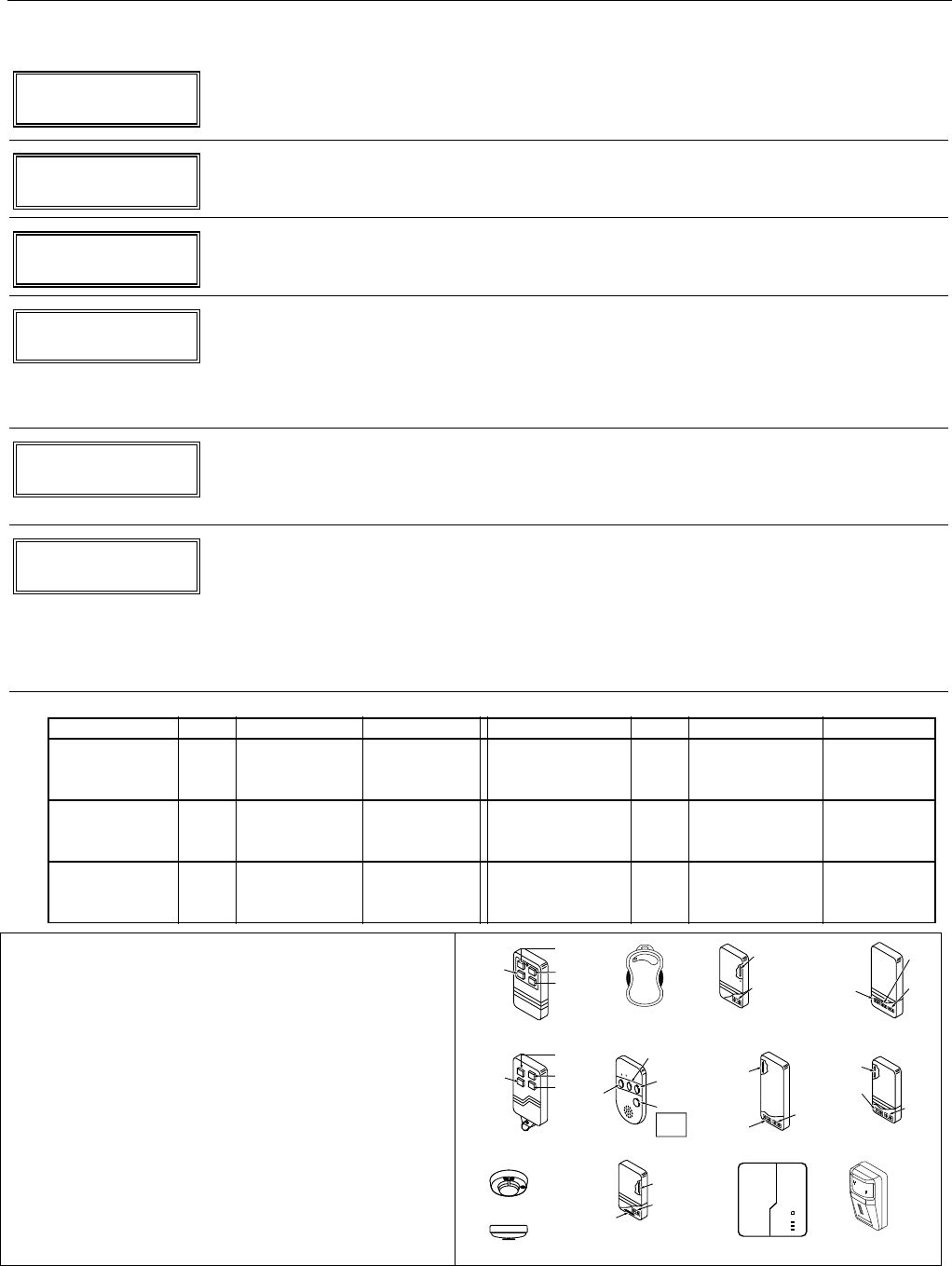
– 10 –
Wireless Key Programming Templates (press the [D] key from *58 Menu mode Summary Screen display)
This procedure programs the wireless keys, but a key is not active until it is assigned to a user number (see System Operation section,
assigning attributes command in the Installation Instructions).
TEMPLATE ?
1–6 1
Enter desired template number 1–6 (see chart below).
Press [#] if you want to return to *58 Menu mode Summary Screen.
If necessary, press [#] to back up and re-enter template number.
Press [∗] to continue to template display.
L 01 02 03 04
T 23 22 21 23
When [∗] is pressed, the selected template will be displayed.
Top line of display represents loop numbers, bottom line represents zone type assigned for each loop.
Press [∗] to accept template and continue.
PARTITION
1
Enter the partition in which the key is to be active.
1 = partition 1; 2 = partition 2; 3 = common partition
Press [∗] to continue.
ENTER START ZONE
00 = QUIT 36
The system will search for the highest available consecutive 4-zone group (the four zones in the case of the
5804), and display the lowest zone number of the group.
If you want to start at a different zone, enter the zone desired, and press [∗]. If that zone number is
displayed, the system has the required number of consecutive zones available, beginning with the zone you
entered. If not, the system will again display a suggested zone that can be used.
If the required number of consecutive zones is not available at all, the system will display “00”.
Press [∗] to accept and continue.
INPUT S/N L
AXXX-XXXX –
Manually enter the serial number printed on the label for the wireless key or press and release the button to
transmit its serial number.
Press [∗] to accept the serial number. The system will check for duplicate.
If necessary, press the [#] key to back up without saving, and re-enter the serial number.
Use the [A] key to move forward within the screen, and the [B] key to move backward.
XMIT TO CONFIRM
PRESS ✱ TO SKIP
If “Yes” was entered at the SET TO CONFIRM? prompt (first prompt following entry into the ∗58 Expert
Programming Mode), the display on the left will appear.
Confirm serial and loop numbers by activating the wireless key. Refer to the “Confirm” prompt described in
*56 Menu mode above for more information on confirming the serial number.
If the serial number transmitted matches the serial number entered, the keypad will beep 3 times and will
return you to the ENTER START ZONE NUMBER prompt to enter the starting zone for the next wireless key.
IMPORTANT: When confirmed, the key is not active until it is assigned to a user number (using the
assigning attributes command, attribute “4”). See System Operation section in Installation Instructions.
[∗] to skip confirm.
Wireless Key Predefined Default Templates
5804 Loop Function Zone Type 5804BD/5804BDV Loop Function Zone Type
TEMPLATE 1 1 No Response 23 TEMPLATE 4 1 No Response 23
2 Disarm 22 2 No Response 23
3 Arm Away 21 3 Arm Away 21
4 No Response 23 4 Disarm 22
TEMPLATE 2 1 No Response 23 TEMPLATE 5 1 No Response 23
2 Disarm 22 2 Arm Stay 20
3 Arm Away 21 3 Arm Away 21
4 Arm Stay 20 4 Disarm 22
TEMPLATE 3 1 24-hour audible 7 TEMPLATE 6 1 24-hour audible 7
2 Disarm 22 2 Arm Stay 20
3 Arm Away 21 3 Arm Away 21
4 Arm Stay 20 4 Disarm 22
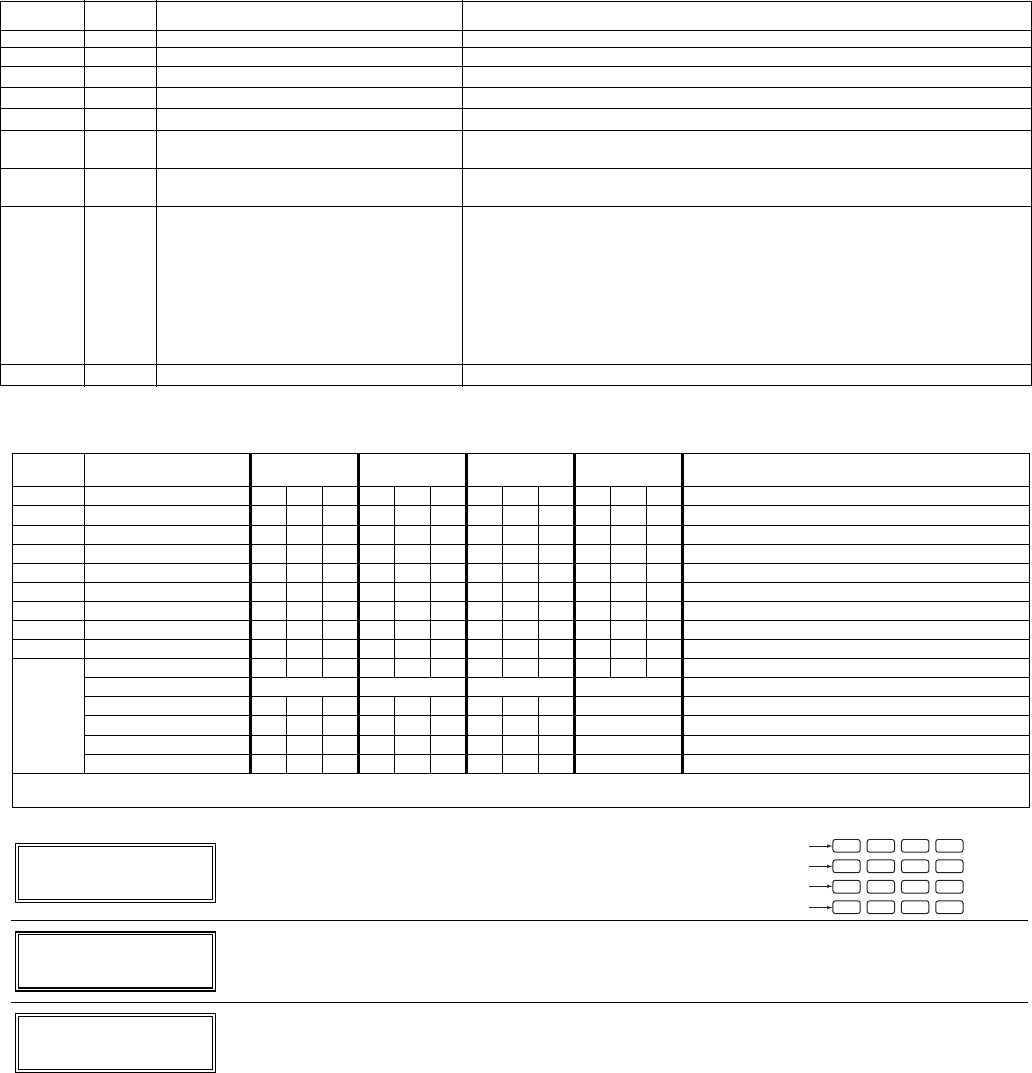
5800 Series Transmitter Input Loop Identification
All of the transmitters illustrated below have one or more
unique factory assigned input (loop) ID codes. Each of the
inputs requires its own programming zone (e.g., a 5804's
four inputs require four programming zones).
Note: For information on any transmitter not shown, refer
to the instructions accompanying that transmitter
for details regarding loop numbers, etc.
LOOP 1
5808
ENROLL AS
"RF"
LOOP 1
5809
ENROLL AS
"RF"
5802MN2
ENROLL AS
"UR" OR "RF"
LOOP
1
5852 (GBD)
ENROLL AS
"RF"
(Green)
(Red)
(Yellow)
VISTA48A 001 V0
LOOP 1
(MOTION)
5890
ENROLL AS
"RF" OR "RM"
5804BD
ENROLL AS
"BR"
LOOP 4
YOU MUST
ENROLL
THIS BUTTON
SET
HOUSE
CODE
LOOP 3
LOOP 1
LOOP 2
5804
ENROLL AS "BR"
OFF
ON
5817
ENROLL AS
"RF"
LOOP 2
(AUX.
CENTE
R
LOOP 1
(PRIMARY)
LOOP 3
(AUX.
RIGHT)
5816
ENROLL AS
"RF"
LOOP 1
(TERMINALS)
LOOP 2
(REED)
5816MN
ENROLL AS
"RF"
LOOP 1
(TERMINALS)
ALTERNATE
POSITION
FOR LOOP 2
LOOP 2
(REED)
LOOP 3
(TERMINALS)
5819S (WHS & BRS)
ENROLL AS
"RF"
LOOP 1
(INTERNA
SHOCK
SENSOR
LOOP 2
(REED)
5819
ENROLL AS
"RF"
LOOP 2
(REED)
LOOP 3
(TERMINALS)
LOOP 1
(TERMINALS)
5801
ENROLL AS
"UR" OR "RF"
LOOP 3
LOOP 1
LOOP 2
LOOP 4
YOU MUST
ENROLL
THIS
BUTTON
LOOP 1
LOOP 2
LOOP 4
YOU MUST
ENROLL
THIS
BUTTON
LOOP 3
– 11 –
Table of Device Addresses
Address Report† Device Programmed by…
00 100 RF Receiver *56 zone programming: input device type entry;
01 101 AUI Device 1 Automatic if AUI enable field *189 enabled for AUI 1
02 102 AUI Device 2 Automatic if AUI enable field *189 enabled for AUI 2
03 103 Alternative Communication Media (ACM) automatic if ECP Contact ID Output for ACM field *29 enabled
017-23 117-123 Telecommand Voice Module same as keypad enables; see below
Zone Expanders (4219/4229)/6164 Keypad: *56 zone programming: input device type entry, then:
08 108 module 2 zones 17 - 24 / 6164 zones 17-20 • automatic if zone no. 17-24 entered as AW type or relay assigned
Relay Modules (4204)/6164 Keypad with Relay: *79 output device programming: device address prompt:
13 113 module 2 / 6164 using relay only (no zones) • entered at device address prompt
Keypads: data field programming as listed below:
16 n/a keypad 1 • always enabled for partition 1, all sounds enabled.
17 n/a keypad 2 • data field *190
18 n/a keypad 3 • data field *191
19 n/a keypad 4 • data field *192
20 n/a keypad 5 • data field *193
21 n/a keypad 6 • data field *194
22 n/a keypad 7 • data field *195
23 n/a keypad 8 • data field *196
28 n/a 5800TM Module automatic
† Addressable devices are identified by “1” plus the device address when reporting. Enter report code for zone 91 to enable addressable device
reporting (default = reports enabled). See field *199 for addressable device (ECP) 3-digit/2-digit identification keypad display options.
✱57 FUNCTION KEY PROGRAMMING
Option Function A
P1 P2 P3
B
P1 P2 P3
C
P1 P2 P3
D
P1 P2 P3
Comments
01 Paging
02 Time Display
03 Arm AWAY
04 Arm STAY
05 Arm NIGHT-STAY
06 Step Arming
07 Device Activation Device:
08 Comm. Test
09 Macro Key 1 Assign each macro key to only a single partition. †
10 Macro Key 2 Assign each macro key to only a single partition. †
00 Emergency Keys: zone 95 zone 99 zone 96 paging
Personal Emergency n/a
Silent Alarm n/a
Audible Alarm n/a
Fire n/a
Emergency Keys: A = paired keys [1] / [∗] (zone 95); B = paired keys [∗] / [#] (zone 99); C = paired keys [3] / [#] (zone 96)
† There are only four macros system-wide.
Start Function Key Programming mode by pressing ∗
∗∗
∗57 while in Data Programming mode.
Press Key to Pgm
0 = Quit 0
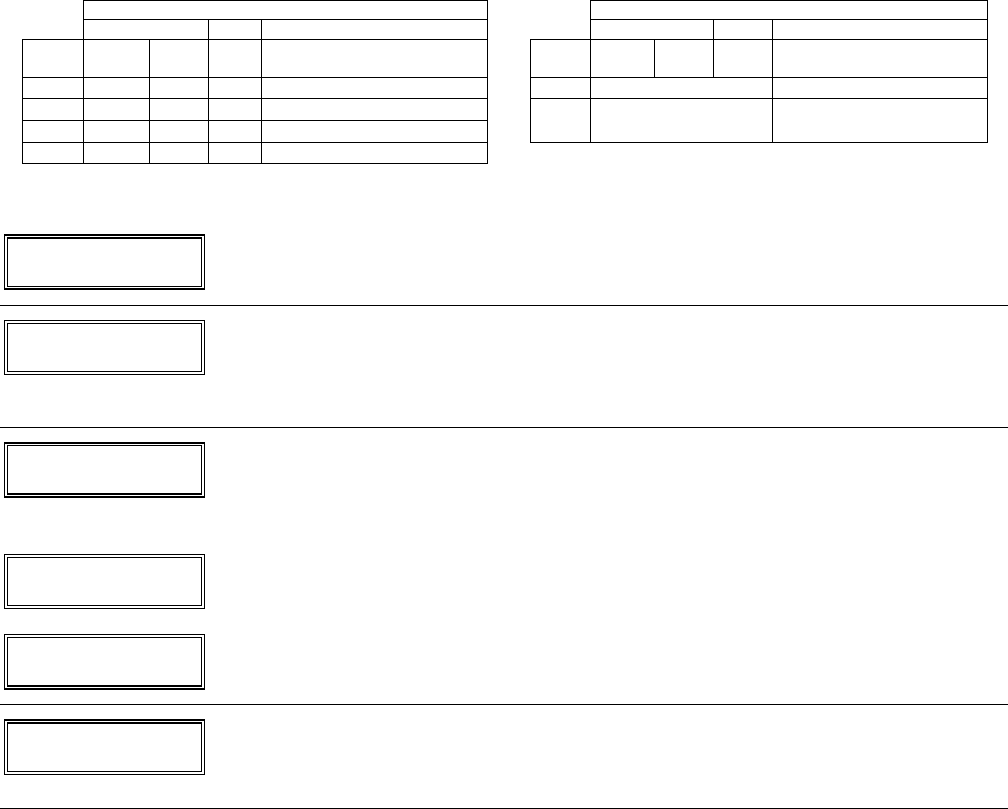
Press the desired function key, A-D.
NOTE: A key programmed as a function key is no longer available to
be used as an end-user macro key or panic key.
[∗] to continue
321
654
987
#0
*
READY
INSTANT
MAX
OFF
CODE
AWAY
TEST
CHECK
STAY
BYPASS
A
B
C
D
keypad_keys-00-001-V0
Partition
1
1 = function key active in partition 1
2 = function key active in partition 2
3 = function key active in common partition
[∗] to continue
Key "A" Func
Zone 95 00
Enter the desired function for this key:
00 = For the Function key selected, the function will be as follows (system default):
If A selected = Zone 95 (emergency key, same as [1] [∗] pair)
If B selected = Zone 99 (emergency key, same as [∗] [#] pair)
If C selected = Zone 96 (emergency key, same as [3] [#] pair)
If D selected = Single-button paging
01 = Single-button paging (sends a 999-9999 message to pager)
02 = Display time
03 = Arm AWAY (reports as User 00 if closing reports are enabled)
04 = Arm STAY (reports as User 00 if closing reports are enabled)
05 = Arm NIGHT-STAY (reports as User 00 if closing reports enabled)
06 = Step Arming (arms STAY, then NIGHT-STAY, then AWAY)
07 = Output Device Command (for device programmed as system operation type 66 in *80 Menu Mode)
08 = Communication Test (sends Contact ID code 601)
09 -10= Macro Keys 1-2 respectively (defined by [#] [6] [6] command)
[∗] to continue; returns to key number prompt with the next function key letter displayed.
– 12 –
OUTPUT RELAYS/POWERLINE CARRIER DEVICES WORKSHEET FOR ∗
∗∗
∗79, ∗
∗∗
∗80 and ∗
∗∗
∗81.
For keypad activated devices, use *79 Menu mode to assign a system output number and associate its corresponding device.
For automatic activation, use *79 Menu mode as above, and use *80 Menu mode to define the system condition that will
activate/deactivate the device(s).
∗
∗∗
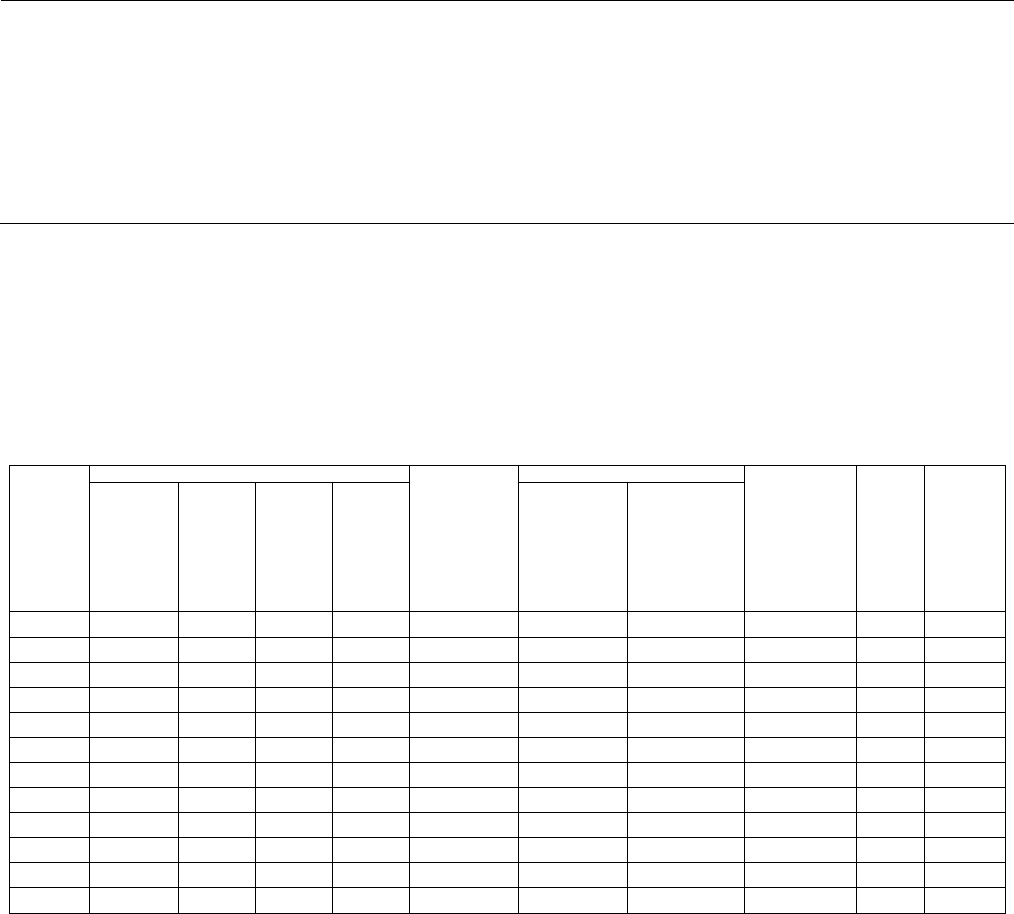
∗79 RELAY/POWERLINE CARRIER DEVICE MAPPING (Must program before using *80)
OUTPUT TYPE OUTPUT TYPE
Relay X10
Relay X10
Output
No.
Module
Addr.
Pos
(1-4)
Unit
No.
Description Output
No.
Module
Addr.
Pos
(1-4)
Unit
No.
Description
01
17 On-Board Trigger 1 Norm output =
02
03
18 On-Board Trigger 2 Norm output =
[default: 1, trig. normally low
04
To Activate/Deactivate Devices in Normal Operating Mode:
Code + # + 7 + NN Key Entry starts Device NN.
Code + # + 8 + NN Key Entry stops Device NN.
Start Output Device Mapping by pressing *79 while in Data Programming Mode.
ENTER OUTPUT NO.
00 = QUIT xx
Enter the logical (or reference) relay number as used in the system.
01-04 = relays/X-10
17-18 = on-board triggers (can be programmed for inverted output; see next prompt)
[∗] to continue
17 OUT NORM LOW
0 = NO 1 = YES 0
This prompt appears only for triggers 17 and 18.
0 = no (standard default); sets the trigger output level normally high
1 = yes; sets the trigger output normally low (can be used for resetting 4-wire smoke detectors by connecting
trigger wire to the negative power terminal of the smoke detector, selecting 1 at this prompt, and setting
as zone type 54, fire zone reset, in *80 Menu mode)
[∗] to return to Output Number prompt
XX OUTPUT TYPE
DELETE? 0
Select whether this is a relay or a Powerline Carrier (X-10) device.
0 = delete this output number
1 = relay on 4204/4229 module, 6164 keypad (skip to “B” prompt)
2 = Powerline Carrier device (go to “A” prompt)
[∗] to continue
“A”
XX UNIT No.
yy
Enter the device’s unit code (set at the device)
01-04 = predefined address
[∗] to returns to the Output Number prompt
“B”
XX MODULE ADDR
07-15 yy
Enter the module’s predefined address (set the module’s DIP switches to the selected address, or key the
6164 address)
07-15 = predefined address (see table of device addresses)
[∗] to continue
XX REL POSITION
1-4 zz
Enter the actual (or physical) relay number with respect to the Relay Module upon which it is located. For
4204 modules, relay numbers are 1-4. For 4229 modules, relay numbers are 1-2. For 6164 keypad, relay
number is 1.
1-4 = relay position
[∗] to return to the Output Number prompt for programming the next device
– 13 –
✱
✱✱
✱80 OUTPUT DEFINITIONS
NOTES: 1. For Relays, 4229, 4204 and 6164 devices are programmed in *79, *80, and *81 modes.
2. For Powerline Carrier devices (plcd), field ✱27 must be programmed with a House Code.
3. Tampers of expansion units cannot be used to operate devices.
Zone Types:
00 = Not used 08 = 24-Hr Aux 21 = Arm–AWAY*
01 = Entry/exit #1 09 = Fire 22 = Disarm*
02 = Entry/exit #2 10 = Interior w/Delay 23 = No Alarm Resp
03 = Perimeter 12 = Monitor Zone 24 = Silent Burglary
04 = Interior Follower 14 = Gas 77 = Keyswitch
05 = Trouble Day/Alarm Night 15 = Medical 81 = AAV Monitor Zone
06 = 24-Hr Silent 16 = Fire w/Verify 82 = Blockschloss Keyswitch
07 = 24-Hr Audible 20 = Arm–STAY* 90-93 = Configurable *5800 button-type transmitters only
Choices for System Operation are: ** Use 0 (Any) for Partition No. (P) entry.
20 = Arming–Stay 38 = Chime 60 = AAV Trigger *** Or at Disarming, whichever occurs earlier.
21 = Arming–Away 39 = Any Fire Alarm 66 = Function key (use *57 Menu Mode to assign the function key, function “07,”)
22 = Disarming (Code + OFF) 40 = Bypassing 67 = Siren Failure
31 = End of Exit Time 41 = **AC Mains Failure 68 = Telecom Line Fault
32 = Start of Entry Time 42 = **System Battery Low 69 = Telecom Line Fault Restore
33 = Any Burglary Alarm 43 = Communication Failure 70 = AC Mains Restore**
36 = **At Siren Timeout*** 46 = System Low Battery Restore** 71 = System Startup/Clock Not Set
52 = Kiss off 72 = Clock Set
54 = Fire Zone Reset 78 = Keyswitch red LED (device action not used for this option)
58 = Duress 79 = Keyswitch green LED (device action not used for this option)
80 = any tamper in the system
OUTPUT DEFINITION WORKSHEET
Activation Type and Detail Event (for zone list/activated by)Output
Function
Number
(1-12)
Activated by
0=delete
1=zn list
2=zn type
3=zn no.
Zone List
(ZL)
1-12 = list
Zone Type
(ZT)
(see table
below)
Zone No.
(ZN)
00=none
01-06, 09-
24, 49-64
Partition
Number
(P)
(if using ZT trig)
0 = any
1 = partition 1
2 = partition 2
3 = common
By Zone List
0 = restore
1 = alarm
2 = fault
3 = trouble
By Zone No.
0 = restore
1 = alarm
2 = fault
3 = trouble
4 = off-normal
Action
0 = off
1 = close 2
secs
2 = stay closed
3 = pulse
4 = toggle
5 = duration 1††
6 = duration 2††
Output
Number
1-18= dev
Device
Type
R = relay
T = trigger
X = X10
1 [2] [20] [1] [2] [17] [T]
2 [2] [21] [1] [2] [17] [T]
3 [2] [22] [0] [17] [T]
4 [2] [90] [1] [18] [T]
5 [2] [07] [1] [18] [T]
6 [2] [33] [2] [1] [R]
7 [2] [36] [0] [1] [R]
8 [2] [58] [1] [2] [R]
9 [3] [99] [1] [3] [R]
10 [2] [42] [2] [4] [R]
11 [2] [46] [0] [4] [R]
12
†† Duration is set in program field *177. Duration 1 (action 5) is from 15 seconds to 15 minutes. Duration 2 (action 6) is from 1 day to 7 days.
– 14 –
Start Output Definition mode by pressing ∗
∗∗
∗80 while in Data Programming mode.
Output Funct. #
(00 = Quit) 01
Enter the output function number to be defined
01-12 = output function number
[∗] to continue
00 = exit
01 A E P Trig
?00 0 0 – ZL=1
This screen displays a summary of the current output programming
A = Output Action; E = Triggering event; P = Partition; Trig = Trigger type
Question mark indicates the device shown has not been mapped. Use *79 Menu mode to map the device.
[∗] to continue
01 Activated By:
Zone List
Select where the initiating event for this output definition is to occur.
0 = delete (deletes the output function and any previous programming)
Delete? To delete this output definition, press 1.
0 = NO, 1 = YES If you do not want to delete this output,. press 0.
1 = zone list (go to “A” prompt)
2 = zone type (go to “B” prompt)
3 = zone number (go to “C” prompt)
[∗] to continue
“A”
01 Zn List
1
If zone list was selected, this screen appears. Otherwise skip to the next row.
Enter the desired zone list number associated with this output number:
01-12 = zone list (Do not use zone lists 09-11 in output definitions if they are being used for paging)
Enter the zone list event that will activate this output:
Enter Event 0 = restore; 1 = alarm;
Alarm 1 2 = fault; 3= trouble
[∗] to continue
NOTE: For alarm, fault, and trouble, an event on ANY zone in the list activates the output.
Press [∗] to continue and skip to the “Output Action” prompt.
“B”
01 Enter Zn type
Perimeter 03
If zone type was selected, this screen appears. Otherwise skip to the next row.
Enter the desired zone type for this output number. See list above *80 Worksheet for zone types.
Enter the partition in which this zone type will occur.
01 Partition 0 = any partition; 1 = partition 1;
Any partition 0 2 = partition 2; 3 = common partition
Press [∗] to continue and skip to the “Output Action” prompt.
“C”
01 Enter Zn No.
12
If zone number was selected, this screen appears.
Enter the desired zone number associated with this output number.
Press [∗] to continue.
Enter the zone event that will activate this output.
01 Enter Event 0 = restore; 1 = alarm;
Restore 0 2 = fault; 3= trouble
Press [∗] to continue to the “Output Action” prompt
01 Output Action
Close for 2 sec 1
Enter the desired device action as listed below.
0 = off 4 = Change Device State
1 = Close for 2 seconds 5 = Duration 1 (see data field *177 entry 1, from 15 secs to 15 minutes)
2 = Close and Stay Closed 6 = Duration 2 (see data field *177 entry 2, from 1 to 7 days)
3 = Continuous Pulse on & off (1 sec ON, 1 sec OFF)
Press [∗] to continue.
Enter Output No.
R02 02
Enter the device output number (programmed in *79 Menu Mode) you want associated with this output.
01-04 = output no.
17-18 = on-board triggers
Press [∗] to continue.
02 A E P TRIG
R02 1 1 3 ZL=1
A summary screen appears showing the programmed settings.
Press [∗] to return to output function number prompt.
– 15 –
✱81 ZONE LISTS
List No. Used For… Contains These Zones…
01 General Purpose (GP)
02 General Purpose
03 Chime-by-Zone or GP
04 Linked Zones
05 Night-Stay Zones or GP
06 General Purpose
07 General Purpose
08 Final Contact Set Zones or G P
09 Zones activating pager 1 or G P
10 Zones activating pager 2 or G P
11 General Purpose
12 Exit Zones (*88) or GP
NOTES:
• Any list may include any or all of the system's zone numbers.
• A zone list can be assigned to more than one output relay.
• When creating zone list 4 for linked zones, include only zones assigned to zone types 3, 4, or 5. Do not include zones that have delays
(entry/exit zones, interior w/delay) or 24-hour zones, as these zone types may produce unpredictable operation and may not function as
intended.
Start Zone List Program Mode by pressing ∗
∗∗
∗81 while in Data Programming mode.
Zone List No.
(00 = Quit) 01
Enter the Zone List Number to program (or 00 to end these entries).
01-12 = zone list number
[∗] to continue
01 Enter Zn Num.
(00 = Quit) 00
Enter each zone number to add to the zone list.
01-06, 09-24, 49-64 = zone numbers followed by [∗] to accept each zone
00 to continue
IMPORTANT: Do not include fire zones in zone lists that are used to STOP device actions.
01 Del Zn List?
0 = No 1 = Yes 0
0 = don’t delete list; current zone list remains saved
1 = delete this zone list; All zones in the zone list will be deleted automatically and the system returns to the
Zone List No. prompt.
[∗] to continue
01 Delete Zone?
0 = No 1 = Yes 0
0 = don’t delete zones; save zone list and return to the Zone List No. prompt.
1 = go to next prompt to delete zones
[∗] to continue
01 Zn to Delete?
(00 = Quit) 00
Enter each zone to be deleted from the list
01-06, 09-24, 49-64 = zones to be deleted from list followed by [∗] to accept each zone
00 when done to return to the Zone List No. prompt
– 16 –
✱
✱✱
✱82 DESCRIPTOR PROGRAMMING
Start Zone Descriptor Programming mode by pressing *82 while in Data Programming mode.
Program Alpha ?
0=No, 1=Yes 00
The “Program Alpha ?” prompt appears.
1 = program zone descriptors or partition descriptors
0 = exit
[∗] to continue
Sel Zone Des=0
Part =1
This prompt selects whether you are entering zone descriptors or entering partition descriptors.
0 = create zone descriptors (see Zone No? prompt below)
1 = create partition descriptors
[∗] to continue
If “1” selected, the following prompt appears.
Enter the 2-digit partition descriptor number (11-13) to be programmed, then press [∗].
PART? 00
11 = partition 1 descriptor; 12 = partition 2 descriptor; 13 = partition 3 descriptor
Enter the descriptor as described in steps 1-3 in the Zone Number section below.
Zone No.? 00
Enter the zone number for the descriptor you are programming.
Press [∗] to continue. A cursor appears at the beginning of the second line.
Special Keys:
[6] = accept character and move cursor to next position to right
[4] = move cursor to left
[8] = save descriptor
1. Refer to the Character Chart below.
Press [#], followed by the 3-digit entry for the first letter you want to display (e.g., # 0 6 5 for “A”).
Press [6] to move the cursor to the right, in position for the next character.
2. Repeat Step 1 to enter the next characters until the desired descriptor is entered. You can use the [4]
key to move the cursor to the left, if necessary.
Descriptors can be a maximum of 16 characters.
3. When done, press the [8] key to save the descriptor and return to the “Zone No. ?” prompt. To enter a
descriptor for the next zone,
4. Enter the zone number for the next descriptor, press [∗], and repeat steps 1-3.
To change a custom word (partition descriptor), simply overwrite it.
To exit, enter zone number “00.”
CHARACTER (ASCII) CHART (For Creating Zone/Partition Descriptors and Reminder Words)
032(space)
033 = !
034 = "
035 = #
036 = $
037 = %
038 = &
039 = '
040 = (
041 = )
042 = *
043 = +
044 = ,
045 = –
046 = .
047 = /
048 = 0
049 = 1
050 = 2
051 = 3
052 = 4
053 = 5
054 = 6
055 = 7
056 = 8
057 = 9
058 = :
059 = ;
060 = <
061 = =
062 = >
063 = ?
064 = @
065 = A
066 = B
067 = C
068 = D
069 = E
070 = F
071 = G
072 = H
073 = I
074 = J
075 = K
076 = L
077 = M
078 = N
079 = O
080 = P
081 = Q
082 = R
083 = S
084 = T
085 = U
086 = V
087 = W
088 = X
089 = Y
090 = Z
091 = [
092 = ¥
093 = ]
094 = ^
095 = _
096 = `
097 = a
098 = b
099 = c
100 = d
101 = e
102 = f
103 = g
104 = h
105 = i
106 = j
107 = k
108 = l
109 = m
110 = n
111 = o
112 = p
113 = q
114 = r
115 = s
116 = t
117 = u
118 = v
119 = w
120 = x
121 = y
122 = z
123 = {
124 = |
125 = }
126 = →
127 = ←
– 17 –
✱
✱✱
✱83 CONFIGURABLE ZONE TYPE PROGRAMMING
CONFIGURABLE ZONE TYPE WORKSHEET
Option ZT 90 ZT 91 ZT 92 ZT 93 Option Selections
Zone Attributes [0]
Bypass Option [0]
Response to Short [1,1]
Response to Open [1,1]
Vent Zone [0]
Zone Processing [1]
Sound on Trouble [0]
Sound on Alarm [0]
Dial Delay [0]
Display Options [1]
Contact ID Code [alrm=122]
[trbl=0]
Zone Attributes
0 = none
1 = exit delay only
2 = entry/exit 1
3 = entry/exit 2
4 = follows entry/exit
5 = has verification†
6 = resettable
Bypass Options
0 = cannot be bypassed
1 = auto bypassed when
armed STAY
Response to Short/Open
0=none 2=trouble
1=Alarm 3=fault
Vent Zone
0=no; 1=yes
Zone Processing
0=none
1 = Zone type has
automatic restore
2 = zone type uses Misc.
Fault Delay Time and
automatic restore
Sound on Trouble
0=none
1=1 beep every minute
2= fast beeps normal
Sound on Alarm
0=none
1= keypad sound only
2= steady siren sounding
3= pulsing siren (temporal)
Dial Delay
0=no; 1=yes
Display Options
0=no display
1=display only
2 = chime only
3 = chime & disp.
Contact ID Code
000-999
Start Configurable Zone Type Programming Mode by pressing ∗
∗∗
∗83 while in Data Programming mode.
Enter Zone Type
(00=quit) 90
Enter the configurable zone type number being programmed.
90-93
[∗] to continue
90 Zn Attributes
0
Enter the desired zone attributes.
0 = none 4 = follows entry/exit
1 = exit delay only 5 = has verification (resets power upon event and when code + OFF to clear
2 = entry/exit 1 condition. If condition persists, zone activates)
3 = entry/exit 2 6 = resettable (upon code + OFF)
NOTE: If 6 is selected for the Zone Attribute, enter 0 for Alarm/Trouble Processing
[∗] to continue at the below Alm/Trbl Proc prompt.
90 Bypass Option
0
Enter the desired bypass option.
0 = zone type cannot be bypassed
1 = auto bypassed when armed in stay mode
[∗] to continue
90 Resp to Short
Armed 0 DArmd 0
Select the type of response when zones assigned to this zone type are shorted when the system is armed.
0=none 2=trouble NOTE: • For double-balanced zones, this entry must be 0.
1=alarm 3=fault • For zone-doubled zones, both zones of the doubled pair must
[∗] to continue be assigned the same response to a short.
90 Resp to open
Armed 0 DArmd 0
Select the type of response when zones assigned to this zone type are opened when the system is armed.
0 = none 2 = trouble
1 = alarm 3 = fault
[∗] to continue
90 Vent Zone
0 = No, 1 = Yes
If selected, the system can be armed even if zones assigned to this zone type are faulted.
NOTE: After arming, faults on these zones will be ignored until the zone is restored.
0=no; 1=yes; [∗] to continue
90 Alm/Trbl Proc
0
Select desired actions for zones assigned to this zone type.
0=none; 1=Zone type has automatic restore; 2=zone type uses Misc. Fault Delay Time (selected in field *87)
and automatic restore
NOTE: If 6 was selected above for the Zone Attribute, enter 0 for this prompt.
[∗] to continue
90 TRBL SOUND
0
Select type of sounding upon trouble conditions on zones assigned to this zone type.
0=none; 1=one beep every minute; 2= normal trouble sound (fast beeps)
[∗] to continue
90 ALARM SOUND
0
Select type of sounding upon alarm conditions on zones assigned to this zone type.
0=none; 1= keypad sound only; 2= steady siren sounding; 3= pulsing siren (temporal)
[∗] to continue
90 Dial Delay
0=No, 1=Yes
If selected, faults on zones assigned to this zone type will delay reporting for whatever length of time that is
selected in dial delay (*50)
0=no; 1=yes; [∗] to continue
90 Disp Option
1
Select whether faults on zones assigned to this zone type are displayed at the touch pad and/or cause a
chime sound.
0=no display; 1=display only; 2 = chime only; 3 = chime & disp.
[∗] to continue
Alarm ID: 000
Trouble ID: 000
Enter the desired 3-digit (000-999) Contact ID report codes for faults and troubles occurring on zones
assigned to this zone type.
[∗] to continue; returns to Enter configurable zone type number prompt.
IMPORTANT:
• Make sure the code does not conflict with existing, predefined Contact ID report codes. See the
System
Communication
section in the Installation Instructions for a list of standard Contact ID codes.
• Zone alarm report code (prompt in *56 Zone Programming) and Trouble report code (*60) and relevant
restore codes (*70, *71) must be enabled in order for the Configurable Zone Type codes to be reported.
– 18 –
Schedules (installer code + [#] + [6] [4];
master code can only access schedules 01-04 and events 00-08
)
Sched
No.
Event
(see list
below)
Device No.
for event
“01”:
relays = 01-
04
triggers = 17,
18
User
Group
for event
“02”:
enter 1-8
Partition
for events
“04-06”:
enter 1, 2,
or 3
Start Time/ Days
select days by
entering“1” under
each desired
HH:MM SMTWTFS
Warning
Delay
Time
01-15 =
minutes
Stop Time/ Days
select days by
entering“1” under
days desired
HH:MM SMTWTFS
Repeat
enter
0-4
(see list
below)
Random
0 = no
1 = yes
01
02
03
04
05
06
07
08
Events: Master/Installer Installer Only Repeat Options:
00 = clear event 05 = forced AWAY arm 11 = periodic test report 0 = no repeat
01 = device on/off 06 = auto disarm 12 = up and about 1 = repeat weekly
02 = user access 07 = display “reminder” 2 = repeat every other week
03 = child not home report 08 = disarm time window 3 = repeat every 3rd week
04 = forced STAY arm 4 = repeat every 4th week
Start Scheduling mode by entering installer code + [#] + [6] [4] while in normal operating mode.
NOTES: • The master code can only access schedules 01-4 and events 00-08.
• System clock must be set before programming schedules.
• Programmed schedules do not take effect until the next scheduled “start” time. (e.g., if programming a schedule time window for
8AM to 5PM, the schedule does not take effect until 8AM after the schedule has been programmed.)
ENTER SCHED NO.
00=QUIT 00
Enter the desired schedule number.
01-04 = end-user schedules
05-08 = installer-only schedules
[∗] to continue
ENTER EVENT
NOTE: Events 07 and 10
cause the keypad to beep
every 30 seconds when
messages are displayed.
Stop the beeps by user code
+ OFF.
Enter the desired event number for event you want to occur at a specified time.
00 = clear event
01 = Relay On/Off
02 = User Access
03 = Child Not Home Report to Pager (sent to all pagers in the user’s partition; message sent is 777-7777;
user must be enabled for paging)
04 = Auto (Forced) Stay Arming† (Forced bypass is automatically enabled regardless of setting in field *23)
05 = Auto (Forced) Away Arming† (Forced bypass is automatically enabled regardless of setting in field *23)
06 = Auto Disarm
07 = Display “Reminder”
08 = Disarm Time Window (system can be disarmed only during this time period. Exception: If a burglary
alarm occurs, the system can be disarmed outside the scheduled time window.
11 = Periodic Test Report (installer only)
12 = Up and About (installer only)
[∗] to continue
† A. Auto Stay Arm (event 04) and Auto Away Arm (event 5) cannot be used if partition 3 is set as a common
partition. To use these scheduling features, field *30 must be 0, making partition 3 a separate partition.
B. When using Auto Stay Arm (event 04) or Auto Away Arm (event 05), the system will automatically
bypass any open burglary zone when its arms at the scheduled time.
IMPORTANT: Zones left unintentionally open will be unprotected.
– 19 –
DEVICE NUMBER
XX
This prompt appears if event “1” (relay on/off) was selected, otherwise it is skipped.
Enter the physical device number as programmed in ∗79 Menu Mode, then press [*] to continue to the “Start”
prompt.
Device numbers 17 and 18 designate built-in triggers 1 and 2 respectively.
01-18 = device number
[∗] to continue
GROUP NUMBER
X
This prompt appears if event “2” (user access) was selected. Otherwise it is skipped.
1-8 = group number
[∗] to continue to the “Start” prompt.
PARTITION
X
This prompt appears if events “3-7, or 10” were selected. Otherwise it is skipped.
0 = all partitions; 1 = partition 1; 2 = partition 2; 3 = partition 3
[∗] to continue
START SMTWTFS
HH MMAM 0010000
Enter the event’s start time and days of the week to occur.
To select days, position the cursor under the desired days using the [∗] key to move forward, then press “1”
to select the day.
01-12 (00-23) = hour (use 00-23 if 24-hour time is enabled)
00-59 = minute
0 = AM; 1 = PM
Days = place “1” under days
[∗] to continue
WARNING DLY TIME
00
This prompt appears if events “4 or 5” were selected.
Enter the desired amount of time the system should warn of impending arming. The system will beep once
every 30 seconds to alert users that arming will soon occur. Otherwise, this prompt is skipped.
01-15 = minutes of arm warning delay time
[∗] to continue
STOP SMTWTFS
HH MMAM 0010000
Enter the event’s stop time and days of the week to occur.
To select days, position the cursor under the desired days using the [∗] key to move forward, then press “1”
to select the day.
This entry applies only to the following events: 1 (relay on/off); 2 (user access); 3 (child-not-home report)
01-12 (00-23) = hour (use 00-23 if 24-hour time is enabled)
00-59 = minute
0 = AM; 1 = PM
Days = place “1” under days
[∗] to continue
REPEAT OPTION
0-4 X
Enter the desired repeat option for this schedule.
e.g., To make a schedule that happens everyday you would select all days with a repeat count of 1. To make
a schedule that runs for one week then stops, select everyday with a repeat count of 0.
NOTE: Schedules run sequentially from Sunday to Saturday and reset on Sunday at midnight. If repeat
count is 0, only those events scheduled from the day the schedule is set to Sunday will occur. Events
scheduled after Sunday will be ignored.
0 = do not repeat
1 = repeat schedule weekly
2 = repeat schedule biweekly (every other week)
3 = repeat schedule every third week
4 = repeat schedule every fourth week
[∗] to continue
RANDOMIZE
0=NO 1=YES X
If selected, the scheduled start and stop times will vary within 60 minutes of the “hour” time. For example, if a
schedule is set to start at 6:15pm, it will do so the first time 6:15pm arrives, but on subsequent days it will
start anytime between 6:00 and 6:59 p.m.
NOTE: Do not use the random option if the start and stop times are within the same “hour” setting, otherwise
unpredictable results may occur (e.g., the randomized stop time may occur before the start time).
0 = no
1 = yes
[∗] to continue

– 20 –
– VISTA-12E DEFAULT TABLES –
Field Default Table 1 Default Table 2
20 Installer code 4112 4112
21 Quick arm enable 1 , 1 , 1 1 , 1 , 1
22 RF options 0 , 0 0 , 0
23 Quick {forced} bypassed 0 , 0 , 0 0 , 0 , 0
24 RF house ID 0 , 0 , 0 0 , 0 , 0
25 Arming prevention override 6 , 0 6 , 0
26 Chime by zone 0 0
27 X10 0 0
29 ECP for ACM not used in Australia 0 0
31 Single alarm sounding per zone 0 0
32 fire sounder time out 0 0
33 Siren time out 3 3
34 Exit delay 97 , 97 , 97 97 , 97 , 97
35 Entry delay 1 30 , 30 , 30 30 , 30 , 30
36 Entry delay 2 30 , 30 , 30 30 , 30 , 30
37 Audible Exit warning 0 , 0 , 0 0 , 0 , 0
38 Confirm. Arming ding 00 , 00 , 00 00 , 00 , 00
39 Power up in previous state 1 1
40 PABX access code As is As is
41 Primary phone number As is As is
42 Secondary phone number As is As is
43 Primary account P1 As is As is
44 Secondary account P1 As is As is
45 Primary account P2 As is As is
46 Secondary account P2 As is As is
47 Phone sys select / Dial attempts 3 , 8 3 , 8
48 Report format prim / second 7 , 7 7 , 7
49 Split dual rep. 0 0
50 Dialer delay {burg} 0 0
51 Primary account P3 As is As is
52 Secondary account P3 As is As is
53 Sescoa / Radionics enabled 0 , 0 0 , 0
54 Dynamic signalling delay 0 0
55 Dynamic signalling priority 0 0
59 Exit error report 0 0
60 Trouble report 1 , 0 1 , 0
61 Bypass report 1 , 0 1 , 0
62 AC loss 1 , 0 1 , 0
63 Low Bat 1 , 0 1 , 0
64 Test report 1 , 0 1 , 0
65 open report 0 , 0 , 0 0 , 0 , 0
66 Arm away / Stay report 10 , 10 , 10 10 , 10 , 10
67 RF trans low batt 1 , 0 1 , 0
68 Cancel report 0 , 0 0 , 0
69 Alarm restores enable 1 1
70 Alarm restores code 1 1
71 Trouble restores 1 , 0 1 , 0
72 Bypass restore 1 , 0 1 , 0
73 AC restore 1 , 0 1 , 0
74 low bat restore 1 , 0 1 , 0
75 RF low batt restore 1 , 0 1 , 0
76 Test restore 1 , 0 1 , 0
77 Summer time start / end month 0 , 0 0 , 0
78 Summer time start / end weekend 0 , 0 0 , 0
84 Auto stay arm 0 0
85 Link zone verification timer 0 , 0 0 , 0
86 Cancel verify keypad display 0 0
87 Misc verify delay times 0 0
88 Exit options 1 1
89 Event log full report 0 , 0 0 , 0
90 Event log enables 15 15
91 Miscellaneous options 0 , 1 0 , 1
92 Telecom Monitor enable 0 , 0 0 , 0
93 No. of report per armed period 0 0
94 Download phone no. As is As is
95 Ring count 15 15

– 21 –
– VISTA-12E DEFAULT TABLES (continued) –
Field Default Table 1 Default Table 2
160 Pager 1 phone number As is As is
161 Pager 1 characters As is As is
162 Pager 1 reporting options 0 , 0 , 0 0 , 0 , 0
163 Pager 1 phone number As is As is
164 Pager 1 characters As is As is
165 Pager 1 reporting options 0 , 0 , 0 0 , 0 , 0
166 Pager delay options for alarms 0 0
173 RF reporting options 1 1
175 Tamper options 0 , 0 0 , 0
176 Siren options 0 , 0 0 , 0
177 Device Duration 1 , 2 0 , 0 0 , 0
178 RF supervision and RF Jam option 0 0
180 Zone bypass limits 0 0
181 AC and Clock display options 5 5
182 Summer time switchover 0 0
183 Date / Time format 3 3
185 Downloader suppression options 0 0
186 Display options 0 , 0 0 , 0
187 Sounder mimic on trigger 1 0 0
188 Keypad sabotage options 0 , 0 0 , 0
189 AUI enable AUI 1/ AUI 2 0 , 0 0 , 0
190 Keypad 2 device address 17 0 , 0 0 , 0
191 Keypad 3 device address 18 0 , 0 0 , 0
192 Keypad 4 device address 19 0 , 0 0 , 0
193 Keypad 5 device address 20 0 , 0 0 , 0
194 Keypad 6 device address 21 0 , 0 0 , 0
195 Keypad 7 device address 22 0 , 0 0 , 0
196 Keypad 8 device address 23 0 , 0 0 , 0
197 Exit time display interval 0 0
198 Display partition number 0 0
199 ECP device fail display 0 0

– 22 –
WARNING
THE LIMITATIONS OF THIS ALARM SYSTEM
While this System is an advanced design security system, it does not offer guaranteed protection against burglary, fire or other
emergency. Any alarm system, whether commercial or residential, is subject to compromise or failure to warn for a variety of reasons.
For example:
• Intruders may gain access through unprotected openings or have the technical sophistication to bypass an alarm sensor or disconnect
an alarm warning device.
• Intrusion detectors (e.g., passive infrared detectors), smoke detectors, and many other sensing devices will not work without power.
Battery-operated devices will not work without batteries, with dead batteries, or if the batteries are not put in properly. Devices
powered solely by AC will not work if their AC power supply is cut off for any reason, however briefly.
• Signals sent by wireless transmitters may be blocked or reflected by metal before they reach the alarm receiver. Even if the signal
path has been recently checked during a weekly test, blockage can occur if a metal object is moved into the path.
• A user may not be able to reach a panic or emergency button quickly enough.
• While smoke detectors have played a key role in reducing residential fire deaths, they may not activate or provide early warning for a
variety of reasons in as many as 35% of all fires. Some of the reasons smoke detectors used in conjunction with this System may not
work are as follows. Smoke detectors may have been improperly installed and positioned. Smoke detectors may not sense fires that
start where smoke cannot reach the detectors, such as in chimneys, in walls, or roofs, or on the other side of closed doors. Smoke
detectors also may not sense a fire on another level of a residence or building. A second floor detector, for example, may not sense a
first floor or basement fire. Finally, smoke detectors have sensing limitations. No smoke detector can sense every kind of fire every
time. In general, detectors may not always warn about fires caused by carelessness and safety hazards like smoking in bed, violent
explosions, escaping gas, improper storage of flammable materials, overloaded electrical circuits, children playing with matches, or
arson. Depending on the nature of the fire and/or location of the smoke detectors, the detector, even if it operates as anticipated, may
not provide sufficient warning to allow all occupants to escape in time to prevent injury or death.
• Passive Infrared Motion Detectors can only detect intrusion within the designed ranges as diagrammed in their installation manual.
Passive Infrared Detectors do not provide volumetric area protection. They do create multiple beams of protection, and intrusion can
only be detected in unobstructed areas covered by those beams. They cannot detect motion or intrusion that takes place behind walls,
ceilings, floors, closed doors, glass partitions, glass doors, or windows. Mechanical tampering, masking, painting or spraying of any
material on the mirrors, windows or any part of the optical system can reduce their detection ability. Passive Infrared Detectors
sense changes in temperature; however, as the ambient temperature of the protected area approaches the temperature range of 32°
to 40°C, the detection performance can decrease.
• Alarm warning devices such as sirens, bells or horns may not alert people or wake up sleepers if they are located on the other side of
closed or partly open doors. If warning devices are located on a different level of the residence from the bedrooms, then they are less
likely to waken or alert people inside the bedrooms. Even persons who are awake may not hear the warning if the alarm is muffled by
noise from a stereo, radio, air conditioner or other appliance, or by passing traffic. Finally, alarm warning devices, however loud, may
not warn hearing-impaired people.
• Telephone lines needed to transmit alarm signals from a premises to a central monitoring station may be out of service or
temporarily out of service. Telephone lines are also subject to compromise by sophisticated intruders.
• Even if the system responds to the emergency as intended, however, occupants may have insufficient time to protect themselves from
the emergency situation. In the case of a monitored alarm system, authorities may not respond appropriately.
• This equipment, like other electrical devices, is subject to component failure. Even though this equipment is designed to last as long
as 10 years, the electronic components could fail at any time.
The most common cause of an alarm system not functioning when an intrusion or fire occurs is inadequate maintenance. This alarm
system should be tested weekly to make sure all sensors and transmitters are working properly. The security keypad (and remote
keypad) should be tested as well.
Wireless transmitters (used in some systems) are designed to provide long battery life under normal operating conditions. Longevity of
batteries may be as much as 4 to 7 years, depending on the environment, usage, and the specific wireless device being used. External
factors such as humidity, high or low temperatures, as well as large swings in temperature, may all reduce the actual battery life in a
given installation. This wireless system, however, can identify a true low-battery situation, thus allowing time to arrange a change of
battery to maintain protection for that given point within the system.
Installing an alarm system may make the owner eligible for a lower insurance rate, but an alarm system is not a substitute for
insurance. Homeowners, property owners and renters should continue to act prudently in protecting themselves and continue to insure
their lives and property.
We continue to develop new and improved protection devices. Users of alarm systems owe it to themselves and their loved ones to learn
about these developments.

– 23 –
LIMITED WARRANTY
Honeywell International Inc., acting through its Security & Custom Electronics business ("Seller") 165 Eileen Way, Syosset, New York 11791,
warrants its product(s) to be in conformance with its own plans and specifications and to be free from defects in materials and workmanship
under normal use and service for 24 months from the date stamp control on the product(s) or, for product(s) not having a manufacturer’s date
stamp, for 12 months from date of original purchase unless the installation instructions or catalog sets forth a shorter period, in which case the
shorter period shall apply. Seller's obligation shall be limited to repairing or replacing, at its option, free of charge for materials or labor, any
product(s) which is proved not in compliance with Seller's specifications or proves defective in materials or workmanship under normal use
and service. Seller shall have no obligation under this Limited Warranty or otherwise if the product(s) is altered or improperly repaired or
serviced by anyone other than Honeywell factory service. Connection of any device(s) to a communicating bus of a Honeywell security system
(e.g., keypad bus, polling loop) other than those manufactured or approved by Honeywell shall void this warranty. For warranty service, return
product(s) transportation prepaid, to Honeywell Factory Service, 165 Eileen Way, Syosset, New York 11791.
THERE ARE NO WARRANTIES, EXPRESS OR IMPLIED, OF MERCHANTABILITY, OR FITNESS FOR A PARTICULAR PURPOSE OR
OTHERWISE, WHICH EXTEND BEYOND THE DESCRIPTION ON THE FACE HEREOF. IN NO CASE SHALL SELLER BE LIABLE TO
ANYONE FOR ANY CONSEQUENTIAL OR INCIDENTAL DAMAGES FOR BREACH OF THIS OR ANY OTHER WARRANTY, EXPRESS
OR IMPLIED, OR UPON ANY OTHER BASIS OF LIABILITY WHATSOEVER, EVEN IF THE LOSS OR DAMAGE IS CAUSED BY THE
SELLER'S OWN NEGLIGENCE OR FAULT.
Seller does not represent that the product(s) it sells may not be compromised or circumvented; that the product(s) will prevent any personal
injury or property loss by burglary, robbery, fire or otherwise; or that the product(s) will in all cases provide adequate warning or protection.
Customer understands that a properly installed and maintained alarm system may only reduce the risk of a burglary, robbery, fire, or other
events occurring without providing an alarm, but it is not insurance or a guarantee that such will not occur or that there will be no personal
injury or property loss as a result. CONSEQUENTLY, SELLER SHALL HAVE NO LIABILITY FOR ANY PERSONAL INJURY, PROPERTY
DAMAGE OR OTHER LOSS BASED ON A CLAIM THAT THE PRODUCT(S) FAILED TO GIVE WARNING. HOWEVER, IF SELLER IS HELD
LIABLE, WHETHER DIRECTLY OR INDIRECTLY, FOR ANY LOSS OR DAMAGE ARISING UNDER THIS LIMITED WARRANTY OR
OTHERWISE, REGARDLESS OF CAUSE OR ORIGIN, SELLER'S MAXIMUM LIABILITY SHALL NOT IN ANY CASE EXCEED THE
PURCHASE PRICE OF THE PRODUCT(S), WHICH SHALL BE THE COMPLETE AND EXCLUSIVE REMEDY AGAINST SELLER.
This warranty replaces any previous warranties and is the only warranty made by Seller on this product(s). No increase or alteration, written or
verbal, of the obligations of this Limited Warranty is authorised.
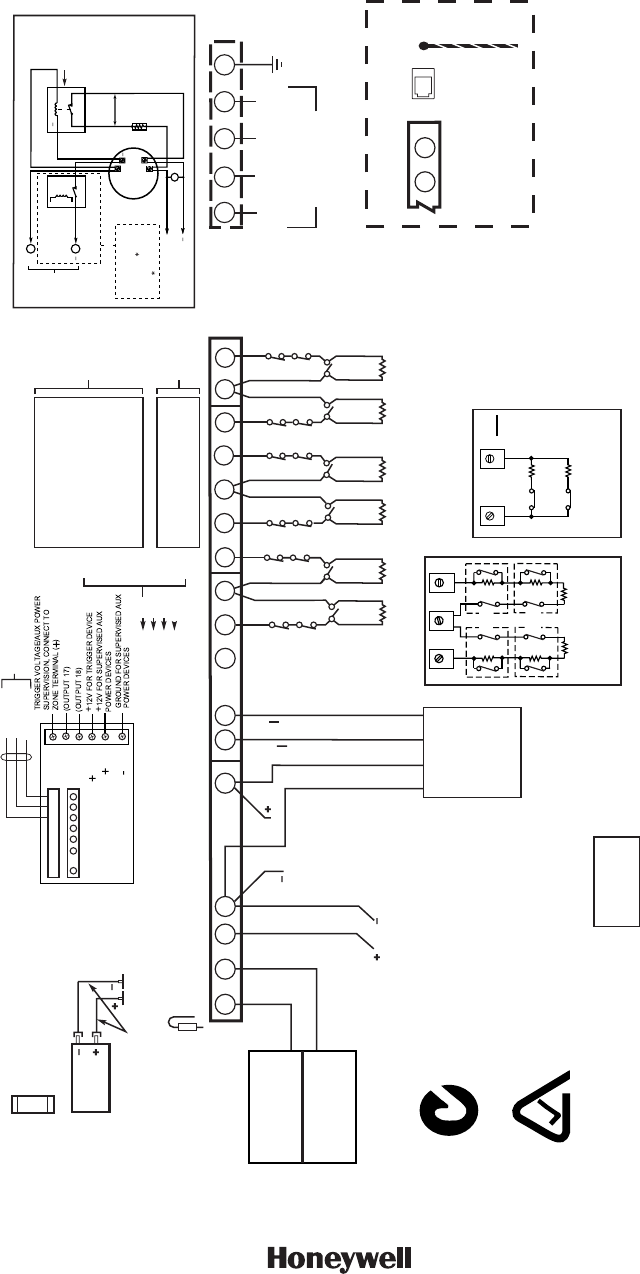
ADEMCO VISTA-12A / VISTA-12E
SUMMARY OF CONNECTIONS
V12A_V12E-SOC-V0
BATTERY CAPACITY
FOR EMERGENCY
BURGLARY STANDBY
USE AT LEAST 4 HRS
FOR COMPLETE
INFORMATION,
SEE INSTRUCTIONS
K10022-1
ALARM OUTPUT
10.5–13.8VDC, 2A MAX.
STEADYFOR
BURGLARY/PANIC,
TEMPORAL PULSE
SOUNDING FOR FIRE.
(CAN USE
ADEMCO No. 702
SIREN, OR 12V BELL).
SEE INSTRUCTIONS.
CHARGING VOLTAGE
13.8VDC. MAXIMUM
CHARGING CURRENT
650mA.
BATTERY
12V, 6AH
BLACK
RED
SEALED LEAD-ACID TYPE.
BATTERY NORMALLY NEED NOT BE
REPLACED FOR AT LEAST 3 YRS.
TO DETERMINE TOTAL STANDBY LOAD
ON BATTERY, ADD 100mA TO TOTAL OF
AUX. POWER OUTPUT AND REMOTE
KEYPAD CURRENTS.
FLYING LEADS
FOR BATTERY
CONNECTION
OPTIONAL FOR UP TO 16
ADDITIONAL ZONES
( FROM EITHER OR BOTH GROUPS)
ADEMCO 5800 Series
RF RECEIVER
WIRELESS ZONES
ADEMCO No. 6164
WITH 4 ZONES PLUS 1 RELAY
-OR-
ADEMCO No. 4219
WIRED EXPANSION MODULE
(8 ADD'L EOLR WIRED ZONES)
-OR-
ADEMCO No. 4229
WIRED EXPANSION/RELAY MODULE
(8 ADD'L EOLR WIRED ZONES PLUS 2
OUTPUT RELAYS)
-OR-
ADEMCO No. 4204 RELAY MODULE
(4 OUTPUT RELAYS)
1378
11 12 17
EARTH GROUND WIRE
(GREEN w/ YELLOW STRIPE)
SEE INSTRUCTIONS
FOR PROPER GROUNDING
BLACK: KEYPAD
GROUND (- ) RETURN
RED: KEYPAD PWR (
+
)
GREEN: DATA IN FROM KEYPAD
YELLOW: KEYPAD DATA OUT
▲
▲
WARNING:
TO PREVENT RISK OF SHOCK,
DISCONNECT TELEPHONE LINE AT TELECOM
JACK BEFORE SERVICING THIS UNIT.
BLK
RED
GRN
YEL
TO TERM 4
TO TERM 5
TO TERM 6
TO TERM 7
AND/OR
ZONE 2
HI
LO
ZONE 3
ZONE 4
HI
LO
HI
LO
ZONE 5
ZONE 6
HI
LO
HI
LO
MAXIMUM LOOP RESISTANCE: (EACH ZONE) 300 OHMS (PLUS EOLR)
•
•
RESPONSE, ZONES 1-6: 10, 400, OR 700 MSEC, OR 1.2 SECONDS (PROGRAMMABLE)
TRIGGER MODULE
USED FOR X10
CONNECTIONS,
ON-BOARD
TRIGGERS,
AND AUX POWER
SUPERVISION,
SEE INSTRUCTIONS.
78
(USE SA4120XM-1 CABLE)
RED JUMPER
CUT FOR SIREN SUPERVISION. ALSO, CONNECT 2000 OHM RESISTOR DIRECTLY
ACROSS SOUNDER. DO NOT CUT FOR SELF-ACTIVATED SIREN OUTPUT.
NOTE:
KEYPAD (S)
CURRENT (IN
ALL PARTITIONS)
AND ALL OTHER
DEVICES DRAWING
POWER FROM
TERMS 4 & 5
MUST BE
INCLUDED IN
AUX CURRENT
DRAIN
CALCULATIONS.
}
2000
OHMS
EOLR
2000
OHMS
EOLR
2000
OHMS
EOLR
2000
OHMS
EOLR
2000
OHMS
EOLR
SYNC BLK)
COM (VIO)
DATA (BLU)
TO X-10 TRANS.
16
15
14
13
10
9
6
5
4
123 4 56
SET RECEIVER’S
DIP SWITCH FOR
DEVICE ADDRESS
OF “0”.
SEE
INSTRUCTIONS.
SET UNIT’S
DIP SWITCH
FOR DEVICE
ADDRESSES
7 - 15
SEE
INSTRUCTIONS.
ZONE
PAIRS
1 / 9
2 / 10
3 / 11
4 / 12
5 / 13
6 / 14
TYPICAL WIRING FOR
ZONE DOUBLING
TYPICAL WIRING FOR
DOUBLE BALANCED ZONE
REMOTE KEYPADS
CAN USE 6128RF,
6148, 6150, 6160V,
OR 6164 KEYPADS.
(FIRST KEYPAD MUST
BE SET TO ADDRESS 16).
1312 14
10 11
6.2k
ZONE 10
3k
ZONE 2
2k
2k
2k
ZONE 3
2k
2k
2k
ZONE 4
TAMPER
CONTACTS
TAMPER
CONTACTS
POWER SHUTDOWN NOTE:
SYSTEM SHUTS DOWN SENSOR
DETECTION PROCESSING IF
CONTROL'S VOLTAGE DROPS
BELOW 9.6V.
4-WIRE SMOKE DETECTOR CONNECTIONS
+
+
2000
OHMS
EOLR
HEAT
DETECTOR
RED
EOL
POWER
SUPERVISION
RELAY MODULE
A77-716B.
USE N.O.
CONTACT,
WHICH CLOSES
WHEN POWER
IS APPLIED.
VIOLET
AUX PWR
OUTPUT
TERMINALS
5
4
+
BLK
TO ZONE TERM. ( )
TO ZONE TERM. ( )
RELAY
CONTACT OPENS MOMENTARILY
UPON FIRE ALARM RESET
PROGRAM
RELAY
AS ZONE
TYPE 54
(FIRE ZONE
RESET)
+
4-WIRE SMOKE
OR COMBUSTION
DETECTOR
N.C. N.O.
TO OUTPUT 17
PROGRAM OUTPUT 17
FOR "OUT NORM
LOW" = YES IN 79 MENU
MODE AND AS ZONE
TYPE 54 IN
80 MENU MODE
OR
2
REMOTE
KEYPADS
AND OTHER
ADDRESSABLE
DEVICES
(e.g. 4204, 4219,
4229, 5800TM,
5881EN,7845i)
MODULAR
TELEPHONE
CONNECTOR
N219
VISTA-12A
APPROVED AUSTRALIA
POWER PACK
(e.g., XF1 60844CK)
BATTERY FUSE
FOR REPLACEMENT,
USE SAME VALUE
(e.g. ADEMCO No. 90-12)
3A
ZONE 1
HI
LO
2000
OHMS
EOLR
NOT USED
PHONE CONNECTION
FOR VISTA-12A
21 22 23 24 25
EARTH
GROUND
SEE
INSTRUCTIONS
FOR PROPER
GROUNDING
PHONE WIRING FOR
FOR VISTA-12E
(VIA RJ31X JACK AND DIRECT
CONNECT CORD)
RING
(GRAY)
TIP
(GREEN)
RING
(RED)
INCOMING
PHONE LINE
HANDSET
TIP
(BROWN)
}
}
VISTA-12E
220 VAC WIRED-IN
TRANSFORMER
16.5VAC, 25VA
TRIG 1
TRIG 2
( ) VTRIG
( ) AUX
TRIGGER MODULE
ALL OUTPUTS
ARE POWER
LIMITED.
USE TRIGGER
MODULE AUX
POWER TERMINALS
FOR SUPERVISED
AUX POWER
CONNECTION
2019
SUPV
( ) GND
NOTE: TRIGGERS 1 AND 2 COMBINED
SHOULD NOT EXCEED 300 mA.
AUX. POWER
OUTPUT
10.5-13.8VDC
700mA MAX
INCLUDING
TRIGGERS
1 AND 2
165 Eileen Way, Syosset, NY 11791
Copyright © 2004 Honeywell International Inc.
www.honeywell.com/security
ÊK10022-5PRBŠ
K10022-5PR 10/05 Rev. A
