AZ 1005 Az1005
User Manual: AZ 1005
Open the PDF directly: View PDF  .
.
Page Count: 4
ARIZONA COOPERATIVE
E
TENSION
Revised 09/10AZ1005
In Maricopa County, most any type of vegetables and fruits
can be grown successfully when
The climate, the season,
and potential pests all impact the selection of what to plant
when. Experienced gardeners and nurseries can oer advice
about popular varieties of vegetables and fruits that perform
well in desert conditions.
Climate: High temperatures, both day and night for extended
periods of time, low humidity, and the high solar intensity can
put tremendous stress on plants. In addition, some plants may
not survive freezing temperatures if there is a hard winter frost.
Select varieties that are tolerant of temperature extremes, plant
at the appropriate times to avoid temperature extremes, or plan
to protect the plants. It is possible to grow crops out of season
by providing shade, more humidity, articial heat, etc.
Seasons: We have two optimal growing seasons: one in the
spring, the other in the fall. Both day length and temperature
vary dramatically between seasons (short days and cold
temperatures in winter to long days and extreme temperatures
in summer). Since few annual plants are suited to thrive in
both conditions, it is important to choose plants that mature
quickly to ensure a full life cycle within one season.
Kelly Murray Young, Kai Umeda
At a Glance
Choose varieties that:
1. mature quickly;
2. provide desirable yield, taste, texture, & color;
3. are recommended by local gardeners;
4. are adapted to climate & soils; and
5. are disease & pest resistant.
Use chart to choose planting date.
Pests: Choose varieties that have been bred to be resistant to
diseases and pests. These are indicated by initials following
the plant variety name, for example, in tomatoes, “V” means
resistant to Verticillium wilt disease, “N” indicates resistance to
Nematodes, “F” indicates resistance to Fusarium wilt disease,
and “T” indicates resistance to Tobacco mosaic virus. Choose a
planting date to avoid known pest seasons. For example, delay
fall planting until whitey populations decline with cooler
temperatures; delay spring planting until soils become warm
and dry to reduce fungal and bacterial disease problems.
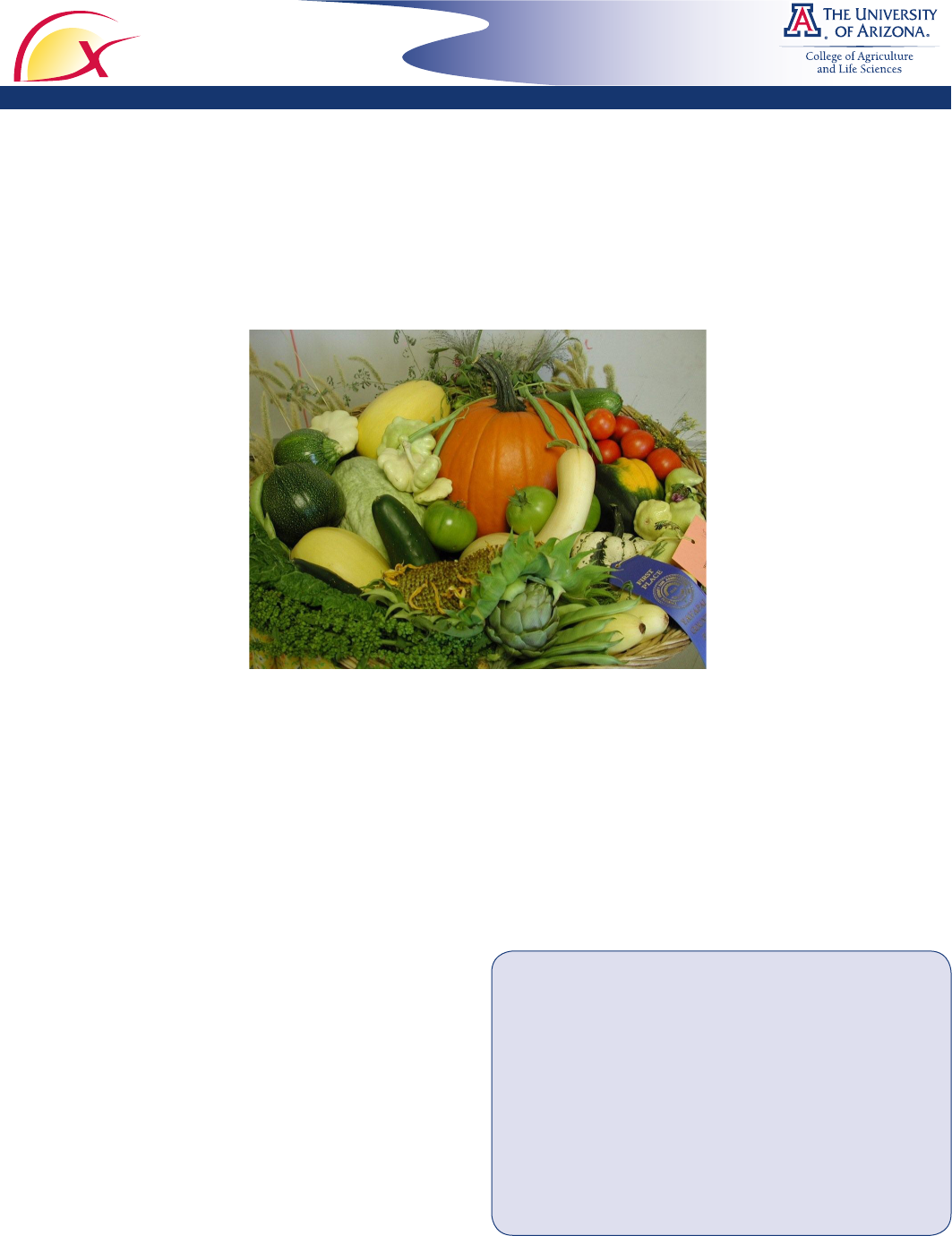
Photo by Jeff Schalau

2The University of Arizona Cooperative Extension
Fruit • Vegetable Time to Harvest Jan. Feb. March April May June July August Sept. Oct. Nov. Dec.
1 15 1 15 1 15 1 15 1 15 1 15 1 15 1 15 1 15 1 15 1 15 1 15
Artichokes, Globe 4-6 months T T T T T S S S
Artichokes, Jerusalem 6-8 months T T T T T T T T T
Asparagus 1-2 years T T T T T T T
Basil T = 30 S = 60-75
days S TS TS TS TS TS TS
Beans, Lima 60-100 days S S
Beans, Pinto 60-90 days S
Beans, Snap 60-90 days S S S S S S S
Beans, Yardlong 60-90days S S S S S S S S
Beets 60-80 days S S S S S S S S S S S S
Blackeyed Peas 90-120 days S S S S S S S S S S
Bok Choy 45 days S S S S S S S S S S S S S
Broccoli T=90-100 S=120-
130 days TS T S S TS TS TS TS TS TS TS
Brussel Sprouts T=100-120 S=130-
150 days S TS TS TS TS TS TS
Cabbage T=80-90 S=120-130
days TS T S S TS TS TS TS TS TS TS
Cabbage, Chinese T=45 S=70-80 days TS T S S TS TS TS TS TS TS TS
Carrots 60-100 days S S S S S S S S S S S S S S S S S S
Cauliower T=90-100 S=120-
130 days TS T S TS TS TS TS TS TS TS TS
Celery 120-150 days S S TS TS TS TS TS TS TS
Chard 60-90 days TS TS T S S TS TS TS TS TS TS TS
Collard Greens 80 days S S S S S S S S S S S S S
Corn, Sweet 70-90 days S S S S S S S
Cucumbers 60-90 days S S S S S S S S
Cucumbers, Armenian 55 days S S S S S S S S S S
Eggplant 70-120 days T T
Endive 80-120 days S S S S S S S S S S
THE UNIVERSITY OF ARIZONA COOPERATIVE EXTENSION
Maricopa County Garden Planting Calendar for Annual Fruits and Vegetables
S = Seeds T = Transplants
X = Sets of Cloves

3
The University of Arizona Cooperative Extension
Fruit • Vegetable Time to Harvest Jan. Feb. March April May June July August Sept. Oct. Nov. Dec.
1 15 1 15 1 15 1 15 1 15 1 15 1 15 1 15 1 15 1 15 1 15 1 15
Garlic 5-7 months X X
Kale 60-90 days S S S S S S S S S
Kohlrabi T=45-60 S=50-60
days T T T S S S S TS TS TS T T
Lettuce, Head 50-100 days TS TS T S S TS TS TS TS TS TS TS
Lettuce, Leaf 50-90 days TS TS TS T S S TS TS TS TS TS TS TS
Leek 180-200 days S S S S S S
Melons, Cantaloupe
80-120 days S S S S S S S S S S S
Melons, Watermelon 90-120 days
S S S
Mustard 35-45 days
S S S S S S S S S S S S S
Okra 70-100 days
S S S S S
Onions, Bulb Sets=4-5 months
S=7-8 months
X X X S S S S X X
Onions, Green 90-100 days
S S S S S S S S S S S S S S S S S S
Onions, Shallots 80 - 110 days
X X
Parsnips 100-120 days
S S S S S S
Peanuts 5 months
S S S
Peas Sept.=60-120
Nov.=120-150 days
S S S S S S S S S S S
Peppers 90-120 days
T T T T T
Potatoes 90-120 days
S S S S
Potatoes, Sweet 120-160 days
T T T T T T T T
Pumpkin 90-120 days
S S S S S
Radishes 40-60 days
S S S S S S S S S S S S S S S S
Rutabagas 100-120 days
S S S S S S S S S S
Spinach 40-90 days
S S S S S S S S S S S S
Squash, Summer 60-90 days
S S S S S S
Squash, Winter 90-120 days
S S S S S
Sunower 90-110 days
S S S S S S S S S S S S
Tomatoes 50-120 days
T T T T T
Turnips 90-120 days
S S S S S S S S S S S S S
S = Seeds T = Transplants
X = Sets of Cloves

4The University of Arizona Cooperative Extension
Issued in furtherance of Cooperative Extension work, acts of May 8 and June 30, 1914, in cooperation with the U.S. Department of Agriculture, James A. Christenson,
Director, Cooperative Extension, College of Agriculture & Life Sciences, The University of Arizona.
The University of Arizona is an equal opportunity, afrmative action institution. The University does not discriminate on the basis of race, color, religion, sex, national
origin, age, disability, veteran status, or sexual orientation in its programs and activities.
Any products, services, or organizations that are mentioned, shown, or indirectly implied in this publication
do not imply endorsement by The University of Arizona.
Th e Un i v e r s i T y o f Ar i z o n A
Co l l e g e o f Ag r i C U l T U r e A n d li f e sC i e n C e s
TU C s o n , Ar i z o n A 85721
Ke l l y MU r r A y yo U n g
Assistant Agent, Horticulture
KA i UM e d A
Former Agent, Vegetable Crops
b A s e d U p o n o r i g i n A l w o r K b y :
Lucy Bradley and Kai Umeda; April 1998
Co n T A C T :
Ke l l y MU r r A y yo U n g
KYoung@cals.arizona.edu
This information has been reviewed by university faculty.
cals.arizona.edu/garden/az1005.pdf
Originally published: 1998
Other titles from Arizona Cooperative Extension can be found at:
cals.arizona.edu/pubs
