Version4 Mrda Manual
User Manual:
Open the PDF directly: View PDF  .
.
Page Count: 132 [warning: Documents this large are best viewed by clicking the View PDF Link!]
Meeting Recorder
Project:
Dialog Act
Labeling Guide
ICSI Technical Report TR-04-002
February 9, 2004
Rajdip Dhillon
Sonali Bhagat
Hannah Carvey
Elizabeth Shriberg

ACKNOWLEDGEMENTS
We especially thank Jeremy Ang for processing our data and Chuck Wooters for
providing us with the TableTrans software. We are also grateful to Don Baron and
Chris Oei for their assistance in preparing data for annotation. We are thankful to
Ashley Krupski for her annotation efforts; Barbara Peskin and Jane Edwards for their
assistance in using the corpus; and Dan Jurafsky and Andrei Popescu-Belis for
supplying us with their input.
This work was supported by a DARPA Communicator project, ICSI NSF ITR Award IIS-
0121396, SRI NASA Award NCC2-1256, SRI NSF IRI-9619921, SRI DARPA ROAR
project N66001-99-D-8504, and by an ICSI award from the Swiss National Science
Foundation through the research network IM2. The views represented herein are those
of the authors and do not represent the views of the funding agencies.

TABLE OF CONTENTS
Introduction......................................................................................................................1
Section 1: Quick Reference Information ..........................................................................2
1.1 Terminology.......................................................................................................2
1.2 Mapping Meeting Recorder DA (MRDA) Tags to SWBD-DAMSL Tags ............3
1.3 Meeting Recorder DA (MRDA) Tagset ..............................................................6
Section 2: Segmentation..................................................................................................8
Section 3: How to Label.................................................................................................15
3.1 Basic Format of DAs and Labels .....................................................................15
3.2 Label Construction...........................................................................................15
3.3 Annotating Utterances Containing Multiple DAs..............................................18
3.4 Disruption Forms .............................................................................................19
3.5 Quotes.............................................................................................................21
3.6 Using TableTrans (Annotation Interface).........................................................22
Section 4: Adjacency Pairs ............................................................................................25
4.1 Purpose and Definition ....................................................................................25
4.2 Labeling Adjacency Pairs ................................................................................25
4.3 Labeling Conventions......................................................................................26
4.4 Restrictions on Using Adjacency Pairs............................................................30
Section 5: Tag Descriptions...........................................................................................32
5.1 Preliminaries....................................................................................................32
5.2 Group 1: Statements .......................................................................................32
5.3 Group 2: Questions .........................................................................................33
5.4 Group 3: Floor Mechanisms ............................................................................43
5.5 Group 4: Backchannels and Acknowledgments ..............................................48
5.6 Group 5: Responses........................................................................................57
5.7 Group 6: Action Motivators ..............................................................................70
5.8 Group 7: Checks..............................................................................................76
5.9 Group 8: Restated Information ........................................................................80
5.10 Group 9: Supportive Functions........................................................................87
5.11 Group 10: Politeness Mechanisms..................................................................92
5.12 Group 11: Further Descriptions .......................................................................96
5.13 Group 12: Disruption Forms ..........................................................................110
5.14 Group 13: Nonlabeled ...................................................................................113
Appendix 1: Labeled Meeting Sample .........................................................................115
Appendix 2: Unused/Merged SWBD-DAMSL Tags .....................................................120
Appendix 3: Unique MRDA Tags.................................................................................123
Appendix 4: Final MRDA Tagset Revisions .................................................................126
Bibliography.................................................................................................................128
Index of Tags...............................................................................................................129

1
INTRODUCTION
This labeling guide is adapted from work on the Switchboard recordings and the
accompanying manual (Jurafsky et al. 1997). The Switchboard-DAMSL (SWBD-
DAMSL) manual for labeling one-on-one phone conversations provided a useful starting
point for the types of dialog acts (DAs) that arose in the ICSI meeting corpus. However,
the tagset for labeling meetings presented here has been modified as necessary to
better reflect the types of interaction we observed in multiparty face-to-face meetings.
This guide consists of five major sections: Quick Reference Information, Segmentation,
How to Label, Adjacency Pairs, and Tag Descriptions. The first section supplies
definitions for terms used throughout this guide and contains the correspondence of the
Meeting Recorder DA (MRDA) tagset, which is the tagset detailed within this guide, to
the SWBD-DAMSL tagset. This section also contains the entire MRDA tagset
organized into groups according to syntactic, semantic, pragmatic, and functional
similarities of the utterances they mark. The section entitled “Segmentation,” as its
name indicates, details the rules and guidelines governing what constitutes an utterance
along with how to determine utterance boundaries. The third section, “How to Label,”
provides instruction regarding label construction, the management of utterances
requiring additional DAs or containing quotes, and the use of the annotation software.
The section entitled “Adjacency Pairs” details how adjacency pairs are constructed and
the rules governing their usage. The section entitled “Tag Descriptions” provides
explanations of each tag within the MRDA tagset.
Two appendices are also found within this guide. The first provides a labeled portion of
a meeting and the second contains information regarding tags used for a select number
of meetings.
With regard to the examples from meeting data found throughout this guide, it must be
noted that the start and end times for each utterance within the examples do not reflect
the most recent time alignments. However, the start and end times are accurate to a
point which allows for them to be located within their corresponding audio files without
difficulty.

2
SECTION 1: QUICK REFERENCE INFORMATION
1.1 Terminology
Below is some rudimentary terminology used in dialog act labeling:
utterance: a segment of speech occupying one line in the transcript by
a single speaker which is prosodically and/or syntactically
significant within the conversational context
speech: a group of successive utterances or successive portions of
an utterance
turn: the period during which a speaker has the floor
label: the entire set of DAs and/or other tags applicable to an
utterance
dialog act (DA): the tag or sequence of tags pertaining to the function of an
utterance or portion of an utterance. Each DA contains at
least one general tag and may contain one or more specific
tags, depending upon the nature of the utterance
tag: the individual component(s) of a DA or label
general tag: the tag which represents the basic form of an utterance
(e.g., statement, question, backchannel, etc.)
specific tag: the tag which represents the function or a characteristic of
an utterance and is appended to the general tag (e.g.,
accepting, rejecting, acknowledging, rising tone, etc.)
disruption form: the tag which represents a disruption or otherwise
indiscernible utterance

3
1.2 Mapping Meeting Recorder DA (MRDA) Tags to
SWBD-DAMSL Tags
The following table shows the correspondence between Switchboard-DAMSL (SWBD-
DAMSL) dialog tags and those used to label Meeting Recorder DA (MRDA) data. The
tags within the table are ordered according to the categorical structure within the
SWBD-DAMSL manual, with tags unique to the MRDA tagset being inserted in
accordance with this categorical structure. The SWBD-DAMSL categories are not
explicitly marked within this table in order to avoid confusion with the categories of the
MRDA tagset.
Tags listed in italics are based upon SWBD-DAMSL tags but have had their meanings
altered for the purposes of the MRDA data. Tags in boldface are not in the original
SWBD-DAMSL manual but have been added to accurately characterize the MRDA
data. Tag titles in boldface correspond to names of MRDA tags. All other tag titles
correspond to names of SWBD-DAMSL tags.
Additionally, the reasoning behind why certain SWBD-DAMSL tags are not used in the
MRDA tagset is found in Appendix 2. Explanations regarding the presence of tags
unique to the MRDA tagset are found in Appendix 3.
TAG TITLE SWBD-DAMSL MRDA
Uninterpretable % %
A
bandoned %- %--
Interruption not marked %-
Nonspeech x x
Self-talk t1 t1
3rd-party-talk t3 t3
A
bout-task t t
A
bout-communication c not marked
Statement-non-opinion sd s
Statement-opinion sv s
Open-option oo not marked
Yes-No-question qy qy
Wh-Question qw qw

4
Open-Question qo qo
Or-Question qr qr
Or-Clause qrr qrr
Rhetorical-Question qh qh
Declarative-Question d d
Tag-Question g g
A
ction-directive ad co
Offer co cs
Commit cc cc
Conventional-opening fp not marked
Conventional-closing fc not marked
Explicit-performative fx not marked
Exclamation fe fe
Other-forward-function fo not marked
Thanks ft ft
Welcome fw fw
A
pology fa fa
Topic Change not marked tc
Floor Holder not marked fh
Floor Grabber not marked fg
A
ccept aa aa
A
ccept-part aap aap
Maybe am am
Reject-part arp arp
Reject ar ar
Hold before
answer/agreement h h
Signal-non-understanding br br
Continuer b b

5
Rhetorical-question
continuer bh bh
A
cknowledge-answer bk bk
Mimic other m m
Repeat not marked r
Collaborative completion 2 2
Reformulate/summarize bf bs
A
ssessment/appreciation ba ba
Sympathy by by
Downplayer bd bd
Correct-misspeaking bc bc
Misspeak Self-Correction not marked bsc
Understanding Check not marked bu
Defending/Explanation not marked df
"Follow Me" not marked f
Yes answers ny aa
No answers nn ar
A
ffirmative non-yes answers
na na
Negative non-no answers ng ng
Other answers no no
Expansions of y/n answers e e
Dispreferred answers nd nd
Quoted Material q not marked
Hedge h not marked
Continued from previous line
+ not marked
Humorous Material not marked j
Rising Tone not marked rt
Nonlabeled not marked z
6
1.3 Meeting Recorder DA (MRDA) Tagset
The categorization scheme for the Meeting Recorder DA (MRDA) tagset differs from the
scheme employed for the SWBD-DAMSL tags seen. The reasoning behind this is that,
in the process of adjusting the definitions of previously established SWBD-DAMSL tags
and creating new tags to assist in adequately assessing the MRDA data, the resulting
MRDA tagset could not be appropriately characterized when placed in direct relation to
the SWBD-DAMSL tagset, given the nature of the data for which the MRDA tagset was
employed. Consequently, the tags are not organized on a dimensional level, but rather
the correspondences for the MRDA tagset are listed on the tag level. Descriptions of
the individual tags within the MRDA tagset are found in Section 5.
Group 1: Statements
s Statement
Group 2: Questions
qy Y/N Question
qw Wh-Question
qr Or Question
qrr Or Clause After Y/N Question
qo Open-ended Question
qh Rhetorical Question
Group 3: Floor Mechanisms
fg Floor Grabber
fh Floor Holder
h Hold
Group 4: Backchannels and Acknowledgements
b Backchannel
bk Acknowledgement
ba Assessment/Appreciation
bh Rhetorical Question Backchannel
Group 5: Responses
Positive
aa Accept
aap Partial Accept
na Affirmative Answer
Negative
ar Reject
arp Partial Reject
nd Dispreferred Answer
ng Negative Answer
Uncertain
am Maybe
no No Knowledge
7
Group 6: Action Motivators
co Command
cs Suggestion
cc Commitment
Group 7: Checks
f "Follow Me"
br Repetition Request
bu Understanding Check
Group 8: Restated Information
Repetition
r Repeat
m Mimic
bs Summary
Correction
bc Correct Misspeaking
bsc Self-Correct Misspeaking
Group 9: Supportive Functions
df Defending/Explanation
e Elaboration
2 Collaborative Completion
Group 10: Politeness Mechanisms
bd Downplayer
by Sympathy
fa Apology
ft Thanks
fw Welcome
Group 11: Further Descriptions
fe Exclamation
t About-Task
tc Topic Change
j Joke
t1 Self Talk
t3 Third Party Talk
d Declarative Question
g Tag Question
rt Rising Tone
Group 12: Disruption Forms
% Indecipherable
%- Interrupted
%-- Abandoned
x Nonspeech
Group 13: Nonlabeled
z Nonlabeled

8
SECTION 2: SEGMENTATION
Utterance segmentation is one of the most debated topics in discourse analysis. The
function of dialog must always be considered when determining utterance boundaries.
Lengthy utterances containing multiple conjunctions, speaker rambling, and floor-
holding are just a few factors complicating the decisions regarding utterance
boundaries. In order to segment transcribed speech into distinguishable utterances, the
following factors are taken into consideration within the context of the conversation:
syntax, pragmatic function, and prosody.
Prior to determining how to segment transcribed speech, knowledge of how utterance
boundaries are marked within the transcript is necessary. There are two ways to mark
utterance boundaries within the transcript. When a speaker trails off or is interrupted
and consequently does not complete his utterance, an utterance boundary in the form of
<==> is marked at the end of the corresponding utterance in the transcript. In Example
1 on the following page, speaker c2 does not finish his utterance (speaker c3 adds the
remainder of c2's utterance shortly after) and an utterance boundary is signaled by the
<==> in the transcript. If a speaker's utterance is complete, an utterance boundary in
the form of < . > is marked at the end of the corresponding utterance in the transcript.
Returning to the factors involved in segmentation, in terms of syntax, utterance
boundaries are primarily derived on a phrasal level. This is not to say that an utterance
consists only of a noun phrase or a verb phrase, but rather that it is permitted for a
complete utterance to consist only of a noun phrase, a verb phrase, or both. In
Example 11, the noun phrase "jose" constitutes a complete utterance:
Example 2 and 3 depict instances where verb phrases, "got it" and "wants to conserve"
in Example 2 and "confused" in Example 3, behave as complete utterances:
1 Examples take a format in which the numerical values of the first column represent start and end times
of utterances, the second column indicates the channel, the third indicates the DA, and the fourth
presents the transcript.
E
xample 1: Bmr010
280.000-284.762 c2 s.%-- and i did some training on - on one
dialogue which was transcribed by ==
284.762-288.568 c2 s yeah we - we did a nons- - s- -
speech nonspeech transcription .
287.474-288.294 c3 s^2 jose.

9
The pragmatic function of an utterance is also an important consideration for utterance
boundary identification. Phrases or clauses that do not appear complete grammatically
may actually form complete utterances on account of having unique functions within
conversation. Although it may seem peculiar to segment utterances on a phrasal and
clausal level, such a method of segmentation is utilized for the purpose of maximizing
the amount of information derived from DAs.
Example 4 presents an utterance that appears complete grammatically, yet does not
maximize the amount of information which can be derived from DAs.
In Example 5, the same utterance from Example 4 is shown, however the utterance is
segmented at the clausal level so that more information may be provided by the DAs
that otherwise would not be present had the utterance not been segmented.
E
xample 2: Bed011
114.007-116.680 c2 s and um - i - i told it to stay on forever
and ever .
116.680-119.347 c2 s but if it's not plugged in it just doesn't
obey my commands .
119.120-119.320 c1 s^bk okay .
119.726-120.386 c2 s it has a mind .
121.961-122.331 c1 s^bk got it .
122.160-123.170 c4 s wants to conserve .
Example 3: Bed003
2950.850-2957.110 c3 s yeah the only like - possible
interpretation is that they are - like -
come here just to rob the museum or
something to that effect .
2952.260-2953.830 c2 s^2 confused .
E
xample 4: Bmr010
217.921-227.363 c6 s^cs that uh - if we had something that
worked for many cases before maybe
starting from there a little bit because
ultimately we're going to end up with
some s- - kind of structure like that.

10
Syntax and pragmatic function are both taken into account when encountering
conjunctions. Conjunctions such as "and," "or," "but," and "so" often behave as cues to
locations where a string of clauses might be segmented into separate utterances.
Rather than simply start a new utterance, a speaker might use one of these
conjunctions as a connection between two complete utterances, as seen in a pre-
segmented utterance in Example 6:
Example 7 depicts a correctly segmented version of Example 6:
Caution must be taken not to segment utterances upon the appearance of conjunctions
in every instance. Quite often, conjunctions are used to simply connect noun phrases
or verb phrases that would not constitute separate utterances in the context in which
they are used. In these cases, the utterance is not segmented at the conjunction.
E
xample 5: Bmr010
217.921-222.161 c6 s^cs that uh - if we had something that
worked for many cases before maybe
starting from there a little bit .
222.161-227.363 c6 s^df because ultimately we're going to end
up with some s- - kind of structure like
that.
E
xample 7: Bmr020
595.187-596.880 c6 s that's somewhat - that's somewhat
subject to error .
596.880-601.180 c6 s but still we - we uh don did some ha- -
hand checking .
601.310-604.837 c6 s and - and we think that - based on that
we think that the results are you know
valid .
604.837-608.363 c6 s although of course some error is going
to be in there .
E
xample 6:
B
mr020
595.187-608.363 c6 s that's somewhat - that's somewhat
subject to error but still we - we uh don
did some ha- - hand checking and –
and we think that - based on that we
t
hink that the results are you know valid
although of course some error is going
to be in there .

11
Example 8 and Example 9 demonstrate instances when an utterance is not segmented
upon the appearance of a conjunction:
On occasion, a speaker may have an extremely lengthy utterance with many
conjunctive clauses and parentheticals. In such situations, each clause or parenthetical
is segmented into a separate utterance. As with segmenting on a clausal or phrasal
level, segmenting parentheticals in such a way allows for the maximization of
information provided by DAs. In deciding how to segment such instances within
transcribed speech, it is helpful to determine whether a speaker actually had the whole
string of speech in mind or else unintentionally diverged from his original thoughts.
Example 10 depicts a rather lengthy utterance prior to segmentation and Example 11
presents a segmented version of the same utterance.
E
xample 8: Bro014
238.387-240.098 c2 s^e i mean it's like
one little text file you edit
and change those numbers .
Example 9: Bro014
302.417-305.275 c2 s now h t k's compiled for both the linux
and for um the sparcs .
E
xample 10: Bmr005
1012.960-1033.300 c4 s but i - i mean - i think also to some
extent its just educating the human
subjects people in a way because
there's if uh - you know - there's court
transcripts there's - there's transcripts
of radio shows i mean - people say
people's names all the time so i think
it - it can't be bad to say people's
names it's just that i mean - you're
right that there's more poten- - if we
never say anybody's name then there's
no chance of - of - of slandering
anybody .
Example 11: Bmr005
1012.960-1019.350 c4 s but i - i mean - i think also to some
extent its just educating the human
subjects people in a way .

12
Prosody is also of considerable importance in detecting utterance boundaries. To take
the prosody of an utterance into consideration is to take the aural cues such as the rise
and fall of pitch, the energy level, and duration of the words of the utterance as well as
the complete utterance into consideration. Utterances that appear complete
syntactically, whether they are quite lengthy or consist of short phrases or clauses, may
be incomplete prosodically. If the prosody of the end of an utterance consists of a pitch,
energy level, or duration that is incongruent with that of a complete utterance, then that
particular utterance is considered incomplete. General prosodic patters found within
complete utterances and prosodic patterns specific to certain speakers are necessary
factors in determining how to assess the prosody of a complete utterance.
Prosody is of use in determining whether an utterance is interrupted or abandoned. If a
speaker begins trailing off in pitch and the energy level begins to decrease, the
speaker's utterance is most likely to be marked as abandoned. Prosody can also help
distinguish between floor grabbers and backchannels, as floor grabbers tend to have a
higher energy level in contrast to the surrounding speech and backchannels do not.
Pauses also behave as signifiers to utterance boundaries. Oftentimes, the appearance
of a lengthy pause indicates that the segment of speech following the pause constitutes
a new utterance. If the portion of speech immediately preceding the pause is
incomplete, that portion may either be an abandoned utterance or the beginning of an
utterance of which the portion of speech following the pause is the end. If the former
applies, and the portion preceding the pause is actually abandoned, a change in DAs,
prosody, or both is an obvious signal that the pause is indicative of a boundary.
However, if the latter case is applicable, no such drastic change in the prosody between
the segment preceding and the segment following the pause will be present and both
portions of speech are to comprise one utterance. To reiterate with regard to the latter
case, an utterance boundary will not be marked at the pause. As a side note, it must be
mentioned that some speakers tend to speak slowly in such a manner that their
utterances are filled with frequent pauses. In such instances, pauses are not indicators
of utterance boundaries unless the segment of speech following a pause is incongruent
with the segment preceding.
1019.350-1025.740 c4 s^df because there's if uh - you know -
there's court transcripts there's -
there's transcripts of radio shows i
mean - people say people's names all
the time .
1026.390-1028.940 c4 s so i think it - it can't be bad to say
people's names .
1029.270-1033.300 c4 s^df it's just that i mean - you're right that
there's more poten- - if we never say
anybody's name then there's no
chance of - of - of slandering
anybody .

13
As difficulty in determining utterance boundaries is encountered when considering the
factors of syntax, prosodic function, prosody, and pauses, additional segmentation
issues occasionally arise with the applicability of certain tags, namely <fg>, <fh>, <h>,
<aa>, <ar>, <bk>, and <g>. Regarding <fg>, <fh>, and <h>, often the problem at hand
is whether to segment an utterance in which a speaker utters a string of <fg>s, <fh>s, or
<h>s, as seen in Example 12. If there exist significant pauses between each portion of
the string of <fg>s, <fh>s, or <h>s, the utterance is segmented upon each pause and
each resulting utterance is labeled appropriately as <fg>, <fh>, or <h>, depending upon
its nature. However, if no such significant pauses exist, then the entire utterance
remains intact and receives a suitable label. Additionally, it is far more difficult to judge
if a pause actually signifies an utterance boundary within strings of <fg>s, <fh>s, or
<h>s than within strings of fluent speech.
As a general convention, unless an utterance is comprised solely of floor holders, it is
not to end with a floor holder <fh>. In the case that a floor holder is found at the end of
an utterance, it is split from the utterance and either receives its own line or is merged
with the following utterance of the same speaker, depending primarily upon its prosody
and its temporal proximity to the following utterance. If the length of the floor holder is
incongruent to the length of the words of the following utterance, the floor holder is of a
different intonation in relation to the following utterance, or a significant pause exists
between the floor holder and the following utterance, the floor holder is not merged with
the following utterance. If the floor holder is merged with the following utterance and the
following utterance is not a floor holder, then it is permissible for the resulting utterance,
which consists of a floor holder and another DA, to contain multiple DAs. Additionally,
although a floor grabber and a hold do not occur mid-speech as a floor holder does,
these tags may also be merged with the following utterance if deemed necessary and
the resulting utterance will also contain multiple DAs. Section 3.3 specifies the manner
in which utterances with multiple DAs are treated.
After splitting a floor holder from an utterance, it must be decided whether the portion
which originally preceded the floor holder is complete or incomplete. Example 13
depicts an utterance ending with a floor holder and the same utterance is seen in
Example 14 with the exception that the utterance has been segmented so that the floor
holder receives its own line.
E
xample 12: Bmr012
1886.800-1891.3100 c1 s^cs and then just sort of have that as the -
and then you can have groups of
twenty people or whatever .
1891.310-1892.080 c1 fh and - and uh ==

14
Regarding the tags <aa>, <ar>, <bk>, and <g>, the largest problem is determining
whether or not an utterance boundary exists after speech labeled with the tag <aa>,
<ar>, or <bk>, that is if speech from the same speaker immediately follows, or if a
boundary exists before speech labeled with the tag <g>, that is if speech from the same
speaker immediately precedes the portion labeled with the tag <g>. This problem only
emerges if the speech surrounding the portions labeled with the tags previously
specified is such that the prosody bears no indication of a boundary between
utterances, the speaker speaks so quickly that a boundary cannot be discerned, or else
no significant pause is found to mark a boundary. When the issue arises that a
boundary cannot be marked between speech labeled with the previously mentioned
tags and the surrounding speech, then it is permissible for an utterance to have multiple
DAs. Section 3.3 details the format of labels for utterances which have multiple DAs.
Another issue regarding segmentation concerns otherwise complete utterances being
segmented in such a way that yields abandoned utterances. For instance, a complete
utterance may be quite lengthy and appear as though it ought to be segmented.
However, segmenting the utterance may yield incomplete utterances that would be
marked as abandoned. As the original intact utterance is complete and some of the
segmented portions are marked as being abandoned, it is clear that segmenting the
utterance in a way that yields abandoned utterances is incorrect.
As an addendum to the aforementioned system of segmentation, if uncertainty exists as
to whether or not to segment an utterance, a general guideline is to segment the
utterance regardless. Also, portions of speech that constitute one utterance but for
some reason, perhaps mistakenly, are segmented as multiple utterances are merged to
form one utterance.
E
xample 13: Bmr010
601.519-604.014 c0 s and if it's good enough we'll arrange
windows machines to be available
so ==
Example 14: Bmr010
601.519-602.707 c0 s and if it's good enough we'll arrange
windows machines to be available .
603.465-604.014 c0 fh so ==
15
SECTION 3: HOW TO LABEL
3.1 Basic Format of DAs and Labels
The basic format of a DA is as follows2:
The basic format of a label is as follows (depending upon the utterance, the portions
enclosed in brackets may or may not be necessary):
3.2 Label Construction
The general tag is a mandatory component of every label. Only one general tag is
present in each DA. Specific tags and disruption forms (which indicate when a speaker
has been interrupted, trails off, or else is indecipherable) are included within a label only
when an utterance cannot be sufficiently characterized by a general tag and when
further characterization is needed. Specific tags are appended to general tags when
necessary and are not used alone. For the purpose of uniformity among annotators,
when multiple specific tags are appended to a general tag, they are attached in
alphabetical order3.
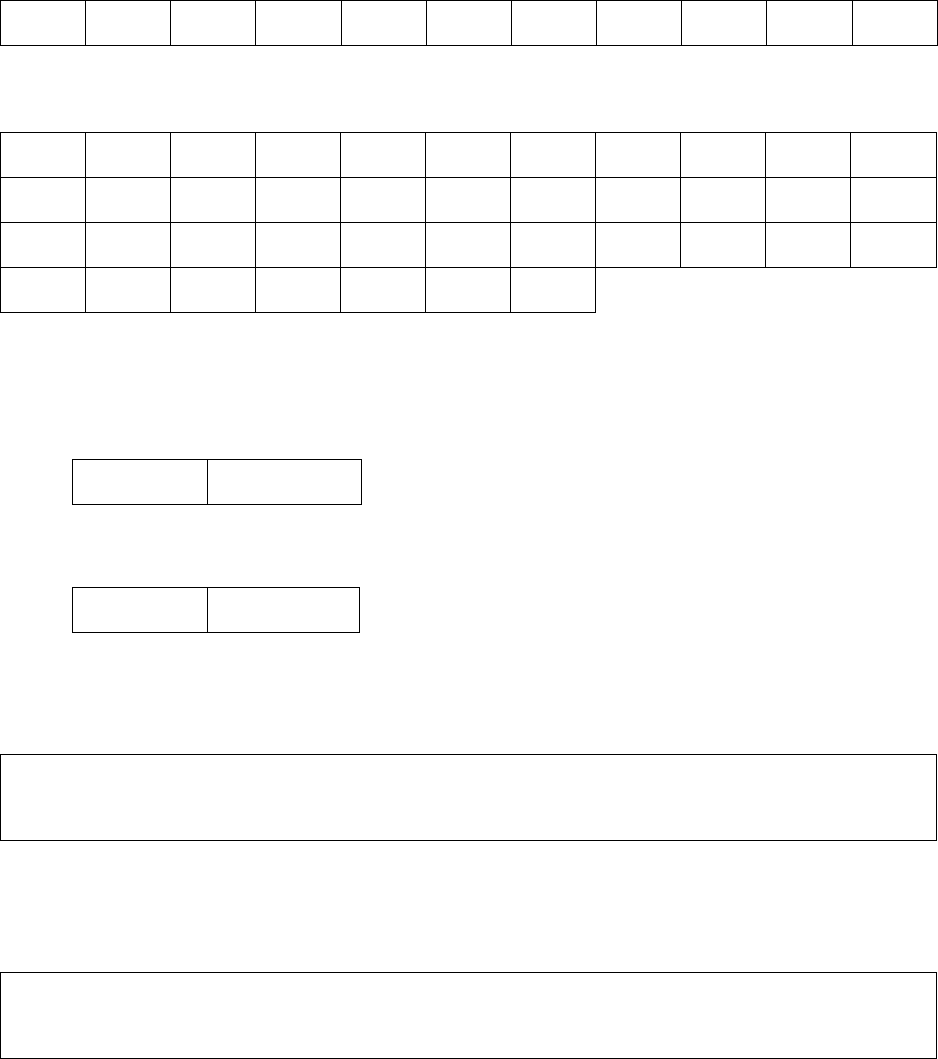
In the following sets of tags, the first set contains general tags, the second set contains
specific tags, and the third set contains disruption forms. Detailed descriptions of the
tags in the three sets can be found in Section 5. Note that the tags found in Set 1 are
2 Throughout this manual, when discussing format, the convention of enclosing portions in brackets
denotes that, depending upon an utterance, those portions may or may not be necessary.
3 As specific tags are attached in alphabetical order, the tag <2> is the last tag within the alphabetically
ordered hierarchy, rather than the first.
<general tag> [ ^ specific tag ]
<general tag> [ [ ^ <specific tag> ] [ | <general tag> [ ^ <specific tag> ] ] [ . <disruption form> ] ]
16
only used as general tags, the tags found in Set 2 are only used as specific tags (in
conjunction with a general tag), and tags in Set 3 are only used as disruption forms.
Set 1: General Tags
s qy qw qr qrr qo qh b fg fh h
Set 2: Specific Tags
aa aap am ar arp ba bc bd bh bk br
bs bsc bu by cc co cs d df e f
fa fe ft fw g j m na nd ng no
r rt t tc t1 t3 2
Set 3: Disruption Forms
Disruptions
%- %--
Indecipherable
x %
Within a DA, when specific tags are necessary, they are attached to the general tag with
a caret (^), thus rendering the following depiction of a DA:
Disruption forms are attached to and separated from the end of a DA with a period < . >,
as seen in the following representation:
< general tag >^< specific tag 1 >^< specific tag 2 >^< specific tag 3 > ...^< specific tag n >
< general tag > [ ^ < specific tag 1 > ...^< specific tag n >] . < disruption form >

17
It must be noted that, in some cases, a disruption form is present within an utterance
without sufficient information to assign a DA to that utterance. In such instances, a label
comprised solely of a disruption form is necessary.
Additionally, if for some reason an utterance is not to be labeled with a DA, then that
particular utterance receives a label consisting only of the tag <z>. For instance, if an
utterance contains data that is not to be labeled on account of it containing digits,
containing pre- or post-meeting chatter, pertaining to a "bleeped" portion in the
corresponding audio file, or else is simply not relevant to the labeling task, a label
comprised solely of the tag <z> is used. As the tag <z> is used to mark utterances
which otherwise would be labeled with DAs but instead are intentionally not to be
labeled, it is clear why the tag <z> is not included within the other groups of tags (i.e.
general tags, specific tags, and disruption forms). The tag <z> does not provide any
information regarding the characteristics and functions of utterances as the tags of the
other groups do, and for this reason it is separated from those groups.
The following is a partial list of sample labels that are acceptable within the previously
established conventions for label construction:
s qy qr b fg %
s^bk qy^d^f^g^rt qr^rt b.% fh^rt %-
s^nd qy^bh qrr.%-- b.x h %--
s^aa^rt.%-- qy^bu.%- qh^rt.% b^rt z x
Listed below is an incomplete list of sample labels that are not acceptable within the
previously established conventions for label construction:
s^s aa^bk x.%-- %--.s^qy^d s^z
s^s^aa %.%-- %--.x b.%- z.%--
It is worthy of mention that other restrictions apply in constructing labels. Such
restrictions include particular specific tags which may only appear with certain general
tags, particular general tags which have a limited set of applicable specific tags, and
sets of specific tags which are prohibited from appearing in the same DA. Restrictions
applying to the usage of tags are discussed in the individual tag descriptions in Section
5.

18
3.3 Annotating Utterances Containing Multiple DAs
In cases where one DA does not suffice to represent an utterance, two DAs are used.
Such a need arises in cases as those described in Section 2, usually with tags such as
<fg>, <fh>, <h>, <aa>, <ar>, <bk>, and <g> which correspond to short utterances.
Often, an utterance requires multiple DAs when a floor grabber <fg> or floor holder <fh>
is uttered at the beginning of a statement <s> or question, when a short answer of the
nature <aa>, <ar>, or <bk> is following by a longer explanation, or when a statement is
followed by a tag question <g>. In some cases, an utterance requires multiple DAs
when a statement <s> is followed by a short answer of the nature <aa>, <ar>, or <bk>.
In which case, the DAs can be separated in both the label and the portion of the
transcript containing the utterance with a pipe bar < | >.
The pipe bar < | > is only used when sequential portions of an utterance that operate
closely together require different characterizations. For instance, a pipe bar is not used
for an agreement <aa> and a question that immediately follows it. In fact, an agreement
followed by a question does not constitute an utterance but constitutes two separate
utterances instead. Rather, an agreement immediately followed by an explanation of
the agreement, a longer, narrative form of agreement, or a direct reference to what the
agreement regards would require a pipe bar so long as the prosody and lack of
significant pauses warrants such usage of a pipe bar.
The use of a pipe bar indicates that segmenting an utterance is not necessary, despite
that the initial portion of an utterance, or last portion in the case of <g>, has a different
DA than the rest of the utterance.
The pipe bar is indicated in the appropriate location within the label as well as within the
transcription. Within the label, the pipe bar separates the DAs. Within the transcript,
the pipe bar separates the portions of an utterance to which the different DAs apply.
This is done in such a manner that the DA to the left of the pipe bar in the label pertains
to the portion of the utterance to the left of the pipe bar in the transcript and the DA to
the right of the pipe bar in the label pertains to the portion of the utterance to the right of
the pipe bar in the transcript.
Example 1 demonstrates the correct usage of a pipe bar, whereas Example 2 and
Example 3 depict the incorrect usage of a pipe bar.
E
xample 1: Bmr012
94.861-99.771 c4 fg|s^t um - | everyone should have at least
two forms possibly three in front of you
depending on who you are .

19
3.4 Disruption Forms
Disruption forms are used to mark utterances that are indecipherable, abandoned, or
interrupted. Only one disruption form may be used per utterance.
Disruption forms are included in a label in one of three formats, depending upon the
nature of an utterance. When a DA is not detected, a disruption form alone may
comprise an entire label. When used in conjunction with a DA, disruption forms are
marked using either a period < . > or a pipe bar < | >.
If an utterance contains a disruption form and is too short to determine which DA
applies to it, then only the disruption form is marked in the label. An utterance that is
indecipherable may actually be quite lengthy, but because it cannot be deciphered, an
appropriate DA cannot be assigned to it and only the disruption form is marked.
Example 4 depicts a disrupted utterance which contains insufficient information to
provide a DA:
Exceptions occasionally apply to short utterances deemed indecipherable. Utterances
which appear to be backchannels, for instance, yet are indecipherable may be labeled
with the appropriate DA along with a period and the applicable disruption form. Such
treatment of indecipherable utterances is only employed when there is a high probability
that the specific DA applies to the utterance based upon the surrounding context of the
short utterance and the speaker's speech patterns. The following are two sample labels
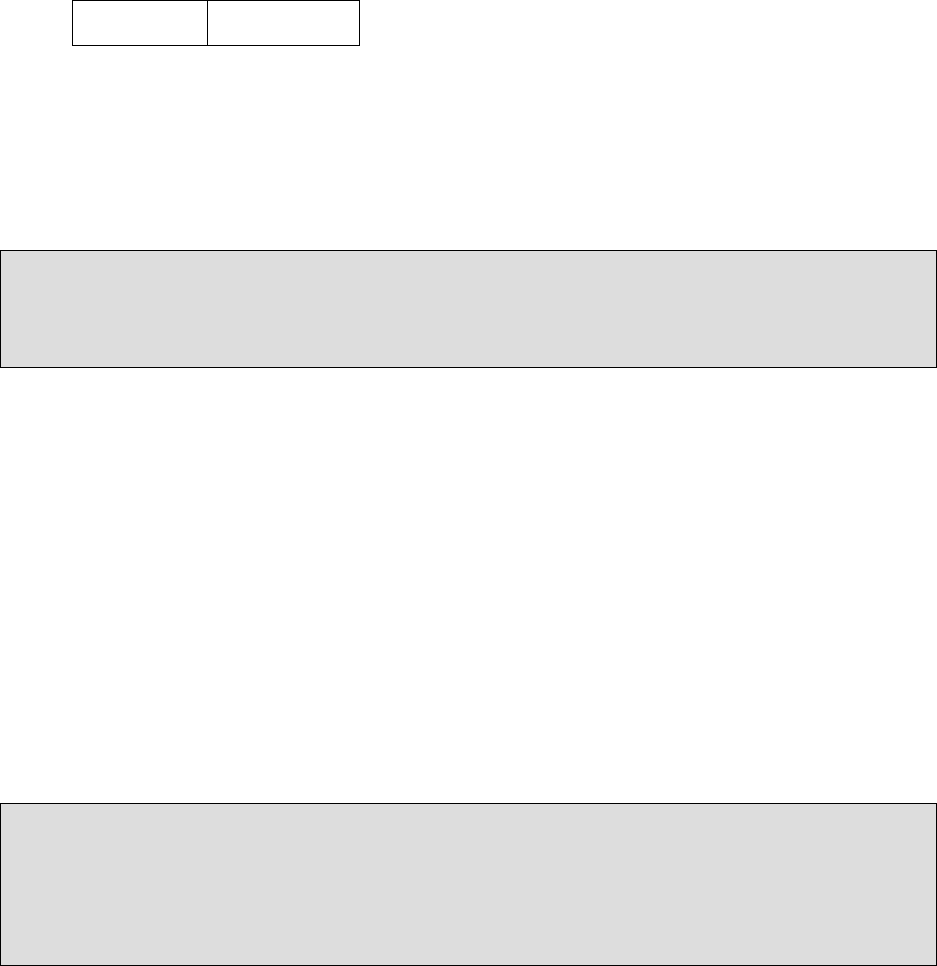
pertaining to short indecipherable utterances:
E
xample 4: Bro014
1207.310-1207.880 c1 %- but i- ==
E
xample 2: Bmr0
1
2
94.861-99.771 c4 s^t|fg um - | everyone should have at least
two forms possibly three in front of you
depending on who you are .
Example 3: Bmr012
94.861-99.771 c4 fg|s^t um - everyone | should have at least
two forms possibly three in front of you
depending on who you are .
20
b.% b.x
A period or a pipe bar is used in conjunction with a disruption form if a disruption form is
indeed applicable to an utterance and if an utterance contains sufficient information to
assign to it a DA. For instance, if an utterance, such as a statement, is interrupted or
abandoned, the DA is marked and then followed by a period and the appropriate
disruption form, as seen in Example 5:
In the case of Example 5, the utterance contains sufficient information to determine that
it is indeed a statement, despite being abandoned. If an utterance does not contain
adequate information to decide which DA applies to it, then a DA is not marked.
Two types of instances exist in which an utterance containing a pipe bar requires a
disruption form. In the first, an utterance requiring a pipe bar, such as what is discussed
in Section 3.3, is either abandoned or incomplete. To the left of the pipe bar is a DA
containing a tag such as <fg> or <aa> and to the right is a statement or explanation of
some sort that is either incomplete or abandoned. Note that the disruption form only
applies to the DA to the right of the pipe bar. Keeping in mind that the portion of the
utterance to the right of the pipe bar contains sufficient information to assign to it a DA
and is also abandoned or incomplete, its DA is followed by a period and the appropriate
disruption form, as seen in Example 6:
In the second instance in which an utterance containing a pipe bar requires a disruption
form, the portion of the utterance to the right of the pipe bar does not contain sufficient
information to assign to it a DA. This portion may be abandoned, interrupted, or
indecipherable. The DA designated to the portion of the utterance to the left of the pipe
bar clearly begins upon the onset of the utterance and ends at the point where the pipe
bar is placed. The DA pertaining to the initial portion of the utterance is marked, a pipe
bar is placed after the DA in the label and at the point where that particular DA ends in
the transcript, and a disruption form is marked after the pipe bar, as seen in Example 7
and Example 8:
E
xample 5: Bro014
495.681-499.134 c4 s.%-- some people are arguing that it would
be better to have weights on ==
E
xample 6: Bro014
1897.760-1904.500 c0 s^bk|s.%-- yeah | hopefully i think what we want to
have is to put these features in s- -
some kind of ==

21
The distinction between the use of the pipe bar and a period exists in how an utterance
can be divided. An utterance divided by a pipe bar behaves in some ways as two
separate utterances. The segment of the utterance to the left of the pipe bar will be
annotated with a particular DA that is different from the DA used to annotate the right,
that is if it is possible to assign a DA. The pipe bar exists as a clear boundary which
marks where one DA ends and another begins in a single utterance. The portion to the
right of the pipe bar behaves as a separate utterance in that it alone is the specific
segment which is interrupted, abandoned, or indecipherable. The portion to the left is
complete.
With regard to periods, and even labels consisting solely of disruption forms, no clear
and comparable boundary as found in utterances requiring pipe bars exists. The exact
region within an utterance where the disruption form occurs does not behave as a
separate segment of the utterance that can be marked clearly with a mechanism such
as a pipe bar. It is also unnecessary to use a pipe bar to mark where an interruption
begins or where a speaker abandons his utterance, since the DA to the left of the pipe
bar may also apply to the other side where the disruption form is marked.
Additionally, the reasoning behind why a disruption form is not used as a tag within a
DA is that the tags used within a DA apply primarily to the function of an entire
utterance. Disruption forms, however, usually apply only to the end of the utterance.
For this reason, the use of periods with disruption forms is deemed necessary.
3.5 Quotes
Utterances that contain quoted material are to end with punctuation that reflects the DA
of the utterance overall. If a quoted question is embedded within a statement, a period,
rather than a question mark, is used at the end of the utterance in the transcript and no
other punctuation is used.
A colon in the label signifies that there is quoted material in the transcription. The DA to
the left of the colon characterizes the function of the entire utterance and the DA to the
right of the colon characterizes only the quote. If the quoted material only consists of a
E
xample 7: Bmr028
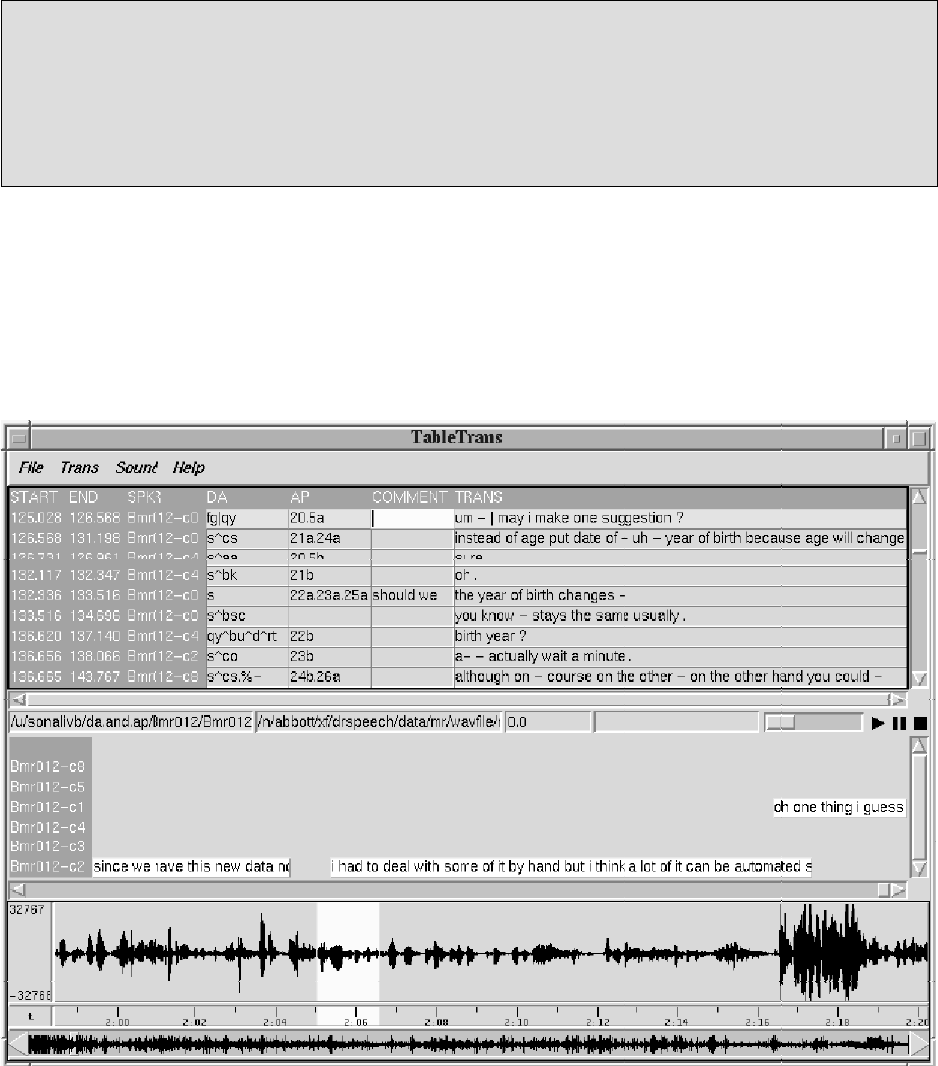
1187.370-1188.240 c1 fg|%- yeah | he ==
Example 8: Bro014
403.710-405.428 c2 s^aa|%-- yeah | it's uh ==
22
few words, such as a noun phrase, DA annotation of the quotation is unnecessary.
Example 9 demonstrates the manner with which quotes are handled:
3.6 Using TableTrans (Annotation Interface)
A. The Interface
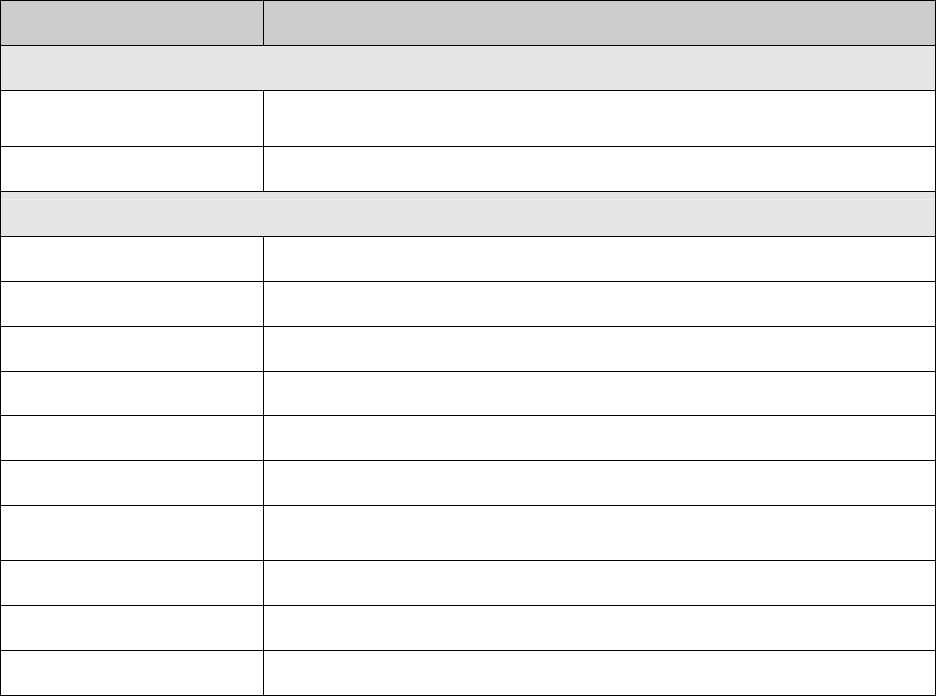
There are three sections of TableTrans: the labeling and transcription section located at
the top, the time-segmented transcription located in the middle, and the waveform
located at the bottom.
E
xample 9: Bmr026
941.984-944.924 c1 s^cs:qw and just say an e- - just ask him that
you know wha- - what should you do .
945.464-947.864 c1 s:qy and in my answer back was are you
sure you just want one .
23
In the labeling and transcription section, the first and second columns on the left provide
the start and end times for each utterance and the third column denotes the speaker or
channel number. DA and adjacency pair (AP) labels are entered in the fourth and fifth
columns. The comment field is located in the sixth column and is primarily for an
annotator's notes regarding an utterance. The last column on the right, under the
"Trans" heading, provides the transcript of the utterances.
In order to label a meeting, the "Open Annotation File" command must be selected from
the "File" menu. A sub-menu will appear providing three formats that can be used.
"Table Format" is the format that is most widely used. A window will appear with a
"Feature List" and a "Delimiter" to which clicking the "OK" button is necessary. Shortly
after, the segment of the meeting to be annotated will appear.
Although the data within the fourth, fifth, sixth, and seventh columns may be altered
within the interface, the Time-Segmented section, which is the first two columns and
shows the annotator a series of utterances in chronological order, and the third column
denoting the speaker cannot be modified.
B. TableTrans Commands
COMMAND ACTION
Changing the Transcript
Ctrl-s Splits the current row at the location of the cursor in the
TRANS field.
Ctrl-m Merges the current row with the next row by the same speaker.
Moving within a Field
Ctrl-f or left-arrow Moves forward one character in a field.
Ctrl-b or right arrow Moves backward one character in a field.
Ctrl-p or up-arrow Moves up to previous row.
Ctrl-n or down-arrow Moves down to next row.
Shift + left-arrow Moves to previous field in the same row.
Shift + right-arrow Moves to next field in the same row.
right-click (In the Time-Segmented Transcription window) Opens up
Comment Field Window
Ctrl-1 Plays a segment
Ctrl-a Moves cursor to the beginning of a field
Ctrl-e Moves cursor to the end of a field
24
C. Printing Commands
Annotators can print out their comments using the program "csvcomment." The
command "csvcomment <csv_file>" is entered in the terminal window, where <csv_file>
is the name of the ".csv" file to print.
D. Playing the Sound File
To open up the wave file of a meeting to be labeled, a link command can be made from
the location where the sound file is saved in the annotator's home directory. After
returning to the TableTrans interface, "Open Sound File" is selected from the "File"
menu. The file can then be opened after browsing through the annotator's home
directory.
25
SECTION 4: ADJACENCY PAIRS
4.1 Purpose and Definition
Labeling adjacency pairs (AP) in meetings provides a means to extract the information
provided by the interaction between speakers. Adjacency pairs reflect the structure of
conversation and are paired utterances such as question-answer, greeting-greeting,
offer-acceptance, and apology-downplay. (Levinson 1983)
APs are defined as sequences of two utterances that are:
1. produced by different speakers
2. ordered with a first part (marked with “a”) and a second part (marked with “b”)
(Levinson 1983)
An example of an AP is shown below:
In Example 1, the utterances depict direct interaction between the two speakers.
4.2 Labeling Adjacency Pairs
Adjacency pairs consist of two parts, where each part is produced by a different
speaker. The basic form of an AP is seen below:
This format allows APs to be enumerated as: 1a, 1b, 2a, 2b, and so on. A different
number is assigned for each AP, yet every AP will contain an "a" part and a "b" part. A
labeled AP is seen in Example 2:
E
xample 1: Bro016
113.976-116.502 c4 s^bu but you were looking at mel cepstrum .
116.883-117.850 c5 s^aa yes .
<AP number><AP part>

26
Although APs are to be marked sequentially in ascending order, it is possible that the
numerical value of an AP jumps ahead of the numerical value of the previous AP by
more than a value of one (e.g., an AP has a numerical value of 5 and the following AP
has a numerical value of 7 instead of 6). However, such is only permitted so long as the
sequential order of the APs is preserved and the numerical values are not repeated or
used cyclically for entirely different APs.
4.3 Labeling Conventions
Specific labeling conventions have been established when marking APs in instances in
which an utterance contains multiple AP parts, an AP part consists of multiple
utterances, multiple speakers pertain to the same AP part, and an AP is overlooked.
A. Multiple AP Parts per Utterance
If an utterance functions as a "b" part of one AP and an "a" part of another AP, then
both APs are marked with a period < . > separating the two APs, as seen below:
A portion of a conversation in which APs are labeled is seen in Example 3:
E
xample 2: Bmr023
312.382-314.770 c2 qy^rt 30a are you implying that it's
currently disorganized ?
314.770-318.470 c3 s^na 30b in my mind .
<AP number><AP part>.<AP number><AP part>
E
xample 3: Bro021
66.555-68.227 c2 s^rt 4a well the first thing maybe
is that the p- -
eurospeech paper is uh
accepted .
69.904-70.928 c2 fh um ==
70.928-71.952 c2 fh yeah .

27
Refer to Section D for details regarding the treatment of utterances requiring three AP
parts.
B. Continued AP Parts
A continued AP part is an AP part consisting of multiple utterances by the same
speaker. When a continued AP part arises, a plus sign <+> is placed at the end of the
AP. Example 5 depicts an instance where an AP part consists of multiple utterances:
Additionally, an utterance consisting of a tag question <g> is included within an AP part,
assuming the utterance containing the statement <s> preceding it is a portion of the AP
part. In which case, the utterance containing the tag question will receive the
appropriate number of plus signs when labeled with an AP.
72.059-74.710 c5 qw^rt 4b.5a this is - what - what do
you uh - what's in the
paper there ?
74.702-81.090 c2 s^rt 5b.6a so it's the paper that
describe basically the um
system that were
proposed for the aurora .
80.320-82.794 c5 qy^bu^d^rt 6b.7a the one that we s- - we
submitted the last round ?
82.614-83.700 c2 s^aa 7b.8a right yeah .
83.110-83.750 c5 s^bk 8b uhhuh .
E
xample 5: Bro016
1494.110-1499.560 c1 qy^rt 20a do you have something
simple in mind for - i
mean vocal tract length
normalization ?
1497.570-1501.320 c5 s^ar|s^nd 20b uh no | i hadn't - i hadn't
thought - it was - thought
too much about it really .
1501.320-1503.200 c5 s^df^nd 20b+ it just - something that
popped into my head just
now .
1503.200-1505.070 c5 s.%-- 20b++ and so i - i ==
1505.690-1509.900 c5 s^cs 20b+++ i mean you could maybe
use the ideas - a similar
idea to what they do in
vocal tract length
normalization .
28
If an utterance contains multiple APs, where one or both is a continued AP part, a
period < . > is inserted between the two APs to separate them (e.g., 5b++.6a+).
C. Multiple Speakers per AP Part
In some cases, an AP part consists of two or more speakers. This occurs most often
with the "b" part and quite rarely with the "a" part. When such an occurrence arises, the
corresponding AP number and AP part are marked. Then each speaker contributing to
the same AP part receives a numerical value based upon the order in which the
speakers make their utterances. So the first speaker to contribute to an AP part
receives a value of 1, the second a 2, and so on. A hyphen <-> followed by a speaker's
numerical value is then appended to the AP. The format of an AP consisting of multiple
speakers is seen below:
AP parts containing multiple speakers are seen in Example 5:
If, for instance, the speaker designated as c2 in Example 5 continued speaking so that a
continued AP part resulted, then his next utterance would be labeled as 9b-2+, the next
9b-2++, and so on as necessary. When continued AP parts occur within AP parts
consisting of multiple speakers, each speaker retains his designated numerical value
and plus signs <+> are appended after the numerical values as necessary.
Additionally, if an utterance contains multiple APs, where one or both is an AP part
consisting of multiple speakers, a period < . > is inserted between the two APs to
separate them (e.g., 5b-1.6a+, 1b-3+.2a).
D. Handling Overlooked APs
As stated in Section 4.2, APs are to be marked sequentially in ascending order.
Occasionally, an AP is overlooked. If marking an overlooked AP with the next
numerical value in sequence results in a non-sequential ordering of APs then an
additional convention is implemented to handle the overlooked AP.
<AP number><AP part> - <numerical value>
E
xample 5: Btr001
150.780-152.664 c5 s^bu 9a parentheses meaning
uncertainty .
151.730-152.365 c3 s^aa 9b-1 yeah .
152.467-153.164 c2 s^aa 9b-2 uhhuh .

29
For instance, if a meeting is labeled with APs in sequence starting with a numerical
value of 1 and ending with a value of 50 and an overlooked AP exists between an AP
with a numerical value of 34 and an AP with a numerical value of 35, the overlooked AP
is not to receive a numerical value of 51. Instead, the AP receives a numerical value of
34 followed by an underscore <_> and the appropriate AP part. The AP part is followed
by a hyphen with a numerical value and plus signs when necessary. An overlooked AP
located between two APs has the following format:
If a number of overlooked APs exist in sequence, for instance if three APs exist
between APs 34 and 35, then a slight modification of the above convention is
necessary. The first overlooked AP receives an AP in the format detailed above. The
second overlooked AP receives an AP in the same format but with two underscore <_>
symbols instead of one. The third overlooked AP receives an AP in the same format
but with three underscore symbols and so on, thus yielding the following format:
E. Labeled Meeting Sample
Example 6 depicts the labeling conventions discussed in Sections A through C. What is
particularly unique about this example is that it contains an utterance requiring two “a”
parts. Additionally, this utterance requires a total of three AP parts – two “a” parts and
one “b” part – when utterances usually require at most two.
<AP number of previous AP>_<AP part>[ - <numerical value>][+1, +2, …+n]
<AP number of previous AP>_1, _2, …_n <AP part>[ - <numerical value>][+1, +2, …+n]
E
xample 6: Bmr003
1594.720-1595.830 c3 qy^d 47b.48a you've already - you've
already done some ?
1595.360-1596.610 c2 s.%- 48b-1 she - she's done one –
she's one ==
1595.400-1595.950 c4 s^aa|s^na 48b-2 yes | i have .
1595.570-1597.070 c0 s^na 48b-3.49a.50a she's - she's done about
half a meeting .
1596.530-1597.570 c3 s^bk 49b-1 oh- - oh i see .
1597.130-1597.510 c2 s^bk 49b-2 right .
1597.570-1597.840 c3 s^bk 49b-1+ o_k .
1597.840-1598.100 c3 s^ba 49b-1++ good .
1597.760-1597.990 c2 s^bk 49b-2+ right .
1598.170-1598.360 c0 qy^d^g^rt 50a+ right ?

30
This utterance requires a “b” part as it contains the response to an earlier utterance,
which constitutes the “a” part of the AP with a numerical value of 48. The “a” part of the
AP with a numerical value of 49 only consists of one utterance and receives a number
of responses. The utterance requires another “a” part for the AP with a numerical value
of 50 as this utterance, along with the speaker’s following two utterances, comprise the
“a” part for yet another AP.
F. Complex Form of an AP
The following is a complex form of an AP, taking into account the aforementioned
conventions:
4.4 Restrictions on Using Adjacency Pairs
Certain restrictions apply to which tags can or cannot be labeled with an AP.
APs denote direct interaction between speakers. Backchannels <b>, which serve
simply to encourage the current speaker, are never marked with APs. Backchannels
are not uttered directly to a speaker as a response and do not function in a way that
elicits a response either. Rhetorical question backchannels <bh>, receive APs when
uttered as acknowledgments and do not receive APs when uttered as backchannels.
Floor holders <fh> and floor grabbers <fg> are also never marked with APs, since they,
like backchannels, are not said directly to anyone. Holds <h>, however, are marked.
The definition of a hold entails that a speaker is given the floor and is expected to speak
in response to something and "holds-off" prior to making an utterance. As the speaker
is expected to speak and then utters a hold, which is usually followed by a response,
the hold is considered part of the response.
Mimics <m> and collaborative completions <2> are always marked with APs, as they
are always in direct reference to another speaker's utterance.
1598.580-1598.950 c2 s.%- i'm go- ==
1598.580-1598.980 c0 qy^d^rt 50a++ about half ?
1599.150-1600.160 c4 s^no 50b.51a s- -
i'm not sure if it's that's
much .
<AP number>[ _1 , _2 , …_n ]<AP part>[-<numerical value>][ +1, +2, …+n ][ .<AP number> >[ _1 , _2 , …_n ]<AP part> … ]
31
When indecipherable utterances appear, if the utterance can be characterized with a
DA and it appears as though the utterance functions within an AP, then an AP is
marked accordingly. Otherwise, no AP is marked.
In some cases, it is quite difficult to determine to which utterance a response refers. If
such difficulty arises, then an AP is not marked. For instance, a scenario may arise
where two or three speakers utter statements <s> simultaneously and another speaker
utters an acknowledgment <bk>. As an acknowledgment by one speaker to another
speaker is usually marked with an AP, if it cannot be determined whom a speaker is
acknowledging, then an AP is not marked.

32
SECTION 5: TAG DESCRIPTIONS
5.1 Preliminaries
This section provides a detailed description of each tag and the rules governing the
usage of each tag. The tags are categorized into thirteen groups according to syntactic,
semantic, pragmatic, and functional similarities of the utterances they mark. Beneath a
group heading will be a general description of the group along with explanations of the
tags within the group. Most tag descriptions will contain examples4 from data to further
elucidate a tag's usage.
With regard to the examples provided within this section, it is of much use to listen to
the corresponding audio portions, as some examples cannot be fully comprehended
otherwise. In particular, utterances marked as floor grabbers <fg>, floor holders <fh>,
holds <h>, backchannels <b>, acknowledgements <bk>, and accepts <aa> share a
common vocabulary which renders examples of these tags in text insufficient in fully
communicating how utterances marked as such are identified.
5.2 Group 1: Statements
This group contains only one tag, <s>, and serves as the default general tag.
Statement <s>
The <s> tag is the most widely used tag in the MRDA tagset. Unless an utterance is
completely indecipherable or else can be further described by a general tag as being a
type of question, backchannel, floor grabber, floor holder, or hold, then its default status
as a statement remains.
When necessary, specific tags are appended to the <s> tag to further characterize
utterances. The use of the <s> tag is seen in Example 1 through Example 4:
4 In some examples, when displaying surrounding context, unnecessary lines, such as those which are
irrelevant to characterizing a particular tag within the tag descriptions, may be edited out. The content
of utterances within the examples remains unchanged.

33
5.3 Group 2: Questions
This group contains all general tags pertaining to questions. The tag description for
elaborations <e> provides instructions regarding the treatment of questions followed by
elaborations.
Y/N Question <qy>
This tag marks utterances in the form of yes/no questions if and only if they have the
pragmatic force along with the syntactic and prosodic indications of a yes/no question
(i.e. subject-auxiliary inversion or question intonation). Essentially, an utterance is
considered a yes-no question if it sounds as if it elicits a yes or no answer. This is not
to say that all yes/no questions will receive yes or no answers. A question may be
asked in a yes/no manner, but the response it receives may not be a simple yes or no.
Regardless of the answer, the utterance is still considered a yes/no question.
Basic yes/no questions are seen in Example 5 through Example 8:
E
xample 1: Bro004
578.567-585.527 c3 s if we exclude english um - there is not
much difference with the data .
Example 2: Bed016
70.600-71.470 c5 s^ba it's a great story .
Example 3: Bro021
3201.960-3204.850 c1 s^bu so this changes the whole mapping for
every utterance .
Example 4: Bro021
3204.850-3205.490 c1 s^bk okay .
E
xample 5: Bro016
58.863-61.782 c4 qy^rt do you think that would be the case for
next week also ?

34
The tag <qy> is also used as the general tag for tag questions <g> (e.g., "Yeah?", "Isn't
it?", etc.) and rhetorical question backchannels <bh> (e.g., "Really?", "Isn't that
interesting?", etc.). Many declarative questions <d> are also in the form of yes/no
questions. Example 9 through Example 11 exhibit these characteristics:
Additionally, a convention has been established in handling instances when a yes/no
question is followed by an elaboration <e> which requires its own line. In such cases,
the following elaboration could be considered a declarative yes/no question <qy^d>.
Instead, the elaboration receives a DA of <s^e>, along with any other necessary specific
tags. An instance of a yes/no question followed by an elaboration is seen in Example
12:
E
xample 6: Bmr027
2049.340-2051.730 c5 qy^rt did i say that ?
Example 7: Bmr027
1836.000-1838.580 c4 qy^bu^rt didn't they want to do language
modeling on you know recognition
compatible transcripts ?
Example 8: Bmr012
6.805-17.875 c1 qy^rt is this channel one ?
E
xample 9: Bro016
513.765-514.316 c4 qy^d^g^rt right ?
Example 10: Bmr027
2016.230-2017.440 c5 qy^bh oh really ?
Example 11: Bmr027
514.316-514.867 c4 qy^bu^d^rt the insertion number is quite high ?
E
xample 12: Bro021
316.709-319.202 c5 qy^rt wasn't there some experiment you
were going to try ?

35
In some cases, it may be difficult to determine whether an utterance is a yes/no
question or an "or" question <qr>. The tag description for <qr> details how distinguish
between the two tags in certain scenarios.
Wh-Question <qw>
Wh-questions are questions that require a specific answer. These usually contain "wh"
words such as the following: what, which, where, when, who, why, or how. However,
not all questions containing a "wh" word are considered wh-questions. The section on
open-ended questions <qo> elucidates this point. Wh-questions are shown in Example
13 and Example 14:
Declarative wh-questions often appear as wh-questions prior to wh-movement. An
instance in which a declarative wh-question is used is seen in Example 15.
In some cases, utterances that do not contain wh-words are labeled as wh-questions
because they function as wh-questions. Such an instance is seen in Example 16:
319.202-325.216 c5 s^e.%-- where you did something differently for
each um uh - i don't know whether it
was each mel band or each uh um f f t
bin or someth- ==
E
xample 13: Bmr012
62.153-64.053 c3 qw^r^t3 why didn't you get the same results and
the unadapted ?
Example 14: Bmr012
231.944-233.704 c2 qw^t3 i guess - what time do we have to
leave ?
E
xample 15: Bed003
2889.130-2890.200 c1 qw what's the technical term ?
2890.330-2890.750 c3 qw^d^rt for which ?
2891.010-2892.820 c1 s^rt for the uh - nodes that are observable .

36
In Example 16, the utterance functions as a wh-question, in that "hm?" is akin to "what?"
as a request for repetition. "Huh?", "excuse me?", and "pardon?" also appear as wh-
questions in that they can also function in the same manner as what is exemplified in
Example 16. Caution must be taken to distinguish whether such utterances are indeed
wh-questions or if they are floor grabbers, floor holders, holds, backchannels, yes/no
questions that are rhetorical question backchannels, or acknowledgments.
Declarative wh-questions that do not contain "wh" words are often confused with
declarative forms of other questions because they appear the same syntactically.
Despite this syntactic similarity, they differ functionally based upon the response that the
question seeks. In determining whether an utterance is a declarative wh-question that
does not contain a "wh" word, the surrounding context, in particular the response the
question generates, is crucial to note. Most often, declarative wh-questions that do not
contain "wh" words are requests for repetition, such as those seen in Example 17
through Example 19.
E
xample 16: Bmr012
61.563-61.713 c0 qw^br^t3 hm ?
E
xample 17: Bmr031
947.610-948.925 c8 s it's still yeah two or three d v ds .
948.925-950.240 c8 %- but ==
949.569-951.874 c2 fg|s yeah | not if you have to distribute the
video also .
949.941-950.878 c5 qw^br^d two or three ?
951.125-953.860 c8 s^df if you use both sides and the two layer
and all that .
Example 18: Bro003
3193.230-3198.820 c2 fh|s^cc and um | for the broader class nets
we're - we're going to increase that .
3198.820-3204.400 c2 s^df because the um the digits nets only
correspond to about twenty phonemes .
3205.460-3208.780 c2 fh so .
3207.200-3207.840 c8 qw^br^d^rt broader class ?
3208.780-3210.430 c2 h|s um | the broader - broader training
corpus nets .
Example 19: Bro003
3400.840-3402.950 c8 qw^br^d^rt and - and you're saying about the

37
Or Question <qr>
"Or" questions offer the listener at least two answers or options from which to choose.
Section 2 and Section 3.3, which deal with segmentation and multiple DAs within an
utterance, are quite helpful in determining if a question is actually an "or" question or if it
is a yes/no question <qy> followed by an "or" clause after a yes/no question <qrr>.
Select "or" questions can be seen in Example 20 through Example 23:
In terms of the responses "or" questions receive, the obvious response is one in which a
speaker selects one of the options posed within the "or" question. Sometimes the "or"
question is interrupted and answered as if it is a yes/no question. In these cases, the
question is marked as an "or" question if it seems as if the speaker would have
continued the question in an "or" question format if he had not been interrupted. In
other instances, the speaker asking the question might abandon his utterance, and the
speaker answering the question may respond as if the question were a yes/no question
without having interrupted the question at all.
spanish ?
3403.290-3404.350 c4 s the spanish labels .
3405.000-3409.590 c4 s that was in different format .
E
xample 20: Bmr001
305.466-307.826 c0 qr^rt are we going to - i mean - is it going to
be over there or is it going to be in
there ?
Example 21: Bed003
1214.120-1215.140 c4 qr are you assuming that or not ?
Example 22: Bmr001
339.042-342.612 c1 qr^rt do we have like a cabinet on order or
do we just need to do that ?
Example 23: Bmr007
165.987-167.447 cB qr is this the same as the e mail or
different ?

38
If a speaker abandons a question that is seemingly an "or" question, it is actually a
rather cumbersome task determining whether the question is indeed an "or" question or
not. The point where the speaker abandons his question is of crucial importance. If the
speaker abandons while posing at least a second option or after having posed at least
two options, the question can be considered an "or" question. If the speaker abandons
after saying the word "or" and has not issued a second option, the question could either
be an abandoned "or" question or a yes/no question followed by an "or" clause, as
mentioned above. If the speaker abandons at the word "or" abruptly, the utterance is
most likely an "or" question. If the speaker trails off at the word "or" so that the word
"or" is lengthened and sounds reminiscent of a floor holder <fh>, the "or" is segmented
from the utterance or else separated by a pipe bar and is labeled as an abandoned "or"
clause after a yes/no question <qrr.%--> and the remainder of the utterance is labeled
as a yes/no question.
Example 24 through Example 31 depict instances of interrupted and abandoned "or"
questions:
E
xample 24: Bed011
2776.460-2779.490 c1 qr.%- is that roughly the equivalent of - of
what i've seen in english or is it ?==
Example 25: Bmr005
2018.090-2023.710 c5 qr.%- you know - did she miss some
overlaps or did she ?==
Example 26: Bmr007
369.570-372.515 cB qr.%- is this uh just raw counts or is it ==?
Example 27: Bmr013
1987.000-1989.000 c2 qr.%-- well - oh wa- - in terms of the
speakers or the conditions or the ?==
Example 28: Bmr013
2064.000-2069.000 c1 qr^rt.%-- do the transcribers actually start wi- -
with uh - transcribing new meetings or
are they ?==
Example 29: Bmr014
582.763-585.270 c8 qr.%-- has that started or is that ?==

39
If an utterance is suspected to be an "or" question but the speaker abandons or is
interrupted before saying "or" and has not posed a second option, the utterance cannot
be considered an "or" question since there is insufficient evidence to label it with the
<qr> tag.
Furthermore, even with the presence of the word "or" along with a second option, it may
be difficult to determine whether an utterance is an "or" question or a yes/no question,
wh-question, or an open-ended question. If the question is actually presenting two
specific options, the question is an "or" question. The question is not an "or" question if
it presents one option and ends with a clause such as "or something." If a question
ends with such a clause, the clause is not labeled separately with the tag <qrr>.
Example 32 through Example 34 show instances when questions that are seemingly
"or" questions are to be labeled as otherwise:
E
xam
p
le 30: Bmr001
944.512-945.412 c8 qr^rt.%-- per channel or ?==
Example 31: Bmr009
1748.000-1751.000 c2 qr.%-- and north midland like like - uh illinois
or ?==
E
xample 32: Bmr005
3550.080-3551.680 c2 qy^d^rt^2 lapel mikes or something ?
Example 33: Bmr006
2057.610-2061.670 c0 qw what if there was a door slam or
something ?
Example 34: Bmr010
425.800-429.800 c6 qy is there a - a transformation uh - like
principal components transformation or
something ?

40
Or Clause After Y/N Question <qrr>
This tag marks when a speaker adds an "or" clause to a yes/no question. The previous
description of "or" questions <qr> in conjunction with Section 2 and Section 3.3, which
deal with segmentation and multiple DAs within an utterance, are also quite useful in
determining whether a segment is an "or" clause and how to treat it.
As with the description of the tag <qr>, utterances marked with <qrr> must actually be
posing some sort of option, rather than being a wh-question, for instance, preceded by
the word "or."
Oftentimes, "or" clauses following yes/no questions are abandoned or else interrupted
and the entire utterance consists of the word "or." In these cases, the label for such an
utterance contains the <qrr> tag along with the appropriate disruption form.
Example 35 through Example 39 display in context instances where the tag <qrr> is
used:
E
xample 35: Bed003
1867.670-1868.970 c1 qy^rt do you have the true source files ?
1868.970-1870.270 c1 qrr or just the class ?
Example 36: Bmr018
405.920-411.860 c1 qy^rt the - i guess the question on my mind
is do we wait for the transcribers to
adjust the marks for the whole meeting
before we give anything to i b m ?
411.860-413.440 c1 qrr or do we go ahead and send them a
sample ?
Example 37: Bmr001
2178.450-2179.950 c0 qy^d^rt so - is it - it's going to disk ?
2179.950-2180.340 c0 qrr.%-- or is this ?==
Example 38: Bmr018
2722.490-2727.000 c1 qr did they ever try going - going the
other direction from simpler task to
more complicated tasks ?
2727.000-2728.000 c1 qrr.%-- or ?==

41
Open-ended Question <qo>
An open-ended question places few syntactic or semantic constraints on the form of the
answer it elicits. A question containing a "wh" word and consequently appearing to be a
wh-question <qw> may actually be an open-ended question instead. Additionally, a
question that is seemingly a yes/no question or an "or" question may actually be an
open-ended question. As a wh-question, a yes/no question, and an "or" question
require a specific answer, an open-ended question, as its name suggests, does not
seek a specific answer at all. Rather, an open-ended question is asked in a broad
sense.
Open-ended questions are seen in Example 40 through Example 48:
E
xample 40: Bmr007
112.365-116.868 c3 fh|qo^d^rt um | and anything else ?
Example 41: Bmr007
117.088-118.018 c3 qo^d nothing else ?
Example 42: Bmr007
92.862-98.798 c3 fh|qo^d^rt
u
m | and anything else anyone wants to
talk about ?
Example 43: Bmr013
654.000-657.000 c3 qo^rt d- e- - anybody do you have any -
anybody have any opinion about that ?
Example 44: Bmr026
2307.190-2309.690 c5 qo anybody have any intuitions or
suggestions ?
E
xample 39: Bro004
1922.810-1928.020 c1 qy so do you - are you - w- - did you
have something going on - on the side
with uh - or on - on this ?
1928.020-1928.130 c1 qrr.%- or ?==

42
Rhetorical Question <qh>
The tag <qh> marks questions to which no answer is expected. Such questions are
used by the speaker for rhetorical effect; they are essentially statements formulated as
questions. Although rhetorical questions and rhetorical question backchannels <bh>
are similar, <bh> lacks semantic content, functions mostly as a continuer, and is not
used by a speaker who has the floor. Rhetorical questions are seen in Example 49
through Example 55:
E
xample 49: Bed011
2204.540-2206.420 c2 qh^rt i mean is this realistic ?
Example 50: Bmr005
3802.380-3802.680 c4 qh^aa why not ?
Example 51: Bmr005
525.596-530.188 c4 qh^cs so why don't you - you start with that ?
Example 52: Bmr009
2089.900-2090.800 c3 qh s- - i mean who cares ?
E
xample 45: Bmr007
1681.390-1683.180 c3 fg|qo but - | what - what do you think about
that ?
Example 46: Bmr014
2691.750-2693.090 c4 qo^j how about them energy crises ?
Example 47: Bmr007
100.580-102.340 c0 qo^t what about the um - your trip
yesterday ?
Example 48: Bed006
666.870-667.530 c2 qo^d questions ?

43
5.4 Group 3: Floor Mechanisms
This group contains all general tags pertaining to mechanisms of grabbing or
maintaining the floor. The only disruption forms that can be appended to tags within this
section are the indecipherable tag <%> and the nonspeech tag <x>. Additionally, no
specific tag may be appended to the tags denoted as floor mechanisms. Section 2 and
Section 3.3 detail the issues regarding segmentation with floor mechanisms.
Floor Grabber <fg>
Floor grabbers usually mark instances in which a speaker has not been speaking and
wants to gain the floor so that he may commence speaking. They are often repeated by
the speaker to gain attention and are used by speakers to interrupt the current speaker
who has the floor. Most often, floor grabbers tend to occur at the beginning of a
speaker's turn.
In some cases, none of the speakers will have the floor, resulting in multiple speakers
vying for the floor and consequently using floor grabbers to attain it. During such
occurrences, many speakers talk over one another without actually having the floor.
Floor grabbers are also used to mark instances in which a speaker who has the floor
begins losing energy during his turn and then uses a floor grabber to either regain the
attention of his audience or else because it seems as though he is relinquishing the
floor, which he does not wish to do. Such mid-speech floor grabbers are usually
followed by a change in topic.
Floor grabbers are generally louder than the surrounding speech. Although the energy
of a floor grabber is relative to the energy of the surrounding speech, it is also relative to
the energy of a speaker's normal speech.
E
xample 53: Bmr009
2512.610-2513.290 c1 qh^ba isn't that wonderful ?
Example 54: Bmr009
2778.960-2779.800 c0 qh^co why don't you read the digits ?
Example 55: Bmr012
1414.430-1415.430 c1 fh|qh uh - | but who knows ?

44
Common floor grabbers include, but are not limited to, the following: "well," "and," "but,"
"so," "um," "uh," "I mean," "okay," and "yeah." It is worth mentioning that the
identification of floor grabbers is not merely based purely on the vocabulary used, but
rather on the speaker's actual attempt, whether successful or not, to gain the floor.
As previously mentioned, floor grabbers are not to be identified solely based upon the
vocabulary used, as floor grabbers, floor holders <fh>, holds <h>, backchannels <b>,
acknowledgements <bk>, and accepts <aa> share a very similar vocabulary. In order
to properly distinguish whether an utterance is performing as a floor grabber, floor
holder, hold, backchannel, acknowledgement, or accept, it is necessary to take into
account the details provided within the individual tag descriptions and to listen to the
audio portions corresponding to the examples within those tag descriptions. Utterances
labeled with these tags tend to appear very similar in text yet emerge exceedingly
different in sound.
As floor grabbers and backchannels are often confused on the basis of having a similar
vocabulary, they are actually quite distinct in sound. The main distinctions between the
two is that backchannels have a lower energy level in relation to the surrounding speech
and are not used by someone who has or is attempting to gain the floor. Also,
backchannels are considered "background" speech.
The floor grabbers seen in Example 56 through Example 60 are shown merely to
illustrate how they appear in text. The surrounding context has been omitted for each
example, as it provides little to no information regarding how to identify floor grabbers.
E
x
a
mple 56: Bed004
1017.990-1018.180 c4 fg but uh ==
Example 57: Bed004
1052.310-1052.620 c2 fg okay .
Example 58: Bed004
2264.780-2265.060 c2 fg yeah but ==
Example 59: Bmr012
1814.65-1817.01 c2 fg|s.%- well | or also for you know - if people
are not ==
Example 60: Bmr012
1822.12-1824.17 c4 fg|qy^df well i mean - | is the - is the
handheld really any better ?

45
Floor Holder <fh>
A floor holder occurs mid-speech by a speaker who has the floor. A floor holder is
usually an utterance such as "uh" or "so" and is used as a means to pause and continue
holding the floor. In some cases, a speaker will utter a floor holder at the end of his turn
as a means to relinquish the floor.
The duration of a floor holder is usually longer than that of the other words spoken by a
speaker. Also, the energy of a floor holder is often similar to that of the surrounding
speech by the same speaker. Common floor holders include, but are not limited to, the
following: "so," "and," "or," "um," "uh," "let's see," "well," "and what else," "anyway," "I
mean," "okay," and "yeah."
In terms of placement, floor holders do not occur at the beginning of a speaker's turn,
but rather occur throughout the middle and at the end5 of a speaker’s turn. Although
floor holders do not occur at the beginning of a speaker’s turn or speech, they may
occur at the beginning of a speaker's utterance. If a speaker begins his turn with a floor
grabber followed by a floor holder, it is permissible to label the suspected floor holder as
such.
Section 2 discusses the treatment of floor holders in succession.
Floor holders are often found mid-utterance. In such cases, if an utterance is complete
and splitting it to mark the floor holder would yield an incomplete utterance, the
utterance remains intact and the floor holder is not marked.
In some cases, an utterance will end with a typical floor-holding word such as "um" or
"uh" and, despite the presence of a common floor-holding word, a floor holder is not
actually present, since the floor-holding word lacks the duration or "pause" property
common to most floor holders. If such occurs, the utterance, while containing the floor-
holding word, is simply marked as incomplete and the floor-holding word is not marked
as an actual floor holder.
As previously mentioned, floor holders are not to be identified solely based upon the
vocabulary used, as floor holders, floor grabbers <fg>, holds <h>, backchannels <b>,
acknowledgements <bk>, and accepts <aa> share a very similar vocabulary. In order
to properly distinguish whether an utterance is performing as a floor holder, floor
grabber, hold, backchannel, acknowledgement, or accept, it is necessary to take into
account the details provided within the individual tag descriptions and to listen to the
audio portions corresponding to the examples within those tag descriptions. Utterances
labeled with these tags tend to appear very similar in text yet emerge exceedingly
different in sound.
5 As mentioned in Section 2, floor holders are not permitted to occur at the end of utterances. The
treatment of floor holders within the transcript is discussed in Section 2 and Section 3.3.

46
Example 61 through Example 65 present floor holders in context:
Hold <h>
The <h> tag is used when a speaker who is given the floor and is expected to speak
"holds off" prior to making an utterance. The <h> tag is predominantly used when a
speaker is responding to a question that he in particular was asked, and that speaker
pauses or "holds off" prior to answering the question.
Common holds include, but are not limited to, the following: "so," "um," "uh," "let's see,"
"well," "I mean," "okay," and "yeah."
Holds are very similar to floor holders <fh> in the way that they sound, however holds
occur at the beginning of a speaker's turn, as opposed to floor holders which occur in
the middle or at the end of a speaker's turn.
E
xample 61: Bed003
2524.030-2526.510 c1 s so it's a - it's a rather huge huge thing .
2526.510-2531.970 c1 fh|s.%-- but um - um - | we can sort of ==
Example 62: Bed003
2579.930-2581.760 c4 s like all the different sort of general
schemas that they might be following .
2581.760-2583.600 c4 fh okay .
Example 63: Bed004
1336.010-1339.280 c2 s i think we got plenty of stuff to talk
about .
1340.180-1344.840 c2 fh|s and then um - | just see how a
discussion goes .
Example 64: Bed004
1596.700-1598.000 c2 s^arp no i understand that .
1598.000-1599.540 c2 fh but i- - but um ==
Example 65: Bed004
1672.310-1673.880 c2 fg okay so so ==
1673.880-1675.440 c2 fh uh ==

47
Although the primary distinction between holds and floor holders is location, holds are
not collapsed with floor holders as they provide explicit information regarding a
speaker’s turn. Utterances marked as holds explicitly indicate that a speaker is given
the floor, whereas utterances marked as holds indicate that a speaker merely has the
floor.
If a speaker's initial utterance is marked as a hold and his following utterances appear to
be either holds or floor holders, those following utterances are marked as holds. In
other words, if a speaker's initial utterance is a hold and his following utterances are
seemingly floor holders, those utterances appearing as floor holders are marked as
holds until an utterance is encountered that is to be marked with a question tag or with
the statement tag. After such a question or statement is encountered, any following
segment within that same speaker's speech that appears to be a floor holder is marked
as a floor holder and not as a hold.
As previously mentioned, holds are not to be identified solely based upon the
vocabulary used, as holds, floor grabbers <fg>, floor holders <fh>, backchannels <b>,
acknowledgements <bk>, and accepts <aa> share a very similar vocabulary. In order
to properly distinguish whether an utterance is performing as a hold, floor grabber, floor
holder, backchannel, acknowledgement, or accept, it is necessary to take into account
the details provided within the individual tag descriptions and to listen to the audio
portions corresponding to the examples within those tag descriptions.
Example 666 through Example 68 present instances of holds in context:
6 In Example 66, the word “uhhuh” is used as a floor holder <fh>. Although the word “uhhuh” is not
commonly used as a floor holder, this instance exemplifies the need to listen to corresponding audio
portions in order to correctly assess the function of an utterance and not to label utterances according
to the vocabulary used alone.
E
xample 66: Bro021
817.043-821.220 c1 qw i mean what was the rest of the
system ?
820.060-821.922 c2 h um ==
823.605-827.084 c2 s yeah it was - it was uh the same
system .
828.960-829.683 c2 fh uhhuh .
830.079-831.107 c2 s^r it was the same system .
838.050-839.197 c2 fh huh ==
Example 67: Bro021
3238.590-3243.580 c1 qy^d^rt so you estimated uh f- -
completely forgetting what you had
before ?

48
5.5 Group 4: Backchannels and Acknowledgments
This group contains the general tag for backchannels <b> and the specific tags for
acknowledgments <bk>, assessments/appreciations <ba>, and rhetorical question
backchannels <bh>. The commonality among the tags of this group is that they are
most often used to mark utterances that are often responses, in the form of
acknowledgments or backchannels, to a speaker who has the floor as that speaker is
talking. Such responses generally do not elicit feedback. Also, utterances marked with
these tags generally do not serve the purpose of halting the speaker who has the floor.
It may seem as though the tags <bk> and <ba> could be grouped with the tags in Group
5, since they are responses of a sort, they are instead placed in Group 4 due to the
nature of the utterances they mark. The tags in Group 5 are limited to being
orthogonally categorized as positive, negative, or uncertain. Utterances marked with
<bk> are perceived as being neutral, whereas utterances marked with <ba> can be
either positive or negative. Thus the tag <ba> is not included within Group 5 as its
dynamic nature would prevent the preservation of the orthogonal categorization scheme
within Group 5. Additionally, utterances marked with the tag <ba> generally tend to
have more in common with utterances marked with the tag <bk> than with the tags in
Group 5. These similarities are discussed in the tag description for <ba>.
3244.200-3248.840 c4 h um ==
3248.840-3251.170 c4 s^ar|s^nd no no no | it's not completely noise .
Example 68: Bro018
1542.550-1546.120 c5 qy^rt does there some kind of a distance
metric that they use ?
1546.120-1549.520 c5 qw or how do they for cla- - what do they
do for classification ?
1550.050-1550.740 c0 h um ==
1550.740-1551.150 c0 h right .
1551.150-1559.900 c0 s so the - the simple idea behind a
support vector machine is um - you
have - you have this feature space .
49
Backchannel <b>
Utterances which function as backchannels are not made by the speaker who has the
floor. Instead, backchannels are utterances made in the background that simply
indicate that a listener is following along or at least is yielding the illusion that he is
paying attention. When uttering backchannels, a speaker is not speaking directly to
anyone in particular or even to anyone at all.
Common backchannels include the following: "uhhuh," "okay," "right," "oh," "yes,"
"yeah," "oh yeah," "uh yeah," "huh," "sure," and "hm."
The nature of backchannels does not usually permit utterances such as "uh," "um," and
"well" as being perceived as backchannels, since these utterances do not indicate that a
speaker is following along, but rather that a speaker has something to say or else is
attempting to say something.
As previously mentioned, backchannels are not to be identified solely based upon the
vocabulary used, as backchannels, floor grabbers <fg>, floor holders <fh>, holds <h>,
acknowledgements <bk>, and accepts <aa> share a very similar vocabulary. In order
to properly distinguish whether an utterance is performing as a floor grabber, floor
holder, hold, backchannel, acknowledgement, or accept, it is necessary to take into
account the details provided within the individual tag descriptions and to listen to the
audio portions corresponding to the examples within those tag descriptions. Utterances
labeled with these tags tend to appear very similar in text yet emerge exceedingly
different in sound.
Furthermore, backchannels are most often confused with acknowledgments and
accepts than with floor grabbers, floor holders, and holds. One method in distinguishing
if the <b>, <bk> or <aa> tag is appropriate lies in the point at which the utterance occurs
with regard to the speaker who has the floor's utterance. Acknowledgments generally
appear after another speaker has completed a phrase or an utterance, as they are
acknowledging the semantic significance of what is said. Accepts usually occur at the
end of another speaker's utterances, as they are agreeing with what is said.
Backchannels, although they can occur in the same locations as acknowledgments and
accepts, can also be found in the middle of another speaker's phrase. Such mid-
phrasal placement is a strong indicator that an utterance is a backchannel, rather than
an acknowledgment or an accept, as the speaker uttering the backchannel lacks
adequate semantic information from the other speaker's utterance to acknowledge it or
agree to it. Additionally, backchannels are usually uttered with a significantly lower
energy level than the surrounding speech, while acknowledgments tend not to be quite
so low as backchannels and accepts are generally at the same level or else higher.
Additionally, the only specific tag that may be appended to a backchannel is the rising
tone tag <rt>.
Backchannels in context are seen in Example 69 through Example 71:

50
Acknowledgment <bk>
The <bk> tag is used to express a speaker's acknowledgment of a previous speaker's
utterance or of a semantically significant portion of a previous speaker's utterance.
Acknowledgments are neither positive nor negative, as they only serve to acknowledge,
not to agree or disagree. In some cases, a speaker will acknowledge his own utterance
or a semantically significant portion of his own utterance.
Common acknowledgments, in addition to mimicked portions, include, but are not
limited to, the following: "I see," "okay," "oh," "oh okay," "yeah," "yes," "uhhuh," "huh,"
"ah," "all right," and "got it." If an utterance is suspected to be an acknowledgment
solely based upon the vocabulary used, yet does not sound as though it is an
acknowledgment, then it should not be marked as one.
As opposed to backchannels, acknowledgments encode a level of direct communication
between speakers. A speaker who acknowledges a previous speaker's utterance is
actually speaking directly to that previous speaker, yet is usually not seeking a response
from the previous speaker. As stated in the tag description for backchannels, the tags
<bk>, <b>, and <aa> are often confused with one another. The tag description for
backchannels elucidates how to distinguish among the three tags.
Acknowledgements also tend to be confused with floor grabbers <fg>, floor holders
<fh>, and holds <h> due to their similar vocabularies. In order to properly distinguish
the function of an utterance, it is necessary to take into account the details provided
E
xample 69: Bro018
1821.160-1829.060 c2 s but i think that uh - this was a couple
years ago .
1821.510-1821.820 c5 b huh .
Example 70: Bro018
2005.020-2012.090 c5 qy^rt do you get out a - uh - a vector of
these ones and zeros and then try to
find the closest matching phoneme to
that vector ?
2006.210-2006.410 c0 b uhhuh .
Example 71: Bro007
837.018-838.648 c1 s^df well also just to know the numbers .
837.345-837.565 c3 b yeah .
838.648-838.828 c1 b right .

51
within the individual tag descriptions and to listen to the audio portions corresponding to
the examples within those tag descriptions. Utterances labeled with the <bk>, <fg>,
<fh>, and <h> tags, as well as with the <b> and <aa> tags, tend to appear very similar
in text yet emerge exceedingly different in sound.
Restrictions apply to the usage of the <bk> tag with other specific tags. The <bk> tag is
only used when the primary function of an utterance is to acknowledge a portion of
another speaker's speech. The use of other tags to mark an utterance, such as those in
Group 5, indicates that an utterance serves a different primary purpose, such as
agreeing or disagreeing. So, when a tag from Group 5 is used to mark an utterance,
the <bk> tag may not be used in conjunction with that tag.
The <bk> tag also may not be used with <ba>, as the <ba> tag encodes the
acknowledging nature of <bk> within its definition and thus renders the <bk> tag
redundant when the two are used in conjunction. The use of the <ba> tag also
indicates that an utterance is either positive or negative, whereas an utterance marked
with the <bk> tag is neutral. The <bk> tag may not be used with <bh>, as <bh> is a
type of backchannel or acknowledgment, depending upon its usage, and may encode
the acknowledging nature of <bk> thus rendering the use of the <bk> tag redundant
when used in conjunction.
The specific tags with which <bk> is permitted to be used in conjunction are <m>, <r>,
<rt>, <fe>, <t1> and <t3>. When used in conjunction with the <bk> tag, a tag from this
list merely indicates a feature of the acknowledgment. In the case of the tag <fe>, when
used in conjunction with the tag <bk>, it indicates that an exclamatory acknowledgment
was uttered. When used with another functional tag, such as <aa> or <cs>, the tag
<fe> indicates that an exclamatory agreement or an exclamatory suggestion has been
made.
Acknowledgments in context are seen in Example 72 through Example 76:
E
xample 72: Bmr012
58.784-60.504 c3 qw^t3 so why didn't you get the same
results and the unadapted ?
62.153-64.053 c3 qw^r^t3 why didn't you get the same results
as the unadapted ?
64.235-68.995 c0 s^t3 oh because when it estimates the
transformer pro- - produces like
single matrix or something .
67.730-69.010 c3 s^bk^t3 o- - oh i see .
Example 73: Bed003
151.920-155.150 c1 s it opens the assistant that tells you that

52
Assessment/Appreciation <ba>
Assessments/appreciations are acknowledgments directed at another speaker's
utterances and function to express slightly more emotional involvement than what is
seen in the utterances marked with the <bk> tag. The <ba> tag is similar to the <bk>
tag in that it acknowledges another speaker's utterance, however it lacks the neutral
nature of the <bk> tag. Utterances marked with <ba> can be either positive or negative.
When negative, utterances marked with the <ba> tag are often criticisms.
Utterances which function as acknowledgments in the senses discussed under the tag
descriptions for <bk>, <bh>, and <ba> may only be marked with one of these tags to
express the acknowledging nature of an utterance, not a combination of these tags.
As with the <bk> tag, the <ba> tag encodes a level of direct communication between
speakers. When appreciating or assessing the contents of a previous speaker's
utterance, a speaker is actually speaking directly to the previous speaker, yet usually is
not seeking a response from the previous speaker.
Although most utterances marked with the <ba> tag tend to be quite short, some
utterances tend to be somewhat lengthy. This is due to the very nature of the <ba> tag.
In briefly expressing appreciation or assessing a situation, which is usually the case, a
speaker's utterance may be something to the likes of "that's great," "that's terrible,"
"good enough," "wow," or "excellent." Brief utterances such as these are often uttered
as exclamations, thus requiring the <fe> tag.
the font type is too small .
155.780-156.120 c2 s^bk ah .
Example 74: Bed003
158.220-159.100 c2 s^nd i'd prefer not to .
159.140-159.500 c1 s^bk okay .
Example 75: Bed003
166.460-169.010 c2 s^rt because i'm going to switch to the
javabayes program .
167.820-168.400 c1 s^bk oh okay .
Example 76: Bed003
1615.540-1617.810 c2 s^rt so we can rel- open it up again .
1616.130-1616.410 c3 s^bk okay .

53
Longer appreciations tend to be akin to utterances such as "so I think that's a really
great way to approach it." Longer assessments tend to appear as criticisms, which take
many forms. Comments and opinions on an aspect a speaker has noticed within the
contents of another speaker's speech are often marked as assessments/appreciations
also.
In some cases, utterances which are assessments/appreciations are also affirmative
answers <na>, dispreferred answers <nd>, or negative answers <ng>. In these cases,
an utterance that is assessing or appreciating is also communicating that it is agreeing
or disagreeing. An utterance such as "I think that would be worth doing" would function
as an assessment/appreciation in that it embeds the speaker's own opinion. Assuming
the utterance is actually agreeing to another speaker's previous utterance, the utterance
also functions as an affirmative answer in that it accepts and agrees to what the
previous speaker said. An utterance such as "that's wonderful" is an
assessment/appreciation, yet is not an agreement since it only expresses an
assessment.
In determining whether an utterance is indeed an assessment/appreciation, it is
necessary to ensure that the assessment/appreciation is actually uttered in reference to
another speaker's utterance.
A variety of assessments/appreciations are seen in Example 77 through Example 89:
E
xample 77: Bed006
172.462-173.242 c3 s^ba it's very exciting .
Example 78: Bed006
257.526-257.916 c3 s^ba that's good .
Example 79: Bed006
266.653-267.043 c2 s^ba wonderful .
Example 80: Bed006
347.295-347.615 cA s^ba it's fine .
Example 77: Bed006
172.462-173.242 c3 s^ba it's very exciting .
Example 78: Bed006
257.526-257.916 c3 s^ba that's good .

54
E
xample 79: Bed006
266.653-267.043 c2 s^ba wonderful .
Example 80: Bed006
347.295-347.615 cA s^ba it's fine .
Example 81: Bmr021
261.000-262.000 c4 s^ba^fe wow !
Example 82: Bed006
1333.750-1337.640 c2 s^ba but it's - so this time we - we are at an
advantage .
Example 83: Bed008
1873.870-1876.850 c2 fg|s^ba uh - | anyway this is crude .
Example 84: Bed008
2035.000-2036.000 c2 s^ba but this is a good discussion .
Example 85: Bed008
3878.640-3880.450 c4 s^ba so this is slightly uh - more
complicated .
Example 86: Bed008
4997.490-5002.340 c0 s^ba that's uh - that's a whole lot of
constructions .
Example 87: Bed017
1462.890-1467.820 c2 s^ba so it's probably not that easy to simply
have a symbolic uh computational
model .
Example 88: Bmr002
1992.220-1996.800 c2 s^ba and i was very impressed by how well
you could hear separate speakers .

55
Rhetorical Question Backchannel <bh>
Rhetorical question backchannels lack semantic content and are syntactically similar to
rhetorical questions, however they function as backchannels and acknowledgments.
Rhetorical question backchannels can be uttered as backchannels, which is often the
case, in that they can be made in the background and simply indicate that a listener is
following along or at least is yielding the illusion that he is paying attention. In these
cases, the use of a rhetorical question backchannel indicates that a speaker is not
speaking directly to anyone in particular or even to anyone at all. When uttered as an
acknowledgment, the rhetorical question backchannel expresses a speaker's
acknowledgment of a previous speaker's utterance or of a semantically significant
portion of a previous speaker's utterance. As acknowledgments, rhetorical question
backchannels encode a level of direct communication between speakers. A speaker
who acknowledges a previous speaker's utterance is actually speaking directly to that
previous speaker, yet is usually not seeking a response from the previous speaker.
However, when acknowledgments are uttered as rhetorical question backchannels, they
often receive answers such as "yeah." Additionally, when a rhetorical question
backchannel functions as an acknowledgment, it is unnecessary to mark the <bk> tag.
As stated in the tag descriptions for <bk> and <ba>, the default tag for
acknowledgments is the <bk> tag. If further descriptions apply to an acknowledgment
and a <ba> or <bh> tag is deemed necessary, than only one of these tags is used. The
<bk> tag cannot be used in conjunction with the <ba> or <bh> tags.
Common rhetorical question backchannels include, but are not limited to, the following:
"oh really?", "yeah?", "isn't that interesting?", and "you think so?".
Rhetorical question backchannels always receive the Y/N question general tag <qy>.
Example 90 through Example 99 present instances of rhetorical question backchannels:
E
xample 89: Bmr021
747.750-749.530 c0 fg|s^ba^cs well | it seems like just shortening them
is a good short term solution .
E
xample 90: Bed003
2136.810-2137.060 c1 qy^bh yeah ?
Example 91: Bed003
2319.660-2319.910 c2 qy^bh really ?

56
E
xample 92: Bed003
3493.590-3494.000 c3 qy^bh oh really ?
Example 93: Bmr005
1358.460-1358.690 c3 qy^bh^rt yeah ?
Example 94: Bmr012
671.580-672.090 c4 qy^bh^d^rt oh it did ?
Example 95: Bmr014
522.800-523.120 c8 qy^bh^m^rt no ?
Example 96: Bmr014
2357.840-2358.290 c8 qy^bh oh they won't ?
Example 97: Bmr021
193.000-194.000 c5 qy^bh isn't that something ?
Example 98: Bmr021
859.540-860.670 c5 qy^bh is that right ?
Example 99: Bro021
170.110-170.542 c5 qy^bh huh ?

57
5.6 Group 5: Responses
Group 5 is orthogonally divided into three subgroups: positive utterances, negative
utterances, and uncertain utterances. The tags in Group 5 are often used to
characterize responses to questions and suggestions.
POSITIVE
Accept <aa>
The <aa> tag is used for utterances which exhibit agreement to or acceptance of a
previous speaker's question, proposal, or statement. Utterances marked with the <aa>
tag are quite short, as their lengthy counterparts are marked with the <na> tag.
Common utterances marked with the <aa> tag include, but are not limited to, the
following: "yeah," "yes," "okay," "sure," "uhhuh," "right," "I agree," "exactly," "definitely,"
and "that's true."
Additionally, the word "no" can be marked with the <aa> tag if it is used to agree to a
syntactically negative statement or question, as seen in Example 104.
Utterances marked with the <aa> tag may be confused with backchannels and
acknowledgments. Generally, utterances marked with the <aa> tag have much more
energy and are more assertive than backchannels and acknowledgments. The tag
descriptions for backchannels and acknowledgments further elucidate the distinctions
among the three tags.
Accepts are not to be identified solely based upon the vocabulary used, as accepts,
floor grabbers <fg>, floor holders <fh>, holds <h>, backchannels <b>, and
acknowledgements <bk> share a very similar vocabulary. In order to properly
distinguish whether an utterance is performing as an accept, floor grabber, floor holder,
hold, backchannel, or acknowledgement, it is necessary to take into account the details
provided within the individual tag descriptions and listen to the audio portions
corresponding to the examples within those tag descriptions. Utterances labeled with
these tags tend to appear very similar in text yet emerge exceedingly different in sound.
Accepts in context are seen in Example 100 through Example 104:
E
xample 100: Bro017
2264.620-2271.560 c3 s.x if you want to decrease the importance
of a c- - parameter you have to

58
increase it's variance .
2267.450-2267.830 c1 s^aa yes .
2269.590-2269.840 c1 s^aa.x right .
2269.690-2269.980 c4 s.x multiply .
2270.470-2270.690 c1 s^aa yes .
2271.610-2272.050 c1 s^aa exactly .
Example 101: Bro022
1575.820-1579.190 c0 s^df because when you train up the aurora
system you're uh - you're also training
on all the data .
1579.190-1582.560 c0 s.%-- i mean it's ==
1580.350-1580.920 c2 s^aa that's right .
1580.920-1581.490 c2 s^aa yeah .
Example 102: Bro022
1475.950-1477.970 c4 s and it was about six point six percent .
1477.390-1477.780 c2 s^bk oh .
1477.790-1478.630 c1 s^aa right right right right .
1478.630-1479.470 c1 s^bk okay .
Example 103: Bro026
2416.730-2418.050 c2 s because that's what you're going to be
using .
2418.050-2418.210 c2 qy^d^g^rt right ?
2418.250-2418.740 c3 s^aa yeah .
2418.740-2419.220 c3 s^aa^r yeah .
Example 104: Bro026
854.850-858.060 c2 s^nd although you - you know you haven't
tested it actually on the german and
danish .
858.060-858.360 c2 qy^d^g^rt have you ?
858.850-859.520 c0 s^aa no we didn't .

59
Partial Accept <aap>
The <aap> tag marks when a speaker explicitly accepts part of a previous speaker's
utterance. Partial accepts are often conditional responses that accept or agree to
another speaker's utterance.
Partial accepts are often confused with partial rejections <arp>. The distinction is that
an utterance marked with the <aap> tag focuses on agreeing with or accepting part of a
previous speaker's utterance. An utterance marked with the <arp> tag focuses on
disagreeing with or rejecting part of a previous speaker's utterance.
Partial accepts in context are seen in Example 105 through Example 108:
E
xample 105: Bed003
922.295-924.105 c1 s^bu^rt well the - the - sort of the landmark is
- is sort of the object .
924.105-925.915 c1 qy^d^g right ?
925.915-927.595 c1 qy^d^g^rt the argument in a sense ?
927.230-928.260 c4 s^aap usually .
Example 106: Bmr024
1147.330-1156.120 c3 fh|qy^bu^d um so | it's wizard in the sen- - usual
s
ense that the person who is asking the
questions doesn't know that it's uh a
machi- - not a machine ?
1155.600-1156.190 c5 s^aap at the beginning .
Example 107: Bmr006
944.455-949.460 c3 s but i think that - i'm raising that
because i think it's relevant exactly for
t
his idea up there that if you think about
well gee we have this really
complicated setup to do well maybe
you don't .
950.300-961.150 c3 s^cs maybe if - if - if really all you want is to
have a - a - a recording that's good
enough to get a - uh a transcription
from later you just need to grab a tape
recorder and go up and make a
recording .
950.660-951.260 c1 s^aap for some of it .

60
Affirmative Answer <na>
The <na> tag marks an utterances that act as narrative affirmative responses to
questions, proposals, and statements. The <na> tag is much like the <aa> tag in that
they both exhibit agreement to or acceptance of a previous speaker's question,
proposal, or statement. The difference between the two tags is that, as the <aa> tag is
used for shorter utterances, the <na> tag is used for lengthy utterances.
In order to determine whether an utterance requires the <na> tag, the surrounding
context is generally required. Without surrounding context, an utterance requiring the
<na> tag may be considered merely as a statement <s> without any additional specific
tags representing agreement or acceptance.
Instances of the <na> tag in context are seen in Example 109 through Example 111:
E
xample 108: Bro007
1605.290-1612.800 c2 s^cs and - and perhaps i was thinking also a
fourth one with just - just a single k l t .
1612.800-1616.550 c2 s^df because we did not really test that .
1616.550-1620.300 c2 s^cs removing all these k l t's and putting
one single k l t at the end .
1622.760-1626.240 c1 s^na yeah i mean that would be pretty low
maintenance to try it .
1626.970-1628.480 c1 fh|s^aap uh - | if you can fit it in .
E
xample 109: Bed011
1528.600-1530.280 c2 s nobody's interested in that except for
the speech people .
1529.120-1529.290 c3 s^aa right .
1529.290-1530.300 c3 s^na no we don't care about that at all .
Example 110: Bmr001
374.134-377.954 c8 s a cabinet is probably going to cost a
hundred dollars two hundred dollars
something like that .
378.105-381.715 c0 s^na yeah i mean - you know - we - we can
spend under a thousand dollars or
something without - without worrying
about it .

61
NEGATIVE
Reject <ar>
The <ar> tag marks negative words such as "no" and other semantic equivalents that
offer negative responses to questions, proposals, and statements. The <ar> tag marks
brief negative responses to questions, proposals, and statements in the same manner
that the <aa> tag marks brief affirmative answers.
Common utterances marked with the <ar> tag include, but are not limited to, the
following: "no," "nope," "no way," "nah," "not really," and "I don't think so."
When syntactically negative questions or statements arise, responses in the form of
"yes," "yeah," or the like can function as rejections. As discussed in the tag description
for <aa>, negative responses such as "no" can function as agreements in these cases.
Rejections in context are seen in Example 112 through Example 116:
E
xample 111: Bmr007
1656.590-1664.310 cA s if - if the goal were to just look at
overlap you would - you could serve
yourself -
save yourself a lot of time but
not even transcri- transcribe the
words .
1666.090-1668.990 c1 s well i was thinking you should be able
to do this from the acoustics on the
close talking mikes .
1668.990-1671.900 c1 qy^d^g right ?
1671.140-1674.800 cB s^na well that's - the - that was my - my
status report .
E
xample 112: Bed003
259.160-264.920 c4 qy.%- but are you saying that in this particular
domain it happens the - that
landmarkiness cor- - is correlated
with ?==
263.409-264.019 c3 s^ar no .

62
Partial Reject <arp>
The <arp> tag marks when a speaker explicitly rejects part of a previous speaker's
utterance. Partial rejections are often responses posing exceptions when rejecting
another speaker's utterance.
Partial rejections are often confused with partial accepts <aap>. As stated in the tag
description for <aap>, the distinction between the two is that an utterance marked with
the <aap> tag focuses on agreeing with or accepting part of a previous speaker's
utterance. An utterance marked with the <arp> tag focuses on disagreeing with or
rejecting part of a previous speaker's utterance. An utterance marked with the <aap>
tag is formulated in a positive manner, whereas an utterance marked with the <arp> tag
is formulated in a negative manner.
Partial rejections in context are seen in Example 117 through Example 1197:
7 The tag <sj> is seen in Example 19. This tag was formerly part of the MRDA tagset eliminated in the
revision of the tagset. Appendix 4 details tags which are no longer a part of the MRDA tagset.
E
xample 113: Bed003
545.980-548.160 c4 qy and are those mutually exclusive sets ?
547.610-547.990 c3 s^ar not at all .
Example 114: Bed003
1758.350-1760.280 c2 qy^rt i didn't n- - is there an ampersand in
dos ?
1761.030-1761.370 c3 s^ar nope .
Example 115: Bed003
3022.070-3023.720 c2 qy^rt do you want to trade ?
3023.360-3024.610 c1 h|s^ar um - | no .
Example 116: Bed011
2776.460-2779.490 c1 qr.%- is that roughly the equivalent of - of
what i've seen in english or is it ?==
2779.390-2780.180 c2 s^ar no not at all .

63
Dispreferred Answer <nd>
The <nd> tag marks statements which act explicit narrative forms of negative answers
to previous speakers' questions, proposals, and statements in the same manner in
which the <na> tag acts as an agreement with or acceptance of a previous speaker's
utterance. As with the <na> tag, the <nd> tag marks lengthier utterances than those
marked with the <ar> tag which exhibit rejection.
Surrounding context is generally required to determine whether an utterance requires
the <nd> tag. Without surrounding context, an utterance requiring the <nd> tag may be
considered merely as a statement <s> without any additional specific tags representing
rejection.
Dispreferred answers are often confused with negative answers <ng>. The main
distinction between the two tags is that the <nd> tag marks utterances that offer explicit
rejections and the <ng> tag marks utterances that offer implicit rejections through the
use of hedging.
E
xample 117: Bed003
1352.970-1355.790 c2 qy^bu^rt also - you know - didn't we have a size
as one ?
1357.120-1357.350 c3 qw^br what ?
1357.330-1358.250 c2 s^r^rt the size of the landmark .
1359.860-1361.550 c3 s^arp um - not when we were doing this .
Example 118: Bed003
1131.440-1132.880 c2 s it would actually slow that down
tremendously .
1136.540-1137.290 c3 s^arp not that much though .
Example 119: Bmr018
505.460-507.485 c4 s but you're listening to the mixed signal
and you're tightening the boundaries .
507.485-509.510 c4 s^bsc correcting the boundaries .
509.510-512.510 c4 s you shouldn't have to tighten them too
much because thilo's program does
that .
511.313-512.073 c0 sj.x should be pretty good .
512.550-515.710 c3 s^arp except for it doesn't do well on short
things remember .

64
Dispreferred answers in context are seen in Example 120 through Example 124:
Negative Answer <ng>
As opposed to a dispreferred answer <nd> which explicitly offers a negative response to
a previous speaker's question, proposal, or statement, a negative answer <ng> implicitly
offers a negative response with the use of hedging.
The negative answer tag <ng> is often confused with the maybe tag <am> and the no
knowledge tag <no>. The maybe tag <am> marks utterances in which a speaker
asserts that his response is probable, yet not definite, and the no knowledge tag <no>
marks utterances in which a speaker does not know an answer. A negative answer
<ng> essentially offers an indirect negative response. In uttering an indirect negative
response, a speaker may employ responses similar to those marked with the maybe tag
E
xample 120: Bmr001
948.121-951.731 c8 s^bu^rt we figured out that it was t- - twelve
gig- - twelve gigabytes an hour .
949.056-949.806 c1 s^nd it was more than that .
Example 121: Bed003
156.910-157.510 c1 qy^rt do you want to try ?
158.220-159.100 c2 s^nd i'd prefer not to .
Example 122: Bed003
1163.060-1166.150 c4 s so i thought that was directly given by
the context switch .
1163.130-1166.160 c3 s^nd that's a different thing .
Example 123: Bmr005
781.990-783.000 c4 s probably de- - probably depends on
what the prepared writing was .
785.281-786.821 c1 s^bk|s^nd yeah | i don't think i would make that
leap .
Example 124: Bmr024
1987.890-1989.760 c1 s^bs he's saying get a whole different drive .
1989.680-1990.810 c5 s^nd but there's no reason to do that .

65
<am> and no knowledge tag <no> to hedge around uttering a direct refusal or negative
response.
Oftentimes, negative answers <ng> appear as alternative suggestions to a previous
speaker's question, proposal, or statement.
Negative answers <ng> in context are seen in Example 125 through Example 1338:
8 Regarding the use of the tag <sj> in Example 133, refer to footnote 7.
E
xample 125: Bed004
350.465-352.450 c4 qy^rt y- - you guys have plans for sunday ?
352.900-353.470 c4 s.%-- we're - we're not ==
353.470-360.645 c4 s
i
t's probably going to be this sunday but
um w- - we're sort of working with the
weather here .
360.645-367.820 c4 s^df because we also want to combine it
with some barbecue activity where we
just fire it up and what - whoever brings
whatever you know can throw it on
there .
368.787-371.447 c4 s so only the tiramisu is free nothing
else .
373.980-377.050 c1 s^ng well i'm going back to visit my parents
this weekend .
Example 126: Bmr005
4094.420-4099.430 c2 qw what if we give people you know - we
cater a lunch in exchange for them
having their meeting here or
something ?
4099.640-4103.350 c1 s^ng well you know - i - i do think eating
while you're doing a meeting is going to
be increasing the noise .
Example 127: Bmr007
14.467-15.967 cB qy^rt and uh shall i go ahead and do
some digits ?
16.724-17.504 c3 h|s^ng uh | we were going to do that at the
end .

66
E
xample 128: Bmr007
1750.790-1755.290 cA s we have - have in the past and i think
continue - will continue to have a fair
number of uh phone conference calls .
1756.380-1771.950 cA fh|s^cs and uh | and as a - to um as another
c- c- comparison condition we could
um see what - what what happens in
terms of overlap when you don't have
visual contact .
1774.140-1777.190 cB s^ng it just seems like that's a very different
thing than what we're doing .
Example 129: Bmr007
1773.730-1774.870 c1 qy^rt can we actually record ?
1775.870-1778.340 c3 fh|s^ng uh | well we'll have to set up for it .
Example 130: Bmr014
2637.240-2645.800 cB s i mean so it's like i- - in a way it's - it's
nice to have the responsibility still on
them to listen to the tape and - and
hear the transcript .
2645.800-2646.660 cB s.%-- to have that be the ==
2647.970-2652.800 c8 s^ng i mean most people will not want to
take the time to do that though .
Example 131: Bmr024
1237.760-1240.380 c9 s^cs maybe we can have him vary the
microphones too .
1241.190-1243.470 c5 fg|s so - so - so | for their usage they don't
need anything .
1243.880-1246.890 c4 s^ng but - but i'm not sure about the legal
aspect of - of that .
Example 132: Bmr024
2385.660-2389.950 cB s.%-- it might be that one more iteration
would - would help but it's sort of ==
2390.330-2390.650 cB fh you know .
2390.440-2392.350 c3 s^ng or maybe - or maybe you're doing one
too many .

67
UNCERTAIN
Maybe <am>
The maybe tag <am> marks utterances in which a speaker's utterance conveys
probability or possibility by using the word "maybe" or other words denoting possibility
and probability. An utterance marked with the <am> tag is one which the speaker
asserts that his utterance is probable or possible, yet not definite.
The <am> tag is often confused with suggestions <cs> which have the form of "maybe
we should..."
Maybes <am> in context are seen in Example 134 through Example 138:
E
xample 133: Bmr024
818.269-825.296 c5 s sure there - there might be a place
where it's beep seven beep eight beep
eight beep .
826.056-829.156 c5 s but you know they - they're - they're
going to macros for inserting the beep
marks .
830.078-831.768 c5 sj and so i - i don't think it'll be a
problem .
831.768-832.708 c5 s^cs we'll have to see .
832.708-833.648 c5 sj^r but i don't think it's going to be a
problem .
834.643-834.903 c3 s^bk okay .
835.101-836.021 c3 fg|s^ng well | i - i - i don't know .
836.021-848.194 c3 s^cs i - i think that that's - if they are in fact
going to transcribe these things uh
certainly any process that we'd have to
correct them or whatever is - needs to
be much less elaborate for digits than
for other stuff .
E
xample 134: Bed003
1228.410-1231.250 c1 qw^rt we- - what set the - they set the
context to unknown ?
1232.500-1233.580 c3 s right now we haven't observed it .

68
No Knowledge <no>
The no knowledge tag <no> marks utterances in which a speaker expresses a lack of
knowledge regarding some subject.
The most common expressions found within utterances marked with the no knowledge
tag are "I don't know" and "I'm not sure." However, in some cases, utterances
consisting of "I don't know" are actually floor holders <fh> and are not to be marked with
the no knowledge tag.
1233.580-1236.710 c3 s^am so i guess it's sort of averaging over all
those three possibilities .
Example 135: Bed003
2969.930-2971.610 c3 qy^rt is srini going to be at the meeting
tomorrow ?
2971.610-2971.870 c3 qy^rt do you know ?
2972.580-2972.910 c4 s^am maybe .
Example 136: Bed003
3206.200-3214.190 c1 s.%-- but you know - if we take a subject that
is completely unfamiliar with the task or
any of the set up we get a more
realistic ==
3212.060-3213.000 c3 s^am i guess that would be reasonable .
Example 137: Bmr009
1752.000-1754.000 c0 qw so - so what accent are we speaking ?
1756.500-1761.000 c3 s^am probably western yeah .
Example 138: Bmr018
1890.390-1893.760 c0 s^df because you have to uh - maneuver
around on the - on both windows then .
1895.010-1895.960 c4 qr^d to add or to delete ?
1896.110-1896.480 c0 s to delete .
1898.510-1898.860 c4 s^bk^rt okay .
1898.970-1900.440 c3 fg|%- anyways | so i - i guess ==
1900.380-1904.150 c4 s^am that - maybe that's an interface issue
that might be addressable .

69
Utterances marked with the no knowledge tag may be confused with utterances marked
with the negative answer tag <ng>. The tag description for the <ng> tag elucidates this
issue.
Instances of utterances labeled with the no knowledge tag, where some are shown in
context, are seen in Example 139 through Example 146:
E
xample 139: Bed003
142.790-146.410 c1 s but if you really want to find out what
it's about you have to click on the little
light bulb .
147.130-148.810 c2 s^no although i've - i've never - i don't know
what the light bulb is for .
Example 140: Bed003
1281.990-1284.650 c3 s^no but uh - i don't know y- what the right
thing is to do for that .
Example 141: Bed004
1417.360-1418.320 c2 s^no yeah i don't understand it .
Example 142: Bmr001
68.756-70.816 c0 fg|s^no um - | i have no idea which one i'm -
i'm on .
Example 143: Bmr001
354.108-359.588 c1 qy do we have any money at all that we
can go out and spend on things like
cabinets or a hard drive or things like
that ?
359.791-360.451 c0 h|s^no oh - i mean - | i don't know .
Example 144: Bmr001
366.306-368.646 c0 h|qw^rt uh | how much are we talking about
here ?
371.211-374.134 c8 h|s^no um - | i don't know .
Example 145: Bmr001
1365.460-1366.620 c0 qy didn't we already get that ?

70
5.7 Group 6: Action Motivators
This group contains specific tags pertaining to future action. Whether the future action
occurs immediately or after a long period of time is not relevant.
The tags in Group 6 either indicate that a command or a suggestion has been made
regarding some action to be taken at some point in the future or else indicate that a
speaker has committed himself to executing some action at some point in the future.
Command <co>
The <co> tag marks commands. In terms of syntax, a command may arise in the form
of a question (e.g., "Do you want to go ahead?") or as a statement (e.g., "Give me the
microphone.").
Commands are often confused with suggestions <cs>. The distinction between the two
entails considering what sort of response such an utterance could receive as well as the
role of the speaker within the meeting. In terms of responses, commands are uttered as
orders, where a failure to comply (e.g., a "no" answer), in an extreme sense, is
perceived as a sign of indignation toward the speaker uttering the command. With
regard to a suggestion, rejecting a suggestion is not considered as impolite as rejecting
a command. If an utterance yields the illusion that it may be a command or a
suggestion, considering whether the utterance could receive a response that is a
rejection and whether that rejection is considered impolite is a helpful method to
determine if the utterance is a command or a suggestion. If a rejection is considered
impolite, the utterance is considered a command, otherwise it is considered a
suggestion.
In terms of the role of a speaker within a meeting, generally suggestions made by the
speaker running a meeting are perceived as commands. If the speaker running the
meeting says to another speaker, "let's try that one," such an utterance is considered a
command. Whereas, if the same utterance is made by another speaker who is not
running the meeting, then the utterance is considered a suggestion instead. However,
1365.650-1366.140 c8 s^no.% oh god knows .
Example 146: Bed003
2112.730-2113.480 c0 qw who was it trained on ?
2113.770-2114.510 cB h|s^no uh | i have no idea .
2114.740-2115.330 cB s^no i don't remember .

71
this is not to say that all suggestions made by the speaker running a meeting are to be
considered as commands. In distinguishing between commands and suggestions made
by a speaker running a meeting, it is helpful to consider the method regarding whether a
rejection is impolite as discussed in the previous paragraph.
Commands are seen in Example 147 through Example 162. Note that commands that
appear to be suggestions within these examples are actually commands made by the
speaker running the meeting.
E
xample 147: Bed003
160.020-160.440 c1 s^co continue .
Example 148: Bed003
177.840-178.190 c4 s^co proceed .
Example 149: Bed003
581.856-582.226 c3 s^co wait .
Example 150: Bed003
1440.550-1441.820 c1 s^co let's get this uh - b- - clearer .
Example 151: Bed003
1467.230-1473.090 c2 s^co explain to me why it's necessary to
d
istinguish between whether something
has a door and is not public .
Example 152: Bed003
1670.450-1675.190 c1 s^co close it and - and load up the old state
so it doesn't screw - screw that up .
Example 152: Bed003
1761.440-1762.790 c3 s^co just s- - l- - start up a new d o s .
Example 153: Bmr001
127.000-127.450 c1 s^co fill it out .

72
E
x
ample 154: Bmr001
131.458-131.988 c8 s^co just write it down .
Example 155: Bmr001
2016.020-2017.270 c0 s^co well - let's do some more while we got
them here .
Example 156: Bmr005
4248.000-4250.020 c8 fh|s^co so | we should think about trying to
wrap up here .
Example 157: Bmr007
3080.090-3082.130 c3 qw^co so why don't you explain it quickly ?
Example 158: Bro026
236.320-247.993 c2 s^co^t but i guess maybe the thing - since you
weren't - yo- - you guys weren't at
that - that meeting might be just - just
to um - sort of recap uh - the - the
conclusions of the meeting .
Example 159: Bro026
311.870-317.825 c2 fh|s^co^t uh - | maybe describe roughly what -
what we are keeping constant for now .
Example 160: Bro026
2068.470-2071.780 c2 s^co yeah so maybe just c c hari and say
that you've just been asked to handle
the large vocabulary part here .
Example 161: Bro021
2611.590-2618.090 c1 s^bk|s^co okay | so now once you get that - that
one then you - then you do a first- - or
s
econd order or something taylor series
expansion of this .

73
Suggestion <cs>
The suggestion tag marks proposals, offers, advice, and, most obviously, suggestions.
Suggestions are often found in constructions such as "maybe we should..."
Suggestions containing the word "maybe" are not to be confused with the maybe tag
<am>. Additionally, if the phrase "excuse me" precedes something for which a speaker
is negotiating permission (Jurafsky 35), then it is marked as a suggestion rather than an
apology <fa>.
Suggestions are also often confused with commands <co>. The tag description for
<co> clarifies how such might occur.
Suggestions are seen in Example 163 through Example 173:
E
xample 162: Bro026
614.735-617.130 c2 s^co^t and then uh - maybe you should just
continue telling what - what else is in
the - the form we have .
E
xample 163: Bro018
948.67-950.165 c5 fg|s^cs yeah | i was just going to say maybe it
has something to do with hardware .
Example 164: Bro021
28.107-28.938 c5 qy^cs^rt should we take turns ?
Example 165: Bro021
28.938-29.768 c5 qy^cs^d^rt you want me to run it today ?
Example 166: Bro021
33.052-36.270 c5 s^cs let's see maybe we should just get a list
of items .
Example 167: Bro021
414.758-419.812 c1 s^cs i- - i really would like to suggest

74
Commitment <cc>
The commitment tag <cc> is used to mark utterances in which a speaker explicitly
commits himself to some future course of action. Commitments are not to be confused
with suggestions in which a speaker suggests that he, the speaker himself, execute
some action. With commitments, a speaker mentions what he will do in the future, not
what he might do.
looking um a little bit at the kinds of
errors .
Example 168: Bro021
1967.920-1969.610 c2 s^cs maybe you have to standardize this
thing also .
Example 169: Bro021
1987.380-2000.980 c1 qw^cs um given that we're going to have for
this test at least of - uh boundaries
what if initially we start off by using
known sections of nonspeech for the
estimation ?
Example 170: Bro021
2054.740-2058.370 c4 s^cs if you want you c- - i can say
something about the method .
Example 171: Bro021
2340.390-2341.720 c1 s^cs maybe we can take it off line .
Example 172: Bro021
2564.920-2566.410 c1 s^cs i think these things are a lot clearer
when you can use fonts - different
fonts there .
Example 173: Bro021
711.142-715.021 c1 s^cs and maybe you'd want to have
something that was a little more
adaptive .

75
Commitments are seen in Example 174 through Example 181:
E
xample 174: Bmr018
278.930-281.910 c0 s^cc i'll - i'll - i'll um - get - make that
available .
Example 175: Bmr018
526.910-527.560 c4 s^cc^j i'll work on that .
Example 176: Bmr024
1972.600-1974.890 c5 s^cc my intention is to do a script that'll do
everything .
Example 177: Bmr026
196.510-198.560 c5 s^cc i'll send it out to the list telling people to
look at it .
Example 178: Bmr026
202.562-203.282 c0 s^cc i'll try to get to that .
Example 179: Bmr026
211.838-212.668 c0 s^cc i'm just going to do it .
Example 180: Bmr026
218.868-227.628 c0 s^cc i'm going to send out to the participants
uh - with links to web pages which
contain the transcripts and allow them
to suggest edits .
Example 181: Bmr026
271.030-271.440 c5 s^cc i'll wait .

76
5.8 Group 7: Checks
This group contains specific tags pertaining to understanding or being understood.
"Follow Me" <f>
The <f> tag marks utterances made by a speaker who wants to verify that what he is
saying is being understood. Utterances marked with the <f> tag explicitly communicate
or else implicitly communicate the questions "do you follow me?" or "do you
understand?" In implicitly communicating those questions, a speaker's utterance may
be a tag question <g>, such as "right?" or "okay?", where a sense of "do you
understand?" is being conveyed.
Tag questions marked with the "follow me" <f> tag often occur in instances in which a
speaker is attempting to be instructional or else is offering an explanation. After an
instruction or explanation, a speaker may utter a tag question <g> that is also a "follow
me" in order to gauge whether what he is saying is understood.
Instances of the "follow me" tag, some of which are shown with their surrounding
context, are seen in Example 182 through Example 187:
E
xample 182: Bed008
589.304-590.304 c5 qy^d^f^rt this is understandable ?
Example 183: Bmr006
23970.340-3971.190 c1 qy^f^rt do you know what i'm saying ?
Example 184: Bmr007
2821.400-2823.070 c3 qy^d^f^rt you know what i mean ?
Example 185: Bmr008
670.000-676.000 c4 qy^d^f well - i guess i was thinking maybe you
know how you were taking information
off of the digits and putting it onto that ?
Example 186: Bro021
1267.930-1268.770 c0 s.%-- i - i - i was thinking ==
1268.770-1272.600 c0 s^bk|s okay | so just set to - set to some really

77
Repetition Request <br>
An utterance marked as a repetition request indicates that a speaker wishes for another
speaker to repeat all or part of his previous utterance. Repetition requests are usually
used when a speaker could not decipher another speaker's previous utterance and
wishes to hear that portion again.
Common repetition requests include, but are not limited to, the following: "what?",
"sorry?", "huh?", "pardon?", "excuse me?", and "say that again." The tag description for
wh-questions <qw> proves to be quite useful in determining the general tag for some
repetition requests.
Instances of repetition requests, some of which are shown with their surrounding
context, are seen in Example 188 through Example 195:
low number the - the nonvoiced um
phones .
1272.600-1274.520 c0 qy^d^f^g^rt right ?
1274.520-1276.440 c0 s and then renormalize .
Example 187: Bro016
264.902-267.287 c4 s i mean y- - don't want to do this over a
hundred different things that they've
tried .
267.287-268.822 c4 s but you know for some version that you
say is a good one .
268.822-270.356 c4 qy^d^f^g you know ?
273.619-279.864 c4 qw how - how much uh does it improve if
you actually adjust that ?
284.961-288.832 c4 s but it is interesting .
E
xample 188: Bed003
1291.740-1300.550 c1 fh|qw^rt um | how long would it take to - to add
another node on the observatory and
um - play around with it ?
1301.430-1302.290 c3 qw^br^rt another node on what ?
Example 189: Bed003
1352.970-1355.790 c2 qy^bu^rt also - you know - didn't we have a size
as one ?

78
Understanding Check <bu>
The understanding check tag marks when a speaker checks to see if he understands
what a previous speaker said or else to see if he understands some sort of information.
With understanding checks, a speaker usually states what he is trying verify as correct
and follows that with a tag question <g>. Only the utterance, or portion of the utterance
if a pipe bar is used, containing the information to be verified is marked with the <bu>
tag. Tag questions <g> are not marked with the <bu> tag as they do not contain the
information that is to be verified.
1357.120-1357.350 c3 qw^br what ?
Example 190: Bed003
3146.860-3148.940 c3 qw so who would be the subject of this trial
run ?
3149.670-3149.910 c1 qw^br pardon me ?
Example 191: Bmr018
2495.240-2495.770 c0 qw^br what did you say ?
Example 192: Bro015
365.840-366.470 c3 qw^br what was that again ?
Example 193: Bmr008
3114.260-3116.010 c8 qw what about doing it with just the single
channels ?
3117.010-3117.270 c2 qw^br^rt sorry ?
Example 194: Bmr005
2687.890-2688.970 c2 qw^rt how many meetings is that ?
2689.200-2689.640 c8 qw^br^rt what's that ?
Example 195: Bmr030
243.000-244.000 c1 qw how much memory does he have ?
244.000-245.000 c0 qy^br^d^rt i'm sorry ?

79
Understanding checks are often confused with repetition requests <br> and summaries
<bs>. With a repetition request, a speaker is seeking to hear what another speaker said
again, whereas, with an understanding check, a speaker is seeking to verify if what he
is saying is indeed correct. With a summary, a speaker summarizes something that
was previously said and is not seeking any sort of verification of correctness.
Understanding checks in context are seen in Example 196 through Example 199:
E
xample 196: Bed003
1907.630-1909.300 c2 s there's a bayes net spec for - in x m l .
1909.400-1910.680 c3 qy^bu^rt he's - like this guy has ?
1910.780-1911.550 c3 qy^bu^d^g^rt the javabayes guy ?
Example 197: Bed011
1988.840-1994.600 c2 s i e uh - it's either uh - for sightseeing
for meeting people for running errands
or doing business .
2006.120-2010.250 c1 qy^bu^d so business is supposed to uh - be sort
of - it - like professional type stuff ?
2010.250-2012.320 c1 qy^d^g right ?
Example 198: Bed011
1504.790-1525.140 c2 s the reading task is a lot shorter .
1511.580-1516.010 c3 s.%-- and other than that yeah i guess we'll
just have to uh - listen ==
1516.010-1520.440 c3 s^bu although i guess it's only ten minutes
each .
1520.440-1520.670 c3 qy^d^g^rt right ?
Example 199: Bmr012
231.944-233.704 c2 qw^t3 i guess - what time do we have to
leave ?
234.144-234.774 c2 qy^bu^d^rt^t3 three thirty ?
80
5.9 Group 8: Restated Information
This group, as the name states, contains specific tags pertaining to information that has
been restated. The group is further divided into two subgroups: repetition and
correction.
REPETITION
Repeat <r>
The repeat tag <r> is used when a speaker repeats himself. This often occurs in
response to repetition requests <br> or else to place emphasis on a certain point.
In repeating himself, a speaker repeats all or part of one of his previous utterances.
However, in order for an utterance to be considered a repeat, it must be a repeat of an
utterance made at most a few seconds prior to the repeat. Also, the guidelines
regarding segmentation, as discussed in Section 2, are to be taken into consideration
so that utterances in which a speaker begins speaking and then starts over using the
same words are within the same utterance are not segmented and the pipe bar is not
employed so that the repeated portions are labeled as repeats.
It is not required that a speaker repeat himself verbatim in order for a utterance to be
marked with the repeat tag <r>. If a speaker repeats himself and the repeated
utterance differs by a small number of words yet approximates the original utterance,
the <r> tag may be used. However, the <r> tag is not to be used if a speaker alters an
utterance so much so that no obvious structural likeness can be seen. For instance, if a
speaker says, "my pen has run out of ink" and then says "my pen's run out," the second
statement can be considered a repeat of the first. However, if the speaker's second
utterance was instead "there's no ink in my pen," that utterance would not be
considered a repeat of the first.
Additionally, in repeating himself, a speaker's utterance marked as a repeat may contain
more speech in addition to what was repeated. For instance, if a speaker says, "I have
to leave at one," and then follows that utterance with "I have to go at one and make
some phone calls," the latter utterance is still considered a repeat despite the additional
information.
Repeats <r> are not to be confused with mimics <m>. As previously stated, a repeat
occurs when a speaker repeats his own utterance. A mimic occurs when a speaker
repeats another speaker's utterance. Repeats are also not to be confused with
summaries <bs> where a speaker summarizes his own utterances as many structural
differences occur between the summary and the information being summarized.

81
Repeats in context are seen in Example 200 through Example 202:
Mimic <m>
The mimic tag marks when a speaker mimics another speaker's utterance, or portion of
another speaker's utterance.
As with repeats <r>, mimics do not have to be repeated verbatim in order to be
considered mimics. This condition is discussed in the tag description for repeats <r>.
Also, if a speaker's utterance is marked as a mimic, it may contain more speech in
addition to what is mimicked. For instance, if one speaker says, "there's a problem with
the phone system," and then another speaker follows that utterance with "there's a
problem with the phone system concerning what aspect?," the latter utterance would
still be considered a mimic despite the additional speech.
Mimics are often forms of acknowledgments <bk> and, when such is the case, are
labeled in conjunction with the <bk> tag. The most common scenario when a mimic is a
form of acknowledgment occurs as a speaker who has the floor is talking and another
speaker acknowledges the speaker who has the floor by mimicking part of what he
says.
E
xample 200: Bro017
1821.640-1822.990 c1 s and hev- - everything is fixed .
1822.990-1823.950 c1 s^r everything is fixed .
Example 201: Bro017
1827.470-1828.860 c1 s for both - you would have to do .
1829.110-1829.720 c5 s^bu^m you would do it on both .
1829.560-1829.720 c1 s^aa yeah .
1829.720-1830.390 c5 s.%- so you'd actually ==
1829.830-1830.870 c1 s^r you have to do bo- - both .
Example 202: Bro025
870.243-872.737 c1 qy^bu^d^rt and there didn't seem to be any uh
penalty for that ?
873.030-873.386 c2 qy^br^rt pardon ?
873.390-876.620 c1 qy^bu^d^r^rt there didn't seem to be any penalty for
making it causal ?

82
In other cases, a speaker will mimic another speaker and phrase the mimic in the form
of a declarative question as a request for more information about what they mimicked.
For instance, if a speaker's utterance is "I went to the restaurant" and another speaker's
utterance in response is "the restaurant?", the response is a mimic of the first utterance
and acts as a request for more information about the restaurant.
Mimics <m> are not to be confused with repeats <r>. As previously stated, A mimic
occurs when a speaker repeats another speaker's utterance. A repeat occurs when a
speaker repeats his own utterance.
Also, mimics are not to be confused with summaries <bs> where a speaker summarizes
another speaker's utterances as many structural differences occur between the
summary and the information being summarized.
Mimics in context are seen in Example 203 through Example 211:
E
xample 203: Bed003
1875.040-1875.550 c3 s^co^rt go up one .
1875.700-1876.410 c2 s^bk^m up one .
Example 204: Bed004
1567.700-1568.320 c4 qw what's tourbook ?
1569.180-1570.630 c1 s^m.%-- tourbook ==
Example 205: Bmr001
1700.790-1704.110 c8 s so - so they - they're going to - they're
going to have to make speaker
assignments or something like this .
1704.030-1705.880 c1 s^bk^m they're going to have to make speaker
assignments .
Example 206: Bmr001
878.126-878.426 c8 s^bc nine .
878.352-878.672 c1 s^bk^m nine .
Example 207: Bmr001
1043.710-1044.080 c8 s it's a pain .
1044.500-1044.810 c1 s^bk^m it's a pain .

83
Summary <bs>
The <bs> tag marks when a speaker summarizes a previous utterance or discussion,
regardless of whose speech he is summarizing.
Summaries are not to be confused with understanding checks <bs>. Understanding
checks restate information for validation while summaries do not require validation.
Furthermore, a DA may not contain both the <bs> and <bu> tags.
Summaries are also not to be confused with repeats <r> and mimics <m>. The tag
descriptions for repeats and mimics detail how such might occur.
Summaries in context are seen in Example 212 and Example 213:
E
xam
p
le 208: Bmr005
1492.390-1495.610 c3 s i - i - i - i consider - i consider
acoustic events uh - the silent too .
1497.240-1497.860 c1 s^m silent .
Example 209: Bmr005
2785.520-2786.340 c8 s^na it's what we're aiming for .
2786.060-2786.970 c2 s^bk^m that we're aiming for .
Example 210: Bmr009
1963.930-1966.420 c3 s well you have a like techno speak
accent i think .
1965.700-1967.180 c0 qy^bu^d^m^rt a techno speak accent ?
Example 211: Bmr012
123.504-124.024 c3 s^cs california .
124.251-124.871 c4 s^bk^m california .
E
xample 212: Bro011
75.120-82.956 c3 fh|s^rt well - uh | first we discussed about
some of the points that i was
addressing in the mail i sent last week .
87.253-90.293 c3 s^rt about the um - well - the
downsampling problem .

84
91.763-94.322 c3 s uh - and about the fit- - uh the length
of the filters .
98.530-100.610 c1 qw^rt so what's the - w- - what was the
downsampling problem again ?
98.609-98.929 c3 %- so we had ==
100.610-101.180 c1 s i forget .
100.813-105.273 c3 s so the fact that there - there is no uh -
low pass filtering before the
downsampling .
107.394-113.682 c3 s there is because there is l d a filtering
but that's perhaps not uh - the best .
114.640-117.470 c1 s|s^aa depends what it's frequency
characteristic is | yeah .
117.680-119.610 c1 s^cs so you could do a - you could do a
stricter one .
118.240-118.580 c4 qy^rt^t3 is the system on ?
120.255-120.545 c1 s^am maybe .
122.143-125.083 c3 s.%-- so we discussed about this about the
um ==
125.550-126.740 c1 qy^rt was there any conclusion about that ?
128.482-129.032 c3 h|s^co^na^rt uh - | try it .
130.300-130.640 c1 s^bk i see .
135.230-140.890 c1 s^bs so again this is th- - this is the
downsampling uh - of the uh - the
feature vector stream .
Example 213: Bro017
539.307-543.396 c1 s so i mean uh - uh - add moderate
amount of noise to all data .
544.447-549.417 c1 s so that makes uh - th- - any additive
noise less addi- - less a- - a- -
effective .
549.417-549.737 c1 qy^d^g^rt right ?
549.550-549.870 c5 s^aa right .
549.957-552.487 c1 s.%-- because you already uh - had the
noise uh - in a ==
552.487-555.017 c1 s and it was working at the time .
555.017-557.032 c1 s.%-- it was kind of like one of these things
you know but ==
559.870-566.410 c1 s so well you know just take a - take a
spectrum and - and - and add of the
constant c to every - every value .
560.570-561.820 c5 s.%- well you're - you're basically y- ==
567.550-569.560 c5 s^bs so you're making all your training data
more uniform .

85
CORRECTION
Correct Misspeaking <bc>
The <bc> tag is used when a speaker corrects another speaker's utterance.
Corrections are based upon whether the word choice of a speaker is corrected or the
pronunciation of a word is corrected.
Instances in which the correct misspeaking tag <bc> are used are shown in context in
Example 214 through Example 217:
Self-Correct Misspeaking <bsc>
The <bsc> tag marks when a speaker corrects his own error, with regard to either
pronunciation or word choice.
Segmentation is an issue regarding the <bsc> tag. As with repeats, a speaker may
begin an utterance and correct himself within the same utterance. In such cases, the
utterance is not segmented and the pipe bar is not employed to mark the <bsc> tag.
Section 2 details the guidelines surrounding how and why utterances are segmented.
E
xample 214: Bro012
1221.540-1225.420 c5 s^ar|s^rt oh no | i've ninety four .
1218.660-1219.640 c1 s^bc ninety three point six four .
Example 215: Bed012
2122.730-2124.280 c2 s^j^2 killing machines !
2125.890-2126.880 c1 s^bc reasoning machines .
Example 216: Bmr011
3098.000-3100.000 c6 s native speaking native speaking
english .
3100.000-3102.000 c7 s^bc i bet he meant native speaking
american .
Example 217: Bmr011
1308.000-1309.000 c1 s^rt and there we're already using fourteen .
1309.000-1311.000 c7 s^bc and we actually only have fifteen .

86
Instances in which the self-correct misspeaking tag <bsc> are used are shown in
context in Example 218 through Example 223:
E
xample 218: Bed003
567.066-574.026 c3 s^bk|s okay | so - yeah so note the four nodes
down there the - sort of the things that
are not directly extracted .
574.316-575.176 c3 s^bsc actually the five things .
Example 219: Bed003
1013.070-1013.210 c3 s^aa yeah .
1013.260-1013.420 c3 s^ar^bsc no .
Example 220: Bmr009
301.025-303.500 c2 fh|s um and uh | they don't look very
separate .
303.750-305.600 c2 fh|s^bsc uh | separated .
Example 221: Bmr013
1632.080-1632.920 c8 s^rt.%-- well we did the hand ==
1632.920-1633.760 c8 s^bsc the one by hand .
Example 222: Bmr024
653.072-659.242 c5 h|s.%--
u
h so | we have a whole bunch of digits
that we've read and we have the forms
and so on um but only a small number
of that ha- ==
659.384-660.524 c5 s^bsc well not a small number .
Example 223: Bmr018
507.485-508.498 c4 s^e and you're tightening the boundaries .
508.498-509.51 c4 s^bsc correcting the boundaries .

87
5.10 Group 9: Supportive Functions
This group contains tags that apply to utterances in which a speaker supports his own
argument by defending himself, offering an explanation, or else offering additional
details and utterances in which a speaker attempts to support another speaker by
finishing the other speaker's utterance.
Defending/Explanation <df>
The <df> tag marks cases in which a speaker defends his own point or offers an
explanation. Often, the word "because" signals an explanation.
The <df> tag is often confused with the elaboration tag <e>. The two tags differ in that,
as the <df> tag marks utterances in which a speaker defends a point or offers an
explanation, the <e> tag marks utterances in which a speaker offers further details.
Example 224 through Example 229 present instances of the <df> tag in context:
E
xample 224: Bmr005
949.459-951.044 c4 s^ar no no it isn't sensitive at all .
951.044-951.837 c4 s^df i was just - i was jus- - i was
overreacting just because we've been
talking about it .
Example 225: Bmr005
1012.960-1019.350 c4 s^arp but i - i mean - i think also to some
extent its just educating the human
subjects people in a way .
1019.350-1022.540 c4 s^df because there's if uh - you know -
there's court transcripts there's -
there's transcripts of radio shows .
Example 226: Bmr007
14.467-15.967 cB qy^rt and uh shall i go ahead and do some
digits ?
16.724-17.504 c3 h|s^ng uh | we were going to do that at the
end .
17.504-18.284 c3 qy^d^rt remember ?
18.700-19.840 cB s^bk|s okay | whatever you want .

88
Elaboration <e>
The elaboration tag marks when a current speaker elaborates on a previous utterance
of his by adding further details as opposed to simply continuing to speak on the same
topic. When a speaker describes something using an example, the example is
regarded as an elaboration.
The elaboration tag is often confused with the defending/explanation tag <df> which
marks utterances in which a speaker defends a point or offers an explanation. As the
defending/explanation tag revolves around reasons, the elaboration tag revolves around
details.
A convention has been established in handling instances when a question is followed by
an elaboration <e> which requires its own line. In such cases, the following elaboration
could be considered a declarative form of the question. Instead, the elaboration
receives a DA of <s^e>, along with any other necessary specific tags. The reasoning
behind labeling an elaboration following a question as a statement <s> rather than a
20.396-23.856 c3 s^co^df just - just to be consistent from here on
in at least that - that we'll do it at the
end .
Example 227: Bmr009
459.997-463.620 c2 s but i had maybe made it too
c
omplicated by suggesting early on that
you look at scatter plots .
463.620-467.244 c2 s^df because that's looking at a distribution
in two dimensions .
Example 228: Bro008
1356.660-1357.940 c4 s^na yeah because a lot of time that's true .
1357.940-1366.720 c4 s^df there were a lot of times when we
would try something and it didn't work
right away even though we had an
i
ntuition that there should be something
there .
Example 229: Bro015
449.830-450.490 c0 s^nd this week i haven't .
450.490-453.980 c0 s^df^ng i've been - my whole time's been taken
up with uh meeting recorder stuff .

89
question is that, if the elaboration were to be considered a question, then the
elaboration itself would be asking something. For instance, if a speaker were to ask,
"have you gone to that restaurant I suggested?", and then followed that question with an
elaboration such as "the one on Sixth Street," labeling the elaboration as a type of
question would indicate that the elaboration, "the one on Sixth Street," was actually
eliciting some sort of answer. Instead, the question, "have you gone to that restaurant I
suggested?", seeks an answer and the elaboration, "the one on Sixth Street," merely
adds a detail to the question without actually asking something.
Elaborations are shown in context in Example 230 through Example 237:
E
xample 230: Bed011
1516.010-1520.440 c3 s^bu although i guess it's only ten minutes
each .
1520.440-1520.670 c3 qy^d^g^rt right ?
1521.030-1521.480 c3 s^e roughly .
Example 231: Bro004
1179.080-1185.130 c1 qw well what was - is that i- - what was it
that you had done last week when you
showed - do you remember ?
1185.310-1188.230 c1 s^e^rt wh- - when you showed me the - your
table last week .
Example 232: Bmr024
1424.290-1427.230 c5 fg|s^df well but - but | i put it under the same
directory tree .
1427.230-1429.620 c5 fh|s^e you know | it's in user doctor speech
data m r .
Example 233: Bro004
2028.080-2038.300 c3 s^cs so uh - we were thinking about is
perhaps um - one way to solve this
problem is increase the number of
outputs of the neural networks .
2040.010-2044.450 c3 s^e.%-- doing something like um - um -
phonemes within context and ==
Example 234: Bro004
2170.080-2175.840 c3 s and basically the net- - network is
trained almost to give binary decisions .

90
Collaborative Completion <2>
The collaborative completion tag <2> tag marks utterances in which a speaker attempts
to complete a portion of another speaker's utterance. Whether the speaker whose
utterance is completed by another speaker agrees with the content of the completion is
inconsequential. If a speaker does agree with the completion, then the agreement is
marked with the appropriate tag.
2177.730-2181.920 c3 s^e and uh - binary decisions about
phonemes .
Example 235: Bro004
2261.170-2264.060 c3 s so you - you have more information in
your features .
2264.060-2272.160 c3 s^e so um - you have more information in
the uh - posterior spectrum .
Example 236: Bro011
546.896-555.660 c1 fh|s^co^t^tc so um - | i suggest actually now we -
we - we sort of move on and - and
hear what's - what's - what's
happening in - in other areas .
555.660-562.490 c1 s^e^t like what's - what's happening with
your investigations about echos and so
on .
Example 237: Bro011
1471.250-1476.140 c1 fh|s and uh - | because in the ideal case we
would be going for posterior
probabilities .
1476.140-1481.030 c1 s^e if we had uh - enough data to really get
posterior probabilities .
1481.430-1486.460 c1 s^e and if the - if we also had enough data
so that it was representative of the test
data .
1486.460-1491.500 c1 s^e then we would in fact be doing the right
thing to train everything as hard as we
can .

91
In some cases, a speaker attempts to complete another speaker's utterance and, in
doing so, interrupts and stops the speaker whose utterance he is trying to complete.
The interrupted speaker then resumes speaking, usually having either accepted or
rejected the collaborative completion. If the collaborative completion is accepted, the
tags <aa>, <na>, and <aap> are used to characterize the acceptance. Acceptance of a
collaborative completion usually arises in the form of a "yes" word, as those labeled with
the <aa> tag, or else by mimicking the completion, and such is marked with the <na>
tag. If the collaborative completion is rejected, the tags <ar>, <nd>, <ng>, and <arp>
are used to characterize the rejection. Rejection of a collaborative completion usually
arises in the form of a "no" word, as those labeled with the <ar> tag, or else by a
speaker completing his utterance in a manner which differs from the collaborative
completion, and such is marked with either the <nd> or <ng> tag.
Collaborative completions in context are seen in Example 238 through Example 245:
E
xample 238: Bed003
463.416-469.753 c2 s.%- because we were thinking uh - if they
were in a hurry there'd be less likely to
- like - or th- ==
469.220-469.780 c3 s^2 want to do vista .
Example 239: Bed003
593.810-599.330 c3 s that kind of thing is all uh - sort of -
you know - probabilistically depends on
the other things .
598.030-599.260 c4 qy^bu^d^rt^2 inferred from the other ones ?
Example 240: Bmr007
1652.350-1654.960 cB s well but from the acoustic point of view
it's all good .
1655.120-1655.620 c4 s^aa^2 is the same .
Example 241: Bmr009
1937.990-1941.720 c3 s.%-- i think originally it was north -
northwest but ==
1941.420-1941.930 c0 s^2 northwest .
Example 242: Bmr012
435.384-437.674 c2 s.%- but there's a significant amount of ==
436.608-437.368 c5 qy^d^rt^2 non zero ?

92
5.11 Group 10: Politeness Mechanisms
This group contains tags that apply to utterances in which speakers exhibit
courteousness.
Downplayer <bd>
The downplayer tag <bd> marks cases in which a speaker downplays or de-
emphasizes another utterance. The utterance that is downplayed may be uttered by the
same speaker or a different speaker.
Apologies, compliments, and other courteous utterances are often downplayed. In
other cases, a speaker makes a strong assertion and then downplays it.
Downplayers vary in form. Some may be long utterances and others may be quite
short. The following is a list of common short downplayers: "that's okay," "that's all
right," "it's okay," "I'm kidding," "it's just a thought," and "never mind."
Downplayers in context are presented in Example 246 through Example 252:
E
xample 243: Bmr012
1825.930-1828.470 c2 s but i d- - i know the lapel is really
suboptimal .
1827.450-1827.910 c4 qy^rt^2 is awful ?
Example 244: Bro004
1462.620-1472.340 c3 s^e the uh - the um - networks are trained
with noise from aurora - t i digits .
1471.470-1471.880 c4 s^2 aurora two .
Example 245: Bmr008
177.000-180.000 c1 qw how fine a resolution do you need on
that for this ?
181.000-182.000 c2 s^2 is the question .

93
E
xample 246: Bmr012
960.050-960.790 c8 s^ba congratulations .
961.254-964.724 c2 s^bd well it was i mean - i really didn't do
this myself .
Example 247: Bmr005
954.368-958.498 c1 s^t i - i came up with something from the
human subjects people that i wanted to
mention .
958.498-959.743 c1 s^bd i mean it fits into the area of the
mundane .
Example 248: Bed006
1953.730-1954.170 c1 s^fa sorry .
1955.080-1955.380 cA s^bd it's okay .
Example 249: Bro018
501.447-503.797 c2 s but suppose you don't really know what
the right thing is .
504.377-508.497 c2 s and that's what these sort of dumb
machine learning methods are good at .
510.950-511.540 c2 s^bd it's just a thought .
Example 250: Bmr011
2778.000-2779.000 c0 s.%-- and then the other thing is ==
2780.000-2781.500 c0 s^bd i don't know if this is at all useful .
Example 251: Bmr029
1232.580-1238.270 c2 s.%-- the - the other difference that we'd
have to take care of is that ==
1238.270-1242.430 c2 fh|s uh - | yeah we - we don't have a mike
that uh is particular to a person .
1242.430-1244.510 c2 s and so we'll have to do some
clustering .
1244.510-1249.770 c2 s and that'll be another another uh issue
too .
1252.160-1253.810 c2 s^bd but it - it - i could be wrong .

94
Sympathy <by>
The <by> tag marks utterances in which a speaker exhibits sympathy. Oftentimes, the
phrase "I'm sorry" is used sympathetically. However, that very phrase also has the
potential to be marked as a repetition request <br> or as an apology <fa>, depending
upon its function.
Instances of the <by> tag in context are displayed in Example 253 through Example
255:
Apology <fa>
An utterance is marked as an apology <fa> when a speaker apologizes for something
he did (e.g., after coughing, sneezing, interrupting another speaker, etc.).
The phrase "I'm sorry," depending upon its usage, may be interpreted as a repetition
request <br> or as sympathy <by>.
E
xample 252:
Bro010
631.950-633.005 c2 s so you would think as long as it's under
half a second or something .
633.005-633.533 c2 s^bd uh i'm not an expert on that .
E
xample 253: Bed003
3033.120-3034.070 c1 s^rt so i had to reboot .
3033.440-3034.140 c4 s^by^fe^rt oh no .
Example 254: Bmr027
1972.740-1977.040 c0 s and then you can see here g p s was
misinterpreted .
1977.450-1978.850 c0 s^by.%-- it's just totally understanda- ==
Example 255: Bmr027
2186.760-2189.800 c3 s.%-- without thinking about it when i offered
up my hard drive last week ==
2189.260-2190.040 c5 s^by^fe oh no !

95
Additionally, the phrase "excuse me" can be used as an apology <fa> or else can be
found within a suggestion <cs>. The phrase is found within a suggestion when it
precedes something for which a speaker is negotiating permission (Jurafsky 35).
Apologies <fa>, some of which are in context, are shown in Example 256 through
Example 261:
E
xample 256: Bmr001
876.821-877.541 c1 s so we could have eight .
876.899-877.029 c8 s^aa yeah .
878.126-878.426 c8 s^bc nine .
878.352-878.672 c1 s^bk^m nine .
878.672-879.432 c1 s^fa|s^r excuse me | nine .
Example 257: Bmr005
832.753-837.990 c5 s^fa sorry to interrupt .
Example 258: Bmr009
1563.000-1566.500 c0 s.%-- because the date is when you actually
read the digits and the time and ==
1566.500-1568.250 c0 s^fa excuse me .
1568.250-1570.000 c0 s^bsc the time is when you actually read the
digits but i'm filling out the date
beforehand .
Example 259: Bmr018
217.760-219.630 c1 s^fa he's - i - i'm sorry i should have
forwarded that along .
Example 260: Bmr026
1202.170-1203.530 c3 s^fa oh i'm sorry i misunderstood .
Example 261: Bmr006
1202.100-1205.320 c9 s^fa sorry i- have to - sorry i have to leave .

96
Thanks <ft>
The <ft> tag marks utterances in which a speaker thanks another speaker.
Instances of the <ft> tag, one of which with surrounding context, are shown in Example
2629 through Example 264:
Welcome <fw>
The <fw> tag marks utterances which function as responses to utterances marked with
the thanks tag <ft>. Phrases such as "you're welcome" and "my pleasure" are marked
with the welcome tag <fw>.
No instances of the <fw> tag exist within the Meeting Recorder data.
5.12 Group 11: Further Descriptions
This group contains various tags that do not fit into any of the pre-established groups.
The tags within this group characterize meeting agendas, changes in topic, exclamatory
material, humorous matter, self talk, third party talk, as well as syntactic and prosodic
features of utterances.
9 Regarding the use of the tag <sj> in Example 262, refer to footnote 7.
E
xample 262: Bed003
216.310-217.340 c4 sj^ba nice coinage .
219.833-220.463 c2 s^ft thank you .
Example 263: Bmr007
3266.710-3267.720 c8 s^ft thanks .
3267.810-3268.270 c8 s^ft appreciate that .
Example 264: Bmr024
2928.220-2929.450 c3 s^ft thank you for the box .

97
Exclamation <fe>
The <fe> tag marks utterances in which a speaker expresses excitement, surprise, or
enthusiasm. Utterances marked with the <fe> tag, excluding quotes, are punctuated
with an exclamation mark < ! > within the transcript.
Utterances marked with the <fe> tag can range from consisting of one word to a lengthy
string of words. The most salient factor in determining if an utterance is an exclamation
is the level of energy. Exclamations usually have a much higher energy than that of the
surrounding utterances.
Instances of the <fe> tag are seen in Example 265 through Example 279:
E
xample 265: Bed003
47.760-47.920 c3 s^fe wow !
Example 266: Bed003
119.945-120.205 c2 s^fe aha !
Example 267: Bed003
1626.000-1626.240 c4 s^fe whew !
Example 268: Bed003
1676.950-1677.070 c2 s^fe oops !
Example 269: Bed003
1761.080-1761.190 c4 s^fe god !
Example 270: Bed003
1794.550-1794.750 c2 s^fe oh !
Example 271: Bed003
2004.230-2004.480 c3 s^fe ha !
Example 272: Bed004
3200.900-3201.260 c2 s^fe oh yeah !

98
About-Task <t>
The about-task tag marks utterances that are in reference to meeting agendas or else
address the direction of meeting conversations with regard to meeting agendas.
The about-task tag is not to be confused with the topic change tag <tc>. The topic
change tag marks utterances which either end or begin a topic regardless of a meeting
agenda. The about-task tag marks utterances which regard previously established
items to be discussed or managed within a meeting. However, this is not to say that an
utterance can only be marked by either the about-task tag or the topic change tag.
Rather, both tags may be used to label an utterance so long as an utterance is
changing a topic in reference to a meeting agenda. For instance, if a speaker is talking
about a topic that is not part of the meeting agenda and then he or another speaker
changes the topic and mentions the agenda, then the utterance in which the change in
E
xample 273: Bmr009
2394.570-2396.130 c0 s^fe oh no !
Example 274: Bed003
133.711-134.431 c4 s^fe^j i can read !
Example 275: Bmr005
1956.430-1962.910 c4 s^fe^m twelve minutes !
Example 276: Bmr008
3293.420-3294.600 c3 s^fe^t3 oh it's seventy five per cent !
Example 277: Bed006
2876.320-2877.010 cA s^fe^j damn this project !
Example 278: Bro012
3213.110-3215.050 c0 s^fe^rt then do some more spectral
subtraction !
Example 279: Bmr015
525.983-527.896 c0 s^ba^fe so that's amazing you showed up at
this meeting !

99
topic and reference to the agenda occurred would be marked with the tags <t> and
<tc>.
Additionally, a restriction applies to the usage of the about-task tag. The about-task tag
is used to mark utterances which mention agendas and agenda items. In essence, the
about-task tag marks utterances which revolve around what tasks are to be completed
within the course of a meeting. So what is marked with the about-task tag is what is to
be accomplished within a meeting, but when an agenda item is in the process of being
"accomplished," it is not marked by the about-task tag. For instance, if a speaker
mentions that an agenda item is to discuss a certain subject and then other speakers
begin to discuss that subject, then the utterance mentioning that the agenda item to
discuss a subject is marked with the about-task tag. However, the actual discussion
about the subject is not marked with the about-task tag.
Example 280 through Example 289 display instances in which the about-task tag is
used:
E
xample 280: Bmr005
381.017-383.717 c4 s^t um - so i - i do have a - an agenda
suggestion .
Example 281: Bmr006
1224.410-1229.080 c3 fh|s^t^tc and | then um i guess another topic
would be where are we in the whole
disk resources question .
Example 282: Bmr006
4464.590-4466.090 c3 s^co^t^tc let's do digits .
Example 283: Bmr007
1938.400-1941.590 c3 s^t^tc speaking of taking control you said you
had some research to talk about .
Example 284: Bmr008
15.000-18.000 c1 s^co^rt^t let's discuss agenda items .
Example 285: Bmr010
239.005-242.305 c6 qh^t^tc so yeah why don't we do the speech
nonspeech discussion ?

100
Topic Change <tc>
The <tc> tag marks utterances which either begin or end a topic. As the <tc> tag marks
when a topic changes, once the topic has indeed changed and a new topic is in the
course of discussion, the discussion of the new topic is not marked with the <tc> tag.
Oftentimes, a speaker will utter a floor grabber <fg> and then introduce a new topic. As
the floor grabber appears as though it is used as a mechanism to gain the floor and
introduce a new topic, and in effect signals a change in topic, it is not marked with the
<tc> tag. Rather, only utterances which convey a change in topic are marked with the
<tc> tag. In which case, a speaker must specify in his utterance that he wishes to end a
topic or else he must state that he wishes to begin a new topic either by initiating and
specifying a new topic or else by merely stating that he wishes to talk about something
else.
The <tc> tag may be used in conjunction with the about-task tag <t>. The tag
description for the about-task tag details the rules governing such usage.
Topic changes, some of which with surrounding context, are shown in Example 290
through Example 296:
E
xample 286: Bmr012
209.361-211.781 c4 qy^cs^rt^t okay so should we do agenda items ?
Example 287: Bmr012
219.415-223.365 c4 s^t uh - well i have - i want to talk about
new microphones and wireless stuff .
Example 288: Bmr014
51.589-52.929 c8 qo^t any agenda items today ?
53.672-61.382 c4 s^t i want to talk a little bit about getting -
how we're going to to get people to edit
bleeps parts of the meeting that they
don't want to include .
Example 289: Bro022
35.044-41.771 c0 qy^cs^rt^t^tc so should we just do the same kind of
deal where we go around and do uh
status report kind of things ?

101
E
xample 290: Bro0
1
5
713.450-713.910 c3 fg let's see .
715.580-725.090 c3 fh|s^cs^t^tc um | why don't - why don't we uh - if
there aren't any other major things why
don't we do the digits and then - then
uh - turn the mikes off .
Example 291: Bro007
1770.390-1776.060 c1 s^co^t^tc k uh - if nobody has anything else
maybe we should go around do - do
our digits - do our digits duty .
Example 292: Bmr008
2697.000-2698.000 c3 s^t^tc okay enough on forms .
Example 293: Bro004
3756.280-3766.420 c1 s^co^t^tc so with that maybe we should uh - go
to our digit recitation task .
Example 294: Bro013
1899.320-1899.750 c0 fg okay .
1902.920-1905.180 c0 fh|s^tc um | i think we're sort of done .
Example 295: Bro013
691.240-691.550 c0 fg okay .
691.680-692.500 c0 s^tc that was that topic .
692.500-693.140 c0 qw^t^tc what else we got ?
Example 296: Bro015
96.560-99.450 c3 s anyway hynek will be here next week
and maybe he'll know more about it .
105.440-105.990 c2 fg oh yeah .
106.680-111.530 c2 s^tc well the news more specifically t- - for
aurora .
111.530-112.450 c2 fh um ==
113.880-121.622 c2 s so i guess there was again a
conference call but uh they are not
decide on everything yet .

102
Joke <j>
The <j> tag marks utterances of humorous or sarcastic nature. If a speaker is
attempting to be humorous, then the utterances containing humorous material are
marked with the <j> tag, regardless of how those utterances received by other
speakers.
Utterances marked with the <j> tag are often context dependent, in that jokes are often
made with regard to the current topic at hand. A majority of jokes require the
surrounding context in order to be perceived as jokes, as when jokes are seen without
surrounding context, they usually tend not to appear as being humorous or sarcastic.
Example 297 through Example 301 display jokes with surrounding context:
E
xample 297: Bro021
1877.030-1878.270 c5 qw^rt what - what is v t s again ?
1878.070-1881.140 c4 s uh vectorial taylor series .
1880.420-1881.070 c5 s^bk oh yes .
1881.070-1881.710 c5 s^aa right right .
1882.530-1885.350 c5 s i think i ask you that every single
meeting .
1885.350-1886.750 c5 qy^g don't i ?
1884.860-1885.590 c4 qw^br what ?
1886.750-1888.160 c5 s i ask you that question every meeting .
1887.310-1888.120 c4 s^aa yeah .
1888.080-1890.790 c1 s^j so that'd be good from - for analysis .
1890.790-1892.140 c1 s^df^j it's good to have some uh cases of the
same utterance at different - different
times .
1891.680-1893.200 c5 s^bk yeah .
1893.200-1894.720 c5 qw^j what is v t s ?
Example 298: Bro017
2173.380-2175.970 c1 s^cs.%-- but what you can do - i'm confident we
ca- ==
2175.970-2178.550 c1 s well i'm reasonably confident and i
putting it on the record .
2178.550-2178.730 c1 qy^d^f^rt right ?
2178.730-2183.790 c1 s^j i mean y- - people will listen to it for -
for centuries now .
Example 299: Bro016
1386.190-1388.280 c5 qy do you have speaker information ?

103
Self Talk <t1>
The <t1> tag is used when a speaker talks to himself. Often, utterances marked as self
talk are quieter and softer than the surrounding speech.
A case in which the self talk tag is used occurs when a speaker is writing something
down and consequently repeats what he writes to himself. In other instances, a
speaker may be attempting to make some sort of a calculation or solve a problem and
talks to himself in the process of figuring out the answer.
Although it has been mentioned that certain types of utterances, such as backchannels
<b> and floor holders <fh>, are not forms of direct communication between speakers,
these utterances are not considered self talk either.
Example 302 through Example 305 display instances of the self talk tag, most of which
are shown with surrounding context.
1388.930-1393.370 c4 s^j social security number .
1389.800-1392.410 c5 s^ba that would be good .
1391.980-1395.370 c1 s like we have male female .
1392.410-1394.130 c5 s^j bank pin .
Example 300: Bro014
8.347-9.712 c1 fg okay .
9.712-11.077 c1 qy^j^rt did you solve speech recognition last
week ?
Example 301: Bro014
40.831-41.701 c2 qy^rt is he going to come here ?
42.154-44.306 c1 h uh ==
44.306-45.382 c1 s^j^na well we'll drag him here .
45.382-46.458 c1 s^j i know where he is .
E
xample 302: Bmr007
787.674-792.891 c8 s.%-- in that case um my c- the coding that i
was using - since we haven't uh
incorporated adam's uh coding of
overlap yets the coding of ==
792.891-798.109 c8 s^t1 yeah yets is not a word .

104
Third Party Talk <t3>
The third party talk tag marks utterances of side conversations. Side conversations are
conversations which are not directed toward the main conversation and may only
consist of a handful of utterances or may be quite lengthy.
Instances of third party talk are shown in Example 306 through Example 309 with
surrounding context.
E
xample 303: Bro018
2987.260-2989.580 c2 s.%-- i - i - i th- - i think he ==
2991.360-2992.210 c2 qo^t1 what am i saying here ?
Example 304: Bro014
50.154-51.928 c4 s^t1 doo doo doo .
53.633-54.207 c4 s^t1 doo doo .
Example 305: Bro021
2230.830-2235.540 c1 fh|s.%-- uh - | so that's log of x plus log of one
plus uh ==
2236.170-2236.760 c1 fh well .
2237.360-2238.270 c1 qy^rt^t1 is that right ?
2238.270-2239.180 c1 s^e^t1.%-- log of ==
2238.710-2240.560 c3 s^t1 one plus n by x .
E
xample 306: Bmr007
1389.340-1394.230 cA s so so - actually um that's in part
because the nodding - if you have
visual contact the nodding has the
same function .
1394.230-1399.120 cA s but on the phone in switchboard you -
you - that wouldn't work .
1398.900-1399.680 cB s^na yeah you don't have it .
1399.120-1401.260 cA s so so you need to use the
backchannel .
1401.140-1405.880 cB s^t3.%-- your mike is ==
1403.000-1410.570 c0 qy^r^rt so in the two person conversations
when there's backchannel is there a

105
great deal of overlap in the speech ?
1405.880-1410.630 cB s^co^t3 that is an earphone so if you just put it
so it's on your ear .
1410.570-1411.000 c0 qrr.%-- or ?==
1411.000-1417.160 c0 s because my impression is sometimes it
happens when there's a pause .
1411.170-1411.450 c1 s^aa yes .
1411.250-1411.660 cB s^t3 there you go .
1412.160-1412.380 c1 b yeah .
1412.630-1412.940 cB s^ft^t3 thank you .
Example 307: Bro004
1109.570-1111.640 c2 qy^d^rt^t3 these numbers are uh - ratio to
baseline ?
1110.650-1111.840 c1 qw.%- so i mean - wha- - what's the ?==
1111.840-1121.980 c1 qy^bu^d this - this chart - this table that we're
looking at is um - sho- - is all testing
for t i digits ?
1123.260-1126.910 c3 s^rt so you have uh - basically two uh -
parts .
1123.610-1123.880 c9 s^t3 bigger is worse .
1123.880-1125.290 c9 s^t3 this is error rate i think .
1125.570-1125.690 c9 s^ar^t3.% no no .
1125.640-1126.040 c2 s^t3 ratio .
1126.910-1130.580 c3 s^rt the upper part is for t i digits .
1130.580-1134.240 c3 s^rt and it's divided in three rows of four -
four rows each .
1128.380-1128.640 c9 s^aa^t3 yeah yeah yeah .
Example 308: Bro003
2159.050-2161.170 c0 qy^rt is that - was that distributed with
aurora ?
2161.170-2162.230 c0 qrr.%-- or ?==
2161.490-2161.730 c8 s.% italian .
2161.960-2163.020 c2 qr^bu^d^rt^t3 one l or two l's ?
Example 309: Bed012
998.980-1001.180 c1 s^rt and we get a certain - we have a
situation vector and a user vector and
everything is fine .
1001.540-1004.130 c1 %- an- - an- - and - and our - and
our ==
1002.750-1005.980 c2 qy^rt^t3 did you just sti- - did you just stick the

106
Declarative Question <d>
The declarative question tag marks questions which have the syntactic appearance of a
statement. In declarative questions, the subject precedes the verb and subject-auxiliary
inversion and wh-movement do not occur. It is not uncommon for a rising tone <rt> to
be found on a declarative question, however a rising tone does not always function as
an indicator that a question is being asked.
Additionally, tag questions <g> are often declarative questions. This is only the case
when subject-auxiliary inversion does not occur (e.g., "you do?" rather than "do you?")
or if the question consists of only one word (e.g., "right?") or does not contain a verb
(e.g., "the tenth of July?"). However, if a question consists of one word and that word is
a "wh" word, such as those mentioned in the tag description for wh-questions <wh>,
then neither the tags <d> or <g> are used.
Declarative questions are seen in Example 310 through Example 324:
m- - the - the - the microphone
actually in the tea ?
1005.790-1008.320 c0 s^ar^t3 no .
1008.500-1009.530 c1 fh and um ==
1009.480-1010.290 c0 s^ng^t3 i'm not drinking tea .
1010.290-1011.100 c0 qw^t3 what are you talking about ?
1011.770-1012.260 c2 s^bk^t3 oh yeah .
1012.260-1012.750 c2 s^fa^t3 sorry .
1013.580-1017.780 c1 s^co^rt
l
et's just assume our bayes net just has
three decision nodes for the time
being .
E
xample 310: Bro021
979.242-980.846 c1 qy^d^g^rt right ?
Example 311: Bro013
2020.370-2020.610 c0 qy^d^f^g you know ?
Example 312: Bro021
2493.820-2495.190 c4 qy^d^g^rt no ?
Example 313: Bmr007
92.862-98.798 c3 fh|qo^d^rt
u
m | and anything else anyone wants to
talk about ?

107
E
xample 314: Bmr007
112.365-116.868 c3 fh|qo^d^rt um | and anything else ?
Example 315: Bmr007
117.088-118.018 c3 qo^d nothing else ?
Example 316: Bmr007
171.144-171.704 c0 qy^d^rt^2 same idea ?
Example 317: Bmr007
628.021-630.973 c3 qy^bu^d oh so the bottom three did have s- stuff
going on ?
Example 318: Bmr007
653.124-653.594 c3 qy^d you don't know ?
Example 319: Bmr021
342.000-343.000 c4 qy^bu^d^rt a wired one ?
Example 320: Bed006
2804.550-2807.290 c4 qy^bu^d^rt or you'd like - so you're saying you
could practically turn this structure
inside out ?
Example 321: Bmr024
929.052-930.972 c4 qy^d the references for - for those
segments ?
Example 322: Bmr024
1075.910-1081.850 c3 fg|qy^d^t^tc um | another one that we had on
adam's agenda that definitely involved
you was s- - something about
smartkom ?
Example 323: Bro017
2117.620-2122.540 c5 qy^d^rt
s
o that effectively the c one never really

108
Tag Question <g>
A tag question follows a statement and is a short question seeking confirmation of that
statement. Tag questions receive a general tag of <qy> and are often used in
conjunction with the "follow me" tag and the declarative question tag <d>. The tag
description for declarative questions <d> discusses the instances in which it may be
used in conjunction with the tag <g>. Utterances preceding tag questions are labeled
as statements <s> rather than declarative yes/no questions <qy^d>.
Tag questions are often found following statements marked with the understanding
check tag <bu>.
Common utterances marked with the <g> tag include, but are not limited to, the
following: "right?", "yes?", "yeah?", "no?", "okay?", "isn't it?", "correct?", "won't it?",
"doesn't it?", and "you know?".
Tag questions in context are seen in Example 325 through Example 334:
contributes to the score ?
Example 324: Bro017
2487.900-2489.260 c5 qy^d^rt see how many cycles we used ?
E
xample 325: Bed011
2073.940-2074.690 c1 s^bu exchange money is an errand .
2074.690-2075.440 c1 qy^d^g right ?
Example 326: Bed003
407.887-409.477 c2 s so then our next idea was to add a
middle layer .
409.477-409.777 c2 qy^d^f^g right ?
Example 327: Bed003
1391.100-1398.880 c1 s in the sense that you know - if it's tom
- the house of tom cruise you know -
it's enterable but you may not enter it .
1399.230-1399.520 c1 qy^d^f^g^rt you know ?

109
E
xample 328: Bed003
2298.190-2301.170 c1 s:s and then the persons says um - yeah i
want to see it .
2302.210-2302.320 c1 qy^d^g yeah ?
Example 329: Bed004
3059.570-3065.040 c2 s there - the - the land- - the
construction implies the there's a con-
- this thing is being viewed as a
container .
3065.920-3066.250 c2 qy^d^f^g okay ?
Example 330: Bmr001
95.697-98.097 c8 s and this - this one is right at the end of
the table .
98.477-98.757 c8 qy^d^f^g okay ?
Example 331: Bmr005
1473.790-1474.370 c8 s^m that's a lot of overlap .
1474.370-1474.940 c8 qy^d^g^rt yeah ?
Example 332: Bmr001
1237.390-1238.960 c1 fg|s^bu yeah | so we don't store any of our
audio formats compressed in any way .
1238.960-1240.530 c1 qy^d^g do we ?
Example 333: Bmr005
1257.220-1260.490 c8 fg|s^bu well | you weren't talking about just
overlaps .
1260.490-1260.740 c8 qy^d^g^rt were you ?
Example 334: Bmr005
1763.010-1764.720 c2 fh|s i mean - | the normalization you do is
over the whole conversation .
1764.720-1766.490 c2 qy^g^rt isn't it ?
110
Rising Tone <rt>
The rising tone tag is used to mark utterances in which a speaker's tone rises at the end
of his utterance. Rising tones at the end of utterances occur in both questions and
statements. Although intonation does not constitute a dialog act, the use of the <rt> tag
provides useful information for automatic speech recognition.
5.13 Group 12: Disruption Forms
As stated in Section 3.4, disruption forms are used to mark utterances that are
indecipherable, abandoned, or interrupted. Only one disruption form may be used per
utterance. Guidelines and restrictions surrounding the format and use of disruption
forms that are not mentioned in the tag descriptions for the indecipherable, interrupted,
abandoned, and nonspeech tags are found in Section 3.4.
Examples are not provided within the tag descriptions for the indecipherable,
interrupted, and nonspeech tags, as they require the corresponding audio portion in
order to convey why it is that an utterance is indecipherable, interrupted, abandoned, or
is considered nonspeech.
Additionally, Section 2 discusses segmentation and proves to be of much assistance in
using disruption forms.
Indecipherable <%>
The indecipherable tag marks indecipherable speech such as mumbled or muffled
words or utterances that are too difficult to hear on account of the microphone picking
up sounds from breathing.
The indecipherable tag <%> is not to be confused with the nonspeech tag <x>. The
nonspeech tag <x> is used for sound segments which are silent or otherwise contain
non-vocal sounds such as doors slamming and phones ringing. The nonspeech tag
<x> does not apply to sounds such as breathing and sighs, as these are vocal sounds.
However, sounds such as coughing and sneezing may be considered vocal sounds but
are instead categorized with the nonspeech variety.

111
Interrupted <%->
The interrupted tag marks incomplete utterances in which a speaker stops talking on
account of being interrupted by another speaker. This tag is not to be confused with the
abandoned tag <%--> which is used to mark instances in which a speaker intentionally
abandons an utterance.
As the most salient examples of the interrupted tag involve speakers giving up the floor
immediately, the interrupted tag is even used in cases in which a speaker has the floor
and is interrupted but does not immediately relinquish the floor. The reasoning behind
using the interrupted tag rather than the abandoned tag <%--> in such instances is
because the speaker gives up the floor on account of being interrupted.
Abandoned <%-->
The abandoned tag marks utterances which are abandoned by a speaker. Abandoned
utterances occur when a speaker trails off or else chooses to either reformulate an
utterance or change the topic by abandoning his current utterance and beginning a new
one.
The issues mentioned in Section 2 regarding segmentation are of crucial importance
when using the abandoned tag. For instance, if a speaker begins an utterance and
restarts it in a different manner, and the prosody and pauses are such that the original
utterance and the restarted version constitute a single utterance, the entire utterance
remains intact and is labeled in a way that reflects its completeness. The utterance is
not split at the point between the beginning and the restarted portion, and the beginning
portion is not marked as being abandoned. In Example 335, an utterance is shown that
is restarted and remains intact, rather than being split at the region where it is restarted:
Abandoned utterances are seen with surrounding context in Example 336 through
Example 339:
E
xample 335: Bro021
1730.970-1733.270 c3 s and it - it - it gave like - i just got the
signal out .
E
xample 336: Bro021
186.057-194.998 c2 s well uh there is one thing that we can
observe is that the mean are more
different for - for c zero and c one than
for the other coefficients .

112
195.634-196.920 c2 fh and ==
198.663-199.323 c2 fh yeah .
200.819-203.469 c2 s.%-- and - yeah it - the c one is ==
203.469-215.256 c2 s there are strange - strange thing
happening with c one is that when you
have different kind of noises the mean
for the - the silence portion is - can be
different .
Example 337: Bro021
261.708-276.050 c2 fh|s^rt um | a third thing is um that instead of
t- - having a fixed time constant i try to
have a time constant that's smaller at
the beginning of the utterances .
276.050-279.990 c2 s^e to adapt more quickly to the r- -
something that's closer to the right
mean .
280.273-282.108 c2 fh t- - t- - um ==
283.723-286.491 c2 s^bk yeah .
286.491-287.875 c2 s and then this time constant increases .
287.875-289.259 c2 s.%-- and i have a threshold that ==
289.855-298.584 c2 s well if it's higher than a certain
threshold i keep it to this threshold to
still uh adapt um the mean when - if
the utterance is uh long enough to - to
continue to adapt after like one
second .
Example 338: Bro026
1235.390-1237.000 c3 qy^rt would - would that set on the handset ?
1237.000-1237.420 c3 qrr.%-- or ?==
Example 339: Bro025
118.800-127.061 c1 s^na yeah i mean it's - it's actually uh very
similar .
127.061-128.844 c1 s.%-- i mean if you look at databases ==
129.611-130.740 c1 fh uh ==
132.232-141.440 c1 s the uh one that has the smallest -
s
maller overall number is actually better
on the finnish and spanish .
142.317-147.387 c1 fh|s uh | but it is uh worse on the uh aurora .
145.334-146.817 c4 s^2.%-- it's worse on ==
147.387-151.000 c1 s^bsc i mean on the uh t i- - t i digits .
113
Nonspeech <x>
The nonspeech tag marks any utterance that is unintelligible on account of non-vocal
noises such as doors slamming, phones ringing, and problems with a recording. The
nonspeech tag also marks coughing and sneezing sounds, as well as utterances filled
with silence.
The nonspeech tag is not to be confused with the indecipherable tag <%> which marks
utterances that are unintelligible on account of muffled speech, mumbling, breathing
sounds, and sighing.
5.14 Group 13: Nonlabeled
Group 13 solely contains the nonlabeled tag <z>. As stated in Section 3.2, the tag <z>
does not provide any information regarding the characteristics and functions of
utterances as the tags of the other groups do, and for this reason it is separated from
those groups.
Nonlabeled <z>
The nonlabeled tag marks utterances that are not to be labeled with a DA. Types of
utterances that are not to be labeled are those containing to pre- or post-meeting
chatter, those pertaining to "bleeped" portions in the corresponding audio file, and those
pertaining to the reading of digits. The tag <z> marks utterances which otherwise would
be labeled with DAs but instead are intentionally not to be labeled.
An additional, but rare, instance in which the tag <z> is used arises when one speaker
wears multiple microphones, thus causing his utterances to be recorded on multiple
channels. In such a case, the speaker’s utterance on his original microphone (i.e. the
microphone he has been using throughout the meeting) receives the appropriate DA.
Subsequent channels with the same utterance are labeled with the tag <z> and receive
a note of “DUPLICATED-MICROPHONE” in the comment field.
As a side note, the convention of marking pre- and post-meeting chatter with the <z>
tag was a fairly recent development. In which case, a number of utterances which are
now marked with the <z> tag were originally marked with DAs consisting of the tags
found in Groups 1 through 12 along with adjacency pairs. As these original DAs have
been replaced with the <z> tag, the APs, however, have been preserved per chance
they are of use for future research. As the information derived from APs is optimized
with the use of corresponding DAs, APs corresponding to utterances marked with the
114
<z> tag can only provide optimal information upon being relabeled with DAs consisting
of the tags found in Groups 1 through 12.

115
APPENDIX 1: LABELED MEETING SAMPLE
A labeled five-minute portion of Bro021 is shown below. Included are start and end
times, channel numbers, DAs, adjacency pairs, and the corresponding portions of the
transcript.
1828.250-1832.820 c3 s i like plugged some groupings
for computing this eigen- - uh uh
uh s- -
values and eigenvectors .
1832.820-1839.250 c3 s so just - i just some small block
of things which i needed to put
together for the subspace
approach .
1839.250-1845.680 c3 s and i'm in the process of like
building up that stuff .
1846.670-1849.080 c3 fh and um ==
1850.400-1852.790 c3 fh uh - yeah .
1854.120-1856.580 c3 s i guess - yep i guess that's it .
1856.580-1859.040 c3 s and uh th- - th- - that's where i
am right now .
1859.620-1860.630 c3 fh so .
1861.560-1863.000 c5 qo^tc 1a oh how about you carmen ?
1862.830-1865.740 c4 s 1b huh i'm working with v t s .
1866.330-1869.160 c4 fh|s
u
m | i do several experiment with
the spanish database first .
1869.150-1873.400 c4 s^e 2a only with v t s and nothing more .
276.050-279.990 c2 s^e to adapt more quickly to the r- -
something that's closer to the
right mean .
1875.520-1876.580 c4 s^e no l d a .
1873.400-1875.520 c4 s^e not v a d .
1876.580-1877.640 c4 s^e nothing more .
1877.030-1878.270 c5 qw^rt 2b.3a what - what is v t s again ?
1878.070-1881.140 c4 s 3b.4a uh vectorial taylor series .
1878.320-1879.090 c3 %- new ==
1880.420-1881.070 c5 s^bk 4b oh yes .
1881.070-1881.710 c5 s^aa 4b+ right right .
1881.350-1883.060 c4 s to remove the noise too .
1882.530-1885.350 c5 s 5a i think i ask you that every single
meeting .
1885.350-1886.750 c5 qy^g 5a+ don't i ?

116
1884.860-1885.590 c4 qw^br 5b.6a what ?
1886.750-1888.160 c5 s 6b.7a i ask you that question every
meeting .
1887.310-1888.120 c4 s^aa 7b-1 yeah .
1888.120-1888.930 c4 %- if - well ==
1888.080-1890.790 c1 s^j 7b-2.8a so that'd be good from - for
analysis .
1890.790-1892.140 c1 s^df^j 7b-2+.8a+ it's good to have some uh cases
o
f the same utterance at different
- different times .
1892.140-1893.490 c1 fh yeah .
1891.680-1893.200 c5 s^bk 8b yeah .
1893.200-1894.720 c5 qw^j 8b+.9a what is v t s ?
1895.100-1896.260 c4 s^m 9b v t s .
1896.260-1897.410 c4 s.%-- i'm sor- ==
1897.410-1898.980 c4 s.%-- well um the question is that ==
1898.980-1900.540 c4 fh well .
1900.540-1903.300 c4 s remove some noise but not too
much .
1903.700-1909.290 c4 fh|s and | when we put the m- - m- -
the them - v a d the result is
better .
1909.290-1915.030 c4 s and we put everything the result
is better .
1915.030-1920.770 c4 s 10a but it's not better than the result
that we have without v t s .
1921.110-1921.780 c4 s^ar no no .
1923.210-1924.060 c1 s^bk 10b i see .
1924.060-1930.290 c1 s.%-- 11a so that given that you're using
the v a d also the effect of the
v t s is not so far ==
1929.630-1930.270 c4 s^na 11b is not .
1930.780-1934.640 c1 qw^rt 12a do you - how much of that do
you think is due to just the
particular implementation and
how much you're adjusting it ?
1934.640-1938.490 c1 qw.%-- 12a+ or how much do you think is
intrinsic to ?==
1936.770-1937.830 c4 s^no 12b pfft i don't know .
1937.830-1938.880 c4 s^df.%-- 12b+ because ==
1938.880-1940.500 c4 fh hhh ==
1939.210-1941.350 c2 qy 13a are you still using only the ten
first frame for noise estimation ?
1941.350-1943.490 c2 qrr.%-- or ?==
1944.260-1953.610 c4 h|s^rt 13b uh | i do the experiment using

117
only the f- - onl- - uh to use on- -
only one fair estimation of the
noise .
1944.890-1946.040 c2 qrr.%-- or i- ?==
1948.290-1948.820 c2 b yeah .
1949.670-1950.580 c2 b huh .
1953.610-1961.850 c4 s 13b+ and also i did some experiment
u
h doing um a lying estimation of
the noise .
1962.430-1965.860 c4 s.%-- and well it's a little bit better but
not ==
1966.550-1967.100 c4 x n- ==
1967.920-1969.610 c2 s^cs maybe you have to standardize
this thing also .
1970.450-1974.600 c2 s^df.%--
b
ecause all the thing that you are
testing use a different ==
1969.610-1970.450 c2 s^e noise estimation .
1975.430-1975.930 c4 b huh .
1975.490-1976.000 c3 b huh .
1975.780-1978.860 c2 s^df they all need some - some noise
- noise spectra .
1978.860-1981.940 c2 s^df but they use - every - all use a
different one .
1976.720-1979.030 c4 s^ar|s no | i do that two - t- - did two
time .
1982.310-1983.860 c1 s i have an idea .
1983.860-1985.620 c1 s.%-- if - if uh uh ==
1985.620-1986.500 c1 s^aa y- - you're right .
1986.500-1987.380 c1 s i mean each of these require
this .
1987.380-2000.980 c1 qw^cs um given that we're going to
have for this test at least of - uh
boundaries what if initially we
s
tart off by using known sections
of nonspeech for the
estimation ?
1999.540-2000.350 c4 b uhhuh .
1999.630-2000.020 c2 b uhhuh .
2003.140-2003.740 c1 qy^d^g^rt right ?
2003.740-2005.860 c1 fh s- - so e- - um ==
2003.760-2004.160 c2 b yeah .
2004.160-2004.570 c2 b uhhuh .
2005.860-2010.710 c1 s^df first place i mean even if
ultimately we wouldn't be given
the boundaries uh this would be
a good initial experiment to

118
separate out the effects of
things .
2010.710-2015.930 c1 qw
i
mean how much is the poor you
know relatively uh unhelpful
result that you're getting in t
h
is or
this or this ?
2015.930-2021.370 c1 qy is due to some inherent
l
imitation to the method for these
tasks ?
2021.370-2031.420 c1 qw and how much of it is just due to
t
he fact that you're not accurately
finding enough regions that - t
h
at
are really n- - noise ?
2028.600-2029.070 c3 b huh .
2030.230-2030.880 c4 b uhhuh .
2030.780-2031.490 c2 b uhhuh .
2032.080-2033.070 c1 fh um ==
2033.070-2037.980 c1 s^df 14a so maybe if you tested it using
that you'd have more reliable
s
tretches of nonspeech to do the
estimation from .
2037.980-2042.900 c1 s 14a+ and see if that helps .
2042.880-2045.120 c4 s^bk 14b yeah .
2045.120-2046.250 c4 s^tc another thing is the them - the
codebook .
2046.250-2047.370 c4 s^bsc the initial codebook .
2047.370-2049.380 c4 s.%-- that maybe ==
2049.380-2050.380 c4 s well it's too clean .
2050.380-2051.380 c4 fh and ==
2051.240-2051.980 c1 b uhhuh .
2051.380-2052.560 c4 s^df.%-- because it's a ==
2052.560-2053.150 c4 fh i don't know .
2053.150-2053.740 c4 s.%-- the methods ==
2054.740-2058.370 c4 s^cs 15a if you want you c- - i can say
something about the method .
2058.420-2059.090 c1 s^aa 15b uhhuh .
2059.380-2060.780 c4 s.%-- yeah in the ==
2065.040-2070.080 c4 s^df
b
ecause it's a little bit different of
the other method .
2071.310-2072.790 c4 s.%-- well we have ==
2073.710-2088.990 c4 s if this - if this is the noise signal
uh in the log domain we have
something like this .
2102.010-2103.390 c4 s now we have something like
this .
2103.390-2107.640 c4 s.%-- and the idea of these methods is

119
to n- - given a um ==
2107.640-2111.900 c4 qw how do you say ?
2108.620-2110.040 c1 b huh huh .
2111.900-2115.240 c4 s i will read because it's better for
my english .
2116.130-2117.780 c4 %-- i- - i- - given ==
2117.780-2120.610 c4 s is the estimate of the p d f of the
noise signal .
2120.610-2131.340 c4 s when we have a - um a statistic
of the clean speech and an
statistic of the noisy speech .

120
APPENDIX 2: UNUSED/MERGED SWBD-DAMSL TAGS
As indicated in Section 1.2, certain SWBD-DAMSL tags are not found in the MRDA
tagset. Of these tags, some have been merged with other tags and others are not
included in the MRDA tagset entirely. Below is a list of these tags. Each SWBD-
DAMSL tag listed below is followed by a brief description indicating whether it has been
merged or why it is not included in the MRDA tagset.
About-communication <c>
Utterances such as "pardon me?" and "I can't hear you" that are marked with <c> in the
SWBD-DAMSL tagset are considered Repetition Requests <br> in the MRDA tagset.
The <br> tag is more specific in characterizing these utterances. Also, the <c> tag
marks utterances such as "I heard a laugh in the background" and "I think a train went
by" (Jurafsky et al. 1997). Such utterances generally do not tend to occur in the MRDA
meetings. Rather than generally address communication with the <c> tag, the <br> tag
is implemented for specificity.
Statement-non-opinion <sd> and Statement-opinion <sv>
The <sd> and <sv> tags were quite difficult to use with the MRDA data, as their use
resulted in a lack of agreement among annotators. They were eventually eliminated
from the MRDA tagset and replaced with the <s> tag, which marks statements in
general, without having to distinguish between "non-opinion" and "opinion." (For overt
opinions, the <ba> tag is used).
Open-option <oo>
This tag is no longer included in the MRDA tagset due to its redundancy with
suggestions <cs>. Refer to Appendix 4 for more information.
Conventional-opening <fp>
This tag is not included in MRDA tagset due to lack of use. Utterances that would be
marked with this tag usually occur in pre-meeting chatter, which is marked with the <z>
tag.
121
Conventional-closing <fc>
This tag is not included in MRDA tagset due to lack of use. Utterances that would be
marked with this tag usually occur in post-meeting chatter, which is marked with the <z>
tag.
Explicit-performative <fx>
This tag is no longer included in the MRDA tagset due to its lack of use. Refer to
Appendix 4 for more information.
Other-forward-function <fo>
This tag is not included in MRDA tagset due to lack of use.
Yes Answers <ny>
This tag has been merged with the SWBD-DAMSL tag <aa> to form the MRDA tag
<aa>.
No Answers <nn>
This tag has been merged with the SWBD-DAMSL tag <ar> to form the MRDA tag <ar>.
Quoted Material <q>
Due to the various DA tags quoted material within the MRDA data had the potential to
receive, the use of the SWBD-DAMSL tag <q> was replaced with a convention that
actually used DAs to characterize the quoted material. In doing so, more information
regarding the character and function of quoted material is gained than through using a
tag such as <q> to merely indicate that quoted material is present. Section 3.5 details
the treatment of quoted material.
Hedge <h>
This tag is not included in the MRDA tagset due to lack of use and ambiguity as to what
sort of utterance would be labeled as a hedge as opposed to another label.
122
Continued from Previous Line <+>
This tag is not included in the MRDA tagset because utterances continued from a
previous line by the same speaker are given a new DA to depict the function of the
continuation.

123
APPENDIX 3: UNIQUE MRDA TAGS
Due to the nature of the MRDA data, the SWBD-DAMSL tagset proved to be inefficient
in accurately characterizing all facets of the MRDA data. Consequently, tags were
created to account for areas where the SWBD-DAMSL tagset was insufficient. Below is
a list of the tags that were created specifically for the MRDA data. Each tag listed below
is followed by a brief description indicating why it entered the MRDA tagset.
Interrupted <%->
Throughout the meetings, incomplete utterances arose on account of speakers
abandoning their utterances or being interrupted. To characterize why an incomplete
utterance arose, the interrupted tag was added (as the abandoned tag <%--> was
already present).
Topic Change <tc>
Within the MRDA data, many instances arose in which speakers attempted to change
the topic. No other mechanism was present to mark such occurrences, so the <tc> tag
entered the MRDA tagset to mark changes in topic.
Floor Holder <fh>
The SWBD-DAMSL tagset contained the tag <h> (hold), which was also incorporated
into the MRDA tagset. Utterances similar to those marked with <h> appeared mid-
speech within the MRDA data. The <fh> tag was implemented to distinguish between a
hold, which marks utterances in which a speaker "holds off" prior to answering a
question or prior to speaking when he is expected to speak, and these mid-speech
"holds.
Floor Grabber <fg>
This tag entered the tagset as there were significant similarities among the means by
which speakers “gained” the floor and also due to the lack of a tack to mark such
instances. Speakers’ utterances often contained specific lexical items and higher
124
energy during these attempts to “gain” the floor. The <fg> tag entered the MRDA tagset
as a means to mark such utterances.
Repeat <r>
This tag entered the MRDA tagset in order to mark possible subtle changes in the
manner in which a speaker repeats an utterance, whether for purposes of emphasis or
in response to a repetition request.
Self-Correct Misspeaking <bsc>
This tag was added to differentiate cases in which the primary speaker alone corrected
his speech rather than being corrected by another speaker, which is indicated by the
<bc> tag.
Understanding Check <bu>
This tag entered the MRDA tagset as there seemed to be a large number of distinct
cases in which a speaker wanted to check if his information was correct.
Defending/Explanation <df>
This tag was added as speakers tended to defend their suggestions either immediately
prior to making a suggestion or immediately after. Its usage was later expanded to
include when speakers generally defended their points or offered explanations.
“Follow Me” <f>
This tag was added as speakers tended to occasionally seek verification from their
listeners that their utterances were understood or agreed upon.
Joke <j>
This tag was added to mark utterances of humorous content and jokes, as there was
previously no other means to mark such utterances.
125
Rising Tone <rt>
Although this tag is not an actual dialog act, it was implemented to mark whether an
utterance ended with a rising tone for the purpose of providing information for automatic
speech recognition.
Nonlabeled <z>
Certain utterances arose in the data that were intentionally not to be labeled. The <z>
tag entered the MRDA tagset specifically for this purpose.

126
APPENDIX 4: FINAL MRDA TAGSET REVISIONS
As work on dialog act labeling progressed, the original tagset used underwent many
changes and eventually evolved to the form that is presented within this guide. As most
changes to the tagset occurred early on, in its final stages, the tagset underwent a scant
number of changes prior to being finalized. During its final stages, a number of
meetings were labeled and consequently do not reflect a few of the minute changes
present within the current tagset. Those changes include the elimination of the <sj>,
<fx>, and <oo> tags. Instances in which the <sj> tag was used are preserved within the
data, however instances in which the <fx> and <oo> tags were used are not preserved
and the data has subsequently been updated to reflect the current tagset.
Subjective Statement <sj>
Originally, a distinction existed where the statement tag <s> marked objective and
factual statements and the <sj> tag marked opinions and other subjective statements.
The <sj> tag eventually merged with the <s> tag, as there was a lack of agreement
among annotators regarding the use of the <sj> tag. The twenty-six meetings listed
below currently contain the <sj> tag:
Bed003 Bmr008 Bro004
Bed004 Bmr009 Bro005
Bed009 Bmr010 Bro007
Bed010 Bmr012 Bro008
Bed011 Bmr013 Bro012
Bmr001 Bmr014 Bro017
Bmr005 Bmr018 Bro018
Bmr006 Bmr024 Bro026
Bmr007 Bmr026
Explicit Performative <fx>
This tag marked utterances in which a speaker made a declaration or performed some
sort of act, such as the act of "firing" in saying "you're fired" and the act of
"recommending" in saying "I recommend you try the other one." This tag was removed
from the tagset completely due to its lack of use.
127
Although no examples exist in the data of the welcome tag <fw>, the welcome tag is
complementary to the thanks tag <ft> and persists as a result of this relationship. The
explicit performative tag lacks a complementary relationship of this sort.
Open Option <oo>
This tag marked utterances in which a speaker posed multiple options. It was removed
from the tagset completely due to its redundancy with suggestions <cs>.

128
BIBLIOGRAPHY
Jurafsky, Dan, Shriberg, Liz, and Biasca, Debra. 1997. “Switchboard SWBD-DAMSL
Shallow-Discourse-Function Annotation Coders Manual, Draft 13.” Technical Report
97-02, University of Colorado, Boulder, Institute of Cognitive Science.
Levinson, Stephen C. 1983. Pragmatics. Cambridge: Cambridge University Press.

129
INDEX OF TAGS
aa Accept, 57
aap Partial Accept, 59
am Maybe, 67
ar Reject, 61
arp Partial Reject, 62
b Backchannel, 49
ba Assessment/Appreciation, 52
bc Correct Misspeaking, 85
bd Downplayer, 92
bh Rhetorical Question
Backchannel, 55
bk Acknowledgement, 50
br Repetition Request, 77
bs Summary, 83
bsc Self-Correct Misspeaking, 85
bu Understanding Check, 78
by Sympathy, 94
cc Commitment, 74
co Command, 70
cs Suggestion, 73
d Declarative Question, 106
df Defending/Explanation, 87
e Elaboration, 88
f "Follow Me", 76
fa Apology, 94
fe Exclamation, 97
fg Floor Grabber, 43
fh Floor Holder, 45
ft Thanks, 96
fw Welcome, 96
g Tag Question, 108
h Hold, 46
j Joke, 102
m Mimic, 81
na Affirmative Answer, 60
nd Dispreferred Answer, 63
ng Negative Answer, 64
no No Knowledge, 68
qh Rhetorical Question, 42
qo Open-ended Question, 41
qr Or Question, 37
qrr Or Clause After Y/N Question, 40
qw Wh-Question, 35
qy Y/N Question, 33
r Repeat, 80
rt Rising Tone, 110
s Statement, 32
t About-Task, 98
tc Topic Change, 100
t1 Self Talk, 103
t3 Third Party Talk, 104
x Nonspeech, 113
z Nonlabeled, 113
2 Collaborative Completion, 90
% Indecipherable, 110
%- Interrupted, 111
%-- Abandoned, 111
