Photoshop Animation Instructions
photoshop_animation_instructions
photoshop_animation_instructions
User Manual:
Open the PDF directly: View PDF  .
.
Page Count: 7
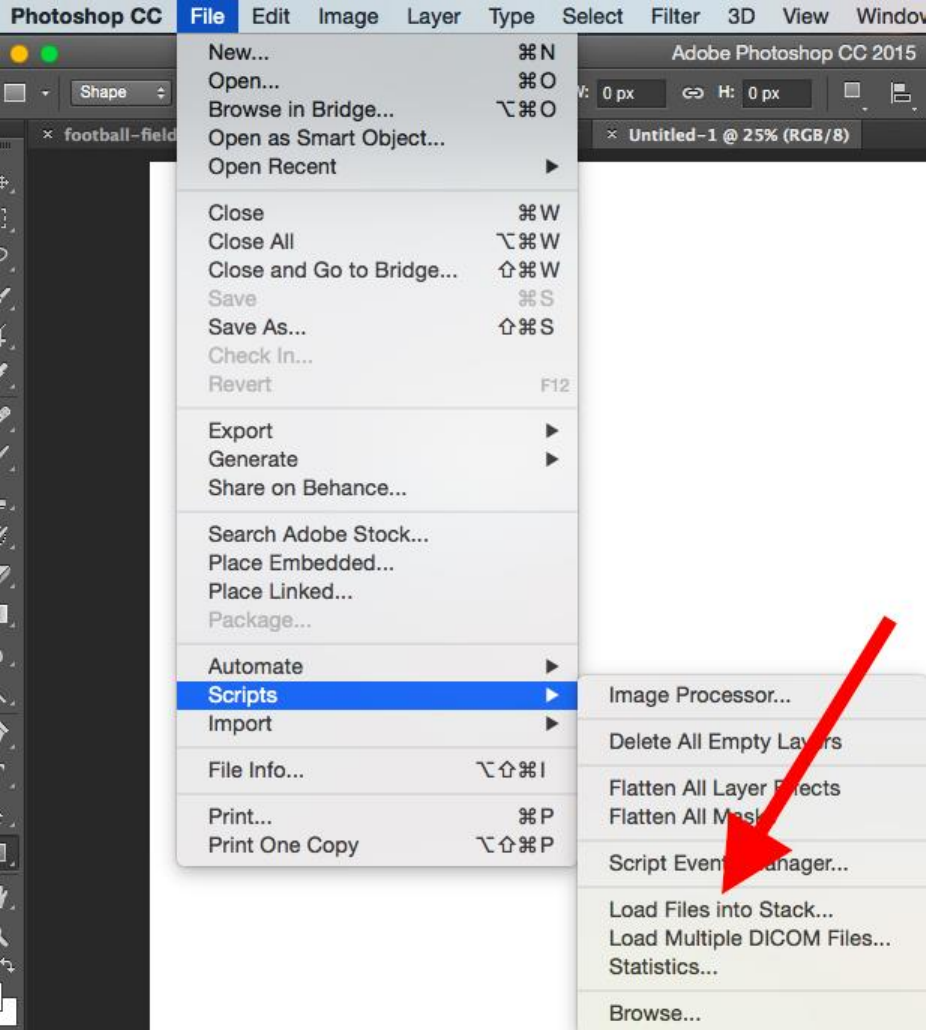
Step 1: Upload your images to Photoshop.
Gather the images you want in a separate folder. To upload them into Photoshop, click File >
Scripts > Load Files Into Stack.
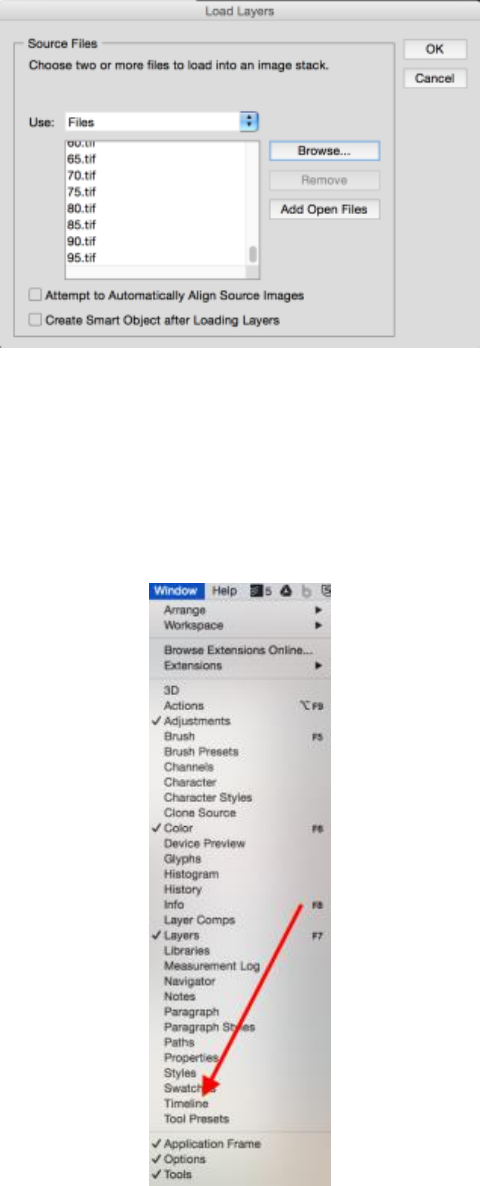
Then, select Browse, and choose which files you'd like to use in your GIF. Then, click OK.
Photoshop will then create a separate layer for each image you've selected.
Step 2: Open up the Timeline window.
To open Timeline, go to the top navigation, choose Window > Timeline. The Timeline will let
you turn different layers on and off for different periods of time, thereby turning your static
image into a GIF.
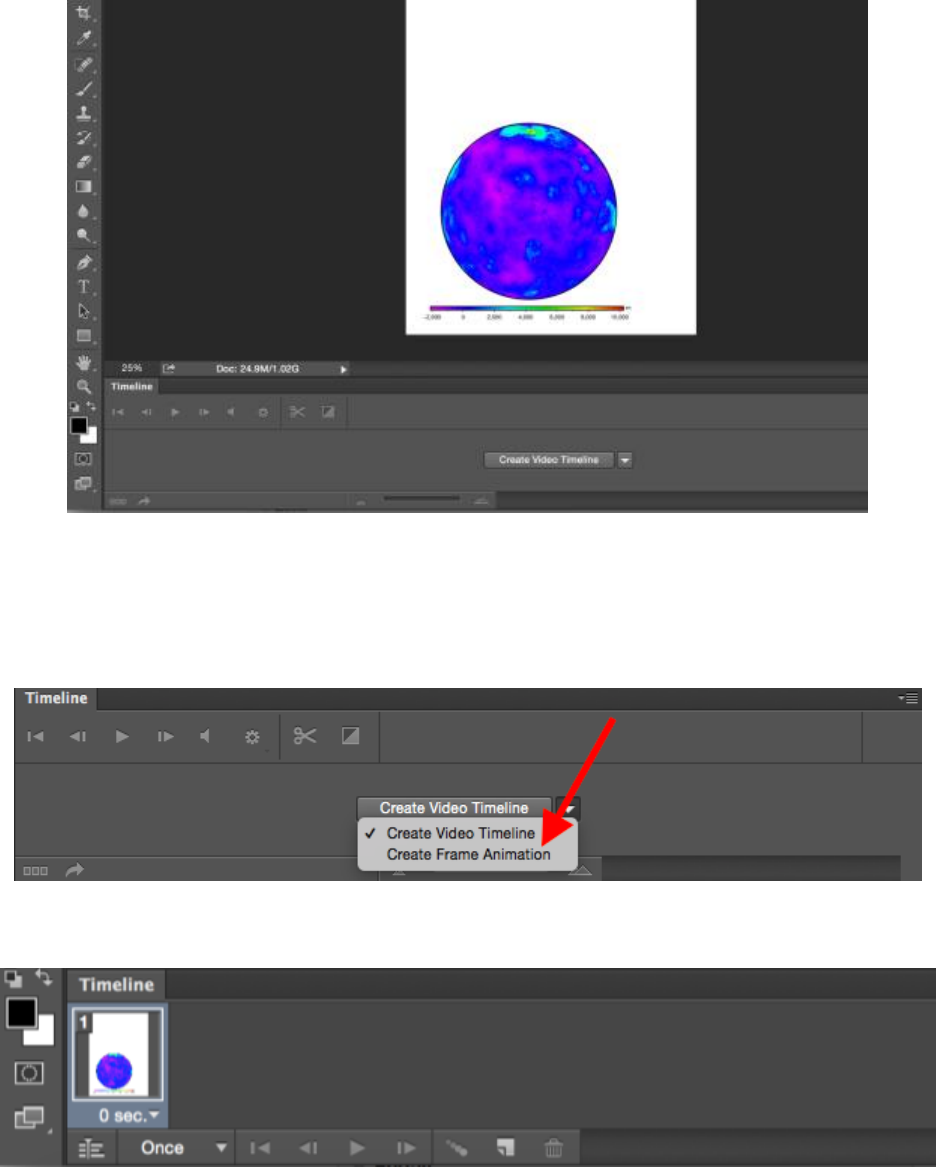
The Timeline window will appear at the bottom of your screen. Here's what it looks like:
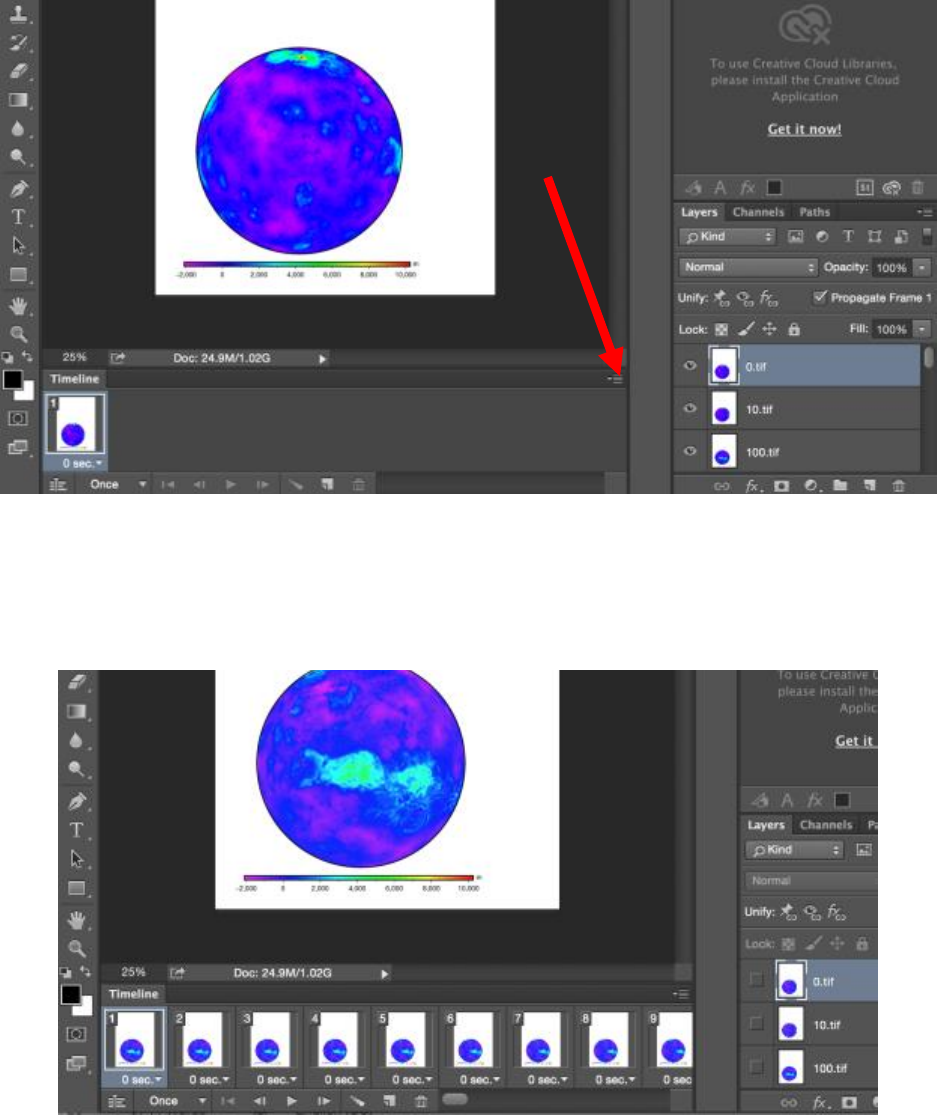
Step 3: In the Timeline window, click "Create Frame Animation."
If it's not automatically selected, choose it from the dropdown menu -- but then be sure to
actually click it, otherwise the frame animation options won't show up.
Now, your Timeline should look something like this:
Step 4: Create a new layer for each new frame.
To do this, first select all your layers by going to the top navigation menu and choosing Select >
All Layers. Then, click the menu icon on the right of the Timeline screen.
From the dropdown menu that appears, choose Create new layer for each new frame.
Step 5: Open the same menu icon on the right, and choose "Make Frames From Layers."
This will make each layer a frame of your GIF. It should now look like
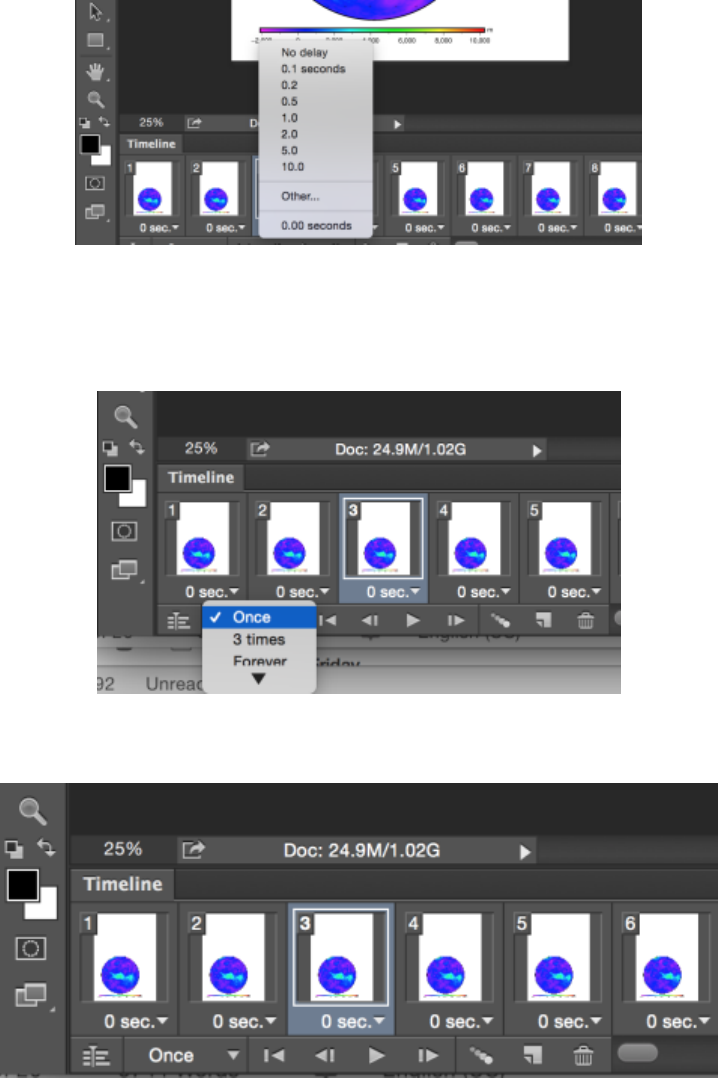
Step 6: Under each frame, select how long it should appear for before switching to the next
frame. To do this, click the time below each frame and choose how long you'd like it to appear.
In our case, you can chose to leave at 0 seconds per frame.
Step 7: At the bottom of the toolbar, select how many times you'd like it to loop.
The default will say Once, but you can loop it as many times as you want, including Forever.
Click Other if you'd like to specify a custom number of repetitions.
Step 8: Preview your GIF by pressing the play icon.
Step 9: Save and Export Your GIF
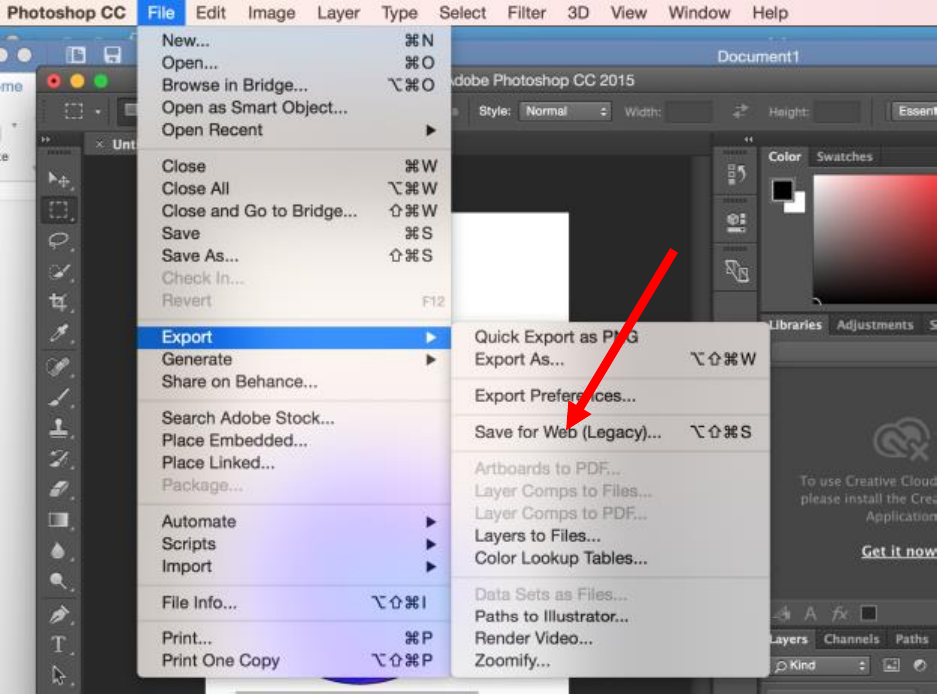
Satisfied with your GIF? Save it to use online by going to the top navigation bar and clicking
File > Export > Save for Web (Legacy)...
Next, choose the type of GIF file you'd like to save it as under the Preset dropdown. If you have
a GIF with gradients, choose Dithered GIFs to prevent color banding. If your image employs a
lot of solid colors, you may opt for no dither. The number next to the GIF file determines how
large (and how precise) the GIF colors will be compared to the original JPEGs or PNGs.
According to Adobe, a higher dithering percentage translates to the appearance of more colors
and detail -- but it increases the file size.
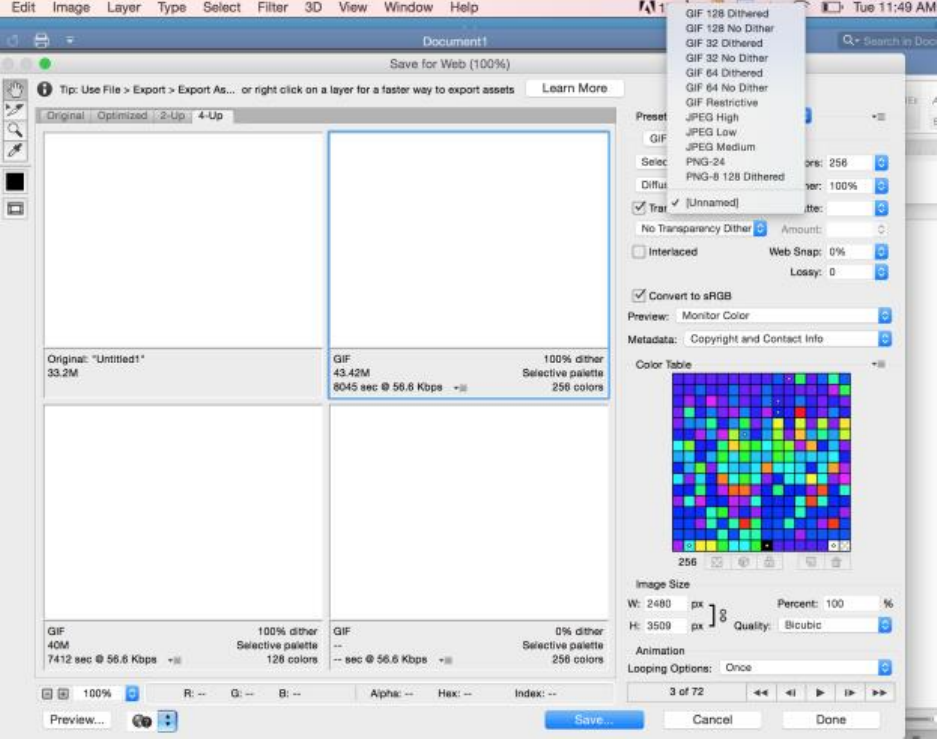
Click Save at the bottom to save the file to your computer.
