Dorman DORM22 315 MHz Keyfob Transmitter User Manual User Guide

Dorman Products, Inc. 315 MHz Keyfob Transmitter User Guide

User Guide

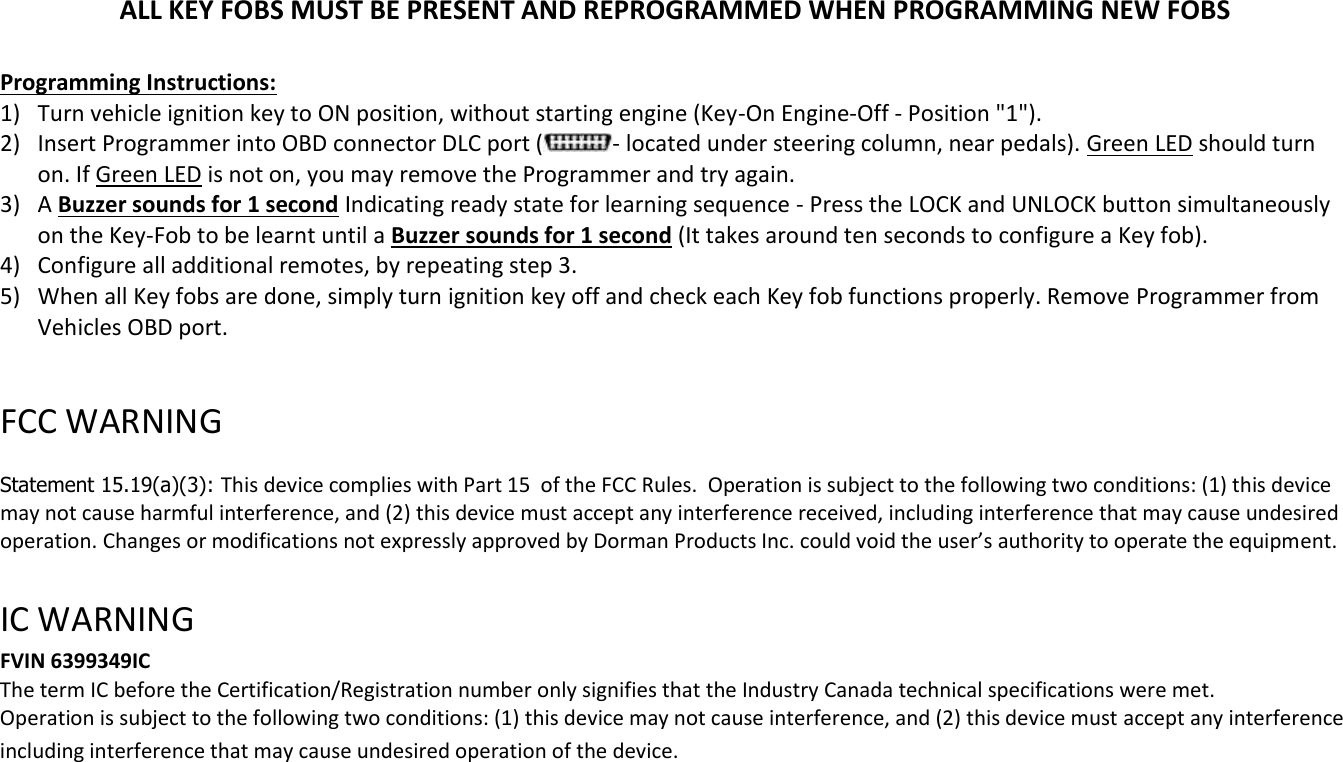
ALL KEY FOBS MUST BE PRESENT AND REPROGRAMMED WHEN PROGRAMMING NEW FOBS  Programming Instructions: 1) Turn vehicle ignition key to ON position, without starting engine (Key-On Engine-Off - Position "1"). 2) Insert Programmer into OBD connector DLC port ( - located under steering column, near pedals). Green LED should turn on. If Green LED is not on, you may remove the Programmer and try again. 3) A Buzzer sounds for 1 second Indicating ready state for learning sequence - Press the LOCK and UNLOCK button simultaneously on the Key-Fob to be learnt until a Buzzer sounds for 1 second (It takes around ten seconds to configure a Key fob). 4) Configure all additional remotes, by repeating step 3.  5) When all Key fobs are done, simply turn ignition key off and check each Key fob functions properly. Remove Programmer from Vehicles OBD port.  FCC WARNING   Statement 15.19(a)(3): This device complies with Part 15  of the FCC Rules.  Operation is subject to the following two conditions: (1) this device may not cause harmful interference, and (2) this device must accept any interference received, including interference that may cause undesired operation. Changes or modifications not expressly approved by Dorman Products Inc. could void the user’s authority to operate the equipment.    IC WARNING  FVIN 6399349IC The term IC before the Certification/Registration number only signifies that the Industry Canada technical specifications were met.  Operation is subject to the following two conditions: (1) this device may not cause interference, and (2) this device must accept any interference including interference that may cause undesired operation of the device.
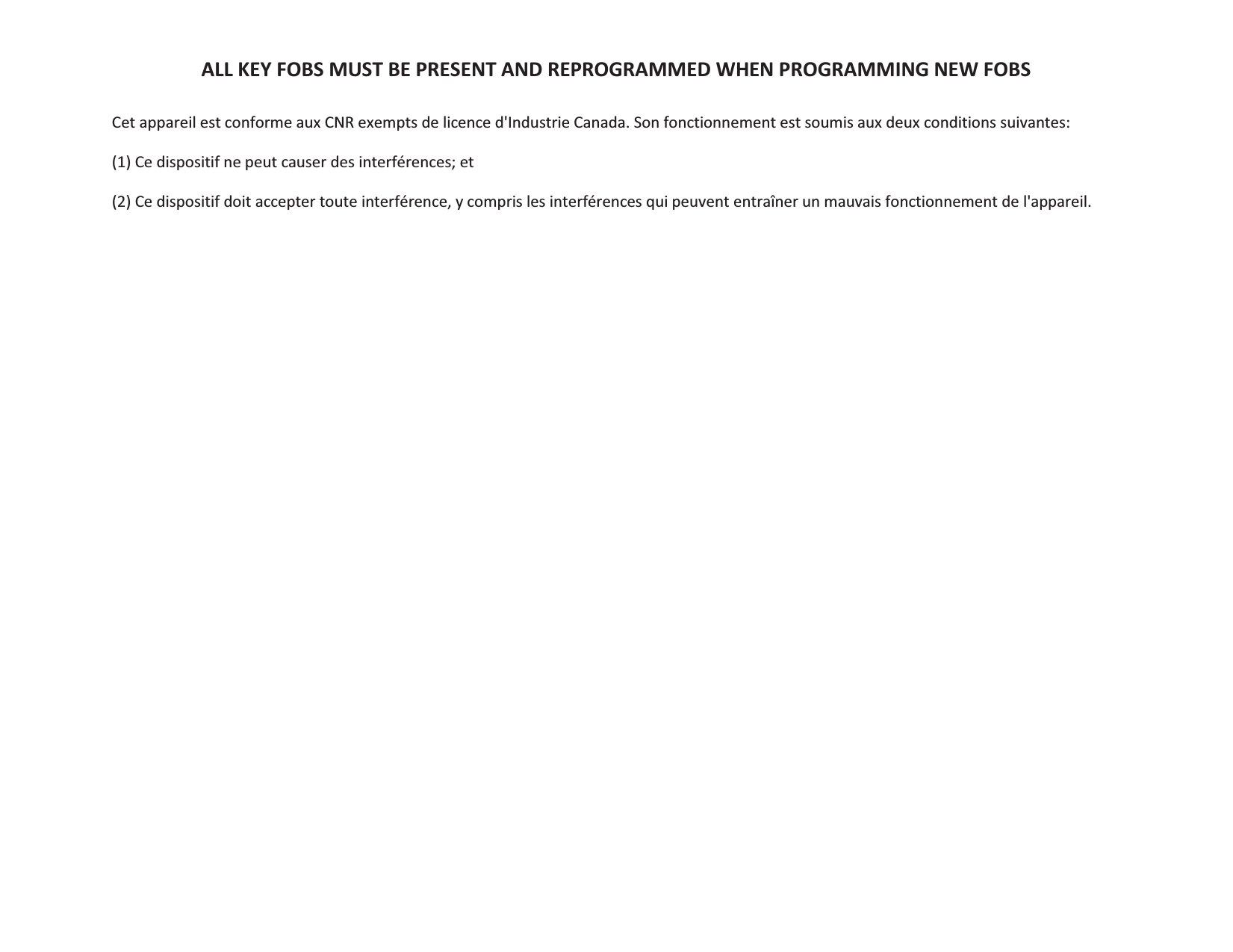
ALL KEY FOBS MUST BE PRESENT AND REPROGRAMMED WHEN PROGRAMMING NEW FOBS  Cet appareil est conforme aux CNR exempts de licence d'Industrie Canada. Son fonctionnement est soumis aux deux conditions suivantes: (1) Ce dispositif ne peut causer des interférences; et (2) Ce dispositif doit accepter toute interférence, y compris les interférences qui peuvent entraîner un mauvais fonctionnement de l'appareil.

Navigation menu