Formosa Teletek BTUD201X Bluetooth v2.0+EDR class1 USB Adapter User Manual
Formosa Teletek Corporation Bluetooth v2.0+EDR class1 USB Adapter
User Manual
1
a. English
1.Bluetooth software installation and basic operations
USB Adapter Installation
1. Windows Bluetooth Software Installation
NOTE: Please install the USB Bluetooth software before inserting the USB adapter!
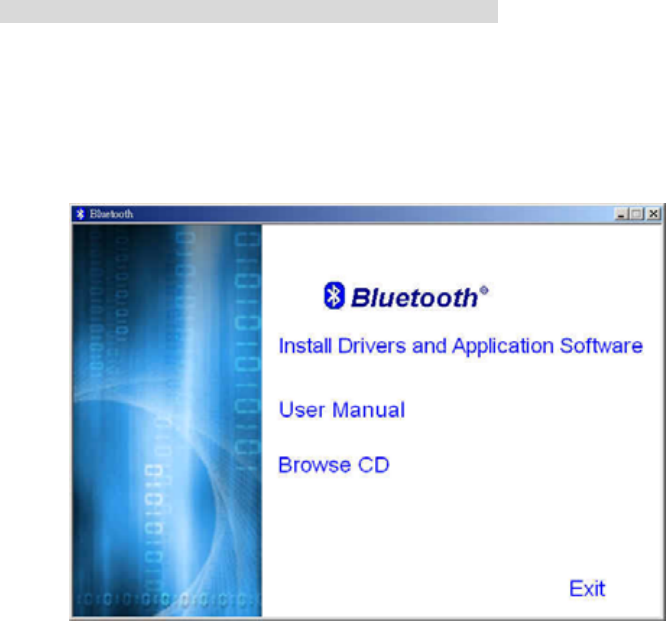
• Place the installation CD-ROM into the pc, the setup should start automatically. If the
setup does not start please go to Windows Explorer, locate the CD-ROM and run
‘autorun.exe’.
• Choose ‘Install Drivers and Application Software’.
• The InstallShield Wizard will start.
USER GUIDE Rev.: 0.8
Date: 2005/7/21
2
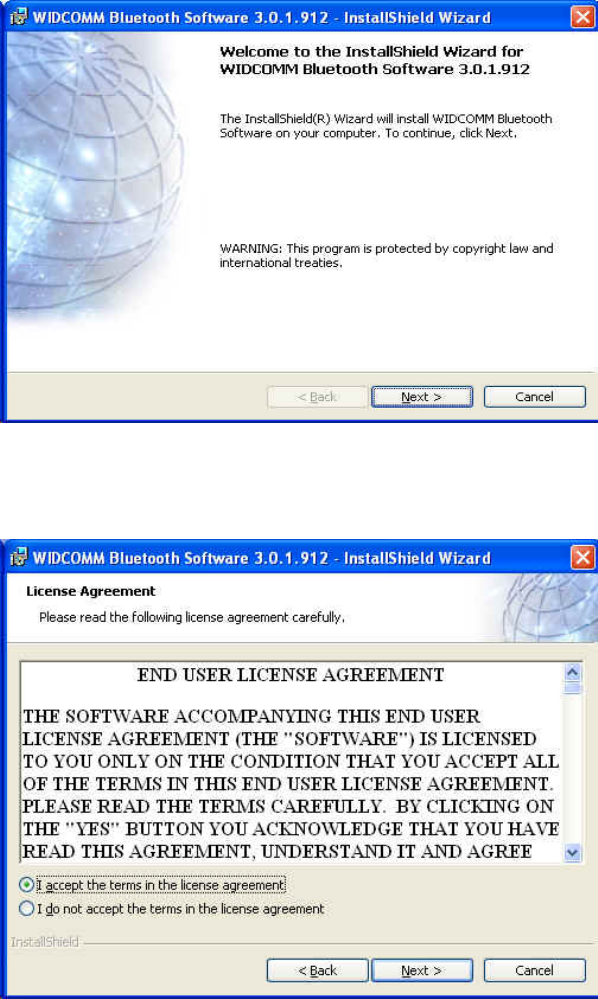
• On the Welcome screen click Next to continue.
• Read the License Agreement and select ‘I accept the terms in the license
agreement’. Click Next.
3
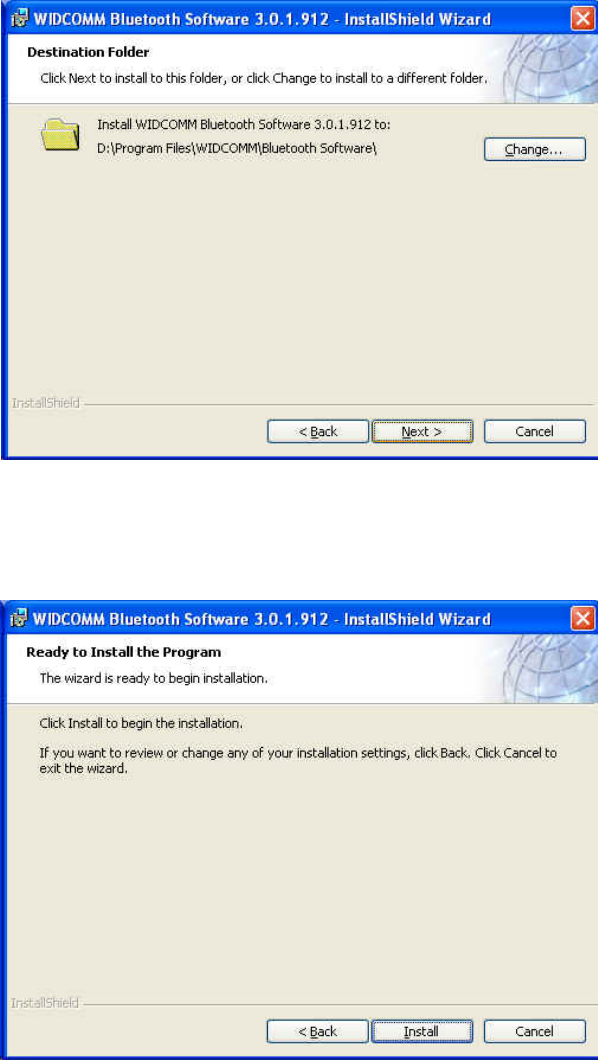
• Click Next to accept the default destination folder, click Change to browse to a new
destination folder for the Bluetooth software.
• Click Install to begin the installation of the bluetooth software.
4
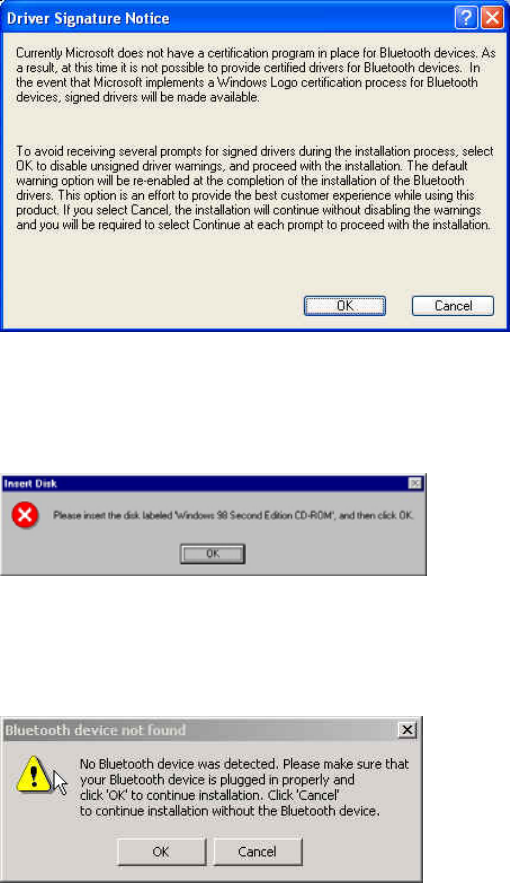
• For Windows 2000/XP users, a "Driver Signature Notice" window appears, please
click the "OK" button.
• For Windows 98 users, a window appears which asks you to insert the Windows 98
CD-Rom. Insert the original Windows 98 CD Rom and click “OK”.
• The "Bluetooth device not found" window appears. Insert the USB Bluetooth
adapter in the USB port. Click "OK".
5
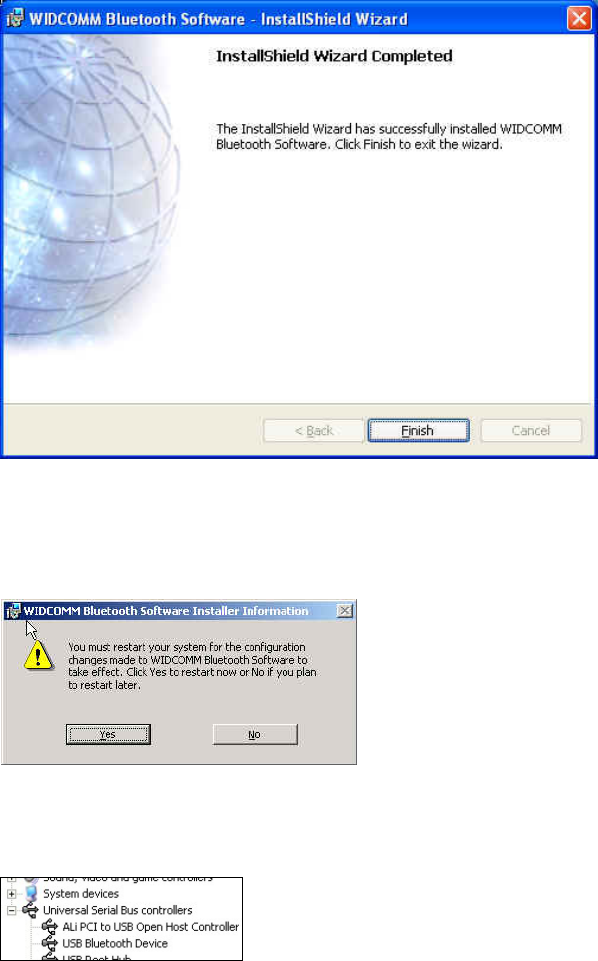
• Click Finish to complete the bluetooth software installation.
• Click ‘Yes’ to restart the computer and complete the installation.
• Click start/(settings)/controlpanel/system/devicemanager. Check under 'Universal
Serial Bus controllers' that a 'USB Bluetooth Device' is installed.
• If the information is not present please unplug the adapter, now plug in the adapter to
initiate the driver.

6
FCC Statement
The changes or modifications not expressly approved by the party responsible
for compliance could void the user’s authority to operate the equipment.
Federal Communication Commission Interference Statement
This equipment has been tested and found to comply with the limits for a Class B
digital device, pursuant to Part 15 of the FCC Rules. These limits are designed to
provide reasonable protection against harmful interference in a residential
installation. This equipment generates, uses and can radiate radio frequency
energy and, if not installed and used in accordance with the instructions, may
cause harmful interference to radio communications. However, there is no
guarantee that interference will not occur in a particular installation. If this
equipment does cause harmful interference to radio or television reception, which
can be determined by turning the equipment off and on, the user is encouraged to
try to correct the interference by one of the following measures:
- Reorient or relocate the receiving antenna.
- Increase the separation between the equipment and receiver.
- Connect the equipment into an outlet on a circuit different from that
to which the receiver is connected.
- Consult the dealer or an experienced radio/TV technician for help.
User Information
This device complies with part 15 of FCC Rules. Operation is subject to the
following two conditions:
(1)This device may not cause harmful interference, and
(2)This device must accept any interference received, including
interference that may cause undesired operation.
To comply with FCC RF exposure requirement, this device and its antenna
must not be co-located or operating in the conjunction with any other antenna or
transmitter.
FCC ID: QW3-BTUD201X
The Bluetooth word mark and logos are owned by the Bluetooth SIG,
Inc.. Other trademarks and trade names are those of their respective
owners.
Bluetooth ID: