Wp Isd Smart Grid Design
2016-06-08
: Guides Wp Isd Smartgridsmartdesign wp_isd_SmartGridSmartDesign pdf asi
Open the PDF directly: View PDF  .
.
Page Count: 6
Smart grid starts with
smart design
April 2010
Prepared for:
By Sierra Energy Group
The Research & Analysis
Division of Energy Central

Smart grid starts with smart design
2
White Paper
Introduction
The smart grid is placing many remarkable - but differ-
ent - components out on the grid. And, as often hap-
pens on the reality TV shows that so many people can’t
seem to get enough of, bringing together a diverse group
often results in some tense interactions. Plugging mul-
tiple electric vehicles into a single circuit could stress an
undersized transformer, risking outages for a neighbor-
hood or even larger portion of the grid. Overlaying com-
munications infrastructure and smart meters on the grid
may radically alter the way field crews manage, repair
and update grid infrastructure. Installing distributed
generation introduces bidirectional power flow on a grid
built for one-way power flow. Every new component
could affect so many other parts of the grid. Can all grid
components - both old and new - successfully coexist?
Essentially, how can we smartly accommodate all of the
smart changes on the grid? It all starts with design - us-
ing rich, intelligent information in a model-based design
process. To borrow a phrase from architecture and civil
engineering domains, the model-based design proc-
ess extends into what is known as building information
modeling (BIM). With BIM, changes to one component
are reflected in the model and inform the design of other
components. This integrated process vastly improves
project understanding and allows for predictable
outcomes. All project team members can stay coordi-
nated, improving accuracy, reducing waste, and making
informed decisions earlier in the process - helping to
ensure a project’s success. And, for the utility owner-op-
erator, it is important that this process inform planning,
maintenance and operations decisions across the lifecy-
cle of assets. This paper reviews some of the challenges
with moving toward a smarter grid, and the role played
by smarter design in overcoming those challenges.
Changes - and challenges - with a
smarter grid
Before discussing the link between smart grid and smart
design, we need to revisit a few smart grid fundamen-
tals. The utility industry is moving toward a smarter
grid, but it faces challenges when it comes to getting the
many components of a smarter grid to work together.
Very quick review of smart grid definitions
First, let’s take a quick look at the smart grid definition.
Everyone seems to have his own definition, however, no
matter what technologies you include in your definition
or what areas matter most for individual utilities, there is
a common theme. A smarter grid and a more intelligent
utility are really all about applying information to en-
ergy, thereby maximizing its reliability, affordability, and
sustainability - all the way from generation to custom-
ers. A few of the technologies that can help support this
definition include:
Smart meters and advanced metering infrastructure •
(AMI)
Communications networks to link smart devices and •
systems
Customer systems and devices, including home •
energy displays, smart appliances, home area net-
works and energy management systems
Renewable and distributed - including electric •
vehicles - generation resources and their supporting
integration systems
Transmission and distribution automation, includ-•
ing synchrophasers
“Traditional” intelligent systems, including supervi-•
sory control and data acquisition systems (SCADA),
work and asset management systems, customer in-
formation systems, geographic information systems
and network design applications
Opportunities with a smarter grid
Numerous technologies can improve the grid’s intel-
ligence; and there certainly has been a lot of talk about
them. That talk is finally turning into action as the utility
Smart grid starts with smart design
3
White Paper
industry moves toward turning the smart grid concept
into a reality. This movement is due to the fact that utili-
ties are finding real benefits to taking smart grid beyond
just a concept. A few of those reasons include:
Deferring carbon-emitting generation investments •
through better managing peak demand, integrating
renewable generation and supporting the electri-
fication of transportation, which includes not just
electric vehicles, but also rail and other modes of
public transportation.
Achieving greater operational efficiency through •
minimizing line losses, more efficiently using field
crew time and reducing costs associated with meter
reading and maintenance.
Equipping energy customers with the tools they •
need to better understand and manage their energy
consumption. Improving power reliability, quality
and security through enabling more grid control and
automation.
Leveraging granular, real-time metering and other •
data sources to improve design decisions and ulti-
mately help designers right-size transformers, serv-
ice connections and other materials. As the smart
grid rolls out, utilities will no longer have to make
assumptions about the energy needs of buildings
and infrastructure. They will have access to actual
consumption patterns.
Challenges to effectively realizing the
smart grid
Of course, every opportunity brings new challenges
with it. Smart grid is no exception to this rule. A variety
of challenges can affect smart grid deployments - from
regulatory and legislative actions to financing and
customer acceptance.
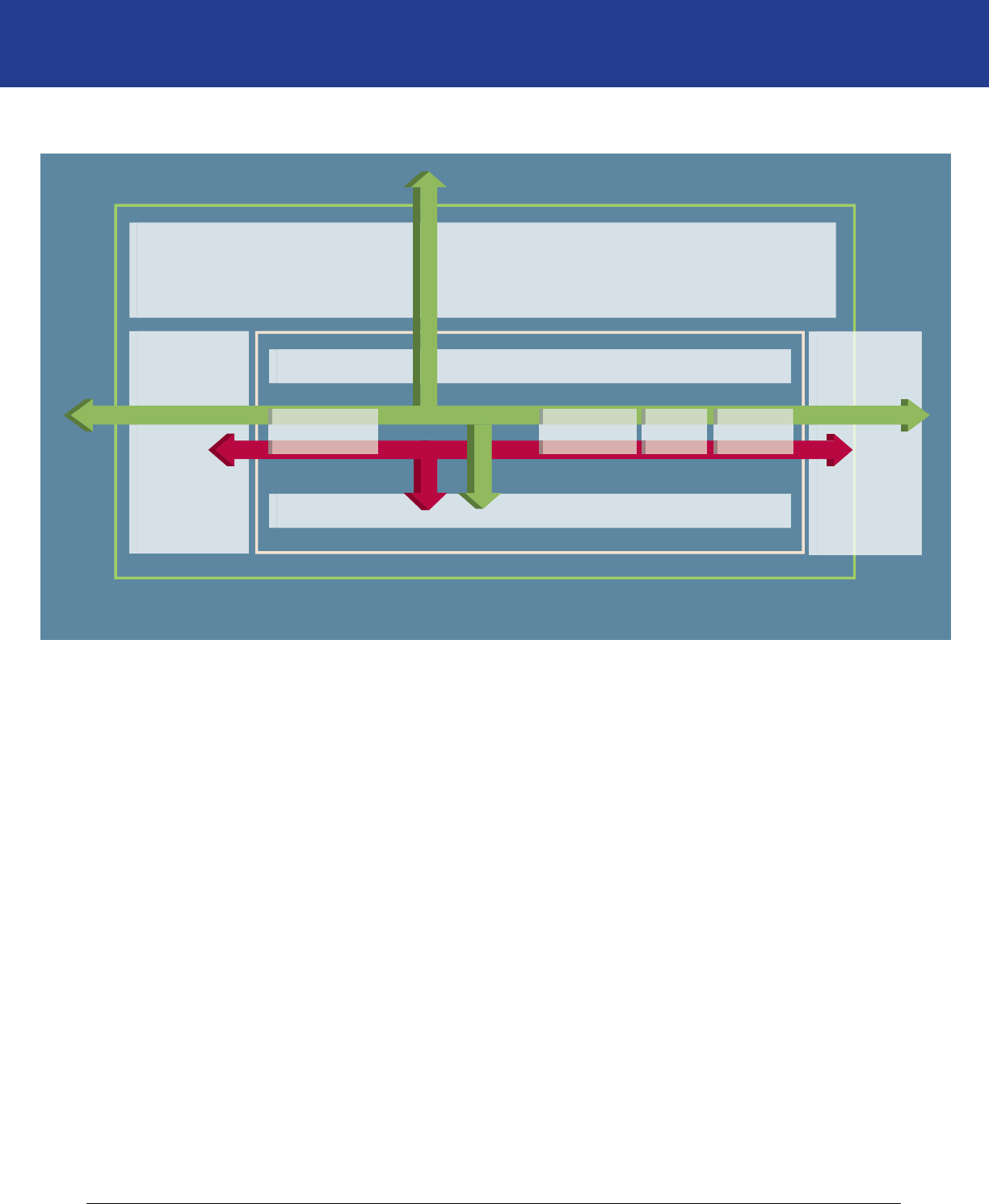
Defining the intelligent utility
The enterprise
Generation/
wholesale Mobile eld personnel
Global inuences
Intelligent utility
Distributed generation
Power
Communications
Consumers
Transmission
network
Distribution
network
Smart
meters
End-user
devices
Smart grid

Smart grid starts with smart design
4
White Paper
Electric vehicles: Are they really
plug-and-play?
Is charging an electric vehicle really as simple as plugging
it in? It is today, if you are one of the few people using
an electric vehicle. Add a few more electric vehicles - the
Electric Power Research Institute estimates 10 million
by 2020 - and plugging in becomes more complicated.
Although electric vehicle use may be confined to specific
neighborhoods at first, today’s grid isn’t designed to
handle electric-vehicle “hot spots” or the eventual on-
slaught of electric vehicles heading its way. Think about
the surge in electricity demand when people get home
from work and plug in their vehicles, each equivalent to
the power need of large home with air conditioning or
about 6 kilowatts, all at about the same time. This tim-
ing could overwhelm distribution systems that weren’t
designed to handle the needs of electric vehicles. And
even when electric vehicles start to spring up in specific
neighborhoods, heavy concentrations of electric vehicles
may not allow transformers adequate time to cool off
overnight, which could result in an increasing number of
transformer failures.
Moreover, additional infrastructure is needed to support
electric vehicles at places other than our homes, such
as the office, the mall or the movies. Public electrical
outlets are already seemingly overwhelmed (think about
airport outlets), so imagine the operational challenges
of businesses as customers search for an outlet to plug
in their electric vehicles. Buildings may need redesigns of
their electrical infrastructure to accommodate the needs
of electric vehicles. As a result, utilities are likely to have
to build additional infrastructure to accommodate the
power needs of electric vehicles hitting the road.
Smart buildings: A natural extension of
the grid
Electric vehicles are new components tapping into the
grid, but other components that have long been at-
tached to the grid are going to add complexity. Think
about energy customer premises and the movement
toward smart buildings and their supporting systems to
better manage energy use. Many commercial and indus-
trial properties have had some sort of building automa-
tion and energy management systems, but the sophis-
tication of those systems continues to increase. Many
of today’s commercial buildings are built or renovated
using BIM - with intelligent, coordinated, design infor-
mation used to visualize and simulate a project’s per-
formance. With a BIM foundation, owners and lessees
can leverage the information in the 3D design model to
better predict and manage energy use. Building systems
are not only becoming increasingly complex, but there
are more and more opportunities for utilities to interact
with those systems. On the residential side, the addition
of smart meters, thermostats and appliances, along with
home energy management systems, is giving customers
new opportunities to manage their energy. With all of
these new opportunities to manage energy beyond the
meter, utilities will be considering how to manage those
interactions and how far the utility extends into the
customer premise.
Distributed and renewable generation:
Making it easier to be green
Other components coming onto the grid are distributed
and renewable generation resources. Residential, com-
mercial and industrial customers will be adding electric
vehicles, building smarter structures and installing solar
panels or wind turbines on rooftops and parking decks,
or even out in the landscape. This means that traditional
energy consumers can now become energy producers, or
as some in the industry call it, “prosumers.”
Distributed generation resources, such as solar panels
and wind turbines, bring more than just new power to
the grid. They can also introduce new issues such as:
Introducing a two-way power flow on a grid de-•
signed for one-way flow
Requiring careful dispatching of these resources to •
maintain the balance of the grid
Tracking and managing new data associated with •
consuming and dispatching power

Smart grid starts with smart design
5
White Paper
Leveraging data for different organizations, such as •
planning departments, that may find it beneficial
On top of distributed generation, as you take renewable
generation from rooftops to large-scale generation sites,
accommodating this scale of generation can require
investments in grid infrastructure, such as new transmis-
sion networks to reach remote wind farms.
Digitizing the grid: The old and new
need to effectively coexist
Whether supporting electric vehicles or enabling
demand response, a smarter grid requires overlaying
existing analog grid infrastructure - things such as poles,
wires, transformers and even substations - with new
digital technologies. This overlay can create additional
complexities. First of all, the new infrastructure design
must take into consideration existing infrastructure. For
example, a company may design a “last-mile” communi-
cations network for its distribution system, but it could
also consider how existing infrastructure such as sub-
stations, transformers or even buildings might benefit
from adding communication capabilities that provide
information back to the utility. Once a digital system is
designed and installed, then utilities face the tasks of
documenting and maintaining the new infrastructure.
How will utilities track new infrastructure and how will
field crews manage and maintain these new systems?
What kind of information can utilities use to better man-
age their networks?
The link between smart grid and
smart design
The items mentioned here are a few of the complexities
involved with bringing together the many smart grid
components. And they demonstrate that these compo-
nents won’t come together by themselves. In fact, how
the industry brings these components together is as
important as the smart components themselves. This is
where smart design and BIM come into play.
Design and maintain: Critical to
success of a smarter grid
The grid is already carefully designed and extremely so-
phisticated, but it is still very sensitive to new influences.
When designing for smarter grids, utilities will need to
carefully weigh the effects of new smart systems. In par-
ticular, utilities will have to consider and design for fac-
tors beyond their own grids. New grid designs will have
to account for actions beyond the meter, whether it is a
consumer plugging in another electric vehicle or install-
ing new solar panels. And utilities will have to rethink,
and most likely, redesign existing parts of the grid to
accommodate these end-user changes and bidirectional
power flows.
Utilities will also have to consider where their design
efforts stop. Do utilities work with customers at the resi-
dential and commercial and industrial level to develop
smart systems within customer premises? Do they work
with electric vehicle or smart appliance manufacturers to
design systems that will work with the smart grid? These
are design questions that each utility must sort through
as it approaches the smart grid concept.
Even when smart systems and components are designed
and installed, the work is still not over for utilities. Utili-
ties must maintain these new, more advanced systems.
Utilities will also have to constantly review and update
the grid to keep pace with the rapid changes in the
smart grid space. Out in the field, this means that crews
will face new complexities with maintaining and repair-
ing more advanced digital infrastructure. And, depend-
ing on how far the utility extends into the customer
premises, field crews may have to take on new knowl-
edge about maintaining technologies for customers.
Smart design tools: More than pencil
to digital
With the need for smarter design comes a need for
smarter design tools. Smart design tools are no longer
just about digitizing pencil drawings; these tools should
assist utilities with making smart design and mainte-
nance decisions in an increasingly complex environment.

Smart grid starts with smart design
6
White Paper
A few key elements that utilities should consider for
smart design tools include:
The ability to bring in and manage new data inputs: •
As the grid grows smarter, more and more data
about the grid will become available - whether ad-
ditional data about an existing distribution network
or new information from a distributed generation
source. Smart design tools should be able to effec-
tively aggregate these data and make them available
to planners, designers and personnel maintaining
the system.
Better connections between customers and the grid: •
Given the need for utilities to consider influences
beyond the grid and the increasing sophistication
of customer energy management systems, smart
design tools should begin to connect the informa-
tion available at the customer-level with utility-grade
systems.
Improved analysis capabilities: Not only is making •
data available important, but analysis capabilities
are becoming increasingly important as well. Utili-
ties should look for smart design tools that provide
them with opportunities to use new and existing
data sources to model how these new systems and
components will impact the grid.
The smart grid is a diverse group of components •
that need to act as an integrated system, which in
turn requires utilities to think beyond a requirement
for smart design tools. Utilities must now think
about BIM as an integrated process that can enable
them to capture all of the planning, design and as-
built information in an accurate, complete and cur-
rent model. This iterative process can now be used
to support enhanced communications with custom-
ers as well as further analysis and refinement of the
grid. For example, how will transformer, circuit and
substation design requirements change as electric
vehicles spread across a service territory, and which
transformers will need to be replaced and when?
In essence, smart design should do more than just make
it easier for utilities to draft their designs to support
smart grid build out. Instead, utilities should embrace
a smarter design process, BIM, that will enable them to
make better decisions, so that all grid components - old
and new, smart and perhaps not so smart - can success-
fully coexist and thrive in a smart grid.
