Hangzhou Ganxin Electronic CLOCK GPS-Wireless Synchronization Clock User Manual GPS RF Synchronize clock
Hangzhou Ganxin Electronic Co., Ltd. GPS-Wireless Synchronization Clock GPS RF Synchronize clock
Manual
GPS-Wireless Synchronization Clock User Manual
Function Description :
This system is consist of one GPS master clock and several slaves which have repeater
funciton . The master clock can be set the time zone via DEL button ,while the antenna (place
outdoor) of the GPS module received the GPS signal ,
The master clock sending a 433MHZ wireless signal to the slave clock for synchronize every
minute, slaves can be set maximum 5 clocks as a "Signal bridge" to transfer Master clock signal
to other slaves further away .
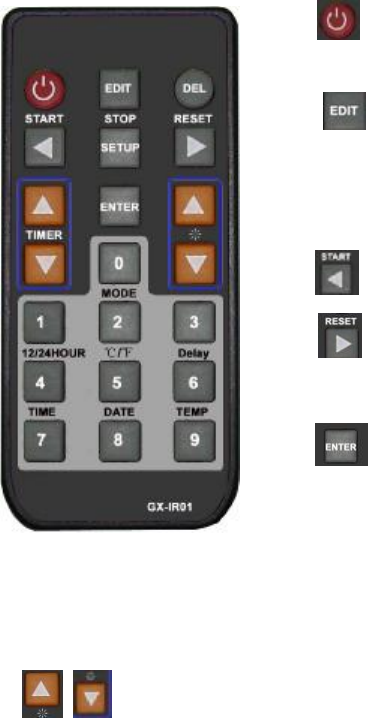
Remote control Description:
1. :ON/OFF
For turn on or off the display; give up editing
2. :EDIT
Push this button for enter into editing , the cursor starts
flash ,and moves to next digit while the current being edited .
3. :The cursor moves to left while this button pushed
4. :The cursor moves to right while this button
pushed
5. (ENTER):after editing , push this button for save
the data edited .
6.DEL: used for setting time zone-operation on master
clock ; used for setting signal bridge(repeater)-operation on slave clocks .
7.12/24HOUR: for switch 12/24H format. 8.0~9: input number 0~9.
9. :for brightness adjustment (not in editing )
Also for turn / off the GPS master clock sending signal while in DEL editing .
Setting Instruction of Signal Bridge (repeater)-Slave clocks:
Push DEL, for enter “Signal bridge”setting , displays -A -B
A: slave clocks “receiving” setting , setting range 0~5, 0 refers to “receiving signal of master
clock”, 1~5 refers to “receiving signal of one of the repeater slave clocks”, Means 1~5 refers to the
number of the slave clocks. (B)
B: Setting the number of the slave clocks, setting range 0~5 , “0” refers “ no signal
sending,which means this slave NO repeater . While setting 1~5, means this slave clock will
sending signal of number 1~5.
* 1.in one system, the repeater number can be set for one clock only, you can not have
two clocks with same repeater number.
* 2.Operation example:
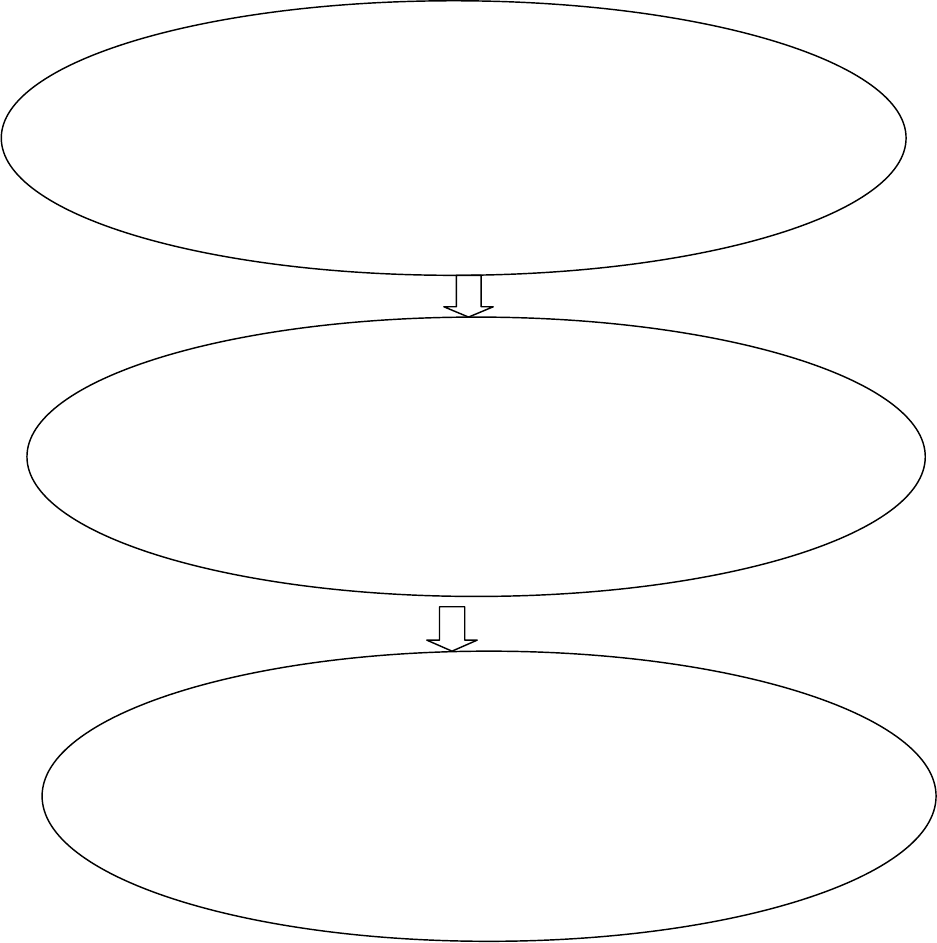
Master clock (master signal )
Slave clock 1:-0 -0 (receive master signal, no sending repeater signal)
.。。。
Slave clock 10: -0 -0(receive master signal, no sending repeater signal)
Slave clock 11:-0-1 (receive master signal, sending repeater 1 signal)
Slave 11(master signal)
Slave 12:-1-0 (receive signal of repeater 1, no sending repeater signal)
.。。。
slave20:-1-0 (receive signal of repeater 1, no sending repeater signal)
slave21: -1-2(receive signal of repeater 1, sending repeater signal of 2)
Slave 21
Slave 22: -2-0(receive signal of repeater 2, no sending repeater signal)
.。。。
slave30:-2-0(receive signal of repeater 2, no sending repeater signal)
Slave 31:-2-3(receive signal of repeater 2, sending repeater signal of 3
FCC Statement
This equipment has been tested and found to comply with the limits for a Class B digital device,
pursuant to Part 15 of the FCC Rules. These limits are designed to provide reasonable
protection against harmful interference in a residential installation. This equipment generates
uses and can radiate radio frequency energy and, if not installed and used in accordance with
the instructions, may cause harmful interference to radio communications. However, there is
no guarantee that interference will not occur in a particular installation. If this equipment does
cause harmful interference to radio or television reception, which can be determined by turning
the equipment off and on, the user is encouraged to try to correct the interference by one or
more of the following measures:
-- Reorient or relocate the receiving antenna.
-- Increase the separation between the equipment and receiver.
-- Connect the equipment into an outlet on a circuit different from that to which the receiver is
connected.
-- Consult the dealer or an experienced radio/TV technician for help.
This device complies with part 15 of the FCC Rules. Operation is subject to the following two
conditions:(1) This device may not cause harmful interference, and (2) this device must accept
any interference received, including interference that may cause undesired operation.
Changes or modifications not expressly approved by the party responsible for compliance
could void the user's authority to operate the equipment.