Hp Moonshot 45G Switch Module Command Reference Guide 45G/180G Software User Manual
Hp-Moonshot-180G-Switch-Module-Command-Reference-Guide-153487 hp-moonshot-180g-switch-module-command-reference-guide-153487
2015-01-05
: Hp Hp-Moonshot-45G-Switch-Module-Command-Reference-Guide-153490 hp-moonshot-45g-switch-module-command-reference-guide-153490 hp pdf
Open the PDF directly: View PDF  .
.
Page Count: 719 [warning: Documents this large are best viewed by clicking the View PDF Link!]
- Table of Contents
- List of Tables
- About This Document
- Support and Other Resources
- Documentation Feedback
- Section 1: About Switch Module Software
- Section 2: Using the Command-Line Interface
- Section 3: Stacking Commands
- Section 4: Management Commands
- Enable and Do Commands
- Network Interface Commands
- IPv6 Management Commands
- serviceport ipv6 enable
- network ipv6 enable
- serviceport ipv6 address
- serviceport ipv6 gateway
- network ipv6 address
- network ipv6 gateway
- network ipv6 neighbor
- show network ipv6 neighbors
- serviceport ipv6 neighbor
- show serviceport ipv6 neighbors
- ping ipv6
- show network ipv6 dhcp statistics
- show serviceport ipv6 dhcp statistics
- clear network ipv6 dhcp statistics
- clear serviceport ipv6 dhcp statistics
- Console Port Access Commands
- Telnet Commands
- Secure Shell Commands
- Management Security Commands
- Access Commands
- User Account Commands
- aaa authentication login
- aaa authentication enable
- aaa authorization
- show authorization methods
- enable authentication
- username (Global Config)
- username name nopassword
- username name unlock
- username snmpv3 accessmode
- username snmpv3 authentication
- username snmpv3 encryption
- username snmpv3 encryption encrypted
- show users
- show users long
- show users accounts
- show users login-history [long]
- show users login-history [username]
- login authentication
- password
- password (Line Configuration)
- password (User EXEC)
- password (aaa IAS User Config)
- enable password (Privileged EXEC)
- passwords min-length
- passwords history
- passwords aging
- passwords lock-out
- passwords strength-check
- passwords strength maximum consecutive-characters
- passwords strength maximum repeated-characters
- passwords strength minimum uppercase-letters
- passwords strength minimum lowercase-letters
- passwords strength minimum numeric-characters
- passwords strength minimum special-characters
- passwords strength minimum character-classes
- passwords strength exclude-keyword
- show passwords configuration
- show passwords result
- write memory
- aaa ias-user username
- aaa session-id
- aaa accounting
- password (AAA IAS User Configuration)
- clear aaa ias-users
- show aaa ias-users
- accounting
- show accounting
- show accounting methods
- clear accounting statistics
- show domain-name
- SNMP Commands
- snmp-server
- snmp-server community
- snmp-server community-group
- snmp-server enable traps violation
- snmp-server enable traps
- snmp trap link-status
- snmp trap link-status all
- snmp-server enable traps linkmode
- snmp-server enable traps multiusers
- snmp-server enable traps stpmode
- snmp-server engineID local
- snmp-server filter
- snmp-server group
- snmp-server host
- snmp-server user
- snmp-server view
- snmp-server v3-host
- snmptrap source-interface
- show snmp
- show snmp engineID
- show snmp filters
- show snmp group
- show snmp source-interface
- show snmp user
- show snmp views
- show trapflags
- RADIUS Commands
- authorization network radius
- radius accounting mode
- radius server attribute 4
- radius server host
- radius server key
- radius server msgauth
- radius server primary
- radius server retransmit
- radius source-interface
- radius server timeout
- show radius
- show radius servers
- show radius accounting
- show radius accounting statistics
- show radius source-interface
- show radius statistics
- TACACS+ Commands
- Configuration Scripting Commands
- Banner, Prompt, and Host Name Commands
- Section 5: Utility Commands
- AutoInstall Commands
- CLI Output Filtering Commands
- Dual Image Commands
- Bootcode and Firmware Commands
- System Information and Statistics Commands
- show arp switch
- show eventlog
- show hardware
- show environment
- show version
- show platform vpd
- show interface
- show interface counters
- show interface ethernet
- show interface ethernet switchport
- show interface lag
- show interfaces status
- show interfaces traffic
- show fiber-ports optical-transceiver
- show fiber-ports optical-transceiver-info
- show mac-addr-table
- process cpu threshold
- show process app-list
- show process app-resource-list
- show process proc-list
- show process cpu
- show running-config
- dir
- show running-config interface
- show sysinfo
- show tech-support
- show startup-config
- show backup-config
- show factory-defaults
- length value
- terminal length
- show terminal length
- memory free low-watermark processor
- Warp Core Expandable Port Configuration
- Logging Commands
- logging buffered
- logging buffered wrap
- logging cli-command
- logging console
- logging host
- logging host reconfigure
- logging host remove
- logging persistent
- logging syslog
- logging syslog source-interface
- show logging
- show logging buffered
- show logging hosts
- show logging persistent
- show logging traplogs
- clear logging buffered
- Email Alerting and Mail Server Commands
- logging email
- logging email urgent
- logging email message-type to-addr
- logging email from-addr
- logging email message-type subject
- logging email logtime
- logging traps
- logging email test message-type
- show logging email config
- show logging email statistics
- clear logging email statistics
- mail-server
- security
- port
- username (Mail Server Config)
- password
- show mail-server config
- Device Location, System Utility, and Clear Commands
- Simple Network Time Protocol Commands
- Time Zone Commands
- DNS Client Commands
- IP Address Conflict Commands
- Serviceability Packet Tracing Commands
- capture start
- capture stop
- capture file|remote|line
- capture remote port
- capture file size
- capture line wrap
- show capture packets
- debug aaa accounting
- debug aaa authorization
- debug arp
- debug clear
- debug console
- debug crashlog
- debug dhcp packet
- debug debug-config
- debug dot1x packet
- debug igmpsnooping packet
- debug igmpsnooping packet transmit
- debug igmpsnooping packet receive
- debug ip acl
- debug ip vrrp
- debug ipv6 dhcp
- debug isdp packet
- debug lacp packet
- debug mldsnooping packet
- debug ospf packet
- debug ping packet
- debug rip packet
- debug sflow packet
- debug spanning-tree bpdu
- debug spanning-tree bpdu receive
- debug spanning-tree bpdu transmit
- debug tacacs
- debug transfer
- debug udld events
- debug udld packet receive
- debug udld packet transmit
- show debugging
- exception protocol
- exception dump tftp-server
- exception dump filepath
- exception core-file
- exception switch-chip-register
- write core
- show exception
- session start unit
- Support Mode Commands
- sFlow Commands
- Switch Database Management Template Commands
- Remote Monitoring Commands
- Section 6: Switching Commands
- Port Configuration Commands
- Spanning Tree Protocol Commands
- spanning-tree
- spanning-tree auto-edge
- spanning-tree bpdufilter
- spanning-tree bpdufilter default
- spanning-tree bpduflood
- spanning-tree bpduguard
- spanning-tree bpdumigrationcheck
- spanning-tree configuration name
- spanning-tree configuration revision
- spanning-tree cost
- spanning-tree edgeport
- spanning-tree forceversion
- spanning-tree forward-time
- spanning-tree guard
- spanning-tree max-age
- spanning-tree max-hops
- spanning-tree mst
- spanning-tree mst instance
- spanning-tree mst priority
- spanning-tree mst vlan
- spanning-tree port mode
- spanning-tree port mode all
- spanning-tree tcnguard
- spanning-tree transmit
- show spanning-tree
- show spanning-tree brief
- show spanning-tree interface
- show spanning-tree mst detailed
- show spanning-tree mst port detailed
- show spanning-tree mst port summary
- show spanning-tree mst port summary active
- show spanning-tree mst summary
- show spanning-tree summary
- show spanning-tree vlan
- VLAN Commands
- vlan database
- network mgmt_vlan
- vlan
- vlan acceptframe
- vlan ingressfilter
- vlan internal allocation
- vlan makestatic
- vlan name
- vlan participation
- vlan participation all
- vlan port acceptframe all
- vlan port ingressfilter all
- vlan port priority all
- vlan port pvid all
- vlan port tagging all
- vlan protocol group
- vlan protocol group name
- vlan protocol group add protocol
- protocol group
- protocol vlan group
- protocol vlan group all
- show port protocol
- vlan pvid
- vlan tagging
- vlan association subnet
- vlan association mac
- remote-span
- show vlan
- show vlan internal usage
- show vlan brief
- show vlan port
- show vlan association subnet
- show vlan association mac
- Double VLAN Commands
- Private VLAN Commands
- Provisioning (IEEE 802.1p) Commands
- Cut-Through (ASF) Commands
- Asymmetric Flow Control
- Protected Ports Commands
- GARP Commands
- GVRP Commands
- GMRP Commands
- Port-Based Network Access Control Commands
- aaa authentication dot1x default
- clear dot1x statistics
- clear dot1x authentication-history
- clear radius statistics
- dot1x eapolflood
- dot1x dynamic-vlan enable
- dot1x guest-vlan
- dot1x initialize
- dot1x max-req
- dot1x max-users
- dot1x port-control
- dot1x port-control all
- dot1x mac-auth-bypass
- dot1x re-authenticate
- dot1x re-authentication
- dot1x system-auth-control
- dot1x system-auth-control monitor
- dot1x timeout
- dot1x unauthenticated-vlan
- dot1x user
- show authentication methods
- show dot1x
- show dot1x authentication-history
- show dot1x clients
- show dot1x users
- 802.1X Supplicant Commands
- Storm-Control Commands
- Link Local Protocol Filtering Commands
- MMRP Commands
- MVRP Commands
- Port-Channel/LAG (802.3ad) Commands
- port-channel name
- addport
- deleteport (Interface Config)
- deleteport (Global Config)
- lacp admin key
- lacp collector max-delay
- lacp actor admin key
- lacp actor admin state individual
- lacp actor admin state longtimeout
- lacp actor admin state passive
- lacp actor port priority
- lacp partner admin key
- lacp partner admin state individual
- lacp partner admin state longtimeout
- lacp partner admin state passive
- lacp partner port id
- lacp partner port priority
- lacp partner system-id
- lacp partner system priority
- interface lag
- port-channel static
- port lacpmode
- port lacpmode enable all
- port lacptimeout (Interface Config)
- port lacptimeout (Global Config)
- port-channel adminmode
- port-channel linktrap
- port-channel load-balance
- port-channel local-preference
- port-channel min-links
- port-channel system priority
- show lacp actor
- show lacp partner
- show port-channel brief
- show port-channel
- show port-channel system priority
- show port-channel counters
- clear port-channel counters
- clear port-channel all counters
- Port Mirroring Commands
- Static MAC Filtering Commands
- DHCP L2 Relay Agent Commands
- dhcp l2relay
- dhcp l2relay circuit-id vlan
- dhcp l2relay remote-id vlan
- dhcp l2relay trust
- dhcp l2relay vlan
- show dhcp l2relay all
- show dhcp l2relay circuit-id vlan
- show dhcp l2relay interface
- show dhcp l2relay remote-id vlan
- show dhcp l2relay stats interface
- show dhcp l2relay agent-option vlan
- show dhcp l2relay vlan
- clear dhcp l2relay statistics interface
- DHCP Client Commands
- DHCP Snooping Configuration Commands
- ip dhcp snooping
- ip dhcp snooping vlan
- ip dhcp snooping verify mac-address
- ip dhcp snooping database
- ip dhcp snooping database write-delay
- ip dhcp snooping binding
- ip verify binding
- ip dhcp snooping limit
- ip dhcp snooping log-invalid
- ip dhcp snooping trust
- ip verify source
- show ip dhcp snooping
- show ip dhcp snooping binding
- show ip dhcp snooping database
- show ip dhcp snooping interfaces
- show ip dhcp snooping statistics
- clear ip dhcp snooping binding
- clear ip dhcp snooping statistics
- show ip verify source
- show ip verify interface
- show ip source binding
- Dynamic ARP Inspection Commands
- ip arp inspection vlan
- ip arp inspection validate
- ip arp inspection vlan logging
- ip arp inspection trust
- ip arp inspection limit
- ip arp inspection filter
- arp access-list
- permit ip host mac host
- show ip arp inspection
- show ip arp inspection statistics
- clear ip arp inspection statistics
- show ip arp inspection interfaces
- show arp access-list
- IGMP Snooping Configuration Commands
- set igmp
- set igmp interfacemode
- set igmp fast-leave
- set igmp groupmembership-interval
- set igmp header-validation
- set igmp maxresponse
- set igmp mcrtrexpiretime
- set igmp mrouter
- set igmp mrouter interface
- set igmp report-suppression
- show igmpsnooping
- show igmpsnooping mrouter interface
- show igmpsnooping mrouter vlan
- show igmpsnooping ssm
- show mac-address-table igmpsnooping
- IGMP Snooping Querier Commands
- MLD Snooping Commands
- set mld
- set mld interfacemode
- set mld fast-leave
- set mld groupmembership-interval
- set mld maxresponse
- set mld mcrtexpiretime
- set mld mrouter
- set mld mrouter interface
- show mldsnooping
- show mldsnooping mrouter interface
- show mldsnooping mrouter vlan
- show mldsnooping ssm entries
- show mldsnooping ssm stats
- show mldsnooping ssm groups
- show mac-address-table mldsnooping
- clear mldsnooping
- MLD Snooping Querier Commands
- Port Security Commands
- LLDP (802.1AB) Commands
- lldp transmit
- lldp receive
- lldp timers
- lldp transmit-tlv
- lldp transmit-mgmt
- lldp notification
- lldp notification-interval
- clear lldp statistics
- clear lldp remote-data
- show lldp
- show lldp interface
- show lldp statistics
- show lldp remote-device
- show lldp remote-device detail
- show lldp local-device
- show lldp local-device detail
- LLDP-MED Commands
- Denial of Service Commands
- dos-control all
- dos-control firstfrag
- dos-control icmpv4
- dos-control icmpv6
- dos-control icmpfrag
- dos-control l4port
- dos-control sipdip
- dos-control smacdmac
- dos-control tcpfrag
- dos-control tcpflag
- dos-control tcpport
- dos-control udpport
- dos-control tcpflagseq
- dos-control tcpoffset
- dos-control tcpsyn
- dos-control tcpsynfin
- dos-control tcpfinurgpsh
- show dos-control
- MAC Database Commands
- ISDP Commands
- UniDirectional Link Detection Commands
- Priority-Based Flow Control Commands
- Section 7: Routing Commands
- Address Resolution Protocol Commands
- IP Routing Commands
- routing
- ip routing
- ip address
- ip address dhcp
- ip default-gateway
- release dhcp
- renew dhcp
- renew dhcp network-port
- renew dhcp service-port
- ip route
- ip route default
- ip route distance
- ip netdirbcast
- ip mtu
- encapsulation
- show dhcp lease
- show ip brief
- show ip interface
- show ip interface brief
- show ip protocols
- show ip route
- show ip route ecmp-groups
- show ip route summary
- clear ip route counters
- show ip route preferences
- show ip stats
- show routing heap summary
- Router Discovery Protocol Commands
- Virtual LAN Routing Commands
- Virtual Router Redundancy Protocol Commands
- ip vrrp (Global Config)
- ip vrrp (Interface Config)
- ip vrrp mode
- ip vrrp ip
- ip vrrp accept-mode
- ip vrrp authentication
- ip vrrp preempt
- ip vrrp priority
- ip vrrp timers advertise
- ip vrrp track interface
- ip vrrp track ip route
- show ip vrrp interface stats
- show ip vrrp
- show ip vrrp interface
- show ip vrrp interface brief
- DHCP and BOOTP Relay Commands
- IP Helper Commands
- Open Shortest Path First Commands
- General OSPF Commands
- router ospf
- enable (OSPF)
- network area (OSPF)
- 1583compatibility
- area default-cost (OSPF)
- area nssa (OSPF)
- area nssa default-info-originate (OSPF)
- area nssa no-redistribute (OSPF)
- area nssa no-summary (OSPF)
- area nssa translator-role (OSPF)
- area nssa translator-stab-intv (OSPF)
- area range (OSPF)
- area stub (OSPF)
- area stub no-summary (OSPF)
- area virtual-link (OSPF)
- area virtual-link authentication
- area virtual-link dead-interval (OSPF)
- area virtual-link hello-interval (OSPF)
- area virtual-link retransmit-interval (OSPF)
- area virtual-link transmit-delay (OSPF)
- auto-cost (OSPF)
- capability opaque
- clear ip ospf
- clear ip ospf configuration
- clear ip ospf counters
- clear ip ospf neighbor
- clear ip ospf neighbor interface
- clear ip ospf redistribution
- default-information originate (OSPF)
- default-metric (OSPF)
- distance ospf (OSPF)
- distribute-list out (OSPF)
- exit-overflow-interval (OSPF)
- external-lsdb-limit (OSPF)
- log-adjacency-changes
- router-id (OSPF)
- redistribute (OSPF)
- maximum-paths (OSPF)
- passive-interface default (OSPF)
- passive-interface (OSPF)
- timers pacing flood
- timers pacing lsa-group
- timers spf
- trapflags (OSPF)
- OSPF Interface Commands
- IP Event Dampening Commands
- OSPF Graceful Restart Commands
- OSPFv2 Stub Router Commands
- OSPF Show Commands
- show ip ospf
- show ip ospf abr
- show ip ospf area
- show ip ospf asbr
- show ip ospf database
- show ip ospf database database-summary
- show ip ospf interface
- show ip ospf interface brief
- show ip ospf interface stats
- show ip ospf lsa-group
- show ip ospf neighbor
- show ip ospf range
- show ip ospf statistics
- show ip ospf stub table
- show ip ospf traffic
- show ip ospf virtual-link
- show ip ospf virtual-link brief
- General OSPF Commands
- Routing Information Protocol Commands
- router rip
- enable (RIP)
- ip rip
- auto-summary
- default-information originate (RIP)
- default-metric (RIP)
- distance rip
- distribute-list out (RIP)
- ip rip authentication
- ip rip receive version
- ip rip send version
- hostroutesaccept
- split-horizon
- redistribute (RIP)
- show ip rip
- show ip rip interface brief
- show ip rip interface
- ICMP Throttling Commands
- Loopback Interface Commands
- Section 8: Quality of Service Commands
- Class of Service Commands
- classofservice dot1p-mapping
- classofservice ip-dscp-mapping
- classofservice trust
- cos-queue min-bandwidth
- cos-queue random-detect
- cos-queue strict
- random-detect exponential-weighting-constant
- random-detect queue-parms
- traffic-shape
- show classofservice dot1p-mapping
- show classofservice ip-dscp-mapping
- show classofservice trust
- show interfaces cos-queue
- show interfaces random-detect
- Differentiated Services Commands
- DiffServ Class Commands
- class-map
- class-map rename
- match ethertype
- match any
- match class-map
- match cos
- match secondary-cos
- match destination-address mac
- match dstip
- match dstip6
- match dstl4port
- match ip dscp
- match ip precedence
- match ip tos
- match protocol
- match source-address mac
- match srcip
- match srcip6
- match srcl4port
- match vlan
- match secondary-vlan
- DiffServ Policy Commands
- DiffServ Service Commands
- DiffServ Show Commands
- Management Access Control List
- MAC Access Control List Commands
- IP Access Control List Commands
- IPv6 Access Control List Commands
- Time Range Commands for Time-Based ACLs
- iSCSI Optimization Commands
- Class of Service Commands
- Section 9: Log Message Information
- Command Index

HP Moonshot-45G/180G Switch Module
CLI Command Reference
Software Version 2.0
Published: September 2014
Edition: 4
Part Number: 727829-002
© Copyright 2003, 2014 Hewlett-Packard Development Company, L.P.
The information contained herein is subject to change without notice. The only warranties for HP products and services are set forth in
the express warranty statements accompanying such products and services. Nothing herein should be construed as constituting an
additional warranty. HP shall not be liable for technical or editorial errors or omissions contained herein.
Confidential computer software. Valid license from HP required for possession, use or copying. Consistent with FAR 12.211 and
12.212, Commercial Computer Software, Computer Software Documentation, and Technical Data for Commercial Items are licensed
to the U.S. Government under vendor's standard commercial license.

Table of ContentsHP Moonshot Switch Module CLI Command Reference
CLI Command Reference
September 2014 Page 3
Table of Contents
About This Document.....................................................................................................................................9
Purpose ....................................................................................................................................................9
Audience ..................................................................................................................................................9
Support and Other Resources ........................................................................................................................9
Before you Contact HP.............................................................................................................................9
HP Contact Information .........................................................................................................................10
Documentation Feedback ............................................................................................................................10
Section 1: About Switch Module Software ...................................................................... 11
Overview.......................................................................................................................................................11
Scope......................................................................................................................................................11
Product Concept ....................................................................................................................................11
Section 2: Using the Command-Line Interface ................................................................. 12
Command Syntax..........................................................................................................................................12
Using the “No” Form of a Command ...........................................................................................................13
Command Conventions ................................................................................................................................13
Common Parameter Values .........................................................................................................................14
unit/slot/port Naming Convention..............................................................................................................15
CLI Output Filtering ......................................................................................................................................16
Command Modes .........................................................................................................................................17
Command Completion and Abbreviation ....................................................................................................20
CLI Error Messages .......................................................................................................................................20
CLI Line-Editing Conventions........................................................................................................................21
Using CLI Help ...............................................................................................................................................22
Accessing the CLI ..........................................................................................................................................23
Section 3: Stacking Commands........................................................................................ 24
Switch Stacking.............................................................................................................................................24
Stack Port Commands ..................................................................................................................................33
Stack Firmware Synchronization Commands ..............................................................................................35
Nonstop Forwarding Commands .................................................................................................................37
Section 4: Management Commands ................................................................................ 41
Enable and Do Commands ...........................................................................................................................42
Network Interface Commands.....................................................................................................................43
IPv6 Management Commands.....................................................................................................................49
Console Port Access Commands ..................................................................................................................59

Table of ContentsHP Moonshot Switch Module CLI Command Reference
CLI Command Reference
September 2014 Page 4
Telnet Commands.........................................................................................................................................62
Secure Shell Commands ............................................................................................................................... 67
Management Security Commands...............................................................................................................69
Access Commands ........................................................................................................................................70
User Account Commands .............................................................................................................................71
SNMP Commands .......................................................................................................................................100
RADIUS Commands ....................................................................................................................................115
TACACS+ Commands ..................................................................................................................................128
Configuration Scripting Commands ...........................................................................................................134
Banner, Prompt, and Host Name Commands............................................................................................136
Section 5: Utility Commands ......................................................................................... 138
AutoInstall Commands ...............................................................................................................................139
CLI Output Filtering Commands .................................................................................................................142
Dual Image Commands ..............................................................................................................................145
Bootcode and Firmware Commands .........................................................................................................146
System Information and Statistics Commands..........................................................................................148
Warp Core Expandable Port Configuration ...............................................................................................174
Logging Commands ....................................................................................................................................176
Email Alerting and Mail Server Commands ...............................................................................................184
Device Location, System Utility, and Clear Commands.............................................................................190
Simple Network Time Protocol Commands...............................................................................................199
Time Zone Commands................................................................................................................................206
DNS Client Commands................................................................................................................................210
IP Address Conflict Commands ..................................................................................................................216
Serviceability Packet Tracing Commands ..................................................................................................217
Support Mode Commands .........................................................................................................................241
sFlow Commands........................................................................................................................................243
Switch Database Management Template Commands ..............................................................................250
Remote Monitoring Commands.................................................................................................................252
Section 6: Switching Commands.................................................................................... 268
Port Configuration Commands ..................................................................................................................269
Spanning Tree Protocol Commands...........................................................................................................275
VLAN Commands ........................................................................................................................................298
Double VLAN Commands ...........................................................................................................................313
Private VLAN Commands ...........................................................................................................................317
Provisioning (IEEE 802.1p) Commands ......................................................................................................320
Cut-Through (ASF) Commands...................................................................................................................321

Table of ContentsHP Moonshot Switch Module CLI Command Reference
CLI Command Reference
September 2014 Page 5
Asymmetric Flow Control...........................................................................................................................322
Protected Ports Commands .......................................................................................................................324
GARP Commands........................................................................................................................................326
GVRP Commands........................................................................................................................................328
GMRP Commands.......................................................................................................................................330
Port-Based Network Access Control Commands.......................................................................................333
802.1X Supplicant Commands ...................................................................................................................348
Storm-Control Commands..........................................................................................................................352
Link Local Protocol Filtering Commands....................................................................................................359
MMRP Commands......................................................................................................................................360
MVRP Commands.......................................................................................................................................364
Port-Channel/LAG (802.3ad) Commands ..................................................................................................368
Port Mirroring Commands .........................................................................................................................388
Static MAC Filtering Commands ................................................................................................................392
DHCP L2 Relay Agent Commands...............................................................................................................396
DHCP Client Commands .............................................................................................................................401
DHCP Snooping Configuration Commands ................................................................................................403
Dynamic ARP Inspection Commands.........................................................................................................413
IGMP Snooping Configuration Commands ................................................................................................421
IGMP Snooping Querier Commands ..........................................................................................................430
MLD Snooping Commands .........................................................................................................................434
MLD Snooping Querier Commands............................................................................................................443
Port Security Commands............................................................................................................................447
LLDP (802.1AB) Commands ........................................................................................................................453
LLDP-MED Commands ................................................................................................................................462
Denial of Service Commands......................................................................................................................469
MAC Database Commands.........................................................................................................................480
ISDP Commands .........................................................................................................................................483
UniDirectional Link Detection Commands.................................................................................................490
Priority-Based Flow Control Commands....................................................................................................495
Section 7: Routing Commands....................................................................................... 500
Address Resolution Protocol Commands ..................................................................................................501
IP Routing Commands ................................................................................................................................508
Router Discovery Protocol Commands ......................................................................................................528
Virtual LAN Routing Commands ................................................................................................................532
Virtual Router Redundancy Protocol Commands......................................................................................535
DHCP and BOOTP Relay Commands ..........................................................................................................544

Table of ContentsHP Moonshot Switch Module CLI Command Reference
CLI Command Reference
September 2014 Page 6
IP Helper Commands ..................................................................................................................................546
Open Shortest Path First Commands.........................................................................................................555
General OSPF Commands ....................................................................................................................555
OSPF Interface Commands ..................................................................................................................575
IP Event Dampening Commands..........................................................................................................581
OSPF Graceful Restart Commands.......................................................................................................583
OSPFv2 Stub Router Commands..........................................................................................................586
OSPF Show Commands ........................................................................................................................587
Routing Information Protocol Commands.................................................................................................607
ICMP Throttling Commands .......................................................................................................................614
Loopback Interface Commands..................................................................................................................616
Section 8: Quality of Service Commands........................................................................ 618
Class of Service Commands ........................................................................................................................619
Differentiated Services Commands ...........................................................................................................627
DiffServ Class Commands...........................................................................................................................628
DiffServ Policy Commands .........................................................................................................................637
DiffServ Service Commands .......................................................................................................................643
DiffServ Show Commands ..........................................................................................................................644
Management Access Control List...............................................................................................................651
MAC Access Control List Commands..........................................................................................................657
IP Access Control List Commands ..............................................................................................................663
IPv6 Access Control List Commands...........................................................................................................672
Time Range Commands for Time-Based ACLs ...........................................................................................676
iSCSI Optimization Commands...................................................................................................................680
Section 9: Log Message Information.............................................................................. 686
Core.............................................................................................................................................................686
Utilities........................................................................................................................................................688
Management ..............................................................................................................................................692
Switching ....................................................................................................................................................694
QoS..............................................................................................................................................................701
Routing........................................................................................................................................................702
Stacking.......................................................................................................................................................704
Technologies...............................................................................................................................................704
O/S Support ................................................................................................................................................706
Command Index............................................................................................................ 708

List of TablesHP Moonshot Switch Module CLI Command Reference
CLI Command Reference
September 2014 Page 7
List of Tables
Table 1: Parameter Conventions......................................................................................................................13
Table 2: Parameter Descriptions ......................................................................................................................14
Table 3: Type of Slots .......................................................................................................................................15
Table 4: Type of Ports.......................................................................................................................................15
Table 5: CLI Command Modes..........................................................................................................................17
Table 6: CLI Mode Access .................................................................................................................................19
Table 7: CLI Error Messages .............................................................................................................................20
Table 8: CLI Editing Conventions ......................................................................................................................21
Table 9: Copy Parameters ..............................................................................................................................197
Table 10: Default Ports - UDP Port Numbers Implied by Wildcard ................................................................546
Table 11: Trapflags Groups.............................................................................................................................573
Table 12: Type of OSPF Packets Sent and Received on the Interface ............................................................599
Table 13: Ethertype Keyword and 4-digit Hexadecimal Value .......................................................................658
Table 14: ACL Command Parameters.............................................................................................................663
Table 15: BSP Log Messages...........................................................................................................................686
Table 16: NIM Log Messages..........................................................................................................................686
Table 17: SIM Log Message ............................................................................................................................687
Table 18: System Log Messages .....................................................................................................................687
Table 19: Trap Mgr Log Message ...................................................................................................................688
Table 20: DHCP Filtering Log Messages..........................................................................................................688
Table 21: NVStore Log Messages ...................................................................................................................689
Table 22: RADIUS Log Messages.....................................................................................................................689
Table 23: TACACS+ Log Messages ..................................................................................................................690
Table 24: LLDP Log Message...........................................................................................................................690
Table 25: SNTP Log Message ..........................................................................................................................690
Table 26: DHCPv6 Client Log Messages..........................................................................................................691
Table 27: DHCPv4 Client Log Messages..........................................................................................................691
Table 28: SNMP Log Message.........................................................................................................................692
Table 29: EmWeb Log Messages ....................................................................................................................692
Table 30: CLI_UTIL Log Messages...................................................................................................................692
Table 31: CLI_WEB_MGR Log Messages ........................................................................................................692
Table 32: SSHD Log Messages ........................................................................................................................693
Table 33: User_Manager Log Messages.........................................................................................................693
Table 34: Protected Ports Log Messages........................................................................................................694
Table 35: IP Subnet VLANS Log Messages ......................................................................................................694

List of TablesHP Moonshot Switch Module CLI Command Reference
CLI Command Reference
September 2014 Page 8
Table 36: Mac-based VLANs Log Messages....................................................................................................695
Table 37: 802.1X Log Messages......................................................................................................................695
Table 38: IGMP Snooping Log Messages........................................................................................................696
Table 39: GARP/GVRP/GMRP Log Messages..................................................................................................696
Table 40: 802.3ad Log Messages....................................................................................................................697
Table 41: FDB Log Message ............................................................................................................................697
Table 42: Double VLAN Tag Log Message ......................................................................................................697
Table 43: IPv6 Provisioning Log Message.......................................................................................................697
Table 44: MFDB Log Message.........................................................................................................................697
Table 45: 802.1Q Log Messages .....................................................................................................................698
Table 46: 802.1S Log Messages......................................................................................................................700
Table 47: Port Mac Locking Log Message.......................................................................................................700
Table 48: Protocol-based VLANs Log Messages .............................................................................................700
Table 49: ACL Log Messages...........................................................................................................................701
Table 50: CoS Log Message ............................................................................................................................701
Table 51: DiffServ Log Messages ....................................................................................................................701
Table 52: DHCP Relay Log Messages ..............................................................................................................702
Table 53: OSPFv2 Log Messages.....................................................................................................................702
Table 54: Routing Table Manager Log Messages ...........................................................................................703
Table 55: VRRP Log Messages ........................................................................................................................703
Table 56: ARP Log Message............................................................................................................................703
Table 57: RIP Log Message .............................................................................................................................703
Table 58: EDB Log Message............................................................................................................................704
Table 59: Switching Silicon Error Messages ...................................................................................................704
Table 60: Linux BSP Log Message...................................................................................................................706
Table 61: OSAPI Linux Log Messages..............................................................................................................706

CLI Command Reference
September 2014 Page 9
HP Moonshot Switch Module CLI Command Reference
About This Document
Purpose
This document describes command-line interface (CLI) commands you use to view and configure HP
Moonshot-45G Switch Module and Moonshot-180G Switch Module software. You can access the CLI by using
a direct connection to the serial port or by using Telnet or SSH over a remote network connection.
Audience
This document is for system administrators who configure and operate systems using HP Moonshot Switch
Module software. This document assumes that the reader has a basic knowledge of Ethernet and networking
concepts.
Support and Other Resources
Before you Contact HP
Be sure to have the following information available before you call HP:
• Technical support registration number (if applicable)
• Product serial number
• Product model name and number
• Product identification number
• Applicable error messages
• Add-on boards or hardware
• Third-party hardware or software
• Operating system type and revision level

CLI Command Reference
September 2014 Page 10
HP Moonshot Switch Module CLI Command Reference
HP Contact Information
For United States and worldwide contact information, see the Contact HP website (http://www.hp.com/go/
assistance).
In the United States:
• To contact HP by phone, call 1-800-334-5144. For continuous quality improvement, calls may be recorded
or monitored.
• If you have purchased a Care Pack (service upgrade), see the Support & Drivers website (http://
www8.hp.com/us/en/support-drivers.html). If the problem cannot be resolved at the website, call 1-800-
633-3600. For more information about Care Packs, see the HP website (http://pro-aq-
sama.houston.hp.com/services/cache/10950-0-0-225-121.html).
Documentation Feedback
HP is committed to providing documentation that meets your needs. To help us improve the documentation,
send any errors, suggestions, or comments to Documentation Feedback (mailto:docsfeedback@hp.com).
Include the document title and part number, version number, or the URL when submitting your feedback.

About Switch Module Software
CLI Command Reference
September 2014 Page 11
HP Moonshot Switch Module CLI Command Reference
Section 1: About Switch Module Software
Overview
The HP Moonshot-45G Switch Module and Moonshot-180G Switch Module software has two purposes:
• Assist attached hardware in switching frames, based on Layer 2, 3, or 4 information contained in the
frames.
• Provide a complete device management portfolio to the network administrator.
Scope
HP Moonshot Switch Module software encompasses both hardware and software support. The software is
partitioned to run in the following processors:
•CPU
This code runs the networking device management portfolio and controls the overall networking device
hardware. It also assists in frame forwarding, as needed and specified.
• Networking device processor
This code does the majority of the packet switching, usually at wire speed.
Product Concept
Fast Ethernet and Gigabit Ethernet switching continues to evolve from high-end backbone applications to
desktop switching applications. The price of the technology continues to decline, while performance and
feature sets continue to improve. Devices that are capable of switching Layers 2, 3, and 4 are increasingly in
demand. HP Moonshot Switch Module software provides a flexible solution to these ever-increasing needs.
HP Moonshot Switch Module software includes a set of comprehensive management functions for managing
both HP Moonshot Switch Module software and the network. You can manage the HP Moonshot Switch
Module software by using one of the following two methods:
• Command-Line Interface (CLI)
• Simple Network Management Protocol (SNMP)
Each of the HP Moonshot Switch Module management methods enables you to configure, manage, and
control the software locally or remotely using in-band or out-of-band mechanisms. Management is standards-
based, with configuration parameters and a private MIB providing control for functions not completely
specified in the MIBs.

Using the Command-Line Interface
CLI Command Reference
September 2014 Page 12
HP Moonshot Switch Module CLI Command Reference
Section 2: Using the Command-Line Interface
The command-line interface (CLI) is a text-based way to manage and monitor the system. You can access the
CLI by using a direct serial connection or by using a remote logical connection with Telnet or SSH.
This chapter describes the CLI syntax, conventions, and modes. It contains the following sections:
•“Command Syntax” on page 12
•“Command Conventions” on page 13
•“Common Parameter Values” on page 14
•“unit/slot/port Naming Convention” on page 15
•“Using the “No” Form of a Command” on page 13
•“Command Modes” on page 17
•“Command Completion and Abbreviation” on page 20
•“CLI Error Messages” on page 20
•“CLI Line-Editing Conventions” on page 21
•“Using CLI Help” on page 22
•“Accessing the CLI” on page 23
Command Syntax
A command is one or more words that might be followed by one or more parameters. Parameters can be
required or optional values.
Some commands, such as show network or clear vlan, do not require parameters. Other commands, such as
network parms, require that you supply a value after the command. You must type the parameter values in a
specific order, and optional parameters follow required parameters. The following example describes the
network parms command syntax:
network parms ipaddr netmask [gateway]
•network parms is the command name.
•ipaddr and netmask are parameters and represent required values that you must enter after you type the
command keywords.
•[gateway] is an optional parameter, so you are not required to enter a value in place of the parameter.
Using the “No” Form of a Command
CLI Command Reference
September 2014 Page 13
HP Moonshot Switch Module CLI Command Reference
The CLI Command Reference lists each command by the command name and provides a brief description of
the command. Each command reference also contains the following information:
• Format shows the command keywords and the required and optional parameters.
• Mode identifies the command mode you must be in to access the command.
• Default shows the default value, if any, of a configurable setting on the device.
The show commands also contain a description of the information that the command shows.
Using the “No” Form of a Command
The no keyword is a specific form of an existing command and does not represent a new or distinct command.
Almost every configuration command has a no form. In general, use the no form to reverse the action of a
command or reset a value back to the default. For example, the no shutdown configuration command reverses
the shutdown of an interface. Use the command without the keyword no to re-enable a disabled feature or to
enable a feature that is disabled by default. Only the configuration commands are available in the no form.
Command Conventions
The parameters for a command might include mandatory values, optional values, or keyword choices.
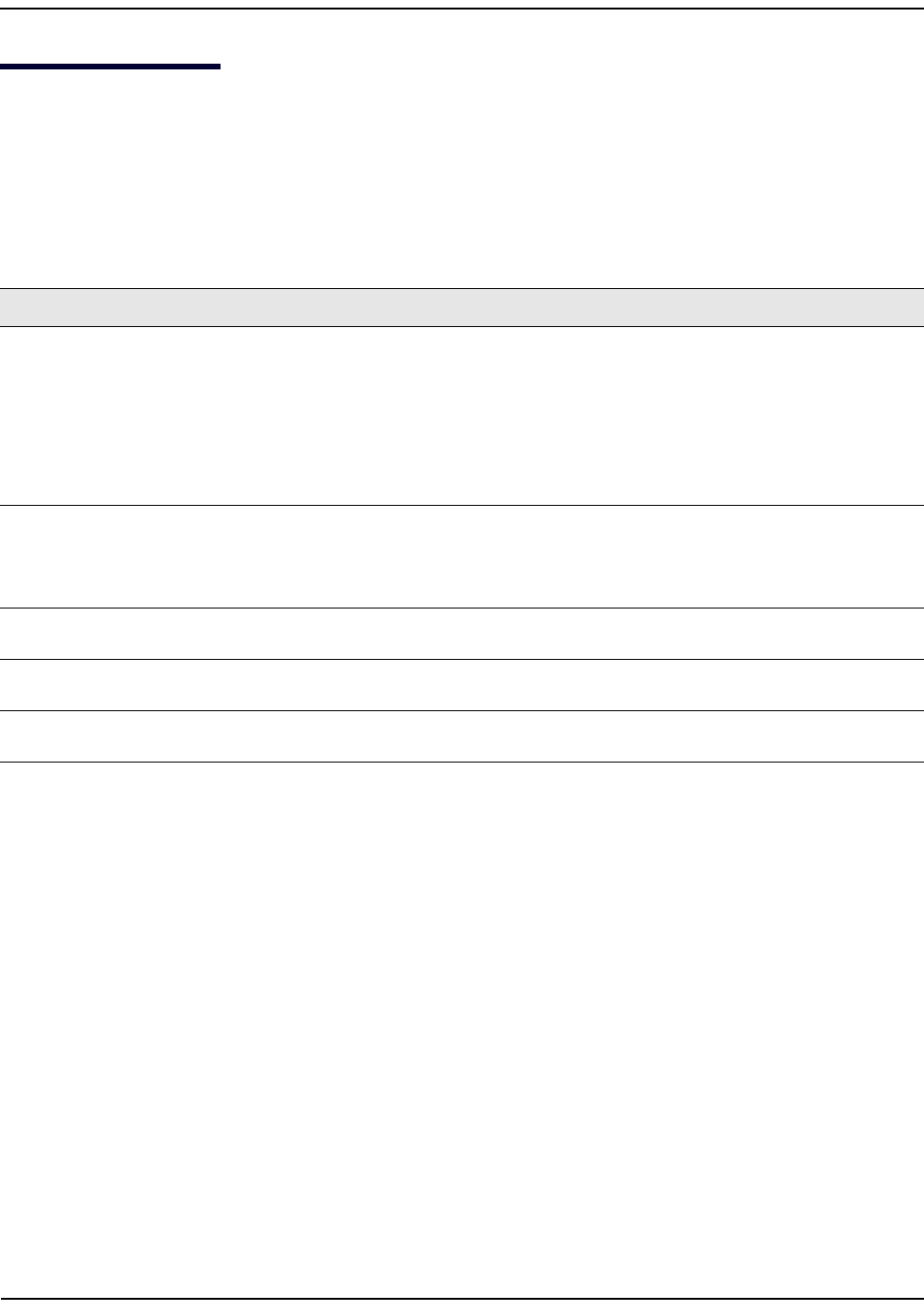
Parameters are order-dependent. Table 1 describes the conventions this document uses to distinguish
between value types.
Table 1: Parameter Conventions
Symbol Example Description
[] square brackets [value] Indicates an optional parameter.
italic font in a
parameter.
value or [value] Indicates a variable value. You must replace the italicized text
and brackets with an appropriate value, which might be a
name or number.
{} curly braces {choice1 | choice2} Indicates that you must select a parameter from the list of
choices.
| Vertical bars choice1 | choice2 Separates the mutually exclusive choices.
[{}] Braces within
square brackets
[{choice1 | choice2}] Indicates a choice within an optional element.
Common Parameter Values
CLI Command Reference
September 2014 Page 14
HP Moonshot Switch Module CLI Command Reference
Common Parameter Values
Parameter values might be names (strings) or numbers. To use spaces as part of a name parameter, enclose the
name value in double quotes. For example, the expression “System Name with Spaces” forces the system to
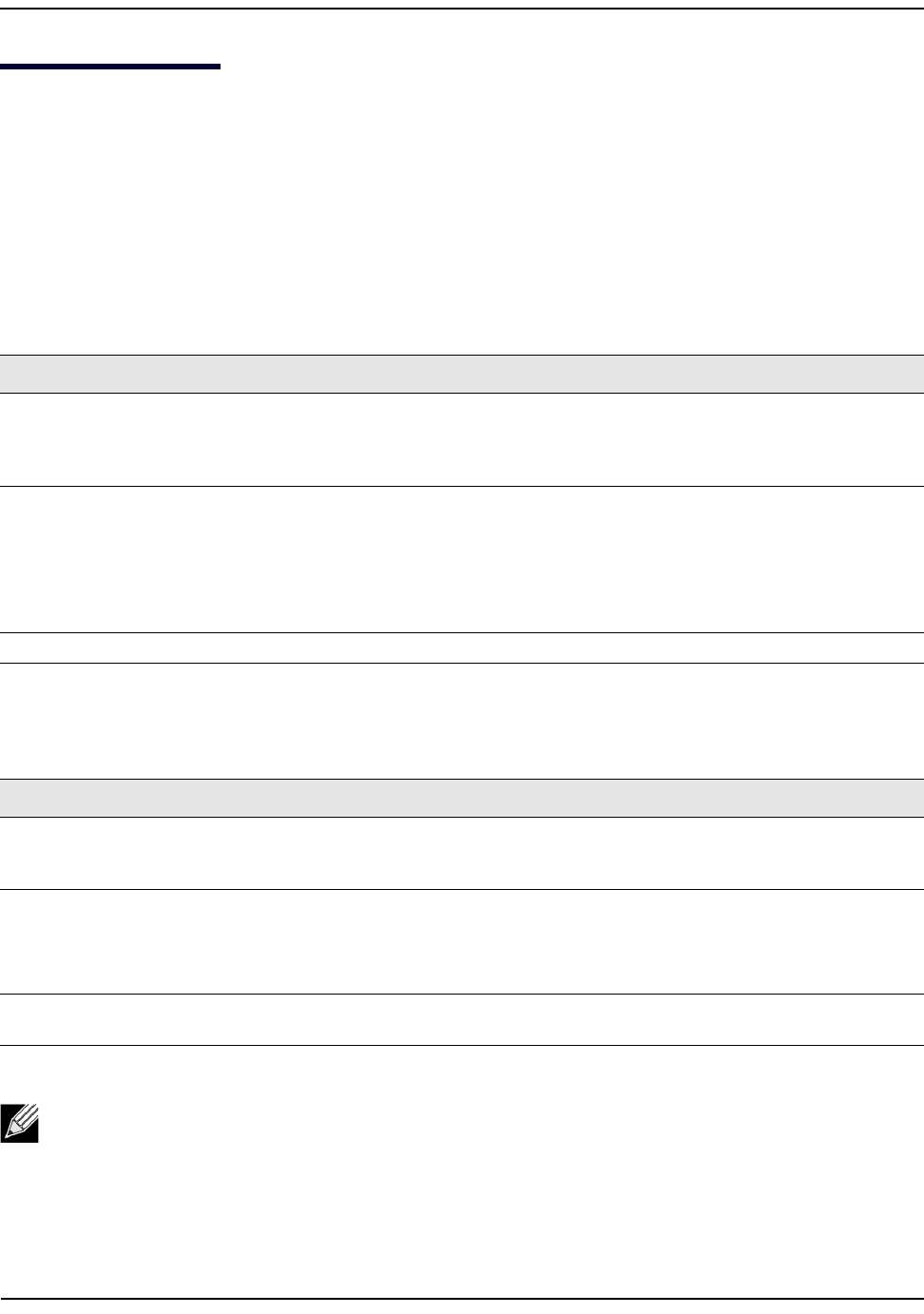
accept the spaces. Empty strings (““) are not valid user-defined strings. Table 2 describes common parameter
values and value formatting.
Table 2: Parameter Descriptions
Parameter Description
ipaddr This parameter is a valid IP address. Enter the IP address in a the standard dotted
decimal format, for example 192.168.2.10.
In addition to the standard format, the CLI accepts decimal, hexadecimal and octal
formats through the following input formats (where n is any valid hexadecimal, octal
or decimal number):
0xn (CLI assumes hexadecimal format.)
0n (CLI assumes octal format with leading zeros.)
n (CLI assumes decimal format.)
ipv6-address FE80:0000:0000:0000:020F:24FF:FEBF:DBCB, or
FE80:0:0:0:20F:24FF:FEBF:DBCB, or
FE80::20F24FF:FEBF:DBCB
For additional information, refer to RFC 3513.
Interface or
unit/slot/port
Valid slot and port number separated by a forward slash. For example, 1/0/1
represents unit number 1, slot number 0, and port number 1.
Logical Interface Represents a logical slot and port number. This is applicable in the case of a port-
channel (LAG). You can use the logical unit/slot/port to configure the port-channel.
Character strings Use double quotation marks to identify character strings, for example, “System
Name with Spaces”. An empty string (“”) is not valid.
unit/slot/port Naming Convention
CLI Command Reference
September 2014 Page 15
HP Moonshot Switch Module CLI Command Reference
unit/slot/port Naming Convention
HP Moonshot Switch Module software references physical entities such as cards and ports by using a unit/
slot/port naming convention. The HP Moonshot Switch Module software also uses this convention to identify
certain logical entities, such as Port-Channel interfaces.
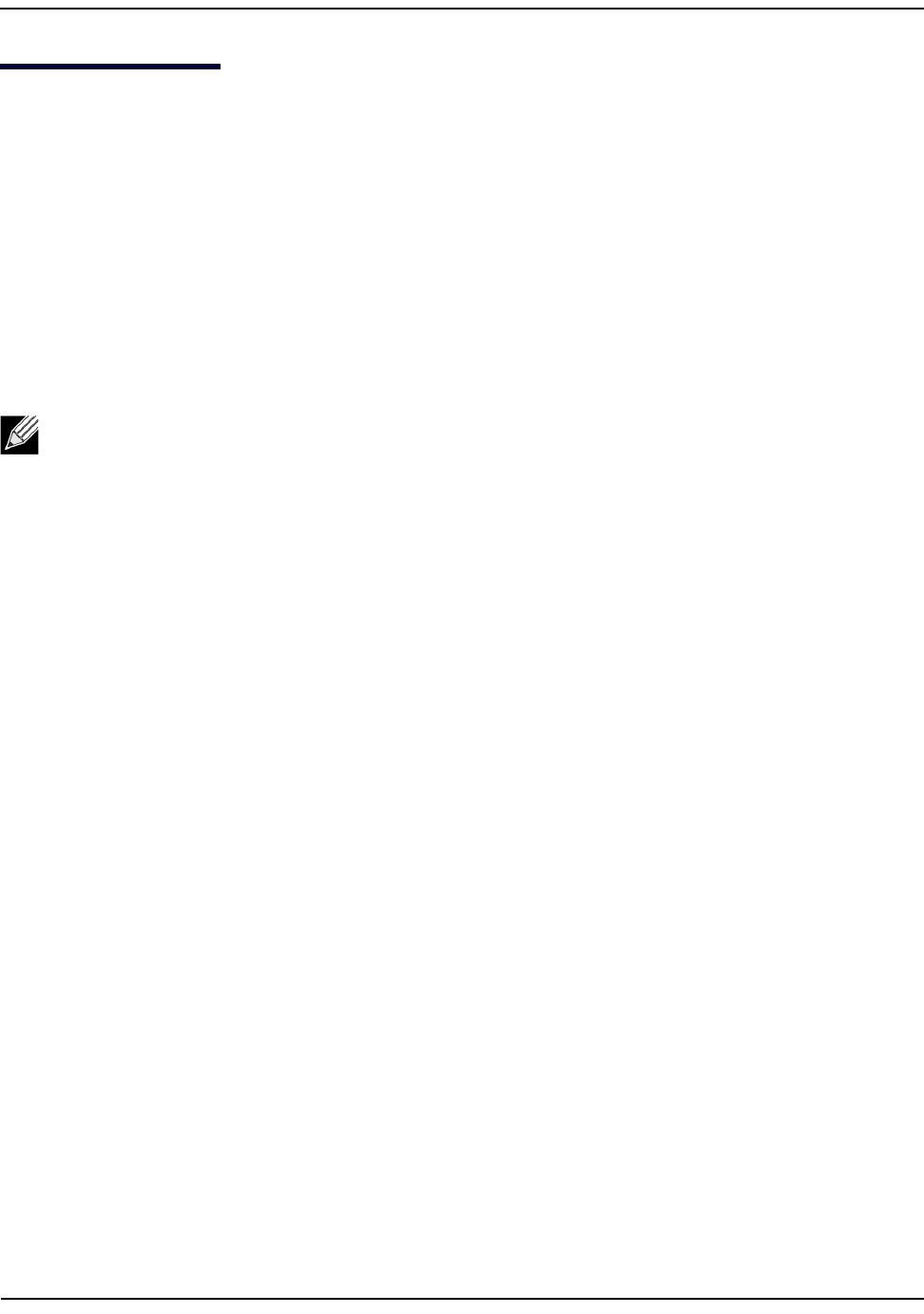
The unit number identifies the stack member within a stack of switches. The slot number has two uses. In the
case of physical ports, it identifies the card containing the ports. In the case of logical and CPU ports it also
identifies the type of interface or port.
The port identifies the specific physical port or logical interface being managed on a given slot.
Table 3: Type of Slots
Slot Type Description
Physical slot numbers Physical slot numbers begin with zero, and are allocated up to the maximum
number of physical slots. Internal ports are located on slot 0, and external
ports are located on slot 1. For example, the external uplink/stacking ports are
1/1/1, 1/1/2, 1/1/3, and so on.
Logical slot numbers Logical slots immediately follow physical slots and identify port-channel (LAG)
or router interfaces.
A LAG (port-channel) interface uses 3 as the slot number. By default, the first
LAG that is configured is 0/3/1.
A VLAN routing interface uses 4 as the slot number. By default, the first VLAN
configured as a VLAN routing interface is 0/4/1.
CPU slot numbers The CPU slots immediately follow the logical slots.
Table 4: Type of Ports
Port Type Description
Physical Ports The physical ports for each slot are numbered sequentially starting from one,
For example, port 1 on slot 0 (an internal port) for a stand alone (nonstacked)
switch is 1/0/1, port 2 is 1/0/2, port 3 is 1/0/3, and so on.
Logical Interfaces Port-channel or Link Aggregation Group (LAG) interfaces are logical interfaces
that are only used for bridging functions.
VLAN routing interfaces are only used for routing functions.
Loopback interfaces are logical interfaces that are always up.
CPU ports CPU ports are handled by the driver as one or more physical entities located on
physical slots.
Note: In the CLI, loopback interfaces do not use the unit/slot/port format. To specify a loopback
interface, you use the loopback ID.
CLI Output Filtering
CLI Command Reference
September 2014 Page 16
HP Moonshot Switch Module CLI Command Reference
CLI Output Filtering
Many CLI show commands display a large amount of content. This can make output difficult to parse through
to find the information of desired importance. The CLI Output Filtering feature allows you to optionally specify
arguments in show commands to filter the CLI output to display only the desired information. The result is to
simplify the display and make it easier to find the desired information.
The main functions of the CLI Output Filtering feature are:
• Pagination Control
– Supports enabling/disabling paginated output for all show CLI commands. When disabled, the output is
displayed in its entirety. When enabled, the command output is displayed page-by-page such that
content does not scroll off the terminal screen until the user presses a key to continue.
• Output Filtering
– “Grep”-like control for modifying the displayed output to show only the user-desired content.
• Filter displayed output to include only lines containing a specified string match.
• Filter displayed output to exclude lines containing a specified string match.
• Filter displayed output to include only lines including and following a specified string match.
• Filter displayed output to include only a specified section of the content (e.g. interface 10/1) with a
configurable end-of-section delimiter.
• String matching is case insensitive.
• Pagination, when enabled, also applies to filtered output.
Example: The following shows an example of the extensions made to the CLI show commands for the
Output Filtering feature.
(Routing) #show running-config ?
<cr> Press enter to execute the command.
| Output filter options.
<scriptname> Script file name for writing active configuration.
all Show all the running configuration on the switch.
(Routing) #show running-config | ?
begin Begin with the line that matches
exclude Exclude lines that matches
include Include lines that matches
section Display portion of lines
For commands for the feature, see “CLI Output Filtering Commands” on page 142.
Note: Although some HP Moonshot Switch Module show commands already support pagination, the
implementation is unique per command and not generic to all commands.
Command Modes
CLI Command Reference
September 2014 Page 17
HP Moonshot Switch Module CLI Command Reference
Command Modes
The CLI groups commands into modes according to the command function. Each of the command modes
supports specific HP Moonshot Switch Module software commands. The commands in one mode are not
available until you switch to that particular mode, with the exception of the User EXEC mode commands. You
can execute the User EXEC mode commands in the Privileged EXEC mode.
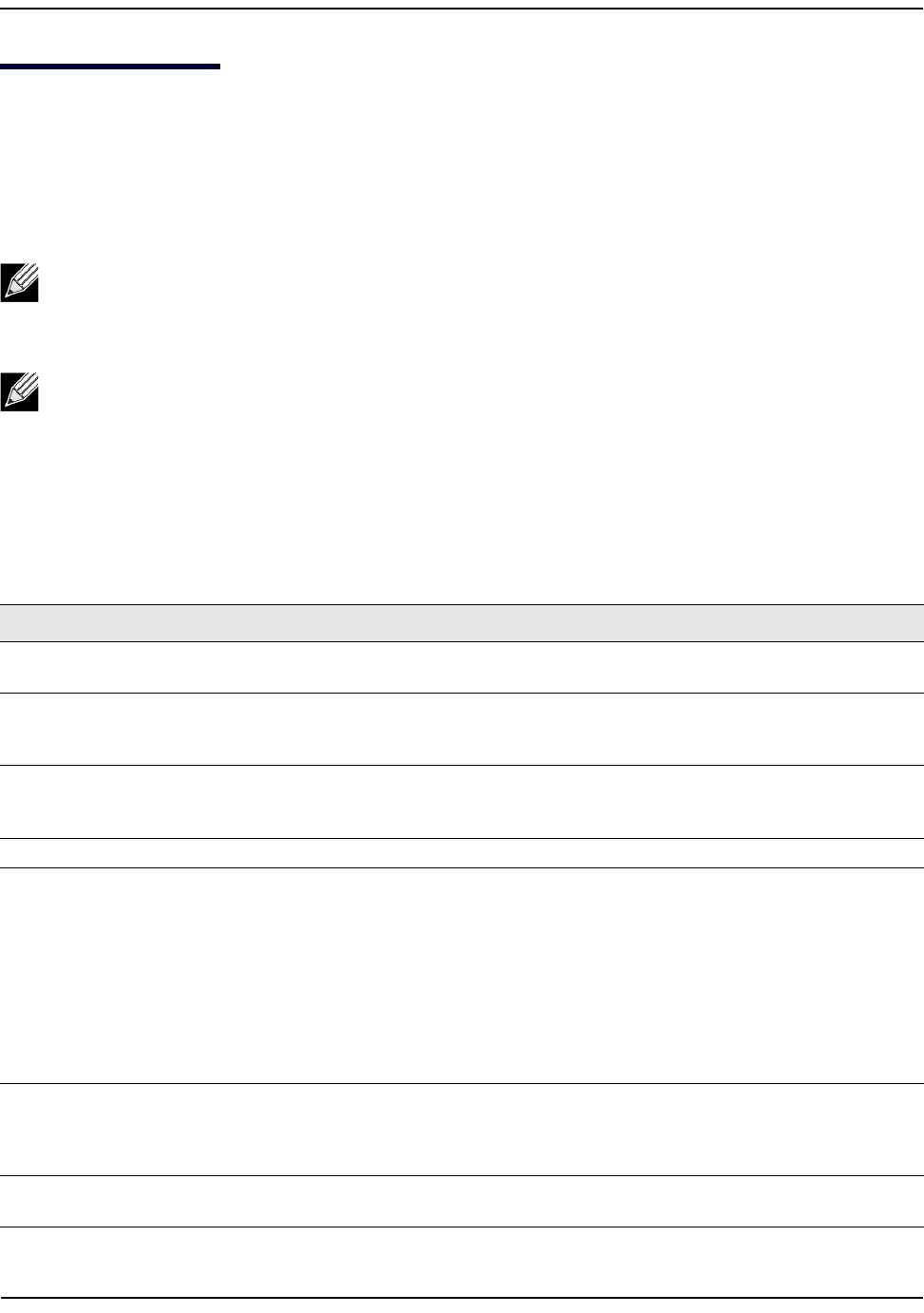
The command prompt changes in each command mode to help you identify the current mode. Table 5
describes the command modes and the prompts visible in that mode.
Note: Show commands are available in every mode.
Note: The do command allows Privileged EXEC mode commands to be executed in any command
mode. For more information, see “do (Privileged EXEC commands)” on page 42.
Table 5: CLI Command Modes
Command Mode Prompt Mode Description
User EXEC (Routing) > Contains a limited set of commands to view
basic system information.
Privileged EXEC (Routing) # Allows you to issue any EXEC command, enter
the VLAN mode, or enter the Global
Configuration mode.
Global Config (Routing) (Config)# Groups general setup commands and permits
you to make modifications to the running
configuration.
VLAN Config (Routing) (Vlan)# Groups all the VLAN commands.
Interface Config (Routing) (Interface unit/slot/port)#
(Routing) (Interface Loopback id)#
(Routing) (Interface unit/slot/port
(startrange)-unit/slot/port(endrange)#
(Routing) (Interface lag lag-intf-num)#
(Routing) (Interface vlan vlan-id)#
Manages the operation of an interface or
range of interfaces including the following
interface types:
•Physical port
• Link aggregation group (LAG, also known
as port-channel)
• VLAN routing interface
• Loopback interface
Line Console (Routing) (config-line)# Contains commands to configure outbound
Telnet settings and console interface settings,
as well as to configure console login/enable
authentication.
Line SSH (Routing) (config-ssh)# Contains commands to configure SSH login/
enable authentication.
Command Modes
CLI Command Reference
September 2014 Page 18
HP Moonshot Switch Module CLI Command Reference
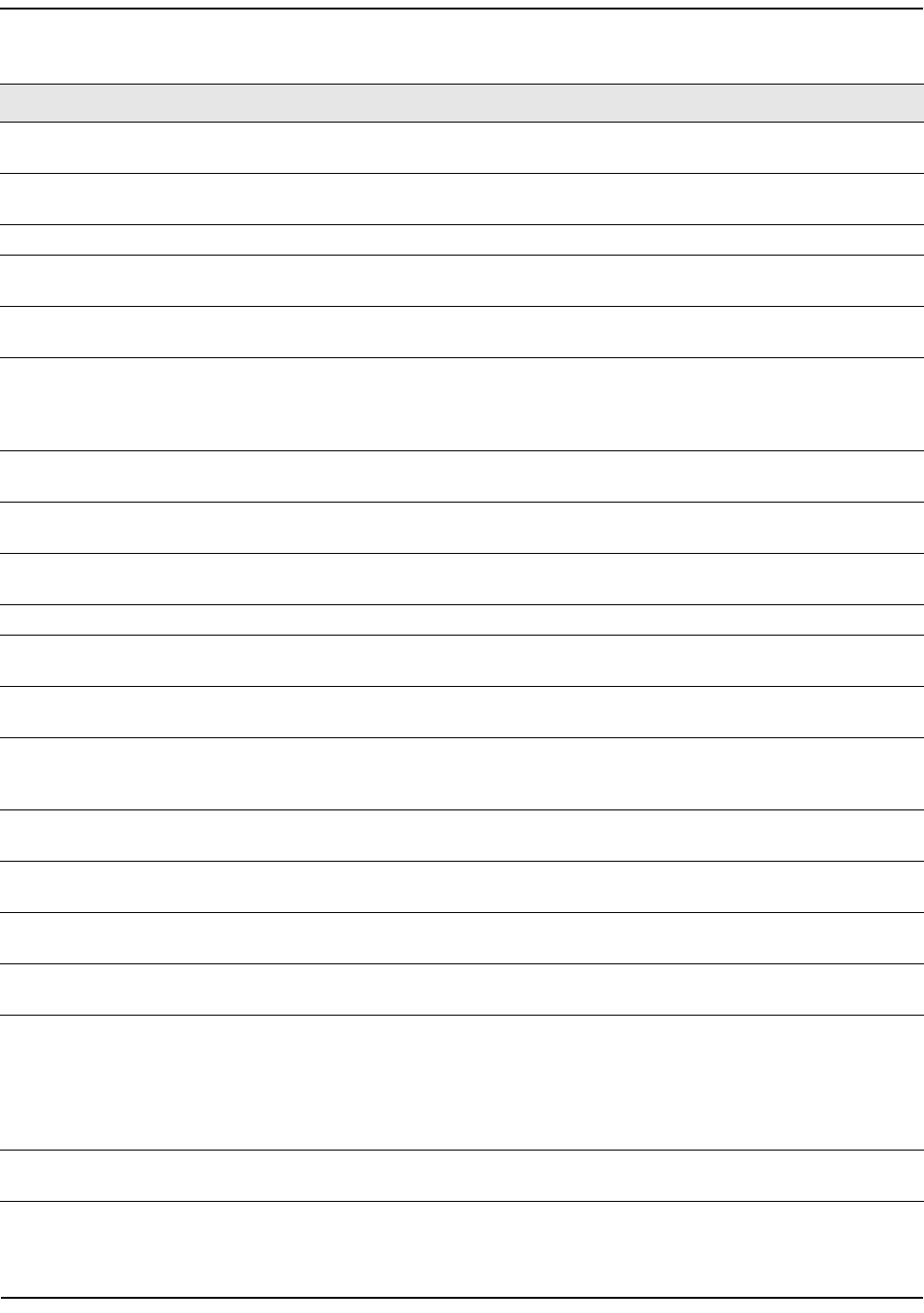
Line Telnet (Routing) (config-telnet)# Contains commands to configure telnet
login/enable authentication.
AAA IAS User
Config
(Routing) (Config-IAS-User)# Allows password configuration for a user in
the IAS database.
Mail Server Config (Routing) (Mail-Server)# Allows configuration of the email server.
Time Range Config (Routing) (config-time-range)# Allows configuration of periodic and absolute
entries in within a named time range.
Policy Map
Config
(Routing) (Config-policy-map)# Contains the QoS Policy-Map configuration
commands.
Policy Class
Config
(Routing) (Config-policy-class-map)# Consists of class creation, deletion, and
matching commands. The class match
commands specify Layer 2, Layer 3, and
general match criteria.
Class Map Config (Routing) (Config-class-map)# Contains the QoS class map configuration
commands for IPv4.
Ipv6_Class-Map
Config
(Routing) (Config-class-map)# Contains the QoS class map configuration
commands for IPv6.
Router OSPF
Config
(Routing) (Config-router)# Contains the OSPF configuration commands.
Router RIP Config (Routing) (Config-router)# Contains the RIP configuration commands.
IPv4 ACL Config (Routing) (Config-ipv4-acl)# Allows you to create a IPv4 ACL and configure
rules for the ACL.
IPv6 ACL Config (Routing) (Config-ipv6-acl)# Allows you to create a IPv4 ACL and configure
rules for the ACL.
MAC Access-list
Config
(Routing) (Config-mac-access-list)# Allows you to create a MAC Access-List and to
enter the mode containing MAC Access-List
configuration commands.
Management ACL
Config
(Routing) (config-macal)# Allows you to create a management ACL and
configure rules for the ACL.
TACACS Config (Routing) (Tacacs)# Contains commands to configure properties
for the TACACS servers.
Stack Global
Config Mode
(Routing) (Config stack)# Allows you to access the Stack Global Config
Mode.
ARP Access-List
Config Mode
(Routing) (Config-arp-access-list)# Contains commands to add ARP ACL rules in
an ARP Access List.
Support Mode (Routing) (Support)# Allows access to the support commands,
which should only be used by the
manufacturer's technical support personnel
as improper use could cause unexpected
system behavior and/or invalidate product
warranty.
Data Center
Bridging
(Routing) (config-if-dcb)# Allows access to priority flow control (PFC)
commands for an interface.
Table 5: CLI Command Modes (Cont.)
Command Mode Prompt Mode Description
Command Modes
CLI Command Reference
September 2014 Page 19
HP Moonshot Switch Module CLI Command Reference
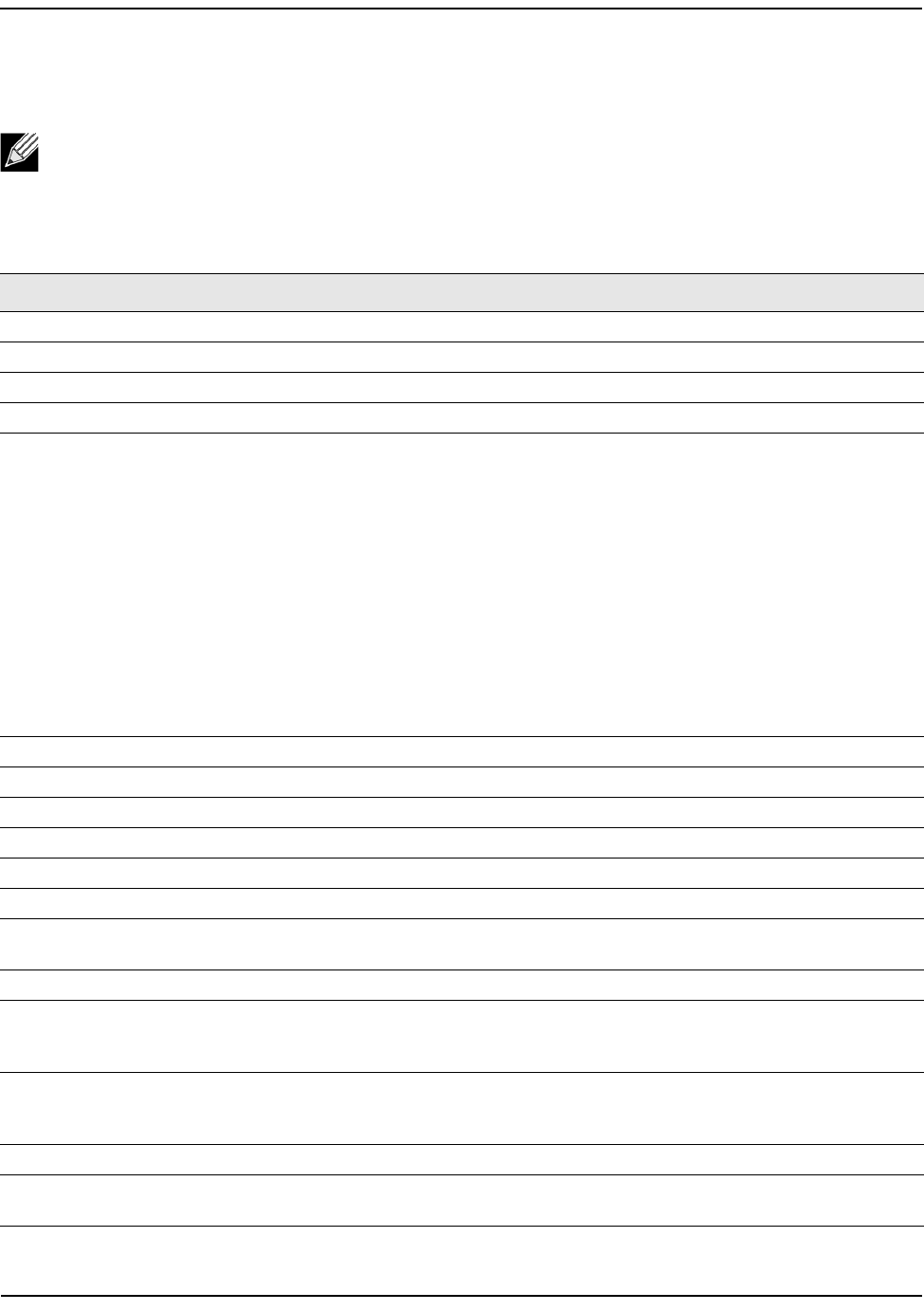
Table 6 explains how to enter each command mode. To exit a mode and return to the previous mode, enter
exit. To exit to Privileged EXEC mode, enter end.
Note: Entering end from Privileged EXEC mode exits to User EXEC mode. To exit User EXEC mode,
enter logout.
Table 6: CLI Mode Access
Command Mode Access Method
User EXEC This is the first level of access.
Privileged EXEC From the User EXEC mode, enter enable.
Global Config From the Privileged EXEC mode, enter configure.
VLAN Config From the Privileged EXEC mode, enter vlan database.
Interface Config From the Global Config mode, enter one of the following, depending on the type
of interface:
interface unit/slot/port
interface unit/slot/port(startrange)-unit/slot/port(endrange)
interface loopback id
interface lag lag-intf-num
interface vlan vlan-id
The following example shows how to enter interface configuration mode for the
range of interfaces that includes physical ports 1, 2, 3, and 4.
interface 1/0/1-1/0/4
Note: The interface unit/slot/port command and range command can be
used to enter interface configuration mode for a physical port (for example,
1/0/1), VLAN routing interface (for example, 0/4/1), or LAG (for example, 0/3/1).
Line Console From the Global Config mode, enter line console.
Line SSH From the Global Config mode, enter line ssh.
Line Telnet From the Global Config mode, enter line telnet.
AAA IAS User Config From the Global Config mode, enter aaa ias-user username name.
Mail Server Config From the Global Config mode, enter mail-server ip_address
Time Range Config From the Global Config mode, enter time-range name
Policy-Map
Config
From the Global Config mode, enter policy-map.
Policy-Class-Map Config From the Policy Map mode enter class.
Class-Map
Config
From the Global Config mode, enter class-map match-all class-name ipv4. If
the named class has already been created, enter class-map class-name. See
“class-map” on page 629 for more information.
Ipv6-Class-Map
Config
From the Global Config mode, enter class-map match-all class-name ipv6. If
the named class has already been created, enter class-map class-name. See
“class-map” on page 629 for more information.
Router OSPF Config From the Global Config mode, enter router ospf.
Router RIP
Config
From the Global Config mode, enter router rip.
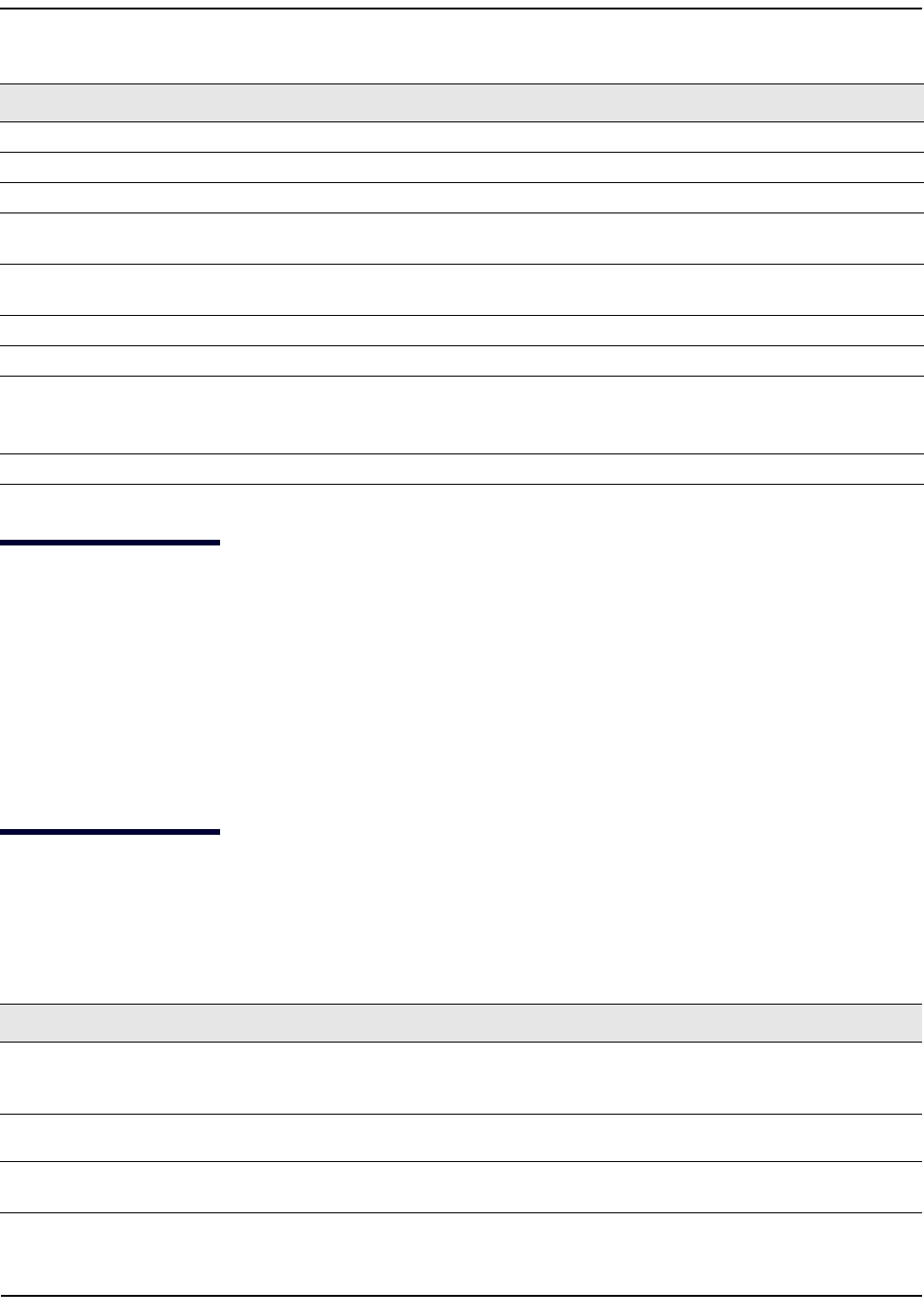
Command Completion and Abbreviation
CLI Command Reference
September 2014 Page 20
HP Moonshot Switch Module CLI Command Reference
Command Completion and Abbreviation
Command completion finishes spelling the command when you type enough letters of a command to uniquely
identify the command keyword. Once you have entered enough letters, press the SPACEBAR or TAB key to
complete the word.
Command abbreviation allows you to execute a command when you have entered there are enough letters to
uniquely identify the command. You must enter all of the required keywords and parameters before you enter
the command.
CLI Error Messages
If you enter a command and the system is unable to execute it, an error message appears. Table 7 describes
the most common CLI error messages.
IPv6 Access-list Config From the Global Config mode, enter ipv6 access-list name.
IPv4 Access-list Config From the Global Config mode, enter ip access-list name.
MAC Access-list Config From the Global Config mode, enter mac access-list extended name.
Management Access-list
Config
From the Global Config mode, enter management access-list name.
TACACS Config From the Global Config mode, enter tacacs-server host ip-addr, where ip-
addr is the IP address of the TACACS server on your network.
Stack Global Config Mode From the Global Config mode, enter the stack command.
ARP Access-List Config Mode From the Global Config mode, enter the arp access-list command.
Support Mode From the Privileged EXEC mode, enter support.
Note: The support command is available only if the techsupport enable
command has been issued.
Data Center Bridging From the Interface Config mode, enter datacenter-bridging.
Table 7: CLI Error Messages
Message Text Description
% Invalid input detected at '^'
marker.
Indicates that you entered an incorrect or unavailable command. The
carat (^) shows where the invalid text is detected. This message also
appears if any of the parameters or values are not recognized.
Command not found / Incomplete
command. Use ? to list commands.
Indicates that you did not enter the required keywords or values.
Ambiguous command Indicates that you did not enter enough letters to uniquely identify the
command.
Table 6: CLI Mode Access (Cont.)
Command Mode Access Method
CLI Line-Editing Conventions
CLI Command Reference
September 2014 Page 21
HP Moonshot Switch Module CLI Command Reference
CLI Line-Editing Conventions
Table 8 describes the key combinations you can use to edit commands or increase the speed of command
entry. You can access this list from the CLI by entering help from the User or Privileged EXEC modes.
Table 8: CLI Editing Conventions
Key Sequence Description
DEL or Backspace Delete previous character.
Ctrl-A Go to beginning of line.
Ctrl-E Go to end of line.
Ctrl-F Go forward one character.
Ctrl-B Go backward one character.
Ctrl-D Delete current character.
Ctrl-U, X Delete to beginning of line.
Ctrl-K Delete to end of line.
Ctrl-W Delete previous word.
Ctrl-T Transpose previous character.
Ctrl-P Go to previous line in history buffer.
Ctrl-R Rewrites or pastes the line.
Ctrl-N Go to next line in history buffer.
Ctrl-Y Prints last deleted character.
Ctrl-Q Enables serial flow.
Ctrl-S Disables serial flow.
Ctrl-Z Return to root command prompt.
Tab, <SPACE> Command-line completion.
Exit Go to next lower command prompt.
? List available commands, keywords, or parameters.

Using CLI Help
CLI Command Reference
September 2014 Page 22
HP Moonshot Switch Module CLI Command Reference
Using CLI Help
Enter a question mark (?) at the command prompt to display the commands available in the current mode.
(Routing) >?
enable Enter into user privilege mode.
help Display help for various special keys.
logout Exit this session. Any unsaved changes are lost.
ping Send ICMP echo packets to a specified IP address.
quit Exit this session. Any unsaved changes are lost.
show Display Switch Options and Settings.
telnet Telnet to a remote host.
Enter a question mark (?) after each word you enter to display available command keywords or parameters.
(Routing) #network ?
ipv6 Configure IPv6 parameters for system network.
mac-address Configure MAC Address.
mac-type Select the locally administered or burnedin MAC
address.
mgmt_vlan Configure the Management VLAN ID of the switch.
parms Configure Network Parameters of the device.
protocol Select DHCP, BootP, or None as the network config
protocol.
If the help output shows a parameter in angle brackets, you must replace the parameter with a value.
(Routing) #network parms ?
<ipaddr> Enter the IP Address.
none Reset IP address and gateway on management interface
If there are no additional command keywords or parameters, or if additional parameters are optional, the
following message appears in the output:
<cr> Press Enter to execute the command
You can also enter a question mark (?) after typing one or more characters of a word to list the available
command or parameters that begin with the letters, as shown in the following example:
(Routing) #show m?
mac mac-addr-table mac-address-table
mail-server management mldsnooping
mmrp monitor mrp
mvr mvrp

Accessing the CLI
CLI Command Reference
September 2014 Page 23
HP Moonshot Switch Module CLI Command Reference
Accessing the CLI
You can access the CLI by using a direct console connection or by using a telnet or SSH connection from a
remote management host.
For the initial connection, you must use a direct connection to the console port. You cannot access the system
remotely until the system has an IP address, subnet mask, and default gateway. You can set the network
configuration information manually, or you can configure the system to accept these settings from a BOOTP or
DHCP server on your network. For more information, see “Network Interface Commands” on page 43.
For step-by-step instructions about how to connect to the switch management interface, see the HP Moonshot
Switch Module Administrator’s Guide.
Stacking Commands
CLI Command Reference
September 2014 Page 24
HP Moonshot Switch Module CLI Command Reference
Section 3: Stacking Commands
This chapter describes the stacking commands available in the HP Moonshot Switch Module CLI.
The Stacking Commands chapter includes the following sections:
•“Switch Stacking” on page 24
•“Stack Port Commands” on page 33
•“Nonstop Forwarding Commands” on page 37
Switch Stacking
This section describes the commands you use to configure switch stacks.
stack
This command sets the mode to Stack Global Config.
member
This command configures a switch. The unit is the switch identifier of the switch to be added/removed from
the stack. The switchindex is the index into the database of the supported switch types, indicating the type of
the switch being preconfigured. The switch index is a 32-bit integer. This command is executed on the Primary
Management Unit.
Note: The Primary Management Unit is the unit that controls the stack.
Format stack
Mode Global Config
Format member unit switchindex
Mode Stack Global Config
Note: Switch index can be obtained by executing the show supported switchtype command in User
EXEC mode.
Switch Stacking
CLI Command Reference
September 2014 Page 25
HP Moonshot Switch Module CLI Command Reference
no member
This command removes a switch from the stack. The unit is the switch identifier of the switch to be removed
from the stack. This command is executed on the Primary Management Unit.
switch priority
This command configures the ability of a switch to become the Primary Management Unit. The unit is the
switch identifier. The value is the preference parameter that allows the user to specify, priority of one backup
switch over another. The range for priority is 0 to 15. The switch with the highest priority value will be chosen
to become the Primary Management Unit if the active Primary Management Unit fails. Setting the value to 0
prevents the unit from being able to become the Management Unit. The switch priority defaults to the
hardware management preference value 1. Switches that do not have the hardware capability to become the
Primary Management Unit are not eligible for management.
switch renumber
This command changes the switch identifier for a switch in the stack. The oldunit is the current switch
identifier on the switch whose identifier is to be changed. The newunit is the updated value of the switch
identifier. Upon execution, the switch will be configured with the configuration information for the new switch,
if any. The old switch configuration information will be retained, however the old switch will be operationally
unplugged. This command is executed on the Primary Management Unit. After issuing this command, you are
prompted to reload the unit that is being renumbered. The renumbering will not take effect until the unit is
reloaded.
Format no member unit
Mode Stack Global Config
Default enabled
Format switch unit priority value
Mode Global Config
Note: If the management unit is renumbered, then the running configuration is no longer applied (i.e.
the stack acts as if the configuration had been cleared).
Format switch oldunit renumber newunit
Mode Global Config
Switch Stacking
CLI Command Reference
September 2014 Page 26
HP Moonshot Switch Module CLI Command Reference
movemanagement
This command moves the Primary Management Unit functionality from one switch to another. The fromunit
is the switch identifier on the current Primary Management Unit. The tounit is the switch identifier on the new
Primary Management Unit. Upon execution, the entire stack (including all interfaces in the stack) is
unconfigured and reconfigured with the configuration on the new Primary Management Unit. After the reload
is complete, all stack management capability must be performed on the new Primary Management Unit. To
preserve the current configuration across a stack move, execute the copy system:running-config
nvram:startup-config (in Privileged EXEC) command before performing the stack move. A stack move causes
all routes and layer 2 addresses to be lost. This command is executed on the Primary Management Unit. The
system prompts you to confirm the management move.
standby
Use this command to configure a unit as a Standby Management Unit (STBY).
no standby
The no form of this command allows the application to run the auto Standby Management Unit logic.
Format movemanagement fromunit tounit
Mode Stack Global Config
Note: The Standby Management Unit cannot be the current Management Unit. The Standby unit
should be a management-capable unit.
Format standby unit number
Mode Stack Global Config
Parameter Description
Standby Management Unit Number Indicates the unit number which is to be the Standby Management
Unit. unit number must be a valid unit number.
Format no standby
Mode Stack Global Config
Switch Stacking
CLI Command Reference
September 2014 Page 27
HP Moonshot Switch Module CLI Command Reference
slot
This command configures a slot in the system. The unit/slot is the slot identifier of the slot. The cardindex is
the index into the database of the supported card types, indicating the type of the card being preconfigured in
the specified slot. The card index is a 32-bit integer. If a card is currently present in the slot that is unconfigured,
the configured information will be deleted and the slot will be re-configured with default information for the
card.
no slot
This command removes configured information from an existing slot in the system.
set slot disable
This command configures the administrative mode of the slot(s). If you specify [all], the command is applied to
all slots, otherwise the command is applied to the slot identified by unit/slot.
If a card or other module is present in the slot, this administrative mode will effectively be applied to the
contents of the slot. If the slot is empty, this administrative mode will be applied to any module that is inserted
into the slot. If a card is disabled, all the ports on the device are operationally disabled and shown as
“unplugged” on management screens.
Format slot unit/slot cardindex
Mode Global Config
Note: Card index can be obtained by executing show supported cardtype command in User EXEC
mode.
Format no slot unit/slot cardindex
Mode Global Config
Note: Card index can be obtained by executing show supported cardtype command in User EXEC
mode.
Format set slot disable [unit/slot] | all]
Mode Global Config

Switch Stacking
CLI Command Reference
September 2014 Page 28
HP Moonshot Switch Module CLI Command Reference
no set slot disable
This command unconfigures the administrative mode of the slot(s). If you specify all, the command removes
the configuration from all slots, otherwise the configuration is removed from the slot identified by unit/slot.
If a card or other module is present in the slot, this administrative mode removes the configuration from the
contents of the slot. If the slot is empty, this administrative mode removes the configuration from any module
inserted into the slot. If a card is disabled, all the ports on the device are operationally disabled and shown as
“unplugged” on management screens.
set slot power
This command configures the power mode of the slot(s) and allows power to be supplied to a card located in
the slot. If you specify all, the command is applied to all slots, otherwise the command is applied to the slot
identified by unit/slot.
Use this command when installing or removing cards. If a card or other module is present in this slot, the power
mode is applied to the contents of the slot. If the slot is empty, the power mode is applied to any card inserted
into the slot.
no set slot power
This command unconfigures the power mode of the slot(s) and prohibits power from being supplied to a card
located in the slot. If you specify all, the command prohibits power to all slots, otherwise the command
prohibits power to the slot identified by unit/slot.
Use this command when installing or removing cards. If a card or other module is present in this slot, power is
prohibited to the contents of the slot. If the slot is empty, power is prohibited to any card inserted into the slot.
reload (Stack)
This command resets the entire stack or the identified unit. The unit is the switch identifier. The system
prompts you to confirm that you want to reset the switch.
Format no set slot disable [unit/slot] | all]
Mode Global Config
Format set slot power [unit/slot] | all]
Mode Global Config
Format no set slot power [unit/slot] | all]
Mode Global Config
Format reload [unit]
Mode Privileged EXEC
Switch Stacking
CLI Command Reference
September 2014 Page 29
HP Moonshot Switch Module CLI Command Reference
show slot
This command displays information about all the slots in the system or for a specific slot.
If you supply a value for unit/slot, the following information appears:
Format show slot [unit/slot]
Mode User EXEC
Term Definition
Slot The slot identifier in a unit/slot format.
Status The slot is empty, full, or has encountered an error
Admin State The slot administrative mode is enabled or disabled.
Power State The slot power mode is enabled or disabled.
Configured Card
Model Identifier
The model identifier of the card preconfigured in the slot. Model Identifier is a 32-character
field used to identify a card.
Pluggable Cards are pluggable or non-pluggable in the slot.
Power Down Indicates whether the slot can be powered down.
Term Definition
Slot The slot identifier in a unit/slot format.
Slot Status The slot is empty, full, or has encountered an error
Admin State The slot administrative mode is enabled or disabled.
Power State The slot power mode is enabled or disabled.
Inserted Card
Model Identifier
The model identifier of the card inserted in the slot. Model Identifier is a 32-character field
used to identify a card. This field is displayed only if the slot is full.
Inserted Card
Description
The card description. This field is displayed only if the slot is full.
Configured Card
Model Identifier
The model identifier of the card preconfigured in the slot. Model Identifier is a 32-character
field used to identify a card.
Configured Card
Description
A description of the card configured for the slot.
Pluggable Cards are pluggable or non-pluggable in the slot.
Power Down Indicates whether the slot can be powered down.
Switch Stacking
CLI Command Reference
September 2014 Page 30
HP Moonshot Switch Module CLI Command Reference
show supported cardtype
This commands displays information about all card types or specific card types supported in the system.
If you do not supply a value for cardindex, the following output appears:
If you supply a value for cardindex, the following output appears:
show switch
This command displays switch status information about all units in the stack or a single unit when you specify
the unit value.
When you do not specify a value for unit, the following information appears:
Format show supported cardtype [cardindex]
Mode User EXEC
Term Definition
Card Index (CID) The index into the database of the supported card types. This index is used when
preconfiguring a slot.
Card Model
Identifier
The model identifier for the supported card type.
Term Definition
Card Type The 32-bit numeric card type for the supported card.
Model Identifier The model identifier for the supported card type.
Card Description The description for the supported card type.
Format show switch [unit]
Mode Privileged EXEC
Term Definition
Switch The unit identifier assigned to the switch.
Term Definition
Management
Switch
Indicates whether the switch is the Primary Management Unit, a stack member, a
configured standby switch, an operational standby switch, or the status is unassigned.
Standby Status Indicates whether the switch a configured or operational standby switch.
Preconfigured
Model Identifier
The model identifier of a preconfigured switch ready to join the stack. The Model Identifier
is a 32-character field assigned by the device manufacturer to identify the device.
Switch Stacking
CLI Command Reference
September 2014 Page 31
HP Moonshot Switch Module CLI Command Reference
Example: The following shows example CLI display output for the command.
(Routing) #show switch
(Routing) #show switch
Management Standby Preconfig Plugged-in Switch Code
SW Switch Status Model ID Model ID Status Version
--- ---------- --------- ---------------- ---------------- ------------- -----------
1 Mgmt Sw Moonshot-180G Moonshot-180G OK H.9.1.2
2 Stack Mbr Oper Stby Moonshot-180G Moonshot-180G OK H.9.1.2
When you specify a value for unit, the following information appears.
Plugged-In Model
Identifier
The model identifier of the switch in the stack. Model Identifier is a 32-character field
assigned by the device manufacturer to identify the device.
Switch Status The switch status. Possible values for this state are: OK, Code Mismatch, or Not Present. A
mismatch indicates that a stack unit is running a different version of the code than the
management unit.
If there is a Stacking Firmware Synchronization operation in progress status is shown as
Updating Code.
Code Version The detected version of code on this switch.
Term Definition
Switch Switch ID
Management Status Indicates whether the switch is the Primary Management Unit, a stack member, or
the status is unassigned.
Hardware Management
Preference
The hardware management preference of the switch. The hardware management
preference can be disabled or unassigned.
Admin Management
Preference
The administrative management preference value assigned to the switch. This
preference value indicates how likely the switch is to be chosen as the Primary
Management Unit.
Switch Type The 32-bit numeric switch type.
Preconfigured Model
Identifier
The model identifier for this switch that has been preconfigured for the unit prior
to joining the stack. Model Identifier is a 32-character field assigned by the device
manufacturer to identify the device.
Plugged-in Model
Identifier
The model identifier for this switch detected by the hardware. Model Identifier is a
32-character field assigned by the device manufacturer to identify the device.
Switch Status The switch status. Possible values are OK, Code Mismatch, or Not Present.
Switch Description The switch description.
Detected Code in Flash The version of code that is currently stored in FLASH memory on the switch. This
code executes after the switch is reset. If the switch is not present and the data is
from pre-configuration, then the code version is “None”.
SFS Last Attempt Status The stack firmware synchronization status in the last attempt for the specified unit.
Serial Number
(Moonshot-180G only)
The unique serial number assigned to the switch.
Up Time The system up time.
Term Definition
Switch Stacking
CLI Command Reference
September 2014 Page 32
HP Moonshot Switch Module CLI Command Reference
Example: The following shows example CLI display output for the command on a Moonshot-45G switch
module.
(Routing) #show switch 1
Switch............................ 1
Management Status................. Management Switch
Hardware Management Preference.... Unassigned
Admin Management Preference....... Unassigned
Switch Type....................... 0x68440101
Preconfigured Model Identifier.... HP Moonshot-45G
Plugged-in Model Identifier....... HP Moonshot-45G
Switch Status..................... OK
Switch Description................ HP Moonshot-45G Switch
Detected Code in Flash............ 1.0.0.15
SFS Last Attempt Status........... None
Up Time........................... 0 days 2 hrs 31 mins 9 secs
show supported switchtype
This commands displays information about all supported switch types or a specific switch type.
If you do not supply a value for switchindex, the following output appears:
If you supply a value for switchindex, the following output appears:
Format show supported switchtype [switchindex]
Mode User EXEC
Privileged EXEC
Term Definition
SID The index into the database of supported switch types. This index is used when
preconfiguring a member to be added to the stack.
Switch Model ID The model identifier for the supported switch type.
Mgmt Pref The management preference value of the switch type.
Term Definition
Switch Type The 32-bit numeric switch type for the supported switch.
Model Identifier The model identifier for the supported switch type.
Switch
Description
The description for the supported switch type.
Management
Preference
The management preference value of the switch type.
Supported Cards Provides information about the supported cards in the device, including the slot number,
card index, and model identifier.
Stack Port Commands
CLI Command Reference
September 2014 Page 33
HP Moonshot Switch Module CLI Command Reference
Stack Port Commands
This section describes the commands you use to view and configure stack port information.
stack-port
This command sets stacking per port or range of ports to either stack or ethernet mode.
show stack-port
This command displays summary stack-port information for all interfaces.
For Each Interface:
Default stack
Format stack-port unit/slot/port [{ethernet | stack}]
Mode Stack Global Config
Format show stack-port
Mode Privileged EXEC
Term Definition
Unit The unit number.
Interface The slot and port numbers.
Configured Stack Mode Stack or Ethernet.
Running Stack Mode Stack or Ethernet.
Link Status Status of the link.
Link Speed Speed (Gbps) of the stack port link.
Stack Port Commands
CLI Command Reference
September 2014 Page 34
HP Moonshot Switch Module CLI Command Reference
show stack-port counters
This command displays summary data counter information for all interfaces.
show stack-port diag
This command shows stack port diagnostics for each port and is only intended for Field Application Engineers
(FAEs) and developers. An FAE will advise on the necessity to run this command and capture this information.
show stack-port stack-path
This command displays the route a packet will take to reach the destination.
Format show stack-port counters
Mode Privileged EXEC
Term Definition
Unit The unit number.
Interface The slot and port numbers.
Tx Data Rate Trashing data rate in megabits per second on the stacking port.
Tx Error Rate Platform-specific number of transmit errors per second.
Tx Total Errors Platform-specific number of total transmit errors since power-up.
Rx Data Rate Receive data rate in megabits per second on the stacking port.
Rx Error Rate Platform-specific number of receive errors per second.
Rx Total Errors Platform-specific number of total receive errors since power-up.
Format show stack-port diag
Mode Privileged EXEC
Term Definition
Unit The unit number.
Interface The slot and port numbers.
Diagnostic Entry1 80 character string used for diagnostics.
Diagnostic Entry2 80 character string used for diagnostics.
Diagnostic Entry3 80 character string used for diagnostics.
Format show stack-port stack-path {1—9 | all}
Mode Privileged EXEC

Stack Firmware Synchronization Commands
CLI Command Reference
September 2014 Page 35
HP Moonshot Switch Module CLI Command Reference
Stack Firmware Synchronization Commands
Stack Firmware Synchronization (SFS) provides the ability to automatically synchronize firmware for all stack
members. If a unit joins the stack and its firmware version is different from the version running on the stack
manager, the SFS feature can either upgrade or downgrade the firmware on the mismatched stack member.
There is no attempt to synchronize the stack to the latest firmware in the stack.
For optimal operation, use the recommended firmware version.
For more information on recommended firmware versions, see the HP website (http://www.hp.com/go/
servers/Moonshot/download).
boot auto-copy-sw
Use this command to enable the Stack Firmware Synchronization feature on the stack.
no boot auto-copy-sw
Use this command to disable the Stack Firmware Synchronization feature on the stack
boot auto-copy-sw trap
Use this command to enable the sending of SNMP traps related to the Stack Firmware Synchronization feature.
no boot auto-copy-sw trap
Use this command to disable the sending of traps related to the Stack Firmware Synchronization feature.
Default Disabled
Format boot auto-copy-sw
Mode Privileged Exec
Format no boot auto-copy-sw
Mode Privileged Exec
Default Enabled
Format boot auto-copy-sw trap
Mode Privileged Exec
Format no boot auto-copy-sw trap
Mode Privileged Exec
Stack Firmware Synchronization Commands
CLI Command Reference
September 2014 Page 36
HP Moonshot Switch Module CLI Command Reference
boot auto-copy-sw allow-downgrade
Use this command to allow the stack manager to downgrade the firmware version on the stack member if the
firmware version on the manager is older than the firmware version on the member.
no boot auto-copy-sw allow-downgrade
Use this command to prevent the stack manager from downgrading the firmware version of a stack member.
show auto-copy-sw
Use this command to display Stack Firmware Synchronization configuration status information.
Default Enabled
Format boot auto-copy-sw allow-downgrade
Mode Privileged Exec
Format no boot auto-copy-sw allow-downgrade
Mode Privileged Exec
Format show auto-copy-sw
Mode Privileged Exec
Term Definition
Synchronization Shows whether the SFS feature is enabled.
SNMP Trap Status Shows whether the stack will send traps for SFS events.
Allow Downgrade Shows wether the manager is permitted to downgrade the firmware version of a
stack member.

Nonstop Forwarding Commands
CLI Command Reference
September 2014 Page 37
HP Moonshot Switch Module CLI Command Reference
Nonstop Forwarding Commands
A switch can be described in terms of three semi-independent functions called the forwarding plane, the
control plane, and the management plane. The forwarding plane forwards data packets. The forwarding plane
is implemented in hardware. The control plane is the set of protocols that determine how the forwarding plane
should forward packets, deciding which data packets are allowed to be forwarded and where they should go.
Application software on the management unit acts as the control plane. The management plane is application
software running on the management unit that provides interfaces allowing a network administrator to
configure and monitor the device.
Nonstop forwarding (NSF) allows the forwarding plane of stack units to continue to forward packets while the
control and management planes restart as a result of a power failure, hardware failure, or software fault on
the management unit. A nonstop forwarding failover can also be manually initiated using the initiate
failover command. Traffic flows that enter and exit the stack through physical ports on a unit other than the
management continue with at most sub-second interruption when the management unit fails.
To prepare the backup management unit in case of a failover, applications on the management unit
continuously checkpoint some state information to the backup unit. Changes to the running configuration are
automatically copied to the backup unit. MAC addresses stay the same across a nonstop forwarding failover so
that neighbors do not have to relearn them.
When a nonstop forwarding failover occurs, the control plane on the backup unit starts from a partially-
initialized state and applies the checkpointed state information. While the control plane is initializing, the stack
cannot react to external changes, such as network topology changes. Once the control plane is fully operational
on the new management unit, the control plane ensures that the hardware state is updated as necessary.
Control plane failover time depends on the size of the stack, the complexity of the configuration, and the speed
of the CPU.
The management plane restarts when a failover occurs. Management connections must be reestablished.
For NSF to be effective, adjacent networking devices must not reroute traffic around the restarting device. The
switch uses three techniques to prevent traffic from being rerouted:
1. A protocol may distribute a part of its control plane to stack units so that the protocol can give the
appearance that it is still functional during the restart. Spanning tree and port channels use this technique.
2. A protocol may enlist the cooperation of its neighbors through a technique known as graceful restart. OSPF
uses graceful restart if it is enabled (see “IP Event Dampening Commands” on page 581).
3. A protocol may simply restart after the failover if neighbors react slowly enough that they will not normally
detect the outage. The IP multicast routing protocols are a good example of this behavior.
To take full advantage of nonstop forwarding, layer 2 connections to neighbors should be via port channels that
span two or more stack units, and layer 3 routes should be ECMP routes with next hops via physical ports on
two or more units. The hardware can quickly move traffic flows from port channel members or ECMP paths on
a failed unit to a surviving unit.
Nonstop Forwarding Commands
CLI Command Reference
September 2014 Page 38
HP Moonshot Switch Module CLI Command Reference
nsf (Stack Global Config Mode)
This command enables nonstop forwarding feature on the stack. When nonstop forwarding is enabled, if the
management unit of a stack fails, the backup unit takes over as the master without clearing the hardware tables
of any of the surviving units. Data traffic continues to be forwarded in hardware while the management
functions initialize on the backup unit.
NSF is enabled by default. The administrator may wish to disable NSF in order to redirect the CPU resources
consumed by data checkpointing.
If a unit that does not support NSF is connected to the stack, then NSF is disabled on all stack members. When
a unit that does not support NSF is disconnected from the stack and all other units support NSF, and NSF is
administratively enabled, then NSF operation resumes.
no nsf
This command disables NSF on the stack.
show nsf
This command displays global and per-unit information on NSF configuration on the stack.
Default enabled
Format nsf
Mode Stack Global Config Mode
Format no nsf
Mode Stack Global Config Mode
Format show nsf
Mode Privileged Exec
Parameter Description
NSF Administrative
Status
Whether nonstop forwarding is administratively enabled or disabled.
Default: Enabled
NSF Operational Status Indicates whether NSF is enabled on the stack.
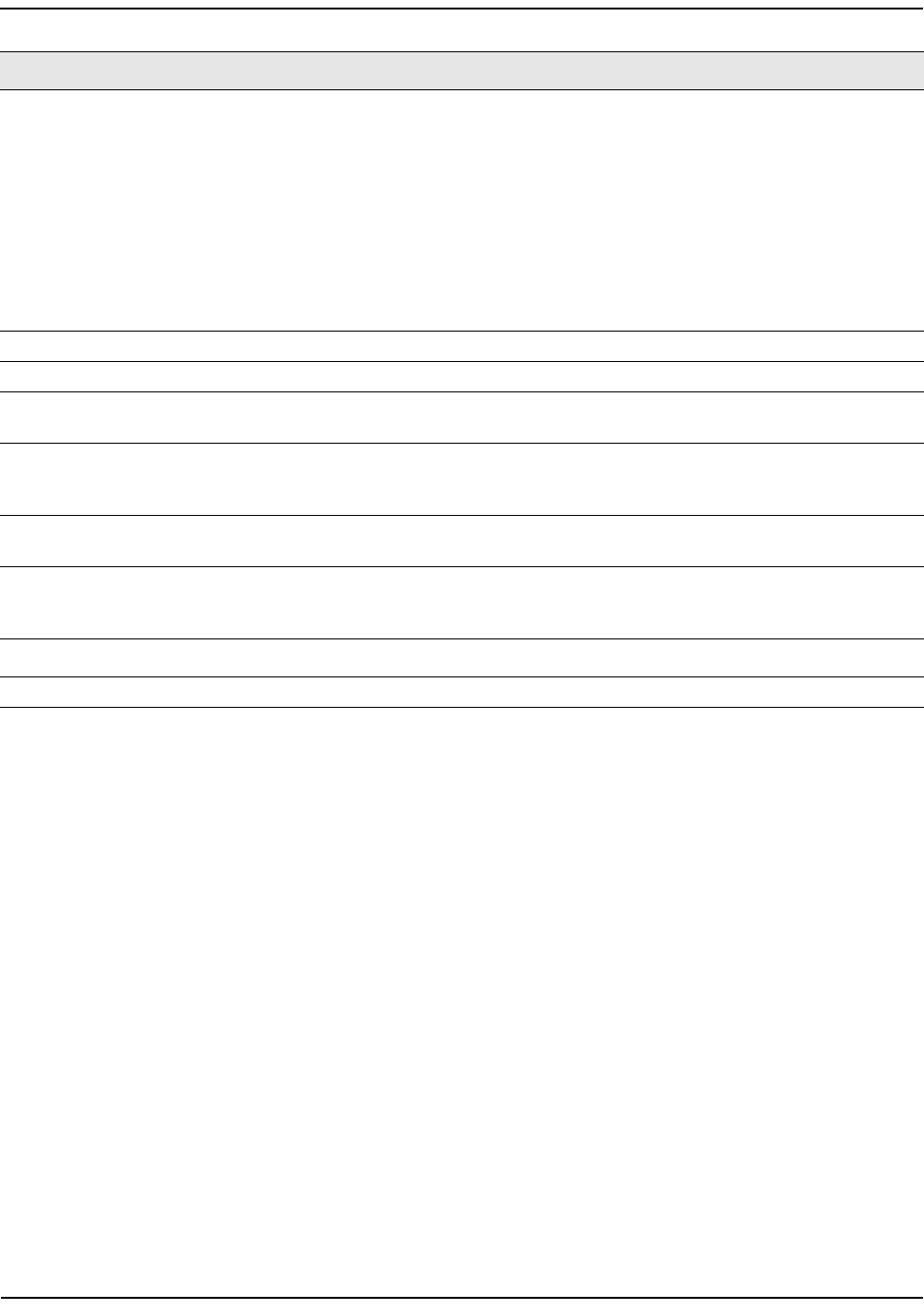
Nonstop Forwarding Commands
CLI Command Reference
September 2014 Page 39
HP Moonshot Switch Module CLI Command Reference
initiate failover
This command forces the backup unit to take over as the management unit and perform a “warm restart” of
the stack. On a warm restart, the backup unit becomes the management unit without clearing its hardware
tables (on a cold restart, hardware tables are cleared). Applications apply checkpointed data from the former
management unit. The original management unit reboots.
If the system is not ready for a warm restart, for example because no backup unit has been elected or one or
more members of the stack do not support nonstop forwarding, the command fails with a warning message.
The movemanagement command (see page 26) also transfers control from the current management unit;
however, the hardware is cleared and all units reinitialize.
Last Startup Reason The type of activation that caused the software to start the last time:
• “Power-On” means that the switch rebooted. This could have been caused by a
power cycle or an administrative “Reload” command.
• “Administrative Move” means that the administrator issued the movemanagement
command for the stand-by manager to take over.
• “Warm-Auto-Restart” means that the primary management card restarted due to
a failure, and the system executed a nonstop forwarding failover.
• “Cold-Auto-Restart” means that the system switched from the active manager to
the backup manager and was unable to maintain user data traffic. This is usually
caused by multiple failures occurring close together.
Time Since Last Restart Time since the current management unit became the active management unit.
Restart in progress Whether a restart is in progress.
Warm Restart Ready Whether the system is ready to perform a nonstop forwarding failover from the
management unit to the backup unit.
Copy of Running
Configuration to
Backup Unit: Status
Whether the running configuration on the backup unit includes all changes made on
the management unit. Displays as Current or Stale.
Time Since Last Copy When the running configuration was last copied from the management unit to the
backup unit.
Time Until Next Copy The number of seconds until the running configuration will be copied to the backup
unit. This line only appears when the running configuration on the backup unit is
Stale.
Per Unit Status Parameters
NSF Support Whether a unit supports NSF.
Format initiate failover
Mode Stack Global Config Mode
Parameter Description
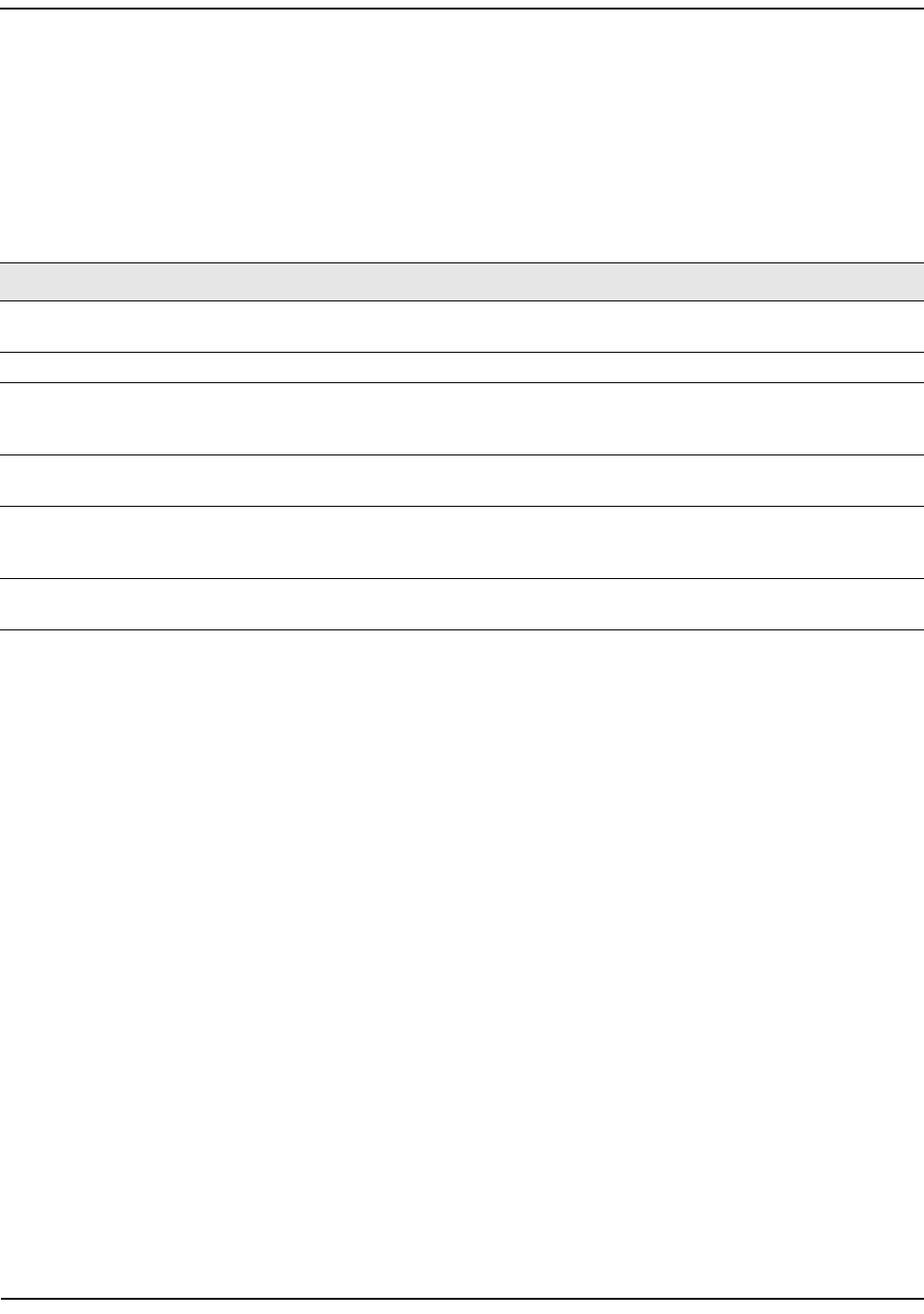
Nonstop Forwarding Commands
CLI Command Reference
September 2014 Page 40
HP Moonshot Switch Module CLI Command Reference
show checkpoint statistics
This command displays general information about the checkpoint service operation.
clear checkpoint statistics
This command clears all checkpoint statistics to their initial values.
Format show checkpoint statistics
Mode Privileged Exec
Parameter Description
Messages Checkpointed Number of checkpoint messages transmitted to the backup unit. Range: Integer.
Default: 0
Bytes Checkpointed Number of bytes transmitted to the backup unit. Range: Integer. Default: 0
Time Since Counters Cleared Number of days, hours, minutes and seconds since the counters were reset to
zero. The counters are cleared when a unit becomes manager and with a
support command. Range: Time Stamp. Default: 0d00:00:00
Checkpoint Message Rate Average number of checkpoint messages per second. The average is computed
over the time period since the counters were cleared. Range: Integer. Default: 0
Last 10-second Message Rate Average number of checkpoint messages per second in the last 10-second
interval. This average is updated once every 10 seconds. Range: Integer.
Default: 0
Highest 10-second Message
Rate
The highest rate recorded over a 10-second interval since the counters were
cleared. Range: Integer. Default: 0
Format clear checkpoint statistics
Mode Privileged Exec

Management Commands
CLI Command Reference
September 2014 Page 41
HP Moonshot Switch Module CLI Command Reference
Section 4: Management Commands
This chapter describes the management commands available in the HP Moonshot Switch Module CLI.
The Management Commands chapter contains the following sections:
•“Network Interface Commands” on page 43
•“Console Port Access Commands” on page 59
•“Telnet Commands” on page 62
•“Secure Shell Commands” on page 67
•“Management Security Commands” on page 69
•“Access Commands” on page 70
•“User Account Commands” on page 71
•“SNMP Commands” on page 100
•“RADIUS Commands” on page 115
•“TACACS+ Commands” on page 128
•“Configuration Scripting Commands” on page 134
•“Banner, Prompt, and Host Name Commands” on page 136

Enable and Do Commands
CLI Command Reference
September 2014 Page 42
HP Moonshot Switch Module CLI Command Reference
Enable and Do Commands
enable (Privileged EXEC access)
This command gives you access to the Privileged EXEC mode. From the Privileged EXEC mode, you can
configure the network interface.
do (Privileged EXEC commands)
This command executes Privileged EXEC mode commands from any of the configuration modes.
Example: The following is an example of the do command that executes the Privileged Exec command
script list in Global Config Mode.
(Routing) #configure
(Routing)(config)#do script list
Configuration Script Name Size(Bytes)
-------------------------------- -----------
backup-config 2105
running-config 4483
startup-config 445
3 configuration script(s) found.
2041 Kbytes free.
Format enable
Mode User EXEC
Format do Priv Exec Mode Command
Mode • Global Config
•Interface Config
•VLAN Config
• Routing Config

Network Interface Commands
CLI Command Reference
September 2014 Page 43
HP Moonshot Switch Module CLI Command Reference
Network Interface Commands
This section describes the commands you use to configure a logical interface for management access. To
configure the management VLAN, see “network mgmt_vlan” on page 298.
serviceport ip
This command sets the IP address, the netmask and the gateway of the network management port. You can
specify the none option to clear the IPv4 address and mask and the default gateway (i.e., reset each of these
values to 0.0.0.0).
serviceport protocol
This command specifies the network management port configuration protocol. If you modify this value, the
change is effective immediately. If you use the bootp parameter, the switch periodically sends requests to a
BootP server until a response is received. If you use the dhcp parameter, the switch periodically sends requests
to a DHCP server until a response is received. If you use the none parameter, you must configure the network
information for the switch manually.
serviceport protocol dhcp
This command enables the DHCPv4 client on a Service port. If the client-id optional parameter is given, the
DHCP client messages are sent with the client identifier option.
There is no support for the no form of the command serviceport protocol dhcp client-id. To remove the
client-id option from the DHCP client messages, issue the command serviceport protocol dhcp without the
client-id option. The command serviceport protocol none can be used to disable the DHCP client and client-
id option on the interface.
Example: The following shows an example of the command.
(Routing) # serviceport protocol dhcp client-id
Format serviceport ip {ipaddr netmask [gateway] | none}
Mode Privileged EXEC
Format serviceport protocol {none | bootp | dhcp}
Mode Privileged EXEC
Default DHCP
Format serviceport protocol dhcp [client-id]
Mode Privileged EXEC

Network Interface Commands
CLI Command Reference
September 2014 Page 44
HP Moonshot Switch Module CLI Command Reference
network parms
This command sets the IP address, subnet mask and gateway of the device. The IP address and the gateway
must be on the same subnet. When you specify the none option, the IP address and subnet mask are set to the
factory defaults.
network protocol
This command specifies the network configuration protocol to be used. If you modify this value, change is
effective immediately. If you use the bootp parameter, the switch periodically sends requests to a BootP server
until a response is received. If you use the dhcp parameter, the switch periodically sends requests to a DHCP
server until a response is received. If you use the none parameter, you must configure the network information
for the switch manually.
network protocol dhcp
This command enables the DHCPv4 client on a Network port. If the client-id optional parameter is given, the
DHCP client messages are sent with the client identifier option.
There is no support for the no form of the command network protocol dhcp client-id. To remove the client-
id option from the DHCP client messages, issue the command network protocol dhcp without the client-id
option. The command network protocol none can be used to disable the DHCP client and client-id option on
the interface.
Example: The following shows an example of the command.
(Routing) # network protocol dhcp client-id
Format network parms {ipaddr netmask [gateway]| none}
Mode Privileged EXEC
Default none
Format network protocol {none | bootp | dhcp}
Mode Privileged EXEC
Default none
Format network protocol dhcp [client-id]
Mode Global Config

Network Interface Commands
CLI Command Reference
September 2014 Page 45
HP Moonshot Switch Module CLI Command Reference
network mac-address
This command sets locally administered MAC addresses. The following rules apply:
• Bit 6 of byte 0 (called the U/L bit) indicates whether the address is universally administered (b'0') or locally
administered (b'1').
• Bit 7 of byte 0 (called the I/G bit) indicates whether the destination address is an individual address (b'0')
or a group address (b'1').
• The second character, of the twelve character macaddr, must be 2, 6, A or E.
A locally administered address must have bit 6 On (b'1') and bit 7 Off (b'0').
network mac-type
This command specifies whether the switch uses the burned in MAC address or the locally-administered MAC
address.
no network mac-type
This command resets the value of MAC address to its default.
Format network mac-address macaddr
Mode Privileged EXEC
Default burnedin
Format network mac-type {local | burnedin}
Mode Privileged EXEC
Format no network mac-type
Mode Privileged EXEC
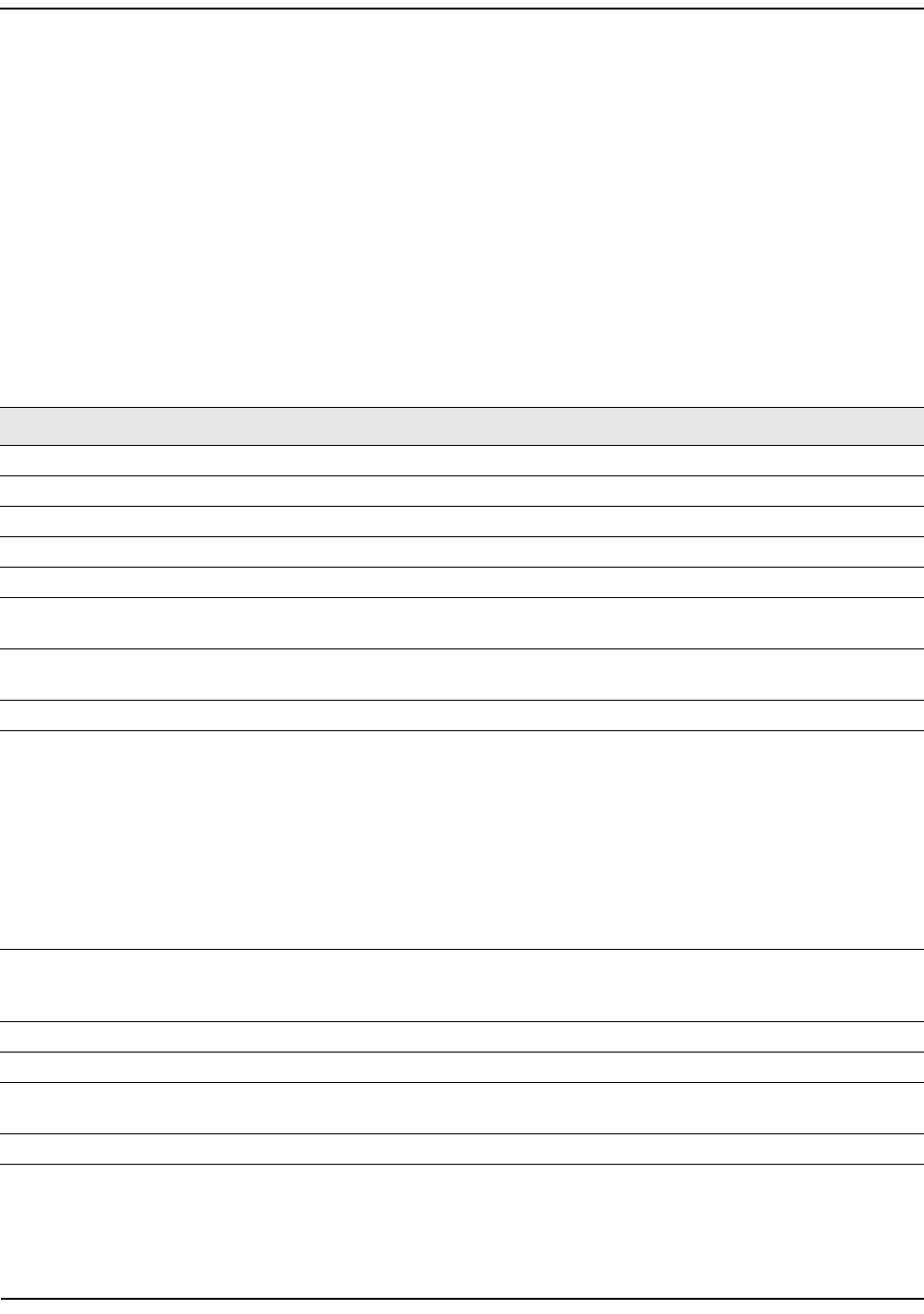
Network Interface Commands
CLI Command Reference
September 2014 Page 46
HP Moonshot Switch Module CLI Command Reference
show network
This command displays configuration settings associated with the switch's network interface. The network
interface is the logical interface used for in-band connectivity with the switch via any of the switch's front panel
ports. The configuration parameters associated with the switch's network interface do not affect the
configuration of the front panel ports through which traffic is switched or routed. The network interface is
always considered to be up, whether or not any member ports are up; therefore, the show network command
will always show Interface Status as Up.
Format show network
Modes •Privileged EXEC
• User EXEC
Term Definition
Interface Status The network interface status; it is always considered to be up.
IP Address The IP address of the interface. The factory default value is 0.0.0.0.
Subnet Mask The IP subnet mask for this interface. The factory default value is 0.0.0.0.
Default Gateway The default gateway for this IP interface. The factory default value is 0.0.0.0.
IPv6 Administrative Mode Whether enabled or disabled.
IPv6 Address/Length The IPv6 address and length. This field is visible only if the IPv6 administrative
mode is enabled.
IPv6 Default Router The IPv6 default router address. This field is visible only if the IPv6
administrative mode is enabled.
Burned In MAC Address The burned in MAC address used for in-band connectivity.
Locally Administered MAC
Address
If desired, a locally administered MAC address can be configured for in-band
connectivity. To take effect, 'MAC Address Type' must be set to 'Locally
Administered'. Enter the address as twelve hexadecimal digits (6 bytes) with a
colon between each byte. Bit 1 of byte 0 must be set to a 1 and bit 0 to a 0, i.e.
byte 0 should have the following mask 'xxxx xx10'. The MAC address used by
this bridge when it must be referred to in a unique fashion. It is recommended
that this be the numerically smallest MAC address of all ports that belong to
this bridge. However it is only required to be unique. When concatenated with
dot1dStpPriority a unique Bridge Identifier is formed which is used in the
Spanning Tree Protocol.
MAC Address Type The MAC address which should be used for in-band connectivity. The choices
are the burned in or the Locally Administered address. The factory default is to
use the burned in MAC address.
Configured IPv4 Protocol The IPv4 network protocol being used. The options are bootp | dhcp | none.
Configured IPv6 Protocol The IPv6 network protocol being used. The options are dhcp | none.
DHCPv6 Client DUID The DHCPv6 client’s unique client identifier. This row is displayed only when the
configured IPv6 protocol is DHCP.
IPv6 Autoconfig Mode Whether IPv6 Stateless address autoconfiguration is enabled or disabled.
Network Interface Commands
CLI Command Reference
September 2014 Page 47
HP Moonshot Switch Module CLI Command Reference
Example: The following shows example CLI display output for the network port.
(Routing) #show network
Interface Status............................... Up
IP Address..................................... 0.0.0.0
Subnet Mask.................................... 0.0.0.0
Default Gateway................................ 0.0.0.0
IPv6 Administrative Mode....................... Disabled
Burned In MAC Address.......................... 00:24:81:D0:0F:C2
Locally Administered MAC address............... 00:00:00:00:00:00
MAC Address Type............................... Burned In
Configured IPv4 Protocol....................... None
Configured IPv6 Protocol....................... None
IPv6 AutoConfig Mode........................... Disabled
Management VLAN ID............................. 1
show serviceport
This command displays service port configuration information.
Management VLAN ID The VLAN ID for the management VLAN. Some network administrators use a
management VLAN to isolate system management traffic from end-user data
traffic.
DHCP Client Identifier The client identifier is displayed in the output of the command only if DHCP is
enabled with the client-id option on the network port. See “network protocol
dhcp” on page 44.
Format show serviceport
Mode •Privileged EXEC
• User EXEC
Term Definition
Interface Status The network interface status. It is always considered to be up.
IP Address The IP address of the interface. The factory default value is 0.0.0.0.
Subnet Mask The IP subnet mask for this interface. The factory default value is 0.0.0.0.
Default Gateway The default gateway for this IP interface. The factory default value is 0.0.0.0.
IPv6 Administrative
Mode
Whether enabled or disabled. Default value is enabled.
IPv6 Address/Length The IPv6 address and length. Default is Link Local format.
IPv6 Default Router TheIPv6 default router address on the service port. The factory default value is an
unspecified address.
Configured IPv4 Protocol The IPv4 network protocol being used. The options are bootp | dhcp | none.
Configured IPv6 Protocol The IPv6 network protocol being used. The options are dhcp | none.
DHCPv6 Client DUID The DHCPv6 client’s unique client identifier. This row is displayed only when the
configured IPv6 protocol is dhcp.
Term Definition
Network Interface Commands
CLI Command Reference
September 2014 Page 48
HP Moonshot Switch Module CLI Command Reference
Example: The following shows example CLI display output for the service port.
(admin) #show serviceport
Interface Status............................... Up
IP Address..................................... 10.230.3.51
Subnet Mask.................................... 255.255.255.0
Default Gateway................................ 10.230.3.1
IPv6 Administrative Mode....................... Enabled
IPv6 Prefix is ................................ fe80::210:18ff:fe82:640/64
IPv6 Prefix is ................................ 2005::21/128
IPv6 Default Router is ........................ fe80::204:76ff:fe73:423a
Configured IPv4 Protocol ...................... DHCP
Configured IPv6 Protocol ...................... DHCP
DHCPv6 Client DUID ............................ 00:03:00:06:00:10:18:82:06:4C
IPv6 Autoconfig Mode........................... Disabled
Burned In MAC Address.......................... 00:10:18:82:06:4D
DHCP Client Identifier......................... 0Moonshot-0010.1882.160C
IPv6 Autoconfig Mode Whether IPv6 Stateless address autoconfiguration is enabled or disabled.
Burned in MAC Address The burned in MAC address used for in-band connectivity.
DHCP Client Identifier The client identifier is displayed in the output of the command only if DHCP is
enabled with the client-id option on the service port. See “serviceport protocol”
on page 43.
Term Definition

IPv6 Management Commands
CLI Command Reference
September 2014 Page 49
HP Moonshot Switch Module CLI Command Reference
IPv6 Management Commands
IPv6 Management commands allow a device to be managed via an IPv6 address. HP Moonshot Switch Module
software has capabilities such as:
• Static assignment of IPv6 addresses and gateways for the service/network ports.
• The ability to ping an IPv6 link-local address over the service/network port.
• The ability to send SNMP traps and queries via the service/network port.
• Management of the device via the network port (in addition to a Routing Interface or the Service port).
serviceport ipv6 enable
Use this command to enable IPv6 operation on the service port. By default, IPv6 operation is enabled on the
service port.
no serviceport ipv6 enable
Use this command to disable IPv6 operation on the service port.
network ipv6 enable
Use this command to enable IPv6 operation on the network port. By default, IPv6 operation is enabled on the
network port.
no network ipv6 enable
Use this command to disable IPv6 operation on the network port.
Format serviceport ipv6 enable
Mode Privileged EXEC
Format no serviceport ipv6 enable
Mode Privileged EXEC
Format network ipv6 enable
Mode Privileged EXEC
Format no network ipv6 enable
Mode Privileged EXEC
IPv6 Management Commands
CLI Command Reference
September 2014 Page 50
HP Moonshot Switch Module CLI Command Reference
serviceport ipv6 address
Use the options of this command to manually configure IPv6 global address, enable/disable stateless global
address autoconfiguration and to enable/disable dhcpv6 client protocol information on the service port.
no serviceport ipv6 address
Use the command no serviceport ipv6 address to remove all configured IPv6 prefixes on the service port
interface.
Use the command with the address option to remove the manually configured IPv6 global address on the
network port interface.
Use the command with the autoconfig option to disable the stateless global address autoconfiguration on the
service port.
Use the command with the dhcp option to disable the dhcpv6 client protocol on the service port.
Note: Multiple IPv6 prefixes can be configured on the service port.
Format serviceport ipv6 address {address/prefix-length [eui64]|autoconfig|dhcp}
Mode Privileged EXEC
Parameter Description
address IPv6 prefix in IPv6 global address format.
prefix-length IPv6 prefix length value.
eui64 Formulate IPv6 address in eui64 address format.
autoconfig Configure stateless global address autoconfiguration capability.
dhcp Configure dhcpv6 client protocol.
Format no serviceport ipv6 address {address/prefix-length [eui64] | autoconfig | dhcp}
Mode Privileged EXEC
IPv6 Management Commands
CLI Command Reference
September 2014 Page 51
HP Moonshot Switch Module CLI Command Reference
serviceport ipv6 gateway
Use this command to configure IPv6 gateway (i.e. Default routers) information for the service port.
no serviceport ipv6 gateway
Use this command to remove IPv6 gateways on the service port interface.
network ipv6 address
Use the options of this command to manually configure IPv6 global address, enable/disable stateless global
address autoconfiguration and to enable/disable dhcpv6 client protocol information for the network port.
Multiple IPv6 addresses can be configured on the network port.
Note: Only a single IPv6 gateway address can be configured for the service port. There may be a
combination of IPv6 prefixes and gateways that are explicitly configured and those that are set
through auto-address configuration with a connected IPv6 router on their service port interface.
Format serviceport ipv6 gateway gateway-address
Mode Privileged EXEC
Parameter Description
gateway-address Gateway address in IPv6 global or link-local address format.
Format no serviceport ipv6 gateway
Mode Privileged EXEC
Format network ipv6 address {address/prefix-length [eui64] | autoconfig | dhcp}
Mode Privileged EXEC
Parameter Description
address IPv6 prefix in IPv6 global address format.
prefix-length IPv6 prefix length value.
eui64 Formulate IPv6 address in eui64 format.
autoconfig Configure stateless global address autoconfiguration capability.
dhcp Configure dhcpv6 client protocol.
IPv6 Management Commands
CLI Command Reference
September 2014 Page 52
HP Moonshot Switch Module CLI Command Reference
no network ipv6 address
The command no network ipv6 address removes all configured IPv6 prefixes.
Use this command with the address option to remove the manually configured IPv6 global address on the
network port interface.
Use this command with the autoconfig option to disable the stateless global address autoconfiguration on the
network port.
Use this command with the dhcp option disables the dhcpv6 client protocol on the network port.
network ipv6 gateway
Use this command to configure IPv6 gateway (i.e. default routers) information for the network port.
no network ipv6 gateway
Use this command to remove IPv6 gateways on the network port interface.
network ipv6 neighbor
Use this command to manually add IPv6 neighbors to the IPv6 neighbor table for this network port. If an IPv6
neighbor already exists in the neighbor table, the entry is automatically converted to a static entry. Static
entries are not modified by the neighbor discovery process. They are, however, treated the same for IPv6
forwarding. Static IPv6 neighbor entries are applied to the kernel stack and to the hardware when the
corresponding interface is operationally active.
Format no network ipv6 address {address/prefix-length [eui64] | autoconfig | dhcp}
Mode Privileged EXEC
Format network ipv6 gateway gateway-address
Mode Privileged EXEC
Parameter Description
gateway-address Gateway address in IPv6 global or link-local address format.
Format no network ipv6 gateway
Mode Privileged EXEC
Format network ipv6 neighbor ipv6-address macaddr
Mode Privileged EXEC
IPv6 Management Commands
CLI Command Reference
September 2014 Page 53
HP Moonshot Switch Module CLI Command Reference
no network ipv6 neighbor
Use this command to remove IPv6 neighbors from the neighbor table.
show network ipv6 neighbors
Use this command to display the information about the IPv6 neighbor entries cached on the network port. The
information is updated to show the type of the entry.
Example: The following is an example of the command.
(Routing) #show network ipv6 neighbors
Neighbor Age
IPv6 Address MAC Address isRtr State (Secs) Type
------------------------ ----------------- ----- --------- ------ ------
FE80::5E26:AFF:FEBD:852C 5c:26:0a:bd:85:2c FALSE Reachable 0 Static
Parameter Description
ipv6-address The IPv6 address of the neighbor or interface.
macaddr The link-layer address.
Format no network ipv6 neighbor ipv6-address macaddr
Mode Privileged EXEC
Default None
Format show network ipv6 neighbors
Mode • Privileged EXEC
Field Description
IPv6 Address The IPv6 address of the neighbor.
MAC Address The MAC Address of the neighbor.
isRtr Shows if the neighbor is a router. If TRUE, the neighbor is a router; FALSE it is not a router.
Neighbor State The state of the neighbor cache entry. Possible values are: Incomplete, Reachable, Stale,
Delay, Probe, and Unknown
Age The time in seconds that has elapsed since an entry was added to the cache.
Last Updated The time in seconds that has elapsed since an entry was added to the cache.
Type The type of neighbor entry. The type is Static if the entry is manually configured and
Dynamic if dynamically resolved.
IPv6 Management Commands
CLI Command Reference
September 2014 Page 54
HP Moonshot Switch Module CLI Command Reference
serviceport ipv6 neighbor
Use this command to manually add IPv6 neighbors to the IPv6 neighbor table for the service port. If an IPv6
neighbor already exists in the neighbor table, the entry is automatically converted to a static entry. Static
entries are not modified by the neighbor discovery process. They are, however, treated the same for IPv6
forwarding. Static IPv6 neighbor entries are applied to the kernel stack and to the hardware when the
corresponding interface is operationally active.
no serviceport ipv6 neighbor
Use this command to remove IPv6 neighbors from the IPv6 neighbor table for the service port.
show serviceport ipv6 neighbors
Use this command to displays information about the IPv6 neighbor entries cached on the service port. The
information is updated to show the type of the entry.
Format serviceport ipv6 neighbor ipv6-address macaddr
Mode Privileged EXEC
Parameter Description
ipv6-address The IPv6 address of the neighbor or interface.
macaddr The link-layer address.
Format no serviceport ipv6 neighbor ipv6-address macaddr
Mode Privileged EXEC
Default None
Format show serviceport ipv6 neighbors
Mode Privileged EXEC
Field Description
IPv6 Address The IPv6 address of the neighbor.
MAC Address The MAC Address of the neighbor.
isRtr Shows if the neighbor is a router. If TRUE, the neighbor is a router; if FALSE, it is not a router.
Neighbor State The state of the neighbor cache entry. The possible values are: Incomplete, Reachable,
Stale, Delay, Probe, and Unknown.
Age The time in seconds that has elapsed since an entry was added to the cache.
Type The type of neighbor entry. The type is Static if the entry is manually configured and
Dynamic if dynamically resolved.
IPv6 Management Commands
CLI Command Reference
September 2014 Page 55
HP Moonshot Switch Module CLI Command Reference
Example: The following is an example of the command.
(Routing) #show serviceport ipv6 neighbors
Neighbor Age
IPv6 Address MAC Address isRtr State (Secs) Type
--------------------------------------- ----------------- ----- --------- ------ --------
FE80::5E26:AFF:FEBD:852C 5c:26:0a:bd:85:2c FALSE Reachable 0 Dynamic
ping ipv6
Use this command to determine whether another computer is on the network. Ping provides a synchronous
response when initiated from the CLI and Web interfaces. To use the command, configure the switch for
network (in-band) connection. The source and target devices must have the ping utility enabled and running
on top of TCP/IP. The switch can be pinged from any IP workstation with which the switch is connected through
the default VLAN (VLAN 1), as long as there is a physical path between the switch and the workstation. The
terminal interface sends three pings to the target station. Use the ipv6-address|hostname parameter to ping
an interface by using the global IPv6 address of the interface. The argument unit/slot/port corresponds to a
physical routing interface or VLAN routing interface. The keyword vlan is used to specify the VLAN ID of the
routing VLAN directly instead of a unit/slot/port format. Use the optional size keyword to specify the size of
the ping packet.
You can utilize the ping or traceroute facilities over the service/network ports when using an IPv6 global
address ipv6-global-address|hostname. Any IPv6 global address or gateway assignments to these interfaces
will cause IPv6 routes to be installed within the IP stack such that the ping or traceroute request is routed out
the service/network port properly. When referencing an IPv6 link-local address, you must also specify the
service or network port interface by using the serviceport or network parameter.
Using the options described below, you can specify the number and size of Echo Requests and the interval
between Echo Requests. You can also specify the interface to ping and the source interface from which the ping
should originate.
Default • The default count is 1.
• The default interval is 3 seconds.
• The default size is 0 bytes.
Format ping ipv6 {ipv6-global-address | hostname | {interface {unit/slot/port | vlan 1-4093|
serviceport | network} link-local-address} [count count] [interval 1-60] [size size]
[source {ipv6-address | {unit/slot/port | vlan 1-4093 | serviceport | network}]
Mode •Privileged EXEC
•User Exec
Parameter Description
ipv6-global-address Global IPv6 addresses to ping.
hostname The DNS-resolvable host name of the system to ping.
interface Use the interface keyword to ping a link-local IPv6 address over an interface.
link-local-address The link-local IPv6 address to ping over an interface.
IPv6 Management Commands
CLI Command Reference
September 2014 Page 56
HP Moonshot Switch Module CLI Command Reference
Example: IPv6 ping success
(Routing) #ping 2001::1
Pinging 2001::1 with 64 bytes of data:
Send count=3, Receive count=3 from 2001::1
Average round trip time = 3.00 ms
Example: IPv6 ping failure
(Routing) #ping ipv6 2001::4
Pinging 2001::4 with 64 bytes of data:
Send count=3, Receive count=0 from 2001::4
Average round trip time = 0.00 ms
show network ipv6 dhcp statistics
This command displays the statistics of the DHCPv6 client running on the network management interface.
count Use the count parameter to specify the number of ping packets (ICMP Echo
requests) that are sent to the destination address specified by the ip-address field.
The range for count is 1 to 15 requests.
interval Use the interval parameter to specify the time between Echo Requests, in
seconds. Range is 1 to 60 seconds.
size Use the size parameter to specify the size, in bytes, of the payload of the Echo
Requests sent. Range is 0 to 65507 bytes.
source Use the source parameter to specify the source IP/IPv6 address or interface to use
when sending the Echo requests packets.
Format show network ipv6 dhcp statistics
Mode •Privileged EXEC
• User EXEC
Field Description
DHCPv6 Advertisement Packets
Received
The number of DHCPv6 Advertisement packets received on the network
interface.
DHCPv6 Reply Packets Received The number of DHCPv6 Reply packets received on the network interface.
Received DHCPv6
Advertisement Packets
Discarded
The number of DHCPv6 Advertisement packets discarded on the network
interface.
Received DHCPv6 Reply Packets
Discarded
The number of DHCPv6 Reply packets discarded on the network interface.
DHCPv6 Malformed Packets
Received
The number of DHCPv6 packets that are received malformed on the network
interface.
Total DHCPv6 Packets Received The total number of DHCPv6 packets received on the network interface.
Parameter Description
IPv6 Management Commands
CLI Command Reference
September 2014 Page 57
HP Moonshot Switch Module CLI Command Reference
Example: The following shows example CLI display output for the command.
(admin)#show network ipv6 dhcp statistics
DHCPv6 Client Statistics
-------------------------
DHCPv6 Advertisement Packets Received................. 0
DHCPv6 Reply Packets Received......................... 0
Received DHCPv6 Advertisement Packets Discarded....... 0
Received DHCPv6 Reply Packets Discarded............... 0
DHCPv6 Malformed Packets Received..................... 0
Total DHCPv6 Packets Received......................... 0
DHCPv6 Solicit Packets Transmitted.................... 0
DHCPv6 Request Packets Transmitted.................... 0
DHCPv6 Renew Packets Transmitted...................... 0
DHCPv6 Rebind Packets Transmitted..................... 0
DHCPv6 Release Packets Transmitted.................... 0
Total DHCPv6 Packets Transmitted...................... 0
DHCPv6 Solicit Packets
Transmitted
The number of DHCPv6 Solicit packets transmitted on the network interface.
DHCPv6 Request Packets
Transmitted
The number of DHCPv6 Request packets transmitted on the network
interface.
DHCPv6 Renew Packets
Transmitted
The number of DHCPv6 Renew packets transmitted on the network
interface.
DHCPv6 Rebind Packets
Transmitted
The number of DHCPv6 Rebind packets transmitted on the network
interface.
DHCPv6 Release Packets
Transmitted
The number of DHCPv6 Release packets transmitted on the network
interface.
Total DHCPv6 Packets
Transmitted
The total number of DHCPv6 packets transmitted on the network interface.
Field Description
IPv6 Management Commands
CLI Command Reference
September 2014 Page 58
HP Moonshot Switch Module CLI Command Reference
show serviceport ipv6 dhcp statistics
This command displays the statistics of the DHCPv6 client running on the serviceport management interface.
Example: The following shows example CLI display output for the command.
(admin)#show serviceport ipv6 dhcp statistics
DHCPv6 Client Statistics
-------------------------
DHCPv6 Advertisement Packets Received................. 0
DHCPv6 Reply Packets Received......................... 0
Received DHCPv6 Advertisement Packets Discarded....... 0
Received DHCPv6 Reply Packets Discarded............... 0
DHCPv6 Malformed Packets Received..................... 0
Total DHCPv6 Packets Received......................... 0
Format show serviceport ipv6 dhcp statistics
Mode •Privileged EXEC
• User EXEC
Field Description
DHCPv6 Advertisement
Packets Received
The number of DHCPv6 Advertisement packets received on the service port
interface.
DHCPv6 Reply Packets
Received
The number of DHCPv6 Reply packets received on the service port interface.
Received DHCPv6
Advertisement Packets
Discarded
The number of DHCPv6 Advertisement packets discarded on the service port
interface.
Received DHCPv6 Reply
Packets Discarded
The number of DHCPv6 Reply packets discarded on the service port interface.
DHCPv6 Malformed
Packets Received
The number of DHCPv6 packets that are received malformed on the service port
interface.
Total DHCPv6 Packets
Received
The total number of DHCPv6 packets received on the service port interface.
DHCPv6 Solicit Packets
Transmitted
The number of DHCPv6 Solicit packets transmitted on the service port interface.
DHCPv6 Request Packets
Transmitted
The number of DHCPv6 Request packets transmitted on the service port interface.
DHCPv6 Renew Packets
Transmitted
The number of DHCPv6 Renew packets transmitted on the service port interface.
DHCPv6 Rebind Packets
Transmitted
The number of DHCPv6 Rebind packets transmitted on the service port interface.
DHCPv6 Release Packets
Transmitted
The number of DHCPv6 Release packets transmitted on the service port interface.
Total DHCPv6 Packets
Transmitted
The total number of DHCPv6 packets transmitted on the service port interface.
Console Port Access Commands
CLI Command Reference
September 2014 Page 59
HP Moonshot Switch Module CLI Command Reference
DHCPv6 Solicit Packets Transmitted.................... 0
DHCPv6 Request Packets Transmitted.................... 0
DHCPv6 Renew Packets Transmitted...................... 0
DHCPv6 Rebind Packets Transmitted..................... 0
DHCPv6 Release Packets Transmitted.................... 0
Total DHCPv6 Packets Transmitted...................... 0
clear network ipv6 dhcp statistics
Use this command to clear the DHCPv6 statistics on the network management interface.
clear serviceport ipv6 dhcp statistics
Use this command to clear the DHCPv6 client statistics on the service port interface.
Console Port Access Commands
This section describes the commands you use to configure the console port. You can use a serial cable to
connect a management host directly to the console port of the switch.
configuration
This command gives you access to the Global Config mode. From the Global Config mode, you can configure a
variety of system settings, including user accounts. From the Global Config mode, you can enter other
command modes, including Line Config mode.
line
This command gives you access to the Line Console mode, which allows you to configure various Telnet settings
and the console port, as well as to configure console login/enable authentication.
Format clear network ipv6 dhcp statistics
Mode Privileged EXEC
Format clear serviceport ipv6 dhcp statistics
Mode Privileged EXEC
Format configuration
Mode Privileged EXEC
Format line {console | telnet | ssh}
Mode Global Config
Console Port Access Commands
CLI Command Reference
September 2014 Page 60
HP Moonshot Switch Module CLI Command Reference
Example: The following shows an example of the CLI command.
(Routing)(config)#line telnet
(Routing)(config-telnet)#
serial baudrate
This command specifies the communication rate of the terminal interface. The supported rates are 1200, 2400,
4800, 9600, 19200, 38400, 57600, 115200.
no serial baudrate
This command sets the communication rate of the terminal interface.
serial timeout
This command specifies the maximum connect time (in minutes) without console activity. A value of 0 indicates
that a console can be connected indefinitely. The time range is 0 to 160.
no serial timeout
This command sets the maximum connect time (in minutes) without console activity.
Term Definition
console Console terminal line.
telnet Virtual terminal for remote console access (Telnet).
ssh Virtual terminal for secured remote console access (SSH).
Default 115200
Format serial baudrate {1200 | 2400 | 4800 | 9600 | 19200 | 38400 | 57600 | 115200}
Mode Line Config
Format no serial baudrate
Mode Line Config
Default No timeout
Format serial timeout 0-160
Mode Line Config
Format no serial timeout
Mode Line Config
Console Port Access Commands
CLI Command Reference
September 2014 Page 61
HP Moonshot Switch Module CLI Command Reference
serial port
This command controls which of the two serial ports is the active serial port. Only one serial port can be active
at a time. The external serial port is the RJ45 port next to the external Ethernet/stacking ports on the switch
uplink module at the rear of the chassis. The internal serial port is accessible from the iLO Chassis Manager
virtual serial port feature. Only one serial port is accessible at a time. By default, the external serial port is
enabled, and the virtual serial port is disabled.
show serial
This command displays serial communication settings for the switch.
Example: The following is an example of the command output.
(Routing) #show serial
Serial Port Login Timeout (minutes)............ 0
Baud Rate (bps)................................ 115200
Character Size (bits).......................... 8
Flow Control................................... Disable
Stop Bits...................................... 1
Parity......................................... none
Note: After executing this command to change the active serial port, you must reboot the system for
the change to take effect.
Default External
Format serial port {internal | external}
Modes Line Config
Format show serial
Modes •Privileged EXEC
• User EXEC
Term Definition
Serial Port Login
Timeout (minutes)
The time, in minutes, of inactivity on a serial port connection, after which the switch
will close the connection. A value of 0 disables the timeout.
Baud Rate (bps) The default baud rate at which the serial port will try to connect.
Character Size (bits) The number of bits in a character. The number of bits is always 8.
Flow Control Whether Hardware Flow-Control is enabled or disabled. Hardware Flow Control is
always disabled.
Stop Bits The number of Stop bits per character. The number of Stop bits is always 1.
Parity The parity method used on the Serial Port. The Parity Method is always None.

Telnet Commands
CLI Command Reference
September 2014 Page 62
HP Moonshot Switch Module CLI Command Reference
Telnet Commands
This section describes the commands you use to configure and view Telnet settings. You can use Telnet to
manage the device from a remote management host.
ip telnet server enable
Use this command to enable Telnet connections to the system and to enable the Telnet Server Admin Mode.
This command opens the Telnet listening port.
no ip telnet server enable
Use this command to disable Telnet access to the system and to disable the Telnet Server Admin Mode. This
command closes the Telnet listening port and disconnects all open Telnet sessions.
telnet
This command establishes a new outbound Telnet connection to a remote host. The host value must be a valid
IP address or host name. Valid values for port should be a valid decimal integer in the range of 0 to 65535,
where the default value is 23. If [debug] is used, the current Telnet options enabled is displayed. The optional
line parameter sets the outbound Telnet operational mode as linemode where, by default, the operational
mode is character mode. The localecho option enables local echo.
Default disabled
Format ip telnet server enable
Mode Privileged EXEC
Format no ip telnet server enable
Mode Privileged EXEC
Format telnet ip-address|hostname port [debug] [line] [localecho]
Modes •Privileged EXEC
• User EXEC

Telnet Commands
CLI Command Reference
September 2014 Page 63
HP Moonshot Switch Module CLI Command Reference
transport input telnet
This command regulates new Telnet sessions. If enabled, new Telnet sessions can be established until there are
no more sessions available. An established session remains active until the session is ended or an abnormal
network error ends the session.
no transport input telnet
Use this command to prevent new Telnet sessions from being established.
transport output telnet
This command regulates new outbound Telnet connections. If enabled, new outbound Telnet sessions can be
established until the system reaches the maximum number of simultaneous outbound Telnet sessions allowed.
An established session remains active until the session is ended or an abnormal network error ends it.
no transport output telnet
Use this command to prevent new outbound Telnet connection from being established.
Note: If the Telnet Server Admin Mode is disabled, Telnet sessions cannot be established. Use the ip
telnet server enable command to enable Telnet Server Admin Mode.
Default enabled
Format transport input telnet
Mode Line Config
Format no transport input telnet
Mode Line Config
Default enabled
Format transport output telnet
Mode Line Config
Format no transport output telnet
Mode Line Config

Telnet Commands
CLI Command Reference
September 2014 Page 64
HP Moonshot Switch Module CLI Command Reference
session-limit
This command specifies the maximum number of simultaneous outbound Telnet sessions. A value of 0
indicates that no outbound Telnet session can be established.
no session-limit
This command sets the maximum number of simultaneous outbound Telnet sessions to the default value.
session-timeout
This command sets the Telnet session timeout value.The timeout value unit of time is minutes.
no session-timeout
This command sets the Telnet session timeout value to the default. The timeout value unit of time is minutes.
telnetcon maxsessions
This command specifies the maximum number of Telnet connection sessions that can be established. A value
of 0 indicates that no Telnet connection can be established. The range is 0-5.
Default 5
Format session-limit 0-5
Mode Line Config
Format no session-limit
Mode Line Config
Default 5
Format session-timeout 1-160
Mode Line Config
Format no session-timeout
Mode Line Config
Default 5
Format telnetcon maxsessions 0-5
Mode Privileged EXEC
Telnet Commands
CLI Command Reference
September 2014 Page 65
HP Moonshot Switch Module CLI Command Reference
no telnetcon maxsessions
This command sets the maximum number of Telnet connection sessions that can be established to the default
value.
telnetcon timeout
This command sets the Telnet connection session timeout value, in minutes. A session is active as long as the
session has not been idle for the value set. The time is a decimal value from 1 to 160.
no telnetcon timeout
This command sets the Telnet connection session timeout value to the default.
Format no telnetcon maxsessions
Mode Privileged EXEC
Note: When you change the timeout value, the new value is applied to all active and inactive sessions
immediately. Any sessions that have been idle longer than the new timeout value are disconnected
immediately.
Default 5
Format telnetcon timeout 1-160
Mode Privileged EXEC
Note: Changing the timeout value for active sessions does not become effective until the session is
accessed again. Also, any keystroke activates the new timeout duration.
Format no telnetcon timeout
Mode Privileged EXEC
Telnet Commands
CLI Command Reference
September 2014 Page 66
HP Moonshot Switch Module CLI Command Reference
show telnet
This command displays the current outbound Telnet settings. In other words, these settings apply to Telnet
connections initiated from the switch to a remote system.
show telnetcon
This command displays the current inbound Telnet settings. In other words, these settings apply to Telnet
connections initiated from a remote system to the switch.
Format show telnet
Modes •Privileged EXEC
• User EXEC
Term Definition
Outbound Telnet Login Timeout The number of minutes an outbound Telnet session is allowed to remain
inactive before being logged off.
Maximum Number of Outbound
Telnet Sessions
The number of simultaneous outbound Telnet connections allowed.
Allow New Outbound Telnet
Sessions
Indicates whether outbound Telnet sessions will be allowed.
Format show telnetcon
Modes •Privileged EXEC
• User EXEC
Term Definition
Remote Connection Login
Timeout (minutes)
This object indicates the number of minutes a remote connection session is
allowed to remain inactive before being logged off. May be specified as a
number from 1 to 160. The factory default is 5.
Maximum Number of Remote
Connection Sessions
This object indicates the number of simultaneous remote connection
sessions allowed. The factory default is 5.
Allow New Telnet Sessions New Telnet sessions will not be allowed when this field is set to no. The
factory default value is yes.
Telnet Server Admin Mode The administrative mode of the telnet server on the system.
Secure Shell Commands
CLI Command Reference
September 2014 Page 67
HP Moonshot Switch Module CLI Command Reference
Secure Shell Commands
This section describes the commands you use to configure Secure Shell (SSH) access to the switch. Use SSH to
access the switch from a remote management host.
ip ssh
Use this command to enable SSH access to the system. (This command is the short form of the ip ssh server
enable command.)
ip ssh protocol
This command is used to set or remove protocol levels (or versions) for SSH. Either SSH1 (1), SSH2 (2), or both
SSH 1 and SSH 2 (1 and 2) can be set.
ip ssh server enable
This command enables the IP secure shell server. No new SSH connections are allowed, but the existing SSH
connections continue to work until timed-out or logged-out.
no ip ssh server enable
This command disables the IP secure shell server.
Note: The system allows a maximum of 5 SSH sessions.
Default enabled
Format ip ssh
Mode Privileged EXEC
Default 2
Format ip ssh protocol [1] [2]
Mode Privileged EXEC
Default enabled
Format ip ssh server enable
Mode Privileged EXEC
Format no ip ssh server enable
Mode Privileged EXEC

Secure Shell Commands
CLI Command Reference
September 2014 Page 68
HP Moonshot Switch Module CLI Command Reference
sshcon maxsessions
This command specifies the maximum number of SSH connection sessions that can be established. A value of
0 indicates that no ssh connection can be established. The range is 0 to 5.
no sshcon maxsessions
This command sets the maximum number of allowed SSH connection sessions to the default value.
sshcon timeout
This command sets the SSH connection session timeout value, in minutes. A session is active as long as the
session has been idle for the value set. The time is a decimal value from 1 to 160.
Changing the timeout value for active sessions does not become effective until the session is re accessed. Also,
any keystroke activates the new timeout duration.
no sshcon timeout
This command sets the SSH connection session timeout value, in minutes, to the default.
Changing the timeout value for active sessions does not become effective until the session is re accessed. Also,
any keystroke activates the new timeout duration.
Default 5
Format sshcon maxsessions 0-5
Mode Privileged EXEC
Format no sshcon maxsessions
Mode Privileged EXEC
Default 5
Format sshcon timeout 1-160
Mode Privileged EXEC
Format no sshcon timeout
Mode Privileged EXEC
Management Security Commands
CLI Command Reference
September 2014 Page 69
HP Moonshot Switch Module CLI Command Reference
show ip ssh
This command displays the ssh settings.
Management Security Commands
This section describes commands you use to generate keys and certificates, which you can do in addition to
loading them as before.
crypto key generate rsa
Use this command to generate an RSA key pair for SSH. The new key files will overwrite any existing generated
or downloaded RSA key files.
no crypto key generate rsa
Use this command to delete the RSA key files from the device.
Format show ip ssh
Mode Privileged EXEC
Term Definition
Administrative Mode This field indicates whether the administrative mode of SSH is enabled or
disabled.
Protocol Level The protocol level may have the values of version 1, version 2 or both
versions 1 and version 2.
SSH Sessions Currently Active The number of SSH sessions currently active.
Max SSH Sessions Allowed The maximum number of SSH sessions allowed.
SSH Timeout The SSH timeout value in minutes.
Keys Present Indicates whether the SSH RSA and DSA key files are present on the device.
Key Generation in Progress Indicates whether RSA or DSA key files generation is currently in progress.
Format crypto key generate rsa
Mode Global Config
Format no crypto key generate rsa
Mode Global Config
Access Commands
CLI Command Reference
September 2014 Page 70
HP Moonshot Switch Module CLI Command Reference
crypto key generate dsa
Use this command to generate a DSA key pair for SSH. The new key files will overwrite any existing generated
or downloaded DSA key files.
no crypto key generate dsa
Use this command to delete the DSA key files from the device.
Access Commands
Use the commands in this section to close remote connections or to view information about connections to
the system.
disconnect
Use the disconnect command to close Telnet or SSH sessions. Use all to close all active sessions, or use
session-id to specify the session ID to close. To view the possible values for session-id, use the show
loginsession command.
show loginsession
This command displays current Telnet, SSH and serial port connections to the switch. This command displays
truncated user names. Use the show loginsession long command to display the complete usernames.
Format crypto key generate dsa
Mode Global Config
Format no crypto key generate dsa
Mode Global Config
Format disconnect {session_id | all}
Mode Privileged EXEC
Format show loginsession
Mode Privileged EXEC
Term Definition
ID Login Session ID.
User Name The name the user entered to log on to the system.
Connection From IP address of the remote client machine or EIA-232 for the serial port connection.
User Account Commands
CLI Command Reference
September 2014 Page 71
HP Moonshot Switch Module CLI Command Reference
show loginsession long
This command displays the complete user names of the users currently logged in to the switch.
Example: The following shows an example of the command.
(Routing) #show loginsession long
User Name
------------
admin
test1111test1111test1111test1111test1111test1111test1111test1111
User Account Commands
This section describes the commands you use to add, manage, and delete system users. HP Moonshot Switch
Module software has two default users: admin and guest. The admin user can view and configure system
settings, and the guest user can view settings.
aaa authentication login
Use this command to set authentication at login. The default and optional list names created with the
command are used with the aaa authentication login command. Create a list by entering the aaa
authentication login list-name method command, where list-name is any character string used to name this
list. The method argument identifies the list of methods that the authentication algorithm tries, in the given
sequence.
The additional methods of authentication are used only if the previous method returns an error, not if there is
an authentication failure. To ensure that the authentication succeeds even if all methods return an error,
specify none as the fInal method in the command line. For example, if none is specified as an authentication
method after radius, no authentication is used if the RADIUS server is down.
Idle Time Time this session has been idle.
Session Time Total time this session has been connected.
Session Type Shows the type of session, which can be HTTP, HTTPS, telnet, serial, or SSH.
Format show loginsession long
Mode Privileged EXEC
Note: You cannot delete the admin user. There is only one user allowed with read/write privileges.
You can configure up to five read-only users on the system.
Term Definition
User Account Commands
CLI Command Reference
September 2014 Page 72
HP Moonshot Switch Module CLI Command Reference
Example: The following shows an example of the command.
(Routing)(config)# aaa authentication login default radius local enable none
no aaa authentication login
This command returns to the default.
Default •defaultList. Used by the console and only contains the method local.
•networkList. Used by telnet and SSH and only contains the method local.
Format aaa authentication login {default | list-name} method1 [method2...]
Mode Global Config
Parameter Definition
default Uses the listed authentication methods that follow this argument as the default list of
methods when a user logs in.
list-name Character string of up to 15 characters used to name the list of authentication methods
activated when a user logs in.
method1...
[method2...]
At least one from the following:
• enable. Uses the enable password for authentication.
• line. Uses the line password for authentication.
• local. Uses the local username database for authentication.
• none. Uses no authentication.
• radius. Uses the list of all RADIUS servers for authentication.
• tacacs. Uses the list of all TACACS servers for authentication.
Format aaa authentication login {default | list-name}
Mode Global Config

User Account Commands
CLI Command Reference
September 2014 Page 73
HP Moonshot Switch Module CLI Command Reference
aaa authentication enable
Use this command to set authentication for accessing higher privilege levels. The default enable list is
enableList. It is used by console, and contains the method as enable followed by none.
A separate default enable list, enableNetList, is used for Telnet and SSH users instead of enableList. This list
is applied by default for Telnet and SSH, and contains enable followed by deny methods. In HP Moonshot
Switch Module, by default, the enable password is not configured. That means that, by default, Telnet and SSH
users will not get access to Privileged EXEC mode. On the other hand, with default conditions, a console user
always enter the Privileged EXEC mode without entering the enable password.
The default and optional list names created with the aaa authentication enable command are used with the
enable authentication command. Create a list by entering the aaa authentication enable list-name method
command where list-name is any character string used to name this list. The method argument identifies the
list of methods that the authentication algorithm tries in the given sequence.
The user manager returns ERROR (not PASS or FAIL) for enable and line methods if no password is configured,
and moves to the next configured method in the authentication list. The method none reflects that there is no
authentication needed.
The user will only be prompted for an enable password if one is required. The following authentication
methods do not require passwords:
1. none
2. deny
3. enable (if no enable password is configured)
4. line (if no line password is configured)
Example: See the examples below.
a. aaa authentication enable default enable none
b. aaa authentication enable default line none
c. aaa authentication enable default enable radius none
d. aaa authentication enable default line tacacs none
Examples a and b do not prompt for a password, however because examples c and d contain the radius and
tacacs methods, the password prompt is displayed.
If the login methods include only enable, and there is no enable password configured, then HP Moonshot
Switch Module does not prompt for a username. In such cases, HP Moonshot Switch Module only prompts for
a password. HP Moonshot Switch Module supports configuring methods after the local method in
authentication and authorization lists. If the user is not present in the local database, then the next configured
method is tried.
The additional methods of authentication are used only if the previous method returns an error, not if it fails.
To ensure that the authentication succeeds even if all methods return an error, specify none as the final method
in the command line.
Use the command “show authorization methods” on page 76 to display information about the authentication
methods.
User Account Commands
CLI Command Reference
September 2014 Page 74
HP Moonshot Switch Module CLI Command Reference
Example: The following example sets authentication when accessing higher privilege levels.
(Routing)(config)# aaa authentication enable default enable
no aaa authentication enable
Use this command to return to the default configuration.
Note: Requests sent by the switch to a RADIUS server include the username $enabx$, where x is the
requested privilege level. For enable to be authenticated on Radius servers, add $enabx$ users to
them. The login user ID is now sent to TACACS+ servers for enable authentication.
Default default
Format aaa authentication enable {default | list-name} method1 [method2...]
Mode Global Config
Parameter Description
default Uses the listed authentication methods that follow this argument as the default list of
methods, when using higher privilege levels.
list-name Character string used to name the list of authentication methods activated, when using
access higher privilege levels. Range: 1-15 characters.
method1
[method2...]
Specify at least one from the following:
•deny. Used to deny access.
•enable. Uses the enable password for authentication.
•line. Uses the line password for authentication.
•none. Uses no authentication.
•radius. Uses the list of all RADIUS servers for authentication.
•tacacs. Uses the list of all TACACS+ servers for authentication.
Format no aaa authentication enable {default | list-name}
Mode Global Config
User Account Commands
CLI Command Reference
September 2014 Page 75
HP Moonshot Switch Module CLI Command Reference
aaa authorization
Use this command to configure command and exec authorization method lists. This list is identified by default
or a user-specified list-name. If tacacs is specified as the authorization method, authorization commands are
notified to a TACACS+ server. If none is specified as the authorization method, command authorization is not
applicable. A maximum of five authorization method lists can be created for the commands type.
Per-Command Authorization
When authorization is configured for a line mode, the user manager sends information about an entered
command to the AAA server. The AAA server validates the received command, and responds with either a PASS
or FAIL response. If approved, the command is executed. Otherwise, the command is denied and an error
message is shown to the user. The various utility commands like tftp, ping, and outbound telnet should also
pass command authorization. Applying the script is treated as a single command apply script, which also goes
through authorization. Startup-config commands applied on device boot-up are not an object of the
authorization process.
The per-command authorization usage scenario is this:
1. Configure Authorization Method List
aaa authorization commands listname tacacs radius none
2. Apply AML to an Access Line Mode (console, telnet, SSH)
authorization commands listname
3. Commands entered by the user will go through command authorization via TACACS+ or RADIUS server and
will be accepted or denied.
Exec Authorization
When exec authorization is configured for a line mode, the user may not be required to use the enable
command to enter Privileged EXEC mode. If the authorization response indicates that the user has sufficient
privilege levels for Privileged EXEC mode, then the user bypasses User EXEC mode entirely.
The exec authorization usage scenario is this:
1. Configure Authorization Method List
aaa authorization exec listname method1 [method2....]
2. Apply AML to an Access Line Mode (console, telnet, SSH)
authorization exec listname
3. When the user logs in, in addition to authentication, authorization will be performed to determine if the
user is allowed direct access to Privileged EXEC mode.
Note: Local method is not supported for command authorization. Command authorization with
RADIUS will work if, and only if, the applied authentication method is also radius.
Format aaa authorization {commands|exec} {default|list-name} method1[method2]
Mode Global Config
User Account Commands
CLI Command Reference
September 2014 Page 76
HP Moonshot Switch Module CLI Command Reference
Example: The following shows an example of the command.
(Routing) #
(Routing) #configure
(Routing) (Config)#aaa authorization exec default tacacs none
(Routing) (Config)#aaa authorization commands default tacacs none
no aaa authorization
This command deletes the authorization method list.
show authorization methods
This command displays the configured authorization method lists.
Example: The following shows example CLI display output for the command.
(Routing) #show authorization methods
Command Authorization Method Lists
-------------------------------------
dfltCmdAuthList : none
Line Command Method List
--------- ---------------------
Console dfltCmdAuthList
Telnet dfltCmdAuthList
SSH dfltCmdAuthList
Exec Authorization Method Lists
-------------------------------------
dfltExecAuthList : none
Parameter Description
commands Provides authorization for all user-executed commands.
exec Provides exec authorization.
default The default list of methods for authorization services.
list-name Alphanumeric character string used to name the list of authorization methods.
method TACACS+/RADIUS/Local and none are supported.
Format no aaa authorization {commands|exec} {default|list-name}
Mode Global Config
Format show authorization methods
Mode Privileged EXEC
User Account Commands
CLI Command Reference
September 2014 Page 77
HP Moonshot Switch Module CLI Command Reference
Line Exec Method List
--------- ---------------------
Console dfltExecAuthList
Telnet dfltExecAuthList
SSH dfltExecAuthList
enable authentication
Use this command to specify the authentication method list when accessing a higher privilege level from a
remote telnet or console.
Example: The following example specifies the default authentication method when accessing a higher
privilege level console.
(Routing)(config)# line console
(Routing)(config-line)# enable authentication default
no enable authentication
Use this command to return to the default specified by the enable authentication command.
Format enable authentication {default | list-name}
Mode Line Config
Parameter Description
default Uses the default list created with the aaa authentication enable command.
list-name Uses the indicated list created with the aaa authentication enable command.
Format no enable authentication
Mode Line Config
User Account Commands
CLI Command Reference
September 2014 Page 78
HP Moonshot Switch Module CLI Command Reference
username (Global Config)
Use the username command in Global Config mode to add a new user to the local user database. The default
privilege level is 1. Using the encrypted keyword allows the administrator to transfer local user passwords
between devices without having to know the passwords. When the password parameter is used along with
encrypted parameter, the password must be exactly 128 hexadecimal characters in length. If the password
strength feature is enabled, this command checks for password strength and returns an appropriate error if it
fails to meet the password strength criteria. Giving the optional parameter override-complexity-check
disables the validation of the password strength.
Example: The following example configures user bob with password xxxyyymmmm and user level 15.
(Routing)(config)# username bob password xxxyyymmmm level 15
Example: The following example configures user test with password testPassword and assigns a user level
of 1 (read-only). The password strength will not be validated.
(Routing)(config)# username test password testPassword level 1 override-complexity-check
Example: A third example.
(Routing) (Config)#username test password testtest
Example: A fourth example.
(Routing) (Config)# username test password
e8d63677741431114f9e39a853a15e8fd35ad059e2e1b49816c243d7e08152b052eafbf23b528d348cdba1b1b7ab91be84
2278e5e970dbfc62d16dcd13c0b864 level 1 encrypted override-complexity-check
(Routing) (Config)# username test level 15 password
Enter new password:********
Confirm new password:********
Format username name {password password [encrypted [override-complexity-check] | level level
[encrypted [override-complexity-check]] | override-complexity-check]} | {level level
[override-complexity-check] password}
Mode Global Config
Parameter Description
name The name of the user. Range: 1–32 characters.
password The authentication password for the user. Range 8-64 characters. This value can
be zero if the no passwords min-length command has been executed. The
special characters allowed in the password include ! # $ % & ' ( ) * + , - .
/ : ; < = > @ [ \ ] ^ _ ` { | } ~.
level The user level. Level 0 can be assigned by a level 15 user to another user to
suspend that user’s access. Range 0-15. Enter access level 1 for Read Access or
15 for Read/Write Access. If not specified where it is optional, the privilege level
is 1.
encrypted Encrypted password entered, copied from another switch configuration.
override-complexity-check Disables the validation of the password strength.
User Account Commands
CLI Command Reference
September 2014 Page 79
HP Moonshot Switch Module CLI Command Reference
no username
Use this command to remove a user name.
username name nopassword
Use this command to remove an existing user’s password (NULL password).
username name unlock
Use this command to allows a locked user account to be unlocked. Only a user with read/write access can re-
activate a locked user account.
username snmpv3 accessmode
This command specifies the snmpv3 access privileges for the specified login user. The valid accessmode values
are readonly or readwrite. The username is the login user name for which the specified access mode applies.
The default is readwrite for the “admin” user and readonly for all other users. You must enter the username in
the same case you used when you added the user. To see the case of the username, enter the show users
command.
Format no username name
Mode Global Config
Format username name nopassword [level level]
Mode Global Config
Parameter Description
name The name of the user. Range: 1-32 characters.
password The authentication password for the user. Range 8-64 characters.
level The user level. Level 0 can be assigned by a level 15 user to another user to suspend that
user’s access. Range 0-15.
Format username name unlock
Mode Global Config
Defaults • admin - readwrite
•other - readonly
Format username snmpv3 accessmode username {readonly | readwrite}
Mode Global Config

User Account Commands
CLI Command Reference
September 2014 Page 80
HP Moonshot Switch Module CLI Command Reference
no username snmpv3 accessmode
This command sets the snmpv3 access privileges for the specified user as readwrite for the “admin” user and
readonly for all other users. The username value is the user name for which the specified access mode will apply.
username snmpv3 authentication
This command specifies the authentication protocol to be used for the specified user. The valid authentication
protocols are none, md5 or sha. If you specify md5 or sha, the login password is also used as the snmpv3
authentication password and therefore must be at least eight characters in length. The username is the user
name associated with the authentication protocol. You must enter the username in the same case you used
when you added the user. To see the case of the username, enter the show users command.
no username snmpv3 authentication
This command sets the authentication protocol to be used for the specified user to none. The username is the
user name for which the specified authentication protocol is used.
username snmpv3 encryption
This command specifies the encryption protocol used for the specified user. The valid encryption protocols are
des or none.
If you select des, you can specify the required key on the command line. The encryption key must be 8 to 64
characters long. If you select the des protocol but do not provide a key, the user is prompted for the key. When
you use the des protocol, the login password is also used as the snmpv3 encryption password, so it must be a
minimum of eight characters. If you select none, you do not need to provide a key.
The username value is the login user name associated with the specified encryption. You must enter the
username in the same case you used when you added the user. To see the case of the username, enter the show
users command.
Format no username snmpv3 accessmode username
Mode Global Config
Default no authentication
Format username snmpv3 authentication username {none | md5 | sha}
Mode Global Config
Format no username snmpv3 authentication username
Mode Global Config
Default no encryption
Format username snmpv3 encryption username {none | des[key]}
Mode Global Config
User Account Commands
CLI Command Reference
September 2014 Page 81
HP Moonshot Switch Module CLI Command Reference
no username snmpv3 encryption
This command sets the encryption protocol to none. The username is the login user name for which the
specified encryption protocol will be used.
username snmpv3 encryption encrypted
This command specifies the des encryption protocol and the required encryption key for the specified user. The
encryption key must be 8 to 64 characters long.
show users
This command displays the configured user names and their privilege levels. The show users command displays
truncated user names. Use the show users long command to display the complete usernames. The show users
command is only available for users with Read/Write privileges. The SNMPv3 fields will only be displayed if
SNMP is available on the system.
Example: The following shows an example of the command.
(Routing) #show users
User
User Name Access Mode
------------------------ -----------
admin Privilege-15
guest Privilege-1
Format no username snmpv3 encryption username
Mode Global Config
Default no encryption
Format username snmpv3 encryption encrypted username des key
Mode Global Config
Format show users
Mode Privileged EXEC
Term Definition
User Name The name the user enters to login using the serial port, Telnet or Web.
User Access Mode Shows the privilege level associated with the user. A user with Privilege 15 is able
to change parameters on the switch (Read/Write). A user with Privilege 1 is only
able to view parameters (Read Only). As a factory default, the admin user has Read/
Write access (Privilege 15) and the guest has Read Only access (Privilege 1).
SNMPv3 Access Mode The SNMPv3 Access Mode. If the value is set to ReadWrite, the SNMPv3 user is
able to set and retrieve parameters on the system. If the value is set to ReadOnly,
the SNMPv3 user is only able to retrieve parameter information. The SNMPv3
access mode may be different than the CLI and Web access mode.
SNMPv3 Authentication The authentication protocol to be used for the specified login user.
SNMPv3 Encryption The encryption protocol to be used for the specified login user.
User Account Commands
CLI Command Reference
September 2014 Page 82
HP Moonshot Switch Module CLI Command Reference
show users long
This command displays the complete usernames of the configured users on the switch.
Example: The following shows an example of the command.
(Routing) #show users long
User Name
------------
admin
guest
test1111test1111test1111test1111
show users accounts
This command displays the local user status with respect to user account lockout and password aging.This
command displays truncated user names. Use the show users long command to display the complete
usernames.
Format show users long
Mode Privileged EXEC
Format show users accounts [detail]
Mode Privileged EXEC
Term Definition
User Name The local user account’s user name.
Access Level The user’s access level (1 for read-only or 15 for read/write).
Password Aging Number of days, since the password was configured, until the password expires.
Password Expiry
Date
The current password expiration date in date format.
Lockout Indicates whether the user account is locked out (true or false).
User Account Commands
CLI Command Reference
September 2014 Page 83
HP Moonshot Switch Module CLI Command Reference
If the detail keyword is included, the following additional fields display.
Example: The following example displays information about the local user database.
(Routing)#show users accounts
UserName Privilege Password Password Lockout
Aging Expiry date
------------------- --------- -------- ------------ -------
admin 15 --- --- False
guest 1 --- --- False
console#show users accounts detail
UserName....................................... admin
Privilege...................................... 15
Password Aging................................. ---
Password Expiry................................ ---
Lockout........................................ False
Override Complexity Check...................... Disable
Password Strength.............................. ---
UserName....................................... guest
Privilege...................................... 1
Password Aging................................. ---
Password Expiry................................ ---
Lockout........................................ False
Override Complexity Check...................... Disable
Password Strength.............................. ---
show users login-history [long]
Use this command to display information about the login history of users.
Term Definition
Password Override
Complexity Check
Displays the user's Password override complexity check status. By default it is disabled.
Password Strength Displays the user password's strength (Strong or Weak). This field is displayed only if
the Password Strength feature is enabled.
Format show users login-history [long]
Mode Privileged EXEC
User Account Commands
CLI Command Reference
September 2014 Page 84
HP Moonshot Switch Module CLI Command Reference
show users login-history [username]
Use this command to display information about the login history of users.
Example: The following example shows user login history outputs.
Console>show users login-history
Login Time Username Protocol Location
-------------------- --------- --------- ---------------
Jan 19 2005 08:23:48 Bob Serial
Jan 19 2005 08:29:29 Robert HTTP 172.16.0.8
Jan 19 2005 08:42:31 John SSH 172.16.0.1
Jan 19 2005 08:49:52 Betty Telnet 172.16.1.7
login authentication
Use this command to specify the login authentication method list for a line (console, telnet, or SSH). The default
configuration uses the default set with the command aaa authentication login.
Example: The following example specifies the default authentication method for a console.
(Routing) (config)# line console
(Routing) (config-line)# login authentication default
no login authentication
Use this command to return to the default specified by the authentication login command.
Format show users login-history [username name]
Mode Privileged EXEC
Parameter Description
name Name of the user. Range: 1-20 characters.
Format login authentication {default | list-name}
Mode Line Configuration
Parameter Description
default Uses the default list created with the aaa authentication login command.
list-name Uses the indicated list created with the aaa authentication login command.
User Account Commands
CLI Command Reference
September 2014 Page 85
HP Moonshot Switch Module CLI Command Reference
password
This command allows the currently logged in user to change his or her password without having read/write
privileges.
Example: The following is an example of the command.
console>password
Enter old password:********
Enter new password:********
Confirm new password:********
password (Line Configuration)
Use the password command in Line Configuration mode to specify a password on a line. The default
configuration is no password is specified.
Example: The following example specifies a password mcmxxyyy on a line.
(Routing)(config-line)# password mcmxxyyy
Example: The following is another example of the command.
(Routing)(Config-line)# password testtest
(Routing) (Config-line)# password
e8d63677741431114f9e39a853a15e8fd35ad059e2e1b49816c243d7e08152b052eafbf23b528d348cdba1b1b7ab91be84
2278e5e970dbfc62d16dcd13c0b864 encrypted
(Routing) (Config-line)# password
Enter new password:********
Confirm new password:********
Format password cr
Mode User EXEC
Format password [password [encrypted]]
Mode Line Config
Parameter Definition
password Password for this level. Range: 8-64 characters
encrypted Encrypted password to be entered, copied from another switch configuration. The
encrypted password should be 128 characters long because the assumption is that this
password is already encrypted with AES.

User Account Commands
CLI Command Reference
September 2014 Page 86
HP Moonshot Switch Module CLI Command Reference
no password (Line Configuration)
Use this command to remove the password on a line.
password (User EXEC)
Use this command to allow a user to change the password for only that user. This command should be used
after the password has aged. The user is prompted to enter the old password and the new password.
Example: The following example shows the prompt sequence for executing the password command.
(Routing)>password
Enter old password:********
Enter new password:********
Confirm new password:********
password (aaa IAS User Config)
This command is used to configure a password for a user. An optional parameter [encrypted] is provided to
indicate that the password given to the command is already pre-encrypted.
no password (aaa IAS User Config)
This command is used to clear the password of a user.
Example: The following shows an example of the command.
(Routing) #configure
(Routing) (Config)#aaa ias-user username client-1
(Routing) (Config-aaa-ias-User)#password client123
(Routing) (Config-aaa-ias-User)#no password
Format no password
Mode Line Config
Format password
Mode User EXEC
Format password password [encrypted]
Mode aaa IAS User Config
Format no password
Mode aaa IAS User Config
User Account Commands
CLI Command Reference
September 2014 Page 87
HP Moonshot Switch Module CLI Command Reference
Example: The following is an example of adding a MAB Client to the Internal user database.
(Routing) #
(Routing) #configure
(Routing) (Config)#aaa ias-user username 1f3ccb1157
(Routing) (Config-aaa-ias-User)#password 1f3ccb1157
(Routing) (Config-aaa-ias-User)#exit
(Routing) (Config)#
enable password (Privileged EXEC)
Use the enable password configuration command to set a local password to control access to the privileged
EXEC mode.
Example: The following shows an example of the command.
(Routing) #enable password testtest
(Routing) #enable password
e8d63677741431114f9e39a853a15e8fd35ad059e2e1b49816c243d7e08152b052eafbf23b528d348cdba1b1b7ab91be84
2278e5e970dbfc62d16dcd13c0b864 encrypted
(Routing) #enable password
Enter old password:********
Enter new password:********
Confirm new password:********
no enable password (Privileged EXEC)
Use the no enable password command to remove the password requirement.
Format enable password [password [encrypted]]
Mode Privileged EXEC
Parameter Description
password Password string. Range: 8-64 characters.
encrypted Encrypted password you entered, copied from another switch configuration. The
encrypted password should be 128 characters long because the assumption is that this
password is already encrypted with AES.
Format no enable password
Mode Privileged EXEC

User Account Commands
CLI Command Reference
September 2014 Page 88
HP Moonshot Switch Module CLI Command Reference
passwords min-length
Use this command to enforce a minimum password length for local users. The value also applies to the enable
password. The valid range is 8-64.
no passwords min-length
Use this command to set the minimum password length to the default value.
passwords history
Use this command to set the number of previous passwords that shall be stored for each user account. When
a local user changes his or her password, the user will not be able to reuse any password stored in password
history. This ensures that users don’t reuse their passwords often. The valid range is 0-10.
no passwords history
Use this command to set the password history to the default value.
passwords aging
Use this command to implement aging on passwords for local users. When a user’s password expires, the user
will be prompted to change it before logging in again. The valid range is 1-365. The default is 0, or no aging.
no passwords aging
Use this command to set the password aging to the default value.
Default 8
Format passwords min-length 8-64
Mode Global Config
Format no passwords min-length
Mode Global Config
Default 0
Format passwords history 0-10
Mode Global Config
Format no passwords history
Mode Global Config
Default 0
Format passwords aging 1-365
Mode Global Config
Format no passwords aging
Mode Global Config

User Account Commands
CLI Command Reference
September 2014 Page 89
HP Moonshot Switch Module CLI Command Reference
passwords lock-out
Use this command to strengthen the security of the switch by locking user accounts that have failed login due
to wrong passwords. When a lockout count is configured, a user that is logged in must enter the correct
password within that count. Otherwise the user will be locked out from further switch access. Only a user with
read/write access can re-activate a locked user account. Password lockout does not apply to logins from the
serial console. The valid range is 1-5. The default is 0, or no lockout count enforced.
no passwords lock-out
Use this command to set the password lock-out count to the default value.
passwords strength-check
Use this command to enable the password strength feature. It is used to verify the strength of a password
during configuration.
no passwords strength-check
Use this command to set the password strength checking to the default value.
passwords strength maximum consecutive-characters
Use this command to set the maximum number of consecutive characters to be used in password strength. The
valid range is 0-15. The default is 0. Minimum of 0 means no restriction on that set of characters.
Default 0
Format passwords lock-out 1-5
Mode Global Config
Format no passwords lock-out
Mode Global Config
Default Disable
Format passwords strength-check
Mode Global Config
Format no passwords strength-check
Mode Global Config
Default 0
Format passwords strength maximum consecutive-characters 0-15
Mode Global Config

User Account Commands
CLI Command Reference
September 2014 Page 90
HP Moonshot Switch Module CLI Command Reference
passwords strength maximum repeated-characters
Use this command to set the maximum number of repeated characters to be used in password strength. The
valid range is 0-15. The default is 0. Minimum of 0 means no restriction on that set of characters.
passwords strength minimum uppercase-letters
Use this command to enforce a minimum number of uppercase letters that a password should contain. The
valid range is 0-16. The default is 2. Minimum of 0 means no restriction on that set of characters.
no passwords strength minimum uppercase-letters
Use this command to reset the minimum uppercase letters required in a password to the default value.
passwords strength minimum lowercase-letters
Use this command to enforce a minimum number of lowercase letters that a password should contain. The
valid range is 0-16. The default is 2. Minimum of 0 means no restriction on that set of characters.
no passwords strength minimum lowercase-letters
Use this command to reset the minimum lower letters required in a password to the default value.
Default 0
Format passwords strength maximum consecutive-characters 0-15
Mode Global Config
Default 2
Format passwords strength minimum uppercase-letters
Mode Global Config
Format no passwords minimum uppercase-letter
Mode Global Config
Default 2
Format passwords strength minimum lowercase-letters
Mode Global Config
Format no passwords minimum lowercase-letter
Mode Global Config

User Account Commands
CLI Command Reference
September 2014 Page 91
HP Moonshot Switch Module CLI Command Reference
passwords strength minimum numeric-characters
Use this command to enforce a minimum number of numeric characters that a password should contain. The
valid range is 0-16. The default is 2. Minimum of 0 means no restriction on that set of characters.
no passwords strength minimum numeric-characters
Use this command to reset the minimum numeric characters required in a password to the default value.
passwords strength minimum special-characters
Use this command to enforce a minimum number of special characters that a password should contain. The
valid range is 0-16. The default is 2. Minimum of 0 means no restriction on that set of characters.
no passwords strength minimum special-characters
Use this command to reset the minimum special characters required in a password to the default value.
passwords strength minimum character-classes
Use this command to enforce a minimum number of characters classes that a password should contain.
Character classes are uppercase letters, lowercase letters, numeric characters and special characters. The valid
range is 0-4. The default is 4.
no passwords strength minimum character-classes
Use this command to reset the minimum number of character classes required in a password to the default
value.
Default 2
Format passwords strength minimum numeric-characters
Mode Global Config
Format no passwords minimum numeric-characters
Mode Global Config
Default 2
Format passwords strength minimum special-characters
Mode Global Config
Format no passwords minimum special-characters
Mode Global Config
Default 4
Format passwords strength minimum character-classes
Mode Global Config
Format no passwords minimum character-classes
Mode Global Config
User Account Commands
CLI Command Reference
September 2014 Page 92
HP Moonshot Switch Module CLI Command Reference
passwords strength exclude-keyword
Use this command to exclude the specified keyword while configuring the password. The password does not
accept the keyword in any form (in between the string, case in-sensitive and reverse) as a substring. User can
configure up to a maximum of 3 keywords.
no passwords strength exclude-keyword
Use this command to reset the restriction for the specified keyword or all the keywords configured.
show passwords configuration
Use this command to display the configured password management settings.
Format passwords strength exclude-keyword keyword
Mode Global Config
Format no passwords exclude-keyword [keyword]
Mode Global Config
Format show passwords configuration
Mode Privileged EXEC
Term Definition
Minimum Password
Length
Minimum number of characters required when changing passwords.
Password History Number of passwords to store for reuse prevention.
Password Aging Length in days that a password is valid.
Lockout Attempts Number of failed password login attempts before lockout.
Minimum Password
Uppercase Letters
Minimum number of uppercase characters required when configuring passwords.
Minimum Password
Lowercase Letters
Minimum number of lowercase characters required when configuring passwords.
Minimum Password
Numeric Characters
Minimum number of numeric characters required when configuring passwords.
Maximum Password
Consecutive Characters
Maximum number of consecutive characters required that the password should
contain when configuring passwords.
Maximum Password
Repeated Characters
Maximum number of repetition of characters that the password should contain
when configuring passwords.
Minimum Password
Character Classes
Minimum number of character classes (uppercase, lowercase, numeric and
special) required when configuring passwords.
Password Exclude-
Keywords
The set of keywords to be excluded from the configured password when strength
checking is enabled.
User Account Commands
CLI Command Reference
September 2014 Page 93
HP Moonshot Switch Module CLI Command Reference
show passwords result
Use this command to display the last password set result information.
write memory
Use this command to save running configuration changes to NVRAM so that the changes you make will persist
across a reboot. This command is the same as copy system:running-config nvram:startup-config. Use the
confirm keyword to directly save the configuration to NVRAM without prompting for a confirmation.
aaa ias-user username
The Internal Authentication Server (IAS) database is a dedicated internal database used for local authentication
of users for network access through the IEEE 802.1X feature.
Use the aaa ias-user username command in Global Config mode to add the specified user to the internal user
database. This command also changes the mode to AAA User Config mode.
no aaa ias-user username
Use this command to remove the specified user from the internal user database.
Format show passwords result
Mode Privileged EXEC
Term Definition
Last User Whose Password
Is Set
Shows the name of the user with the most recently set password.
Password Strength Check Shows whether password strength checking is enabled.
Last Password Set Result Shows whether the attempt to set a password was successful. If the attempt
failed, the reason for the failure is included.
Format write memory [confirm]
Mode Privileged EXEC
Format aaa ias-user username user
Mode Global Config
Format no aaa ias-user username user
Mode Global Config
User Account Commands
CLI Command Reference
September 2014 Page 94
HP Moonshot Switch Module CLI Command Reference
aaa session-id
Use this command in Global Config mode to specify if the same session-id is used for Authentication,
Authorization and Accounting service type within a session.
no aaa session-id
Use this command in Global Config mode to reset the aaa session-id behavior to the default.
aaa accounting
Use this command in Global Config mode to create an accounting method list for user EXEC sessions, user-
executed commands, or DOT1X. This list is identified by default or a user-specified list_name. Accounting
records, when enabled for a line-mode, can be sent at both the beginning and at the end (start-stop) or only
at the end (stop-only). If none is specified, then accounting is disabled for the specified list. If tacacs is specified
as the accounting method, accounting records are notified to a TACACS+ server. If radius is the specified
accounting method, accounting records are notified to a RADIUS server.
Default common
Format aaa session-id [common | unique]
Mode Global Config
Parameter Description
common Use the same session-id for all AAA Service types.
unique Use a unique session-id for all AAA Service types.
Format no aaa session-id [unique]
Mode Global Config
Note: Please note the following:
• A maximum of five Accounting Method lists can be created for each exec and commands type.
• Only the default Accounting Method list can be created for DOT1X. There is no provision to create
more.
• The same list-name can be used for both exec and commands accounting type
• AAA Accounting for commands with RADIUS as the accounting method is not supported.
• Start-stop or None are the only supported record types for DOT1X accounting. Start-stop enables
accounting and None disables accounting.
• RADIUS is the only accounting method type supported for DOT1X accounting.
Format aaa accounting {exec | commands | dot1x} {default | list_name} {start-stop | stop-
only |none} method1 [method2…]
Mode Global Config
User Account Commands
CLI Command Reference
September 2014 Page 95
HP Moonshot Switch Module CLI Command Reference
Example: The following shows an example of the command.
(Routing) #
(Routing) #configure
(Routing) #aaa accounting commands default stop-only tacacs
(Routing) #aaa accounting exec default start-stop radius
(Routing) #aaa accounting dot1x default start-stop radius
(Routing) #aaa accounting dot1x default none
(Routing) #exit
For the same set of accounting type and list name, the administrator can change the record type, or the
methods list, without having to first delete the previous configuration.
(Routing) #
(Routing) #configure
(Routing) #aaa accounting exec ExecList stop-only tacacs
(Routing) #aaa accounting exec ExecList start-stop tacacs
(Routing) #aaa accounting exec ExecList start-stop tacacs radius
The first aaa command creates a method list for exec sessions with the name ExecList, with record-type as stop-
only and the method as TACACS+. The second command changes the record type to start-stop from stop-only
for the same method list. The third command, for the same list changes the methods list to {tacacs,radius}
from {tacacs}.
no aaa accounting
This command deletes the accounting method list.
Parameter Description
exec Provides accounting for a user EXEC terminal sessions.
commands Provides accounting for all user executed commands.
dot1x Provides accounting for DOT1X user commands.
default The default list of methods for accounting services.
list-name Character string used to name the list of accounting methods.
start-stop Sends a start accounting notice at the beginning of a process and a stop accounting notice
at the beginning of a process and a stop accounting notice at the end of a process.
stop-only Sends a stop accounting notice at the end of the requested user process.
none Disables accounting services on this line.
method Use either TACACS or radius server for accounting purposes.
Format no aaa accounting {exec | commands | dot1x} {default | list_name default}
Mode Global Config
User Account Commands
CLI Command Reference
September 2014 Page 96
HP Moonshot Switch Module CLI Command Reference
password (AAA IAS User Configuration)
Use this command to specify a password for a user in the IAS database. An optional parameter encrypted is
provided to indicate that the password given to the command is already pre-encrypted.
no password (AAA IAS User Configuration)
Use this command to clear the password of a user.
Example: The following shows an example of the command.
(Routing) #
(Routing) #configure
(Routing) (Config)#aaa ias-user username client-1
(Routing) (Config-aaa-ias-User)#password client123
(Routing) (Config-aaa-ias-User)#no password
Example: The following is an example of adding a MAB Client to the Internal user database.
(Routing) #
(Routing) #configure
(Routing) (Config)#aaa ias-user username 1f3ccb1157
(Routing) (Config-aaa-ias-User)#password 1f3ccb1157
(Routing) (Config-aaa-ias-User)#exit
(Routing) (Config)#
Format password password [encrypted]
Mode AAA IAS User Config
Parameter Definition
password Password for this level. Range: 8-64 characters
encrypted Encrypted password to be entered, copied from another switch configuration.
Format no password
Mode AAA IAS User Config
User Account Commands
CLI Command Reference
September 2014 Page 97
HP Moonshot Switch Module CLI Command Reference
clear aaa ias-users
Use this command to remove all users from the IAS database.
Example: The following is an example of the command.
(Routing) #
(Routing) #clear aaa ias-users
(Routing) #
show aaa ias-users
Use this command to display configured IAS users and their attributes. Passwords configured are not shown in
the show command output.
Example: The following is an example of the command.
(Routing) #
(Routing) #show aaa ias-users
UserName
-------------------
Client-1
Client-2
Example: Following are the IAS configuration commands shown in the output of show running-config
command. Passwords shown in the command output are always encrypted.
aaa ias-user username client-1
password a45c74fdf50a558a2b5cf05573cd633bac2c6c598d54497ad4c46104918f2c encrypted
exit
Format clear aaa ias-users
Mode Privileged Exec
Parameter Definition
password Password for this level. Range: 8-64 characters
encrypted Encrypted password to be entered, copied from another switch configuration.
Format show aaa ias-users [username]
Mode Privileged EXEC
User Account Commands
CLI Command Reference
September 2014 Page 98
HP Moonshot Switch Module CLI Command Reference
accounting
Use this command in Line Configuration mode to apply the accounting method list to a line config (console/
telnet/ssh).
Example: The following is a example of the command.
(Routing) #configure
(Routing) (Config)#line telnet
(Routing)(Config-line)# accounting exec default
no accounting
Use this command to remove accounting from a Line Configuration mode.
show accounting
Use this command to display ordered methods for accounting lists.
Example: The following shows example CLI display output for the command.
(Routing) #show accounting
Number of Accounting Notifications sent at beginning of an EXEC session: 0
Errors when sending Accounting Notifications beginning of an EXEC session: 0
Number of Accounting Notifications at end of an EXEC session: 0
Errors when sending Accounting Notifications at end of an EXEC session: 0
Number of Accounting Notifications sent at beginning of a command execution: 0
Errors when sending Accounting Notifications at beginning of a command execution: 0
Number of Accounting Notifications sent at end of a command execution: 0
Errors when sending Accounting Notifications at end of a command execution: 0
Format accounting {exec | commands } {default | listname}
Mode Line Configuration
Parameter Description
exec Causes accounting for an EXEC session.
commands This causes accounting for each command execution attempt. If a user is enabling
accounting for exec mode for the current line-configuration type, the user will be logged
out.
default The default Accounting List
listname Enter a string of not more than 15 characters.
Format no accounting {exec|commands]
Mode Line Configuration
Format show accounting
Mode Privileged EXEC

User Account Commands
CLI Command Reference
September 2014 Page 99
HP Moonshot Switch Module CLI Command Reference
show accounting methods
Use this command to display configured accounting method lists.
Example: The following shows example CLI display output for the command.
(Routing) #show accounting methods
AcctType MethodName MethodType Method1 Method2
--------- ---------------- ------------- --------- ---------
Exec dfltExecList start-stop tacacs
Commands dfltCmdList stop-only tacacs
DOT1X dfltDot1xList start-stop radius
Line EXEC Method List Command Method List
--------- -------------------- --------------------
Console none none
Telnet none none
SSH none none
clear accounting statistics
This command clears the accounting statistics.
show domain-name
This command displays the configured domain-name.
Example: The following shows how to configure and display the domain name information.
(Routing) (Config)#domain-name test.hp.com
(Routing) (Config)#domain-name enable
(Routing) (Config)#exit
(Routing) #show domain-name
User-Domain Enabled : TRUE
User-Domain Name : test.hp.com
Format show accounting methods
Mode Privileged EXEC
Format clear accounting statistics
Mode Privileged Exec
Format show domain-name
Mode Privileged Exec
SNMP Commands
CLI Command Reference
September 2014 Page 100
HP Moonshot Switch Module CLI Command Reference
SNMP Commands
This section describes the commands you use to configure Simple Network Management Protocol (SNMP) on
the switch. You can configure the switch to act as an SNMP agent so that it can communicate with SNMP
managers on your network.
snmp-server
This command sets the name and the physical location of the switch, and the organization responsible for the
network. The parameters name, loc and con can be up to 255 characters in length.
snmp-server community
This command adds (and names) a new SNMP community, and optionally sets the access mode, allowed IP
address, and create a view for the community.
Default none
Format snmp-server {sysname name | location loc | contact con}
Mode Global Config
Note: Community names in the SNMP Community Table must be unique. When making multiple
entries using the same community name, the first entry is kept and processed and all duplicate
entries are ignored.
Default Two communities are created by default:
• public, with read-only permissions, a view name of Default, and allows access from all IP
addresses
• private, with read/write permissions, a view name of Default, and allows access from all IP
addresses.
Format snmp-server community community-string [{ro | rw |su }] [ipaddress ip-address]
[view view-name]
Mode Global Config
Parameter Description
community-name A name associated with the switch and with a set of SNMP managers that manage
it with a specified privileged level. The length of community-name can be up to 16
case-sensitive characters.
ro | rw | su The access mode of the SNMP community, which can be public (Read-Only/RO),
private (Read-Write/RW), or Super User (SU).
SNMP Commands
CLI Command Reference
September 2014 Page 101
HP Moonshot Switch Module CLI Command Reference
no snmp-server community
This command removes this community name from the table. The name is the community name to be deleted.
snmp-server community-group
This command configures a community access string to permit access via the SNMPv1 and SNMPv2c protocols.
snmp-server enable traps violation
The Port MAC locking component interprets this command and configures violation action to send an SNMP
trap with default trap frequency of 30 seconds. The Global command configures the trap violation mode across
all interfaces valid for port-security. There is no global trap mode as such.
ip-address The associated community SNMP packet sending address and is used along with the
client IP mask value to denote a range of IP addresses from which SNMP clients may
use that community to access the device. A value of 0.0.0.0 allows access from any
IP address. Otherwise, this value is ANDed with the mask to determine the range of
allowed client IP addresses.
view-name The name of the view to create or update.
Format no snmp-server community community-name
Mode Global Config
Format snmp-server community-group community-string group-name [ipaddress ipaddress]
Mode Global Config
Parameter Description
community-string The community which is created and then associated with the group. The range is 1 to 20
characters.
group-name The name of the group that the community is associated with. The range is 1 to 30
characters.
ipaddress Optionally, the IPv4 address that the community may be accessed from.
Note: For other port security commands, see “Port Security Commands” on page 447.
Default disabled
Format snmp-server enable traps violation
Parameter Description
SNMP Commands
CLI Command Reference
September 2014 Page 102
HP Moonshot Switch Module CLI Command Reference
no snmp-server enable traps violation
This command disables the sending of new violation traps.
snmp-server enable traps
This command enables the Authentication Flag.
no snmp-server enable traps
This command disables the Authentication Flag.
snmp trap link-status
This command enables link status traps on an interface or range of interfaces.
no snmp trap link-status
This command disables link status traps by interface.
Mode • Global Config
•Interface Config
Format no snmp-server enable traps violation
Mode Interface Config
Default enabled
Format snmp-server enable traps
Mode Global Config
Format no snmp-server enable traps
Mode Global Config
Format snmp trap link-status
Mode Interface Config
Note: This command is valid only when the Link Up/Down Flag is enabled.
Format no snmp trap link-status
Mode Interface Config

SNMP Commands
CLI Command Reference
September 2014 Page 103
HP Moonshot Switch Module CLI Command Reference
snmp trap link-status all
This command enables link status traps for all interfaces.
no snmp trap link-status all
This command disables link status traps for all interfaces.
snmp-server enable traps linkmode
This command enables Link Up/Down traps for the entire switch. When enabled, link traps are sent only if the
Link Trap flag setting associated with the port is enabled. See “show snmp” on page 111.
no snmp-server enable traps linkmode
This command disables Link Up/Down traps for the entire switch.
snmp-server enable traps multiusers
This command enables Multiple User traps. When the traps are enabled, a Multiple User Trap is sent when a
user logs in to the terminal interface (EIA 232 or Telnet) and there is an existing terminal interface session.
Format snmp trap link-status all
Mode Global Config
Format no snmp trap link-status all
Mode Global Config
Default enabled
Format snmp-server enable traps linkmode
Mode Global Config
Format no snmp-server enable traps linkmode
Mode Global Config
Default enabled
Format snmp-server enable traps multiusers
Mode Global Config
SNMP Commands
CLI Command Reference
September 2014 Page 104
HP Moonshot Switch Module CLI Command Reference
no snmp-server enable traps multiusers
This command disables Multiple User traps.
snmp-server enable traps stpmode
This command enables the sending of new root traps and topology change notification traps.
no snmp-server enable traps stpmode
This command disables the sending of new root traps and topology change notification traps.
snmp-server engineID local
This command configures the SNMP engine ID on the local device.
Format no snmp-server enable traps multiusers
Mode Global Config
Default enabled
Format snmp-server enable traps stpmode
Mode Global Config
Format no snmp-server enable traps stpmode
Mode Global Config
Default The engineID is configured automatically, based on the device MAC address.
Format snmp-server engineID local {engineid-string|default}
Mode Global Config
Parameter Description
engineid-string A hexadecimal string identifying the engine-id, used for localizing configuration. Engine-id
must be an even length in the range of 6 to 32 hexadecimal characters.
default Sets the engine-id to the default string, based on the device MAC address.
Caution! Changing the engine-id will invalidate all SNMP configuration that exists on the box.
SNMP Commands
CLI Command Reference
September 2014 Page 105
HP Moonshot Switch Module CLI Command Reference
no snmp-server engineID local
This command removes the specified engine ID.
snmp-server filter
This command creates a filter entry for use in limiting which traps will be sent to a host.
no snmp-server filter
This command removes the specified filter.
Default The engineID is configured automatically, based on the device MAC address.
Format no snmp-server engineID local
Mode Global Config
Default No filters are created by default.
Format snmp-server filter filtername oid-tree {included|excluded}
Mode Global Config
Parameter Description
filtername The label for the filter being created. The range is 1 to 30 characters.
oid-tree The OID subtree to include or exclude from the filter. Subtrees may be specified by
numerical (1.3.6.2.4) or keywords (system), and asterisks may be used to specify a subtree
family (1.3.*.4).
included The tree is included in the filter.
exclueded The tree is excluded from the filter.
Default No filters are created by default.
Format snmp-server filter filtername [oid-tree]
Mode Global Config
SNMP Commands
CLI Command Reference
September 2014 Page 106
HP Moonshot Switch Module CLI Command Reference
snmp-server group
This command creates an SNMP access group.
no snmp-server group
This command removes the specified group.
Default Generic groups are created for all versions and privileges using the default views.
Format snmp-server group group-name {v1 | v2c | v3 {noauth | auth | priv}} [context context-
name] [read read-view] [write write-view] [notify notify-view]
Mode Global Config
Parameter Description
group-name The group name to be used when configuring communities or users. The range is 1 to 30
characters.
v1 This group can only access via SNMPv1.
v2 This group can only access via SNMPv2c.
v3 This group can only access via SNMPv3.
noauth This group can be accessed only when not using Authentication or Encryption. Applicable
only if SNMPv3 is selected.
auth This group can be accessed only when using Authentication but not Encryption. Applicable
only if SNMPv3 is selected.
priv This group can be accessed only when using both Authentication and Encryption.
Applicable only if SNMPv3 is selected.
context-name The SNMPv3 context used during access. Applicable only if SNMPv3 is selected.
read-view The view this group will use during GET requests. The range is 1 to 30 characters.
write-view The view this group will use during SET requests. The range is 1 to 30 characters.
notify-view The view this group will use when sending out traps. The range is 1 to 30 characters.
Format no snmp-server group group-name {v1|v2c| 3 {noauth|auth|priv}} [context context-name]
Mode Global Config
SNMP Commands
CLI Command Reference
September 2014 Page 107
HP Moonshot Switch Module CLI Command Reference
snmp-server host
This command configures traps to be sent to the specified host.
no snmp-server host
This command removes the specified host entry.
Default No default hosts are configured.
Format snmp-server host host-addr {informs [timeout seconds] [retries retries]|traps version
{1 | 2c }} community-string [udp-port port] [filter filter-name]
Mode Global Config
Parameter Description
host-addr The IPv4 or IPv6 address of the host to send the trap or inform to.
traps Send SNMP traps to the host. This option is selected by default.
version 1 Sends SNMPv1 traps. This option is not available if informs is selected.
version 2 Sends SNMPv2c traps. This option is not available if informs is selected. This option is
selected by default.
informs Send SNMPv2 informs to the host.
seconds The number of seconds to wait for an acknowledgement before resending the Inform. The
default is 15 seconds. The range is 1 to 300 seconds.
retries The number of times to resend an Inform. The default is 3 attempts. The range is 0 to 255
retries.
community-string Community string sent as part of the notification. The range is 1 to 20 characters.
port The SNMP Trap receiver port. The default is port 162.
filter-name The filter name to associate with this host. Filters can be used to specify which traps are
sent to this host. The range is 1 to 30 characters.
Format no snmp-server host host-addr [traps|informs]
Mode Global Config
SNMP Commands
CLI Command Reference
September 2014 Page 108
HP Moonshot Switch Module CLI Command Reference
snmp-server user
This command creates an SNMPv3 user for access to the system.
no snmp-server user
This command removes the specified SNMPv3 user.
Default No default users are created.
Format snmp-server user username groupname [remote engineid-string] [ {auth-md5 password |
auth-sha password | auth-md5-key md5-key | auth-sha-key sha-key} [priv-des password
| priv-des-key des-key]
Mode Global Config
Parameter Description
username The username the SNMPv3 user will connect to the switch as. The range is 1 to 30
characters.
group-name The name of the group the user belongs to. The range is 1 to 30 characters.
engineid-string The engine-id of the remote management station that this user will be connecting from.
The range is 5 to 32 characters.
password The password the user will use for the authentication or encryption mechanism. The range
is 1 to 32 characters.
md5-key A pre-generated MD5 authentication key. The length is 32 characters.
sha-key A pre-generated SHA authentication key. The length is 48 characters.
des-key A pre-generated DES encryption key. The length is 32 characters if MD5 is selected, 48
characters if SHA is selected.
Format no snmp-server user username
Mode Global Config
SNMP Commands
CLI Command Reference
September 2014 Page 109
HP Moonshot Switch Module CLI Command Reference
snmp-server view
This command creates or modifies an existing view entry that is used by groups to determine which objects can
be accessed by a community or user.
no snmp-server view
This command removes the specified view.
snmp-server v3-host
This command configures traps to be sent to the specified host.
Default Views are created by default to provide access to the default groups.
Format snmp-server viewname oid-tree {included|excluded}
Mode Global Config
Parameter Description
viewname The label for the view being created. The range is 1 to 30 characters.
oid-tree The OID subtree to include or exclude from the view. Subtrees may be specified by
numerical (1.3.6.2.4) or keywords (system), and asterisks may be used to specify a subtree
family (1.3.*.4).
included The tree is included in the view.
excluded The tree is excluded from the view.
Format no snmp-server view viewname [oid-tree]
Mode Global Config
Default No default hosts are configured.
Format snmp-server v3-host host-addr username [traps | informs [timeout seconds] [retries
retries]] [auth | noauth | priv] [udpport port] [filter filtername]
Mode Global Config
Parameter Description
host-addr The IPv4 or IPv6 address of the host to send the trap or inform to.
user-name User used to send a Trap or Inform message. This user must be associated with a group that
supports the version and access method. The range is 1 to 30 characters.
traps Send SNMP traps to the host. This is the default option.
informs Send SNMP informs to the host.
seconds Number of seconds to wait for an acknowledgement before resending the Inform. The
default is 15 seconds. The range is 1 to 300 seconds.
SNMP Commands
CLI Command Reference
September 2014 Page 110
HP Moonshot Switch Module CLI Command Reference
snmptrap source-interface
Use this command in Global Configuration mode to configure the global source-interface (Source IP address)
for all SNMP communication between the SNMP client and the server.
no snmptrap source-interface
Use this command in Global Configuration mode to remove the global source-interface (Source IP selection)
for all SNMP communication between the SNMP client and the server.
retries Number of times to resend an Inform. The default is 3 attempts. The range is 0 to 255
retries.
auth Enables authentication but not encryption.
noauth No authentication or encryption. This is the default.
priv Enables authentication and encryption.
port The SNMP Trap receiver port. This value defaults to port 162.
filter-name The filter name to associate with this host. Filters can be used to specify which traps are
sent to this host. The range is 1 to 30 characters.
Format snmptrap source-interface {unit/slot/port | loopback loopback-id|tunnel tunnel-
id|vlan vlan-id}
Mode Global Configuration
Parameter Description
unit/slot/port The unit identifier assigned to the switch.
loopback-id Configures the loopback interface. The range of the loopback ID is 0 to 7.
tunnel-id Configures the IPv6 tunnel interface. The range of the tunnel ID is 0 to 7.
vlan-id Configures the VLAN interface to use as the source IP address. The range of the VLAN ID is
1 to 4093.
Format no snmptrap source-interface
Mode Global Configuration
Parameter Description
SNMP Commands
CLI Command Reference
September 2014 Page 111
HP Moonshot Switch Module CLI Command Reference
show snmp
This command displays the current SNMP configuration.
show snmp engineID
This command displays the currently configured SNMP engineID.
Format show snmp
Mode Privileged EXEC
Term Definition
Community
Table:
Community-
String
The community string for the entry. This is used by SNMPv1 and SNMPv2
protocols to access the switch.
Community-
Access
The type of access the community has:
•Read only
•Read write
•su
View Name The view this community has access to.
IP Address Access to this community is limited to this IP address.
Community
Group Table:
Community-
String
The community this mapping configures
Group Name The group this community is assigned to.
IP Address The IP address this community is limited to.
Host Table: Target Address The address of the host that traps will be sent to.
Type The type of message that will be sent, either traps or informs.
Community The community traps will be sent to.
Version The version of SNMP the trap will be sent as.
UDP Port The UDP port the trap or inform will be sent to.
Filter name The filter the traps will be limited by for this host.
TO Sec The number of seconds before informs will time out when sending to this
host.
Retries The number of times informs will be sent after timing out.
Format show snmp engineID
Mode Privileged EXEC
Parameter Description
Local SNMP EnginID The current configuration of the displayed SNMP engineID.
SNMP Commands
CLI Command Reference
September 2014 Page 112
HP Moonshot Switch Module CLI Command Reference
show snmp filters
This command displays the configured filters used when sending traps.
show snmp group
This command displays the configured groups.
show snmp source-interface
Use this command in Privileged EXEC mode to display the configured global source-interface (Source IP
address) details used for an SNMP client.
Example: The following shows example CLI display output for the command.
(Routing)# show snmp source-interface
SNMP trap Client Source Interface.............. (not configured)
Format show snmp filters [filtername]
Mode Privileged EXEC
Parameter Description
Name The filter name for this entry.
OID Tree The OID tree this entry will include or exclude.
Type Indicates if this entry includes or excludes the OID Tree.
Format show snmp group [groupname]
Mode Privileged EXEC
Parameter Description
Name The name of the group.
Security Model Indicates which protocol can access the system via this group.
Security Level Indicates the security level allowed for this group.
Read View The view this group provides read access to.
Write View The view this group provides write access to.
Notify View The view this group provides trap access to.
Format show snmp source-interface
Mode Privileged Exec
SNMP Commands
CLI Command Reference
September 2014 Page 113
HP Moonshot Switch Module CLI Command Reference
show snmp user
This command displays the currently configured SNMPv3 users.
show snmp views
This command displays the currently configured views.
Format show snmp user [username]
Mode Privileged EXEC
Term Definition
Name The name of the user.
Group Name The group that defines the SNMPv3 access parameters.
Auth Method The authentication algorithm configured for this user.
Privilege Method The encryption algorithm configured for this user.
Remote Engine ID The engineID for the user defined on the client machine.
Format show snmp views [viewname]
Mode Privileged EXEC
Parameter Description
Name The view name for this entry.
OID Tree The OID tree that this entry will include or exclude.
Type Indicates if this entry includes or excludes the OID tree.
SNMP Commands
CLI Command Reference
September 2014 Page 114
HP Moonshot Switch Module CLI Command Reference
show trapflags
This command displays trap conditions. The command’s display shows all the enabled OSPFv2 and OSPFv3
trapflags. Configure which traps the switch should generate by enabling or disabling the trap condition. If a trap
condition is enabled and the condition is detected, the SNMP agent on the switch sends the trap to all enabled
trap receivers. You do not have to reset the switch to implement the changes. Cold and warm start traps are
always generated and cannot be disabled.
Format show trapflags
Mode Privileged EXEC
Term Definition
Authentication
Flag
Can be enabled or disabled. The factory default is enabled. Indicates whether
authentication failure traps will be sent.
Link Up/Down
Flag
Can be enabled or disabled. The factory default is enabled. Indicates whether link status
traps will be sent.
Multiple Users
Flag
Can be enabled or disabled. The factory default is enabled. Indicates whether a trap will be
sent when the same user ID is logged into the switch more than once at the same time
(either through Telnet or the serial port).
Spanning Tree
Flag
Can be enabled or disabled. The factory default is enabled. Indicates whether spanning tree
traps are sent.
ACL Traps May be enabled or disabled. The factory default is disabled. Indicates whether ACL traps
are sent.
OSPFv2 Traps Can be enabled or disabled. The factory default is disabled. Indicates whether OSPF traps
are sent. If any of the OSPF trap flags are not enabled, then the command displays
disabled. Otherwise, the command shows all the enabled OSPF traps’ information.
Power Supply
Module state trap
May be enabled or disabled. The factory default is enabled. Indicates whether traps are
sent when the power supply module status changes.
Temperature trap May be enabled or disabled. The factory default is enabled. Indicates whether traps are
sent when the temperature exceeds the recommended operating level.
Fan trap May be enabled or disabled. The factory default is enabled. Indicates whether traps are
sent when a fan unit is down.

RADIUS Commands
CLI Command Reference
September 2014 Page 115
HP Moonshot Switch Module CLI Command Reference
RADIUS Commands
This section describes the commands you use to configure the switch to use a Remote Authentication Dial-In
User Service (RADIUS) server on your network for authentication and accounting.
authorization network radius
Use this command to enable the switch to accept VLAN assignment by the radius server.
no authorization network radius
Use this command to disable the switch to accept VLAN assignment by the radius server.
radius accounting mode
This command is used to enable the RADIUS accounting function.
no radius accounting mode
This command is used to set the RADIUS accounting function to the default value - i.e. the RADIUS accounting
function is disabled.
Default disable
Format authorization network radius
Mode Global Config
Format no authorization network radius
Mode Global Config
Default disabled
Format radius accounting mode
Mode Global Config
Format no radius accounting mode
Mode Global Config
RADIUS Commands
CLI Command Reference
September 2014 Page 116
HP Moonshot Switch Module CLI Command Reference
radius server attribute 4
This command specifies the RADIUS client to use the NAS-IP Address attribute in the RADIUS requests. If the
specific IP address is configured while enabling this attribute, the RADIUS client uses that IP address while
sending NAS-IP-Address attribute in RADIUS communication.
no radius server attribute 4
The no version of this command disables the NAS-IP-Address attribute global parameter for RADIUS client.
When this parameter is disabled, the RADIUS client does not send the NAS-IP-Address attribute in RADIUS
requests.
Example: The following shows an example of the command.
(Routing) (Config) #radius server attribute 4 192.168.37.60
(Routing) (Config) #radius server attribute 4
radius server host
This command configures the IP address or DNS name to use for communicating with the RADIUS server of a
selected server type. While configuring the IP address or DNS name for the authenticating or accounting
servers, you can also configure the port number and server name. If the authenticating and accounting servers
are configured without a name, the command uses the Default_RADIUS_Auth_Server and
Default_RADIUS_Acct_Server as the default names, respectively. The same name can be configured for more
than one authenticating servers and the name should be unique for accounting servers. The RADIUS client
allows the configuration of a maximum 32 authenticating and accounting servers.
If you use the auth parameter, the command configures the IP address or hostname to use to connect to a
RADIUS authentication server. You can configure up to 3 servers per RADIUS client. If the maximum number of
configured servers is reached, the command fails until you remove one of the servers by issuing the “no” form
of the command. If you use the optional port parameter, the command configures the UDP port number to use
when connecting to the configured RADIUS server. The port number range is 1 - 65535, with 1812 being the
default value.
Format radius server attribute 4 [ipaddr]
Mode Global Config
Term Definition
4NAS-IP-Address attribute to be used in RADIUS requests.
ipaddr The IP address of the server.
Format no radius server attribute 4 [ipaddr]
Mode Global Config
Note: To re-configure a RADIUS authentication server to use the default UDP port, set the port
parameter to 1812.
RADIUS Commands
CLI Command Reference
September 2014 Page 117
HP Moonshot Switch Module CLI Command Reference
If you use the acct token, the command configures the IP address or hostname to use for the RADIUS
accounting server. You can only configure one accounting server. If an accounting server is currently configured,
use the “no” form of the command to remove it from the configuration. The IP address or hostname you
specify must match that of a previously configured accounting server. If you use the optional port parameter,
the command configures the UDP port to use when connecting to the RADIUS accounting server. If a port is
already configured for the accounting server, the new port replaces the previously configured port. The port
must be a value in the range 0 - 65535, with 1813 being the default.
no radius server host
The no version of this command deletes the configured server entry from the list of configured RADIUS servers.
If the RADIUS authenticating server being removed is the active server in the servers that are identified by the
same server name, then the RADIUS client selects another server for making RADIUS transactions. If the 'auth'
token is used, the previously configured RADIUS authentication server is removed from the configuration.
Similarly, if the 'acct' token is used, the previously configured RADIUS accounting server is removed from the
configuration. The ipaddr|dnsname parameter must match the IP address or DNS name of the previously
configured RADIUS authentication / accounting server.
Example: The following shows an example of the command.
(Routing) (Config) #radius server host acct 192.168.37.60
(Routing) (Config) #radius server host acct 192.168.37.60 port 1813
(Routing) (Config) #radius server host auth 192.168.37.60 name Network1_RS port 1813
(Routing) (Config) #radius server host acct 192.168.37.60 name Network2_RS
(Routing) (Config) #no radius server host acct 192.168.37.60
Note: To re-configure a RADIUS accounting server to use the default UDP port, set the port
parameter to 1813.
Format radius server host {auth | acct} {ipaddr|dnsname} [name servername] [port 0-65535]
Mode Global Config
Field Description
ipaddr The IP address of the server.
dnsname The DNS name of the server.
0-65535 The port number to use to connect to the specified RADIUS server.
servername The alias name to identify the server.
Format no radius server host {auth | acct} {ipaddr|dnsname}
Mode Global Config
RADIUS Commands
CLI Command Reference
September 2014 Page 118
HP Moonshot Switch Module CLI Command Reference
radius server key
This command configures the key to be used in RADIUS client communication with the specified server.
Depending on whether the 'auth' or 'acct' token is used, the shared secret is configured for the RADIUS
authentication or RADIUS accounting server. The IP address or hostname provided must match a previously
configured server. When this command is executed, the secret is prompted.
Text-based configuration supports Radius server’s secrets in encrypted and non-encrypted format. When you
save the configuration, these secret keys are stored in encrypted format only. If you want to enter the key in
encrypted format, enter the key along with the encrypted keyword. In the show running config command’s
display, these secret keys are displayed in encrypted format. You cannot show these keys in plain text format.
Example: The following shows an example of the CLI command.
radius server key acct 10.240.4.10 encrypted encrypt-string
radius server msgauth
This command enables the message authenticator attribute to be used for the specified RADIUS Authenticating
server.
Note: The secret must be an alphanumeric value not exceeding 16 characters.
Format radius server key {auth | acct} {ipaddr|dnsname} encrypted password
Mode Global Config
Field Description
ipaddr The IP address of the server.
dnsname The DNS name of the server.
password The password in encrypted format.
Format radius server msgauth ipaddr|dnsname
Mode Global Config
Field Description
ip addr The IP address of the server.
dnsname The DNS name of the server.
RADIUS Commands
CLI Command Reference
September 2014 Page 119
HP Moonshot Switch Module CLI Command Reference
no radius server msgauth
The no version of this command disables the message authenticator attribute to be used for the specified
RADIUS Authenticating server.
radius server primary
This command specifies a configured server that should be the primary server in the group of servers which
have the same server name. Multiple primary servers can be configured for each number of servers that have
the same name. When the RADIUS client has to perform transactions with an authenticating RADIUS server of
specified name, the client uses the primary server that has the specified server name by default. If the RADIUS
client fails to communicate with the primary server for any reason, the client uses the backup servers
configured with the same server name. These backup servers are identified as the Secondary type.
radius server retransmit
This command configures the global parameter for the RADIUS client that specifies the number of
transmissions of the messages to be made before attempting the fall back server upon unsuccessful
communication with the current RADIUS authenticating server. When the maximum number of retries are
exhausted for the RADIUS accounting server and no response is received, the client does not communicate
with any other server.
Format no radius server msgauth ipaddr|dnsname
Mode Global Config
Format radius server primary {ipaddr|dnsname}
Mode Global Config
Field Description
ip addr The IP address of the RADIUS Authenticating server.
dnsname The DNS name of the server.
Default 4
Format radius server retransmit retries
Mode Global Config
Field Description
retries The maximum number of transmission attempts in the range of 1 to 15.
RADIUS Commands
CLI Command Reference
September 2014 Page 120
HP Moonshot Switch Module CLI Command Reference
no radius server retransmit
The no version of this command sets the value of this global parameter to the default value.
radius source-interface
Use this command to specify the physical or logical interface to use as the RADIUS client source interface
(Source IP address). If configured, the address of source Interface is used for all RADIUS communications
between the RADIUS server and the RADIUS client. The selected source-interface IP address is used for filling
the IP header of RADIUS management protocol packets. This allows security devices (firewalls) to identify the
source packets coming from the specific switch.
If a source-interface is not specified, the primary IP address of the originating (outbound) interface is used as
the source address. If the configured interface is down, the RADIUS client falls back to its default behavior.
no radius source-interface
Use this command to reset the RADIUS source interface to the default settings.
Format no radius server retransmit
Mode Global Config
Format radius source-interface {unit/slot/port | loopback loopback-id | vlan vlan-id}
Mode Global Config
Parameter Description
unit/slot/port The unit identifier assigned to the switch.
loopback-id Configures the loopback interface. The range of the loopback ID is 0 to 7.
vlan-id Configures the VLAN interface to use as the source IP address. The range of the VLAN ID is
1 to 4093.
Format no radius source-interface
Mode Global Config
RADIUS Commands
CLI Command Reference
September 2014 Page 121
HP Moonshot Switch Module CLI Command Reference
radius server timeout
This command configures the global parameter for the RADIUS client that specifies the timeout value (in
seconds) after which a request must be retransmitted to the RADIUS server if no response is received. The
timeout value is an integer in the range of 1 to 30.
no radius server timeout
The no version of this command sets the timeout global parameter to the default value.
show radius
This command displays the values configured for the global parameters of the RADIUS client.
Default 5
Format radius server timeout seconds
Mode Global Config
Field Description
retries Maximum number of transmission attempts in the range 1–30.
Format no radius server timeout
Mode Global Config
Format show radius
Mode Privileged EXEC
Term Definition
Number of Configured
Authentication Servers
The number of RADIUS Authentication servers that have been
configured.
Number of Configured Accounting
Servers
The number of RADIUS Accounting servers that have been configured.
Number of Named Authentication
Server Groups
The number of configured named RADIUS server groups.
Number of Named Accounting
Server Groups
The number of configured named RADIUS server groups.
Number of Retransmits The configured value of the maximum number of times a request packet
is retransmitted.
Time Duration The configured timeout value, in seconds, for request re-transmissions.
RADIUS Accounting Mode A global parameter to indicate whether the accounting mode for all the
servers is enabled or not.
RADIUS Commands
CLI Command Reference
September 2014 Page 122
HP Moonshot Switch Module CLI Command Reference
Example: The following shows example CLI display output for the command.
(Routing) #show radius
Number of Configured Authentication Servers............. 32
Number of Configured Accounting Servers................. 32
Number of Named Authentication Server Groups............ 15
Number of Named Accounting Server Groups................ 3
Number of Retransmits................................... 4
Time Duration........................................... 10
RADIUS Accounting Mode.................................. Disable
RADIUS Attribute 4 Mode................................. Enable
RADIUS Attribute 4 Value ............................... 192.168.37.60
show radius servers
This command displays the summary and details of RADIUS authenticating servers configured for the RADIUS
client.
RADIUS Attribute 4 Mode A global parameter to indicate whether the NAS-IP-Address attribute has
been enabled to use in RADIUS requests.
RADIUS Attribute 4 Value A global parameter that specifies the IP address to be used in the NAS-IP-
Address attribute to be used in RADIUS requests.
Format show radius servers [{ipaddr|dnsname | name [servername]}]
Mode Privileged EXEC
Field Description
ipaddr The IP address of the authenticating server.
dnsname The DNS name of the authenticating server.
servername The alias name to identify the server.
Current The * symbol preceding the server host address specifies that the server is currently active.
Host Address The IP address of the host.
Server Name The name of the authenticating server.
Port The port used for communication with the authenticating server.
Type Specifies whether this server is a primary or secondary type.
Current Host
Address
The IP address of the currently active authenticating server.
Secret Configured Yes or No Boolean value that indicates whether this server is configured with a secret.
Number of
Retransmits
The configured value of the maximum number of times a request packet is retransmitted.
Message
Authenticator
A global parameter to indicate whether the Message Authenticator attribute is enabled or
disabled.
Time Duration The configured timeout value, in seconds, for request retransmissions.
Term Definition
RADIUS Commands
CLI Command Reference
September 2014 Page 123
HP Moonshot Switch Module CLI Command Reference
Example: The following shows example CLI display output for the command.
(Routing) #show radius servers
Cur Host Address Server Name Port Type
rent
---- ------------------------ --------------------------------- ----- ----------
* 192.168.37.200 Network1_RADIUS_Server 1813 Primary
192.168.37.201 Network2_RADIUS_Server 1813 Secondary
192.168.37.202 Network3_RADIUS_Server 1813 Primary
192.168.37.203 Network4_RADIUS_Server 1813 Secondary
(Routing) #show radius servers name
Current Host Address Server Name Type
------------------------ --------------------------------- ----------192.168.37.200
Network1_RADIUS_Server Secondary
192.168.37.201 Network2_RADIUS_Server Primary
192.168.37.202 Network3_RADIUS_Server Secondary
192.168.37.203 Network4_RADIUS_Server Primary
(Routing) #show radius servers name Default_RADIUS_Server
Server Name............................ Default_RADIUS_Server
Host Address........................... 192.168.37.58
Secret Configured...................... No
Message Authenticator ................. Enable
Number of Retransmits.................. 4
Time Duration.......................... 10
RADIUS Accounting Mode................. Disable
RADIUS Attribute 4 Mode................ Enable
RADIUS Attribute 4 Value .............. 192.168.37.60
(Routing) #show radius servers 192.168.37.58
Server Name............................ Default_RADIUS_Server
Host Address........................... 192.168.37.58
Secret Configured...................... No
Message Authenticator ................. Enable
Number of Retransmits.................. 4
Time Duration.......................... 10
RADIUS Accounting Mode................. Disable
RADIUS Attribute 4 Mode................ Enable
RADIUS Attribute 4 Value .............. 192.168.37.60
RADIUS
Accounting Mode
A global parameter to indicate whether the accounting mode for all the servers is enabled
or not.
RADIUS Attribute
4 Mode
A global parameter to indicate whether the NAS-IP-Address attribute has been enabled to
use in RADIUS requests.
RADIUS Attribute
4 Value
A global parameter that specifies the IP address to be used in NAS-IP-Address attribute
used in RADIUS requests.
Field Description
RADIUS Commands
CLI Command Reference
September 2014 Page 124
HP Moonshot Switch Module CLI Command Reference
show radius accounting
This command displays a summary of configured RADIUS accounting servers.
If you do not specify any parameters, then only the accounting mode and the RADIUS accounting server details
are displayed.
Example: The following shows example CLI display output for the command.
(Routing) #show radius accounting name
Host Address Server Name Port Secret
Configured
----------------------- --------------------------------- -------- -----------
192.168.37.200 Network1_RADIUS_Server 1813 Yes
192.168.37.201 Network2_RADIUS_Server 1813 No
192.168.37.202 Network3_RADIUS_Server 1813 Yes
192.168.37.203 Network4_RADIUS_Server 1813 No
(Routing) #show radius accounting name Default_RADIUS_Server
Server Name............................ Default_RADIUS_Server
Host Address........................... 192.168.37.200
RADIUS Accounting Mode................. Disable
Port .................................. 1813
Secret Configured ..................... Yes
Format show radius accounting name [servername]
Mode Privileged EXEC
Field Description
servername An alias name to identify the server.
RADIUS Accounting
Mode
A global parameter to indicate whether the accounting mode for all the servers is
enabled or not.
Term Definition
Host Address The IP address of the host.
Server Name The name of the accounting server.
Port The port used for communication with the accounting server.
Secret Configured Yes or No Boolean value indicating whether this server is configured with a secret.
RADIUS Commands
CLI Command Reference
September 2014 Page 125
HP Moonshot Switch Module CLI Command Reference
show radius accounting statistics
This command displays a summary of statistics for the configured RADIUS accounting servers.
Example: The following shows example CLI display output for the command.
(Routing) #show radius accounting statistics 192.168.37.200
RADIUS Accounting Server Name................. Default_RADIUS_Server
Host Address.................................. 192.168.37.200
Round Trip Time............................... 0.00
Requests...................................... 0
Retransmissions............................... 0
Responses..................................... 0
Format show radius accounting statistics {ipaddr|dnsname | name servername}
Mode Privileged EXEC
Term Definition
ipaddr The IP address of the server.
dnsname The DNS name of the server.
servername The alias name to identify the server.
RADIUS Accounting
Server Name
The name of the accounting server.
Server Host Address The IP address of the host.
Round Trip Time The time interval, in hundredths of a second, between the most recent Accounting-
Response and the Accounting-Request that matched it from this RADIUS
accounting server.
Requests The number of RADIUS Accounting-Request packets sent to this server. This
number does not include retransmissions.
Retransmission The number of RADIUS Accounting-Request packets retransmitted to this RADIUS
accounting server.
Responses The number of RADIUS packets received on the accounting port from this server.
Malformed Responses The number of malformed RADIUS Accounting-Response packets received from
this server. Malformed packets include packets with an invalid length. Bad
authenticators or signature attributes or unknown types are not included as
malformed accounting responses.
Bad Authenticators The number of RADIUS Accounting-Response packets containing invalid
authenticators received from this accounting server.
Pending Requests The number of RADIUS Accounting-Request packets sent to this server that have
not yet timed out or received a response.
Timeouts The number of accounting timeouts to this server.
Unknown Types The number of RADIUS packets of unknown types, which were received from this
server on the accounting port.
Packets Dropped The number of RADIUS packets received from this server on the accounting port
and dropped for some other reason.
RADIUS Commands
CLI Command Reference
September 2014 Page 126
HP Moonshot Switch Module CLI Command Reference
Malformed Responses........................... 0
Bad Authenticators............................ 0
Pending Requests.............................. 0
Timeouts...................................... 0
Unknown Types................................. 0
Packets Dropped............................... 0
(Routing) #show radius accounting statistics name Default_RADIUS_Server
RADIUS Accounting Server Name................. Default_RADIUS_Server
Host Address.................................. 192.168.37.200
Round Trip Time............................... 0.00
Requests...................................... 0
Retransmissions............................... 0
Responses..................................... 0
Malformed Responses........................... 0
Bad Authenticators............................ 0
Pending Requests.............................. 0
Timeouts...................................... 0
Unknown Types................................. 0
Packets Dropped............................... 0
show radius source-interface
Use this command in Privileged EXEC mode to display the configured RADIUS client source-interface (Source IP
address) information.
Example: The following shows example CLI display output for the command.
(Routing)# show radius source-interface
RADIUS Client Source Interface.............. (not configured)
show radius statistics
This command displays the summary statistics of configured RADIUS Authenticating servers.
Format show radius source-interface
Mode Privileged Exec
Format show radius statistics {ipaddr|dnsname | name servername}
Mode Privileged EXEC
Term Definition
ipaddr The IP address of the server.
dnsname The DNS name of the server.
servername The alias name to identify the server.
RADIUS Commands
CLI Command Reference
September 2014 Page 127
HP Moonshot Switch Module CLI Command Reference
Example: The following shows example CLI display output for the command.
(Routing) #show radius statistics 192.168.37.200
RADIUS Server Name............................ Default_RADIUS_Server
Server Host Address........................... 192.168.37.200
Access Requests............................... 0.00
Access Retransmissions........................ 0
Access Accepts................................ 0
Access Rejects................................ 0
Access Challenges............................. 0
Malformed Access Responses.................... 0
Bad Authenticators............................ 0
Pending Requests.............................. 0
Timeouts...................................... 0
Unknown Types................................. 0
Packets Dropped............................... 0
(Routing) #show radius statistics name Default_RADIUS_Server
RADIUS Server Name............................ Default_RADIUS_Server
Server Host Address........................... 192.168.37.200
RADIUS Server
Name
The name of the authenticating server.
Server Host
Address
The IP address of the host.
Access Requests The number of RADIUS Access-Request packets sent to this server. This number does not
include retransmissions.
Access
Retransmissions
The number of RADIUS Access-Request packets retransmitted to this RADIUS
authentication server.
Access Accepts The number of RADIUS Access-Accept packets, including both valid and invalid packets,
that were received from this server.
Access Rejects The number of RADIUS Access-Reject packets, including both valid and invalid packets, that
were received from this server.
Access Challenges The number of RADIUS Access-Challenge packets, including both valid and invalid packets,
that were received from this server.
Malformed
Access Responses
The number of malformed RADIUS Access-Response packets received from this server.
Malformed packets include packets with an invalid length. Bad authenticators or signature
attributes or unknown types are not included as malformed access responses.
Bad
Authenticators
The number of RADIUS Access-Response packets containing invalid authenticators or
signature attributes received from this server.
Pending Requests The number of RADIUS Access-Request packets destined for this server that have not yet
timed out or received a response.
Timeouts The number of authentication timeouts to this server.
Unknown Types The number of packets of unknown type that were received from this server on the
authentication port.
Packets Dropped The number of RADIUS packets received from this server on the authentication port and
dropped for some other reason.
Term Definition

TACACS+ Commands
CLI Command Reference
September 2014 Page 128
HP Moonshot Switch Module CLI Command Reference
Access Requests............................... 0.00
Access Retransmissions........................ 0
Access Accepts................................ 0
Access Rejects................................ 0
Access Challenges............................. 0
Malformed Access Responses.................... 0
Bad Authenticators............................ 0
Pending Requests.............................. 0
Timeouts...................................... 0
Unknown Types................................. 0
Packets Dropped............................... 0
TACACS+ Commands
TACACS+ provides access control for networked devices via one or more centralized servers. Similar to RADIUS,
this protocol simplifies authentication by making use of a single database that can be shared by many clients
on a large network. TACACS+ is based on the TACACS protocol (described in RFC1492) but additionally provides
for separate authentication, authorization, and accounting services. The original protocol was UDP based with
messages passed in clear text over the network; TACACS+ uses TCP to ensure reliable delivery and a shared key
configured on the client and daemon server to encrypt all messages.
tacacs-server host
Use the tacacs-server host command in Global Configuration mode to configure a TACACS+ server. This
command enters into the TACACS+ configuration mode. The ip-address|hostname parameter is the IP address
or hostname of the TACACS+ server. To specify multiple hosts, multiple tacacs-server host commands can be
used.
no tacacs-server host
Use the no tacacs-server host command to delete the specified hostname or IP address. The ip-
address|hostname parameter is the IP address of the TACACS+ server.
Format tacacs-server host ip-address|hostname
Mode Global Config
Format no tacacs-server host ip-address|hostname
Mode Global Config

TACACS+ Commands
CLI Command Reference
September 2014 Page 129
HP Moonshot Switch Module CLI Command Reference
tacacs-server key
Use the tacacs-server key command to set the authentication and encryption key for all TACACS+
communications between the switch and the TACACS+ daemon. The key-string parameter has a range of 0 -
128 characters and specifies the authentication and encryption key for all TACACS communications between
the switch and the TACACS+ server. This key must match the key used on the TACACS+ daemon.
Text-based configuration supports TACACS server’s secrets in encrypted and non-encrypted format. When you
save the configuration, these secret keys are stored in encrypted format only. If you want to enter the key in
encrypted format, enter the key along with the encrypted keyword. In the show running config command’s
display, these secret keys are displayed in encrypted format. You cannot show these keys in plain text format.
no tacacs-server key
Use the no tacacs-server key command to disable the authentication and encryption key for all TACACS+
communications between the switch and the TACACS+ daemon. The key-string parameter has a range of 0 -
128 characters This key must match the key used on the TACACS+ daemon.
tacacs-server keystring
Use the tacacs-server keystring command to set the global authentication encryption key used for all
TACACS+ communications between the TACACS+ server and the client.
Example: The following shows an example of the CLI command.
(Routing)(Config)#tacacs-server keystring
Enter tacacs key:********
Re-enter tacacs key:********
Format tacacs-server key [key-string | encrypted key-string]
Mode Global Config
Format no tacacs-server key key-string
Mode Global Config
Format tacacs-server keystring
Mode Global Config
TACACS+ Commands
CLI Command Reference
September 2014 Page 130
HP Moonshot Switch Module CLI Command Reference
tacacs-server source-interface
Use this command in Global Configuration mode to configure the source interface (Source IP address) for
TACACS+ server configuration. The selected source-interface IP address is used for filling the IP header of
management protocol packets. This allows security devices (firewalls) to identify the source packets coming
from the specific switch.
If a source-interface is not specified, the primary IP address of the originating (outbound) interface is used as
the source address.
Example: The following shows an example of the command.
(Config)#tacacs-server source-interface loopback 0
(Config)#tacacs-server source-interface 1/0/1
(Config)#no tacacs-server source-interface
no tacacs-server source-interface
Use this command in Global Configuration mode to remove the global source interface (Source IP selection)
for all TACACS+ communications between the TACACS+ client and the server.
tacacs-server timeout
Use the tacacs-server timeout command to set the global timeout value for communication with the TACACS+
servers. The timeout parameter has a range of 1-30 and is the timeout value in seconds. If you do not specify
a timeout value, the command sets the global timeout to the default value. TACACS+ servers that do not use
the global timeout will retain their configured timeout values.
Format tacacs-server source-interface {unit/slot/port|loopback loopback-id|vlan vlan-id}
Mode Global Config
Parameter Description
unit/slot/port The unit identifier assigned to the switch, in unit/slot/port format.
loopback-id The loopback interface. The range of the loopback ID is 0 to 7.
vlan-id Configures the VLAN interface to use as the source IP address. The range of the VLAN ID is
1 to 4093.
Format no tacacs-server source-interface
Mode Global Config
Default 5
Format tacacs-server timeout [timeout]
Mode Global Config

TACACS+ Commands
CLI Command Reference
September 2014 Page 131
HP Moonshot Switch Module CLI Command Reference
no tacacs-server timeout
Use the no tacacs-server timeout command to restore the default global timeout value for TACACS servers.
TACACS+ servers that do not use the global timeout will retain their configured timeout values.
key
Use the key command in TACACS Configuration mode to specify the authentication and encryption key for all
TACACS communications between the device and the TACACS server. This key must match the key used on the
TACACS daemon. The key-string parameter specifies the key name. For an empty string use “ ”. (Range: 0 - 128
characters).
Text-based configuration supports TACACS server’s secrets in encrypted and non-encrypted format. When you
save the configuration, these secret keys are stored in encrypted format only. If you want to enter the key in
encrypted format, enter the key along with the encrypted keyword. In the show running config command’s
display, these secret keys are displayed in encrypted format. You cannot show these keys in plain text format.
keystring
Use the keystring command in TACACS Server Configuration mode to set the TACACS+ server-specific
authentication encryption key used for all TACACS+ communications between the TACACS+ server and the
client.
Example: The following shows an example of the command.
(Routing)(Config)#tacacs-server host 1.1.1.1
(Routing)(Tacacs)#keystring
Enter tacacs key:********
Re-enter tacacs key:********
Format no tacacs-server timeout
Mode Global Config
Format key [key-string | encrypted key-string]
Mode TACACS Config
Format keystring
Mode TACACS Server Config

TACACS+ Commands
CLI Command Reference
September 2014 Page 132
HP Moonshot Switch Module CLI Command Reference
port
Use the port command in TACACS Configuration mode to specify a server port number. The server port-number
range is 0 - 65535.
priority (TACACS Config)
Use the priority command in TACACS Configuration mode to specify the order in which servers are used,
where 0 (zero) is the highest priority. The priority parameter specifies the priority for servers. The highest
priority is 0 (zero), and the range is 0 - 65535.
timeout
Use the timeout command in TACACS Configuration mode to specify the timeout value in seconds. If no
timeout value is specified, the global value is used. The timeout parameter has a range of 1-30 and is the
timeout value in seconds.
Default 49
Format port port-number
Mode TACACS Config
Default 0
Format priority priority
Mode TACACS Config
Format timeout timeout
Mode TACACS Config
TACACS+ Commands
CLI Command Reference
September 2014 Page 133
HP Moonshot Switch Module CLI Command Reference
show tacacs
Use the show tacacs command to display the configuration, statistics, and source interface details of the
TACACS+ client.
show tacacs source-interface
Use the show tacacs source-interface command in Global Config mode to display the configured global
source interface details used for a TACACS+ client. The IP address of the selected interface is used as source IP
for all communications with the server.
Example: The following shows example CLI display output for the command.
(Config)# show tacacs source-interface
TACACS Client Source Interface : loopback 0
TACACS Client Source IPv4 Address : 1.1.1.1 [UP]
Format show tacacs [ip-address|hostname]
Mode Privileged EXEC
Term Definition
Host address The IP address or hostname of the configured TACACS+ server.
Port The configured TACACS+ server port number.
TimeOut The timeout in seconds for establishing a TCP connection.
Priority The preference order in which TACACS+ servers are contacted. If a server connection fails,
the next highest priority server is contacted.
Format show tacacs source-interface
Mode Privileged EXEC
Configuration Scripting Commands
CLI Command Reference
September 2014 Page 134
HP Moonshot Switch Module CLI Command Reference
Configuration Scripting Commands
Configuration Scripting allows you to generate text-formatted script files representing the current
configuration of a system. You can upload these configuration script files to a PC or UNIX system and edit them.
Then, you can download the edited files to the system and apply the new configuration. You can apply
configuration scripts to one or more switches with no or minor modifications.
Use the show running-config command (see “show running-config” on page 169) to capture the running
configuration into a script. Use the copy command (see “copy” on page 196) to transfer the configuration script
to or from the switch.
You should use scripts on systems with default configuration; however, you are not prevented from applying
scripts on systems with non-default configurations.
Scripts must conform to the following rules:
• Script files are not distributed across the stack, and only live in the unit that is the master unit at the time
of the file download.
• The file extension must be .scr.
• A maximum of ten scripts are allowed on the switch.
• The combined size of all script files on the switch shall not exceed 2048 KB.
• The maximum number of configuration file command lines is 2000.
You can type single-line annotations at the command prompt to use when you write test or configuration
scripts to improve script readability. The exclamation point (!) character flags the beginning of a comment. The
comment flag character can begin a word anywhere on the command line, and all input following this character
is ignored. Any command line that begins with the “!” character is recognized as a comment line and ignored
by the parser.
The following lines show an example of a script:
! Script file for displaying management access
show telnet !Displays the information about remote connections
! Display information about direct connections
show serial
! End of the script file!
Note: To specify a blank password for a user in the configuration script, you must specify it as a space
within quotes. For example, to change the password for user jane from a blank password to hello, the
script entry is as follows:
users passwd jane
" "
hello
hello
Configuration Scripting Commands
CLI Command Reference
September 2014 Page 135
HP Moonshot Switch Module CLI Command Reference
script apply
This command applies the commands in the script to the switch. The scriptname parameter is the name of the
script to apply.
script delete
This command deletes a specified script where the scriptname parameter is the name of the script to delete.
The all option deletes all the scripts present on the switch.
script list
This command lists all scripts present on the switch as well as the remaining available space.
script show
This command displays the contents of a script file, which is named scriptname.
script validate
This command validates a script file by parsing each line in the script file where scriptname is the name of the
script to validate.The validate option is intended to be used as a tool for script development. Validation
identifies potential problems. It might not identify all problems with a given script on any given device.
Format script apply scriptname
Mode Privileged EXEC
Format script delete {scriptname | all}
Mode Privileged EXEC
Format script list
Mode Privileged EXEC
Term Definition
Configuration
Script
Name of the script.
Size Privileged EXEC
Format script show scriptname
Mode Privileged EXEC
Term Definition
Output Format line number: line contents
Format script validate scriptname
Mode Privileged EXEC
Banner, Prompt, and Host Name Commands
CLI Command Reference
September 2014 Page 136
HP Moonshot Switch Module CLI Command Reference
Banner, Prompt, and Host Name Commands
This section describes the commands you use to configure the pre-login banner and the system prompt. The
pre-login banner is the text that displays before you login at the User: prompt.
copy (pre-login banner)
The copy command includes the option to upload or download the CLI Banner to or from the switch. You can
specify local URLs by using FTP, TFTP, SFTP, SCP, or Xmodem.
set prompt
This command changes the name of the prompt. The length of name may be up to 64 alphanumeric characters.
hostname
This command sets the system hostname. It also changes the prompt. The length of name may be up to 64
alphanumeric, case-sensitive characters.
Note: The parameter ip6address is also a valid parameter for routing packages that support IPv6.
Default none
Format copy <tftp://<ipaddr>/<filepath>/<filename>> nvram:clibanner
copy nvram:clibanner <tftp://<ipaddr>/<filepath>/<filename>>
Mode Privileged EXEC
Note: For more information about copying files, including command formats for protocols other than
TFTP, see “copy” on page 196.
Format set prompt prompt_string
Mode Privileged EXEC
Format hostname hostname
Mode Privileged EXEC
Banner, Prompt, and Host Name Commands
CLI Command Reference
September 2014 Page 137
HP Moonshot Switch Module CLI Command Reference
show clibanner
Use this command to display the configured pre-login CLI banner. The pre-login banner is the text that displays
before displaying the CLI prompt.
Example: The following shows example CLI display output for the command.
(Routing) #show clibanner
Banner Message configured :
=========================
--------------------------
TEST
--------------------------
set clibanner
Use this command to configure the pre-login CLI banner before displaying the login prompt.
no set clibanner
Use this command to unconfigure the pre-login CLI banner.
Default No contents to display before displaying the login prompt.
Format show clibanner
Mode Privileged Exec
Format set clibanner line
Mode Global Config
Parameter Description
line Banner text where ““ (double quote) is a delimiting character. The banner message can be
up to 2000 characters.
Format no set clibanner
Mode Global Config

Utility Commands
CLI Command Reference
September 2014 Page 138
HP Moonshot Switch Module CLI Command Reference
Section 5: Utility Commands
This chapter describes the utility commands available in the HP Moonshot Switch Module CLI.
The Utility Commands chapter includes the following sections:
•“AutoInstall Commands” on page 139
•“CLI Output Filtering Commands” on page 142
•“Dual Image Commands” on page 145
•“System Information and Statistics Commands” on page 148
•“Warp Core Expandable Port Configuration” on page 174
•“Logging Commands” on page 176
•“Email Alerting and Mail Server Commands” on page 184
•“Device Location, System Utility, and Clear Commands” on page 190
•“Simple Network Time Protocol Commands” on page 199
•“Time Zone Commands” on page 206
•“DNS Client Commands” on page 210
•“DNS Client Commands” on page 210
•“IP Address Conflict Commands” on page 216
•“Serviceability Packet Tracing Commands” on page 217
•“sFlow Commands” on page 243
•“Switch Database Management Template Commands” on page 250
•“Remote Monitoring Commands” on page 252
AutoInstall Commands
CLI Command Reference
September 2014 Page 139
HP Moonshot Switch Module CLI Command Reference
AutoInstall Commands
The AutoInstall feature enables the automatic update of the image and configuration of the switch. This feature
enables touchless or low-touch provisioning to simplify switch configuration and imaging.
AutoInstall includes the following support:
• Downloading an image from TFTP server using DHCP option 125. The image update can result in a
downgrade or upgrade of the firmware on the switch.
• Automatically downloading a configuration file from a TFTP server when the switch is booted with no
saved configuration file.
• Automatically downloading an image from a TFTP server in the following situations:
• When the switch is booted with no saved configuration found.
• When the switch is booted with a saved configuration that has AutoInstall enabled.
When the switch boots and no configuration file is found, it attempts to obtain an IP address from a network
DHCP server. The response from the DHCP server includes the IP address of the TFTP server where the image
and configuration flies are located.
After acquiring an IP address and the additional relevant information from the DHCP server, the switch
downloads the image file or configuration file from the TFTP server. A downloaded image is automatically
installed. A downloaded configuration file is saved to non-volatile memory.
boot autoinstall
Use this command to operationally start or stop the AutoInstall process on the switch. The command is non-
persistent and is not saved in the startup or running configuration file.
boot host retrycount
Use this command to set the number of attempts to download a configuration file from the TFTP server.
Note: AutoInstall from a TFTP server can run on any IP interface, including the network port, service
port, and in-band routing interfaces (if supported). To support AutoInstall, the DHCP client is enabled
operationally on the service port, if it exists, or the network port, if there is no service port.
Default stopped
Format boot autoinstall {start | stop}
Mode Privileged EXEC
Default 3
Format boot host retrycount 1-3
Mode Privileged EXEC

AutoInstall Commands
CLI Command Reference
September 2014 Page 140
HP Moonshot Switch Module CLI Command Reference
no boot host retrycount
Use this command to set the number of attempts to download a configuration file to the default value.
boot host dhcp
Use this command to enable AutoInstall on the switch for the next reboot cycle. The command does not change
the current behavior of AutoInstall and saves the command to NVRAM.
no boot host dhcp
Use this command to disable AutoInstall for the next reboot cycle.
boot host autosave
Use this command to automatically save the downloaded configuration file to the startup-config file on the
switch. When autosave is disabled, you must explicitly save the downloaded configuration to non-volatile
memory by using the write memory or copy system:running-config nvram:startup-config command. If the
switch reboots and the downloaded configuration has not been saved, the AutoInstall process begins, if the
feature is enabled.
no boot host autosave
Use this command to disable automatically saving the downloaded configuration on the switch.
Format no boot host retrycount
Mode Privileged EXEC
Default disabled
Format boot host dhcp
Mode Privileged EXEC
Format no boot host dhcp
Mode Privileged EXEC
Default disabled
Format boot host autosave
Mode Privileged EXEC
Format no boot host autosave
Mode Privileged EXEC

AutoInstall Commands
CLI Command Reference
September 2014 Page 141
HP Moonshot Switch Module CLI Command Reference
boot host autoreboot
Use this command to allow the switch to automatically reboot after successfully downloading an image. When
auto reboot is enabled, no administrative action is required to activate the image and reload the switch.
no boot host autoreboot
Use this command to prevent the switch from automatically rebooting after the image is downloaded by using
the AutoInstall feature.
erase startup-config
Use this command to erase the text-based configuration file stored in non-volatile memory. If the switch boots
and no startup-config file is found, the AutoInstall process automatically begins.
erase factory-defaults
Use this command to erase the text-based factory-defaults file stored in non-volatile memory.
Default enabled
Format boot host autoreboot
Mode Privileged EXEC
Format no boot host autoreboot
Mode Privileged EXEC
Format erase startup-config
Mode Privileged EXEC
Default Disable
Format erase factory-defaults
Mode Privileged EXEC

CLI Output Filtering Commands
CLI Command Reference
September 2014 Page 142
HP Moonshot Switch Module CLI Command Reference
show autoinstall
This command displays the current status of the AutoInstall process.
Example: The following shows example CLI display output for the command.
(Routing) #show autoinstall
AutoInstall Mode............................... Stopped
AutoInstall Persistent Mode.................... Disabled
AutoSave Mode.................................. Disabled
AutoReboot Mode................................ Enabled
AutoInstall Retry Count........................ 3
CLI Output Filtering Commands
show xxx|include “string”
The command xxx is executed and the output is filtered to only show lines containing the “string” match. All
other non-matching lines in the output are suppressed.
Example: The following shows an example of the CLI command.
(Routing) #show running-config | include “spanning-tree”
spanning-tree configuration name "00-02-BC-42-F9-33"
spanning-tree bpduguard
spanning-tree bpdufilter default
spanning-tree forceversion 802.1w
show xxx|include “string” exclude “string2”
The command xxx is executed and the output is filtered to only show lines containing the “string” match and
not containing the “string2” match. All other non-matching lines in the output are suppressed. If a line of
output contains both the include and exclude strings then the line is not displayed.
Example: The following shows example of the CLI command.
(Routing) #show running-config | include “spanning-tree” exclude “configuration”
spanning-tree bpduguard
spanning-tree bpdufilter default
spanning-tree forceversion 802.1w
Format show autoinstall
Mode Privileged EXEC

CLI Output Filtering Commands
CLI Command Reference
September 2014 Page 143
HP Moonshot Switch Module CLI Command Reference
show xxx|exclude “string”
The command xxx is executed and the output is filtered to show all lines not containing the “string” match.
Output lines containing the “string” match are suppressed.
Example: The following shows an example of the CLI command.
(Routing) #show interface 1/0/1
Packets Received Without Error................. 0
Packets Received With Error.................... 0
Broadcast Packets Received..................... 0
Receive Packets Discarded...................... 0
Packets Transmitted Without Errors............. 0
Transmit Packets Discarded..................... 0
Transmit Packet Errors......................... 0
Collision Frames............................... 0
Time Since Counters Last Cleared............... 20 day 21 hr 30 min 9 sec
(Routing) #show interface 0/1 | exclude “Packets”
Transmit Packet Errors......................... 0
Collision Frames............................... 0
Time Since Counters Last Cleared............... 20 day 21 hr 30 min 9 sec
show xxx|begin “string”
The command xxx is executed and the output is filtered to show all lines beginning with and following the first
line containing the “string” match. All prior lines are suppressed.
Example: The following shows an example of the CLI command.
(Routing) #show port all | begin “1/1”
1/1/1 Enable 10G Full Down Enable Enable long
1/1/2 Enable 10G Full Down Enable Enable long
1/1/3 Enable 10G Full Down Enable Enable long
1/1/4 Enable 10G Full Down Enable Enable long
1/1/5 Enable 10G Full Down Enable Enable long
1/1/6 Enable Detach Enable Enable long
2/0/1 Enable Auto Down Enable Enable long
2/0/2 Enable Auto Down Enable Enable long
2/0/3 Enable Auto Down Enable Enable long
...
...

CLI Output Filtering Commands
CLI Command Reference
September 2014 Page 144
HP Moonshot Switch Module CLI Command Reference
show xxx|section “string”
The command xxx is executed and the output is filtered to show only lines included within the section(s)
identified by lines containing the “string” match and ending with the first line containing the default end-of-
section identifier (i.e. “exit”).
Example: The following shows an example of the CLI command.
(Routing) #show running-config | section “interface 1/0/1”
interface 1/0/1
no spanning-tree port mode
exit
show xxx|section “string” “string2”
The command xxx is executed and the output is filtered to only show lines included within the section(s)
identified by lines containing the “string” match and ending with the first line containing the “string2” match.
If multiple sessions matching the specified string match criteria are part of the base output, then all instances
are displayed.
show xxx|section “string” include “string2”
The command xxx is executed and the output is filtered to only show lines included within the section(s)
identified by lines containing the “string” match and ending with the first line containing the default end-of-
section identifier (i.e. “exit”) and that include the “string2” match. This type of filter command could also
include “exclude” or user-defined end-of-section identifier parameters as well.

Dual Image Commands
CLI Command Reference
September 2014 Page 145
HP Moonshot Switch Module CLI Command Reference
Dual Image Commands
HP Moonshot Switch Module software supports a dual image feature that allows the switch to have two
software images in the permanent storage. You can specify which image is the primary image to be loaded in
subsequent reboots. This feature allows reduced down-time when you upgrade or downgrade the software.
delete
This command deletes the alternate image file from the permanent storage. The optional unit parameter is
valid only on switch stacks. If you specify the unit number on a stand alone switch, an error message is
displayed. In a stack, the unit parameter identifies the node on which this command must be executed. When
this parameter is not supplied, the command is executed on all nodes in a stack.
boot system
This command activates the specified image. It will be the primary image for subsequent reboots and will be
loaded by the boot loader. The current primary image is marked as the alternate image for subsequent reboots.
If the specified image doesn't exist on the system, this command returns an error message. The optional unit
parameter is valid only in stacking, where the unit parameter identifies the node on which this command must
be executed. When this parameter is not supplied on a stack, the command is executed on all nodes in a stack.
show bootvar
This command displays the version information and the activation status for the current primary and alternate
images on the supplied unit (node) of the stack. If you do not specify a unit number, the command displays
image details for all nodes on the stack. The command also displays any text description associated with an
image. This command, when used on a stand-alone system, displays the switch activation status. For a stand-
alone system, the unit parameter is not valid.
Format delete [unit] alternate
Mode Privileged EXEC
Format boot system [unit] {primary | alternate}
Mode Privileged EXEC
Format show bootvar [unit]
Mode Privileged EXEC

Bootcode and Firmware Commands
CLI Command Reference
September 2014 Page 146
HP Moonshot Switch Module CLI Command Reference
filedescr
This command associates a given text description with an image. Any existing description will be replaced. The
command is executed on all nodes in a stack.
Bootcode and Firmware Commands
update bootcode
This command updates the bootcode (boot loader) on the switch. The bootcode is read from the primary image
for subsequent reboots. The unit parameter identifies the node on which this command must be executed.
When this parameter is not supplied, the command is executed on all nodes in a stack.
update cpld
This command updates the CPLD firmware code on the switch if a new CPLD is found. The CPLD firmware is
embedded in the primary image. After issuing this command, the switch checks the version of CPLD in the
firmware against the version on the device. If an applicable update is found, you are prompted to confirm the
update. If you choose to proceed, the update continues. Upon completion, the chassis automatically power
cycles the switch after successfully programming the CPLD. All connections to the server cartridges are lost
until the switch boots. The update can take up to 10 minutes. If the existing CPLD version is the same as the
new CPLD version, the command displays a no cpld update message.
Example: The following example shows the output of the update cpld command when an applicable
update is found:
(Routing) #update cpld
CPLD Update takes about 10 minutes and the switch will power cycle automatically.
Do you want to continue? (y/n)
Format filedescr {primary | alternate} text-description
Mode Privileged EXEC
Format update bootcode [unit]
Mode Privileged EXEC
Format update cpld
Mode Privileged EXEC

Bootcode and Firmware Commands
CLI Command Reference
September 2014 Page 147
HP Moonshot Switch Module CLI Command Reference
show cpld versions
This command shows information about the currently installed CPLD firmware code versions as well as the
versions available for installation by using the update cpld command.
Example: The following example shows the output of the show cpld versions command. In this example,
the management module and fabric module CPLDs would be updated if the update cpld command were
issued. Even though the available fabric module CPLD is older than what is installed, it would be
overwritten.
(Routing) #show cpld versions
Management Module Installed CPLD: 0x10 Available CPLD: 0x11
Fabric Module Installed CPLD: 0x0C Available CPLD: 0x0B
Faceplate Module Installed CPLD: 0x0A Available CPLD: 0x0A
Example: The following example shows the output of the show cpld command when the installed and
available CPLD versions are in sync, and no update would take place if the update cpld command were
issued.
(Routing) #show cpld versions
Management Module Installed CPLD: 0x20 Available CPLD: 0x20
Fabric Module Installed CPLD: 0x03 Available CPLD: 0x03
Faceplate Module Installed CPLD: 0x02 Available CPLD: 0x02
Format show cpld versions
Mode Privileged EXEC
System Information and Statistics Commands
CLI Command Reference
September 2014 Page 148
HP Moonshot Switch Module CLI Command Reference
System Information and Statistics Commands
This section describes the commands you use to view information about system features, components, and
configurations.
show arp switch
This command displays the contents of the IP stack’s Address Resolution Protocol (ARP) table. The IP stack only
learns ARP entries associated with the management interfaces - network or service ports. ARP entries
associated with routing interfaces are not listed.
show eventlog
This command displays the event log, which contains error messages from the system. The event log is not
cleared on a system reset. The unit is the switch identifier.
Format show arp switch
Mode Privileged EXEC
Term Definition
IP Address IP address of the management interface or another device on the management network.
MAC Address Hardware MAC address of that device.
Interface For a service port the output is Management. For a network port, the output is the unit/
slot/port of the physical interface.
Format show eventlog [unit]
Mode Privileged EXEC
Term Definition
File The file in which the event originated.
Line The line number of the event.
Task Id The task ID of the event.
Code The event code.
Time The time this event occurred.
Note: Event log information is retained across a switch reset.
System Information and Statistics Commands
CLI Command Reference
September 2014 Page 149
HP Moonshot Switch Module CLI Command Reference
show hardware
This command displays inventory information for the switch.
show environment
This command displays information about the temperature and status of the power supplies and fans in the
system chassis.
Example: The following example shows the output of the show environment command:
Temp (C)....................................... 65
Temperature traps range: 0 to 45 degrees (Celsius)
Temperature Sensors:
Unit Sensor Description Temp (C) State Max_Temp (C)
---- ------ ---------------- ---------- -------------- --------------
1 1 Faceplate,local 34 Normal 34
1 2 Faceplate,remote 32 Normal 32
1 3 Fabric 65 Normal 66
1 4 Management board 51 Normal 54
1 5 CPU 31 Normal 32
1 6 SODIMM 0 Normal 0
2 1 Faceplate,local 30 Normal 30
2 2 Faceplate,remote 29 Normal 29
2 3 Fabric 47 Normal 48
2 4 Management board 42 Normal 44
2 5 CPU 25 Normal 26
2 6 SODIMM 26 Normal 27
Note: The show version command and the show hardware command display the same information.
In future releases of the software, the show hardware command will not be available. For a description
of the command output, see the command “show version” on page 150.
Format show hardware
Mode Privileged EXEC
Format show environment
Mode Privileged EXEC
System Information and Statistics Commands
CLI Command Reference
September 2014 Page 150
HP Moonshot Switch Module CLI Command Reference
show version
This command displays inventory information for the switch.
Example: The following shows example CLI display output for the command for the HP Moonshot Switch
Module.
(Routing) #show version
Switch: 1System Description............................. Moonshot-180G Switch, H.9.1.2, Linux
2.6.34.6
Machine Type................................... Moonshot-180G Switch
Machine Model.................................. Moonshot-180G
Serial Number.................................. 7C534I001W
Part Number.................................... 704642-B21
Maintenance Level.............................. A
Manufacturer................................... 0xbc00
Burned In MAC Address.......................... 00:24:81:D0:1D:96
Software Version............................... H.9.1.2
Operating System............................... Linux 2.6.34.6
Network Processing Device...................... BCM56850_A1
Additional Packages............................ QOS
IPv6 Management
Stacking
Routing
Note: The show version command will replace the show hardware command in future releases of the
software.
Format show version
Mode Privileged EXEC
Term Definition
System Description Text used to identify the product name of this switch.
Machine Type The machine model as defined by the Vital Product Data.
Machine Model The machine model as defined by the Vital Product Data
Serial Number The serial number assigned to the switch.
Part Number Manufacturing part number.
Maintenance Level Hardware changes that are significant to software.
Manufacturer Manufacturer descriptor field.
Burned in MAC Address Universally assigned network address.
Software Version The release.version.revision number of the code currently running on the switch.
Operating System The operating system currently running on the switch.
Network Processing
Device
The type of the processor microcode.
Additional Packages The additional packages incorporated into this system.
System Information and Statistics Commands
CLI Command Reference
September 2014 Page 151
HP Moonshot Switch Module CLI Command Reference
show platform vpd
This command displays vital product data for the switch.
The following information is displayed.
Example: The following shows example CLI display output for the command.
(Routing) #show platform vpd
Operational Code Image File Name............... hadleyr8v13m11b17
Software Version............................... 8.13.11.17
Timestamp...................................... Tue Aug 13 11:17:36 EDT 2013:
show interface
This command displays a summary of statistics for a specific interface or a count of all CPU traffic based upon
the argument.
The display parameters, when the argument is unit/slot/port, are as follows:
Format show platform vpd
Mode User Privileged
Term Definition
Operational Code
Image File Name
Build Signature loaded into the switch
Software Version Release Version Maintenance Level and Build (RVMB) information of the switch.
Timestamp Timestamp at which the image is built
Format show interface {unit/slot/port | switchport}
Mode Privileged EXEC
Parameters Definition
Packets Received
Without Error
The total number of packets (including broadcast packets and multicast packets)
received by the processor.
Packets Received With
Error
The number of inbound packets that contained errors preventing them from being
deliverable to a higher-layer protocol.
Broadcast Packets
Received
The total number of packets received that were directed to the broadcast address.
Note that this does not include multicast packets.
Receive Packets
Discarded
The number of inbound packets which were chosen to be discarded even though
no errors had been detected to prevent their being deliverable to a higher-layer
protocol. One possible reason for discarding such a packet could be to free up
buffer space.
Packets Transmitted
Without Error
The total number of packets transmitted out of the interface.
System Information and Statistics Commands
CLI Command Reference
September 2014 Page 152
HP Moonshot Switch Module CLI Command Reference
The display parameters, when the argument is switchport are as follows:
show interface counters
This command reports key summary statistics for all the ports (physical/CPU/port-channel).
Transmit Packets
Discarded
The number of outbound packets which were chosen to be discarded even though
no errors had been detected to prevent their being deliverable to a higher-layer
protocol. A possible reason for discarding a packet could be to free up buffer space.
Transmit Packets Errors The number of outbound packets that could not be transmitted because of errors.
Collisions Frames The best estimate of the total number of collisions on this Ethernet segment.
Time Since Counters Last
Cleared
The elapsed time, in days, hours, minutes, and seconds since the statistics for this
port were last cleared.
Term Definition
Packets Received
Without Error
The total number of packets (including broadcast packets and multicast packets)
received by the processor.
Broadcast Packets
Received
The total number of packets received that were directed to the broadcast address.
Note that this does not include multicast packets.
Packets Received With
Error
The number of inbound packets that contained errors preventing them from being
deliverable to a higher-layer protocol.
Packets Transmitted
Without Error
The total number of packets transmitted out of the interface.
Broadcast Packets
Transmitted
The total number of packets that higher-level protocols requested to be
transmitted to the Broadcast address, including those that were discarded or not
sent.
Transmit Packet Errors The number of outbound packets that could not be transmitted because of errors.
Time Since Counters Last
Cleared
The elapsed time, in days, hours, minutes, and seconds since the statistics for this
switch were last cleared.
Format show interface counters
Mode Privileged EXEC
Term Definition
Port The interface associated with the rest of the data in the row.
InOctects The total number of octets received on the interface.
InUcastPkts The total number of unicast packets received on the interface.
InMcastPkts The total number of multicast packets received on the interface.
InBcastPkts The total number of broadcast packets received on the interface.
OutOctects The total number of octets transmitted by the interface.
Parameters Definition
System Information and Statistics Commands
CLI Command Reference
September 2014 Page 153
HP Moonshot Switch Module CLI Command Reference
Example: The following shows example CLI display output for the command.
(Routing) #show interface counters
Port InOctets InUcastPkts InMcastPkts InBcastPkts
--------- ---------------- ---------------- ---------------- ----------------
1/0/1 0 0 0 0
1/0/2 0 0 0 0
1/0/3 15098 0 31 39
1/0/4 0 0 0 0
CPU 359533 0 3044 217
Port OutOctets OutUcastPkts OutMcastPkts OutBcastPkts
--------- ---------------- ---------------- ---------------- ----------------
1/0/1 0 0 0 0
1/0/2 0 0 0 0
1/0/3 131369 0 11 89
1/0/4 0 0 0 0
1/0/5 0 0 0 0
...
CPU 4025293 0 32910 120
show interface ethernet
This command displays detailed statistics for a specific interface or for all CPU traffic based upon the argument.
OutUcastPkts The total number of unicast packets transmitted by the interface.
OutMcastPkts The total number of multicast packets transmitted by the interface.
OutBcastPkts The total number of broadcast packets transmitted by the interface.
Format show interface ethernet {unit/slot/port | switchport | all}
Mode Privileged EXEC
Term Definition
System Information and Statistics Commands
CLI Command Reference
September 2014 Page 154
HP Moonshot Switch Module CLI Command Reference
When you specify a value for unit/slot/port, the command displays the following information.
Term Definition
Packets Received •Total Packets Received (Octets) - The total number of octets of data (including those in
bad packets) received on the network (excluding framing bits but including Frame
Check Sequence (FCS) octets). This object can be used as a reasonable estimate of
Ethernet utilization. If greater precision is desired, the etherStatsPkts and
etherStatsOctets objects should be sampled before and after a common interval. The
result of this equation is the value Utilization which is the percent utilization of the
Ethernet segment on a scale of 0 to 100 percent.
•Packets Received 64 Octets - The total number of packets (including bad packets)
received that were 64 octets in length (excluding framing bits but including FCS octets).
•Packets Received 65–127 Octets - The total number of packets (including bad packets)
received that were between 65 and 127 octets in length inclusive (excluding framing
bits but including FCS octets).
•Packets Received 128–255 Octets - The total number of packets (including bad packets)
received that were between 128 and 255 octets in length inclusive (excluding framing
bits but including FCS octets).
Packets Received
(con’t)
•Packets Received 256–511 Octets - The total number of packets (including bad packets)
received that were between 256 and 511 octets in length inclusive (excluding framing
bits but including FCS octets).
•Packets Received 512–1023 Octets - The total number of packets (including bad
packets) received that were between 512 and 1023 octets in length inclusive (excluding
framing bits but including FCS octets).
•Packets Received 1024–1518 Octets - The total number of packets (including bad
packets) received that were between 1024 and 1518 octets in length inclusive
(excluding framing bits but including FCS octets).
•Packets Received > 1518 Octets - The total number of packets received that were longer
than 1522 octets (excluding framing bits, but including FCS octets) and were otherwise
well formed.
•Packets RX and TX 64 Octets - The total number of packets (including bad packets)
received and transmitted that were 64 octets in length (excluding framing bits but
including FCS octets).
•Packets RX and TX 65–127 Octets - The total number of packets (including bad packets)
received and transmitted that were between 65 and 127 octets in length inclusive
(excluding framing bits but including FCS octets).
•Packets RX and TX 128–255 Octets - The total number of packets (including bad
packets) received and transmitted that were between 128 and 255 octets in length
inclusive (excluding framing bits but including FCS octets).
•Packets RX and TX 256–511 Octets - The total number of packets (including bad
packets) received and transmitted that were between 256 and 511 octets in length
inclusive (excluding framing bits but including FCS octets).
System Information and Statistics Commands
CLI Command Reference
September 2014 Page 155
HP Moonshot Switch Module CLI Command Reference
•Packets RX and TX 512–1023 Octets - The total number of packets (including bad
packets) received and transmitted that were between 512 and 1023 octets in length
inclusive (excluding framing bits but including FCS octets).
•Packets RX and TX 1024–1518 Octets - The total number of packets (including bad
packets) received and transmitted that were between 1024 and 1518 octets in length
inclusive (excluding framing bits but including FCS octets).
•Packets RX and TX 1519–2047 Octets - The total number of packets received and
transmitted that were between 1519 and 2047 octets in length inclusive (excluding
framing bits, but including FCS octets) and were otherwise well formed.
•Packets RX and TX 2048–4095 Octets - The total number of packets received that were
between 2048 and 4095 octets in length inclusive (excluding framing bits, but including
FCS octets) and were otherwise well formed.
•Packets RX and TX 4096–9216 Octets - The total number of packets received that were
between 4096 and 9216 octets in length inclusive (excluding framing bits, but including
FCS octets) and were otherwise well formed.
Packets Received
Successfully
•Total Packets Received Without Error - The total number of packets received that were
without errors.
•Unicast Packets Received - The number of subnetwork-unicast packets delivered to a
higher-layer protocol.
•Multicast Packets Received - The total number of good packets received that were
directed to a multicast address. Note that this number does not include packets
directed to the broadcast address.
•Broadcast Packets Received - The total number of good packets received that were
directed to the broadcast address. Note that this does not include multicast packets.
Receive Packets
Discarded
The number of inbound packets which were chosen to be discarded even though no errors
had been detected to prevent their being deliverable to a higher-layer protocol. One
possible reason for discarding such a packet could be to free up buffer space.
Packets Received
with MAC Errors
•Total Packets Received with MAC Errors - The total number of inbound packets that
contained errors preventing them from being deliverable to a higher-layer protocol.
•Jabbers Received - The total number of packets received that were longer than 1518
octets (excluding framing bits, but including FCS octets), and had either a bad Frame
Check Sequence (FCS) with an integral number of octets (FCS Error) or a bad FCS with a
non-integral number of octets (Alignment Error). Note that this definition of jabber is
different than the definition in IEEE-802.3 section 8.2.1.5 (10BASE5) and section
10.3.1.4 (10BASE2). These documents define jabber as the condition where any packet
exceeds 20 ms. The allowed range to detect jabber is between 20 ms and 150 ms.
•Fragments/Undersize Received - The total number of packets received that were less
than 64 octets in length (excluding framing bits but including FCS octets).
•Alignment Errors - The total number of packets received that had a length (excluding
framing bits, but including FCS octets) of between 64 and 1518 octets, inclusive, but had
a bad Frame Check Sequence (FCS) with a non-integral number of octets.
•FCS Errors - The total number of packets received that had a length (excluding framing
bits, but including FCS octets) of between 64 and 1518 octets, inclusive, but had a bad
Frame Check Sequence (FCS) with an integral number of octets.
•Overruns - The total number of frames discarded as this port was overloaded with
incoming packets, and could not keep up with the inflow.
Term Definition
System Information and Statistics Commands
CLI Command Reference
September 2014 Page 156
HP Moonshot Switch Module CLI Command Reference
Received Packets
Not Forwarded
•Total Received Packets Not Forwarded - A count of valid frames received which were
discarded (in other words, filtered) by the forwarding process
•802.3x Pause Frames Received - A count of MAC Control frames received on this
interface with an opcode indicating the PAUSE operation. This counter does not
increment when the interface is operating in half-duplex mode.
•Unacceptable Frame Type - The number of frames discarded from this port due to
being an unacceptable frame type.
Packets
Transmitted
Octets
•Total Packets Transmitted (Octets) - The total number of octets of data (including those
in bad packets) received on the network (excluding framing bits but including FCS
octets). This object can be used as a reasonable estimate of Ethernet utilization. If
greater precision is desired, the etherStatsPkts and etherStatsOctets objects should be
sampled before and after a common interval. -----
•Packets Transmitted 64 Octets - The total number of packets (including bad packets)
received that were 64 octets in length (excluding framing bits but including FCS octets).
•Packets Transmitted 65-127 Octets - The total number of packets (including bad
packets) received that were between 65 and 127 octets in length inclusive (excluding
framing bits but including FCS octets).
•Packets Transmitted 128-255 Octets - The total number of packets (including bad
packets) received that were between 128 and 255 octets in length inclusive (excluding
framing bits but including FCS octets).
•Packets Transmitted 256-511 Octets - The total number of packets (including bad
packets) received that were between 256 and 511 octets in length inclusive (excluding
framing bits but including FCS octets).
•Packets Transmitted 512-1023 Octets - The total number of packets (including bad
packets) received that were between 512 and 1023 octets in length inclusive (excluding
framing bits but including FCS octets).
•Packets Transmitted 1024-1518 Octets - The total number of packets (including bad
packets) received that were between 1024 and 1518 octets in length inclusive
(excluding framing bits but including FCS octets).
•Packets Transmitted > 1518 Octets - The total number of packets transmitted that were
longer than 1518 octets (excluding framing bits, but including FCS octets) and were
otherwise well formed.
•Max Frame Size - The maximum size of the Info (non-MAC) field that this port will
receive or transmit.
Packets
Transmitted
Successfully
•Total Packets Transmitted Successfully- The number of frames that have been
transmitted by this port to its segment.
•Unicast Packets Transmitted - The total number of packets that higher-level protocols
requested be transmitted to a subnetwork-unicast address, including those that were
discarded or not sent.
•Multicast Packets Transmitted - The total number of packets that higher-level protocols
requested be transmitted to a Multicast address, including those that were discarded
or not sent.
•Broadcast Packets Transmitted - The total number of packets that higher-level
protocols requested be transmitted to the Broadcast address, including those that were
discarded or not sent.
Transmit Packets
Discarded
The number of outbound packets which were chosen to be discarded even though no
errors had been detected to prevent their being deliverable to a higher-layer protocol. A
possible reason for discarding a packet could be to free up buffer space.
Term Definition
System Information and Statistics Commands
CLI Command Reference
September 2014 Page 157
HP Moonshot Switch Module CLI Command Reference
Total transmit
Errors
The sum of Single, Multiple, and Excessive Collisions.
Transmit Discards •Total Transmit Packets Discards - The sum of single collision frames discarded, multiple
collision frames discarded, and excessive frames discarded.
•Single Collision Frames - A count of the number of successfully transmitted frames on
a particular interface for which transmission is inhibited by exactly one collision.
•Multiple Collision Frames - A count of the number of successfully transmitted frames
on a particular interface for which transmission is inhibited by more than one collision.
•Excessive Collisions - A count of frames for which transmission on a particular interface
fails due to excessive collisions.
Protocol Statistics •802.3x Pause Frames Transmitted - A count of MAC Control frames transmitted on this
interface with an opcode indicating the PAUSE operation. This counter does not
increment when the interface is operating in half-duplex mode.
•GVRP PDUs Received - The count of GVRP PDUs received in the GARP layer.
•GVRP PDUs Transmitted - The count of GVRP PDUs transmitted from the GARP layer.
•GVRP Failed Registrations - The number of times attempted GVRP registrations could
not be completed.
•GMRP PDUs Received - The count of GMRP PDUs received in the GARP layer.
•GMRP PDUs Transmitted - The count of GMRP PDUs transmitted from the GARP layer.
•GMRP Failed Registrations - The number of times attempted GMRP registrations could
not be completed.
•STP BPDUs Transmitted - Spanning Tree Protocol Bridge Protocol Data Units sent.
•STP BPDUs Received - Spanning Tree Protocol Bridge Protocol Data Units received.
•RST BPDUs Transmitted - Rapid Spanning Tree Protocol Bridge Protocol Data Units sent.
•RSTP BPDUs Received - Rapid Spanning Tree Protocol Bridge Protocol Data Units
received.
•MSTP BPDUs Transmitted - Multiple Spanning Tree Protocol Bridge Protocol Data Units
sent.
•MSTP BPDUs Received - Multiple Spanning Tree Protocol Bridge Protocol Data Units
received.
Dot1x Statistics •EAPOL Frames Transmitted - The number of EAPOL frames of any type that have been
transmitted by this authenticator.
•EAPOL Start Frames Received - The number of valid EAPOL start frames that have been
received by this authenticator.
Time Since
Counters Last
Cleared
The elapsed time, in days, hours, minutes, and seconds since the statistics for this port were
last cleared.
Term Definition
System Information and Statistics Commands
CLI Command Reference
September 2014 Page 158
HP Moonshot Switch Module CLI Command Reference
If you use the switchport keyword, the following information appears.
Term Definition
Total Packets Received
(Octets)
The total number of octets of data received by the processor (excluding framing bits
but including FCS octets).
Packets Received
Without Error
The total number of packets (including broadcast packets and multicast packets)
received by the processor.
Unicast Packets
Received
The number of subnetwork-unicast packets delivered to a higher-layer protocol.
Multicast Packets
Received
The total number of packets received that were directed to a multicast address. Note
that this number does not include packets directed to the broadcast address.
Broadcast Packets
Received
The total number of packets received that were directed to the broadcast address.
Note that this does not include multicast packets.
Receive Packets
Discarded
The number of inbound packets which were chosen to be discarded even though no
errors had been detected to prevent their being deliverable to a higher-layer
protocol. A possible reason for discarding a packet could be to free up buffer space.
Octets Transmitted The total number of octets transmitted out of the interface, including framing
characters.
Packets Transmitted
without Errors
The total number of packets transmitted out of the interface.
Unicast Packets
Transmitted
The total number of packets that higher-level protocols requested be transmitted to
a subnetwork-unicast address, including those that were discarded or not sent.
Multicast Packets
Transmitted
The total number of packets that higher-level protocols requested be transmitted to
a Multicast address, including those that were discarded or not sent.
Broadcast Packets
Transmitted
The total number of packets that higher-level protocols requested be transmitted to
the Broadcast address, including those that were discarded or not sent.
Transmit Packets
Discarded
The number of outbound packets which were chosen to be discarded even though
no errors had been detected to prevent their being deliverable to a higher-layer
protocol. A possible reason for discarding a packet could be to free up buffer space.
Most Address Entries
Ever Used
The highest number of Forwarding Database Address Table entries that have been
learned by this switch since the most recent reboot.
Address Entries
Currently in Use
The number of Learned and static entries in the Forwarding Database Address Table
for this switch.
Maximum VLAN Entries The maximum number of Virtual LANs (VLANs) allowed on this switch.
Most VLAN Entries Ever
Used
The largest number of VLANs that have been active on this switch since the last
reboot.
Static VLAN Entries The number of presently active VLAN entries on this switch that have been created
statically.
Dynamic VLAN Entries The number of presently active VLAN entries on this switch that have been created
by GVRP registration.
VLAN Deletes The number of VLANs on this switch that have been created and then deleted since
the last reboot.
Time Since Counters
Last Cleared
The elapsed time, in days, hours, minutes, and seconds, since the statistics for this
switch were last cleared.
System Information and Statistics Commands
CLI Command Reference
September 2014 Page 159
HP Moonshot Switch Module CLI Command Reference
If you use the all keyword, the following information appears for all interfaces on the switch.
show interface ethernet switchport
This command displays the private VLAN mapping information for the switch interfaces.
The command displays the following information.
Term Definition
Port The Interface ID.
Bytes Tx The total number of bytes transmitted by the interface.
Bytes Rx The total number of bytes transmitted by the interface.
Packets Tx The total number of packets transmitted by the interface.
Packets Rx The total number of packets transmitted by the interface.
Format show interface ethernet interface-id switchport
Mode Privileged EXEC
Parameter Description
interface-id The unit/slot/port of the switch.
Term Definition
Port The port for which data is displayed.
VLAN Switchport mode The VLAN role of the port.
Private VLAN configured
Host association
The VLAN association for community or host ports.
Private VLAN configured
Promiscuous VLANS
The VLAN mapping for the private-VLAN promiscuous ports.
Operational Private
VLANs
The number of operational private VLANs for which this port is a member.
System Information and Statistics Commands
CLI Command Reference
September 2014 Page 160
HP Moonshot Switch Module CLI Command Reference
show interface lag
Use this command to display configuration information about the specified LAG interface.
Format show interface lag lag-intf-num
Mode Privileged EXEC
Parameters Definition
Packets Received
Without Error
The total number of packets (including broadcast packets and multicast packets)
received on the LAG interface
Packets Received With
Error
The number of inbound packets that contained errors preventing them from being
deliverable to a higher-layer protocol.
Broadcast Packets
Received
The total number of packets received that were directed to the broadcast address.
Note that this does not include multicast packets.
Receive Packets
Discarded
The number of inbound packets which were chosen to be discarded even though
no errors had been detected to prevent their being deliverable to a higher-layer
protocol. One possible reason for discarding such a packet could be to free up
buffer space.
Packets Transmitted
Without Error
The total number of packets transmitted out of the LAG.
Transmit Packets
Discarded
The number of outbound packets which were chosen to be discarded even though
no errors had been detected to prevent their being deliverable to a higher-layer
protocol. A possible reason for discarding a packet could be to free up buffer space.
Transmit Packets Errors The number of outbound packets that could not be transmitted because of errors.
Collisions Frames The best estimate of the total number of collisions on this Ethernet segment.
Time Since Counters Last
Cleared
The elapsed time, in days, hours, minutes, and seconds since the statistics for this
LAG were last cleared.
System Information and Statistics Commands
CLI Command Reference
September 2014 Page 161
HP Moonshot Switch Module CLI Command Reference
show interfaces status
Use this command to display interface information, including the description, port state, speed and autoneg
capabilities. The command is similar to show port all but displays additional fields like interface description
and port-capability.
The description of the interface is configurable through the existing command description <name> which has
a maximum length of 64 characters that is truncated to 28 characters in the output. The long form of the
description can be displayed using show port description. The interfaces displayed by this command are
physical interfaces, LAG interfaces and VLAN routing interfaces.
show interfaces traffic
Use this command to display interface traffic information.
Format show interfaces status [<unit/slot/port>]
Mode Privileged EXEC
Field Description
Port The interface associated with the rest of the data in the row.
Name The descriptive user-configured name for the interface.
Link State Indicates whether the link is up or down.
Physical Mode The speed and duplex settings on the interface.
Physical Status Indicates the port speed and duplex mode for physical interfaces. The
physical status for LAGs is not reported. When a port is down, the physical
status is unknown.
Media Type The media type of the interface.
Flow Control Status The 802.3x flow control status.
Flow Control The configured 802.3x flow control mode.
Format show interfaces traffic [unit/slot/port]
Mode Privileged EXEC
Field Description
Interface Name The interface associated with the rest of the data in the row.
Congestion Drops The number of packets that have been dropped on the interface due to congestion.
TX Queue The number of cells in the transmit queue.
RX Queue The number of cells in the receive queue.
Color Drops: Yellow The number of yellow (conformed) packets that were dropped.
Color Drops: Red The number of red (exceeded) packets that were dropped.
WRED TX Queue The number of packets in the WRED transmit queue.
System Information and Statistics Commands
CLI Command Reference
September 2014 Page 162
HP Moonshot Switch Module CLI Command Reference
show fiber-ports optical-transceiver
This command displays the diagnostics information of the SFP like Temp, Voltage, Current, Input Power, Output
Power, Tx Fault, and LOS. The values are derived from the SFP's A2 (Diagnostics) table using the I2C interface.
Example: The following information shows an example of the command output:
(Routing) #show fiber-ports optical-transceiver all
Output Input
Port Temp Voltage Current Power Power TX LOS
[C] [Volt] [mA] [dBm] [dBm] Fault
-------- ---- ------- ------- ------- ------- ----- ---
1/1/1 39.3 3.256 5.0 -2.234 -2.465 No No
1/1/2 33.9 3.260 5.3 -2.374 -40.000 No Yes
1/1/3 32.2 3.256 5.6 -2.300 -2.897 No No
show fiber-ports optical-transceiver-info
This command displays the SFP vendor related information like Vendor Name, Serial Number of the SFP, Part
Number of the SFP. The values are derived from the SFP's A0 table using the I2C interface.
Format show fiber-ports optical-transceiver {all | unit/slot/port}
Mode Privileged EXEC
Field Description
Temp Internally measured transceiver temperature.
Voltage Internally measured supply voltage.
Current Measured TX bias current.
Output Power Measured optical output power relative to 1mW.
Input Power Measured optical power received relative to 1mW.
TX Fault Transmitter fault.
LOS Loss of signal.
Format show fiber-ports optical-transceiver-info {all | slot/port}
Mode Privileged EXEC
Field Description
Vendor Name The vendor name is a 16 character field that contains ASCII characters, left-aligned
and padded on the right with ASCII spaces (20h). The vendor name shall be the full
name of the corporation, a commonly accepted abbreviation of the name of the
corporation, the SCSI company code for the corporation, or the stock exchange code
for the corporation.
System Information and Statistics Commands
CLI Command Reference
September 2014 Page 163
HP Moonshot Switch Module CLI Command Reference
Example: The following information shows an example of the command output:
(Routing) #show fiber-ports optical-transceiver-info all
Link Link Nominal
Length Length Bit
50um 62.5um Rate
Port Vendor Name [m] [m] Part Number [Mbps] Rev
-------- ---------------- --- ---- ------------- ----- ----
1/0/49 HP 8 3 AXM761 10300 10
1/0/51 HP 8 3 AXM761 10300 10
1/0/52 HP 8 3 AXM761 10300 10
show mac-addr-table
This command displays the forwarding database entries. These entries are used by the transparent bridging
function to determine how to forward a received frame.
Length (50um, OM2) This value specifies link length that is supported by the transceiver while operating in
compliance with applicable standards using 50 micron multimode OM2
[500MHz*km at 850nm] fiber. A value of zero means that the transceiver does not
support 50 micron multimode fiber or that the length information must be
determined from the transceiver technology.
Length (62.5um, OM1) This value specifies link length that is supported by the transceiver while operating in
compliance with applicable standards using 62.5 micron multimode OM1 [200
MHz*km at 850nm, 500 MHz*km at 1310nm] fiber. A value of zero means that the
transceiver does not support 62.5 micron multimode fiber or that the length
information must determined from the transceiver technology
Vendor SN The vendor serial number (vendor SN) is a 16 character field that contains ASCII
characters, left-aligned and padded on the right with ASCII spaces (20h), defining the
vendor's serial number for the transceiver. A value of all zero in the 16-byte field
indicates that the vendor SN is unspecified.
Vendor PN The vendor part number (vendor PN) is a 16-byte field that contains ASCII characters,
left aligned and added on the right with ASCII spaces (20h), defining the vendor part
number or product name. A value of all zero in the 16-byte field indicates that the
vendor PN is unspecified.
BR, nominal The nominal bit (signaling) rate (BR, nominal) is specified in units of 100 MBd,
rounded off to the nearest 100 MBd. The bit rate includes those bits necessary to
encode and delimit the signal as well as those bits carrying data information. A value
of 0 indicates that the bit rate is not specified and must be determined from the
transceiver technology. The actual information transfer rate will depend on the
encoding of the data, as defined by the encoding value.
Vendor Rev The vendor revision number (vendor rev) contains ASCII characters, left aligned and
padded on the right with ASCII spaces (20h), defining the vendor's product revision
number. A value of all zero in this field indicates that the vendor revision is
unspecified.
Field Description
System Information and Statistics Commands
CLI Command Reference
September 2014 Page 164
HP Moonshot Switch Module CLI Command Reference
Enter all or no parameter to display the entire table. Enter a MAC Address and VLAN ID to display the table
entry for the requested MAC address on the specified VLAN. Enter the count parameter to view summary
information about the forwarding database table. Use the interface unit/slot/port parameter to view MAC
addresses on a specific interface.
Instead of unit/slot/port, lag lag-intf-num can be used as an alternate way to specify the LAG interface. lag
lag-intf-num can also be used to specify the LAG interface where lag-intf-num is the LAG port number. Use
the vlan vlan_id parameter to display information about MAC addresses on a specified VLAN.
The following information displays if you do not enter a parameter, the keyword all, or the MAC address and
VLAN ID.
If you enter vlan vlan_id, only the MAC Address, Interface, and Status fields appear. If you enter the interface
unit/slot/port parameter, in addition to the MAC Address and Status fields, the VLAN ID field also appears.
Format show mac-addr-table [{macaddr vlan_id | all | count | interface unit/slot/port | vlan
vlan_id}]
Mode Privileged EXEC
Term Definition
VLAN ID The VLAN in which the MAC address is learned.
MAC Address A unicast MAC address for which the switch has forwarding and or filtering information. The
format is 6 two-digit hexadecimal numbers that are separated by colons, for example
01:23:45:67:89:AB.
Interface The port through which this address was learned.
Interface Index This object indicates the ifIndex of the interface table entry associated with this port.
Status The status of this entry. The meanings of the values are:
•Static—The value of the corresponding instance was added by the system or a user when
a static MAC filter was defined. It cannot be relearned.
•Learned—The value of the corresponding instance was learned by observing the source
MAC addresses of incoming traffic, and is currently in use.
•Management—The value of the corresponding instance (system MAC address) is also the
value of an existing instance of dot1dStaticAddress. It is identified with interface 1/0/1. and
is currently used when enabling VLANs for routing.
•Self—The value of the corresponding instance is the address of one of the switch’s physical
interfaces (the system’s own MAC address).
•GMRP Learned—The value of the corresponding was learned via GMRP and applies to
Multicast.
•Other—The value of the corresponding instance does not fall into one of the other
categories.
System Information and Statistics Commands
CLI Command Reference
September 2014 Page 165
HP Moonshot Switch Module CLI Command Reference
The following information displays if you enter the count parameter:
process cpu threshold
Use this command to configure the CPU utilization thresholds. The Rising and Falling thresholds are specified
as a percentage of CPU resources. The utilization monitoring time period can be configured from 5 seconds to
86400 seconds in multiples of 5 seconds. The CPU utilization threshold configuration is saved across a switch
reboot. Configuring the falling utilization threshold is optional. If the falling CPU utilization parameters are not
configured, then they take the same value as the rising CPU utilization parameters.
Term Definition
Dynamic Address
count
Number of MAC addresses in the forwarding database that were automatically
learned.
Static Address (User-
defined) count
Number of MAC addresses in the forwarding database that were manually entered by
a user.
Total MAC Addresses
in use
Number of MAC addresses currently in the forwarding database.
Total MAC Addresses
available
Number of MAC addresses the forwarding database can handle.
Format process cpu threshold type total rising 1-100 interval
Mode Global Config
Parameter Description
rising threshold The percentage of CPU resources that, when exceeded for the configured rising interval,
triggers a notification. The range is 1 to 100. The default is 0 (disabled).
rising interval The duration of the CPU rising threshold violation, in seconds, that must be met to trigger
a notification. The range is 5 to 86400. The default is 0 (disabled).
falling threshold The percentage of CPU resources that, when usage falls below this level for the configured
interval, triggers a notification. The range is 1 to 100. The default is 0 (disabled).
A notification is triggered when the total CPU utilization falls below this level for a
configured period of time. The falling utilization threshold notification is made only if a
rising threshold notification was previously done. The falling utilization threshold must
always be equal or less than the rising threshold value. The CLI does not allow setting the
falling threshold to be greater than the rising threshold.
falling interval The duration of the CPU falling threshold, in seconds, that must be met to trigger a
notification. The range is 5 to 86400. The default is 0 (disabled).
System Information and Statistics Commands
CLI Command Reference
September 2014 Page 166
HP Moonshot Switch Module CLI Command Reference
show process app-list
This command displays the user and system applications.
Example: The following shows example CLI display output for the command.
(Routing) #show process app-list
Admin Auto Running
ID Name PID Status Restart Status
---- ---------------- ----- --------- --------- --------
1 switchdrvr 251 Enabled Disabled Running
2 syncdb 252 Enabled Disabled Running
3 syncdb-test 0 Disabled Disabled Stopped
4 proctest 0 Disabled Enabled Stopped
5 utelnetd 0 Disabled Disabled Stopped
6 lxshTelnetd 0 Disabled Disabled Stopped
7 user.start 0 Enabled Disabled Stopped
show process app-resource-list
This command displays the configured and in-use resources of each application.
Format show process app-list
Mode Privileged EXEC
Parameter Description
ID The application identifier.
Name The name that identifies the process.
PID The number the software uses to identify the process.
Admin Status The administrative status of the process.
Auto Restart Indicates whether the process will automatically restart if it stops.
Running Status Indicates whether the process is currently running or stopped.
Format show process app-resource-list
Mode Privileged EXEC
Parameter Description
ID The application identifier.
Name The name that identifies the process.
PID The number the software uses to identify the process.
Memory Limit The maximum amount of memory the process can consume.
CPU Share The maximum percentage of CPU utilization the process can consume.
System Information and Statistics Commands
CLI Command Reference
September 2014 Page 167
HP Moonshot Switch Module CLI Command Reference
(Routing) #show process app-resource-list
Memory CPU Memory Max Mem
ID Name PID Limit Share Usage Usage
---- ---------------- ---- ----------- --------- ----------- -----------
1 switchdrvr 251 Unlimited Unlimited 380 MB 381 MB
2 syncdb 252 Unlimited Unlimited 0 MB 0 MB
3 syncdb-test 0 Unlimited Unlimited 0 MB 0 MB
4 proctest 0 10 MB 20% 0 MB 0 MB
5 utelnetd 0 Unlimited Unlimited 0 MB 0 MB
6 lxshTelnetd 0 Unlimited Unlimited 0 MB 0 MB
7 user.start 0 Unlimited Unlimited 0 MB 0 MB
show process proc-list
This application displays the processes started by applications created by the Process Manager.
Example: The following shows example CLI display output for the command.
(Routing) #show process proc-list
Process Application VM Size VM Peak
PID Name ID-Name Chld (KB) (KB) FD Count
---- ---------------- -------------------- ---- -------- -------- --------
208 procmgr 0-procmgr No 2500 2528 8
251 switchdrvr 1-switchdrvr No 466720 485424 37
252 syncdb 2-syncdb No 2664 2664 8
Memory Usage The amount of memory the process is currently using.
Max Mem Usage The maximum amount of memory the process has used at any given time since it started.
Parameter Description
PID The number the software uses to identify the process.
Process Name The name that identifies the process.
Application ID-
Name
The application identifier and its associated name.
Child Indicates whether the process has spawned a child process.
VM Size Virtual memory size.
VM Peak The maximum amount of virtual memory the process has used at a given time.
FD Count The file descriptors count for the process.
Format show process proc-list
Mode Privileged EXEC
Parameter Description
System Information and Statistics Commands
CLI Command Reference
September 2014 Page 168
HP Moonshot Switch Module CLI Command Reference
show process cpu
This command provides the percentage utilization of the CPU by different tasks.
Example: The following shows example CLI display output for the command.
(Routing) #show process cpu
Memory Utilization Report
status bytes
------ ----------
free 1637306368
alloc 473403392
CPU Utilization:
PID Name 5 Secs 60 Secs 300 Secs
------- -------------------- ---------- ---------- ----------
24 (kmmcd) 4.99% 4.51% 4.47%
208 (procmgr) 0.00% 0.01% 0.00%
262 envMonitorTask 0.19% 0.12% 0.12%
287 osapiTimer 0.00% 0.04% 0.03%
290 bcmINTR 0.09% 0.14% 0.13%
291 socdmadesc.0 0.19% 0.13% 0.12%
292 socdmadesc.1 0.09% 0.12% 0.12%
296 bcmL2X.0 4.11% 4.04% 4.02%
297 bcmCNTR.0 1.07% 0.97% 0.97%
301 bcmL2X.1 4.11% 4.01% 4.01%
302 bcmCNTR.1 0.88% 0.96% 0.97%
305 bcmRX 0.09% 0.24% 0.23%
306 bcmNHOP 0.00% 0.01% 0.00%
307 bcmATP-TX 0.00% 0.03% 0.03%
308 bcmATP-RX 0.00% 0.03% 0.03%
318 bcmLINK.0 2.35% 2.41% 2.41%
319 bcmLINK.1 2.54% 2.63% 2.66%
320 cpuUtilMonitorTask 0.19% 0.10% 0.09%
328 simPts_task 0.00% 0.01% 0.01%
346 emWeb 0.00% 0.01% 0.01%
352 trafficStormControl 0.00% 0.01% 0.00%
355 DHCP snoop 0.00% 0.01% 0.00%
368 dot1s_timer_task 0.00% 0.17% 0.13%
382 snoopTask 0.09% 0.02% 0.02%
395 spmTask 0.00% 0.01% 0.01%
420 lldpTask 0.09% 0.01% 0.00%
425 isdpTask 0.00% 0.01% 0.01%
427 RMONTask 0.19% 0.79% 0.77%
433 mvrpTask 0.09% 0.28% 0.23%
------- -------------------- ---------- ---------- ----------
Total CPU Utilization 21.45% 21.96% 21.81%
Note: It is not necessarily the traffic to the CPU, but different tasks that keep the CPU busy.
Format show process cpu
Mode Privileged EXEC
System Information and Statistics Commands
CLI Command Reference
September 2014 Page 169
HP Moonshot Switch Module CLI Command Reference
show running-config
Use this command to display or capture the current setting of different protocol packages supported on the
switch. This command displays or captures commands with settings and configurations that differ from the
default value. To display or capture the commands with settings and configurations that are equal to the
default value, include the all option.
The output is displayed in script format, which can be used to configure another switch with the same
configuration. If the optional scriptname is provided with a file name extension of .scr, the output is redirected
to a script file.
dir
Use this command to list the files in flash.
Note: Show running-config does not display the User Password, even if you set one different from the
default.
Note: If you issue the show running-config command from a serial connection, access to the switch
through remote connections (such as Telnet) is suspended while the output is being generated and
displayed.
Note: If you use a text-based configuration file, the show running-config command will only display
configured physical interfaces, i.e. if any interface only contains the default configuration, that
interface will be skipped from the show running-config command output. This is true for any
configuration mode that contains nothing but default configuration. That is, the command to enter a
particular config mode, followed immediately by its exit command, are both omitted from the show
running-config command output (and hence from the startup-config file when the system
configuration is saved.)
Format show running-config [all | scriptname]
Mode Privileged EXEC
Format dir
Mode Privileged EXEC
System Information and Statistics Commands
CLI Command Reference
September 2014 Page 170
HP Moonshot Switch Module CLI Command Reference
show running-config interface
Use this command to display the running configuration for a specific interface. Valid interfaces include physical,
LAG, loopback, tunnel and VLAN interfaces.
show sysinfo
This command displays switch information.
Format show running-config interface {interface | lag {lag-intf-num} | loopback {loopback-
id} | vlan {vlan-id}}
Mode Privileged EXEC
Parameter Description
interface Running configuration for the specified interface.
lag-intf-num Running configuration for the LAG interface.
loopback-id Running configuration for the loopback interface.
vlan-id Running configuration for the VLAN routing interface.
Format show sysinfo
Mode Privileged EXEC
Term Definition
Switch Description Text used to identify this switch.
System Name Name used to identify the switch.The factory default is blank. To configure the system
name, see “snmp-server” on page 100.
System Location Text used to identify the location of the switch. The factory default is blank. To
configure the system location, see “snmp-server” on page 100.
System Contact Text used to identify a contact person for this switch. The factory default is blank. To
configure the system location, see “snmp-server” on page 100.
System ObjectID The base object ID for the switch’s enterprise MIB.
System Up Time The time in days, hours and minutes since the last switch reboot.
Current SNTP
Synchronized Time
The system time acquired from a network SNTP server.
MIBs Supported A list of MIBs supported by this agent.

System Information and Statistics Commands
CLI Command Reference
September 2014 Page 171
HP Moonshot Switch Module CLI Command Reference
show tech-support
Use the show tech-support command to create a file that contains the system and configuration information
that is used when you contact technical support. The output of the show tech-support command combines the
output of the following commands and includes log history files from previous runs:
•show version
• show sysinfo
• show port all
• show isdp neighbors
• show logging
•show eventlog
• show logging buffered
• show logging traplogs
• show running config
Including the optional ospf parameter also displays OSPF information.
show startup-config
This command displays the content of the startup-config file, which is a text-based configuration file. The
startup-config file is saved compressed in flash. With this command, the file is decompressed while displaying
its content.
show backup-config
This command displays the content of the backup-config file, which is a text-based configuration file. The
backup-config file is saved compressed in flash. With this command, the file is decompressed while displaying
its content.
Format show tech-support [ospf]
Mode Privileged EXEC
Format show startup-config
Mode Privileged EXEC
Format show backup-config
Mode Privileged EXEC

System Information and Statistics Commands
CLI Command Reference
September 2014 Page 172
HP Moonshot Switch Module CLI Command Reference
show factory-defaults
This command displays the content of the factory-defaults file, which is a text-based configuration file. The
factory-defaults file is saved compressed in flash. With this command, the file is decompressed while displaying
its content.
length value
Use this command to set the pagination length to value number of lines for the sessions specified by
configuring on different Line Config modes (telnet/ssh/console) and is persistent.
Example: Length command on Line Console mode applies for Serial Console session.
no length value
Use this command to set the pagination length to the default value number of lines.
terminal length
Use this command to set the pagination length to value number of lines for the current session. This command
configuration takes an immediate effect on the current session and is nonpersistent.
no terminal length
Use this command to set the value to the length value configured on Line Config mode depending on the type
of session.
Format show factory-defualts
Mode Privileged EXEC
Default 24
Format length value
Mode Line Config
Format no length value
Mode Line Config
Default 24 lines per page
Format terminal length value
Mode Privileged EXEC
Format no terminal length value
Mode Privileged EXEC
System Information and Statistics Commands
CLI Command Reference
September 2014 Page 173
HP Moonshot Switch Module CLI Command Reference
show terminal length
Use this command to display all the configured terminal length values.
Example: The following shows example CLI display output for the command.
(Routing) #show terminal length
Terminal Length:
----------------------
For Current Session………………….. 24
For Serial Console…………………… 24
For Telnet Sessions…………………... 24
For SSH Sessions…………………….. 24
memory free low-watermark processor
Use this command to get notifications when the CPU free memory falls below the configured threshold. A
notification is generated when the free memory falls below the threshold. Another notification is generated
once the available free memory rises to 10 percent above the specified threshold. To prevent generation of
excessive notifications when the CPU free memory fluctuates around the configured threshold, only one Rising
or Falling memory notification is generated over a period of 60 seconds. The threshold is specified in kilobytes.
The CPU free memory threshold configuration is saved across a switch reboot.
Format show terminal length
Mode Privileged EXEC
Format memory free low-watermark processor 1-2061240
Mode Global Config
Parameter Description
low-watermark When CPU free memory falls below this threshold, a notification message is triggered. The
range is 1 to the maximum available memory on the switch. The default is 0 (disabled).
Warp Core Expandable Port Configuration
CLI Command Reference
September 2014 Page 174
HP Moonshot Switch Module CLI Command Reference
Warp Core Expandable Port Configuration
The HP Moonshot Switch Module includes expandable ports that can be configured to present a different
number of ports and speeds. The expandable port configuration mode allows you to dynamically configure a
40G port in 4 × 10G mode or in 1 × 40G mode.
hardware profile portmode
Use the hardware profile portmode command to configure the mode for an expandable port. This command
can be executed only on a 40G interface. Entering this command on any of the 4 × 10G interfaces (or any other
10G port) will give an error.
no hardware profile portmode
Use the no form of the command to return the port to the default mode (1 × 40G).
Note: This command takes effect only after rebooting the switch.
Default By default, 40G ports are configured in 1 × 40G mode.
Format hardware profile portmode {1x40g | 4x10g}
Mode Interface Config
Parameter Description
1x40g Configure the port as a single 40G port using four lanes.
4x10g Configure the port as four 10G ports, each on a separate lane. This mode requires the use
of a suitable 4 × 10G to 1 × 40G pigtail cable.
Format no hardware profile portmode
Mode Interface Config
Warp Core Expandable Port Configuration
CLI Command Reference
September 2014 Page 175
HP Moonshot Switch Module CLI Command Reference
show interfaces hardware profile
Use the show interfaces hardware profile command to display the hardware profile information for the 40G
ports. The command displays the 40G interface and the corresponding 10G interfaces. Because any hardware
profile configuration is only effective in the next boot of the switch, the configured mode may be different than
the operational mode of the interface. Therefore, this command also displays the configured mode and the
operational mode of the interface.
You can optionally specify an interface to view.
Example: The following shows an example of the CLI display output for the command after the hardware
profile portmode 4x10g command has been executed on interfaces 1/1/1 and 1/1/6 and the switch has
been reset.
(Routing) #show interfaces hardware profile
Configured Oper
40G Interface 10G Interfaces Mode Mode
------------- -------------- ---------- -------
1/1/1 1/1/2-5 4x10g 4x10g
1/1/6 1/1/7-10 4x10g 4x10g
1/1/11 1/1/12-15 1x40g 1x40g
1/1/16 1/1/17-20 1x40g 1x40g
Format show interfaces hardware profile [interface]
Mode Privileged EXEC
Field Description
40G Interface The unit/slot/port identifier of the 40G interface.
10G Interfaces The unit/slot/port identifiers of the 4 × 10G interfaces that correspond to the single
1×40G interface.
Configured Mode The mode the port is configured to operate in after the next boot cycle.
Operating Mode The mode in which the port is currently operating.

Logging Commands
CLI Command Reference
September 2014 Page 176
HP Moonshot Switch Module CLI Command Reference
Logging Commands
This section describes the commands you use to configure system logging, and to view logs and the logging
settings.
logging buffered
This command enables logging to an in-memory log.
no logging buffered
This command disables logging to the in-memory log.
logging buffered wrap
This command enables wrapping of in-memory logging when the log file reaches full capacity. Otherwise when
the log file reaches full capacity, logging stops.
no logging buffered wrap
This command disables wrapping of in-memory logging and configures logging to stop when the log file
capacity is full.
Default disabled; critical when enabled
Format logging buffered
Mode Global Config
Format no logging buffered
Mode Global Config
Default enabled
Format logging buffered wrap
Mode Privileged EXEC
Format no logging buffered wrap
Mode Privileged EXEC

Logging Commands
CLI Command Reference
September 2014 Page 177
HP Moonshot Switch Module CLI Command Reference
logging cli-command
This command enables the CLI command logging feature, which enables the HP Moonshot Switch Module
software to log all CLI commands issued on the system.
no logging cli-command
This command disables the CLI command Logging feature.
logging console
This command enables logging to the console. You can specify the severitylevel value as either an integer
from 0 to 7 or symbolically through one of the following keywords: emergency (0), alert (1), critical (2), error
(3), warning (4), notice (5), info (6), or debug (7).
no logging console
This command disables logging to the console.
Default enabled
Format logging cli-command
Mode Global Config
Format no logging cli-command
Mode Global Config
Default disabled; critical when enabled
Format logging console [severitylevel]
Mode Global Config
Format no logging console
Mode Global Config
Logging Commands
CLI Command Reference
September 2014 Page 178
HP Moonshot Switch Module CLI Command Reference
logging host
This command configures the logging host parameters. You can configure up to eight hosts.
Example: The following shows examples of the command.
(Routing) (Config)# logging host google.com dns 214
(Routing) (Config)# logging host 10.130.64.88 ipv4 214 6
(Routing) (Config)# logging host 2000::150 ipv6 214 7
logging host reconfigure
This command enables logging host reconfiguration.
Default •port—514
•level—critical (2)
Format logging host {hostaddress|hostname} addresstype {port severitylevel}
Mode Global Config
Parameter Description
hostaddress|host
name
The IP address of the logging host.
address-type Indicates the type of address ipv4 or ipv6 or dns being passed.
port A port number from 1 to 65535.
severitylevel Specify this value as either an integer from 0 to 7, or symbolically through one of the
following keywords: emergency (0), alert (1), critical (2), error (3), warning (4), notice (5),
info (6), or debug (7).
Format logging host reconfigure hostindex
Mode Global Config
Parameter Description
hostindex Enter the Logging Host Index for which to change the IP address.

Logging Commands
CLI Command Reference
September 2014 Page 179
HP Moonshot Switch Module CLI Command Reference
logging host remove
This command disables logging to host. See “show logging hosts” on page 182 for a list of host indexes.
logging persistent
Use this command to configure the Persistent logging for the switch. The severity level of logging messages is
specified at severity level. Possible values for severity level are (emergency|0, alert|1, critical|2, error|3,
warning|4, notice|5, info|6, debug|7).
no logging persistent
Use this command to disable the persistent logging in the switch
.
logging syslog
This command enables logging to a host where up to eight hosts can be configured.
no logging syslog
This command disables syslog logging.
Format logging host remove hostindex
Mode Global Config
Default Disable
Format logging persistent severity level
Mode Global Config
Format no logging persistent
Mode Global Config
Default Port - 514, Level - Critical, Component - All
Format logging host ipaddress component component lvl7clear
Mode Global Config
Format no logging syslog
Mode Global Config
Logging Commands
CLI Command Reference
September 2014 Page 180
HP Moonshot Switch Module CLI Command Reference
logging syslog source-interface
This command configures the syslog source-interface (source IP address) for syslog server configuration. The
selected source-interface IP address is used for filling the IP header of management protocol packets. This
allows security devices (firewalls) to identify the source packets coming from the specific switch. If a source-
interface is not specified, the primary IP address of the originating (outbound) interface is used as the source
address.
Example: The following shows examples of the command.
(config)#logging syslog source-interface loopback 0
(config)#logging syslog source-interface tunnel 0
(config)#logging syslog source-interface 0/4/1
(config)#logging syslog source-interface 1/0/1
no logging syslog source-interface
This command disables syslog logging.
show logging
This command displays logging configuration information.
Format logging syslog source-interface {unit/slot/port|{loopback loopback-id}|{vlan vlan-
id}}
Mode Global Config
Parameter Description
unit/slot/port VLAN or port-based routing interface.
loopback-id Configures the loopback interface to use as the source IP address. The range of the
loopback ID is 0 to 7.
tunnel-id Configures the tunnel interface to use as the source IP address. The range of the tunnel ID
is 0 to 7.
vlan-id Configures the VLAN interface to use as the source IP address. The range of the VLAN ID is
1 to 4093.
Format no logging syslog
Mode Global Config
Format show logging
Mode Privileged EXEC
Logging Commands
CLI Command Reference
September 2014 Page 181
HP Moonshot Switch Module CLI Command Reference
Example: The following shows example CLI display output for the command.
(Routing) #show logging
Logging Client Local Port : 514
Logging Client Source Interface : (not configured)
CLI Command Logging : disabled
Console Logging : enabled
Console Logging Severity Filter : error
Buffered Logging : enabled
Persistent Logging : disabled
Persistent Logging Severity Filter : alert
Syslog Logging : disabled
Log Messages Received : 1010
Log Messages Dropped : 0
Log Messages Relayed : 0
Term Definition
Logging Client Local
Port
Port on the collector/relay to which syslog messages are sent.
Logging Client Source
Interface
Shows the configured syslog source-interface (source IP address).
CLI Command Logging Shows whether CLI Command logging is enabled.
Console Logging Shows whether console logging is enabled.
Console Logging
Severity Filter
The minimum severity to log to the console log. Messages with an equal or lower
numerical severity are logged.
Buffered Logging Shows whether buffered logging is enabled.
Persistent Logging Shows whether persistent logging is enabled.
Persistent Logging
Severity Filter
The minimum severity at which the logging entries are retained after a system
reboot.
Syslog Logging Shows whether syslog logging is enabled.
Log Messages Received Number of messages received by the log process. This includes messages that are
dropped or ignored.
Log Messages Dropped Number of messages that could not be processed due to error or lack of resources.
Log Messages Relayed Number of messages sent to the collector/relay.
Logging Commands
CLI Command Reference
September 2014 Page 182
HP Moonshot Switch Module CLI Command Reference
show logging buffered
This command displays buffered logging (system startup and system operation logs).
show logging hosts
This command displays all configured logging hosts. Use the “|” character to display the output filter options.
Example: The following shows example CLI display output for the command.
(Routing) #show logging hosts ?
<cr> Press enter to execute the command.
| Output filter options.
(Routing) #show logging hosts
Index IP Address/Hostname Severity Port Status
-------- ---------------------- ----------- ------ ---------
1 10.130.64.88 critical 514 Active
2 2000::150 critical 514 Active
Format show logging buffered
Mode Privileged EXEC
Term Definition
Buffered (In-Memory)
Logging
Shows whether the In-Memory log is enabled or disabled.
Buffered Logging
Wrapping Behavior
The behavior of the In Memory log when faced with a log full situation.
Buffered Log Count The count of valid entries in the buffered log.
Format show logging hosts
Mode Privileged EXEC
Term Definition
Host Index (Used for deleting hosts.)
IP Address /
Hostname
IP address or hostname of the logging host.
Severity Level The minimum severity to log to the specified address. The possible values are emergency
(0), alert (1), critical (2), error (3), warning (4), notice (5), info (6), or debug (7).
Port The server port number, which is the port on the local host from which syslog messages are
sent.
Host Status The state of logging to configured syslog hosts. If the status is disable, no logging occurs.
Logging Commands
CLI Command Reference
September 2014 Page 183
HP Moonshot Switch Module CLI Command Reference
show logging persistent
Use the show logging persistent command to display persistent log entries.
Example: The following shows example CLI display output for the command.
(Routing) #show logging persistent
Persistent Logging : disabled
Persistent Log Count : 0
show logging traplogs
This command displays SNMP trap events and statistics.
clear logging buffered
This command clears all entries from the buffered log.
Format show logging persistent
Mode Privileged EXEC
Parameter Description
Persistent
Logging
Persistent Log
Count
The number of persistent log entries.
Format show logging traplogs
Mode Privileged EXEC
Term Definition
Number of Traps Since Last Reset The number of traps since the last boot.
Trap Log Capacity The number of traps the system can retain.
Number of Traps Since Log Last
Viewed
The number of new traps since the command was last executed.
Log The log number.
System Time Up How long the system had been running at the time the trap was sent.
Trap The text of the trap message.
Format clear logging buffered
Mode Privileged EXEC

Email Alerting and Mail Server Commands
CLI Command Reference
September 2014 Page 184
HP Moonshot Switch Module CLI Command Reference
Email Alerting and Mail Server Commands
logging email
This command enables email alerting and sets the lowest severity level for which log messages are emailed. If
you specify a severity level, log messages at or above this severity level, but below the urgent severity level,
are emailed in a non-urgent manner by collecting them together until the log time expires. You can specify the
severitylevel value as either an integer from 0 to 7 or symbolically through one of the following keywords:
emergency (0), alert (1), critical (2), error (3), warning (4), notice (5), info (6), or debug (7).
no logging email
This command disables email alerting.
logging email urgent
This command sets the lowest severity level at which log messages are emailed immediately in a single email
message. Specify the severitylevel value as either an integer from 0 to 7 or symbolically through one of the
following keywords: emergency (0), alert (1), critical (2), error (3), warning (4), notice (5), info (6), or debug
(7). Specify none to indicate that log messages are collected and sent in a batch email at a specified interval.
no logging email urgent
This command resets the urgent severity level to the default value.
Default disabled; when enabled, log messages at or above severity Warning (4) are emailed
Format logging email [severitylevel]
Mode Global Config
Format no logging email
Mode Global Config
Default Alert (1) and emergency (0) messages are sent immediately.
Format logging email urgent {severitylevel | none}
Mode Global Config
Format no logging email urgent
Mode Global Config

Email Alerting and Mail Server Commands
CLI Command Reference
September 2014 Page 185
HP Moonshot Switch Module CLI Command Reference
logging email message-type to-addr
This command configures the email address to which messages are sent. The message types supported are
urgent, non-urgent, and both. For each supported severity level, multiple email addresses can be configured.
The to-email-addr variable is a standard email address, for example admin@yourcompany.com.
no logging email message-type to-addr
This command removes the configured to-addr field of email.
logging email from-addr
This command configures the email address of the sender (the switch).
no logging email from-addr
This command removes the configured email source address.
logging email message-type subject
This command configures the subject line of the email for the specified type.
Format logging email message-type {urgent |non-urgent |both} to-addr to-email-addr
Mode Global Config
Format no logging email message-type {urgent |non-urgent |both} to-addr to-email-addr
Mode Global Config
Default switch@hp.com
Format logging email from-addr from-email-addr
Mode Global Config
Format no logging email from-addr from-email-addr
Mode Global Config
Default For urgent messages: Urgent Log Messages
For non-urgent messages: Non Urgent Log Messages
Format logging email message-type {urgent |non-urgent |both} subject subject
Mode Global Config

Email Alerting and Mail Server Commands
CLI Command Reference
September 2014 Page 186
HP Moonshot Switch Module CLI Command Reference
no logging email message-type subject
This command removes the configured email subject for the specified message type and restores it to the
default email subject.
logging email logtime
This command configures how frequently non-urgent email messages are sent. Non-urgent messages are
collected and sent in a batch email at the specified interval. The valid range is every 30–1440 minutes.
no logging email logtime
This command resets the non-urgent log time to the default value.
logging traps
This command sets the severity at which SNMP traps are logged and sent in an email. Specify the
severitylevel value as either an integer from 0 to 7 or symbolically through one of the following keywords:
emergency (0), alert (1), critical (2), error (3), warning (4), notice (5), info (6), or debug (7).
no logging traps
This command resets the SNMP trap logging severity level to the default value.
Format no logging email message-type {urgent |non-urgent |both} subject
Mode Global Config
Default 30 minutes
Format logging email logtime minutes
Mode Global Config
Format no logging email logtime
Mode Global Config
Default Info (6) messages and higher are logged.
Format logging traps severitylevel
Mode Global Config
Format no logging traps
Mode Global Config
Email Alerting and Mail Server Commands
CLI Command Reference
September 2014 Page 187
HP Moonshot Switch Module CLI Command Reference
logging email test message-type
This command sends an email to the SMTP server to test the email alerting function.
show logging email config
This command displays information about the email alert configuration.
Format logging email test message-type {urgent |non-urgent |both} message-body message-body
Mode Global Config
Format show logging email config
Mode Privileged EXEC
Term Definition
Email Alert Logging The administrative status of the feature: enabled or disabled
Email Alert From Address The email address of the sender (the switch).
Email Alert Urgent Severity
Level
The lowest severity level that is considered urgent. Messages of this type are
sent immediately.
Email Alert Non Urgent Severity
Level
The lowest severity level that is considered non-urgent. Messages of this
type, up to the urgent level, are collected and sent in a batch email. Log
messages that are less severe are not sent in an email message at all.
Email Alert Trap Severity Level The lowest severity level at which traps are logged.
Email Alert Notification Period The amount of time to wait between non-urgent messages.
Email Alert To Address Table The configured email recipients.
Email Alert Subject Table The subject lines included in urgent (Type 1) and non-urgent (Type 2)
messages.
For Msg Type urgent, subject is The configured email subject for sending urgent messages.
For Msg Type non-urgent,
subject is
The configured email subject for sending non-urgent messages.
Email Alerting and Mail Server Commands
CLI Command Reference
September 2014 Page 188
HP Moonshot Switch Module CLI Command Reference
show logging email statistics
This command displays email alerting statistics.
clear logging email statistics
This command resets the email alerting statistics.
mail-server
This command configures the SMTP server to which the switch sends email alert messages and changes the
mode to Mail Server Configuration mode. The server address can be in the IPv4, IPv6, or DNS name format.
no mail-server
This command removes the specified SMTP server from the configuration.
Format show logging email statistics
Mode Privileged EXEC
Term Definition
Email Alert Operation
Status
The operational status of the email alerting feature.
No of Email Failures The number of email messages that have attempted to be sent but were
unsuccessful.
No of Email Sent The number of email messages that were sent from the switch since the counter
was cleared.
Time Since Last Email
Sent
The amount of time that has passed since the last email was sent from the switch.
Format clear logging email statistics
Mode Privileged EXEC
Format mail-server {ip-address | ipv6-address | hostname}
Mode Global Config
Format no mail-server {ip-address | ipv6-address | hostname}
Mode Global Config

Email Alerting and Mail Server Commands
CLI Command Reference
September 2014 Page 189
HP Moonshot Switch Module CLI Command Reference
security
This command sets the email alerting security protocol by enabling the switch to use TLS authentication with
the SMTP Server. If the TLS mode is enabled on the switch but the SMTP sever does not support TLS mode, no
email is sent to the SMTP server.
port
This command configures the TCP port to use for communication with the SMTP server. The recommended
port for TLSv1 is 465, and for no security (i.e. none) it is 25. However, any nonstandard port in the range 1 to
65535 is also allowed.
username (Mail Server Config)
This command configures the login ID the switch uses to authenticate with the SMTP server.
password
This command configures the password the switch uses to authenticate with the SMTP server.
Default none
Format security {tlsv1 | none}
Mode Mail Server Config
Default 25
Format port {465 | 25 | 1–65535}
Mode Mail Server Config
Default admin
Format username name
Mode Mail Server Config
Default admin
Format password password
Mode Mail Server Config
Device Location, System Utility, and Clear Commands
CLI Command Reference
September 2014 Page 190
HP Moonshot Switch Module CLI Command Reference
show mail-server config
This command displays information about the email alert configuration.
Device Location, System Utility, and Clear Commands
This section describes the commands you use to help troubleshoot connectivity issues and to restore various
configurations to their factory defaults.
uid
Use this command to illuminate the Unit Identifier (UID) LED on the lower-left corner of the face plate (above
the Health LED). When the UID LED is on, it is blue and can help you locate the physical unit within a rack of
devices.
Format show mail-server {ip-address | hostname | all} config
Mode Privileged EXEC
Term Definition
No of mail servers configured The number of SMTP servers configured on the switch.
Email Alert Mail Server Address The IPv4/IPv6 address or DNS hostname of the configured SMTP server.
Email Alert Mail Server Port The TCP port the switch uses to send email to the SMTP server
Email Alert Security Protocol The security protocol (TLS or none) the switch uses to authenticate with the
SMTP server.
Email Alert Username The username the switch uses to authenticate with the SMTP server.
Email Alert Password The password the switch uses to authenticate with the SMTP server.
Default Off
Format uid {on |off}
Mode Privileged EXEC

Device Location, System Utility, and Clear Commands
CLI Command Reference
September 2014 Page 191
HP Moonshot Switch Module CLI Command Reference
traceroute
Use the traceroute command to discover the routes that IPv4 or IPv6 packets actually take when traveling to
their destination through the network on a hop-by-hop basis. Traceroute continues to provide a synchronous
response when initiated from the CLI.
The user may specify the source IP address of the traceroute probes. Recall that traceroute works by sending
packets that are expected not to reach their final destination, but instead trigger ICMP error messages back to
the source address from each hop along the forward path to the destination. By specifying the source address,
the user can determine where along the forward path there is no route back to the source address. Note that
this is only useful if the route from source to destination and destination to source is symmetric.) It would be
common, for example, to send a traceroute from an edge router to a target higher in the network using a
source address from a host subnet on the edge router. This would test reachability from within the network
back to hosts attached to the edge router. Alternatively, one might send a traceroute with an address on a
loopback interface as a source to test reachability back to the loopback interface address.
In the CLI, the user may specify the source either as an IPv4 address, IPv6 address, or as a routing interface.
When the source is specified as a routing interface, the traceroute is sent using the primary IPv4 address on
the source interface. With SNMP, the source must be specified as an address. The source cannot be specified
in the web UI.
HP Moonshot Switch Module will not accept an incoming packet, such as a traceroute response, that arrives
on a routing interface if the packet’s destination address is on one of the out-of-band management interfaces
(service port or network port). Similarly, HP Moonshot Switch Module will not accept a packet that arrives on
a management interface if the packet’s destination is an address on a routing interface. Thus, it would be futile
to send a traceroute on a management interface using a routing interface address as source, or to send a
traceroute on a routing interface using a management interface as source. When sending a traceroute on a
routing interface, the source must be that routing interface or another routing interface. When sending a
traceroute on a management interface, the source must be on that management interface. For this reason, the
user cannot specify the source as a management interface or management interface address. When sending a
traceroute on a management interface, the user should not specify a source address, but instead let the system
select the source address from the outgoing interface.
Using the options described below, you can specify the initial and maximum time-to-live (TTL) in probe packets,
the maximum number of failures before termination, the number of probes sent for each TTL, and the size of
each probe.
Default • count: 3 probes
• interval: 3 seconds
•size: 0 bytes
• port: 33434
•maxTtl: 30 hops
•maxFail: 5 probes
• initTtl: 1 hop
Format traceroute {ip-address | [ipv6] {ipv6-address | hostname}} [initTtl initTtl]
[maxTtl maxTtl] [maxFail maxFail] [interval interval] [count count] [port port]
[size size] [source {ip-address | | ipv6-address | unit/slot/port}]
Mode Privileged EXEC
Device Location, System Utility, and Clear Commands
CLI Command Reference
September 2014 Page 192
HP Moonshot Switch Module CLI Command Reference
The following are examples of the CLI command.
Example: traceroute Success:
(Routing) # traceroute 10.240.10.115 initTtl 1 maxTtl 4 maxFail 0 interval 1 count 3 port 33434 size
43
Traceroute to 10.240.10.115 ,4 hops max 43 byte packets:
1 10.240.4.1 708 msec 41 msec 11 msec
2 10.240.10.115 0 msec 0 msec 0 msec
Hop Count = 1 Last TTL = 2 Test attempt = 6 Test Success = 6
Example: traceroute ipv6 Success
(Routing) # traceroute 2001::2 initTtl 1 maxTtl 4 maxFail 0 interval 1 count 3 port 33434 size 43
Traceroute to 2001::2 hops max 43 byte packets:
1 2001::2 708 msec 41 msec 11 msec
The above command can also be execute with the optional ipv6 parameter as follows:
(Routing) # traceroute ipv6 2001::2 initTtl 1 maxTtl 4 maxFail 0 interval 1 count 3 port 33434 size 43
Parameter Description
ipaddress The ipaddress value should be a valid IP address.
ipv6-address The ipv6-address value should be a valid IPv6 address.
hostname The hostname value should be a valid hostname.
ipv6 The optional ipv6 keyword can be used before ipv6-address or hostname. Giving the
ipv6 keyword before the hostname tries it to resolve to an IPv6 address.
initTtl Use initTtl to specify the initial time-to-live (TTL), the maximum number of router
hops between the local and remote system. Range is 0 to 255.
maxTtl Use maxTtle to specify the maximum TTL. Range is 1 to 255.
maxFail Use maxFail to terminate the traceroute after failing to receive a response for this
number of consecutive probes. Range is 0 to 255.
interval Use the optional interval parameter to specify the time between probes, in seconds.
If a response is not received within this interval, then traceroute considers that probe
a failure (printing *) and sends the next probe. If traceroute does receive a response to
a probe within this interval, then it sends the next probe immediately. Range is 1 to 60
seconds.
count Use the optional count parameter to specify the number of probes to send for each TTL
value. Range is 1 to 10 probes.
port Use the optional port parameter to specify destination UDP port of the probe. This
should be an unused port on the remote destination system. Range is 1 to 65535.
size Use the optional size parameter to specify the size, in bytes, of the payload of the Echo
Requests sent. Range is 0 to 65507 bytes.
source Use the optional source parameter to specify the source IP address or interface for the
traceroute.

Device Location, System Utility, and Clear Commands
CLI Command Reference
September 2014 Page 193
HP Moonshot Switch Module CLI Command Reference
Example: traceroute Failure:
(Routing) # traceroute 10.40.1.1 initTtl 1 maxFail 0 interval 1 count 3
port 33434 size 43
Traceroute to 10.40.1.1 ,30 hops max 43 byte packets:
1 10.240.4.1 19 msec 18 msec 9 msec
2 10.240.1.252 0 msec 0 msec 1 msec
3 172.31.0.9 277 msec 276 msec 277 msec
4 10.254.1.1 289 msec 327 msec 282 msec
5 10.254.21.2 287 msec 293 msec 296 msec
6 192.168.76.2 290 msec 291 msec 289 msec
7 0.0.0.0 0 msec *
Hop Count = 6 Last TTL = 7 Test attempt = 19 Test Success = 18
Example: traceroute ipv6 Failure
(Routing)# traceroute 2001::2 initTtl 1 maxFail 0 interval 1 count 3 port 33434 size 43
Traceroute to 2001::2 hops max 43 byte packets:
1 3001::1 708 msec 41 msec 11 msec
2 4001::2 250 msec 200 msec 193 msec
3 5001::3 289 msec 313 msec 278 msec
4 6001::4 651 msec 41 msec 270 msec
5 0 0 msec *
Hop Count = 4 Last TTL = 5 Test attempt = 1 Test Success = 0
clear config
This command resets the configuration to the factory defaults without powering off the switch. When you issue
this command, a prompt appears to confirm that the reset should proceed. When you enter y, you
automatically reset the current configuration on the switch to the default values. It does not reset the switch.
clear counters
This command clears the statistics for a specified unit/slot/port, for all the ports, or for the entire switch
based upon the argument.
clear igmpsnooping
This command clears the tables managed by the IGMP Snooping function and attempts to delete these entries
from the Multicast Forwarding Database.
Format clear config
Mode Privileged EXEC
Format clear counters {unit/slot/port | all}
Mode Privileged EXEC
Format clear igmpsnooping
Mode Privileged EXEC
Device Location, System Utility, and Clear Commands
CLI Command Reference
September 2014 Page 194
HP Moonshot Switch Module CLI Command Reference
clear pass
This command resets all user passwords to the factory defaults without powering off the switch. You are
prompted to confirm that the password reset should proceed.
clear traplog
This command clears the trap log.
clear vlan
This command resets VLAN configuration parameters to the factory defaults. When the VLAN configuration is
reset to the factory defaults, there are some scenarios regarding GVRP and MVRP that happen due to this:
1. Static VLANs are deleted.
2. GVRP is restored to the factory default as a result of handling the VLAN RESTORE NOTIFY event. Since GVRP
is disabled by default, this means that GVRP should be disabled and all of its dynamic VLANs should be
deleted.
3. MVRP is restored to the factory default as a result of handling the VLAN RESTORE NOTIFY event. Since MVRP
is enabled by default, this means that any VLANs already created by MVRP are unaffected.
logout
This command closes the current telnet connection or resets the current serial connection.
Format clear pass
Mode Privileged EXEC
Format clear traplog
Mode Privileged EXEC
Format clear vlan
Mode Privileged EXEC
Note: Save configuration changes before logging out.
Format logout
Modes •Privileged EXEC
• User EXEC
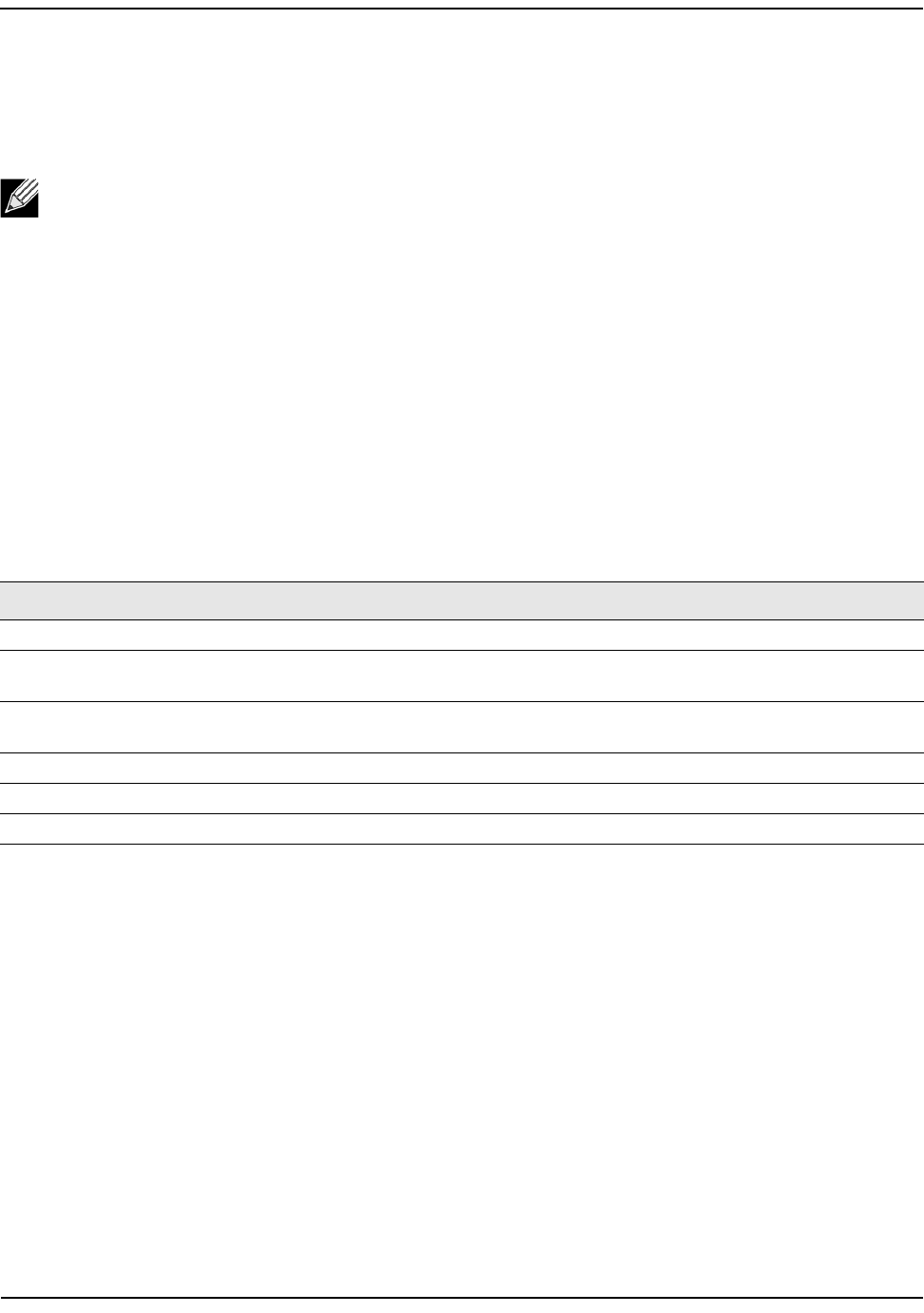
Device Location, System Utility, and Clear Commands
CLI Command Reference
September 2014 Page 195
HP Moonshot Switch Module CLI Command Reference
ping
Use this command to determine whether another computer is on the network. Ping provides a synchronous
response when initiated from the CLI and Web interfaces.
Using the options described below, you can specify the number and size of Echo Requests and the interval
between Echo Requests.
The following are examples of the CLI command.
Example: IPv4 ping success:
(Routing) #ping 10.254.2.160 count 3 interval 1 size 255
Pinging 10.254.2.160 with 255 bytes of data:
Received response for icmp_seq = 0. time = 275268 usec
Received response for icmp_seq = 1. time = 274009 usec
Received response for icmp_seq = 2. time = 279459 usec
----10.254.2.160 PING statistics----
3 packets transmitted, 3 packets received, 0% packet loss
round-trip (msec) min/avg/max = 274/279/276
Note: For information about the ping command for IPv6 hosts, see “ping ipv6” on page 55.
Default • The default count is 1.
• The default interval is 3 seconds.
• The default size is 0 bytes.
Format ping {address| hostname} [count count] [interval 1-60] [size size] [source ip-address
| ipv6-address | {unit/slot/port | vlan 1-4093 | serviceport | network}]
Modes •Privileged EXEC
• User EXEC
Parameter Description
address IPv4 address to ping.
hostname The DNS-resolvable host name of the system to ping. The IPv4 address is resolved if no
keyword is specified.
count The number of ping packets (ICMP Echo requests) that are sent to the destination address
specified by the ip-address field. The range for count is 1 to 15 requests.
interval The time between Echo Requests, in seconds. Range is 1 to 60 seconds.
size The size, in bytes, of the payload of the Echo Requests sent. Range is 0 to 65507 bytes.
source The source IP address or interface to use when sending the Echo requests packets.

Device Location, System Utility, and Clear Commands
CLI Command Reference
September 2014 Page 196
HP Moonshot Switch Module CLI Command Reference
Example: IPv4 ping failure:
In Case of Unreachable Destination:
(Routing) # ping 192.168.254.222 count 3 interval 1 size 255
Pinging 192.168.254.222 with 255 bytes of data:
Received Response: Unreachable Destination
Received Response :Unreachable Destination
Received Response :Unreachable Destination
----192.168.254.222 PING statistics----
3 packets transmitted,3 packets received, 0% packet loss
round-trip (msec) min/avg/max = 0/0/0
In Case Of Request TimedOut:
(Routing) # ping 1.1.1.1 count 1 interval 3
Pinging 1.1.1.1 with 0 bytes of data:
----1.1.1.1 PING statistics----
1 packets transmitted,0 packets received, 100% packet loss
round-trip (msec) min/avg/max = 0/0/0
quit
This command closes the current telnet connection or resets the current serial connection. The system asks
you whether to save configuration changes before quitting.
reload
This command resets the switch without powering it off. Reset means that all network connections are
terminated and the boot code executes. The switch uses the stored configuration to initialize the switch. You
are prompted to confirm that the reset should proceed. The LEDs on the switch indicate a successful reset.
copy
The copy command uploads and downloads files to and from the switch. You can also use the copy command
to manage the dual images (primary and alternate) on the file system. Upload and download files from a server
by using FTP, TFTP, Xmodem, Ymodem, or Zmodem. SFTP and SCP are available as additional transfer methods
if the software package supports secure management.
Format quit
Modes •Privileged EXEC
• User EXEC
Format reload
Mode Privileged EXEC
Format copy source destination
Mode Privileged EXEC
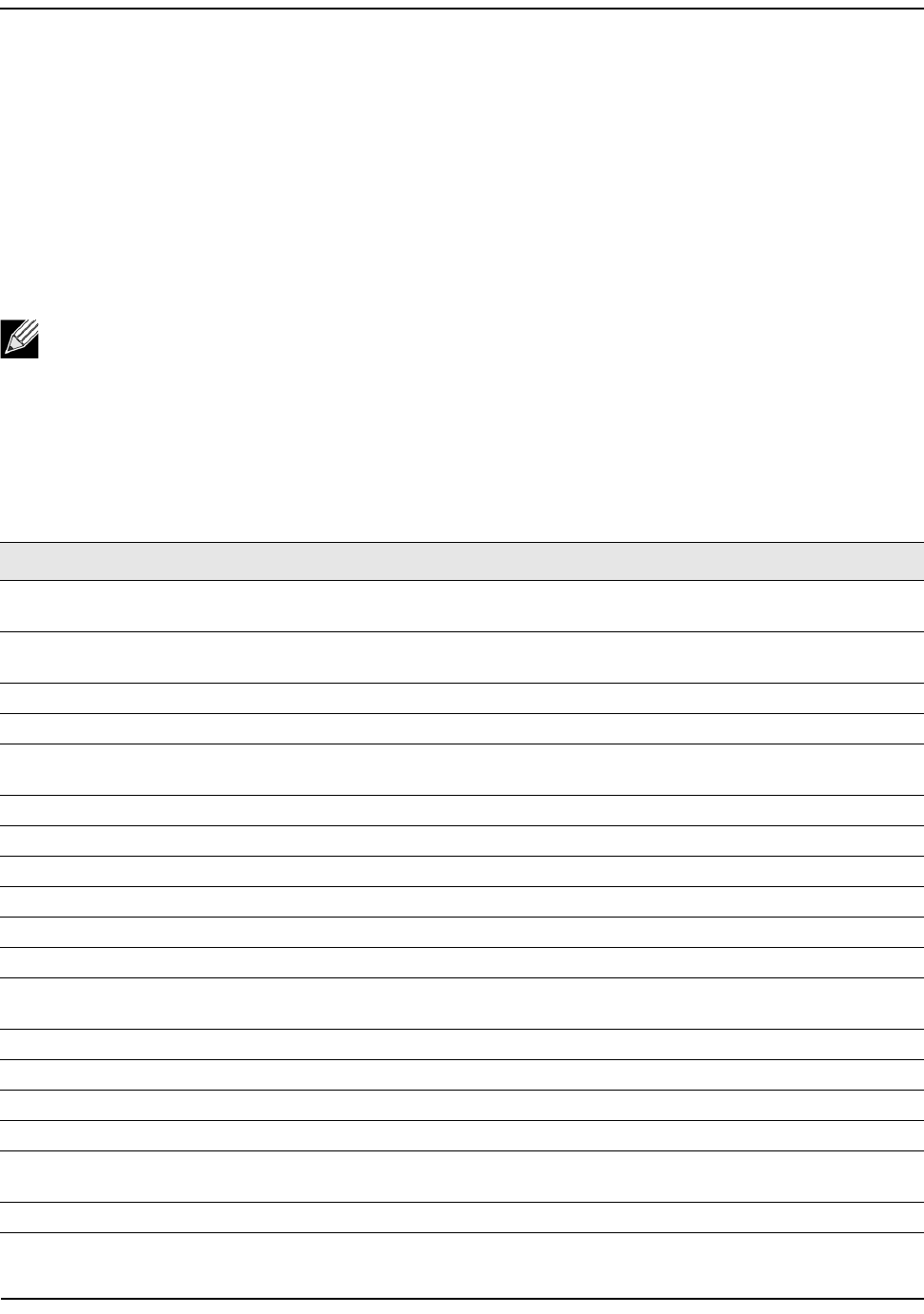
Device Location, System Utility, and Clear Commands
CLI Command Reference
September 2014 Page 197
HP Moonshot Switch Module CLI Command Reference
Replace the source and destination parameters with the options in Table 9 on page 197. For the url source or
destination, use one of the following values:
{xmodem | ftp://user@ipaddr|hostname/path/filename | tftp://ipaddr|hostname/filepath/filename
[noval]| sftp|scp://username@ipaddr/filepath/filename}
The keyword ias-users supports the downloading of the IAS user database file. When the IAS users file is
downloaded, the switch IAS user’s database is replaced with the users and its attributes available in the
downloaded file. In the command copy url ias-users, for url one of the following is used for IAS users file:
{{ftp://user@ipaddr|hostname/path/filename} | {tftp://ipaddr | hostname /filepath/filename} | {sftp
| scp://username@ipaddress/filepath/filename}}
For FTP, TFTP, SFTP and SCP, the ipaddr|hostname parameter is the IP address or host name of the server,
filepath is the path to the file, and filename is the name of the file you want to upload or download. For SFTP
and SCP, the username parameter is the username for logging into the remote server via SSH.
T
Note: The maximum length for the file path is 160 characters, and the maximum length for the file
name is 31 characters.
Table 9: Copy Parameters
Source Destination Description
nvram:tech-support url Copies the Technical Support file from the switch to a
remote server.
nvram:backup-config nvram:startup-config Copies the backup configuration to the startup
configuration.
nvram:backup-config url Copies the backup configuration to a server.
nvram:clibanner url Copies the CLI banner to a server.
nvram:cpu-pkt-
capture.pcap
url Copies the CPU packet capture file from the switch to
a server.
nvram:crash-log url Copies the crash log to a server.
nvram:errorlog url Copies the error log file to a server.
nvram:factory-defaults url Uploads factory defaults file.
nvram:log url Copies the log file to a server.
nvram:operational-log url Copies the operational log file to a server.
nvram:script scriptname url Copies a specified configuration script file to a server.
nvram:startup-config nvram:backup-config Copies the startup configuration to the backup
configuration.
nvram:startup-config url Copies the startup configuration to a server.
nvram:startup-log url Copies the startup log file to a server.
nvram:traplog url Copies the trap log file to a server.
system:running-config nvram:startup-config Saves the running configuration to nvram.
system:running-config nvram:factory-defaults Saves the running configuration to nvram to the
factory-defaults file.
url nvram:backup-config Downloads a backup configuration file to the system.
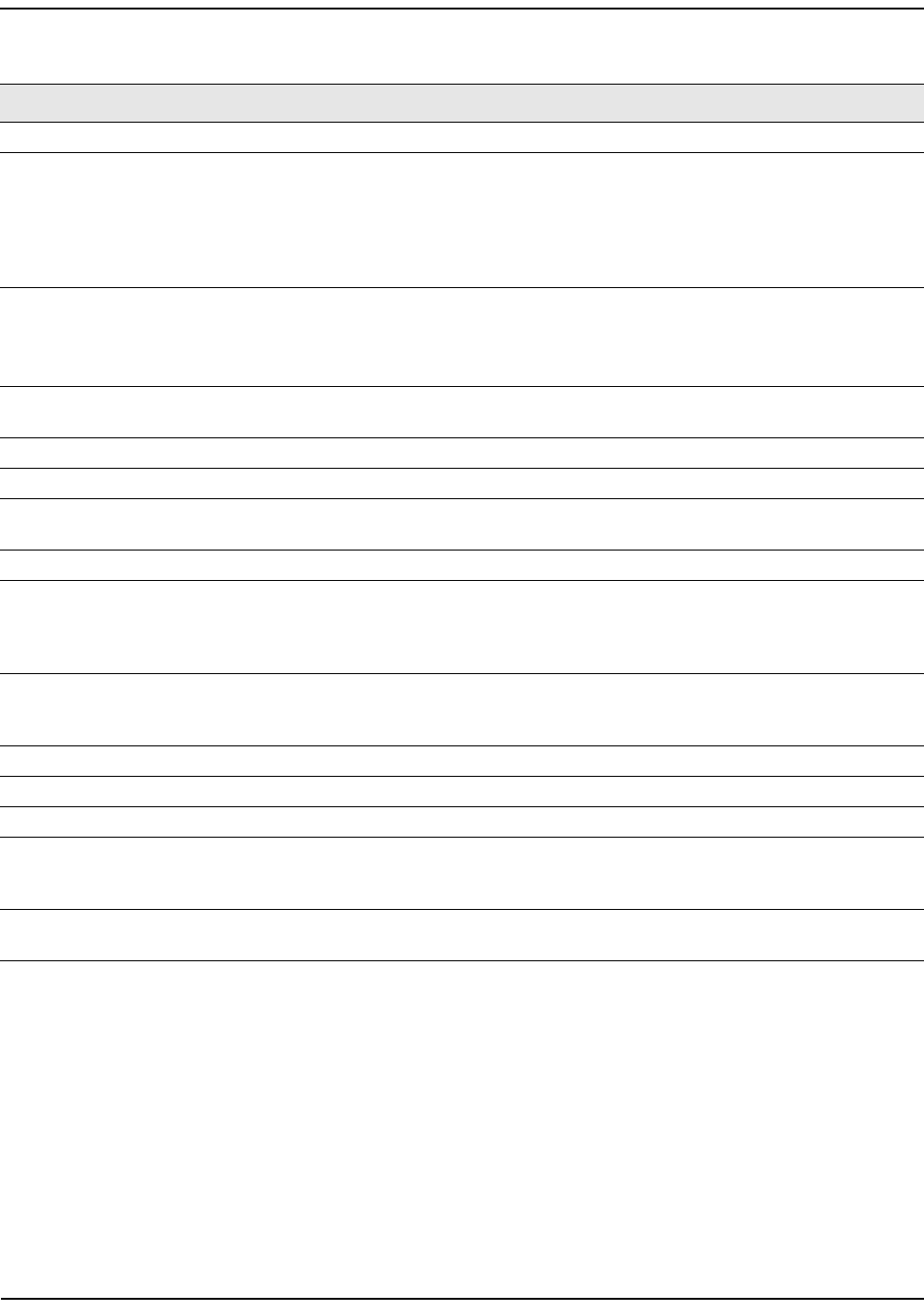
Device Location, System Utility, and Clear Commands
CLI Command Reference
September 2014 Page 198
HP Moonshot Switch Module CLI Command Reference
url nvram:clibanner Downloads the CLI banner to the system.
url nvram:script
destfilename
Downloads a configuration script file to the system.
During the download of a configuration script, the
copy command validates the script. In case of any
error, the command lists all the lines at the end of the
validation process and prompts you to confirm before
copying the script file.
url nvram:script
destfilename noval
When you use this option, the copy command will not
validate the downloaded script file. An example of the
CLI command follows:
(Routing) #copy tftp://1.1.1.1/file.scr nvram:script file.scr noval
url nvram:sshkey-dsa Downloads an SSH key file. For more information, see
“Secure Shell Commands” on page 67.
url nvram:sshkey-rsa1 Downloads an SSH key file.
url nvram:sshkey-rsa2 Downloads an SSH key file.
url nvram:startup-config Downloads the startup configuration file to the
system.
url system:image Downloads a code image to the system.
url ias-users Downloads an IAS users database file to the system.
When the IAS users file is downloaded, the switch IAS
user’s database is replaced with the users and their
attributes available in the downloaded file.
url {primary | alternate} Download an image from the remote server to either
image. In a stacking environment, the downloaded
image is distributed to the stack nodes.
{primary | alternate} url Upload either image to the remote server.
primary alternate Copy the primary image to the alternate image.
alternate primary Copy the alternate image to the primary image.
{primary | alternate} unit://unit/{primary |
alternate}
Copy an image from the management node to a given
node in a Stack. Use the unit parameter to specify the
node to which the image should be copied.
{primary | alternate} unit://*/{primary |
alternate}
Copy an image from the management node to all of
the nodes in a Stack.
Table 9: Copy Parameters (Cont.)
Source Destination Description

Simple Network Time Protocol Commands
CLI Command Reference
September 2014 Page 199
HP Moonshot Switch Module CLI Command Reference
Example: The following shows an example of downloading and applying ias users file.
(Routing) #copy tftp://10.131.17.104/aaa_users.txt ias-users
Mode........................................... TFTP
Set Server IP.................................. 10.131.17.104
Path........................................... ./
Filename....................................... aaa_users.txt
Data Type...................................... IAS Users
Management access will be blocked for the duration of the transfer
Are you sure you want to start? (y/n) y
File transfer operation completed successfully.
Validating and updating the users to the IAS users database.
Updated IAS users database successfully.
Simple Network Time Protocol Commands
This section describes the commands you use to automatically configure the system time and date by using
Simple Network Time Protocol (SNTP).
sntp broadcast client poll-interval
This command sets the poll interval for SNTP broadcast clients in seconds as a power of two where poll-
interval can be a value from 6 to 10.
no sntp broadcast client poll-interval
This command resets the poll interval for SNTP broadcast client back to the default value.
Default 6
Format sntp broadcast client poll-interval poll-interval
Mode Global Config
Format no sntp broadcast client poll-interval
Mode Global Config

Simple Network Time Protocol Commands
CLI Command Reference
September 2014 Page 200
HP Moonshot Switch Module CLI Command Reference
sntp client mode
This command enables Simple Network Time Protocol (SNTP) client mode and may set the mode to either
broadcast or unicast.
no sntp client mode
This command disables Simple Network Time Protocol (SNTP) client mode.
sntp client port
This command sets the SNTP client port ID to a value from 1-65535. The default value is 0, which means that
the SNTP port is not configured by the user. In the default case, the actual client port value used in SNTP packets
is assigned by the underlying OS.
no sntp client port
This command resets the SNTP client port back to its default value.
sntp unicast client poll-interval
This command sets the poll interval for SNTP unicast clients in seconds as a power of two where poll-interval
can be a value from 6 to 10.
Default disabled
Format sntp client mode [broadcast | unicast]
Mode Global Config
Format no sntp client mode
Mode Global Config
Default 0
Format sntp client port portid
Mode Global Config
Format no sntp client port
Mode Global Config
Default 6
Format sntp unicast client poll-interval poll-interval
Mode Global Config

Simple Network Time Protocol Commands
CLI Command Reference
September 2014 Page 201
HP Moonshot Switch Module CLI Command Reference
no sntp unicast client poll-interval
This command resets the poll interval for SNTP unicast clients to its default value.
sntp unicast client poll-timeout
This command will set the poll timeout for SNTP unicast clients in seconds to a value from 1-30.
no sntp unicast client poll-timeout
This command will reset the poll timeout for SNTP unicast clients to its default value.
sntp unicast client poll-retry
This command will set the poll retry for SNTP unicast clients to a value from 0 to 10.
no sntp unicast client poll-retry
This command will reset the poll retry for SNTP unicast clients to its default value.
Format no sntp unicast client poll-interval
Mode Global Config
Default 5
Format sntp unicast client poll-timeout poll-timeout
Mode Global Config
Format no sntp unicast client poll-timeout
Mode Global Config
Default 1
Format sntp unicast client poll-retry poll-retry
Mode Global Config
Format no sntp unicast client poll-retry
Mode Global Config
Simple Network Time Protocol Commands
CLI Command Reference
September 2014 Page 202
HP Moonshot Switch Module CLI Command Reference
sntp server
This command configures an SNTP server (a maximum of three). The server address can be either an IPv4
address or an IPv6 address. The optional priority can be a value of 1-3, the version a value of 1-4, and the port
id a value of 1-65535.
no sntp server
This command deletes an server from the configured SNTP servers.
sntp source-interface
Use this command to specify the physical or logical interface to use as the source interface (source IP address)
for SNTP unicast server configuration. If configured, the address of source Interface is used for all SNTP
communications between the SNTP server and the SNTP client. The selected source-interface IP address is
used for filling the IP header of management protocol packets. This allows security devices (firewalls) to
identify the source packets coming from the specific switch. If a source-interface is not specified, the primary
IP address of the originating (outbound) interface is used as the source address. If the configured interface is
down, the SNTP client falls back to its default behavior.
no sntp source-interface
Use this command to reset the SNTP source interface to the default settings.
Format sntp server {ipaddress | ipv6address | hostname} [priority [version [portid]]]
Mode Global Config
Format no sntp server remove {ipaddress | ipv6address | hostname}
Mode Global Config
Format sntp source-interface {unit/slot/port | loopback loopback-id | vlan vlan-id}
Mode Global Config
Parameter Description
unit/slot/port The unit identifier assigned to the switch.
loopback-id Configures the loopback interface. The range of the loopback ID is 0 to 7.
tunnel-id Configures the IPv6 tunnel interface. The range of the tunnel ID is 0 to 7.
vlan-id Configures the VLAN interface to use as the source IP address. The range of the VLAN ID is
1 to 4093.
Format no sntp source-interface
Mode Global Config
Simple Network Time Protocol Commands
CLI Command Reference
September 2014 Page 203
HP Moonshot Switch Module CLI Command Reference
show sntp
This command is used to display SNTP settings and status.
show sntp client
This command is used to display SNTP client settings.
Format show sntp
Mode Privileged EXEC
Term Definition
Last Update Time Time of last clock update.
Last Attempt
Time
Time of last transmit query (in unicast mode).
Last Attempt
Status
Status of the last SNTP request (in unicast mode) or unsolicited message (in broadcast
mode).
Broadcast Count Current number of unsolicited broadcast messages that have been received and processed
by the SNTP client since last reboot.
Format show sntp client
Mode Privileged EXEC
Term Definition
Client Supported Modes Supported SNTP Modes (Broadcast or Unicast).
SNTP Version The highest SNTP version the client supports.
Port SNTP Client Port. The field displays the value 0 if it is default value. When the
client port value is 0, if the client is in broadcast mode, it binds to port 123; if the
client is in unicast mode, it binds to the port assigned by the underlying OS.
Client Mode Configured SNTP Client Mode.

Simple Network Time Protocol Commands
CLI Command Reference
September 2014 Page 204
HP Moonshot Switch Module CLI Command Reference
show sntp server
This command is used to display SNTP server settings and configured servers.
For each configured server:
Format show sntp server
Mode Privileged EXEC
Term Definition
Server Host Address IP address or hostname of configured SNTP Server.
Server Type Address type of server (IPv4, IPv6, or DNS).
Server Stratum Claimed stratum of the server for the last received valid packet.
Server Reference ID Reference clock identifier of the server for the last received valid packet.
Server Mode SNTP Server mode.
Server Maximum Entries Total number of SNTP Servers allowed.
Server Current Entries Total number of SNTP configured.
Term Definition
IP Address / Hostname IP address or hostname of configured SNTP Server.
Address Type Address Type of configured SNTP server (IPv4, IPv6, or DNS).
Priority IP priority type of the configured server.
Version SNTP Version number of the server. The protocol version used to query the server
in unicast mode.
Port Server Port Number.
Last Attempt Time Last server attempt time for the specified server.
Last Update Status Last server attempt status for the server.
Total Unicast Requests Number of requests to the server.
Failed Unicast Requests Number of failed requests from server.
Simple Network Time Protocol Commands
CLI Command Reference
September 2014 Page 205
HP Moonshot Switch Module CLI Command Reference
show sntp source-interface
Use this command to display the SNTP client source interface configured on the switch.
Example: The following shows example CLI display output for the command.
(Routing) #show sntp source-interface
SNTP Client Source Interface................... (not configured)
(Routing) #
Format show sntp source-interface
Mode Privileged EXEC
Field Description
SNTP Client Source
Interface
The interface ID of the physical or logical interface configured as the SNTP client
source interface.
SNTP Client Source IPv4
Address
The IP address of the interface configured as the SNTP client source interface.
Time Zone Commands
CLI Command Reference
September 2014 Page 206
HP Moonshot Switch Module CLI Command Reference
Time Zone Commands
Use the Time Zone commands to configure system time and date, Time Zone and Summer Time (that is,
Daylight Saving Time). Summer time can be recurring or non-recurring.
clock set
This command sets the system time and date.
Example: The following shows examples of the command.
(Routing) (Config)# clock set 03:17:00
(Routing) (Config)# clock set 11/01/2011
clock summer-time date
Use the clock summer-time date command to set the summer-time offset to Coordinated Universal Time (UTC).
If the optional parameters are not specified, they are read as either 0 or \0, as appropriate.
Format clock set hh:mm:ss
clock set mm/dd/yyyy
Mode Global Config
Parameter Description
hh:mm:ss Enter the current system time in 24-hour format in hours, minutes, and seconds. The range
is hours: 0 to 23, minutes: 0 to 59, seconds: 0 to 59.
mm/dd/yyyy Enter the current system date the format month, day, year. The range for month is 1 to 12.
The range for the day of the month is 1 to 31. The range for year is 2010 to 2079.
Format clock summer-time date {date month year hh:mm date month year hh:mm}[offset offset]
[zone acronym]
Mode Global Config
Parameter Description
date Day of the month. Range is 1 to 31.
month Month. Range is the first three letters by name; jan, for example.
year Year. The range is 2000 to 2079.
hh:mm Time in 24-hour format in hours and minutes. The range is hours: 0 to 23, minutes: 0 to 59.
Time Zone Commands
CLI Command Reference
September 2014 Page 207
HP Moonshot Switch Module CLI Command Reference
Example: The following shows examples of the command.
(Routing) (Config)# clock summer-time date 1 nov 2011 3:18 2 nov 2011 3:18
(Routing) (Config)# clock summer-time date 1 nov 2011 3:18 2 nov 2011 3:18 offset 120 zone INDA
clock summer-time recurring
This command sets the summer-time recurring parameters.
Example: The following shows examples of the command.
(Routing) (Config)# clock summer-time recurring 2 sun nov 3:18 2 mon nov 3:18
(Routing) (Config)# clock summer-time recurring 2 sun nov 3:18 2 mon nov 3:18 offset 120 zone INDA
no clock summer-time
This command disables the summer-time settings.
offset The number of minutes to add during the summertime. The range is 1 to 1440.
acronym The acronym for the summer-time to be displayed when summertime is in effect. The
range is up to four characters are allowed.
Format clock summer-time recurring {EU | USA | week day month hh:mm week day month hh:mm}
[offset offset] [zone acronym]
Mode Global Config
Parameter Description
EU The system clock uses the standard recurring summer time settings used in countries in the
European Union.
USA The system clock uses the standard recurring daylight saving time settings used in the
United States.
week Week of the month. The range is 1 to 5, first, last.)
day Day of the week. The range is the first three letters by name; sun, for example.
month Month. The range is the first three letters by name; jan, for example.
hh:mm Time in 24-hour format in hours and minutes. The range is hours: 0 to 23, minutes: 0 to 59.
offset The number of minutes to add during the summertime. The range is 1 to 1440.
acronym The acronym for the summertime to be displayed when summertime is in effect. Up to four
characters are allowed.
Format no clock summer-time
Mode Global Config
Parameter Description
Time Zone Commands
CLI Command Reference
September 2014 Page 208
HP Moonshot Switch Module CLI Command Reference
clock timezone
Use this command to set the offset to Coordinated Universal Time (UTC). If the optional parameters are not
specified, they will be read as either 0 or \0 as appropriate.
Example: The following shows an example of the command.
(Routing) (Config)# clock timezone 5 minutes 30 zone INDA
no clock timezone
Use this command to reset the time zone settings.
Example: The following shows an example of the command.
(Routing) (Config)# no clock timezone
show clock
Use this command to display the time and date from the system clock.
Example: The following shows example CLI display output for the command.
(Routing) # show clock
15:02:09 (UTC+0:00) Nov 1 2011
No time source
Format clock timezone {hours} [minutes minutes] [zone acronym]
Mode Global Config
Parameter Description
hours Hours difference from UTC. The range is -12 to +13.
minutes Minutes difference from UTC. The range is 0 to 59.
acronym The acronym for the time zone. The range is up to four characters.
Format no clock timezone
Mode Global Config
Format show clock
Mode Privileged Exec

Time Zone Commands
CLI Command Reference
September 2014 Page 209
HP Moonshot Switch Module CLI Command Reference
show clock detail
Use this command to display the detailed system time along with the time zone and the summertime
configuration.
Example: The following shows example CLI display output for the command.
(Routing) # show clock detail
15:05:24 (UTC+0:00) Nov 1 2011
No time source
Time zone:
Acronym not configured
Offset is UTC+0:00
Summertime:
Summer-time is disabled
Example: The following shows example CLI display output for the command.
With the above configuration the output appears as below:
(Routing) # show clock detail
10:57:57 INDA(UTC+7:30) Nov 1 2011
No time source
Time zone:
Acronym is INDA
Offset is UTC+5:30
Summertime:
Acronym is INDA
Recurring every year
Begins on second Sunday of Nov at 03:18
Ends on second Monday of Nov at 03:18
Offset is 120 minutes
Summer-time is in effect.
Format show clock detail
Mode Privileged Exec

DNS Client Commands
CLI Command Reference
September 2014 Page 210
HP Moonshot Switch Module CLI Command Reference
DNS Client Commands
These commands are used in the Domain Name System (DNS), an Internet directory service. DNS is how
domain names are translated into IP addresses. When enabled, the DNS client provides a hostname lookup
service to other components of HP Moonshot Switch Module.
ip domain lookup
Use this command to enable the DNS client.
no ip domain lookup
Use this command to disable the DNS client.
ip domain name
Use this command to define a default domain name that HP Moonshot Switch Module software uses to
complete unqualified host names (names with a domain name). By default, no default domain name is
configured in the system. name may not be longer than 255 characters and should not include an initial period.
This name should be used only when the default domain name list, configured using the ip domain list
command, is empty.
Example: The CLI command ip domain name yahoo.com will configure yahoo.com as a default domain name.
For an unqualified hostname xxx, a DNS query is made to find the IP address corresponding to
xxx.yahoo.com.
no ip domain name
Use this command to remove the default domain name configured using the ip domain name command.
Default enabled
Format ip domain lookup
Mode Global Config
Format no ip domain lookup
Mode Global Config
Default none
Format ip domain name name
Mode Global Config
Format no ip domain name
Mode Global Config

DNS Client Commands
CLI Command Reference
September 2014 Page 211
HP Moonshot Switch Module CLI Command Reference
ip domain list
Use this command to define a list of default domain names to complete unqualified names. By default, the list
is empty. Each name must be no more than 256 characters, and should not include an initial period. The default
domain name, configured using the ip domain name command, is used only when the default domain name list
is empty. A maximum of 32 names can be entered in to this list.
no ip domain list
Use this command to delete a name from a list.
ip name server
Use this command to configure the available name servers. Up to eight servers can be defined in one command
or by using multiple commands. The parameter server-address is a valid IPv4 or IPv6 address of the server. The
preference of the servers is determined by the order they were entered.
no ip name server
Use this command to remove a name server.
Default none
Format ip domain list name
Mode Global Config
Format no ip domain list name
Mode Global Config
Format ip name server server-address1 [server-address2...server-address8]
Mode Global Config
Format no ip name server [server-address1...server-address8]
Mode Global Config

DNS Client Commands
CLI Command Reference
September 2014 Page 212
HP Moonshot Switch Module CLI Command Reference
ip name source-interface
Use this command to specify the physical or logical interface to use as the DNS client (IP name) source interface
(source IP address) for the DNS client management application. If configured, the address of source Interface
is used for all DNS communications between the DNS server and the DNS client. The selected source-interface
IP address is used for filling the IP header of management protocol packets. This allows security devices
(firewalls) to identify the source packets coming from the specific switch. If a source-interface is not specified,
the primary IP address of the originating (outbound) interface is used as the source address. If the configured
interface is down, the DNS client falls back to its default behavior.
no ip name source-interface
Use this command to reset the DNS source interface to the default settings.
ip host
Use this command to define static host name-to-address mapping in the host cache. The parameter name is host
name and ip address is the IP address of the host. The hostname can include 1–255 alphanumeric characters,
periods, hyphens, underscores, and non-consecutive spaces. Hostnames that include one or more space must
be enclosed in quotation marks, for example “lab-pc 45”.
no ip host
Use this command to remove the name-to-address mapping.
Format ip name source-interface {unit/slot/port | loopback loopback-id | vlan vlan-id}
Mode Global Config
Format no ip name source-interface
Mode Global Config
Default none
Format ip host name ipaddress
Mode Global Config
Format no ip host name
Mode Global Config

DNS Client Commands
CLI Command Reference
September 2014 Page 213
HP Moonshot Switch Module CLI Command Reference
ipv6 host
Use this command to define static host name-to-IPv6 address mapping in the host cache. The parameter name
is host name and v6 address is the IPv6 address of the host. The hostname can include 1–255 alphanumeric
characters, periods, hyphens, and spaces. Hostnames that include one or more space must be enclosed in
quotation marks, for example “lab-pc 45”.
no ipv6 host
Use this command to remove the static host name-to-IPv6 address mapping in the host cache.
ip domain retry
Use this command to specify the number of times to retry sending Domain Name System (DNS) queries. The
parameter number indicates the number of times to retry sending a DNS query to the DNS server. This number
ranges from 0 to 100.
no ip domain retry
Use this command to return to the default.
Default none
Format ipv6 host name v6 address
Mode Global Config
Format no ipv6 host name
Mode Global Config
Default 2
Format ip domain retry number
Mode Global Config
Format no ip domain retry number
Mode Global Config
DNS Client Commands
CLI Command Reference
September 2014 Page 214
HP Moonshot Switch Module CLI Command Reference
ip domain timeout
Use this command to specify the amount of time to wait for a response to a DNS query. The parameter seconds
specifies the time, in seconds, to wait for a response to a DNS query. The parameter seconds ranges from 0 to
3600.
no ip domain timeout
Use this command to return to the default setting.
clear host
Use this command to delete entries from the host name-to-address cache. This command clears the entries
from the DNS cache maintained by the software. This command clears both IPv4 and IPv6 entries.
Default 3
Format ip domain timeout seconds
Mode Global Config
Format no ip domain timeout seconds
Mode Global Config
Format clear host {name | all}
Mode Privileged EXEC
Field Description
name A particular host entry to remove. The parameter name ranges from 1-255 characters.
all Removes all entries.
DNS Client Commands
CLI Command Reference
September 2014 Page 215
HP Moonshot Switch Module CLI Command Reference
show hosts
Use this command to display the default domain name, a list of name server hosts, the static and the cached
list of host names and addresses. The parameter name ranges from 1-255 characters. This command displays
both IPv4 and IPv6 entries.
Example: The following shows example CLI display output for the command.
<Routing> show hosts
Host name......................... Device
Default domain.................... gm.com
Default domain list............... yahoo.com, Stanford.edu, rediff.com
Domain Name lookup................ Enabled
Number of retries................. 5
Retry timeout period.............. 1500
Name servers (Preference order)... 176.16.1.18 176.16.1.19
DNS Client Source Interface....... (not configured)
Configured host name-to-address mapping:
Host Addresses
------------------------------ ------------------------------
accounting.gm.com 176.16.8.8
Host Total Elapsed Type Addresses
--------------- -------- ------ -------- --------------
www.stanford.edu 72 3 IP 171.64.14.203
Format show hosts [name]
Mode Privileged EXEC
User EXEC
Field Description
Host Name Domain host name.
Default Domain Default domain name.
Default Domain List Default domain list.
Domain Name Lookup DNS client enabled/disabled.
Number of Retries Number of time to retry sending Domain Name System (DNS) queries.
Retry Timeout Period Amount of time to wait for a response to a DNS query.
Name Servers Configured name servers.
DNS Client Source
Interface
Shows the configured source interface (source IP address) used for a DNS client.
The IP address of the selected interface is used as source IP for all communications
with the server.
IP Address Conflict Commands
CLI Command Reference
September 2014 Page 216
HP Moonshot Switch Module CLI Command Reference
IP Address Conflict Commands
The commands in this section help troubleshoot IP address conflicts.
ip address-conflict-detect run
This command triggers the switch to run active address conflict detection by sending gratuitous ARP packets
for IPv4 addresses on the switch.
show ip address-conflict
This command displays the status information corresponding to the last detected address conflict.
clear ip address-conflict-detect
This command clears the detected address conflict status information.
Format ip address-conflict-detect run
Mode Global Config
Format show ip address-conflict
Modes Privileged EXEC
Term Definition
Address Conflict Detection
Status
Identifies whether the switch has detected an address conflict on any IP
address.
Last Conflicting IP Address The IP Address that was last detected as conflicting on any interface.
Last Conflicting MAC Address The MAC Address of the conflicting host that was last detected on any
interface.
Time Since Conflict Detected The time in days, hours, minutes and seconds since the last address conflict
was detected.
Format clear ip address-conflict-detect
Modes Privileged EXEC
Serviceability Packet Tracing Commands
CLI Command Reference
September 2014 Page 217
HP Moonshot Switch Module CLI Command Reference
Serviceability Packet Tracing Commands
These commands improve the capability of network engineers to diagnose conditions affecting their HP
Moonshot Switch Module.
capture start
Use the command capture start to manually start capturing CPU packets for packet trace.
The packet capture operates in three modes:
•capture file
• remote capture
• capture line
The command is not persistent across a reboot cycle.
Caution! The output of “debug” commands can be long and may adversely affect system
performance.
Format capture start [{all | receive | transmit}]
Mode Privileged EXEC
Parameter Description
all Capture all traffic.
receive Capture only received traffic.
transmit Capture only transmitted traffic.
Serviceability Packet Tracing Commands
CLI Command Reference
September 2014 Page 218
HP Moonshot Switch Module CLI Command Reference
capture stop
Use the command capture stop to manually stop capturing CPU packets for packet trace.
capture file|remote|line
Use this command to configure file capture options. The command is persistent across a reboot cycle.
Format capture stop
Mode Privileged EXEC
Format capture {file|remote|line}
Mode Global Config
Parameter Description
file In the capture file mode, the captured packets are stored in a file on NVRAM. The maximum
file size defaults to 524288 bytes. The switch can transfer the file to a TFTP server via TFTP,
SFTP, SCP via CLI, and SNMP.
The file is formatted in pcap format, is named cpuPktCapture.pcap, and can be examined
using network analyzer tools such as Wireshark® or Ethereal®. Starting a file capture
automatically terminates any remote capture sessions and line capturing. After the packet
capture is activated, the capture proceeds until the capture file reaches its maximum size,
or until the capture is stopped manually using the CLI command capture stop.
remote In the remote capture mode, the captured packets are redirected in real time to an external
PC running the Wireshark tool for Microsoft® Windows®. A packet capture server runs on
the switch side and sends the captured packets via a TCP connection to the Wireshark tool.
The remote capture can be enabled or disabled using the CLI. There should be a Windows
PC with the Wireshark tool to display the captured file. When using the remote capture
mode, the switch does not store any captured data locally on its file system.
You can configure the IP port number for connecting Wireshark to the switch. The default
port number is 2002. If a firewall is installed between the Wireshark PC and the switch,
then these ports must be allowed to pass through the firewall. You must configure the
firewall to allow the Wireshark PC to initiate TCP connections to the switch.
If the client successfully connects to the switch, the CPU packets are sent to the client PC,
then Wireshark receives the packets and displays them. This continues until the session is
terminated by either end.
Starting a remote capture session automatically terminates the file capture and line
capturing.
line In the capture line mode, the captured packets are saved into the RAM and can be
displayed on the CLI. Starting a line capture automatically terminates any remote capture
session and capturing into a file. There is a maximum 128 packets of maximum 128 bytes
that can be captured and displayed in line mode.

Serviceability Packet Tracing Commands
CLI Command Reference
September 2014 Page 219
HP Moonshot Switch Module CLI Command Reference
capture remote port
Use this command to configure file capture options. The command is persistent across a reboot cycle. The id
parameter is a TCP port number from 1024– 49151.
capture file size
Use this command to configure file capture options. The command is persistent across a reboot cycle. The max-
file-size parameter is the maximum size the pcap file can reach, which is 2–512 KB.
capture line wrap
This command enables wrapping of captured packets in line mode when the captured packets reaches full
capacity.
no capture line wrap
This command disables wrapping of captured packets and configures capture packet to stop when the captured
packet capacity is full.
show capture packets
Use this command to display packets captured and saved to RAM. It is possible to capture and save into RAM,
packets that are received or transmitted through the CPU. A maximum of 128 packets (128 bytes per packet
max) can be saved into RAM per capturing session. If a packet holds more than 128 bytes, only the first 128
bytes are saved; data more than 128 bytes is skipped and cannot be displayed in the CLI.
Capturing packets is stopped automatically when 128 packets are captured and have not yet been displayed
during a capture session. Captured packets are not retained after a reload cycle.
Format capture remote port id
Mode Global Config
Format capture file size max-file-size
Mode Global Config
Format capture line wrap
Mode Global Config
Format no capture line wrap
Mode Global Config
Format show capture packets
Mode Privileged EXEC

Serviceability Packet Tracing Commands
CLI Command Reference
September 2014 Page 220
HP Moonshot Switch Module CLI Command Reference
debug aaa accounting
This command is useful to debug accounting configuration and functionality in User Manager.
no debug aaa accounting
Use this command to turn off debugging of User Manager accounting functionality.
debug aaa authorization
Use this command to enable the tracing for AAA in User Manager. This is useful to debug authorization
configuration and functionality in the User Manager. Each of the parameters are used to configure
authorization debug flags.
no debug aaa authorization
Use this command to turn off debugging of the User Manager authorization functionality.
Example: The following is an example of the command.
(Routing) #debug aaa authorization
Tacacs authorization receive packet tracing enabled.
(Routing) #debug tacacs authorization packet transmit
authorization tracing enabled.
(Routing) #no debug aaa authorization
AAA authorization tracing enabled
Format debug aaa accounting
Mode Privileged EXEC
Format no debug aaa accounting
Mode Privileged EXEC
Format debug aaa authorization {commands | exec}
Mode Privileged EXEC
Format no debug aaa authorization
Mode Privileged EXEC

Serviceability Packet Tracing Commands
CLI Command Reference
September 2014 Page 221
HP Moonshot Switch Module CLI Command Reference
debug arp
Use this command to enable ARP debug protocol messages.
no debug arp
Use this command to disable ARP debug protocol messages.
debug clear
This command disables all previously enabled “debug” traces.
debug console
This command enables the display of “debug” trace output on the login session in which it is executed. Debug
console display must be enabled in order to view any trace output. The output of debug trace commands will
appear on all login sessions for which debug console has been enabled. The configuration of this command
remains in effect for the life of the login session. The effect of this command is not persistent across resets.
no debug console
This command disables the display of “debug” trace output on the login session in which it is executed.
Default disabled
Format debug arp
Mode Privileged EXEC
Format no debug arp
Mode Privileged EXEC
Default disabled
Format debug clear
Mode Privileged EXEC
Default disabled
Format debug console
Mode Privileged EXEC
Format no debug console
Mode Privileged EXEC
Serviceability Packet Tracing Commands
CLI Command Reference
September 2014 Page 222
HP Moonshot Switch Module CLI Command Reference
debug crashlog
Use this command to view information contained in the crash log file that the system maintains when it
experiences an unexpected reset. The crash log file contains the following information:
• Call stack information in both primitive and verbose forms
• Log Status
• Buffered logging
• Event logging
• Persistent logging
• System Information (output of sysapiMbufDump)
• Message Queue Debug Information
• Memory Debug Information
• Memory Debug Status
• OS Information (output of osapiShowTasks)
• /proc information (meminfo, cpuinfo, interrupts, version and net/sockstat)
Default disabled
Format debug crashlog {[kernel] crashlog-number [upload url] | proc | verbose | deleteall}
| data crashdump-number [{{upload url | download url} | component-id [item-numer]
[additional-parameter-1] [additional-parameter-2]...}]
Mode Privileged EXEC
Parameter Description
kernel View the crash log file for the kernel
crashlog-number Specifies the file number to view. The system maintains up to four copies, and the
valid range is 1–4.”deb
upload url To upload the crash log (or crash dump) to a TFTP server, use the upload keyword and
specify the required TFTP server information.
proc View the application process crashlog.
verbose Enable the verbose crashlog.
deleteall Delete all crash log files on the system.
data Crash log data recorder.
crashdump-number Specifies the crash dump number to view. The valid range is 0–2.
download url To download a crash dump to the switch, use the download keyword and specify the
required TFTP server information.
component-id The ID of the component that caused the crash.
item-number The item number.
additional-parameter Additional parameters to include.

Serviceability Packet Tracing Commands
CLI Command Reference
September 2014 Page 223
HP Moonshot Switch Module CLI Command Reference
debug dhcp packet
This command displays debugging information about DHCPv4 client activities and traces DHCPv4 packets to
and from the local DHCPv4 client.
no debug dhcp
This command disables the display of “debug” trace output for DHCPv4 client activity.
debug debug-config
Use this command to download or upload the debug-config.ini file. The debug-config.ini file executes CLI
commands (including devshell and drivshell commands) on specific predefined events. The debug config file is
created manually and downloaded to the switch.
debug dot1x packet
Use this command to enable dot1x packet debug trace. Use the optional receive or transmit keywords to
specify whether to enable tracing for received or transmitted dot1x packets.
no debug dot1x packet
Use this command to disable dot1x packet debug trace.
Default disabled
Format debug dhcp packet [transmit | receive]
Mode Privileged EXEC
Format no debug dhcp packet [transmit | receive]
Mode Privileged EXEC
Default disabled
Format debug debug-config {download <url> | upload <url>}
Mode Privileged EXEC
Default disabled
Format debug dot1x [{receive | transmit}]
Mode Privileged EXEC
Format no debug dot1x
Mode Privileged EXEC
Serviceability Packet Tracing Commands
CLI Command Reference
September 2014 Page 224
HP Moonshot Switch Module CLI Command Reference
debug igmpsnooping packet
This command enables tracing of IGMP Snooping packets received and transmitted by the switch.
no debug igmpsnooping packet
This command disables tracing of IGMP Snooping packets.
debug igmpsnooping packet transmit
This command enables tracing of IGMP Snooping packets transmitted by the switch. Snooping should be
enabled on the device and the interface in order to monitor packets for a particular interface.
A sample output of the trace message is shown below.
<15> JAN 01 02:45:06 192.168.17.29-1 IGMPSNOOP[185429992]: igmp_snooping_debug.c(116) 908 % Pkt TX
- Intf: 1/0/20(20), Vlan_Id:1 Src_Mac: 00:03:0e:00:00:00 Dest_Mac: 01:00:5e:00:00:01 Src_IP: 9.1.1.1
Dest_IP: 225.0.0.1 Type: V2_Membership_Report Group: 225.0.0.1
The following parameters are displayed in the trace message:
Default disabled
Format debug igmpsnooping packet
Mode Privileged EXEC
Format no debug igmpsnooping packet
Mode Privileged EXEC
Default disabled
Format debug igmpsnooping packet transmit
Mode Privileged EXEC
Parameter Definition
TX A packet transmitted by the device.
Intf The interface that the packet went out on. Format used is unit/slot/port (internal interface
number). Unit is always shown as 1 for interfaces on a non-stacking device.
Src_Mac Source MAC address of the packet.
Dest_Mac Destination multicast MAC address of the packet.
Src_IP The source IP address in the IP header in the packet.
Dest_IP The destination multicast IP address in the packet.
Serviceability Packet Tracing Commands
CLI Command Reference
September 2014 Page 225
HP Moonshot Switch Module CLI Command Reference
no debug igmpsnooping transmit
This command disables tracing of transmitted IGMP snooping packets.
debug igmpsnooping packet receive
This command enables tracing of IGMP Snooping packets received by the switch. Snooping should be enabled
on the device and the interface in order to monitor packets for a particular interface.
A sample output of the trace message is shown below.
<15> JAN 01 02:45:06 192.168.17.29-1 IGMPSNOOP[185429992]: igmp_snooping_debug.c(116) 908 % Pkt RX
- Intf: 1/0/20(20), Vlan_Id:1 Src_Mac: 00:03:0e:00:00:10 Dest_Mac: 01:00:5e:00:00:05 Src_IP:
11.1.1.1 Dest_IP: 225.0.0.5 Type: Membership_Query Group: 225.0.0.5
The following parameters are displayed in the trace message:
Type The type of IGMP packet. Type can be one of the following:
• Membership Query – IGMP Membership Query
• V1_Membership_Report – IGMP Version 1 Membership Report
• V2_Membership_Report – IGMP Version 2 Membership Report
• V3_Membership_Report – IGMP Version 3 Membership Report
• V2_Leave_Group – IGMP Version 2 Leave Group
Group Multicast group address in the IGMP header.
Format no debug igmpsnooping transmit
Mode Privileged EXEC
Default disabled
Format debug igmpsnooping packet receive
Mode Privileged EXEC
Parameter Definition
RX A packet received by the device.
Intf The interface that the packet went out on. Format used is unit/slot/port (internal interface
number). Unit is always shown as 1 for interfaces on a non-stacking device.
Src_Mac Source MAC address of the packet.
Dest_Mac Destination multicast MAC address of the packet.
Src_IP The source IP address in the ip header in the packet.
Dest_IP The destination multicast ip address in the packet.
Parameter Definition
Serviceability Packet Tracing Commands
CLI Command Reference
September 2014 Page 226
HP Moonshot Switch Module CLI Command Reference
no debug igmpsnooping receive
This command disables tracing of received IGMP Snooping packets.
debug ip acl
Use this command to enable debug of IP Protocol packets matching the ACL criteria.
no debug ip acl
Use this command to disable debug of IP Protocol packets matching the ACL criteria.
debug ip vrrp
Use this command to enable VRRP debug protocol messages.
Type The type of IGMP packet. Type can be one of the following:
• Membership_Query – IGMP Membership Query
• V1_Membership_Report – IGMP Version 1 Membership Report
• V2_Membership_Report – IGMP Version 2 Membership Report
• V3_Membership_Report – IGMP Version 3 Membership Report
• V2_Leave_Group – IGMP Version 2 Leave Group
Group Multicast group address in the IGMP header.
Format no debug igmpsnooping receive
Mode Privileged EXEC
Default disabled
Format debug ip acl acl Number
Mode Privileged EXEC
Format no debug ip acl acl Number
Mode Privileged EXEC
Default disabled
Format debug ip vrrp
Mode Privileged EXEC
Parameter Definition

Serviceability Packet Tracing Commands
CLI Command Reference
September 2014 Page 227
HP Moonshot Switch Module CLI Command Reference
no debug ip vrrp
Use this command to disable VRRP debug protocol messages.
debug ipv6 dhcp
This command displays “debug” information about DHCPv6 client activities and traces DHCPv6 packets to and
from the local DHCPv6 client.
no debug ipv6 dhcp
This command disables the display of “debug” trace output for DHCPv6 client activity.
debug isdp packet
This command enables tracing of ISDP packets processed by the switch. ISDP must be enabled on both the
device and the interface in order to monitor packets for a particular interface. Use the optional receive or
transmit keywords to specify whether to enable tracing for received or transmitted packets.
no debug isdp packet
This command disables tracing of ISDP packets on the receive or the transmit sides or on both sides.
Format no debug ip vrrp
Mode Privileged EXEC
Default disabled
Format debug ipv6 dhcp
Mode Privileged EXEC
Format no debug ipv6 dhcp
Mode Privileged EXEC
Format debug isdp packet [{receive | transmit}]
Mode Privileged EXEC
Format no debug isdp packet [{receive | transmit}]
Mode Privileged EXEC

Serviceability Packet Tracing Commands
CLI Command Reference
September 2014 Page 228
HP Moonshot Switch Module CLI Command Reference
debug lacp packet
This command enables tracing of LACP packets received and transmitted by the switch.
A sample output of the trace message is shown below.
<15> JAN 01 14:04:51 10.254.24.31-1 DOT3AD[183697744]: dot3ad_debug.c(385) 58 %%
Pkt TX - Intf: 1/0/1(1), Type: LACP, Sys: 00:11:88:14:62:e1, State: 0x47, Key:
0x36
no debug lacp packet
This command disables tracing of LACP packets.
debug mldsnooping packet
Use this command to trace MLD snooping packet reception and transmission. Use the optional receive or
transmit keywords to specify whether to enable tracing for received or transmitted packets. When neither
keyword is used in the command, then all MLD snooping packet traces are dumped. Vital information such as
source address, destination address, control packet type, packet length, and the interface on which the packet
is received or transmitted is displayed on the console.
no debug mldsnooping packet
Use this command to disable debug tracing of MLD snooping packet reception and transmission.
Default disabled
Format debug lacp packet
Mode Privileged EXEC
Format no debug lacp packet
Mode Privileged EXEC
Default disabled
Format debug mldsnooping packet [receive | transmit]
Mode Privileged EXEC
Serviceability Packet Tracing Commands
CLI Command Reference
September 2014 Page 229
HP Moonshot Switch Module CLI Command Reference
debug ospf packet
This command enables tracing of OSPF packets received and transmitted by the switch.
Sample outputs of the trace messages are shown below.
<15> JAN 02 11:03:31 10.50.50.1-2 OSPF[46300472]: ospf_debug.c(297) 25430 % Pkt RX - Intf:2/0/48 Src
Ip:192.168.50.2 DestIp:224.0.0.5 AreaId:0.0.0.0 Type:HELLO NetMask:255.255.255.0 D
esigRouter:0.0.0.0 Backup:0.0.0.0
<15> JAN 02 11:03:35 10.50.50.1-2 OSPF[46300472]: ospf_debug.c(293) 25431 % Pkt TX - Intf:2/0/48 Src
Ip:10.50.50.1 DestIp:192.168.50.2 AreaId:0.0.0.0 Type:DB_DSCR Mtu:1500 Options:E
Flags: I/M/MS Seq:126166
<15> JAN 02 11:03:36 10.50.50.1-2 OSPF[46300472]: ospf_debug.c(297) 25434 % Pkt RX - Intf:2/0/48 Src
Ip:192.168.50.2 DestIp:192.168.50.1 AreaId:0.0.0.0 Type:LS_REQ Length: 1500
<15> JAN 02 11:03:36 10.50.50.1-2 OSPF[46300472]: ospf_debug.c(293) 25435 % Pkt TX - Intf:2/0/48 Src
Ip:10.50.50.1 DestIp:192.168.50.2 AreaId:0.0.0.0 Type:LS_UPD Length: 1500
<15> JAN 02 11:03:37 10.50.50.1-2 OSPF[46300472]: ospf_debug.c(293) 25441 % Pkt TX - Intf:2/0/48 Src
Ip:10.50.50.1 DestIp:224.0.0.6 AreaId:0.0.0.0 Type:LS_ACK Length: 1500
The following parameters are displayed in the trace message:
The remaining fields in the trace are specific to the type of OSPF Packet.
Default disabled
Format debug ospf packet
Mode Privileged EXEC
Parameter Definition
TX/RX TX refers to a packet transmitted by the device. RX refers to packets received by the device.
Intf The interface that the packet came in or went out on. Format used is unit/slot/port
(internal interface number).
SrcIp The source IP address in the IP header of the packet.
DestIp The destination IP address in the IP header of the packet.
AreaId The area ID in the OSPF header of the packet.
Type Could be one of the following:
HELLO – Hello packet
DB_DSCR – Database descriptor
LS_REQ – LS Request
LS_UPD – LS Update
LS_ACK – LS Acknowledge
Serviceability Packet Tracing Commands
CLI Command Reference
September 2014 Page 230
HP Moonshot Switch Module CLI Command Reference
HELLO packet field definitions:
DB_DSCR packet field definitions:
LS_REQ packet field definitions.
LS_UPD packet field definitions.
LS_ACK packet field definitions.
no debug ospf packet
This command disables tracing of OSPF packets.
Parameter Definition
Netmask The netmask in the hello packet.
DesignRouter Designated Router IP address.
Backup Backup router IP address.
Field Definition
MTU MTU
Options Options in the OSPF packet.
Flags Could be one or more of the following:
•I – Init
•M – More
•MS – Master/Slave
Seq Sequence Number of the DD packet.
Field Definition
Length Length of packet
Field Definition
Length Length of packet
Field Definition
Length Length of packet
Format no debug ospf packet
Mode Privileged EXEC
Serviceability Packet Tracing Commands
CLI Command Reference
September 2014 Page 231
HP Moonshot Switch Module CLI Command Reference
debug ping packet
This command enables tracing of ICMP echo requests and responses. The command traces pings on the
network port/ service port for switching packages. For routing packages, pings are traced on the routing ports
as well.
A sample output of the trace message is shown below.
<15> JAN 01 00:21:22 192.168.17.29-1 SIM[181040176]: sim_debug.c(128) 20 % Pkt TX - Intf: 1/0/1(1),
SRC_IP:10.50.50.2, DEST_IP:10.50.50.1, Type:ECHO_REQUEST
<15> JAN 01 00:21:22 192.168.17.29-1 SIM[182813968]: sim_debug.c(82) 21 % Pkt RX - Intf: 1/0/1(1), S
RC_IP:10.50.50.1, DEST_IP:10.50.50.2, Type:ECHO_REPLY
The following parameters are displayed in the trace message:
no debug ping packet
This command disables tracing of ICMP echo requests and responses.
debug rip packet
This command turns on tracing of RIP requests and responses. This command takes no options. The output is
directed to the log file.
Default disabled
Format debug ping packet
Mode Privileged EXEC
Parameter Definition
TX/RX TX refers to a packet transmitted by the device. RX refers to packets received by the device.
Intf The interface that the packet came in or went out on. Format used is unit/slot/port
(internal interface number). Unit is always shown as 1 for interfaces on a non-stacking
device.
SRC_IP The source IP address in the IP header in the packet.
DEST_IP The destination IP address in the IP header in the packet.
Type Type determines whether or not the ICMP message is a REQUEST or a RESPONSE.
Format no debug ping packet
Mode Privileged EXEC
Default disabled
Format debug rip packet
Mode Privileged EXEC
Serviceability Packet Tracing Commands
CLI Command Reference
September 2014 Page 232
HP Moonshot Switch Module CLI Command Reference
A sample output of the trace message is shown below.
<15> JAN 01 00:35:15 192.168.17.29-1 RIP[181783160]: rip_map_debug.c(96) 775 %
Pkt RX on Intf: 1/0/1(1), Src_IP:43.1.1.1 Dest_IP:43.1.1.2
Rip_Version: RIPv2 Packet_Type:RIP_RESPONSE
ROUTE 1): Network: 10.1.1.0 Mask: 255.255.255.0 Metric: 1
ROUTE 2): Network: 40.1.0.0 Mask: 255.255.0.0 Metric: 1
ROUTE 3): Network: 10.50.50.0 Mask: 255.255.255.0 Metric: 1
ROUTE 4): Network: 41.1.0.0 Mask: 255.255.0.0 Metric: 1
ROUTE 5): Network:42.0.0.0 Mask:255.0.0.0 Metric:1
Another 6 routes present in packet not displayed.
The following parameters are displayed in the trace message:
no debug rip packet
This command disables tracing of RIP requests and responses.
debug sflow packet
Use this command to enable sFlow debug packet trace.
Parameter Definition
TX/RX TX refers to a packet transmitted by the device. RX refers to packets received by the device.
Intf The interface that the packet came in or went out on. Format used is unit/slot/port
(internal interface number). Unit is always shown as 1 for interfaces on a non-stacking
device.
Src_IP The source IP address in the IP header of the packet.
Dest_IP The destination IP address in the IP header of the packet.
Rip_Version RIP version used: RIPv1 or RIPv2.
Packet_Type Type of RIP packet: RIP_REQUEST or RIP_RESPONSE.
Routes Up to 5 routes in the packet are displayed in the following format:
Network: a.b.c.d Mask a.b.c.d Next_Hop a.b.c.d Metric a
The next hop is only displayed if it is different from 0.0.0.0.
For RIPv1 packets, Mask is always 0.0.0.0.
Number of routes
not printed
Only the first five routes present in the packet are included in the trace. There is another
notification of the number of additional routes present in the packet that were not
included in the trace.
Format no debug rip packet
Mode Privileged EXEC
Default disabled
Format debug sflow packet
Mode Privileged EXEC
Serviceability Packet Tracing Commands
CLI Command Reference
September 2014 Page 233
HP Moonshot Switch Module CLI Command Reference
no debug sflow packet
Use this command to disable sFlow debug packet trace.
debug spanning-tree bpdu
This command enables tracing of spanning tree BPDUs received and transmitted by the switch.
no debug spanning-tree bpdu
This command disables tracing of spanning tree BPDUs.
debug spanning-tree bpdu receive
This command enables tracing of spanning tree BPDUs received by the switch. Spanning tree should be enabled
on the device and on the interface in order to monitor packets for a particular interface.
A sample output of the trace message is shown below.
<15> JAN 01 01:02:04 192.168.17.29-1 DOT1S[191096896]: dot1s_debug.c(1249) 101 % Pkt RX - Intf: 1/
0/9(9), Source_Mac: 00:11:88:4e:c2:10 Version: 3, Root Mac: 00:11:88:4e:c2:00, Root Priority: 0x8000
Path Cost: 0
The following parameters are displayed in the trace message:
Format no debug sflow packet
Mode Privileged EXEC
Default disabled
Format debug spanning-tree bpdu
Mode Privileged EXEC
Format no debug spanning-tree bpdu
Mode Privileged EXEC
Default disabled
Format debug spanning-tree bpdu receive
Mode Privileged EXEC
Parameter Definition
RX A packet received by the device.
Intf The interface that the packet came in on. Format used is unit/port/slot (internal interface
number). Unit is always shown as 1 for interfaces on a non-stacking device.
Source_Mac Source MAC address of the packet.
Version Spanning tree protocol version (0-3). 0 refers to STP, 2 RSTP and 3 MSTP.
Serviceability Packet Tracing Commands
CLI Command Reference
September 2014 Page 234
HP Moonshot Switch Module CLI Command Reference
no debug spanning-tree bpdu receive
This command disables tracing of received spanning tree BPDUs.
debug spanning-tree bpdu transmit
This command enables tracing of spanning tree BPDUs transmitted by the switch. Spanning tree should be
enabled on the device and on the interface in order to monitor packets on a particular interface.
A sample output of the trace message is shown below.
<15> JAN 01 01:02:04 192.168.17.29-1 DOT1S[191096896]: dot1s_debug.c(1249) 101 % Pkt TX - Intf: 1/
0/7(7), Source_Mac: 00:11:88:4e:c2:00 Version: 3, Root_Mac: 00:11:88:4e:c2:00, Root_Priority: 0x8000
Path_Cost: 0
The following parameters are displayed in the trace message:
Root_Mac MAC address of the CIST root bridge.
Root_Priority Priority of the CIST root bridge. The value is between 0 and 61440. It is displayed in hex in
multiples of 4096.
Path_Cost External root path cost component of the BPDU.
Format no debug spanning-tree bpdu receive
Mode Privileged EXEC
Default disabled
Format debug spanning-tree bpdu transmit
Mode Privileged EXEC
Parameter Definition
TX A packet transmitted by the device.
Intf The interface that the packet went out on. Format used is unit/port/slot (internal interface
number). Unit is always shown as 1 for interfaces on a non-stacking device.
Source_Mac Source MAC address of the packet.
Version Spanning tree protocol version (0-3). 0 refers to STP, 2 RSTP and 3 MSTP.
Root_Mac MAC address of the CIST root bridge.
Root_Priority Priority of the CIST root bridge. The value is between 0 and 61440. It is displayed in hex in
multiples of 4096.
Path_Cost External root path cost component of the BPDU.
Parameter Definition
Serviceability Packet Tracing Commands
CLI Command Reference
September 2014 Page 235
HP Moonshot Switch Module CLI Command Reference
no debug spanning-tree bpdu transmit
This command disables tracing of transmitted spanning tree BPDUs.
debug tacacs
Use the debug tacacs packet command to turn on TACACS+ debugging.
debug transfer
This command enables debugging for file transfers.
no debug transfer
This command disables debugging for file transfers.
debug udld events
This command enables debugging for the UDLD events.
Format no debug spanning-tree bpdu transmit
Mode Privileged EXEC
Format debug tacacs {packet | accounting | authorization | authentication}
Mode Global Config
Parameter Description
packet Turn on TACACS+ packet debugs.
accounting Turn on TACACS+ accounting debugging.
authorization Turn on TACACS+ authorization
authentication Turn on TACACS+ authentication debugging.
Format debug transfer
Mode Privileged EXEC
Format no debug transfer
Mode Privileged EXEC
Default Disabled
Format debug udld events
Mode Privileged EXEC

Serviceability Packet Tracing Commands
CLI Command Reference
September 2014 Page 236
HP Moonshot Switch Module CLI Command Reference
no debug udld events
This command disables debugging for UDLD events.
debug udld packet receive
This command enables debugging on the received UDLD PDUs.
no debug udld receive
This command disables debugging on the received UDLD PDUs.
debug udld packet transmit
This command enables debugging on the transmitted UDLD PDUs.
no debug udld transmit
This command disables debugging for transmitted UDLD PDU.
Format no debug udld events
Mode Privileged EXEC
Default Disabled
Format debug udld packet receive
Mode Privileged EXEC
Format no debug udld receive
Mode Privileged EXEC
Default Disabled
Format debug udld packet transmit
Mode Privileged EXEC
Format no debug udld transmit
Mode Privileged EXEC

Serviceability Packet Tracing Commands
CLI Command Reference
September 2014 Page 237
HP Moonshot Switch Module CLI Command Reference
show debugging
Use the show debugging command to display enabled packet tracing configurations.
Example: The following shows example CLI display output for the command.
console# debug arp
Arp packet tracing enabled.
console# show debugging
Arp packet tracing enabled.
no show debugging
Use the no show debugging command to disable packet tracing configurations.
exception protocol
Use this command to specify the protocol used to store the core dump file.
no exception protocol
Use this command to reset the exception protocol configuration to its factory default value.
exception dump tftp-server
Use this command to configure the IP address of a remote TFTP server in order to dump core files to an external
server.
Format show debugging
Mode Privileged EXEC
Format no show debugging
Mode Privileged EXEC
Default None
Format exception protocol {tftp | none}
Mode Global Config
Format no exception protocol
Mode Global Config
Default None
Format exception dump tftp-server {ip-address}
Mode Global Config

Serviceability Packet Tracing Commands
CLI Command Reference
September 2014 Page 238
HP Moonshot Switch Module CLI Command Reference
no exception dump tftp-server
Use this command to reset the exception dump remote server configuration to its factory default value.
exception dump filepath
Use this command to configure a file-path to dump core file to a TFTP server, NFS mount or USB device
subdirectory.
no exception dump filepath
Use this command to reset the exception dump filepath configuration to its factory default value.
exception core-file
Use this command to configure a prefix for a core-file name. The core file name is generated with the prefix as
follows:
If hostname is selected:
file-name-prefix_hostname_Time_Stamp.bin
If hostname is not selected:
file-name-prefix_MAC_Address_Time_Stamp.bin
If hostname is configured the core file name takes the hostname, otherwise the core-file names uses the MAC
address when generating a core dump file. The prefix length is 15 characters.
Format no exception dump tftp-server
Mode Global Config
Default None
Format exception dump filepath dir
Mode Global Config
Format exception dump filepath
Mode Global Config
Default Core
Format exception core-file {file-name-prefix | [hostname] | [time-stamp]}
Mode Global Config
Serviceability Packet Tracing Commands
CLI Command Reference
September 2014 Page 239
HP Moonshot Switch Module CLI Command Reference
no exception core-file
Use this command to reset the exception core file prefix configuration to its factory default value. The
hostname and time-stamp are disabled.
exception switch-chip-register
This command enables or disables the switch-chip-register dump in case of an exception. The switch-chip-
register dump is taken only for a master unit and not for member units
write core
Use the write core command to generate a core dump file on demand. The write core test command is
helpful when testing the core dump setup. For example, if the TFTP protocol is configured, write core test
communicates with the TFTP server and informs the user if the TFTP server can be contacted. Similarly, if
protocol is configured as nfs, this command mounts and unmounts the file system and informs the user of the
status.
For write core test, the destination file name is used for the TFTP test. Optionally, you can specify the
destination file name when the protocol is configured as TFTP.
Format no exception core-file
Mode Global Config
Default Disable
Format exception switch-chip-register {enable | disable}
Mode Global Config
Note: write core reloads the switch which is useful when the device malfunctions, but has not
crashed.
Default None
Format write core test [dest_file_name]]
Mode Privileged EXEC

Serviceability Packet Tracing Commands
CLI Command Reference
September 2014 Page 240
HP Moonshot Switch Module CLI Command Reference
show exception
Use this command to display the configuration parameters for generating a core dump file.
Example: The following shows an example of this command.
(Routing) #show exception
Coredump file name............................. core
Coredump filename uses hostname................ FALSE
Coredump filename uses time-stamp.............. TRUE
TFTP server IP.................................
File path...................................... ./.
Protocol....................................... none
Switch-chip-register........................... FALSE
session start unit
Use this command to initiate a console session from the stack master to another unit in the stack. During the
session, troubleshooting and debugging commands can be issued on the stack master, and the output displays
the relevant information from the member unit specified in the session. The unit-number range is 1–2.
Default None
Format show exception
Mode Privileged EXEC
Default Disable
Format session start unit unit-number
Mode Global Config

Support Mode Commands
CLI Command Reference
September 2014 Page 241
HP Moonshot Switch Module CLI Command Reference
Support Mode Commands
Support mode is hidden and available when the techsupport enable command is executed. techsupport mode
is disabled by default. Configurations related to support mode are shown in the show tech-support command.
They can be persisted by using the command save in support mode. Support configurations are stored in a
separate binary config file, which cannot be uploaded or downloaded.
techsupport enable
Use this command to allow access to Support mode.
console
Use this command to enable the display of support debug for this session.
save
Use this command to save the trace configuration to non-volatile storage.
snapshot ospf
Use this command in Support mode to dump a set of OSPF debug information to capture the current state of
OSPF. The output is written to the console and can be extensive
Default Disabled
Format techsupport enable
Mode Privileged Exec
Default Disabled
Format console
Mode Support
Format save
Mode Support
Format snapshot ospf
Mode Support mode

Support Mode Commands
CLI Command Reference
September 2014 Page 242
HP Moonshot Switch Module CLI Command Reference
snapshot routing
Use this command in Support mode to dump a set of routing debug information to capture the current state
of routing on the switch. The output is written to the console and can be extensive.
snapshot system
Use this command in Support mode to dump a set of system debug information to capture the current state of
the device. The output is written to the console and can be extensive.
telnetd
Use this command in Support mode to start or stop the Telnet daemon on the switch.
Format snapshot routing
Mode Support
Format snapshot multicast
Mode Support
Format telnetd {start | stop}
Mode Support
sFlow Commands
CLI Command Reference
September 2014 Page 243
HP Moonshot Switch Module CLI Command Reference
sFlow Commands
sFlow® is the standard for monitoring high-speed switched and routed networks. sFlow technology is built into
network equipment and gives complete visibility into network activity, enabling effective management and
control of network resources.
sflow receiver
Use this command to configure the sFlow collector parameters (owner string, receiver timeout, max datagram
size, IP address, and port).
no sflow receiver
Use this command to set the sFlow collector parameters back to the defaults.
Format sflow receiver rcvr_idx {owner owner-string timeout rcvr_timeout | max datagram size
| ip ip | port port}
Mode Global Config
Parameter Description
Receiver Owner The identity string for the receiver, the entity making use of this sFlowRcvrTable entry. The
range is 127 characters. The default is a null string. The empty string indicates that the entry
is currently unclaimed and the receiver configuration is reset to the default values. An
entity wishing to claim an sFlowRcvrTable entry must ensure that the entry is unclaimed
before trying to claim it. The entry is claimed by setting the owner string to a non-null value.
The entry must be claimed before assigning a receiver to a sampler or poller.
Receiver Timeout The time, in seconds, remaining before the sampler or poller is released and stops sending
samples to receiver. A management entity wanting to maintain control of the sampler is
responsible for setting a new value before the old one expires. The allowed range is 0-
2147483647 seconds. The default is zero (0).
No Timeout The configured entry will be in the config until you explicitly removes the entry.
Receiver Max
Datagram Size
The maximum number of data bytes that can be sent in a single sample datagram. The
management entity should set this value to avoid fragmentation of the sFlow datagrams.
The allowed range is 200 to 9116). The default is 1400.
Receiver IP The sFlow receiver IP address. If set to 0.0.0.0, no sFlow datagrams will be sent. The default
is 0.0.0.0.
Receiver Port The destination Layer4 UDP port for sFlow datagrams. The range is 1-65535. The default is
6343.
Format no sflow receiver indx {ip ip-address | maxdatagram size | owner string timeout
interval | port 14-port}
Mode Global Config
sFlow Commands
CLI Command Reference
September 2014 Page 244
HP Moonshot Switch Module CLI Command Reference
sflow receiver owner notimeout
Use this command to configure a receiver as a non-timeout entry. Unlike entries configured with a specific
timeout value, this command will be shown in show running-config and retained after reboot. As the sFlow
receiver is configured as a non-timeout entry, information related to sampler and pollers will also be shown in
the running-config and will be retained after reboot.
If a receiver is configured with a specific value, these configurations will not be shown in running-config.
Samplers and pollers information related to this receiver will also not be shown in running-config.
sflow sampler
A data source configured to collect flow samples is called a poller. Use this command to configure a new sFlow
sampler instance on an interface or range of interfaces for this data source if rcvr_idx is valid.
Format sflow receiver index owner owner-string notimeout
Mode Global Config
Field Description
index Receiver index identifier. The range is 1 to 8.
Receiver Owner The owner name corresponds to the receiver name. The identity string for the receiver, the
entity making use of this sFlowRcvrTable entry. The range is 127 characters. The default is
a null string. The empty string indicates that the entry is currently unclaimed and the
receiver configuration is reset to the default values. An entity wishing to claim an
sFlowRcvrTable entry must ensure that the entry is unclaimed before trying to claim it. The
entry is claimed by setting the owner string to a non-null value. The entry must be claimed
before assigning a receiver to a sampler or poller.
Format sflow sampler {rcvr-indx | rate sampling-rate | maxheadersize size}
Mode Interface Config
Field Description
Receiver Index The sFlow Receiver for this sFlow sampler to which flow samples are to be sent. A value of
zero (0) means that no receiver is configured, no packets will be sampled. Only active
receivers can be set. If a receiver expires, then all samplers associated with the receiver will
also expire. Possible values are 1-8. The default is 0.
Maxheadersize The maximum number of bytes that should be copied from the sampler packet. The range
is 20-256. The default is 128. When set to zero (0), all the sampler parameters are set to
their corresponding default value.
Sampling Rate The statistical sampling rate for packet sampling from this source. A sampling rate of 1
counts all packets. A value of zero (0) disables sampling. A value of N means that out of N
incoming packets, 1 packet will be sampled. The range is 1024-65536 and 0. The default is
0.
sFlow Commands
CLI Command Reference
September 2014 Page 245
HP Moonshot Switch Module CLI Command Reference
no sflow sampler
Use this command to reset the sFlow sampler instance to the default settings.
sflow poller
A data source configured to collect counter samples is called a poller. Use this command to enable a new sFlow
poller instance on an interface or range of interfaces for this data source if rcvr_idx is valid.
no sflow poller
Use this command to reset the sFlow poller instance to the default settings.
sflow source-interface
Use this command to specify the physical or logical interface to use as the sFlow client source interface. If
configured, the address of source Interface is used for all sFlow communications between the sFlow receiver
and the sFlow client. Otherwise there is no change in behavior. If the configured interface is down, the sFlow
client falls back to normal behavior.
Format no sflow sampler {rcvr-indx | rate sampling-rate | maxheadersize size}
Mode Interface Config
Format sflow poller {rcvr-indx | interval poll-interval}
Mode Interface Config
Field Description
Receiver Index Enter the sFlow Receiver associated with the sampler/poller. A value of zero (0) means that
no receiver is configured. The range is 1-8. The default is 0.
Poll Interval Enter the sFlow instance polling interval. A poll interval of zero (0) disables counter
sampling. When set to zero (0), all the poller parameters are set to their corresponding
default value. The range is 0-86400. The default is 0. A value of N means once in N seconds
a counter sample is generated.
Format no sflow poller [interval]
Mode Interface Config
Format sflow source-interface {unit/slot/port | loopback loopback-id | vlan vlan-id}
Mode Global Config
sFlow Commands
CLI Command Reference
September 2014 Page 246
HP Moonshot Switch Module CLI Command Reference
no sflow source-interface
Use this command to reset the sFlow source interface to the default settings.
show sflow agent
The sFlow agent collects time-based sampling of network interface statistics and flow-based samples. These
are sent to the configured sFlow receivers. Use this command to display the sFlow agent information.
Example: The following shows example CLI display output for the command.
(Routing) #show sflow agent
sFlow Version.................................. 1.3;HP;8.6.5.4
IP Address..................................... 10.27.22.133
Parameter Description
unit/slot/port VLAN or port-based routing interface.
loopback-id Configures the loopback interface to use as the source IP address. The range of the
loopback ID is 0 to 7.
vlan-id Configures the VLAN interface to use as the source IP address. The range of the VLAN ID is
1 to 4093.
Format no sflow source-interface
Mode Global Config
Format show sflow agent
Mode Privileged EXEC
Field Description
sFlow Version Uniquely identifies the version and implementation of this MIB. The version string must
have the following structure: MIB Version; Organization; Software Revision where:
• MIB Version: 1.3, the version of this MIB.
• Organization: HP.
• Revision: 1.0
IP Address The IP address associated with this agent.
sFlow Commands
CLI Command Reference
September 2014 Page 247
HP Moonshot Switch Module CLI Command Reference
show sflow pollers
Use this command to display the sFlow polling instances created on the switch. Use “-” for range.
show sflow receivers
Use this command to display configuration information related to the sFlow receivers.
Example: The following shows example CLI display output for the show sflow receivers command.
(Routing) #show sflow receivers 1
Receiver Index................................. 1
Owner String................................... tulasi
Time out....................................... 0
IP Address:.................................... 0.0.0.0
Address Type................................... 1
Format show sflow pollers
Mode Privileged EXEC
Field Description
Poller Data Source The sFlowDataSource (slot/port) for this sFlow sampler. This agent will support
Physical ports only.
Receiver Index The sFlowReceiver associated with this sFlow counter poller.
Poller Interval The number of seconds between successive samples of the counters associated
with this data source.
Format show sflow receivers [index]
Mode Privileged EXEC
Parameter Description
Receiver Index The sFlow Receiver associated with the sampler/poller.
Owner String The identity string for receiver, the entity making use of this sFlowRcvrTable entry.
Time Out The time (in seconds) remaining before the receiver is released and stops sending
samples to sFlow receiver. The no timeout value of this parameter means that the
sFlow receiver is configured as a non-timeout entry.
Max Datagram Size The maximum number of bytes that can be sent in a single sFlow datagram.
Port The destination Layer4 UDP port for sFlow datagrams.
IP Address The sFlow receiver IP address.
Address Type The sFlow receiver IP address type. For an IPv4 address, the value is 1 and for an IPv6
address, the value is 2.
Datagram Version The sFlow protocol version to be used while sending samples to sFlow receiver.
sFlow Commands
CLI Command Reference
September 2014 Page 248
HP Moonshot Switch Module CLI Command Reference
Port........................................... 6343
Datagram Version............................... 5
Maximum Datagram Size.......................... 1400
Example: The following examples show CLI display output for the command when a receiver is configured
as a non-timeout entry.
(Routing) #show sflow receivers
Rcvr Owner Timeout Max Dgram Port IP Address
Indx String Size
---- -------------------------------- ---------- --------- ----- ---------------
1 tulasi No Timeout 1400 6343 0.0.0.0 <= No Timeout string
2 0 1400 6343 0.0.0.0
3 0 1400 6343 0.0.0.0
4 0 1400 6343 0.0.0.0
5 0 1400 6343 0.0.0.0
6 0 1400 6343 0.0.0.0
7 0 1400 6343 0.0.0.0
8 0 1400 6343 0.0.0.0
(Routing) #show sflow receivers 1
Receiver Index................................. 1
Owner String................................... tulasi
Time out....................................... No Timeout <= No Timeout string is added
IP Address:.................................... 0.0.0.0
Address Type................................... 1
Port........................................... 6343
Datagram Version............................... 5
Maximum Datagram Size.......................... 1400
show sflow samplers
Use this command to display the sFlow sampling instances created on the switch.
Format show sflow samplers
Mode Privileged EXEC
Field Description
Sampler Data Source The sFlowDataSource (slot/port) for this sFlow sampler. This agent will support
Physical ports only.
Receiver Index The sFlowReceiver configured for this sFlow sampler.
Packet Sampling Rate The statistical sampling rate for packet sampling from this source.
Max Header Size The maximum number of bytes that should be copied from a sampled packet to
form a flow sample.
sFlow Commands
CLI Command Reference
September 2014 Page 249
HP Moonshot Switch Module CLI Command Reference
show sflow source-interface
Use this command to display the sFlow source interface configured on the switch.
Example: The following shows example CLI display output for the command.
(Routing) #show sflow source-interface
sFlow Client Source Interface.................. (not configured)
Format show sflow source-interface
Mode Privileged EXEC
Field Description
sFlow Client Source
Interface
The interface ID of the physical or logical interface configured as the sFlow client
source interface.
sFlow Client Source IPv4
Address
The IP address of the interface configured as the sFlow client source interface.
Switch Database Management Template Commands
CLI Command Reference
September 2014 Page 250
HP Moonshot Switch Module CLI Command Reference
Switch Database Management Template Commands
A Switch Database Management (SDM) template is a description of the maximum resources a switch or router
can use for various features. Different SDM templates allow different combinations of scaling factors, enabling
different allocations of resources depending on how the device is used. In other words, SDM templates enable
you to reallocate system resources to support a different mix of features based on your network requirements.
sdm prefer
Use this command to change the template that will be active after the next reboot. The keywords are as
follows:
•ipv4-routing—filters subsequent template choices to those that support IPv4. The default IPv4-only
template maximizes the number of IPv4 unicast routes, while limiting the number of ECMP next hops in
each route to 4. The data-center default template supports increases the number of ECMP next hops to 32
and reduces the number of routes. The data center plus template increases the number of ECMP next
hops to 32 while keeping the maximum IPv4 and IPv6 routes.
no sdm prefer
Use this command to revert to the default template after the next reboot.
Note: If you attach a unit to a stack and its template does not match the stack's template, then the
new unit will automatically reboot using the template used by other stack members. To avoid the
automatic reboot, you may first set the template to the template used by existing members of the
stack. Then power off the new unit, attach it to the stack, and power it on.
Note: After setting the template, you must reboot in order for the configuration change to take effect.
Default dual IPv4 and IPv6 template
Format sdm prefer ipv4-routing default [plus]
Mode Global Config
Format no sdm prefer
Mode Global Config
Switch Database Management Template Commands
CLI Command Reference
September 2014 Page 251
HP Moonshot Switch Module CLI Command Reference
show sdm prefer
Use this command to view the currently active SDM template and its scaling parameters, or to view the scaling
parameters for an inactive template. When invoked with no optional keywords, this command lists the
currently active template and the template that will become active on the next reboot, if it is different from
the currently active template. If the system boots with a non-default template, and you clear the template
configuration, either using no sdm prefer or by deleting the startup configuration, show sdm prefer lists the
default template as the next active template. To list the scaling parameters of a specific template, use that
template’s keyword as an argument to the command.
Use the optional keywords to list the scaling parameters of a specific template.
Example: This example shows the current SDM template. The user has not changed the next active SDM
template.
(Routing) #show sdm prefer
The current template is the IPv4-routing Default template.
ARP Entries.................................... 6144
IPv4 Unicast Routes............................ 12288
IPv6 NDP Entries............................... 0
IPv6 Unicast Routes............................ 0
ECMP Next Hops................................. 4
IPv4 Multicast Routes.......................... 0
IPv6 Multicast Routes.......................... 0
Format show sdm prefer [ipv4-routing default]
Mode Privileged EXEC
Field Description
ARP Entries The maximum number of entries in the IPv4 Address Resolution Protocol (ARP)
cache for routing interfaces.
IPv4 Unicast Routes The maximum number of IPv4 unicast forwarding table entries.
IPv6 NDP Entries The maximum number of IPv6 Neighbor Discovery Protocol (NDP) cache entries.
IPv6 Unicast Routes The maximum number of IPv6 unicast forwarding table entries.
ECMP Next Hops The maximum number of next hops that can be installed in the IPv4 and IPv6
unicast forwarding tables.
IPv4 Multicast Routes The maximum number of IPv4 multicast forwarding table entries.
IPv6 Multicast Routes The maximum number of IPv6 multicast forwarding table entries.
Remote Monitoring Commands
CLI Command Reference
September 2014 Page 252
HP Moonshot Switch Module CLI Command Reference
Remote Monitoring Commands
Remote Monitoring (RMON) is a method of collecting a variety of data about network traffic. RMON supports
64-bit counters (RFC 3273) and High Capacity Alarm Table (RFC 3434).
rmon alarm
This command sets the RMON alarm entry in the RMON alarm MIB group.
Example: The following shows an example of the command.
(Routing) (Config)# rmon alarm 1 ifInErrors.2 30 absolute rising-threshold 100 1 falling-threshold
10 2 startup rising owner myOwner
Note: There is no configuration command for ether stats and high capacity ether stats. The data
source for ether stats and high capacity ether stats are configured during initialization.
Format rmon alarm alarm number variable sample interval {absolute|delta} rising-threshold
value [rising-event-index] falling-threshold value [falling-event-index] [startup
{rising|falling|rising-falling}] [owner string]
Mode Global Config
Parameter Description
Alarm Index An index that uniquely identifies an entry in the alarm table. Each entry defines a diagnostic
sample at a particular interval for an object on the device. The range is 1 to 65535.
Alarm Variable The object identifier of the particular variable to be sampled. Only variables that resolve to
an ASN.1 primitive type of integer.
Alarm Interval The interval in seconds over which the data is sampled and compared with the rising and
falling thresholds. The range is 1 to 2147483647. The default is 1.
Alarm Absolute
Value
The value of the statistic during the last sampling period. This object is a read-only, 32-bit
signed value.
Alarm Rising
Threshold
The rising threshold for the sample statistics. The range is –2147483648 to 2147483647.
The default is 1.
Alarm Rising
Event Index
The index of the eventEntry that is used when a rising threshold is crossed. The range is 1
to 65535. The default is 1.
Alarm Falling
Threshold
The falling threshold for the sample statistics. The range is –2147483648 to 2147483647.
The default is 1.
Alarm Falling
Event Index
The index of the eventEntry that is used when a falling threshold is crossed. The range is 1
to 65535. The default is 2.
Alarm Startup
Alarm
The alarm that may be sent. Possible values are rising, falling or both rising-falling. The
default is rising-falling.
Alarm Owner The owner string associated with the alarm entry. The default is monitorAlarm.
Remote Monitoring Commands
CLI Command Reference
September 2014 Page 253
HP Moonshot Switch Module CLI Command Reference
no rmon alarm
This command deletes the RMON alarm entry.
Example: The following shows an example of the command.
(Routing) (Config)# no rmon alarm 1
rmon hcalarm
This command sets the RMON hcalarm entry in the High Capacity RMON alarm MIB group.
Format no rmon alarm alarm number
Mode Global Config
Format rmon hcalarm alarm number variable sample interval {absolute|delta} rising-threshold
high value low value status {positive|negative} [rising-event-index] falling-
threshold high value low value status {positive|negative} [falling-event-index]
[startup {rising|falling|rising-falling}] [owner string]
Mode Global Config
Parameter Description
High Capacity Alarm
Index
An arbitrary integer index value used to uniquely identify the high capacity alarm
entry. The range is 1 to 65535.
High Capacity Alarm
Variable
The object identifier of the particular variable to be sampled. Only variables that
resolve to an ASN.1 primitive type of integer.
High Capacity Alarm
Interval
The interval in seconds over which the data is sampled and compared with the rising
and falling thresholds. The range is 1 to 2147483647. The default is 1.
High Capacity Alarm
Sample Type
The method of sampling the selected variable and calculating the value to be
compared against the thresholds. Possible types are Absolute Value or Delta Value.
The default is Absolute Value.
High Capacity Alarm
Absolute Value
The absolute value (that is, the unsigned value) of the hcAlarmVariable statistic
during the last sampling period. The value during the current sampling period is not
made available until the period is complete. This object is a 64-bit unsigned value
that is Read-Only.
High Capacity Alarm
Absolute Alarm Status
This object indicates the validity and sign of the data for the high capacity alarm
absolute value object (hcAlarmAbsValueobject). Possible status types are
valueNotAvailable, valuePositive, or valueNegative. The default is
valueNotAvailable.
High Capacity Alarm
Startup Alarm
High capacity alarm startup alarm that may be sent. Possible values are rising,
falling, or rising-falling. The default is rising-falling.
High Capacity Alarm
Rising-Threshold
Absolute Value Low
The lower 32 bits of the absolute value for threshold for the sampled statistic. The
range is 0 to 4294967295. The default is 1.
Remote Monitoring Commands
CLI Command Reference
September 2014 Page 254
HP Moonshot Switch Module CLI Command Reference
Example: The following shows an example of the command.
(Routing) (Config)# rmon hcalarm 1 ifInOctets.1 30 absolute rising-threshold high 1 low 100 status
positive 1 falling-threshold high 1 low 10 status positive startup rising owner myOwner
no rmon hcalarm
This command deletes the rmon hcalarm entry.
Example: The following shows an example of the command.
(Routing) (Config)# no rmon hcalarm 1
High Capacity Alarm
Rising-Threshold
Absolute Value High
The upper 32 bits of the absolute value for threshold for the sampled statistic. The
range is 0 to 4294967295. The default is 0.
High Capacity Alarm
Rising-Threshold Value
Status
This object indicates the sign of the data for the rising threshold, as defined by the
objects hcAlarmRisingThresAbsValueLow and hcAlarmRisingThresAbsValueHigh.
Possible values are valueNotAvailable, valuePositive, or valueNegative. The
default is valuePositive.
High Capacity Alarm
Falling-Threshold
Absolute Value Low
The lower 32 bits of the absolute value for threshold for the sampled statistic. The
range is 0 to 4294967295. The default is 1.
High Capacity Alarm
Falling-Threshold
Absolute Value High
The upper 32 bits of the absolute value for threshold for the sampled statistic. The
range is 0 to 4294967295. The default is 0.
High Capacity Alarm
Falling-Threshold Value
Status
This object indicates the sign of the data for the falling threshold, as defined by the
objects hcAlarmFallingThresAbsValueLow and hcAlarmFallingThresAbsValueHigh.
Possible values are valueNotAvailable, valuePositive, or valueNegative. The
default is valuePositive.
High Capacity Alarm
Rising Event Index
The index of the eventEntry that is used when a rising threshold is crossed. The
range is 1 to 65535. The default is 1.
High Capacity Alarm
Falling Event Index
The index of the eventEntry that is used when a falling threshold is crossed. The
range is 1 to 65535. The default is 2.
High Capacity Alarm
Failed Attempts
The number of times the associated hcAlarmVariable instance was polled on behalf
of the hcAlarmEntry (while in the active state) and the value was not available. This
object is a 32-bit counter value that is read-only.
High Capacity Alarm
Owner
The owner string associated with the alarm entry. The default is monitorHCAlarm.
High Capacity Alarm
Storage Type
The type of non-volatile storage configured for this entry. This object is read-only.
The default is volatile.
Format no rmon hcalarm alarm number
Mode Global Config
Parameter Description
Remote Monitoring Commands
CLI Command Reference
September 2014 Page 255
HP Moonshot Switch Module CLI Command Reference
rmon event
This command sets the RMON event entry in the RMON event MIB group.
Example: The following shows an example of the command.
(Routing) (Config)# rmon event 1 log description test
no rmon event
This command deletes the rmon event entry.
Example: The following shows an example of the command.
(Routing) (Config)# no rmon event 1
Format rmon event event number [description string|log|owner string|trap community]
Mode Global Config
Parameter Description
Event Number An index that uniquely identifies an entry in the event table. Each such entry defines one
event that is to be generated when the appropriate conditions occur. The range is 1 to
65535.
Event Description A comment describing the event entry. The default is alarmEvent.
Event Log Use this keyword to generate an RMON log when the event occurs.
Owner Owner string associated with the entry. The default is monitorEvent.
Trap Community The SNMP community specific by this octet string which is used to send an SNMP trap. The
default is public.
Format no rmon event event number
Mode Global Config
Remote Monitoring Commands
CLI Command Reference
September 2014 Page 256
HP Moonshot Switch Module CLI Command Reference
rmon collection history
This command sets the history control parameters of the RMON historyControl MIB group.
Example: The following shows an example of the command.
(Routing) (Interface 1/0/1)# rmon collection history 1 buckets 10 interval 30 owner myOwner
Example: The following shows an example of the command.
(Routing) (Interface 1/0/1-1/0/10)#rmon collection history 1 buckets 10 interval 30 owner myOwner
Error: 'rmon collection history' is not supported on range of interfaces.
no rmon collection history
This command will delete the history control group entry with the specified index number.
Example: The following shows an example of the command.
(Routing) (Interface 1/0/1-1/0/10)# no rmon collection history 1
Note: This command is not supported on interface range. Each RMON history control collection entry
can be configured on only one interface. If you try to configure on multiple interfaces, DUT displays
an error.
Format rmon collection history index number [buckets number|interval interval in sec|owner
string]
Mode Interface Config
Parameter Description
Index An index that uniquely identifies an entry in the historyControl table. Each such
entry defines a set of samples at a particular interval for an interface on the
device. The range is 1 to 65535.
Buckets number The maximum number of entries to maintain. The range is 1 to 65535.
Interval The interval in seconds over which the data is sampled. The range is 1 to 3600.
The default is 1800.
Owner The owner string associated with the history control entry. The default is
monitorHistoryControl.
Format no rmon collection history index number
Mode Interface Config
Remote Monitoring Commands
CLI Command Reference
September 2014 Page 257
HP Moonshot Switch Module CLI Command Reference
show rmon
This command displays the entries in the RMON alarm table.
Example: The following shows example CLI display output for the command.
(Routing) #show rmon alarms
Index OID Owner
----------------------------------------------
1 alarmInterval.1 MibBrowser
2 alarmInterval.1 MibBrowser
Format show rmon {alarms | alarm alarm-index}
Mode Privileged Exec
Parameter Description
Alarm Index An index that uniquely identifies an entry in the alarm table. Each entry defines a diagnostic
sample at a particular interval for an object on the device.
Alarm Variable The object identifier of the particular variable to be sampled. Only variables that resolve to
an ASN.1 primitive type of integer.
Alarm Interval The interval in seconds over which the data is sampled and compared with the rising and
falling thresholds.
Alarm Absolute
Value
The value of the statistic during the last sampling period. This object is a read-only, 32-bit
signed value.
Alarm Rising
Threshold
The rising threshold for the sample statistics.
Alarm Rising
Event Index
The index of the eventEntry that is used when a rising threshold is crossed.
Alarm Falling
Threshold
The falling threshold for the sample statistics.
Alarm Falling
Event Index
The index of the eventEntry that is used when a falling threshold is crossed.
Alarm Startup
Alarm
The alarm that may be sent. Possible values are rising, falling or both rising-falling. The
default is rising-falling.
Alarm Owner The owner string associated with the alarm entry. The default is monitorAlarm.
Remote Monitoring Commands
CLI Command Reference
September 2014 Page 258
HP Moonshot Switch Module CLI Command Reference
Example: The following shows example CLI display output for the command.
(Routing) #show rmon alarm 1
Alarm 1
----------
OID: alarmInterval.1
Last Sample Value: 1
Interval: 1
Sample Type: absolute
Startup Alarm: rising-falling
Rising Threshold: 1
Falling Threshold: 1
Rising Event: 1
Falling Event: 2
Owner: MibBrowser
show rmon collection history
This command displays the entries in the RMON history control table.
Format show rmon collection history [interfaces unit/slot/port]
Mode Privileged Exec
Parameter Description
Index An index that uniquely identifies an entry in the historyControl table. Each such entry
defines a set of samples at a particular interval for an interface on the device. The
range is 1 to 65535.
Interface The source interface for which historical data is collected.
Interval The interval in seconds over which the data is sampled. The range is 1 to 3600. The
default is 1800.
Samples Requested The requested number of discrete time intervals over which data is to be saved. The
range is 1 to 65535. The default is 50.
Samples Granted The number of discrete sampling intervals over which data shall be saved. This object
is read-only. The default is 10.
Owner The owner string associated with the history control entry. The default is
monitorHistoryControl.

Remote Monitoring Commands
CLI Command Reference
September 2014 Page 259
HP Moonshot Switch Module CLI Command Reference
Example: The following shows example CLI display output for the command.
(Routing) #show rmon collection history
Index Interface Interval Requested Granted Owner
Samples Samples
----------------------------------------------------------------------
1 1/0/1 30 10 10 myowner
2 1/0/1 1800 50 10 monitorHistoryControl
3 1/0/2 30 50 10 monitorHistoryControl
4 1/0/2 1800 50 10 monitorHistoryControl
5 1/0/3 30 50 10 monitorHistoryControl
6 1/0/3 1800 50 10 monitorHistoryControl
7 1/0/4 30 50 10 monitorHistoryControl
8 1/0/4 1800 50 10 monitorHistoryControl
9 1/0/5 30 50 10 monitorHistoryControl
10 1/0/5 1800 50 10 monitorHistoryControl
11 1/0/6 30 50 10 monitorHistoryControl
12 1/0/6 1800 50 10 monitorHistoryControl
13 1/0/7 30 50 10 monitorHistoryControl
14 1/0/7 1800 50 10 monitorHistoryControl
15 1/0/8 30 50 10 monitorHistoryControl
16 1/0/8 1800 50 10 monitorHistoryControl
17 1/0/9 30 50 10 monitorHistoryControl
18 1/0/9 1800 50 10 monitorHistoryControl
19 1/0/10 30 50 10 monitorHistoryControl
--More-- or (q)uit
Example: The following shows example CLI display output for the command.
(Routing) #show rmon collection history interfaces 1/0/1
Index Interface Interval Requested Granted Owner
Samples Samples
----------------------------------------------------------------------
1 1/0/1 30 10 10 myowner
2 1/0/1 1800 50 10 monitorHistoryControl
Remote Monitoring Commands
CLI Command Reference
September 2014 Page 260
HP Moonshot Switch Module CLI Command Reference
show rmon events
This command displays the entries in the RMON event table.
Example: The following shows example CLI display output for the command.
(Routing) # show rmon events
Index Description Type Community Owner Last time sent
-------------------------------------------------------------------------------
1 test log public MIB 0 days 0 h:0 m:0 s
show rmon history
This command displays the specified entry in the RMON history table.
Format show rmon events
Mode Privileged Exec
Parameter Description
Index An index that uniquely identifies an entry in the event table. Each such entry defines one
event that is to be generated when the appropriate conditions occur. The range is 1 to
65535.
Description A comment describing the event entry. The default is alarmEvent.
Type The type of notification that the probe makes about the event. Possible values are None,
Log, SNMP Trap, Log and SNMP Trap. The default is None.
Community The SNMP community specific by this octet string which is used to send an SNMP trap. The
default is public.
Owner Event owner. The owner string associated with the entry.
Last time sent The last time over which a log or a SNMP trap message is generated.
Format show rmon history index {errors [period seconds]|other [period seconds]|throughput
[period seconds]}
Mode Privileged Exec
Parameter Description
History Control
Index
An index that uniquely identifies an entry in the historyControl table. Each such entry
defines a set of samples at a particular interval for an interface on the device. The range
is 1 to 65535.
History Control Data
Source
The source interface for which historical data is collected.
History Control
Buckets Requested
The requested number of discrete time intervals over which data is to be saved. The
range is 1 to 65535. The default is 50.
Remote Monitoring Commands
CLI Command Reference
September 2014 Page 261
HP Moonshot Switch Module CLI Command Reference
Example: The following shows example CLI display output for the command.
(Routing) #show rmon history 1 errors
Sample set: 1 Owner: myowner
Interface: 1/0/1 Interval: 30
Requested Samples: 10 Granted Samples: 10
Maximum table size: 1758
Time CRC Align Undersize Oversize Fragments Jabbers
--------------------- ---------- --------- --------- ---------- -------
Jan 01 1970 21:41:43 0 0 0 0 0
Jan 01 1970 21:42:14 0 0 0 0 0
Jan 01 1970 21:42:44 0 0 0 0 0
Jan 01 1970 21:43:14 0 0 0 0 0
Jan 01 1970 21:43:44 0 0 0 0 0
Jan 01 1970 21:44:14 0 0 0 0 0
Jan 01 1970 21:44:45 0 0 0 0 0
Jan 01 1970 21:45:15 0 0 0 0 0
Jan 01 1970 21:45:45 0 0 0 0 0
Jan 01 1970 21:46:15 0 0 0 0 0
History Control
Buckets Granted
The number of discrete sampling intervals over which data shall be saved. This object is
read-only. The default is 10.
History Control
Interval
The interval in seconds over which the data is sampled. The range is 1 to 3600. The
default is 1800.
History Control
Owner
The owner string associated with the history control entry. The default is
monitorHistoryControl.
Maximum Table Size Maximum number of entries that the history table can hold.
Time Time at which the sample is collected, displayed as period seconds.
CRC Align Number of CRC align errors.
Undersize Packets Total number of undersize packets. Packets are less than 64 octets long (excluding
framing bits, including FCS octets).
Oversize Packets Total number of oversize packets. Packets are longer than 1518 octets (excluding
framing bits, including FCS octets).
Fragments Total number of fragment packets. Packets are not an integral number of octets in length
or had a bad Frame Check Sequence (FCS), and are less than 64 octets in length
(excluding framing bits, including FCS octets).
Jabbers Total number of jabber packets. Packets are longer than 1518 octets (excluding framing
bits, including FCS octets), and are not an integral number of octets in length or had a
bad Frame Check Sequence (FCS).
Octets Total number of octets received on the interface.
Packets Total number of packets received (including error packets) on the interface.
Broadcast Total number of good Broadcast packets received on the interface.
Multicast Total number of good Multicast packets received on the interface.
Util Port utilization of the interface associated with the history index specified.
Dropped Collisions Total number of dropped collisions.
Parameter Description

Remote Monitoring Commands
CLI Command Reference
September 2014 Page 262
HP Moonshot Switch Module CLI Command Reference
Example: The following shows example CLI display output for the command.
(Routing) #show rmon history 1 throughput
Sample set: 1 Owner: myowner
Interface: 1/0/1 Interval: 30
Requested Samples: 10 Granted Samples: 10
Maximum table size: 1758
Time Octets Packets Broadcast Multicast Util
-------------------- ---------- --------- --------- ---------- --------
Jan 01 1970 21:41:43 0 0 0 0 1
Jan 01 1970 21:42:14 0 0 0 0 1
Jan 01 1970 21:42:44 0 0 0 0 1
Jan 01 1970 21:43:14 0 0 0 0 1
Jan 01 1970 21:43:44 0 0 0 0 1
Jan 01 1970 21:44:14 0 0 0 0 1
Jan 01 1970 21:44:45 0 0 0 0 1
Jan 01 1970 21:45:15 0 0 0 0 1
Jan 01 1970 21:45:45 0 0 0 0 1
Jan 01 1970 21:46:15 0 0 0 0 1
(Routing) #show rmon history 1 other
Sample set: 1 Owner: myowner
Interface: 1/0/1 Interval: 30
Requested Samples: 10 Granted Samples: 10
Maximum table size: 1758
Time Dropped Collisions
-------------------- ------- ----------
Jan 01 1970 21:41:43 0 0
Jan 01 1970 21:42:14 0 0
Jan 01 1970 21:42:44 0 0
Jan 01 1970 21:43:14 0 0
Jan 01 1970 21:43:44 0 0
Jan 01 1970 21:44:14 0 0
Jan 01 1970 21:44:45 0 0
Jan 01 1970 21:45:15 0 0
Jan 01 1970 21:45:45 0 0
Jan 01 1970 21:46:15 0 0
Remote Monitoring Commands
CLI Command Reference
September 2014 Page 263
HP Moonshot Switch Module CLI Command Reference
show rmon log
This command displays the entries in the RMON log table.
Example: The following shows example CLI display output for the command.
(Routing) #show rmon log
Event Description Time
------------------------------------------------
Example: The following shows example CLI display output for the command.
(Routing) #show rmon log 1
Maximum table size: 10
Event Description Time
------------------------------------------------
show rmon statistics interfaces
This command displays the RMON statistics for the given interfaces.
Format show rmon log [event-index]
Mode Privileged Exec
Parameter Description
Maximum table size Maximum number of entries that the log table can hold.
Event Event index for which the log is generated.
Description A comment describing the event entry for which the log is generated.
Time Time at which the event is generated.
Format show rmon statistics interfaces unit/slot/port
Mode Privileged Exec
Parameter Description
Port unit/slot/port
Dropped Total number of dropped events on the interface.
Octets Total number of octets received on the interface.
Packets Total number of packets received (including error packets) on the interface.
Broadcast Total number of good broadcast packets received on the interface.
Multicast Total number of good multicast packets received on the interface.
Remote Monitoring Commands
CLI Command Reference
September 2014 Page 264
HP Moonshot Switch Module CLI Command Reference
CRC Align Errors Total number of packets received have a length (excluding framing bits,
including FCS octets) of between 64 and 1518 octets inclusive.
Collisions Total number of collisions on the interface.
Undersize Pkts Total number of undersize packets. Packets are less than 64 octets long
(excluding framing bits, including FCS octets).
Oversize Pkts Total number of oversize packets. Packets are longer than 1518 octets
(excluding framing bits, including FCS octets).
Fragments Total number of fragment packets. Packets are not an integral number of octets
in length or had a bad Frame Check Sequence (FCS), and are less than 64 octets
in length (excluding framing bits, including FCS octets).
Jabbers Total number of jabber packets. Packets are longer than 1518 octets (excluding
framing bits, including FCS octets), and are not an integral number of octets in
length or had a bad Frame Check Sequence (FCS).
64 Octets Total number of packets which are 64 octets in length (excluding framing bits,
including FCS octets).
65-127 Octets Total number of packets which are between 65 and 127 octets in length
(excluding framing bits, including FCS octets).
128-255 Octets Total number of packets which are between 128 and 255 octets in length
(excluding framing bits, including FCS octets).
256-511 Octets Total number of packets which are between 256 and 511 octets in length
(excluding framing bits, including FCS octets).
512-1023 Octets Total number of packets which are between 512 and 1023 octets in length
(excluding framing bits, including FCS octets).
1024-1518 Octets Total number of packets which are between 1024 and 1518 octets in length
(excluding framing bits, including FCS octets).
HC Overflow Pkts Total number of HC overflow packets.
HC Overflow Octets Total number of HC overflow octets.
HC Overflow Pkts 64 Octets Total number of HC overflow packets which are 64 octets in length
HC Overflow Pkts 65 - 127
Octets
Total number of HC overflow packets which are between 65 and 127 octets in
length.
HC Overflow Pkts 128 - 255
Octets
Total number of HC overflow packets which are between 128 and 255 octets in
length.
HC Overflow Pkts 256 - 511
Octets
Total number of HC overflow packets which are between 256 and 511 octets in
length.
HC Overflow Pkts 512 - 1023
Octets
Total number of HC overflow packets which are between 512 and 1023 octets
in length.
HC Overflow Pkts 1024 - 1518
Octets
Total number of HC overflow packets which are between 1024 and 1518 octets
in length.
Parameter Description
Remote Monitoring Commands
CLI Command Reference
September 2014 Page 265
HP Moonshot Switch Module CLI Command Reference
Example: The following shows example CLI display output for the command.
(Routing) # show rmon statistics interfaces 1/0/1
Port: 1/0/1
Dropped: 0
Octets: 0 Packets: 0
Broadcast: 0 Multicast: 0
CRC Align Errors: 0 Collisions: 0
Undersize Pkts: 0 Oversize Pkts: 0
Fragments: 0 Jabbers: 0
64 Octets: 0 65 - 127 Octets: 0
128 - 255 Octets: 0 256 - 511 Octets: 0
512 - 1023 Octets: 0 1024 - 1518 Octets: 0
HC Overflow Pkts: 0 HC Pkts: 0
HC Overflow Octets: 0 HC Octets: 0
HC Overflow Pkts 64 Octets: 0 HC Pkts 64 Octets: 0
HC Overflow Pkts 65 - 127 Octets: 0 HC Pkts 65 - 127 Octets: 0
HC Overflow Pkts 128 - 255 Octets: 0 HC Pkts 128 - 255 Octets: 0
HC Overflow Pkts 256 - 511 Octets: 0 HC Pkts 256 - 511 Octets: 0
HC Overflow Pkts 512 - 1023 Octets: 0 HC Pkts 512 - 1023 Octets: 0
HC Overflow Pkts 1024 - 1518 Octets: 0 HC Pkts 1024 - 1518 Octets: 0
show rmon hcalarms
This command displays the entries in the RMON high-capacity alarm table.
Format show rmon {hcalarms|hcalarm alarm index}
Mode Privileged Exec
Parameter Description
High Capacity Alarm Index An arbitrary integer index value used to uniquely identify the high capacity
alarm entry. The range is 1 to 65535.
High Capacity Alarm Variable The object identifier of the particular variable to be sampled. Only variables
that resolve to an ASN.1 primitive type of integer.
High Capacity Alarm Interval The interval in seconds over which the data is sampled and compared with the
rising and falling thresholds. The range is 1 to 2147483647. The default is 1.
High Capacity Alarm Sample
Type
The method of sampling the selected variable and calculating the value to be
compared against the thresholds. Possible types are Absolute Value or Delta
Value. The default is Absolute Value.
High Capacity Alarm Absolute
Value
The absolute value (that is, the unsigned value) of the hcAlarmVariable
statistic during the last sampling period. The value during the current
sampling period is not made available until the period is complete. This object
is a 64-bit unsigned value that is Read-Only.
High Capacity Alarm Absolute
Alarm Status
This object indicates the validity and sign of the data for the high capacity
alarm absolute value object (hcAlarmAbsValueobject). Possible status types
are valueNotAvailable, valuePositive, or valueNegative. The default is
valueNotAvailable.
High Capacity Alarm Startup
Alarm
High capacity alarm startup alarm that may be sent. Possible values are rising,
falling, or rising-falling. The default is rising-falling.
Remote Monitoring Commands
CLI Command Reference
September 2014 Page 266
HP Moonshot Switch Module CLI Command Reference
Example: The following shows example CLI display output for the command.
(Routing) #show rmon hcalarms
Index OID Owner
----------------------------------------------
1 alarmInterval.1 MibBrowser
2 alarmInterval.1 MibBrowser
High Capacity Alarm Rising-
Threshold Absolute Value Low
The lower 32 bits of the absolute value for threshold for the sampled statistic.
The range is 0 to 4294967295. The default is 1.
High Capacity Alarm Rising-
Threshold Absolute Value High
The upper 32 bits of the absolute value for threshold for the sampled statistic.
The range is 0 to 4294967295. The default is 0.
High Capacity Alarm Rising-
Threshold Value Status
This object indicates the sign of the data for the rising threshold, as defined by
the objects hcAlarmRisingThresAbsValueLow and
hcAlarmRisingThresAbsValueHigh. Possible values are valueNotAvailable,
valuePositive, or valueNegative. The default is valuePositive.
High Capacity Alarm Falling-
Threshold Absolute Value Low
The lower 32 bits of the absolute value for threshold for the sampled statistic.
The range is 0 to 4294967295. The default is 1.
High Capacity Alarm Falling-
Threshold Absolute Value High
The upper 32 bits of the absolute value for threshold for the sampled statistic.
The range is 0 to 4294967295. The default is 0.
High Capacity Alarm Falling-
Threshold Value Status
This object indicates the sign of the data for the falling threshold, as defined
by the objects hcAlarmFallingThresAbsValueLow and
hcAlarmFallingThresAbsValueHigh. Possible values are valueNotAvailable,
valuePositive, or valueNegative. The default is valuePositive.
High Capacity Alarm Rising
Event Index
The index of the eventEntry that is used when a rising threshold is crossed.
The range is 1 to 65535. The default is 1.
High Capacity Alarm Falling
Event Index
The index of the eventEntry that is used when a falling threshold is crossed.
The range is 1 to 65535. The default is 2.
High Capacity Alarm Failed
Attempts
The number of times the associated hcAlarmVariable instance was polled on
behalf of the hcAlarmEntry (while in the active state) and the value was not
available. This object is a 32-bit counter value that is read-only.
High Capacity Alarm Owner The owner string associated with the alarm entry. The default is
monitorHCAlarm.
High Capacity Alarm Storage
Type
The type of non-volatile storage configured for this entry. This object is read-
only. The default is volatile.
Parameter Description

Remote Monitoring Commands
CLI Command Reference
September 2014 Page 267
HP Moonshot Switch Module CLI Command Reference
(Routing) #show rmon hcalarm 1
Alarm 1
----------
OID: alarmInterval.1
Last Sample Value: 1
Interval: 1
Sample Type: absolute
Startup Alarm: rising-falling
Rising Threshold High: 0
Rising Threshold Low: 1
Rising Threshold Status: Positive
Falling Threshold High: 0
Falling Threshold Low: 1
Falling Threshold Status: Positive
Rising Event: 1
Falling Event: 2
Startup Alarm: Rising-Falling
Owner: MibBrowser

Switching Commands
CLI Command Reference
September 2014 Page 268
HP Moonshot Switch Module CLI Command Reference
Section 6: Switching Commands
This chapter describes the switching commands available in the HP Moonshot Switch Module CLI.
The Switching Commands chapter includes the following sections:
•“Port Configuration Commands” on page 269
•“Spanning Tree Protocol Commands” on page 275
•“VLAN Commands” on page 298
•“Double VLAN Commands” on page 313
•“Private VLAN Commands” on page 317
•“Provisioning (IEEE 802.1p) Commands” on
page 320
•“Cut-Through (ASF) Commands” on page 321
•“Asymmetric Flow Control” on page 322
•“Protected Ports Commands” on page 324
•“GARP Commands” on page 326
•“GVRP Commands” on page 328
•“GMRP Commands” on page 330
•“Port-Based Network Access Control Commands”
on page 333
•“802.1X Supplicant Commands” on page 348
•“Storm-Control Commands” on page 352
•“Link Local Protocol Filtering Commands” on
page 359
•“MMRP Commands” on page 360
•“MVRP Commands” on page 364
•“Port-Channel/LAG (802.3ad) Commands” on
page 368
•“Port Mirroring Commands” on page 388
•“Static MAC Filtering Commands” on
page 392“DHCP L2 Relay Agent Commands” on
page 396
•“DHCP Client Commands” on page 401
•“DHCP Snooping Configuration Commands” on
page 403
•“Dynamic ARP Inspection Commands” on
page 413
•“IGMP Snooping Configuration Commands” on
page 421
•“IGMP Snooping Querier Commands” on page 430
•“MLD Snooping Commands” on page 434
•“MLD Snooping Querier Commands” on page 443
•“Port Security Commands” on page 447
•“LLDP (802.1AB) Commands” on page 453
•“LLDP-MED Commands” on page 462
•“Denial of Service Commands” on page 469
•“MAC Database Commands” on page 480
•“ISDP Commands” on page 483
•“UniDirectional Link Detection Commands” on
page 490
Port Configuration Commands
CLI Command Reference
September 2014 Page 269
HP Moonshot Switch Module CLI Command Reference
Port Configuration Commands
This section describes the commands you use to view and configure port settings.
interface
This command gives you access to the Interface Config mode, which allows you to enable or modify the
operation of an interface (port). You can also specify a range of ports to configure at the same time by
specifying the starting unit/slot/port and ending unit/slot/port, separated by a hyphen.
Example: The following example enters Interface Config mode for port 1/0/1:
(Routing) #configure
(Routing) (config)#interface 1/0/1
(Routing) (interface 1/0/1)#
Example: The following example enters Interface Config mode for ports 1/0/1 through 1/0/4:
(Routing) #configure
(Routing) (config)#interface 1/0/1-1/0/4
(Routing) (interface 1/0/1-1/0/4)#
auto-negotiate
This command enables automatic negotiation on a port or range of ports.
no auto-negotiate
This command disables automatic negotiation on a port.
Format interface {unit/slot/port | unit/slot/port(startrange)-unit/slot/port(endrange)}
Mode Global Config
Default enabled
Format auto-negotiate
Mode Interface Config
Note: Automatic sensing is disabled when automatic negotiation is disabled.
Format no auto-negotiate
Mode Interface Config
Port Configuration Commands
CLI Command Reference
September 2014 Page 270
HP Moonshot Switch Module CLI Command Reference
auto-negotiate all
This command enables automatic negotiation on all ports.
no auto-negotiate all
This command disables automatic negotiation on all ports.
description
Use this command to create an alpha-numeric description of an interface or range of interfaces.
mtu
Use the mtu command to set the maximum transmission unit (MTU) size, in bytes, for frames that ingress or
egress the interface. You can use the mtu command to configure jumbo frame support for physical and port-
channel (LAG) interfaces. For the HP Moonshot Switch Module, the MTU size is a valid integer between 1522–
12288 for tagged packets and a valid integer between 1518 - 12288 for untagged packets.
no mtu
This command sets the default MTU size (in bytes) for the interface.
Default enabled
Format auto-negotiate all
Mode Global Config
Format no auto-negotiate all
Mode Global Config
Format description description
Mode Interface Config
Note: To receive and process packets, the Ethernet MTU must include any extra bytes that Layer-2
headers might require. To configure the IP MTU size, which is the maximum size of the IP packet (IP
Header + IP payload), see “ip mtu” on page 514.
Default 1518 (untagged)
Format mtu 1518-12288
Mode Interface Config
Format no mtu
Mode Interface Config
Port Configuration Commands
CLI Command Reference
September 2014 Page 271
HP Moonshot Switch Module CLI Command Reference
shutdown
This command disables a port or range of ports.
no shutdown
This command enables a port
.
shutdown all
This command disables all ports.
no shutdown all
This command enables all ports.
Note: You can use the shutdown command on physical and port-channel (LAG) interfaces, but not on
VLAN routing interfaces.
Default enabled
Format shutdown
Mode Interface Config
Format no shutdown
Mode Interface Config
Note: You can use the shutdown all command on physical and port-channel (LAG) interfaces, but not
on VLAN routing interfaces.
Default enabled
Format shutdown all
Mode Global Config
Format no shutdown all
Mode Global Config
Port Configuration Commands
CLI Command Reference
September 2014 Page 272
HP Moonshot Switch Module CLI Command Reference
speed
Use this command to enable or disable auto-negotiation and set the speed that will be advertised by that port.
The duplex parameter allows you to set the advertised speed for both half as well as full duplex mode.
Use the auto keyword to enable auto-negotiation on the port. Use the command without the auto keyword
to ensure auto-negotiation is disabled and to set the port speed and mode according to the command values.
If auto-negotiation is disabled, the speed and duplex mode must be set
.
speed all
This command sets the speed and duplex setting for all interfaces.
show port
This command displays port information for a single interface, range of interfaces, or all interfaces.
Default Auto-negotiation is enabled.
Format speed {auto {10G | 100 } {half-duplex | full-duplex}}
Mode Interface Config
Format speed all {100 | 10} {half-duplex | full-duplex}
Mode Global Config
Format show port {intf-range | all}
Mode Privileged EXEC
Term Definition
Interface unit/slot/port
Type If not blank, this field indicates that this port is a special type of port. The possible values
are:
•Mirror — this port is a monitoring port. For more information, see “Port Mirroring
Commands” on page 388.
•PC Mbr— this port is a member of a port-channel (LAG).
•Probe — this port is a probe port.
Admin Mode The Port control administration state. The port must be enabled in order for it to be allowed
into the network. May be enabled or disabled. The factory default is enabled.
Physical Mode The desired port speed and duplex mode. If auto-negotiation support is selected, then the
duplex mode and speed is set from the auto-negotiation process. Note that the maximum
capability of the port (full duplex -100M) is advertised. Otherwise, this object determines
the port's duplex mode and transmission rate. The factory default is Auto.
Physical Status The port speed and duplex mode.
Link Status The Link is up or down.
Port Configuration Commands
CLI Command Reference
September 2014 Page 273
HP Moonshot Switch Module CLI Command Reference
show port advertise
Use this command to display the local administrative link advertisement configuration, local operational link
advertisement, and the link partner advertisement for an interface. It also displays priority Resolution for
speed and duplex as per 802.3 Annex 28B.3. It displays the Auto negotiation state, Phy Master/Slave Clock
configuration, and Link state of the port.
If the link is down, the Clock is displayed as No Link, and a dash is displayed against the Oper Peer
advertisement, and Priority Resolution. If Auto negotiation is disabled, then the admin Local Link
advertisement, operational local link advertisement, operational peer advertisement, and Priority resolution
fields are not displayed.
If this command is executed without the optional unit/slot/port parameter, then it displays the Auto-
negotiation state and operational Local link advertisement for all the ports. Operational link advertisement
will display speed only if it is supported by both local as well as link partner. If auto-negotiation is disabled,
then operational local link advertisement is not displayed.
Example: The following commands show the command output with and without the optional parameter:
(Routing)#show port advertise 1/0/1
Port: 1/0/1
Type: Gigabit - Level
Link State: Down
Auto Negotiation: Enabled
Clock: Auto
1000f 1000h 100f 100h 10f 10h
----- ----- ---- ---- --- ---
Admin Local Link Advertisement no no yes no yes no
Oper Local Link Advertisement no no yes no yes no
Oper Peer Advertisement no no yes yes yes yes
Priority Resolution - - yes - - -
(Routing)#show port advertise
Port Type Neg Operational Link Advertisement
--------- ------------------------------ ----------- ------------------------------
1/0/1 Gigabit - Level Enabled 1000f, 100f, 100h, 10f, 10h
1/0/2 Gigabit - Level Enabled 1000f, 100f, 100h, 10f, 10h
1/0/3 Gigabit - Level Enabled 1000f, 100f, 100h, 10f, 10h
Link Trap This object determines whether or not to send a trap when link status changes. The factory
default is enabled.
LACP Mode LACP is enabled or disabled on this port.
Actor Timeout The configured timeout value for the LACP actor (the local LAG interface).
Format show port advertise [unit/slot/port]
Mode Privileged EXEC
Term Definition
Port Configuration Commands
CLI Command Reference
September 2014 Page 274
HP Moonshot Switch Module CLI Command Reference
show port description
This command displays the interface description. Instead of unit/slot/port, lag lag-intf-num can be used as
an alternate way to specify the LAG interface. lag lag-intf-num can also be used to specify the LAG interface
where lag-intf-num is the LAG port number.
Example: The following shows example CLI display output for the command.
(Routing) #show port description 1/0/1
Interface...........1/0/1
ifIndex.............1
Description.........
MAC address.........00:10:18:82:0C:10
Bit Offset Val......1
Format show port description unit/slot/port
Mode Privileged EXEC
Term Definition
Interface unit/slot/port
ifIndex The interface index number associated with the port.
Description The alpha-numeric description of the interface created by the command “description” on
page 270.
MAC address The MAC address of the port. The format is 6 two-digit hexadecimal numbers that are
separated by colons, for example 01:23:45:67:89:AB.
Bit Offset Val The bit offset value.
Spanning Tree Protocol Commands
CLI Command Reference
September 2014 Page 275
HP Moonshot Switch Module CLI Command Reference
Spanning Tree Protocol Commands
This section describes the commands you use to configure Spanning Tree Protocol (STP). STP helps prevent
network loops, duplicate messages, and network instability.
spanning-tree
This command sets the spanning-tree operational mode to enabled.
no spanning-tree
This command sets the spanning-tree operational mode to disabled. While disabled, the spanning-tree
configuration is retained and can be changed, but is not activated.
spanning-tree auto-edge
Use this command to allow the interface to become an edge port if it does not receive any BPDUs within a given
amount of time.
no spanning-tree auto-edge
This command resets the auto-edge status of the port to the default value.
Note: STP is enabled on the switch and on all ports and LAGs by default.
Note: If STP is disabled, the system does not forward BPDU messages.
Default enabled
Format spanning-tree
Mode Global Config
Format no spanning-tree
Mode Global Config
Default Enabled
Format spanning-tree auto-edge
Mode Interface Config
Format no spanning-tree auto-edge
Mode Interface Config

Spanning Tree Protocol Commands
CLI Command Reference
September 2014 Page 276
HP Moonshot Switch Module CLI Command Reference
spanning-tree bpdufilter
Use this command to enable BPDU Filter on an interface or range of interfaces.
no spanning-tree bpdufilter
Use this command to disable BPDU Filter on the interface or range of interfaces.
spanning-tree bpdufilter default
Use this command to enable BPDU Filter on all the edge port interfaces.
no spanning-tree bpdufilter default
Use this command to disable BPDU Filter on all the edge port interfaces.
spanning-tree bpduflood
Use this command to enable BPDU Flood on an interface or range of interfaces.
Default disabled
Format spanning-tree bpdufilter
Mode Interface Config
Default disabled
Format no spanning-tree bpdufilter
Mode Interface Config
Default disabled
Format spanning-tree bpdufilter default
Mode Global Config
Default disabled
Format no spanning-tree bpdufilter default
Mode Global Config
Default disabled
Format spanning-tree bpduflood
Mode Interface Config

Spanning Tree Protocol Commands
CLI Command Reference
September 2014 Page 277
HP Moonshot Switch Module CLI Command Reference
no spanning-tree bpduflood
Use this command to disable BPDU Flood on the interface or range of interfaces.
spanning-tree bpduguard
Use this command to enable BPDU Guard on the switch.
no spanning-tree bpduguard
Use this command to disable BPDU Guard on the switch.
spanning-tree bpdumigrationcheck
Use this command to force a transmission of rapid spanning tree (RSTP) and multiple spanning tree (MSTP)
BPDUs. Use the unit/slot/port parameter to transmit a BPDU from a specified interface, or use the all
keyword to transmit RST or MST BPDUs from all interfaces. This command forces the BPDU transmission when
you execute it, so the command does not change the system configuration or have a no version.
spanning-tree configuration name
This command sets the Configuration Identifier Name for use in identifying the configuration that this switch
is currently using. The name is a string of up to 32 characters.
Default disabled
Format no spanning-tree bpduflood
Mode Interface Config
Default disabled
Format spanning-tree bpduguard
Mode Global Config
Default disabled
Format no spanning-tree bpduguard
Mode Global Config
Format spanning-tree bpdumigrationcheck {unit/slot/port | all}
Mode Global Config
Default base MAC address in hexadecimal notation
Format spanning-tree configuration name name
Mode Global Config

Spanning Tree Protocol Commands
CLI Command Reference
September 2014 Page 278
HP Moonshot Switch Module CLI Command Reference
no spanning-tree configuration name
This command resets the Configuration Identifier Name to its default.
spanning-tree configuration revision
This command sets the Configuration Identifier Revision Level for use in identifying the configuration that this
switch is currently using. The Configuration Identifier Revision Level is a number in the range of 0 to 65535.
no spanning-tree configuration revision
This command sets the Configuration Identifier Revision Level for use in identifying the configuration that this
switch is currently using to the default value.
spanning-tree cost
Use this command to configure the external path cost for port used by a MST instance. When the auto keyword
is used, the path cost from the port to the root bridge is automatically determined by the speed of the
interface. To configure the cost manually, specify a cost value from 1–200000000.
no spanning-tree cost
This command resets the auto-edge status of the port to the default value.
Format no spanning-tree configuration name
Mode Global Config
Default 0
Format spanning-tree configuration revision 0-65535
Mode Global Config
Format no spanning-tree configuration revision
Mode Global Config
Default auto
Format spanning-tree cost {cost | auto}
Mode Interface Config
Format no spanning-tree cost
Mode Interface Config

Spanning Tree Protocol Commands
CLI Command Reference
September 2014 Page 279
HP Moonshot Switch Module CLI Command Reference
spanning-tree edgeport
This command specifies that an interface (or range of interfaces) is an Edge Port within the common and
internal spanning tree. This allows this port to transition to Forwarding State without delay.
no spanning-tree edgeport
This command specifies that this port is not an Edge Port within the common and internal spanning tree.
spanning-tree forceversion
This command sets the Force Protocol Version parameter to a new value.
• Use 802.1d to specify that the switch transmits ST BPDUs rather than MST BPDUs (IEEE 802.1d
functionality supported).
• Use 802.1s to specify that the switch transmits MST BPDUs (IEEE 802.1s functionality supported).
• Use 802.1w to specify that the switch transmits RST BPDUs rather than MST BPDUs (IEEE 802.1w
functionality supported).
no spanning-tree forceversion
This command sets the Force Protocol Version parameter to the default value.
Format spanning-tree edgeport
Mode Interface Config
Format no spanning-tree edgeport
Mode Interface Config
Default 802.1w
Format spanning-tree forceversion {802.1d | 802.1s | 802.1w}
Mode Global Config
Format no spanning-tree forceversion
Mode Global Config

Spanning Tree Protocol Commands
CLI Command Reference
September 2014 Page 280
HP Moonshot Switch Module CLI Command Reference
spanning-tree forward-time
This command sets the Bridge Forward Delay parameter to a new value for the common and internal spanning
tree. The forward-time value is in seconds within a range of 4 to 30, with the value being greater than or equal
to “(Bridge Max Age / 2) + 1”.
no spanning-tree forward-time
This command sets the Bridge Forward Delay parameter for the common and internal spanning tree to the
default value.
spanning-tree guard
This command selects whether loop guard or root guard is enabled on an interface or range of interfaces. If
neither is enabled, then the port operates in accordance with the multiple spanning tree protocol.
no spanning-tree guard
This command disables loop guard or root guard on the interface.
spanning-tree max-age
This command sets the Bridge Max Age parameter to a new value for the common and internal spanning tree.
The max-age value is in seconds within a range of 6 to 40, with the value being less than or equal to 2 x (Bridge
Forward Delay - 1).
Default 15
Format spanning-tree forward-time 4-30
Mode Global Config
Format no spanning-tree forward-time
Mode Global Config
Default none
Format spanning-tree guard {none | root | loop}
Mode Interface Config
Format no spanning-tree guard
Mode Interface Config
Default 20
Format spanning-tree max-age 6-40
Mode Global Config

Spanning Tree Protocol Commands
CLI Command Reference
September 2014 Page 281
HP Moonshot Switch Module CLI Command Reference
no spanning-tree max-age
This command sets the Bridge Max Age parameter for the common and internal spanning tree to the default
value.
spanning-tree max-hops
This command sets the Bridge Max Hops parameter to a new value for the common and internal spanning tree.
The max-hops value is a range from 6 to 40.
no spanning-tree max-hops
This command sets the Bridge Max Hops parameter for the common and internal spanning tree to the default
value.
Format no spanning-tree max-age
Mode Global Config
Default 20
Format spanning-tree max-hops 6-40
Mode Global Config
Format no spanning-tree max-hops
Mode Global Config

Spanning Tree Protocol Commands
CLI Command Reference
September 2014 Page 282
HP Moonshot Switch Module CLI Command Reference
spanning-tree mst
This command sets the Path Cost or Port Priority for this port within the multiple spanning tree instance or in
the common and internal spanning tree. If you specify an mstid parameter that corresponds to an existing
multiple spanning tree instance, the configurations are done for that multiple spanning tree instance. If you
specify 0 (defined as the default CIST ID) as the mstid, the configurations are done for the common and internal
spanning tree instance.
If you specify the cost option, the command sets the path cost for this port within a multiple spanning tree
instance or the common and internal spanning tree instance, depending on the mstid parameter. You can set
the path cost as a number in the range of 1 to 200000000 or auto. If you select auto the path cost value is set
based on Link Speed.
If you specify the port-priority option, this command sets the priority for this port within a specific multiple
spanning tree instance or the common and internal spanning tree instance, depending on the mstid parameter.
The port-priority value is a number in the range of 0 to 240 in increments of 16.
no spanning-tree mst
This command sets the Path Cost or Port Priority for this port within the multiple spanning tree instance, or in
the common and internal spanning tree to the respective default values. If you specify an mstid parameter that
corresponds to an existing multiple spanning tree instance, you are configuring that multiple spanning tree
instance. If you specify 0 (defined as the default CIST ID) as the mstid, you are configuring the common and
internal spanning tree instance.
If the you specify cost, this command sets the path cost for this port within a multiple spanning tree instance
or the common and internal spanning tree instance, depending on the mstid parameter, to the default value,
i.e., a path cost value based on the Link Speed.
If you specify port-priority, this command sets the priority for this port within a specific multiple spanning tree
instance or the common and internal spanning tree instance, depending on the mstid parameter, to the default
value.
Default • cost—auto
•port-priority—128
Format spanning-tree mst mstid {{cost 1-200000000 | auto} | auto} | port-priority 0-240}
Mode Interface Config
Format no spanning-tree mst mstid {cost | port-priority}
Mode Interface Config

Spanning Tree Protocol Commands
CLI Command Reference
September 2014 Page 283
HP Moonshot Switch Module CLI Command Reference
spanning-tree mst instance
This command adds a multiple spanning tree instance to the switch. The parameter mstid is a number within
a range of 1 to 4094, that corresponds to the new instance ID to be added. The maximum number of multiple
instances supported by the switch is 4.
no spanning-tree mst instance
This command removes a multiple spanning tree instance from the switch and reallocates all VLANs allocated
to the deleted instance to the common and internal spanning tree. The parameter mstid is a number that
corresponds to the desired existing multiple spanning tree instance to be removed.
spanning-tree mst priority
This command sets the bridge priority for a specific multiple spanning tree instance. The parameter mstid is a
number that corresponds to the desired existing multiple spanning tree instance. The priority value is a number
within a range of 0 to 61440.
If you specify 0 (defined as the default CIST ID) as the mstid, this command sets the Bridge Priority parameter
to a new value for the common and internal spanning tree. The bridge priority value is a number within a range
of 0 to 61440. The twelve least significant bits are masked according to the 802.1s specification. This causes the
priority to be rounded down to the next lower valid priority.
no spanning-tree mst priority
This command sets the bridge priority for a specific multiple spanning tree instance to the default value. The
parameter mstid is a number that corresponds to the desired existing multiple spanning tree instance.
If 0 (defined as the default CIST ID) is passed as the mstid, this command sets the Bridge Priority parameter for
the common and internal spanning tree to the default value.
Default none
Format spanning-tree mst instance mstid
Mode Global Config
Format no spanning-tree mst instance mstid
Mode Global Config
Default 32768
Format spanning-tree mst priority mstid 0-61440
Mode Global Config
Format no spanning-tree mst priority mstid
Mode Global Config

Spanning Tree Protocol Commands
CLI Command Reference
September 2014 Page 284
HP Moonshot Switch Module CLI Command Reference
spanning-tree mst vlan
This command adds an association between a multiple spanning tree instance and one or more VLANs so that
the VLAN(s) are no longer associated with the common and internal spanning tree. The parameter mstid is a
multiple spanning tree instance identifier, in the range of 0 to 4094, that corresponds to the desired existing
multiple spanning tree instance. The vlanid can be specified as a single VLAN, a list, or a range of values. To
specify a list of VLANs, enter a list of VLAN IDs in the range 1 to 4093, each separated by a comma with no
spaces in between. To specify a range of VLANs, separate the beginning and ending VLAN ID with a dash (-).
Spaces and zeros are not permitted. The VLAN IDs may or may not exist in the system.
no spanning-tree mst vlan
This command removes an association between a multiple spanning tree instance and one or more VLANs so
that the VLAN(s) are again associated with the common and internal spanning tree.
spanning-tree port mode
This command sets the Administrative Switch Port State for this port to enabled for use by spanning tree.
no spanning-tree port mode
This command sets the Administrative Switch Port State for this port to disabled, disabling the port for use by
spanning tree.
spanning-tree port mode all
This command sets the Administrative Switch Port State for all ports to enabled.
Format spanning-tree mst vlan mstid vlanid
Mode Global Config
Format no spanning-tree mst vlan mstid vlanid
Mode Global Config
Default enabled
Format spanning-tree port mode
Mode Interface Config
Format no spanning-tree port mode
Mode Interface Config
Default enabled
Format spanning-tree port mode all
Mode Global Config
Spanning Tree Protocol Commands
CLI Command Reference
September 2014 Page 285
HP Moonshot Switch Module CLI Command Reference
no spanning-tree port mode all
This command sets the Administrative Switch Port State for all ports to disabled.
spanning-tree tcnguard
Use this command to enable TCN guard on the interface. When enabled, TCN Guard restricts the interface from
propagating any topology change information received through that interface.
no spanning-tree tcnguard
This command resets the TCN guard status of the port to the default value.
spanning-tree transmit
This command sets the Bridge Transmit Hold Count parameter.
Format no spanning-tree port mode all
Mode Global Config
Default Enabled
Format spanning-tree tcnguard
Mode Interface Config
Format no spanning-tree tcnguard
Mode Interface Config
Default 6
Format spanning-tree transmit hold-count
Mode Global Config
Parameter Description
hold-count The Bridge Tx hold-count parameter. The value in an integer between 1 and 10.
Spanning Tree Protocol Commands
CLI Command Reference
September 2014 Page 286
HP Moonshot Switch Module CLI Command Reference
show spanning-tree
This command displays spanning tree settings for the common and internal spanning tree. The following
details are displayed.
Example: The following shows example CLI display output for the command.
(Routing) #show spanning-tree
Bridge Priority................................ 32768
Bridge Identifier.............................. 80:00:00:24:81:D0:1D:96
Time Since Topology Change..................... 0 day 8 hr 32 min 14 sec
Format show spanning-tree
Mode •Privileged EXEC
• User EXEC
Term Definition
Bridge Priority Specifies the bridge priority for the Common and Internal Spanning tree (CST). The
value lies between 0 and 61440. It is displayed in multiples of 4096.
Bridge Identifier The bridge identifier for the CST. It is made up using the bridge priority and the base
MAC address of the bridge.
Time Since Topology
Change
The amount of time that has passed since the topology of the spanning tree has
changed since the device was last reset.
Topology Change
Count
The number of times the topology of the spanning tree has changed.
Topology Change in
progress
Indicates whether a topology change is in progress on any port assigned to the CST. If a
change is in progress the value is True; otherwise, it is False.
Designated Root The bridge identifier of the root bridge. It is made up from the bridge priority and the
base MAC address of the bridge.
Root Path Cost Value of the Root Path Cost parameter for the common and internal spanning tree.
Root Port Identifier Identifier of the port to access the Designated Root for the CST
Bridge Port Max Age The amount of time a bridge waits before implementing a topological change.
Bridge Max Hops Bridge max-hops count for the device.
Bridge TX Hold count The maximum number of BPDUs that a bridge is allowed to send within a hello time
window.
Bridge Forwarding
Delay
The amount of time a bridge remains in a listening and learning state before forwarding
packets.
Hello Time The amount of time the root bridge waits between sending hello BPDUs.
CST Regional Root Bridge Identifier of the CST Regional Root. It is made up using the bridge priority and
the base MAC address of the bridge.
Regional Root Path
Cost
Path Cost to the CST Regional Root.
Associated FIDs List of forwarding database identifiers currently associated with this instance.
Associated VLANs List of VLAN IDs currently associated with this instance.
Spanning Tree Protocol Commands
CLI Command Reference
September 2014 Page 287
HP Moonshot Switch Module CLI Command Reference
Topology Change Count.......................... 0
Topology Change in progress.................... FALSE
Designated Root................................ 80:00:00:24:81:D0:1D:96
Root Path Cost................................. 0
Root Port Identifier........................... 00:00
Bridge Max Age................................. 20
Bridge Max Hops................................ 20
Bridge Tx Hold Count........................... 6
Bridge Forwarding Delay........................ 15
Hello Time..................................... 2
Bridge Hold Time............................... 6
CST Regional Root.............................. 80:00:00:24:81:D0:1D:96
Regional Root Path Cost........................ 0
Associated FIDs Associated VLANs
--------------- ----------------
1 1
show spanning-tree brief
This command displays spanning tree settings for the bridge. The following information appears.
Example: The following shows example CLI display output for the command.
(Routing) #show spanning-tree brief
Bridge Priority................................ 32768
Bridge Identifier.............................. 80:00:00:10:18:48:FC:07
Bridge Max Age................................. 20
Bridge Max Hops................................ 20
Bridge Hello Time.............................. 2
Bridge Forward Delay........................... 15
Bridge Hold Time............................... 6
Format show spanning-tree brief
Mode •Privileged EXEC
• User EXEC
Term Definition
Bridge Priority Configured value.
Bridge Identifier The bridge identifier for the selected MST instance. It is made up using the bridge priority
and the base MAC address of the bridge.
Bridge Max Age Configured value.
Bridge Max Hops Bridge max-hops count for the device.
Bridge Hello Time Configured value.
Bridge Forward
Delay
Configured value.
Bridge Hold Time Minimum time between transmission of Configuration Bridge Protocol Data Units (BPDUs).

Spanning Tree Protocol Commands
CLI Command Reference
September 2014 Page 288
HP Moonshot Switch Module CLI Command Reference
show spanning-tree interface
This command displays the settings and parameters for a specific switch port within the common and internal
spanning tree. The unit/slot/port is the desired switch port. Instead of unit/slot/port, lag lag-intf-num can
be used as an alternate way to specify the LAG interface. lag lag-intf-num can also be used to specify the LAG
interface where lag-intf-num is the LAG port number. The following details are displayed on execution of the
command.
Example: The following shows example CLI display output for the command.
(Routing) >show spanning-tree interface 1/0/1
Hello Time..................................... Not Configured
Port Mode...................................... Enabled
BPDU Guard Effect.............................. Disabled
Root Guard..................................... FALSE
Loop Guard..................................... FALSE
Format show spanning-tree interface unit/slot/port|lag lag-intf-num
Mode •Privileged EXEC
• User EXEC
Term Definition
Hello Time Admin hello time for this port.
Port Mode Enabled or disabled.
BPDU Guard Effect Enabled or disabled.
Root Guard Enabled or disabled.
Loop Guard Enabled or disabled.
TCN Guard Enable or disable the propagation of received topology change notifications and
topology changes to other ports.
BPDU Filter Mode Enabled or disabled.
BPDU Flood Mode Enabled or disabled.
Auto Edge To enable or disable the feature that causes a port that has not seen a BPDU for edge
delay time, to become an edge port and transition to forwarding faster.
Port Up Time Since
Counters Last Cleared
Time since port was reset, displayed in days, hours, minutes, and seconds.
STP BPDUs
Transmitted
Spanning Tree Protocol Bridge Protocol Data Units sent.
STP BPDUs Received Spanning Tree Protocol Bridge Protocol Data Units received.
RSTP BPDUs
Transmitted
Rapid Spanning Tree Protocol Bridge Protocol Data Units sent.
RSTP BPDUs Received Rapid Spanning Tree Protocol Bridge Protocol Data Units received.
MSTP BPDUs
Transmitted
Multiple Spanning Tree Protocol Bridge Protocol Data Units sent.
MSTP BPDUs Received Multiple Spanning Tree Protocol Bridge Protocol Data Units received.

Spanning Tree Protocol Commands
CLI Command Reference
September 2014 Page 289
HP Moonshot Switch Module CLI Command Reference
TCN Guard...................................... FALSE
BPDU Filter Mode............................... Disabled
BPDU Flood Mode................................ Disabled
Auto Edge...................................... TRUE
Port Up Time Since Counters Last Cleared....... 8 day 3 hr 39 min 58 sec
STP BPDUs Transmitted.......................... 0
STP BPDUs Received............................. 0
RSTP BPDUs Transmitted......................... 0
RSTP BPDUs Received............................ 0
MSTP BPDUs Transmitted......................... 0
MSTP BPDUs Received............................ 0
(Routing) >
Example: The following shows example CLI display output for the command.
(Routing) >show spanning-tree interface lag 1
Hello Time..................................... Not Configured
Port Mode...................................... Enabled
BPDU Guard Effect.............................. Disabled
Root Guard..................................... FALSE
Loop Guard..................................... FALSE
TCN Guard...................................... FALSE
BPDU Filter Mode............................... Disabled
BPDU Flood Mode................................ Disabled
Auto Edge...................................... TRUE
Port Up Time Since Counters Last Cleared....... 8 day 3 hr 42 min 5 sec
STP BPDUs Transmitted.......................... 0
STP BPDUs Received............................. 0
RSTP BPDUs Transmitted......................... 0
RSTP BPDUs Received............................ 0
MSTP BPDUs Transmitted......................... 0
MSTP BPDUs Received............................ 0
(Routing) >
Spanning Tree Protocol Commands
CLI Command Reference
September 2014 Page 290
HP Moonshot Switch Module CLI Command Reference
show spanning-tree mst detailed
This command displays the detailed settings for an MST instance.
Example: The following shows example CLI display output for the command.
(Routing) >show spanning-tree mst detailed 0
MST Instance ID................................ 0
MST Bridge Priority............................ 32768
MST Bridge Identifier.......................... 80:00:00:10:18:48:FC:07
Time Since Topology Change..................... 8 day 3 hr 47 min 7 sec
Topology Change Count.......................... 0
Topology Change in progress.................... FALSE
Designated Root................................ 80:00:00:10:18:48:FC:07
Root Path Cost................................. 0
Root Port Identifier........................... 00:00
Associated FIDs Associated VLANs
--------------- ----------------
Format show spanning-tree mst detailed mstid
Mode •Privileged EXEC
• User EXEC
Term Definition
MST Instance ID The number that identifies the MST instance.
MST Bridge Priority The bridge priority for the spanning-tree instance. This value affects the
likelihood that the bridge is selected as the root bridge. A lower value increases
the probability that the bridge is selected as the root bridge.
MST Bridge Identifier A unique value that is automatically generated based on the bridge priority
value of the MSTI and the base MAC address of the bridge. When electing the
root bridge for an MST instance, if the bridge priorities for multiple bridges are
equal, the bridge with the lowest MAC address is elected as the root bridge.
Time Since Topology Change The amount of time that has passed since the topology of the spanning tree has
changed since the device was last reset.
Topology Change Count The number of times the topology of the spanning tree has changed.
Topology Change in progress Indicates whether a topology change is in progress on any port assigned to the
MST. If a change is in progress the value is True; otherwise, it is False.
Designated Root The bridge identifier of the root bridge. It is made up from the bridge priority
and the base MAC address of the bridge.
Root Path Cost The path cost to the designated root for this MST instance. Traffic from a
connected device to the root bridge takes the least-cost path to the bridge. If the
value is 0, the cost is automatically calculated based on port speed.
Root Port Identifier The port on the bridge with the least-cost path to the designated root for the
MST instance.
Associated FIDs List of forwarding database identifiers currently associated with this instance.
Associated VLANs List of VLAN IDs currently associated with this instance.
Spanning Tree Protocol Commands
CLI Command Reference
September 2014 Page 291
HP Moonshot Switch Module CLI Command Reference
show spanning-tree mst port detailed
This command displays the detailed settings and parameters for a specific switch port within a particular
multiple spanning tree instance. The parameter mstid is a number that corresponds to the desired existing
multiple spanning tree instance. The unit/slot/port is the desired switch port. Instead of unit/slot/port, lag
lag-intf-num can be used as an alternate way to specify the LAG interface. lag lag-intf-num can also be used
to specify the LAG interface where lag-intf-num is the LAG port number.
Format show spanning-tree mst port detailed mstid unit/slot/port|lag lag-intf-num
Mode •Privileged EXEC
• User EXEC
Term Definition
MST Instance ID The ID of the existing multiple spanning tree (MST) instance identifier. The value is
0–4094.
Port Identifier The port identifier for the specified port within the selected MST instance. It is
made up from the port priority and the interface number of the port.
Port Priority The priority for a particular port within the selected MST instance. The port priority
is displayed in multiples of 16.
Port Forwarding State Current spanning tree state of this port.
Port Role Each enabled MST Bridge Port receives a Port Role for each spanning tree. The port
role is one of the following values: Root Port, Designated Port, Alternate Port,
Backup Port, Master Port or Disabled Port
Auto-Calculate Port Path
Cost
Indicates whether auto calculation for port path cost is enabled.
Port Path Cost Configured value of the Internal Port Path Cost parameter.
Designated Root The Identifier of the designated root for this port.
Designated Port Cost The path cost to get to the root bridge for this instance. The root path cost is zero if
the bridge is the root bridge for that instance.
Designated Bridge Bridge Identifier of the bridge with the Designated Port.
Designated Port
Identifier
Port on the Designated Bridge that offers the lowest cost to the LAN.
Loop Inconsistent State The current loop inconsistent state of this port in this MST instance. When in loop
inconsistent state, the port has failed to receive BPDUs while configured with loop
guard enabled. Loop inconsistent state maintains the port in a blocking state until
a subsequent BPDU is received.
Transitions Into Loop
Inconsistent State
The number of times this interface has transitioned into loop inconsistent state.
Transitions Out of Loop
Inconsistent State
The number of times this interface has transitioned out of loop inconsistent state.
Spanning Tree Protocol Commands
CLI Command Reference
September 2014 Page 292
HP Moonshot Switch Module CLI Command Reference
If you specify 0 (defined as the default CIST ID) as the mstid, this command displays the settings and parameters
for a specific switch port within the common and internal spanning tree. The unit/slot/port is the desired
switch port. In this case, the following are displayed.
Term Definition
Port Identifier The port identifier for this port within the CST.
Port Priority The priority of the port within the CST.
Port Forwarding State The forwarding state of the port within the CST.
Port Role The role of the specified interface within the CST.
Auto-Calculate Port Path
Cost
Indicates whether auto calculation for port path cost is enabled or not (disabled).
Port Path Cost The configured path cost for the specified interface.
Auto-Calculate External
Port Path Cost
Indicates whether auto calculation for external port path cost is enabled.
External Port Path Cost The cost to get to the root bridge of the CIST across the boundary of the region.
This means that if the port is a boundary port for an MSTP region, then the
external path cost is used.
Designated Root Identifier of the designated root for this port within the CST.
Root Path Cost The root path cost to the LAN by the port.
Designated Bridge The bridge containing the designated port.
Designated Port Identifier Port on the Designated Bridge that offers the lowest cost to the LAN.
Topology Change
Acknowledgement
Value of flag in next Configuration Bridge Protocol Data Unit (BPDU) transmission
indicating if a topology change is in progress for this port.
Hello Time The hello time in use for this port.
Edge Port The configured value indicating if this port is an edge port.
Edge Port Status The derived value of the edge port status. True if operating as an edge port; false
otherwise.
Point To Point MAC Status Derived value indicating if this port is part of a point to point link.
CST Regional Root The regional root identifier in use for this port.
CST Internal Root Path
Cost
The internal root path cost to the LAN by the designated external port.
Loop Inconsistent State The current loop inconsistent state of this port in this MST instance. When in loop
inconsistent state, the port has failed to receive BPDUs while configured with loop
guard enabled. Loop inconsistent state maintains the port in a blocking state until
a subsequent BPDU is received.
Transitions Into Loop
Inconsistent State
The number of times this interface has transitioned into loop inconsistent state.
Transitions Out of Loop
Inconsistent State
The number of times this interface has transitioned out of loop inconsistent state.

Spanning Tree Protocol Commands
CLI Command Reference
September 2014 Page 293
HP Moonshot Switch Module CLI Command Reference
Example: The following shows example CLI display output for the command in unit/slot/port format.
(Routing) >show spanning-tree mst port detailed 0 1/0/1
Port Identifier................................ 80:01
Port Priority.................................. 128
Port Forwarding State.......................... Disabled
Port Role...................................... Disabled
Auto-calculate Port Path Cost.................. Enabled
Port Path Cost................................. 0
Auto-Calculate External Port Path Cost......... Enabled
External Port Path Cost........................ 0
Designated Root................................ 80:00:00:10:18:48:FC:07
Root Path Cost................................. 0
Designated Bridge.............................. 80:00:00:10:18:48:FC:07
Designated Port Identifier..................... 00:00
Topology Change Acknowledge.................... FALSE
Hello Time..................................... 2
Edge Port...................................... FALSE
Edge Port Status............................... FALSE
Point to Point MAC Status...................... TRUE
CST Regional Root.............................. 80:00:00:10:18:48:FC:07
CST Internal Root Path Cost.................... 0
Loop Inconsistent State........................ FALSE
Transitions Into Loop Inconsistent State....... 0
Transitions Out Of Loop Inconsistent State..... 0
Example: The following shows example CLI display output for the command using MST ID 1 and a LAG
interface number.
(Routing) #show spanning-tree mst port detailed 1 lag 1
MST Instance ID................................ 1
Port Identifier................................ 61:CD
Port Priority.................................. 96
Port Forwarding State.......................... Disabled
Port Role...................................... Disabled
Auto-calculate Port Path Cost.................. Enabled
Port Path Cost................................. 0
Designated Root................................ 80:01:00:24:81:D0:1D:96
Designated Port Cost........................... 0
Designated Bridge.............................. 80:01:00:24:81:D0:1D:96
Designated Port Identifier..................... 00:00
Loop Inconsistent State........................ FALSE
Transitions Into Loop Inconsistent State....... 0
Transitions Out Of Loop Inconsistent State..... 0
Spanning Tree Protocol Commands
CLI Command Reference
September 2014 Page 294
HP Moonshot Switch Module CLI Command Reference
show spanning-tree mst port summary
This command displays the settings of one or all ports within the specified multiple spanning tree instance. The
parameter mstid indicates a particular MST instance. The parameter {unit/slot/port|all} indicates the
desired switch port or all ports. Instead of unit/slot/port, lag lag-intf-num can be used as an alternate way
to specify the LAG interface. lag lag-intf-num can also be used to specify the LAG interface where lag-intf-
num is the LAG port number.
If you specify 0 (defined as the default CIST ID) as the mstid, the status summary displays for one or all ports
within the common and internal spanning tree.
Example: The following shows example CLI display output for the command in unit/slot/port format.
(Routing) >show spanning-tree mst port summary 0 1/0/1
MST Instance ID................................ CST
STP STP Port
Interface Mode Type State Role Desc
--------- -------- ------- ----------------- ---------- ----------
1/0/1 Enabled Disabled Disabled
Example: The following shows example CLI display output for the command using a LAG interface number.
(Routing) >show spanning-tree mst port summary 0 lag 1
MST Instance ID................................ CST
STP STP Port
Interface Mode Type State Role Desc
--------- -------- ------- ----------------- ---------- ----------
0/3/1 Enabled Disabled Disabled
Format show spanning-tree mst port summary mstid {unit/slot/port |lag lag-intf-num| all}
Mode •Privileged EXEC
• User EXEC
Term Definition
MST Instance ID The MST instance associated with this port.
Interface unit/slot/port
STP Mode Indicates whether spanning tree is enabled or disabled on the port.
Type Currently not used.
STP State The forwarding state of the port in the specified spanning tree instance.
Port Role The role of the specified port within the spanning tree.
Desc Indicates whether the port is in loop inconsistent state or not. This field is blank if the loop
guard feature is not available.
Spanning Tree Protocol Commands
CLI Command Reference
September 2014 Page 295
HP Moonshot Switch Module CLI Command Reference
show spanning-tree mst port summary active
This command displays settings for the ports within the specified multiple spanning tree instance that are
active links.
Example: The following shows example CLI display output for the command.
(Routing) >show spanning-tree mst port summary 0 active
STP STP Port
Interface Mode Type State Role Desc
--------- -------- ------- ----------------- ---------- ---------
show spanning-tree mst summary
This command displays summary information about all multiple spanning tree instances in the switch. On
execution, the following details are displayed.
Format show spanning-tree mst port summary mstid active
Mode •Privileged EXEC
• User EXEC
Term Definition
Interface unit/slot/port
STP Mode Indicates whether spanning tree is enabled or disabled on the port.
Type Currently not used.
STP State The forwarding state of the port in the specified spanning tree instance.
Port Role The role of the specified port within the spanning tree.
Desc Indicates whether the port is in loop inconsistent state or not. This field is blank if the loop
guard feature is not available.
Format show spanning-tree mst summary
Mode •Privileged EXEC
• User EXEC
Term Definition
MST Instance ID List List of multiple spanning trees IDs currently configured.
For each MSTID:
• Associated FIDs
• Associated VLANs
• List of forwarding database identifiers associated with this instance.
• List of VLAN IDs associated with this instance.
Spanning Tree Protocol Commands
CLI Command Reference
September 2014 Page 296
HP Moonshot Switch Module CLI Command Reference
show spanning-tree summary
This command displays spanning tree settings and parameters for the switch. The following details are
displayed on execution of the command.
Example: The following shows example CLI display output for the command.
(Routing) >show spanning-tree summary
Spanning Tree Adminmode........... Enabled
Spanning Tree Version............. IEEE 802.1w
BPDU Guard Mode................... Disabled
BPDU Filter Mode.................. Disabled
Configuration Name................ ****
Configuration Revision Level...... ****
Configuration Digest Key.......... ****
Configuration Format Selector..... 0
No MST instances to display.
Format show spanning-tree summary
Mode •Privileged EXEC
• User EXEC
Term Definition
Spanning Tree Adminmode Enabled or disabled.
Spanning Tree Version Version of 802.1 currently supported (IEEE 802.1s, IEEE 802.1w, or IEEE
802.1d) based upon the Force Protocol Version parameter.
BPDU Guard Mode Enabled or disabled.
BPDU Filter Mode Enabled or disabled.
Configuration Name Identifier used to identify the configuration currently being used.
Configuration Revision Level Identifier used to identify the configuration currently being used.
Configuration Digest Key A generated Key used in the exchange of the BPDUs.
Configuration Format Selector Specifies the version of the configuration format being used in the exchange
of BPDUs. The default value is zero.
MST Instances List of all multiple spanning tree instances configured on the switch.
Spanning Tree Protocol Commands
CLI Command Reference
September 2014 Page 297
HP Moonshot Switch Module CLI Command Reference
show spanning-tree vlan
This command displays the association between a VLAN and a multiple spanning tree instance. The vlanid
corresponds to an existing VLAN ID.
Example: The following shows example CLI display output for the command.
(Routing) >show spanning-tree vlan 1
VLAN Identifier................................ 1
Associated Instance............................ CST
Format show spanning-tree vlan vlanid
Mode •Privileged EXEC
• User EXEC
Term Definition
VLAN Identifier The VLANs associated with the selected MST instance.
Associated
Instance
Identifier for the associated multiple spanning tree instance or “CST” if associated with the
common and internal spanning tree.

VLAN Commands
CLI Command Reference
September 2014 Page 298
HP Moonshot Switch Module CLI Command Reference
VLAN Commands
This section describes the commands you use to configure VLAN settings.
vlan database
This command gives you access to the VLAN Config mode, which allows you to configure VLAN characteristics.
network mgmt_vlan
This command configures the Management VLAN ID.
no network mgmt_vlan
This command sets the Management VLAN ID to the default.
vlan
This command creates a new VLAN and assigns it an ID. The ID is a valid VLAN identification number (ID 1 is
reserved for the default VLAN). VLAN range is 2-4093.
no vlan
This command deletes an existing VLAN. The ID is a valid VLAN identification number (ID 1 is reserved for the
default VLAN). The VLAN range is 2-4093.
Format vlan database
Mode Privileged EXEC
Default 1
Format network mgmt_vlan 1-4093
Mode Privileged EXEC
Format no network mgmt_vlan
Mode Privileged EXEC
Format vlan 2-4093
Mode VLAN Config
Format no vlan 2-4093
Mode VLAN Config

VLAN Commands
CLI Command Reference
September 2014 Page 299
HP Moonshot Switch Module CLI Command Reference
vlan acceptframe
This command sets the frame acceptance mode on an interface or range of interfaces. For vlanonly mode,
untagged frames or priority frames received on this interface are discarded. For all mode, untagged frames or
priority frames received on this interface are accepted and assigned the value of the interface VLAN ID for this
port. With either option, VLAN tagged frames are forwarded in accordance with the IEEE 802.1Q VLAN
Specification. For the admituntaggedonly option, the interface discards any tagged frames it receives.
no vlan acceptframe
This command resets the frame acceptance mode for the interface or range of interfaces to the default value.
vlan ingressfilter
This command enables ingress filtering on an interface or range of interfaces. If ingress filtering is disabled,
frames received with VLAN IDs that do not match the VLAN membership of the receiving interface are admitted
and forwarded to ports that are members of that VLAN.
no vlan ingressfilter
This command disables ingress filtering. If ingress filtering is disabled, frames received with VLAN IDs that do
not match the VLAN membership of the receiving interface are admitted and forwarded to ports that are
members of that VLAN.
Default all
Format vlan acceptframe {admituntaggedonly | vlanonly | all}
Mode Interface Config
Format no vlan acceptframe
Mode Interface Config
Default disabled
Format vlan ingressfilter
Mode Interface Config
Format no vlan ingressfilter
Mode Interface Config
VLAN Commands
CLI Command Reference
September 2014 Page 300
HP Moonshot Switch Module CLI Command Reference
vlan internal allocation
Use this command to configure which VLAN IDs to use for port-based routing interfaces. When a port-based
routing interface is created, an unused VLAN ID is assigned internally.
vlan makestatic
This command changes a dynamically created VLAN (created by GVRP registration) to a static VLAN (one that
is permanently configured and defined). The ID is a valid VLAN identification number. VLAN range is 2-4093.
vlan name
This command changes the name of a VLAN. The name is an alphanumeric string of up to 32 characters, and
the ID is a valid VLAN identification number. ID range is 1-4093.
no vlan name
This command sets the name of a VLAN to a blank string.
Format vlan internal allocation {base vlan-id | policy ascending | policy decending}
Mode Global Config
Parameter Description
base vlan-id The first VLAN ID to be assigned to a port-based routing interface.
policy ascending VLAN IDs assigned to port-based routing interfaces start at the base and
increase in value
policy descending VLAN IDs assigned to port-based routing interfaces start at the base and
decrease in value
Format vlan makestatic 2-4093
Mode VLAN Config
Default • VLAN ID 1 - default
• other VLANS - blank string
Format vlan name 1-4093 name
Mode VLAN Config
Format no vlan name 1-4093
Mode VLAN Config
VLAN Commands
CLI Command Reference
September 2014 Page 301
HP Moonshot Switch Module CLI Command Reference
vlan participation
This command configures the degree of participation for a specific interface or range of interfaces in a VLAN.
The ID is a valid VLAN identification number, and the interface is a valid interface number.
Participation options are:
vlan participation all
This command configures the degree of participation for all interfaces in a VLAN. The ID is a valid VLAN
identification number.
You can use the following participation options:
Format vlan participation {exclude | include | auto} 1-4093
Mode Interface Config
Options Definition
include The interface is always a member of this VLAN. This is equivalent to registration fixed.
exclude The interface is never a member of this VLAN. This is equivalent to registration forbidden.
auto The interface is dynamically registered in this VLAN by GVRP and will not participate in this VLAN
unless a join request is received on this interface. This is equivalent to registration normal.
Format vlan participation all {exclude | include | auto} 1-4093
Mode Global Config
Participation
Options Definition
include The interface is always a member of this VLAN. This is equivalent to registration fixed.
exclude The interface is never a member of this VLAN. This is equivalent to registration forbidden.
auto The interface is dynamically registered in this VLAN by GVRP. The interface will not
participate in this VLAN unless a join request is received on this interface. This is equivalent
to registration normal.
VLAN Commands
CLI Command Reference
September 2014 Page 302
HP Moonshot Switch Module CLI Command Reference
vlan port acceptframe all
This command sets the frame acceptance mode for all interfaces.
The modes are defined as follows:
With both the all and vlanonly options, VLAN tagged frames are forwarded in accordance with the IEEE
802.1Q VLAN Specification.
no vlan port acceptframe all
This command sets the frame acceptance mode for all interfaces to Admit All. For Admit All mode, untagged
frames or priority frames received on this interface are accepted and assigned the value of the interface VLAN
ID for this port. With either option, VLAN tagged frames are forwarded in accordance with the IEEE 802.1Q
VLAN Specification
.
vlan port ingressfilter all
This command enables ingress filtering for all ports. If ingress filtering is disabled, frames received with VLAN
IDs that do not match the VLAN membership of the receiving interface are admitted and forwarded to ports
that are members of that VLAN.
Default all
Format vlan port acceptframe all { admituntaggedonly | all | vlanonly}
Mode Global Config
Mode Definition
admituntaggedonly VLAN-tagged and priority tagged frames received on this interface are discarded.
all Untagged frames or priority frames received on this interface are accepted and
assigned the value of the interface VLAN ID for this port.
vlanonly Untagged frames or priority frames received on this interface are discarded.
Format no vlan port acceptframe all
Mode Global Config
Default disabled
Format vlan port ingressfilter all
Mode Global Config

VLAN Commands
CLI Command Reference
September 2014 Page 303
HP Moonshot Switch Module CLI Command Reference
no vlan port ingressfilter all
This command disables ingress filtering for all ports. If ingress filtering is disabled, frames received with VLAN
IDs that do not match the VLAN membership of the receiving interface are admitted and forwarded to ports
that are members of that VLAN.
vlan port priority all
This command configures the default 802.1p priority assigned to untagged packets arriving at the interface
(Interface Config mode) or on all interfaces (Global Config mode). The priority value range is 0–7.
no vlan port priority all
This command sets the VLAN ID to the default value.
vlan port pvid all
This command changes the VLAN ID for all interface.
no vlan port pvid all
This command sets the VLAN ID for all interfaces to 1.
Format no vlan port ingressfilter all
Mode Global Config
Default 0
Format vlan port priority all priority
Mode Global Config
Interface Config
Format no vlan port priority all
Mode Global Config
Interface Config
Default 1
Format vlan port pvid all 1-4093
Mode Global Config
Format no vlan port pvid all
Mode Global Config

VLAN Commands
CLI Command Reference
September 2014 Page 304
HP Moonshot Switch Module CLI Command Reference
vlan port tagging all
This command configures the tagging behavior for all interfaces in a VLAN to enabled. If tagging is enabled,
traffic is transmitted as tagged frames. If tagging is disabled, traffic is transmitted as untagged frames. The ID
is a valid VLAN identification number.
no vlan port tagging all
This command configures the tagging behavior for all interfaces in a VLAN to disabled. If tagging is disabled,
traffic is transmitted as untagged frames. The ID is a valid VLAN identification number.
vlan protocol group
This command adds protocol-based VLAN groups to the system. The groupid is a unique number from 1–128
that is used to identify the group in subsequent commands.
vlan protocol group name
This command assigns a name to a protocol-based VLAN groups. The groupname variable can be a character
string of 0 to 16 characters.
no vlan protocol group name
This command removes the name from the group identified by groupid.
Format vlan port tagging all 1-4093
Mode Global Config
Format no vlan port tagging all
Mode Global Config
Format vlan protocol group groupid
Mode Global Config
Format vlan protocol group name groupid groupname
Mode Global Config
Format no vlan protocol group name groupid
Mode Global Config

VLAN Commands
CLI Command Reference
September 2014 Page 305
HP Moonshot Switch Module CLI Command Reference
vlan protocol group add protocol
This command adds the protocol to the protocol-based VLAN identified by groupid. A group may have more
than one protocol associated with it. Each interface and protocol combination can only be associated with one
group. If adding a protocol to a group causes any conflicts with interfaces currently associated with the group,
this command fails and the protocol is not added to the group. The possible values for protocol are The
possible values for protocol-list includes the keywords ip, arp, and ipx and hexadecimal or decimal values
ranging from 0x0600 (1536) to 0xFFFF (65535). The protocol list can accept up to 16 protocols separated by a
comma.
no vlan protocol group add protocol
This command removes the protocols specified in the protocol-list from this protocol-based VLAN group
that is identified by this groupid.
protocol group
This command attaches a vlanid to the protocol-based VLAN identified by groupid. A group may only be
associated with one VLAN at a time, however the VLAN association can be changed.
no protocol group
This command removes the vlanid from this protocol-based VLAN group that is identified by this groupid.
Default none
Format vlan protocol group add protocol groupid ethertype protocol-list
Mode Global Config
Format no vlan protocol group add protocol groupid ethertype protocol-list
Mode Global Config
Default none
Format protocol group groupid vlanid
Mode VLAN Config
Format no protocol group groupid vlanid
Mode VLAN Config

VLAN Commands
CLI Command Reference
September 2014 Page 306
HP Moonshot Switch Module CLI Command Reference
protocol vlan group
This command adds a physical interface or a range of interfaces to the protocol-based VLAN identified by
groupid. You can associate multiple interfaces with a group, but you can only associate each interface and
protocol combination with one group. If adding an interface to a group causes any conflicts with protocols
currently associated with the group, this command fails and the interface(s) are not added to the group.
no protocol vlan group
This command removes the interface from this protocol-based VLAN group that is identified by this groupid.
protocol vlan group all
This command adds all physical interfaces to the protocol-based VLAN identified by groupid. You can associate
multiple interfaces with a group, but you can only associate each interface and protocol combination with one
group. If adding an interface to a group causes any conflicts with protocols currently associated with the group,
this command will fail and the interface(s) will not be added to the group.
no protocol vlan group all
This command removes all interfaces from this protocol-based VLAN group that is identified by this groupid.
Default none
Format protocol vlan group groupid
Mode Interface Config
Format no protocol vlan group groupid
Mode Interface Config
Default none
Format protocol vlan group all groupid
Mode Global Config
Format no protocol vlan group all groupid
Mode Global Config
VLAN Commands
CLI Command Reference
September 2014 Page 307
HP Moonshot Switch Module CLI Command Reference
show port protocol
This command displays the Protocol-Based VLAN information for either the entire system, or for the indicated
group.
vlan pvid
This command changes the VLAN ID on an interface or range of interfaces.
no vlan pvid
This command sets the VLAN ID on an interface or range of interfaces to 1.
vlan tagging
This command configures the tagging behavior for a specific interface or range of interfaces in a VLAN to
enabled. If tagging is enabled, traffic is transmitted as tagged frames. If tagging is disabled, traffic is transmitted
as untagged frames. The ID is a valid VLAN identification number.
Format show port protocol {groupid | all}
Mode Privileged EXEC
Term Definition
Group Name The group name of an entry in the Protocol-based VLAN table.
Group ID The group identifier of the protocol group.
VLAN The VLAN associated with this Protocol Group.
Protocol(s) The type of protocol(s) for this group.
Interface(s) Lists the unit/slot/port interface(s) that are associated with this Protocol Group.
Default 1
Format vlan pvid 1-4093
Mode Interface Config
Interface Range Config
Format no vlan pvid
Mode Interface Config
Format vlan tagging 1-4093
Mode •Interface Config

VLAN Commands
CLI Command Reference
September 2014 Page 308
HP Moonshot Switch Module CLI Command Reference
no vlan tagging
This command configures the tagging behavior for a specific interface or range of interfaces in a VLAN to
disabled. If tagging is disabled, traffic is transmitted as untagged frames. The ID is a valid VLAN identification
number.
vlan association subnet
This command associates a VLAN to a specific IP-subnet.
no vlan association subnet
This command removes association of a specific IP-subnet to a VLAN.
vlan association mac
This command associates a MAC address to a VLAN.
no vlan association mac
This command removes the association of a MAC address to a VLAN.
Format no vlan tagging 1-4093
Mode •Interface Config
Format vlan association subnet ipaddr netmask vlanid
Mode VLAN Config
Format no vlan association subnet ipaddr netmask
Mode VLAN Config
Format vlan association mac macaddr vlanid
Mode VLAN database
Format no vlan association mac macaddr
Mode VLAN database
VLAN Commands
CLI Command Reference
September 2014 Page 309
HP Moonshot Switch Module CLI Command Reference
remote-span
This command configures a VLAN as the Remote Switched Port Analyzer (RSPAN) VLAN. RSPAN allows you to
mirror traffic from multiple source ports (or from all ports that are members of a VLAN) from different network
devices and send the mirrored traffic to a destination port (a probe port connected to a network analyzer) on
a remote device. The mirrored traffic is tagged with the RSPAN VLAN ID and transmitted over trunk ports in the
RSPAN VLAN..
Example:
The following command sequence configures VLAN 100 as the RSPAN VLAN.
(Routing) #configure
(Routing) (Config)#vlan 100
(Routing) (Config)(Vlan 1)#remote-span
show vlan
This command displays information about the VLANs configured on the device. When you include the VLAN ID,
the command shows information about the VLAN member ports and their tagging.
The following table shows the fields that display when you issue the show vlan command without any
parameters.
Default None
Format remote-span
Mode VLAN configuration
Format show vlan [vlanid]
Mode •Privileged EXEC
• User EXEC
Term Definition
Maximum VLAN
Entries
The maximum number of VLANs that can exist on the device.
VLAN Entries
Currently in Use
The number of VLANs that are the switch is using.
VLAN ID The VLAN identifier (VID) associated with each VLAN.
VLAN Name A string associated with this VLAN as a convenience. It can be up to 32 alphanumeric
characters long, including blanks. The default is blank. VLAN ID 1 always has a name of
Default. This field is optional.
VLAN Type Type of VLAN, which can be Default (VLAN ID = 1) or static (one that is configured and
permanently defined), or Dynamic. A dynamic VLAN can be created by GVRP registration
or during the 802.1X authentication process (DOT1X) if a RADIUS-assigned VLAN does not
exist on the switch.
VLAN Commands
CLI Command Reference
September 2014 Page 310
HP Moonshot Switch Module CLI Command Reference
The following table shows the fields that display when you issue the show vlan command and include the VLAN
ID.
Example: The following shows examples of the CLI display output for the commands.
(Routing) #show vlan 1
VLAN ID: 1
VLAN Name: default
VLAN Type: Default
Interface Current Configured Tagging
---------- -------- ----------- --------
1/0/1 Include Include Untagged
1/0/2 Include Include Untagged
1/0/3 Include Include Untagged
1/0/4 Include Include Untagged
1/0/5 Include Include Untagged
Term Definition
VLAN ID The VLAN identifier (VID) associated with each VLAN. The range of the VLAN ID is 1 to 4093.
VLAN Name A string associated with this VLAN as a convenience. It can be up to 32 alphanumeric
characters long, including blanks. The default is blank. VLAN ID 1 always has a name of
Default. This field is optional.
VLAN Type Type of VLAN, which can be Default (VLAN ID = 1) or static (one that is configured and
permanently defined), or Dynamic. A dynamic VLAN can be created by GVRP registration
or during the 802.1X authentication process (DOT1X) if a RADIUS-assigned VLAN does not
exist on the switch.
Interface unit/slot/port. It is possible to set the parameters for all ports by using the selectors on the
top line.
Current The degree of participation of this port in this VLAN. The permissible values are:
•Include - This port is always a member of this VLAN. This is equivalent to registration
fixed in the IEEE 802.1Q standard.
•Exclude - This port is never a member of this VLAN. This is equivalent to registration
forbidden in the IEEE 802.1Q standard.
•Autodetect - To allow the port to be dynamically registered in this VLAN via GVRP. The
port will not participate in this VLAN unless a join request is received on this port. This
is equivalent to registration normal in the IEEE 802.1Q standard.
Configured The configured degree of participation of this port in this VLAN. The permissible values are:
•Include - This port is always a member of this VLAN. This is equivalent to registration
fixed in the IEEE 802.1Q standard.
•Exclude - This port is never a member of this VLAN. This is equivalent to registration
forbidden in the IEEE 802.1Q standard.
•Autodetect - To allow the port to be dynamically registered in this VLAN via GVRP. The
port will not participate in this VLAN unless a join request is received on this port. This
is equivalent to registration normal in the IEEE 802.1Q standard.
Tagging The tagging behavior for this port in this VLAN.
•Tagged - Transmit traffic for this VLAN as tagged frames.
•Untagged - Transmit traffic for this VLAN as untagged frames.
VLAN Commands
CLI Command Reference
September 2014 Page 311
HP Moonshot Switch Module CLI Command Reference
show vlan internal usage
This command displays information about the VLAN ID allocation on the switch.
show vlan brief
This command displays a list of all configured VLANs.
show vlan port
This command displays VLAN port information.
Format show vlan internal usage
Mode •Privileged EXEC
• User EXEC
Term Definition
Base VLAN ID Identifies the base VLAN ID for Internal allocation of VLANs to the routing interface.
Allocation policy Identifies whether the system allocates VLAN IDs in ascending or descending order.
Format show vlan brief
Mode •Privileged EXEC
• User EXEC
Term Definition
VLAN ID There is a VLAN Identifier (vlanid) associated with each VLAN. The range of the VLAN ID is
1 to 4093.
VLAN Name A string associated with this VLAN as a convenience. It can be up to 32 alphanumeric
characters long, including blanks. The default is blank. VLAN ID 1 always has a name of
“Default.” This field is optional.
VLAN Type Type of VLAN, which can be Default (VLAN ID = 1) or static (one that is configured and
permanently defined), or a Dynamic (one that is created by GVRP registration).
Format show vlan port {unit/slot/port | all}
Mode •Privileged EXEC
• User EXEC
Term Definition
Interface The interface associated with the desired information.
Port VLAN ID The VLAN ID that this port will assign to untagged frames or priority tagged frames received
on this port. The value must be for an existing VLAN. The factory default is 1.
VLAN Commands
CLI Command Reference
September 2014 Page 312
HP Moonshot Switch Module CLI Command Reference
show vlan association subnet
This command displays the VLAN associated with a specific configured IP-Address and net mask. If no IP
address and net mask are specified, the VLAN associations of all the configured IP-subnets are displayed.
show vlan association mac
This command displays the VLAN associated with a specific configured MAC address. If no MAC address is
specified, the VLAN associations of all the configured MAC addresses are displayed.
Acceptable Frame
Types
The types of frames that may be received on this port. The options are 'VLAN only' and
'Admit All'. When set to 'VLAN only', untagged frames or priority tagged frames received
on this port are discarded. When set to 'Admit All', untagged frames or priority tagged
frames received on this port are accepted and assigned the value of the Port VLAN ID for
this port. With either option, VLAN tagged frames are forwarded in accordance to the
802.1Q VLAN specification.
Ingress Filtering May be enabled or disabled. When enabled, the frame is discarded if this port is not a
member of the VLAN with which this frame is associated. In a tagged frame, the VLAN is
identified by the VLAN ID in the tag. In an untagged frame, the VLAN is the Port VLAN ID
specified for the port that received this frame. When disabled, all frames are forwarded in
accordance with the 802.1Q VLAN bridge specification. The factory default is disabled.
GVRP May be enabled or disabled.
Default Priority The 802.1p priority assigned to tagged packets arriving on the port.
Format show vlan association subnet [ipaddr netmask]
Mode Privileged EXEC
Term Definition
IP Address The IP address assigned to each interface.
Net Mask The subnet mask.
VLAN ID There is a VLAN Identifier (VID) associated with each VLAN.
Format show vlan association mac [macaddr]
Mode Privileged EXEC
Term Definition
Mac Address A MAC address for which the switch has forwarding and or filtering information. The format
is 6 or 8 two-digit hexadecimal numbers that are separated by colons, for example
01:23:45:67:89:AB. In an IVL system the MAC address will be displayed as 8 bytes.
VLAN ID There is a VLAN Identifier (VID) associated with each VLAN.
Term Definition
Double VLAN Commands
CLI Command Reference
September 2014 Page 313
HP Moonshot Switch Module CLI Command Reference
Double VLAN Commands
This section describes the commands you use to configure double VLAN (DVLAN). Double VLAN tagging is a way
to pass VLAN traffic from one customer domain to another through a Metro Core in a simple and cost effective
manner. The additional tag on the traffic helps differentiate between customers in the MAN while preserving
the VLAN identification of the individual customers when they enter their own 802.1Q domain.
dvlan-tunnel ethertype (Global Config)
This command configures the EtherType for all interfaces. The two-byte hex ethertype is used EtherType the
first 16 bits of the DVLAN tag. The EtherType may have the values of EtherType.1Q, vman, or custom. If the
ethertype has an optional value of custom, then it is a custom tunnel value, and EtherType must be set to a
value in the range of 1 to 65535.
dvlan-tunnel ethertype primary-tpid
Use this command to create a new TPID and associate it with the next available TPID register. If no TPID
registers are empty, the system returns an error to the user. Specifying the optional keyword [primary–tpid]
forces the TPID value to be configured as the default TPID at index 0.
Default vman
Format dvlan-tunnel ethertype {802.1Q | custom 1-65535 | vman }
Mode Global Config
Parameter Description
802.1Q Configure the ethertype as 0x8100.
custom Configure the value of the custom tag in the range from 1 to 65535.
vman Represents the commonly used value of 0x88A8.
Format dvlan-tunnel ethertype {802.1Q | vman | custom 0–65535} [primary-tpid]
Mode Global Config
Parameter Description
802.1Q Configure the ethertype as 0x8100.
custom Configure the value of the custom tag in the range from 0 to 65535.
vman Represents the commonly used value of 0x88A8.
Double VLAN Commands
CLI Command Reference
September 2014 Page 314
HP Moonshot Switch Module CLI Command Reference
no dvlan-tunnel ethertype default–tpid
Use the no form of the command to set the TPID register to 0. (At initialization, all TPID registers will be set to
their default values.)
mode dot1q-tunnel
This command is used to enable Double VLAN Tunneling on the specified interface.
no mode dot1q-tunnel
This command is used to disable Double VLAN Tunneling on the specified interface. By default, Double VLAN
Tunneling is disabled.
mode dvlan-tunnel
Use this command to enable Double VLAN Tunneling on the specified interface.
no mode dvlan-tunnel
This command is used to disable Double VLAN Tunneling on the specified interface. By default, Double VLAN
Tunneling is disabled.
Format no dvlan-tunnel ethertype {802.1Q | vman | custom 0–65535} [default-tpid]
Mode Global Config
Default disabled
Format mode dot1q-tunnel
Mode Interface Config
Format no mode dot1q-tunnel
Mode Interface Config
Note: When you use the mode dvlan-tunnel command on an interface, it becomes a service provider
port. Ports that do not have double VLAN tunneling enabled are customer ports.
Default disabled
Format mode dvlan-tunnel
Mode Interface Config
Format no mode dvlan-tunnel
Mode Interface Config
Double VLAN Commands
CLI Command Reference
September 2014 Page 315
HP Moonshot Switch Module CLI Command Reference
show dot1q-tunnel
Use this command without the optional parameters to display all interfaces enabled for Double VLAN
Tunneling. Use the optional parameters to display detailed information about Double VLAN Tunneling for the
specified interface or all interfaces.
If you do not use the optional interface parameter, the information in the following table displays.
If you use the optional interface parameter, the following information displays for the specified interface or
for all interfaces.
Format show dot1q-tunnel [interface {unit/slot/port | all}]
Mode •Privileged EXEC
• User EXEC
Term Definition
Primary TPID The two-byte hex EtherType value to be used as the first 16 bits of the DVLAN tag. The
value configured in this field is used as the primary TPID for all interfaces that are
enabled for DVLAN tagging.
Secondary TPIDs
configured
The two-byte hex EtherType values available to be configured as secondary TPIDs.
Only the options you configure as Secondary TPIDs can be selected as the Primary
TPID.
Interfaces Enabled for
DVLAN Tunneling
The interface number of each interface configured for DVLAN tunneling.
Term Definition
Interface unit/slot/port
Mode The administrative mode through which Double VLAN Tunneling can be enabled or
disabled. The default value for this field is disabled.
EtherType A 2-byte hex EtherType to be used as the first 16 bits of the DVLAN tunnel. There are three
different EtherType tags. The first is 802.1Q, which represents the commonly used value of
0x8100. The second is vMAN, which represents the commonly used value of 0x88A8. If
EtherType is not one of these two values, then it is a custom tunnel value, representing any
value in the range of 0 to 65535.
Double VLAN Commands
CLI Command Reference
September 2014 Page 316
HP Moonshot Switch Module CLI Command Reference
show dvlan-tunnel
Use this command without the optional parameters to display all interfaces enabled for Double VLAN
Tunneling. Use the optional parameters to display detailed information about Double VLAN Tunneling for the
specified interface or all interfaces.
If you do not use the optional interface parameter, the information in the following table displays.
If you use the optional interface parameter, the following information displays for the specified interface or
for all interfaces.
Example: The following shows examples of the CLI display output for the commands.
(Routing) #show dvlan-tunnel
TPIDs Configured............................... 0x88a8
Default TPID................................... 0x88a8
Interfaces Enabled for DVLAN Tunneling......... None
(Routing)#show dvlan-tunnel interface 1/0/1
Interface Mode EtherType
--------- ------- ------------
1/0/1 Disable 0x88a8
Format show dvlan-tunnel [interface {unit/slot/port| all | lag lag-intf-num}]
Mode •Privileged EXEC
• User EXEC
Term Definition
Primary TPID The two-byte hex EtherType value to be used as the first 16 bits of the DVLAN tag. The
value configured in this field is used as the primary TPID for all interfaces that are
enabled for DVLAN tagging.
Secondary TPIDs
configured
The two-byte hex EtherType values available to be configured as secondary TPIDs.
Only the options you configure as Secondary TPIDs can be selected as the Primary
TPID.
Interfaces Enabled for
DVLAN Tunneling
The interface number of each interface configured for DVLAN tunneling.
Term Definition
Interface unit/slot/port
Mode The administrative mode through which Double VLAN Tunneling can be enabled or
disabled. The default value for this field is disabled.
EtherType A 2-byte hex EtherType to be used as the first 16 bits of the DVLAN tunnel. There are three
different EtherType tags. The first is 802.1Q, which represents the commonly used value of
0x8100. The second is vMAN, which represents the commonly used value of 0x88A8. If
EtherType is not one of these two values, then it is a custom tunnel value, representing any
value in the range of 0 to 65535.
Private VLAN Commands
CLI Command Reference
September 2014 Page 317
HP Moonshot Switch Module CLI Command Reference
Private VLAN Commands
This section describes the commands you use for private VLANs. Private VLANs provides Layer 2 isolation
between ports that share the same broadcast domain. In other words, it allows a VLAN broadcast domain to
be partitioned into smaller point-to-multipoint sub-domains. The ports participating in a private VLAN can be
located anywhere in the Layer 2 network.
switchport private-vlan
This command defines a private-VLAN association for an isolated or community port or a mapping for a
promiscuous port.
no switchport private-vlan
This command removes the private-VLAN association or mapping from the port.
Format switchport private-vlan {host-association primary-vlan-id secondary-vlan-id | mapping
primary-vlan-id {add | remove} secondary-vlan-list}
Mode Interface Config
Parameter Description
host-association Defines the VLAN association for community or host ports.
mapping Defines the private VLAN mapping for promiscuous ports.
primary-vlan-id Primary VLAN ID of a private VLAN.
secondary-vlan-id Secondary (isolated or community) VLAN ID of a private VLAN.
add Associates the secondary VLAN with the primary one.
remove Deletes the secondary VLANs from the primary VLAN association.
secondary-vlan-
list
A list of secondary VLANs to be mapped to a primary VLAN.
Format no switchport private-vlan {host-association|mapping}
Mode Interface Config
Private VLAN Commands
CLI Command Reference
September 2014 Page 318
HP Moonshot Switch Module CLI Command Reference
switchport mode private-vlan
This command configures a port as a promiscuous or host private VLAN port. Note that the properties of each
mode can be configured even when the switch is not in that mode. However, they will only be applicable once
the switch is in that particular mode.
no switchport mode private-vlan
This command removes the private-VLAN association or mapping from the port.
private-vlan
This command configures the private VLANs and configures the association between the primary private VLAN
and secondary VLANs.
Default general
Format switchport mode private-vlan {host|promiscuous}
Mode Interface Config
Parameter Description
host Configures an interface as a private VLAN host port. It can be either isolated or community
port depending on the secondary VLAN it is associated with.
promiscuous Configures an interface as a private VLAN promiscuous port. The promiscuous ports are
members of the primary VLAN.
Format no switchport mode private-vlan
Mode Interface Config
Format private-vlan {association [add|remove] secondary-vlan-
list|community|isolated|primary}
Mode VLAN Config
Parameter Description
association Associates the primary and secondary VLAN.
secondary-vlan-list A list of secondary VLANs to be mapped to a primary VLAN.
community Designates a VLAN as a community VLAN.
isolated Designates a VLAN as the isolated VLAN.
primary Designates a VLAN as the primary VLAN.
Private VLAN Commands
CLI Command Reference
September 2014 Page 319
HP Moonshot Switch Module CLI Command Reference
no private-vlan
This command restores normal VLAN configuration.
show vlan private-vlan
This command displays information about the configured private VLANs, including primary and secondary
VLAN IDs, type (community, isolated, or primary) and the ports which belong to a private VLAN.
Format no private-vlan {association}
Mode VLAN Config
Format show vlan private-vlan [type]
Mode •Privileged EXEC
• User EXEC
Term Definition
Primary Primary VLAN identifier. The range of the VLAN ID is 1 to 4093.
Secondary Secondary VLAN identifier.
Type Secondary VLAN type (community, isolated, or primary).
Ports Ports which are associated with a private VLAN.

Provisioning (IEEE 802.1p) Commands
CLI Command Reference
September 2014 Page 320
HP Moonshot Switch Module CLI Command Reference
Provisioning (IEEE 802.1p) Commands
This section describes the commands you use to configure provisioning (IEEE 802.1p,) which allows you to
prioritize ports.
vlan port priority all
This command configures the port priority assigned for untagged packets for all ports presently plugged into
the device. The range for the priority is 0-7. Any subsequent per port configuration will override this
configuration setting.
vlan priority
This command configures the default 802.1p port priority assigned for untagged packets for a specific interface.
The range for the priority is 0–7.
Format vlan port priority all priority
Mode Global Config
Default 0
Format vlan priority priority
Mode Interface Config
Cut-Through (ASF) Commands
CLI Command Reference
September 2014 Page 321
HP Moonshot Switch Module CLI Command Reference
Cut-Through (ASF) Commands
The Cut-through Mode (or Alternative Store and Forward Mode, ASF) feature allows the switch to operate in a
mode such that the egress pipeline begins transmitting a packet before the ingress pipeline has completely
received the entire packet. Enabling this mode decreases latency for large packets.
Alternate Store and forward (ASF) reduces latency for larger packets. In this mode, the MMU is allowed to
forward a packet to the egress port before it has been entirely received in the Cell Buffer Pool (CBP) memory.
These switch devices provide a threshold to define how many cells must be received before the MMU is
allowed to dispatch a packet to the egress.
cut-through mode
Use this command to enable or disable cut-through mode on the switch. If you change the mode, you must
reload the switch for the mode to take effect.
no cut-through mode
This command resets the cut-through mode to the default value.
show cut-through mode
Use this command to view the current and configured status of cut-through mode.
Example: The following shows example CLI display output for the command.
(Routing) #show cut-through mode
Current mode :Disable
Configured mode :Enable (This mode is effective on next reload)
Default Disabled
Format cut-through mode
Mode Global Config
Format no cut-through mode
Mode Global Config
Format show cut-through mode
Mode Global Config
Term Definition
Current mode The current administrative mode of the cut-through feature.
Configured mode The mode that will become the current mode the next time the switch boots.
Asymmetric Flow Control
CLI Command Reference
September 2014 Page 322
HP Moonshot Switch Module CLI Command Reference
Asymmetric Flow Control
When in asymmetric flow control mode, the switch responds to PAUSE frames received from a peer by stopping
packet transmission, but the switch does not initiate MAC control PAUSE frames.
When you configure the switch in asymmetric flow control (or no flow control mode), the device is placed in
egress drop mode. Egress drop mode maximizes the throughput of the system at the expense of packet loss in
a heavily congested system, and this mode avoids head-of-line blocking.
flowcontrol {symmetric|asymmetric}
Use this command to enable or disable the symmetric or asymmetric flow control on the switch. Asymmetric
here means that Tx Pause can never be enabled. Only Rx Pause can be enabled.
no flowcontrol {symmetric|asymmetric}
Use the no form of this command to disable symmetric or asymmetric flow control.
Note: Asymmetric Flow Control can only be configured globally for all ports.
Default Flow control is disabled.
Format flowcontrol {symmetric|asymmetric}
Mode Global Config
Format no flowcontrol {symmetric|asymmetric}
Mode Global Config
Asymmetric Flow Control
CLI Command Reference
September 2014 Page 323
HP Moonshot Switch Module CLI Command Reference
show flowcontrol
Use this command to display the IEEE 802.3 Annex 31B flow control settings and status for a specific interface
or all interfaces. The command also displays 802.3 Tx and Rx pause counts. Priority Flow Control frames counts
are not displayed. If the port is enabled for priority flow control, operational flow control status is displayed as
Inactive. Operational flow control status for stacking ports is always displayed as N/A.
Example: The following shows example CLI display output for the command.
(Routing) #show flowcontrol
Admin Flow Control: Inactive
Flow Control Flow Control RxPause TxPause
Intf Oper Mode
------- ------------ ------------ -------- --------
1/0/1 Inactive Disable 0 0
1/0/2 Inactive Disable 0 0
1/0/3 Inactive Disable 0 0
1/0/4 Inactive Disable 0 0
1/0/5 Inactive Disable 0 0
1/0/6 Inactive Disable 0 0
1/0/7 Inactive Disable 0 0
1/0/8 Inactive Disable 0 0
Format show flowcontrol [unit/slot/port]
Mode Privileged Exec
Term Definition
Admin Flow Control The administrative mode of 802.3 flow control on the switch.
Intf The interface associated with the rest of the data in the row.
Flow Control Oper The operational mode of 802.3 flow control on the interface, which is either active or
inactive.
Flow Control Mode The administrative mode of 802.3 flow control on the interface.
RxPause The number of pause frames received by the interface.
TxPause The number of pause frames the interface has transmitted.
Protected Ports Commands
CLI Command Reference
September 2014 Page 324
HP Moonshot Switch Module CLI Command Reference
Protected Ports Commands
This section describes commands you use to configure and view protected ports on a switch. Protected ports
do not forward traffic to each other, even if they are on the same VLAN. However, protected ports can forward
traffic to all unprotected ports in their group. Unprotected ports can forward traffic to both protected and
unprotected ports. Ports are unprotected by default.
If an interface is configured as a protected port, and you add that interface to a Port Channel or Link
Aggregation Group (LAG), the protected port status becomes operationally disabled on the interface, and the
interface follows the configuration of the LAG port. However, the protected port configuration for the interface
remains unchanged. Once the interface is no longer a member of a LAG, the current configuration for that
interface automatically becomes effective.
switchport protected (Global Config)
Use this command to create a protected port group. The groupid parameter (range 0–2) identifies the set of
protected ports. Use the name name pair to assign a name to the protected port group. The name can be up to
32 alphanumeric characters long, including blanks. The default is blank.
no switchport protected (Global Config)
Use this command to remove a protected port group. The groupid parameter identifies the set of protected
ports. The name keyword specifies the name to remove from the group.
Note: Port protection occurs within a single switch. Protected port configuration does not affect
traffic between ports on two different switches. No traffic forwarding is possible between two
protected ports.
Default unprotected
Format switchport protected groupid name name
Mode Global Config
Format no switchport protected groupid name
Mode Global Config
Protected Ports Commands
CLI Command Reference
September 2014 Page 325
HP Moonshot Switch Module CLI Command Reference
switchport protected (Interface Config)
Use this command to add an interface to a protected port group. The groupid parameter identifies the set of
protected ports to which this interface is assigned. You can only configure an interface as protected in one
group.
no switchport protected (Interface Config)
Use this command to configure a port as unprotected. The groupid parameter identifies the set of protected
ports to which this interface is assigned.
show switchport protected
This command displays the status of the interfaces configured as members of the protected port group
specified by the groupid.
Note: Port protection occurs within a single switch. Protected port configuration does not affect
traffic between ports on two different switches. No traffic forwarding is possible between two
protected ports.
Default unprotected
Format switchport protected groupid
Mode Interface Config
Format no switchport protected groupid
Mode Interface Config
Format show switchport protected groupid
Mode •Privileged EXEC
• User EXEC
Term Definition
Name An optional name of the protected port group. The name can be up to 32 alphanumeric
characters long, including blanks. The default is blank.
Member Ports The ports that are configured as protected for the group identified with groupid. If no port
is configured as protected for this group, this field is blank.
GARP Commands
CLI Command Reference
September 2014 Page 326
HP Moonshot Switch Module CLI Command Reference
show interfaces switchport
This command displays the status of the interface (protected/unprotected) under the groupid.
GARP Commands
This section describes the commands you use to configure Generic Attribute Registration Protocol (GARP) and
view GARP status. The commands in this section affect both GARP VLAN Registration Protocol (GVRP) and
GARP Multicast Registration Protocol (GMRP). GARP is a protocol that allows client stations to register with the
switch for membership in VLANS (by using GVMP) or multicast groups (by using GVMP).
set garp timer join
This command sets the GVRP join time per GARP for one interface, a range of interfaces, or all interfaces. Join
time is the interval between the transmission of GARP Protocol Data Units (PDUs) registering (or re-registering)
membership for a VLAN or multicast group. This command has an effect only when GVRP is enabled. The time
is from 10 to 100 (centiseconds). The value 20 centiseconds is 0.2 seconds.
no set garp timer join
This command sets the GVRP join time to the default and only has an effect when GVRP is enabled.
Format show interfaces switchport unit/slot/port groupid
Mode •Privileged EXEC
• User EXEC
Term Definition
Protected Port Indicates whether the interface is protected or not. It shows TRUE or FALSE. If the group is
a multiple groups then it shows TRUE in Group groupid.
Default 20
Format set garp timer join 10-100
Mode •Interface Config
• Global Config
Format no set garp timer join
Mode •Interface Config
• Global Config

GARP Commands
CLI Command Reference
September 2014 Page 327
HP Moonshot Switch Module CLI Command Reference
set garp timer leave
This command sets the GVRP leave time for one interface, a range of interfaces, or all interfaces or all ports and
only has an effect when GVRP is enabled. Leave time is the time to wait after receiving an unregister request
for a VLAN or a multicast group before deleting the VLAN entry. This can be considered a buffer time for
another station to assert registration for the same attribute in order to maintain uninterrupted service. The
leave time is 20 to 600 (centiseconds). The value 60 centiseconds is 0.6 seconds. The leave time must be greater
than or equal to three times the join time.
no set garp timer leave
This command sets the GVRP leave time on all ports or a single port to the default and only has an effect when
GVRP is enabled.
set garp timer leaveall
This command sets how frequently Leave All PDUs are generated. A Leave All PDU indicates that all
registrations will be unregistered. Participants would need to rejoin in order to maintain registration. The value
applies per port and per GARP participation. The time may range from 200 to 6000 (centiseconds). The value
1000 centiseconds is 10 seconds. You can use this command on all ports (Global Config mode), or on a single
port or a range of ports (Interface Config mode) and it only has an effect only when GVRP is enabled. The leave
all time must be greater than the leave time.
no set garp timer leaveall
This command sets how frequently Leave All PDUs are generated the default and only has an effect when GVRP
is enabled.
Default 60
Format set garp timer leave 20-600
Mode •Interface Config
• Global Config
Format no set garp timer leave
Mode •Interface Config
• Global Config
Default 1000
Format set garp timer leaveall 200-6000
Mode •Interface Config
• Global Config
Format no set garp timer leaveall
Mode •Interface Config
• Global Config
GVRP Commands
CLI Command Reference
September 2014 Page 328
HP Moonshot Switch Module CLI Command Reference
show garp
This command displays GARP information.
GVRP Commands
This section describes the commands you use to configure and view GARP VLAN Registration Protocol (GVRP)
information. GVRP-enabled switches exchange VLAN configuration information, which allows GVRP to provide
dynamic VLAN creation on trunk ports and automatic VLAN pruning.
set gvrp adminmode
This command enables GVRP on the system.
no set gvrp adminmode
This command disables GVRP.
Format show garp
Mode •Privileged EXEC
• User EXEC
Term Definition
GMRP Admin
Mode
The administrative mode of GARP Multicast Registration Protocol (GMRP) for the system.
GVRP Admin
Mode
The administrative mode of GARP VLAN Registration Protocol (GVRP) for the system.
Note: If GVRP is disabled, the system does not forward GVRP messages.
Default disabled
Format set gvrp adminmode
Mode Privileged EXEC
Format no set gvrp adminmode
Mode Privileged EXEC
GVRP Commands
CLI Command Reference
September 2014 Page 329
HP Moonshot Switch Module CLI Command Reference
set gvrp interfacemode
This command enables GVRP on a single port (Interface Config mode), a range of ports (Interface Range mode),
or all ports (Global Config mode).
no set gvrp interfacemode
This command disables GVRP on a single port (Interface Config mode) or all ports (Global Config mode). If GVRP
is disabled, Join Time, Leave Time and Leave All Time have no effect.
show gvrp configuration
This command displays Generic Attributes Registration Protocol (GARP) information for one or all interfaces.
Default disabled
Format set gvrp interfacemode
Mode •Interface Config
•Interface Range
• Global Config
Format no set gvrp interfacemode
Mode •Interface Config
• Global Config
Format show gvrp configuration {unit/slot/port | all}
Mode •Privileged EXEC
• User EXEC
Term Definition
Interface unit/slot/port
Join Timer The interval between the transmission of GARP PDUs registering (or re-registering)
membership for an attribute. Current attributes are a VLAN or multicast group. There is an
instance of this timer on a per-Port, per-GARP participant basis. Permissible values are 10
to 100 centiseconds (0.1 to 1.0 seconds). The factory default is 20 centiseconds (0.2
seconds). The finest granularity of specification is one centisecond (0.01 seconds).
Leave Timer The period of time to wait after receiving an unregister request for an attribute before
deleting the attribute. Current attributes are a VLAN or multicast group. This may be
considered a buffer time for another station to assert registration for the same attribute in
order to maintain uninterrupted service. There is an instance of this timer on a per-Port,
per-GARP participant basis. Permissible values are 20 to 600 centiseconds (0.2 to 6.0
seconds). The factory default is 60 centiseconds (0.6 seconds).
GMRP Commands
CLI Command Reference
September 2014 Page 330
HP Moonshot Switch Module CLI Command Reference
GMRP Commands
This section describes the commands you use to configure and view GARP Multicast Registration Protocol
(GMRP) information. Like IGMP snooping, GMRP helps control the flooding of multicast packets.GMRP-
enabled switches dynamically register and de-register group membership information with the MAC
networking devices attached to the same segment. GMRP also allows group membership information to
propagate across all networking devices in the bridged LAN that support Extended Filtering Services.
set gmrp adminmode
This command enables GARP Multicast Registration Protocol (GMRP) on the system.
no set gmrp adminmode
This command disables GARP Multicast Registration Protocol (GMRP) on the system.
LeaveAll Timer This Leave All Time controls how frequently LeaveAll PDUs are generated. A LeaveAll PDU
indicates that all registrations will shortly be deregistered. Participants will need to rejoin
in order to maintain registration. There is an instance of this timer on a per-Port, per-GARP
participant basis. The Leave All Period Timer is set to a random value in the range of
LeaveAllTime to 1.5*LeaveAllTime. Permissible values are 200 to 6000 centiseconds (2 to
60 seconds). The factory default is 1000 centiseconds (10 seconds).
Port GMRP Mode The GMRP administrative mode for the port, which is enabled or disabled (default). If this
parameter is disabled, Join Time, Leave Time and Leave All Time have no effect.
Note: If GMRP is disabled, the system does not forward GMRP messages.
Default disabled
Format set gmrp adminmode
Mode Privileged EXEC
Format no set gmrp adminmode
Mode Privileged EXEC
Term Definition
GMRP Commands
CLI Command Reference
September 2014 Page 331
HP Moonshot Switch Module CLI Command Reference
set gmrp interfacemode
This command enables GARP Multicast Registration Protocol on a single interface (Interface Config mode), a
range of interfaces, or all interfaces (Global Config mode). If an interface which has GARP enabled is enabled
for routing or is enlisted as a member of a port-channel (LAG), GARP functionality is disabled on that interface.
GARP functionality is subsequently re-enabled if routing is disabled and port-channel (LAG) membership is
removed from an interface that has GARP enabled.
no set gmrp interfacemode
This command disables GARP Multicast Registration Protocol on a single interface or all interfaces. If an
interface which has GARP enabled is enabled for routing or is enlisted as a member of a port-channel (LAG),
GARP functionality is disabled. GARP functionality is subsequently re-enabled if routing is disabled and port-
channel (LAG) membership is removed from an interface that has GARP enabled.
show gmrp configuration
This command displays Generic Attributes Registration Protocol (GARP) information for one or all interfaces.
Default disabled
Format set gmrp interfacemode
Mode •Interface Config
• Global Config
Format no set gmrp interfacemode
Mode •Interface Config
• Global Config
Format show gmrp configuration {unit/slot/port | all}
Mode •Privileged EXEC
• User EXEC
Term Definition
Interface The unit/slot/port of the interface that this row in the table describes.
Join Timer The interval between the transmission of GARP PDUs registering (or re-registering)
membership for an attribute. Current attributes are a VLAN or multicast group. There is an
instance of this timer on a per-port, per-GARP participant basis. Permissible values are 10
to 100 centiseconds (0.1 to 1.0 seconds). The factory default is 20 centiseconds (0.2
seconds). The finest granularity of specification is 1 centisecond (0.01 seconds).
Leave Timer The period of time to wait after receiving an unregister request for an attribute before
deleting the attribute. Current attributes are a VLAN or multicast group. This may be
considered a buffer time for another station to assert registration for the same attribute in
order to maintain uninterrupted service. There is an instance of this timer on a per-Port,
per-GARP participant basis. Permissible values are 20 to 600 centiseconds (0.2 to 6.0
seconds). The factory default is 60 centiseconds (0.6 seconds).
GMRP Commands
CLI Command Reference
September 2014 Page 332
HP Moonshot Switch Module CLI Command Reference
show mac-address-table gmrp
This command displays the GMRP entries in the Multicast Forwarding Database (MFDB) table.
LeaveAll Timer This Leave All Time controls how frequently LeaveAll PDUs are generated. A LeaveAll PDU
indicates that all registrations will shortly be deregistered. Participants will need to rejoin
in order to maintain registration. There is an instance of this timer on a per-Port, per-GARP
participant basis. The Leave All Period Timer is set to a random value in the range of
LeaveAllTime to 1.5*LeaveAllTime. Permissible values are 200 to 6000 centiseconds (2 to
60 seconds). The factory default is 1000 centiseconds (10 seconds).
Port GMRP Mode The GMRP administrative mode for the port. It may be enabled or disabled. If this
parameter is disabled, Join Time, Leave Time and Leave All Time have no effect.
Format show mac-address-table gmrp
Mode Privileged EXEC
Term Definition
VLAN ID The VLAN in which the MAC Address is learned.
MAC Address A unicast MAC address for which the switch has forwarding and or filtering information.
The format is 6 two-digit hexadecimal numbers that are separated by colons, for example
01:23:45:67:89:AB.
Type The type of the entry. Static entries are those that are configured by the end user. Dynamic
entries are added to the table as a result of a learning process or protocol.
Description The text description of this multicast table entry.
Interfaces The list of interfaces that are designated for forwarding (Fwd:) and filtering (Flt:).
Term Definition

Port-Based Network Access Control Commands
CLI Command Reference
September 2014 Page 333
HP Moonshot Switch Module CLI Command Reference
Port-Based Network Access Control Commands
This section describes the commands you use to configure port-based network access control (IEEE 802.1X).
Port-based network access control allows you to permit access to network services only to and devices that are
authorized and authenticated.
aaa authentication dot1x default
Use this command to configure the authentication method for port-based access to the switch. The possible
methods are as follows:
• ias. Uses the internal authentication server users database for authentication. This method can be used in
conjunction with any one of the existing methods like local, radius, etc.
• local. Uses the local username database for authentication.
• none. Uses no authentication.
• radius. Uses the list of all RADIUS servers for authentication.
Example: The following is an example of the command.
(Routing) #
(Routing) #configure
(Routing) (Config)#aaa authentication dot1x default ias
clear dot1x statistics
This command resets the 802.1X statistics for the specified port or for all ports.
clear dot1x authentication-history
This command clears the authentication history table captured during successful and unsuccessful
authentication on all interface or the specified interface.
Format aaa authentication dot1x default {ias| local | none | radius}
Mode Global Config
Format clear dot1x statistics {unit/slot/port | all}
Mode Privileged EXEC
Format clear dot1x authentication-history [unit/slot/port]
Mode Privileged EXEC

Port-Based Network Access Control Commands
CLI Command Reference
September 2014 Page 334
HP Moonshot Switch Module CLI Command Reference
clear radius statistics
This command is used to clear all RADIUS statistics.
dot1x eapolflood
Use this command to enable EAPOL flood support on the switch.
no dot1x eapolflood
This command disables EAPOL flooding on the switch.
dot1x dynamic-vlan enable
Use this command to enable the switch to create VLANs dynamically when a RADIUS-assigned VLAN does not
exist in the switch.
no dot1x dynamic-vlan enable
Use this command to prevent the switch from creating VLANs when a RADIUS-assigned VLAN does not exist in
the switch.
Format clear radius statistics
Mode Privileged EXEC
Default disabled
Format dot1x eapolflood
Mode Global Config
Format no dot1x eapolflood
Mode Global Config
Default Disabled
Format dot1x dynamic-vlan enable
Mode Global Config
Format no dot1x dynamic-vlan enable
Mode Global Config

Port-Based Network Access Control Commands
CLI Command Reference
September 2014 Page 335
HP Moonshot Switch Module CLI Command Reference
dot1x guest-vlan
This command configures VLAN as guest vlan on an interface or a range of interfaces. The command specifies
an active VLAN as an IEEE 802.1X guest VLAN. The range is 1 to the maximum VLAN ID supported by the
platform.
no dot1x guest-vlan
This command disables Guest VLAN on the interface.
dot1x initialize
This command begins the initialization sequence on the specified port. This command is only valid if the control
mode for the specified port is auto or mac-based. If the control mode is not auto or mac-based, an error will
be returned.
dot1x max-req
This command sets the maximum number of times the authenticator state machine on an interface or range
of interfaces will transmit an EAPOL EAP Request/Identity frame before timing out the supplicant. The count
value must be in the range 1 - 10.
no dot1x max-req
This command sets the maximum number of times the authenticator state machine on this port will transmit
an EAPOL EAP Request/Identity frame before timing out the supplicant.
Default disabled
Format dot1x guest-vlan vlan-id
Mode Interface Config
Default disabled
Format no dot1x guest-vlan
Mode Interface Config
Format dot1x initialize unit/slot/port
Mode Privileged EXEC
Default 2
Format dot1x max-req count
Mode Interface Config
Format no dot1x max-req
Mode Interface Config

Port-Based Network Access Control Commands
CLI Command Reference
September 2014 Page 336
HP Moonshot Switch Module CLI Command Reference
dot1x max-users
Use this command to set the maximum number of clients supported on an interface or range of interfaces
when MAC-based dot1x authentication is enabled on the port. The maximum users supported per port is
dependent on the product. The count value is in the range 1 - 48.
no dot1x max-users
This command resets the maximum number of clients allowed per port to its default value.
dot1x port-control
This command sets the authentication mode to use on the specified interface or range of interfaces. Use the
force-unauthorized parameter to specify that the authenticator PAE unconditionally sets the controlled port
to unauthorized. Use the force-authorized parameter to specify that the authenticator PAE unconditionally
sets the controlled port to authorized. Use the auto parameter to specify that the authenticator PAE sets the
controlled port mode to reflect the outcome of the authentication exchanges between the supplicant,
authenticator and the authentication server. If the mac-based option is specified, then MAC-based dot1x
authentication is enabled on the port.
no dot1x port-control
This command sets the 802.1X port control mode on the specified port to the default value.
Default 48
Format dot1x max-users count
Mode Interface Config
Format no dot1x max-users
Mode Interface Config
Default auto
Format dot1x port-control {force-unauthorized | force-authorized | auto | mac-based}
Mode Interface Config
Format no dot1x port-control
Mode Interface Config

Port-Based Network Access Control Commands
CLI Command Reference
September 2014 Page 337
HP Moonshot Switch Module CLI Command Reference
dot1x port-control all
This command sets the authentication mode to use on all ports. Select force-unauthorized to specify that the
authenticator PAE unconditionally sets the controlled port to unauthorized. Select force-authorized to specify
that the authenticator PAE unconditionally sets the controlled port to authorized. Select auto to specify that
the authenticator PAE sets the controlled port mode to reflect the outcome of the authentication exchanges
between the supplicant, authenticator and the authentication server. If the mac-based option is specified, then
MAC-based dot1x authentication is enabled on the port.
no dot1x port-control all
This command sets the authentication mode on all ports to the default value.
dot1x mac-auth-bypass
If the 802.1X mode on the interface is mac-based, you can optionally use this command to enable MAC
Authentication Bypass (MAB) on an interface. MAB is a supplemental authentication mechanism that allows
802.1X unaware clients – such as printers, fax machines, and some IP phones — to authenticate to the network
using the client MAC address as an identifier.
no dot1x mac-auth-bypass
This command sets the MAB mode on the ports to the default value.
Default auto
Format dot1x port-control all {force-unauthorized | force-authorized | auto | mac-based}
Mode Global Config
Format no dot1x port-control all
Mode Global Config
Default disabled
Format dot1x mac-auth-bypass
Mode Interface Config
Format no dot1x mac-auth-bypass
Mode Interface Config

Port-Based Network Access Control Commands
CLI Command Reference
September 2014 Page 338
HP Moonshot Switch Module CLI Command Reference
dot1x re-authenticate
This command begins the re-authentication sequence on the specified port. This command is only valid if the
control mode for the specified port is auto or mac-based. If the control mode is not auto or mac-based, an
error will be returned.
dot1x re-authentication
This command enables re-authentication of the supplicant for the specified interface or range of interfaces.
no dot1x re-authentication
This command disables re-authentication of the supplicant for the specified port.
dot1x system-auth-control
Use this command to enable the dot1x authentication support on the switch. While disabled, the dot1x
configuration is retained and can be changed, but is not activated.
no dot1x system-auth-control
This command is used to disable the dot1x authentication support on the switch.
Format dot1x re-authenticate unit/slot/port
Mode Privileged EXEC
Default disabled
Format dot1x re-authentication
Mode Interface Config
Format no dot1x re-authentication
Mode Interface Config
Default disabled
Format dot1x system-auth-control
Mode Global Config
Format no dot1x system-auth-control
Mode Global Config
Port-Based Network Access Control Commands
CLI Command Reference
September 2014 Page 339
HP Moonshot Switch Module CLI Command Reference
dot1x system-auth-control monitor
Use this command to enable the 802.1X monitor mode on the switch. The purpose of Monitor mode is to help
troubleshoot port-based authentication configuration issues without disrupting network access for hosts
connected to the switch. In Monitor mode, a host is granted network access to an 802.1X-enabled port even if
it fails the authentication process. The results of the process are logged for diagnostic purposes.
no dot1x system-auth-control monitor
This command disables the 802.1X Monitor mode on the switch.
dot1x timeout
This command sets the value, in seconds, of the timer used by the authenticator state machine on an interface
or range of interfaces. Depending on the token used and the value (in seconds) passed, various timeout
configurable parameters are set. The following tokens are supported:
Default disabled
Format dot1x system-auth-control monitor
Mode Global Config
Format no dot1x system-auth-control monitor
Mode Global Config
Tokens Definition
guest-vlan-period The time, in seconds, for which the authenticator waits to see if any EAPOL packets are
received on a port before authorizing the port and placing the port in the guest vlan (if
configured). The guest vlan timer is only relevant when guest vlan has been configured on
that specific port.
reauth-period The value, in seconds, of the timer used by the authenticator state machine on this port to
determine when re-authentication of the supplicant takes place. The reauth-period must
be a value in the range 1 - 65535.
quiet-period The value, in seconds, of the timer used by the authenticator state machine on this port to
define periods of time in which it will not attempt to acquire a supplicant. The quiet-period
must be a value in the range 0 - 65535.
tx-period The value, in seconds, of the timer used by the authenticator state machine on this port to
determine when to send an EAPOL EAP Request/Identity frame to the supplicant. The
quiet-period must be a value in the range 1 - 65535.
supp-timeout The value, in seconds, of the timer used by the authenticator state machine on this port to
timeout the supplicant. The supp-timeout must be a value in the range 1 - 65535.
server-timeout The value, in seconds, of the timer used by the authenticator state machine on this port to
timeout the authentication server. The supp-timeout must be a value in the range 1 -
65535.

Port-Based Network Access Control Commands
CLI Command Reference
September 2014 Page 340
HP Moonshot Switch Module CLI Command Reference
no dot1x timeout
This command sets the value, in seconds, of the timer used by the authenticator state machine on this port to
the default values. Depending on the token used, the corresponding default values are set.
dot1x unauthenticated-vlan
Use this command to configure the unauthenticated VLAN associated with the specified interface or range of
interfaces. The unauthenticated VLAN ID can be a valid VLAN ID from 0-Maximum supported VLAN ID (4093 for
HP Moonshot Switch Module). The unauthenticated VLAN must be statically configured in the VLAN database
to be operational. By default, the unauthenticated VLAN is 0, i.e. invalid and not operational.
no dot1x unauthenticated-vlan
This command resets the unauthenticated-vlan associated with the port to its default value.
dot1x user
This command adds the specified user to the list of users with access to the specified port or all ports. The user
parameter must be a configured user.
Default • guest-vlan-period: 90 seconds
• reauth-period: 3600 seconds
• quiet-period: 60 seconds
• tx-period: 30 seconds
• supp-timeout: 30 seconds
• server-timeout: 30 seconds
Format dot1x timeout {{guest-vlan-period seconds} |{reauth-period seconds} | {quiet-period
seconds} | {tx-period seconds} | {supp-timeout seconds} | {server-timeout seconds}}
Mode Interface Config
Format no dot1x timeout {guest-vlan-period | reauth-period | quiet-period | tx-period | supp-
timeout | server-timeout}
Mode Interface Config
Default 0
Format dot1x unauthenticated-vlan vlan id
Mode Interface Config
Format no dot1x unauthenticated-vlan
Mode Interface Config
Format dot1x user user {unit/slot/port | all}
Mode Global Config
Port-Based Network Access Control Commands
CLI Command Reference
September 2014 Page 341
HP Moonshot Switch Module CLI Command Reference
no dot1x user
This command removes the user from the list of users with access to the specified port or all ports.
show authentication methods
Use this command to display information about the authentication methods.
Example: The following example displays the authentication configuration.
(Routing) #show authentication methods
Login Authentication Method Lists
---------------------------------
defaultList : local
networkList : local
Enable Authentication Method Lists
----------------------------------
enableList : enable none
enableNetList : enable deny
Line Login Method List Enable Method List
------- ----------------- ------------------
Console defaultList enableList
Telnet networkList enableList
SSH networkList enableNetList
DOT1X :
Format no dot1x user user {unit/slot/port | all}
Mode Global Config
Format show authentication methods
Mode Privileged EXEC
Term Definition
Authentication Login List The authentication login listname.
Method 1 The first method in the specified authentication login list, if any.
Method 2 The second method in the specified authentication login list, if any.
Method 3 The third method in the specified authentication login list, if any.
Port-Based Network Access Control Commands
CLI Command Reference
September 2014 Page 342
HP Moonshot Switch Module CLI Command Reference
show dot1x
This command is used to show a summary of the global dot1x configuration, summary information of the dot1x
configuration for a specified port or all ports, the detailed dot1x configuration for a specified port and the dot1x
statistics for a specified port - depending on the tokens used.
If you do not use the optional parameters unit/slot/port or vlanid, the command displays the global dot1x
mode, the VLAN Assignment mode, and the Dynamic VLAN Creation mode.
If you use the optional parameter summary {unit/slot/port | all}, the dot1x configuration for the specified
port or all ports are displayed.
Format show dot1x [{summary {unit/slot/port | all} | detail unit/slot/port | statistics unit/
slot/port]
Mode Privileged EXEC
Term Definition
Administrative
Mode
Indicates whether authentication control on the switch is enabled or disabled.
VLAN Assignment
Mode
Indicates whether assignment of an authorized port to a RADIUS-assigned VLAN is allowed
(enabled) or not (disabled).
Dynamic VLAN
Creation Mode
Indicates whether the switch can dynamically create a RADIUS-assigned VLAN if it does not
currently exist on the switch.
Monitor Mode Indicates whether the Dot1x Monitor mode on the switch is enabled or disabled.
EAPOL Flood
Mode
Indicates the administrative mode of EAPOL flood support on the switch.
Term Definition
Interface The interface whose configuration is displayed.
Control Mode The configured control mode for this port. Possible values are force-unauthorized | force-
authorized | auto | mac-based | authorized | unauthorized.
Operating
Control Mode
The control mode under which this port is operating. Possible values are authorized |
unauthorized.
Reauthentication
Enabled
Indicates whether re-authentication is enabled on this port.
Port Status Indicates whether the port is authorized or unauthorized. Possible values are authorized |
unauthorized.
Port-Based Network Access Control Commands
CLI Command Reference
September 2014 Page 343
HP Moonshot Switch Module CLI Command Reference
Example: The following shows example CLI display output for the command show dot1x
summary 1/0/1.
Operating
Interface Control Mode Control Mode Port Status
--------- ------------ ------------ ------------
1/0/1 auto auto Authorized
If you use the optional parameter detail unit/slot/port, the detailed dot1x configuration for the specified
port is displayed.
Term Definition
Port The interface whose configuration is displayed.
Protocol Version The protocol version associated with this port. The only possible value is 1, corresponding
to the first version of the dot1x specification.
PAE Capabilities The port access entity (PAE) functionality of this port. Possible values are Authenticator or
Supplicant.
Control Mode The configured control mode for this port. Possible values are force-unauthorized | force-
authorized | auto | mac-based.
Authenticator
PAE State
Current state of the authenticator PAE state machine. Possible values are Initialize,
Disconnected, Connecting, Authenticating, Authenticated, Aborting, Held,
ForceAuthorized, and ForceUnauthorized. When MAC-based authentication is enabled on
the port, this parameter is deprecated.
Backend
Authentication
State
Current state of the backend authentication state machine. Possible values are Request,
Response, Success, Fail, Timeout, Idle, and Initialize. When MAC-based authentication is
enabled on the port, this parameter is deprecated.
Quiet Period The timer used by the authenticator state machine on this port to define periods of time in
which it will not attempt to acquire a supplicant. The value is expressed in seconds and will
be in the range 0 and 65535.
Transmit Period The timer used by the authenticator state machine on the specified port to determine
when to send an EAPOL EAP Request/Identity frame to the supplicant. The value is
expressed in seconds and will be in the range of 1 and 65535.
Guest-VLAN ID The guest VLAN identifier configured on the interface.
Guest VLAN
Period
The time in seconds for which the authenticator waits before authorizing and placing the
port in the Guest VLAN, if no EAPOL packets are detected on that port.
Supplicant
Timeout
The timer used by the authenticator state machine on this port to timeout the supplicant.
The value is expressed in seconds and will be in the range of 1 and 65535.
Server Timeout The timer used by the authenticator on this port to timeout the authentication server. The
value is expressed in seconds and will be in the range of 1 and 65535.
Maximum
Requests
The maximum number of times the authenticator state machine on this port will
retransmit an EAPOL EAP Request/Identity before timing out the supplicant. The value will
be in the range of 1 and 10.
Configured MAB
Mode
The administrative mode of the MAC authentication bypass feature on the switch.
Operational MAB
Mode
The operational mode of the MAC authentication bypass feature on the switch. MAB might
be administratively enabled but not operational if the control mode is not MAC based.
Port-Based Network Access Control Commands
CLI Command Reference
September 2014 Page 344
HP Moonshot Switch Module CLI Command Reference
Example: The following shows example CLI display output for the command.
(Routing) #show dot1x detail 1/0/1
Port........................................... 1/0/1
Protocol Version............................... 1
PAE Capabilities............................... Authenticator
Control Mode................................... auto
Authenticator PAE State........................ Initialize
Backend Authentication State................... Initialize
Quiet Period (secs)............................ 60
Transmit Period (secs)......................... 30
Guest VLAN ID.................................. 0
Guest VLAN Period (secs)....................... 90
Supplicant Timeout (secs)...................... 30
Server Timeout (secs).......................... 30
Maximum Requests............................... 2
Configured MAB Mode............................ Enabled
Operational MAB Mode........................... Disabled
VLAN Id........................................ 0
VLAN Assigned Reason........................... Not Assigned
Reauthentication Period (secs)................. 3600
VLAN-ID The VLAN assigned to the port by the radius server. This is only valid when the port control
mode is not Mac-based.
VLAN Assigned
Reason
The reason the VLAN identified in the VLAN-assigned field has been assigned to the port.
Possible values are RADIUS, Unauthenticated VLAN, Guest VLAN, default, and Not
Assigned. When the VLAN Assigned Reason is Not Assigned, it means that the port has not
been assigned to any VLAN by dot1x. This only valid when the port control mode is not
MAC-based.
Reauthentication
Period
The timer used by the authenticator state machine on this port to determine when
reauthentication of the supplicant takes place. The value is expressed in seconds and will
be in the range of 1 and 65535.
Reauthentication
Enabled
Indicates if reauthentication is enabled on this port. Possible values are ‘True” or “False”.
Key Transmission
Enabled
Indicates if the key is transmitted to the supplicant for the specified port. Possible values
are True or False.
Control Direction The control direction for the specified port or ports. Possible values are both or in.
Maximum Users The maximum number of clients that can get authenticated on the port in the MAC-based
dot1x authentication mode. This value is used only when the port control mode is not
MAC-based.
Unauthenticated
VLAN ID
Indicates the unauthenticated VLAN configured for this port. This value is valid for the port
only when the port control mode is not MAC-based.
Session Timeout Indicates the time for which the given session is valid. The time period in seconds is
returned by the RADIUS server on authentication of the port. This value is valid for the port
only when the port control mode is not MAC-based.
Session
Termination
Action
This value indicates the action to be taken once the session timeout expires. Possible values
are Default, Radius-Request. If the value is Default, the session is terminated the port goes
into unauthorized state. If the value is Radius-Request, then a reauthentication of the client
authenticated on the port is performed. This value is valid for the port only when the port
control mode is not MAC-based.
Term Definition
Port-Based Network Access Control Commands
CLI Command Reference
September 2014 Page 345
HP Moonshot Switch Module CLI Command Reference
Reauthentication Enabled....................... FALSE
Key Transmission Enabled....................... FALSE
Control Direction.............................. both
Maximum Users.................................. 48
Unauthenticated VLAN ID........................ 0
Session Timeout................................ 0
Session Termination Action..................... Default
For each client authenticated on the port, the show dot1x detail unit/slot/port command will display the
following MAC-based dot1x parameters if the port-control mode for that specific port is MAC-based.
If you use the optional parameter statistics unit/slot/port, the following dot1x statistics for the specified
port appear.
Term Definition
Supplicant MAC-
Address
The MAC-address of the supplicant.
Authenticator
PAE State
Current state of the authenticator PAE state machine. Possible values are Initialize,
Disconnected, Connecting, Authenticating, Authenticated, Aborting, Held,
ForceAuthorized, and ForceUnauthorized.
Backend
Authentication
State
Current state of the backend authentication state machine. Possible values are Request,
Response, Success, Fail, Timeout, Idle, and Initialize.
VLAN-Assigned The VLAN assigned to the client by the radius server.
Logical Port The logical port number associated with the client.
Term Definition
Port The interface whose statistics are displayed.
EAPOL Frames
Received
The number of valid EAPOL frames of any type that have been received by this
authenticator.
EAPOL Frames
Transmitted
The number of EAPOL frames of any type that have been transmitted by this authenticator.
EAPOL Start
Frames Received
The number of EAPOL start frames that have been received by this authenticator.
EAPOL Logoff
Frames Received
The number of EAPOL logoff frames that have been received by this authenticator.
Last EAPOL Frame
Version
The protocol version number carried in the most recently received EAPOL frame.
Last EAPOL Frame
Source
The source MAC address carried in the most recently received EAPOL frame.
EAP Response/Id
Frames Received
The number of EAP response/identity frames that have been received by this
authenticator.
EAP Response
Frames Received
The number of valid EAP response frames (other than resp/id frames) that have been
received by this authenticator.
Port-Based Network Access Control Commands
CLI Command Reference
September 2014 Page 346
HP Moonshot Switch Module CLI Command Reference
show dot1x authentication-history
This command displays 802.1X authentication events and information during successful and unsuccessful
Dot1x authentication process for all interfaces or the specified interface. Use the optional keywords to display
only failure authentication events in summary or in detail.
EAP Request/Id
Frames
Transmitted
The number of EAP request/identity frames that have been transmitted by this
authenticator.
EAP Request
Frames
Transmitted
The number of EAP request frames (other than request/identity frames) that have been
transmitted by this authenticator.
Invalid EAPOL
Frames Received
The number of EAPOL frames that have been received by this authenticator in which the
frame type is not recognized.
EAP Length Error
Frames Received
The number of EAPOL frames that have been received by this authenticator in which the
frame type is not recognized.
Format show dot1x authentication-history {unit/slot/port | all} [failed-auth-only] [detail]
Mode Privileged EXEC
Term Definition
Time Stamp The exact time at which the event occurs.
Interface Physical Port on which the event occurs.
Mac-Address The supplicant/client MAC address.
VLAN assigned The VLAN assigned to the client/port on authentication.
VLAN assigned
Reason
The type of VLAN ID assigned, which can be Guest VLAN, Unauth, Default, RADIUS
Assigned, or Monitor Mode VLAN ID.
Auth Status The authentication status.
Reason The actual reason behind the successful or failed authentication.
Term Definition
Port-Based Network Access Control Commands
CLI Command Reference
September 2014 Page 347
HP Moonshot Switch Module CLI Command Reference
show dot1x clients
This command displays 802.1X client information. This command also displays information about the number
of clients that are authenticated using Monitor mode and using 802.1X.
show dot1x users
This command displays 802.1X port security user information for locally configured users.
Format show dot1x clients {unit/slot/port | all} [detail]
Mode Privileged EXEC
Term Definition
Clients Authenticated
using Monitor Mode
Indicates the number of the Dot1x clients authenticated using Monitor mode.
Clients Authenticated
using Dot1x
Indicates the number of Dot1x clients authenticated using 802.1x authentication
process.
Logical Interface The logical port number associated with a client.
Interface The physical port to which the supplicant is associated.
User Name The user name used by the client to authenticate to the server.
Supplicant MAC
Address
The supplicant device MAC address.
Session Time The time since the supplicant is logged on.
Filter ID Identifies the Filter ID returned by the RADIUS server when the client was
authenticated. This is a configured DiffServ policy name on the switch.
VLAN ID The VLAN assigned to the port.
VLAN Assigned The reason the VLAN identified in the VLAN ID field has been assigned to the port.
Possible values are RADIUS, Unauthenticated VLAN, Monitor Mode, or Default. When
the VLAN Assigned reason is Default, it means that the VLAN was assigned to the port
because the P-VID of the port was that VLAN ID.
Session Timeout This value indicates the time for which the given session is valid. The time period in
seconds is returned by the RADIUS server on authentication of the port. This value is
valid for the port only when the port-control mode is not MAC-based.
Session Termination
Action
This value indicates the action to be taken once the session timeout expires. Possible
values are Default and Radius-Request. If the value is Default, the session is
terminated and client details are cleared. If the value is Radius-Request, then a
reauthentication of the client is performed.
Format show dot1x users unit/slot/port
Mode Privileged EXEC
Term Definition
Users Users configured locally to have access to the specified port.
802.1X Supplicant Commands
CLI Command Reference
September 2014 Page 348
HP Moonshot Switch Module CLI Command Reference
802.1X Supplicant Commands
HP Moonshot Switch Module supports 802.1X (“dot1x”) supplicant functionality on point-to-point ports. The
administrator can configure the user name and password used in authentication and capabilities of the
supplicant port.
dot1x pae
This command sets the port’s dot1x role. The port can serve as either a supplicant or an authenticator.
dot1x supplicant port-control
This command sets the ports authorization state (Authorized or Unauthorized) either manually or by setting
the port to auto-authorize upon startup. By default all the ports are authenticators. If the port’s attribute needs
to be moved from <authenticator to supplicant> or <supplicant to authenticator>, use this command.
no dot1x supplicant port-control
This command sets the port-control mode to the default, auto.
Format dot1x pae {supplicant | authenticator}
Mode Interface Config
Format dot1x supplicant port-control {auto | force-authorized | force_unauthorized}
Mode Interface Config
Parameter Description
auto The port is in the Unauthorized state until it presents its user name and password
credentials to an authenticator. If the authenticator authorizes the port, then it is placed in
the Authorized state.
force-authorized Sets the authorization state of the port to Authorized, bypassing the authentication
process.
force-
unauthorized
Sets the authorization state of the port to Unauthorized, bypassing the authentication
process.
Default auto
Format no dot1x supplicant port-control
Mode Interface Config

802.1X Supplicant Commands
CLI Command Reference
September 2014 Page 349
HP Moonshot Switch Module CLI Command Reference
dot1x supplicant max-start
This command configures the number of attempts that the supplicant makes to find the authenticator before
the supplicant assumes that there is no authenticator.
no dot1x supplicant max-start
This command sets the max-start value to the default.
dot1x supplicant timeout start-period
This command configures the start period timer interval to wait for the EAP identity request from the
authenticator.
no dot1x supplicant timeout start-period
This command sets the start-period value to the default.
dot1x supplicant timeout held-period
This command configures the held period timer interval to wait for the next authentication on previous
authentication fail.
Default 3
Format dot1x supplicant max-start <1-10>
Mode Interface Config
Format no dot1x supplicant max-start
Mode Interface Config
Default 30 seconds
Format dot1x supplicant timeout start-period <1-65535 seconds>
Mode Interface Config
Format no dot1x supplicant timeout start-period
Mode Interface Config
Default 60 seconds
Format dot1x supplicant timeout held-period <1-65535 seconds>
Mode Interface Config

802.1X Supplicant Commands
CLI Command Reference
September 2014 Page 350
HP Moonshot Switch Module CLI Command Reference
no dot1x supplicant timeout held-period
This command sets the held-period value to the default value.
dot1x supplicant timeout auth-period
This command configures the authentication period timer interval to wait for the next EAP request challenge
from the authenticator.
no dot1x supplicant timeout auth-period
This command sets the auth-period value to the default value.
dot1x supplicant user
Use this command to map the given user to the port.
Format no dot1x supplicant timeout held-period
Mode Interface Config
Default 30 seconds
Format dot1x supplicant timeout auth-period <1-65535 seconds>
Mode Interface Config
Format no dot1x supplicant timeout auth-period
Mode Interface Config
Format dot1x supplicant user
Mode Interface Config
802.1X Supplicant Commands
CLI Command Reference
September 2014 Page 351
HP Moonshot Switch Module CLI Command Reference
show dot1x statistics
This command displays the dot1x port statistics in detail.
Example: The following shows example CLI display output for the command.
(Routing) #show dot1x statistics 1/0/1
Port........................................... 1/0/1
PAE Capabilities............................... Authenticator
EAPOL Frames Received.......................... 0
EAPOL Frames Transmitted....................... 0
EAPOL Start Frames Received.................... 0
EAPOL Logoff Frames Received................... 0
Last EAPOL Frame Version....................... 0
Last EAPOL Frame Source........................ 00:00:00:00:00:00
EAP Response/Id Frames Received................ 0
EAP Response Frames Received................... 0
EAP Request/Id Frames Transmitted.............. 0
EAP Request Frames Transmitted................. 0
Invalid EAPOL Frames Received.................. 0
EAPOL Length Error Frames Received............. 0
Format show dot1x statistics unit/slot/port
Mode User EXEC
Term Definition
Port Displays the port associated with the rest of the data
PAE Capabilities Displays the Port Access Entity (PAE) role of the port.
EAPOL Frames Received Displays the number of valid EAPOL frames received on the port.
EAPOL Frames Transmitted Displays the number of EAPOL frames transmitted via the port.
EAPOL Start Frames Transmitted Displays the number of EAPOL Start frames transmitted via the port.
EAPOL Logoff Frames Received Displays the number of EAPOL Log off frames that have been received on
the port.
EAP Resp/ID Frames Received Displays the number of EAP Respond ID frames that have been received
on the port.
EAP Response Frames Received Displays the number of valid EAP Respond frames received on the port.
EAP Req/ID Frames Transmitted Displays the number of EAP Requested ID frames transmitted via the port.
EAP Req Frames Transmitted Displays the number of EAP Request frames transmitted via the port.
Invalid EAPOL Frames Received Displays the number of unrecognized EAPOL frames received on this port.
EAP Length Error Frames Received Displays the number of EAPOL frames with an invalid Packet Body Length
received on this port.
Last EAPOL Frames Version Displays the protocol version number attached to the most recently
received EAPOL frame.
Last EAPOL Frames Source Displays the source MAC Address attached to the most recently received
EAPOL frame.
Storm-Control Commands
CLI Command Reference
September 2014 Page 352
HP Moonshot Switch Module CLI Command Reference
Storm-Control Commands
This section describes commands you use to configure storm-control and view storm-control configuration
information. A traffic storm is a condition that occurs when incoming packets flood the LAN, which creates
performance degradation in the network. The Storm-Control feature protects against this condition.
HP Moonshot Switch Module provides broadcast, multicast, and unicast story recovery for individual
interfaces. Unicast Storm-Control protects against traffic whose MAC addresses are not known by the system.
For broadcast, multicast, and unicast storm-control, if the rate of traffic ingressing on an interface increases
beyond the configured threshold for that type, the traffic is dropped.
To configure storm-control, you will enable the feature for all interfaces or for individual interfaces, and you
will set the threshold (storm-control level) beyond which the broadcast, multicast, or unicast traffic will be
dropped. The Storm-Control feature allows you to limit the rate of specific types of packets through the switch
on a per-port, per-type, basis.
Configuring a storm-control level also enables that form of storm-control. Disabling a storm-control level (using
the “no” version of the command) sets the storm-control level back to the default value and disables that form
of storm-control. Using the “no” version of the “storm-control” command (not stating a “level”) disables that
form of storm-control but maintains the configured “level” (to be active the next time that form of storm-
control is enabled.)
storm-control broadcast
Use this command to enable broadcast storm recovery mode for all interfaces (Global Config mode) or one or
more interfaces (Interface Config mode). If the mode is enabled, broadcast storm recovery is active and, if the
rate of L2 broadcast traffic ingressing on an interface increases beyond the configured threshold, the traffic will
be dropped. Therefore, the rate of broadcast traffic will be limited to the configured threshold.
Note: The actual rate of ingress traffic required to activate storm-control is based on the size of
incoming packets and the hard-coded average packet size of 512 bytes - used to calculate a packet-
per-second (pps) rate - as the forwarding-plane requires pps versus an absolute rate kbps. For
example, if the configured limit is 10%, this is converted to ~25000 pps, and this pps limit is set in
forwarding plane (hardware). You get the approximate desired output when 512bytes packets are
used.
Default disabled
Format storm-control broadcast
Mode • Global Config
•Interface Config

Storm-Control Commands
CLI Command Reference
September 2014 Page 353
HP Moonshot Switch Module CLI Command Reference
no storm-control broadcast
Use this command to disable broadcast storm recovery mode for all interfaces (Global Config mode) or one or
more interfaces (Interface Config mode).
storm-control broadcast level
Use this command to configure the broadcast storm recovery threshold for all interfaces (Global Config mode)
or one or more interfaces (Interface Config mode) as a percentage of link speed and enable broadcast storm
recovery. If the mode is enabled, broadcast storm recovery is active, and if the rate of L2 broadcast traffic
ingressing on an interface increases beyond the configured threshold, the traffic is dropped. Therefore, the rate
of broadcast traffic is limited to the configured threshold.
no storm-control broadcast level
This command sets the broadcast storm recovery threshold to the default value for all interfaces (Global Config
mode) or one or more interfaces (Interface Config mode) and disables broadcast storm recovery.
storm-control broadcast rate
Use this command to configure the broadcast storm recovery threshold for all interfaces (Global Config mode)
or one or more interfaces (Interface Config mode) in packets per second. If the mode is enabled, broadcast
storm recovery is active, and if the rate of L2 broadcast traffic ingressing on an interface increases beyond the
configured threshold, the traffic is dropped. Therefore, the rate of broadcast traffic is limited to the configured
threshold.
Format no storm-control broadcast
Mode • Global Config
•Interface Config
Default 5
Format storm-control broadcast level 0-100
Mode • Global Config
•Interface Config
Format no storm-control broadcast level
Mode • Global Config
•Interface Config
Default 5%
Format storm-control broadcast rate 0-14880000
Mode • Global Config
•Interface Config

Storm-Control Commands
CLI Command Reference
September 2014 Page 354
HP Moonshot Switch Module CLI Command Reference
no storm-control broadcast rate
This command sets the broadcast storm recovery threshold to the default value for all interfaces (Global Config
mode) or one or more interfaces (Interface Config mode) and disables broadcast storm recovery.
storm-control multicast
This command enables multicast storm recovery mode for all interfaces (Global Config mode) or one or more
interfaces (Interface Config mode). If the mode is enabled, multicast storm recovery is active, and if the rate of
L2 multicast traffic ingressing on an interface increases beyond the configured threshold, the traffic will be
dropped. Therefore, the rate of multicast traffic will be limited to the configured threshold.
no storm-control multicast
This command disables multicast storm recovery mode for all interfaces (Global Config mode) or one or more
interfaces (Interface Config mode).
storm-control multicast level
This command configures the multicast storm recovery threshold for all interfaces (Global Config mode) or one
or more interfaces (Interface Config mode) as a percentage of link speed and enables multicast storm recovery
mode. If the mode is enabled, multicast storm recovery is active, and if the rate of L2 multicast traffic ingressing
on an interface increases beyond the configured threshold, the traffic will be dropped. Therefore, the rate of
multicast traffic will be limited to the configured threshold.
Format no storm-control broadcast rate
Mode • Global Config
•Interface Config
Default disabled
Format storm-control multicast
Mode • Global Config
•Interface Config
Format no storm-control multicast
Mode • Global Config
•Interface Config
Default 5
Format storm-control multicast level 0-100
Mode • Global Config
•Interface Config

Storm-Control Commands
CLI Command Reference
September 2014 Page 355
HP Moonshot Switch Module CLI Command Reference
no storm-control multicast level
This command sets the multicast storm recovery threshold to the default value for all interfaces (Global Config
mode) or one or more interfaces (Interface Config mode) and disables multicast storm recovery.
storm-control multicast rate
Use this command to configure the multicast storm recovery threshold for all interfaces (Global Config mode)
or one or more interfaces (Interface Config mode) in packets per second. If the mode is enabled, multicast
storm recovery is active, and if the rate of L2 broadcast traffic ingressing on an interface increases beyond the
configured threshold, the traffic is dropped. Therefore, the rate of multicast traffic is limited to the configured
threshold.
no storm-control multicast rate
This command sets the multicast storm recovery threshold to the default value for all interfaces (Global Config
mode) or one or more interfaces (Interface Config mode) and disables multicast storm recovery.
storm-control unicast
This command enables unicast storm recovery mode for all interfaces (Global Config mode) or one or more
interfaces (Interface Config mode). If the mode is enabled, unicast storm recovery is active, and if the rate of
unknown L2 unicast (destination lookup failure) traffic ingressing on an interface increases beyond the
configured threshold, the traffic will be dropped. Therefore, the rate of unknown unicast traffic will be limited
to the configured threshold.
Format no storm-control multicast level 0-100
Mode • Global Config
•Interface Config
Default 0
Format storm-control multicast rate 0-14880000
Mode • Global Config
•Interface Config
Format no storm-control multicast rate
Mode • Global Config
•Interface Config
Default disabled
Format storm-control unicast
Mode • Global Config
•Interface Config

Storm-Control Commands
CLI Command Reference
September 2014 Page 356
HP Moonshot Switch Module CLI Command Reference
no storm-control unicast
This command disables unicast storm recovery mode for all interfaces (Global Config mode) or one or more
interfaces (Interface Config mode).
storm-control unicast level
This command configures the unicast storm recovery threshold for all interfaces (Global Config mode) or one
or more interfaces (Interface Config mode) as a percentage of link speed, and enables unicast storm recovery.
If the mode is enabled, unicast storm recovery is active, and if the rate of unknown L2 unicast (destination
lookup failure) traffic ingressing on an interface increases beyond the configured threshold, the traffic will be
dropped. Therefore, the rate of unknown unicast traffic will be limited to the configured threshold.This
command also enables unicast storm recovery mode for an interface.
no storm-control unicast level
This command sets the unicast storm recovery threshold to the default value for all interfaces (Global Config
mode) or one or more interfaces (Interface Config mode) and disables unicast storm recovery.
storm-control unicast rate
Use this command to configure the unicast storm recovery threshold for all interfaces (Global Config mode) or
one or more interfaces (Interface Config mode) in packets per second. If the mode is enabled, unicast storm
recovery is active, and if the rate of L2 broadcast traffic ingressing on an interface increases beyond the
configured threshold, the traffic is dropped. Therefore, the rate of unicast traffic is limited to the configured
threshold.
Format no storm-control unicast
Mode • Global Config
•Interface Config
Default 5
Format storm-control unicast level 0-100
Mode • Global Config
•Interface Config
Format no storm-control unicast level
Mode • Global Config
•Interface Config
Default 0
Format storm-control unicast rate 0-14880000
Mode • Global Config
•Interface Config
Storm-Control Commands
CLI Command Reference
September 2014 Page 357
HP Moonshot Switch Module CLI Command Reference
no storm-control unicast rate
This command sets the unicast storm recovery threshold to the default value for all interfaces (Global Config
mode) or one or more interfaces (Interface Config mode) and disables unicast storm recovery.
show storm-control
This command displays switch configuration information. If you do not use any of the optional parameters, this
command displays global storm control configuration parameters:
•Broadcast Storm Recovery Mode may be enabled or disabled. The factory default is disabled.
•802.3x Flow Control Mode may be enabled or disabled. The factory default is disabled.
Use the all keyword to display the per-port configuration parameters for all interfaces, or specify the unit/
slot/port to display information about a specific interface.
Example: The following shows example CLI display output for the command.
(Routing) #show storm-control
(Routing) #show storm-control
Broadcast Storm Control Mode................... Disable
Broadcast Storm Control Level.................. 5 percent
Multicast Storm Control Mode................... Disable
Multicast Storm Control Level.................. 5 percent
Unicast Storm Control Mode..................... Disable
Unicast Storm Control Level.................... 5 percent
Format no storm-control unicast rate
Mode • Global Config
•Interface Config
Format show storm-control [all | unit/slot/port]
Mode Privileged EXEC
Parameter Definition
Bcast Mode Shows whether the broadcast storm control mode is enabled or disabled. The factory
default is disabled.
Bcast Level The broadcast storm control level.
Mcast Mode Shows whether the multicast storm control mode is enabled or disabled.
Mcast Level The multicast storm control level.
Ucast Mode Shows whether the Unknown Unicast or DLF (Destination Lookup Failure) storm control
mode is enabled or disabled.
Ucast Level The Unknown Unicast or DLF (Destination Lookup Failure) storm control level.

Storm-Control Commands
CLI Command Reference
September 2014 Page 358
HP Moonshot Switch Module CLI Command Reference
Example: The following shows example CLI display output for the command.
(Routing) #show storm-control 0/1
Bcast Bcast Mcast Mcast Ucast Ucast
Intf Mode Level Mode Level Mode Level
------ ------- -------- ------- -------- ------- --------
1/0/1 Disable 5% Disable 5% Disable 5%
Example: The following shows an example of part of the CLI display output for the command.
(Routing) #show storm-control all
Bcast Bcast Mcast Mcast Ucast Ucast
Intf Mode Level Mode Level Mode Level
------ ------- -------- ------- -------- ------- --------
1/0/1 Disable 5% Disable 5% Disable 5%
1/0/2 Disable 5% Disable 5% Disable 5%
1/0/3 Disable 5% Disable 5% Disable 5%
1/0/4 Disable 5% Disable 5% Disable 5%
1/0/5 Disable 5% Disable 5% Disable 5%
Link Local Protocol Filtering Commands
CLI Command Reference
September 2014 Page 359
HP Moonshot Switch Module CLI Command Reference
Link Local Protocol Filtering Commands
Link Local Protocol Filtering (LLPF) allows the switch to filter out multiple proprietary protocol PDUs, such as
Port Aggregation Protocol (PAgP), if the problems occur with proprietary protocols running on standards-based
switches. If certain protocol PDUs cause unexpected results, LLPF can be enabled to prevent those protocol
PDUs from being processed by the switch.
llpf
Use this command to block LLPF protocol(s) on a port.
no llpf
Use this command to unblock LLPF protocol(s) on a port.
show llpf interface
Use this command to display the status of LLPF rules configured on a particular port or on all ports.
.
Default disable
Format llpf {blockall | blockdtp | blockisdp | blockpagp| blocksstp | blockudld| blockvtp}
Mode Interface Config
Format no llpf {blockall | blockdtp | blockisdp | blockpagp| blocksstp | blockudld| blockvtp}
Mode Interface Config
Format show llpf interface unit/slot/port
Mode Privileged EXEC
Term Definition
Block ISDP Shows whether the port blocks ISDP PDUs.
Block VTP Shows whether the port blocks VTP PDUs.
Block DTP Shows whether the port blocks DTP PDUs.
Block UDLD Shows whether the port blocks UDLD PDUs.
Block PAGP Shows whether the port blocks PAgP PDUs.
Block SSTP Shows whether the port blocks SSTP PDUs.
Block All Shows whether the port blocks all proprietary PDUs available for the LLDP feature.

MMRP Commands
CLI Command Reference
September 2014 Page 360
HP Moonshot Switch Module CLI Command Reference
MMRP Commands
mmrp (Global Config)
Use the mmrp command in Global Config mode to enable MMRP. MMRP must also be enabled on the individual
interfaces.
no mmrp (Global Config)
Use the no mmrp command in Global Config mode to disable MMRP.
mmrp periodic state machine
Use the mmrp periodic state machine command in Global Config mode to enable MMRP periodic state
machine.
no mmrp periodic state machine
Use the no mmrp periodic state machine command in Global Config mode to disable MMRP periodic state
machine.
Default disabled
Format mmrp
Mode Global Config
Format no mmrp
Mode Global Config
Default disabled
Format mmrp periodic state machine
Mode Global Config
Format no mmrp periodic state machine
Mode Global Config
MMRP Commands
CLI Command Reference
September 2014 Page 361
HP Moonshot Switch Module CLI Command Reference
mmrp (Interface Config)
Use the mmrp command in Interface Config mode on the interface. MMRP can be enabled on physical interfaces
or LAG interfaces. When configured on a LAG member port, MMRP is operationally disabled. Enabling MMRP
on an interface automatically enables dynamic MFDB entries creation.
no mmrp (Interface Config)
Use the no mmrp command in Interface Config mode to disable MMRP mode on the interface.
clear mmrp statistics
Use the clear mmrp command in Privileged EXEC mode to clear MMRP statistics of one or all interfaces.
Default disabled
Format mmrp
Mode Interface Config
Format no mmrp
Mode Interface Config
Format clear mmrp statistics [unit/slot/port|all]
Mode Privileged EXEC
Parameter Description
unit/slot/port If used with unit/slot/port parameter, the command clears MMRP statistics for the given
interface.
all If the all parameter is specified, the command clears MMRP statistics for all the interfaces.
MMRP Commands
CLI Command Reference
September 2014 Page 362
HP Moonshot Switch Module CLI Command Reference
show mmrp
Use the show mmrp command in Privileged EXEC mode to display the status of the MMRP mode on the switch,
on a specified interface, or on all interfaces.
When the command is issued with the interface keyword and an interface is specified, the administrative
mode of MMRP for the interface displays. If the interface summary keywords are used, the administrative
mode for all interfaces is displayed.
The following table shows the fields that display when the command is issued with the summary keyword.
The following shows example CLI display output for the command.
(Routing) #show mmrp summary
MMRP Global Admin Mode......................... Disabled
MMRP Periodic State Machine.................... Disabled
(Routing) #show mmrp interface 1/0/12
MMRP Interface Admin Mode...................... Disabled
(Routing) #show mmrp interface summary
Intf Mode
--------- ---------
0/1 Disabled
0/2 Disabled
0/3 Disabled
0/4 Disabled
0/5 Disabled
0/6 Disabled
0/7 Disabled
0/8 Disabled
0/9 Disabled
0/10 Disabled
0/11 Disabled
0/12 Disabled
0/13 Disabled
0/14 Disabled
Format show mmrp {interface [unit/slot/port [summary] | summary]}
Mode Privileged EXEC
Parameter Description
MMRP Global Admin Mode The administrative mode of MMRP on the switch.
MMRP Periodic State Machine Indicates whether the MMRP periodic state machine on the switch is
currently enabled or disabled.
MMRP Commands
CLI Command Reference
September 2014 Page 363
HP Moonshot Switch Module CLI Command Reference
show mmrp statistics
Use the show mmrp statistics command in Privileged EXEC mode to display statistical information about the
MMRP PDUs sent and received on the interface.
The following statistics display when the summary or unit/slot/port keywords are used. Using the summary
keyword displays global statistics, and using the unit/slot/port keyword displays per-interface statistics.
The following statistics display when the all keyword is used.
Format show mmrp statistics {unit/slot/port | all | summary}
Mode Privileged EXEC
Parameter Description
MMRP messages received Total number of MMRP messages received.
MMRP messages received
with bad header
Total number of MMRP frames with bad headers received
MMRP messages received
with bad format
Total number of MMRP frames with bad PDUs body formats received
MMRP messages transmitted Total number of MMRP frames that sent
MMRP messages failed to
transmit
Total number of MMRP frames that failed to be transmitted
Parameter Description
Intf The interface associated with the rest of the data in the row.
Rx Total number of MMRP messages received.
Bad Header Total number of MMRP frames with bad headers received
Bad Format Total number of MMRP frames with bad PDUs body formats received
Tx Total number of MMRP frames that sent
Tx Failed Total number of MMRP frames that failed to be transmitted

MVRP Commands
CLI Command Reference
September 2014 Page 364
HP Moonshot Switch Module CLI Command Reference
MVRP Commands
mvrp (Global Config)
Use the mvrp command in Global Configuration mode to enable MVRP. MVRP must also be enabled on the
individual interfaces.
no mvrp (Global Config)
Use the no mvrp command in Global Configuration mode to disable MVRP.
mvrp periodic state machine
Use the mvrp periodic state machine command in Global Configuration mode to enable the MVRP periodic
state machine.
no mvrp periodic state machine
Use the no mvrp periodic state machine command in Global Configuration mode to disable the MVRP
periodic state machine.
Default enabled
Format mvrp
Mode Global Config
Format no mvrp
Mode Global Config
Default disabled
Format mvrp periodic state machine
Mode Global Config
Format no mvrp periodic state machine
Mode Global Config
MVRP Commands
CLI Command Reference
September 2014 Page 365
HP Moonshot Switch Module CLI Command Reference
mvrp (Interface Config)
Use the mvrp command in Interface Configuration mode to enable MVRP mode on the interface. The port
should be configured in trunk or general mode. MVRP can be enabled on physical interfaces or LAG interfaces.
When configured on a LAG member port, MVRP is operationally disabled. Enabling MVRP on an interface
automatically enabled dynamic VLAN creation.
no mvrp (Interface Config)
Use the no mvrp command in Interface Configuration mode to disable MVRP mode on the interface.
clear mvrp
Use the clear mvrp command in Privileged EXEC mode to clear the MVRP statistics of one or all interfaces.
Default enabled
Format mvrp
Mode Interface Config
Format no mvrp
Mode Interface Config
Format clear mvrp statistics [unit/slot/port | all]
Mode Privileged EXEC
Parameter Description
unit/slot/port If used with the unit/slot/port parameter, the command clears MVRP statistics for the given
interface.
all If the all parameter is specified, the command clears MVRP statistics for all the interfaces.
MVRP Commands
CLI Command Reference
September 2014 Page 366
HP Moonshot Switch Module CLI Command Reference
show mvrp
Use the show mvrp command in Privileged EXEC mode to display the status of the MVRP mode.
When the interface all keywords are used, the administrative mode of MVRP on all interfaces is displayed.
When the command is issued with the interface keyword and an interface is specified, the information in the
following table is displayed.
The following table shows the fields that display when the command is issued with the summary keyword.
Example: The following shows example CLI display output for the command.
(Routing) #show mvrp summary
MVRP global state.............................. Disabled
MVRP Periodic State Machine state.............. Disabled
VLANs created via MVRP......................... 20-45, 3001-3050
Example: The following shows example CLI display output for the command.
(Routing) #show mvrp interface 1/0/12
MVRP interface state........................... Enabled
VLANs declared................................. 20-45, 3001-3050
VLANs registered............................... none
Format show mvrp {interface {unit/slot/port | all} | summary}
Mode Privileged EXEC
Parameter Description
MVRP interface state The administrative mode of MVRP on the interface.
VLANs declared The number of VLANs that have been declared by the MVRP protocol.
VLANs registered The number of VLANs that have been registered by the MVRP protocol.
Parameter Description
MVRP global state The administrative mode of MVRP on the switch.
MVRP Periodic State Machine
State
The administrative mode of the MVRP periodic state machine on the switch.
VLANs created via MVRP The number of VLANs that have been created on the switch by the MVRP
protocol.
MVRP Commands
CLI Command Reference
September 2014 Page 367
HP Moonshot Switch Module CLI Command Reference
show mvrp statistics
Use the show mvrp statistics command in Privileged EXEC mode to display MVRP statistics.
The following statistics display when the summary or unit/slot/port keywords are used. Using the summary
keyword displays global statistics, and using the unit/slot/port keyword displays per-interface statistics.
The following statistics display when the all keyword is used.
Example: The following shows example CLI display output for the command.
(Routing) #show mvrp statistics summary
MVRP messages received......................... 45
MVRP messages received with bad header......... 0
MVRP messages received with bad format......... 0
MVRP messages transmitted...................... 16
MVRP messages failed to transmit............... 0
MVRP Message Queue Failures.................... 0
Format show mvrp statistics {unit/slot/port | all | summary
Mode Privileged EXEC
Parameter Description
MVRP messages received Total number of MVRP messages received.
MVRP messages received with
bad header
Total number of MVRP frames with bad headers received
MVRP messages received with
bad format
Total number of MVRP frames with bad PDUs body formats received
MVRP messages transmitted Total number of MVRP frames that sent
MVRP messages failed to
transmit
Total number of MVRP frames that failed to be transmitted
MVRP Message Queue Failures Total number of MVRP frames that were in a message queue and failed to be
transmitted.
Parameter Description
Intf The interface associated with the rest of the data in the row.
Rx Total number of MVRP messages received.
Bad Header Total number of MVRP frames with bad headers received
Bad Format Total number of MVRP frames with bad PDUs body formats received
Tx Total number of MVRP frames that sent
Tx Failed Total number of MVRP frames that failed to be transmitted
RegFails Total number of MVRP registration failures.
Port-Channel/LAG (802.3ad) Commands
CLI Command Reference
September 2014 Page 368
HP Moonshot Switch Module CLI Command Reference
Example: The following shows example CLI display output for the command.
(Routing) #show mvrp statistics 0/12
Port........................................... 0/12
MVRP messages received......................... 21
MVRP messages received with bad header......... 0
MVRP messages received with bad format......... 0
MVRP messages transmitted...................... 8
MVRP messages failed to transmit............... 0
MVRP failed reservations....................... 0
Port-Channel/LAG (802.3ad) Commands
This section describes the commands you use to configure port-channels, which is defined in the 802.3ad
specification, and that are also known as link aggregation groups (LAGs). Link aggregation allows you to
combine multiple full-duplex Ethernet links into a single logical link. Network devices treat the aggregation as
if it were a single link, which increases fault tolerance and provides load sharing. The LAG feature initially load
shares traffic based upon the source and destination MAC address. Assign the port-channel (LAG) VLAN
membership after you create a port-channel. If you do not assign VLAN membership, the port-channel might
become a member of the management VLAN which can result in learning and switching issues.
A port-channel (LAG) interface can be either static or dynamic, but not both. All members of a port channel
must participate in the same protocols.) A static port-channel interface does not require a partner system to
be able to aggregate its member ports.
port-channel name
This command configures a name to identify the port channel. The name field is a character string which allows
the dash “-” character as well as alphanumeric characters. Use the show port-channel command to display the
unit/slot/port number for the logical interface. Instead of unit/slot/port, lag lag-group-id can be used as
an alternate way to specify the LAG interface. lag lag-group-id can also be used to specify the LAG interface
where lag-group-id is the LAG port number.
Note: If you configure the maximum number of supported dynamic port-channels (LAGs), additional
port-channels that you configure are automatically static.
Note: Before you include a port in a port-channel, set the port physical mode. For more information,
see “speed” on page 272.
Format port-channel name {unit/slot/port | lag lag-group-id} name
Mode Global Config
Port-Channel/LAG (802.3ad) Commands
CLI Command Reference
September 2014 Page 369
HP Moonshot Switch Module CLI Command Reference
addport
This command adds one port to the port-channel (LAG). The first interface is a logical unit/slot/port number
of a configured port-channel. You can add a range of ports by specifying the port range when you enter
Interface Config mode (for example: interface 1/0/1-1/0/4. Instead of unit/slot/port, lag lag-group-id can
be used as an alternate way to specify the LAG interface. lag lag-group-id can also be used to specify the LAG
interface where lag-intf-num is the LAG port number.
deleteport (Interface Config)
This command deletes a port or a range of ports from the port-channel (LAG). The interface is a logical unit/
slot/port number of a configured port-channel (or range of port-channels). Instead of unit/slot/port, lag
lag-intf-num can be used as an alternate way to specify the LAG interface. lag lag-intf-num can also be used
to specify the LAG interface where lag-intf-num is the LAG port number.
deleteport (Global Config)
This command deletes all configured ports from the port-channel (LAG). The interface is a logical unit/slot/
port number of a configured port-channel. Instead of unit/slot/port, lag lag-intf-num can be used as an
alternate way to specify the LAG interface. lag lag-intf-num can also be used to specify the LAG interface
where lag-intf-num is the LAG port number.
Note: Before adding a port to a port-channel, set the physical mode of the port. For more
information, see “speed” on page 272.
Format addport {unit/slot/port | lag lag-group-id}
Mode Interface Config
Format deleteport {unit/slot/port | lag lag-group-id}
Mode Interface Config
Format deleteport {unit/slot/port | all}
Mode Global Config
Port-Channel/LAG (802.3ad) Commands
CLI Command Reference
September 2014 Page 370
HP Moonshot Switch Module CLI Command Reference
lacp admin key
Use this command to configure the administrative value of the key for the port-channel. The value range of key
is 0 to 65535. This command can be used to configure a single interface or a range of interfaces.
no lacp admin key
Use this command to configure the default administrative value of the key for the port-channel.
lacp collector max-delay
Use this command to configure the port-channel collector max delay. This command can be used to configure
a single interface or a range of interfaces.The valid range of delay is 0-65535.
no lacp collector max delay
Use this command to configure the default port-channel collector max delay.
Default 0x8000
Format lacp admin key key
Mode Interface Config
Note: This command is applicable only to port-channel interfaces.
Format no lacp admin key
Mode Interface Config
Default 0x8000
Format lacp collector max delay delay
Mode Interface Config
Note: This command is applicable only to port-channel interfaces.
Format no lacp collector max delay
Mode Interface Config
Port-Channel/LAG (802.3ad) Commands
CLI Command Reference
September 2014 Page 371
HP Moonshot Switch Module CLI Command Reference
lacp actor admin key
Use this command to configure the administrative value of the LACP actor admin key on an interface or range
of interfaces. The valid range for key is 0-65535.
no lacp actor admin key
Use this command to configure the default administrative value of the key.
lacp actor admin state individual
Use this command to set LACP actor admin state to individual.
no lacp actor admin state individual
Use this command to set the LACP actor admin state to aggregation.
Default Internal Interface Number of this Physical Port
Format lacp actor admin key key
Mode Interface Config
Note: This command is applicable only to physical interfaces.
Format no lacp actor admin key
Mode Interface Config
Format lacp actor admin state individual
Mode Interface Config
Note: This command is applicable only to physical interfaces.
Format no lacp actor admin state individual
Mode Interface Config
Port-Channel/LAG (802.3ad) Commands
CLI Command Reference
September 2014 Page 372
HP Moonshot Switch Module CLI Command Reference
lacp actor admin state longtimeout
Use this command to set LACP actor admin state to long timeout.
no lacp actor admin state longtimeout
Use this command to set the LACP actor admin state to short timeout.
lacp actor admin state passive
Use this command to set the LACP actor admin state to passive.
no lacp actor admin state passive
Use this command to set the LACP actor admin state to active.
Format lacp actor admin state longtimeout
Mode Interface Config
Note: This command is applicable only to physical interfaces.
Format no lacp actor admin state longtimeout
Mode Interface Config
Note: This command is applicable only to physical interfaces.
Format lacp actor admin state passive
Mode Interface Config
Note: This command is applicable only to physical interfaces.
Format no lacp actor admin state passive
Mode Interface Config
Port-Channel/LAG (802.3ad) Commands
CLI Command Reference
September 2014 Page 373
HP Moonshot Switch Module CLI Command Reference
lacp actor port priority
Use this command to configure the priority value assigned to the Aggregation Port for an interface or range of
interfaces. The valid range for priority is 0 to 65535.
no lacp actor port priority
Use this command to configure the default priority value assigned to the Aggregation Port.
lacp partner admin key
Use this command to configure the administrative value of the Key for the protocol partner. This command can
be used to configure a single interface or a range of interfaces. The valid range for key is 0 to 65535.
no lacp partner admin key
Use this command to set the administrative value of the Key for the protocol partner to the default.
Default 0x80
Format lacp actor port priority 0-65535
Mode Interface Config
Note: This command is applicable only to physical interfaces.
Format no lacp actor port priority
Mode Interface Config
Default 0x0
Format lacp partner admin key key
Mode Interface Config
Note: This command is applicable only to physical interfaces.
Format no lacp partner admin key
Mode Interface Config
Port-Channel/LAG (802.3ad) Commands
CLI Command Reference
September 2014 Page 374
HP Moonshot Switch Module CLI Command Reference
lacp partner admin state individual
Use this command to set LACP partner admin state to individual.
no lacp partner admin state individual
Use this command to set the LACP partner admin state to aggregation.
lacp partner admin state longtimeout
Use this command to set LACP partner admin state to longtimeout.
no lacp partner admin state longtimeout
Use this command to set the LACP partner admin state to short timeout
.
Format lacp partner admin state individual
Mode Interface Config
Note: This command is applicable only to physical interfaces.
Format no lacp partner admin state individual
Mode Interface Config
Format lacp partner admin state longtimeout
Mode Interface Config
Note: This command is applicable only to physical interfaces.
Format no lacp partner admin state longtimeout
Mode Interface Config
Note: This command is applicable only to physical interfaces.
Port-Channel/LAG (802.3ad) Commands
CLI Command Reference
September 2014 Page 375
HP Moonshot Switch Module CLI Command Reference
lacp partner admin state passive
Use this command to set the LACP partner admin state to passive.
no lacp partner admin state passive
Use this command to set the LACP partner admin state to active.
lacp partner port id
Use this command to configure the LACP partner port id. This command can be used to configure a single
interface or a range of interfaces. The valid range for port-id is 0 to 65535.
no lacp partner port id
Use this command to set the LACP partner port id to the default.
Format lacp partner admin state passive
Mode Interface Config
Note: This command is applicable only to physical interfaces.
Format no lacp partner admin state passive
Mode Interface Config
Default 0x80
Format lacp partner port-id port-id
Mode Interface Config
Note: This command is applicable only to physical interfaces.
Format no lacp partner port-id
Mode Interface Config
Port-Channel/LAG (802.3ad) Commands
CLI Command Reference
September 2014 Page 376
HP Moonshot Switch Module CLI Command Reference
lacp partner port priority
Use this command to configure the LACP partner port priority. This command can be used to configure a single
interface or a range of interfaces. The valid range for priority is 0 to 65535.
no lacp partner port priority
Use this command to configure the default LACP partner port priority.
lacp partner system-id
Use this command to configure the 6-octet MAC Address value representing the administrative value of the
Aggregation Port’s protocol Partner’s System ID. This command can be used to configure a single interface or
a range of interfaces. The valid range of system-id is 00:00:00:00:00:00 - FF:FF:FF:FF:FF.
no lacp partner system-id
Use this command to configure the default value representing the administrative value of the Aggregation
Port’s protocol Partner’s System ID.
Default 0x0
Format lacp partner port priority priority
Mode Interface Config
Note: This command is applicable only to physical interfaces.
Format no lacp partner port priority
Mode Interface Config
Default 00:00:00:00:00:00
Format lacp partner system-id system-id
Mode Interface Config
Note: This command is applicable only to physical interfaces.
Format no lacp partner system-id
Mode Interface Config
Port-Channel/LAG (802.3ad) Commands
CLI Command Reference
September 2014 Page 377
HP Moonshot Switch Module CLI Command Reference
lacp partner system priority
Use this command to configure the administrative value of the priority associated with the Partner’s System ID.
This command can be used to configure a single interface or a range of interfaces. The valid range for priority
is 0 to 65535.
no lacp partner system priority
Use this command to configure the default administrative value of priority associated with the Partner’s System
ID.
interface lag
Use this command to enter Interface configuration mode for the specified LAG.
port-channel static
This command enables the static mode on a port-channel (LAG) interface or range of interfaces. By default the
static mode for a new port-channel is enabled, which means the port-channel is static. If the maximum number
of allowable dynamic port-channels are already present in the system, the static mode for a new port-channel
is enabled, which means the port-channel is static. You can only use this command on port-channel interfaces.
Default 0x0
Format lacp partner system priority 0-65535
Mode Interface Config
Note: This command is applicable only to physical interfaces.
Format no lacp partner system priority
Mode Interface Config
Format interface lag lag-interface-number
Mode Global Config
Default enabled
Format port-channel static
Mode Interface Config

Port-Channel/LAG (802.3ad) Commands
CLI Command Reference
September 2014 Page 378
HP Moonshot Switch Module CLI Command Reference
no port-channel static
This command sets the static mode on a particular port-channel (LAG) interface to the default value. This
command will be executed only for interfaces of type port-channel (LAG).
port lacpmode
This command enables Link Aggregation Control Protocol (LACP) on a port or range of ports.
no port lacpmode
This command disables Link Aggregation Control Protocol (LACP) on a port.
port lacpmode enable all
This command enables Link Aggregation Control Protocol (LACP) on all ports.
no port lacpmode enable all
This command disables Link Aggregation Control Protocol (LACP) on all ports.
Format no port-channel static
Mode Interface Config
Default enabled
Format port lacpmode
Mode Interface Config
Format no port lacpmode
Mode Interface Config
Format port lacpmode enable all
Mode Global Config
Format no port lacpmode enable all
Mode Global Config

Port-Channel/LAG (802.3ad) Commands
CLI Command Reference
September 2014 Page 379
HP Moonshot Switch Module CLI Command Reference
port lacptimeout (Interface Config)
This command sets the timeout on a physical interface or range of interfaces of a particular device type (actor
or partner) to either long or short timeout.
no port lacptimeout
This command sets the timeout back to its default value on a physical interface of a particular device type
(actor or partner).
port lacptimeout (Global Config)
This command sets the timeout for all interfaces of a particular device type (actor or partner) to either long or
short timeout.
no port lacptimeout
This command sets the timeout for all physical interfaces of a particular device type (actor or partner) back to
their default values.
port-channel adminmode
This command enables a port-channel (LAG). The option all sets every configured port-channel with the same
administrative mode setting.
Default long
Format port lacptimeout {actor | partner} {long | short}
Mode Interface Config
Format no port lacptimeout {actor | partner}
Mode Interface Config
Default long
Format port lacptimeout {actor | partner} {long | short}
Mode Global Config
Format no port lacptimeout {actor | partner}
Mode Global Config
Format port-channel adminmode [all]
Mode Global Config

Port-Channel/LAG (802.3ad) Commands
CLI Command Reference
September 2014 Page 380
HP Moonshot Switch Module CLI Command Reference
no port-channel adminmode
This command disables a port-channel (LAG). The option all sets every configured port-channel with the same
administrative mode setting.
port-channel linktrap
This command enables link trap notifications for the port-channel (LAG). The interface is a logical unit/slot/
port for a configured port-channel. The option all sets every configured port-channel with the same
administrative mode setting. Instead of unit/slot/port, lag lag-intf-num can be used as an alternate way to
specify the LAG interface. lag lag-intf-num can also be used to specify the LAG interface where lag-intf-num
is the LAG port number.
no port-channel linktrap
This command disables link trap notifications for the port-channel (LAG). The interface is a logical slot and port
for a configured port-channel. The option all sets every configured port-channel with the same administrative
mode setting.
Format no port-channel adminmode [all]
Mode Global Config
Default enabled
Format port-channel linktrap {unit/slot/port | all | lag lag-intf-num}
Mode Global Config
Format no port-channel linktrap {logical unit/slot/port | all}
Mode Global Config
Port-Channel/LAG (802.3ad) Commands
CLI Command Reference
September 2014 Page 381
HP Moonshot Switch Module CLI Command Reference
port-channel load-balance
This command selects the load-balancing option used on a port-channel (LAG). Traffic is balanced on a port-
channel (LAG) by selecting one of the links in the channel over which to transmit specific packets. The link is
selected by creating a binary pattern from selected fields in a packet, and associating that pattern with a
particular link.
Load-balancing is not supported on every device. The range of options for load-balancing may vary per device.
The unit/slot/port parameter configures a LAG interface, and the all parameter configures all LAGs.
no port-channel load-balance
This command reverts to the default load balancing configuration.
Default 3
Format port-channel load-balance {1 | 2 | 3 | 4 | 5 | 6 | 7} {unit/slot/port | all}
Mode Global Config
Term Definition
1Source MAC, VLAN, EtherType, and incoming port associated with the packet
2Destination MAC, VLAN, EtherType, and incoming port associated with the packet
3Source/Destination MAC, VLAN, EtherType, and incoming port associated with the
packet
4Source IP and Source TCP/UDP fields of the packet
5Destination IP and Destination TCP/UDP Port fields of the packet
6Source/Destination IP and source/destination TCP/UDP Port fields of the packet
7Enhanced hashing mode
unit/slot/port| all The interface is a logical unit/slot/port number of a configured port-channel. all applies
the command to all currently configured port-channels.
Format no port-channel load-balance {unit/slot/port | all}
Mode Global Config
Term Definition
unit/slot/
port| all Global Config Mode only: The interface is a logical unit/slot/port number of a configured
port-channel. All applies the command to all currently configured port-channels.

Port-Channel/LAG (802.3ad) Commands
CLI Command Reference
September 2014 Page 382
HP Moonshot Switch Module CLI Command Reference
port-channel local-preference
This command enables the local-preference mode on a port-channel (LAG) interface or range of interfaces. By
default, the local-preference mode for a port-channel is disabled. This command can be used only on port-
channel interfaces.
no port-channel local-preference
This command disables the local-preference mode on a port-channel.
port-channel min-links
This command configures the port-channel’s minimum links for LAG interfaces.
port-channel system priority
Use this command to configure port-channel system priority. The valid range of priority is 0-65535. A lower
value indicates a higher system priority
no port-channel system priority
Use this command to configure the default port-channel system priority value.
Default disable
Format port-channel local-preference
Mode Interface Config
Format no port-channel local-preference
Mode Interface Config
Default 1
Format port-channel min-links 1-32
Mode Interface Config
Default 32768
Format port-channel system priority priority
Mode Global Config
Format no port-channel system priority
Mode Global Config
Port-Channel/LAG (802.3ad) Commands
CLI Command Reference
September 2014 Page 383
HP Moonshot Switch Module CLI Command Reference
show lacp actor
Use this command to display LACP actor attributes. Instead of unit/slot/port, lag lag-intf-num can be used
as an alternate way to specify the LAG interface. lag lag-intf-num can also be used to specify the LAG
interface where lag-intf-num is the LAG port number.
The following output parameters are displayed.
show lacp partner
Use this command to display LACP partner attributes. Instead of unit/slot/port, lag lag-intf-num can be used
as an alternate way to specify the LAG interface. lag lag-intf-num can also be used to specify the LAG
interface where lag-intf-num is the LAG port number.
The following output parameters are displayed.
Format show lacp actor {unit/slot/port|all}
Mode Global Config
Parameter Description
System Priority The administrative value of the Key.
Actor Admin Key The administrative value of the Key.
Port Priority The priority value assigned to the Aggregation Port.
Admin State The administrative values of the actor state as transmitted by the Actor in LACPDUs.
Format show lacp actor {unit/slot/port|all}
Mode Privileged EXEC
Parameter Description
System Priority The administrative value of priority associated with the Partner’s System ID.
System-ID Represents the administrative value of the Aggregation Port’s protocol Partner’s System ID.
Admin Key The administrative value of the Key for the protocol Partner.
Port Priority The administrative value of the Key for protocol Partner.
Port-ID The administrative value of the port number for the protocol Partner.
Admin State The administrative values of the actor state for the protocol Partner.
Port-Channel/LAG (802.3ad) Commands
CLI Command Reference
September 2014 Page 384
HP Moonshot Switch Module CLI Command Reference
show port-channel brief
This command displays the static capability of all port-channel (LAG) interfaces on the device as well as a
summary of individual port-channel interfaces. Instead of unit/slot/port, lag lag-intf-num can be used as an
alternate way to specify the LAG interface. lag lag-intf-num can also be used to specify the LAG interface
where lag-intf-num is the LAG port number.
For each port-channel the following information is displayed:
show port-channel
This command displays an overview of all port-channels (LAGs) on the switch. Instead of unit/slot/port, lag
lag-intf-num can be used as an alternate way to specify the LAG interface. lag lag-intf-num can also be used
to specify the LAG interface where lag-intf-num is the LAG port number.
Format show port-channel brief
Mode •Privileged EXEC
• User EXEC
Term Definition
Logical Interface The unit/slot/port of the logical interface.
Port-channel Name The name of port-channel (LAG) interface.
Min The minimum number of links that must be up for the port channel to be up.
Link-State Shows whether the link is up or down.
Trap Flag Shows whether trap flags are enabled or disabled.
Type Shows whether the port-channel is statically or dynamically maintained.
Mbr Ports The members of this port-channel.
Active Ports The ports that are actively participating in the port-channel.
Format show port-channel {unit/slot/port | lag-intf-num | all}
Mode •Privileged EXEC
• User EXEC
Port-Channel/LAG (802.3ad) Commands
CLI Command Reference
September 2014 Page 385
HP Moonshot Switch Module CLI Command Reference
The following table describes the information that displays when the port-channel is specified.
The following table describes the information that displays when the all keyword is specified.
Term Definition
Local Interface The unit/slot/port number associated with the port channel.
Channel Name The name of this port-channel (LAG). You may enter any string of up to 15 alphanumeric
characters.
Link State Indicates whether the Link is up or down.
Admin Mode May be enabled or disabled. The factory default is enabled.
Type The status designating whether a particular port-channel (LAG) is statically or dynamically
maintained.
•Static - The port-channel is statically maintained.
•Dynamic - The port-channel is dynamically maintained.
Port-channel
Min-links
The minimum number of links that must be up for the port channel to be up.
Load Balance
Option
The load balance option associated with this LAG. See “port-channel load-balance” on
page 381.
Local Preference
Mode
Indicates whether the local preference mode is enabled or disabled.
Mbr Ports A listing of the ports that are members of this port-channel (LAG), in unit/slot/port
notation. There can be a maximum of eight ports assigned to a given port-channel (LAG).
Device Timeout For each port, lists the timeout (long or short) for Device Type (actor or partner).
Port Speed Speed of the port-channel port.
Port Active This field lists ports that are actively participating in the port-channel (LAG).
Term Definition
Log. Interface The unit/slot/port number associated with the port channel.
Channel Name The name of this port-channel (LAG). You may enter any string of up to 15 alphanumeric
characters.
Min The minimum number of links that must be up for the port channel to be up.
Link The link state for the port channel, which is either up or down.
Admin Mode May be enabled or disabled. The factory default is enabled.
Type The status designating whether a particular port-channel (LAG) is statically or dynamically
maintained.
•Static - The port-channel is statically maintained.
•Dynamic - The port-channel is dynamically maintained.
Mbr Ports A listing of the ports that are members of this port-channel (LAG), in unit/slot/port
notation. There can be a maximum of eight ports assigned to a given port-channel (LAG).
Device Timeout For each port, lists the timeout (long or short) for Device Type (actor or partner).
Port Speed Speed of the port-channel port.
Port Active This field lists ports that are actively participating in the port-channel (LAG).
Port-Channel/LAG (802.3ad) Commands
CLI Command Reference
September 2014 Page 386
HP Moonshot Switch Module CLI Command Reference
Example: The following shows example CLI display output for the command.
(Routing) #show port-channel 1
Local Interface................................ 0/3/1
Channel Name................................... ch1
Link State..................................... Down
Admin Mode..................................... Enabled
Type........................................... Static
Port-channel Min-links......................... 1
Load Balance Option............................ 3
(Src/Dest MAC, VLAN, EType, incoming port)
Mbr Device/ Port Port
Ports Timeout Speed Active
------ ------------- --------- -------
1/0/10 actor/long 10G Full False
partner/long
show port-channel system priority
Use this command to display the port-channel system priority.
show port-channel counters
Use this command to display port-channel counters for the specified port.
Format show port-channel system priority
Mode Privileged EXEC
Term Definition
System Priority The LACP system priority of the switch. This value is used in negotiations with the partner
device.
Format show port-channel lag-intf-num counters
Mode Privileged EXEC
Term Definition
Local Interface The valid slot/port number.
Channel Name The name of this port-channel (LAG).
Link State Indicates whether the Link is up or down.
Admin Mode May be enabled or disabled. The factory default is enabled.
Port Channel Flap
Count
The number of times the port-channel was inactive.
Port-Channel/LAG (802.3ad) Commands
CLI Command Reference
September 2014 Page 387
HP Moonshot Switch Module CLI Command Reference
Example: The following shows example CLI display output for the command.
(Routing) #show port-channel 1 counters
Local Interface................................ 0/3/1
Channel Name................................... ch1
Link State..................................... Down
Admin Mode..................................... Enabled
Port Channel Flap Count........................ 0
Mbr Mbr Flap
Ports Counters
------ ---------
1/0/1 0
1/0/2 0
1/0/3 1
1/0/4 0
1/0/5 0
1/0/6 0
1/0/7 0
1/0/8 0
clear port-channel counters
Use this command to clear and reset specified port-channel and member flap counters for the specified
interface.
clear port-channel all counters
Use this command to clear and reset all port-channel and member flap counters for the specified interface.
Mbr Ports The slot/port for the port member.
Mbr Flap
Counters
The number of times a port member is inactive, either because the link is down, or the
admin state is disabled.
Format clear port-channel {lag-intf-num | unit/slot/port} counters
Mode Privileged EXEC
Format clear port-channel all counters
Mode Privileged EXEC
Term Definition
Port Mirroring Commands
CLI Command Reference
September 2014 Page 388
HP Moonshot Switch Module CLI Command Reference
Port Mirroring Commands
Port mirroring, which is also known as port monitoring, selects network traffic that you can analyze with a
network analyzer, such as a SwitchProbe device or other Remote Monitoring (RMON) probe.
monitor session source
This command configures the monitored interface or interfaces for a monitor session (port monitoring). Use rx
to monitor only ingress packets, or use tx to monitor only egress packets. If you do not specify an {rx | tx}
option, the destination port monitors both ingress and egress packets.
A VLAN can be configured as the source to a session (all member ports of that VLAN are monitored). Remote
port mirroring is configured by adding the RSPAN VLAN ID. At the source switch, the destination is configured
as the RSPAN VLAN and at the destination switch, the source is configured as the RSPAN VLAN.
The reflector-port is configured at the source switch. The reflector-port forwards the mirrored traffic
towards the destination switch.
IP/MAC ACL can be attached to a session by giving the access list number/name.
Use the destination interface unit/slot/port to specify the interface to receive the monitored traffic.
Use the mode parameter to enable the administrative mode of the session. If enabled, the probe port monitors
all the traffic received and transmitted on the physical monitored port.
Use the filter parameter to filter a specified access group either by IP address or MAC address.
no monitor session source
Use this command to remove the specified source interfaces or VLANs from the monitored session.
.
Note: The source and destination cannot be configured as remote on the same device.
Note: This port must be configured with RSPAN VLAN membership.
Format monitor session session-id source {interface {unit/slot/port | cpu | lag lag-num}
[{rx | tx}] | vlan vlan-id | remote vlan vlan-id }
Mode Global Config
Format no monitor session session-id source {interface {unit/slot/port | cpu | lag lag-num}
| vlan | remote vlan}
Mode Global Config
Port Mirroring Commands
CLI Command Reference
September 2014 Page 389
HP Moonshot Switch Module CLI Command Reference
monitor session destination
This command configures a probe port or reflector port for a monitor session (port monitoring). The
destination port usually has a network analyzer attached. The reflector-port is configured at the source
switch and forwards the mirrored traffic towards the destination switch.
Use the destination interface unit/slot/port to specify the interface to receive the monitored traffic.
no monitor session destination
Use this command to remove the specified interface or reflector port from the port monitoring session.
.
monitor session mode
This command to enable the administrative mode of the session. If enabled, the probe port monitors all the
traffic received and transmitted on the physical monitored port.
no monitor session mode
Use this command to disable the port monitoring session.
.
Note: The source and destination cannot be configured as remote on the same device.
Note: The reflector port must be configured with RSPAN VLAN membership.
Format monitor session session-id destination {interface unit/slot/port |remote vlan vlan-id
reflector-port unit/slot/port}
Mode Global Config
Format no monitor session session-id destination {interface |remote vlan}
Mode Global Config
Format monitor session session-id mode
Mode Global Config
Note: Since the current version of HP Moonshot software only supports one session, the behavior of
this command is similar to the behavior of the no monitor command.
Format no monitor session session-id mode
Mode Global Config
Port Mirroring Commands
CLI Command Reference
September 2014 Page 390
HP Moonshot Switch Module CLI Command Reference
monitor session filter
Use this command to filter the traffic that is monitored. The ACL that is used to filter the traffic must already
exist on the system before it can be attached to the port monitoring session.
no monitor session
Use this command to remove the MAC or IP ACL filter from the port mirroring session.
no monitor
This command removes all the source ports and a destination port for the and restores the default value for
mirroring session mode for all the configured sessions.
Format monitor session session-id filter {ip access-group acl-id/aclname |mac access-group
acl-name}
Mode Global Config
Format no monitor session session-id filter {ip access-group | mac access-group}
Mode Global Config
Note: This is a stand-alone “no” command. This command does not have a “normal” form.
Default enabled
Format no monitor
Mode Global Config
Port Mirroring Commands
CLI Command Reference
September 2014 Page 391
HP Moonshot Switch Module CLI Command Reference
show monitor session
This command displays the Port monitoring information for a particular mirroring session.
Note: The session-id parameter is an integer value used to identify the session. In the current
version of the software, the session-id parameter is always one (1).
Format show monitor session session-id
Mode Privileged EXEC
Term Definition
Session ID An integer value used to identify the session. Its value can be anything between 1 and the
maximum number of mirroring sessions allowed on the platform.
Admin Mode Indicates whether the Port Mirroring feature is enabled or disabled for the session
identified with session-id. The possible values are Enabled and Disabled.
Probe Port Probe port (destination port) for the session identified with session-id. If probe port is not
set then this field is blank.
Src VLAN All member ports of this VLAN are mirrored. If the source VLAN is not configured, this field
is blank.
Mirrored Port The ports that are configured as the mirrored ports (source ports) for the session identified
with session-id. If no source port is configured for the session then this field is blank.
Ref. Port The reflector port, which is the port that carries all the mirrored traffic from the source
switch toward the destination switch.
Src RVLAN The source VLAN is configured at the destination switch. If the remote VLAN is not
configured, this field is blank.
Dst RVLAN The destination VLAN is configured at the source switch. If the remote VLAN is not
configured, this field is blank.
Type Direction in which source port configured for port mirroring.Types are tx for transmitted
packets and rx for receiving packets.
IP ACL The IP access-list id or name attached to the port mirroring session.
MAC ACL The MAC access-list name attached to the port mirroring session.
Static MAC Filtering Commands
CLI Command Reference
September 2014 Page 392
HP Moonshot Switch Module CLI Command Reference
show vlan remote-span
This command displays the configured RSPAN VLAN.
Example: The following shows example output for the command.
(Routing)# show vlan remote-span
Remote SPAN VLAN
------------------------------------------------------------------------
100
Static MAC Filtering Commands
The commands in this section describe how to configure static MAC filtering. Static MAC filtering allows you to
configure destination ports for a static multicast MAC filter irrespective of the platform.
macfilter
This command adds a static MAC filter entry for the MAC address macaddr on the VLAN vlanid. The value of
the macaddr parameter is a 6-byte hexadecimal number in the format of b1:b2:b3:b4:b5:b6. The restricted MAC
Addresses are: 00:00:00:00:00:00, 01:80:C2:00:00:00 to 01:80:C2:00:00:0F, 01:80:C2:00:00:20 to
01:80:C2:00:00:21, and FF:FF:FF:FF:FF:FF. The vlanid parameter must identify a valid VLAN.
The number of static mac filters supported on the system is different for MAC filters where source ports are
configured and MAC filters where destination ports are configured.
• For unicast MAC address filters and multicast MAC address filters with source port lists, the maximum
number of static MAC filters supported is 20.
• For multicast MAC address filters with destination ports configured, the maximum number of static filters
supported is 256. You can configure the following combinations:
– Unicast MAC and source port (max = 20)
– Multicast MAC and source port (max = 20)
– Multicast MAC and destination port (only) (max = 256)
– Multicast MAC and source ports and destination ports (max = 20)
Format show vlan remote-span
Mode Privileged Exec Mode
Format macfilter macaddr vlanid
Mode Global Config
Static MAC Filtering Commands
CLI Command Reference
September 2014 Page 393
HP Moonshot Switch Module CLI Command Reference
no macfilter
This command removes all filtering restrictions and the static MAC filter entry for the MAC address macaddr on
the VLAN vlanid. The macaddr parameter must be specified as a 6-byte hexadecimal number in the format of
b1:b2:b3:b4:b5:b6.
The vlanid parameter must identify a valid VLAN.
macfilter adddest
Use this command to add the interface or range of interfaces to the destination filter set for the MAC filter with
the given macaddr and VLAN of vlanid. The macaddr parameter must be specified as a 6-byte hexadecimal
number in the format of b1:b2:b3:b4:b5:b6. The vlanid parameter must identify a valid VLAN.
no macfilter adddest
This command removes a port from the destination filter set for the MAC filter with the given macaddr and
VLAN of vlanid. The macaddr parameter must be specified as a 6-byte hexadecimal number in the format of
b1:b2:b3:b4:b5:b6. The vlanid parameter must identify a valid VLAN.
macfilter adddest all
This command adds all interfaces to the destination filter set for the MAC filter with the given macaddr and
VLAN of vlanid. The macaddr parameter must be specified as a 6-byte hexadecimal number in the format of
b1:b2:b3:b4:b5:b6. The vlanid parameter must identify a valid VLAN.
Format no macfilter macaddr vlanid
Mode Global Config
Note: Configuring a destination port list is only valid for multicast MAC addresses.
Format macfilter adddest macaddr
Mode Interface Config
Format no macfilter adddest macaddr
Mode Interface Config
Note: Configuring a destination port list is only valid for multicast MAC addresses.
Format macfilter adddest all macaddr
Mode Global Config

Static MAC Filtering Commands
CLI Command Reference
September 2014 Page 394
HP Moonshot Switch Module CLI Command Reference
no macfilter adddest all
This command removes all ports from the destination filter set for the MAC filter with the given macaddr and
VLAN of vlanid. The macaddr parameter must be specified as a 6-byte hexadecimal number in the format of
b1:b2:b3:b4:b5:b6. The vlanid parameter must identify a valid VLAN.
macfilter addsrc
This command adds the interface or range of interfaces to the source filter set for the MAC filter with the MAC
address of macaddr and VLAN of vlanid. The macaddr parameter must be specified as a 6-byte hexadecimal
number in the format of b1:b2:b3:b4:b5:b6. The vlanid parameter must identify a valid VLAN.
no macfilter addsrc
This command removes a port from the source filter set for the MAC filter with the MAC address of macaddr
and VLAN of vlanid. The macaddr parameter must be specified as a 6-byte hexadecimal number in the format
of b1:b2:b3:b4:b5:b6. The vlanid parameter must identify a valid VLAN.
macfilter addsrc all
This command adds all interfaces to the source filter set for the MAC filter with the MAC address of macaddr
and vlanid. You must specify the macaddr parameter as a 6-byte hexadecimal number in the format of
b1:b2:b3:b4:b5:b6. The vlanid parameter must identify a valid VLAN.
Format no macfilter adddest all macaddr
Mode Global Config
Format macfilter addsrc macaddr vlanid
Mode Interface Config
Format no macfilter addsrc macaddr vlanid
Mode Interface Config
Format macfilter addsrc all macaddr vlanid
Mode Global Config
Static MAC Filtering Commands
CLI Command Reference
September 2014 Page 395
HP Moonshot Switch Module CLI Command Reference
no macfilter addsrc all
This command removes all interfaces to the source filter set for the MAC filter with the MAC address of macaddr
and VLAN of vlanid. You must specify the macaddr parameter as a 6-byte hexadecimal number in the format of
b1:b2:b3:b4:b5:b6.
The vlanid parameter must identify a valid VLAN.
show mac-address-table static
This command displays the Static MAC Filtering information for all Static MAC Filters. If you specify all, all the
Static MAC Filters in the system are displayed. If you supply a value for macaddr, you must also enter a value for
vlanid, and the system displays Static MAC Filter information only for that MAC address and VLAN.
show mac-address-table staticfiltering
This command displays the Static Filtering entries in the Multicast Forwarding Database (MFDB) table.
Format no macfilter addsrc all macaddr vlanid
Mode Global Config
Format show mac-address-table static {macaddr vlanid | all}
Mode Privileged EXEC
Term Definition
MAC Address The MAC Address of the static MAC filter entry.
VLAN ID The VLAN ID of the static MAC filter entry.
Source Port(s) The source port filter set's slot and port(s).
Note: Only multicast address filters will have destination port lists.
Format show mac-address-table staticfiltering
Mode Privileged EXEC
Term Definition
VLAN ID The VLAN in which the MAC Address is learned.
MAC Address A unicast MAC address for which the switch has forwarding and or filtering information. As
the data is gleaned from the MFDB, the address will be a multicast address. The format is
6 two-digit hexadecimal numbers that are separated by colons, for example
01:23:45:67:89:AB.
Type The type of the entry. Static entries are those that are configured by the end user. Dynamic
entries are added to the table as a result of a learning process or protocol.
DHCP L2 Relay Agent Commands
CLI Command Reference
September 2014 Page 396
HP Moonshot Switch Module CLI Command Reference
DHCP L2 Relay Agent Commands
You can enable the switch to operate as a DHCP Layer 2 relay agent to relay DHCP requests from clients to a
Layer 3 relay agent or server. The Circuit ID and Remote ID can be added to DHCP requests relayed from clients
to a DHCP server. This information is included in DHCP Option 82, as specified in sections 3.1 and 3.2 of
RFC3046.
dhcp l2relay
This command enables the DHCP Layer 2 Relay agent for an interface a range of interfaces in, or all interfaces.
The subsequent commands mentioned in this section can only be used when the DHCP L2 relay is enabled.
no dhcp l2relay
This command disables DHCP Layer 2 relay agent for an interface or range of interfaces.
dhcp l2relay circuit-id vlan
This parameter sets the DHCP Option-82 Circuit ID for a VLAN. When enabled, the interface number is added
as the Circuit ID in DHCP option 82.
Description The text description of this multicast table entry.
Interfaces The list of interfaces that are designated for forwarding (Fwd:) and filtering (Flt:).
Format dhcp l2relay
Mode • Global Config
•Interface Config
Format no dhcp l2relay
Mode • Global Config
•Interface Config
Format dhcp l2relay circuit-id vlan vlan-list
Mode Global Config
Parameter Description
vlan–list The VLAN ID. The range is 1–4093. Separate non-consecutive IDs with a comma (,) no
spaces and no zeros in between the range. Use a dash (–) for the range.
Term Definition
DHCP L2 Relay Agent Commands
CLI Command Reference
September 2014 Page 397
HP Moonshot Switch Module CLI Command Reference
no dhcp l2relay circuit-id vlan
This parameter clears the DHCP Option-82 Circuit ID for a VLAN.
dhcp l2relay remote-id vlan
This parameter sets the DHCP Option-82 Remote ID for a VLAN and subscribed service (based on subscription-
name).
no dhcp l2relay remote-id vlan
This parameter clears the DHCP Option-82 Remote ID for a VLAN and subscribed service (based on
subscription-name).
dhcp l2relay trust
Use this command to configure an interface or range of interfaces as trusted for Option-82 reception.
no dhcp l2relay trust
Use this command to configure an interface to the default untrusted for Option-82 reception.
Format no dhcp l2relay circuit-id vlan vlan-list
Mode Global Config
Format dhcp l2relay remote-id remote-id-string vlan vlan-list
Mode Global Config
Parameter Description
vlan–list The VLAN ID. The range is 1–4093. Separate non-consecutive IDs with a comma (,) no
spaces and no zeros in between the range. Use a dash (–) for the range.
Format no dhcp l2relay remote-id vlan vlan-list
Mode Global Config
Default untrusted
Format dhcp l2relay trust
Mode Interface Config
Format no dhcp l2relay trust
Mode Interface Config
DHCP L2 Relay Agent Commands
CLI Command Reference
September 2014 Page 398
HP Moonshot Switch Module CLI Command Reference
dhcp l2relay vlan
Use this command to enable the DHCP L2 Relay agent for a set of VLANs. All DHCP packets which arrive on
interfaces in the configured VLAN are subject to L2 Relay processing.
no dhcp l2relay vlan
Use this command to disable the DHCP L2 Relay agent for a set of VLANs.
show dhcp l2relay all
This command displays the summary of DHCP L2 Relay configuration.
Example: The following shows example CLI display output for the command.
(Routing) #show dhcp l2relay all
DHCP L2 Relay is Enabled.
Interface L2RelayMode TrustMode
---------- ----------- --------------
1/0/2 Enabled untrusted
1/0/4 Disabled trusted
VLAN Id L2 Relay CircuitId RemoteId
--------- ---------- ----------- ------------
3 Disabled Enabled --NULL--
5 Enabled Enabled --NULL--
6 Enabled Enabled hp
7 Enabled Disabled --NULL--
8 Enabled Disabled --NULL--
9 Enabled Disabled --NULL--
10 Enabled Disabled --NULL--
Default disable
Format dhcp l2relay vlan vlan-list
Mode Global Config
Parameter Description
vlan–list The VLAN ID. The range is 1–4093. Separate non-consecutive IDs with a comma (,) no
spaces and no zeros in between the range. Use a dash (–) for the range.
Format no dhcp l2relay vlan vlan-list
Mode Global Config
Format show dhcp l2relay all
Mode Privileged EXEC
DHCP L2 Relay Agent Commands
CLI Command Reference
September 2014 Page 399
HP Moonshot Switch Module CLI Command Reference
show dhcp l2relay circuit-id vlan
This command displays DHCP circuit-id vlan configuration.
show dhcp l2relay interface
This command displays DHCP L2 relay configuration specific to interfaces.
Example: The following shows example CLI display output for the command.
(Routing) #show dhcp l2relay interface all
DHCP L2 Relay is Enabled.
Interface L2RelayMode TrustMode
---------- ----------- --------------
1/0/2 Enabled untrusted
1/0/4 Disabled trusted
show dhcp l2relay remote-id vlan
This command displays DHCP Remote-id vlan configuration.
Format show dhcp l2relay circuit-id vlan vlan-list
Mode Privileged EXEC
Parameter Description
vlan-list Enter VLAN IDs in the range 1–4093. Use a dash (–) to specify a range or a comma (,) to
separate VLAN IDs in a list. Spaces and zeros are not permitted.
Format show dhcp l2relay interface {all | interface-num}
Mode Privileged EXEC
Format show dhcp l2relay remote-id vlan vlan-list
Mode Privileged EXEC
Parameter Description
vlan-list Enter VLAN IDs in the range 1–4093. Use a dash (–) to specify a range or a comma (,) to
separate VLAN IDs in a list. Spaces and zeros are not permitted.

DHCP L2 Relay Agent Commands
CLI Command Reference
September 2014 Page 400
HP Moonshot Switch Module CLI Command Reference
show dhcp l2relay stats interface
This command displays statistics specific to DHCP L2 Relay configured interface.
Example: The following shows example CLI display output for the command.
(Routing) #show dhcp l2relay stats interface all
DHCP L2 Relay is Enabled.
Interface UntrustedServer UntrustedClient TrustedServer TrustedClient
MsgsWithOpt82 MsgsWithOpt82 MsgsWithoutOpt82 MsgsWithoutOpt82
--------- --------------- ----------------- ----------------- --------------
1/0/1 0 0 0 0
1/0/2 0 0 3 7
1/0/3 0 0 0 0
show dhcp l2relay agent-option vlan
This command displays the DHCP L2 Relay Option-82 configuration specific to VLAN.
Example: The following shows example CLI display output for the command.
(Routing) #show dhcp l2relay agent-option vlan 5-10
DHCP L2 Relay is Enabled.
VLAN Id L2 Relay CircuitId RemoteId
--------- ---------- ----------- ------------
5 Enabled Enabled --NULL--
6 Enabled Enabled hp
7 Enabled Disabled --NULL--
8 Enabled Disabled --NULL--
9 Enabled Disabled --NULL--
10 Enabled Disabled --NULL--
Format show dhcp l2relay stats interface {all | interface-num}
Mode Privileged EXEC
Format show dhcp l2relay agent-option vlan vlan-range
Mode Privileged EXEC
DHCP Client Commands
CLI Command Reference
September 2014 Page 401
HP Moonshot Switch Module CLI Command Reference
show dhcp l2relay vlan
This command displays DHCP vlan configuration.
clear dhcp l2relay statistics interface
Use this command to reset the DHCP L2 relay counters to zero. Specify the port with the counters to clear, or
use the all keyword to clear the counters on all ports.
DHCP Client Commands
The HP Moonshot Switch Module can include vendor and configuration information in DHCP client requests
relayed to a DHCP server. This information is included in DHCP Option 60, Vendor Class Identifier. The
information is a string of 128 octets.
dhcp client vendor-id-option
This command enables the inclusion of DHCP Option-60, Vendor Class Identifier included in the requests
transmitted to the DHCP server by the DHCP client operating in the HP Moonshot Switch Module.
no dhcp client vendor-id-option
This command disables the inclusion of DHCP Option-60, Vendor Class Identifier included in the requests
transmitted to the DHCP server by the DHCP client operating in the HP Moonshot Switch Module.
Format show dhcp l2relay vlan vlan-list
Mode Privileged EXEC
Parameter Description
vlan-list Enter VLAN IDs in the range 1–4093. Use a dash (–) to specify a range or a comma (,) to
separate VLAN IDs in a list. Spaces and zeros are not permitted.
Format clear dhcp l2relay statistics interface {unit/slot/port | all}
Mode Privileged EXEC
Format dhcp client vendor-id-option
Mode Global Config
Format no dhcp client vendor-id-option
Mode Global Config

DHCP Client Commands
CLI Command Reference
September 2014 Page 402
HP Moonshot Switch Module CLI Command Reference
dhcp client vendor-id-option-string
This parameter sets the DHCP Vendor Option-60 string to be included in the requests transmitted to the DHCP
server by the DHCP client operating in the HP Moonshot Switch Module. The string is the vendor ID suboption
string, which can be 0–128 characters.
no dhcp client vendor-id-option-string
This parameter clears the DHCP Vendor Option-60 string.
show dhcp client vendor-id-option
This command displays the configured administration mode of the vendor-id-option and the vendor-id string
to be included in Option-43 in DHCP requests.
Example: The following shows example CLI display output for the command.
(Routing) #show dhcp client vendor-id-option
DHCP Client Vendor Identifier Option is Enabled
DHCP Client Vendor Identifier Option string is HPClient.
Format dhcp client vendor-id-option-string string
Mode Global Config
Format no dhcp client vendor-id-option-string
Mode Global Config
Format show dhcp client vendor-id-option
Mode Privileged EXEC

DHCP Snooping Configuration Commands
CLI Command Reference
September 2014 Page 403
HP Moonshot Switch Module CLI Command Reference
DHCP Snooping Configuration Commands
This section describes commands you use to configure DHCP Snooping.
ip dhcp snooping
Use this command to enable DHCP Snooping globally.
no ip dhcp snooping
Use this command to disable DHCP Snooping globally.
ip dhcp snooping vlan
Use this command to enable DHCP Snooping on a list of comma-separated VLAN ranges.
no ip dhcp snooping vlan
Use this command to disable DHCP Snooping on VLANs.
ip dhcp snooping verify mac-address
Use this command to enable verification of the source MAC address with the client hardware address in the
received DCHP message.
Default disabled
Format ip dhcp snooping
Mode Global Config
Format no ip dhcp snooping
Mode Global Config
Default disabled
Format ip dhcp snooping vlan vlan-list
Mode Global Config
Format no ip dhcp snooping vlan vlan-list
Mode Global Config
Default enabled
Format ip dhcp snooping verify mac-address
Mode Global Config

DHCP Snooping Configuration Commands
CLI Command Reference
September 2014 Page 404
HP Moonshot Switch Module CLI Command Reference
no ip dhcp snooping verify mac-address
Use this command to disable verification of the source MAC address with the client hardware address.
ip dhcp snooping database
Use this command to configure the persistent location of the DHCP Snooping database. This can be local or a
remote file on a given IP machine.
ip dhcp snooping database write-delay
Use this command to configure the interval in seconds at which the DHCP Snooping database will be persisted.
The interval value ranges from 15 to 86400 seconds.
no ip dhcp snooping database write-delay
Use this command to set the write delay value to the default value.
ip dhcp snooping binding
Use this command to configure static DHCP Snooping binding.
Format no ip dhcp snooping verify mac-address
Mode Global Config
Default local
Format ip dhcp snooping database {local|tftp://hostIP/filename}
Mode Global Config
Default 300 seconds
Format ip dhcp snooping database write-delay in seconds
Mode Global Config
Format no ip dhcp snooping database write-delay
Mode Global Config
Format ip dhcp snooping binding mac-address vlan vlan_id ip_address interface {interface_id
| lag lag-group-id}
Mode Global Config

DHCP Snooping Configuration Commands
CLI Command Reference
September 2014 Page 405
HP Moonshot Switch Module CLI Command Reference
no ip dhcp snooping binding
Use this command to remove the DHCP static entry from the DHCP Snooping database.
ip verify binding
Use this command to configure static IP source guard (IPSG) entries.
no ip verify binding
Use this command to remove the IPSG static entry from the IPSG database.
ip dhcp snooping limit
Use this command to control the rate at which the DHCP Snooping messages come on an interface or range of
interfaces. By default, rate limiting is disabled. When enabled, the rate can range from 0 to 300 packets per
second. The burst level range is 1 to 15 seconds.
no ip dhcp snooping limit
Use this command to set the rate at which the DHCP Snooping messages come, and the burst level, to the
defaults.
Format no ip dhcp snooping binding mac-address
Mode Global Config
Format ip verify binding mac-address vlan vlan id ip address interface interface id
Mode Global Config
Format no ip verify binding mac-address vlan vlan id ip address interface interface id
Mode Global Config
Default disabled (no limit)
Format ip dhcp snooping limit {rate 0–300 [burst interval 1–15]}
Mode Interface Config
Format no ip dhcp snooping limit
Mode Interface Config

DHCP Snooping Configuration Commands
CLI Command Reference
September 2014 Page 406
HP Moonshot Switch Module CLI Command Reference
ip dhcp snooping log-invalid
Use this command to control the logging DHCP messages filtration by the DHCP Snooping application. This
command can be used to configure a single interface or a range of interfaces.
no ip dhcp snooping log-invalid
Use this command to disable the logging DHCP messages filtration by the DHCP Snooping application.
ip dhcp snooping trust
Use this command to configure an interface or range of interfaces as trusted.
no ip dhcp snooping trust
Use this command to configure the port as untrusted.
ip verify source
Use this command to configure the IPSG source ID attribute to filter the data traffic in the hardware. Source ID
is the combination of IP address and MAC address. Normal command allows data traffic filtration based on the
IP address. With the “port-security” option, the data traffic will be filtered based on the IP and MAC addresses.
This command can be used to configure a single interface or a range of interfaces.
Default disabled
Format ip dhcp snooping log-invalid
Mode Interface Config
Format no ip dhcp snooping log-invalid
Mode Interface Config
Default disabled
Format ip dhcp snooping trust
Mode Interface Config
Format no ip dhcp snooping trust
Mode Interface Config
Default the source ID is the IP address
Format ip verify source {port-security}
Mode Interface Config
DHCP Snooping Configuration Commands
CLI Command Reference
September 2014 Page 407
HP Moonshot Switch Module CLI Command Reference
no ip verify source
Use this command to disable the IPSG configuration in the hardware. You cannot disable port-security alone if
it is configured.
show ip dhcp snooping
Use this command to display the DHCP Snooping global configurations and per port configurations.
Example: The following shows example CLI display output for the command.
(Routing) #show ip dhcp snooping
DHCP snooping is Disabled
DHCP snooping source MAC verification is enabled
DHCP snooping is enabled on the following VLANs:
11 - 30, 40
Interface Trusted Log Invalid Pkts
--------- -------- ----------------
1/0/1 Yes No
1/0/2 No Yes
1/0/3 No Yes
1/0/4 No No
1/0/6 No No
Format no ip verify source
Mode Interface Config
Format show ip dhcp snooping
Mode Privileged EXEC
Term Definition
Interface The interface for which data is displayed.
Trusted If it is enabled, DHCP snooping considers the port as trusted. The factory default is disabled.
Log Invalid Pkts If it is enabled, DHCP snooping application logs invalid packets on the specified interface.
DHCP Snooping Configuration Commands
CLI Command Reference
September 2014 Page 408
HP Moonshot Switch Module CLI Command Reference
show ip dhcp snooping binding
Use this command to display the DHCP Snooping binding entries. To restrict the output, use the following
options:
• Dynamic: Restrict the output based on DCHP snooping.
• Interface: Restrict the output based on a specific interface.
• Static: Restrict the output based on static entries.
• VLAN: Restrict the output based on VLAN.
Example: The following shows example CLI display output for the command.
(Routing) #show ip dhcp snooping binding
Total number of bindings: 2
MAC Address IP Address VLAN Interface Type Lease time (Secs)
------------------ ------------ ---- --------- ---- ------------------
00:02:B3:06:60:80 210.1.1.3 10 1/0/1 86400
00:0F:FE:00:13:04 210.1.1.4 10 1/0/1 86400
Format show ip dhcp snooping binding [dynamic] [interface unit/slot/port] [vlan id]
Mode Privileged EXEC
Term Definition
MAC Address Displays the MAC address for the binding that was added. The MAC address is the key to
the binding database.
IP Address Displays the valid IP address for the binding rule.
VLAN The VLAN for the binding rule.
Interface The interface to add a binding into the DHCP snooping interface.
Type Binding type; statically configured from the CLI or dynamically learned.
Lease (sec) The remaining lease time for the entry.
DHCP Snooping Configuration Commands
CLI Command Reference
September 2014 Page 409
HP Moonshot Switch Module CLI Command Reference
show ip dhcp snooping database
Use this command to display the DHCP Snooping configuration related to the database persistency.
Example: The following shows example CLI display output for the command.
(Routing) #show ip dhcp snooping database
agent url: /10.131.13.79:/sai1.txt
write-delay: 5000
show ip dhcp snooping interfaces
Use this command to show the DHCP Snooping status of the interfaces.
Example: The following shows example CLI display output for the command.
(Routing) #show ip dhcp snooping interfaces
Interface Trust State Rate Limit Burst Interval
(pps) (seconds)
----------- ---------- ---------- --------------
1/0/1 No 15 1
1/0/2 No 15 1
1/0/3 No 15 1
(Routing) #show ip dhcp snooping interfaces ethernet 1/0/15
Interface Trust State Rate Limit Burst Interval
(pps) (seconds)
----------- ---------- ---------- --------------
1/0/15 Yes 15 1
Format show ip dhcp snooping database
Mode Privileged EXEC
Term Definition
Agent URL Bindings database agent URL.
Write Delay The maximum write time to write the database into local or remote.
Format show ip dhcp snooping interfaces
Mode Privileged EXEC
DHCP Snooping Configuration Commands
CLI Command Reference
September 2014 Page 410
HP Moonshot Switch Module CLI Command Reference
show ip dhcp snooping statistics
Use this command to list statistics for DHCP Snooping security violations on untrusted ports.
Example: The following shows example CLI display output for the command.
(Routing) #show ip dhcp snooping statistics
Interface MAC Verify Client Ifc DHCP Server
Failures Mismatch Msgs Rec'd
----------- ---------- ---------- -----------
1/0/2 0 0 0
1/0/3 0 0 0
1/0/4 0 0 0
1/0/5 0 0 0
1/0/6 0 0 0
1/0/7 0 0 0
1/0/8 0 0 0
1/0/9 0 0 0
1/0/10 0 0 0
1/0/11 0 0 0
1/0/12 0 0 0
1/0/13 0 0 0
1/0/14 0 0 0
1/0/15 0 0 0
1/0/16 0 0 0
1/0/17 0 0 0
1/0/18 0 0 0
1/0/19 0 0 0
1/0/20 0 0 0
Format show ip dhcp snooping statistics
Mode Privileged EXEC
Term Definition
Interface The IP address of the interface in unit/slot/port format.
MAC Verify
Failures
Represents the number of DHCP messages that were filtered on an untrusted interface
because of source MAC address and client HW address mismatch.
Client Ifc
Mismatch
Represents the number of DHCP release and Deny messages received on the different ports
than learned previously.
DHCP Server
Msgs Rec’d
Represents the number of DHCP server messages received on Untrusted ports.
DHCP Snooping Configuration Commands
CLI Command Reference
September 2014 Page 411
HP Moonshot Switch Module CLI Command Reference
clear ip dhcp snooping binding
Use this command to clear all DHCP Snooping bindings on all interfaces or on a specific interface.
clear ip dhcp snooping statistics
Use this command to clear all DHCP Snooping statistics.
show ip verify source
Use this command to display the IPSG configurations on all ports.
Example: The following shows example CLI display output for the command.
(Routing) #show ip verify source
Interface Filter Type IP Address MAC Address Vlan
--------- ----------- --------------- ----------------- -----
0/1 ip-mac 210.1.1.3 00:02:B3:06:60:80 10
0/1 ip-mac 210.1.1.4 00:0F:FE:00:13:04 10
Format clear ip dhcp snooping binding [interface unit/slot/port]
Mode Privileged EXEC
Format clear ip dhcp snooping statistics
Mode Privileged EXEC
Format show ip verify source
Mode Privileged EXEC
Term Definition
Interface Interface address in unit/slot/port format.
Filter Type Is one of two values:
• ip-mac: User has configured MAC address filtering on this interface.
• ip: Only IP address filtering on this interface.
IP Address IP address of the interface
MAC Address If MAC address filtering is not configured on the interface, the MAC Address field is empty.
If port security is disabled on the interface, then the MAC Address field displays “permit-
all.”
VLAN The VLAN for the binding rule.
DHCP Snooping Configuration Commands
CLI Command Reference
September 2014 Page 412
HP Moonshot Switch Module CLI Command Reference
show ip verify interface
Use this command to display the IPSG filter type for a specific interface.
show ip source binding
Use this command to display the IPSG bindings.
Example: The following shows example CLI display output for the command.
(Routing) #show ip source binding
MAC Address IP Address Type Vlan Interface
----------------- --------------- ------------- ----- -------------
00:00:00:00:00:08 1.2.3.4 dhcp-snooping 2 1/0/1
00:00:00:00:00:09 1.2.3.4 dhcp-snooping 3 1/0/1
00:00:00:00:00:0A 1.2.3.4 dhcp-snooping 4 1/0/1
Format show ip verify interface unit/slot/port
Mode Privileged EXEC
Term Definition
Interface Interface address in unit/slot/port format.
Filter Type Is one of two values:
• ip-mac: User has configured MAC address filtering on this interface.
• ip: Only IP address filtering on this interface.
Format show ip source binding [{static/dynamic}] [interface unit/slot/port] [vlan id]
Mode Privileged EXEC
Term Definition
MAC Address The MAC address for the entry that is added.
IP Address The IP address of the entry that is added.
Type Entry type; statically configured from CLI or dynamically learned from DHCP Snooping.
VLAN VLAN for the entry.
Interface IP address of the interface in unit/slot/port format.

Dynamic ARP Inspection Commands
CLI Command Reference
September 2014 Page 413
HP Moonshot Switch Module CLI Command Reference
Dynamic ARP Inspection Commands
Dynamic ARP Inspection (DAI) is a security feature that rejects invalid and malicious ARP packets. DAI prevents
a class of man-in-the-middle attacks, where an unfriendly station intercepts traffic for other stations by
poisoning the ARP caches of its unsuspecting neighbors. The miscreant sends ARP requests or responses
mapping another station’s IP address to its own MAC address.
DAI relies on DHCP snooping. DHCP snooping listens to DHCP message exchanges and builds a binding database
of valid {MAC address, IP address, VLAN, and interface} tuples.
When DAI is enabled, the switch drops ARP packets whose sender MAC address and sender IP address do not
match an entry in the DHCP snooping bindings database. You can optionally configure additional ARP packet
validation.
ip arp inspection vlan
Use this command to enable Dynamic ARP Inspection on a list of comma-separated VLAN ranges.
no ip arp inspection vlan
Use this command to disable Dynamic ARP Inspection on a list of comma-separated VLAN ranges.
ip arp inspection validate
Use this command to enable additional validation checks like source-mac validation, destination-mac
validation, and IP address validation on the received ARP packets. Each command overrides the configuration
of the previous command. For example, if a command enables src-mac and dst-mac validations, and a second
command enables IP validation only, the src-mac and dst-mac validations are disabled as a result of the second
command.
Default disabled
Format ip arp inspection vlan vlan-list
Mode Global Config
Format no ip arp inspection vlan vlan-list
Mode Global Config
Default disabled
Format ip arp inspection validate {src-mac [dst-mac] [ip] | dst-mac [ip] | ip}
Mode Global Config

Dynamic ARP Inspection Commands
CLI Command Reference
September 2014 Page 414
HP Moonshot Switch Module CLI Command Reference
no ip arp inspection validate
Use this command to disable the additional validation checks on the received ARP packets.
ip arp inspection vlan logging
Use this command to enable logging of invalid ARP packets on a list of comma-separated VLAN ranges.
no ip arp inspection vlan logging
Use this command to disable logging of invalid ARP packets on a list of comma-separated VLAN ranges.
ip arp inspection trust
Use this command to configure an interface or range of interfaces as trusted for Dynamic ARP Inspection.
no ip arp inspection trust
Use this command to configure an interface as untrusted for Dynamic ARP Inspection.
Format no ip arp inspection validate {src-mac [dst-mac] [ip] | dst-mac [ip] | ip}
Mode Global Config
Default enabled
Format ip arp inspection vlan vlan-list logging
Mode Global Config
Format no ip arp inspection vlan vlan-list logging
Mode Global Config
Default enabled
Format ip arp inspection trust
Mode Interface Config
Format no ip arp inspection trust
Mode Interface Config
Dynamic ARP Inspection Commands
CLI Command Reference
September 2014 Page 415
HP Moonshot Switch Module CLI Command Reference
ip arp inspection limit
Use this command to configure the rate limit and burst interval values for an interface or range of interfaces.
Configuring none for the limit means the interface is not rate limited for Dynamic ARP Inspections. The
maximum pps value shown in the range for the rate option might be more than the hardware allowable limit.
Therefore you need to understand the switch performance and configure the maximum rate pps accordingly.
no ip arp inspection limit
Use this command to set the rate limit and burst interval values for an interface to the default values of 15 pps
and 1 second, respectively.
ip arp inspection filter
Use this command to configure the ARP ACL used to filter invalid ARP packets on a list of comma-separated
VLAN ranges. If the static keyword is given, packets that do not match a permit statement are dropped without
consulting the DHCP snooping bindings.
no ip arp inspection filter
Use this command to unconfigure the ARP ACL used to filter invalid ARP packets on a list of comma-separated
VLAN ranges.
Note: The user interface will accept a rate limit for a trusted interface, but the limit will not be
enforced unless the interface is configured to be untrusted.
Default 15 pps for rate and 1 second for burst-interval
Format ip arp inspection limit {rate pps [burst interval seconds] | none}
Mode Interface Config
Format no ip arp inspection limit
Mode Interface Config
Default No ARP ACL is configured on a VLAN
Format ip arp inspection filter acl-name vlan vlan-list [static]
Mode Global Config
Format no ip arp inspection filter acl-name vlan vlan-list [static]
Mode Global Config

Dynamic ARP Inspection Commands
CLI Command Reference
September 2014 Page 416
HP Moonshot Switch Module CLI Command Reference
arp access-list
Use this command to create an ARP ACL.
no arp access-list
Use this command to delete a configured ARP ACL.
permit ip host mac host
Use this command to configure a rule for a valid IP address and MAC address combination used in ARP packet
validation.
no permit ip host mac host
Use this command to delete a rule for a valid IP and MAC combination.
Format arp access-list acl-name
Mode Global Config
Format no arp access-list acl-name
Mode Global Config
Format permit ip host sender-ip mac host sender-mac
Mode ARP Access-list Config
Format no permit ip host sender-ip mac host sender-mac
Mode ARP Access-list Config
Dynamic ARP Inspection Commands
CLI Command Reference
September 2014 Page 417
HP Moonshot Switch Module CLI Command Reference
show ip arp inspection
Use this command to display the Dynamic ARP Inspection global configuration and configuration on all the
VLANs. With the vlan-list argument (i.e. comma separated VLAN ranges), the command displays the global
configuration and configuration on all the VLANs in the given VLAN list. The global configuration includes the
source mac validation, destination mac validation and invalid IP validation information.
Example: The following shows example CLI display output for the command.
(Routing) #show ip arp inspection vlan 10-12
Source Mac Validation : Disabled
Destination Mac Validation : Disabled
IP Address Validation : Disabled
Vlan Configuration Log Invalid ACL Name Static flag
---- ------------- ----------- --------- ----------
10 Enabled Enabled H2 Enabled
11 Disabled Enabled
12 Enabled Disabled
Format show ip arp inspection [vlan vlan-list]
Mode •Privileged EXEC
• User EXEC
Term Definition
Source MAC
Validation
Displays whether Source MAC Validation of ARP frame is enabled or disabled.
Destination MAC
Validation
Displays whether Destination MAC Validation is enabled or disabled.
IP Address
Validation
Displays whether IP Address Validation is enabled or disabled.
VLAN The VLAN ID for each displayed row.
Configuration Displays whether DAI is enabled or disabled on the VLAN.
Log Invalid Displays whether logging of invalid ARP packets is enabled on the VLAN.
ACL Name The ARP ACL Name, if configured on the VLAN.
Static Flag If the ARP ACL is configured static on the VLAN.
Dynamic ARP Inspection Commands
CLI Command Reference
September 2014 Page 418
HP Moonshot Switch Module CLI Command Reference
show ip arp inspection statistics
Use this command to display the statistics of the ARP packets processed by Dynamic ARP Inspection. Give the
vlan-list argument and the command displays the statistics on all DAI-enabled VLANs in that list. Give the single
vlan argument and the command displays the statistics on that VLAN. If no argument is included, the command
lists a summary of the forwarded and dropped ARP packets.
Example: The following shows example CLI display output for the command show ip arp inspection
statistics which lists the summary of forwarded and dropped ARP packets on all DAI-enabled VLANs.
VLAN Forwarded Dropped
---- --------- -------
10 90 14
20 10 3
Example: The following shows example CLI display output for the command show ip arp inspection
statistics vlan vlan-list.
VLAN DHCP ACL DHCP ACL Bad Src Bad Dest Invalid
Drops Drops Permits Permits MAC MAC IP
----- -------- --------- ----------- --------- ---------- ----------- ---------
10 11 1 65 25 1 1 0
20 1 0 8 2 0 1 1
Format show ip arp inspection statistics [vlan vlan-list]
Mode •Privileged EXEC
• User EXEC
Term Definition
VLAN The VLAN ID for each displayed row.
Forwarded The total number of valid ARP packets forwarded in this VLAN.
Dropped The total number of not valid ARP packets dropped in this VLAN.
DHCP Drops The number of packets dropped due to DHCP snooping binding database match failure.
ACL Drops The number of packets dropped due to ARP ACL rule match failure.
DHCP Permits The number of packets permitted due to DHCP snooping binding database match.
ACL Permits The number of packets permitted due to ARP ACL rule match.
Bad Src MAC The number of packets dropped due to Source MAC validation failure.
Bad Dest MAC The number of packets dropped due to Destination MAC validation failure.
Invalid IP The number of packets dropped due to invalid IP checks.
Dynamic ARP Inspection Commands
CLI Command Reference
September 2014 Page 419
HP Moonshot Switch Module CLI Command Reference
clear ip arp inspection statistics
Use this command to reset the statistics for Dynamic ARP Inspection on all VLANs.
show ip arp inspection interfaces
Use this command to display the Dynamic ARP Inspection configuration on all the DAI-enabled interfaces. An
interface is said to be enabled for DAI if at least one VLAN, that the interface is a member of, is enabled for DAI.
Given a unit/slot/port interface argument, the command displays the values for that interface whether the
interface is enabled for DAI or not.
Example: The following shows example CLI display output for the command.
(Routing) #show ip arp inspection interfaces
Interface Trust State Rate Limit Burst Interval
(pps) (seconds)
--------------- ----------- ---------- ---------------
1/0/1 Untrusted 15 1
1/0/2 Untrusted 10 10
Default none
Format clear ip arp inspection statistics
Mode Privileged EXEC
Format show ip arp inspection interfaces [unit/slot/port]
Mode •Privileged EXEC
• User EXEC
Term Definition
Interface The interface ID for each displayed row.
Trust State Whether the interface is trusted or untrusted for DAI.
Rate Limit The configured rate limit value in packets per second.
Burst Interval The configured burst interval value in seconds.

Dynamic ARP Inspection Commands
CLI Command Reference
September 2014 Page 420
HP Moonshot Switch Module CLI Command Reference
show arp access-list
Use this command to display the configured ARP ACLs with the rules. Giving an ARP ACL name as the argument
will display only the rules in that ARP ACL.
Example: The following shows example CLI display output for the command.
(Routing) #show arp access-list
ARP access list H2
permit ip host 1.1.1.1 mac host 00:01:02:03:04:05
permit ip host 1.1.1.2 mac host 00:03:04:05:06:07
ARP access list H3
ARP access list H4
permit ip host 2.1.1.2 mac host 00:03:04:05:06:08
Format show arp access-list [acl-name]
Mode •Privileged EXEC
• User EXEC
IGMP Snooping Configuration Commands
CLI Command Reference
September 2014 Page 421
HP Moonshot Switch Module CLI Command Reference
IGMP Snooping Configuration Commands
This section describes the commands you use to configure IGMP snooping. HP Moonshot Switch Module
software supports IGMP Versions 1, 2, and 3. The IGMP snooping feature can help conserve bandwidth
because it allows the switch to forward IP multicast traffic only to connected hosts that request multicast
traffic. IGMPv3 adds source filtering capabilities to IGMP versions 1 and 2.
set igmp
This command enables IGMP Snooping on the system (Global Config Mode), an interface, or a range of
interfaces. This command also enables IGMP snooping on a particular VLAN (VLAN Config Mode) and can
enable IGMP snooping on all interfaces participating in a VLAN.
If an interface has IGMP Snooping enabled and you enable this interface for routing or enlist it as a member of
a port-channel (LAG), IGMP Snooping functionality is disabled on that interface. IGMP Snooping functionality
is re-enabled if you disable routing or remove port-channel (LAG) membership from an interface that has IGMP
Snooping enabled.
The IGMP application supports the following activities:
• Validation of the IP header checksum (as well as the IGMP header checksum) and discarding of the frame
upon checksum error.
• Maintenance of the forwarding table entries based on the MAC address versus the IP address.
• Flooding of unregistered multicast data packets to all ports in the VLAN.
Note: This note clarifies the prioritization of MGMD Snooping Configurations. Many of the IGMP/
MLD Snooping commands are available both in the Interface and VLAN modes. Operationally the
system chooses or prefers the VLAN configured values over the Interface configured values for most
configurations when the interface participates in the VLAN.
Default disabled
Format set igmp vlan_id
Mode VLAN Config
Default disabled
Format set igmp
Mode • Global Config
•Interface Config

IGMP Snooping Configuration Commands
CLI Command Reference
September 2014 Page 422
HP Moonshot Switch Module CLI Command Reference
no set igmp
This command disables IGMP Snooping on the system, an interface, a range of interfaces, or a VLAN.
set igmp interfacemode
This command enables IGMP Snooping on all interfaces. If an interface has IGMP Snooping enabled and you
enable this interface for routing or enlist it as a member of a port-channel (LAG), IGMP Snooping functionality
is disabled on that interface. IGMP Snooping functionality is re-enabled if you disable routing or remove port-
channel (LAG) membership from an interface that has IGMP Snooping enabled.
no set igmp interfacemode
This command disables IGMP Snooping on all interfaces.
set igmp fast-leave
This command enables or disables IGMP Snooping fast-leave admin mode on a selected interface, a range of
interfaces, or a VLAN. Enabling fast-leave allows the switch to immediately remove the layer 2 LAN interface
from its forwarding table entry upon receiving an IGMP leave message for that multicast group without first
sending out MAC-based general queries to the interface.
You should enable fast-leave admin mode only on VLANs where only one host is connected to each layer 2 LAN
port. This prevents the inadvertent dropping of the other hosts that were connected to the same layer 2 LAN
port but were still interested in receiving multicast traffic directed to that group. Also, fast-leave processing is
supported only with IGMP version 2 hosts.
Format no set igmp vlan_id
Mode VLAN Config
Format no set igmp [vlan_id]
Mode • Global Config
•Interface Config
Default disabled
Format set igmp interfacemode
Mode Global Config
Format no set igmp interfacemode
Mode Global Config
Default disabled
Format set igmp fast-leave vlan_id
Mode VLAN Config

IGMP Snooping Configuration Commands
CLI Command Reference
September 2014 Page 423
HP Moonshot Switch Module CLI Command Reference
no set igmp fast-leave
This command disables IGMP Snooping fast-leave admin mode on a selected interface.
set igmp groupmembership-interval
This command sets the IGMP Group Membership Interval time on a VLAN, one interface, a range of interfaces,
or all interfaces. The Group Membership Interval time is the amount of time in seconds that a switch waits for
a report from a particular group on a particular interface before deleting the interface from the entry. This
value must be greater than the IGMPv3 Maximum Response time value. The range is 2 to 3600 seconds.
no set igmp groupmembership-interval
This command sets the IGMPv3 Group Membership Interval time to the default value.
Default disabled
Format set igmp fast-leave
Mode Interface Config
Format no set igmp fast-leave vlan_id
Mode VLAN Config
Format no set igmp fast-leave
Mode Interface Config
Default 260 seconds
Format set igmp groupmembership-interval vlan_id 2-3600
Mode VLAN Config
Default 260 seconds
Format set igmp groupmembership-interval 2-3600
Mode •Interface Config
• Global Config
Format no set igmp groupmembership-interval [vlan_id]
Mode VLAN Config
Format no set igmp groupmembership-interval
Mode •Interface Config
• Global Config

IGMP Snooping Configuration Commands
CLI Command Reference
September 2014 Page 424
HP Moonshot Switch Module CLI Command Reference
set igmp header-validation
This command administratively enables IGMP header validation. When enabled, the switch validates the IP
header checksum and the IGMP header checksum. If checksum errors exist, the frame is discarded.
no set igmp header-validation
This command administratively disables IGMP header validation.
set igmp maxresponse
This command sets the IGMP Maximum Response time for the system, on a particular interface or VLAN, or on
a range of interfaces. The Maximum Response time is the amount of time in seconds that a switch will wait
after sending a query on an interface because it did not receive a report for a particular group in that interface.
This value must be less than the IGMP Query Interval time value. The range is 1 to 25 seconds.
no set igmp maxresponse
This command sets the max response time (on the interface or VLAN) to the default value.
Default Enabled
Format set igmp header-validation
Mode Global Config
Format no set igmp header-validation
Mode Global Config
Default 10 seconds
Format set igmp maxresponse vlan_id 1-25
Mode VLAN Config
Default 10 seconds
Format set igmp maxresponse 1-25
Mode • Global Config
•Interface Config
Format no set igmp maxresponse vlan_id
Mode VLAN Config
Format no set igmp maxresponse
Mode • Global Config
•Interface Config

IGMP Snooping Configuration Commands
CLI Command Reference
September 2014 Page 425
HP Moonshot Switch Module CLI Command Reference
set igmp mcrtrexpiretime
This command sets the Multicast Router Present Expiration time. The time is set for the system, on a particular
interface or VLAN, or on a range of interfaces. This is the amount of time in seconds that a switch waits for a
query to be received on an interface before the interface is removed from the list of interfaces with multicast
routers attached. The range is 0 to 3600 seconds. A value of 0 indicates an infinite time-out, i.e. no expiration.
no set igmp mcrtrexpiretime
This command sets the Multicast Router Present Expiration time to 0. The time is set for the system, on a
particular interface or a VLAN.
set igmp mrouter
This command configures the VLAN ID (vlan_id) that has the multicast router mode enabled.
no set igmp mrouter
This command disables multicast router mode for a particular VLAN ID (vlan_id).
Default 0
Format set igmp mcrtrexpiretime vlan_id 0-3600
Mode VLAN Config
Default 0
Format set igmp mcrtrexpiretime 0-3600
Mode • Global Config
•Interface Config
Format no set igmp mcrtrexpiretime vlan_id
Mode VLAN Config
Format no set igmp mcrtrexpiretime
Mode • Global Config
•Interface Config
Format set igmp mrouter vlan_id
Mode Interface Config
Format no set igmp mrouter vlan_id
Mode Interface Config
IGMP Snooping Configuration Commands
CLI Command Reference
September 2014 Page 426
HP Moonshot Switch Module CLI Command Reference
set igmp mrouter interface
This command configures the interface or range of interfaces as a multicast router interface. When configured
as a multicast router interface, the interface is treated as a multicast router interface in all VLANs.
no set igmp mrouter interface
This command disables the status of the interface as a statically configured multicast router interface.
set igmp report-suppression
Use this command to suppress the IGMP reports on a given VLAN ID. In order to optimize the number of reports
traversing the network with no added benefits, a Report Suppression mechanism is implemented. When more
than one client responds to an MGMD query for the same Multicast Group address within the max-response-
time, only the first response is forwarded to the query and others are suppressed at the switch.
Example: The following shows an example of the command.
(Routing) #vlan database
(Routing) (Vlan)#set igmp report-suppression ?
<1-4093> Enter VLAN ID.
(Routing) (Vlan)#set igmp report-suppression 1
Default disabled
Format set igmp mrouter interface
Mode Interface Config
Format no set igmp mrouter interface
Mode Interface Config
Default Disabled
Format set igmp report-suppression vlan-id
Mode VLAN Config
Parameter Description
vlan-id A valid VLAN ID. Range is 1 to 4093.
IGMP Snooping Configuration Commands
CLI Command Reference
September 2014 Page 427
HP Moonshot Switch Module CLI Command Reference
no set igmp report-suppression
Use this command to return the system to the default.
show igmpsnooping
This command displays IGMP Snooping information for a given unit/slot/port or VLAN. Configured
information is displayed whether or not IGMP Snooping is enabled.
When the optional arguments unit/slot/port or vlan_id are not used, the command displays the following
information:
When you specify the unit/slot/port values, the following information appears:
Format no set igmp report-suppression
Mode VLAN Config
Format show igmpsnooping [unit/slot/port | vlan_id]
Mode Privileged EXEC
Term Definition
Admin Mode Indicates whether or not IGMP Snooping is active on the switch.
Multicast Control Frame Count The number of multicast control frames that are processed by the
CPU.
IGMP Header Validation The administrative mode of IGMP header validation. If validation is
enabled, the switch validates the IP header checksum and the IGMP
header checksum. If checksum errors exist, the frame is discarded.
Interface Enabled for IGMP Snooping The list of interfaces on which IGMP Snooping is enabled.
VLANS Enabled for IGMP Snooping The list of VLANS on which IGMP Snooping is enabled.
Term Definition
IGMP Snooping
Admin Mode
Indicates whether IGMP Snooping is active on the interface.
Fast Leave Mode Indicates whether IGMP Snooping Fast-leave is active on the interface.
Group
Membership
Interval
The amount of time in seconds that a switch will wait for a report from a particular group
on a particular interface before deleting the interface from the entry.This value may be
configured.
Maximum
Response Time
The amount of time the switch waits after it sends a query on an interface because it did
not receive a report for a particular group on that interface. This value may be configured.
Multicast Router
Expiry Time
The amount of time to wait before removing an interface from the list of interfaces with
multicast routers attached. The interface is removed if a query is not received. This value
may be configured.
IGMP Snooping Configuration Commands
CLI Command Reference
September 2014 Page 428
HP Moonshot Switch Module CLI Command Reference
When you specify a value for vlan_id, the following information appears:
Example: The following shows example CLI display output for the command.
(Routing) #show igmpsnooping 1
VLAN ID........................................ 1
IGMP Snooping Admin Mode....................... Disabled
Fast Leave Mode................................ Disabled
Group Membership Interval (secs)............... 260
Max Response Time (secs)....................... 10
Multicast Router Expiry Time (secs)............ 0
Report Suppression Mode........................ Enabled
show igmpsnooping mrouter interface
This command displays information about statically configured ports.
Term Definition
VLAN ID The VLAN ID.
IGMP Snooping Admin
Mode
Indicates whether IGMP Snooping is active on the VLAN.
Fast Leave Mode Indicates whether IGMP Snooping Fast-leave is active on the VLAN.
Group Membership
Interval (secs)
The amount of time in seconds that a switch will wait for a report from a particular
group on a particular interface, which is participating in the VLAN, before deleting the
interface from the entry.This value may be configured.
Maximum Response
Time (secs)
The amount of time the switch waits after it sends a query on an interface,
participating in the VLAN, because it did not receive a report for a particular group
on that interface. This value may be configured.
Multicast Router Expiry
Time (secs)
The amount of time to wait before removing an interface that is participating in the
VLAN from the list of interfaces with multicast routers attached. The interface is
removed if a query is not received. This value may be configured.
Report Suppression
Mode
Indicates whether IGMP reports (set by the command “set igmp report-suppression”
on page 426) in enabled or not.
Format show igmpsnooping mrouter interface unit/slot/port
Mode Privileged EXEC
Term Definition
Slot/Port The port on which multicast router information is being displayed.
Multicast Router
Attached
Indicates whether multicast router is statically enabled on the interface.
IGMP Snooping Configuration Commands
CLI Command Reference
September 2014 Page 429
HP Moonshot Switch Module CLI Command Reference
show igmpsnooping mrouter vlan
This command displays information about statically configured ports.
show igmpsnooping ssm
This command displays information about Source Specific Multicasting (SSM) by entry, group, or statistics. SSM
delivers multicast packets to receivers that originated from a source address specified by the receiver. SSM is
only available with IGMPv3 and MLDv2.
show mac-address-table igmpsnooping
This command displays the IGMP Snooping entries in the MFDB table.
Format show igmpsnooping mrouter vlan unit/slot/port
Mode Privileged EXEC
Term Definition
Interface The port on which multicast router information is being displayed.
VLAN ID The list of VLANs of which the interface is a member.
Format show igmpsnooping ssm {entries | groups | stats}
Mode Privileged EXEC
Format show mac-address-table igmpsnooping
Mode Privileged EXEC
Term Definition
VLAN ID The VLAN in which the MAC address is learned.
MAC Address A multicast MAC address for which the switch has forwarding or filtering information. The
format is 6 two-digit hexadecimal numbers that are separated by colons, for example
01:23:45:67:89:AB.
Type The type of the entry, which is either static (added by the user) or dynamic (added to the
table as a result of a learning process or protocol).
Description The text description of this multicast table entry.
Interfaces The list of interfaces that are designated for forwarding (Fwd:) and filtering (Flt:).
IGMP Snooping Querier Commands
CLI Command Reference
September 2014 Page 430
HP Moonshot Switch Module CLI Command Reference
IGMP Snooping Querier Commands
IGMP Snooping requires that one central switch or router periodically query all end-devices on the network to
announce their multicast memberships. This central device is the “IGMP Querier”. The IGMP query responses,
known as IGMP reports, keep the switch updated with the current multicast group membership on a port-by-
port basis. If the switch does not receive updated membership information in a timely fashion, it will stop
forwarding multicasts to the port where the end device is located.
This section describes commands used to configure and display information on IGMP Snooping Queriers on the
network and, separately, on VLANs.
set igmp querier
Use this command to enable IGMP Snooping Querier on the system, using Global Config mode, or on a VLAN.
Using this command, you can specify the IP address that the Snooping Querier switch should use as the source
address while generating periodic queries.
If a VLAN has IGMP Snooping Querier enabled and IGMP Snooping is operationally disabled on it, IGMP
Snooping Querier functionality is disabled on that VLAN. IGMP Snooping functionality is re-enabled if IGMP
Snooping is operational on the VLAN.
The IGMP Snooping Querier application supports sending periodic general queries on the VLAN to solicit
membership reports.
Note: This note clarifies the prioritization of MGMD Snooping Configurations. Many of the IGMP/
MLD Snooping commands are available both in the Interface and VLAN modes. Operationally the
system chooses or prefers the VLAN configured values over the Interface configured values for most
configurations when the interface participates in the VLAN.
Note: The Querier IP address assigned for a VLAN takes preference over global configuration.
Default disabled
Format set igmp querier vlan-id [address ipv4_address]
Mode VLAN Database
Default disabled
Format set igmp querier [address ipv4_address]
Mode Global Config

IGMP Snooping Querier Commands
CLI Command Reference
September 2014 Page 431
HP Moonshot Switch Module CLI Command Reference
no set igmp querier
Use this command to disable IGMP Snooping Querier on the system.
set igmp querier query-interval
Use this command to set the IGMP Querier Query Interval time. It is the amount of time in seconds that the
switch waits before sending another general query.
no set igmp querier query-interval
Use this command to set the IGMP Querier Query Interval time to its default value.
set igmp querier timer expiry
Use this command to set the IGMP Querier timer expiration period. It is the time period that the switch remains
in Non-Querier mode once it has discovered that there is a Multicast Querier in the network.
no set igmp querier timer expiry
Use this command to set the IGMP Querier timer expiration period to its default value.
Format no set igmp querier [vlan-id]
Mode VLAN Database
Format no set igmp querier
Mode Global Config
Default disabled
Format set igmp querier query-interval 1-1800
Mode Global Config
Format no set igmp querier query-interval
Mode Global Config
Default 60 seconds
Format set igmp querier timer expiry 60-300
Mode Global Config
Format no set igmp querier timer expiry
Mode Global Config

IGMP Snooping Querier Commands
CLI Command Reference
September 2014 Page 432
HP Moonshot Switch Module CLI Command Reference
set igmp querier version
Use this command to set the IGMP version of the query that the snooping switch is going to send periodically.
no set igmp querier version
Use this command to set the IGMP Querier version to its default value.
set igmp querier election participate
Use this command to enable the Snooping Querier to participate in the Querier Election process when it
discovers the presence of another Querier in the VLAN. When this mode is enabled, if the Snooping Querier
finds that the other Querier’s source address is better (less) than the Snooping Querier’s address, it stops
sending periodic queries. If the Snooping Querier wins the election, then it will continue sending periodic
queries.
no set igmp querier election participate
Use this command to set the Snooping Querier not to participate in querier election but go into non-querier
mode as soon as it discovers the presence of another querier in the same VLAN.
show igmpsnooping querier
Use this command to display IGMP Snooping Querier information. Configured information is displayed
whether or not IGMP Snooping Querier is enabled.
Default 1
Format set igmp querier version 1-2
Mode Global Config
Format no set igmp querier version
Mode Global Config
Default disabled
Format set igmp querier election participate vlan-id
Mode VLAN Config
Format no set igmp querier election participate vlan-id
Mode VLAN Config
Format show igmpsnooping querier [{detail | vlan vlanid}]
Mode Privileged EXEC
IGMP Snooping Querier Commands
CLI Command Reference
September 2014 Page 433
HP Moonshot Switch Module CLI Command Reference
When the optional parameters are not used, the command displays the following information.
When you specify a value for vlanid, the following information is displayed.
When the optional argument detail is used, the command shows the global information and the information
for all Querier-enabled VLANs.
Field Description
IGMP Snooping
Querier Mode
The administrative mode of IGMP Snooping Querier on the switch.
Querier Address The IP address which will be used in the IPv4 header while sending out IGMP queries. It can
be configured using the appropriate command.
IGMP Version The version of IGMP that will be used while sending out the queries.
Querier Query
Interval
The amount of time in seconds that a Snooping Querier waits before sending out the
periodic general query.
Querier Expiry
Timeout
The amount of time to wait in the non-querier operational state before moving to a Querier
state.
Field Description
IGMP Snooping
Querier VLAN
Mode
The administrative mode of IGMP Snooping Querier on the VLAN.
Querier Election
Participate Mode
Indicates whether the IGMP Snooping Querier participates in querier election if it discovers
the presence of a querier in the VLAN.
Querier VLAN
Address
The IP address will be used in the IPv4 header while sending out IGMP queries on this
VLAN. It can be configured using the appropriate command.
Operational State The operational mode of IGMP Snooping Querier on the VLAN.
Operational
Version
The IGMP version that will be used while sending out IGMP queries on this VLAN.
MLD Snooping Commands
CLI Command Reference
September 2014 Page 434
HP Moonshot Switch Module CLI Command Reference
MLD Snooping Commands
This section describes commands used for MLD Snooping. In IPv4, Layer 2 switches can use IGMP Snooping to
limit the flooding of multicast traffic by dynamically configuring Layer 2 interfaces so that multicast traffic is
forwarded only to those interfaces associated with IP multicast addresses. In IPv6, MLD Snooping performs a
similar function. With MLD Snooping, IPv6 multicast data is selectively forwarded to a list of ports that want to
receive the data, instead of being flooded to all ports in a VLAN. This list is constructed by snooping IPv6
multicast control packets.
set mld
This command enables MLD Snooping on the system (Global Config Mode) or an Interface (Interface Config
Mode). This command also enables MLD Snooping on a particular VLAN and enables MLD Snooping on all
interfaces participating in a VLAN.
If an interface has MLD Snooping enabled and you enable this interface for routing or enlist it as a member of
a port-channel (LAG), MLD Snooping functionality is disabled on that interface. MLD Snooping functionality is
re-enabled if you disable routing or remove port channel (LAG) membership from an interface that has MLD
Snooping enabled.
MLD Snooping supports the following activities:
• Validation of address version, payload length consistencies and discarding of the frame upon error.
• Maintenance of the forwarding table entries based on the MAC address versus the IPv6 address.
• Flooding of unregistered multicast data packets to all ports in the VLAN.
Note: This note clarifies the prioritization of MGMD Snooping Configurations. Many of the IGMP/
MLD Snooping commands are available both in the Interface and VLAN modes. Operationally the
system chooses or prefers the VLAN configured values over the Interface configured values for most
configurations when the interface participates in the VLAN.
Default disabled
Format set mld vlanid
Mode VLAN Mode
Default disabled
Format set mld
Mode • Global Config
•Interface Config
MLD Snooping Commands
CLI Command Reference
September 2014 Page 435
HP Moonshot Switch Module CLI Command Reference
no set mld
Use this command to disable MLD Snooping on the system.
set mld interfacemode
Use this command to enable MLD Snooping on all interfaces. If an interface has MLD Snooping enabled and
you enable this interface for routing or enlist it as a member of a port-channel (LAG), MLD Snooping
functionality is disabled on that interface. MLD Snooping functionality is re-enabled if you disable routing or
remove port-channel (LAG) membership from an interface that has MLD Snooping enabled.
no set mld interfacemode
Use this command to disable MLD Snooping on all interfaces.
set mld fast-leave
Use this command to enable MLD Snooping fast-leave admin mode on a selected interface or VLAN. Enabling
fast-leave allows the switch to immediately remove the Layer 2 LAN interface from its forwarding table entry
upon receiving and MLD done message for that multicast group without first sending out MAC-based general
queries to the interface.
Format no set mld vlanid
Mode VLAN Mode
Format no set mld
Mode • Global Config
•Interface Config
Default disabled
Format set mld interfacemode
Mode Global Config
Format no set mld interfacemode
Mode Global Config
Note: You should enable fast-leave admin mode only on VLANs where only one host is connected to
each Layer 2 LAN port. This prevents the inadvertent dropping of the other hosts that were connected
to the same layer 2 LAN port but were still interested in receiving multicast traffic directed to that
group.
MLD Snooping Commands
CLI Command Reference
September 2014 Page 436
HP Moonshot Switch Module CLI Command Reference
no set mld fast-leave
Use this command to disable MLD Snooping fast-leave admin mode on a selected interface.
set mld groupmembership-interval
Use this command to set the MLD Group Membership Interval time on a VLAN, one interface or all interfaces.
The Group Membership Interval time is the amount of time in seconds that a switch waits for a report from a
particular group on a particular interface before deleting the interface from the entry. This value must be
greater than the MLDv2 Maximum Response time value. The range is 2 to 3600 seconds.
Note: Fast-leave processing is supported only with MLD version 1 hosts.
Default disabled
Format set mld fast-leave vlanid
Mode VLAN Mode
Default disabled
Format set mld fast-leave
Mode Interface Config
Format no set mld fast-leave vlanid
Mode VLAN Mode
Format no set mld fast-leave
Mode Interface Config
Default 260 seconds
Format set mld groupmembership-interval vlanid 2-3600
Mode VLAN Mode
Default 260 seconds
Format set mld groupmembership-interval 2-3600
Mode •Interface Config
• Global Config

MLD Snooping Commands
CLI Command Reference
September 2014 Page 437
HP Moonshot Switch Module CLI Command Reference
no set groupmembership-interval
Use this command to set the MLDv2 Group Membership Interval time to the default value.
set mld maxresponse
Use this command to set the MLD Maximum Response time for the system, on a particular interface or VLAN.
The Maximum Response time is the amount of time in seconds that a switch will wait after sending a query on
an interface because it did not receive a report for a particular group in that interface. This value must be less
than the MLD Query Interval time value. The range is 1 to 65 seconds.
no set mld maxresponse
Use this command to set the max response time (on the interface or VLAN) to the default value.
Format no set mld groupmembership-interval vlanid
Mode VLAN Mode
Format no set mld groupmembership-interval
Mode •Interface Config
• Global Config
Default 10 seconds
Format set mld maxresponse vlanid 1-65
Mode VLAN Mode
Default 10 seconds
Format set mld maxresponse 1-65
Mode • Global Config
•Interface Config
Format no set mld maxresponse vlanid
Mode VLAN Mode
Format no set mld maxresponse
Mode • Global Config
•Interface Config

MLD Snooping Commands
CLI Command Reference
September 2014 Page 438
HP Moonshot Switch Module CLI Command Reference
set mld mcrtexpiretime
Use this command to set the Multicast Router Present Expiration time. The time is set for the system, on a
particular interface or VLAN. This is the amount of time in seconds that a switch waits for a query to be received
on an interface before the interface is removed from the list of interfaces with multicast routers attached. The
range is 0 to 3600 seconds. A value of 0 indicates an infinite timeout, i.e. no expiration.
no set mld mcrtexpiretime
Use this command to set the Multicast Router Present Expiration time to 0. The time is set for the system, on
a particular interface or a VLAN.
set mld mrouter
Use this command to configure the VLAN ID for the VLAN that has the multicast router attached mode enabled.
no set mld mrouter
Use this command to disable multicast router attached mode for a VLAN with a particular VLAN ID.
Default 0
Format set mld mcrtexpiretime vlanid 0-3600
Mode VLAN Mode
Default 0
Format set mld mcrtexpiretime 0-3600
Mode • Global Config
•Interface Config
Format no set mld mcrtexpiretime vlanid
Mode VLAN Mode
Format no set mld mcrtexpiretime
Mode • Global Config
•Interface Config
Format set mld mrouter vlanid
Mode Interface Config
Format no set mld mrouter vlanid
Mode Interface Config
MLD Snooping Commands
CLI Command Reference
September 2014 Page 439
HP Moonshot Switch Module CLI Command Reference
set mld mrouter interface
Use this command to configure the interface as a multicast router-attached interface. When configured as a
multicast router interface, the interface is treated as a multicast router-attached interface in all VLANs.
no set mld mrouter interface
Use this command to disable the status of the interface as a statically configured multicast router-attached
interface.
show mldsnooping
Use this command to display MLD Snooping information. Configured information is displayed whether or not
MLD Snooping is enabled.
When the optional arguments unit/slot/port or vlanid are not used, the command displays the following
information.
When you specify the unit/slot/port value, the following information displays.
Default disabled
Format set mld mrouter interface
Mode Interface Config
Format no set mld mrouter interface
Mode Interface Config
Format show mldsnooping [unit/slot/port | vlanid]
Mode Privileged EXEC
Term Definition
Admin Mode Indicates whether or not MLD Snooping is active on the switch.
Multicast Control Frame
Count
The number of MLD Control frames that are processed by the CPU.
Interfaces Enabled for MLD
Snooping
Interfaces on which MLD Snooping is enabled.
VLANs Enabled for MLD
Snooping
VLANs on which MLD Snooping is enabled.
Term Definition
MLD Snooping Admin Mode Indicates whether MLD Snooping is active on the interface.
Fast Leave Mode Indicates whether MLD Snooping Fast Leave is active on the VLAN.
MLD Snooping Commands
CLI Command Reference
September 2014 Page 440
HP Moonshot Switch Module CLI Command Reference
When you specify a value for vlanid, the information that is displayed for an interface displays as well as the
two fields in the following table.
show mldsnooping mrouter interface
Use this command to display information about statically configured multicast router attached interfaces.
show mldsnooping mrouter vlan
Use this command to display information about statically configured multicast router-attached interfaces.
Group Membership Interval Shows the amount of time in seconds that a switch will wait for a report from
a particular group on a particular interface, which is participating in the VLAN,
before deleting the interface from the entry. This value may be configured.
Max Response Time Displays the amount of time the switch waits after it sends a query on an
interface, participating in the VLAN, because it did not receive a report for a
particular group on that interface. This value may be configured.
Multicast Router Expiry Time Displays the amount of time to wait before removing an interface that is
participating in the VLAN from the list of interfaces with multicast routers
attached. The interface is removed if a query is not received. This value may be
configured.
Term Definition
VLAN ID The VLAN for which MLD snooping data is displayed.
Report Suppression Mode The administrative mode of MLD report suppression.
Format show mldsnooping mrouter interface unit/slot/port
Mode Privileged EXEC
Term Definition
Slot/Port The interface on which multicast router information is being displayed.
Multicast Router
Attached
Indicates whether multicast router is statically enabled on the interface.
Format show mldsnooping mrouter vlan unit/slot/port
Mode Privileged EXEC
Term Definition
Slot/Port The interface on which multicast router information is being displayed.
VLAN ID Displays the list of VLANs of which the interface is a member.
Term Definition
MLD Snooping Commands
CLI Command Reference
September 2014 Page 441
HP Moonshot Switch Module CLI Command Reference
show mldsnooping ssm entries
Use this command to display the source specific multicast forwarding database built by MLD snooping.
A given {Source, Group, VLAN} combination can have few interfaces in INCLUDE mode and few interfaces in
EXCLUDE mode. In such instances, two rows for the same {Source, Group, VLAN} combinations are displayed.
show mldsnooping ssm stats
Use this command to display the statistics of MLD snooping’s SSMFDB. This command takes no options.
Format show mldsnooping ssm entries
Mode Privileged EXEC
Term Definition
VLAN ID The VLAN on which the entry is learned.
Group The IPv6 multicast group address.
Source IP The IPv6 source address.
Source Filter
Mode
The source filter mode (Include/Exclude) for the specified group.
Interfaces If Source Filter Mode is “Include,” specifies the list of interfaces on which a incoming packet
is forwarded. If it’s source IP address is equal to the current entry’s Source, the destination
IP address is equal to the current entry’s Group and the VLAN ID on which it arrived is
current entry’s VLAN.
If Source Filter Mode is “Exclude,” specifies the list of interfaces on which a incoming packet
is forwarded. If it’s source IP address is *not* equal to the current entry’s Source, the
destination IP address is equal to current entry’s Group and VLAN ID on which it arrived is
current entry’s VLAN.
Format show mldsnooping ssm stats
Mode Privileged EXEC
Term Definition
Total Entries The total number of entries that can possibly be in the MLD snooping’s SSMFDB.
Most SSM FDB
Entries Ever Used
The largest number of entries that have been present in the MLD snooping’s SSMFDB.
Current Entries The current number of entries in the MLD snooping’s SSMFDB.
MLD Snooping Commands
CLI Command Reference
September 2014 Page 442
HP Moonshot Switch Module CLI Command Reference
show mldsnooping ssm groups
Use this command to display the MLD SSM group membership information.
show mac-address-table mldsnooping
Use this command to display the MLD Snooping entries in the Multicast Forwarding Database (MFDB) table.
clear mldsnooping
Use this command to delete all MLD snooping entries from the MFDB table.
Format show mldsnooping ssm groups
Mode Privileged EXEC
Term Definition
VLAN VLAN on which the MLD v2 report is received.
Group The IPv6 multicast group address.
Interface The interface on which the MLD v2 report is received.
Reporter The IPv6 address of the host that sent the MLDv2 report.
Source Filter Mode The source filter mode (Include/Exclude) for the specified group.
Source Address List List of source IP addresses for which source filtering is requested.
Format show mac-address-table mldsnooping
Mode Privileged EXEC
Term Definition
VLAN ID The VLAN in which the MAC address is learned.
MAC Address A multicast MAC address for which the switch has forwarding or filtering information. The
format is 6 two-digit hexadecimal numbers that are separated by colons, for example
01:23:45:67:89:AB.
Type The type of entry, which is either static (added by the user) or dynamic (added to the table
as a result of a learning process or protocol.)
Description The text description of this multicast table entry.
Interfaces The list of interfaces that are designated for forwarding (Fwd:) and filtering (Flt:).
Format clear mldsnooping
Mode Privileged EXEC

MLD Snooping Querier Commands
CLI Command Reference
September 2014 Page 443
HP Moonshot Switch Module CLI Command Reference
MLD Snooping Querier Commands
In an IPv6 environment, MLD Snooping requires that one central switch or router periodically query all end-
devices on the network to announce their multicast memberships. This central device is the MLD Querier. The
MLD query responses, known as MLD reports, keep the switch updated with the current multicast group
membership on a port-by-port basis. If the switch does not receive updated membership information in a
timely fashion, it will stop forwarding multicasts to the port where the end device is located.
This section describes the commands you use to configure and display information on MLD Snooping queries
on the network and, separately, on VLANs.
set mld querier
Use this command to enable MLD Snooping Querier on the system (Global Config Mode) or on a VLAN. Using
this command, you can specify the IP address that the snooping querier switch should use as a source address
while generating periodic queries.
If a VLAN has MLD Snooping Querier enabled and MLD Snooping is operationally disabled on it, MLD Snooping
Querier functionality is disabled on that VLAN. MLD Snooping functionality is re-enabled if MLD Snooping is
operational on the VLAN.
The MLD Snooping Querier sends periodic general queries on the VLAN to solicit membership reports.
no set mld querier
Use this command to disable MLD Snooping Querier on the system. Use the optional parameter address to
reset the querier address.
Note: This note clarifies the prioritization of MGMD Snooping Configurations. Many of the IGMP/
MLD Snooping commands are available both in the Interface and VLAN modes. Operationally the
system chooses or prefers the VLAN configured values over the Interface configured values for most
configurations when the interface participates in the VLAN.
Default disabled
Format set mld querier vlan-id [address ipv6_address]
Mode VLAN Mode
Default disabled
Format set mld querier [address ipv6_address]
Mode Global Config
Format no set mld querier [vlan-id][address]
Mode VLAN Mode

MLD Snooping Querier Commands
CLI Command Reference
September 2014 Page 444
HP Moonshot Switch Module CLI Command Reference
set mld querier query_interval
Use this command to set the MLD Querier Query Interval time. It is the amount of time in seconds that the
switch waits before sending another general query.
no set mld querier query_interval
Use this command to set the MLD Querier Query Interval time to its default value.
set mld querier timer expiry
Use this command to set the MLD Querier timer expiration period. It is the time period that the switch remains
in Non-Querier mode once it has discovered that there is a Multicast Querier in the network.
no set mld querier timer expiry
Use this command to set the MLD Querier timer expiration period to its default value.
Format no set mld querier [address]
Mode Global Config
Default disabled
Format set mld querier query_interval 1-1800
Mode Global Config
Format no set mld querier query_interval
Mode Global Config
Default 60 seconds
Format set mld querier timer expiry 60-300
Mode Global Config
Format no set mld querier timer expiry
Mode Global Config
MLD Snooping Querier Commands
CLI Command Reference
September 2014 Page 445
HP Moonshot Switch Module CLI Command Reference
set mld querier election participate
Use this command to enable the Snooping Querier to participate in the Querier Election process when it
discovers the presence of another Querier in the VLAN. When this mode is enabled, if the Snooping Querier
finds that the other Querier’s source address is better (less) than the Snooping Querier’s address, it stops
sending periodic queries. If the Snooping Querier wins the election, then it will continue sending periodic
queries.
no set mld querier election participate
Use this command to set the snooping querier not to participate in querier election but go into a non-querier
mode as soon as it discovers the presence of another querier in the same VLAN.
show mldsnooping querier
Use this command to display MLD Snooping Querier information. Configured information is displayed whether
or not MLD Snooping Querier is enabled.
When the optional arguments vlandid are not used, the command displays the following information.
Default disabled
Format set mld querier election participate vlanid
Mode VLAN Config
Format no set mld querier election participate vlanid
Mode VLAN Config
Format show mldsnooping querier [{detail | vlan vlanid}]
Mode Privileged EXEC
Field Description
MLD Snooping
Qurerier Mode
The administrative mode of the MLD snooping querier on the switch.
Querier Address The IPv6 address which will be used in the IPv6 header while sending out MLD queries. It
can be configured using the appropriate command.
MLD Version The version of MLD that will be used while sending out the queries. This is defaulted to MLD
v1 and it cannot be changed.
Querier Query
Interval
Shows the amount of time in seconds that a Snooping Querier waits before sending out the
periodic general query.
Querier Expiry
Interval
Displays the amount of time to wait in the Non-Querier operational state before moving to
a Querier state.
MLD Snooping Querier Commands
CLI Command Reference
September 2014 Page 446
HP Moonshot Switch Module CLI Command Reference
When you specify a value for vlanid, the following information appears.
When the optional argument detail is used, the command shows the global information and the information
for all Querier-enabled VLANs. Additionally, the detailed command shows the information in the following
table.
Field Description
MLD Snooping
Qurerier VLAN
Mode
The administrative mode of the MLD snooping querier on the VLAN.
Querier Election
Participate Mode
Indicates whether the MLD Snooping Querier participates in querier election if it discovers
the presence of a querier in the VLAN.
Querier VLAN
Address
The IP address will be used in the IPv6 header while sending out MLD queries on this VLAN.
It can be configured using the appropriate command.
Operational State The operational mode of the MLD snooping querier on the VLAN.
Operational
Version
This version of IPv6 will be used while sending out MLD queriers on this VLAN.
Field Description
VLAN ID The ID of the VLAN for which MLD snooping querier information is displayed.
Last Querier Address Indicates the IP address of the most recent Querier from which a Query was
received.
Last Querier Version Indicates the MLD version of the most recent Querier from which a Query
was received on this VLAN.
Port Security Commands
CLI Command Reference
September 2014 Page 447
HP Moonshot Switch Module CLI Command Reference
Port Security Commands
This section describes the command you use to configure Port Security on the switch. Port security, which is
also known as port MAC locking, allows you to secure the network by locking allowable MAC addresses on a
given port. Packets with a matching source MAC address are forwarded normally, and all other packets are
discarded.
port-security
This command enables port locking on an interface, a range of interfaces, or at the system level.
no port-security
This command disables port locking for one (Interface Config) or all (Global Config) ports.
port-security max-dynamic
This command sets the maximum number of dynamically locked MAC addresses allowed on a specific port. The
valid range is 0–600.
Note: To enable the SNMP trap specific to port security, see “snmp-server enable traps violation” on
page 101.
Default disabled
Format port-security
Mode • Global Config (to enable port locking globally)
• Interface Config (to enable port locking on an interface or range of interfaces)
Format no port-security
Mode • Global Config
•Interface Config
Default 600
Format port-security max-dynamic maxvalue
Mode Interface Config

Port Security Commands
CLI Command Reference
September 2014 Page 448
HP Moonshot Switch Module CLI Command Reference
no port-security max-dynamic
This command resets the maximum number of dynamically locked MAC addresses allowed on a specific port
to its default value.
port-security max-static
This command sets the maximum number of statically locked MAC addresses allowed on a port
. The valid range
is 0–20.
no port-security max-static
This command sets maximum number of statically locked MAC addresses to the default value.
port-security mac-address
This command adds a MAC address to the list of statically locked MAC addresses for an interface or range of
interfaces. The vid is the VLAN ID.
no port-security mac-address
This command removes a MAC address from the list of statically locked MAC addresses.
Format no port-security max-dynamic
Mode Interface Config
Default 1
Format port-security max-static maxvalue
Mode Interface Config
Format no port-security max-static
Mode Interface Config
Format port-security mac-address mac-address vid
Mode Interface Config
Format no port-security mac-address mac-address vid
Mode Interface Config

Port Security Commands
CLI Command Reference
September 2014 Page 449
HP Moonshot Switch Module CLI Command Reference
port-security mac-address move
This command converts dynamically locked MAC addresses to statically locked addresses for an interface or
range of interfaces.
port-security mac-address sticky
This command enables sticky mode Port MAC Locking on a port. If accompanied by a MAC address and a VLAN
ID (for interface config mode only), it adds a sticky MAC address to the list of statically locked MAC addresses.
These sticky addresses are converted back to dynamically locked addresses if sticky mode is disabled on the
port. The vid is the VLAN ID. The Global command applies the “sticky” mode to all valid interfaces (physical and
LAG). There is no global sticky mode as such.
Sticky addresses that are dynamically learned will appear in show running config as port-security mac-
address sticky mac-address vid entries. This distinguishes them from static entries.
Example: The following shows an example of the command.
(Routing)(Config)# port-security mac-address sticky
(Routing)(Interface)# port-security mac-address sticky
(Routing)(Interface)# port-security mac-address sticky 00:00:00:00:00:01 2
no port-security mac-address sticky
The no form removes the sticky mode. The sticky MAC address can be deleted by using the command no port-
security mac-address mac-address vid.
Format port-security mac-address move
Mode Interface Config
Format port-security mac-address sticky
Mode Global Config
Format port-security mac-address sticky [mac-address vlanid]
Mode Interface Config
Format no port-security mac-address sticky
Mode Global Config
Format no port-security mac-address sticky [mac-address vlanid]
Mode Interface Config
Port Security Commands
CLI Command Reference
September 2014 Page 450
HP Moonshot Switch Module CLI Command Reference
show port-security
This command displays the port-security settings for the port(s). If you do not use a parameter, the command
displays the Port Security Administrative mode. Use the optional parameters to display the settings on a
specific interface or on all interfaces. Instead of unit/slot/port, lag lag-intf-num can be used as an alternate
way to specify the LAG interface. lag lag-intf-num can also be used to specify the LAG interface where lag-
intf-num is the LAG port number.
For each interface, or for the interface you specify, the following information appears
:
Example: The following shows example CLI display output for the command.
(Routing) #show port-security 0/1
Admin Dynamic Static Violation Sticky
Intf Mode Limit Limit Trap Mode Mode
------ ------- ---------- --------- --------- --------
1/0/1 Disabled 1 1 Disabled Enabled
Format show port-security [{unit/slot/port | all}]
Mode Privileged EXEC
Term Definition
Admin Mode Port Locking mode for the entire system. This field displays if you do not supply any
parameters.
Term Definition
Intf The interface associated with the rest of the data in the row.
Admin Mode Port Locking mode for the Interface.
Dynamic Limit Maximum dynamically allocated MAC Addresses.
Static Limit Maximum statically allocated MAC Addresses.
Violation Trap Mode Whether violation traps are enabled.
Sticky Mode The administrative mode of the port security Sticky Mode feature on the interface.
Port Security Commands
CLI Command Reference
September 2014 Page 451
HP Moonshot Switch Module CLI Command Reference
show port-security dynamic
This command displays the dynamically locked MAC addresses for the port. Instead of unit/slot/port, lag
lag-intf-num can be used as an alternate way to specify the LAG interface. lag lag-intf-num can also be used
to specify the LAG interface where lag-intf-num is the LAG port number.
show port-security static
This command displays the statically locked MAC addresses for port. Instead of unit/slot/port, lag lag-intf-
num can be used as an alternate way to specify the LAG interface. lag lag-intf-num can also be used to specify
the LAG interface where lag-intf-num is the LAG port number.
Example: The following shows example CLI display output for the command.
(Routing) #show port-security static 1/0/1
Number of static MAC addresses configured: 2
Statically configured MAC Address VLAN ID Sticky
--------------------------------- ------- ------
00:00:00:00:00:01 2 Yes
00:00:00:00:00:02 2 No
Format show port-security dynamic {unit/slot/port | lag lag-intf-num}
Mode Privileged EXEC
Term Definition
MAC Address MAC Address of dynamically learned MAC address.
VLAN ID The VLAN ID specified in the Ethernet frame received by the interface.
Format show port-security static {unit/slot/port | lag lag-intf-num}
Mode Privileged EXEC
Term Definition
Statically Configured MAC
Address
The statically configured MAC address.
VLAN ID The ID of the VLAN that includes the host with the specified MAC address.
Sticky Indicates whether the static MAC address entry is added in sticky mode.
Port Security Commands
CLI Command Reference
September 2014 Page 452
HP Moonshot Switch Module CLI Command Reference
show port-security violation
This command displays the source MAC address of the last packet discarded on a locked port. Instead of unit/
slot/port, lag lag-intf-num can be used as an alternate way to specify the LAG interface. lag lag-intf-num
can also be used to specify the LAG interface where lag-intf-num is the LAG port number.
Format show port-security violation {unit/slot/port | lag lag-intf-num}
Mode Privileged EXEC
Term Definition
MAC Address The source MAC address of the last frame that was discarded at a locked port.
VLAN ID The VLAN ID, if applicable, associated with the MAC address of the last frame that was
discarded at a locked port.

LLDP (802.1AB) Commands
CLI Command Reference
September 2014 Page 453
HP Moonshot Switch Module CLI Command Reference
LLDP (802.1AB) Commands
This section describes the command you use to configure Link Layer Discovery Protocol (LLDP), which is defined
in the IEEE 802.1AB specification. LLDP allows stations on an 802 LAN to advertise major capabilities and
physical descriptions. The advertisements allow a network management system (NMS) to access and display
this information.
lldp transmit
Use this command to enable the LLDP advertise capability on an interface or a range of interfaces.
no lldp transmit
Use this command to return the local data transmission capability to the default
.
lldp receive
Use this command to enable the LLDP receive capability on an interface or a range of interfaces.
no lldp receive
Use this command to return the reception of LLDPDUs to the default value.
Default disabled
Format lldp transmit
Mode Interface Config
Format no lldp transmit
Mode Interface Config
Default disabled
Format lldp receive
Mode Interface Config
Format no lldp receive
Mode Interface Config

LLDP (802.1AB) Commands
CLI Command Reference
September 2014 Page 454
HP Moonshot Switch Module CLI Command Reference
lldp timers
Use this command to set the timing parameters for local data transmission on ports enabled for LLDP. The
interval-seconds determines the number of seconds to wait between transmitting local data LLDPDUs. The
range is 1-32768 seconds. The hold-value is the multiplier on the transmit interval that sets the TTL in local
data LLDPDUs. The multiplier range is 2-10. The reinit-seconds is the delay before re-initialization, and the
range is 1-0 seconds.
no lldp timers
Use this command to return any or all timing parameters for local data transmission on ports enabled for LLDP
to the default values.
lldp transmit-tlv
Use this command to specify which optional type length values (TLVs) in the 802.1AB basic management set
are transmitted in the LLDPDUs from an interface or range of interfaces. Use sys-name to transmit the system
name TLV. To configure the system name, see “snmp-server” on page 100. Use sys-desc to transmit the system
description TLV. Use sys-cap to transmit the system capabilities TLV. Use port-desc to transmit the port
description TLV. To configure the port description, see See “description” on page 270.
no lldp transmit-tlv
Use this command to remove an optional TLV from the LLDPDUs. Use the command without parameters to
remove all optional TLVs from the LLDPDU.
Default • interval—30 seconds
•hold—4
• reinit—2 seconds
Format lldp timers [interval interval-seconds] [hold hold-value] [reinit reinit-seconds]
Mode Global Config
Format no lldp timers [interval] [hold] [reinit]
Mode Global Config
Default no optional TLVs are included
Format lldp transmit-tlv [sys-desc] [sys-name] [sys-cap] [port-desc]
Mode Interface Config
Format no lldp transmit-tlv [sys-desc] [sys-name] [sys-cap] [port-desc]
Mode Interface Config

LLDP (802.1AB) Commands
CLI Command Reference
September 2014 Page 455
HP Moonshot Switch Module CLI Command Reference
lldp transmit-mgmt
Use this command to include transmission of the local system management address information in the
LLDPDUs. This command ca be used to configure a single interface or a range of interfaces.
no lldp transmit-mgmt
Use this command to include transmission of the local system management address information in the
LLDPDUs. Use this command to cancel inclusion of the management information in LLDPDUs.
lldp notification
Use this command to enable remote data change notifications on an interface or a range of interfaces
.
no lldp notification
Use this command to disable notifications.
lldp notification-interval
Use this command to configure how frequently the system sends remote data change notifications. The
interval parameter is the number of seconds to wait between sending notifications. The valid interval range
is 5-3600 seconds.
Format lldp transmit-mgmt
Mode Interface Config
Format no lldp transmit-mgmt
Mode Interface Config
Default disabled
Format lldp notification
Mode Interface Config
Default disabled
Format no lldp notification
Mode Interface Config
Default 5
Format lldp notification-interval interval
Mode Global Config
LLDP (802.1AB) Commands
CLI Command Reference
September 2014 Page 456
HP Moonshot Switch Module CLI Command Reference
no lldp notification-interval
Use this command to return the notification interval to the default value.
clear lldp statistics
Use this command to reset all LLDP statistics, including MED-related information.
clear lldp remote-data
Use this command to delete all information from the LLDP remote data table, including MED-related
information.
show lldp
Use this command to display a summary of the current LLDP configuration.
Format no lldp notification-interval
Mode Global Config
Format clear lldp statistics
Mode Privileged Exec
Format clear lldp remote-data
Mode Global Config
Format show lldp
Mode Privileged Exec
Term Definition
Transmit Interval How frequently the system transmits local data LLDPDUs, in seconds.
Transmit Hold
Multiplier
The multiplier on the transmit interval that sets the TTL in local data LLDPDUs.
Re-initialization
Delay
The delay before re-initialization, in seconds.
Notification
Interval
How frequently the system sends remote data change notifications, in seconds.

LLDP (802.1AB) Commands
CLI Command Reference
September 2014 Page 457
HP Moonshot Switch Module CLI Command Reference
show lldp interface
Use this command to display a summary of the current LLDP configuration for a specific interface or for all
interfaces.
show lldp statistics
Use this command to display the current LLDP traffic and remote table statistics for a specific interface or for
all interfaces.
Format show lldp interface {unit/slot/port | all}
Mode Privileged Exec
Term Definition
Interface The interface in a unit/slot/port format.
Link Shows whether the link is up or down.
Transmit Shows whether the interface transmits LLDPDUs.
Receive Shows whether the interface receives LLDPDUs.
Notify Shows whether the interface sends remote data change notifications.
TLVs Shows whether the interface sends optional TLVs in the LLDPDUs. The TLV codes can be 0
(Port Description), 1 (System Name), 2 (System Description), or 3 (System Capability).
Mgmt Shows whether the interface transmits system management address information in the
LLDPDUs.
Format show lldp statistics {unit/slot/port | all}
Mode Privileged Exec
Term Definition
Last Update The amount of time since the last update to the remote table in days, hours, minutes, and
seconds.
Total Inserts Total number of inserts to the remote data table.
Total Deletes Total number of deletes from the remote data table.
Total Drops Total number of times the complete remote data received was not inserted due to
insufficient resources.
Total Ageouts Total number of times a complete remote data entry was deleted because the Time to Live
interval expired.
LLDP (802.1AB) Commands
CLI Command Reference
September 2014 Page 458
HP Moonshot Switch Module CLI Command Reference
The table contains the following column headings:
show lldp remote-device
Use this command to display summary information about remote devices that transmit current LLDP data to
the system. You can show information about LLDP remote data received on all ports or on a specific port
.
Term Definition
Interface The interface in unit/slot/port format.
Transmit Total Total number of LLDP packets transmitted on the port.
Receive Total Total number of LLDP packets received on the port.
Discards Total number of LLDP frames discarded on the port for any reason.
Errors The number of invalid LLDP frames received on the port.
Ageouts Total number of times a complete remote data entry was deleted for the port because the
Time to Live interval expired.
TVL Discards The number of TLVs discarded.
TVL Unknowns Total number of LLDP TLVs received on the port where the type value is in the reserved
range, and not recognized.
TLV MED The total number of LLDP-MED TLVs received on the interface.
TLV 802.1 The total number of LLDP TLVs received on the interface which are of type 802.1.
TLV 802.3 The total number of LLDP TLVs received on the interface which are of type 802.3.
Format show lldp remote-device {unit/slot/port | all}
Mode Privileged EXEC
Term Definition
Local Interface The interface that received the LLDPDU from the remote device.
RemID An internal identifier to the switch to mark each remote device to the system.
Chassis ID The ID that is sent by a remote device as part of the LLDP message, it is usually a MAC
address of the device.
Port ID The port number that transmitted the LLDPDU.
System Name The system name of the remote device.
LLDP (802.1AB) Commands
CLI Command Reference
September 2014 Page 459
HP Moonshot Switch Module CLI Command Reference
Example: The following shows example CLI display output for the command.
(Routing) #show lldp remote-device all
LLDP Remote Device Summary
Local
Interface RemID Chassis ID Port ID System Name
------- ------- -------------------- ------------------ ------------------
1/0/1
1/0/2
1/0/3
1/0/4
1/0/5
1/0/6
1/0/7 2 00:FC:E3:90:01:0F 00:FC:E3:90:01:11
1/0/7 3 00:FC:E3:90:01:0F 00:FC:E3:90:01:12
1/0/7 4 00:FC:E3:90:01:0F 00:FC:E3:90:01:13
1/0/7 5 00:FC:E3:90:01:0F 00:FC:E3:90:01:14
1/0/7 1 00:FC:E3:90:01:0F 00:FC:E3:90:03:11
1/0/7 6 00:FC:E3:90:01:0F 00:FC:E3:90:04:11
1/0/8
--More-- or (q)uit
show lldp remote-device detail
Use this command to display detailed information about remote devices that transmit current LLDP data to an
interface on the system.
Format show lldp remote-device detail unit/slot/port
Mode Privileged EXEC
Term Definition
Local Interface The interface that received the LLDPDU from the remote device.
Remote Identifier An internal identifier to the switch to mark each remote device to the system.
Chassis ID Subtype The type of identification used in the Chassis ID field.
Chassis ID The chassis of the remote device.
Port ID Subtype The type of port on the remote device.
Port ID The port number that transmitted the LLDPDU.
System Name The system name of the remote device.
System Description Describes the remote system by identifying the system name and versions of
hardware, operating system, and networking software supported in the device.
Port Description Describes the port in an alpha-numeric format. The port description is configurable.
System Capabilities
Supported
Indicates the primary function(s) of the device.
System Capabilities
Enabled
Shows which of the supported system capabilities are enabled.
LLDP (802.1AB) Commands
CLI Command Reference
September 2014 Page 460
HP Moonshot Switch Module CLI Command Reference
Example: The following shows example CLI display output for the command.
(Routing) #show lldp remote-device detail 1/0/7
LLDP Remote Device Detail
Local Interface: 1/0/7
Remote Identifier: 2
Chassis ID Subtype: MAC Address
Chassis ID: 00:FC:E3:90:01:0F
Port ID Subtype: MAC Address
Port ID: 00:FC:E3:90:01:11
System Name:
System Description:
Port Description:
System Capabilities Supported:
System Capabilities Enabled:
Time to Live: 24 seconds
show lldp local-device
Use this command to display summary information about the advertised LLDP local data. This command can
display summary information or detail for each interface.
Management Address For each interface on the remote device with an LLDP agent, lists the type of
address the remote LLDP agent uses and specifies the address used to obtain
information related to the device.
Time To Live The amount of time (in seconds) the remote device's information received in the
LLDPDU should be treated as valid information.
Format show lldp local-device {unit/slot/port | all}
Mode Privileged EXEC
Term Definition
Interface The interface in a unit/slot/port format.
Port ID The port ID associated with this interface.
Port Description The port description associated with the interface.
Term Definition
LLDP (802.1AB) Commands
CLI Command Reference
September 2014 Page 461
HP Moonshot Switch Module CLI Command Reference
show lldp local-device detail
Use this command to display detailed information about the LLDP data a specific interface transmits.
Format show lldp local-device detail unit/slot/port
Mode Privileged EXEC
Term Definition
Interface The interface that sends the LLDPDU.
Chassis ID Subtype The type of identification used in the Chassis ID field.
Chassis ID The chassis of the local device.
Port ID Subtype The type of port on the local device.
Port ID The port number that transmitted the LLDPDU.
System Name The system name of the local device.
System Description Describes the local system by identifying the system name and versions of hardware,
operating system, and networking software supported in the device.
Port Description Describes the port in an alpha-numeric format.
System Capabilities
Supported
Indicates the primary function(s) of the device.
System Capabilities
Enabled
Shows which of the supported system capabilities are enabled.
Management Address The type of address and the specific address the local LLDP agent uses to send and
receive information.

LLDP-MED Commands
CLI Command Reference
September 2014 Page 462
HP Moonshot Switch Module CLI Command Reference
LLDP-MED Commands
Link Layer Discovery Protocol - Media Endpoint Discovery (LLDP-MED) (ANSI-TIA-1057) provides an extension
to the LLDP standard. Specifically, LLDP-MED provides extensions for network configuration and policy, device
location, Power over Ethernet (PoE) management and inventory management.
lldp med
Use this command to enable MED on an interface or a range of interfaces. By enabling MED, you will be
effectively enabling the transmit and receive function of LLDP.
no lldp med
Use this command to disable MED.
lldp med confignotification
Use this command to configure an interface or a range of interfaces to send the topology change notification.
no ldp med confignotification
Use this command to disable notifications.
Default disabled
Format lldp med
Mode Interface Config
Format no lldp med
Mode Interface Config
Default disabled
Format lldp med confignotification
Mode Interface Config
Format no lldp med confignotification
Mode Interface Config
LLDP-MED Commands
CLI Command Reference
September 2014 Page 463
HP Moonshot Switch Module CLI Command Reference
lldp med transmit-tlv
Use this command to specify which optional Type Length Values (TLVs) in the LLDP MED set will be transmitted
in the Link Layer Discovery Protocol Data Units (LLDPDUs) from this interface or a range of interfaces.
no lldp med transmit-tlv
Use this command to remove a TLV.
lldp med all
Use this command to configure LLDP-MED on all the ports.
lldp med confignotification all
Use this command to configure all the ports to send the topology change notification.
Default By default, the capabilities and network policy TLVs are included.
Format lldp med transmit-tlv [capabilities] [ex-pd] [ex-pse] [network-policy]
Mode Interface Config
Term Definition
capabilities Transmit the LLDP capabilities TLV.
ex-pd Transmit the LLDP extended PD TLV.
ex-pse Transmit the LLDP extended PSE TLV.
network-policy Transmit the LLDP network policy TLV.
Format no lldp med transmit-tlv [capabilities] [network-policy] [ex-pse] [ex-pd]
Mode Interface Config
Format lldp med all
Mode Global Config
Format lldp med confignotification all
Mode Global Config
LLDP-MED Commands
CLI Command Reference
September 2014 Page 464
HP Moonshot Switch Module CLI Command Reference
lldp med faststartrepeatcount
Use this command to set the value of the fast start repeat count. [count] is the number of LLDP PDUs that will
be transmitted when the product is enabled. The range is 1 to 10.
no lldp med faststartrepeatcount
Use this command to return to the factory default value.
lldp med transmit-tlv all
Use this command to specify which optional Type Length Values (TLVs) in the LLDP MED set will be transmitted
in the Link Layer Discovery Protocol Data Units (LLDPDUs)
.
no lldp med transmit-tlv
Use this command to remove a TLV.
Default 3
Format lldp med faststartrepeatcount [count]
Mode Global Config
Format no lldp med faststartrepeatcount
Mode Global Config
Default By default, the capabilities and network policy TLVs are included.
Format lldp med transmit-tlv all [capabilities] [ex-pd] [ex-pse] [network-policy]
Mode Global Config
Term Definition
capabilities Transmit the LLDP capabilities TLV.
ex-pd Transmit the LLDP extended PD TLV.
ex-pse Transmit the LLDP extended PSE TLV.
network-policy Transmit the LLDP network policy TLV.
Format no lldp med transmit-tlv [capabilities] [network-policy] [ex-pse] [ex-pd]
Mode Global Config

LLDP-MED Commands
CLI Command Reference
September 2014 Page 465
HP Moonshot Switch Module CLI Command Reference
show lldp med
Use this command to display a summary of the current LLDP MED configuration.
Example: The following shows example CLI display output for the command.
(Routing) #show lldp med
LLDP MED Global Configuration
Fast Start Repeat Count: 3
Device Class: Network Connectivity
(Routing) #
show lldp med interface
Use this command to display a summary of the current LLDP MED configuration for a specific interface. unit/
slot/port indicates a specific physical interface. all indicates all valid LLDP interfaces
.
Example: The following shows example CLI display output for the command.
(Routing) #show lldp med interface all
Interface Link configMED operMED ConfigNotify TLVsTx
--------- ------ --------- -------- ------------ -----------
1/0/1 Down Disabled Disabled Disabled 0,1
1/0/2 Up Disabled Disabled Disabled 0,1
1/0/3 Down Disabled Disabled Disabled 0,1
1/0/4 Down Disabled Disabled Disabled 0,1
1/0/5 Down Disabled Disabled Disabled 0,1
1/0/6 Down Disabled Disabled Disabled 0,1
1/0/7 Down Disabled Disabled Disabled 0,1
1/0/8 Down Disabled Disabled Disabled 0,1
1/0/9 Down Disabled Disabled Disabled 0,1
1/0/10 Down Disabled Disabled Disabled 0,1
1/0/11 Down Disabled Disabled Disabled 0,1
1/0/12 Down Disabled Disabled Disabled 0,1
1/0/13 Down Disabled Disabled Disabled 0,1
1/0/14 Down Disabled Disabled Disabled 0,1
TLV Codes: 0- Capabilities, 1- Network Policy
2- Location, 3- Extended PSE
4- Extended Pd, 5- Inventory
--More-- or (q)uit
(Routing) #show lldp med interface 1/0/2
Format show lldp med
Mode Privileged Exec
Format show lldp med interface {unit/slot/port | all}
Mode Privileged Exec

LLDP-MED Commands
CLI Command Reference
September 2014 Page 466
HP Moonshot Switch Module CLI Command Reference
Interface Link configMED operMED ConfigNotify TLVsTx
--------- ------ --------- -------- ------------ -----------
1/0/2 Up Disabled Disabled Disabled 0,1
TLV Codes: 0- Capabilities, 1- Network Policy
2- Location, 3- Extended PSE
4- Extended Pd, 5- Inventory
(Routing) #
show lldp med local-device detail
Use this command to display detailed information about the LLDP MED data that a specific interface transmits.
unit/slot/port indicates a specific physical interface.
Example: The following shows example CLI display output for the command.
(Routing) #show lldp med local-device detail 1/0/8
LLDP MED Local Device Detail
Interface: 1/0/8
Network Policies
Media Policy Application Type : voice
Vlan ID: 10
Priority: 5
DSCP: 1
Unknown: False
Tagged: True
Media Policy Application Type : streamingvideo
Vlan ID: 20
Priority: 1
DSCP: 2
Unknown: False
Tagged: True
Inventory
Hardware Rev: xxx xxx xxx
Firmware Rev: xxx xxx xxx
Software Rev: xxx xxx xxx
Serial Num: xxx xxx xxx
Mfg Name: xxx xxx xxx
Model Name: xxx xxx xxx
Asset ID: xxx xxx xxx
Location
Subtype: elin
Info: xxx xxx xxx
Format show lldp med local-device detail unit/slot/port
Mode Privileged EXEC
LLDP-MED Commands
CLI Command Reference
September 2014 Page 467
HP Moonshot Switch Module CLI Command Reference
Extended POE
Device Type: pseDevice
Extended POE PSE
Available: 0.3 Watts
Source: primary
Priority: critical
Extended POE PD
Required: 0.2 Watts
Source: local
Priority: low
show lldp med remote-device
Use this command to display the summary information about remote devices that transmit current LLDP MED
data to the system. You can show information about LLDP MED remote data received on all valid LLDP
interfaces or on a specific physical interface.
Example: The following shows example CLI display output for the command.
(Routing) #show lldp med remote-device all
LLDP MED Remote Device Summary
Local
Interface Remote ID Device Class
--------- --------- ------------
1/0/8 1 Class I
1/0/9 2 Not Defined
1/0/10 3 Class II
1/0/11 4 Class III
1/0/12 5 Network Con
Format show lldp med remote-device {unit/slot/port | all}
Mode Privileged EXEC
Term Definition
Local Interface The interface that received the LLDPDU from the remote device.
Remote ID An internal identifier to the switch to mark each remote device to the system.
Device Class Device classification of the remote device.

LLDP-MED Commands
CLI Command Reference
September 2014 Page 468
HP Moonshot Switch Module CLI Command Reference
show lldp med remote-device detail
Use this command to display detailed information about remote devices that transmit current LLDP MED data
to an interface on the system.
Example: The following shows example CLI display output for the command.
(Routing) #show lldp med remote-device detail 1/0/8
LLDP MED Remote Device Detail
Local Interface: 1/0/8
Remote Identifier: 18
Capabilities
MED Capabilities Supported: capabilities, networkpolicy, location, extendedpse
MED Capabilities Enabled: capabilities, networkpolicy
Device Class: Endpoint Class I
Network Policies
Media Policy Application Type : voice
Vlan ID: 10
Priority: 5
DSCP: 1
Unknown: False
Tagged: True
Media Policy Application Type : streamingvideo
Vlan ID: 20
Priority: 1
DSCP: 2
Unknown: False
Tagged: True
Inventory
Hardware Rev: xxx xxx xxx
Firmware Rev: xxx xxx xxx
Software Rev: xxx xxx xxx
Serial Num: xxx xxx xxx
Mfg Name: xxx xxx xxx
Model Name: xxx xxx xxx
Asset ID: xxx xxx xxx
Location
Subtype: elin
Info: xxx xxx xxx
Extended POE
Device Type: pseDevice
Extended POE PSE
Available: 0.3 Watts
Format show lldp med remote-device detail unit/slot/port
Mode Privileged EXEC

Denial of Service Commands
CLI Command Reference
September 2014 Page 469
HP Moonshot Switch Module CLI Command Reference
Source: primary
Priority: critical
Extended POE PD
Required: 0.2 Watts
Source: local
Priority: low
Denial of Service Commands
This section describes the commands you use to configure Denial of Service (DoS) Control. HP Moonshot
Switch Module software provides support for classifying and blocking specific types of Denial of Service
attacks. You can configure your system to monitor and block these types of attacks:
•SIP = DIP: Source IP address = Destination IP address.
•First Fragment:TCP Header size smaller then configured value.
•TCP Fragment: IP Fragment Offset = 1.
•TCP Flag: TCP Flag SYN set and Source Port < 1024 or TCP Control Flags = 0 and TCP Sequence Number = 0
or TCP Flags FIN, URG, and PSH set and TCP Sequence Number = 0 or TCP Flags SYN and FIN set.
•L4 Port: Source TCP/UDP Port = Destination TCP/UDP Port.
•ICMPv4: Limiting the size of ICMP Ping packets.
•SMAC = DMAC: Source MAC address = Destination MAC address.
•TCP Port: Source TCP Port = Destination TCP Port.
•UDP Port: Source UDP Port = Destination UDP Port.
•TCP Flag & Sequence: TCP Flag SYN set and Source Port < 1024 or TCP Control Flags = 0 and TCP Sequence
Number = 0 or TCP Flags FIN, URG, and PSH set and TCP Sequence Number = 0 or TCP Flags SYN and FIN
set.
•TCP Offset: TCP Header Offset = 1.
•TCP SYN: TCP Flag SYN set.
•TCP SYN & FIN: TCP Flags SYN and FIN set.
•TCP FIN & URG & PSH: TCP Flags FIN and URG and PSH set and TCP Sequence Number = 0.
•ICMPv6: Limiting the size of ICMPv6 Ping packets.
•ICMP Fragment: Checks for fragmented ICMP packets.

Denial of Service Commands
CLI Command Reference
September 2014 Page 470
HP Moonshot Switch Module CLI Command Reference
dos-control all
This command enables Denial of Service protection checks globally.
no dos-control all
This command disables Denial of Service prevention checks globally.
dos-control firstfrag
This command enables Minimum TCP Header Size Denial of Service protection. If the mode is enabled, Denial
of Service prevention is active for this type of attack. If packets ingress having a TCP Header Size smaller then
the configured value, the packets will be dropped if the mode is enabled.The default is disabled. If you enable
dos-control firstfrag, but do not provide a Minimum TCP Header Size, the system sets that value to 20.
no dos-control firstfrag
This command sets Minimum TCP Header Size Denial of Service protection to the default value of disabled.
Default disabled
Format dos-control all
Mode Global Config
Format no dos-control all
Mode Global Config
Default disabled (20)
Format dos-control firstfrag [0-255]
Mode Global Config
Format no dos-control firstfrag
Mode Global Config

Denial of Service Commands
CLI Command Reference
September 2014 Page 471
HP Moonshot Switch Module CLI Command Reference
dos-control icmpv4
This command enables Maximum ICMP Packet Size Denial of Service protections and allows you to set a
maximum size for ingress ICMP Echo Request (PING) packets. If the mode is enabled, Denial of Service
prevention is active for this type of attack. If ping packets ingress having a size greater than the configured
value, the packets will be dropped if the mode is enabled.
no dos-control icmpv4
This command disables Maximum ICMP Packet Size Denial of Service protections.
dos-control icmpv6
This command enables Maximum ICMPv6 Packet Size Denial of Service protections. If the mode is enabled,
Denial of Service prevention is active for this type of attack. If ICMPv6 Echo Request (PING) packets ingress
having a size greater than the configured value, the packets will be dropped if the mode is enabled.
no dos-control icmpv6
This command disables Maximum ICMP Packet Size Denial of Service protections.
Default disabled (512)
Format dos-control icmpv4 [0-16376]
Mode Global Config
Format no dos-control icmpv4
Mode Global Config
Default disabled (512)
Format dos-control icmpv6 [0-16376]
Mode Global Config
Format no dos-control icmpv6
Mode Global Config
Denial of Service Commands
CLI Command Reference
September 2014 Page 472
HP Moonshot Switch Module CLI Command Reference
dos-control icmpfrag
This command enables ICMP Fragment Denial of Service protection. If the mode is enabled, Denial of Service
prevention is active for this type of attack. If packets ingress having fragmented ICMP packets, the packets will
be dropped if the mode is enabled.
no dos-control icmpfrag
This command disabled ICMP Fragment Denial of Service protection.
dos-control l4port
This command enables L4 Port Denial of Service protections. If the mode is enabled, Denial of Service
prevention is active for this type of attack. If packets ingress having Source TCP/UDP Port Number equal to
Destination TCP/UDP Port Number, the packets will be dropped if the mode is enabled.
no dos-control l4port
This command disables L4 Port Denial of Service protections.
Default disabled
Format dos-control icmpfrag
Mode Global Config
Format no dos-control icmpfrag
Mode Global Config
Note: Some applications mirror source and destination L4 ports - RIP for example uses 520 for both.
If you enable dos-control l4port, applications such as RIP may experience packet loss which would
render the application inoperable.
Default disabled
Format dos-control l4port
Mode Global Config
Format no dos-control l4port
Mode Global Config

Denial of Service Commands
CLI Command Reference
September 2014 Page 473
HP Moonshot Switch Module CLI Command Reference
dos-control sipdip
This command enables Source IP address = Destination IP address (SIP = DIP) Denial of Service protection. If
the mode is enabled, Denial of Service prevention is active for this type of attack. If packets ingress with SIP =
DIP, the packets will be dropped if the mode is enabled
.
no dos-control sipdip
This command disables Source IP address = Destination IP address (SIP = DIP) Denial of Service prevention.
dos-control smacdmac
This command enables Source MAC address = Destination MAC address (SMAC = DMAC) Denial of Service
protection. If the mode is enabled, Denial of Service prevention is active for this type of attack. If packets
ingress with SMAC = DMAC, the packets will be dropped if the mode is enabled.
no dos-control smacdmac
This command disables Source MAC address = Destination MAC address (SMAC = DMAC) DoS protection.
Default disabled
Format dos-control sipdip
Mode Global Config
Format no dos-control sipdip
Mode Global Config
Default disabled
Format dos-control smacdmac
Mode Global Config
Format no dos-control smacdmac
Mode Global Config

Denial of Service Commands
CLI Command Reference
September 2014 Page 474
HP Moonshot Switch Module CLI Command Reference
dos-control tcpfrag
This command enables TCP Fragment Denial of Service protection. If the mode is enabled, Denial of Service
prevention is active for this type of attack. If packets ingress having IP Fragment Offset equal to one (1), the
packets will be dropped if the mode is enabled.
no dos-control tcpfrag
This command disabled TCP Fragment Denial of Service protection.
dos-control tcpflag
This command enables TCP Flag Denial of Service protections. If the mode is enabled, Denial of Service
prevention is active for this type of attacks. If packets ingress having TCP Flag SYN set and a source port less
than 1024 or having TCP Control Flags set to 0 and TCP Sequence Number set to 0 or having TCP Flags FIN, URG,
and PSH set and TCP Sequence Number set to 0 or having TCP Flags SYN and FIN both set, the packets will be
dropped if the mode is enabled.
no dos-control tcpflag
This command sets disables TCP Flag Denial of Service protections.
Default disabled
Format dos-control tcpfrag
Mode Global Config
Format no dos-control tcpfrag
Mode Global Config
Default disabled
Format dos-control tcpflag
Mode Global Config
Format no dos-control tcpflag
Mode Global Config

Denial of Service Commands
CLI Command Reference
September 2014 Page 475
HP Moonshot Switch Module CLI Command Reference
dos-control tcpport
This command enables TCP L4 source = destination port number (Source TCP Port = Destination TCP Port)
Denial of Service protection. If the mode is enabled, Denial of Service prevention is active for this type of
attack. If packets ingress with Source TCP Port = Destination TCP Port, the packets will be dropped if the mode
is enabled.
no dos-control tcpport
This command disables TCP L4 source = destination port number (Source TCP Port = Destination TCP Port)
Denial of Service protection.
dos-control udpport
This command enables UDP L4 source = destination port number (Source UDP Port = Destination UDP Port)
DoS protection. If the mode is enabled, Denial of Service prevention is active for this type of attack. If packets
ingress with Source UDP Port = Destination UDP Port, the packets will be dropped if the mode is enabled.
no dos-control udpport
This command disables UDP L4 source = destination port number (Source UDP Port = Destination UDP Port)
Denial of Service protection.
Default disabled
Format dos-control tcpport
Mode Global Config
Format no dos-control tcpport
Mode Global Config
Default disabled
Format dos-control udpport
Mode Global Config
Format no dos-control udpport
Mode Global Config

Denial of Service Commands
CLI Command Reference
September 2014 Page 476
HP Moonshot Switch Module CLI Command Reference
dos-control tcpflagseq
This command enables TCP Flag and Sequence Denial of Service protections. If the mode is enabled, Denial of
Service prevention is active for this type of attack. If packets ingress having TCP Flag SYN set and a source port
less than 1024 or having TCP Control Flags set to 0 and TCP Sequence Number set to 0 or having TCP Flags FIN,
URG, and PSH set and TCP Sequence Number set to 0 or having TCP Flags SYN and FIN both set, the packets will
be dropped if the mode is enabled.
no dos-control tcpflagseq
This command sets disables TCP Flag and Sequence Denial of Service protection.
dos-control tcpoffset
This command enables TCP Offset Denial of Service protection. If the mode is enabled, Denial of Service
prevention is active for this type of attack. If packets ingress having TCP Header Offset equal to one (1), the
packets will be dropped if the mode is enabled.
no dos-control tcpoffset
This command disabled TCP Offset Denial of Service protection.
Default disabled
Format dos-control tcpflagseq
Mode Global Config
Format no dos-control tcpflagseq
Mode Global Config
Default disabled
Format dos-control tcpoffset
Mode Global Config
Format no dos-control tcpoffset
Mode Global Config

Denial of Service Commands
CLI Command Reference
September 2014 Page 477
HP Moonshot Switch Module CLI Command Reference
dos-control tcpsyn
This command enables TCP SYN and L4 source = 0-1023 Denial of Service protection. If the mode is enabled,
Denial of Service prevention is active for this type of attack. If packets ingress having TCP flag SYN set and an
L4 source port from 0 to 1023, the packets will be dropped if the mode is enabled.
no dos-control tcpsyn
This command sets disables TCP SYN and L4 source = 0-1023 Denial of Service protection.
dos-control tcpsynfin
This command enables TCP SYN and FIN Denial of Service protection. If the mode is enabled, Denial of Service
prevention is active for this type of attack. If packets ingress having TCP flags SYN and FIN set, the packets will
be dropped if the mode is enabled.
no dos-control tcpsynfin
This command sets disables TCP SYN & FIN Denial of Service protection.
Default disabled
Format dos-control tcpsyn
Mode Global Config
Format no dos-control tcpsyn
Mode Global Config
Default disabled
Format dos-control tcpsynfin
Mode Global Config
Format no dos-control tcpsynfin
Mode Global Config
Denial of Service Commands
CLI Command Reference
September 2014 Page 478
HP Moonshot Switch Module CLI Command Reference
dos-control tcpfinurgpsh
This command enables TCP FIN and URG and PSH and SEQ = 0 checking Denial of Service protections. If the
mode is enabled, Denial of Service prevention is active for this type of attack. If packets ingress having TCP FIN,
URG, and PSH all set and TCP Sequence Number set to 0, the packets will be dropped if the mode is enabled.
no dos-control tcpfinurgpsh
This command sets disables TCP FIN and URG and PSH and SEQ = 0 checking Denial of Service protections.
show dos-control
This command displays Denial of Service configuration information.
Default disabled
Format dos-control tcpfinurgpsh
Mode Global Config
Format no dos-control tcpfinurgpsh
Mode Global Config
Format show dos-control
Mode Privileged EXEC
Term Definition
First Fragment Mode The administrative mode of First Fragment DoS prevention. When
enabled, this causes the switch to drop packets that have a TCP header
smaller then the configured Min TCP Hdr Size.
Min TCP Hdr Size The minimum TCP header size the switch will accept if First Fragment
DoS prevention is enabled.
ICMPv4 Mode The administrative mode of ICMPv4 DoS prevention. When enabled,
this causes the switch to drop ICMP packets that have a type set to
ECHO_REQ (ping) and a size greater than the configured ICMPv4
Payload Size.
Max ICMPv4 Payload Size The maximum ICMPv4 payload size to accept when ICMPv4 DoS
protection is enabled.
ICMPv6 Mode The administrative mode of ICMPv6 DoS prevention. When enabled,
this causes the switch to drop ICMP packets that have a type set to
ECHO_REQ (ping) and a size greater than the configured ICMPv6
Payload Size.
Max ICMPv6 Payload Size The maximum ICMPv6 payload size to accept when ICMPv6 DoS
protection is enabled.
ICMPv4 Fragment Mode The administrative mode of ICMPv4 Fragment DoS prevention. When
enabled, this causes the switch to drop fragmented ICMPv4 packets.
Denial of Service Commands
CLI Command Reference
September 2014 Page 479
HP Moonshot Switch Module CLI Command Reference
TCP Port Mode The administrative mode of TCP Port DoS prevention. When enabled,
this causes the switch to drop packets that have the TCP source port
equal to the TCP destination port.
UDP Port Mode The administrative mode of UDP Port DoS prevention. When enabled,
this causes the switch to drop packets that have the UDP source port
equal to the UDP destination port.
SIPDIP Mode The administrative mode of SIP=DIP DoS prevention. Enabling this
causes the switch to drop packets that have a source IP address equal
to the destination IP address. The factory default is disabled.
SMACDMAC Mode The administrative mode of SMAC=DMAC DoS prevention. Enabling
this causes the switch to drop packets that have a source MAC address
equal to the destination MAC address.
TCP FIN&URG& PSH Mode The administrative mode of TCP FIN & URG & PSH DoS prevention.
Enabling this causes the switch to drop packets that have TCP flags FIN,
URG, and PSH set and TCP Sequence Number = 0.
TCP Flag & Sequence Mode The administrative mode of TCP Flag DoS prevention. Enabling this
causes the switch to drop packets that have TCP control flags set to 0
and TCP sequence number set to 0.
TCP SYN Mode The administrative mode of TCP SYN DoS prevention. Enabling this
causes the switch to drop packets that have TCP Flags SYN set.
TCP SYN & FIN Mode The administrative mode of TCP SYN & FIN DoS prevention. Enabling
this causes the switch to drop packets that have TCP Flags SYN and FIN
set.
TCP Fragment Mode The administrative mode of TCP Fragment DoS prevention. Enabling
this causes the switch to drop packets that have an IP fragment offset
equal to 1.
TCP Offset Mode The administrative mode of TCP Offset DoS prevention. Enabling this
causes the switch to drop packets that have a TCP header Offset equal
to 1.
Term Definition
MAC Database Commands
CLI Command Reference
September 2014 Page 480
HP Moonshot Switch Module CLI Command Reference
MAC Database Commands
This section describes the commands you use to configure and view information about the MAC databases.
bridge aging-time
This command configures the forwarding database address aging timeout in seconds. The seconds parameter
must be within the range of 10 to 1,000,000 seconds.
no bridge aging-time
This command sets the forwarding database address aging timeout to the default value.
show forwardingdb agetime
This command displays the timeout for address aging.
Default 300
Format bridge aging-time seconds
Mode Global Config
Format no bridge aging-time
Mode Global Config
Default all
Format show forwardingdb agetime
Mode Privileged EXEC
Term Definition
Address Aging
Timeout
Displays the system's address aging timeout value in seconds.
MAC Database Commands
CLI Command Reference
September 2014 Page 481
HP Moonshot Switch Module CLI Command Reference
show mac-address-table multicast
This command displays the Multicast Forwarding Database (MFDB) information. If you enter the command
with no parameter, the entire table is displayed. You can display the table entry for one MAC Address by
specifying the MAC address as an optional parameter.
Example: If one or more entries exist in the multicast forwarding table, the command output looks similar
to the following:
(Routing) #show mac-address-table multicast
Fwd
VLAN ID MAC Address Source Type Description Interface Interface
------- ----------------- ------- ------- --------------- --------- ---------
1 01:00:5E:01:02:03 Filter Static Mgmt Config Fwd: Fwd:
1/0/1, 1/0/1,
1/0/2, 1/0/2,
1/0/3, 1/0/3,
1/0/4, 1/0/4,
1/0/5, 1/0/5,
1/0/6, 1/0/6,
1/0/7, 1/0/7,
1/0/8, 1/0/8,
1/0/9, 1/0/9,
1/0/10, 1/0/10,
--More-- or (q)uit
Format show mac-address-table multicast macaddr
Mode Privileged EXEC
Term Definition
VLAN ID The VLAN in which the MAC address is learned.
MAC Address A multicast MAC address for which the switch has forwarding or filtering information. The
format is 6 two-digit hexadecimal numbers that are separated by colons, for example
01:23:45:67:89:AB.
Source The component that is responsible for this entry in the Multicast Forwarding Database. The
source can be IGMP Snooping, GMRP, and Static Filtering.
Type The type of the entry. Static entries are those that are configured by the end user. Dynamic
entries are added to the table as a result of a learning process or protocol.
Description The text description of this multicast table entry.
Interfaces The list of interfaces that are designated for forwarding (Fwd:) and filtering (Flt:).
Fwd Interface The resultant forwarding list is derived from combining all the component’s forwarding
interfaces and removing the interfaces that are listed as the static filtering interfaces.
MAC Database Commands
CLI Command Reference
September 2014 Page 482
HP Moonshot Switch Module CLI Command Reference
show mac-address-table stats
This command displays the Multicast Forwarding Database (MFDB) statistics.
Example: If one or more entries exist in the multicast forwarding table, the command output looks similar
to the following:
(Routing) #show mac-address-table stats
Max MFDB Table Entries......................... 1024
Most MFDB Entries Since Last Reset............. 542
Current Entries................................ 109
Format show mac-address-table stats
Mode Privileged EXEC
Term Definition
Total Entries The total number of entries that can possibly be in the Multicast Forwarding Database
table.
Most MFDB
Entries Ever Used
The largest number of entries that have been present in the Multicast Forwarding Database
table. This value is also known as the MFDB high-water mark.
Current Entries The current number of entries in the MFDB.

ISDP Commands
CLI Command Reference
September 2014 Page 483
HP Moonshot Switch Module CLI Command Reference
ISDP Commands
This section describes the commands you use to configure the industry standard Discovery Protocol (ISDP).
isdp run
This command enables ISDP on the switch.
no isdp run
This command disables ISDP on the switch.
isdp holdtime
This command configures the hold time for ISDP packets that the switch transmits. The hold time specifies how
long a receiving device should store information sent in the ISDP packet before discarding it. The range is given
in seconds.
isdp timer
This command sets the period of time between sending new ISDP packets. The range is given in seconds.
Default Enabled
Format isdp run
Mode Global Config
Format no isdp run
Mode Global Config
Default 180 seconds
Format isdp holdtime 10-255
Mode Global Config
Default 30 seconds
Format isdp timer 5-254
Mode Global Config
ISDP Commands
CLI Command Reference
September 2014 Page 484
HP Moonshot Switch Module CLI Command Reference
isdp advertise-v2
This command enables the sending of ISDP version 2 packets from the device.
no isdp advertise-v2
This command disables the sending of ISDP version 2 packets from the device.
isdp enable
This command enables ISDP on an interface or range of interfaces.
no isdp enable
This command disables ISDP on the interface.
clear isdp counters
This command clears ISDP counters.
Default Enabled
Format isdp advertise-v2
Mode Global Config
Format no isdp advertise-v2
Mode Global Config
Note: ISDP must be enabled both globally and on the interface in order for the interface to transmit
ISDP packets. If ISDP is globally disabled on the switch, the interface will not transmit ISDP packets,
regardless of the ISDP status on the interface. To enable ISDP globally, use the command “isdp run”
on page 483.
Default Enabled
Format isdp enable
Mode Interface Config
Format no isdp enable
Mode Interface Config
Format clear isdp counters
Mode Privileged EXEC
ISDP Commands
CLI Command Reference
September 2014 Page 485
HP Moonshot Switch Module CLI Command Reference
clear isdp table
This command clears entries in the ISDP table.
show isdp
This command displays global ISDP settings.
Example: The following shows example CLI display output for the command.
(Routing) #show isdp
Timer.......................................... 30
Hold Time...................................... 180
Version 2 Advertisements....................... Enabled
Format clear isdp table
Mode Privileged EXEC
Format show isdp
Mode Privileged EXEC
Term Definition
Timer The frequency with which this device sends ISDP packets. This value is given in seconds.
Hold Time The length of time the receiving device should save information sent by this device. This
value is given in seconds.
Version 2
Advertisements
The setting for sending ISDPv2 packets. If disabled, version 1 packets are transmitted.
Neighbors table time
since last change
The amount of time that has passed since the ISPD neighbor table changed.
Device ID The Device ID advertised by this device. The format of this Device ID is characterized by
the value of the Device ID Format object.
Device ID Format
Capability
Indicates the Device ID format capability of the device.
•serialNumber indicates that the device uses a serial number as the format for its
Device ID.
•macAddress indicates that the device uses a Layer 2 MAC address as the format for
its Device ID.
•other indicates that the device uses its platform-specific format as the format for its
Device ID.
Device ID Format Indicates the Device ID format of the device.
•serialNumber indicates that the value is in the form of an ASCII string containing the
device serial number.
•macAddress indicates that the value is in the form of a Layer 2 MAC address.
•other indicates that the value is in the form of a platform specific ASCII string
containing info that identifies the device. For example, ASCII string contains
serialNumber appended/prepended with system name.
ISDP Commands
CLI Command Reference
September 2014 Page 486
HP Moonshot Switch Module CLI Command Reference
Neighbors table time since last change......... 0 days 00:00:00
Device ID...................................... 1114728
Device ID format capability.................... Serial Number, Host Name
Device ID format............................... Serial Number
show isdp interface
This command displays ISDP settings for the specified interface.
Example: The following shows example CLI display output for the command.
(Routing) #show isdp interface 1/0/1
Interface Mode
--------------- ----------
1/0/1 Enabled
Example: The following shows example CLI display output for the command.
(Routing) #show isdp interface all
Interface Mode
--------------- ----------
1/0/1 Enabled
1/0/2 Enabled
1/0/3 Enabled
1/0/4 Enabled
1/0/5 Enabled
1/0/6 Enabled
1/0/7 Enabled
1/0/8 Enabled
Format show isdp interface {all | unit/slot/port}
Mode Privileged EXEC
Term Definition
Interface The unit/slot/port of the specified interface.
Mode ISDP mode enabled/disabled status for the interface(s).
ISDP Commands
CLI Command Reference
September 2014 Page 487
HP Moonshot Switch Module CLI Command Reference
show isdp entry
This command displays ISDP entries. If the device id is specified, then only entries for that device are shown.
Example: The following shows example CLI display output for the command.
(Routing) #show isdp entry Switch
Device ID Switch
Address(es):
IP Address: 172.20.1.18
IP Address: 172.20.1.18
Capability Router IGMP
Platform cisco WS-C4948
Interface 1/0/1
Port ID GigabitEthernet1/1
Holdtime 64
Advertisement Version 2
Entry last changed time 0 days 00:13:50
Format show isdp entry {all | deviceid}
Mode Privileged EXEC
Term Definition
Device ID The device ID associated with the neighbor which advertised the information.
IP Addresses The IP address(es) associated with the neighbor.
Capability ISDP Functional Capabilities advertised by the neighbor.
Platform The hardware platform advertised by the neighbor.
Interface The interface (unit/slot/port) on which the neighbor's advertisement was received.
Port ID The port ID of the interface from which the neighbor sent the advertisement.
Hold Time The hold time advertised by the neighbor.
Version The software version that the neighbor is running.
Advertisement
Version
The version of the advertisement packet received from the neighbor.
Entry Last
Changed Time
The time when the entry was last changed.
ISDP Commands
CLI Command Reference
September 2014 Page 488
HP Moonshot Switch Module CLI Command Reference
show isdp neighbors
This command displays the list of neighboring devices.
Example: The following shows example CLI display output for the command.
(Routing) #show isdp neighbors
Capability Codes: R - Router, T - Trans Bridge, B - Source Route Bridge,
S - Switch, H - Host, I - IGMP, r - Repeater
Device ID Intf Holdtime Capability Platform Port ID
---------------------- ------------ --------- ------------ -------------------- ------------------
----
none 1/0/1 163 R BCM-56844 1/0/44
none 1/0/2 163 R BCM-56844 1/0/41
none 1/0/3 163 R BCM-56844 1/0/45
Example: The following shows example CLI display output for the command.
(Routing) #show isdp neighbors detail
Device ID none
Address(es):
Capability Router
Platform BCM-56844
Interface 1/0/1
Port ID 1/0/44
Holdtime 155
Advertisement Version 2
Time when last changed 0 days 03:18:35
Version :
8.6.5.4
Format show isdp neighbors [{unit/slot/port | detail}]
Mode Privileged EXEC
Term Definition
Device ID The device ID associated with the neighbor which advertised the information.
IP Addresses The IP addresses associated with the neighbor.
Capability ISDP functional capabilities advertised by the neighbor.
Platform The hardware platform advertised by the neighbor.
Interface The interface (unit/slot/port) on which the neighbor's advertisement was received.
Port ID The port ID of the interface from which the neighbor sent the advertisement.
Hold Time The hold time advertised by the neighbor.
Advertisement
Version
The version of the advertisement packet received from the neighbor.
Entry Last
Changed Time
Time when the entry was last modified.
Version The software version that the neighbor is running.
ISDP Commands
CLI Command Reference
September 2014 Page 489
HP Moonshot Switch Module CLI Command Reference
show isdp traffic
This command displays ISDP statistics.
Example: The following shows example CLI display output for the command.
(Routing) #show isdp traffic
ISDP Packets Received.......................... 4253
ISDP Packets Transmitted....................... 127
ISDPv1 Packets Received........................ 0
ISDPv1 Packets Transmitted..................... 0
ISDPv2 Packets Received........................ 4253
ISDPv2 Packets Transmitted..................... 4351
ISDP Bad Header................................ 0
ISDP Checksum Error............................ 0
ISDP Transmission Failure...................... 0
ISDP Invalid Format............................ 0
ISDP Table Full................................ 392
ISDP IP Address Table Full..................... 737
Format show isdp traffic
Mode Privileged EXEC
Term Definition
ISDP Packets Received Total number of ISDP packets received
ISDP Packets Transmitted Total number of ISDP packets transmitted
ISDPv1 Packets Received Total number of ISDPv1 packets received
ISDPv1 Packets Transmitted Total number of ISDPv1 packets transmitted
ISDPv2 Packets Received Total number of ISDPv2 packets received
ISDPv2 Packets Transmitted Total number of ISDPv2 packets transmitted
ISDP Bad Header Number of packets received with a bad header
ISDP Checksum Error Number of packets received with a checksum error
ISDP Transmission Failure Number of packets which failed to transmit
ISDP Invalid Format Number of invalid packets received
ISDP Table Full Number of times a neighbor entry was not added to the table due to a full
database
ISDP IP Address Table Full Displays the number of times a neighbor entry was added to the table without
an IP address.

UniDirectional Link Detection Commands
CLI Command Reference
September 2014 Page 490
HP Moonshot Switch Module CLI Command Reference
UniDirectional Link Detection Commands
The purpose of the UniDirectional Link Detection (UDLD) feature is to detect and avoid unidirectional links. A
unidirectional link is a forwarding anomaly in a Layer 2 communication channel in which a bi-directional link
stops passing traffic in one direction. Use the UDLD commands to detect unidirectional links’ physical ports.
UDLD must be enabled on both sides of the link in order to detect a unidirectional link. The UDLD protocol
operates by exchanging packets containing information about neighboring devices.
udld enable (Global Config)
This command enables UDLD globally on the switch.
no udld enable (Global Config)
This command disables udld globally on the switch.
udld message time
This command configures the interval between UDLD probe messages on ports that are in the advertisement
phase. The range is from 7 to 90 seconds.
udld timeout interval
This command configures the time interval after which UDLD link is considered to be unidirectional. The range
is from 5 to 60 seconds.
Default disable
Format udld enable
Mode Global Config
Format no udld enable
Mode Global Config
Default 15 seconds
Format udld message time interval
Mode Global Config
Default 5 seconds
Format udld timeout interval interval
Mode Global Config

UniDirectional Link Detection Commands
CLI Command Reference
September 2014 Page 491
HP Moonshot Switch Module CLI Command Reference
udld reset
This command resets all interfaces that have been shutdown by UDLD.
udld enable (Interface Config)
This command enables UDLD on the specified interface.
no udld enable (Interface Config)
This command disables UDLD on the specified interface.
udld port
This command selects the UDLD mode operating on this interface. If the keyword aggressive is not entered,
the port operates in normal mode.
Default None
Format udld reset
Mode Privileged EXEC
Default disable
Format udld enable
Mode Interface Config
Format no udld enable
Mode Interface Config
Default normal
Format udld port [aggressive]
Mode Interface Config
UniDirectional Link Detection Commands
CLI Command Reference
September 2014 Page 492
HP Moonshot Switch Module CLI Command Reference
show udld
This command displays the global settings of UDLD.
If no optional parameters are entered, the information in the following table displays.
Example: The following shows example CLI display output for the command after the feature was enabled
and non-default interval values were configured.
(Routing) #show udld
Admin Mode..................................... Enabled
Message Interval............................... 13
Timeout Interval............................... 31
Format show udld
Mode • User EXEC
•Privileged EXEC
Parameter Description
Admin Mode The global administrative mode of UDLD.
Message Interval The time period (in seconds) between the transmission of UDLD probe packets.
Timeout Interval The time period (in seconds) before making a decision that the link is unidirectional.
UniDirectional Link Detection Commands
CLI Command Reference
September 2014 Page 493
HP Moonshot Switch Module CLI Command Reference
show udld unit/slot/port
This command displays the UDLD settings for the specified unit/slot/port. If the all keyword is entered, it
displays information for all ports.
Example: The following shows example CLI display output for the command.
(Routing) #show udld 1/0/1
Port Admin Mode UDLD Mode UDLD Status
----- ---------- ----------- --------------
1/0/1 Enabled Normal Not Applicable
Format show udld {unit/slot/port | all}
Mode • User EXEC
•Privileged EXEC
Parameter Description
Port The port for which UDLD information is displayed.
Admin Mode The administrative mode of UDLD on the port.
UDLD Mode The UDLD mode for the port, which is one of the following:
• Normal – The state of the port is classified as Undetermined if an anomaly exists. An
anomaly might be the absence of its own information in received UDLD messages or the
failure to receive UDLD messages. An Undetermined state has no effect on the
operation of the port. The port is not disabled and continues operating. When
operating in UDLD normal mode, a port will be put into a disabled (Shutdown) state
only in the following situations:
– The UDLD PDU received from a partner does not have its own details (echo).
– When there is a loopback, and information sent out on a port is received back
exactly as it was sent.
• Aggressive – The port is put into a disabled state for the same reasons that it occurs in
normal mode. Additionally, a port in UDLD aggressive mode can be disabled if the port
does not receive any UDLD echo packets even after bidirectional connection was
established. If a bidirectional link is established, and packets suddenly stop coming from
partner device, the UDLD aggressive-mode port assumes that link has become
unidirectional.
UDLD Status The UDLD status on the port, which is one of the following:
• Not Applicable – The administrative status of UDLD is globally disabled or disabled on
the interface.
• Bidirectional – UDLD has detected a bidirectional link.
• Shutdown – UDLD has detected a unidirectional link, and the port is in a disabled state.
To clear the disabled state, click UDLD Port Reset.
• Undetermined – UDLD has not collected enough information to determine the state of
the port.
• Unknown – The port link has physically gone down, but it is not because it was put in a
disabled state by the UDLD feature

UniDirectional Link Detection Commands
CLI Command Reference
September 2014 Page 494
HP Moonshot Switch Module CLI Command Reference
Example: The following shows example CLI display output for the command.
(Routing) #show udld all
Port Admin Mode UDLD Mode UDLD Status
----- ---------- ----------- --------------
1/0/1 Enabled Normal Shutdown
1/0/2 Enabled Normal Undetermined
1/0/3 Enabled Normal Bidirectional
1/0/4 Enabled Normal Not Applicable
1/0/5 Enabled Normal Not Applicable
1/0/6 Enabled Normal Not Applicable
1/0/7 Enabled Normal Not Applicable
1/0/8 Enabled Normal Shutdown
1/0/9 Enabled Normal Not Applicable
--More-- or (q)uit

Priority-Based Flow Control Commands
CLI Command Reference
September 2014 Page 495
HP Moonshot Switch Module CLI Command Reference
Priority-Based Flow Control Commands
Ordinarily, when flow control is enabled on a physical link, it applies to all traffic on the link. When congestion
occurs, the hardware sends pause frames that temporarily suspend traffic flow. Pausing traffic helps prevent
buffer overflow and dropped frames.
Priority-based flow control (PFC) provides a way to distinguish which traffic on physical link is paused when
congestion occurs, based on the priority of the traffic. An interface can be configured to pause only high priority
(i.e., loss-sensitive) traffic when necessary prevent dropped frames, while allowing traffic that has greater loss
tolerance to continue to flow on the interface.
Priorities are differentiated by the priority field of the IEEE 802.1Q VLAN header, which identifies an IEEE
802.1p priority value. In the HP Moonshot Switch Module, these priority values must be mapped to internal
class-of-service (CoS) values.
To enable priority-based flow control for a particular CoS value on an interface:
1. Ensure that VLAN tagging is enabled on the interface so that the 802.1p priority values are carried through
the network (see “Provisioning (IEEE 802.1p) Commands” on page 320).
2. Ensure that 802.1p priority values are mapped to HP Moonshot Switch Module CoS values (see
“classofservice dot1p-mapping” on page 619).
3. Use the datacenter-bridging priority-flow-control mode on command to enable priority-based flow
control on the interface.
4. Use the datacenter-bridging priority-flow-control priority command to specify the CoS values that
should be paused (“no-drop”) due to greater loss sensitivity. Unless configured as “no-drop”, all CoS
priorities are considered non-pausable (“drop”) when priority-based flow control is enabled.
When priority-flow-control is disabled, the interface defaults to the IEEE 802.3x flow control setting for the
interface. When priority-based flow control is enabled, the interface will not pause any CoS unless there is at
least one no-drop priority.
priority-flow-control mode
Use the priority-flow-control mode on command in Datacenter-Bridging Config mode to enable Priority-Flow-
Control (PFC) on the given interface.
PFC must be enabled before FIP snooping can operate over the interface. Use the no form of the command to
return the mode to the default (off). VLAN tagging (trunk or general mode) must be enabled on the interface
in order to carry the dot1p value through the network. Additionally, the dot1mapping to class-of-service must
be set to one-to-one.
When PFC is enabled on an interface, the normal PAUSE control mechanism is operationally disabled.
Default Priority-flow-control mode is off (disabled) by default.
Format priority-flow-control mode { on | off }
Mode Datacenter-Bridging Config mode
Priority-Based Flow Control Commands
CLI Command Reference
September 2014 Page 496
HP Moonshot Switch Module CLI Command Reference
Example: The following example enables PFC on an interface.
(Routing) (Config)#interface 1/0/3
(Routing) (Interface 1/0/3)#datacenter-bridging
(Routing) (config-if-dcb)#priority-flow-control mode on
no priority-flow-control mode
Use the no priority-flow-control mode command to return the PFC mode to the default (off).
priority-flow-control priority
Use the priority-flow-control priority command in Datacenter-Bridging Config mode to enable the priority
group for lossless (no-drop) or lossy (drop) behavior on the selected interface. Up to two lossless priorities can
be enabled on an interface. The administrator must configure the same no-drop priorities across the network
in order to ensure end-to-end lossless behavior.
The command has no effect on interfaces not enabled for PFC. VLAN tagging needs to be turned on in order to
carry the dot1p value through the network. Additionally, the dot1pmapping to class of service must be set to
one to one.
Example: The following example sets priority 3 to no drop behavior.
(Routing) (Config)#interface 1/0/3
(Routing) (Interface 1/0/3)#datacenter-bridging
(Routing) (config-if-dcb)#priority-flow-control mode on
(Routing) (config-if-dcb)#priority-flow-control priority 1 no-drop
Parameter Description
on Enable PFC on the interface.
off Disable PFC on the interface.
Format no priority-flow-control mode
Mode Datacenter-Bridging Config mode
Default The default behavior for all priorities is drop.
Format priority-flow-control priority priority-list {drop | no-drop}
Mode Datacenter-Bridging Config mode
Parameter Description
drop Disable lossless behavior on the selected priorities.
no-drop Enable lossless behavior on the selected priorities.
Priority-Based Flow Control Commands
CLI Command Reference
September 2014 Page 497
HP Moonshot Switch Module CLI Command Reference
no priority-flow-control priority
Use the no priority-flow-control priority command in Datacenter-Bridging Config mode to enable lossy
behavior on all priorities on the interface. This has no effect on interfaces not enabled for PFC or with no
lossless priorities configured.
clear priority-flow-control statistics
Use the clear priority-flow-control statistics command to clear all global and interface PFC statistics.
Example: The following shows examples of the commands.
console#clear priority-flow-control statistics
show interface priority-flow-control
Use the show interface priority-flow-control command in Privileged EXEC mode to display the PFC information
of a given interface or all interfaces.
When no interface number is provide, the following information displays for all interfaces.
Format no priority-flow-control priority
Mode Datacenter-Bridging Config mode
Format clear priority-flow-control statistics
Mode Privileged EXEC
Format show interface [unit/slot/port] priority-flow-control
Mode Privileged EXEC
Parameter Description
Port The port associated with the rest of the data in the row.
Drop Priorities The 802.1p priority values that are configured with a drop priority. Drop priorities do not
participate in pause.
No-Drop
Priorities
The 802.1p priority values that are configured with a no-drop priority. If an 802.1p priority
that is designated as no-drop is congested, the priority is paused.
Operational
Status
The operational status of the interface.
Priority-Based Flow Control Commands
CLI Command Reference
September 2014 Page 498
HP Moonshot Switch Module CLI Command Reference
When no interface number is provide, the following information displays for all interfaces.
Example: The following examples show the priority flow control status and statistics.
(Routing) #show interface 1/0/3 priority-flow-control
Interface Detail: 1/0/3
Operational State: Active
Configured State: Enabled
Configured Drop Priorities: 0,2-7
Configured No-Drop Priorities: 1
Operational Drop Priorities: 0,2-7
Operational No-Drop Priorities: 1
Delay Allowance: 36432 bit times
Peer Configuration Compatible: N/A
Compatible Configuration Count: 0
Incompatible Configuration Count: 0
Parameter Description
Interface Detail The port for which data is displayed.
Operational Status The operational status of the interface.
Configured State The administrative mode of PFC on the interface.
Configured Drop
Priorities
The 802.1p priority values that are configured with a drop priority on the interface.
Drop priorities do not participate in pause.
Configured No-Drop
Priorities
The 802.1p priority values that are configured with a no-drop priority on the
interface. If an 802.1p priority that is designated as no-drop is congested, the priority
is paused.
Operational Drop
Priorities
The 802.1p priority values that the switch is using with a drop priority. The
operational drop priorities might not be the same as the configured priorities if the
interface has accepted different priorities from a peer device
Configured No-Drop
Priorities
The 802.1p priority values that the switch is using with a no-drop priority. The
operational drop priorities might not be the same as the configured priorities if the
interface has accepted different priorities from a peer device
Delay Allowance The operational status of the interface.
Peer Configuration
Compatible
Indicates whether the local switch has accepted a compatible configuration from a
peer switch.
Compatible
Configuration Count
The number of received configurations accepted and processed as valid. This number
does not include duplicate configurations.
Incompatible
Configuration Count
The number of received configurations that were not accepted from a peer device
because they were incompatible.
Priority The 802.1p priority value.
Received PFC Frames The number of PFC frames received by the interface with the associated 802.1p
priority.
Transmitted PFC
Frames
The number of PFC frames transmitted by the interface with the associated 802.1p
priority.

Priority-Based Flow Control Commands
CLI Command Reference
September 2014 Page 499
HP Moonshot Switch Module CLI Command Reference
Priority Received PFC frames Transmitted PFC Frames
-------- ------------------- ----------------------
0 0 0
1 0 0
2 0 0
3 0 0
4 0 0
5 0 0
6 0 0
7 0 0
Received PFC Frames: 0
Transmitted PFC Frames: 0

Routing Commands
CLI Command Reference
September 2014 Page 500
HP Moonshot Switch Module CLI Command Reference
Section 7: Routing Commands
This chapter describes the routing commands available in the HP Moonshot Switch Module CLI.
The Routing Commands chapter contains the following sections:
•“Address Resolution Protocol Commands” on page 501
•“IP Routing Commands” on page 508
•“Router Discovery Protocol Commands” on page 528
•“Virtual LAN Routing Commands” on page 532
•“Virtual Router Redundancy Protocol Commands” on page 535
•“DHCP and BOOTP Relay Commands” on page 544
•“IP Helper Commands” on page 546
•“Open Shortest Path First Commands” on page 555
•“Routing Information Protocol Commands” on page 607
•“ICMP Throttling Commands” on page 614
•“Loopback Interface Commands” on page 616

Address Resolution Protocol Commands
CLI Command Reference
September 2014 Page 501
HP Moonshot Switch Module CLI Command Reference
Address Resolution Protocol Commands
This section describes the commands you use to configure Address Resolution Protocol (ARP) and to view ARP
information on the switch. ARP associates IP addresses with MAC addresses and stores the information as ARP
entries in the ARP cache.
arp
This command creates an ARP entry. The value for ipaddress is the IP address of a device on a subnet attached
to an existing routing interface. The parameter macaddr is a unicast MAC address for that device.
The format of the MAC address is 6 two-digit hexadecimal numbers that are separated by colons, for example
00:06:29:32:81:40.
no arp
This command deletes an ARP entry. The value for arpentry is the IP address of the interface. The value for
ipaddress is the IP address of a device on a subnet attached to an existing routing interface. The parameter
macaddr is a unicast MAC address for that device.
ip proxy-arp
This command enables proxy ARP on a router interface or range of interfaces. Without proxy ARP, a device only
responds to an ARP request if the target IP address is an address configured on the interface where the ARP
request arrived. With proxy ARP, the device may also respond if the target IP address is reachable. The device
only responds if all next hops in its route to the destination are through interfaces other than the interface that
received the ARP request.
Format arp ipaddress macaddr
Mode Global Config
Format no arp ipaddress macaddr
Mode Global Config
Default enabled
Format ip proxy-arp
Mode Interface Config

Address Resolution Protocol Commands
CLI Command Reference
September 2014 Page 502
HP Moonshot Switch Module CLI Command Reference
no ip proxy-arp
This command disables proxy ARP on a router interface.
ip local-proxy-arp
Use this command to allow an interface to respond to ARP requests for IP addresses within the subnet and to
forward traffic between hosts in the subnet.
no ip local-proxy-arp
This command resets the local proxy ARP mode on the interface to the default value.
arp cachesize
This command configures the ARP cache size. The ARP cache size range is 384–6144.
no arp cachesize
This command configures the default ARP cache size.
Format no ip proxy-arp
Mode Interface Config
Default disabled
Format ip local-proxy-arp
Mode Interface Config
Format no ip local-proxy-arp
Mode Interface Config
Default 6144
Format arp cachesize cache-size
Mode Global Config
Format no arp cachesize
Mode Global Config

Address Resolution Protocol Commands
CLI Command Reference
September 2014 Page 503
HP Moonshot Switch Module CLI Command Reference
arp dynamicrenew
This command enables the ARP component to automatically renew dynamic ARP entries when they age out.
When an ARP entry reaches its maximum age, the system must decide whether to retain or delete the entry.
If the entry has recently been used to forward data packets, the system will renew the entry by sending an ARP
request to the neighbor. If the neighbor responds, the age of the ARP cache entry is reset to 0 without removing
the entry from the hardware. Traffic to the host continues to be forwarded in hardware without interruption.
If the entry is not being used to forward data packets, then the entry is deleted from the ARP cache, unless the
dynamic renew option is enabled. If the dynamic renew option is enabled, the system sends an ARP request to
renew the entry. When an entry is not renewed, it is removed from the hardware and subsequent data packets
to the host trigger an ARP request. Traffic to the host may be lost until the router receives an ARP reply from
the host. Gateway entries, entries for a neighbor router, are always renewed. The dynamic renew option
applies only to host entries.
The disadvantage of enabling dynamic renew is that once an ARP cache entry is created, that cache entry
continues to take space in the ARP cache as long as the neighbor continues to respond to ARP requests, even
if no traffic is being forwarded to the neighbor. In a network where the number of potential neighbors is greater
than the ARP cache capacity, enabling dynamic renew could prevent some neighbors from communicating
because the ARP cache is full.
no arp dynamicrenew
This command prevents dynamic ARP entries from renewing when they age out.
arp purge
This command causes the specified IP address to be removed from the ARP cache. Only entries of type dynamic
or gateway are affected by this command.
Default disabled
Format arp dynamicrenew
Mode Privileged EXEC
Format no arp dynamicrenew
Mode Privileged EXEC
Format arp purge ipaddr
Mode Privileged EXEC

Address Resolution Protocol Commands
CLI Command Reference
September 2014 Page 504
HP Moonshot Switch Module CLI Command Reference
arp resptime
This command configures the ARP request response timeout.
The value for seconds is a valid positive integer, which represents the IP ARP entry response timeout time in
seconds. The range for seconds is between 1-10 seconds.
no arp resptime
This command configures the default ARP request response timeout.
arp retries
This command configures the ARP count of maximum request for retries.
The value for retries is an integer, which represents the maximum number of request for retries. The range
for retries is an integer between 0-10 retries.
no arp retries
This command configures the default ARP count of maximum request for retries.
Default 1
Format arp resptime 1-10
Mode Global Config
Format no arp resptime
Mode Global Config
Default 4
Format arp retries 0-10
Mode Global Config
Format no arp retries
Mode Global Config

Address Resolution Protocol Commands
CLI Command Reference
September 2014 Page 505
HP Moonshot Switch Module CLI Command Reference
arp timeout
This command configures the ARP entry ageout time.
The value for seconds is a valid positive integer, which represents the IP ARP entry ageout time in seconds. The
range for seconds is between 15-21600 seconds.
no arp timeout
This command configures the default ARP entry ageout time.
clear arp-cache
This command causes all ARP entries of type dynamic to be removed from the ARP cache. If the gateway
keyword is specified, the dynamic entries of type gateway are purged as well
.
clear arp-switch
Use this command to clear the contents of the switch’s Address Resolution Protocol (ARP) table that contains
entries learned through the Management port. To observe whether this command is successful, ping from the
remote system to the DUT. Issue the show arp switch command to see the ARP entries. Then issue the clear
arp-switch command and check the show arp switch entries. There will be no more arp entries.
show arp
This command displays the Address Resolution Protocol (ARP) cache. The displayed results are not the total
ARP entries. To view the total ARP entries, the operator should view the show arp results in conjunction with
the show arp switch results.
Default 1200
Format arp timeout 15-21600
Mode Global Config
Format no arp timeout
Mode Global Config
Format clear arp-cache [gateway]
Mode Privileged EXEC
Format clear arp-switch
Mode Privileged EXEC
Format show arp
Mode Privileged EXEC
Address Resolution Protocol Commands
CLI Command Reference
September 2014 Page 506
HP Moonshot Switch Module CLI Command Reference
The following are displayed for each ARP entry:
show arp brief
This command displays the brief Address Resolution Protocol (ARP) table information.
Term Definition
Age Time
(seconds)
The time it takes for an ARP entry to age out. This is configurable. Age time is measured
in seconds.
Response Time
(seconds)
The time it takes for an ARP request timeout. This value is configurable. Response time is
measured in seconds.
Retries The maximum number of times an ARP request is retried. This value is configurable.
Cache Size The maximum number of entries in the ARP table. This value is configurable.
Dynamic Renew
Mode
Displays whether the ARP component automatically attempts to renew dynamic ARP
entries when they age out.
Total Entry Count
Current / Peak
The total entries in the ARP table and the peak entry count in the ARP table.
Static Entry Count
Current / Max
The static entry count in the ARP table and maximum static entry count in the ARP table.
Term Definition
IP Address The IP address of a device on a subnet attached to an existing routing interface.
MAC Address The hardware MAC address of that device.
Interface The routing unit/slot/port associated with the device ARP entry.
Type The type that is configurable. The possible values are Local, Gateway, Dynamic and Static.
Age The current age of the ARP entry since last refresh (in hh:mm:ss format)
Format show arp brief
Mode Privileged EXEC
Term Definition
Age Time
(seconds)
The time it takes for an ARP entry to age out. This value is configurable. Age time is
measured in seconds.
Response Time
(seconds)
The time it takes for an ARP request timeout. This value is configurable. Response time is
measured in seconds.
Retries The maximum number of times an ARP request is retried. This value is configurable.
Cache Size The maximum number of entries in the ARP table. This value is configurable.
Dynamic Renew
Mode
Displays whether the ARP component automatically attempts to renew dynamic ARP
entries when they age out.
Address Resolution Protocol Commands
CLI Command Reference
September 2014 Page 507
HP Moonshot Switch Module CLI Command Reference
show arp switch
This command displays the contents of the switch’s Address Resolution Protocol (ARP) table.
Total Entry Count
Current / Peak
The total entries in the ARP table and the peak entry count in the ARP table.
Static Entry Count
Current / Max
The static entry count in the ARP table and maximum static entry count in the ARP table.
Format show arp switch
Mode Privileged EXEC
Term Definition
IP Address The IP address of a device on a subnet attached to the switch.
MAC Address The hardware MAC address of that device.
Interface The routing unit/slot/port associated with the device’s ARP entry.
Term Definition

IP Routing Commands
CLI Command Reference
September 2014 Page 508
HP Moonshot Switch Module CLI Command Reference
IP Routing Commands
This section describes the commands you use to enable and configure IP routing on the switch.
routing
This command enables IPv4 and IPv6 routing for an interface or range of interfaces. You can view the current
value for this function with the show ip brief command. The value is labeled as “Routing Mode.”
no routing
This command disables routing for an interface.
You can view the current value for this function with the show ip brief command. The value is labeled as
“Routing Mode.”
ip routing
This command enables the IP Router Admin Mode for the master switch.
no ip routing
This command disables the IP Router Admin Mode for the master switch.
Default disabled
Format routing
Mode Interface Config
Format no routing
Mode Interface Config
Format ip routing
Mode Global Config
Format no ip routing
Mode Global Config
IP Routing Commands
CLI Command Reference
September 2014 Page 509
HP Moonshot Switch Module CLI Command Reference
ip address
This command configures an IP address on an interface or range of interfaces. You can also use this command
to configure one or more secondary IP addresses on the interface. The command supports RFC 3021 and
accepts using 31-bit prefixes on IPv4 point-to-point links. This command adds the label IP address in the
command “show ip interface” on page 516.
Example: The following example of the command shows the configuration of the subnet mask with an IP
address in the dotted decimal format on interface 0/4/1.
(router1) #config
(router1) (Config)#interface 0/4/1
(router1) (Interface 0/4/1)#ip address 192.168.10.1 255.255.255.254
Example: The next example of the command shows the configuration of the subnet mask with an IP address
in the / notation on interface 0/4/1.
(router1) #config
(router1) (Config)#interface 0/4/1
(router1) (Interface 0/4/1)#ip address 192.168.10.1 /31
no ip address
This command deletes an IP address from an interface. The value for ipaddr is the IP address of the interface
in a.b.c.d format where the range for a, b, c, and d is 1-255. The value for subnetmask is a 4-digit dotted-decimal
number which represents the Subnet Mask of the interface. To remove all of the IP addresses (primary and
secondary) configured on the interface, enter the command no ip address.
Note: The 31-bit subnet mask is only supported on routing interfaces. The feature is not supported
on network port and service port interfaces because HP Moonshot Switch Module acts as a host, not
a router, on these management interfaces.
Format ip address ipaddr {subnetmask | /masklen} [secondary]
Mode Interface Config
Parameter Description
ipaddr The IP address of the interface.
subnetmask A 4-digit dotted-decimal number which represents the subnet mask of the interface.
masklen Implements RFC 3021. Using the / notation of the subnet mask, this is an integer that
indicates the length of the subnet mask. Range is 5 to 32 bits.
Format no ip address [{ipaddr subnetmask [secondary]}]
Mode Interface Config
IP Routing Commands
CLI Command Reference
September 2014 Page 510
HP Moonshot Switch Module CLI Command Reference
ip address dhcp
This command enables the DHCPv4 client on an in-band interface so that it can acquire network information,
such as the IP address, subnet mask, and default gateway, from a network DHCP server. When DHCP is enabled
on the interface, the system automatically deletes all manually configured IPv4 addresses on the interface.
To enable the DHCPv4 client on an in-band interface and send DHCP client messages with the client identifier
option, use the ip address dhcp client-id configuration command in interface configuration mode.
Example: In the following example, DHCPv4 is enabled on interface 0/4/1.
(router1) #config
(router1) (Config)#interface 0/4/1
(router1) (Interface 0/4/1)#ip address dhcp
no ip address dhcp
The no ip address dhcp command releases a leased address and disables DHCPv4 on an interface. The no form
of the ip address dhcp client-id command removes the client-id option and also disables the DHCP client on
the in-band interface.
ip default-gateway
This command manually configures a default gateway for the switch. Only one default gateway can be
configured. If you invoke this command multiple times, each command replaces the previous value.
When the system does not have a more specific route to a packet’s destination, it sends the packet to the
default gateway. The system installs a default IPv4 route with the gateway address as the next hop address. The
route preference is 253. A default gateway configured with this command is more preferred than a default
gateway learned from a DHCP server.
Default disabled
Format ip address dhcp [client-id]
Mode Interface Config
Format no ip address dhcp [client-id]
Mode Interface Config
Format ip default-gateway ipaddr
Mode Global Config
Parameter Description
ipaddr The IPv4 address of an attached router.
IP Routing Commands
CLI Command Reference
September 2014 Page 511
HP Moonshot Switch Module CLI Command Reference
no ip default-gateway
This command removes the default gateway address from the configuration.
release dhcp
Use this command to force the DHCPv4 client to release the leased address from the specified interface. The
DHCP client sends a DHCP Release message telling the DHCP server that it no longer needs the IP address, and
that the IP address can be reassigned to another
renew dhcp
Use this command to force the DHCPv4 client to immediately renew an IPv4 address lease on the specified
interface.
renew dhcp network-port
Use this command to renew an IP address on a network port.
renew dhcp service-port
Use this command to renew an IP address on a service port.
Format no ip default-gateway ipaddr
Mode Interface Config
Note: This command can be used on in-band ports as well as the service or network (out-of-band)
port.
Format renew dhcp unit/slot/port
Mode Privileged EXEC
Format renew dhcp network-port
Mode Privileged EXEC
Format renew dhcp service-port
Mode Privileged EXEC

IP Routing Commands
CLI Command Reference
September 2014 Page 512
HP Moonshot Switch Module CLI Command Reference
ip route
This command configures a static route. The ipaddr parameter is a valid IP address, and subnetmask is a valid
subnet mask. The nexthopip parameter is a valid IP address of the next hop router. Specifying Null0 as nexthop
parameter adds a static reject route. The optional preference parameter is an integer (value from 1 to 255) that
allows you to specify the preference value (sometimes called “administrative distance”) of an individual static
route. Among routes to the same destination, the route with the lowest preference value is the route entered
into the forwarding database. By specifying the preference of a static route, you control whether a static route
is more or less preferred than routes from dynamic routing protocols. The preference also controls whether a
static route is more or less preferred than other static routes to the same destination. A route with a preference
of 255 cannot be used to forward traffic.
For the static routes to be visible, you must perform the following steps:
• Enable ip routing globally.
• Enable ip routing for the interface.
• Confirm that the associated link is also up.
no ip route
This command deletes a single next hop to a destination static route. If you use the nexthopip parameter, the
next hop is deleted. If you use the preference value, the preference value of the static route is reset to its
default.
ip route default
This command configures the default route. The value for nexthopip is a valid IP address of the next hop router.
The preference is an integer value from 1 to 255. A route with a preference of 255 cannot be used to forward
traffic.
Default preference—1
Format ip route ipaddr subnetmask [nexthopip | Null0] [preference]
Mode Global Config
Format no ip route ipaddr subnetmask [{nexthopip [preference] | Null0}]
Mode Global Config
Default preference—1
Format ip route default nexthopip [preference]
Mode Global Config

IP Routing Commands
CLI Command Reference
September 2014 Page 513
HP Moonshot Switch Module CLI Command Reference
no ip route default
This command deletes all configured default routes. If the optional nexthopip parameter is designated, the
specific next hop is deleted from the configured default route and if the optional preference value is
designated, the preference of the configured default route is reset to its default.
ip route distance
This command sets the default distance (preference) for static routes. Lower route distance values are
preferred when determining the best route. The ip route and ip route default commands allow you to
optionally set the distance (preference) of an individual static route. The default distance is used when no
distance is specified in these commands. Changing the default distance does not update the distance of
existing static routes, even if they were assigned the original default distance. The new default distance will
only be applied to static routes created after invoking the ip route distance command.
no ip route distance
This command sets the default static route preference value in the router. Lower route preference values are
preferred when determining the best route.
ip netdirbcast
This command enables the forwarding of network-directed broadcasts on an interface or range of interfaces.
When enabled, network directed broadcasts are forwarded. When disabled they are dropped.
Format no ip route default [{nexthopip | preference}]
Mode Global Config
Default 1
Format ip route distance 1-255
Mode Global Config
Format no ip route distance
Mode Global Config
Default disabled
Format ip netdirbcast
Mode Interface Config
IP Routing Commands
CLI Command Reference
September 2014 Page 514
HP Moonshot Switch Module CLI Command Reference
no ip netdirbcast
This command disables the forwarding of network-directed broadcasts. When disabled, network directed
broadcasts are dropped.
ip mtu
This command sets the IP Maximum Transmission Unit (MTU) on a routing interface or range of interfaces. The
IP MTU is the size of the largest IP packet that can be transmitted on the interface without fragmentation.
Forwarded packets are dropped if they exceed the IP MTU of the outgoing interface.
Packets originated on the router, such as OSPF packets, may be fragmented by the IP stack.
OSPF advertises the IP MTU in the Database Description packets it sends to its neighbors during database
exchange. If two OSPF neighbors advertise different IP MTUs, they will not form an adjacency. (unless OSPF has
been instructed to ignore differences in IP MTU with the ip ospf mtu-ignore command.)
no ip mtu
This command resets the ip mtu to the default value.
encapsulation
This command configures the link layer encapsulation type for the packet on an interface or range of interfaces.
The encapsulation type can be ethernet or snap.
Format no ip netdirbcast
Mode Interface Config
Note: The IP MTU size refers to the maximum size of the IP packet (IP Header + IP payload). It does
not include any extra bytes that may be required for Layer-2 headers. To receive and process packets,
the Ethernet MTU (see “mtu” on page 270) must take into account the size of the Ethernet header.
Default 1500 bytes
Format ip mtu 68-12270
Mode Interface Config
Format no ip mtu
Mode Interface Config
Default ethernet
Format encapsulation {ethernet | snap}
Mode Interface Config
IP Routing Commands
CLI Command Reference
September 2014 Page 515
HP Moonshot Switch Module CLI Command Reference
show dhcp lease
This command displays a list of IPv4 addresses currently leased from a DHCP server on a specific in-band
interface or all in-band interfaces. This command does not apply to service or network ports.
show ip brief
This command displays all the summary information of the IP, including the ICMP rate limit configuration and
the global ICMP Redirect configuration.
Note: Routed frames are always ethernet encapsulated when a frame is routed to a VLAN.
Format show dhcp lease [interface unit/slot/port]
Modes Privileged EXEC
Term Definition
IP address, Subnet mask The IP address and network mask leased from the DHCP server
DHCP Lease server The IPv4 address of the DHCP server that leased the address.
State State of the DHCPv4 Client on this interface
DHCP transaction ID The transaction ID of the DHCPv4 Client
Lease The time (in seconds) that the IP address was leased by the server
Renewal The time (in seconds) when the next DHCP renew Request is sent by DHCPv4
Client to renew the leased IP address
Rebind The time (in seconds) when the DHCP Rebind process starts
Retry count Number of times the DHCPv4 client sends a DHCP REQUEST message before the
server responds
Format show ip brief
Modes •Privileged EXEC
• User EXEC
Term Definition
Default Time to Live The computed TTL (Time to Live) of forwarding a packet from the local router to the
final destination.
Routing Mode Shows whether the routing mode is enabled or disabled.
Maximum Next Hops The maximum number of next hops the packet can travel.
Maximum Routes The maximum number of routes the packet can travel.
ICMP Rate Limit
Interval
Shows how often the token bucket is initialized with burst-size tokens. Burst-interval
is from 0 to 2147483647 milliseconds. The default burst-interval is 1000 msec.
IP Routing Commands
CLI Command Reference
September 2014 Page 516
HP Moonshot Switch Module CLI Command Reference
Example: The following shows example CLI display output for the command.
(Routing) #show ip brief
Default Time to Live........................... 64
Routing Mode................................... Disabled
Maximum Next Hops.............................. 4
Maximum Routes................................. 128
ICMP Rate Limit Interval....................... 1000 msec
ICMP Rate Limit Burst Size..................... 100 messages
ICMP Echo Replies.............................. Enabled
ICMP Redirects................................. Enabled
show ip interface
This command displays all pertinent information about the IP interface. The argument unit/slot/port
corresponds to a physical routing interface or VLAN routing interface. The keyword vlan is used to specify the
VLAN ID of the routing VLAN directly instead of in a unit/slot/port format.
ICMP Rate Limit Burst
Size
Shows the number of ICMPv4 error messages that can be sent during one burst-
interval. The range is from 1 to 200 messages. The default value is 100 messages.
ICMP Echo Replies Shows whether ICMP Echo Replies are enabled or disabled.
ICMP Redirects Shows whether ICMP Redirects are enabled or disabled.
Format show ip interface {unit/slot/port|vlan 1-4093|loopback 0-7}
Modes •Privileged EXEC
• User EXEC
Term Definition
Routing Interface
Status
Determine the operational status of IPv4 routing Interface. The possible values are Up or
Down.
Primary IP
Address
The primary IP address and subnet masks for the interface. This value appears only if you
configure it.
Method Shows whether the IP address was configured manually or acquired from a DHCP server.
Secondary IP
Address
One or more secondary IP addresses and subnet masks for the interface. This value appears
only if you configure it.
Helper IP Address The helper IP addresses configured by the command “ip helper-address (Interface Config)”
on page 549.
Routing Mode The administrative mode of router interface participation. The possible values are enable
or disable. This value is configurable.
Administrative
Mode
The administrative mode of the specified interface. The possible values of this field are
enable or disable. This value is configurable.
Forward Net
Directed
Broadcasts
Displays whether forwarding of network-directed broadcasts is enabled or disabled. This
value is configurable.
Term Definition
IP Routing Commands
CLI Command Reference
September 2014 Page 517
HP Moonshot Switch Module CLI Command Reference
Example: The following shows example CLI display output for the command.
(Routing)#show ip interface 1/0/2
Routing Interface Status....................... Down
Primary IP Address............................. 1.2.3.4/255.255.255.0
Method......................................... Manual
Secondary IP Address(es)....................... 21.2.3.4/255.255.255.0
............................................... 22.2.3.4/255.255.255.0
Helper IP Address.............................. 1.2.3.4
............................................... 1.2.3.5
Routing Mode................................... Disable
Administrative Mode............................ Enable
Forward Net Directed Broadcasts................ Disable
Proxy ARP...................................... Enable
Local Proxy ARP................................ Disable
Active State................................... Inactive
Link Speed Data Rate........................... Inactive
MAC Address.................................... 00:10:18:82:0C:68
Encapsulation Type............................. Ethernet
IP MTU......................................... 1500
Bandwidth...................................... 100000 kbps
Destination Unreachables....................... Enabled
ICMP Redirects................................. Enabled
Example: In the following example the DHCP client is enabled on a VLAN routing interface.
(Routing) #show ip interface vlan 10
Routing Interface Status................. Up
Method................................... DHCP
Routing Mode............................. Enable
Administrative Mode...................... Enable
Proxy ARP Displays whether Proxy ARP is enabled or disabled on the system.
Local Proxy ARP Displays whether Local Proxy ARP is enabled or disabled on the interface.
Active State Displays whether the interface is active or inactive. An interface is considered active if its
link is up and it is in forwarding state.
Link Speed Data
Rate
An integer representing the physical link data rate of the specified interface. This is
measured in Megabits per second (Mbps).
MAC Address The burned in physical address of the specified interface. The format is 6 two-digit
hexadecimal numbers that are separated by colons.
Encapsulation
Type
The encapsulation type for the specified interface. The types are: Ethernet or SNAP.
IP MTU The maximum transmission unit (MTU) size of a frame, in bytes.
Bandwidth Shows the bandwidth of the interface.
Destination
Unreachables
Displays whether ICMP Destination Unreachables may be sent (enabled or disabled).
ICMP Redirects Displays whether ICMP Redirects may be sent (enabled or disabled).
DHCP Client
Identifier
The client identifier is displayed in the output of the command only if DHCP is enabled with
the client-id option on the in-band interface. See “ip address dhcp” on page 510.
Term Definition
IP Routing Commands
CLI Command Reference
September 2014 Page 518
HP Moonshot Switch Module CLI Command Reference
Forward Net Directed Broadcasts.......... Disable
Active State............................. Inactive
Link Speed Data Rate..................... 10 Half
MAC address.............................. 00:10:18:82:16:0E
Encapsulation Type....................... Ethernet
IP MTU................................... 1500
Bandwidth................................ 10000 kbps
Destination Unreachables................. Enabled
ICMP Redirects........................... Enabled
Interface Suppress Status................ Unsuppressed
DHCP Client Identifier................... 0Moonshot-0010.1882.160E-vl10
show ip interface brief
This command displays summary information about IP configuration settings for all ports in the router, and
indicates how each IP address was assigned.
Example: The following shows example CLI display output for the command.
(alpha1) #show ip interface brief
Interface State IP Address IP Mask Method
---------- ----- --------------- --------------- --------
1/0/17 Up 192.168.75.1 255.255.255.0 DHCP
show ip protocols
This command lists a summary of the configuration and status for each unicast routing protocol. The command
lists routing protocols which are configured and enabled. If a protocol is selected on the command line, the
display will be limited to that protocol.
Format show ip interface brief
Modes •Privileged EXEC
• User EXEC
Term Definition
Interface The physical or logical interface.
State Routing operational state of the interface.
IP Address The IP address of the routing interface in 32-bit dotted decimal format.
IP Mask The IP mask of the routing interface in 32-bit dotted decimal format.
Method Indicates how each IP address was assigned. The field contains one of the following values:
•DHCP - The address is leased from a DHCP server.
•Manual - The address is manually configured.
Format show ip protocols [ospf | rip]
Mode Privileged Exec
IP Routing Commands
CLI Command Reference
September 2014 Page 519
HP Moonshot Switch Module CLI Command Reference
Parameter Description
OSPFv2 Section:
Routing Protocol OSPFv2.
Router ID The router ID configured for OSPFv2.
OSPF Admin
Mode
Whether OSPF is enabled or disabled globally.
Maximum Paths The maximum number of next hops in an OSPF route.
Routing for
Networks
The address ranges configured with an OSPF network command.
Distance The administrative distance (or “route preference”) for intra-area, inter-area, and external
routes.
Default Route
Advertise
Whether OSPF is configured to originate a default route.
Always Whether default advertisement depends on having a default route in the common routing
table.
Metric The metric configured to be advertised with the default route.
Metric Type The metric type for the default route.
Redist Source A type of routes that OSPF is redistributing.
Metric The metric to advertise for redistributed routes of this type.
Metric Type The metric type to advertise for redistributed routes of this type.
Subnets Whether OSPF redistributes subnets of classful addresses, or only classful prefixes.
Dist List A distribute list used to filter routes of this type. Only routes that pass the distribute list are
redistributed.
Number of Active
Areas
The number of OSPF areas with at least one interface running on this router. Also broken
down by area type.
ABR Status Whether the router is currently an area border router. A router is an area border router if
it has interfaces that are up in more than one area.
ASBR Status Whether the router is an autonomous system boundary router. The router is an ASBR if it
is redistributing any routes or originating a default route.
RIP Section
RIP Admin Mode Whether RIP is globally enabled.
Split Horizon
Mode
Whether RIP advertises routes on the interface where they were received.
Default Metric The metric assigned to redistributed routes.
Default Route
Advertise
Whether this router is originating a default route.
Distance The administrative distance for RIP routes.
Redistribution A table showing information for each source protocol (connected, static, and ospf). For
each of these source the distribution list and metric are shown. Fields which are not
configured are left blank. For ospf, configured ospf match parameters are also shown.
Interface The interfaces where RIP is enabled and the version sent and accepted on each interface.

IP Routing Commands
CLI Command Reference
September 2014 Page 520
HP Moonshot Switch Module CLI Command Reference
Example: The following shows example CLI display output for the command.
(Router) #show ip protocols
Routing Protocol.......................... OSPFv2
Router ID................................. 6.6.6.6
OSPF Admin Mode........................... Enable
Maximum Paths............................. 32
Routing for Networks...................... 172.24.0.0 0.0.255.255 area 0
10.0.0.0 0.255.255.255 area 1
192.168.75.0 0.0.0.255 area 2
Distance.................................. Intra 110 Inter 110 Ext 110
Default Route Advertise................... Disabled
Always.................................... FALSE
Metric.................................... Not configured
Metric Type............................... External Type 2
Redist
Source Metric Metric Type Subnets Dist List
--------- ------- ----------- ------- ---------
static default 2 Yes None
connected 10 2 Yes 1
Number of Active Areas.................... 3 (3 normal, 0 stub, 0 nssa)
ABR Status................................ Yes
ASBR Status............................... Yes
Routing Protocol.......................... RIP
RIP Admin Mode............................ Enable
Split Horizon Mode........................ Simple
Default Metric............................ Not configured
Default Route Advertise................... Disable
Distance.................................. 120
Redistribution:
Source Metric Dist List Match
--------- ------ --------- --------------------------------------
connected 6
static 10 15
ospf 20 int ext1 ext2 nssa-ext1
Interface Send Recv
--------- ---- ----
0/25 RIPv2 RIPv2

IP Routing Commands
CLI Command Reference
September 2014 Page 521
HP Moonshot Switch Module CLI Command Reference
show ip route
This command displays the routing table. The ip-address specifies the network for which the route is to be
displayed and displays the best matching best-route for the address. The mask specifies the subnet mask for the
given ip-address. When you use the longer-prefixes keyword, the ip-address and mask pair becomes the
prefix, and the command displays the routes to the addresses that match that prefix. Use the protocol
parameter to specify the protocol that installed the routes. The value for protocol can be connected, ospf, rip,
or static. Use the all parameter to display all routes including best and non-best routes. If you do not use the
all parameter, the command displays only the best route.
The show ip route command displays the routing tables in the following format:
Code IP-Address/Mask [Preference/Metric] via Next-Hop, Route-Timestamp, Interface, Truncated
The columns for the routing table display the following information:
Note: If you use the connected keyword for protocol, the all option is not available because there
are no best or non-best connected routes.
Note: If you use the static keyword for protocol, the description option is also available, for
example: show ip route ip-address static description. This command shows the description
configured with the specified static route(s).
Format show ip route [{ip-address [protocol] | {ip-address mask [longer-prefixes] [protocol]
| protocol} [all] | all}]
Modes •Privileged EXEC
• User EXEC
Term Definition
Route Codes The key for the routing protocol codes that might appear in the routing table output.
Term Definition
Code The codes for the routing protocols that created the routes.
Default Gateway The IP address of the default gateway. When the system does not have a more specific
route to a packet's destination, it sends the packet to the default gateway.
IP-Address/Mask The IP-Address and mask of the destination network corresponding to this route.
Preference The administrative distance associated with this route. Routes with low values are
preferred over routes with higher values.
Metric The cost associated with this route.
via Next-Hop The outgoing router IP address to use when forwarding traffic to the next router (if any) in
the path toward the destination.
IP Routing Commands
CLI Command Reference
September 2014 Page 522
HP Moonshot Switch Module CLI Command Reference
To administratively control the traffic destined to a particular network and prevent it from being forwarded
through the router, you can configure a static reject route on the router. Such traffic would be discarded and
the ICMP destination unreachable message is sent back to the source. This is typically used for preventing
routing loops. The reject route added in the RTO is of the type OSPF Inter-Area. Reject routes (routes of REJECT
type installed by any protocol) are not redistributed by OSPF/RIP. Reject routes are supported in both OSPFv2
and OSPFv3.
Example: The following shows example CLI display output for the command.
(Routing) #show ip route
Route Codes: R - RIP Derived, O - OSPF Derived, C - Connected, S - Static
B - BGP Derived, IA - OSPF Inter Area
E1 - OSPF External Type 1, E2 - OSPF External Type 2
N1 - OSPF NSSA External Type 1, N2 - OSPF NSSA External Type 2
Default gateway is 1.1.1.2
C 1.1.1.0/24 [0/1] directly connected, 0/11
C 2.2.2.0/24 [0/1] directly connected, 0/1
C 5.5.5.0/24 [0/1] directly connected, 0/5
S 7.0.0.0/8 [1/0] directly connected, Null0
OIA 10.10.10.0/24 [110/6] via 5.5.5.2, 00h:00m:01s, 0/5
C 11.11.11.0/24 [0/1] directly connected, 0/11
S 12.0.0.0/8 [5/0] directly connected, Null0
S 23.0.0.0/8 [3/0] directly connected, Null0
Example: The following shows example CLI display output for the command to indicate a truncated route.
(router) #show ip route
Route Codes: R - RIP Derived, O - OSPF Derived, C - Connected, S - Static
B - BGP Derived, IA - OSPF Inter Area
E1 - OSPF External Type 1, E2 - OSPF External Type 2
N1 - OSPF NSSA External Type 1, N2 - OSPF NSSA External Type 2
O E1 100.1.161.0/24 [110/10] via 172.20.11.100, 00h:00m:13s, 2/11 T
O E1 100.1.162.0/24 [110/10] via 172.20.11.100, 00h:00m:13s, 2/11 T
O E1 100.1.163.0/24 [110/10] via 172.20.11.100, 00h:00m:13s, 2/11 T
Route-
Timestamp
The last updated time for dynamic routes. The format of Route-Timestamp will be
• Days:Hours:Minutes if days > = 1
• Hours:Minutes:Seconds if days < 1
Interface The outgoing router interface to use when forwarding traffic to the next destination. For
reject routes, the next hop interface would be Null0 interface.
TA flag appended to a route to indicate that it is an ECMP route, but only one of its next hops
has been installed in the forwarding table. The forwarding table may limit the number of
ECMP routes or the number of ECMP groups. When an ECMP route cannot be installed
because such a limit is reached, the route is installed with a single next hop. Such truncated
routes are identified by a T after the interface name.
Term Definition

IP Routing Commands
CLI Command Reference
September 2014 Page 523
HP Moonshot Switch Module CLI Command Reference
show ip route ecmp-groups
This command reports all current ECMP groups in the IPv4 routing table. An ECMP group is a set of two or more
next hops used in one or more routes. The groups are numbered arbitrarily from 1 to n. The output indicates
the number of next hops in the group and the number of routes that use the set of next hops. The output lists
the IPv4 address and outgoing interface of each next hop in each group.
Example: The following shows example CLI display output for the command.
(router) #show ip route ecmp-groups
ECMP Group 1 with 2 next hops (used by 1 route)
172.20.33.100 on interface 2/33
172.20.34.100 on interface 2/34
ECMP Group 2 with 3 next hops (used by 1 route)
172.20.32.100 on interface 2/32
172.20.33.100 on interface 2/33
172.20.34.100 on interface 2/34
ECMP Group 3 with 4 next hops (used by 1 route)
172.20.31.100 on interface 2/31
172.20.32.100 on interface 2/32
172.20.33.100 on interface 2/33
172.20.34.100 on interface 2/34
Format show ip route ecmp-groups
Mode Privileged Exec
IP Routing Commands
CLI Command Reference
September 2014 Page 524
HP Moonshot Switch Module CLI Command Reference
show ip route summary
This command displays a summary of the state of the routing table. When the optional all keyword is given,
some statistics, such as the number of routes from each source, include counts for alternate routes. An
alternate route is a route that is not the most preferred route to its destination and therefore is not installed
in the forwarding table. To include only the number of best routes, do not use the optional keyword.
Format show ip route summary [all]
Modes •Privileged EXEC
• User EXEC
Term Definition
Connected
Routes
The total number of connected routes in the routing table.
Static Routes Total number of static routes in the routing table.
RIP Routes Total number of routes installed by RIP protocol.
OSPF Routes Total number of routes installed by OSPF protocol.
Intra Area Routes Total number of Intra Area routes installed by OSPF protocol.
Inter Area Routes Total number of Inter Area routes installed by OSPF protocol.
External Type-1
Routes
Total number of External Type-1 routes installed by OSPF protocol.
External Type-2
Routes
Total number of External Type-2 routes installed by OSPF protocol.
Reject Routes Total number of reject routes installed by all protocols.
Total Routes Total number of routes in the routing table.
Best Routes
(High)
The number of best routes currently in the routing table. This number only counts the best
route to each destination. The value in parentheses indicates the highest count of unique
best routes since counters were last cleared.
Alternate Routes The number of alternate routes currently in the routing table. An alternate route is a route
that was not selected as the best route to its destination.
Route Adds The number of routes that have been added to the routing table.
Route Modifies The number of routes that have been changed after they were initially added to the routing
table.
Route Deletes The number of routes that have been deleted from the routing table.
Unresolved Route
Adds
The number of route adds that failed because none of the route’s next hops were on a local
subnet. Note that static routes can fail to be added to the routing table at startup because
the routing interfaces are not yet up. This counter gets incremented in this case. The static
routes are added to the routing table when the routing interfaces come up.
Invalid Route
Adds
The number of routes that failed to be added to the routing table because the route was
invalid. A log message is written for each of these failures.
Failed Route Adds The number of routes that failed to be added to the routing table because of a resource
limitation in the routing table.
IP Routing Commands
CLI Command Reference
September 2014 Page 525
HP Moonshot Switch Module CLI Command Reference
Example: The following shows example CLI display output for the command.
(Routing) #show ip route summary
Connected Routes............................... 7
Static Routes.................................. 1
RIP Routes..................................... 20
OSPF Routes.................................... 1004
Intra Area Routes............................ 4
Inter Area Routes............................ 1000
External Type-1 Routes....................... 0
External Type-2 Routes....................... 0
Reject Routes.................................. 0
Total routes................................... 1032
Best Routes (High)............................. 1032 (1032)
Alternate Routes............................... 0
Route Adds..................................... 1010
Route Modifies................................. 1
Route Deletes.................................. 10
Unresolved Route Adds.......................... 0
Invalid Route Adds............................. 0
Failed Route Adds.............................. 0
Reserved Locals................................ 0
Unique Next Hops (High)........................ 13 (13)
Next Hop Groups (High)......................... 13 (14)
ECMP Groups (High)............................. 2 (3)
ECMP Routes.................................... 1001
Truncated ECMP Routes.......................... 0
Reserved Locals The number of routing table entries reserved for a local subnet on a routing interface that
is down. Space for local routes is always reserved so that local routes can be installed when
a routing interface bounces.
Unique Next
Hops (High)
The number of distinct next hops used among all routes currently in the routing table.
These include local interfaces for local routes and neighbors for indirect routes. The value
in parentheses indicates the highest count of unique next hops since counters were last
cleared.
Next Hop Groups
(High)
The current number of next hop groups in use by one or more routes. Each next hop group
includes one or more next hops. The value in parentheses indicates the highest count of
next hop groups since counters were last cleared.
ECMP Groups
(High)
The number of next hop groups with multiple next hops. The value in parentheses indicates
the highest count of next hop groups since counters were last cleared.
ECMP Routes The number of routes with multiple next hops currently in the routing table.
Truncated ECMP
Routes
The number of ECMP routes that are currently installed in the forwarding table with just
one next hop. The forwarding table may limit the number of ECMP routes or the number
of ECMP groups. When an ECMP route cannot be installed because such a limit is reached,
the route is installed with a single next hop.
ECMP Retries The number of ECMP routes that have been installed in the forwarding table after initially
being installed with a single next hop.
Routes with n
Next Hops
The current number of routes with each number of next hops.
Term Definition
IP Routing Commands
CLI Command Reference
September 2014 Page 526
HP Moonshot Switch Module CLI Command Reference
ECMP Retries................................... 0
Routes with 1 Next Hop......................... 31
Routes with 2 Next Hops........................ 1
Routes with 4 Next Hops........................ 1000
clear ip route counters
The command resets to zero the IPv4 routing table counters reported in the command “show ip route
summary” on page 524. The command only resets event counters. Counters that report the current state of
the routing table, such as the number of routes of each type, are not reset.
show ip route preferences
This command displays detailed information about the route preferences for each type of route. Route
preferences are used in determining the best route. Lower route preference values are preferred over higher
route preference values. A route with a preference of 255 cannot be used to forward traffic.
Example: The following shows example CLI display output for the command.
(Routing) #show ip route preferences
Local.......................................... 0
Static......................................... 1
OSPF Intra..................................... 110
OSPF Inter..................................... 110
OSPF External.................................. 110
RIP............................................ 120
Configured Default Gateway..................... 253
DHCP Default Gateway........................... 254
Format clear ip route counters
Mode Privileged Exec
Format show ip route preferences
Modes •Privileged EXEC
• User EXEC
Term Definition
Local The local route preference value.
Static The static route preference value.
OSPF Intra The OSPF Intra route preference value.
OSPF Inter The OSPF Inter route preference value.
OSPF External The OSPF External route preference value.
RIP The RIP route preference value.
Configured Default Gateway The route preference value of the statically-configured default gateway
DHCP Default Gateway The route preference value of the default gateway learned from the DHCP
server.
IP Routing Commands
CLI Command Reference
September 2014 Page 527
HP Moonshot Switch Module CLI Command Reference
show ip stats
This command displays IP statistical information. Refer to RFC 1213 for more information about the fields that
are displayed.
show routing heap summary
This command displays a summary of the memory allocation from the routing heap. The routing heap is a
chunk of memory set aside when the system boots for use by the routing applications.
Example: The following shows example CLI display output for the command.
(Routing) #show routing heap summary
Heap Size ..................................... 41584640
Memory In Use ................................. 54802 ( 0% )
Memory on Free List ........................... 47 ( 0% )
Memory Available in Heap ...................... 41529822 ( 99% )
In Use High Water Mark ........................ 54802 ( 0% )
Format show ip stats
Modes •Privileged EXEC
• User EXEC
Format show routing heap summary
Mode Privileged Exec
Parameter Description
Heap Size The amount of memory, in bytes, allocated at startup for the routing heap.
Memory In Use The number of bytes currently allocated.
Memory on Free
List
The number of bytes currently on the free list. When a chunk of memory from the routing
heap is freed, it is placed on a free list for future reuse.
Memory
Available in Heap
The number of bytes in the original heap that have never been allocated.
In Use High Water
Mark
The maximum memory in use since the system last rebooted.

Router Discovery Protocol Commands
CLI Command Reference
September 2014 Page 528
HP Moonshot Switch Module CLI Command Reference
Router Discovery Protocol Commands
This section describes the commands you use to view and configure Router Discovery Protocol settings on the
switch. The Router Discovery Protocol enables a host to discover the IP address of routers on the subnet.
ip irdp
This command enables Router Discovery on an interface or range of interfaces.
no ip irdp
This command disables Router Discovery on an interface.
ip irdp address
This command configures the address that the interface uses to send the router discovery advertisements. The
valid values for ipaddr are 224.0.0.1, which is the all-hosts IP multicast address, and 255.255.255.255, which is
the limited broadcast address.
no ip irdp address
This command configures the default address used to advertise the router for the interface.
Default disabled
Format ip irdp
Mode Interface Config
Format no ip irdp
Mode Interface Config
Default 224.0.0.1
Format ip irdp address ipaddr
Mode Interface Config
Format no ip irdp address
Mode Interface Config

Router Discovery Protocol Commands
CLI Command Reference
September 2014 Page 529
HP Moonshot Switch Module CLI Command Reference
ip irdp holdtime
This command configures the value, in seconds, of the holdtime field of the router advertisement sent from
this interface. The holdtime range is the value of 4 to 9000 seconds.
no ip irdp holdtime
This command configures the default value, in seconds, of the holdtime field of the router advertisement sent
from this interface.
ip irdp maxadvertinterval
This command configures the maximum time, in seconds, allowed between sending router advertisements
from the interface. The range for maxadvertinterval is 4 to 1800 seconds.
no ip irdp maxadvertinterval
This command configures the default maximum time, in seconds.
ip irdp minadvertinterval
This command configures the minimum time, in seconds, allowed between sending router advertisements
from the interface. The range for minadvertinterval is 3–1800.
Default 1800
Format ip irdp holdtime 4-9000
Mode Interface Config
Format no ip irdp holdtime
Mode Interface Config
Default 600
Format ip irdp maxadvertinterval 4-1800
Mode Interface Config
Format no ip irdp maxadvertinterval
Mode Interface Config
Default 0.75 * maxadvertinterval
Format ip irdp minadvertinterval 3-1800
Mode Interface Config

Router Discovery Protocol Commands
CLI Command Reference
September 2014 Page 530
HP Moonshot Switch Module CLI Command Reference
no ip irdp minadvertinterval
This command sets the default minimum time to the default.
ip irdp multicast
This command configures the destination IP address for router advertisements as 224.0.0.1, which is the
default address. The no form of the command configures the IP address as 255.255.255.255 to instead send
router advertisements to the limited broadcast address.
no ip irdp multicast
By default, router advertisements are sent to 224.0.0.1. To instead send router advertisements to the limited
broadcast address, 255.255.255.255, use the no form of this command.
ip irdp preference
This command configures the preferability of the address as a default router address, relative to other router
addresses on the same subnet.
no ip irdp preference
This command configures the default preferability of the address as a default router address, relative to other
router addresses on the same subnet.
Format no ip irdp minadvertinterval
Mode Interface Config
Format ip irdp multicast
Mode Interface Config
Format no ip irdp multicast
Mode Interface Config
Default 0
Format ip irdp preference -2147483648 to 2147483647
Mode Interface Config
Format no ip irdp preference
Mode Interface Config
Router Discovery Protocol Commands
CLI Command Reference
September 2014 Page 531
HP Moonshot Switch Module CLI Command Reference
show ip irdp
This command displays the router discovery information for all interfaces, a specified interface, or specified
VLAN. The argument unit/slot/port corresponds to a physical routing interface or VLAN routing interface. The
keyword vlan is used to specify the VLAN ID of the routing VLAN directly instead of in a unit/slot/port format.
Format show ip irdp {unit/slot/port|vlan 1-4093|all}
Modes •Privileged EXEC
• User EXEC
Term Definition
Interface The unit/slot/port that corresponds to a physical routing interface or vlan routing
interface.
vlan Use this keyword to specify the VLAN ID of the routing VLAN directly instead of in a unit/
slot/port format.
Ad Mode The advertise mode, which indicates whether router discovery is enabled or disabled on
this interface.
Dest Address The destination IP address for router advertisements.
Max Int The maximum advertise interval, which is the maximum time, in seconds, allowed between
sending router advertisements from the interface.
Min Int The minimum advertise interval, which is the minimum time, in seconds, allowed between
sending router advertisements from the interface.
Hold Time The amount of time, in seconds, that a system should keep the router advertisement
before discarding it.
Preference The preference of the address as a default router address, relative to other router
addresses on the same subnet.

Virtual LAN Routing Commands
CLI Command Reference
September 2014 Page 532
HP Moonshot Switch Module CLI Command Reference
Virtual LAN Routing Commands
This section describes the commands you use to view and configure VLAN routing and to view VLAN routing
status information.
vlan routing
This command enables routing on a VLAN. The vlanid value has a range from 1 to 4093. The [interface ID]
value has a range from 1 to 128. Typically, you will not supply the interface ID argument, and the system
automatically selects the interface ID. However, if you specify an interface ID, the interface ID becomes the port
number in the unit/slot/port for the VLAN routing interface. If you select an interface ID that is already in use,
the CLI displays an error message and does not create the VLAN interface. For products that use text-based
configuration, including the interface ID in the vlan routing command for the text configuration ensures that
the unit/slot/port for the VLAN interface stays the same across a restart. Keeping the unit/slot/port the
same ensures that the correct interface configuration is applied to each interface when the system restarts.
To view the unit/slot/port designation associated with a VLAN routing interface, use the show ip vlan
command.
no vlan routing
This command deletes routing on a VLAN.
Example: Example 1 shows the command specifying a vlanid value. The interface ID argument is not used.
(Routing) #vlan database
(Routing) (Vlan)#vlan 222
(Routing) (Vlan)#vlan routing 222 ?
<cr> Press enter to execute the command.
<1-128> Enter interface ID
Typically, you press <Enter> without supplying the Interface ID value; the system automatically selects the
interface ID.
Example: In Example 2, a new VLAN with the VLAN ID 144 is created, and the VLAN routing command
specifies interface ID 44 for VLAN 144 interface. The interface ID becomes the port number in the unit/
slot/port for the VLAN routing interface. In this example, unit/slot/port is 0/4/44 for VLAN 144 interface.
(Routing)(Vlan)#vlan 144 44
(Routing)(Vlan)#exit
(Routing) #show ip vlan
MAC Address used by Routing VLANs: 00:24:81:D0:1D:99
Format vlan routing vlanid [interface ID]
Mode VLAN Config
Format no vlan routing vlanid
Mode VLAN Config

Virtual LAN Routing Commands
CLI Command Reference
September 2014 Page 533
HP Moonshot Switch Module CLI Command Reference
Logical
VLAN ID Interface IP Address Subnet Mask
------- -------------- --------------- ---------------
144 0/4/44 0.0.0.0 0.0.0.0
222 0/4/1 0.0.0.0 0.0.0.0
Example: In Example 3, you select an interface ID that is already in use. In this case, the CLI displays an error
message and does not create the VLAN interface.
(Routing)#vlan database
(Routing)(Vlan)#vlan 15
(Routing)(Vlan)#vlan routing 15 1
Interface ID 1 is already assigned to another interface
Example: The show running configuration command always lists the interface ID for each routing VLAN, as
shown in Example 4 below.
(Routing) #show running-config
!Current Configuration:
!
!System Description "Moonshot-180G Switch, 2.0.0.5, Linux 2.6.34.6"
!System Software Version "2.0.0.5"
!System Up Time "0 days 0 hrs 17 mins 30 secs"
!Cut-through mode is configured as disabled
!Additional Packages QOS,IPv6 Management,Stacking,Routing
!Current SNTP Synchronized Time: SNTP Client Mode Is Disabled
!
vlan database
vlan 144,222
vlan routing 222 1
vlan routing 144 44
exit
interface vlan
Use this command to enter Interface configuration mode for the specified VLAN. The vlan-id range is 1 to 4093.
show ip vlan
This command displays the VLAN routing information for all VLANs with routing enabled.
Format interface vlan vlan-id
Mode Global Config
Format show ip vlan
Modes •Privileged EXEC
• User EXEC
Virtual LAN Routing Commands
CLI Command Reference
September 2014 Page 534
HP Moonshot Switch Module CLI Command Reference
Term Definition
MAC Address
used by Routing
VLANs
The MAC Address associated with the internal bridge-router interface (IBRI). The same
MAC Address is used by all VLAN routing interfaces. It will be displayed above the per-VLAN
information.
VLAN ID The identifier of the VLAN.
Logical Interface The logical unit/slot/port associated with the VLAN routing interface.
IP Address The IP address associated with this VLAN.
Subnet Mask The subnet mask that is associated with this VLAN.

Virtual Router Redundancy Protocol Commands
CLI Command Reference
September 2014 Page 535
HP Moonshot Switch Module CLI Command Reference
Virtual Router Redundancy Protocol
Commands
This section describes the commands you use to view and configure Virtual Router Redundancy Protocol
(VRRP) and to view VRRP status information. VRRP helps provide failover and load balancing when you
configure two devices as a VRRP pair.
ip vrrp (Global Config)
Use this command in Global Config mode to enable the administrative mode of VRRP on the router.
no ip vrrp
Use this command in Global Config mode to disable the default administrative mode of VRRP on the router.
ip vrrp (Interface Config)
Use this command in Interface Config mode to create a virtual router associated with the interface or range of
interfaces. The parameter vrid is the virtual router ID, which has an integer value range from 1 to 255.
no ip vrrp
Use this command in Interface Config mode to delete the virtual router associated with the interface. The
virtual Router ID, vrid, is an integer value that ranges from 1 to 255.
Default none
Format ip vrrp
Mode Global Config
Format no ip vrrp
Mode Global Config
Format ip vrrp vrid
Mode Interface Config
Format no ip vrrp vrid
Mode Interface Config

Virtual Router Redundancy Protocol Commands
CLI Command Reference
September 2014 Page 536
HP Moonshot Switch Module CLI Command Reference
ip vrrp mode
This command enables the virtual router configured on the specified interface. Enabling the status field starts
a virtual router. The parameter vrid is the virtual router ID which has an integer value ranging from 1 to 255.
no ip vrrp mode
This command disables the virtual router configured on the specified interface. Disabling the status field stops
a virtual router.
ip vrrp ip
This command sets the virtual router IP address value for an interface or range of interfaces. The value for
ipaddr is the IP address which is to be configured on that interface for VRRP. The parameter vrid is the virtual
router ID which has an integer value range from 1 to 255. You can use the optional [secondary] parameter to
designate the IP address as a secondary IP address.
no ip vrrp ip
Use this command in Interface Config mode to delete a secondary IP address value from the interface. To delete
the primary IP address, you must delete the virtual router on the interface.
Default disabled
Format ip vrrp vrid mode
Mode Interface Config
Format no ip vrrp vrid mode
Mode Interface Config
Default none
Format ip vrrp vrid ip ipaddr [secondary]
Mode Interface Config
Format no ip vrrp vrid ipaddress secondary
Mode Interface Config
Virtual Router Redundancy Protocol Commands
CLI Command Reference
September 2014 Page 537
HP Moonshot Switch Module CLI Command Reference
ip vrrp accept-mode
Use this command to allow the VRRP Master to accept ping packets sent to one of the virtual router's IP
addresses.
no ip vrrp accept-mode
Use this command to prevent the VRRP Master from accepting ping packets sent to one of the virtual router's
IP addresses.
ip vrrp authentication
This command sets the authorization details value for the virtual router configured on a specified interface or
range of interfaces. The parameter {none | simple} specifies the authorization type for virtual router
configured on the specified interface. The parameter [key] is optional, it is only required when authorization
type is simple text password. The parameter vrid is the virtual router ID which has an integer value ranges from
1 to 255.
no ip vrrp authentication
This command sets the default authorization details value for the virtual router configured on a specified
interface or range of interfaces.
Note: VRRP accept-mode allows only ICMP Echo Request packets. No other type of packet is allowed
to be delivered to a VRRP address.
Default disabled
Format ip vrrp vrid accept-mode
Mode Interface Config
Format no ip vrrp vrid accept-mode
Mode Interface Config
Default no authorization
Format ip vrrp vrid authentication {none | simple key}
Mode •Interface Config
Format no ip vrrp vrid authentication
Mode •Interface Config

Virtual Router Redundancy Protocol Commands
CLI Command Reference
September 2014 Page 538
HP Moonshot Switch Module CLI Command Reference
ip vrrp preempt
This command sets the preemption mode value for the virtual router configured on a specified interface or
range of interfaces. The parameter vrid is the virtual router ID, which is an integer from 1 to 255.
no ip vrrp preempt
This command sets the default preemption mode value for the virtual router configured on a specified
interface or range of interfaces.
ip vrrp priority
This command sets the priority of a router within a VRRP group. It can be used to configure an interface or a
range of interfaces. Higher values equal higher priority. The range is from 1 to 254. The parameter vrid is the
virtual router ID, whose range is from 1 to 255.
The router with the highest priority is elected master. If a router is configured with the address used as the
address of the virtual router, the router is called the “address owner.” The priority of the address owner is
always 255 so that the address owner is always master. If the master has a priority less than 255 (it is not the
address owner) and you configure the priority of another router in the group higher than the master’s priority,
the router will take over as master only if preempt mode is enabled.
no ip vrrp priority
This command sets the default priority value for the virtual router configured on a specified interface or range
of interfaces.
Default enabled
Format ip vrrp vrid preempt
Mode •Interface Config
Format no ip vrrp vrid preempt
Mode •Interface Config
Default 100 unless the router is the address owner, in which case its priority is automatically set to 255.
Format ip vrrp vrid priority 1-254
Mode •Interface Config
Format no ip vrrp vrid priority
Mode Interface Config

Virtual Router Redundancy Protocol Commands
CLI Command Reference
September 2014 Page 539
HP Moonshot Switch Module CLI Command Reference
ip vrrp timers advertise
This command sets the frequency, in seconds, that an interface or range of interfaces on the specified virtual
router sends a virtual router advertisement.
no ip vrrp timers advertise
This command sets the default virtual router advertisement value for an interface or range of interfaces.
ip vrrp track interface
Use this command to alter the priority of the VRRP router based on the availability of its interfaces. This
command is useful for tracking interfaces that are not configured for VRRP. Only IP interfaces are tracked. A
tracked interface is up if the IP on that interface is up. Otherwise, the tracked interface is down. You can use
this command to configure a single interface or range of interfaces. The argument unit/slot/port corresponds
to a physical routing interface or VLAN routing interface. The keyword vlan is used to specify the VLAN ID of
the routing VLAN directly instead of in a unit/slot/port format.
When the tracked interface is down or the interface has been removed from the router, the priority of the VRRP
router will be decremented by the value specified in the priority argument. When the interface is up for IP
protocol, the priority will be incremented by the priority value.
A VRRP configured interface can track more than one interface. When a tracked interface goes down, then the
priority of the router will be decreased by 10 (the default priority decrement) for each downed interface. The
default priority decrement is changed using the priority argument. The default priority of the virtual router is
100, and the default decrement priority is 10. By default, no interfaces are tracked. If you specify just the
interface to be tracked, without giving the optional priority, then the default priority will be set. The default
priority decrement is 10.
Default 1
Format ip vrrp vrid timers advertise 1-255
Mode Interface Config
Format no ip vrrp vrid timers advertise
Mode Interface Config
Default priority: 10
Format ip vrrp vrid track interface {unit/slot/port|vlan 1-4093} [decrement priority]
Mode Interface Config

Virtual Router Redundancy Protocol Commands
CLI Command Reference
September 2014 Page 540
HP Moonshot Switch Module CLI Command Reference
no ip vrrp track interface
Use this command to remove the interface or range of interfaces from the tracked list or to restore the priority
decrement to its default.
ip vrrp track ip route
Use this command to track the route reachability on an interface or range of interfaces. When the tracked route
is deleted, the priority of the VRRP router will be decremented by the value specified in the priority argument.
When the tracked route is added, the priority will be incremented by the same.
A VRRP configured interface can track more than one route. When a tracked route goes down, then the priority
of the router will be decreased by 10 (the default priority decrement) for each downed route. By default no
routes are tracked. If you specify just the route to be tracked, without giving the optional priority, then the
default priority will be set. The default priority decrement is 10. The default priority decrement is changed
using the priority argument.
no ip vrrp track ip route
Use this command to remove the route from the tracked list or to restore the priority decrement to its default.
When removing a tracked IP route from the tracked list, the priority should be incremented by the decrement
value if the route is not reachable.
Format no ip vrrp vrid track interface {unit/slot/port|vlan 1-4093} [decrement]
Mode Interface Config
Default priority: 10
Format ip vrrp vrid track ip route ip-address/prefix-length [decrement priority]
Mode Interface Config
Format no ip vrrp vrid track interface unit/slot/port [decrement]
Mode Interface Config
Virtual Router Redundancy Protocol Commands
CLI Command Reference
September 2014 Page 541
HP Moonshot Switch Module CLI Command Reference
show ip vrrp interface stats
This command displays the statistical information about each virtual router configured on the switch. The
argument unit/slot/port corresponds to a physical routing interface or VLAN routing interface. The keyword
vlan is used to specify the VLAN ID of the routing VLAN directly instead of a unit/slot/port format.
Format show ip vrrp interface stats {unit/slot/port|vlan 1-4093} vrid
Modes •Privileged EXEC
• User EXEC
Term Definition
Uptime The time that the virtual router has been up, in days, hours, minutes and seconds.
Protocol The protocol configured on the interface.
State Transitioned to
Master
The total number of times virtual router state has changed to MASTER.
Advertisement
Received
The total number of VRRP advertisements received by this virtual router.
Advertisement
Interval Errors
The total number of VRRP advertisements received for which advertisement interval is
different than the configured value for this virtual router.
Authentication
Failure
The total number of VRRP packets received that don't pass the authentication check.
IP TTL errors The total number of VRRP packets received by the virtual router with IP TTL (time to
live) not equal to 255.
Zero Priority Packets
Received
The total number of VRRP packets received by virtual router with a priority of '0'.
Zero Priority Packets
Sent
The total number of VRRP packets sent by the virtual router with a priority of '0'.
Invalid Type Packets
Received
The total number of VRRP packets received by the virtual router with invalid 'type'
field.
Address List Errors The total number of VRRP packets received for which address list does not match the
locally configured list for the virtual router.
Invalid
Authentication Type
The total number of VRRP packets received with unknown authentication type.
Authentication Type
Mismatch
The total number of VRRP advertisements received for which 'auth type' not equal to
locally configured one for this virtual router.
Packet Length Errors The total number of VRRP packets received with packet length less than length of VRRP
header.
Virtual Router Redundancy Protocol Commands
CLI Command Reference
September 2014 Page 542
HP Moonshot Switch Module CLI Command Reference
show ip vrrp
This command displays whether VRRP functionality is enabled or disabled on the switch. It also displays some
global parameters which are required for monitoring. This command takes no options.
show ip vrrp interface
This command displays all configuration information and VRRP router statistics of a virtual router configured
on a specific interface. The argument unit/slot/port corresponds to a physical routing interface or VLAN routing
interface. The keyword vlan is the VLAN ID of the routing VLAN instead of in a unit/slot/port format. Use the
output of the command to verify the track interface and track IP route configurations.
Format show ip vrrp
Modes •Privileged EXEC
• User EXEC
Term Definition
VRRP Admin Mode The administrative mode for VRRP functionality on the switch.
Router Checksum Errors The total number of VRRP packets received with an invalid VRRP checksum value.
Router Version Errors The total number of VRRP packets received with Unknown or unsupported version
number.
Router VRID Errors The total number of VRRP packets received with invalid VRID for this virtual router.
Format show ip vrrp interface {unit/slot/port|vlan 1-4093} vrid
Modes •Privileged EXEC
• User EXEC
Term Definition
IP Address The configured IP address for the Virtual router.
VMAC address The VMAC address of the specified router.
Authentication type The authentication type for the specific virtual router.
Priority The priority value for the specific virtual router, taking into account any priority
decrements for tracked interfaces or routes.
Configured Priority The priority configured through the ip vrrp vrid priority 1-254 command.
Advertisement interval The advertisement interval in seconds for the specific virtual router.
Pre-Empt Mode The preemption mode configured on the specified virtual router.
Administrative Mode The status (Enable or Disable) of the specific router.
Accept Mode When enabled, the VRRP Master can accept ping packets sent to one of the
virtual router’s IP addresses.
State The state (Master/backup) of the virtual router.
Virtual Router Redundancy Protocol Commands
CLI Command Reference
September 2014 Page 543
HP Moonshot Switch Module CLI Command Reference
Example: The following shows example CLI display output for the command.
show ip vrrp interface <u/s/p> vrid
Primary IP Address............................. 1.1.1.5
VMAC Address................................... 00:00:5e:00:01:01
Authentication Type............................ None
Priority....................................... 80
Configured priority.......................... 100
Advertisement Interval (secs).................. 1
Pre-empt Mode.................................. Enable
Administrative Mode............................ Enable
Accept Mode.................................... Enable
State.......................................... Initialized
Track Interface State DecrementPriority
--------------- ------ ------------------
<1/0/1> down 10
TrackRoute (pfx/len) State DecrementPriority
------------------------ ------ ------------------
10.10.10.1/255.255.255.0 down 10
show ip vrrp interface brief
This command displays information about each virtual router configured on the switch. This command takes
no options. It displays information about each virtual router.
Format show ip vrrp interface brief
Modes •Privileged EXEC
• User EXEC
Term Definition
Interface unit/slot/port
VRID The router ID of the virtual router.
IP Address The virtual router IP address.
Mode Indicates whether the virtual router is enabled or disabled.
State The state (Master/backup) of the virtual router.

DHCP and BOOTP Relay Commands
CLI Command Reference
September 2014 Page 544
HP Moonshot Switch Module CLI Command Reference
DHCP and BOOTP Relay Commands
This section describes the commands you use to configure BootP/DHCP Relay on the switch. A DHCP relay
agent operates at Layer 3 and forwards DHCP requests and replies between clients and servers when they are
not on the same physical subnet.
bootpdhcprelay cidoptmode
This command enables the circuit ID option mode for BootP/DHCP Relay on the system.
no bootpdhcprelay cidoptmode
This command disables the circuit ID option mode for BootP/DHCP Relay on the system.
bootpdhcprelay maxhopcount
This command configures the maximum allowable relay agent hops for BootP/DHCP Relay on the system. The
hops parameter has a range of 1 to 16.
no bootpdhcprelay maxhopcount
This command configures the default maximum allowable relay agent hops for BootP/DHCP Relay on the
system.
Default disabled
Format bootpdhcprelay cidoptmode
Mode Global Config
Format no bootpdhcprelay cidoptmode
Mode Global Config
Default 4
Format bootpdhcprelay maxhopcount 1-16
Mode Global Config
Format no bootpdhcprelay maxhopcount
Mode Global Config
DHCP and BOOTP Relay Commands
CLI Command Reference
September 2014 Page 545
HP Moonshot Switch Module CLI Command Reference
bootpdhcprelay minwaittime
This command configures the minimum wait time in seconds for BootP/DHCP Relay on the system. When the
BOOTP relay agent receives a BOOTREQUEST message, it MAY use the seconds-since-client-began-booting field
of the request as a factor in deciding whether to relay the request or not. The parameter has a range of 0 to
100 seconds.
no bootpdhcprelay minwaittime
This command configures the default minimum wait time in seconds for BootP/DHCP Relay on the system.
show bootpdhcprelay
This command displays the BootP/DHCP Relay information.
Default 0
Format bootpdhcprelay minwaittime 0-100
Mode Global Config
Format no bootpdhcprelay minwaittime
Mode Global Config
Format show bootpdhcprelay
Modes •Privileged EXEC
• User EXEC
Term Definition
Maximum Hop Count The maximum allowable relay agent hops.
Minimum Wait Time (Seconds) The minimum wait time.
Admin Mode Indicates whether relaying of requests is enabled or disabled.
Circuit Id Option Mode The DHCP circuit Id option which may be enabled or disabled.
IP Helper Commands
CLI Command Reference
September 2014 Page 546
HP Moonshot Switch Module CLI Command Reference
IP Helper Commands
This section describes the commands to configure and monitor the IP Helper agent. IP Helper relays DHCP and
other broadcast UDP packets from a local client to one or more servers which are not on the same network at
the client.
The IP Helper feature provides a mechanism that allows a router to forward certain configured UDP broadcast
packets to a particular IP address. This allows various applications to reach servers on non-local subnets, even
if the application was designed to assume a server is always on a local subnet and uses broadcast packets (with
either the limited broadcast address 255.255.255.255, or a network directed broadcast address) to reach the
server.
The network administrator can configure relay entries both globally and on routing interfaces. Each relay entry
maps an ingress interface and destination UDP port number to a single IPv4 address (the helper address). The
network administrator may configure multiple relay entries for the same interface and UDP port, in which case
the relay agent relays matching packets to each server address. Interface configuration takes priority over
global configuration. That is, if a packet’s destination UDP port matches any entry on the ingress interface, the
packet is handled according to the interface configuration. If the packet does not match any entry on the
ingress interface, the packet is handled according to the global IP helper configuration.
The network administrator can configure discard relay entries, which direct the system to discard matching
packets. Discard entries are used to discard packets received on a specific interface when those packets would
otherwise be relayed according to a global relay entry. Discard relay entries may be configured on interfaces,
but are not configured globally.
In addition to configuring the server addresses, the network administrator also configures which UDP ports are
forwarded. Certain UDP port numbers can be specified by name in the UI as a convenience, but the network
administrator can configure a relay entry with any UDP port number. The network administrator may configure
relay entries that do not specify a destination UDP port. The relay agent relays assumes these entries match
packets with the UDP destination ports listed in Table 10. This is the list of default ports.
The system limits the number of relay entries to four times the maximum number of routing interfaces. The
network administrator can allocate the relay entries as he likes. There is no limit to the number of relay entries
on an individual interface, and no limit to the number of servers for a given {interface, UDP port} pair.
Table 10: Default Ports - UDP Port Numbers Implied by Wildcard
Protocol UDP Port Number
IEN-116 Name Service 42
DNS 53
NetBIOS Name Server 137
NetBIOS Datagram Server 138
TACACS Server 49
Time Service 37
DHCP 67
Trivial File Transfer Protocol (TFTP) 69

IP Helper Commands
CLI Command Reference
September 2014 Page 547
HP Moonshot Switch Module CLI Command Reference
The relay agent relays DHCP packets in both directions. It relays broadcast packets from the client to one or
more DHCP servers, and relays to the client packets that the DHCP server unicasts back to the relay agent. For
other protocols, the relay agent only relays broadcast packets from the client to the server. Packets from the
server back to the client are assumed to be unicast directly to the client. Because there is no relay in the return
direction for protocols other than DHCP, the relay agent retains the source IP address from the original client
packet. The relay agent uses a local IP address as the source IP address of relayed DHCP client packets.
When a switch receives a broadcast UDP packet on a routing interface, the relay agent checks if the interface
is configured to relay the destination UDP port. If so, the relay agent unicasts the packet to the configured
server IP addresses. Otherwise, the relay agent checks if there is a global configuration for the destination UDP
port. If so, the relay agent unicasts the packet to the configured server IP addresses. Otherwise the packet is
not relayed. Note that if the packet matches a discard relay entry on the ingress interface, then the packet is
not forwarded, regardless of the global configuration.
The relay agent only relays packets that meet the following conditions:
• The destination MAC address must be the all-ones broadcast address (FF:FF:FF:FF:FF:FF)
• The destination IP address must be the limited broadcast address (255.255.255.255) or a directed
broadcast address for the receive interface.
• The IP time-to-live (TTL) must be greater than 1.
• The protocol field in the IP header must be UDP (17).
• The destination UDP port must match a configured relay entry.
clear ip helper statistics
Use this command to reset to zero the statistics displayed in the show ip helper statistics command.
Example: The following shows an example of the command.
(Routing) #clear ip helper statistics
Format clear ip helper statistics
Mode Privileged EXEC
IP Helper Commands
CLI Command Reference
September 2014 Page 548
HP Moonshot Switch Module CLI Command Reference
ip helper-address (Global Config)
Use this command to configure the relay of certain UDP broadcast packets received on any interface. This
command can be invoked multiple times, either to specify multiple server addresses for a given UDP port
number or to specify multiple UDP port numbers handled by a specific server.
Example: To relay DHCP packets received on any interface to two DHCP servers, 10.1.1.1 and 10.1.2.1, use
the following commands:
(Routing)#config
(Routing)(config)#ip helper-address 10.1.1.1 dhcp
(Routing)(config)#ip helper-address 10.1.2.1 dhcp
Example: To relay UDP packets received on any interface for all default ports to the server at 20.1.1.1, use
the following commands:
(Routing)#config
(Routing)(config)#ip helper-address 20.1.1.1
Default No helper addresses are configured.
Format ip helper-address server-address [dest-udp-port | dhcp | domain | isakmp | mobile-ip
| nameserver | netbios-dgm | netbios-ns | ntp | pim-auto-rp | rip | tacacs | tftp |
time]
Mode Global Config
Parameter Description
server-address The IPv4 unicast or directed broadcast address to which relayed UDP broadcast packets are
sent. The server address cannot be an IP address configured on any interface of the local
router.
dest-udp-port A destination UDP port number from 0 to 65535.
port-name The destination UDP port may be optionally specified by its name. Whether a port is
specified by its number or its name has no effect on behavior. The names recognized are as
follows:
• dhcp (port 67)
• domain (port 53)
• isakmp (port 500)
• mobile-ip (port 434)
•nameserver (port 42)
• netbios-dgm (port 138)
• netbios-ns (port 137)
• ntp (port 123)
• pim-auto-rp (port 496)
•rip (port 520)
• tacacs (port 49)
•tftp (port 69)
•time (port 37)
Other ports must be specified by number.
IP Helper Commands
CLI Command Reference
September 2014 Page 549
HP Moonshot Switch Module CLI Command Reference
no ip helper-address (Global Config)
Use the no form of the command to delete an IP helper entry. The command no ip helper-address with no
arguments clears all global IP helper addresses.
ip helper-address (Interface Config)
Use this command to configure the relay of certain UDP broadcast packets received on a specific interface or
range of interfaces. This command can be invoked multiple times on a routing interface, either to specify
multiple server addresses for a given port number or to specify multiple port numbers handled by a specific
server.
Format no ip helper-address [server-address [dest-udp-port | dhcp | domain | isakmp | mobile-
ip | nameserver | netbios-dgm | netbios-ns | ntp | pim-auto-rp | rip | tacacs | tftp
| time]
Mode Global Config
Default No helper addresses are configured.
Format ip helper-address {server-address | discard} [dest-udp-port | dhcp | domain | isakmp
| mobile ip | nameserver | netbios-dgm | netbios-ns | ntp | pim-auto-rp | rip | tacacs
| tftp | time]
Mode Interface Config
Parameter Description
server-address The IPv4 unicast or directed broadcast address to which relayed UDP broadcast packets are
sent. The server address cannot be in a subnet on the interface where the relay entry is
configured, and cannot be an IP address configured on any interface of the local router.
discard Matching packets should be discarded rather than relayed, even if a global ip helper-
address configuration matches the packet.
dest-udp-port A destination UDP port number from 0 to 65535.
IP Helper Commands
CLI Command Reference
September 2014 Page 550
HP Moonshot Switch Module CLI Command Reference
Example: To relay DHCP packets received on interface 1/0/2 to two DHCP servers, 192.168.10.1 and
192.168.20.1, use the following commands:
(Routing)#config
(Routing)(config)#interface 1/0/2
(Routing)(interface 1/0/2)#ip helper-address 192.168.10.1 dhcp
(Routing)(interface 1/0/2)#ip helper-address 192.168.20.1 dhcp
Example: To relay both DHCP and DNS packets to 192.168.30.1, use the following commands:
(Routing)#config
(Routing)(config)#interface 1/0/2
(Routing)(interface 1/0/2)#ip helper-address 192.168.30.1 dhcp
(Routing)(interface 1/0/2)#ip helper-address 192.168.30.1 dns
Example: This command takes precedence over an ip helper-address command given in global
configuration mode. With the following configuration, the relay agent relays DHCP packets received on any
interface other than 1/0/2 and 1/0/17 to 192.168.40.1, relays DHCP and DNS packets received on 1/0/2 to
192.168.40.2, relays SNMP traps (port 162) received on interface 1/0/17 to 192.168.23.1, and drops DHCP
packets received on 1/0/17:
(Routing)#config
(Routing)(config)#ip helper-address 192.168.40.1 dhcp
(Routing)(config)#interface 1/0/2
(Routing)(interface 1/0/2)#ip helper-address 192.168.40.2 dhcp
(Routing)(interface 1/0/2)#ip helper-address 192.168.40.2 domain
(Routing)(interface 1/0/2)#exit
(Routing)(config)#interface 1/0/17
(Routing)(interface 1/0/17)#ip helper-address 192.168.23.1 162
(Routing)(interface 1/0/17)#ip helper-address discard dhcp
port-name The destination UDP port may be optionally specified by its name. Whether a port is
specified by its number or its name has no effect on behavior. The names recognized are as
follows:
• dhcp (port 67)
• domain (port 53)
• isakmp (port 500)
• mobile-ip (port 434)
•nameserver (port 42)
• netbios-dgm (port 138)
• netbios-ns (port 137)
• ntp (port 123)
• pim-auto-rp (port 496)
•rip (port 520)
• tacacs (port 49)
•tftp (port 69)
•time (port 37)
Other ports must be specified by number.
Parameter Description

IP Helper Commands
CLI Command Reference
September 2014 Page 551
HP Moonshot Switch Module CLI Command Reference
no ip helper-address (Interface Config)
Use this command to delete a relay entry on an interface. The no command with no arguments clears all helper
addresses on the interface.
ip helper enable
Use this command to enable relay of UDP packets. This command can be used to temporarily disable IP helper
without deleting all IP helper addresses. This command replaces the bootpdhcprelay enable command, but
affects not only relay of DHCP packets, but also relay of any other protocols for which an IP helper address has
been configured.
Example: The following shows an example of the command.
(Routing)(config)#ip helper enable
no ip helper enable
Use the no form of this command to disable relay of all UDP packets.
Format no ip helper-address [server-address | discard ][dest-udp-port | dhcp | domain |
isakmp | mobile ip | nameserver | netbios-dgm | netbios-ns | ntp | pim-auto-rp | rip
| tacacs | tftp | time]
Mode Interface Config
Default disabled
Format ip helper enable
Mode Global Config
Format no ip helper enable
Mode Global Config
IP Helper Commands
CLI Command Reference
September 2014 Page 552
HP Moonshot Switch Module CLI Command Reference
show ip helper-address
Use this command to display the IP helper address configuration. The argument unit/slot/port corresponds
to a physical routing interface or VLAN routing interface. The keyword vlan is used to specify the VLAN ID of
the routing VLAN directly instead of a unit/slot/port format.
Example: The following shows example CLI display output for the command.
(Routing) #show ip helper-address
IP helper is enabled
Interface UDP Port Discard Hit Count Server Address
--------------- ----------- -------- ---------- ---------------
1/0/1 dhcp No 10 10.100.1.254
10.100.2.254
1/0/17 any Yes 2
any dhcp No 0 10.200.1.254
Format show ip helper-address [{unit/slot/port|vlan 1-4093}]
Mode Privileged EXEC
Parameter Description
interface The relay configuration is applied to packets that arrive on this interface. This field is set to
any for global IP helper entries.
UDP Port The relay configuration is applied to packets whose destination UDP port is this port.
Entries whose UDP port is identified as any are applied to packets with the destination UDP
ports listed in Table 4.
Discard If Yes, packets arriving on the given interface with the given destination UDP port are
discarded rather than relayed. Discard entries are used to override global IP helper address
entries which otherwise might apply to a packet.
Hit Count The number of times the IP helper entry has been used to relay or discard a packet.
Server Address The IPv4 address of the server to which packets are relayed.
IP Helper Commands
CLI Command Reference
September 2014 Page 553
HP Moonshot Switch Module CLI Command Reference
show ip helper statistics
Use this command to display the number of DHCP and other UDP packets processed and relayed by the UDP
relay agent.
Format show ip helper statistics
Mode Privileged EXEC
Parameter Description
DHCP client messages
received
The number of valid messages received from a DHCP client. The count is only
incremented if IP helper is enabled globally, the ingress routing interface is up, and the
packet passes a number of validity checks, such as having a TTL>1 and having valid
source and destination IP addresses.
DHCP client messages
relayed
The number of DHCP client messages relayed to a server. If a message is relayed to
multiple servers, the count is incremented once for each server.
DHCP server messages
received
The number of DHCP responses received from the DHCP server. This count only
includes messages that the DHCP server unicasts to the relay agent for relay to the
client.
DHCP server messages
relayed
The number of DHCP server messages relayed to a client.
UDP clients messages
received
The number of valid UDP packets received. This count includes DHCP messages and
all other protocols relayed. Conditions are similar to those for the first statistic in this
table.
UDP clients messages
relayed
The number of UDP packets relayed. This count includes DHCP messages relayed as
well as all other protocols. The count is incremented for each server to which a packet
is sent.
DHCP message hop
count exceeded max
The number of DHCP client messages received whose hop count is larger than the
maximum allowed. The maximum hop count is a configurable value listed in show
bootpdhcprelay. A log message is written for each such failure. The DHCP relay agent
does not relay these packets.
DHCP message with
secs field below min
The number of DHCP client messages received whose secs field is less than the
minimum value. The minimum secs value is a configurable value and is displayed in
show bootpdhcprelay. A log message is written for each such failure. The DHCP relay
agent does not relay these packets.
DHCP message with
giaddr set to local
address
The number of DHCP client messages received whose gateway address, giaddr, is
already set to an IP address configured on one of the relay agent’s own IP addresses.
In this case, another device is attempting to spoof the relay agent’s address. The relay
agent does not relay such packets. A log message gives details for each occurrence.
Packets with expired
TTL
The number of packets received with TTL of 0 or 1 that might otherwise have been
relayed.
Packets that matched
a discard entry
The number of packets ignored by the relay agent because they match a discard relay
entry.

IP Helper Commands
CLI Command Reference
September 2014 Page 554
HP Moonshot Switch Module CLI Command Reference
Example: The following shows example CLI display output for the command.
(Routing)#show ip helper statistics
DHCP client messages received.................. 8
DHCP client messages relayed................... 2
DHCP server messages received.................. 2
DHCP server messages relayed................... 2
UDP client messages received................... 8
UDP client messages relayed.................... 2
DHCP message hop count exceeded max............ 0
DHCP message with secs field below min......... 0
DHCP message with giaddr set to local address.. 0
Packets with expired TTL....................... 0
Packets that matched a discard entry........... 0

Open Shortest Path First Commands
CLI Command Reference
September 2014 Page 555
HP Moonshot Switch Module CLI Command Reference
Open Shortest Path First Commands
This section describes the commands you use to view and configure Open Shortest Path First (OSPF), which is
a link-state routing protocol that you use to route traffic within a network. This section contains the following
subsections:
•“General OSPF Commands” on page 555
•“OSPF Interface Commands” on page 575
•“IP Event Dampening Commands” on page 581
•“OSPFv2 Stub Router Commands” on page 586
•“OSPF Show Commands” on page 587
General OSPF Commands
router ospf
Use this command to enter Router OSPF mode.
enable (OSPF)
This command resets the default administrative mode of OSPF in the router (active).
no enable (OSPF)
This command sets the administrative mode of OSPF in the router to inactive.
Format router ospf
Mode Global Config
Default enabled
Format enable
Mode Router OSPF Config
Format no enable
Mode Router OSPF Config
Open Shortest Path First Commands
CLI Command Reference
September 2014 Page 556
HP Moonshot Switch Module CLI Command Reference
network area (OSPF)
Use this command to enable OSPFv2 on an interface and set its area ID if the IP address of an interface is
covered by this network command.
no network area (OSPF)
Use this command to disable the OSPFv2 on a interface if the IP address of an interface was earlier covered by
this network command.
1583compatibility
This command enables OSPF 1583 compatibility.
no 1583compatibility
This command disables OSPF 1583 compatibility.
area default-cost (OSPF)
This command configures the default cost for the stub area. You must specify the area ID and an integer value
between 1-16777215.
Default disabled
Format network ip-address wildcard-mask area area-id
Mode Router OSPF Config
Format no network ip-address wildcard-mask area area-id
Mode Router OSPF Config
Note: 1583 compatibility mode is enabled by default. If all OSPF routers in the routing domain are
capable of operating according to RFC 2328, OSPF 1583 compatibility mode should be disabled.
Default enabled
Format 1583compatibility
Mode Router OSPF Config
Format no 1583compatibility
Mode Router OSPF Config
Format area areaid default-cost 1-16777215
Mode Router OSPF Config

Open Shortest Path First Commands
CLI Command Reference
September 2014 Page 557
HP Moonshot Switch Module CLI Command Reference
area nssa (OSPF)
This command configures the specified areaid to function as an NSSA.
no area nssa
This command disables nssa from the specified area id.
area nssa default-info-originate (OSPF)
This command configures the metric value and type for the default route advertised into the NSSA. The
optional metric parameter specifies the metric of the default route and is to be in a range of 1-16777214. If no
metric is specified, the default value is ****. The metric type can be comparable (nssa-external 1) or non-
comparable (nssa-external 2).
no area nssa default-info-originate (OSPF)
This command disables the default route advertised into the NSSA.
area nssa no-redistribute (OSPF)
This command configures the NSSA Area Border router (ABR) so that learned external routes will not be
redistributed to the NSSA.
Format area areaid nssa
Mode Router OSPF Config
Format no area areaid nssa
Mode Router OSPF Config
Format area areaid nssa default-info-originate [metric] [{comparable | non-comparable}]
Mode Router OSPF Config
Format no area areaid nssa default-info-originate [metric] [{comparable | non-comparable}]
Mode Router OSPF Config
Format area areaid nssa no-redistribute
Mode Router OSPF Config

Open Shortest Path First Commands
CLI Command Reference
September 2014 Page 558
HP Moonshot Switch Module CLI Command Reference
no area nssa no-redistribute (OSPF)
This command disables the NSSA ABR so that learned external routes are redistributed to the NSSA.
area nssa no-summary (OSPF)
This command configures the NSSA so that summary LSAs are not advertised into the NSSA.
no area nssa no-summary (OSPF)
This command disables nssa from the summary LSAs.
area nssa translator-role (OSPF)
This command configures the translator role of the NSSA. A value of always causes the router to assume the
role of the translator the instant it becomes a border router and a value of candidate causes the router to
participate in the translator election process when it attains border router status.
no area nssa translator-role (OSPF)
This command disables the nssa translator role from the specified area id.
Format no area areaid nssa no-redistribute
Mode Router OSPF Config
Format area areaid nssa no-summary
Mode Router OSPF Config
Format no area areaid nssa no-summary
Mode Router OSPF Config
Format area areaid nssa translator-role {always | candidate}
Mode Router OSPF Config
Format no area areaid nssa translator-role {always | candidate}
Mode Router OSPF Config
Open Shortest Path First Commands
CLI Command Reference
September 2014 Page 559
HP Moonshot Switch Module CLI Command Reference
area nssa translator-stab-intv (OSPF)
This command configures the translator stabilityinterval of the NSSA. The stabilityinterval is the period
of time that an elected translator continues to perform its duties after it determines that its translator status
has been deposed by another router.
no area nssa translator-stab-intv (OSPF)
This command disables the nssa translator’s stabilityinterval from the specified area id.
area range (OSPF)
Use the area range command in Router Configuration mode to configure a summary prefix that an area border
router advertises for a specific area.
Format area areaid nssa translator-stab-intv stabilityinterval
Mode Router OSPF Config
Format no area areaid nssa translator-stab-intv stabilityinterval
Mode Router OSPF Config
Default No area ranges are configured by default. No cost is configured by default.
Format area areaid range ip-address netmask {summarylink | nssaexternallink} [advertise |
not-advertise] [cost cost]
Mode OSPFv2 Router Configuration
Parameter Description
area-id The area identifier for the area whose networks are to be summarized.
prefix netmask The summary prefix to be advertised when the ABR computes a route to one or more
networks within this prefix in this area.
summarylink When this keyword is given, the area range is used when summarizing prefixes advertised
in type 3 summary LSAs.
nssaexternallink When this keyword is given, the area range is used when translating type 7 LSAs to type 5
LSAs.
advertise [Optional] When this keyword is given, the summary prefix is advertised when the area
range is active. This is the default.
not-advertise [Optional] When this keyword is given, neither the summary prefix nor the contained
prefixes are advertised when the area range is active. When the not-advertise option is
given, any static cost previously configured is removed from the system configuration.

Open Shortest Path First Commands
CLI Command Reference
September 2014 Page 560
HP Moonshot Switch Module CLI Command Reference
no area range
The no form of this command deletes a specified area range or reverts an option to its default.
Example: The following shows an example of the command.
!! Create area range
(Router) (Config-router)#area 1 range 10.0.0.0 255.0.0.0 summarylink
!! Delete area range
(Router) (Config-router)#no area 1 range 10.0.0.0 255.0.0.0 summarylink
The no form may be used to revert the [advertise | not-advertise] option to its default without deleting the
area range. Deleting and recreating the area range would cause OSPF to temporarily advertise the prefixes
contained within the range. Note that using either the advertise or not-advertise keyword reverts the
configuration to the default. For example:
!! Create area range. Suppress summary.
(Router) (Config-router)#area 1 range 10.0.0.0 255.0.0.0 summarylink not-advertise
!! Advertise summary.
(Router) (Config-router)#no area 1 range 10.0.0.0 255.0.0.0 summarylink not-advertise
The no form may be use to remove a static area range cost, so that OSPF sets the cost to the largest cost among
the contained routes.
!! Create area range with static cost.
(Router) (Config-router)#area 1 range 10.0.0.0 255.0.0.0 summarylink cost 1000
!! Remove static cost.
(Router) (Config-router)#no area 1 range 10.0.0.0 255.0.0.0 summarylink cost
cost [Optional] If an optional cost is given, OSPF sets the metric field in the summary LSA to the
configured value rather than setting the metric to the largest cost among the networks
covered by the area range. A static cost may only be configured if the area range is
configured to advertise the summary. The range is 0 to 16,777,215. If the cost is set to
16,777,215 for type 3 summarization, a type 3 summary LSA is not advertised, but
contained networks are suppressed. This behavior is equivalent to specifying the not-
advertise option. If the range is configured for type 7 to type 5 translation, a type 5 LSA is
sent if the metric is set to 16,777,215; however, other routers will not compute a route
from a type 5 LSA with this metric.
Format no area areaid range ip-address netmask {summarylink | nssaexternallink} [advertise |
not-advertise] [cost]
Mode OSPFv2 Router Configuration
Parameter Description

Open Shortest Path First Commands
CLI Command Reference
September 2014 Page 561
HP Moonshot Switch Module CLI Command Reference
area stub (OSPF)
This command creates a stub area for the specified area ID. A stub area is characterized by the fact that AS
External LSAs are not propagated into the area. Removing AS External LSAs and Summary LSAs can significantly
reduce the link state database of routers within the stub area.
no area stub
This command deletes a stub area for the specified area ID.
area stub no-summary (OSPF)
This command configures the Summary LSA mode for the stub area identified by areaid. Use this command to
prevent LSA Summaries from being sent.
no area stub no-summary
This command configures the default Summary LSA mode for the stub area identified by areaid.
area virtual-link (OSPF)
This command creates the OSPF virtual interface for the specified areaid and neighbor. The neighbor
parameter is the Router ID of the neighbor.
Format area areaid stub
Mode Router OSPF Config
Format no area areaid stub
Mode Router OSPF Config
Default disabled
Format area areaid stub no-summary
Mode Router OSPF Config
Format no area areaid stub no-summary
Mode Router OSPF Config
Format area areaid virtual-link neighbor
Mode Router OSPF Config

Open Shortest Path First Commands
CLI Command Reference
September 2014 Page 562
HP Moonshot Switch Module CLI Command Reference
no area virtual-link
This command deletes the OSPF virtual interface from the given interface, identified by areaid and neighbor.
The neighbor parameter is the Router ID of the neighbor.
area virtual-link authentication
This command configures the authentication type and key for the OSPF virtual interface identified by areaid
and neighbor. The neighbor parameter is the Router ID of the neighbor. The value for type is either none,
simple, or encrypt. The key is composed of standard displayable, non-control keystrokes from a Standard 101/
102-key keyboard. The authentication key must be 8 bytes or less if the authentication type is simple. If the
type is encrypt, the key may be up to 16 bytes. Unauthenticated interfaces do not need an authentication key.
If the type is encrypt, a key id in the range of 0 and 255 must be specified.The default value for authentication
type is none. Neither the default password key nor the default key id are configured.
no area virtual-link authentication
This command configures the default authentication type for the OSPF virtual interface identified by areaid
and neighbor. The neighbor parameter is the Router ID of the neighbor.
area virtual-link dead-interval (OSPF)
This command configures the dead interval for the OSPF virtual interface on the virtual interface identified by
areaid and neighbor. The neighbor parameter is the Router ID of the neighbor. The range for seconds is 1 to
65535.
Format no area areaid virtual-link neighbor
Mode Router OSPF Config
Default none
Format area areaid virtual-link neighbor authentication {none | {simple key} | {encrypt key
keyid}}
Mode Router OSPF Config
Format no area areaid virtual-link neighbor authentication
Mode Router OSPF Config
Default 40
Format area areaid virtual-link neighbor dead-interval seconds
Mode Router OSPF Config

Open Shortest Path First Commands
CLI Command Reference
September 2014 Page 563
HP Moonshot Switch Module CLI Command Reference
no area virtual-link dead-interval
This command configures the default dead interval for the OSPF virtual interface on the virtual interface
identified by areaid and neighbor. The neighbor parameter is the Router ID of the neighbor.
area virtual-link hello-interval (OSPF)
This command configures the hello interval for the OSPF virtual interface on the virtual interface identified by
areaid and neighbor. The neighbor parameter is the Router ID of the neighbor. The range for seconds is 1 to
65535.
no area virtual-link hello-interval
This command configures the default hello interval for the OSPF virtual interface on the virtual interface
identified by areaid and neighbor. The neighbor parameter is the Router ID of the neighbor.
area virtual-link retransmit-interval (OSPF)
This command configures the retransmit interval for the OSPF virtual interface on the virtual interface
identified by areaid and neighbor. The neighbor parameter is the Router ID of the neighbor. The range for
seconds is 0 to 3600.
no area virtual-link retransmit-interval
This command configures the default retransmit interval for the OSPF virtual interface on the virtual interface
identified by areaid and neighbor. The neighbor parameter is the Router ID of the neighbor.
Format no area areaid virtual-link neighbor dead-interval
Mode Router OSPF Config
Default 10
Format area areaid virtual-link neighbor hello-interval 1-65535
Mode Router OSPF Config
Format no area areaid virtual-link neighbor hello-interval
Mode Router OSPF Config
Default 5
Format area areaid virtual-link neighbor retransmit-interval seconds
Mode Router OSPF Config
Format no area areaid virtual-link neighbor retransmit-interval
Mode Router OSPF Config

Open Shortest Path First Commands
CLI Command Reference
September 2014 Page 564
HP Moonshot Switch Module CLI Command Reference
area virtual-link transmit-delay (OSPF)
This command configures the transmit delay for the OSPF virtual interface on the virtual interface identified by
areaid and neighbor. The neighbor parameter is the Router ID of the neighbor. The range for seconds is 0 to
3600 (1 hour).
no area virtual-link transmit-delay
This command resets the default transmit delay for the OSPF virtual interface to the default value.
auto-cost (OSPF)
By default, OSPF computes the link cost of each interface from the interface bandwidth. Faster links have lower
metrics, making them more attractive in route selection. The configuration parameters in the auto-cost
reference bandwidth and bandwidth commands give you control over the default link cost. You can configure
for OSPF an interface bandwidth that is independent of the actual link speed. A second configuration
parameter allows you to control the ratio of interface bandwidth to link cost. The link cost is computed as the
ratio of a reference bandwidth to the interface bandwidth (ref_bw / interface bandwidth), where interface
bandwidth is defined by the bandwidth command. Because the default reference bandwidth is 100 Mbps, OSPF
uses the same default link cost for all interfaces whose bandwidth is 100 Mbps or greater. Use the auto-cost
command to change the reference bandwidth, specifying the reference bandwidth in megabits per second
(Mbps). The reference bandwidth range is 1-4294967 Mbps.
no auto-cost reference-bandwidth (OSPF)
Use this command to set the reference bandwidth to the default value.
Default 1
Format area areaid virtual-link neighbor transmit-delay seconds
Mode Router OSPF Config
Format no area areaid virtual-link neighbor transmit-delay
Mode Router OSPF Config
Default 100 Mbps
Format auto-cost reference-bandwidth 1-4294967
Mode Router OSPF Config
Format no auto-cost reference-bandwidth
Mode Router OSPF Config

Open Shortest Path First Commands
CLI Command Reference
September 2014 Page 565
HP Moonshot Switch Module CLI Command Reference
capability opaque
Use this command to enable Opaque Capability on the Router. The information contained in Opaque LSAs may
be used directly by OSPF or indirectly by an application wishing to distribute information throughout the OSPF
domain. The HP Moonshot Switch Module supports the storing and flooding of Opaque LSAs of different
scopes. The default value of enabled means that OSPF will forward opaque LSAs by default. If you want to
upgrade from a previous release, where the default was disabled, opaque LSA forwarding will be enabled. If
you want to disable opaque LSA forwarding, then you should enter the command no capability opaque in OSPF
router configuration mode after the software upgrade.
no capability opaque
Use this command to disable opaque capability on the router.
clear ip ospf
Use this command to disable and re-enable OSPF.
clear ip ospf configuration
Use this command to reset the OSPF configuration to factory defaults.
clear ip ospf counters
Use this command to reset global and interface statistics.
Default enabled
Format capability opaque
Mode Router Config
Format no capability opaque
Mode Router Config
Format clear ip ospf
Mode Privileged EXEC
Format clear ip ospf configuration
Mode Privileged EXEC
Format clear ip ospf counters
Mode Privileged EXEC

Open Shortest Path First Commands
CLI Command Reference
September 2014 Page 566
HP Moonshot Switch Module CLI Command Reference
clear ip ospf neighbor
Use this command to drop the adjacency with all OSPF neighbors. On each neighbor’s interface, send a one-
way hello. Adjacencies may then be re-established. To drop all adjacencies with a specific router ID, specify the
neighbor’s Router ID using the optional parameter [neighbor-id].
clear ip ospf neighbor interface
To drop adjacency with all neighbors on a specific interface, use the optional parameter [unit/slot/port]. To
drop adjacency with a specific router ID on a specific interface, use the optional parameter [neighbor-id].
clear ip ospf redistribution
Use this command to flush all self-originated external LSAs. Reapply the redistribution configuration and re-
originate prefixes as necessary.
default-information originate (OSPF)
This command is used to control the advertisement of default routes.
no default-information originate (OSPF)
This command is used to control the advertisement of default routes.
default-metric (OSPF)
This command is used to set a default for the metric of distributed routes.
Format clear ip ospf neighbor [neighbor-id]
Mode Privileged EXEC
Format clear ip ospf neighbor interface [unit/slot/port] [neighbor-id]
Mode Privileged EXEC
Format clear ip ospf redistribution
Mode Privileged EXEC
Default • metric—unspecified
•type—2
Format default-information originate [always] [metric 0-16777214] [metric-type {1 | 2}]
Mode Router OSPF Config
Format no default-information originate [metric] [metric-type]
Mode Router OSPF Config

Open Shortest Path First Commands
CLI Command Reference
September 2014 Page 567
HP Moonshot Switch Module CLI Command Reference
no default-metric (OSPF)
This command is used to set a default for the metric of distributed routes.
distance ospf (OSPF)
This command sets the route preference value of OSPF in the router. Lower route preference values are
preferred when determining the best route. The type of OSPF route can be intra, inter, or external. All the
external type routes are given the same preference value. The range of preference value is 1 to 255.
no distance ospf
This command sets the default route preference value of OSPF routes in the router. The type of OSPF can be
intra, inter, or external. All the external type routes are given the same preference value.
distribute-list out (OSPF)
Use this command to specify the access list to filter routes received from the source protocol.
no distribute-list out
Use this command to specify the access list to filter routes received from the source protocol.
Format default-metric 1-16777214
Mode Router OSPF Config
Format no default-metric
Mode Router OSPF Config
Default 110
Format distance ospf {intra-area 1-255 | inter-area 1-255 | external 1-255}
Mode Router OSPF Config
Format no distance ospf {intra-area | inter-area | external}
Mode Router OSPF Config
Format distribute-list 1-199 out {rip | static | connected}
Mode Router OSPF Config
Format no distribute-list 1-199 out {rip | static | connected}
Mode Router OSPF Config

Open Shortest Path First Commands
CLI Command Reference
September 2014 Page 568
HP Moonshot Switch Module CLI Command Reference
exit-overflow-interval (OSPF)
This command configures the exit overflow interval for OSPF. It describes the number of seconds after entering
overflow state that a router will wait before attempting to leave the overflow state. This allows the router to
again originate non-default AS-external-LSAs. When set to 0, the router will not leave overflow state until
restarted. The range for seconds is 0 to 2147483647 seconds.
no exit-overflow-interval
This command configures the default exit overflow interval for OSPF.
external-lsdb-limit (OSPF)
This command configures the external LSDB limit for OSPF. If the value is -1, then there is no limit. When the
number of non-default AS-external-LSAs in a router's link-state database reaches the external LSDB limit, the
router enters overflow state. The router never holds more than the external LSDB limit non-default AS-
external-LSAs in it database. The external LSDB limit MUST be set identically in all routers attached to the OSPF
backbone and/or any regular OSPF area. The range for limit is -1 to 2147483647.
no external-lsdb-limit
This command configures the default external LSDB limit for OSPF.
Default 0
Format exit-overflow-interval seconds
Mode Router OSPF Config
Format no exit-overflow-interval
Mode Router OSPF Config
Default -1
Format external-lsdb-limit limit
Mode Router OSPF Config
Format no external-lsdb-limit
Mode Router OSPF Config
Open Shortest Path First Commands
CLI Command Reference
September 2014 Page 569
HP Moonshot Switch Module CLI Command Reference
log-adjacency-changes
To enable logging of OSPFv2 neighbor state changes, use the log-adjacency-changes command in router
configuration mode. State changes are logged with INFORMATIONAL severity.
no log-adjacency-changes
Use the no form of the command to disable state change logging.
router-id (OSPF)
This command sets a 4-digit dotted-decimal number uniquely identifying the router ospf id. The ipaddress is a
configured value.
redistribute (OSPF)
This command configures OSPF protocol to allow redistribution of routes from the specified source protocol/
routers.
Default Adjacency state changes are logged, but without the detail option.
Format log-adjacency-changes [detail]
Mode OSPFv2 Router Configuration
Parameter Description
detail (Optional) When this keyword is specified, all adjacency state changes are logged.
Otherwise, OSPF only logs transitions to FULL state and when a backwards transition
occurs.
Format no log-adjacency-changes [detail]
Mode OSPFv2 Router Configuration
Format router-id ipaddress
Mode Router OSPF Config
Default • metric—unspecified
•type—2
•tag—0
Format redistribute {rip | static | connected} [metric 0-16777214] [metric-type {1 | 2}] [tag
0-4294967295] [subnets]
Mode Router OSPF Config

Open Shortest Path First Commands
CLI Command Reference
September 2014 Page 570
HP Moonshot Switch Module CLI Command Reference
no redistribute
This command configures OSPF protocol to prohibit redistribution of routes from the specified source
protocol/routers.
maximum-paths (OSPF)
This command sets the number of paths that OSPF can report for a given destination where maxpaths is 1–4.
no maximum-paths
This command resets the number of paths that OSPF can report for a given destination back to its default value.
passive-interface default (OSPF)
Use this command to enable global passive mode by default for all interfaces. It overrides any interface level
passive mode. OSPF will not form adjacencies over a passive interface.
no passive-interface default
Use this command to disable the global passive mode by default for all interfaces. Any interface previously
configured to be passive reverts to non-passive mode.
Format no redistribute {rip | static | connected} [metric] [metric-type] [tag] [subnets]
Mode Router OSPF Config
Default 4
Format maximum-paths maxpaths
Mode Router OSPF Config
Format no maximum-paths
Mode Router OSPF Config
Default disabled
Format passive-interface default
Mode Router OSPF Config
Format no passive-interface default
Mode Router OSPF Config
Open Shortest Path First Commands
CLI Command Reference
September 2014 Page 571
HP Moonshot Switch Module CLI Command Reference
passive-interface (OSPF)
Use this command to set the interface as passive. It overrides the global passive mode that is currently effective
on the interface. The argument unit/slot/port corresponds to a physical routing interface or VLAN routing
interface. The keyword vlan is used to specify the VLAN ID of the routing VLAN directly instead of a unit/slot/
port format.
no passive-interface
Use this command to set the interface as non-passive. It overrides the global passive mode that is currently
effective on the interface.
timers pacing flood
To adjust the rate at which OSPFv2 sends LS Update packets, use the timers pacing flood command in router
OSPFv2 global configuration mode. OSPF distributes routing information in Link State Advertisements (LSAs),
which are bundled into Link State Update (LS Update) packets. To reduce the likelihood of sending a neighbor
more packets than it can buffer, OSPF rate limits the transmission of LS Update packets. By default, OSPF sends
up to 30 updates per second on each interface (1/the pacing interval). Use this command to adjust this packet
rate.
no timers pacing flood
To revert LSA transmit pacing to the default rate, use the no timers pacing flood command.
Default disabled
Format passive-interface {unit/slot/port|vlan 1-4093}
Mode Router OSPF Config
Format no passive-interface {unit/slot/port|vlan 1-4093}
Mode Router OSPF Config
Default 33 milliseconds
Format timers pacing flood milliseconds
Mode OSPFv2 Router Configuration
Parameter Description
milliseconds The average time between transmission of LS Update packets. The range is from 5 ms to
100 ms. The default is 33 ms.
Format no timers pacing flood
Mode OSPFv2 Router Configuration
Open Shortest Path First Commands
CLI Command Reference
September 2014 Page 572
HP Moonshot Switch Module CLI Command Reference
timers pacing lsa-group
To adjust how OSPF groups LSAs for periodic refresh, use the timers pacing lsa-group command in OSPFv2
Router Configuration mode. OSPF refreshes self-originated LSAs approximately once every 30 minutes. When
OSPF refreshes LSAs, it considers all self-originated LSAs whose age is from 1800 to 1800 plus the pacing group
size. Grouping LSAs for refresh allows OSPF to combine refreshed LSAs into a minimal number of LS Update
packets. Minimizing the number of Update packets makes LSA distribution more efficient.
When OSPF originates a new or changed LSA, it selects a random refresh delay for the LSA. When the refresh
delay expires, OSPF refreshes the LSA. By selecting a random refresh delay, OSPF avoids refreshing a large
number of LSAs at one time, even if a large number of LSAs are originated at one time.
timers spf
Use this command to configure the SPF delay time and hold time. The valid range for both parameters is 0-
65535 seconds.
Default 60 seconds
Format timers pacing lsa-group seconds
Mode OSPFv2 Router Configuration
Parameter Description
seconds Width of the window in which LSAs are refreshed. The range for the pacing group window
is from 10 to 1800 seconds.
Default • delay-time—5
•hold-time—10
Format timers spf delay-time hold-time
Mode Router OSPF Config
Open Shortest Path First Commands
CLI Command Reference
September 2014 Page 573
HP Moonshot Switch Module CLI Command Reference
trapflags (OSPF)
Use this command to enable individual OSPF traps, enable a group of trap flags at a time, or enable all the trap
flags at a time. The different groups of trapflags, and each group’s specific trapflags to enable or disable, are
listed in Table 11.
Table 11: Trapflags Groups
• To enable the individual flag, enter the group name followed by that particular flag.
• To enable all the flags in that group, give the group name followed by all.
• To enable all the flags, give the command as trapflags all.
Group Flags
errors • authentication-failure
•bad-packet
•config-error
• virt-authentication-failure
• virt-bad-packet
•virt-config-error
lsa • lsa-maxage
•lsa-originate
overflow • lsdb-overflow
• lsdb-approaching-overflow
retransmit •packets
•virt-packets
state-change • if-state-change
• neighbor-state-change
• virtif-state-change
• virtneighbor-state-change
Default disabled
Format trapflags {
all | errors {all | authentication-failure | bad-packet | config-error |
virt-authentication-failure | virt-bad-packet | virt-config-error} |
lsa {all | lsa-maxage | lsa-originate} |
overflow {all | lsdb-overflow | lsdb-approaching-overflow} |
retransmit {all | packets | virt-packets} |
state-change {all | if-state-change | neighbor-state-change | virtif-state-change |
virtneighbor-state-change}
}
Mode Router OSPF Config

Open Shortest Path First Commands
CLI Command Reference
September 2014 Page 574
HP Moonshot Switch Module CLI Command Reference
no trapflags
Use this command to revert to the default reference bandwidth.
• To disable the individual flag, enter the group name followed by that particular flag.
• To disable all the flags in that group, give the group name followed by all.
• To disable all the flags, give the command as trapflags all.
Format no trapflags {
all |
errors {all | authentication-failure | bad-packet | config-error | virt-
authentication-failure | virt-bad-packet | virt-config-error} |
lsa {all | lsa-maxage | lsa-originate} |
overflow {all | lsdb-overflow | lsdb-approaching-overflow} |
retransmit {all | packets | virt-packets} |
state-change {all | if-state-change | neighbor-state-change | virtif-state-
change | virtneighbor-state-change}
}
Mode Router OSPF Config

Open Shortest Path First Commands
CLI Command Reference
September 2014 Page 575
HP Moonshot Switch Module CLI Command Reference
OSPF Interface Commands
ip ospf area
Use this command to enable OSPFv2 and set the area ID of an interface or range of interfaces. The area-id is
an IP address formatted as a 4-digit dotted-decimal number or a decimal value in the range of 0-4294967295.
This command supersedes the effects of the network area command.
no ip ospf area
Use this command to disable OSPF on an interface.
bandwidth
By default, OSPF computes the link cost of an interface as the ratio of the reference bandwidth to the interface
bandwidth. Reference bandwidth is specified with the auto-cost command. For the purpose of the OSPF link
cost calculation, use the bandwidth command to specify the interface bandwidth. The bandwidth is specified
in kilobits per second. If no bandwidth is configured, the bandwidth defaults to the actual interface bandwidth
for port-based routing interfaces and to 10 Mbps for VLAN routing interfaces. This command does not affect
the actual speed of an interface. You can use this command to configure a single interface or a range of
interfaces.
no bandwidth
Use this command to set the interface bandwidth to its default value.
Default disabled
Format ip ospf area area-id
Mode Interface Config
Format no ip ospf area
Mode Interface Config
Default actual interface bandwidth
Format bandwidth 1-10000000
Mode Interface Config
Format no bandwidth
Mode Interface Config

Open Shortest Path First Commands
CLI Command Reference
September 2014 Page 576
HP Moonshot Switch Module CLI Command Reference
ip ospf authentication
This command sets the OSPF Authentication Type and Key for the specified interface or range of interfaces. The
value of type is either none, simple or encrypt. The key is composed of standard displayable, non-control
keystrokes from a Standard 101/102-key keyboard. The authentication key must be 8 bytes or less if the
authentication type is simple. If the type is encrypt, the key may be up to 16 bytes. If the type is encrypt a keyid
in the range of 0 and 255 must be specified. Unauthenticated interfaces do not need an authentication key or
authentication key ID. There is no default value for this command.
no ip ospf authentication
This command sets the default OSPF Authentication Type for the specified interface.
ip ospf cost
This command configures the cost on an OSPF interface or range of interfaces. The cost parameter has a range
of 1 to 65535.
no ip ospf cost
This command configures the default cost on an OSPF interface.
ip ospf database-filter all out
Use the ip ospf database-filter all out command in Interface Configuration mode to disable OSPFv2 LSA
flooding on an interface.
Format ip ospf authentication {none | {simple key} | {encrypt key keyid}}
Mode Interface Config
Format no ip ospf authentication
Mode Interface Config
Default 10
Format ip ospf cost 1-65535
Mode Interface Config
Format no ip ospf cost
Mode Interface Config
Default Disabled
Format ip ospf database-filter all out
Mode Interface Configuration

Open Shortest Path First Commands
CLI Command Reference
September 2014 Page 577
HP Moonshot Switch Module CLI Command Reference
no ip ospf database-filter all out
Use the no ip ospf database-filter all out command in Interface Configuration mode to enable OSPFv2 LSA
flooding on an interface.
ip ospf dead-interval
This command sets the OSPF dead interval for the specified interface or range of interfaces. The value for
seconds (range: 1–65535), which represents the length of time in seconds that a router's Hello packets have
not been seen before its neighbor routers declare that the router is down. The value for the length of time must
be the same for all routers attached to a common network. This value should be some multiple of the Hello
Interval (i.e. 4).
no ip ospf dead-interval
This command sets the default OSPF dead interval for the specified interface.
ip ospf hello-interval
This command sets the OSPF hello interval for the specified interface or range of interfaces. The value for
seconds is a valid positive integer, which represents the length of time in seconds. The value for the length of
time must be the same for all routers attached to a network. Valid values range from 1 to 65535.
no ip ospf hello-interval
This command sets the default OSPF hello interval for the specified interface.
Default Disabled
Format ip ospf database-filter all out
Mode Interface Configuration
Default 40
Format ip ospf dead-interval seconds
Mode Interface Config
Format no ip ospf dead-interval
Mode Interface Config
Default 10
Format ip ospf hello-interval seconds
Mode Interface Config
Format no ip ospf hello-interval
Mode Interface Config

Open Shortest Path First Commands
CLI Command Reference
September 2014 Page 578
HP Moonshot Switch Module CLI Command Reference
ip ospf network
Use this command to configure OSPF to treat an interface or range of interfaces as a point-to-point rather than
broadcast interface. The broadcast option sets the OSPF network type to broadcast. The point-to-point
option sets the OSPF network type to point-to-point. OSPF treats interfaces as broadcast interfaces by default.
(Loopback interfaces have a special loopback network type, which cannot be changed.) When there are only
two routers on the network, OSPF can operate more efficiently by treating the network as a point-to-point
network. For point-to-point networks, OSPF does not elect a designated router or generate a network link state
advertisement (LSA). Both endpoints of the link must be configured to operate in point-to-point mode.
no ip ospf network
Use this command to return the OSPF network type to the default.
ip ospf priority
This command sets the OSPF priority for the specified router interface or range of interfaces. The priority of
the interface is a priority integer from 0 to 255. A value of 0 indicates that the router is not eligible to become
the designated router on this network.
no ip ospf priority
This command sets the default OSPF priority for the specified router interface.
Default broadcast
Format ip ospf network {broadcast | point-to-point}
Mode Interface Config
Format no ip ospf network
Mode Interface Config
Default 1, which is the highest router priority
Format ip ospf priority 0-255
Mode Interface Config
Format no ip ospf priority
Mode Interface Config

Open Shortest Path First Commands
CLI Command Reference
September 2014 Page 579
HP Moonshot Switch Module CLI Command Reference
ip ospf retransmit-interval
This command sets the OSPF retransmit Interval for the specified interface or range of interfaces. The
retransmit interval is specified in seconds. The value for seconds is the number of seconds between link-state
advertisement retransmissions for adjacencies belonging to this router interface. This value is also used when
retransmitting database description and link-state request packets. Valid values range from 0 to 3600 (1 hour).
no ip ospf retransmit-interval
This command sets the default OSPF retransmit Interval for the specified interface.
ip ospf transmit-delay
This command sets the OSPF Transit Delay for the specified interface or range of interfaces. The transmit delay
is specified in seconds. In addition, it sets the estimated number of seconds it takes to transmit a link state
update packet over this interface. Valid values for seconds range from 1 to 3600 (1 hour).
no ip ospf transmit-delay
This command sets the default OSPF Transit Delay for the specified interface.
Default 5
Format ip ospf retransmit-interval 0-3600
Mode Interface Config
Format no ip ospf retransmit-interval
Mode Interface Config
Default 1
Format ip ospf transmit-delay 1-3600
Mode Interface Config
Format no ip ospf transmit-delay
Mode Interface Config

Open Shortest Path First Commands
CLI Command Reference
September 2014 Page 580
HP Moonshot Switch Module CLI Command Reference
ip ospf mtu-ignore
This command disables OSPF maximum transmission unit (MTU) mismatch detection on an interface or range
of interfaces. OSPF Database Description packets specify the size of the largest IP packet that can be sent
without fragmentation on the interface. When a router receives a Database Description packet, it examines the
MTU advertised by the neighbor. By default, if the MTU is larger than the router can accept, the Database
Description packet is rejected and the OSPF adjacency is not established.
no ip ospf mtu-ignore
This command enables the OSPF MTU mismatch detection.
Default enabled
Format ip ospf mtu-ignore
Mode Interface Config
Format no ip ospf mtu-ignore
Mode Interface Config
Open Shortest Path First Commands
CLI Command Reference
September 2014 Page 581
HP Moonshot Switch Module CLI Command Reference
IP Event Dampening Commands
dampening
Use this command to enable IP event dampening on a routing interface.
no dampening
This command disables IP event dampening on a routing interface.
show dampening interface
This command summarizes the number of interfaces configured with dampening and the number of interfaces
being suppressed.
Example: The following shows example CLI display output for the command.
(Router)# show dampening interface
2 interfaces are configured with dampening.
1 interface is being suppressed.
Format dampening [half-life period] [reuse-threshold suppress-threshold max-suppress-time
[restart restart-penalty]]
Mode Interface Config
Parameter Description
Half-life period The number of seconds it takes for the penalty to reduce by half. The configurable range is
1-30 seconds. Default value is 5 seconds.
Reuse Threshold The value of the penalty at which the dampened interface is restored. The configurable
range is 1-20,000. Default value is 1000.
Suppress
Threshold
The value of the penalty at which the interface is dampened. The configurable range is 1-
20,000. Default value is 2000.
Max Suppress
Time
The maximum amount of time (in seconds) an interface can be in suppressed state after it
stops flapping. The configurable range is 1-255 seconds. The default value is four times of
half-life period. If half-period value is allowed to default, the maximum suppress time
defaults to 20 seconds.
Restart Penalty Penalty applied to the interface after the device reloads. The configurable range is 1-
20,000. Default value is 2000.
Format no dampening
Mode Interface Config
Format show dampening interface
Mode Privileged EXEC
Open Shortest Path First Commands
CLI Command Reference
September 2014 Page 582
HP Moonshot Switch Module CLI Command Reference
show interface dampening
This command displays the status and configured parameters of the interfaces configured with dampening.
Example: The following shows example CLI display output for the command.
Router# show interface dampening
Interface 1/0/2
Flaps Penalty Supp ReuseTm HalfL ReuseV SuppV MaxSTm MaxP Restart
0 0 FALSE 0 5 1000 2000 20 16000 0
Interface 1/0/3
Flaps Penalty Supp ReuseTm HalfL ReuseV SuppV MaxSTm MaxP Restart
6 1865 TRUE 18 20 1000 2001 30 2828 1500
Format show interface dampening
Mode Privileged EXEC
Parameter Description
Flaps The number times the link state of an interface changed from UP to DOWN.
Penalty Accumulated Penalty.
Supp Indicates if the interface is suppressed or not.
ReuseTm Number of seconds until the interface is allowed to come up again.
HalfL Configured half-life period.
ReuseV Configured reuse-threshold.
SuppV Configured suppress threshold.
MaxSTm Configured maximum suppress time in seconds.
MaxP Maximum possible penalty.
Restart Configured restart penalty.
Note:
1. The CLI command “clear counters” on page 193 resets the flap count to zero.
2. The interface CLI command “no shutdown” on page 271 resets the suppressed state to False.
3. Any change in the dampening configuration resets the current penalty, reuse time and suppressed state to
their default values, meaning 0, 0, and FALSE respectively.
Open Shortest Path First Commands
CLI Command Reference
September 2014 Page 583
HP Moonshot Switch Module CLI Command Reference
OSPF Graceful Restart Commands
The OSPF protocol can be configured to participate in the checkpointing service, so that these protocols can
execute a “graceful restart” when the management unit fails. In a graceful restart, the hardware to continues
forwarding IPv4 packets using OSPF routes while a backup switch takes over management unit responsibility
Graceful restart uses the concept of “helpful neighbors”. A fully adjacent router enters helper mode when it
receives a link state announcement (LSA) from the restarting management unit indicating its intention of
performing a graceful restart. In helper mode, a switch continues to advertise to the rest of the network that
they have full adjacencies with the restarting router, thereby avoiding announcement of a topology change and
the potential for flooding of LSAs and shortest-path-first (SPF) runs (which determine OSPF routes). Helpful
neighbors continue to forward packets through the restarting router. The restarting router relearns the
network topology from its helpful neighbors.
Graceful restart can be enabled for either planned or unplanned restarts, or both. A planned restart is initiated
by the operator through the management command initiate failover. The operator may initiate a failover
in order to take the management unit out of service (for example, to address a partial hardware failure), to
correct faulty system behavior which cannot be corrected through less severe management actions, or other
reasons. An unplanned restart is an unexpected failover caused by a fatal hardware failure of the management
unit or a software hang or crash on the management unit.
nsf
Use this command to enable the OSPF graceful restart functionality on an interface. To disable graceful restart,
use the no form of the command.
no nsf
Use this command to disable graceful restart for all restarts.
Default Disabled
Format nsf [ietf] [planned-only]
Modes OSPF Router Configuration
Parameter Description
ietf This keyword is accepted but not required.
planned-only This optional keyword indicates that OSPF should only perform a graceful restart when the
restart is planned (i.e., when the restart is a result of the initiate failover command).
Open Shortest Path First Commands
CLI Command Reference
September 2014 Page 584
HP Moonshot Switch Module CLI Command Reference
nsf restart-interval
Use this command to configure the number of seconds that the restarting router asks its neighbors to wait
before exiting helper mode. This is referred to as the grace period. The restarting router includes the grace
period in its grace LSAs. For planned restarts (using the initiate failover command), the grace LSAs are sent
prior to restarting the management unit, whereas for unplanned restarts, they are sent after reboot begins.
The grace period must be set long enough to allow the restarting router to reestablish all of its adjacencies and
complete a full database exchange with each of those neighbors.
no nsfrestart-interval
Use this command to revert the grace period to its default value.
nsf helper
Use this command to enable helpful neighbor functionality for the OSPF protocol. You can enable this
functionality for planned or unplanned restarts, or both.
Default 120 seconds
Format nsf [ietf] restart-interval 1-1800
Modes OSPF Router Configuration
Parameter Description
ietf This keyword is accepted but not required.
seconds The number of seconds that the restarting router asks its neighbors to wait before exiting
helper mode. The range is from 1 to 1800 seconds.
Format no [ietf] nsf restart-interval
Modes OSPF Router Configuration
Default OSPF may act as a helpful neighbor for both planned and unplanned restarts
Format nsf helper [planned-only]
Modes OSPF Router Configuration
Parameter Description
planned-only This optional keyword indicates that OSPF should only help a restarting router performing
a planned restart.
Open Shortest Path First Commands
CLI Command Reference
September 2014 Page 585
HP Moonshot Switch Module CLI Command Reference
no nsf helper
Use this command to disable helpful neighbor functionality for OSPF.
nsf ietf helper disable
Use this command to disable helpful neighbor functionality for OSPF.
nsf helper strict-lsa-checking
The restarting router is unable to react to topology changes. In particular, the restarting router will not
immediately update its forwarding table; therefore, a topology change may introduce forwarding loops or
black holes that persist until the graceful restart completes. By exiting the graceful restart on a topology
change, a router tries to eliminate the loops or black holes as quickly as possible by routing around the
restarting router. A helpful neighbor considers a link down with the restarting router to be a topology change,
regardless of the strict LSA checking configuration.
Use this command to require that an OSPF helpful neighbor exit helper mode whenever a topology change
occurs.
Format no nsf helper
Modes OSPF Router Configuration
Note: The commands no nsf helper and nsf ietf helper disable are functionally equivalent. The
command nsf ietf helper disable is supported solely for compatibility with other network software
CLI.
Format nsf ietf helper disable
Modes OSPF Router Configuration
Default Enabled.
Format nsf [ietf] helper strict-lsa-checking
Modes OSPF Router Configuration
Parameter Description
ietf This keyword is accepted but not required.
Open Shortest Path First Commands
CLI Command Reference
September 2014 Page 586
HP Moonshot Switch Module CLI Command Reference
no nsf [ietf] helper strict-lsa-checking
Use this command to allow OSPF to continue as a helpful neighbor in spite of topology changes.
OSPFv2 Stub Router Commands
max-metric router-lsa
To configure OSPF to enter stub router mode, use this command in Router OSPF Global Configuration mode.
When OSPF is in stub router mode, as defined by RFC 3137, OSPF sets the metric in the non-stub links in its
router LSA to LsInfinity. Other routers therefore compute very long paths through the stub router, and prefer
any alternate path. Doing so eliminates all transit traffic through the stub router, when alternate routes are
available. Stub router mode is useful when adding or removing a router from a network or to avoid transient
routes when a router reloads.
You can administratively force OSPF into stub router mode. OSPF remains in stub router mode until you take
OSPF out of stub router mode. Alternatively, you can configure OSPF to start in stub router mode for a
configurable period of time after the router boots up.
If you set the summary LSA metric to 16,777,215, other routers will skip the summary LSA when they compute
routes.
If you have configured the router to enter stub router mode on startup (max-metric router-lsa on-startup), and
then enter max-metric router lsa, there is no change. If OSPF is administratively in stub router mode (the max-
metric router-lsa command has been given), and you configure OSPF to enter stub router mode on startup
(max-metric router-lsa on-startup), OSPF exits stub router mode (assuming the startup period has expired) and
the configuration is updated.
Default Enabled.
Format nsf [ietf] helper strict-lsa-checking
Modes OSPF Router Configuration
Default OSPF is not in stub router mode by default
Format max-metric router-lsa [on-startup seconds] [summary-lsa {metric}]
Mode OSPFv2 Router Configuration
Parameter Description
on-startup (Optional) OSPF starts in stub router mode after a reboot.
seconds (Required if on-startup) The number of seconds that OSPF remains in stub router mode
after a reboot. The range is 5 to 86,400 seconds. There is no default value.
summary-lsa (Optional) Set the metric in type 3 and type 4 summary LSAs to LsInfinity (0xFFFFFF).
metric (Optional) Metric to send in summary LSAs when in stub router mode. The range is 1 to
16,777,215. The default is 16,711,680 (0xFF0000).
Open Shortest Path First Commands
CLI Command Reference
September 2014 Page 587
HP Moonshot Switch Module CLI Command Reference
no max-metric router-lsa
Use this command in OSPFv2 Router Configuration mode to disable stub router mode. The command clears
either type of stub router mode (always or on-startup) and resets the summary-lsa option. If OSPF is
configured to enter global configuration mode on startup, and during normal operation you want to
immediately place OSPF in stub router mode, issue the command no max-metric router-lsa on-startup. The
command no max-metric router-lsa summary-lsa causes OSPF to send summary LSAs with metrics computed
using normal procedures defined in RFC 2328.
clear ip ospf stub-router
Use the clear ip ospf stub-router command in Privileged EXEC mode to force OSPF to exit stub router mode
when it has automatically entered stub router mode because of a resource limitation. OSPF only exits stub
router mode if it entered stub router mode because of a resource limitation or it if is in stub router mode at
startup. This command has no effect if OSPF is configured to be in stub router mode permanently.
OSPF Show Commands
show ip ospf
This command displays information relevant to the OSPF router.
Format no max-metric router-lsa [on-startup] [summary-lsa]
Mode OSPFv2 Router Configuration
Format clear ip ospf stub-router
Mode Privileged EXEC
Format show ip ospf
Mode Privileged EXEC
Note: Some of the information below displays only if you enable OSPF and configure certain features.
Term Definition
Router ID A 32-bit integer in dotted decimal format identifying the router, about which information
is displayed. This is a configured value.
OSPF Admin
Mode
Shows whether the administrative mode of OSPF in the router is enabled or disabled. This
is a configured value.
RFC 1583
Compatibility
Indicates whether 1583 compatibility is enabled or disabled. This is a configured value.
External LSDB
Limit
The maximum number of non-default AS-external-LSA (link state advertisement) entries
that can be stored in the link-state database.
Open Shortest Path First Commands
CLI Command Reference
September 2014 Page 588
HP Moonshot Switch Module CLI Command Reference
Exit Overflow
Interval
The number of seconds that, after entering overflow state, a router will attempt to leave
overflow state.
Spf Delay Time The number of seconds between two subsequent changes of LSAs, during which time the
routing table calculation is delayed.
Spf Hold Time The number of seconds between two consecutive spf calculations.
Flood Pacing
Interval
The average time, in milliseconds, between LS Update packet transmissions on an
interface. This is the value configured with the command “timers pacing flood” on
page 571.
LSA Refresh
Group Pacing
Time
The size in seconds of the LSA refresh group window. This is the value configured with the
command “timers pacing lsa-group” on page 572.
Opaque
Capability
Shows whether the router is capable of sending Opaque LSAs. This is a configured value.
Autocost Ref BW Shows the value of auto-cost reference bandwidth configured on the router.
Default Passive
Setting
Shows whether the interfaces are passive by default.
Maximum Paths The maximum number of paths that OSPF can report for a given destination.
Default Metric Default value for redistributed routes.
Stub Router
Configuration
When OSPF runs out of resources to store the entire link state database, or any other state
information, OSPF goes into stub router mode. As a stub router, OSPF re-originates its own
router LSAs, setting the cost of all non-stub interfaces to infinity. Use this field to set stub
router configuration to one of Always, Startup, None.
Stub Router
Startup Time
Configured value in seconds. This row is only listed if OSPF is configured to be a stub router
at startup.
Summary LSA
Metric Override
One of Enabled (met), Disabled, where met is the metric to be sent in summary LSAs when
in stub router mode.
Default Route
Advertise
Indicates whether the default routes received from other source protocols are advertised
or not.
Always Shows whether default routes are always advertised.
Metric The metric of the routes being redistributed. If the metric is not configured, this field is
blank.
Metric Type Shows whether the routes are External Type 1 or External Type 2.
Number of Active
Areas
The number of active OSPF areas. An “active” OSPF area is an area with at least one
interface up.
ABR Status Shows whether the router is an OSPF Area Border Router.
ASBR Status Reflects whether the ASBR mode is enabled or disabled. Enable implies that the router is
an autonomous system border router. The router automatically becomes an ASBR when it
is configured to redistribute routes learnt from other protocols. The possible values for the
ASBR status is enabled (if the router is configured to redistribute routes learned by other
protocols) or disabled (if the router is not configured for the same).
Stub Router
Status
One of Active, Inactive.
Stub Router
Reason
One of Configured, Startup, Resource Limitation.
Note: The row is only listed if stub router is active.
Term Definition
Open Shortest Path First Commands
CLI Command Reference
September 2014 Page 589
HP Moonshot Switch Module CLI Command Reference
Stub Router
Startup Time
Remaining
The remaining time, in seconds, until OSPF exits stub router mode. This row is only listed if
OSPF is in startup stub router mode.
Stub Router
Duration
The time elapsed since the router last entered the stub router mode. The row is only listed
if stub router is active and the router entered stub mode because of a resource limitation.
The duration is displayed in DD:HH:MM:SS format.
External LSDB
Overflow
When the number of non-default external LSAs exceeds the configured limit, External LSDB
Limit, OSPF goes into LSDB overflow state. In this state, OSPF withdraws all of its self-
originated non-default external LSAs. After the Exit Overflow Interval, OSPF leaves the
overflow state, if the number of external LSAs has been reduced.
External LSA
Count
The number of external (LS type 5) link-state advertisements in the link-state database.
External LSA
Checksum
The sum of the LS checksums of external link-state advertisements contained in the link-
state database.
AS_OPAQUE LSA
Count
Shows the number of AS Opaque LSAs in the link-state database.
AS_OPAQUE LSA
Checksum
Shows the sum of the LS Checksums of AS Opaque LSAs contained in the link-state
database.
New LSAs
Originated
The number of new link-state advertisements that have been originated.
LSAs Received The number of link-state advertisements received determined to be new instantiations.
LSA Count The total number of link state advertisements currently in the link state database.
Maximum
Number of LSAs
The maximum number of LSAs that OSPF can store.
LSA High Water
Mark
The maximum size of the link state database since the system started.
AS Scope LSA
Flood List Length
The number of LSAs currently in the global flood queue waiting to be flooded through the
OSPF domain. LSAs with AS flooding scope, such as type 5 external LSAs and type 11
Opaque LSAs.
Retransmit List
Entries
The total number of LSAs waiting to be acknowledged by all neighbors. An LSA may be
pending acknowledgment from more than one neighbor.
Maximum
Number of
Retransmit
Entries
The maximum number of LSAs that can be waiting for acknowledgment at any given time.
Retransmit
Entries High
Water Mark
The maximum number of LSAs on all neighbors’ retransmit lists at any given time.
NSF Support Indicates whether nonstop forwarding (NSF) is enabled for the OSPF protocol for planned
restarts, unplanned restarts or both (“Always”).
NSF Restart
Interval
The user-configurable grace period during which a neighboring router will be in the helper
state after receiving notice that the management unit is performing a graceful restart.
NSF Restart
Status
The current graceful restart status of the router.
•Not Restarting
• Planned Restart
• Unplanned Restart
Term Definition
Open Shortest Path First Commands
CLI Command Reference
September 2014 Page 590
HP Moonshot Switch Module CLI Command Reference
Example: The following shows example CLI display output for the command.
(alpha3) #show ip ospf
Router ID...................................... 3.3.3.3
OSPF Admin Mode................................ Enable
RFC 1583 Compatibility......................... Enable
External LSDB Limit............................ No Limit
Exit Overflow Interval......................... 0
Spf Delay Time................................. 5
Spf Hold Time.................................. 10
Flood Pacing Interval.......................... 33 ms
LSA Refresh Group Pacing Time.................. 60 sec
Opaque Capability.............................. Enable
AutoCost Ref BW................................ 100 Mbps
Default Passive Setting........................ Disabled
Maximum Paths.................................. 4
Default Metric................................. Not configured
Stub Router Configuration...................... <val>
Stub Router Startup Time....................... <val> seconds
Summary LSA Metric Override.................... Enabled (<met>)
Default Route Advertise........................ Disabled
Always......................................... FALSE
Metric......................................... Not configured
Metric Type.................................... External Type 2
Number of Active Areas......................... 1 (1 normal, 0 stub, 0 nssa)
ABR Status..................................... Disable
ASBR Status.................................... Disable
Stub Router.................................... FALSE
Stub Router Status............................. Inactive
Stub Router Reason............................. <reason>
Stub Router Startup Time Remaining............. <duration> seconds
Stub Router Duration........................... <duration>
External LSDB Overflow......................... FALSE
NSF Restart Age Number of seconds until the graceful restart grace period expires.
NSF Restart Exit
Reason
Indicates why the router last exited the last restart:
• None—Graceful restart has not been attempted.
• In Progress—Restart is in progress.
• Completed—The previous graceful restart completed successfully.
• Timed Out—The previous graceful restart timed out.
• Topology Changed—The previous graceful restart terminated prematurely because of
a topology change.
NSF Help Support Indicates whether helpful neighbor functionality has been enabled for OSPF for planned
restarts, unplanned restarts, or both (Always).
NSF help Strict
LSA checking
Indicates whether strict LSA checking has been enabled. If enabled, then an OSPF helpful
neighbor will exit helper mode whenever a topology change occurs. If disabled, an OSPF
neighbor will continue as a helpful neighbor in spite of topology changes.
Term Definition
Open Shortest Path First Commands
CLI Command Reference
September 2014 Page 591
HP Moonshot Switch Module CLI Command Reference
External LSA Count............................. 0
External LSA Checksum.......................... 0
AS_OPAQUE LSA Count............................ 0
AS_OPAQUE LSA Checksum......................... 0
New LSAs Originated............................ 55
LSAs Received.................................. 82
LSA Count...................................... 1
Maximum Number of LSAs......................... 24200
LSA High Water Mark............................ 9
AS Scope LSA Flood List Length................. 0
Retransmit List Entries........................ 0
Maximum Number of Retransmit Entries........... 96800
Retransmit Entries High Water Mark............. 1
NSF Helper Support............................. Always
NSF Helper Strict LSA Checking................. Enabled
show ip ospf abr
This command displays the internal OSPF routing table entries to Area Border Routers (ABR). This command
takes no options.
Format show ip ospf abr
Mode •Privileged EXEC
• User EXEC
Term Definition
Type The type of the route to the destination. It can be either:
•intra — Intra-area route
• inter — Inter-area route
Router ID Router ID of the destination.
Cost Cost of using this route.
Area ID The area ID of the area from which this route is learned.
Next Hop Next hop toward the destination.
Next Hop Intf The outgoing router interface to use when forwarding traffic to the next hop.
Open Shortest Path First Commands
CLI Command Reference
September 2014 Page 592
HP Moonshot Switch Module CLI Command Reference
show ip ospf area
This command displays information about the area. The areaid identifies the OSPF area that is being displayed.
The following OSPF NSSA specific information displays only if the area is configured as an NSSA:
Format show ip ospf area areaid
Modes •Privileged EXEC
• User EXEC
Term Definition
AreaID The area id of the requested OSPF area.
External Routing A number representing the external routing capabilities for this area.
Spf Runs The number of times that the intra-area route table has been calculated using this area's
link-state database.
Area Border
Router Count
The total number of area border routers reachable within this area.
Area LSA Count Total number of link-state advertisements in this area's link-state database, excluding AS
External LSA's.
Area LSA
Checksum
A number representing the Area LSA Checksum for the specified AreaID excluding the
external (LS type 5) link-state advertisements.
Flood List Length The number of LSAs waiting to be flooded within the area.
Import Summary
LSAs
Shows whether to import summary LSAs.
OSPF Stub Metric
Value
The metric value of the stub area. This field displays only if the area is a configured as a stub
area.
Term Definition
Import Summary
LSAs
Shows whether to import summary LSAs into the NSSA.
Redistribute into
NSSA
Shows whether to redistribute information into the NSSA.
Default
Information
Originate
Shows whether to advertise a default route into the NSSA.
Default Metric The metric value for the default route advertised into the NSSA.
Default Metric
Type
The metric type for the default route advertised into the NSSA.
Translator Role The NSSA translator role of the ABR, which is always or candidate.
Translator
Stability Interval
The amount of time that an elected translator continues to perform its duties after it
determines that its translator status has been deposed by another router.
Translator State Shows whether the ABR translator state is disabled, always, or elected.
Open Shortest Path First Commands
CLI Command Reference
September 2014 Page 593
HP Moonshot Switch Module CLI Command Reference
Example: The following shows example CLI display output for the command.
(R1) #show ip ospf area 1
AreaID......................................... 0.0.0.1
External Routing............................... Import External LSAs
Spf Runs....................................... 10
Area Border Router Count....................... 0
Area LSA Count................................. 3004
Area LSA Checksum.............................. 0x5e0abed
Flood List Length.............................. 0
Import Summary LSAs............................ Enable
show ip ospf asbr
This command displays the internal OSPF routing table entries to Autonomous System Boundary Routers
(ASBR). This command takes no options.
show ip ospf database
This command displays information about the link state database when OSPF is enabled. If you do not enter
any parameters, the command displays the LSA headers for all areas. Use the optional areaid parameter to
display database information about a specific area. Use the optional parameters to specify the type of link state
advertisements to display.
Format show ip ospf asbr
Mode •Privileged EXEC
• User EXEC
Term Definition
Type The type of the route to the destination. It can be one of the following values:
intra — Intra-area route
inter — Inter-area route
Router ID Router ID of the destination.
Cost Cost of using this route.
Area ID The area ID of the area from which this route is learned.
Next Hop Next hop toward the destination.
Next Hop Intf The outgoing router interface to use when forwarding traffic to the next hop.
Parameter Description
asbr-summary Use asbr-summary to show the autonomous system boundary router (ASBR) summary LSAs.
external Use external to display the external LSAs.
network Use network to display the network LSAs.
nssa-external Use nssa-external to display NSSA external LSAs.
Open Shortest Path First Commands
CLI Command Reference
September 2014 Page 594
HP Moonshot Switch Module CLI Command Reference
The information below is only displayed if OSPF is enabled.
For each link-type and area, the following information is displayed:
opaque-area Use opaque-area to display area opaque LSAs.
opaque-as Use opaque-as to display AS opaque LSAs.
opaque-link Use opaque-link to display link opaque LSAs.
router Use router to display router LSAs.
summary Use summary to show the LSA database summary information.
lsid Use lsid to specify the link state ID (LSID). The value of lsid can be an IP address or an
integer in the range of 0-4294967295.
adv-router Use adv-router to show the LSAs that are restricted by the advertising router.
self-originate Use self-originate to display the LSAs in that are self originated. The information below
is only displayed if OSPF is enabled
Format show ip ospf [areaid] database [{database-summary | [{asbr-summary | external |
network | nssa-external | opaque-area | opaque-as | opaque-link | router | summary}]
[lsid] [{adv-router [ipaddr] | self-originate}]}]
Mode •Privileged EXEC
• User EXEC
Term Definition
Link Id A number that uniquely identifies an LSA that a router originates from all other self
originated LSAs of the same LS type.
Adv Router The Advertising Router. Is a 32-bit dotted decimal number representing the LSDB interface.
Age A number representing the age of the link state advertisement in seconds.
Sequence A number that represents which LSA is more recent.
Checksum The total number LSA checksum.
Options This is an integer. It indicates that the LSA receives special handling during routing
calculations.
Rtr Opt Router Options are valid for router links only.
Parameter Description
Open Shortest Path First Commands
CLI Command Reference
September 2014 Page 595
HP Moonshot Switch Module CLI Command Reference
show ip ospf database database-summary
Use this command to display the number of each type of LSA in the database for each area and for the router.
The command also displays the total number of LSAs in the database.
show ip ospf interface
This command displays the information for the IFO object or virtual interface tables. The argument unit/slot/
port corresponds to a physical routing interface or VLAN routing interface. The keyword vlan is used to specify
the VLAN ID of the routing VLAN directly instead of a unit/slot/port format.
Format show ip ospf database database-summary
Modes •Privileged EXEC
• User EXEC
Term Definition
Router Total number of router LSAs in the OSPF link state database.
Network Total number of network LSAs in the OSPF link state database.
Summary Net Total number of summary network LSAs in the database.
Summary ASBR Number of summary ASBR LSAs in the database.
Type-7 Ext Total number of Type-7 external LSAs in the database.
Self-Originated
Type-7
Total number of self originated AS external LSAs in the OSPF link state database.
Opaque Link Number of opaque link LSAs in the database.
Opaque Area Number of opaque area LSAs in the database.
Subtotal Number of entries for the identified area.
Opaque AS Number of opaque AS LSAs in the database.
Total Number of entries for all areas.
Format show ip ospf interface {unit/slot/port|vlan 1-4093| loopback loopback-id}
Mode •Privileged EXEC
• User EXEC
Term Definition
IP Address The IP address for the specified interface.
Subnet Mask A mask of the network and host portion of the IP address for the OSPF interface.
Secondary IP
Address(es)
The secondary IP addresses if any are configured on the interface.
OSPF Admin Mode States whether OSPF is enabled or disabled on a router interface.
OSPF Area ID The OSPF Area ID for the specified interface.
OSPF Network Type The type of network on this interface that the OSPF is running on.
Open Shortest Path First Commands
CLI Command Reference
September 2014 Page 596
HP Moonshot Switch Module CLI Command Reference
The information below will only be displayed if OSPF is enabled.
Example: The following shows example CLI display output for the command when the OSPF Admin Mode
is disabled.
(Routing) >show ip ospf interface 1/0/1
IP Address..................................... 0.0.0.0
Subnet Mask.................................... 0.0.0.0
Secondary IP Address(es).......................
OSPF Admin Mode................................ Disable
OSPF Area ID................................... 0.0.0.0
OSPF Network Type.............................. Broadcast
Router Priority................................ 1
Retransmit Interval............................ 5
Hello Interval................................. 10
Dead Interval.................................. 40
LSA Ack Interval............................... 1
Transmit Delay................................. 1
Router Priority A number representing the OSPF Priority for the specified interface.
Retransmit Interval A number representing the OSPF Retransmit Interval for the specified interface.
Hello Interval A number representing the OSPF Hello Interval for the specified interface.
Dead Interval A number representing the OSPF Dead Interval for the specified interface.
LSA Ack Interval A number representing the OSPF LSA Acknowledgment Interval for the specified
interface.
Transmit Delay A number representing the OSPF Transmit Delay Interval for the specified interface.
Authentication Type The OSPF Authentication Type for the specified interface are: none, simple, and
encrypt.
Metric Cost The cost of the OSPF interface.
Passive Status Shows whether the interface is passive or not.
OSPF MTU-ignore Indicates whether to ignore MTU mismatches in database descriptor packets sent
from neighboring routers.
Flood Blocking Indicates whether flood blocking is enabled on the interface.
Term Definition
OSPF Interface Type Broadcast LANs, such as Ethernet and IEEE 802.5, take the value broadcast. The
OSPF Interface Type will be 'broadcast'.
State The OSPF Interface States are: down, loopback, waiting, point-to-point,
designated router, and backup designated router.
Designated Router The router ID representing the designated router.
Backup Designated Router The router ID representing the backup designated router.
Number of Link Events The number of link events.
Local Link LSAs The number of Link Local Opaque LSAs in the link-state database.
Local Link LSA Checksum The sum of LS Checksums of Link Local Opaque LSAs in the link-state database.
Term Definition
Open Shortest Path First Commands
CLI Command Reference
September 2014 Page 597
HP Moonshot Switch Module CLI Command Reference
Authentication Type............................ None
Metric Cost.................................... 1 (computed)
Passive Status................................. Non-passive interface
OSPF Mtu-ignore................................ Disable
Flood Blocking................................. Disable
OSPF is not enabled on this interface.
(Routing) #
show ip ospf interface brief
This command displays brief information for the IFO object or virtual interface tables.
Format show ip ospf interface brief
Mode •Privileged EXEC
• User EXEC
Term Definition
Interface unit/slot/port
OSPF Admin Mode States whether OSPF is enabled or disabled on a router interface.
OSPF Area ID The OSPF Area Id for the specified interface.
Router Priority A number representing the OSPF Priority for the specified interface.
Cost The metric cost of the OSPF interface.
Hello Interval A number representing the OSPF Hello Interval for the specified interface.
Dead Interval A number representing the OSPF Dead Interval for the specified interface.
Retransmit Interval A number representing the OSPF Retransmit Interval for the specified interface.
Interface Transmit
Delay
A number representing the OSPF Transmit Delay for the specified interface.
LSA Ack Interval A number representing the OSPF LSA Acknowledgment Interval for the specified
interface.
Open Shortest Path First Commands
CLI Command Reference
September 2014 Page 598
HP Moonshot Switch Module CLI Command Reference
show ip ospf interface stats
This command displays the statistics for a specific interface. The information below will only be displayed if
OSPF is enabled. The argument unit/slot/port corresponds to a physical routing interface or VLAN routing
interface. The keyword vlan is used to specify the VLAN ID of the routing VLAN directly instead of a unit/slot/
port format.
Format show ip ospf interface stats {unit/slot/port|vlan 1-4093}
Modes •Privileged EXEC
• User EXEC
Term Definition
OSPF Area ID The area id of this OSPF interface.
Area Border
Router Count
The total number of area border routers reachable within this area. This is initially zero, and
is calculated in each SPF pass.
AS Border Router
Count
The total number of Autonomous System border routers reachable within this area.
Area LSA Count The total number of link-state advertisements in this area's link-state database, excluding
AS External LSAs.
IP Address The IP address associated with this OSPF interface.
OSPF Interface
Events
The number of times the specified OSPF interface has changed its state, or an error has
occurred.
Virtual Events The number of state changes or errors that occurred on this virtual link.
Neighbor Events The number of times this neighbor relationship has changed state, or an error has
occurred.
Sent Packets The number of OSPF packets transmitted on the interface.
Received Packets The number of valid OSPF packets received on the interface.
Discards The number of received OSPF packets discarded because of an error in the packet or an
error in processing the packet.
Bad Version The number of received OSPF packets whose version field in the OSPF header does not
match the version of the OSPF process handling the packet.
Source Not On
Local Subnet
The number of received packets discarded because the source IP address is not within a
subnet configured on a local interface.
Note: This field applies only to OSPFv2.
Virtual Link Not
Found
The number of received OSPF packets discarded where the ingress interface is in a non-
backbone area and the OSPF header identifies the packet as belonging to the backbone,
but OSPF does not have a virtual link to the packet’s sender.
Area Mismatch The number of OSPF packets discarded because the area ID in the OSPF header is not the
area ID configured on the ingress interface.
Invalid
Destination
Address
The number of OSPF packets discarded because the packet’s destination IP address is not
the address of the ingress interface and is not the AllDrRouters or AllSpfRouters multicast
addresses.
Wrong
Authentication
Type
The number of packets discarded because the authentication type specified in the OSPF
header does not match the authentication type configured on the ingress interface.
Note: This field applies only to OSPFv2.
Open Shortest Path First Commands
CLI Command Reference
September 2014 Page 599
HP Moonshot Switch Module CLI Command Reference
Table 12 lists the number of OSPF packets of each type sent and received on the interface.
show ip ospf lsa-group
This command displays the number of self-originated LSAs within each LSA group.
Authentication
Failure
The number of OSPF packets dropped because the sender is not an existing neighbor or the
sender’s IP address does not match the previously recorded IP address for that neighbor.
Note: This field applies only to OSPFv2.
No Neighbor at
Source Address
The number of OSPF packets dropped because the sender is not an existing neighbor or the
sender’s IP address does not match the previously recorded IP address for that neighbor.
Note: Does not apply to Hellos.
Invalid OSPF
Packet Type
The number of OSPF packets discarded because the packet type field in the OSPF header is
not a known type.
Hellos Ignored The number of received Hello packets that were ignored by this router from the new
neighbors after the limit has been reached for the number of neighbors on an interface or
on the system as a whole.
Table 12: Type of OSPF Packets Sent and Received on the Interface
Packet Type Sent Received
Hello 6960 6960
Database Description 3 3
LS Request 1 1
LS Update 141 42
LS Acknowledgment 40 135
Format show ip ospf lsa-group
Modes •Privileged EXEC
• User EXEC
Field Description
Total self-originated LSAs The number of LSAs the router is currently originating.
Average LSAs per group The number of self-originated LSAs divided by the number of LSA groups. The
number of LSA groups is the refresh interval (1800 seconds) divided by the
pacing interval (configured with timers pacing lsa-group) plus two.
Pacing group limit The maximum number of self-originated LSAs in one LSA group. If the
number of LSAs in a group exceeds this limit, OSPF redistributes LSAs
throughout the refresh interval to achieve better balance.
Groups For each LSA pacing group, the output shows the range of LSA ages in the
group and the number of LSAs in the group.
Term Definition
Open Shortest Path First Commands
CLI Command Reference
September 2014 Page 600
HP Moonshot Switch Module CLI Command Reference
show ip ospf neighbor
This command displays information about OSPF neighbors. If you do not specify a neighbor IP address, the
output displays summary information in a table. If you specify an interface or tunnel, only the information for
that interface or tunnel displays, if the interface is a physical routing interface and vlan format if the interface
is a routing vlan. The ip-address is the IP address of the neighbor, and when you specify this, detailed
information about the neighbor displays. The information below only displays if OSPF is enabled and the
interface has a neighbor.
If you do not specify an IP address, a table with the following columns displays for all neighbors or the neighbor
associated with the interface that you specify:
Format show ip ospf neighbor [interface {unit/slot/port|vlan 1-4093}] [ip-address]
Modes •Privileged EXEC
• User EXEC
Term Definition
Router ID The 4-digit dotted-decimal number of the neighbor router.
Priority The OSPF priority for the specified interface. The priority of an interface is a priority integer
from 0 to 255. A value of '0' indicates that the router is not eligible to become the
designated router on this network.
IP Address The IP address of the neighbor.
Interface The interface of the local router in unit/slot/port format.
State The state of the neighboring routers. Possible values are:
• Down—Initial state of the neighbor conversation; no recent information has been
received from the neighbor.
• Attempt—No recent information has been received from the neighbor but a more
concerted effort should be made to contact the neighbor.
• Init—An Hello packet has recently been seen from the neighbor, but bidirectional
communication has not yet been established.
• 2 way—Communication between the two routers is bidirectional.
• Exchange start—The first step in creating an adjacency between the two neighboring
routers, the goal is to decide which router is the master and to decide upon the initial
DD sequence number.
• Exchange—The router is describing its entire link state database by sending Database
Description packets to the neighbor.
• Loading—Link State Request packets are sent to the neighbor asking for the more
recent LSAs that have been discovered (but not yet received) in the Exchange state.
• Full—The neighboring routers are fully adjacent and they will now appear in router-
LSAs and network-LSAs.
Dead Time The amount of time, in seconds, to wait before the router assumes the neighbor is
unreachable.
Open Shortest Path First Commands
CLI Command Reference
September 2014 Page 601
HP Moonshot Switch Module CLI Command Reference
If you specify an IP address for the neighbor router, the following fields display:
Term Definition
Interface unit/slot/port
Neighbor IP
Address
The IP address of the neighbor router.
Interface Index The interface ID of the neighbor router.
Area ID The area ID of the OSPF area associated with the interface.
Options An integer value that indicates the optional OSPF capabilities supported by the neighbor.
The neighbor's optional OSPF capabilities are also listed in its Hello packets. This enables
received Hello Packets to be rejected (i.e., neighbor relationships will not even start to
form) if there is a mismatch in certain crucial OSPF capabilities.
Router Priority The OSPF priority for the specified interface. The priority of an interface is a priority integer
from 0 to 255. A value of '0' indicates that the router is not eligible to become the
designated router on this network.
Dead Timer Due The amount of time, in seconds, to wait before the router assumes the neighbor is
unreachable.
Up Time Neighbor uptime; how long since the adjacency last reached the Full state.
State The state of the neighboring routers.
Events The number of times this neighbor relationship has changed state, or an error has
occurred.
Retransmitted
LSAs
The number of LSAs retransmitted to this neighbor.
Retransmission
Queue Length
An integer representing the current length of the retransmission queue of the specified
neighbor router Id of the specified interface.
Restart Helper
Status
Indicates the status of this router as a helper during a graceful restart of the router
specified in the command line:
• Helping—This router is acting as a helpful neighbor to this neighbor. A helpful neighbor
does not report an adjacency change during graceful restart, but continues to advertise
the restarting router as a FULL adjacency. A helpful neighbor continues to forward data
packets to the restarting router, trusting that the restarting router's forwarding table is
maintained during the restart.
• Not Helping—This router is not a helpful neighbor at this time.
Restart Reason When this router is in helpful neighbor mode, this indicates the reason for the restart as
provided by the restarting router:
• Unknown (0)
• Software restart (1)
• Software reload/upgrade (2)
• Switch to redundant control processor (3)
• Unrecognized - a value not defined in RFC 3623
When the switch sends a grace LSA, it sets the Restart Reason to Software Restart on a
planned warm restart (when the initiate failover command is invoked), and to Unknown
on an unplanned warm restart.
Remaining Grace
Time
The number of seconds remaining the in current graceful restart interval. This is displayed
only when this router is currently acting as a helpful neighbor for the router specified in the
command.
Open Shortest Path First Commands
CLI Command Reference
September 2014 Page 602
HP Moonshot Switch Module CLI Command Reference
Example: The following shows example CLI display output for the command.
(alpha1) #show ip ospf neighbor 170.1.1.50
Interface.....................................0/17
Neighbor IP Address...........................170.1.1.50
Interface Index...............................17
Area Id.......................................0.0.0.2
Options.......................................0x2
Router Priority...............................1
Dead timer due in (secs)......................15
Up Time.......................................0 days 2 hrs 8 mins 46 secs
State.........................................Full/BACKUP-DR
Events........................................4
Retransmitted LSAs............................32
Retransmission Queue Length...................0
Restart Helper Status........................ Helping
Restart Reason............................... Software Restart (1)
Remaining Grace Time......................... 10 sec
Restart Helper Exit Reason................... In Progress
show ip ospf range
This command displays the set of OSPFv2 area ranges configured for a given area.
Restart Helper
Exit Reason
Indicates the reason that the specified router last exited a graceful restart.
• None—Graceful restart has not been attempted
• In Progress—Restart is in progress
• Completed—The previous graceful restart completed successfully
• Timed Out—The previous graceful restart timed out
• Topology Changed—The previous graceful restart terminated prematurely because of a
topology change
Format show ip ospf range areaid
Modes Privileged EXEC
Term Definition
Prefix The summary prefix.
Subnet Mask The subnetwork mask of the summary prefix.
Type S (Summary Link) or E (External Link)
Action Advertise or Suppress
Cost Metric to be advertised when the range is active. If a static cost is not configured, the field
displays Auto. If the action is Suppress, the field displays N/A.
Active Whether the range is currently active. Y or N.
Term Definition
Open Shortest Path First Commands
CLI Command Reference
September 2014 Page 603
HP Moonshot Switch Module CLI Command Reference
Example: The following shows example CLI display output for the command.
(R1) #show ip ospf range 0
Prefix Subnet Mask Type Action Cost Active
10.1.0.0 255.255.0.0 S Advertise Auto N
172.20.0.0 255.255.0.0 S Advertise 500 Y
show ip ospf statistics
This command displays information about recent Shortest Path First (SPF) calculations. The SPF is the OSPF
routing table calculation. The output lists the number of times the SPF has run for each OSPF area. A table
follows this information. For each of the 15 most recent SPF runs, the command shows statistics for how long
ago the SPF ran, how long the SPF took, the reasons why the SPF was scheduled, the individual components of
the routing table calculation time and to show the RIB update time. The most recent statistics are displayed at
the end of the table.
Example: The following shows example CLI display output for the command.
(Router) #show ip ospf statistics
Area 0.0.0.0: SPF algorithm executed 15 times
Delta T Intra Summ Ext SPF Total RIB Update Reason
00:05:33 0 0 0 0 0 R
00:05:30 0 0 0 0 0 R
00:05:19 0 0 0 0 0 N, SN
Format show ip ospf statistics
Modes Privileged EXEC
Term Definition
Delta T The time since the routing table was computed. The time is in the format hours, minutes,
and seconds (hh:mm:ss).
Intra The time taken to compute intra-area routes, in milliseconds.
Summ The time taken to compute inter-area routes, in milliseconds.
Ext The time taken to compute external routes, in milliseconds.
SPF Total The total time to compute routes, in milliseconds. The total may exceed the sum of the
Intra, Summ, and Ext times.
RIB Update The time from the completion of the routing table calculation until all changes have been
made in the common routing table [the Routing Information Base (RIB)], in milliseconds.
Reason The event or events that triggered the SPF. Reason codes are as follows:
• R - new router LSA
•N - new network LSA
•SN - new network summary LSA
• SA - new ASBR summary LSA
•X - new external LSA
Open Shortest Path First Commands
CLI Command Reference
September 2014 Page 604
HP Moonshot Switch Module CLI Command Reference
00:05:15 0 10 0 10 0 R, N, SN
00:05:11 0 0 0 0 0 R
00:04:50 0 60 0 60 460 R, N
00:04:46 0 90 0 100 60 R, N
00:03:42 0 70 10 90 160 R
00:03:39 0 70 40 120 240 X
00:03:36 0 60 60 130 160 X
00:01:28 0 60 50 130 240 X
00:01:25 0 30 50 110 310 SN
00:01:22 0 0 40 50 260 SN
00:01:19 0 0 20 20 190 X
00:01:16 0 0 0 0 110 R, X
show ip ospf stub table
This command displays the OSPF stub table. The information below will only be displayed if OSPF is initialized
on the switch.
show ip ospf traffic
This command displays OSPFv2 packet and LSA statistics and OSPFv2 message queue statistics. Packet statistics
count packets and LSAs since OSPFv2 counters were last cleared (using the command “clear ip ospf counters”
on page 565).
Format show ip ospf stub table
Modes •Privileged EXEC
• User EXEC
Term Definition
Area ID A 32-bit identifier for the created stub area.
Type of Service The type of service associated with the stub metric. HP Moonshot Switch Module software
only supports Normal TOS.
Metric Val The metric value is applied based on the TOS. It defaults to the least metric of the type of
service among the interfaces to other areas. The OSPF cost for a route is a function of the
metric value.
Import Summary
LSA
Controls the import of summary LSAs into stub areas.
Note: The “clear ip ospf counters” command does not clear the message queue high water marks.
Format show ip ospf traffic
Modes Privileged EXEC
Open Shortest Path First Commands
CLI Command Reference
September 2014 Page 605
HP Moonshot Switch Module CLI Command Reference
Example: The following shows example CLI display output for the command.
(Router) #show ip ospf traffic
Time Since Counters Cleared: 4000 seconds
OSPFv2 Packet Statistics
Hello Database Desc LS Request LS Update LS ACK Total
Recd: 500 10 20 50 20 600
Sent: 400 8 16 40 16 480
LSAs Retransmitted................0
LS Update Max Receive Rate........20 pps
LS Update Max Send Rate...........10 pps
Number of LSAs Received
T1 (Router).......................10
T2 (Network)......................0
T3 (Net Summary)..................300
T4 (ASBR Summary).................15
T5 (External).....................20
T7 (NSSA External)................0
T9 (Link Opaque)..................0
T10 (Area Opaque).................0
T11 (AS Opaque)...................0
Total.............................345
OSPFv2 Queue Statistics
Current Max Drops Limit
Hello 0 10 0 500
ACK 2 12 0 1680
Data 24 47 0 500
Event 1 8 0 1000
Parameter Description
OSPFv2 Packet
Statistics
The number of packets of each type sent and received since OSPF counters were last
cleared.
LSAs
Retransmitted
The number of LSAs retransmitted by this router since OSPF counters were last cleared.
LS Update Max
Receive Rate
The maximum rate of LS Update packets received during any 5-second interval since OSPF
counters were last cleared. The rate is in packets per second.
LS Update Max
Send Rate
The maximum rate of LS Update packets transmitted during any 5-second interval since
OSPF counters were last cleared. The rate is in packets per second.
Number of LSAs
Received
The number of LSAs of each type received since OSPF counters were last cleared.
OSPFv2 Queue
Statistics
For each OSPFv2 message queue, the current count, the high water mark, the number of
packets that failed to be enqueued, and the queue limit. The high water marks are not
cleared when OSPF counters are cleared.
Open Shortest Path First Commands
CLI Command Reference
September 2014 Page 606
HP Moonshot Switch Module CLI Command Reference
show ip ospf virtual-link
This command displays the OSPF Virtual Interface information for a specific area and neighbor. The areaid
parameter identifies the area and the neighbor parameter identifies the neighbor's Router ID.
show ip ospf virtual-link brief
This command displays the OSPF Virtual Interface information for all areas in the system.
Format show ip ospf virtual-link areaid neighbor
Modes •Privileged EXEC
• User EXEC
Term Definition
Area ID The area id of the requested OSPF area.
Neighbor Router
ID
The input neighbor Router ID.
Hello Interval The configured hello interval for the OSPF virtual interface.
Dead Interval The configured dead interval for the OSPF virtual interface.
Interface
Transmit Delay
The configured transmit delay for the OSPF virtual interface.
Retransmit
Interval
The configured retransmit interval for the OSPF virtual interface.
Authentication
Type
The configured authentication type of the OSPF virtual interface.
State The OSPF Interface States are: down, loopback, waiting, point-to-point, designated router,
and backup designated router. This is the state of the OSPF interface.
Neighbor State The neighbor state.
Format show ip ospf virtual-link brief
Modes •Privileged EXEC
• User EXEC
Term Definition
Area ID The area id of the requested OSPF area.
Neighbor The neighbor interface of the OSPF virtual interface.
Hello Interval The configured hello interval for the OSPF virtual interface.
Dead Interval The configured dead interval for the OSPF virtual interface.
Retransmit
Interval
The configured retransmit interval for the OSPF virtual interface.
Transmit Delay The configured transmit delay for the OSPF virtual interface.

Routing Information Protocol Commands
CLI Command Reference
September 2014 Page 607
HP Moonshot Switch Module CLI Command Reference
Routing Information Protocol Commands
This section describes the commands you use to view and configure Routing Information Protocol (RIP), which
is a distance-vector routing protocol that you use to route traffic within a small network.
router rip
Use this command to enter Router RIP mode.
enable (RIP)
This command resets the default administrative mode of RIP in the router (active).
no enable (RIP)
This command sets the administrative mode of RIP in the router to inactive.
ip rip
This command enables RIP on a router interface or range of interfaces.
no ip rip
This command disables RIP on a router interface.
Format router rip
Mode Global Config
Default enabled
Format enable
Mode Router RIP Config
Format no enable
Mode Router RIP Config
Default disabled
Format ip rip
Mode Interface Config
Format no ip rip
Mode Interface Config

Routing Information Protocol Commands
CLI Command Reference
September 2014 Page 608
HP Moonshot Switch Module CLI Command Reference
auto-summary
This command enables the RIP auto-summarization mode.
no auto-summary
This command disables the RIP auto-summarization mode.
default-information originate (RIP)
This command is used to control the advertisement of default routes.
no default-information originate (RIP)
This command is used to control the advertisement of default routes.
default-metric (RIP)
This command is used to set a default for the metric of distributed routes.
no default-metric (RIP)
This command is used to reset the default metric of distributed routes to its default value.
Default disabled
Format auto-summary
Mode Router RIP Config
Format no auto-summary
Mode Router RIP Config
Format default-information originate
Mode Router RIP Config
Format no default-information originate
Mode Router RIP Config
Format default-metric 0-15
Mode Router RIP Config
Format no default-metric
Mode Router RIP Config

Routing Information Protocol Commands
CLI Command Reference
September 2014 Page 609
HP Moonshot Switch Module CLI Command Reference
distance rip
This command sets the route preference value of RIP in the router. Lower route preference values are preferred
when determining the best route. A route with a preference of 255 cannot be used to forward traffic.
no distance rip
This command sets the default route preference value of RIP in the router.
distribute-list out (RIP)
This command is used to specify the access list to filter routes received from the source protocol.
no distribute-list out
This command is used to specify the access list to filter routes received from the source protocol.
ip rip authentication
This command sets the RIP Version 2 Authentication Type and Key for the specified interface or range of
interfaces. The value of type is either none, simple, or encrypt. The value for authentication key [key] must be
16 bytes or less. The [key] is composed of standard displayable, non-control keystrokes from a Standard 101/
102-key keyboard. If the value of type is encrypt, a keyid in the range of 0 and 255 must be specified.
Unauthenticated interfaces do not need an authentication key or authentication key ID.
Default 15
Format distance rip 1-255
Mode Router RIP Config
Format no distance rip
Mode Router RIP Config
Default 0
Format distribute-list 1-199 out {ospf | static | connected}
Mode Router RIP Config
Format no distribute-list 1-199 out {ospf | static | connected}
Mode Router RIP Config
Default none
Format ip rip authentication {none | {simple key} | {encrypt key keyid}}
Mode Interface Config

Routing Information Protocol Commands
CLI Command Reference
September 2014 Page 610
HP Moonshot Switch Module CLI Command Reference
no ip rip authentication
This command sets the default RIP Version 2 Authentication Type for an interface.
ip rip receive version
This command configures an interface or range of interfaces to allow RIP control packets of the specified
version(s) to be received.
The value for mode is one of: rip1 to receive only RIP version 1 formatted packets, rip2 for RIP version 2, both
to receive packets from either format, or none to not allow any RIP control packets to be received.
no ip rip receive version
This command configures the interface to allow RIP control packets of the default version(s) to be received.
ip rip send version
This command configures an interface or range of interfaces to allow RIP control packets of the specified
version to be sent. The value for mode is one of: rip1 to broadcast RIP version 1 formatted packets, rip1c (RIP
version 1 compatibility mode) which sends RIP version 2 formatted packets via broadcast, rip2 for sending RIP
version 2 using multicast, or none to not allow any RIP control packets to be sent.
no ip rip send version
This command configures the interface to allow RIP control packets of the default version to be sent.
Format no ip rip authentication
Mode Interface Config
Default both
Format ip rip receive version {rip1 | rip2 | both | none}
Mode Interface Config
Format no ip rip receive version
Mode Interface Config
Default rip2
Format ip rip send version {rip1 | rip1c | rip2 | none}
Mode Interface Config
Format no ip rip send version
Mode Interface Config

Routing Information Protocol Commands
CLI Command Reference
September 2014 Page 611
HP Moonshot Switch Module CLI Command Reference
hostroutesaccept
This command enables the RIP hostroutesaccept mode.
no hostroutesaccept
This command disables the RIP hostroutesaccept mode.
split-horizon
This command sets the RIP split horizon mode. Split horizon is a technique for avoiding problems caused by
including routes in updates sent to the router from which the route was originally learned. The options are:
None - no special processing for this case. Simple - a route will not be included in updates sent to the router
from which it was learned. Poisoned reverse - a route will be included in updates sent to the router from which
it was learned, but the metric will be set to infinity.
no split-horizon
This command sets the default RIP split horizon mode.
Default enabled
Format hostroutesaccept
Mode Router RIP Config
Format no hostroutesaccept
Mode Router RIP Config
Default simple
Format split-horizon {none | simple | poison}
Mode Router RIP Config
Format no split-horizon
Mode Router RIP Config
Routing Information Protocol Commands
CLI Command Reference
September 2014 Page 612
HP Moonshot Switch Module CLI Command Reference
redistribute (RIP)
This command configures RIP protocol to redistribute routes from the specified source protocol/routers. There
are five possible match options. When you submit the command redistribute ospf match match-type the
match-type or types specified are added to any match types presently being redistributed. Internal routes are
redistributed by default.
no redistribute
This command de-configures RIP protocol to redistribute routes from the specified source protocol/routers.
show ip rip
This command displays information relevant to the RIP router.
Default • metric—not-configured
•match—internal
Format for OSPF as
source protocol
redistribute ospf [metric 0-15] [match [internal] [external 1] [external 2]
[nssa-external 1] [nssa-external-2]]
Format for other
source protocol
redistribute {static | connected} [metric 0-15]
Mode Router RIP Config
Format no redistribute {ospf | static | connected} [metric] [match [internal] [external 1]
[external 2] [nssa-external 1] [nssa-external-2]]
Mode Router RIP Config
Format show ip rip
Modes •Privileged EXEC
• User EXEC
Term Definition
RIP Admin Mode Enable or disable.
Split Horizon Mode None, simple or poison reverse.
Auto Summary Mode Enable or disable. If enabled, groups of adjacent routes are summarized into single
entries, in order to reduce the total number of entries The default is enable.
Host Routes Accept Mode Enable or disable. If enabled the router accepts host routes. The default is enable.
Global Route Changes The number of route changes made to the IP Route Database by RIP. This does not
include the refresh of a route's age.
Global queries The number of responses sent to RIP queries from other systems.
Default Metric The default metric of redistributed routes if one has already been set, or blank if
not configured earlier. The valid values are 1 to 15.
Default Route Advertise The default route.
Routing Information Protocol Commands
CLI Command Reference
September 2014 Page 613
HP Moonshot Switch Module CLI Command Reference
show ip rip interface brief
This command displays general information for each RIP interface. For this command to display successful
results routing must be enabled per interface (i.e., ip rip).
show ip rip interface
This command displays information related to a particular RIP interface. The argument unit/slot/port
corresponds to a physical routing interface or VLAN routing interface. The keyword vlan is used to specify the
VLAN ID of the routing VLAN directly instead of a unit/slot/port format.
Format show ip rip interface brief
Modes •Privileged EXEC
• User EXEC
Term Definition
Interface unit/slot/port
IP Address The IP source address used by the specified RIP interface.
Send Version The RIP version(s) used when sending updates on the specified interface. The types are
none, RIP-1, RIP-1c, RIP-2
Receive Version The RIP version(s) allowed when receiving updates from the specified interface. The types
are none, RIP-1, RIP-2, Both
RIP Mode The administrative mode of router RIP operation (enabled or disabled).
Link State The mode of the interface (up or down).
Format show ip rip interface {unit/slot/port|vlan 1-4093}
Modes •Privileged EXEC
• User EXEC
Term Definition
Interface The logical interface for which data is displayed.
IP Address The IP source address used by the specified RIP interface. This is a configured value.
Send Version The RIP version(s) used when sending updates on the specified interface. The types are
none, RIP-1, RIP-1c, RIP-2. This is a configured value.
Receive Version The RIP version(s) allowed when receiving updates from the specified interface. The types
are none, RIP-1, RIP-2, Both. This is a configured value.
RIP Admin Mode RIP administrative mode of router RIP operation; enable activates, disable de-activates it.
This is a configured value.
Link State Indicates whether the RIP interface is up or down. This is a configured value.
Authentication
Type
The RIP Authentication Type for the specified interface. The types are none, simple, and
encrypt. This is a configured value.
ICMP Throttling Commands
CLI Command Reference
September 2014 Page 614
HP Moonshot Switch Module CLI Command Reference
The following information will be invalid if the link state is down.
ICMP Throttling Commands
This section describes the commands you use to configure options for the transmission of various types of
ICMP messages.
ip unreachables
Use this command to enable the generation of ICMP Destination Unreachable messages on an interface or
range of interfaces. By default, the generation of ICMP Destination Unreachable messages is enabled.
no ip unreachables
Use this command to prevent the generation of ICMP Destination Unreachable messages.
ip redirects
Use this command to enable the generation of ICMP Redirect messages by the router. By default, the
generation of ICMP Redirect messages is enabled. You can use this command to configure an interface, a range
of interfaces, or all interfaces.
Term Definition
Bad Packets
Received
The number of RIP response packets received by the RIP process which were subsequently
discarded for any reason.
Bad Routes
Received
The number of routes contained in valid RIP packets that were ignored for any reason.
Updates Sent The number of triggered RIP updates actually sent on this interface.
Default enable
Format ip unreachables
Mode Interface Config
Format no ip unreachables
Mode Interface Config
Default enable
Format ip redirects
Mode • Global Config
•Interface Config

ICMP Throttling Commands
CLI Command Reference
September 2014 Page 615
HP Moonshot Switch Module CLI Command Reference
no ip redirects
Use this command to prevent the generation of ICMP Redirect messages by the router.
ip icmp echo-reply
Use this command to enable the generation of ICMP Echo Reply messages by the router. By default, the
generation of ICMP Echo Reply messages is enabled.
no ip icmp echo-reply
Use this command to prevent the generation of ICMP Echo Reply messages by the router.
ip icmp error-interval
Use this command to limit the rate at which IPv4 ICMP error messages are sent. The rate limit is configured as
a token bucket, with two configurable parameters, burst-size and burst-interval.
The burst-interval specifies how often the token bucket is initialized with burst-size tokens. burst-interval is
from 0 to 2147483647 milliseconds (msec). The burst-size is the number of ICMP error messages that can be
sent during one burst-interval. The range is from 1 to 200 messages. To disable ICMP rate limiting, set burst-
interval to zero (0).
Format no ip redirects
Mode • Global Config
•Interface Config
Default enable
Format ip icmp echo-reply
Mode Global Config
Format no ip icmp echo-reply
Mode Global Config
Default •burst-interval of 1000 msec.
•burst-size of 100 messages
Format ip icmp error-interval burst-interval [burst-size]
Mode Global Config

Loopback Interface Commands
CLI Command Reference
September 2014 Page 616
HP Moonshot Switch Module CLI Command Reference
no ip icmp error-interval
Use the no form of the command to return burst-interval and burst-size to their default values.
Loopback Interface Commands
The commands in this section describe how to create, delete, and manage loopback interfaces. A loopback
interface is always expected to be up. This interface can provide the source address for sent packets and can
receive both local and remote packets. The loopback interface is typically used by routing protocols.
To assign an IP address to the loopback interface, see “ip address” on page 509.
interface loopback
Use this command to enter the Interface Config mode for a loopback interface. The range of the loopback ID is
0 to 7.
no interface loopback
This command removes the loopback interface and associated configuration parameters for the specified
loopback interface.
Format no ip icmp error-interval
Mode Global Config
Format interface loopback loopback-id
Mode Global Config
Format no interface loopback loopback-id
Mode Global Config
Loopback Interface Commands
CLI Command Reference
September 2014 Page 617
HP Moonshot Switch Module CLI Command Reference
show interface loopback
This command displays information about configured loopback interfaces.
If you do not specify a loopback ID, the following information appears for each loopback interface on the
system:
If you specify a loopback ID, the following information appears:
Format show interface loopback [loopback-id]
Mode Privileged EXEC
Term Definition
Loopback ID The loopback ID associated with the rest of the information in the row.
Interface The interface name.
IP Address The IPv4 address of the interface (if configured).
Term Definition
Interface Link
Status
Shows whether the link is up or down.
IP Address The IPv4 address of the interface.
MTU size The maximum transmission size for packets on this interface, in bytes.

Quality of Service Commands
CLI Command Reference
September 2014 Page 618
HP Moonshot Switch Module CLI Command Reference
Section 8: Quality of Service Commands
This chapter describes the Quality of Service (QoS) commands available in the HP Moonshot Switch Module
CLI.
The QoS Commands chapter contains the following sections:
•“Class of Service Commands” on page 619
•“Differentiated Services Commands” on page 627
•“DiffServ Class Commands” on page 628
•“DiffServ Policy Commands” on page 637
•“DiffServ Service Commands” on page 643
•“DiffServ Show Commands” on page 644
•“Management Access Control List” on page 651
•“MAC Access Control List Commands” on page 657
•“IP Access Control List Commands” on page 663
•“Time Range Commands for Time-Based ACLs” on page 676
•“iSCSI Optimization Commands” on page 680
Class of Service Commands
CLI Command Reference
September 2014 Page 619
HP Moonshot Switch Module CLI Command Reference
Class of Service Commands
This section describes the commands you use to configure and view Class of Service (CoS) settings for the
switch. The commands in this section allow you to control the priority and transmission rate of traffic.
classofservice dot1p-mapping
This command maps an 802.1p priority to an internal traffic class. The userpriority values can range from 0 –
7. The trafficclass values range from 0-6. For more information about 802.1p priority, see “” on page 319.
no classofservice dot1p-mapping
This command maps each 802.1p priority to its default internal traffic class value.
classofservice ip-dscp-mapping
This command maps an IP DSCP value to an internal traffic class. The ipdscp value is specified as either an
integer from 0 to 63, or symbolically through one of the following keywords: af11, af12, af13, af21, af22, af23,
af31, af32, af33, af41, af42, af43, be, cs0, cs1, cs2, cs3, cs4, cs5, cs6, cs7, ef.
The trafficclass values can range from 0-6.
no classofservice ip-dscp-mapping
This command maps each IP DSCP value to its default internal traffic class value.
Note: Commands you issue in the Interface Config mode only affect a single interface. Commands
you issue in the Global Config mode affect all interfaces.
Format classofservice dot1p-mapping userpriority trafficclass
Modes • Global Config
•Interface Config
Format no classofservice dot1p-mapping
Modes • Global Config
•Interface Config
Format classofservice ip-dscp-mapping ipdscp trafficclass
Mode Global Config
Format no classofservice ip-dscp-mapping
Mode Global Config
Class of Service Commands
CLI Command Reference
September 2014 Page 620
HP Moonshot Switch Module CLI Command Reference
classofservice trust
This command sets the class of service trust mode of an interface or range of interfaces. You can set the mode
to trust one of the Dot1p (802.1p) or IP DSCP packet markings. You can also set the interface mode to
untrusted. If you configure an interface to use Dot1p, the mode does not appear in the output of the show
running config command because Dot1p is the default.
no classofservice trust
This command sets the interface mode to the default value.
cos-queue min-bandwidth
This command specifies the minimum transmission bandwidth guarantee for each interface queue on an
interface, a range of interfaces, or all interfaces. The total number of queues supported per interface is 7. A
value from 0–100 (percentage of link rate) must be specified for each supported queue, with 0 indicating no
guaranteed minimum bandwidth. The sum of all values entered must not exceed 100.
no cos-queue min-bandwidth
This command restores the default for each queue's minimum bandwidth value.
Note: The classofservice trust dot1p command will not be supported in future releases of the
software because Dot1p is the default value. Use the no classofservice trust command to set the
mode to the default value.
Default dot1p
Format classofservice trust {dot1p | ip-dscp | untrusted}
Modes • Global Config
•Interface Config
Format no classofservice trust
Modes • Global Config
•Interface Config
Format cos-queue min-bandwidth bw-0 bw-1 … bw-n
Modes • Global Config
•Interface Config
Format no cos-queue min-bandwidth
Modes • Global Config
•Interface Config

Class of Service Commands
CLI Command Reference
September 2014 Page 621
HP Moonshot Switch Module CLI Command Reference
cos-queue random-detect
This command activates weighted random early discard (WRED) for each specified queue on the interface.
Specific WRED parameters are configured using the random-detect queue-parms and the random-detect
exponential-weighting-constant commands.
When specified in Interface Config mode, this command affects a single interface only, whereas in Global
Config mode, it applies to all interfaces.
At least one, but no more than n queue-id values are specified with this command. Duplicate queue-id values
are ignored. Each queue-id value ranges from 0 to (n–1), where n is the total number of queues supported per
interface. The number n = 7 and corresponds to the number of supported queues (traffic classes).
no cos-queue random-detect
Use this command to disable WRED, thereby restoring the default tail drop operation for the specified queues
on the interface.
cos-queue strict
This command activates the strict priority scheduler mode for each specified queue for an interface queue on
an interface, a range of interfaces, or all interfaces.
Format cos-queue random-detect queue-id-1 [queue-id-2 … queue-id-n]
Modes • Global Config
•Interface Config
Format no cos-queue random-detect queue-id-1 [queue-id-2 … queue-id-n]
Modes • Global Config
•Interface Config
Note: This command is available on the HP Moonshot-45G switch, but it is not available on the HP
Moonshot-180G switch.
Format cos-queue strict queue-id-1 [queue-id-2 … queue-id-n]
Modes • Global Config
•Interface Config
Class of Service Commands
CLI Command Reference
September 2014 Page 622
HP Moonshot Switch Module CLI Command Reference
no cos-queue strict
This command restores the default weighted scheduler mode for each specified queue.
random-detect exponential-weighting-constant
This command is used to configure the WRED decay exponent for a CoS queue interface.
no random-detect exponential-weighting-constant
Use this command to set the WRED decay exponent back to the default.
random-detect queue-parms
This command is used to configure WRED parameters for each drop precedence level supported by a queue. It
is used only when per-COS queue configuration is enabled (using the cos-queue random-detect command).
Each parameter is specified for each possible drop precedence (color of TCP traffic). The last precedence
applies to all non-TCP traffic. For example, in a 3-color system, four of each parameter specified: green TCP,
yellow TCP, red TCP, and non-TCP, respectively.
Format no cos-queue strict queue-id-1 [queue-id-2 … queue-id-n]
Modes • Global Config
•Interface Config
Format random-detect exponential-weighting-constant 0-15
Modes • Global Config
•Interface Config
Format no random-detect exponential-weighting-constant
Modes • Global Config
•Interface Config
Format random-detect queue-parms queue-id-1 [queue-id-2 … queue-id-n] min-thresh thresh-
prec-1 … thresh-prec-n max-thresh thresh-prec-1 … thresh-prec-n drop-probability
prob-prec-1 … prob-prec-n
Modes • Global Config
•Interface Config
Term Definition
min-thresh The minimum threshold the queue depth (as a percentage) where WRED starts marking
and dropping traffic.
max-thresh The maximum threshold is the queue depth (as a percentage) above which WRED marks /
drops all traffic.
Class of Service Commands
CLI Command Reference
September 2014 Page 623
HP Moonshot Switch Module CLI Command Reference
no random-detect queue-parms
Use this command to set the WRED configuration back to the default.
traffic-shape
This command specifies the maximum transmission bandwidth limit for the interface as a whole. The
bandwidth values are from 0-100 in increments of 1. You can also specify this value for a range of interfaces or
all interfaces. Also known as rate shaping, traffic shaping has the effect of smoothing temporary traffic bursts
over time so that the transmitted traffic rate is bounded.
no traffic-shape
This command restores the interface shaping rate to the default value.
show classofservice dot1p-mapping
This command displays the current Dot1p (802.1p) priority mapping to internal traffic classes for a specific
interface. The unit/slot/port parameter is optional. If specified, the 802.1p mapping table of the interface is
displayed. If omitted, the most recent global configuration settings are displayed.
drop-probability The percentage probability that WRED will mark/drop a packet, when the queue depth is
at the maximum threshold. (The drop probability increases linearly from 0 just before the
minimum threshold, to this value at the maximum threshold, then goes to 100% for larger
queue depths).
Format no random-detect queue-parms queue-id-1 [queue-id-2 … queue-id-n]
Modes • Global Config
•Interface Config
Format traffic-shape bw
Modes • Global Config
•Interface Config
Format no traffic-shape
Modes • Global Config
•Interface Config
Format show classofservice dot1p-mapping [unit/slot/port]
Mode • User EXEC
•Privileged EXEC
Term Definition
Class of Service Commands
CLI Command Reference
September 2014 Page 624
HP Moonshot Switch Module CLI Command Reference
The following information is repeated for each user priority.
show classofservice ip-dscp-mapping
This command displays the current IP DSCP mapping to internal traffic classes for the global configuration
settings.
The following information is repeated for each user priority.
show classofservice trust
This command displays the current trust mode setting for a specific interface. The unit/slot/port parameter
is optional. If you specify an interface, the command displays the port trust mode of the interface. If you do not
specify an interface, the command displays the most recent global configuration settings.
Term Definition
User Priority The 802.1p user priority value.
Traffic Class The traffic class internal queue identifier to which the user priority value is mapped.
Format show classofservice ip-dscp-mapping
Mode Privileged EXEC
Term Definition
IP DSCP The IP DSCP value.
Traffic Class The traffic class internal queue identifier to which the IP DSCP value is mapped.
Format show classofservice trust [unit/slot/port]
Mode Privileged EXEC
Note: The output that displays depends on the configured trust mode.
Term Definition
Class of Service Trust
Mode
The the trust mode, which is either Dot1P, IP DSCP, or Untrusted.
Non-IP Traffic Class (IP DSCP mode only) The traffic class used for non-IP traffic.
Untrusted Traffic Class (Untrusted mode only) The traffic class used for all untrusted traffic.

Class of Service Commands
CLI Command Reference
September 2014 Page 625
HP Moonshot Switch Module CLI Command Reference
show interfaces cos-queue
This command displays the class-of-service queue configuration for the specified interface. The unit/slot/
port parameter is optional. If specified, the class-of-service queue configuration of the interface is displayed.
If omitted, the most recent global configuration settings are displayed.
If you specify the interface, the command also displays the following information.
Format show interfaces cos-queue [unit/slot/port]
Mode Privileged EXEC
Term Definition
Interface Shaping Rate The global interface shaping rate value.
WRED Decay Exponent The global WRED decay exponent value.
Queue Id An interface supports 8 queues numbered 0 to 7.
Minimum Bandwidth The minimum transmission bandwidth guarantee for the queue, expressed as
a percentage. A value of 0 means bandwidth is not guaranteed and the queue
operates using best-effort. This is a configured value.
Scheduler Type Indicates whether this queue is scheduled for transmission using a strict
priority or a weighted scheme. This is a configured value.
Queue Management Type The queue depth management technique used for this queue (tail drop).
Term Definition
Interface The unit/slot/port of the interface. If displaying the global configuration, this
output line is replaced with a Global Config indication.
Interface Shaping Rate The maximum transmission bandwidth limit for the interface as a whole. It is
independent of any per-queue maximum bandwidth value(s) in effect for the
interface. This is a configured value.
WRED Decay Exponent The configured WRED decay exponent for a CoS queue interface.
Class of Service Commands
CLI Command Reference
September 2014 Page 626
HP Moonshot Switch Module CLI Command Reference
show interfaces random-detect
This command displays the global WRED settings for each CoS queue. If you specify the unit/slot/port, the
command displays the WRED settings for each CoS queue on the specified interface.
Example: The following code shows an example of the command output.
(Routing) #show interfaces random-detect
Global Configuration
WRED WRED WRED
Queue Id Minimum Threshold Maximum Threshold Drop Probability ECN Enabled
-------- ----------------- ----------------- ----------------- ----------------
0 40/ 30/ 20/100 100/ 90/ 80/100 10/ 10/ 10/ 10 0/ 0/ 0/ 0
1 40/ 30/ 20/100 100/ 90/ 80/100 10/ 10/ 10/ 10 0/ 0/ 0/ 0
2 40/ 30/ 20/100 100/ 90/ 80/100 10/ 10/ 10/ 10 0/ 0/ 0/ 0
3 40/ 30/ 20/100 100/ 90/ 80/100 10/ 10/ 10/ 10 0/ 0/ 0/ 0
4 40/ 30/ 20/100 100/ 90/ 80/100 10/ 10/ 10/ 10 0/ 0/ 0/ 0
5 40/ 30/ 20/100 100/ 90/ 80/100 10/ 10/ 10/ 10 0/ 0/ 0/ 0
6 40/ 30/ 20/100 100/ 90/ 80/100 10/ 10/ 10/ 10 0/ 0/ 0/ 0
Format show interfaces random-detect [unit/slot/port]
Mode Privileged EXEC
Term Definition
Queue ID An interface supports 8 queues numbered 0 to 7.
WRED Minimum Threshold The configured minimum threshold the queue depth (as a percentage) where
WRED starts marking and dropping traffic.
WRED Maximum Threshold The configured maximum threshold is the queue depth (as a percentage)
above which WRED marks / drops all traffic.
WRED Drop Probability The configured percentage probability that WRED will mark/drop a packet,
when the queue depth is at the maximum threshold. (The drop probability
increases linearly from 0 just before the minimum threshold, to this value at
the maximum threshold, then goes to 100% for larger queue depths).
ECN Enabled Indicates whether WRED explicit congestion notification (ECN) marking is
enabled for the packet type. A value of 1 indicates ECN is enabled, and 0
indicates ECN is disabled.
Differentiated Services Commands
CLI Command Reference
September 2014 Page 627
HP Moonshot Switch Module CLI Command Reference
Differentiated Services Commands
This section describes the commands you use to configure QOS Differentiated Services (DiffServ).
You configure DiffServ in several stages by specifying three DiffServ components:
1. Class
a. Creating and deleting classes.
b. Defining match criteria for a class.
2. Policy
a. Creating and deleting policies
b. Associating classes with a policy
c. Defining policy statements for a policy/class combination
3. Service
a. Adding and removing a policy to/from an inbound interface
The DiffServ class defines the packet filtering criteria. The attributes of a DiffServ policy define the way the
switch processes packets. You can define policy attributes on a per-class instance basis. The switch applies
these attributes when a match occurs.
Packet processing begins when the switch tests the match criteria for a packet. The switch applies a policy to a
packet when it finds a class match within that policy.
The following rules apply when you create a DiffServ class:
• Each class can contain a maximum of one referenced (nested) class
• Class definitions do not support hierarchical service policies
A given class definition can contain a maximum of one reference to another class. You can combine the
reference with other match criteria. The referenced class is truly a reference and not a copy since additions to
a referenced class affect all classes that reference it. Changes to any class definition currently referenced by any
other class must result in valid class definitions for all derived classes, otherwise the switch rejects the change.
You can remove a class reference from a class definition.
The only way to remove an individual match criterion from an existing class definition is to delete the class and
re-create it.
Note: The mark possibilities for policing include CoS, IP DSCP, and IP Precedence. While the latter two
are only meaningful for IP packet types, CoS marking is allowed for both IP and non-IP packets, since
it updates the 802.1p user priority field contained in the VLAN tag of the layer 2 packet header.
DiffServ Class Commands
CLI Command Reference
September 2014 Page 628
HP Moonshot Switch Module CLI Command Reference
diffserv
This command sets the DiffServ operational mode to active. While disabled, the DiffServ configuration is
retained and can be changed, but it is not activated. When enabled, DiffServ services are activated.
no diffserv
This command sets the DiffServ operational mode to inactive. While disabled, the DiffServ configuration is
retained and can be changed, but it is not activated. When enabled, DiffServ services are activated.
DiffServ Class Commands
Use the DiffServ class commands to define traffic classification. To classify traffic, you specify Behavior
Aggregate (BA), based on DSCP and Multi-Field (MF) classes of traffic (name, match criteria)
This set of commands consists of class creation/deletion and matching, with the class match commands
specifying Layer 3, Layer 2, and general match criteria. The class match criteria are also known as class rules,
with a class definition consisting of one or more rules to identify the traffic that belongs to the class.
The CLI command root is class-map.
Format diffserv
Mode Global Config
Format no diffserv
Mode Global Config
Note: Once you create a class match criterion for a class, you cannot change or delete the criterion.
To change or delete a class match criterion, you must delete and re-create the entire class.
DiffServ Class Commands
CLI Command Reference
September 2014 Page 629
HP Moonshot Switch Module CLI Command Reference
class-map
This command defines a DiffServ class of type match-all. When used without any match condition, this
command enters the class-map mode. The class-map-name is a case sensitive alphanumeric string from 1 to 31
characters uniquely identifying an existing DiffServ class.
The class type of match-all indicates all of the individual match conditions must be true for a packet to be
considered a member of the class.This command may be used without specifying a class type to enter the
Class-Map Config mode for an existing DiffServ class.
no class-map
This command eliminates an existing DiffServ class. The class-map-name is the name of an existing DiffServ
class. (The class name default is reserved and is not allowed here.) This command may be issued at any time;
if the class is currently referenced by one or more policies or by any other class, the delete action fails.
class-map rename
This command changes the name of a DiffServ class. The class-map-name is the name of an existing DiffServ
class. The new-class-map-name parameter is a case-sensitive alphanumeric string from 1 to 31 characters
uniquely identifying the class.
Note: The class-map-name 'default' is reserved and must not be used.
Note: The optional keywords [{ipv4 | ipv6}] specify the Layer 3 protocol for this class. If not
specified, this parameter defaults to ipv4. This maintains backward compatibility for configurations
defined on systems before IPv6 match items were supported.
Note: The CLI mode is changed to Class-Map Config or Ipv6-Class-Map Config when this command is
successfully executed depending on the [{ipv4 | ipv6}] keyword specified.
Format class-map match-all class-map-name [{ipv4 | ipv6}]{}
Mode Global Config
Format no class-map class-map-name
Mode Global Config
Default none
Format class-map rename class-map-name new-class-map-name
Mode Global Config

DiffServ Class Commands
CLI Command Reference
September 2014 Page 630
HP Moonshot Switch Module CLI Command Reference
match ethertype
This command adds to the specified class definition a match condition based on the value of the ethertype.
The ethertype value is specified as one of the following keywords: appletalk, arp, ibmsna, ipv4, ipv6, ipx,
mplsmcast, mplsucast, netbios, novell, pppoe, rarp or as a custom EtherType value in the range of 0x0600-
0xFFFF.
match any
This command adds to the specified class definition a match condition whereby all packets are considered to
belong to the class.
match class-map
This command adds to the specified class definition the set of match conditions defined for another class. The
refclassname is the name of an existing DiffServ class whose match conditions are being referenced by the
specified class definition.
Format match ethertype {keyword | custom 0x0600-0xFFFF}
Mode Class-Map Config
Ipv6-Class-Map Config
Default none
Format match any
Mode Class-Map Config
Ipv6-Class-Map Config
Default none
Format match class-map refclassname
Mode Class-Map Config
Ipv6-Class-Map Config
DiffServ Class Commands
CLI Command Reference
September 2014 Page 631
HP Moonshot Switch Module CLI Command Reference
no match class-map
This command removes from the specified class definition the set of match conditions defined for another
class. The refclassname is the name of an existing DiffServ class whose match conditions are being referenced
by the specified class definition.
match cos
This command adds to the specified class definition a match condition for the Class of Service value (the only
tag in a single tagged packet or the first or outer 802.1Q tag of a double VLAN tagged packet). The value may
be from 0 to 7.
Note:
•The parameters refclassname and class-map-name can not be the same.
• Only one other class may be referenced by a class.
• Any attempts to delete the refclassname class while the class is still referenced by any class-map-
name fails.
• The combined match criteria of class-map-name and refclassname must be an allowed
combination based on the class type.
• Any subsequent changes to the refclassname class match criteria must maintain this validity, or
the change attempt fails.
• The total number of class rules formed by the complete reference class chain (including both
predecessor and successor classes) must not exceed 416. In some cases, each removal of a refclass
rule reduces the maximum number of available rules in the class definition by one.
Format no match class-map refclassname
Mode Class-Map Config
Ipv6-Class-Map Config
Default none
Format match cos 0-7
Mode Class-Map Config
Ipv6-Class-Map Config

DiffServ Class Commands
CLI Command Reference
September 2014 Page 632
HP Moonshot Switch Module CLI Command Reference
match secondary-cos
This command adds to the specified class definition a match condition for the secondary Class of Service value
(the inner 802.1Q tag of a double VLAN tagged packet). The value may be from 0 to 7.
match destination-address mac
This command adds to the specified class definition a match condition based on the destination MAC address
of a packet. The macaddr parameter is any layer 2 MAC address formatted as six, two-digit hexadecimal
numbers separated by colons (e.g., 00:11:22:dd:ee:ff). The macmask parameter is a layer 2 MAC address bit
mask, which need not be contiguous, and is formatted as six, two-digit hexadecimal numbers separated by
colons (e.g., ff:07:23:ff:fe:dc).
match dstip
This command adds to the specified class definition a match condition based on the destination IP address of
a packet. The ipaddr parameter specifies an IP address. The ipmask parameter specifies an IP address bit mask
and must consist of a contiguous set of leading 1 bits.
match dstip6
This command adds to the specified class definition a match condition based on the destination IPv6 address
of a packet.
Default none
Format match secondary-cos 0-7
Mode Class-Map Config
Ipv6-Class-Map Config
Default none
Format match destination-address mac macaddr macmask
Mode Class-Map Config
Ipv6-Class-Map Config
Default none
Format match dstip ipaddr ipmask
Mode Class-Map Config
Default none
Format match dstip6 destination-ipv6-prefix/prefix-length
Mode Ipv6-Class-Map Config
DiffServ Class Commands
CLI Command Reference
September 2014 Page 633
HP Moonshot Switch Module CLI Command Reference
match dstl4port
This command adds to the specified class definition a match condition based on the destination layer 4 port of
a packet using a single keyword or numeric notation. To specify the match condition as a single keyword, the
value for portkey is one of the supported port name keywords. The currently supported portkey values are:
domain, echo, ftp, ftpdata, http, smtp, snmp, telnet, tftp, www. Each of these translates into its equivalent port
number. To specify the match condition using a numeric notation, one layer 4 port number is required. The port
number is an integer from 0 to 65535.
match ip dscp
This command adds to the specified class definition a match condition based on the value of the IP DiffServ
Code Point (DSCP) field in a packet, which is defined as the high-order six bits of the Service Type octet in the
IP header (the low-order two bits are not checked).
The dscpval value is specified as either an integer from 0 to 63, or symbolically through one of the following
keywords: af11, af12, af13, af21, af22, af23, af31, af32, af33, af41, af42, af43, be, cs0, cs1, cs2, cs3, cs4, cs5,
cs6, cs7, ef.
Default none
Format match dstl4port {portkey | 0-65535}
Mode Class-Map Config
Ipv6-Class-Map Config
Note: The ip dscp, ip precedence, and ip tos match conditions are alternative ways to specify a match
criterion for the same Service Type field in the IP header, but with a slightly different user notation.
Default none
Format match ip dscp dscpval
Mode Class-Map Config
Ipv6-Class-Map Config
DiffServ Class Commands
CLI Command Reference
September 2014 Page 634
HP Moonshot Switch Module CLI Command Reference
match ip precedence
This command adds to the specified class definition a match condition based on the value of the IP Precedence
field in a packet, which is defined as the high-order three bits of the Service Type octet in the IP header (the
low-order five bits are not checked). The precedence value is an integer from 0 to 7.
match ip tos
This command adds to the specified class definition a match condition based on the value of the IP TOS field in
a packet, which is defined as all eight bits of the Service Type octet in the IP header. The value of tosbits is a
two-digit hexadecimal number from 00 to ff. The value of tosmask is a two-digit hexadecimal number from 00
to ff. The tosmask denotes the bit positions in tosbits that are used for comparison against the IP TOS field in
a packet. For example, to check for an IP TOS value having bits 7 and 5 set and bit 1 clear, where bit 7 is most
significant, use a tosbits value of a0 (hex) and a tosmask of a2 (hex).
match protocol
This command adds to the specified class definition a match condition based on the value of the IP Protocol
field in a packet using a single keyword notation or a numeric value notation.
To specify the match condition using a single keyword notation, the value for protocol-name is one of the
supported protocol name keywords. The currently supported values are: icmp, igmp, ip, tcp, udp. A value of ip
matches all protocol number values.
To specify the match condition using a numeric value notation, the protocol number is a standard value
assigned by IANA and is interpreted as an integer from 0 to 255.
Note: The IP DSCP, IP Precedence, and IP ToS match conditions are alternative ways to specify a match
criterion for the same Service Type field in the IP header, but with a slightly different user notation.
Default none
Format match ip precedence 0-7
Mode Class-Map Config
Note: The IP DSCP, IP Precedence, and IP ToS match conditions are alternative ways to specify a match
criterion for the same Service Type field in the IP header, but with a slightly different user notation.
Note: This “free form” version of the IP DSCP/Precedence/TOS match specification gives the user
complete control when specifying which bits of the IP Service Type field are checked.
Default none
Format match ip tos tosbits tosmask
Mode Class-Map Config

DiffServ Class Commands
CLI Command Reference
September 2014 Page 635
HP Moonshot Switch Module CLI Command Reference
match source-address mac
This command adds to the specified class definition a match condition based on the source MAC address of a
packet. The address parameter is any layer 2 MAC address formatted as six, two-digit hexadecimal numbers
separated by colons (e.g., 00:11:22:dd:ee:ff). The macmask parameter is a layer 2 MAC address bit mask, which
may not be contiguous, and is formatted as six, two-digit hexadecimal numbers separated by colons (e.g.,
ff:07:23:ff:fe:dc).
match srcip
This command adds to the specified class definition a match condition based on the source IP address of a
packet. The ipaddr parameter specifies an IP address. The ipmask parameter specifies an IP address bit mask
and must consist of a contiguous set of leading 1 bits.
match srcip6
This command adds to the specified class definition a match condition based on the source IP address of a
packet.
Note: This command does not validate the protocol number value against the current list defined by
IANA.
Default none
Format match protocol {protocol-name | 0-255}
Mode Class-Map Config
Ipv6-Class-Map Config
Default none
Format match source-address mac address macmask
Mode Class-Map Config
Ipv6-Class-Map Config
Default none
Format match srcip ipaddr ipmask
Mode Class-Map Config
Default none
Format match srcip6 source-ipv6-prefix/prefix-length
Mode Ipv6-Class-Map Config

DiffServ Class Commands
CLI Command Reference
September 2014 Page 636
HP Moonshot Switch Module CLI Command Reference
match srcl4port
This command adds to the specified class definition a match condition based on the source layer 4 port of a
packet using a single keyword or numeric notation. To specify the match condition as a single keyword
notation, the value for portkey is one of the supported port name keywords (listed below). The currently
supported portkey values are: domain, echo, ftp, ftpdata, http, smtp, snmp, telnet, tftp, www. Each of these
translates into its equivalent port number, which is used as both the start and end of a port range.
To specify the match condition as a numeric value, one layer 4 port number is required. The port number is an
integer from 0 to 65535.
match vlan
This command adds to the specified class definition a match condition based on the value of the layer 2 VLAN
Identifier field (the only tag in a single tagged packet or the first or outer tag of a double VLAN tagged packet).
The VLAN ID is an integer from 0 to 4093.
match secondary-vlan
This command adds to the specified class definition a match condition based on the value of the layer 2
secondary VLAN Identifier field (the inner 802.1Q tag of a double VLAN tagged packet). The secondary VLAN
ID is an integer from 0 to 4093.
Default none
Format match srcl4port {portkey | 0-65535}
Mode Class-Map Config
Ipv6-Class-Map Config
Default none
Format match vlan 0-4093
Mode Class-Map Config
Ipv6-Class-Map Config
Default none
Format match secondary-vlan 0-4093
Mode Class-Map Config
Ipv6-Class-Map Config
DiffServ Policy Commands
CLI Command Reference
September 2014 Page 637
HP Moonshot Switch Module CLI Command Reference
DiffServ Policy Commands
Use the DiffServ policy commands to specify traffic conditioning actions, such as policing and marking, to apply
to traffic classes
Use the policy commands to associate a traffic class that you define by using the class command set with one
or more QoS policy attributes. Assign the class/policy association to an interface to form a service. Specify the
policy name when you create the policy.
Each traffic class defines a particular treatment for packets that match the class definition. You can associate
multiple traffic classes with a single policy. When a packet satisfies the conditions of more than one class,
preference is based on the order in which you add the classes to the policy. The first class you add has the
highest precedence.
This set of commands consists of policy creation/deletion, class addition/removal, and individual policy
attributes.
The CLI command root is policy-map.
assign-queue
This command modifies the queue id to which the associated traffic stream is assigned. The queueid is an
integer from 0 to n-1, where n is the number of egress queues supported by the device.
drop
This command specifies that all packets for the associated traffic stream are to be dropped at ingress.
Note: The only way to remove an individual policy attribute from a class instance within a policy is to
remove the class instance and re-add it to the policy. The values associated with an existing policy
attribute can be changed without removing the class instance.
Format assign-queue queueid
Mode Policy-Class-Map Config
Incompatibilities Drop
Format drop
Mode Policy-Class-Map Config
Incompatibilities Assign Queue, Mark (all forms), Mirror, Police, Redirect
DiffServ Policy Commands
CLI Command Reference
September 2014 Page 638
HP Moonshot Switch Module CLI Command Reference
mirror
This command specifies that all incoming packets for the associated traffic stream are copied to a specific
egress interface (physical port or LAG).
redirect
This command specifies that all incoming packets for the associated traffic stream are redirected to a specific
egress interface (physical port or port-channel).
conform-color
Use this command to enable color-aware traffic policing and define the conform-color class map. Used in
conjunction with the police command where the fields for the conform level are specified. The class-map-name
parameter is the name of an existing DiffServ class map.
Format mirror unit/slot/port
Mode Policy-Class-Map Config
Incompatibilities Drop, Redirect
Format redirect unit/slot/port
Mode Policy-Class-Map Config
Incompatibilities Drop, Mirror
Note: This command may only be used after specifying a police command for the policy-class
instance.
Format conform-color class-map-name
Mode Policy-Class-Map Config
DiffServ Policy Commands
CLI Command Reference
September 2014 Page 639
HP Moonshot Switch Module CLI Command Reference
class
This command creates an instance of a class definition within the specified policy for the purpose of defining
treatment of the traffic class through subsequent policy attribute statements. The classname is the name of an
existing DiffServ class.
no class
This command deletes the instance of a particular class and its defined treatment from the specified policy.
classname is the names of an existing DiffServ class.
mark cos
This command marks all packets for the associated traffic stream with the specified class of service (CoS) value
in the priority field of the 802.1p header (the only tag in a single tagged packet or the first or outer 802.1Q tag
of a double VLAN tagged packet). If the packet does not already contain this header, one is inserted. The CoS
value is an integer from 0 to 7.
Note: This command causes the specified policy to create a reference to the class definition.
Note: The CLI mode is changed to Policy-Class-Map Config when this command is successfully
executed.
Format class classname
Mode Policy-Map Config
Note: This command removes the reference to the class definition for the specified policy.
Format no class classname
Mode Policy-Map Config
Default 1
Format mark-cos 0-7
Mode Policy-Class-Map Config
Incompatibilities Drop, Mark IP DSCP, IP Precedence, Police
DiffServ Policy Commands
CLI Command Reference
September 2014 Page 640
HP Moonshot Switch Module CLI Command Reference
mark cos-as-sec-cos
This command marks outer VLAN tag priority bits of all packets as the inner VLAN tag priority, marking Cos as
Secondary CoS. This essentially means that the inner VLAN tag CoS is copied to the outer VLAN tag CoS.
Example: The following shows an example of the command.
(Routing) (Config-policy-classmap)#mark cos-as-sec-cos
mark ip-dscp
This command marks all packets for the associated traffic stream with the specified IP DSCP value.
The dscpval value is specified as either an integer from 0 to 63, or symbolically through one of the following
keywords: af11, af12, af13, af21, af22, af23, af31, af32, af33, af41, af42, af43, be, cs0, cs1, cs2, cs3, cs4, cs5,
cs6, cs7, ef.
mark ip-precedence
This command marks all packets for the associated traffic stream with the specified IP Precedence value. The
IP Precedence value is an integer from 0 to 7.
Format mark-cos-as-sec-cos
Mode Policy-Class-Map Config
Incompatibilities Drop, Mark IP DSCP, IP Precedence, Police
Format mark ip-dscp dscpval
Mode Policy-Class-Map Config
Incompatibilities Drop, Mark CoS, Mark IP Precedence, Police
Note: This command may not be used on IPv6 classes. IPv6 does not have a precedence field.
Format mark ip-precedence 0-7
Mode Policy-Class-Map Config
Incompatibilities Drop, Mark CoS, Mark IP Precedence, Police
Policy Type In

DiffServ Policy Commands
CLI Command Reference
September 2014 Page 641
HP Moonshot Switch Module CLI Command Reference
police-simple
This command is used to establish the traffic policing style for the specified class. The simple form of the police
command uses a single data rate and burst size, resulting in two outcomes: conform and violate. The
conforming data rate is specified in kilobits-per-second (Kbps) and is an integer from 1 to 4294967295. The
conforming burst size is specified in kilobytes (KB) and is an integer from 1 to 128.
For each outcome, the only possible actions are drop, set-cos-as-sec-cos, set-cos-transmit, set-sec-cos-
transmit, set-dscp-transmit, set-prec-transmit, or transmit. In this simple form of the police command, the
conform action defaults to transmit and the violate action defaults to drop. These actions can be set with this
command once the style has been configured.
For set-dscp-transmit, a dscpval value is required and is specified as either an integer from 0 to 63, or
symbolically through one of the following keywords: af11, af12, af13, af21, af22, af23, af31, af32, af33, af41,
af42, af43, be, cs0, cs1, cs2, cs3, cs4, cs5, cs6, cs7, ef.
For set-prec-transmit, an IP Precedence value is required and is specified as an integer from 0-7.
For set-cos-transmit an 802.1p priority value is required and is specified as an integer from 0-7.
Example: The following shows an example of the command.
(Routing) (Config-policy-classmap)#police-simple 1 128 conform-action transmit violate-action drop
police-two-rate
This command is the two-rate form of the police command and is used to establish the traffic policing style for
the specified class. For each outcome, the only possible actions are drop, set-cos-as-sec-cos, set-cos-transmit,
set-sec-cos-transmit, set-dscp-transmit, set-prec-transmit, or transmit. In this two-rate form of the police
command, the conform action defaults to send, the exceed action defaults to drop, and the violate action
defaults to drop. These actions can be set with this command once the style has been configured.
Format police-simple {1-4294967295 1-128 conform-action {drop | set-cos-as-sec-cos | set-
cos-transmit 0-7 | set-sec-cos-transmit 0-7 | set-prec-transmit 0-7 | set-dscp-
transmit 0-63 | transmit} [violate-action {drop | set-cos-as-sec-cos | set-cos-
transmit 0-7 | set-sec-cos-transmit 0-7 | set-prec-transmit 0-7 | set-dscp-
transmit 0-63 | transmit}]}
Mode Policy-Class-Map Config
Incompatibilities Drop, Mark (all forms)
Format police-two-rate {1-4294967295 1-4294967295 1-128 1-128 conform-action {drop | set-
cos-as-sec-cos | set-cos-transmit 0-7 | set-sec-cos-transmit 0-7 | set-prec-
transmit 0-7 | set-dscp-transmit 0-63 | transmit} exceed-action {drop | set-cos-
as-sec-cos | set-cos-transmit 0-7 | set-sec-cos-transmit 0-7 | set-prec-transmit
0-7 | set-dscp-transmit 0-63 | transmit} [violate-action {drop | set-cos-as-sec-
cos | set-cos-transmit 0-7 | set-sec-cos-transmit 0-7 | set-prec-transmit 0-7 |
set-dscp-transmit 0-63 | transmit}]}
Mode Policy-Class-Map Config
DiffServ Policy Commands
CLI Command Reference
September 2014 Page 642
HP Moonshot Switch Module CLI Command Reference
policy-map
This command establishes a new DiffServ policy. The policyname parameter is a case-sensitive alphanumeric
string from 1 to 31 characters uniquely identifying the policy. The type of policy is specific to the inbound traffic
direction as indicated by the in parameter, or the outbound traffic direction as indicated by the out parameter,
respectively.
no policy-map
This command eliminates an existing DiffServ policy. The policyname parameter is the name of an existing
DiffServ policy. This command may be issued at any time. If the policy is currently referenced by one or more
interface service attachments, this delete attempt fails.
policy-map rename
This command changes the name of a DiffServ policy. The policyname is the name of an existing DiffServ class.
The newpolicyname parameter is a case-sensitive alphanumeric string from 1 to 31 characters uniquely
identifying the policy.
Note: The CLI mode is changed to Policy-Map Config when this command is successfully executed.
Format policy-map policyname {in|out}
Mode Global Config
Format no policy-map policyname
Mode Global Config
Format policy-map rename policyname newpolicyname
Mode Global Config
DiffServ Service Commands
CLI Command Reference
September 2014 Page 643
HP Moonshot Switch Module CLI Command Reference
DiffServ Service Commands
Use the DiffServ service commands to assign a DiffServ traffic conditioning policy, which you specified by using
the policy commands, to an interface in the incoming direction
The service commands attach a defined policy to a directional interface. You can assign only one policy at any
one time to an interface in the inbound direction. DiffServ is not used in the outbound direction.
This set of commands consists of service addition/removal.
The CLI command root is service-policy.
service-policy
This command attaches a policy to an interface in the inbound direction as indicated by the in parameter, or
the outbound direction as indicated by the out parameter, respectively. The policyname parameter is the name
of an existing DiffServ policy. This command causes a service to create a reference to the policy.
Note: This command effectively enables DiffServ on an interface in the inbound direction. There is no
separate interface administrative 'mode' command for DiffServ.
Note: This command fails if any attributes within the policy definition exceed the capabilities of the
interface. Once a policy is successfully attached to an interface, any attempt to change the policy
definition, that would result in a violation of the interface capabilities, causes the policy change
attempt to fail.
Format service-policy {in|out} policymapname
Modes • Global Config
•Interface Config
Note: Each interface can have one policy attached.
DiffServ Show Commands
CLI Command Reference
September 2014 Page 644
HP Moonshot Switch Module CLI Command Reference
no service-policy
This command detaches a policy from an interface in the inbound direction as indicated by the in parameter,
or the outbound direction as indicated by the out parameter, respectively. The policyname parameter is the
name of an existing DiffServ policy.
DiffServ Show Commands
Use the DiffServ show commands to display configuration and status information for classes, policies, and
services. You can display DiffServ information in summary or detailed formats. The status information is only
shown when the DiffServ administrative mode is enabled.
show class-map
This command displays information about the DiffServ classes configured on the switch. The class-name is the
name of an existing DiffServ class.
If the class-name is specified the following fields are displayed:
Note: This command causes a service to remove its reference to the policy. This command effectively
disables DiffServ on an interface in the inbound direction or an interface in the outbound direction.
There is no separate interface administrative 'mode' command for DiffServ.
Format no service-policy {in|out} policymapname
Modes • Global Config
•Interface Config
Format show class-map [class-name]
Modes •Privileged EXEC
• User EXEC
Term Definition
Class Name The name of this class.
Class Type A class type of all means every match criterion defined for the class is evaluated
simultaneously and must all be true to indicate a class match.
Class Layer3
Protocol
The Layer 3 protocol for this class. Possible values are IPv4 and IPv6.
Match Criteria The Match Criteria fields are only displayed if they have been configured. They are
displayed in the order entered by the user. The fields are evaluated in accordance with the
class type. The possible Match Criteria fields are: Destination IP Address, Destination Layer
4 Port, Destination MAC Address, Ethertype, Source MAC Address, VLAN, Class of Service,
Every, IP DSCP, IP Precedence, IP TOS, Protocol Keyword, Reference Class, Source IP
Address, and Source Layer 4 Port.
DiffServ Show Commands
CLI Command Reference
September 2014 Page 645
HP Moonshot Switch Module CLI Command Reference
If you do not specify the Class Name, this command displays a list of all defined DiffServ classes. The following
fields are displayed:
show diffserv
This command displays the DiffServ General Status Group information, which includes the current
administrative mode setting as well as the current and maximum number of rows in each of the main DiffServ
private MIB tables. This command takes no options.
Values The values of the Match Criteria.
Term Definition
Class Name The name of this class. (Note that the order in which classes are displayed is not necessarily
the same order in which they were created.)
Class Type A class type of all means every match criterion defined for the class is evaluated
simultaneously and must all be true to indicate a class match.
L3 Proto The Layer 3 protocol for this class. Possible values are IPv4 and IPv6.
Ref Class Name The name of an existing DiffServ class whose match conditions are being referenced by the
specified class definition.
Format show diffserv
Mode Privileged EXEC
Term Definition
DiffServ Admin mode The current value of the DiffServ administrative mode.
Class Table Size Current/
Max
The current and maximum number of entries (rows) in the Class Table.
Class Rule Table Size
Current/Max
The current and maximum number of entries (rows) in the Class Rule Table.
Policy Table Size
Current/Max
The current and maximum number of entries (rows) in the Policy Table.
Policy Instance Table
Size Current/Max
The current and maximum number of entries (rows) in the Policy Instance Table.
Policy Instance Table
Max Current/Max
The current and maximum number of entries (rows) for the Policy Instance Table.
Policy Attribute Table
Max Current/Max
The current and maximum number of entries (rows) for the Policy Attribute Table.
Service Table Size
Current/Max
The current and maximum number of entries (rows) in the Service Table.
Term Definition
DiffServ Show Commands
CLI Command Reference
September 2014 Page 646
HP Moonshot Switch Module CLI Command Reference
show policy-map
This command displays all configuration information for the specified policy. The policyname is the name of an
existing DiffServ policy.
If the Policy Name is specified the following fields are displayed:
The following information is repeated for each class associated with this policy (only those policy attributes
actually configured are displayed):
Format show policy-map [policyname]
Mode Privileged EXEC
Term Definition
Policy Name The name of this policy.
Policy Type The policy type (only inbound policy definitions are supported for this platform.)
Class Members The class that is a member of the policy.
Term Definition
Assign Queue Directs traffic stream to the specified QoS queue. This allows a traffic classifier to specify
which one of the supported hardware queues are used for handling packets belonging to
the class.
Class Name The name of this class.
Committed Burst
Size (KB)
The committed burst size, used in simple policing.
Committed Rate
(Kbps)
The committed rate, used in simple policing.
Conform Action The current setting for the action taken on a packet considered to conform to the policing
parameters. This is not displayed if policing is not in use for the class under this policy.
Conform Color
Mode
The current setting for the color mode. Policing uses either color blind or color aware
mode. Color blind mode ignores the coloration (marking) of the incoming packet. Color
aware mode takes into consideration the current packet marking when determining the
policing outcome.
Conform COS The CoS mark value if the conform action is set-cos-transmit.
Conform DSCP
Value
The DSCP mark value if the conform action is set-dscp-transmit.
Conform IP
Precedence Value
The IP Precedence mark value if the conform action is set-prec-transmit.
Drop Drop a packet upon arrival. This is useful for emulating access control list operation using
DiffServ, especially when DiffServ and ACL cannot co-exist on the same interface.
Exceed Action The action taken on traffic that exceeds settings that the network administrator specifies.
Exceed Color
Mode
The current setting for the color of exceeding traffic that the user may optionally specify.
DiffServ Show Commands
CLI Command Reference
September 2014 Page 647
HP Moonshot Switch Module CLI Command Reference
Mark CoS The class of service value that is set in the 802.1p header of inbound packets. This is not
displayed if the mark cos was not specified.
Mark CoS as
Secondary CoS
The secondary 802.1p priority value (second/inner VLAN tag. Same as CoS (802.1p)
marking, but the dot1p value used for remarking is picked from the dot1p value in the
secondary (i.e. inner) tag of a double-tagged packet.
Mark IP DSCP The mark/re-mark value used as the DSCP for traffic matching this class. This is not
displayed if mark ip description is not specified.
Mark IP
Precedence
The mark/re-mark value used as the IP Precedence for traffic matching this class. This is not
displayed if mark ip precedence is not specified.
Mirror Copies a classified traffic stream to a specified egress port (physical port or LAG). This can
occur in addition to any marking or policing action. It may also be specified along with a
QoS queue assignment.
Non-Conform
Action
The current setting for the action taken on a packet considered to not conform to the
policing parameters. This is not displayed if policing not in use for the class under this
policy.
Non-Conform
COS
The CoS mark value if the non-conform action is set-cos-transmit.
Non-Conform
DSCP Value
The DSCP mark value if the non-conform action is set-dscp-transmit.
Non-Conform IP
Precedence Value
The IP Precedence mark value if the non-conform action is set-prec-transmit.
Peak Rate Guarantees a committed rate for transmission, but also transmits excess traffic bursts up to
a user-specified peak rate, with the understanding that a downstream network element
(such as the next hop’s policer) might drop this excess traffic. Traffic is held in queue until
it is transmitted or dropped (per type of queue depth management.) Peak rate shaping can
be configured for the outgoing transmission stream for an AP traffic class (although average
rate shaping could also be used.)
Peak Burst Size (PBS). The network administrator can set the PBS as a means to limit the damage expedited
forwarding traffic could inflict on other traffic (e.g., a token bucket rate limiter) Traffic that
exceeds this limit is discarded.
Policing Style The style of policing, if any, used (simple).
Redirect Forces a classified traffic stream to a specified egress port (physical port or LAG). This can
occur in addition to any marking or policing action. It may also be specified along with a
QoS queue assignment.
Term Definition
DiffServ Show Commands
CLI Command Reference
September 2014 Page 648
HP Moonshot Switch Module CLI Command Reference
If the Policy Name is not specified this command displays a list of all defined DiffServ policies. The following
fields are displayed:
Example: The following shows example CLI display output including the mark-cos-as-sec-cos option
specified in the policy action.
(Routing) #show policy-map p1
Policy Name.................................... p1
Policy Type.................................... In
Class Name..................................... c1
Mark CoS as Secondary CoS...................... Yes
Example: The following shows example CLI display output including the mark-cos-as-sec-cos action used in
the policing (simple-police or police two-rate) command.
(Routing) #show policy-map p2
Policy Name....................... p2
Policy Type....................... In
Class Name........................ c2
Policing Style.................... Police Two Rate
Committed Rate.................... 1
Committed Burst Size.............. 1
Peak Rate......................... 1
Peak Burst Size................... 1
Conform Action.................... Mark CoS as Secondary CoS
Exceed Action..................... Mark CoS as Secondary CoS
Non-Conform Action................ Mark CoS as Secondary CoS
Conform Color Mode................ Blind
Exceed Color Mode................. Blind
Term Definition
Policy Name The name of this policy. (The order in which the policies are displayed is not necessarily the
same order in which they were created.)
Policy Type The policy type (Only inbound is supported).
Class Members List of all class names associated with this policy.
DiffServ Show Commands
CLI Command Reference
September 2014 Page 649
HP Moonshot Switch Module CLI Command Reference
show diffserv service
This command displays policy service information for the specified interface and direction. The unit/slot/port
parameter specifies a valid unit/slot/port number for the system.
show diffserv service brief
This command displays all interfaces in the system to which a DiffServ policy has been attached. The inbound
direction parameter is optional.
The following information is repeated for interface and direction (only those interfaces configured with an
attached policy are shown):
Format show diffserv service unit/slot/port [{in | out}]
Mode Privileged EXEC
Term Definition
DiffServ Admin
Mode
The current setting of the DiffServ administrative mode. An attached policy is only in effect
on an interface while DiffServ is in an enabled mode.
Interface unit/slot/port
Direction The traffic direction of this interface service.
Operational
Status
The current operational status of this DiffServ service interface.
Policy Name The name of the policy attached to the interface in the indicated direction.
Policy Details Attached policy details, whose content is identical to that described for the show policy-
map policymapname command (content not repeated here for brevity).
Format show diffserv service brief [{in | out}]
Mode Privileged EXEC
Term Definition
DiffServ Mode The current setting of the DiffServ administrative mode. An attached policy is only active
on an interface while DiffServ is in an enabled mode.
Term Definition
Interface unit/slot/port
Direction The traffic direction of this interface service.
OperStatus The current operational status of this DiffServ service interface.
Policy Name The name of the policy attached to the interface in the indicated direction.
DiffServ Show Commands
CLI Command Reference
September 2014 Page 650
HP Moonshot Switch Module CLI Command Reference
show policy-map interface
This command displays policy-oriented statistics information for the specified interface and direction. The
unit/slot/port parameter specifies a valid interface for the system. Instead of unit/slot/port, lag lag-intf-
num can be used as an alternate way to specify the LAG interface. lag lag-intf-num can also be used to specify
the LAG interface where lag-intf-num is the LAG port number.
The following information is repeated for each class instance within this policy:
Note: This command is only allowed while the DiffServ administrative mode is enabled.
Format show policy-map interface unit/slot/port { in| out}
Mode Privileged EXEC
Term Definition
Interface unit/slot/port
Direction The traffic direction of this interface service.
Operational
Status
The current operational status of this DiffServ service interface.
Policy Name The name of the policy attached to the interface in the indicated direction.
Term Definition
Class Name The name of this class instance.
In Offered
Packets
The total number of octets offered to all class instances in this service policy before their
defined DiffServ treatment is applied. This is the overall count per-interface, per-direction.
In Discarded
Packets
A count of the packets discarded for this class instance for any reason due to DiffServ
treatment of the traffic class.
Management Access Control List
CLI Command Reference
September 2014 Page 651
HP Moonshot Switch Module CLI Command Reference
show service-policy
This command displays a summary of policy-oriented statistics information for all interfaces in the specified
direction.
The following information is repeated for each interface and direction (only those interfaces configured with
an attached policy are shown):
Management Access Control List
You can use a management Access Control List (ACL) to help control access to the switch management
interface. A management ACL can help ensure that only known and trusted devices are allowed to remotely
manage the switch via TCP/IP. Management ACLs are only configurable on IP (in-band) interfaces, not on the
service port.
When a Management ACL is enabled, incoming TCP packets initiating a connection (TCP SYN) and all UDP
packets will be filtered based on their source IP address and destination port. When the management ACL is
disabled, incoming TCP/UDP packets are not filtered and are processed normally.
management access-list
This command creates a management ACL. The management ACL name (name) can be up to 32 alphanumeric
characters. Executing this command enters into access-list configuration mode, where you must define the
denied or permitted access conditions with the deny and permit commands. If no match criteria are defined
the default is deny. If you reenter to an access-list context, new rules are entered at the end of the access-list.
Format show service-policy {in | out}
Mode • User EXEC
• Privileged EXEC
Term Definition
Interface unit/slot/port
Operational
Status
The current operational status of this DiffServ service interface.
Policy Name The name of the policy attached to the interface.
Format management access-list name
Mode Global Config
Management Access Control List
CLI Command Reference
September 2014 Page 652
HP Moonshot Switch Module CLI Command Reference
no management access-list
This command deletes a management ACL identified by name from the system.
permit ip-source
Use the permit ip-source command in Management Access-List Configuration mode to set permit conditions
for the management access list based on the source IP address of a packet. Optionally, you can specify a subnet
mask, service type, and/or priority for the rule. Each rule should have a unique priority.
permit service
Use the permit service command in Management Access-List Configuration mode to set conditions for the
management access list based on the access protocol. Each rule should have a unique priority.
Format no management access-list name
Mode Global Config
Format permit ip-source ip-address [mask {mask | prefix-length}] [service service] [priority
priority]
Mode Management access-list configuration
Parameter Description
ip-address Source IP address
mask Specifies the network mask of the source IP address
prefix-length Specifies the number of bits that comprise the source IP address prefix.
The prefix length must be preceded by a forward slash (/).
service Indicates service type. Can be one of the following: telnet, ssh, http, https,
snmp.
priority Priority for the rule.
Format permit service service [priority priority]
Mode Management access-list configuration
Parameter Description
service Indicates service type. Can be one of the following: telnet, ssh, http, https,
snmp.
priority Priority for the rule.
Management Access Control List
CLI Command Reference
September 2014 Page 653
HP Moonshot Switch Module CLI Command Reference
permit priority
Use the permit priority command in Management Access-List Configuration mode to assign a priority to the
rule. Each rule should have a unique priority.
deny ip-source
Use the deny ip-source command in Management Access-List Configuration mode to set permit conditions
for the management access list based on the source IP address of a packet. Optionally, you can specify a subnet
mask, service type, and/or priority for the rule. Each rule should have a unique priority.
permit service
Use the deny service command in Management Access-List Configuration mode to set conditions for the
management access list based on the access protocol. Each rule should have a unique priority.
Format permit priority priority
Mode Management access-list configuration
Format deny ip-source ip-address [mask {mask | prefix-length}] [service service] [priority
priority]
Mode Management access-list configuration
Parameter Description
ip-address Source IP address
mask Specifies the network mask of the source IP address
prefix-length Specifies the number of bits that comprise the source IP address prefix.
The prefix length must be preceded by a forward slash (/).
service Indicates service type. Can be one of the following: telnet, ssh, http, https,
snmp.
priority Priority for the rule.
Format deny service service [priority priority]
Mode Management access-list configuration
Parameter Description
service Indicates service type. Can be one of the following: telnet, ssh, http, https,
snmp.
priority Priority for the rule.

Management Access Control List
CLI Command Reference
September 2014 Page 654
HP Moonshot Switch Module CLI Command Reference
deny priority
Use the deny priority command in Management Access-List Configuration mode to assign a priority to the
rule. Each rule should have a unique priority.
management access-class
Use this command to activate the configured management ALC and restrict management connections within
the management ACL. The name parameter is the name of the existing management ACL. You cannot update
or remove a management ACL when it is active.
no management access-class
This command disables a management ACL on the system.
Format deny priority priority
Mode Management access-list configuration
Format management access-class name
Mode Global Config
Format no management access-class
Mode Global Config
Management Access Control List
CLI Command Reference
September 2014 Page 655
HP Moonshot Switch Module CLI Command Reference
show management access-list
Use this command to view information about the configured management ALC.
Example: This command shows an example of the command output:
(Routing) #show management access-list
List Name...................................... mgmtacl
List Admin Mode................................ Disabled
Packets Filtered............................... 0
Rules:
permit ip-source 192.168.2.10 mask 255.255.255.255 service ssh priority 1
permit ip-source 192.168.2.182 mask 255.255.255.255 service ssh priority 2
permit ip-source 192.168.2.23 mask 255.255.255.255 service ssh priority 3
NOTE: All other access is implicitly denied.
Format show management access-list [name]
Mode Privileged EXEC
Field Description
List Name The name of the management ACL
List Admin Mode The administrative mode of the management ACL. To activate a management
ACL, use the management access-class command.
Packets Filtered The number of packets filtered by the management ACL
Rules The rules that are included in the ACL.
Management Access Control List
CLI Command Reference
September 2014 Page 656
HP Moonshot Switch Module CLI Command Reference
show management access-class
Use this command to view information about the configured management ALC.
Example: This command shows an example of the command output:
(Routing) #show management access-class
List Name...................................... mgmtacl
List Admin Mode................................ Disabled
Packets Filtered............................... 0
Format show management access-class
Mode Privileged EXEC
Field Description
List Name The name of the management ACL
List Admin Mode The administrative mode of the management ACL. To activate a management
ACL, use the management access-class command.
Packets Filtered The number of packets filtered by the management ACL
MAC Access Control List Commands
CLI Command Reference
September 2014 Page 657
HP Moonshot Switch Module CLI Command Reference
MAC Access Control List Commands
This section describes the commands you use to configure MAC Access Control List (ACL) settings. MAC ACLs
ensure that only authorized users have access to specific resources and block any unwarranted attempts to
reach network resources.
The following rules apply to MAC ACLs:
• The maximum number of ACLs you can create is 100. The limit applies to all ACLs, regardless of type.
• The system supports only Ethernet II frame types.
• The maximum number of rules per MAC ACL is hardware dependent.
mac access-list extended
This command creates a MAC Access Control List (ACL) identified by name, consisting of classification fields
defined for the Layer 2 header of an Ethernet frame. The name parameter is a case-sensitive alphanumeric string
from 1 to 31 characters uniquely identifying the MAC access list. The rate-limit attribute configures the
committed rate and the committed burst size.
If a MAC ACL by this name already exists, this command enters Mac-Access-List config mode to allow updating
the existing MAC ACL.
no mac access-list extended
This command deletes a MAC ACL identified by name from the system.
Note: The CLI mode changes to Mac-Access-List Config mode when you successfully execute this
command.
Format mac access-list extended name
Mode Global Config
Format no mac access-list extended name
Mode Global Config
MAC Access Control List Commands
CLI Command Reference
September 2014 Page 658
HP Moonshot Switch Module CLI Command Reference
mac access-list extended rename
This command changes the name of a MAC Access Control List (ACL). The name parameter is the name of an
existing MAC ACL. The newname parameter is a case-sensitive alphanumeric string from 1 to 31 characters
uniquely identifying the MAC access list.
This command fails if a MAC ACL by the name newname already exists.
{deny | permit} (MAC ACL)
This command creates a new rule for the current MAC access list. Each rule is appended to the list of configured
rules for the list. A rule may either deny or permit traffic according to the specified classification fields. At a
minimum, the source and destination MAC value must be specified, each of which may be substituted using
the keyword any to indicate a match on any value in that field. The remaining command parameters are all
optional, but the most frequently used parameters appear in the same relative order as shown in the command
format.
The Ethertype may be specified as either a keyword or a four-digit hexadecimal value from 0x0600-0xFFFF. The
currently supported ethertypekey values are: appletalk, arp, ibmsna, ipv4, ipv6, ipx, mplsmcast, mplsucast,
netbios, novell, pppoe, rarp. Each of these translates into its equivalent Ethertype value(s).
Format mac access-list extended rename name newname
Mode Global Config
Format {deny|permit} {srcmac | any} {dstmac | any} [ethertypekey | 0x0600-0xFFFF] [vlan {eq
0-4093}] [cos 0-7] [[log] [time-range time-range-name] [assign-queue queue-id]]
[{mirror | redirect} unit/slot/port][rate-limit rate burst-size]
Mode Mac-Access-List Config
Note: The no form of this command is not supported, since the rules within a MAC ACL cannot be
deleted individually. Rather, the entire MAC ACL must be deleted and re-specified.
Note: An implicit deny all MAC rule always terminates the access list.
Table 13: Ethertype Keyword and 4-digit Hexadecimal Value
Ethertype Keyword Corresponding Value
appletalk 0x809B
arp 0x0806
ibmsna 0x80D5
ipv4 0x0800
ipv6 0x86DD
MAC Access Control List Commands
CLI Command Reference
September 2014 Page 659
HP Moonshot Switch Module CLI Command Reference
The vlan and cos parameters refer to the VLAN identifier and 802.1p user priority fields, respectively, of the
VLAN tag. For packets containing a double VLAN tag, this is the first (or outer) tag.
The time-range parameter allows imposing time limitation on the MAC ACL rule as defined by the parameter
time-range-name. If a time range with the specified name does not exist and the MAC ACL containing this ACL
rule is applied to an interface or bound to a VLAN, then the ACL rule is applied immediately. If a time range with
specified name exists and the MAC ACL containing this ACL rule is applied to an interface or bound to a VLAN,
then the ACL rule is applied when the time-range with specified name becomes active. The ACL rule is removed
when the time-range with specified name becomes inactive. For information about configuring time ranges,
see “Time Range Commands for Time-Based ACLs” on page 676.
The assign-queue parameter allows specification of a particular hardware queue for handling traffic that
matches this rule. The allowed queue-id value is 0-6 because is the number of user configurable queues is 7.
The assign-queue parameter is valid only for a permit rule.
The mirror parameter allows the traffic matching this rule to be copied to the specified unit/slot/port, while
the redirect parameter allows the traffic matching this rule to be forwarded to the specified unit/slot/port.
The assign-queue and redirect parameters are only valid for a permit rule.
The permit command’s optional attribute rate-limit allows you to permit only the allowed rate of traffic as per
the configured rate in kbps, and burst-size in kbytes.
Example: The following shows an example of the command.
(Routing) (Config)#mac access-list extended mac1
(Routing) (Config-mac-access-list)#permit 00:00:00:00:aa:bb ff:ff:ff:ff:00:00 any rate-limit 32 16
(Routing) (Config-mac-access-list)#exit
mac access-group
This command either attaches a specific MAC Access Control List (ACL) identified by name to an interface or
range of interfaces, or associates it with a VLAN ID, in a given direction. The name parameter must be the name
of an existing MAC ACL.
ipx 0x8037
mplsmcast 0x8848
mplsucast 0x8847
netbios 0x8191
novell 0x8137, 0x8138
pppoe 0x8863, 0x8864
rarp 0x8035
Note: The special command form {deny | permit} any any is used to match all Ethernet layer 2
packets, and is the equivalent of the IP access list “match every” rule.
Table 13: Ethertype Keyword and 4-digit Hexadecimal Value (Cont.)
Ethertype Keyword Corresponding Value
MAC Access Control List Commands
CLI Command Reference
September 2014 Page 660
HP Moonshot Switch Module CLI Command Reference
An optional sequence number may be specified to indicate the order of this mac access list relative to other
mac access lists already assigned to this interface and direction. A lower number indicates higher precedence
order. If a sequence number is already in use for this interface and direction, the specified mac access list
replaces the currently attached mac access list using that sequence number. If the sequence number is not
specified for this command, a sequence number that is one greater than the highest sequence number
currently in use for this interface and direction is used.
This command specified in Interface Config mode only affects a single interface, whereas the Global Config
mode setting is applied to all interfaces. The VLAN keyword is only valid in the Global Config mode.
An optional control-plane is specified to apply the MAC ACL on CPU port. The control packets like BPDU are also
dropped because of the implicit deny all rule added to the end of the list. To overcome this, permit rules must
be added to allow the control packets.
Example: The following shows an example of the command.
(Routing)(Config)#mac access-group mac1 control-plane
no mac access-group
This command removes a MAC ACL identified by name from the interface in a given direction.
Example: The following shows an example of the command.
(Routing)(Config)#no mac access-group mac1 control-plane
Note: The keyword control-plane is only available in Global Config mode.
Format mac access-group name {{control-plane|in|out} vlan vlan-id } [sequence 1–4294967295]
Modes • Global Config
•Interface Config
Parameter Description
name The name of the Access Control List.
sequence A optional sequence number that indicates the order of this IP access list relative to the
other IP access lists already assigned to this interface and direction. The range is 1 to
4294967295.
vlan-id A VLAN ID associated with a specific IP ACL in a given direction.
Format no mac access-group name {{control-plane|in|out} vlan vlan-id {in|out}}
Modes • Global Config
•Interface Config
MAC Access Control List Commands
CLI Command Reference
September 2014 Page 661
HP Moonshot Switch Module CLI Command Reference
show mac access-lists
This command displays a MAC access list and all of the rules that are defined for the MAC ACL. Use the [name]
parameter to identify a specific MAC ACL to display. The rate-limit attribute displays committed rate and
committed burst size.
Note: The command output varies based on the match criteria configured within the rules of an ACL.
Format show mac access-lists [name]
Mode Privileged EXEC
Term Definition
Rule Number The ordered rule number identifier defined within the MAC ACL.
Action The action associated with each rule. The possible values are Permit or Deny.
Source MAC
Address
The source MAC address for this rule.
Source MAC
Mask
The source MAC mask for this rule.
Committed Rate The committed rate defined by the rate-limit attribute.
Committed Burst
Size
The committed burst size defined by the rate-limit attribute.
Destination MAC
Address
The destination MAC address for this rule.
Ethertype The Ethertype keyword or custom value for this rule.
VLAN ID The VLAN identifier value or range for this rule.
COS The COS (802.1p) value for this rule.
Log Displays when you enable logging for the rule.
Assign Queue The queue identifier to which packets matching this rule are assigned.
Mirror Interface The unit/slot/portto which packets matching this rule are copied.
Redirect Interface The unit/slot/port to which packets matching this rule are forwarded.
Time Range
Name
Displays the name of the time-range if the MAC ACL rule has referenced a time range.
Rule Status Status (Active/Inactive) of the MAC ACL rule.

MAC Access Control List Commands
CLI Command Reference
September 2014 Page 662
HP Moonshot Switch Module CLI Command Reference
The following shows example CLI display output for the command.
(Routing) #show mac access-lists
Current number of all ACLs: 1 Maximum number of all ACLs: 100
MAC ACL Name Rules Direction Interface(s) VLAN(s)
------------------------------- ----- --------- ---------------- ----------
bigmacl 1 inbound 1/0/8
((Routing) #show mac access-lists bigmacl
ACL Name: bigmacl
Inbound Interface(s): 1/0/8
Rule Number: 1
Action......................................... permit
Source MAC Address............................. 00:00:00:00:AA:BB
Source MAC Mask................................ FF:FF:FF:FF:00:00
Committed Rate................................. 32
Committed Burst Size........................... 16
IP Access Control List Commands
CLI Command Reference
September 2014 Page 663
HP Moonshot Switch Module CLI Command Reference
IP Access Control List Commands
This section describes the commands you use to configure IP Access Control List (ACL) settings. IP ACLs ensure
that only authorized users have access to specific resources and block any unwarranted attempts to reach
network resources.
The following rules apply to IP ACLs:
• HP Moonshot Switch Module software does not support IP ACL configuration for IP packet fragments.
• The maximum number of ACLs you can create is 100. The limit applies to all ACLs, regardless of type.
• The maximum number of rules per IP ACL is 1023.
• Wildcard masking for ACLs operates differently from a subnet mask. A wildcard mask is in essence the
inverse of a subnet mask. With a subnet mask, the mask has ones (1's) in the bit positions that are used for
the network address, and has zeros (0's) for the bit positions that are not used. In contrast, a wildcard
mask has (0’s) in a bit position that must be checked. A 1 in a bit position of the ACL mask indicates the
corresponding bit can be ignored.
access-list
This command creates an IP Access Control List (ACL) that is identified by the access list number, which is 1-99
for standard ACLs or 100-199 for extended ACLs. Table 14 describes the parameters for the access-list
command.
IP Standard ACL:
IP Extended ACL:
Format access-list 1-99 {deny | permit} {every | srcip srcmask} [log] [time-range time-range-
name][assign-queue queue-id] [{mirror | redirect} unit/slot/port]
Mode Global Config
Format access-list 100-199 {deny | permit} {every | {{icmp | igmp | ip | tcp | udp | 0–255}
srcip srcmask[{eq {portkey | 0-65535} dstip dstmask [{eq {portkey| 0-65535}]
[precedence precedence | tos tos tosmask | dscp dscp][log][time-range time-range-
name][assign-queue queue-id] [{mirror | redirect} unit/slot/port]
Mode Global Config
Table 14: ACL Command Parameters
Parameter Description
1-99 or 100-199 Range 1 to 99 is the access list number for an IP standard ACL. Range
100 to 199 is the access list number for an IP extended ACL.
{deny | permit} Specifies whether the IP ACL rule permits or denies an action.
Note: For 5630x and 5650x-based systems, assign-queue, redirect,
and mirror attributes are configurable for a deny rule, but they have
no operational effect.
IP Access Control List Commands
CLI Command Reference
September 2014 Page 664
HP Moonshot Switch Module CLI Command Reference
every Match every packet.
{icmp|igmp|ip|tcp|udp|0–255}Specifies the protocol to filter for an extended IP ACL rule.
srcip srcmask Specifies a source IP address and source netmask for match condition
of the IP ACL rule.
[{eq {portkey | 0-65535}]Specifies the source layer 4 port match condition for the IP ACL rule.
You can use the port number, which ranges from 0-65535, or you
specify the portkey, which can be one of the following keywords:
domain, echo, ftp, ftpdata, http, smtp, snmp, telnet, tftp, and
www. Each of these keywords translates into its equivalent port
number, which is used as both the start and end of a port range.
dstip dstmask Specifies a destination IP address and netmask for match condition of
the IP ACL rule.
[precedence precedence | tos tos
tosmask | dscp dscp]
Specifies the TOS for an IP ACL rule depending on a match of
precedence or DSCP values using the parameters dscp, precedence,
tos/tosmask.
[log] Specifies that this rule is to be logged.
[time-range time-range-name]Allows imposing time limitation on the ACL rule as defined by the
parameter time-range-name. If a time range with the specified name
does not exist and the ACL containing this ACL rule is applied to an
interface or bound to a VLAN, then the ACL rule is applied
immediately. If a time range with specified name exists and the ACL
containing this ACL rule is applied to an interface or bound to a VLAN,
then the ACL rule is applied when the time-range with specified name
becomes active. The ACL rule is removed when the time-range with
specified name becomes inactive. For information about configuring
time ranges, see “Time Range Commands for Time-Based ACLs” on
page 676.
[assign-queue queue-id]Specifies the assign-queue, which is the queue identifier to which
packets matching this rule are assigned.
[{mirror | redirect} unit/slot/
port]
The mirror or redirect interface which is the unit/slot/port to which
packets matching this rule are copied or forwarded, respectively.
Table 14: ACL Command Parameters (Cont.)
Parameter Description
IP Access Control List Commands
CLI Command Reference
September 2014 Page 665
HP Moonshot Switch Module CLI Command Reference
no access-list
This command deletes an IP ACL that is identified by the parameter accesslistnumber from the system. The
range for accesslistnumber 1-99 for standard access lists and 100-199 for extended access lists.
ip access-list
This command creates an extended IP Access Control List (ACL) identified by name, consisting of classification
fields defined for the IP header of an IPv4 frame. The name parameter is a case-sensitive alphanumeric string
from 1 to 31 characters uniquely identifying the IP access list. The rate-limit attribute configures the committed
rate and the committed burst size.
If an IP ACL by this name already exists, this command enters IPv4-Access_List config mode to allow updating
the existing IP ACL.
no ip access-list
This command deletes the IP ACL identified by name from the system.
ip access-list rename
This command changes the name of an IP Access Control List (ACL). The name parameter is the names of an
existing IP ACL. The newname parameter is a case-sensitive alphanumeric string from 1 to 31 characters
uniquely identifying the IP access list.
This command fails is an IP ACL by the name newname already exists.
Format no access-list accesslistnumber
Mode Global Config
Note: The CLI mode changes to IPv4-Access-List Config mode when you successfully execute this
command.
Format ip access-list name
Mode Global Config
Format no ip access-list name
Mode Global Config
Format ip access-list rename name newname
Mode Global Config
IP Access Control List Commands
CLI Command Reference
September 2014 Page 666
HP Moonshot Switch Module CLI Command Reference
{deny | permit} (IP ACL)
This command creates a new rule for the current IP access list. Each rule is appended to the list of configured
rules for the list. A rule may either deny or permit traffic according to the specified classification fields. At a
minimum, either the every keyword or the protocol, source address, and destination address values must be
specified. The source and destination IP address fields may be specified using the keyword any to indicate a
match on any value in that field. The remaining command parameters are all optional, but the most frequently
used parameters appear in the same relative order as shown in the command format.
The time-range parameter allows imposing time limitation on the IP ACL rule as defined by the specified time
range. If a time range with the specified name does not exist and the ACL containing this ACL rule is applied to
an interface or bound to a VLAN, then the ACL rule is applied immediately. If a time range with specified name
exists and the ACL containing this ACL rule is applied to an interface or bound to a VLAN, then the ACL rule is
applied when the time-range with specified name becomes active. The ACL rule is removed when the time-
range with specified name becomes inactive. For information about configuring time ranges, see “Time Range
Commands for Time-Based ACLs” on page 676.
The assign-queue parameter allows specification of a particular hardware queue for handling traffic that
matches this rule. The allowed queue-id value is 0-6 because the number of user configurable queues available
is 7. The assign-queue parameter is valid only for a permit rule.
The permit command’s optional attribute rate-limit allows you to permit only the allowed rate of traffic as per
the configured rate in kbps, and burst-size in kbytes.
Example: The following shows an example of the command.
(Routing) (Config)#ip access-list ip1
(Routing) (Config-ipv4-acl)#permit icmp any any rate-limit 32 16
(Routing) (Config-ipv4-acl)#exit
Format {deny | permit} {every | {{icmp | igmp | ip | tcp | udp | 0–255} srcip srcmask[{eq
{portkey | 0-65535} dstip dstmask [{eq {portkey| 0-65535}] [precedence precedence |
tos tos tosmask | dscp dscp] [log] [time-range time-range-name] [assign-queue queue-
id] [{mirror | redirect} unit/slot/port] [rate-limit rate burst-size]
Mode Ipv4-Access-List Config
Note: The no form of this command is not supported, since the rules within an IP ACL cannot be
deleted individually. Rather, the entire IP ACL must be deleted and re-specified.
Note: An implicit deny all IP rule always terminates the access list.
IP Access Control List Commands
CLI Command Reference
September 2014 Page 667
HP Moonshot Switch Module CLI Command Reference
ip access-group
This command either attaches a specific IP Access Control List (ACL) identified by accesslistnumber or name to
an interface, range of interfaces, or all interfaces; or associates it with a VLAN ID in a given direction. The
parameter name is the name of the Access Control List.
An optional sequence number may be specified to indicate the order of this IP access list relative to other IP
access lists already assigned to this interface and direction. A lower number indicates higher precedence order.
If a sequence number is already in use for this interface and direction, the specified access list replaces the
currently attached IP access list using that sequence number. If the sequence number is not specified for this
command, a sequence number that is one greater than the highest sequence number currently in use for this
interface and direction is used.
An optional control-plane is specified to apply the ACL on CPU port. The IPv4 control packets like RADIUS and
TACACS+ are also dropped because of the implicit deny all rule added at the end of the list. To overcome this,
permit rules must be added to allow the IPv4 control packets.
Example: The following shows an example of the command.
(Routing) (Config)#ip access-group ip1 control-plane
Note: The keyword control-plane is only available in Global Config mode.
Default none
Format ip access-group {accesslistnumber|name} {{control-plane|in|out}|vlan vlan-id
{in|out}} [sequence 1-4294967295]
Modes •Interface Config
• Global Config
Parameter Description
accesslistnumber Identifies a specific IP ACL. The range is 1 to 199.
sequence A optional sequence number that indicates the order of this IP access list relative to the
other IP access lists already assigned to this interface and direction. The range is 1 to
4294967295.
vlan-id A VLAN ID associated with a specific IP ACL in a given direction.
name The name of the Access Control List.
IP Access Control List Commands
CLI Command Reference
September 2014 Page 668
HP Moonshot Switch Module CLI Command Reference
no ip access-group
This command removes a specified IP ACL from an interface.
Example: The following shows an example of the command.
(Routing)(Config)#no ip access-group ip1 control-plane
acl-trapflags
This command enables the ACL trap mode.
no acl-trapflags
This command disables the ACL trap mode.
show ip access-lists
Use this command to view summary information about all IP ACLs configured on the switch. To view more
detailed information about a specific access list, specify the ACL number or name that is used to identify the IP
ACL. The rate-limit attribute displays committed rate and committed burst size.
Default none
Format no ip access-group {accesslistnumber|name} {{control-plane|in|out}|vlan vlan-id
{in|out}}
Mode •Interface Config
• Global Config
Default disabled
Format acl-trapflags
Mode Global Config
Format no acl-trapflags
Mode Global Config
Format show ip access-lists [accesslistnumber | name]
Mode Privileged EXEC
Term Definition
ACL ID/Name Identifies the configured ACL number or name.
Rules Identifies the number of rules configured for the ACL.
Direction Shows whether the ACL is applied to traffic coming into the interface (ingress)
or leaving the interface (egress).
IP Access Control List Commands
CLI Command Reference
September 2014 Page 669
HP Moonshot Switch Module CLI Command Reference
If you specify an IP ACL number or name, the following information displays:
Example: The following shows example CLI display output for the command.
(Routing) #show ip access-lists ip1
ACL Name: ip1
Inbound Interface(s): 1/0/30
Interface(s) Identifies the interface(s) to which the ACL is applied (ACL interface bindings).
VLAN(s) Identifies the VLANs to which the ACL is applied (ACL VLAN bindings).
Note: Only the access list fields that you configure are displayed. Thus, the command output varies
based on the match criteria configured within the rules of an ACL.
Term Definition
Rule Number The number identifier for each rule that is defined for the IP ACL.
Action The action associated with each rule. The possible values are Permit or Deny.
Match All Indicates whether this access list applies to every packet. Possible values are
True or False.
Protocol The protocol to filter for this rule.
Committed Rate The committed rate defined by the rate-limit attribute.
Committed Burst Size The committed burst size defined by the rate-limit attribute.
Source IP Address The source IP address for this rule.
Source IP Mask The source IP Mask for this rule.
Source L4 Port Keyword The source port for this rule.
Destination IP Address The destination IP address for this rule.
Destination IP Mask The destination IP Mask for this rule.
Destination L4 Port Keyword The destination port for this rule.
IP DSCP The value specified for IP DSCP.
IP Precedence The value specified IP Precedence.
IP TOS The value specified for IP TOS.
Log Displays when you enable logging for the rule.
Assign Queue The queue identifier to which packets matching this rule are assigned.
Mirror Interface The unit/slot/port to which packets matching this rule are copied.
Redirect Interface The unit/slot/port to which packets matching this rule are forwarded.
Time Range Name Displays the name of the time-range if the IP ACL rule has referenced a time
range.
Rule Status Status (Active/Inactive) of the IP ACL rule.
Term Definition
IP Access Control List Commands
CLI Command Reference
September 2014 Page 670
HP Moonshot Switch Module CLI Command Reference
Rule Number: 1
Action......................................... permit
Match All...................................... FALSE
Protocol....................................... 1(icmp)
Committed Rate................................. 32
Committed Burst Size........................... 16
show access-lists
This command displays IP ACLs, IPv6 ACLs, and MAC access control lists information for a designated interface
and direction. Instead of unit/slot/port, lag lag-intf-num can be used as an alternate way to specify the LAG
interface. lag lag-intf-num can also be used to specify the LAG interface where lag-intf-num is the LAG port
number.Use the control-plane keyword to display the ACLs applied on the CPU port.
Example: The following shows an example of the command.
(Routing) #show access-lists interface control-plane
ACL Type ACL ID Sequence Number
-------- ------------------------------- ---------------
IPv6 ip61 1
Format show access-lists interface {unit/slot/port in|out | control-plane}
Mode Privileged EXEC
Term Definition
ACL Type Type of access list (IP, IPv6, or MAC).
ACL ID Access List name for a MAC or IPv6 access list or the numeric identifier for an IP access list.
Sequence
Number
An optional sequence number may be specified to indicate the order of this access list
relative to other access lists already assigned to this interface and direction. A lower
number indicates higher precedence order. If a sequence number is already in use for this
interface and direction, the specified access list replaces the currently attached access list
using that sequence number. If the sequence number is not specified by the user, a
sequence number that is one greater than the highest sequence number currently in use
for this interface and direction is used. Valid range is (1 to 4294967295).
in|out • in – Display Access List information for a particular interface and the in direction.
• out – Display Access List information for a particular interface and the out direction.
IP Access Control List Commands
CLI Command Reference
September 2014 Page 671
HP Moonshot Switch Module CLI Command Reference
show access-lists vlan
This command displays Access List information for a particular VLAN ID. The vlan-id parameter is the VLAN ID
of the VLAN with the information to view. The {in | out} options specifies the direction of the VLAN ACL
information to view.
Format show access-lists vlan vlan-id {in | out}
Mode Privileged EXEC
Term Definition
ACL Type Type of access list (IP, IPv6, or MAC).
ACL ID Access List name for a MAC or IPv6 access list or the numeric identifier for an IP access list.
Sequence
Number
An optional sequence number may be specified to indicate the order of this access list
relative to other access lists already assigned to this interface and direction. A lower
number indicates higher precedence order. If a sequence number is already in use for this
interface and direction, the specified access list replaces the currently attached access list
using that sequence number. If the sequence number is not specified by the user, a
sequence number that is one greater than the highest sequence number currently in use
for this interface and direction is used. Valid range is (1 to 4294967295).
IPv6 Access Control List Commands
CLI Command Reference
September 2014 Page 672
HP Moonshot Switch Module CLI Command Reference
IPv6 Access Control List Commands
This section describes the commands you use to configure IPv6 Access Control List (ACL) settings. IPv6 ACLs
ensure that only authorized users have access to specific resources and block any unwarranted attempts to
reach network resources.
The following rules apply to IPv6 ACLs:
• The maximum number of ACLs you create is 100, regardless of type.
• The system supports only Ethernet II frame types.
• The maximum number of rules per IPv6 ACL is hardware dependent.
ipv6 access-list
This command creates an IPv6 Access Control List (ACL) identified by name, consisting of classification fields
defined for the IP header of an IPv6 frame. The name parameter is a case-sensitive alphanumeric string from 1
to 31 characters uniquely identifying the IPv6 access list. The rate-limit attribute configures the committed rate
and the committed burst size.
If an IPv6 ACL by this name already exists, this command enters IPv6-Access-List config mode to allow updating
the existing IPv6 ACL.
no ipv6 access-list
This command deletes the IPv6 ACL identified by name from the system.
ipv6 access-list rename
This command changes the name of an IPv6 ACL. The name parameter is the name of an existing IPv6 ACL. The
newname parameter is a case-sensitive alphanumeric string from 1 to 31 characters uniquely identifying the IPv6
access list.
This command fails is an IPv6 ACL by the name newname already exists.
Note: The CLI mode changes to IPv6-Access-List Config mode when you successfully execute this
command.
Format ipv6 access-list name
Mode Global Config
Format no ipv6 access-list name
Mode Global Config
Format ipv6 access-list rename name newname
Mode Global Config
IPv6 Access Control List Commands
CLI Command Reference
September 2014 Page 673
HP Moonshot Switch Module CLI Command Reference
{deny | permit} (IPv6)
This command creates a new rule for the current IPv6 access list. Each rule is appended to the list of configured
rules for the list. A rule may either deny or permit traffic according to the specified classification fields. At a
minimum, either the every keyword or the protocol, source address, and destination address values must be
specified. The source and destination IPv6 address fields may be specified using the keyword any to indicate a
match on any value in that field. The remaining command parameters are all optional, but the most frequently
used parameters appear in the same relative order as shown in the command format.
The time-range parameter allows imposing time limitation on the IPv6 ACL rule as defined by the parameter
time-range-name. If a time range with the specified name does not exist and the IPv6 ACL containing this ACL
rule is applied to an interface or bound to a VLAN, then the ACL rule is applied immediately. If a time range with
specified name exists and the IPv6 ACL containing this ACL rule is applied to an interface or bound to a VLAN,
then the ACL rule is applied when the time-range with specified name becomes active. The ACL rule is removed
when the time-range with specified name becomes inactive. For information about configuring time ranges,
see “Time Range Commands for Time-Based ACLs” on page 676.
The assign-queue parameter allows specification of a particular hardware queue for handling traffic that
matches this rule. The allowed queue-id value is 0-6 because the number of user configurable queues available
is 7. The assign-queue parameter is valid only for a permit rule.
The mirror parameter allows the traffic matching this rule to be copied to the specified unit/slot/port, while
the redirect parameter allows the traffic matching this rule to be forwarded to the specified unit/slot/port.
The assign-queue and redirect parameters are only valid for a permit rule.
The permit command’s optional attribute rate-limit allows you to permit only the allowed rate of traffic as per
the configured rate in kbps, and burst-size in kbytes.
Example: The following shows an example of the command.
(Routing) (Config)#ipv6 access-list ip61
(Routing) (Config-ipv6-acl)#permit udp any any rate-limit 32 16
(Routing) (Config-ipv6-acl)#exit
Format {deny | permit} {every | {{icmpv6 | ipv6 | tcp | udp | 0–255}[log] [time-range time-
range-name] [assign-queue queue-id] [{mirror | redirect} unit/slot/port] [rate-limit
rate burst-size]
Mode IPv6-Access-List Config
Note: The no form of this command is not supported, since the rules within an IPv6 ACL cannot be
deleted individually. Rather, the entire IPv6 ACL must be deleted and respecified.
Note: An implicit deny all IPv6 rule always terminates the access list.
IPv6 Access Control List Commands
CLI Command Reference
September 2014 Page 674
HP Moonshot Switch Module CLI Command Reference
ipv6 traffic-filter
This command either attaches a specific IPv6 ACL identified by name to an interface or range of interfaces, or
associates it with a VLAN ID in a given direction. The name parameter must be the name of an existing IPv6 ACL.
An optional sequence number may be specified to indicate the order of this mac access list relative to other
IPv6 access lists already assigned to this interface and direction. A lower number indicates higher precedence
order. If a sequence number is already in use for this interface and direction, the specifiedIPv6 access list
replaces the currently attached IPv6 access list using that sequence number. If the sequence number is not
specified for this command, a sequence number that is one greater than the highest sequence number
currently in use for this interface and direction is used.
This command specified in Interface Config mode only affects a single interface, whereas the Global Config
mode setting is applied to all interfaces. The vlan keyword is only valid in the Global Config mode.
An optional control-plane is specified to apply the ACL on CPU port. The IPv6 control packets like IGMPv6 are
also dropped because of the implicit deny all rule added at the end of the list. To overcome this, permit rules
must be added to allow the IPv6 control packets.
Example: The following shows an example of the command.
(Routing)(Config)#ipv6 traffic-filter ip61 control-plane
no ipv6 traffic-filter
This command removes an IPv6 ACL identified by name from the interface(s) in a given direction.
Example: The following shows an example of the command.
(Routing) (Config)#no ipv6 traffic-filter ip61 control-plane
Note: The keyword control-plane is only available in Global Config mode.
Format ipv6 traffic-filter name {{control-plane |in|out}|vlan vlan-id {in|out}} [sequence
1-4294967295]
Modes • Global Config
•Interface Config
Format no ipv6 traffic-filter <name{{control-plane | in | out} | vlan <vlan-id> {in|out}}
Modes • Global Config
•Interface Config
IPv6 Access Control List Commands
CLI Command Reference
September 2014 Page 675
HP Moonshot Switch Module CLI Command Reference
show ipv6 access-lists
This command displays an IPv6 access list and all of the rules that are defined for the IPv6 ACL. Use the [name]
parameter to identify a specific IPv6 ACL to display. The rate-limit attribute displays committed rate and
committed burst size.
Example: The following shows example CLI display output for the command.
(Routing) #show ipv6 access-lists ip61
ACL Name: ip61
Outbound Interface(s): control-plane
Rule Number: 1
Action......................................... permit
Format show ipv6 access-lists [name]
Mode Privileged EXEC
Note: Only the access list fields that you configure are displayed. Thus, the command output varies
based on the match criteria configured within the rules of an ACL.
Term Definition
Rule Number The ordered rule number identifier defined within the IPv6 ACL.
Action The action associated with each rule. The possible values are Permit or Deny.
Match All Indicates whether this access list applies to every packet. Possible values are
True or False.
Protocol The protocol to filter for this rule.
Committed Rate The committed rate defined by the rate-limit attribute.
Committed Burst Size The committed burst size defined by the rate-limit attribute.
Source IP Address The source IP address for this rule.
Source L4 Port Keyword The source port for this rule.
Destination IP Address The destination IP address for this rule.
Destination L4 Port Keyword The destination port for this rule.
IP DSCP The value specified for IP DSCP.
Flow Label The value specified for IPv6 Flow Label.
Log Displays when you enable logging for the rule.
Assign Queue The queue identifier to which packets matching this rule are assigned.
Mirror Interface The unit/slot/port to which packets matching this rule are copied.
Redirect Interface The unit/slot/port to which packets matching this rule are forwarded.
Time Range Name Displays the name of the time-range if the IPv6 ACL rule has referenced a time
range.
Rule Status Status (Active/Inactive) of the IPv6 ACL rule.
Time Range Commands for Time-Based ACLs
CLI Command Reference
September 2014 Page 676
HP Moonshot Switch Module CLI Command Reference
Match Every.................................... FALSE
Protocol....................................... 17(udp)
Committed Rate................................. 32
Committed Burst Size........................... 16
Time Range Commands for Time-Based ACLs
Time-based ACLs allow one or more rules within an ACL to be based on time. Each ACL rule within an ACL except
for the implicit deny all rule can be configured to be active and operational only during a specific time period.
The time range commands allow you to define specific times of the day and week in order to implement time-
based ACLs. The time range is identified by a name and can then be referenced by an ACL rule defined with in
an ACL.
time-range
Use this command to administratively enable the time range feature on the switch.
no time-range
This command disables the time range feature.
time-range name
Use this command to create a time range identified by name, consisting of one absolute time entry and/or one
or more periodic time entries. The name parameter is a case-sensitive, alphanumeric string from 1 to 31
characters that uniquely identifies the time range. An alpha-numeric string is defined as consisting of only
alphabetic, numeric, dash, underscore, or space characters.
If a time range by this name already exists, this command enters Time-Range config mode to allow updating
the time range entries.
Default Disabled
Format time-range
Mode Global Config
Format no time-range
Mode Global Config
Note: When you successfully execute this command, the CLI mode changes to Time-Range Config
mode.
Format time-range name
Mode Global Config

Time Range Commands for Time-Based ACLs
CLI Command Reference
September 2014 Page 677
HP Moonshot Switch Module CLI Command Reference
no time-range
This command deletes a time-range identified by name.
absolute
Use this command to add an absolute time entry to a time range. Only one absolute time entry is allowed per
time-range. The time parameter is based on the currently configured time zone.
The [start time date] parameters indicate the time and date at which the configuration that referenced the
time range starts going into effect. The time is expressed in a 24-hour clock, in the form of hours:minutes. For
example, 8:00 is 8:00 am and 20:00 is 8:00 pm. The date is expressed in the format day month year. If no start
time and date are specified, the configuration statement is in effect immediately.
The [end time date] parameters indicate the time and date at which the configuration that referenced the
time range is no longer in effect. The end time and date must be after the start time and date. If no end time
and date are specified, the configuration statement is in effect indefinitely.
no absolute
This command deletes the absolute time entry in the time range.
periodic
Use this command to add a periodic time entry to a time range. The time parameter is based off of the currently
configured time zone.
The first occurrence of the days-of-the-week argument is the starting day(s) from which the configuration that
referenced the time range starts going into effect. The second occurrence is the ending day or days from which
the configuration that referenced the time range is no longer in effect. If the end days-of-the-week are the
same as the start, they can be omitted
This argument can be any single day or combinations of days: Monday, Tuesday, Wednesday, Thursday, Friday,
Saturday, Sunday. Other possible values are:
• daily—Monday through Sunday
• weekdays—Monday through Friday
• weekend—Saturday and Sunday
Format no time-range name
Mode Global Config
Format absolute [start time date] [end time date]
Mode Time-Range Config
Format no absolute
Mode Time-Range Config
Time Range Commands for Time-Based ACLs
CLI Command Reference
September 2014 Page 678
HP Moonshot Switch Module CLI Command Reference
If the ending days of the week are the same as the starting days of the week, they can be omitted.
The first occurrence of the time argument is the starting hours:minutes which the configuration that
referenced the time range starts going into effect. The second occurrence is the ending hours:minutes at which
the configuration that referenced the time range is no longer in effect.
The hours:minutes are expressed in a 24-hour clock. For example, 8:00 is 8:00 am and 20:00 is 8:00 pm.
no periodic
This command deletes a periodic time entry from a time range.
show time-range
Use this command to display a time range and all the absolute/periodic time entries that are defined for the
time range. Use the name parameter to identify a specific time range to display. When name is not specified, all
the time ranges defined in the system are displayed.
The information in the following table displays when no time range name is specified.
Format periodic days-of-the-week time to time
Mode Time-Range Config
Format no periodic days-of-the-week time to time
Mode Time-Range Config
Format show time-range [name]
Mode Privileged EXEC
Term Definition
Admin Mode The administrative mode of the time range feature on the switch
Current number of all
Time Ranges
The number of time ranges currently configured in the system.
Maximum number of all
Time Ranges
The maximum number of time ranges that can be configured in the system.
Time Range Name Name of the time range.
Status Status of the time range (active/inactive)
Periodic Entry count The number of periodic entries configured for the time range.
Absolute Entry Indicates whether an absolute entry has been configured for the time range
(Exists).
Time Range Commands for Time-Based ACLs
CLI Command Reference
September 2014 Page 679
HP Moonshot Switch Module CLI Command Reference
The information in the following table displays when a time range name is specified.
Term Definition
Time Range Name Name of the time range.
Time Range Status Status of the time range (active/inactive)
Periodic Entry count The number of periodic entries configured for the time range.
Absolute Start Time If an absolute entry has been configured, this field shows the start time and day
for absolute time entry.
Absolute End Time If an absolute entry has been configured, this field shows the end time and day for
absolute time entry.
Periodic Entries Number of periodic entries in a time-range.
Frequency Indicates how often this periodic entry will become active. If the value is set to 0,
the option will be disabled and a periodic entry will become active only once.
Periodic Start Time Start time and day for periodic entry.
Periodic End Time End time and day for periodic entry.
iSCSI Optimization Commands
CLI Command Reference
September 2014 Page 680
HP Moonshot Switch Module CLI Command Reference
iSCSI Optimization Commands
This section describes commands you use to monitor iSCSI sessions and prioritize iSCSI packets. iSCSI
Optimization provides a means of giving traffic between iSCSI initiator and target systems special Quality of
Service (QoS) treatment. This is accomplished by monitoring traffic to detect packets used by iSCSI stations to
establish iSCSI sessions and connections. Data from these exchanges is used to create classification rules that
assign the traffic between the stations to a configured traffic class. Packets in the flow are queued and
scheduled for egress on the destination port based on these rules.
iscsi aging time
This command sets the aging time for iSCSI sessions. Behavior when changing aging time:
• When aging time is increased, current sessions will be timed out according to the new value.
• When aging time is decreased, any sessions that have been dormant for a time exceeding the new setting
will be immediately deleted from the table. All other sessions will continue to be monitored against the
new time out value.
Example: The following example sets the aging time for iSCSI sessions to 100 minutes.
(Routing)(config)#iscsi aging time 100
no iscsi aging time
Use the no form of the command to reset the aging time value to the default value.
Default 10 minutes
Format iscsi aging time time
Mode Global Config
Parameter Description
time The number of minutes a session must be inactive prior to its removal. Range: 1-43,200.
Format no iscsi aging time
Mode Global Config
iSCSI Optimization Commands
CLI Command Reference
September 2014 Page 681
HP Moonshot Switch Module CLI Command Reference
iscsi cos
This command sets the quality of service profile that will be applied to iSCSI flows. iSCSI flows are assigned by
default to the highest VPT/DSCP mapped to the highest queue not used for stack management. The user should
also take care of configuring the relevant Class of Service parameters for the queue in order to complete the
setting.
Setting the VPT/DSCP sets the QoS profile which determines the egress queue to which the frame is mapped.
The switch default setting for egress queues scheduling is Weighted Round Robin (WRR).
You may complete the QoS setting by configuring the relevant ports to work in other scheduling and queue
management modes via the Class of Service settings. These choices may include strict priority for the queue
used for iSCSI traffic. The downside of strict priority is that, in certain circumstances (under heavy high priority
traffic), other lower priority traffic may get starved. In WRR the queue to which the flow is assigned to can be
set to get the required percentage.
Example: The following example sets the quality of service profile that will be applied to iSCSI flows.
(Routing)(config)#iscsi cos vpt 5 remark
no iscsi cos
Use the no form of the command to return to the default.
iscsi enable
This command globally enables iSCSI awareness.
Example: The following example enables iSCSI awareness.
(Routing)(config)#iscsi enable
Format iscsi cos {vpt vpt | dscp dscp} [remark]
Mode Global Config
Parameter Description
vpt/dscp The VLAN Priority Tag or DSCP to assign iSCSI session packets.
remark Mark the iSCSI frames with the configured VPT/DSCP when egressing the switch.
Format no iscsi cos
Mode Global Config
Default disabled
Format iscsi enable
Mode Global Config
iSCSI Optimization Commands
CLI Command Reference
September 2014 Page 682
HP Moonshot Switch Module CLI Command Reference
no iscsi enable
This command disables iSCSI awareness. When you use the no iscsi enable command, iSCSI resources will be
released.
iscsi target port
This command configures an iSCSI target port and, optionally, a target system’s IP address and IQN name. When
working with private iSCSI ports (not IANA-assigned ports 3260/860), it is recommended to specify the target
IP address as well, so that the switch will only snoop frames with which the TCP destination port is one of the
configured TCP ports, and the destination IP is the target’s IP address. This way the CPU will not be falsely
loaded by non-iSCSI flows (if by chance other applications also choose to use these un-reserved ports.
When a port is already defined and not bound to an IP address, and you want to bind it to an IP address, you
should first remove it by using the no form of the command and then add it again, this time together with the
relevant IP address.
Target names are only for display when using the show iscsi command. These names are not used to match
with the iSCSI session information acquired by snooping.
A maximum of 16 TCP ports can be configured either bound to IP or not.
Example: The following example configures TCP Port 49154 to target IP address 172.16.1.20.
(Routing)(config)#iscsi target port 49154 address 172.16.1.20
Format no iscsi enable
Mode Global Config
Default iSCSI well-known ports 3260 and 860 are configured as default but can be removed as any
other configured target.
Format iscsi target port tcp-port-1 [tcp-port-2...tcp-port-16] [address ip-address] [name
targetname]
Mode Global Config
Parameter Description
tcp-port-n TCP port number or list of TCP port numbers on which the iSCSI target listens to requests.
Up to 16 TCP ports can be defined in the system in one command or by using multiple
commands.
ip-address IP address of the iSCSI target. When the no form of this command is used, and the tcp port
to be deleted is one bound to a specific IP address, the address field must be present.
targetname iSCSI name of the iSCSI target. The name can be statically configured; however, it can be
obtained from iSNS or from sendTargets response. The initiator must present both its iSCSI
Initiator Name and the iSCSI Target Name to which it wishes to connect in the first login
request of a new session or connection.

iSCSI Optimization Commands
CLI Command Reference
September 2014 Page 683
HP Moonshot Switch Module CLI Command Reference
no iscsi target port
Use the no form of the command to delete an iSCSI target port, address, and name.
show iscsi
This command displays the iSCSI settings.
Example: The following are examples of the commands used for iSCSI.
Example #1: Show iSCSI (Default Configuration)
(Routing)#show iscsi
iSCSI disabled
iSCSI vpt is 5, remark
Session aging time: 10 min
Maximum number of sessions is 192
--------------------------------------------
iSCSI Targets and TCP ports:
--------------------------------------------
TCP Port Target IP Address Name
860 Not Configured Not Configured
3260 Not Configured Not Configured
Example #2: Enable iSCSI.
(Routing)#configure
(Routing)(config)#iscsi enable
Example #3: Show iSCSI (After Enable)
The following configuration detects iSCSI sessions and connections established using TCP ports 3260 or 860.
Packets sent on detected iSCSI TCP connections are assigned to traffic class 2 (see the CoS configuration shown
below). Since remark is enabled, the packets are marked with IEEE 802.1p priority to 5 before transmission.
(Routing)#show iscsi
iscsi enabled
iSCSI vpt is 5, remark
Session aging time: 10 min
Maximum number of sessions is 192
--------------------------------------------
iSCSI Targets and TCP ports:
--------------------------------------------
TCP Port Target IP Address Name
860 Not Configured Not Configured
3260 Not Configured Not Configured
Format no iscsi target port tcp-port-1 [tcp-port-2...tcp-port-16] [address ip-address]
Mode Global Config
Format show iscsi
Mode Privileged EXEC

iSCSI Optimization Commands
CLI Command Reference
September 2014 Page 684
HP Moonshot Switch Module CLI Command Reference
(Routing)#show classofservice dot1p-mapping
User Priority Traffic Class
------------- -------------
0 1
1 0
2 0
3 1
4 2
5 2
6 3
6 3
show iscsi sessions
This command displays the iSCSI sessions.
Example: The following example displays the iSCSI sessions.
(Routing) # show iscsi sessions
Target: iqn.1993-11.com.disk-vendor:diskarrays.sn.45678
-----------------------------------------------------------
Initiator: iqn.1992-04.com.os-vendor.plan9:cdrom.12
ISID: 11
Initiator: iqn.1995-05.com.os-vendor.plan9:cdrom.10
ISID: 222
-----------------------------------------------------------
Target: iqn.103-1.com.storage-vendor:sn.43338.
storage.tape:sys1.xyz
Session 3:
Initiator: iqn.1992-04.com.os-vendor.plan9:cdrom.12
Session 4:
Initiator: iqn.1995-05.com.os-vendor.plan9:cdrom.10
-----------------------------------------------------------
(Routing)# show iscsi sessions detailed
Target: iqn.1993-11.com.disk-vendor:diskarrays.sn.45678
-----------------------------------------------------------
Session 1:
Initiator: iqn.1992-04.com.os
vendor.plan9:cdrom.12.storage:sys1.xyz
-----------------------------------------------------------
Time started: 17-Jul-2008 10:04:50
Time for aging out: 10 min
ISID: 11
Initiator Initiator Target Target
IP address TCP port IP address IP port
Default If not specified, sessions are displayed in short mode (not detailed).
Format show iscsi sessions [detailed]
Mode Privileged EXEC

iSCSI Optimization Commands
CLI Command Reference
September 2014 Page 685
HP Moonshot Switch Module CLI Command Reference
172.16.1.3 49154 172.16.1.20 30001
172.16.1.4 49155 172.16.1.21 30001
172.16.1.5 49156 172.16.1.22 30001
Session 2:
-----------------------------------------------------------
Initiator: iqn.1995-05.com.os-vendor.plan9:cdrom.10
Time started: 17-Aug-2008 21:04:50
Time for aging out: 2 min
ISID: 22
Initiator Initiator Target Target
IP address TCP port IP address IP port
172.16.1.30 49200 172.16.1.20 30001
172.16.1.30 49201 172.16.1.21 30001
Log Message Information
CLI Command Reference
September 2014 Page 686
HP Moonshot Switch Module CLI Command Reference
Section 9: Log Message Information
This chapter lists common log messages that are provided by HP Moonshot Switch Module, along with
information regarding the cause of each message. There is no specific action that can be taken per message.
When there is a problem being diagnosed, a set of these messages in the event log, along with an
understanding of the system configuration and details of the problem will assist HP in determining the root
cause of such a problem. The most recent log messages are displayed first.
The Log Messages chapter includes the following sections:
•“Core” on page 686
•“Utilities” on page 688
•“Management” on page 692
•“Switching” on page 694
•“QoS” on page 701
•“Routing” on page 702
•“Stacking” on page 704
•“Technologies” on page 704
•“O/S Support” on page 706
Core
Note: This section is not a complete list of all syslog messages.
Table 15: BSP Log Messages
Component Message Cause
BSP Event(0xaaaaaaaa) Switch has restarted.
BSP Starting code... BSP initialization complete, starting the HP
Moonshot Switch Module application.
Table 16: NIM Log Messages
Component Message Cause
NIM NIM: L7_ATTACH out of order for interface
unit x slot x port x
Interface creation out of order.
NIM NIM: Failed to find interface at unit x slot x
port x for event(x)
There is no mapping between the USP and
Interface number.
Core
CLI Command Reference
September 2014 Page 687
HP Moonshot Switch Module CLI Command Reference
NIM NIM: L7_DETACH out of order for interface
unit x slot x port x
Interface creation out of order.
NIM NIM: L7_DELETE out of order for interface
unit x slot x port x
Interface creation out of order.
NIM NIM: event(x),intf(x),component(x), in
wrong phase
An event was issued to NIM during the wrong
configuration phase (probably Phase 1, 2, or
WMU).
NIM NIM: Failed to notify users of interface
change
Event was not propagated to the system.
NIM NIM: failed to send message to NIM message
Queue.
NIM message queue full or non-existent.
NIM NIM: Failed to notify the components of
L7_CREATE event
Interface not created.
NIM NIM: Attempted event (x), on USP x.x.x
before phase 3
A component issued an interface event
during the wrong initialization phase.
NIM NIM: incorrect phase for operation An API call was made during the wrong
initialization phase.
NIM NIM: Component(x) failed on event(x) for
interface
A component responded with a fail
indication for an interface event.
NIM NIM: Timeout event(x), interface
remainingMask = xxxx
A component did not respond before the
NIM timeout occurred.
Table 17: SIM Log Message
Component Message Cause
SIM IP address conflict on service port/network
port for IP address x.x.x.x. Conflicting host
MAC address is xx:xx:xx:xx:xx:xx
This message appears when an address
conflict is detected in the LAN for the service
port/network port IP.
Table 18: System Log Messages
Component Message Cause
SYSTEM Configuration file fp.cfg size is 0 (zero) bytes The configuration file could not be read. This
message may occur on a system for which no
configuration has ever been saved or for
which configuration has been erased.
SYSTEM could not separate
SYSAPI_CONFIG_FILENAME
The configuration file could not be read. This
message may occur on a system for which no
configuration has ever been saved or for
which configuration has been erased.
Table 16: NIM Log Messages (Cont.)
Component Message Cause
Utilities
CLI Command Reference
September 2014 Page 688
HP Moonshot Switch Module CLI Command Reference
Utilities
SYSTEM Building defaults for file file name version
version num
Configuration did not exist or could not be
read for the specified feature or file. Default
configuration values will be used. The file
name and version are indicated.
SYSTEM File filename: same version (version num)
but the sizes (version size – expected version
size) differ
The configuration file which was loaded was
of a different size than expected for the
version number. This message indicates the
configuration file needed to be migrated to
the version number appropriate for the code
image. This message may appear after
upgrading the code image to a more current
release.
SYSTEM Migrating config file filename from version
version num to version num
The configuration file identified was
migrated from a previous version number.
Both the old and new version number are
specified. This message may appear after
upgrading the code image to a more current
release.
SYSTEM Building Defaults Configuration did not exist or could not be
read for the specified feature. Default
configuration values will be used.
SYSTEM sysapiCfgFileGet failed size = expected size of
file version = expected version
Configuration did not exist or could not be
read for the specified feature. This message
is usually followed by a message indicating
that default configuration values will be
used.
Table 19: Trap Mgr Log Message
Component Message Cause
Trap Mgr Link Up/Down: unit/slot/port An interface changed link state.
Table 20: DHCP Filtering Log Messages
Component Message Cause
DHCP Filtering Unable to create r/w lock for DHCP Filtering Unable to create semaphore used for dhcp
filtering configuration structure.
DHCP Filtering Failed to register with nv Store. Unable to register save and restore functions
for configuration save.
DHCP Filtering Failed to register with NIM Unable to register with NIM for interface
callback functions.
Table 18: System Log Messages (Cont.)
Component Message Cause
Utilities
CLI Command Reference
September 2014 Page 689
HP Moonshot Switch Module CLI Command Reference
DHCP Filtering Error on call to sysapiCfgFileWrite file Error on trying to save configuration.
Table 21: NVStore Log Messages
Component Message Cause
NVStore Building defaults for file XXX A component’s configuration file does not
exist or the file’s checksum is incorrect so the
component’s default configuration file is
built.
NVStore Error on call to osapiFsWrite routine on file
XXX
Either the file cannot be opened or the OS’s
file I/O returned an error trying to write to
the file.
NVStore File XXX corrupted from file system.
Checksum mismatch.
The calculated checksum of a component’s
configuration file in the file system did not
match the checksum of the file in memory.
NVStore Migrating config file XXX from version Y to Z A configuration file version mismatch was
detected so a configuration file migration has
started.
Table 22: RADIUS Log Messages
Component Message Cause
RADIUS RADIUS: Invalid data length - xxx The RADIUS Client received an invalid
message from the server.
RADIUS RADIUS: Failed to send the request A problem communicating with the RADIUS
server.
RADIUS RADIUS: Failed to send all of the request A problem communicating with the RADIUS
server during transmit.
RADIUS RADIUS: Could not get the Task Sync
semaphore!
Resource issue with RADIUS Client service.
RADIUS RADIUS: Buffer is too small for response
processing
RADIUS Client attempted to build a response
larger than resources allow.
RADIUS RADIUS: Could not allocate accounting
requestInfo
Resource issue with RADIUS Client service.
RADIUS RADIUS: Could not allocate requestInfo Resource issue with RADIUS Client service.
RADIUS RADIUS: osapiSocketRecvFrom returned
error
Error while attempting to read data from the
RADIUS server.
RADIUS RADIUS: Accounting-Response failed to
validate, id = xxx
The RADIUS Client received an invalid
message from the server.
RADIUS RADIUS: User (xxx) needs to respond for
challenge
An unexpected challenge was received for a
configured user.
RADIUS RADIUS: Could not allocate a buffer for the
packet
Resource issue with RADIUS Client service.
Table 20: DHCP Filtering Log Messages (Cont.)
Component Message Cause
Utilities
CLI Command Reference
September 2014 Page 690
HP Moonshot Switch Module CLI Command Reference
RADIUS RADIUS: Access-Challenge failed to validate,
id = xxx
The RADIUS Client received an invalid
message from the server.
RADIUS RADIUS: Failed to validate Message-
Authenticator, id = xxx
The RADIUS Client received an invalid
message from the server.
RADIUS RADIUS: Access-Accept failed to validate,
id = xxx
The RADIUS Client received an invalid
message from the server.
RADIUS RADIUS: Invalid packet length – xxx The RADIUS Client received an invalid
message from the server.
RADIUS RADIUS: Response is missing Message-
Authenticator, id = xxx
The RADIUS Client received an invalid
message from the server.
RADIUS RADIUS: Server address doesn't match
configured server
RADIUS Client received a server response
from an unconfigured server.
Table 23: TACACS+ Log Messages
Component Message Cause
TACACS+ TACACS+: authentication error, no server to
contact
TACACS+ request needed, but no servers are
configured.
TACACS+ TACACS+: connection failed to server x.x.x.x TACACS+ request sent to server x.x.x.x but no
response was received.
TACACS+ TACACS+: no key configured to encrypt
packet for server x.x.x.x
No key configured for the specified server.
TACACS+ TACACS+: received invalid packet type from
server.
Received packet type that is not supported.
TACACS+ TACACS+: invalid major version in received
packet.
Major version mismatch.
TACACS+ TACACS+: invalid minor version in received
packet.
Minor version mismatch.
Table 24: LLDP Log Message
Component Message Cause
LLDP lldpTask(): invalid message type:xx. xxxxxx:xx Unsupported LLDP packet received.
Table 25: SNTP Log Message
Component Message Cause
SNTP SNTP: system clock synchronized on %s UTC Indicates that SNTP has successfully
synchronized the time of the box with the
server.
Table 22: RADIUS Log Messages (Cont.)
Component Message Cause
Utilities
CLI Command Reference
September 2014 Page 691
HP Moonshot Switch Module CLI Command Reference
Table 26: DHCPv6 Client Log Messages
Component Message Cause
DHCP6 Client ip6Map dhcp add failed.This message appears when the update of a
DHCP leased IP address to IP6Map fails.
DHCP6 Client osapiNetAddrV6Add failed on interface xxx. This message appears when the update of a
DHCP leased IP address to the kernel IP Stack
fails.
DHCP6 Client Failed to add DNS Server xxx to DNS Client.This message appears when the update of a
DNS6 Server address given by the DHCPv6
Server to the DNS6 Client fails.
DHCP6 Client Failed to add Domain name xxx to DNS
Client.
This message appears when the update of a
DNS6 Domain name info given by the
DHCPv6 Server to the DNS6 Client fails.
Table 27: DHCPv4 Client Log Messages
Component Message Cause
DHCP4 Client Unsupported subOption (xxx) in Vendor
Specific Option in received DHCP pkt
This message appears when a message is
received from the DHCP Server that contains
an un-supported Vendor Option.
DHCP4 Client Failed to acquire an IP address on xxx; DHCP
Server did not respond.
This message appears when the DHCP Client
fails to lease an IP address from the DHCP
Server.
DHCP4 Client DNS name server entry add failed.This message appears when the update of a
DNS Domain name server info given by the
DHCP Server to the DNS Client fails.
DHCP4 Client DNS domain name list entry addition failed.This message appears when the update of a
DNS Domain name list info given by the
DHCP Server to the DNS Client fails.
DHCP4 Client Interface xxx Link State is Down. Connect the
port and try again.
This message appears when the Network
protocol is configured with DHCP without
any active links in the Management VLAN.
Management
CLI Command Reference
September 2014 Page 692
HP Moonshot Switch Module CLI Command Reference
Management
Table 28: SNMP Log Message
Component Message Cause
SNMP EDB Callback: Unit Join: x. A new unit has joined the stack.
Table 29: EmWeb Log Messages
Component Message Cause
EmWeb EMWEB (Telnet): Max number of Telnet login
sessions exceeded
A user attempted to connect via telnet when
the maximum number of telnet sessions
were already active.
EmWeb EMWEB (SSH): Max number of SSH login
sessions exceeded
A user attempted to connect via SSH when
the maximum number of SSH sessions were
already active.
EmWeb Handle table overflow All the available EmWeb connection handles
are being used and the connection could not
be made.
EmWeb ConnectionType EmWeb socket accept()
failed: errno
Socket accept failure for the specified
connection type.
EmWeb EmWeb: connection allocation failed Memory allocation failure for the new
connection.
EmWeb EMWEB TransmitPending: EWOULDBLOCK
error sending data
Socket error on send.
EmWeb EmWeb accept: XXXX Accept function for new SSH connection
failed. XXXX indicates the error info.
Table 30: CLI_UTIL Log Messages
Component Message Cause
CLI_UTIL Telnet Send Failed errno = 0x%x Failed to send text string to the telnet client.
CLI_UTIL osapiFsDir failed Failed to obtain the directory information
from a volume's directory.
Table 31: CLI_WEB_MGR Log Messages
Component Message Cause
CLI_WEB_MGR File size is greater than 2K The banner file size is greater than 2K bytes.
CLI_WEB_MGR No. of rows greater than allowed maximum
of XXXX
When the number of rows exceeds the
maximum allowed rows.
Management
CLI Command Reference
September 2014 Page 693
HP Moonshot Switch Module CLI Command Reference
Table 32: SSHD Log Messages
Component Message Cause
SSHD SSHD: Unable to create the global (data)
semaphore
Failed to create semaphore for global data
protection.
SSHD SSHD: Msg Queue is full, event = XXXX Failed to send the message to the SSHD
message queue as message queue is full.
XXXX indicates the event to be sent.
SSHD SSHD: Unknown UI event in message,
event = XXXX
Failed to dispatch the UI event to the
appropriate SSHD function as it’s an invalid
event. XXXX indicates the event to be
dispatched.
SSHD sshdApiCnfgrCommand: Failed calling
sshdIssueCmd.
Failed to send the message to the SSHD
message queue.
Table 33: User_Manager Log Messages
Component Message Cause
User_Manager User Login Failed for XXXX Failed to authenticate user login. XXXX
indicates the username to be authenticated.
User_Manager Access level for user XXXX could not be
determined. Setting to READ_ONLY.
Invalid access level specified for the user. The
access level is set to READ_ONLY. XXXX
indicates the username.
User_Manager Could not migrate config file XXXX from
version YYYY to ZZZZ. Using defaults.
Failed to migrate the config file. XXXX is the
config file name. YYYY is the old version
number and ZZZZ is the new version number.
Switching
CLI Command Reference
September 2014 Page 694
HP Moonshot Switch Module CLI Command Reference
Switching
Table 34: Protected Ports Log Messages
Component Message Cause
Protected Ports Protected Port: failed to save configuration This appears when the protected port
configuration cannot be saved.
Protected Ports protectedPortCnfgrInitPhase1Process:
Unable to create r/w lock for protected Port
This appears when protectedPortCfgRWLock
Fails.
Protected Ports protectedPortCnfgrInitPhase2Process:
Unable to register for VLAN change callback
This appears when nimRegisterIntfChange
with VLAN fails.
Protected Ports Cannot add interface xxx to group yyy This appears when an interface could not be
added to a particular group.
Protected Ports unable to set protected port group This appears when a dtl call fails to add
interface mask at the driver level.
Protected Ports Cannot delete interface xxx from group yyy This appears when a dtl call to delete an
interface from a group fails.
Protected Ports Cannot update group YYY after deleting
interface XXX
This message appears when an update group
for a interface deletion fails.
Protected Ports Received an interface change callback while
not ready to receive it
This appears when an interface change call
back has come before the protected port
component is ready.
Table 35: IP Subnet VLANS Log Messages
Component Message Cause
IP subnet VLANs ERROR vlanIpSubnetSubnetValid:Invalid
subnet
This occurs when an invalid pair of subnet
and netmask has come from the CLI.
IP subnet VLANs IP Subnet Vlans: failed to save configuration This message appears when save
configuration of subnet vlans failed.
IP subnet VLANs vlanIpSubnetCnfgrInitPhase1Process:
Unable to create r/w lock for vlanIpSubnet
This appears when a read/write lock
creations fails.
IP subnet VLANs vlanIpSubnetCnfgrInitPhase2Process:
Unable to register for VLAN change callback
This appears when this component unable to
register for vlan change notifications.
IP subnet VLANs vlanIpSubnetCnfgrFiniPhase1Process: could
not delete avl semaphore
This appears when a semaphore deletion of
this component fails.
IP subnet VLANs vlanIpSubnetDtlVlanCreate: Failed This appears when a dtl call fails to add an
entry into the table.
IP subnet VLANs vlanIpSubnetSubnetDeleteApply: Failed This appears when a dtl fails to delete an
entry from the table.
IP subnet VLANs vlanIpSubnetVlanChangeCallback: Failed to
add an Entry
This appears when a dtl fails to add an entry
for a vlan add notify event.
IP subnet VLANs vlanIpSubnetVlanChangeCallback: Failed to
delete an Entry
This appears when a dtl fails to delete an
entry for an vlan delete notify event.
Switching
CLI Command Reference
September 2014 Page 695
HP Moonshot Switch Module CLI Command Reference
Table 36: Mac-based VLANs Log Messages
Component Message Cause
MAC based
VLANs
MAC VLANs: Failed to save configuration This message appears when save
configuration of Mac vlans failed.
MAC based
VLANs
vlanMacCnfgrInitPhase1Process: Unable to
create r/w lock for vlanMac
This appears when a read/write lock
creations fails.
MAC based
VLANs
Unable to register for VLAN change callback This appears when this component unable to
register for vlan change notifications.
MAC based
VLANs
vlanMacCnfgrFiniPhase1Process: could not
delete avl semaphore
This appears when a semaphore deletion of
this component fails.
MAC based
VLANs
vlanMacAddApply: Failed to add an entry This appears when a dtl call fails to add an
entry into the table.
MAC based
VLANs
vlanMacDeleteApply: Unable to delete an
Entry
This appears when a dtl fails to delete an
entry from the table.
MAC based
VLANs
vlanMacVlanChangeCallback: Failed to add
an entry
This appears when a dtl fails to add an entry
for a vlan add notify event.
MAC based
VLANs
vlanMacVlanChangeCallback: Failed to
delete an entry
This appears when a dtl fails to delete an
entry for an vlan delete notify event.
Table 37: 802.1X Log Messages
Component Message Cause
802.1X function: Failed calling dot1xIssueCmd 802.1X message queue is full.
802.1X function: EAP message not received from
server
RADIUS server did not send required EAP
message.
802.1X function: Out of System buffers 802.1X cannot process/transmit message
due to lack of internal buffers.
802.1X function: could not set state to authorized/
unauthorized, intf xxx
DTL call failed setting authorization state of
the port.
802.1X dot1xApplyConfigData: Unable to enable/
disable dot1x in driver
DTL call failed enabling/disabling 802.1X.
802.1X dot1xSendRespToServer:
dot1xRadiusAccessRequestSend failed
Failed sending message to RADIUS server.
802.1X dot1xRadiusAcceptProcess: error calling
radiusAccountingStart, ifIndex = xxx
Failed sending accounting start to RADIUS
server.
802.1X function: failed sending terminate cause, intf
xxx
Failed sending accounting stop to RADIUS
server.
Switching
CLI Command Reference
September 2014 Page 696
HP Moonshot Switch Module CLI Command Reference
Table 38: IGMP Snooping Log Messages
Component Message Cause
IGMP Snooping function: osapiMessageSend failed IGMP Snooping message queue is full.
IGMP Snooping Failed to set global igmp snooping mode to
xxx
Failed to set global IGMP Snooping mode
due to message queue being full.
IGMP Snooping Failed to set igmp snooping mode xxx for
interface yyy
Failed to set interface IGMP Snooping mode
due to message queue being full.
IGMP Snooping Failed to set igmp mrouter mode xxx for
interface yyy
Failed to set interface multicast router mode
due to IGMP Snooping message queue being
full.
IGMP Snooping Failed to set igmp snooping mode xxx for
vlan yyy
Failed to set VLAN IGM Snooping mode due
to message queue being full.
IGMP Snooping Failed to set igmp mrouter mode%d for
interface xxx on Vlan yyy
Failed to set VLAN multicast router mode
due to IGMP Snooping message queue being
full.
IGMP Snooping snoopCnfgrInitPhase1Process: Error
allocating small buffers
Could not allocate buffers for small IGMP
packets.
IGMP Snooping snoopCnfgrInitPhase1Process: Error
allocating large buffers
Could not allocate buffers for large IGMP
packets.
Table 39: GARP/GVRP/GMRP Log Messages
Component Message Cause
GARP/GVRP/
GMRP
garpSpanState, garpIfStateChange,
GarpIssueCmd, garpDot1sChangeCallBack,
garpApiCnfgrCommand,
garpLeaveAllTimerCallback,
garpTimerCallback: QUEUE SEND FAILURE:
The garpQueue is full, logs specifics of the
message content like internal interface
number, type of message, etc.
GARP/GVRP/
GMRP
GarpSendPDU: QUEUE SEND FAILURE The garpPduQueue is full, logs specific of the
GPDU, internal interface number, vlan id,
buffer handle, etc.
GARP/GVRP/
GMRP
garpMapIntfIsConfigurable,
gmrpMapIntfIsConfigurable: Error accessing
GARP/GMRP config data for interface %d in
garpMapIntfIsConfigurable.
A default configuration does not exist for this
interface. Typically a case when a new
interface is created and has no pre-
configuration.
GARP/GVRP/
GMRP
garpTraceMsgQueueUsage: garpQueue
usage has exceeded fifty/eighty/ninety
percent
Traces the build up of message queue.
Helpful in determining the load on GARP.
GARP/GVRP/
GMRP
gid_destroy_port: Error Removing port %d
registration for vlan-mac %d -
%02X:%02X:%02X:%02X:%02X:%02X
Mismatch between the gmd (gmrp
database) and MFDB.
GARP/GVRP/
GMRP
gmd_create_entry: GMRP failure adding
MFDB entry: vlan %d and address %s
MFDB table is full.
Switching
CLI Command Reference
September 2014 Page 697
HP Moonshot Switch Module CLI Command Reference
Table 40: 802.3ad Log Messages
Component Message Cause
802.3ad dot3adReceiveMachine: received default
event %x
Received a LAG PDU and the RX state
machine is ignoring this LAGPDU.
802.3ad dot3adNimEventCompletionCallback,
dot3adNimEventCreateCompletionCallback:
DOT3AD: notification failed for event(%d),
intf(%d), reason(%d)
The event sent to NIM was not completed
successfully.
Table 41: FDB Log Message
Component Message Cause
FDB fdbSetAddressAgingTimeOut: Failure setting
fid %d address aging timeout to %d
Unable to set the age time in the hardware.
Table 42: Double VLAN Tag Log Message
Component Message Cause
Double Vlan Tag dvlantagIntfIsConfigurable: Error accessing
dvlantag config data for interface %d
A default configuration does not exist for this
interface. Typically a case when a new
interface is created and has no pre-
configuration.
Table 43: IPv6 Provisioning Log Message
Component Message Cause
IPV6 Provisioning ipv6ProvIntfIsConfigurable: Error accessing
IPv6 Provisioning config data for interface %d
A default configuration does not exist for this
interface. Typically a case when a new
interface is created and has no pre-
configuration.
Table 44: MFDB Log Message
Component Message Cause
MFDB mfdbTreeEntryUpdate: entry does not exist Trying to update a non existing entry.
Switching
CLI Command Reference
September 2014 Page 698
HP Moonshot Switch Module CLI Command Reference
Table 45: 802.1Q Log Messages
Component Message Cause
802.1Q dot1qIssueCmd: Unable to send message %d to
dot1qMsgQueue for vlan %d - %d msgs in queue
dot1qMsgQueue is full.
802.1Q dot1qVlanCreateProcess: Attempt to create a
vlan with an invalid vlan id %d ;
VLAN %d not in range,
This accommodates for reserved vlan ids. i.e.
4094 - x.
802.1Q dot1qMapIntfIsConfigurable: Error accessing
DOT1Q config data for interface %d in
dot1qMapIntfIsConfigurable.
A default configuration does not exist for this
interface. Typically a case when a new
interface is created and has no pre-
configuration.
802.1Q dot1qVlanDeleteProcess: Deleting the default
VLAN
Typically encountered during clear Vlan and
clear config.
802.1Q dot1qVlanMemberSetModify,
dot1qVlanTaggedMemberSetModify: Dynamic
entry %d can only be modified after it is
converted to static
If this vlan is a learnt via GVRP then we
cannot modify its member set via
management.
802.1Q dtl failure when adding ports to vlan id %d -
portMask = %s
Failed to add the ports to VLAN entry in
hardware.
802.1Q dtl failure when deleting ports from vlan id %d -
portMask = %s
Failed to delete the ports for a VLAN entry
from the hardware.
802.1Q dtl failure when adding ports to tagged list for
vlan id %d - portMask = %s
Failed to add the port to the tagged list in
hardware.
802.1Q dtl failure when deleting ports from tagged list
for vlan id %d - portMask = %s"
Failed to delete the port to the tagged list
from the hardware.
802.1Q dot1qTask: unsuccessful return code on receive
from dot1qMsgQueue: %08x"
Failed to receive the dot1q message from
dot1q message queue.
802.1Q Unable to apply VLAN creation request for VLAN
ID %d, Database reached MAX VLAN count!
Failed to create VLAN ID, VLAN Database
reached maximum values.
802.1Q Attempt to create a vlan (%d) that already exists Creation of the existing Dynamic VLAN ID
from the CLI.
802.1Q DTL call to create VLAN %d failed with rc %d" Failed to create VLAN ID in hardware.
802.1Q Problem unrolling data for VLAN %d Failed to delete VLAN from the VLAN
database after failure of VLAN hardware
creation.
802.1Q VLAN %d does not exist Failed to delete VLAN entry.
802.1Q VLAN %d requestor type %d does not exist Failed to delete dynamic VLAN ID if the given
requestor is not valid.
802.1Q Can not delete the VLAN, Some unknown
component has taken the ownership!
Failed to delete, as some unknown
component has taken the ownership.
802.1Q Not valid permission to delete the VLAN %d
requestor %d
Failed to delete the VLAN ID as the given
requestor and VLAN entry status are not
same.
802.1Q VLAN Delete Call failed in driver for vlan %d Failed to delete VLAN ID from the hardware.
Switching
CLI Command Reference
September 2014 Page 699
HP Moonshot Switch Module CLI Command Reference
802.1Q Problem deleting data for VLAN %d Failed to delete VLAN ID from the VLAN
database.
802.1Q Dynamic entry %d can only be modified after it
is converted to static
Failed to modify the VLAN group filter
802.1Q Cannot find vlan %d to convert it to static Failed to convert Dynamic VLAN to static
VLAN. VLAN ID not exists.
802.1Q Only Dynamically created vlans can be
converted
Error while trying to convert the static
created VLAN ID to static.
802.1Q Cannot modify tagging of interface %s to non
existence vlan %d"
Error for a given interface sets the tagging
property for all the vlans in the vlan mask.
802.1Q Error in updating data for VLAN %d in VLAN
database
Failed to add VLAN entry into VLAN database.
802.1Q DTL call to create VLAN %d failed with rc %d Failed to add VLAN entry in hardware.
802.1Q Not valid permission to delete the VLAN %d Failed to delete static VLAN ID. Invalid
requestor.
802.1Q Attempt to set access vlan with an invalid vlan id
%d
Invalid VLAN ID.
802.1Q Attempt to set access vlan with (%d) that does
not exist
VLAN ID not exists.
802.1Q VLAN create currently underway for VLAN ID
%d
Creating a VLAN which is already under
process of creation.
802.1Q VLAN ID %d is already exists as static VLAN Trying to create already existing static VLAN
ID.
802.1Q Cannot put a message on dot1q msg Queue,
Returns:%d
Failed to send Dot1q message on Dot1q
message Queue.
802.1Q Invalid dot1q Interface: %s Failed to add VLAN to a member of port.
802.1Q Cannot set membership for user interface %s on
management vlan %d
Failed to add VLAN to a member of port.
802.1Q Incorrect tagmode for vlan tagging. tagmode:
%d Interface: %s
Incorrect tagmode for VLAN tagging.
802.1Q Cannot set tagging for interface %d on non
existent vlan %d"
The VLAN ID does not exist.
802.1Q Cannot set tagging for interface %d which is not
a member of vlan %d
Failure in Setting the tagging configuration
for a interface on a range of vlan.
802.1Q VLAN create currently underway for VLAN ID
%d"
Trying to create the VLAN ID which is already
under process of creation.
802.1Q VLAN ID %d already exists Trying to create the VLAN ID which is already
exists.
802.1Q Failed to delete, Default VLAN %d cannot be
deleted
Trying to delete Default VLAN ID.
802.1Q Failed to delete, VLAN ID %d is not a static VLAN Trying to delete Dynamic VLAN ID from CLI.
802.1Q Requestor %d attempted to release internal
vlan %d: owned by %d
-
Table 45: 802.1Q Log Messages (Cont.)
Component Message Cause
Switching
CLI Command Reference
September 2014 Page 700
HP Moonshot Switch Module CLI Command Reference
Table 46: 802.1S Log Messages
Component Message Cause
802.1S dot1sIssueCmd: Dot1s Msg Queue is
full!!!!Event: %u, on interface: %u, for
instance: %u
The message Queue is full.
802.1S dot1sStateMachineRxBpdu(): Rcvd BPDU
Discarded
The current conditions, like port is not
enabled or we are currently not finished
processing another BPDU on the same
interface, does not allow us to process this
BPDU.
802.1S dot1sBpduTransmit(): could not get a buffer Out of system buffers.
Table 47: Port Mac Locking Log Message
Component Message Cause
Port Mac Locking pmlMapIntfIsConfigurable: Error accessing
PML config data for interface %d in
pmlMapIntfIsConfigurable.
A default configuration does not exist for this
interface. Typically a case when a new
interface is created and has no pre-
configuration.
Table 48: Protocol-based VLANs Log Messages
Component Message Cause
Protocol Based
VLANs
pbVlanCnfgrInitPhase2Process: Unable to
register NIM callback
Appears when nimRegisterIntfChange fails to
register pbVlan for link state changes.
Protocol Based
VLANs
pbVlanCnfgrInitPhase2Process: Unable to
register pbVlan callback with vlans
Appears when vlanRegisterForChange fails
to register pbVlan for vlan changes.
Protocol Based
VLANs
pbVlanCnfgrInitPhase2Process: Unable to
register pbVlan callback with nvStore
Appears when nvStoreRegister fails to
register save and restore functions for
configuration save.
QoS
CLI Command Reference
September 2014 Page 701
HP Moonshot Switch Module CLI Command Reference
QoS
Table 49: ACL Log Messages
Component Message Cause
ACL Total number of ACL rules (x) exceeds max (y)
on intf i.
The combination of all ACLs applied to an
interface has resulted in requiring more rules
than the platform supports.
ACL ACL name, rule x: This rule is not being
logged
The ACL configuration has resulted in a
requirement for more logging rules than the
platform supports. The specified rule is
functioning normally except for the logging
action.
ACL aclLogTask: error logging ACL rule trap for
correlator number
The system was unable to send an SNMP trap
for this ACL rule which contains a logging
attribute.
ACL IP ACL number: Forced truncation of one or
more rules during config migration
While processing the saved configuration,
the system encountered an ACL with more
rules than is supported by the current
version. This may happen when code is
updated to a version supporting fewer rules
per ACL than the previous version.
Table 50: CoS Log Message
Component Message Cause
COS cosCnfgrInitPhase3Process: Unable to apply
saved config -- using factory defaults
The COS component was unable to apply the
saved configuration and has initialized to the
factory default settings.
Table 51: DiffServ Log Messages
Component Message Cause
DiffServ diffserv.c 165: diffServRestore Failed to reset
DiffServ. Recommend resetting device
While attempting to clear the running
configuration an error was encountered in
removing the current settings. This may lead
to an inconsistent state in the system and
resetting is advised.
DiffServ Policy invalid for service intf: “policy name,
interface x, direction y
The DiffServ policy definition is not
compatible with the capabilities of the
interface specified. Check the platform
release notes for information on
configuration limitations.
Routing
CLI Command Reference
September 2014 Page 702
HP Moonshot Switch Module CLI Command Reference
Routing
Table 52: DHCP Relay Log Messages
Component Message Cause
DHCP relay REQUEST hops field more than config value The DHCP relay agent has processed a DHCP
request whose HOPS field is larger than the
maximum value allowed. The relay agent will
not forward a message with a hop count
greater than 4.
DHCP relay Request's seconds field less than the config
value
The DHCP relay agent has processed a DHCP
request whose SECS field is larger than the
configured minimum wait time allowed.
DHCP relay processDhcpPacket: invalid DHCP packet
type: %u\n
The DHCP relay agent has processed an
invalid DHCP packet. Such packets are
discarded by the relay agent.
Table 53: OSPFv2 Log Messages
Component Message Cause
OSPFv2 Best route client deregistration failed for
OSPF Redist
OSPFv2 registers with the IPv4 routing table
manager (“RTO”) to be notified of best route
changes. There are cases where OSPFv2
deregisters more than once, causing the
second deregistration to fail. The failure is
harmless.
OSPFv2 XX_Call() failure in _checkTimers for thread
0x869bcc0
An OSPFv2 timer has fired but the message
queue that holds the event has filled up. This
is normally a fatal error.
OSPFv2 Warning: OSPF LSDB is 90% full (22648 LSAs). OSPFv2 limits the number of Link State
Advertisements (LSAs) that can be stored in
the link state database (LSDB). When the
database becomes 90 or 95 percent full,
OSPFv2 logs this warning. The warning
includes the current size of the database.
OSPFv2 The number of LSAs, 25165, in the OSPF LSDB
has exceeded the LSDB memory allocation.
When the OSPFv2 LSDB becomes full,
OSPFv2 logs this message. OSPFv2
reoriginates its router LSAs with the metric of
all non-stub links set to the maximum value
to encourage other routers to not compute
routes through the overloaded router.
OSPFv2 Dropping the DD packet because of MTU
mismatch
OSPFv2 ignored a Database Description
packet whose MTU is greater than the IP
MTU on the interface where the DD was
received.
OSPFv2 LSA Checksum error in LsUpdate, dropping
LSID 1.2.3.4 checksum 0x1234.
OSPFv2 ignored a received link state
advertisement (LSA) whose checksum was
incorrect.
Routing
CLI Command Reference
September 2014 Page 703
HP Moonshot Switch Module CLI Command Reference
Table 54: Routing Table Manager Log Messages
Component Message Cause
RTO RTO is no longer full. Routing table contains
xxx best routes, xxx total routes, xxx reserved
local routes.
When the number of best routes drops
below full capacity, RTO logs this notice. The
number of bad adds may give an indication of
the number of route adds that failed while
RTO was full, but a full routing table is only
one reason why this count is incremented.
RTO RTO is full. Routing table contains xxx best
routes, xxx total routes, xxx reserved local
routes. The routing table manager stores a
limited number of best routes. The count of
total routes includes alternate routes, which
are not installed in hardware.
The routing table manager, also called “RTO,”
stores a limited number of best routes, based
on hardware capacity. When the routing
table becomes full, RTO logs this alert. The
count of total routes includes alternate
routes, which are not installed in hardware.
Table 55: VRRP Log Messages
Component Message Cause
VRRP VRRP packet of size xxx dropped. Min VRRP
packet size is xxx;
Max VRRP packet size is xxx.
This message appears when there is flood of
VRRP messages in the network.
VRRP VR xxx on interface xxx started as xxx.This message appears when the Virtual
router is started in the role of a Master or a
Backup.
VRRP This router is the IP address owner for virtual
router xxx on interface xxx. Setting the
virtual router priority to xxx.
This message appears when the address
ownership status for a specific VR is updated.
If this router is the address owner for the VR,
set the VR's priority to MAX priority (as per
RFC 3768). If the router is no longer the
address owner, revert the priority.
Table 56: ARP Log Message
Component Message Cause
ARP IP address conflict on interface xxx for IP
address yyy. Conflicting host MAC address is
zzz.
When an address conflict is detected for any
IP address on the switch upon reception of
ARP packet from another host or router.
Table 57: RIP Log Message
Component Message Cause
RIP RIP : discard response from xxx via
unexpected interface
When RIP response is received with a source
address not matching the incoming
interface’s subnet.
Stacking
CLI Command Reference
September 2014 Page 704
HP Moonshot Switch Module CLI Command Reference
Stacking
Technologies
Table 58: EDB Log Message
Component Message Cause
EDB EDB Callback: Unit Join: num.Unit num has joined the stack.
Table 59: Switching Silicon Error Messages
Component Message Cause
Switching Silicon Invalid USP unit = x, slot = x, port = x A port was not able to be translated correctly
during the receive.
Switching Silicon In hapiBroadSystemMacAddress call to
'bcm_l2_addr_add' - FAILED : x
Failed to add an L2 address to the MAC table.
This should only happen when a hash
collision occurs or the table is full.
Switching Silicon Failed installing mirror action - rest of the
policy applied successfully
A previously configured probe port is not
being used in the policy. The release notes
state that only a single probe port can be
configured.
Switching Silicon Policy x does not contain rule x The rule was not added to the policy due to a
discrepancy in the rule count for this specific
policy. Additionally, the message can be
displayed when an old rule is being modified,
but the old rule is not in the policy.
Switching Silicon ERROR: policy x, tmpPolicy x, size x, data x x x
x x x x x
An issue installing the policy due to a
possible duplicate hash.
Switching Silicon ACL x not found in internal table Attempting to delete a non-existent ACL.
Switching Silicon ACL internal table overflow Attempting to add an ACL to a full table.
Switching Silicon In hapiBroadQosCosQueueConfig, Failed to
configure minimum bandwidth. Available
bandwidth x
Attempting to configure the bandwidth
beyond it’s capabilities.
Switching Silicon USL: failed to put sync response on queue A response to a sync request was not
enqueued. This could indicate that a
previous sync request was received after it
was timed out.
Switching Silicon USL: failed to sync ipmc table on unit = x Either the transport failed or the message
was dropped.
Switching Silicon usl_task_ipmc_msg_send(): failed to send
with x
Either the transport failed or the message
was dropped.
Switching Silicon USL: No available entries in the STG table The Spanning Tree Group table is full in USL.
Technologies
CLI Command Reference
September 2014 Page 705
HP Moonshot Switch Module CLI Command Reference
Switching Silicon USL: failed to sync stg table on unit = x Could not synchronize unit x due to a
transport failure or API issue on remote unit.
A synchronization retry will be issued.
Switching Silicon USL: A Trunk doesn't exist in USL Attempting to modify a Trunk that doesn’t
exist.
Switching Silicon USL: A Trunk being created by bcmx already
existed in USL
Possible synchronization issue between the
application, hardware, and sync layer.
Switching Silicon USL: A Trunk being destroyed doesn't exist in
USL
Possible synchronization issue between the
application, hardware, and sync layer.
Switching Silicon USL: A Trunk being set doesn't exist in USL Possible synchronization issue between the
application, hardware, and sync layer.
Switching Silicon USL: failed to sync trunk table on unit = x Could not synchronize unit x due to a
transport failure or API issue on remote unit.
A synchronization retry will be issued.
Switching Silicon USL: Mcast entry not found on a join Possible synchronization issue between the
application, hardware, and sync layer.
Switching Silicon USL: Mcast entry not found on a leave Possible synchronization issue between the
application, hardware, and sync layer.
Switching Silicon USL: failed to sync dvlan data on unit = x Could not synchronize unit x due to a
transport failure or API issue on remote unit.
A synchronization retry will be issued.
Switching Silicon USL: failed to sync policy table on unit = x Could not synchronize unit x due to a
transport failure or API issue on remote unit.
A synchronization retry will be issued.
Switching Silicon USL: failed to sync VLAN table on unit = x Could not synchronize unit x due to a
transport failure or API issue on remote unit.
A synchronization retry will be issued.
Switching Silicon Invalid LAG id x Possible synchronization issue between the
BCM driver and HAPI.
Switching Silicon Invalid uport calculated from the BCM uport
bcmx_l2_addr->lport = x
Uport not valid from BCM driver.
Switching Silicon Invalid USP calculated from the BCM
uport\nbcmx_l2_addr->lport = x
USP not able to be calculated from the learn
event for BCM driver.
Switching Silicon Unable to insert route R/P Route R with prefix P could not be inserted in
the hardware route table. A retry will be
issued.
Switching Silicon Unable to Insert host H Host H could not be inserted in hardware
host table. A retry will be issued.
Switching Silicon USL: failed to sync L3 Intf table on unit = x Could not synchronize unit x due to a
transport failure or API issue on remote unit.
A synchronization retry will be issued.
Switching Silicon USL: failed to sync L3 Host table on unit = x Could not synchronize unit x due to a
transport failure or API issue on remote unit.
A synchronization retry will be issued.
Table 59: Switching Silicon Error Messages (Cont.)
Component Message Cause

O/S Support
CLI Command Reference
September 2014 Page 706
HP Moonshot Switch Module CLI Command Reference
O/S Support
Switching Silicon USL: failed to sync L3 Route table on unit = x Could not synchronize unit x due to a
transport failure or API issue on remote unit.
A synchronization retry will be issued.
Switching Silicon USL: failed to sync initiator table on unit = x Could not synchronize unit x due to a
transport failure or API issue on remote unit.
A synchronization retry will be issued.
Switching Silicon USL: failed to sync terminator table on
unit = x
Could not synchronize unit x due to a
transport failure or API issue on remote unit.
A synchronization retry will be issued.
Switching Silicon USL: failed to sync ip-multicast table on
unit = x
Could not synchronize unit x due to a
transport failure or API issue on remote unit.
A synchronization retry will be issued.
Table 60: Linux BSP Log Message
Component Message Cause
Linux BSP rc = 10 Second message logged at bootup, right
after Starting code…. Always logged.
Table 61: OSAPI Linux Log Messages
Component Message Cause
OSAPI Linux osapiNetLinkNeighDump: could not open
socket! - or –
ipstkNdpFlush: could not open socket! – or –
osapiNetlinkDumpOpen: unable to bind
socket! errno = XX
Couldn’t open a netlink socket. Make sure
“ARP Daemon support” (CONFIG_ARPD) is
enabled in the Linux kernel, if the reference
kernel binary is not being used.
OSAPI Linux ipstkNdpFlush: sending delete failed Failed when telling the kernel to delete a
neighbor table entry (the message is
incorrect).
OSAPI Linux unable to open /proc/net/ipv6/conf/default/
hop_limit
IPv6 MIB objects read, but /proc filesystem is
not mounted, or running kernel does not
have IPV6 support.
OSAPI Linux osapimRouteEntryAdd, errno XX adding 0xYY
to ZZ – or –
osapimRouteEntryDelete, errno XX deleting
0xYY from ZZ
Error adding or deleting an IPv4 route (listed
in hex as YY), on the interface with Linux
name ZZ Error code can be looked up in
errno.h.
OSAPI Linux l3intfAddRoute: Failed to Add Route – or –
l3intfDeleteRoute: Failed to Delete Route
Error adding or deleting a default gateway in
the kernel’s routing table (the function is
really osapiRawMRouteAdd()/Delete()).
Table 59: Switching Silicon Error Messages (Cont.)
Component Message Cause
O/S Support
CLI Command Reference
September 2014 Page 707
HP Moonshot Switch Module CLI Command Reference
OSAPI Linux osapiNetIfConfig: ioctl on XX failed: addr:
0xYY, err: ZZ – or –
osapiNetIPSet: ioctl on XX failed: addr:
0x%YY
Failed trying to set the IP address (in hex as
YY) of the interface with Linux name XX, and
the interface does not exist. Sometimes this
is a harmless race condition (e.g. we try to
set address 0 when DHCPing on the network
port (dtl0) at bootup, before it’s created
using TAP).
OSAPI Linux ping: sendto error Trouble sending an ICMP echo request
packet for the UI ping command. Maybe
there was no route to that network.
OSAPI Linux Failed to Create Interface Out of memory at system initialization time.
OSAPI Linux TAP Unable to open XX The /dev/tap file is missing, or, if not using
the reference kernel binary, the kernel is
missing “Universal TUN/TAP device driver
support” (CONFIG_TUN).
OSAPI Linux Tap monitor task is spinning on select failures
– then –
Tap monitor select failed: XX
Trouble reading the /dev/tap device, check
the error message XX for details.
OSAPI Linux Log_Init: log file error - creating new log file This pertains to the “event log” persistent file
in flash. Either it did not exist, or had a bad
checksum.
OSAPI Linux Log_Init: Flash (event) log full; erasing Event log file has been cleared; happens at
boot time.
OSAPI Linux Log_Init: Corrupt event log; erasing Event log file had a non-blank entry after a
blank entry; therefore, something was
messed up.
OSAPI Linux Failed to Set Interface IP Address – or – IP
Netmask – or – Broadcast Address – or –
Flags – or – Hardware Address – or –
Failed to Retrieve Interface Flags
Trouble adding VRRP IP or MAC address(es)
to a Linux network interface.
Table 61: OSAPI Linux Log Messages (Cont.)
Component Message Cause

CLI Command Reference
September 2014 Page 708
HP Moonshot Switch Module CLI Command Reference
Command Index
Symbols
{deny | permit} (IP ACL) .................................... 666
{deny | permit} (IPv6) ........................................ 673
{deny | permit} (MAC ACL) ................................ 658
Numerics
1583compatibility ............................................. 556
A
aaa accounting .................................................... 94
aaa authentication dot1x default ...................... 333
aaa authentication enable ................................... 73
aaa authentication login ...................................... 71
aaa authorization ................................................ 75
aaa ias-user username ........................................ 93
aaa session-id ...................................................... 94
absolute ............................................................. 677
access-list .......................................................... 663
accounting ........................................................... 98
acl-trapflags ....................................................... 668
addport .............................................................. 369
area default-cost (OSPF) .................................... 556
area nssa (OSPF) ................................................ 557
area nssa default-info-originate (OSPF) ............ 557
area nssa no-redistribute (OSPF) ....................... 557
area nssa no-summary (OSPF) ........................... 558
area nssa translator-role (OSPF) ........................ 558
area nssa translator-stab-intv (OSPF) ................ 559
area range (OSPF) .............................................. 559
area stub (OSPF) ................................................ 561
area stub no-summary (OSPF) ........................... 561
area virtual-link (OSPF) ...................................... 561
area virtual-link authentication ......................... 562
area virtual-link dead-interval (OSPF) ............... 562
area virtual-link hello-interval (OSPF) ............... 563
area virtual-link retransmit-interval (OSPF) ...... 563
area virtual-link transmit-delay (OSPF) ............. 564
arp ..................................................................... 501
arp access-list .................................................... 416
arp cachesize ..................................................... 502
arp dynamicrenew ............................................. 503
arp purge ........................................................... 503
arp resptime ...................................................... 504
arp retries .......................................................... 504
arp timeout ....................................................... 505
assign-queue ..................................................... 637
authorization network radius ............................ 115
auto-cost (OSPF) ................................................ 564
auto-negotiate ................................................... 269
auto-negotiate all .............................................. 270
auto-summary ................................................... 608
B
bandwidth ......................................................... 575
boot auto-copy-sw .............................................. 35
boot auto-copy-sw allow-downgrade ................. 36
boot auto-copy-sw trap ....................................... 35
boot autoinstall ................................................. 139
boot host autoreboot ........................................ 141
boot host autosave ............................................ 140
boot host dhcp .................................................. 140
boot host retrycount ......................................... 139
boot system ....................................................... 145
bootpdhcprelay cidoptmode ............................. 544
bootpdhcprelay maxhopcount .......................... 544
bootpdhcprelay minwaittime ............................ 545
bridge aging-time .............................................. 480
C
capability opaque .............................................. 565
capture file size ................................................. 219
capture file|remote|line ................................... 218
capture line wrap .............................................. 219
capture remote port .......................................... 219
capture start ...................................................... 217
capture stop ...................................................... 218
class ................................................................... 639
class-map ........................................................... 629
class-map rename ............................................. 629
classofservice dot1p-mapping ........................... 619
classofservice ip-dscp-mapping ......................... 619
classofservice trust ............................................ 620
clear aaa ias-users ............................................... 97
clear accounting statistics ................................... 99
clear arp-cache .................................................. 505
clear arp-switch ................................................. 505
clear checkpoint statistics ................................... 40

CLI Command Reference
September 2014 Page 709
HP Moonshot Switch Module CLI Command Reference
clear config ........................................................ 193
clear counters .................................................... 193
clear dhcp l2relay statistics interface ................ 401
clear dot1x authentication-history .................... 333
clear dot1x statistics .......................................... 333
clear host ........................................................... 214
clear igmpsnooping ........................................... 193
clear ip address-conflict-detect ......................... 216
clear ip arp inspection statistics ........................ 419
clear ip dhcp snooping binding .......................... 411
clear ip dhcp snooping statistics ....................... 411
clear ip helper statistics ..................................... 547
clear ip ospf ....................................................... 565
clear ip ospf configuration ................................. 565
clear ip ospf counters ........................................ 565
clear ip ospf neighbor ........................................ 566
clear ip ospf neighbor interface ........................ 566
clear ip ospf redistribution ................................ 566
clear ip ospf stub-router .................................... 587
clear ip route counters ...................................... 526
clear isdp counters ............................................ 484
clear isdp table .................................................. 485
clear lldp remote-data ....................................... 456
clear lldp statistics ............................................. 456
clear logging buffered ....................................... 183
clear logging email statistics .............................. 188
clear mldsnooping ............................................. 442
clear mmrp statistics ......................................... 361
clear mvrp ......................................................... 365
clear network ipv6 dhcp statistics ....................... 59
clear pass ........................................................... 194
clear port-channel all counters ......................... 387
clear port-channel counters .............................. 387
clear priority-flow-control statistics .................. 497
clear radius statistics ......................................... 334
clear serviceport ipv6 dhcp statistics .................. 59
clear traplog ...................................................... 194
clear vlan ........................................................... 194
clock set ............................................................. 206
clock summer-time date ................................... 206
clock summer-time recurring ............................ 207
clock timezone .................................................. 208
configuration ....................................................... 59
conform-color .................................................... 638
console .............................................................. 241
copy ................................................................... 196
copy (pre-login banner) ..................................... 136
cos-queue min-bandwidth ................................ 620
cos-queue random-detect ................................. 621
cos-queue strict ................................................. 621
crypto key generate dsa ...................................... 70
crypto key generate rsa ....................................... 69
cut-through mode ............................................. 321
D
dampening ........................................................ 581
debug aaa accounting ....................................... 220
debug aaa authorization ................................... 220
debug arp .......................................................... 221
debug clear ........................................................ 221
debug console ................................................... 221
debug crashlog .................................................. 222
debug debug-config .......................................... 223
debug dhcp packet ............................................ 223
debug dot1x packet ........................................... 223
debug igmpsnooping packet ............................. 224
debug igmpsnooping packet receive ................. 225
debug igmpsnooping packet transmit ............... 224
debug ip acl ....................................................... 226
debug ip vrrp ..................................................... 226
debug ipv6 dhcp ................................................ 227
debug isdp packet ............................................. 227
debug lacp packet ............................................. 228
debug mldsnooping packet ............................... 228
debug ospf packet ............................................. 229
debug ping packet ............................................. 231
debug rip packet ................................................ 231
debug sflow packet ........................................... 232
debug spanning-tree bpdu ................................ 233
debug spanning-tree bpdu receive ................... 233
debug spanning-tree bpdu transmit ................. 234
debug tacacs ...................................................... 235
debug transfer ................................................... 235
debug udld events ............................................. 235
debug udld packet receive ................................ 236
debug udld packet transmit .............................. 236
default-information originate (OSPF) ................ 566
default-information originate (RIP) ................... 608
default-metric (OSPF) ........................................ 566
default-metric (RIP) ........................................... 608
delete ................................................................ 145
deleteport (Global Config) ................................. 369
deleteport (Interface Config) ............................ 369
deny ip-source ................................................... 653
deny priority ...................................................... 654
description ......................................................... 270

CLI Command Reference
September 2014 Page 710
HP Moonshot Switch Module CLI Command Reference
dhcp client vendor-id-option ............................. 401
dhcp client vendor-id-option-string .................. 402
dhcp l2relay ....................................................... 396
dhcp l2relay circuit-id vlan ................................ 396
dhcp l2relay remote-id vlan .............................. 397
dhcp l2relay trust .............................................. 397
dhcp l2relay vlan ............................................... 398
diffserv ............................................................... 628
dir ...................................................................... 169
disconnect ........................................................... 70
distance ospf (OSPF) .......................................... 567
distance rip ........................................................ 609
distribute-list out (OSPF) ................................... 567
distribute-list out (RIP) ...................................... 609
do (Privileged EXEC commands) .......................... 42
dos-control all .................................................... 470
dos-control firstfrag .......................................... 470
dos-control icmpfrag ......................................... 472
dos-control icmpv4 ............................................ 471
dos-control icmpv6 ............................................ 471
dos-control l4port ............................................. 472
dos-control sipdip .............................................. 473
dos-control smacdmac ...................................... 473
dos-control tcpfinurgpsh ................................... 478
dos-control tcpflag ............................................ 474
dos-control tcpflagseq ....................................... 476
dos-control tcpfrag ............................................ 474
dos-control tcpoffset ......................................... 476
dos-control tcpport ........................................... 475
dos-control tcpsyn ............................................. 477
dos-control tcpsynfin ......................................... 477
dos-control udpport .......................................... 475
dot1x dynamic-vlan enable ............................... 334
dot1x eapolflood ............................................... 334
dot1x guest-vlan ................................................ 335
dot1x initialize ................................................... 335
dot1x mac-auth-bypass ..................................... 337
dot1x max-req ................................................... 335
dot1x max-users ................................................ 336
dot1x pae ........................................................... 348
dot1x port-control ............................................. 336
dot1x port-control all ........................................ 337
dot1x re-authenticate ....................................... 338
dot1x re-authentication .................................... 338
dot1x supplicant max-start ................................ 349
dot1x supplicant port-control ........................... 348
dot1x supplicant timeout auth-period .............. 350
dot1x supplicant timeout held-period .............. 349
dot1x supplicant timeout start-period .............. 349
dot1x supplicant user ........................................ 350
dot1x system-auth-control ................................ 338
dot1x system-auth-control monitor .................. 339
dot1x timeout .................................................... 339
dot1x unauthenticated-vlan .............................. 340
dot1x user .......................................................... 340
drop ................................................................... 637
dvlan-tunnel ethertype (Global Config) ............ 313
dvlan-tunnel ethertype primary-tpid ................ 313
E
enable (OSPF) .................................................... 555
enable (Privileged EXEC access) .......................... 42
enable (RIP) ....................................................... 607
enable authentication ......................................... 77
enable password (Privileged EXEC) ..................... 87
encapsulation .................................................... 514
erase factory-defaults ....................................... 141
erase startup-config .......................................... 141
exception core-file ............................................. 238
exception dump filepath ................................... 238
exception dump tftp-server .............................. 237
exception protocol ............................................ 237
exception switch-chip-register .......................... 239
exit-overflow-interval (OSPF) ............................ 568
external-lsdb-limit (OSPF) ................................. 568
F
filedescr ............................................................. 146
flowcontrol {symmetric|asymmetric} ............... 322
H
hardware profile portmode ............................... 174
hostname .......................................................... 136
hostroutesaccept ............................................... 611
I
initiate failover .................................................... 39
interface ............................................................ 269
interface lag ....................................................... 377
interface loopback ............................................. 616
interface vlan ..................................................... 533
ip access-group .................................................. 667
ip access-list ...................................................... 665
ip access-list rename ......................................... 665

CLI Command Reference
September 2014 Page 711
HP Moonshot Switch Module CLI Command Reference
ip address .......................................................... 509
ip address dhcp ................................................. 510
ip address-conflict-detect run ........................... 216
ip arp inspection filter ....................................... 415
ip arp inspection limit ........................................ 415
ip arp inspection trust ....................................... 414
ip arp inspection validate .................................. 413
ip arp inspection vlan ........................................ 413
ip arp inspection vlan logging ............................ 414
ip default-gateway ............................................ 510
ip dhcp snooping ............................................... 403
ip dhcp snooping binding .................................. 404
ip dhcp snooping database ................................ 404
ip dhcp snooping database write-delay ............ 404
ip dhcp snooping limit ....................................... 405
ip dhcp snooping log-invalid .............................. 406
ip dhcp snooping trust ....................................... 406
ip dhcp snooping verify mac-address ................ 403
ip dhcp snooping vlan ........................................ 403
ip domain list ..................................................... 211
ip domain lookup ............................................... 210
ip domain name ................................................ 210
ip domain retry .................................................. 213
ip domain timeout ............................................. 214
ip helper enable ................................................. 551
ip helper-address (Global Config) ...................... 548
ip helper-address (Interface Config) .................. 549
ip host ................................................................ 212
ip icmp echo-reply ............................................. 615
ip icmp error-interval ........................................ 615
ip irdp ................................................................ 528
ip irdp address ................................................... 528
ip irdp holdtime ................................................. 529
ip irdp maxadvertinterval .................................. 529
ip irdp minadvertinterval .................................. 529
ip irdp multicast ................................................. 530
ip irdp preference .............................................. 530
ip local-proxy-arp .............................................. 502
ip mtu ................................................................ 514
ip name server ................................................... 211
ip name source-interface .................................. 212
ip netdirbcast .................................................... 513
ip ospf area ........................................................ 575
ip ospf authentication ....................................... 576
ip ospf cost ........................................................ 576
ip ospf database-filter all out ............................ 576
ip ospf dead-interval ......................................... 577
ip ospf hello-interval ......................................... 577
ip ospf mtu-ignore ............................................. 580
ip ospf network ................................................. 578
ip ospf priority ................................................... 578
ip ospf retransmit-interval ................................ 579
ip ospf transmit-delay ....................................... 579
ip proxy-arp ....................................................... 501
ip redirects ........................................................ 614
ip rip .................................................................. 607
ip rip authentication .......................................... 609
ip rip receive version ......................................... 610
ip rip send version ............................................. 610
ip route .............................................................. 512
ip route default ................................................. 512
ip route distance ............................................... 513
ip routing ........................................................... 508
ip ssh .................................................................... 67
ip ssh protocol ..................................................... 67
ip ssh server enable ............................................. 67
ip telnet server enable ........................................ 62
ip unreachables ................................................. 614
ip verify binding ................................................. 405
ip verify source .................................................. 406
ip vrrp (Global Config) ....................................... 535
ip vrrp (Interface Config) ................................... 535
ip vrrp accept-mode .......................................... 537
ip vrrp authentication ........................................ 537
ip vrrp ip ............................................................ 536
ip vrrp mode ...................................................... 536
ip vrrp preempt ................................................. 538
ip vrrp priority ................................................... 538
ip vrrp timers advertise ..................................... 539
ip vrrp track interface ........................................ 539
ip vrrp track ip route ......................................... 540
ipv6 access-list ................................................... 672
ipv6 access-list rename ..................................... 672
ipv6 host ............................................................ 213
ipv6 traffic-filter ................................................ 674
iscsi aging time .................................................. 680
iscsi cos .............................................................. 681
iscsi enable ........................................................ 681
iscsi target port .................................................. 682
isdp advertise-v2 ............................................... 484
isdp enable ........................................................ 484
isdp holdtime ..................................................... 483
isdp run .............................................................. 483
isdp timer .......................................................... 483

CLI Command Reference
September 2014 Page 712
HP Moonshot Switch Module CLI Command Reference
K
key ..................................................................... 131
keystring ............................................................ 131
L
lacp actor admin key ......................................... 371
lacp actor admin state individual ...................... 371
lacp actor admin state longtimeout .................. 372
lacp actor admin state passive .......................... 372
lacp actor port priority ...................................... 373
lacp admin key ................................................... 370
lacp collector max-delay .................................... 370
lacp partner admin key ...................................... 373
lacp partner admin state individual .................. 374
lacp partner admin state longtimeout .............. 374
lacp partner admin state passive ...................... 375
lacp partner port id ........................................... 375
lacp partner port priority .................................. 376
lacp partner system priority .............................. 377
lacp partner system-id ....................................... 376
length value ....................................................... 172
line ....................................................................... 59
lldp med ............................................................. 462
lldp med all ........................................................ 463
lldp med confignotification ............................... 462
lldp med confignotification all ........................... 463
lldp med faststartrepeatcount .......................... 464
lldp med transmit-tlv ......................................... 463
lldp med transmit-tlv all .................................... 464
lldp notification ................................................. 455
lldp notification-interval .................................... 455
lldp receive ........................................................ 453
lldp timers ......................................................... 454
lldp transmit ...................................................... 453
lldp transmit-mgmt ........................................... 455
lldp transmit-tlv ................................................. 454
llpf ...................................................................... 359
log-adjacency-changes ...................................... 569
logging buffered ................................................ 176
logging buffered wrap ....................................... 176
logging cli-command ......................................... 177
logging console .................................................. 177
logging email ..................................................... 184
logging email from-addr .................................... 185
logging email logtime ........................................ 186
logging email message-type subject ................. 185
logging email message-type to-addr ................. 185
logging email test message-type ....................... 187
logging email urgent .......................................... 184
logging host ....................................................... 178
logging host reconfigure .................................... 178
logging host remove .......................................... 179
logging persistent .............................................. 179
logging syslog .................................................... 179
logging syslog source-interface ......................... 180
logging traps ...................................................... 186
login authentication ............................................ 84
logout ................................................................ 194
show users login-history ...................................... 83
M
mac access-group .............................................. 659
mac access-list extended ................................... 657
mac access-list extended rename ..................... 658
macfilter ............................................................ 392
macfilter adddest .............................................. 393
macfilter adddest all .......................................... 393
macfilter addsrc ................................................. 394
macfilter addsrc all ............................................ 394
mail-server ........................................................ 188
management access-class ................................. 654
management access-list .................................... 651
mark cos ............................................................ 639
mark cos-as-sec-cos ........................................... 640
mark ip-dscp ...................................................... 640
mark ip-precedence .......................................... 640
match any .......................................................... 630
match class-map ................................................ 630
match cos .......................................................... 631
match destination-address mac ........................ 632
match dstip ........................................................ 632
match dstip6 ...................................................... 632
match dstl4port ................................................. 633
match ethertype ................................................ 630
match ip dscp .................................................... 633
match ip precedence ......................................... 634
match ip tos ....................................................... 634
match protocol .................................................. 634
match secondary-cos ........................................ 632
match secondary-vlan ....................................... 636
match source-address mac ............................... 635
match srcip ........................................................ 635
match srcip6 ...................................................... 635
match srcl4port ................................................. 636
match vlan ......................................................... 636

CLI Command Reference
September 2014 Page 713
HP Moonshot Switch Module CLI Command Reference
maximum-paths (OSPF) ..................................... 570
max-metric router-lsa ....................................... 586
member ............................................................... 24
memory free low-watermark processor ........... 173
mirror ................................................................ 638
mmrp (Global Config) ........................................ 360
mmrp (Interface Config) .................................... 361
mmrp periodic state machine ........................... 360
mode dot1q-tunnel ........................................... 314
mode dvlan-tunnel ............................................ 314
monitor session destination .............................. 389
monitor session filter ........................................ 390
monitor session mode ....................................... 389
monitor session source ..................................... 388
movemanagement .............................................. 26
mtu .................................................................... 270
mvrp (Global Config) ......................................... 364
mvrp (Interface Config) ..................................... 365
mvrp periodic state machine ............................. 364
N
network area (OSPF) ......................................... 556
network ipv6 address .......................................... 51
network ipv6 enable ............................................ 49
network ipv6 gateway ......................................... 52
network ipv6 neighbor ........................................ 52
network mac-address .......................................... 45
network mac-type ............................................... 45
network mgmt_vlan .......................................... 298
network parms .................................................... 44
network protocol ................................................. 44
network protocol dhcp ........................................ 44
nsf ...................................................................... 583
nsf (Stack Global Config Mode) ........................... 38
nsf helper ........................................................... 584
nsf helper strict-lsa-checking ............................. 585
nsf ietf helper disable ........................................ 585
nsf restart-interval ............................................. 584
P
passive-interface (OSPF) .................................... 571
passive-interface default (OSPF) ....................... 570
password ..................................................... 85, 189
password (aaa IAS User Config) ........................... 86
password (AAA IAS User Configuration) .............. 96
password (Line Configuration) ............................ 85
password (User EXEC) ......................................... 86
passwords aging .................................................. 88
passwords history ................................................ 88
passwords lock-out .............................................. 89
passwords min-length ......................................... 88
passwords strength exclude-keyword ................. 92
passwords strength maximum consecutive-charac-
ters ...................................................................... 89
passwords strength maximum repeated-characters
90
passwords strength minimum character-classes 91
passwords strength minimum lowercase-letters 90
passwords strength minimum numeric-characters
91
passwords strength minimum special-characters 91
passwords strength minimum uppercase-letters 90
passwords strength-check ................................... 89
periodic .............................................................. 677
permit ip host mac host .................................... 416
permit ip-source ................................................ 652
permit priority ................................................... 653
permit service ............................................ 652, 653
ping .................................................................... 195
ping ipv6 .............................................................. 55
police-simple ..................................................... 641
police-two-rate .................................................. 641
policy-map ......................................................... 642
policy-map rename ........................................... 642
port ............................................................ 132, 189
port lacpmode ................................................... 378
port lacpmode enable all ................................... 378
port lacptimeout (Global Config) ....................... 379
port lacptimeout (Interface Config) .................. 379
port-channel adminmode ................................. 379
port-channel linktrap ......................................... 380
port-channel load-balance ................................ 381
port-channel local-preference .......................... 382
port-channel min-links ...................................... 382
port-channel name ............................................ 368
port-channel static ............................................ 377
port-channel system priority ............................. 382
port-security ...................................................... 447
port-security mac-address ................................ 448
port-security mac-address move ....................... 449
port-security mac-address sticky ...................... 449
port-security max-dynamic ............................... 447
port-security max-static .................................... 448
priority (TACACS Config) .................................... 132
priority-flow-control mode ............................... 495

CLI Command Reference
September 2014 Page 714
HP Moonshot Switch Module CLI Command Reference
priority-flow-control priority ............................. 496
private-vlan ....................................................... 318
process cpu threshold ....................................... 165
protocol group ................................................... 305
protocol vlan group ........................................... 306
protocol vlan group all ...................................... 306
Q
quit .................................................................... 196
R
radius accounting mode .................................... 115
radius server attribute 4 .................................... 116
radius server host .............................................. 116
radius server key ............................................... 118
radius server msgauth ....................................... 118
radius server primary ........................................ 119
radius server retransmit .................................... 119
radius server timeout ........................................ 121
radius source-interface ..................................... 120
random-detect exponential-weighting-constant 622
random-detect queue-parms ............................ 622
redirect .............................................................. 638
redistribute (OSPF) ............................................ 569
redistribute (RIP) ............................................... 612
release dhcp ...................................................... 511
reload ................................................................ 196
reload (Stack) ...................................................... 28
remote-span ...................................................... 309
renew dhcp ........................................................ 511
renew dhcp network-port ................................. 511
renew dhcp service-port ................................... 511
rmon alarm ........................................................ 252
rmon collection history ..................................... 256
rmon event ........................................................ 255
rmon hcalarm .................................................... 253
router ospf ......................................................... 555
router rip ........................................................... 607
router-id (OSPF) ................................................. 569
routing ............................................................... 508
S
save ................................................................... 241
script apply ........................................................ 135
script delete ....................................................... 135
script list ............................................................ 135
script show ........................................................ 135
script validate .................................................... 135
sdm prefer ......................................................... 250
security .............................................................. 189
serial baudrate .................................................... 60
serial port ............................................................ 61
serial timeout ...................................................... 60
service-policy ..................................................... 643
serviceport ip ....................................................... 43
serviceport ipv6 address ..................................... 50
serviceport ipv6 enable ....................................... 49
serviceport ipv6 gateway .................................... 51
serviceport ipv6 neighbor ................................... 54
serviceport protocol ............................................ 43
serviceport protocol dhcp ................................... 43
session start unit ............................................... 240
session-limit ........................................................ 64
session-timeout ................................................... 64
set clibanner ...................................................... 137
set garp timer join ............................................. 326
set garp timer leave ........................................... 327
set garp timer leaveall ....................................... 327
set gmrp adminmode ........................................ 330
set gmrp interfacemode .................................... 331
set gvrp adminmode ......................................... 328
set gvrp interfacemode ..................................... 329
set igmp ............................................................. 421
set igmp fast-leave ............................................ 422
set igmp groupmembership-interval ................. 423
set igmp header-validation ............................... 424
set igmp interfacemode .................................... 422
set igmp maxresponse ...................................... 424
set igmp mcrtrexpiretime .................................. 425
set igmp mrouter ............................................... 425
set igmp mrouter interface ............................... 426
set igmp querier ................................................ 430
set igmp querier election participate ................ 432
set igmp querier query-interval ........................ 431
set igmp querier timer expiry ............................ 431
set igmp querier version ................................... 432
set igmp report-suppression ............................. 426
set mld ............................................................... 434
set mld fast-leave .............................................. 435
set mld groupmembership-interval .................. 436
set mld interfacemode ...................................... 435
set mld maxresponse ........................................ 437
set mld mcrtexpiretime ..................................... 438
set mld mrouter ................................................ 438

CLI Command Reference
September 2014 Page 715
HP Moonshot Switch Module CLI Command Reference
set mld mrouter interface ................................. 439
set mld querier .................................................. 443
set mld querier election participate .................. 445
set mld querier query_interval .......................... 444
set mld querier timer expiry .............................. 444
set prompt ......................................................... 136
set slot disable ..................................................... 27
set slot power ...................................................... 28
sflow poller ........................................................ 245
sflow receiver .................................................... 243
sflow receiver owner notimeout ....................... 244
sflow sampler .................................................... 244
sflow source-interface ....................................... 245
show aaa ias-users .............................................. 97
show access-lists ............................................... 670
show access-lists vlan ........................................ 671
show accounting ................................................. 98
show accounting methods .................................. 99
show arp ............................................................ 505
show arp access-list ........................................... 420
show arp brief ................................................... 506
show arp switch ......................................... 148, 507
show authentication methods .......................... 341
show authorization methods .............................. 76
show auto-copy-sw ............................................. 36
show autoinstall ................................................ 142
show bootpdhcprelay ........................................ 545
show bootvar ..................................................... 145
show capture packets ........................................ 219
show checkpoint statistics ................................... 40
show class-map ................................................. 644
show classofservice dot1p-mapping ................. 623
show classofservice ip-dscp-mapping ............... 624
show classofservice trust .................................. 624
show clibanner .................................................. 137
show clock ......................................................... 208
show clock detail ............................................... 209
show cpld .......................................................... 147
show cut-through mode .................................... 321
show dampening interface ................................ 581
show debugging ................................................ 237
show dhcp client vendor-id-option ................... 402
show dhcp l2relay agent-option vlan ................ 400
show dhcp l2relay all ......................................... 398
show dhcp l2relay circuit-id vlan ....................... 399
show dhcp l2relay interface .............................. 399
show dhcp l2relay remote-id vlan ..................... 399
show dhcp l2relay stats interface ...................... 400
show dhcp l2relay vlan ...................................... 401
show dhcp lease ................................................ 515
show diffserv ..................................................... 645
show diffserv service ......................................... 649
show diffserv service brief ................................ 649
show domain-name ............................................. 99
show dos-control ............................................... 478
show dot1q-tunnel ............................................ 315
show dot1x ........................................................ 342
show dot1x authentication-history ................... 346
show dot1x clients ............................................. 347
show dot1x statistics ......................................... 351
show dot1x users ............................................... 347
show dvlan-tunnel ............................................. 316
show environment ............................................ 149
show eventlog ................................................... 148
show exception ................................................. 240
show fiber-ports optical-transceiver ................. 162
show fiber-ports optical-transceiver-info ......... 162
show flowcontrol ............................................... 323
show forwardingdb agetime ............................. 480
show garp .......................................................... 328
show gmrp configuration .................................. 331
show gvrp configuration .................................... 329
show hardware .................................................. 149
show hosts ......................................................... 215
show igmpsnooping .......................................... 427
show igmpsnooping mrouter interface ............. 428
show igmpsnooping mrouter vlan .................... 429
show igmpsnooping querier .............................. 432
show igmpsnooping ssm ................................... 429
show interface ................................................... 151
show interface counters .................................... 152
show interface dampening ................................ 582
show interface ethernet .................................... 153
show interface ethernet switchport .................. 159
show interface lag ............................................. 160
show interface loopback ................................... 617
show interface priority-flow-control ................. 497
show interfaces cos-queue ................................ 625
show interfaces hardware profile ..................... 175
show interfaces random-detect ........................ 626
show interfaces status ....................................... 161
show interfaces switchport ............................... 326
show interfaces traffic ....................................... 161
show ip access-lists ........................................... 668
show ip address-conflict .................................... 216
show ip arp inspection ...................................... 417

CLI Command Reference
September 2014 Page 716
HP Moonshot Switch Module CLI Command Reference
show ip arp inspection interfaces ..................... 419
show ip arp inspection statistics ....................... 418
show ip brief ...................................................... 515
show ip dhcp snooping ...................................... 407
show ip dhcp snooping binding ......................... 408
show ip dhcp snooping database ...................... 409
show ip dhcp snooping interfaces ..................... 409
show ip dhcp snooping statistics ....................... 410
show ip helper statistics .................................... 553
show ip helper-address ..................................... 552
show ip interface ............................................... 516
show ip interface brief ...................................... 518
show ip irdp ....................................................... 531
show ip ospf ...................................................... 587
show ip ospf abr ................................................ 591
show ip ospf area .............................................. 592
show ip ospf asbr ............................................... 593
show ip ospf database ....................................... 593
show ip ospf database database-summary ....... 595
show ip ospf interface ....................................... 595
show ip ospf interface brief ............................... 597
show ip ospf interface stats .............................. 598
show ip ospf lsa-group ...................................... 599
show ip ospf neighbor ....................................... 600
show ip ospf range ............................................ 602
show ip ospf statistics ....................................... 603
show ip ospf stub table ..................................... 604
show ip ospf traffic ............................................ 604
show ip ospf virtual-link .................................... 606
show ip ospf virtual-link brief ............................ 606
show ip protocols .............................................. 518
show ip rip ......................................................... 612
show ip rip interface .......................................... 613
show ip rip interface brief ................................. 613
show ip route .................................................... 521
show ip route ecmp-groups .............................. 523
show ip route preferences ................................ 526
show ip route summary .................................... 524
show ip source binding ...................................... 412
show ip ssh .......................................................... 69
show ip stats ...................................................... 527
show ip verify interface ..................................... 412
show ip verify source ......................................... 411
show ip vlan ....................................................... 533
show ip vrrp ....................................................... 542
show ip vrrp interface ....................................... 542
show ip vrrp interface brief ............................... 543
show ip vrrp interface stats ............................... 541
show ipv6 access-lists ........................................ 675
show iscsi ........................................................... 683
show iscsi sessions ............................................ 684
show isdp ........................................................... 485
show isdp entry ................................................. 487
show isdp interface ........................................... 486
show isdp neighbors .......................................... 488
show isdp traffic ................................................ 489
show lacp actor ................................................. 383
show lacp partner .............................................. 383
show lldp ........................................................... 456
show lldp interface ............................................ 457
show lldp local-device ....................................... 460
show lldp local-device detail ............................. 461
show lldp med ................................................... 465
show lldp med interface .................................... 465
show lldp med local-device detail ..................... 466
show lldp med remote-device ........................... 467
show lldp med remote-device detail ................. 468
show lldp remote-device ................................... 458
show lldp remote-device detail ......................... 459
show lldp statistics ............................................ 457
show llpf interface ............................................. 359
show logging ...................................................... 180
show logging buffered ....................................... 182
show logging email config ................................. 187
show logging email statistics ............................. 188
show logging hosts ............................................ 182
show logging persistent .................................... 183
show logging traplogs ........................................ 183
show loginsession ................................................ 70
show loginsession long ........................................ 71
show mac access-lists ........................................ 661
show mac-address-table gmrp .......................... 332
show mac-address-table igmpsnooping ............ 429
show mac-address-table mldsnooping ............. 442
show mac-address-table multicast .................... 481
show mac-address-table static .......................... 395
show mac-address-table staticfiltering ............. 395
show mac-address-table stats ........................... 482
show mac-addr-table ........................................ 163
show mail-server config .................................... 190
show management access-class ........................ 656
show management access-list ........................... 655
show mldsnooping ............................................ 439
show mldsnooping mrouter interface ............... 440
show mldsnooping mrouter vlan ...................... 440
show mldsnooping querier ................................ 445

CLI Command Reference
September 2014 Page 717
HP Moonshot Switch Module CLI Command Reference
show mldsnooping ssm entries ......................... 441
show mldsnooping ssm groups ......................... 442
show mldsnooping ssm stats ............................. 441
show mmrp ....................................................... 362
show mmrp statistics ........................................ 363
show monitor session ........................................ 391
show mvrp ......................................................... 366
show mvrp statistics .......................................... 367
show network ...................................................... 46
show network ipv6 dhcp statistics ...................... 56
show network ipv6 neighbors ............................. 53
show nsf .............................................................. 38
show passwords configuration ............................ 92
show passwords result ........................................ 93
show platform vpd ............................................ 151
show policy-map ............................................... 646
show policy-map interface ................................ 650
show port .......................................................... 272
show port advertise ........................................... 273
show port description ....................................... 274
show port protocol ............................................ 307
show port-channel ............................................ 384
show port-channel brief .................................... 384
show port-channel counters ............................. 386
show port-channel system priority ................... 386
show port-security ............................................ 450
show port-security dynamic .............................. 451
show port-security static ................................... 451
show port-security violation ............................. 452
show process app-list ........................................ 166
show process app-resource-list ......................... 166
show process cpu .............................................. 168
show process proc-list ....................................... 167
show radius ....................................................... 121
show radius accounting ..................................... 124
show radius accounting statistics ...................... 125
show radius servers ........................................... 122
show radius source-interface ............................ 126
show radius statistics ........................................ 126
show rmon ........................................................ 257
show rmon collection history ............................ 258
show rmon events ............................................. 260
show rmon hcalarms ......................................... 265
show rmon history ............................................ 260
show rmon log ................................................... 263
show rmon statistics interfaces ......................... 263
show routing heap summary ............................. 527
show running-config .......................................... 169
show running-config interface .......................... 170
show sdm prefer ............................................... 251
show serial ........................................................... 61
show service-policy ........................................... 651
show serviceport ................................................. 47
show serviceport ipv6 dhcp statistics .................. 58
show serviceport ipv6 neighbors ........................ 54
show sflow agent ............................................... 246
show sflow pollers ............................................. 247
show sflow receivers ......................................... 247
show sflow samplers ......................................... 248
show sflow source-interface ............................. 249
show slot ............................................................. 29
show snmp ........................................................ 111
show snmp engineID ......................................... 111
show snmp filters .............................................. 112
show snmp group .............................................. 112
show snmp source-interface ............................. 112
show snmp user ................................................ 113
show snmp views .............................................. 113
show sntp .......................................................... 203
show sntp client ................................................ 203
show sntp server ............................................... 204
show sntp source-interface ............................... 205
show spanning-tree ........................................... 286
show spanning-tree brief .................................. 287
show spanning-tree interface ........................... 288
show spanning-tree mst detailed ...................... 290
show spanning-tree mst port detailed .............. 291
show spanning-tree mst port summary ............ 294
show spanning-tree mst port summary active .. 295
show spanning-tree mst summary .................... 295
show spanning-tree summary ........................... 296
show spanning-tree vlan ................................... 297
show stack-port ................................................... 33
show stack-port counters .................................... 34
show stack-port diag ........................................... 34
show stack-port stack-path ................................. 34
show storm-control ........................................... 357
show supported cardtype ................................... 30
show supported switchtype ................................ 32
show switch ......................................................... 30
show switchport protected ............................... 325
show sysinfo ...................................................... 170
show tacacs ....................................................... 133
show tacacs source-interface ............................ 133
show tech-support ............................................ 171
show telnet .......................................................... 66

CLI Command Reference
September 2014 Page 718
HP Moonshot Switch Module CLI Command Reference
show telnetcon .................................................... 66
show terminal length ........................................ 173
show time-range ............................................... 678
show trapflags ................................................... 114
show udld .......................................................... 492
show udld unit/slot/port ................................... 493
show users ........................................................... 81
show users accounts ........................................... 82
show users long ................................................... 82
show version ..................................................... 150
show vlan ........................................................... 309
show vlan association mac ................................ 312
show vlan association subnet ............................ 312
show vlan brief .................................................. 311
show vlan internal usage ................................... 311
show vlan port ................................................... 311
show vlan private-vlan ...................................... 319
show vlan remote-span ..................................... 392
show xxx|begin “string” .................................... 143
show xxx|exclude “string” ................................ 143
show xxx|include “string” ................................. 142
show xxx|include “string” exclude “string2” .... 142
show xxx|section “string” ................................. 144
show xxx|section “string” “string2” .................. 144
show xxx|section “string” include “string2” ..... 144
show backup-config ........................................... 171
show factory-defaults ........................................ 172
show startup-config .......................................... 171
shutdown ........................................................... 271
shutdown all ...................................................... 271
slot ....................................................................... 27
snapshot ospf .................................................... 241
snapshot routing ............................................... 242
snapshot system ................................................ 242
snmp trap link-status ......................................... 102
snmp trap link-status all .................................... 103
snmp-server ...................................................... 100
snmp-server community ................................... 100
snmp-server community-group ......................... 101
snmp-server enable traps .................................. 102
snmp-server enable traps linkmode .................. 103
snmp-server enable traps multiusers ................ 103
snmp-server enable traps stpmode .................. 104
snmp-server enable traps violation ................... 101
snmp-server engineID local ............................... 104
snmp-server filter .............................................. 105
snmp-server group ............................................ 106
snmp-server host ............................................... 107
snmp-server user ............................................... 108
snmp-server v3-host ......................................... 109
snmp-server view .............................................. 109
snmptrap source-interface ................................ 110
sntp broadcast client poll-interval .................... 199
sntp client mode ................................................ 200
sntp client port .................................................. 200
sntp server ......................................................... 202
sntp source-interface ........................................ 202
sntp unicast client poll-interval ......................... 200
sntp unicast client poll-retry ............................. 201
sntp unicast client poll-timeout ........................ 201
spanning-tree .................................................... 275
spanning-tree auto-edge ................................... 275
spanning-tree bpdufilter ................................... 276
spanning-tree bpdufilter default ....................... 276
spanning-tree bpduflood ................................... 276
spanning-tree bpduguard .................................. 277
spanning-tree bpdumigrationcheck .................. 277
spanning-tree configuration name .................... 277
spanning-tree configuration revision ................ 278
spanning-tree cost ............................................. 278
spanning-tree edgeport ..................................... 279
spanning-tree forceversion ............................... 279
spanning-tree forward-time .............................. 280
spanning-tree guard .......................................... 280
spanning-tree max-age ...................................... 280
spanning-tree max-hops ................................... 281
spanning-tree mst ............................................. 282
spanning-tree mst instance ............................... 283
spanning-tree mst priority ................................ 283
spanning-tree mst vlan ...................................... 284
spanning-tree port mode .................................. 284
spanning-tree port mode all .............................. 284
spanning-tree tcnguard ..................................... 285
spanning-tree transmit ...................................... 285
speed ................................................................. 272
speed all ............................................................ 272
split-horizon ...................................................... 611
sshcon maxsessions ............................................. 68
sshcon timeout .................................................... 68
stack .................................................................... 24
stack-port ............................................................ 33
standby ................................................................ 26
storm-control broadcast ................................... 352
storm-control broadcast level ........................... 353
storm-control broadcast rate ............................ 353
storm-control multicast ..................................... 354

CLI Command Reference
September 2014 Page 719
HP Moonshot Switch Module CLI Command Reference
storm-control multicast level ............................ 354
storm-control multicast rate ............................. 355
storm-control unicast ........................................ 355
storm-control unicast level ............................... 356
storm-control unicast rate ................................ 356
switch priority ..................................................... 25
switch renumber ................................................. 25
switchport mode private-vlan ........................... 318
switchport private-vlan ..................................... 317
switchport protected (Global Config) ................ 324
switchport protected (Interface Config) ............ 325
T
tacacs-server host ............................................. 128
tacacs-server key ............................................... 129
tacacs-server keystring ...................................... 129
tacacs-server source-interface .......................... 130
tacacs-server timeout ........................................ 130
techsupport enable ........................................... 241
telnet ................................................................... 62
telnetcon maxsessions ........................................ 64
telnetcon timeout ............................................... 65
telnetd ............................................................... 242
terminal length .................................................. 172
timeout .............................................................. 132
time-range ......................................................... 676
time-range name ............................................... 676
timers pacing flood ............................................ 571
timers pacing lsa-group ..................................... 572
timers spf ........................................................... 572
traceroute .......................................................... 191
traffic-shape ...................................................... 623
transport input telnet .......................................... 63
transport output telnet ....................................... 63
trapflags (OSPF) ................................................. 573
U
udld enable (Global Config) ............................... 490
udld enable (Interface Config) ........................... 491
udld message time ............................................ 490
udld port ............................................................ 491
udld reset .......................................................... 491
udld timeout interval ......................................... 490
uid ...................................................................... 190
update bootcode ............................................... 146
update cpld ........................................................ 146
show users login-history ...................................... 84
username (Global Config) .................................... 78
username (Mail Server Config) .......................... 189
username name nopassword .............................. 79
username name unlock ....................................... 79
username snmpv3 accessmode .......................... 79
username snmpv3 authentication ...................... 80
username snmpv3 encryption ............................. 80
username snmpv3 encryption encrypted ........... 81
V
vlan .................................................................... 298
vlan acceptframe ............................................... 299
vlan association mac ......................................... 308
vlan association subnet ..................................... 308
vlan database .................................................... 298
vlan ingressfilter ................................................ 299
vlan internal allocation ...................................... 300
vlan makestatic ................................................. 300
vlan name .......................................................... 300
vlan participation .............................................. 301
vlan participation all .......................................... 301
vlan port acceptframe all .................................. 302
vlan port ingressfilter all .................................... 302
vlan port priority all ................................... 303, 320
vlan port pvid all ................................................ 303
vlan port tagging all ........................................... 304
vlan priority ....................................................... 320
vlan protocol group ........................................... 304
vlan protocol group add protocol ..................... 305
vlan protocol group name ................................. 304
vlan pvid ............................................................ 307
vlan routing ....................................................... 532
vlan tagging ....................................................... 307
W
write core .......................................................... 239
write memory ...................................................... 93
