Mobiletron Electronics TX012 Tire Pressure Monitoring System User Manual
Mobiletron Electronics Co., Ltd. Tire Pressure Monitoring System
User manual
Tire Pressure Monitoring System
User Manuel
Model: THC03 & THE01

2
Table of Content
˖̂́̇˸́̇
˖̂́̇˸́̇˖̂́̇˸́̇
˖̂́̇˸́̇ʳ
ʳʳ
ʳ
2
˄ ˁ ʳˣ ̅ ̂˷ ̈ ˶ ̇ʳ˜ ́̇̅ ̂˷ ̈ ˶ ̇˼ ̂́
˄ ˁ ʳˣ ̅ ̂˷ ̈ ˶ ̇ʳ˜ ́̇̅ ̂˷ ̈ ˶ ̇˼ ̂́˄ ˁ ʳˣ ̅ ̂˷ ̈ ˶ ̇ʳ˜ ́̇̅ ̂˷ ̈ ˶ ̇˼ ̂́
˄ ˁ ʳˣ ̅ ̂˷ ̈ ˶ ̇ʳ˜ ́̇̅ ̂˷ ̈ ˶ ̇˼ ̂́ʳ
ʳʳ
ʳ
3
˅ ˁ ʳ˦ ˴ ˹ ˸̇̌ʳˡ ̂̇˼ ˶ ˸
˅ ˁ ʳ˦ ˴ ˹ ˸̇̌ʳˡ ̂̇˼ ˶ ˸˅ ˁ ʳ˦ ˴ ˹ ˸̇̌ʳˡ ̂̇˼ ˶ ˸
˅ ˁ ʳ˦ ˴ ˹ ˸̇̌ʳˡ ̂̇˼ ˶ ˸ʳ
ʳʳ
ʳ
3
ˆ ˁ ʳ˩ ˸˻ ˼ ˶ ˿˸ʳ˔ ̃ ̃ ˿˼ ˶ ˴ ̇˼ ̂́
ˆ ˁ ʳ˩ ˸˻ ˼ ˶ ˿˸ʳ˔ ̃ ̃ ˿˼ ˶ ˴ ̇˼ ̂́ˆ ˁ ʳ˩ ˸˻ ˼ ˶ ˿˸ʳ˔ ̃ ̃ ˿˼ ˶ ˴ ̇˼ ̂́
ˆ ˁ ʳ˩ ˸˻ ˼ ˶ ˿˸ʳ˔ ̃ ̃ ˿˼ ˶ ˴ ̇˼ ̂́ʳ
ʳʳ
ʳ
3
ˇ ˁ ʳ˪ ˻ ˴ ̇ʳ˼ ̆ʳ˜ ́˶ ˿̈ ˷ ˸˷ ʳ˼ ́ʳ̇˻ ˸ʳˣ ˴ ˶ ˾ ˴ ˺ ˸
ˇ ˁ ʳ˪ ˻ ˴ ̇ʳ˼ ̆ʳ˜ ́˶ ˿̈ ˷ ˸˷ ʳ˼ ́ʳ̇˻ ˸ʳˣ ˴ ˶ ˾ ˴ ˺ ˸ˇ ˁ ʳ˪ ˻ ˴ ̇ʳ˼ ̆ʳ˜ ́˶ ˿̈ ˷ ˸˷ ʳ˼ ́ʳ̇˻ ˸ʳˣ ˴ ˶ ˾ ˴ ˺ ˸
ˇ ˁ ʳ˪ ˻ ˴ ̇ʳ˼ ̆ʳ˜ ́˶ ˿̈ ˷ ˸˷ ʳ˼ ́ʳ̇˻ ˸ʳˣ ˴ ˶ ˾ ˴ ˺ ˸ʳ
ʳʳ
ʳ
3
ˈ ˁ ʳ˜ ́̆̇˴
ˈ ˁ ʳ˜ ́̆̇˴ˈ ˁ ʳ˜ ́̆̇˴
ˈ ˁ ʳ˜ ́̆̇˴ ˿˿˴ ̇˼ ̂́ʳ̂˹ ʳ˧ˣ ˠ ˦
˿˿˴ ̇˼ ̂́ʳ̂˹ ʳ˧ˣ ˠ ˦˿˿˴ ̇˼ ̂́ʳ̂˹ ʳ˧ˣ ˠ ˦
˿˿˴ ̇˼ ̂́ʳ̂˹ ʳ˧ˣ ˠ ˦ ʳ
ʳʳ
ʳ
4
ˈ ˁ ˄ ʳ˨ ̆˸ʳ˙˿˸̋ ˼ ˵ ˿˸ʳ˚ ̂̂̆˸́˸˶ ˾ ʳ˪ ˼ ́˷ ̆˻ ˼ ˸˿˷ ʳ˦ ̈ ˶ ̇˼ ̂́ʳ˖̈ ̃ ʳ̂̅ ʳ˔ ˷ ˻ ˸̆˼ ̉ ˸ʳ˖̈ ̃ ʳ˛ ̂˿˷ ˸̅ ʳ̇̂ʳ˜ ́̆̇˴ ˿˿ʳ
ˈ ˁ ˄ ʳ˨ ̆˸ʳ˙˿˸̋ ˼ ˵ ˿˸ʳ˚ ̂̂̆˸́˸˶ ˾ ʳ˪ ˼ ́˷ ̆˻ ˼ ˸˿˷ ʳ˦ ̈ ˶ ̇˼ ̂́ʳ˖̈ ̃ ʳ̂̅ ʳ˔ ˷ ˻ ˸̆˼ ̉ ˸ʳ˖̈ ̃ ʳ˛ ̂˿˷ ˸̅ ʳ̇̂ʳ˜ ́̆̇˴ ˿˿ʳˈ ˁ ˄ ʳ˨ ̆˸ʳ˙˿˸̋ ˼ ˵ ˿˸ʳ˚ ̂̂̆˸́˸˶ ˾ ʳ˪ ˼ ́˷ ̆˻ ˼ ˸˿˷ ʳ˦ ̈ ˶ ̇˼ ̂́ʳ˖̈ ̃ ʳ̂̅ ʳ˔ ˷ ˻ ˸̆˼ ̉ ˸ʳ˖̈ ̃ ʳ˛ ̂˿˷ ˸̅ ʳ̇̂ʳ˜ ́̆̇˴ ˿˿ʳ
ˈ ˁ ˄ ʳ˨ ̆˸ʳ˙˿˸̋ ˼ ˵ ˿˸ʳ˚ ̂̂̆˸́˸˶ ˾ ʳ˪ ˼ ́˷ ̆˻ ˼ ˸˿˷ ʳ˦ ̈ ˶ ̇˼ ̂́ʳ˖̈ ̃ ʳ̂̅ ʳ˔ ˷ ˻ ˸̆˼ ̉ ˸ʳ˖̈ ̃ ʳ˛ ̂˿˷ ˸̅ ʳ̇̂ʳ˜ ́̆̇˴ ˿˿ʳ
˥ ˸˶ ˸˼ ̉ ˸̅
˥ ˸˶ ˸˼ ̉ ˸̅˥ ˸˶ ˸˼ ̉ ˸̅
˥ ˸˶ ˸˼ ̉ ˸̅ ʳ
ʳʳ
ʳ
4
ˈ ˁ ˅ ʳ˜ ́̆̇˴ ˿˿ʳ˧̅ ˴ ́̆̀ ˼ ̇̇˸̅
ˈ ˁ ˅ ʳ˜ ́̆̇˴ ˿˿ʳ˧̅ ˴ ́̆̀ ˼ ̇̇˸̅ˈ ˁ ˅ ʳ˜ ́̆̇˴ ˿˿ʳ˧̅ ˴ ́̆̀ ˼ ̇̇˸̅
ˈ ˁ ˅ ʳ˜ ́̆̇˴ ˿˿ʳ˧̅ ˴ ́̆̀ ˼ ̇̇˸̅ ʳ
ʳʳ
ʳ
5
ˈ ˁ ˆ ʳ˜ ́̆̇˴ ˿˿ʳ˔ ́̇˸́́˴ ʳ˴ ́˷ ʳˣ ̂̊ ˸̅ ʳ˖̂̀ ˵ ˼ ́˸̅
ˈ ˁ ˆ ʳ˜ ́̆̇˴ ˿˿ʳ˔ ́̇˸́́˴ ʳ˴ ́˷ ʳˣ ̂̊ ˸̅ ʳ˖̂̀ ˵ ˼ ́˸̅ˈ ˁ ˆ ʳ˜ ́̆̇˴ ˿˿ʳ˔ ́̇˸́́˴ ʳ˴ ́˷ ʳˣ ̂̊ ˸̅ ʳ˖̂̀ ˵ ˼ ́˸̅
ˈ ˁ ˆ ʳ˜ ́̆̇˴ ˿˿ʳ˔ ́̇˸́́˴ ʳ˴ ́˷ ʳˣ ̂̊ ˸̅ ʳ˖̂̀ ˵ ˼ ́˸̅ ʳ
ʳʳ
ʳ
8
ˉ ˁ ʳ˗ ˼ ˺ ˼ ̇˴ ˿ʳ˥ ˸˶ ˸˼ ̉ ˸̅ ʳ˙̈ ́˶ ̇˼ ̂́ʳ˗ ˸̆˶ ̅ ˼ ̃ ̇˼ ̂́
ˉ ˁ ʳ˗ ˼ ˺ ˼ ̇˴ ˿ʳ˥ ˸˶ ˸˼ ̉ ˸̅ ʳ˙̈ ́˶ ̇˼ ̂́ʳ˗ ˸̆˶ ̅ ˼ ̃ ̇˼ ̂́ˉ ˁ ʳ˗ ˼ ˺ ˼ ̇˴ ˿ʳ˥ ˸˶ ˸˼ ̉ ˸̅ ʳ˙̈ ́˶ ̇˼ ̂́ʳ˗ ˸̆˶ ̅ ˼ ̃ ̇˼ ̂́
ˉ ˁ ʳ˗ ˼ ˺ ˼ ̇˴ ˿ʳ˥ ˸˶ ˸˼ ̉ ˸̅ ʳ˙̈ ́˶ ̇˼ ̂́ʳ˗ ˸̆˶ ̅ ˼ ̃ ̇˼ ̂́ʳ
ʳʳ
ʳ
14
ˉ ˁ ˄ ʳ
ˉ ˁ ˄ ʳˉ ˁ ˄ ʳ
ˉ ˁ ˄ ʳ˗ ˼ ˺ ˼ ̇˴ ˿ʳ˥ ˸˶ ˸˼ ̉ ˸̅ ʳ˗ ˼ ˴ ˺ ̅ ˴
˗ ˼ ˺ ˼ ̇˴ ˿ʳ˥ ˸˶ ˸˼ ̉ ˸̅ ʳ˗ ˼ ˴ ˺ ̅ ˴˗ ˼ ˺ ˼ ̇˴ ˿ʳ˥ ˸˶ ˸˼ ̉ ˸̅ ʳ˗ ˼ ˴ ˺ ̅ ˴
˗ ˼ ˺ ˼ ̇˴ ˿ʳ˥ ˸˶ ˸˼ ̉ ˸̅ ʳ˗ ˼ ˴ ˺ ̅ ˴ ̀ ʿ ʳ˗ ˼ ̆̃ ˿˴ ̌ʳ˖̂́̇̅ ̂˿ʳ˴ ́˷ ʳ˜ ́˷ ˼ ˶ ˴ ̇̂̅ ̆
̀ ʿ ʳ˗ ˼ ̆̃ ˿˴ ̌ʳ˖̂́̇̅ ̂˿ʳ˴ ́˷ ʳ˜ ́˷ ˼ ˶ ˴ ̇̂̅ ̆̀ ʿ ʳ˗ ˼ ̆̃ ˿˴ ̌ʳ˖̂́̇̅ ̂˿ʳ˴ ́˷ ʳ˜ ́˷ ˼ ˶ ˴ ̇̂̅ ̆
̀ ʿ ʳ˗ ˼ ̆̃ ˿˴ ̌ʳ˖̂́̇̅ ̂˿ʳ˴ ́˷ ʳ˜ ́˷ ˼ ˶ ˴ ̇̂̅ ̆ʳ
ʳʳ
ʳ
14
ˉ ˁ ˅
ˉ ˁ ˅ˉ ˁ ˅
ˉ ˁ ˅ ˧˻ ˸ʳ˥ ˸˶ ˸˼ ̉ ˸̅ ʳ˕ ̈ ̇̇̂́ʳ˙̈ ́˶ ̇˼ ̂́ʳ˗ ˸̆˶ ̅ ˼ ̃ ̇˼ ̂́
˧˻ ˸ʳ˥ ˸˶ ˸˼ ̉ ˸̅ ʳ˕ ̈ ̇̇̂́ʳ˙̈ ́˶ ̇˼ ̂́ʳ˗ ˸̆˶ ̅ ˼ ̃ ̇˼ ̂́˧˻ ˸ʳ˥ ˸˶ ˸˼ ̉ ˸̅ ʳ˕ ̈ ̇̇̂́ʳ˙̈ ́˶ ̇˼ ̂́ʳ˗ ˸̆˶ ̅ ˼ ̃ ̇˼ ̂́
˧˻ ˸ʳ˥ ˸˶ ˸˼ ̉ ˸̅ ʳ˕ ̈ ̇̇̂́ʳ˙̈ ́˶ ̇˼ ̂́ʳ˗ ˸̆˶ ̅ ˼ ̃ ̇˼ ̂́ʳ
ʳʳ
ʳ
15
ˊ ˁ ʳ
ˊ ˁ ʳˊ ˁ ʳ
ˊ ˁ ʳ˔ ˿˴ ̅ ̀ ̆ʳ˴ ́˷ ʳ
˔ ˿˴ ̅ ̀ ̆ʳ˴ ́˷ ʳ˔ ˿˴ ̅ ̀ ̆ʳ˴ ́˷ ʳ
˔ ˿˴ ̅ ̀ ̆ʳ˴ ́˷ ʳ˪ ˴ ̅ ́˼ ́˺
˪ ˴ ̅ ́˼ ́˺˪ ˴ ̅ ́˼ ́˺
˪ ˴ ̅ ́˼ ́˺ ̆
̆̆
̆ʳ
ʳʳ
ʳ
16
ˊ ˁ ˄ ʳˣ ̅ ˸̆̆̈ ̅ ˸
ˊ ˁ ˄ ʳˣ ̅ ˸̆̆̈ ̅ ˸ˊ ˁ ˄ ʳˣ ̅ ˸̆̆̈ ̅ ˸
ˊ ˁ ˄ ʳˣ ̅ ˸̆̆̈ ̅ ˸ʳ˧˻ ̅ ˸̆˻ ̂˿˷ ʳ˔ ˿˴ ̅ ̀ ʳ˴ ́˷
ʳ˧˻ ̅ ˸̆˻ ̂˿˷ ʳ˔ ˿˴ ̅ ̀ ʳ˴ ́˷ʳ˧˻ ̅ ˸̆˻ ̂˿˷ ʳ˔ ˿˴ ̅ ̀ ʳ˴ ́˷
ʳ˧˻ ̅ ˸̆˻ ̂˿˷ ʳ˔ ˿˴ ̅ ̀ ʳ˴ ́˷ ʳ˪ ˴ ̅ ́˼ ́˺
ʳ˪ ˴ ̅ ́˼ ́˺ʳ˪ ˴ ̅ ́˼ ́˺
ʳ˪ ˴ ̅ ́˼ ́˺ ʳ
ʳʳ
ʳ
16
ˊ ˁ ˅ ʳ˧˸̀ ̃ ˸̅ ˴ ̇̈ ̅ ˸
ˊ ˁ ˅ ʳ˧˸̀ ̃ ˸̅ ˴ ̇̈ ̅ ˸ˊ ˁ ˅ ʳ˧˸̀ ̃ ˸̅ ˴ ̇̈ ̅ ˸
ˊ ˁ ˅ ʳ˧˸̀ ̃ ˸̅ ˴ ̇̈ ̅ ˸ʳ˧˻ ̅ ˸̆˻ ̂˿˷ ʳ˔ ˿˴ ̅ ̀ ʳ˴ ́˷
ʳ˧˻ ̅ ˸̆˻ ̂˿˷ ʳ˔ ˿˴ ̅ ̀ ʳ˴ ́˷ʳ˧˻ ̅ ˸̆˻ ̂˿˷ ʳ˔ ˿˴ ̅ ̀ ʳ˴ ́˷
ʳ˧˻ ̅ ˸̆˻ ̂˿˷ ʳ˔ ˿˴ ̅ ̀ ʳ˴ ́˷ ʳ˪ ˴ ̅ ́˼ ́˺
ʳ˪ ˴ ̅ ́˼ ́˺ʳ˪ ˴ ̅ ́˼ ́˺
ʳ˪ ˴ ̅ ́˼ ́˺ ʳ
ʳʳ
ʳ
18
ˊ ˁ ˆ ʳˢ ̇˻ ˸̅ ʳ˪ ˴ ̅ ́˼ ́˺
ˊ ˁ ˆ ʳˢ ̇˻ ˸̅ ʳ˪ ˴ ̅ ́˼ ́˺ˊ ˁ ˆ ʳˢ ̇˻ ˸̅ ʳ˪ ˴ ̅ ́˼ ́˺
ˊ ˁ ˆ ʳˢ ̇˻ ˸̅ ʳ˪ ˴ ̅ ́˼ ́˺ ʳ
ʳʳ
ʳ
19
ˋ ˁ ʳ˚ ˸́˸̅ ˴ ˿ʳ
ˋ ˁ ʳ˚ ˸́˸̅ ˴ ˿ʳˋ ˁ ʳ˚ ˸́˸̅ ˴ ˿ʳ
ˋ ˁ ʳ˚ ˸́˸̅ ˴ ˿ʳ˦ ˸̇ʳ˨ ̃ ʳˠ ̂˷ ˸
˦ ˸̇ʳ˨ ̃ ʳˠ ̂˷ ˸˦ ˸̇ʳ˨ ̃ ʳˠ ̂˷ ˸
˦ ˸̇ʳ˨ ̃ ʳˠ ̂˷ ˸ʳ
ʳʳ
ʳ
20
ˋ ˁ ˄ ʳ
ˋ ˁ ˄ ʳˋ ˁ ˄ ʳ
ˋ ˁ ˄ ʳˠ ˴ ́̈ ˴ ˿ʳ˟ ̂̊ ʳˣ ̅ ˸̆̆̈ ̅ ˸ʳ˧˻ ̅ ˸̆˻ ̂˿˷ ʳ˦ ˸̇̇˼ ́˺
ˠ ˴ ́̈ ˴ ˿ʳ˟ ̂̊ ʳˣ ̅ ˸̆̆̈ ̅ ˸ʳ˧˻ ̅ ˸̆˻ ̂˿˷ ʳ˦ ˸̇̇˼ ́˺ˠ ˴ ́̈ ˴ ˿ʳ˟ ̂̊ ʳˣ ̅ ˸̆̆̈ ̅ ˸ʳ˧˻ ̅ ˸̆˻ ̂˿˷ ʳ˦ ˸̇̇˼ ́˺
ˠ ˴ ́̈ ˴ ˿ʳ˟ ̂̊ ʳˣ ̅ ˸̆̆̈ ̅ ˸ʳ˧˻ ̅ ˸̆˻ ̂˿˷ ʳ˦ ˸̇̇˼ ́˺ ʳ
ʳʳ
ʳ
ʳ
ʳʳ
ʳ
20
ˋ ˁ ˅ ʳ
ˋ ˁ ˅ ʳˋ ˁ ˅ ʳ
ˋ ˁ ˅ ʳˠ ˴ ́̈ ˴ ˿ʳ˛ ˼ ˺ ˻ ʳˣ ̅ ˸̆̆̈ ̅ ˸ʳ˧˻ ̅ ˸̆˻ ̂˿˷ ʳ˦ ˸̇̇˼ ́˺
ˠ ˴ ́̈ ˴ ˿ʳ˛ ˼ ˺ ˻ ʳˣ ̅ ˸̆̆̈ ̅ ˸ʳ˧˻ ̅ ˸̆˻ ̂˿˷ ʳ˦ ˸̇̇˼ ́˺ˠ ˴ ́̈ ˴ ˿ʳ˛ ˼ ˺ ˻ ʳˣ ̅ ˸̆̆̈ ̅ ˸ʳ˧˻ ̅ ˸̆˻ ̂˿˷ ʳ˦ ˸̇̇˼ ́˺
ˠ ˴ ́̈ ˴ ˿ʳ˛ ˼ ˺ ˻ ʳˣ ̅ ˸̆̆̈ ̅ ˸ʳ˧˻ ̅ ˸̆˻ ̂˿˷ ʳ˦ ˸̇̇˼ ́˺ ʳ
ʳʳ
ʳ
21
ˋ ˁ ˆ ʳ
ˋ ˁ ˆ ʳˋ ˁ ˆ ʳ
ˋ ˁ ˆ ʳˠ ˴ ́̈ ˴ ˿ʳ˧˸̀ ̃ ˸̅ ˴ ̇̈ ̅ ˸ʳ˧˻ ̅ ˸̆˻ ̂˿˷ ʳ˦ ˸̇̇˼ ́˺
ˠ ˴ ́̈ ˴ ˿ʳ˧˸̀ ̃ ˸̅ ˴ ̇̈ ̅ ˸ʳ˧˻ ̅ ˸̆˻ ̂˿˷ ʳ˦ ˸̇̇˼ ́˺ˠ ˴ ́̈ ˴ ˿ʳ˧˸̀ ̃ ˸̅ ˴ ̇̈ ̅ ˸ʳ˧˻ ̅ ˸̆˻ ̂˿˷ ʳ˦ ˸̇̇˼ ́˺
ˠ ˴ ́̈ ˴ ˿ʳ˧˸̀ ̃ ˸̅ ˴ ̇̈ ̅ ˸ʳ˧˻ ̅ ˸̆˻ ̂˿˷ ʳ˦ ˸̇̇˼ ́˺ ʳ
ʳʳ
ʳ
ʳ
ʳʳ
ʳ
22
ˋ ˁ ˇ ʳ˥ ˸̆˸̇
ˋ ˁ ˇ ʳ˥ ˸̆˸̇ˋ ˁ ˇ ʳ˥ ˸̆˸̇
ˋ ˁ ˇ ʳ˥ ˸̆˸̇ʳ
ʳʳ
ʳ
22
ˋ ˁ ˈ ʳ
ˋ ˁ ˈ ʳˋ ˁ ˈ ʳ
ˋ ˁ ˈ ʳ˥ ˸̆̇̂̅ ˸ʳ˙˴ ˶ ̇̂̅ ̌
˥ ˸̆̇̂̅ ˸ʳ˙˴ ˶ ̇̂̅ ̌˥ ˸̆̇̂̅ ˸ʳ˙˴ ˶ ̇̂̅ ̌
˥ ˸̆̇̂̅ ˸ʳ˙˴ ˶ ̇̂̅ ̌ˀ
ˀˀ
ˀˣ ̅ ˸̆˸̇ʳ˩ ˴ ˿̈ ˸
ˣ ̅ ˸̆˸̇ʳ˩ ˴ ˿̈ ˸ˣ ̅ ˸̆˸̇ʳ˩ ˴ ˿̈ ˸
ˣ ̅ ˸̆˸̇ʳ˩ ˴ ˿̈ ˸ʳ
ʳʳ
ʳ
23
ˋ ˁ ˉ
ˋ ˁ ˉˋ ˁ ˉ
ˋ ˁ ˉ Ϙ˦ ˸˴ ̅ ˶ ˻ ʳ˧˫ ϙ
Ϙ˦ ˸˴ ̅ ˶ ˻ ʳ˧˫ ϙϘ˦ ˸˴ ̅ ˶ ˻ ʳ˧˫ ϙ
Ϙ˦ ˸˴ ̅ ˶ ˻ ʳ˧˫ ϙΫ
ΫΫ
Ϋ˙
˙˙
˙̂̅
̂̅̂̅
̂̅ ʳ
ʳʳ
ʳ˖˴ ̃
˖˴ ̃˖˴ ̃
˖˴ ̃ ʳ
ʳʳ
ʳ˧̅ ˴ ́̆̀ ˼ ̇̇˸̅
˧̅ ˴ ́̆̀ ˼ ̇̇˸̅˧̅ ˴ ́̆̀ ˼ ̇̇˸̅
˧̅ ˴ ́̆̀ ˼ ̇̇˸̅ ʳ
ʳʳ
ʳ̂́˿̌
̂́˿̌̂́˿̌
̂́˿̌ʳ
23
ˋ ˁ ˊ
ˋ ˁ ˊˋ ˁ ˊ
ˋ ˁ ˊ ʳ
ʳʳ
ʳ˘ ̋ ˼ ̇ʳ˚ ˸́˸̅
˘ ̋ ˼ ̇ʳ˚ ˸́˸̅˘ ̋ ˼ ̇ʳ˚ ˸́˸̅
˘ ̋ ˼ ̇ʳ˚ ˸́˸̅ ˴ ˿ʳ˦ ˸̇ʳ˨ ̃ ʳˠ ̂˷ ˸
˴ ˿ʳ˦ ˸̇ʳ˨ ̃ ʳˠ ̂˷ ˸˴ ˿ʳ˦ ˸̇ʳ˨ ̃ ʳˠ ̂˷ ˸
˴ ˿ʳ˦ ˸̇ʳ˨ ̃ ʳˠ ̂˷ ˸ʳ
ʳʳ
ʳ
24
ˌ ˁ ʳ
ˌ ˁ ʳˌ ˁ ʳ
ˌ ˁ ʳ˦ ̃ ˸˶ ˼ ˴ ˿ʳ˦ ˸̇ʳ˨ ̃ ʳˠ ̂˷ ˸
˦ ̃ ˸˶ ˼ ˴ ˿ʳ˦ ˸̇ʳ˨ ̃ ʳˠ ̂˷ ˸˦ ̃ ˸˶ ˼ ˴ ˿ʳ˦ ˸̇ʳ˨ ̃ ʳˠ ̂˷ ˸
˦ ̃ ˸˶ ˼ ˴ ˿ʳ˦ ˸̇ʳ˨ ̃ ʳˠ ̂˷ ˸ʳ
ʳʳ
ʳ
25
ˌ ˁ ˄ ʳ
ˌ ˁ ˄ ʳˌ ˁ ˄ ʳ
ˌ ˁ ˄ ʳ˘ ̋ ˶ ˻ ˴ ́˺ ˸ʳ˪ ˻ ˸˸˿ʳ˟ ̂˶ ˴ ̇˼ ̂́
˘ ̋ ˶ ˻ ˴ ́˺ ˸ʳ˪ ˻ ˸˸˿ʳ˟ ̂˶ ˴ ̇˼ ̂́˘ ̋ ˶ ˻ ˴ ́˺ ˸ʳ˪ ˻ ˸˸˿ʳ˟ ̂˶ ˴ ̇˼ ̂́
˘ ̋ ˶ ˻ ˴ ́˺ ˸ʳ˪ ˻ ˸˸˿ʳ˟ ̂˶ ˴ ̇˼ ̂́ʳ
ʳʳ
ʳ
25
ˌ ˁ ˅ ʳ
ˌ ˁ ˅ ʳˌ ˁ ˅ ʳ
ˌ ˁ ˅ ʳˠ ˴ ́̈ ˴ ˿ʳ˼ ́̃ ̈ ̇ʳ́˸̊ ʳ̇̅ ˴ ́̆̀ ˼ ̇̇˸̅ ʳ˜ ˗ ʳ˶ ̂˷ ˸
ˠ ˴ ́̈ ˴ ˿ʳ˼ ́̃ ̈ ̇ʳ́˸̊ ʳ̇̅ ˴ ́̆̀ ˼ ̇̇˸̅ ʳ˜ ˗ ʳ˶ ̂˷ ˸ˠ ˴ ́̈ ˴ ˿ʳ˼ ́̃ ̈ ̇ʳ́˸̊ ʳ̇̅ ˴ ́̆̀ ˼ ̇̇˸̅ ʳ˜ ˗ ʳ˶ ̂˷ ˸
ˠ ˴ ́̈ ˴ ˿ʳ˼ ́̃ ̈ ̇ʳ́˸̊ ʳ̇̅ ˴ ́̆̀ ˼ ̇̇˸̅ ʳ˜ ˗ ʳ˶ ̂˷ ˸ʳ
ʳʳ
ʳ
25
ˌ ˁ ˆ ʳ
ˌ ˁ ˆ ʳˌ ˁ ˆ ʳ
ˌ ˁ ˆ ʳ˦ ˸̇ʳˣ ̅ ˸̆̆̈ ̅ ˸ʳ˨ ́˼ ̇ʳˠ ̂˷ ˸
˦ ˸̇ʳˣ ̅ ˸̆̆̈ ̅ ˸ʳ˨ ́˼ ̇ʳˠ ̂˷ ˸˦ ˸̇ʳˣ ̅ ˸̆̆̈ ̅ ˸ʳ˨ ́˼ ̇ʳˠ ̂˷ ˸
˦ ˸̇ʳˣ ̅ ˸̆̆̈ ̅ ˸ʳ˨ ́˼ ̇ʳˠ ̂˷ ˸ʳ
ʳʳ
ʳ
26
ˌ ˁ ˇ ʳ
ˌ ˁ ˇ ʳˌ ˁ ˇ ʳ
ˌ ˁ ˇ ʳ˦ ˸̇ʳ˧˸̀ ̃ ˸̅ ˴ ̇̈ ̅ ˸ʳ˨ ́˼ ̇ʳˠ ̂˷ ˸
˦ ˸̇ʳ˧˸̀ ̃ ˸̅ ˴ ̇̈ ̅ ˸ʳ˨ ́˼ ̇ʳˠ ̂˷ ˸˦ ˸̇ʳ˧˸̀ ̃ ˸̅ ˴ ̇̈ ̅ ˸ʳ˨ ́˼ ̇ʳˠ ̂˷ ˸
˦ ˸̇ʳ˧˸̀ ̃ ˸̅ ˴ ̇̈ ̅ ˸ʳ˨ ́˼ ̇ʳˠ ̂˷ ˸ʳ
ʳʳ
ʳ
27
ˌ ˁ ˈ ʳ
ˌ ˁ ˈ ʳˌ ˁ ˈ ʳ
ˌ ˁ ˈ ʳ˗ ˼ ̆̃ ˿˴ ̌ʳ˪ ˻ ˸˸˿ʳ˟ ̂˶ ˴ ̇˼ ̂́ʳˠ ̂˷ ˸
˗ ˼ ̆̃ ˿˴ ̌ʳ˪ ˻ ˸˸˿ʳ˟ ̂˶ ˴ ̇˼ ̂́ʳˠ ̂˷ ˸˗ ˼ ̆̃ ˿˴ ̌ʳ˪ ˻ ˸˸˿ʳ˟ ̂˶ ˴ ̇˼ ̂́ʳˠ ̂˷ ˸
˗ ˼ ̆̃ ˿˴ ̌ʳ˪ ˻ ˸˸˿ʳ˟ ̂˶ ˴ ̇˼ ̂́ʳˠ ̂˷ ˸ʳ
ʳʳ
ʳ
27
ˌ ˁ ˉ ʳ
ˌ ˁ ˉ ʳˌ ˁ ˉ ʳ
ˌ ˁ ˉ ʳ˘ ̋ ˼ ̇ʳ˦ ̃ ˸˶ ˼ ˴ ˿ʳ˦ ˸̇ʳ˨ ̃ ʳˠ ̂˷
˘ ̋ ˼ ̇ʳ˦ ̃ ˸˶ ˼ ˴ ˿ʳ˦ ˸̇ʳ˨ ̃ ʳˠ ̂˷˘ ̋ ˼ ̇ʳ˦ ̃ ˸˶ ˼ ˴ ˿ʳ˦ ˸̇ʳ˨ ̃ ʳˠ ̂˷
˘ ̋ ˼ ̇ʳ˦ ̃ ˸˶ ˼ ˴ ˿ʳ˦ ˸̇ʳ˨ ̃ ʳˠ ̂˷ ˸
˸˸
˸ʳ
ʳʳ
ʳ
ʳ
ʳʳ
ʳ
28
˄ ˃ ˁ ʳ
˄ ˃ ˁ ʳ˄ ˃ ˁ ʳ
˄ ˃ ˁ ʳ˥ ˸˶ ˸˼ ̉ ˸ʳ˜ ˗ ʳˠ ̂˷ ˸
˥ ˸˶ ˸˼ ̉ ˸ʳ˜ ˗ ʳˠ ̂˷ ˸˥ ˸˶ ˸˼ ̉ ˸ʳ˜ ˗ ʳˠ ̂˷ ˸
˥ ˸˶ ˸˼ ̉ ˸ʳ˜ ˗ ʳˠ ̂˷ ˸ˀˀˀ
ˀˀˀˀˀˀ
ˀˀˀ˟ ˙
˟ ˙˟ ˙
˟ ˙ʳ
ʳʳ
ʳ̆˸̇̇˼ ́˺
̆˸̇̇˼ ́˺̆˸̇̇˼ ́˺
̆˸̇̇˼ ́˺ ʳ
ʳʳ
ʳ˹ ̂̅
˹ ̂̅˹ ̂̅
˹ ̂̅ ʳ
ʳʳ
ʳ˖
˖˖
˖˿˴ ̀ ̃
˿˴ ̀ ̃˿˴ ̀ ̃
˿˴ ̀ ̃ ʳ
ʳʳ
ʳ˧
˧˧
˧̅ ˴ ́̆̀ ˼ ̇̇˸̅
̅ ˴ ́̆̀ ˼ ̇̇˸̅̅ ˴ ́̆̀ ˼ ̇̇˸̅
̅ ˴ ́̆̀ ˼ ̇̇˸̅ ʳ
ʳʳ
ʳ̂
̂̂
̂́
́́
́˿
˿˿
˿̌
̌̌
̌ʳ
ʳʳ
ʳ
28
˄˄ˁ
˄˄ˁ˄˄ˁ
˄ ˄ ˁ ʳ˟ ˼ ̀ ˼ ̇ʳ
ʳ˟ ˼ ̀ ˼ ̇ʳʳ˟ ˼ ̀ ˼ ̇ʳ
ʳ˟ ˼ ̀ ˼ ̇ʳ˪ ˴ ̅ ̅ ˴ ́̇̌
˪ ˴ ̅ ̅ ˴ ́̇̌˪ ˴ ̅ ̅ ˴ ́̇̌
˪ ˴ ̅ ̅ ˴ ́̇̌ʳ
ʳʳ
ʳ
ʳ
ʳʳ
ʳ
32
˄˅ˁ
˄˅ˁ˄˅ˁ
˄ ˅ ˁ ʳ˧˻ ˼ ́˺ ̆ʳ̇̂ʳˡ ̂̇˼ ˶ ˸
ʳ˧˻ ˼ ́˺ ̆ʳ̇̂ʳˡ ̂̇˼ ˶ ˸ʳ˧˻ ˼ ́˺ ̆ʳ̇̂ʳˡ ̂̇˼ ˶ ˸
ʳ˧˻ ˼ ́˺ ̆ʳ̇̂ʳˡ ̂̇˼ ˶ ˸ʳ
ʳʳ
ʳ
33
˄ˆˁ
˄ˆˁ˄ˆˁ
˄ ˆ ˁ ʳ˧˸˶ ˻ ́˼ ˶ ˴ ˿ʳ˦ ̃ ˸˶ ˼ ˹ ˼ ˶ ˴ ̇˼ ̂́̆
ʳ˧˸˶ ˻ ́˼ ˶ ˴ ˿ʳ˦ ̃ ˸˶ ˼ ˹ ˼ ˶ ˴ ̇˼ ̂́̆ʳ˧˸˶ ˻ ́˼ ˶ ˴ ˿ʳ˦ ̃ ˸˶ ˼ ˹ ˼ ˶ ˴ ̇˼ ̂́̆
ʳ˧˸˶ ˻ ́˼ ˶ ˴ ˿ʳ˦ ̃ ˸˶ ˼ ˹ ˼ ˶ ˴ ̇˼ ̂́̆ʳ
ʳʳ
ʳ
33
˄ ˇ ˁ ˠ ˴ ́̈ ˹ ˴ ˶ ̇̈ ̅ ˸̅
˄ ˇ ˁ ˠ ˴ ́̈ ˹ ˴ ˶ ̇̈ ̅ ˸̅˄ ˇ ˁ ˠ ˴ ́̈ ˹ ˴ ˶ ̇̈ ̅ ˸̅
˄ ˇ ˁ ˠ ˴ ́̈ ˹ ˴ ˶ ̇̈ ̅ ˸̅ ʳ
ʳʳ
ʳ
35
3
1ǵ
ǵǵ
ǵ
Product Introduction
(1) This tire pressure monitoring system contains highly accurate sensors to detect tire
pressure and temperature; and RF modules send data via radio wave to the digital
receiver placed in driver’s cabin.
(2) The tire pressure monitoring system -THC03 starts to detect pressure and
temperature automatically when the vehicle is in motion. The tire pressure
monitoring system - THE01 starts to detect pressure and temperature automatically
when the sensor is mounted. Pressure and temperature data will be showed on the
LCD screen of digital receiver. If the pressure and temperature go wrong, the driver
will be warned with LCD backlight, beep, and flashing numbers. Therefore, the
driver can take action immediately.
2ǵ
ǵǵ
ǵ
Safety Notice
(1) Tire pressure monitoring system is a vehicle safety warning system. Please follow
installation guide and instruction carefully. When the system sends out warming
signals, please check your tires immediately.
(2) This product has to be properly installed and programmed by professional
technician.
3ǵ
ǵǵ
ǵ
Vehicle Application
This product is suitable for heavy-duty vehicles such as truck and bus.(4~14 wheels)
5
55
5ǵ
ǵǵ
ǵ
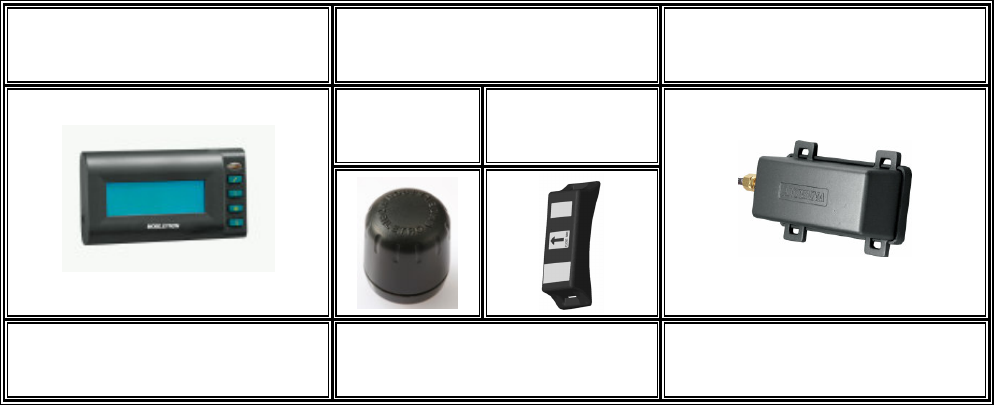
What are Included in the Package
!
!!
!
!
4.1 Digital ReceiverǺ1unit
4.2 TransmitterǺ4 ~ 14 pcs 4.3 Chassis Antenna Ǻ2~4
pcs
Cap Type
THE01
Clamp Type
THC03
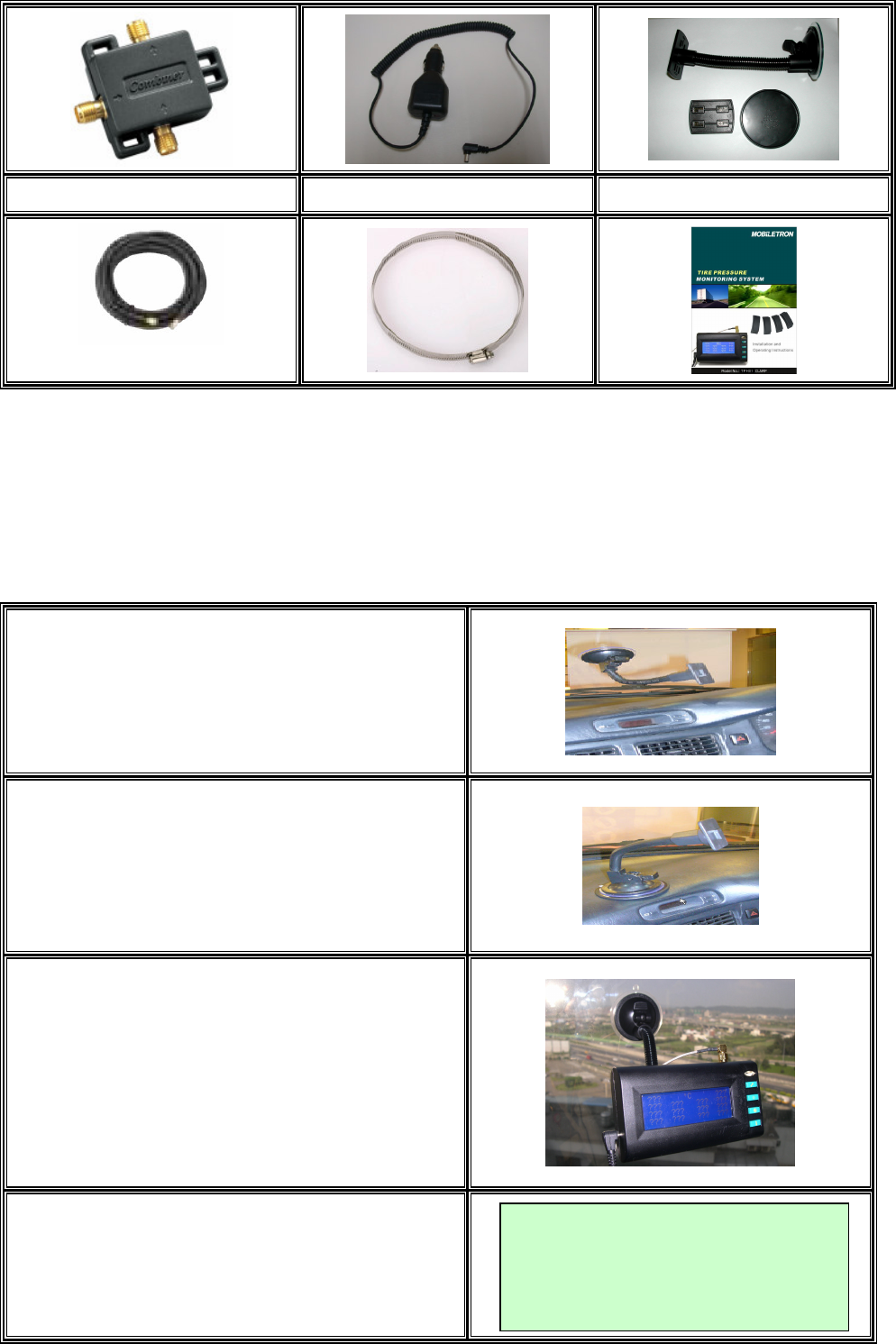
4.4 Power Combiner: 1~3
pcs
4.5 Cigarette Lighter Power
CableǺ1 piece
4.6 Receiver MountǺ1 set
4
!!!
4.7 RF Cable: 3~9 pcs 4.8 StrapǺ4~14 pcs 4.9 User ManualǺ1 copy
!
!!
!
6
66
6ǵ
ǵǵ
ǵ
Installation of TPMS!
!
!!
!
6 / 2
6 / 26 / 2
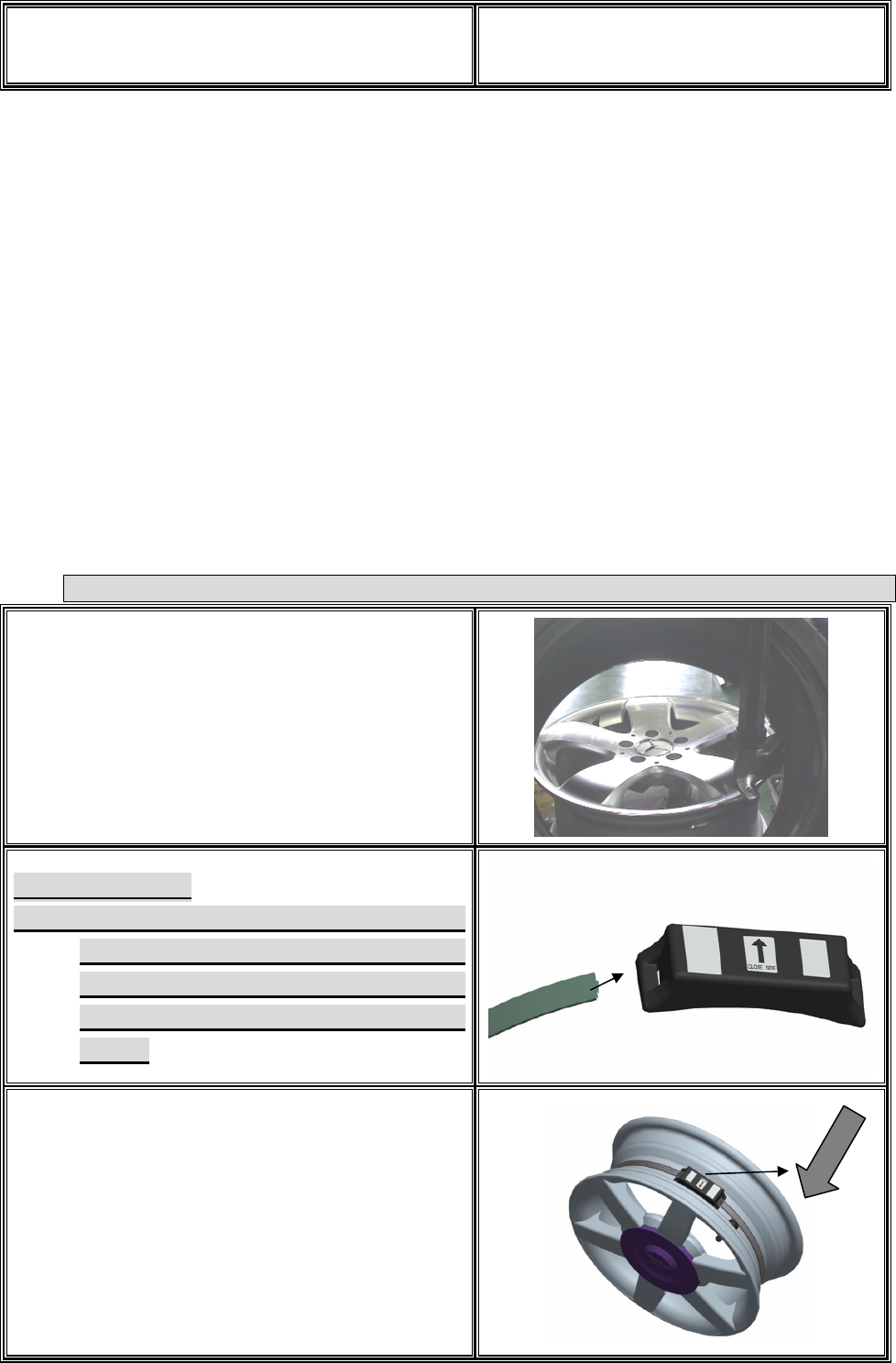
6/2 Use Flexible Gooseneck Windshield Suction Cup or Adhesive Pedestal
Disk to Install Receiver
!
5.1.1 Place the gooseneck arm on somewhere
you can see it clearly (e.g. windshield).
5.1.1.2 Attach its suction cup on windshield.
!
5.1.2 Install the receiver on somewhere you
can see it clearly (e.g. dashboard).
5.1.2.2 Peel off the sticker cover of the
Pedestal disk and attach it to the
dashboard. !
5.1.3. Fix receiver on the
flexible gooseneck
windshield suction pedestal.
5.1.3.2 Screw antenna cable connector onto
the receiver.
5.1.3.3 Plug DC power cable into
receiver
power jack and cigarette lighter
socketǶ !
5.1.4. LCD screen will show “???”
!
???
PSI
???
??? ??? ??? ???
??? ??? ??? ???
??? ??? ??? ???
5
5.1.5.
Reverse above steps to remove the receiver.
!
5.2 Install Transmitter
Attention:
Transmitters must be installed by professional technicians. The technicians
have to follow the installation guide step by step to install transmitters correctly.
Following tools and instructions are for technicians, not for end users.
ToolsǺ
ǺǺ
Ǻ
Tire Changer
Wheel Balancer
Pliers
Other Hand-tools
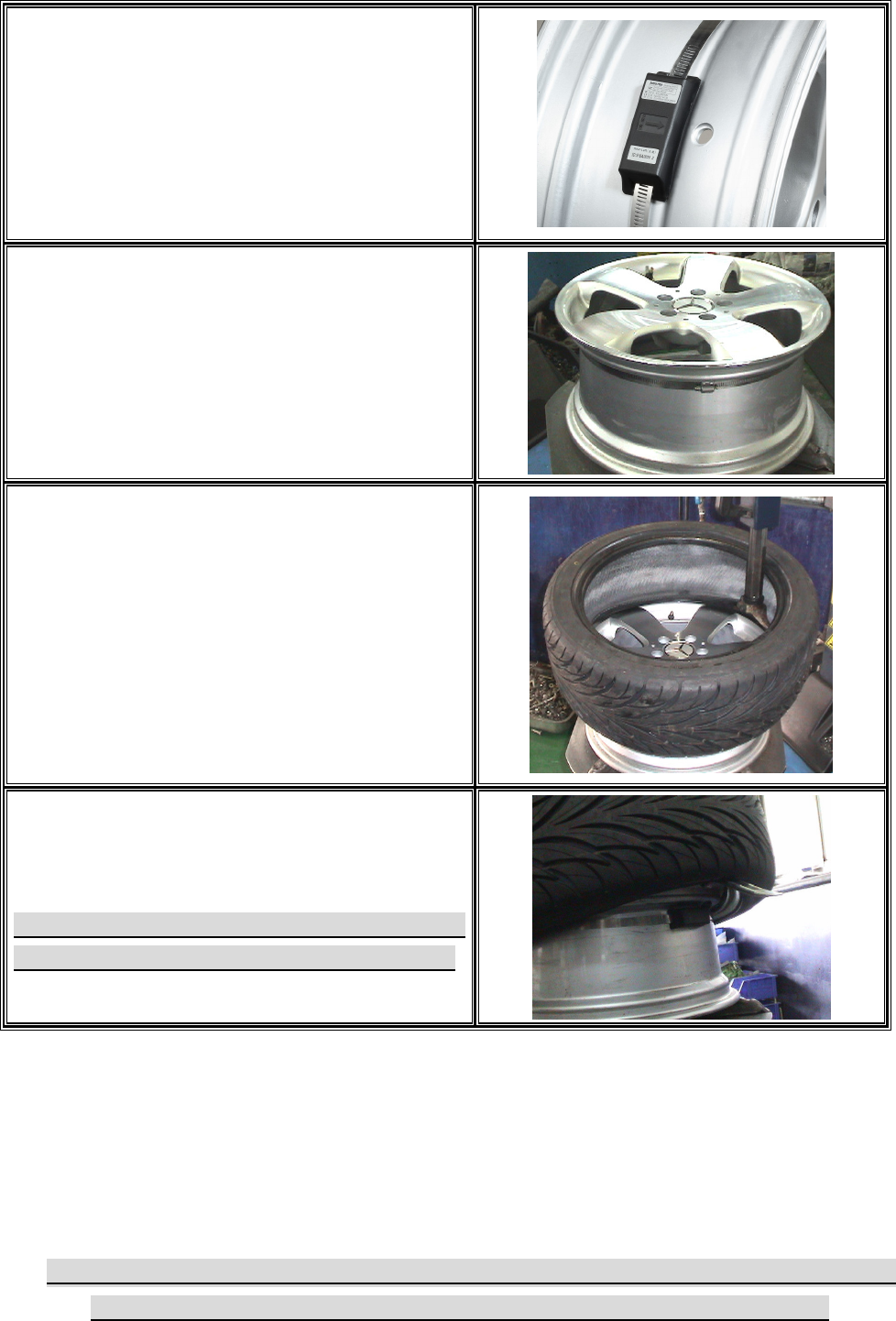
5.2.1 Install Clamp Type Transmitter
(Before install the tire please set up the ID of the transmitter first, refer to NO.10)
5.2.1.1 Please follow the standard procedures
to dismount tire from rim.
Ɂ Ɂ
Ɂ ɁɁ Ɂ
Ɂ Ɂ IMPORTANT:
5.2.1.2 Set up the ID of the transmitter and
must keep other transmitters away
from at least 1m away to avoid taking
the same signal Then install the
clamp.
!
5.2.1.3
Make sure arrow on the transmitter
point to rubber valve side.
!
6
5.2.1.4 Put the transmitter in the lowest area
of the rim or drop center, and beside
valve. Tighten the strap.(Torqre must
over 0.35 kfg-m)
Suggestion: Place lock of strap
opposite to transmitter mounting
position for better tire rebalancing. !
5.2.
Cut excess strap off to approximately
one 1nch (25mm); blunt
sharp cutting
edge.
!
5.2.1.6
Wheel Balancing is required after
transmitter installation.
!
5.2.1.7
Reverse the above steps to remove
a transmitter.
Suggestion:Tell technician that you have
installed TPMS before he changes the tire.
!
5.2.2 Install Cap Type Transmitter
Please follow steps below to install cap type transmitter. Wheel balancing is
required after the installation.
ϡ ϡ
ϡ ϡϡ ϡ
ϡ ϡ IMPORTANT: Install NO.5.3 first then turn on the Receiver and go to the
General Set Up Mode/Search TX ,then place the transmitter one by one
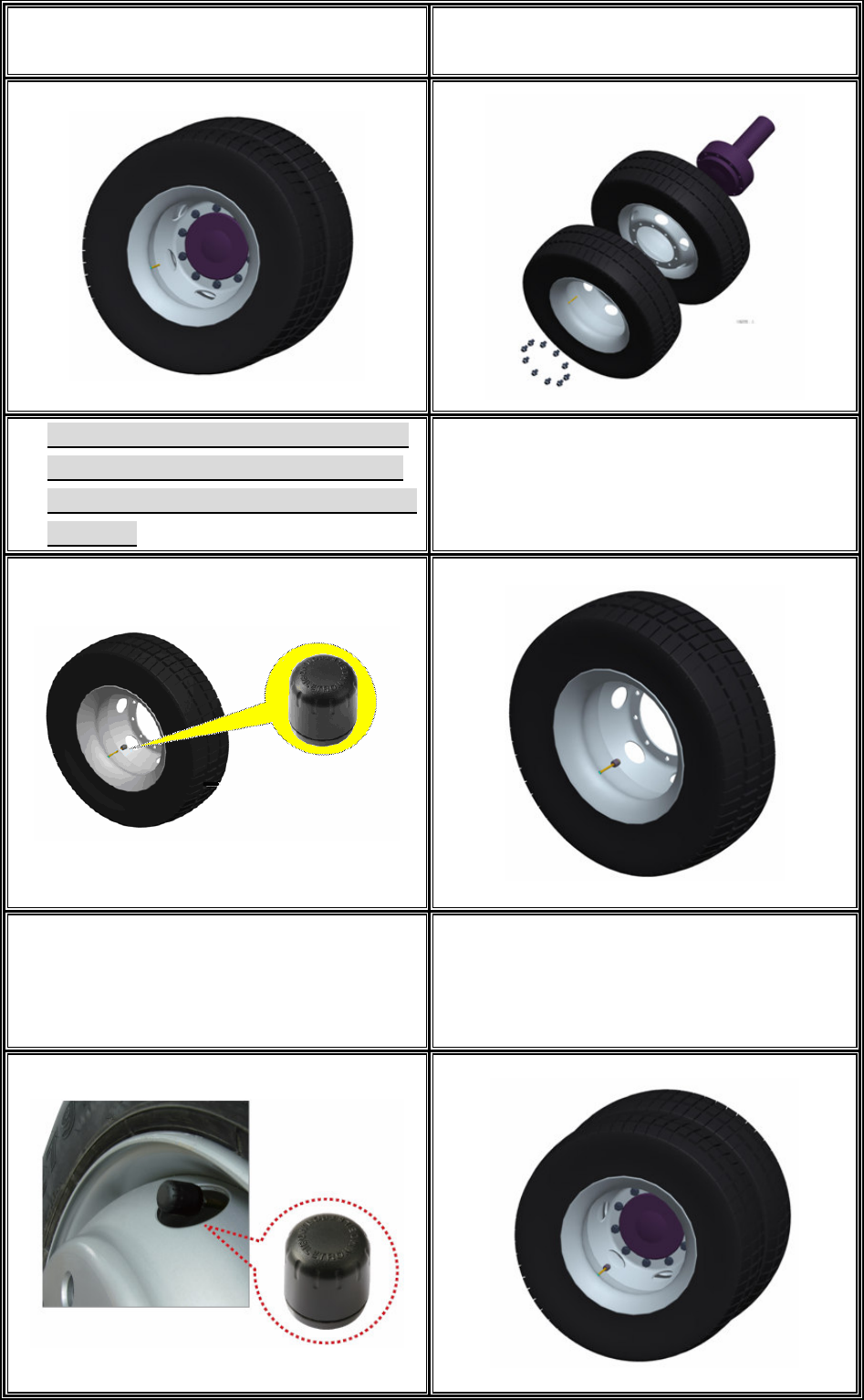
7
1. For example: Install in rear axial twin
wheels
2. Disassemble twin wheels
3. Place the transmitter on the valve.
Make sure the one gets the signal
and wait 2 mins then you can go to
the next.
4. Set tightened torque at 9~10 Kgf.cm.
5. Fasten inner wheel with transmitter
mounted to the transmission shaft.
6. Complete the installation by fastening
outer wheel with transmitter mounted
to the transmission shaft.
8
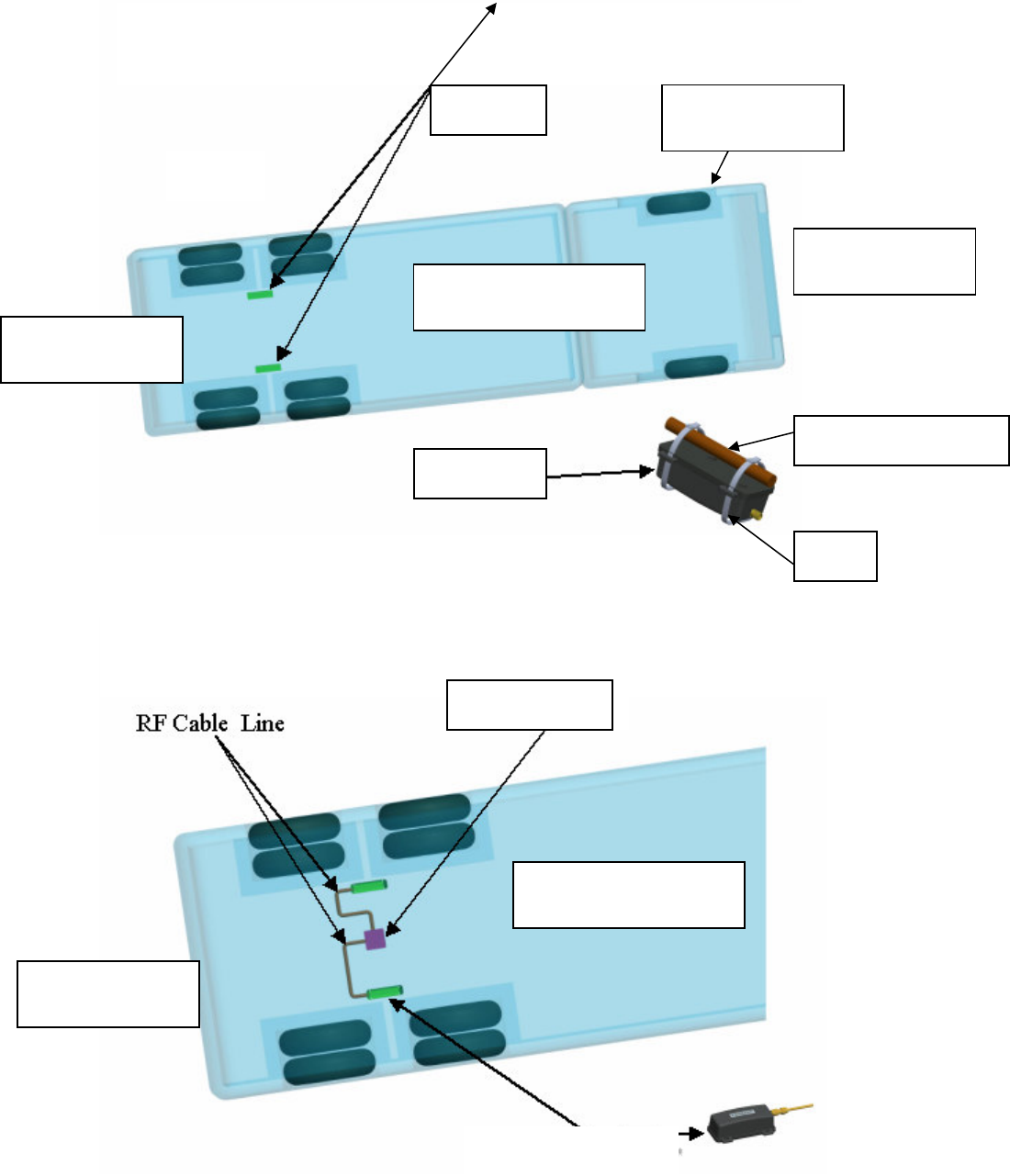
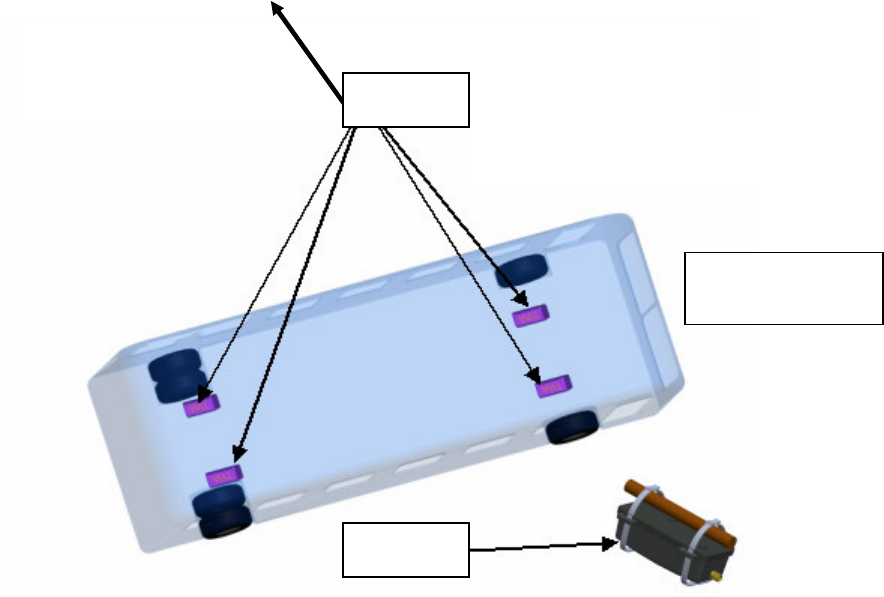
5.3 Install Antenna and Power Combiner
5.3.1 Install on truck (example for 8 wheels)
1. First, install antenna modules at two sides of chassis(Frame), which are close to the rear
tires as shown in the diagram below. Bottom of antenna case should be facing to fixture.
2. Connect two 1.5 m RF cables from antenna to 1
st
power combiner.
Combiner
Antenna Module
Antenna
A Part of Frame
Band
Antenna
Front of Truck
Rear of Truck
Top view of Truck
Rear of Truck
Wheel of Truck
1
st
Combiner
Top view of Truck
9
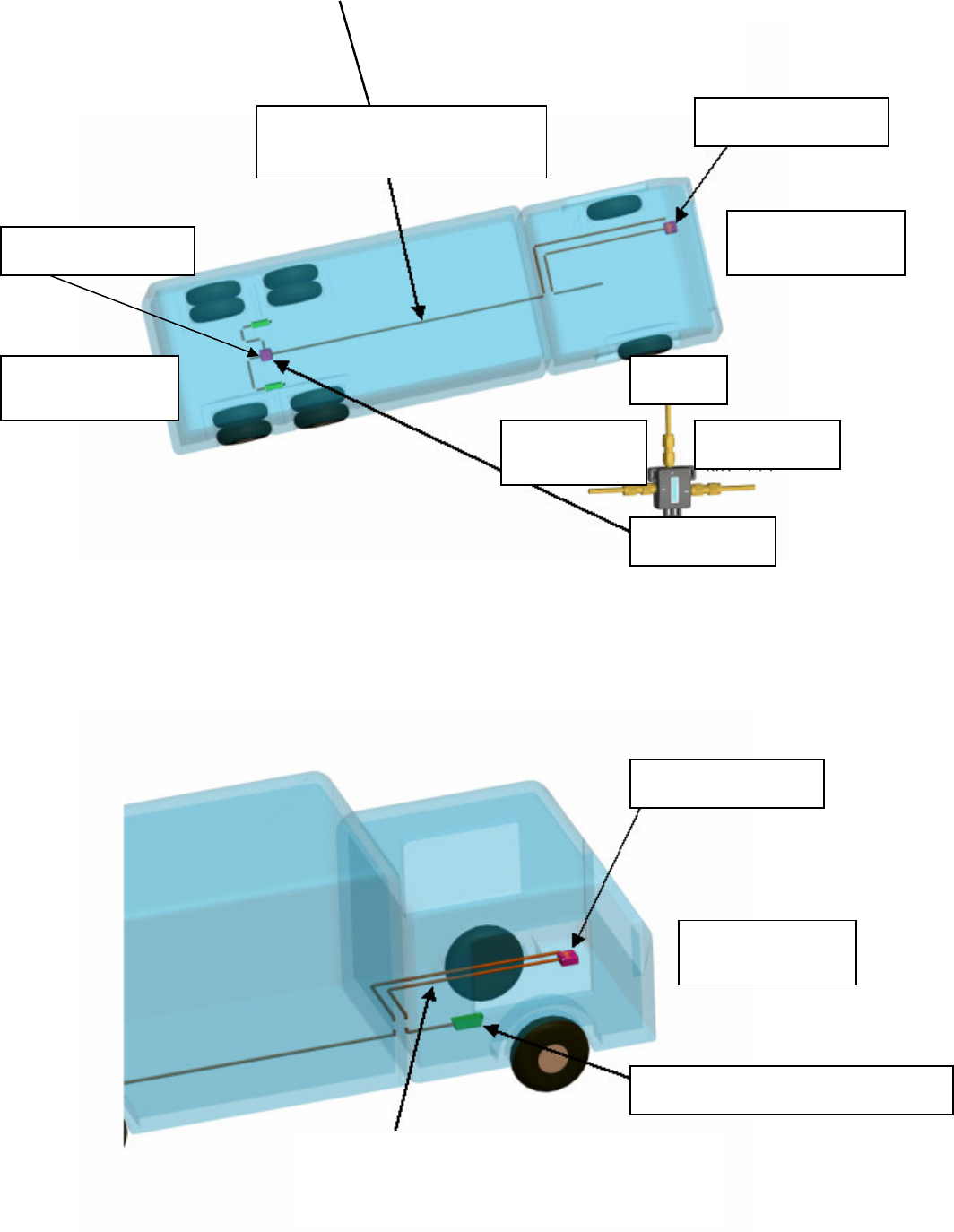
3. Connect one end of 10m RF cable to the output of 1
st
power combiner, and the other end
to 2nd power combiner input in driver’s cabin.
4. Connect a 6m RF cable line to input of the second power combiner, pull it to the chassis
and connect it to the antenna module for front wheels.
Top view of Truck 2
nd
Combiner
1
st
Combiner
Input
Combiner
Output Output
2
nd
Combiner
The antenna for front wheels
Cable
Rear of Truck
Front of Truck
Front of Truck
10
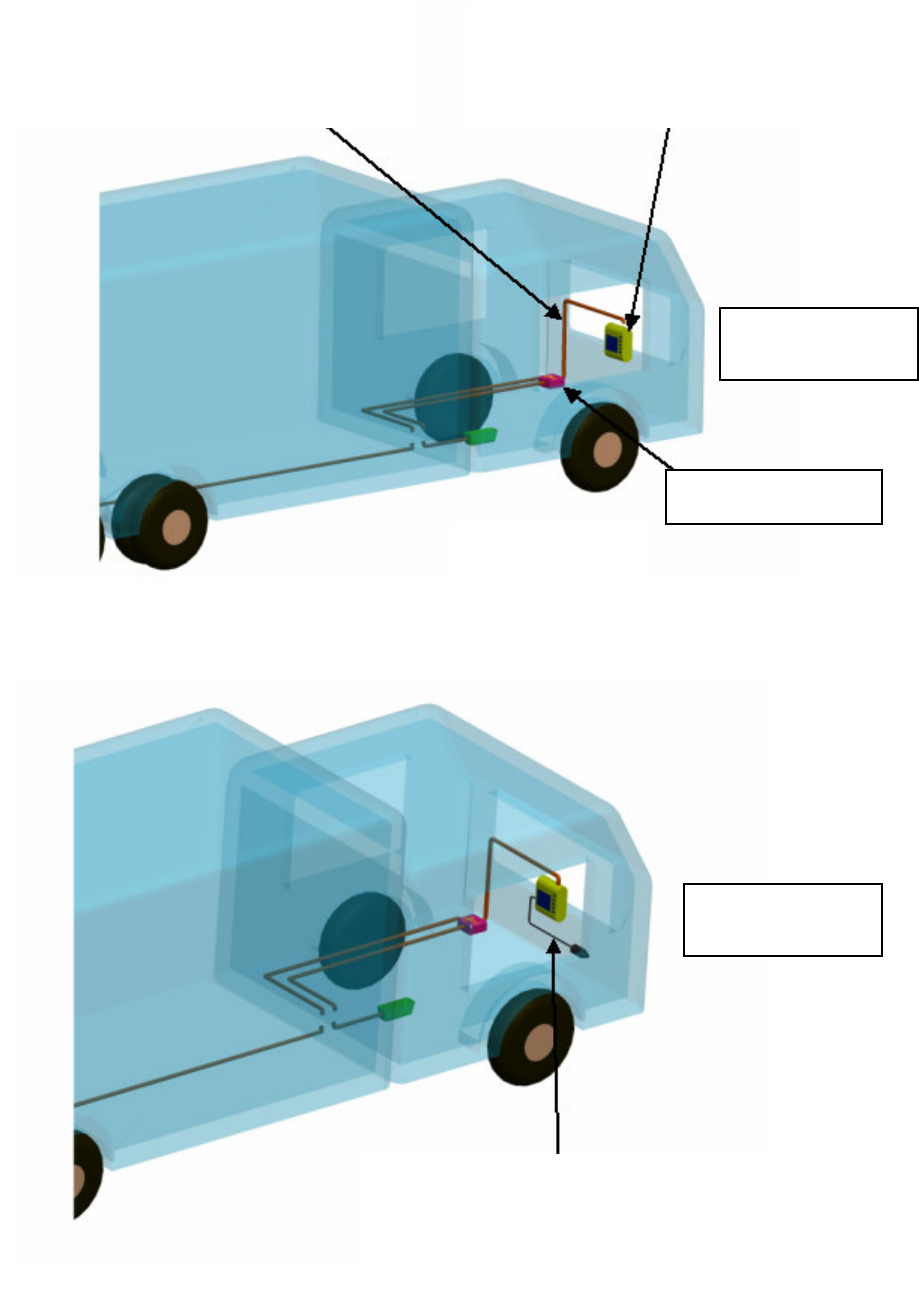
5. Connect 2m RF cable from the 2
nd
power combiner’s output to the receiver’s input.
Mount the receiver according to the instructions.
6. Finally, connect the power cable to the cigarette lighter socket.
2
nd
Combiner
Receiver
2m RF cable
Front of Truck
Front of Truck
Power cable
11
Attention:
1. The SMA connections between RF Cables, power combiners, and antenna
modules should be wrapped using water-proof tape.
2. Use cable ties to bind the RF cables, power combiners, and antenna modules
properly.
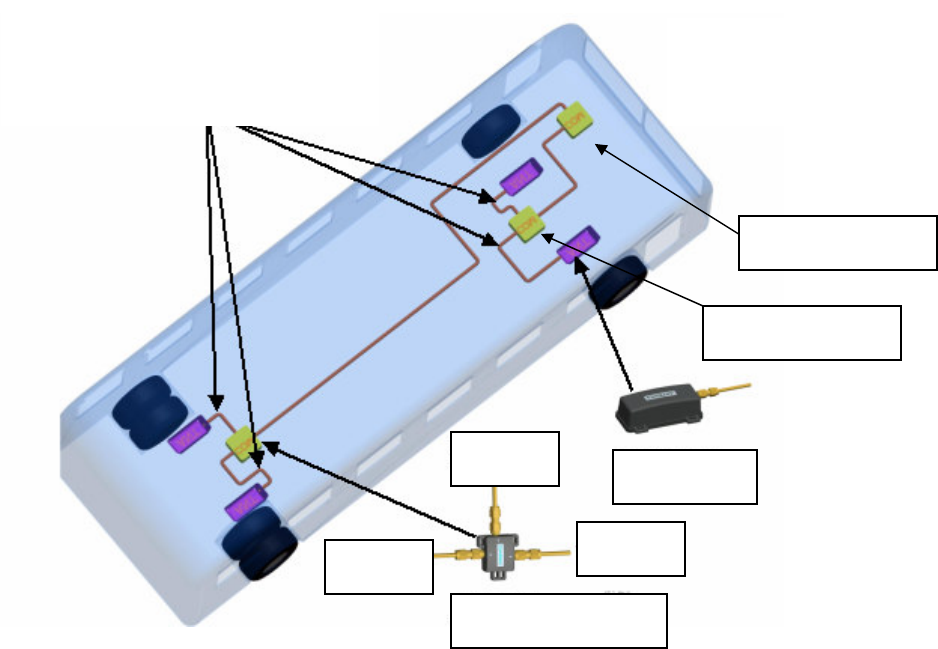
5.3.2 Install on bus (example for 6 wheels)
1. First, install four antenna modules on any fixtures available that are fastened on
chassis(Frame) and close to tires.
Bottom of antenna should be facing to fixture as shown in the diagram below.
Front of Bus
Top view of Bus
Antenna
Antenna
12
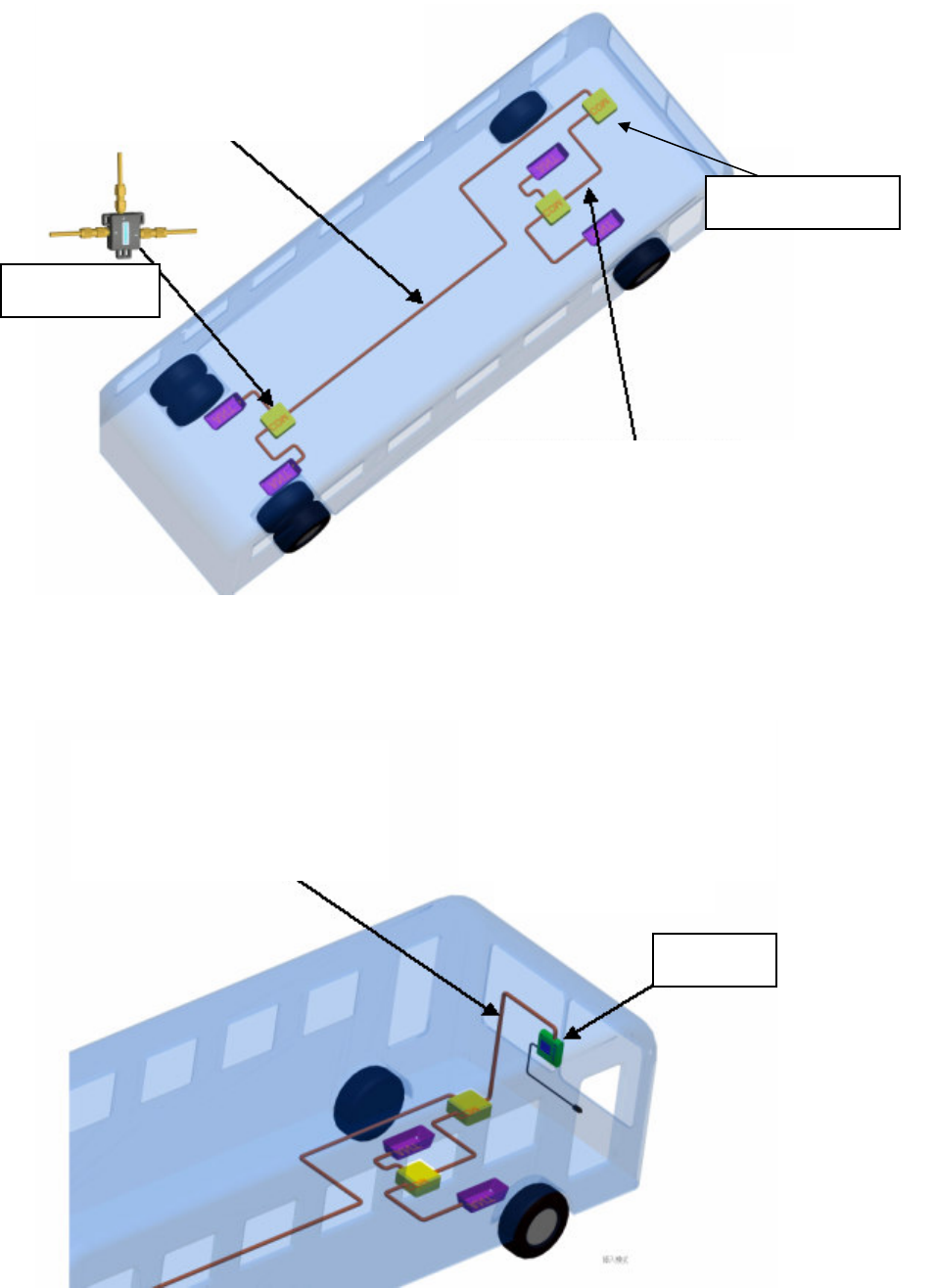
2. Connect four 1.5 m RF cables from antenna to combiner.
ϭ
3. Connect one end of 10m RF cable line to the output of the 1
st
power combiner for rear
wheels, and the 3rd power combiner input in driver’s cabin.
4. Connect a 6m RF cable to intput of the 3
rd
power combiner, pull it to chassis and connect
it to the output of 2
nd
power combiner for front wheel antenna modules.
Front of Bus
Antenna
1.5m RF
Output
Intput
Intput
1
st
Combiner
3rd Combiner
2
nd
Combiner
13
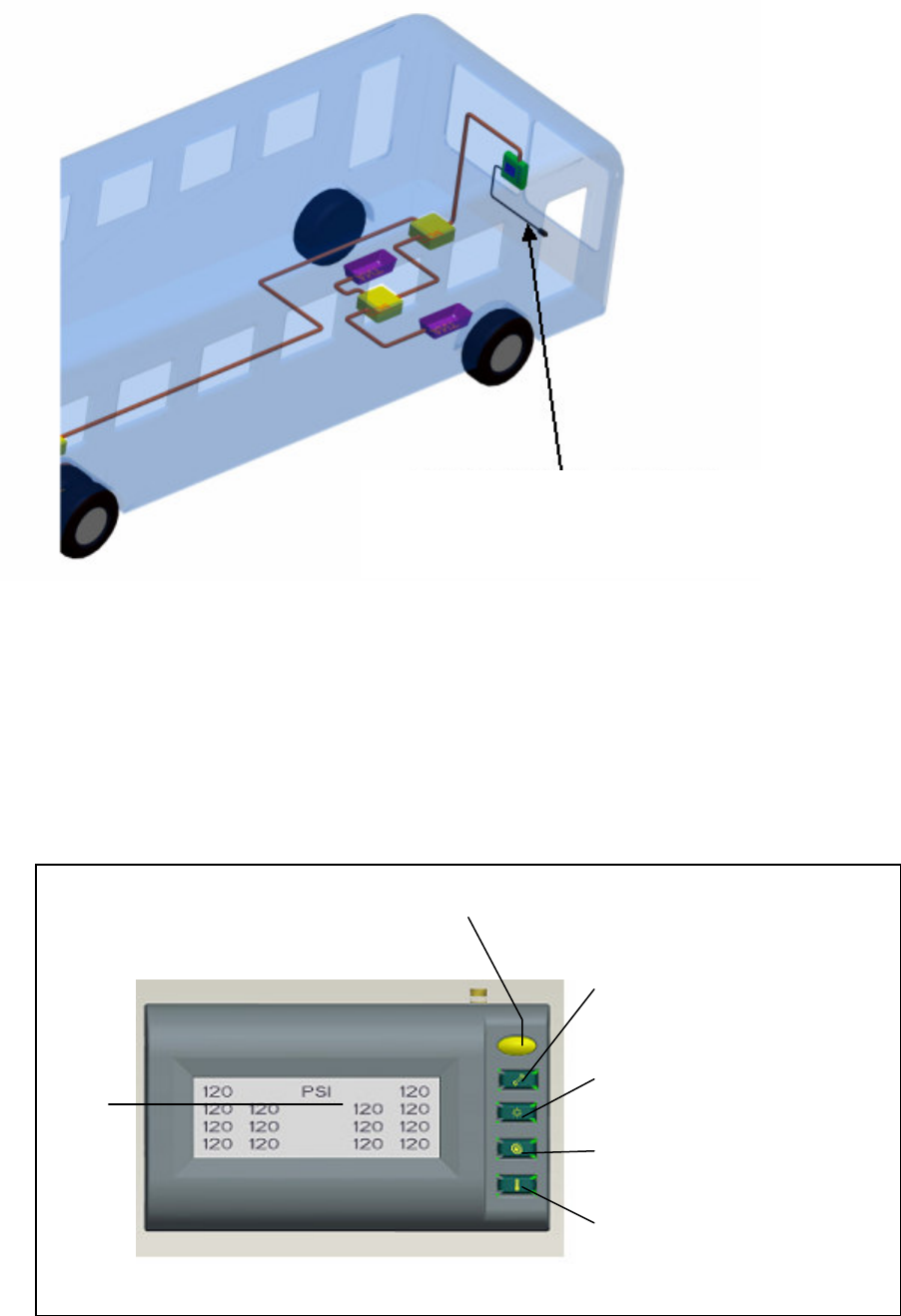
5. Connect 2m RF cable from the 3
rd
combiner’s output to the receiver’s input. Mount the
receiver according to instructions.
10m RF Cable
6m RF Cable
Combiner
2m RF Cable
Receiver
Front of Bus
Front of Bus
3rd Combiner
14
6. Finally, connect the power cable to the cigarette lighter socket.
Attention:
1. The SMA connections between RF Cables, power combiners, and antenna modules
should be wrapped using water-proof tape.
2.Use band to bind the RF cables, power combiners, and antenna modules properly.
6. Digital Receiver Function Description
6.1 Digital Receiver Diagram, Display Control and Indicators
Power Line
LED Alarm Indicator
LCD!
Pressure
LCD Backlight
Temperature
Setting Mode
15
6.2 The Receiver Button Function Description
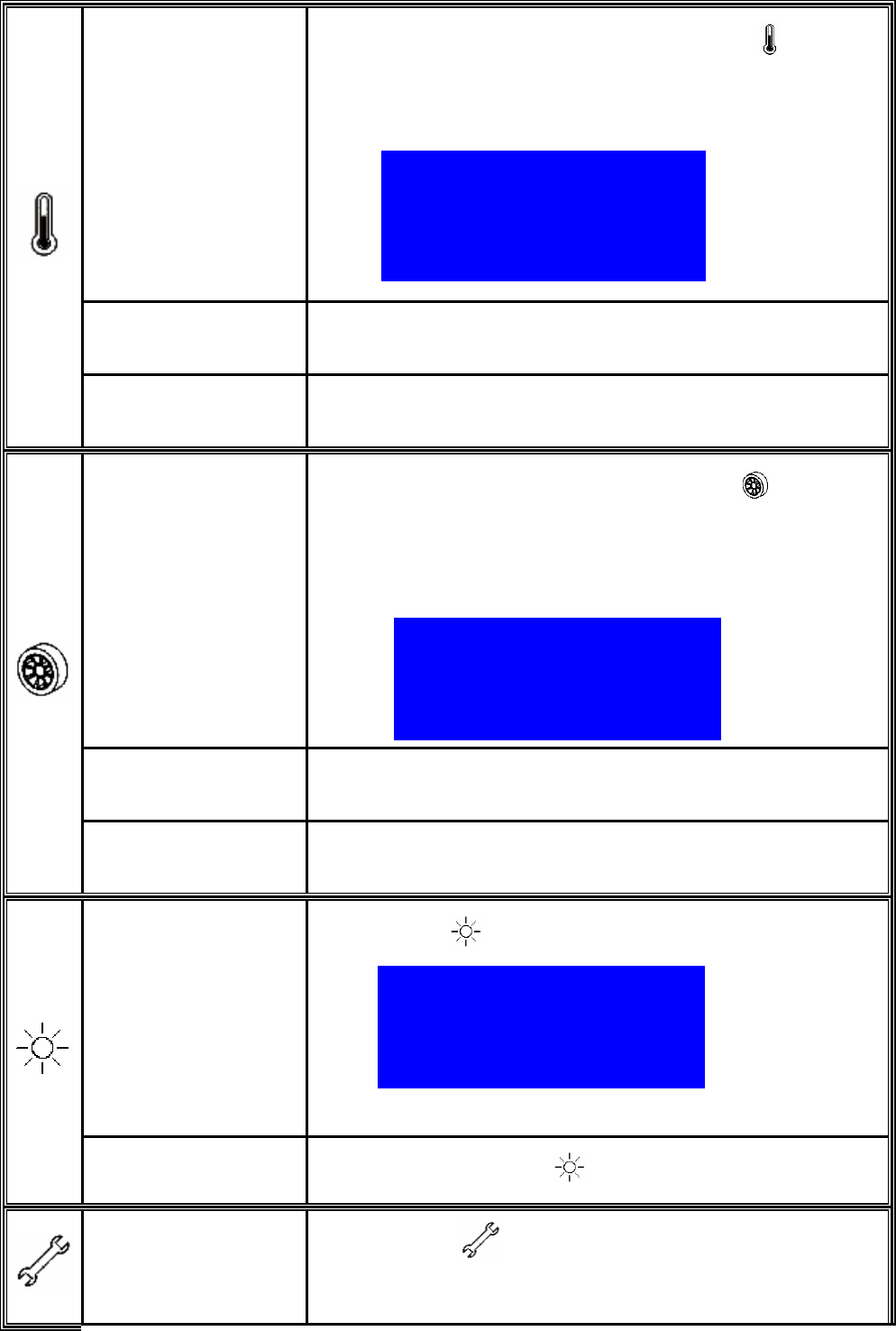
1.Temperature
Button Display temperature of tires after press button .
If no data
received,
the corresponding tire pressure will be displayed
as ???.
!
2. ʆ
ʆʆ
ʆ(Downward
Button)
In “General Set Up Mode”Ǵacts
as downward button to
select function and number.
3.Backward Button In “Special Set Up Mode”Ǵacts as backward
button to
select tire for programming.
1.Pressure Button Display pressure of tires after press button .!
If no data
received, the corresponding tire pressure will be displayed
as ???.!
2.ʅ
ʅʅ
ʅ(Upward Button)
In “General Set Up Mode”Ǵacts
as upward button to
select function and number.
3.Forward Button In “Special Set Up Mode”Ǵacts as forward
button to select
tire for programming.
1.LCD Display
Backlight Button Press button to switch the backlight of LCD Display.
2.Confirmation
Button In set up modeǴbutton acts as confirmation button.
1.Activate Set Up
Button Press button more than 2 seconds
to enter into
“General Setup Mode”.
35
к
35
36 36 35 35
36 36 35 35
??? 36 35 ???
125 PSI
125
125 125 125 125
125 125 125 125
??? 125 125 ???
125 PSI
125
125 125 125 125
125 125 125 125
125 125 125 125
16
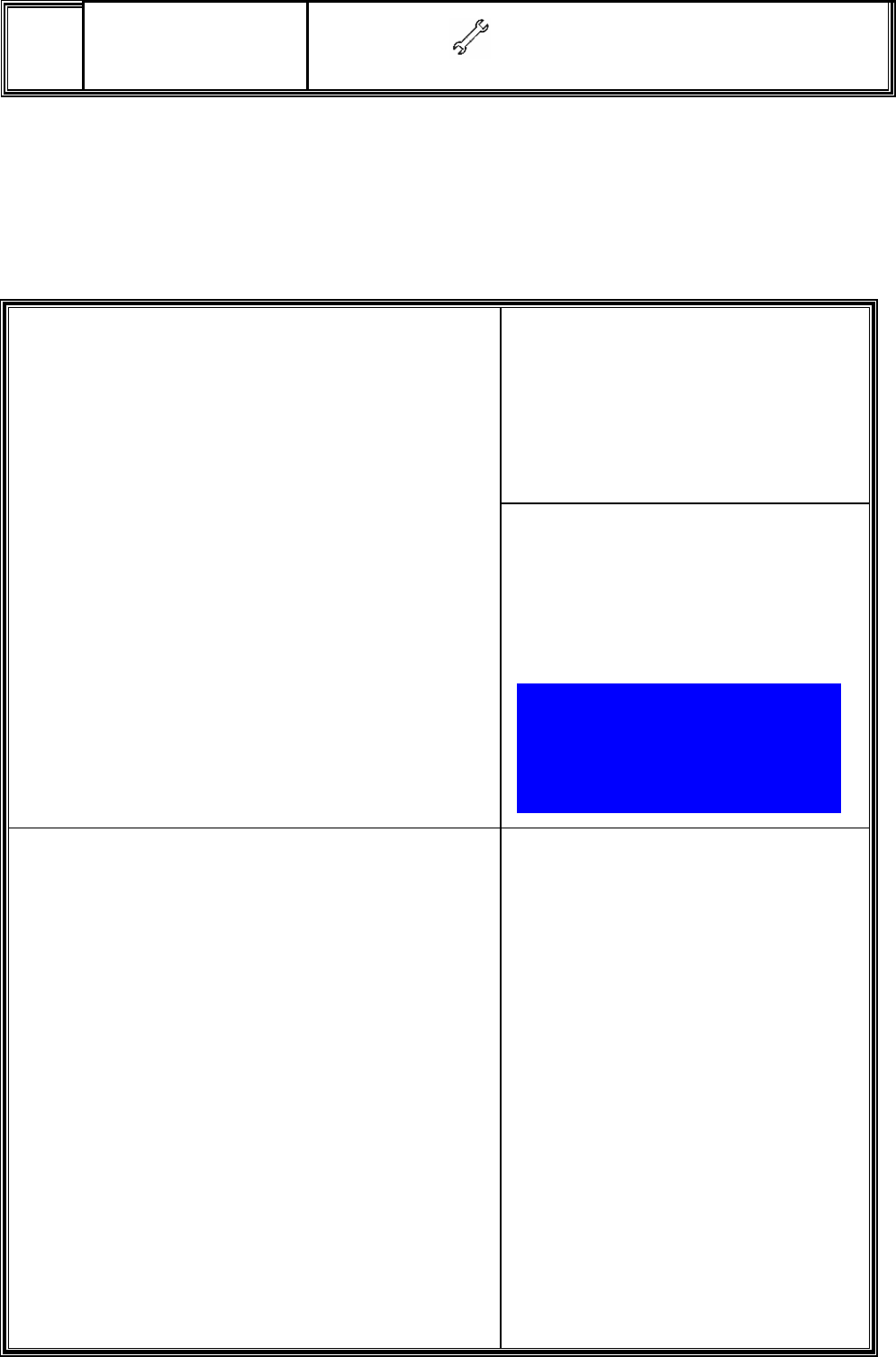
2.Exit Set Up Mode Press button again to exit “Setup Mode”.
NoteǺ
ǺǺ
ǺValues shown above are for reference only.
7. Alarms and Warnings
7.1 Pressure Threshold Alarm and Warning
*Remark:
The manual
pressure thresholds suggested being
lower than 108 PSI and higher than
144PSI. The pressure threshold
value is adjustable by user.
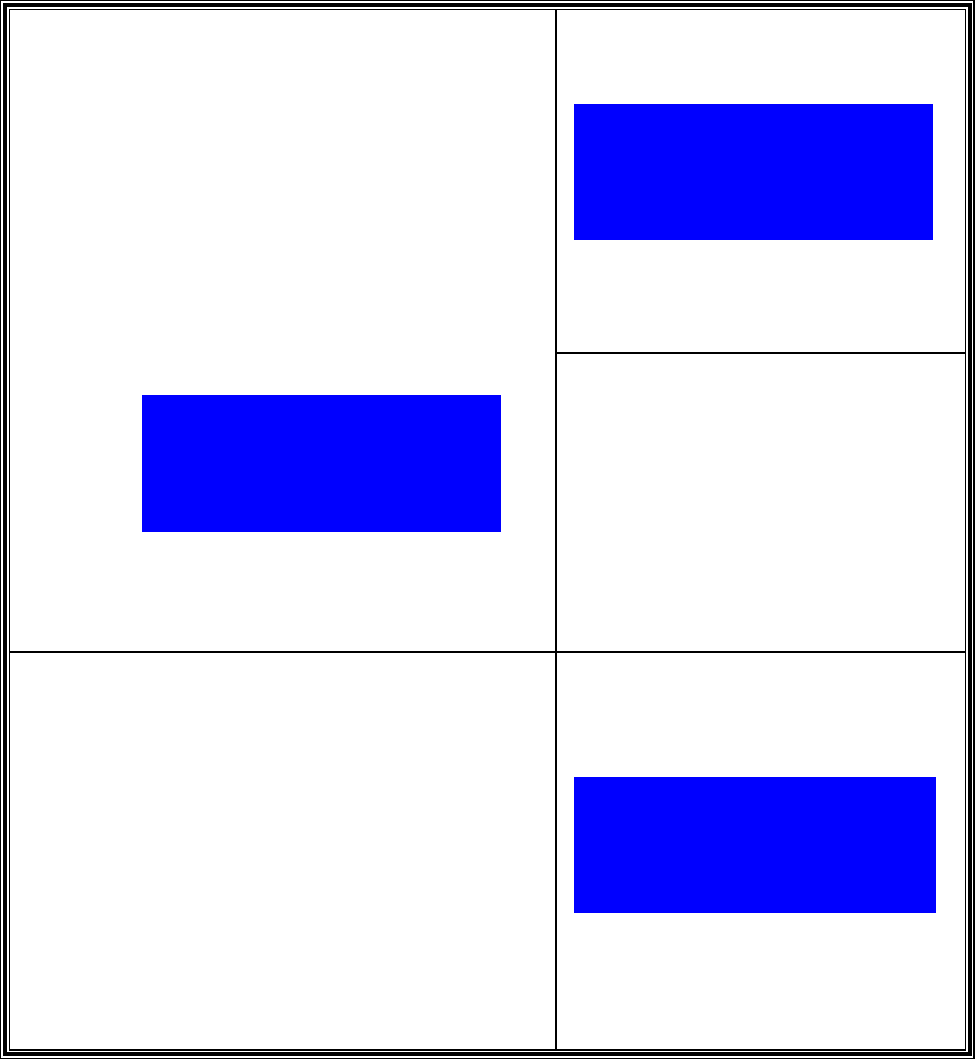
1. Tire pressure lower/higher than Manual
Pressure Threshold SettingǺ
ǺǺ
Ǻ
Low/High Pressure Warning is initiated
when the pressure drops below /rises above
the
programmed Pressure Threshold Setting Limit.
Warning Actions IncludeǺ
ǺǺ
Ǻ
(1) LED Alarming Indicator blinks once.
(2) Two short audio alarm.
Suggested Action to WarningǺ
ǺǺ
Ǻ
When the warning occurs, reduce
speed and proceed to a safe
location to check tires.
Example:
When the tire pressure is lower than
threshold, the LCD display will show
something as below and initiate the
pressure warning.
2. Tire pressure drops below the
Factory-Preset Low Pressure Threshold
SettingǺ
ǺǺ
Ǻ
Low Pressure Alarm is initiated when the
pressure drops below the Factory-Preset
Threshold Setting Limit.
Alarm Actions IncludeǺ
ǺǺ
Ǻ
(1) LED Alarm Indicator blinks once.
(2) Three short audio alarm.
(3) LCD Display Backlight remains on ΙThe
pressure value of the anomalous tire will be kept
flashing and shown on the associated tire
location.
To Cancel Alarm actionsǺ
ǺǺ
Ǻ
Proceed “Reset” function as described on
“General Set Up Mode” Section 8.4. Or
Remark:
The low tire pressure warning value
is set as 75% of the cold tire
pressure.
(1) The cold tire pressure for valve
cap transmitter is the initial
pressure detected while the
transmitter screwed on the tire.
(2)The cold tire pressure for clamp
type transmitter is the tire pressure
detected while the transmitter is
waking up by its centrifugal switch.
(if the tire pressure is below
120PSI, the cold tire will be
detected as 120PSI, e.g. the low
!85
PSI 125
125 125 125 125
125 125 125 125
125 125 125 125
17
tire pressure warning value will be
90PSI.
the low pressure warning will remain on the
display even re-power the receiver.
Suggested Action to AlarmǺ
ǺǺ
Ǻ
When the alarm occursǴreduce speed and
proceed to a safe location to check tires.
NoteǺ
ǺǺ
ǺThe Pressure Deflation Alarm will disappear
when the tires are properly re-inflated to
correct levels. Example:
When the tire pressure is 85PSI,
the LCD display will remain as
left and the warning will activate.
ʇ
ʇʇ
ʇ
3. Leak Warning
When the tire pressure decline rate is over
10PSI/minute(fast leaks) or 12PSI/10
min.(slow leaks), the transmitter will
initiate the warning. The tire pressure and
the !!!! warning signal will flash with
interchanging.
NoteǺThe leak warning might be wrongly initiated
if the tire pressure is dramatically
changed, esp. under the heavy rain or
the significant temperature falls.
NoteǺ
ǺǺ
ǺValue shown above is for reference only.
!85
PSI
125
125 125 125 125
125 125 125 125
125 125 125 125
!!!!
PSI
125
125 125 125 125
125 125 125 125
125 125 125 125
90
PSI
125
125 125 125 125
125 125 125 125
125 125 125 125

18
7.2 Temperature Threshold Alarm and Warning
Note:
The default
manual threshold Setting
Limit is 75°C
.
1. Tire Temperature higher than Manual
Temperature Threshold SettingǺ
ǺǺ
Ǻ
High Temperature Warning is initiated when
detected tire temperature is above the
programmed Temperature Threshold Setting
Limit.
Warning Actions Include:
(1) LED Alarming Indicator blinks once.
(2) Two short audio alarm.
(3) The pressure value of the associated tire
flashes once
Suggested Action to warmingǺ
When the warning occursǴreduce
speed and proceed to a safe location to
check tires.
Example:
When the tire temperature is
80°C,the LCD display will remain
as below and the warning will
activate.
2. Tire Temperature higher then Factory-
Preset
Temperature Threshold SettingǺ
ǺǺ
Ǻ
High Temperature Alarm is initiated when tire
temperature rises above the Factory-Preset
Temperature Threshold Setting Limit.
Alarm Actions Include:
(1) LED Alarming Indicator flashes once.
(2) Three short audio alarm.
(3) LCD Display Backlight remains onǹThe
temperature value of the
anomalous tire will be kept flashing
and shown on the associated tire
location.
To Cancel Alarm actionsǺ
ǺǺ
Ǻ
Proceed “Reset” function as depicted on
“General Set Up Mode” Section 8.4. Or
the low temperature warning will remain on
the display even re-power the receiver.
Suggested Action to AlarmǺ
ǺǺ
Ǻ
When the alarm occursǴreduce speed and
proceed to a safe location to check tires.
Example:
When the tire pressure is 86°C,the
LCD display will remain as below
and the warning will activate.
Note:
The Factory-Preset
Temperature Threshold Setting Limit
is set at 85°C in the transmitter
firmware.
80
к
35
36 36 35 35
36 36 35 35
36 36 35 35
!86
к
35
36 36 35 35
36 36 35 35
36 36 35 35

19
7.3 Other Warnings
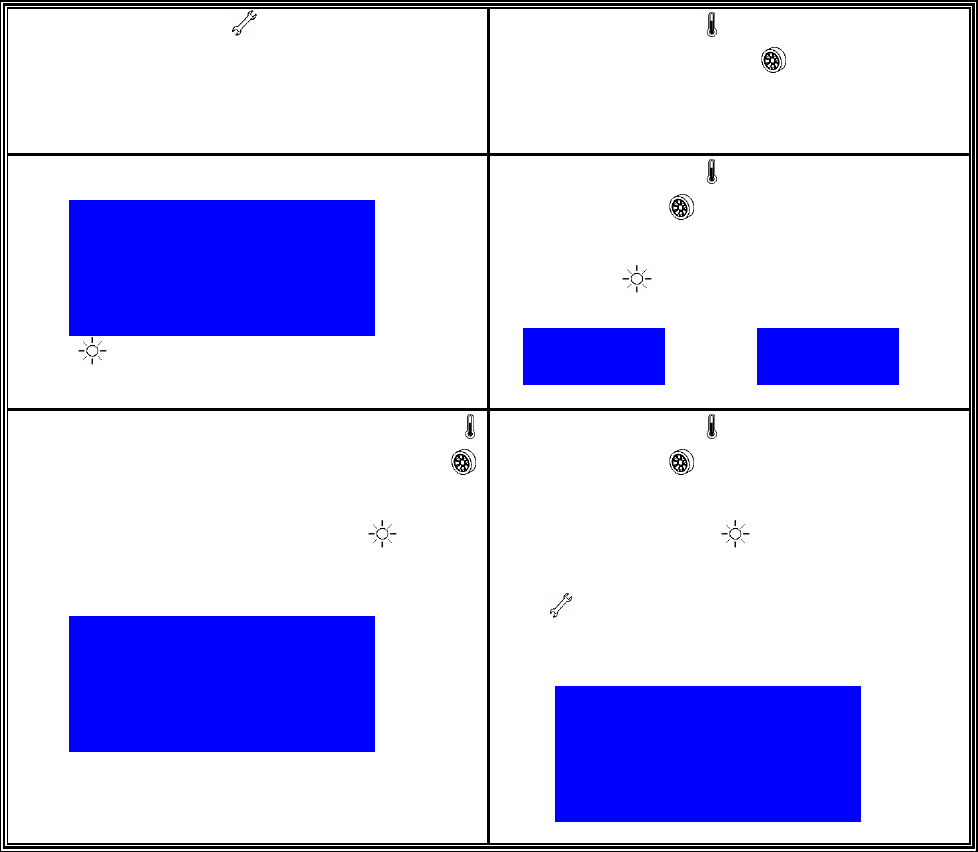
1. Communication failure warning
When the receiver has not received a
transmitter signal over 30 min., the ????
symbols will be shown on LCD display at the
corresponding position. If the above
symbols continuously remains on the display,
the system might be poorly communicated or
malfunctioned. Please return to the original
manufacturer for further inspection.
NoteǺ
ǺǺ
ǺIf the receiver restarts, the counter will
recount.
2. ID correctness failure warning
Once turning on the receiver, the transmitter
ID code will be checked automatically. If the ID
identification failed, the LCD display will display
E01 signal as warning.
Note:
If the ID identification failure warning occurs,
please re-setting the transmitter ID code.
3. Low Battery Warning
The low battery warning will be initiated while
the transmitter is going to run out of battery.
The tire pressure and the E02 warning digit
will also flash alternately on the LCD displayǶ
Note:
If the transmitter low battery warning occurs,
please replace it with new transmitter.
3. Sensor Malfunction Warning
While the pressure and temperature sensing
functions failed during sensor detection, the
tire pressure and the E03 warning digit
will flash
alternately on the LCD display.
Note:
Please replace it with new transmitter.
NoteǺ
ǺǺ
ǺValue shown above is for reference only
E02
PSI
125
125 125 125 125
125 125 125 125
125 125 125 125
E01
PSI
125
125 125 125 125
125 125 125 125
125 125 125 125
E03
PSI
125
125 125 125 125
125 125 125 125
125 125 125 125
????
PSI
125
125 125 125 125
125 125 125 125
125 125 125 125
20
8. General Set Up Mode
8.1 Manual Low Pressure Threshold Setting
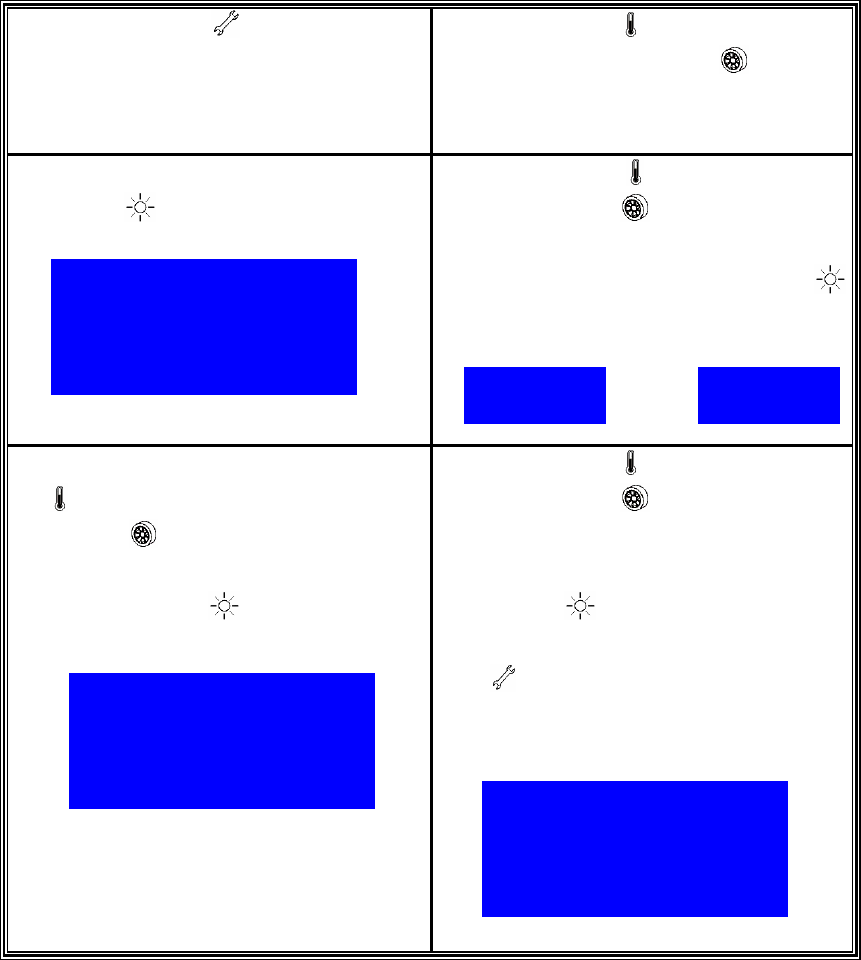
1. Press button for more than 2
second to go into “General Set Up
Mode”.
2. Use button
(act as downward
button) and button
(act as upward
button) to select “Low Pressure
Warning “ setting.
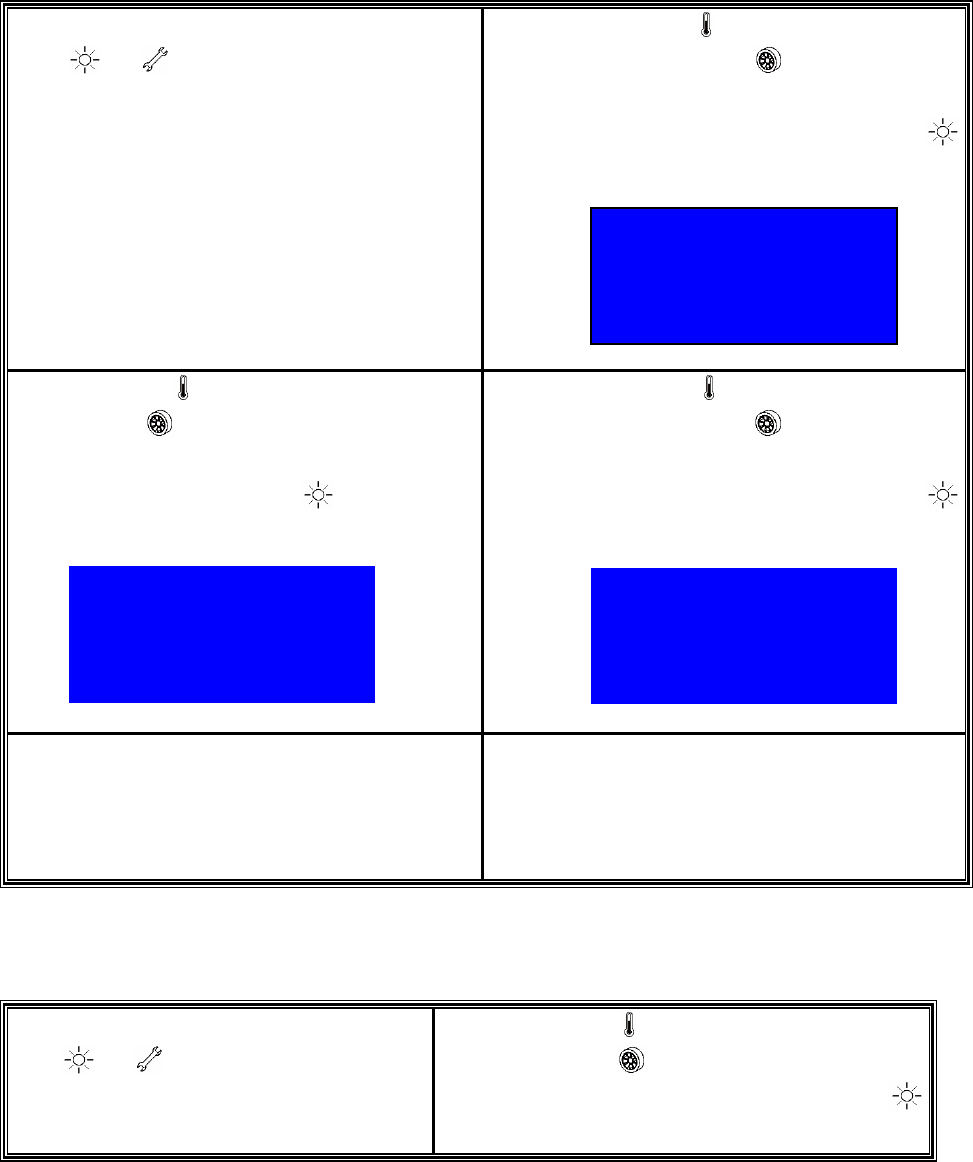
3. LCD Display will showǺ
Press button to confirm
4. Use button
(act as downward
button) or (act as upward button)
to select the setting for all or single tire.
Press button to confirm.
OR
5. If select SINGLE tire, use button
(act as downward button) or button
(act as upward button) to select the tire
location for setting. Press button
to confirm.
6. Use button
(act as downward
button) or (act as upward button)
to select the low tire threshold setting
value. Press button to confirm
the pressure value. Or p
ress button
to cancel the above setting and exit
“General Set Up Mode”.
Low Pressure
Warning
ALL SINGLE
ʈ
ʈʈ
ʈ
01 Pick Tyre
02
03 04 05 06
07 08 09 10
11 12 13 14
108 PSI
21
8.2 Manual High Pressure Threshold Setting
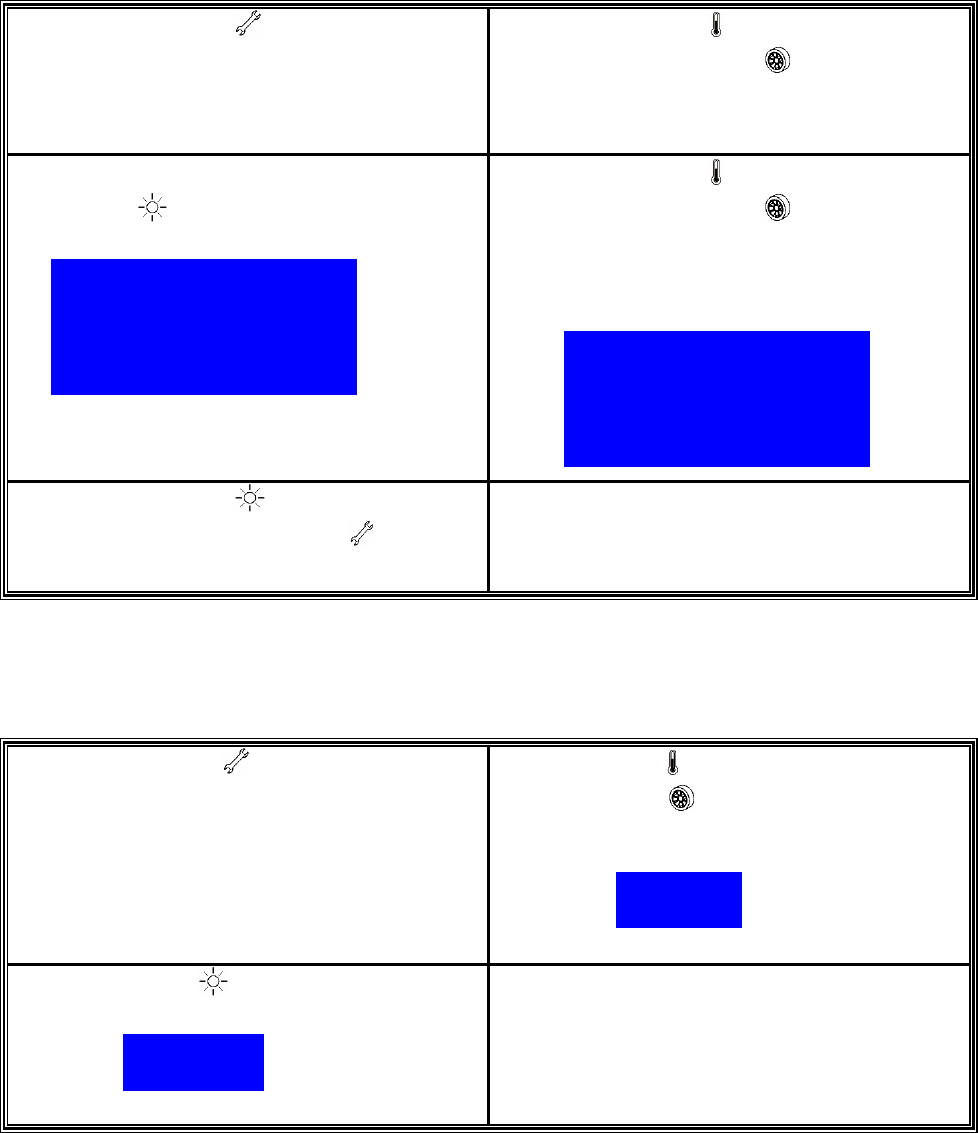
1.
Press button for more than 2
second to enter “General Set Up
Mode”.
2. Use button
(act as downward
button) and button (act as
upward button) to select “High
Pressure Warning “ setting.
3. LCD Display will showǺ
Press button to confirm
4. Us e button
(act as downward
button) or
(act as upward
button) to select the setting for all
or single tire. Press button
to confirm.
OR
5. If select SINGLE tire, use button
(act as backward button) or
button (act as forward button)
to select the tire location for
setting. Press button to
confirm.
6. Use button
(act as downward
button) or
(act as upward
button) to select the
high
pressure threshold setting
value.
Press button to confirm the
pressure value. Or p
ress button
to cancel the above setting
and exit “General Set Up
Mode”.
High Pressure
Warning
ALL SINGLE
ʈ
ʈʈ
ʈ
01
Pick Tyre
02
03 04 05 06
07 08 09 10
11 12 13 14
144 PSI
22
8.3 Manual Temperature Threshold Setting
1. Press button for more than 2
second to enter “General Set Up
Mode”.
2. Use button
(act as downward
button) and button
(act as upward
button) to select “High Temperature
Warning” setting.
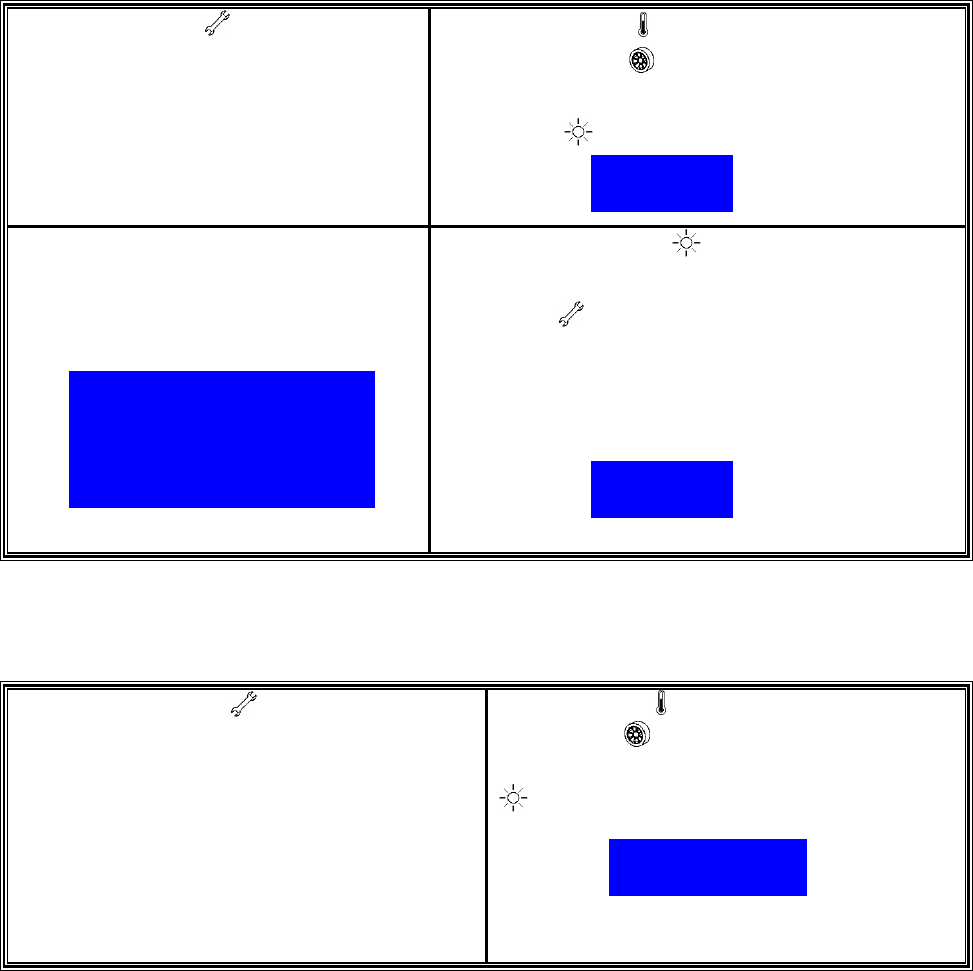
3. LCD Display will showǺ
Press button to confirm
4. Use button
(act as downward
button) and button
(act as upward
button) to select a number as High
Temperature Threshold.
5. Press button to confirm setup
value. Or press button again to
exit “General Set Up Mode”.
8.4 ResetǺ
ǺǺ
Ǻ
(Clear present pressure and temperature values. This procedure will also
cancel alarm status temporarily)
1. Press button for more than 2
second to enter “General Set Up
Mode”.
2. Use button (act as downward button)
and button (act as upward button)
to select “Reset” setting.
3. Press button to confirm.
4. All previous pressure and temperature
figures will be clear and show “ ???”.
This main function is used
to remove
the display of low pressure warning.
High
Temperature
Warning
75 к
RESET
OK
23
8.5 Restore Factory-Preset Value
(This function is to restore the manual pressure and temperature threshold value to
the factory-preset threshold. The Factory-Preset Low Pressure Threshold
Value=108PSI, High Pressure Threshold Value=144PSI; Factory-Preset Temperature
Threshold Value=75ʚ)
1. Press button for more than 2
second to go into “General Set
Up Mode”.
2. Use button
(act as downward button)
and button (act as upward button) to
select “Default” setting.
Press button to confirm
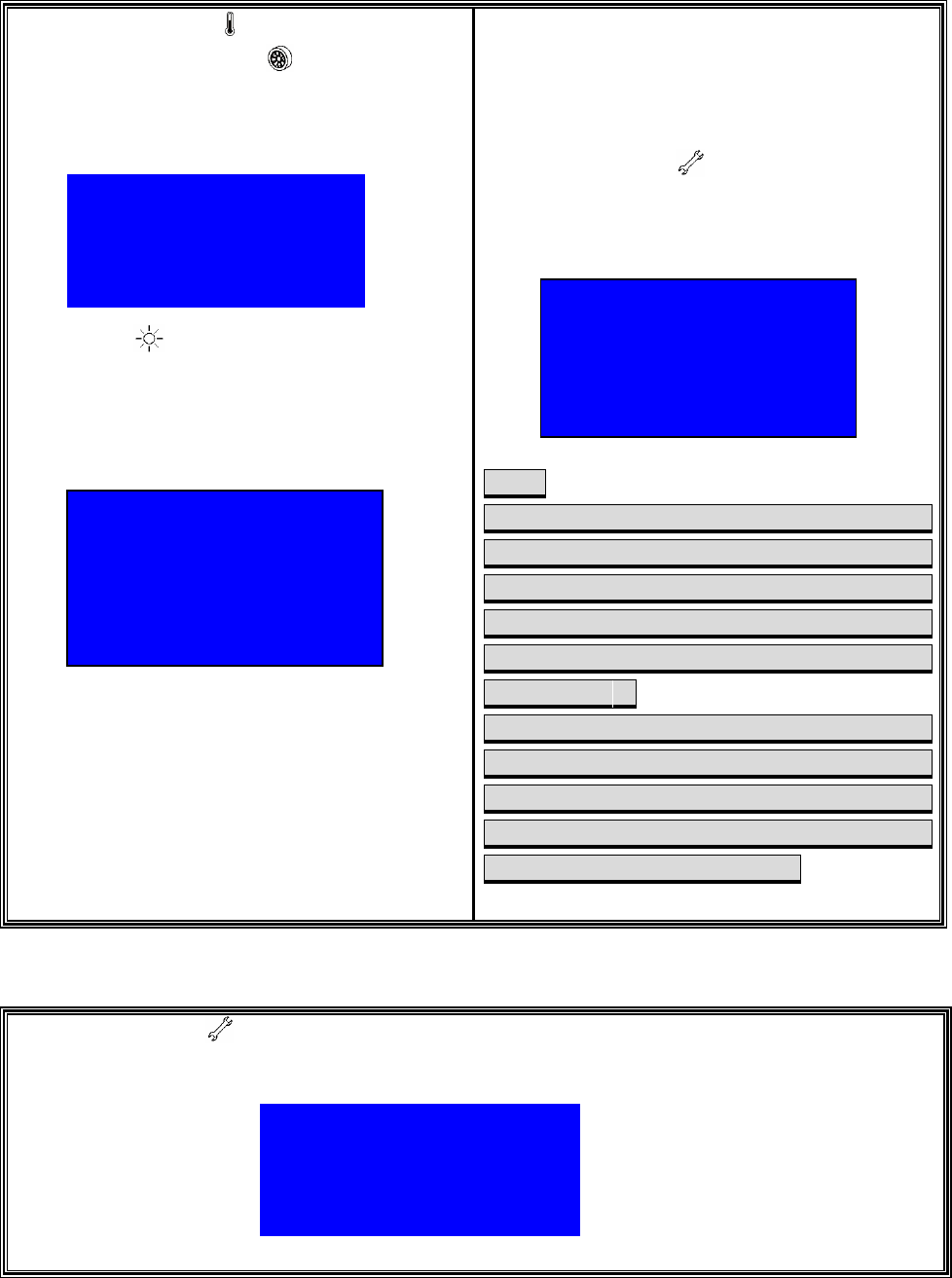
3. LCD Display will show default
Threshold Setting Value (P=
PressureǵT = Temperature).
4. Press button again to confirm
Factory-Preset Threshold Setting. Or press
button to cancel the restore function and
exit “General Set Up Mode”.
and Threshold
will remain as previous Manual Threshold
Setting Value.
8.6 “Search TX”—for Valve Cap Transmitter only
1. Press button for more than 2
second to enter “General Set Up
Mode”
2. Use button (act as downward button)
and button (act as upward button) to
select “Search TX” setting. Press button
to confirm.
Default
P=108/144 PSI
T=75 к
OK
Search Tx
24
3. Use button (act as backward
button) and button (act as forward
button) to select the tire location for
setting ID code.
Press button to confirm
4. Once received the TX ID code, the tire
pressure will be shown at the
associated tire location on the display
.
Transmitter searching then completes.
Press button
to cancel the search
function and exit
“General Set Up
Mode”.
Note:
1. All ID setting should be finished
within two minutes. Or the receiver will
stop searching automatically. And when
you install the next transmitter, please
wait 2mins or displace the former
transmitter.
2. The TX searching function is only for
valve cap transmitter. For the initial
installation on tires, each valve cap
transmitter should do the pairing setting
according to the 8.6 section.
8.7 Exit General Set Up Mode
1. Press button to exit the General Set Up Mode. The LCD Display will return to
initial display.
NoteǺ
ǺǺ
ǺValue shown above is for reference only.
ʈ
ʈʈ
ʈ
01 Pick Tyre
02
03 04 05 06
07 08 09 10
11 12 13 14
125 PSI ???
??? ??? ??? ???
??? ??? ??? ???
??? ??? ??? ???
125 PSI
125
125 125 125 125
125 125 125 125
125 125 125 125
??? Search TX ???
??? ??? ??? ???
??? ??? ??? ???
??? ??? ??? ???
25
9 Special Set Up Mode
9.1 Exchange Wheel Location
1. Simultaneously
press button
and for more than 2 seconds to
enter “Special Set Up Mode”.
2. Use button
(act as downward
button) and button (act as upward
button) to select ”Exchange Wheel
Location” setting. Press button
to confirm.
3. Use button (act as backward button)
and button (act as forward button) to
move
ʈ
ʈʈ
ʈ
cursor
to select the tire location
for rotationǹPress
button to confirm.
4. Use button (act as backward
button) and button (act as forward
button) to move
Ч
ЧЧ
Ч
cursor
to select
the tire location for rotationǹPress
button to confirm.
5. Repeat the above setting procedures
until all Transmitter ID codes are set to
the associated tire location on the
display.
9.2 Manual input new transmitter ID code (Please contact with us)
1. Simultaneously press button
and for more than 2
seconds to enter “Special Set Up
Mode”.
2. Use button (act as downward button)
and button (act as upward button) to
select “New ID Input” settingǹPress
button to confirm.
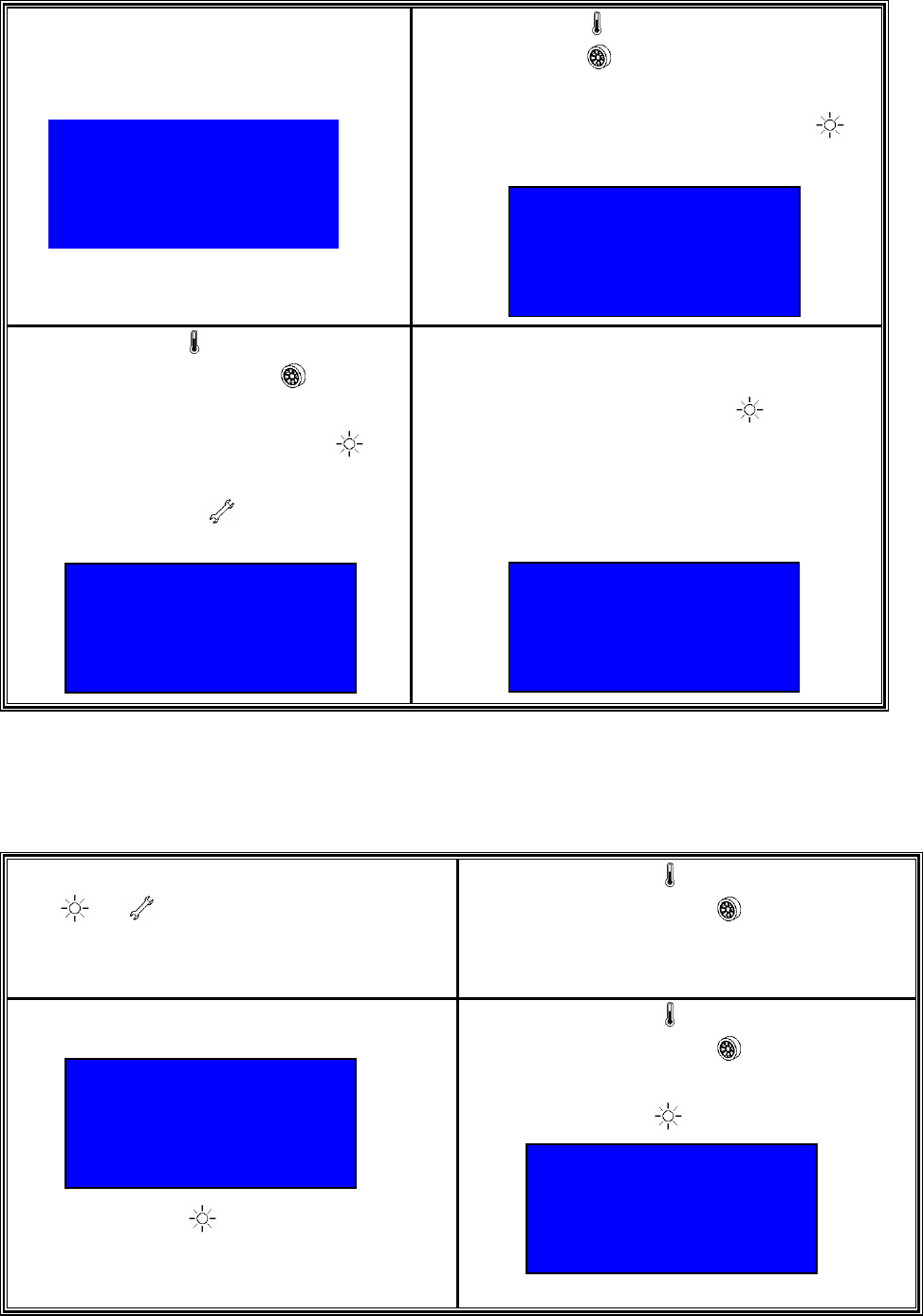
Exchange Wheel
Location
ʈ
ʈʈ
ʈ
01
Pick Tyre
02
03 04 05 06
07 08 09 10
11 12 13 14
ʈ
ʈʈ
ʈ
01
Pick Tyre
02
03 04 05 06
07 08Ч
ЧЧ
Ч 09 10
11 12 13 14
26
3. LCD Display will showǺ
4. Use button (act as backward button)
and button (act as forward button) to
move
ʈ
ʈʈ
ʈ
cursor
to select the tire
location for ID inputǹPress
button to
confirm.
5. Use button (act as downward
button) and button (act as
upward button) to select a
number ǹPress
button to
confirm then move to the next
numberǹPress button to cancel.
(The ID below is for reference )
6. Double check input ID number to ensure
it is identical to that on the Label of
new
TransmitterǹPress button to confirm
and complete the setting. Then install
the transmitter in the associated tire
9.3 Set Pressure Unit Mode
1.
Simultaneously press button
and for more than 2 seconds to
enter “Special Set Up Mode”.
2. Use button
(act as downward
button) and button (act as upward
button) to select ”Set Pressure Unit”
mode.
3. The LCD Display will showǺ
Press button to confirm.
4. Use button
(act as downward
button) and button (act as upward
button) to select psi, kPa, Bar unit.
Press button to confirm.
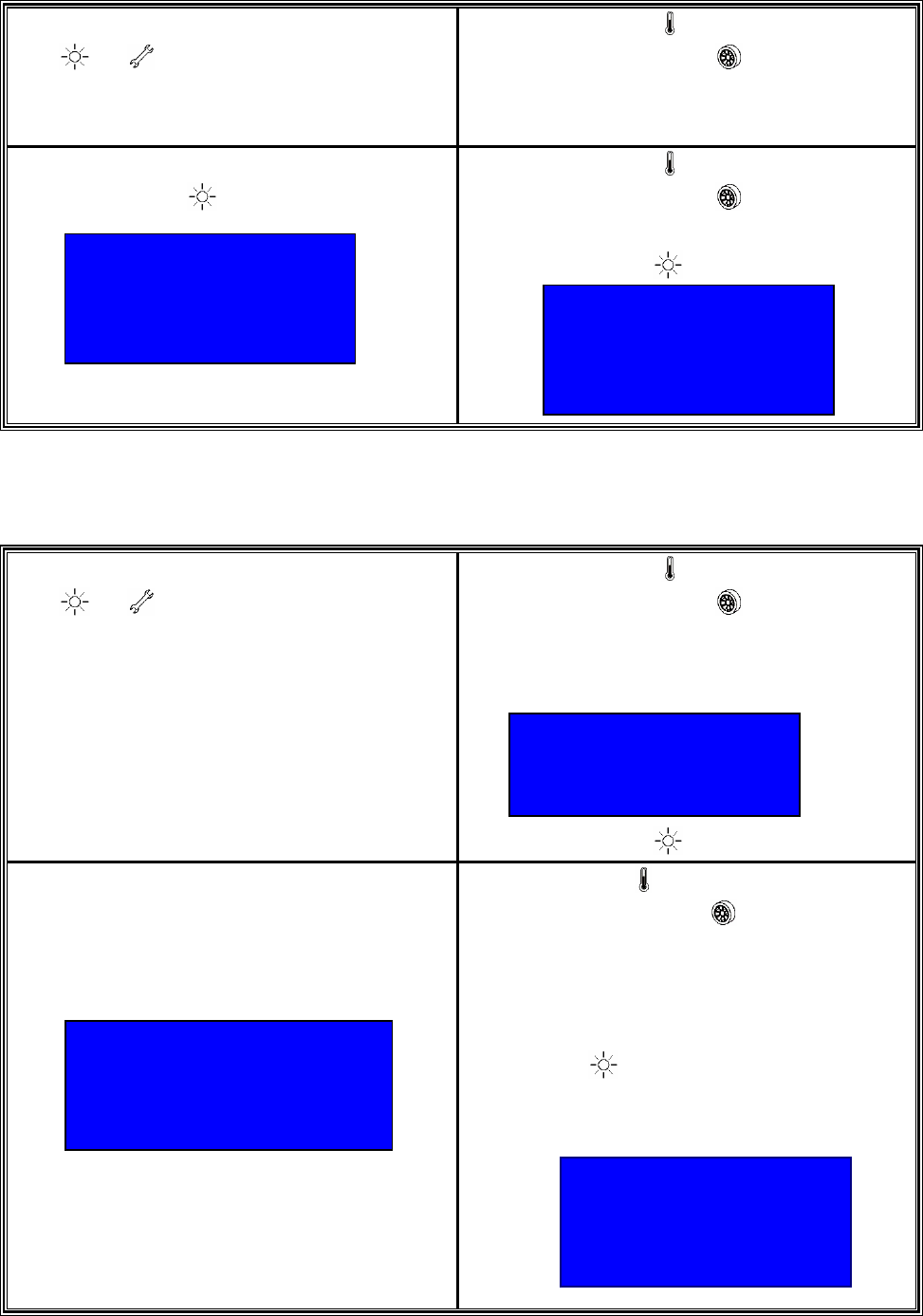
New ID
Input
ʈ
ʈʈ
ʈ
01 Pick Tyre
02
03 04 05 06
07 08 09 10
11 12 13 14
IDΚ
ΚΚ
Κ5A1B001A
OK
Set Pressure
Unit
PSI
27
9.4 Set Temperature Unit Mode
1.
Simultaneously press button
and for more than 2 seconds to
enter “Special Set Up Mode”.
2. Use button
(act as downward
button) and button (act as upward
button) to select ”Set Temperature
Unit” setting.
3. The LCD Display will showǺ
Press button to confirm.
4. Use button
(act as downward
button) and button (act as upward
button) to select ʚ or ʛ
unit.
Press button to confirm.
9.5 Display Wheel Location Mode
1.
Simultaneously press button
and for more than 2 seconds to
enter “Special Set Up Mode”.
2. Use button
(act as downward
button) and button (act as upward
button) to select” Display Wheel
Location” setting.
Press button to confirm.
3. The LCD Display will showǺ
4. Use button (act as backward
button) and button (act as forward
button) to move
ʈ
ʈʈ
ʈ
cursor
to select the
wheel location for display. Press
button to cancel or set ɀ
signal.
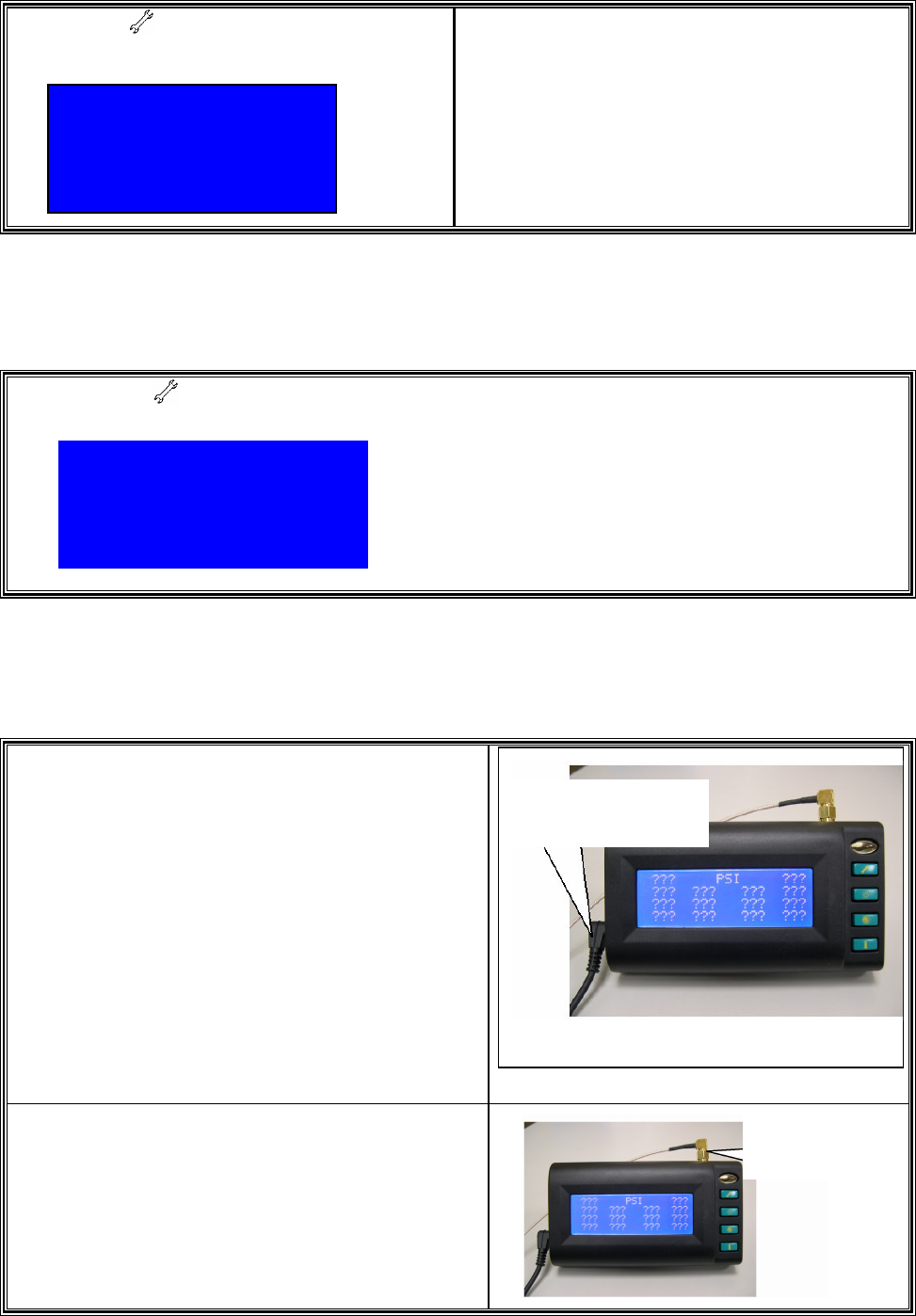
Set Temperature
Unit
к
кк
к
Display Wheel
Location
ʈ
ʈʈ
ʈ
01* Location
02*
03* 04* 05* 06*
07* 08* 09* 10*
11* 12* 13* 14*
ʈ
ʈʈ
ʈ
01* Location
02*
03 04 05 06
07* 08* 09* 10*
11* 12* 13* 14*
28
6. Press to confirm and return to
“Special Set Up Mode”.
9.6 Exit Special Set Up Mode
Press button againǹLCD Display will return as initial display.
NoteǺ
ǺǺ
ǺValue shown is for reference only.
1. Put the 12DCV or 24DCV POWER
CABLE to the Receiver.
2. Tighten the Antenna.
Display Wheel
Location
125 PSI
125
125 125 125 125
125 125 125 125
POWER CABLE
Antenna
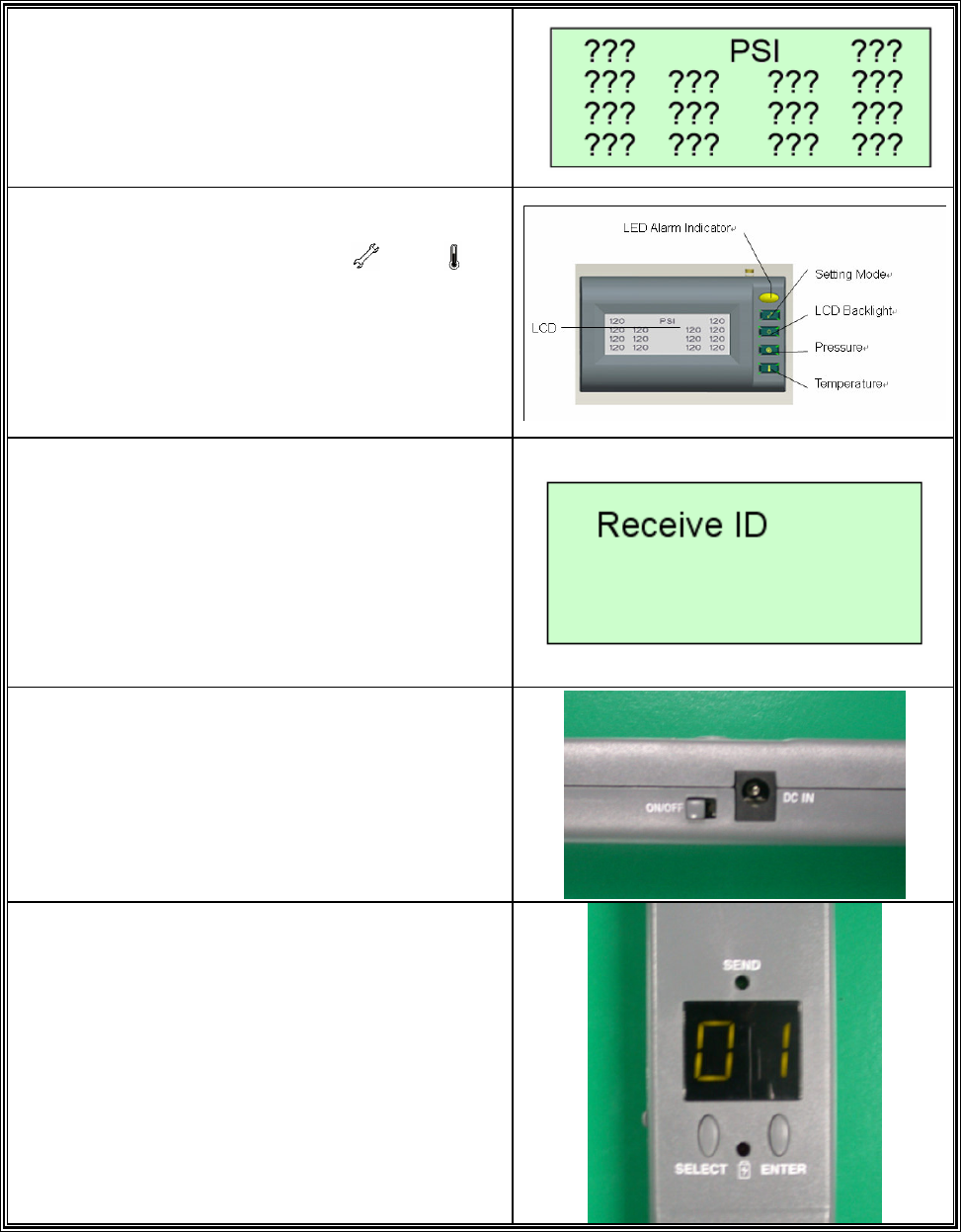
29
3. Check if the LCD of the Receiver shows
“???“.
4 Simultaneously press button and for
more than 2 seconds to enter “Receive ID
Mode”.
5 Check if the LCD of the Receiver shows.
“Receive ID“.
6 Turn on the LF.
7 Check if the LCD of the LF shows “01“.
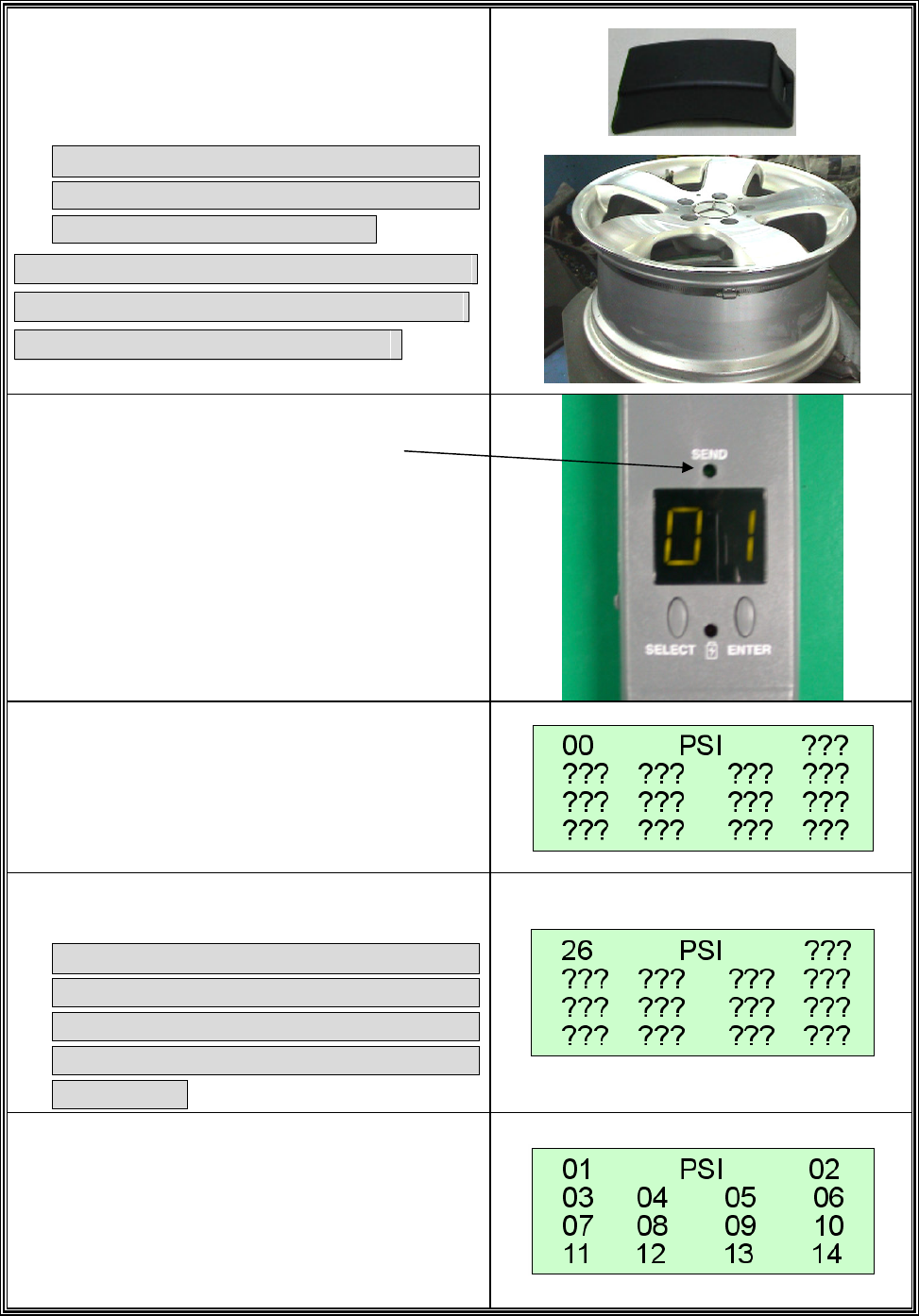
30
8 Put the LF near the transmitter at least
30mm.
9 We suggest that installing the tire after
setting.
10 Ɂ Ɂ
Ɂ ɁɁ Ɂ
Ɂ Ɂ IMPORTANT:When setting,please
keep other transmitter away from the
setting transmitter at least 1m
ຏ
ຏຏ
ຏ:If you are not sure it receives the signal
or not please do it again or refer to NO.ˌ ˁ ˅
ˌ ˁ ˅ˌ ˁ ˅
ˌ ˁ ˅ ʳ
ʳʳ
ʳ
Ϙ
ϘϘ
Ϙˠ ˴ ́̈ ˴ ˿
ˠ ˴ ́̈ ˴ ˿ˠ ˴ ́̈ ˴ ˿
ˠ ˴ ́̈ ˴ ˿ʳ
ʳʳ
ʳ˼ ́̃ ̈ ̇
˼ ́̃ ̈ ̇˼ ́̃ ̈ ̇
˼ ́̃ ̈ ̇ʳ
ʳʳ
ʳ́˸̊
́˸̊́˸̊
́˸̊ ʳ
ʳʳ
ʳ̇̅ ˴ ́̆̀ ˼ ̇̇˸̅
̇̅ ˴ ́̆̀ ˼ ̇̇˸̅̇̅ ˴ ́̆̀ ˼ ̇̇˸̅
̇̅ ˴ ́̆̀ ˼ ̇̇˸̅ ʳ
ʳʳ
ʳ˜ ˗
˜ ˗˜ ˗
˜ ˗ ʳ
ʳʳ
ʳ˶ ̂˷ ˸
˶ ̂˷ ˸˶ ̂˷ ˸
˶ ̂˷ ˸ϙ
ϙϙ
ϙ ʳ
ʳʳ
ʳ
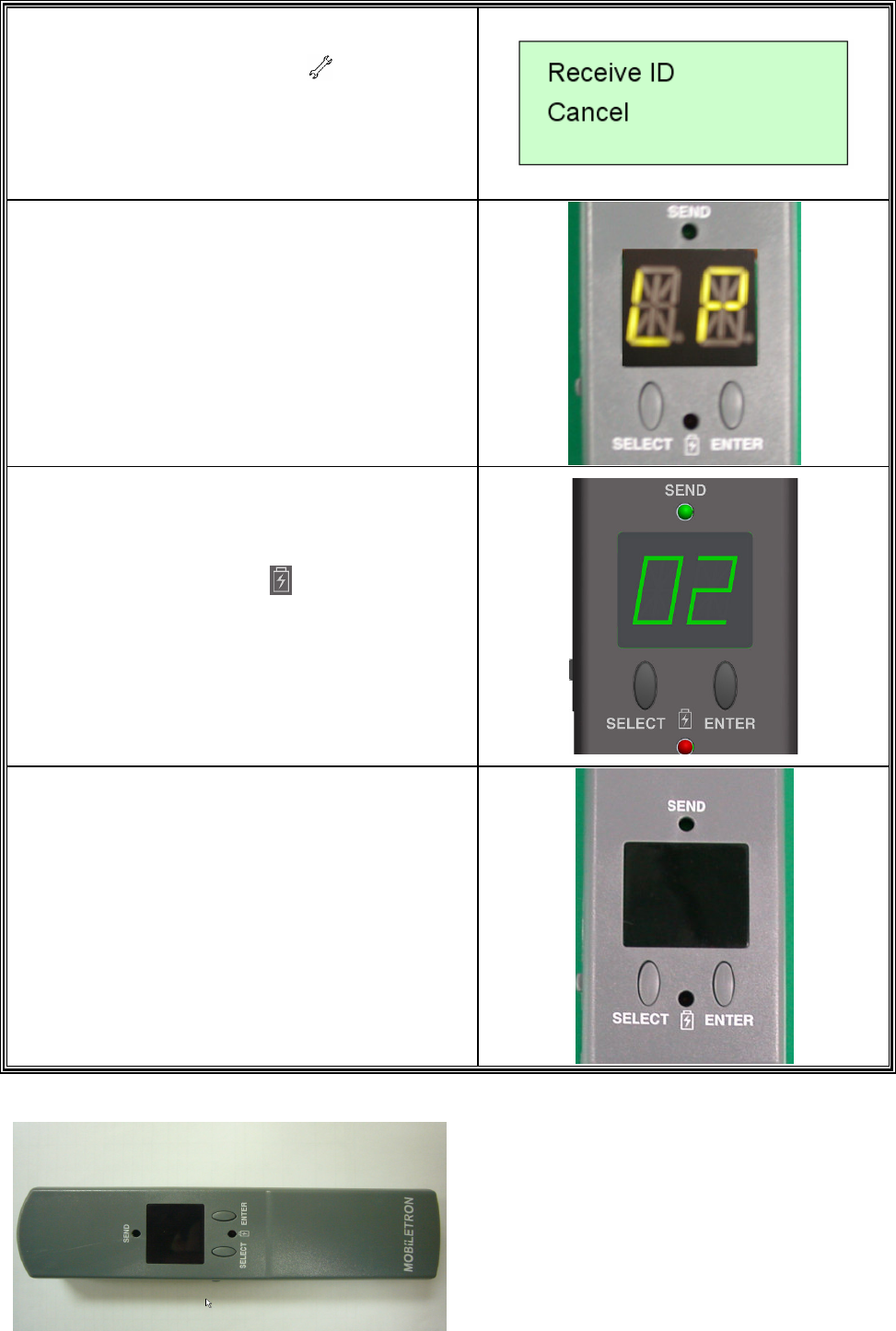
11 Push the button of “ENTER”
And the “SEND” LED will flash.
12 Then the receiver will receive the signal
and show “00” (No pressure)
13 If the transmitter is already in the tire ,you
will see the tire pressure.
14 Ɂ Ɂ
Ɂ ɁɁ Ɂ
Ɂ Ɂ IMPORTANT:If you want to check
the tire as usual ,you may push any
button of LF and the receiver will show
the pressure(The signal active distance
of LF is 1m )
15 The “SELECT” button can select the tire
position from 1
st
to 14
th
tire.
31
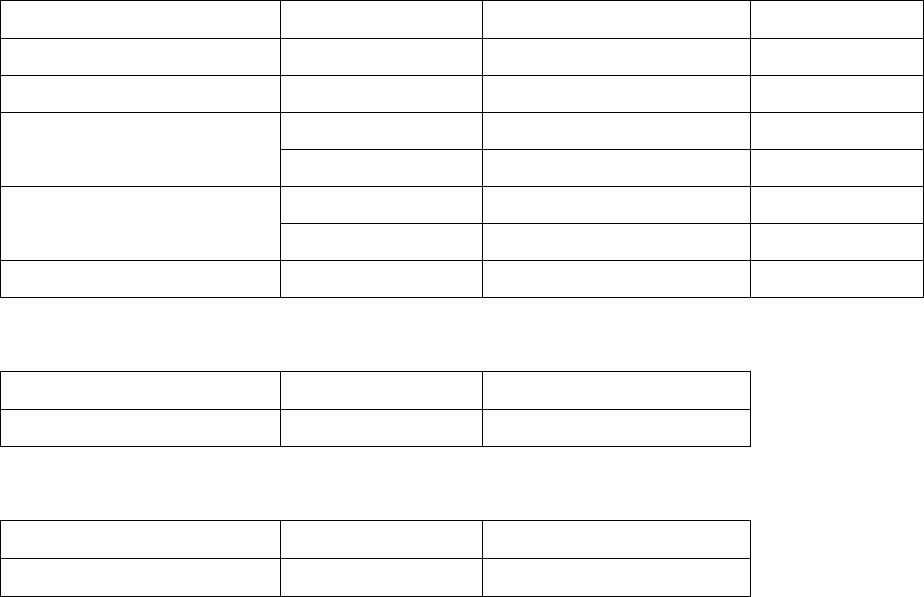
16 After setting, push button the LCD of
the Receiver shows “Receive ID Cancel”
17 As the voltage is below 6.2VǴ
the LF shows
“LP“.
18 As recharge ,the LF shows red ,and it
will disappear until the voltage is above 8.4V.
19 LF will turn into “SLEEP MODE” over
30secs, push any button to wake up.
NOTEǺ
ǺǺ
ǺThe value above is for reference.
LF CONTROLLER
32
11. Limit Warranty
Mobiletron, hereby warrants that this Mobiletron wireless tire pressure monitoring
system shall be free from material defects in workmanship and/or materials until the
expiry of twelve months from its purchase by the end user, EXCEPT WHERE any
such defect has been caused by: Improper or non-normal use, Improper installation,
contacts with any corrosive or otherwise harmful substance, any other acts or
omission not sanctioned by the User Manual.
Mobiletron warrants the wireless tire pressure monitoring system product for
twelve months from the end user purchase date under normal operation
condition, which is free from manual improper operation, improper installation or
any casualty.
Mobiletron’s sole obligation shall be to repair or replace the defective product at
no charge to the original owner.
Mobiletron warns the user or driver of the driving safety by the limited warning
signal range, and does not protect or take the responsibility of the user’s or
driver’s safety directly.
In no event will Mobiletron be liable for any direct, indirect, special, incidental or
consequential damage, including loss of profit, loss of savings, or any other
damages caused by product, or its documentation, or failure of the product to
perform, even if Mobiletron has been advised of the possibility of such damages.
11.1 Warranty Service
(1) The above warranty will be honored by the retailer from which it was
purchased, provided that the owner can provide dated proof of purchase.
(2) In the event that any defect in the unit is covered by the above warranty,
Mobiletron will replace the affected components free of charge, shipping
prepaid. The owner shall be responsible for any labor and installation costs
incurred in removing the defective parts and/or installing the replacement.
(3) The retailer shall at Mobiletron’ cost send any unit which is defective as
described in the above warranty to Mobiletron at No.39, Sec 3, Chung-Ching
Rd., Ta-Ya, Taichung Hsien, Taiwan 428.
11.2
This Limited Warranty Provided by Mobiletron Does Not Cover
(1) Product that have been subjected to abuse, accident, alteration, modification,
tampering, negligence, misuse, faulty installation, lack of reasonable care,
improper transportation, repair or service in any way that is not authorized by
Mobiletron.
(2) Any damage attributable to fire, flood, lightning strike or act of God.
(3) This limited warranty coverage will exclude the package material and user
manual.
(4) The damage caused from benzene, alcohol or any corrosive cleaner.
(5) Any repair should implement in Mobiletron by returning from the Mobiletron
authorized retailer. Any repair without authorization will be excluded from
the warranty.
33
12. Things to Notice
Temperature Compensated Pressure Readings
(a) When a tire heats up, caused by long duration of driving or braking, the air
pressure inside the tire can also be expected to increase, e.g. tire temperature
increases 20ʚ to 30ʚ may lead to 3psi to 6psi pressure increment.
Never use chemical material to clean Digital Receiver.
Never take Digital Receiver apart for repair! Whenever there is problem, please
contacts dealer for repair or replacement.
To avoid the dropping during drive, ensure Digital Receiver w/ Cooling Vent Holder
is firmly adhered in car.
Check connections of DC Power Cable at both ends should no display on LCD
panel.
After the vehicle starts to move, the tire pressure and temperature couldn’t be
received on the LCD display of the Digital Receiver, please confirm if the Antenna
is loosed; then, please screw Antenna tightly to Digital Receiver.
Be sure to keep record of the Transmitter ID number for each of the corresponding
four tires on the last page of the “16. Tire Rotation Table“ (in this user manual).
Because next time if the original Transmitter is replaced by a new one, inputting
the original Transmitter ID number to the new one should be a must.
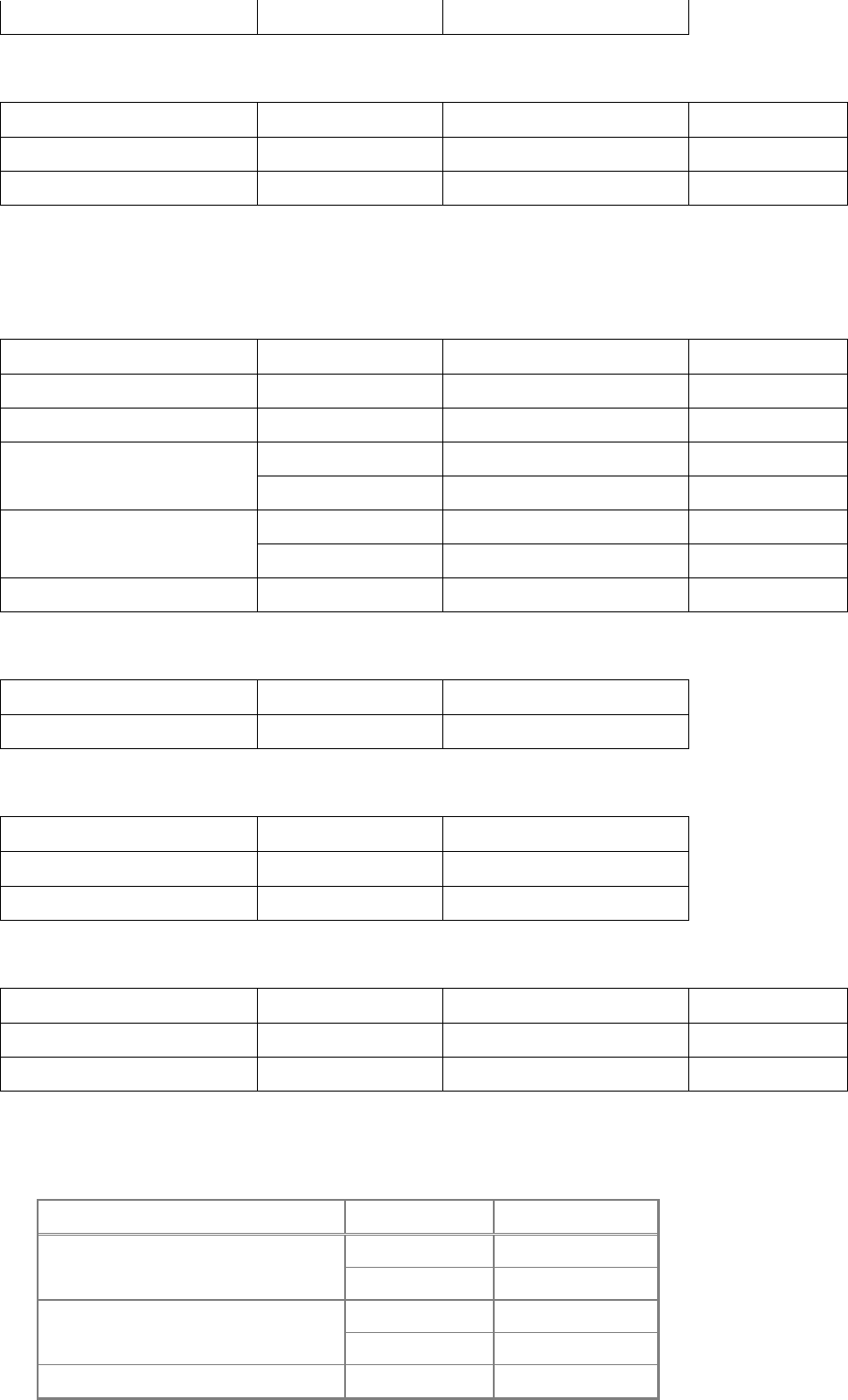
13. Technical Specifications
ɅTransmitter (CAP)
ʻ˄ ʼ ʳˢ̃ ˸ ̅ ˴ ̇ ˼ ̂ ́ ʳ˖ ̂ ́ ˷ ˼ ̇ ˼ ̂ ́ ʳ ʳ ʳ ʳ
˗ ˸ ̆ ˶ ̅ ˼ ̃ ̇ ˼ ̂ ́ ʳ ˩ ˴ ˿ ̈ ˸ ʳ ˔ ˶ ˶ ̈ ̅ ˴ ˶ ̌ ʳ ˨ ́ ˼ ̇ ̆ ʳ
ˣ ̅ ˸ ̆ ̆ ̈ ̅ ˸ ʳ˥ ˴ ́ ˺ ˸ ʳ ˃ʳ̑ ʳ˄ ˋ ˃ʳ ̈́ʳ ˈʳ ˣ ˦ ˜ ʳ
˥ ˴ ̇ ˸ ˷ ʳˣ ̅ ˸ ̆ ̆ ̈ ̅ ˸ ʳ ˅ˇ˃ʳ ˀʳ ˣ ˦ ˜ ʳ
ˀˇ˃ʳ̑ ʳʾ ˋ ˈʳ ̈́ʳ ˆʳ кʳ
ˢ̃ ˸ ̅ ˴ ̇ ˼ ́ ˺ ʳ˧ ˸ ̀ ̃ ˸ ̅ ˴ ̇ ̈ ̅ ˸ ʳ ˀˇ˃ʳ̑ ʳʾ ˄ ˋ ˈʳ ̈́ʳ ˈʳ лʳ
ˀˇ˃ʳ̑ ʳʾ ˋ ˈʳ ˀʳ кʳ
˦ ̇ ̂ ̅ ˴ ˺ ˸ ʳ˧ ˸ ̀ ̃ ˸ ̅ ˴ ̇ ̈ ̅ ˸ ʳ ˀˇ˃ʳ̑ ʳʾ ˄ ˋ ˈʳ ˀʳ лʳ
ˢ̃ ˸ ̅ ˴ ̇ ˼ ́ ˺ ʳ˛ ̈ ̀ ˼ ˷ ˼ ̇ ̌ ʳ ˃ʳ̑ ʳ˄ ˃˃ʳ ˀʳ ʸʳ
ʳ ʳ ʳ ʳ
ʻ˅ʼ ʳ˥ ˴ ˷ ˼ ̂ ʳ˙ ̅ ˸ ̄ ̈ ˸ ́ ˶ ̌ ʳ˧ ̅ ˴ ́ ̆ ̀ ˼ ̇ ̇ ˸ ̅ ʳ ʳ ʳ
˗ ˸ ̆ ˶ ̅ ˼ ̃ ̇ ˼ ̂ ́ ʳ ˩ ˴ ˿ ̈ ˸ ʳ ˨ ́ ˼ ̇ ̆ ʳ ʳ
˖ ˸ ́ ̇ ̅ ˴ ˿ ʳ˙ ̅ ˸ ̄ ̈ ˸ ́ ˶ ̌ ʳ ˇˆˆˁ ˌ ˅ʳ ˠ ˛ ̍ ʳ ʳ
ʳ ʳ ʳ ʳ
ʻˆʼ ʳ˦ ̃ ˸ ˶ ˼ ˴ ˿ ʳ˦ ̃ ˸ ˶ ˼ ˹ ˼ ˶ ˴ ̇ ˼ ̂ ́ ʳ ʳ ʳ ʳ
˗ ˸ ̆ ˶ ̅ ˼ ̃ ̇ ˼ ̂ ́ ʳ ˩ ˴ ˿ ̈ ˸ ʳ ˨ ́ ˼ ̇ ̆ ʳ ʳ
˗ ˼ ̀ ˸ ́ ̆ ˼ ̂ ́ ̆ ʳ ӽ˅ˊʽˆˋ ʳ ̀ ̀ ʳ ʳ
34
˪ ˸ ˼ ˺ ˻ ̇ ʳ ˅˅ʳ ˚ ̅ ˴ ̀ ʳ ʳ
ʳ ʳ ʳ ʳ
ʻˇʼ ʳˣ ̂ ̊ ˸ ̅ ʳ ʳ ʳ ʳ
˗ ˸ ̆ ˶ ̅ ˼ ̃ ̇ ˼ ̂ ́ ʳ ˧ ̌ ̃ ˸ ʳ ˩ ˴ ˿ ̈ ˸ ʳ ˨ ́ ˼ ̇ ̆ ʳ
ˣ ̂ ̊ ˸ ̅ ʳ˦ ̂ ̈ ̅ ˶ ˸ ʳ ˟ ˼ ̇ ˻ ˼ ̈ ̀ ʳ˕ ˴ ̇ ̇ ˸ ̅ ̌ ʳ ˆˁ ˉʳ ˩ ˷ ˶ ʳ
˕ ˴ ̇ ̇ ˸ ̅ ̌ ʳ˟ ˼ ˹ ˸ ʳ ˀʳ ˇ̌ ˸ ˴ ̅ ̆ ʳ ˀʳ
ɅTransmitter (CLAMP)
ʻ˄ ʼ ʳˢ̃ ˸ ̅ ˴ ̇ ˼ ̂ ́ ʳ˖ ̂ ́ ˷ ˼ ̇ ˼ ̂ ́ ʳ ʳ ʳ ʳ
˗ ˸ ̆ ˶ ̅ ˼ ̃ ̇ ˼ ̂ ́ ʳ ˩ ˴ ˿ ̈ ˸ ʳ ˔ ˶ ˶ ̈ ̅ ˴ ˶ ̌ ʳ ˨ ́ ˼ ̇ ̆ ʳ
ˣ ̅ ˸ ̆ ̆ ̈ ̅ ˸ ʳ˥ ˴ ́ ˺ ˸ ʳ ˃ʳ̑ ʳ˄ ˋ ˃ʳ ̈́ʳ ˈʳ ˣ ˦ ˜ ʳ
˥ ˴ ̇ ˸ ˷ ʳˣ ̅ ˸ ̆ ̆ ̈ ̅ ˸ ʳ ˅ˇ˃ʳ ˀʳ ˣ ˦ ˜ ʳ
ˀˇ˃ʳ̑ ʳʾ ˄ ˅ˈʳ ̈́ʳ ˆʳ кʳ
ˢ̃ ˸ ̅ ˴ ̇ ˼ ́ ˺ ʳ˧ ˸ ̀ ̃ ˸ ̅ ˴ ̇ ̈ ̅ ˸ ʳ ˀˇ˃ʳ̑ ʳʾ ˅ˈˊʳ ̈́ʳ ˈʳ лʳ
ˀˇ˃ʳ̑ ʳʾ ˄ ˅ˈʳ ˀʳ кʳ
˦ ̇ ̂ ̅ ˴ ˺ ˸ ʳ˧ ˸ ̀ ̃ ˸ ̅ ˴ ̇ ̈ ̅ ˸ ʳ ˀˇ˃ʳ̑ ʳʾ ˅ˈˊʳ ˀʳ лʳ
ˢ̃ ˸ ̅ ˴ ̇ ˼ ́ ˺ ʳ˛ ̈ ̀ ˼ ˷ ˼ ̇ ̌ ʳ ˃ʳ̑ ʳ˄ ˃˃ʳ ˀʳ ʸʳ
ʳ ʳ ʳ ʳ
ʻ˅ʼ ʳ˥ ˴ ˷ ˼ ̂ ʳ˙ ̅ ˸ ̄ ̈ ˸ ́ ˶ ̌ ʳ˧ ̅ ˴ ́ ̆ ̀ ˼ ̇ ̇ ˸ ̅ ʳ ʳ ʳ
˗ ˸ ̆ ˶ ̅ ˼ ̃ ̇ ˼ ̂ ́ ʳ ˩ ˴ ˿ ̈ ˸ ʳ ˨ ́ ˼ ̇ ̆ ʳ ʳ
˖ ˸ ́ ̇ ̅ ˴ ˿ ʳ˙ ̅ ˸ ̄ ̈ ˸ ́ ˶ ̌ ʳ ˇˆˆˁ ˌ ˅ʳ ˠ ˛ ̍ ʳ ʳ
ʳ ʳ ʳ ʳ
ʻˆʼ ʳ˦ ̃ ˸ ˶ ˼ ˴ ˿ ʳ˦ ̃ ˸ ˶ ˼ ˹ ˼ ˶ ˴ ̇ ˼ ̂ ́ ʳ ʳ ʳ ʳ
˗ ˸ ̆ ˶ ̅ ˼ ̃ ̇ ˼ ̂ ́ ʳ ˩ ˴ ˿ ̈ ˸ ʳ ˨ ́ ˼ ̇ ̆ ʳ ʳ
˗ ˼ ̀ ˸ ́ ̆ ˼ ̂ ́ ̆ ʳ ˋ ˊˁ ˉʽˆ˅ʽ˅˅ˁ ˆʳ ̀ ̀ ʳ ʳ
˪ ˸ ˼ ˺ ˻ ̇ ʳ ˆˉʳ ˚ ̅ ˴ ̀ ʳ ʳ
ʳ ʳ ʳ ʳ
ʻˇʼ ʳˣ ̂ ̊ ˸ ̅ ʳ ʳ ʳ ʳ
˗ ˸ ̆ ˶ ̅ ˼ ̃ ̇ ˼ ̂ ́ ʳ ˧ ̌ ̃ ˸ ʳ ˩ ˴ ˿ ̈ ˸ ʳ ˨ ́ ˼ ̇ ̆ ʳ
ˣ ̂ ̊ ˸ ̅ ʳ˦ ̂ ̈ ̅ ˶ ˸ ʳ ˟ ˼ ̇ ˻ ˼ ̈ ̀ ʳ˕ ˴ ̇ ̇ ˸ ̅ ̌ ʳ ˆʳ ˩ ˷ ˶ ʳ
˕ ˴ ̇ ̇ ˸ ̅ ̌ ʳ˟ ˼ ˹ ˸ ʳ ˀʳ ˊ̌ ˸ ˴ ̅ ̆ ʳ̂ ̅ ʳˢ̉ ˸ ̅ ʳ˅ʿ ˃˃˃ʿ ˃˃˃ʳ˾ ̀
ʳ
ˀʳ
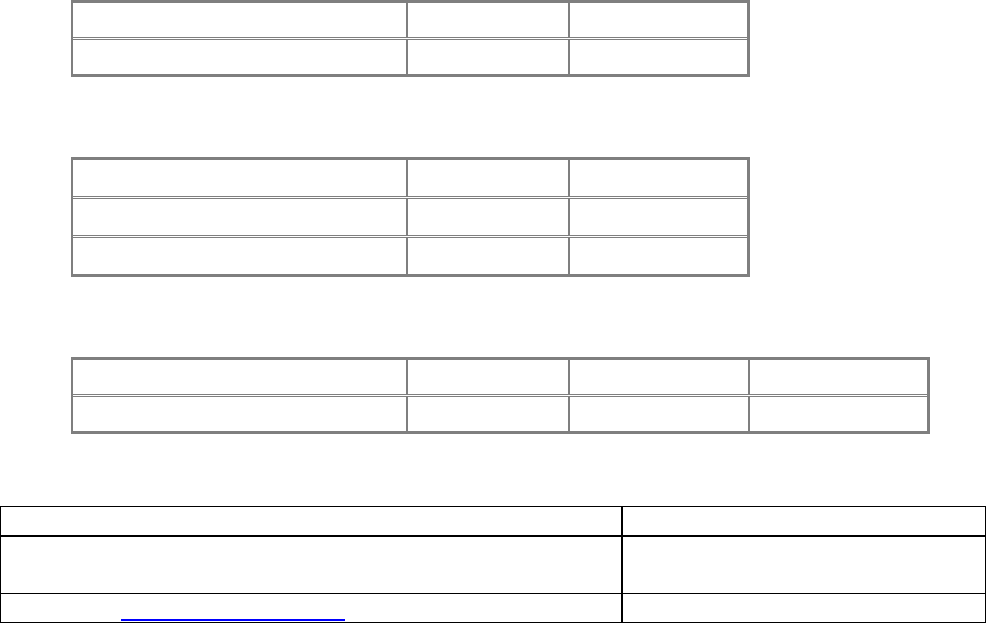
ɅDigital Receiver
ˢ̃ ˸ ̅ ˴ ̇ ˼ ̂ ́ ʳ˖ ̂ ́ ˷ ˼ ̇ ˼ ̂ ́ ʳ
˗ ˸ ̆ ˶ ̅ ˼ ̃ ̇ ˼ ̂ ́ ʳ ˩ ˴ ˿ ̈ ˸ ʳ ˨ ́ ˼ ̇ ̆ ʳ
ˀ˅˃ʳ̑ ʳʾ ˊ˃ʳ кʳ
ˢ̃ ˸ ̅ ˴ ̇ ˼ ́ ˺ ʳ˧ ˸ ̀ ̃ ˸ ̅ ˴ ̇ ̈ ̅ ˸ ʳ ˀˇʳ̑ ʳʾ ˄ ˈˋ ʳ лʳ
ˀˇ˃ʳ̑ ʳʾ ˋ ˈʳ кʳ
˦ ̇ ̂ ̅ ˴ ˺ ˸ ʳ˧ ˸ ̀ ̃ ˸ ̅ ˴ ̇ ̈ ̅ ˸ ʳ ˀˇ˃ʳ̑ ʳʾ ˄ ˋ ˈʳ лʳ
ˢ̃ ˸ ̅ ˴ ̇ ˼ ̂ ́ ʳ˩ ̂ ˿ ̇ ˴ ˺ ˸ ʳ ˄ ˅˩ ʳ˂ ʳ˅ˇ˩ ʳ ˩ ˷ ˶ ʳ
35
ʳ
ʻ˅ʼ ʳ˥ ˴ ˷ ˼ ̂ ʳ˙ ̅ ˸ ̄ ̈ ˸ ́ ˶ ̌ ʳ˥ ˸ ˶ ˸ ˼ ̉ ˸ ̅ ʳ
˗ ˸ ̆ ˶ ̅ ˼ ̃ ̇ ˼ ̂ ́ ʳ ˩ ˴ ˿ ̈ ˸ ʳ ˨ ́ ˼ ̇ ̆ ʳ
˖ ˸ ́ ̇ ̅ ˴ ˿ ʳ˙ ̅ ˸ ̄ ̈ ˸ ́ ˶ ̌ ʳ ˇˆˆˁ ˌ ˅ʳ ˠ ˛ ̍ ʳ
ʳ
ʻˆʼ ʳ˦ ̃ ˸ ˶ ˼ ˴ ˿ ʳ˦ ̃ ˸ ˶ ˼ ˹ ˼ ˶ ˴ ̇ ˼ ̂ ́ ʳ
˗ ˸ ̆ ˶ ̅ ˼ ̃ ̇ ˼ ̂ ́ ʳ ˩ ˴ ˿ ̈ ˸ ʳ ˨ ́ ˼ ̇ ʳ
˗ ˼ ̀ ˸ ́ ̆ ˼ ̂ ́ ̆ ʳ ˄ ˅ˇʽˊˈʽˆˋ ˁ ˄ ʳ
ʳʳ
ʳ̀̀ʳ
˪ ˸ ˼ ˺ ˻ ̇ ʳ ˄ ˋ ˆʳ ˚ ̅ ˴ ̀ ʳ
ʳ
ʻˇʼ ʳˣ ̂ ̊ ˸ ̅ ʳ˖ ̂ ́ ̆ ̈ ̀ ̃ ̇ ˼ ̂ ́ ʳ
ʳʳ
ʳ
˗ ˸ ̆ ˶ ̅ ˼ ̃ ̇ ˼ ̂ ́ ʳ ˔ ̉ ˸ ̅ ˴ ˺ ˸ ʳ ˠ ˴ ̋ ˼ ̀ ̈ ̀ ʳ ˨ ́ ˼ ̇ ʳ
ˣ ̂ ̊ ˸ ̅ ʳ˖ ̂ ́ ̆ ̈ ̀ ̃ ̇ ˼ ̂ ́ ʳ ˉ˃ʳ ˄ ˃˃ʳ ̀ ˔ ʳ
14. Manufacturer
Manufacturer: Moniletron Electronic ,Inc. Telephone: +886-4-25683366
Address: No.39, Sec 3, Chung-Ching Rd., Ta-Ya,
Taichung Hsien, Taiwan 428 Fax: +886-4-25673069
Web Site: http://www.more.com.tw
FCC statement in User's Manual (for class B)
"Federal Communications Commission (FCC) Statement
This Equipment has been tested and found to comply with the limits for a class B digital
device, pursuant to Part 15 of the FCC rules. These limits are designed to provide reasonable
protection against harmful interference in a residential installation. This equipment generates,
uses and can radiate radio frequency energy and, if not installed and used in accordance with
the instructions, may cause harmful interference to radio communications. However, there is
no guarantee that interference will not occur in a particular installation. If this equipment
does cause harmful interference to radio or television reception, which can be determined by
turning the equipment off and on, the user is encouraged to try to correct the interference by
one or more of the following measures:
- Reorient or relocate the receiving antenna.
- Increase the separation between the equipment and receiver.
- Connect the equipment into an outlet on a circuit different from that to which the receiver is
connected.
- Consult the dealer or an experienced radio/TV technician for help.
FCC Caution:
1.The device complies with Part 15 of the FCC rules. Operation is subject to the following
two conditions:
(1) This device may not cause harmful interference, and
(2) this device must accept any interference received, including interference that may
cause undesired operation.
2.This device and its antenna(s) must not be co-located or operating in conjunction with
any other antenna or transmitter.
3. Changes or modifications to this unit not expressly approved by the party responsible
for compliance could void the user authority to operate the equipment.