MOODJUICE Panic Self Help Guide
User Manual: Pdf
Open the PDF directly: View PDF  .
.
Page Count: 27
SelfHelpforPanicandAgoraphobia
Doyouoftenexperienceuncomfortablephysicalsymptomssuchasarapidheartbeat,
breathlessness,shaking,dizzinessandsweating?
Doyoufeelunabletogotoplacesthatyouwouldliketo,becauseyouworryabout
experiencingthesesymptoms?
Doyouoftenfeelasthoughyouareabouttofaintorhaveaheartattack?

Doyouworryaboutbeingunabletocopeinpublicplaces?
Doyoufeelanxiousifyouarefarawayfromhome?
Doyoufindithardtobeincrowds?
Doyoumakesureyouhavecompanywithyouwhenyouleavethehouse?
Doyoutrytobeawareofallthe'exitroutes'whenindoors?
Iftheanswertoanyofthesequestionsis'yes,'youmaybeexperiencingsymptomsofpanicand
agoraphobiaandyoumayfindthisworkbookhelpful.
Thisworkbookaimstohelpyouto:
Recognisewhetheryoumaybeexperiencingsymptomsofpanicandagoraphobia.
Understandwhatpanicandagoraphobiais,whatcancauseitandwhatstopsus
overcomingit.
Findwaystoovercomeyourpanicandagoraphobia.
DoIhavesymptomsofpanicandagoraphobia?
Ifyouaretroubledbypanicandagoraphobia,itislikelythatyouwillrecognisesomeofthe
symptomsdescribedbelow.
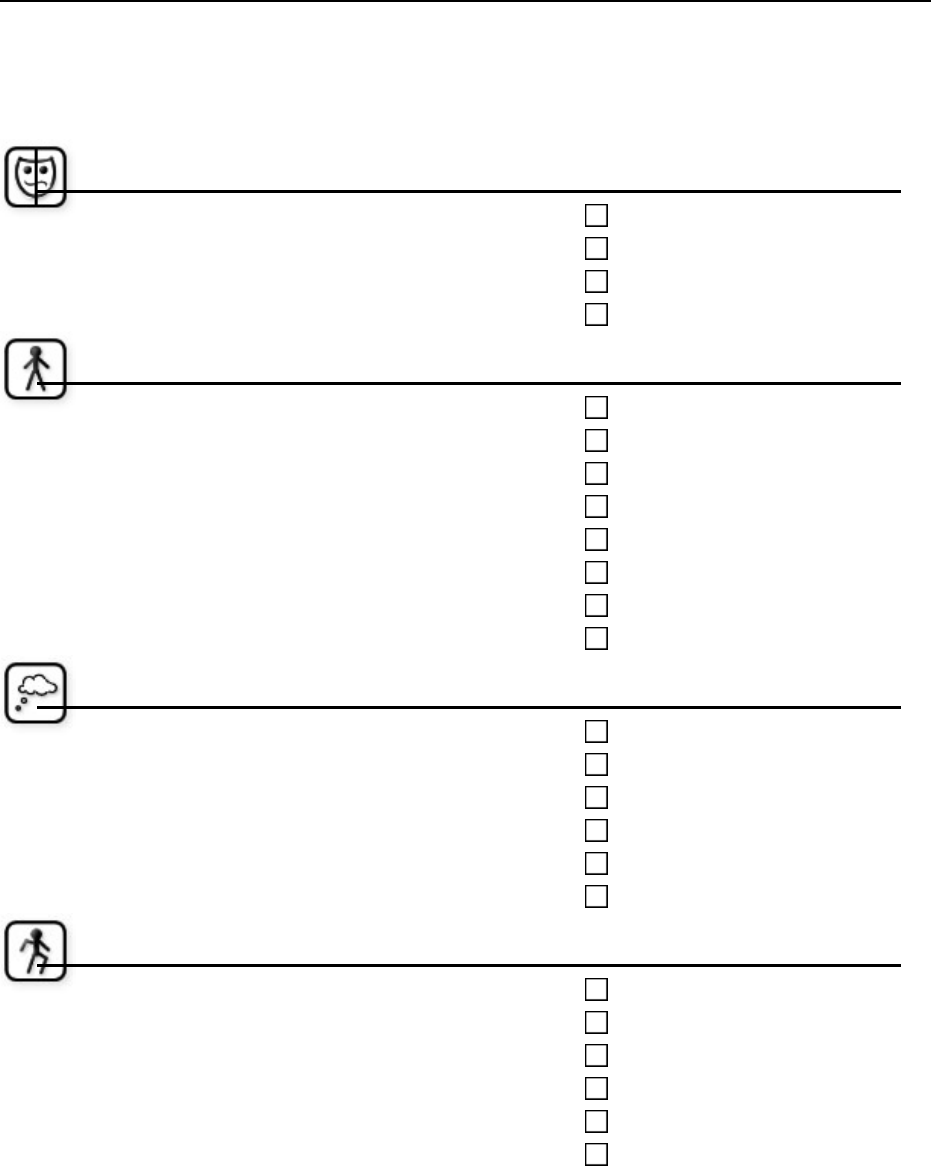
Pleaseticktheboxeswhichregularlyapplytoyou.
If
youhavetickedanumberoftheseboxesyoumaybeexperiencingsymptomsofpanicand
agoraphobia.Howevertrynottobealarmed,asthisisverycommonandtherearethingsyou
candotohelp.Youmayfindsomeusefulstrategiesinthisworkbook.
Feelings
Anxious/panicky
Frightened/vulnerable
Onedge
Fear/dread
PhysicalSymptoms
Heart/mindraces
Chestbecomestight
Sweat
Tremble/shake
Dizzy/lightheaded
Breathless
Butterfliesinyourstomach
Tensebody/muscularpain
Thoughts
I'mhavingaheartattack/panicattack
I'mgoingtofaint/choke
I'mgoingcrazy/mad
Imustalwaysbeincompletecontrol
PeoplecanseehowanxiousIam
Ican'tcopeoutsideonmyown
BehaviourPatterns
Avoidcrowds/publicplaces/openspaces
Avoidplacesthatarehardtoescapefrom
Sitneartheisle/exit(e.g.atthecinema)
Drinkalcoholtocalmyoudown
Avoidbeingalone
Sit/liedownwhenyoufeelanxious
Whatispanicandagoraphobia?
Anxietyissomethingweallexperienceattimes.Panicisbasicallythewordusedtodescribehigh
levelsofanxiety.Whenpeopleexperiencepanic,manyuncomfortablephysicalsymptomsoccur
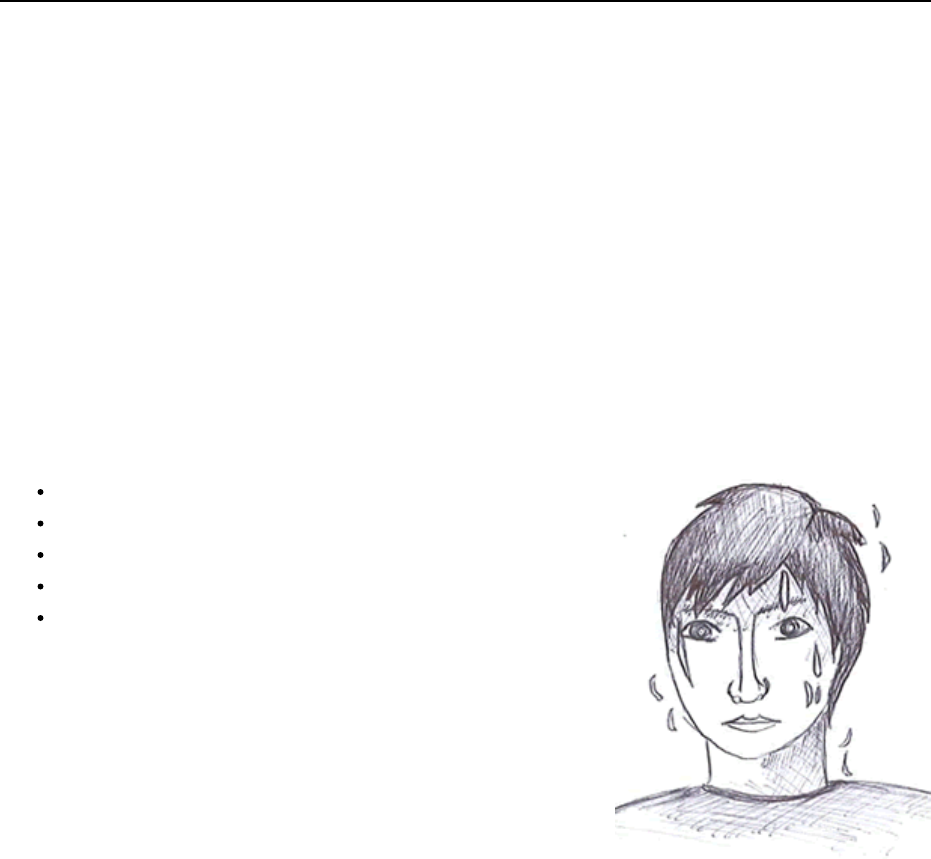
intheirbody.Thesecaninclude:arapidheatrate,sweating,atightandpainfulchest,
breathlessnessanddizziness.Asthesephysicalfeelingsofpanicaresointense,theycanbe
veryfrightening.Becauseoftheirseverity,peopleoftenworrythattheyarehavingaheartattack,
goingmad,orareabouttofaint.
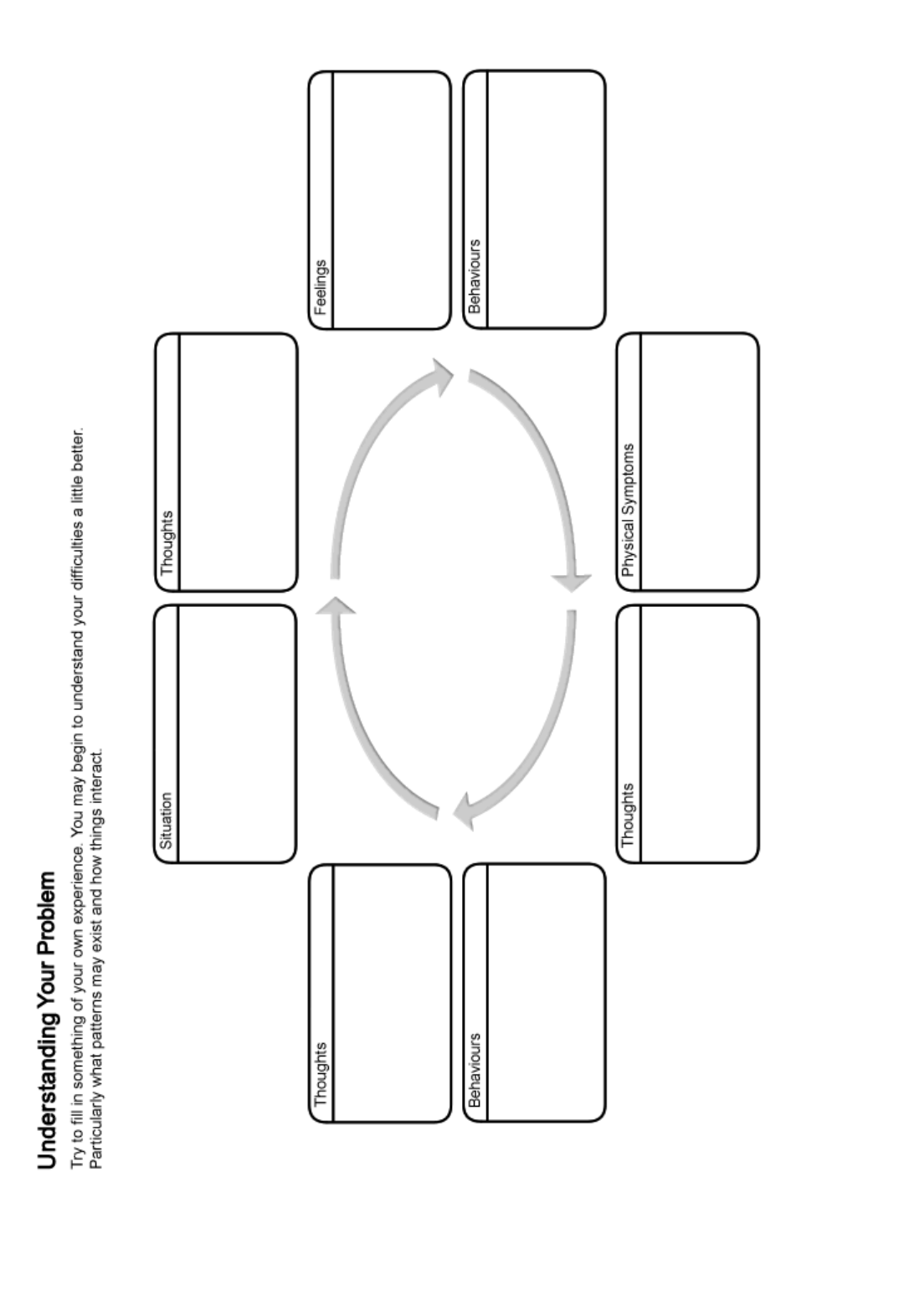
Assoonaspeoplebeginhavingthoughtslikethese,theybecomeevenmoreanxiousandtheir
physicalsymptomsofpanicgetworse.Astheygetworse,peoplebecomeevenmoreconvinced
thattheyarehavingaheartattack,goingmadetc.Beforelong,aviciouscycledevelopswhich
continuesinthiswayuntilsomeoneexperiencesafullblownpanicattack.Apanicattackis
basicallywhenthesesymptomsreachtheirpeak.
Aspanicattacksaresounpleasant,peoplenaturallygooutoftheirwaytosteerclearofthem
whereverpossible.Situationsthatoftentriggerpeople'spanicsymptomsinclude:
Crowds
Publicplaces(e.g.towncentres)
Openspaces(e.g.fields)
Enclosedspaces(e.g.lifts)
Placesfarawayfromhome
Asaresult,theytendtoavoidthesesituationswhenever
theycan.Whenpeopleavoidthesesituations,itisreferred
toasagoraphobia.Panicandagoraphobiaistherefore
whenpeopleavoiddoingthethingsthattheywouldliketo
dobecausetheyfearexperiencingsymptomsofpanic.This,
ofcourse,canresultinpeople'slifestylebecomingvery
restricted.
Althoughpanicattacksoftenoccurinthesituationsdescribedabove,theycanalsooccur'outof
theblue',forexamplewhenathomeorinbed.Thesepanicattacksaresometimesevenmore
frighteningaspeoplecanbecomeconfusedastowhatishappeningtothem.

Whatcausespanicandagoraphobia?
Inreality,itispossiblethatacombinationofthesefactorsplayaroleinthedevelopmentofpanic
andagoraphobia.However,insomewaysitislessimportanttoknowwhatcausesit,andmore
importanttoknowwhatstopsusmovingpastit.
EvolutionaryReasons: Peoplemaydeveloppanicandagoraphobiabecauseof
evolutionaryfactors.Tounderstandthis,itmayhelptoconsider
thatmostpeoplewithsymptomsofpanicandagoraphobiaavoid
verysimilarsituations(e.g.crowds,beingfarawayfromhomeetc).
Becauseofthis,itisarguedthatevolutionmayhaveprimedusto
developfearsaroundthesesituations,becauseofthebenefitsthis
wouldhavebroughtinthepast.Forexample,beinginsituations
whereescapeisdifficultwouldhaveposedathreattopeopleback
inprimitivetimesastheycouldbecorneredbypredators.Similarly,
openspaceswouldalsoleavepeoplevulnerabletoattack.By
havinganinbuilttendencytofearthesescenarios,peoplewould
bemorelikelytoavoidthemandkeepsafe.Inotherwords,we
maybepredisposedtobecomeanxiousandpanickyincertain
situationstoencourageustoavoidthem.Ofcoursebyavoiding
them,wewouldprotectourselvesfromthethreattheybroughtin
timesgoneby.
ThinkingStyles: Somepeoplemayhaveathinkingstylethatlendsitselfto
experiencingsymptomsofpanicandagoraphobia.More
specifically,peoplewhohaveatendencytomisinterpretsymptoms
ofanxietyandpanicasdangerousaremoreatrisk.Forexample,
thinkingthatanxietysymptomsarethebeginningofaheartattack
cancauseanxietytorisefurtheruntilitreachesthepointofapanic
attack.Similarly,peoplewhobelievethattheyaregoingtohave
futurepanicattacksareactuallymorelikelytodoso.Thisis
becausetheylookoutforsignsthatoneisoccurringandasa
result,noticesmallsymptomsofanxietywhichtheythen
misinterpretinthewaydescribedabove.
LifeEvents: Peoplecommonlyexperiencetheirfirstpanicattackduring
stressfulperiodsintheirlife.Forexampleexperiencingpressureat
work,relationshiporfinancialproblems,bereavement,orillness,
allleadtohigheranxietylevels.Whenpeople'sanxietylevelsare
heightened,theyaremorelikelytoexperiencepanicattacks.
BiologicalReasons: Ithasalsobeensuggestedthatpanicandagoraphobiamayhave
familialties.Inotherwords,ifsomeoneinyourimmediatefamily
hasexperiencedpanicattacksinthepast,thereisaslightlyhigher
chancethatyouwilldosoaswell.

Whatkeepsourpanicandagoraphobiagoing?
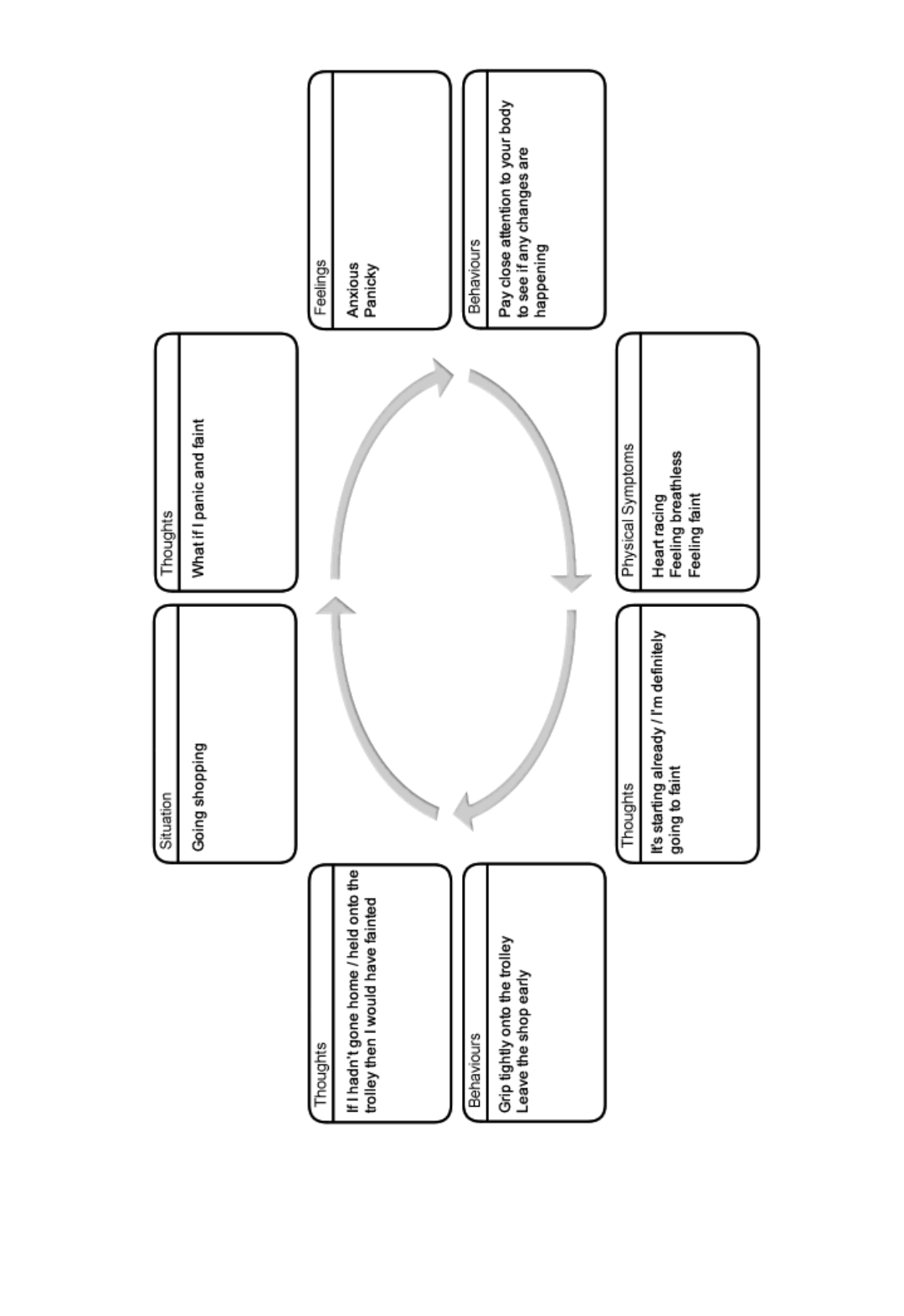
Unhelpfulthoughts: People'sunhelpfulthoughtsmakeitmoredifficultforthemto
overcometheirpanicandagoraphobia.Forexample,because
peopleinterpretsymptomsofanxietyasdangerous(e.g.asignof
aheartattackorgoingcrazy),theyactuallymakethemselveseven
moreanxious.Toillustrate,someonemaynoticeachangeintheir
breathingandthinkthisisasignthattheyareabouttochokeand
die,asopposedtoanormalphysicalsymptomofanxiety.Another
examplecouldbebelievingthattheirincreasedheartrateisasign
theyareabouttohaveaheartattack.Assoonaspeoplethinkin
thesecatastrophicterms,theymakethemselvesevenmore
anxiousandtheirphysicalsymptomsgetstronger.Ofcourse,as
theirphysicalsymptomsgrowstronger,sodoestheirbeliefthat
theyaregoingtochokeorhaveaheartattack.Thiscreatesa
viciouscyclethatoftenleadstoafullblownpanicattack.
Theunhelpfulthoughtspeoplehaveaboutbeingunabletocopein
certainsituationsalsokeepstheirpanicandagoraphobiagoing.
Forinstance,theymaybelievethatbecausetheyhadapanic
attackwhilstshoppingonce,theywillhaveanotheroneeverytime
theyshopinthefuture.Thisofcoursestopsthemfromevertrying
andtheydon'thavethechancetoproveotherwise.
Avoidance: Aswehavelearned,peopletendtoavoidorescapesituationsthat
theybelievewilltriggerapanicattack(e.g.buses,restaurants,the
countryside,thecinemaetc).Althoughthisisavery
understandablewayofcoping,itisactuallyoneofthemain
reasonsthatpeoplefindithardtoovercometheirdifficulties.This
isbecausebyavoidingthesesituations,peopleprevent
themselvesfromhavingtheopportunitytoprovethattheycan
copeinthembetterthantheythink.Furthermore,thelonger
someonehasbeenafraidofasituationandavoidedit,themore
dauntingitbecomesanditisincreasinglydifficulttoface.Notonly
this,butwhenpeopleavoidonesituation,theybegintodoubtthey
willcopeinsimilarsituationsandstartavoidingmoreandmore.
Soontheirfeargeneralisestothepointthattheirlifestyleis
extremelyrestricted.
Itislikelythatacombinationofallthesefactorsplayaroleinkeepingourpanicandagoraphobia
going.Seeoverleafforanillustrationofhowthesefactorscaninteractandmakeitdifficultforus
toovercomeourpanicandagoraphobia.
UsingSafetyBehaviours: Often,theonlytimethatsomeonewithsymptomsofpanicand
agoraphobiafeelscapableoffacingtheirfearedsituations,iswhen
theyusewhatisknownasa'safetybehaviour.'Anexampleofa
safetybehaviourwouldbe:onlygoingintotownifyouarewith
someoneyoutrust(tocometoyourrescueifyoupanic),gripping
tightlyontoashoppingtrolley(toreducethechancesoffainting),
orlyingorsittingdownwhenyoufeelanxious(toavoidfainting).
Basically,asafetybehaviourisanythingpeopledototryandmake
iteasierforthemtocopewiththeirfears.
Althoughsuchsafetybehaviourshelppeoplecopewithsymptoms
ofpanicandagoraphobiaintheshortterm,theyareactually
unhelpfulinthelongerterm.Thisisbecause,likeavoidance,
safetybehavioursstoppeoplefromhavingtheopportunitytoprove
tothemselvesthattheycancopewiththeirfears,withoutputting
suchprecautionsintoplace.Insteadtheymayputtheirsuccesses
downtootherfactors(e.g."IonlycopedbecauseIhadmyfriend
withme"or"Iwould'vefaintedifitwasn'tformytrolley")andtheir
fearsremaininplace.Beforelongpeoplebecomereliantontheir
safetybehavioursandavoidgoingplaceswhentheyareunableto
usethem.
IncreasedSelfFocus: Anotherfactorthathelpskeeppeople'spanicandagoraphobia
goingistheirtendencytobehypervigilant.Thismeansthatthey
studytheirbodyforanysignofphysicalchangesthatmaysuggest
apanicattackisonitsway.Althoughtheydothis,hopingtobe
reassuredthateverythingfeelsnormal,thisstrategyactually
makesthingsworse.Thisisbecausetheytendtonoticesmall
physicalchangesthatwouldhaveotherwisegoneunnoticed(e.g.
feelinghot).Onceasmallchangehasbeennoticed,people
naturally'keeptheireye'onit.However,themoretheyfocusona
change,themoreanxioustheybecomeandaviciouscyclebegins
thatcanleadtoapanicattack.Alternatively,ifpeoplenoticea
changeduetohypervigilance,theytendtoescapethesituation
thathastriggeredit.However,asweknow,thisstrategyis
unhelpfultoo.
HowcanIovercomemypanicandagoraphobia?
Fortunately,thereareanumberofstrategiesthatwecanusetoovercomeourpanicand
agoraphobia.Theseinclude:
1.Understandingmoreaboutanxietyandpanic.
2.Learningbreathingstrategiesthathelptokeeppanicatbay.
3.Learninghowtochallengeyourunhelpfulthoughtsandseethingsinamorerealisticlight.
4.Removingtheuseofavoidanceandsafetybehavioursandgraduallyconfrontingyour
fears.
Whengoingthroughthisbookletitcansometimesbemorehelpfultotryouttheideasaboveone
atatime,ratherandtryingtolearnthemallatonce.Howeversimplytakethingsatyourown
pace.
Understandinganxietyandpanic
Panicissimplyamoreextremeformofanxiety.Wealsoknowthatduetotheunpleasantand
severenatureofpanic,peopleoftenbecomefrightenedaboutthephysicalsymptomsthey
experience.Forexample,theyworrythattheirsymptomsareearlysignsofaheartattack,
chocking,faintingorgoingmad.Assoonaspeoplethinkinthesecatastrophicterms,theymake
themselvesevenmoreanxiousandtheirphysicalsymptomsgetstronger.Ofcourse,astheir
physicalsymptomsgrowstronger,sodoestheirbeliefthattheyaregoingtohaveaheartattack
orchokeetc.Soonaviciouscycledevelopsthatoftenleadstoafullblownpanicattack.
Fromthisinformation,itiscleartoseethatnotfullyrecognisingandunderstandingthephysical
symptomsofanxietyandpanicisamajorpartoftheproblem.Thereforeanimportantgoalisto
becomemoreknowledgeableaboutanxietyandpanic.Bylearningmoreabouthowanxietyand
panicaffectsus,andwhyweexperienceitinthefirstplace,wecanbegintoseethatitisnot
harmful.Thiscanhelpustobelessfearfuloftheuncomfortablesymptomsweexperience,
meaningwewon'tmisinterpretthemascatastrophic.Thispreventstheviciouscycleofpanic
occurringandkeepsoursymptomsatamoremanageablelevel.
Whenconsideringthis,itisthereforeimportanttorememberthatanxietyisanaturalfeelingthat
everyoneexperiences.Ofcourse,somepeopleexperienceanxietymoreoftenthanothers.Itis
alsotruethattheintensityofanxietypeopleexperiencevariesattimes(i.e.itcanrangefrommild
anxietytoafullblownpanicattack).However,anxietyisnotharmful;infactitisquitethe
opposite.Aswewillseenext,weactuallyexperienceanxietybecauseofthebenefitsithas
broughtovertheyears.
Ifafterreadingthissectionyouarestillconcernedthatsomeyoursymptomsarenotcausedby
anxiety,youshouldcontactyourGPtohavethisclarifiedbeforecontinuingwiththisguide.
Whydoweexperienceanxiety?
Thesymptomsweexperiencewhenanxiousareoften
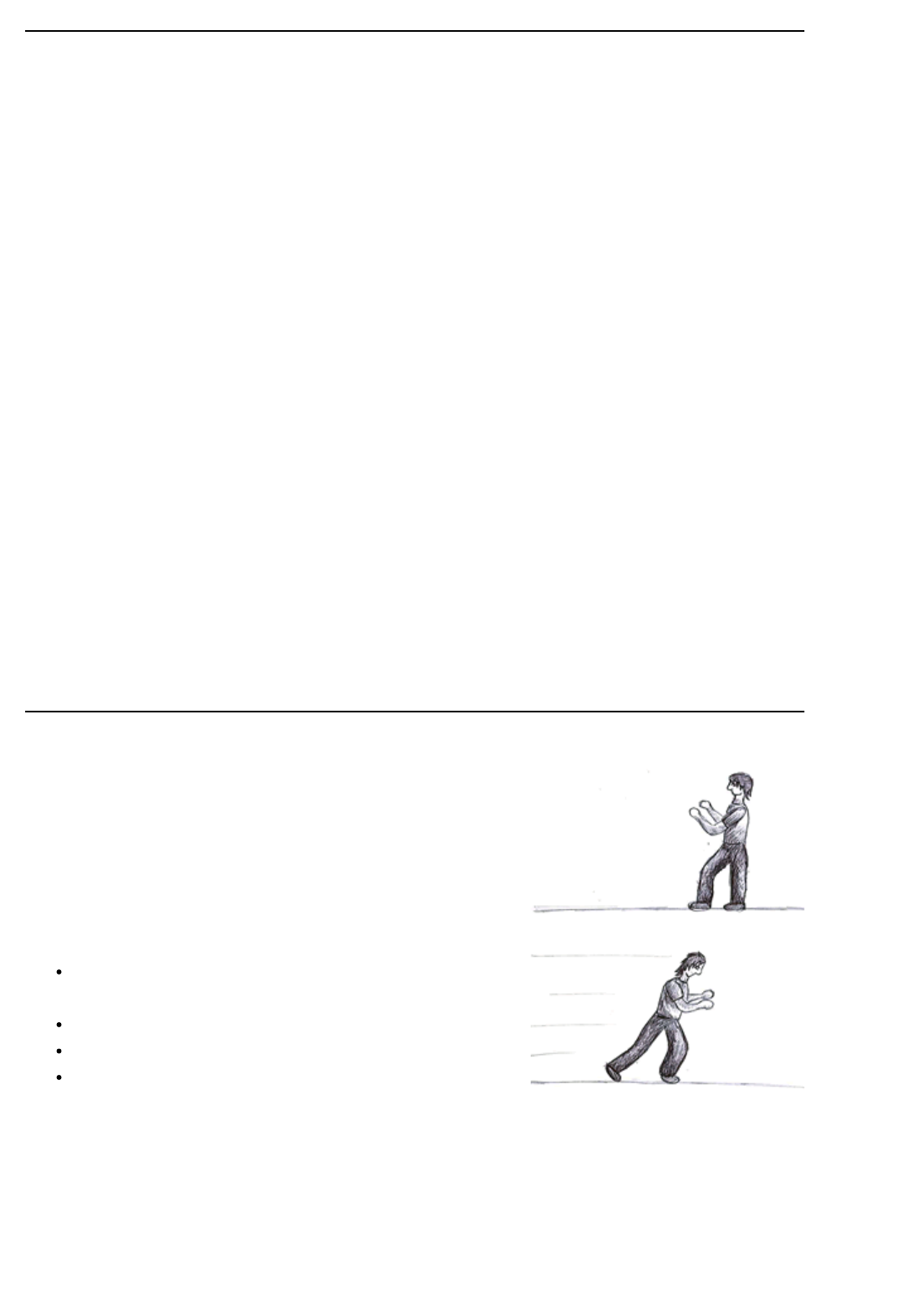
referredtoasthe'fightorflight'response.Thiscomesfrom
theideathatpeopleprimarilyexperienceanxietytohelpthem
eitherfightorrunawayfromdanger.Forexample,if
someonewasattackingyou,twooptionsopentoyouwould
betoeitherfightthemoff(fight)ortrytorunaway(flight).
Ourfightorflightresponsewouldkickintohelpusatthis
point.Forexample:
Ourheartswouldbeginbeatingmorequickly
(supplyingbloodtoourmuscles).
Wewouldsweat(tocoolusdown).
Ourmuscleswouldbecometense(readyforaction).
Wewouldtakedeeperbreaths(tosupplyoxygentoour
muscles).
Inessence,alloftheseresponseswouldaidourescapeorimproveourabilitytostayandfight
theattacker.Whenconsideredinthisway,wecanseehowthesymptomsofanxietyarehelpful
tous.Indeed,allofthephysicalsymptomsweexperiencewhenanxiousplayahelpfulrolein
protectingusinsuchcircumstances.
Thefightorflightresponsewaslikelyevenmorevitaltohumansurvivalbackinthedaysofearly
man,whenpeoplehadtohuntfortheirfoodandwereunderagreaterthreatfrompredators.
Nowadayswedonotfacethesamethreats,butunfortunately,ourbodiesandmindshavenot
caughtupwiththesechanges.Asaresult,wenowexperienceanxietyinsituationswhereitis
notnecessarilyashelpfulbecausewecannotfightorrunawayfromthem(e.g.financial
problems,stressatwork,busyplaces,openspaces,etc).However,theonethingthathasstayed
trueisthefactthatthesesymptomsarenotdangerous;theyareinmanywaystherightresponse
butatthewrongtime.
Whenthinkingaboutanxietyinthisway,wecanbegintoseethatweshouldnotfearit;instead
weshouldseeitasourbody'shealthyprotectionsystem.Rememberingthiscanhelpyoutobe
lessfearfulofthesymptomsofanxiety.Insteadofseeingthesymptomsasdangerous(e.g.the
earlysymptomsofaheartattack)youshouldthinkofthemasasafeandnaturalresponse.By
understandingthis,youcanstopthecatastrophicmisinterpretationsthatleadtopanicattacks.
Howdoesanxietyaffectthebody?
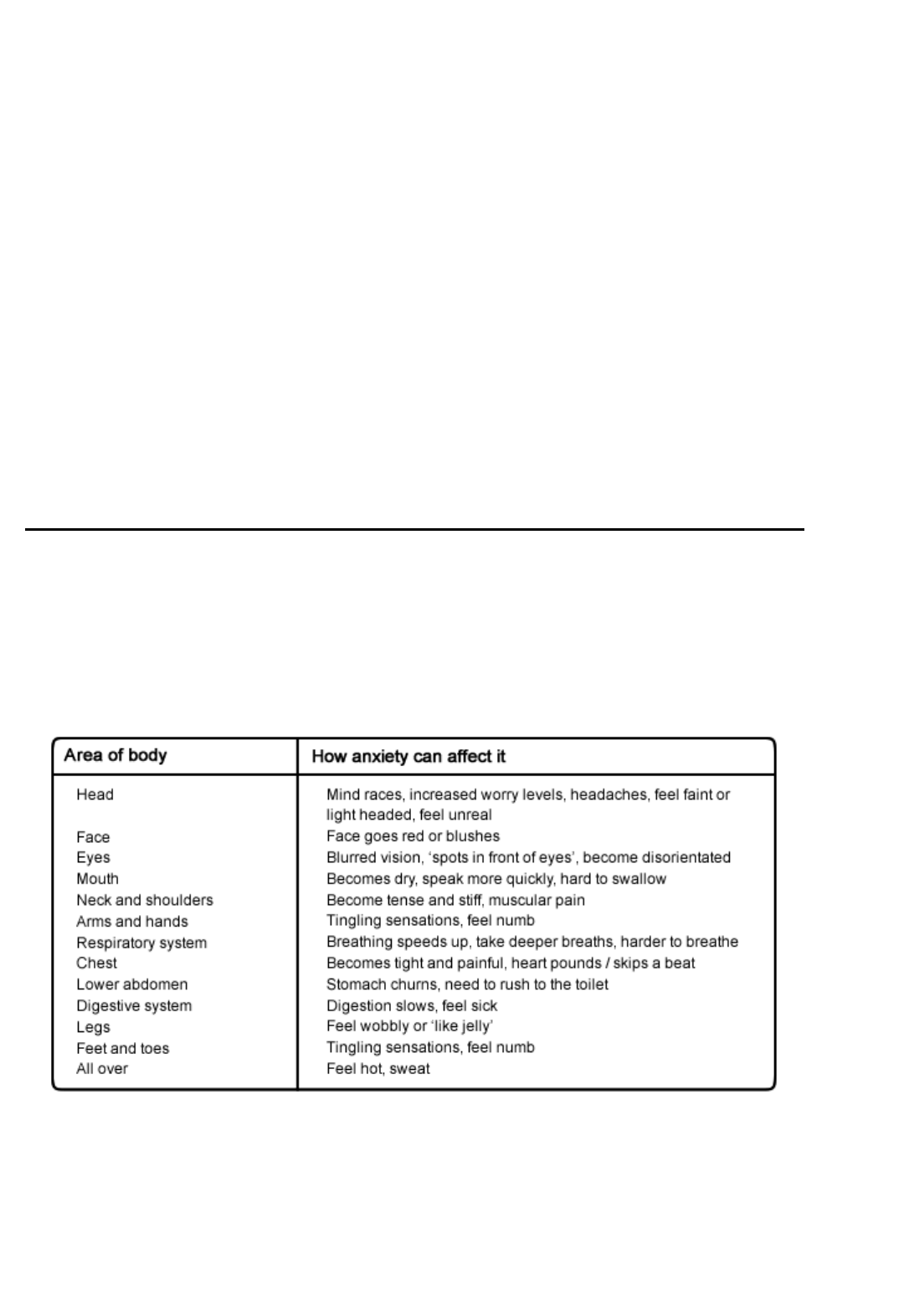
Anxietycanbeparticularlydifficulttorecognisebecauseitaffectsourbodyinsomanydifferent
ways.Overandabovethis,anxietycanaffecteveryoneslightlydifferently.Forexample,some
peopleregularlygetheadacheswhenanxious,whilstothersmaybemorepronetobecoming
breathlessorlightheaded.Belowisalistofsomeofthedifferentwaysanxietycanaffectus.
Beingmoreawareofthesecanhelpustorecognisethatmanyofthephysicalchangeswenotice
inourbodiesareinfactanxietysymptoms.Thiscanhelpstopusfrommisinterpretingbodily
changesassomethingmoreserious.

Copingstatements
Whenweareanxiousorpanicky,itiseasytoforgetwhatyouhavejustlearned(e.g.thatitisnot
dangerousandcannotharmus).Itcanthereforebehelpfultohave'copingstatements'thatyou
canreferto.Thesearebasicallystatementsthatyoucanusetoremindyourselfaboutthefacts
ofanxietyandpanic,wheneveryoubeginexperiencingthem.Remindingyourselfaboutthese
factscanhelptopreventcyclesofpanicoccurring.Thesecopingstatementsmayparticularly
helpfulwhenitcomestosection4'Removingtheuseofavoidanceandsafetybehaviours'.
Feelfreetoaddinanyotherstatementsthatmayhelpyoucopeintothespaceprovided
below.
Statements
Anxietyisnormal
Panicissimplyhighlevelsofanxiety
Everyoneexperiencesanxietyandpanicattimes
Anxietyandpanicarenotdangerous
Anxietyisdesignedtoprotectusandisnotharmful
Byrememberingthesesymptomsarenothingmorethananxiety,Icanpreventacycleof
panicoccurring
Icantoleratethesymptomsofanxietyandpanicwithoutthemgettingoutofcontrol
Slowingmybreathingdowncanhelpmetocontrolmyanxietyandpanic
Myanxietyandpanicwillpassnaturallygiventime itdoesn'tlastforever
Icancontinuewithoutusingescape,avoidanceorsafetybehaviours
Idon'talwayshavetofeelincompletecontrol
I'veneverfainted,choked,gonemad,orhadaheartattackbefore
Peoplecan'ttellhowanxiousIfeel
Learninghowtocontrolyourbreathing
Peoplewhoexperiencepanicattacksoftenhaveatendencyto'overbreath'whentheyare
anxious.Thisbasicallymeansthattheytakedeeperbreathsthannormal(whichtheyare
sometimesunawareof).Thisusuallyhastheaffectofmakingthemfeelshortofbreathandas
thoughtheyaregoingtochoke.Asaresultofthesesensations,theytakedeeperbreathstotry
andcorrectthiswhichactuallyjustmakesthesensationsworse(thispatternisoftenreferredto
ashyperventilation).Beforelongacycleofpaniccandevelop.
Takingdeeperbreathsthanusualalsoresultsinpeopleendingupwiththewrongamountof
carbondioxideintheirbodies.Thisnormallyresultsinthemfeelingdizzyanddisorientated.Itcan
alsocausechestpainstoemerge.Thesesensationstypicallyleavepeoplefeelingasthough
theyareabouttofaintorhaveaheartattackwhichcanalsocauseacycleofpanictobegin.
Bylearning'controlledbreathing'exercises,youcanlearnhowtoslowyourbreathingdowntoa
betterrate.Thishelpstofendofftheuncomfortablephysicalfeelingssuchasdizziness,light
headedness,chestpains,andshortnessofbreath.Bydoingsoyoucanstopthecycleofpanic
andthefeelingssoonpass.
Thefollowingstepswilltakeyouthrougha'controlledbreathing'exercise.Youcanusethis
strategywheneveryoufeelanxiousorpanicky.Inparticular,youshouldusethisstrategyifyou
everfeelfaint,lightheadedorshortofbreath,asitshouldhelpthesesensationstopass.
'Controlledbreathing'exercisescanalsobeusedasamoregeneralrelaxationstrategy
anytimeyoulike.Manypeoplefindslowingtheirbreathingdowninthiswaytobevery
relaxing.
Tomasterthistechnique,itwouldactuallybehelpfultopracticeitattimeswhenyouarenot
inananxiousorpanickystate.Thiswillhelpyoumasterthetechniquefortimeswhenyour
symptomsaremoretroublesome.
Step1
Trytogetintoaslowerandstablebreathingrhythm.Agoodrhythmistobreatheinforthree
seconds,holdthisbreathefortwoseconds,andthenbreatheoutforthreeseconds.Makesure
youdon'ttaketoobig'gulps'ofairwhilstdoingso.
Step2
Itcanbehelpfultocounttoyourselfasyoudothis(e.g.in two three holdfortwo out
two three holdfortwo).
Step3
Asyoubreathe,trytomakesurethatyourstomachexpandsasyoutakeeachbreathe.Thishelps
youtostopbreathingfromthechestwhichtendstoresultinshortandshallowbreathsthatcan
addtotheproblem.
Step4
Repeatthisactionforafewminutes.Youshouldsoonbegintofeeltheuncomfortablesensations
pass.
Patternsofunhelpfulthinking
Firstyouneedtobeabletorecogniseanunhelpfulthought.Thenyoucanchallengeit.Being
awareofthecommonpatternsthatunhelpfulthoughtsfollowcanhelpyoutorecognisewhenyou
havethem.Herearesomeofthecommonpatternsthatourunhelpfulthoughtsfollow:
Challengingunhelpfulthoughts
Thewaythatwethinkaboutthingshasanimpactonourpanicandagoraphobia.Manyofthese
thoughtsoccuroutsideofourcontrol,andcanbenegativeorunhelpful.Itisthereforeimportant
torememberthattheyarejustthoughts,withoutanyrealbasis,andarenotnecessarilyfacts.
Eventhoughwemaybelievealotofourunhelpfulthoughtswhenweareanxiousorpanicky,itis
goodtorememberthattheyshouldbequestionedastheyareoftenbasedonwrong
assumptions.
Thefollowingsectionwillhelpyoubegintorecogniseifyouarethinkingaboutthingsinan
unhelpfulorunrealisticway,anddiscusshowyoucanstarttomakechangestothis.Bydoingso,
youcanlearntoseethingsinamorerealisticlightwhichcanhelptoreduceyourpanicand
agoraphobia.Youmighthaveunhelpfulthoughtsaboutallkindsofthings.Herearesome
examples:
Itiscleartoseehow
thiskindofthinking
mightfeedinto
people'spanicand
agoraphobia.Doyou
everthinkinanyofthe
waysoutlinedabove?
Fillinyourexamples
below:
Youmightfinditdifficulttoidentifyanunhelpfulthought.Trythinkingaboutatimewhenyoufelt
panicky.Considerwhatwasrunningthroughyourmindatthattime.
Interpretingphysicalchangesinthebodyasdangerous:
Thesefeelingsaredangerous
Thiswillleadtoaheartattack
I'mgoingtofaint/choke
I'mgoingcrazy
Underestimatingyourabilitytocopeincertain
situations:
It'llbetoobusy
Iwon'tbeabletoescape
I'llhaveapanicattack
I'llembarrassmyself
Believingyoumustalwaysbeincompletecontrol
Ishouldneverbeanxious
FeelinganxiousmeansI'mweak
Ishouldalwaysfeel100%incontrol
PredictingtheFuture: Whenwefeelpanickyitiscommonforustospendalotoftime
thinkingaboutthefutureandpredictingwhatcouldgowrong,
ratherthanjustlettingthingsbe.Intheendmostofourpredictions

don'thappenandwehavewastedtimeandenergybeingworried
andupsetaboutthem.Forexample:
Worryingthatthesupermarketwillbeverybusy.
Worryingyouwillchokeandsuffocateifyougointoalift.
Catastrophising: Peoplecommonly'catastrophise'whentheyfeelpanicky,which
basicallymeansthattheyoftenblowthingsoutofproportion.For
example:
I'llgetanxious,completelyloseitandtotallyembarrass
myselfwheninalllikelihoodyouhaveexperiencedanxiety
inthepastandcopedwell.
ThebuswillgetsobusythatmyexitwillbeblockedandI
won'tbeabletogetoff.
ShouldStatements: Peopleoftenimaginehowtheywouldlikethingstobeorhowthey
'shouldbe'ratherthanacceptinghowthingsreallyare.For
example:
Ishouldalwaysbe100%comfortableincrowds.
Ishouldbeabletotravelontrains.
Thiscriticalstyleofthinkingsimplycreatesextrapressureand
stress.
OverGeneralising: Basedononeisolatedincidentyouassumethatallotherswill
followasimilarpatterninthefuture.Basically,youfindithardto
seeanegativeeventasaoneoffwhichcanleaveyoufeeling
hopeless.Forexample:
Becauseyouhadapanicattackonetimewhilstshopping,
youbelievethatyouwillpanicineveryshopyougointoin
thefuture.
WhatIfStatements: Haveyoueverwondered"whatif"somethingbadhappens?For
example:
WhatifIhaveapanicattackattheparty?
WhatifIfaintonthetrain?
Thesethoughtsresultinusrestrictingouractivities.
BlackandWhiteThinking: Oftenwhenfeelingpanicky,peopleseethingsaseitherblackor
white,thereisnoinbetween.Forexample:
Theybelieveanysignofanxietyisweak.
Theybelievetheynevercopewellwhentheygoout.
Thissetsupexpectationsthatcanholdusback.
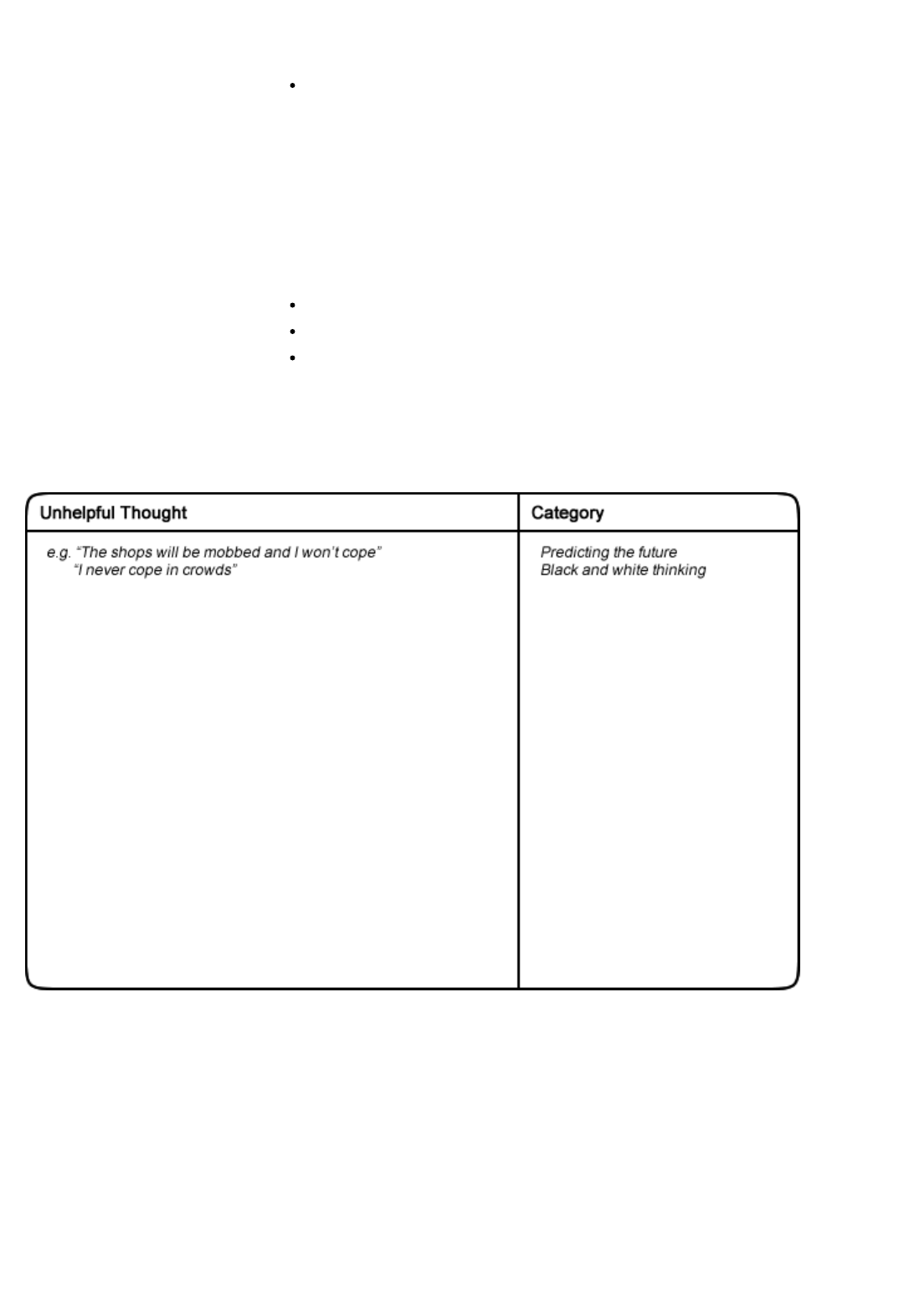
Doanyofyourunhelpfulthoughtsfollowsomeofthesepatterns?Jotdownanyexamplesyou
canthinkofintotheboxbelow:
Wecanlearntechniquestochallengetheseunhelpfulthoughts.Thiscanhelptoreduceyour
panicandagoraphobia.Thenextpartofthishandoutwilldiscusshowwecangoabout
challengingourunhelpfulthoughts.Youmaycomeupwithamorebalancedthoughtthatis
accurateandbasedonevidence.
IgnoringthePositives: Oftenpeoplecanignorethepositiveaspectsoflifeorsituations,
andinsteadfocusonthenegativeelements.Forexample:
Theyrememberfeelingpanickyinthesupermarket,but
forgetthattheyalwayscopewellinthebusytowncentre.
Thesethoughtskeepourconfidencelevelslowandweattemptto
doless.
Labelling: Doyoufindthatyouattachnegative'labels'toyourself?For
example:
I'mweak.
I'malwayspanicking.
I'mincapable.
Labelslikethesetendtofollowusaroundandholdusback.

Howtochallengeunhelpfulthoughts
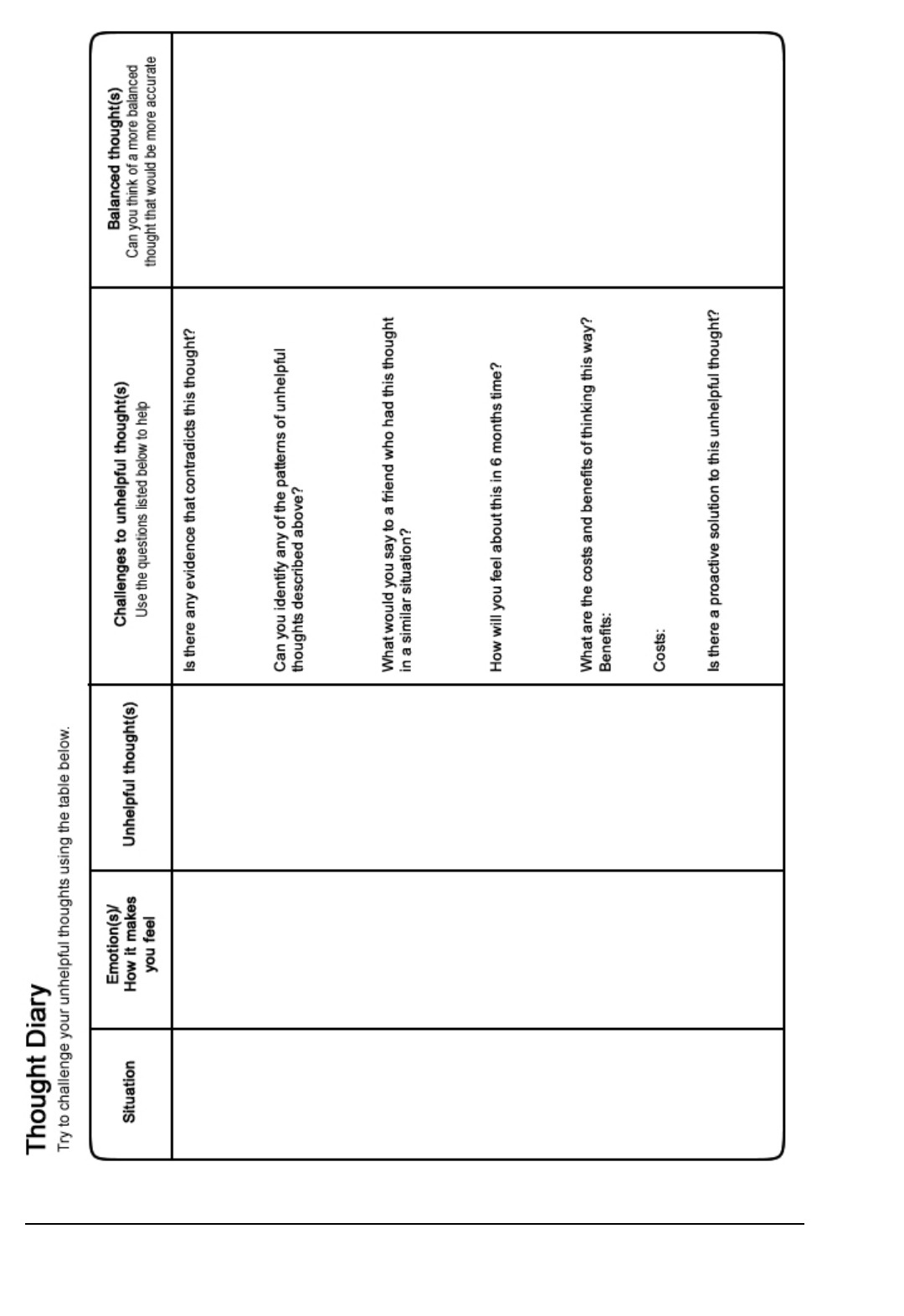
Onceyouhaverecognisedanunhelpfulthoughtthenextstageistochallengeit.Todothis,you
canaskyourselfaseriousofquestions.Seetheexamplebelow:
Situation:Youareduetomeetyourfriendforteainarestaurant.
Howyoufeel:Panicky,afraid.
Unhelpfulthought:IknowI'llhaveapanicattackifIgointotherestaurant!
Onceyouhaveaskedyourselfthesequestions,youshouldreadthroughyouranswers.Tryto
comeupwithamorebalancedorrationalview.Forexample:
AlthoughImaygetanxious,itdoesn'tmeanI'llhaveapanicattack.I'vebeeninsimilar
situationsbeforeandI'vecopedok.
Trytoapplythesequestionstotheunhelpfulthoughtsthatyounotice.Itcanhelptoreduceyour
panicandagoraphobia.Youcanusethistechniquetotestyourthoughtsarerealisticand
balanced.
Challengestoanunhelpfulthought
Nowyoucanchallengeyourunhelpfulthoughtsbyaskingthesequestions.
Isthereanyevidencethatcontradictsthisthought?
IwasinacoffeeshopafewweeksbackandIdidn'thaveapanicattack.
I'vebeeninthisrestaurantinthepastandcopedfine.
Canyouidentifyanyofthepatternsofunhelpfulthinkingdescribedearlier?
I'mpredictingthefuture,asIcan'tsayforsurewhatwillhappen.
I'mdiscountingpositivesasI'vecopedinsimilarsituationsinthepast.
Whatwouldyousaytoafriendwhohadthisthoughtinasimilarsituation?
I'dsayyou'vecopedbeforesothereisnoreasonyoucan'tcopeagain.
Whatarethecostsandbenefitsofthinkinginthisway?
Costs:
ItsmakingmeanxiousbeforeIevengoin.
Itsmakingmewanttoavoiditandletdownmyfriend.
ItmakesithardtofocusonanythingotherthanhowIamfeeling.
Benefits:Ican'tthinkofany.
Isthereaproactivesolutiontothisunhelpfulthought?
IcouldreadmycopingstatementsbeforeIgoin.
Icouldusebreathingexercisestohelpmecalmdown.
Removingtheuseofavoidanceandsafetybehaviours
Oneofthemainreasonsthatpeoplefinditdifficulttoovercometheirpanicandagoraphobiais
becausetheyavoidsituationsthattheyworryaboutpanickingin.Furthermore,whenevertheydo
confrontthesesituations,theytendtousesafetybehaviours.Safetybehavioursareanyactions
thatpeopleusetotryandminimisetheanxietytheyexperienceinsuchsituations(e.g.only
travellingonbusesthatareveryquiet;goingshoppinglateatnightwhenitisquiet;sittingdownif
theyfeellightheaded;onlygoingtopublicplacesiftheyhaveafriendwiththem).
Althoughitiseasytoseewhypeopleuseavoidanceandsafetybehaviourstocopewiththeir
panicandagoraphobia,inthelongertermthesestrategiesonlymakethingsworse.Thisis
because,thelongerweavoidasituationwefear,themorefrighteningitbecomes.Perhapseven
moreimportantly,avoidanceand'safetybehaviours'preventusfromhavingtheopportunityto
provethatwecancopeinthesesituationsandthattheyarenotasfrighteningaspreviously
thought.Becauseofthis,oneofthebestwaystoovercomepanicandagoraphobiaisto
graduallyconfrontthesesituationswithoutusingsafetybehaviours.
Ofcourseconfrontingthesesituationscanbedaunting,especiallygiventhatyouranxietylevels
risewhenyoudoso.Youmayalsohaveexperiencedapanicattackinsimilarsituationsinthe
past.However,yournewknowledgeofanxietyandpanicshouldhelpyoutokeepyouranxietyat
amanageablelevel.Remember,ifyoudon'tmisinterpretthesesymptomsascatastrophic(e.g.
theearlysignsofaheartattack,losingcontroletc)youcanfendoffpanicattacks.
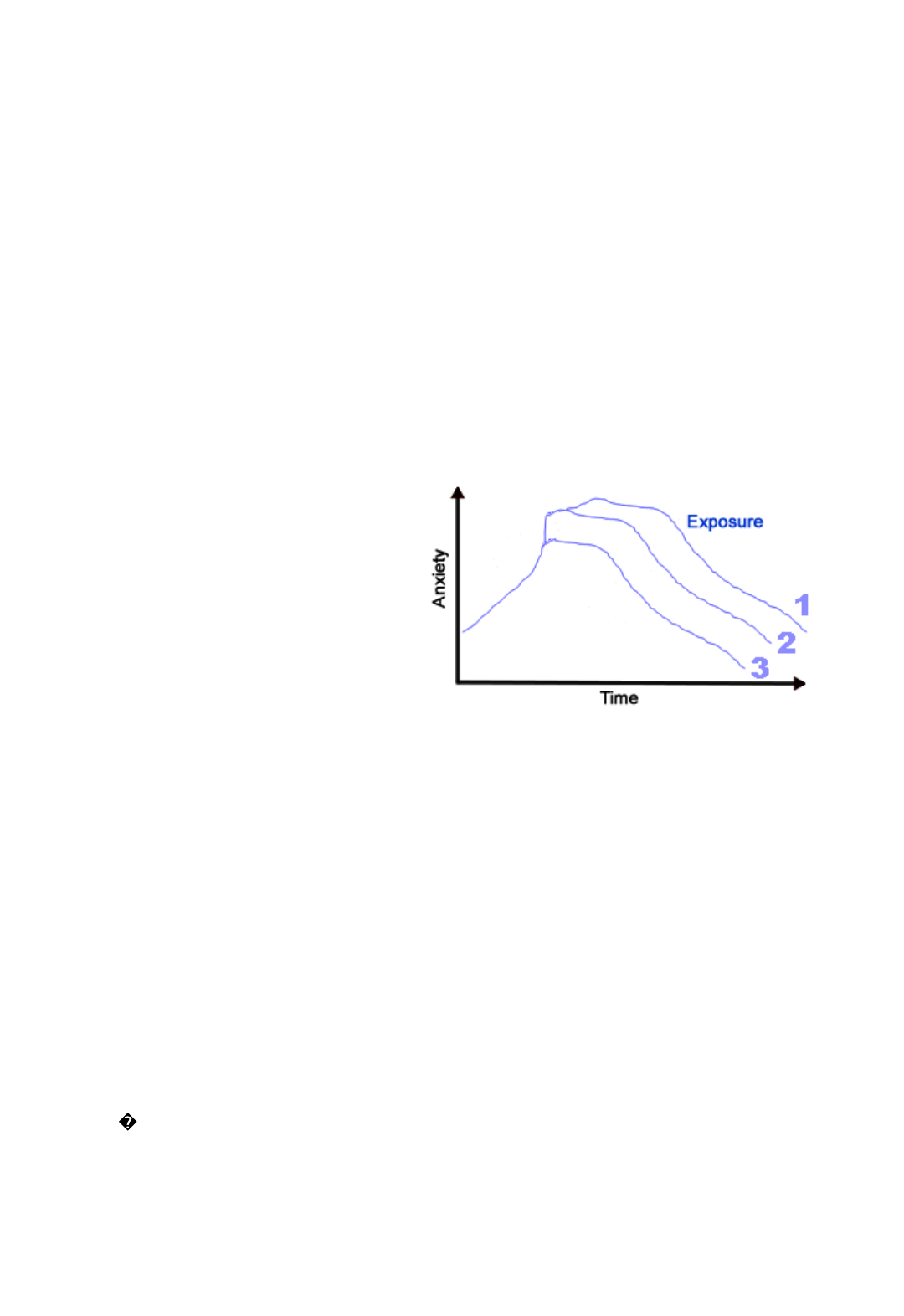
Ifyoucandothis,researchshowsthatwhen
weareanxious(e.g.onabus;inasupermarket
etc),ouranxietyeventuallypeaksanddropsif
weremaininthatsituationforlongenough.Itis
almostasthoughourbodiesandminds
become'usedto'thesituationandouranxiety
beginstofall.Thismaytakearound30
minutes,butoftenhappensmorequickly.More
importantly,ifwesubsequentlyconfrontthe
samesituationagain,theamountofanxietywe
experiencewillbelessandlessoneachoccasion.Notonlythis,butitwillpassmorequickly
eachtimetoo,untilthepointthatthesituationcausesuslittleornoanxiety.
Forinstance,doyouremembereverbeingnervousbeforestartinganewjoborcollegecourse?
Inthesesituations,itisnormaltofeelveryanxiousbeforeyouarrive.Howeveronceyouarrive,
oftenyougraduallybegintofeelmorecomfortableandrelaxedasthedayprogresses.Notonly
this,aseachdaypassesinyournewsurroundings,youusuallybegintofeellessandless
nervous.
Thesameistruewhenyouconfrontasituationthatmakesyouanxious.Althoughyouranxiety
maybehighbeforehandandinitiallyrisewhenyouconfrontit,thiswillsoonbegintodropifyou
remaininthesituationforlongenough.Followingthis,eachtimeyouconfrontthesamesituation,
thelevelsofanxietyyouexperiencewillgetlessandless,justasitwouldaseachdaypassedin
anewjob.Soonyoushouldbeabletoconfrontsuchsituationsandfeelminimal(ifany)fearat
all.
Remember ournewknowledgeaboutanxietyandpanicshouldhelpustostayinthe
situationswefearforlongenoughtoallowthistohappen.Thisisbecauseitcanhelpusto
preventcyclesofpanicoccurringliketheydidinthepast.
Havingsaidthis,confrontingthesesituationscanstillbeadauntingthought.The5steps
describednextcanmakethismoremanageable.
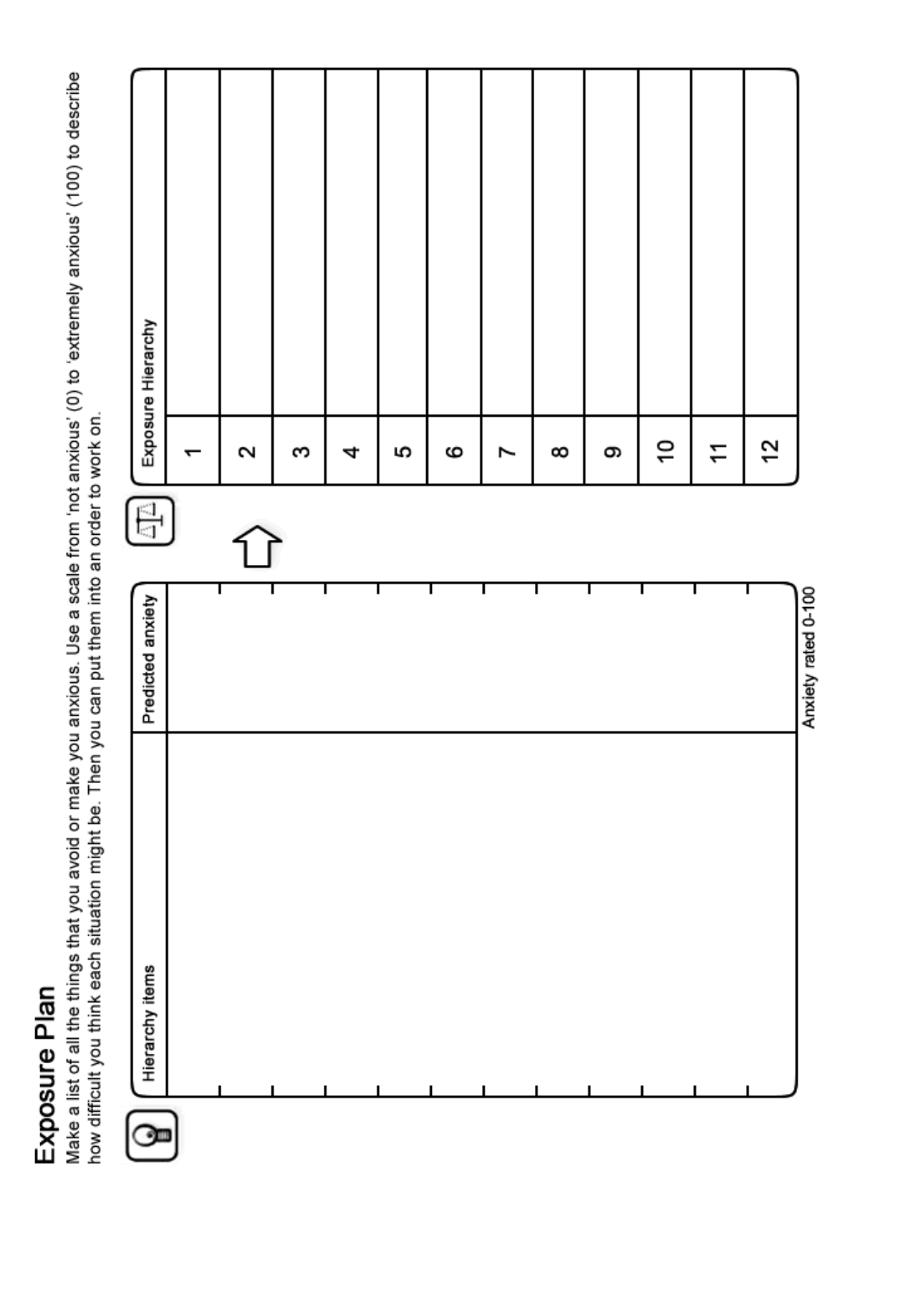
Step1:Generatingideasforyourexposurehierarchy
Asconfrontingthesituationsthatmakeyoufeelpanickycanbeadauntingthought,itcanbe
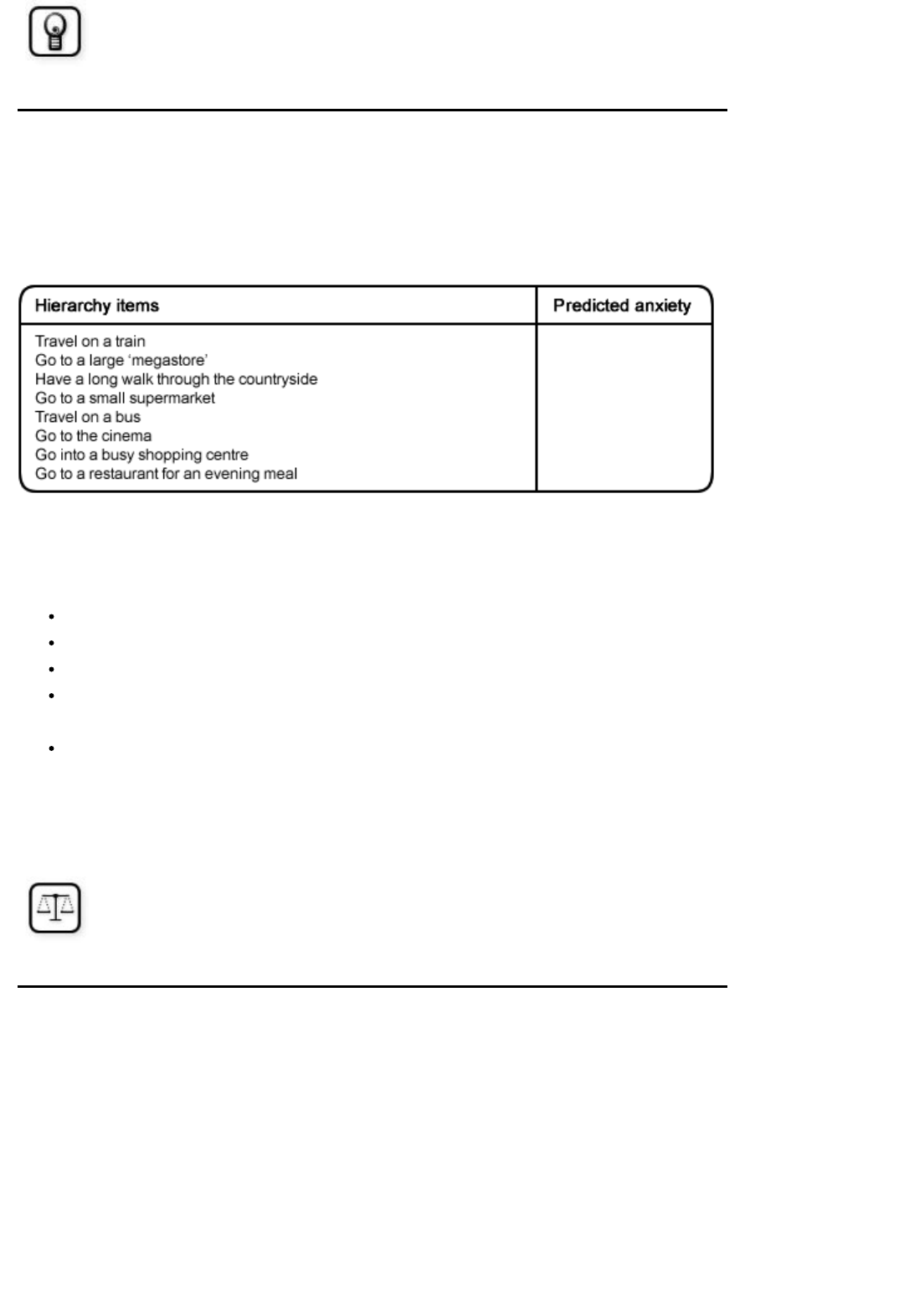
helpfultodosoinagradualway.Creatinganexposurehierarchycanhelpyoutodothis.An
exposurehierarchyisbasicallyalistofallthesituationssurroundingyourpanicandagoraphobia
thatcauseyouvaryingdegreesofanxiety(seetheexamplebelow).Theideaisthatyouconfront
theeasiest(orleastanxietyprovoking)itemonyourhierarchytobeginwithandworkyourway
throughtomoredifficultitemsasyourconfidencegrows.Usebox1
onpage
25tolist
itemsfor
your
hierarchy.
Don't
worry
about
ranking
theorderofyouritemsatthisstage.Tohelpyougetideasforyourhierarchy,itmayhelpto
considerallthesituationsthat:
Makeyouanxious
Youavoid
Youfearpanickingin
Youonlyconfrontifyouareusinga'safetybehaviour'(e.g.grippingtightlyontoatrolleyin
thesupermarkettostopyoufainting)
Youescapefrom(e.g.dashroundthesupermarketasquicklyaspossible)
Note:Itisimportanttotryandensurethattheitemsonyourlistcauseyouvaryingdegreesof
anxiety(e.g.isgoingtosomeshopsmorefrighteningthangoingtoothers).Thiswillallowyouto
workonovercomingyourfeartowards'easier'itemsonyourhierarchytobeginwith.
Step2:Rankingtheitemsonyourhierarchy
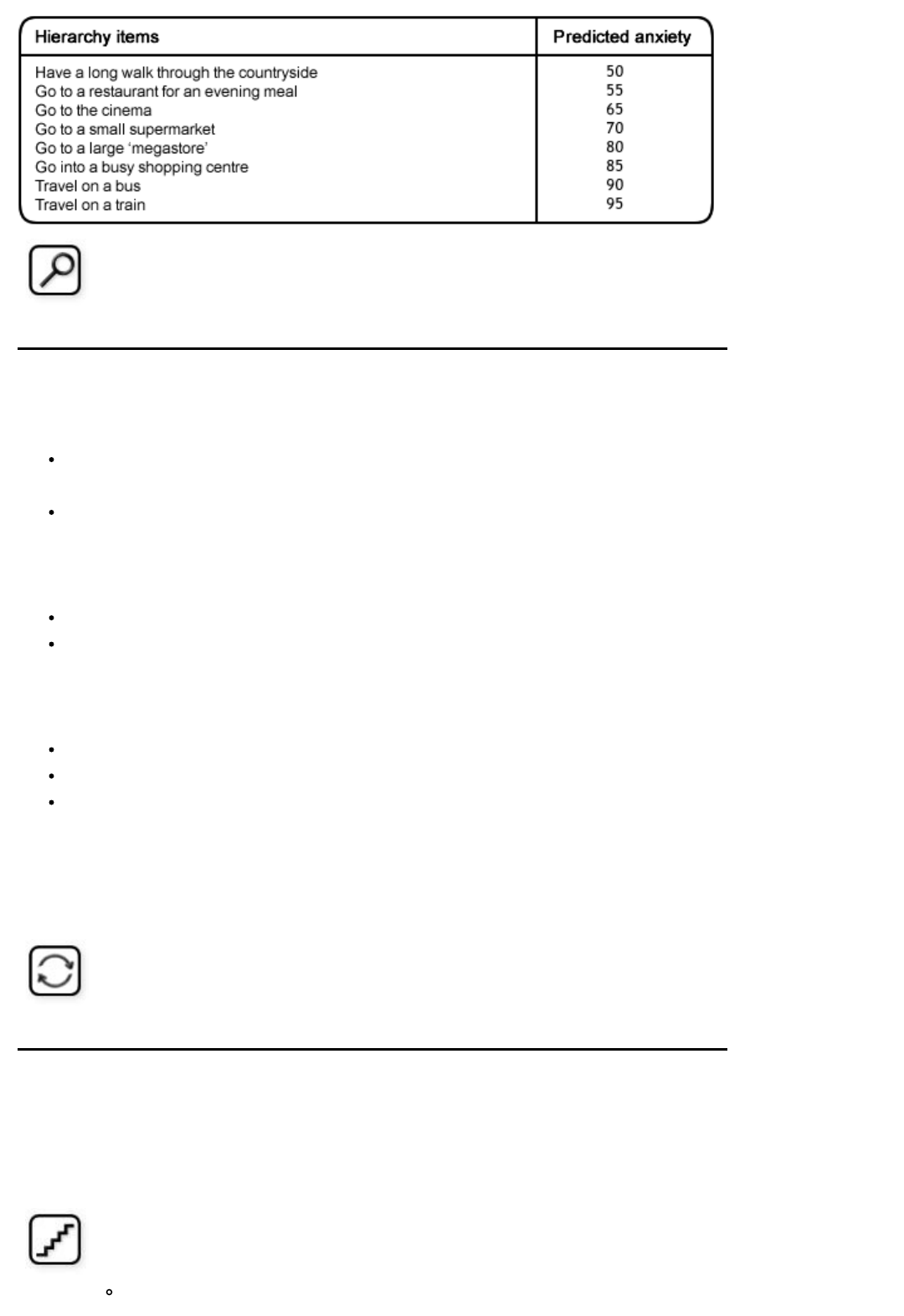
Onceyouhavealistofitemsforyourhierarchy,thenextstageinvolvestryingtorankthemin
orderofleastanxietyprovokingtomostanxietyprovoking.Tohelp,trytopredicthowanxiousyou
believeeachitemwouldmakeyoufeelonascalefrom0to100,where100isthemostanxious
youhaveeverfeltand0isthemostrelaxedyouhaveeverfelt(usebox2onpage25).Onceyou
havecompletedthis,simplyrearrangetheitemsonyourlistfromleastanxietyprovokingtomost
anxietyprovoking(usebox3onpage25).Forexample:
Troubleshooting:
Ifyouattemptanexposuretaskanditdoesnotgoaswellasyouhadhopedtrynotto
worryasthiscanhappenfromtimetotime.Tryagainassoonasyoucan.
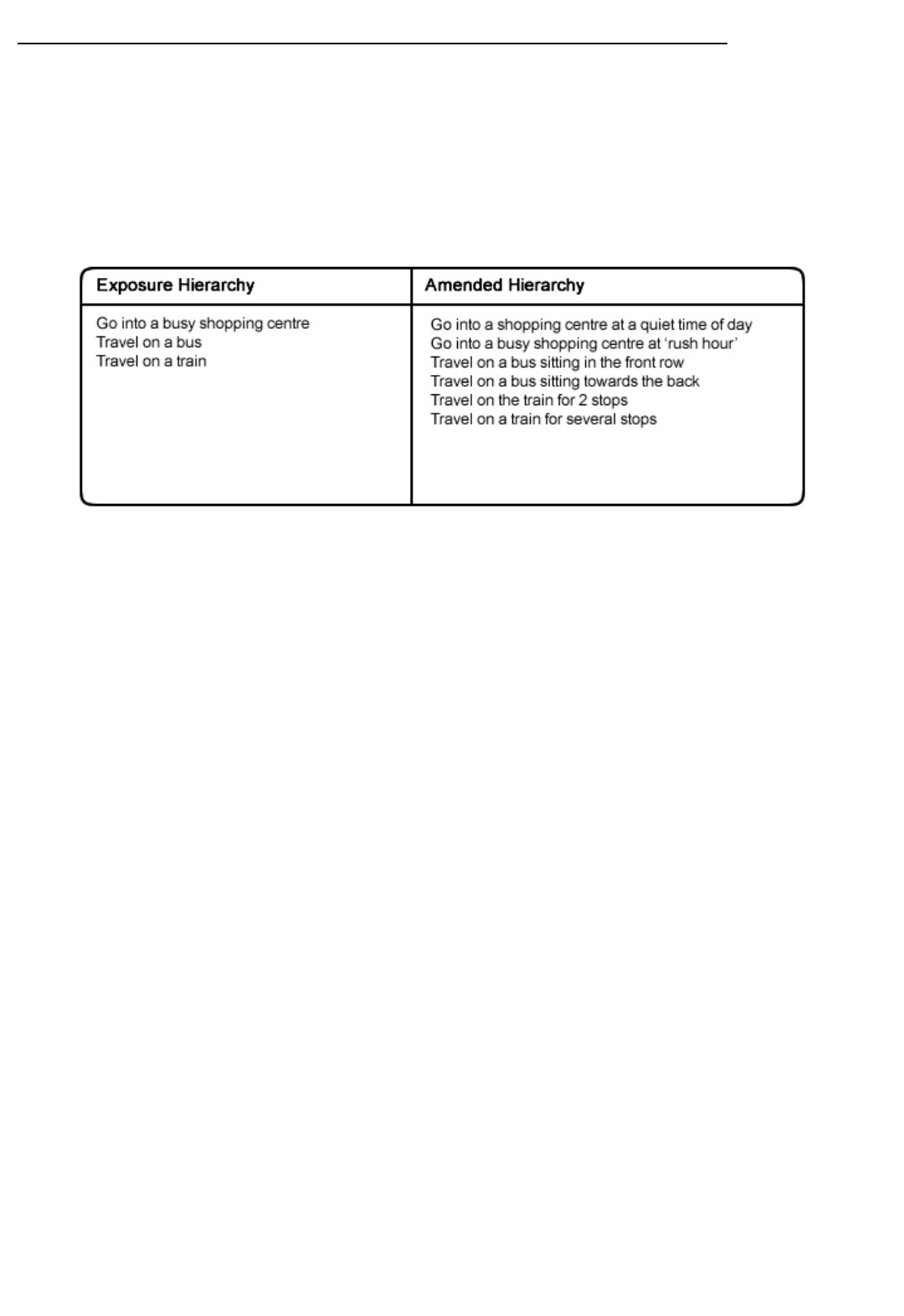
Iftheexposuretaskstillseemstoohard,seeifyoubuildinanextrasteportwobeforeiton
yourhierarchy.Thiswillallowyourconfidencetogrowfurtherbeforefacingit.Forexample:
Ifyoufindthatyouranxietyisnotreducingduringanexposuretaskaskyourself:
Areyouusinga'safetybehaviour'whichispreventingyoufromfullyconfrontingyour
Step3:Confrontingthefirstitemonyourhierarchy
Onceyouhavefinalisedyourhierarchy,thenextstepistoconfrontthefirstitemonitassoonas
possible(thisisoftenreferredtoasanexposuretask).Thisshouldbetheitemthatyoupredictwill
causeyoutheleastamountofanxietyfromyourlist.Duringexposuretasksitisimportantto:
Rememberthatalthoughyouranxietywillinitiallyriseduringanexposuretask,itwillfallif
youremaininthesituationforlongenough.
Stayinthesituationuntilyouranxietyreducesbyatleasthalf.Forexample,ifyouranxiety
risesto50duringanexposuretask,youshouldremaininthesituationuntilitreducesto25
or(preferably)less.Theamountoftimethistakeswillprobablyvaryfromtasktotask.It
maytakeanythingupto3045minutes,butcommonlyhappensmorequickly.
Rememberpanicissimplystrongsymptomsofanxiety.
Remindyourselfthatanxietyisanaturalandhealthyreactionthateveryoneexperiences.
Althoughitcanfeelunpleasant,itisnotdangerousandwillgraduallypassifyouremainin
thesituation(youcanuseyourcopingstatementstoremindyouabouttheotherfactsof
anxietyandpanic).
Trynotto'lookout'orbehypervigilantforanyphysicalsymptomsthatyoumayexperience.
Remembertouseyourbreathingexercisesifyoubegintofeelfaintordizzy.
Avoidusinganysafetybehavioursastheysimplyslowdownyourprogress(e.g.don'tgrip
trolleystostopyoufainting,don'tsitneartheexitonbusesetc).Ifitistoohardtoremove
themallatonce,trytograduallyreducethemovertime.
Itmayalsobehelpfultotryandchallengeanyunhelpfulthoughtsyouhaveaboutconfronting
thesesituationsbeforeyoudoso(seesection3).
Step4:Repeatingtheexposureexercise
Onceyouhavecompletedyourexposuretaskonce,thenextstepistodosoagain,overand
over,asoftenaspossible,untilyouhaveovercomeyouranxietytowardsthatitem.Youshould
findthateachtimeyouconfronttheitemonyourhierarchy,itwillbecomeslightlyeasier.Asarule
ofthumb,trytoensurethatyouengageinyourexposuretaskeverydayifyoucan.Remember
thatthemoreoftenyouexposeyourselftoanitemonyourhierarchy,thequickeryouwill
overcomeyourfeartowardsit.
fear?
Step5:Movingontothenextitemonyourhierarchy
Onceyouhaveovercomeyourfeartowardsthefirstitemonyourhierarchy,youshouldfollowthe
samestepswiththenextitemonyourhierarchy.Continuethroughyourhierarchyinthismanner
untilyouhavereachedthetopandyouarelesstroubledbypanicandagoraphobia.
Rememberthatasyouprogressthrougheachstageofyourhierarchyyourconfidencewillgrow.
Thisshouldmeanthatitemswhicharehigheronyourhierarchythatseemedverydauntingat
firstwillbelessfrighteningwhenyouactuallycometofacethembecauseofyourprevious
achievements.

FinalWord
Wehopethatyoufoundsomeoftheideasinthisbookletuseful.Youcan
continuetousethetechniquesyoufoundhelpfullongintothefutureand
theyshouldcontinuetobenefityou.Ifsomeoftheideasarenotparticularly
helpfulatfirst,itisperhapsworthstickingwiththemforafewweekstogive
themachancetowork.Ifhoweveryoufeelyoursituationremainslargely
unchangedorifyoudidnotfindthisbookletuseful,youshouldspeakto
yourGPwhocantellyouabouttheotheroptionsavailablewhichyoucould
findhelpful.
FurtherInformationandResources
ForfurtherinformationandselfhelpresourcesgotoMoodjuiceonline:
http://www.moodjuice.scot.nhs.uk
Moodjuiceisawebsitedesignedtoofferinformationandadvicetothoseexperiencing
troublesomethoughts,feelingsandbehaviours.Inthesiteyoucanexplorevariousaspectsof
yourlifethatmaybecausingyoudistressandobtaininformationthatwillallowyoutohelp
yourself.Thisincludesdetailsoforganisations,servicesandotherresourcesthatcanoffer
support.ThisselfhelpguidecomesfromaseriesthatyoucanaccessandprintfromMoodjuice.
Othertitlesavailableinclude:
Depression
Anxiety
Stress
Panic
SleepProblems
Bereavement
AngerProblems
SocialAnxiety
Phobias
TraumaticStress
ObsessionsandCompulsions
ChronicPain

SomeUsefulOrganisations
Thefollowingorganisationsorservicesmaybeabletooffersupport,informationandadvice.
Samaritans
Samaritansprovidesconfidentialemotionalsupport,24hoursadayforpeoplewhoare
experiencingfeelingsofdistressordespair,includingthosewhichmayleadtosuicide.Youdon't
havetobesuicidaltocallus.Wearehereforyouifyou'reworriedaboutsomething,feelupsetor
confused,oryoujustwanttotalktosomeone.
AnxietyUK
Nationalcharityestablishedin1970toprovidesupportandservicestothosesufferingfromall
anxietydisorders,obsessivecompulsivedisorder,generalisedanxietydisorder,panicattacks,
socialphobia,simplephobia,phobiaandtranquiliserissues.
BreathingSpace
BreathingSpaceisafree,confidentialphonelineyoucancallwhenyou'refeelingdown.You
mightbeworriedaboutsomethingmoney,work,relationships,examsormaybeyou'rejust
feelingfedupandcan'tputyourfingeronwhy.
LivingLifetotheFull
LivingLifetotheFullisanonlinelifeskillscoursemadeupofseveraldifferentmodulesdesigned
tohelpdevelopkeyskillsandtacklesomeoftheproblemsweallfacefromtimetotime.
Phone: 116123
WebSite: http://www.samaritans.org
Phone: 08444775774
WebSite: http://www.anxietyuk.org.uk/
Phone: 0800838587
WebSite: http://www.breathingspacescotland.co.uk
WebSite: http://www.llttf.com/

FurtherReading
Thefollowingbooksmaybeabletooffersupport,informationandadvice.
CopingSuccessfullywithPanicAttacks
Panicattackshappenwhenthebodysemergencybuttonisbeingpressedcontinuously.
Breathlessness,chestpains,sweating,shaking,dizzinessandfaintingareallamongthe
symptoms,andtheexperiencecanbeterrifying.Fluctuatingbloodsugarlevels,anxietyand
exhaustednervesaffectingmuscletensionandbreathingcanallcausepanicattacks.Thisbook
explainshowtostoppressingthepanicbutton.ShirleyTrickettshowshowtounderstandyour
innerself,andovercomepanicattackswithabalancedapproachtomeetyourphysicaland
emotionalneeds.
Author:STrickett
Published:2009
PanicAttacks:WhatTheyare,WhyTheyHappenandWhatYouCanDoAboutThem
Thisbookexplainswhatpanicattacksare,thetheoriesbehindwhatcausesthemandwhattodo
whenyouhaveone.Thisbookisconsistentlystraightforward,informativeandreassuring.
Author:ChristineIngham
Published:2000
PanicDisorder:TheFacts
Panicdisorderisaremarkablycommonpsychologicalcondition,characterizedbysuddenattacks
ofintensefearandpanic.Approximately3%ofthepopulationwillexperiencesomeaspectsof
panicdisorderduringtheirlifetime.Incrediblydistressing,itcanhaveanadverseeffectonmost
aspectsoftheperson
Author:SRachman&PDeSilva
Published:2009
