White Paper Automation Of X MAP Technology Based Multiplex Assays
2017-09-19
: Pdf White-Paper-Automation-Of-Xmap-Technology-Based-Multiplex-Assays White-Paper-Automation-of-xMAP-Technology-Based-Multiplex-Assays 09 2017 clpmag uploads wp-content
Open the PDF directly: View PDF  .
.
Page Count: 12

Whitepaper
Introduction
Automation provides a number of benets to clinical, industrial,
and research laboratories, including elimination of human errors,
improvement in consistency, minimization of contamination, in-
creased throughput, decreased costs, and reduced hands-on time.
At the same time, multiplex assays oer the benets of more data
per sample, faster reaction times, reduced sample consumption,
enhanced scalability, and a number of additional benets due to
elimination of repetitive steps.
Integrating laboratory automation with multiplex assays pro-
vides signicant eciencies to workow processes, especially
when a large number of samples are being analyzed, or when a
highly multiplexed assay is being developed. Automation can be
partially or fully implemented. For example, a low test volume lab
may automate only the washing steps of an assay, whereas a core
facility or high volume testing lab may want to automate all assay
steps—including incubation, microplate washing, thermocycling,
and microplate shaking—into a single, walkaway system. Multiple
automation criteria should be considered for each lab, such as plate
format, speed of liquid handling, deck capacities, and system and
software upgradability for future considerations.
Luminex® xMAP® Technology is designed for multiplex assays
in clinical, industrial, and life science research labs that require
fast and repeated assays of multiple targets. e platform allows
multiplexing of up to 500 unique assays within a single sample.
High sample throughput is needed in diagnostics reference labs or
during clinical trials. High throughput is also needed during drug
screening stages, although multiplexing is also an advantage dur-
ing such processes. A clinical reference lab may test thousands of
samples per day in low to moderate multiplex, while higher mul-
tiplexing may be needed in a research lab testing dozens of tar-
gets per sample. Flexibility to customize assay steps for both the
throughput and multiplexing needs of each individual lab is a dis-
tinct benet of xMAP Technology.
Microsphere or bead-based arrays oer advantages such as re-
duction of sample consumption and hands-on time, optimizing
eciency during assay development and performance. Having
the capability for both protein and nucleic based applications on
a single platform is another advantage for labs with limited bench
space for multiple equipment footprints. Unlike traditional immu-
noassays or nucleic acid arrays, xMAP bead-based assays occur
entirely in a liquid medium without having to interact with solid-
phase substrates. is makes them ideal for rapid reaction times
and liquid handling automation.
As evidenced by the more than 27,000 publications to date,
xMAP Technology has become the most widely used multiplex-
ing technology. Concerns such as uniform dispensing of beads,
well-to-well carryover, and minimization of bead loss during
transfers are easily mitigated with a robust automation protocol.
e aim of this white paper is to provide examples of automation
solutions and how these have been implemented into labs using
xMAP Technology.
Semi-Automated Liquid Handling Workstations
Multiplex assays oer a number of advantages over singleplex as-
says, but require a number of upfront preparation steps before a
fully automated protocol can be implemented. Liquid handling
robots not only have the advantage of improving output eciency
during sample processing, but also during disconnected prepa-
ratory steps. ose individual processes can each be carried out
equally well by appropriate semi-automated equipment that ts
quickly and easily into an existing routine. xMAP Technology itself
is a compilation of various stages of work, including bead coupling,
coupling conrmation, plate preparation, reaction incubation, and
washing steps, all of which can be partially or fully automated.
Standardizing an assay to microplate size (96- or 384-well for-
mat) is an important rst step in reducing both reaction volume
and total assay costs. High throughput single or multichannel pi-
pette dispensers, currently available on the market, are designed
to dispense very precisely measured quantities of any suspension
into dierent microplate formats. e core elements of these ro-
botic systems are a liquid handling arm that is moveable along the
x- and y-axes, a pipetting head mounted on the forefront of the arm
moveable in the z-direction, and pipetting channels that transfer
the liquids from tubes, reservoirs, and plates into the pipetting tips.
Automation of xMAP® Technology-Based
Multiplex Assays
Tomasz Zborowski, M.Sc
2
Automated Liquid Dispensing Systems
Automated dispensers range from single-channel instruments
(one volume at a time) to multichannel dispensers capable of dis-
pensing up to 384 aliquots simultaneously (Table 1). Software-
controlled sample dilution and multiple plate preparations enable
scale up of xMAP protocols for routine operation with greater
reproducibility than manual procedures. Liquid handling robots
may be complemented with innovative options such as tip loading
for serial 96/384-well dilutions (including 96/384 interchangeable
pipetting heads), plate heating and cooling, orbital shaking, and
barcode reading. Some automated dispensers are easily operated
under a laminar ow hood without requiring connection to a com-
puter (e.g. VIAFLO 96/384 from Integra Biosciences Corp.). ese
single and multichannel dispensers can be easy implemented into
a workow for a series of sample dilution steps and a multitude of
plate preparations, prior to the addition of coupled microspheres to
an xMAP Technology assay.
Examples of Commercially Available Single and Multichannel
Pipette Dispensers for Semi-automated Workflows
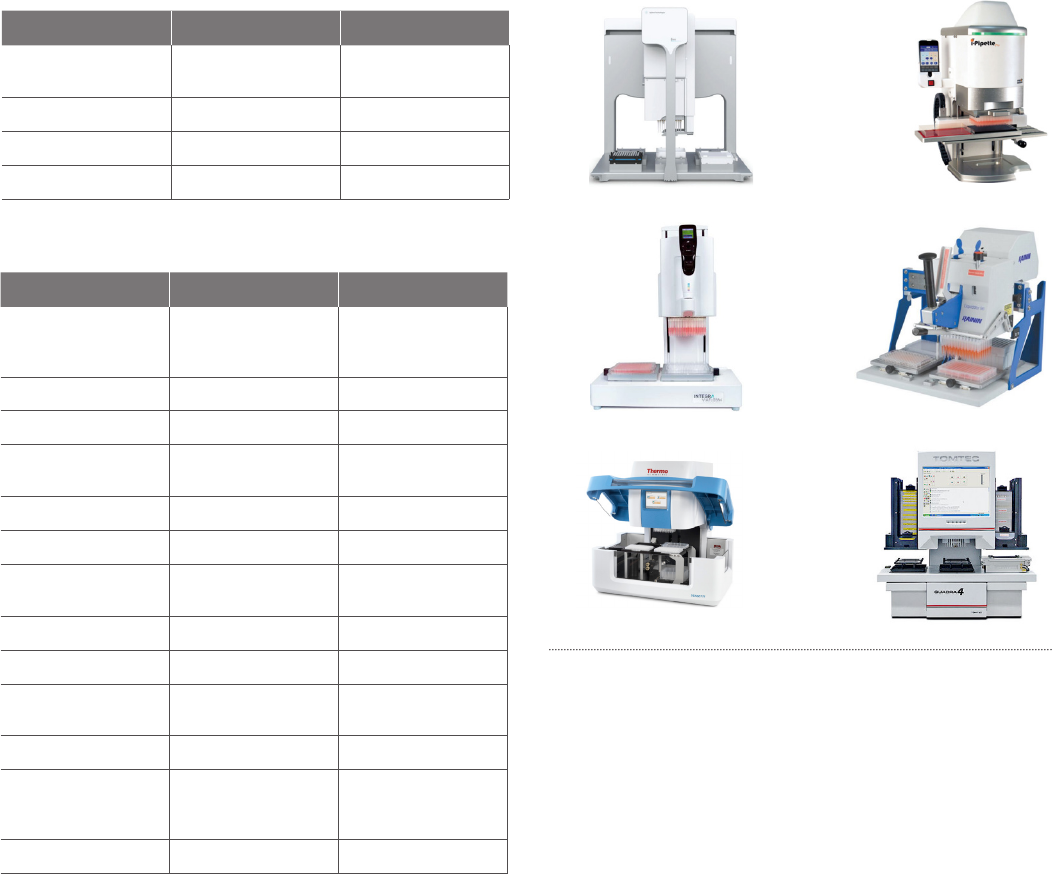
Table 1a. Single semi-automated pipette dispensers
Company Product Name Plate Format
BioTek®MultiFlo™ Microplate
Dispenser 96-384
Formulatrix Mantis 96-384
Hudson Robotics SOLO™96-384
Thermo Scientific Multidrop™96-384
Table 1b. Multichannel semi-automated pipette dispensers
Company Product Name Plate Format
Agilent Technologies
Agilent™ Bravo™
Automated Liquid
Handling Station
96-384
Apricot Designs i-Pipette/Pro 96-384
Aurora Biomed VERSA 10/110/1100 96-384
BioTek®MicroFill™ Microplate
Dispenser 24-96-384
CyBio Cybi®-FeliX 96-384
Formulatrix Tempest 96-384
Gilson®Quad Z-215 Liquid
Handler 96-384
Hudson Robotics Micro10x™96-384
INTEGRA Biosciences VIAFLO 96/384 96-384
Rainin Liquidator™ Manual
Pipetting System 96-384
Labcyte™Echo® Liquid Handler 96-384
Thermo Scientific
Thermo Scientific™
Versette™ automated
liquid handler
96-384
TOMTEC®Quadra Tower™96-384
Automated dispensers have become more widely adopted as
they incorporate advanced, multifunction robotic features. It is
common practice to continue all washing steps on multichannel
dispensers equipped with an integrated plate vacuum ltration
station and/or magnetic bead separation deck (e.g. Agilent™ Bravo™
Automated Liquid Handling Platform, Agilent Technologies).
Depending on the types of the microspheres used in the multiplex-
ing protocol (MicroPlex® or MagPlex®), laboratories can now per-
form various stages of xMAP assays under one partially automat-
ed, unattended workow, minimizing human-induced variability.
Some liquid handlers are fundamentally simple dispensers,
but also have a built-in robotic functionality that allows multiple
microplates to be moved automatically (e.g., ermo Scientic™
Versette™ automated liquid handler/ermo Scientic®; Precision™
XS/BioTek®, Quadra4®/TOMTEC®). A robotic arm can shuttle 96-
and 384-well plates to and from a plate stacker, which can be con-
gured to hold dierent numbers of microplates. ese multiplate
stacker systems are an ideal solution for robust walkaway capabili-
ties, providing an extra microplate workspace and increased labo-
ratory eciency (Figure 1).
A
C
E
B
D
F
Figure 1
A: Agilent™ Bravo™ Automated Liquid Handling Platform.
B: i –Pipette. C: VIAFLO (Integra Bioscience Corp). D: Liquidator™ 96 (Rainin®)
Advanced robotic liquid handlers with hotels and plate transport functionality.
E: Thermo Scientific™ Versette™ automated liquid handle. F: Quadra4™ (Tomtec®).
A: © Agilent Technologies, Inc. 02/2015. Reproduced with Permission, Courtesy of Agilent
Technologies, Inc.
B: i-Pippette is manufactured by Apricot Designs Inc®. For more information, contact them
at info@apricotdesigns.com.
E: Thermo Scientific and Versette are trademarks of Thermo Fisher Scientific. Photograph
used by permission from Thermo Fisher Scientific
3
Plate Washing Systems
Instruments dedicated to a single function, such as buer dispens-
ing, serial dilution, or plate preparation, provide an easy way to in-
corporate automation for multiplex microsphere-based screening
protocols. Patented xMAP Technology uses microspheres as the
solid phase for a binding reaction with dierent types of antigens,
antibodies, or oligonucleotides. Compared to ELISA, coupling of
capture molecules to xMAP microspheres provides greater surface
area and improved distribution of capture molecules throughout
the clinical sample. Although the assay itself is carried on the sur-
face of the microsphere rather than on the surface of the micro-
plate (as with ELISA), microplate washing is used to remove sample
matrix and unbound materials from the microsphere suspensions
between incubations to ensure accurate and reliable data.
Plate washing can have a substantial impact on immunoassay
results; therefore, standardizing this process can improve a meth-
od’s performance across multiple batches. Usually several washing
steps are required during an assay run. xMAP polystyrene micro-
spheres (MicroPlex® with a diameter of 5.6μm) are typically sepa-
rated from the rest of the sample by vacuum-based bead ltration.
Likewise, LumAvidin® Microspheres are not magnetic and require
vacuum ltration, such as MultiScreen® Filter Plates (Millipore®,
Cat. no. MABV N12) used with a vacuum pump system manifold,
such as the MultiScreen™ Resist Vacuum Manifold from Millipore
(MAVM0960R) dedicated for 96- and 384-well plate formats. e
high throughput compatible MultiScreen® HTS lter plates, also
available from Millipore, have been specically designed for use
with automated equipment. e plate dimensions are standard-
ized to meet ANSI/SBS 2004 1-4 standard compliance for multiwell
plates and are fully integrated with automated gripper arms and
further ltration to waste. Rigid sidewalls with moving grippers
can also provide ample surfaces for bar codes and plate readers. All
of these features are important and should be taken into consider-
ation before the scaling up of any assay.
Automated vacuum ltration systems (96/384-well microplate
washers) process either individual rows or full assay microplates
much more quickly than manual ltration procedures using sepa-
rate vacuum manifolds. Unfortunately, sticky and undiluted bio-
logical uids (serum, plasma, saliva, etc.) might easily clog lter
plates, and even a single clogged well can cause failure and sample
loss for a complete microtiter plate. Leaving the plate on the vac-
uum apparatus too long between wash steps and the addition of
subsequent reagents may allow the plate to dry, and microspheres
may adhere to the lter bottom wells or clump.
Magnetic Separation
In order to keep costs low while achieving the highest possible
throughput, microplate washers may use the principle of magnetic
separation as an alternative to vacuum ltration and plate cen-
trifugation. Second generation xMAP microspheres (superpara-
magnetic MagPlex with a diameter of 6.5μm) contain magnetic
particles, allowing easier separation of the microspheres from the
reaction sample and easy automation of the washing steps. ese
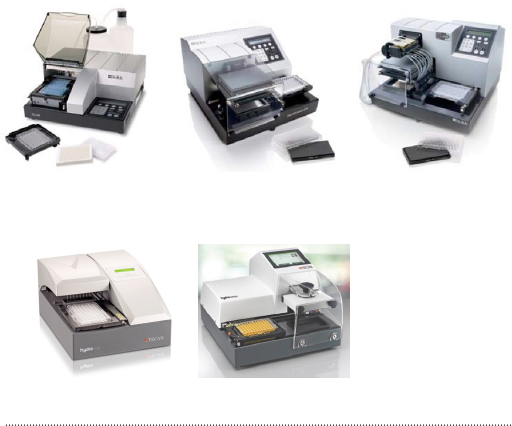
semi-automated devices come in the form of strip washers, full
plate washers, and combination washer-dispensers (Figure 2).
Each washing device has to be specically pre-programmed for
any xMAP-based assay. ere are specic requirements for han-
dling protein versus genomic applications that are dependent on
the type of assay chemistry used (e.g., washing with use of dispos-
able tips due to contamination risk). erefore, washing protocols
must be optimized for bead separation method (magnetic or vacu-
um ltration), combination of washer, magnetic carrier, and plate
type used. Automation serves to simplify and speed processing,
but also tends to improve bead recovery and precision leading to
better assay performance.1
e 3rd Edition xMAP Cookbook (Appendix C) provides an
example of programming instructions for BioTek® ELx405 and
ELx406 microplate washer (magnet P/N 7103016, Dexter LifeSep®
96F technology) for round bottom 96-well plate and MagPlex
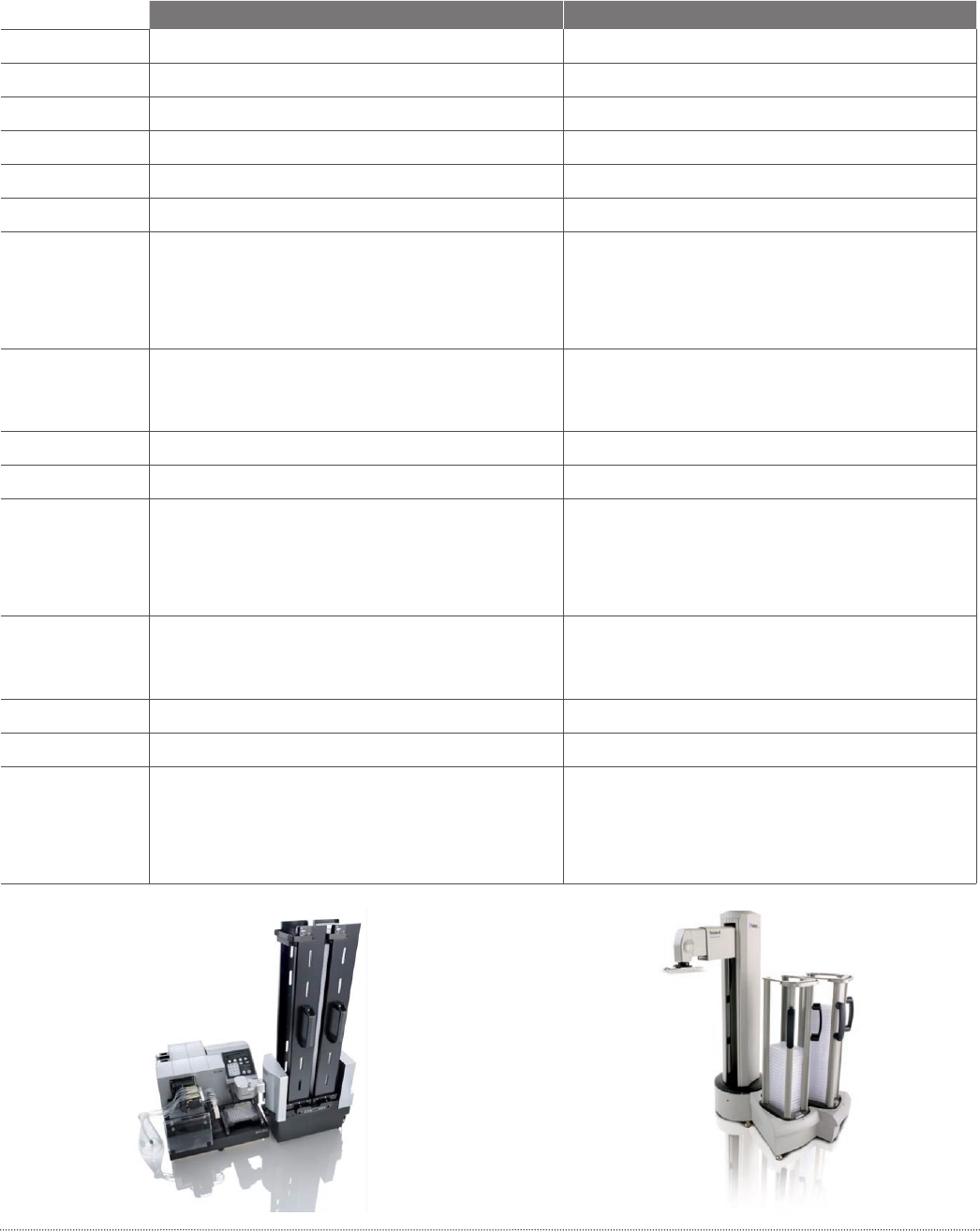
beads. e wash programs described below were optimized for
Tecan washers to achieve optimal bead recovery for multiplex
xMAP assays in 96-well plate format with low residual volume per
well (Tecan HydroFlex™ washer with Smart-2 MBS magnetic plate
carrier and Hydrospeed™ washer with Smart-2 MBS carrier with
96HT wash head; recommended plate: Greiner Bio-one 96-well
low bottom thickness of the wells of 0.3mm only, Cat. no. 655096)
(Tecan, personal communication).
BioTek achieved high throughput for handling multiple plate
batches by simple integration of a microplate washer with the
BioStack™ Microplate Stacker (Figure 3). e sensitive gripper arm
with rotational wrist exchanges plates between storage stacks and
an attached microplate washer in less than ten seconds. e robot
allows hands-free processing of up to 50 plates. An ecient alter-
native for a large screening laboratory might be the PerkinElmer
Twister II Microplate Handler for 96-well or 384-well capacity with
the Luminex FLEXMAP 3D® high throughput analyzer, which can
handle deep well and low prole microplates.
A
B
Figure 2
A (from left to right): ELx50™ Microplate Strip Washer (low throughput),
ELx405™ Microplate Washer (high throughput), EL406™ Microplate Washer
Dispenser (high throughput) (Tecan).
B (from left to right): HydroFlex™ (low throughput), HydroSpeed™ (high throughput)
(Tecan).
4
Table 2. Optimized Tecan programs for HydroFlex™ and HydroSpeed™ washers
Reference HydroFlex™ with Smart-2 MBS Magnetic Plate Carrier HydroSpeed™ with Smart-2 MBS Carrier and 96HT Wash Head
Wash Program: Parameters Parameters
96-well μ-clear plate Low bottom thickness Low bottom thickness
Plate Definition File: [GRE96fb_magbeads] [MAG_GRE96ft]
Name: MAG MAG_96
Cycle 1: # of cycles: 1 # of cycles: 1
Soak (bead settling) Time: 90 sec Time: 90 sec
Aspirate Mode: normal
(one asp. point/well)
• z-pos: custom 6mm
• Asp. time: 1 sec
• Aspirate rate: 1
• Head speed: 8mm/s
Mode: normal
(one asp. point/well)
• z-pos: custom 6mm
• Asp. time: 1 sec
• Aspirate rate: 1
• Head speed: 2mm/s
Dispense z-pos.: overflow
• disp. volume: 200μl/well
• channel: 1
• disp. rate: 300μl/sec
z-pos.: overflow
• disp. volume: 200μl/well
• channel: 1
• disp. rate: 350μl/sec
Cycle 2: # of cycles: 1 # of cycles: 1
Soak Time: 60 sec Time: 60 sec
Aspirate Mode: normal
(one asp. point/well)
• z-pos: custom 6mm
• Asp. time: 1 sec
• Aspirate rate: 1
• Head speed: 8mm/s
Mode: normal
(one asp. point/well)
• z-pos: custom 6mm
• Asp. time: 1 sec
• Aspirate rate: 1
• Head speed: 2mm/s
Dispense z-pos.: overflow
• disp. volume: 200μl/well
• channel: 1
• disp. rate: 300μl/sec
z-pos.: overflow
• disp. volume: 200μl/well
• channel: 1
• disp. rate: 350μl/sec
Cycle 3: # of cycles: 1 # of cycles: 1
Soak Time: 60 sec Time: 60 sec
Aspirate Mode: normal
(one asp. point / well)
• z-pos: cust. 5.5mm
• Asp. time: 1 sec
• Aspirate rate: 1
• Head speed: 5mm/s
Mode: normal
(one asp. point / well)
• z-pos: cust. 5.5mm
• Asp. time: 1 sec
• Aspirate rate: 1
• Head speed: 1mm/s
AB
Figure 3
A: EL406™ Washer Dispenser integrated with Bio-Stak™ Microplate Stacker. (BioTek)
B: PerkinElmer (formerly Caliper) Twister II Microplate Handler. (©Q3-2016 PerkinElmer, Inc. All rights reserved. Printed with permission)
5
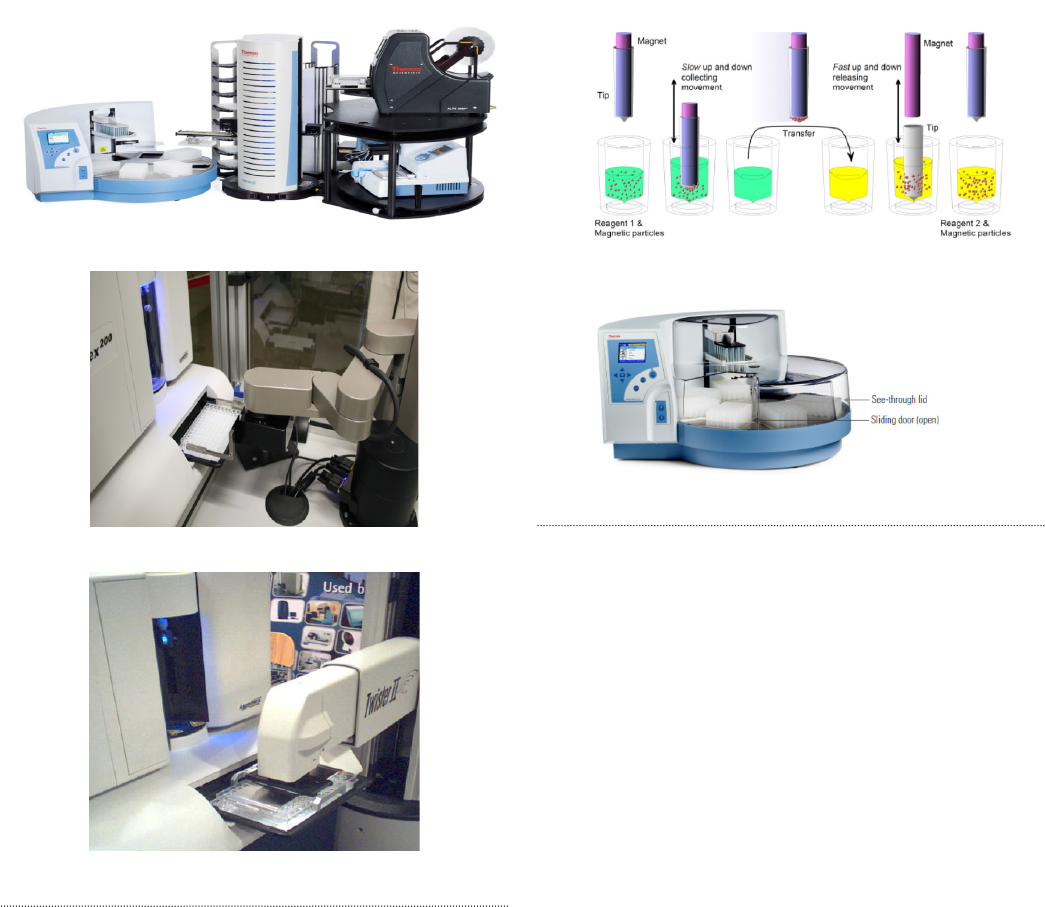
Several devices such as the KiNEDx robot arm, Caliper Twister
II robot (PAA Inc.), or Orbitor™ RS Microplate Mover (ermo
Scientic) can simplify the automation of xMAP instruments.
ese automated robots are able to move microplates rapidly in
and out of the xMAP instrument and between microplate devices
such as liquid handlers, dispensers, or washers located on the labo-
ratory bench (Figure 4). eir extensive vertical reach allows mul-
tiple stacked or high density instruments to be loaded in a small
footprint, and a bidirectional telescoping arm provides superior
reach with unlimited base rotations (360°).
Coupling Microspheres with a Semi-automated Device
xMAP microspheres can be covalently coupled with dierent
reagents for specic bioassays such as antigens, antibodies, or
A A
B
B
C
Figure 4
A. Orbitor™ Microplate Mover attached to KingFisher Flex (Thermo Scientific,
Orbitor, and KingFisher are trademarks of Thermo Fisher Scientific. Photographs
used by permission from Thermo Fisher Scientific.)
B. KiNEDx robot (PAA Inc.) arm integrated with Luminex® 200™ C. Caliper Twister II
robot (PAA Inc.) loading microplate into Luminex® 200™ system. (Photographs used
by permission from Peak Analysis and Automation Ltd.)
Figure 5
A. Inverse magnetic particle processing
B. KingFisher Flex—front view with see-through lid and plates. KingFisher is a
trademark of Thermo Fisher Scientific. (Photographs used by permission from
Thermo Fisher Scientific.)
oligonucleotides. Although the coupling protocol typically involves
some level of manual work, automation of the bead coupling pro-
cess can improve lot to lot variation (CV%). In addition to protocols
listed in the literature, the xMAP Cookbook provides the general
guidelines for the coupling of biomolecules to microspheres. An ef-
cient, semi-automated protocol for bead coupling uses MagPlex
Microspheres on the KingFisher™ Flex instrument (ermo
Fisher Scientic), originally designed for nucleic acid isolation
and purication but adapted for the multiplexing needs of xMAP
Technolog y.2 e device features an innovative inverse magnetic
separation technique, which eliminates the aspiration and other
liquid handling steps that can lead to waste or contamination in
the assay. e KingFisher coupling protocol results in almost 100%
bead recovery.
In principle, the KingFisher approach involves a mechanical
arm composed of a row of disposable plastic sleeves that is low-
ered into the plate wells. e sleeves move like a plunger slowly up
and down, mixing the liquid reagents and the suspended magnetic
beads. After the mixing step, a second arm composed of a row of
magnets slides into the sleeves to collect all beads (along with any
coupled molecules) and transfers them to new solution (Figure 5).
By adapting a standard 96-well format plate for experimen-
tal throughput needs, individual assay stages in the KingFisher
Flex pipeline can be automated independent of each other by
the end user. e following procedure describes how to perform
protein coupling to MagPlex beads in 96-well format plate. Using
the KingFisher Flex as a semi-automatic device enables auto-
mated activation and conjugation steps (up to 1mL when using
ermo Scientic Deep Well 96 Plates) with ecient magnetic
bead transfer.2

6
Materials for automated protein coupling:
• Carboxylated MagPlex microspheres (Luminex Corp., Austin,
TX, USA) Local distributors are listed on the Luminex web page:
www.luminexcorp.com
• Activation buer (100mM Na2HPO4 + 0.005% (v/v) Triton X-100),
pH 6.2
• Sulfo-NHS (Pierce, Cat. No. 24510 or 24520 - no weigh format)
• EDC (Pierce, Cat. No. 77149)
• Coupling buer (50mM MES + 0.005% (v/v) Triton X-100), pH 5.0
• Storing buer (PBS + 1% (w/v) BSA) containing 0.05% NaN3)
• Antibody/protein to be coupled (any suitable source)
• KingFisher plate 96-well ermo (ermo Fisher Scientic, Cat.
No. 97002540)
• KingFisher Flex (ermo Fisher Scientic)
Method:
1. Sonicate and vortex the selected MagPlex beads stocks thor-
oughly for at least 10 sec and transfer 300μL (1.25 x10⁷ beads) of
each bead stock solution to the respective wells in the 96-well
plate (KingFisher plate 96-well ermo).
2. Magnetic beads of the rst plate are transferred by the
KingFisher Flex particle handler into second plate for washing
with 250μL activation buer (100mM Na2HPO4 + 0.005% (v/v)
Triton X-100).
3. For carboxyl group activation, MagPlex beads are moved into
wells containing 150μL activation buer with 5mg/mL EDC
and 5mg/mL sulfo-NHS. Activation time: 20 min with slow
agitation at room temperature.
Table 3. Sandwich immunoassay protocol for magnetic bead handler
The key settings, such as incubation time, position, speed of motion, strength of shaking movements, and number of washing steps can be programmed accordingly.
Step Plate content Volume µl
Mixing parameters
Time Temp Speed
1. Transfer Magnetic bead array 50
2. Analyte capture—6
cycles Sample 100 10 min, pause 2min RT Very slow
3. Wash + transfer Wash buer 100 20 sec RT Slow
4. Wash + transfer Wash buer 100 20 sec RT Slow
5. Detection antibody—5
cycles Detection antibody mix 100 10 min, pause 2 min RT Very slow
6. Wash + transfer Wash buer 100 20 sec RT Slow
7. Wash + transfer Wash buer 100 20 sec RT Slow
8. Detection reagent—4
cycles SAPE solution 100 10 min, pause 2 min RT Very slow
9. Wash + transfer Wash buer 100 20 sec RT Slow
10. Wash + transfer Wash buer 100 20 sec RT Slow
11. Bead release to assay
plate Assay buer 100 20 sec RT Slow
Adapted from 2 Poetz O, Henzler T, Hartmann M, Kazmaier C, Templin MF, Herget T, Joos TO. Sequential Multiplex Analyte Capturing for Phosphoprotein Profiling. Mol Cell Proteomics 2010
9(11):2474–2481.
4. Activated magnetic beads are transferred by magnetic particle
handler to wash plates (two times wash with 250μL coupling
buer (50 mM MES + 0.005% (v/v) Triton X-100).
5. It is important to determine optimal amounts of antigens or
antibodies in separate preliminary experiments. Antigens or
antibodies diluted to an applicable protein concentration in
coupling buer and distributed on a 96-well assay plate, are
incubated with the activated beads and agitated for 2h at
room temperature.
6. Coupled beads are transferred by KingFisher Flex for further
washing with 250μL wash buer and resuspended in 200μL
blocking/storage buer (PBS + 1% (w/v) BSA) containing 0.05%
NaN3 and stored in the dark at 2–8°C until further use.
Following coupling conrmation, the microsphere population will
be pooled by KingFisher Flex to form an array on a 96-well format
plate. To perform a multiplex sandwich immunoassay, all assay
reagents including wash buer, detection antibody mixture, strep-
tavidin-R-phycoerythrin (SAPE), and prediluted samples can be
placed simultaneously on the KingFisher Flex for further magnetic
particle processing. It takes approximately 3–4 hours to process an
assay. Standard settings for the xMAP instrument (96-well/2500
beads per well, sample volume 100μL, minimum bead count per
region 100) enables plate reading within 30 minutes (FLEXMAP
3D®). An example of a multiplexed sandwich immunoassay proto-
col using KingFisher Flex can be found in Table 3.
e use of a magnetic particle handler such as the KingFisher
Flex device enables the quantitative transfer of magnetic beads
from the sample well into the wells containing washing solutions
or other assay reagents (e.g., activation buer, capture/detection
7
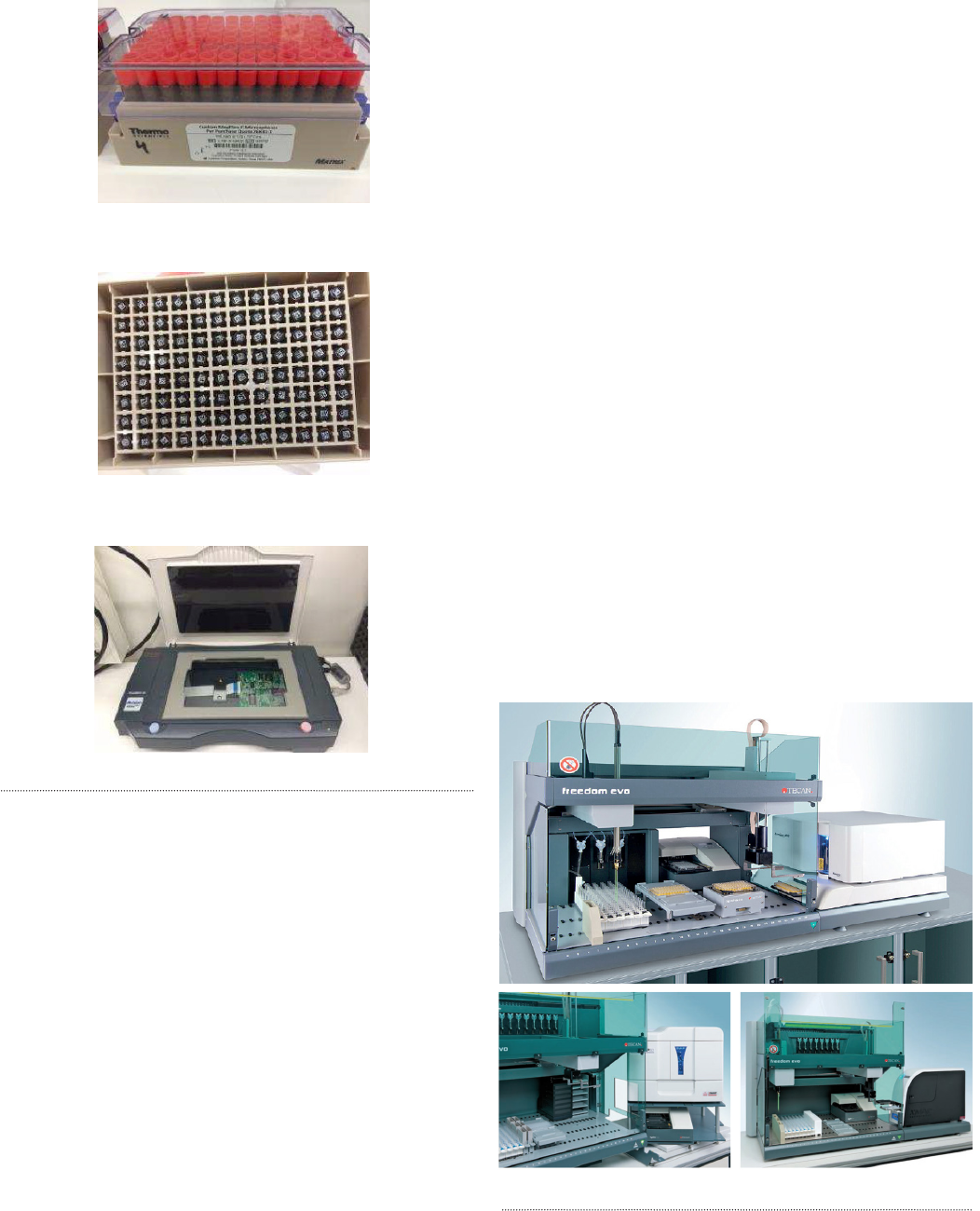
Figure 6
A. Custom MagPlex microspheres in MTP tubes (Luminex Photograph) B. A per-
manently bonded, unique 2D barcode is laser-etched onto the base of every storage
tube to securely identify and track the content of every tube (Luminex Photograph)
C. 2D barcode tube reader (e.g. Thermo Scientific VisionMate 2D barcode)
(Photograph used by permission from Thermo Fisher Scientific.)
A
C
B
antibody mixture, SAPE reporter solution). e device does not re-
quire vacuum ltration or advanced liquid transfer steps, which
are often the basis for fully automated workstations. Such worksta-
tions (e.g., Tecan or Hamilton) trade these more exible options to
ensure high throughput.
KingFisher Flex is also well-suited to run commercially avail-
able bead-based assay kits, delivering a highly practical laboratory
solution for a more robust workow. A number of laboratories have
published protocols and results for such approaches. Using this
instrument, Poetz et al2 used three WideScreen® proling panels
(EMD Millipore) to analyze multiple receptor tyrosine kinases and
their degree of phosphorylation within the same sample. Setting up
a workow that employs magnetic bead arrays and a KingFisher
Flex processor, Heubach et al3 demonstrated a faster and more
cost-ecient approach for generating bead assays with up to 500
dierent peptides for further protein-peptide interaction studies.
Several studies have shown that a semi-automated ermo Fisher
concept adopted for dierent xMAP protocols might be used for
ecient screening of multiple analytes.4,5,6
To simplify the complete semi-automated workow, routine
procedures such as pipetting immunoassay reagents into multiple
plates can easily be performed with multichannel pipette dispens-
ers to reduce handling errors. KingFisher Flex can accommodate
several 96-well microtiter plates in the same amount of time lled
with individual buers for washing and incubation, but some
steps still require human intervention (e.g. nal transfer of 96-well
plates into an xMAP instrument). Luminex produces custom for-
mat MagPlex microspheres (RUO) in MTP tubes that also can be
used for automated bead coupling, using all kinds of multichannel
liquid handling options that help to simplify laboratory workow
(Figure 6).
Fully Automated Immunoassay Platforms
Ideally, a fully automated workow for xMAP-based assays would
perform hands-free steps such as bead coupling, sample pre-pro-
cessing (plate preparation with required dilution), washing (mul-
tiple steps, including bead separation), plate transferring (for incu-
bation or thermal cycling), and loading into the xMAP instrument.
At this point, there are few instruments or kit manufacturers that
have developed fully automated solutions dedicated for a large va-
riety of tasks and suited to protein/genomic applications and spe-
cic market segments.
Tecan, a Swiss company specializing in the development,
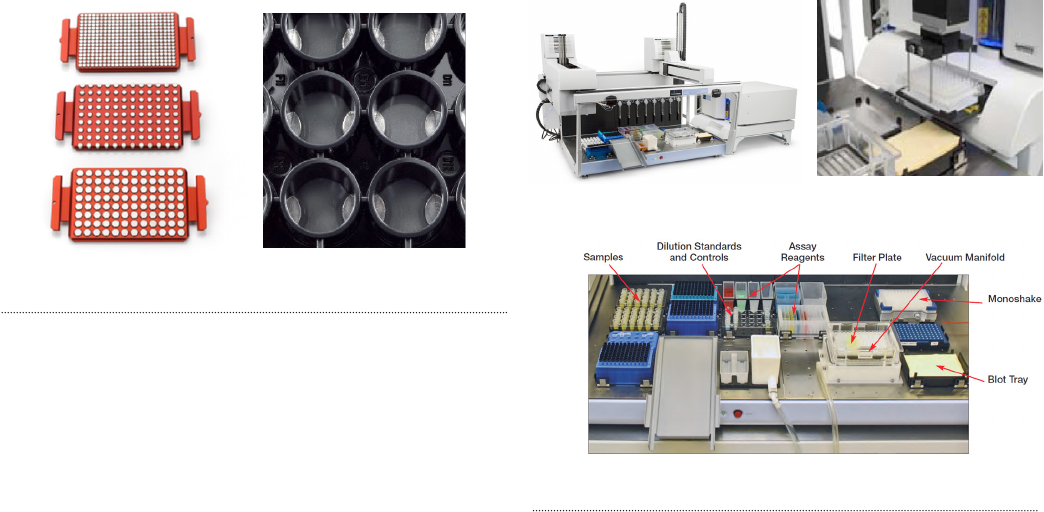
Figure 7
Top: Luminex® 200™ integrated with fully automated Freedom EVO liquid handling
workstation. (Tecan)
Bottom from left to right: FLEXMAP 3D with swivel base and Tecan washer
located under xMAP instrument with rotation for ease of maintenance; Freedom
EVO robust solution for MAGPIX (Tecan).
8
Figure 8: Magnetic carriers for the HydroSpeed plate washer.
Left, top to bottom: 384-well (MBS 384 carrier), 96-well two magnets (smart-2 MBS
96) and 96-well one magnet (MBS 96 carrier) for optimized magnetic bead washing.
Right: smart-2 MBS carrier for automated washing with Tecan's HydroFlex™.
production, and distribution of fully automated workow solu-
tions, conducts dierent assay chemistries with advanced robot-
ics.As shown in Figure 7, all xMAP instruments (Luminex 100/200,
MAGPIX, and FLEXMAP 3D) can be integrated with the Tecan
Freedom EVO® liquid handling platform, which has been actively
adopted by many molecular diagnostic, genomic, proteomic, and
drug discovery laboratories.7 e Freedom EVO® series oers four
dierent worktable capacities (width: 75, 100, 150, and 200 cm),
each with similar tip conguration (1, 2, 4, 8, 96, and 384) for the
100μL–5000μL volume range. Tecan created a user-friendly au-
tomated workstation for performing all pipetting/liquid transfer
tasks (from both reservoirs and 1.5 mL centrifuge tubes into all
wells), plate movements, separation of microspheres from assay
suspensions (vacuum ltration or magnetic bead separation), and
mixing steps. e highly eective shaker (Te-Shake™) handles stan-
dard 96–384 microplates, deep-well plates, and PCR tubes, with
the added option of sample heating if necessary. For the robotic
aspect any plate which corresponds to the Society of Biomolecular
Screening (SBS) standards can be used with Freedom EVO for
plate logistics and carriers. Common plate brands integrated with
the EVO device are: Greiner®, Nunc®, Corning®, Macherey-Nagel®,
and Eppendorf®.
Due to an automation module available in the Luminex
xPonent® software, Tecan drivers enable communication between
the xMAP instrument and Freedom EVO, which allows the robotic
manipulator arm to transfer the assay plate to the xMAP instru-
ment. e typical, fully automated process includes the pipetting
steps for all reagents, PosID™ barcode tube scanning, an incuba-
tor tower for dark refrigeration/incubation of up to six plates (5°C
to 60°C), and plate storage (hotel option). e Freedom EVOware®
software controls for any errors during the performance, also pro-
viding automatic xMAP system maintenance, mid-run calibration
routines, and dynamic assay scheduling for parallel processing of
multiple plates.
Two types of washers can be integrated into a Freedom EVO®
device: HydroSpeed™or HydroFlex™. HydroSpeed is an advanced
microplate washer optimized for washing cells or xMAP beads
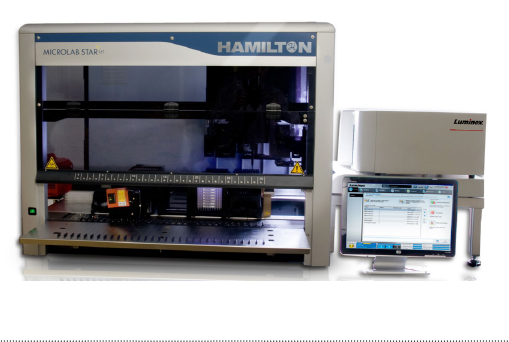
Figure 9
A. Deck layout design from JANUS ® CS Autoplex Workstation On.-board gripper
moves plate into integrated Luminex® 200™ analyzer.
B. Additionally, pipetting station, vacuum filtration for plate washing (option for
magnetic bead separation), blotting and mixing station. (©Q3-2016 PerkinElmer,
Inc. All rights reserved. Printed with permission).
in both 96- and 384-well plates, while HydroFlex is designed for
automated microplate strip washing and vacuum ltration perfor-
mance for 96-well microplate formats only. e HydroSpeed wash-
er provides two standard magnetic carriers (MBS 96- and 384-well
carrier), and one an innovative patent-pending design that uses
two magnets per well for optimized washing results with xMAP
microspheres (Smart-2 MBS 96 carrier), as shown in Figure 8.
is conguration provides a more robust assay performance and
guarantees higher bead recovery (typically ≥90%) in comparison
to polystyrene microspheres ltration. Moreover, HydroFlex wash-
ers with optional magnetic bead separation are required to use
a 96-well at bottom plates, such as Greiner Bio-One, Germany
(Cat. no. 655096).
Software drivers for Research Use Only (RUO) applications with
several third party washers including Embla®, BioTek405™ TS/LS,
Biotek EL406, and Biotek ELx405™, are also available from Tecan.
xMAP platforms (Luminex 100/200, MAGPIX, and FLEXMAP 3D)
are not restricted to a specic manufacturer for kits or reagents,
which gives the end user more exibility in terms of running dier-
ent tests under one deck.
e JANUS® CS Autoplex Workstation from PerkinElmer has
been developed to automate a number of proteomic applica-
tions, such as multiplexed cytokine immunoassays (e.g., Millipore
Human Cytokine LINCOplex™ Kit, cat. no #HCYTO-60K) to im-
prove biomarker screening and to more easily process commercial-
ly available kits (Figure 9). is provides a tremendous advantage
over manual processing and guarantees ecient management
A
B
9
of xMAP bead-based protocols, which are suitable for setting up
multi-batches in large-scale studies.8 e JANUS liquid handling
system and the Luminex 100 analyzer were evaluated by testing
multiplex ow immunoassays for the detection of IgG type-specic
IgG antibodies to Herpes Simplex Virus (HSV) types 1 and 2.9 Intra-
and interassay reproducibility studies showed excellent precision
and resulted in a 50% reduction in turnaround time compared to
routine testing by EIA. Together, both instruments can create a
prospective solution for improving laboratory medicine, and oer-
ing physicians more rapid and accurate clinical information.
Nucleic Acid High Throughput Solutions
ere are dierent requirements for handling protein versus ge-
nomic applications that are dependent on the type of assay chem-
istry used. erefore, each automation platform has to be pro-
grammed for a specic xMAP application and chemistry. Over the
past few years, nucleic acid-based assays have become accepted in
clinical diagnostics owing to their high specicity, low sample re-
quirement, and ease of automation. In addition, recent advances
allow such assays to be congured in xMAP multiplex format, en-
abling eective screening for multiple assay targets.
Luminex xTAG® Technology provides a method for the simulta-
neous detection of 150 dierent nucleotide sequences in a single
reaction. Proprietary sets of 24 base oligonucleotides (also known
as anti-TAG sequences) are covalently coupled to MagPlex beads.
Each MagPlex-TAG bead region’s anti-TAG is complementary to a
specic TAG sequence incorporated into reporter molecules. is
approach has been validated and xTAG Technology has become
an industry standard in genetic disease screening, gene proling,
microbial detection, and characterization of antibiotic resistance
associated with bacterial SNPs.10
Song et al11 utilized xTAG with Allele Specic Primer Extension
(ASPE) chemistry to develop a reliable and cost-eective multi-
plexed genotyping assay for simultaneous detection of 11 muta-
tions in g yrA, gyrB, and parE of S. enterica serovars, Typhi, and
Paratyphi A that result in nalidixic acid resistance (NalR) and/
or decreased susceptibility to uoroquinolones. e assay is ca-
pable of rapidly screening and identifying the underlying genetic
changes in quinolone-resistant isolates and demonstrates that
the xMAP platform is ideal for molecular epidemiological analy-
sis. is assay might be adapted to full automation workstations
and used as a screening tool more easily than techniques such as
sequencing, which are more suited for biomarker discovery. It is
important to note that a potential limitation for such automation
implementation is the requirement of sample preprocessing to ex-
tract and purify the nucleic acid of interest. However, there have
been signicant advances in addressing these limitations over the
past few years, and several semi- or fully-automated systems that
perform rapid nucleic acid extraction are now available. Currently,
the Freedom EVO 150 is capable of extracting DNA from 96 sam-
ples including controls and subsequent PCR set up in less than
3.5 hours.12 High throughput performance of up to three 384-well
PCR plates in less than eight hours is achieved with the dynamic
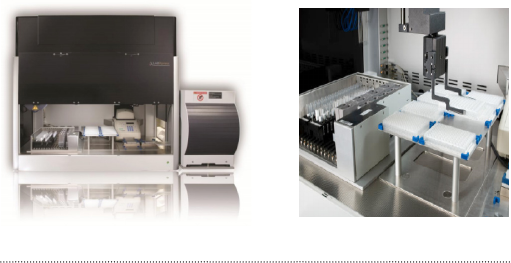
Figure 10
Luminex® 200™ integrated with MICROLAB® STAR –HLA solution (Microlab is a reg-
istered trademark of Hamilton Company in the U.S. and/or other countries.)
scheduling of the Freedom EVOware software. In order to keep
the complexity and cost low while reaching the highest possible
throughput, the thermocycling, plate sealing, and plate peeling
steps might be performed oine.
A number of commercially available standalone workstations
as well as “homemade” integrated systems have been developed for
nucleic acid preparation during the last few years. Today, fully au-
tomated devices cover critical steps of genomic applications from
nucleic acid extraction (DNA/RNA) to PCR set up with thermocy-
cler integration (e.g., using automated extraction platforms from
QIAGEN, bioMérieux, Roche, Chemagen, Tecan, and Hamilton).
Instruments such as Biomek® 4000 (Beckman Coulter), Zephyr®
Molecular Biology Workstation (PerkinElmer) or VERSA™ GENE
(Aurora Biomed Inc.) have been designed to perform nucleic acid
purication or real-time PCR with high precision, throughput,
and accuracy. Precise pipetting of reagents, preparation of master
mix, creation of dilution series, and sample addition guarantees
hands-free preparation of the PCR plate for amplication. Also,
popular chemistries used in genomic applications are avail-
able from companies such as Promega, Applied Biosystems™,
Invitrogen™, and QIAGEN.
IVD Automation
As the IVD market continues to grow globally, it must adapt to new
testing environments, innovative technologies, and new types of
clinical markers. Key assay components, such as buers, antibod-
ies, and detection reagents used in multiplex must be optimized
to work together to produce a sensitive result that is consistent
across all measurement channels and assay parameters. erefore,
it is clear that there is a demand for technologically advanced in-
struments with greater automation that oer reproducible results
independent from the environment in which they are performed.
In February 2010, Hamilton Robotics announced the launch
of solutions for HLA antibody screening and identication and
HLA DNA typing methods based on Gen-Probe’s (now Immucor’s)
10
Figure 11
From left to right: LABXpress™ Pipettor (aspirate/dispense into 96-well reaction
plate, mixing, shaking, centrifuging, reading on xMAP instrument). The arm with
grid automatically transfers plates to the integrated reader and acquired data are
analyzed with HLA Fusion software. (One Lambda photographs used by permission
from Thermo Fisher Scientific.)
LifeCodes HLA reagents (Press release BoxID 324512, Martinsried,
22.02.2010). Filling the market gap for histocompatibility and trans-
plant immunology labs that require a high degree of multiplexing
and throughput, Hamilton nalized workow solutions for blood
banks and long term storage systems (-20°C to 80°C) under one liq-
uid handling deck. Hamilton Robotics developed fully automated
solutions for IVD sample preparation that reduce hands on time,
minimize operational variation, and deliver consistent results. e
Microlab® STAR™ liquid handling workstation is based on patented
Monitored Air Displacement pipetting technology (MAD), where
the risk of contamination of critical assays is reduced to an abso-
lute minimum (Figure 10). e system allows for real-time detec-
tion of pipetting errors when an insucient amount of liquidhas
beenaspirated for a single, multiple, or partialdispense, or due to
introduction of air and blocked tips (TADM—Total Aspirate and
Dispense Monitoring). e combination of MAD pipetting with
compressed CO-RE tip attachment technology meets IVD require-
ments for precision, even in critical situations when the STAR
channels must pipette liquids with extremely low viscosity and
high vapor pressure (e.g., methanol/acetone).Depending on the
complexity of the xMAP application, three unique workstations
are currently available: STARlet, STAR, and STARplus (deck size:
1, 1.5, and 2 meters). Up to 16 independent 1000μL channels can be
combined with any of Hamilton's multiprobe heads (96,
384 or nanopipetting) on a single instrument with a pipette vol-
ume range of 0.5 to 1000μL. is results in a doubling of throughput
by simultaneous preparation of two microplates. e 96 channel
head is able to pipette liquids in range of 1 to 1000 μL and the 384
probe head from 0.5 to 50μL. All of these features are important for
integration of any xMAP instrument with the Microlab® STAR™ de-
vice, especially for the FLEXMAP 3D which can analyze 384 sam-
ples within 1.5 to 2 hours. Similar to other fully automated liquid
handling systems, the Microlab STAR is controlled by advanced
software (Venus One), which allows exible robot arms mounted
on the decks to transfer the plates between individual system
components (e.g., pick a plate from a microplate stacker and place
it into an adjacent xMAP instrument or pass microplates from a
plate stacker to a pressured control vacuum system or to magnetic
washers). Hamilton has integration experience with the follow-
ing washers: Biotek ELx405R, Tecan Power Washer 384, ermo
Wellwash Ascent, MD Embla 96/384, and MD Embla Skan Wash
300/400 (Molecular Devices).
xMAP Technology, together with Hamilton Robotics, provides
an appropriate platform to study the impact of dierent HLA
antibodies isotypes of on transplantation outcomes. e xMAP
screening approach oers high sensitivity, which is comparable to
the high sensitivity of cross-match by ow cytometry.13 An ideal
t for the transplant community is One Lambda’s LABType® SSO
and LABScreen® IVD labeled products; especially LABScan 3D
(Luminex FLEXMAP 3D), which can detect up to 500 HLA speci-
cities in a single test, eliminating the need to run multiple tests.
A sample preparation device called LABXpress™ Pipettor (One
Lambda) can accommodate eight plates under one deck, and guar-
antees hands-free capabilities suited for high-volume solid organ
and bone marrow transplant centers (Figure 11).
Demand for excellent quality and reproducible tests in health-
care continues to be driven by IVD kit providers together with
automation manufacturers. ere are other fully automated plat-
forms that come to the forefront, which are more critically de-
veloped around very specic methodologies. eradiag (formerly
Biomedical Diagnostics) has launched a comprehensive range of
tests based on xMAP Technology for the diagnosis of autoimmune
pathologies, allergies, and early detection of heart failure. e com-
mercially available FIDIS™ kits are processed with a liquid handling
platform called eralis, which lls the laboratory IVD gap for crit-
ical public health tests.
Summary and Conclusions
Multiplex bead-based assays have become established in high-
throughput laboratories, including combinations of multiple semi-
automated workstations to carry out the traditionally manual
parts of xMAP protocols. e immediately obvious benets of la-
bor savings, better quality data, and cost reduction are key drivers
in integrating independent liquid handling devices (liquid dispens-
ers, plate washers, plate handlers, etc.) into small-scale, benchtop
or walkaway automation applications for xMAP Technology.
In addition, large robotic systems require dedicated, highly
trained personnel and have steeper learning curves to become
fully familiar with these devices. Nevertheless, automation holds
the promise of increasing sample throughput and improving data
output. Given the rise of molecular testing, it is also likely that
there will be multiplex testing combinations that include both
traditional immunoassays as well as nucleic acid-based molecular
assays, all of which must be optimized to work together under one
automation deck.
e examples of xMAP-based assays mentioned in this review
have been used to illustrate the various means of multiplexing
presently in practice and to open possibilities of further integra-
tion of multiplexing and laboratory automation. e author does
not attempt to provide a listing of every assay, application, or

11
REFERENCES
1. Paul H, Banks P. Automated workows for Luminex xMAP® assays.
Biotek (Internet). Cited 2015 September. Available from: www.biotek.com.
2. Poetz O, Henzler T, Hartmann M, Kazmaier C, Templin MF, Herget T,
Joos TO. Sequential Multiplex Analyte Capturing for Phosphoprotein
Proling. Mol Cell Proteomics 2010 9(11):2474–2481.
3. Heubach Y, Planatscher H, Sommersdorf C, Maisch D, Maier J, Joos TO,
Templin MF, Poetz O. From spots to beads—PTM-peptide bead arrays
for the characterization of anti-histone antibodies. Proteomics 2013
Mar;13(6):1010-5.
4. Bigalke B, Pötz O, Kremmer E, Geisler T, Seizer P, Puntmann VO,
Phinikaridou A, Chiribiri A, Nagel E, Botnar RM, Joos T, Gawaz M.
Sandwich immunoassay for soluble glycoprotein VI in patients with
symptomatic coronary artery disease. Clin Chem 2011 Jun;57(6):898-904.
5. Planatscher H, Rimmele S, Michel G, Pötz O, Joos T, Schneiderhan-Marra
N. Systematic reference sample generation for multiplexed serological
assays. Sci Rep 2013;3,3259.
6. Luckert K, Götschel F, Sorger PK, Hecht A, Joos TO, Pötz O. Snapshots
of protein dynamics and post-translational modications in one
experiment--beta-catenin and its functions. Mol Cell Proteomics 2011
May;10(5):M110.007377.
7. Allinson JL, Automated immunoassay equipment platforms for analyti-
cal support of pharmaceutical and biopharmaceutical development.
Bioanalysis 2011 Dec;3(24):2803-16.
8. Bourdon D, Tack L. Fully Automated High roughput Biomarker
Screening using xMAP Polystyrene Bead-based Multiplex Cytokine
Detection Assay. Perkin Elmer (Internet). Cited 2015 September. Available
from: www.perkinelmer.com.
9. Binnicker MJ, Jespersen DJ, Harring JA. Evaluation of three multiplex ow
immunoassays compared to an enzyme immunoassay for the detection
and dierentiation of IgG class antibodies to herpes simplex virus types
1 and 2. Clin Vaccine Immunol 2010 Feb;17(2):253–257.
10. Deshpande A, White PS. Multiplexed nucleic acid-based assays for
molecular diagnostics of human disease. Expert Rev Mol Diagn 2012
Jul;12(6):645-59.
11. Song Y, Roumagnac P, Weill FX, Wain J, Dolecek C, Mazzoni CJ, Holt
KE, Achtman M. A multiplex single nucleotide polymorphism typing
assay for detecting mutations that result in decreased uoroquinolone
susceptibility in Salmonella enterica serovars Typhi and Paratyphi A. J
Antimicrob Chemother 2010 Aug;65(8):1631-41.
12. Stangegaard M, Frøslev TG, Frank-Hansen R, Laursen SS, Jørgensen M,
Hansen AJ, Morling N. Automated extraction of DNA and PCR setup us-
ing a Tecan Freedom EVO® liquid handler. Forensic Science International:
Genetics Supplement Series 2 2009;2(1):74-76.
13. Heinemann FM. HLA genotyping and antibody characterization
using the Luminex multiplex technology. Transfus Med Hemother
2009;36(4):273-278.
platform that is currently available, but rather to guide readers to-
ward looking for novel liquid handling techniques for integration
with xMAP instruments. Since not all screening assay chemistries
are compatible with automated platforms, new robotic innovations
will continue to contribute to the development of cost-eective
xMAP-based applications.
Acknowledgements
All images are used at the courtesy of the companies listed in the
references. e instruments are used as examples in this article
and represent those that the author has either used or has learned
of during the course of his career.

12
To learn more, please visit: www.luminexcorp.com
©2016 Luminex Corporation. All rights reserved. Luminex, xMAP, FLEXMAP 3D, MAGPIX, MAGPLEX, and xTAG are trademarks of Luminex Corporation,
registered in the U.S. and other countries. Luminex 100/200 is a trademark of Luminex Corporation. WP1149.0215
Automated Liquid System Providers
Company Site Address
Agilent www.agilent.com
Apricot Designs www.apricotdesigns.com
Aurora Biomed www.aurorabiomed.com
Beckman Coulter www.beckmancoulter.com
BioMicroLab www.biomicrolab.com
Biosero www.bioseroinc.com
BioTek Instruments www.biotek.com
Cetac www.cetac.com
CyBio www.cybio-ag.com
Eppendorf www.eppendorfna.com
Gilson www.gilson.com
Hamilton Robotics www.hamiltonrobotics.com
Integra Biosciences www.integra-biosciences.com
Labnet International www.labnetlink.com
Molecular Devices www.moleculardevices.com
Peak Analysis and Automation www.paa-automation.com
PerkinElmer www.perkinelmer.com
Rainin www.rainin.com
Tecan www.tecan.com
Thermo Fisher Scientific www.thermoscientific.com
Titerek-Berthold www.titertek.com
Tomtec www.tomtec.com
Note:This table provides some examples of automation vendors and does not indicate that these platforms have been tested with xMAP Technology or are compatible with all xMAP
applications. Consult your vendor for more information.
