Acmsmall Guide.dvi Guide
acmsmall-guide
User Manual: Pdf
Open the PDF directly: View PDF  .
.
Page Count: 15

1
acmsmall Author Submission Guide: Setting Up Your L
A
T
EX2εFiles
DONALD E. KNUTH, Stanford University
LESLIE LAMPORT, Microsoft Corporation
The L
A
T
E
X 2εacmsmall document class formats articles in the style of the ACM small size journals and
transactions. Users who have prepared their document with L
A
T
E
X 2εcan, with very little effort, produce
camera-ready copy for these journals.
Categories and Subject Descriptors: D.2.7 [Software Engineering]: Distribution and Maintenance—doc-
umentation; H.4.0 [Information Systems Applications]: General; I.7.2 [Text Processing]: Document
Preparation—languages;photocomposition
General Terms: Documentation, Languages
Additional Key Words and Phrases: Document preparation, publications, typesetting
ACM Reference Format:
Donald E. Knuth and Leslie Lamport. 2010. acmsmall Author submission guide: setting up your L
A
T
EX 2ε
files. ACM Comput. Surv. 2, 3, Article 1 (July 2010), 14 pages.
DOI:http://dx.doi.org/10.1145/0000000.0000000
1. INTRODUCTION
This article is a description of the L
A
T
EX 2εacmsmall document class for typesetting
articles in the format of the ACM small size transactions and journals—Transactions
on Programming Languages and Systems,Journal of the ACM, etc. It has, of course,
been typeset using this document class, so it is a self-illustrating article. The reader is
assumed to be familiar with L
A
T
EX, as described by Lamport [1986].
This document also describes the acmsmall bibliography style.
L
A
T
EX 2εis a document preparation system implemented as a macro package in Don-
ald Knuth’s T
EX typesetting system [Knuth 1984]. It is based upon the premise that
the user should describe the logical structure of his document and not how the docu-
ment is to be formatted. Formatting is under the direction of a document class chosen
by the user. The user can dramatically change the way the document is formatted by
simply choosing a different document class. The idea of separating the logical structure
from the formatting comes from Brian Reid’s Scribe system [Reid 1980].
It is impossible to provide predefined logical structures to handle all situations that
may arise in a document, so users must sometimes make their own formatting deci-
sions. L
A
T
EX 2εprovides a number of features to assist in this task and, if necessary,
the user can call upon the full power of T
EX, which is probably the most powerful type-
setting system currently available. However, very little user formatting is necessary
Author’s addresses: D. E. Knuth, Computer Science Department, Gates Building 4B, Stanford University,
Stanford, CA 94305-9045; L. Lamport, Microsoft Corporation, 1065 La Avenida, Mountain View, CA 94043.
Note! If the BULK of the work was completed at institution A but you are now affiliated with institution B,
then put institution A beneath your name in the title block but include institution B’s address in this, the
Author’s addresses: block, prefixed by ‘(Current address)’.
Permission to make digital or hard copies of part or all of this work for personal or classroom use is granted
without fee provided that copies are not made or distributed for profit or commercial advantage and that
copies show this notice on the first page or initial screen of a display along with the full citation. Copyrights
for components of this work owned by others than ACM must be honored. Abstracting with credit is per-
mitted. To copy otherwise, to republish, to post on servers, to redistribute to lists, or to use any component
of this work in other works requires prior specific permission and/or a fee. Permissions may be requested
from Publications Dept., ACM, Inc., 2 Penn Plaza, Suite 701, New York, NY 10121-0701 USA, fax +1 (212)
869-0481, or permissions@acm.org.
c
2010 ACM 0360-0300/2010/07-ART1 $15.00
DOI:http://dx.doi.org/10.1145/0000000.0000000
ACM Computing Surveys, Vol. 2, No. 3, Article 1, Publication date: July 2010.

1:2 D. E. Knuth and L. Lamport
for the majority of documents that appear in ACM journals and transactions. Conse-
quently, it is quite easy to convert an existing L
A
T
EX 2εinput file to the acmsmall style.
2. THE TITLE PAGE
2.1. The Title, Author(s), and Abstract
Following order is mandatory to generate a correct title page:
\documentclass{acmsmall}
%\acmVolume{V}
%\acmNumber{N}
%\acmArticle{A}
%\acmYear{YYYY}
%\acmMonth{0}
\markboth{}{}
\title{}
\author{...
\affil{...}}
\begin{abstract}
...
\end{abstract}
\category{}{}{}
\terms{}\keywords{}
\acmformat{}
\begin{document}
\begin{bottomstuff}...\end{bottomstuff}
\maketitle
The \documentclass[prodmode,journalName]{acmsmall} takes as option “prodmode,”
which represents — Production Mode, i.e., employing similar fonts that will be used at
the production stage. This option will give the user a fair idea of total pages that the
article will produce at the typeset stage. Next option is the specific transaction/journal,
one is preparing. The transactions/journals currently supported are as follows:
option name journal
acmcie Computers in Entertainment
acmcsur Computing Surveys
acmjacm Journal of the ACM
acmjea Journal of Experimental Algorithmics
acmjetc Journal on Emerging Technologies in Computing Systems
acmtaas Transactions on Autonomous and Adaptive Systems
acmtaco Transactions on Architecture and Code Optimization
acmtalg Transactions on Algorithms
acmtallip Transactions on Asian and Low-Resource Language Information Processing
acmtcps Transactions on Cyber-Physical Systems
acmtecs Transactions on Embedded Computing Systems
acmtops Transactions on Privacy and Security
acmtkdd Transactions on Knowledge Discovery from Data
acmtochi Transactions on Computer-Human Interaction
acmtocl Transactions on Computational Logic
acmtocs Transactions on Computer Systems
acmtodaes Transactions on Design Automation of Electronic Systems
acmtods Transactions on Database Systems
ACM Computing Surveys, Vol. 2, No. 3, Article 1, Publication date: July 2010.

A Sample Article for ACM 1:3
option name journal
acmtois Transactions on Information Systems
acmtoit Transactions on Internet Technology
acmtomacs Transactions on Modeling and Computer Simulation
acmtoms Transactions on Mathematical Software
acmtoplas Transactions on Programming Languages and Systems
acmtomm Transactions on Multimedia Computing, Communications and Applications
acmtompecs Transactions on Modeling and Performance Evaluation of Computing Systems
acmtos Transactions on Storage
acmtosem Transactions on Software Engineering and Methodology
acmtosn Transactions on Sensor Networks
acmtrets Transactions on Reconfigurable Technology and Systems
acmtsas Transactions on Spatial Algorithms and Systems
acmtslp Transactions on Speech and Language Processing
acmtweb Transactions on the Web
acmtmis Transactions on Management Information Systems
acmtiis Transactions on Interactive Intelligent Systems
acmtist Transactions on Intelligent Systems and Technology
acmtoct Transactions on Computation Theory
acmjdiq Journal of Data and Information quality
acmtaccess Transactions on Accessible Computing
acmtoce Transactions on Computing Education
acmtsc Transactions on Social Computing
For example, to prepare a manuscript for the Transactions on Computational Logic
the file should begin with
\documentclass[prodmode,acmtocl]{acmsmall}
The five commands
%\acmVolume{V}
%\acmNumber{N}
%\acmArticle{A}
%\acmYear{YYYY}
%\acmMonth{0}
are needed to generate footer and copyright information. The commands store the fol-
lowing information: volume number, issue number, article number, year of publication,
and month number respectively. The appropriate values will be communicated by the
Editor-in-Chief upon acceptance of the final version of the paper.
2.1.1. Title and Author. The L
A
T
EX\title and \author declarations and the \maketitle
command are employed as usual. However, the user must format the author a little
differently to match the ACM standard. The following example [Archer, Jr. et al. 1984]
illustrates most features:
\author{JAMES E. ARCHER, JR. \affil{Rational Machines}
RICHARD CONWAY and FRED B. SCHNEIDER \affil{Cornell University}}
Note that authors’ names are in uppercase letters, their affiliations (where the bulk of
the research was done) are coded inside \affil{...} command, and sucessive authors
with the same affiliation are separated by “and” (or commas and “and” if there are
more than two).
ACM Computing Surveys, Vol. 2, No. 3, Article 1, Publication date: July 2010.
1:4 D. E. Knuth and L. Lamport
Note: The affiliation, that you provide in your article, should be for the institution
where the bulk of the research was accomplished. If the author has gone on to a new
institution, before publication, the affiliation should not be changed in the article. The
author’s current address should be provided in the ‘Author’s addresses:’ section (just
before the Permission statement).
In both the title and the author, you may have to insert \\ commands if lines need
to be broken.
2.1.2. Abstract. The abstract is typed as usual with the abstract environment. How-
ever, this environment must come before the \maketitle command.
2.2. Content Indicators and Keywords
The content indicators and keywords are entered with L
A
T
EX declarations. The CR cat-
egories are indicated with \category declarations. The first CR category of this article,
appearing right below the abstract, was entered with the following command:
\category{D.2.7}{Software Engineering}{Distribution and
Maintenance}[Documentation]
Note that the last argument (which contains the subject descriptors) is optional, since
some categories have none. Multiple subject descriptors are separated by \and com-
mands, as in the last category of this article:
\category{I.7.2}{Text Processing}{Document Preparation}
[Languages \and Photocomposition]
Use a separate \category declaration for each CR category; they will be listed in
the order that the commands appear. The \category commands must precede the
\maketitle command.
The General Terms are declared with a (single) \terms command as in the one for
this article:
\terms{Documentation, Languages}
The \terms declaration must come before the \maketitle command. The terms must
be chosen from the following list:
Algorithms; Design; Documentation; Economics; Experimentation; Human
factors; Languages; Legal aspects; Management; Measurement; Perfor-
mance; Reliability; Security; Standardization; Theory; Verification;
The general terms are orthogonal to the Categories, at least theoretically, and so may
be applied to any elements of the classification tree.
Think of them as ‘perspectives’ from which any topic may be approached. Thus you
could use Theory or Performance for an article about C.2.1 Distributed Networks. How-
ever, some of these general terms actually slide over into content areas. Thus Legal
aspects is a general term applicable to any category, but also an entire node in the tree,
K.5, devoted to Legal aspects of computing, with many sub-topics.
So, though perhaps not perfect, the General Terms are most useful in online searches
when used in combination with categories.
The “Additional Keywords and Phrases” item on the title page is provided by the
\keywords declaration, listed alphabetically. For this article, they were produced by
the following command:
\keywords{Document preparation, publications, typesetting}
There is no prescribed list of “additional keywords;” use any that you want.
ACM Computing Surveys, Vol. 2, No. 3, Article 1, Publication date: July 2010.
A Sample Article for ACM 1:5
2.3. (New) ACM Reference Format
The “ACM Reference Format” depicts the reference format of the article being pro-
cessed. The reference is coded using \acmformat command. Specific abbreviations of
Journal/Transactions names, their volume number, issue number, article number, pub-
lishing date and total number of pages are auto-generated (the DOI information will
be available only at the publishing stage).
\acmformat{Donald E. Knuth and Leslie Lamport. 2010.
Author submission guide: setting up your \LaTeXe\ files.}
Note: At a minimum you need to supply the author names, year and a title. You
should provide full first names (whenever they are known) with the surname last,
followed by a period. In the case of two authors, ‘and’ is placed between them. In the
case of three or more authors, the serial comma is used, that is, all author names except
the last one but including the penultimate author’s name are followed by a comma, and
then ‘and’ is placed before the final author’s name. If only first and middle initials are
known, then each initial is followed by a period and they are separated by a space. The
remaining information (journal title, volume, article number, date, etc.), as previously
mentioned, is ‘auto-generated’.
Since the total number of pages are auto calculated, the correct page numbers will
not be shown when the file runs through L
A
T
EX for the first time, or if the number of
the first or last page has changed since the last update.
2.4. The Bottom of the Title Page
The bottom of the article’s title page contains acknowledgment of support, the au-
thor(s) address(es), a “permission to copy” statement, and a line containing a copy-
right symbol ( c
) along with the copyright information.. This is all entered with a
bottomstuff environment; there must be no blank line after the \begin{bottomstuff}
command.
Note: If you have changed institutions then put the name of the affiliation, where
you did the bulk of the work, as the affiliation beneath your name in the title block.
Put your current address after ‘Authors’ addresses:’ prefixed by ‘(Current address)’.
2.5. The Page Headers
\markboth{}{} generates the left and right-page headers. The first argument is the
author’s name(s):
— If there is one author, then use author’s full name (ex. Leslie Lamport);
— If there are two authors, then abbreviate each author’s first name (L. Lamport and
D. E. Knuth);
— If there are more than two authors, then the format is Leslie Lamport et al.
The second argument of markboth is the title; if the title is too long, contract it by
omitting subtitles and phrases, not by abbreviating words.
3. ORDINARY TEXT
Most of the body of the text is typed just as in an ordinary document. This section lists
the differences.
3.1. Lists
3.1.1. Enumeration and Itemization. Let’s begin with enumeration.
(1) The ACM style has two different formats for itemized lists, which I will call the
long and short formats. The long format is generally used when the individual items
ACM Computing Surveys, Vol. 2, No. 3, Article 1, Publication date: July 2010.
1:6 D. E. Knuth and L. Lamport
are more than two or three lines long, but ACM has been inconsistent in their choice of
format, sometimes using the long format for lists whose items are all one or two lines
long and the short format for lists of long items. This list is an example of the long
format.
(2) The ordinary enumerate environment produces the short format. For the long
format, use the longenum environment.
(a) This inner enumeration uses the short format.
(b) It was produced using L
A
T
EX’s ordinary enumerate environment.
(c) ACM has no standard for enumerations nested more than two levels deep, so the
acmsmall style does not handle them well.
Itemized lists are similar to enumerated ones.
— As with enumerations, there is a long and a short format for itemized lists. This
list is in the long format.
— The long format is produced by the longitem environment. The ordinary itemize
environment uses the short format.
— This is an itemized list using the short format.
— It was produced with the itemize environment that is used in ordinary L
A
T
EX input.
It is interesting to observe that the style of tick mark used for an itemization changed
around 1985 from an en dash (–) to an em dash (—).
3.1.2. Descriptions. A list is a sequence of displayed text elements, called items, each
composed of the following two elements:
label: A marker that identifies or sets off the item. It is a number in an enumer-
ated list and a tick mark in an itemized list.
item body: The text of the item. It is usually ordinary prose, but sometimes consists of
an equation, a program statement, etc.
Or another paragraph, which will be indented like normal paragraphs.
When the labels of a list are names rather than numbers or tick marks, the list
is called a description list. The ACM style has both long and short description lists.
The above list is a short description list; the bodies of all the items are indented
enough to accommodate the widest label. The following list is a long description list.
The acmsmall style provides both kinds of description lists:
Short. The describe environment takes an argument, which should be the same
as the argument of the \item command that produces the widest label. Thus, the
above description list was begun with the command
\begin{describe}{{\em item body\/}:}
A description label is often emphasized in some way; in this example I used the
L
A
T
EX\em command, italicized the label. The ACM appears to have no standard con-
vention for formatting the labels of a description list, so the describe environment
leaves the label formatting up to you. An \hfill command can be used to produce
a label like “gnu –” where gnu is flush left against the margin and the “–” is
aligned flush right next to the item body.
Long. The standard L
A
T
EXdescription environment produces a long description
list. It italicizes the labels, and puts a period after them, which seems to be what is
done in the ACM transactions/journals.
3.2. Theorems, Etc.
L
A
T
EX provides a single class of theorem-like environments, which are defined with
the \newtheorem command. The ACM style divides this class into two subclasses that
ACM Computing Surveys, Vol. 2, No. 3, Article 1, Publication date: July 2010.

A Sample Article for ACM 1:7
are formatted differently. The first class includes theorems, corollaries, lemmas, and
propositions. It is produced with the \newtheorem command. Such a theorem-like en-
vironment is often followed by a proof, for which the acmsmall style provides a proof
environment.
THEOREM 3.2.1. Notice that theorems are numbered inside the nearest section
subsection.
When listing within the theorem environment, this style will now produce roman
parantheses.
PROOF. This theorem is an instance of subtheorem, theorems nested in subsec-
tions.
Please use this type of set of definitions (don’t use the ones depicted here as they
have already been incorporated in acmsmall style), if you want to have more such en-
vironments:
\newtheorem{theorem}{Theorem}[section]
\newtheorem{conjecture}[theorem]{Conjecture}
\newtheorem{corollary}[theorem]{Corollary}
\newtheorem{proposition}[theorem]{Proposition}
\newtheorem{lemma}[theorem]{Lemma}
\newdef{definition}[theorem]{Definition}
\newdef{remark}[theorem]{Remark}
The second subclass of theorem-like environments includes ones for definitions, ex-
amples, and remarks. These environments are defined with the \newdef command,
(used just above) which works the same as \newtheorem. Here is an example of such
an environment.
Definition 3.2.2. This is an example of a Definition, typed with an subexample envi-
ronment defined with \newdef. As you can see theorems are italicized and definitions
are not.
Sometimes theorem-like environments are numbered in unusual ways, or are iden-
tified by a name. Consider the following example from Nielson [1985].
PROPERTY 3.2.3 (Ca).Let syn ∈Syn, occ ∈Occ be maximal and sta ∈Sta. Then
Tcol[[syn]] occ sta↓1 = Tsto[[syn]] sta.
PROOF OF PROPERTY Ca. By straightforward structural induction, and is omit-
ted.
It was obtained by giving optional arguments to the property environment (defined
with \newtheorem) and the proof environment and was typed as follows.
\begin{subproperty}[{\rm Ca}] Let ... \end{subproperty}
\begin{proof}[of Property {\rm Ca}] By straightforward ...
Notice that the optional argument to the property environment suppresses the auto-
matic numbering. If a null optional argument were given to this environment by typ-
ing “[]”, then it would have produced the label “PROPERTY.” This is how unnumbered
theorems, etc. are produced.
3.3. Overfull hbox - Stretching/filling one horizontal line
To solve a line break due to “Overfull \hbox”, here is a plain T
EX solution; here \hsize
is the default setting of acmsmall.cls:
ACM Computing Surveys, Vol. 2, No. 3, Article 1, Publication date: July 2010.
1:8 D. E. Knuth and L. Lamport
type date =
record day: 1 . . 31;
month: 1 . . 12;
year: integer
end
var mybirth, today : date;
var myage : integer;
Fig. 1. An example of a program centered in a figure
\hbox to \hsize{line sentence to be stretched}
This can be used in a list environment as well but \hsize declared to a reduce di-
mension:
\hbox{\vbox{\hsize = less than the default setting
\hbox to \hsize{line sentence to be stretched}}}
3.4. Algorithms
ACM recommends ruled style algorithms in \small point size. Users can use any
of the available standard L
A
T
EX packages, to produce algorithm-like structures,
e.g. Christophe Fiorio’s algorithm2e.sty, Szasz Janos’s algorithmicx.sty or Peter
Williams’ and Rog´
erio Brito’s algorithmic.sty, provided that the output is compat-
ible with ACM style. You can also refer to sample.tex, where algorithm2e.sty is used
to generate the ouput of an “Algorithm” environment.
3.5. Programs
Good formatting of programs requires a knowledge of their semantics, and is beyond
the scope of a document production system. While “pretty printers” are useful for han-
dling the many pages of a real program, the short examples that are published in
articles should be formatted by hand to improve their clarity. The L
A
T
EXtabbing envi-
ronment makes the formatting of programs relatively easy, especially if the user de-
fines commands for his particular language constructs. One may also use the verbatim
environment.
The ACM style requires that programs be formatted with different size fonts, de-
pending upon whether they appear in the text or in a figure, but that is handled by
the figure macro which automatically sets the correct font size. Moreover, programs in
running text should be indented two picas on each side (as provided by the quote envi-
ronment), and programs in regular figures should be centered. (Programs in “narrow
figures” (q.v.) are left or right justified automatically).
Here is an example of a program:
type date =
record day: 1 . . 31;
month: 1 . . 12;
year: integer
end
var mybirth, today : date;
var myage : integer;
Figure 1 shows how the same program looks in a figure.
In addition to formatting programs, the tabbing environment may be used for simi-
lar displayed material such as BNF syntax specifications and rewrite rules.
ACM Computing Surveys, Vol. 2, No. 3, Article 1, Publication date: July 2010.
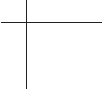
A Sample Article for ACM 1:9
⊥F T
⊥ ⊥ ⊥ T
F⊥F T
T⊥T T
Fig. 2. The truth table for the parallel-or.
type date =
record day: 1 . . 31;
month: 1 . . 12;
year: integer
end
var mybirth, today : date;
var myage : integer;
Fig. 3. An example of a program displayed in a figure.
4. FIGURES AND TABLES
4.1. Figures
The ordinary L
A
T
EXfigure environment works as usual. Figure 2, which is Figure 6 of
Nielson [1985], a bogus reference, was produced in this way. Note that figures should
never appear in the text or at the bottom of a page. (If you use the figure placement
optional argument, use only tor por both; do not use hor b).
Some figures (and tables) have no caption except for the figure number. For such
figures (and tables), one uses a \nocaption command, which has no argument, instead
of the \caption command.
In addition to this method of formatting figures, the ACM class also uses figures
with side captions, as in Figure 3. Such a figure is produced with the narrowfig envi-
ronment. This environment has a single mandatory argument, which is the width of
the figure. Note that if the figure is generated by tabbing or tabular, one can safely
overestimate the size. It works just like the ordinary figure environment, except it
must contain only one \caption or \nocaption command, which must come after the
figure itself.
The narrowfig environment should obviously not be used unless the figure is narrow
enough to leave a reasonable amount of space beside it for the caption. The ACM seems
to have no consistent policy for choosing which style of figure to employ.
4.2. Tables
The standard L
A
T
EXtable environment can be used to create a table, but the user
should add formatting commands to match with the ACM style. acmsmall provides a
command called \tbl{}{}, which should be used inside the table environment. The
first argument of \tbl command is the caption and the second argument is the table
body coded inside standard L
A
T
EXtabular environment. This command automatically
calculates the width of the table and fits the caption and table notes accordingly.
Table notes should be added inside tabnote environment; they can be further dif-
ferentiated using \Note{} and \tabnoteentry{}{} commands. Please refer sample.tex
file for the coding.
Users can also apply acmtable environment, which was introduced in the older ver-
sion of the ACM style file. This environment has a compulsory argument that equals
the width of the table—more precisely, it specifies the width of the rules above and
below the table. There should be only one \caption or \nocaption command, which
should appear after the text of the table. (Even though the table caption is printed
above the table, the \caption command comes after the table in the input file.)
ACM Computing Surveys, Vol. 2, No. 3, Article 1, Publication date: July 2010.
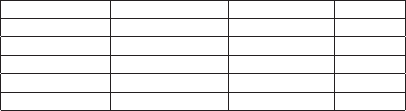
1:10 D. E. Knuth and L. Lamport
Table I. This is an Example of Table Caption
First headaSecond head Third head VM(r)
Left Word entries 0.2 10.55
Left Word entries 0.15 33.12
Left Word entries 10.58 45.10
Left Word entries 43.9 12.34
Left Word entries 0.15 60.50
Source: This is a table sourcenote. This is a table
sourcenote. This is a table sourcenote.
Note: This is a table footnote.
aThis is a table footnote. This is a table footnote. This
is a table footnote.
5. THE END OF THE DOCUMENT
5.1. Appendix
The appendix (if the article has one) should precede the acknowledgments (if any) and
bibliography. If the appendix isn’t broken into separate sections, then you should add
the following commands after the \appendix command:
\section*{APPENDIX}
\setcounter{section}{1}
Setting the counter is necessary so that numbered subsections and theorems will have
the names “A.N” in the text.
For an article with multiple appendices, one begins the appendix with an \appendix
followed by \section*{APPENDIX}, and then starts each appendix with an ordinary
\section command.
Information about electronic appendices is given in Section 8 and in the Appendix.
5.2. Acknowledgments
An optional acknowledgments section follows all the text of the article, including any
appendices. It is produced with the acks environment. Sometimes, there is just a single
acknowledgment. This may be given using the ack or acknowledgment environment.
5.3. Bibliography
The bibliography follows the acknowledgments, and is the last significant body of text
in the article. It is produced by the usual L
A
T
EX commands.
The user is encouraged to let L
A
T
EX produce the bibliography with the \bibliography
command, letting BIBT
EX handle the formatting of the entries.
% New style as of March 2012
\bibliographystyle{ACM-Reference-Format-Journals}
\bibliography{acmsmall-sample-bibfile}
The ACM-Reference-Format-Journals bibliography style file generates in-body cita-
tions in this format [Nielson 1985] and will format the actual references, at the end of
the article, in the New ACM Reference format. Put
\bibliographystyle{ACM-Reference-Format-Journals}
between the \begin{document} and the \end{document}.
When submitting the document source (.tex) file to external parties, it is strongly
recommended that the BIBT
EX .bbl file be manually copied into the document (within
the traditional L
A
T
EX bibliography environment) so as not to depend on external files to
generate the bibliography and to prevent the possibility of changes occurring therein.
ACM Computing Surveys, Vol. 2, No. 3, Article 1, Publication date: July 2010.
A Sample Article for ACM 1:11
The conventional \cite command will generate citations as usual in L
A
T
EX. Note
that the style file automatically omits repeating author names [Nielson 1985; Knuth
1981]. If you mention the work explicitly in your prose, you should use \citeN com-
mand. This command generates for example, Nielson [1985] discusses denotational
program transformations. Or, you use \citeyear and say that Nielson [1985] discusses
them. The command \shortcite is an alias for \citeyear. Either command may be
used in cases where one refers to multiple works (of the same authors!). For example,
Nielson~\shortcite{7:3:359,test} generates Nielson [1985; 1981].
More variations of \cite are discussed in comments in the acmtrans.sty file. Here
are some examples on how to get
(1) Appel [1996] →using either \citeN or \citeyear
(2) [Kempe 1879] →\cite{kempe79}
(3) Appel [1995; 1996] →\shortcite{ref1-key,ref2-key}
(4) Fil´
e [1981a; 1981b] →Fil\’{e}~\shortcite{engelfriet/file:81sweep,
engelfriet/file:81passes} or simply \shortcite{ref1-key, ref2-key}
(5) [Appel and Shao 1992; Shao and Appel 1994] →\cite{appel-zhong-lsc92,
shao94:clo}
(6) Chow and Harrison [1992; 1994] →Chow and Harrison [\citeyearNP{CH-popl92};
\citeyearNP{CH-iccl94}]
(7) [Chow and Harrison 1992; 1994; Cousot and Cousot 1984] →
[\citeNP{CH-popl92};
\citeyearNP{CH-iccl94}; \citeNP{CC-apct77}]
(8) [Cytron et al. 1991] →\cite{cytron-et-al-toplas91}
(9) Briggs et al. [1994] →\citeN{briggs-cooper-torczon-toplas94} or
(10) Duri et al. [1993] →Duri~et~al.~\citeyear{DBDS-sigsoft93}
(11) [Chaitin 1982; Chaitin et al. 1981] →\cite{chaitin-pldi82,chaitin-et-al-cl81}
(12) [Alblas 1991; Deransart et al. 1988; Knuth 1868] →\cite{alblas:91intro,
deransart/jourdan/lorho:88ag,knuth:68semantics}
(13) [Gary and Johnson 1979] →\cite{garey-johnson-bk79}
(14) [Brand and Zafiropulo 1983; Gouda et al. 1984;1987] →
[\citeNP{brand83}; \citeNP{gouda84};\citeyearNP{gouda87}]
The list will be updated as we find unique cases.
6. TYPICAL REFERENCES IN NEW ACM REFERENCE FORMAT
A paginated journal article [Abril and Plant 2007], an enumerated journal article [Co-
hen et al. 2007], a reference to an entire issue [Cohen 1996], a monograph (whole
book) [Kosiur 2001], a monograph/whole book in a series (see 2a in spec. document)
[Harel 1979], a divisible-book such as an anthology or compilation [Editor 2007] fol-
lowed by the same example, however we only output the series if the volume number
is given [Editor 2008] (so Editor00a’s series should NOT be present since it has no
vol. no.), a chapter in a divisible book [Spector 1990], a chapter in a divisible book in
a series [Douglass et al. 1998], a multi-volume work as book [Knuth 1997], an article
in a proceedings (of a conference, symposium, workshop for example) (paginated pro-
ceedings article) [Andler 1979], a proceedings article with all possible elements [Smith
2010], an example of an enumerated proceedings article [Gundy et al. 2007], an in-
formally published work [Harel 1978], a doctoral dissertation [Clarkson 1985], a mas-
ter’s thesis: [Anisi 2003], an online document / world wide web resource [Thornburg
2001], [Ablamowicz and Fauser 2007], [Poker-Edge.Com 2006], a video game (Case 1)
[Obama 2008] and (Case 2) [Novak 2003] and [Lee 2005] and (Case 3) a patent [Scien-
tist 2009], work accepted for publication [Rous 2008], ’YYYYb’-test for prolific author
[Saeedi et al. 2010a] and [Saeedi et al. 2010b]. Other cites might contain ’duplicate’
ACM Computing Surveys, Vol. 2, No. 3, Article 1, Publication date: July 2010.

1:12 D. E. Knuth and L. Lamport
DOI and URLs (some SIAM articles) [Kirschmer and Voight 2010]. Boris / Barbara
Beeton: multi-volume works as books [H¨
ormander 1985b] and [H¨
ormander 1985a].
6.1. Received Date
The article should end by the following lines:
\received{Month Year}{Month Year}{Month Year}
The three values required are, respectively, ‘received, revised and accepted dates’. The
actual dates will be supplied by the Editor-in-Chief.
7. RUNNING HEADS AND FEET
The running foot of all but the title page of the article is declared with the
\runningfoot command. It contains the name of the journal, volume, number, arti-
cle number and date. The foot for the title page also contains the same information but
it is declared with the \firstfoot command.
The default page style for the acmsmall style is headings. Thus, a \markboth com-
mand is used to set the running heads. The left head contains the author’s name (or
authors’ names) and the right head contains the title. For long titles, some contraction
of the title is used.
8. ELECTRONIC APPENDICES
Because of severe constraints on how many pages it can print, some ACM journals
accept some articles with electronic appendices: appendices in Postscript format that
will not appear in the printed article but will be available separately. If your article is
accepted with an electronic appendix, you should put an appendix header where the
appendix normally belongs (before the “acknowledgments”). The body of the electronic
appendix should be given after the references. The appendixhead command is given as:
\appendixhead{URLend}
where URLend will be determined by the Editor (it is usually the last name of the first
author).
In case your paper will have an electronic appendix, the part of the paper that will
appear in print should L
A
T
EX correctly, i.e. in this part no L
A
T
EX references (\ref) should
be made to the electronic appendix.
The result of \appendixhead looks like this:1
ELECTRONIC APPENDIX
The electronic appendix for this article can be accessed in the ACM Digital Library.
ACKNOWLEDGMENTS
This is an example of Acknowledgments environment, which should be coded after electronic appendix
header (if any).
REFERENCES
Rafal Ablamowicz and Bertfried Fauser. 2007. CLIFFORD: a Maple 11 Package for Clifford Algebra Compu-
tations, version 11. (2007). Retrieved February 28, 2008 from http://math.tntech.edu/rafal/cliff11/index.
html
Patricia S. Abril and Robert Plant. 2007. The patent holder’s dilemma: Buy, sell, or troll? Commun. ACM 50,
1 (Jan. 2007), 36–44. DOI:http://dx.doi.org/10.1145/1188913.1188915
1See the end of this document for the remainder of the explanation of electronic appendices
ACM Computing Surveys, Vol. 2, No. 3, Article 1, Publication date: July 2010.

A Sample Article for ACM 1:13
Sten Andler. 1979. Predicate Path expressions. In Proceedings of the 6th. ACM SIGACT-SIGPLAN sym-
posium on Principles of Programming Languages (POPL ’79). ACM Press, New York, NY, 226–236.
DOI:http://dx.doi.org/10.1145/567752.567774
David A. Anisi. 2003. Optimal Motion Control of a Ground Vehicle. Master’s thesis. Royal Institute of Tech-
nology (KTH), Stockholm, Sweden.
J. E. Archer, Jr., R. Conway, and F. B. Schneider. 1984. User recovery and reversal in interactive systems.
ACM Trans. Program. Lang. Syst. 6, 1 (Jan. 1984), 1–19.
Kenneth L. Clarkson. 1985. Algorithms for Closest-Point Problems (Computational Geometry). Ph.D. Disser-
tation. Stanford University, Palo Alto, CA. UMI Order Number: AAT 8506171.
Jacques Cohen (Ed.). 1996. Special Issue: Digital Libraries. Commun. ACM 39, 11 (Nov. 1996).
Sarah Cohen, Werner Nutt, and Yehoshua Sagic. 2007. Deciding equivalances among conjunctive aggregate
queries. J. ACM 54, 2, Article 5 (April 2007), 50 pages. DOI:http://dx.doi.org/10.1145/1219092.1219093
Bruce P. Douglass, David Harel, and Mark B. Trakhtenbrot. 1998. Statecarts in use: structured anal-
ysis and object-orientation. In Lectures on Embedded Systems, Grzegorz Rozenberg and Frits W.
Vaandrager (Eds.). Lecture Notes in Computer Science, Vol. 1494. Springer-Verlag, London, 368–394.
DOI:http://dx.doi.org/10.1007/3-540-65193-4 29
Ian Editor (Ed.). 2007. The title of book one (1st. ed.). The name of the series one, Vol. 9. University of Chicago
Press, Chicago. DOI:http://dx.doi.org/10.1007/3-540-09237-4
Ian Editor (Ed.). 2008. The title of book two (2nd. ed.). University of Chicago Press, Chicago, Chapter 100.
DOI:http://dx.doi.org/10.1007/3-540-09237-4
Matthew Van Gundy, Davide Balzarotti, and Giovanni Vigna. 2007. Catch me, if you can: Evading net-
work signatures with web-based polymorphic worms. In Proceedings of the first USENIX workshop on
Offensive Technologies (WOOT ’07). USENIX Association, Berkley, CA, Article 7, 9 pages.
David Harel. 1978. LOGICS of Programs: AXIOMATICS and DESCRIPTIVE POWER. MIT Research Lab
Technical Report TR-200. Massachusetts Institute of Technology, Cambridge, MA.
David Harel. 1979. First-Order Dynamic Logic. Lecture Notes in Computer Science, Vol. 68. Springer-Verlag,
New York, NY. DOI:http://dx.doi.org/10.1007/3-540-09237-4
Lars H¨
ormander. 1985a. The analysis of linear partial differential operators. III. Grundlehren der Mathema-
tischen Wissenschaften [Fundamental Principles of Mathematical Sciences], Vol. 275. Springer-Verlag,
Berlin, Germany. viii+525 pages. Pseudodifferential operators.
Lars H¨
ormander. 1985b. The analysis of linear partial differential operators. IV. Grundlehren der Mathema-
tischen Wissenschaften [Fundamental Principles of Mathematical Sciences], Vol. 275. Springer-Verlag,
Berlin, Germany. vii+352 pages. Fourier integral operators.
Markus Kirschmer and John Voight. 2010. Algorithmic Enumeration of Ideal Classes for Quaternion Orders.
SIAM J. Comput. 39, 5 (Jan. 2010), 1714–1747. DOI:http://dx.doi.org/10.1137/080734467
Donald E. Knuth. 1981. Seminumerical Algorithms (2nd ed.). The Art of Computer Programming, Vol. 2.
Addison-Wesley, Reading, MA.
Donald E. Knuth. 1984. The T
E
Xbook. Addison-Wesley, Reading, MA.
Donald E. Knuth. 1997. The Art of Computer Programming, Vol. 1: Fundamental Algorithms (3rd. ed.).
Addison Wesley Longman Publishing Co., Inc.
David Kosiur. 2001. Understanding Policy-Based Networking (2nd. ed.). Wiley, New York, NY.
Leslie Lamport. 1986. L
A
T
E
X: A Document Preparation System. Addison-Wesley, Reading, MA.
Newton Lee. 2005. Interview with Bill Kinder: January 13, 2005. Video, Comput. Entertain. 3, 1, Article 4
(Jan.-March 2005). DOI:http://dx.doi.org/10.1145/1057270.1057278
F. Nielson. 1985. Program transformations in a denotational setting. ACM Trans. Program. Lang. Syst. 7, 3
(July 1985), 359–379.
Dave Novak. 2003. Solder man. Video. In ACM SIGGRAPH 2003 Video Review on Anima-
tion theater Program: Part I - Vol. 145 (July 27–27, 2003). ACM Press, New York, NY, 4.
DOI:http://dx.doi.org/99.9999/woot07-S422
Barack Obama. 2008. A more perfect union. Video. (5 March 2008). Retrieved March 21, 2008 from http:
//video.google.com/videoplay?docid=6528042696351994555
Poker-Edge.Com. 2006. Stats and Analysis. (March 2006). Retrieved June 7, 2006 from http://www.
poker-edge.com/stats.php
Brian K. Reid. 1980. A high-level approach to computer document formatting. In Proceedings of the 7th
Annual Symposium on Principles of Programming Languages. ACM, New York, 24–31.
Bernard Rous. 2008. The Enabling of Digital Libraries. Digital Libraries 12, 3, Article 5 (July 2008). To
appear.
ACM Computing Surveys, Vol. 2, No. 3, Article 1, Publication date: July 2010.
1:14 D. E. Knuth and L. Lamport
Mehdi Saeedi, Morteza Saheb Zamani, and Mehdi Sedighi. 2010a. A library-based synthesis methodology
for reversible logic. Microelectron. J. 41, 4 (April 2010), 185–194.
Mehdi Saeedi, Morteza Saheb Zamani, Mehdi Sedighi, and Zahra Sasanian. 2010b. Synthesis of Reversible
Circuit Using Cycle-Based Approach. J. Emerg. Technol. Comput. Syst. 6, 4 (Dec. 2010).
Joseph Scientist. 2009. The fountain of youth. (Aug. 2009). Patent No. 12345, Filed July 1st., 2008, Issued
Aug. 9th., 2009.
Stan W. Smith. 2010. An experiment in bibliographic mark-up: Parsing metadata for XML export.
In Proceedings of the 3rd. annual workshop on Librarians and Computers (LAC ’10), Regi-
nald N. Smythe and Alexander Noble (Eds.), Vol. 3. Paparazzi Press, Milan Italy, 422–431.
DOI:http://dx.doi.org/99.9999/woot07-S422
Asad Z. Spector. 1990. Achieving application requirements. In Distributed Systems (2nd. ed.), Sape Mullen-
der (Ed.). ACM Press, New York, NY, 19–33. DOI:http://dx.doi.org/10.1145/90417.90738
Harry Thornburg. 2001. Introduction to Bayesian Statistics. (March 2001). Retrieved March 2, 2005 from
http://ccrma.stanford.edu/∼jos/bayes/bayes.html
Received February 2010; revised October 2010; accepted December 2010
ACM Computing Surveys, Vol. 2, No. 3, Article 1, Publication date: July 2010.

Online Appendix to:
acmsmall Author Submission Guide: Setting Up Your L
A
T
EX2εFiles
DONALD E. KNUTH, Stanford University
LESLIE LAMPORT, Microsoft Corporation
The contents of the electronic appendix is written after the references and the “re-
ceived” environment. The electronic appendix is started by an \elecappendix com-
mand:
\elecappendix
A. SPLITTING OFF THE ELECTRONIC APPENDIX
If you have an electronic appendix, only the main body of the article, up through and
including the description of how to obtain the electronic appendix, will be printed in
the journal.
It will be necessary to split your dvi or Postscript file into two parts: one to be
printed, the other to be available by FTP. Please split your Postscript into two sep-
arate postscript files using dvipages,pslpr or psselect and email them separately to
the Editor.
Note that the pages of the appendix are numbered App-1, App-2, etc. so as not to
interfere with the normal journal pagination.
B. SINGLE APPENDIX
When an article has a single electronic appendix, then after the \elecappendix com-
mand, type the following.
\setcounter{section}{1}
If the text starts immediately, add a \medskip to set off the text from the horizontal
rule created by \elecappendix.
C. MULTIPLE APPENDICES
For an article with multiple electronic appendices, one begins the appendix with an
\elecappendix command, then starts each appendix with an ordinary \section com-
mand. Lower levels of sectioning are produced by the ordinary sectioning commands.
c
2010 ACM 0360-0300/2010/07-ART1 $15.00
DOI:http://dx.doi.org/10.1145/0000000.0000000
ACM Computing Surveys, Vol. 2, No. 3, Article 1, Publication date: July 2010.
