Qcom Technology Q802MKG2 MiniPCI 802.11g Type IIIB Module User Manual Q802MKG
Qcom Technology Inc. MiniPCI 802.11g Type IIIB Module Q802MKG
Manual
Q802MKG2
MiniPCI 802.11g Type IIIB Module
User’s Manual
2
Driver Installation
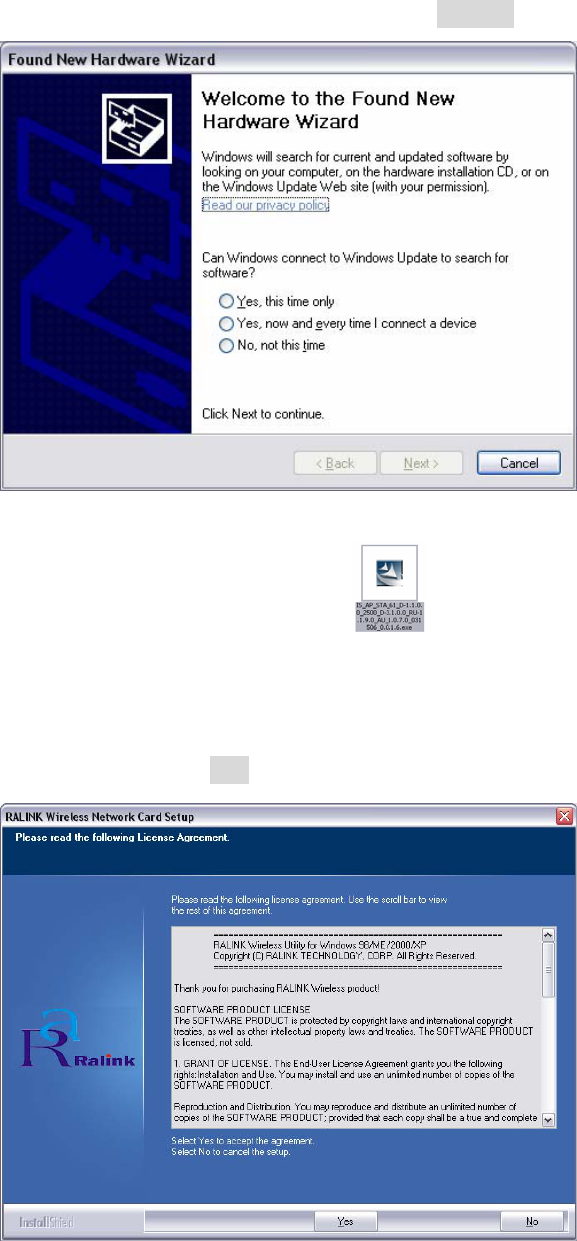
1. After you have installed the Wireless Adapter your computer will display a
Found New Hardware Wizard screen, click Cancel to continue.
2. Go to the directory where the Wireless Adapter Installation stored, then
double-click the Setup Program to begin the installation.
(Exsample: IS_AP_STA_61_D-1.1.0.0_2500_D-3.1.0.0_RU-1.1.9.0_AU_1.0.7.0_031506_0.0.1.6.exe)
3. RALINK Wireless Network Card Setup Wizard will install the driver on
your system. Select Yes to accept the License Agreement.
3
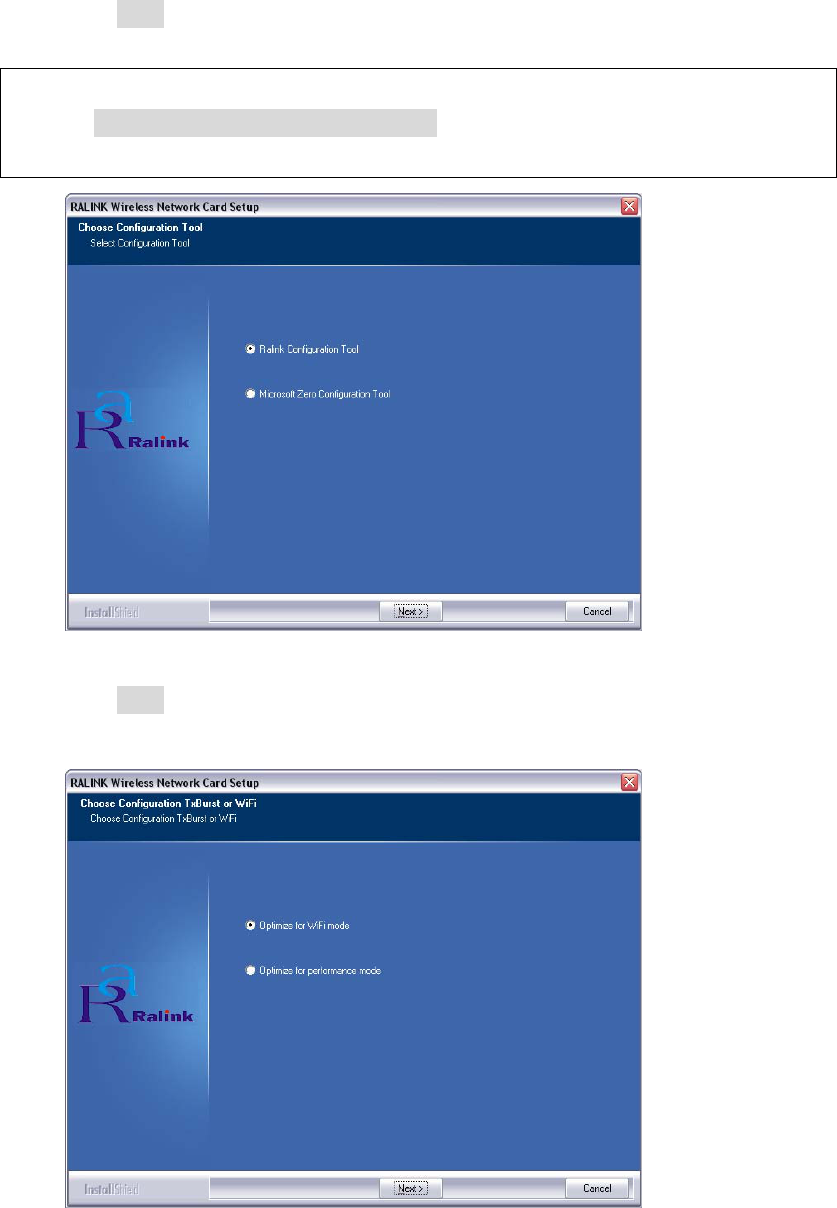
4. Click Next to continue.
Note:
If you have installed the Windows XP Service Pack 2. You can use the
Windows Zero Configuration Tool for Wireless Configuring. Please refer
the Windows XP User’s Guide.
5. Click Next to continue.
4
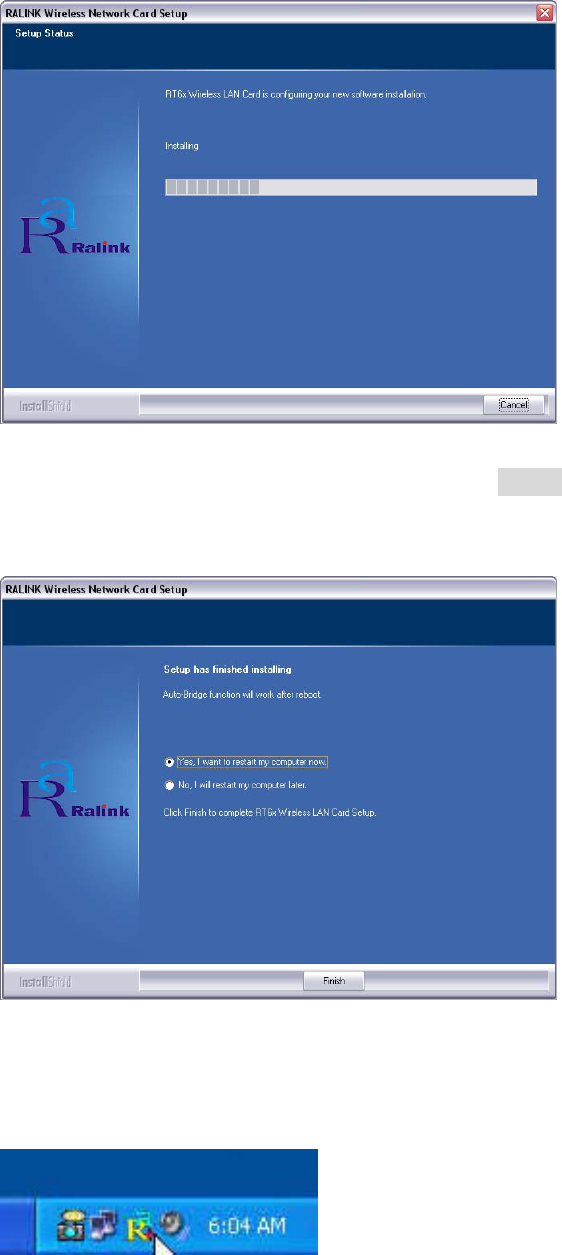
6. RALINK Wireless Network Card is configuring your new software
installation,
7. The installation is now complete. Please click Finish to restart your
computer.
8. When you complete the installation, the utility icon will appear on the
system tray. You could double-click it to configure wireless network
settings
5
Uninstalling the Wireless LAN Card
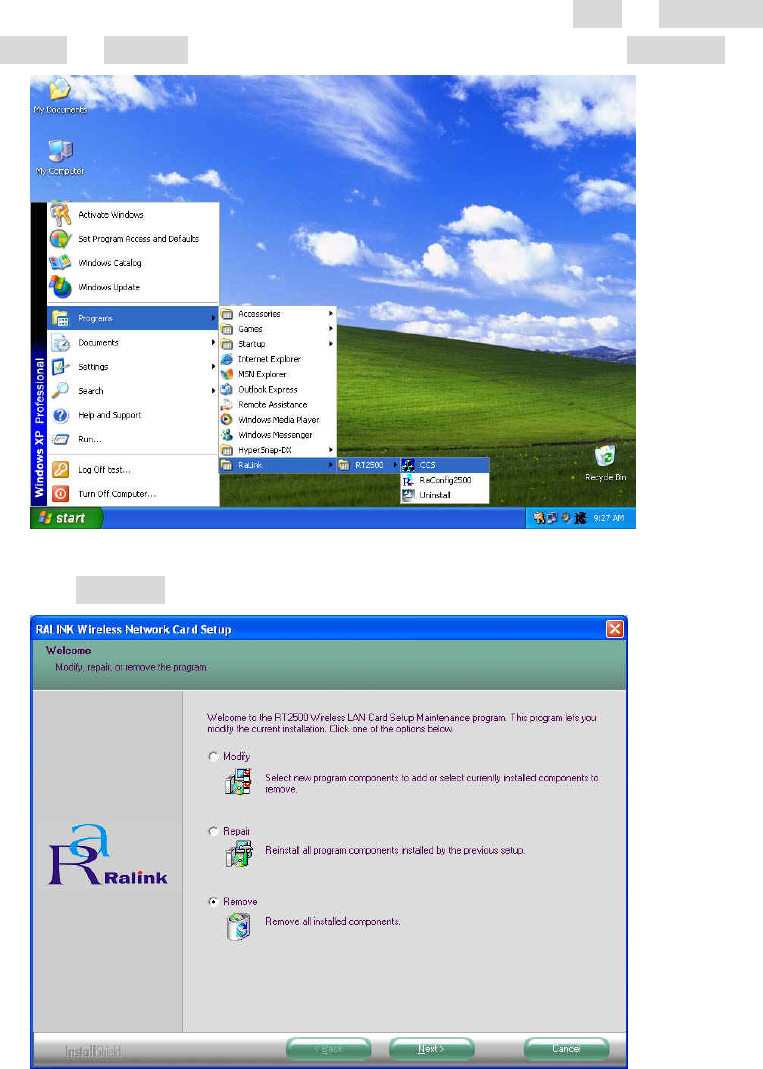
1. For uninstalling the Wireless LAN Card, please go to: Start Æ Programs Æ
Ralink Æ RT2500 under Windows environment. Then click Uninstall.
2. Select Remove to uninstall the Wireless LAN Card.
6
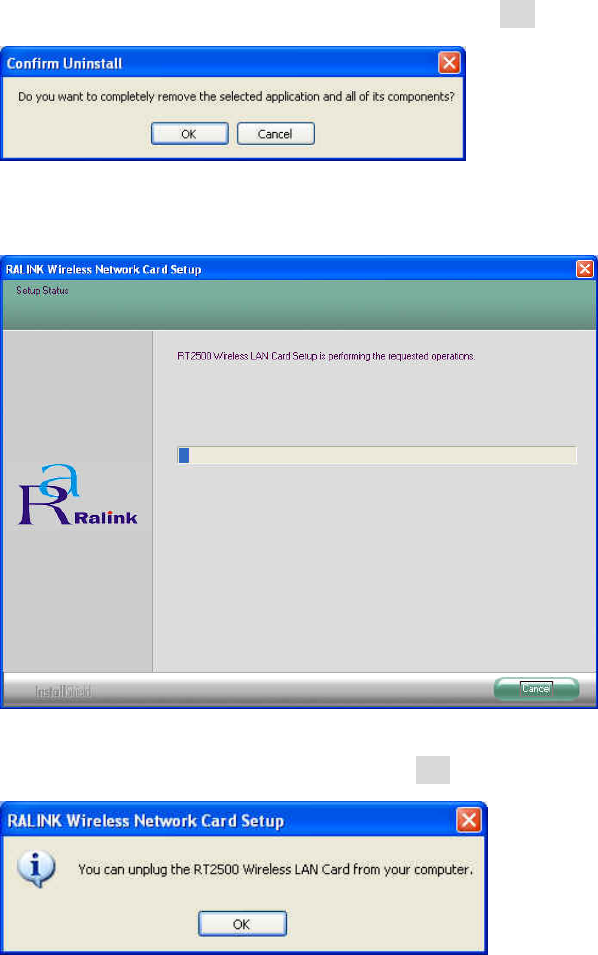
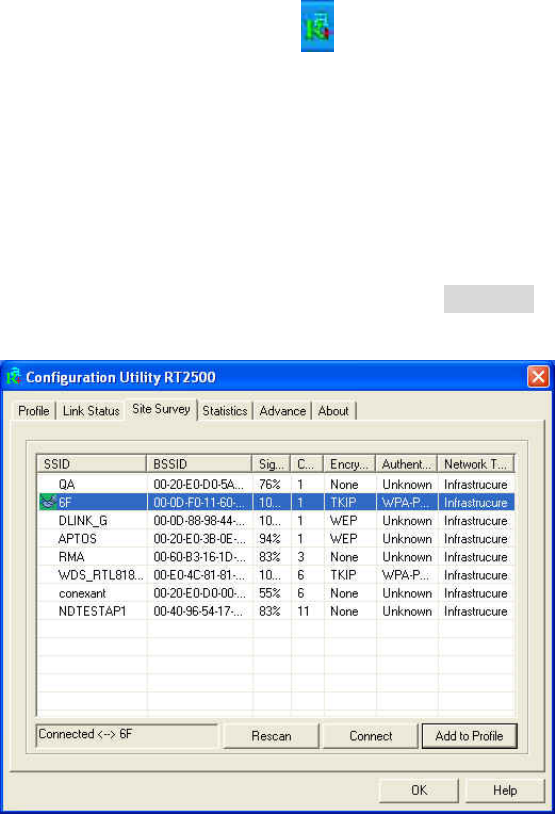
3. The Confirm Uninstall screen will display, click OK to confirm.
4. Wait for removing the utility.
5. After completing the uninstallation, click OK.
7
Configuring the Wireless LAN Card
Double-click the utility icon in your system tray to begin the utility
configuration.
Connecting to an existing network
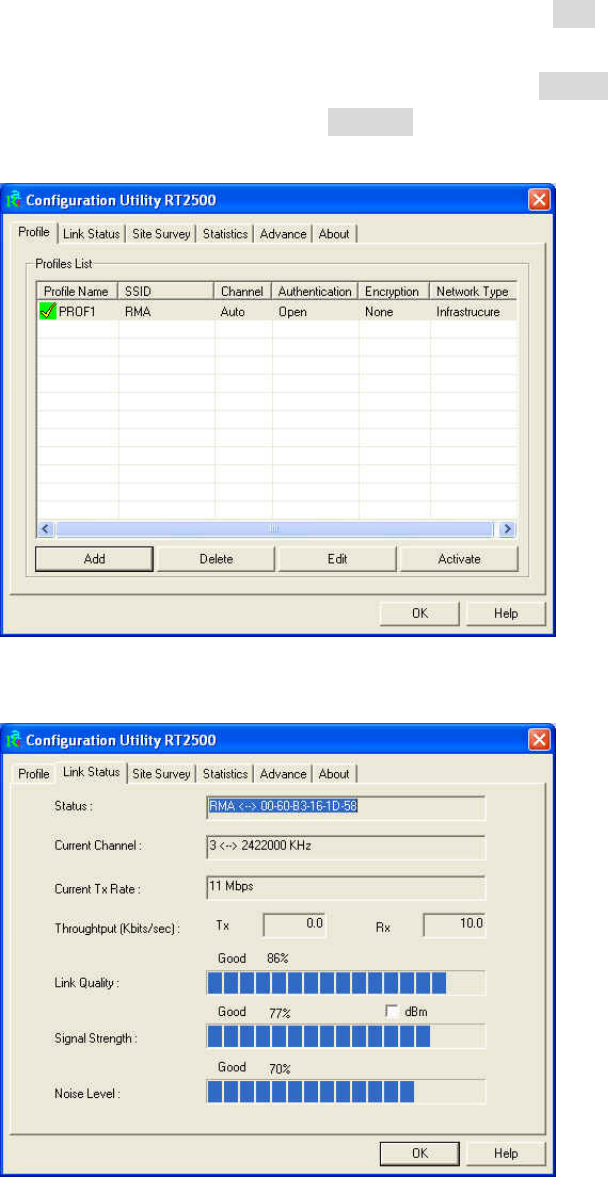
Select Site Survey Tab, all available Access Points would be listed.
Click on the desired Access Point, and click Connect to connect.
8
Configuration
z Profile
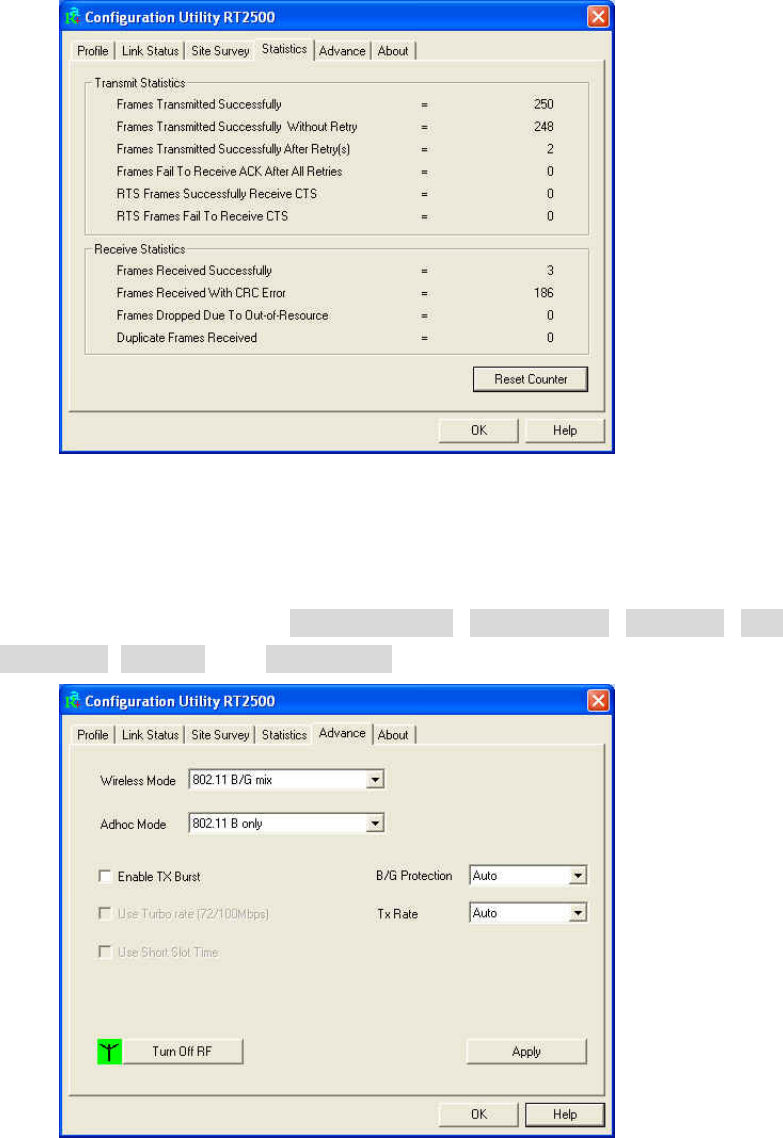
The Profile Tab allows you to set values for all parameters by selecting a
previously defined profile. To create a profile, click Add, type a profile
name and set the corresponding parameters. If one of the profiles is no
longer used, you may remove it by clicking the Delete button. After
changing parameters, click the Activate button to take effect. You can
have multiple profiles and modify the profile at any time.
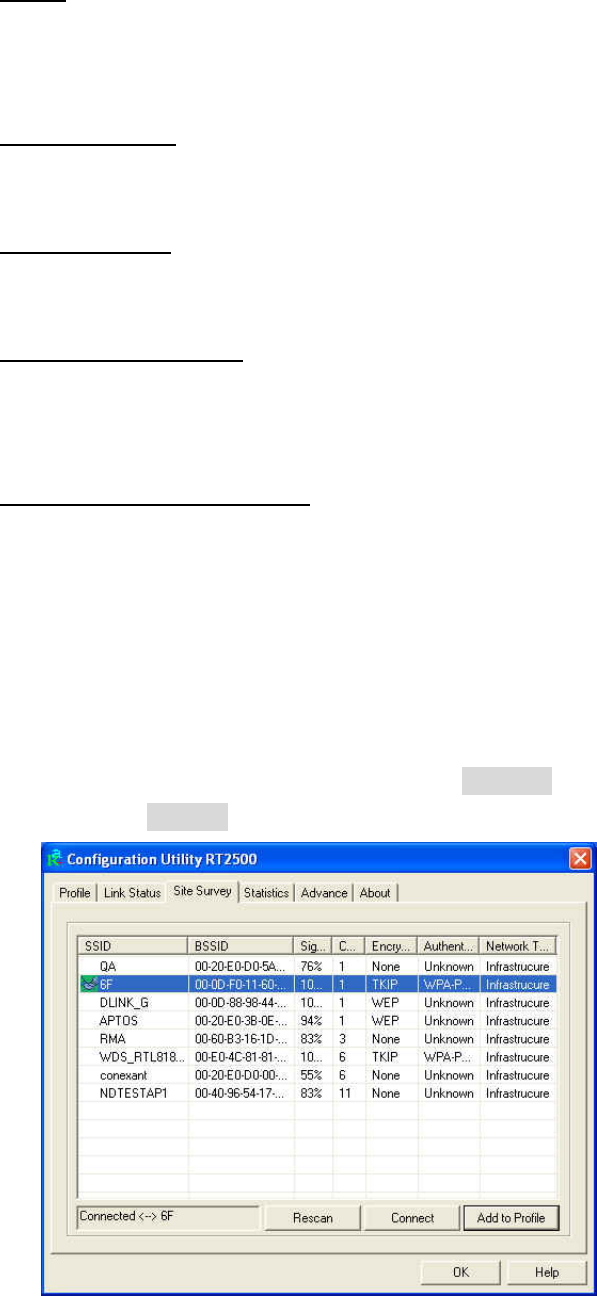
z Link Status
9
Status
The field shows the association status to available Access Point with
SSID<->MAC address of the Access Point.
Current Channel
Shows the channel on which the connection is made.
Current Tx Rate
Shows the highest transmit rate of the current association.
Throughput (Kbits/sec)
This displays the instantaneous wireless Receive and Transmit
throughput in Kbits per second.
Link Quality / Signal Strength
The Link Quality and Signal Strength bar graph is only active when the
node is in Infrastructure Mode. The bar graph displays the quality and
strength of the link between the node and its Access Point.
z Site Survey
Site Survey Tab lists the features of the available Access Points within
range of the Wireless Adapter's signal.
Click on the desired Access Point, and click Connect to connect.
You may click Rescan to refresh the list.
10
Add to Profile
You may select an Access Point, and click Add to Profile to include it
to Profile List.
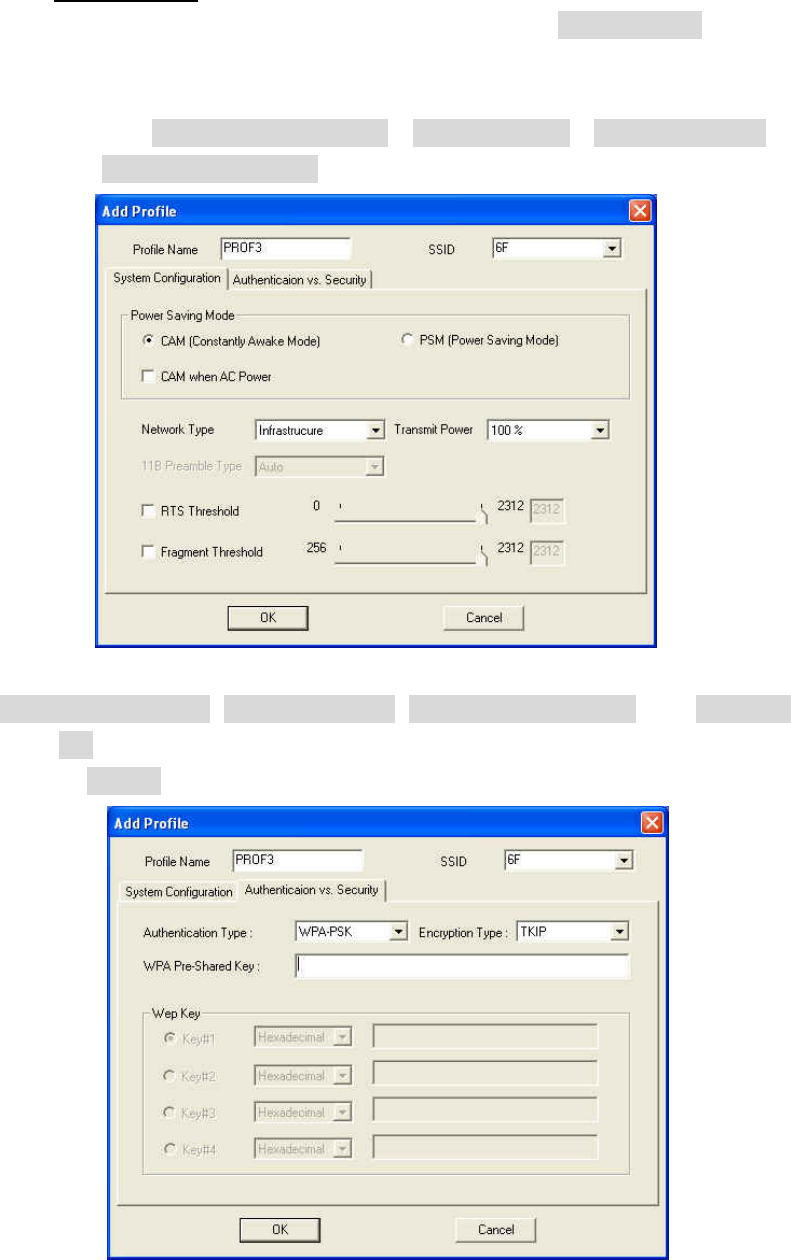
Under Add Profile screen / System Configuration Tab, you may
set Power Saving Mode, Network Type, RTS Threshold, and
Fragment Threshold.
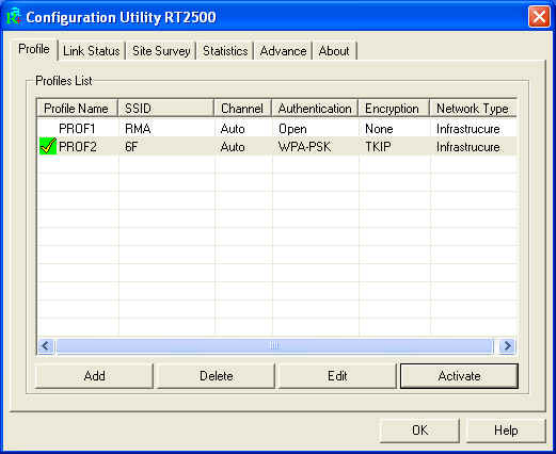
Under Add Profile screen / Authentication vs. Security Tab, you may set
Authentication Type, Encryption Type, WPA Pre-Shared Key, and Wep Key.
Click OK when you have finished the settings.
Or click Cancel to abort your new settings for Add to Profile.
11
After fishing the Add Profile, Check Profile Tab, you may find the new added
profile in Profile List.
12
z Statistics
The Statistics Tab provides information about the Transmit and Receive
frames.
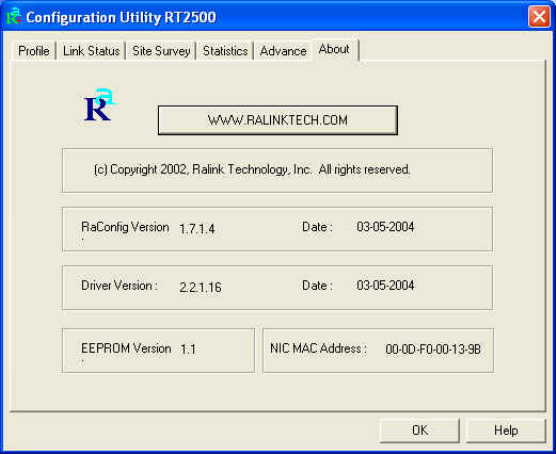
z Advance
The Configuration Utility also offers the advanced configuration for user to
set the Wireless Adapter under certain network environment. These
advanced options include Wireless Mode, Adhoc Mode, TX Burst, B/G
Protection, Tx Rate, and Turn Off RF.
13
z About
About Tab shows the product version including the detail of Configuration
Utility Version, Driver Version, EEPROM Version, and NIC MAC Address.
14
Federal Communication Commission Interference Statement
This equipment has been tested and found to comply with the limits for a Class B digital device,
pursuant to Part 15 of the FCC Rules. These limits are designed to provide reasonable
protection against harmful interference in a residential installation. This equipment generates
uses and can radiate radio frequency energy and, if not installed and used in accordance with
the instructions, may cause harmful interference to radio communications. However, there is
no guarantee that interference will not occur in a particular installation. If this equipment does
cause harmful interference to radio or television reception, which can be determined by turning
the equipment off and on, the user is encouraged to try to correct the interference by one of the
following measures:
- Reorient or relocate the receiving antenna.
- Increase the separation between the equipment and receiver.
- Connect the equipment into an outlet on a circuit different from that to which the receiver is
connected.
- Consult the dealer or an experienced radio/TV technician for help.
This device complies with Part 15 of the FCC Rules. Operation is subject to the following two
conditions: (1) This device may not cause harmful interference, and (2) this device must
accept any interference received, including interference that may cause undesired operation.
FCC Caution: Any changes or modifications not expressly approved by the party responsible
for compliance could void the user's authority to operate this equipment. Qcom declares that
US model of Q802MKG2 (FCC ID: RUJ-Q802MKG2) is limited in CH1 ~ CH11 by specified
IMPORTANT NOTE:
FCC Radiation Exposure Statement:
This equipment complies with FCC radiation exposure limits set forth for an uncontrolled
environment. To maintain compliance with FCC RF exposure compliance requirements,
please follow operation instruction as documented in this manual. This equipment should be
installed and operated with minimum distance 20cm between the radiator & your body.
This transmitter must not be co-located or operating in conjunction with any other antenna or
transmitter.
firmware controlled by the manufacturer and is not user changeable.

15
This device is intended only for OEM integrators under the following conditions:
1. The antenna must be installed such that 20 cm is maintained between the antenna
and users, and
2. The transmitter module may not be co-located with any other transmitter or antenna.
As long as 2 conditions above are met, further transmitter test will not be required. However,
the OEM integrator is still responsible for testing their end-product for any additional
compliance requirements required with this module installed (for example, digital device
emissions, PC peripheral requirements, etc.).
IMPORTANT NOTE: In the event that these conditions can not be met (for example certain
laptop configurations or co-location with another transmitter), then the FCC authorization is no
longer considered valid and the FCC ID can not be used on the final product. In these
circumstances, the OEM integrator will be responsible for re-evaluating the end product
(including the transmitter) and obtaining a separate FCC authorization.
End Product Labeling
This transmitter module is authorized only for use in device where the antenna may be
installed such that 20 cm may be maintained between the antenna and users (for example:
Notebook, Wireless Router…etc.) The final end product must be labeled in a visible area
with the following: “Contains TX FCC ID: RUJ-Q802MKG2”.
Manual Information That Must be Included
The OEM integrator has to be aware not to provide information to the end user regarding how
to install or remove this RF module in the user’s manual of the end products, which integrate
this module.
The user’s manual for OEM integrators must include the following information in a prominent
location “
IMPORTANT NOTE: To comply with FCC RF exposure compliance requirements, the
antenna used for this transmitter must be installed to provide a separation distance of at least
20 cm from all persons and must not be co-located or operating in conjunction with any other
antenna or transmitter.