Qcom Technology Q802PWG Wireless 802.11b/g PCI Adapter User Manual Q802PWG Manual
Qcom Technology Inc. Wireless 802.11b/g PCI Adapter Q802PWG Manual
Manual
User’s Manual
Wireless 802.11b/g
PCI Adapter
Q802PWG
1
Contents
REVISION HISTORY 2
INTRODUCTION 3
¾ Package Contents 3
¾ Minimum System Requirements 3
CONNECTING THE WIRELESS ADAPTER 4
STATUS LEDs 5
INSTALLING THE WIRELESS ADAPTER 6
¾ Windows XP Service Pack 2 6
• Install the Wireless Adapter Driver and Utility 6
• Configuring the Winbond Wireless Utility 10
• Configuration 12
• Uninstalling the Wireless Adapter Driver and Utility 16
¾ Windows 2000 Service Pack 4 18
• Install the Wireless Adapter Driver and Utility 18
• Configuring the Winbond Wireless Utility 23
• Configuration 25
• Uninstalling the Wireless Adapter Driver and Utility 29
Trouble Shooting 30

2
Revision History
Revision Updated Notes
1.00 03/08/2006 Initial Release
3
Introduction
Thank you for purchasing the Wireless Adapter. This Wireless Adapter is easy to use and easy to setup. If
you are tired of all those messy wires needed to connect a lap-top to your Home network, and then take your
networking to the next level with the Wireless Adapter. You will be able to share files, printers and even your
High-Speed Internet access wirelessly.
Package Contents
Make sure the following items came in this package:
z Wireless Adapter
z Wireless Adapter Installation and User’s Manual CD
Minimum System Requirements
z Microsoft Windows XP, or Windows 2000 installed
z Microsoft Windows CE ver:4.2 and ver: 5.0
Microsoft, Windows, Windows 2000, Windows CE and Windows XP are registered trademarks of Microsoft Corporation.
4
Connecting the Wireless Adapter
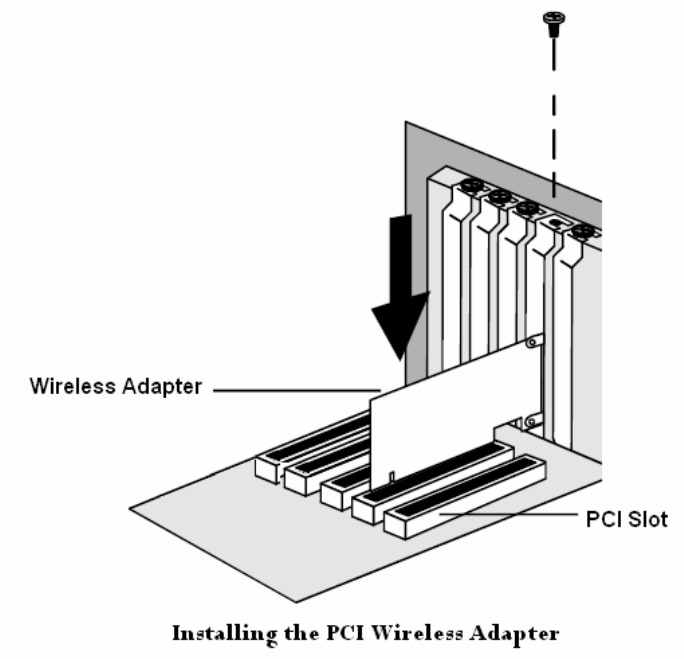
1. Power down the computer.
2. Locate the PCI slot on the motherboard, and carefully insert the PCI Wireless Adapter.
3. Power on the computer.

5
Status LEDs
LED Status MEANING (WLAN card activity)
LED speed blink Data Transferred / Data Received
LED blink Scanning for the Access Point
LED off All other status
6
Installing the Wireless Adapter
Windows XP SP2:
 NOTE: If you have installed the Wireless Adapter driver before, please
uninstall the old version first.
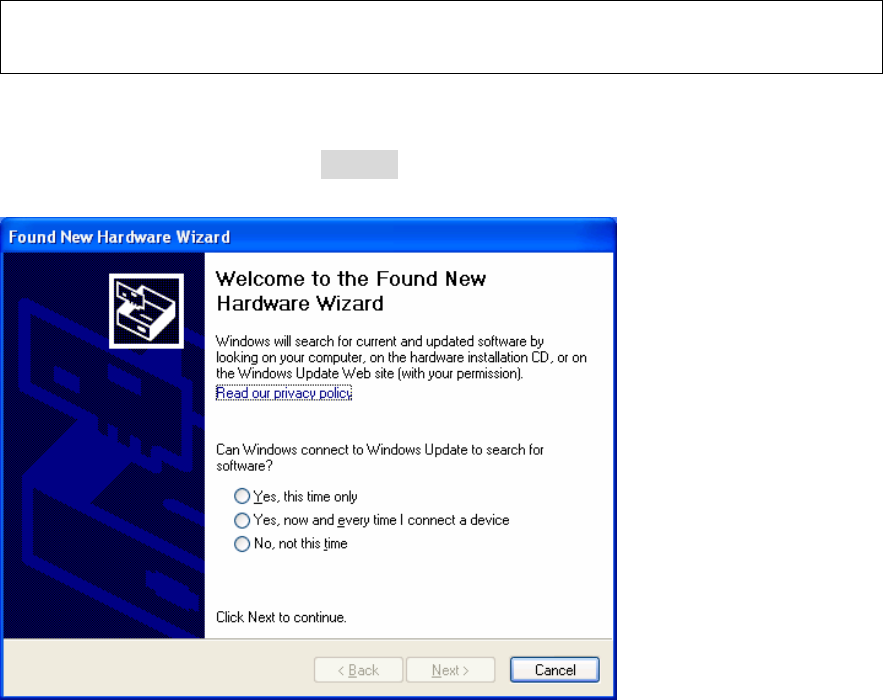
1. After you have installed the Wireless Adapter on your computer will display a Found New
Hardware Wizard screen, click Cancel to continue.
7
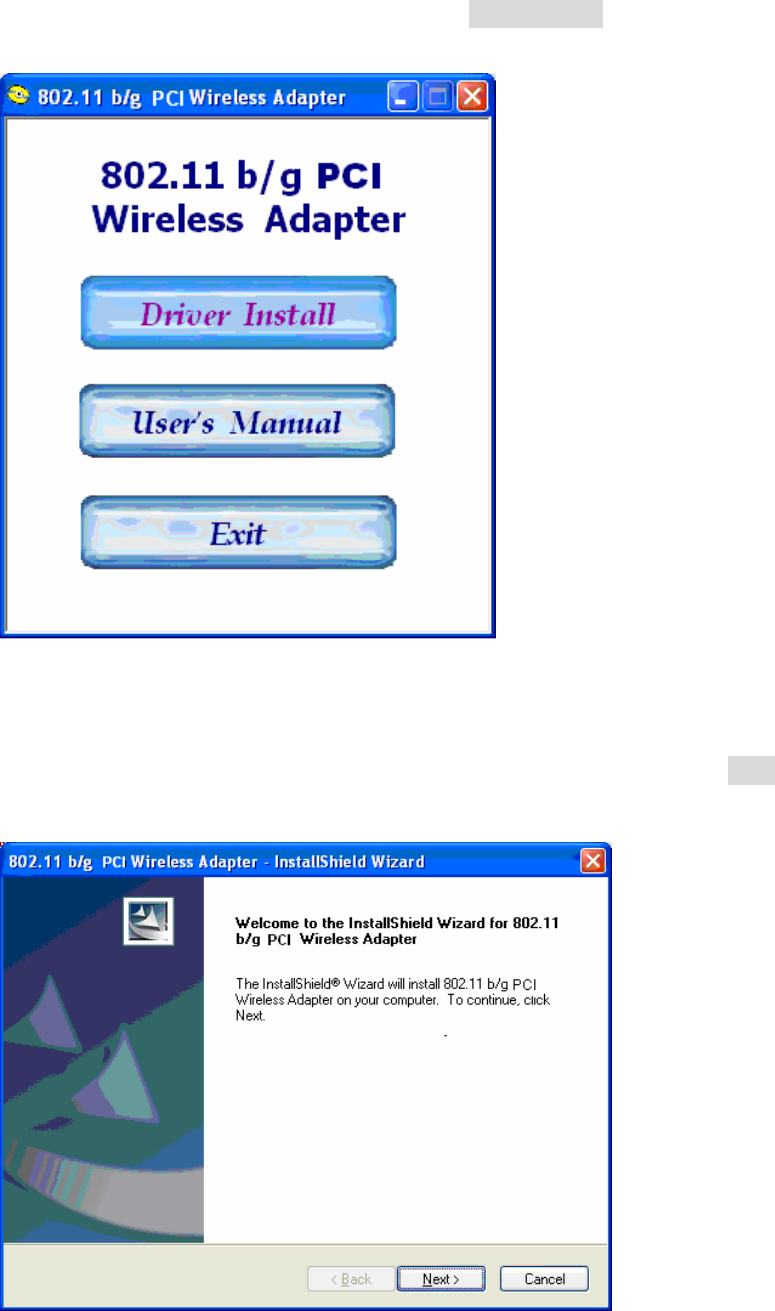
2. Insert the Wireless Adapter Installation and User’s Manual CD into your CD-ROM, then the
installation will be activated automatically. Click the Driver Install icon to begin the installation.
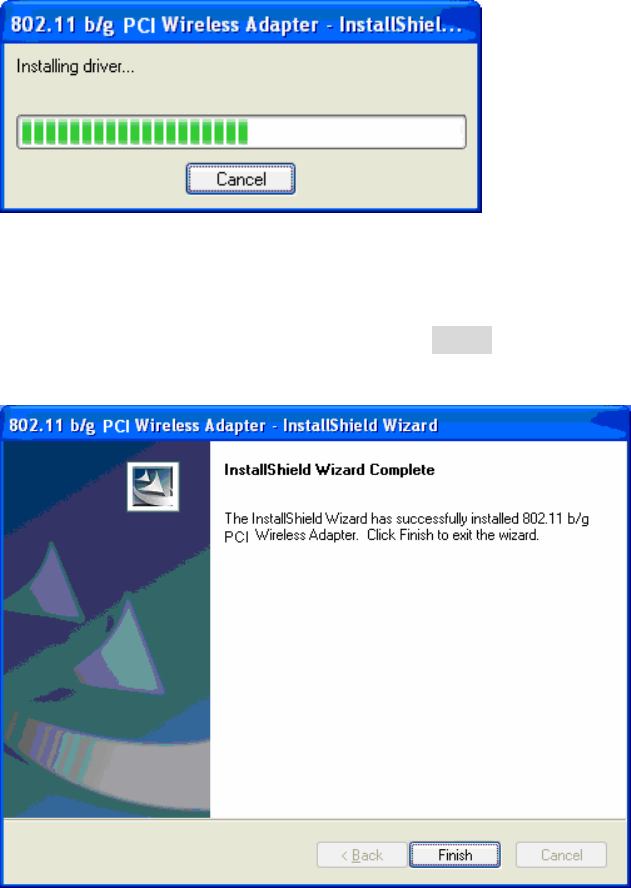
3. InstallShield Wizard will install the driver and utility on your system, click Next to continue.
8
4. Wireless Adapter Driver and Utility are installing.
5. The installation is now complete, please click Finish.
9
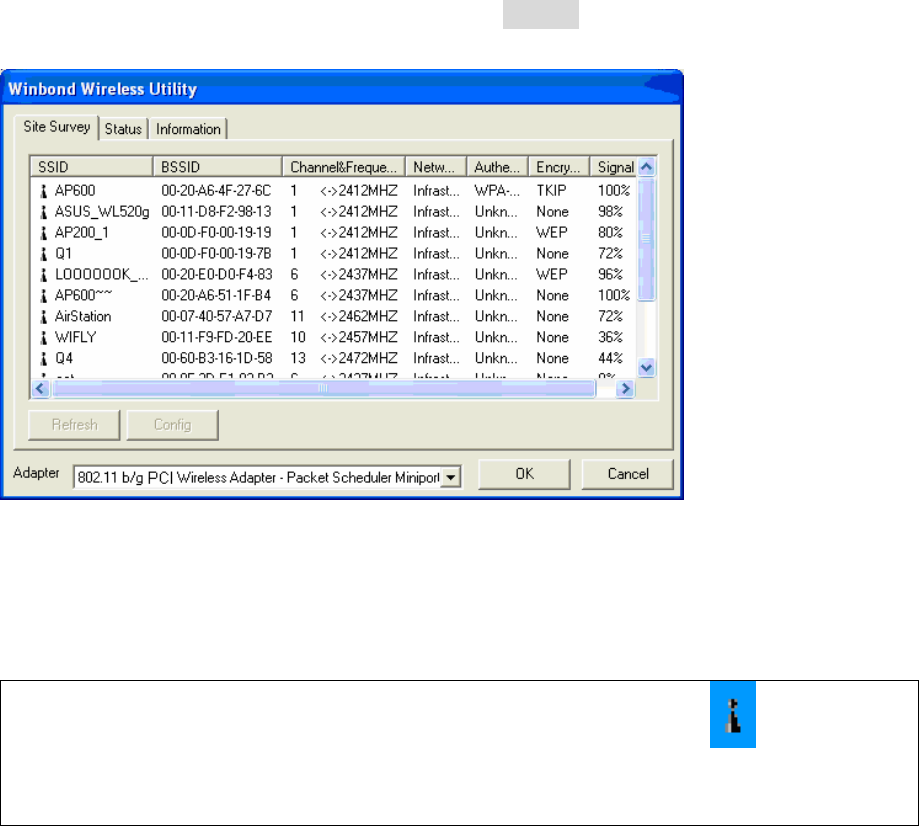
6. After you have finished the Wireless Adapter driver and utility installation, your computer will
display the Winbond Wireless Utility screen, click Cancel to continue.
 NOTE: When you complete the installation, the utility icon will appear
on the system tray. If not, it means that the installation failed. Please
uninstall the driver and repeat the process.
10
Configuring the Winbond Wireless Utility
 NOTE:
If you have installed the Windows XP Service Pack 2. You can use
the Windows Zero Configuration for Wireless Configuring. Please see
the Windows XP User’s Guide
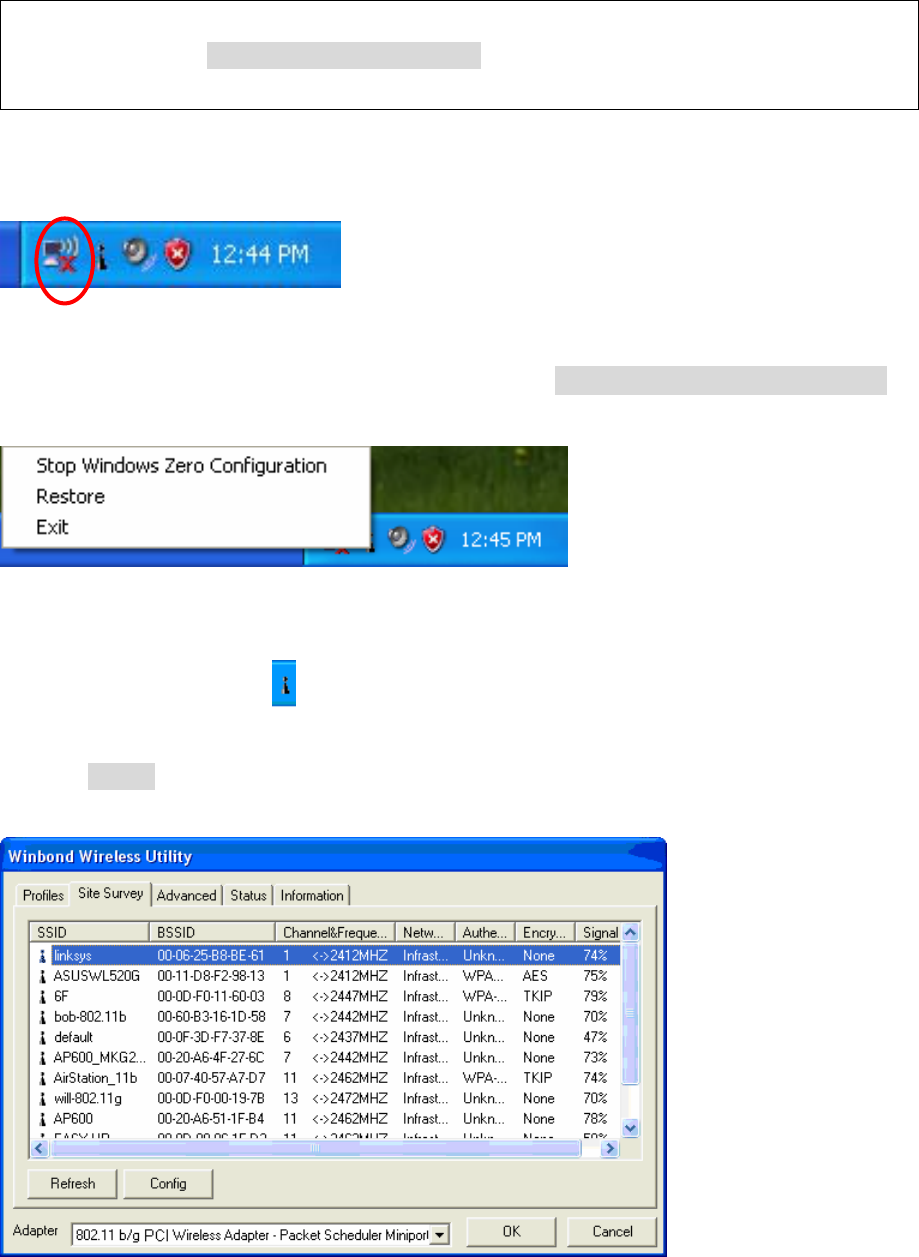
1. On the Notification Area, right-click the Winbond Utility icon.
2. Winbond Utility Selection screen will be displayed, click Stop Windows Zero Configuration.
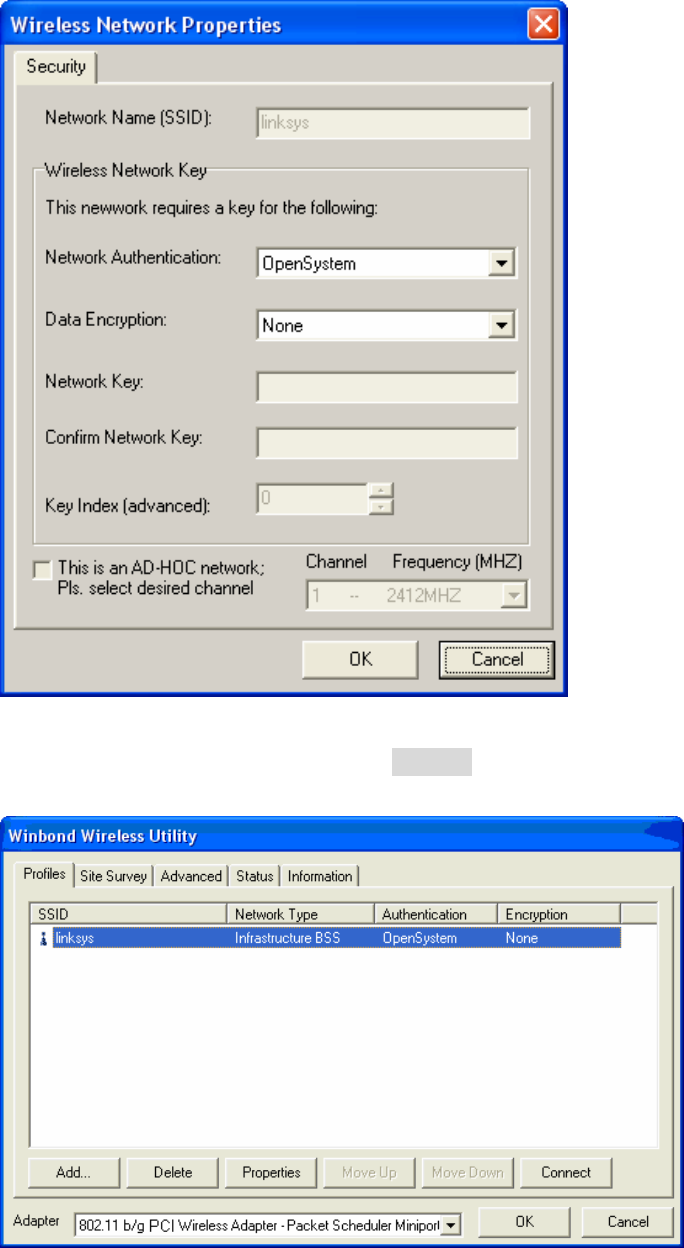
3. Double-click the utility icon in your system tray to begin the utility configuration. Select Site
Survey Tab, all available Access Points would be listed. Click on the desired Access Point, and
click the Config button for Wireless configuring.
11
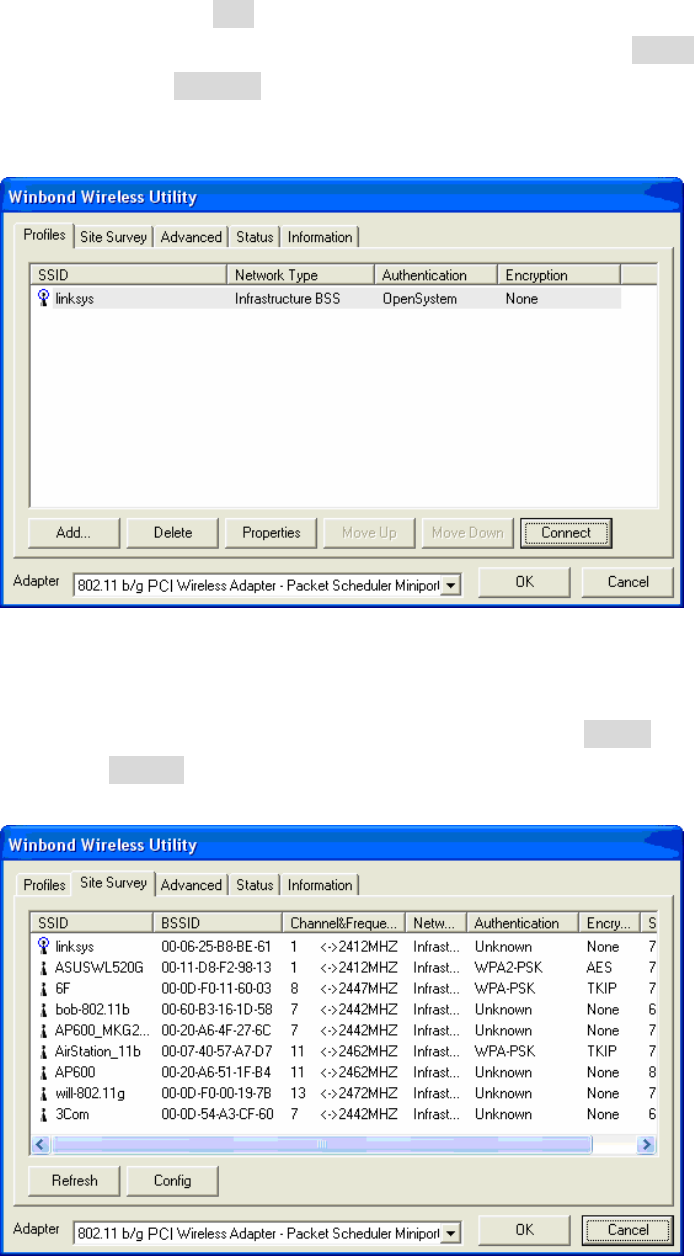
4. On the Wireless Network Properties screen, you may set Network Name (SSID), Wireless
Network Security Key or AD-HOC network.
5. Click on the desired profile, and click the Connect button to take effect.
12
Configuration
z Profile
The Profile Tab allows you to set values for all parameters by selecting a previously defined profile.
To create a profile, click Add, type a profile name and set the corresponding parameters. If one of
the profiles is no longer used, you may remove it by clicking the Delete button. After changing
parameters, click the Connect button to take effect. You can have multiple profiles and modify the
profile at any time.
z Site Survey
Site Survey Tab lists the features of the available Access Points within range of the Wireless
Adapter's signal. Click on the desired Access Point, and click Config for Wireless Configuration.
You may click Refresh to refresh the list.
13
z Advance
The Configuration Utility also offers the advanced configuration for user to set the Wireless
Adapter under certain network environment. These advanced options include RTS Threshold,
Fragmentation Threshold, Preamble Type, Tx Rate and Power Save.
14
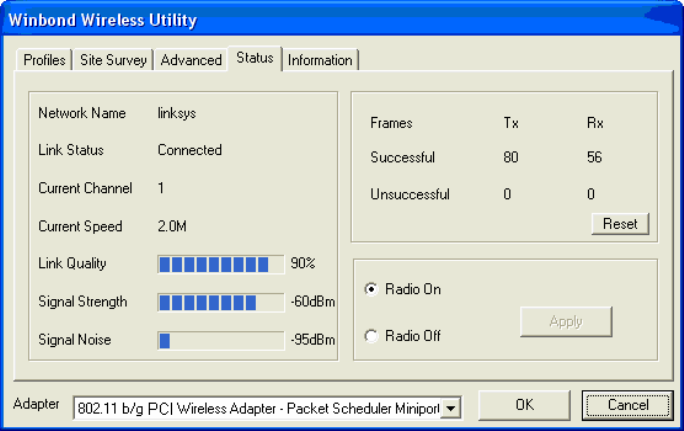
z Status
– Network Name
The field shows the association status to available Access Point with SSID of the Access Point.
– Link Status
Shows the whether the link is Connect or Disconnected.
– Current Channel
Shows the channel on which the connection is made.
– Current Speed
Shows the highest transmit rate of the current association.
– Link Quality / Signal Strength
The Link Quality and Signal Strength bar graph is only active when the node is in Infrastructure
Mode. The bar graph displays the quality and strength of the link between the node and its Access
Point.
– Signal Noise
This displays the noise level of the link between the node and its Access Point.
15
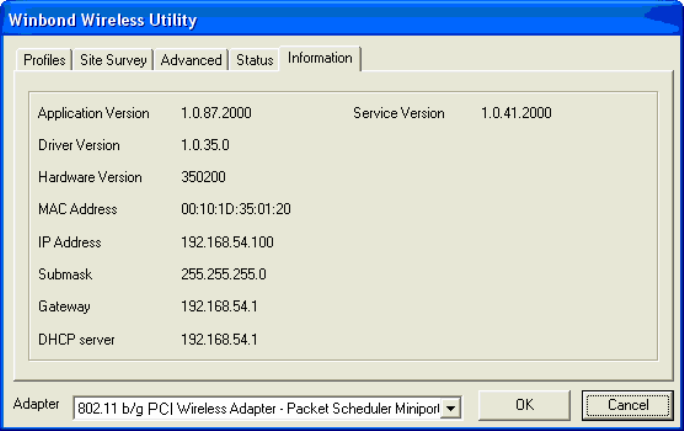
z Information
About Tab shows the product version including the detail of Configuration Utility, Driver, and NIC
MAC Address.
16
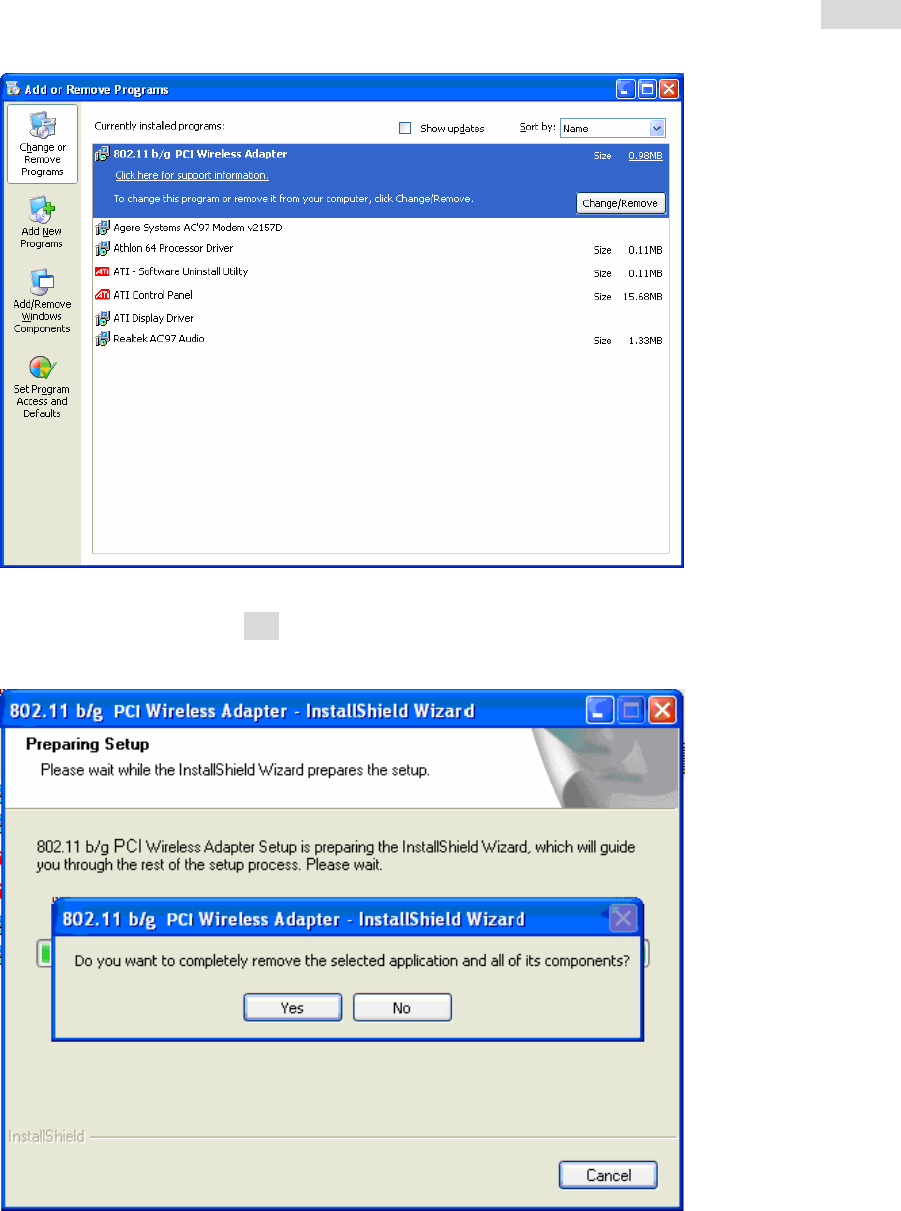
Uninstalling the Wireless Adapter Driver and Utility
1. For uninstalling the Wireless Adapter, please go to: Start Æ Settings Æ Control Panel Æ Add
or Remove Programs Æ Winbond WLAN under Windows environment. Then click Remove.
2. On the next screen, click Yes button to accept automatically uninstall for Wireless LAN Driver
and Utility.
17
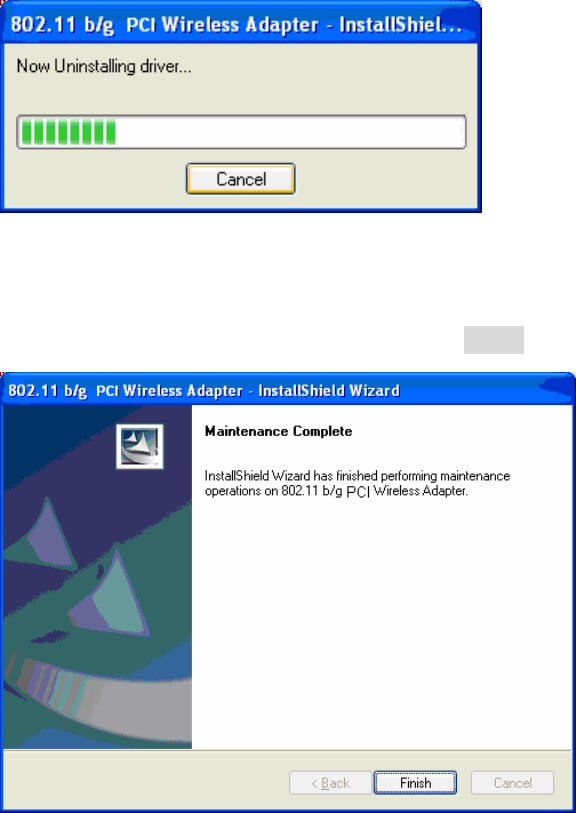
3. InstallShield Wizard will uninstall the driver and utility automatically.
4. The un-installation is now complete, please click Finish.
5. The Wireless Adapter can now be safely removed from the system when the un-installation
is done.
18
Windows 2000:
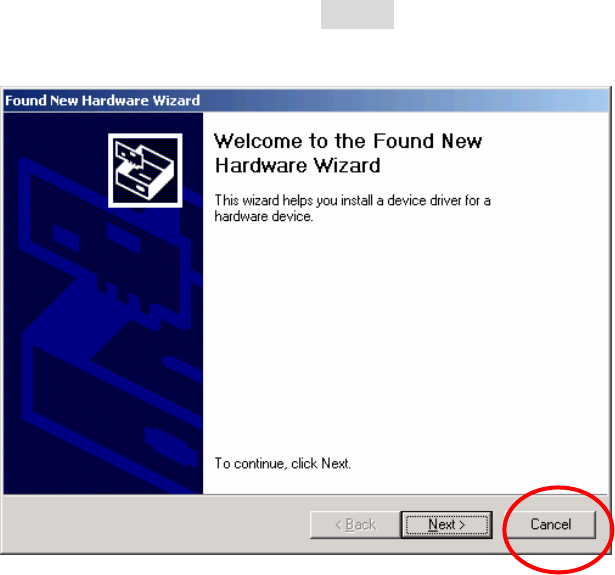
1. After you have installed the Wireless Adapter on your computer will display a Found New
Hardware Wizard screen, click Cancel to continue.
19
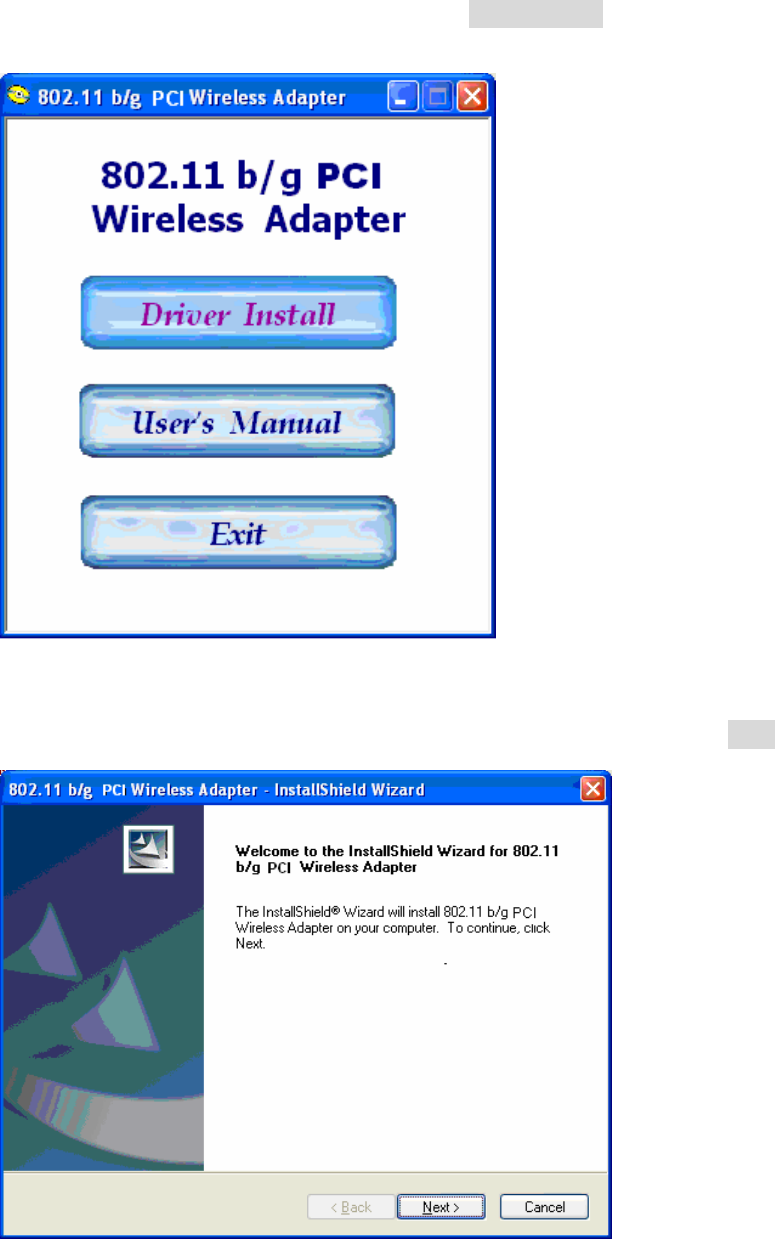
2. Insert Wireless Adapter Installation and User’s Manual CD into your CD-ROM; then the
installation will be activated automatically. Click the Driver Install icon to begin the installation.
3. InstallShield Wizard will install the driver and utility on your system, click Next to continue.
20
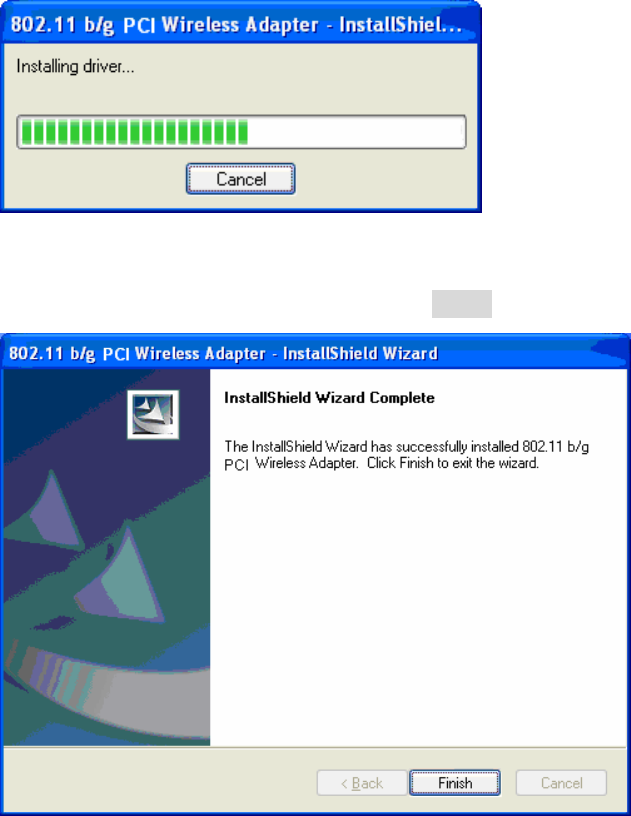
4. Wireless Adapter Driver and Utility are installing.
5. The installation is now complete, please click Finish.
21
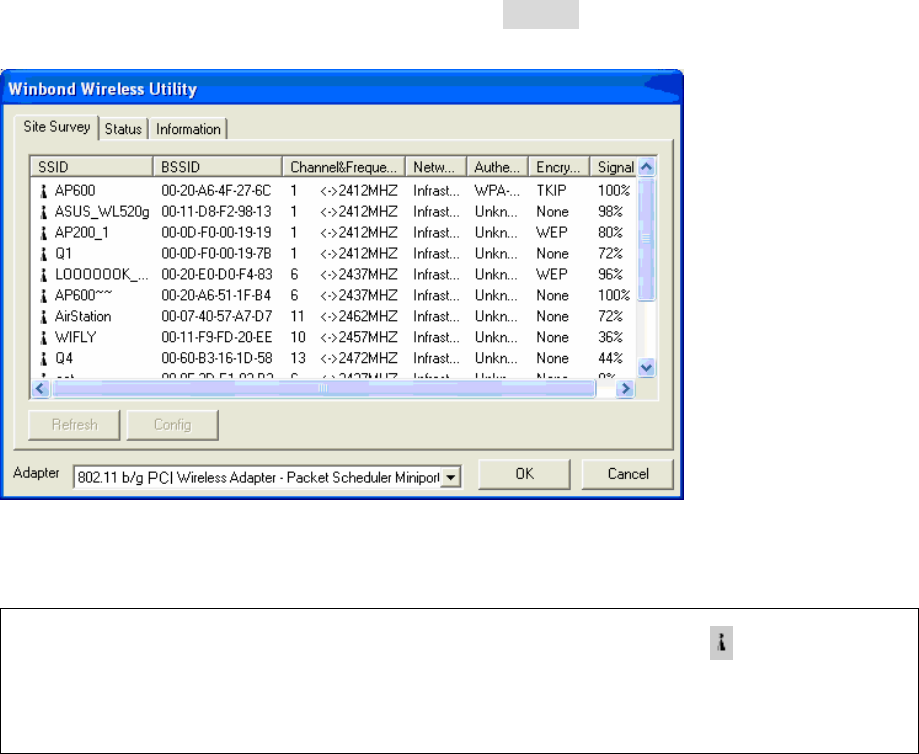
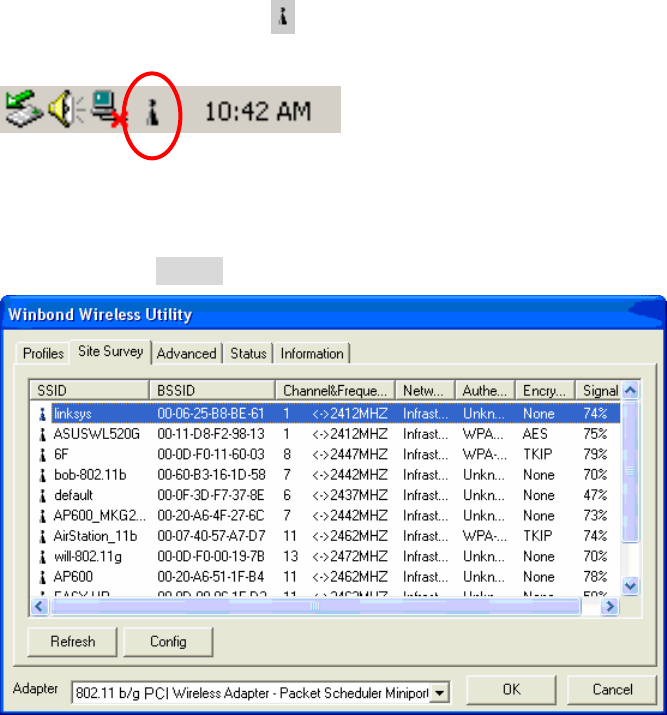
6. After you have finished the Wireless Adapter driver and utility installation, your computer will
display the Winbond Wireless Utility screen, click Cancel to continue.
 NOTE:
When you complete the installation, the utility icon will appear on
the system tray. If not, it means that the installation failed. Please
uninstall the driver and repeat the process.
22
Configuring the Winbond Wireless Utility
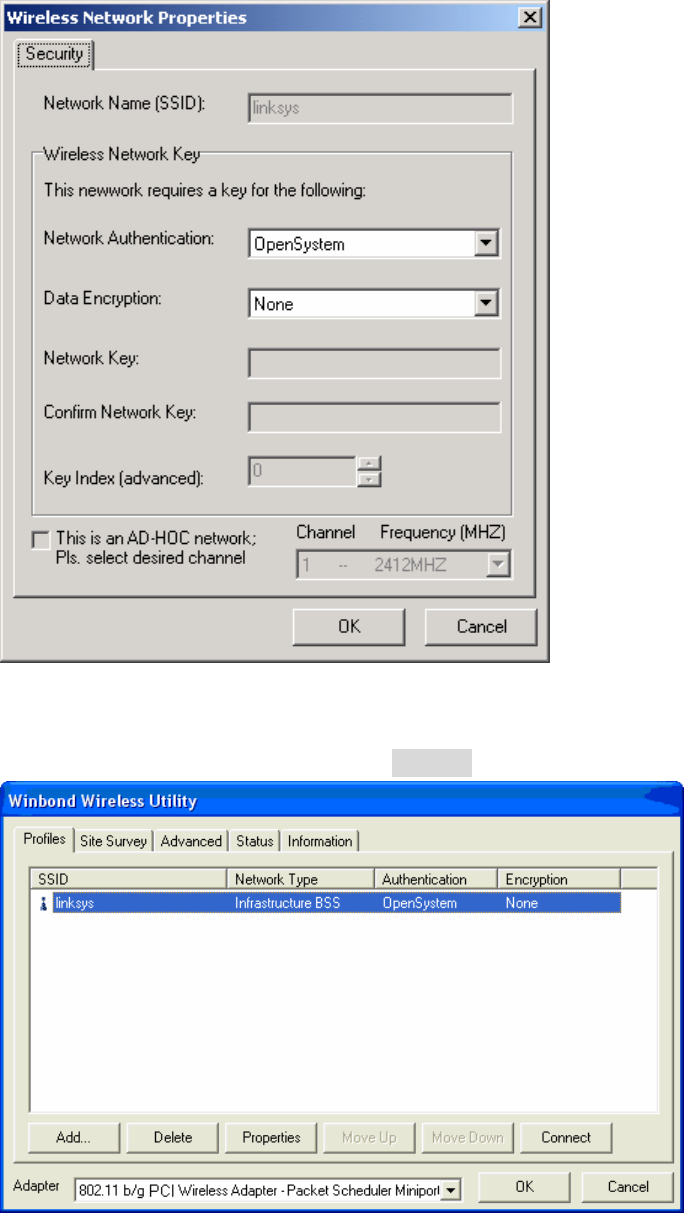
1. Double-click the utility icon in your system tray to begin the utility configuration..
2. Select Site Survey Tab, all available Access Points would be listed. Click on the desired Access
Point, and click Config button for Wireless configuring.
23
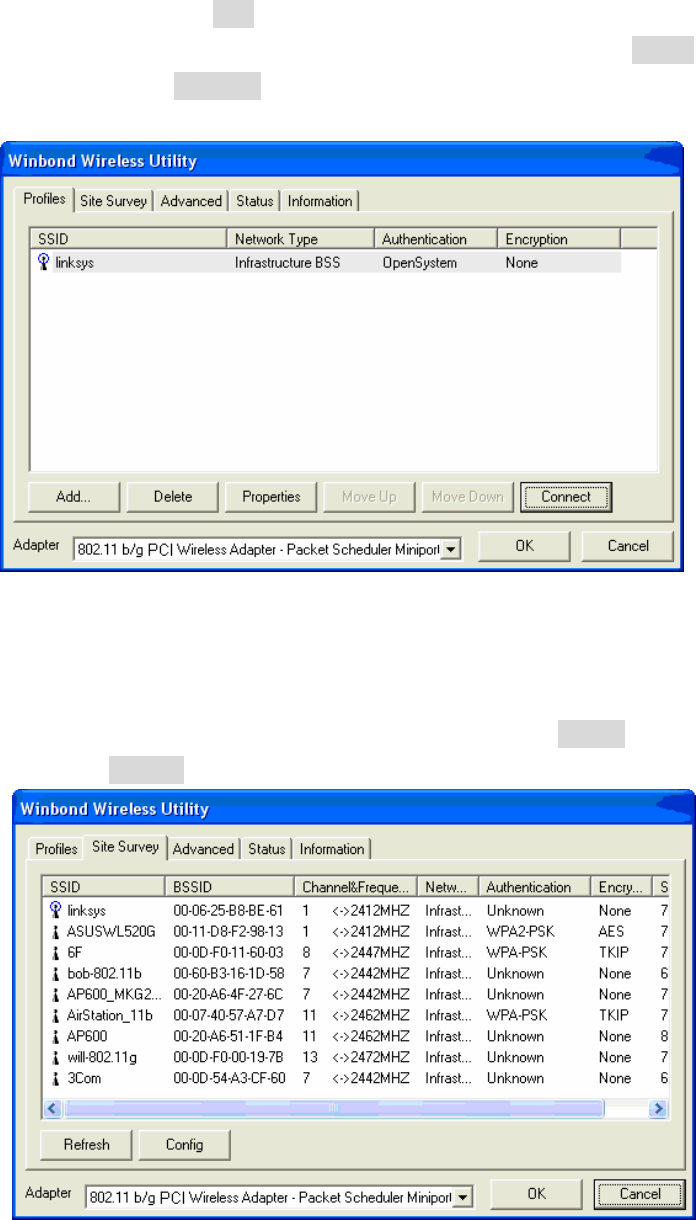
3. On the Wireless Network Properties screen, you may set Network Name (SSID), Wireless
Network Security Key or AD-HOC network.
4. Click on the desired profile, and click the Connect button to take effect.
24
Configuration
z Profile
The Profile Tab allows you to set values for all parameters by selecting a previously defined profile.
To create a profile, click Add, type a profile name and set the corresponding parameters. If one of
the profiles is no longer used, you may remove it by clicking the Delete button. After changing
parameters, click the Connect button to take effect. You can have multiple profiles and modify the
profile at any time.
z Site Survey
Site Survey Tab lists the features of the available Access Points within range of the Wireless
Adapter's signal. Click on the desired Access Point, and click Config for Wireless Configuration.
You may click Refresh to refresh the list.
25
z Advance
The Configuration Utility also offers the advanced configuration for user to set the Wireless
Adapter under certain network environment. These advanced options include RTS Threshold,
Fragmentation Threshold, Preamble Type, Tx Rate and Power Save.
26
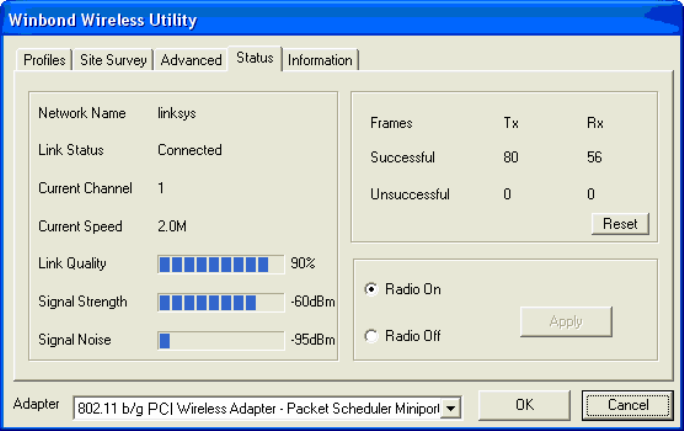
z Status
– Network Name
The field shows the association status to available Access Point with SSID of the Access Point.
– Link Status
Shows the whether the link is Connect or Disconnected.
– Current Channel
Shows the channel on which the connection is made.
– Current Speed
Shows the highest transmit rate of the current association.
– Link Quality / Signal Strength
The Link Quality and Signal Strength bar graph is only active when the node is in Infrastructure
Mode. The bar graph displays the quality and strength of the link between the node and its Access
Point.
– Signal Noise
This displays the noise level of the link between the node and its Access Point.
27
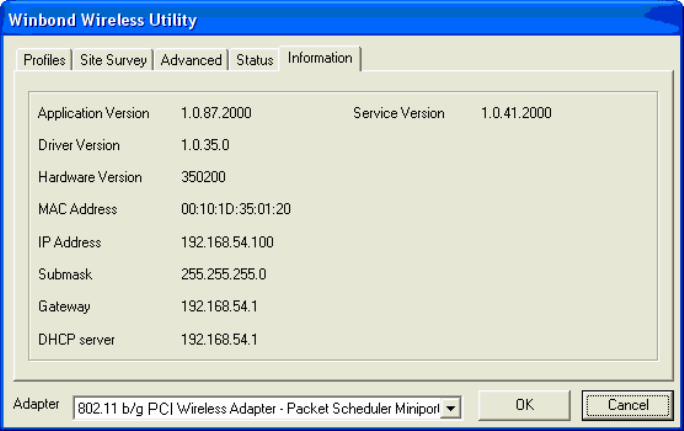
z Information
About Tab shows the product version including the detail of Configuration Utility, Driver, and NIC
MAC Address.
28
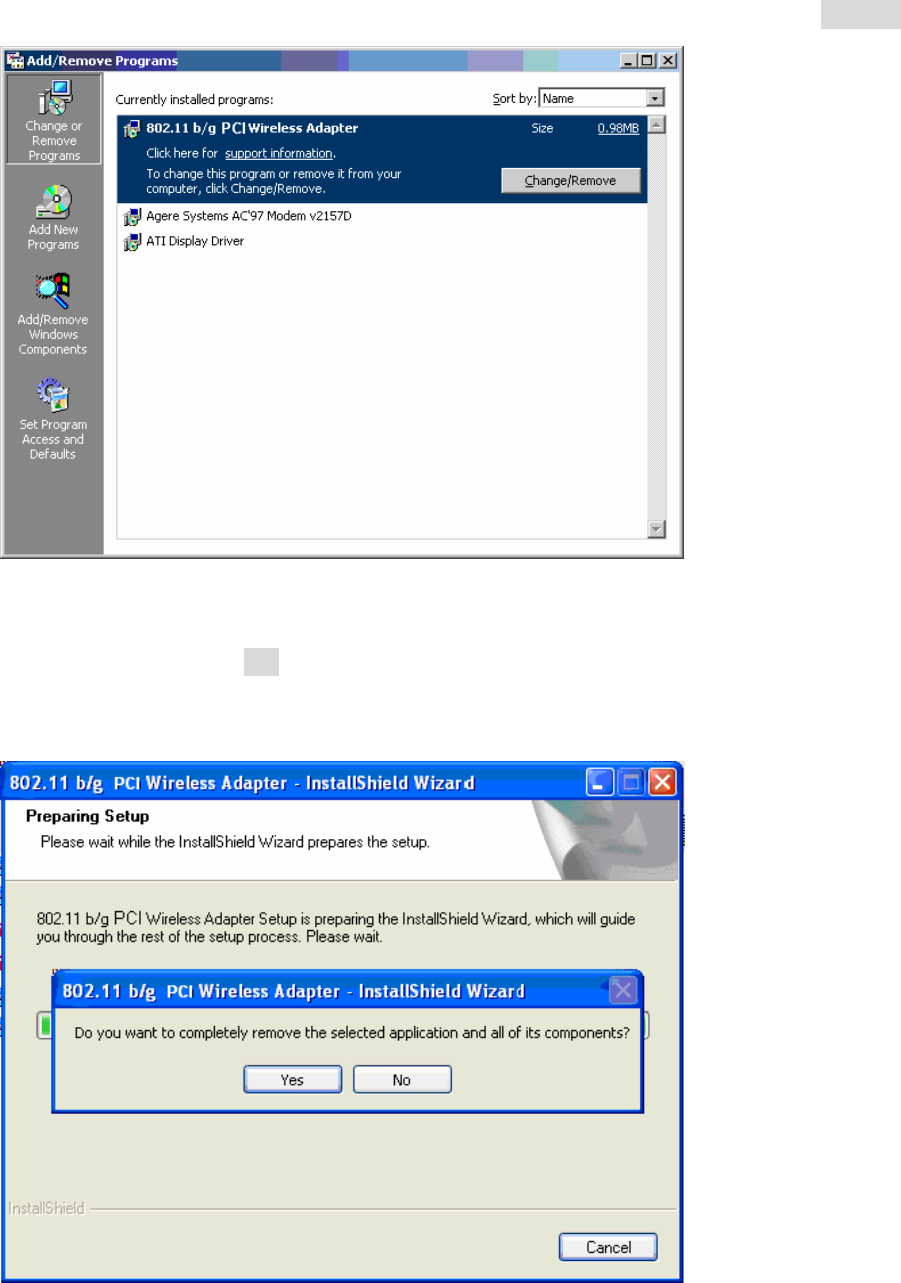
Uninstalling the Wireless Adapter Driver and Utility
1. For uninstalling the Wireless Adapter, please go to: Start Æ Settings Æ Control Panel Æ Add
or Remove Programs Æ Winbond WLAN under Windows environment. Then click Remove.
2. On the next screen, click Yes button to accept automatically uninstall for Wireless LAN Driver
and Utility.
29
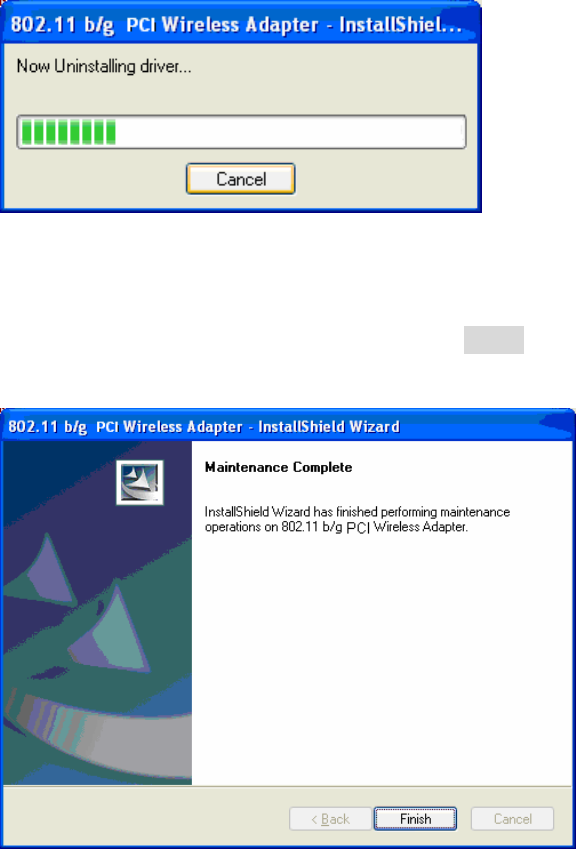
3. InstallShield Wizard will uninstall the driver and utility automatically.
4. The un-installation is now complete, please click Finish.
5. The Wireless Adapter can now be safely removed from the system when the un-installation
is done.
30
Trouble shooting
PING
This section discusses possible solutions using ping command to find your problem if you can’t connect to the
network.
1. Check if you have a valid IP address
2. Test if your TCP/IP works. Under MS-DOS (command prompt), type “ping local-host”. If you didn’t
receive a reply, then you need to re-install your TCP/IP. Proceed to next step if you have received
replies.
3. Using the same procedure, try to ping your Wireless Adapter’s IP. If the Ping command fails, check the
following:
• Your WLAN is connected
• Check that your driver is correctly installed.

31
Checking Valid IP Addresses
There are restrictions on which IP and addresses you can and cannot use. Some IP addresses are reserved
for testing, multicasting and some IP are restricted by your ISP.
Following IP addresses cannot be used:
¾ 127.x.x.x – this is a loop back address, used for testing
¾ 0.0.0.0 – this IP address represent the host address
¾ 255.255.255.255 – this is local broadcast address
¾ First portion of IP cannot exceed 224, that is, IP addresses which is in the range of 224~239.x.x.x
is not valid. This range of IP is for multicasting. IP range from 240~255.x.x.x are reserved IP
addresses and cannot be used.
¾ 0 or 255 in host ID portion of your IP are not valid. This represent local host or broadcast address
for your class of IP
IP has five classes, namely class A, B, C, D and E. For each class, the host ID portion in the IP field is
different for each of the classes. Figure below illustrate this.
Class A: 1 ~ 127 . Host ID
Class B: 128 ~ 191 . X . Host ID
Class C: 192 ~ 223 . X . X . Host ID
Class D: 224 ~ 239 . Used for Multicasting (no Host ID)
Class E: 240 ~ 255 . Reserved IP address
Host ID cannot be all 0’s or all 255’s.
Note: X denote don’t cares in the above example.
32
Federal Communication Commission Interference Statement
This equipment has been tested and found to comply with the limits for a Class B
digital device, pursuant to Part 15 of the FCC Rules. These limits are designed to
provide reasonable protection against harmful interference in a residential
installation. This equipment generates uses and can radiate radio frequency
energy and, if not installed and used in accordance with the instructions, may cause
harmful interference to radio communications. However, there is no guarantee that
interference will not occur in a particular installation. If this equipment does cause
harmful interference to radio or television reception, which can be determined by
turning the equipment off and on, the user is encouraged to try to correct the
interference by one of the following measures:
– Reorient or relocate the receiving antenna.
– Increase the separation between the equipment and receiver.
– Connect the equipment into an outlet on a circuit different from that to which
the receiver is connected.
– Consult the dealer or an experienced radio/TV technician for help.
This device complies with Part 15 of the FCC Rules. Operation is subject to the
following two conditions: (1) This device may not cause harmful interference, and (2)
this device must accept any interference received, including interference that may
cause undesired operation.
FCC Caution: Any changes or modifications not expressly approved by the party
responsible for compliance could void the user's authority to operate this equipment.
"Qcom Technology Inc. declares that Q802PWG is limited in CH1~CH11 by
specified firmware controlled in USA."
IMPORTANT NOTE:
FCC Radiation Exposure Statement:
This equipment complies with FCC radiation exposure limits set forth for an
uncontrolled environment. To maintain compliance with FCC RF exposure
compliance requirements, please follow operation instruction as documented in this
manual. This equipment should be installed and operated with minimum distance
20cm between the radiator & your body.
This transmitter must not be co-located or operating in conjunction with any other
antenna or transmitter.