Quadra Fire 810 02901 Users Manual 250 7251G Castile Pellet Insert 8 20 09.2
810-02901 Castile Insert
CASTINS-CSB to the manual aa98a5a8-5a91-4c16-a1bd-a1de559bd5c3
2015-02-05
: Quadra-Fire Quadra-Fire-810-02901-Users-Manual-492638 quadra-fire-810-02901-users-manual-492638 quadra-fire pdf
Open the PDF directly: View PDF  .
.
Page Count: 52
R
www.quadrafi re.com 250-7251G August 20, 2009
CASTILE PELLET INSERT
O-T L
Tested and
Listed by Portland
Oregon USA
OMNI-Test Laboratories, Inc.
CUS
Owner’s Manual
Installation and Operation
810-02901 (MBK)
810-03201 (PMH)
CASTINS-CSB
CASTINS-CWL
Models:
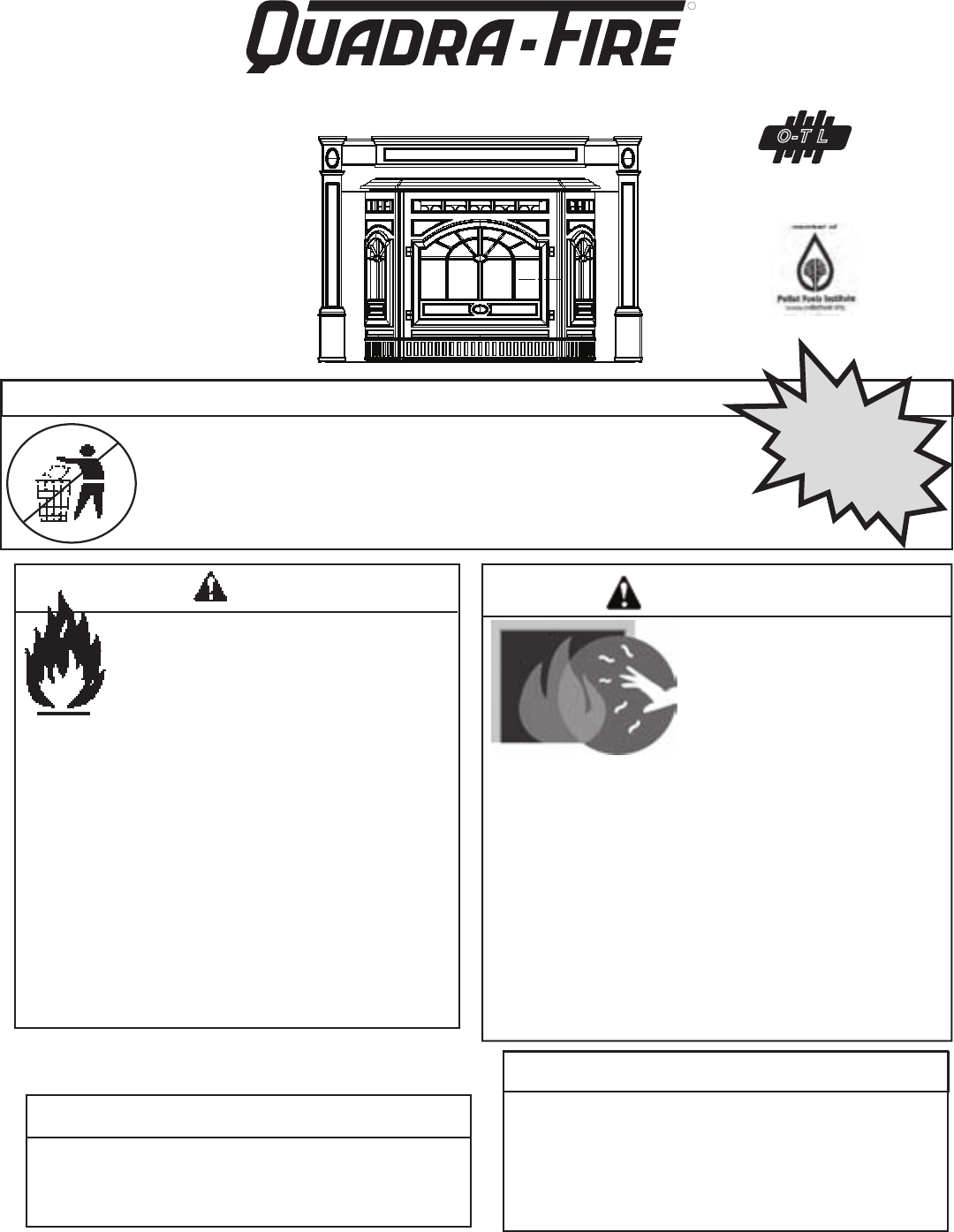
WARNING
Please read this entire manual
before installation and use of this
pellet fuel-burning room heater.
Failure to follow these instructions
could result in property damage,
bodily injury or even death.
• Do not store or use gasoline or other fl am-
mable vapors and liquids in the vicinity of this
or any other appliance.
• Do not overfi re - If any external part starts to
glow, you are overfi ring. Reduce feed rate.
Overfi ring will void your warranty.
• Comply with all minimum clearances to com-
bustibles as specifi ed. Failure to comply may
cause house fi re.
Check building codes prior to installation.
• Installation MUST comply with local, regional, state
and national codes and regulations.
• Consult local building, fi re offi cials or authorities having
jurisdiction about restrictions, installation inspection,
and permits.
CAUTION
Tested and approved for wood pellets and shelled
fi
eld corn fuel only. Burning of any other type of fuel
voids your warranty.
CAUTION
• Important operating and
maintenance instruc-
tions included.
• Leave this manual
with party respon-
sible for use and
operation.
• Read, understand and
follow these instruc-
tions for safe installa-
tion and operation.
DO NOT DISCARD THIS MANUAL
CAUTION
DO NOT
DISCARD
WARNING
Hot glass will cause burns.
• Do not touch glass until it is cooled
• NEVER allow children to touch glass
• Keep children away
• CAREFULLY SUPERVISE children in same room as
fi replace.
• Alert children and adults to hazards of high
temperatures.
High temperatures may ignite clothing or other
fl ammable materials.
• Keep clothing, furniture, draperies and other fl ammable
materials away.
HOT SURFACES!
Glass and other surfaces are
hot during operation AND
cool down.
Page 2 250-7251G August 20, 2009
R
Castile Pellet Insert
Hearth & Home Technologies welcomes you to our
tradition of excellence! In choosing a Quadra-Fire
appliance, you have our assurance of commitment
to quality, durability, and performance.
This commitment begins with our research of the
market, including ‘Voice of the Customer’ contacts,
ensuring we make products that will satisfy your
needs.
Our Research and Development facility then
employs the world’s most advanced technology
to achieve the optimum operation of our stoves,
inserts and fi replaces. And yet we are old-fash-
ioned when it comes to craftsmanship. Each unit
is meticulously fabricated and are hand-fi nished for
lasting beauty and enjoyment.
Our pledge to quality is completed as each model
undergoes a quality control inspection. From
design, to fabrication, to shipping: We wish you
and your family many years of enjoyment in the
warmth and comfort of your hearth appliance.
Thank you for choosing Quadra-Fire.
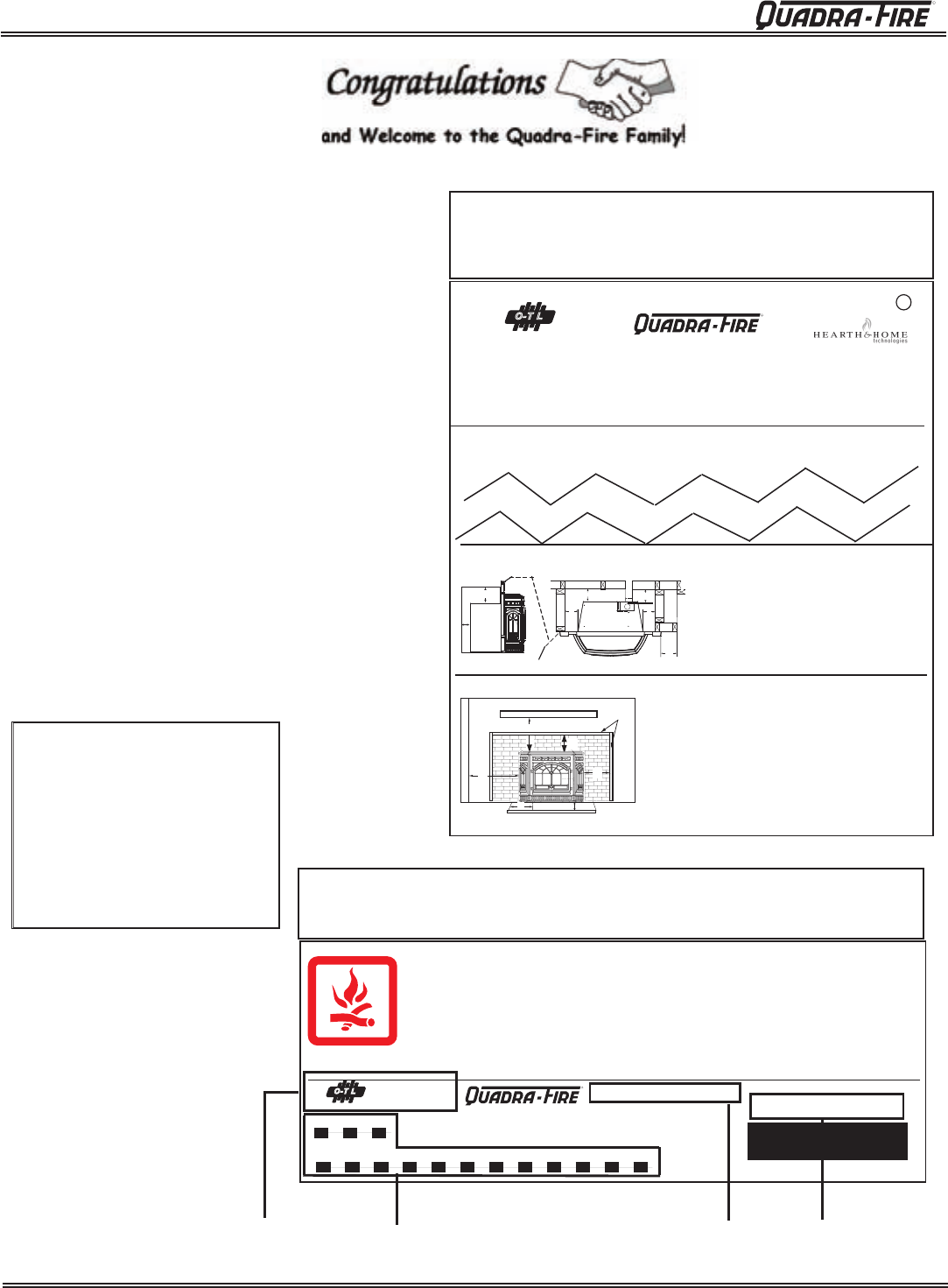
SAMPLE OF CLEARANCE TO COMBUSTIBLES LABEL
LOCATION: On beaded chain behind right access
panel. Panel hinges open.
Report No.
#061-S-42-2
7014-143
SAFETY LABEL
R
Castile Pellet Insert
Listed Solid Fuel Room Heater/Pellet Type Insert.
Also suitable for Mobile Home Installation. This
appliance has been tested and listed for use in Manufactured Homes in accordance with OAR
814-23-9000 through 814-23-909.
Tested to: ASTM E-1509-95, ULC S628-93, ULC /ORD-C1482-M1990 Room Heating Pellet Burning Type,
(UM) 84-HUD FOR USE
ONLY WITH PELLETIZED WOOD OR SHELLED FIELD CORN FUEL.
Route power cord away from unit. Do not route cord under or in front of appliance.
Input Rating: 30,000 BTU/HR.
Electrical Rating:
115 VAC, 60 Hz, Start 4.1 Amps, Run 1.1 AMPS.
MINIMUM CLEARANCES TO COMBUSTIBLE MATERIALS
AS A BUILT-IN UNIT
Masonry or Zero Clearance
DO NOT REMOVE THIS LABEL
A Insert side to combustible
0 in. 0mm
B
Insert top to mantel
12 in. 305mm
C Insert top to face trim 0 in. 0mm
D
Insert side face trim
0 in. 0mm
E Hearth extension from door opening
6 in. 152mm
F
Hearth extension from side of door opening
6 in. 152mm
B
D
C
C
A
B
E
0 in. Clearance To Exposed Section and Face Trim
A Top of Hopper Top/Rear Vent
0 in. (0mm)
B
Side of Outside Skin
Top/Rear Vent
0 in. (0mm)
C Back of Hopper Rear Vent 0 in. (0mm)
Top Vent 2.5 in. (64mm)
D
Vent Pipe to Combustible
Rear Vent 3.0 in. (76mm)
E From Panel Edge 0 in. (0mm)
SIDE WALL
MANTEL
B
A
C
E
D
F
Face Trim
1445 Highway North, Colville, WA 99114
Manufactured by:
www.quadrafire.com
O-T L
Tested and
Listed by Portland
Oregon USA
OMNI-Test Laboratories, Inc.
CUS
SAMPLE
This model is exempt from EPA certification
under 40 CFR 60.531 by definition [Wood
Heater (A) "Air-to-Fuel Ratio"].
JAN FEB MAR APR MAY JUNE JULY AUG SEPT OCT NOV DEC
250-7262F
CASTILE PELLET INSERT
R
SERIAL NO.
/NUMÉRO DU S
É
RIE
DO NOT REMOVE THIS LABEL
Made in U.S.A.
Report /Rapport
#061-S-42-2
CAUTION
:
ATTENTION:
H
OT WHILE IN OPERATION DO NOT TOUCH, KEEP CHILDREN, CLOTHING AND FURNITURE AWAY. CONTACT MAY CAUSE SKIN
BURNS. SEE NAMEPLATE AND
INSTRUCTIONS.
Operate this unit with fuel hopper lid closed. Failure to do so may
result in emissions products’ combustion from the hopper under certain conditions. Maintain hopper seal in
good condition. Do not overfill hopper.
CHAUD LORS DE L'OPÉRATION. NE PAS TOUCHER. GARDEZ LES ENFANTS ET LES VÊTEMENTS LOIN DE
L'ESPACE DÉSIGNÉ DE L'INSTALLATION. LE CONTACT PEUT CAUSER DES BRÛLURES À LA PEAU. VOIR
L'ÉTIQUETTE ET LES INSTRUCTIONS.
Opérez cet appareil avec le couvercle de la trémie fermé. Le défautde ne pas suivre les instructions
peut résulter, sous certaines conditions, en une combustion des émissions des produits venant de la trémie. Ne pas remplir la trémie trop pleine.
007
2009 2010 2011
U.S. ENVIRONMENTAL
PROTECTION AGENCY
NE PAS ENLEVER L'ÉTIQUETTE
Fait Aux États-Unis
O-T L
Tested and
Listed by Portland
Oregon USA
OMNI-Test Laboratories, Inc.
CUS
Test Lab &
Rpt Nbr. Mfg Date Model
Name
Serial No.
SAMPLE OF SERIAL NUMBER & DATE OF MANUFACTURE LABEL
LOCATION: Inside hopper on the top
NOTE: Consult
insurance carrier, local
building inspector, fi re
offi cials or authorities
having jurisdiction over
restrictions, installation
inspection and permits.

R
August 20, 2009 250-7251G Page 3
Castile Pellet Insert
Safety Alert Key:
• DANGER! Indicates a hazardous situation which, if not avoided will result in death or serious injury.
• WARNING! Indicates a hazardous situation which, if not avoided could result in death or serious injury.
• CAUTION! Indicates a hazardous situation which, if not avoided, could result in minor or moderate injury.
• NOTICE: Indicates practices which may cause damage to the fi replace or to property.
Section 1: Listing and Code Approvals
A. Appliance Certifi cations ......................4
B. Mobile Home Approved ......................4
C. Glass Specifi cations ............................4
D. Electrical Rating ..................................4
E. BTU & Effi ciency Specifi cations ..........4
Section 2: Getting Started
A. Design, Installation & Location
Considerations ....................................5
B. Locating Your Appliance & Chimney ..6
C. Draft ....................................................6
D. Negative Pressure ..............................6
E. Fire Safety ..........................................7
F. Tools & Supplies Needed ...................7
G. Inspect Appliance, Components
and Pre-Use Check List ......................7
Section 3: Dimensions & Clearances
A. Appliance Dimensions ........................8
B. Clearances to Combustibles
As A Built-In, UL and ULC ..................9
C. Clearances to Combustibles,
Masonry & Zero Clearance .................10
D. Floor Protection ..................................10
E. Minimum Opening for Factory-
Built Fireplace .....................................10
F. Removing Floor of Factory-Built
Fireplace .............................................11
G. Prefabricated Metal Chimney ..............12
H. Altering Factory-Built Fireplace ...........12
Section 4: Vent Information
A. Chimney & Exhaust Connections ........13
B. Venting Termination Requirements ....13
C. Equivalent Feet of Pipe.......................14
D. Pipe Selection Chart ...........................14
Section 5: Venting Systems
A. Full Reline with Outside Air-Horizontal 15
B. Full Reline with Outside Air-Vertical ....16
Section 6: Mobile Home ..................................17
Section 7: Appliance Set-Up
A. Reversible Top & Rear Flue Adapter ....18
B. Leveling System .................................18
C. Outside Air Kit .....................................19
D. Zero Clearance Trim Support .............19-20
E. Panel Set & Cast Trim ........................21
F. Panel & Trim Set Econo .....................21
G. Log Set Placement ..............................22
H. Thermostat Installation ........................23
Section 8: Operating Instructions
A. Fuel Size, Material & Storage .............24
B. General Operation Information ...........25
C. Before Your First Fire .........................25
D. Starting Your First Fire ........................25
E. Fire Characteristics .............................25
F. Feed Rate Adjustment .......................26
G. Ignition Cycles ....................................26
H. Frequently Asked Questions...............27
Section 9: Troubleshooting ............................28-30
Section 10: Maintaining & Servicing Appliance
A. Proper Shutdown Procedures
.............31
B. Quick Reference Maintenance Chart ..31
C. General Maintenance & Cleaning .......32-35
D. High Ash Content Maintenance ..........35
E. Igniter Replacement ............................36
F. Glass Replacement .............................36
G. Baffl e & Brick Removal .......................37-38
Section 12: Reference Material
A. Component Functions.........................39-40
B. Component Locations .........................41
C. Exploded Drawing...............................42
D. Service Parts & Accessories ...............43-47
E. Service & Maintenance Log ................48-49
F. Warranty Policy ...................................50-51
G. Contact Information .............................52
TABLE OF CONTENTS
Page 4 250-7251G August 20, 2009
R
Castile Pellet Insert
1Listing and Code Approvals
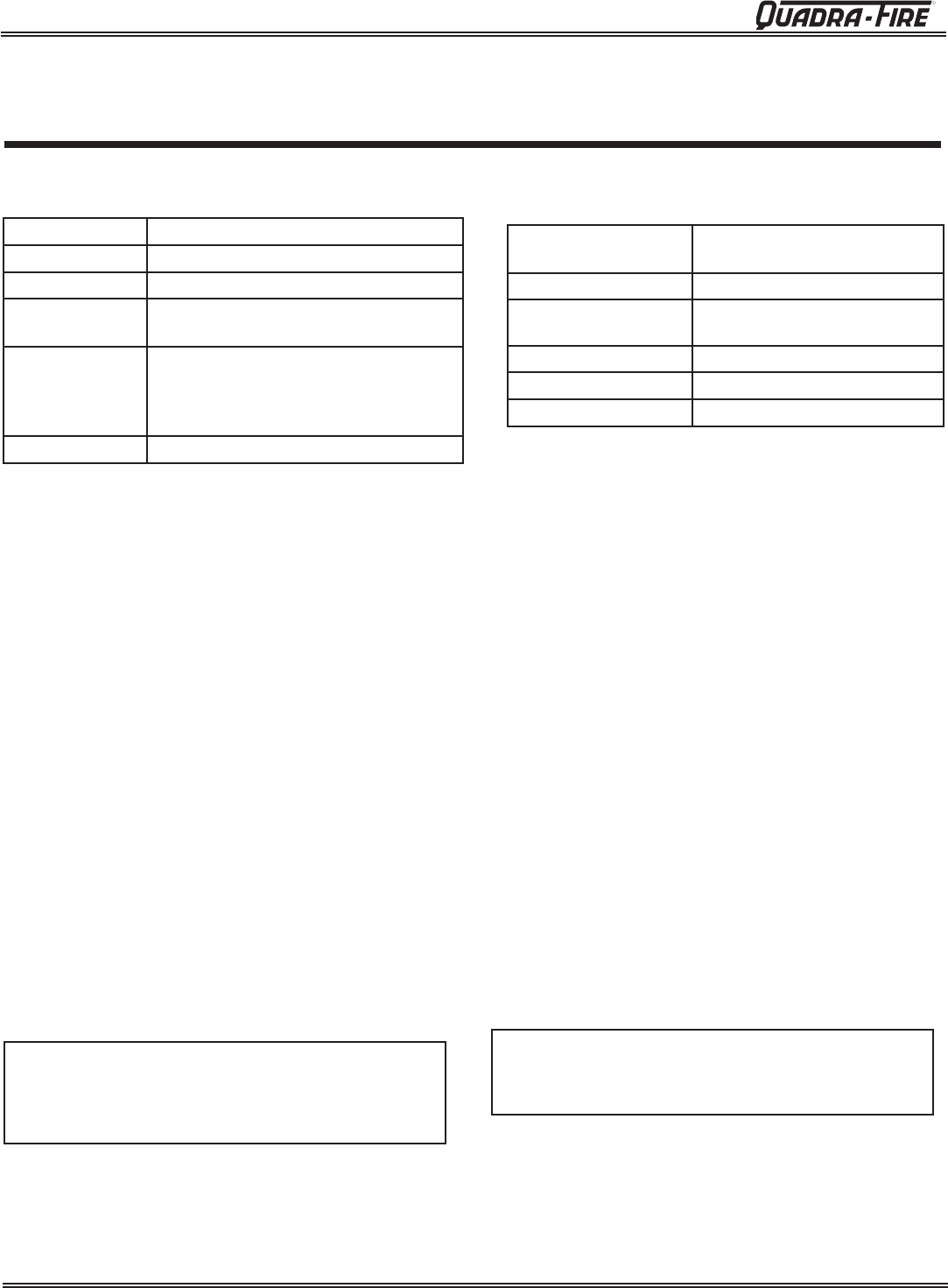
A. Appliance Certifi
cation
C. Glass Specifi cations
E. BTU & Effi ciency Specifi cations
This appliance is equipped with 5mm ceramic glass. Replace
glass only with 5mm ceramic glass. Please contact your
dealer for replacement glass.
NOTE: This installation must conform with local codes.
In the absence of local codes you must comply with the
ASTM E1509-95, ULC S628-93, ULC/ORD-C-1482-
M1990 and (UM) 84-HUD
D. Electrical Rating
115 VAC, 60 Hz, Start 4.1 Amps, Run 1.1 Amps
*BTU output will vary, depending on the brand of fuel you
use in your appliance. Consult your Quadra-Fire dealer
for best results.
NOTE: Hearth & Home Technologies, manufacturer of
this appliance, reserves the right to alter its products,
their specifi
cations and/or price without notice.
MODEL: Castile Pellet Insert
LABORATORY: OMNI Test Laboratories, Inc
REPORT NO. 061-S-42-2
TYPE: Solid Fuel Room Heater/Pellet Fuel
Burning Type Insert
STANDARD: ASTM E1509-95, ULC S628-93 and
ULC/ORD-C1482-M1990 Room
Heater Pellet Fuel Burning Type and
(UM) 84-HUD, Mobile Home Approved
Colorado: Approved 11-15-02
Particulate Emis-
sions Rating: 0.7 grams/hr
*BTU Output: 8,000 - 30,000 / hr
Heating Capacity: up to 1,500 sq. ft. depending
on climate zone
Hopper Capacity: 45 lbs
Fuel: Wood Pellets or Shelled Corn
Shipping Weight: 260 lbs
WARNING! Risk of Fire! Hearth & Home Technologies dis-
claims any responsibility for, and the warranty and agency
listing will be voided by the above actions.
DO NOT:
• Install or operate damaged appliance
• Modify appliance
• Install other than as instructed by Hearth & Home
Technologies
• Operate the appliance without fully assembling all
components
• Overfi re
• Install any component not approved by Hearth &
Home Technologies
• Install parts or components not Listed or approved.
Improper installation, adjustment, alteration, service or
maintenance can cause injury or property damage.
For assistance or additional information, consult a qualifi ed
installer, service agency or your dealer.
Quadra-Fire is a registered trademark
of Hearth & Home Technologies.
This appliance is approved for mobile home installations
when not installed in a sleeping room and when an outside
combustion air inlet is used.
The structural integrity of the mobile home fl oor, ceiling, and
walls must be maintained.
The appliance must be properly grounded to the frame of
the mobile home and use only Listed pellet vent Class “L”
or “PL” connector pipe.
A Quadra-Fire Outside Air Kit must be installed in a mobile
home installation. You must order the Outside Air Kit sepa-
rately.
B. Mobile Home Approved
Note: The appliance is also approved for installation
into a shop.
R
August 20, 2009 250-7251G Page 5
Castile Pellet Insert
2Getting Started
A
.
Design, Installation & Location Considerations
Warning! Risk of Fire Damaged parts could impair safe
operation. Do NOT install damaged, incomplete or substitute
components.
1. Appliance Location
NOTICE: Check building codes prior to installation.
• Installation MUST comply with local, regional, state and
national codes and regulations.
• Consult insurance carrier, local building inspector, fi re
offi cials or authorities having jurisdiction over restrictions,
installation inspection and permits.
It is a good idea to plan your installation on paper, using
exact measurements for clearances and fl oor protection,
before actually beginning the installation
Consideration must be given to:
• Safety, convenience, traffi c fl ow
• Placement of the chimney and chimney connector.
• If you are not using an existing chimney, place the appli-
ance where there will be a clear passage for a factory-
built listed chimney through the ceiling and roof.
• Installing an optional outside air kit would affect the loca-
tion of the vent termination.
CAUTION! If burning shelled fi eld corn, you must use ap-
proved venting specifi cally designed for corn to prevent corro-
sion or degradation. Follow the instructions from the venting
manufacturer.
Since pellet exhaust can contain ash, soot or sparks, you
must consider the location of:
• Windows
• Air Intakes
• Air Conditioner
• Overhang, soffi ts, porch roofs, adjacent walls
• Landscaping, vegetation
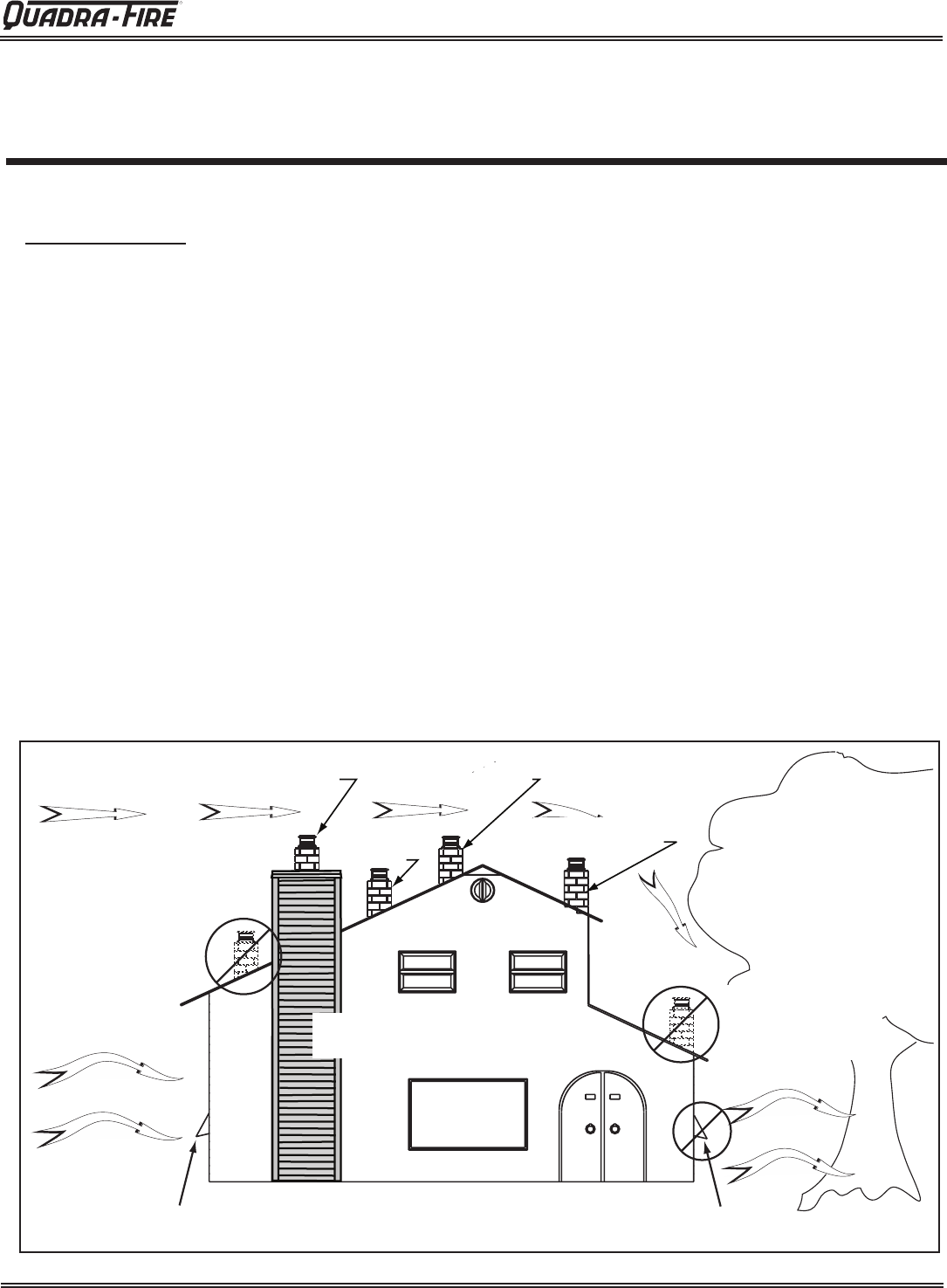
When locating vent and venting termination, vent above
roof line when possible.
Marginal Location:
• Below peak
Location NOT recommended:
• Not the highest point of the roof
• Wind loading possible
Multi-level Roofs
Windward
Leeward
Recommended:
Outside Air Intake
on windward side
NOT recommended:
Outside Air Intake
on leeward side
Recommended Location:
• Above peak
Recommended:
• Insulated exterior chase
in cooler climates
Recommended Location:
• Above peak
• Inside heated space
Location NOT recommended:
• Too close to tree
• Below adjacent structure
• Lower roof line
• Avoid outside wall
Marginal Location:
• Wind loading possible
NOTICE: Locating the appliance in a location of
considerable air movement can cause intermittent smoke
spillage from appliance. Do not locate appliance near:
• Frequently open doors
• Central heat outlets or returns
Figure 5.1
Page 6 250-7251G August 20, 2009
R
Castile Pellet Insert
Location of the appliance and chimney will affect
performance.
• Install through the warm airspace enclosed by the building
envelope. This helps to produce more draft, especially
during lighting and die-down of the fi re.
• Penetrate the highest part of the roof. This minimizes the
effects of wind loading.
• Locate termination cap away from trees, adjacent
structures, uneven roof lines and other obstructions.
• Minimize the use of chimney offsets.
• Consider the appliance location relative to fl oor and ceiling
and attic joists.
B. Locating Your Appliance & Chimney D. Negative Pressure
WARNING! Risk of Asphyxiation! Negative pressure can
cause spillage of combustion fumes and soot.
Negative pressure results from the imbalance of air avail-
able for the appliance to operate properly. It can be stron-
gest in lower levels of the house.
Causes include:
• Exhaust fans (kitchen, bath, etc.)
• Range hoods
• Combustion air requirements for furnaces, water heaters
and other combustion appliances
• Clothes dryers
• Location of return-air vents to furnace or air conditioning
• Imbalances of the HVAC air handling system
• Upper level air leaks such as:
- Recessed lighting
- Attic hatch
- Duct leaks
To minimize the effects of negative air pressure:
• Install the outside air kit with the intake facing prevailing
winds during the heating season
• Ensure adequate outdoor air for all combustion appliances
and exhaust equipment
• Ensure furnace and air conditioning return vents are not
located in the immediate vicinity of the appliance
• Avoid installing the appliance near doors, walkways or
small isolated spaces
• Recessed lighting should be a “sealed can” design
• Attic hatches weather stripped or sealed
• Attic mounted duct work and air handler joints and seams
taped or sealed
C. Draft
Draft is the pressure difference needed to vent appliances
successfully. When an appliance is drafting successfully, all
combustion byproducts are exiting the home through the
chimney.
Considerations for successful draft include:
• Preventing negative pressure
• Location of appliance and chimney
NOTICE: Hearth & Home Technologies assumes no
responsibility for the improper performance of the chimney
system caused by:
• Inadequate draft due to environmental conditions
• Downdrafts
• Tight sealing construction of the structure
• Mechanical exhausting devices
CAUTION
• DO NOT CONNECT THIS UNIT TO A CHIMNEY FLUE
SERVICING ANOTHER APPLIANCE.
• DO NOT CONNECT TO ANY AIR DISTRIBUTON DUCT
OR SYSTEM.
R
August 20, 2009 250-7251G Page 7
Castile Pellet Insert
G. Inspect Appliance & Components and
Pre-Use Check List
Reciprocating Saw
Hammer
Phillips Screw driver
Tape Measure
Plumb Line
Level
Framing Material
Hi-temp Caulking Material
Gloves
Safety Glasses
Framing Square
Electric Drill & Bits (1/4”)
1/4” Self-Tapping Screws
May also need:
Vent Support Straps
Venting Paint
Tools and building supplies normally required
for installation, unless installing into an existing
masonry fi replace:
F. Tools And Supplies Needed
Inspect appliance and components for
damage. Damaged parts may impair safe
operation.
WARNING
• Do NOT install damaged components.
• Do NOT install incomplete components.
• Do NOT install substitute components.
Report damaged parts to dealer.
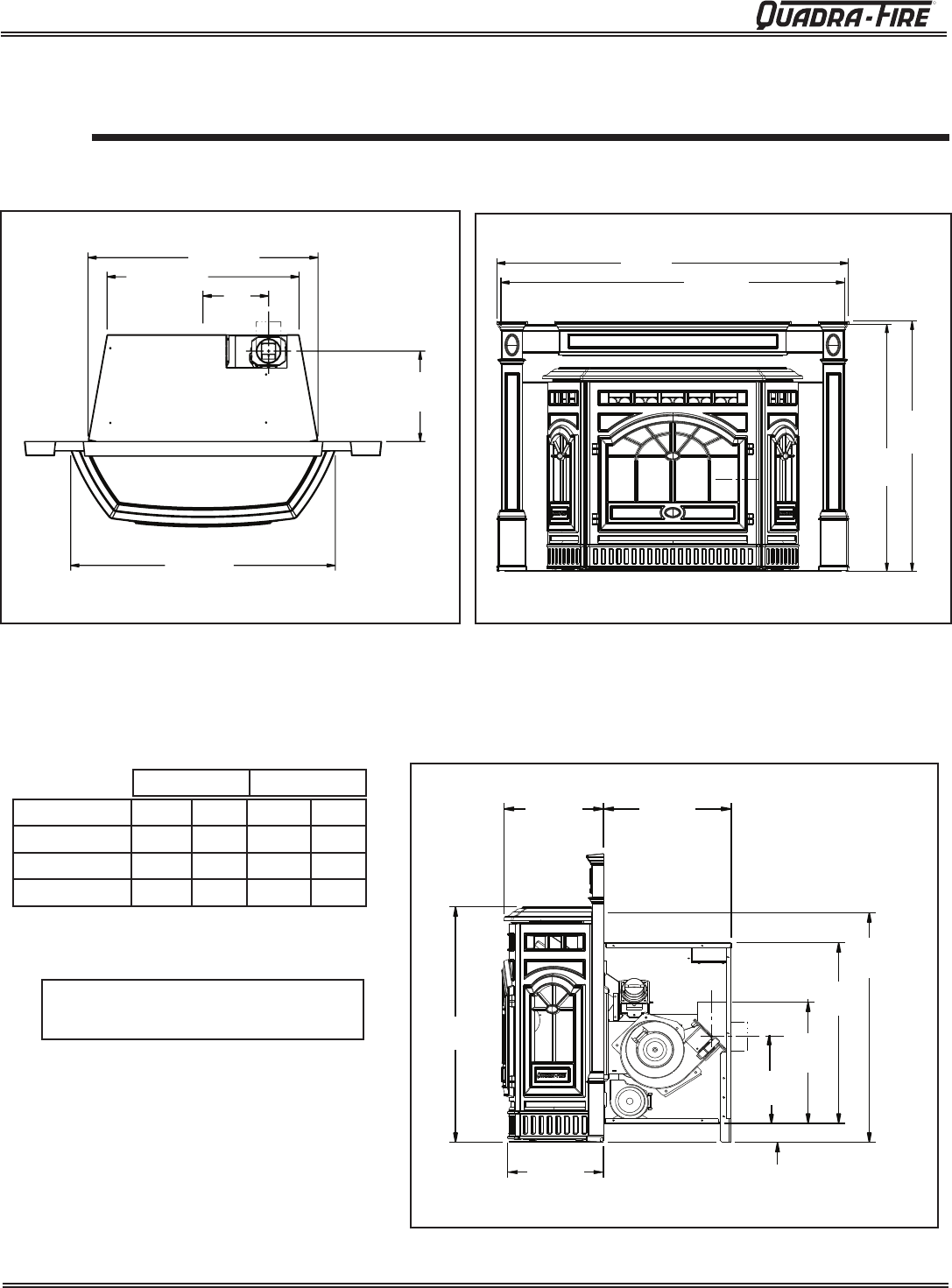
1. Place the appliance in a location near the
fi nal installation area and follow the proce-
dures below:
2. Open the appliance and remove all the parts
and articles packed inside the Component
Pack. Inspect all the parts and glass for ship-
ping damage. Contact your dealer if any irregu-
larities are noticed.
3. All safety warnings have been read and fol-
lowed.
4. This Owner’s Manual has been read.
5. Floor protection requirements have been met.
6. Venting is properly installed.
7. The proper clearances from the appliance and
chimney to combustible materials have been
met.
8. The masonry chimney is inspected by a profes-
sional and is clean, or the factory built metal
chimney is installed according to the manufac-
turer’s instructions and clearances.
9. The chimney meets the required minimum
height.
10.
All labels have been removed from the glass
door.
11. Plated surfaces have been wiped clean, if
applicable.
12. Thermostat or remote has been installed.
13. A power outlet is available nearby.
14. A good quality surge protection is highly recom-
mended to protect the electronics.
• Installation and use of any damaged appliance.
• Modifi
cation of the appliance.
• Installation other than as instructed by Hearth & Home
Technologies.
• Installation and/or use of any component part not approved
by Hearth & Home Technologies.
• Operating appliance without fully assembling all
components.
• Do NOT Overfi re.
Or any such action that may cause a fi re hazard.
WARNING
Hearth & Home Technologies disclaims any
responsibility for, and the warranty will be
voided by, the following actions:
Fire Risk.
E. Fire Safety
To provide reasonable fi re safety, the following should be
given serious consideration:
• Install at least one smoke detector on each fl oor of your
home.
• Locate smoke detector away from the heating appliance
and close to the sleeping areas.
• Follow the smoke detector manufacturer’s placement and
installation instructions and maintain regularly.
• Conveniently locate a Class A fi re extinguisher to contend
with small fi res.
• In the event of a hopper fi re:
• Evacute the house immediately.
• Notify fi re department.
Page 8 250-7251G August 20, 2009
R
Castile Pellet Insert
3Dimensions and Clearances
A. Appliance Dimensions
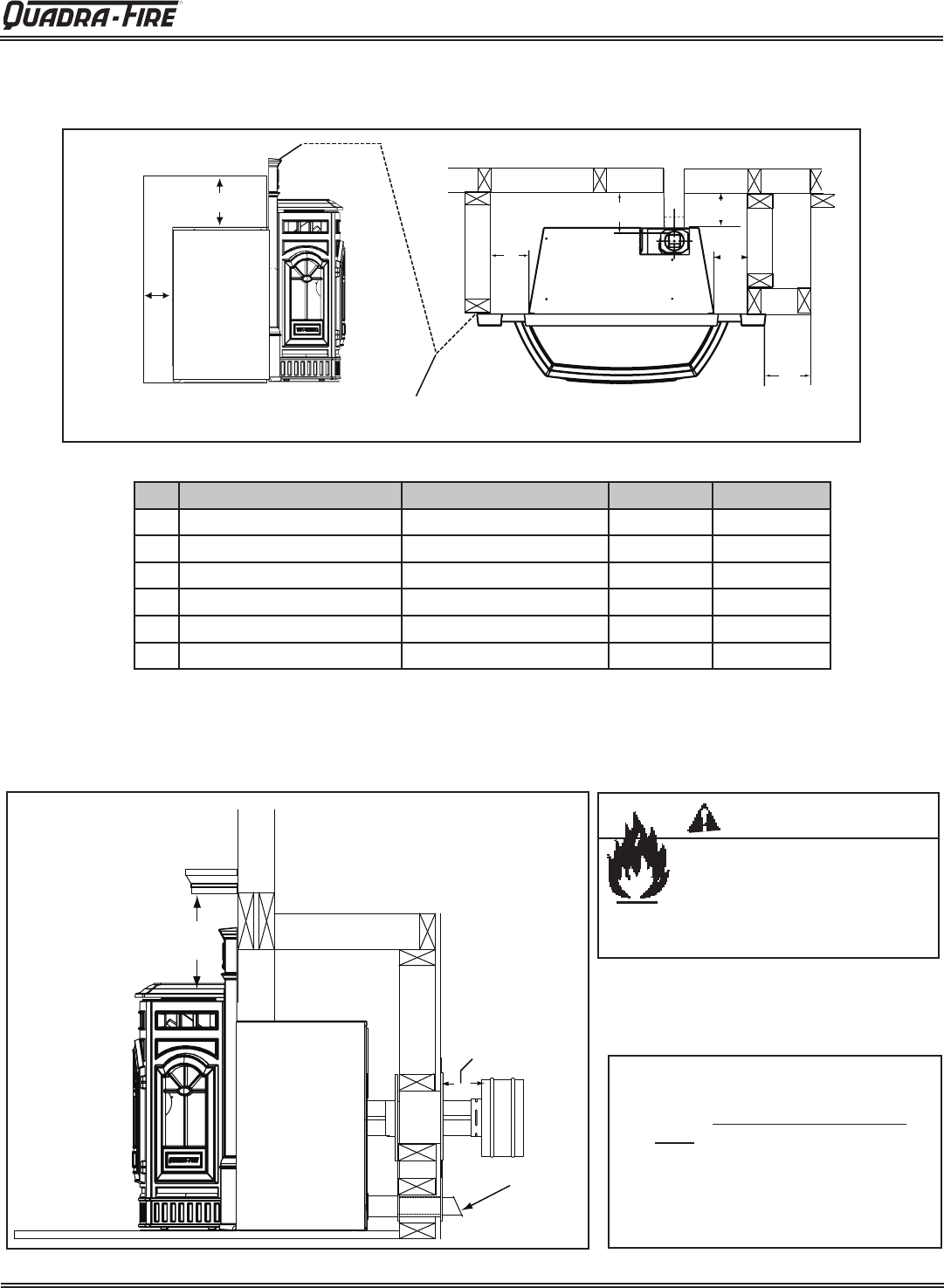
Figure 8.2- Front ViewFigure 8.1 - Top View
Figure 8.3 -Side View
13-1/16 in.
(332mm)
10-3/16 in.
(259mm)
24-3/4 in.
(629mm)
9-13/16 in.
(249mm)
2.0 in. (51mm)
24-3/16 in./
(614mm)
19.0 in.
(483mm)
12-3/4 in.
(324mm)
9-3/16 in.
(234mm)
30-3/8 in.
(772mm)
30 in.
(762mm)
43-1/2 in.
(1105mm) 42-1/2 in.
(1080mm)
NOTE: All views are shown with Panel
& Cast Trim Set installed.
32-5/16 in.
(821mm)
28-1/16 in.
(713mm)
23-7/16 in.
(595mm)
11-1/16 in.
(281mm)
8 in.
(203mm)
Panel Size inch mm inch mm
Small Cast 30 762 42-1/2 1078
Large Cast 34 864 48 1219
Small Econo 30 762 40 1016
Height Width
R
August 20, 2009 250-7251G Page 9
Castile Pellet Insert
A
C
BB
C
E
D
Fire Risk.
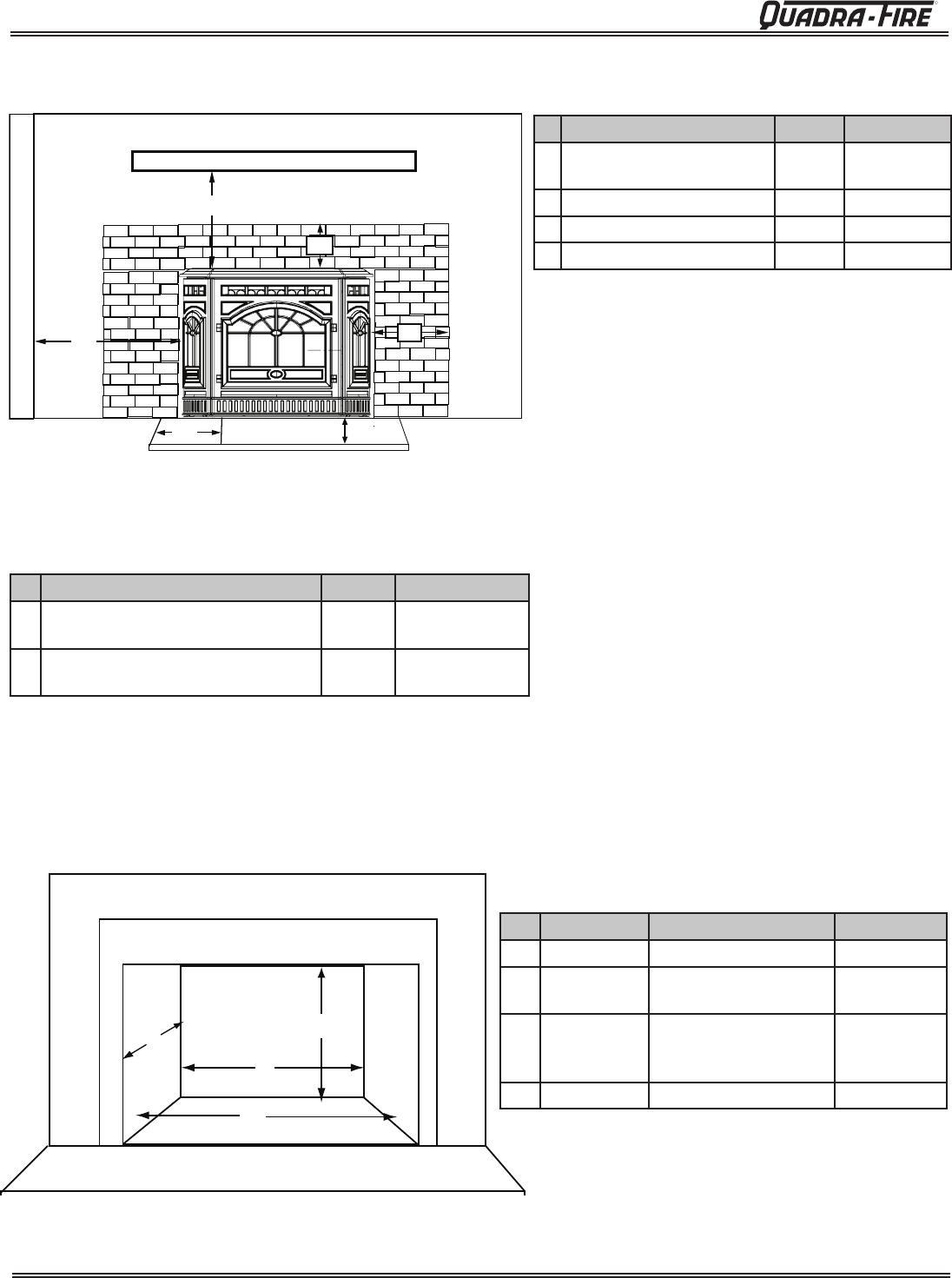
Comply with all minimum clearances
to combustibles as specifi ed.
WARNING
Failure to comply may cause house
fi re.
NOTE:
• Illustrations refl ect typical installations
and are FOR DESIGN PURPOSES
ONLY.
• Illustrations/diagrams are not drawn to
scale.
• Actual installation may vary due to
individual design preference.
B. Clearance To Combustibles, UL and ULC
Inches Millimeters
A Top of Hopper Top or Rear Vent 0 0
B Side of Outside Skin Top or Rear Vent 0 0
C Back of Hopper Top Vent 2.5 64
Rear Vent 0 0
D Vent Pipe to Combustible Top or Rear Vent 3.0 76
E Front Panel Edge Top or Rear Vent 0 0
INSTALLED AS A BUILT-IN UNIT
Shown Optional Outside Air
Figure 9.1
Figure 9.2
AS A BUILT-IN
0” (0mm) Clearance To Exposed Section And Face Trim
12 in
(305mm)
6 in
(153mm)
Outside
Air
Page 10 250-7251G August 20, 2009
R
Castile Pellet Insert
A
BC
D
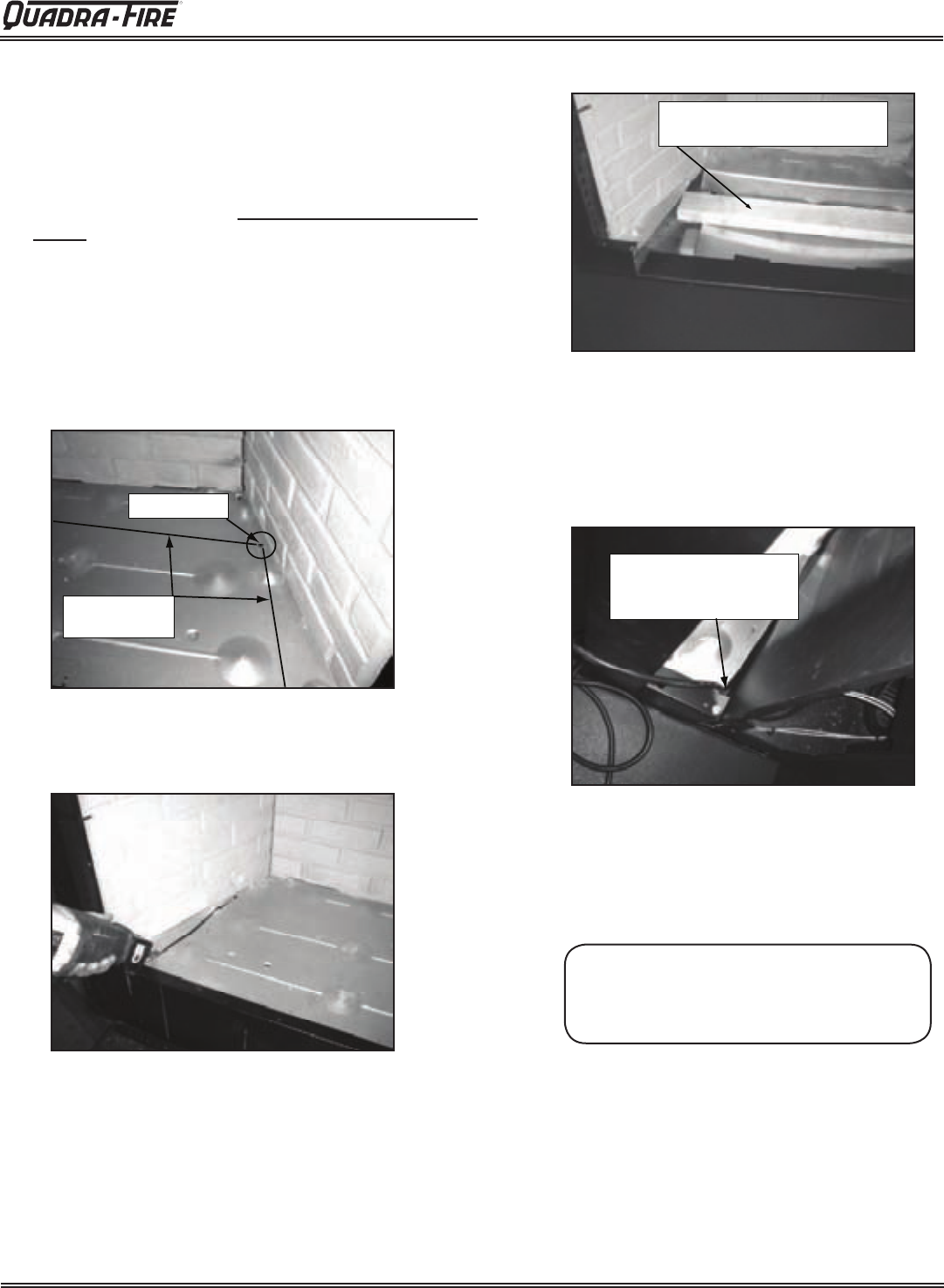
E. Minimum Opening for Masonry and Zero
Clearance Fireplaces
Inches Millimeters
A Insert side to combustible
side wall 00
B Insert top to mantel 12 305
C Insert top to face trim 0 0
D Insert side to face trim 0 0
Location Inches Millimeters
A Rear Width 23-7/16 595
B Depth 18 for Zero Clearance
14 for Masonry 457
356
C Height 19-1/4 if drop down
21-1/4 if fl ush or
hearth mount
489
540
D Front Width 28-1/4 718
Figure 10.1
Figure 10.2
C. Masonry and Zero Clearance Fireplaces
Inches Millimeters
E Floor protection hearth extension
from door opening 6152
F Floor protection to the side of door
opening 6 152
D. Floor Protection
SIDE WALL
MANTEL
FE
D
C
B
A
R
August 20, 2009 250-7251G Page 11
Castile Pellet Insert
Mark area of
floor to cut
Starter hole
Use 2 x 4 from insert
packaging to support insert
Keep sharp edge of
metal floor away from
power cord
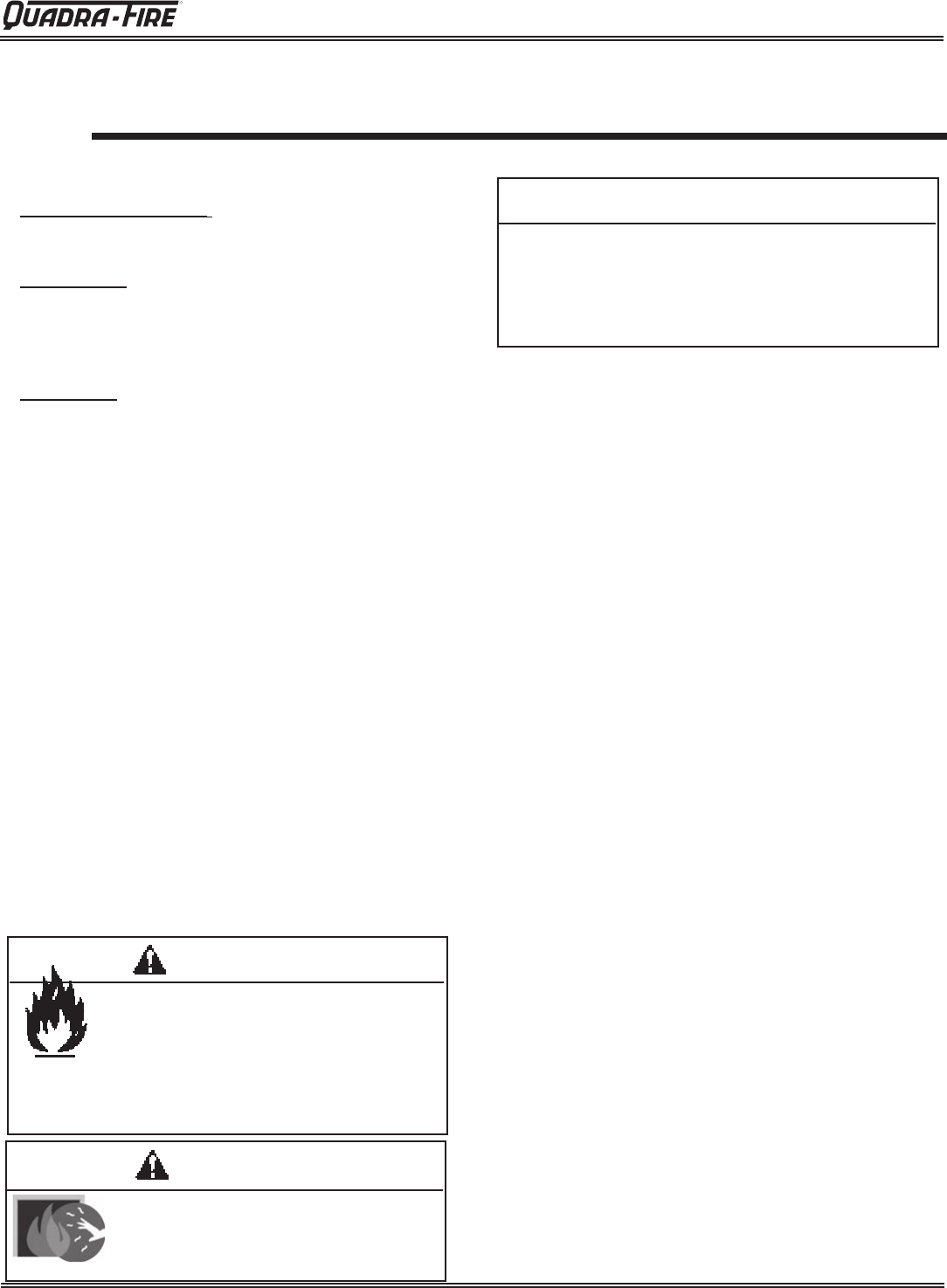
F. Removing Metal Floor of Factory-Built Firebox
• The fi rebrick (refractory), glass doors, screen rails, screen
mesh and log grates can be removed from a factory-built
fi rebox in order to gain minimum insert opening require-
ments.
• Any smoke shelves, shields and baffl es may be removed
from a factory-built fi rebox if attached with mechanical fas-
teners.
• The metal fl oor of the factory-built fi rebox may be removed
to facilitate the installation of the insert only when a 1/4
(6mm) inch airspace is provided between the insert and
the fl oor of outer wrap.
Figure 11.1. Measure and mark the metal
fl oor for cutting. With a drill, make a starter
hole in each corner.
Figure 11.2. Using a saws-all, cut out the
fl oor
Figure 11.3. If the fl oor is made of thin metal,
we recommend using the 2 x 4 from the insert
packaging to support the insert. The 2 x 4
may need to be cut to the appropriate size.
Figure 11.4. Place the insert into the fac-
tory-built fi rebox. Ensure that the power
cord can not be damaged by the sharp metal
edge. You may need to cut out a notch to
accommodate the cord.
The following is only one example as there are many dif-
ferent models of factory-built fi replaces.
NOTE: Ensure that the leveling leg is posi-
tioned over the 2 x 4 before leveling the
insert. See page 18, for detailed instructions
on how to adjust the leveling legs.

Page 12 250-7251G August 20, 2009
R
Castile Pellet Insert
• The fireplace must not be altered, except for the
exceptions listed below. Do not removal the bricks and
mortar from the existing fi replace.
The following modifi cations are premissible:
• Removal of damper or locked in open position
• Removal of smoke shelf or baffl e
• Removal of ember catches
• Removel of fi re grate
• Removal of view screen/curtain
• Removal of doors
• External trim pieces which do not affect the operation
of the fi
replace may be removed providing they can be
stored on or within the fi replace for reassembly if the insert
is removed.
• The permanent metal warning label provided must be
attached to the back of the fi replace, with screws or
nails, stating that the fi replace may have been altered to
accommodate the insert, and must be returned to original
condition for use as a conventional fi replace. Figure
11.1
• If the hearth extension is lower than the fi replace opening,
the portion of the insert extending onto the hearth must
be supported.
• Manufacturer designed adjustable support kit can be
ordered from your dealer.
• Final approval of this installation type is contingent upon
the authority having jurisdiction.
H. Altering the Factory-Built Fireplace
WARNING! Risk of Fire!
Follow venting manufacturer’s clearances and instructions
when installing venting system.
NOTICE: In Canada when using a factory-built chim-
ney it must be safety listed, Type UL103 HT (2100
o
F)
[1149oC] CLASS “A” or conforming to CAN/ULC-
S629M, STANDARD FOR 650oC FACTORY-BUILT
CHIMNEYS.
NOTE: Refer to chimney liner manufacturer for recom-
mendations on supporting the liner. Installation into
fi replaces without a permit will void the listing
250-2061
WARNING
THIS FIREPLACE MAY HAVE BEEN ALTERED
TO ACCOMMODATE AN INSERT. IT MUST BE
RETURNED TO ITS ORIGINAL CONDITION
BEFORE USE AS A SOLID FUEL BURNING
FIREPLACE. 250-2061
Figure 121
G. Prefabricated Metal Chimney
The chimney can be new or existing, masonry or prefabricated
and must meet the following minimum requirements:
• Must be minimum 6 inch (152mm) inside diameter of
high temperature chimney listed to UL 103 HT (2100oF)
or ULC-S628.
• Must use components required by the manufacturer for
installation.
• Must maintain clearances required by the manufacturer
for installation.
• Refer to manufacturers instructions for installation
•This insert is listed to UL 1482 Standard and is approved
for installation into listed factory-built zero
clearance fi re-
places listed to UL 127 conforming to the following speci-
fi cations and instructions:
•The original factory-built clearance fi replace chimney
cap must be re-installed after installing the approved
chimney liner meeting type UL 103 HT requirements
(2100°F) per UL 1777.
•If the chimney is not listed as meeting HT requirements,
or if the factory built fi replace was tested prior to 1998, a
full height listed chimney liner must be installed from the
appliance fl ue collar to the chimney top.
•The liner must be securely attached to the insert fl ue collar
and the chimney top.
•The air fl ow of the factory-built zero-clearance fi replace
system must not be altered. The fl ue liner top support
attachment must not reduce the air fl ow for the existing
air-cooled chimney system.
•No dilution air is allowed to enter the chimney.
1. Secure the fi replace damper in the open position. If
this cannot be accomplished, it will be necessary to
remove the damper
2. Seal damper area of chimney around chimney
connector with a high temperature sealant or seal
insert against the face of the fi replace.
3. Both methods must be removable and replaceable
for cleaning and re-installation.
R
August 20, 2009 250-7251G Page 13
Castile Pellet Insert
Do not terminate vent in any enclosed or semi-enclosed
area such as a carport, garage, attic, crawl space, under a
sun deck or porch, narrow walkway or closely fenced area,
or any location that can build up a concentration of fumes
such as a stairwell, covered breezeway, etc.
CAUTION
4Vent Information
A. Chimney and Exhaust Connection B. Venting Termination Requirements
1. Termination must exhaust above air inlet elevation. It
is recommended that at least 60 inches (1.5m) of verti-
cal pipe be installed when appliance is vented directly
through a wall. This will create a natural draft, which
will help prevent the possibility of smoke or odor venting
into the home during a power outage. It will also keep
exhaust from causing a nuisance or hazard by exposing
people or shrubs to high temperatures. The safest and
preferred venting method is to extend the vent vertically
through the roof.
2. Distance from doors and opening windows, or gravity or
ventilation air inlets into building:
a. Not less than 48 inches (1.2m) below;
b. Not less than 48 inches (1.2m) horizontally from;
c. Not less than 12 inches (305mm) above.
3. Distance from permanently closed windows:
a. Not less than 12 inches (305mm) below, horizontally
from or above.
4. Distance between bottom of termination and grade
should be 12 inches (305mm) minimum. This is con-
ditional upon plants in the area, and nature of grade
surface. The grade surface must be a non-combustible
material (i.e., rock, dirt). The grade surface must not be
lawn. Distance between bottom of termination and public
walkway should be 84 inches (2.13m) minimum.
5. Distance to combustible materials must be 24 inches
(610mm) minimum. This includes adjacent buildings,
fences, protruding parts of the structure, roof overhang,
plants and shrubs, etc.
6. Termination Cap Location (Home Electrical Service)
• Side-to-side clearance is to be the same as minimum
clearance to vinyl inside corners.
•
Clearance of a termination cap below electrical service
shall be the same as minimum clearance to vinyl soffi ts.
• Clearance of a termination cap above electrical service
will be 12 inches (305mm) minimum.
• Location of the vent termination must not obstruct or
interfere with access to the electrical service.
1. Chimney & Connector: Use 3 or 4 inch (76-102mm)
diameter type "L" or "PL" venting system. It can be vented
vertically or horizontally.
2. Mobile Home: Approved for all Listed pellet vent. If using
the 3 inch (76mm) vertical Top Vent Adapter Kit or the 3
to 6 inch (76-152mm) Top Vent Offset Adapter, use Listed
double wall fl ue connector. A Quadra-Fire Outside Air Kit
must be used with manufactured home installations.
3. Residential: The 3 inch (76mm) vertical Top Vent Adapter
Kit and the 3 to 6 inch (76-152mm) Top Vent Offset Adapter
are tested to use 24 gauge single wall fl ue connector or
Listed double wall fl ue connector to Class A Listed metal
chimneys, or masonry chimneys meeting International
Conference of Building Offi cials (ICBO) standards for solid
fuel appliances.
4. INSTALL VENT AT CLEARANCES SPECIFIED BY THE
VENT MANUFACTURER.
5. Secure exhaust venting system to the appliance with at
least 3 screws. Also secure all connector pipe joints with
at least 3 screws through each joint.
6. DO NOT INSTALL A FLUE DAMPER IN THE EXHAUST
VENTING SYSTEM OF THIS UNIT.
7. DO NOT CONNECT THIS UNIT TO A CHIMNEY FLUE
SERVING ANOTHER APPLIANCE.
NOTE: All pipe must be welded seam pipe whenever pos-
sible. Seal pipe joints with high temperature silicone (500°F
[260°C] minimum rated only). Do not put silicone inside
of pipe.
NOTE: If burning shelled fi eld corn, you must use approved
venting specifi cally designed for corn. Follow the instruc-
tions from the venting manufacturer.
Fire Hazard.
• Only LISTED venting components may be
used.
• NO OTHER vent components may be used.
Substitute or damaged vent components may
impair safe operation.
WARNING
Vent surfaces get HOT, can cause burns if
touched. Noncombustible shielding or guards
may be required.
WARNING
Page 14 250-7251G August 20, 2009
R
Castile Pellet Insert
Improper installation, adjustment, alteration, service or
maintenance can cause injury or property damage. Refer
to the owner’s information manual provided with this appli-
ance. For assistance or additional information consult a
qualifi ed installer, service agency or your dealer.
WARNING
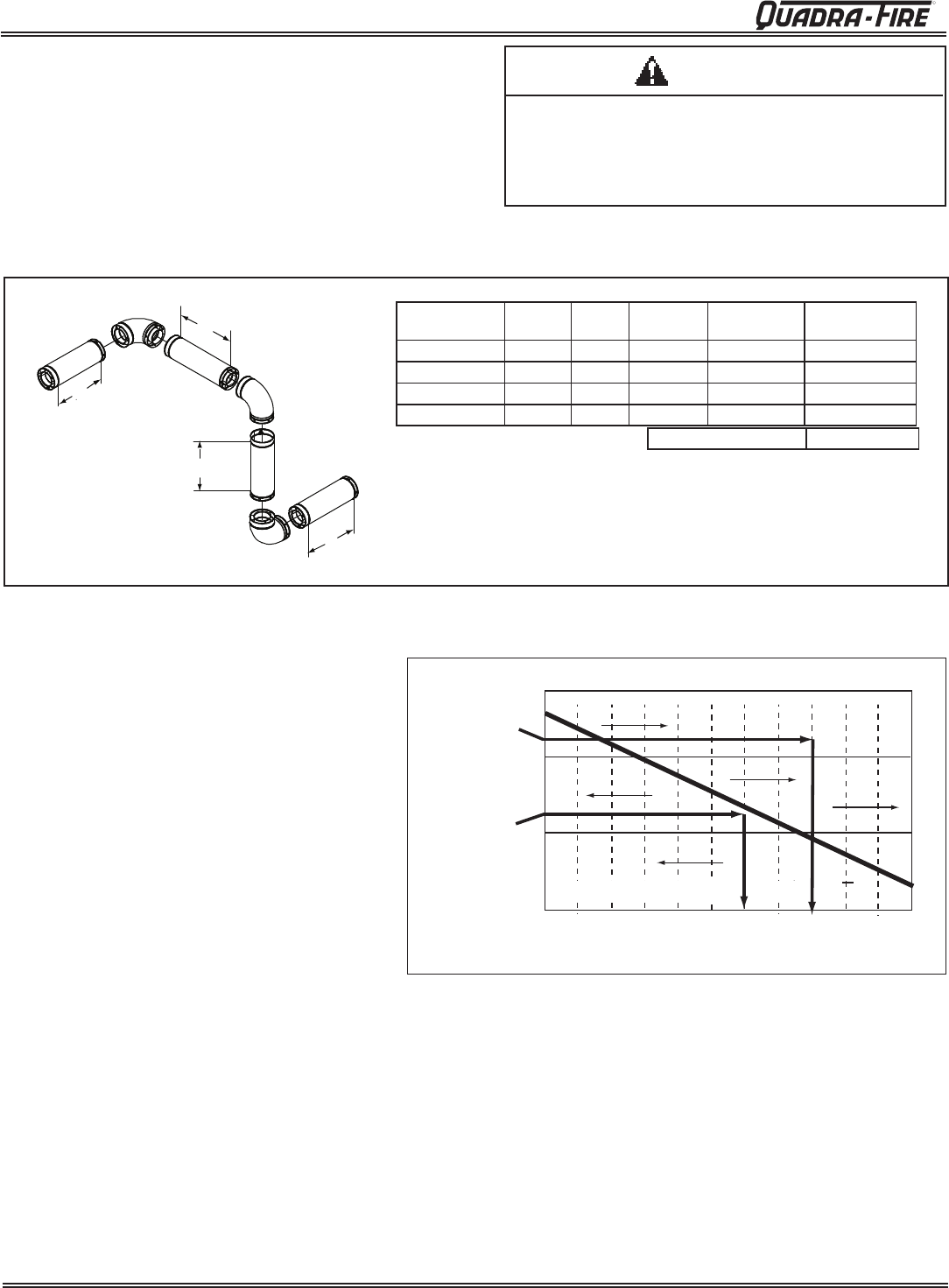
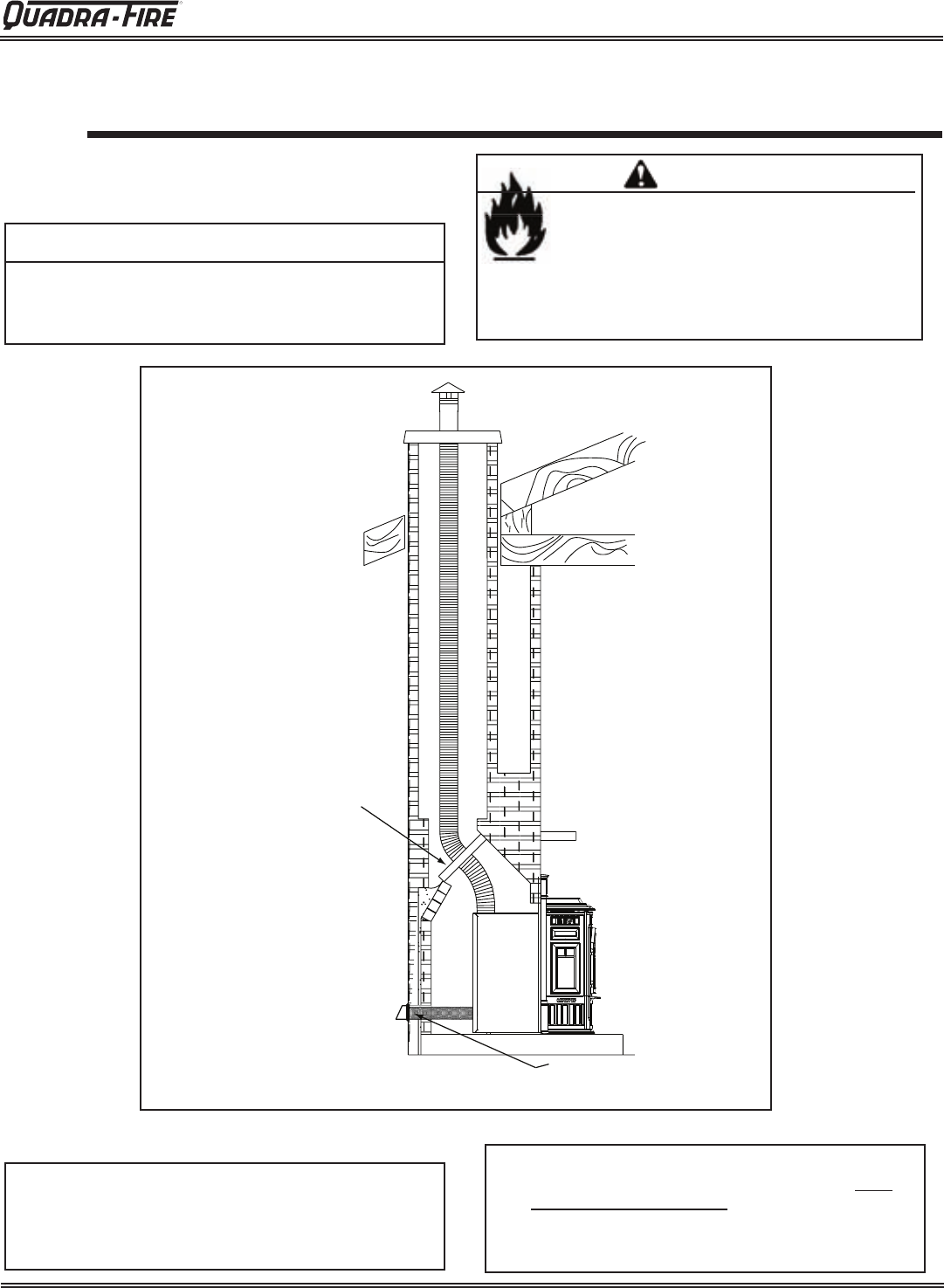
The chart will help you in determing proper vent-
ing size according to the equivalent feet of pipe
calcuated above and the altitude above sea level
of this installation. Figure 14.2.
Locate the calculated equivalent feet of pipe on
the vertical left side of the chart. Move to the
right horizontally on the chart until you reach your
altitude above sea level.
If you fall below the diagonal line, 3 or 4 inch (76
to 102mm) pipe may be used. If it is anywhere
above the diagonal line, a 4 inch (102mm) diameter
pipe is required.
The chart reveals that a 90° elbow is 5 times as
restrictive to the fl ow of exhaust gases under posi-
tive pressure as 1 foot of horizontal pipe, and a
foot of horizontal pipe is twice as restrictive as a
foot of vertical pipe.
D. Pipe Selection Chart
The table below can help you calculate the equivalent feet
of pipe which is a method used to determine pellet vent size.
Figure 14.1.
C. Equivalent Feet of Pipe
2 ft.
2 ft.
3 ft.
2 ft.
Example of 3 Elbow-Rear Vent Termination Calculation
Figure 14.1
Pellet Venting
Component # of
Elbows Feet of
Pipe Multiplied
By Equivalent
Feet Components
Equivalent Feet
90o Elbow or Tee 3 X 515
45o Elbow X3
Horizontal Pipe 7 X 17
Vertical Pipe 2 X 0.5 1
Total Equivalent Feet 23
Note: This is a generic example and is not
intended to represent any specifi c fuel type.
Figure 14.2
3 in. or 4 in. (76mm or 102mm) Diameter Pipe
Equivalent Pipe
Length In Feet
ALTITUDE IN THOUSANDS OF FEET
0
20
30
1 2 3 4 5 6 7 8 9 10
4 in. (102mm) Diameter Pipe Only
10
Example 1
Example 2
Example 1: If the equivalent length of pipe is 23 feet with altitude of
8,000 feet you must use 4 inch (102mm) diameter type “L” or “PL”
vent.
Example 2: If the equivalent length of pipe is 12 feet with altitude of
6,000 feet you may use 3 or 4 inch (76 to 102mm) diameter type “L”
or “PL” vent
R
August 20, 2009 250-7251G Page 15
Castile Pellet Insert
5Venting Systems
NOTE:
In Canada, where passage through a wall or partition of
combustible construction is desired, the installation shall
conform to CAN/CSA-B365.
Figure 15.1
Fire Risk.
Inspection of Chimney:
• Masonry chimney must be in good condition.
• Meets minimum standard of NFPA 211
•
Factory-built chimney must be a minimum 6 inch
(152mm) UL103 HT.
WARNING
CAUTION
Never draw outside combustion air from:
• Wall, fl
oor or ceiling cavity
• Enclosed space such as an attic or garage
NOTE:
• Illustrations refl ect typical installations and are FOR
DESIGN PURPOSES ONLY.
• Illustrations/diagrams are not drawn to scale.
• Actual installation may vary due to individual design
preference.
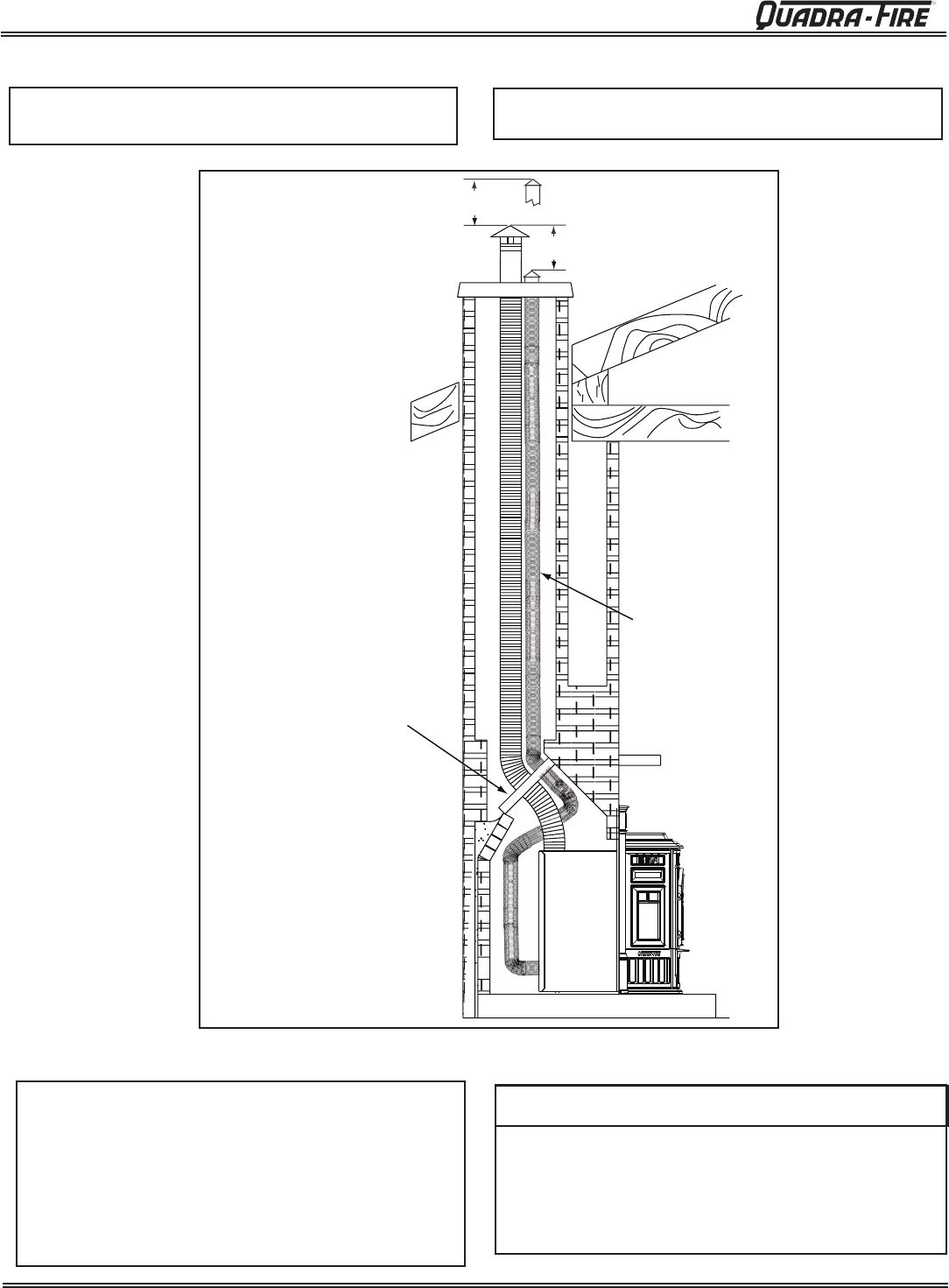
A. Full Reline With Outside Air - Horizontal
Outside Air through Rear
Wall (Horizontal)
NOTE; Use metal plate around
exhaust vent pipe and seal all
edges with non-flammable insu-
lation such as fiberglass, mineral
wool or ceramic.
Do not use high temperature
caulking materials to seal any
edge to prevent furture service-
ability.
Page 16 250-7251G August 20, 2009
R
Castile Pellet Insert
NOTE: Check clearances carefully for this type of instal-
lation to ensure adequate room for outside air venting.
Check building codes prior to installation.
• Installation MUST comply with local, regional, state and
national codes and regulations.
• Consult local building, fi re offi cials or authorities having
jurisdiction about restrictions, installation inspection, and
permits.
CAUTION
NOTE: In Canada only a full reline is allowed per ULC
S628, ORD ULC C1482-M1990.
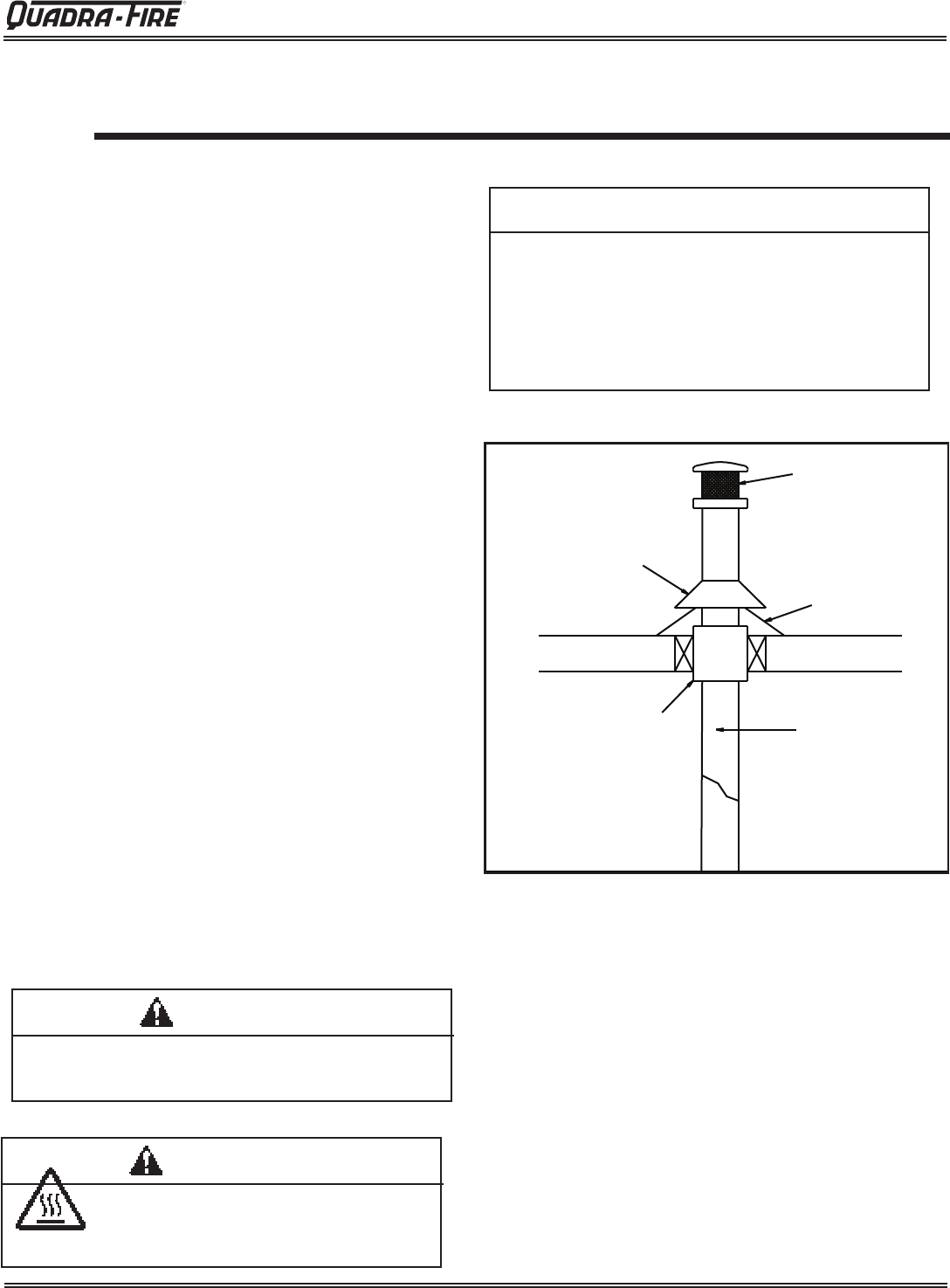
B. Full Reline With Outside Air - Vertical
Figure 16.1
Outside Air
Termination
at
Chimney Top
(Vertical)
305mm min.
below
305mm min.
above
NOTE; Use metal plate around
exhaust vent pipe and seal all
edges with non-flammable insula-
tion such as fiberglass, mineral
wool or ceramic.
Do not use high temperature caulk-
ing materials to seal any edge to
prevent furture serviceability.
NOTE: In Canada this fi replace insert must be installed
with a continous chimney liner a 6 inch (152mm) in diam-
eter extending from the fi replace insert to the top of the
chimney. The chimney liner must conform to the Class
3 requirments of CAN/ULC-S635, Standard for Lining
Systems for Extising Masonry or Factory-Built Chimneys
and Vents, or CAN/ULC-S640, Standard for Lining Sys-
tems for New Masonry Chimneys.
R
August 20, 2009 250-7251G Page 17
Castile Pellet Insert
6Mobile Home
1. An outside air inlet must be provided for the combustion
air and must remain clear of leaves, debris, ice and/or
snow. It must be unrestricted while the appliance is
in use to prevent room air starvation which causes
smoke spillage. Smoke spillage can also set off smoke
alarms.
2. The combustion air duct system must be made of
metal. It must permit zero clearance to combustible
construction and prevent material from dropping into
the inlet or into the area beneath the dwelling and
contain a rodent screen.
3. The appliance must be secured to the mobile home
structure by bolting it to the fl oor (using lag bolts). Use
the same holes that secured the appliance to the ship-
ping pallet.
4. The appliance must be grounded with #8 solid copper
grounding wire or equivalent, terminated at each end
with an NEC approved grounding device.
5. Refer to clearances to combustibles and fl oor protection
requirements on pages 9 & 10 for listings to combus-
tibles and appropriate chimney systems.
6. Use silicone to create an effective vapor barrier at
the location where the chimney or other component
penetrates to the the exterior of the structure.
7. Follow the chimney manufacturer’s instructions when
installing the vent system for use in a mobile home.
8. Installation shall be in accordance with the Manufactur-
ers Home & Safety Standard (HUD) CFR 3280, Part
24.
Installation must comply with Manufactured Home and
Safety Standard (HUD), CFR 3280, Part 24.
WARNING
You must use a Quadra-Fire Outside Air Kit for instal-
lation in a mobile home.
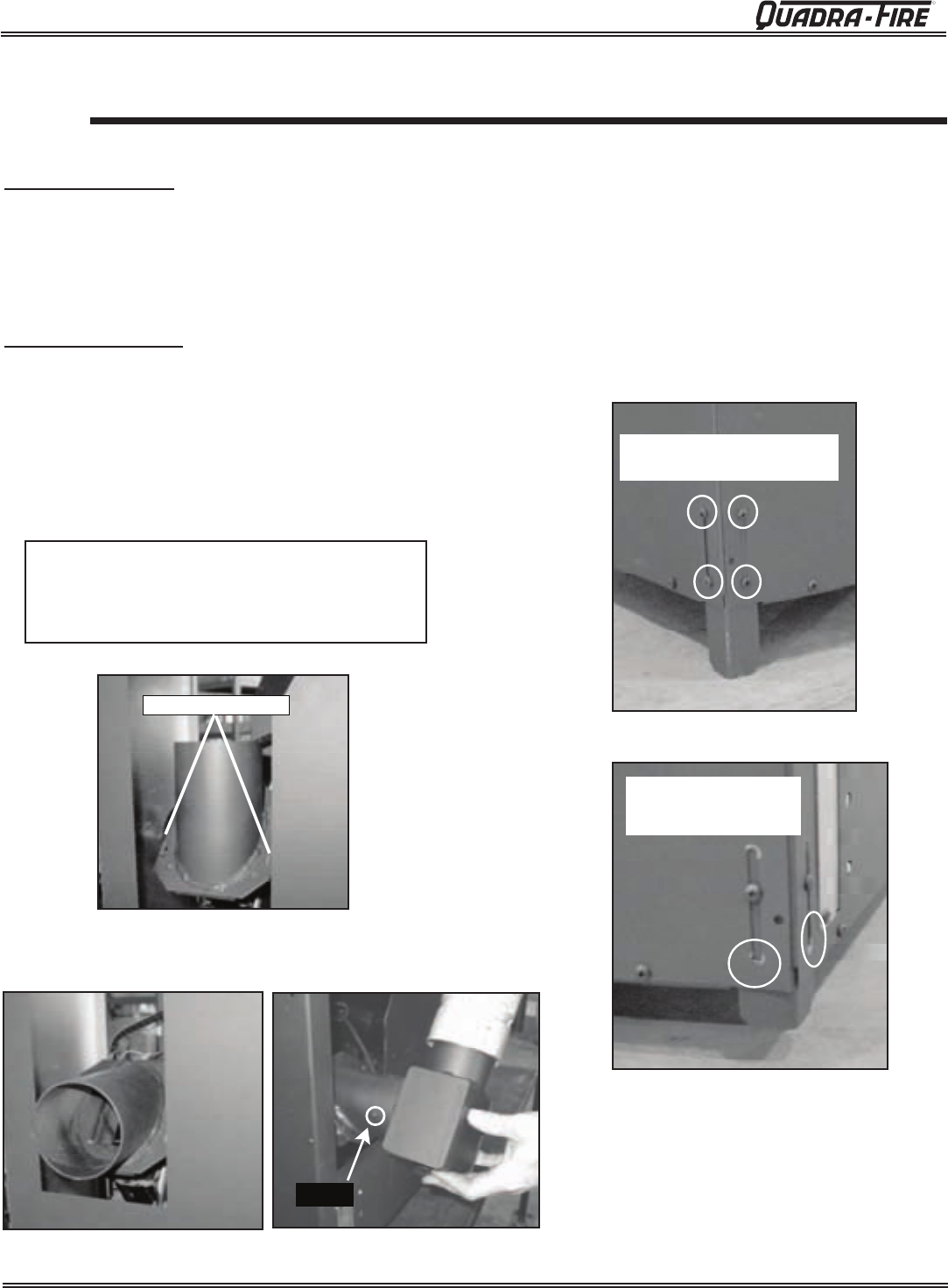
A. Mobile Home Installation
Spark Arrestor Cap
Roof Flashing
Storm Collar
Joist Shield/Firestop Approved Class “L”
or “PL” Pellet Vent
Figure 17.1
CAUTION
THE STRUCTURAL INTEGRITY OF THE MOBILE HOME
FLOOR, WALL AND CEILING/ROOF MUST BE MAIN-
TAINED
Do NOT cut through:
• Floor joist, wall, studs or ceiling trusses.
• Any supporting material that would affect the structural
integrity.
NEVER INSTALL IN A SLEEPING ROOM.
Consumes oxygen in the room.
WARNING
Asphyxiation Risk.
Page 18 250-7251G August 20, 2009
R
Castile Pellet Insert
7Appliance Set-Up
B. Leveling System
Figure 18.4
A. Reversible Top or Rear Flue Adapter
The back legs are adjustable to allow for customized fi t
into zero clearance boxes.
1. Loosen 2 top screws and remove 2 bottom screws.
2. Adjust leg to desired height. Leg can slide up (shorter)
or down (longer) to level the insert.
3. Tighten 2 top screws.
4. Drill 2 holes for the bottom 2 screws and re-install
screws. Figure 18.5.
Loosen top 2 screws and remove
bottom 2. Adjust leg to desired height.
Drill 2 holes and
re-install bottom 2
screws
Ammo Can Latches
Top Vent Installation
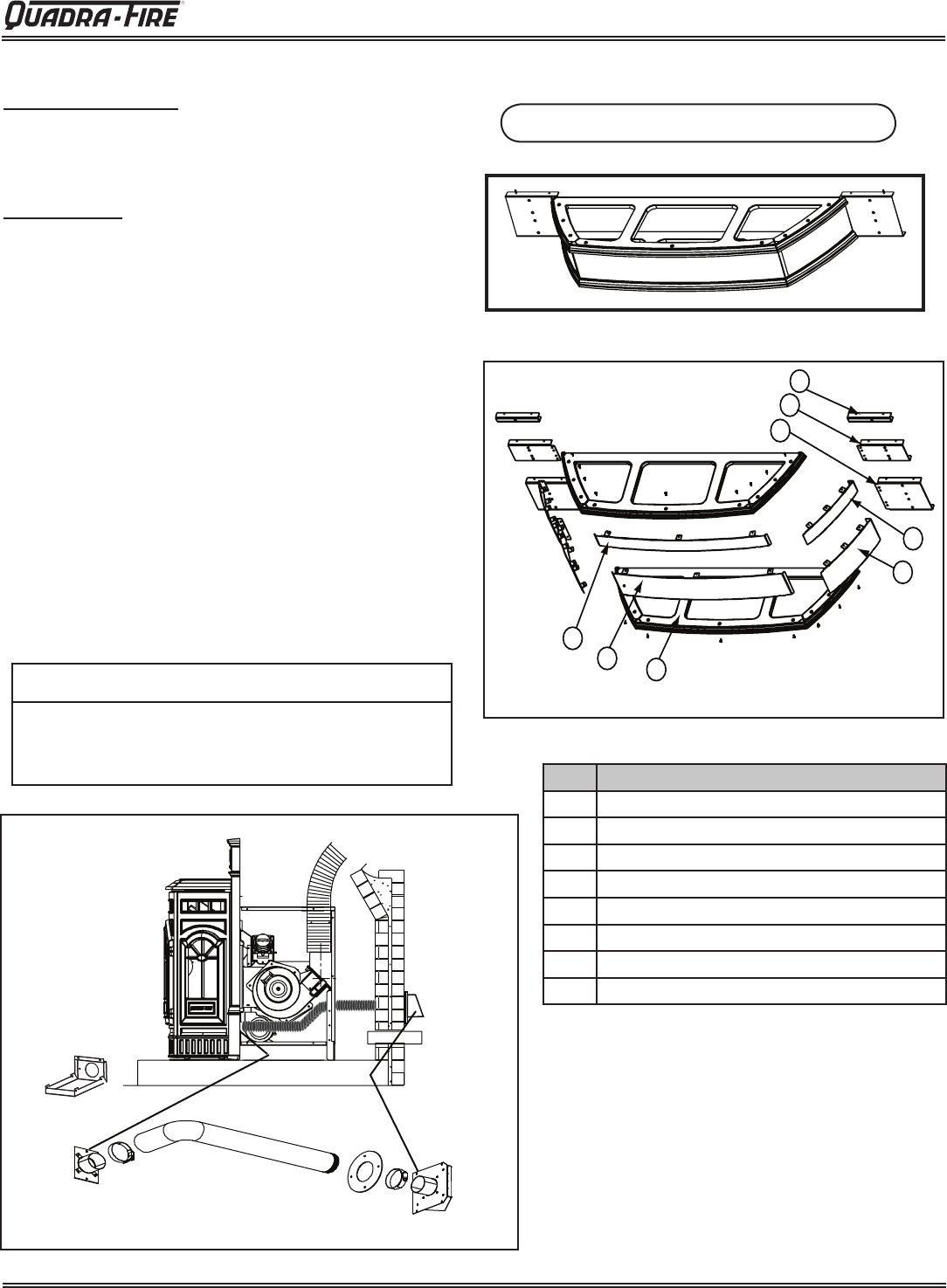
1. Release ammo can latches on each side. Figure 18.1.
2. Place the reversible adapter in the correct position for your
installation.
3. Make sure BOTH latches are in position before securing
them.
Rear Vent Installation
1. Remove the 90o adapter and installation screws from the
packaging.
2.
Attach the 90o adapter onto the vent adapter, using the 3
screws provided. You will need to pre-drill the holes for screw
placement. Be sure to adjust the 90o adapter to the desired
position for venting before drilling.
3. Silicone the pipe joints according to the Note below.
screw
Figure 18.5
Figure 18.1 - Top Vent
Figure 18.2 - Rear Vent Figure 18.3 - Rear Vent
NOTE: All pipe must be sealed using welded
seam pipe whenever possible. Seal pipe joints
with high temperature silicone, minimum rate of
5000F (2600C).
R
August 20, 2009 250-7251G Page 19
Castile Pellet Insert
C. Outside Air Kit Instructions
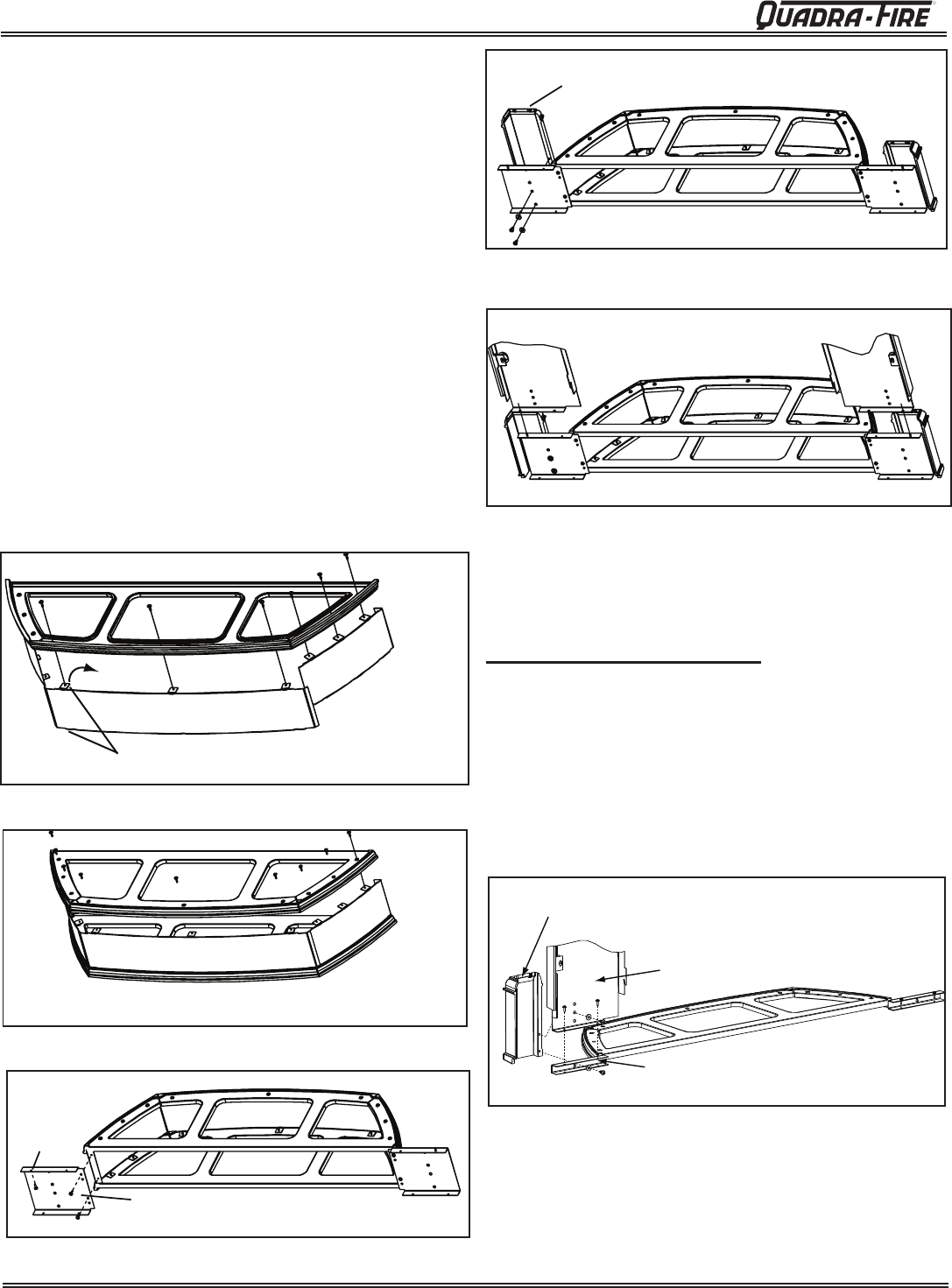
Parts Included in Kit: 1 piece of 2 inch x 3 ft. fl ex hose, 2
hose clamps, 1 collar assembly, 1 termination cap assem-
bly, 1 air intake channel, 1 trim ring, fasteners. NOTE:
Discard air intake channel, it is not used on this appliance.
1. Attach collar assembly to appliance. Figure 19.1.
Measure distance from fl oor to air vent opening in
appliance and mark location on wall.
3. Use saw to cut opening in wall. Cut a 2-1/2 to 3 inch
(64-76mm) opening on inside wall and a 3 to 3-1/2
inch (76-89mm) opening on outside of house.
4. Use hose clamp to secure fl ex pipe to collar assem-
bly.
5. Slide trim ring over fl ex pipe and run pipe through
pre-cut hole in back of appliance and through the
wall.
6. Attach hose to outside termination cap with second
hose clamp.
7. Secure termination cap to outside surface.
8. Secure trim ring to interior wall.
Tools Needed: Phillips head screwdriver; wire cutters;
hole saw or jig saw.
CAUTION
Never draw outside combustion air from:
• Wall, fl
oor or ceiling cavity
• Enclosed space such as an attic or garage
Figure 19.1
Figure 19.3
1
23
4
5
6
7
8
D. Zero Clearance Trim Support Instructions
Figure 19.2 - Assembled View
Item Description
1 Front, 3 inch
2Front, 5 inch
3 Cast Ring, Top & Bottom, Interchangeable
4 Side, 5 inch
5 Side, 3 inch
6 Panel Extension, 5 inch
7 Panel Extension, 3 inch
8 Panel Extension, Base Plate Only
NOTE: Only for use on small size panels.
Flex Hose
Hose Clamp
Collar
Assembly
Trim Ring Termination
Cap Assembly
Hose Clamp
Air Intake Channel
(Discard)
Page 20 250-7251G August 20, 2009
R
Castile Pellet Insert
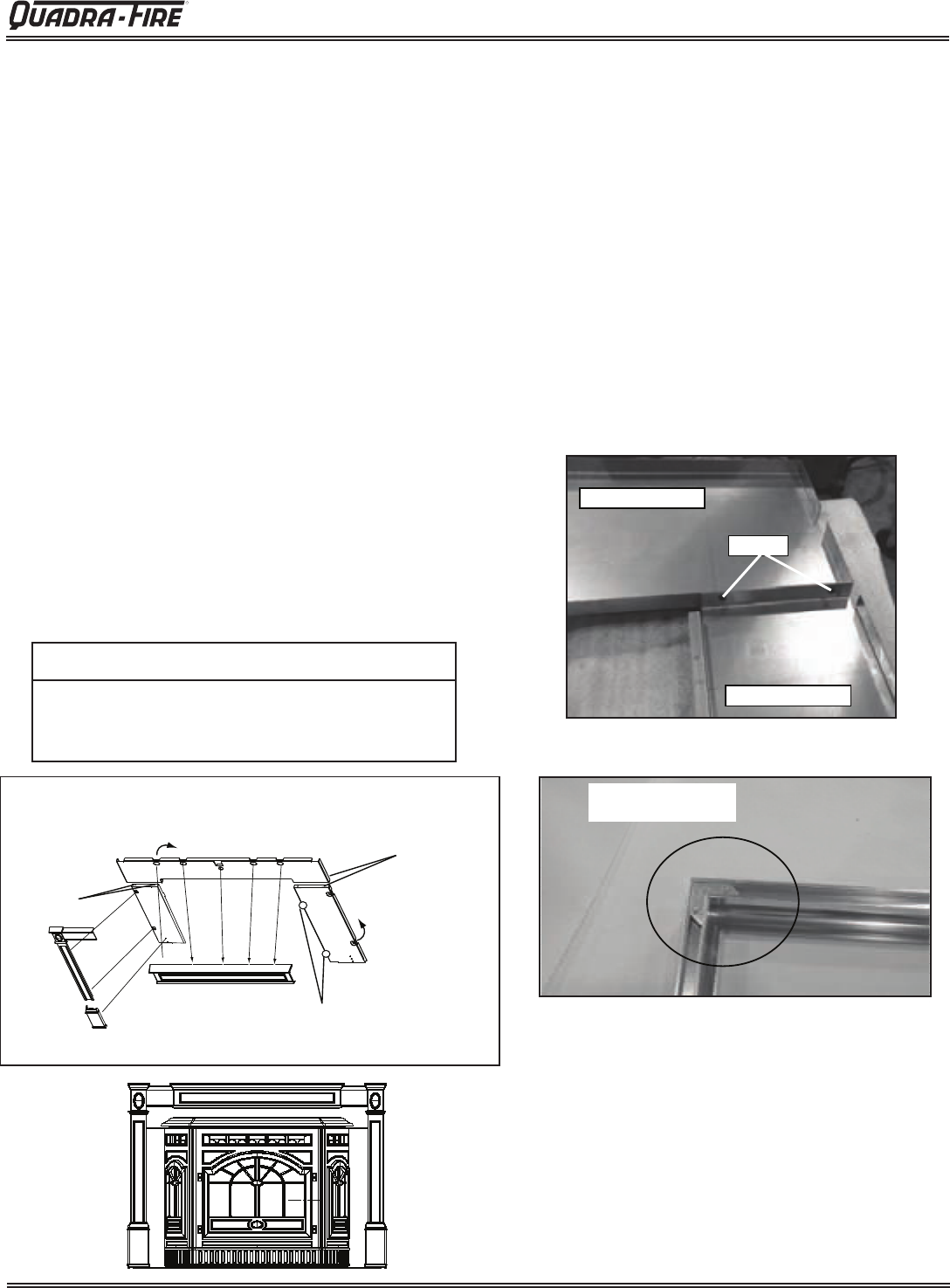
Install Sides
First
Install Front Last
Bend top and bottom tabs toward inside
NOTE: Manually
pre-shape sides before
installing
Turn right side up and attach top cast rin g
Zero Clearance Panel Extension
Alignment
Hole
Cast Trim
Footer
Panel Leg
Base Plate Only Installation
Parts Needed: (1) cast ring (2) base zero clearance panel
extensions. Discard balance of parts.
Tools Needed: Phillips head screwdriver
1. Attach base zero clearance panel extensions to cast
ring.
2. Place assembly under appliance.
1. Remove contents from box and lay on protective surface
to avoid scratching the paint.
2. Lay zero clearance front and sides face down. Bend the
tab down toward the inside.
3.
The side pieces are shipped fl at. It
is much easier to
manually fl ex the sides into a bowed position before
installing.
4.
Lay 1 cast ring face up, which
will become the bottom ring
when installed. Attach the 2 sides FIRST and then the
front piece. Figure 20.1.
5. Now turn the cast ring right side up
and attach the top cast
ring . Figure 20.2.
6. Attach the zero clearance panel extensions. Figure
20.3
7. Attach cast footers. Figure 20.4.
8. Place the assembled zero clearance trim support under
the insert. Figure 20.5.
Zero Clearance
Panel Extension
Panel Leg
Cast Trim Footer
D. Zero Clearance Trim Support (Cont’d)
Figure 20.1
Figure 20.2
Figure 20.3
Figure 20.4
Figure 20.5
Figure 20.6
R
August 20, 2009 250-7251G Page 21
Castile Pellet Insert
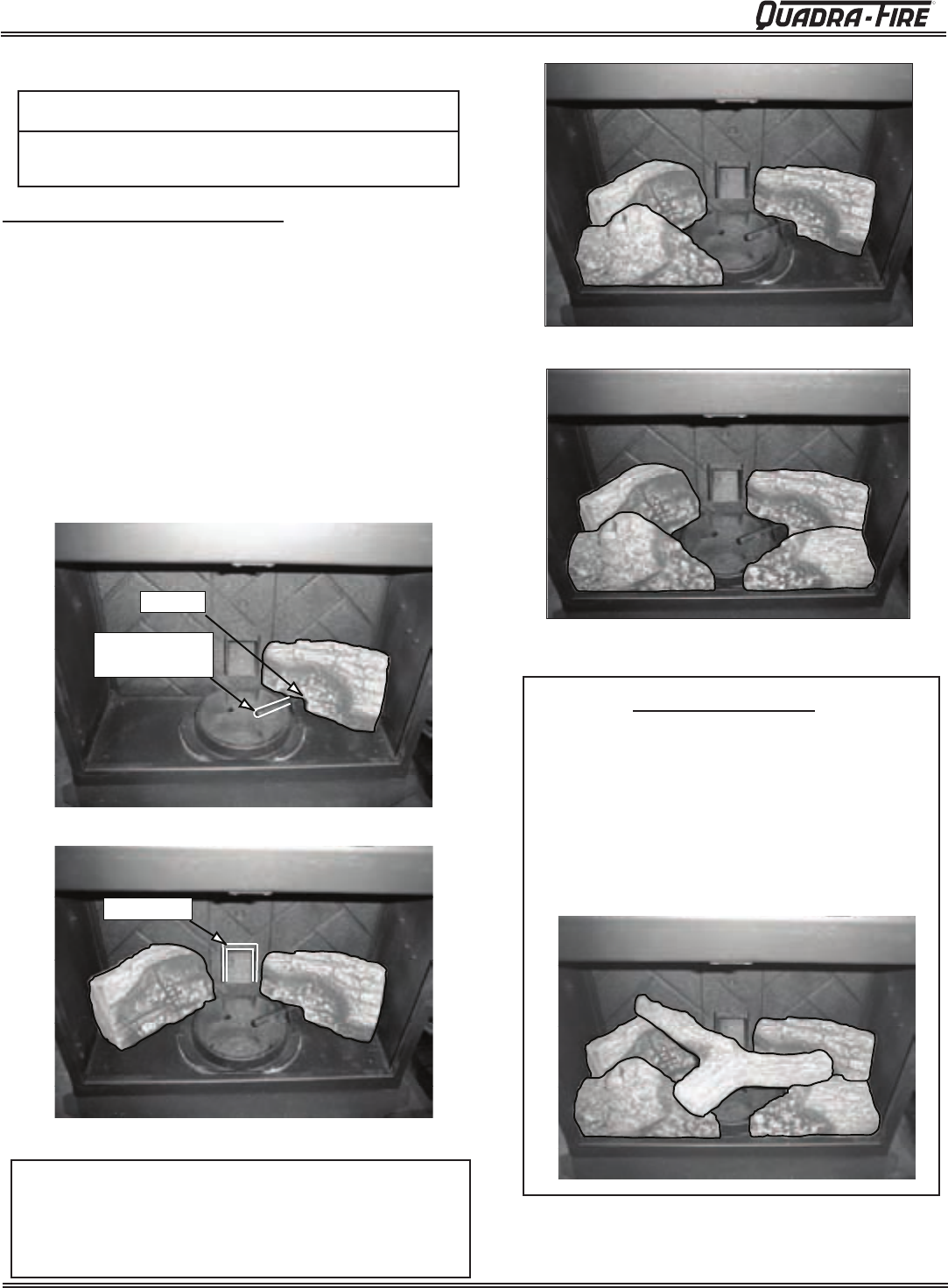
E. Panel Set And Cast Trim Set
1. Screw panels
together
2. Bend tabs down
1. Screw panels
together
3. Install Cast Trim Header
2. Bend tabs
down
Mounting tabs on each panel leg
to match up with slots on insert.
Included in Panel Kit: (2) side panels, left and right; (1)
panel top; (1) fastener package.
Included in Cast Trim Kit:
(2) cast trim legs, left and right; (1)
cast trim header; (2) cast trim footers, left and right; (1) fastener
package.
Tools Needed: Powered Phillips head screw driver
F. Panel & Trim Set, Econo
1. Secure the top panel to the panel sides with the
screws provided. Figure 21.3.
2. Assemble the gold trim with the (2) corner brackets
provided. Figure 21.4.
3. Slide the assembled trim over the assembled panel
set.
4. Slide panel and trim over the top of the insert into
place matching the mounting tabs on the panel with
the slots on the insert.
Back of Top Panel
Back of Side Panel
Screws
1. Remove contents from box being careful not to scratch or
damage the cast trim pieces.
2. Lay the panel set face down on protective covering to prevent
scratching the painted surface.
3. Secure the panels legs to top panel with the screws provided.
4. Now bend the tabs down toward the backside of the panel set,
5 on top and 2 on each leg. Leave the panel set face down.
5. Place the corresponding cast trim pieces ( 2 cast trim legs and
1 cast trim header) underneath the panel set, also face down.
6. Place washer provided over tab and secure the trim and panel
together with screw. Continue for all tabs.
7. Secure cast footers with screws.
8. Remove both left and right cast sides from insert, See Figures
32.1, 32.2 and 32.3 on page 32.
9. Slide panel and trim over the top of the insert into place matching
the mounting tabs on the panel with the slots on the insert.
Included in Panel & Trim Kit:
(2) corner brackets and set
screws; (1) trim set, 3 piece; (2) side panels; (1) top panel;
(4) screws;
Tools Needed: Powered Phillips head screw driver
• Do NOT pick up assembled unit by corners.
• It is too heavy and may damage the panels.
• Pick up from center.
CAUTION
Figure 21.1
Figure 21.2 - Completed View
of Panel Set & Cast Trim Set
Figure 21.3
Figure 21.4
View of "L" Bracket
installed
Page 22 250-7251G August 20, 2009
R
Castile Pellet Insert
1. Open the hinged cast face and open the glass door
assembly.
2. Positioning the logs.
Place the right rear log as shown. There is a notch in
the bottom of the log for clearance for the thermocou-
ple and thermocouple cover (ceramic protection tube).
Figure 22.1
Continue placing the last 3 logs around the fi repot as
show in Figures 22.2, 22.3 and 22.4. Be careful not to
block the drop tube in the back of the fi rebox where pel-
lets feed into the fi repot.
Four Piece Log Set Installation
Place the log over the fi repot. The charred
area on the log is turned toward the back, not
the front.
The log will be about 2-1/2 inches (64mm)
above the fi repot when in place. It must rest
on the 3 logs in a stable position to prevent it
from falling into the fi repot. Figure 22.5.
G. Optional Log Set Placement Instructions
Notch
Thermocouple
Cover
Drop Tube
Figure 22.1
CAUTION
Logs are FRAGILE. Use extreme care when handling or
cleaning logs.
NOTE:
Due to the abrasive nature of a pellet appliance fi re, the
logs are not covered under warranty. Any placement varia-
tion other than shown here can cause excessive heat and
shall void the appliance warranty.
Figure 22.2
Figure 22.3
Figure 22.4
Top Log Installation
Figure 22.5
R
August 20, 2009 250-7251G Page 23
Castile Pellet Insert
1. A 12 volt AC thermostat is required to operate this
pellet appliance. You may use the included wall mount
thermostat or purchase an optional programmable
thermostat or remote control. The included thermostat
is equipped with an adjustable heat anticipator. The
current rating is .05 amps. The anticipator needs to
be adjusted to the lowest setting available.
2. When mounting a thermostat on a wall, be sure to follow
your thermostat installation instructions carefully.
NOTE: Thermostat must be mounted level for accu-
rate readings. The thermostat should be mounted
on an inside wall and not in direct line with the
appliance convection air. Remove any packaging
from inside the thermostat before using.
NOTE: If the thermostat is located too close to
the appliance, you may need to set the tempera-
ture setting slightly higher to maintain the desired
temperature in your home.
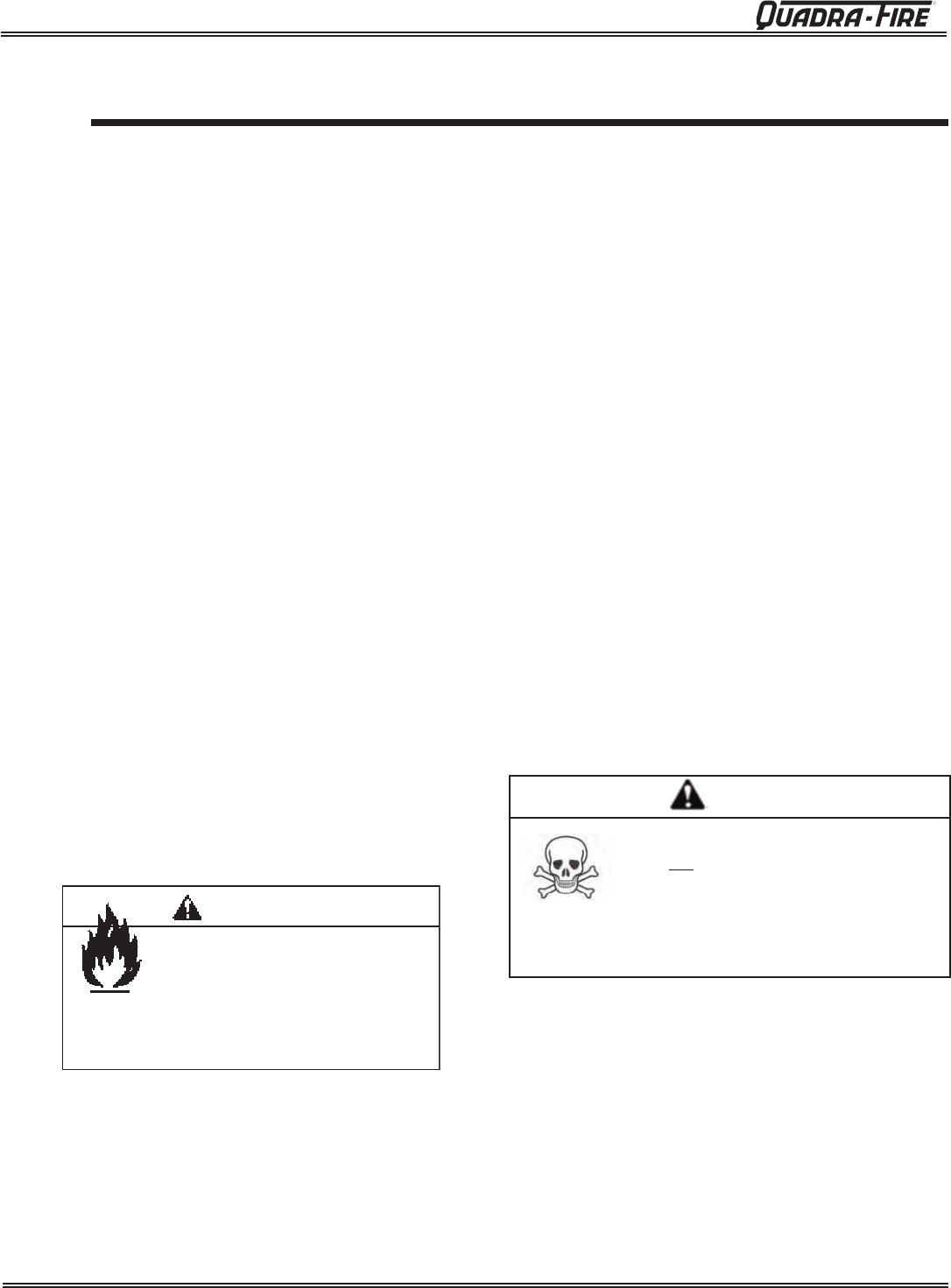
3. There is a 4 screw terminal block located on the junc-
tion box to the left of the power cord inlet. The center
2 screws are for the thermostat wires. The outer 2 are
the mounting screws for the terminal block. Figure
23.1.
H. Thermostat Installation
Figure 23.1
Shock hazard.
• Do NOT remove grounding prong from plug.
• Plug directly into properly grounded 3 prong
receptacle.
• Route cord away from appliance.
•
Do NOT route cord under or in front of appli-
ance.
CAUTION
Control Box
Junction Box
Reset Button
Heat Output
Switch
Power Cord
Outlet
Thermostat
Block
Fuse
Red Call
Light
Red/Green/Amber Light
Blue Light
Page 24 250-7251G August 20, 2009
R
Castile Pellet Insert
8Operating Instructions
A. Fuel Size, Material and Storage
1. Wood Pellets
Fuel pellets are made from sawdust or wood by-products. If the
source material is hardwood, they can have a higher mineral
content, creating more ash. Fuels containing bark will also
have higher ash content. Minerals and other noncombustible
materials such as sand will turn into a hard, glass-like substance
called a clinker when heated to the extreme temperatures our
fi repot reaches. This is what forms clinkers in the bottom of the
fi repot. Trees from different areas will vary in mineral content.
That is why some fuels produce more clinkers than others.
Pellets are manufactured in either 1/4 inch or 5/16 inch (6-8mm)
diameter and should be no more than 1-1/2 inches (38mm)
in length. Pellet lengths may even vary by lot from the same
manufacturer which is why the feed rate may need to be adjusted
occasionally. If you burn pellets longer than 1-1/2 inches
(38mm) you may have an inconsistent fuel feed rate and/or
missed ignitions.
Pellet fuel quality can greatly fl uctuate. We recommend using
premium grade fuel with ash content less than 1%. Even in some
fuel labeled “premium” ash content can vary from bag to bag
and possibly exceed 1%. High ash fuel, or lack of maintenance,
can cause the fi repot to fi ll up and thus create a potential for
smoking, sooting and possible hopper fi res.
Always burn dry fuel. Burning fuel with high moisture content
takes heat from the fuel and tends to cool the appliance,
robbing heat from your home. Damp pellet fuel can clog the
feed system.
We recommend that you buy fuel in multi-ton lots whenever
possible. Buying large quantities of fuel at once will greatly
reduce the number of times the feed adjustments will need to be
made. However, we do recommend trying various brands before
purchasing multi-ton lots to ensure your satisfaction.
2. Shelled Field Corn
Extensive factory and fi eld testing has demonstrated shelled
fi eld corn to be an effi cient and very economical fuel. We
recommend the use of a 50-50 blend of corn and wood pellets.
The only change in operation is that the feed rate may require
a slight adjustment. The BTU output of the appliance varies
slightly compared to pellets, depending on the quality of the
Fire Risk.
WARNING
• High ash fuels, or lack of maintenance, can
cause the firepot to overfill. Follow proper
shutdown procedure if ash buildup exceeds
half way point in firepot.
• Failure to do so could result in smoking,
sooting and possible hopper fires.
2. Shelled Field Corn (Cont’d)
corn used. In cases where it is acceptable for the appliance
to run full time, 100% corn will work after the fi re has been
started using wood pellets.
When purchasing corn to burn in your appliance, read the
ingredient label very carefully. Do NOT purchase fuel
that contains any additives such as oils (i.e. soybean oil)
and meals as it will result in poor unit performance. If you
are buying corn the only ingredient that should be listed
is corn.
Shelled fi eld corn must be 15% or less moisture content.
The corn must be clean and free from debris. Never burn
corn straight from the fi eld. Stalk parts, excessive fi nes and
cob remnants, etc. will clog the auger mechanism. Corn
with excessive grain dust must be screened by sifting with
3/16 (4.76mm) inch mesh screening.
Do not burn treated seed corn in your appliance. Seed corn
is treated with chemical pesticides that are harmful or fatal
if swallowed; therefore, seed corn is dangerous to have in
the house, expecially where children can reach it. Burning
treated seed corn in your appliane will void your warranty
and will destroy the exhaust system on the unit.
When changing to a different fuel, be sure to empty the
hopper of the previous fuel and vacuum the hopper before
you fi ll it with the new fuel.
Risk of Chemical Poisoning.
• Do Not burn treated seed corn
• Chemical pesticides are harmful or fatal if
swallowed
• Burning treated seed corn will void your
warranty
WARNING
3. Storage
Wood pellets should be left in their original sealed bag until
using. This will prevent moisture absorption.
Shelled corn should be stored in a tight container where it
will not absorb moisture from damp or wet fl oors. This will
also prevent rodents from becoming a problem.
Do not store any pellet fuel within the clearance
requirements or in an area that would hinder routine cleaning
and maintenance.
R
August 20, 2009 250-7251G Page 25
Castile Pellet Insert
B. General Operating Information
1. Thermostat Calls For Heat
The appliance is like most modern furnaces; when the thermostat
calls for heat, your appliance will automatically light and deliver
heat. When the room is up to temperature and the thermostat
is satisfi ed, the red call light will shut off and the appliance will
shut down. The red call light is located behind the left access
panel.
Figure 25.1
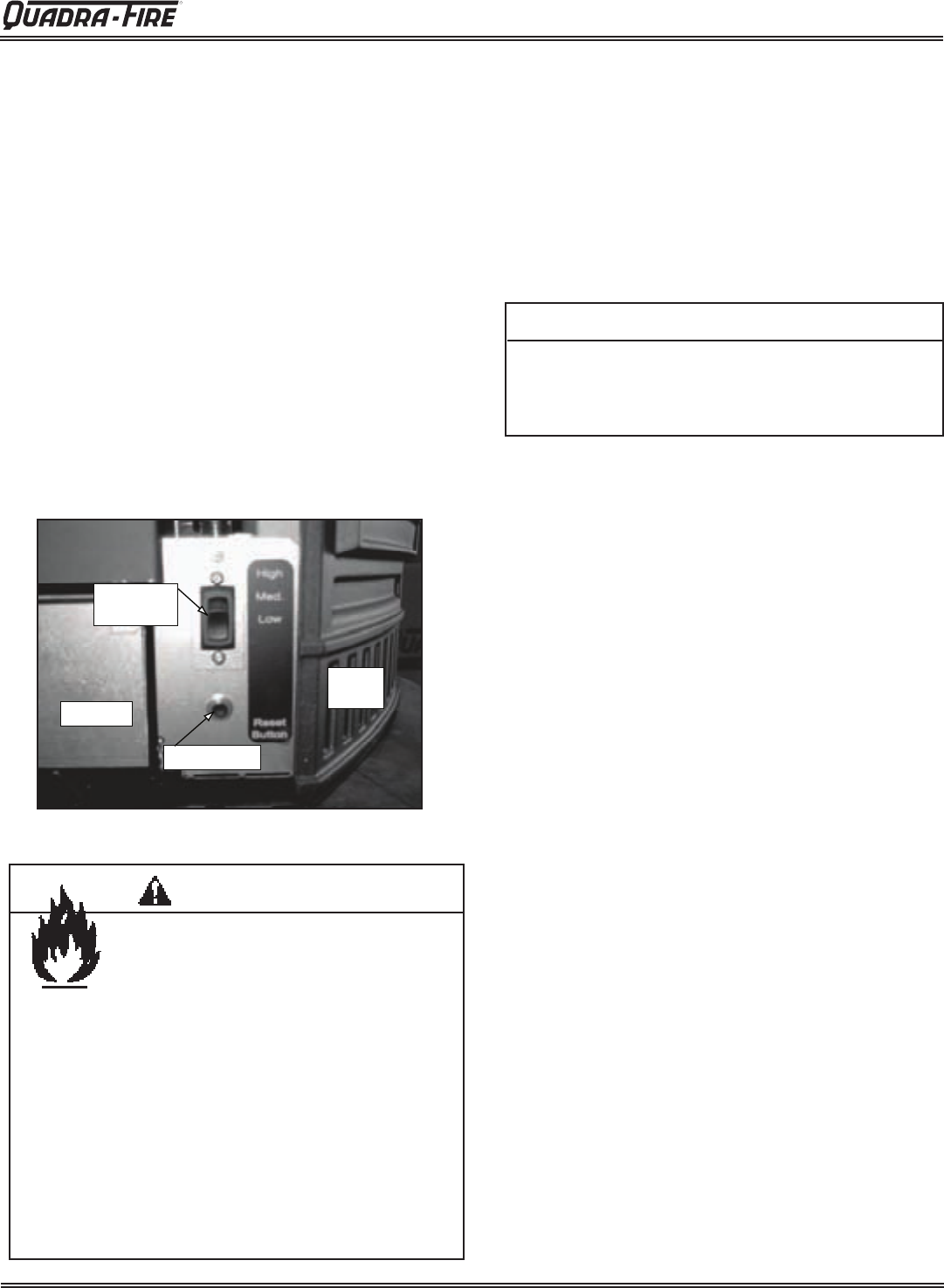
2. Heat Output Controls
This appliance is equipped with a heat output control switch that
has three settings or burn rates; low, medium and high. The
appliance will turn on and off as the thermostat demands. When
the thermostat calls for heat, the appliance will always start up
on High. After burning approximately 4 minutes, the appliance
will then burn at the rate at which it was originally set. If the
appliance is set at one of the lower settings, it will run quieter
but takes longer to heat up an area than if it were set at a higher
burn rate. Regardless of the burn rate, when the area is warm
enough to satisfy the thermostat, the appliance will shut off.
Heat Output
Switch
Reset Button
Ash Pan
Right
Side
C. Before Your First Fire
1. First, make sure your appliance has been properly
installed and that all safety requirements have been met.
Pay particular attention to the fi re protection, venting and
thermostat installation instructions.
2. Double check that the ash pan and fi rebox are empty!
3. Check the position of the thermocouple, located above
the fi repot, and make sure that it protrudes approximately
3/4 inch (19mm) into the fi repot.
4. Close the front door.
E. Fire Characteristics
A properly adjusted fi re with the heat output control switch
set on “HIGH” has a short active fl ame pattern that extends
out of the fi repot approximately 4 inches (102mm). If the fi re
has tall fl ames with black tails and seems somewhat lazy, the
feed rate will need to be reduced. If the fi re is not 4 inches
(102mm) tall, increase the feed rate. A medium and low
setting will give a shorter fl ame. The fl ame will rise and fall
somewhat. This is normal.
D. Starting Your First Fire
1. A thermostat is required for proper operation of this
appliance, except for corn. At this time, fi ll the hopper
with pellets, set the thermostat to its lowest setting. Plug
the power cord into nearby outlet.
2. The exhaust blower will stay on for approximately 18
minutes even though the thermostat is not calling for
heat. This is normal.
3.
Locate the heat output control switch behind the right face
on the lower right side of the fi rebox. Set to the HIGH
setting and then adjust the thermostat to its highest setting.
The red call light will be on which is located on the top of
the junction box behind the right cast side. This indicates
the thermostat is calling for heat. Figure 25.1.
4.
The fuel feed system and the igniter should
now
be on.
5. For your fi rst fi re it will be necessary to press the reset
button once a minute until pellets start to drop into the
fi repot, then press button 1 more time. This will fi ll the
feed system and allow the appliance to begin dropping
pellets. The appliance will continue to run as long as the
thermostat is calling for heat.
6. Once the appliance has ignited, let it burn for approximately
15 minutes, then set the thermostat to the desired room
temperature. Adjust the heat output control switch to the
desired setting.
CAUTION
Tip of thermocouple must be in contact with the inside
end of the thermocouple cover.
Missed ignitions can occur.
WARNING
Fire Hazard.
Keep combustible materials, gasoline
and other fl ammable vapors and liquids
clear of appliance.
• Do NOT store fl ammable materials in the appliance’s
vicinity.
• DO NOT USE GASOLINE, LANTERN FUEL, KEROSENE,
CHARCOAL LIGHTER FLUID OR SIMILAR LIQUIDS TO
START OR “FRESHEN UP” A FIRE IN THIS HEATER.
• DO NOT BURN GARBAGE OR FLAMMABLE FLUIDS
SUCH AS GASOLINE, NAPHTHA OR ENGINE OIL.
• DO NOT USE CHEMICALS OF FLUIDS TO START THE
FIRE.
• Keep all such liquids well away from the heater while it is in
use.
• Combustible materials may ignite.
Page 26 250-7251G August 20, 2009
R
Castile Pellet Insert
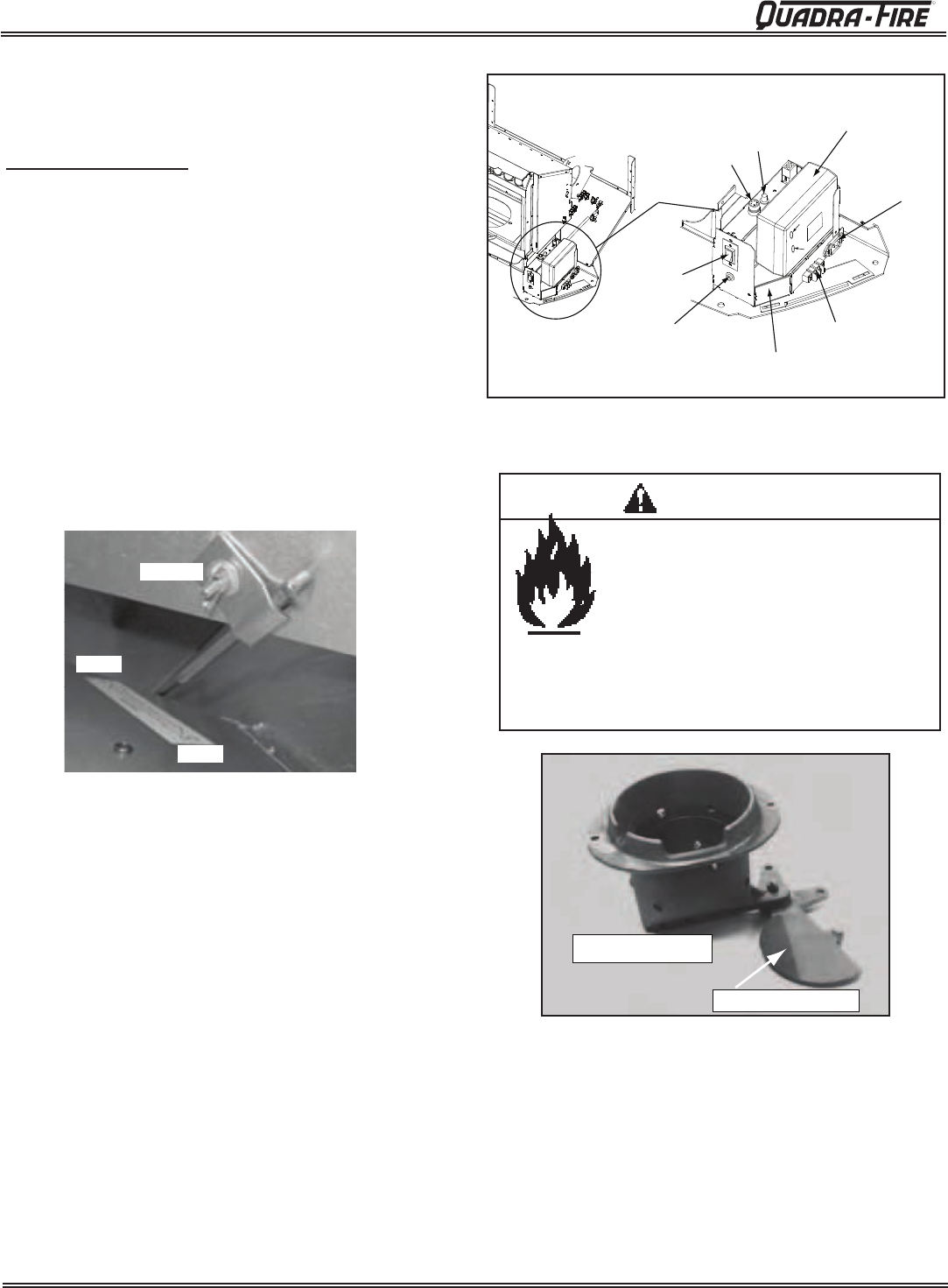
The fuel adjustment control rod is factory set, and should be
adequate for most fuels.
The set screw is located at the bottom of the hopper and
set loose at the factory so the fuel adjustment control rod
will slide by only loosening the wing nut. Do not re-tighten
bottom set screw.
However, if the flame height is too high or too low, you will
need to adjust the feed rate. Wait until the appliance has been
burning for 15 minutes before making your adjustments and
a
llow 15 minutes for feed adjustment to take effect.
Make
adjustments in approximately 1/2 inch increments.
1. Loosen the wing nut. Figure 26.1.
2. Adjust the fuel adjustment control rod towards the
"+" symbol to increase the feed rate and fl ame height or
towards the "-" symbol, to decrease the feed rate and fl ame
height.
3. Re-tighten the wing nut.
F. Feed Rate Adjustment
Figure 26.1
Control Box
Junction Box
Reset Button
Heat Output
Switch
Power Cord
Outlet
Thermostat
Block
Fuse
Red Call
Light
Red/Green Light
Blue Light
Wing Nut
"+"
"-"
G. Iginition Cycles
1. During each ignition cycle, it is normal to see some smoke
in the fi rebox. The smoke will stop once the fi re starts.
2. The convection blower will automatically turn on after your
appliance has reached the set temperature. This blower
transfers heat from your appliance into the room, and will
continue to run after the thermostat has stopped calling
for heat until the appliance has cooled down.
3. Occasionally the appliance may run out of fuel and shut
itself down. When this happens, the red call light will
be on. To restart it, fi ll the hopper and press the reset
button. Figure 26.2. When you press the reset button
the red call light will go out. Release the button and the
light will come back on. You should see a fi re shortly.
If not, follow the instructions on page 25, “Starting Your
First Fire”.
WARNING
Fire Risk
Do NOT operate appliance:
• With appliance door open.
• Firepot fl oor open.
• Cleaning slide plates open.
Do NOT store fuel:
• Closer than required clearances to com-
bustibles to appliance
• Within space required for loading or ash
removal.
Back side of Firepot
Firepot floor left open
Figure 26.2 - DO NOT LEAVE FIREPOT FLOOR OPEN
Figure 26.1
R
August 20, 2009 250-7251G Page 27
Castile Pellet Insert
H. Frequently Asked Questions
Odors and vapors released during initial operation.
• Curing of high temperature paint.
• Open windows for air circulation.
Odors may be irritating to sensitive individuals.
CAUTION
ISSUES SOLUTIONS
1. Metallic noise. 1. Noise is caused by metal expanding and contracting as
it heats up and cools down, similar to the sound pro-
duced by a furnace or heating duct. This noise does not
affect the operation or longevity of your appliance.
2. Ash buildup on glass. 2. This is normal. Clean the glass.
3. Glass has turned dirty. 3. Excessive build up of ash. The lower burn settings will
produce more ash, the higher burn settings produce
less. The more it burns on low the more frequent clean-
ing of the glass is required.
4. Fire has tall fl ames with black tails and is lazy. 4. The feed rate needs to be reduced or the fi repot needs
cleaning. Heat exchanger or exhaust blower needs
cleaning.
5. Smokey start-up or puffs of smoke from the airwash. 5. Either the fi repot is dirty or there is too much fuel at
start-up and not enough air. Close down feed rate 1/4
(6mm) inch at a time until this no longer happens.
6. Large fl ame at start-up. 6. This is normal. Flame will settle down once the fi re is
established.
Page 28 250-7251G August 20, 2009
R
Castile Pellet Insert
9Troubleshooting
With proper installation, operation, and maintenance your appliance will provide years
of trouble-free service. If you do experience a problem, this troubleshooting guide
will assist a qualifi ed service person in the diagnosis of a problem and the corrective
action to be taken. This troubleshooting guide can only be used by a qualifi ed
service technician.
Symptom Possible Cause Corrective Action
Plug in appliance - No
response. No current to outlet.
.7 amp fuse defective.
#3 snap disc tripped or defective.
Control box defective.
Check circuit breaker at service panel.
Replace fuse.
Reset or replace snap disc.
Replace control box.
Call light on. No fi re.
No fuel in fi repot. Out of fuel.
#2 snap disc may be defective.
Vacuum switch not closing, no vacuum.
Control box defective.
Check hopper. Fill with fuel.
Replace snap disc.
Check exhaust blower is plugged in and
operating.
Check vacuum switch is plugged in.
Check vacuum hose is in good condition,
clear and connected at both ends.
Check thermocouple is in good condition
and plugged in properly.
Make sure venting system is clean.
Make sure front door is closed.
Replace control box.
Call light on. No fi re.
Partially burned fuel in
fi repot.
Firepot clean-out plate not closed.
Firepot is dirty (missed ignition).
Check that fi repot clean-out plate is fully
closed.
Clean fi repot. Make sure there is no clinker
in the fi repot.
Clinkers may have to be broken up with
fi repot scraper tool or other means.
Call light on. No fi re.
Unburned pellets in
fi repot.
Firepot clean-out plate not closed.
Firepot is dirty.
Ignition hole blocked.
Igniter not working.
Control box defective.
Check that fi repot clean-out plate is fully
closed.
Clean fi repot. Make sure there is not a
clinker in the fi repot. Clinkers may have to
be pushed out of fi repot with fi repot scraper
tool or other means.
Scrape with solid piece of wire.
Remove ash drawer to see if igniter is
glowing red on start-up.
Check igniter wires for good connection.
Replace igniter using 1/4 inch (6mm) male
/female spade connectors.
Replace control box.
Slow or smoky start-up. Firepot clean-out plate not closed.
Firepot is dirty.
Excessive amount of fuel at start-up.
Check that fi repot clean-out is fully closed.
Clean fi repot. Make sure there is not a
clinker in the fi repot. Clinkers may have to
pushed out of fi repot with fi repot scraper
tool or other means.
Reduce feed rate using feed rate adjust-
ment control rod located inside hopper.

R
August 20, 2009 250-7251G Page 29
Castile Pellet Insert
Symptom Possible Cause Corrective Action
Slow or smoky start-up
(Cont’d)Dirty exhaust and/or venting system. Check for ash build up in appliance,
including behind rear panels, fi rebox, heat
exchanger, exhaust blower and venting.
Feed system fails to
start. Out of fuel.
#2 snap disc may be defective.
Vacuum switch not closing. No vacuum.
Feed system jammed or blocked.
Feed spring not turning with feed motor.
Feed motor defective or not plugged in.
Check hopper, fi ll with fuel.
Replace snap disc. Firebox door must be
closed securely.
Check exhaust blower is plugged in and
operating.
Check vacuum switch is plugged in.
Check vacuum hose is in good condition,
clear and connected at both ends.
Check thermocouple is in good condition
and plugged in properly.
Make sure venting system is clean.
NOTE: High winds blowing into the vent-
ing system can pressurize the fi rebox
causing loss of vacuum.
Empty hopper of fuel. Use a wet/dry
vacuum cleaner to remove remaining fuel,
from hopper, including feed tube.
Check feed chute for obstructions.
Loosen 2 screws and jiggle feed assembly.
Check that set screw is tight on feed
spring shaft at end of feed motor.
Check connections on feed motor, replace
if defective.
No call light. Appliance
does not begin start
sequence.
Thermostat not set to a high enough tempera-
ture.
Snap Disc #3 tripped.
No power.
Fuse blown.
Connections at thermostat and/or appliance not
making proper contact.
Defective thermostat or thermostat wiring.
Control box defective.
Adjust thermostat above room tempera-
ture.
Reset snap disc.
Connect to power.
Replace fuse.
Check connections at thermostat and
appliance.
Replace thermostat or wiring.
NOTE: To test thermostat and wiring, use
a jumper wire at the thermostat block on
the appliance to by-pass thermostat and
wiring.
Replace control box.
Appliance fails to shut
off. Call light on. Turn thermostat off.
If call light does not go out, disconnect
thermostat wires from appliance. If call
light does go out, thermostat or wires are
defective.

Page 30 250-7251G August 20, 2009
R
Castile Pellet Insert
Symptom Possible Cause Corrective Action
Convection blower fails to
start. No call light.
#1 snap disc defective.
Blower not plugged in.
Blower is defective.
Control box is defective.
Defective control box.
Replace snap disc.
Check that blower is plugged into wire har-
ness.
Replace blower.
Replace control box.
Exhaust blower fails to
start or does not shut off. Blower not plugged in.
Blower is clogged with ash.
Blower is defective.
Control box is defective.
Check that blower is plugged into wire har-
ness.
Clean exhaust system.
Replace blower.
Replace control box.
Large, lazy fl ame, orange
color. Black ash on glass. Dirty appliance.
Poor fuel quality, high ash content.
Firepot clean-out plate not completely
closed.
Excessive amount of fuel.
Clean appliance, including fi repot, heat
exchangers and venting system. Remove
stainless steel baffl e from fi rebox to clean
ash from on top of baffl e. Clean behind rear
brick panels. Change fuel brand to pre-
mium.
Check that fi repot clean-out plate is fully
closed.
Reduce feed rate using feed rate adjustment
control rod located inside hopper.
Nuisance shutdowns. Low fl ame.
Sawdust buildup in hopper.
Feed motor is reversing.
Defective thermocouple.
Defective control box
Firepot more than 1/2 full
Increase feed by opening feed rate adjust-
ment control rod located inside hopper.
Clean hopper, see page 31.
Check for good connections between feed
motor and wire harness.
Replace thermocouple.
Replace control box.
See page 31 for detailed instructions for
“High Ash Fuel Content Maintenance”
Appliance calls for heat.
Call light illuminates.
Exhaust blower starts.
No feed or igniter.
Thermocouple is defective or not properly
plugged in.
Defective control box
Check connections on thermocouple or
replace if defective.
A fl ashing yellow light on the control box
indicates a problem with the thermocouple.
Replace control box.
R
August 20, 2009 250-7251G Page 31
Castile Pellet Insert
10Maintaining & Servicing Your Appliance
C. General Maintenance & Cleaning
1. Types of Fuel
Depending on the type of fuel you are burning will dictate how
often you have to clean your fi repot.
If the fuel you are burning has a high dirt or ash content or
you are burning shelled fi eld corn, it may be necessary to
clean the fi repot more than once a day.
Dirty fuel will cause clinkers to form in the fi repot. A clinker
is formed when dirt, ash or a non-burnable substance is
heated to 2000°F (1093°C) and becomes glass-like. See
“D” page 35 in this section for more details on fuels with
high ash content.
Clinker
Figure 31.1 - Clinker
Shock and Smoke Hazard
• Turn down thermostat, let appliance completely
cool and exhaust blower must be off. Now you
can unplug appliance before servicing.
• Smoke spillage into room can occur if appliance
is not cool before unplugging.
• Risk of shock if appliance not unplugged before
servicing appliance.
CAUTION
A. Proper Shutdown Procedure
Cleaning or Inspection Frequency Daily Weekly Monthly Yearly
Ash Pan Every 5 bags of fuel OR X
Ash Removal from Firebox More frequently depending on
the fuel type or ash build-up OR X
Beneath Heat Exchanger Every 1 ton of fuel OR X
Blower, Combustion (Exhaust) More frequently depending on
the fuel type OR X
Blower, Convection More frequently depending on
the fuel type OR X
Door Latch Inspection Prior to heating season OR X
Exhaust Path More frequently depending on
ash build-up OR X
Firebox - Prepare for Non-Burn Season At end of heating season OR X
Firepot - Burning pellets - hardwood Every 3 bags OR X
Firepot - Burning pellets - softwood Every 5 bags OR X
Firepot - Burning Corn Every 1 bag OR X
Glass When clear view of fi repot
becomes obscure OR X
Heat Exchanger & Drop Tube Every 1 ton of fuel OR X
Hopper Every 1 ton of fuel or when
changing fuel types OR X
Top Vent Adapter More frequently depending on
the fuel type or ash build-up OR X
Venting System More frequently depending on
the fuel type OR X
B. Quick Reference Maintenance Chart
Follow the detailed instructions found in this
section for each step listed as referenced in the
chart below.
NOTICE: These are recommendations. Clean more frequently if you encounter heavy build-up of
ash at the recommended interval or you see soot coming from the vent. Not properly
cleaning your appliance on a regular basis will void your warranty.
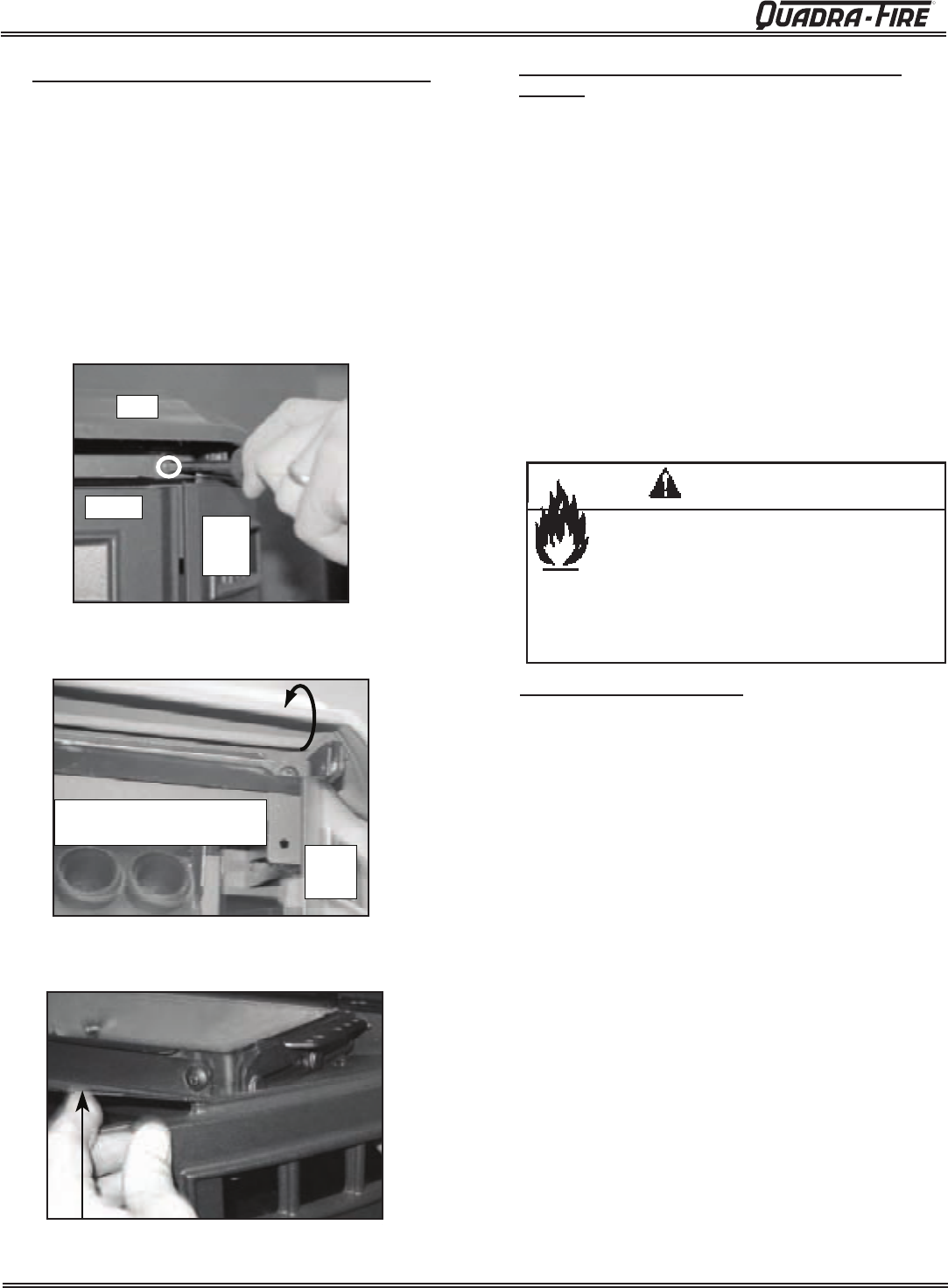
Page 32 250-7251G August 20, 2009
R
Castile Pellet Insert
3. Cleaning Firepot with Cleaning Rod & Firepot
Scraper
• Frequency: Daily or more often as needed
• By: Homeowner
a. The appliance must be in complete shutdown and cool
and the exhaust blower off. If you are just cleaning the
fi repot, there is no need to unplug the appliance.
b. Pull fi repot cleaning rod OUT a couple of times to help
shake debris loose. See Figure 33.1 on page 33. If rod
is hard to pull, it may be necessary to use your fi repot
clean-out tool to chip away material that has built up
on the bottom plate of the fi repot and to push out any
clinkers. Larger clinkers may have to be removed from
the top of the fi repot. Corn clinkers can be especially
diffi cult to break up.
c. The firepot floor plate must be fully closed when
fi nished. See Figure 26.2 on page 26.
WARNING
• NEVER pull fi repot cleaning rod or cleaning
slide plates out when appliance is operating.
• The cleaning slide plates must be fully
CLOSED when appliance is operating.
•. Hot pellets may fall into ashpan and start a fi
re
or mis-starts due to lack of vacuum.
Fire Risk
a. Loosen screw on top right corner directly under the cast
top, but do not remove. Figure 32.1.
b. With thumb, press upward on the frame to relieve the
pressure on the cast side. Figure 32.2.
c. Slide the cast side downward as shown in Figure 32.3.
(The top has been removed to show the details.
d. Lay sides on protective padding to avoid scratching the
paint or chipping the porcelain.
e. Repeat for the other side.
Front
Right
Cast
Side
Top
CAST
SIDE
Flex frame upward with thumb
to relieve pressure on cast side.
Figure 32.1
Figure 32.2
Figure 32.3
2. Remove Cast Sides for Cleaning & Maintenance
4. Ash Removal from Firebox
• Frequency: Weekly or more frequently depending on
ash build-up.
• By: Homeowner
a. There must not be any hot ashes in the fi rebox during
cleaning so allow the appliance to completely cool.
The fi rebox ash should be removed every time the
fi repot is cleaned. Frequent cleaning of the ash in
the fi rebox will help slow down the build-up of ash in
the exhaust blower and vent system.
b. Plug in your appliance, if unplugged, and turn the
thermostat on and immediatley shut it off to start the
exhaust blower on its cycle time. It will pull fl y ash
out the exhaust instead of into the room.
c. Open cast hinged face. Directly underneath the
fi rebox door and to the left and right of the fi repot are
2 cleaning slide plates with fi nger holes. Pull both
slide plates out and then open the glass door. Sweep
the remaining ash from the fi rebox into the 2 open
holes. A paint brush works well for this. Close slide
plates.
d. This ash is deposited in the same ash pan as the
fi repot debris. The ash pan should be emptied every
time you clean the fi rebox. Remember to place
the ash and debris into a metal or noncombustible
container.
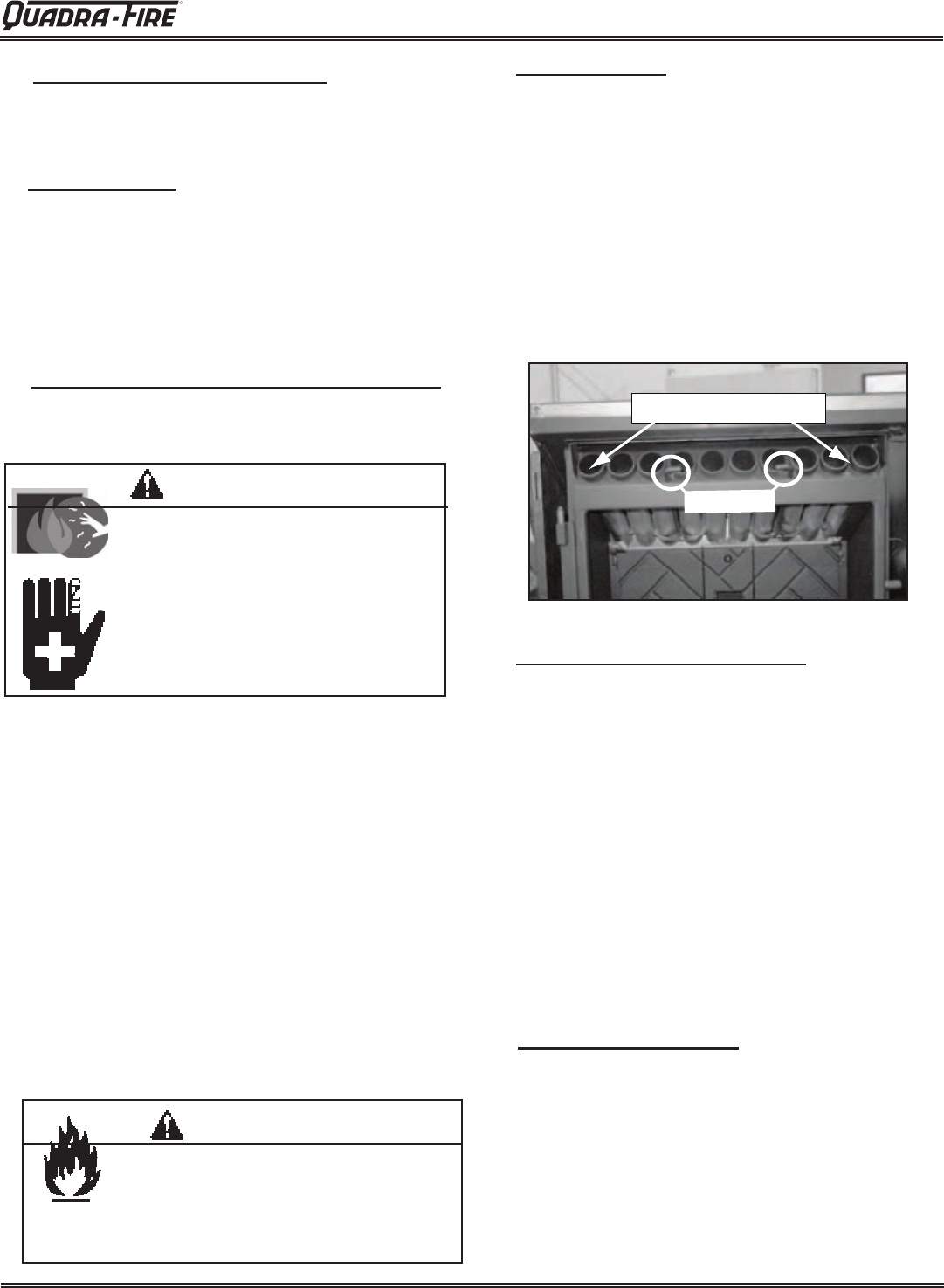
R
August 20, 2009 250-7251G Page 33
Castile Pellet Insert
8. Cleaning Beneath Heat Exchanger
• Frequency: Monthly or after burning 1 ton of fuel
• By: Homeowner
a. Be sure the appliance is allowed to cool, has been
unplugged and the exhaust blower is off
b. A more thorough cleaning is needed to remove the
excess ash that is left behind from the use of the
cleaning rods for the heat exchanger tubes.
c. The ash will be resting on the back of the baffl e.
This will require removing the cast baffl e. Please
refer to page 33 for a detailed explanation of remov-
ing the baffl e.
NOTE:
There are heavy duty vacuum cleaners specifi cally
designed for solid fuel appliance cleaning.
9. Cleaning the Exhaust Path
• Frequency: Yearly or more frequently depending on
ash build-up.
• By: Homeowner
a. Appliance must be completely cool.
b.
Open cast front door. Remove right brick and thoroughly
vacuum the area and continue throughout the rest of
the fi rebox. See Figure 37.3 on page 37.
c. Replace right brick and close cast front door.
6. Cleaning Heat Exchanger Chambers & Drop Tube
• Frequency: Monthly or every 1 ton of fuel
• By: Homeowner
The amount of ash buildup in the fi repot will be a good
guide to determine how often you should clean the heat
exchangers.
a. Allow the appliance to completely cool down before
pulling the cleaning rods. Turn the thermostat on and
then immediately off to start the exhaust blower on its
cycle time. It will pull fl y ash out the exhaust instead
of into the room. Open the cast front door to access
the 2 cleaning rods. Figure 33.1.
b. Locate the 2 rods directly underneath the heat
exchanger tubes. Rods are bent at a 90° angle for
easy handling.
c. To clean, pull the rods straight out until it stops,
approximately 10 inches (254mm). Slide the rods
OUT and IN a couple of times.
5. Cleaning Ash Pan
• Frequency: Weekly or every 5 bags of fuel
• By: Homeowner
Locate the ash pan underneath the fi repot. Open the
bottom ash door and slide the ash pan straight out.
Empty into a non-combustible container and re-install
ash pan. See Disposal of Ashes.
Disposal of Ashes
WARNING
• Ashes should be placed in metal container
with tight fi tting lid.
• Ashes should be retained in closed container
until all cinders have thoroughly cooled.
7. Disposal of Ashes
• Frequency: As needed
• By: Homeowner
Ashes should be placed in a metal container with a
tight-fi tting lid. The closed container of ashes should
be placed on a non-combustible fl oor or on the ground,
well away from all combustible materials, pending fi nal
disposal.
If the ashes are disposed of by burial in soil or otherwise
locally dispersed, they should be retained in the
closed container until all cinders have been thoroughly
cooled.
WARNING
Heat exchanger cleaning rods may be warm
to the touch. For safety purposes wear
gloves.
Do not pull heat exchanger cleaning rods
while appliance is operating.
Push cleaning rods IN when done, DO NOT
leave cleaning rods OUT. Injury can occur.
Figure 33.1
CLEANING RODS
10 Heat Exchanger Tubes
4. Ash Removal from Firebox (Cont’d)
e. The 2 cleaning slide plates must be fully closed when
cleaning is complete. See Disposal of Ashes.
Page 34 250-7251G August 20, 2009
R
Castile Pellet Insert
12. Cleaning the Glass
• Frequency: When clear view of the fi repot becomes
obscure
• By: Homeowner
a. Appliance must be completely cool before cleaning
glass.
b. Use a damp paper towel or any non-abrasive glass
cleaner. Wipe off with dry towel.
10. Cleaning the Hopper
• Frequency: Monthly or after burning 1 ton of fuel
• By: Homeowner
After burning approximately 1 ton of fuel you will need to
clean the hopper to prevent sawdust build-up.
A combination of sawdust and pellets on the auger
reduces the amount of fuel supply to the fi repot. This
can result in nuisance shutdowns and mis-starts.
a. The appliance must be in complete shutdown. Allow
the appliance to completely cool down.
b. Empty the hopper of any remaining pellets.
c. Vacuum the hopper and feed tube.
11. Soot and Fly Ash: Formation & Need for Removal
in Exhaust Venting System.
• Frequency: Yearly or more frequently depending on
ash build-up.
• By: Qualifi ed Service Technician/Homeowner
Be sure the appliance is allowed to cool, has been unplugged
and the exhaust blower is off.
The products of combustion will contain small particles of fl y
ash. The fl y ash will collect in the exhaust venting system
and restrict the fl ow of the fl ue gases.
At start-up if there is incomplete combustion, or if there is a
shutdown or incorrect operation of the appliance it will lead
to some soot formation. This will collect in the exhaust vent-
ing system.
The venting system may need to be cleaned at least once a
year or more often depending upon the quality of your fuel
or if there is a lot of horizontal pipe sections. Ash will build
up more quickly in the horizontal sections.
13. Cleaning Convection Blower - Requires No
Lubrication
• Frequency: Yearly or as needed
• By: Qualifi ed Service Technician
a. The appliance must be in complete shutdown and
completely cooled.
b. Remove both the left and right cast sides.
c. Use either a can of compressed air or an air com-
pressor.
d. Reach as far back as possible and spray com-
presssed air liberally from both sides at the blower.
This will remove any lint or dust build-up on the
impellers.
14. Cleaning Exhaust Blower - Requires No
Lubrication
• Frequency: Yearly or as needed
• By: Qualifi ed Service Technician
• Task: Contact your local dealer.
15. Door Latch Inspection
• Frequency: Prior to heating season
• By: Homeowner
The door latch is non-adjustable but the gasketing between
the glass and fi rebox should be inspected periodically to
make sure there is a good seal.
NOTE: There is no gasket on the bottom of glass.
Handle glass with care.
• Inspect the gasket to ensure it is
undamaged.
• Do NOT strike, slam or scratch glass.
• Do NOT operate appliance with glass
assembly removed.
WARNING
• Do NOT operate with glass cracked, broken or
scratched.
Handle glass assembly with care.
When cleaning glass:
• Avoid striking, scratching or
slamming glass.
• Do NOT clean glass when hot.
CAUTION
• Do NOT use abrasive cleaners.
• Use a hard water deposit glass cleaner on white fi lm.
• Refer to maintenance instructions.
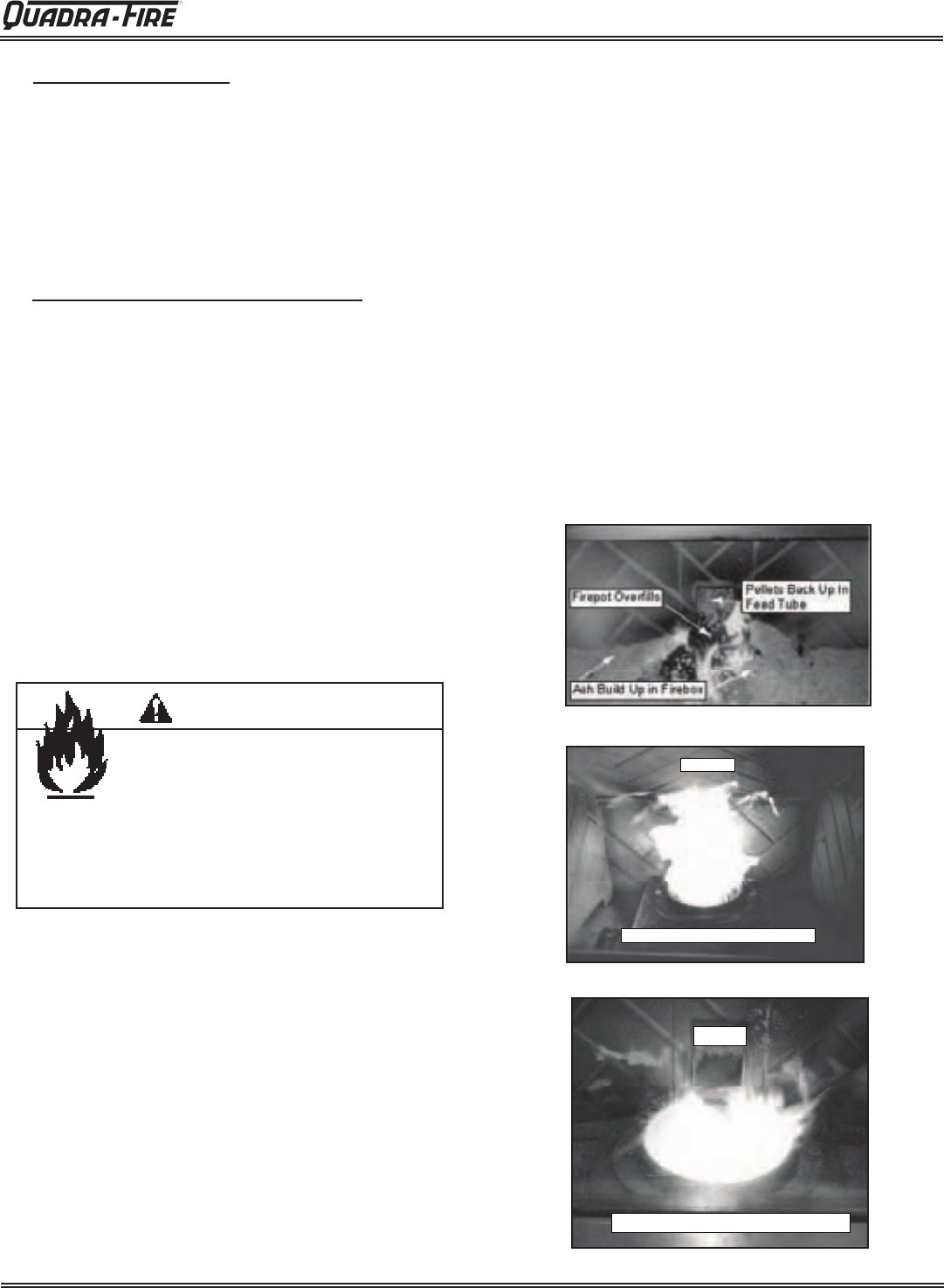
R
August 20, 2009 250-7251G Page 35
Castile Pellet Insert
17. Preparing Firebox for Non-Burn Season
• Frequency: Yearly
• By: Homeowner
a. Be sure the appliance is allowed to cool, has been
unplugged and the exhaust blower is off.
b.
Remove all ash from the fi rebox and vacuum thoroughly.
c. Paint all exposed steel, including cast-iron.
•
Use the Touch-Up paint supplied with the appliance;
or;
• Purchase paint from your local dealer.
• Must use a high-temperature paint made specifi -
cially for heating appliances.
16. Door Gasket Inspection
• Frequency: Monthly or after burning 1 ton of fuel
• By: Homeowner
To inspect the door rope (gasket), open the door and see
that the door rope extends approximately 1/8 to 3/16 inch
(3 to 9.5mm) from the door rope channel.
It should show signs of compaction all the way around the
door where the rope contacts the face of the insert.
WARNING
Fire and Smoke Risk.
• High ash fuels or lack of maintenance
can cause fi repot to overfi ll. Follow
proper shutdown procedure if ash buildup
exceeds half way point in fi repot.
• Failure to do so could result in smoking,
sooting and possible hopper fi res.
Correct Flame Size, Yellow/White in Color
Correct
Figure 35.3
Tall, Lazy Flame, Orange in Color
Incorrect
Figure 35.1
Figure 35.2
D. High Ash Fuel Content Maintenance
• Frequency: When the ash build-up exceeds more
than half way up the fi repot.
• By: Homeowner
Poor quality pellet fuel, or lack of maintenance, can create
conditions that make the fi repot fi ll quickly with ashes and
clinkers.
This condition makes the appliance susceptible to overfi lling
the fi repot with pellets which may result in smoking, sooting
and possible hopper fi res. Figure 35.1 shows an example
where the fi repot overfi lls, pellets back up into the feed tube
and ash has accumulated in the fi rebox.
An ineffi cient and non-economical method of burning of fuel
caused by poor quality pellet fuel is shown in Figure 35.2.
The correct fl
ame size when good quality, premium pellet
fuel is burned is shown in Figure 35.3.
If the ash buildup exceeds the half way point in the fi repot
IMMEDIATE ATTENTION AND CLEANING IS REQUIRED.
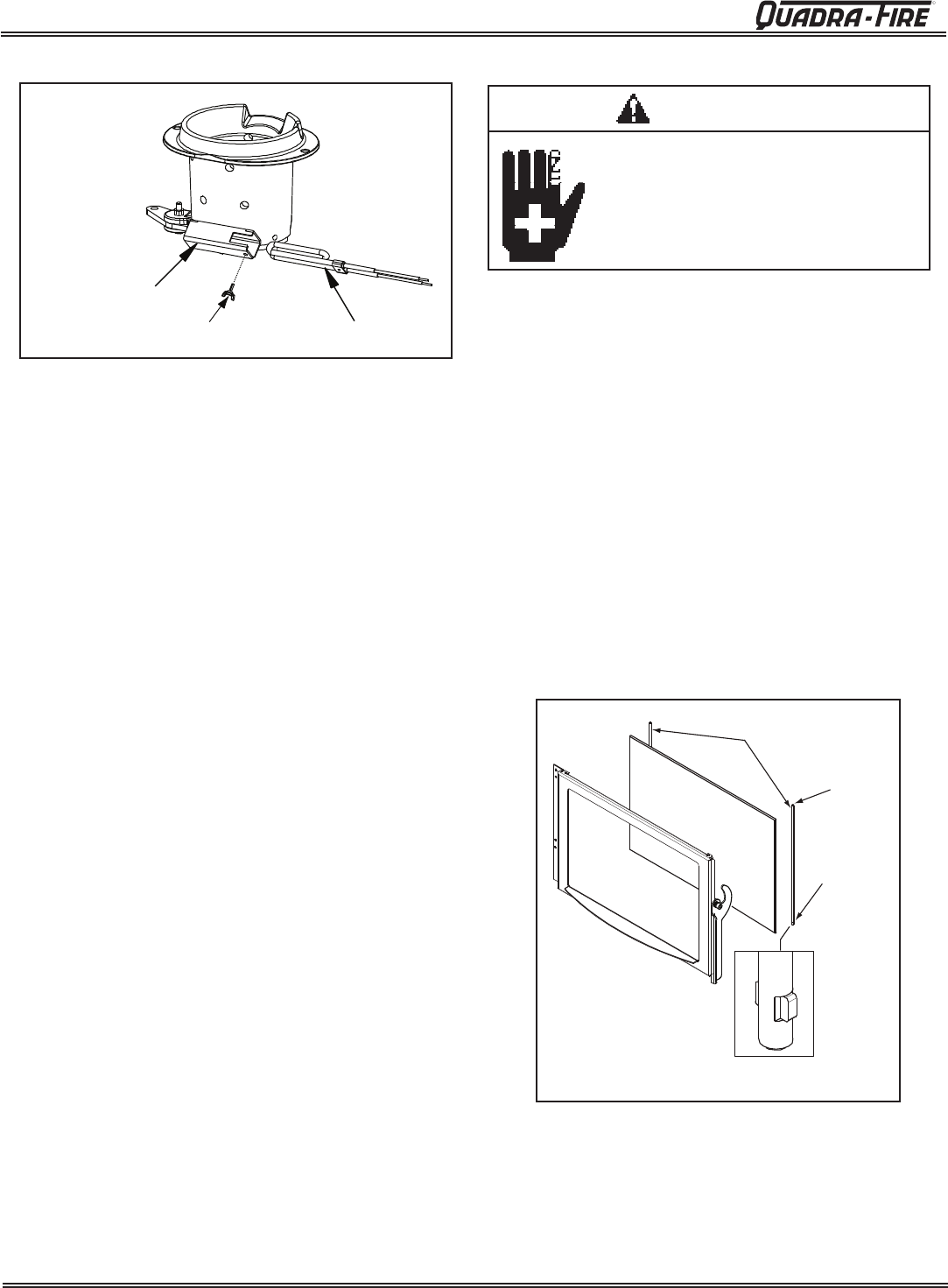
Page 36 250-7251G August 20, 2009
R
Castile Pellet Insert
E. Igniter Replacement
a. Shut down the appliance by turning down the thermostat
and let the appliance completely cool down. After the
appliance has cooled down, unplug it and remove the
ash pan.
b. The wire leads to the igniter are connected to the wire
harness with 1/4 inch (6mm) male / female spade
connectors. These wires will pull forward approximately
4 to 5 inches (102 to 127mm). Disconnect the spade
connections and remove the igniter from the chamber.
Loosen the thumb screw and slide igniter out.
c. Install new igniter into the chamber and tighten the
thumb screw. Re-connect the wires to the 2 leads with
the spade connectors.
d. Remove the right cast side and pull the wire leads
back toward the rear of the appliance to take-up the 4
to 5 inches (102mm to 107mm) previously pulled out.
This will keep the wires out of the way of the ash pan.
Double check that the igniter wires are clear of any
movement, i.e. ash pan, fi repot cleaning rod, cleaning
slide plates, etc.
f. Re-install the ash pan and then re-install the cast side
panel and re-connect the power.
a. Open hinged cast face and lift door assembly off
from the insert and lay on a fl at surface face down.
b. Using a screwdriver, tap the bottom of the rope
retainer rod to push it up out of the hole. The top
end of the rod will slide up. Swing the rod toward
you from the bottom and remove the rod. Repeat
for other side.
c. Remove old glass and replace with new glass.
d. Slide the retainer rod into the top hole fi rst, and then
line up the bottom crimped end with the hole in the
door. The crimped end must be paralle with the glass
in order to insert it into place. Figure 36.2.
F. Glass Replacement
• Glass is 5mm thick high temperature heat-
resistant ceramic glass.
• DO NOT REPLACE with any other material.
• Alternate material may shatter and cause
injury
WARNING
Figure 36.1
Crimped end must be
parallel with the glass
Crimped end
at the bottom
Slide this
end in first
Rope Retainer
Rods
Glass
Figure 36.2
Igniter
Igniter Bracket
Thumb Screw
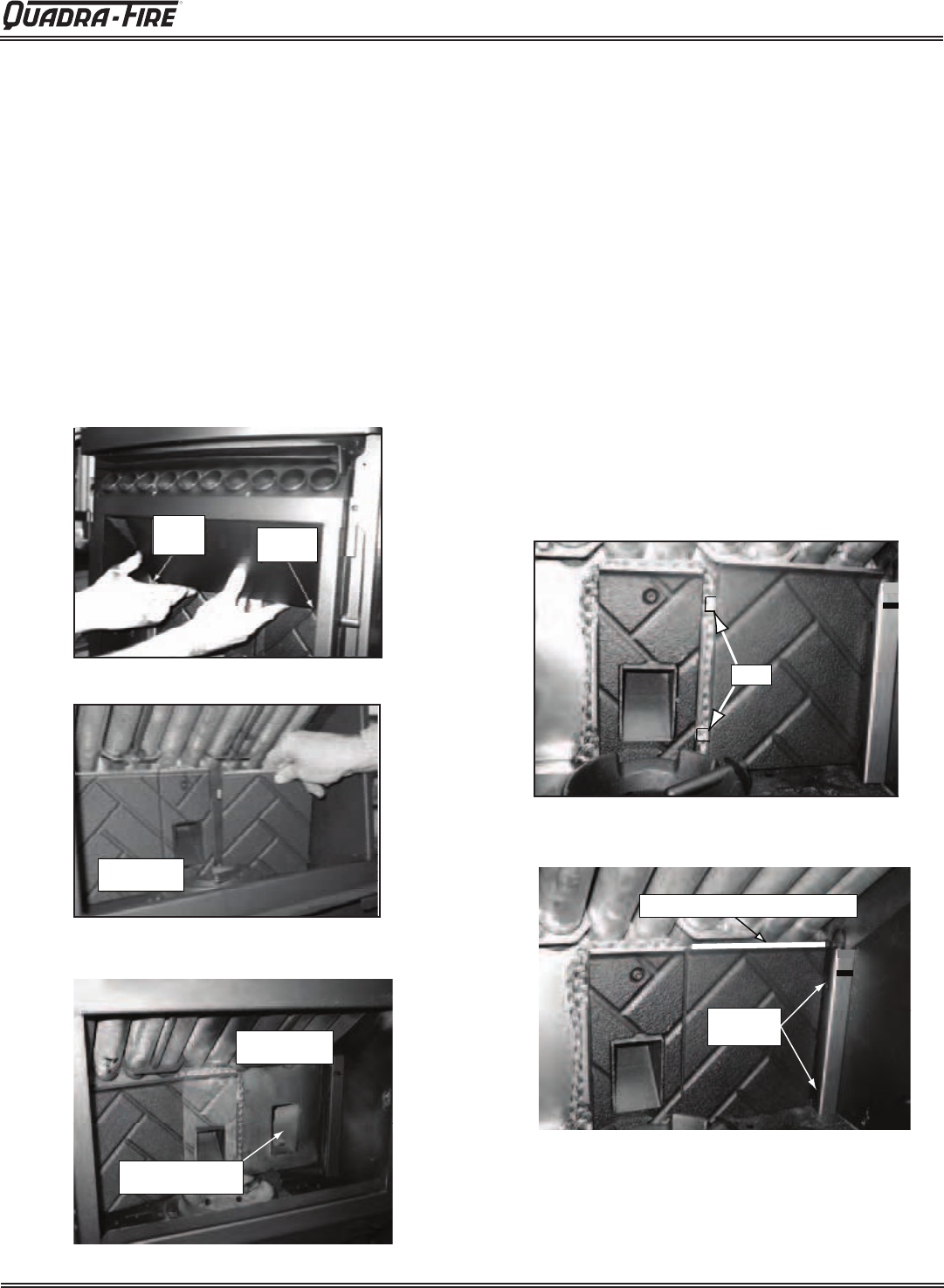
R
August 20, 2009 250-7251G Page 37
Castile Pellet Insert
Re-installing Baffl e & Brick Set
1. Place right brick in behind the right bracket, and then
slide to the left so the tabs are behind the center brick.
Figure 37.4
2.
The brick will be fl ush against the back wall and notches
exposed in the side bracket. Figure 37.5.
3. Lift slightly and pull the right edge of the brick forward until
it stops and then drops down into both top and bottom
notches of right bracket and locks into place. Figures
37.1 and 37.2.
4. Repeat for left brick.
5. Insert baffl e into top front inside the fi rebox and pull for-
ward. Then raise up the bottom end and insert baffl e tab
into slot on the top of the right bracket to lock into place.
Figure 37.3. Place the left side hook at the bottom of
the baffl e over the top edge of brick for stability. Figure
37.4.
6. The baffl e does not completely cover the top of the fi re-
box. There is an opening on the left as shown in Figure
37.5.
G. Baffl e & Brick Set Removal
Figure 37.3
Hook on
left side Tab on
right side
Tabs
Brick is flush against back wall
Notches
exposed
Figure 37.4
Figure 37.5
Remove Right
& Left Brick
Vacuum
Exhaust Area
Right Brick
Removed
Figure 37.1
Figure 37.2
1. Follow proper shutdown procedures on Page 31.
The top baffl e has a hook on the bottom left side that
rests on the top lip of the cast brick. There is a tab on
the bottom right side that hooks into the side bracket.
Remove the top baffl e by fi rst pulling the baffl e forward
until back edge drops down. Then slide baffl e back until
the front edge clears the shelf that it had been resting on.
Figure 37.1.
3
. The top baffl e must be removed before you can remove
the right and left brick. Remove the right brick by hold-
ing top lip of brick and lifting up, then push outside edge
back. Slide brick to the right until it is fl ush with the fi rebox.
Rotate the inside edge of the brick forward and remove
brick. Repeat for left brick. Figure 37.2.
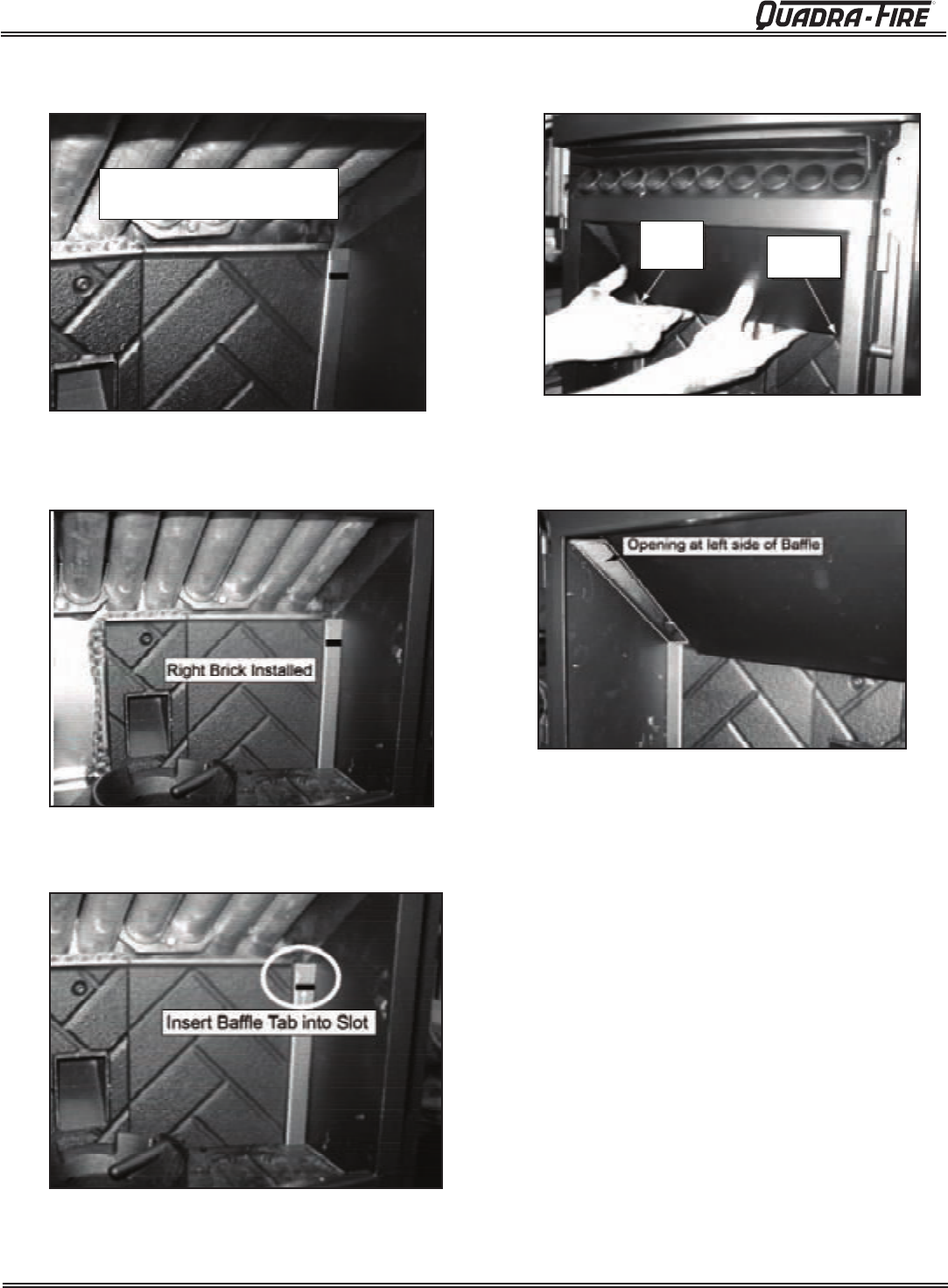
Page 38 250-7251G August 20, 2009
R
Castile Pellet Insert
Figure 38.1
Figure 38.2
Hook on
left side Tab on
right side
Figure 38.3
Figure 38.4
Figure 38.5
Lift brick, pull forward at an angle
and drop down into notches
Re-installing Baffl e & Brick Set (Cont’d)
R
August 20, 2009 250-7251G Page 39
Castile Pellet Insert
11 Reference Materials
7. Heat Exchangers
The heat exchangers transfer heat from the exhaust system
into convection air. There are 2 clean out rods located under
the heat exchangers.
8. Heat Output Switch
The heat output switch is located on the lower right side of
fi rebox, behind the right face above the reset button. The
function of the heat output switch is to regulate the burn rates;
low, medium and high settings.
9. Igniter
The igniter is mounted on the base of the fi repot. Combustion
air travels over the red hot igniter creating super heated air
that ignites the pellets.
10. Junction Box And Wiring Harness
The junction box is located behind right cast side of the
appliance. The junction box and wiring harness are replaced
as one component.
11. Power Supply
The power outlet is located behind the right cast side of the
appliance behind the thermostat block on the junction box.
Check the wall receptacle for 120 volt, 60 Hz (standard
current). Make sure the outlet is grounded and has the correct
polarity. A good surge protector is recommended. When
operating with a generator you need at least 600 watts of
power, or with an inverter at least 800 watts of power available
for the appliance during the start cycle.
12. Red Call Light
The red call light is located behind the fuse behind the right
cast side. The function of the red call light is to indicate that
the thermostat is calling for heat.
13. Reset Button
The reset button is located on the lower right side of fi rebox
behind right face and below the heat output control switch. The
function of the switch is to momentarily open the thermostat
circuit, which restarts the system.
14. Thermocouple
The thermocouple is located on top of the fi repot inside
the thermocouple cover (ceramic protection tube). The
thermocouple sends a millivolt signal to the control box
indicating the preset temperatures of the green and red lights
have been obtained.
15. Thermostat
The appliance is designed to run on a 12 volt AC thermostat.
The heat anticipator, if present, should be set on the lowest
setting available.
When describing the location of a component
part it is always AS YOU FACE THE FRONT
OF THE APPLIANCE.
2. Convection Blower
The convection blower is mounted at the bottom rear of the
appliance. There are 2 impellers, one on each side of the
motor. The convection blower pushes heated air through the
heat exchange system into the room.
3. Exhaust Blower
The exhaust blower is mounted on the right side of the
appliance behind the right cast side. The exhaust blower is
designed to pull the exhaust from the appliance and push it
out through the venting system.
4. Feed System
The feed system is located on the right side and can be
removed as an entire assembly. The assembly includes
the feed motor, mounting bracket, bearing and feed spring
(auger). The hollow feed spring (auger) pulls pellets up the
feed tube from the hopper area and drops them down the
feed chute into the fi repot.
5. Firepot
The fi repot is made of high quality ductile iron and has a
cleaning pull-out rod. The fl oor of the fi repot opens for
cleaning when you pull out the rod. Be sure that the fl oor
returns to a completely closed position or your appliance will
not operate properly.
6. Fuse
The fuse is located on the right side behind the control box.
The fuse will blow should a short occur and shut off power
to the appliance.
NOTE:
Do NOT open the control box. This will void the
warranty. If you need to plug in or remove the control
box you must fi
rst unplug the appliance.
1. Control Box
a.
The control box is located on lower right side of
appliance, behind cast side on top of the junction
box.
b. There is a light located inside of the control box. The
internal light will turn green when the appliance has
reached a temperature of 200οF (93°C) in the fi repot.
and will turn red when it reaches 600oF (315°C).
c. There is also an internal blue light located in the upper
left corner of the control box. When you plug in the
appliance the blue light will automatically start blinking
6 blinks every 10 seconds for 60 seconds and then will
stop.
A. Component Function E
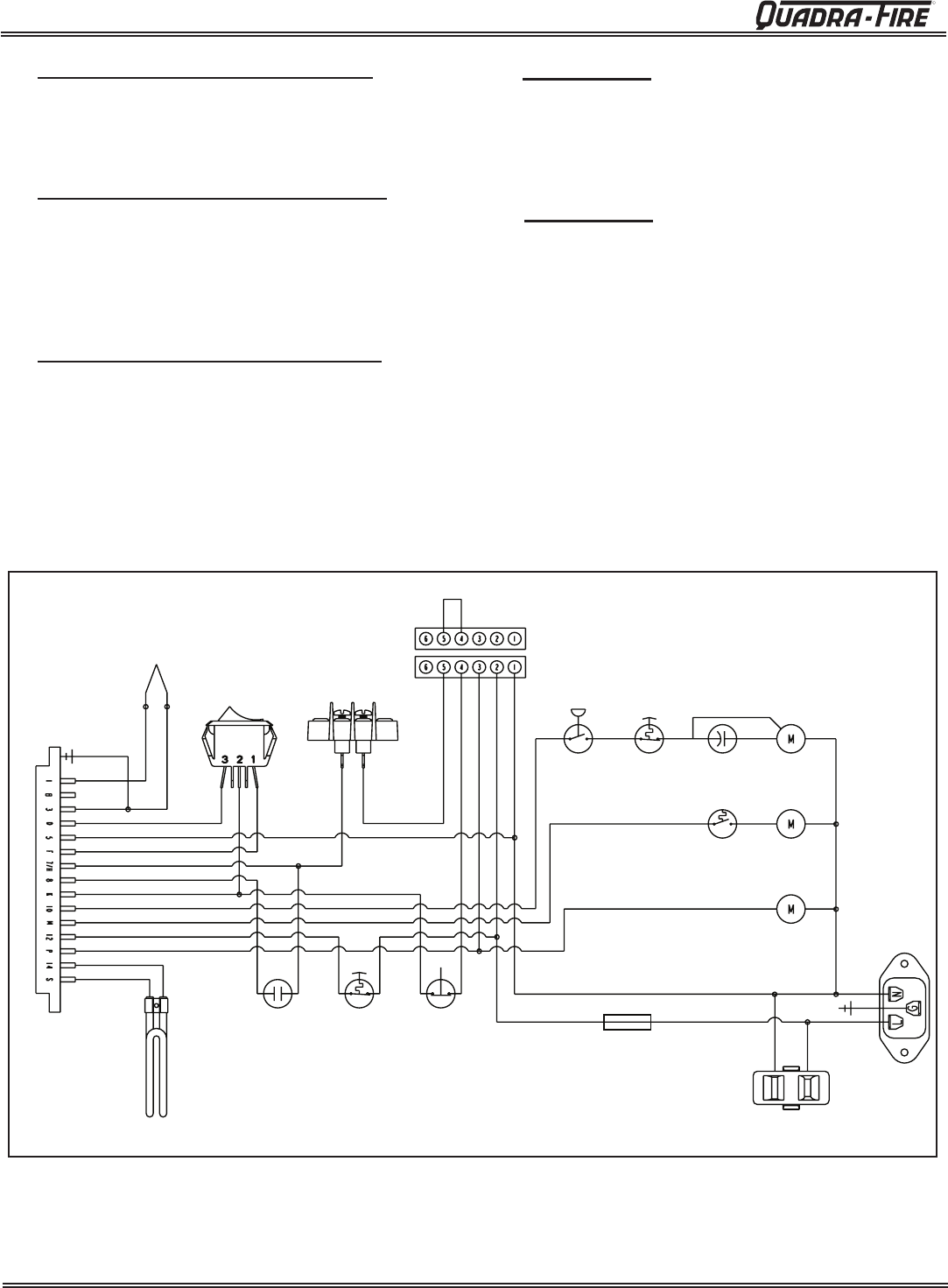
Page 40 250-7251G August 20, 2009
R
Castile Pellet Insert
16. Snap Disc #1 (Convection Blower) 110°F
Snap disc #1 is located behind the right cast side of the fi rebox
above the red call light. There are 2 purple wires connected
to it. This snap disc turns the convection blower on and off as
needed. Power is always present at snap disc #1.
17.
Snap Disc #2 (Fuel Delivery Interrupt) 250°F
Snap disc #2 is located on the back side of the feed drop
tube. There is 1 orange wire and 1 black wire connected to
it. This snap disc will turn off the feed system, which will turn
off the appliance if an overfi re condition should occur or if the
convection blower should fail to operate. If this occurs the
snap disc with automatically reset itself.
18.
Snap Disc #3 (Burn Back Protector) 250°F
Snap disc #3 is mounted on the back of the auger tube in the
center of the appliance and has a reset button. To access
it remove the right cast side. If the fi re tries to burn back
into the feed system or push exhaust up the feed tube, this
snap disc will shut the entire system off. This disc must be
manually reset.
Thermocouple
Burn
Selector
Thermostat
Block
Female
Male
Igniter
Call
Light Snap
Disc #3
Reset
Button Fuse
Receptacle
Snap
Disc #1
Exhaust
Blower
Convection
Blower
Vacuum
Switch Snap
Disc #2 Capacitor Feed
Motor
Yellow
Yellow
Yellow
Blue
Blue
Gray
Gray
Black
Black
Black
Black
Black
White
White
Red
Red
Purple
Red
White
19. Vacuum Switch
The vacuum switch is located at the back of the appliance.
This switch turns the feed system on when vacuum is present
in the fi rebox. The vacuum switch is a safety device to shut
off the feed motor if the exhaust or the heat exchanger
system is dirty or plugged or if the fi rebox door is open.
20. Wiring Harness
See Figure 40.1 below
Figure 40.1
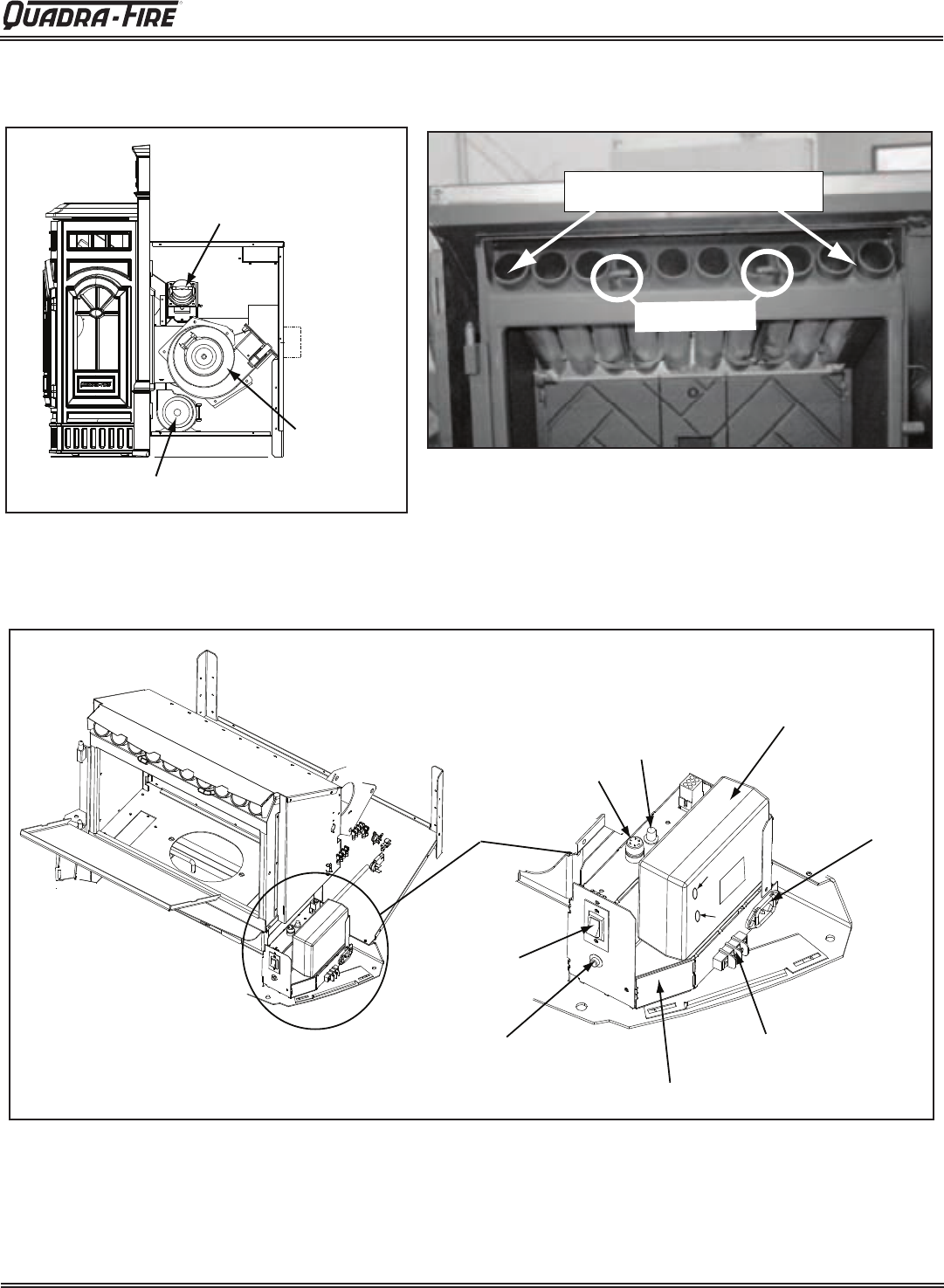
R
August 20, 2009 250-7251G Page 41
Castile Pellet Insert
B. Component Locations
Figure 41.2 - Cleaning Rods & Heat Exchanger Tubes
Figure 41.1 - Blowers & Feed Motor
Figure 41.3
Feed Motor
Exhaust
Blower
Convection Blower
CLEANING RODS
10 Heat Exchanger Tubes
Control Box
Junction Box
Reset Button
Heat Output
Switch
Power Cord
Outlet
Thermostat
Block
Fuse
Red Call
Light
Red/Green/Amber Light
Blue Light
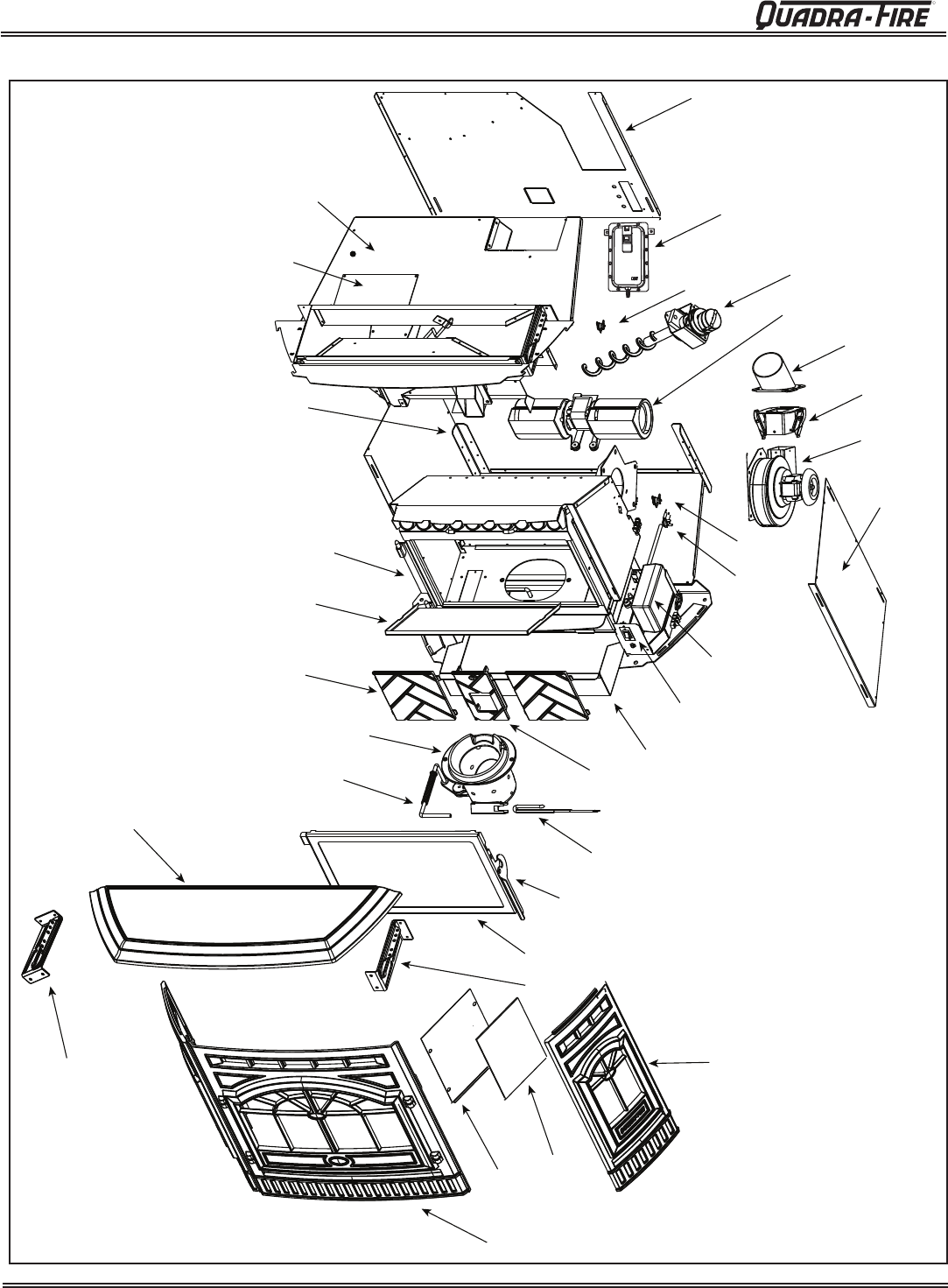
Page 42 250-7251G August 20, 2009
R
Castile Pellet Insert
C. Exploded Drawing
Figure 42.2
1
2
3
4
5
6
7
8
9
10
11
12 13
14
15
16
17
18
19 20
21
22
23
24
25
26
27
28
29
30
31
32
33
7025-006 3-24-09
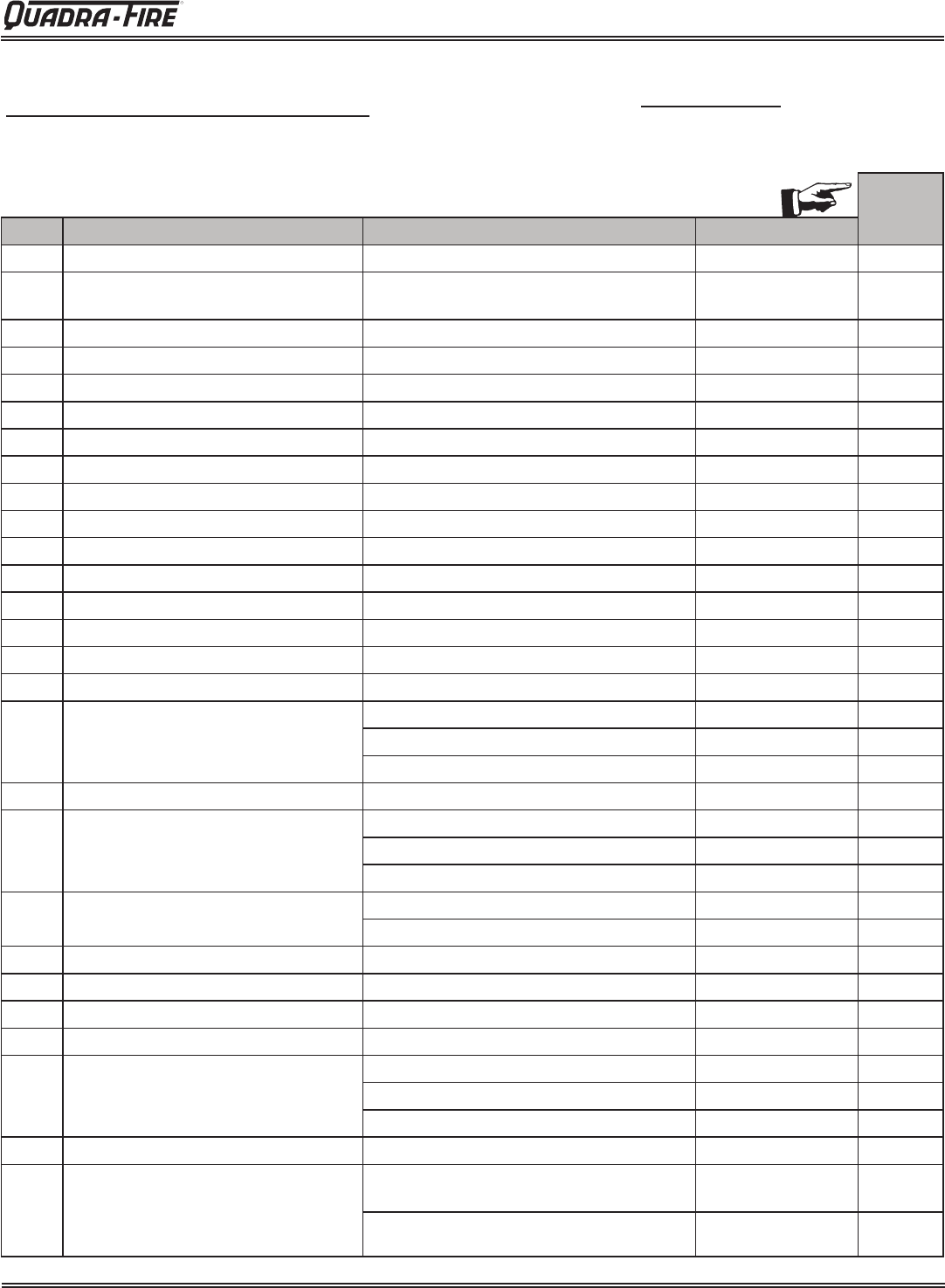
R
August 20, 2009 250-7251G Page 43
Castile Pellet Insert
D. Service Parts and Accessories
When requesting service or replacement parts for your
appliance please provide model number and serial number.
All parts listed may be orderd from an authorized dealer.
IMPORTANT: THIS IS DATED INFORMATION To order the entire assembly, order the top line part number only.
To order an individual part from an assembly, order the part(s)
listed in the indented portion.
HOW TO ORDER
Stocked
at Depot
Item Description Comments Part Number
1 Hopper Top Assembly SRV414-5830
Feed Adjustment Bracket
Assembly SRV414-6230
2 Plate, Cover, Outer Can 480-1300
3 Leveling Leg SRV414-0210
4 Bracket, Hinge Attaches to Unit SRV414-0610
5 Baffl e Assembly UK-30KPEL
6 Brick, Left / Right, Cast Interchangeable 414-0270
7 Firepot Assembly SRV414-5200 Y
Bushing, Firepot 410-8320
Floor, Firepot 414-0290
Gasket, Firepot 240-0930 Y
Nut, Lock 1/4-20 226-0090
Bolt, Firepot, 1-1/4” Long 225-0120
8 Pull Rod Assembly 414-5270
Clip, Hitch Pin, #25 229-0360
Spring, Firepot 200-2050
9 Top Cast
Matte Black 414-0060BK
Must Specify Porcelain Color 414-0060POR
Must Specify Powder Coat Color 414-0060PWD
10 Top Slide Assembly Left 414-5180
11 Face
Matte Black 414-0040BK
Must Specify Porcelain Color 414-0040POR
Must Specify Powder Coat Color 414-0040PWD
Face Hinge For Black Units SRV414-0940
For Porcelain & Powder Coat Units SRV414-0950
12 Backer, Side Window Interchangeable 414-0280
13 Glass Assembly, Side, 1 Piece 5-7/8 in. W x 9 in. H, Interchangeable 414-5380 Y
Gasket, Channel 1/8X1-1/4 Qty: 10 Ft., Field cut to size 7000-377/10 Y
Speed Nut 5/16 Qty: 24 7000-422/24 Y
14 Side
Matte Black 414-0050BK
Must Specify Porcelain Color 414-0050POR
Must Specify Powder Coat Color 414-0050PWD
15 Top Slide Assembly Right 414-5170
16 Door Assembly
SN # 0071389650 & Above, Bottom
Airwash 413-5110
SN # 0071389649 & Below, Top Airwash 414-5190
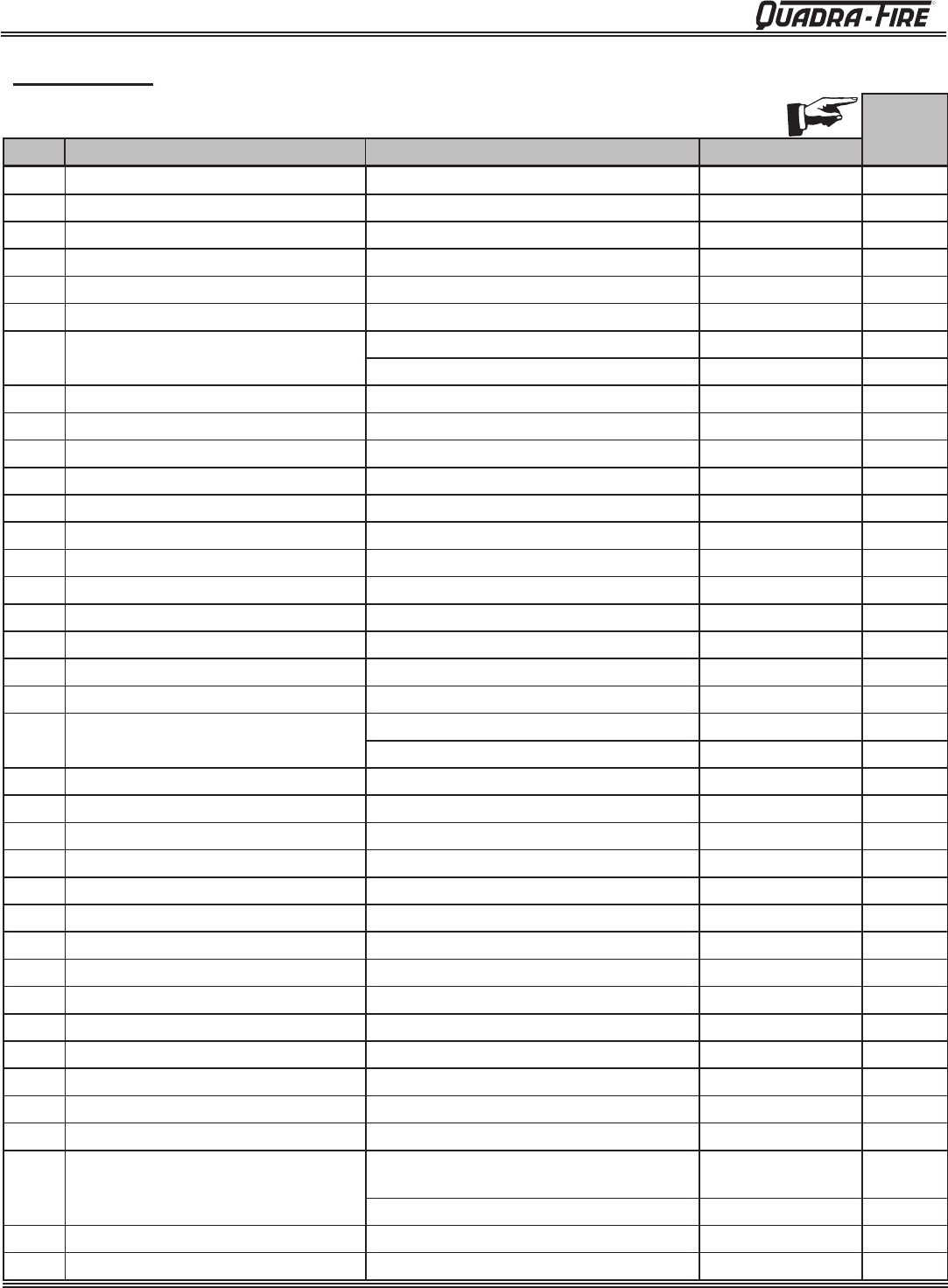
Page 44 250-7251G August 20, 2009
R
Castile Pellet Insert
Gasket, Tadpole, 3/8 Qty: 10 Ft., Field cut to size 842-5130 Y
Glass Assembly 17-1/in. W x 11-5/8 in. H 7001-038 Y
Hinge, Female 450-2910
Retainer, Rope 7001-192
Tape, Door Corner Qty: 1 Ft., Field cut to size SRV7027-227
17 Door Latch Assembly 413-5200
18 Heating Element Assembly 18”
(Loop Igniter)
Qty: 1 SRV7000-462 Y
Qty: 10 SRV7000-462/10 Y
Washer, 1/4 Sae Qty: 24 28758/24 Y
Wing Thumb Screw 8-32X1/2 Qty: 24 7000-223/24 Y
19 Brick, Center, Cast 414-0260
20 Ash Pan 414-0130
21 Wire Harness SRV414-1040 Y
Capacitor, Rep Jumper 230-2150
Igniter Extension 7000-218
22 Control Board 3 Speed SRV7000-205 Y
23 Snap Disc, Manual Reset, # 3 SRV230-1290 Y
24 Snap Disc, 110-20 SRV230-1220 Y
25 Outer Skin 414-0500
26 Blower, Exhaust Combustion 812-4400 Y
Gasket, Exhaust Combustion
Blower
Between Housing & Stove 240-0812 Y
Between Housing & Motor (round) 812-4710
27 Exhaust Transition Assembly 414-5100
Latch, Draw 229-0230
28 Exhaust Adapter Assembly 414-5110
Gasket, Flue Adapter 240-0850
29 Blower, Convection 812-4900 Y
Blower Magnet 7019-188
30 Feed Assembly 414-5400
Bearing, Feed System, Nylon 410-0552
Collar, Set, 7/8 229-0520
Feed Motor Bracket Assembly 7001-039
Feed Motor 812-4421 Y
Feed Spring Assembly SRV414-5540 Y
Gasket, Feed Motor 240-0731
Plate, Feed Motor Mount 412-0240
31 Snap Disc, Manual Reset, # 3
SN # 0071389337 & Above (on drop
tube) SRV7000-268 Y
SN # 0071389336 & Below SRV230-1290 Y
32 Vacuum Switch SRV7000-447 Y
33 Hopper Back SRV414-0320
To order the entire assembly, order the top line part number only.
To order an individual part from an assembly, order the part(s)
listed in the indented portion.
HOW TO ORDER
Stocked
at Depot
Item Description Comments Part Number
R
August 20, 2009 250-7251G Page 45
Castile Pellet Insert
To order the entire assembly, order the top line part number only.
To order an individual part from an assembly, order the part(s)
listed in the indented portion.
HOW TO ORDER
Stocked
at Depot
Item Description Comments Part Number
Ash Catcher 414-0150
Plate, Ash Cleanout 7001-186
Bracket, Magnet 414-0930
Bracket, Snap Disc 7005-253
Call Light Bulb Old Style Junction Box 812-0760 Y
Call Light Lens Cover Old Style Junction Box 812-0750 Y
Call Light, Fluorescent SN # 1378393 & Above SRV7000-122
Ceramic Nuts, (Igniter) Qty: 2 812-0730 Y
Qty: 12 812-0730/12 Y
Component Pack Assembly
(Includes Firepot Cleanout Tool,
Touch-Up Paint, Power Cord,
Thermostat Wire Harness, Owners
Manual, Warranty Card, “How-To”
Dvd
Matte Black 414-5390
Porcelain Mahogany 414-5460
Powder Coat Sienna Bronze 414-5510
Powder Coat Willow 414-5520
Cleanout Tool 414-1140
Dvd Original Energy Insert 7000-441
Paint Touch-Up
Matte Black 7000-304
Porcelain Mahogany 855-1450
Powder Coat Sienna Bronze TOUCHUP-CSB
Powder Coat Willow TOUCHUP-CWL
Power Cord 812-1180
Harness, Thermostat Wire 230-0810
Defl ector, Bottom Airwash 413-0680
Fuse, 7 Amp, Junction Box Qty: 1 Junction Box 812-0380 Y
Qty: 10 Junction Box 812-0380/10 Y
Fuse, 8 Amp, Control Box Qty: 1 Control Box 812-3780 Y
Qty: 10 Control Box 812-3780/10 Y
Hinge, Door, Male 450-2810
Hook, Cast Mount 414-1010
Hose, Vacuum, 5/32 Id QTY: 3 Ft, Field Cut to Size SRV240-0450 Y
Igniter Wire (5Ft) & (4) Ceramic
Nuts 812-4520 Y
Magnet Round SRV7000-140 Y
Switch, 3-Position Heat Output, Rocker Switch 812-3500 Y
Thermocouple 812-4470 Y
Thermocouple Clamp SRV7001-203
Thermocouple Cover Qty: 1 812-1322 Y
Qty: 10 812-4920 Y
Thermocouple Grounding Kit 812-4980
Wire Harness Snap Disk 7001-224
Page 46 250-7251G August 20, 2009
R
Castile Pellet Insert
To order the entire assembly, order the top line part number only.
To order an individual part from an assembly, order the part(s)
listed in the indented portion.
HOW TO ORDER
Stocked
at Depot
Item Description Comments Part Number
ACCESSORIES
Adjustable Hearth Support 12 in x 50 in, 2-10 in H ADJSPT-12
Damper, 3 Inch Tall Vertical Installs Only PEL-DAMP3
Damper, 4 Inch Tall Vertical Installs Only PEL-DAMP4
Log Set Qty: 4 811-0852
Log Front, Left 7001-231
Log Front, Right 7001-230
Log Rear, Left 7001-233
Log Rear, Right 7001-232
Log Top, Twig, Center To Cover Firepot 811-0900
Outside Air Kit, Rear 811-0872
Channel, Air Intake 413-7040
Cover, Outside Air Kit, Floor 411-1071
Hose, Alum Flex, 2 Inch X 3 Ft Qty: 3 Ft 200-0860
Outside Air Cap Assembly 7001-044
Outside Air Collar Assembly 7001-045
Trim Plate, Outside Air Kit 412-7100
Panel & Trim Set, Basic, Standard With Gold Trim 811-0990
Bracket, -L-, Trim 832-0840
Component Pack 413-5270
Trim, Panel Set, Std, Gold Gold Trim Set 811-0710
Panel Set, Large Use With Cast Trim 811-0920
Component Pack Fasteners & Instructions For Cast Trim 413-5260
Panel Set, Standard Use With Cast Trim 811-0910
Component Pack Fasteners & Instructions For Cast Trim 413-5260
Thermostat, Mechanical 812-3760
Thermostat, Programmable 811-0520
Trim Cast
Matte Black 811-0930
Porcelain Mahogany 811-0960
Powder Coat Sienna Bronze TR-CAST-CSB
Powder Coat Willow TR-CAST-CWL
Footer, Left
Matte Black 414-7090MBK
Porcelain Mahogany 414-7090PMH
Powder Coat Sienna Bronze 414-7090CSB
Powder Coat Willow 414-7090CWL
Footer, Right
Matte Black 414-7100MBK
Porcelain Mahogany 414-7100PMH
Powder Coat Sienna Bronze 414-7100CSB
Powder Coat Willow 414-7100CWL
R
August 20, 2009 250-7251G Page 47
Castile Pellet Insert
To order the entire assembly, order the top line part number only.
To order an individual part from an assembly, order the part(s)
listed in the indented portion.
HOW TO ORDER
Stocked
at Depot
Item Description Comments Part Number
Header
Matte Black 414-7110MBK
Porcelain Mahogany 414-7110PMH
Powder Coat Sienna Bronze 414-7110CSB
Powder Coat Willow 414-7110CWL
Trim Leg, Left
Matte Black 414-7120MBK
Porcelain Mahogany 414-7120PMH
Powder Coat Sienna Bronze 414-7120CSB
Powder Coat Willow 414-7120CWL
Trim Leg, Right
Matte Black 414-7130MBK
Porcelain Mahogany 414-7130PMH
Powder Coat Sienna Bronze 414-7130CSB
Powder Coat Willow 414-7130CWL
Zero Clearance, Adjustable Trim
Support For Standard Panel Surround Only 811-0980
FASTENERS
Avk Rivnut Repair Kit 1/4-20 & 3/8-16 Rivnut Tools RIVNUT-REPAIR Y
Bolt, Hex Head, 1/4-20 X 1 Qty: 10 25221A/10 Y
Nut, Wing, 8-32 Qty: 24 226-0160/24 Y
Screw, 1/4-20X3/8 Phillips Button
Head Qty: 24 7000-401/24 Y
Screw Flat Head Screw 1/4-20 Qty: 24 7000-130/24 Y
Screw, Pan Head Philips 8-32 X 3/8 Qty: 40 225-0500/40 Y
Screw, Flat Head Philips 8-32X1/2 Qty: 10 832-0860
Screw, Pan Head Philips, 10/32 X
1/4 Qty: 24 229-1230/24 Y
Screw, Sheet Metal #8 X 1/2 S-Grip Qty: 40 12460/40 Y
Screw, Machine Screw 1/4-20X5/8 Qty: 24 220-0440/24 Y
Speed Nut 5/16 Qty: 24 7000-422/24 Y
Washer, 1/4 Sae Qty: 24 28758/24 Y
Wing Thumb Screw 8-32X1/2 Qty: 24 7000-223/24 Y
Page 48 250-7251G August 20, 2009
R
Castile Pellet Insert
Date of Service Performed By Description of Service
E. Service And Maintenance Log
R
August 20, 2009 250-7251G Page 49
Castile Pellet Insert
Date of Service Performed By Description of Service
E. Service And Maintenance Log (Cont’d)
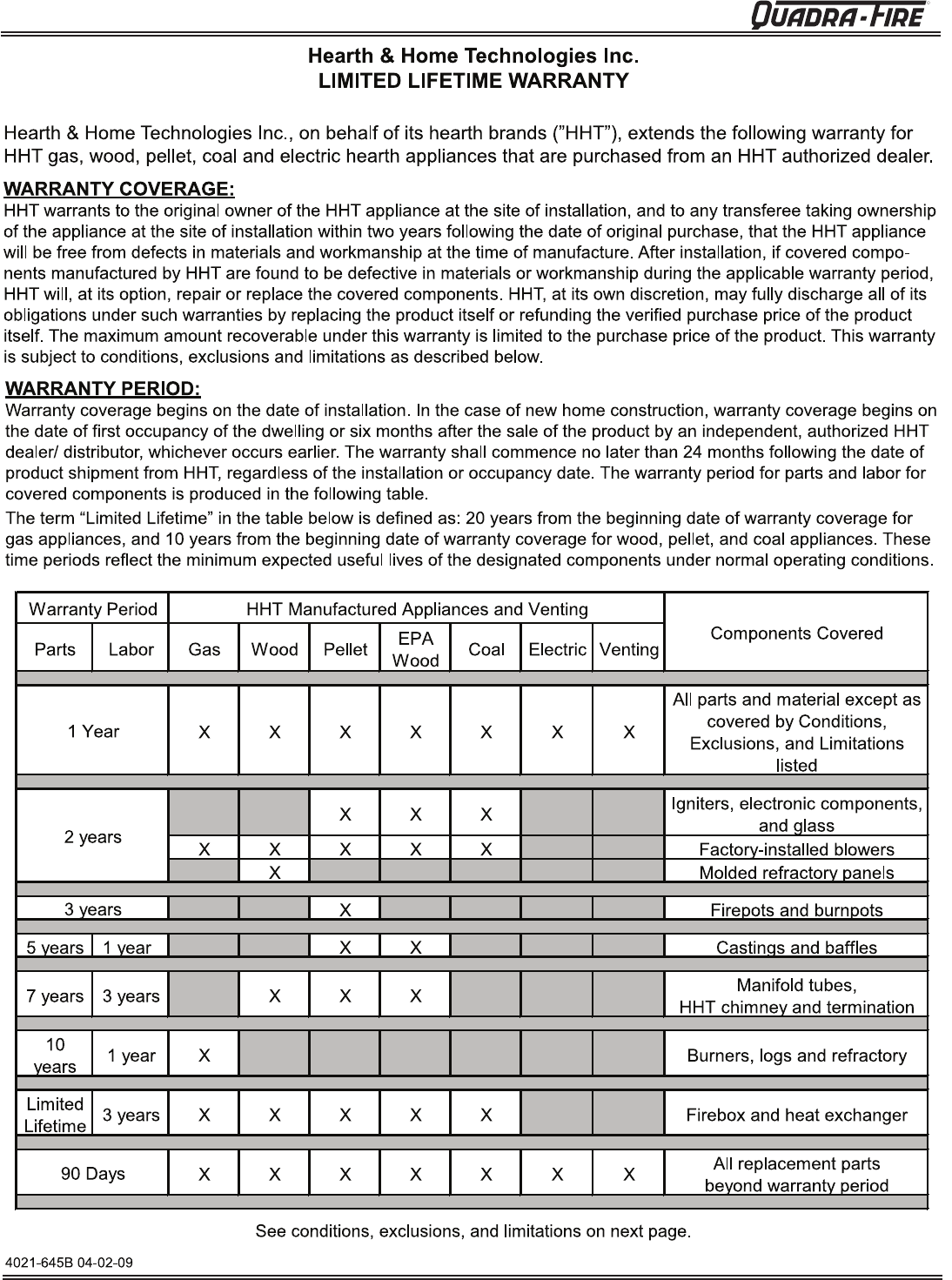
Page 50 250-7251G August 20, 2009
R
Castile Pellet Insert
F. Warranty Policy
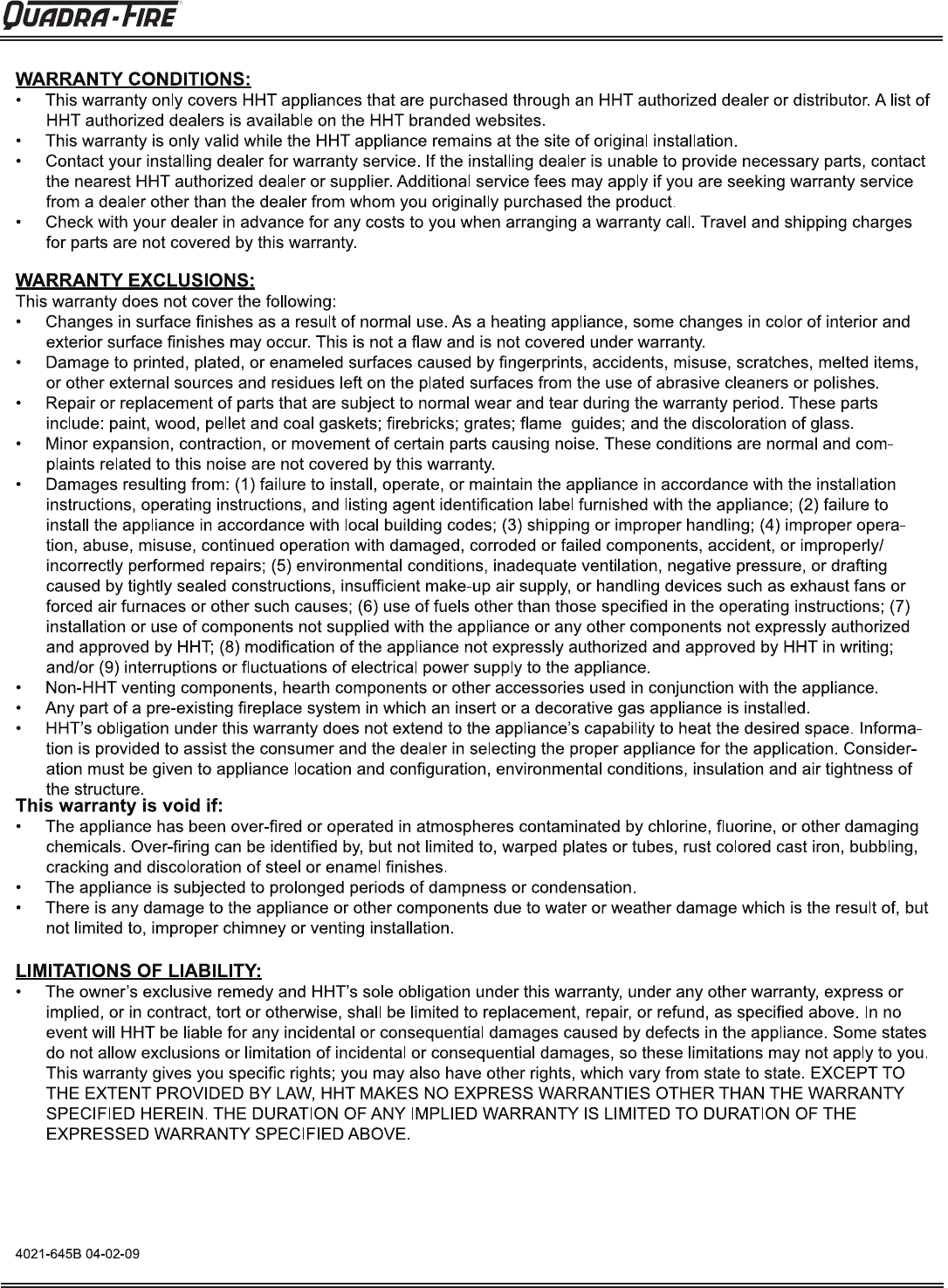
R
August 20, 2009 250-7251G Page 51
Castile Pellet Insert
R
Hearth & Home Technologies
1445 North Highway
Colville, WA 99114
Division of HNI INDUSTRIES
250-7251G August 20, 2009
Page 52
CONTACT INFORMATION:
Please contact your Quadra-Fire dealer with any questions or concerns.
For the number of your nearest Quadra-Fire dealer
please visit our web site at www.quadrafi re.com
This product may be covered by one or more of the following patents: (United States) 4593510, 4686807, 4766876, 4793322, 4811534,
5000162, 5016609, 5076254, 5113843, 5191877, 5218953, 5263471, 5328356, 5341794, 5347983, 5429495, 5452708, 5542407,
5601073, 5613487, 5647340, 5688568, 5762062, 5775408, 5890485, 5931661, 5941237, 5947112, 5996575, 6006743, 6019099,
6048195, 6053165, 6145502, 6170481, 6237588, 6296474, 6374822, 6413079, 6439226, 6484712, 6543698, 6550687, 6601579,
6672860, 6688302B2, 6715724B2, 6729551, 6736133, 6748940, 6748942, 6769426, 6774802, 6796302, 6840261, 6848441, 6863064,
6866205, 6869278, 6875012, 6880275, 6908039, 6919884, D320652, D445174, D462436; (Canada) 1297749, 2195264, 2225408,
2313972; (Australia) 780250, 780403, 1418504 or other U.S. and foreign patents pending.
Date purchased/installed:
Serial Number: Location on appliance:
Dealership purchased from: Dealer phone:
Notes:
We recommend that you record the following pertinent
information for your CASTILE PELLET INSERT
NOTICE
DO NOT DISCARD THIS MANUAL
• Important operating and
maintenance instruc-
tions included.
• Leave this manual with
party responsible for use
and operation.
• Read, understand and
follow these instruc-
tions for safe installa-
tion and operation.
DO NOT
DISCARD
