RFRemotech RF1A2 RF1A2 User Manual Firing Module RF1A2

RFRemotech Company RF1A2 Firing Module RF1A2

15_RF1A2 UserMan.pdf

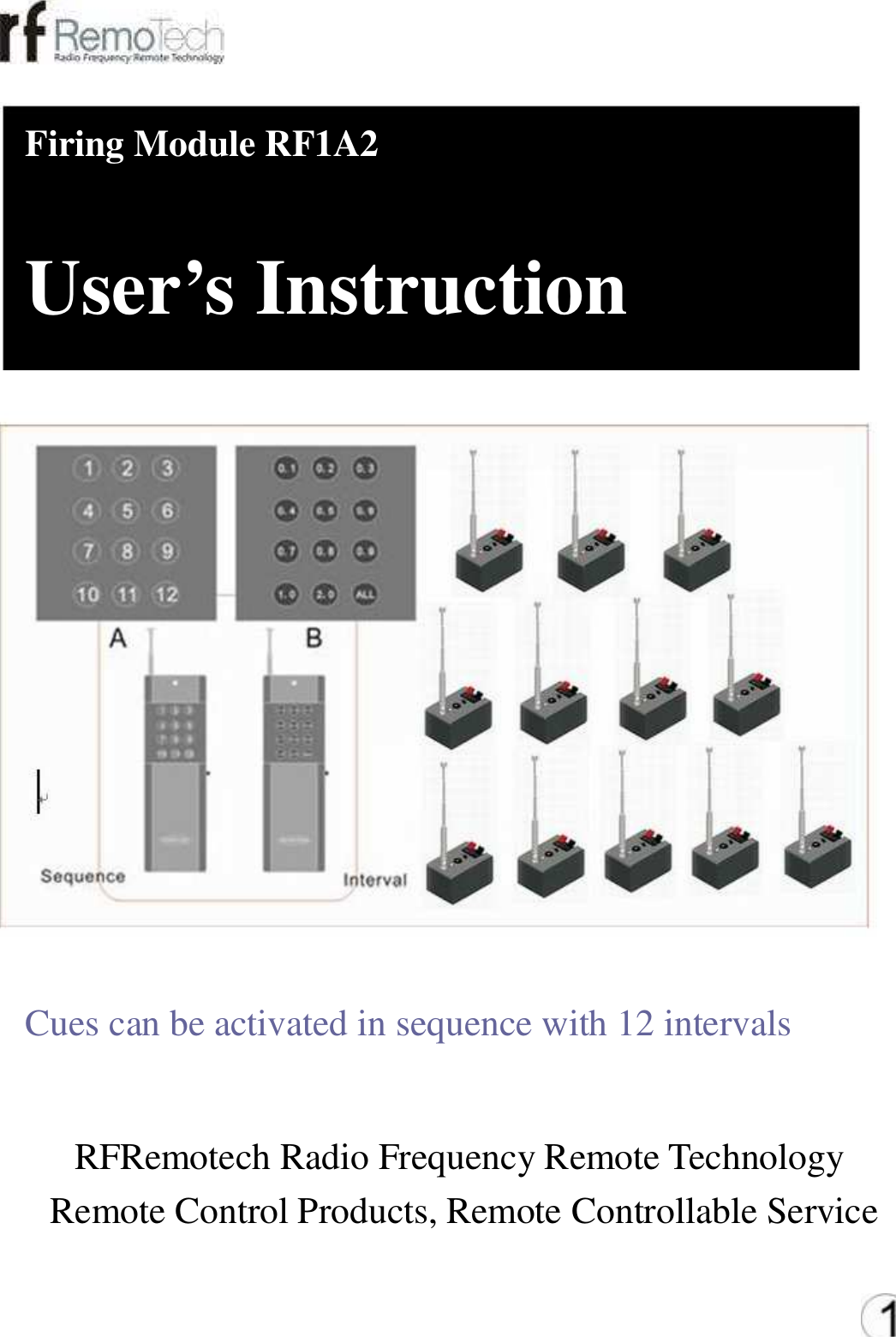
Firing Module RF1A2  User’s Instruction   ` Cues can be activated in sequence with 12 intervals   RFRemotech Radio Frequency Remote Technology  Remote Control Products, Remote Controllable Service
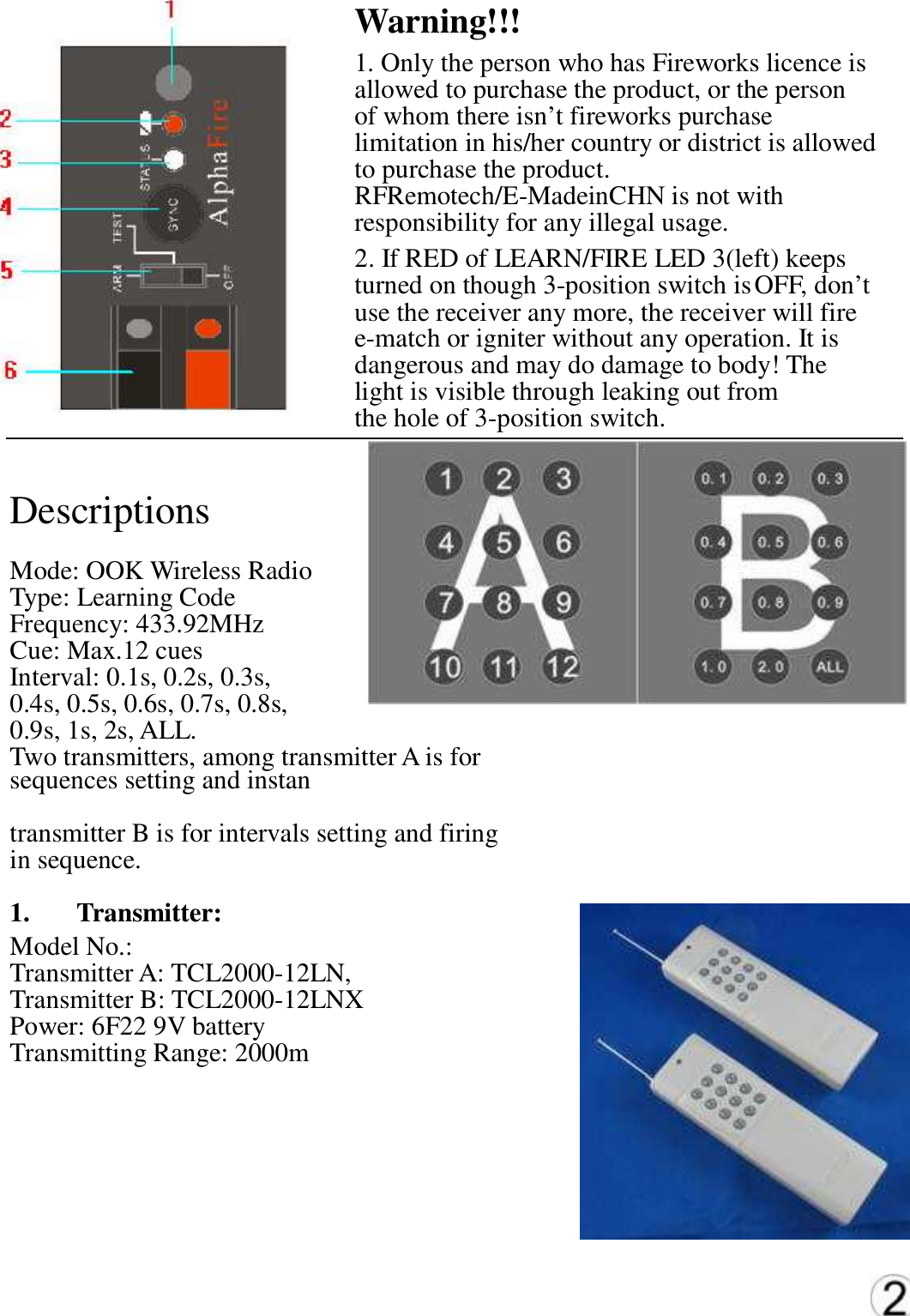
Warning!!!  1. Only the person who has Fireworks licence is   allowed to purchase the product, or the person   of whom there isn’t fireworks purchase   limitation in his/her country or district is allowed   to purchase the product.   RFRemotech/E-MadeinCHN is not with   responsibility for any illegal usage.   2. If RED of LEARN/FIRE LED 3(left) keeps  turned on though 3-position switch is OFF, don’t   use the receiver any more, the receiver will fire   e-match or igniter without any operation. It is   dangerous and may do damage to body! The   light is visible through leaking out from   the hole of 3-position switch.   Descriptions   Mode: OOK Wireless Radio   Type: Learning Code   Frequency: 433.92MHz   Cue: Max.12 cues   Interval: 0.1s, 0.2s, 0.3s,   0.4s, 0.5s, 0.6s, 0.7s, 0.8s,   0.9s, 1s, 2s, ALL.   Two transmitters, among transmitter A is for   sequences setting and instan transmitter B is for intervals setting and firing   in sequence.   1.   Transmitter:   Model No.: Transmitter A: TCL2000-12LN, Transmitter B: TCL2000-12LNX   Power: 6F22 9V battery   Transmitting Range: 2000m
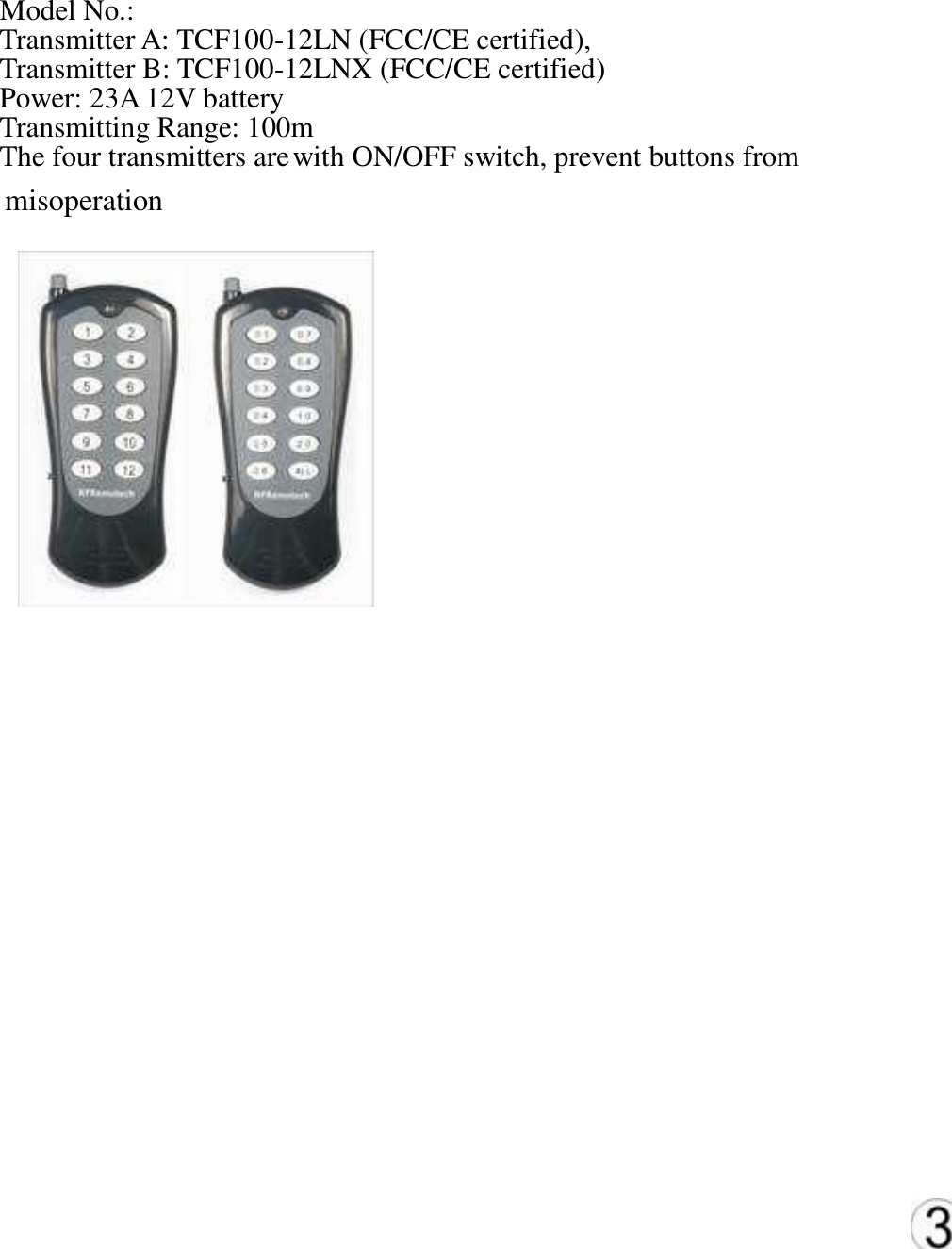
misoperation     Model No.: Transmitter A: TCF100-12LN (FCC/CE certified), Transmitter B: TCF100-12LNX (FCC/CE certified)   Power: 23A 12V battery   Transmitting Range: 100m   The four transmitters are with ON/OFF switch, prevent buttons from
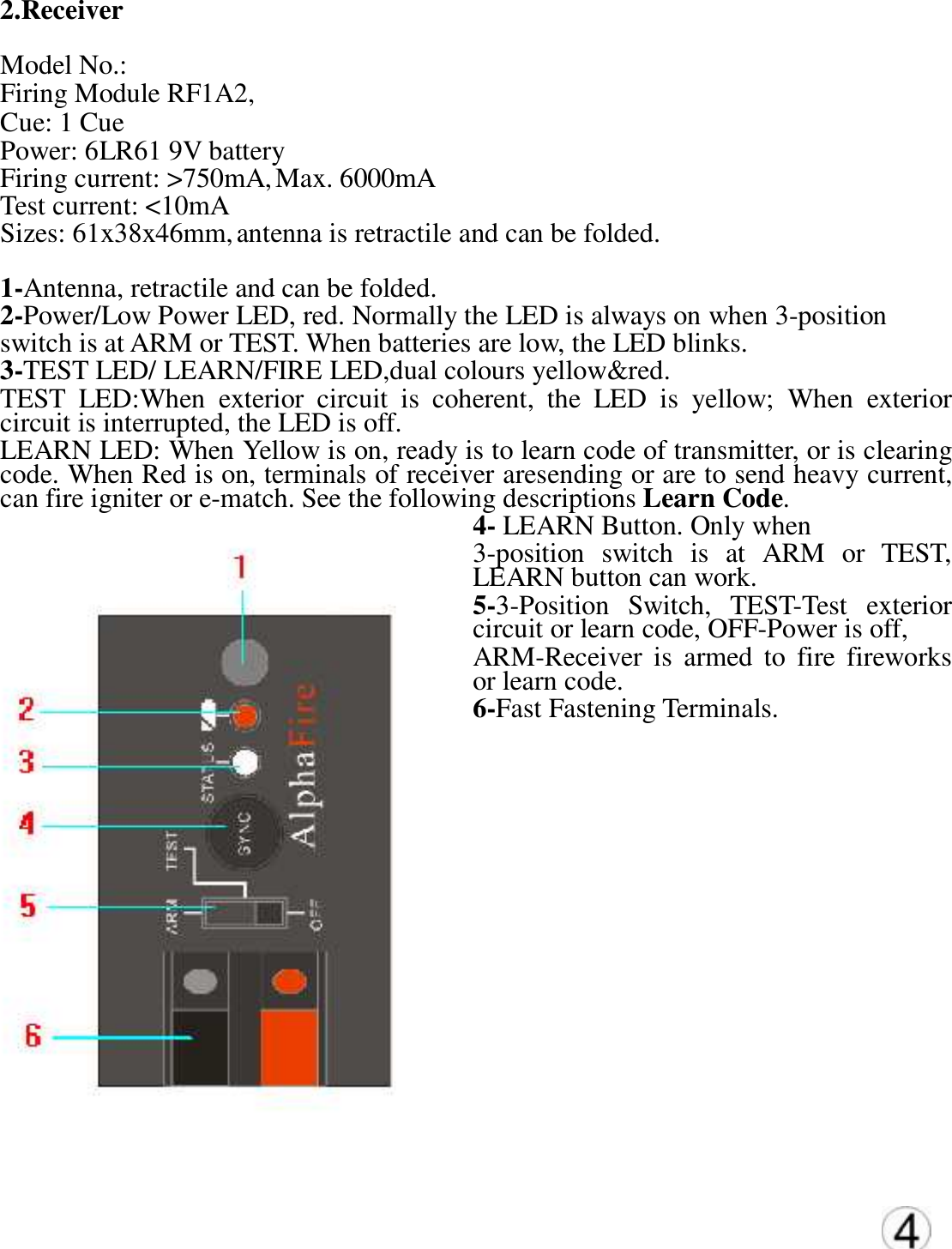
2.Receiver   Model No.:  Firing Module RF1A2,   Cue: 1 Cue  Power: 6LR61 9V battery  Firing current: >750mA, Max. 6000mA  Test current: <10mA  Sizes: 61x38x46mm, antenna is retractile and can be folded.  1-Antenna, retractile and can be folded.  2-Power/Low Power LED, red. Normally the LED is always on when 3-position  switch is at ARM or TEST. When batteries are low, the LED blinks.  3-TEST LED/ LEARN/FIRE LED,dual colours yellow&red. TEST  LED:When  exterior  circuit  is  coherent,  the  LED  is  yellow;  When  exterior circuit is interrupted, the LED is off.   LEARN LED: When Yellow is on, ready is to learn code of transmitter, or is clearing code. When Red is on, terminals of receiver aresending or are to send heavy current, can fire igniter or e-match. See the following descriptions Learn Code. 4- LEARN Button. Only when  3-position  switch  is  at  ARM  or  TEST, LEARN button can work. 5-3-Position  Switch,  TEST-Test  exterior circuit or learn code, OFF-Power is off,  ARM-Receiver  is  armed  to  fire  fireworks or learn code. 6-Fast Fastening Terminals.
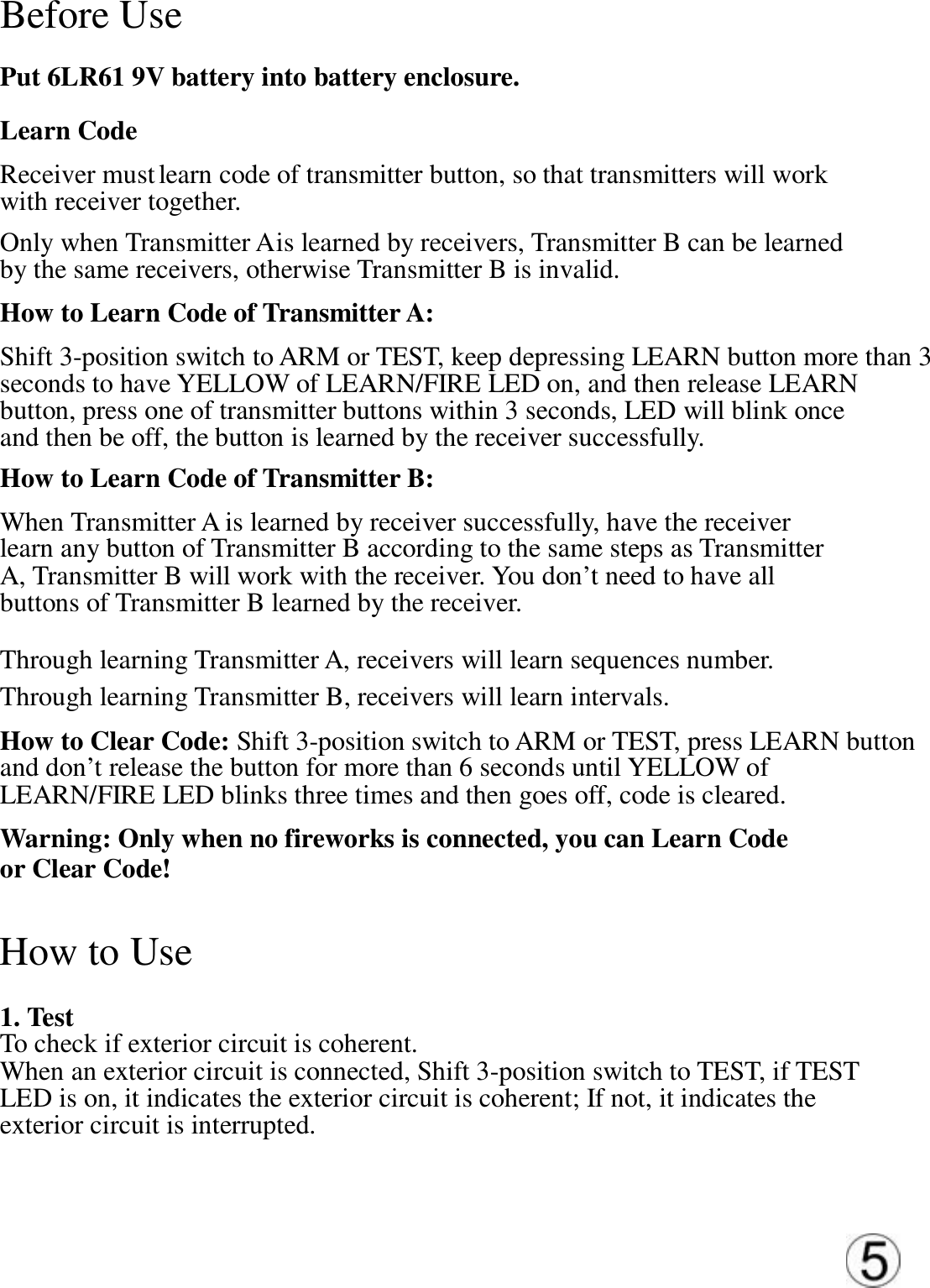
Before Use   Put 6LR61 9V battery into battery enclosure.  Learn Code  Receiver must learn code of transmitter button, so that transmitters will work  with receiver together.  Only when Transmitter A is learned by receivers, Transmitter B can be learned  by the same receivers, otherwise Transmitter B is invalid.  How to Learn Code of Transmitter A: Shift 3-position switch to ARM or TEST, keep depressing LEARN button more than 3  seconds to have YELLOW of LEARN/FIRE LED on, and then release LEARN  button, press one of transmitter buttons within 3 seconds, LED will blink once and then be off, the button is learned by the receiver successfully.  How to Learn Code of Transmitter B:  When Transmitter A is learned by receiver successfully, have the receiver  learn any button of Transmitter B according to the same steps as Transmitter  A, Transmitter B will work with the receiver. You don’t need to have all  buttons of Transmitter B learned by the receiver.  Through learning Transmitter A, receivers will learn sequences number.  Through learning Transmitter B, receivers will learn intervals.  How to Clear Code: Shift 3-position switch to ARM or TEST, press LEARN button  and don’t release the button for more than 6 seconds until YELLOW of  LEARN/FIRE LED blinks three times and then goes off, code is cleared.  Warning: Only when no fireworks is connected, you can Learn Code or Clear Code!  How to Use   1. Test  To check if exterior circuit is coherent. When an exterior circuit is connected, Shift 3-position switch to TEST, if TEST  LED is on, it indicates the exterior circuit is coherent; If not, it indicates the  exterior circuit is interrupted.
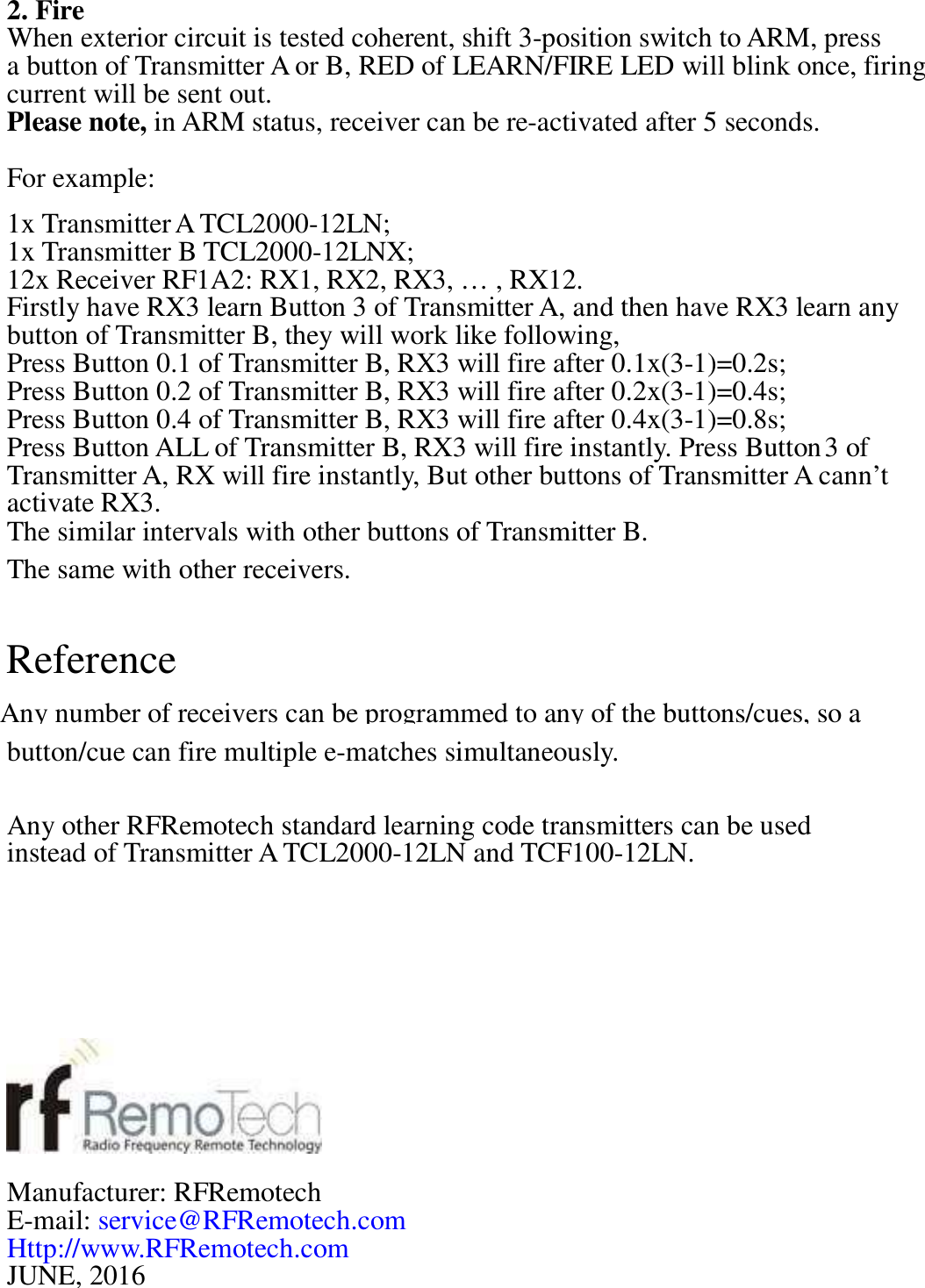
2. Fire  When exterior circuit is tested coherent, shift 3-position switch to ARM, press  a button of Transmitter A or B, RED of LEARN/FIRE LED will blink once, firing  current will be sent out.  Please note, in ARM status, receiver can be re-activated after 5 seconds. For example:  1x Transmitter A TCL2000-12LN;  1x Transmitter B TCL2000-12LNX; 12x Receiver RF1A2: RX1, RX2, RX3, … , RX12.  Firstly have RX3 learn Button 3 of Transmitter A, and then have RX3 learn any  button of Transmitter B, they will work like following,  Press Button 0.1 of Transmitter B, RX3 will fire after 0.1x(3-1)=0.2s;  Press Button 0.2 of Transmitter B, RX3 will fire after 0.2x(3-1)=0.4s;  Press Button 0.4 of Transmitter B, RX3 will fire after 0.4x(3-1)=0.8s;  Press Button ALL of Transmitter B, RX3 will fire instantly. Press Button 3 of  Transmitter A, RX will fire instantly, But other buttons of Transmitter A cann’t activate RX3.  The similar intervals with other buttons of Transmitter B.  The same with other receivers.  Reference   button/cue can fire multiple e-matches simultaneously.    Any other RFRemotech standard learning code transmitters can be used  instead of Transmitter A TCL2000-12LN and TCF100-12LN.            Manufacturer: RFRemotech  E-mail: service@RFRemotech.com Http://www.RFRemotech.com JUNE, 2016  Any number of receivers can be programmed to any of the buttons/cues, so a
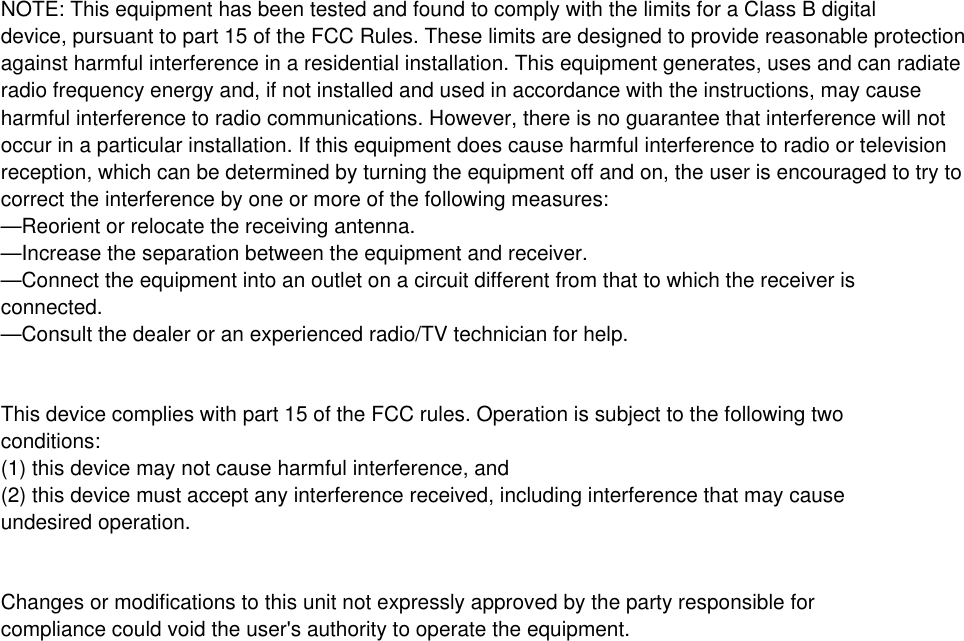
NOTE: This equipment has been tested and found to comply with the limits for a Class B digitaldevice, pursuant to part 15 of the FCC Rules. These limits are designed to provide reasonable protectionagainst harmful interference in a residential installation. This equipment generates, uses and can radiateradio frequency energy and, if not installed and used in accordance with the instructions, may causeharmful interference to radio communications. However, there is no guarantee that interference will notoccur in a particular installation. If this equipment does cause harmful interference to radio or televisionreception, which can be determined by turning the equipment off and on, the user is encouraged to try tocorrect the interference by one or more of the following measures:—Reorient or relocate the receiving antenna.—Increase the separation between the equipment and receiver.—Connect the equipment into an outlet on a circuit different from that to which the receiver isconnected.—Consult the dealer or an experienced radio/TV technician for help.This device complies with part 15 of the FCC rules. Operation is subject to the following twoconditions:(1) this device may not cause harmful interference, and(2) this device must accept any interference received, including interference that may causeundesired operation.Changes or modifications to this unit not expressly approved by the party responsible forcompliance could void the user's authority to operate the equipment.

Navigation menu