SK Telecom M-RFID001 MicroSD Type RFID Reader User Manual 1
SK Telecom Co., Ltd. MicroSD Type RFID Reader 1
Users Manual
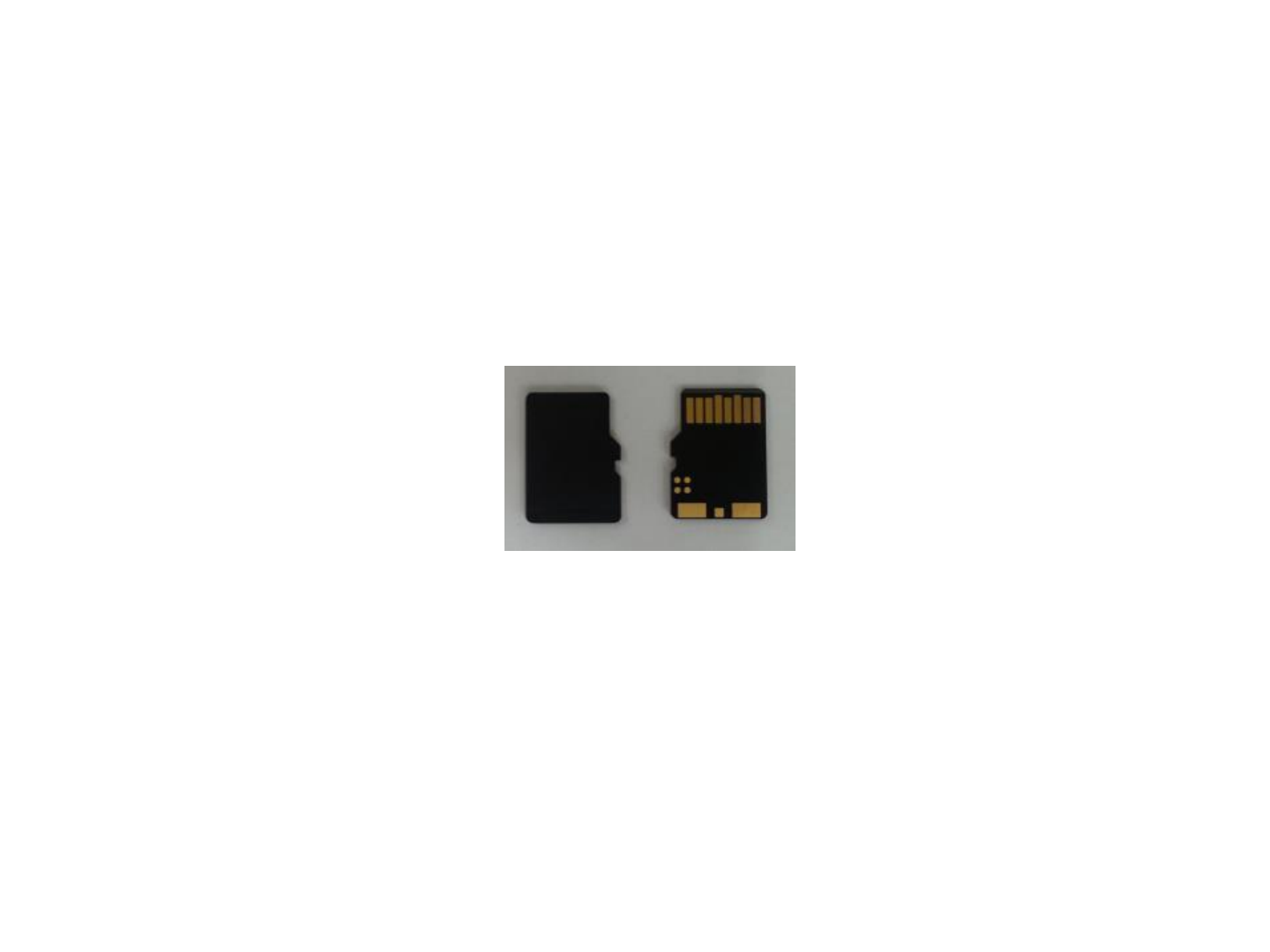
Document for FCC Certification
And USERS MANUAL
SK Telecom Co., Ltd.
FCC ID : 2ADMB-M-RFID001

•Overview
–Purpose
•This document describes the technology that places Mobile RFID Reader Chip on the
microSD card (hereinafter referred to as “RFID on microSD Card”) to complement
weaknesses and maximize strengths of the conventional RFID technology, with the aim
of making the commercial sample to expand the RFID market.
–Necessity of Development
•The RFID technology is the basic technology for realizing ubiquitous computing, as it
has the function of organic communication and computing between objects. As such, it
has massive growth potential and implications. However, the conventional RFID
technology has been mostly used in the distribution and logistics areas to figure out
the number of products and related information in a fixed location. The resultant
difficulties in acquiring product information in the process of transportation and storage
have made it hard to expand the RFID market. Considering the need to develop a
portable and customer-oriented RFID reader to obtain product information anytime and
anywhere, the RFID on microSD Card technology is aimed at overcoming the problems
(high costs, lack of portability and design limits) of conventional readers and expanding
the market.
•
•
–Major Technologies
•RFID on microSD Card Hardware technology
•RFID on microSD Card Software technology
•Mobile RFID Reader Chip technology

Product Spec
[Table 2-1] Development Specification
Item
Specification
Note
Frequency
917.10~926.90MHz
Domestic
Standard
ISO 18000-6C / EPCglobal Class1 Gen2
Tag reading range
2.5~4.5cm
microSD external antenna
Power output
13.7dBm
Conducted
Power consumption
Tx Max(20dBm) 350mA
RFID <70mA ,SD <30mA,
Power <250mA
Internal configuration
SD Controller, RFID(PR9200)
Size
microSD Card
(15mm X 25mm , 0.76T)
Transmission speed
40~160Kbps
Type C
Modulation
DSB-ASK, PR-ASK
Type C
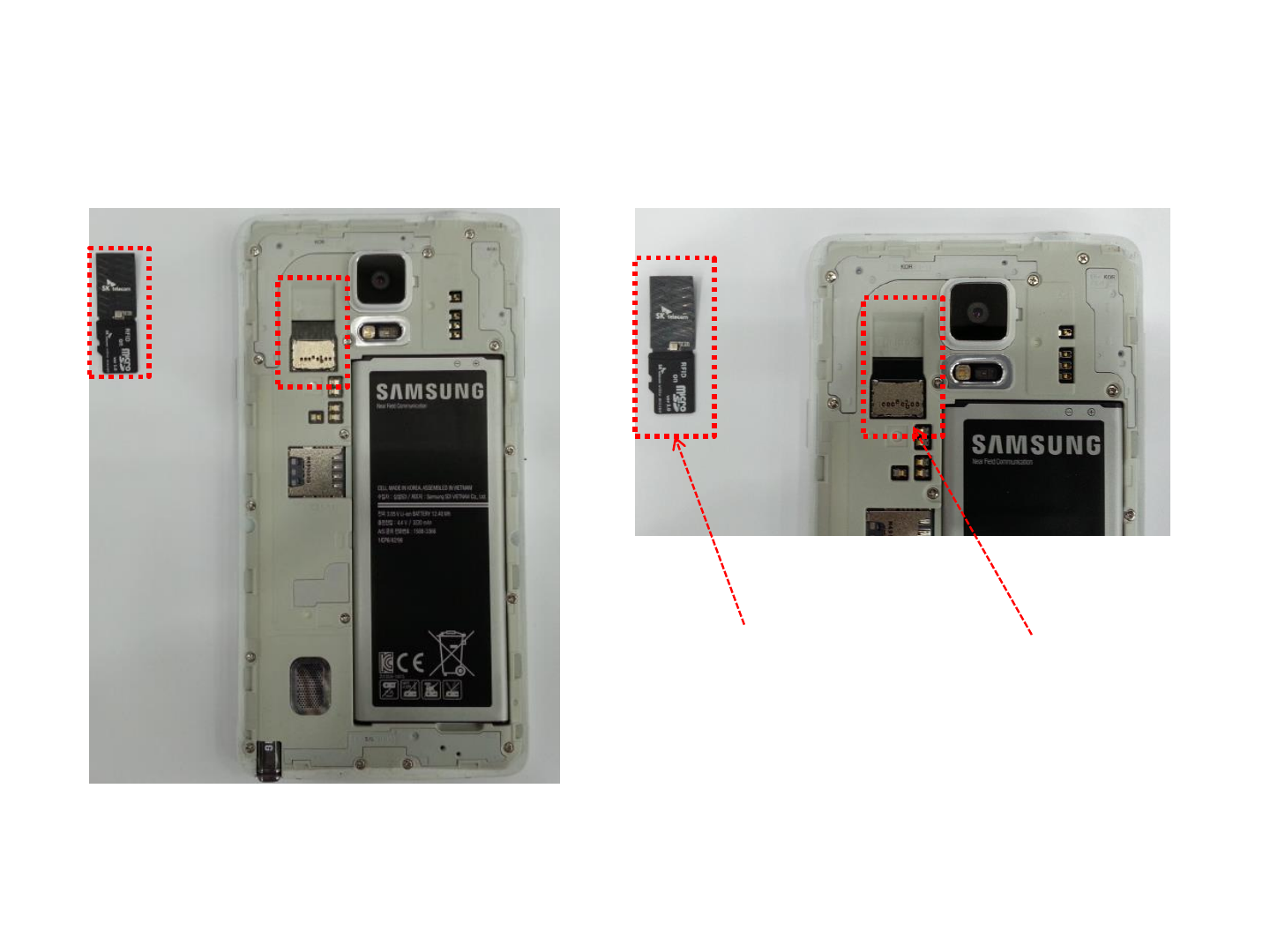
Phone Application-1
RFID on microSD Phone SD-Card Slot
RFID on microSD & Phone
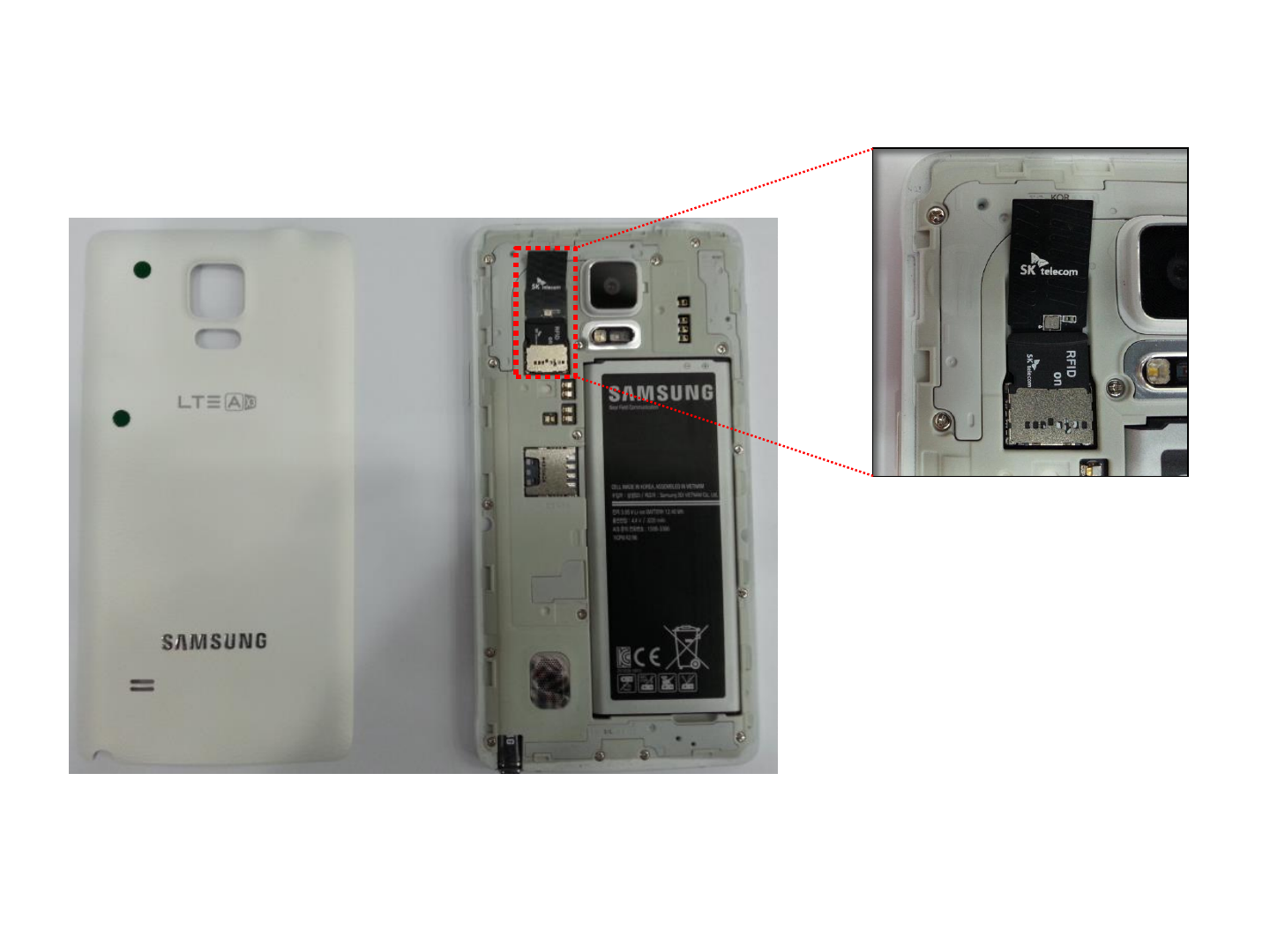
Phone Application-2
RFID on microSD & Phone
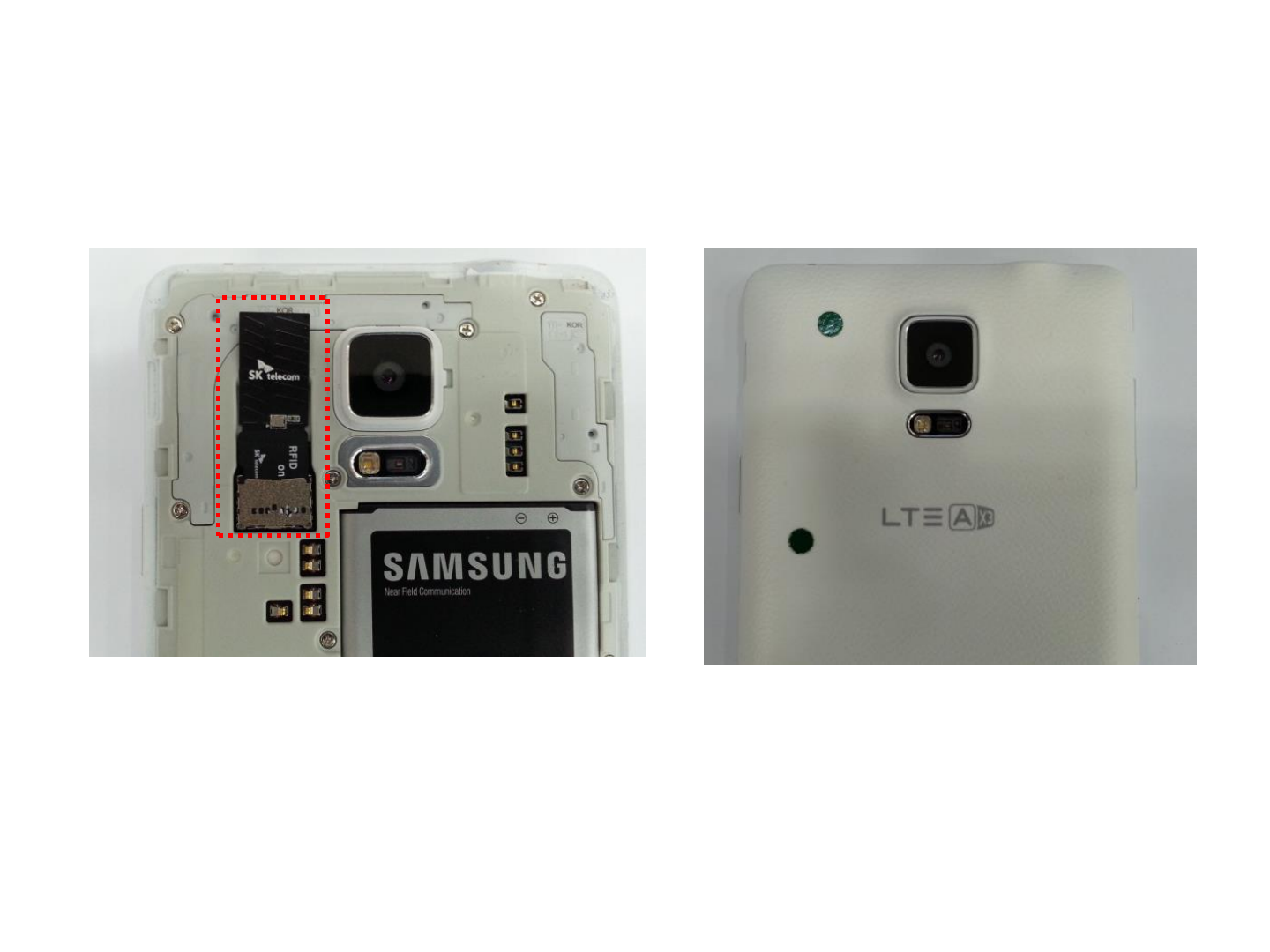
Phone Application-3
RFID on microSD & Phone Set up completion at the
phone
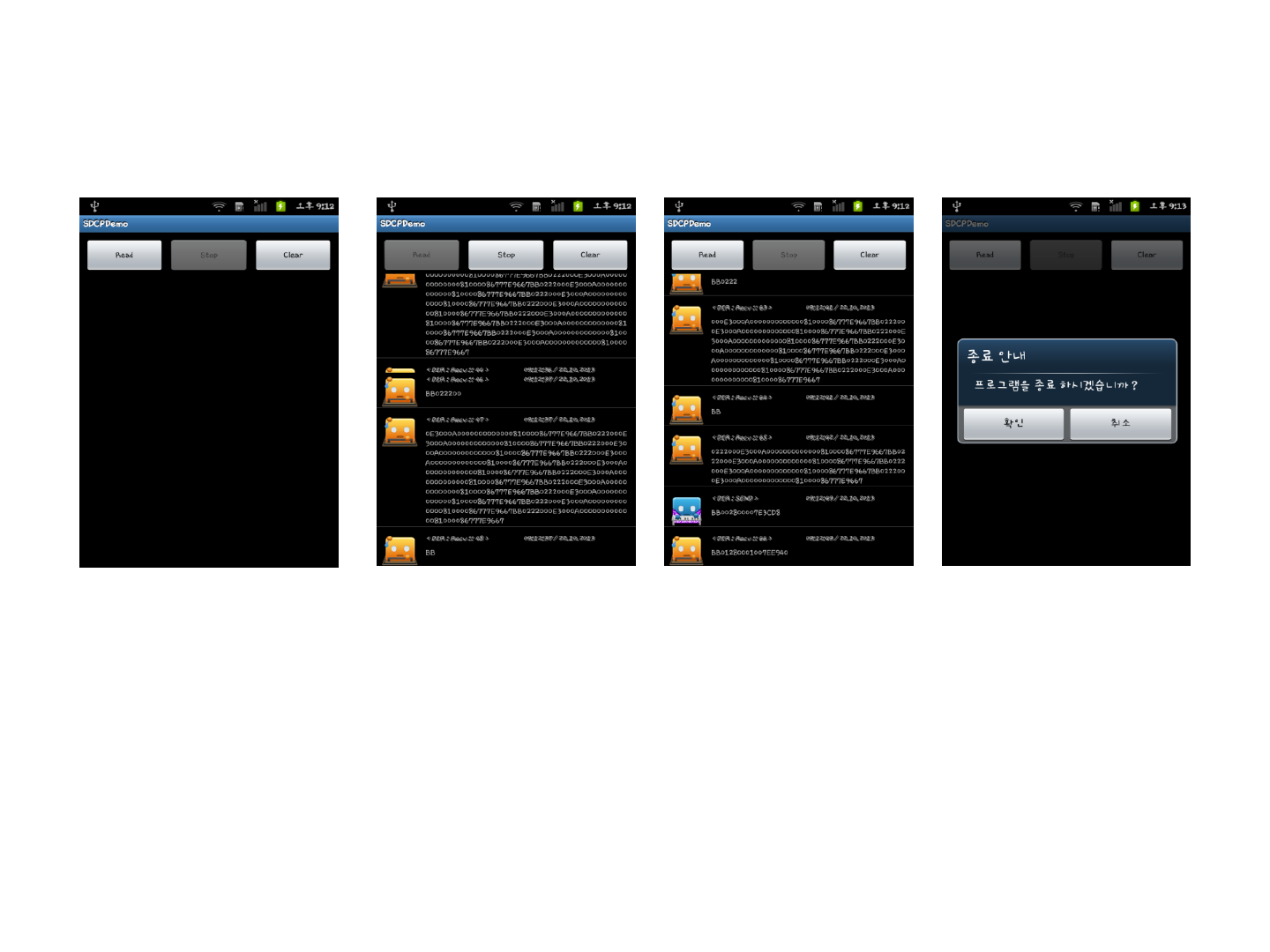
Tag Read Test App
•Initial Screen : Once application on, the Initial Screen( RFID Chip Power Off
condition to On condition).
•Tag Read Start : Click the “Read” button , once RFID on , Resd Tag data display
on the screen.
•Tag Read Stop : Once click the “Stop” button, stop the Tag Reading.
•Application done : Application done ( RFID Chip Power on condition to Off
condition)
Tag Read StopInitial Screen Tag Read Start Application done
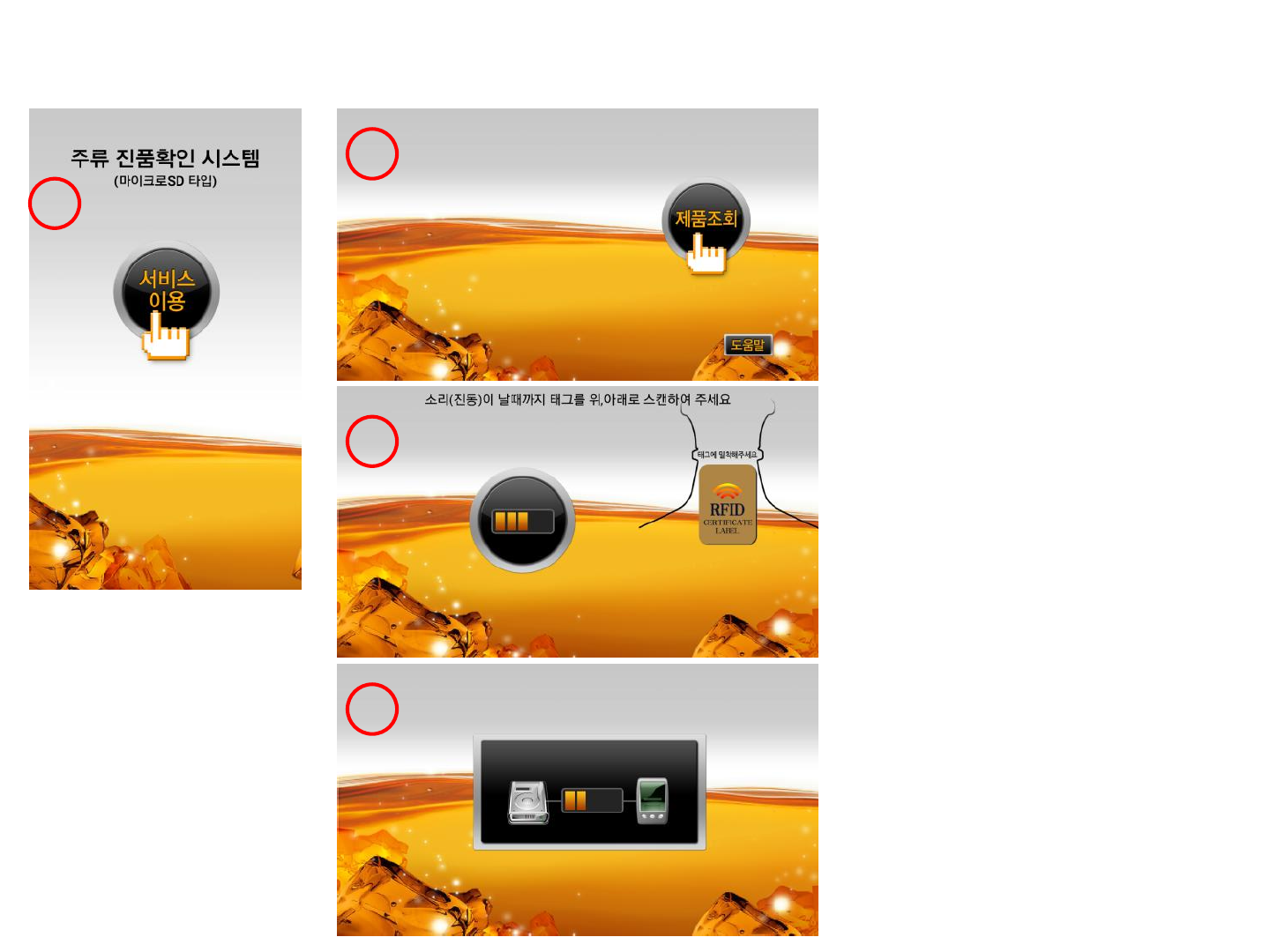
Application-1(Alcohol Authenticity)
[Alcohol Authenticity
Application]
1. Start the Alchohol
Authenticity Application
2. Click the “Search”
button, approach the
Alcohol to micro SD Card
on mobile phone.
3. Till vibrating the
tag(Tag reading
completion), Scan the
product, The Tag Data
reading only EPC Code.
4. Tag reading completed,
search the Tag Data with
the server..
4
1
3
2
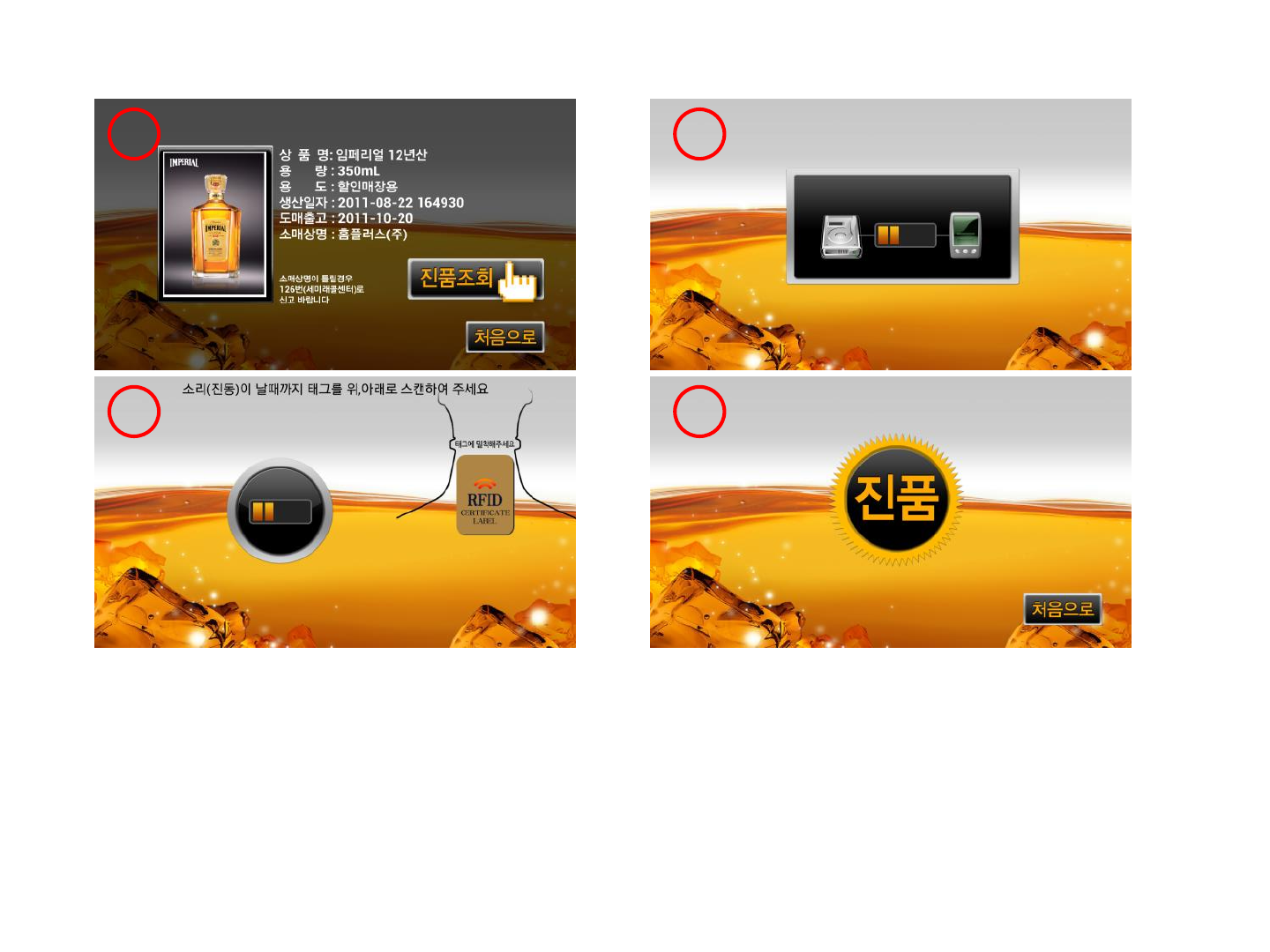
Application-2(Alcohol Authenticity)
[Alcohol Authenticity Application]
5. Product search : Click the “Alcohol Authenticity” button.
6. Reading the Tag : EPC Data and reading data
7. Pass word of product Authenticity is right one, the server record
the Authenticity.
8. If it is Authenticity, the screen display its authenticity.
5
6
7
8

•FCC Information
•Note : This equipment has been tested and found to comply with the
limits for a Class B digital device, pursuant to part 15 of the FCC Rules.
These limits are designed to provide reasonable protection against
harmful interference when the equipment is operated in a commercial
environment. This equipment generates, uses, and can radiate radio
frequency energy and, if not installed and used in accordance with the
instructions, may cause harmful interference to radio communications.
However, there is no guarantee that interference will not occur in a
particular installation, If this equipment does cause harmful interference,
the user is encouraged to try to correct the interference by consulting
with a dealer or an experienced technician for technical assistance.
•Any changes or modifications to the equipment not expressly approved
by the party responsible for compliance could void user`s authority to
operate the equipment.
•This device complies with part 15 of the FCC Rules. Operation is subject
to the following two conditions: (1) This device may not cause harmful
interference, and (2) this device must accept any interference received,
including interference that may cause undesired operation.
•