Samsung Electronics Co SGHI917 Cellular/PCS WCDMA/GSM/EDGE Phone with WLAN and Bluetooth User Manual
Samsung Electronics Co Ltd Cellular/PCS WCDMA/GSM/EDGE Phone with WLAN and Bluetooth Users Manual
Users Manual
User manual
SGH-i917
Draft 4
2010-07-22
Only for Marketing
using this manual
This user manual has been specially designed to guide you through the functions
and features of your mobile phone. To get started quickly, refer to “introducing your
mobile phone,” “assembling and preparing your mobile phone,” and “using basic
functions.”
Instructional icons
Before you start, familiarise yourself with the icons you will see in this manual:
Warning—situations that could cause injury to yourself or others
Caution—situations that could cause damage to your phone or other
equipment
Note—notes, usage tips, or additional information
Refer to—pages with related information; for example: p. 12
(represents “see page 12”)
Õ Followed by—the order of options or menus you must select to perform a
step; for example: In Menu mode, select Messages Õ Create new message
(represents Messages, followed by Create new message)
[ ] Square brackets—phone keys; for example: [ ](represents the Power/
Menu exit key)
< > Angled brackets—softkeys that control different functions at each screen; for
example: <OK> (represents the OK softkey)
Copyright information
Rights to all technologies and products that comprise this device are the property of
their respective owners:
Bluetooth® is a registered trademark of the Bluetooth SIG, Inc. worldwide
Java™ is a trademark of Sun Microsystems, Inc.
Windows Media Player® is a registered trademark of Microsoft Corporation.

contents
safety and usage information
Safety warnings
Safety precautions
Important usage information
introducing your mobile phone
Unpack ..
Phone layout
Keys
Display
Icons
assembling and preparing your mobile phone
Install the SIM card and battery
Charge the battery
using basic functions
Turn your phone on and off
Access menus
Customise your phone
Use basic call functions
Send and view messages
Add and find contacts
troubleshooting
safety and usage
information
Comply with the following precautions to avoid dangerous or illegal situations and
ensure peak performance of your mobile phone.
Safety warnings
Keep your phone away from small children and pets
Keep your phone and all accessories out of the reach of small children or animals.
Small parts may cause choking or serious injury if swallowed.
Protect your hearing
Excessive exposure t o sound at high volum es can cause hearing dam age.
Always turn t he volum e down before plugging t he earphones int o an audio source and
use only t he m inim um volum e set t ing necessary t o hear your conv ersat ion or m usic.
Install mobile phones and equipment with caution
Ensure that any mobile phones or related equipment installed in your vehicle are
securely mounted. Avoid placing your phone and accessories near or in an air bag
deployment area. Improperly installed wireless equipment can cause serious injury
when air bags inflate rapidly.
Handle and dispose of batteries and chargers with care
Use only Samsung-approved batteries and chargers specifically designed for
your phone. Incompatible batteries and chargers can cause serious injuries
or damage to your phone.
Never dispose of batteries or phones in a fire. Follow all local regulations
when disposing used batteries or phones.
Never place batteries or phones on or in heating devices, such as microwave
ovens, stoves, or radiators. Batteries may explode when overheated.
Never crush or puncture the battery. Avoid exposing the battery to high
external pressure, which can lead to an internal short circuit and overheating.
Avoid interference with pacemakers
Maintain a minimum of 15 cm (6 inches) between mobile phones and pacemakers to
avoid potential interference, as recommended by manufacturers and the
independent research group, Wireless Technology Research. If you have any reason
to suspect that your phone is interfering with a pacemaker or other medical device,
turn off the phone immediately and contact the manufacturer of the pacemaker or
medical device for guidance.
Turn off the phone in potentially explosive environments
Do not use your phone at refuelling points (service stations) or near fuels or
chemicals. Turn off your phone whenever directed by warning signs or instructions.
Your phone could cause explosions or fire in and around fuel or chemical storage
and transfer areas or blasting areas. Do not store or carry flammable liquids, gases,
or explosive materials in the same compartment as the phone, its parts, or
accessories.
Reduce the risk of repetitive motion injuries
When sending text messages or playing games on your phone, hold the phone with
a relaxed grip, press the keys lightly, use special features that reduce the number of
keys you have to press (such as templates and predictive text), and take frequent
breaks.

Safety precautions
Drive safely at all times
Avoid using your phone while driving and obey all regulations that restrict the use of
mobile phones while driving. Use hands-free accessories to increase your safety
when possible.
Follow all safety warnings and regulations
Comply with any regulations that restrict the use of a mobile phone in a certain area.
Use only Samsung-approved accessories
Using incompatible accessories may damage your phone or cause injury.
Turn off the phone near medical equipment
Your phone can interfere with medical equipment in hospitals or health care facilities.
Follow all regulations, posted warnings, and directions from medical personnel.
Turn off the phone or disable the wireless functions when in an aircraft
Your phone can cause interference with aircraft equipment. Follow all airline
regulations and turn off your phone or switch to a mode that disables the wireless
functions when directed by airline personnel.
Protect batteries and chargers from damage
Avoid exposing batteries to very cold or very hot temperatures (below 0° C/32° F or
above 45° C/ 113° F). Extreme temperatures can reduce the charging capacity and
life of your batteries.
Prevent batteries from contacting metal objects, as this can create a connection
between the + and - terminals of your batteries and lead to temporary or permanent
battery damage.
Never use a damaged charger or battery.
Handle your phone carefully and sensibly
Do not allow your phone to get wet—liquids can cause serious damage. Do not
handle your phone with wet hands. Water damage to your phone can void your
manufacturer’s warranty.
Avoid using or storing your phone in dusty, dirty areas to prevent damage to
moving parts.
Your phone is a complex electronic device— protect it from impacts and
rough handling to avoid serious damage.
Do not paint your phone, as paint can clog moving parts and prevent proper
operation.
Avoid using the phone’s camera flash or light close to the eyes of children or
animals.
Your phone and memory cards may be damaged by exposure to magnetic
fields. Do not use carrying cases or accessories with magnetic closures or
allow your phone to come in contact with magnetic fields for extended

periods of time.
Avoid interference with other electronic devices
Your phone emits radio frequency (RF) signals that may interfere with unshielded or
improperly shielded electronic equipment, such as pacemakers, hearing aids,
medical devices, and other electronic devices in homes or vehicles. Consult the
manufacturers of your electronic devices to solve any interference problems you
experience.
Important usage information
Use your phone in the normal position
Avoid contact with your phone’s internal antenna.
Allow only qualified personnel to service your phone
Allowing unqualified personnel to service your phone may result in damage to your
phone and will void your warranty.
Ensure maximum battery and charger life
Avoid charging batteries for more than a week, as overcharging may shorten
battery life.
Over time, unused batteries will discharge and must be recharged before use.
Disconnect chargers from power sources when not in use.
Use batteries only for their intended purpose.
Handle SIM cards and memory cards with care
Do not remove a card while the phone is transferring or accessing
information, as this could result in loss of data and/or damage to the card or
phone.
Protect cards from strong shocks, static electricity, and electrical noise from
other devices.
Frequent writing and erasing will shorten the life span of memory cards.
Do not touch gold-coloured contacts or terminals with your fingers or metal
objects. If dirty, wipe the card with a soft cloth.
Ensure access to emergency services
Emergency calls from your phone may not be possible in some areas or
circumstances. Before travelling in remote or undeveloped areas, plan an alternate
method of contacting emergency services personnel.
Health and safety information
Ex posure t o Radio Frequen cy ( RF) Signals
Cer t ifica t ion I nfor m at ion ( SAR)
Your w ireless phone is a radio transm it t er and receiver. I t is designed and

m anufactured not t o exceed the exposure lim its for radio frequency ( RF)
energy set by t he Federal Com m unicat ions Com m ission ( FCC) of t he U.S.
governm ent. These FCC exposure lim its are derived from t he
recom m endations of t wo expert organizat ions, t he Nat ional Counsel on
Radiat ion Protect ion and Measurem ent ( NCRP) and t he I nst itut e of
Elect rical and Elect ronics Engineers (I EEE) . I n bot h cases, t he
recom m endations w ere developed by scientific and engineering expert s
drawn from industry, governm ent , and academ ia aft er extensive reviews
of the scient ific lit erature related t o the biological effect s of RF energy.
The exposure lim it set by the FCC for wireless m obile phones em ploys a
unit of m easurem ent known as t he Specific Absorpt ion Rat e (SAR). The
SAR is a m easure of t he rat e of absorpt ion of RF energy by the hum an
body expressed in unit s of wat t s per kilogram ( W/ kg) . The FCC requires
wireless phones to com ply with a safet y lim it of 1.6 wat t s per kilogr am
( 1.6 W/ kg) . The FCC exposure lim it incor porat es a subst ant ial m argin of
safet y to give addit ional protect ion t o t he public and to account for any
variations in m easurem ent s.
SAR test s are conducted using standard operat ing posit ions accepted by
the FCC wit h t he phone t ransm it t ing at its highest cer t ified pow er level in
all t est ed frequency bands. Although t he SAR is det erm ined at the highest
cert ified power level, t he act ual SAR lev el of the phone while operat ing
can be well below t he m axim um value. This is because t he phone is
designed to operat e at m ult iple power levels so as t o use only t he power
required to reach t he net work. I n general, t he closer you are to a wireless
base stat ion antenna, t he lower the power out put .
Before a new m odel phone is available for sale t o the public, it m ust be
test ed and cert ified to t he FCC t hat it does not exceed t he exposure lim it
est ablished by t he FCC. Tests for each m odel phone are perform ed in
positions and locat ions ( e.g. at the ear and wor n on t he body) as required
by the FCC.
For body worn operat ion, this m odel phone has been t est ed and m eet s
the FCC RF exposure guidelines when used wit h a Sam sung accessory
designat ed for t his product or when used wit h an accessory t hat cont ains
no m et al and t hat posit ions t he handset a m inim um of 1.5 cm from the
body.
Non-com pliance wit h the above rest rict ions m ay result in violation of FCC
RF exposure guidelines.
SAR inform at ion on this and ot her m odel phones can be viewed on-line at
http://www.fcc.gov/oet/ea/fccid/. This sit e uses the phone FCC I D num ber,
A3LSGHI 917. Som et im es it m ay be necessary t o rem ove the bat t ery pack
to find the num ber. Once you have the FCC I D num ber for a part icular
phone, follow t he inst ructions on t he websit e and it should provide values
for t ypical or m axim um SAR for a part icular phone. Addit ional product
specific SAR inform ation can also be obt ained at www .fcc.gov/ cgb/ sar.

Consu m er I nfor m at ion on W ireless Phones
The U.S. Food and Dr ug Adm inistrat ion ( FDA) has published a series of
Questions and Answ ers for consum ers relating to radio frequency ( RF)
exposure from wireless phones. The FDA publicat ion includes t he
following inform at ion:
W ha t k inds of ph ones a re t h e subj ect of t his upda t e ?
The term wireless phone refers here to hand-held w ireless phones with
built-in antennas, oft en called “ cell,” “ m obile,” or “ PCS” phones. These
types of wireless phones can expose t he user to m easurable radio
frequency energy ( RF) because of t he short dist ance bet ween t he phone
and t he user's head. These RF exposures are lim it ed by Federal
Com m unications Com m ission safet y guidelines t hat were developed wit h
the advice of FDA and ot her federal health and safety agencies. When t he
phone is locat ed at great er dist ances fr om the user, t he exposure t o RF is
drastically lower because a person's RF exposure decreases rapidly with
increasing dist ance from t he source. The so-called “ cordless phones,”
which have a base unit connect ed to the telephone wiring in a house,
typically operat e at far lower power levels, and t hus produce RF
exposures well within the FCC's com pliance lim its.
Do w ireless phones pose a he a lt h h a za r d?
The available scient ific evidence does not show that any healt h problem s
are associat ed w it h using wireless phones. There is no proof, however,
that w ir eless phones are absolut ely safe. Wireless phones em it low levels
of radio frequency energy ( RF) in t he m icrowave range while being used.
They also em it very low levels of RF when in t he st and-by m ode. Whereas
high levels of RF can produce healt h effect s ( by heating t issue), exposure
to low level RF t hat does not produce heat ing effect s causes no known
adverse health effect s. Many studies of low level RF exposures have not
found any biological effect s. Som e st udies have suggested t hat som e
biological effect s m ay occur, but such findings have not been confirm ed
by addit ional research. I n som e cases, ot her researchers have had
difficult y in reproducing t hose st udies, or in det erm ining t he reasons for
inconsist ent results.
W ha t is FD A's role concer ning t he sa fet y of w ireless phones?
Under t he law, FDA does not review t he safety of radiat ion-em it t ing
consum er product s such as w ireless phones before they can be sold, as it
does wit h new drugs or m edical devices. However, t he agency has
aut hority t o t ake act ion if wireless phones are shown to em it radio
frequency energy ( RF) at a level t hat is hazardous t o t he user. I n such a
case, FDA could require t he m anufact urers of wireless phones t o notify
users of the healt h hazard and to repair, replace or recall t he phones so
that the hazard no longer exist s.
Alt hough t he exist ing scient ific dat a do not j ust ify FDA regulat ory act ions,
FDA has urged t he wireless phone industry t o t ake a num ber of st eps,
including t he following:
“ Support needed research int o possible biological effects of RF of
the t ype em itted by w ireless phones;
“ Design wireless phones in a way t hat m inim izes any RF exposure
to t he user t hat is not necessary for device function; and
“ Cooperat e in providing users of wireless phones wit h t he best
possible inform at ion on possible effect s of wireless phone use on
hum an healt h.
FDA belongs t o an int eragency working group of t he federal agencies that
have responsibilit y for different aspect s of RF safet y t o ensure coordinated
effort s at the federal level. The following agencies belong t o this working
group:
“ Nat ional I nst itut e for Occupat ional Safet y and Healt h
“ Environm ent al Prot ect ion Agency
“ Federal Com m unicat ions Com m ission
“ Occupational Safet y and Health Adm inistrat ion
“ Nat ional Telecom m unicat ions and I nform ation Adm inistrat ion
The National I nst itut es of Healt h part icipat es in som e int eragency working
group act ivit ies, as w ell.
FDA shares regulat ory responsibilit ies for wireless phones wit h t he Federal
Com m unications Com m ission ( FCC). All phones t hat are sold in t he Unit ed
St at es m ust com ply with FCC safety guidelines t hat lim it RF exposure.
FCC relies on FDA and ot her healt h agencies for safet y quest ions about
wireless phones.
FCC also regulates t he base st at ions t hat the wireless phone net works
rely upon. While t hese base st at ions operat e at higher power t han do the
wireless phones t hem selves, the RF exposures that people get from these
base stat ions are t ypically thousands of tim es lower t han those t hey can
get from wireless phones. Base stations are t hus not t he prim ary subject
of t he safet y quest ions discussed in t his docum ent .
W ha t a r e t he re sult s of t he r e se a r ch done a lr ea dy?
The research done t hus far has produced conflict ing result s, and m any
studies have suffered from flaws in t heir research m et hods. Anim al
experim ent s invest igat ing t he effects of radio frequency energy (RF)
exposures charact erist ic of wireless phones have yielded conflict ing
result s t hat oft en cannot be repeated in other laborat ories. A few anim al
studies, however, have suggest ed t hat low levels of RF could accelerate
the developm ent of cancer in laborat ory anim als. However, m any of t he
studies t hat showed increased t um or developm ent used anim als t hat had
been genetically engineered or t reated with cancer-causing chem icals so
as t o be pre-disposed t o develop cancer in absence of RF exposure. Ot her
studies exposed t he anim als t o RF for up t o 22 hours per day. These
condit ions are not sim ilar t o t he condit ions under which people use
wireless phones, so we don't know wit h cert ainty what t he result s of such
studies m ean for hum an health.
Three large epidem iology st udies have been published since Decem ber
2000. Bet ween t hem , the st udies investigat ed any possible associat ion
between the use of wireless phones and prim ary brain cancer, gliom a,
m eningiom a, or acoust ic neurom a, t um ors of the brain or salivary gland,
leukem ia, or ot her cancers. None of t he studies dem onst rat ed t he
exist ence of any harm ful healt h effects from wireless phones RF
exposures. However, none of the st udies can answer quest ions about
long-term exposures, since the average period of phone use in t hese
studies was around t hree years.
W ha t r ese a r ch is neede d t o de cide w he t her RF ex posur e fr om
w ir eless phone s poses a he a lt h r isk ?
A com binat ion of laborat ory st udies and epidem iological st udies of people
act ually using wireless phones would provide som e of t he dat a t hat are
needed. Lifet im e anim al exposure st udies could be com pleted in a few
years. However, very lar ge num bers of anim als would be needed t o
provide reliable proof of a cancer prom ot ing effect if one exists.
Epidem iological st udies can provide dat a that is directly applicable t o
hum an populat ions, but t en or m ore years' follow-up m ay be needed to
provide answers about som e healt h effect s, such as cancer. This is
because the interval between the t im e of exposure t o a cancer-causing
agent and t he t im e tum ors develop - if t hey do - m ay be m any, m any
years. The int erpret at ion of epidem iological studies is ham pered by
difficult ies in m easuring act ual RF exposure during day-t o-day use of
wireless phones. Many fact ors affect this m easurem ent, such as t he angle
at which t he phone is held, or which m odel of phone is used.
W ha t is FD A doing t o find out m ore a bout t he possible hea lt h
effect s of w ir eless phone RF?
FDA is working with the U.S. Nat ional Toxicology Program and wit h
groups of invest igat ors around the world to ensure that high priorit y
anim al st udies are conducted t o address im portant questions about t he
effect s of exposure t o radio frequency energy ( RF) .
FDA has been a leading part icipant in t he World Healt h Organizat ion
int ernat ional Elect rom agnet ic Fields ( EMF) Project since its incept ion in
1996. An influential result of t his work has been the developm ent of a
detailed agenda of research needs that has driven the establishm ent of
new resear ch program s around t he world. The Proj ect has also helped
develop a series of public inform at ion docum ents on EMF issues.
FDA and Cellular Telecom m unicat ions & I nt ernet Association ( CTI A) have
a form al Cooperat ive Research and Developm ent Agreem ent ( CRADA) to
do research on wireless phone safet y. FDA provides t he scientific
over sight, obt aining input fr om experts in governm ent , indust ry, and
academ ic organizat ions. CTI A-funded research is conduct ed t hrough
contract s to independent investigators. The init ial r esearch will include
bot h laboratory st udies and st udies of wireless phone users. The CRADA
will also include a broad assessm ent of additional research needs in t he
context of t he lat est research developm ent s around t he world.
W ha t st eps can I t ake t o r educe m y ex posur e t o r adio fr equency
ene r gy fr om m y w ireless phon e?
I f there is a risk from these product s - and at this point w e do not know
that there is - it is probably very sm all. But if you are concerned about
avoiding even potent ial risks, you can t ake a few sim ple st eps t o m inim ize
your exposure t o radio frequency energy ( RF) . Since t im e is a key fact or
in how m uch exposure a person receives, reducing t he am ount of t im e
spent using a wireless phone will reduce RF exposure.
“ I f you m ust conduct ext ended conversations by wireless phone
every day, you could place m ore dist ance bet ween your body and
the source of the RF, since t he exposure level drops off
dram atically wit h distance. For exam ple, you could use a headset
and carry t he wireless phone away from your body or use a
wireless phone connect ed t o a rem ote ant enna.
Again, t he scient ific data do not dem onst rate that w ireless phones are
harm ful. But if you are concerned about t he RF exposure from these
products, you can use m easures like t hose described above to reduce
your RF exposure from w ireless phone use.
W ha t a bout childr en using w ir eless phones?
The scient ific evidence does not show a danger to users of wireless
phones, including children and t eenagers. I f you want t o t ake steps t o
lower exposure to radio fr equency energy ( RF) , t he m easures described
above would apply t o children and teenagers using wireless phones.
Reducing t he tim e of wireless phone use and increasing t he dist ance
between the user and the RF source will r educe RF exposure.
Som e groups sponsored by other nat ional governm ent s have advised t hat
children be discouraged from using wireless phones at all. For exam ple,
the governm ent in t he United Kingdom dist ributed leaflet s containing such
a recom m endat ion in Decem ber 2000. They not ed that no evidence exists
that using a wireless phone causes brain tum ors or ot her ill effects. Their
recom m endat ion t o lim it w ireless phone use by children was strict ly
precautionary; it was not based on scientific evidence that any healt h
hazard exists.
Do ha nds-fre e k it s for w ireless phone s re duce risk s from e x posur e
t o RF em issions?
Since t here are no known risks from exposure t o RF em issions from
wireless phones, t here is no reason t o believe t hat hands-free kit s reduce
risks. Hands-free kit s can be used wit h wireless phones for convenience
and com fort . These syst em s reduce t he absorption of RF energy in t he
head because t he phone, which is t he source of t he RF em issions, will not
be placed against t he head. On the other hand, if t he phone is m ount ed
against t he waist or ot her part of t he body during use, then t hat part of
the body will absorb m ore RF energy. Wireless phones m arketed in t he
U.S. are required to m eet safety requirem ent s regardless of whether t hey
are used against t he head or against t he body. Either configurat ion should

result in com pliance with t he safet y lim it .
Do w ireless phone a ccessor ies t ha t claim t o shield t he hea d fr om
RF r a diat ion w or k?
Since t here are no known risks from exposure t o RF em issions from
wireless phones, t here is no reason to believe that accessories t hat claim
to shield t he head from t hose em issions reduce risks. Som e product s that
claim to shield t he user from RF absorpt ion use special phone cases, while
ot hers involve not hing m ore t han a m et allic accessory att ached to t he
phone. St udies have shown that t hese products gener ally do not work as
advert ised. Unlike “ hand-free” kits, t hese so-called “ shields” m ay interfere
wit h proper operat ion of t he phone. The phone m ay be forced t o boost its
power t o com pensat e, leading t o an increase in RF absorpt ion. I n
February 2002, the Federal trade Com mission ( FTC) charged two
com panies t hat sold devices t hat claim ed t o protect wireless phone users
from radiation wit h m aking false and unsubstantiated claim s. According to
FTC, these defendants lacked a reasonable basis t o subst antiate t heir
claim .
W ha t a bout w ir eless phon e int erfe rence w it h m edica l equipm ent ?
Radio frequency energy ( RF) from wireless phones can interact w it h som e
electronic devices. For t his r eason, FDA helped develop a det ailed test
m et hod t o m easure elect rom agnet ic int erference ( EMI ) of im plant ed
cardiac pacem akers and defibrillat ors from wireless telephones. This t est
m et hod is now part of a st andard sponsored by t he Association for t he
Advancem ent of Medical inst rum entat ion ( AAMI ) . The final draft, a j oint
effort by FDA, m edical device m anufact urers, and m any ot her groups,
was com pleted in lat e 2000. This standard will allow m anufact urers t o
ensure that cardiac pacem akers and defibrillators are safe from wireless
phone EMI . FDA has t est ed wireless phones and helped develop a
volunt ary st andar d sponsored by the I nst it ute of Electrical and Elect ronic
Engineers ( I EEE) . This st andard specifies t est m ethods and perform ance
requirem ent s for hearing aids and wireless phones so t hat no int erference
occurs when a person uses a com pat ible phone and a com pat ible hearing
aid at t he sam e t im e. This st andard was approved by t he I EEE in 2000.
FDA continues t o m onit or t he use of w ir eless phones for possible
int eract ions wit h ot her m edical devices. Should harm ful int er ference be
found t o occur, FDA w ill conduct t est ing t o assess t he interference and
work to resolve the problem .
Additional inform at ion on t he safety of RF exposures from various sources
can be obt ained from t he following or ganizations:
FCC RF Safety Program :
ht t p: / / ww w.fcc.gov/ oet/ rfsafet y/
Environm ental Prot ect ion Agency ( EPA) :
ht t p: / / ww w.epa.gov / radiat ion/
Occupat ional Safet y and Healt h Adm inist rat ion's ( OSHA) :
ht t p: / / ww w.osha.gov/ SLTC/ radiofr equencyradiat ion/ index.ht m l
Nat ional inst it ute for Occupat ional Safet y and Healt h ( NI OSH) :
ht t p: / / w ww.cdc.gov/ niosh/ em fpg.ht m l
World healt h Organization ( WHO) :
ht t p: / / ww w.who.int / peh-em f/
I nternational Com m ission on Non-I onizing Radiation Protect ion:
ht t p: / / ww w.icnir p.de
Nat ional Radiat ion Prot ect ion Board ( UK) :
ht t p: / / ww w.nrpb.org.uk
Updat ed 4/ 3/ 2002: US food and Drug Adm inist rat ion
http://www.fda.gov/Radiation-
EmittingProducts/RadiationEmittingProductsandProcedures/HomeBusinessandEntertainment
/CellPhones/default.htm
Roa d Sa fet y
Your w ireless phone gives you t he powerful abilit y t o com m unicat e by
voice, alm ost anywhere, anyt im e. But an im port ant responsibility
accom panies t he benefit s of wireless phones, one t hat every user m ust
uphold.
When driving a car, driving is your first responsibility . When using your
wireless phone behind t he wheel of a car, practice good com m on sense
and rem em ber t he following t ips:
1. Get t o know your wireless phone and its features, such as speed
dial and redial. I f available, t hese features help you t o place your
call wit hout taking y our at t ent ion off t he road.
2. When available, use a hands-free device. I f possible, add an
addit ional layer of convenience and safet y t o your wireless phone
wit h one of t he m any hands free accessories available t oday.
3. Position your wireless phone wit hin easy reach. Be able to access
your wireless phone wit hout rem oving your eyes from t he road. I f
you get an incom ing call at an inconvenient tim e, let your voice
m ail answer it for you.
4. Let the person you are speaking with know you are driving; if
necessary, suspend the call in heavy t raffic or hazardous weat her
condit ions. Rain, sleet , snow, ice and even heavy t raffic can be
hazardous.
5. Do not take not es or look up phone num bers w hile driving. Jot ting
down a “ to do” list or flipping t hrough your address book t akes
at tent ion away from your prim ary responsibilit y, driving safely.
6. Dial sensibly and assess t he t raffic; if possible, place calls when
you are not m oving or before pulling int o traffic. Try to plan calls
when your car will be stationary. I f you need t o m ake a call while
m oving, dial only a few num bers, check the road and your m irrors,
then cont inue.
7. Do not engage in st ressful or em ot ional conversations t hat m ay be
dist ract ing. Make people you are talking with aware you are driving

and suspend conversat ions t hat have t he potent ial t o divert your
attent ion from t he r oad.
8. Use your wireless phone to call for help. Dial 9- 1- 1 or ot her local
em ergency num ber in t he case of fire, t raffic accident or m edical
em ergencies. Rem em ber, it is a free call on your wireless phone!
9. Use your wireless phone t o help ot hers in em ergencies. I f you see
an auto accident , crim e in progress or other serious em ergency
where lives are in danger, call 9- 1- 1 or other local em ergency
num ber, as you would want ot hers to do for you.
10. Call roadside assist ance or a special non-em ergency wireless
assistance num ber when necessary. I f you see a broken-down
vehicle posing no serious hazard, a broken t raffic signal, a m inor
traffic accident wher e no one appears inj ured, or a vehicle you
know to be st olen, call roadside assist ance or ot her special non-
em ergency num ber.
“The w ire less indust r y rem inds you t o use your phone safe ly w he n
driving.”
For m ore infor m at ion , plea se ca ll 1 -888-901- SAFE, or visit our
w eb-sit e w w w .w ow -com .com
Provided by t he Cellula r Te lecom m unica t ions & I nt ernet
Associa t ion
Oper a t ing Environm e nt
Rem em ber to follow any special r egulat ions in force in any ar ea and
always swit ch your phone off w henever it is forbidden t o use it , or when it
m ay cause int erference or danger. When connecting t he phone or any
accessory to another device, read its user's guide for detailed safety
inst ruct ions. Do not connect incom pat ible products.
As wit h ot her m obile radio t ransm it t ing equipm ent , users are advised t hat
for t he sat isfact ory operat ion of t he equipm ent and for t he safet y of
personnel, it is recom m ended that t he equipm ent should only be used in
the norm al operating posit ion ( held t o your ear wit h the ant enna point ing
over your shoulder ) .
Using Your Phone N ea r Ot he r Elect ronic Devices
Most m odern elect ronic equipm ent is shielded from radio frequency ( RF)
signals. How ever, certain electronic equipm ent m ay not be shielded
against t he RF signals from your wireless phone. Consult t he
m anufact urer to discuss alt ernat ives.
Pa cem a kers
Pacem aker m anufact urers recom m end that a m inim um dist ance of 15 cm
( 6 inches) be m aint ained bet ween a wir eless phone and a pacem aker t o
avoid pot ent ial int erference wit h t he pacem aker.
These recom m endations are consistent wit h t he independent research
and recom m endat ions of Wireless Technology Research.
Per sons w it h pacem aker s:

should always keep the phone m ore t han 15 cm
( 6 inches) from their pacem aker when the phone is switched on.
should not carry t he phone in a breast pocket.
should use t he ear opposit e t he pacem aker to m inim ize potential
interference.
I f you have any reason to suspect t hat interference is t aking place, switch
your phone off im m ediately.
Hea r ing Aids
Som e digital wir eless phones m ay interfere wit h som e hearing aids. I n the
event of such int erference, you m ay wish to consult your hearing aid
m anufacturer t o discuss alt ernatives.
Ot her M edical D e vice s
I f you use any ot her personal m edical devices, consult the m anufact urer
of your device to determ ine if it is adequat ely shielded from ext ernal RF
energy. Your physician m ay be able t o assist you in obtaining this
inform at ion. Sw itch your phone off in health care facilities w hen any
regulat ions posted in t hese areas instruct you t o do so. Hospit als or
health car e facilit ies m ay be using equipm ent that could be sensit ive t o
external RF energy.
Veh icles
RF signals m ay affect im properly inst alled or inadequat ely shielded
electronic system s in m ot or vehicles. Check w it h t he m anufact urer or it s
representat ive regar ding your vehicle. You should also consult t he
m anufacturer of any equipm ent t hat has been added t o your vehicle.
Post ed Fa cilit ie s
Swit ch your phone off in any facilit y where post ed notices requir e you t o
do so.
Pot e nt ia lly Ex plosive Environm ent s
Swit ch your phone off w hen in any area wit h a potent ially explosive
atm osphere and obey all signs and inst ruct ions. Sparks in such areas
could cause an explosion or fire result ing in bodily inj ury or even deat h.
Users are advised t o switch t he phone off while at a refueling point
( service st at ion) . Users are rem inded of t he need to observe restrict ions
on the use of radio equipm ent in fuel depots ( fuel st orage and dist ribut ion
areas) , chem ical plants or where blasting operat ions are in progress.
Areas wit h a pot entially explosive at m osphere are oft en but not always
clearly m arked. They include below deck on boats, chem ical t ransfer or
storage facilit ies, vehicles using liquefied petroleum gas (such as propane
or butane) , areas w here the air cont ains chem icals or particles, such as
grain, dust or m et al powders, and any other area where you would
norm ally be advised to t urn off your vehicle engine.
Em er ge ncy Ca lls
This phone, like any wireless phone, operates using radio signals, wireless
and landline net works as well as user program m ed funct ions, which
cannot guarantee connect ion in all condit ions. Therefore, you should
never rely solely on any wireless phone for essent ial com m unicat ions
( m edical em ergencies, for exam ple) .
Rem em ber, to m ake or receive any calls t he phone m ust be swit ched on
and in a service area wit h adequate signal strength. Em ergency calls m ay
not be possible on all wireless phone net works or when cert ain net work
services and/ or phone features are in use. Check wit h local service
providers.
To m ake an em ergency call:
1. I f the phone is not on, swit ch it on.
2. Key in t he em ergency num ber for your present locat ion (for
exam ple, 911 or other official em ergency num ber) . Em ergency
num bers vary by location.
3. Press .
I f certain feat ures are in use ( call barring, for exam ple) , you m ay first
need t o deact ivat e t hose feat ures before you can m ake an em ergency call.
Consult t his docum ent and your local cellular service provider.
When m aking an em ergency call, rem em ber t o give all the necessary
inform at ion as accurat ely as possible. Rem em ber t hat your phone m ay be
the only m eans of com m unicat ion at t he scene of an accident ; do not cut
off t he call unt il giv en perm ission t o do so.
Re st rict ing Childr en's acce ss t o you r Ph one
Your phone is not a t oy. Children should not be allowed t o play with it
because they could hurt t hem selves and ot hers, dam age t he phone or
m ake calls t hat increase your phone bill.
FCC N ot ice a nd Ca ut ions
FCC N ot ice
This device com plies wit h Par t 15 of t he FCC Rules. Operat ion is
subj ect t o t he follow ing two condit ions: ( 1) this device m ay not cause
harm ful interference, and ( 2) t his device m ust accept any int erference
received, including interference that m ay cause undesired operat ion.
This equipm ent has been t est ed and found to com ply wit h t he
lim its for a Class B digit al device, pur suant t o part 15 of the FCC
Rules. These lim its are designed to provide r easonable prot ect ion
against harm ful interference in a r esident ial inst allat ion. This
equipm ent generat es, uses and can radiate radio frequency energy
and, if not inst alled and used in accordance wit h the inst ruct ions,
m ay cause harm ful interference to radio com m unications. However,
there is no guarant ee that int er ference will not occur in a part icular
inst allat ion. I f t his equipm ent does cause harm ful interfer ence to
radio or t elevision recept ion, which can be determ ined by t urning
the equipm ent off and on, t he user is encouraged to t ry t o correct

the int erference by one or m ore of the following m easures:
-Reorient or relocate the receiving ant enna.
-I ncrease the separ at ion bet ween t he equipm ent and receiver.
-Connect the equipm ent int o an out let on a circuit different from that to
which the receiver is connect ed.
-Consult the dealer or an experienced radio/ TV t echnician for help.
The phone m ay cause TV or radio int er ference if used in close proxim it y
to receiving equipm ent . The FCC can require you t o st op using t he phone
if such interference cannot be elim inated.
Vehicles using liquefied pet roleum gas ( such as propane or butane) m ust
com ply wit h t he Nat ional Fire Prot ect ion St andard ( NFPA-58) . For a copy
of this st andard, cont act the Nat ional Fir e Prot ect ion Associat ion, One
Bat t ery m arch Park, Quincy, MA 02269, At t n: Publicat ion Sales Division.
Ca ut ions
Changes or m odificat ions m ade in t he r adio phone, not expressly
approved by Sam sung, will void the user’s aut horit y t o operat e t he
equipm ent .
Only use approved bat t eries, antennas and chargers. The use of any
unaut horized accessories m ay be dangerous and void the phone warranty
if said accessories cause dam age or a defect t o the phone.
Alt hough your phone is quit e st urdy, it is a com plex piece of equipm ent
and can be broken. Avoid dropping, hit ting, bending or sitt ing on it.
Ot her I m port a nt Sa fet y I nform a t ion
Only qualified personnel should service t he phone or inst all t he
phone in a vehicle. Fault y installat ion or service m ay be dangerous
and m ay invalidate any warrant y applicable to t he device.
Check regularly t hat all w ireless phone equipm ent in your vehicle is
m ount ed and operat ing properly.
Do not st ore or carry flam m able liquids, gases or explosive
m at erials in t he sam e com part m ent as t he phone, it s part s or
accessories.
For vehicles equipped wit h an air bag, rem em ber t hat an air bag
inflates wit h great force. Do not place obj ects, including bot h
inst alled or por table wireless equipm ent in t he area over t he air
bag or in t he air bag deploym ent ar ea. I f w ireless equipm ent is
im properly installed and t he air bag inflat es, ser ious inj ury could
result .
Swit ch your phone off before boarding an aircraft. The use of
wireless phone in aircraft is illegal and m ay be dangerous t o the
aircraft's operation.
Failure t o observe t hese instruct ions m ay lead to the suspension or
denial of t elephone services t o t he offender, or legal act ion, or both.
Pr oduct Per for m a nce

Get t ing t he M ost Out of Your Signa l Re ce pt ion
The qualit y of each call you m ake or receive depends on t he signal
strengt h in your area. Your phone inform s you of t he current signal
strengt h by displaying a num ber of bars next t o t he signal st rength icon.
The m ore bars displayed, t he st ronger the signal.
I f you're inside a building, being near a window m ay give y ou bet t er
recept ion.
Un der st a nding t he Pow e r Save Fea t ur e
I f your phone is unable t o find a signal aft er 15 m inut es of searching, a
Power Save feature is aut om atically act ivat ed. I f your phone is act ive, it
periodically rechecks service availability or you can check it yourself by
pressing any key.
Anyt im e t he Power Save feat ure is act ivat ed, a m essage displays on t he
screen. When a signal is found, your phone ret urns t o standby m ode.
Maint a ining Your Phone's Pea k Pe r form ance
For t he best care of your phone, only aut horized personnel should service
your phone and accessories. Fault y service m ay void t he warranty.
There are several sim ple guidelines t o operat ing your phone properly and
m aint aining safe, satisfactory service.
Place the m obile phone's acoustic out put next to your ear for
proper orient ation.
Do not t am per or alt er t he phone's ant enna.
Don't use t he phone if t he antenna is dam aged.
Speak direct ly into t he phone's receiver.
Avoid exposing your phone and accessories t o rain or liquid spills.
I f your phone does get wet , im m ediat ely t urn t he power off and
rem ove the bat t ery. I f it is inoperable, call Cust om er Care for
service.
Ava ila bilit y of Va r ious Fea t ures/ Ring Ton es
Many services and features are network dependent and m ay require
addit ional subscript ion and/ or usage charges. Not all features are
available for purchase or use in all areas. Downloadable Ring Tones m ay
be available at an addit ional cost . Ot her condit ions and rest rict ions m ay
apply. See your service provider for addit ional inform at ion.
Ba t t er y St andby a nd Ta lk Tim e
St andby and t alk t im es will vary depending on phone usage pat t erns and
condit ions. Bat tery power consum pt ion depends on factors such as
net work configurat ion, signal st rength, operat ing t em perat ure, feat ures
select ed, frequency of calls, and voice, dat a, and ot her applicat ion usage
patterns.
Ba t t er y Pr eca ut ions
Never use any charger or battery t hat is dam aged in any way.

Use the bat t ery only for it s int ended purpose.
I f you use t he phone near the netw ork's base stat ion, it uses less
power; t alk and st andby t im e are greatly affect ed by t he signal
strengt h on t he cellular net work and the param eters set by the
net work operat or.
Bat t ery charging t im e depends on t he rem aining bat tery charge
and t he type of bat t ery and charger used. The bat t er y can be
charged and discharged hundreds of t im es, but it w ill gradually
wear out. When t he operat ion tim e ( t alk tim e and standby tim e) is
noticeably shorter t han norm al, it is t im e to buy a new bat t ery.
I f left unused, a fully charged bat t ery will dischar ge it self over t im e.
Use only Sam sung-approved bat t eries and recharge your battery
only wit h Sam sung-approved chargers. When a charger is not in
use, disconnect it fr om t he pow er source. Do not leave t he battery
connect ed t o a charger for m ore than a week, since overcharging
m ay short en it s life.
Ext rem e tem perat ures will affect t he charging capacit y of your
battery: it m ay require cooling or warm ing first .
Do not leave t he bat t ery in hot or cold places, such as in a car in
sum m er or winter condit ions, as you will reduce t he capacit y and
lifet im e of t he bat t ery. Always t ry to keep t he bat tery at room
tem perature. A phone with a hot or cold bat t ery m ay tem porarily
not work, even when the battery is fully charged. Li-ion bat t eries
are part icularly affect ed by t em perat ures below 0 ° C ( 32 ° F).
Do not short -circuit t he bat t ery. Accident al short - circuit ing can
occur when a m et allic object ( coin, clip or pen) causes a direct
connect ion bet ween t he + and - t er m inals of t he bat t ery ( m et al
strips on t he bat t ery) , for exam ple when you carry a spare bat t ery
in a pocket or bag. Short-circuit ing t he t erm inals m ay dam age t he
battery or t he obj ect causing t he short-cir cuit ing.
Dispose of used bat t eries in accordance wit h local regulations. I n
som e areas, the disposal of batt eries in household or business
trash m ay be prohibited. For safe disposal opt ions for Li-I on
batteries, cont act your nearest Sam sung aut horized service cent er.
Always recycle. Do not dispose of bat t er ies in a fire.
Car e a nd Ma int ena nce
Your phone is a product of superior design and craft sm anship and should
be t reated wit h care. The suggest ions below will help you fulfill any
warrant y obligations and allow you t o enj oy this product for m any years.
Keep the phone and all it s parts and accessories out of the reach of
sm all children.
Keep t he phone dry. Precipitat ion, hum idit y and liquids cont ain
m inerals t hat w ill corrode electronic circuits.
Do not use t he phone w it h a wet hand. Doing so m ay cause an
elect ric shock t o you or dam age t o t he phone.

Do not use or st ore t he phone in dust y, dirt y areas, as its m oving
part s m ay be dam aged.
Do not store the phone in hot areas. High t em perat ures can
short en the life of elect ronic devices, dam age bat teries, and warp
or m elt cert ain plast ics.
Do not store the phone in cold areas. When t he phone warm s up t o
it s norm al operating tem perat ure, m oist ure can for m inside the
phone, which m ay dam age t he phone's elect ronic circuit boards.
Do not drop, knock or shake the phone. Rough handling can break
int ernal circuit boards.
Do not use harsh chem icals, cleaning solvents or st rong det ergent s
to clean t he phone. Wipe it w it h a soft clot h slightly dam pened in a
m ild soap-and-water solution.
Do not paint t he phone. Paint can clog the device's m oving part s
and prevent proper operat ion.
Do not put t he phone in or on heat ing devices, such as a
m icrowave oven, a stove or a radiator. The phone m ay explode
when overheated.
When t he phone or bat t ery get s wet , t he label indicat ing water
dam age inside t he phone changes color. I n t his case, phone repairs
are no longer guarant eed by t he m anufacturer's warrant y, even if
the warranty for your phone has not expired.
I f your phone has a flash or light , do not use it too close t o t he
eyes of people or anim als. This m ay cause dam age t o t heir eyes.
Use only t he supplied or an approved replacem ent antenna.
Unaut horized antennas or m odified accessories m ay dam age t he
phone and violate regulat ions governing radio devices.
I f the phone, bat t ery, charger or any accessory is not working
properly, t ake it to your nearest qualified service facilit y. The
personnel t here will assist you, and if necessary, arrange for
service.
FCC Hea r ing- Aid Com pa t ibilit y ( HAC)
Regulations for Wireless Devices On July 10, 2003, the U.S. Federal
Com m unications Com m ission ( FCC) Report and Order in WT Docket 01-
309 m odified t he except ion of wireless phones under t he Hear ing Aid
Com pat ibilit y Act of 1988 ( HAC Act) t o require digit al wireless phones be
com pat ible wit h hearing-aids. The int ent of t he HAC Act is t o ensure
reasonable access t o telecom m unicat ions services for persons wit h
hearing disabilit ies.
While som e wireless phones are used near som e hearing devices ( hearing
aids and cochlear im plant s) , users m ay det ect a buzzing, hum m ing, or
whining noise. Som e hearing devices are m ore im m une t han ot her s t o
this int erference noise, and phones also vary in t he am ount of
interference they generat e.
The wireless telephone indust ry has developed a rat ing syst em for
wireless phones, to assist hearing device users find phones t hat m ay be
com pat ible wit h t heir hearing devices. Not all phones have been rat ed.
Phones t hat are rat ed have t he rating on t heir box or a label locat ed on
the box.
The rat ings are not guarantees. Results will vary depending on t he user's
hearing device and hearing loss. I f your hearing device happens to be
vulnerable to int erference, you m ay not be able t o use a rat ed phone
successfully. Trying out t he phone wit h your hearing device is the best
way to evaluate it for your personal needs.
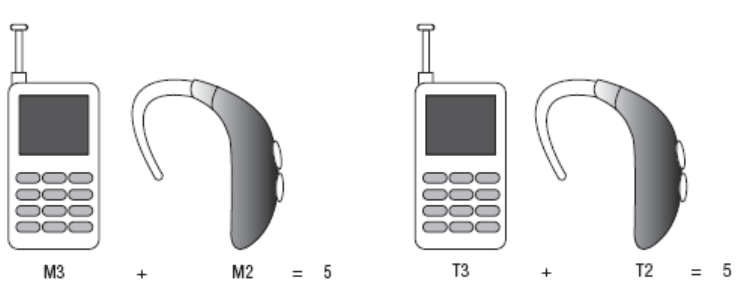
M- Ra t ings: Phones rat ed M3 or M4 m eet FCC requirem ents and are likely
to generat e less int erference to hearing devices t han phones that are not
labeled. M4 is t he bet t er/ higher of t he t w o rat ings.
T- Ra t ings: Phones rated T3 or T4 m eet FCC requirem ent s and are likely
to generat e less int erference to hearing devices t han phones that are not
labeled. T4 is t he bet t er/ higher of the t wo rat ings. Hearing devices m ay
also be rated. Your hearing device m anufacturer or hearing healt h
professional m ay help you find t his rating. Higher rat ings m ean t hat t he
hearing device is relat ively im m une to interference noise. The hearing aid
and wireless phone rating values are t hen added t oget her. A sum of 5 is
considered accept able for norm al use. A sum of 6 is considered for best
use.
I n the above exam ple, if a hearing aid m eet s t he M2 level rat ing and t he
wireless phone m eet s t he M3 level rat ing, t he sum of t he t wo values
equal M5. This is synonym ous for T rat ings. This should provide t he
hearing aid user wit h "norm al usage" while using t heir hearing aid wit h
the particular wireless phone. "Norm al usage" in t his context is defined as
a signal qualit y t hat is accept able for norm al operat ion.
The M m ark is intended to be synonym ous with t he U m ark. The T m ark is
int ended t o be synonym ous wit h t he UT m ark. The M and T m arks are
recom m ended by the Alliance for Telecom m unicat ions I ndust ries
Solut ions ( ATI S) . The U and UT m arks are referenced in Sect ion 20.19 of
the FCC Rules. The HAC rat ing and m easurem ent procedure are described
in t he Am erican Nat ional St andards I nst itut e ( ANSI ) C63.19 st andard.
This handset has been tested and rat ed for use wit h hearing aids for som e
of the wireless t echnologies t hat it uses. However, t his handset also
incorporat es a Wi-Fi air int erface technology t hat has not been rat ed for
hearing aid com pat ibilit y wit h respect t o Wi-Fi operat ion. There m ay also
be som e newer wireless t echnologies used in t his phone that have not
been t est ed yet for use with hearing aids. I t is im portant t o t ry t he
different feat ures of t his phone t horoughly and in different locat ions,
using your hearing aid or cochlear im plant, t o det erm ine if you hear any
int erfering noise. Consult your service provider about its return and
exchange policies and for inform at ion on hearing aid com pat ibilit y
H AC M ode
To insure t hat t he Hearing Aid Com pat ibilit y rat ing for your phone is
m aint ained, secondary t ransm it t ers such as Bluetooth and WLAN
com ponent s m ust be disabled during a call.
See "Sect ion 8: Changing Your Sett ings" on page XX for instruct ions t o
disable t hese com ponent s
Correct disposal of this product
(Waste Electrical & Electronic Equipment)
(Applicable in the European Union and other European countries with separate
collection systems)
This marking shown on the product or its literature, indicates that it should not be
disposed with other household wastes at the end of its working life. To prevent
possible harm to the environment or human health from uncontrolled waste disposal,
please separate this from other types of wastes and recycle it responsibly to promote
the sustainable reuse of material resources.
Household users should contact either the retailer where they purchased this product,
or their local government office, for details of where and how they can take this item

for environmentally safe recycling.
Business users should contact their supplier and check the terms and conditions of
the purchase contract. This product should not be mixed with other commercial
wastes for disposal.
Correct disposal of batteries in this product
(Applicable in the European Union and other European countries with separate
battery return systems)
This marking on the battery, manual or packaging indicates that the batteries in this
product should not be disposed of with other household waste at the end of their
working life. Where marked, the chemical symbols Hg, Cd or Pb indicate that the
battery contains mercury, cadmium or lead above the reference levels in EC
Directive 2006/66. If batteries are not properly disposed of, these substances can
cause harm to human health or the environment.
To protect natural resources and to promote material reuse, please separate
batteries from other types of waste and recycle them through your local, free battery
return system.
introducing your mobile
phone
In this section, learn about your mobile phone’s layout, keys, display, and icons
Unpack
Check your product box for the following items:
Mobile phone
Battery
Travel adapter (charger)
User manual
The items supplied with your phone may vary depending on the software and
accessories available in your region or offered by your service provider. You can
obtain additional accessories from your local Samsung dealer.
Phone layout
The front of your phone includes the following keys and features:
The rear of your phone includes the following keys and features:
Keys
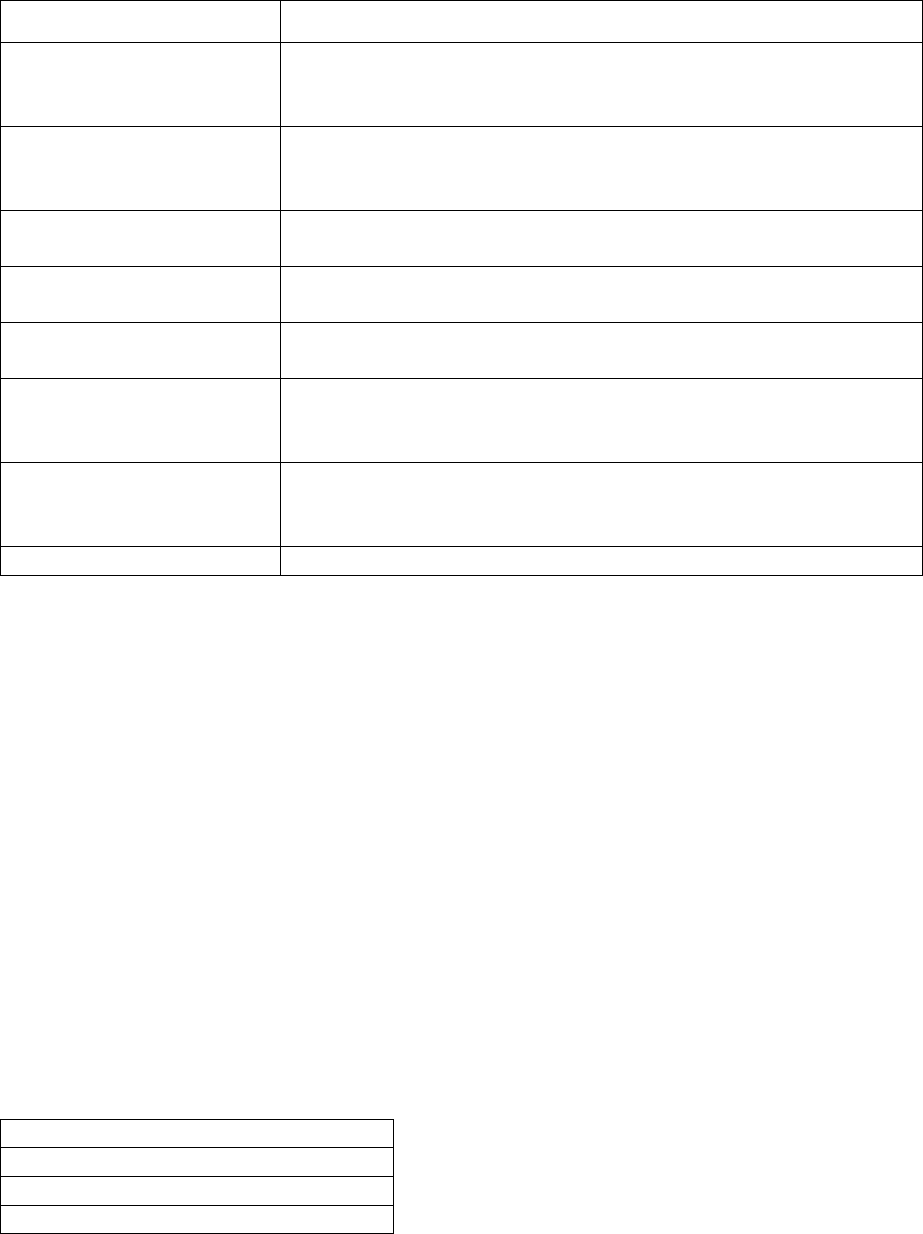
Key Function
Softkeys
Perform actions indicated at the bottom of the display; In
Idle mode, press and hold the left softkey to access the
simplified menus
4-way navigation
In Idle mode, access user-defined menus
(left/right/up/down); In Menu mode, scroll through menu
options
Confirm
In Idle mode, launch the web browser; In Menu mode,
select the highlighted menu option or confirm an input
Dial
Make or answer a call; In Idle mode, retrieve recently
dialled, missed, or received numbers
Power/ Menu exit
Turn the phone on and off (press and hold); End a call; In
Menu mode, cancel input and return to Idle mode
Alpha-numeric
Enter numbers, letters and special characters; In Idle
mode, press and hold [1] to access voice mails and [0] to
enter an international call prefix
Special function
Enter special characters or perform special functions; In
Idle mode, press and hold [#] for the silent profile; Press
and hold [*] to enter a pause between numbers
Volume
Adjust the phone’s volume
Display
Your phone’s display consists of three areas:
Icon line
Displays various icons
Text and graphic area
Displays messages, instructions, and information you enter
Softkey line
Displays the current actions assigned to each softkey
Icons
Learn about the icons that appear on your display.
Definition
Signal strength
Call in progress
New text message

assembling and preparing
your mobile phone
Get started by assembling and setting up
your mobile phone for its first use.
Install the SIM card and battery
When you subscribe to a cellular service, you will receive a Subscriber Identity
Module, or SIM card, with subscription details, such as your personal identification
number (PIN) and optional services.
To install the SIM card and battery,
1. Remove the battery cover. If the phone is on, press and hold [ ] to turn it
off.
2. Insert the SIM card. Place the SIM card in the phone with the gold-coloured
contacts facing down.
3. Insert the battery.
4. Replace the battery cover.
Charge the battery
Before using the phone for the first time, you must charge the battery.
1. Open the cover to the multifunction jack on the side of the phone.
2. Plug the small end of the travel adapter into the multifunction jack. Improperly
connecting the travel adapter can cause serious damage to the phone. Any
damages by misuse are not covered by the warranty.
3. Plug the large end of the travel adapter into a power outlet.
4. When the battery is fully charged (the [|||||] icon is no longer moving), unplug
the travel adapter from the power outlet.
5. Unplug the travel adapter from the phone.
6. Close the cover to the multifunction jack.
About the low battery indicator
When your battery is low, the phone will emit a warning tone and a low battery
message. The battery icon will also be empty and blinking. If the battery level
becomes too low, the phone will automatically power off. Recharge your battery to
continue using your phone.
using basic functions
Learn how to perform basic operations and use the main features of your mobile

phone.
Turn your phone on and off
To turn your phone on,
1. Slide open the phone.
2. Press and hold [ ].
3. Enter your PIN and press <OK> (if necessary).
4. When the setup wizard opens, customise your phone as desired by following
the screen.
To turn your phone off, repeat steps 1 and 2 above.
Switch to the offline profile
By switching to the offline profile, you can use your phone’s non-network services in
areas where wireless devices are prohibited, such as aeroplane and hospitals.
To switch to the offline profile, in Menu mode, select Settings Õ Phone profiles Õ
Offline.
Follow all posted warnings and directions from official personnel when in areas
where wireless devices are prohibited.
Access menus
To access your phone’s menus,
1. In Idle mode, press <Menu> to access Menu mode.
2. Use the navigation key to scroll to a menu or option.
3. Press [OK], <Select>, or <Save> to confirm the highlighted option.
4. Press <Back> to move up one level; Press [ ] to return to Idle mode.
Customise your phone
Get more from your phone by customising it to match your preferences.
Adjust the volume of the key tones
In Idle mode, press the Volume key up or down to adjust the key tone volume.
Switch to or from the silent profile
In Idle mode, press and hold [#] to silence or unsilence your phone.
Change your ringtone
1. In Menu mode, select Settings Õ Phone profiles .
2. Scroll to the profile you are using.
3. Press <Options> Õ Edit Õ Voice call ringtone.
4. Select a ringtone category Õ a ringtone.
5. Press <Options> Õ Select (if necessary).
6. Press <Save>.
To switch to another profile, select it from the list.
Create a phone profile
1. In Menu mode, select Settings Õ Phone profiles .
2. Press <Options> Õ Create.
3. Enter a name for the profile and press <Options> Õ Save.
4. Customise the sound settings as desired.
5. When you are finished, press <Save>.
6.
Select a wallpaper (Idle mode)
1. In Menu mode, select Settings Õ Display and light Õ Home screen.
2. Scroll left or right to Images.
3. Select Wallpaper.
4. Select an image category Õ an image.
5. Press <Select> or <Select> Õ <Set>.
6. Press <Save>.
Select a theme for the display
To select a theme,
1. In Menu mode, select Settings Õ Display and light Õ My theme.
2. Scroll to a theme and press <Select>.
To create and apply a theme,
1. In Menu mode, select Settings Õ Display and light Õ My theme.
2. Scroll to Create and press <Select>.
3. Customise the theme as desired by following the screen.
4. When you have finished, enter a name for the theme and press <Save>.
5. Press <Yes> to apply the theme.
Set menu shortcuts
1. In Menu mode, select Settings Õ Phone settings Õ Shortcuts.
2. Select a key to use as a shortcut.
3. Select a menu to assign to the shortcut key.
Use the simplified menus
To set up simplified menu items,
1. In Idle mode, press [OK].
2. Press <Options> Õ Customise menu.
3. Select your favourite menus.
4. Press <Options> Õ Open to select submenus (if necessary).
5. Press <Save>.
6. To access an item from the simplified menus,
7. In Idle mode, press [OK].
8. Scroll to the menu item you want and press [OK].
Lock your phone
1. In Menu mode, select Settings Õ Security Õ Phone lock Õ On.
2. Enter a new 4- to 8-digit password and press <OK>.
3. Enter the new password again and press <OK>.
Use basic call functions
Learn to make or answer calls and use basic call functions.
Make a call
1. In Idle mode, enter an area code and a phone number.
2. Press [ ] to dial the number
3. To end the call, press [ ].
Answer a call
1. When a call comes in, press [ ].
2. To end the call, press [ ].
Adjust the volume
To adjust the volume during a call, press the Volume key up or down.
Use the speakerphone feature
1. During a call, press [OK] Õ <Yes> to activate the speaker.
2. To switch back to the earpiece, press [OK] again.
In noisy environment, you may have difficulty hearing the calls while using the
speakerphone feature. For better performance, use the normal phone mode.

Use the headset
By plugging the supplied headset into the multifunction jack, you can make and
answer calls:
To redial the last call, press and hold the headset button.
To answer a call, press the headset button.
To end a call, press the headset button.
Send and view messages
Learn to send or view text (SMS), multimedia (MMS), or email messages.
Send a text or multimedia message
1. In Menu mode, select Messages Õ Create new message Õ Message.
2. Enter a destination number or an email address and scroll down.
3. Enter your message text. p. 오류! 책갈피가 정의되어 있지 않습니다.
For sending as a text message, skip to step 5.
For attaching multimedia, continue with step 4.
4. Press <Options> Õ Add multimedia and add an item.
5. Press [OK] Õ Send to send the message.
Send an email
1. In Menu mode, select Messages Õ Create new message Õ Email.
2. Enter an email address and scroll down.
3. Enter a subject and scroll down.
4. Enter your email text.
5. Press <Options> Õ Attach multimedia and attach a file (if necessary).
6. Press [OK] Õ Send to send the message.
Enter text
When entering text, you can change the text input mode:
Press and hold [*] to switch between T9 and ABC modes. Depending on your
country, you may be able to access an input mode for your specific language.
Press [*] to change case or switch to Number mode.
Press and hold [#] to switch to Symbol mode.
Enter text in one of the following modes:
Mode Function
ABC
Press the appropriate alphanumeric key until the character you

want appears on the display.
T9
1. Press the appropriate alphanumeric keys to enter an entire
word.
2. When the word displays correctly, press [0] to insert a
space. If the correct word does not display, select an
alternate word from the list that appears.
Number
Press the appropriate alphanumeric key to enter a number.
Symbol
Press the appropriate alphanumeric key to select a symbol.
View text or multimedia messages
1. In Menu mode, select Messages Õ My messages Õ Inbox.
2. Select a text or multimedia message.
View an email
1. In Menu mode, select Messages Õ My messages Õ Email inbox.
2. Select Check new email.
3. Select an email or a header.
4. If you selected a header, press <Options> Õ Retrieve to view the body of the
email.
Add and find contacts
Learn the basics of using the phonebook feature.
Add a new contact
1. In Idle mode, enter a phone number and press <Options>.
2. Select Save Õ a memory location (phone or SIM) Õ New.
3. Select a number type (if necessary).
4. Enter contact information.
5. Press <Options> Õ Save to add the contact to memory.
Find a contact
1. In Menu mode, select Phonebook.
2. Enter the first few letters of the name you want to find.
3. Select the contact’s name from the search list.
Once you have found a contact, you can:
call the contact by pressing []
edit the contact information by pressing [OK]
troubleshooting
If you are having trouble with your mobile phone, try these troubleshooting
procedures before contacting a service professional.
While using your phone, the following messages may appear:
Message
Try this to solve the problem:
Please insert SIM card
Ensure that the SIM card is installed
correctly.
Phone lock
When the phone lock feature is enabled,
you must enter the password you set for
the phone.
Enter PIN
When using the phone for the first time
or when the PIN requirement is enabled,
you must enter the PIN supplied with the
SIM card. You can disable this feature
by using the PIN lock menu.
Enter PUK
Your SIM card is blocked, usually as a
result of entering your PIN incorrectly
several times. You must enter the PUK
supplied by your service provider.
Your phone displays “Network unavailable” or “Network error.”
When you are in areas with weak signals or poor reception, you may lose
reception. Move to another area and try again.
You cannot access some options without a subscription. Contact your service
provider for more details.
You enter a number, but the call is not dialled.
Ensure that you have pressed the Dial key: [ ].
Ensure that you have accessed the right cellular network.
Ensure that you have not set call barring for the phone number.
Another caller cannot reach you.
Ensure that your phone is turned on.
Ensure that you have accessed the right cellular network.
Ensure that you have not set call barring for the phone number.
Another caller cannot hear you speaking.
Ensure that you are not covering the built-in microphone.
Ensure that the microphone is close to your mouth.
If using a headset, ensure that it is properly connected.
The phone beeps and the battery icon flashes.
Your battery is low. Recharge or replace the battery to continue using the phone.
The audio quality of the call is poor.
When you are in areas with weak signals or poor reception, you may lose
reception or experience poor audio quality. Move to another area and try
again.
When you are in areas with weak signals or poor reception, you may lose
reception. Move to another area and try again.
You select a contact to call, but the call is not dialled.
Ensure that the correct number is stored in the contact list.
Re-enter and save the number, if necessary.
The battery does not charge properly or sometimes the phone turns itself off.
The battery terminals may be dirty. Wipe both gold-coloured contacts with a
clean, soft cloth and try charging the battery again.
If the battery will no longer charge completely, dispose of the old battery
properly and replace it with a new battery.
Your phone is hot to the touch.
When you use several applications at once, your phone requires more power and
may heat up.
This is normal and should not affect your phone’s lifespan or performance.
Some of the contents in this manual may differ from your phone depending on
the software of the phone or your service provider.
World Wide Web
http://www.samsungmobile.com
Printed in Korea
Code No.:GH68-XXXXXA
English (EU). 07/2009. Draft.02