Sang Fei Consumer Communications CTV387 WCDMA digital mobile phone User Manual 00 DiscoverYourPhone
Shenzhen Sang Fei Consumer Communications Co., Ltd. WCDMA digital mobile phone 00 DiscoverYourPhone
User Manual
Philips continuously strives to improve its products. Due to software upgrading, some contents in this user guide
may be different from your product. Philips reserves the rights to revise this user guide or withdraw it at any
time without prior notice. Please take your product as standard.
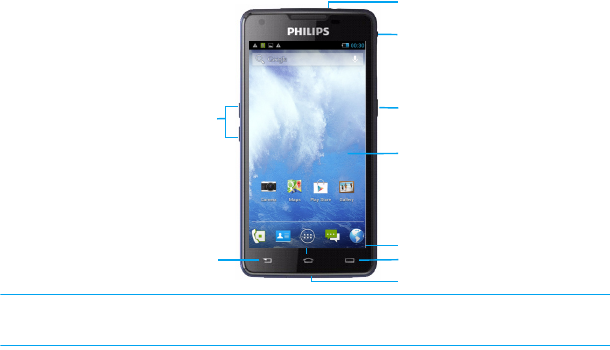
Touch screen
Charger/Micro USB port
Side volume key
Home key
Option key
Back key
Power key /Lock key
Headphone jack
PowerSave button
Your phone
Your phone 1
Turn your phone on and off
1
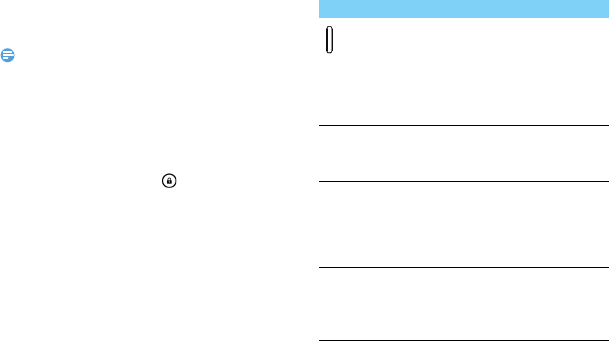
Press and hold power key to turn on your
phone.
2
To turn off your device, press and hold power
key and then select Power off.
Note:
•
If you are turning on your phone for the first time, follow the
on-screen instructions to set up your device.
Lock/unlock the touch screen
You can lock the touch screen and keys to prevent
any unwanted device operations.
1
To lock, press power key.
2
To unlock, press the icon , and then flick your
finger in any direction.
Keys
Learn about the main keys.m
Key Definition Function
Power - Press and hold to power on/off.
- Press to turn on/off the screen
display.
- Hold to access the Phone
options, choose Silent or
Airplane mode.
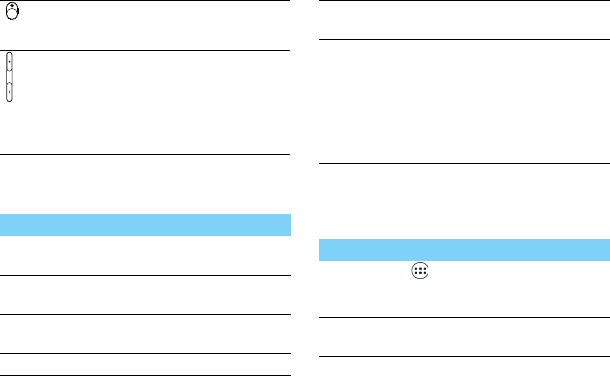
MHome
key
- Return to the home screen.
- Hold to open the list of recent
applications.
OOption
key
- Open a list of options available
on the current screen.
- On the home screen, open the
Wallpaper, Manage applications
and System settings.
BBack key - Return to the previous screen
or exit.
- Hide the onscreen keyboard
when it is opened.
2 Your phone
Use the touch screen
Learn basic actions to use the touch screen. Customize home screen
You can customize the home screen to match your
preferences.
PowerSa
ve
button
Slide the button down/up to turn
on/off PowerSave.
Side
volume
key
-Adjust the ringer volume while in
standby mode or adjust the voice
volume during a call.
-When receiving an incoming call,
briefly press down either volume
key to mute the ringtone.
Function Operation
Tap Touch once to select or launch a menu,
option, or application.
Tap and
hold
Tap an item and hold it for more than
2 seconds.
Drag Tap an item and move it to a new
location.
Double-tap Tap an item twice quickly.
Flick Briskly scroll up, down, left, or right to
move through lists or screens.
Pinch Place two of your fingers far apart, and
then pinch them together. In some
apps, like web browser, you can pinch
the screen using two fingers(for
example, thumb and index finger) to
zoom in or zoom out when viewing a
picture or a web pages.
Function Operation
Add items Tap to enter into menu screen or
widgets, tap and hold an item, and then
drag it to home screen.
Move items Tap and hold an item, and then drag it
to a new location.
Your phone 3
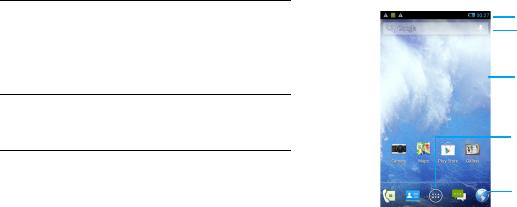
Home screen
From the Home screen, you can view your device’s
status and access applications.
The Home screen has multiple panels. Scroll left or
right to view the panels on the Home screen. There
are 5 extended home screen, slide your finger
horizontally to the left and right to check each one.
Remove
items
Tap and hold an item, the trash bin
appears at the bottom of the home
screen. Drag the item to the trash bin.
When the item turns red, release the
item.
Select a
wallpaper
In home screen, press O>Wallpaper
or tap and hold the blank area in home
screen, select an image from options.
Status Bar
Shortcut icons
Search input
window
Widgets and
applications
Menu key:Tap
to enter into
applications
4 Your phone
Notifications panel
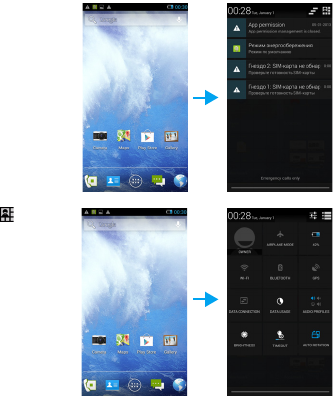
When you get a new notification, you can open the
Notifications panel to see what event notification or
new information you have received.
-
To open the Notifications panel,press and hold
the status bar, then slide one finger downward. If
you have several notifications, you can scroll
down the screen to see them all.
-
To hide the panel, drag the bottom of the panel
upwards.
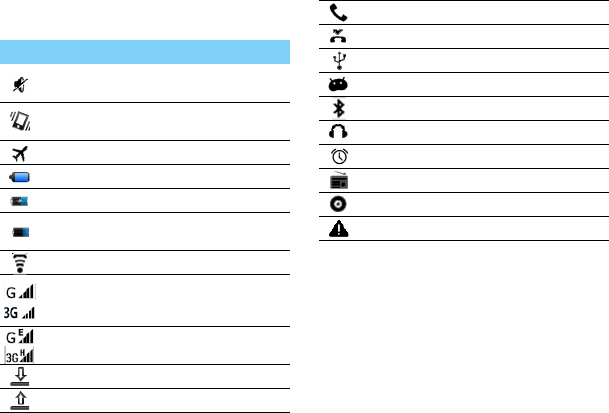
From the notifications panel, you can also view your
phone's current status and use the each options.
-
Open the notifications panel and then tap
to open the phone's status panel.
-
Place two fingers on the status bar, then slide
your fingers downward.
Your phone 5
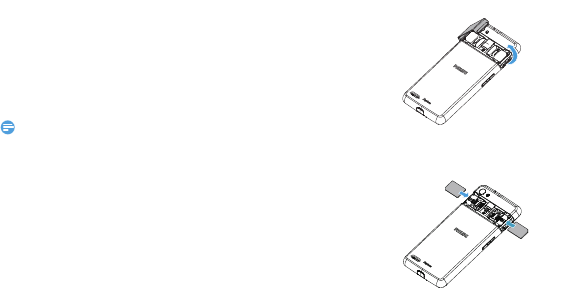
Icons and symbols
Learn about the icons and symbols on the screen.
Icons Function
Your phone will not ring when receiving a
call.
Your phone will vibrate when receiving a
call.
Flight mode activated.
The bars indicate the battery level.
(Blue bars) normal charging.
(Blue bars) normal charging when the
phone is turned off.
WLAN activated.
Your phone is connected to a GSM
network. The more bars are shown the
better the reception is.
Your phone is connected to network.
Downloading data.
Uploading data.
Call in progress.
You have a missed call.
Connected to PC.
USB debugging connected.
Bluetooth is activated.
The headset is plugged into the phone.
The alarm clock is activated.
FM radio turned on in the background.
Music is playing in the background.
Error occurred or caution required.
6 Table of contents
Table of contents
Getting started . . . . . . . . . . . . . . . . . . . . . . . .7
Assembling and Charge . . . . . . . . . . . . . . . . . . . . . 7
Insert a Micro SD card (Memory card) . . . . . . . . . 9
Personalize your phone . . . . . . . . . . . . . . . . . . . . . 10
Basic function. . . . . . . . . . . . . . . . . . . . . . . . . .13
Calls. . . . . . . . . . . . . . . . . . . . . . . . . . . . . . . . . . . . . 13
Messages . . . . . . . . . . . . . . . . . . . . . . . . . . . . . . . . . 14
Email . . . . . . . . . . . . . . . . . . . . . . . . . . . . . . . . . . . . 15
Manage your phonebook . . . . . . . . . . . . . . . . . . . . 16
MultiMedia . . . . . . . . . . . . . . . . . . . . . . . . . . . .18
Music. . . . . . . . . . . . . . . . . . . . . . . . . . . . . . . . . . . . 18
Camera . . . . . . . . . . . . . . . . . . . . . . . . . . . . . . . . . . 19
Sound Recorder . . . . . . . . . . . . . . . . . . . . . . . . . . . 22
FM radio . . . . . . . . . . . . . . . . . . . . . . . . . . . . . . . . . 22
Google play. . . . . . . . . . . . . . . . . . . . . . . . . . . . . . . 23
Business applications . . . . . . . . . . . . . . . . . . . .24
Manage your calendar. . . . . . . . . . . . . . . . . . . . . . . 24
Alarm . . . . . . . . . . . . . . . . . . . . . . . . . . . . . . . . . . . 25
File management. . . . . . . . . . . . . . . . . . . . . . . . . . . 25
Search . . . . . . . . . . . . . . . . . . . . . . . . . . . . . . . . . . . 26
Calculator . . . . . . . . . . . . . . . . . . . . . . . . . . . . . . . . 26
Connections . . . . . . . . . . . . . . . . . . . . . . . . . .27
Bluetooth . . . . . . . . . . . . . . . . . . . . . . . . . . . . . . . . 27
WLAN . . . . . . . . . . . . . . . . . . . . . . . . . . . . . . . . . . 27
VPN . . . . . . . . . . . . . . . . . . . . . . . . . . . . . . . . . . . . 28
Mobile network sharing. . . . . . . . . . . . . . . . . . . . . 28
Internet . . . . . . . . . . . . . . . . . . . . . . . . . . . . . . . . . 29
PC connections . . . . . . . . . . . . . . . . . . . . . . . . . . . 30
Sync . . . . . . . . . . . . . . . . . . . . . . . . . . . . . . . . . . . . 30
Settings. . . . . . . . . . . . . . . . . . . . . . . . . . . . . . .31
Wireless&Networks . . . . . . . . . . . . . . . . . . . . . . . 31
Device . . . . . . . . . . . . . . . . . . . . . . . . . . . . . . . . . . 32
Personal . . . . . . . . . . . . . . . . . . . . . . . . . . . . . . . . . 32
System . . . . . . . . . . . . . . . . . . . . . . . . . . . . . . . . . . 33
Safety & Precaution . . . . . . . . . . . . . . . . . . . . .34
Precaution . . . . . . . . . . . . . . . . . . . . . . . . . . . . . . . 34
Tips. . . . . . . . . . . . . . . . . . . . . . . . . . . . . . . . . . . . . 35
Troubleshooting . . . . . . . . . . . . . . . . . . . . . . . . . . 35
Trademark Declaration . . . . . . . . . . . . . . . . . . . . . 37
Specific Absorption Rate Information. . . . . . . . . . 37
Declaration of Conformity . . . . . . . . . . . . . . . . . . 38
8 Getting started
Getting started
Congratulations on your purchase and welcome to
Philips!
To get the most of your product and enjoy all
Philips has to offer, register your product at:
www. philips. com/mobilephones
More details about your product, please access:
www.philips.com/support
Note:
•
Please read the safety instructions in the "Safety & Precaution"
section before use.
Assembling and Charge
Learn about installing SIM card and charging the
battery for the first use.
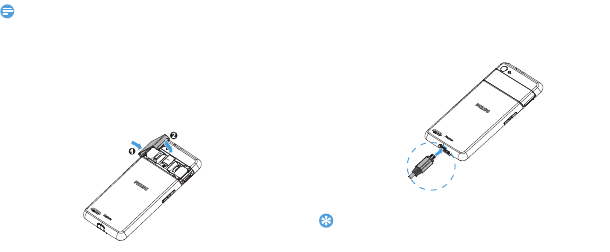
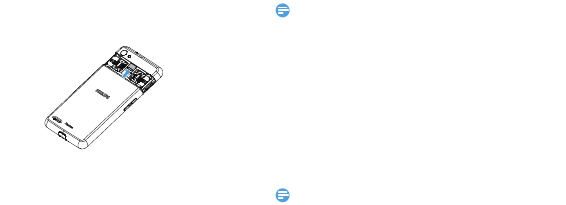
Insert SIM card
Follow the steps below to insert your SIM card.
Remember to turn off your mobile phone before
removing the back cover.
1
Remove the back cover.
2
Insert the SIM card.
Getting started 9
Note:
•
SIM1/SIM2 both support 3G&2G network. Based on the
default settings of your phone, it will connect 3G network by
SIM1 directly. Also you can enter into Settings>Wireless &
networks>Mobile networks>3G service to get your personal
settings.
3
Replace the back cover.
Charge the battery
The battery icon in the upper-right corner shows
the battery level of charging status.
Tips:
•
You can use the phone while it is charging.
•
Keeping the charger plugged to the mobile phone when the
battery is fully charged will not damage the battery. The only
way to turn off the charger is to unplug it, so it is advisable to
use an easily accessible power socket.
•
If a fully charged phone left unused, it will lost its charge over
time.
•
If the phone is being used for the first time or the phone has
not been used for a prolonged period, it may take longer time
to recharge.
10 Getting started
Insert a Micro SD card (Memory
card)
Insert a memory card
You can expand the memory of your phone. Your
device accepts memory cards with maximum
capacities of 32 GB.
1
Remove the back cover and battery.
2
Align your micro-SD card with the slot. Put it in
place.
Remove the memory card
Ensure that the phone is not currently accessing the
memory card. Before removing a memory card, first
unmount it for safe removal.
1
In Idle screen, select O> System settings>
Storage >Unmount SD card.
2
Push the memory card gently until it disengages
from the phone.
3
Remove the memory card.
Note:
•
Do not remove a memory card while the device is transferring
or accessing information to prevent corrupting or damaging
the files in the memory card.
Format the memory card
Formatting your memory card on a PC may cause
incompatibilities with your device. Format the
memory card only on the device.
In Idle screen, select O> System settings>
Storage >Erase SD card.
Note:
•
Before formatting the memory card, remember to make
backup copies of all important data stored on your device. The

Getting started 11
manufacturer’s warranty does not cover loss of data resulting
from user actions.
Personalize your phone
Time and Date
In idle screen, tapO> System settings>
Date&time to control how time and date appears
on your device.
•
Automatic date & time: Set to receive time
information from the network and update the
time and date automatically.
•
Automatic time zone: Set to receive time zone
information from the network when you move
across time zones.
•
Set date: Set the current date manually.
•
Set time: Set the current time manually.
•
Select time zone: Select a time zone.
•
Use 24-hour format: Set to show the time in
24-hour format or 12-hour format.
•
Select date format: Select a date format.
Tips:
•
If the battery remains fully discharged, the time and date will
be reset.
Set a screen lock
You can lock your device by activating the screen
lock feature.
In idle screen, tapO>System settings>
Personal>Security>Screen lock.
•
None: Disable the screen lock.
•
Slide: Choose slide to unlock the screen.
•
Voice Unlock:Set a voice recognition unlock.
•
Pattern: Draw a pattern to unlock the screen.
•
PIN: Unlock the screen by enter the PIN code.
•
Password: Create your private password to
unlock the screen.
Lock your SIM card
You can lock your phone with the PIN that is
supplied with your SIM card.
1
In idle screen, tapO> System settings>
Security> Set up SIM card lock> Lock SIM
card.
2
Select the SIM card, enter your PIN and select
OK.

12 Getting started
Note:
•
If you enter an incorrect PIN too many times, your SIM card
will be blocked. You must enter a PIN unlock key (PUK) to
unblock the SIM card.
•
If you block your SIM card by entering an incorrect PUK, take
the SIM card to your service provider to unblock it.
Access applications
•
Scroll left or right to another screen, select an
application.
•
On the Home screen, tap to access the
application list.
•
Press B to return to the previous screen,
press M to return to the Home screen.
•
Access recently-used applications: Press and
hold M to view the applications you have
accessed recently.
Tips:
•
Your device has a built-in motion sensor that detects its
orientation. If you rotate the device while using some
features, the interface will automatically switch to landscape
view. To set the interface to keep the orientation when you
rotate the device, select Settings>Display>Auto-rotate
screen.
Manage applications
learn about how to view the running apps, and
•
In idle screen, tap O>Manage apps.
•
Ta p Running, you can view all the running apps,
tap this app to enter it, you can tap Stop to
choose stop running.
•
Ta p Downloaded, you can view all the
downloaded apps, tap this app to enter it, you
can check the detailed information of this app,
tap Uninstall to choose unloading it.
•
Ta p SD card, you can view the apps
downloaded on the SD card, you can choose to
move these apps to the phone.
14 Basic function
Basic function
Calls
Learn to use calling functions, such as making and
answering calls, using options available during a call
or customizing and using call-related features.
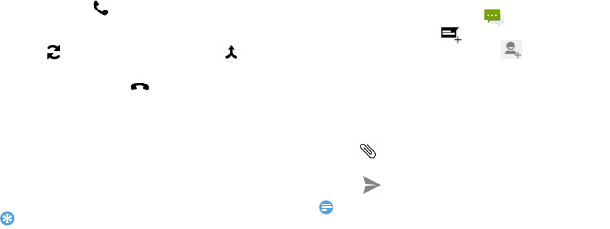
Make a call
1
In the application list, tap .
2
Dial the number directly or choose one number
from the filtered list that have matching digits.
3
Make a voice call or a video call.
4
Tap to e n d th e call .
Tips:
•
The phone dialer’s Smart dial features makes it quick and easy
for you to make a call. Simply enter the phone number or first
few letters of the person’s name you want to call. Smart dial
automatically searches and filters your stored contacts and
the phone numbers from the call history.
Note:
•
For international calls, long press 0 to enter the “+” sign for
the international prefix.
•
It is illegal in many areas to record a call without permission.
Always ask the other party for permission before recording
a call.
Answer/Reject a call
1
During an incoming call, press and hold and
then drag your finger right to answer the call,
drag left to reject the call.(Press the side
volume key to adjust the volume).
2
Tap to turn on loudspeaker.
3
Tap to hang up.
Contacts
Call log
Turn on/off
dial pad
Make a
voice call
Make a video
call
Basic function 15
Make a conference call
If network applicable, you can handle two or more
calls, or make a conference call.
1
During a call, tap + to enter a phone number,
and then tap
to dial the number. The second
number is dialled.
2
The first call is put on hold at this time.
3
Tap to switch the phone, tap to start
conference.
4
To end the call, tap
to hang up.
Make an emergency call
Without a SIM card in phone, you can make the
emergency call.
In Europe, the standard emergency number is 112;
in the UK, it is 999.
Tips:
•
If you've enabled but forgot your lock password or lock
pattern, you can still make emergency calls by tapping
Emergency call on the screen.
Messages
You can use your phone to send text message and
multimedia messages.
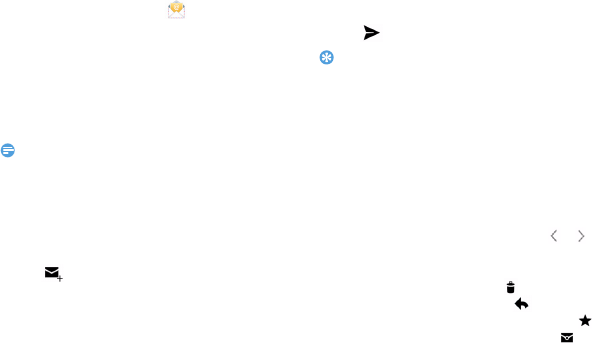
Send a message
1
In the application list, tap .
2
Tap New message .
3
Enter the number or tap to select the
number from phonebook.
4
Select the text field and enter your message
text.
5
PressO>Add subject and add a subject for
the message.
6
Tap and attach a file. (Pictures, Videos,
Audio or Slideshow)
7
Tap to send the message.
Note:
•
Copyright protected pictures and sound cannot be sent by
MMS.
16 Basic function
Email
Set up an email account
1
On the home screen, tap .
2
Enter your email address and password.
3
Select Manual setup and choose POP3/IMAP/
Exchange and then tap Next.
4
If the account type you want to set up is not in
the phone database, you’ll be asked to enter
more details.
5
Follow the on-screen instructions.
Note:
•
When you are finished setting up the email account, the email
messages are downloaded to your device.
•
Select an account name at the top of the screen, and then
select the account from which you want to retrieve messages.
•
Consult your mail service provider for the mail server
configuration.
Send an email
1
Tap and start to edit the email.
2
Select the subject field and text input field to
enter a subject and your email text.
3
Press O, select the Cc/Bcc field and add more
recipients.
4
Press O and attach a file. You can attach
media files, contacts, or location information.
5
Tap to send the mail.
Tips:
•
If you are offline or outside your service area, the message will
be held in the message thread list until you are online and in
your service area.
View an email message
When you are finished setting up the email account,
email messages will be downloaded to your device.
If you have created two or more accounts, you can
switch between them. .
From the message view, use the following options:
•
To move to the next message, select / .
•
To move the message to another folder, press
O>Move.
•
To delete the message, select .
•
To reply to the message, select .
•
To mark the message as important, select .
•
To mark the message as unread, select .

Basic function 17
Manage your phonebook
Learn about basic phonebook function.
Add a new contact
1
Tap to enter the Contacts.
2
Ta p and select a memory location.
3
Add phone number and details as desired.
4
Ta p Done to finish saving.
Tips:
•
You can create contacts from the dialling screen by selecting
Add to contacts.
•
For contacts on the smart phonebook, you can add detailed
information, like home number, office number, contact
pictures and ringtones.
Find a contact
1
On the home screen, tap to enter the
Contacts.
2
Scroll up or down the contact list.
3
Tap and enter the first few letters of the
name in the search bar. (For example “John
Henry” enter JH)
4
Select the contact from the option list.
Create your namecard
1
In the application list, tap > .
2
Select Set up my profile at the top of the
contact list.
3
Enter your personal details.
4
Tap Done.
You can send your namecard to others or share it
by pressing O and selecting Share.
Create a group of contacts
By creating groups of contacts, you can manage
multiple contacts and send a message to an entire
group.
1
In the application list, tap > .
2
Tap and select a memory location.
3
Enter a name and customize the settings for the
group.
4
Add members to the group.
5
Tap Done.

18 Basic function
Import/Export your contacts
You can import contact files from a memory card to
your device and export contacts from your device
to a memory card.
1
In the application list, tap .
2
Press O> Import/export.
3
Select a memory location.
4
Select contacts to copy.
5
Tap OK to confirm..
MultiMedia 19
MultiMedia
Music
Listen to your favorite music while go with the
music player.
Play music
1
Ta p tto open the music screen.
2
Select a music category.
3
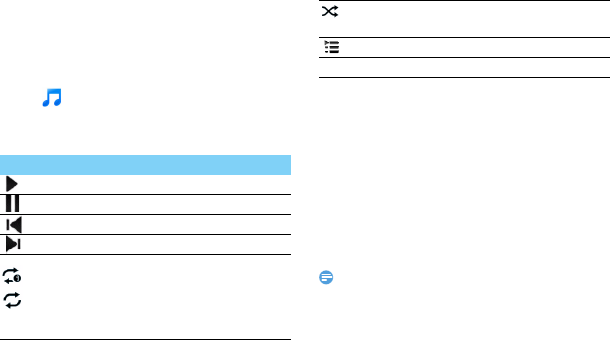
Using the following keys to control playback.
Music settings
Press O to enter into Settings:
•
Party shuffle: Play all the files in the folder
randomly.
•
Add to playlist : Add new music to your playlist.
•
Use as ringtone: Choose music as ringtone.
•
Delete: Delete the music from playlist.
•
Sound effects: Select a sound effect.
•
Library: Return to music category.
•
Search:Search for a music.
Note:
•
When listening to music, adjust the volume to a moderate
level. Continuous exposure to high volume may impair your
hearing.
Function Definition
Play and resume playback.
Pause the playback.
Select previous track.
Select next track.
Select the play mode:
• Repeat once (play current file
repeatedly)
• Repeat all (play all the files in the
folder repeatedly)
Activate Shuffle mode, play current
file randomly.
Select to enter into playlist.
MReturn to the home screen.
20 MultiMedia
Camera
Learn about camera function. Let you take photos
as desired by using your phone.
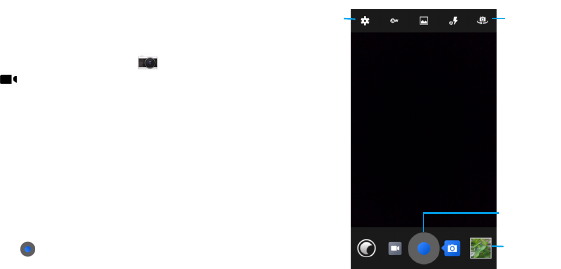
Take a p ho to/ vi d eo
1
In the application list, select .
2
Tap to switch to the camcorder..
3
Aim the camera lens at the subject and make
any necessary adjustments.
4
To zoom in, place two fingers on the screen and
slowly spread them apart. To zoom out, pinch
them together.
5
Tap where you want to focus on the preview
screen.The focus frame moves to the place you
tapped and changes to green when the subject is
in focus.
6
Select to take a photo/video.The photo/
video is saved automatically.
View
photos
Camera
setting
Take a photo
camera
shotcuts
MultiMedia 21
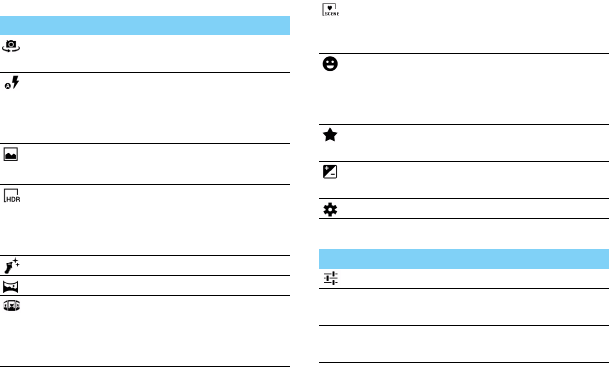
Camera shortcuts
Camera settings
Option Function
Switch Switch to the front camera to
take a photo of yourself.
Flash
setting
You can turn on or off the
flash manually, or set the
camera to use the flash when
needed.
Normal
mode
Take photo in normal mode.
HDR Take three photos with
different exposures and then
combine them to improve
the contrast ratio.
Beauty Hide facial imperfections.
Panorama Take panoramic photos.
Multi angle
view
You can capture shots of a
moving subject and then
combine them into a single
photo that shows the action.
Auto scene
detection
Simply select the proper
mode for your shooting
conditions and subjects.
Smile shot Set the device to recognise
people’s faces and help you
take photos of them when
they smile.
Best shot Select the best mode for your
shooting.
EV bracket
shot
Adjust the exposure value for
your shooting.
Settings Camera settings.
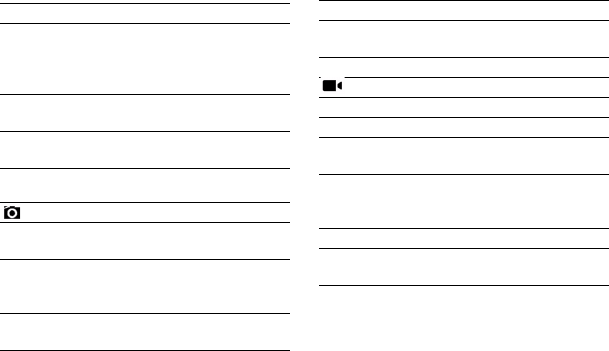
Option Function
GPS location
info
Set the camera to include location
information for your photos.
Exposure Adjust the exposure value to change
the brightness.
22 MultiMedia
Color effect Apply a special effect, such as sepia
or black and white tones.
Scene mode Change the scene mode.
White
balance
White balance enables the camera
to capture colors more accurately
by adjusting to your current lighting
environment.
Image
Properties
Select a quality level for your
photos.
Anti-flicker Reduce blur caused by the device's
vibration or movement.
Restore
defaults
Restore to default settings.
Zero shutter
delay
Turn on zero shutter delay, which
will help capture the picture.
Face
Detection
Set the device to recognise people’s
faces and help you take photos of
them.
Self timer Select the length of the delay before
the camera takes a photo.
Continuous
shot
Continuous shooting function.
Picture size elect the size of picture.
ISO Adjust the sensitivity of the imaging
sensor.
Face beauty Hide facial imperfections.
EIS Adjust the EIS level.
Microphone Turn on/off microphone.
Audio mode Activate the meeting mode to
improve the quality of recording.
Timer lapse
interval
Select the length of the delay before
the camcorder starts recording a
video.
Effects Apply a special effect.
Video quality Select a quality level for your
photos.
MultiMedia 23
View photos
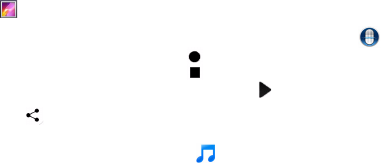
After taking photos, select the image viewer icon to
view the taken photos or tap to view photos.
•
To view more photos, scroll left or right.
•
To zoom in or out, place two fingers on the
screen and slowly spread them apart or pinch
them together. To return to the original size,
double-tap the screen.
•
To send a photo to others, tap .
•
Press the Option key O to access the
following options:
-
Delete: delete the photo.
-
Slideshow: To start a slide show.
-
Edit: To edit the photo with the image editor.
-
Rotate right: To rotate the photo clockwise.
-
Rotate left: To rotate the photo anti-
clockwise.
-
Crop:To add the photo to the clipboard.
-
Set picture as: To set the photo as your
wallpaper or a contact image.
-
Details: To view the detailed information of
this photo.
Sound Recorder
Learn to operate your device’s voice recorder.
Record a voice memo
1
Open the application list and tap .
2
Tap to start recording.
3
Tap to finish recording and choose to save/
discard it. (Tap to listen to the voice memo
before saving or discarding)
Play a voice memo
1
Tap
>Playlists>My recordings to access
the voice memo list.
2
Select a voice memo to listen.
FM radio
Learn to listen to music and news on the FM radio.
To listen to the FM radio, you must connect a
headset, which serves as the radio antenna.
Listen to the FM radio
1
Plug a headset into your phone.
24 MultiMedia
2
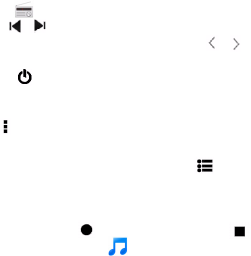
Tap to enter into FM radio.
3
Tap / , The FM radio scans and saves
available stations automatically. Tap / to
tune the radio frequency by +/-0.1 MHz.
4
Tap to close the radio.
Radio settings
Tap to access the following options:
1
Search: scan the radio channels and saves
available stations automatically. Ta p to v i ew
the playlist.
2
Speaker: turn on the Speaker.
3
FM Recording: record the FM voice you want
to record, Tap to start recording, tap to
stop recording. Tap >Playlists>FM
recordings to access the voice memo list.
Business applications 25
Business applications
PowerSave
Slide the button on the left side of the phone down/
up to turn on/off power save.
1
In the application list, tap .
2
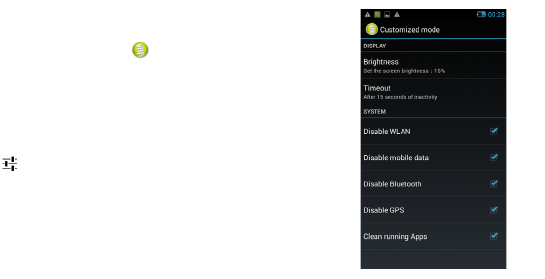
You can select Best mode or My mode:
-
Best mode: Retain call, SMS, disable data
connection.
-
My mode: User can customize their own
powersave mode.
Tap to enter into my mode setting: set
Brightness, Sleep time, select whether to disable
WLAN/mobile data/blue tooth/GPS and whether to
clean running Apps.
26 Business applications
Manage your calendar
You can create your to-do list and make a plan on
your calendar.
View the calendar
1
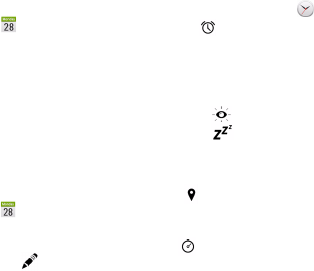
In the application list, tap .
2
Tap the date at the top of the screen.
3
Select a view mode:
-
Day: Hourly blocks for one full day.
-
Week: Hourly blocks for the days in one full
week.
-
Month: A full month in one view.
-
Agenda: A list of all the events and tasks
scheduled for a specific period.
Create an event
1
In the application list, tap .
2
Tap O >New event.
3
Enter the details of the event and select Done.
4
While viewing an event, tap to edit events
you have created, tap Done to save the update.
Alarm
Learn about how to set and use an alarm.
Set an alarm
1
In application list, tap .
2
Ta p >On and set the details of the alarm, or
turn on the existing alarm.
Stop an alarm
When the alarm rings,
•
Select : The alarm stops.
•
Select : The alarm will sound again after 10
minutes.
Create a world clock
Tap to select a city in the world list.
Use the stopwatch
Tap >Start to begin the stopwatch.When you
are finished, select Stop.
Business applications 27
Use the countdown timer
1
Tap .
2
Set the length of time to count down.
3
Select Start to begin the countdown.
4
When the timer expires, select Stop to stop the
alarm. Tap to clear time data.
File management
View your files
Learn to access various types of files saved in your
device.
1
Tap to open your files.
2
Open a file, tap to create a new folder.
3
To sort files or folders, tap and select Sort.
4
To search for files saved in your phone, tap. .
Manage your files
Tap , a n d select Select file or folder. You can
copy, move or delete a file in a folder.
•
Tap , c o py t h e fi l e .
•
Tap , rename the file.
•
Tap , delete files.
Search
1
In the idle screen, tap .
2
You can input the text on the srearching bar or
tap to enter text by speaking.
3
When you see the microphone image, speak out
the words you want to type.
4
You can choose to search from the phone, SD
card or Internet.
5
Select a search result.
Calculator
Learn to perform calculations with your phone.
•
Use the keys on the screen to perform basic
calculations. (Scroll the screen to view the
scientific calculator).
•
Press O>Clear history to clear the
calculation history.

28 Connections
Connections
Bluetooth
Your phone can connect to a compatible Bluetooth
device for exchanging data.
Tu r n o n / o f f B l u e t o o t h
1
From the Home screen, tap > Bluetooth.
2
Select to turn on/off the Bluetooth.
3
Tap the Bluetooth to enter into it for other
bluetooth settings.
Note:
•
Turn off Bluetooth when not in use to save battery power, or
in places where using a wireless device is prohibited, such as
on board an aircraft and in hospitals.
Receive data via Bluetooth
1
Turn on the Bluetooth firstly, then tap >
Bluetooth to make device visible.
2
Then select Search for devices.
3
Select a device, Enter a pair password and select
Accept to pair with the other device.
4
On the receiving device, accept the file.
Note:
•
Some devices, especially headsets or hands-free car kits, may
have a fixed Bluetooth PIN, such as 0000. If the other device
has a PIN, you must enter it.
•
Received data is saved to the bluetooth folder. If you receive
a contact, it is automatically saved to the phonebook..
Send data via Bluetooth
1
Select a file or item, such as a contact, calendar
event, memo, or media file, from an appropriate
application or My files.
2
Select an option for sending data via Bluetooth.
3
Search for and pair with a Bluetooth-enabled
device.
Wi-Fi
Learn to use your phone’s wireless networking
capabilities to activate.You can connect to the
Internet or other network devices anywhere an
access point or wireless hotspot is available.
Connections 29
Turn on Wi-Fi and connect to a Wi-Fi
1
From the Home screen, tap >
Wireless &
networks> Wi-Fi.
2
Drag the Wi-Fi switch to the right, turn Wi-Fi
on.
3
Your device searches for available Wi-Fi APs
automatically.
4
Select an AP.
5
If you selected a secured network, you'll be
asked to enter the network key or password.
6
Select Connect.
VPN
Learn to create virtual private networks (VPNs) and
connect
Set up a VPN profile
1
In the application list, tap >
Wireless &
networks>More>VPN
2
Ta p + to enter a name for the VPN server and
select a VPN type.
3
Change the options as required.
4
When you are finished, select Save.
Tips:
•
The options available may vary depending on the VPN type.
•
Your device should already be configured with Internet
access. If you have trouble accessing the Internet, you must
edit the connections. If you are not sure what information to
enter, ask your VPN administrator.
•
To use this feature, you must activate the screen lock feature.
Connect to a VPN
1
In the application list, tap >
Wireless &
networks>VPN.
2
Select a private network.
3
Enter the user name and password, and then
select Connect.
Mobile network sharing
Learn to set your device as a wireless modem or
wireless access point for PCs or other devices, and
share your device's mobile network connection.
Share mobile network via USB
1
Using a USB cable, connect the multifunction
jack on your device to a PC.

30 Connections
2
In the application list, select Settings>Wireless
and network>More>Tethering & portable
hotspot.
3
Select USB tethering to activate the USB
tethering feature. Your device shares the mobile
network connection on your PC.
4
To stop sharing the network connection, tap to
turn off USB tethering.
Internet
Learn to access and bookmark your favourite web
pages.
Browse a webpage
1
In the application list, tap .
2
To access a specific webpage, select the URL
field, enter the web address.
3
Start to view the webpages.
While browsing a webpage, access the following
options:
•
To zoom in or out, place two fingers on the
screen and slowly spread them apart or pinch
them together.
•
To open/close the window, tap .
•
To bookmark the current webpage, press O>
Save to bookmarks.
•
To view your download history, press
O>Bookmarks/History.
•
To change the browser settings, press
O>Settings.
PC connections
Learn to connect your phone to a PC with a USB
cable in USB connection modes.
1
Connect your phone to a computer with a USB
cable.
2
When connected, select Turn on USB storage.
3
You phone act as a removable disk. If you insert
a memory card in the device, you can also
access the file directory of the memory card by
using the device as a memory card reader.
4
Copy files from the PC to the memory card.
5
When you are finished, select Turn off USB
storage.

Settings 31
Settings
Wireless&Networks
Function Definition .
SIM
management
Set the dual SIM card
information/set the SIM card for
data connection, call, message.
Wi-Fi Activate the Wi-Fi feature to
connect to a Wi-Fi AP and access
the Internet or other network
devices.
Bluetooth Activate the Bluetooth feature to
exchange information over short
distances.
Data usage Keep track of your data usage
amount, and customise the
settings for the limitation.
Airplane mode Activate Flight mode to disable all
wireless functions on your
device. You can use only non-
network features.
VPN Set up and manage virtual private
networks (VPNs).
Tethering&
portable hotspot
•Set to use your device as a
wireless modem by making a
USB connection with a
computer.
•Set to use your device as a
wireless access point for other
devices.
•Activate the Bluetooth
tethering feature to share your
mobile network with
computers via Bluetooth.
Mobile networks •Set to use data connections on
any mobile network.
•Set to use data connections
when you are roaming.
USB Internet Sharing Windows PC internet via
USB cable

32 Settings
Device Personal
Account
Add your email accounts,See “Email” on page 16.
Function Definition .
Audio profiles •Select the profiles of the phone.
•Set the volume and type for
ringtong, alarm and notification.
Display Change the settings to control
the display and backlight on your
device.
Storage View memory information for
your device and memory
card.You can also format the
memory card.
Battery View the amount of battery
power consumed by your device.
Apps Manage running applications,
move applications to or from the
storage card, and install or
uninstall programs.
Function Definition .
Location access Select the sources to use when
determining your location.
Security Set a screen lock or manage the
credential storage.
Language&input Set the operating system language
and region. You can also set
onscreen keyboard options.
Backup&reset Reset your settings to the factory
defaults and delete all your data.

Settings 33
System
Function Definition .
Date&time •Set the date and time, time
zone, and date or time format.
•Choose the time and date
formats that suit you.
Phone number
location
Display phone number location
Scheduled
power on&off
Set the time to power on/off
automatically.
Accessibility Use these settings when you’ve
downloaded and installed an
accessibility tool, such as a screen
reader that provides voice
feedback. You can turn
accessibility functions or services
on or off.
Developer
options
Tap About phone>Build
number for seven times, you can
open the Developer Options.
Activate and change the settings
for application development..
About phone View different information about
the phone, such as the battery,
legal information, model number,
software version, base band
version and build number.
If the network is available, tap
System updates to update the
system to latest version.

34 Safety & Precaution
Safety & Precaution
Precaution
Keep your phone away from small children
Keep your phone and all accessories out of the reach of small
children. Small parts may cause choking or serious injury if
swallowed.
Radio Waves
Your phone transmits/receives radio waves in the GSM/WCDMA.
Check with the vehicle manufacturer that electronic equipment
used in your vehicle will not be affected by radio energy.
Switch off your phone...
Turn off the phone when in an aircraft. The use of mobile phones in
an aircraft may be dangerous for the operation of the aircraft,
disrupt the mobile phones network and may be illegal.
In hospitals, clinics, other health care centers and anywhere else
where you may be in the close vicinity of medical equipment.
In areas with a potentially explosive atmosphere (e.g. petrol stations
and also areas where the air contains dust particles, such as metal
powders).In a vehicle transporting flammable products or a vehicle
powered by liquefied petroleum gas (LPG).In quarries or other areas
where blasting operations are in progress.
Your mobile phone and your car
Avoid using your phone while driving and obey all regulations that
restrict the use of mobile phones while driving. Use hands free
accessories to increase your safety when possible. Ensure that your
phone and car kit do not block any air bags or other security devices
fitted in your car.
Handle your phone carefully and sensibly
For the optimal and satisfactory operation of the phone you are
recommended to use the phone in the normal operating position.
•
Do not expose your phone to extreme temperatures.
•
Do not immerse the phone in any liquid; if your phone is damp,
switch it off, remove the battery and let them dry for 24hrs before
using them again.
•
To clean the phone, wipe it with a soft cloth.
•
In hot weather or after prolonged exposure to the sun (e.g., behind a
window or a windscreen), the temperature of your phone's casing
might increase. Be very careful in this case when picking up your
phone and also avoid using it with an ambient temperature over 40°
C.
Protect batteries from damage
You should only use Philips Authentic Accessories, as the use of
any other accessories may damage your phone and may be
dangerous, and will make all guarantees for your Philips phone null and
void. The use of an unspecified type of battery may also cause an
explosion.
Make sure damaged parts are replaced immediately by a qualified
technician and that they are replaced with genuine Philips replacement
parts.
•
Your phone is powered by a rechargeable battery.
•
Use specified charger only.
•
Do not incinerate.
•
Do not deform or open the battery.
•
Do not allow metal objects (such as keys in your pocket) to short
circuit the battery contacts.
•
Avoid exposure to excessive heat (>60° C or 140° F), moisture or
caustic environments.
Environmental care
Remember to observe the local regulations regarding the disposal
of the packaging materials, exhausted batteries and old phone and
please promote their recycling.Philips has marked the battery and

Safety & Precaution 35
packaging with standard symbols designed to promote the recycling and
appropriate disposal of your eventual waste.
:The labeled packaging material is recyclable.
:A financial contribution has been made to the associated national
packaging recovery and recycling system.
:The plastic material is recyclable (also identifies the type of plastic).
Hearing Protection
When listening to music, adjust the volume to a moderate
level.
Continuous exposure to high volume may impair your hearing.
WEEE Marking in the DFU: “Information to the Consumer”
Disposal of your old product
Your product is designed and manufactured with high quality materials
and components, which can be recycled and reused.
When this crossed-out wheeled bin symbol is attached to a
product it means the product is covered by the European
Directive 2002/96/EC
Please inform yourself about the local separate collection system
for electrical and electronic products.
Please act according to your local rules and do not dispose of your old
products with your normal household waste. The correct disposal of
your old product will help prevent potential negative consequences for
the environment and human health.
This device may contain commodities, technology or software subject to
export laws and regulations from the US and other countries. Diversion
contrary to law is prohibited.
Tips
Pacemakers
If you have a pacemaker:
•
Always keep the phone more than 15 cm from your pacemaker
when the phone is switched on, in order to avoid potential
interference.
•
Do not carry the phone in a breast pocket.
•
Use the ear opposite to the pacemaker to minimize the potential
interference.
•
Switch off your phone if you suspect that interference is taking place.
Hearing aids
If you are a user of a hearing aid, consult your physician and hearing aid
manufacturer to learn whether your particular device is susceptible to
cellular phone interference.
How to prolong the battery life of your phone
To have your mobile phone function properly, sufficient battery power
is important. For the power-saving purpose, do the following, if
applicable:
•
Turn off the Bluetooth function of your phone.
•
Set the backlight level and duration of your phone to a low value.
•
Turn on the auto keypad lock, turn off the key sounds, tap vibration,
or vibration alerts.
•
Establish GPRS connection when needed. Otherwise, your phone
will keep searching for GPRS connection, and drain your battery
power.
•
Turn off your phone if there is no coverage. Otherwise, the phone
will keep searching for network, and drain your battery power.
Troubleshooting
The phone does not switch on
Remove/reinstall the battery. Then charge the phone until the battery
icon stops scrolling. Unplug the charger and try to switch the mobile on.
The display shows BLOCKED when you switch on the phone
Somebody tried to use your phone but didn’t know the PIN code nor
the unblocking code (PUK). Contact your service provider.
36 Safety & Precaution
The display shows IMSI failure
This problem is related to your subscription. Contact your operator.
Your phone doesn’t return to idle screen
Long press the hang-up key or switch off the phone, check that the SIM
card and the battery are installed correctly and switch it on again.
The network symbol is not displayed
The network connection is lost. Either you are in a radio shadow (in a
tunnel or between tall buildings) or you are outside the network
coverage area. Try from another place, try to reconnect to the network
(especially when abroad), check that the antenna is in place if your mobile
has an external antenna, or contact your network operator for
assistance/information.
The display doesn’t respond (or the display responds slowly) to
key presses
The display responds more slowly at very low temperatures. This is
normal and does not affect the operation of the phone. Take the phone
to a warmer place and try again. In other cases please contact your
phone supplier.
Your battery seems to over heat
You might be using a charger that was not intended for use with your
phone. Make sure you always use the Philips authentic accessory shipped
with your phone.
Your phone doesn’t display the phone numbers of incoming
calls
This feature is network and subscription dependent. If the network
doesn’t send the caller’s number, the phone will display Call 1 or
Withheld instead. Contact your operator for detailed information on
this subject.
You can’t send text messages
Some networks don’t allow message exchanges with other networks.
First check that you have entered the number of your SMS centre, or
contact your operator for detailed information on this subject.
You can’t receive and/or store JPEG pictures
A picture may not be accepted by your mobile phone if it is too large, if
its name is too long, or if it doesn’t have the correct file format.
You feel that you have missed some calls
Check your call divert options.
When charging, the battery icon shows no bar and the outline
is flashing
Only charge the battery in an environment where the temperature does
not go below 0°C (32°F) or above 50°C (113°F).
In other cases please contact your phone supplier.
The display shows SIM failure
Check that the SIM card has been inserted correctly. If the problem
persists, your SIM card may be damaged. Contact your operator.
When attempting to use a feature in the menu, the display
shows NOT ALLOWED
Some features are network dependent. They are only available,
therefore, if the network or your subscription supports them. Contact
your operator for detailed information on this subject.
The display shows INSERT YOUR SIM CARD
Check that the SIM card has been inserted correctly. If the problem
persists, your SIM card may be damaged. Contact your operator.
The autonomy of your phone seems lower than indicated on
the user guide
The autonomy is linked to your settings (e.g., ringer volume, backlight
duration) and the features you use. To increase the autonomy, and
whenever possible, you must deactivate features you do not use.
Your phone doesn’t work well in your car
A car contains many metallic parts that absorb electromagnetic waves
which can affect the phone’s performance. A car kit is available to
provide you with an external antenna and enables you to make and
receive phone calls without handling the handset.

Safety & Precaution 37
Note:
•
Check with the local authorities whether or not you are allowed to
use the phone while driving.
Your phone is not charging
If the battery is completely flat, it might take several minutes of pre-
charge (up to 5 minutes in some cases) before the charging icon is
displayed on the screen.
The picture captured with the phone camera is not clear
Make sure that the camera lens on both sides is clean.
Trademark Declaration
FCC Compliance
This device complies with part 15 of the FCC Rules. Operation is
subject to the condition that this device does not cause harmful
interference. This device must accept any interference received,
including interference that may cause undesired operation.
Caution: Changes or modifications not expressly approved by the
manufacturer could void the user’s authority to operate the
equipment.
Note: This equipment has been tested and found to comply with the
limits for a Class B digital device, pursuant to part 15 of the FCC Rules.
These limits are designed to provide reasonable protection against
harmful interference in a residential installation. This equipment
generates, uses and can radiate radio frequency energy and, if not
installed and used in accordance with the instructions, may cause
harmful interference to radio communications. However, there is no
guarantee that interference will not occur in a particular installation. If
this equipment does cause harmful interference to radio or television
reception, which can be determined by turning the equipment off and
on, the user is encouraged to try to correct the interference by one or
more of the following measures:
—Reorient or relocate the receiving antenna.
—Increase the separation between the equipment and receiver.
—Connect the equipment into an outlet on a circuit different from that
to which the receiver is connected.
—Consult the dealer or an experienced radio/ TV technician for help.
Radio Frequ+ency (RF) Energy
This model phone meets the government’s requirements for exposure to
radio waves.
This phone is designed and manufactured not to exceed the emission
limits for exposure to radio frequency (RF) energy set by the Federal
Communications Commission of the U.S. Government:
The exposure standard for wireless mobile phones employs a unit of
measurement known as the Specific Absorption Rate, or SAR. The SAR
limit set by the FCC is 1.6W/kg. Tests for SAR are conducted using
standard operating positions accepted by the FCC with the phone
transmitting at its highest certified power level in all tested frequency
bands. Although the SAR is determined at the highest certified power
level, the actual SAR level of the phone while operating can be well below
the maximum value. This is because the phone is designed to operate at
multiple power levels so as to use only the poser required to reach the
network. In general, the closer you are to a wireless base station
antenna, the lower the power output.
Android Android is a trademark of Google, Inc.
Bluetooth™ Bluetooth™ is a trade-mark owned by
telefonaktiebolaget L M Ericsson, Sweden and licensed
to Philips.
Philips PHILIPS and PHILIPS’ Shield Emblem are registered
trademarks of Koninklijke Philips N.V. manufactured by
Shenzhen Sang Fei Consumer Communications Co.,
Ltd. Under license from Koninklijke Philips N.V..
The highest SAR value for the model phone as reported to the FCC when
tested for use at the ear is 0.82 W/kg and when worn on the body, as
described in this user guide, is 1.23 W/kg (Body-worn measurements differ
among phone models, depending upon available enhancements and FCC
requirements).
While there may be differences between the SAR levels of various phones and
at various positions, they all meet the government requirement.
The FCC has granted an Equipment Authorization for this model phone with
all reported SAR levels evaluated as in compliance with the FCC RF exposure
guidelines. SAR information on this model phone is on file with the FCC and
can be found under the Display Grant section of http://www.fcc.gov/oet/fccid
after searching on
FCC ID: VQRCTV387
For body worn operation, this phone has been tested and meets the FCC RF
exposure guidelines for use with an accessory that contains no metal and the
positions the handset a minimum of 0 cm from the body. Use of other
enhancements may not ensure compliance with FCC RF exposure guidelines.
If you do not use a body-worn accessory and are not holding the phone at the
ear, position the handset a minimum of 1.0 cm from your body when the
phone is switched on.
Safety & Precaution 38