Singer 14Sh654 Users Manual Step 1 Upper Quides
14SH654 14SH654_threading
2015-01-21
: Singer Singer-14Sh654-Users-Manual-211828 singer-14sh654-users-manual-211828 singer pdf
Open the PDF directly: View PDF  .
.
Page Count: 10
SERGER MODEL 14SH654 DETAILED THREADING GUIDE
3 / 4 – Thread Sergers
© 2005 SINGER SEWING COMPANY
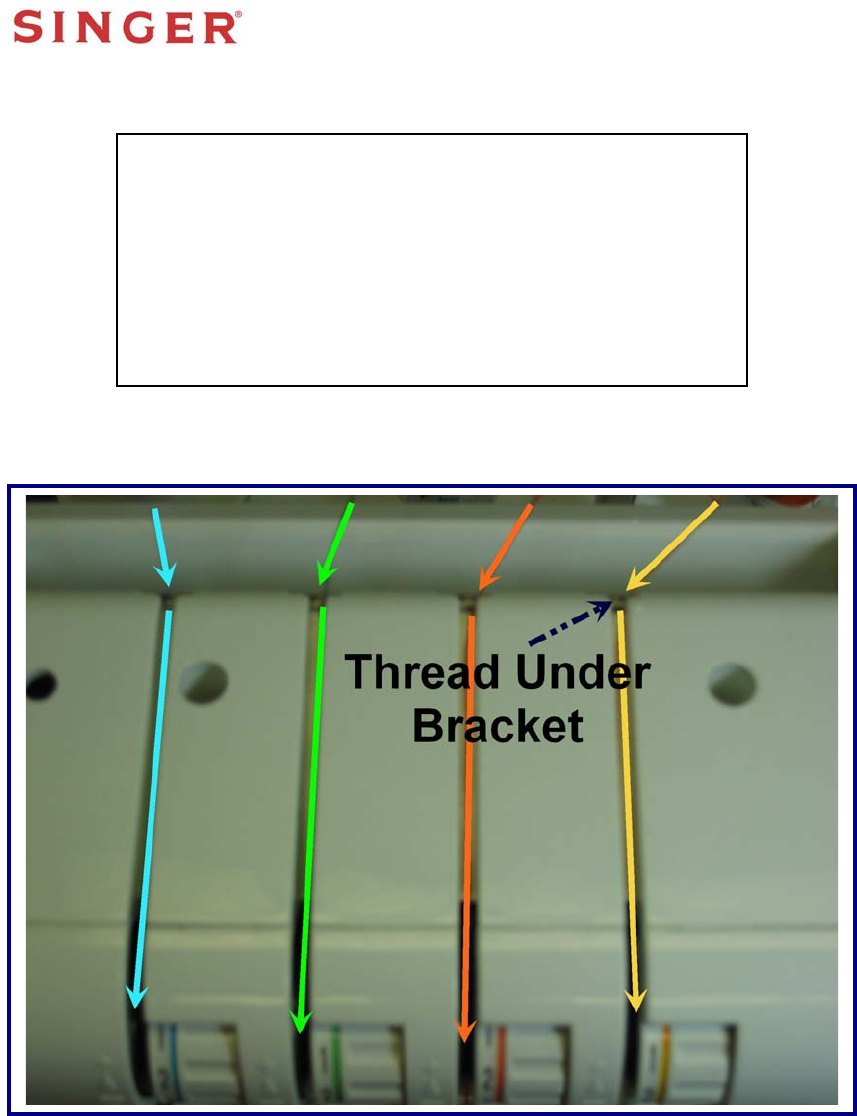
Step 1:
Threading the Upper Guides:
• Make sure the thread slips under the guide
located on the top at the back of the serger.
• Insert the thread by slipping it under from right to
left.
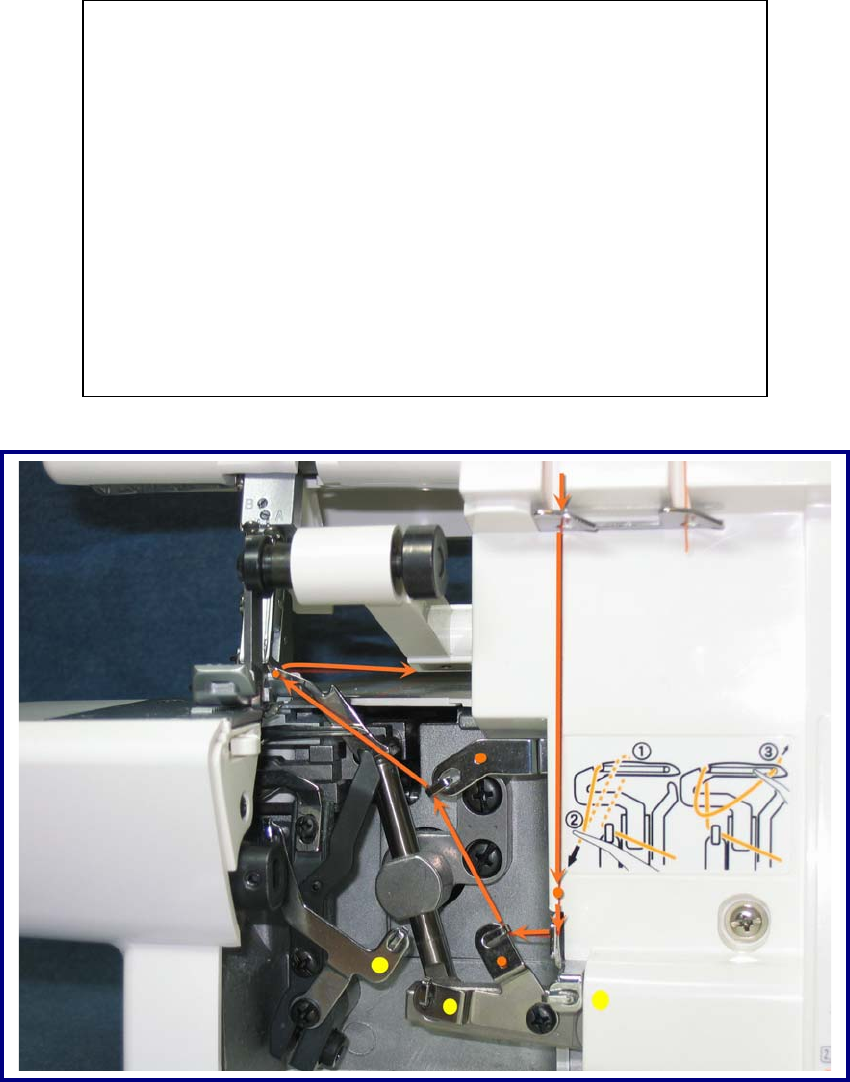
Step 2:
Threading Upper Looper: (ORANGE)
• Always begin threading your serger by starting with
the upper (orange) looper.
• Slip the thread behind the first guide directly below the
tension dial from right to left.
• Slip the thread behind the next 4 guides (these are
indicated by orange dots below the guide).
• Next thread the eye of the looper, and then pull the
thread towards the back of the serger, leaving
approximately 8 inches of thread.
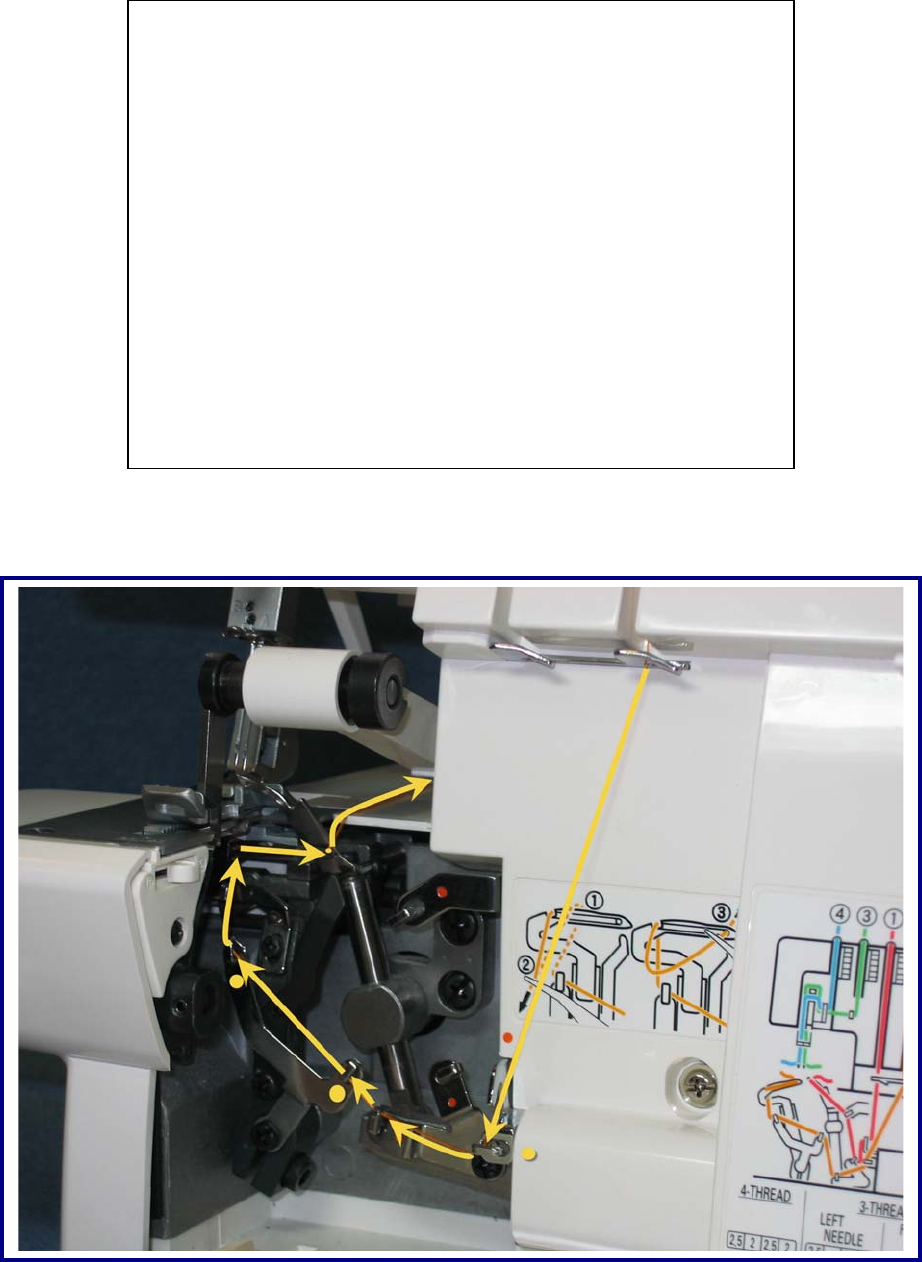
Photo #1
Step 3:
Threading Lower Looper: (YELLOW)
• Slip the thread behind the first guide directly below
the tension dial from right to left.
• Slip thread behind the 4 yellow thread guides (these
are indicated by yellow dots below the guide).
• Slip thread behind the lower looper using the
tweezers as shown in photo #2, until the thread slips
into the notch located at the far left on the looper.
• Next thread the eye of the looper, and then pull the
thread over the top of the upper (orange) looper and
then towards the back of the serger, leaving
approximately 8 inches of thread.
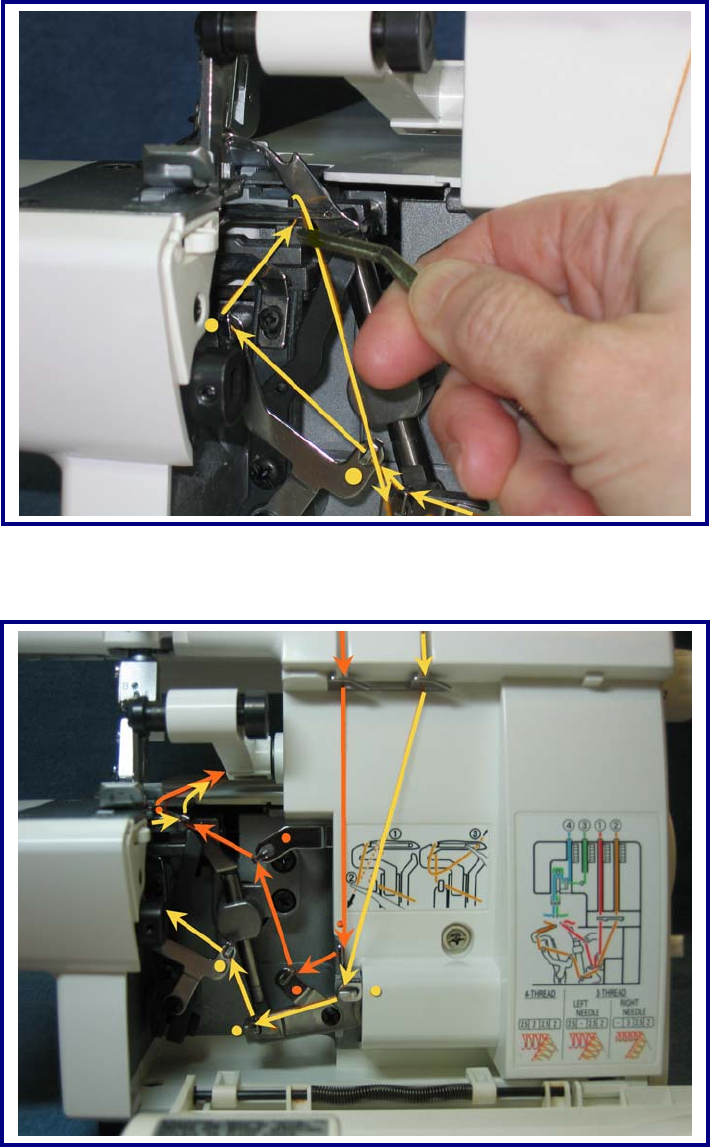
Lower Looper Threading Continued:
Photo #2
Photo #3
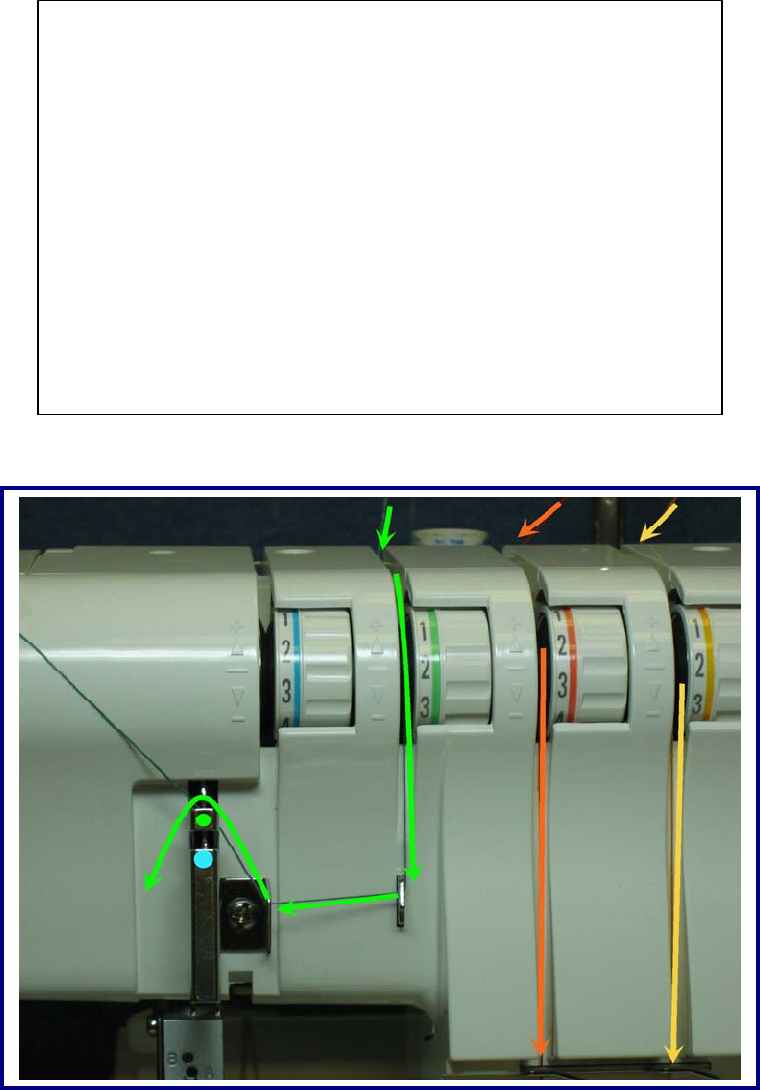
Photo #1
Step 4:
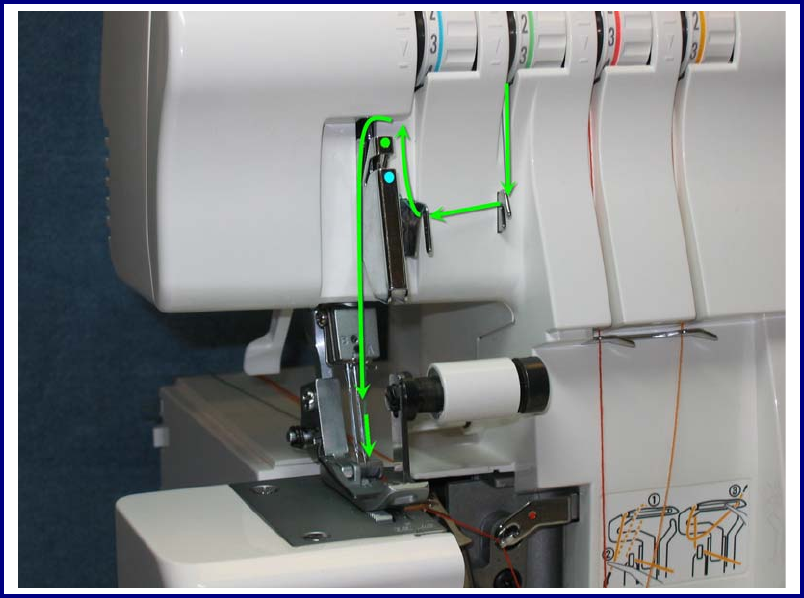
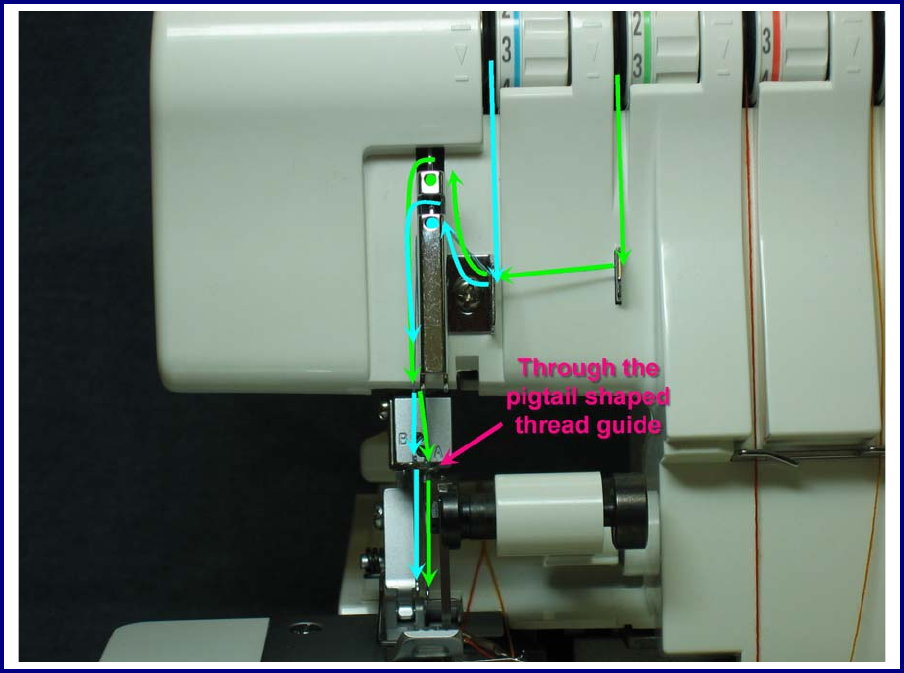
Threading the Right Needle: (GREEN)
• Slip the thread under the first guide directly below the
tension dial, and then under the guide just to the left of
the first guide.
• Run the thread over the top thread path indicated by a
green dot as shown.
• Thread through wire guide A located at the top of the
right needle and then through the eye of the needle.
• Slip thread under the overpass on the right of the foot
and then to the back of the serger, leaving
approximately 8 inches of thread.
Step 5:
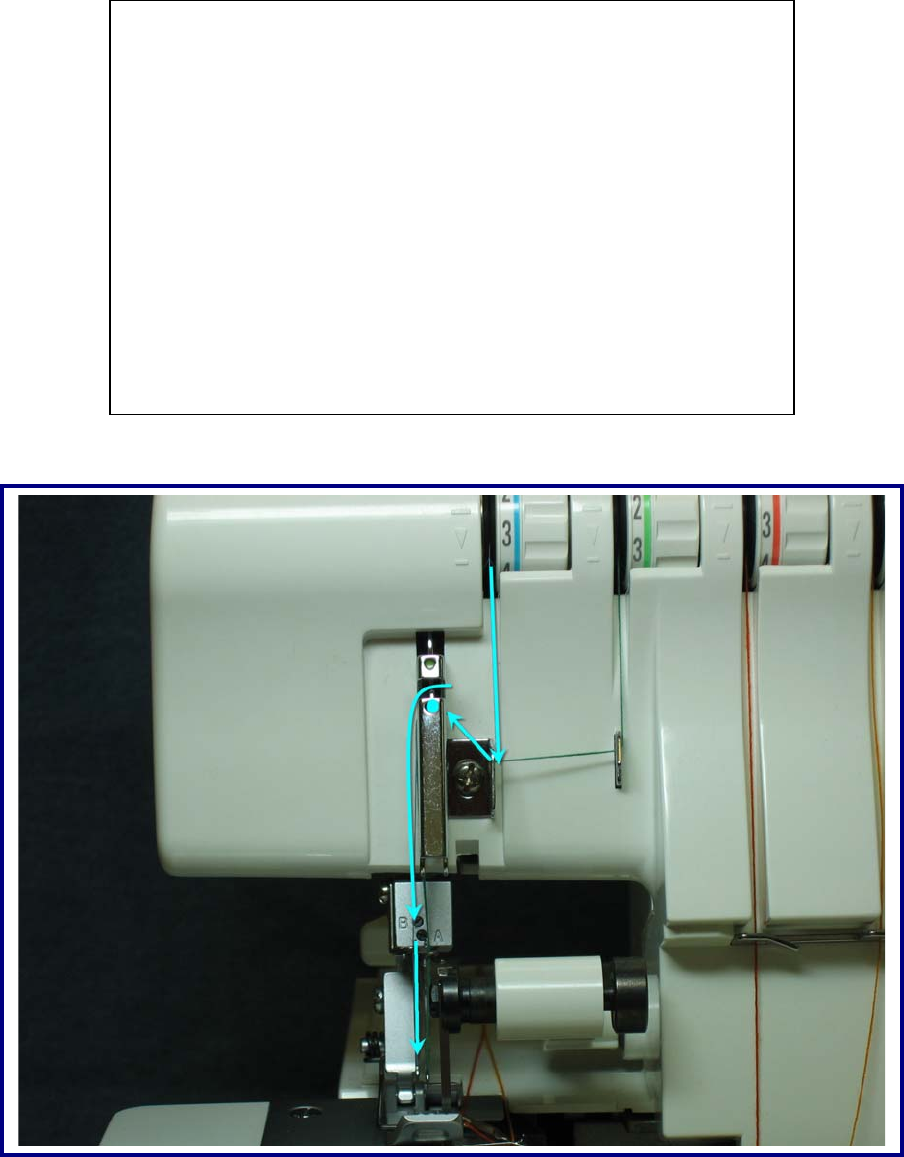
Threading the Left Needle: (BLUE)
• Slip the thread under the first guide directly below the
tension dial.
• Run the thread over the bottom thread path indicated
by a blue dot as shown.
• Thread through wire guide B located at the top of the
left needle and then through the eye of the needle.
• Slip thread under the overpass on the right of the foot
and then to the back of the serger, leaving
approximately 8 inches of thread.
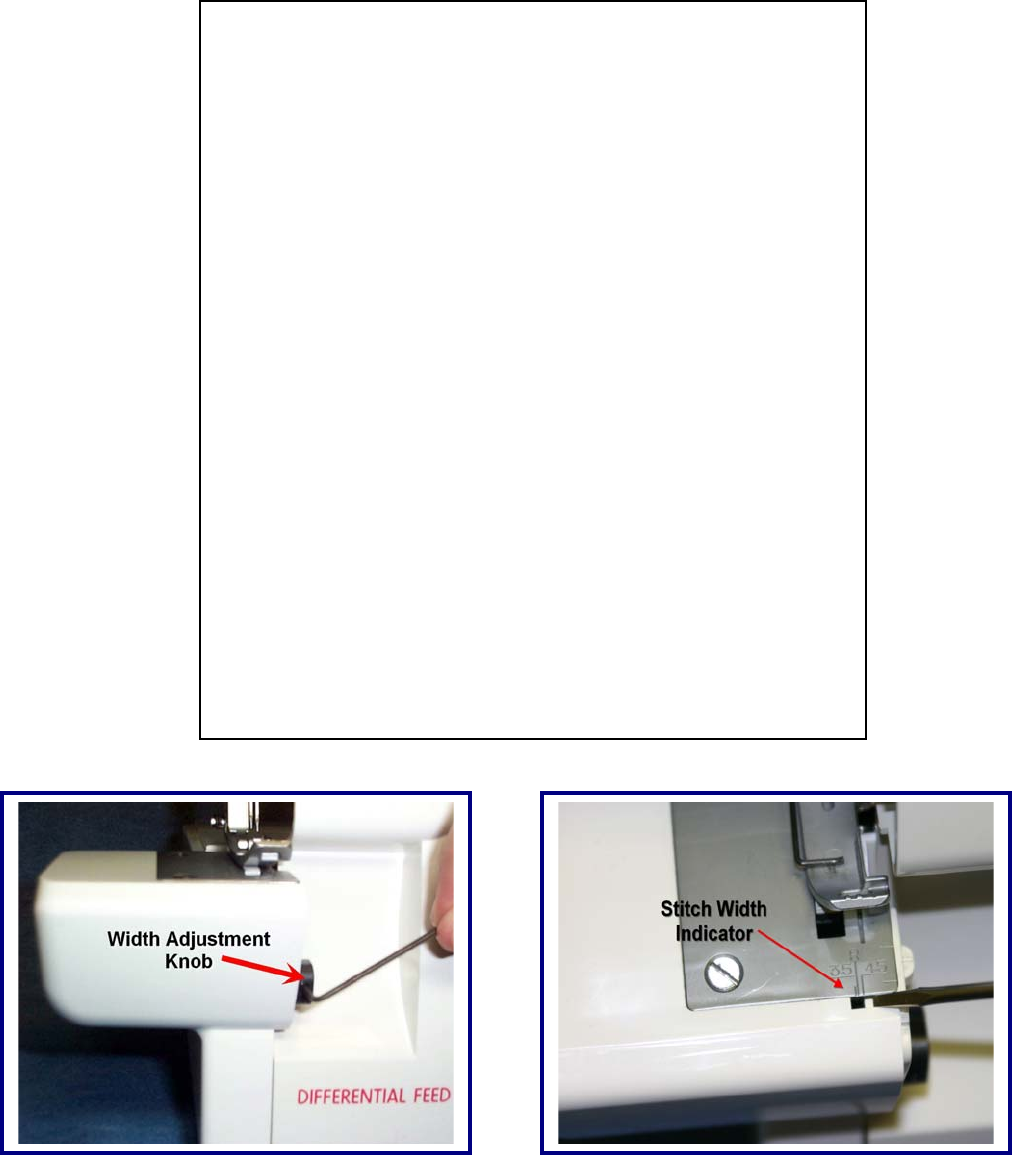
Step 6: Adjusting Width Adjustment Knob
It is important to set the width adjustment knob to the
correct setting, as this will affect the quality of your stitch.
Your serger is pre-set to the R setting at the factory.
• Disengage upper knife by pulling knife holder to the
right and turning the knob away from you until the
knife is in a horizontal position.
• Using Hex-Head wrench loosen width adjustment
knob by turning to the left, as shown.
• Set the knob to the desired position by moving it
right or left, and then tighten adjustment knob by
turning the Hex-Head wrench to the right.
• The edge of the width finger support plate will line up
with the guidelines on your throat plate as indicated
in the photo.
• When using left and right needle with upper and
lower looper (4-thread) set width adjustment at 4.5
guideline.
• When using left needle and upper and lower looper
(3-thread) set width adjustment at 4.5 guideline.
• When using right needle and upper and lower looper
(3-thread) set width adjustment at 3.5 guideline.
• When doing a 3-thread rolled hem set at R guideline.
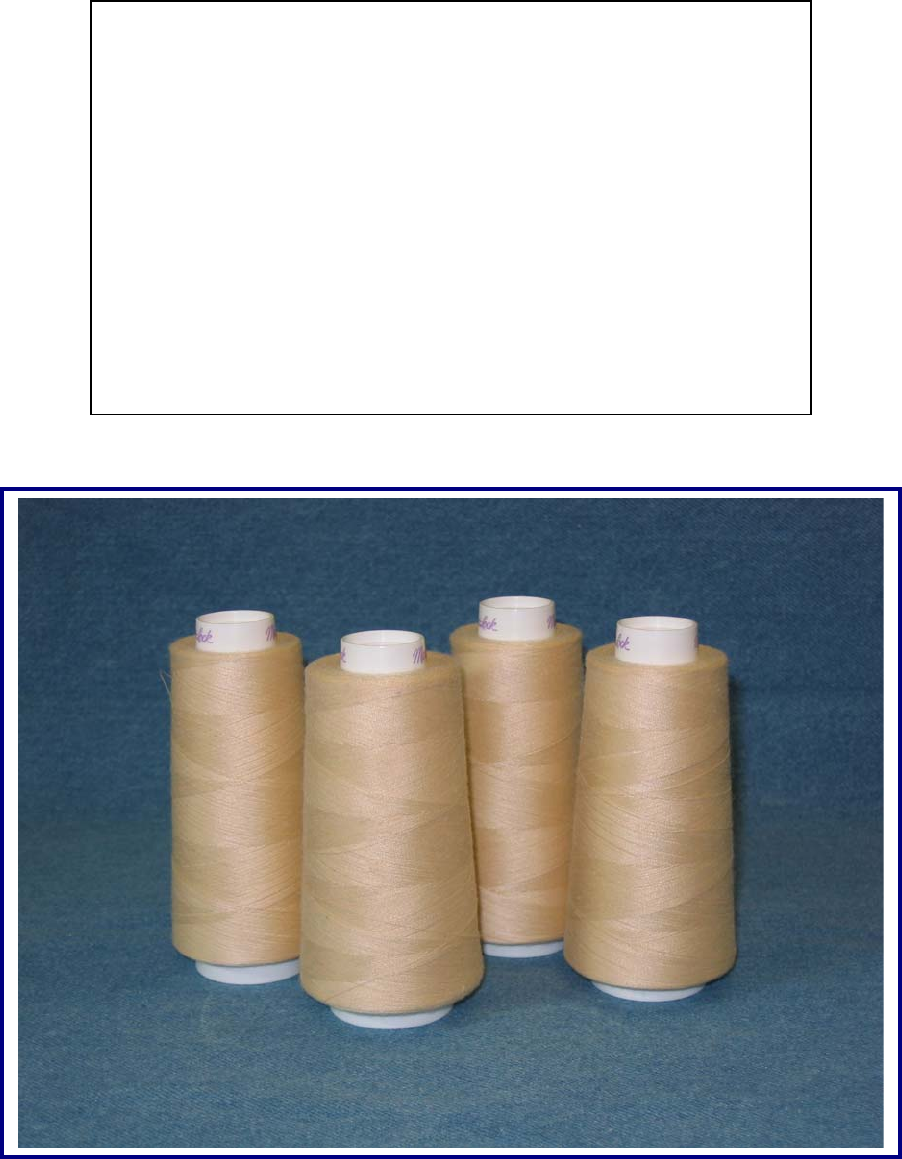
Step 7: Threading Tips for the Serger
• Use good quality serger thread. This thread is sold in
larger 3000 yd. spools at most fabric and sewing retailers.
• Use the same brand of thread in all tensions, do not mix
and match brands.
• Use the same size spools on all cone adapters that are
located at the back of the machine when threading your
serger.
• Try to avoid black thread; it tends to cause static, leading
to skipped stitches. Use a dark grey or navy instead. If
you must use black, then thread-up the needles with
black, but use grey or navy in the loopers.
