Smart Modular Technologies 901773 Bluetooth UART SPP Module User Manual ASY90177 3 User Guide 0 5
Smart Modular Technologies Bluetooth UART SPP Module ASY90177 3 User Guide 0 5
Users Manual
ASY90177-3 User Guide 0.5 © Copyright SMART Modular Technologies 2004 Page 1 of 5
OEM User’s Manual
ASY90177-3 UART SPP Module
Bluetooth Class 2 Device
Version: 0.5
ASY90177-3 User Guide 0.5 © Copyright SMART Modular Technologies 2004 Page 2 of 5
Introduction
The SMART Modular ASY90177-3 is a UART module with a customized SPP profile.
The module interfaces are listed in table 1.0
Table 1.0 Interface definitions
Pin # Name Type Note
1 of J1 Vin External input + 3.3 VDC
2 of J1 GND GND Ground
3 of J1 USB_D+ I/O USB Data Plus – not used
4 of J1 USB_D- I/O USB Data Minus – not used
5 of J1 UART_RX I/O UART Receive
6 of J1 UART_TX I/O UART Transmit
7 of J1 UART_CTS I/O UART clear to send
8 of J1 UART_RTS I/O UART Request to send
UART Interface
The Universal Asynchronous Receiver Transmitter (UART) interface provides a mechanism for communicating with
other serial devices using the RS232 standard. When the module is connected to another digital device, UART_RX
and UART_TX transfer data between the two devices. The other two signals, UART_CTS and UART_RTS, can be
used to implement RS232 hardware flow control where both are active low indicators.
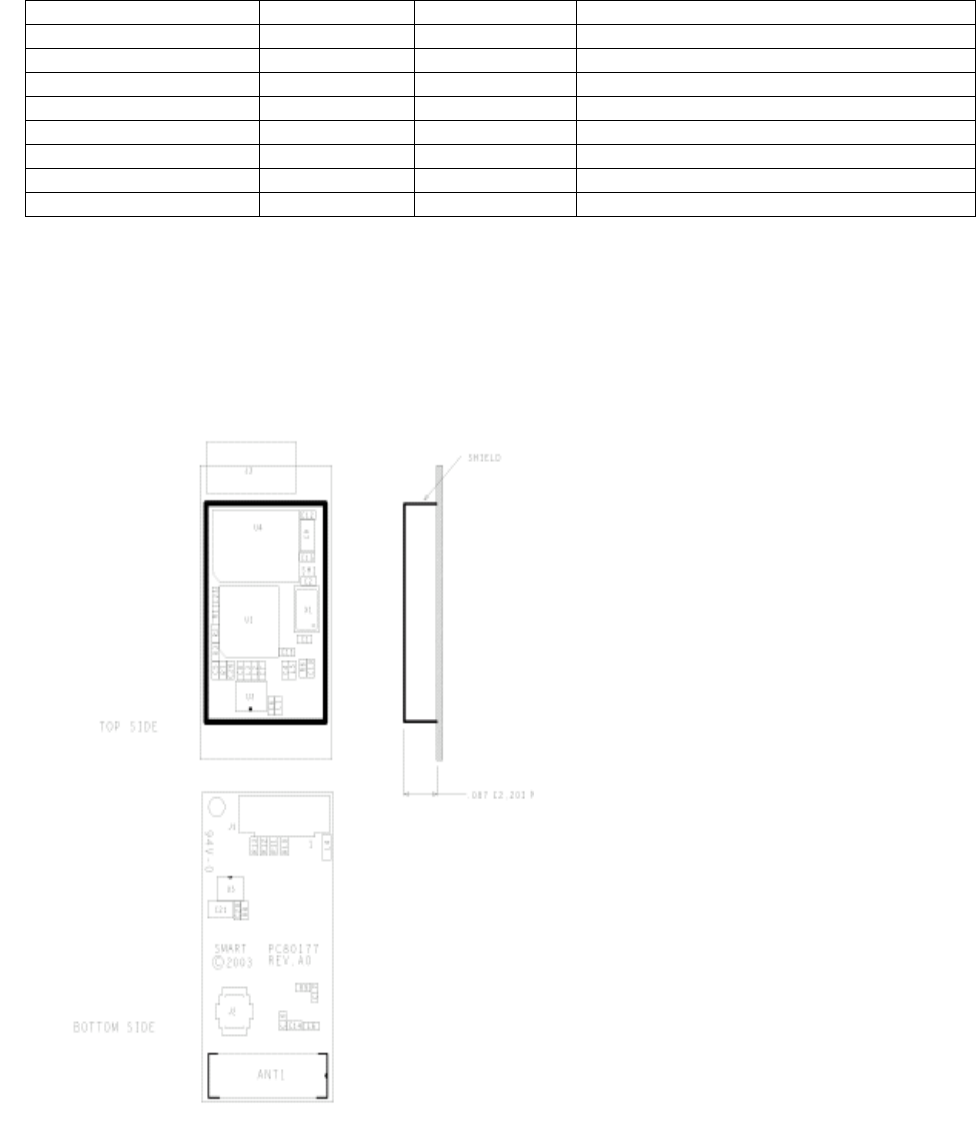
Figure 1 shows the parts location including UART connector J1 and antenna ANT1.
Fig 1 Mechanical drawing
ASY90177-3 User Guide 0.5 © Copyright SMART Modular Technologies 2004 Page 3 of 5
General Bluetooth Specifications
Qualified Output Power: = +2 dBm typical @ 25 oC
Receive sensitivity typical = -82 dBm with 0.1% BER
Range: up to 30 meters
Power Requirements
Input Voltage Requirements: 3.3 VDC +/-10%
Power Consumption at 3.3 VDC: 53 mA typical
7 mA standby
300uA sleep mode
Antenna Characteristics
The antenna is a surface mount component on the printed circuit board with a gain of 0 dBi.
Storage and Operating Environment
Storage: Temperature -20oC to +85oC
Humidity 5% to 95% non-condensing
Operational: Temperature -20oC to 70oC
Humidity 5% to 95% non-condensing
ASY90177-3 User Guide 0.5 © Copyright SMART Modular Technologies 2004 Page 4 of 5
Regulatory Statements
Exposure to Radio Frequency Radiation
The radiated output power of the ASY90177-3 Bluetooth UART SPP Module transmitter is far below the FCC,
Industry Canada and European Union radio frequency exposure limits. Nevertheless, the wireless radio shall be
used in such a manner that the potential for human contact during normal operation is minimized. The internal
wireless radio operates within guidelines found in radio frequency safety standards and recommendations, which
reflect the consensus of the scientific community. The level of emitted energy emitted is far less than the
electromagnetic energy emitted by wireless devices such as mobile phones. However, the use of wireless radios
may be restricted in some situations or environments, such as aboard airplanes. If you are unsure of restrictions,
you are encouraged to ask for authorization before turning on the wireless radio. The FCC, Industry Canada and
European Union have set a general guideline of 20 cm (8 inches) from the body when wireless devices are on.
European Radio Approval Information
The ASY90177-3 Bluetooth UART SPP Module is a low power, wireless communication devices, operating in the
2.4 GHz band, intended for home or office use. The power output of this device is well below the RF exposure limits
as set by the European Commission through the R&TTE directive. The ASY90177-3 module can be operated in the
following European Union and European Free Trade Association countries:
Austria, Belgium Cyprus, Czech Republic, Denmark, Estonia, Finland, France, Germany, Greece, Hungary, Iceland,
Ireland, Italy, Latvia, Liechtenstein, Lithuania, Luxembourg, Malta, the Netherlands, Norway, Poland, Portugal,
Slovakia, Slovenia, Spain, Sweden, Switzerland and the United Kingdom.
FCC Part 15 Radio Frequency Interference Statement
This device complies with Part 15 of the FCC Rules. Operation is subject to the following two conditions: (1)This
device may not cause harmful interference. (2)This device must accept any interference received, including
interference that may cause undesired operation.
Note This equipment has been tested and found to comply with the limits for a Class B digital device, pursuant to
Part 15 of the FCC Rules. These limits are designed to provide reasonable protection against harmful interference
in a residential installation. This equipment generates, uses and can radiate radio frequency energy and, if not
installed and used in accordance with the instructions, may cause harmful interference to radio communications.
However, there is no guarantee that interference will not occur in a particular installation. If this equipment does
cause harmful interference to radio or television reception, which can be determined by turning the equipment off
and on, the user is encouraged to correct the interference by one or more of the following measures:
- Reorient or relocate the receiving antenna.
- Increase the separation between the equipment and the receiver.
- Connect the equipment into an outlet that is on a circuit different from the receiver.
- Consult the dealer or an experienced radio/TV technician for help.
Caution Pursuant to Part 15.21 of the FCC Rules for intentional or unintentional radiators, any changes or
modifications not expressly approved by the party responsible for compliance could void the user's authority to
operate this equipment.
Industry Canada ICES-003 Emission Compliance Statement
This Class B digital apparatus meets the requirement of the Canadian Interference-Causing Equipment
Regulations.
Cet appareil numérique de la classe B respecte toutes les exigences du règlement sur le matériel brouiller du
Canada.

ASY90177-3 User Guide 0.5 © Copyright SMART Modular Technologies 2004 Page 5 of 5
Modular FCC and Industry Canada Certification Notice
The ASY90177-3 module has been tested and received FCC and Industry Canada certifications as a modular
transceiver product. No further testing of the module is necessary. The FCC and Industry Canada certifications of
the module are valid only under the following conditions:
• No modification to the module has been made.
• The internal antenna of the module must not be altered in any way.
• The FCC and Industry Canada certifications apply only to the module. The OEM customers must determine
if additional testing and certifications are required for their own circuitry.
• If the FCC and Industry Canada certification numbers are not visible when this unit is installed inside
another product, then the outside of the device into which the module is installed must also display a label
referring to the installed module. This label should be clearly legible and contain the following text:
This product contains a certified RF transceiver module
FCC ID KOC-901773
IC: 1961C-901773