Stihl Hsa65 Manual HSA 65 Cordless Hedge Trimmers |
2014-07-06
: Stihl Hsa65-Manual hsa65-manual stihl pdf
Open the PDF directly: View PDF  .
.
Page Count: 60
{
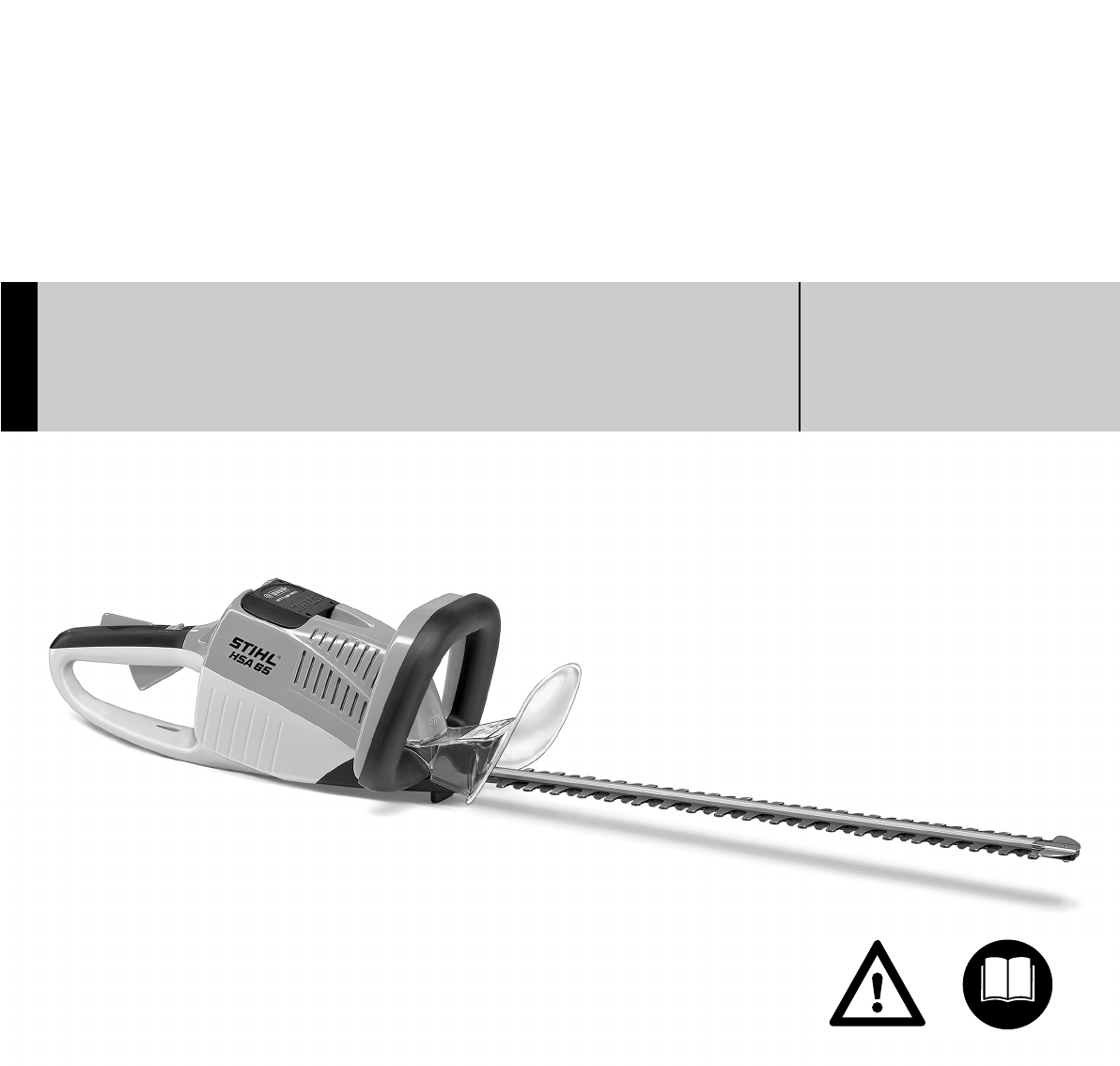
STIHL HSA 65
Warning!
Read and follow all safety precautions in
Instruction Manual – improper use can cause
serious or fatal injury.
Advertencia!
Lea y siga todas las precauciones de
seguridad dadas en el manual de
instrucciones – el uso incorrecto puede
causar lesiones graves o mortales.
Instruction Manual
Manual de instrucciones

Original Instruction ManualPrinted on chlorine-free paper
Printing inks contain vegetable oils, paper can be recycled.
© ANDREAS STIHL AG & Co. KG, 2010
0458-554-8621-A. M5-3.C10.FST.
0000002345_002_GB
HSA 65
English
1
{
Contents
Allow only persons who fully understand
this manual to operate your hedge
trimmer.
To receive maximum performance and
satisfaction from your STIHL hedge
trimmer, it is important that you read and
understand and follow the maintenance
and safety precautions in chapter
"Safety Precautions and Working
Techniques" before using your hedge
trimmer. For further information you can
go to www.stihlusa.com.
Contact your STIHL dealer or the STIHL
distributor for your area if you do not
understand any of the instructions in this
manual.
Warning!
Because a hedge trimmer is a high-
speed cutting tool some special safety
precautions must be observed to reduce
the risk of personal injury.
Careless or improper use may cause
serious or even fatal injury.
STIHL's philosophy is to continually
improve all of its products. As a result,
engineering changes and improvements
may be made from time to time. If the
operating characteristics or the
appearance of your hedge trimmer
differs from those described in this
manual, please contact your STIHL
dealer for information and assistance.
Guide to Using this Manual 2
Important Safety Instructions 2
Safety Precautions and Working
Techniques 3
Description of Operation 11
Using the Unit 11
Connecting Charger to Power
Supply 12
Charging the Battery 12
Light Emitting Diodes (LED) on
Battery 13
Light Emitting Diodes (LED) on
Charger 15
Switching On 16
Switching Off 16
Storing the Machine 17
Sharpening Instructions 18
Maintenance and Care 19
Main Parts 20
Specifications 21
Special Accessories 22
Troubleshooting 23
Maintenance and Repairs 25
Battery Recycling 25
Disposal 25
Trademarks 26
Addresses 27
HSA 65
English
2
Pictograms
All the pictograms attached to the
machine are shown and explained in this
manual.
Symbols in Text
Many operating and safety instructions
are supported by illustrations.
The individual steps or procedures
described in the manual may be marked
in different ways:
NA bullet marks a step or procedure
without direct reference to an
illustration.
A description of a step or procedure that
refers directly to an illustration may
contain item numbers that appear in the
illustration. Example:
NLoosen the screw (1).
NLever (2) ...
In addition to the operating instructions,
this manual may contain paragraphs
that require your special attention. Such
paragraphs are marked with the
symbols and signal words described
below:
Engineering Improvements
STIHL’s philosophy is to continually
improve all of its products. As a result,
engineering changes and improvements
are made from time to time. Therefore,
some changes, modifications and
improvements may not be covered in
this manual. If the operating
characteristics or the appearance of
your machine differ from those
described in this manual, please contact
your STIHL dealer for assistance.
1. Avoid Dangerous Environment –
Don’t use hedge trimmers in damp
or wet locations.
2. Don’t Use In Rain.
3. Keep Children Away –
All visitors should be kept at a
distance from work area.
4. Dress Properly –
Do not wear loose clothing or
jewelry. They can be caught in
moving parts. Use of rubber gloves
and substantial footwear is
recommended when working
outdoors. Wear protective hair
covering to contain long hair.
5. Use Safety Glasses –
Always use face or dust mask if
operation is dusty.
6. Use Right Appliance –
Do not use appliance for any job
except that for which it is intended.
7. Avoid Unintentional Starting –
Do not carry hedge trimmer with
battery plugged in.
Guide to Using this Manual
Danger!
Indicates an imminent risk of severe or
fatal injury.
Warning!
Indicates a hazardous situation which, if
not avoided, could result in severe or
fatal injury.
Caution!
Indicates a risk of property damage,
including damage to the machine or its
individual components.
Important Safety
Instructions
Warning!
When using electric hedge trimmers,
basic safety precautions should always
be followed to reduce the risk of fire,
electric shock and personal injury,
including the following:
READ ALL INSTRUCTIONS
HSA 65
English
3
8. Danger – Risk of Cut Injury – Keep
Hands Away From Blades –
Keep both hands on handles during
use.
Do not attempt to remove cut
material nor hold material to be cut
when blades are moving. Make sure
trigger switch and switch lever are
disengaged when clearing jammed
material from blades. Do not grasp
the exposed cutting blades or
cutting edges when picking up or
holding the hedge trimmer.
9. Don’t Force Hedge Trimmer –
It will do the job better and with less
likelihood of a risk of injury at the
rate for which it was designed.
10. Don’t Overreach –
Keep proper footing and balance at
all times.
11. Stay Alert –
Watch what you are doing. Use
common sense. Do not operate
hedge trimmer when you are tired.
12. Store Idle Hedge Trimmer Indoors –
When not in use, hedge trimmer
should be stored indoors in a dry,
and high, locked place with battery
removed and retaining latch on ƒ –
out of reach of children.
13. Maintain Hedge Trimmer With
Care –
Keep cutting edge sharp and clean
for best performance and to reduce
the risk of injury. Follow instructions
for lubricating and changing
accessories. Keep handles dry,
clean, and free from oil and grease.
13. Check Damaged Parts –
Before further use of the hedge
trimmer, a guard or other part that is
damaged should be carefully
checked to determine that it will
operate properly and perform its
intended function. Check for
alignment of moving parts, binding
of moving parts, breakage of parts,
mounting, and any other condition
that may affect its operation. A
guard or other part that is damaged
should be properly repaired or
replaced by an authorized service
center unless indicated elsewhere
in this manual.
14. Replacement parts –
When servicing, use only identical
STIHL replacement parts
SAVE THESE INSTRUCTIONS
Have your STIHL dealer show you how
to operate your power tool. Observe all
applicable local safety regulations,
standards and ordinances.
The use of noise emitting power tools
may be restricted to certain times by
national or local regulations.
Safety Precautions and
Working Techniques
Because a hedge trim-
mer is a high-speed, fast-
cutting power tool with
sharp cutting blades and
is powered by electricity,
special safety precau-
tions must be observed to
reduce the risk of per-
sonal injury.
It is important that you
read, fully understand
and observe the following
safety precautions and
warnings. Read the
instruction manual and
the safety precautions
periodically. Careless or
improper use may cause
serious or fatal injury.
Warning!
Do not lend or rent your power tool with-
out the instruction manual. Be sure that
anyone using it understands the infor-
mation contained in this manual.
Warning!
The use of this machine may be hazard-
ous. If the cutting tool comes in contact
with your body, it will cut you.
HSA 65
English
4
Use your hedge trimmer only for cutting
hedges, shrubs, scrub and similar
material.
Most of these safety precautions and
warnings apply to the use of all STIHL
hedge trimmers. Different models may
have different parts and controls. See
the appropriate section of your
instruction manual for a description of
the controls and the function of the parts
of your model.
Always remove the battery and move
retaining latch to ƒ before transporting,
storing or carrying out any work on the
power tool. This avoids the risk of the
motor starting unintentionally.
STIHL recommends the use of original
STIHL replacement parts. They are
specifically designed to match your
model and meet your performance
requirements.
Safe use of a hedge trimmer involves
1. the operator
2. the power tool
3. the use of the power tool.
THE OPERATOR
Physical Condition
You must be in good physical condition
and mental health and not under the
influence of any substance (drugs,
alcohol, etc.) which might impair vision,
dexterity or judgment. Do not operate
this machine when you are fatigued.
Proper Clothing
Avoid loose-fitting jackets, scarfs,
neckties, jewelry, flared or cuffed pants,
unconfined long hair or anything that
could become caught on branches,
brush or the moving parts of the unit.
Secure hair so it is above shoulder level.
Warning!
Do not use it for other purposes, since
misuse may result in personal injury or
property damage, including damage to
the machine.
Warning!
Minors should never be allowed to use
this power tool. Bystanders, especially
children, and animals should not be
allowed in the area where it is in use.
Warning!
To reduce the risk of injury to bystand-
ers and damage to property, never let
your power tool run unattended. When it
is not in use (e.g. during a work break),
shut it off and make sure that unauthor-
ized persons do not use it. To do this,
move retaining latch to ƒ and remove
the battery from the power tool.
Warning!
Be alert – if you get tired, take a break.
Tiredness may result in loss of control.
Working with any power tool can be
strenuous. If you have any condition
that might be aggravated by strenuous
work, check with your doctor before
operating this machine.
Warning!
To reduce the risk of injury, the operator
should wear proper protective apparel.
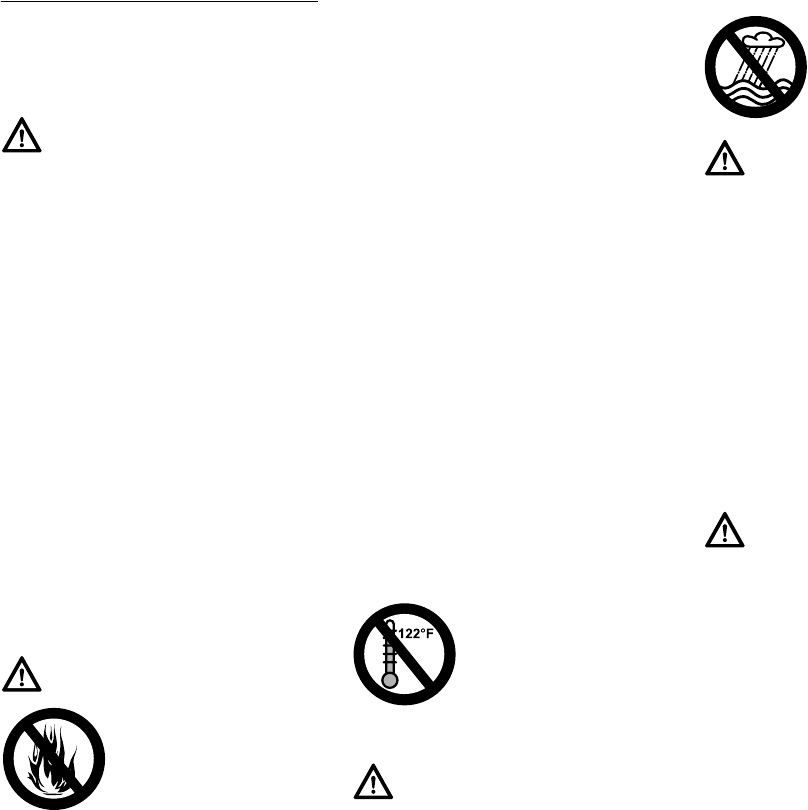
Warning!
To reduce the risk of
injury to your eyes never
operate your power tool
unless wearing goggles
or properly fitted protec-
tive glasses with
adequate top and side protection com-
plying with ANSI Z 87.1 (or your
applicable national standard.)
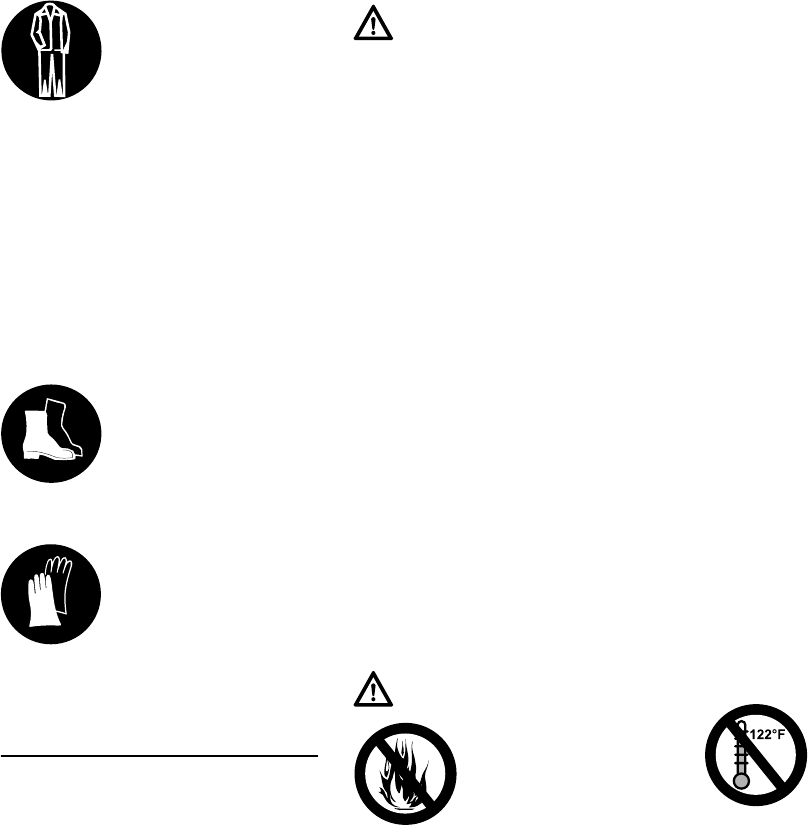
Clothing must be sturdy
and snug-fitting but allow
complete freedom of
movement. Wear long
pants made of heavy
material to help protect
your legs. Do not wear
shorts.
Good footing is very
important. Wear sturdy
boots with nonslip soles.
Never wear sandals, flip-
flops or go barefoot.
Always wear gloves
when handling the
machine and the cutting
tool. Heavy-duty, nonslip
gloves improve your grip
and help to protect your
hands.
HSA 65
English
5
THE POWER TOOL
For illustrations and definitions of the
power tool parts see the chapter on
"Main Parts."
If your power tool is subjected to
unusually high loads for which it was not
designed (e.g. heavy impact or a fall),
always check that it is in good condition
before continuing work – see also
"Before Starting Work." Make sure the
safety devices are working properly. Do
not continue operating your power tool if
it is damaged. In case of doubt, have the
machine checked by your STIHL
servicing dealer.
Battery
Do not place the battery on or near fires,
stoves or in other high-temperature
locations. Do not place the battery in
direct sunlight or store it inside a vehicle
in hot weather. Doing so may cause the
battery to generate heat, rupture or
ignite. Using the batteries in this manner
may also result in a loss of performance
and a shortened life expectancy.
In case of fire: Stay clear of any vapors
or gases generated, taking wind
direction into account. If possible without
danger, remove battery from the vicinity
of the fire. In principle, cooling the
battery or extinguishing the fire with
water is possible. It is preferable to
extinguish the fire with a multipurpose
dry chemical fire extinguisher. As for any
fire, evacuate the area and fight the fire
from a safe distance. Once the fire has
been extinguished, the area should be
monitored (fire watch) in case of a flare-
up, until the battery has cooled
sufficiently. Restrict access to the area
until completion of clean-up. Do not
touch the burnt battery or any spilled
liquids. Use inert absorbent to absorb
spilled liquids.
Charge the battery before use.
Immediately discontinue use of the
battery if, while using, charging or
storing, it emits an unusual smell, feels
hot or appears abnormal in any other
way.
Warning!
Never modify this power tool in any way,
since this may increase the risk of per-
sonal injury. Only attachments supplied
by STIHL or expressly approved by
STIHL for use with the specific STIHL
model are authorized. Although certain
unauthorized attachments are useable
with STIHL power tools, their use may,
in fact, be extremely dangerous.
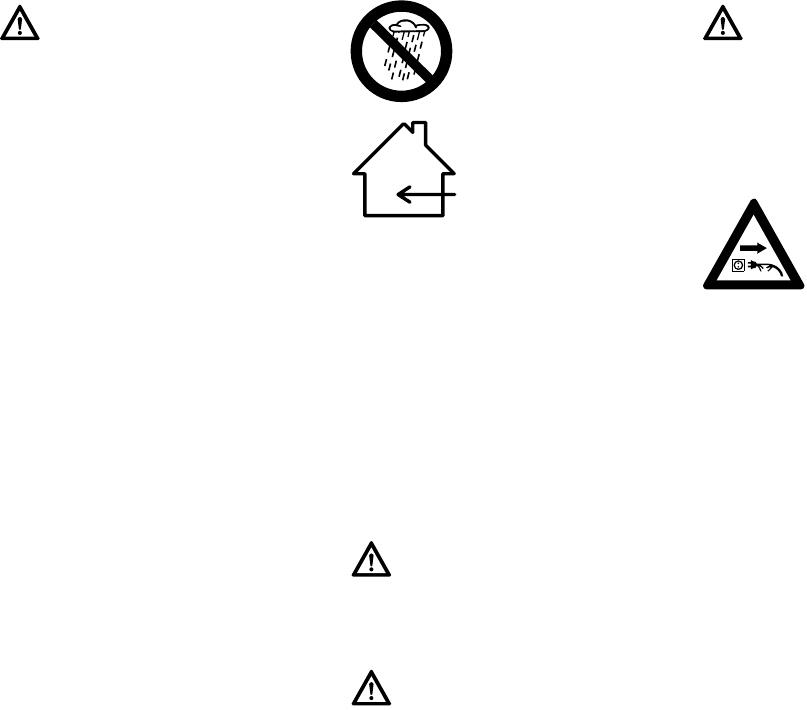
Warning!
Risk of fire, explosion
and/or burns, including
chemical burns. Do not
disassemble, crush,
heat above 212 °F
(100 °C), expose to fire
or incinerate. Never expose the battery
to microwaves or high pressures.
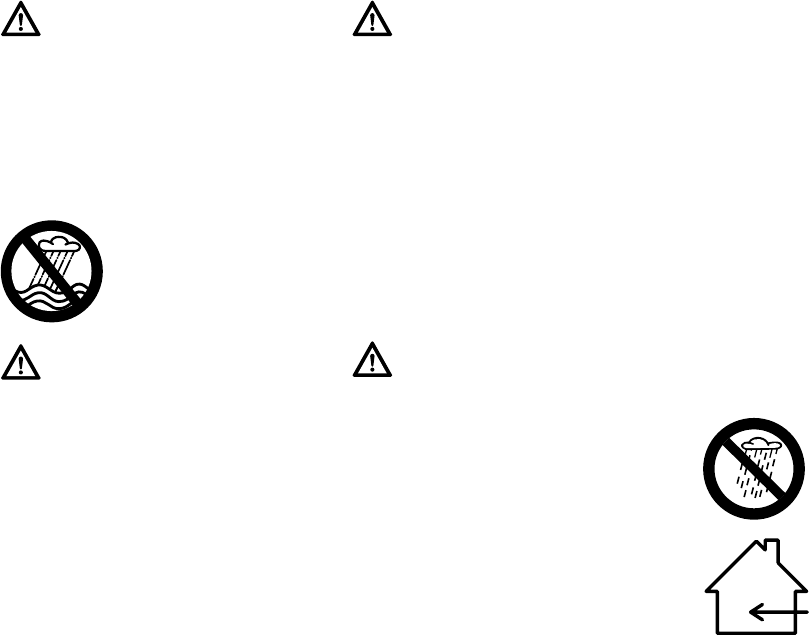
Use and store the bat-
tery only within a
temperature range from
14 °F (-10 °C) and no
more than 122 °F
(+ 50 °C). Protect the bat-
tery from direct sunlight.
Warning!
Use STIHL batteries only with STIHL
power tools and charge them only with
STIHL chargers. Replace battery with
STIHL AP battery only. Use only original
STIHL rechargeable batteries.
Protect from rain – do not
immerse in fluids.
Warning!
Do not open, drop, hit or damage bat-
tery. Never insert objects into the
battery's cooling slots, since they may
damage the battery. The battery con-
tains safety features and devices which,
if damaged, may cause the battery to
generate heat, rupture or ignite. Never
use or charge a defective, damaged,
cracked or deformed battery.
Warning!
Fluid may leak from the battery if it is
damaged or is not used properly – avoid
contact with the skin! Leaking battery
fluid can cause skin irritation and chem-
ical burns. In the event of accidental
contact, immediately rinse thoroughly
with mild soap and water. If fluid gets
into your eye(s), do not rub your eye(s)
and rinse water over the open eye(s) for
15 minutes at least. Also seek medical
attention immediately.
HSA 65
English
6
Store the battery out of reach of children
in a cool and dry area away from direct
sunlight and excess heat or cold (14 °F
– 122 °F (-10 °C – +50 °C)).
Charger
Use only original STIHL chargers.
Use only for charging matching STIHL
type AP batteries with a maximum
capacity of 10 Ah and a maximum
voltage of 42 V.
Never charge defective, leaking or
deformed batteries.
Connect the charger only to a power
supply with the voltage and frequency
specified on the rating plate. Always
connect the charger to a properly
installed wall outlet.
Never use a charger with damaged
housing, damaged power supply cord or
damaged plug. Do not operate the
charger if it has received a sharp blow,
been dropped or otherwise damaged in
any way.
Do not open or dissassemble charger –
no user serviceable parts inside.
Store charger out of the reach of
children.
Operate charger at temperatures
between 41 °F (5 °C) and 104 °F
(40 °C).
Allow the charger to cool down normally
– do not cover it.
Never bridge the contacts of the charger
with metallic objects (e.g. nails, coins,
jewelry) – short circuit. The charger may
be damaged by a short circuit.
In the event of smoke or fire in the
charger, disconnect it from outlet
immediately.
Never jerk the power supply cord to
disconnect it from the wall outlet. To
unplug, grasp the plug, not the cord.
Have a damaged power supply cord
repaired by an experienced electrician.
Do not use the power supply cord for
any other purpose, e.g. for carrying or
hanging up the charger.
Never use power supply cords that do
not comply with regulations.
Make sure the power supply cord is
located and/or marked so that it will not
be stepped on, tripped over, come in
contact with sharp edges or moving
parts or otherwise be subjected to
damage or stress.
An extension cord should not be used
unless absolutely necessary. If an
extension cord must be used, plug the
charger into a properly wired 16 gauge
(AWG 16) or heavier gauge extension
Warning!
Never bridge (short circuit) the battery
terminals with metallic objects, since
this may damage the battery and possi-
bly cause a fire. Keep a battery that is
not in use away from metal objects (e.g.
nails, coins, jewelry). Do not use metal
containers for transporting batteries.
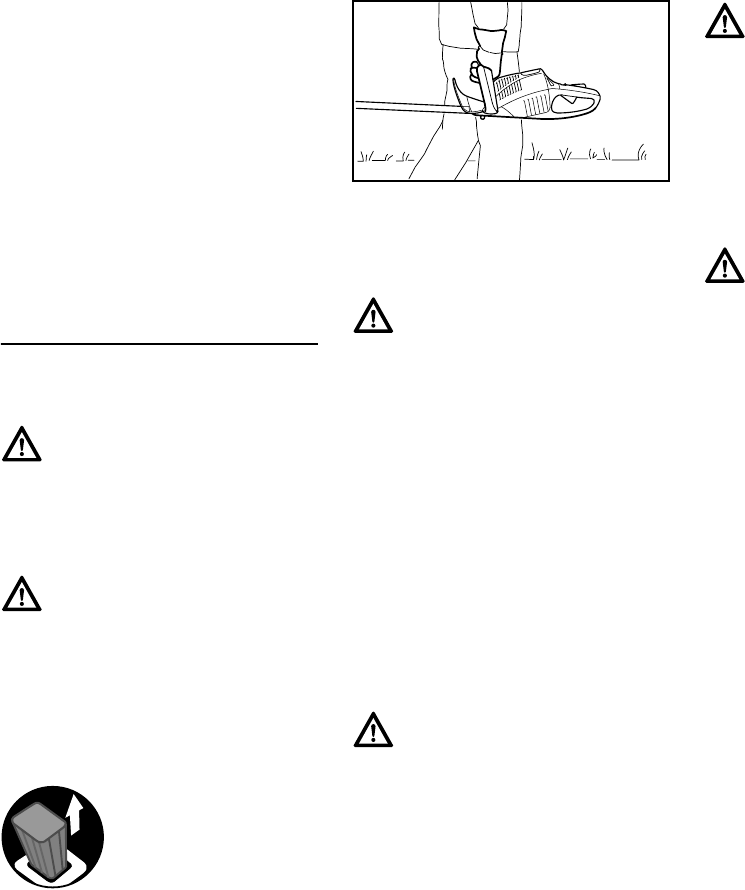
Protect the charger from
rain and dampness. Keep
charger dry.
Use and store charger
only indoors in dry rooms.
Warning!
To reduce the risk of electric shock or
short circuit, do not insert any objects
into the charger's cooling slots.
Warning!
The charger heats up during the charg-
ing process. Do not operate on an easily
combustible surface (e.g. paper, texiles)
or in an easily combustible environment
– risk of fire.
Warning!
Do not operate in a hazardous location,
i.e. in a location where there are com-
bustible liquids (fumes), vapors or
dusts. Chargers can produce sparks,
which may ignite the dust or vapors –
risk of explosion.
Check the charger's
power supply cord and
plug regularly for dam-
age. If the power supply
cord or plug is damaged,
immediately disconnect
the plug from the wall
outlet to avoid the risk of
electric shock.
HSA 65
English
7
cord with blades that are the same
number, size and shapes as the blades
on the charger.
To reduce the risk of electric shock:
–Always connect the unit to a
properly installed wall outlet.
–Make sure the insulation of the
power supply cord and plug is in
good condition.
Unplug the power supply cord from the
outlet when charger is not in use.
Never store the battery in the charger.
THE USE OF THE POWER TOOL
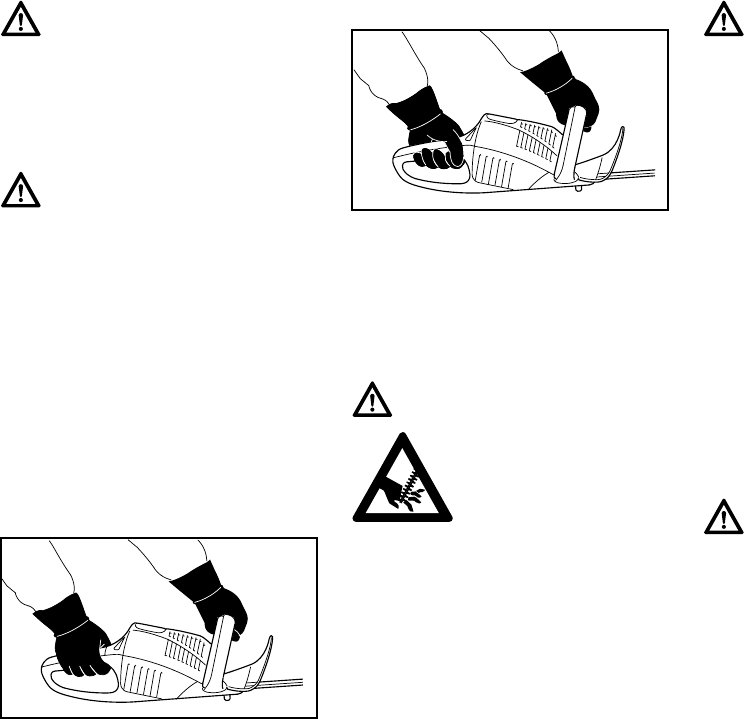
Transporting the Unit
Carry the power tool by the handle –
cutting blades behind you.
Before Starting Work
Your power tool is equipped with a
system designed to quickly stop the
cutting blades – they come to an
immediate standstill as soon as you
release the trigger switch and/or the
switch lever on the loop handle.
Keep the handles clean and dry at all
times; it is particularly important to keep
them free of moisture, pitch, oil, grease
or resin in order for you to maintain a firm
grip and properly control your power
tool.
STIHL recommends that you always
spray the cutting blades with STIHL
resin solvent before starting work – with
the motor stopped, retaining latch on ƒ
and battery removed! You can obtain
this protective spray from your dealer.
Apply generously.
Check contacts in battery compartment
for foreign matter. Keep clean.
Fit the battery correctly – it must engage
audibly.
For specific starting instructions, see the
appropriate section of your instruction
manual.
Warning!
To reduce the risk of injury from blade
contact, never carry or transport your
power tool with the cutting blades
moving.
Warning!
Always switch off the power tool, move
retaining latch to ƒ, remove the battery
and fit the scabbard over the cutting
blades – even when you carry the unit
for short distances. When transporting it
in a vehicle, properly secure the power
tool to prevent turnover and damage.
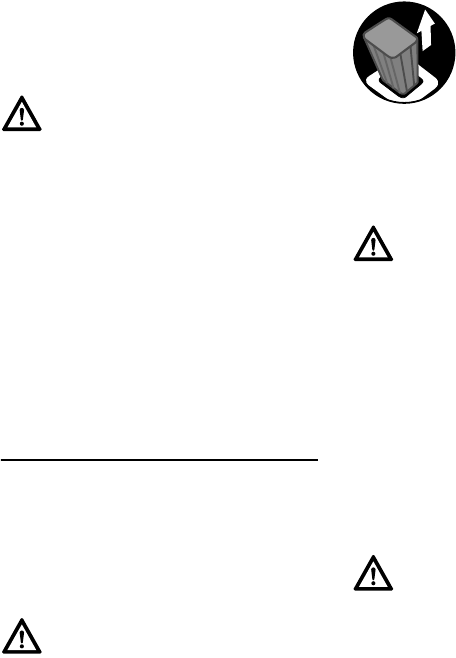
Remove the battery from
the power tool. This
avoids the risk of the
motor starting
unintentionally.
Warning!
Always check your power tool for proper
condition and operation before starting,
particularly the trigger switch, trigger
switch lockout, switch lever and retain-
ing latch. The trigger switch, trigger
switch lockout and switch lever must
move freely and always spring back to
the idle position (retaining latch on ‚).
Never attempt to modify the controls or
safety devices.
Warning!
Check this function at regular short
intervals. To reduce the risk of injury, do
not operate your power tool if the cutting
blades continue to run. Contact your
servicing dealer.
3901BA023 KN
Warning!
Never use a power tool that is damaged
or not properly maintained.
Warning!
The cutting blades must be properly
tightened and in safe operating condi-
tion. Inspect for loose parts (nuts,
screws, etc.) and for cracked, bent,
warped or damaged blades. Regularly
check the condition and tightness of the
cutting blades – with the motor stopped,
retaining latch on ƒ and battery
removed! Replace damaged cutting
blades before using the power tool.
Always keep blades sharp.
HSA 65
English
8
During Operation
Holding and Controlling the Power
Tool
Always hold the unit firmly with both
hands on the handles while you are
working. Wrap your fingers and thumbs
around the handles.
Right-Handers
Right hand on the control handle and left
hand on the loop handle.
Left-Handers
Left hand on the control handle and right
hand on the loop handle.
Make sure you have firm and secure
footing and hold the unit so that the
cutting blades are always away from
your body.
Working Conditions
Operate your power tool only under
good visibility and daylight conditions
only. Work carefully.
Do not cut any material other than
hedges or similar soft vegetation. Do not
cut stems greater than 17 mm (0.7 inch)
thick.
Warning!
To reduce the risk of injury from blade
contact, be absolutely sure that the cut-
ting blades are clear of you and all other
obstructions and objects, including the
ground.
Warning!
Your power tool is a one-person
machine. Do not allow other persons in
the general work area, even when
starting.
3901BA024 KN
Warning!
Never attempt to operate
your power tool with one
hand. Loss of control of
the power tool resulting in
serious or fatal injury may
result. To reduce the risk
of cut injuries, keep hands and feet
away from the cutting blades. Never
touch moving cutting blades with your
hand or any other part of your body. Do
not touch the cutting blades while the
motor is running. If the cutting blades
become jammed by thick branches or
other obstructions, switch off the motor
immediately, move retaining latch to ƒ
and remove the battery before attempt-
ing to free the blades.
3901BA027 KN
Warning!
Do not overreach. Keep proper footing
and balance at all times. Special care
must be taken in slippery conditions
(wet ground, snow) and in difficult, over-
grown terrain. Watch for hidden
obstacles such as tree stumps, roots
and ditches to avoid stumbling. For bet-
ter footing, clear away fallen branches,
scrub and cuttings. Be extremely cau-
tious when working on slopes or uneven
ground.
Warning!
If the vegetation being cut or the sur-
rounding ground is coated with a
chemical substance (such as an active
pesticide or herbicide), read and follow
the instructions and warnings that
accompanied the substance at issue.
HSA 65
English
9
If the hedge is very dusty or dirty, spray
the blades with STIHL resin solvent from
time to time during cutting. This helps
reduce blade friction as well as the
aggressive effects of sap and the build-
up of dirt particles.
Operating Instructions
Take particular care when cutting
hedges next to or against wire fences.
Do not touch the wire with the cutting
blades. When working close to the
ground, make sure that no sand, grit or
stones get between the cutting blades.
Striking solid foreign objects such as
stones, fence wire or metal could
damage the cutting attachment and may
cause blades to crack, chip or break.
STIHL does not recommend the use of
your power tool when cutting in areas
where the blades could contact such
objects.
Check the cutting blades at regular short
intervals during operation, or
immediately if there is a noticeable
change in cutting behavior:
–Switch off the motor.
–Move retaining latch to ƒ.
–Remove the battery.
–Check condition and tightness, look
for cracks.
–Check sharpness.
–Replace damaged or dull cutting
blades immediately, even if they
have only superficial cracks.
Do not leave the machine outdoors in
the rain.
Your power tool is equipped with a
system designed to quickly stop the
cutting blades – they come to an
immediate standstill as soon as you
release the trigger switch and/or the
switch lever on the loop handle.
Warning!
Inhalation of certain dusts, especially
organic dusts such as mold or pollen,
can cause susceptible persons to have
an allergic or asthmatic reaction. Sub-
stantial or repeated inhalation of dust
and other airborne contaminants, in par-
ticular those with a smaller particle size,
may cause respiratory or other ill-
nesses. Control dust at the source
where possible. Use good work prac-
tices, such as operating the unit so that
the wind or operating process directs
any dust raised by the power tool away
from the operator. Follow the recom-
mendations of EPA / OSHA / NIOSH
and occupational and trade associa-
tions with respect to dust ("particulate
matter.") When the inhalation of dust
cannot be substantially controlled, i.e.,
kept at or near the ambient (back-
ground) level, the operator and any
bystanders should wear a respirator
approved by NIOSH / MSHA for the type
of dust encountered.
Warning!
In the event of an emergency, switch off
the motor immediately, move retaining
latch to ƒ and remove the battery.
Warning!
Before you start work, examine the
hedge area for stones, fence wire, metal
or other solid objects which could dam-
age the cutting blades.
Warning!
Observe the cutting blades at all times –
do not cut any areas of the hedge that
you cannot see. When cutting the top of
a taller hedge, check the other side of
the hedge frequently for bystanders,
animals and obstructions. Do not dam-
age the property of other persons
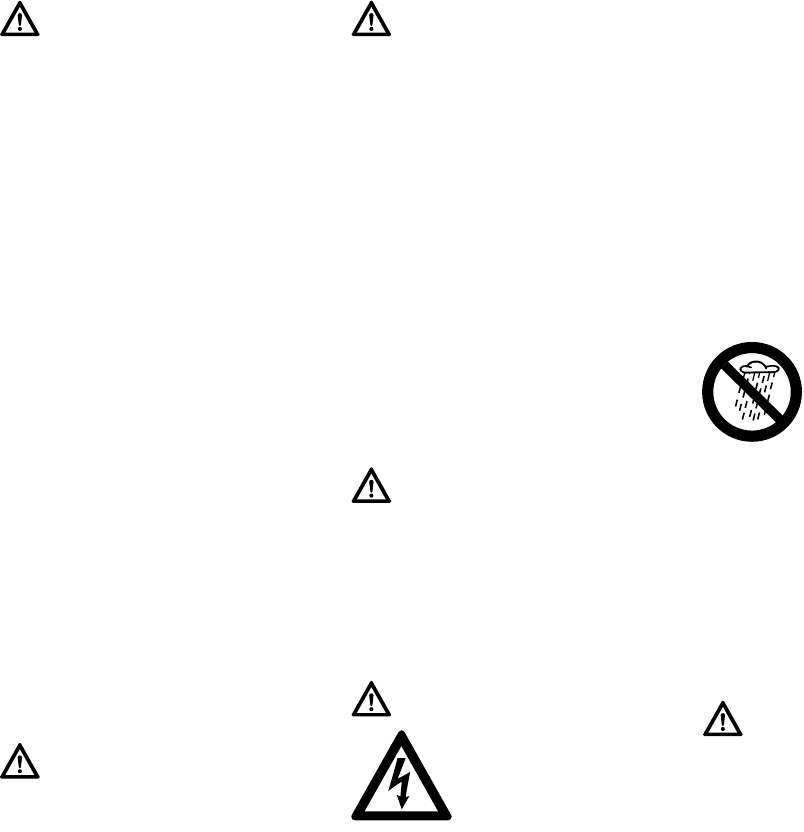
Danger!
Do not rely on the tool’s
insulation against electric
shock. To reduce the risk
of electrocution, never
operate this power tool in
the vicinity of any wires or
cables (power, etc.) which may be car-
rying electric current.
The drive motor is not
waterproof. Never work
with the power tool in the
rain or in wet or very
damp locations.
Warning!
To reduce the risk of injury from loss of
control, never work on a ladder, in a tree
or any other insecure support. Never
hold the machine above shoulder
height.
HSA 65
English
10
Be particularly alert and cautious when
wearing hearing protection because
your ability to hear warnings (shouts,
alarms, etc.) is restricted.
After Finishing Work
Always clean dust and dirt off the power
tool – do not use any grease solvents for
this purpose.
Spray the blades with STIHL resin
solvent. Run the motor briefly so that the
solvent is evenly distributed.
MAINTENANCE, REPAIR AND
STORING
If you make a warranty claim for a
component which has not been
serviced or maintained properly or if
nonapproved replacement parts were
used, STIHL may deny coverage.
Strictly follow the maintenance and
repair instructions in the appropriate
section of your instruction manual.
Please also refer to the maintenance
chart in this manual.
Wear gloves when handling or
performing maintenance on the blades.
Keep the cutting blades sharp. Tighten
all nuts, bolts and screws after each use.
Regularly check the electrical contacts
and ensure that the insulation of the
power cord and plug of the charger is in
good condition and shows no sign of
ageing (brittleness).
Electrical components, e.g. power cord
of charger, may only be repaired or
replaced by a qualified electrician.
Clean plastic components with a cloth.
Do not use aggressive detergents. They
may damage the plastic.
Do not spray the machine with water.
Do not clean your machine with a
pressure washer. The solid jet of water
may damage parts of the machine.
Clean cooling air inlets in motor housing
as necessary.
Keep the battery guides free from
foreign matter – clean as necessary.
Store the power tool in a dry, locked
location with the retaining latch on ƒ,
the battery removed and out of reach of
children.
Warning!
To reduce the risk of fire, always clean
plant residue, chips, leaves and excess
lubricant off the motor.
Warning!
Use only identical STIHL replacement
parts for maintenance and repair. Use of
non-STIHL parts may cause serious or
fatal injury.
Always move retaining
latch to ƒ and remove
the battery from the
power tool before carry-
ing out any repairs or
maintenance work, such
as replacing the cutting
blades. This avoids the
risk of the motor starting
unintentionally.
Warning!
Always switch off the motor, move
retaining latch to ƒ, remove the battery
and make sure that the cutting tool is
stopped before doing any maintenance
or repair work or cleaning the power
tool. Do not attempt any maintenance or
repair work not described in your
instruction manual. Have such work per-
formed by your STIHL servicing dealer
only.
Warning!
Never repair damaged cutting attach-
ments by welding, straightening or mod-
ifying the shape. This may cause parts
of the cutting blades to come off and
result in serious or fatal injuries.
HSA 65
English
11
The power tool is operated with a
rechargeable battery. Use only STIHL
chargers to recharge the battery.
Packing list
–Power tool
–Rechargeable battery
–Charger
–Instruction manual
The packing list may vary according to
the market and model.
Data exchange
The power tool, battery and charger
communicate with each other. The
charger charges the battery and the
battery supplies the necessary power
only if data exchange functions properly.
For this reason you should operate your
power tool only with the approved STIHL
batteries and STIHL chargers.
Cutting Season
Observe country-specific or municipal
rules and regulations for cutting hedges.
NDo not use your power tool during
other people's rest periods.
Cutting Sequence
NUse lopping shears or a chain saw
to cut out thick branches first.
NCut both sides of the hedge first,
then the top.
Recommendation: Only cut hedges that
are no more than chest height.
Disposal
NDo not throw cuttings into the
garbage can – they can be
composted!
Working Techniques
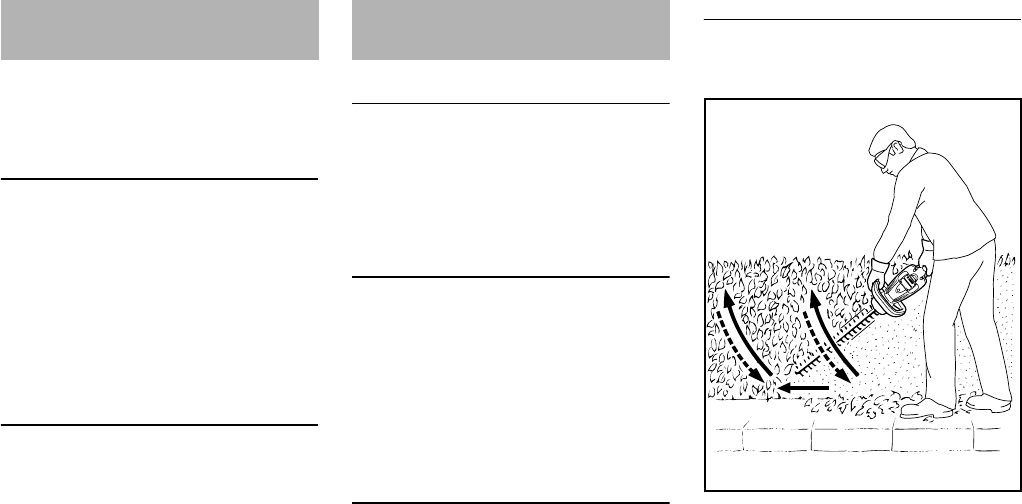
Vertical cut
Swing the cutting blade from the bottom
upwards in an arc – lower the nose of the
blade, move along the hedge and then
swing the blade up again in an arc.
Any working position above head height
is tiring. To minimize the risk of
accidents, work in such positions for
short periods only.
Description of Operation Using the Unit
3901BA004 KN
HSA 65
English
12
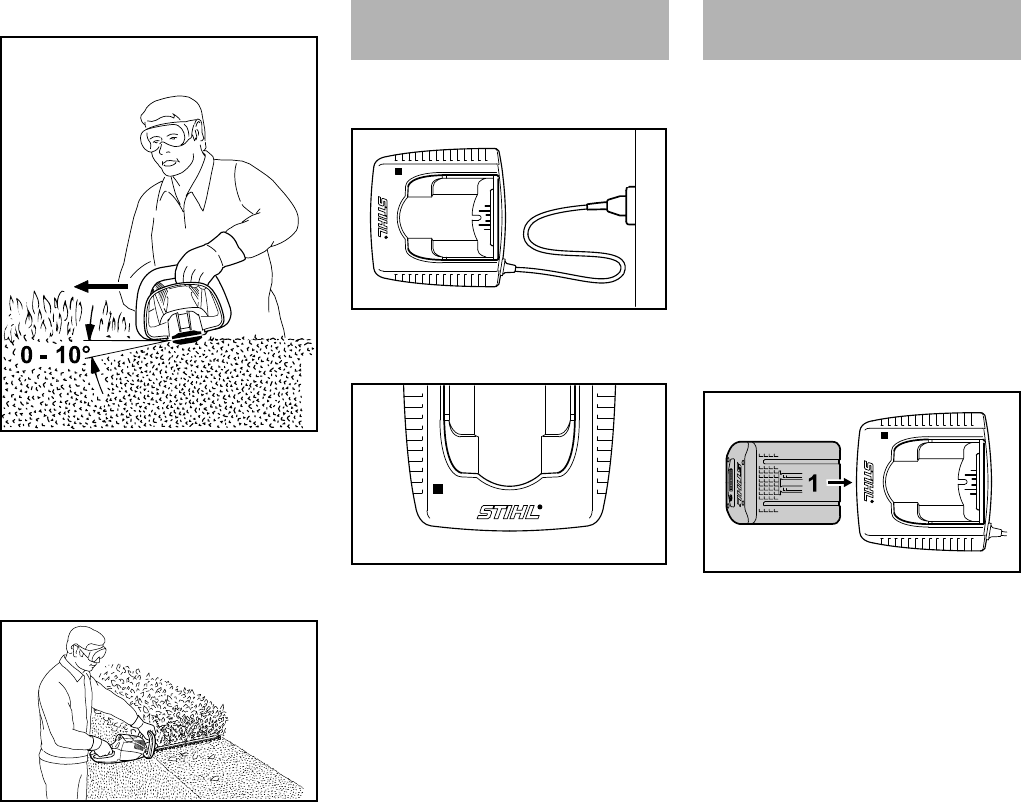
Horizontal cut
Hold the cutting blade at an angle of 0°
to 10° as you swing the hedge trimmer
horizontally, using both sides of the
blade.
Swing the cutting blade in an arc
towards the outside of the hedge so that
the cuttings are swept to the ground.
Repeat the procedure several times on
wide hedges.
Mains voltage and operating voltage
must be the same.
NInsert the mains plug (1) in the wall
outlet (2).
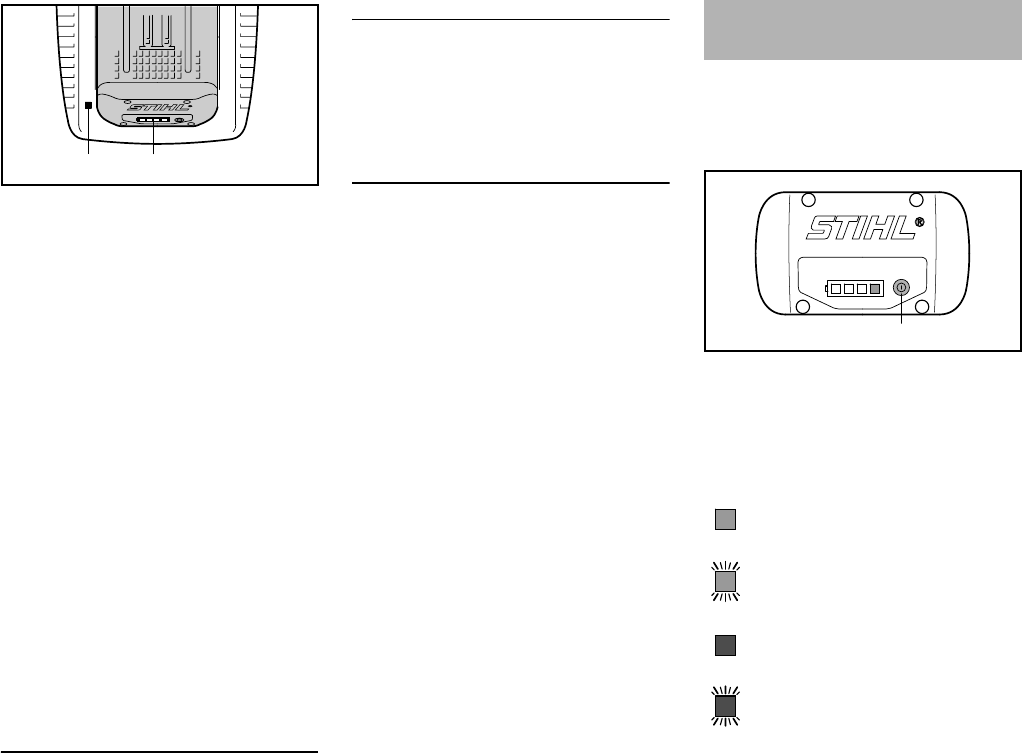
A self test is performed after the charger
is connected to the power supply. During
this process the light emitting diode (1)
on the charger lights up green for about
1 second, then red and goes off again.
The battery is given a charge of about
30% before leaving the factory.
It must be fully charged before you use
the power tool for the first time.
NConnect the charger to the power
supply – mains voltage and
operating voltage of the charger
must be the same – see
"Connecting Charger to Power
Supply".
Operate the charger only in enclosed
and dry rooms at ambient temperatures
between 41°F (5°C) and 104°F (40°C).
NPush the battery (1) into the
charger (2) until you feel noticeable
resistance – then push it as far as
stop.
3901BA025 KN
3901BA006 KN
Connecting Charger to
Power Supply
3901BA015 KN
2
1
1
3901BA019 KN
Charging the Battery
2
3901BA009 KN
HSA 65
English
13
The light emitting diode (3) on the
charger comes on when the battery is
inserted – see "Light Emitting Diodes
(LED) on Charger"
Charging begins as soon as the light
emitting diodes (4) on the battery light
up green – see "Light Emitting Diodes
(LED) on Battery".
The charge time is dependent on a
number of factors, including battery
condition, ambient temperature, etc.,
and may therefore vary from the charge
time in the "Specifications".
The battery becomes hot during
operation. If a hot battery is inserted in
the charger, it may be necessary to cool
it down before charging. The charging
process begins only after the battery has
cooled down. The time required for
cooling may prolong the charge time.
The battery and charger become warm
during the charging process.
AL 300 charger
This charger is equipped with a battery
cooling fan. which is audible when it is
running.
AL 100 charger
This charger waits for the battery to cool
down before starting the charging
process. The battery is cooled by the
flow of air in the room.
End of charge
The charger switches itself off
automatically when the battery is fully
charged:
–Light emitting diodes on the battery
go off
–The light emitting diode on the
charger goes off
–The charger's fan is switched off (if
charger is so equipped)
Remove the charged battery from the
charger.
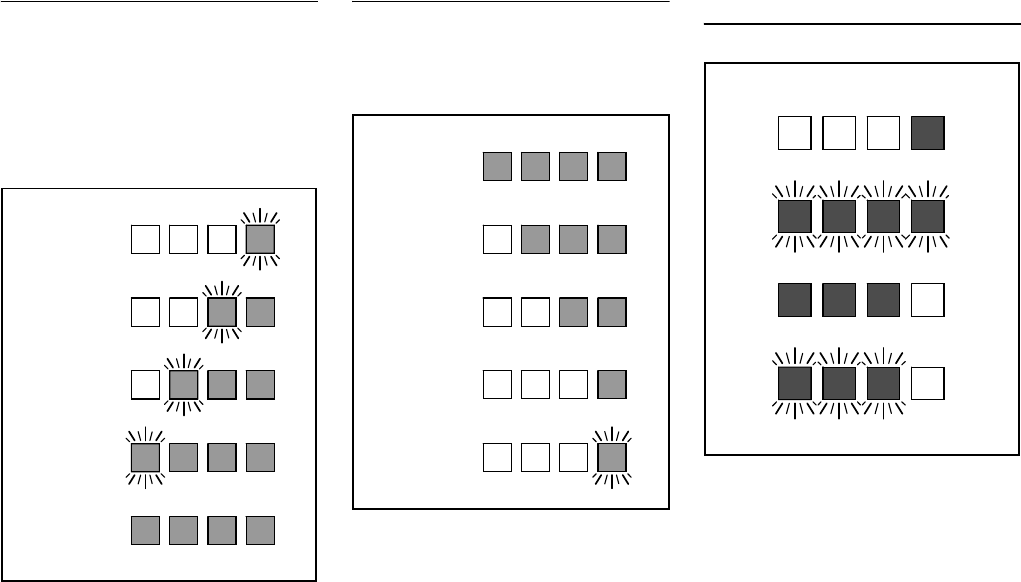
Four light emitting diodes show the
battery's state of charge and any
problems that occur on the battery or
power tool.
NPress button (1) to activate the
display – the display goes off
automatically after 5 seconds.
The light emitting diodes can light up or
flash green or red.
4
3901BA014 KN
3
Light Emitting Diodes
(LED) on Battery
Light emitting diode lights up
green.
Light emitting diode flashes
green.
Light emitting diode lights up
red.
Light emitting diode flashes red.
1
3901BA010 KN
HSA 65
English
14
During Charging Process
The light emitting diodes light up or flash
continuously to indicate the progress of
charge.
During charging the capacity that is
currently being charged is indicated by a
green flashing light emitting diode.
When the charging process is
completed, the light emitting diodes on
the battery go off automatically.
If the light emitting diodes on the battery
flash or light up red – see "If the red light
emitting diodes light up/flash
continuously".
During Operation
The green light emitting diodes light up
or flash continuously to indicate the state
of charge.
If the light emitting diodes on the battery
flash or light up red – see "If the red light
emitting diodes light up/flash
continuously".
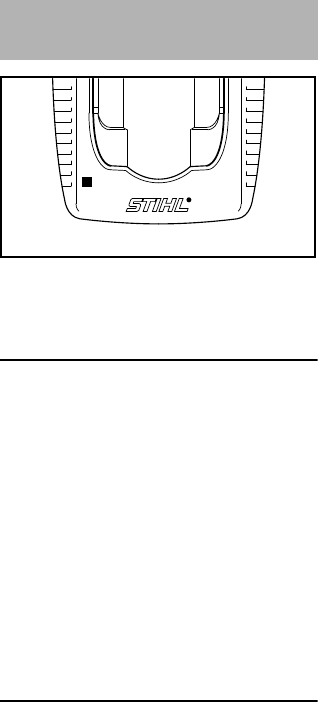
If the red light emitting diodes light
up / flash continuously
3901BA016 KN
80 - 100 %
60 - 80 %
40 - 60 %
20 - 40 %
0 - 20 %
3901BA016 KN
80 - 100 %
60 - 80 %
40 - 60 %
20 - 40 %
0 - 20 %
1 light emitting diode
lights up red:
Battery is too
hot1) 2)/cold1)
1) During charging process: Charging
process starts automatically after
the battery has cooled down /
warmed up.
4 light emitting diodes
flash red:
Battery faulty3)
3 light emitting diodes
light up red:
Power tool is too
hot – allow it to
cool down.
3 light emitting diodes
flash red:
Power tool
faulty – have
checked by
servicing
dealer4)
3901BA017 KN
HSA 65
English
15
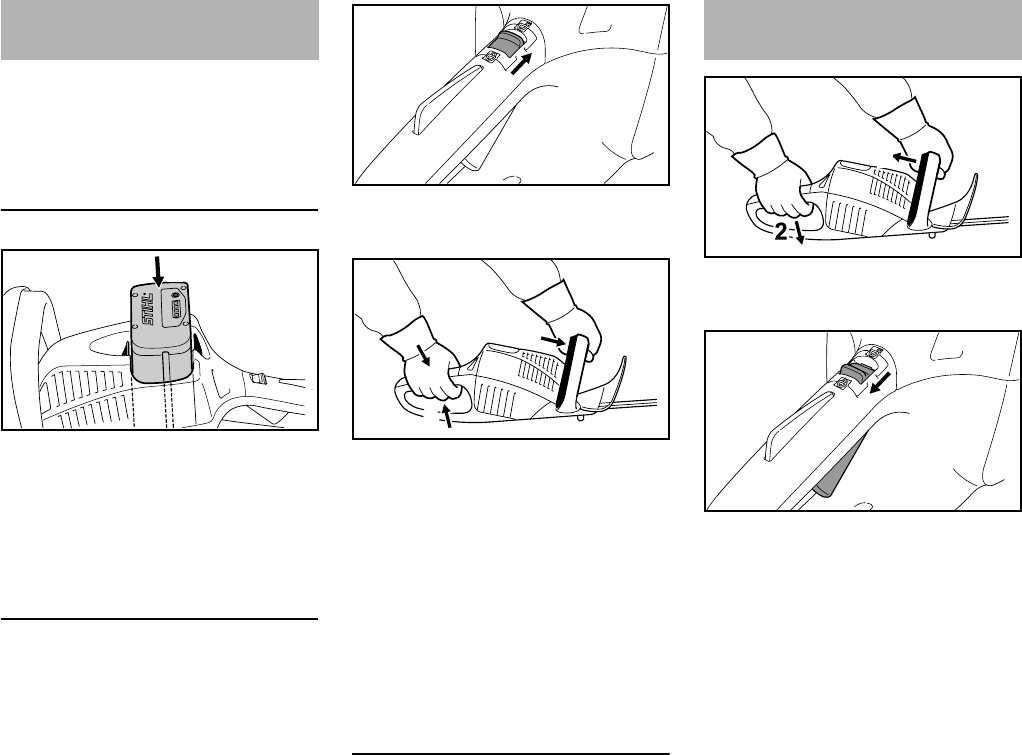
The light emitting diode lights up green
or flashes red.
Green continuous light ...
... means the following:
The battery
–is being charged
–is too hot and must cool down
before it is charged
See also "Light Emitting Diodes (LED)
on Battery".
The green light emitting diode on the
charger goes off as soon as the battery
is fully charged.
Red flasing light ...
... means the following:
–No electrical contact between
battery and charger – remove and
refit the battery
–Faulty battery – see also "Light
Emitting Diodes (LED) on Battery".
–Charger faulty – have checked by a
servicing dealer. STIHL
recommends a STIHL servicing
dealer.
2) During operation: Power tool cuts
out – allow battery to cool down; it
may be necessary to take the
battery out of the power tool for this
purpose.
3) Battery is faulty and must be
replaced.
4) STIHL recommends a STIHL
servicing dealer.
Light Emitting Diodes
(LED) on Charger
1
3901BA019 KN
HSA 65
English
16
The battery is given a charge of about
30% before leaving the factory.
It must be fully charged before you use
the power tool for the first time.
Fitting the rechargeable battery
NInsert the battery (1) in the power
tool – the battery slides into the
compartment – press it down
carefully until it snaps into position –
the battery must be flush with the
top of the housing.
Switching On
NMake sure you have a secure and
balanced footing.
NStand upright – hold the power tool
in a relaxed position.
NMake sure the cutting attachment is
not touching the ground or any other
objects.
NHold the unit with both hands – one
hand on the control handle – one
hand on the loop handle.
NUnlock the power tool by moving the
retaining latch (2) to ‚.
NPush the switch lever (3) against
the loop handle and hold it there.
NPush down the trigger switch
lockout (4) and depress the trigger
switch (5) and hold them in that
position.
The motor runs only if the retaining
latch (2) is on ‚ and the switch
lever (3), trigger switch lockout (4) and
trigger switch (5) are operated
simultaneously.
Trigger switch
Motor speed is controlled with the trigger
switch. Depress the trigger switch to
accelerate the motor.
NRelease the switch lever (1) and the
trigger switch (2).
NMove the retaining latch (3) to ƒ –
the trigger switch (4) cannot be
operated – the power tool is locked
to prevent start-up.
Always remove the battery from the
power tool during work breaks and after
finishing work.
Switching On
3901BA028 KN
1
3901BA029 KN
2
43
5
3901BA030 KN
Switching Off
3901BA032 KN
1
4
3
3901BA034 KN
HSA 65
English
17
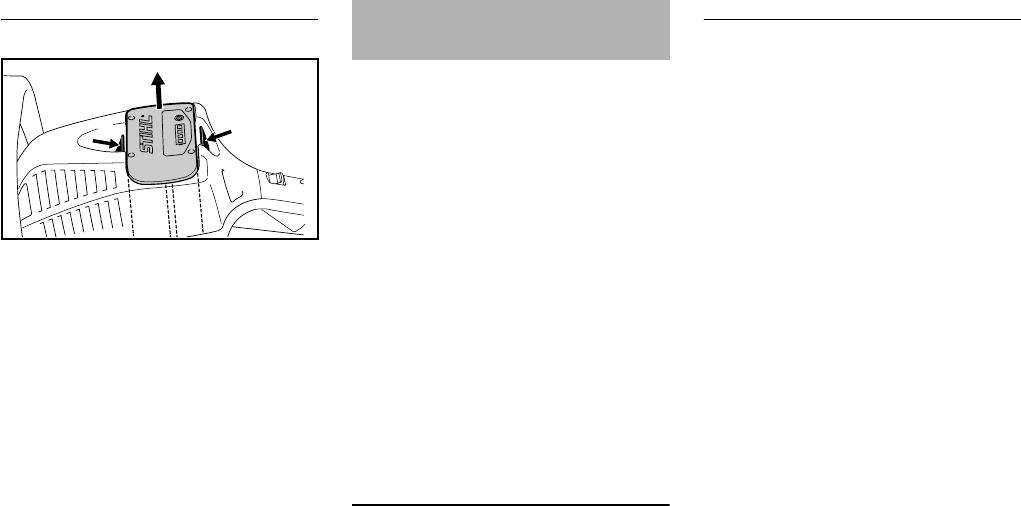
Removing the battery
NPress in both locking tabs (1) at the
same time to unlock the battery.
NTake the battery (2) out of the
housing.
When the machine is not in use, store it
in such a way that it does not endanger
others.
Secure it against unauthorized use.
NRemove the battery.
NCover the battery compartment if
necessary – to protect it from dust
and dirt.
NClean the cutting blades, check
condition and spray them with
STIHL resin solvent.
NFit the blade scabbard.
NThoroughly clean the machine,
especially the cooling air inlets.
NStore the machine in a dry, locked
location – the blade scabbard can
be mounted to the wall for this
purpose – out of the reach of
children and other unauthorized
persons.
Storing the battery
NTake the battery out of the power
tool or the charger.
NStore in a dry, locked location. Keep
it out of the reach of children and
other unauthorized persons and
protected from contamination.
NDo not store spare batteries unused
– use in rotation.
To ensure maximum battery life:
NStore at a temperature between
50°F (10°C) and 68°F (20°C).
NStore with a charge of about 30%.
Storing the charger
NRemove the battery.
NDisconnect the plug from the wall
outlet.
NStore the charger in a dry, locked
location. Keep it out of the reach of
children and other unauthorized
persons and protected from
contamination.
3901BA035 KN
1
2
1
Storing the Machine

HSA 65
English
18
When cutting performance and behavior
begin to deteriorate, i.e. blades
frequently snag on branches:
Resharpen the cutting blades.
It is best to have the cutting blades
resharpened by a dealer on a workshop
sharpener. STIHL recommends a STIHL
servicing dealer.
It is also possible to use a flat crosscut
sharpening file. Hold the sharpening file
at the prescribed angle (see
"Specifications").
NAlways file towards the cutting
edge.
NThe file only sharpens on the
forward stroke – lift it off the blade
on the backstroke.
NUse a whetstone to remove burr
from cutting edge.
NRemove as little material as
possible.
NAfter sharpening, clean away filing
or grinding dust and then spray the
cutting blades with STIHL resin
solvent.
Sharpening Instructions
Do not operate your machine with
dull or damaged cutting blades.
This may cause overload and will
give unsatisfactory cutting results.

HSA 65
English
19
Maintenance and Care
The following intervals apply to normal operating conditions only. If your daily work-
ing time is longer or operating conditions are difficult (very dusty work area, etc.),
shorten the specified intervals accordingly.
Move the retaining latch to ƒ before performing any work on the power tool.
before starting work
after finishing work or daily
weekly
monthly
every 12 months
if problem
if damaged
if required
Complete machine Visual inspection (condition) X
Clean X
Controls (retaining latch, trigger switch
lockout, trigger switch and switch lever)
Check operation X
Clean XX
Two-hand control
Check function – blades must quickly
come to a standstill when the trigger
switch and/or switch lever is released
X
Cooling inlets Visual Inspection X
Clean X
All accessible screws and nuts Retighten X
Battery Visual Inspection XXX
Cutting blades
Visual Inspection XXX
Clean 1) X
Sharpen XX
Gearbox and connecting rod
Have checked by servicing dealer2) after
every 50 hours of operation
Have gearbox topped up with STIHL
gear lubricant by servicing dealer2) X
Safety labels Replace X
1) Spray with STIHL resin solvent after cleaning
2) STIHL recommends a STIHL servicing dealer.
HSA 65
English
20
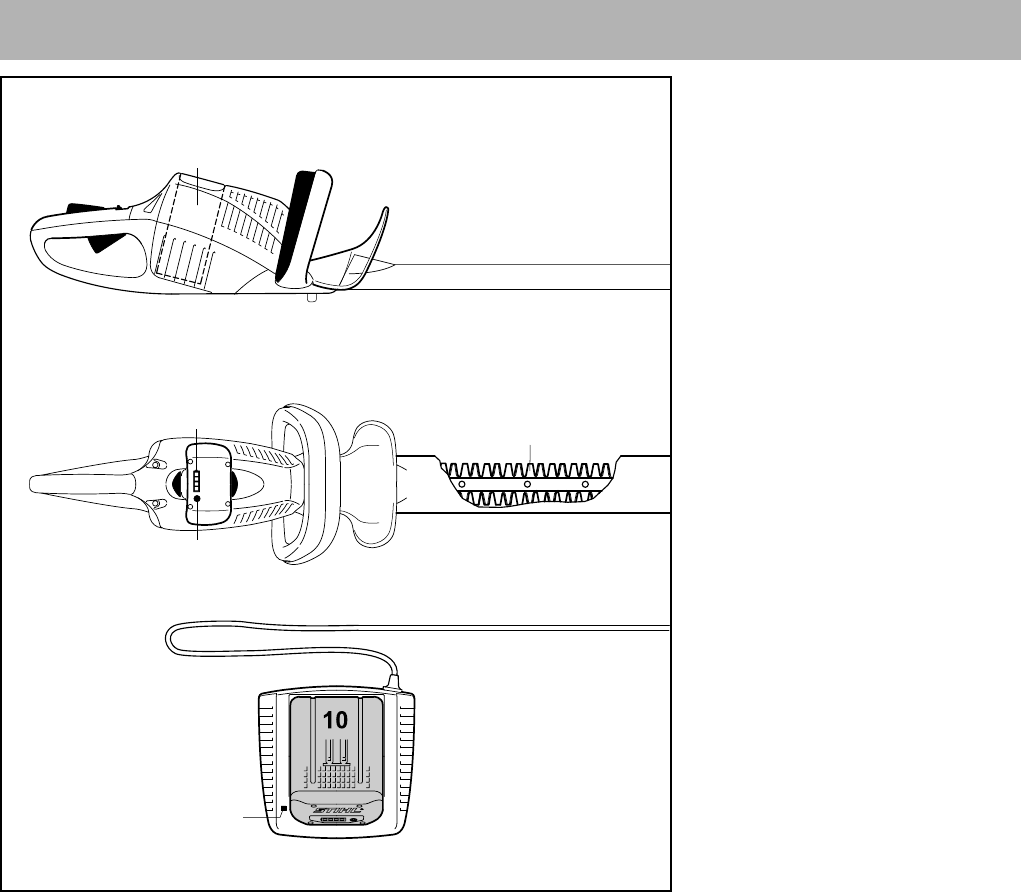
1Control Handle
2Trigger Switch Lockout
3Trigger Switch
4Retaining Latch
5Battery Compartment
6Switch Lever
7Loop Handle
8Hand Guard
9Battery Locking Tabs
10 Battery
11 Light Emitting Diodes (LED) on
Battery
12 Push Button
13 Blade Scabbard
14 Cutting Blades
15 Charger
16 Light Emitting Diode (LED) on
Charger
17 Power Supply Cord
#Serial Number
Main Parts
14
8
3
14
99
10
2
5
67
11
12
#13
17
16
15
3901BA038 KN

HSA 65
English
21
Defintions
1. Control Handle
The handle of the hedge trimmer
held by the rear hand.
2. Trigger Switch Lockout
Must be depressed before the
trigger switch can be activated.
3. Trigger Switch
Switches the motor on and off and
controls the speed of the motor.
4. Retaining Latch
Locks or unlocks the trigger switch.
5. Battery Compartment
Accommodates the battery in the
unit.
6. Switch Lever
Designed so that the cutting blades
can only be activated if both it and
the trigger switch are
simultaneously in the depressed
position. Located next to the front
handle.
7. Loop Handle
For easy control of machine during
cutting work.
8. Hand Guard
Limits useable grip area for front
hand away from cutting blades.
Helps protect hand from cuttings.
9. Battery Locking Tabs
Secure the battery in the unit.
10. Battery
Supplies the motor with electrical
power.
11. Light Emitting Diodes (LED) on
Battery
Indicate the state of charge and
operating condition of the battery.
12. Push Button
For activating light emitting diodes
(LED) on battery.
13. Blade Scabbard
Covers cutting blades when hedge
trimmer is not in use.
14. Cutting Blades
Steel blades for cutting hedges and
shrubs.
15. Charger
Charges the battery.
16. Light Emitting Diode (LED) on
Charger
Indicates charger operating mode
and certain problems.
17. Power Supply Cord
Supplies electric current to charger.
Battery
Charger
Specifications
AP 80
Model: Lithium-Ion
Voltage: 36 V
Capacity: 2.2 Ah
Weight: 2.5 lbs
(1.1 kg)
AP 160
Model: Lithium-Ion
Voltage: 36 V
Capacity: 4.5 Ah
Weight: 3.8 lbs
(1.7 kg)
AL 100
Mains voltage: 120 V
Rated current: 1.3 A
Frequency: 60 Hz
Power consumption: 75 W
Charging current: 1.6 A
Insulation: II, E (double
insulated)

HSA 65
English
22
Charging Times
Cutting Attachment
Weight
Carrying STIHL Rechargeable
Batteries
STIHL batteries comply with the
requirements laid down in UN-Manual
ST/SG/AC.10/11/Rev.3/Part III,
Subsection 38.3. No further conditions
have to be fulfilled to carry STIHL
batteries to the power tool's operating
site.
Contact your STIHL dealer for
information regarding special
accessories that may be available for
your product.
AL 300
Mains voltage: 120 V
Rated current: 4.7 A
Frequency: 60 Hz
Power consumption: 330 W
Charging current: 6.5 A
Insulation: II, E (double
insulated)
AL 100
with AP 80:
– up to 80% capacity: 70 min
– up to 100% capacity: 100 min
with AP 160:
– up to 80% capacity: 150 min
– up to 100% capacity: 165 min
AL 300
with AP 80:
– up to 80% capacity: 25 min
– up to 100% capacity: 50 min
with AP 160:
– up to 80% capacity: 35 min
– up to 100% capacity: 60 min
Tooth spacing: 1.1 in (26.5 mm)
Stroke rate (off
load): 3,000/min
Cutting length: 20" (500 mm)
Sharpening angle: 40°
without battery, with cutting attachment,
without blade scabbard
HSA 65: 7.9 lbs (3.6 kg)
Special Accessories

HSA 65
English
23
Troubleshooting
Always remove the battery before carrying out any work on the power tool.
Condition Cause Remedy
Machine does not run when switched on
No electrical contact between power tool
and battery
Remove battery, check contacts and refit
battery
Battery discharged
(1 light emitting diode on battery flashes
green)
Charge the battery
Battery too hot / too cold
(1 light emitting diode on battery lights
up red)
Allow battery to cool down / Warm up
battery slowly at a temperature of 60°F
to 70°F (15°C–20°C).
Battery faulty
(4 light emitting diodes on battery flash
red)
Install new battery1)
Power tool too warm
(3 light emitting diodes on battery light
up red)
Allow power tool to cool down
Power tool faulty
(3 light emitting diodes on battery flash
red)
Have power tool checked by servicing
dealer1)
Moisture in power tool and/or battery Allow power tool/battery to dry
Power tool cuts out during operation
Battery or power tool circuitry too warm Take the battery out of the power tool;
allow the battery and power tool to cool
down
Electrical malfunction Remove the battery and refit it properly

HSA 65
English
24
Running time is too short
Battery is not fully charged Charge the battery
Life of battery has been reached or
exceeded
Check battery1) and replace
Blades sticking / dirty Clean the blades and spray them with
STIHL resin solvent
Battery jams when being inserted in power
tool / charger
Guides dirty Carefully clean the guides
Battery is not charging even though the light
emitting diode on the charger lights up green
Battery too hot / too cold
(1 light emitting diode on battery lights
up red)
Allow battery to cool down / Warm up
battery slowly at a temperature of 60°F
to 70°F (15°C–20°C).
Operate the charger only in enclosed
and dry rooms at ambient temperatures
between 40°F (5°C) and 105°F (5°C–
40°C).
Light emitting diode on charger flashes red
No electrical contact between charger
and battery
Remove the battery and refit it properly
Battery faulty
(4 light emitting diodes on battery flash
red for about 5 seconds)
Install new battery1)
Charger faulty Have charger checked by servicing
dealer1)
1) STIHL recommends a STIHL servicing dealer.
Always remove the battery before carrying out any work on the power tool.
Condition Cause Remedy

HSA 65
English
25
Users of this unit should carry out only
the maintenance operations described
in this manual. Other repair work may be
performed only by authorized STIHL
service shops.
Warranty claims following repairs can be
accepted only if the repair has been
performed by an authorized STIHL
servicing dealer using original STIHL
replacement parts.
Original STIHL parts can be identified by
the STIHL part number, the {
logo and, in some cases, by the STIHL
parts symbol K. The symbol may
appear alone on small parts.
Battery Recycling Information
STIHL is committed to the development
of products that are environmentally
responsible. This commitment does not
stop when the product leaves the STIHL
dealer. STIHL has partnered with the
RBRC (Rechargeable Battery Recycling
Corporation) to promote the collection
and recycling of spent STIHL lithium ion
batteries in the United States and
Canada. The RBRC seal can be found
on every STIHL rechargeable battery
and indicates that STIHL has prepaid for
recycling the battery. The seal has a toll
free phone number (1-800-822-8837)
that connects you to information on
battery recycling locations and
information on battery disposal bans or
restrictions in your area. You can also
return your spent battery to any STIHL
authorized servicing dealer for recycling
free of charge.
Observe all country-specific waste
disposal rules and regulations.
Electrical appliances must not be thrown
in the garbage can. Take the machine,
accessories and packaging to an
approved disposal site for environment-
friendly recycling.
Contact your STIHL servicing dealer for
the latest informaton on waste disposal.
Maintenance and Repairs Battery Recycling Disposal
264BA050 KN

HSA 65
English
26
STIHL Registered Trademarks
STIHL®
{
K
The color combination orange-grey
(U.S. Registrations #2,821,860;
#3,010,057, #3,010,058, #3,400,477;
and #3,400,476)
4-MIX®
AUTOCUT®
EASYSTART®
FARM BOSS®
OILOMATIC®
STIHL Cutquik®
STIHL DUROMATIC®
STIHL Quickstop®
STIHL ROLLOMATIC®
STIHL WOOD BOSS®
TIMBERSPORTS®
YARD BOSS®
Some of STIHL’s Common Law
Trademarks
BioPlus™
Easy2Start™
EasySpool™
ElastoStart™
Ematic™ / Stihl-E-Matic™
FixCut™
HT Plus™
IntelliCarb™
Master Control Lever™
Micro™
Pro Mark™
Quad Power™
Quiet Line™
STIHL M-Tronic™
STIHL Compact™
STIHL HomeScaper Series™
STIHL Interchangeable Attachment
Series™
STIHL Magnum™ / Stihl-Magnum™
STIHL MiniBoss™
STIHL MotoPlus 4™
STIHL Multi-Cut HomeScaper Series™
STIHL OUTFITTERS™
STIHL PICCO™
STIHL PolyCut™
STIHL PowerSweep™
STIHL Precision Series™
STIHL Protech™
STIHL RAPID™
STIHL SuperCut™
STIHL Territory™
TapAction™
TrimCut™
This listing of trademarks is subject to
change.
Any unauthorized use of these
trademarks without the express written
consent of
ANDREAS STIHL AG & Co. KG,
Waiblingen is strictly prohibited.
Trademarks

HSA 65
English
27
STIHL Inc.
536 Viking Drive
P.O. Box 2015
Virginia Beach
VA 23452-2015
Addresses
HSA 65
English
28

Manual de instrucciones originalImpreso en papel libre de cloro.
Las tintas contienen aceites vegetales, el papel es reciclable.
© ANDREAS STIHL AG & Co. KG, 2010
0458-554-8621-A. M5-3.C10.FST.
0000002345_002_EA
HSA 65
español / EE.UU
29
{
Contenido
Permita que solamente las personas
que comprenden la materia tratada en
este manual manejen su cortasetos.
Para obtener el rendimiento y
satisfacción máximos del cortasetos
STIHL, es importante leer y comprender
las precauciones de seguridad y las
instrucciones de mantenimiento y las
precauciones de seguridad en la
sección "Medidas de seguridad y
técnicas de manejo", antes de usar el
cortasetos. Para información adicional,
visite www.stihlusa.com.
Comuníquese con el concesionario o
distribuidor de STIHL si no se entiende
alguna de las instrucciones dadas en el
presente manual.
Advertencia!
Dado que el cortasetos es una
herramienta de corte de gran velocidad,
es necesario tomar medidas especiales
de seguridad para reducir el riesgo de
lesiones.
El uso descuidado o inadecuado puede
causar lesiones graves e incluso
mortales.
La filosofía de STIHL es mejorar
continuamente todos sus productos.
Como resultado de ello, periódicamente
se pueden introducir cambios de diseño
y mejoras. Si las características de
funcionamiento o la apariencia de su
cortasetos difieren de las descritas en
este manual, comuníquese con el
concesionario STIHL para obtener la
información y ayuda que requiera.
Acerca de este manual de
instrucciones 30
Instrucciones importantes de
seguridad 30
Medidas de seguridad y técnicas
de manejo 31
Descripción del funcionamiento 40
Uso 40
Conexión del cargador al
suministro de energía eléctrica 41
Carga de la batería 41
Diodos fotoemisores (LED) de la
batería 42
Diodos fotoemisores (LED) del
cargador 44
Encendido de la máquina 45
Apagado de la máquina 46
Almacenamiento de la máquina 46
Instrucciones de afilado 47
Información para mantenimiento 48
Componentes importantes 49
Especificaciones 50
Accesorios especiales 51
Localización de averías 52
Información de reparación 54
Reciclado de las baterías 54
Desecho 54
Marcas comerciales 55
Direcciones 56
HSA 65
español / EE.UU
30
Pictogramas
Todos los pictogramas que se
encuentran en la máquina se muestran
y explican en este manual.
Símbolos en el texto
Muchas de las instrucciones de uso y
seguridad vienen acompañadas de
ilustraciones.
Los pasos individuales o
procedimientos descritos en el manual
pueden estar señalados en diferentes
maneras:
NUn punto marca un paso o
procedimiento sin una referencia
directa a una ilustración.
Una descripción de un paso o
procedimiento que se refiere
directamente a una ilustración puede
contener números de referencia que
aparecen en la ilustración. Ejemplo:
NSuelte el tornillo (1).
NPalanca (2) ...
Además de las instrucciones de uso, en
este manual pueden encontrarse
párrafos a los que usted debe prestar
atención especial. Tales párrafos están
marcados con los símbolos y las
palabras identificadoras que se
describen a continuación.
Mejoramientos técnicos
La filosofía de STIHL es mejorar
continuamente todos sus productos.
Como resultado de ello, periódicamente
se introducen cambios de diseño y
mejoras. Por lo tanto, es posible que
algunos cambios, modificaciones y
mejoras no se describen en este
manual. Si las características de
funcionamiento o la apariencia de su
máquina difieren de las descritas en
este manual, comuníquese con el
concesionario STIHL para obtener la
ayuda que requiera.
1. Evite los entornos peligrosos –
No utilice los cortasetos en lugares
húmedos ni mojados.
2. No los use bajo la lluvia.
3. Mantenga alejados a los niños –
Las demás personas deben
mantenerse alejadas de la zona de
trabajo.
4. Use vestimenta apropiada –
No utilice ropa suelta ni artículos de
joyería. Estos pueden ser
atrapados por las piezas en
movimiento. Se recomienda usar
guantes de caucho y calzado de
seguridad al trabajar a la
intemperie. Utilice medidas de
protección para sujetar el pelo
largo.
5. Use gafas de seguridad –
Siempre utilice una máscara contra
polvo si se trabaja en un lugar
polvoriento.
6. Utilice el aparato apropiado para el
trabajo –
No lo use para ninguna tarea
distinta de aquellas para las cuales
fue diseñada.
Acerca de este manual de
instrucciones
¡Peligro!
Indica un riesgo inminente de lesiones
graves o mortales.
Advertencia!
Identifica una situación de peligro que,
al no evitarse, puede resultar en lesio-
nes graves o mortales.
¡Precaución!
Indica el riesgo de daños a la propie-
dad, incluyendo a la máquina o sus
componentes.
Instrucciones importantes
de seguridad
Advertencia!
Para reducir el riesgo de incendios, cho-
ques eléctricos y lesiones personales,
siempre siga las precauciones de segu-
ridad básicas al usar cortasetos
eléctricos:
LEA TODAS LAS INSTRUCCIONES

HSA 65
español / EE.UU
31
7. Evite los arranques inesperados –
No transporte el cortasetos con la
batería enchufada.
8. Peligro – Riesgo de cortaduras –
Mantenga las manos alejadas de
las cuchillas –
Mantenga las dos manos en los
mangos cuando utilice la máquina.
No intente quitar el material cortado
ni sujetar el material a ser cortado
cuando las cuchillas están en
marcha. Asegúrese de que el gatillo
y la palanca de cambio estén en la
posición de apagado al quitar las
obstrucciones de las cuchillas No
agarre las cuchillas descubiertas ni
los filos al recoger o al manipular el
cortasetos.
9. No fuerce el cortasetos –
Funciona mejor y con menos riesgo
de lesiones si se usa al ritmo para el
cual fue diseñado.
10. No trate de llegar más lejos de lo
debido –
Mantenga los pies bien apoyados y
equilibrados en todo momento.
11. Permanezca alerta –
Preste atención a su trabajo. Use
buen criterio. No maneje el
cortasetos cuando está cansado.
12. Guarde el cortasetos en desuso
bajo techo –
Cuando no lo utilice, guarde el
cortasetos bajo techo, en un lugar
seco, elevado y bajo llave, sin la
batería, con el pestillo de retención
en la posición ƒ y fuera del alcance
de los niños.
13. Mantenga su cortasetos con
esmero –
Mantenga el borde cortante afilado
y limpio para obtener el mejor
rendimiento y reducir el riesgo de
lesiones. Siga las instrucciones
para lubricar la máquina y cambiar
sus accesorios. Mantenga los
mangos secos, limpios y sin aceite
ni grasa.
13. Revise las piezas dañadas –
Antes de seguir usando el
cortasetos, revise minuciosamente
el protector u otras piezas que se
hayan dañado para verificar que
funcionarán correctamente y
cumplirán su función. Compruebe la
alineación de las piezas móviles y si
éstas tienen agarrotamiento, si hay
piezas rotas, el montaje de las
piezas y toda condición que pueda
afectar su funcionamiento. Si un
protector u otra pieza tiene daños,
deberá ser sustituido o reparado
por un taller de servicio autorizado,
salvo indicación contraria en este
manual.
14. Repuestos –
Al darle mantenimiento a la
máquina, utilice únicamente
repuestos STIHL genuinos.
GUARDE ESTAS INSTRUCCIONES
Pida a su concesionario STIHL que le
enseñe el manejo de la herramienta
motorizada. Respete todas las
disposiciones, reglamentos y normas de
seguridad locales del caso.
Es posible que el uso de herramientas
motorizadas que producen ruido esté
restringido a determinados horarios por
reglamentos nacionales y locales.
Medidas de seguridad y
técnicas de manejo
Dado que el cortasetos
es una herramienta de
corte motorizada, con
cuchillas afiladas, que
funciona con electrici-
dad, es necesario tomar
medidas especiales de
seguridad para reducir el
riesgo de lesiones.
Es importante que usted
lea, comprenda bien y
respete las siguientes
advertencias y medidas
de seguridad. Lea el
manual de instrucciones
y las precauciones de
seguridad periódica-
mente. El uso
descuidado o inadecuado
puede causar lesiones
graves o incluso
mortales.
HSA 65
español / EE.UU
32
Use el cortasetos únicamente para
cortar setos, arbustos, matorrales y
materiales similares.
Las medidas de seguridad y avisos
contenidos en este manual se refieren al
uso de todos los cortasetos STIHL. Los
distintos modelos pueden contar con
piezas y controles diferentes. Vea la
sección correspondiente de su manual
de instrucciones para tener una
descripción de los controles y la función
de los componentes de su modelo.
Siempre retire la batería y mueva el
pestillo de retención a la posición ƒ
antes de trasladar o guardar la
herramienta motorizada o realizar
alguna tarea sobre ésta. Esto evita el
riesgo de que el motor arranque
inesperadamente.
STIHL recomienda el uso de piezas de
repuesto originales de STIHL. Éstas han
sido diseñadas específicamente para
usar con su modelo y satisfacen sus
necesidades de rendimiento.
El uso seguro de un cortasetos atañe a
1. el operador
2. la herramienta motorizada
3. el uso de la herramienta
motorizada.
EL OPERADOR
Condición física
Usted debe estar en buenas
condiciones físicas y psíquicas y no
encontrarse bajo la influencia de
ninguna sustancia (drogas, alcohol,
etc.) que le pueda restar visibilidad,
destreza o juicio. No maneje esta
máquina cuando está fatigado.
Vestimenta adecuada
Advertencia!
No preste ni alquile nunca su herra-
mienta motorizada sin entregar el
manual de instrucciones. Asegúrese
que todas las personas que utilicen la
máquina lean y comprendan la informa-
ción contenida en este manual.
Advertencia!
El uso de esta máquina puede ser peli-
groso. Si la herramienta de corte llega a
tener contacto con parte alguna de su
cuerpo, le causará cortaduras.
Advertencia!
No debe usarse para ningún otro propó-
sito ya que el uso indebido puede
resultar en lesiones personales o daños
a la propiedad, incluso daños de la
máquina.
Advertencia!
Nunca se debe permitir a los niños que
usen esta herramienta motorizada. No
se debe permitir la proximidad de otros,
especialmente niños y animales, donde
se esté utilizando la máquina.
Advertencia!
Para reducir el riesgo de ocasionar
lesiones a las personas en la cercanía y
daños a la propiedad, nunca deje la
herramienta motorizada en marcha
desatendida. Cuando no está en uso
(por ejemplo durante el descanso), apá-
guela y asegúrese de que las personas
no autorizadas no puedan usarla. Para
ello, mueva el pestillo de retención a la
posición ƒ y extraiga la batería de la
herramienta motorizada. Advertencia!
Esté alerta. Si se cansa, tómese un des-
canso. El cansancio puede provocar
una pérdida del control. El uso de cual-
quier herramienta motorizada es
fatigoso. Si usted padece de alguna
dolencia que pueda ser agravada por la
fatiga, consulte a su médico antes de
utilizar esta máquina.
Advertencia!
Para reducir el riesgo de lesiones el
operador debe usar el equipo protector
adecuado.
Advertencia!
Para reducir el riesgo de
lesionarse los ojos,
nunca maneje la herra-
mienta motorizada si no
tiene puestas gafas o
anteojos de seguridad
bien ajustados con una protección ade-
cuada en las partes superior y laterales
que satisfagan la norma ANSI Z 87.1 (o
la norma nacional correspondiente).
HSA 65
español / EE.UU
33
Evite el uso de chaquetas sueltas,
bufandas, corbatas, joyas, pantalones
acampanados o con vueltas, pelo largo
suelto o cualquier cosa que pueda
engancharse en las ramas, matorrales o
piezas en movimiento de la máquina.
Sujétese el pelo de modo que quede
sobre los hombros.
LA HERRAMIENTA MOTORIZADA
Para las ilustraciones y definiciones de
los componentes de la herramienta
motorizada, vea el capítulo sobre
"Piezas principales".
Si la herramienta motorizada
experimenta cargas excesivas para las
cuales no fue diseñada (por ejemplo,
impactos severos o una caída), siempre
asegúrese de que la máquina esté en
buenas condiciones antes de seguir con
el trabajo – vea también "Antes de
empezar a trabajar". Compruebe que
los dispositivos de seguridad funcionen
correctamente. No utilice la herramienta
motorizada si están dañados. En caso
de dudas, pida al concesionario de
servicio de STIHL que revise la
máquina.
Batería
No la coloque sobre o cerca del fuego,
estufas u otros sitios con altas
temperaturas. No la exponga a la luz
solar directa ni la guarde dentro de un
vehículo en climas calurosos. De lo
contrario, la batería puede generar
calor, reventarse o incendiarse.
Además, puede disminuir su
rendimiento y su vida útil.
En caso de incendio: Manténgase
alejado de los vapores y los gases,
teniendo en cuenta la dirección del
viento. Si es posible hacerlo sin
exponerse a ningún riesgo, retire la
batería de las inmediaciones del
incendio. En principio, es posible enfriar
la batería o extinguir un incendio con
agua. Es preferible extinguir los
incendios con un extinguidor universal
con agente químico seco. Para
cualquier tipo de incendio, evacue el
área y extinga el fuego desde una
distancia segura. Una vez apagado,
controle la zona (vigilancia contra
incendios) hasta que la batería se haya
enfriado lo suficiente para actuar en
caso de que el fuego vuelva a
encenderse. Restrinja el acceso al área
hasta terminar de limpiar. No toque la
batería quemada ni ningún líquido
derramado. Use un absorbente inerte
para absorber los líquidos derramadas.
La ropa debe ser de con-
fección fuerte y ajustada,
pero permitir la completa
libertad de movimiento.
Use pantalones largos
hechos de un material
grueso para protegerse
las piernas. No vista pan-
talones cortos.
Es muy importante tener
una buena superficie de
apoyo para los pies. Pón-
gase botas gruesas con
suela antideslizante.
Nunca use sandalias,
ojotas ni ande descalzo.
Siempre use guantes
cuando manipule la
máquina y la herra-
mienta de corte. Los
guantes gruesos y anti-
deslizantes mejoran el
manejo y ayudan a prote-
ger las manos.
Advertencia!
Nunca modifique la herramienta motori-
zada de ninguna manera porque puede
aumentar el riesgo de lesiones persona-
les. Utilice únicamente los accesorios y
repuestos suministrados por STIHL o
expresamente autorizados por STIHL
para usarse con el modelo específico
de STIHL. Si bien es posible conectar a
la herramienta motorizada de STIHL
ciertos accesorios no autorizados, su
uso puede ser, en la práctica, extrema-
damente peligroso.
Advertencia!
Riesgo de incendio,
explosión y/o quemadu-
ras, inclusive aquellas
provocadas por agentes
químicos. No desarme la
batería, la golpeen, la
caliente por encima de los 100 °C
(212 °F) ni la exponga al fuego o a un
incinerador. Nunca la exponga a micro-
ondas o altas presiones.
Utilice y guarde la batería
únicamente a una tempe-
ratura entre 10 °C (14 °F)
y no más de + 50 °C
(122 °F). Proteja la bate-
ría de la luz solar directa.
HSA 65
español / EE.UU
34
Cargue la batería antes de utilizarla.
Suspenda su uso si mientras la usa, la
carga o la guarda, emana un olor poco
habitual, está caliente al tacto o tiene un
aspecto anormal.
Guarde la batería fuera del alcance de
los niños, en un lugar fresco y seco y
alejada de la exposición directa a la luz
solar y al exceso de calor o frío (-10 °C
– +50 °C [14 °F – 122 °F]).
Cargador
Utilice sólo cargadores STIHL
originales.
Úselo solamente para cargar baterías
tipo AP de STIHL con una capacidad
máxima de 10 Ah y un voltaje máximo
de 42 V.
Nunca cargue baterías defectuosas,
deformadas o que pierdan líquido.
Conecte el cargador únicamente a un
suministro de energía eléctrica que
brinde el voltaje y la frecuencia
indicados en la chapa de
especificaciones. Siempre conecte el
cargador a un tomacorriente de pared
instalado correctamente.
Nunca use un cargador que tenga la
caja, el cordón eléctrico o el enchufe
dañado. No opere el cargador si éste
hubiera recibido un fuerte golpe, o se
hubiera caído o dañado de cualquier
otro modo.
No abra ni desarme el cargador –
adentro no hay partes útiles para el
usuario.
Guarde el cargador fuera del alcance de
los niños.
Use el cargador a temperaturas que
oscilen entre 5 °C (41 °F) y 40 °C
(104 °F).
Deje que se enfríe por sí solo – no lo
cubra.
Nunca cree un puente entre los
contactos del cargador con objetos
metálicos (por ejemplo, clavos,
monedas, joyas) – cortocircuito. El
cargador podría dañarse debido a un
cortocircuito.
Advertencia!
Utilice baterías STIHL sólo con herra-
mientas motorizadas STIHL y cárguelas
únicamente con cargadores STIHL.
Reemplácelas solamente por baterías
AP de STIHL. Use sólo baterías recar-
gables STIHL originales.
Protéjala de la lluvia – no
la sumerja en líquidos.
Advertencia!
No abra, arroje, golpee ni dañe la bate-
ría. Nunca inserte objetos en las
ranuras de enfriamiento de la batería
porque podría dañarla. La batería
posee características y dispositivos de
seguridad que, de dañarse, pueden
provocar que ésta genere calor, se
reviente o se incendie. Nunca utilice ni
cargue una batería defectuosa, dañada,
agrietada o deformada.
Advertencia!
Puede haber fuga de líquido si la bate-
ría está dañada o se utiliza
incorrectamente – ¡evite el contacto con
la piel! El líquido que se escapa de la
batería puede irritar de la piel y causar
quemaduras. En caso de contacto inad-
vertido, lávese inmediatamente con
agua y un jabón suave. Si el líquido
penetra en los ojos, no los restriegue,
láveselos con agua durante al menos
15 minutos manteniéndolos abiertos.
También busque atención médica de
inmediato.
Advertencia!
Nunca cree un puente (cortocircuito)
entre los bornes de la batería con obje-
tos metálicos porque se puede dañar la
batería y posiblemente generar un
incendio. Mantenga las baterías en des-
uso alejadas de objetos metálicos (por
ejemplo, clavos, monedas, joyas). No
emplee recipientes metálicos para
transportar baterías.
Protéjalo de la lluvia y la
humedad. Mantenga el
cargador seco.
Úselo y guárdelo bajo
techo y en un recinto
seco.
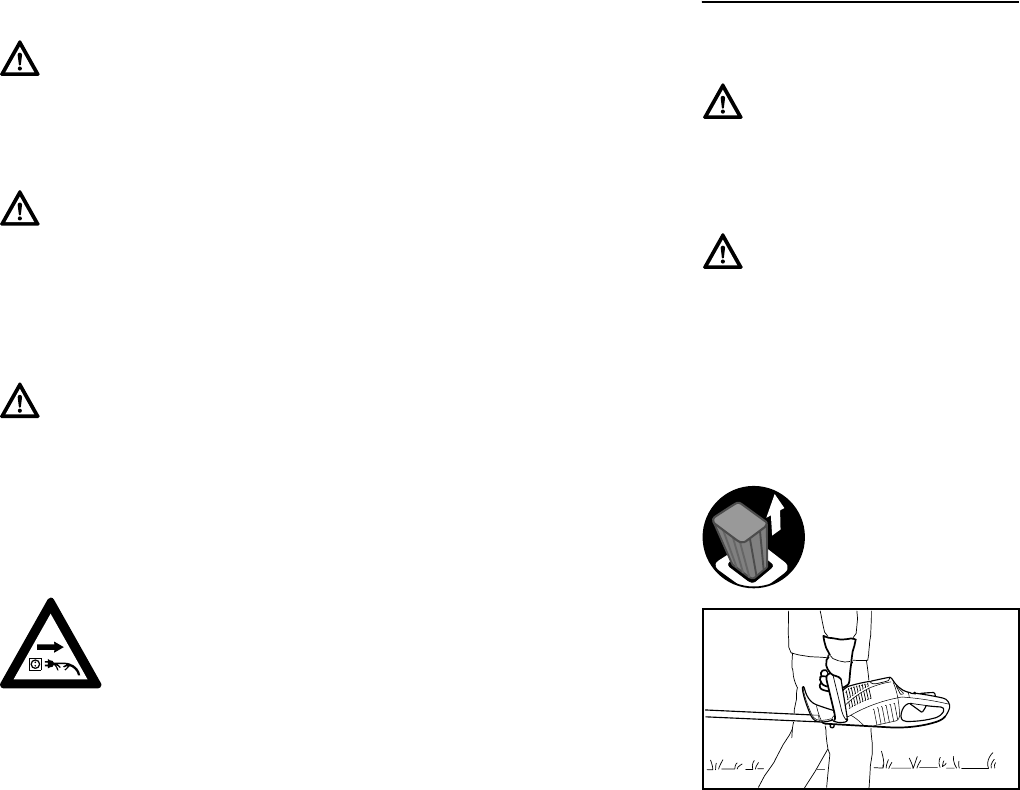
HSA 65
español / EE.UU
35
En caso de producirse humo o fuego en
el cargador, desconéctelo del
tomacorriente inmediatamente.
Nunca tire del cordón eléctrico para
desconectarlo del tomacorriente de la
pared. Para desenchufarlo, sujete el
enchufe y no el cordón. El cordón
eléctrico dañado debe ser reparado por
un electricista experimentado.
No use el cordón eléctrico para ningún
otro fin, por ejemplo, para transportar o
sostener el cargador.
Nunca use cordones eléctricos que no
cumplan con los reglamentos.
Asegúrese que el cordón eléctrico esté
ubicado y/o marcado como para que no
se lo pise, se lo lleve por delante, esté
en contacto con bordes cortantes o
partes móviles o, de otro modo sujeto, a
daño o esfuerzo.
No debería usarse un alargador a
menos que sea absolutamente
necesario. Si es imprescindible
utilizarlo, enchufe el cargador en un
alargador calibre 16 (AWG 16) o de
mayor calibre cableado en forma
apropiada, con hojas que sean del
mismo número, tamaño y forma que las
del cargador.
Para reducir el riesgo de choque
eléctrico:
–Siempre conecte la unidad a un
tomacorriente de pared instalado
correctamente.
–Asegúrese de que el aislamiento
del cordón eléctrico y del enchufe
esté en buenas condiciones.
Desenchufe el cordón eléctrico del
tomacorriente cuando el cargador esté
en desuso.
Nunca guarde la batería en el cargador.
USO DE LA HERRAMIENTA
MOTORIZADA
Traslado de la unidad
Traslade la herramienta motorizada por
el mango, con las cuchillas detrás suyo.
Advertencia!
Para reducir el riesgo de choque eléc-
trico o cortocircuito, no inserte ningún
objeto en las ranuras de enfriamiento
del cargador.
Advertencia!
El cargador se calienta durante el pro-
ceso de carga. No lo manipule sobre
superficies que puedan incendiarse con
facilidad (por ejemplo, papel o telas) o
en un entorno altamente combustible –
peligro de incendio.
Advertencia!
No trabaje en un lugar peligroso, por
ejemplo, en un lugar donde haya líqui-
dos combustibles (gases), vapores o
polvo. Los cargadores pueden producir
chispas, las cuales son capaces de
encender el polvo o los vapores - riesgo
de explosión.
Revise regularmente el
cordón eléctrico y el
enchufe del cargador en
busca de daños. Si
alguno de los dos está
dañado, desconecte de
inmediato el enchufe del
tomacorriente de la pared
para evitar el riesgo de
choque eléctrico.
Advertencia!
Para reducir el riesgo lesiones debido al
contacto con las cuchillas, nunca trans-
porte la herramienta motorizada con las
cuchillas en marcha.
Advertencia!
Siempre apague la herramienta motori-
zada, mueva el pestillo de retención a la
posición ƒ, extraiga la batería y colo-
que la funda sobre las cuchillas –
incluso cuando traslade la unidad por
una distancia corta. Cuando transporte
la herramienta motorizada en un vehí-
culo, sujétela firmemente para evitar
que se vuelque y se dañe.
Retire la batería de la
herramienta motorizada.
Esto evita el riesgo de
que el motor arranque
inesperadamente.
3901BA023 KN
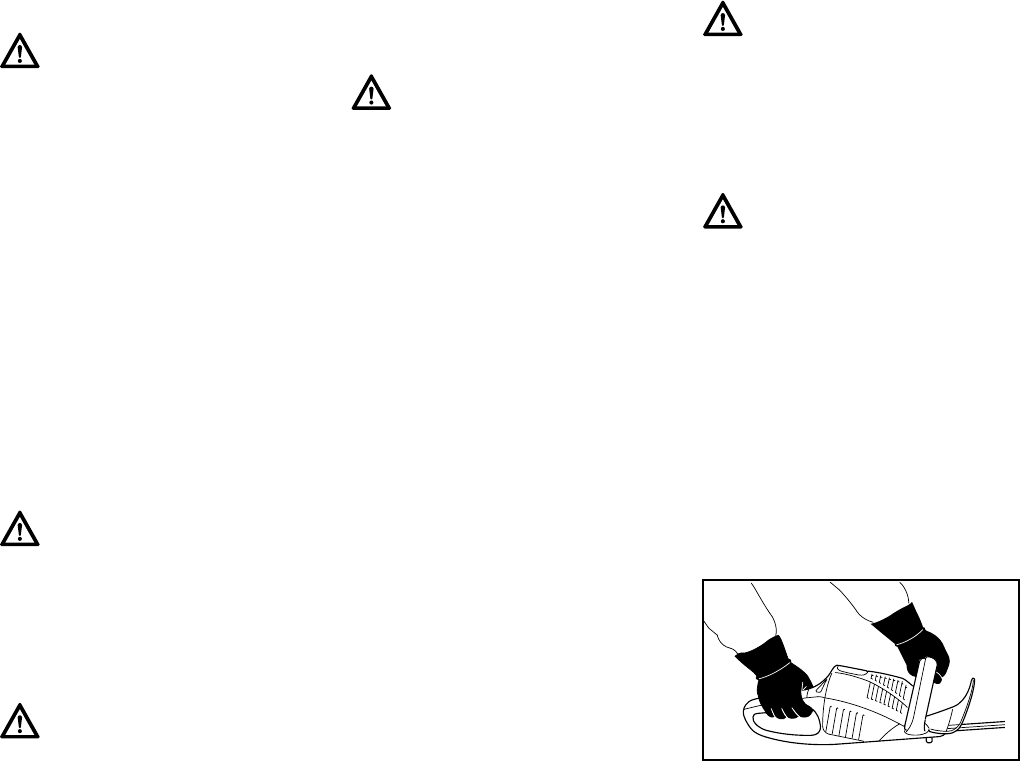
HSA 65
español / EE.UU
36
Antes de empezar a trabajar
La herramienta motorizada está
equipada con un sistema diseñado para
detener rápidamente las cuchillas –
éstas se paran apenas usted suelta el
gatillo y/o la palanca de cambio del
mango tórico.
Mantenga los mangos limpios y secos
en todo momento; es particularmente
importante mantenerlos libres de
humedad, aceite, grasa o resinas para
garantizar que la máquina pueda
empuñarse firmemente para mantenerla
bajo control seguro.
STIHL recomienda que, antes de
empezar a trabajar, siempre rocíe las
cuchillas con disolvente de resina
STIHL, con el motor detenido, el pestillo
de retención en la posición ƒ y sin la
batería. Este producto protector puede
obtenerse a través del concesionario.
Aplique cantidades abundantes.
Revise los contactos del compartimiento
de la batería en busca de materia
extraña. Manténgalos limpios.
Coloque la batería correctamente – se
debe escuchar un ruido cuando encaja.
Para las instrucciones específicas de
arranque, vea la sección
correspondiente en el manual de
instrucciones.
Durante el trabajo
Sujeción y control de la herramienta
motorizada
Al trabajar, siempre sujete la máquina
firmemente con ambas manos en los
mangos. Cierre firmemente los dedos y
pulgares sobre los mangos.
Personas diestras
La mano derecha sobre el mango de
control y la izquierda sobre el mango
tórico.
Advertencia!
Antes de empezar a trabajar, siempre
revise que la herramienta motorizada
esté en buenas condiciones y funcione
correctamente, particularmente el gati-
llo, el bloqueo del gatillo, la palanca de
cambio y el pestillo de retención. El gati-
llo, el bloqueo del gatillo, la palanca de
cambio deben moverse libremente y
siempre regresar a la posición de ralentí
(el pestillo de retención debe estar en la
posición ‚). Nunca intente modificar
los controles o los dispositivos de
seguridad.
Advertencia!
Revise esta función a intervalos cortos
regulares. Para reducir el riesgo de
lesiones, no opere la herramienta moto-
rizada si las cuchillas siguen
funcionando. Comuníquese con el con-
cesionario de servicio.
Advertencia!
Nunca use una herramienta motorizada
que esté dañada o mal cuidada.
Advertencia!
Las cuchillas deben estar correcta-
mente apretadas y en condiciones de
funcionamiento seguro. Busque piezas
sueltas (tuercas, tornillos, etc.) y cuchi-
llas agrietadas, dobladas, deformadas o
dañadas. Revise el estado y el apriete
de las cuchillas regularmente, con el
motor detenido, el pestillo de retención
en la posición ƒ y sin la batería. Susti-
tuya las cuchillas dañadas antes de
usar la herramienta motorizada. Man-
tenga las cuchillas siempre afiladas.
Advertencia!
Para reducir el riesgo de lesiones pro-
ducidas por el contacto con las
cuchillas, asegúrese de que éstas estén
alejadas de su persona y de todas las
obstrucciones y los objetos, incluido el
suelo.
Advertencia!
Su herramienta motorizada es una
máquina que debe ser manejada por
solamente una persona. No deje que
otras personas estén en el lugar de tra-
bajo, aun durante el arranque.
3901BA024 KN
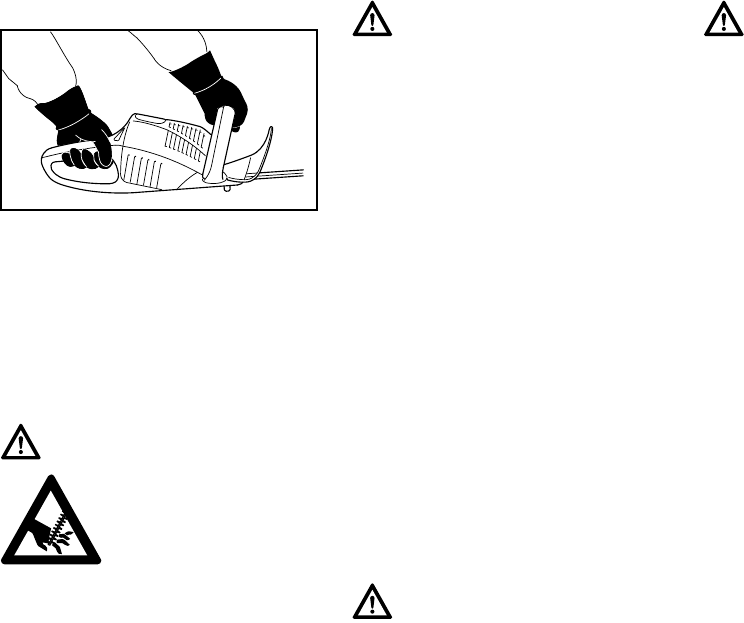
HSA 65
español / EE.UU
37
Personas zurdas
La mano izquierda sobre el mango de
control y la derecha sobre el mango
tórico
Asegúrese de que la superficie de
apoyo para los pies sea firme y segura y
sujete la unidad de modo que las
cuchillas siempre estén alejadas de su
cuerpo
Condiciones de trabajo
Maneje la herramienta motorizada
solamente en condiciones de buena
visibilidad y a la luz del día. Trabaje con
mucho cuidado.
No corte ningún material que no sea un
seto o vegetación blanda similar. No
corte tallos que superen los 17 mm
(0,7 pulg) de espesor.
Si el cortasetos está muy polvoriento o
sucio, rocíe la cuchillas con disolvente
de resina STIHL de vez en cuando
durante el corte. Esto ayuda a reducir la
fricción de las cuchillas, los efectos
dañinos de la savia y la formación de
partículas de polvo.
Advertencia!
Nunca intente manejar la
herramienta motorizada
con una sola mano. La
pérdida de control de la
herramienta motorizada
puede ocasionar lesiones
graves o mortales. Para reducir el
riesgo de lesionarse, mantenga las
manos y los pies alejados de las cuchi-
llas. Nunca toque cuchillas en
movimiento con las manos ni con cual-
quier otra parte del cuerpo. No toque las
cuchillas mientras el motor está en fun-
cionando. Si las cuchillas se atascan
con ramas gruesas o se obstruyen por
otro motivo, apague el motor inmediata-
mente, mueva el pestillo de retención a
la posición ƒ y extraiga la batería antes
de intentar liberarlas.
3901BA027 KN
Advertencia!
No trate de alcanzar más lejos de lo
debido. Mantenga los pies bien apoya-
dos y equilibrados en todo momento. Se
debe tener cuidado especial cuando las
condiciones del suelo son resbaladizas
(suelo húmedo, nieve) y en terreno difí-
cil y con mucha vegetación. Para evitar
tropezarse, esté atento a los obstáculos
ocultos tales como tocones, raíces y
zanjas. Para obtener un punto de apoyo
seguro, quite las ramas caídas, los
matorrales y el material cortado. Sea
sumamente precavido cuando trabaje
en declives o terreno irregular.
Advertencia!
Si la vegetación que se está cortando o
la tierra en el lugar está recubierta de
una sustancia química (tal como un
pesticida o herbicida activo), lea y siga
las instrucciones suministradas con la
sustancia en cuestión.
Advertencia!
La inhalación de ciertos polvos, espe-
cialmente los polvos orgánicos, tales
como el moho o polen, puede provocar
reacciones alérgicas o asmáticas en las
personas sensibles. La inhalación repe-
tida o de grandes cantidades de polvo u
otros contaminantes del aire, especial-
mente los de partículas pequeñas
puede causar enfermedades respirato-
rias o de otro tipo. Controle el polvo en
su fuente, siempre que sea posible. Uti-
lice buenas prácticas de trabajo, tal
como trabajar de manera que el viento
o el proceso de corte dirija el polvo pro-
ducido por la herramienta motorizada
en sentido opuesto del operador. Cum-
pla con las recomendaciones emitidas
por EPA/OSHA/NIOSH y las asociacio-
nes de trabajo y los sindicatos con
respecto al polvo ("materia particu-
lada"). Donde no sea posible regular
efectivamente la inhalación de polvo, es
decir, mantener el nivel cerca del valor
ambiente, el operador y las personas
que se encuentren en la cercanía siem-
pre deberán usar un respirador
aprobado por NIOSH/MSHA para el tipo
de polvo presente en el lugar.
HSA 65
español / EE.UU
38
Instrucciones de manejo
Tenga cuidado especial al cortar setos
cerca de vallas de alambre. No toque el
alambre con las cuchillas. Cuando se
trabaje cerca del suelo, compruebe que
no entre arena, grava o piedras entre las
cuchillas de corte.
El choque con objetos extraños tales
como piedras, alambres o piezas
metálicas puede dañar el accesorio de
corte y puede hacer que las cuchillas se
agrieten, se piquen o se rompan. STIHL
no recomienda usar la herramienta
motorizada en zonas en las cuales las
cuchillas pudieran entrar en contacto
con tales objetos.
Revise las cuchillas frecuente y
periódicamente durante el trabajo, o
inmediatamente si hay cambios
importantes de las características de
corte:
–Apague el motor.
–Mueva el pestillo de retención a la
posición ƒ.
–Retire la batería.
–Revise la condición y el apriete,
busque grietas.
–Revise el afilado.
–Sustituya las cuchillas dañadas o
desafiladas inmediatamente,
incluso si tienen sólo algunas
grietas superficiales.
No deje la máquina al aire libre bajo la
lluvia.
La herramienta motorizada está
equipada con un sistema diseñado para
detener rápidamente las cuchillas –
éstas se paran apenas usted suelta el
gatillo y/o la palanca de cambio del
mango tórico.
Esté especialmente alerta y tenga
cuidado cuando se usa protectores de
oídos, ya que los mismos reducen la
posibilidad de oír señales de
advertencia (gritos, alarmas, etc.).
Después de terminar el trabajo
Siempre limpie el polvo y la suciedad de
la herramienta motorizada – no utilice
disolventes de grasa para este
propósito.
Rocíe las cuchillas con disolvente de
resina STIHL. Ponga en marcha el
motor por un rato para que el disolvente
se distribuya uniformemente.
Advertencia!
En caso de emergencia, apague el
motor inmediatamente, mueva el pesti-
llo de retención a la posición ƒ y
extraiga la batería.
Advertencia!
Antes de empezar a trabajar, examine
la zona alrededor del seto en busca de
piedras, alambres, piezas metálicas u
otros objetos macizos que pudieran
dañar las cuchillas.
Advertencia!
Observe las cuchillas en todo momento
–no corte las zonas del seto imposibles
de ver. Cuando pode la parte superior
de un seto más alto, inspeccione fre-
cuentemente el otro lado del seto para
cerciorarse que no haya personas, ani-
males ni obstrucciones. No dañe la
propiedad de terceros.
¡Peligro!
No confíe en el aisla-
miento contra choques
eléctricos de la herra-
mienta. Para reducir el
riesgo de electrocución,
nunca utilice esta herra-
mienta motorizada cerca de alambres o
cables (de alimentación, etc.) que pue-
dan tener corriente eléctrica.
El motor propulsor no es
a prueba de agua. Nunca
trabaje con una herra-
mienta motorizada bajo la
lluvia o en lugares muy
húmedos o mojados.
Advertencia!
Para reducir el riesgo de lesiones cau-
sadas por la pérdida del control, nunca
trabaje sobre una escalera, un árbol o
cualquier otra superficie de soporte
poco seguro. Nunca mantenga la
máquina a una altura más arriba de los
hombros.
Advertencia!
Para reducir el riesgo de incendios,
siempre limpie los residuos de las plan-
tas, las partículas, las hojas y el
excedente de lubricante que queden en
el motor.
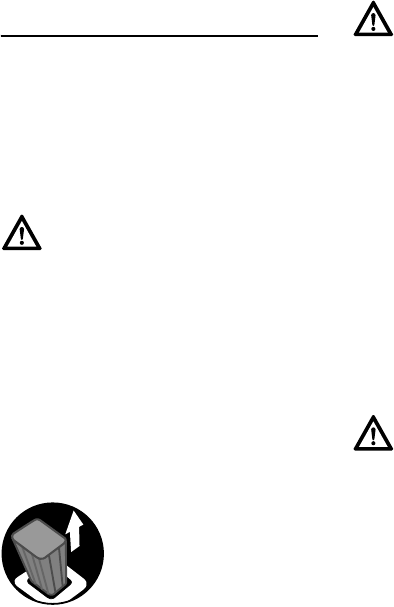
HSA 65
español / EE.UU
39
MANTENIMIENTO, REPARACION Y
ALMACENAMIENTO
Si usted está reclamando cobertura
de garantía para algún componente
que no ha sido reparado o mantenido
debidamente, o cuando se utilizan
repuestos no autorizados, STIHL
puede denegar la garantía.
Siga precisamente las instrucciones de
mantenimiento y reparación dadas en la
sección correspondiente del manual de
instrucciones. Consulte también la tabla
de mantenimiento en este manual.
Use guantes para manipular o efectuar
trabajos de mantenimiento en las
cuchillas.
Mantenga las cuchillas bien afilada.
Apriete todas las tuercas, pernos y
tornillos después de haber usado la
máquina.
Revise regularmente los contactos
eléctricos y asegúrese de que el
aislamiento del cordón eléctrico y del
enchufe del cargador esté en buenas
condiciones y no muestre signos de
deterioro (fragilidad).
Es posible que los componentes
eléctricos, como el cordón eléctrico del
cargador, sólo puedan ser reparados o
sustituidos por un electricista calificado.
Limpie los componentes de plástico con
un trapo. No use detergentes abrasivos.
Éstos pueden dañar el plástico.
No rocíe agua sobre la máquina.
No limpie la máquina con una lavadora
a presión. El chorro fuerte de agua
puede dañar las piezas de la máquina.
Limpie las entradas de aire de
enfriamiento de la caja del motor según
sea necesario.
Mantenga las ranuras de la batería
libres de materia extraña – límpielas
según sea necesario.
Guarde la herramienta motorizada en un
lugar seco y bajo llave, con el pestillo de
retención en la posición ƒ, sin la batería
y fuera del alcance de los niños.
Advertencia!
Utilice solamente piezas de repuesto de
STIHL para el mantenimiento y la repa-
ración. El uso de piezas no fabricadas
por STIHL puede causar lesiones gra-
ves o mortales.
Siempre mueva el pesti-
llo de retención a la
posición ƒ y extraiga la
batería de la herramienta
motorizada antes de rea-
lizar algún trabajo de
reparación o manteni-
miento, por ejemplo, el
reemplazo de las cuchi-
llas. Esto evita el riesgo
de que el motor arran-
que inesperadamente.
Advertencia!
Siempre apague el motor, mueva el
pestillo de retención a la posición ƒ,
extraiga la batería y asegúrese de que
la herramienta de corte se detenga
antes de realizar algún trabajo de man-
tenimiento o reparación o de limpiar la
herramienta motorizada. No intente
hacer ningún trabajo de mantenimiento
o reparación que no esté descrito en su
manual de instrucciones. Este tipo de
trabajo debe ser realizado únicamente
por el concesionario de servicio de
STIHL.
Advertencia!
Nunca repare los accesorios de corte
dañados aplicándoles soldadura, ende-
rezándolos o modificándoles su forma.
Esto puede causar el desprendimiento
de alguna pieza de las cuchillas y pro-
ducir lesiones graves o mortales.
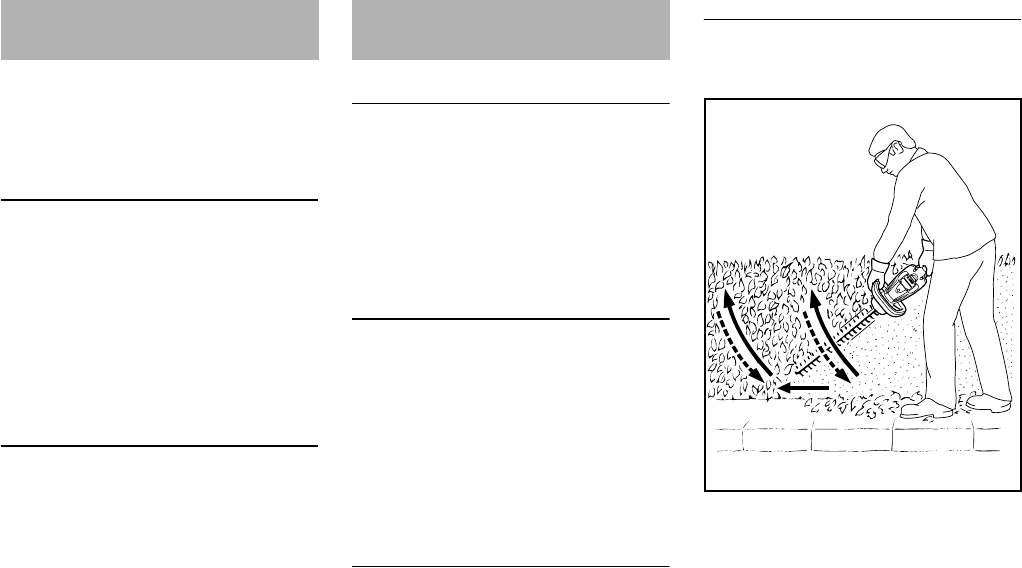
HSA 65
español / EE.UU
40
La herramienta motorizada funciona con
una batería recargable. Utilice
únicamente cargadores STIHL para
recargar la batería.
Lista de embalaje
–Herramienta motorizada
–Batería recargable
–Cargador
–Manual de instrucciones
La lista de embalaje puede variar en
función del mercado y el modelo.
Intercambio de datos
La herramienta motorizada, la batería y
el cargador se comunican entre sí. El
cargador carga la batería y ésta
suministra la potencia necesaria sólo si
el intercambio de datos funciona
correctamente. Por tal motivo, debe
hacer funcionar la herramienta
motorizada únicamente con baterías y
cargadores STIHL apropiados.
Temporada de corte
Respete las leyes y los reglamentos
nacionales o municipales en cuanto al
corte de setos.
NNo utilice la herramienta motorizada
durante los períodos de reposo de
otras personas.
Secuencia de corte
NUtilice tijeras o una motosierra para
cortar las ramas gruesas primero.
NCorte ambos lados del seto primero,
y después la parte superior.
Recomendación: Solamente corte los
setos que no son más altas que la altura
del pecho.
Desecho
NNo tire los recortes al basurero –
¡pueden usarse para abono!
Técnicas de trabajo
Corte vertical
Mueva la cuchilla de abajo hacia arriba
describiendo un arco – baje la punta de
la cuchilla, avance por el seto y después
mueva la cuchilla hacia arriba
nuevamente describiendo un arco.
Toda posición de trabajo elevada sobre
el nivel de la cabeza produce cansancio.
Para reducir el riesgo de accidentes,
trabaje en estas posiciones sólo por
períodos breves.
Descripción del
funcionamiento
Uso
3901BA004 KN
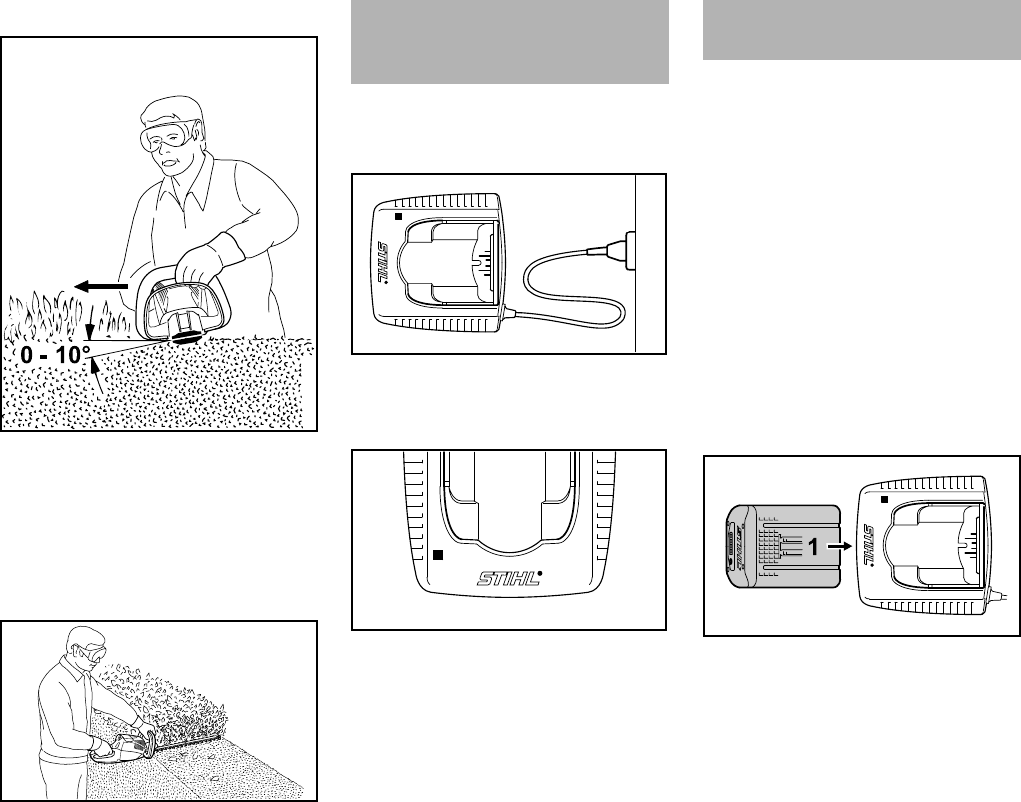
HSA 65
español / EE.UU
41
Corte horizontal
Sostenga la cuchilla a un ángulo de 0° a
10° mientras mueve el cortasetos de un
lado al otro, utilizando ambos lados de la
cuchilla.
Desplace la cuchilla describiendo un
arco hacia el exterior del seto, de modo
que los trozos cortados caigan al suelo.
Repita el procedimiento varias veces
con setos extensos.
El voltaje de la red de electricidad y el
voltaje operacional deben ser iguales
entre sí.
NInserte el enchufe de
alimentación (1) en el tomacorriente
de pared (2).
Se realiza una prueba de error luego de
que el cargador se conecta al suministro
de energía eléctrica. Durante este
proceso el diodo fotoemisor (1) del
cargador se ilumina de verde durante 1
segundo aproximadamente, luego de
rojo y luego se apaga otra vez.
La batería se carga aproximadamente
un 30% de su capacidad en la fábrica.
Debe estar completamente cargada
antes de utilizar la herramienta
motorizada por primera vez.
NConecte el cargador al suministro
de energía eléctrica – el voltaje de
la red de electricidad y el voltaje
operacional del cargador deben ser
iguales – vea "Conexión de la
unidad al suministro de energía
eléctrica".
Use el cargador sólo en recintos
cerrados y secos, a temperaturas
ambiente de entre 5 °C y 40 °C (41°F-
104 °F).
NColoque la batería (1) en el
cargador (2) hasta que perciba una
resistencia notable – luego presione
hasta el tope.
3901BA025 KN
3901BA006 KN
Conexión del cargador al
suministro de energía
eléctrica
3901BA015 KN
2
1
1
3901BA019 KN
Carga de la batería
2
3901BA009 KN
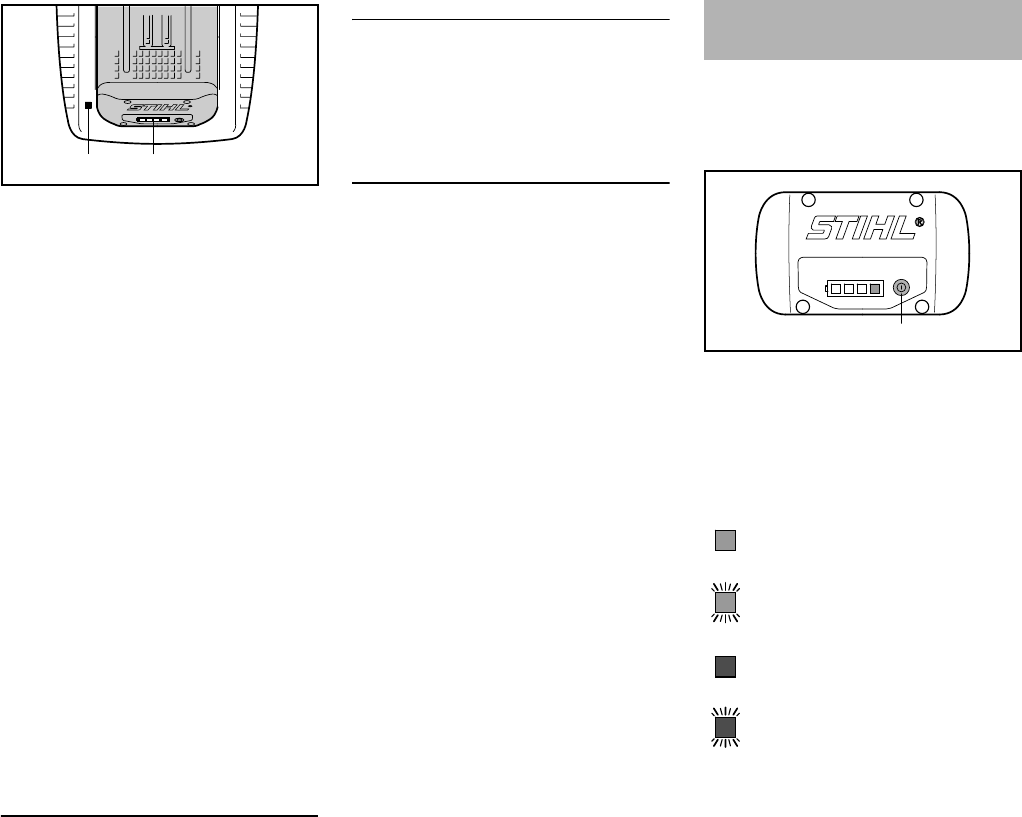
HSA 65
español / EE.UU
42
El diodo fotoemisor (3) del cargador se
enciende cuando se inserta la batería –
vea "Diodos fotoemisores (LED) del
cargador"
La batería comienza a cargarse cuando
los diodos fotoemisores (4) se
encienden de verde – vea "Diodos
fotoemisores (LED) de la batería".
El tiempo de carga depende de varios
factores, que incluyen el estado de la
batería, la temperatura ambiente, etc.;
por lo tanto, pueden variar con respecto
al tiempo de carga indicado en
"Especificaciones".
La batería se calienta durante el
funcionamiento de la máquina. Si se
coloca una batería caliente dentro del
cargador, es posible que deba enfriarse
antes de cargarla. El proceso de carga
comienza únicamente cuando la batería
se enfría. El tiempo que la batería
necesita para enfriarse puede prolongar
el tiempo de carga.
La batería y el cargador se calientan
durante el proceso de carga.
Cargador AL 300
Este cargador está equipado con un
ventilador para enfriar la batería, que
emite un sonido cuando está
funcionando.
Cargador AL 100
Este cargador espera a que la batería se
enfríe para iniciar el proceso de carga.
La batería se enfría con el flujo de aire
que circula en el recinto.
Culminación del proceso de carga
El cargador se apaga automáticamente
cuando la batería está completamente
cargada:
–Los diodos fotoemisores de la
baterías se apagan.
–El diodo fotoemisor del cargador se
apaga.
–El ventilador del cargador se apaga
(si viene con el cargador)
Retire la batería del cargador.
Cuatro diodos fotoemisores indican el
estado de carga de la batería y cualquier
problema que pueda ocurrir en ésta o en
la herramienta motorizada.
NPresione el botón (1) para activar la
pantalla – la pantalla se apaga
automáticamente después de 5
segundos.
Los diodos fotoemisores pueden
encenderse o destellar en verde o rojo.
4
3901BA014 KN
3
Diodos fotoemisores (LED)
de la batería
El diodo fotoemisor se enciende
en verde.
El diodo fotoemisor destella en
verde.
El diodo fotoemisor se enciende
en rojo.
El diodo fotoemisor destella en
rojo.
1
3901BA010 KN
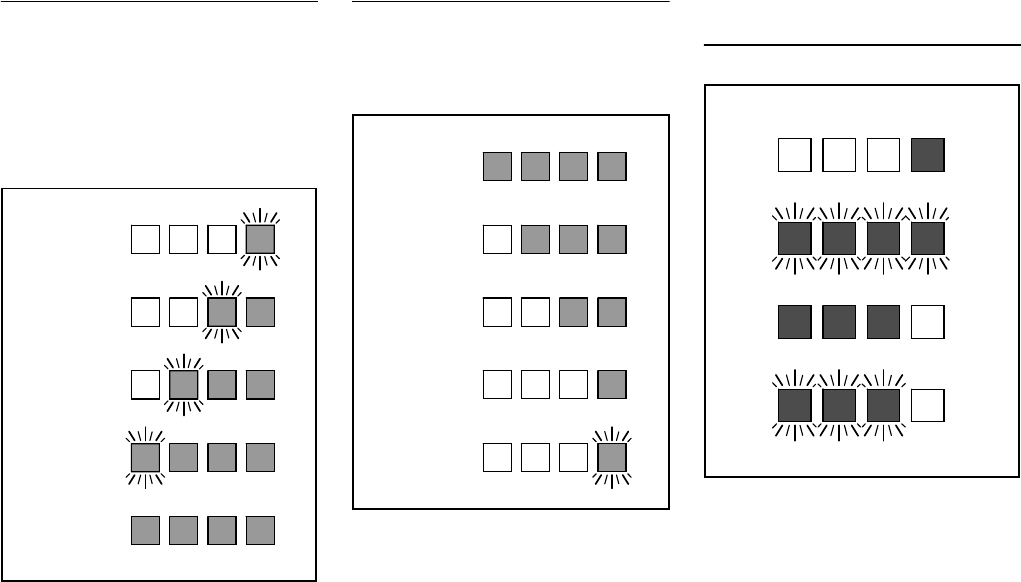
HSA 65
español / EE.UU
43
Durante el proceso de carga
Los diodos fotoemisores se encienden o
destellan continuamente para indicar el
progreso de la carga.
Durante la carga, la capacidad que se
está cargando se indica con un diodo
fotoemisor verde destellante.
Cuando se completa el proceso de
carga, los diodos fotoemisores de la
batería se apagan en forma automática.
Si los diodos fotoemisores de la batería
destellan o se encienden de rojo, vea "Si
los diodos fotoemisores rojos se
encienden / destellan continuamente".
Durante el trabajo
Los diodos fotoemisores verdes se
encienden o destellan continuamente
para indicar el estado de la carga.
Si los diodos fotoemisores de la batería
destellan o se encienden de rojo, vea "Si
los diodos fotoemisores rojos se
encienden / destellan continuamente".
Si los diodos fotoemisores rojos se
encienden / destellan en forma
continua
3901BA016 KN
80 - 100 %
60 - 80 %
40 - 60 %
20 - 40 %
0 - 20 %
3901BA016 KN
80 - 100 %
60 - 80 %
40 - 60 %
20 - 40 %
0 - 20 %
Un diodo fotoemisor
se enciende en rojo:
Si la batería
está muy
caliente1) 2) /
fría1)
Cuatro diodos fotoe-
misores destellan en
rojo:
Batería
averiada3)
Tres diodos fotoemi-
sores se encienden de
rojo:
La herramienta
motorizada está
muy caliente –
deje que se
enfríe.
Tres diodos fotoemi-
sores destellan en
rojo:
Herramienta
motorizada ave-
riada – solicite a
un concesiona-
rio de servicio
que la revise.4)
3901BA017 KN
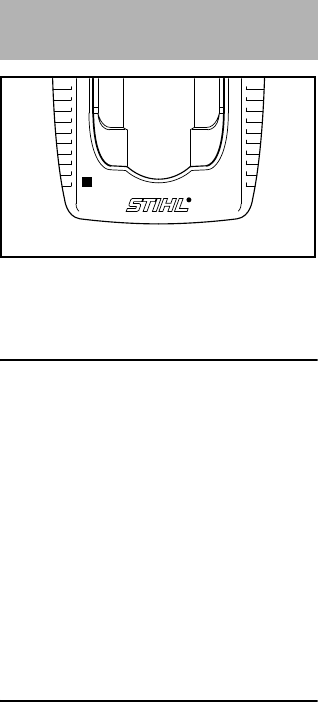
HSA 65
español / EE.UU
44
El diodo fotoemisor se enciende de
verde o destella en rojo.
Luz verde continua...
... significa lo siguiente:
La batería
–se está cargando
–está muy caliente y debe enfriarse
antes de cargarse
Vea también "Diodos fotoemisores
(LED) de la batería".
El diodo fotoemisor verde del cargador
se apaga cuando la batería está
completamente cargada.
Luz roja destellante...
... significa lo siguiente:
–No existe ningún contacto eléctrico
entre la batería y el cargador – quite
la batería y vuelva a colocarla.
–Batería averiada – vea también
"Diodos fotoemisores (LED) de la
batería".
–Cargador averiado – solicite a un
concesionario de servicio que lo
revise. STIHL recomienda acudir a
un concesionario de servicio de
STIHL.
1) Durante el proceso de carga: El
proceso de carga se inicia
automáticamente una vez que la
batería se enfría / calienta.
2) Durante el trabajo: Si la herramienta
motorizada se apaga, deje que la
batería se enfríe; puede ser
necesario extraer la batería de la
herramienta motorizada para este
fin.
3) La batería falla y debe ser
reemplazada.
4) STIHL recomienda acudir a un
concesionario de servicio de STIHL.
Diodos fotoemisores (LED)
del cargador
1
3901BA019 KN
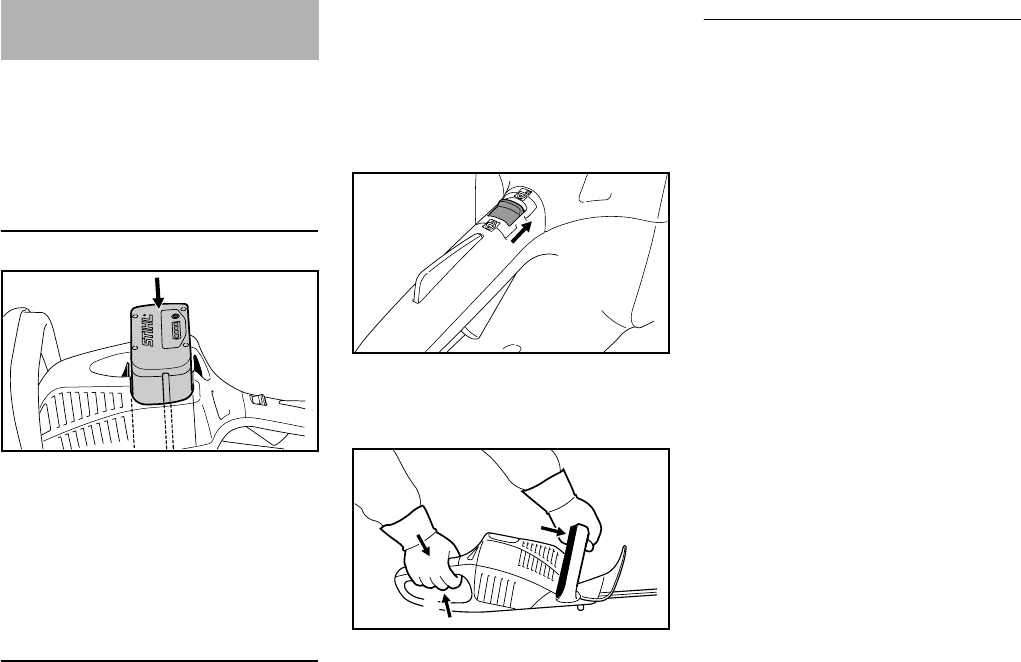
HSA 65
español / EE.UU
45
La batería se carga aproximadamente
un 30% de su capacidad en la fábrica.
Debe estar completamente cargada
antes de utilizar la herramienta
motorizada por primera vez.
Colocación de la batería recargable
NColoque la batería (1) en la
herramienta motorizada – la batería
se desliza por el compartimiento –
presiónela hacia abajo
cuidadosamente hasta que encaje
en su lugar – la batería debe estar a
ras con la parte superior de la caja.
Encendido
NAsegúrese de tener los pies bien
apoyados y de estar bien
equilibrado.
NPárese bien derecho – sujete la
herramienta motorizada en una
posición relajada.
NAsegúrese de que el accesorio de
corte no toque el suelo ni ningún
otro objeto.
NSujete la unidad con ambas manos
– una mano sobre el mango de
control y la otra sobre el mango
tórico.
NDesbloquee la herramienta
motorizada moviendo el pestillo de
retención (2) a la posición ‚.
NEmpuje la palanca de cambio (3)
contra el mango tórico y
manténgala en esa posición.
NEmpuje el bloqueo del gatillo (4)
hacia abajo, oprima el gatillo (5) y
mantenga ambos en dichas
posiciones.
El motor únicamente funciona si el
pestillo de retención (2) está en la
posición ‚ y la palanca de cambio (3),
el bloqueo del gatillo (4) y el gatillo (5)
están funcionando simultáneamente.
Gatillo
La velocidad del motor se controla con
el gatillo. Oprima el gatillo para acelerar
el motor.
Encendido de la máquina
3901BA028 KN
1
3901BA029 KN
2
43
5
3901BA030 KN
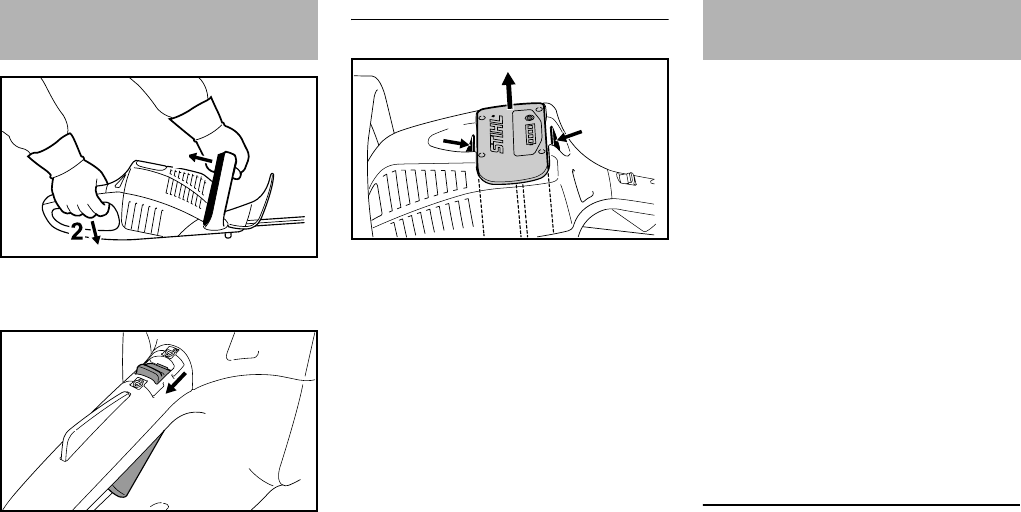
HSA 65
español / EE.UU
46
NSuelte la palanca de cambio (1) y el
gatillo (2).
NMueva el pestillo de retención (3) a
la posición ƒ – el gatillo (4) no
puede operarse – la herramienta
motorizada está bloqueada para
evitar el arranque.
Siempre retire la batería de la
herramienta motorizada durante los
descansos y después de terminar el
trabajo.
Extracción de la batería
NPresione ambas lengüetas de
traba (1) al mismo tiempo para
desbloquear la batería.
NExtraiga la batería (2) de la caja.
Cuando la máquina esté en desuso,
guárdela de modo de no poner en
peligro a terceros.
Tome medidas para proteger la
máquina contra el uso no autorizado.
NRetire la batería.
NDe ser necesario, cubra el
compartimiento de la batería para
protegerlo del polvo y la suciedad.
NLimpie las cuchillas, revise su
estado y rocíelas con disolvente de
resina STIHL.
NColoque la funda de la cuchilla.
NLimpie la máquina a fondo,
especialmente las entradas de aire
de enfriamiento.
NGuarde la máquina en un lugar seco
y bajo llave – la funda de la cuchilla
puede colgarse en la pared, fuera
del alcance de los niños y de otras
personas no autorizadas.
Almacenamiento de la batería
NExtraiga la batería de la
herramienta motorizada o del
cargador.
NGuárdela en un lugar seco y bajo
llave. Manténgala lejos del alcance
de los niños y de otras personas no
autorizadas, y protegida de la
contaminación.
NNo guarde baterías sin usar –
alterne su uso.
Para garantizar la máxima vida útil de la
batería:
NGuárdela a un temperatura entre 10
°C (50 °F) y 20 °C (68 °F).
NGuárdela con aproximadamente un
30% de carga.
Apagado de la máquina
3901BA032 KN
1
4
3
3901BA034 KN
3901BA035 KN
1
2
1
Almacenamiento de la
máquina

HSA 65
español / EE.UU
47
Almacenamiento del cargador
NRetire la batería.
NDesconecte el enchufe del
tomacorriente de pared.
NGuarde el cargador en un lugar
seco y bajo llave. Manténgalo fuera
del alcance de los niños y de otras
personas no autorizadas, y
protegido de la contaminación.
Si el rendimiento del corte y la respuesta
de la máquina comienzan a deteriorar
(por ejemplo, si las cuchillas se
enganchan frecuentemente en las
ramas): Vuelva a afilar las cuchillas.
Es mejor que las cuchillas las afile el
concesionario usando un afilador de
taller. STIHL recomienda acudir a un
concesionario STIHL para servicio.
También es posible usar una lima plana
de corte diagonal para afilar. Mantenga
la lima afiladora en el ángulo descrito
(vea "Especificaciones").
NSiempre desplace la lima hacia el
filo.
NLa lima afila únicamente en la
pasada de ida – quite la lima de la
cuchilla para la pasada de retorno.
NUtilice una piedra de amolar para
quitar las rebabas del filo.
NQuite la menor cantidad posible de
material.
NDespués del afilado, limpie las
partículas y polvo de las cuchillas
de corte y rocíelas con disolvente
de resina STIHL.
Instrucciones de afilado
No utilice la máquina con
cuchillas romas o dañadas. Esto
puede causar sobrecargas y
produce cortes insatisfactorios.

HSA 65
español / EE.UU
48
Información para mantenimiento
Los intervalos dados a continuación corresponden únicamente a condiciones nor-
males de trabajo. Si el tiempo de trabajo por jornada es más largo que lo normal, o
si las condiciones son extremas (zonas polvorientas, etc.), acorte los intervalos indi-
cados de modo correspondiente.
Mueva el pestillo de retención a la posición ƒ antes de realizar algún trabajo en la
herramienta motorizada.
antes de comenzar el trabajo
después de terminar el tra-
bajo o diariamente
semanalmente
mensualmente
cada 12 meses
si hay problema
si tiene daños
si se requiere
Máquina completa Inspección visual (condición general) X
Limpiar X
Controles (pestillo de retención, bloqueo
del gatillo, gatillo y palanca de cambio)
Comprobar el funcionamiento X
Limpiar XX
Control con las dos manos
Revisar el funcionamiento – las cuchillas
deben detenerse rápidamente cuando
se suelta el gatillo y/o la palanca de
cambio
X
Entradas de enfriamiento Inspección visual X
Limpiar X
Todos los tornillos y tuercas accesibles Volver a apretar X
Batería Inspección visual XXX
Cuchillas
Inspección visual XXX
Limpiar 1) X
Afilar XX
Caja de engranajes y biela
Solicite al concesionario de servicio su
revisión2) cada 50 horas de
funcionamiento
Solicite al concesionario de servicio que
llene la caja de engranajes con lubri-
cante para engranajes STIHL2) X
Etiquetas de seguridad Reemplazar X
1) Rocíe con disolvente de resina STIHL después de limpiar
2) STIHL recomienda acudir a un concesionario STIHL para servicio.
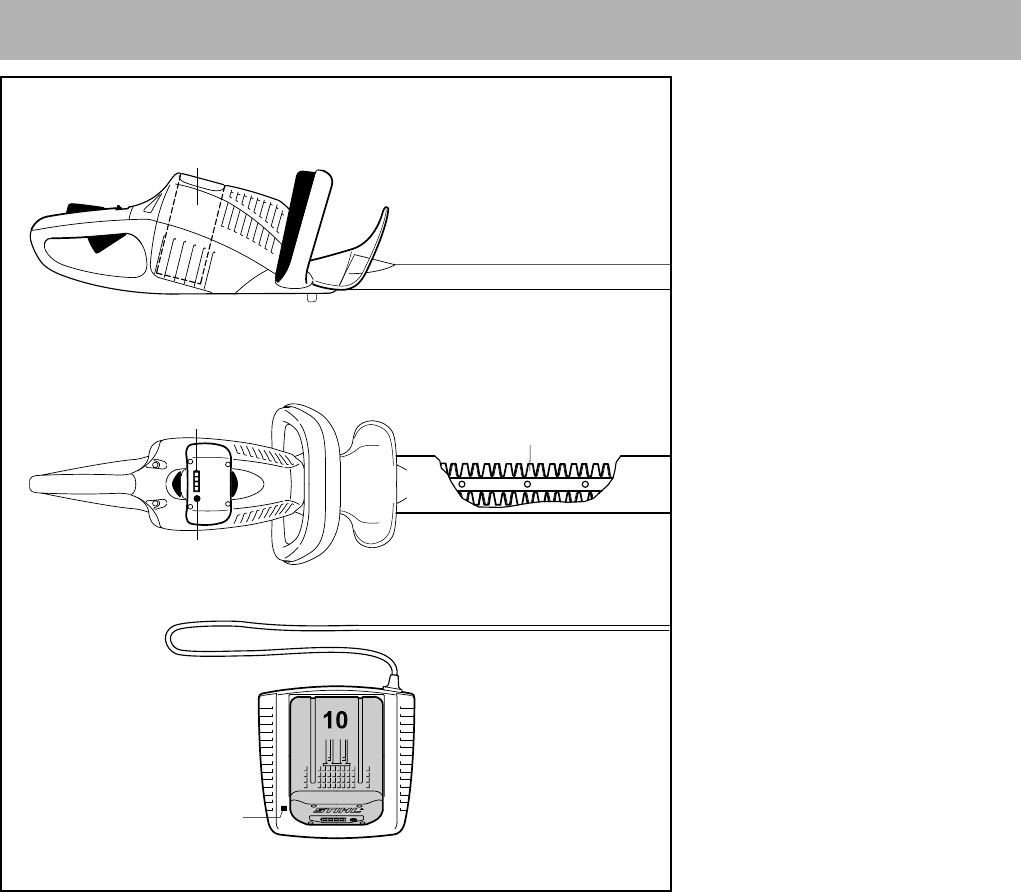
HSA 65
español / EE.UU
49
1Mango de control
2Bloqueo del gatillo
3Gatillo
4Pestillo de retención
5Compartimiento para pilas
6Palanca de cambio
7Mango tórico
8Protector de la mano
9Lengüetas de traba de la batería
10 Batería
11 Diodos fotoemisores (LED) de la
batería
12 Pulsador
13 Funda para cuchilla
14 Cuchillas de corte
15 Cargador
16 Diodo fotoemisor (LED) del
cargador
17 Cordón eléctrico
#Número de serie
Componentes importantes
14
8
3
14
99
10
2
5
67
11
12
#13
17
16
15
3901BA038 KN

HSA 65
español / EE.UU
50
Definiciones
1. Mango de control
Mango del cortasetos sujetado con
la mano que se coloca atrás.
2. Bloqueo del gatillo
Hay que oprimirlo antes de poder
activar el gatillo.
3. Gatillo
Apaga y enciende el motor y
controla su velocidad.
4. Pestillo de retención
Boquea o desbloquea el gatillo.
5. Compartimiento para la batería
Aloja la batería en la unidad.
6. Palanca de cambio
Diseñado para que las cuchillas
puedan activarse solamente si se
pulsa el mismo junto con el gatillo al
mismo tiempo. Ubicado adyacente
al mango delantero.
7. Mango tórico
Para facilitar el control de la
máquina durante el proceso de
corte.
8. Protector de la mano
Limita la zona de agarre para alejar
de las cuchillas la mano que se
coloca adelante. Ayuda a proteger
la mano contra los objetos cortados.
9. Lengüetas de traba de la batería
Fija la batería en la unidad.
10. Batería
Suministra energía eléctrica al
motor.
11. Diodos fotoemisores (LED) de la
batería
Indican el estado de la carga y la
condición de funcionamiento de la
batería.
12. Pulsador
Se usa para activar los diodos
fotoemisores (LED) de la batería.
13. Funda para cuchilla
Cubre las cuchillas cuando el
cortasetos no está en uso.
14. Cuchillas de corte
Cuchillas de acero para cortar setos
y arbustos.
15. Cargador
Carga la batería.
16. Diodo fotoemisor (LED) del
cargador
Indica el modo de funcionamiento
del cargador y determinados
problemas.
17. Cordón eléctrico
Suministra corriente eléctrica al
cargador.
Batería
Cargador
Especificaciones
AP 80
Modelo: Ion de litio
Voltaje: 36 V
Capacidad: 2,2 Ah
Peso: 1,1 kg (2,5 lb)
AP 160
Modelo: Ion de litio
Voltaje: 36 V
Capacidad: 4,5 Ah
Peso: 1,7 kg (3,8 lb)
AL 100
Voltaje de alimentación: 120 V
Corriente nominal: 1,3 A
Frecuencia: 60 Hz
Consumo de corriente: 75 W
Corriente de carga: 1,6 A
Aislamiento: II, E (aisla-
miento doble)
AL 300
Voltaje de alimentación: 120 V
Corriente nominal: 4,7 A
Frecuencia: 60 Hz
Consumo de corriente: 330 W
Corriente de carga: 6,5 A
Aislamiento: II, E (aisla-
miento doble)

HSA 65
español / EE.UU
51
Tiempos de carga
Accesorio de corte
Peso
Traslado de las baterías recargables
STIHL
Las baterías STIHL satisfacen lo
requisitos establecidos en el Manual de
la ONU bajo la signatura
ST/SG/AC.10/11/Rev.3/Parte III,
subsección 38.3. No se exige cumplir
con otras condiciones para transportar
baterías STIHL al sitio donde se trabaja
con la herramienta motorizada.
Comuníquese con su concesionario
STIHL para información acerca de
accesorios especiales que pueden estar
disponibles para su producto.
AL 100
con AP 80:
– hasta 80% de la
capacidad: 70 min
– 100% de la capacidad: 100 min
con AP 160:
– hasta 80% de la
capacidad: 150 min
– 100% de la capacidad: 165 min
AL 300
con AP 80:
– hasta 80% de la
capacidad: 25 min
– 100% de la capacidad: 50 min
con AP 160:
– hasta 80% de la
capacidad: 35 min
– 100% de la capacidad: 60 min
Espacio entre
dientes: 26,5 mm (1,1 pulg)
Frecuencia de
carreras (sin
carga): 3000/min
Largo de corte: 500 mm (20 pulg)
Angulo de afilado: 40°
sin la batería ni la funda de la cuchilla y
con el accesorio de corte
HSA 65: 3,6 kg (7,9 lb)
Accesorios especiales

HSA 65
español / EE.UU
52
Localización de averías
Siempre retire la batería antes de realizar algún trabajo en la herramienta motorizada.
Condición Causa Solución
La máquina no funciona cuando se la
enciende.
No hay contacto eléctrico entre la herra-
mienta motorizada y la batería
Extraiga la batería, revise los contactos
y vuelva a colocarla
La batería está descargada
(1 diodo fotoemisor de la batería deste-
lla en verde)
Cargue la batería
La batería está muy caliente/fría
(1 diodo fotoemisor de la batería se
enciende de rojo)
Deje que la batería se enfríe/caliente
lentamente a una temperatura entre 15
°C y 20 °C (60 °F-70 °F)
Falla la batería
(4 diodos fotoemisores de la batería
destellan en rojo)
Instale una batería nueva1)
La herramienta motorizada se calienta
mucho
(3 diodos fotoemisores de la batería se
encienden de rojo)
Deje que la herramienta motorizada se
enfríe
Falla la herramienta motorizada
(3 diodos fotoemisores de la batería
destellan en rojo)
Solicite al concesionario de servicio que
revise la herramienta motorizada1)
Hay humedad en la herramienta motori-
zada y/o en la batería
Deje que la herramienta motori-
zada/batería se seque
La herramienta motorizada se apaga durante
el funcionamiento
Los circuitos eléctricos de la batería o de
la herramienta motorizada están muy
calientes
Extraiga la batería de la herramienta
motorizada y deje que ambas se enfríen
El sistema eléctrico no funciona bien Extraiga la batería y vuelva a colocarla
correctamente

HSA 65
español / EE.UU
53
El tiempo de funcionamiento es muy corto
La batería no está completamente
cargada
Cargue la batería
Se alcanzó o se superó la vida útil de la
batería
Revise la batería1) y sustitúyala
Las cuchillas están pegajosas/sucias Limpie las cuchillas y rocíelas con disol-
vente de resina STIHL
La batería se atasca al colocarla en la herra-
mienta motorizada/el cargador
Las ranuras están sucias Limpie las ranuras cuidadosamente
La batería no se carga a pesar de que el
diodo fotoemisor del cargador se enciende de
verde
La batería está muy caliente/fría
(1 diodo fotoemisor de la batería se
enciende de rojo)
Deje que la batería se enfríe/caliente
lentamente a una temperatura entre 15
°C y 20 °C (60 °F-70 °F)
Use el cargador sólo en recintos cerra-
dos y secos, a temperaturas ambiente
entre 5 °C y 40 °C (40 °F-105 °F).
El diodo fotoemisor del cargador se enciende
de rojo
No hay contacto eléctrico entre el carga-
dor y la batería
Extraiga la batería y vuelva a colocarla
correctamente
Falla la batería
(4 diodos fotoemisores de la batería
destellan en rojo durante aproximada-
mente 5 segundos)
Instale una batería nueva1)
Falla el cargador Solicite al concesionario de servicio que
revise el cargador1)
1) STIHL recomienda acudir a un concesionario STIHL para servicio.
Siempre retire la batería antes de realizar algún trabajo en la herramienta motorizada.
Condición Causa Solución

HSA 65
español / EE.UU
54
Los usuarios de esta máquina deben
efectuar únicamente los trabajos de
mantenimiento descritos en este
manual. Solamente los talleres
autorizados por STIHL deben llevar a
cabo los demás trabajos de reparación.
Los reclamos de garantía presentados
después de realizadas las reparaciones
serán aceptados únicamente si las
mismas fueron ejecutadas por un
concesionario de servicio autorizado
STIHL utilizando piezas de repuesto
originales de STIHL.
Es posible identificar las piezas
originales de STIHL por el número de
pieza STIHL, el logotipo de {
y, en ciertos casos, el símbolo K de
piezas STIHL. En las piezas pequeñas
el símbolo puede aparecer solo.
Información sobre reciclado de
baterías
STIHL está comprometida con el
desarrollo de productos que protejan el
medio ambiente. Este compromiso no
termina cuando el producto sale del
concesionario STIHL. STIHL se asoció
con la RBRC (Corporación de Reciclaje
de Baterías Recargables) para fomentar
la recolección y el reciclado de baterías
de ion de litio STIHL en los Estados
Unidos y Canadá. En todas las baterías
recargables STIHL se puede encontrar
el sello de la RBRC, que indica que la
empresa aportó dinero para financiar el
reciclado de dicha batería. El sello lleva
impreso un número telefónico gratuito
(1-800-822-8837) que le permite
acceder a información sobre lugares de
reciclaje de baterías y prohibiciones o
restricciones respecto del reciclado de
baterías en su zona. También puede
devolver las baterías a cualquier
concesionario STIHL autorizado para
reciclarlas gratuitamente.
Respete todas las leyes y los
reglamentos sobre eliminación de
desechos que correspondan a su país.
No se debe tirar los aparatos eléctricos
en el basurero. Lleve la máquina, los
accesorios y el embalaje a un vertedero
autorizado para reciclarlos y contribuir al
cuidado del medio ambiente.
Comuníquese con un concesionario de
servicio de STIHL para obtener la
información más actualizada sobre la
eliminación de desechos.
Información de reparación Reciclado de las baterías Desecho
264BA050 KN

HSA 65
español / EE.UU
55
Marcas registradas de STIHL
STIHL®
{
K
La combinación de colores anaranjado-
gris (Números de registro EE.UU.
2,821,860; 3,010,057, 3,010,058,
3,400,477; y 3,400,476)
4-MIX®
AUTOCUT®
EASYSTART®
FARM BOSS®
OILOMATIC®
STIHL Cutquik®
STIHL DUROMATIC®
STIHL Quickstop®
STIHL ROLLOMATIC®
STIHL WOOD BOSS®
TIMBERSPORTS®
YARD BOSS®
Algunos de las marcas comerciales
de STIHL por ley común
BioPlus™
Easy2Start™
EasySpool™
ElastoStart™
Ematic™ /Stihl-E-Matic™
FixCut™
HT Plus™
IntelliCarb™
Master Control Lever™
Micro™
Pro Mark™
Quad Power™
Quiet Line™
STIHL M-Tronic™
STIHL Compact™
STIHL HomeScaper Series™
STIHL Interchangeable Attachment
Series™
STIHL Magnum™ / Stihl-Magnum™
STIHL MiniBoss™
STIHL MotoPlus 4™
STIHL Multi-Cut HomeScaper Series™
Stihl Outfitters™
STIHL PICCO™
STIHL PolyCut™
STIHL PowerSweep™
STIHL Precision Series™
STIHL Protech™
STIHL RAPID™
STIHL SuperCut™
STIHL Territory™
TapAction™
TrimCut™
Esta lista de marcas comerciales está
sujeta a cambios.
Queda terminantemente prohibido todo
uso de estas marcas comerciales sin el
consentimiento expreso por escrito de
ANDREAS STIHL AG & Co. KG,
Waiblingen.
Marcas comerciales

HSA 65
español / EE.UU
56
STIHL Inc.
536 Viking Drive
P.O. Box 2015
Virginia Beach
VA 23452-2015 EE.UU.
Direcciones

www.stihl.com *04585548621A*
0458-554-8621-A
0458-554-8621-A
englisch / spanisch USA
G U
! WARNING!
This product contains chemicals
known to the State of Californinia to
cause cancer, birth defects
or other reproductive harm.
! WARNING! ! ADVERTENCIA!
Este producto contiene sustancias químicas
consideradas por el Estado de California
como causantes de cáncer, defectos de
nacimiento u otra toxicidad reproductora.
englisch / spanisch USA
U
