VISUAL LAND PRESTIGE7QS 7inch TABLET User Manual
VISUAL LAND INC. 7inch TABLET
User manual

ANDROID QUICK START GUIDE ii
Copyright © 2014 Visual Land Inc. All rights reserved.
Google, Android, Gmail, Google Maps, Chrome, Chromecast, Android Wear,
Nexus, Google Play, YouTube, Google+, and other trademarks are property
of Google Inc. A list of Google trademarks is available at http://www.google.
com/permissions/trademark/our-trademarks.html. All other marks and
trademarks are properties of their respective owners.
This book introduces Android 5.0, Lollipop for Google Play edition devices.
Its content may differ in some details from some of the products described
or the software that runs on them. All information provided here is subject to
change without notice.
For best results, make sure you’re running the latest Android system update.
To nd your device’s version number or check for the latest system update,
go to Settings > System > About tablet and look for Android version
or System updates.

ANDROID QUICK START GUIDE iii
Table of contents
1 Welcome to Android 1
About Android 5.0, Lollipop 1
2
2
Android Wear
3
Set up your device
Make yourself at home
4
3
3
4
5
5
6
7
9
10
Send an email
Status bar
Quick Settings
Manage battery life
Get around
Navigation buttons
Menus
Organize your Home screens
Touch & type
Android version & updates

ANDROID QUICK START GUIDE iv
2 Essentials 00
Google Now 00
How it works 01
Try it 02
What you can ask Google to do for you 03
Turn “Ok Google” on or off 03
Display 03
Sound and notication 04
Manage accounts on your device 06
Add an account 06
Remove an account 07
Share your device with other users 08
Switch users 1/
Remove a user 1/
Guest user 1/
Security 10
10
11
Smart Lock
Protect against harmful apps
Chromecast 12
File storage 13
Screenshots 14


ANDROID QUICK START GUIDE WELCOME TO ANDROID 1
1
Welcome to Android
About Android 5.0, Lollipop
Android 5.0, Lollipop is the latest version of Android, the oper-
ating system that powers not just tablets, but also wearables,
TVs, and even cars.
Android 5.0 features a bold and bright new design, 3D graphics
support that are as good as on a desktop computer:
• Add guest users and other users without providing them ac-
cess to your email, contacts, and whatever else you don’t want
to share.
Easier ways to manage battery usage, including a battery sav-
er feature to extend battery life.
•
ANDROID QUICK START GUIDE WELCOME TO ANDROID 2
Android Wear
Android Wear organizes your information, suggests what you need,
and shows it to you before you even ask. Get messages from your
friends, meeting notifcations, and weather updates at a glance.
Set up your device
When you frst turn on your tablet, you’ll see a Welcome screen.
Choose the language you want and touch the arrow to continue.
IMPORTANT: To complete the setup process, it’s best to
have a Wi-Fi connection.
When prompted, sign in with your Google Account or create one
at that time. Signing in lets you immediately access everything
associated with your Google Account, like Gmail. If you prefer,
you can skip this step and create an account later.

ANDROID QUICK START GUIDE WELCOME TO ANDROID 3
An email address that you use for any of the following counts as
a Google Account:
• Gmail
• YouTube
• Google Play
• Google Apps
• AdWords
• Any other Google product
Signing in with a Google Account helps you get up and running
quickly. When you sign in, you can easily get all the apps you’ve
purchased on Google Play onto your new device. All the email,
contacts, calendar events, and other data associated with that
account are automatically synced with your device.
If you have multiple Google Accounts, you can add others later
from Settings > Personal > Accounts. You can also add guest
users in Settings > Device > Users.
Make yourself at home
After you nish setting up your device, the Home screen appears
for the rst time. Here, you can add app icons and widgets (an “at-
a-glance” view of an app’s most important information) to your
Home screens to easily nd them.
• To move between Home screens, swipe left or right.
• To see notications, swipe down from the top of the screen
with one nger.
ANDROID QUICK START GUIDE WELCOME TO ANDROID 4
Send an email
Use the Gmail app to read and write email from your
Gmail or other email addresses.
1. Touch Gmail on a Home or All Apps screen.
2. If you already signed into a Gmail account during setup, your
email will be synced to your device. Otherwise, add an email
address now.
Status bar
The status bar is at the very top of the screen. On the right, you
can see the Wi-Fi and mobile signal strength, how much battery
power is left, and the time. On the left, you can see which apps
have sent you notications. See “Sound & notication” on page
19.
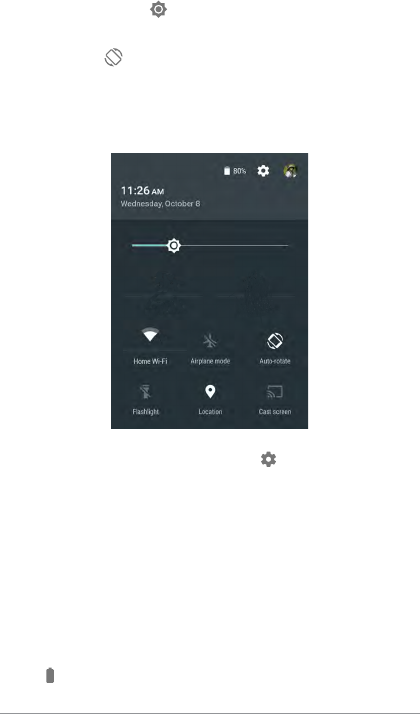
Quick Settings
Use Quick Settings to easily get to frequently used settings, like
turning on airplane mode. To open Quick Settings, swipe down
from the top of the screen with two ngers or twice with one n-
ger. To change a setting, just touch the icon:
• Wi-Fi network: Turn Wi-Fi on or off. To open Wi-Fi settings,
touch the Wi-Fi network name.
• Airplane mode: Turn airplane mode on or off.
ANDROID QUICK START GUIDE WELCOME TO ANDROID 5
• Display brightness: Slide to lower or increase the bright-
ness of your screen.
• Auto-rotate: Lock your device’s orientation in portrait or
landscape mode.
Quick Settings look like this:
Open the main Settings app by touching Settings in the top
right.
You can also turn Auto Rotate on or off from Quick Settings, to
lock or unlock automatic screen rotation.
Manage battery life
The status bar shows how much battery you have left, but you
can also see the exact percentage and approximate time of bat-
tery life remaining. Swipe down from the top of the screen, then
touch Battery.
ANDROID QUICK START GUIDE WELCOME TO ANDROID 6
Your Android device’s battery is built to get you through your day.
When you’re running low, Android’s battery saver conserves your
battery power.
To turn it on, go to Settings > Battery > Battery
saver. For more information, visit Manage battery life.
Get around
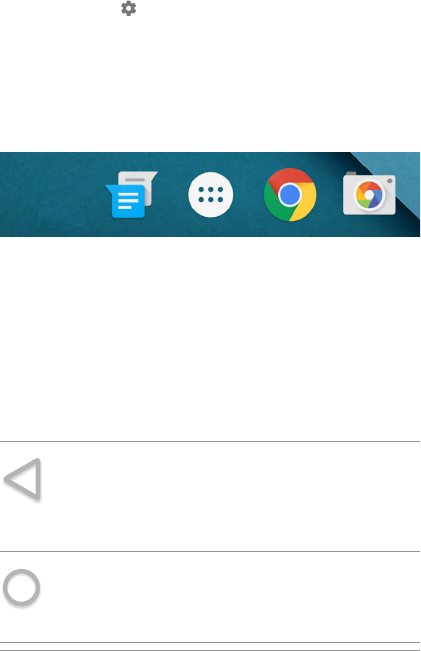
At the bottom of every Home screen you’ll nd the Favorites tray:
another quick way to get to your apps.
To open an app, touch it. To drag an app in or out of the Favorites
tray or anywhere else on a Home screen, touch & hold it, then
move it with your nger where you want it.
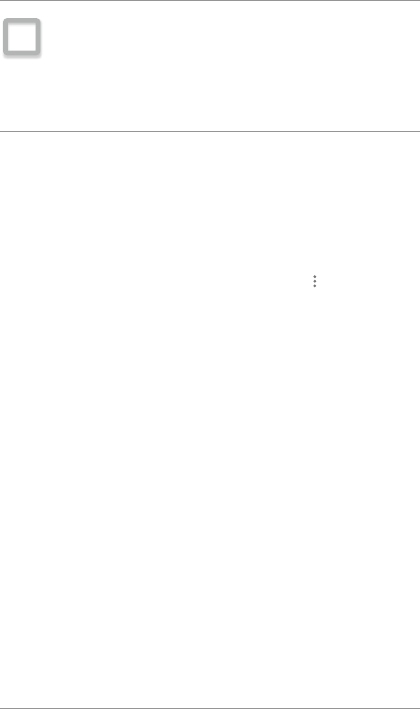
Navigation buttons
At the bottom of most tablet screens, no matter what
you’re doing, you’ll always find the navigation bar with three but -
tons.
Back
Opens the previous screen you were working in, even
if it was in a different app. Once you back up to the
Home screen, you can’t go back any further.
Home
Opens the central Home screen. To open Google Now,
swipe up.
ANDROID QUICK START GUIDE WELCOME TO ANDROID 7
Overview
Opens a list of thumbnail images of screens you’ve
worked with recently. To open one, touch it. To remove
a screen from the list, swipe it left or right or touch
on the X.
Some apps hide these buttons temporarily, or fade them to small
dots in the same position. To bring them back, touch the dots,
touch the screen in the middle, or swipe up from the bottom.
Menus
Many screens in Apps and in Settings include a Menu icon at
the top right of the screen. Touch it to explore additional options,
including Help and Settings.

ANDROID QUICK START GUIDE WELCOME TO ANDROID 8
Organize your Home screens
• To change your wallpaper, add a widget, adjust Search set-
tings, or change screen order, touch & hold the background of
any Home screen.
• You can have any number of Home screens to the right. To add
a new screen, swipe to the rightmost screen and drag an app
or widget to the right edge.
• The screen to the left of the main Home screen is reserved for
Google Now, and is available only when Google Now is turned
on.
• To create a folder, slide one icon quickly on top of another.
• To name or rename a folder, open it and touch its name.
To change the wallpaper:
1. Touch & hold the background, then touch Wallpapers.
2. Swipe right to left to choose a wallpaper image. Or choose an
image from your Photos, Downloads or Drive.
To add an app icon to a Home screen:
1. Go to the Home screen where you want to place the app.
2. Touch All Apps.
3. Swipe from right to left, if necessary, to nd the app you want.
4. Touch & hold the app until the Home screen appears, slide it
into place, and lift your nger.
To add a widget:
1. Touch & hold the background, then touch Widgets. Open All
Apps > Widgets.
2. Swipe right to choose a widget, which provides a quick view or
way to access information on your home screen, like a larger
size clock or a view of information in your Google Play library.

ANDROID QUICK START GUIDE WELCOME TO ANDROID 9
To move an app or widget to another position:
1. Touch & hold the icon.
2. Slide your nger to the new position.
To move between Home screens, slide toward the edge of the
screen.
To bump another icon out of the way, slide slowly into it.
3. Lift your nger.
Touch & type
To select or activate something, touch it.
To type something, such as a name, password, or search terms,
just touch where you want to type. A keyboard pops up that lets
you type into the eld.
Other common gestures include:
• Touch & hold. To select an item, touch & hold it by not lifting
your nger until something happens. This is how you access
accent and other special characters on the keyboard. Slide
your nger to the accented letter you need.
• Touch, hold, & drag. Touch & hold an item for a moment and
then, without lifting your nger, move your nger on the screen
until you reach the target position. You can move apps around
on the Home screen.
• Swipe or slide. Quickly move your nger across the surface of
the screen, without pausing when you rst touch (so you don’t
drag something instead). Slide a Home screen left or right to
view the other Home screens.
• Double-tap. Tap quickly twice on a map or image to zoom in
and out.
• Scale. In some apps (such as Maps, Chrome, and Photos), you
can scale by placing two or more ngers on the screen at once

ANDROID QUICK START GUIDE WELCOME TO ANDROID 10
and pinching them together (to enlarge scale) or spreading
them apart (to reduce it).
• Rotate the screen. The orientation of most screens rotates
with your device as you turn it. To keep your screen locked
in Portrait mode, swipe down with two ngers from the top
of any screen and touch Portrait/Auto-Rotate in Quick
Settings.
Android version & updates
To check your version number or get the latest system update,
first go to Settings > System > About tablet.
Then look for these labels:
• System updates. Touch to check whether you have any pend-
ing system updates.
• Android version. Look partway down the list for this heading
and the number just below it.
ANDROID QUICK START GUIDE ESSENTIALS 11
2
Essentials
Google Now
Google Now is about getting you just the right information, at just
the right time. It tells you today’s weather before you start your
day, how much trafc to expect before you leave for work, and
even your favorite team’s score while they’re playing.
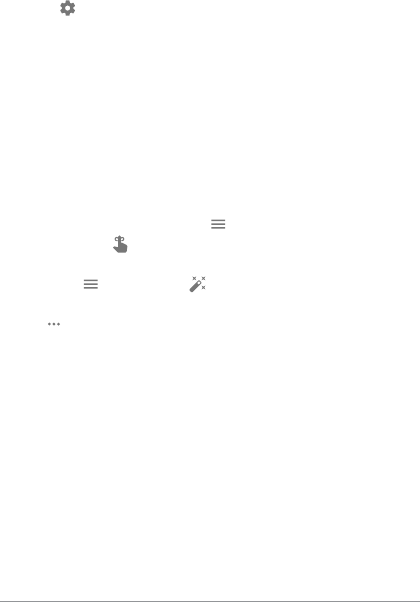
For example, here’s a Google Now card that appears when you’re
about to start your commute:

ANDROID QUICK START GUIDE ESSENTIALS 12
After you start using Google Now, you don’t need to do anything
else. If you like, you can ne-tune some settings, but Google Now
doesn’t need any elaborate setup.
How it works
To know when to show information you’ll nd useful, Google Now
uses contextual data from your device and from other Google
products, plus data from third-party products that you allow
Google Now to access. For example, if you have an appointment
in Google Calendar that includes an address, Google Now can
check trafc and suggest when to leave.
When you decide to use Google Now, you’re also turning on Loca-
tion Reporting and Location History:
• Location Reporting allows Google to periodically store and
use your device’s most recent location data in connection
with your Google Account. Location Reporting is a per-device
setting.
• Location History allows Google to store a history of your
location data from all devices where you’re logged into your
Google Account and have turned on Location Reporting.
You can control how Google Now uses your current location. To
view the relevant settings, go to Settings > Personal > Loca-
tion. When location services are turned on for your account on a
given device, certain apps can use them to give you more relevant
information, such as nearby restaurants or commute trafc.
To learn more about how Google Now uses your location and
other information, visit f nnf kd-bnl . mnv .
ANDROID QUICK START GUIDE ESSENTIALS 13
Try it
You have a chance to turn on Google Now when you rst set up
your device. You can also turn it on or off at any time:
1. Touch & hold any empty space on your Home screen.
2. Go to Settings > Google Now.
To open Google Now, swipe up from the Home button. Updates
appear in the form of Google Now cards. When you don’t need a
card anymore, swipe it from left to right. Swiping from right to left
returns you to the main Home screen.
When you want to see more cards, touch More at the bottom of
the screen.
To adjust the way certain cards get updated:
• Manage reminders: From the Menu at the top left of the
screen, touch Reminders.
• Request updates for your sports teams, stocks, and more:
From the Menu, touch Customize.
• Customize other updates: At the top right of each card, touch
the three dots.

ANDROID QUICK START GUIDE ESSENTIALS 14
What you can ask Google to do for you
When you use Google Now, you can speak to your device to
search, get directions, and create reminders. For example, say
“Ok Google, do I need an umbrella tomorrow?” to see if there’s
rain in the weather forecast.
Turn “Ok Google” on or off
You can start a search or task by saying “Ok Google.” To turn it
off or on, open Google Now or the Google app and touch Menu >
Settings > Voice > OK Google detection.
Display
Change the display settings on your device by following these
steps:
1. Go to Settings > Device > Display.
2. Choose from the following settings. Some of these settings
may vary by your device and version of Android. All can affect
battery life. See “Manage battery life” on page 8 for more
information.
• Brightness level: Move the slider to set the brightness
level on your device.
• Adaptive brightness: Turn on adaptive brightness to au-
tomatically optimize the brightness level on your device
based on the available light around you. Adaptive bright-
ness is on by default. You can still adjust your brightness
when needed.
• Sleep: Change how long it takes for your device’s screen to
go black when you’re not using it. Learn more about Sleep
Settings.
• Daydream: Set up screensavers that display photos, color-

ANDROID QUICK START GUIDE ESSENTIALS 15
ful backgrounds, and more when your device is charging or
docked.
Sound & notication
You can change the sound and notication settings on your de-
vice by going to Settings > Device > Sound & notication.
Notications alert you to the arrival of new messages, calen-
dar events, and alarms, as well as ongoing events, such as
downloads:
• Interruptions. Prioritize sound notications so they don’t inter-
rupt you. In Downtime, select which days and times you allow for
sound notifications
• When device is locked. Sensitive content includes
things like the title of a song you downloaded, who sent you an
email, or the details of a calendar event. For more information,
visit the Help Center.
• App Notications. Modify the notication settings individu-
ally for apps such as Gmail. The setting under When device
is locked will always take precedence over the setting for an
individual app.
• Notication access. See which apps can access your
notications.
ANDROID QUICK START GUIDE ESSENTIALS 16
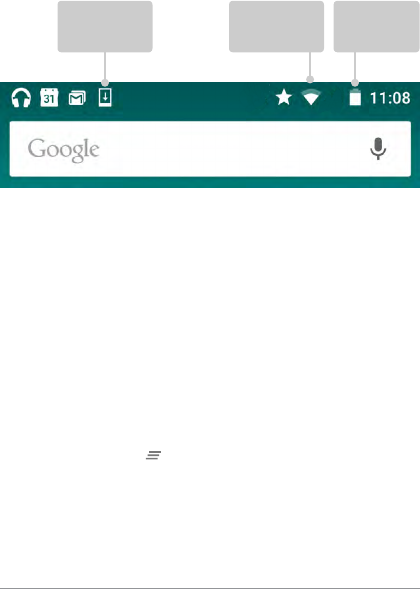
When a notication arrives, its icon appears at the top of the
screen. Icons for pending notications appear on the left, and
system icons showing things like the Wi-Fi signal, mobile carrier
signal, or battery strength are on the right:
Notications Wi-Fi signal Battery
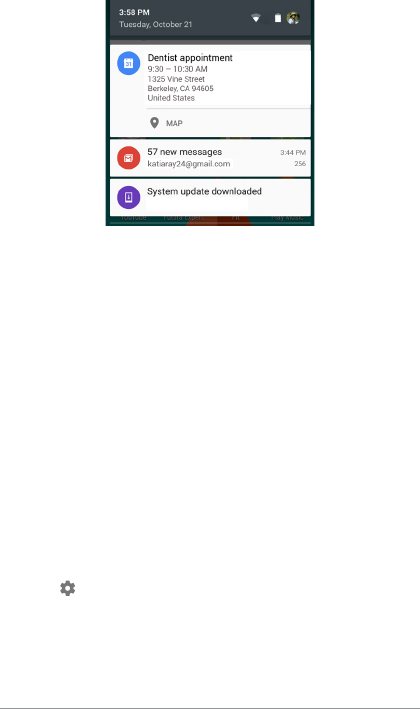
Certain notications can be expanded to show more information,
such as email previews or calendar events. The one at the top is
always expanded when possible. To expand a notication, posi-
tion one nger inside it and swipe down slowly.
To open the related app, touch the notication icon on the left.
Some notications also allow you to take specic actions by
touching icons within the notication. For example, Calendar
notications allow you to Snooze (remind you later) or send email
to other guests.
When you’re nished with a notication, swipe it away. To dismiss
all notications, touch Dismiss at the very bottom of the noti-
cations list.
ANDROID QUICK START GUIDE ESSENTIALS 17
Manage accounts on your device
You can add accounts so that information associated with that
account automatically syncs with your device. You’ll need to set
up an account on your device if you want to get email or get apps
on Google Play.
You can also add multiple users for your device, like if several
people share a tablet. Adding users is different from adding
accounts. Each user has separate settings and can’t access the
accounts of other users, whereas a single user can have multiple
accounts and switch between them anytime they’re signed in.
Make sure you’re signed in as the correct user before adding or
removing any account information.
Add an account
1. Go to Settings > Personal > Accounts. Touch “Add
account.”
2. Touch the type of account you want to add. You may be able
to choose from choices like “Google,” “Personal (IMAP),” or
“Personal (POP3).” If you’re not sure whether to choose IMAP

ANDROID QUICK START GUIDE ESSENTIALS 18
or POP3, try IMAP first. Many email services use IMAP.
i. Choose “Google” if you want to add your Google Account.
When you sign in with a Google Account, all the email, con-
tacts, calendar events, and other data associated with that
account are automatically synced with your device.
ii. Follow the on-screen instructions to add the account.
To change the settings of any of the accounts you added, follow
these steps:
1. Go to Settings > Personal > Accounts.
2. Select your account. If you’re using a Google Account, touch
Google and then your account.
Remove an account
When you remove an account that you’ve added to your device,
everything associated with that account, including email, con-
tacts, and settings is also deleted. You can’t remove the account
you used to initially set up your device.
To remove an account from your device, follow these steps:
1. Check to see if the account you want to remove is the account
you used to set up your device.
• If it’s not, go to step 2 and follow the instructions.
• If it is, reset your device to its factory settings instead of
following the steps below. This erases all of the data from
your device and you’ll need a Google Account to set up your
device again.
2. Open the Settings menu on your device.

ANDROID QUICK START GUIDE ESSENTIALS 19
3. Under “Accounts,” touch the name of the account you want to
remove. If you’re using a Google Account, touch Google and
then the account.
• When you sign out of your Google Account, all the email,
contacts, Calendar events, and other data associated with
that account will no longer automatically sync with your
device.
4. Touch Menu in the top right corner of the screen.
5. Touch Remove account.
Share your device with other users
You can easily share your device with family and friends by creat-
ing a separate user for each person. Each person has their own
space on the device for custom Home screens, accounts, apps,
settings, and more. You must be the device owner to add users.
To add a new user, follow these steps:
1. Go to Settings > Device > Users.
2. Touch Add user, then touch OK.
i. If you’re with the new user: Touch “Set up now” and you’ll
be taken to the lock screen. Select the new user, unlock the
screen, and allow them to set up their Google Account and
other details.
ii. If the new user isn’t around: Touch “Not now.” A “New user”
will appear in the list. The next time you’re with the user, go
back to the user list and select “New user” or click the user
image on the lock screen.
After a user is set up, when you go to the lock screen, you’ll see a
second user prole picture or avatar in the status bar. To choose
a user, touch the picture and unlock the screen. Each user can set
their own screen lock.
ANDROID QUICK START GUIDE ESSENTIALS 20
Switch users
To switch users, swipe down from the top of any screen twice to
open Quick Settings. Touch the image of the current user in the
top right corner of the screen, then touch another user’s image.
Remove a user
The device’s owner can delete any user that they added:
1. Go to Settings > Device > Users.
2. Touch Settings next to the user’s name, then touch Re-
move user.
Other users can only delete their own space.
1. Go to Settings > Device > Users.
2. Touch Menu > Delete username from this device.
Guest user
If someone wants to temporarily use your device, but they don’t
need to be set up as a regular user, they can use it as a guest.
Guest users don’t have access to your mail, your apps, or any
content on your device that’s tied to your account, like photos or
downloaded les. You must be the device’s owner to add a guest.
1. Go to Settings > Device > Users.
2. Touch Guest.
When your guest is nished using your device, you can switch
back to another user.
To switch to another user: Swipe down from the top of any
screen, and then touch the bar at the top to open Quick Settings.
To choose another user, touch the image in the top right corner of
the screen, then touch another user’s image.

ANDROID QUICK START GUIDE ESSENTIALS 21
Security
If a lock is set for your screen, the screen goes dark and locks
when the display goes to sleep or if you press the Power button.
You can set locks of different strengths using Screen Lock
settings:
1. Go to Settings > Personal > Security > Screen
lock.
2. Touch the type of lock you’d like to use.
Even when your screen is locked, you can perform certain
activities.
• Quick Settings: Slide down from the top of the screen to open
Quick Settings without entering your password.
• Camera: Slide from right to left to open the Camera.
If you have a device that’s set up for more than one user, you may
need to touch your image at the bottom of the screen to see your
own locked screen.
For more information, visit Customize the screen lock.
Smart Lock
You can turn on Smart Lock to keep your device unlocked when
it’s clear that you have it with you—for example, when it recognizes
your face.

ANDROID QUICK START GUIDE ESSENTIALS 22
Trusted devices and face matching
You can have your device unlock when it recognizes your
face. After setting a trusted face, every time you turn on your
device, it will search for your face and unlock if it recognizes you.
Note: Face matching doesn’t store any photos of you. Data used to
recognize your face is only stored on your device and is not acces-
sible by apps or backed up on Google servers.
Protect against harmful apps
Apps from Google Play are always veried by Google to protect
you and your device from harm. By default, your device doesn’t al-
low the installation of apps from sources other than Google Play.
If you choose to allow the installation of apps from unknown
sources and install apps from sources other than Google Play, it’s
more likely that apps will be installed that could harm you or your
device.
If you allow the installation of apps from unknown sources, the
Verify Apps feature protects you when installing apps outside
of Google Play by continually checking your device to make sure
that all apps installed are behaving in a safe manner, even after
installation.

ANDROID QUICK START GUIDE ESSENTIALS 23
Chromecast
Chromecast is a small device that plugs into the back of your TV.
It allows you to send videos and music straight from your or tablet
to your TV. You can use Chromecast with apps like:
• YouTube
• Netflix
• Google Play Movies & TV
• Google Play Music
• Hulu Plus
To see more apps, visit chromecast.com/apps.
When using Chromecast, make sure your tablet is using the same
Wi-Fi network as your Chromecast, and that Chrome-cast is
selected as your TV’s source input.
To display content from your tablet on your TV:
1. Open the video or music in one of the apps listed above.
2. Touch Cast.
3. Play the content as usual to stream it to your TV.
ANDROID QUICK START GUIDE ESSENTIALS 24
File storage
Android 5.0 makes it easy to store and browse through pictures,
videos, and other les on your device and attach them to an
email, Hangout message, and so on. You can also use stored
images as your Home screen wallpaper.
For example, to attach an image to an email you’re composing,
touch the Paper Clip in the top right and choose to either
Attach le or Insert from Drive to select stored images in your
Drive folder.
From here, you can view any of these sources:
• Recent shows you the photos or videos you’ve taken or
opened most recently.
• Drive lets you attach any les stored in Google Drive.
• Images displays any photos, videos, or other images on your
device.
• Downloads includes most les (excluding Play content) you’ve
downloaded from emails or the Web
• Photos lets you browse all the images and videos that are on
your device or have been uploaded to your Google account.
Use the Downloads app to view, reopen, or delete
les you download from Gmail or other sources
(excluding Google Play books, videos, magazines,
and other media.)
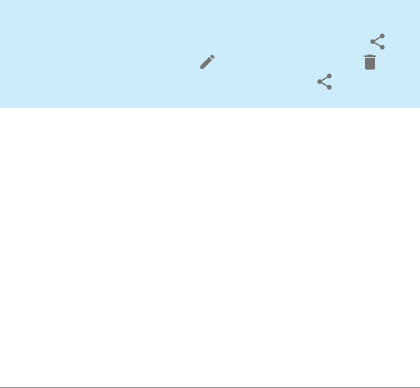
In the Downloads app:
• Touch an item to open it.
• In your list of downloads, touch & hold an item to select it.
Touch Share and choose a sharing method from the list.
Touch to delete.
ANDROID QUICK START GUIDE ESSENTIALS 25
Google Play streams purchases and rentals via the Internet. So
the purchases and rentals don’t always occupy storage space
when you play them. Although you can download content in
Google Play apps to access offline, Google Play content never
appears in Downloads.
Screenshots
To take a screenshot:
1. Make sure the image you want to capture is displayed on the
screen.
2. Press the Power and Volume down buttons simultaneously.
The screenshot is automatically saved in your Photos.
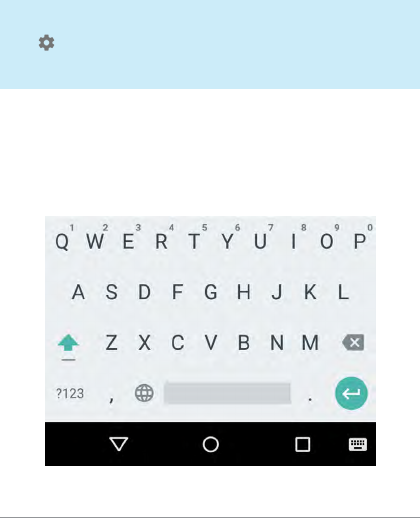
TIP: To easily share your screenshot via Gmail, Google+,
and more, select your screenshot in Photos and touch
Share at the bottom. Touch Edit to modify. Touch to
delete. For Google Play edition devices, touch Share.
ANDROID QUICK START GUIDE USE THE KEYBOARD 27
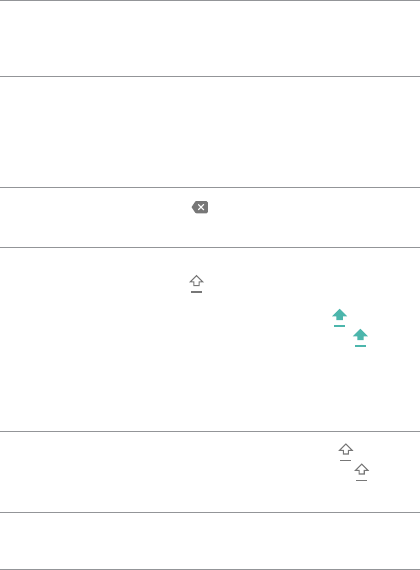
Keyboards on tablets work in a similar way. To make the keyboard
go away, touch the Back button below it.
Some apps open the keyboard automatically. In others, you rst
need to touch where you want to type.
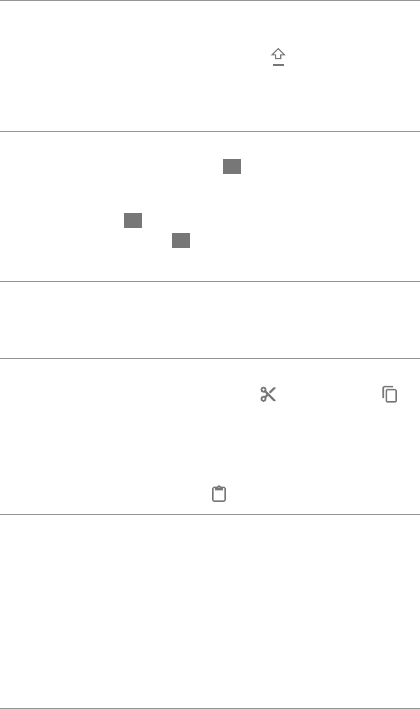
Basic editing
Change
where you
want to type
Touch the cursor, then touch and drag the
tab that appears below it to the new position.
Select text Touch and hold or double-tap within the text.
The nearest word highlights, with a tab at
each end of the selection. Drag the tabs to
change the selection.
Delete text Touch the Delete key to delete the char-
acters before the cursor or selected text.
Type capital
letters
To switch to capital letters for one letter,
touch the Shift key once.
You can also touch and hold the Shift key
while you type or you can touch the Shift
key and slide to another key.
When you release the key, the lowercase
letters reappear.
Turn caps
lock on
Double-tap or touch and hold the Shift
key so that it changes to. Touch the Shift
key again to return to lowercase.
ANDROID QUICK START GUIDE USE THE KEYBOARD 28
Change word
capitalization
If you want to quickly change the capitaliza-
tion of a word you’ve already typed, you can
select it and touch the Shift key.
You’ll have the option to select the capital-
ized word or the word in all capital letters.
Type a
symbol or
character
To switch to symbol keys for one word, touch
the symbol key ?123 once.
You can also touch and hold the symbol key
?123 while you type or you can touch thesym-
bol key ?123 and slide to another key. When
you release the key, the letter keys reappear.
View more
symbols and
characters
Touch and hold symbols or characters to get
accented characters or additional symbols.
Cut, copy,
paste
Select the text you want to cut or copy. Then
touch the Cut button or Copy button .
To paste, touch the space where you want
to paste your text and then touch Paste. If
you want to replace other text with the text
you copied, highlight the text, then touch the
Paste button .
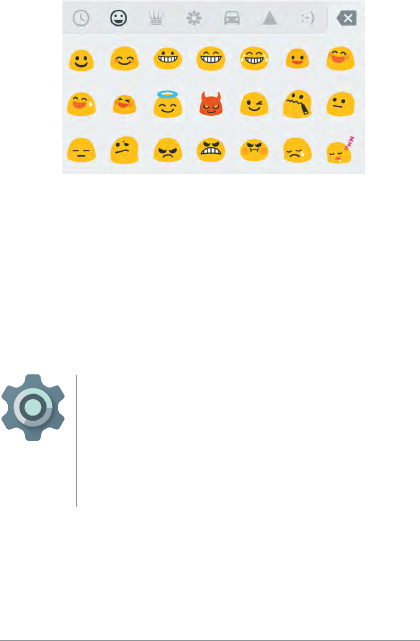
Emoji
Use Google Keyboard to choose from a variety of small, colorful
images used to express emotion (known as emoji) to add some
fun to your messages.
Depending on your device, you may need to touch and hold the
Return key and then slide your nger to the happy face to display
emoji. On a tablet, just touch the emoji symbol at the lower right.
ANDROID QUICK START GUIDE USE THE KEYBOARD 29
You’ll see a panel like this. To move between categories, swipe
left or right or touch the symbols in the top row. To type an emoji,
touch it:
Use next-word suggestions
1. Touch the location where you want to input text.
2. Start typing out a word. When the word you want is displayed
in a list above the keyboard, touch it.
3. Continue to touch words unless the one you want doesn’t
appear. If so, type it.
Android continues to suggest words as you type.
To change your keyboard and input methods, go to
Settings > Personal > Language & input.
To turn next-word suggestions on or off, go to Set-
tings > Personal > Language & input > Keyboard &
input methods > Google Keyboard > Text correction
> Next-word suggestions.
ANDROID QUICK START GUIDE USE THE KEYBOARD 30
Gesture Typing
Gesture Typing works best for English. Quality varies for other lan-
guages, and some don’t support it yet.
To input a word using Gesture Typing:
1. Touch the location where you want to type to open the
keyboard.
2. Slide your nger slowly across the letters of the word you want
to input.
3. Release your nger when the word you want is displayed in
the floating preview or the middle of the suggestion strip. To
select one of the other words in the suggestion strip, touch it.
If the word you want isn’t shown while using Gesture Typing,
you can type it out manually. If you gesture a word and want to
change it, touch the word to see other choices in the suggestion
strip.
TIP: If there are letters you want to emphasize, like repeat-
ed letters, such as the “e” in sleep, pause over the “e” slight-
ly longer before moving on to the next letter.
Use Gesture Typing without the space bar
When you use Gesture Typing, there’s no need to use the space
bar — just continue to slide your nger across the letters you want
to input, then lift your nger to start the next word.
To change Gesture Typing settings, go to Set-
tings > Language & input > Keyboard & input meth-
ods > Google Keyboard> Gesture Typing.

ANDROID QUICK START GUIDE USE THE KEYBOARD 31
Keyboard dictionaries
To manage keyboard dictionaries, go to Settings > Personal >
Language & input.
Personal dictionary
You can add your own words to your personal dictionary so that
your device remembers them. To add a word or phrase, including
an optional shortcut, go to Settings > Personal > Language &
input > Google Keyboard > Text Correction > Personal dictio-
nary and the language of the dictionary you want to modify, then
choose Add and type in the word. When you use the optional
shortcut when typing, your word or phrase appears as an option
in the suggested words above the keyboard.
Add-on dictionaries
1. Go to Settings > Personal > Language & input > Google
Keyboard > Text Correction > Add-on dictionaries.
2. You’ll see dictionaries for other languages that you can down-
load to your device.
3. Touch the dictionary you want, then Install.
Type by speaking
You can speak to enter text in most places where you can enter
text with the onscreen keyboard.
1. Touch a text eld, or a location in the text you’ve already en-
tered in a text eld.
2. Touch the Microphone key on the onscreen keyboard.
3. When you see the microphone image, speak what you want to
type.
In some languages, you can also enter punctuation by speaking
it, like “comma,” “period,” “question mark,” “exclamation mark,”

ANDROID QUICK START GUIDE USE THE KEYBOARD 32
or “exclamation point.” Supported languages include English,
French, Italian, German, Spanish, and Russian.
To improve processing of your voice input, Google may record a
few seconds of background noise in temporary memory at any
time. This recording remains on the device only temporarily and
is not sent to Google.
To change your speech settings, go to Settings >
Personal > Language & input.
ANDROID QUICK START GUIDE TRY SOME APPS 33
4
Try some apps
All Apps
To see all your apps, touch All Apps in the Favor-
ites tray on any Home screen.
This is where you can see all your apps, including
those you downloaded on Google Play. You can move
app icons to any of your Home screens.
From All Apps, you can:
• Move between screens. Swipe left or right.
• Open an app. Touch its icon.
• Place an app icon on a Home screen. Touch & hold the app
icon, slide your nger, and lift your nger to drop the icon into
your desired Home screen.
• Browse widgets. Touch the Widgets tab at the top of any All
Apps screen.
• Get more apps. Touch Google Play in the list of app icons.
To remove an app icon from the Home screen without removing
it permanently from your device, touch & hold it, slide your nger
toward the top of the screen, and drop the app over Remove.
ANDROID QUICK START GUIDE TRY SOME APPS 34
To view info about an app from an All Apps screen, touch & hold
it, slide your nger toward the top of the screen, and drop the app
over App Info.
TIP: Some apps can harm you or your device. However, you
don’t need to purchase anti-virus software for Google Play
edition devices. Google can verify apps to help prevent
harmful software from being installed.
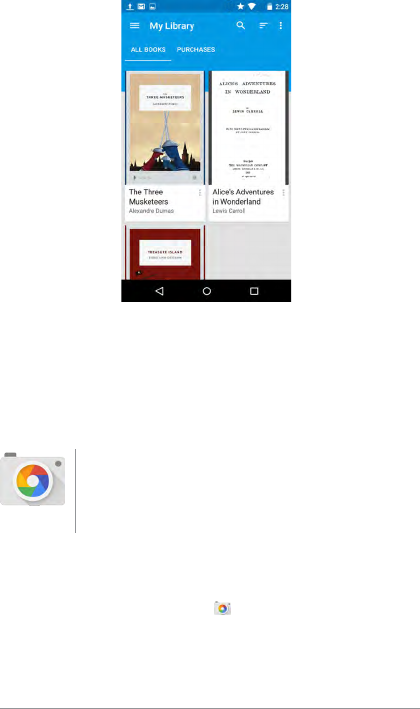
Gmail
Use the Gmail app to read and write email from
any mobile device. To open it, touch Gmail on a
Home or All Apps screen.
Gmail isn’t just about email. You can use your Gmail account to
sign in to all Google apps and services, including these and many
more:
• Google Now, for getting the information you need at just the
right time
• Calendar
• People, for keeping track of your contacts
• Google Drive, for working with documents
While you’re reading a message:
• Touch the icons along the top of the screen to archive, throw
away, and mark as read. Touch to mark a message as
ANDROID QUICK START GUIDE TRY SOME APPS 35
unread. Look under the Menu to move, change labels,
mute, print and do other actions to the email.
• Swipe left or right to read the previous or next conversation.
Organize your conversations: From the Inbox, touch & hold a con-
versation to select it. Then use the icons and menu along the top
of the screen to manage the selected messages.
To change your settings, add an account, or get help, touch the
menu icon or button.
No matter where you are in Gmail, you can always get back to the
Inbox by touching the Back button at the top of the screen.
From the Inbox, touch Menu to open the drawer that reveals avail-
able accounts, labels, and so on.
TIP: You can access your email from other accounts, like
Microsoft Exchange, in Gmail by adding the account in
Gmail Settings.
To add a non-Gmail email account to Gmail:
1. Go to Settings > Personal > Accounts > Add account.
2. Touch the type of account you want to add. You may be able to
choose from choices like “Google,” “Personal,” or “Work.”
3. Choose “Google” if you want to add your Google Account.
When you sign in with a Google Account, all the email, con-
tacts, Calendar events, and other data associated with that
account are automatically synced with your device.
4. Follow the on-screen instructions to add the account.
ANDROID QUICK START GUIDE TRY SOME APPS 36
To change the settings of any of the accounts you added, follow
these steps:
1. Open the Settings menu on your device.
2. Under “Personal,” touch “Accounts” and select your account.
If you’re using a Google account, touch Google and then your
account.
Google Play
Google Play brings together all your favorite apps
& games, movies & TV shows, books, music, and
news & magazines in one place, so you can reach it
from any of your devices.
To open the Google Play app, touch Google Play.
If you purchased content on Google Play in the past, you’ll auto-
matically have access to this content on any Android device —
just make sure you’re signed in using the same account that you
used to purchase it. To check:
1. Open the Google Play app.
2. Touch Menu at the top left.
From here, you can view the current account or switch to another,
view your purchased apps, check your wish list, and so on.
To set preferences, clear your search history, and turn on user
controls, go to Menu > Settings. For example, to lter apps
based on maturity level or require a PIN for purchases, touch
Content ltering or Require authentication for purchases.
To nd your content, open any of the Google Play apps from the
All Apps screen and touch Menu.
ANDROID QUICK START GUIDE TRY SOME APPS 37
Google Play support
For more details about Google Play, including email support options
, visit
support.google.com/googleplay.
Camera
The Camera app lets you take photos, panoramic
photos, videos, and immersive 360-degree photo
sphere shots, including what’s above and below
you.
To open Camera:
• From the the lock screen, swipe from right to left.
• From the Home screen, touch Camera.
The rst time you open Camera, you may be asked if you want
it to remember photo locations. This allows you, for example, to
pinpoint the location of a particular photo with Google Maps.
ANDROID QUICK START GUIDE TRY SOME APPS 38
When you open Camera, you can choose from ve different cam-
era modes. To see the modes, swipe left to right.
The Camera icon indicates Camera mode. To take a picture:
1. Frame your subject and watch for the focus ring.
To focus on a different part of the image, touch it. To zoom in,
pinch two ngers outwards. To zoom out, pinch two ngers
inwards.
2. When the focus ring brackets disappear, touch the shutter
button, which is the camera button.
3. To see the image you just took, swipe from right to left. To see
stored photos, touch Photos in the top right. When viewing
stored photos, touch to share, Edit to modify photos
and to delete.
Keep swiping to see other images in Photos.
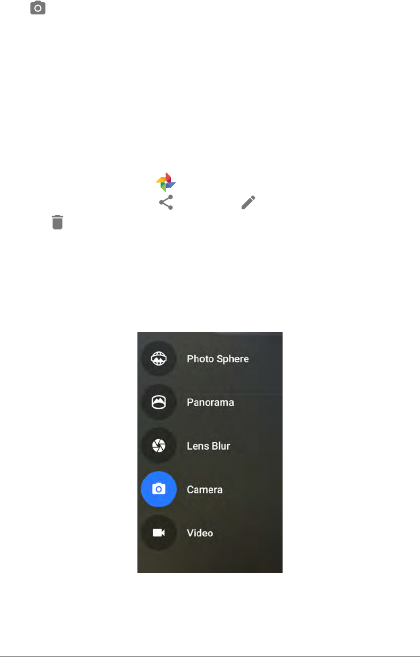
To change to a different mode, swipe left to right to show the list
of camera modes:
ANDROID QUICK START GUIDE TRY SOME APPS 39
Photo
Sphere
To capture a 360-degree or wide angle shot,
pan or tilt until the circle in the center of the
screen moves over a blue dot and records that
portion of the image. Keep moving over the
dots until you’re nished, then touch the check
mark at the bottom of the screen.
Panorama Touch Panorama to begin taking a panoramic
photo.
Find your starting point, and touch the shutter
to take the rst picture in the panorama.
To take the subsequent pictures, slowly swivel
in place to move the target icon over each gray
dot until the dot turns blue.
Keep hovering over the dots until all of them are
blue and your image is complete. Then touch
the check mark at the bottom of the screen.
Lens Blur Touch Lens Blur, then slowly raise the device
following the arrow.
Camera Touch Camera to take regular pictures.
Video To start recording a video, touch the video but-
ton. Touch it again to stop.
To change settings for each mode such as flash, exposure, and
so on, touch the circle with the three dots at the bottom right of
the framed image.
ANDROID QUICK START GUIDE TRY SOME APPS 40
Photos
The Photos app gives you instant access to all your
photos and videos associated with any Google
Account set up on your tablet. To open it, touch
Photos.
To open Photos from the:
• Camera app. Swipe from right to left.
• All Apps screen. Touch Photos.
When you’re signed into your device with your Google Account,
the Photos app makes it easy to auto-backup all the photos and
videos you take, organize them, and share with friends.
You can also browse, search, crop, edit, and tag photos, and cre-
ate albums and movies.
Touch Menu to:
• Switch to or from Google+.
• Organize and edit your photos and videos.
• Create and browse albums.
• Explore Auto Awesome animations, panoramas, or merged
group shots created for you automatically.
• Browse photos of yourself.
ANDROID QUICK START GUIDE TRY SOME APPS 41
Contacts
The Contacts app gives you quick access to every-
one you want to reach. To open it, touch the Con-
tacts icon on a Home or All Apps screen.
When you first turn on your device and sign into a Google Account,
existing contacts from that account are synced with your Contacts
app. After that, your contacts stay in sync automatically on your
different devices or a Web browser.
If you use Exchange, you can also sync that contact information
with Contacts.
All your Contacts information is available from Gmail, Google Talk,
and other apps. As you add contacts from different sources, they’re
synced automatically across all the places you need them.
When you open the Contacts app, you can:
• View all contacts or favorites. Choose from the top of the
screen.
• Add a contact. Touch Add Contact.
• Read details. Touch a name to see details for a contact or
group.
• Share the contact or place a frequently used contact on the
Home screen. Touch Menu.
• Edit details. While viewing a contact, touch Edit at the top
of the screen to edit the contact’s information.
• Change your settings. While viewing the main list screen,
touch Menu to import or export contacts, choose display
options and add or edit accounts.

ANDROID QUICK START GUIDE TRY SOME APPS 42
Hangouts
With Hangouts, you can share photos and your location
with others. On some devices, Hangouts is also your
default messaging app.
Calendar
Use the Calendar app to view and edit your sched-
ule. To open it, touch Calendar on a Home or All
Apps screen.
When you rst set up your Android device, you have a chance
to congure it to use a Google Account (such as Gmail). The
frst time you open the Calendar app on your tablet, it displays
any existing calendar events from that Google Account on the
web.
As you edit events, they’re synced automatically across all the
places you need them.
To change the Calendar view, touch the Menu and choose
Schedule, Day, or Week from the top of the screen.
From any of these views, you can:
• Read or edit event details. Touch an event to view its details.
• Manage events and calendars. Touch icons across the top of
the screen or the menu to search or create events, return to
today, or adjust settings.
To email everyone who is invited to an event, you have two
With Hangouts, you can share photos and

ANDROID QUICK START GUIDE TRY SOME APPS 43
• Open the event from the Calendar app at any time and touch
Email guests. You have a list of quick responses or you can
write your own.
• When a notication of the event arrives just before the meet-
ing starts, swipe down the notication shade. Then swipe
using one nger to expand the notication if necessary, and
touch Email guests.
ANDROID QUICK START GUIDE SETTINGS 44
5
Settings
Settings controls the core Android settings for
networks, hardware, location, security, language,
accounts, etc.
The fastest way to adjust system settings that you access fre-
quently, such as Wi-Fi or brightness, is through Quick Settings.
See “Quick Settings” on page 7.
You can control many other settings for your device and account
by swiping down from the top of the screen twice and touching
. These are the main types of device or account settings avail-
able.
• Wireless & networks. Wi-Fi, data usage, Android
Beam, and related settings.
• Device. Sound, battery, sleep, and other display settings.
• Location.
• Language.
• Sync.
• Backup/reset options.
• Accounts.
• Security. Passwords and certicates, screen lock, encryption,
and app installation sources.
• System. Date, time, accessibility, and device information.

ANDROID QUICK START GUIDE SETTINGS 45
Most apps also include their own settings, typically available
from the menu on the upper left side of the app, or from the
Menu > Settings. On Google Play edition devices, settings
may be in the Menu button.
Some useful settings are also available from the Google Settings
app.
The Google Settings app let you adjust adjust
preferences for commonly used Google apps and
services in one place, including Google+, Location,
Search, and the Android Device Manager.
To open Google Settings, touch the in All Apps.
From here, you can also:
• Control how interest-based Google ads are displayed in
non-Google apps.
• Under Connected apps, you can view all the apps that have
access to your Google Account information, including the type
of access granted to each app.

ANDROID QUICK START GUIDE ACCESSIBILITY 46
6
Accessibility
To use the accessibility options, open Settings > System >
Accessibility.
To view detailed information about setting up these options, visit
Android Accessibility. Options for people with visual impairments
include the following:
Captions: You can turn on captions for your device and specify
the language, text size, and style. For some apps, you have to turn
on the captions in the app itself.
TalkBack is a screen reader.
It uses spoken feedback to describe events, such
as notications, and the results of your actions, such as opening
an app. When TalkBack is on, you have to double-tap in order to
select something. TalkBack settings let you control the nature of
TalkBack speech, feedback, and touch exploration (Explore by
touch).
Explore by touch is a system feature that works with TalkBack,
allowing you to touch your device’s screen and hear what’s under
your nger via spoken feedback. It is helpful to people with low or
no vision. In TalkBack settings, you can change the settings of Ex-
plore by touch, like managing gestures and how lists are scrolled.

ANDROID QUICK START GUIDE ACCESSIBILITY 47
Display and sound accessibility options include increasing the
text size, changing the speed at which text is spoken, color inver-
sion, color correction, and high contrast text.
If you have low vision and don’t plan to use Explore by Touch, visit
support.google.com/android to see Help content formatted for
sighted users. You can make reading and navigating this material
easier by increasing the text size – just open Chrome, go to Menu
> Settings > Accessibility, and drag the slider to adjust the text
size.
You can also try magnication gestures, which allow you to zoom
in and out, as well as temporarily magnify what’s under your n-
ger. To try magnication gestures, go to Settings > Accessi-
bility > Magnication gestures.
FCC Compliance:
1. This device complies with Part 15 of the FCC Rules.Operation is
subject to the following two conditions:
(1) This device may not cause harmful interference, and
(2) This device must accept any interference received,14 including
Interference that may cause undesired operation.
(2) This device must accept any interference received, including
2. Changes or modifications not expressly approved by the party responsible for compliance
could void the user’s authority to operate the equipment.
NOTE: This equipment has been tested and found to comply with the limits for a Class B
digital device, pursuant to Part 15 of the FCC Rules. These limits are designed to provide
reasonable protection against harmful interference in a residential installation. This
equipment generates, uses and can radiate radio frequency energy and, if not installed and
used in accordance with the instructions, may cause harmful interference to radio
communications. However, there is no guarantee that interference will not occur in a
particular installation. If this equipment does cause harmful interference to radio or
television reception, which can be determined by turning the equipment off and on, the user
is encouraged to try to correct the interference by one or more of the following measures:
-- Reorient or relocate the receiving antenna.
-- Increase the separation between the equipment and receiver.
-- Connect the equipment into an outlet on a circuit different from that to which the receiver
is connected.
-- Consult the dealer or an experienced radio/TV technician for help.