iKeyless RHKFO Keyless Entry Remote User Manual 15 0001 External Photos

iKeyless, LLC Keyless Entry Remote 15 0001 External Photos

Contents

Manual

    5015 B.U. Bowman Drive  Buford, GA 30518 USA Voice: 770-831-8048 Fax: 770-831-8598   Certification Exhibit     FCC ID:  X32-RHKFO IC: 8797A-RHKFO  FCC Rule Part: 15.231 IC Radio Standards Specification: RSS-210  ACS Project Number:  15-0001   Manufacturer: iKeyless, LLC Model: 300-0271     Manual
300-0271Draft User Manual2015-02-17
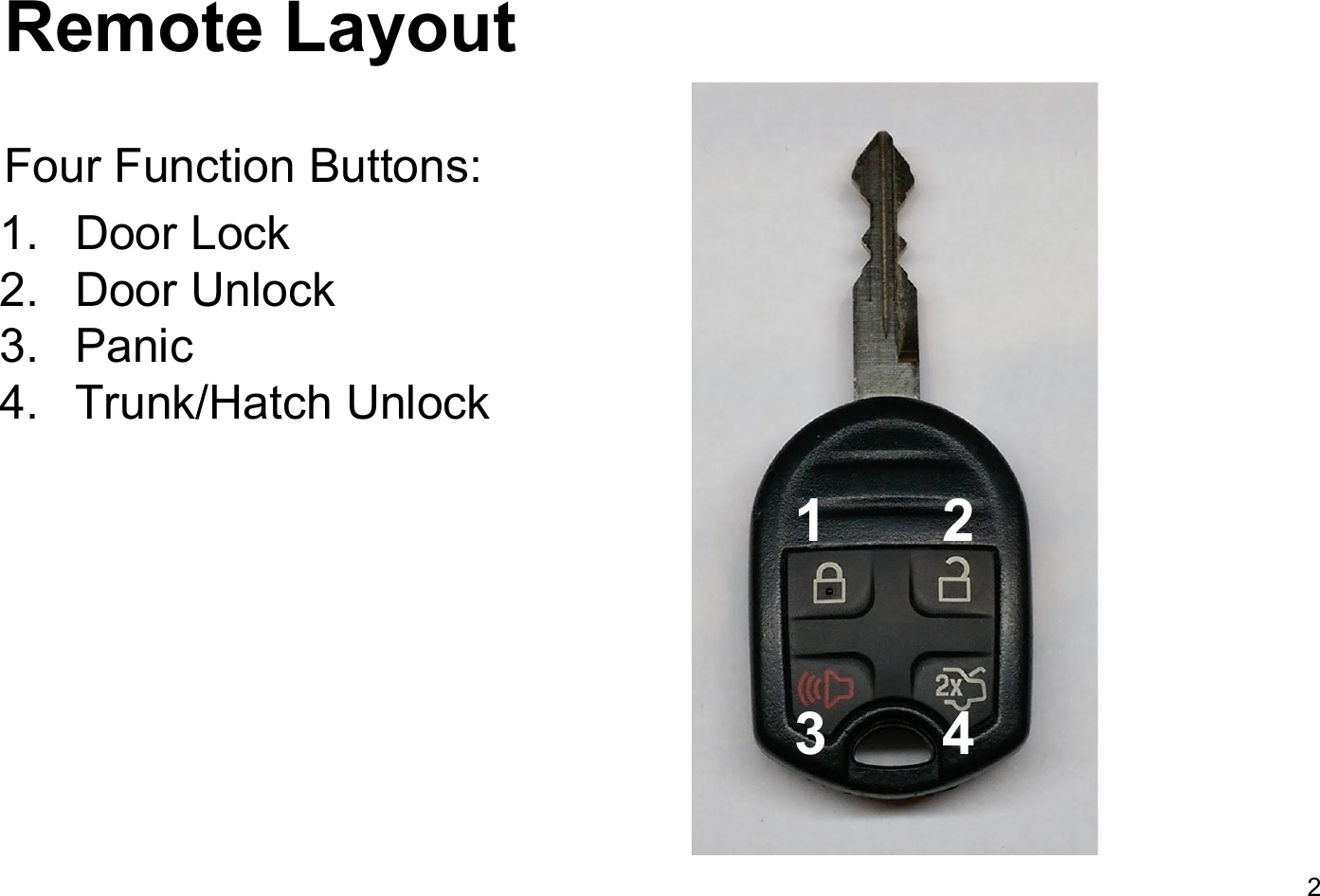
Remote LayoutFour Function Buttons:1. Door Lock2. Door Unlock3. Panic4. Trunk/Hatch Unlock21       23       4
Using the remoteMake sure you’re within range of the vehicle before attempting to use the remote.To use the remote lock feature, press and release the lock button.To use the unlock feature, press and release the unlock button.To use the trunk unlock/hatch release feature press the trunk/hatch unlock button.To activate the vehicle panic alarm, press and release the panic button. To deactivate the vehicle panic alarm, press any button on the remote.Note: The exact behavior in response to each button press may vary depending on the vehicle. Consult the vehicle manual for more information.3
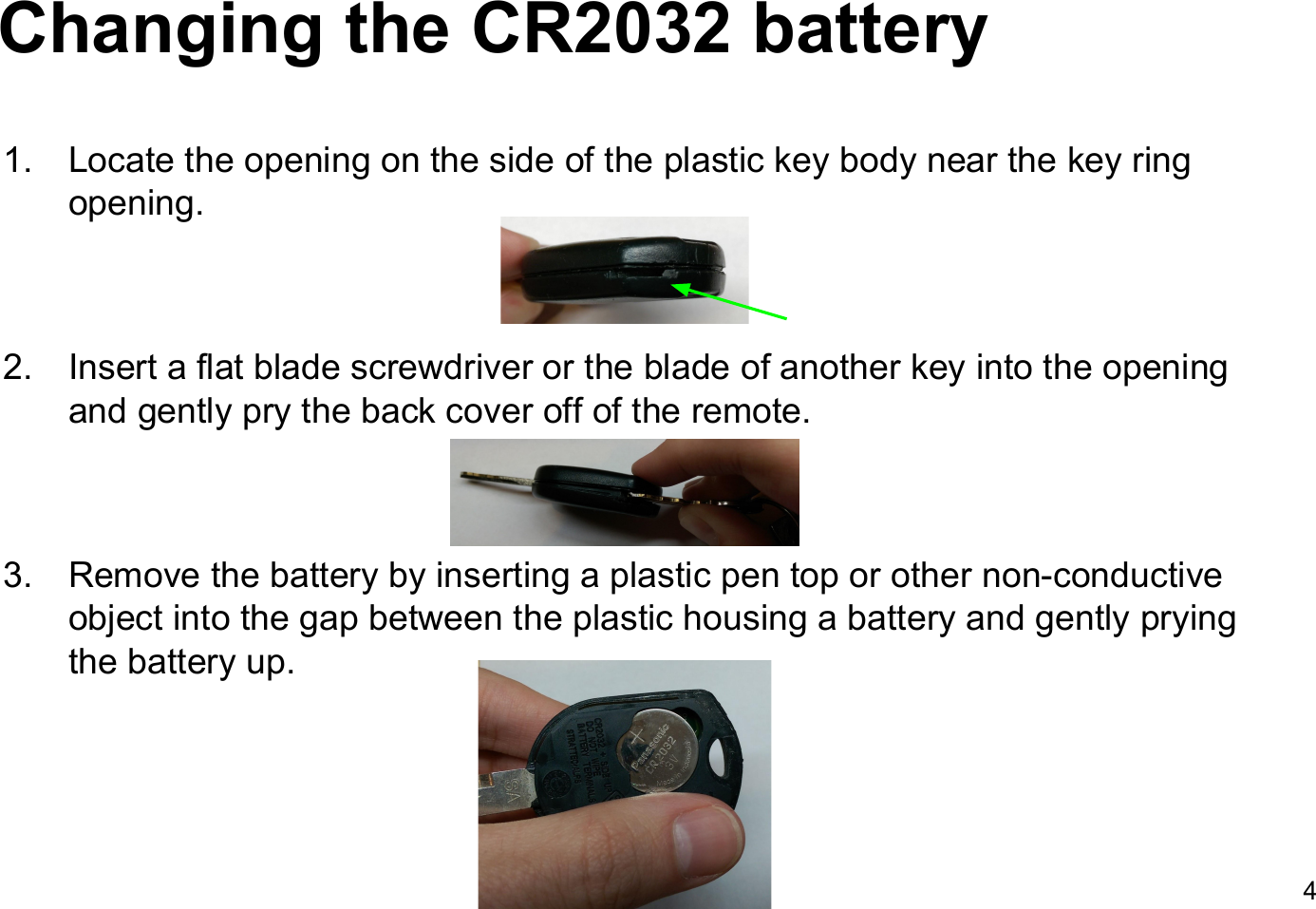
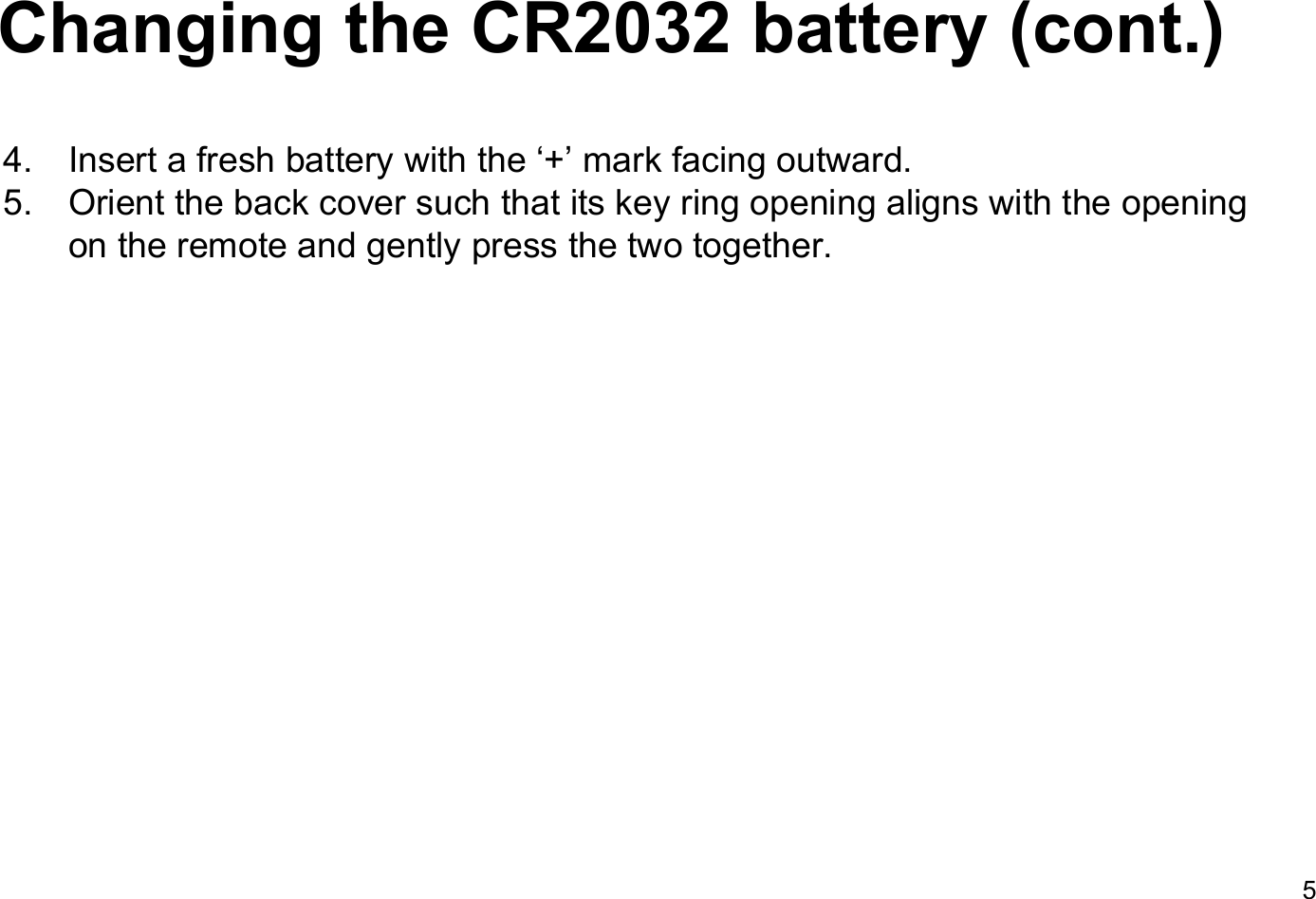
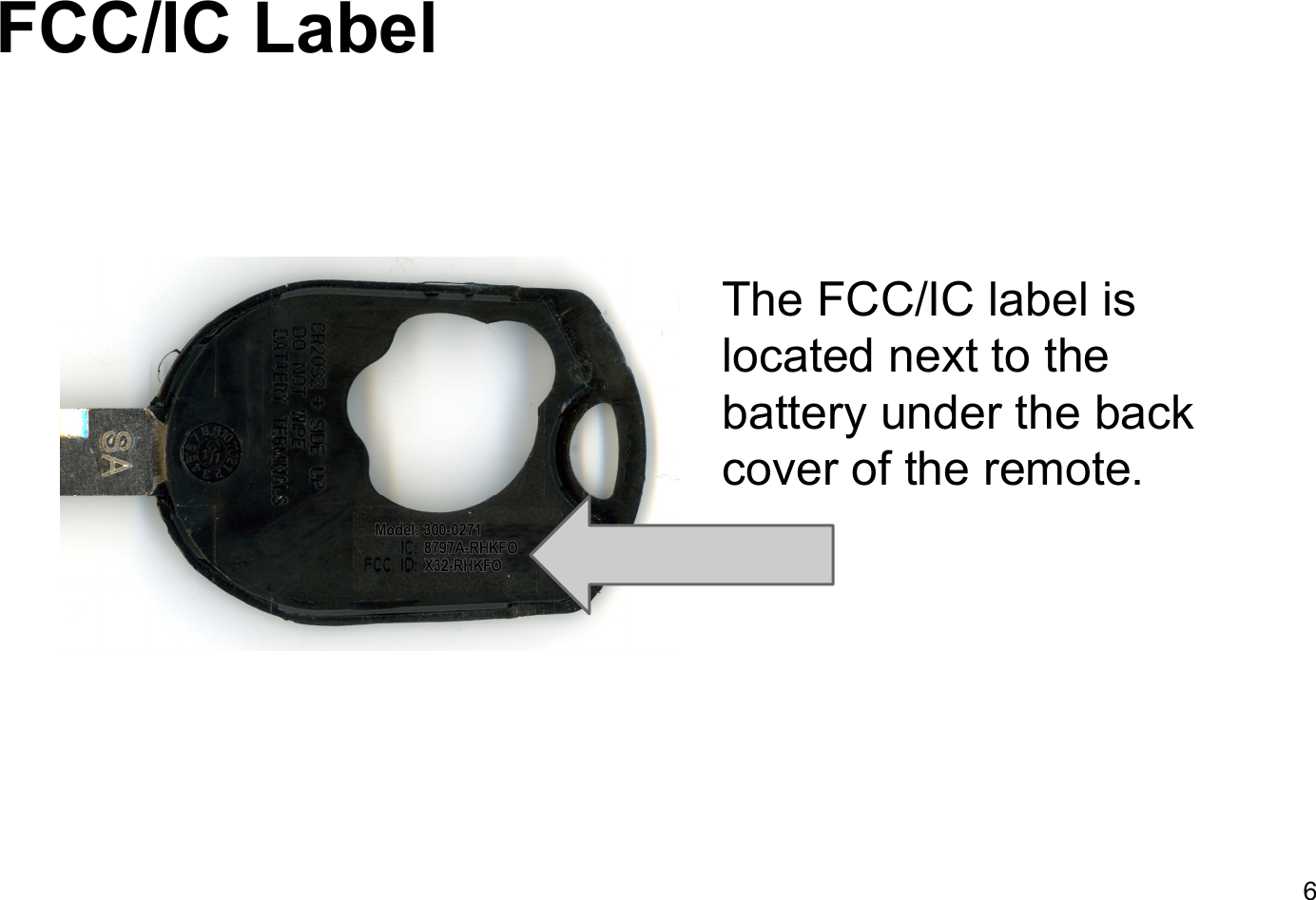
Changing the CR2032 battery1. Locate the opening on the side of the plastic key body near the key ring opening.2. Insert a flat blade screwdriver or the blade of another key into the opening and gently pry the back cover off of the remote.3. Remove the battery by inserting a plastic pen top or other non-conductive object into the gap between the plastic housing a battery and gently prying the battery up.4
Changing the CR2032 battery (cont.)4. Insert a fresh battery with the ‘+’ mark facing outward.5. Orient the back cover such that its key ring opening aligns with the opening on the remote and gently press the two together.5
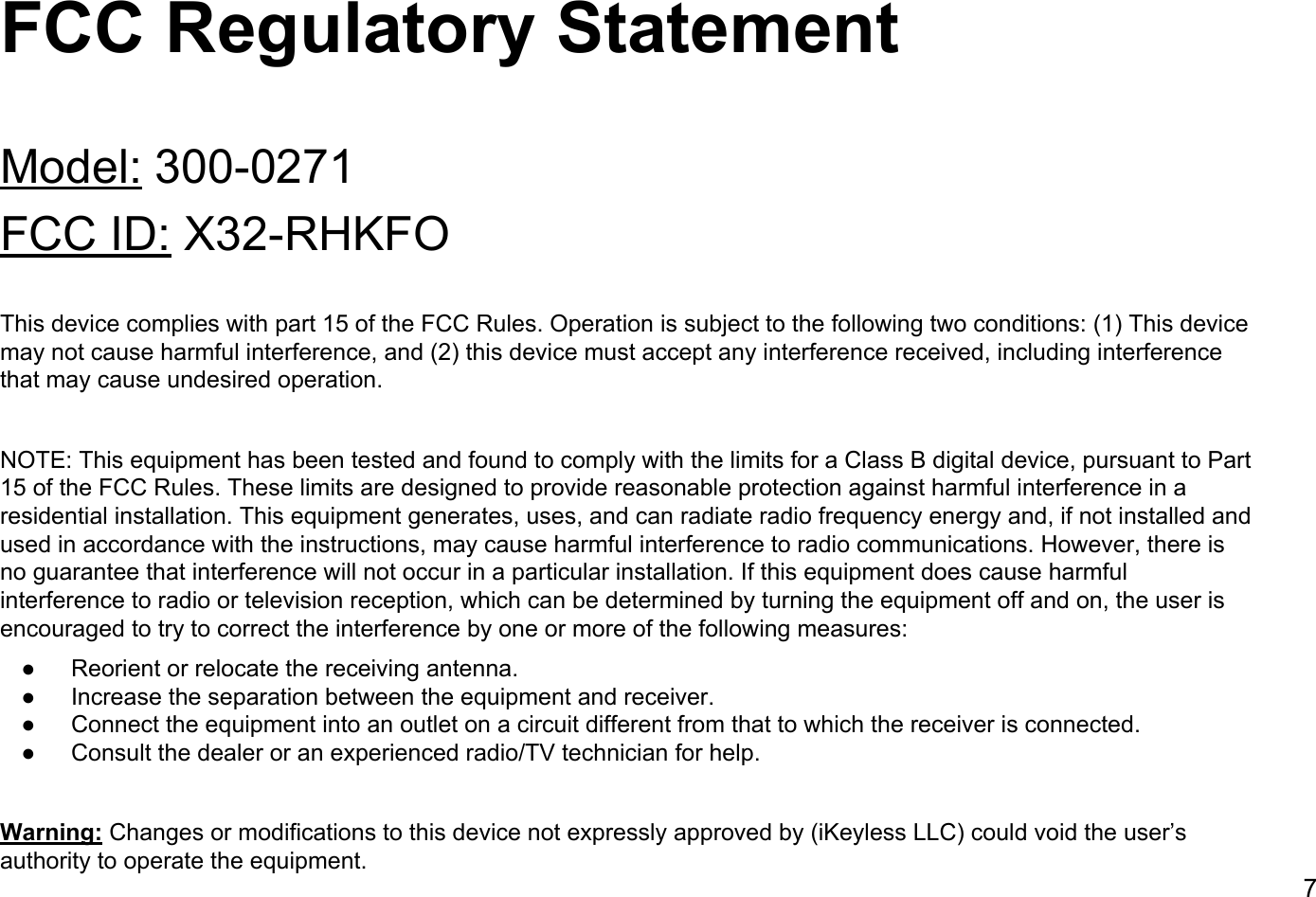
FCC/IC Label6The FCC/IC label is located next to the battery under the back cover of the remote.
FCC Regulatory StatementModel: 300-0271FCC ID: X32-RHKFOThis device complies with part 15 of the FCC Rules. Operation is subject to the following two conditions: (1) This device may not cause harmful interference, and (2) this device must accept any interference received, including interference that may cause undesired operation.NOTE: This equipment has been tested and found to comply with the limits for a Class B digital device, pursuant to Part 15 of the FCC Rules. These limits are designed to provide reasonable protection against harmful interference in a residential installation. This equipment generates, uses, and can radiate radio frequency energy and, if not installed and used in accordance with the instructions, may cause harmful interference to radio communications. However, there is no guarantee that interference will not occur in a particular installation. If this equipment does cause harmful interference to radio or television reception, which can be determined by turning the equipment off and on, the user is encouraged to try to correct the interference by one or more of the following measures:● Reorient or relocate the receiving antenna.● Increase the separation between the equipment and receiver.● Connect the equipment into an outlet on a circuit different from that to which the receiver is connected.● Consult the dealer or an experienced radio/TV technician for help.Warning: Changes or modifications to this device not expressly approved by (iKeyless LLC) could void the user’s authority to operate the equipment.7
IC Regulatory StatementModel: 300-0271IC: 8797A-RHKFOUnder Industry Canada regulations, this radio transmitter may only operate using an antenna of a type and maximum (or lesser) gain approved for the transmitter by Industry Canada. To reduce potential radio interference to other users, the antenna type and its gain should be so chosen that the equivalent isotropically radiated power (e.i.r.p.) is not more than that necessary for successful communication. This device complies with Industry Canada licence-exempt RSS standard(s). Operation is subject to the following two conditions: (1) this device may not cause interference, and (2) this device must accept any interference, including interference that may cause undesired operation of the device.Conformément à la réglementation d'Industrie Canada, le présent émetteur radio peut fonctionner avec une antenne d'un type et d'un gain maximal (ou inférieur) approuvé pour l'émetteur par Industrie Canada. Dans le but de réduire les risques de brouillage radioélectrique à l'intention des autres utilisateurs, il faut choisir le type d'antenne et son gain de sorte que la puissance isotrope rayonnée équivalente (p.i.r.e.) ne dépasse pas l'intensité nécessaire à l'établissement d'une communication satisfaisante. Le présent appareil est conforme aux CNR d'Industrie Canada applicables aux appareils radio exempts de licence. L'exploitation est autorisée aux deux conditions suivantes : (1) l'appareil ne doit pas produire de brouillage, et (2) l'utilisateur de l'appareil doit accepter tout brouillage radioélectrique subi, même si le brouillage est susceptible d'en compromettre le fonctionnement. 8

Navigation menu