2009 Polaris Ranger 500 4X4 EFI Service Manual
User Manual: 2009 Polaris Ranger 500 4X4 EFI Service Manual
Open the PDF directly: View PDF  .
.
Page Count: 284 [warning: Documents this large are best viewed by clicking the View PDF Link!]
- 9921880_Chapter_01.pdf
- 9921880_Chapter_02
- MAINTENANCE
- PERIODIC MAINTENANCE CHART
- SERVICE PRODUCTS AND LUBRICANTS
- FLUID MAINTENANCE REFERENCES
- GENERAL VEHICLE INSPECTION AND MAINTENANCE
- FUEL SYSTEM AND AIR INTAKE
- ENGINE
- TRANSMISSION AND GEARCASES
- COOLING SYSTEM
- FINAL DRIVE / WHEEL AND TIRE
- ELECTRICAL AND IGNITION SYSTEM
- STEERING
- SUSPENSION
- BRAKE SYSTEM
- MAINTENANCE LOG
- MAINTENANCE
- 9921880_Chapter_03
- ENGINE
- SPECIAL TOOLS
- SPECIFICATIONS
- GENERAL ENGINE SERVICE
- COOLING SYSTEM
- ENGINE DISASSEMBLY
- Engine Removal
- Cam Chain Tensioner / Rocker Arm / Camshaft Removal
- Cam Chain Tensioner Inspection
- Rocker Arm / Shaft Inspection
- Camshaft Removal
- Automatic Compression Release Removal / Inspection
- Automatic Compression Release Installation
- Camshaft Inspection
- Cylinder Head Removal
- Cylinder Head Exploded View, EH50PL
- Cylinder Head Inspection
- Cylinder Head Warpage
- Cylinder Head Disassembly
- Valve Inspection
- Combustion Chamber
- Valve Seat Reconditioning
- Cylinder Head Assembly
- Valve Sealing Test
- Valve Clearance Adjustment
- Cylinder / Piston Removal and Inspection
- Piston Removal
- Cylinder Inspection
- Cylinder Hone Selection / Honing Procedure
- Honing to Oversize
- Cleaning the Cylinder After Honing
- Piston-to-Cylinder Clearance
- Piston / Rod Inspection
- Piston Identification
- Piston Ring Installed Gap
- Crankcase Disassembly
- Starter Drive Removal / Inspection
- Flywheel and Stator Removal / Inspection
- Cam Chain / Tensioner Blade
- One Way Valve
- Crankcase Separation
- Oil Pump Removal / Inspection
- Oil Pump Assembly
- Counter Balancer Shaft Removal / Inspection
- Crankshaft Removal / Inspection
- Crankcase Bearing Inspection
- Oil Seal / Mechanical Seal Removal (Engine Disassembled)
- Crankcase Inspection
- Bearing Installation
- End Play Inspection / Adjustment
- Crankshaft End Play Adjustment
- Counter Balancer Shaft End Play Adjustment
- Oil Pump Shaft End Play Adjustment
- ENGINE REASSEMBLY
- Pump Shaft Oil Seal Installation
- Crankshaft / Counter Balance / Oil Pump Installation
- Crankcase Assembly
- Water Pump Mechanical Seal Installation
- Water Pump Mechanical Seal Removal (Engine Installed)
- One Way Valve Installation
- Cam Chain Drive Sprocket Installation
- Tensioner Blade Installation
- Piston Ring Installation
- Piston Installation
- Cylinder Installation
- Cylinder Head Installation
- Cam Chain / Camshaft Installation
- Camshaft Timing
- Camshaft Timing Illustration
- Cam Chain Tensioner Installation
- Stator, Flywheel and Starter Drive Installation
- Rocker Shaft / Rocker Arm Assembly Installation
- Thermostat Installation
- Oil Pipes
- Oil Pump Priming Procedure
- TROUBLESHOOTING
- ENGINE
- 9921880_Chapter_04
- ELECTRONIC FUEL INJECTION
- SPECIAL TOOLS
- EFI SERVICE NOTES
- EFI SYSTEM
- EFI COMPONENTS
- FUEL TANK
- ELECTRONIC FUEL INJECTION
- FUEL LINES
- ELECTRONIC CONTROL UNIT (ECU)
- FUEL PUMP ASSEMBLY
- FUEL PRESSURE REGULATOR
- FUEL INJECTOR
- CRANK POSITION SENSOR (CPS)
- MANIFOLD ABSOLUTE PRESSURE SENSOR (MAP)
- INTAKE AIR TEMPERATURE SENSOR (IAT)
- IDLE AIR CONTROL (IAC)
- THROTTLE POSITION SENSOR (TPS)
- ENGINE TEMPERATURE SENSOR
- IGNITION COIL
- DIAGNOSTICS USING “BLINK CODES”
- FUEL SYSTEM TROUBLESHOOTING
- ELECTRONIC FUEL INJECTION
- 9921880_Chapter_05
- BODY / STEERING / SUSPENSION
- 9921880_Chapter_06
- CLUTCHING
- SPECIAL TOOLS AND SUPPLIES
- TORQUE SPECIFICATIONS
- PVT SYSTEM OVERVIEW
- PVT SYSTEM SERVICE
- DRIVE BELT
- CLUTCH ALIGNMENT / OFFSET / CENTER DISTANCE
- DRIVE CLUTCH SERVICE
- Spring Specifications
- Shift Weights
- Exploded View
- Clutch Inspection
- Clutch Disassembly
- Spider Removal
- Roller, Pin, and Thrust Washer Inspection
- Bushing Service
- Moveable Sheave - Bushing Removal
- Moveable Sheave - Bushing Installation
- Clutch Cover - Bushing Removal
- Clutch Cover - Bushing Installation
- Clutch Assembly
- DRIVEN CLUTCH SERVICE
- TROUBLESHOOTING
- CLUTCHING
- 9921880_Chapter_07
- 9921880_Chapter_08
- 9921880_Chapter_09
- BRAKES
- GENERAL SPECIFICATIONS
- TORQUE SPECIFICATIONS
- SPECIAL TOOLS
- BRAKE SYSTEM SERVICE NOTES
- BRAKE NOISE TROUBLESHOOTING
- HYDRAULIC BRAKE SYSTEM OPERATION
- BRAKE SYSTEM EXPLODED VIEW
- MASTER CYLINDER
- FOOT BRAKE PEDAL
- BRAKE BLEEDING / FLUID CHANGE
- PARKING BRAKE
- PARKING BRAKE CALIPER SERVICE
- PARKING BRAKE DISC SERVICE
- FRONT BRAKE PADS
- FRONT CALIPER SERVICE
- FRONT BRAKE DISC
- REAR BRAKE PADS
- REAR CALIPER SERVICE
- REAR BRAKE DISC
- TROUBLESHOOTING
- BRAKES
- 9921880_Chapter_10
- 9921880_WIRE_DIAGRAMS
GENERAL INFORMATION
1.1
CHAPTER 1
GENERAL INFORMATION 1
VEHICLE IDENTIFICATION . . . . . . . . . . . . . . . . . . . . . . . . . . . . . . . . . . . . . . . . . . . . . . . 1.2
MODEL IDENTIFICATION . . . . . . . . . . . . . . . . . . . . . . . . . . . . . . . . . . . . . . . . . . . . . . . . 1.2
ENGINE DESIGNATION NUMBER . . . . . . . . . . . . . . . . . . . . . . . . . . . . . . . . . . . . . . . . . 1.2
VIN IDENTIFICATION . . . . . . . . . . . . . . . . . . . . . . . . . . . . . . . . . . . . . . . . . . . . . . . . . . . 1.2
VEHICLE AND ENGINE SERIAL NUMBER LOCATIONS. . . . . . . . . . . . . . . . . . . . . . . . 1.2
VEHICLE INFORMATION . . . . . . . . . . . . . . . . . . . . . . . . . . . . . . . . . . . . . . . . . . . . . . . . . 1.3
PUBLICATION NUMBERS. . . . . . . . . . . . . . . . . . . . . . . . . . . . . . . . . . . . . . . . . . . . . . . . 1.3
REPLACEMENT KEYS . . . . . . . . . . . . . . . . . . . . . . . . . . . . . . . . . . . . . . . . . . . . . . . . . . 1.3
SPECIAL TOOLS . . . . . . . . . . . . . . . . . . . . . . . . . . . . . . . . . . . . . . . . . . . . . . . . . . . . . . . 1.3
GENERAL SPECIFICATIONS. . . . . . . . . . . . . . . . . . . . . . . . . . . . . . . . . . . . . . . . . . . . . . 1.4
GENERAL: 2009 RANGER 500 4X4 EFI . . . . . . . . . . . . . . . . . . . . . . . . . . . . . . . . . . . . . 1.4
DETAILED: 2009 RANGER 500 4X4 EFI. . . . . . . . . . . . . . . . . . . . . . . . . . . . . . . . . . . . . 1.5
MISC. SPECIFICATIONS AND CHARTS . . . . . . . . . . . . . . . . . . . . . . . . . . . . . . . . . . . . . 1.6
CONVERSION TABLE . . . . . . . . . . . . . . . . . . . . . . . . . . . . . . . . . . . . . . . . . . . . . . . . . . . 1.6
STANDARD TORQUE SPECIFICATIONS. . . . . . . . . . . . . . . . . . . . . . . . . . . . . . . . . . . . 1.7
SAE TAP / DRILL SIZES . . . . . . . . . . . . . . . . . . . . . . . . . . . . . . . . . . . . . . . . . . . . . . . . . 1.8
METRIC TAP / DRILL SIZES . . . . . . . . . . . . . . . . . . . . . . . . . . . . . . . . . . . . . . . . . . . . . . 1.8
DECIMAL EQUIVALENTS . . . . . . . . . . . . . . . . . . . . . . . . . . . . . . . . . . . . . . . . . . . . . . . . 1.8
GLOSSARY OF TERMS. . . . . . . . . . . . . . . . . . . . . . . . . . . . . . . . . . . . . . . . . . . . . . . . . . 1.9
PartShark.com
877-999-5686
1.2
GENERAL INFORMATION
VEHICLE IDENTIFICATION
Model Identification
The machine model number must be used with any correspondence regarding warranty or service.
Engine Designation Number
EH500PLE225 ...............................................................................Single Cylinder, Liquid Cooled, 4-Stroke SOHC, Electric Start
VIN Identification
Vehicle and Engine Serial Number Locations
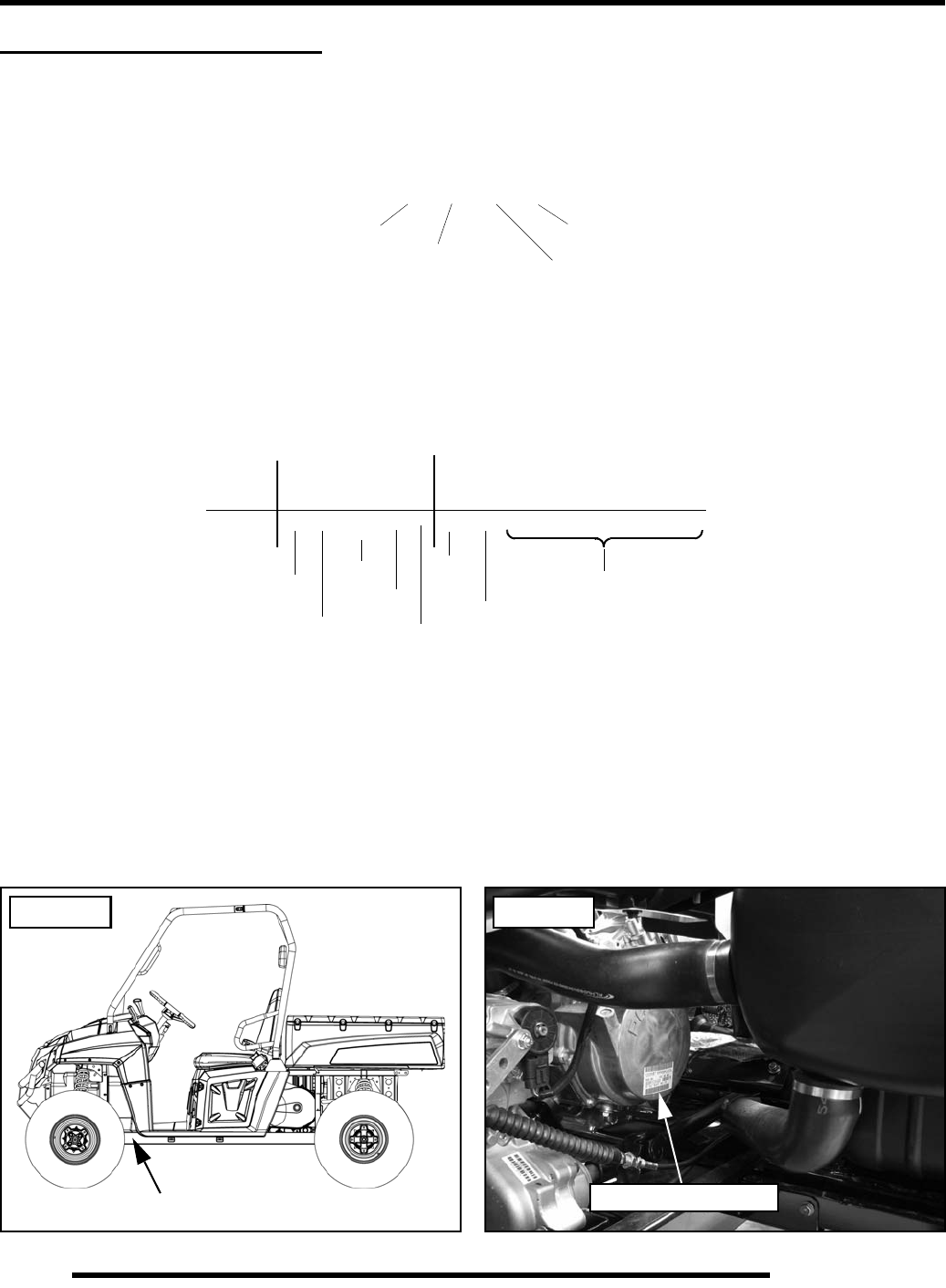
Whenever corresponding about a Polaris RANGER utility vehicle, be sure to refer to the vehicle identification number (VIN) and
the engine model and serial number.
The VIN can be found stamped on the lower frame rail on the front LH side of the vehicle (see Figure 1-1).
The engine model and serial number can be found on a decal applied to the engine’s magneto cover (see Figure 1-2).
}
Machine Model Number Identification
}
}
Model Year
Designation
Basic Chassis
Designation Engine Designation
Emissions &
Model Option
R 0 9 H H 5 0 A G
}
4 X A H H 5 0 A * 9 P 0 0 0 0 0 0
}
1 2 3 4 5 6 7 8 9 10 11 12 13 14 15 16 17
World
Mfg. ID
Engine
Vehicle Description Vehicle Identifier
Check Digit
Model
Year
Body Style
Plant No. * This could be either
a number or a letter
Powertrain
Emissions
Individual Serial No.
Figure 1-1
VIN
Figure 1-2
Engine Serial Number
PartShark.com
877-999-5686
1.3
GENERAL INFORMATION
1
VEHICLE INFORMATION
Publication Numbers
NOTE: When ordering service parts be sure to use the correct parts manual.
NOTE: Polaris factory publications can be found at www.polarisindustries.com or purchased from
www.purepolaris.com.
Replacement Keys
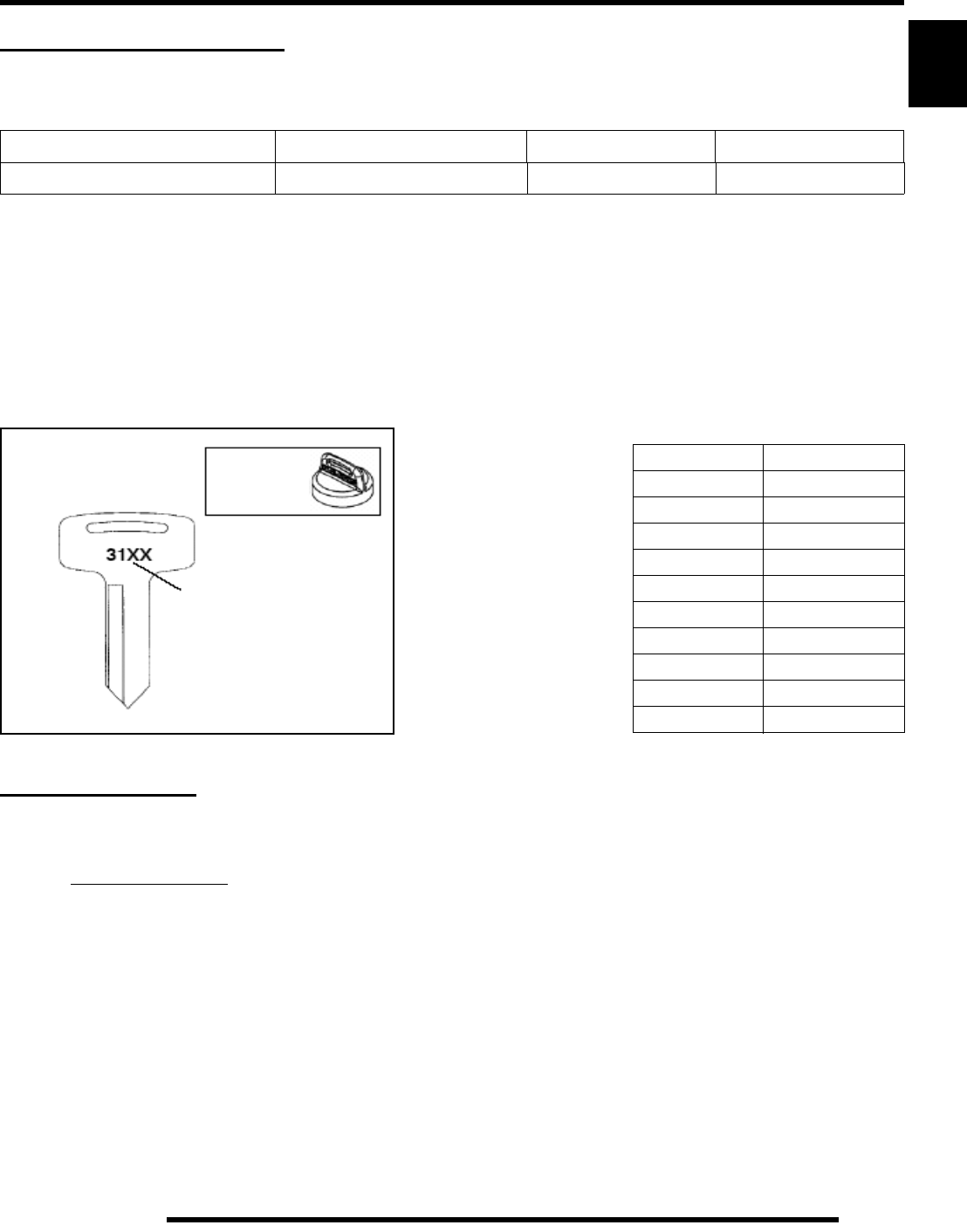
Replacement keys can be made from the original key. To identify which series the key is, take the first two digits on the original
key and refer to the chart to the right for the proper part number.
SPECIAL TOOLS
Special tools may be required while servicing this vehicle. Some of the tools listed or depicted are mandatory, while other tools
maybe substituted with a similar tool, if available. Polaris recommends the use of Polaris Special Tools when servicing any Polaris
product. Dealers may order special tools through Polaris’ official tool supplier, SPX Corporation, by phone at 1-800-328-6657 or
on-line at http://polaris.spx.com/.
Model Model No. Owner’s Manual PN Parts Manual PN
2009 RANGER 500 4x4 EFI R09HH50AG, AR 9921868 9921869
Series# Part Number
20 4010278
21 4010278
22 4010321
23 4010321
27 4010321
28 4010321
31 4110141
32 4110148
67 4010278
68 4010278
Key Series
Number
KEY COVER
P/N 5533534
PartShark.com
877-999-5686
1.4
GENERAL INFORMATION
GENERAL SPECIFICATIONS
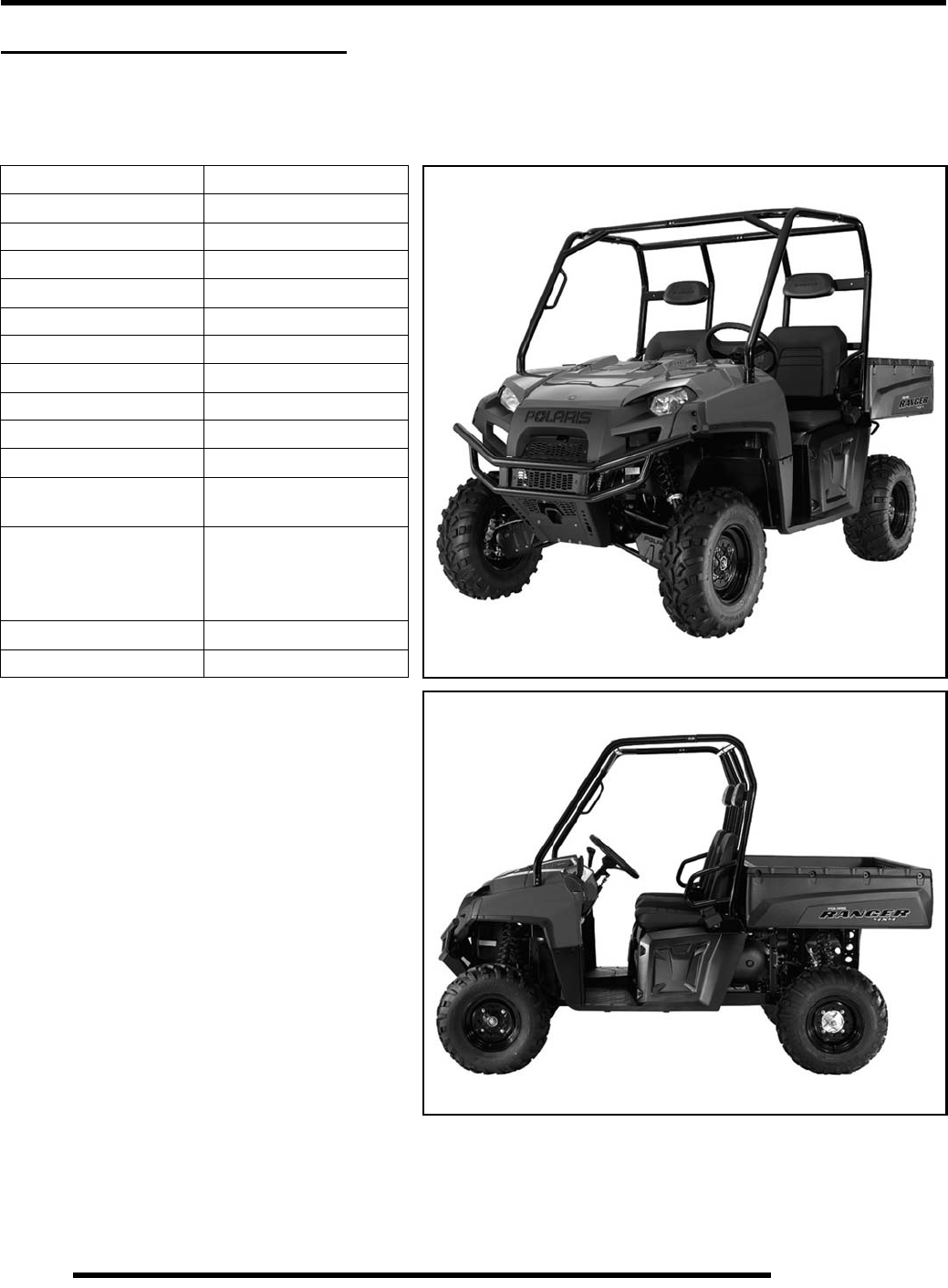
MODEL: 2009 RANGER 500 4X4 EFI
MODEL NUMBER: R09HH50AG, AR
ENGINE MODEL: EH500PLE225
Category Dimension / Capacity
Length 114 in. / 289.6 cm
Width (cargo box) 60 in. / 152.4 cm
Width (tires) 58 in. / 147.3 cm
Height 76 in. / 193 cm
Wheel Base 76 in. / 193 cm
Ground Clearance 12 in. / 30.5 cm
Turning Radius 158 in. / 401.3 cm
Dry Weight 1214 lbs. / 551 kg
Gross Vehicle Weight 2864 lbs. / 1299 kg
Cargo Box Capacity 1000 lbs. / 454 kg
Cargo Box Dimensions
(inside dimensions) L-36 x W-50 x H-11 in.
(91.4 x 127 x 27.9 cm)
Vehicle Payload
1500 lbs. / 681 kg
(Includes weight of
operator, passenger,
cargo and accessories.
Hitch Towing Capacity 1500 lbs. / 681 kg
Hitch Tongue Capacity 150 lbs. / 68 kg
PartShark.com
877-999-5686
1.5
GENERAL INFORMATION
1
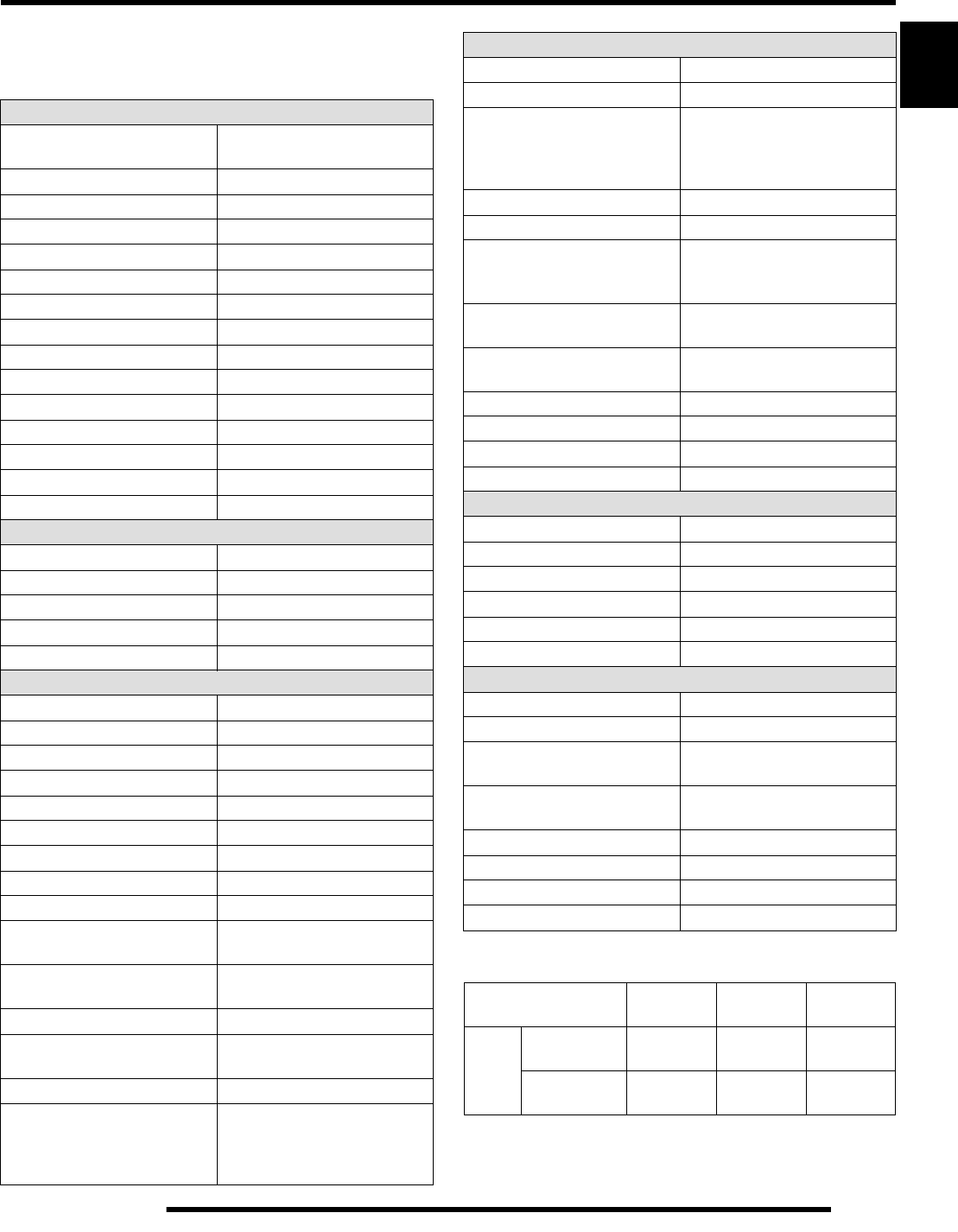
MODEL: 2009 RANGER 500 4X4 EFI
MODEL NUMBER: R09HH50AG, AR
ENGINE MODEL: EH500PLE225
CLUTCH CHART
Engine
Platform Fuji Single Cylinder, 4-Stroke,
SOHC, Liquid Cooled
Engine Model Number EH500PLE225
Engine Displacement 499 cc
Number of Cylinders 1
Bore & Stroke (mm) 92 x 75 mm
Compression Ratio 10.2:1
Compression Pressure 70-90 psi
Engine Idle Speed 1200 ± 200 RPM
Valve Clearance Int./Ext. 0.006 in. (0.152 mm)
Engine Hot Light Dash Indicator Panel
Lubrication Pressurized Dry Sump
Oil Requirements PS-4 PLUS / 2W-50
Oil Capacity 2 qts. (1.9 L)
Coolant Capacity 3.25 qts. (3.1 L)
Exhaust System Single Pipe / Canister Style
Fuel System
Fuel System Type Visteon EFI
Fuel Delivery Electronic Fuel Pump (in tank)
Fuel Pressure 39 psi
Fuel Capacity 9 gal. (34 L)
Fuel Requirement 87 Octane (minimum)
Electrical
Alternator Max Output 500 Watts @ 3000 RPM
Main Headlights 50 Watt / Halogen x 2
Tail Lights 0.3 Watts / L.E.D. x 2
Brake Lights 3.1 Watts / L.E.D. x 2
Indicator Panel Lights 1 Watt (ea.)
Starting System Electric Start
Ignition System Visteon EFI (ECU Controlled)
Ignition Timing 10° ± 1° BTDC @ 1150 RPM
Spark plug / Gap NGK BKR5E / .035 in. (0.9 mm)
Battery / Model / Amp Hr Yuasa YB30L-B / Conventional
/ 30 Amp Hr. / 12 Volt
Instrumentation Indicator Panel Lights /
LED Fuel Gauge w/Hour Meter
DC Outlets (2) - Standard
Relays EFI / Fan / Ign & Fuel Pump /
Brake Light / Rear Diff
Circuit Breaker Fan Motor: 10 Amp
Fuses
Main Chassis: 20 Amp
Accessory: 15 Amp
EFI: 15 Amp
Lights: 15 Amp
Drivetrain
Transmission Type Polaris Automatic PVT
Shift Type In Line Shift - H / L / N / R
Transmission Gear Reduction:
High
Low
Reverse
3.85:1
8.71:1
7.91:1
Drive Ratio - Front 3.818:1
Drive Ratio - Rear 3.70:1
Front Gearcase Lubricant
Requirements
Premium LT
Demand Drive Fluid
9.3 oz. (275 ml)
Transmission Lubricant
Requirements
Full Synthetic AGL
43.6 oz. (1290 ml)
Rear Gearcase Lubricant
Requirements
ATV Angle Drive Fluid
18 oz. (532 ml)
Drive Belt 3211077
Drive Belt Deflection 1.125 in. (28.58 mm)
Center Distance 10 in. (254 mm)
Clutch Offset 0.5 in. (12.7 mm)
Steering / Suspension
Toe Out 1/8 - 1/4 in. (3.2 - 6.35 mm)
Front Suspension Dual A-arm
Front Travel 9.6 in. (24.4 cm)
Rear Suspension Independent (IRS)
Rear Travel 9 in. (22.9 cm)
Shock Preload Adjustment Cam Adjustment
Wheels / Brakes
Front Wheel Size / Type 12 x 6 / Steel
Rear Wheel Size / Type 12 x 8 / Steel
Front Tire
Make / Model / Size Titan / AT489 / 25 x 10 R12
Rear Tire
Make / Model / Size Titan / AT489 / 25 x 11 R12
Tire Air Pressure 8-12 psi (69 kPa)
Brake System 4 Wheel Hydraulic Disc
Brake Fluid DOT 4
Parking Brake Hand Actuated (in dash)
Altitude Shift
Weight Drive
Spring Driven
Spring
Meters
(Feet)
0-1500
(0-5000) 10 MH
(5630513)
Blu/Grn
(7041157)
Black
(7041782)
1500-3700
(5000 - 12000) 10 WH
(5630710)
Blu/Grn
(7041157)
Black
(7041782)
PartShark.com
877-999-5686
1.6
GENERAL INFORMATION
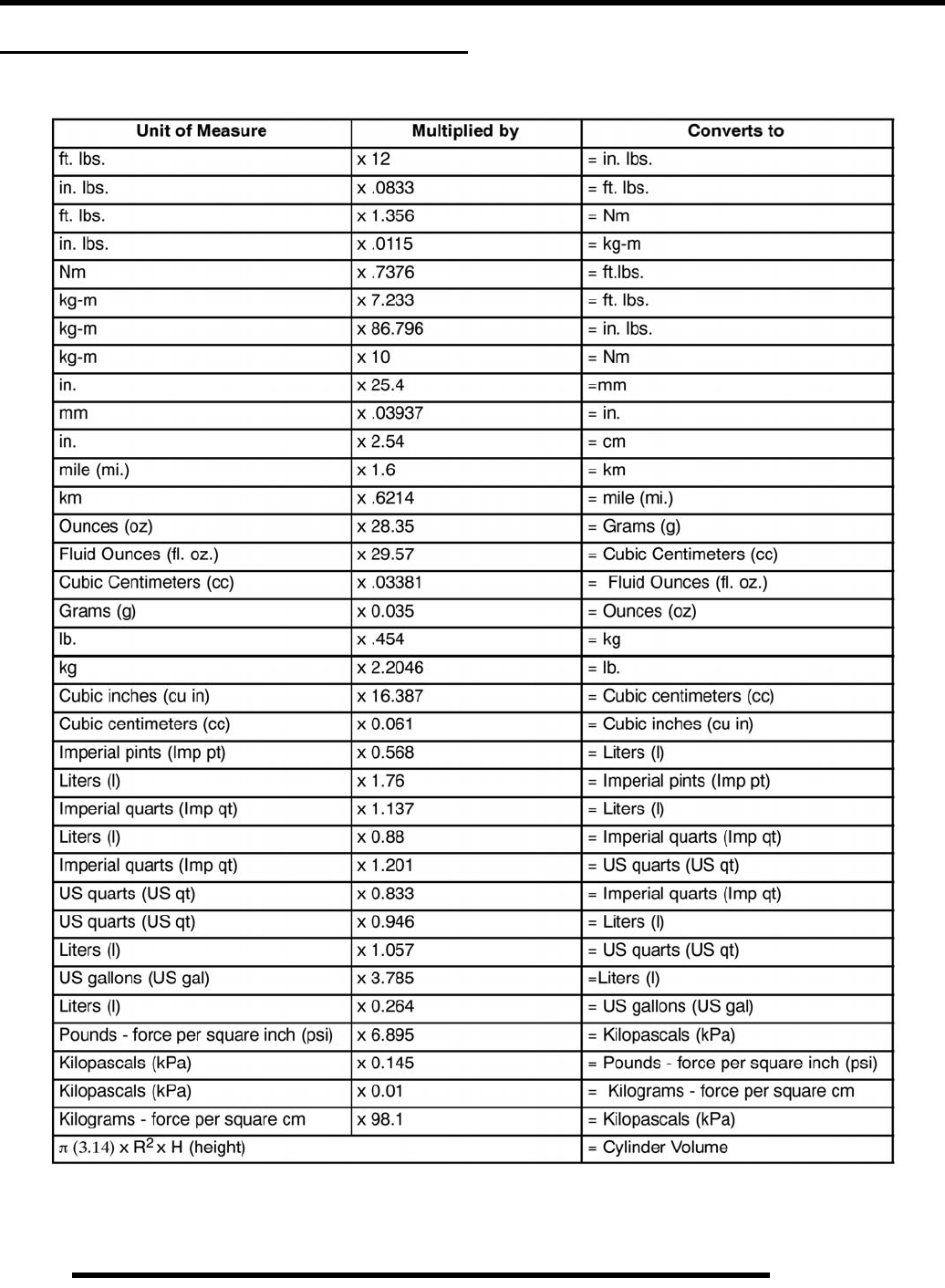
MISC. SPECIFICATIONS AND CHARTS
Conversion Table
°C to °F: 9/5(°C + 32) = °F °F to °C: 5/9(°F - 32) = °C
PartShark.com
877-999-5686
1.7
GENERAL INFORMATION
1
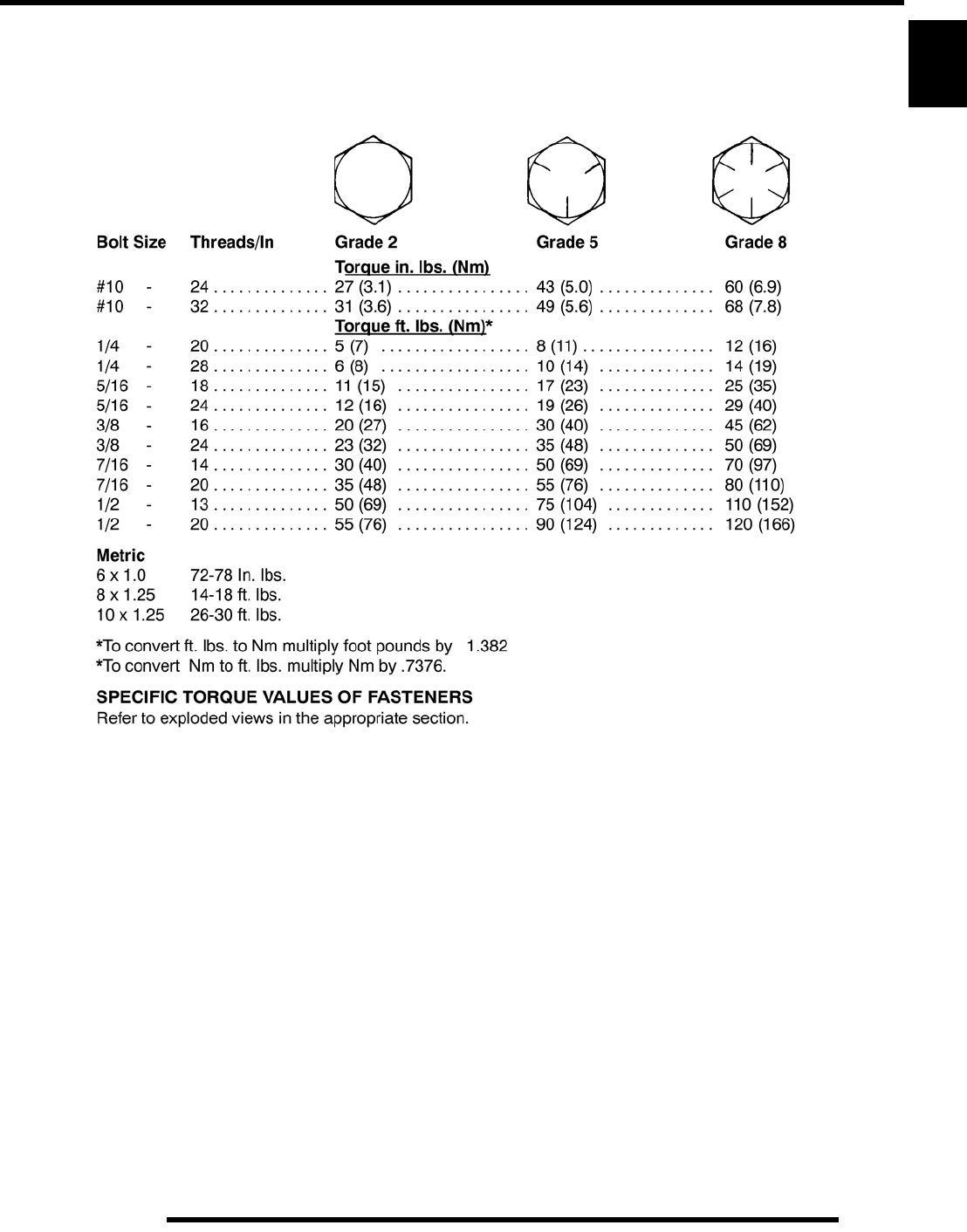
Standard Torque Specifications
The following torque specifications are to be used only as a general guideline. There are exceptions in the steering, suspension, and
engine areas. Always consult the exploded views or each manual section for torque values of fasteners before using standard torque.
PartShark.com
877-999-5686
1.8
GENERAL INFORMATION
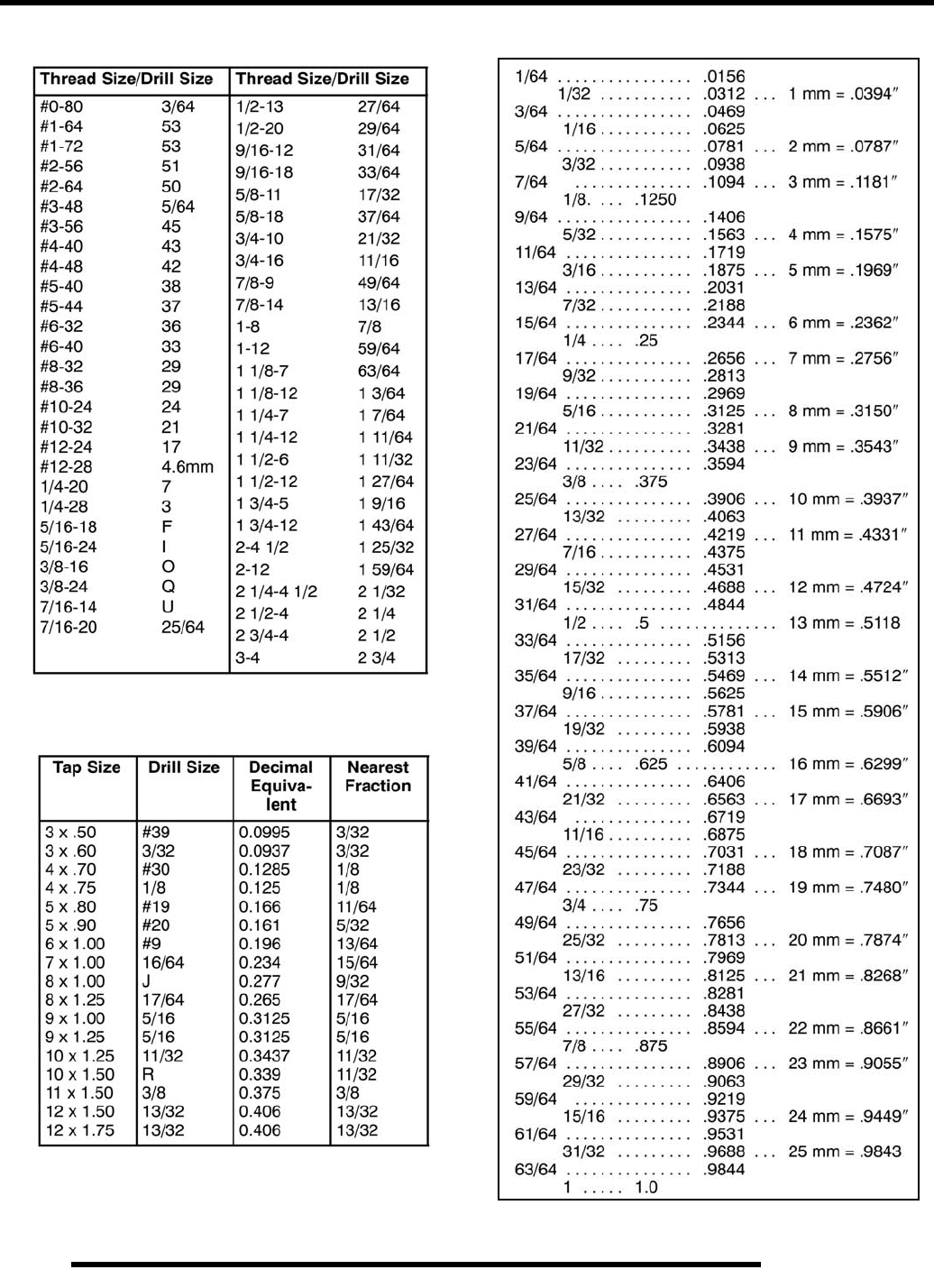
SAE Tap / Drill Sizes
Metric Tap / Drill Sizes
Decimal Equivalents
PartShark.com
877-999-5686
1.9
GENERAL INFORMATION
1
Glossary of Terms
ABDC: After bottom dead center.
ACV: Alternating current voltage.
Alternator: Electrical generator producing voltage alternating current.
ATDC: After top dead center.
BBDC: Before bottom dead center.
BDC: Bottom dead center.
BTDC: Before top dead center.
CC: Cubic centimeters.
Center Distance: Distance between center of crankshaft and center of driven clutch shaft.
Chain Pitch: Distance between chain link pins (No. 35 = 3/8" or 1 cm). Polaris measures chain length in number of pitches.
CI: Cubic inches.
Clutch Buttons: Plastic bushings which aid rotation of the movable sheave in the drive and driven clutch.
Clutch Offset: Drive and driven clutches are offset so that drive belt will stay nearly straight as it moves along the clutch face.
Clutch Weights: Three levers in the drive clutch which relative to their weight, profile and engine RPM cause the drive clutch to
close and grip the drive belt.
Crankshaft Run-Out: Run-out or "bend" of crankshaft measured with a dial indicator while crankshaft is supported between centers
on V blocks or resting in crankcase. Measure at various points especially at PTO.
DCV: Direct current voltage
CVT: Centrifugal Variable Transmission (Drive Clutch System)
DCV: Direct current voltage.
Dial Bore Gauge: A cylinder measuring instrument which uses a dial indicator. Good for showing taper and out-of-round in the
cylinder bore.
Electrical Open: Open circuit. An electrical circuit which isn't complete.
Electrical Short: Short circuit. An electrical circuit which is completed before the current reaches the intended load. (i.e. a bare wire
touching the chassis).
End Seals: Rubber seals at each end of the crankshaft.
Engagement RPM: Engine RPM at which the drive clutch engages to make contact with the drive belt.
ft.: Foot/feet.
Foot Pound: Ft. lb. A force of one pound at the end of a lever one foot in length, applied in a rotational direction.
g: Gram. Unit of weight in the metric system.
gal.: Gallon.
ID: Inside diameter.
in.: Inch/inches.
Inch Pound: In. lb. 12 in. lbs. = 1 ft. lb.
kg/cm²: Kilograms per square centimeter.
kg-m: Kilogram meters.
Kilogram/meter: A force of one kilogram at the end of a lever one meter in length, applied in a rotational direction.
l or ltr: Liter.
lbs/in²: Pounds per square inch.
Left or Right Side: Always referred to based on normal operating position of the driver.
m: Meter/meters.
Mag: Magneto.
Magnetic Induction: As a conductor (coil) is moved through a magnetic field, a voltage will be generated in the windings.
Mechanical energy is converted to electrical energy in the stator.
mi.: Mile/miles.
mm: Millimeter. Unit of length in the metric system. 1 mm = approximately .040".
Nm: Newton meters.
OD: Outside diameter.
Ohm: The unit of electrical resistance opposing current flow.
oz.: Ounce/ounces.
Piston Clearance: Total distance between piston and cylinder wall.
psi.: Pounds per square inch.
PTO: Power take off.
PVT: Polaris Variable Transmission (Drive Clutch system)
qt.: Quart/quarts.
Regulator: Voltage regulator. Regulates battery charging system output at approx. 14.5 DCV as engine RPM increases.
Reservoir Tank: The fill tank in the liquid cooling system.
Resistance: In the mechanical sense, friction or load. In the electrical sense, ohms, resulting in energy conversion to heat.
RPM: Revolutions per minute.
Seized Piston: Galling of the sides of a piston. Usually there is a transfer of aluminum from the piston onto the cylinder wall.
Possible causes: 1) improper lubrication; 2) excessive temperatures; 3) insufficient piston clearance; 4) stuck piston rings.
Stator Plate: The plate mounted under the flywheel supporting the battery charging coils.
TDC: Top dead center. Piston's most outward travel from crankshaft.
Volt: The unit of measure for electrical pressure of electromotive force. Measured by a voltmeter in parallel with the circuit.
Watt: Unit of electrical power. Watts = amperes x volts.
WOT: Wide open throttle.
PartShark.com
877-999-5686
NOTES
GENERAL INFORMATION
1.10
PartShark.com
877-999-5686

MAINTENANCE
2.1
CHAPTER 2
MAINTENANCE 2
PERIODIC MAINTENANCE CHART. . . . . . . . . . . . . . . . . . . . . . . . . . . . . . . . . . . . . . . . . 2.3
BREAK-IN PERIOD / MAINTENANCE CHART KEY . . . . . . . . . . . . . . . . . . . . . . . . . . . . 2.3
PRE-RIDE - 25 HOUR MAINTENANCE INTERVAL . . . . . . . . . . . . . . . . . . . . . . . . . . . . 2.4
50 - 100 HOUR MAINTENANCE INTERVAL . . . . . . . . . . . . . . . . . . . . . . . . . . . . . . . . . . 2.5
100 - 300 HOUR MAINTENANCE INTERVAL . . . . . . . . . . . . . . . . . . . . . . . . . . . . . . . . . 2.6
GREASE LUBRICATION POINTS . . . . . . . . . . . . . . . . . . . . . . . . . . . . . . . . . . . . . . . . . . 2.6
SERVICE PRODUCTS AND LUBRICANTS . . . . . . . . . . . . . . . . . . . . . . . . . . . . . . . . . . . 2.7
FLUID MAINTENANCE REFERENCES . . . . . . . . . . . . . . . . . . . . . . . . . . . . . . . . . . . . . . 2.8
COMPONENT QUICK REFERENCE. . . . . . . . . . . . . . . . . . . . . . . . . . . . . . . . . . . . . . . . 2.8
COMPONENT QUICK REFERENCE, CONTINUED...... . . . . . . . . . . . . . . . . . . . . . . . . . 2.9
GENERAL VEHICLE INSPECTION AND MAINTENANCE. . . . . . . . . . . . . . . . . . . . . . . 2.10
PRE-RIDE / DAILY INSPECTION . . . . . . . . . . . . . . . . . . . . . . . . . . . . . . . . . . . . . . . . . 2.10
FRAME, NUTS, BOLTS, AND FASTENERS . . . . . . . . . . . . . . . . . . . . . . . . . . . . . . . . . 2.10
SHIFT LINKAGE INSPECTION / ADJUSTMENT. . . . . . . . . . . . . . . . . . . . . . . . . . . . . . 2.10
FUEL SYSTEM AND AIR INTAKE . . . . . . . . . . . . . . . . . . . . . . . . . . . . . . . . . . . . . . . . . 2.11
FUEL LINES / FUEL FILTER / VENT LINES . . . . . . . . . . . . . . . . . . . . . . . . . . . . . . . . . 2.11
THROTTLE PEDAL INSPECTION. . . . . . . . . . . . . . . . . . . . . . . . . . . . . . . . . . . . . . . . . 2.11
THROTTLE FREEPLAY ADJUSTMENT . . . . . . . . . . . . . . . . . . . . . . . . . . . . . . . . . . . . 2.11
AIR FILTER SERVICE . . . . . . . . . . . . . . . . . . . . . . . . . . . . . . . . . . . . . . . . . . . . . . . . . . 2.12
ENGINE AIR INTAKE INSPECTION . . . . . . . . . . . . . . . . . . . . . . . . . . . . . . . . . . . . . . . 2.12
PVT AIR INTAKE INSPECTION. . . . . . . . . . . . . . . . . . . . . . . . . . . . . . . . . . . . . . . . . . . 2.12
AIR INTAKE EXPLODED VIEW . . . . . . . . . . . . . . . . . . . . . . . . . . . . . . . . . . . . . . . . . . . 2.13
ENGINE . . . . . . . . . . . . . . . . . . . . . . . . . . . . . . . . . . . . . . . . . . . . . . . . . . . . . . . . . . . . . . 2.14
COMPRESSION AND LEAKDOWN TEST. . . . . . . . . . . . . . . . . . . . . . . . . . . . . . . . . . . 2.14
BREATHER FILTER INSPECTION . . . . . . . . . . . . . . . . . . . . . . . . . . . . . . . . . . . . . . . . 2.14
BREATHER HOSE . . . . . . . . . . . . . . . . . . . . . . . . . . . . . . . . . . . . . . . . . . . . . . . . . . . . . 2.14
FLYWHEEL HOUSING DRAIN PLUG . . . . . . . . . . . . . . . . . . . . . . . . . . . . . . . . . . . . . . 2.14
ENGINE OIL LEVEL . . . . . . . . . . . . . . . . . . . . . . . . . . . . . . . . . . . . . . . . . . . . . . . . . . . . 2.15
ENGINE OIL AND FILTER CHANGE. . . . . . . . . . . . . . . . . . . . . . . . . . . . . . . . . . . . . . . 2.15
OIL PUMP PRIMING PROCEDURE . . . . . . . . . . . . . . . . . . . . . . . . . . . . . . . . . . . . . . . 2.17
VALVE CLEARANCE . . . . . . . . . . . . . . . . . . . . . . . . . . . . . . . . . . . . . . . . . . . . . . . . . . . 2.17
VALVE CLEARANCE ADJUSTMENT . . . . . . . . . . . . . . . . . . . . . . . . . . . . . . . . . . . . . . 2.18
EXHAUST PIPE . . . . . . . . . . . . . . . . . . . . . . . . . . . . . . . . . . . . . . . . . . . . . . . . . . . . . . . 2.19
TRANSMISSION AND GEARCASES . . . . . . . . . . . . . . . . . . . . . . . . . . . . . . . . . . . . . . . 2.20
TRANSMISSION LUBRICATION . . . . . . . . . . . . . . . . . . . . . . . . . . . . . . . . . . . . . . . . . . 2.20
FRONT GEARCASE LUBRICATION . . . . . . . . . . . . . . . . . . . . . . . . . . . . . . . . . . . . . . . 2.21
REAR GEARCASE LUBRICATION . . . . . . . . . . . . . . . . . . . . . . . . . . . . . . . . . . . . . . . . 2.22
COOLING SYSTEM. . . . . . . . . . . . . . . . . . . . . . . . . . . . . . . . . . . . . . . . . . . . . . . . . . . . . 2.23
COOLANT LEVEL INSPECTION . . . . . . . . . . . . . . . . . . . . . . . . . . . . . . . . . . . . . . . . . . 2.23
COOLANT STRENGTH / TYPE . . . . . . . . . . . . . . . . . . . . . . . . . . . . . . . . . . . . . . . . . . . 2.24
COOLING SYSTEM HOSES . . . . . . . . . . . . . . . . . . . . . . . . . . . . . . . . . . . . . . . . . . . . . 2.24
RADIATOR INSPECTION / CLEANING. . . . . . . . . . . . . . . . . . . . . . . . . . . . . . . . . . . . . 2.25
COOLANT DRAIN / RADIATOR REMOVAL . . . . . . . . . . . . . . . . . . . . . . . . . . . . . . . . . 2.25
FINAL DRIVE / WHEEL AND TIRE . . . . . . . . . . . . . . . . . . . . . . . . . . . . . . . . . . . . . . . . . 2.27
WHEEL AND HUB TORQUE TABLE . . . . . . . . . . . . . . . . . . . . . . . . . . . . . . . . . . . . . . . 2.27
CV SHAFT BOOT INSPECTION . . . . . . . . . . . . . . . . . . . . . . . . . . . . . . . . . . . . . . . . . . 2.27
WHEEL REMOVAL / INSTALLATION . . . . . . . . . . . . . . . . . . . . . . . . . . . . . . . . . . . . . . 2.27
TIRE INSPECTION. . . . . . . . . . . . . . . . . . . . . . . . . . . . . . . . . . . . . . . . . . . . . . . . . . . . . 2.28
TIRE PRESSURE. . . . . . . . . . . . . . . . . . . . . . . . . . . . . . . . . . . . . . . . . . . . . . . . . . . . . . 2.28
PartShark.com
877-999-5686

2.2
MAINTENANCE
ELECTRICAL AND IGNITION SYSTEM . . . . . . . . . . . . . . . . . . . . . . . . . . . . . . . . . . . . . 2.28
BATTERY MAINTENANCE . . . . . . . . . . . . . . . . . . . . . . . . . . . . . . . . . . . . . . . . . . . . . . 2.28
BATTERY FLUID LEVEL (CONVENTIONAL BATTERY) . . . . . . . . . . . . . . . . . . . . . . . 2.29
BATTERY REMOVAL / INSTALLATION . . . . . . . . . . . . . . . . . . . . . . . . . . . . . . . . . . . . 2.29
BATTERY STORAGE. . . . . . . . . . . . . . . . . . . . . . . . . . . . . . . . . . . . . . . . . . . . . . . . . . . 2.30
BATTERY CHARGING. . . . . . . . . . . . . . . . . . . . . . . . . . . . . . . . . . . . . . . . . . . . . . . . . . 2.30
SPARK PLUG SERVICE . . . . . . . . . . . . . . . . . . . . . . . . . . . . . . . . . . . . . . . . . . . . . . . . 2.30
ENGINE TO FRAME GROUND . . . . . . . . . . . . . . . . . . . . . . . . . . . . . . . . . . . . . . . . . . . 2.30
STEERING . . . . . . . . . . . . . . . . . . . . . . . . . . . . . . . . . . . . . . . . . . . . . . . . . . . . . . . . . . . 2.31
STEERING . . . . . . . . . . . . . . . . . . . . . . . . . . . . . . . . . . . . . . . . . . . . . . . . . . . . . . . . . . . 2.31
TIE ROD END / STEERING INSPECTION . . . . . . . . . . . . . . . . . . . . . . . . . . . . . . . . . . 2.31
WHEEL TOE ALIGNMENT INSPECTION . . . . . . . . . . . . . . . . . . . . . . . . . . . . . . . . . . . 2.31
TOE ADJUSTMENT . . . . . . . . . . . . . . . . . . . . . . . . . . . . . . . . . . . . . . . . . . . . . . . . . . . . 2.32
SUSPENSION . . . . . . . . . . . . . . . . . . . . . . . . . . . . . . . . . . . . . . . . . . . . . . . . . . . . . . . . . 2.32
SUSPENSION INSPECTION . . . . . . . . . . . . . . . . . . . . . . . . . . . . . . . . . . . . . . . . . . . . . 2.32
SPRING PRE-LOAD ADJUSTMENT . . . . . . . . . . . . . . . . . . . . . . . . . . . . . . . . . . . . . . . 2.32
SHOCK POSITION ADJUSTMENT . . . . . . . . . . . . . . . . . . . . . . . . . . . . . . . . . . . . . . . . 2.33
BRAKE SYSTEM. . . . . . . . . . . . . . . . . . . . . . . . . . . . . . . . . . . . . . . . . . . . . . . . . . . . . . . 2.33
BRAKE FLUID INSPECTION . . . . . . . . . . . . . . . . . . . . . . . . . . . . . . . . . . . . . . . . . . . . . 2.33
BRAKE HOSE AND FITTING INSPECTION . . . . . . . . . . . . . . . . . . . . . . . . . . . . . . . . . 2.33
BRAKE PAD / DISC INSPECTION. . . . . . . . . . . . . . . . . . . . . . . . . . . . . . . . . . . . . . . . . 2.34
PARKING BRAKE CABLE ADJUSTMENT . . . . . . . . . . . . . . . . . . . . . . . . . . . . . . . . . . 2.34
PARKING BRAKE PAD INSPECTION. . . . . . . . . . . . . . . . . . . . . . . . . . . . . . . . . . . . . . 2.34
MAINTENANCE LOG . . . . . . . . . . . . . . . . . . . . . . . . . . . . . . . . . . . . . . . . . . . . . . . . . . . 2.35
PartShark.com
877-999-5686
2.3
MAINTENANCE
2
PERIODIC MAINTENANCE CHART
Periodic Maintenance Overview
Inspection, adjustment and lubrication of important components are explained in the periodic maintenance chart.
Inspect, clean, lubricate, adjust and replace parts as necessary. When inspection reveals the need for replacement parts, use
genuine Pure Polaris parts available from your Polaris dealer.
NOTE: Service and adjustments are critical. If you’re not familiar with safe service and adjustment
procedures, have a qualified dealer perform these operations.
Maintenance intervals in the following chart are based upon average riding conditions and an average vehicle speed of approximately
10 miles per hour. Vehicles subjected to severe use must be inspected and serviced more frequently.
Severe Use Definition
• Frequent immersion in mud, water or sand
• Racing or race-style high RPM use
• Prolonged low speed, heavy load operation
• Extended idle
• Short trip cold weather operation
Pay special attention to the oil level. A rise in oil level during cold weather can indicate contaminants collecting in the oil sump or
crankcase. Change oil immediately if the oil level begins to rise. Monitor the oil level, and if it continues to rise, discontinue use
and determine the cause or see your dealer.
Break-In Period
The break-in period consists of the first 25 hours of operation, or the time it takes to use 14 gallons (53 liters) of fuel. Careful treatment
of a new engine and drive components will result in more efficient performance and longer life for these components.
• Drive vehicle slowly at first while varying the throttle position. Do not operate at sustained idle.
• Pull only light loads.
• Perform regular checks on fluid levels and other areas outlined on the daily pre-ride inspection checklist.
• Change both the engine oil and filter after 25 hours or one month.
• See “Owner’s Manual” for additional break-in information.
Maintenance Chart Key
The following symbols denote potential items to be aware of during maintenance:
= CAUTION: Due to the nature of these adjustments, it is recommended this service be performed by an
authorized Polaris dealer.
= SEVERE USE ITEM: See information provided above.
E = Emission Control System Service (California).
NOTE: Inspection may reveal the need for replacement parts. Always use genuine Polaris parts.
WARNING
Improperly performing the procedures marked could result in component failure and lead to serious injury or death.
Have an authorized Polaris dealer perform these services.
PartShark.com
877-999-5686
2.4
MAINTENANCE
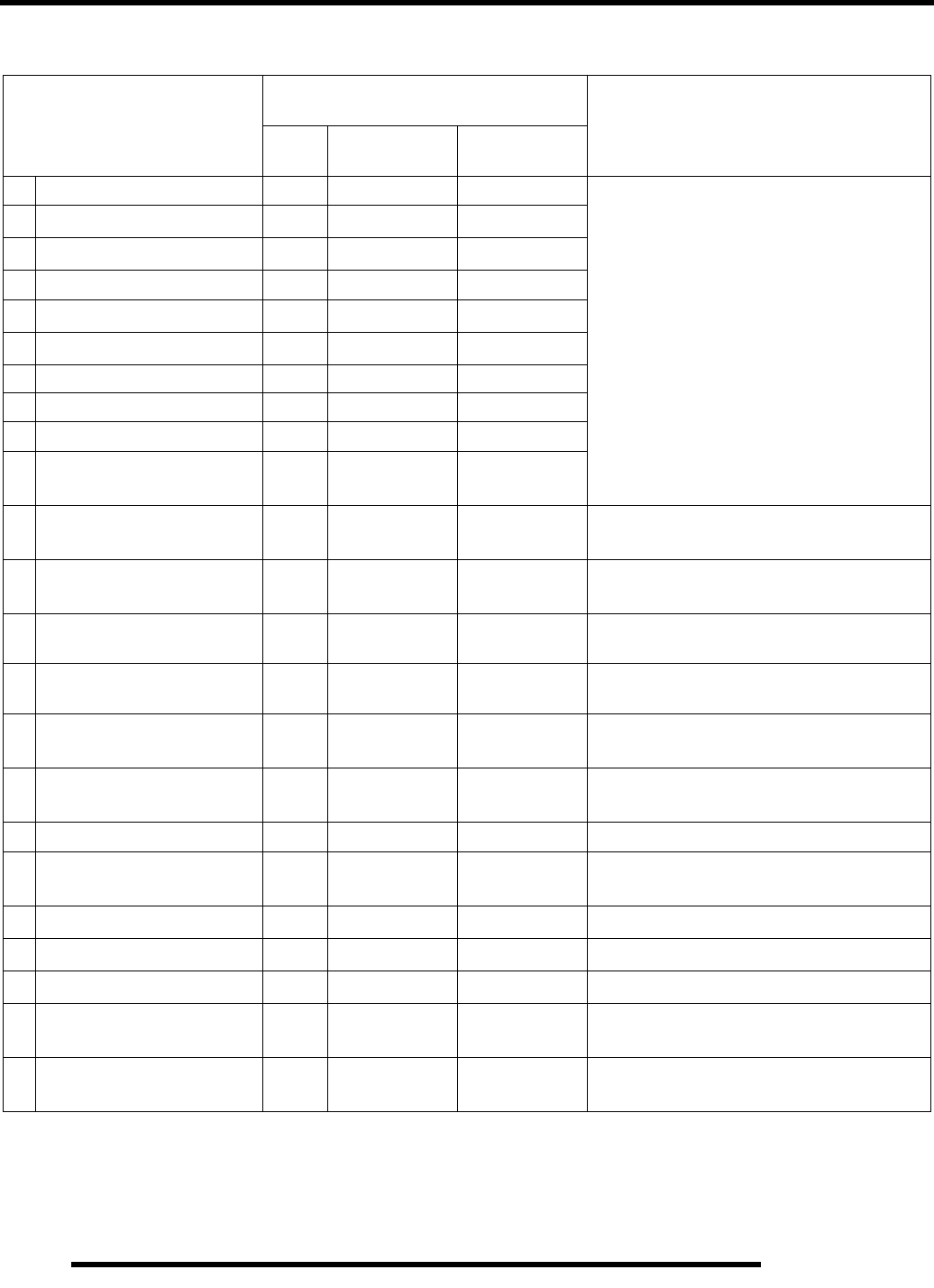
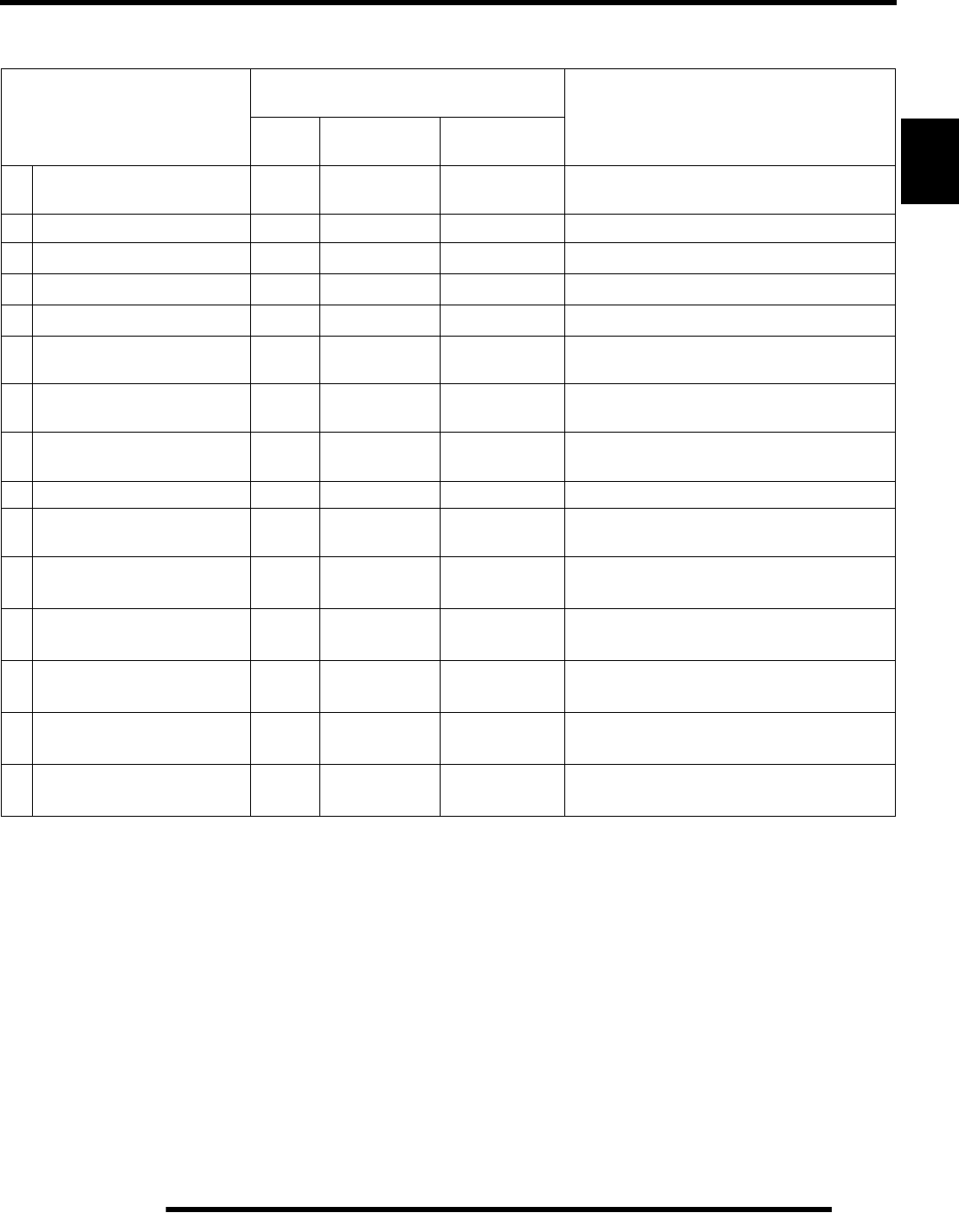
Pre-Ride - 25 Hour Maintenance Interval
Perform these procedures more often for vehicles subjected to severe use.
E Emission Control System Service (California)
Have an authorized Polaris dealer perform these services.
Item
Maintenance Interval
(whichever comes first) Remarks
Hours Calendar Miles
(KM)
Steering - Pre-Ride -
Make adjustments as needed.
See Pre-Ride Checklist on Page 2.10.
Front Suspension - Pre-Ride -
Rear Suspension - Pre-Ride -
Tires - Pre-Ride -
Brake Fluid Level - Pre-Ride -
Brake Pedal Travel - Pre-Ride -
Brake Systems - Pre-Ride -
Wheels / Fasteners - Pre-Ride -
Frame Fasteners - Pre-Ride -
EEngine Oil Level - Pre-Ride -
EAir Filter / Pre-Filter - Daily - Inspect;clean often
EAir Box Sediment Tube - Daily - Drain deposits when visible
Coolant Level - Daily - Check level daily, change coolant every 2
years
Head Lamp / Tail Lamp - Daily - Check operation; apply dielectric grease if
replacing
EAir Filter,
Main Element - Weekly - Inspect; replace as needed
Brake Pad Wear / Inspect
Parking Brake Pads 10 H Monthly - Inspect periodically
Battery 20 H Monthly - Check terminals; clean; test
Parking Brake Cable
Adjustment 25 H - - Inspect; adjust tension after first 25 hours
Front Gearcase Lubricant 25 H Monthly - Inspect level; change yearly
Rear Gearcase Lubricant 25 H Monthly - Inspect level; change yearly
Transmission Lubricant 25 H Monthly - Inspect level; change yearly
EEngine Breather
Filter (if equipped) 25 H Monthly - Inspect; replace if necessary
EEngine Oil Change
(Break-In Period) 25 H 1 M - Perform a break-in oil change after the first
25 hours or one month of operation
PartShark.com
877-999-5686
2.5
MAINTENANCE
2
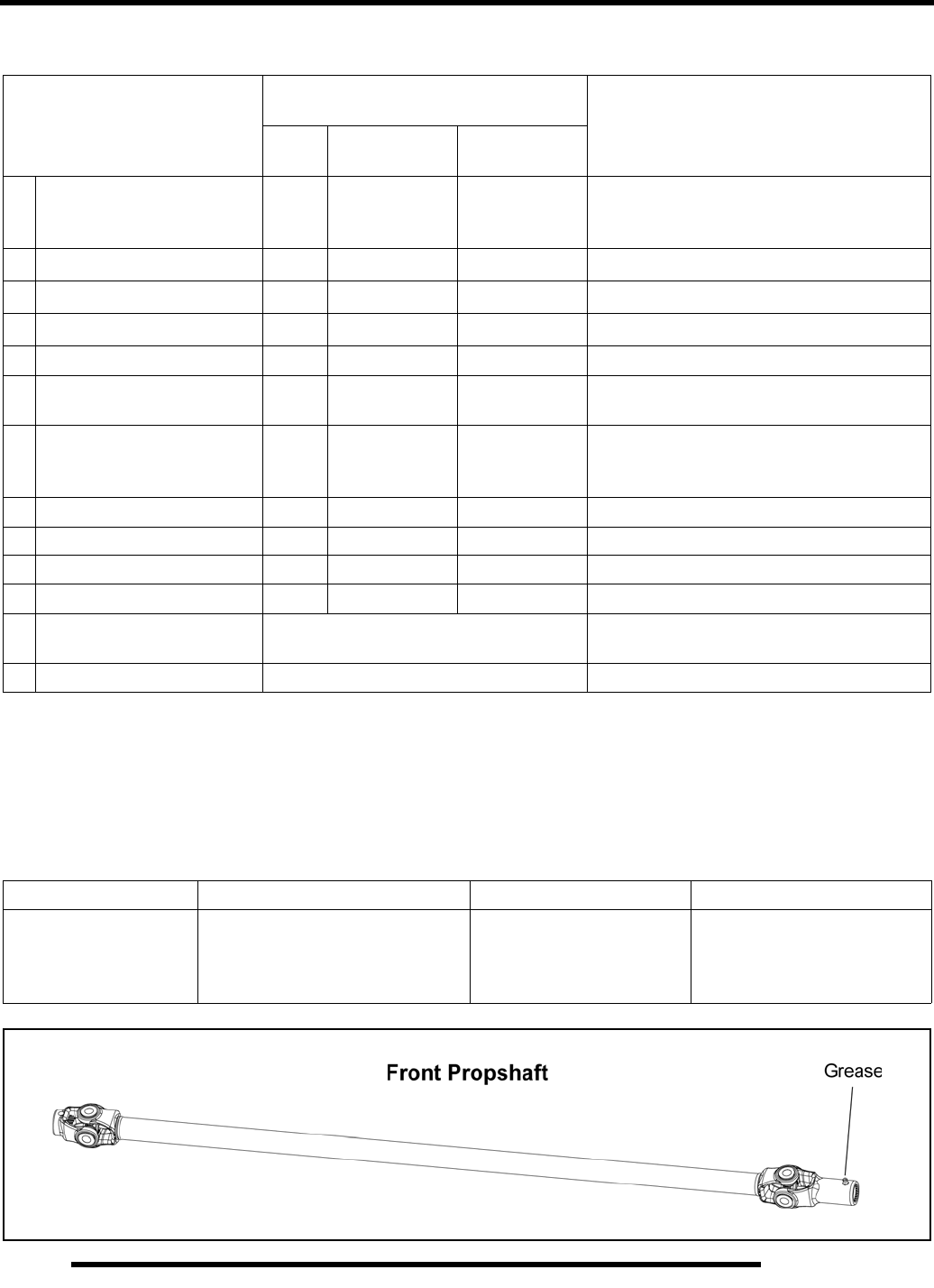
50 - 100 Hour Maintenance Interval
Perform these procedures more often for vehicles subjected to severe use.
E Emission Control System Service (California)
Have an authorized Polaris dealer perform these services.
Item
Maintenance Interval
(whichever comes first) Remarks
Hours Calendar Miles
(KM)
General Lubrication 50 H 3 M - Lubricate all grease fittings, pivots, cables,
etc.
Shift Linkage 50 H 6 M - Inspect, lubricate, adjust
Steering 50 H 6 M - Lubricate (if applicable)
Front Suspension 50 H 6 M - Lubricate (if applicable)
Rear Suspension 50 H 6 M - Lubricate (if applicable)
Carburetor Float Bowl
(if applicable) 50 H 6 M - Drain bowl periodically and prior to storage
EThrottle Cable / Throttle
Pedal 50 H 6 M - Inspect; adjust; lubricate; replace if
necessary
EThrottle Body Air Intake
Ducts / Flange 50 H 6 M - Inspect ducts for proper sealing/air leaks
Drive Belt 50 H 6 M - Inspect; adjust; replace as needed
Cooling System 50 H 6 M - Inspect coolant strength seasonally;
pressure test system yearly
Parking Brake Cable
Adjustment 100 H 6 M - Inspect; adjust tension as needed
EEngine Oil Change 100 H 6 M - Perform a break-in oil change after the first
25 hours or one month of operation
EOil Filter Change 100 H 6 M - Replace with oil change
EOil Tank Vent Hose 100 H 12 M - Inspect routing, condition
EValve Clearance 100 H 12 M - Inspect; adjust
PartShark.com
877-999-5686
2.6
MAINTENANCE
100 - 300 Hour Maintenance Interval
Perform these procedures more often for vehicles subjected to severe use.
E Emission Control System Service (California)
Have an authorized Polaris dealer perform these services.
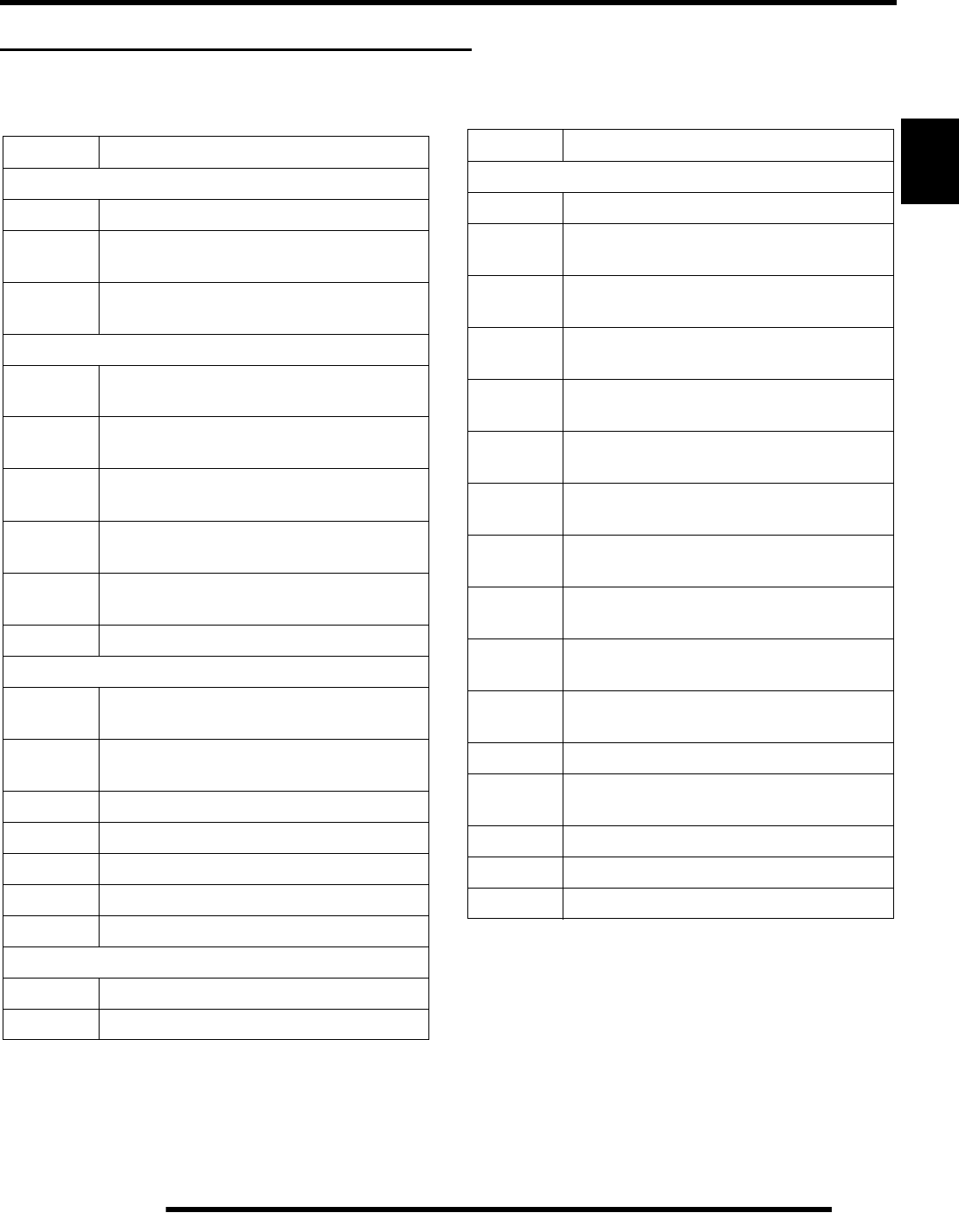
Grease Lubrication Points
There is a grease fitting on the front propshaft yoke. Apply a maximum of 3 pumps of grease.
Item
Maintenance Interval
(whichever comes first) Remarks
Hours Calendar Miles
(Km)
EFuel System 100 H 12 M - Check for leaks at tank cap, lines, fuel
valve, filter, pump, carburetor, replace lines
every two years
Radiator 100 H 12 M - Inspect; clean external surfaces
Cooling Hoses 100 H 12 M - Inspect for leaks
Engine Mounts 100 H 12 M - Inspect
Exhaust Silencer / Pipe 100 H 12 M - Inspect
ESpark Plug 100 H 12 M - Inspect; replace as needed
Wiring 100 H 12 M - Inspect for wear, routing, security; apply
dielectric grease to connectors subjected
to water, mud, etc.
Clutches (Drive and Driven) 100 H 12 M - Inspect; clean; replace worn parts
Front Wheel Bearings 100 H 12 M - Inspect; replace as needed
Brake Fluid 200 H 24 M - Change every two years (DOT 4)
Spark Arrestor 300 H 36 M - Clean out
Toe Adjustment - Inspect periodically; adjust when parts are
replaced
Headlight Aim - Adjust as needed
Item Recommended Lube Method Frequency
Front Propshaft Yoke Polaris Premium U-Joint Grease Grease fittings
(3 pumps maximum)
Grease before long periods
of storage, and after pressure
washing or submerging the
vehicle.
PartShark.com
877-999-5686
2.7
MAINTENANCE
2
SERVICE PRODUCTS AND LUBRICANTS
Polaris Lubricants, Maintenance and Service
Products NOTE: Each item can be purchased separately at
your local Polaris dealer.
NOTE: The number count indicated by each part
number in the table above indicates the number of
units that are shipped with each order.
Part No. Description
Engine Lubricant
2870791 Fogging Oil (12 oz. Aerosol)
2876244 PS-4 PLUS Performance Synthetic 2W-50
4-Cycle Engine Oil (Quart)
2876245 PS-4 PLUS Performance Synthetic 2W-50
4-Cycle Engine Oil (Gallon)
Gearcase / Transmission Lubricants
2876251 Premium LT Demand Drive Fluid
(Quart) (12 count)
2873602 Premium AGL Synthetic Gearcase Lube
(Quart) (12 count)
2873603 Premium AGL Synthetic Gearcase Lube
(Gallon) (4 count)
2876160 ATV Angle Drive Fluid
(Quart) (12 count)
2872276 ATV Angle Drive Fluid
(2.5 Gallon) (2 Count)
2870465 Oil Pump for 1 Gallon Jug
Grease / Specialized Lubricants
2871322 Premium All Season Grease
(3 oz. cartridge) (24 Count)
2871423 Premium All Season Grease
(14 oz. cartridge) (10 Count)
2871460 Starter Drive Grease (12 Count)
2871515 Premium U-Joint Lube (3 oz.) (24 Count)
2871551 Premium U-Joint Lube (14 oz.) (10 Count)
2871312 Grease Gun Kit
2871329 Dielectric Grease (Nyogel™)
Coolant
2871323 60/40 Coolant (Gallon) (6 Count)
2871534 60/40 Coolant (Quart) (12 Count)
Part No. Description
Additives / Sealants / Thread Locking Agents / Misc.
2870585 Loctite™ Primer N, Aerosol, 25 g
2871956 Loctite™ Thread Sealant 565
(50 ml.) (6 Count)
2871949 Loctite™ Threadlock 242
(50 ml.) (10 Count)
2871950 Loctite™ Threadlock 242
(6 ml.) (12 Count)
2871951 Loctite™ Threadlock 262
(50 ml.) (10 Count)
2871952 Loctite™ Threadlock 262
(6 ml.) (12 Count)
2871953 Loctite™ Threadlock 271
(6 ml.) (12 Count)
2871954 Loctite™ Threadlock 271
(36 ml.) (6 Count)
2870584 Loctite™ 680-Retaining Compound
(10 ml.)
2870587 Loctite™ 518 Gasket Eliminator / Flange
Sealant (50 ml.) (10 Count)
2871326 Premium Carbon Clean
(12 oz.) (12 Count)
2870652 Fuel Stabilizer (16 oz.) (12 Count)
2871957 Black RTV Silicone Sealer
(3 oz. tube) (12 Count)
2872189 DOT 4 Brake Fluid (12 Count)
2871557 Crankcase Sealant, 3-Bond 1215 (5oz.)
2872893 Engine Degreaser (12oz.) (12 Count)
PartShark.com
877-999-5686
2.8
MAINTENANCE
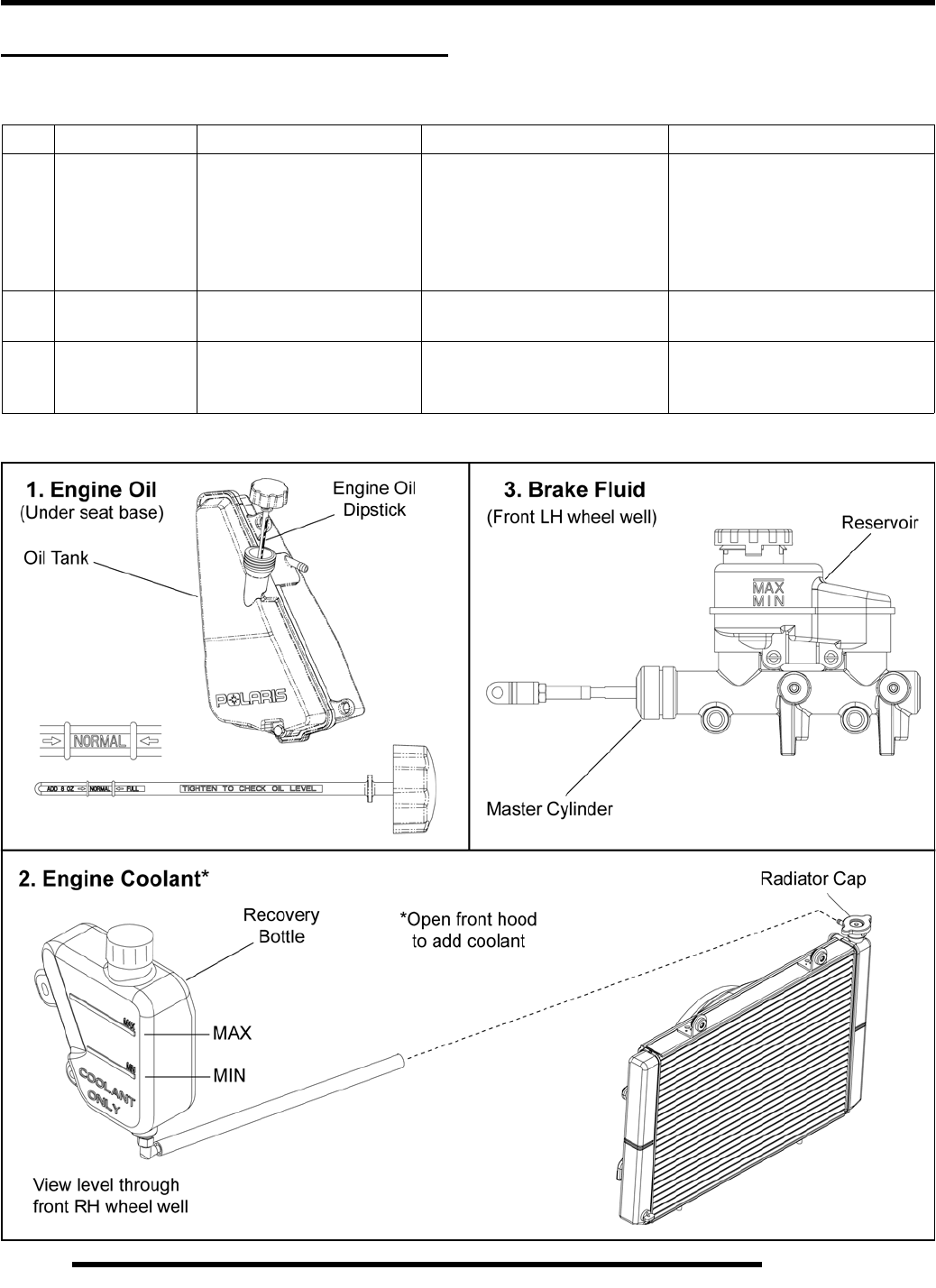
FLUID MAINTENANCE REFERENCES
Component Quick Reference
* More often under severe use, such as operated in water or under severe loads.
III. # Item Lube Rec. Method Frequency*
1Engine Oil Polaris PS-4 PLUS
Performance Synthetic
2W-50 4-Cycle Oil
Add oil to proper level on
dipstick
Change after 1st month or first
25 hours of operation, 100 hours
thereafter; Change more often
(25 hours) in severe duty
conditions or short trip cold
weather operation
2 Engine Coolant Polaris 60/40 Coolant Maintain coolant level in
coolant reservoir bottle. Check level daily, change
coolant every 2 years
3 Brake Fluid Polaris DOT 4 Brake Fluid Maintain fluid level between
“MAX and “MIN” lines on the
master cylinder reservoir
Check level during pre-ride
inspection; change fluid every
two years
PartShark.com
877-999-5686
2.9
MAINTENANCE
2
Component Quick Reference, Continued.....
* More often under severe use, such as operated in water or under severe loads.
III. # Item Lube Rec. Method Frequency*
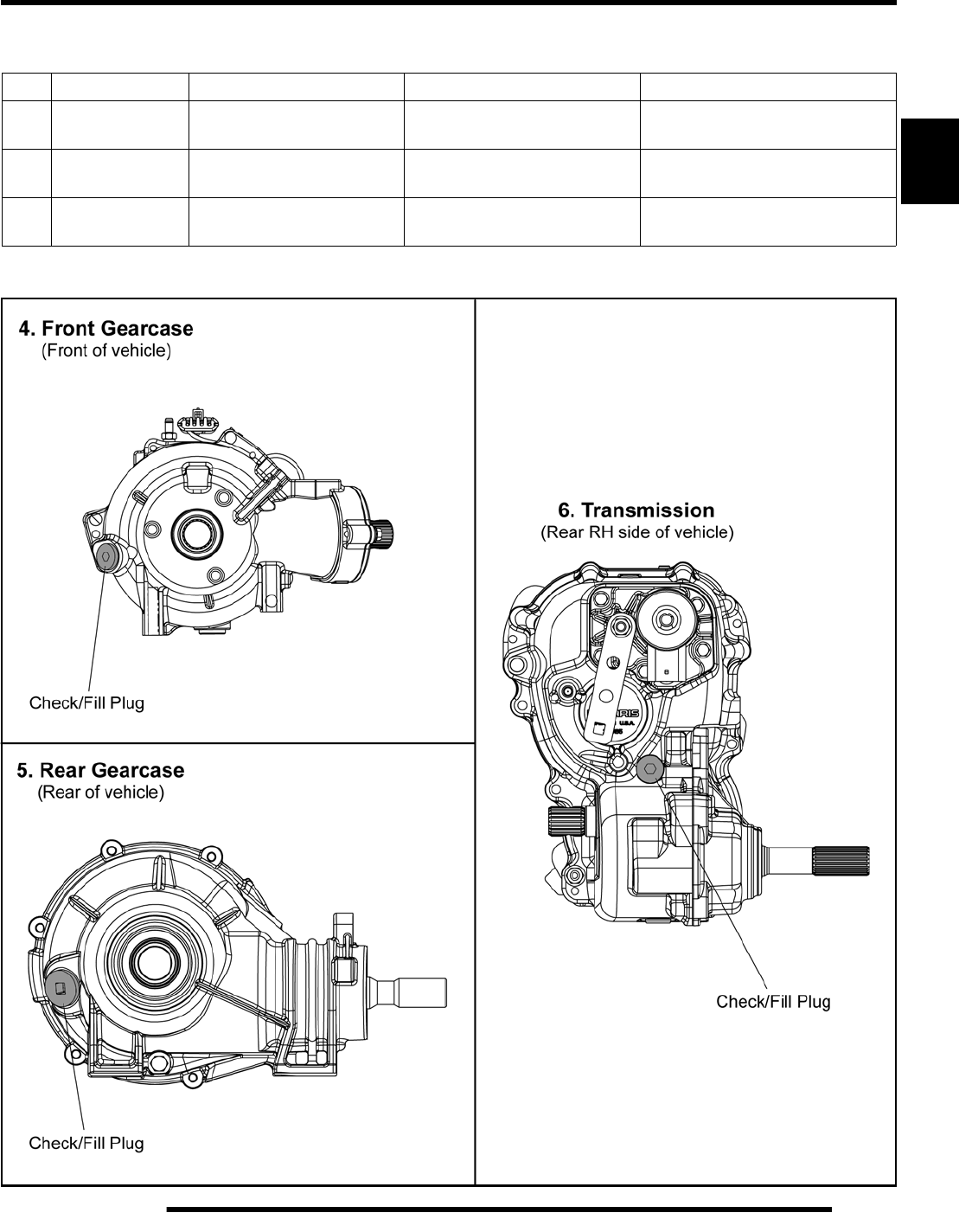
4 Front Gearcase Polaris Premium LT
Demand Drive Fluid Add lubricant until it is visible
at the fill hole threads Check level every 25 hours;
change fluid yearly
5 Rear Gearcase Polaris ATV Angle Drive
Fluid (ADF) Add lubricant until it is visible
at the fill hole threads Check level every 25 hours;
change fluid yearly
6 Transmission Polaris Full Synthetic
Gearcase Lubricant (AGL) Add lubricant until it is visible
at the fill hole threads Check level every 25 hours;
change lubricant yearly
PartShark.com
877-999-5686
2.10
MAINTENANCE
GENERAL VEHICLE INSPECTION
AND MAINTENANCE
Pre-Ride / Daily Inspection
Perform the following pre-ride inspection daily, and when
servicing the vehicle at each scheduled maintenance.
• Tires - check condition and pressures
• Fuel and oil tanks - fill both tanks to their proper level;
Do not overfill oil tank
• All brakes - check operation and adjustment (includes
auxiliary brake)
• Throttle - check for free operation and closing
• Headlight/Taillight/Brakelight - check operation of all
indicator lights and switches
• Ignition switch - check for proper function
• Wheels - check for tightness of wheel nuts and axle
nuts; check to be sure axle nuts are secured by cotter
pins
• Air cleaner element - check for dirt; clean or replace
• Steering - check for free operation noting any unusual
looseness in any area
• Loose parts - visually inspect vehicle for any damaged
or loose nuts, bolts or fasteners
• Engine coolant - check for proper level at the recovery
bottle
• Check all rear suspension components for wear or
damage.
Frame, Nuts, Bolts, and Fasteners
Periodically inspect the torque of all fasteners in accordance
with the maintenance schedule. Check that all cotter pins are in
place. Refer to specific fastener torques listed in each chapter.
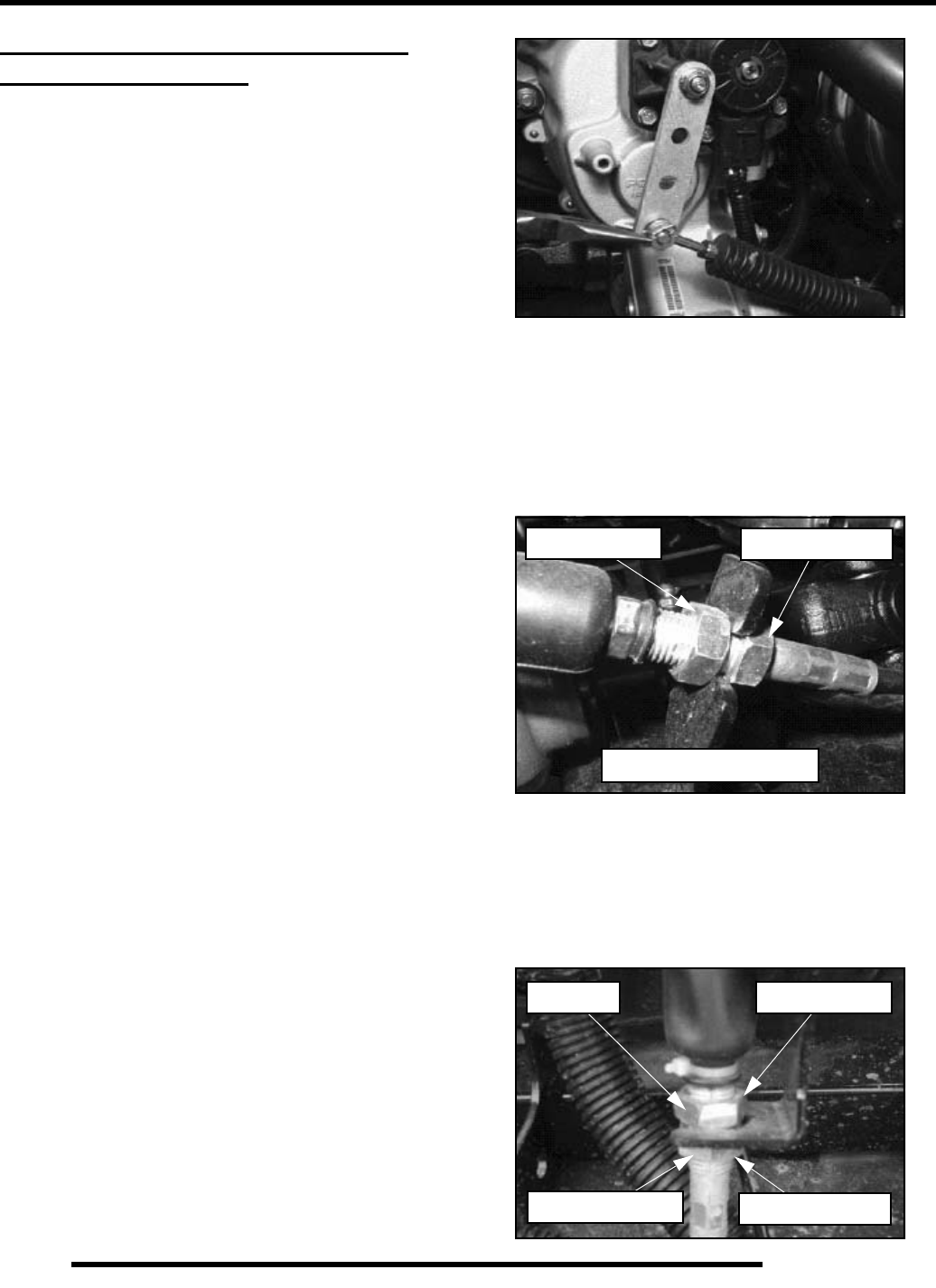
Shift Linkage Inspection / Adjustment
Linkage rod adjustment is necessary when symptoms include:
• No All Wheel Drive light
• Noise on deceleration
• Inability to engage a gear
• Excessive gear clash (noise)
• Shift selectors moving out of desired range
NOTE: Remove necessary components to gain
access to shift linkage cable ends (i.e. exhaust heat
shield, exhaust pipe, etc.)
1. Inspect shift linkage cable, clevis pins, and pivot bushings
and replace if worn or damaged.
2. Be sure idle speed is adjusted properly.
3. Place gear selector in neutral. Make sure the transmission
bell crank is engaged in the neutral position detents.
4. With two wrenches loosen the outside jam nut
counterclockwise. Turn the outside jam nut 1 1/2 turns.
Perform this procedure on the shift lever end, also.
5. After turning the outside jam nut 1 1/2 turns. Hold the
outside jam nut with a wrench and tighten the inside jam
nut clockwise, until it is tight against the bracket.
6. Repeat Step 4 and Step 5 until the proper adjustment is
made for the transmission cable.
7. Use this procedure to loosen or tighten the shift linkage
cable as needed.
Shift Cable Adjustment
Inside Jam Nut Outside Jam Nut
Inside Jam Nut
Outside Jam Nut
Counterclockwise
Clockwise
PartShark.com
877-999-5686
2.11
MAINTENANCE
2
FUEL SYSTEM AND AIR INTAKE
Fuel System
Fuel Lines
1. Check fuel lines for signs of wear, deterioration, damage
or leakage. Replace if necessary.
2. Be sure fuel lines are routed properly and secured with
cable ties. CAUTION: Make sure lines are not kinked or
pinched.
3. Replace all fuel lines every two years.
Fuel Filter
The fuel pump on the RANGER 500 EFI is non-serviceable. If
the internal fuel pump filters require service, the fuel tank and
fuel pump must be replaced as an assembly.
NOTE: See the “Electronic Parts Catalog” for more
information.
NOTE: For all other information related to the EFI
System refer to Chapter 4.
Vent Lines
1. Check fuel tank vent line for signs of wear, deterioration,
damage or leakage. Replace every two years.
2. Be sure vent line is routed properly and secured with cable
ties. CAUTION: Make sure line is not obstructed.
Throttle Pedal Inspection
If the throttle pedal has excessive play due to cable stretch or
cable misadjustment, it will cause a delay in throttle speed and
the throttle may not open fully. If the throttle pedal has no play,
it may be hard to control, and the idle speed may be erratic.
Check the throttle pedal play periodically in accordance with the
Periodic Maintenance Chart and adjust the play if necessary.
Throttle Freeplay Adjustment
Inspection
1. Apply the parking brake.
2. Put the gear shift lever in the N (Neutral) position.
3. Start the engine, and warm it up thoroughly.
4. Measure the distance the throttle pedal moves before the
engine begins to pick up speed. Free play should be 1/16
- 1/8 inches.
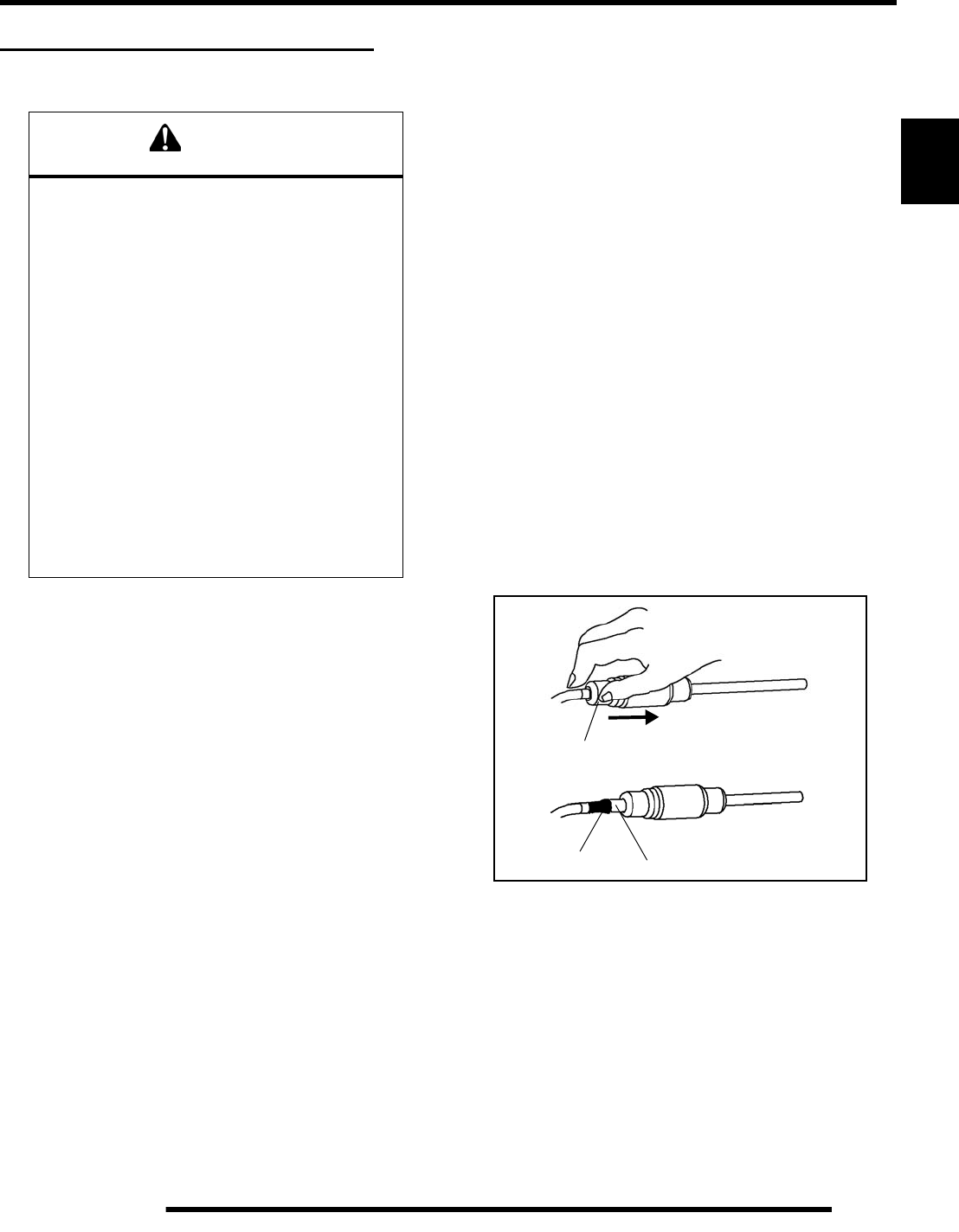
Adjustment
1. Remove the seat.
2. Locate the throttle cable adjuster.
3. Squeeze the end of the rubber boot and slide it far enough
to expose the end of the inline cable adjuster.
4. Loosen the adjuster lock nut.
5. Rotate the boot to turn the adjuster until 1/16" to 1/8" (1.5-
3 mm) of freeplay is achieved at the throttle pedal.
NOTE: While adjusting, lightly flip the throttle pedal
in and out.
6. Tighten the lock nut.
7. Squeeze the end of the rubber boot and slide it over the
cable adjuster to its original position.
8. Start the engine.
9. Disengage the parking brake and field test unit to ensure
proper throttle operation.
WARNING
Gasoline is extremely flammable and explosive
under certain conditions.
Always stop the engine and refuel outdoors or in
a well ventilated area.
Do not smoke or allow open flames or sparks in
or near the area where refueling is performed or
where gasoline is stored.
Do not overfill the tank. Do not fill the tank neck.
If you get gasoline in your eyes or if you swallow
gasoline, seek medical attention immediately.
If you spill gasoline on your skin or clothing,
immediately wash it off with soap and water
and change clothing.
Never start the engine or let it run in an enclosed
area. Engine exhaust fumes are poisonous and
can result loss of consciousness or death
in a short time.
Never drain the fuel when the engine is hot.
Severe burns may result.
Boot
Adjuster
Lock Nut
PartShark.com
877-999-5686
2.12
MAINTENANCE
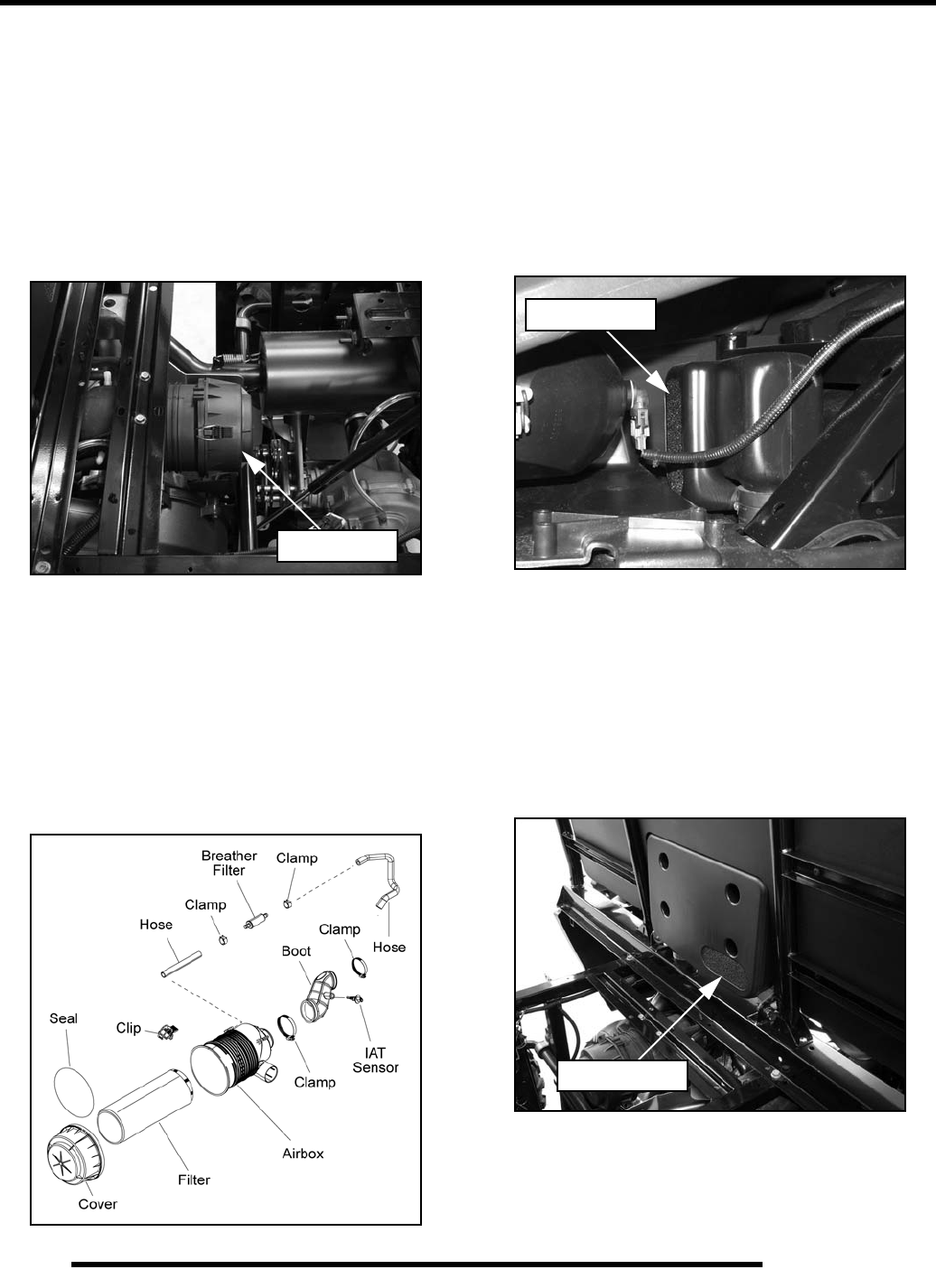
Air Filter Service
It is recommended the air filter be replaced annually. When
riding in extremely dusty or wet conditions, or at wide open
throttle for extended periods, replacement is required more often.
The filter should be inspected periodically before each ride, using
the following procedure.
Removal
1. Lift the rear cargo box to access the airbox cover.
2. Unhook the (2) clips from airbox cover and remove cover.
Inspect the cover seal. It should adhere tightly to the cover.
3. Remove the air filter assembly. Inspect the air filter and
replace if necessary.
4. Remove debris from filter using low pressure, compressed
air. Blow out air filter (lightly) from the inside, out.
IMPORTANT: If the filter has been soaked with fuel or
oil it must be replaced. Do not attempt to wash the air
filter. If cleaning is required, replace the filter.
Installation
5. Clean airbox of any oil or water deposits and apply a small
amount of grease to the sealing surfaces of the filter.
6. Reinstall the air filter into the airbox container. Be sure the
filter fits tightly in the air box and engage the (2) clips.
Engine Air Intake Inspection
1. Open the hood to access the engine intake air baffle box.
2. Remove the filter element from the baffle box.
3. If the filter element is dirty, clean it with a high flash point
solvent, followed by hot soapy water. Rinse and dry the
filter element thoroughly. Inspect element for tears or
damage. Replace if necessary.
4. Reinstall the filter element into the air baffle box.
PVT Air Intake Inspection
1. Lift the cargo box to access the PVT air intake baffle box.
2. Remove the cover and filter element from the baffle box.
3. If the filter element is dirty, clean it with a high flash point
solvent, followed by hot soapy water. Rinse and dry the
filter element thoroughly. Inspect element for tears or
damage. Replace if necessary.
4. Reinstall the filter element into the air baffle box.
Airbox Cover
Filter Element
Filter Element
PartShark.com
877-999-5686
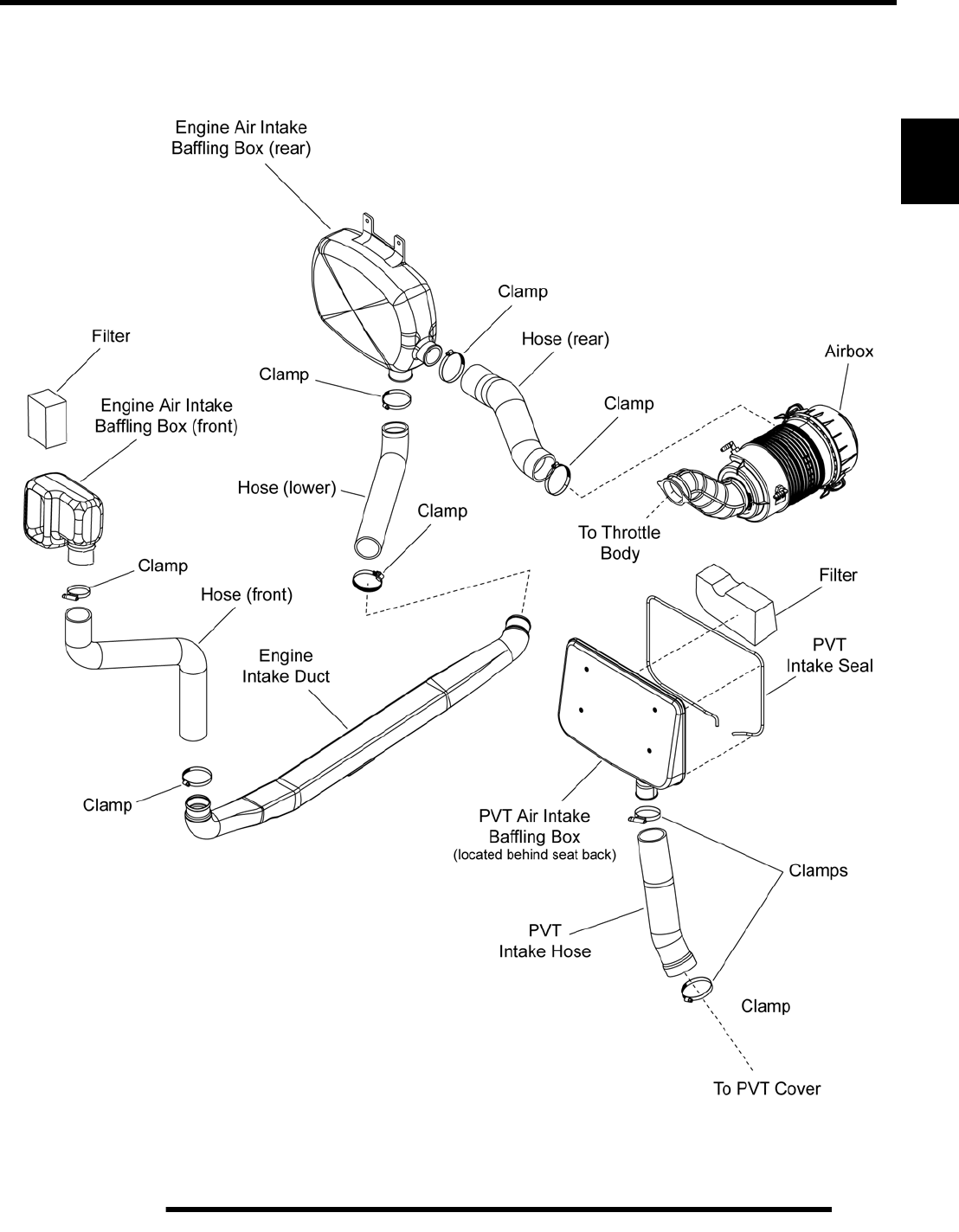
2.13
MAINTENANCE
2
Air Intake Exploded View
PartShark.com
877-999-5686
2.14
MAINTENANCE
ENGINE
Compression and Leakdown Test
NOTE: 4-Stroke 500 engines are equipped with an
automatic decompressor. Compression readings
will vary in proportion to cranking speed during the
test. Average compression (measured) is about
60-90 psi during a compression test.
Smooth idle generally indicates good compression. Low engine
compression is rarely a factor in running condition problems
above idle speed. Abnormally high compression can be caused
by a decompressor malfunction, or worn or damaged exhaust
cam lobes. Inspect camshaft and automatic decompression
mechanism if compression is abnormally high.
A cylinder leakage test is the best indication of engine condition
on models with automatic decompression. Follow
manufacturer’s instructions to perform a cylinder leakage test
(never use high pressure leakage testers as crankshaft seals may
dislodge and leak).
Breather Filter Inspection
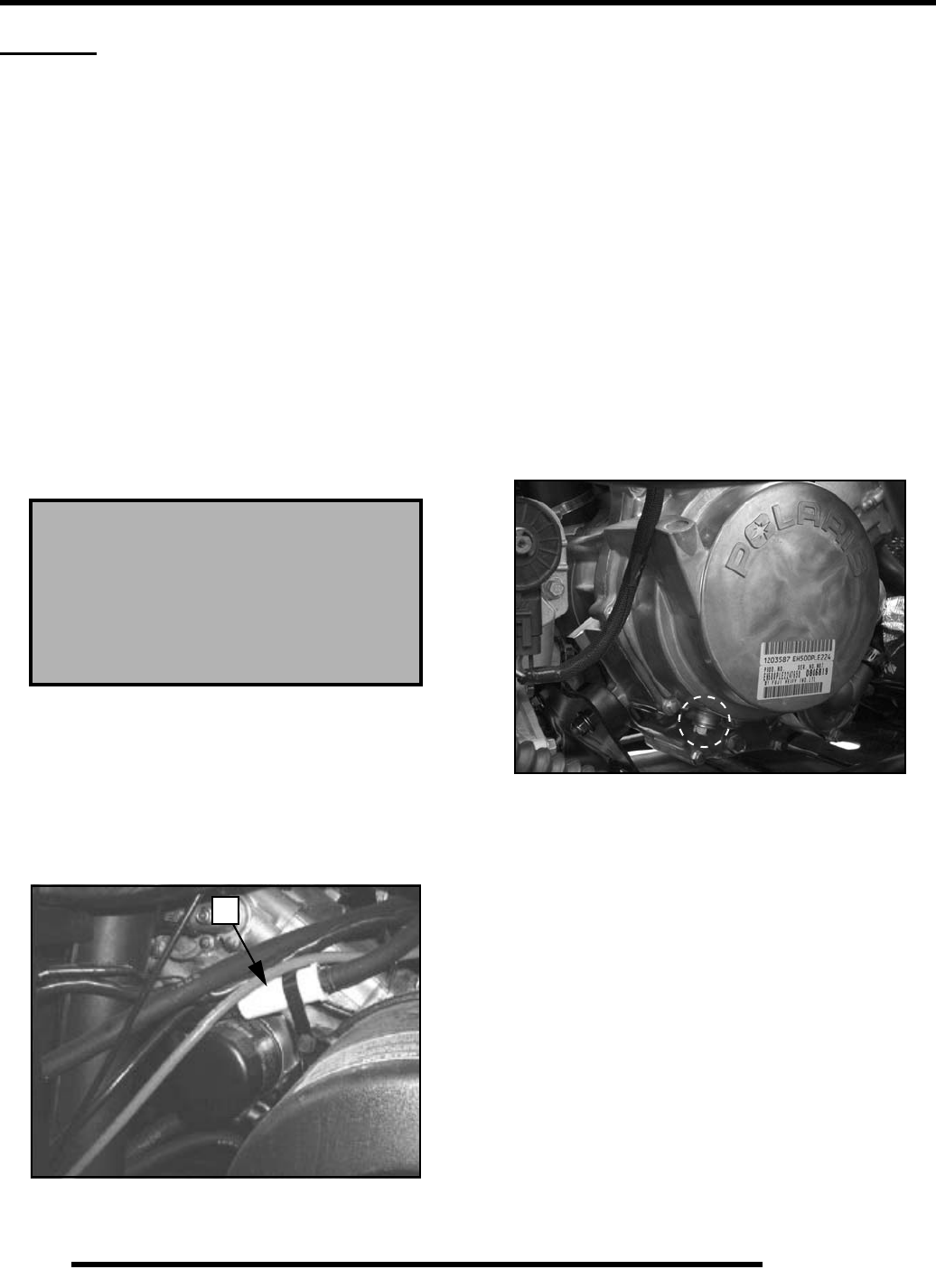
This engine is equipped with a breather filter. The in-line filter
is similar in appearance to a fuel filter, and is visible on the left
side (A) of the engine. Follow right hand breather line out of the
side of the airbox and locate filter. Remove the filter and blow
through it gently in the direction of the arrow on filter to check
for clogging. Replace as needed.
In-line breather filters should be installed with the arrow
pointing toward the engine (away from the air box).
NOTE: In-line breather filter service life is extended
when the engine air intake baffle box filter element is
in place and maintained properly. Never operate the
engine without the filter element in the baffle box.
Breather Hose
Be sure breather line is routed properly and secured in place.
CAUTION: Make sure line(s) are not kinked or pinched.
Flywheel Housing Drain Plug
• Drain the flywheel housing periodically to remove
moisture.
• Drain the flywheel housing after operating the vehicle
in very wet conditions. This should also be done before
storing the vehicle. The drain screw is located at the
bottom of the flywheel housing. Remove the plug to
drain. Reinstall the plug after the housing has been
completely drained.
IMPORTANT: Do not operate the vehicle with the
flywheel housing drain plug removed.
• After traveling through wet conditions, the flywheel
housing and starter should always be drained
completely by removing the housing.
Cylinder Compression
Standard 60-90 PSI
Cylinder Leakage
Service Limit: 10%
(Inspect for cause if leakage exceeds 10%)
A
PartShark.com
877-999-5686
2.15
MAINTENANCE
2
Engine Oil Level
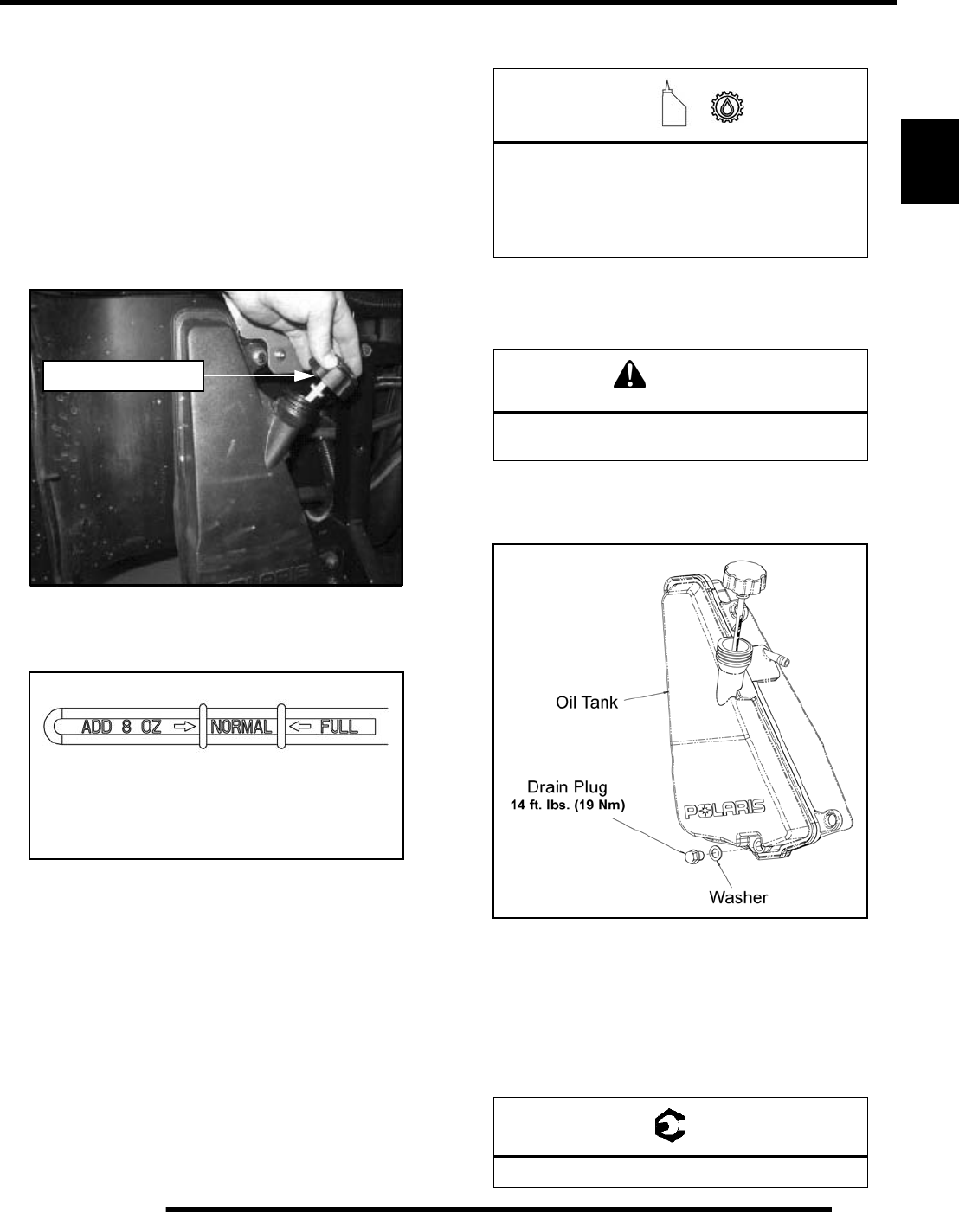
The oil tank is located on the left side of the vehicle under the
seat. To check the oil level:
1. Set machine on a level surface.
2. Start and run engine for 20-30 seconds. This will return oil
to its true level in the oil tank.
3. Stop engine, remove the bench seat.
4. The oil tank is located on the driver side. Remove dipstick
and wipe dry with a clean cloth.
5. Reinstall dipstick and screw it into place.
NOTE: The dipstick must be screwed completely in
to ensure accurate measurement.
6. Remove dipstick and check to see that the oil level is in the
normal range. Add oil as indicated by the level on the
dipstick. Do not overfill.
NOTE: Rising oil level between checks in cool
weather driving, can indicate moisture collecting in
the oil reservoir. If the oil level is over the full mark,
change the oil.
Engine Oil and Filter Change
1. Place vehicle on a level surface and allow the engine to run
for two to three minutes until warm. Stop engine.
2. Clean the area around drain plug at the bottom of oil tank.
3. Place a drain pan beneath oil tank and remove drain plug.
CAUTION: Oil may be hot. Do not allow hot oil to come
into contact with skin as serious burns may result.
4. Allow oil to drain completely.
5. Replace sealing washer on the drain plug.
NOTE: The sealing surfaces on drain plug and oil
tank should be clean and free of burrs, nicks or
scratches.
6. Reinstall the drain plug and torque to 14 ft. lbs. (19 Nm).
Engine Oil Dipstick
Maintain Oil Level In NORMAL Range
Screw in dipstick completely to check
=
Recommended Engine Oil:
PS-4 PLUS 2W-50 Synthetic
4-Cycle Engine Oil
(PN 2876244) (Quart)
WARNING
Personal injury can occur when handling used
oil. Hot oil can cause burns or skin damage.
= T
Oil Tank Drain Plug: 14 ft. lbs. (19 Nm)
PartShark.com
877-999-5686
2.16
MAINTENANCE
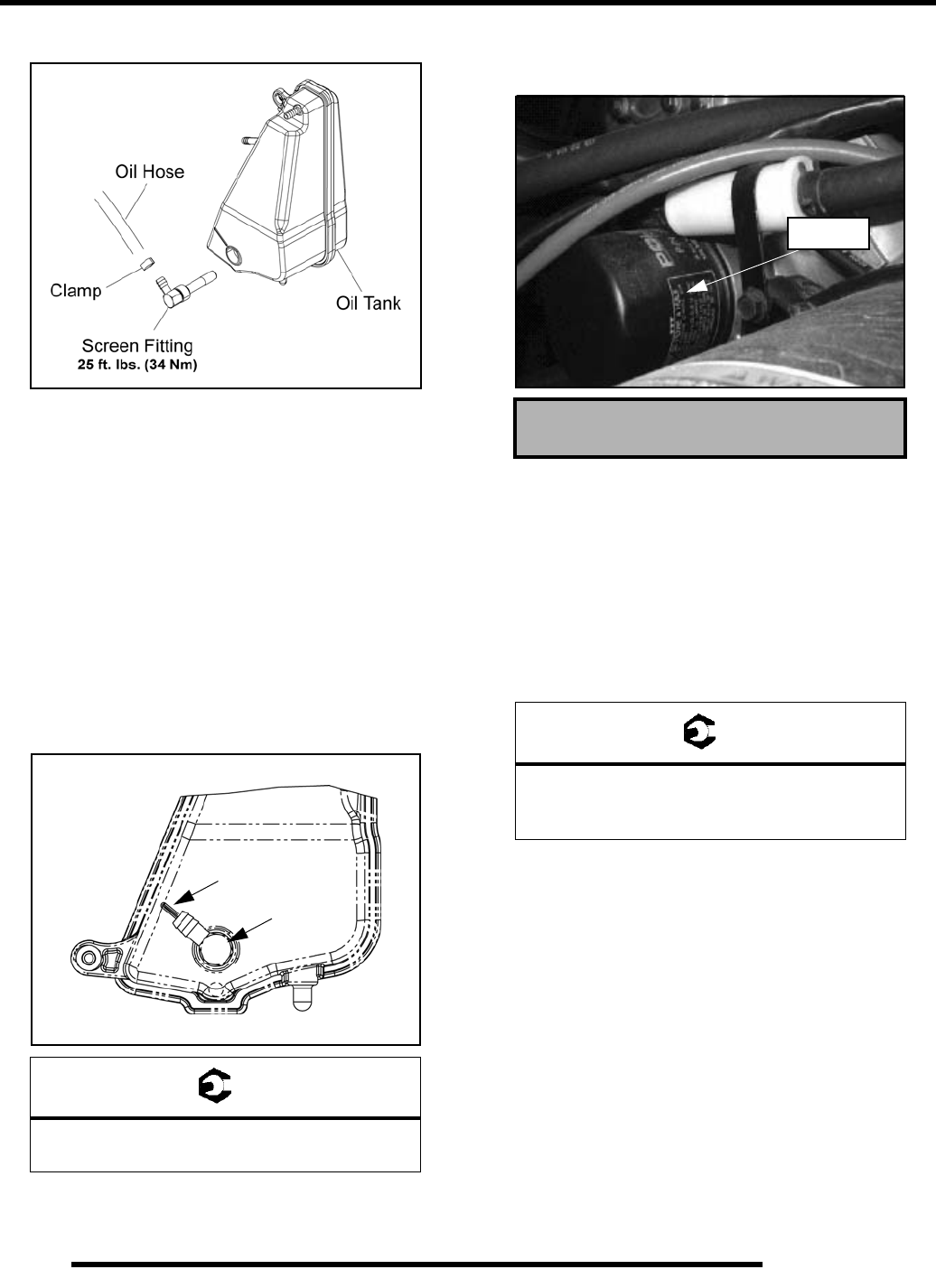
7. Loosen the clamp at the screen fitting.
8. Remove the oil hose from the screen fitting at the bottom
of the oil tank.
9. Remove screen fitting and clean the screen thoroughly.
10. Apply Loctite™ 565 Thread Sealant (PN 2871956) to the
clean and oil free threads of the fitting.
11. Install screen fitting and rotate a minimum of 2 1/2 turns
(clockwise) into the tank threads. Then rotate the screen
fitting clockwise until the nipple of the screen fitting aligns
with the marking on the tank.
NOTE: Maximum torque for the screen fitting is
25 ft. lbs. (34 Nm), do not overtighten.
12. Install the oil hose on the screen fitting and install the
clamp.
13. Place shop towels beneath oil filter. Using an Oil Filter
Wrench (PV-43527), turn filter counterclockwise to
remove.
14. Using a clean, dry cloth, clean filter sealing surface on
crankcase.
15. Check to make sure the O-ring on the new oil filter is in
good condition. Lubricate O-ring on new filter with a film
of engine oil.
16. Install new oil filter and turn by hand until filter gasket
contacts the sealing surface, then turn and additional 1/2
turn.
17. Remove dipstick and fill oil tank with 2 quarts (1.9 l) of
Polaris PS-4 PLUS 2W-50 Synthetic 4-Cycle Engine Oil
(PN 2876244).
18. Place gear selector in neutral and set parking brake.
19. Prime oil pump using the "Oil Pump Priming
Procedure". Stop the engine and inspect for leaks.
20. Re-check the oil level on the dipstick and add oil as
necessary to bring the level to the upper mark on the
dipstick.
21. Dispose of used oil and oil filter properly.
= T
Oil Tank Screen Fitting:
25 ft. lbs. (34 Nm); See step 11
Reference Mark
on Tank
Screen
Fitting
Oil Filter Wrench: PV-43527
= T
Oil Filter Torque:
Turn by hand until filter gasket contacts sealing
surface, then turn an additional 1/2 turn.
Oil Filter
PartShark.com
877-999-5686
2.17
MAINTENANCE
2
Oil Pump Priming Procedure
NOTE: This priming procedure must be performed
whenever the oil hose connection between the oil
tank and pump inlet has been disconnected.
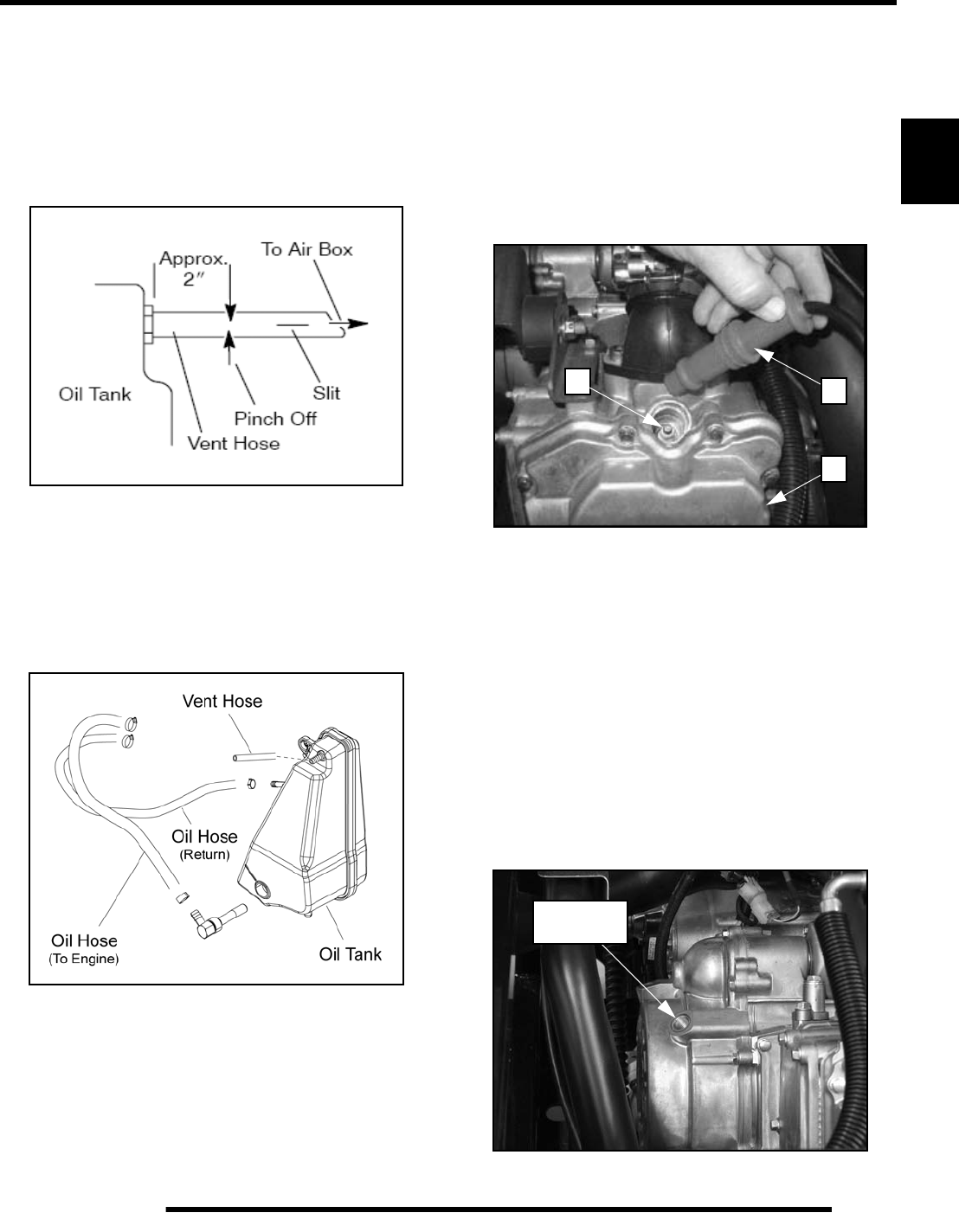
1. Clamp or pinch off vent hose approximately 2” from oil
tank to avoid the end of oil tank vent fitting, and before the
vent line’s pressure relief slit
2. Run engine for 10-20 seconds.
3. Remove the clamp from the vent hose. The oil pump will
now be properly primed and ready for field operation.
NOTE: If the system is primed properly you should
hear some air release. If you do not, the system has
not primed. Repeat the process if necessary.
Valve Clearance
Inspect and adjust valve clearance while the engine is cold and
the piston positioned at Top Dead Center (TDC) on compression
stroke.
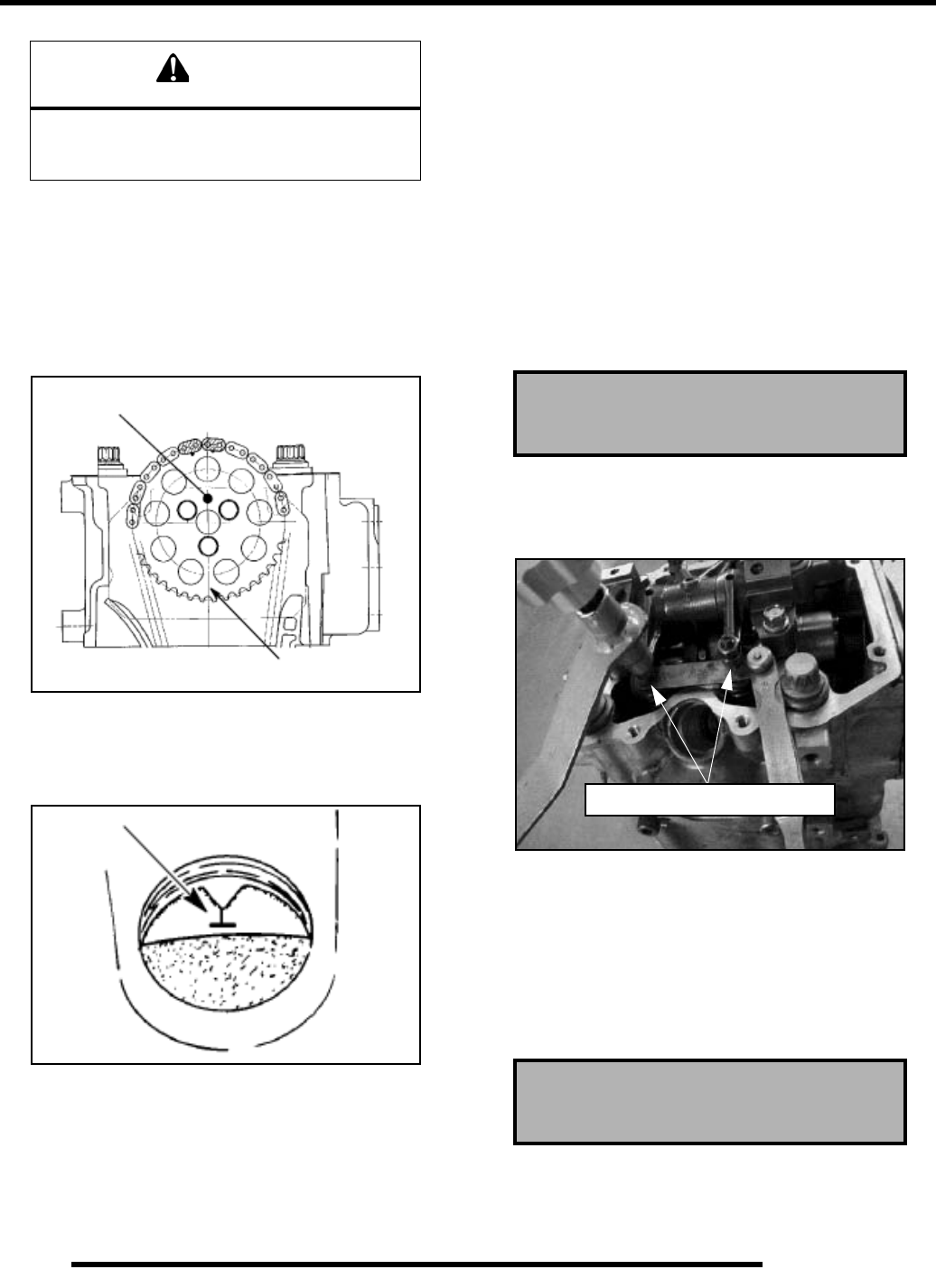
1. Remove the lower seat base.
2. Remove the spark plug high tension lead (A) and remove
the spark plug (B). CAUTION: Place a clean shop towel
into the spark plug cavity to prevent dirt from entering.
3. Remove the rocker cover bolts, cover (C) and gasket.
NOTE: It may be necessary to tap the cover lightly
with a soft-faced hammer to loosen it from the
cylinder head.
4. Remove the PVT cover to access the drive clutch.
5. Use drive clutch to rotate the crankshaft.
6. Remove the exhaust shield to allow better access to the
timing inspection hole.
7. Remove the timing inspection plug located in the flywheel
housing.
BA
C
Inspection
Hole
PartShark.com
877-999-5686
2.18
MAINTENANCE
8. Rotate engine slowly by turning the drive clutch, watching
the intake valve(s) open and close.
NOTE: At this point, watch the camshaft sprocket
locating pin and slowly rotate engine until locating
pin is facing upward, directly in line with the
crankshaft to camshaft center line as shown. The
camshaft lobes should be pointing downward.
9. Verify accurate TDC positioning by ensuring the "T" mark
is aligned in the timing inspection hole (requires the use of
a flashlight). In this position there should be clearance on
all valves.
Intake Valve Clearance Adjustment
1. Insert a .006" (.15mm) feeler gauge between end of intake
valve stem and clearance adjuster screw.
2. Using a 10 mm wrench and a screwdriver, loosen adjuster
lock nut and turn adjusting screw until there is a slight drag
on the feeler gauge.
3. Hold adjuster screw and tighten adjuster lock nut securely.
4. Re-check the valve clearance.
5. Repeat adjustment procedure if necessary until clearance is
correct with locknut secured.
6. Repeat this step for the other intake valve.
Exhaust Valve Clearance Adjustment
1. Insert .006 feeler gauge(s) between end of exhaust valve
stem and adjuster screw(s).
NOTE: Both feeler gauges should remain inserted
during adjustment of each valve.
2. Loosen locknut(s) and turn adjuster screw(s) until there is
a slight drag on feeler gauge(s). The Valve/Clutch Adjuster
Tool (PA-44689) can be used to adjust the engines valves.
NOTE: The exhaust valves share a common rocker
arm, and must be adjusted using two feeler gauges.
3. When clearance is correct, hold adjuster screw and tighten
locknut securely
4. Re-check the valve clearance.
CAUTION
Failure to position the crankshaft at TDC on
compression stroke will result in
improper valve adjustment.
Sprocket Alignment pin facing up
Crankshaft-to-Camshaft Centerline
Intake Valve Clearance:
.006" (.15 mm)
Exhaust Valve Clearance:
.006" (.15 mm)
Feeler Gauge for Both Valves
PartShark.com
877-999-5686
2.19
MAINTENANCE
2
Exhaust Pipe
The exhaust pipe must be periodically purged of accumulated
carbon as follows:
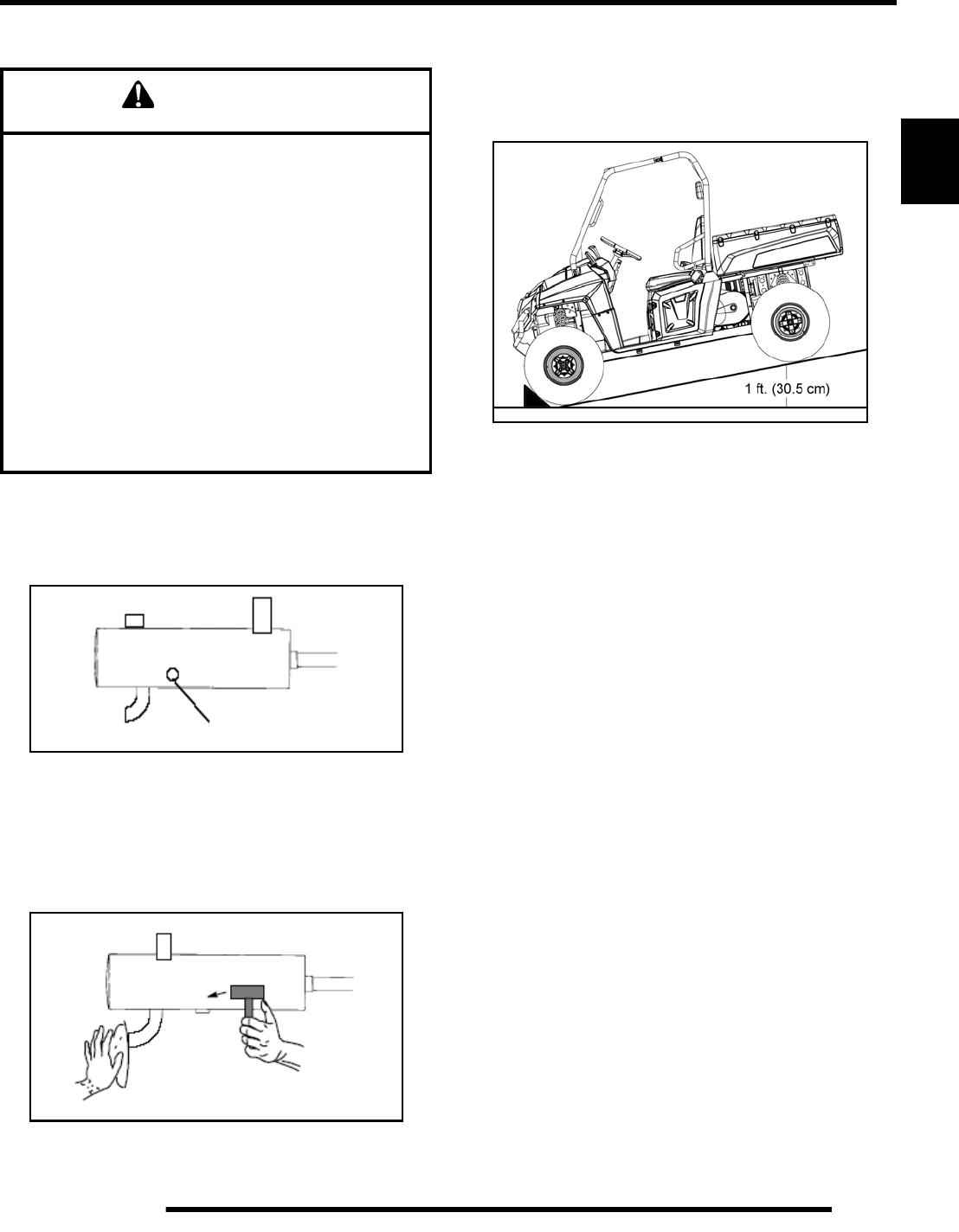
1. Remove the clean out plugs located on the bottom of the
muffler as shown below.
2. Place the transmission in Park and start the engine. Purge
accumulated carbon from the system by momentarily
revving the engine several times.
3. If some carbon is expelled, cover the exhaust outlet and
lightly tap on the pipe around the clean out plugs with a
rubber mallet while revving the engine several more times.
4. If particles are still suspected to be in the muffler, back the
machine onto an incline so the rear of the machine is one
foot higher than the front. Set the hand brake and block the
wheels. Make sure the machine is in Park and repeat Steps
2 and 3.
5. If particles are still suspected to be in the muffler, drive the
machine onto the incline so the front of the machine is one
foot higher than the rear. Set the hand brake and block the
wheels. Make sure the machine is in Park and repeat Steps
2 and 3.
6. Repeat steps 2 through 5 until no more particles are
expelled when the engine is revved.
7. Stop the engine and allow the arrestor to cool.
8. Reinstall the clean out plugs.
WARNING
Do not perform clean out immediately after the engine
has been run, as the exhaust system becomes very hot.
Serious burns could result from contact with exhaust
components.
To reduce fire hazard, make sure that there are no
combustible materials in the area when purging the
spark arrestor.
Wear eye protection.
Do not stand behind or in front of the vehicle while
purging the carbon from the spark arrestor.
Never run the engine in an enclosed area. Exhaust
contains poisonous carbon monoxide gas.
Do not go under the machine while it is inclined. Set the
hand brake and block the wheels to prevent roll back.
Failure to heed these warnings could result in serious
personal injury or death.
Clean Out Plug
PartShark.com
877-999-5686
2.20
MAINTENANCE
TRANSMISSION AND GEARCASES
Transmission Lubrication
NOTE: It is important to follow the transmission
maintenance intervals described in the Periodic
Maintenance Chart. Regular fluid level inspections
should be performed as well.
The transmission lubricant level should be checked and changed
in accordance with the maintenance schedule.
• Be sure vehicle is positioned on a level surface when
checking or changing the lubricant.
• Check vent hose to be sure it is routed properly and
unobstructed.
Transmission Lubricant Level Check
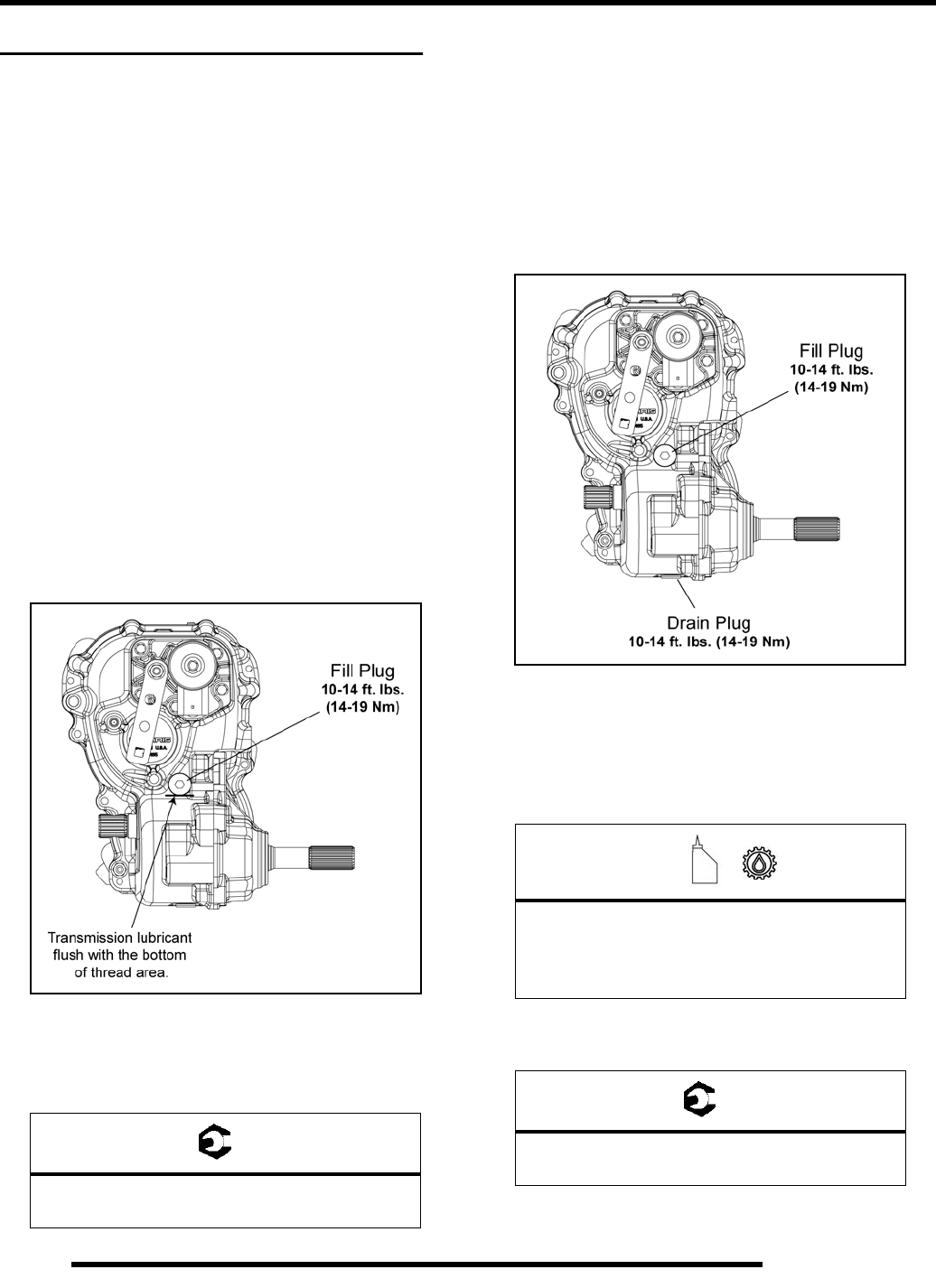
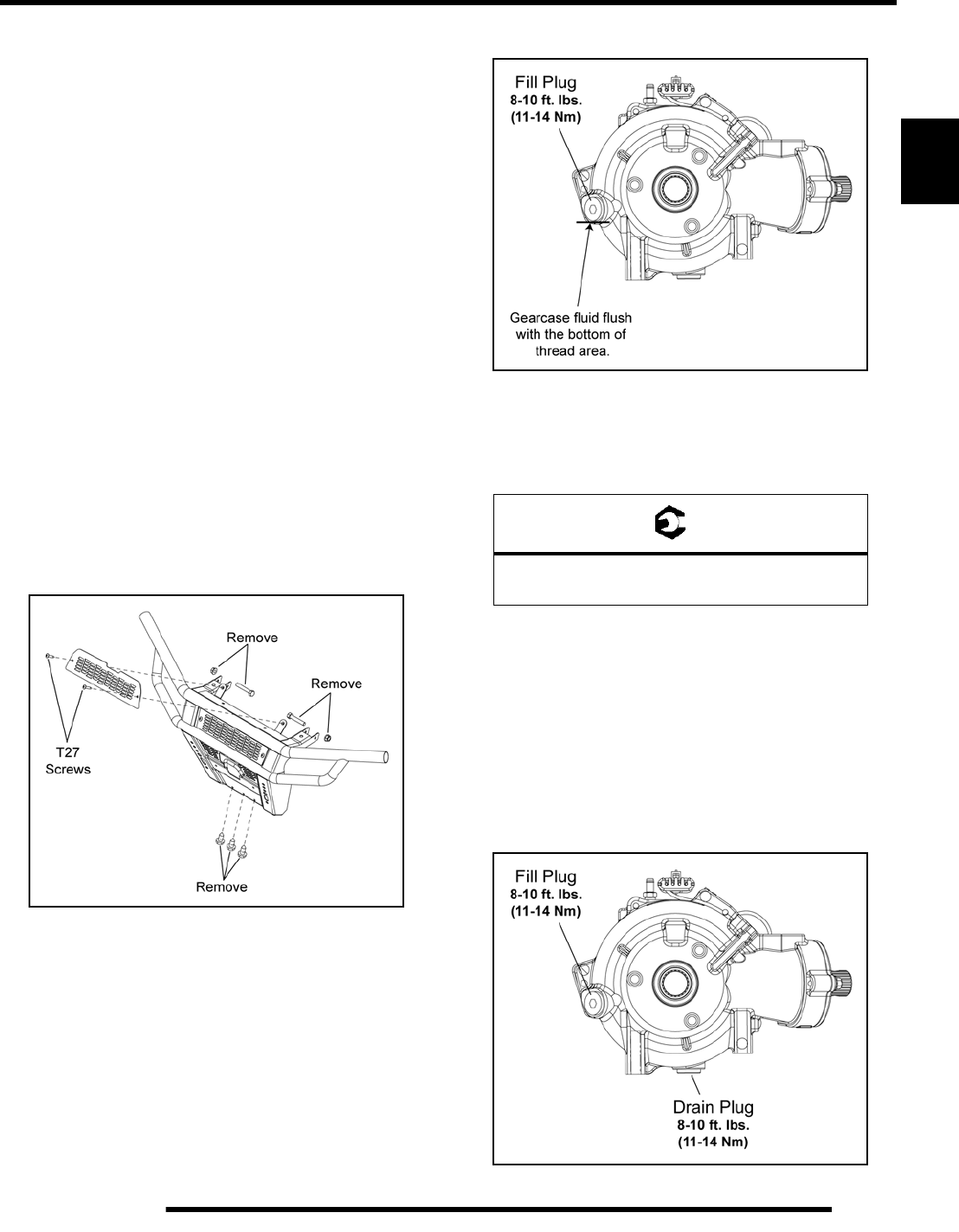
The fill plug is located on the right side of the transmission.
Access the fill plug from the rear right-hand side of the vehicle.
Maintain the fluid level even with the bottom threads of the fill
plug hole.
1. Position vehicle on a level surface.
2. Remove the fill plug and check the lubricant level.
3. If lubricant level is not even with the bottom threads, add
the recommended lubricant as needed. Do not overfill.
4. Reinstall the fill plug and torque to specification.
Transmission Lubricant Change
Access the drain plug on the right-hand side of the vehicle
through the skid plate.
1. Remove the fill plug (refer to “Transmission Lubricant
Level Check”).
2. Place a drain pan under the transmission drain plug.
3. Remove the drain plug and allow lubricant to drain
completely.
4. Clean the drain plug magnetic surface. Reinstall drain plug
with a new O-ring and torque to specification.
5. Add the recommended amount of lubricant through the fill
plug hole. Maintain the lubricant level at the bottom of the
fill plug hole when filling the transmission. Do not overfill.
6. Reinstall fill plug with a new O-ring and torque to
specification.
7. Check for leaks. Dispose of used lubricant properly.
= T
Drain / Fill Plug Torque:
10-14 ft. lbs. (14-19 Nm)
=
Recommended Transmission Lubricant:
Full Synthetic AGL (PN 2873602) (Quart)
Capacity: 43.6 oz. (1290 ml)
= T
Drain / Fill Plug Torque:
10-14 ft. lbs. (14-19 Nm)
PartShark.com
877-999-5686
2.21
MAINTENANCE
2
Front Gearcase Lubrication
NOTE: It is important to follow the front gearcase
maintenance intervals described in the Periodic
Maintenance Chart. Regular fluid level inspections
should be performed as well.
The front gearcase fluid level should be checked and changed in
accordance with the maintenance schedule.
• Be sure vehicle is positioned on a level surface when
checking or changing the fluid.
• Check vent hose to be sure it is routed properly and
unobstructed.
Front Gearcase Fluid Level Check
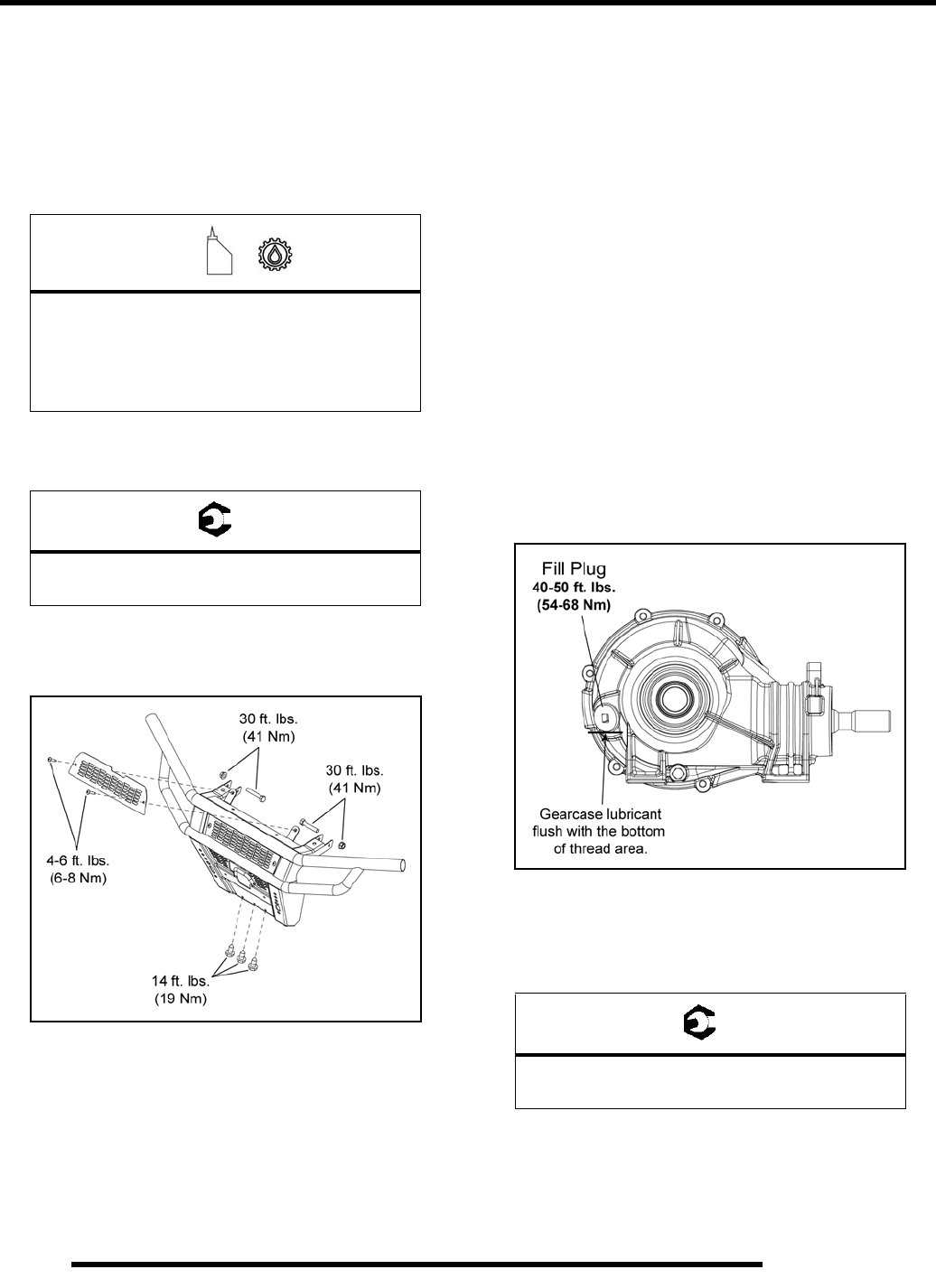
The fill plug is located on the front left side of the front gearcase.
Access the fill plug from the front of the vehicle. Maintain the
fluid level even with the bottom threads of the fill plug hole.
1. Position vehicle on a level surface.
2. Begin by removing the front bumper to gain access to the
gearcase fill plug.
3. Remove the (2) T27 Torx-head screws retaining the fascia
screen and remove the screen.
4. Remove the (3) bolts from the lower portion of the bumper.
5. Remove the fasteners from each side of the upper portion
of the bumper.
6. Carefully remove the bumper from the vehicle.
7. Remove the fill plug and check the fluid level.
8. If fluid level is not even with the bottom threads, add the
recommended fluid as needed. Do not overfill.
9. Reinstall the fill plug and torque to specification.
Front Gearcase Fluid Change:
The drain plug is located on the bottom side of the front
gearcase. Access the drain plug through the skid plate.
1. Remove the fill plug (refer to “Front Gearcase Fluid Level
Check”).
2. Place a drain pan under the front gearcase drain plug.
3. Remove the drain plug and allow fluid to drain completely.
= T
Drain / Fill Plug Torque:
8-10 ft. lbs. (11-14 Nm)
PartShark.com
877-999-5686
2.22
MAINTENANCE
4. Clean the drain plug magnetic surface.
5. Reinstall drain plug with a new O-ring and torque to
specification.
6. Add the recommended amount of fluid through the fill hole.
Maintain the fluid level even with the bottom threads of the
fill plug hole.
7. Reinstall fill plug with a new O-ring and torque to
specification.
8. Check for leaks. Dispose of used fluid properly.
9. Reinstall the front bumper.
10. Install the fasteners on each side of the upper portion of the
bumper. Torque fasteners to 30 ft. lbs. (41 Nm).
11. Install the (3) bolts in the lower portion of the bumper.
Torque bolts to 14 ft. lbs. (19 Nm).
12. Install the (2) T27 Torx-head screws retaining the fascia
screen. Torque screws to 4-6 ft. lbs. (6-8 Nm).
Rear Gearcase Lubrication
NOTE: It is important to follow the rear gearcase
maintenance intervals described in the Periodic
Maintenance Chart. Regular fluid level inspections
should be performed as well.
The rear gearcase lubricant level should be checked and
changed in accordance with the maintenance schedule.
• Be sure vehicle is positioned on a level surface when
checking or changing the lubricant.
• Check vent hose to be sure it is routed properly and
unobstructed.
Rear Gearcase Lubricant Level Check:
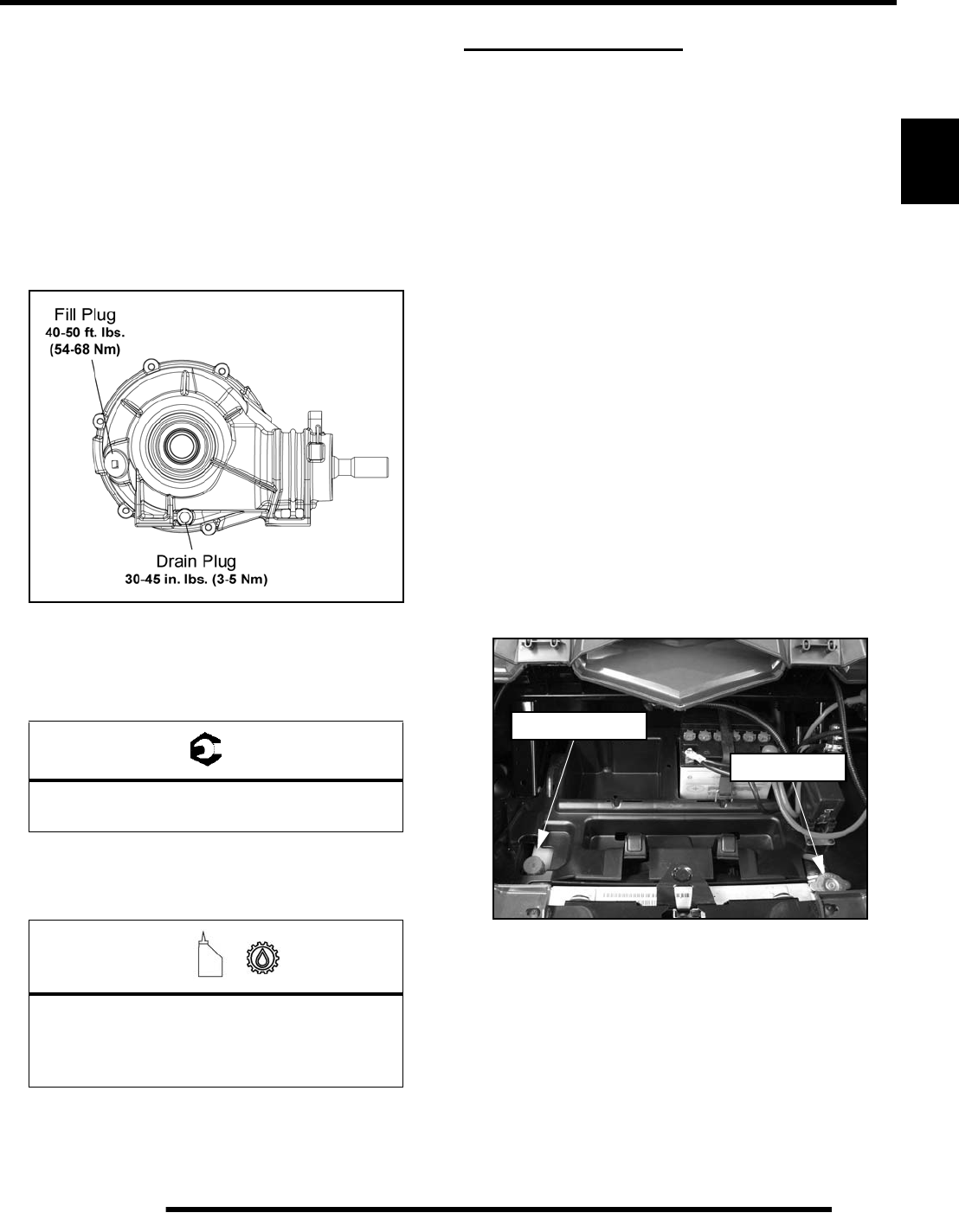
The fill plug is located on the right side of the rear gearcase.
Maintain the lubricant level even with the bottom threads of the
fill plug hole.
1. Position the vehicle on a level surface.
2. Remove the fill plug and check the lubricant level.
3. If lubricant level is not even with the bottom threads, add
the recommended lubricant as needed. Do not overfill.
4. Reinstall fill plug and torque to specification.
=
Recommended Front Gearcase Fluid:
Premium LT Demand Drive Fluid
(PN 2876251) (Quart)
Capacity: 9.3 oz. (275 ml)
= T
Drain / Fill Plug Torque:
8-10 ft. lbs. (11-14 Nm)
= T
Fill Plug Torque:
40-50 ft. lbs. (54-68 Nm)
PartShark.com
877-999-5686
2.23
MAINTENANCE
2
Rear Gearcase Lubricant Change:
The drain plug is located on the bottom right side of the rear
gearcase. Access the drain plug from the rear of the vehicle
through the skid plate.
1. Remove the fill plug (refer to “Rear Gearcase Lubricant
Level Check”).
2. Place a drain pan under the rear gearcase drain plug.
3. Remove the drain plug and allow the lubricant to drain
completely.
4. Clean the drain plug magnetic surface.
5. Reinstall drain plug with a new O-ring and torque to
specification.
6. Add the recommended amount of lubricant through the fill
hole. Maintain the lubricant level even with the bottom
threads of the fill plug hole.
7. Reinstall fill plug with a new O-ring and torque to
specification.
8. Check for leaks. Dispose of used lubricant properly.
COOLING SYSTEM
Liquid Cooling System Overview
The engine coolant level is controlled or maintained by the
recovery system. The recovery system components are the
recovery bottle, radiator filler neck, radiator pressure cap and
connecting hose.
As coolant operating temperature increases, the expanding
(heated) excess coolant is forced out of the radiator past the
pressure cap and into the recovery bottle. As engine coolant
temperature decreases the contracting (cooled) coolant is drawn
back up from the tank past the pressure cap and into the radiator.
NOTE: Some coolant level drop on new machines is
normal as the system is purging itself of trapped air.
Observe coolant levels often during the break-in
period.
Overheating of engine could occur if air is not fully purged from
system.
Polaris Premium 60/40 is already premixed and ready to use. Do
not dilute with water.
Coolant Level Inspection
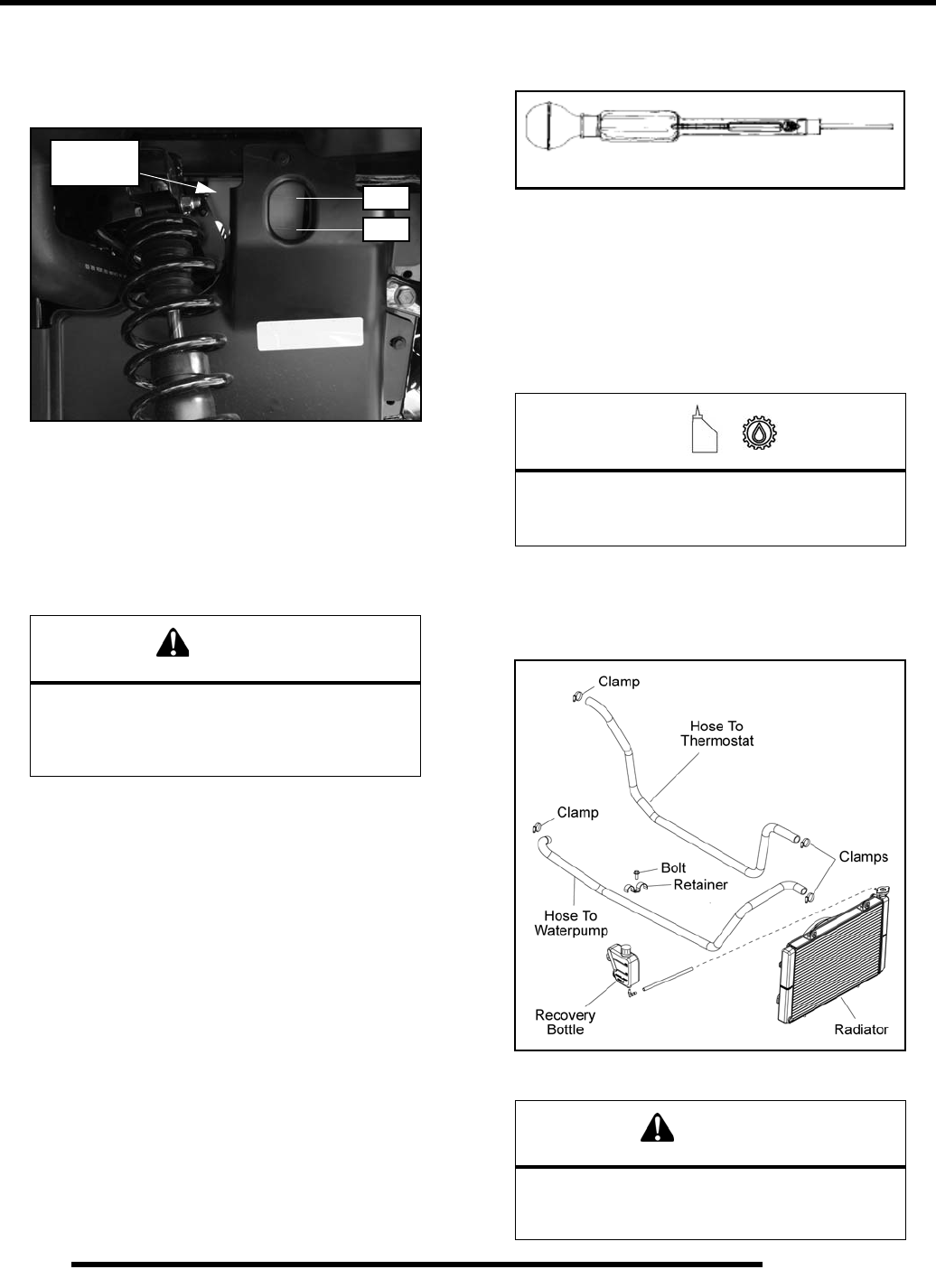
The recovery bottle and radiator pressure cap are located under
the hood.
With the engine at operating temperature, the coolant level
should be between the “MAX” and “MIN” marks on the
recovery bottle. If not, perform the following:
1. Position the vehicle on a level surface
= T
Drain Plug Torque:
30-45 in. lbs. (3-5 Nm)
=
Recommended Rear Gearcase Lubricant:
ATV Angle Drive Fluid (PN 2871653)
Capacity: 18 oz. (532 ml)
Recovery Bottle
Radiator Cap
PartShark.com
877-999-5686
2.24
MAINTENANCE
2. Check the coolant level in the recovery bottle, located on
the ride side of the machine. The coolant level must be
maintained between the “MAX” and “MIN” levels
indicated on the recovery bottle
3. If the coolant level is below the “MIN” mark, open the hood
to access the radiator pressure cap and recovery bottle cap.
NOTE: If overheating is evident, allow system to
cool completely and check coolant level in the
radiator and inspect for signs of trapped air in
system.
4. Remove the pressure cap. Using a funnel, add coolant to
the top of the radiator filler neck.
5. Reinstall the pressure cap.
NOTE: Use of a non-standard pressure cap will not
allow the recovery system to function properly.
6. Remove the recovery bottle cap.
7. Fill the recovery bottle to the “MAX” mark with Polaris
Premium 60/40 Anti-Freeze/Coolant or a 50/50 mixture of
antifreeze/coolant and distilled water as required for freeze
protection in your area.
8. Reinstall the recovery bottle cap.
9. If coolant was required, start engine and check for leaks.
Make sure radiator fins are clean to prevent overheating.
Coolant Strength / Type
Test the strength of the coolant using an antifreeze hydrometer.
• A 50/50 or 60/40 mixture of antifreeze and distilled
water will provide the optimum cooling, corrosion
protection, and antifreeze protection.
• Do not use tap water, straight antifreeze, or straight
water in the system. Tap water contains minerals and
impurities which build up in the system. Straight water
or antifreeze may cause the system to freeze, corrode,
or overheat.
Cooling System Hoses
1. Inspect all hoses for cracks, deterioration, abrasion or
leaks. Replace if necessary.
2. Check tightness of all hose clamps.
WARNING
Never remove the pressure cap when the
engine is warm or hot. Escaping steam can
cause severe burns. The engine must be cool
before removing the pressure cap.
MAX
MIN
Recovery
Bottle
=
Recommended Anti-Freeze/Coolant:
Polaris 60/40 Anti-Freeze/Coolant
(PN 2871534) (Quart)
CAUTION
Do not over-tighten hose clamps at radiator, or
radiator fitting may distort. Radiator hose clamp
torque is 36 in. lbs. (4 Nm).
Antifreeze Hydrometer
PartShark.com
877-999-5686
2.25
MAINTENANCE
2
Radiator Inspection / Cleaning
1. Check radiator air passages for restrictions or damage.
2. Carefully straighten any bent radiator fins.
3. Remove any obstructions with compressed air or low
pressure water.
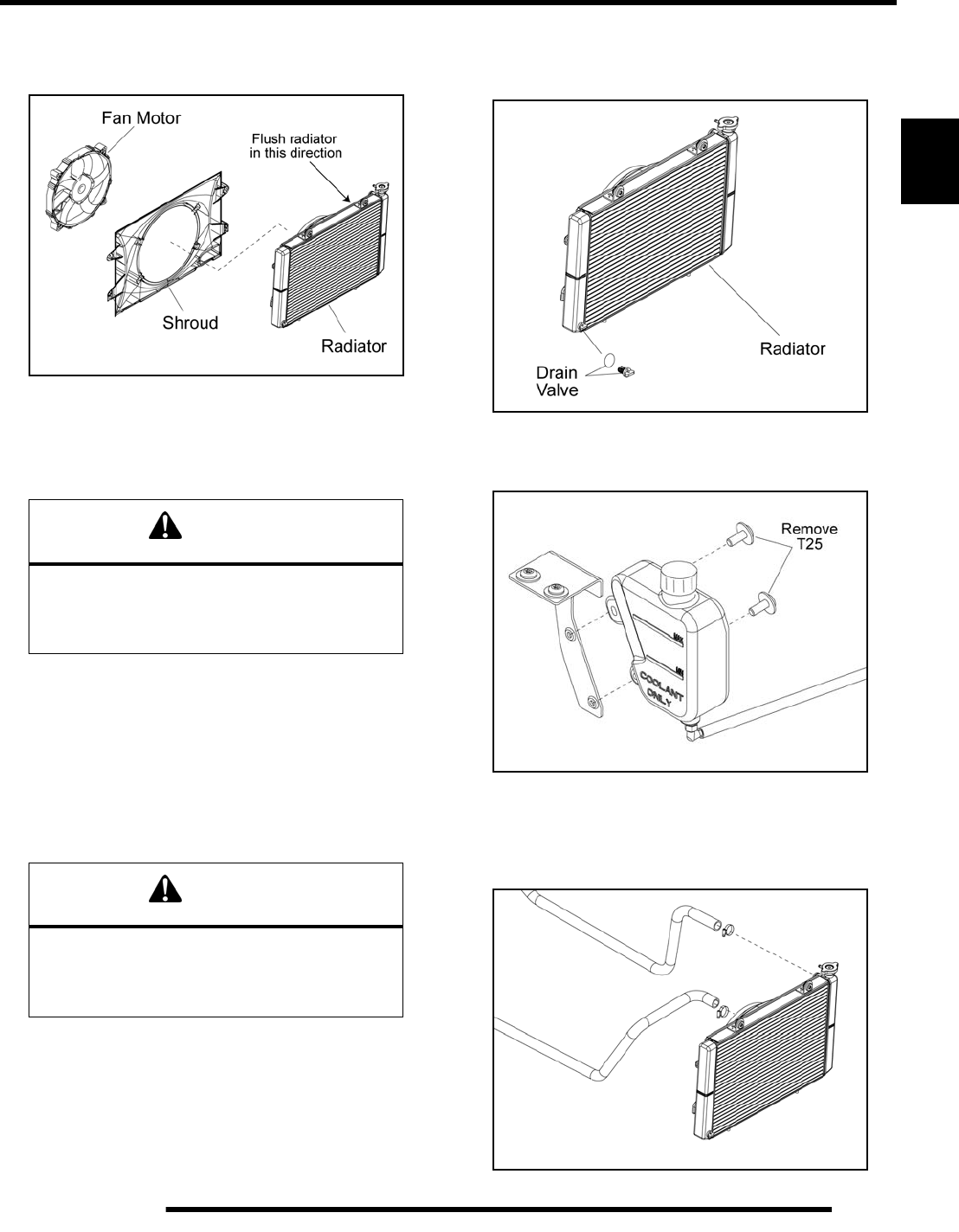
Coolant Drain / Radiator Removal
1. Remove the push rivets and front RH wheel well panel to
access the radiator drain valve.
2. Place a suitable drain pan underneath the radiator.
3. Allow the vehicle to cool down if recently operated.
4. Open the hood and slowly open the radiator pressure cap
to relieve system pressure.
5. Open the drain valve on the front side of the radiator and
allow the coolant to completely drain. Properly dispose of
the used coolant.
6. Remove the (2) T25 screws that retain the recovery bottle
to the frame bracket. Set the recovery bottle out of the way.
7. Remove the push rivets and front LH wheel well panel.
8. Remove the upper and lower coolant lines from the
radiator.
CAUTION
Washing the vehicle with a high-pressure
washer could damage the radiator fins and
impair the radiators effectiveness. Use of a
high-pressure washer is not recommended.
WARNING
Never remove the pressure cap when the
engine is warm or hot. Escaping steam can
cause severe burns. The engine must be cool
before removing the pressure cap.
PartShark.com
877-999-5686
2.26
MAINTENANCE
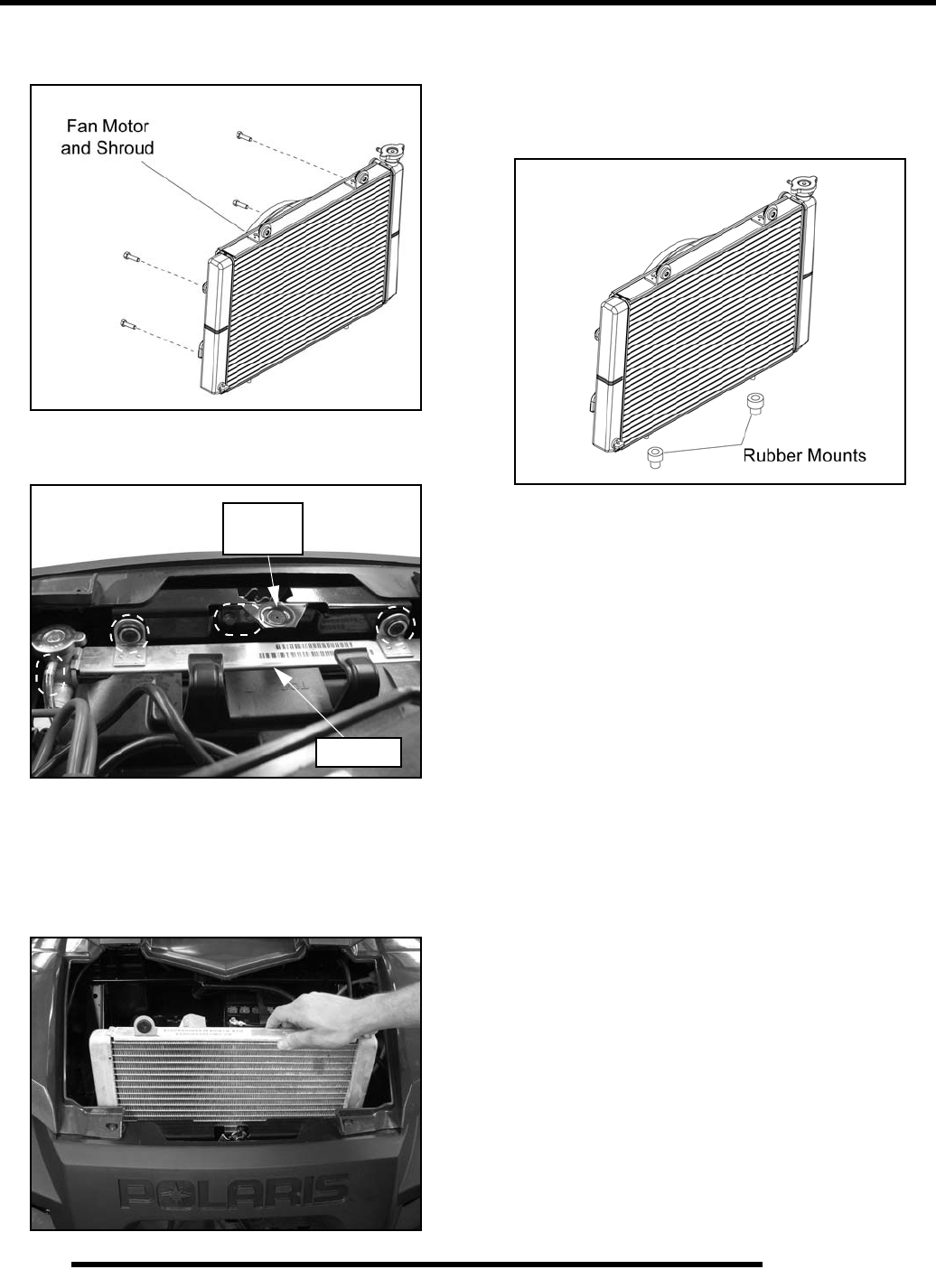
9. Remove the (4) bolts that retain the fan motor and shroud
to the radiator.
10. Remove the (2) mounting screws that secure the upper
portion of the radiator to the frame (see Figure 2-26).
11. Remove the (2) lower hood latch screws and remove the
lower hood latch spring support (see Figure 2-26).
12. Remove the recovery bottle return line (see Figure 2-26).
13. Carefully lift the radiator straight up and out of the vehicle.
Take care not to damage the cooling fins.
Installation
14. Reverse this procedure for installation.
15. Upon installation, be sure the lower radiator mounts are
placed properly in the frame support.
16. After the radiator is installed, be sure the mounts have
remained in place.
17. After installation and reassembly, remove the pressure cap
and fill the radiator and recovery bottle with coolant.
18. Refer to the cooling system bleeding procedure in Chapter
3, under the “Engine Installation Notes”.
Figure 2-26
Radiator
Spring
Support
PartShark.com
877-999-5686
2.27
MAINTENANCE
2
FINAL DRIVE / WHEEL AND TIRE
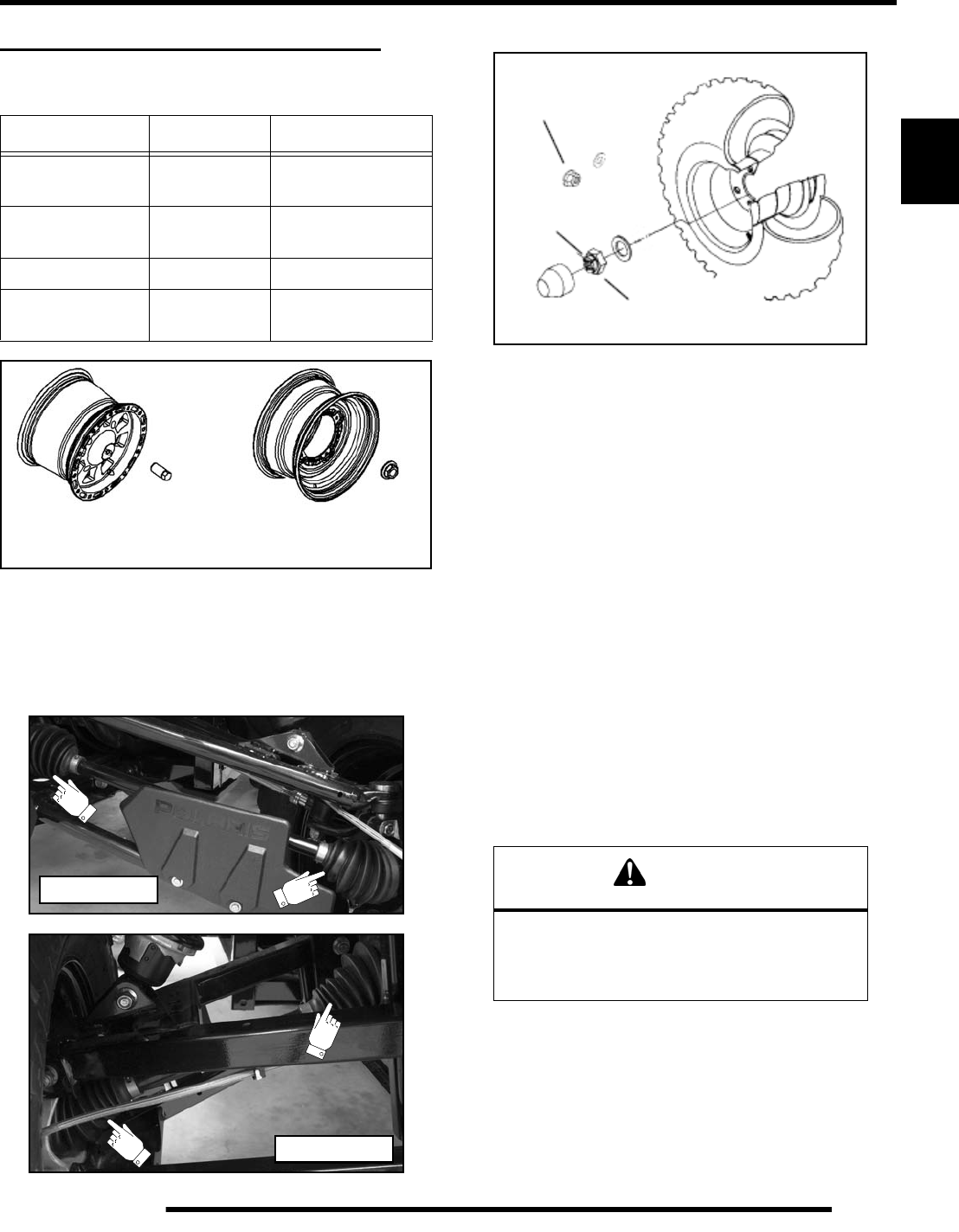
Wheel and Hub Torque Table
CV Shaft Boot Inspection
Inspect the CV shaft boots in the front and rear of the RANGER
for damage, tears, wear, or leaking grease. If the rubber boot
exhibits any of these symptoms, replace the boot. Refer to
Chapter 7 for CV boot replacement.
Wheel Removal
1. Stop the engine, place the transmission in gear and lock the
parking brake.
2. Loosen the wheel nuts slightly.
3. Elevate the side of the vehicle by placing a suitable stand
under the footrest frame.
4. Remove the wheel nuts and washers and remove the wheel.
Wheel Installation
1. With the transmission in gear and the parking brake
locked, place the wheel in the correct position on the wheel
hub. Be sure the valve stem is toward the outside and
rotation arrows on the tire point toward forward rotation.
2. Attach the washers (if applicable) and wheel nuts and finger
tighten them.
3. Lower the vehicle to the ground.
4. Securely tighten the wheel nuts to the proper torque listed
in the torque table at the beginning of this section.
Item Nut Type Specification
Aluminum Wheels
(Cast) Lug Nut (1) 90 ft. lbs. (122 Nm)
Steel Wheels
(Black / Camo) Flange Nut (2) 35 ft. lbs. (47 Nm)
Front Hub Nut - 60 ft. lbs. (81 Nm)
Rear & Center Hub
Retaining Nut - 110 ft. lbs. (150 Nm)
Steel Wheel
(Standard Models)
35 ft. lbs. (47 Nm)
Aluminum Wheel
(LE Models)
90 ft. lbs. (122 Nm)
#1 #2
Inspect Boots
Inspect Boots
CAUTION
If wheels are improperly installed it could affect
vehicle handling and tire wear. On vehicles with
tapered rear wheel nuts, make sure tapered end
of nut goes into taper on wheel.
Front & Rear
Wheel Nuts (4)
Front Hub Nut
60 ft. lbs. (81 Nm)
Rear Hub Nut
110 ft. lbs. (150 Nm)
PartShark.com
877-999-5686
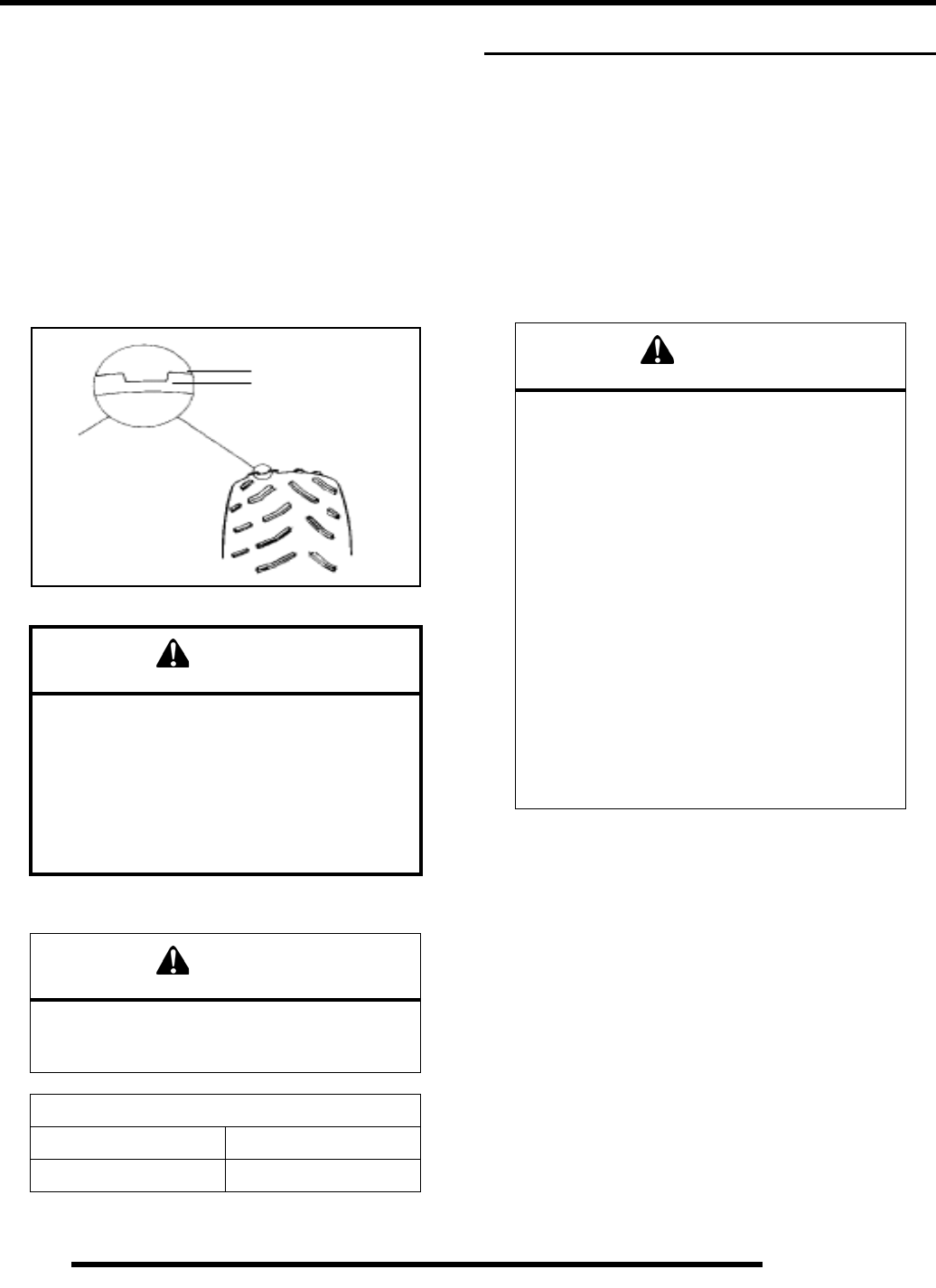
2.28
MAINTENANCE
Tire Inspection
• Improper tire inflation may affect vehicle
maneuverability.
• When replacing a tire always use original equipment
size and type.
• The use of non-standard size or type tires may affect
vehicle handling.
Tire Tread Depth
Always replace tires when tread depth is worn to 1/8" (3 mm) or
less.
Tire Pressure
ELECTRICAL AND IGNITION SYSTEM
Battery Maintenance
Keep battery terminals and connections free of corrosion. If
cleaning is necessary, remove the corrosion with a stiff wire
brush. Wash with a solution of one tablespoon baking soda and
one cup water. Rinse well with tap water and dry off with clean
shop towels. Coat the terminals with dielectric grease or
petroleum jelly.
Be careful not to allow cleaning solution or tap water into the
battery.
NOTE: Batteries must be fully charged before use or
battery life will be reduced by 10-30% of full
potential. Charge battery for 3-5 hours at a current
equivalent of 1/10 of the battery’s rated amp/hour
capacity. Do not use the alternator to charge a new
battery.
WARNING
Operating a RANGER with worn tires will
increase the possibility of the vehicle skidding
easily with possible loss of control.
Worn tires can cause an accident.
Always replace tires when the tread depth
measures 1/8", (.3 cm) or less.
CAUTION
Maintain proper tire pressure.
Refer to the warning tire pressure decal
applied to the vehicle.
Tire Pressure Inspection (PSI - Cold)
Front Rear
8-12 8-12
Tread
Depth 1/8" (3 mm) WARNING
Battery electrolyte is poisonous. It contains
sulfuric acid. Serious burns can result from
contact with skin, eyes or clothing. Antidote:
External: Flush with water.
Internal: Drink large quantities of water or milk.
Follow with milk of magnesia, beaten egg, or
vegetable oil. Call physician immediately.
Eyes: Flush with water for 15 minutes and get
prompt medical attention.
Batteries produce explosive gases.
Keep sparks, flame, cigarettes, etc. away.
Ventilate when charging or using in an enclosed
space. Always shield eyes when
working near batteries.
KEEP OUT OF REACH OF CHILDREN.
PartShark.com
877-999-5686
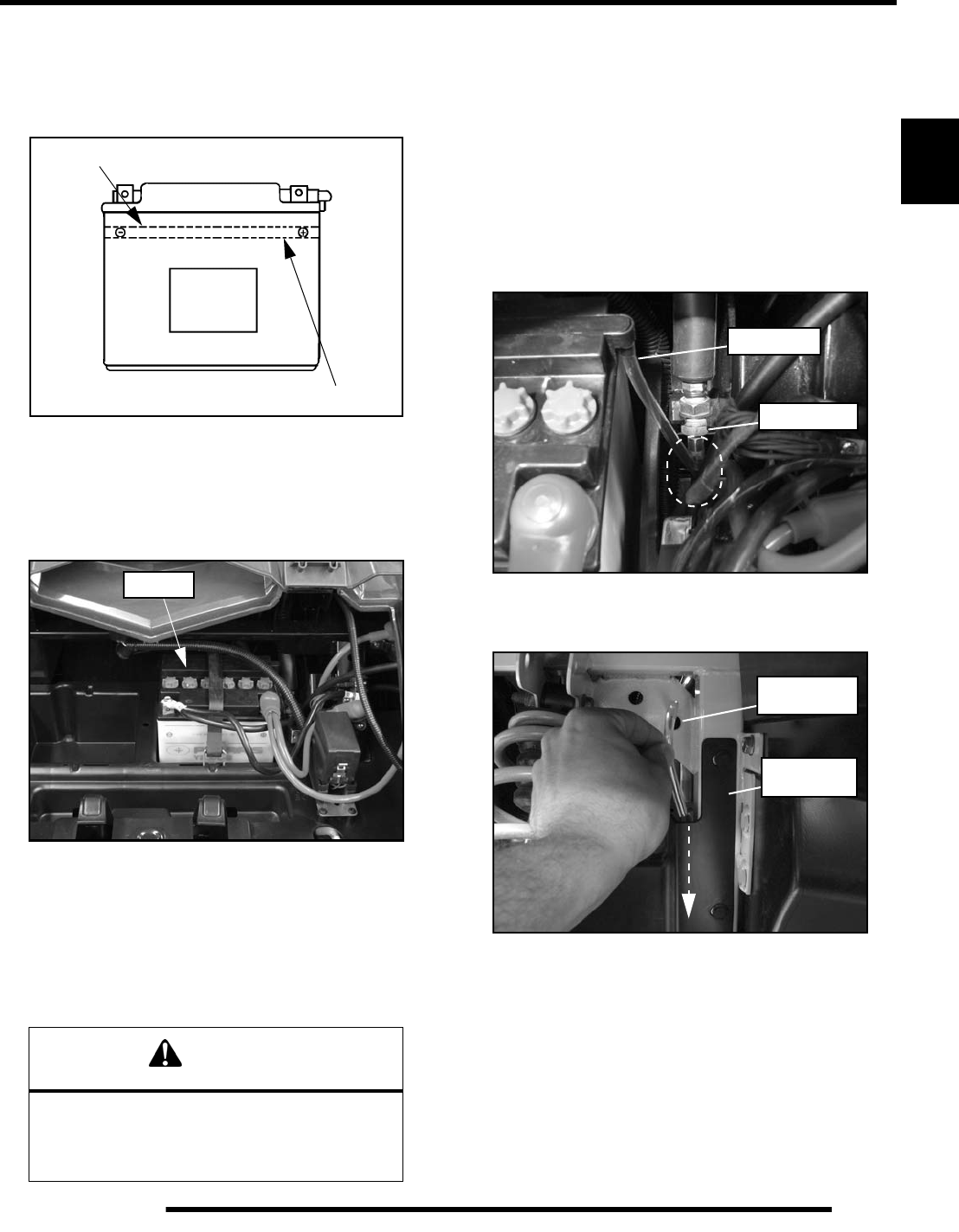
2.29
MAINTENANCE
2
Battery Fluid Level (Conventional Battery)
A poorly maintained battery will deteriorate rapidly. Check the
battery fluid level often. Maintain the fluid level between the
upper and lower level marks.
Add only distilled water. Tap water contains minerals that are
harmful to a battery.
Battery Removal
1. Open the hood to access the battery.
2. Remove the hold-down strap and vent tube from the
battery.
3. Disconnect the black (-) (negative) battery cable.
4. Disconnect the red (+) (positive) battery cable.
5. Lift the battery out of the vehicle, being careful not to tip
it sideways and spill any electrolyte.
Battery Installation
Using a new battery that has not been fully charged can damage
the battery and result in a shorter life. It can also hinder vehicle
performance. Follow the battery charging procedure before
installing the battery.
1. Ensure that the battery is fully charged.
2. Place the battery in the battery holder.
3. Install the battery vent tube and route it down in front of the
shift cable, into the front left wheel well.
4. Route the vent tube through the hole in the frame support
from the back side and place it behind the wheel well panel.
IMPORTANT: Route vent tube as shown to prevent
electrolyte from damaging critical components (i.e.
wire harness, brake lines, throttle cable).
5. Coat the terminals with dielectric grease or petroleum jelly.
6. Connect and tighten the red (+) (positive) cable first.
7. Connect and tighten the black (-) (negative) cable last.
8. Verify that cables are properly routed and install the hold-
down strap.
CAUTION
To reduce the chance of sparks: Whenever
removing the battery, disconnect the negative
(black) cable first. When reinstalling the battery,
install the negative cable last.
Upper Level
Lower Level
Battery
Vent Tube
Shift Cable
Route through
hole in frame
Route behind
the panel
PartShark.com
877-999-5686
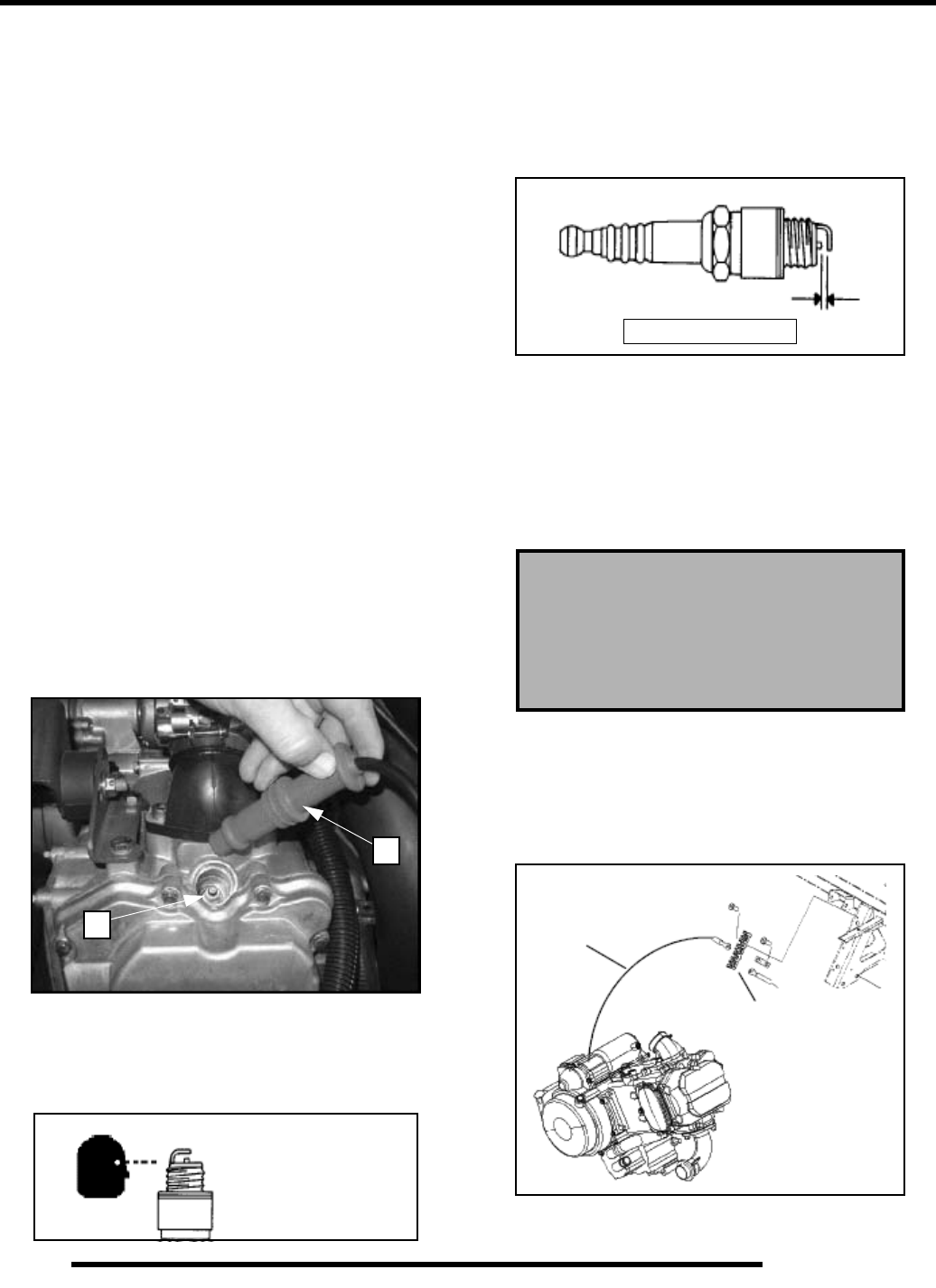
2.30
MAINTENANCE
Battery Storage
Whenever the vehicle is not used for a period of three months or
more, remove the battery from the vehicle, ensure that it's fully
charged, and store it out of the sun in a cool, dry place. Check
battery voltage each month during storage and recharge as
needed to maintain a full charge.
NOTE: Battery charge can be maintained by using a
Polaris battery tender charger or by charging about
once a month to make up for normal self-discharge.
Battery tenders can be left connected during the
storage period, and will automatically charge the
battery if the voltage drops below a pre-determined
point.
Battery Charging
1. Remove the battery from the vehicle to prevent damage
from leaking or spilled electrolyte during charging.
2. Charge the battery with a charging output no larger than
1/10 of the battery’s amp/hr rating. Charge as needed to
raise the specific gravity to 1.270 or greater.
3. Reinstall the battery.
Spark Plug Service
1. Remove spark plug high tension lead (A). Clean plug area
so no dirt and debris can fall into engine when plug is
removed.
2. Remove spark plug (B).
3. Inspect electrodes for wear and carbon buildup. Look for
a sharp outer edge with no rounding or erosion of the
electrodes.
4. Clean with electrical contact cleaner or a glass bead spark
plug cleaner only. CAUTION: A wire brush or coated
abrasive should not be used.
5. Measure gap with a wire gauge. Refer to specifications in
picture below for proper spark plug type and gap. Adjust
gap if necessary by bending the side electrode carefully.
6. If necessary, replace spark plug with proper type.
CAUTION: Severe engine damage may occur if the
incorrect spark plug is used.
7. Apply a small amount of anti-seize compound to the spark
plug threads.
8. Install spark plug and torque to specification.
Engine To Frame Ground
Inspect engine ground cable connection. Be sure it is clean and
tight. The ground cable runs from the engine to the terminal
block located under the front hood next to the battery.
B
A
Inspect electrode for
wear and buildup
Recommended Spark Plug:
NGK BKR5E
Spark Plug Torque:
14 Ft. Lbs. (19 Nm)
.036" (0.914 mm)
Spark Plug Gap
Black Ground
Terminal Block
(under hood)
PartShark.com
877-999-5686
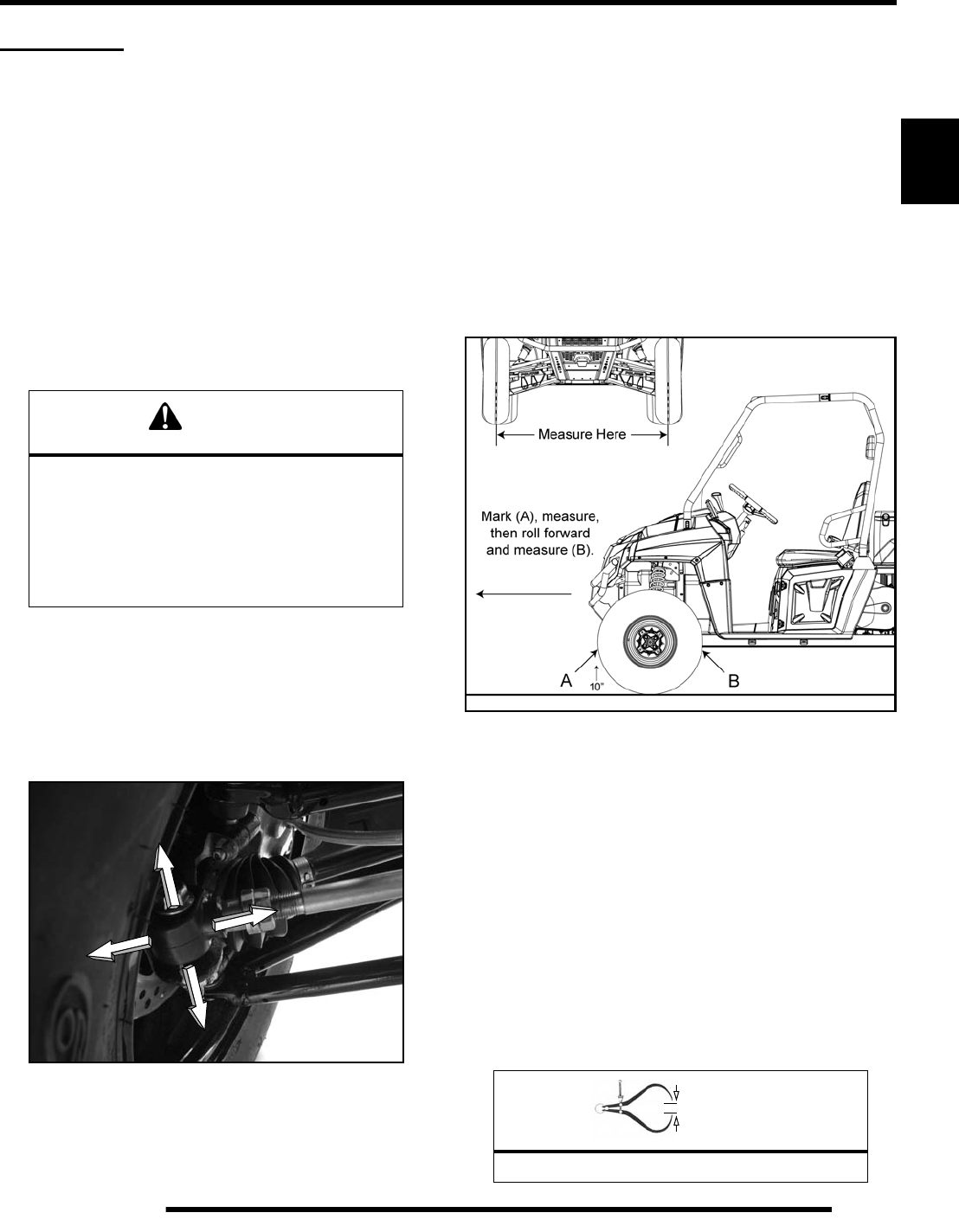
2.31
MAINTENANCE
2
STEERING
Steering
The steering components should be checked periodically for
loose fasteners, worn tie rod ends, and damage. Also check to
make sure all cotter pins are in place. If cotter pins are removed,
they must not be re-used. Always use new cotter pins.
Replace any worn or damaged steering components. Steering
should move freely through entire range of travel without
binding. Check routing of all cables, hoses, and wiring to be
sure the steering mechanism is not restricted or limited.
NOTE: Whenever steering components are
replaced, check front end alignment. Use only
genuine Polaris parts.
Tie Rod End / Steering Inspection
• To check for play in the tie rod end, grasp the steering
tie rod, pull in all directions feeling for movement.
• Replace any worn steering components. Steering
should move freely through entire range of travel
without binding.
• Elevate front end of machine so front wheels are off the
ground. Check for any looseness in front hub/wheel
assembly by grasping the tire firmly at top and bottom
first, and then at front and rear. Try to move the wheel
and hub by pushing inward and pulling outward.
• If abnormal movement is detected, inspect the hub and
wheel assembly to determine the cause (loose wheel
nuts or loose front hub nut).
• Refer to the Body/Steering or Final Drive chapter for
more information.
Wheel Toe Alignment Inspection
1. Place machine on a smooth level surface and set steering
wheel in a straight ahead position. Secure the steering
wheel in this position.
2. Place a chalk mark on the center line of the front tires
approximately 10” (25.4 cm) from the floor or as close to
the hub/axle center line as possible.
NOTE: It is important the height of both marks be
equally positioned to get an accurate measurement.
3. Measure the distance between the marks and record the
measurement. Call this measurement “A”.
4. Rotate the tires 180° by moving the vehicle forward.
Position chalk marks facing rearward, even with the hub/
axle center line.
5. Again measure the distance between the marks and record.
Call this measurement “B”. Subtract measurement “B”
from measurement “A”. The difference between
measurements “A” and “B” is the vehicle toe alignment.
The recommended vehicle toe tolerance is 1/8”, to 1/4”, (.3
to .6 cm) toe out. This means the measurement at the front
of the tire (A) is 1/8”, to 1/4”, (.3 to .6 cm) wider than the
measurement at the rear (B).
WARNING
Due to the critical nature of the procedures
outlined in this chapter, Polaris recommends
steering component repair and adjustment be
performed by an authorized Polaris MSD-
certified technician when replacing worn or
damaged steering parts.
Use only genuine Polaris replacement parts.
= In. / mm.
Wheel Toe-Out: (A) - (B) = 1/8 - 1/4" (.3 to .6 cm)
PartShark.com
877-999-5686
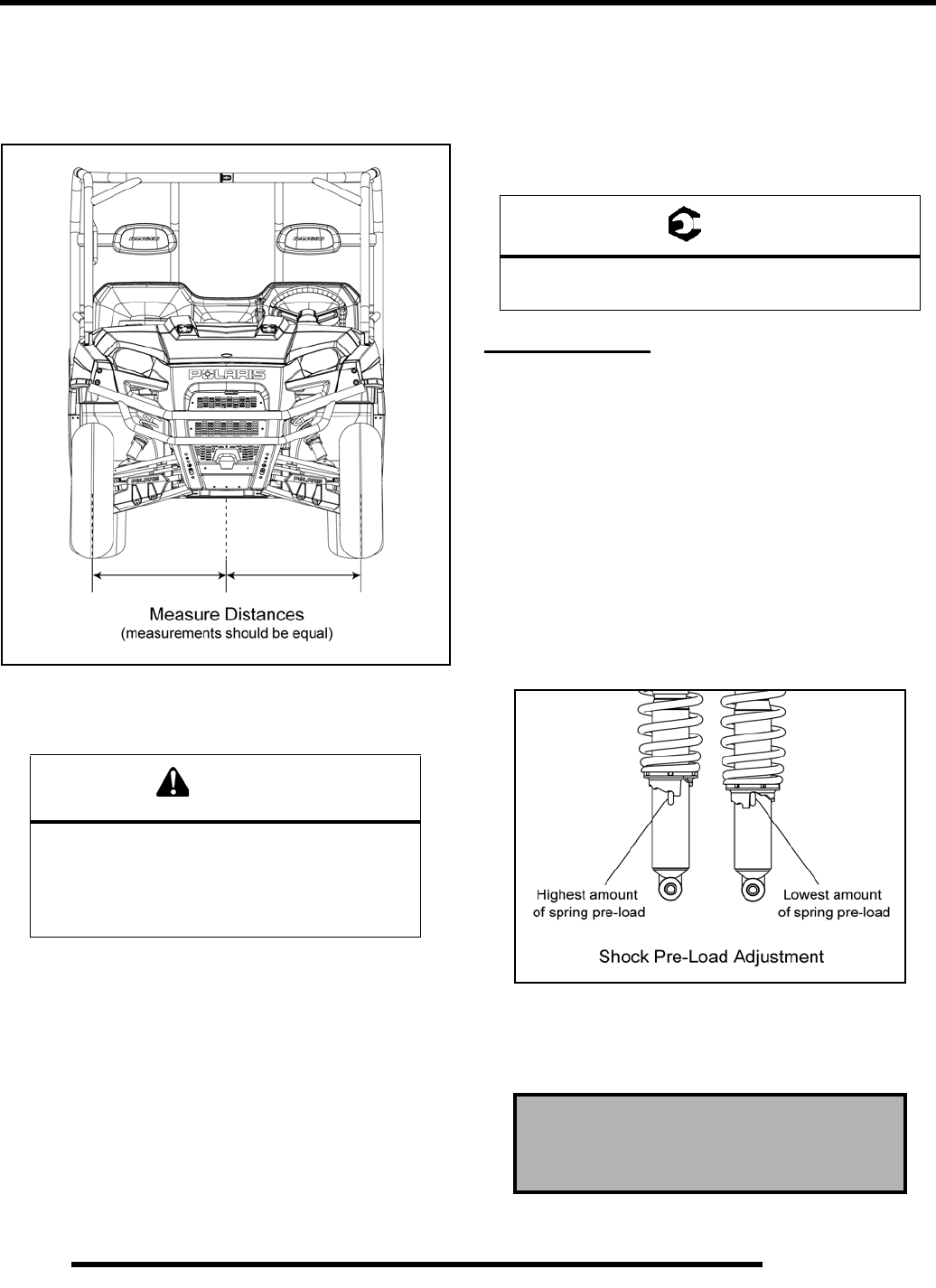
2.32
MAINTENANCE
Toe Adjustment
If toe alignment is incorrect, measure the distance between
vehicle center and each wheel. This will tell you which tie rod
needs adjusting.
NOTE: Be sure steering wheel is straight ahead
before determining which tie rod needs adjustment.
To adjust toe alignment:
• Hold tie rod end to keep it from rotating.
• Loosen jam nuts at both end of the tie rod.
• Shorten or lengthen the tie rod until alignment is as
required to achieve the proper toe setting as specified in
“Wheel Toe Alignment”.
•IMPORTANT: When tightening the tie rod end jam
nuts, the rod ends must be held parallel to prevent rod
end damage and premature wear. Damage may not be
immediately apparent if done incorrectly.
• After alignment is complete, torque jam nuts to 12-14
ft. lbs. (16-19 Nm).
SUSPENSION
Suspension Inspection
Compress and release the suspension. Damping should be
smooth throughout the range of travel.
• Check all suspension components and mounting
fasteners for wear or damage.
• Inspect each shock body for leakage.
Spring Pre-Load Adjustment
The front and rear shock absorber springs are adjustable. Rotate
the adjuster cam either direction to increase or decrease spring
tension. Always adjust both sides equally.
Vehicle loads effect suspension spring pre-load requirements.
Use Spanner Wrench (PN 2870872) to adjust pre-load as
necessary to avoid bottoming of the shocks.
CAUTION
During tie rod adjustment, it is very important that
the following precautions be taken when
tightening tie rod end jam nuts.
If the rod end is positioned incorrectly it will not
pivot, and may break.
= T
Tie Rod Jam Nut Torque:
12-14 ft. lbs. (16-19 Nm)
Shock Spanner Wrench
(PN 2871095)
PartShark.com
877-999-5686
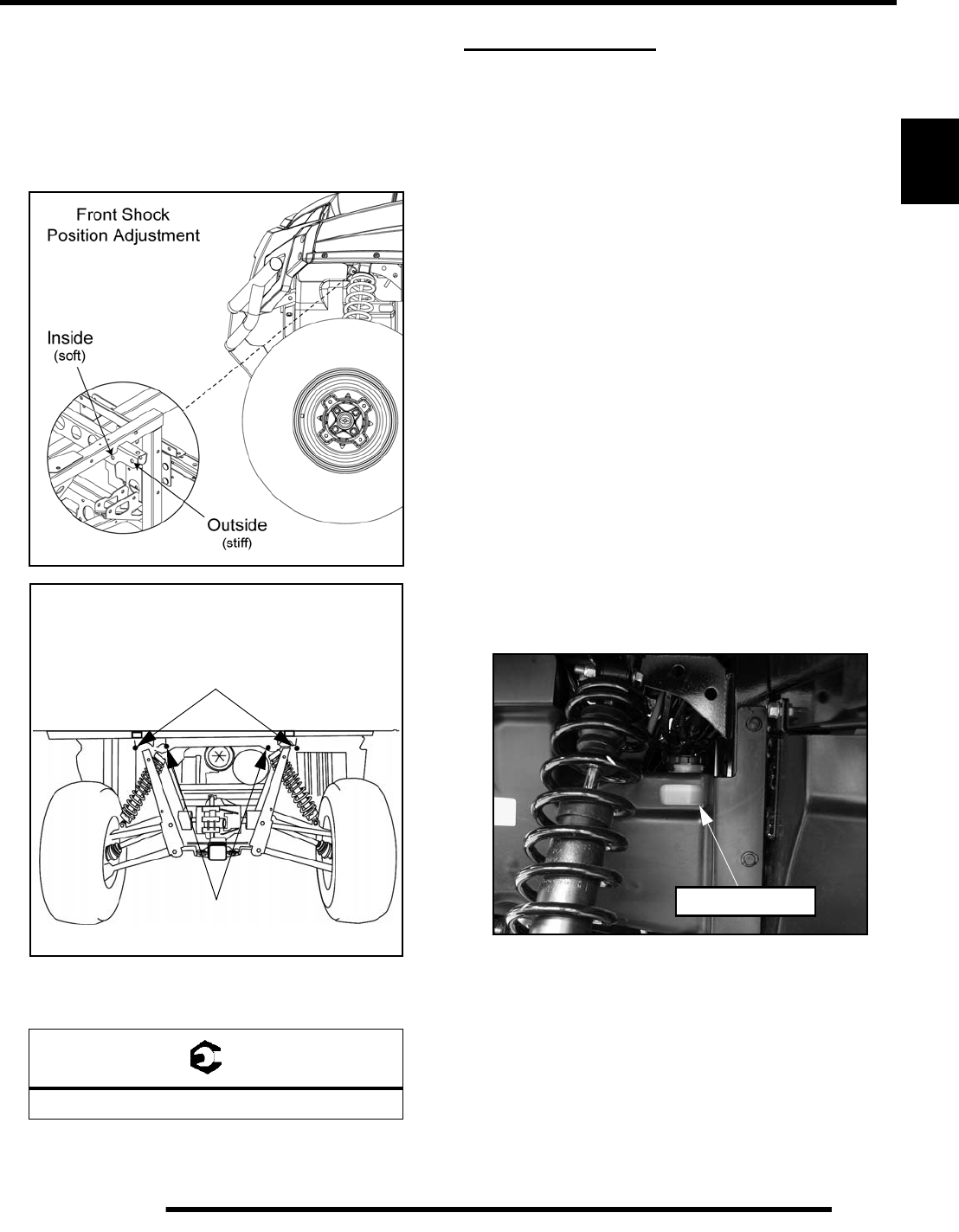
2.33
MAINTENANCE
2
Shock Position Adjustment
The front and rear shock position may be adjusted to provide a
stiffer suspension if necessary.
1. Remove the top shock mounting bolts on each side.
2. Reposition the shocks to the outside mounting holes.
3. Reinstall the shock mounting bolts and torque to
specification.
BRAKE SYSTEM
Brake Fluid Inspection
Always check the brake pedal travel and inspect the brake fluid
reservoir level before each operation. If the fluid level is low,
add DOT 4 brake fluid only.
Brake fluid should be changed every two years. The fluid
should also be changed anytime the fluid becomes
contaminated, the fluid level is below the minimum level, or if
the type and brand of the fluid in the reservoir is unknown.
The brake master cylinder reservoir can be accessed through the
front left wheel well.
1. Position the vehicle on a level surface.
2. Place the transmission in Neutral (N) and set the parking
brake.
3. View the brake fluid level in the reservoir. The level should
be between the MAX and MIN level lines.
4. If the fluid level is lower than the MIN level line, add brake
fluid until it reaches the MAX level line.
5. Install the reservoir cap and apply the brake pedal
forcefully for a few seconds and check for fluid leakage
around the master cylinder fittings and the brake caliper
fittings.
Brake Hose and Fitting Inspection
Check brake system hoses and fittings for cracks, deterioration,
abrasion, and leaks. Tighten any loose fittings and replace any
worn or damaged parts.
= T
Shock Mounting Bolts: 30 ft. lbs. (41 Nm)
Rear Shock
Position Adjustment
Inside
(soft)
Outside
(Stiff)
Master Cylinder
PartShark.com
877-999-5686
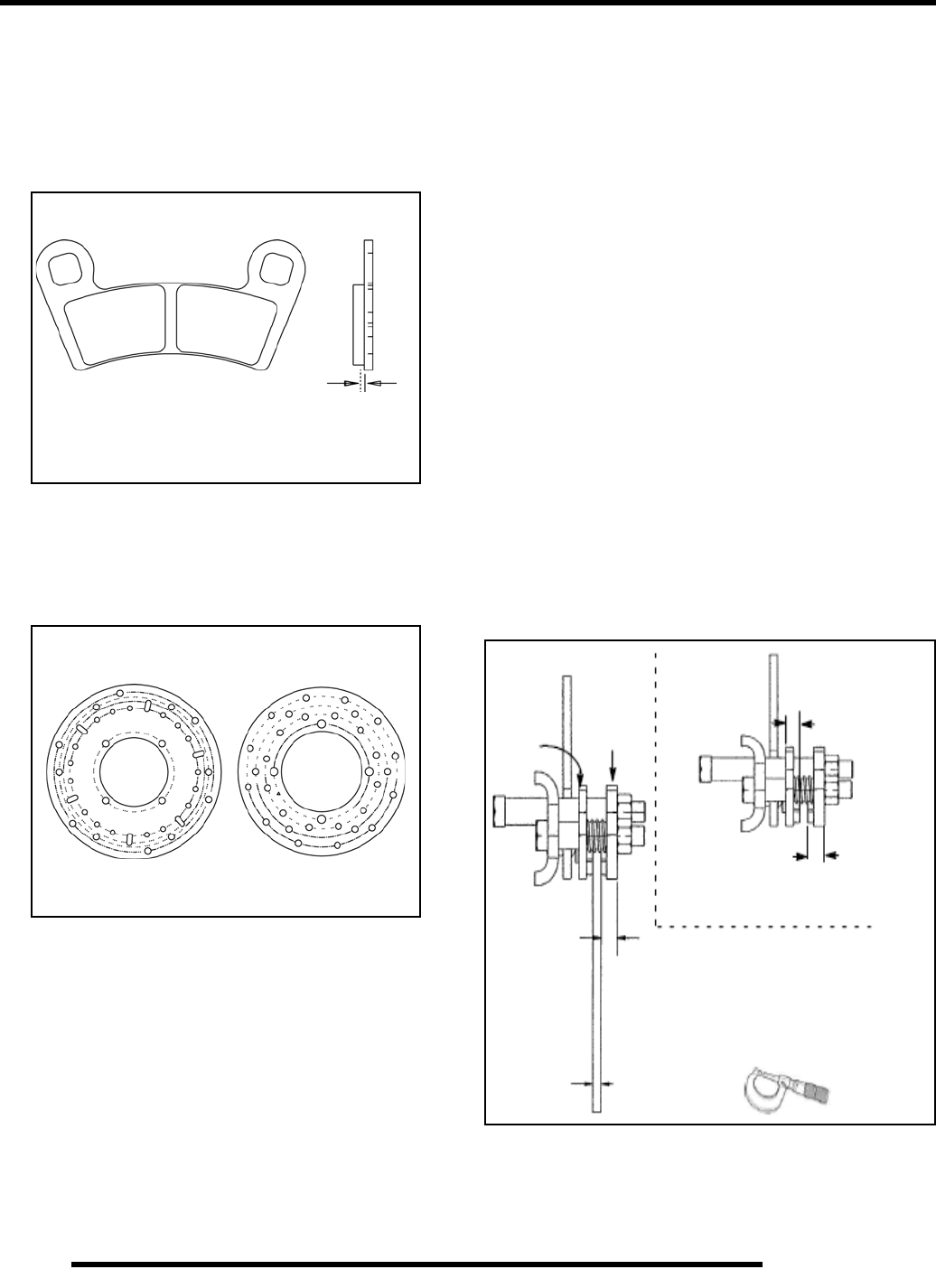
2.34
MAINTENANCE
Brake Pad / Disc Inspection
1. Check the brake pads for wear, damage, or looseness.
2. Inspect the brake pad wear surface for excessive wear.
3. Pads should be changed when the friction material is worn
to .040” (1 mm).
4. Check surface condition of the brake discs.
5. Measure the thickness of the front and rear brake discs.
6. The disc(s) should be replaced if thickness is less than the
specified service limit (see Chapter 9 for specifications).
Parking Brake Cable Adjustment
When the parking brake is fully engaged and the parking brake
indicator is illuminated, engine speed is limited to 1300 RPM in
all gears, including neutral. If throttle is applied, this limiting
feature prevents operation, which protects the parking brake
pads from excessive wear.
NOTE: Inspect the parking brake cable tension after
the first 25 hours of operation and every 100 hours
of operation afterwards to ensure proper cable
tension.
Loss of tension in the parking brake cable will cause
illumination of the parking brake light and activation of the
limiting feature. If this occurs, inspect and adjust parking brake
cable tension. If performing this service is difficult due to
conditions or location, open the hood and temporarily
disconnect the parking brake connector. Reconnect the
connector as soon as practicable and adjust the parking brake
cable to proper tension.
1. Pull back on the parking brake lever (located in the dash).
2. After 2 to 3 clicks the “BRAKE” light should illuminate on
the indicator panel and the wheels of the vehicle should not
rotate when turning by hand. After 8 full clicks of lever
travel, the vehicle should not roll while parked.
3. If the vehicle moves, adjustment is necessary.
4. Adjust the parking brake cable where the cable attaches to
the caliper mount bracket located on the rear gearcase.
Adjustment Procedure: Refer to “Chapter 9 - Brakes”
for complete adjustment procedure.
Parking Brake Pad Inspection
Measure the thickness of the rear caliper parking brake pads.
Replace assembly as needed. See illustration below for proper
readings.
Measure Pad Material
Service Limit:
.040" (1 mm)
Thickness
Measure Brake Disc Thickness
Front
Disc Rear
Disc
Inboard
Pad Outboard
Pad
Inboard Pad Thickness
New .304” (7.72 mm)
Limit: 0.24” (6.1 mm)
Outboard Pad Thickness
New 0.360” (9.14 mm)
Limit: 0.31” (7.87 mm)
Installed Disc to Park Brake
0.375” (0.953 cm)
New Rotor Disc Thickness
0.150” - 0.164”
(3.81 - 4.16 mm)
PartShark.com
877-999-5686
2.35
MAINTENANCE
2
MAINTENANCE LOG
Service Date Hours / Miles (km) Service Performed / Comments Dealer / Technician
PartShark.com
877-999-5686
NOTES
MAINTENANCE
2.36
PartShark.com
877-999-5686
3.1
CHAPTER 3
ENGINE
3
ENGINE
SPECIAL TOOLS . . . . . . . . . . . . . . . . . . . . . . . . . . . . . . . . . . . . . . . . . . . . . . . . . . . . . . . 3.3
SPECIFICATIONS. . . . . . . . . . . . . . . . . . . . . . . . . . . . . . . . . . . . . . . . . . . . . . . . . . . . . . . 3.3
TORQUE SPECIFICATIONS . . . . . . . . . . . . . . . . . . . . . . . . . . . . . . . . . . . . . . . . . . . . . . 3.3
ENGINE FASTENER TORQUE PATTERNS . . . . . . . . . . . . . . . . . . . . . . . . . . . . . . . . . . 3.3
ENGINE SERVICE DATA. . . . . . . . . . . . . . . . . . . . . . . . . . . . . . . . . . . . . . . . . . . . . . . . . 3.4
ENGINE SERVICE DATA. . . . . . . . . . . . . . . . . . . . . . . . . . . . . . . . . . . . . . . . . . . . . . . . . 3.5
GENERAL ENGINE SERVICE . . . . . . . . . . . . . . . . . . . . . . . . . . . . . . . . . . . . . . . . . . . . . 3.6
ACCESSIBLE COMPONENTS. . . . . . . . . . . . . . . . . . . . . . . . . . . . . . . . . . . . . . . . . . . . . 3.6
ENGINE REMOVAL . . . . . . . . . . . . . . . . . . . . . . . . . . . . . . . . . . . . . . . . . . . . . . . . . . . . . 3.6
ENGINE INSTALLATION NOTES . . . . . . . . . . . . . . . . . . . . . . . . . . . . . . . . . . . . . . . . . . 3.8
CRANKSHAFT STRAIGHTENING. . . . . . . . . . . . . . . . . . . . . . . . . . . . . . . . . . . . . . . . . . 3.8
ENGINE LUBRICATION - EH50PL . . . . . . . . . . . . . . . . . . . . . . . . . . . . . . . . . . . . . . . . . 3.9
OIL PRESSURE TEST - EH50PL. . . . . . . . . . . . . . . . . . . . . . . . . . . . . . . . . . . . . . . . . . . 3.9
OIL FLOW - EH50PL . . . . . . . . . . . . . . . . . . . . . . . . . . . . . . . . . . . . . . . . . . . . . . . . . . . . 3.9
EH50PL OIL FLOW DIAGRAM. . . . . . . . . . . . . . . . . . . . . . . . . . . . . . . . . . . . . . . . . . . . 3.10
EH50PL ENGINE EXPLODED VIEW. . . . . . . . . . . . . . . . . . . . . . . . . . . . . . . . . . . . . . . 3.11
COOLING SYSTEM. . . . . . . . . . . . . . . . . . . . . . . . . . . . . . . . . . . . . . . . . . . . . . . . . . . . . 3.12
COOLING SYSTEM LAYOUT AND TESTING. . . . . . . . . . . . . . . . . . . . . . . . . . . . . . . . 3.12
ENGINE DISASSEMBLY. . . . . . . . . . . . . . . . . . . . . . . . . . . . . . . . . . . . . . . . . . . . . . . . . 3.13
ENGINE REMOVAL . . . . . . . . . . . . . . . . . . . . . . . . . . . . . . . . . . . . . . . . . . . . . . . . . . . . 3.13
CAM CHAIN TENSIONER / ROCKER ARM /CAMSHAFT REMOVAL . . . . . . . . . . . . . 3.13
CAM CHAIN TENSIONER INSPECTION. . . . . . . . . . . . . . . . . . . . . . . . . . . . . . . . . . . . 3.13
ROCKER ARM / SHAFT INSPECTION . . . . . . . . . . . . . . . . . . . . . . . . . . . . . . . . . . . . . 3.14
CAMSHAFT REMOVAL . . . . . . . . . . . . . . . . . . . . . . . . . . . . . . . . . . . . . . . . . . . . . . . . . 3.15
AUTOMATIC COMPRESSION RELEASE REMOVAL / INSPECTION . . . . . . . . . . . . . 3.16
AUTOMATIC COMPRESSION RELEASE INSTALLATION. . . . . . . . . . . . . . . . . . . . . . 3.16
CAMSHAFT INSPECTION . . . . . . . . . . . . . . . . . . . . . . . . . . . . . . . . . . . . . . . . . . . . . . . 3.17
CYLINDER HEAD REMOVAL . . . . . . . . . . . . . . . . . . . . . . . . . . . . . . . . . . . . . . . . . . . . 3.17
CYLINDER HEAD EXPLODED VIEW, EH50PL. . . . . . . . . . . . . . . . . . . . . . . . . . . . . . . 3.18
CYLINDER HEAD INSPECTION . . . . . . . . . . . . . . . . . . . . . . . . . . . . . . . . . . . . . . . . . . 3.19
CYLINDER HEAD WARPAGE . . . . . . . . . . . . . . . . . . . . . . . . . . . . . . . . . . . . . . . . . . . . 3.19
CYLINDER HEAD DISASSEMBLY . . . . . . . . . . . . . . . . . . . . . . . . . . . . . . . . . . . . . . . . 3.19
VALVE INSPECTION . . . . . . . . . . . . . . . . . . . . . . . . . . . . . . . . . . . . . . . . . . . . . . . . . . . 3.20
COMBUSTION CHAMBER. . . . . . . . . . . . . . . . . . . . . . . . . . . . . . . . . . . . . . . . . . . . . . . 3.20
VALVE SEAT RECONDITIONING . . . . . . . . . . . . . . . . . . . . . . . . . . . . . . . . . . . . . . . . . 3.21
CYLINDER HEAD ASSEMBLY . . . . . . . . . . . . . . . . . . . . . . . . . . . . . . . . . . . . . . . . . . . 3.23
VALVE SEALING TEST . . . . . . . . . . . . . . . . . . . . . . . . . . . . . . . . . . . . . . . . . . . . . . . . . 3.24
VALVE CLEARANCE ADJUSTMENT . . . . . . . . . . . . . . . . . . . . . . . . . . . . . . . . . . . . . . 3.24
CYLINDER / PISTON REMOVAL AND INSPECTION . . . . . . . . . . . . . . . . . . . . . . . . . . 3.24
PISTON REMOVAL . . . . . . . . . . . . . . . . . . . . . . . . . . . . . . . . . . . . . . . . . . . . . . . . . . . . 3.25
CYLINDER INSPECTION. . . . . . . . . . . . . . . . . . . . . . . . . . . . . . . . . . . . . . . . . . . . . . . . 3.26
CYLINDER HONE SELECTION / HONING PROCEDURE . . . . . . . . . . . . . . . . . . . . . . 3.26
HONING TO OVERSIZE . . . . . . . . . . . . . . . . . . . . . . . . . . . . . . . . . . . . . . . . . . . . . . . . 3.27
CLEANING THE CYLINDER AFTER HONING . . . . . . . . . . . . . . . . . . . . . . . . . . . . . . . 3.27
PISTON-TO-CYLINDER CLEARANCE . . . . . . . . . . . . . . . . . . . . . . . . . . . . . . . . . . . . . 3.27
PISTON / ROD INSPECTION. . . . . . . . . . . . . . . . . . . . . . . . . . . . . . . . . . . . . . . . . . . . . 3.28
PISTON IDENTIFICATION. . . . . . . . . . . . . . . . . . . . . . . . . . . . . . . . . . . . . . . . . . . . . . . 3.28
PISTON RING INSTALLED GAP . . . . . . . . . . . . . . . . . . . . . . . . . . . . . . . . . . . . . . . . . . 3.29
CRANKCASE DISASSEMBLY . . . . . . . . . . . . . . . . . . . . . . . . . . . . . . . . . . . . . . . . . . . . 3.29
STARTER DRIVE REMOVAL / INSPECTION . . . . . . . . . . . . . . . . . . . . . . . . . . . . . . . . 3.29
FLYWHEEL AND STATOR REMOVAL / INSPECTION. . . . . . . . . . . . . . . . . . . . . . . . . 3.30
CAM CHAIN / TENSIONER BLADE. . . . . . . . . . . . . . . . . . . . . . . . . . . . . . . . . . . . . . . . 3.30
ONE WAY VALVE . . . . . . . . . . . . . . . . . . . . . . . . . . . . . . . . . . . . . . . . . . . . . . . . . . . . . 3.31
PartShark.com
877-999-5686

3.2
ENGINE
CRANKCASE SEPARATION . . . . . . . . . . . . . . . . . . . . . . . . . . . . . . . . . . . . . . . . . . . . . 3.31
OIL PUMP REMOVAL / INSPECTION. . . . . . . . . . . . . . . . . . . . . . . . . . . . . . . . . . . . . . 3.31
OIL PUMP ASSEMBLY . . . . . . . . . . . . . . . . . . . . . . . . . . . . . . . . . . . . . . . . . . . . . . . . . 3.32
COUNTER BALANCER SHAFT REMOVAL / INSPECTION . . . . . . . . . . . . . . . . . . . . . 3.33
CRANKSHAFT REMOVAL / INSPECTION . . . . . . . . . . . . . . . . . . . . . . . . . . . . . . . . . . 3.33
CRANKCASE BEARING INSPECTION . . . . . . . . . . . . . . . . . . . . . . . . . . . . . . . . . . . . . 3.34
OIL SEAL / MECHANICAL SEAL REMOVAL (ENGINE DISASSEMBLED) . . . . . . . . . 3.34
CRANKCASE INSPECTION . . . . . . . . . . . . . . . . . . . . . . . . . . . . . . . . . . . . . . . . . . . . . 3.34
BEARING INSTALLATION. . . . . . . . . . . . . . . . . . . . . . . . . . . . . . . . . . . . . . . . . . . . . . . 3.34
END PLAY INSPECTION / ADJUSTMENT . . . . . . . . . . . . . . . . . . . . . . . . . . . . . . . . . . 3.35
CRANKSHAFT END PLAY ADJUSTMENT . . . . . . . . . . . . . . . . . . . . . . . . . . . . . . . . . . 3.35
COUNTER BALANCER SHAFT END PLAY ADJUSTMENT. . . . . . . . . . . . . . . . . . . . . 3.36
OIL PUMP SHAFT END PLAY ADJUSTMENT . . . . . . . . . . . . . . . . . . . . . . . . . . . . . . . 3.36
ENGINE REASSEMBLY . . . . . . . . . . . . . . . . . . . . . . . . . . . . . . . . . . . . . . . . . . . . . . . . . 3.37
PUMP SHAFT OIL SEAL INSTALLATION. . . . . . . . . . . . . . . . . . . . . . . . . . . . . . . . . . . 3.37
CRANKSHAFT / COUNTER BALANCE / OIL PUMP INSTALLATION . . . . . . . . . . . . . 3.37
CRANKCASE ASSEMBLY. . . . . . . . . . . . . . . . . . . . . . . . . . . . . . . . . . . . . . . . . . . . . . . 3.37
WATER PUMP MECHANICAL SEAL INSTALLATION . . . . . . . . . . . . . . . . . . . . . . . . . 3.37
WATER PUMP MECHANICAL SEAL REMOVAL (ENGINE INSTALLED) . . . . . . . . . . 3.38
ONE WAY VALVE INSTALLATION . . . . . . . . . . . . . . . . . . . . . . . . . . . . . . . . . . . . . . . . 3.39
CAM CHAIN DRIVE SPROCKET INSTALLATION . . . . . . . . . . . . . . . . . . . . . . . . . . . . 3.39
TENSIONER BLADE INSTALLATION . . . . . . . . . . . . . . . . . . . . . . . . . . . . . . . . . . . . . . 3.39
PISTON RING INSTALLATION . . . . . . . . . . . . . . . . . . . . . . . . . . . . . . . . . . . . . . . . . . . 3.39
PISTON INSTALLATION . . . . . . . . . . . . . . . . . . . . . . . . . . . . . . . . . . . . . . . . . . . . . . . . 3.40
CYLINDER INSTALLATION. . . . . . . . . . . . . . . . . . . . . . . . . . . . . . . . . . . . . . . . . . . . . . 3.40
CYLINDER HEAD INSTALLATION . . . . . . . . . . . . . . . . . . . . . . . . . . . . . . . . . . . . . . . . 3.41
CAM CHAIN / CAMSHAFT INSTALLATION . . . . . . . . . . . . . . . . . . . . . . . . . . . . . . . . . 3.42
CAMSHAFT TIMING . . . . . . . . . . . . . . . . . . . . . . . . . . . . . . . . . . . . . . . . . . . . . . . . . . . 3.42
CAMSHAFT TIMING ILLUSTRATION . . . . . . . . . . . . . . . . . . . . . . . . . . . . . . . . . . . . . . 3.43
CAM CHAIN TENSIONER INSTALLATION. . . . . . . . . . . . . . . . . . . . . . . . . . . . . . . . . . 3.44
STATOR, FLYWHEEL AND STARTER DRIVE INSTALLATION. . . . . . . . . . . . . . . . . . 3.44
ROCKER SHAFT / ROCKER ARM ASSEMBLY INSTALLATION . . . . . . . . . . . . . . . . . 3.45
THERMOSTAT INSTALLATION . . . . . . . . . . . . . . . . . . . . . . . . . . . . . . . . . . . . . . . . . . 3.45
OIL PIPES . . . . . . . . . . . . . . . . . . . . . . . . . . . . . . . . . . . . . . . . . . . . . . . . . . . . . . . . . . . 3.45
OIL PUMP PRIMING PROCEDURE . . . . . . . . . . . . . . . . . . . . . . . . . . . . . . . . . . . . . . . 3.45
TROUBLESHOOTING. . . . . . . . . . . . . . . . . . . . . . . . . . . . . . . . . . . . . . . . . . . . . . . . . . . 3.46
ENGINE . . . . . . . . . . . . . . . . . . . . . . . . . . . . . . . . . . . . . . . . . . . . . . . . . . . . . . . . . . . . .3.46
SPARK PLUG FOULING . . . . . . . . . . . . . . . . . . . . . . . . . . . . . . . . . . . . . . . . . . . . . . . . 3.47
COOLING TROUBLESHOOTING . . . . . . . . . . . . . . . . . . . . . . . . . . . . . . . . . . . . . . . . . 3.47
PartShark.com
877-999-5686
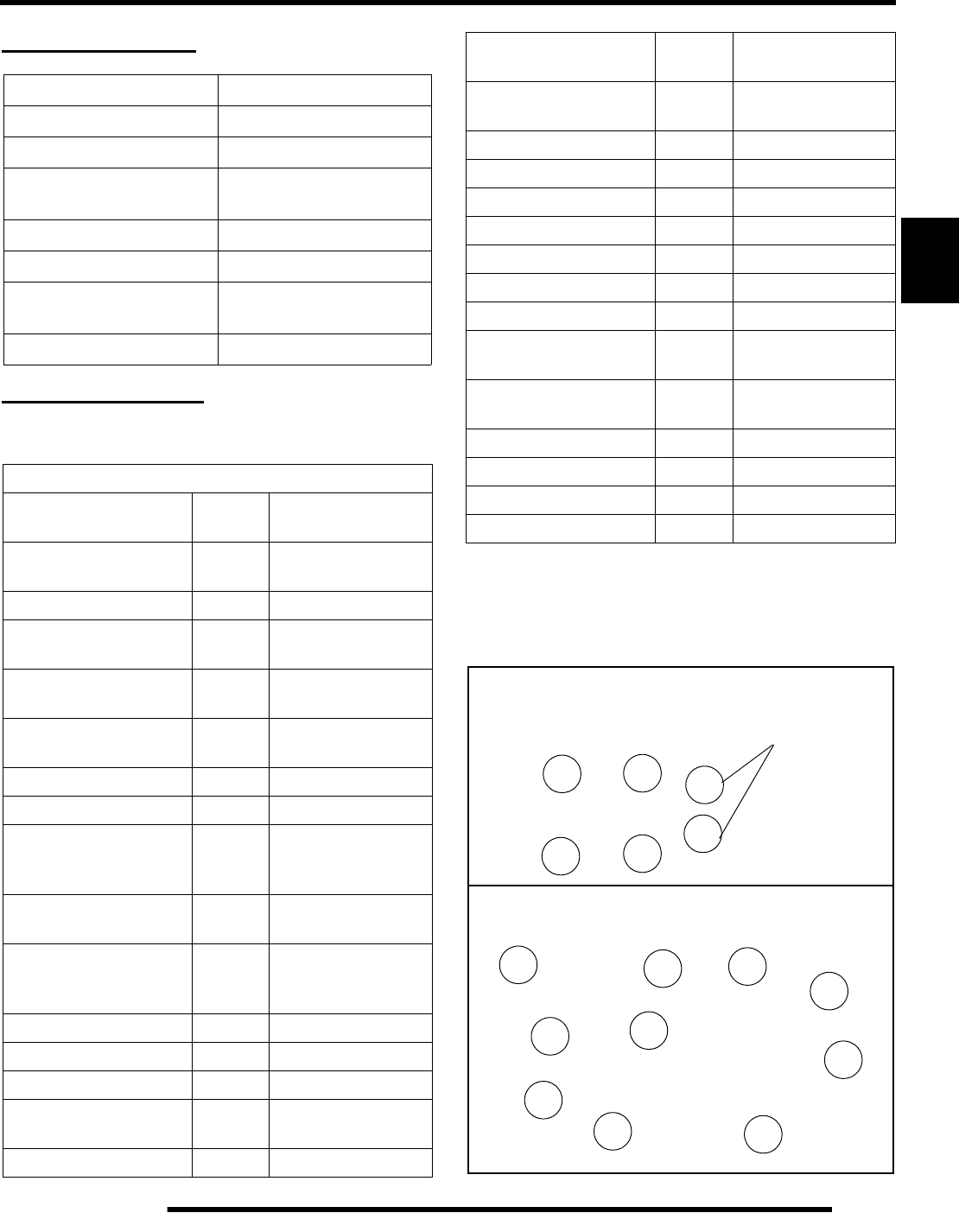
3.3
ENGINE
3
SPECIAL TOOLS
SPECIFICATIONS
Torque Specifications
Engine Fastener Torque Patterns
Tighten cylinder head, cylinder base, and crankcase fasteners in
3 steps following the sequence outlined below.
PART NUMBER TOOL DESCRIPTION
2870390 Piston Support Block
2871043 Flywheel Puller
2871283 Crankshaft/Water Pump
Seal Install Kit
5131135 Water Pump Install Kit
2870569 Crankshaft Truing Stand
2870975 Mity Vac™ Pressure Test
Tool
PV-43527 OIl Filter Wrench
TORQUE SPECIFICATIONS
Fastener Size EH50PLE
ft. lbs. (Nm)
Blind Plug (Oil
Pressure) 1/8 PT
(28tpi) 6.5-11 (9-15 Nm)
Camshaft Sprocket 6mm 5-6.5 (7-9 Nm)
Camshaft Chain
Tensioner Lever 6mm 5-6.5 (7-9 Nm)
Camshaft Chain
Tensioner 6mm 5-6.5 (7-9 Nm)
Camshaft Chain
Tensioner Cap 11mm 6.5 (9 Nm)
Throttle Body Adaptor 8mm 12-14 (16-20 Nm)
Crankcase 8mm 14-15 (19-21 Nm)
Crankshaft Slotted Nut
(Cam Chain Drive
Sprocket) 28mm 35-51 (47-69 Nm)
Cylinder Base Bolts 10mm
6mm 45-49 (61-67 Nm)
6-8 (9-11 Nm)
Cylinder Head Bolts 11mm
6mm
Refer to Engine
Assembly for torque
procedure
Drive Clutch Bolt 7/16 - 20 40 (55 Nm)
Flywheel 16mm 58-72 (78-98 Nm)
Oil Delivery Pipe 12mm 11-15 (15-21 Nm)
Oil Drain Bolt
(Crankcase) 14mm 14-17 (19-23 Nm)
Oil Filter Pipe Fitting 20mm 36-43 (49-59 Nm)
Hard Metal Oil Line
Banjo Fitting N/A 11-16 (15-21 Nm)
Oil Hose Fitting 1/8 Pipe
Thread 6.5-11 (9-15 Nm)
Oil Pump 6mm 5-6.5 (7-9 Nm)
Oil Pump Case Screw 5mm 1.5-2 (2-3 Nm)
One Way Valve 11mm 14-19 (20-25 Nm)
Recoil Housing 6mm 5-6.5 (7-9 Nm)
Rocker Cover 6mm 7-8 (9-11 Nm)
Rocker Support 8mm 8-10 (11-13 Nm)
Rocker Adjuster Screw 6mm 6-7 (8-10 Nm)
Water Pump Impeller
Nut 6mm 5-6.5 (7-9 Nm)
Water Pump Housing
Cover 6mm 5-6.5 (7-9 Nm)
Stator Plate 6mm 5-6.5 (7-9 Nm)
Starter Motor 6mm 5-6.5 (7-9 Nm)
Spark Plug 14mm 9-11 (12-15 Nm)
Thermistor -- 26 ± 2.1 (35 ± 3 Nm)
2
4
5
6
1
6 mm
Cylinder Head
1
2
5
7
8
9
Crankcase
3
Cylinder Base
Pattern
6
10
Pattern
3
4
PartShark.com
877-999-5686
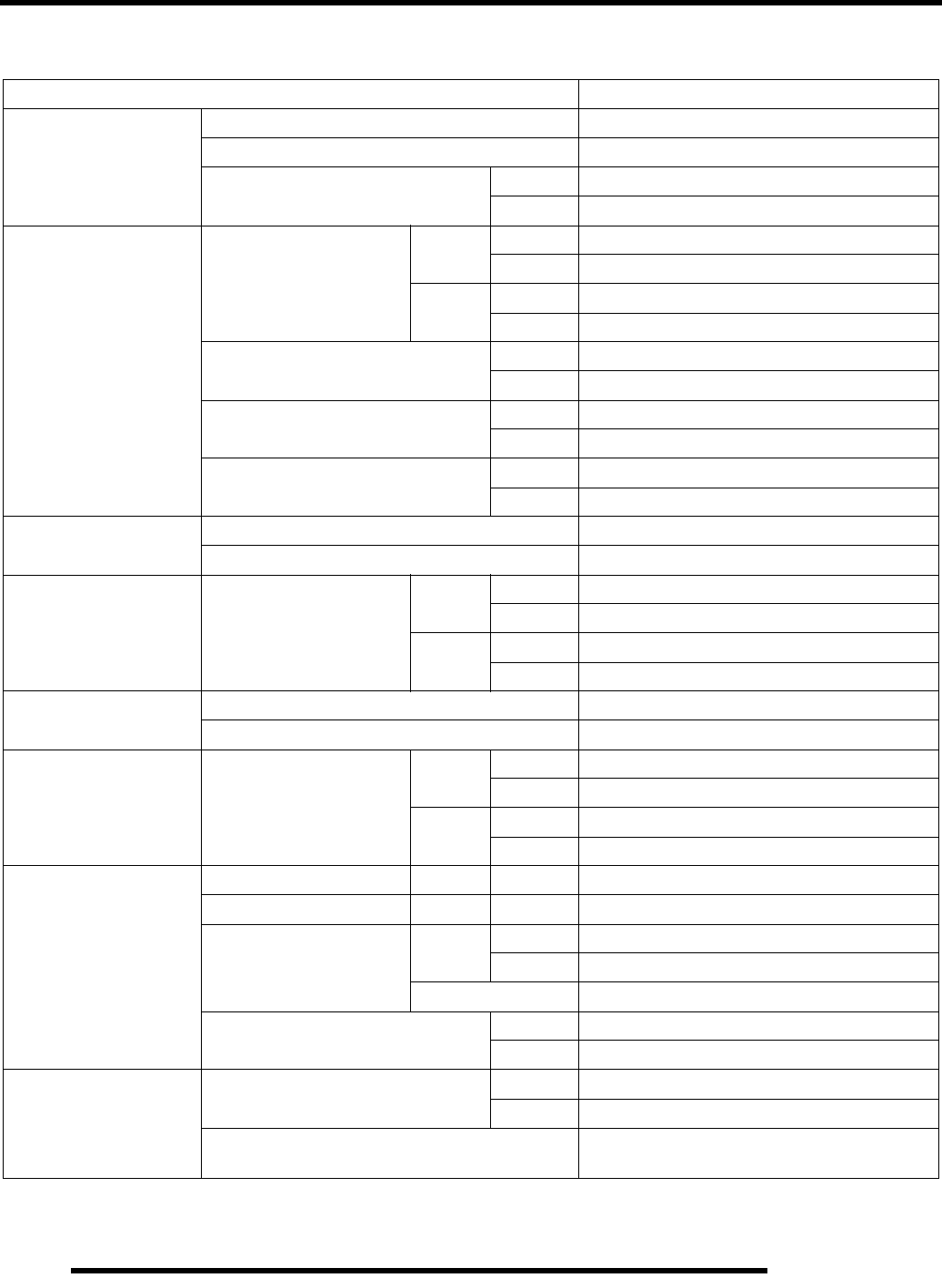
3.4
ENGINE
Engine Service Data
Cylinder Head / Valve EH50PLE
Rocker Arm
Rocker arm ID .8669-.8678”(22.020-22.041 mm)
Rocker shaft OD .8656-.8661 (21.987-22.0 mm)
Rocker shaft Oil Clearance Std .0008-.0021” (.020-.054 mm)
Limit .0039” (.10 mm)
Camshaft
Cam lobe height
In Std 1.2884-1.2924" (32.726-32.826 mm)
Limit 1.2766" (32.426 mm)
Ex Std 1.2884-1.2924" (32.726-32.826 mm)
Limit 1.2766" (32.426 mm)
Camshaft journal OD Mag 1.4935-1.4941" (37.935-37.950 mm)
PTO 1.4935-1.4941" (37.935-37.950 mm)
Camshaft journal bore ID Mag 1.4963-1.4970" (38.005-38.025 mm)
PTO 1.4963-1.4970" (38.005-38.025 mm)
Camshaft Oil clearance Std .0022-.0035" (.055-.090 mm)
Limit .0039" (.10 mm)
Cylinder Head Surface warpage limit .0020” (.05 mm)
Standard height 3.870” (98.3 mm)
Valve Seat Contacting width
In Std .028" (.7 mm)
Limit .055" (1.4 mm)
Ex Std .039" (1.0 mm)
Limit .071" (1.8 mm)
Valve Guide Inner Diameter .2362-.2367" (6.0-6.012 mm)
Protrusion above head .689-.709" (17.5-18.0 mm)
Valve Margin thickness
In Std .039" (1.0 mm)
Limit .031" (.8 mm)
Ex Std .047" (1.2 mm)
Limit .031" (.8 mm)
Valve
Stem diameter In .2343-.2348" (5.950-5.965 mm)
Ex .2341-.2346" (5.945-5.960 mm)
Stem Oil clearance Std In .0014-.0024" (.035-.062 mm)
Ex .0016-.0026" (.040-.067 mm)
Limit .0059" (.15 mm)
Overall length In 3.976" (101.0 mm)
Ex 3.984" (101.2 mm)
Valve Spring
Overall length Std 1.654" (42.0 mm)
Limit 1.575" (40.0 mm)
Squareness
Inner .075” (1.9 mm)
PartShark.com
877-999-5686
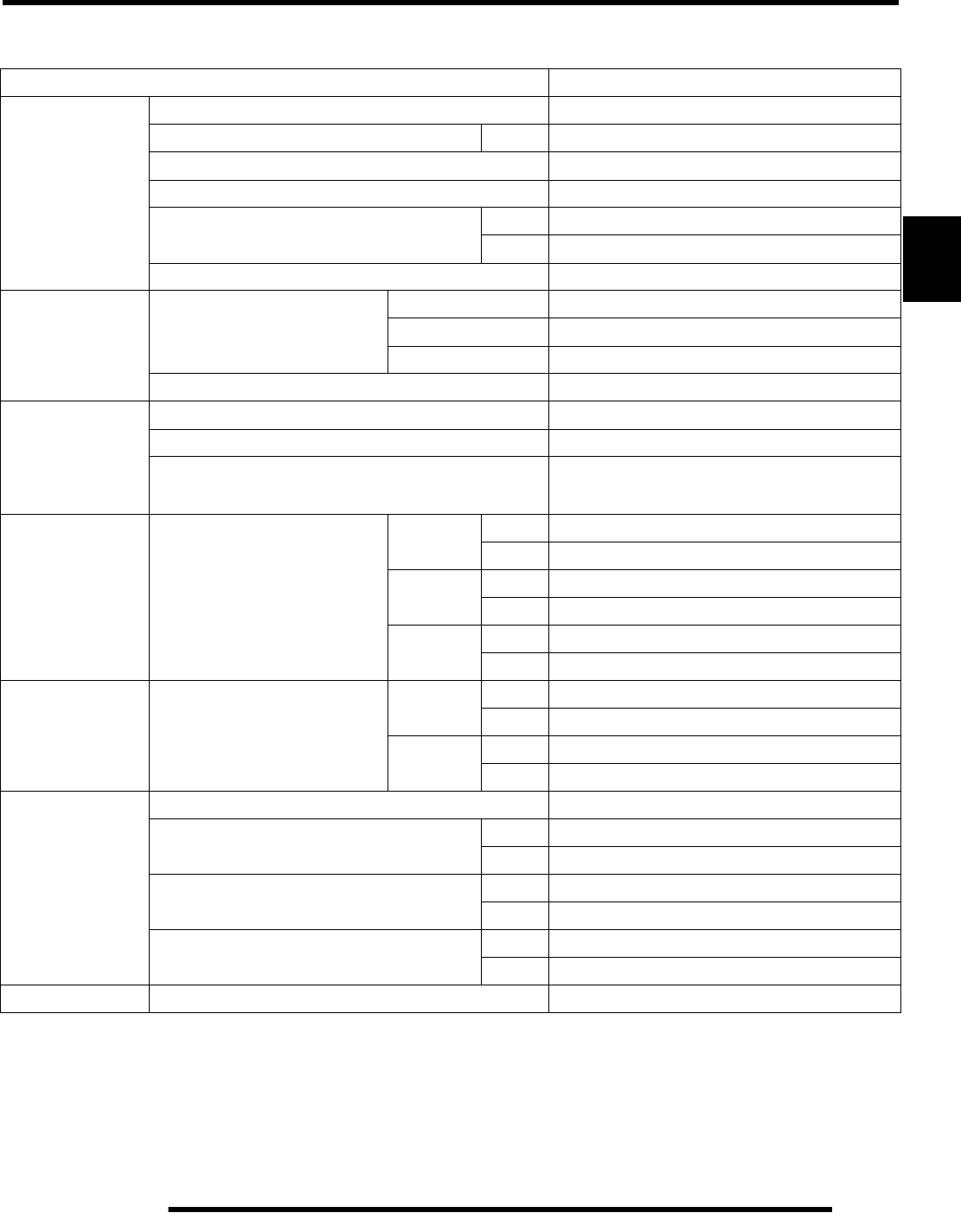
3.5
ENGINE
3
Engine Service Data
KEY - Std: Standard; OS: Oversize; ID: Inner Diameter; OD: Outer Diameter; Mag: Magneto Side;
PTO: Power Take Off Side.
Cylinder / Piston / Connecting Rod EH50PLE
Cylinder
Surface warpage limit (mating with cylinder head) .0020” (0.05 mm)
Cylinder bore Std 3.6221-3.6228" (92.00-92.02 mm)
Taper limit .0020” (0.050 mm)
Out of round limit .0020” (0.050 mm)
Piston clearance Std .0006-.0018" (0.015-0.045 mm)
Limit .0024" (0.060 mm)
Boring Limit .020” (.5 mm)
Piston Outer diameter
Std 3.6204-3.6215" (91.970-91.985 mm)
.0098" (.25 mm) OS 3.6304-3.6310" (92.21-92.23 mm)
.0197" (.50 mm) OS 3.6403-3.6407" (92.46-92.47 mm)
Standard inner diameter of piston pin bore .9055-.9057" (23.0-23.006 mm)
Piston Pin
Outer diameter .9053-.9055” (22.994-23.0 mm)
Standard clearance - piston pin to pin bore .0002- .0003” (.004- .008 mm)
Degree of fit Piston Pin must be a push (by hand) fit at 68o
F (20o C)
Piston Ring Piston Ring Installed gap
Top ring Std .0079-.0138" (.20-.36 mm)
Limit .039" (1.0 mm)
Second
ring
Std .0079-.0138" (.20-.36 mm)
Limit .039" (1.0 mm)
Oil ring Std .0079-.0276" (.20-.70 mm)
Limit .059" (1.5 mm)
Piston Ring Standard clearance -
piston ring to ring groove
Top ring Std .0016-.0031" (.040-.080 mm)
Limit .0059" (.15 mm)
Second
ring
Std .0012-.0028" (.030-.070 mm)
Limit .0059" (.15 mm)
Connecting Rod
Connecting rod small end ID .9058 - .9063” (23.007 - 23.020 mm)
Connecting rod small end radial clearance Std .0003-.0010" (.007-.026 mm)
Limit .0020" (.05 mm)
Connecting rod big end side clearance Std .0039-.0256" (.1-.65 mm)
Limit .0315" (.80 mm)
Connecting rod big end radial clearance Std .0004-.0015" (.011-.038 mm)
Limit .0020" (.05 mm)
Crankshaft Crankshaft runout limit .0024" (.06 mm)
PartShark.com
877-999-5686
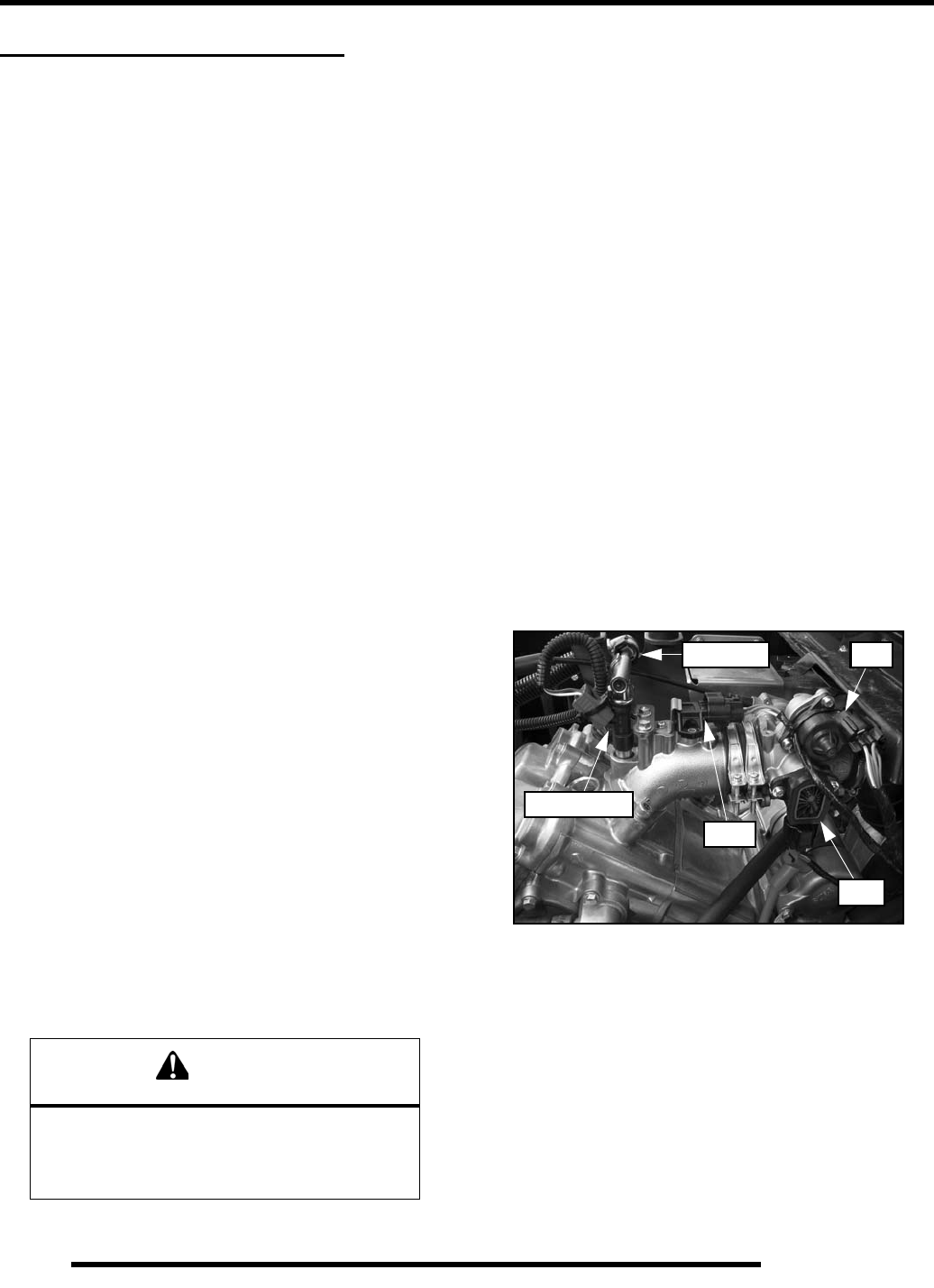
3.6
ENGINE
GENERAL ENGINE SERVICE
Accessible Components
The following components can be serviced or removed with the
engine installed in the frame:
• Flywheel
• Alternator/Stator
• Starter Motor/Starter Drive
• Cylinder Head
• Cylinder
• Piston/Rings
• Camshaft
• Rocker Arms
• Cam Chain and Sprockets
• Water Pump / Water Pump Mechanical Seal*
The following components require engine removal for service:
• Oil pump / Oil Pump Drive Gear
• Counterbalance Shaft or Bearing(s)
• Connecting Rod
•Crankshaft
• Crankshaft Main Bearings
• Crankcase
*It may be necessary to loosen engine mounts and move engine
slightly to access water pump. Use the Water Pump Mechanical
Seal Puller (PN 2872105) to replace mechanical seal with
engine in frame.
Engine Removal
IMPORTANT: Some engine repair procedures can be
performed without removing the engine. Refer to
“Accessible Components” for further information.
NOTE: Upon engine removal, use a mechanical lift
or have an assistant help remove the engine from
the vehicle to prevent personal injury or damage to
vehicle components.
1. Clean your work area.
2. Thoroughly clean the engine and chassis.
3. Open the hood and disconnect negative (-) battery cable.
4. Drain the engine oil and engine coolant (see Chapter 2).
NOTE: Drain and dispose of the fluids properly.
5. Remove the lower seat base.
6. Remove the spark plug high tension lead.
7. Remove engine to chassis ground cable located at the
starter motor mounting fastener.
8. Remove the red battery cable from the starter motor.
9. Disconnect engine wiring harness connections near the
flywheel cover (Stator and CPS).
10. Disconnect the engine coolant temperature sensor harness
at the cylinder head.
11. Remove the outer clutch cover with PVT outlet duct, drive
belt, drive clutch, driven clutch and inner clutch cover (see
Chapter 6 “Clutching”).
12. Disconnect fuel injector harness, TPS harness, MAP
harness and IAC harness.
13. Place a small catch-container under the fuel rail and
carefully disconnect the fuel line from the rail.
14. Loosen the clamps that secure the throttle body to the intake
track.
15. Remove the throttle body and support it out of the way. Do
not allow the throttle body to hang from the throttle cable.
16. Insert a shop towel into the intake manifold to prevent dirt
from entering the intake port.
17. Remove the rear PVT inlet hose from the engine crankcase.
WARNING
Always wear safety glasses and proper shop
clothing when performing the procedures in this
manual. Failing to do so may lead to
possible injury or death.
TPS
IAC
Fuel Line
MAP
Fuel Injector
PartShark.com
877-999-5686
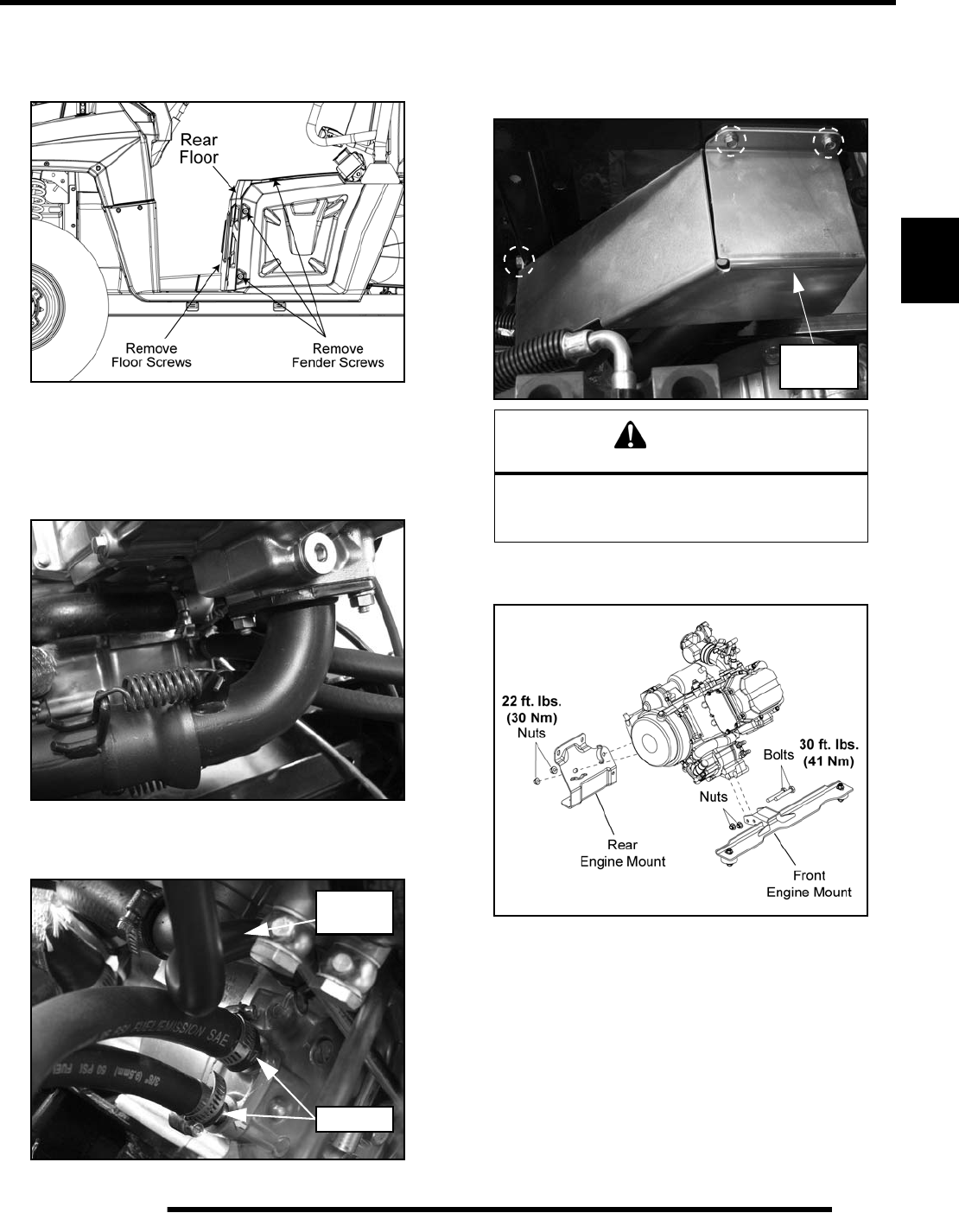
3.7
ENGINE
3
18. Remove the rear floor to access the remaining engine
components. The floor can be removed by removing (3)
fender screws (3) rear floor screws as shown below.
19. Disconnect the ignition coil and ECU harnesses to allow the
floor to be removed from the vehicle.
20. Remove the (2) nuts and disconnect the exhaust pipe from
the engine.
21. Remove the oil lines and breather line from the engine
crankcase.
22. Remove the coolant hoses from the engine. Properly
dispose of any coolant drained from the engine or hoses.
23. Remove the (3) bolts and exhaust shield from the vehicle.
24. Remove the front and rear engine mount fasteners as shown
below.
25. Carefully remove engine through top of seat base frame.
Lift the engine forward to free it from the rear mount and
then lift the engine out from the vehicle.
NOTE: Use caution when lifting the engine out of
frame. Use an engine lift or other means if the
engine appears too heavy to be lifted manually.
Oil Lines
Breather
Line
WARNING
The exhaust shield is extremely sharp.
Remove the shield to prevent personal injury
during engine removal.
Exhaust
Shield
PartShark.com
877-999-5686
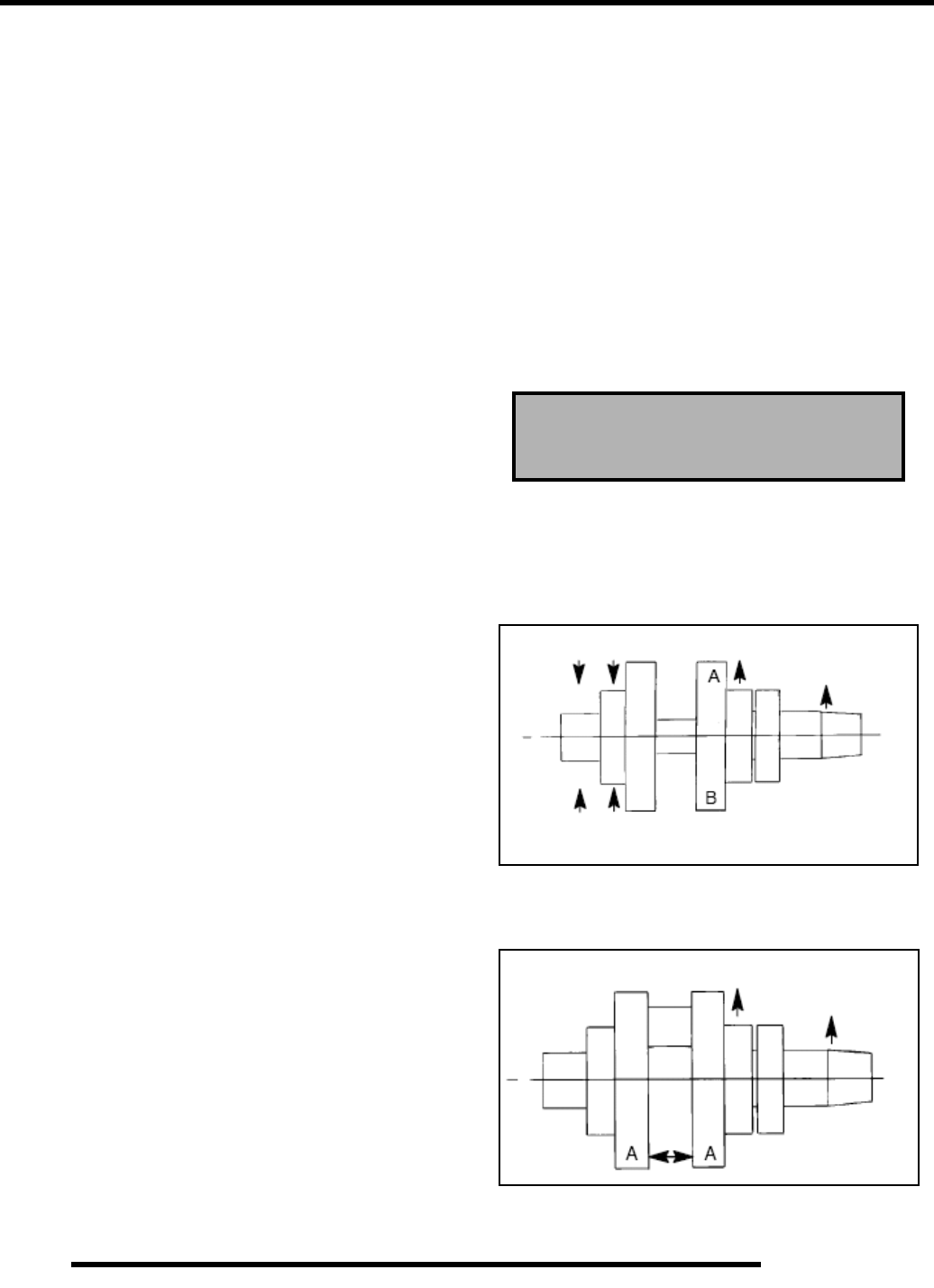
3.8
ENGINE
Engine Installation Notes
After the engine is installed in the frame, review this checklist
and perform all steps that apply:
General Items
1. Repeat steps in reverse order in the “Engine Removal”
procedure to reinstall the engine.
2. Install previously removed components using new gaskets,
seals, and fasteners where applicable.
3. Perform regular checks on fluid levels, controls, and all
important areas on the vehicle as outlined in the daily pre-
ride inspection checklist (refer to Chapter 2).
PVT System
1. Adjust center distance of drive and driven clutch
(Chapter 6).
2. Adjust clutch offset, alignment, and belt deflection
(Chapter 6).
3. Clean clutch sheaves thoroughly and inspect inlet and
outlet ducts for proper routing and sealing (Chapter 6).
Transmission
1. Inspect transmission operation and adjust linkage if
necessary (refer to Chapter 2 and Chapter 8).
Exhaust
1. Replace exhaust gaskets. Seal connections with high temp
silicone sealant.
2. Check to be sure all springs are in good condition.
Bleed Cooling System
1. Remove radiator cap and slowly add coolant to top of filler
neck.
2. Fill coolant reservoir tank to full mark.
3. Install radiator cap and squeeze coolant lines to force air out
of system.
4. Again remove radiator cap and slowly add coolant to top
of fill neck.
5. Start engine and observe coolant level in the radiator.
Allow air to purge and top off as necessary. Reinstall
radiator cap and bring engine to operating temp. Check
level in reservoir tank after engine is cool and add coolant
if necessary.
Engine Break In Period
4 Cycle Engine Break-In Period is defined as the first 25 hours
of engine operation or 2 full tanks of fuel.
1. Use only Polaris PS-4 Plus 2W-50 Synthetic engine oil.
Never substitute or mix oil brands. Serious engine damage
can result.
2. Use fuel with a minimum octane of 87 (R+M)/2 method.
3. Change break-in oil and filter at 25 hours.
Crankshaft Straightening
Lubricate the bearings and clamp the crankshaft securely in the
Crankshaft Truing Stand (PN 2870569). Refer to the
illustrations below.
NOTE: The rod pin position in relation to the dial
indicator position tells you what action is required to
straighten the shaft.
1. To correct a situation like the one shown in the illustration
below, strike the shaft at point A with a brass hammer.
2. To correct a situation like the one shown in the illustration
below, squeeze the crankshaft at point A. Use tool from
alignment kit.
Crankshaft Truing Stand
(PN 2870569)
HIGH .004 (.1 mm)
SUPPORT CRANKSHAFT
HERE.
HIGH .004 (.1 mm)
HIGH .002 (.05 mm)
HIGH .005 (.13 mm)
PartShark.com
877-999-5686
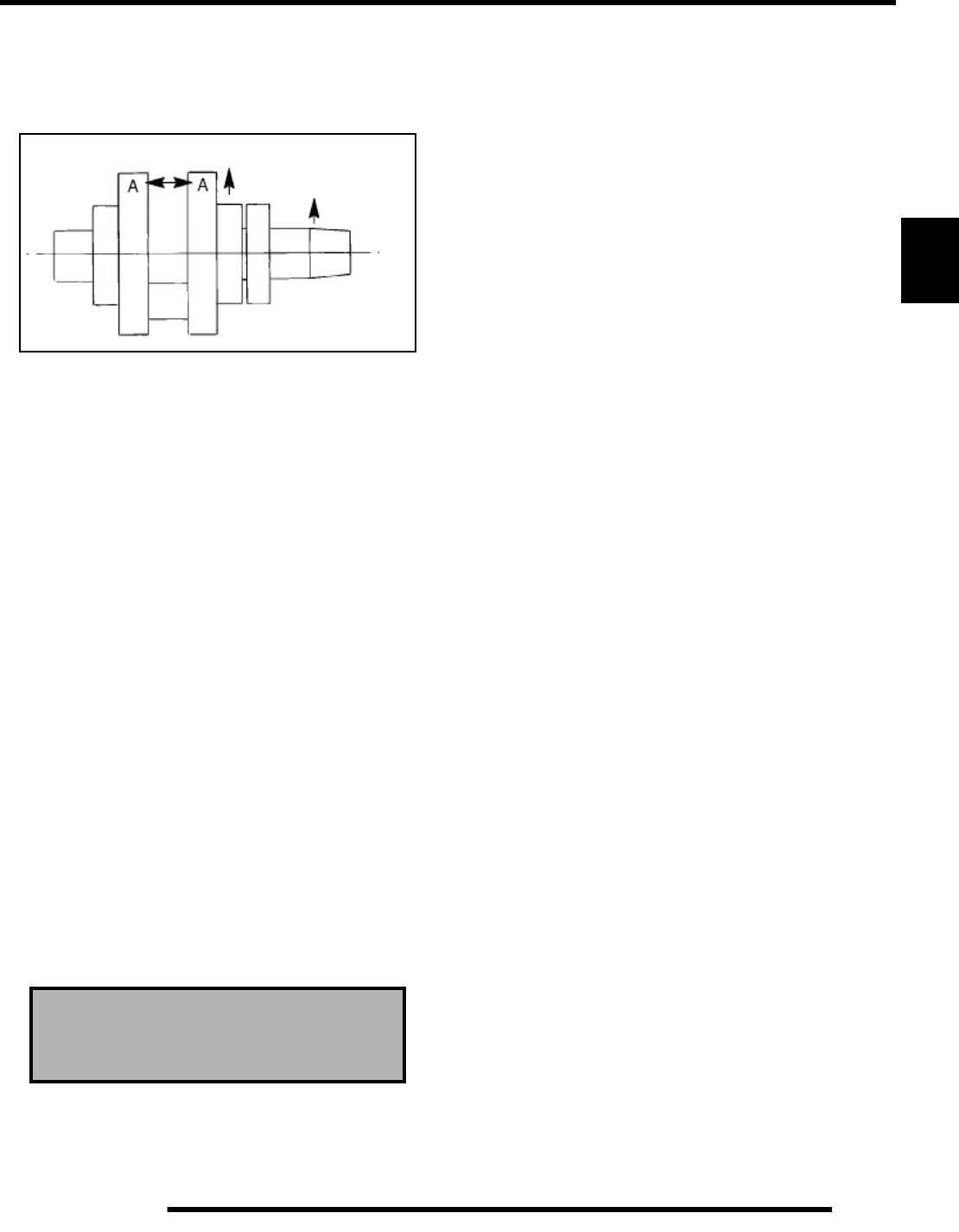
3.9
ENGINE
3
3. If the crank rod pin location is 180o from the dial indicator,
it will be necessary to spread the crankshaft at position A
as shown in the following illustration. When rebuilding and
straightening a crankshaft, runout must be as close to zero
as possible.
NOTE: Maximum allowable runout is .0024”
Engine Lubrication - EH50PL
Oil Type: . . . . . Polaris PS-4 Plus 2W-50 Synthetic (2876244)
Capacity:. . . . . Approximately 2 U.S. Quarts (1.9 l)
Oil Filter: . . . . (3084963)
Filter Wrench: (PV-43527)
*Drain Plug / Screen Fitting . . . . . 14 ft. lbs. (19 Nm)
If fitting is removed, follow oil pump priming procedure.
*Oil Pressure Specification . . . . . . . 20 PSI @ 5500 RPM,
Polaris PS-4 PLUS 2W-50 Synthetic (Engine Hot)
Oil Pressure Test - EH50PL
1. Remove blind plug on front left cylinder head.
2. Insert a 1/8 NPT oil pressure gauge adaptor into the cylinder
head and attach the gauge.
3. Start engine and allow it to reach operating temperature,
monitoring gauge indicator.
NOTE: Use Polaris PS-4 Plus Synthetic Engine
Lubricant (PN 2876244).
Oil Flow - EH50PL
The chart on Page 3.10 describes the flow of oil through the
EH50PL engine. Beginning at the oil tank, the oil flows
through a screen fitting in the bottom of the tank and into the
oil supply hose. The feed side of the oil pump draws oil
through the hose and into the crankcase oil gallery, and then
pumps the oil through another passage to the one way valve.
When the engine is off, the one way valve closes to prevent oil
in the tank from draining into the crankcase. The oil is
pumped through a delivery pipe to the oil filter. If the oil filter
is obstructed, a bypass valve contained in the filter allows oil
to bypass the filter element.
At this point, the oil is diverted in two directions: Oil is supplied
to the camshaft through the left front cylinder stud, and an oil
passage in the head. Oil enters the camshaft through the PTO (L)
journal. The camshaft journals, cam lobes, and rocker arms are
lubricated through holes in the camshaft. The oil lubricates the
cam chain and sprocket and drains to the sump.
The other oil path from the filter leads through a delivery pipe
to the crankcase main oil gallery, which leads to the stator plate
oil passage. Here it passes through the slotted friction bearing
(located in the stator plate) into the crankshaft. An oil seal on
the stator plate prevents oil from entering the stator/flywheel
area. Oil travels through the crankshaft to the crank pin,
lubricating the connecting rod large end bearing directly. Oil
also passes through an oil jet (drilled orifice) in the end of the
crank pin to the PTO end main bearings and counterbalancer
gears.
Residual oil from the lubrication of the crankshaft and
connecting rod indirectly lubricates the cylinder wall, piston,
rings, connecting rod small end bearing, piston pin, oil/water
pump drive gears, cam chain and drive sprocket, and Magneto
end crankshaft main bearing.
The one-way valve is located on the front left (PTO) side of the
crankcase. The valve prevents oil in the tank from draining into
the engine sump when the engine is off. The valve mechanism
consists of a plunger, return spring, guide plug, and sealing
washer. When the engine is running, oil pressure lifts the
plunger off the seat, allowing oil flow. When the engine is off,
spring pressure forces the plunger against the oil passage seat,
preventing oil flow from the tank to the sump. The one-way
valve requires very little maintenance. If engine oil drains into
the sump when the engine is off, inspect the valve sealing
surface for debris or damage. Inspect the return spring for
distortion or damage.
Oil Pressure at 5500 RPM (Engine Hot):
Standard: 20 PSI
Minimum: 12 PSI
HIGH .002 (.05 mm)
HIGH .005 (.13 mm)
PartShark.com
877-999-5686
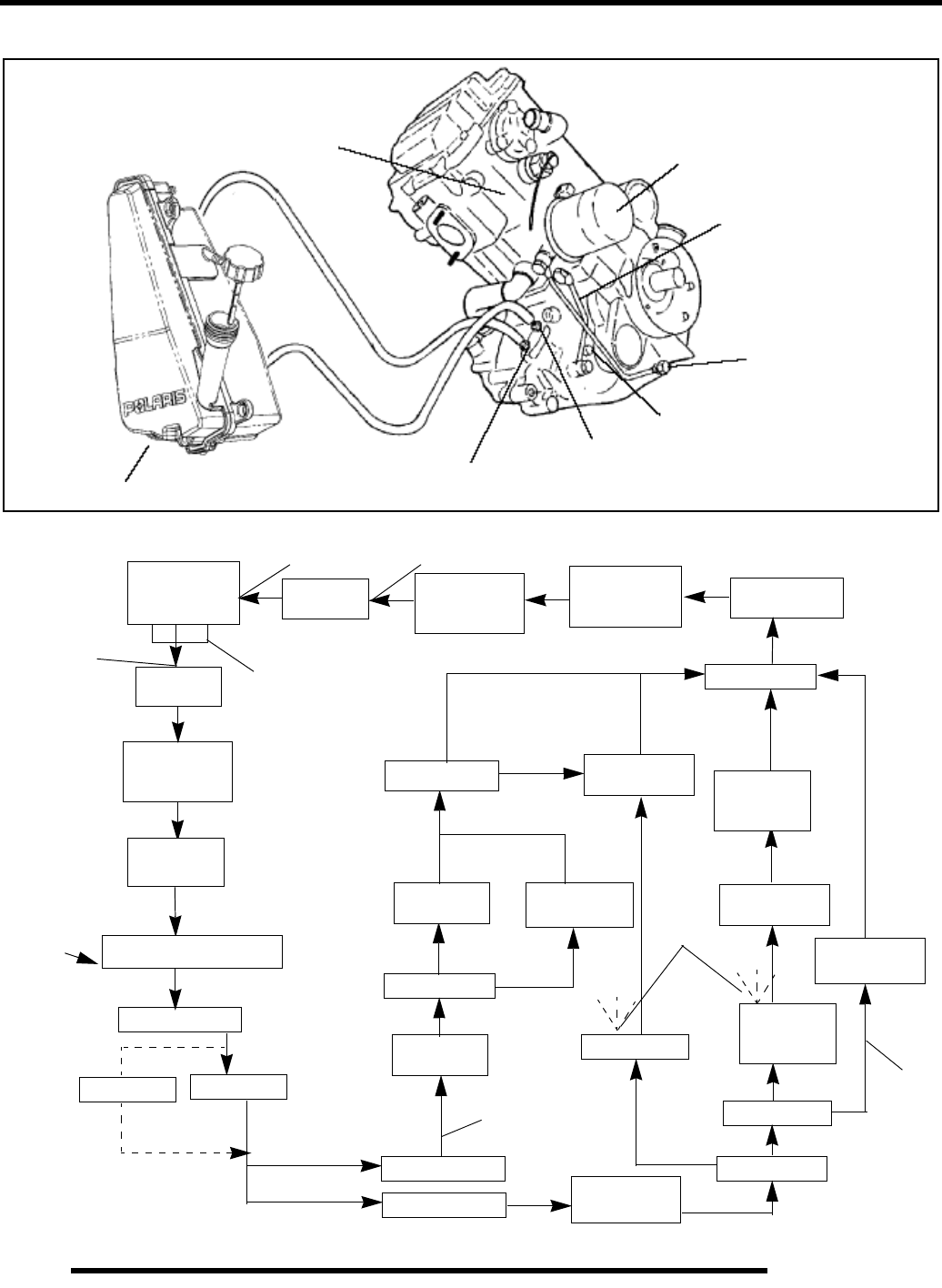
3.10
ENGINE
EH50PL Oil Flow Diagram
Oil Flow Chart
Oil Tank
Internal passage to
camshaft (front left
head bolt) Oil filter
Oil feed to filter
From filter
to crankshaft
One way valve
Top fitting is oil
feed or intake
from bottom of tank
Bottom fitting is oil exhaust
or return to tank
Oil Tank
Oil Hose
Crankcase
Oil Gallery
Oil Pump
(Feed)
One Way Valve
Delivery Pipe
Oil Filter
Bypass
Delivery Pipe Crankcase
Oil Gallery
Prevents oil from
draining into
crankcase with
engine off
Union Fitting
(Upper)
Oil Hose Crankcase
Oil Gallery
Oil Pump
(Scavenging) Oil Strainer
Crankshaft
Crank Pin
Large End
Bearing
Indirect
Lubrication
Cylinder
Sleeve
Small End
Bearing
Crankcase
Metal
Sprocket
Chain
Cam Shaft
Journal
Cam Lobe
Cam Shaft
Journal Rocker Arm
Rocker Shaft
Chain Room
Oil Jet
Main Bearing
(PTO)
Top of Oil Tank Union Fitting (Lower)
Through Cylinder
Stud Front Left
Screen Fitting
(Bottom of tank)
Delivery Pipe
PartShark.com
877-999-5686
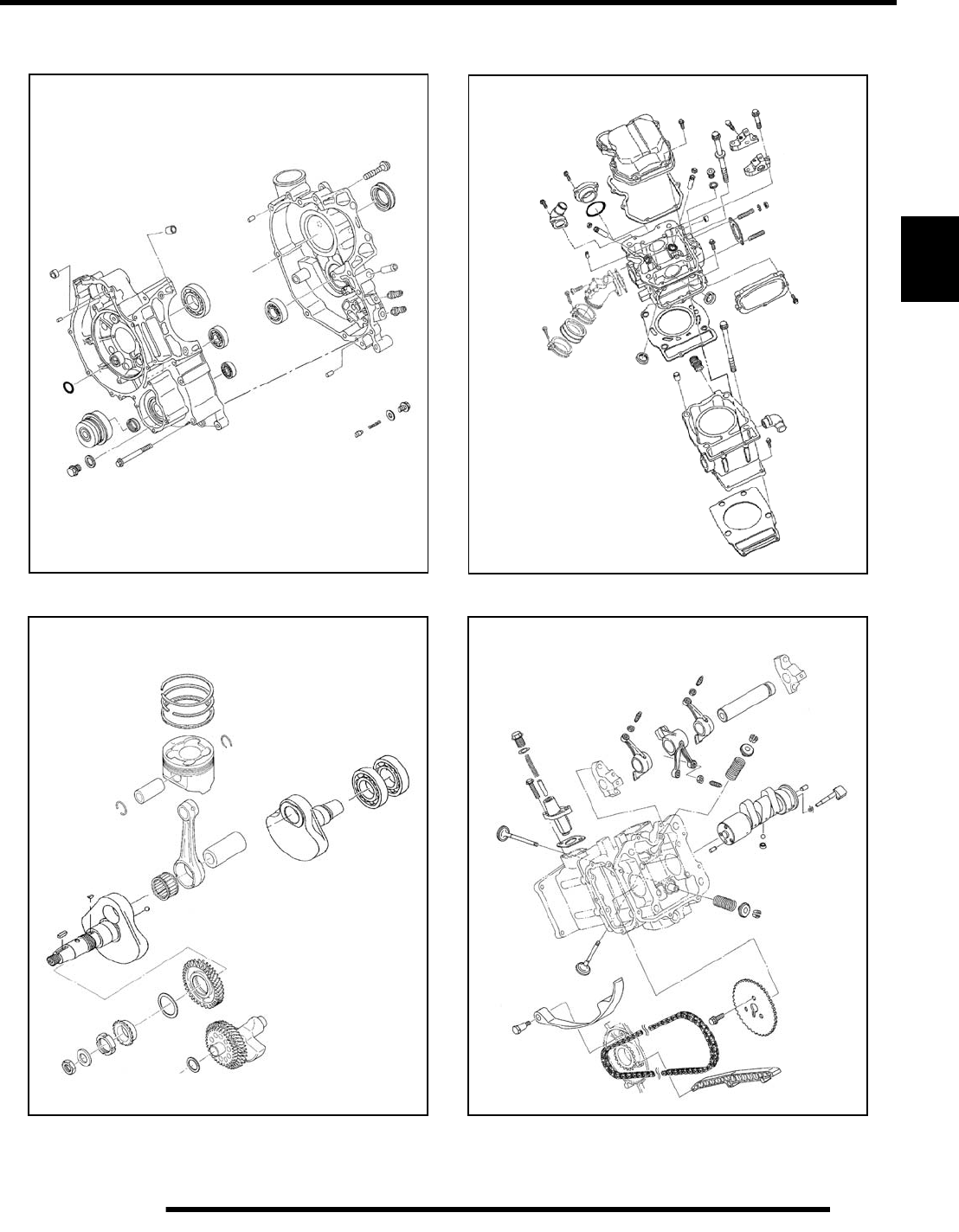
3.11
ENGINE
3
EH50PL Engine Exploded View
Crankshaft and Piston
Cylinder and Cylinder Head
Crankcase
Valve Train
PartShark.com
877-999-5686
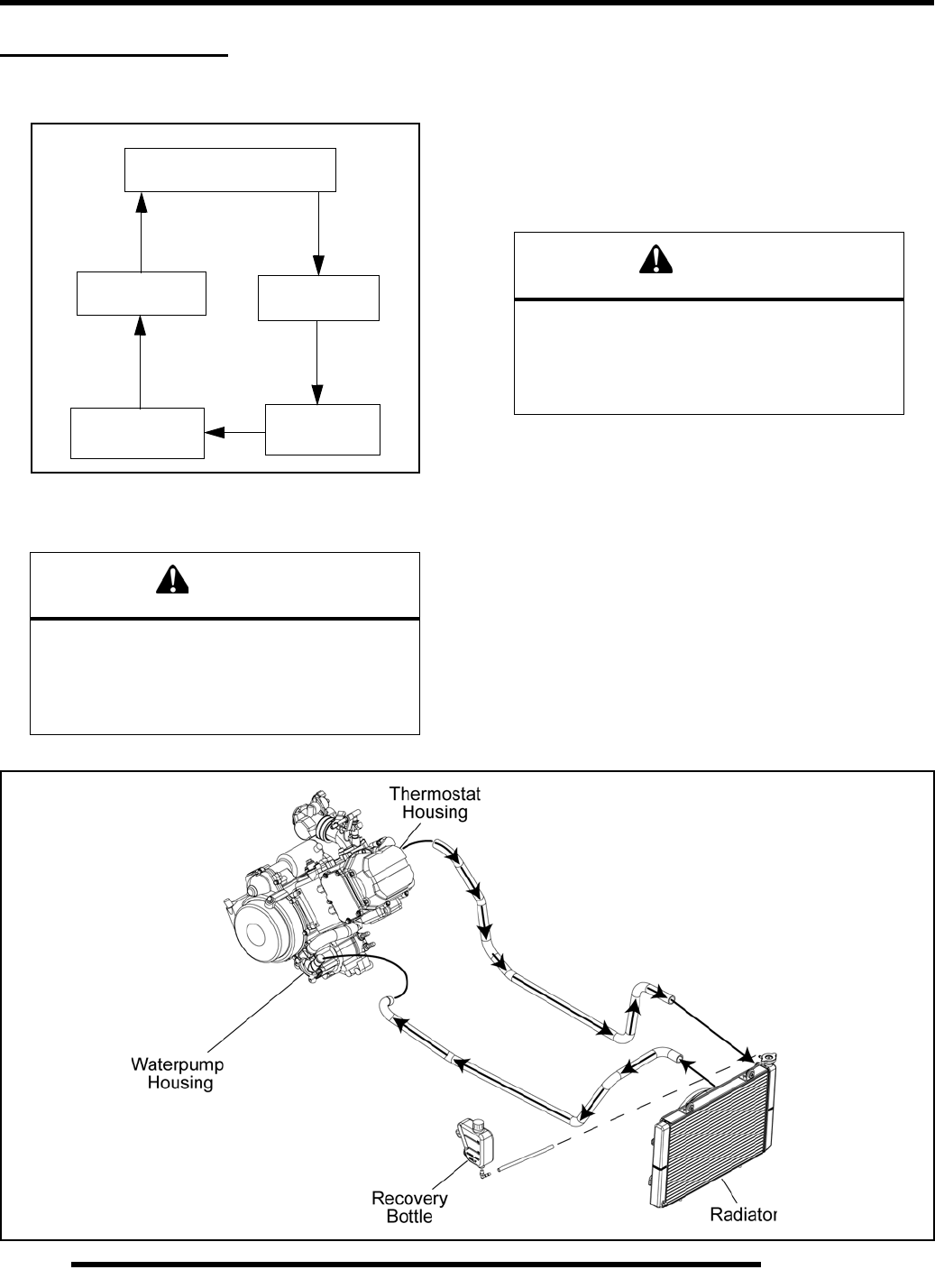
3.12
ENGINE
COOLING SYSTEM
Cooling System Layout and Testing
Cooling System Pressure Test
1. Open the front hood.
2. Remove the pressure cap from the radiator and pressure test
the cooling system using a commercially available tester.
3. The system must retain 10 psi for five minutes or longer.
If pressure loss is evident within five minutes, check
radiator, all cooling system hoses and clamps and water
pump seal for leakage.
Radiator Cap Pressure Test
1. Remove radiator pressure cap and test using a cap tester
(commercially available).
2. The radiator cap relief pressure is 13 lbs. Replace cap if it
does not meet this specification.
Recommended Coolant
Use only high quality antifreeze/coolant mixed with distilled
water in a 50/50 or 60/40 ratio, depending on freeze protection
required in your area.
IMPORTANT: Using tap water in the cooling system
will lead to a buildup of deposits which may restrict
coolant flow and reduce heat dissipation, resulting in
possible engine damage. Polaris Premium 60/40
Antifreeze/Coolant is recommended for use.
WARNING
Never remove radiator cap when engine is
warm or hot. The cooling system is under
pressure and serious burns may result.
Allow the engine and cooling system to
cool before servicing.
Radiator
Water Pump
Cylinder
Thermostat
FLOW
Cylinder
Head
WARNING
Never remove radiator cap when engine is
warm or hot. The cooling system is under
pressure and serious burns may result.
Allow the engine and cooling system to
cool before servicing.
COOLANT FLOW
PartShark.com
877-999-5686
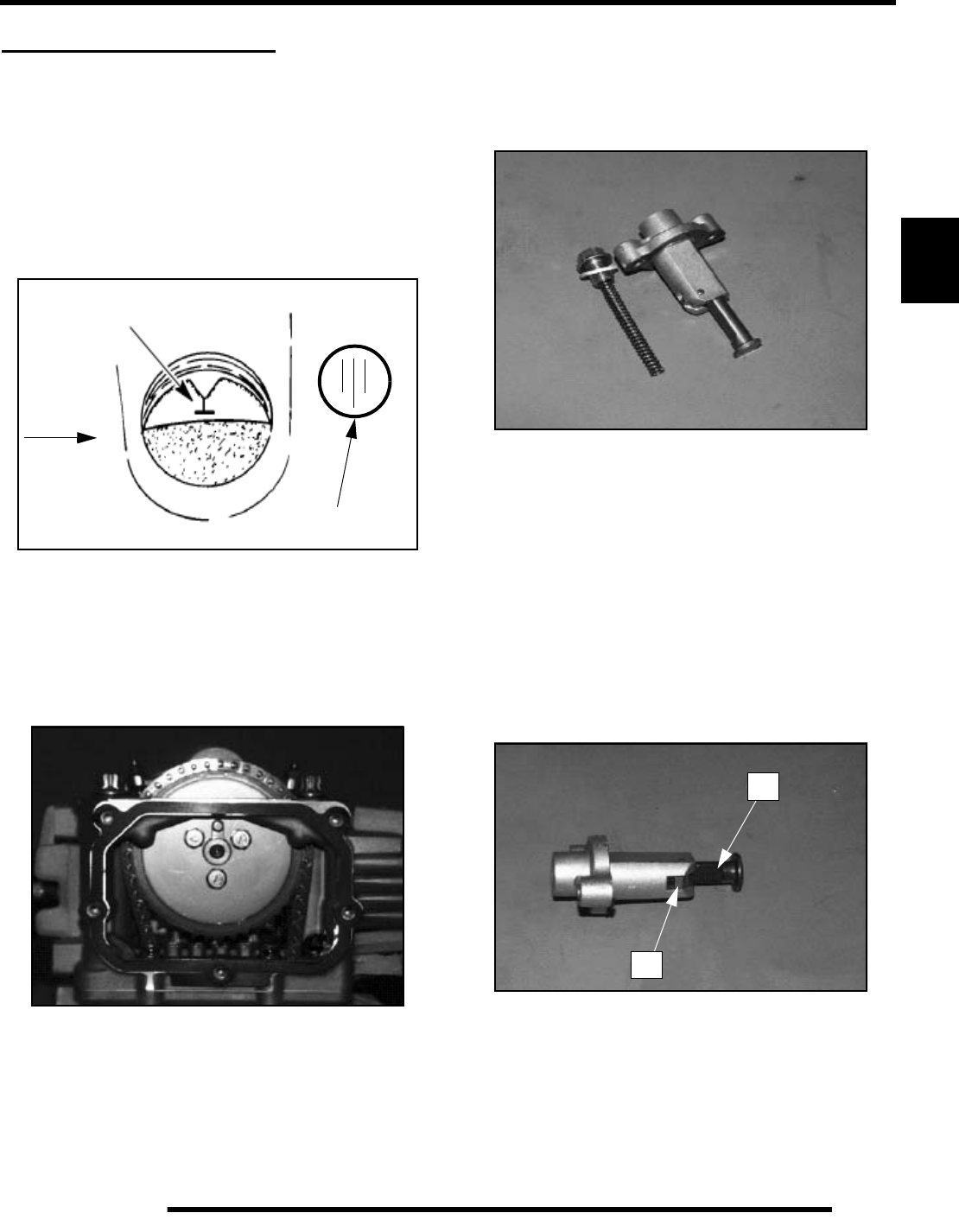
3.13
ENGINE
3
ENGINE DISASSEMBLY
Engine Removal
Refer to page 3.6 - 3.8 for Engine Removal / Installation
Notes
Cam Chain Tensioner / Rocker Arm /
Camshaft Removal
1. Remove ignition timing inspection plug from recoil
housing.
To position crankshaft at Top Dead Center (TDC) on
compression stroke:
2. Rotate engine slowly in the direction of rotation watching
intake valves open and start to close.
3. Continue to rotate engine slowly, watching camshaft
sprocket marks and the mark in the timing inspection hole.
4. Align single (TDC) mark on flywheel with projection in
inspection hole, and the cam sprocket pin (facing upward)
aligned with the camshaft to crankshaft center line.
NOTE: The cam lobe should be pointing down and
valves should have clearance at this point.
5. Remove cam chain tensioner plug, sealing washer, and
spring. CAUTION: The plug is under spring tension.
Maintain inward pressure while removing.
6. Remove the two 6x25 mm cam chain tensioner flange bolts.
7. Tap lightly on tensioner body with a soft face hammer and
remove tensioner.
Cam Chain Tensioner Inspection
1. Pull cam chain tensioner plunger outward to the end of its
travel. Inspect teeth on ratchet pawl (A) and plunger teeth
(B) for wear or damage.
2. Push ratchet pawl and hold it. The plunger should move
smoothly in and out of the tensioner body.
3. Release ratchet pawl and push inward on plunger. It should
remain locked in position and not move inward.
TDC “T” Mark
Rotation
Advance Marks
B
A
PartShark.com
877-999-5686
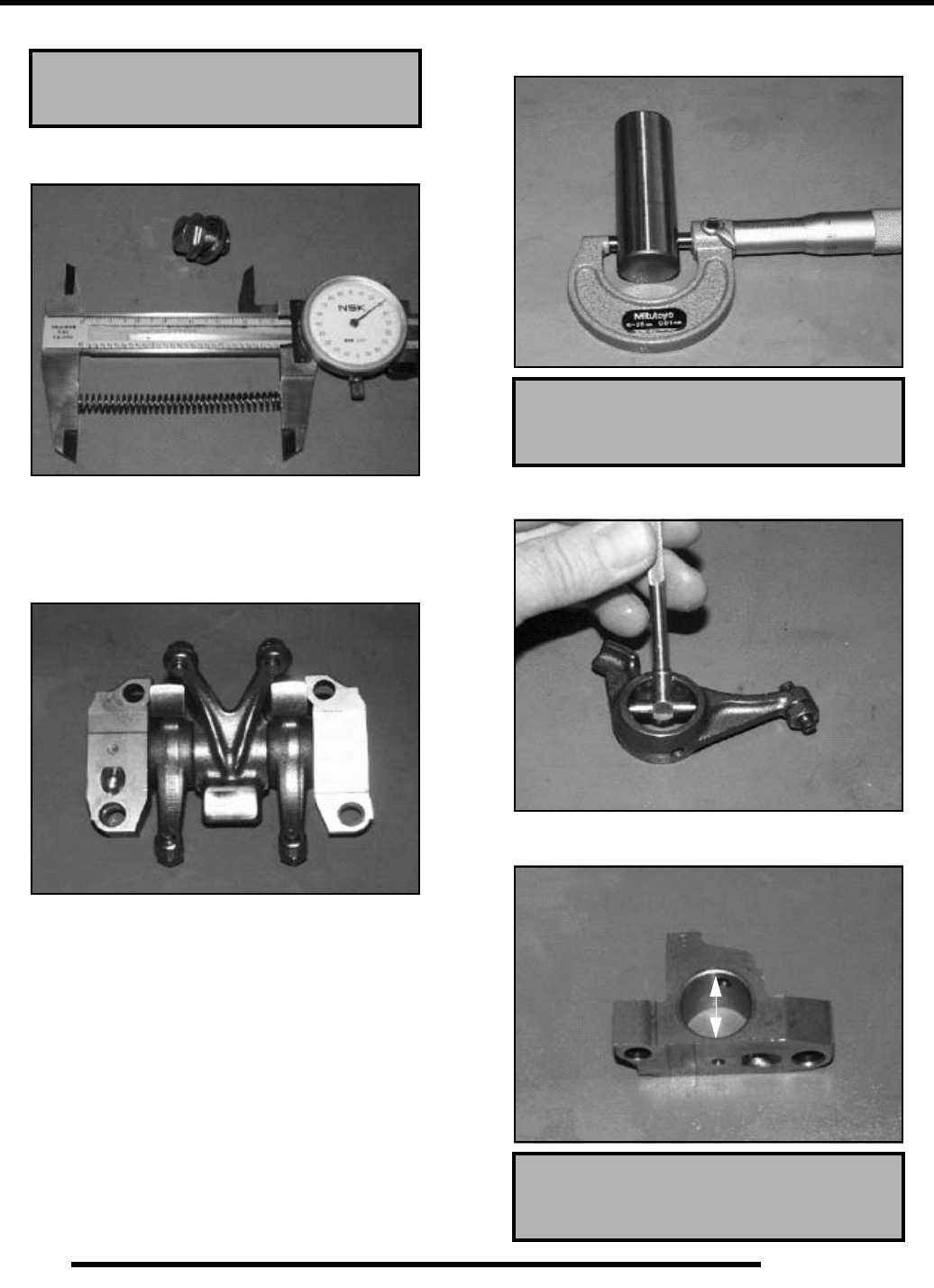
3.14
ENGINE
4. Measure free length of tensioner spring. Replace spring if
excessively worn. Compare to specifications.
5. Replace entire tensioner assembly if any part is worn or
damaged.
Rocker Arm / Shaft Inspection
1. Mark or tag rocker arms to keep them in order for
assembly.
2. Inspect each rocker arm cam follower surface. If there is
any damage or uneven wear, replace the rocker arm.
NOTE: Always inspect camshaft lobe if rocker arms
are worn or damaged.
3. Measure O.D. of rocker shaft. Inspect it for wear or
damage. Compare to specifications.
4. Measure I.D. of each rocker arm and compare to
specifications.
5. Measure I.D. of both rocker arm shaft supports and visually
inspect surface. Compare to specifications.
Tensioner Spring Free Length:
2.02” (5.13 cm)
Rocker Shaft O.D.:
.8656-.8661” (21.987-22.0 mm)
Rocker Arm & Support I.D.:
.8669-.8678” (22.020-22.041 mm)
PartShark.com
877-999-5686
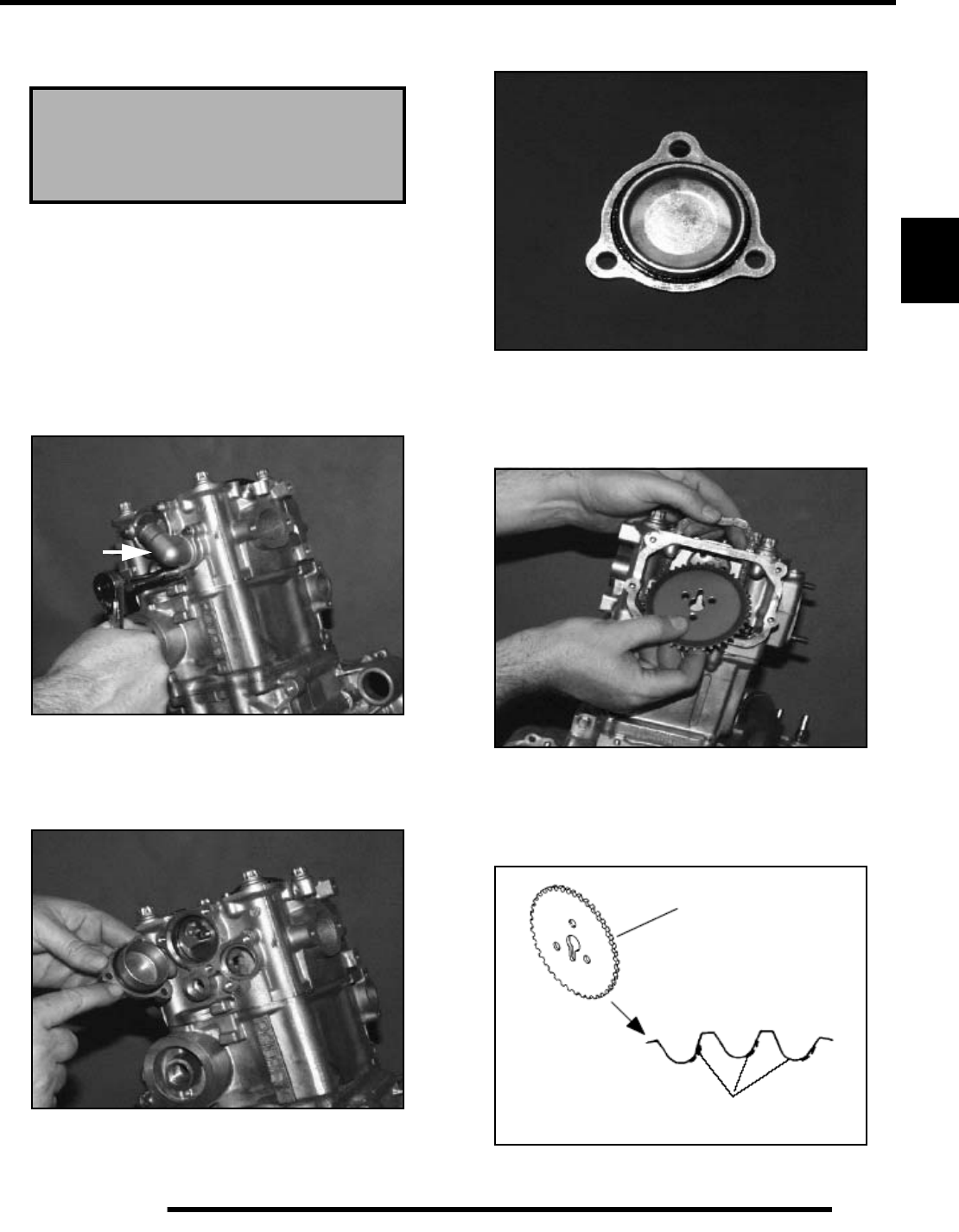
3.15
ENGINE
3
6. Subtract rocker shaft O.D. from rocker arm & shaft support
I.D. This is the oil clearance. Compare to specifications.
7. Inspect rocker adjuster screws for wear, pitting, or damage
to threads of the adjuster or locknut. Replace all worn or
damaged parts.
NOTE: The end of the adjuster screw is hardened
and cannot be ground or re-faced.
Camshaft Removal
1. Remove thermostat housing.
2. Remove camshaft sprocket inspection cover.
3. Loosen three camshaft sprocket bolts.
4. Remove camshaft end cap and O-ring.
5. Inspect camshaft end cap (thrust face) for wear. Replace if
worn or damaged.
6. Place a clean shop towel in the area below cam chain
sprocket and remove sprocket retaining bolts.
7. Slide camshaft inward to allow removal of cam sprocket
and remove sprocket from camshaft and chain.
8. Secure cam chain with a wire to prevent it from falling into
the crankcase.
9. Inspect cam sprocket teeth for wear or damage. Replace if
necessary.
10. Slide camshaft out the PTO side of the cylinder head.
Rocker Shaft Oil Clearance:
Std: .0008 - .0021” (.020 - .054 mm)
Limit: .0039” (.10 mm)
Sprocket teeth
Inspect for Areas of Tooth
Wear or Damage
PartShark.com
877-999-5686
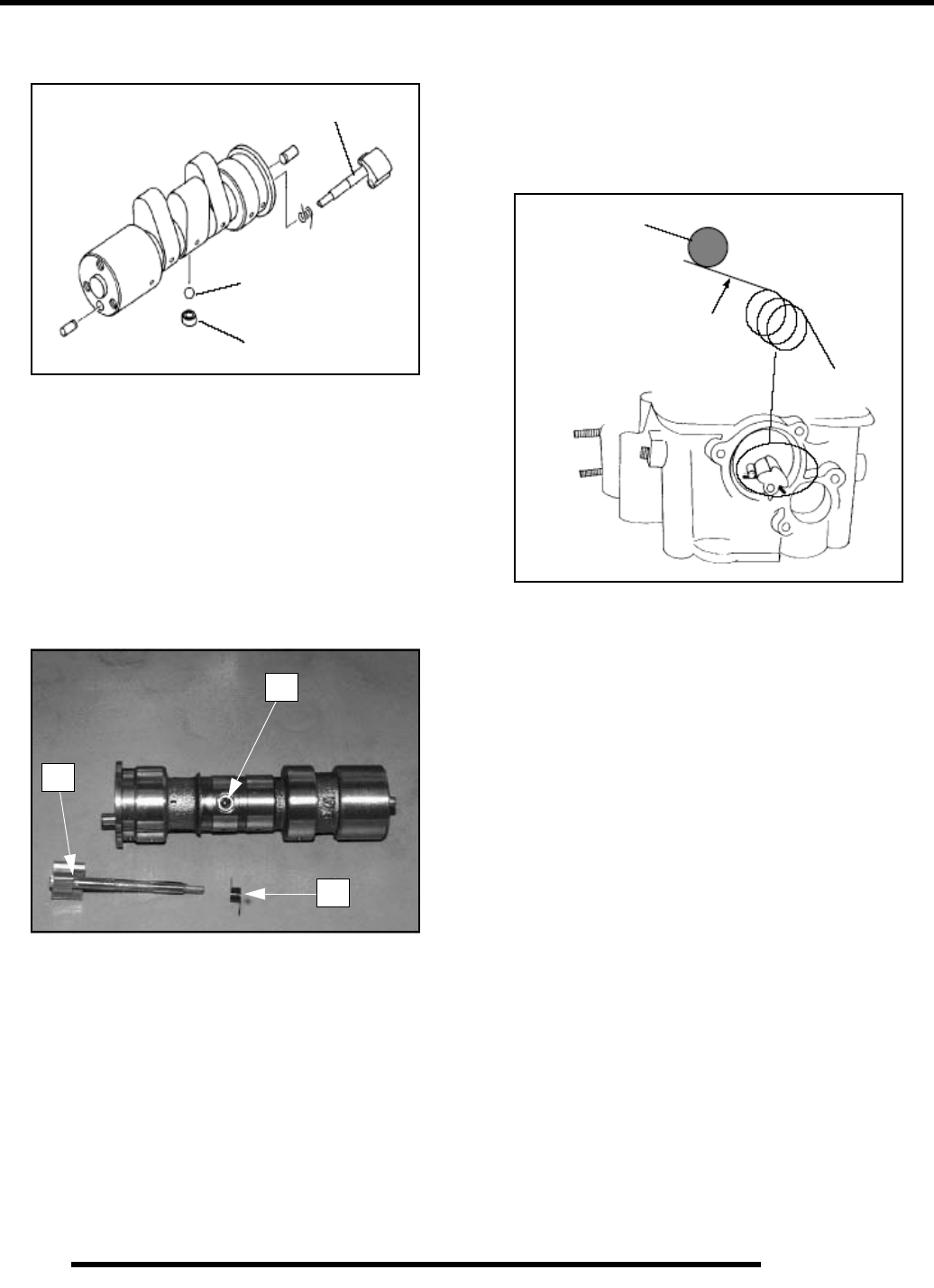
3.16
ENGINE
Automatic Compression Release Removal /
Inspection
NOTE: The automatic compression release
mechanism can be inspected and serviced without
removing the camshaft from the cylinder head. The
actuator ball in the camshaft is not replaceable.
Replace the camshaft as an assembly if the actuator
ball is worn or damaged.
1. Check release lever shaft (A) for smooth operation
throughout the entire range of rotation. The spring (B)
should hold the shaft weight against the stop pin. In this
position, the actuator ball (C) will be held outward in the
compression release mode.
2. Remove release lever shaft and return spring.
3. Inspect shaft for wear or galling.
4. Inspect lobe on end of release lever shaft and actuator ball
for wear and replace if necessary.
Automatic Compression Release Installation
1. Slide spring onto shaft.
2. Apply engine oil to release lever shaft.
The actuator ball must be held outward to allow installation of
the release lever shaft.
If Camshaft is Removed From Engine:
3. Turn the camshaft until the actuator ball is in the lowest
position and install the release lever shaft.
If Camshaft is Installed in the Engine:
4. Use a small magnet to draw the actuator ball outward, or
rotate the engine until the cam lobes face upward and install
release lever shaft.
5. Position camshaft as shown at the bottom of Figure 3.21.
6. Place arm of spring under stop pin as shown and push
release lever inward until fully seated. Do not pre-wind the
spring one full turn or the compression release will not
disengage when the engine starts. Check operation of
mechanism as outlined in Step 1 of Removal (above).
NOTE: When shaft is properly installed, actuator ball will
be held in the “out” position. It is important to note that
spring pressure is very light.
Decompressor Shaft
Decompressor Ball
Retainer Sleeve
B
A
C
Stop Pin
Spring in relaxed position
Figure 3.21
PartShark.com
877-999-5686
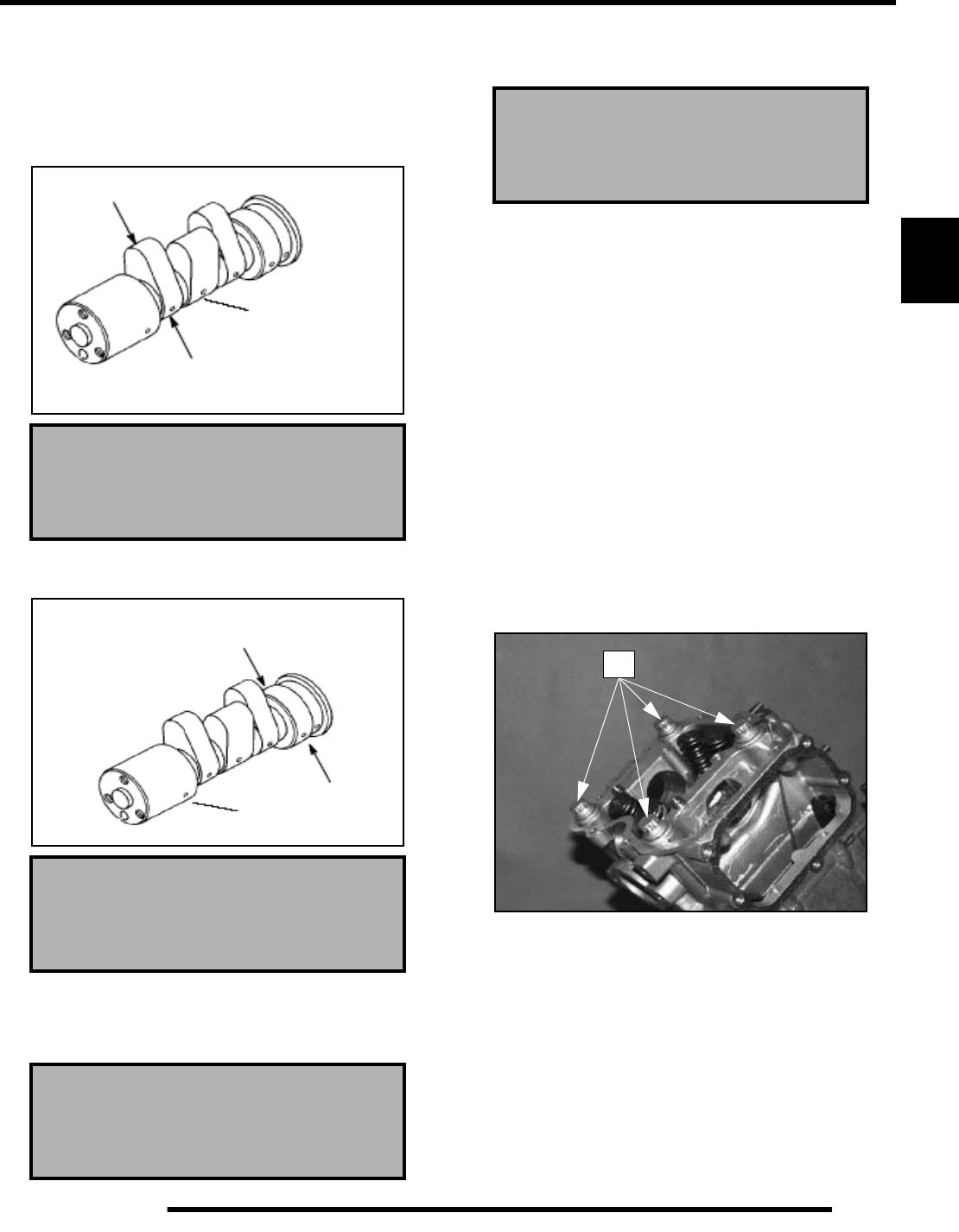
3.17
ENGINE
3
Camshaft Inspection
1. Visually inspect each cam lobe for wear, chafing or
damage.
2. Thoroughly clean the cam shaft, making sure the oil feed
holes are not obstructed.
3. Measure height of each cam lobe using a micrometer.
Compare to specifications.
4. Measure camshaft journal outside diameter (O.D.)
5. Measure ID of camshaft journal bore.
Calculate oil clearance by subtracting journal OD from journal
bore ID. Compare to specifications.
NOTE: Replace camshaft if damaged or if any part is
worn past the service limit.
NOTE: Replace cylinder head if camshaft journal
bore is damaged or worn excessively.
Cylinder Head Removal
1. Remove the two 6mm flange bolts (A) from cylinder head.
See exploded view on next page.
2. Loosen each of the four cylinder head bolts evenly 1/8 turn
each time in a criss-cross pattern until loose.
3. Remove bolts (B) and tap cylinder head lightly with a
plastic hammer until loose.
IMPORTANT: Tap only in reinforced areas or on thick
parts of cylinder head casting to avoid damaging the
thread.
4. Remove cylinder head and head gasket.
Cam Lobe Height (Intake & Exhaust):
Std: 1.2884-1.2924” (32.726-32.826 mm)
Limit: 1.2766” (32.426 mm)
Camshaft Journal O.D.:
Mag & PTO End: 1.4935-1.4941”
(37.935-37.950 mm)
Camshaft Journal I.D.:
Mag & PTO End: 1.4963-1.4970”
(38.005-38.025 mm)
Lubrication holes
Lobe height
Journal O.D.
Journal
Camshaft Oil Clearance:
Std: .0022-.0035” (.055-.090 mm)
Limit: .0039” (.10 mm)
B
PartShark.com
877-999-5686
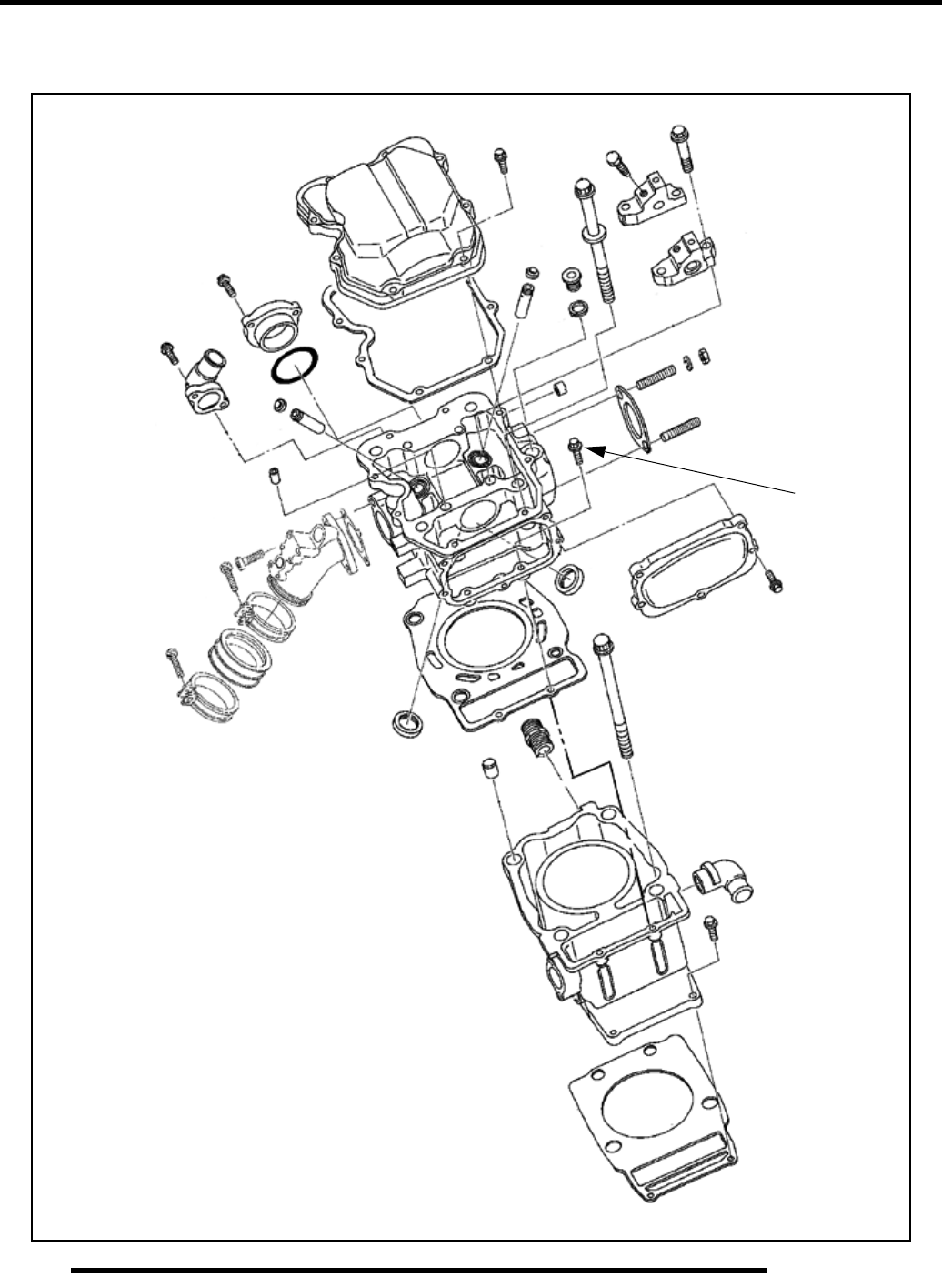
3.18
ENGINE
Cylinder Head Exploded View, EH50PL
A
A
PartShark.com
877-999-5686
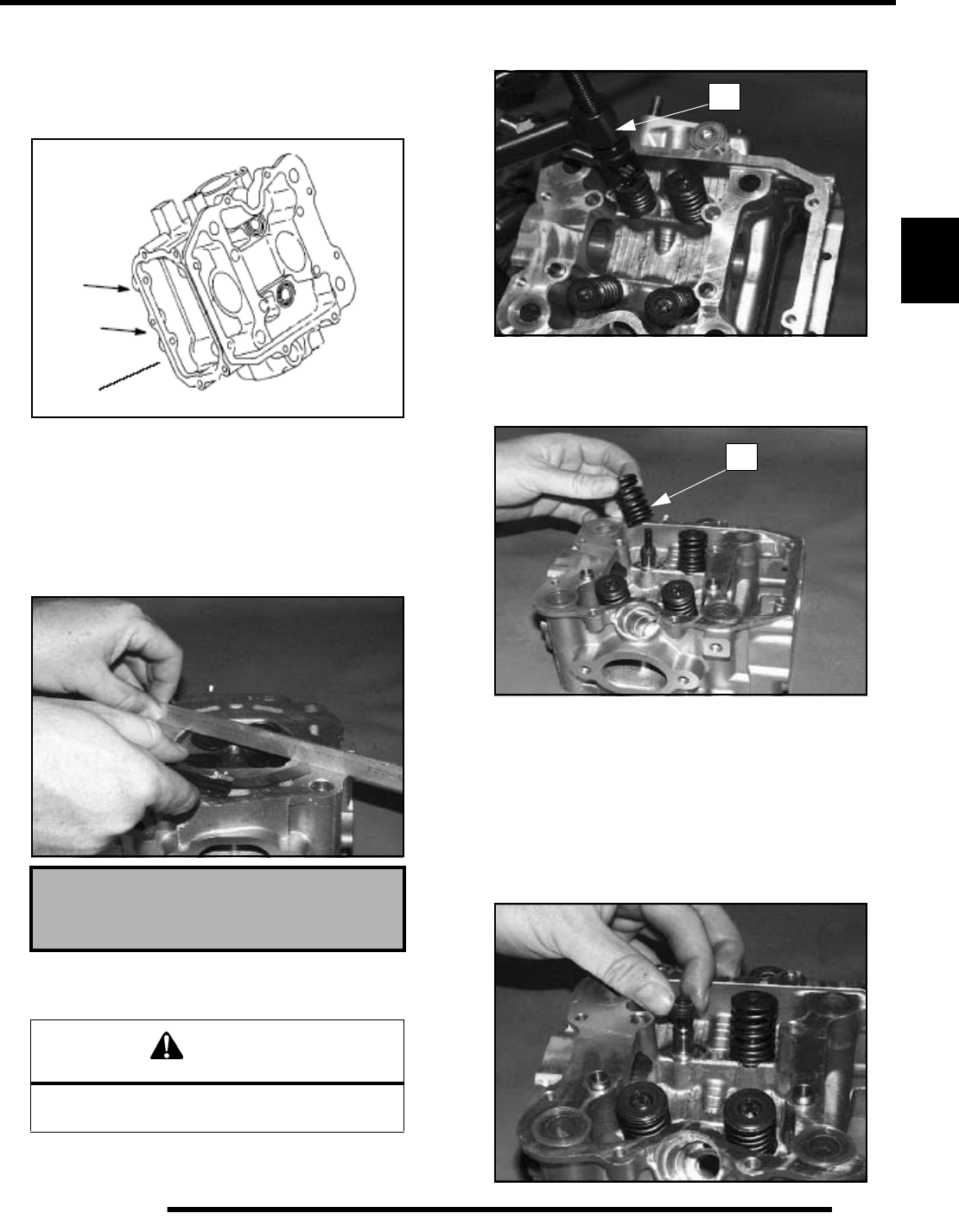
3.19
ENGINE
3
Cylinder Head Inspection
Thoroughly clean cylinder head (B) surface to remove all traces
of gasket material and carbon.
CAUTION: Use care not to damage sealing surface.
Cylinder Head Warpage
Lay a straight edge across the surface of the cylinder head at
several different points and measure warpage by inserting a
feeler gauge between the straight edge and the cylinder head
surface. If warpage exceeds the service limit, replace the
cylinder head.
Cylinder Head Disassembly
NOTE: Keep all parts in order with respect to their
location in the cylinder head.
1. Using a valve spring compressor (C), compress the valve
spring and remove the split keeper.
NOTE: To prevent loss of tension, do not compress
the valve spring more than necessary.
2. Remove spring retainer and spring.
NOTE: The valve springs should be positioned with
the tightly wound coils against the cylinder head on
progressively wound springs (D).
3. Push valve out, keeping it in order for reassembly in the
same guide.
4. Measure free length of spring with a Vernier caliper. Check
spring for squareness. Compare to specifications. Replace
spring if either measurement is out of specification.
Cylinder Head Warpage Limit:
.002” (.05 mm)
WARNING
Wear eye protection or a face shield during
cylinder head disassembly and reassembly.
B
C
D
PartShark.com
877-999-5686
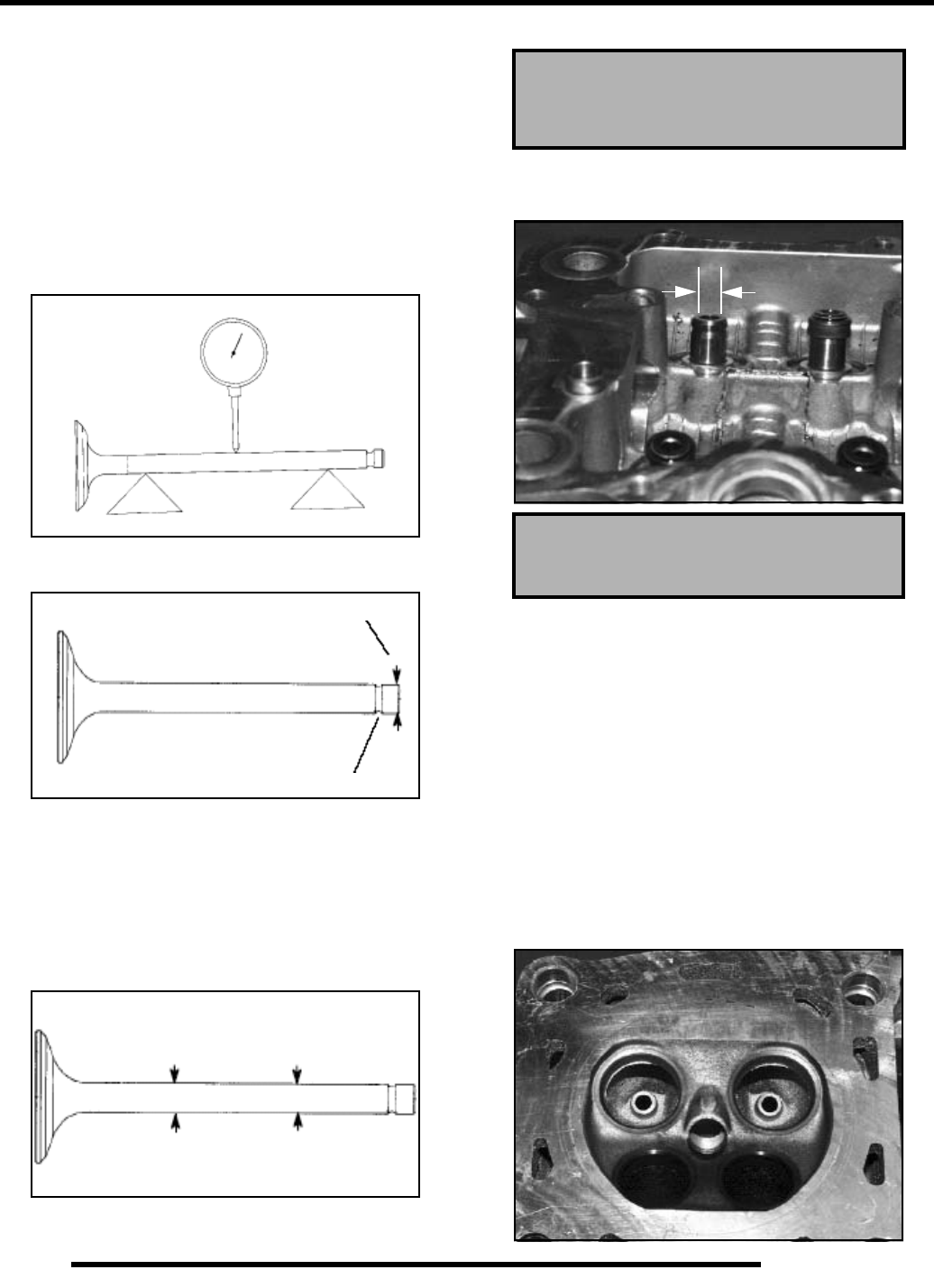
3.20
ENGINE
5. Remove valve seals.
CAUTION: Replace seals whenever the cylinder head is
disassembled. Hardened, cracked or worn valve seals will
cause excessive oil consumption and carbon buildup.
Valve Inspection
1. Remove all carbon from valve with a soft wire wheel.
2. Check valve face for runout, pitting, and burnt spots. To
check for bent valve stems, mount valve in a drill or use “V”
blocks and a dial indicator.
3. Check end of valve stem for flaring, pitting, wear or damage
(A).
4. Inspect split keeper groove for wear or flaring of the keeper
seat area (B).
NOTE: The valves cannot be re-faced or end ground.
They must be replaced if worn, bent, or damaged.
5. Measure diameter of valve stem with a micrometer in three
places and in two different directions (six measurements
total). Compare to specifications.
6. Measure valve guide inside diameter at the top middle and
end of the guide using a small hole gauge and a micrometer.
Measure in two directions, front to back and side to side.
7. Subtract valve stem measurement to obtain stem to guide
clearance.
NOTE: Be sure to measure each guide and valve
combination individually.
8. Replace valve and/or guide if clearance is excessive.
Compare to specifications.
NOTE: If valve guides are replaced, valve seats must
be reconditioned. Refer to the “Valve Seat
Reconditioning” procedure.
Combustion Chamber
Clean all accumulated carbon deposits from combustion
chamber and valve seat area with a soft wire brush.
A
B
Measure valve stem in
several places
Valve Stem Diameter:
Intake: .2343-.2348” (5.950-5.965 mm)
Exhaust: .2341-.2346” (5.945-5.960 mm)
Valve Guide I.D.:
.2362 - .2367” (6.0 - 6.012 mm)
PartShark.com
877-999-5686
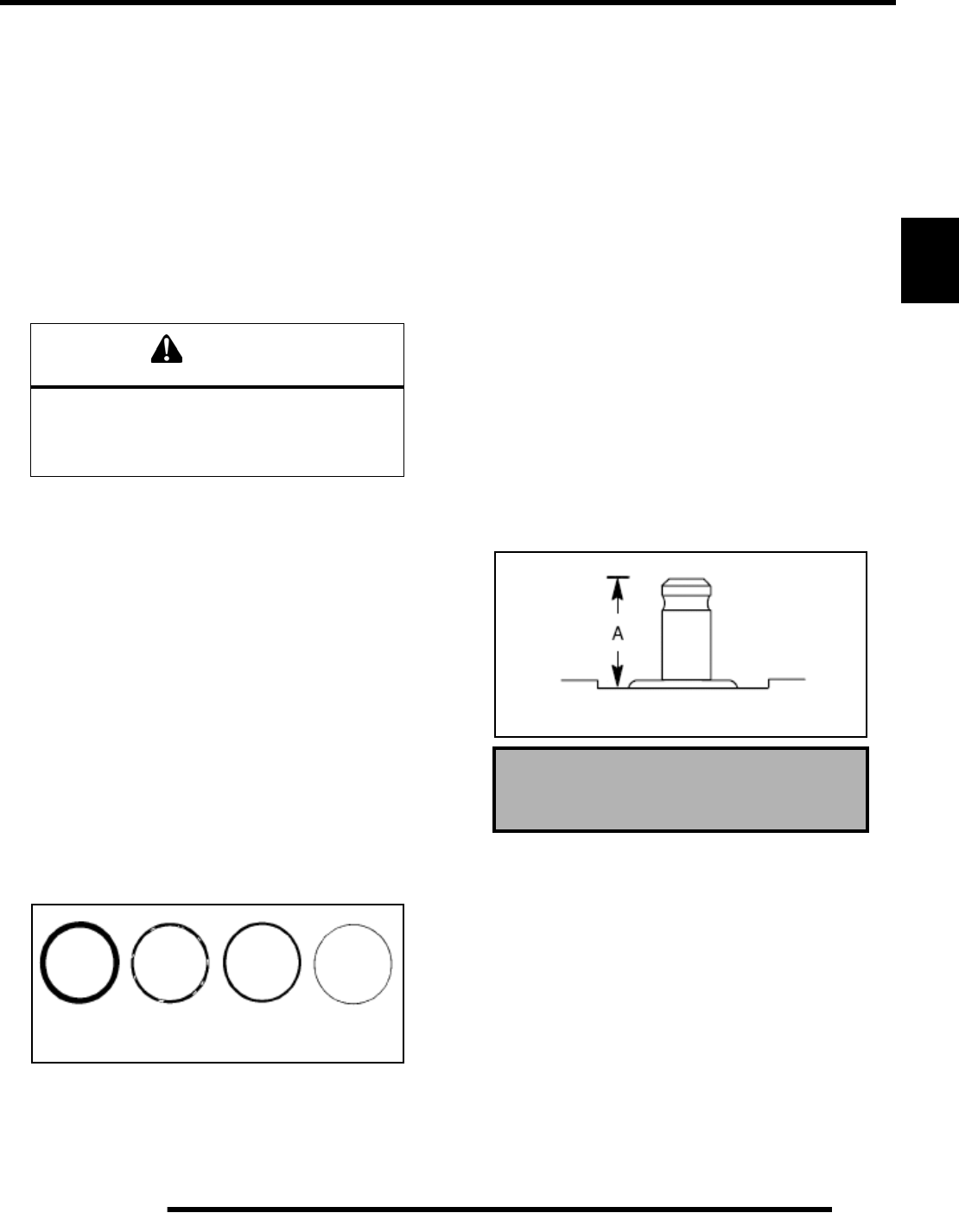
3.21
ENGINE
3
Valve Seat Reconditioning
Valve Seat Inspection
Inspect valve seat in cylinder head for pitting, burnt spots,
roughness, and uneven surface. If any of the above conditions
exist, the valve seat must be reconditioned. If the valve seat is
cracked the cylinder head must be replaced.
Cylinder Head Reconditioning
NOTE: Servicing the valve guides and valve seats
requires special tools and a thorough knowledge of
reconditioning techniques. Follow the instructions
provided in the cylinder head service tool kit.
Valve Guide Removal / Installation
1. Remove all carbon deposits from the combustion chamber,
valve seat and valve guide area before attempting to
remove valve guides. CAUTION: Carbon deposits are
extremely abrasive and may damage the valve guide bore
when guides are removed.
2. Place new valve guides in a freezer for at least 15 minutes
while heating cylinder head.
3. Heat cylinder head in an oven or use a hot plate to bring
cylinder head temperature to 212° F (100° C).
CAUTION: Do not use a torch to heat cylinder head or
warpage may result from uneven heating. Head
temperature can be checked with a pyrometer or a welding
temperature stick.
Follow the manufacturer’s instructions provided with the valve
seat cutters in commercially available valve seat reconditioning
kits. Abrasive stone seat reconditioning equipment can also be
used. Keep all valves in order with their respective seat.
NOTE: Valve seat width and point of contact on the
valve face is very important for proper sealing. The
valve must contact the valve seat over the entire
circumference of the seat, and the seat must be the
proper width all the way around. If the seat is
uneven, compression leakage will result. If the seat
is too wide, seat pressure is reduced, causing
carbon accumulation and possible compression
loss. If the seat is too narrow, heat transfer from
valve to seat is reduced and the valve may overheat
and warp, resulting in burnt valves.
1. When thoroughly heated, place cylinder head on blocks of
wood which will allow the old guides to be removed.
2. Using valve guide driver, drive guides out of the cylinder
head from the combustion chamber side. Be careful not to
damage guide bore or valve seat when removing guides.
3. Place cylinder head on cylinder head table.
NOTE: Be sure cylinder head is still at 212° F
(100° C) before installing new guides.
4. Place a new guide in the valve guide installation tool and
press guide in to proper depth. Check height of each guide
above the cylinder head (A).
NOTE: The guide can also be driven in to the proper
depth. Inspect the guide closely for cracks or
damage if a driver is used.
CAUTION
Wear eye protection when performing cylinder
head service. Valve guide replacement will
require heating of the cylinder head.
Wear gloves to prevent burns.
Too Uneven Good Too
Wide Narrow
Valve Guide Height:
.689 - .709” (17.5 - 18.0 mm)
Valve Guide Installed Height
PartShark.com
877-999-5686
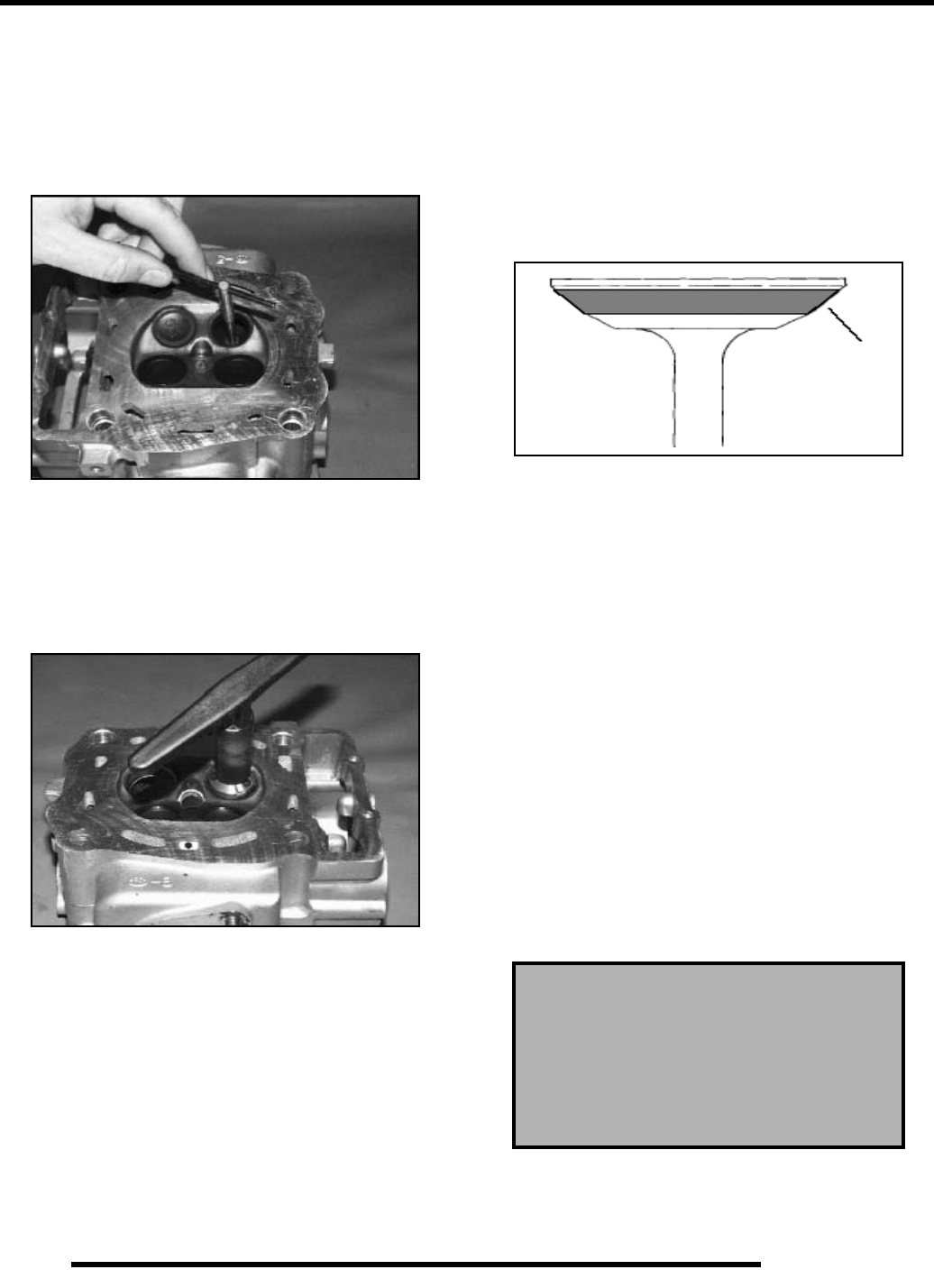
3.22
ENGINE
Reaming The Valve Guide
5. Allow cylinder head to cool to room temperature. Apply
cutting oil to the reamer. Guides should be reamed from
the valve spring side of the cylinder head. Ream each guide
to size by turning the reamer clockwise continually.
Continue to rotate reamer clockwise during removal of the
tool.
6. Clean guides thoroughly with hot soapy water and a nylon
brush. Rinse and dry with compressed air. Apply clean
engine oil to guides.
7. Install pilot into valve guide.
8. Apply cutting oil to valve seat and cutter.
9. Place 46o cutter on the pilot and make a light cut.
10. Inspect the cut area of the seat.
• If the contact area is less than 75% of the circumference
of the seat, rotate the pilot 180o and make another light
cut.
• If the cutter now contacts the uncut portion of the seat,
check the pilot. Look for burrs, nicks, or runout. If the
pilot is bent it must be replaced.
• If the contact area of the cutter is in the same place, the
valve guide is distorted from improper installation and
must be replaced. Be sure the cylinder head is at the
proper temperature and replace the guide.
• If the contact area of the initial cut is greater than 75%,
continue to cut the seat until all pits are removed and a
new seat surface is evident.
NOTE: Remove only the amount of material
necessary to repair the seat surface.
11. To check the contact area of the seat on the valve face, apply
a thin coating of Prussian Blue™ paste to the valve seat. If
using an interference angle (46o) apply black permanent
marker to the entire valve face (A).
12. Insert valve into guide and tap valve lightly into place a few
times.
13. Remove valve and check where the Prussian Blue™
indicates seat contact on the valve face. The valve seat
should contact the middle of the valve face or slightly
above, and must be the proper width.
• If the indicated seat contact is at the top edge of the
valve face and contacts the margin area it is too high on
the valve face. Use the 30o cutter to lower the valve
seat.
• If too low use the 60o or 75o cutter to raise the seat.
When contact area is centered on the valve face,
measure seat width.
• If the seat is too wide or uneven, use both top and
bottom cutters to narrow the seat.
• If the seat is too narrow, widen using the 45o cutter and
re-check contact point on the valve face and seat width
after each cut.
Valve Seat Width:
Intake Std: .028” (.7 mm)
Limit: .055” (1.4 mm)
Exhaust Std: .039”(1.0 mm)
Limit: .071” (1.8 mm)
A
PartShark.com
877-999-5686
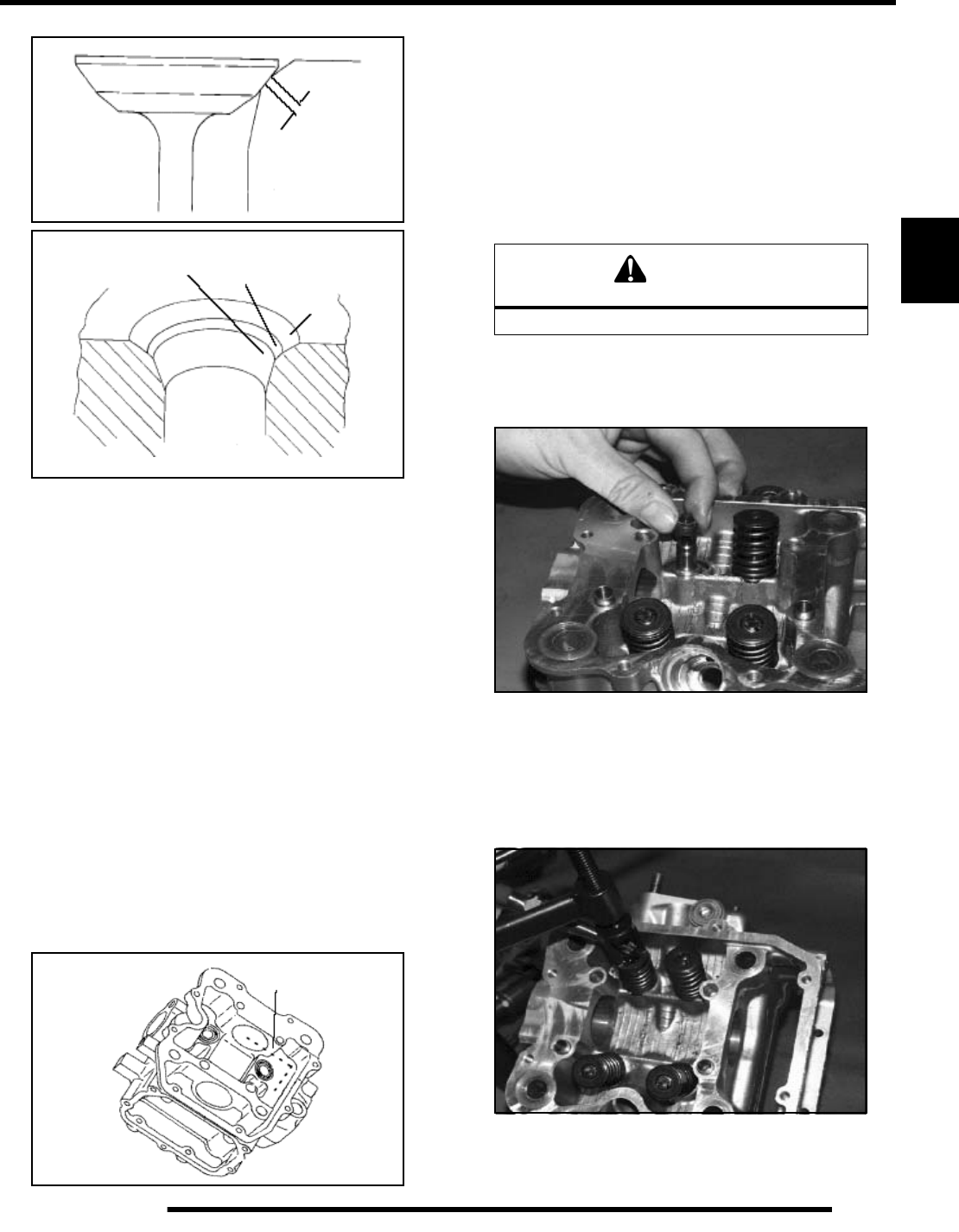
3.23
ENGINE
3
NOTE: When using an interference angle, the seat
contact point on the valve will be very narrow, and is
a normal condition. Look for an even and continuous
contact point on the black marked area, all the way
around the valve face.
14. Clean all filings from the area with hot soapy water, rinse,
and dry with compressed air.
15. Lubricate the valve guides with clean engine oil, and apply
oil or water based lapping compound to the face of the
valve. Lapping is not required with an interference angle.
16. Insert the valve into its respective guide and lap using a
lapping tool or a section of fuel line connected to the valve
stem.
17. Rotate the valve rapidly back and forth until the cut sounds
smooth. Lift the valve slightly off of the seat, rotate 1/4
turn, and repeat the lapping process. Do this four to five
times until the valve is fully seated, and repeat process for
the other valve(s).
18. Clean cylinder head, valves, and camshaft oil supply
passage (A) thoroughly.
19. If oil passage blind plug was removed, apply Crankcase
Sealant (PN 2871557) or equivalent sealer to the threads
and install, torquing to 8 ft. lbs. (11 Nm).
CAUTION: Do not allow sealant to enter oil passage.
20. Spray electrical contact cleaner into oil passage and dry
using compressed air.
Cylinder Head Assembly
NOTE: Assemble the valves one at a time to
maintain proper order
1. Install new valve seals on valve guides.
2. Apply engine oil to valve guides and seats.
3. Coat valve stem with molybdenum disulfide grease.
4. Install valve carefully with a rotating motion to avoid
damaging valve seal.
5. Dip valve spring and retainer in clean engine oil and install
spring with closely spaced coils toward the cylinder head.
Seat
Width
Bottom - 60o or 75oSeat - 45o or 46o
Top - 30o
or 31o
A
CAUTION
Wear eye protection during assembly.
PartShark.com
877-999-5686
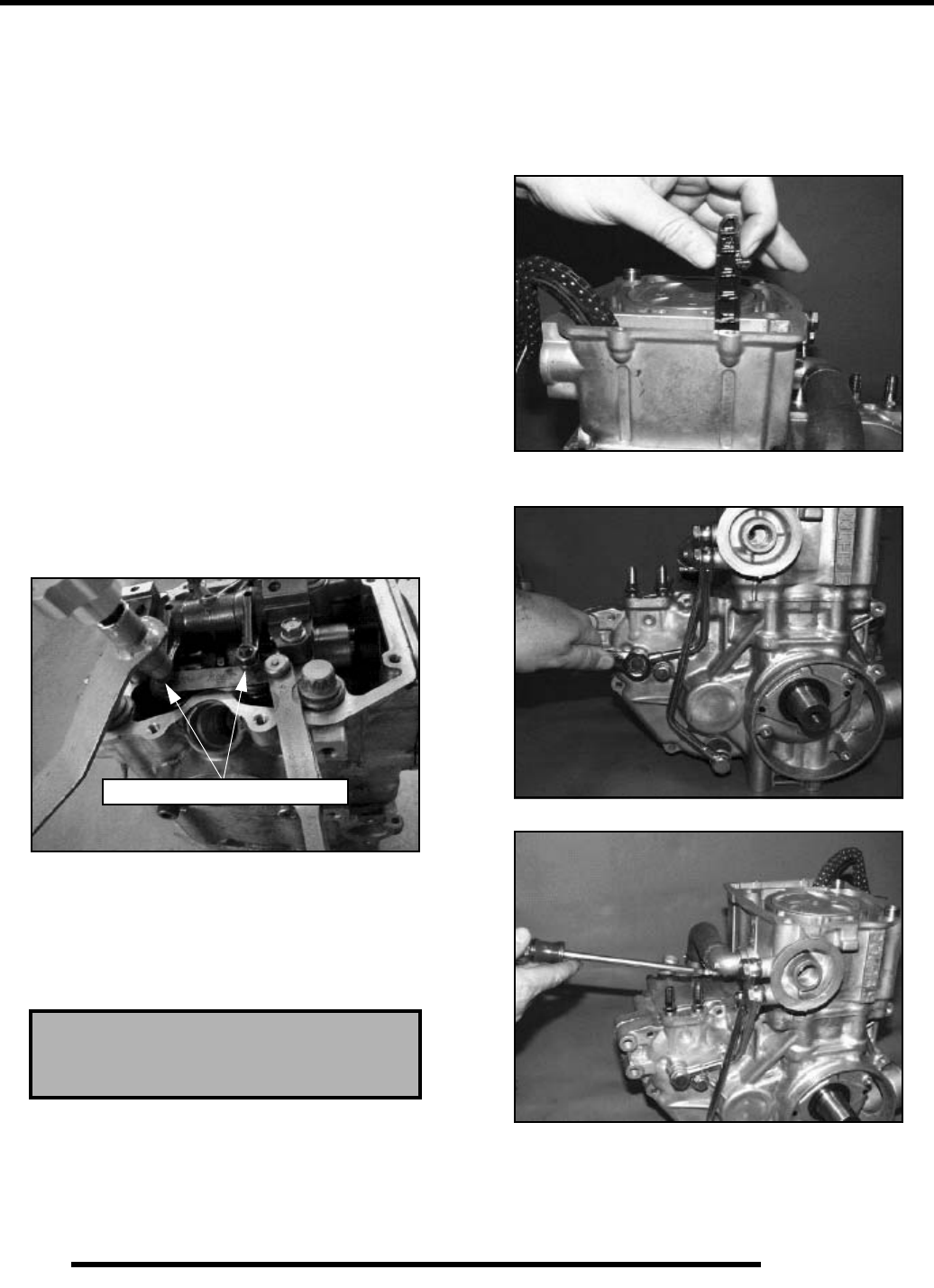
3.24
ENGINE
6. Place retainer on spring and install valve spring
compressor. Compress spring only enough to allow split
keeper installation to prevent loss of spring tension. Install
split keepers with the gap even on both sides.
7. Repeat procedure for remaining valve.
8. When all valves are installed, tap lightly with soft faced
hammer on the end of the valves to seat the split keepers.
Valve Sealing Test
1. Clean and dry the combustion chamber area.
2. Pour a small amount of clean, high flash point solvent into
the intake port and check for leakage around each intake
valve. The valve seats should hold fluid with no seepage.
3. Repeat for exhaust valves by pouring fluid into exhaust
port.
Valve Clearance Adjustment
NOTE: The exhaust valves share a common rocker
arm, and must be adjusted using two feeler gauges.
1. Insert .006” feeler gauge(s) between end of the valve stem
and adjuster screw(s).
2. Loosen locknut(s) and turn adjuster screw(s) until there is
a slight drag on feeler gauge(s). The Valve/Clutch Adjuster
Tool (PA-44689) can be used to adjust the 500 engines
valves.
NOTE: Both feeler gauges should remain inserted
during adjustment of each exhaust valve.
3. When clearance is correct, hold adjuster screw and tighten
locknut securely.
4. Re-check the valve clearance.
5. Repeat adjustment procedure if necessary until clearance is
correct with locknut secured.
Cylinder / Piston Removal and Inspection
NOTE: Follow engine disassembly procedures to
remove valve cover, camshaft and rocker arms, and
cylinder head.
1. Remove cam chain guide at front of cylinder.
2. Loosen all four oil pipe banjo bolts and then remove the
bolts and eight sealing washers. Remove the pipes.
3. Loosen hose clamps and remove coolant inlet hose.
4. Remove the two 6 mm cylinder base bolts.
VALVE CLEARANCE
.006” (.15 mm)
Feeler Gauge for Both Valves
PartShark.com
877-999-5686
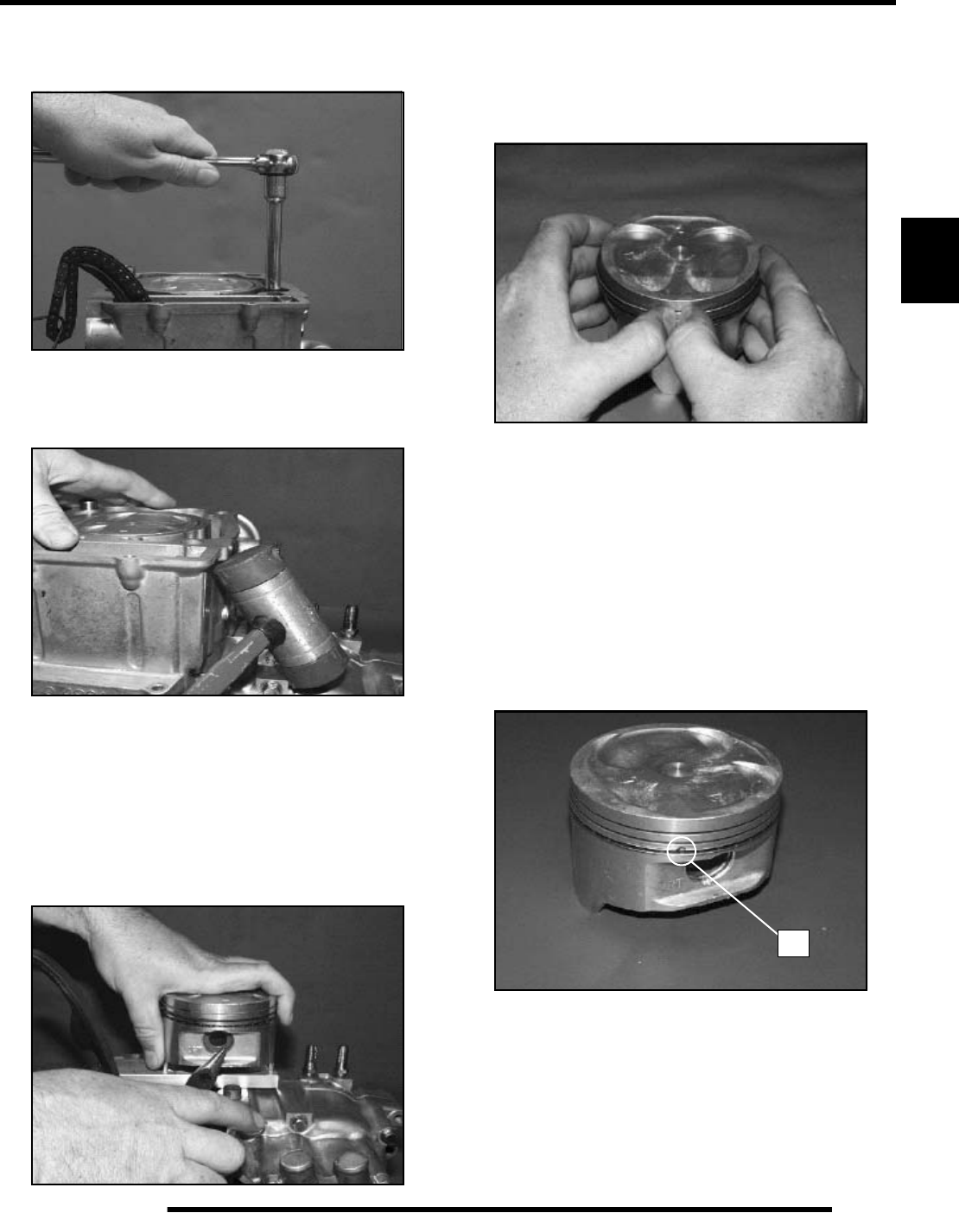
3.25
ENGINE
3
5. Loosen each of the four large cylinder base bolts 1/4 turn
at a time in a criss-cross pattern until loose and remove
bolts.
NOTE: The bolts are inside the water jacket.
6. Tap cylinder lightly with a plastic hammer in the reinforced
areas only until loose.
7. Rock cylinder forward and backward and lift it from the
crankcase, supporting piston and connecting rod. Support
piston with Piston Support Block (PN 2870390).
8. Remove dowel pins from crankcase.
Piston Removal
1. Remove circlip. Note piston directional arrow pointing
toward the right (Mag) side of engine.
2. Remove piston circlip and push piston pin out of piston. If
necessary, heat the crown of the piston slightly with a
propane torch. CAUTION: Do not apply heat to the piston
rings. The ring may lose radial tension.
3. Remove top compression ring.
*Using a piston ring pliers: Carefully expand ring and lift it
off the piston. CAUTION: Do not expand the ring more than
the amount necessary to remove it from the piston, or the ring
may break.
*By hand: Placing both thumbs as shown, spread the ring open
and push up on the opposite side. Do not scratch the ring lands.
4. Repeat procedure for second ring.
The oil control ring is a three piece design consisting of a
top and bottom steel rail and a center expander section. The
top rail has a locating tab on the end which fits into a notch
(A) in the upper oil ring land of the piston.
5. Remove the top rail first followed by the bottom rail.
6. Remove the expander.
A
PartShark.com
877-999-5686
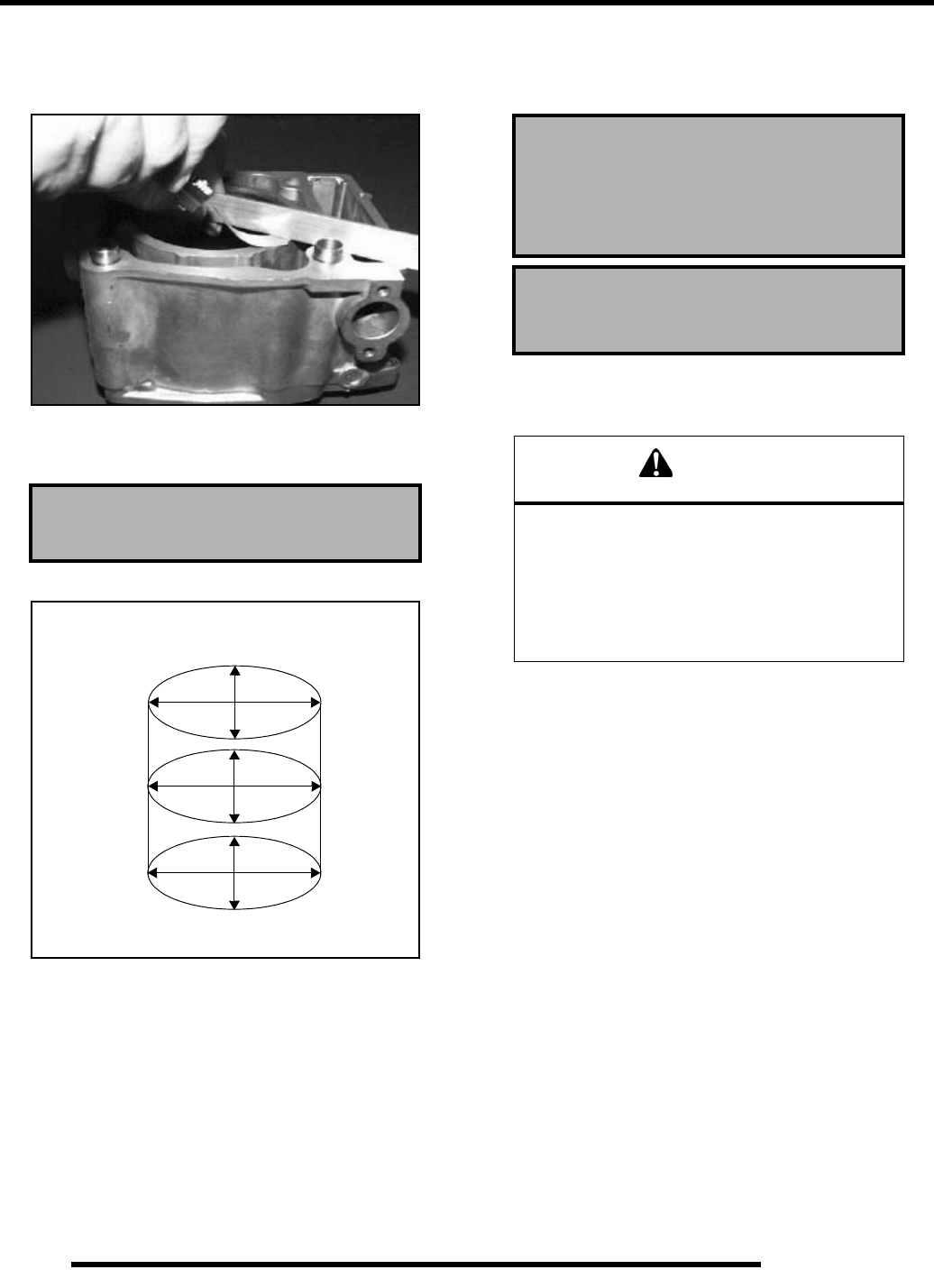
3.26
ENGINE
Cylinder Inspection
1. Remove all gasket material from the cylinder sealing
surfaces.
2. Inspect the top of the cylinder for warpage using a straight
edge and feeler gauge.
3. Inspect cylinder for wear, scratches, or damage.
4. Inspect cylinder for taper and out of round with a
telescoping gauge or a dial bore gauge. Measure in two
different directions, front to back and side to side, on three
different levels (1/2" down from top, in the middle, and
1/2" up from bottom).
5. Record measurements. If cylinder is tapered, or out of
round beyond .002, the cylinder must be re-bored oversize,
or replaced.
Cylinder Hone Selection / Honing Procedure
Cylinders may be wet or dry honed depending upon the hone
manufacturer’s recommendations. Wet honing removes more
material faster and leaves a more distinct pattern in the bore.
NOTE: See next page for more information on
honing.
Cylinder Warpage:
.002” (.05 mm)
1/2” Down From Top of Cylinder
1/2” Up From Bottom
X
X
X
Y
Y
Y
Cylinder Taper
Limit: .002 Max.
Cylinder Out of Round
Limit: .002 Max.
Standard Bore Size:
3.6221 - 3.6228” (92.00 - 92.012 mm)
CAUTION
Selecting a hone which will straighten as well as
remove material from the cylinder is very
important. Using a common spring loaded finger
type glaze breaker for honing is never advised.
Polaris recommends using a rigid hone or arbor
honing machine which also has the
capability of oversizing.
PartShark.com
877-999-5686
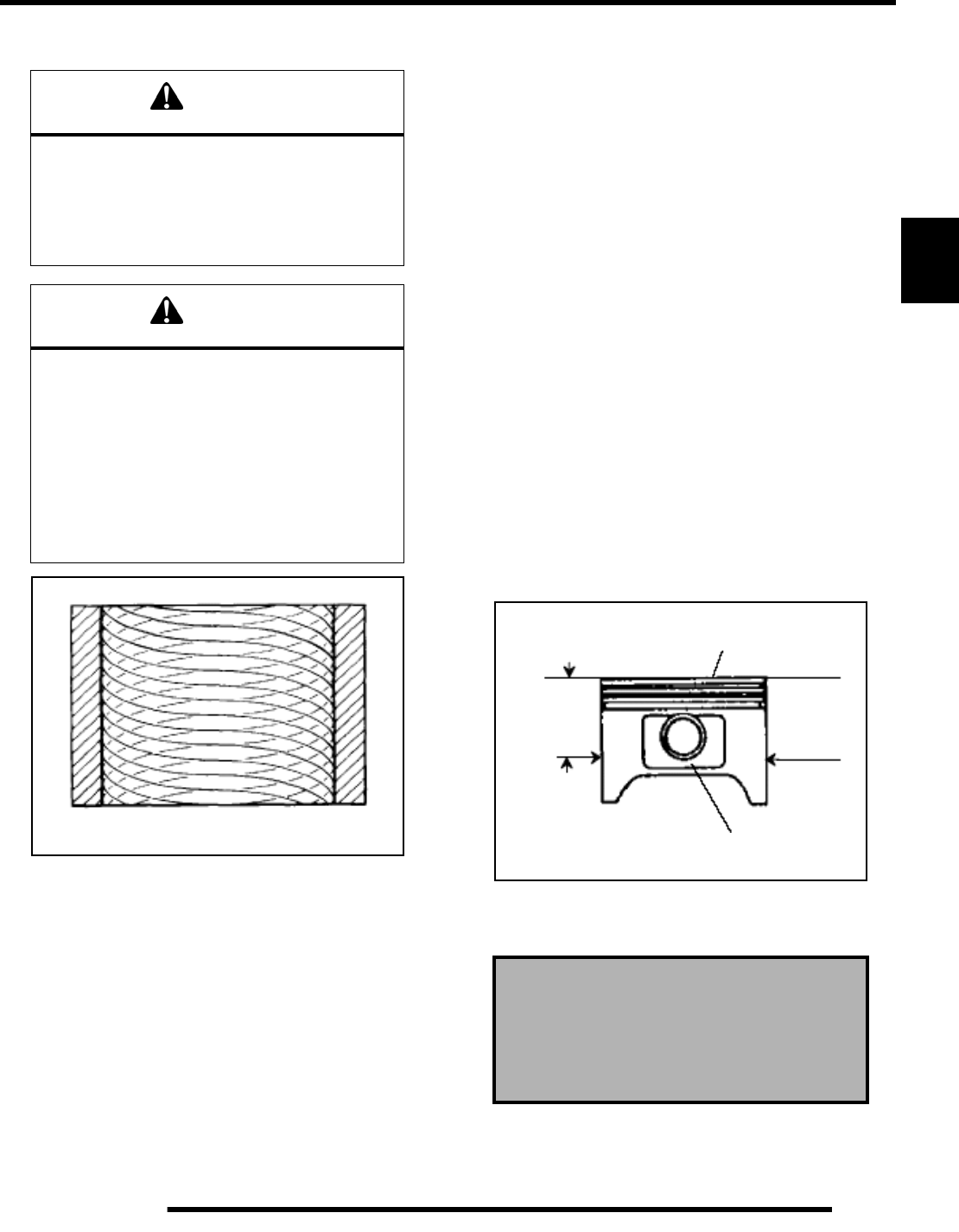
3.27
ENGINE
3
Honing to Oversize
A finished cylinder should have a cross-hatch pattern to ensure
piston ring seating and to aid in the retention of the fuel/oil
mixture during initial break in. Hone cylinder according to hone
manufacturer’s instructions, or these guidelines:
• Use a motor speed of approximately 300-500 RPM, run
the hone in and out of the cylinder rapidly until cutting
tension decreases. Remember to keep the hone drive
shaft centered (or cylinder centered on arbor) and to
bring the stone approximately 1/2" (1.3 cm) beyond the
bore at the end of each stroke.
• Release the hone at regular intervals and inspect the
bore to determine if it has been cleared, and to check
piston fit. NOTE: Do not allow cylinder to heat up
during honing. The thinner areas of the liner around the
ports will expand causing uneven bore.
•After honing has been completed inspect all port
opening areas for rough or sharp edges. Apply a slight
chamfer to all ports to remove sharp edges or burrs,
paying particular attention to the corners of the intake
and exhaust ports.
Cleaning the Cylinder After Honing
It is very important that the cylinder be thoroughly cleaned after
honing to remove all grit material. Wash the cylinder in a
solvent, then in hot, soapy water. Pay close attention to areas
where the cylinder sleeve meets the aluminum casting (transfer
port area). Use electrical contact cleaner if necessary to clean
these areas. Rinse thoroughly, dry with compressed air, and oil
the bore immediately with Polaris 2 Cycle Lubricant.
Piston-to-Cylinder Clearance
1. Measure piston outside diameter at a point 40 mm down
from the top of the piston at a right angle to the direction
of the piston pin.
2. Subtract this measurement from the maximum cylinder
measurement obtained in Step 5 above.
CAUTION
If cylinder wear or damage is excessive, it will be
necessary to oversize the cylinder using a new
oversized piston and rings. This may be
accomplished by either boring the cylinder and
then finish honing to the final bore size, or by
rough honing followed by finish honing.
CAUTION
For oversize honing always wet hone using
honing oil and a coarse roughing stone.
Measure the piston (see piston measurement)
and rough hone to the size of the piston. Always
leave .002 - .003" (.05 - .07 mm) for finish honing.
Refer to piston-to-cylinder clearance
specifications on Page 3.5 before honing.
Complete the sizing with fine grit stones to
provide the proper cross-hatch finish and
required piston clearance.
EXAMPLE OF CROSS HATCH PATTERN
Piston to Cylinder Clearance
Std: .0006-.0018” (.015-.045 mm)
Piston O.D.:
Std: 3.6204-3.6215” (91.970-91.985 mm)
Piston
Piston Pin
40 mm
PartShark.com
877-999-5686
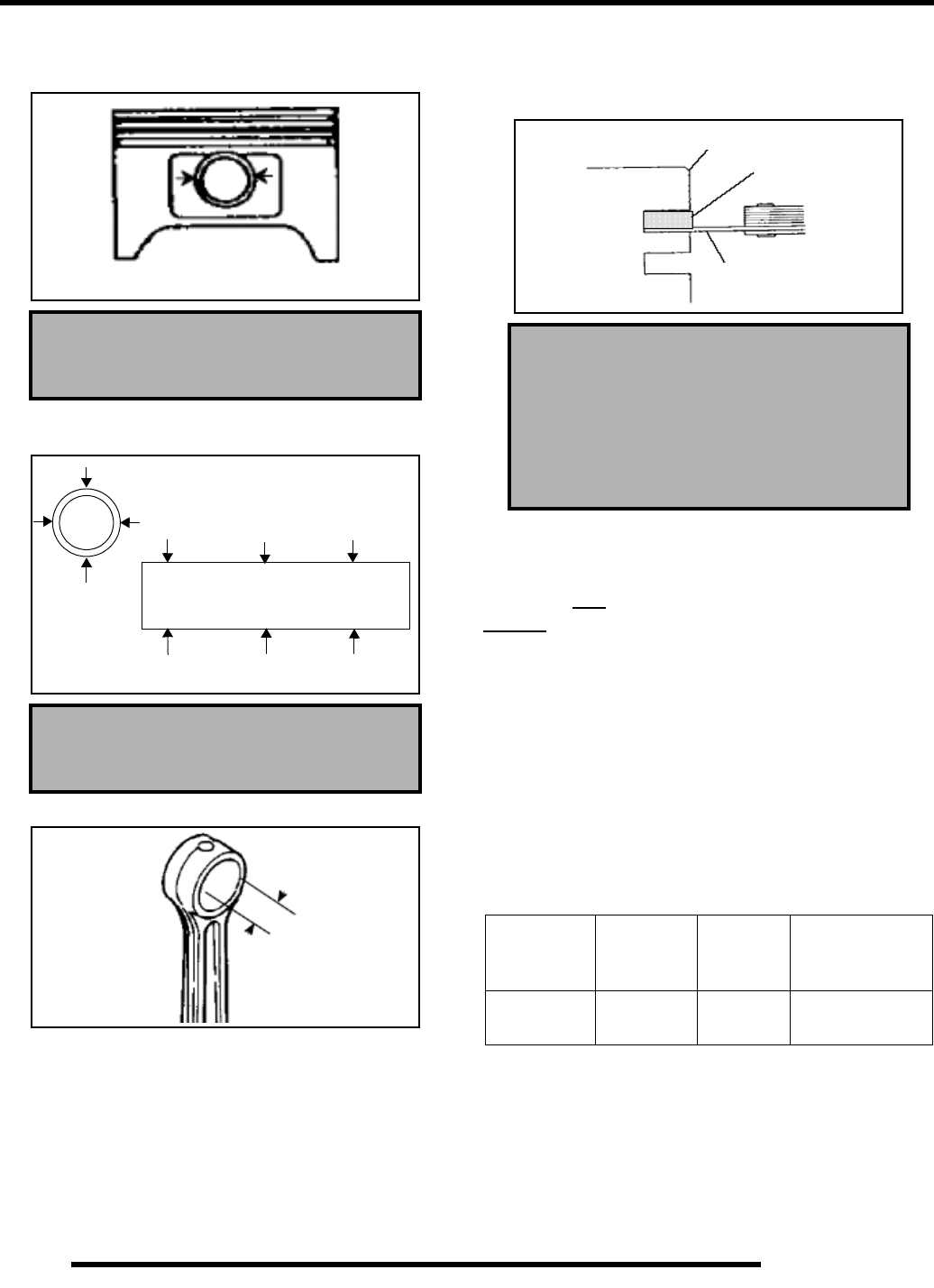
3.28
ENGINE
Piston / Rod Inspection
1. Measure piston pin bore.
2. Measure piston pin O.D. Replace piston and/or piston pin
if out of tolerance.
3. Measure connecting rod small end ID.
4. Measure piston ring to groove clearance by placing the ring
in the ring land and measuring with a thickness gauge.
Replace piston and rings if ring-to-groove clearance
exceeds service limits.
Piston Identification
The piston may have an identification mark or the piston
may not have an identification mark for piston placement.
If the piston has an identification mark, follow the directions
for piston placement below. If the piston does not have an
identification mark, the direction for placement of the piston
does not matter.
Note the directional and identification marks when viewing the
pistons from the top. The letter “F”, “g”, “ 4” or “:” must always
be toward the flywheel side of the engine. The other numbers are
used for identification as to diameter, length and design. Four
stroke engine rings have a rectangular profile. See text for oil
control ring upper rail installation. Use the information below to
identify pistons and rings.
*Pistons and rings marked 25 equal .25mm (.010”) oversized
*Pistons and rings marked 50 equal .50mm (.020”) oversized
Piston Pin Bore:
.9055 - .9057” (23.0 - 23.006 mm)
Piston Pin O.D.
.9053 - .9055” (22.994 - 23.0 mm)
Piston Pin Bore
Piston Pin Measurement Locations
Piston Ring-to-Groove Clearance
Top Ring Std: .0016-.0031" (.040-.080 mm)
Limit: .0059" (15 mm)
Second Ring Std: .0012-.0028" (.030-.070 mm)
Limit: .0059" (15 mm)
Engine
Model No.
Oversize
Available*
(mm)
Piston
Length
Standard
Piston
Identification
EH50PLE .25
.50 72 mm C
Piston
Ring
Feeler Gauge
PartShark.com
877-999-5686
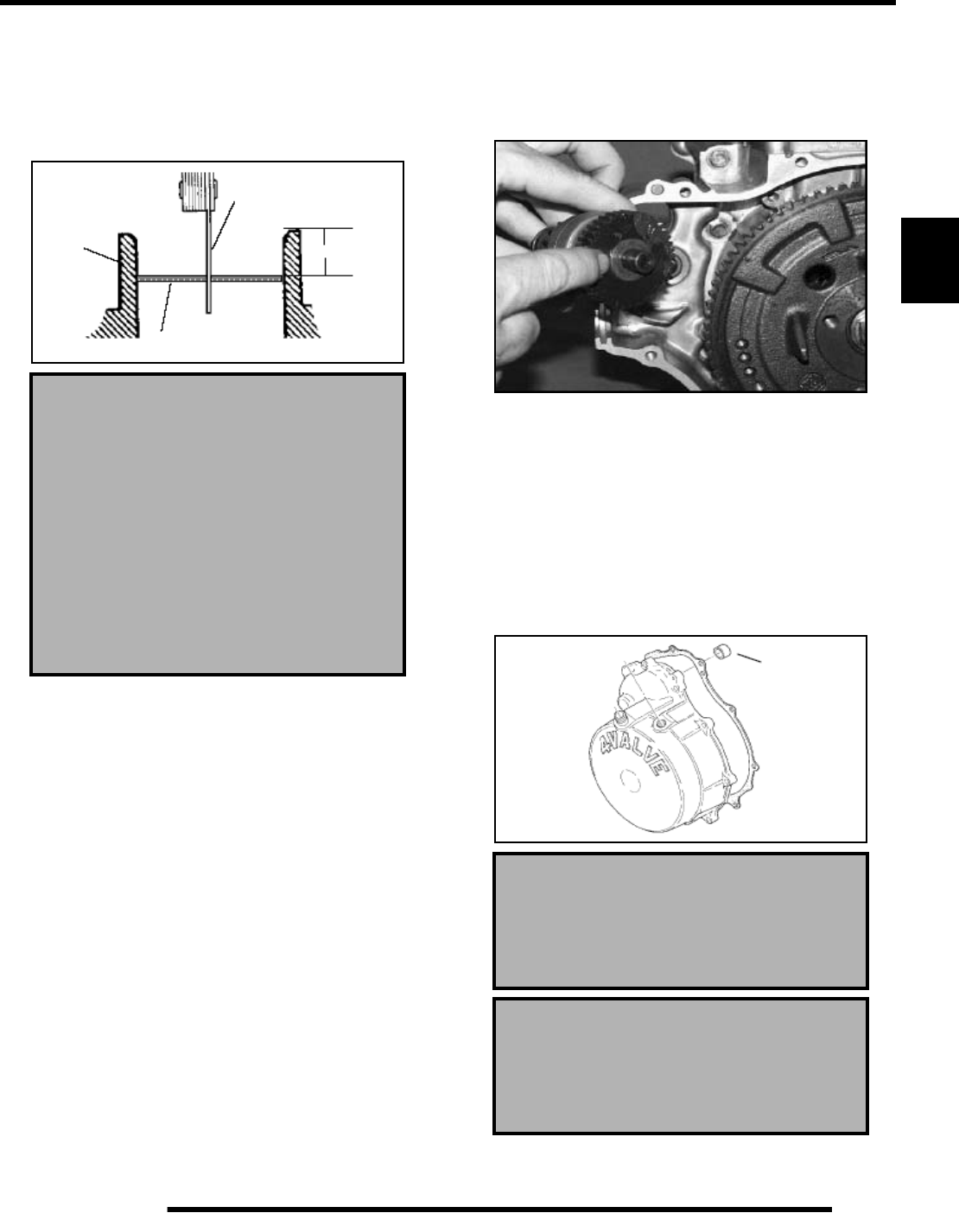
3.29
ENGINE
3
Piston Ring Installed Gap
1. Place each piston ring inside cylinder using piston to push
ring squarely into place as shown at right.
2. Measure installed gap with a feeler gauge at both the top
and bottom of the cylinder.
NOTE: A difference in end gap indicates cylinder
taper. The cylinder should be measured for
excessive taper and out of round.
3. If the bottom installed gap measurement exceeds the
service limit, replace the rings. If ring gap is below
specified limit, file ring ends until gap is within specified
range.
NOTE: Always check piston ring installed gap after
re-boring a cylinder or when installing new rings. A
re-bored cylinder should always be scrubbed
thoroughly with hot soapy water, rinsed, and dried
completely. Wipe cylinder bore with an oiled rag
immediately to remove residue and prevent rust.
Crankcase Disassembly
NOTE: The recoil starter, starter motor, starter drive,
flywheel, stator, cam chain and sprockets can be
serviced with the engine in the frame.
Starter Drive Removal / Inspection
1. Remove recoil housing bolts and remove housing.
2. Remove starter drive assembly. Note the thrust washer
located at the rear of the drive mechanism.
3. Inspect the thrust washer for wear or damage and replace
if necessary.
4. Measure the OD of the starter drive shaft on both ends and
record.
5. Measure the ID of the bushing in the recoil housing (A) and
in the crankcase and record. Measure in two directions 90o
apart to determine if bushing is out of round. Calculate
bushing clearance. Replace bushing if clearance exceeds
the service limit.
6. Inspect gear teeth on starter drive. Replace starter drive if
gear teeth are cracked, worn, or broken.
Piston Ring Installed Gap
Top Ring
Std: .0079-.0138" (.20-.36 mm)
Limit: .039" (1.0 mm)
Second Ring
Std: .0079-.0138" (.20-.36 mm)
Limit: .039" (1.0 mm)
Oil Ring
Std: .0079-.0276" (.20-.70 mm)
Limit: .059" (1.5 mm)
Feeler Gauge
Piston ring
Cylinder 25-50 mm
Std. Bushing ID:
.4735”-.4740” (11.11-12.04 mm)
Std. Shaft OD:
.470”-.472” (11.93-11.99 mm)
Starter Drive Bushing Clearance:
Std: .0015”-.004” (.038-.102 mm)
Service Limit:
.008” (.203 mm)
A
PartShark.com
877-999-5686
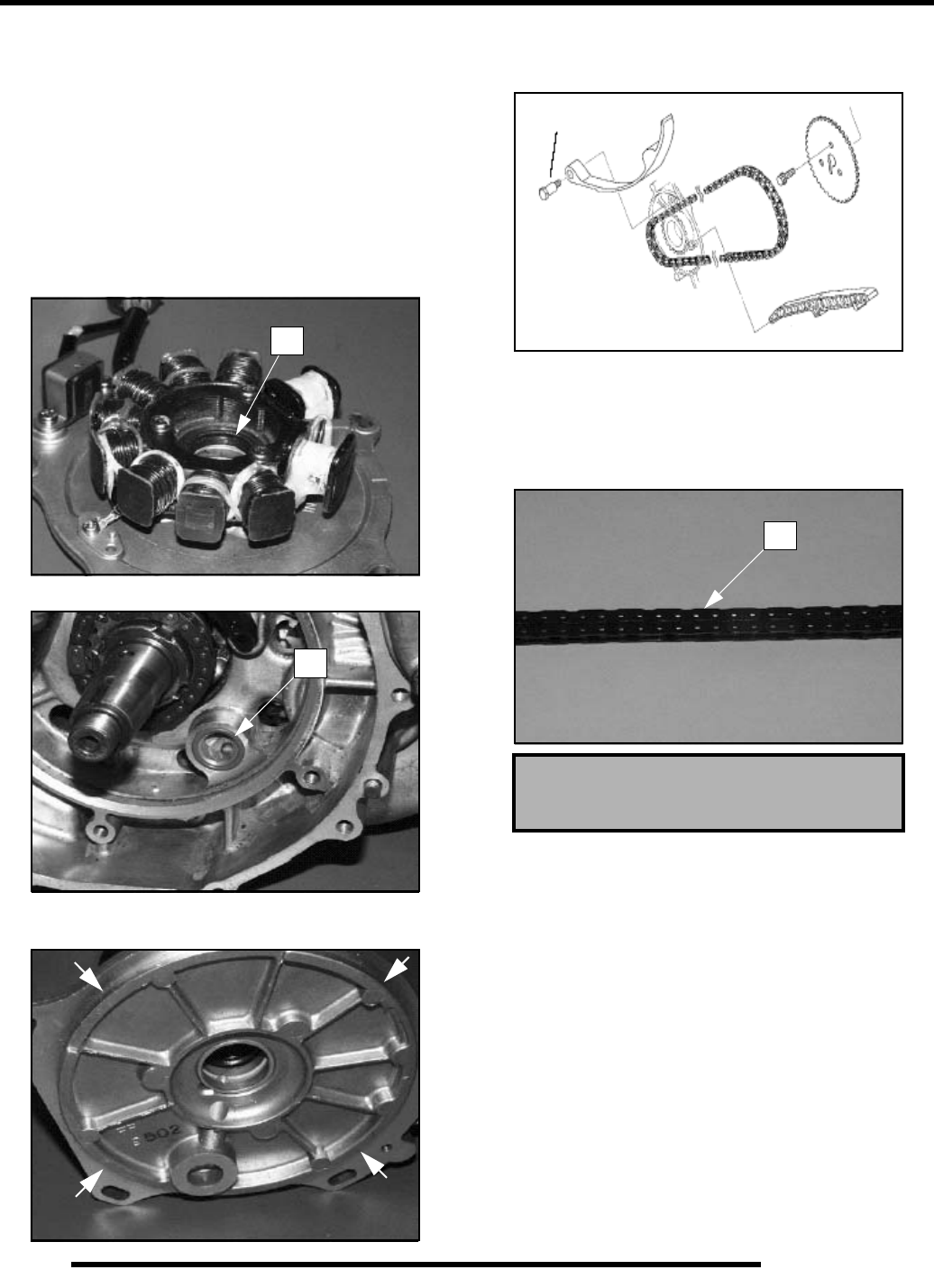
3.30
ENGINE
Flywheel and Stator Removal / Inspection
1. Remove flywheel nut and washer.
2. Install Flywheel Puller (PN 2871043) and remove
flywheel. CAUTION: Do not thread the puller bolts into
the flywheel more than 1/4" or stator coils may be damaged.
3. Mark or note position of stator plate on crankcase.
4. Remove bolts and carefully remove stator assembly, being
careful not to damage crankshaft bushing on stator plate.
5. Replace crankshaft seal (B).
6. Remove oil passage O-Ring (C).
7. Remove large sealing O-Ring from outer edge of stator
plate.
Cam Chain / Tensioner Blade
1. Remove bolt securing tensioner blade to crankcase (D).
2. Remove blade and inspect for cracks, wear, or damage.
3. Remove cam chain (E). Inspect chain for worn or missing
rollers or damage. Stretch chain tight on a flat surface and
apply a 10 lb. (4.53 kg) load. Measure length of a 20 pitch
section of chain. Replace if worn past service limit.
4. Using the special socket, remove the crankshaft slotted nut.
NOTE: The slotted nut is a left hand thread.
5. Remove cam chain drive sprocket and woodruff key from
crankshaft.
6. Inspect sprocket teeth for wear or damage.
7. Inspect woodruff key for wear.
8. Replace any worn or damaged parts.
B
C
Chain Service Limit:
5.407” (13.7 cm)
D
E
PartShark.com
877-999-5686
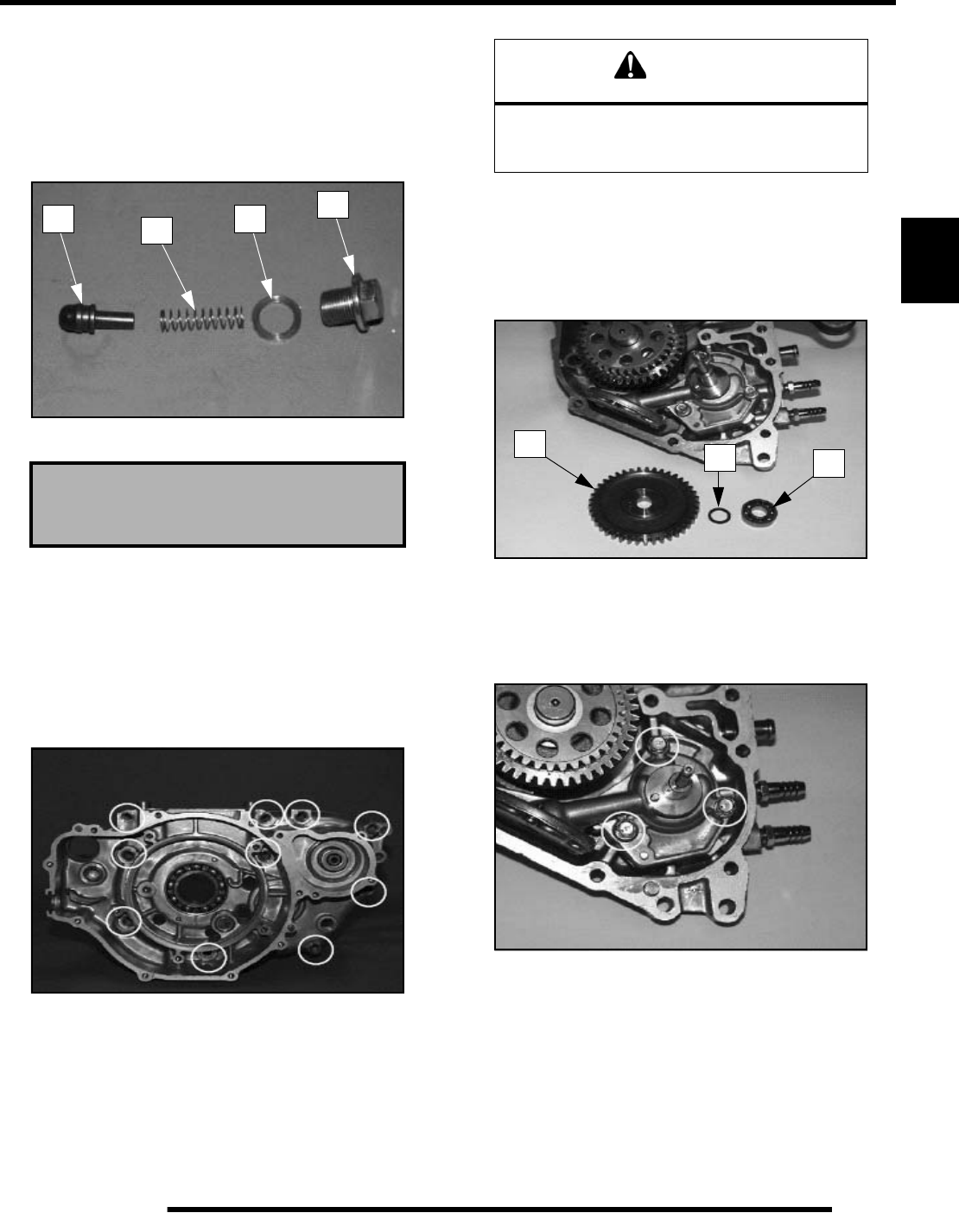
3.31
ENGINE
3
One Way Valve
The one way valve prevents oil from draining out of the oil tank
and into the crankcase when the engine is off. It must be clean
and have adequate spring pressure in order to seal properly.
1. Remove cap bolt (A), sealing washer (B), spring (C), and
one way valve (D) from PTO side crankcase.
2. Inspect free length of spring and check coils for distortion.
3. Inspect valve for wear.
4. Check seat area for nicks or foreign material that may
prevent proper sealing of valve.
Crankcase Separation
1. Remove flange bolts (10) from magneto side crankcase
evenly in a criss-cross pattern.
2. Separate crankcase by tapping with a soft faced hammer in
reinforced areas.
3. Tap lightly on balancer gear with a brass drift through the
hole in the crankcase if necessary, to ensure the balancer
shaft stays in the PTO side crankcase. Watch the gap along
the crankcase mating surface and separate the crankcase
evenly. It may also be necessary to tap the oil pump shaft
lightly to separate the crankcase.
4. Remove the Mag (RH) crankcase from the PTO case.
Oil Pump Removal / Inspection
1. Remove pump shaft bearing (A) and thrust washer (B)
from pump shaft.
2. Remove (2) bolts holding pump drive gear (C).
3. Inspect drive gear teeth for cracks, damage or excessive
wear.
4. Remove three oil pump retaining bolts and pump.
One Way Valve Spring Free Length:
Std: 1.450” (3.68 cm)
DCBA
CAUTION
Do not strike the oil pump shaft at an angle or the
shaft may bend, causing irreparable damage.
Tap only lightly on the pump shaft if necessary.
CBA
PartShark.com
877-999-5686
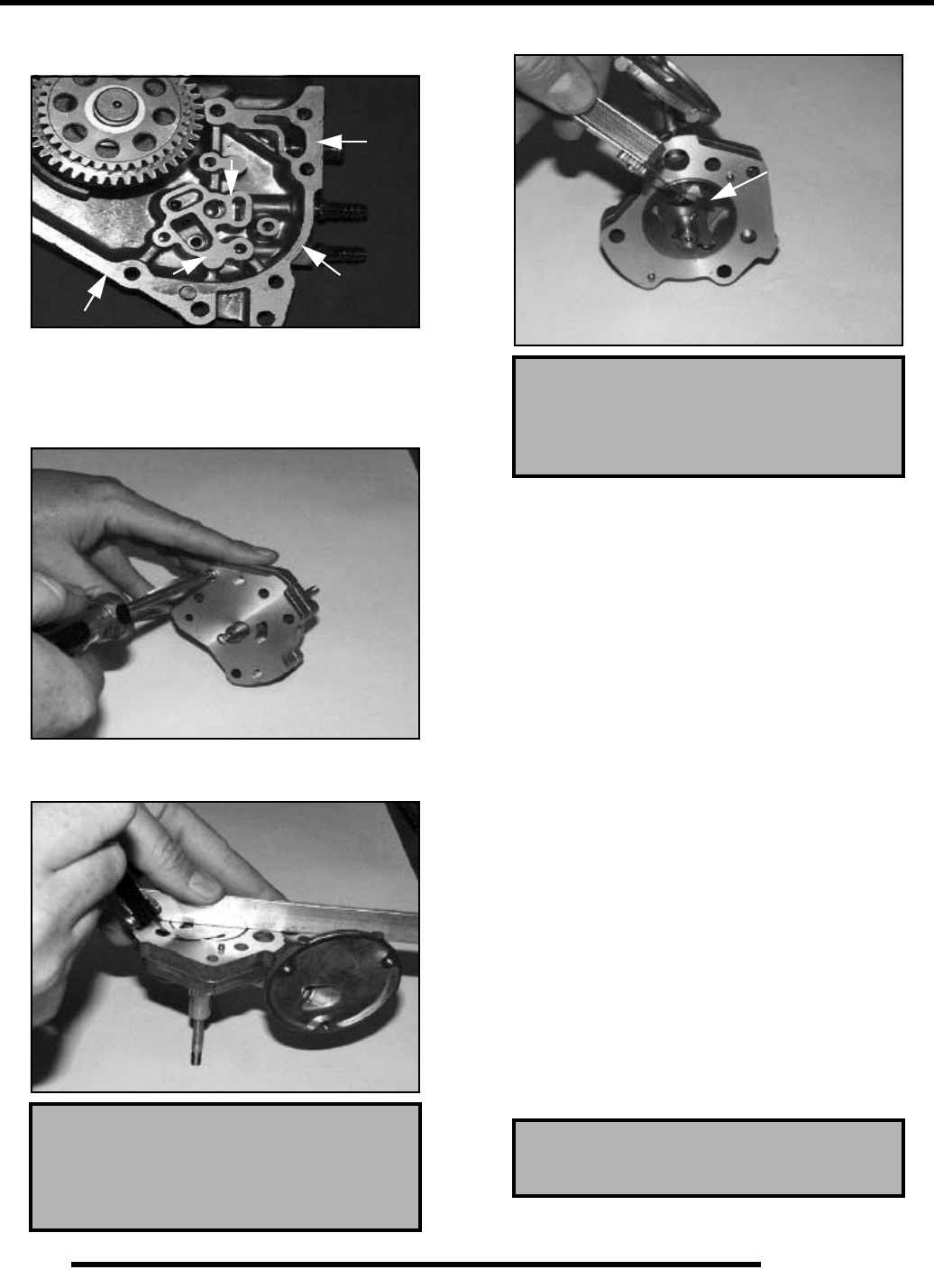
3.32
ENGINE
5. Inspect mating surface of crankcase and oil pump. Check
for nicks, burrs, or surface irregularities.
6. Remove the three screws and strainer screen from pump.
7. Clean screen thoroughly.
8. Remove pump body screw and feed chamber cover.
9. Measure pump end clearance using a feeler gauge and
straight edge.
10. Measure rotor tip clearance with a feeler gauge.
11. Remove inner and outer feed rotor and pump chamber
body.
12. Repeat measurements for scavenge rotor.
13. Remove inner and outer scavenge rotor and inspect pump
shaft for wear.
Oil Pump Assembly
1. Clean and dry all parts thoroughly. Apply clean engine oil
to all parts. Do not use gasket sealer on the pump body
mating surfaces or oil passages will become plugged.
2. Install pump shaft and scavenge rotor drive pin.
3. Install outer scavenge rotor, inner scavenge rotor, and
scavenge casing.
4. Install outer feed rotor and inner feed rotor drive pin.
5. Install inner feed rotor and feed chamber cover with screw.
6. Tighten screw securely.
7. Install screen on pump body.
8. Install oil pump on crankcase and torque bolts to 6 ft. lbs.
(8 Nm).
Pump End Clearance:
Std: .001-.003 (.0254-.0762 mm)
Wear Limit: .004 (.1016 mm)
Rotor Tip Clearance:
Std: .005 (.127 mm)
Wear Limit: .008 (.2032 mm)
Oil Pump Attaching Bolt Torque:
6 ft. lbs. (8 Nm)
PartShark.com
877-999-5686
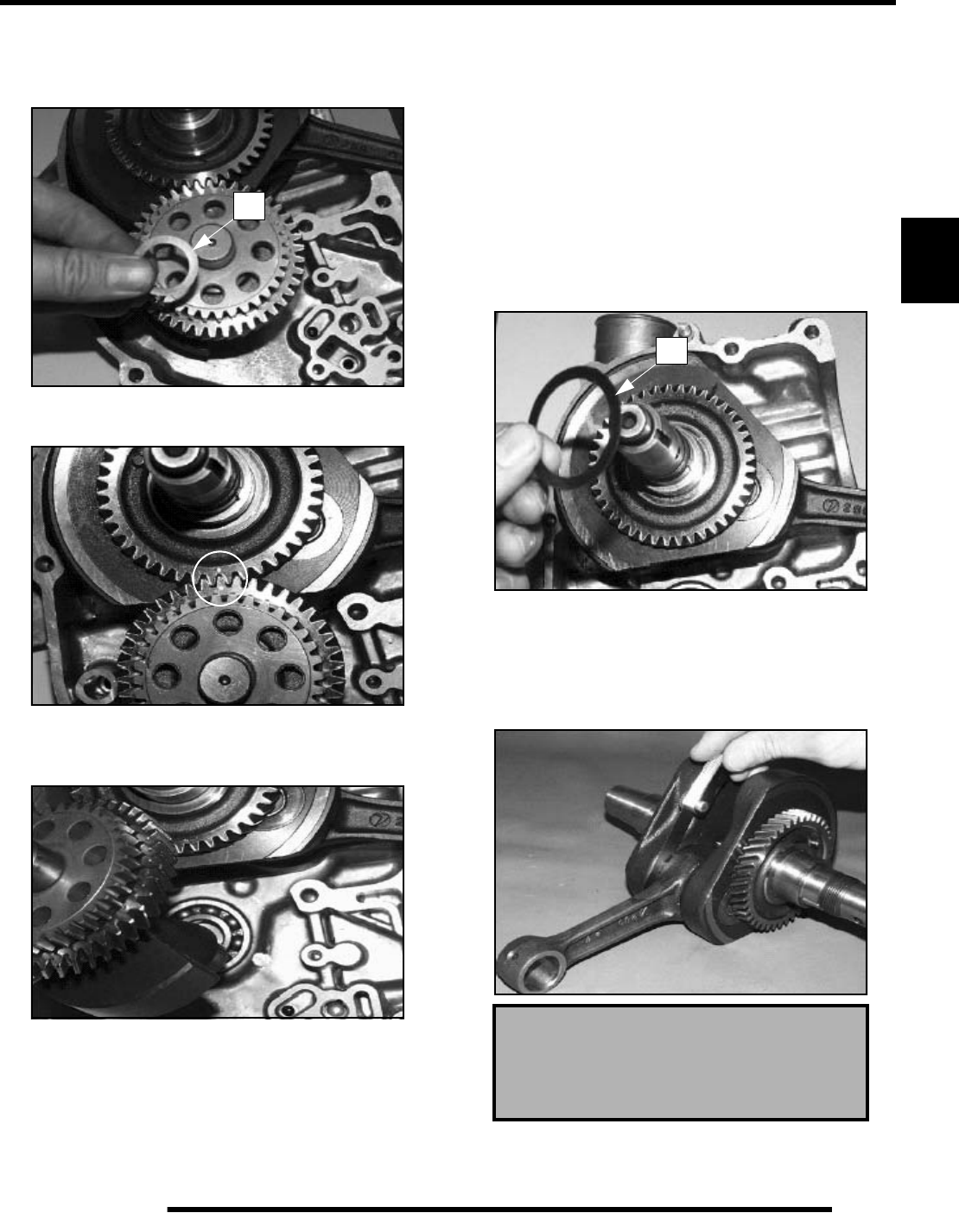
3.33
ENGINE
3
Counter Balancer Shaft Removal / Inspection
1. Remove the shim washer (A) from the counter balancer
shaft.
2. Note the alignment dots on the balancer and crankshaft
gears, the marks must be aligned during reassembly.
3. Turn the shaft until balancer counter weights clear the
crankshaft and remove the balancer shaft from the
crankcase.
4. Inspect the balancer drive gear and pump shaft drive gear.
5. Replace the shaft if gear teeth are abnormally worn or
damaged.
6. Inspect the balancer shaft bearings.
NOTE: Due to extremely close tolerances and
minimal wear, the balancer shaft ball bearings must
be inspected visually and by feel. Look for signs of
discoloration, scoring or galling. Turn the inner race
of each bearing. The bearings should turn smoothly
and quietly. The outer race of each bearing should
fit tightly in the crankcase. The inner race should be
firm with minimal side to side movement and no
detectable up and down movement.
Crankshaft Removal / Inspection
1. Remove the shim washer (C) from the crankshaft.
2. Support the PTO side crankcase and crankshaft; press the
crankshaft out. Be careful not to damage the crankcase
mating surface or connecting rod.
3. Use a feeler gauge to measure the connecting rod big end
side clearance.
A
Connecting Rod Big End Side Clearance:
Std: .0039-.0256” (.1-.65 mm)
Limit: .0315” (.80 mm)
C
PartShark.com
877-999-5686
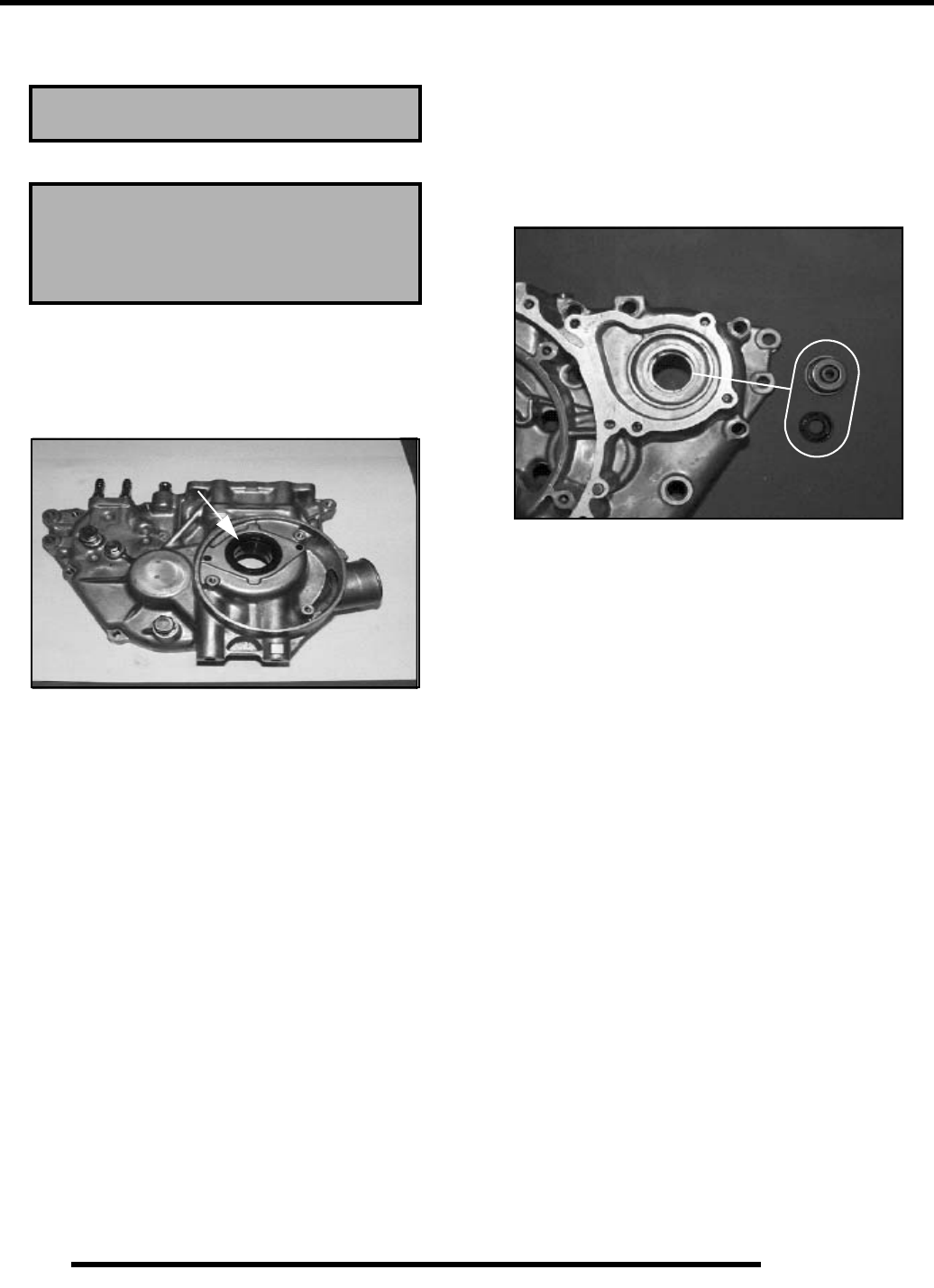
3.34
ENGINE
4. Place the crankshaft in a truing stand or V-blocks and
measure the runout on both ends with a dial indicator.
5. Measure the connecting rod big end radial clearance.
6. Inspect the crankshaft main bearing journals for scoring
and abnormal wear.
Crankcase Bearing Inspection
1. Remove the seal from the PTO side crankcase.
2. Inspect the crankshaft main bearings, balancer shaft
bearings, and pump shaft bearing.
NOTE: Due to extremely close tolerances and
minimal wear, the bearings must be inspected
visually, and by feel. Look for signs of discoloration,
scoring or galling. Turn the inner race of each
bearing. The bearings should turn smoothly and
quietly. The outer race of each bearing should fit
tightly in the crankcase. The inner race should be
firm with minimal side to side movement and no
detectable up and down movement.
3. Support the crankcase and drive or press the main bearings
out of each crankcase.
4. To remove balancer shaft bearings and pump shaft bearing
use a blind hole bearing puller.
NOTE: Bearings are stressed during the removal
process and should not be re-used!
Oil Seal / Mechanical Seal Removal
(Engine Disassembled)
NOTE: The water pump mechanical seal can be
removed without removing the engine. Refer to
Water Pump Mechanical Seal Installation.
Replace the pump shaft seal and water pump mechanical seal
whenever the crankcase is disassembled.
1. Remove the pump shaft bearing from the Magneto (right
hand) side crankcase.
2. Pry out the oil seal, noting the direction of installation with
the spring side facing IN (toward inside of case).
3. Drive the water pump mechanical seal out of the crankcase
from inside to outside. Note: The new mechanical seal
must be installed after the crankcases are assembled, using
a special tool. See Mechanical Seal Installation.
Crankcase Inspection
1. Remove all traces of gasket sealer from the crankcase
mating surfaces. Inspect the surfaces closely for nicks,
burrs or damage.
2. Check the oil pump and oil passage mating surfaces to be
sure they are clean and not damaged.
Bearing Installation
NOTE: To ease bearing installation, warm the
crankcase until hot to the touch. Place the bearings
in a freezer.
1. Install the bearings so the numbers are visible.
2. Drive or press new bearings into the crankcases, using the
proper driver. CAUTION: Press only on outer race of
bearing to prevent bearing damage.
• 70 mm (2.755") driver- for crankshaft main bearings.
• 46 mm (1.810") for counter balancer bearings.
•28 mm (1.100") for pump shaft bearing.
Max Runout: .0024” (.06 mm)
Big End Radial Clearance:
Std: .0004-.0015” (.011-.038 mm)
Limit: .0020” (.05 mm)
PartShark.com
877-999-5686
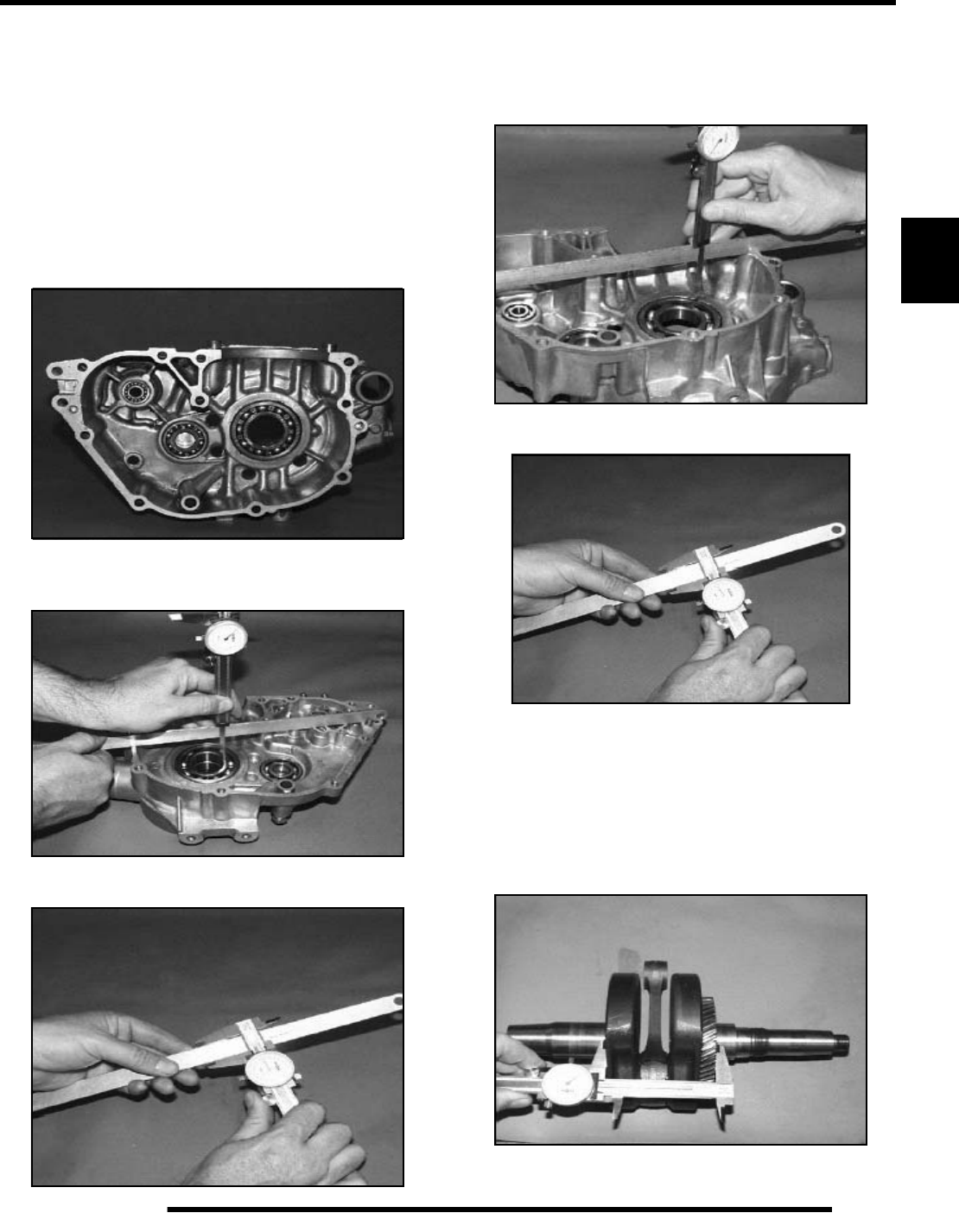
3.35
ENGINE
3
End Play Inspection / Adjustment
Before reassembling the crankcase the following steps should
be performed to determine the amount of crankshaft, counter
balancer shaft, and pump shaft end play: Excessive end play
may cause engine noise at idle and slow speeds. Too little play
will side load the bearings which may lead to premature bearing
failure.
Crankshaft End Play Adjustment
1. Make sure all bearings are firmly seated in both the Mag
and PTO crankcase.
2. Measure the distance from the PTO crankcase mating
surface to the main bearing using a dial caliper and a
straight edge.
3. Subtract the thickness of the straightedge from the
measurement obtained in Step 2 and record.
PTO Case Depth______________________
4. Measure the distance from the Magneto crankcase mating
surface to the main bearing using the same method and
record.
5. Subtract the thickness of the straightedge from the
measurement obtained in Step 4 and record.
Mag Case Depth______________________
6. Add the readings recorded in Step 3 and Step 5 and record
below.
Total Case Width______________________
7. Measure the width of the crankshaft at the bearing seats
with a micrometer or dial caliper and record.
Crankshaft Width______________________
PartShark.com
877-999-5686
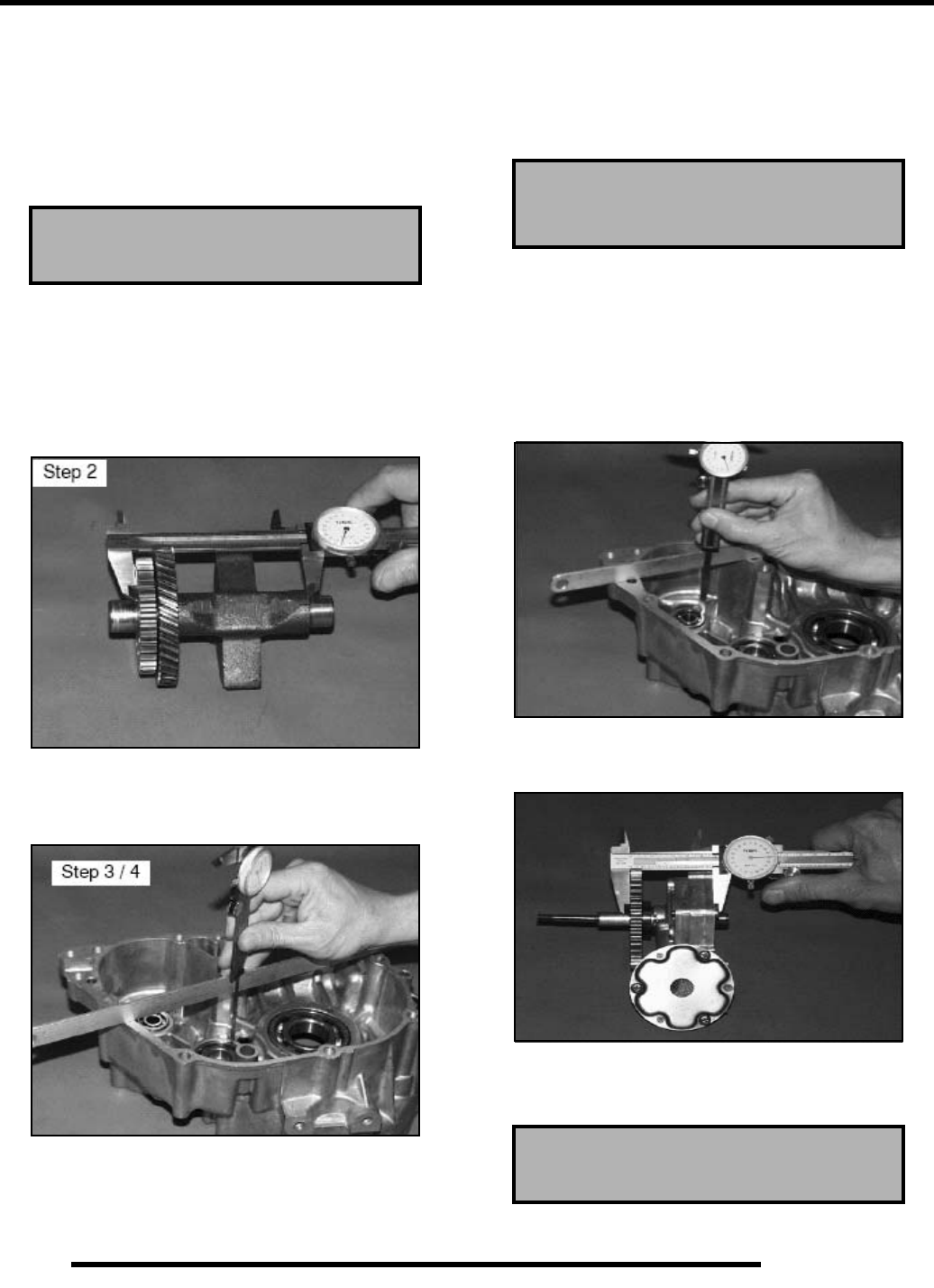
3.36
ENGINE
8. Subtract the Crankshaft Width measured in Step 7 from the
Total Case Width recorded in Step 6, and record below.
Total End Play______________________
9. Subtract the thickness of the existing shim from the result
of Step 8 to determine if a different shim is required. The
result must be within the specified range listed below.
Counter Balancer Shaft End Play Adjustment
1. Make sure all bearings are firmly seated in the crankcase.
2. Measure the width of the counter balancer shaft at the
bearing seats with a dial caliper or micrometer, and record
reading.
3. Measure the distance from the Mag crankcase mating
surface to the balance shaft bearing using a dial caliper and
a straight edge. Subtract the thickness of the straightedge
and record.
4. Measure the distance from the PTO crankcase mating
surface to the bearing using the same method outlined in
Step 1, 2, and 3.
5. Add the readings obtained in Step 3 and Step 4.
6. Subtract the counter balancer shaft width measured in Step
2 from the figure obtained in Step 5.
7. Subtract the thickness of the existing shim from the result
of Step 6 to determine if a different shim is needed. The
result must be within the specified range listed at below.
Oil Pump Shaft End Play Adjustment
1. Make sure the pump shaft bearing is firmly seated in the
Magneto side crankcase.
2. Measure the distance from the magneto crankcase mating
surface to the bearing using a dial caliper and a straight
edge. Subtract the thickness of the straightedge and record.
3. Install the gear on the oil pump and measure the width of
the pump and gear. Subtract this measurement from the
measurement recorded in Step 2.
4. Subtract the thickness of the existing shim from the result
of Step 3 to determine if a different shim is needed. See
“Pump Shaft End Play” specification below.
Crankshaft End Play:
.008”-.016” (.02-.04 cm)
Counter Balancer Shaft End Play:
.008”-.016” (.02-.04 cm)
Pump Shaft End Play:
.008”-.016” (.02-.04 cm)
PartShark.com
877-999-5686
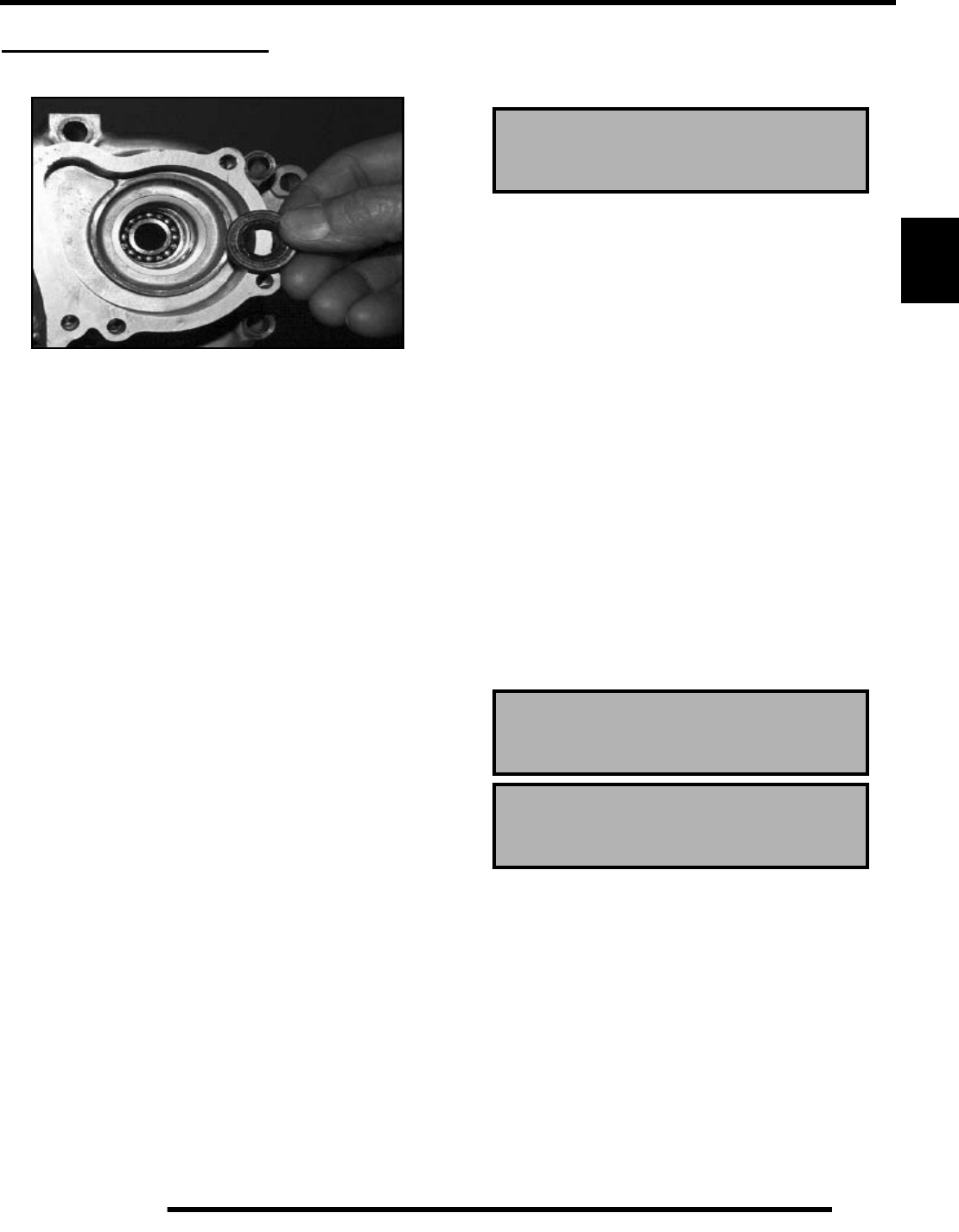
3.37
ENGINE
3
ENGINE REASSEMBLY
Pump Shaft Oil Seal Installation
1. Install the seal from the outside of the crankcase (water
pump side) with the spring facing inward, toward the pump
shaft bearing.
2. Drive or press the seal into place using a 25 mm (.985") seal
driver, until flush with the outer edge of the seal bore.
3. Lubricate the seal lip with grease.
Crankshaft / Counter Balance / Oil Pump
Installation
Lubricate all bearings with clean engine oil before assembly.
Use the Crankshaft/Water Pump Installation Kit (PN 2871283)
to prevent damage to the crankshaft and main bearings during
installation.
1. Install the crankshaft into the PTO side crankcase. Screw
the threaded rod into the crankshaft until the threads are
engaged a minimum of one inch (25.4mm).
2. Install the collar, washer, and nut onto the threaded rod.
Hold the crankshaft and tighten the nut to draw the
crankshaft into the main bearings until fully seated. Loosen
the nut and remove the threaded rod from the crankshaft.
If removal is difficult, install two nuts on the end of the
threaded rod and tighten against each other.
3. Install the proper shim on the magneto end of the
crankshaft.
4. Place the balancer shaft in the PTO crankcase aligning the
timing marks on the crankshaft and balancer gears. Install
the proper shim washer on the shaft.
5. Inspect the oil pump sealing surface on the crankcase.
Apply a light film of engine oil to the surface and install the
oil pump.
NOTE: Do not use gasket sealer on the pump mating
surfaces.
NOTE: After engine is assembled and the vehicle is
prepared for field operation, oil pump MUST be
primed. Follow oil pump priming procedure.
6. Align the drive gear with the drive pin on the pump shaft
and install the gear. Be sure the gear is fully seated and
properly engaged.
7. Install the proper shim washer on the pump shaft.
Crankcase Assembly
1. Apply Crankcase Sealant (PN 2871557) to the crankcase
mating surfaces. Be sure the alignment pins are in place.
2. Set the crankcase in position carefully to avoid damaging
the pump shaft seal and install the magneto end crankshaft
installation tool (follow instructions provided with the
Crankshaft/Water Pump Installation Kit (PN 2871283).
Draw the crankcase halves together by tightening the nut
on the tool and tapping lightly in the pump shaft area with
a soft faced hammer to maintain alignment. Continually
check alignment of the cases during installation, closing the
gap equally until the surfaces are tightly seated.
3. Remove the tool.
4. Install the crankcase flange bolts and tighten in 3 steps
following the pattern on Page 3.3 to specified torque.
Water Pump Mechanical Seal Installation
1. Clean the seal cavity to remove all traces of old sealer.
2. Place a new mechanical seal in the seal drive collar, and
install on the pump shaft.
3. Screw the guide onto the end of the pump shaft.
4. Install the washer and nut and tighten to draw seal into place
until fully seated.
5. Remove the guide adaptor using the additional nut as a jam
nut if necessary.
Oil Pump Bolt Torque:
6. ft. lbs. (8 Nm)
Crankcase Bolt Torque:
14 ft. lbs. (19 Nm)
Crankcase Sealant:
(PN 2871557)
PartShark.com
877-999-5686
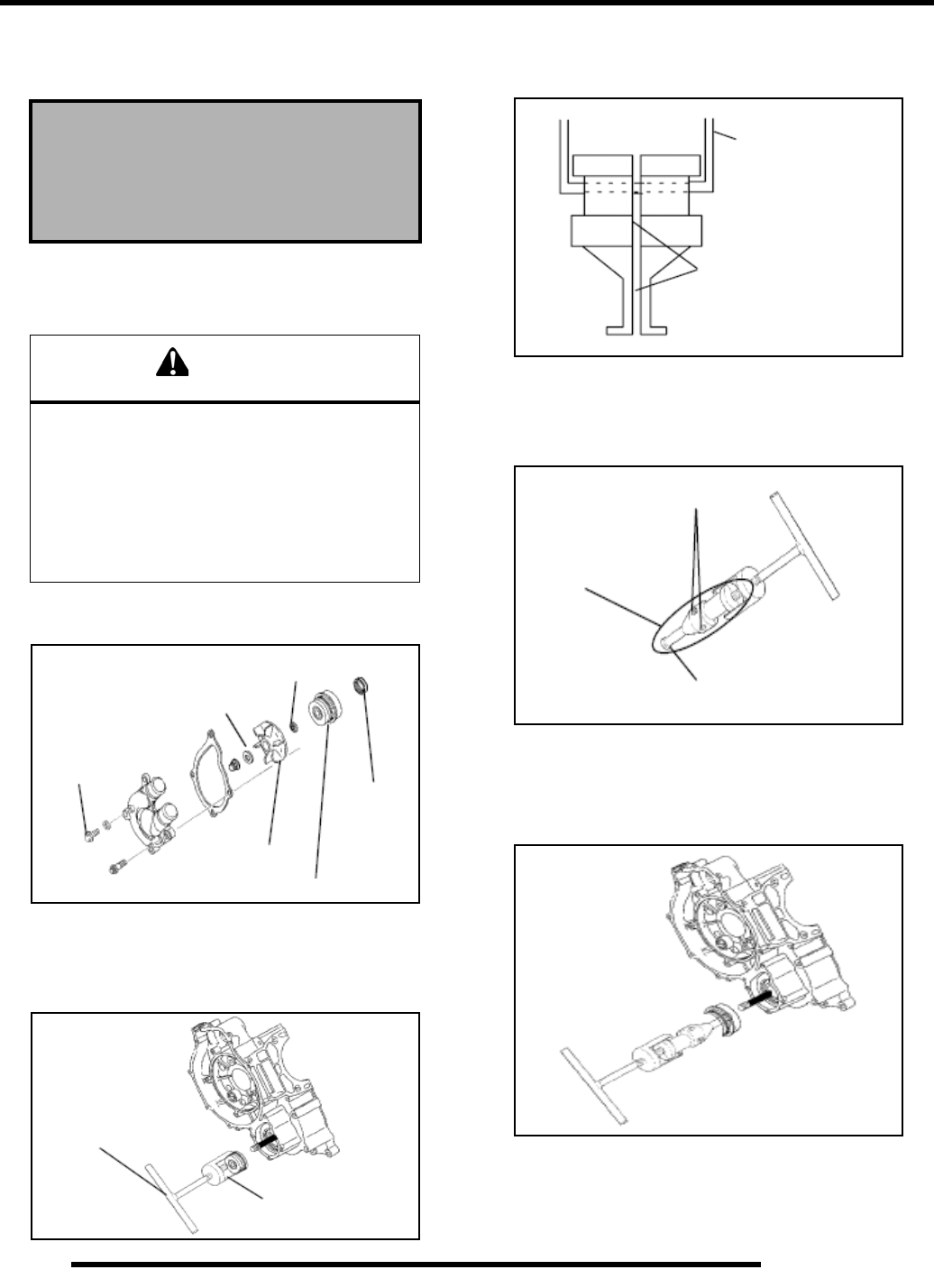
3.38
ENGINE
Water Pump Mechanical Seal Removal
(Engine Installed)
This tool allows a technician to replace the mechanical water
pump seal on EH50PL engines without removing the engine and
splitting the cases.
1. After the coolant has been drained, remove the water pump
cover, impeller and the sealing washer.
2. Slide the main puller body over the outer portion of the
mechanical seal as shown below and turn T-Handle
clockwise until it contacts water pump shaft. Continue
rotating until outer portion of mechanical seal is separated
from the metal seal body.
3. Insert the puller legs between the water pump drive shaft
and the remaining portion of the mechanical seal. Attach
the puller legs to the main puller body.
4. Ensure that the split between the puller legs is fully
supported by the main body of the tool.
5. Tighten the hex socket screws on the puller legs sufficiently
so the lip of the puller legs will grasp the mechanical seal.
6. Turn the puller T-Handle clockwise until it contacts the
water pump shaft. Continue rotating until the remaining
portion of mechanical seal has been removed from the
cases. Pump shaft oil seal can also be replaced at this time
if necessary.
7. The Water Pump Install Kit (PN 5131135) is required to
install the new mechanical seal. This tool is available
separately and it is also included in the Crankshaft / Water
Pump Seal Installation Kit (PN 2871283)
Water Pump Mechanical Seal Puller:
(PN 2872105)
Replacement T-Handle:
(PN 2872106)
CAUTION
Improper or careless use of this tool or procedure
can result in a bent water pump shaft. Pump
shaft replacement requires engine removal and
crankcase separation. Use caution while
performing this procedure. Make sure that the
puller is parallel to the shaft at all times.
Do not place side loads on the water pump shaft
or strike the puller or shaft in any way.
Impeller
Mechanical Seal
Oil
Seal
Sealing Washer
(Copper or Aluminium)
Coolant Drain
Bolt
Sealing Washer
T-Handle
Main Puller Body
Main puller
body
Position the split 90o
to opening on main
puller body
Hex Socket Screws
Puller Legs
Lip must grasp inside
of mechanical seal
PartShark.com
877-999-5686
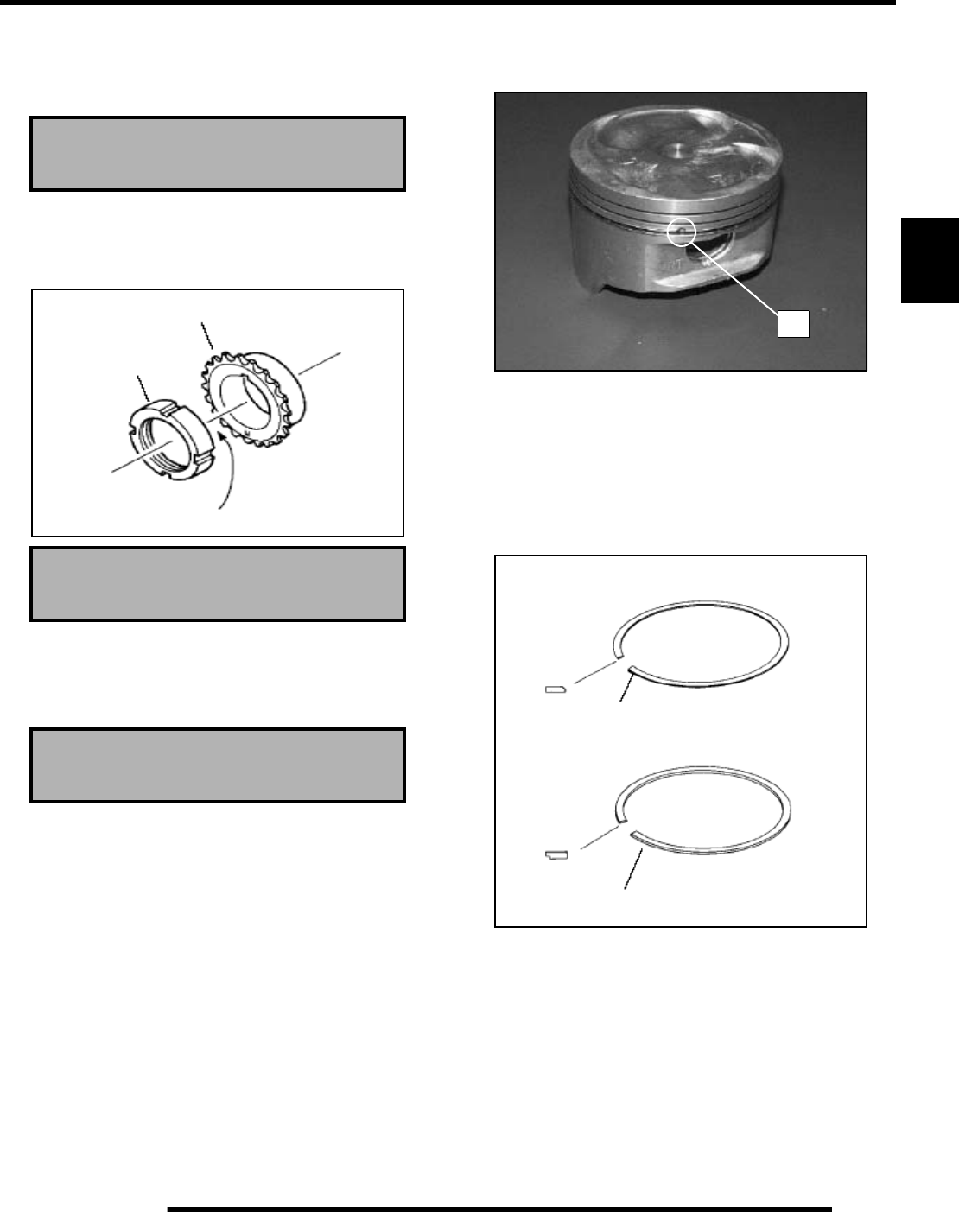
3.39
ENGINE
3
One Way Valve Installation
Install the one way valve plunger, spring, and plug using a new
sealing washer.
Cam Chain Drive Sprocket Installation
1. Install the Woodruff key, drive sprocket (B), and slotted
nut (A). Tighten the nut to the specified torque.
Tensioner Blade Installation
1. Install the tensioner blade and tighten the mounting bolt to
specified torque.
Piston Ring Installation
NOTE: Apply clean engine oil to all ring surfaces
and ring lands. Always check piston ring installed
gap before rings are installed on piston (see Page
3.29). If the piston has been in service clean any
accumulated carbon from the ring grooves and oil
control ring holes.
1. Place the oil control ring expander in oil ring groove with
the end gap facing forward. The expander has no up or
down marking and can be installed either way. The ends
should butt squarely together and must not overlap.
2. Install the oil ring top rail.
NOTE: The top rail has a locating tab to prevent
rotation. The tab must be positioned in the notch on
the side of the piston as shown (C).
3. Install the bottom rail with the gap at least 30o from the end
of the expander on the side opposite the top rail gap.
4. Install the second ring with the “R” mark facing up.
Position the end gap toward the rear (intake) side of the
piston.
5. Install the top ring (chrome faced) with the “R” mark facing
up and the end gap facing forward (toward the exhaust).
6. Check to make sure the rings rotate freely in the groove
when compressed.
One Way Valve Plug Torque:
16 ft. lbs. (22 Nm)
Slotted Nut Torque:
35-51 ft. lbs. (4.71-6.86 kg-m)
Tensioner Blade Mounting Bolt Torque:
6 ft. lbs. (8 Nm)
A
B
Tighten
C
Mark-up Top
Second
Ring Profile
Mark-up
PartShark.com
877-999-5686
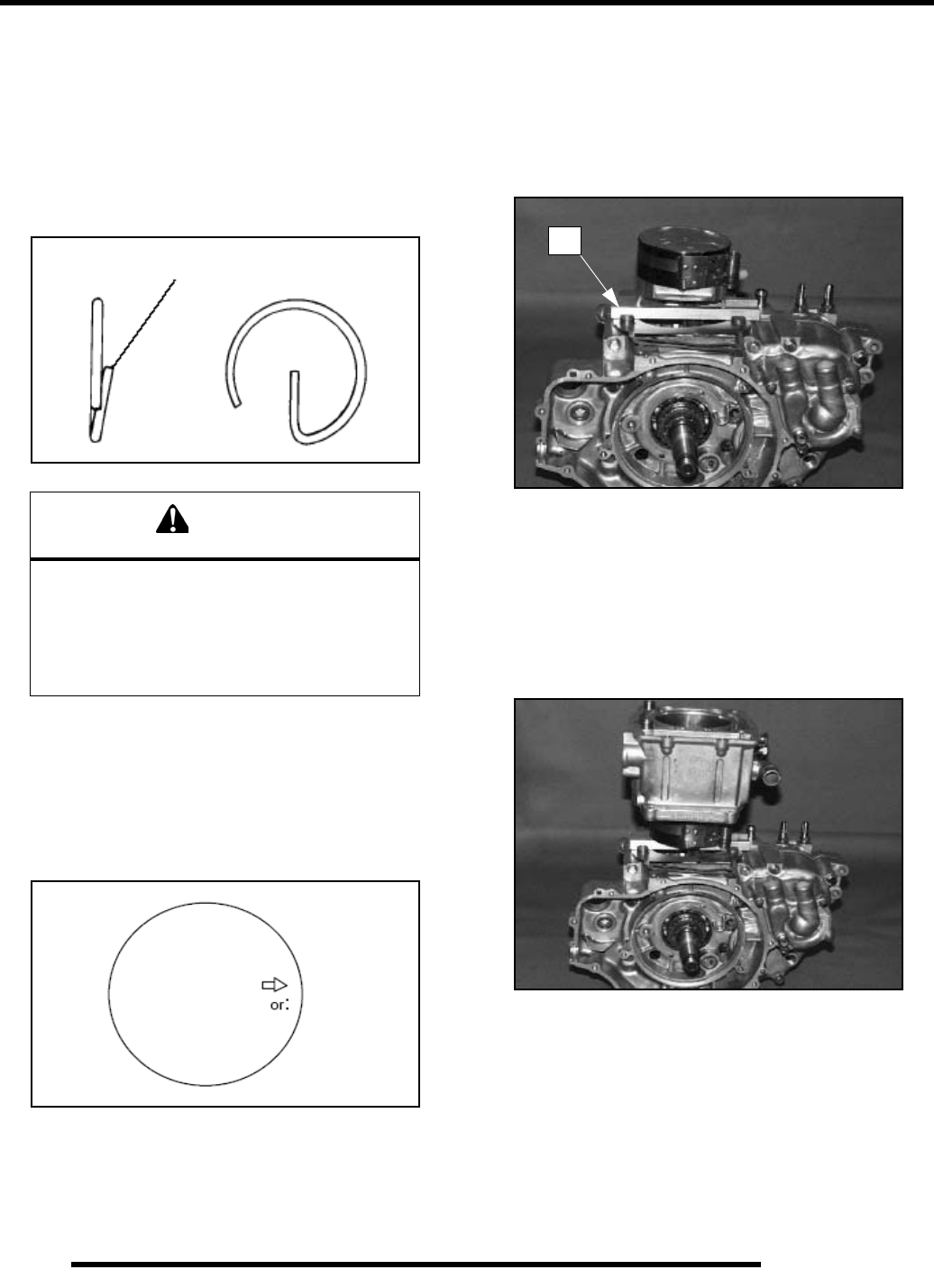
3.40
ENGINE
Piston Installation
1. Clean the gasket surfaces on the cylinder and crankcase.
Remove all traces of old gasket material.
2. Make sure the cylinder mounting bolt holes are clean and
free of debris.
3. Install a new circlip on one side of the piston with the end
gap facing up or down, and tang outward.
4. Apply clean engine oil to the piston rings, ring lands, piston
pin bore, piston pin, and piston skirt. Lubricate the
connecting rod (both ends), balancer drive gear, and
crankshaft main bearing area.
5. Install the piston on the connecting rod with the arrow or :
mark facing the magneto (RH) end of the crankshaft. The
piston pin should be a push fit in the piston.
6. Install the other circlip with the gap facing up or down and
tang outward. (See Caution with Step 3 above). Push the
piston pin in both directions to make sure the clips are
properly seated in the groove.
Cylinder Installation
1. Place the dowel pins in the crankcase and install a new
cylinder base gasket.
2. Position the Piston Support Block (PN 2870390) (A)
beneath the piston skirt to support the piston during
cylinder installation.
3. Apply clean engine oil to the ring compressor and install
the compressor following manufacturer’s instructions.
CAUTION: Make sure the oil control ring upper rail tab
is positioned properly in the notch of the piston. Verify all
ring end gaps are correctly located.
4. Apply clean engine oil liberally to the cylinder bore and
tapered area of the sleeve. Install the cylinder with a slight
rocking motion until the rings are captive in the sleeve.
CAUTION
Circlips become deformed during the removal
process. Do not re-use old circlips. Do not
compress the new clip more than necessary
upon installation to prevent loss of radial tension.
Severe engine damage may result if circlips are
re-used or deformed during installation.
Tang Outward
Mag
A
PartShark.com
877-999-5686
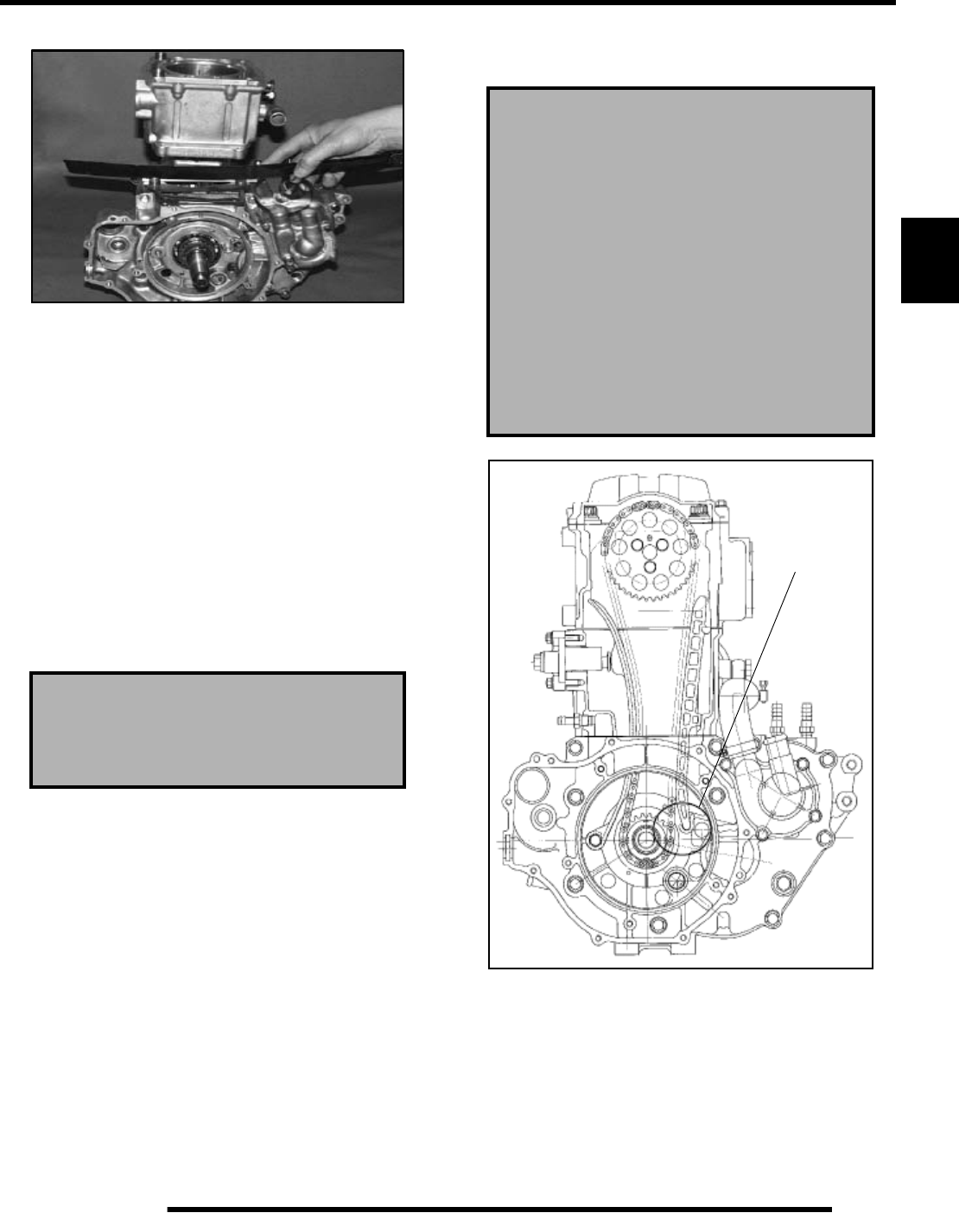
3.41
ENGINE
3
5. Remove the ring compressor and support block.
6. Push the cylinder downward until fully seated on the base
gasket.
7. Apply a light film of oil to the threads and flange surface
of the cylinder mounting bolts.
8. Install all four bolts finger tight. Rotate the engine and
position the piston at BDC.
NOTE: If cam chain is installed, hold it up while
rotating the engine to avoid damage to the chain,
drive sprocket teeth, or tensioner blade.
9. Tighten the cylinder bolts in three steps in a criss cross
pattern and torque to specifications.
10. Install the two 6 mm bolts.
Cylinder Head Installation
Clean the gasket surfaces on the cylinder head and cylinder.
Remove all traces of old gasket material.
Refer to disassembly photos.
1. Install the cam chain tensioner guide. Be sure bottom end
of guide is located properly in crankcase.
2. Install the two dowel pins and a new cylinder head gasket.
3. Place the cylinder head on the cylinder. Apply a film of
engine oil to the cylinder head bolt threads and washers, and
hand tighten the bolts.
The following procedure must be used to torque the cylinder
head properly:
Cylinder Bolt Torque:
10mm - 46 ft. lbs. (62 Nm)
6mm - 6 ft. lbs. (8 Nm)
Torque all bolts evenly in a criss cross pattern
*Torque bolts to 22 ft. lbs. (30 Nm)
*Torque bolts to 51 ft. lbs. (70 Nm)
*Loosen bolts evenly 180o (1/2 turn)
*Loosen bolts again another 180o (1/2 turn)
*Torque bolts to 11 ft. lbs. (15 Nm)
*From this point, tighten bolts evenly 90o
(1/4 turn)
*Finally, tighten another 90o (1/4 turn)
*Install two 6mm bolts and torque to 6 ft. lbs.
(8 Nm)
Guide in
recess
PartShark.com
877-999-5686
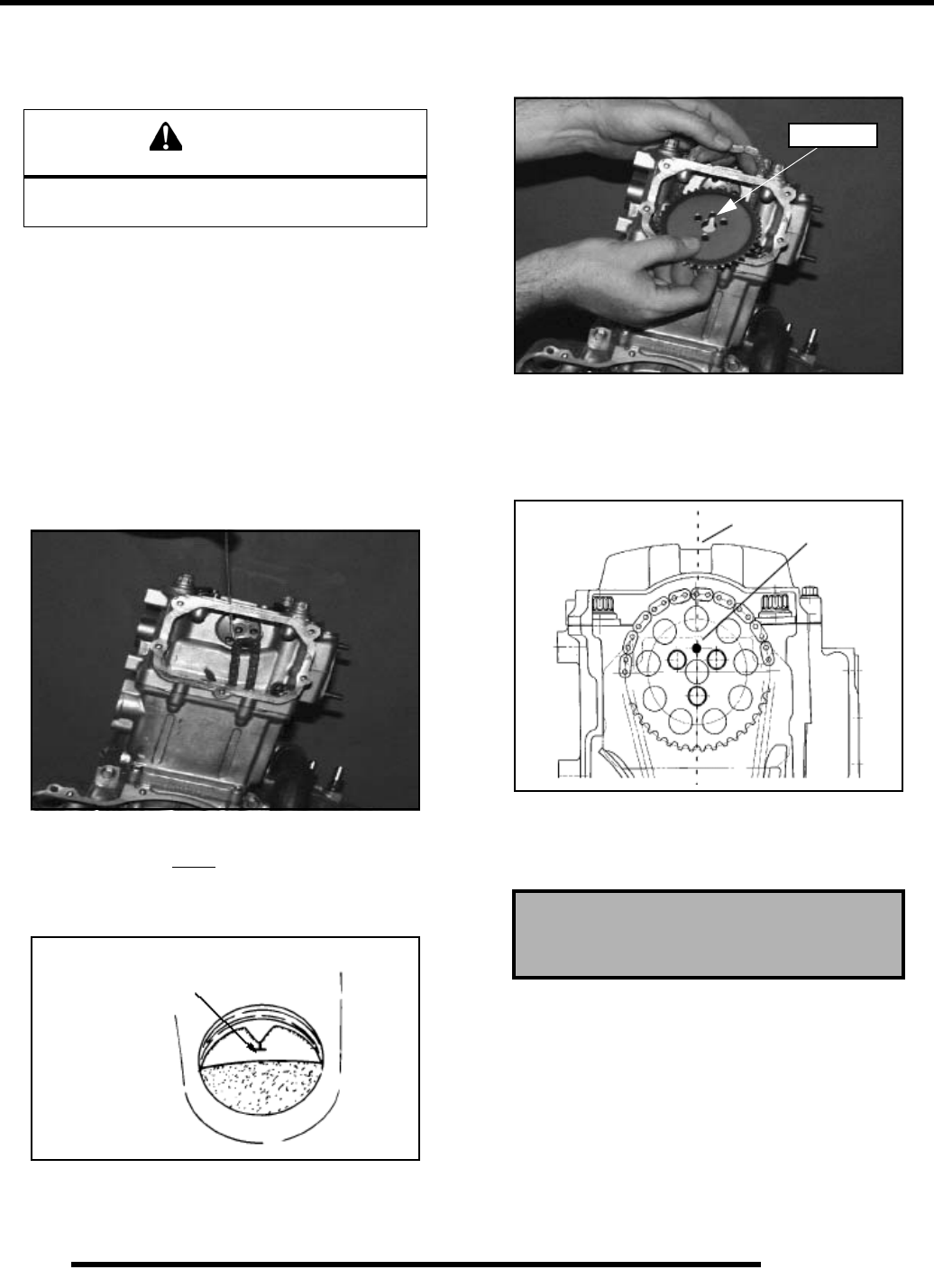
3.42
ENGINE
Cam Chain / Camshaft Installation
Install the cam chain over the crankshaft.
IMPORTANT: In order to time the camshaft to the
crankshaft, the piston must be precisely located at
Top Dead Center (TDC).
Camshaft Timing
1. Apply Premium Starter Drive Grease (PN 2871460) to the
camshaft main journals and cam lobes. Lubricate
automatic compression release mechanism with clean
engine oil.
2. Install the camshaft with the lobes facing downward and the
sprocket alignment pin facing upward.
3. Disconnect the wire from the cam chain and rotate the
engine to align the single (TDC ) timing mark (Top Dead
Center) on the flywheel with the notch in the timing
inspection window. Be sure to use the single TDC mark
when installing the cam. Do not use the advance marks.
4. Loop the cam chain on the cam sprocket with the dots on
the sprocket facing outward and the alignment pin notch
facing directly upward.
5. Before positioning the sprocket on the camshaft, check the
position of the cam sprocket alignment pin. When the cam
is positioned properly, the cam sprocket alignment pin (A)
is directly in line with the crankshaft / camshaft centerline
(B).
6. Install the sprocket on the camshaft. Apply Loctite™ 242
(PN 2871949) to the cam sprocket bolts and torque to
specifications.
7. Verify TDC mark in timing inspection hole and alignment
pin is directly in line with crankshaft to camshaft centerline.
Refer to Illustration on the following page.
8. Apply Crankcase Sealant (PN 2871557) to the camshaft
end cap and install using a new O-Ring.
9. Check all cam timing marks to verify proper cam timing,
and install the cam chain tensioner body with a new gasket.
10. After tensioner installation, rotate engine at least two
revolutions and re-check marks/timing.
CAUTION
Serious engine damage may result if the camshaft
is not properly timed to the crankshaft.
Single (TDC)
Mark Aligned
Cam Sprocket Bolt Torque:
6 ft. lbs. (8 Nm)
Pin Notch
A
B
PartShark.com
877-999-5686
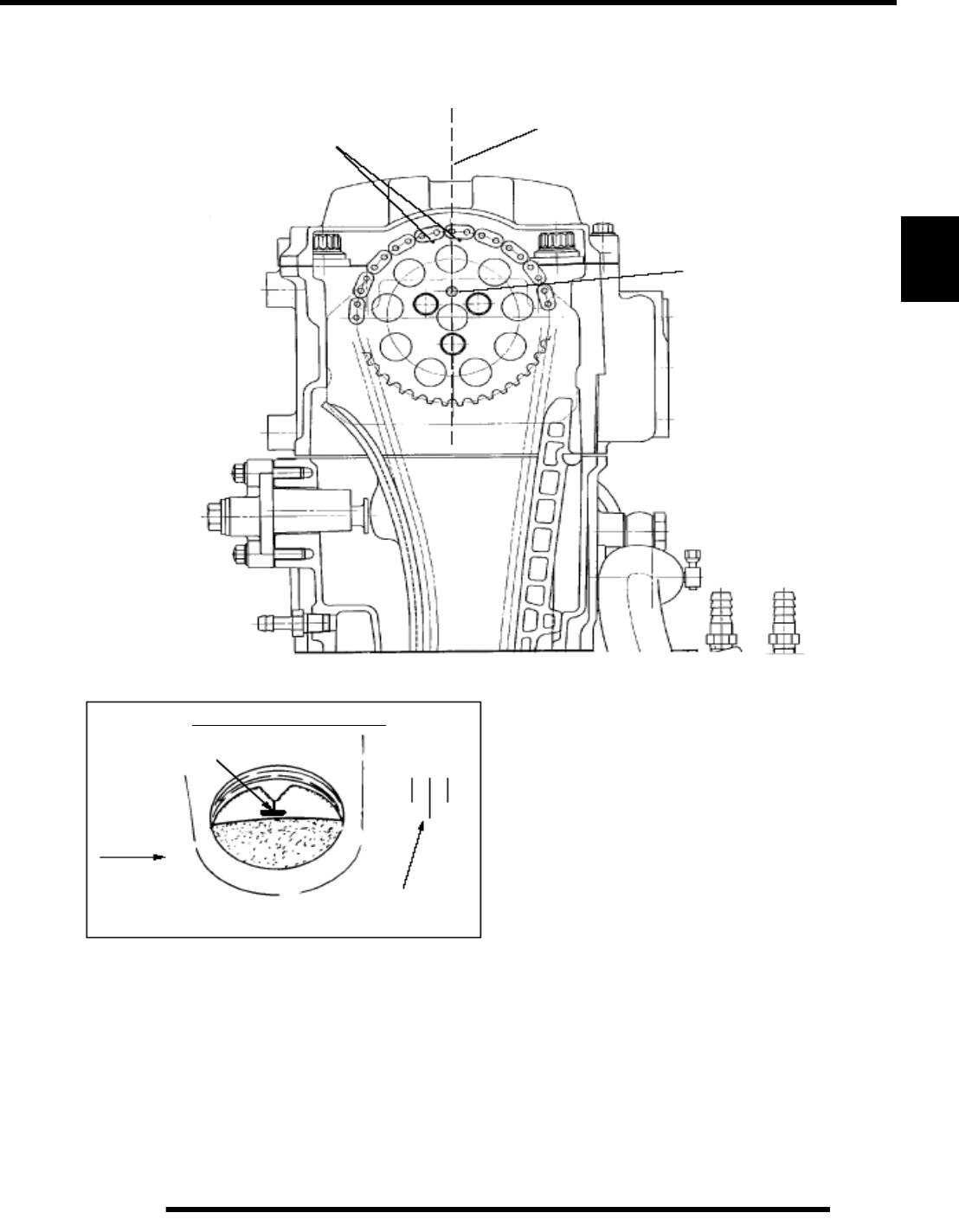
3.43
ENGINE
3
Camshaft Timing Illustration
Dots Crankshaft to Camshaft Centerline
Sprocket Alignment Pin
TDC mark
Rotation
Do Not Use
Advance Marks
Single TDC Mark Aligned
PartShark.com
877-999-5686
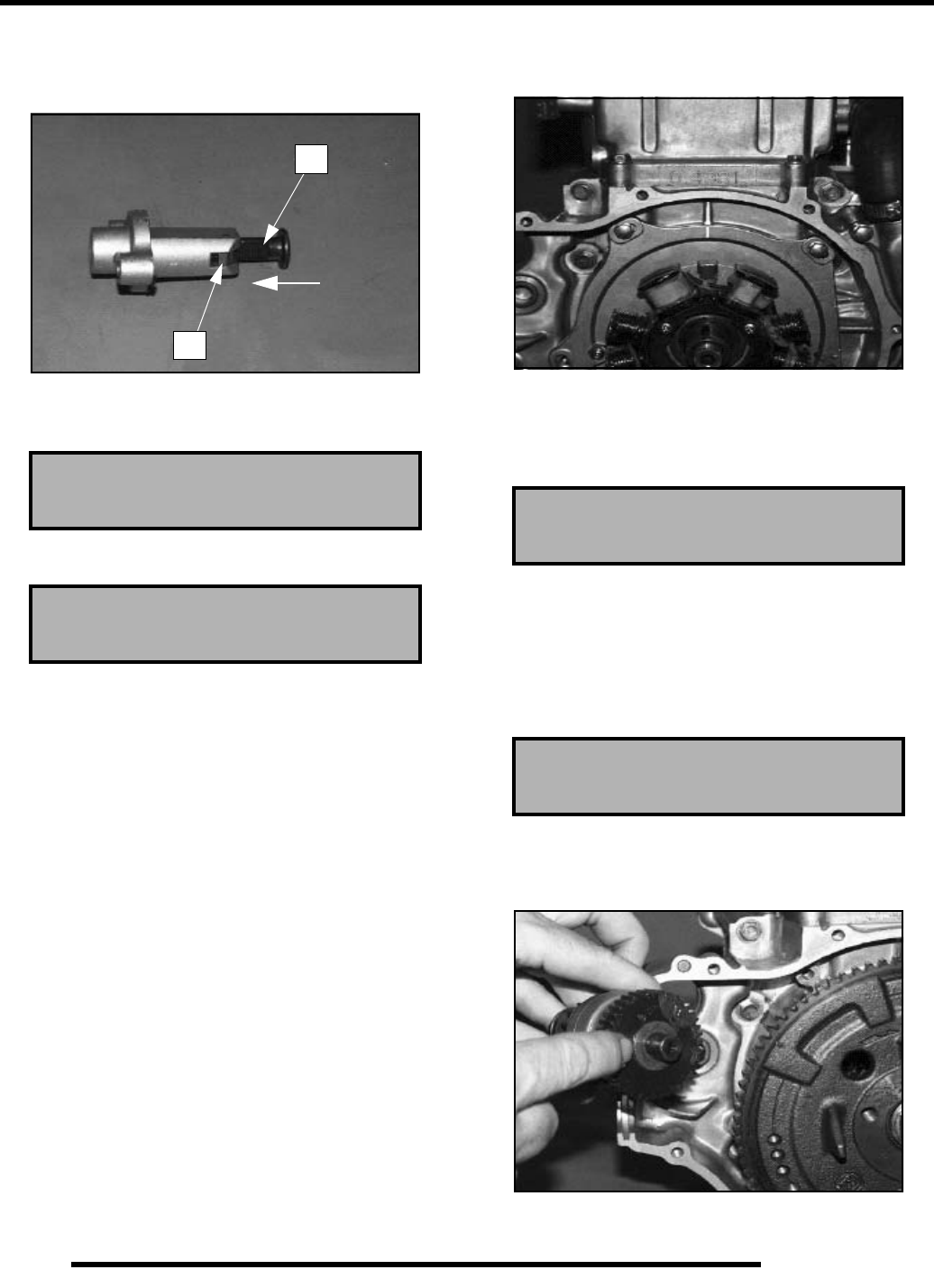
3.44
ENGINE
Cam Chain Tensioner Installation
1. Release the ratchet pawl (A) and push the tensioner
plunger (B) all the way into the tensioner body.
2. Install the tensioner body with a new gasket and tighten the
bolts.
3. Install the spring, new sealing washer, and tensioner plug.
4. Slowly rotate engine two to three revolutions and re-check
cam timing.
Stator, Flywheel and Starter Drive Installation
NOTE: The stator, flywheel, starter drive, and recoil
can be assembled with the engine in the frame.
Stator
1. Apply a light film of grease to the crankshaft seal. Apply
molybdenum disulfide grease or assembly lubricant to the
crankshaft bushing.
2. Install a new O-Ring in the oil passage recess in the
crankcase.
3. Apply Crankcase Sealant (PN 2871557) or an equivalent
sealer to the stator plate outer surface and install a new O-
Ring.
4. Install the stator plate being careful not to damage the seal.
Align timing reference marks on the plate and crankcase.
Be sure the plate is fully seated.
NOTE: This is a static timing mark. Strobe timing
should be performed after start up.
5. Torque bolts evenly to specification.
6. Seal stator wire grommet with Crankcase Sealant
(PN 2871557) or equivalent sealer.
Flywheel
1. Install flywheel, washer, and nut. Torque flywheel to
specification.
Starter Drive
1. Be sure the washer is positioned on the back of the drive
gear.
Tensioner Bolt Torque:
6 ft. lbs. (8 Nm)
Tensioner Plug Torque:
6.5 ft. lbs. (9 Nm)
B
A
Stator Plate Bolt Torque:
5 - 6.5 ft. lbs. (7 - 9 Nm)
Flywheel Nut Torque:
58 - 72 ft. lbs. (78 - 98 Nm)
PartShark.com
877-999-5686
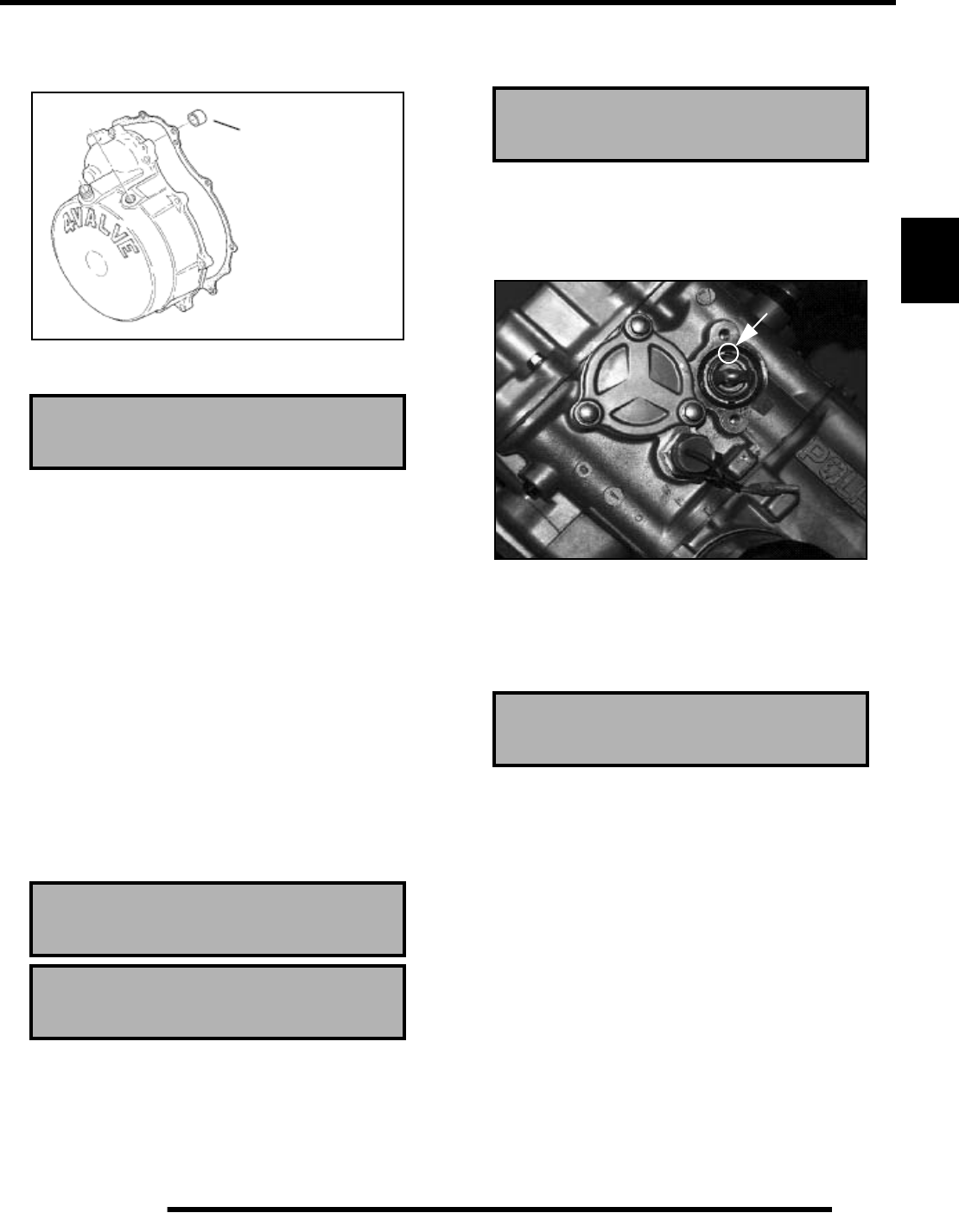
3.45
ENGINE
3
2. Apply starter drive grease to the drive bushing in the
crankcase and all moving surfaces of the starter drive
mechanism. Install the starter drive.
3. Install recoil housing gasket and recoil housing.
Rocker Shaft / Rocker Arm Assembly
Installation
1. Assemble rocker arms, rocker shaft, and shaft supports.
2. Install and tighten rocker arm shaft locating bolt.
3. Apply starter drive grease to the cam lobes and cam
follower surfaces.
4. Rotate the engine until the cam lobes are pointing
downward.
5. Be sure the dowel pins are in place and install the rocker
shaft assembly.
6. Apply a light film of engine oil to the threads of the bolts
and tighten evenly.
7. Adjust valves according to the valve adjustment procedure
found in Chapter 2, Maintenance.
8. Apply clean engine oil liberally to the valve springs, cam
chain, rocker arms, and camshaft.
9. Place a new rocker cover gasket on the cylinder head and
install the cover and bolts.
Thermostat Installation
Install the thermostat with one of the air bleed holes positioned
next to the upper thermostat cover bolt hole as shown.
Oil Pipes
Install the oil pipes with new sealing washers. Tighten all bolts
evenly to specified torque.
Oil Pump Priming Procedure
NOTE: The oil pump priming procedure must be
performed whenever the oil hose connection
between the oil tank and pump inlet has been
disconnected. Refer to the procedure in Chapter 2.
Starter Drive Grease:
(PN 2871460)
Rocker Shaft Support Tower Bolt Torque:
9 ft. lbs. (12 Nm)
Rocker Shaft Locating Bolt Torque:
6 ft. lbs. (8 Nm)
Apply Starter Drive
Grease to Bushing
Rocker Cover Bolt Torque:
6 ft. lbs. (8 Nm)
Oil Pipe Bolt Torque:
20 ft. lbs. (27 Nm)
PartShark.com
877-999-5686
3.46
ENGINE
TROUBLESHOOTING
Engine
Engine Turns Over But Fails to Start
•No fuel
• Dirt in fuel line or filter
• Fuel will not pass through fuel valve
• Fuel pump inoperative/restricted
• Tank vent plugged
• Engine flooded
• Low compression (high cylinder leakage)
• No spark (Spark plug fouled)
Engine Does Not Turn Over
• Dead battery
• Starter motor does not turn
• Engine seized, rusted, or mechanical failure
Engine Runs But Will Not Idle
• Low compression
• Crankcase breather restricted
Engine Idles But Will Not Rev Up
• Spark plug fouled/weak spark
• Broken throttle cable
• Obstruction in air intake
• Air box removed (reinstall all intake components)
• Reverse speed limiter limiting speed
• Incorrect ignition timing
• Restricted exhaust system
Engine Has Low Power
• Spark plug fouled
• Cylinder, piston, ring, or valve wear or damage (check
compression)
• PVT not operating properly
• Restricted exhaust muffler
Piston Failure - Scoring
• Lack of lubrication
• Dirt entering engine through cracks in air filter or ducts
• Engine oil dirty or contaminated
Excessive Smoke and Carbon Buildup
• Excessive piston-to-cylinder clearance
• Wet sumping
• Worn rings, piston, or cylinder
• Worn valves, guides or seals
• Restricted breather
• Air filter dirty or contaminated
Low Compression
• Decompressor stuck
• Cylinder head gasket leak
• No valve clearance or incorrectly adjusted
• Cylinder or piston worn
• Piston rings worn, leaking, broken, or sticking
• Bent valve or stuck valve
• Valve spring broken or weak
• Valve not seating properly (bent or carbon accumulated
on sealing surface)
• Rocker arm sticking
PartShark.com
877-999-5686
3.47
ENGINE
3
Backfiring
• Fouled spark plug or incorrect plug or plug gap
• Exhaust system air leaks
• Ignition system faulty:
Spark plug cap cracked/broken
Ignition coil faulty
Ignition or kill switch circuit faulty
Ignition timing incorrect
Sheared flywheel key
• Poor connections in ignition system
• System wiring wet
• Valve sticking
• Air leaks in intake
• Lean condition
Spark Plug Fouling
• Spark plug cap loose or faulty
• Incorrect spark plug heat range or gap
• PVT system calibrated incorrectly or components worn
or mis-adjusted
• Fuel quality poor (old) or octane too high
• Low compression
• Restricted exhaust
• Restricted air filter (main or pre-cleaner)
• Improperly assembled air intake system
• Restricted engine breather system
• Oil contaminated with fuel
• Restricted oil tank vent
Cooling Troubleshooting
Overheating
• Low coolant level
• Air in cooling system
• Wrong type of coolant
• Faulty pressure cap or system leaks
• Restricted system (mud or debris in radiator fins or
restriction to air flow, passages blocked in radiator,
lines, pump, or water jacket)
• Lean mixture (restricted jets, vents, or fuel pump)
• Fuel pump output weak
• Restricted radiator (internally or cooling fins)
• Water pump failure
• Cooling system restriction
• Cooling fan inoperative or turning too slowly
• Ignition timing misadjusted
• Low oil level
• Spark plug incorrect heat range
• Faulty hot light circuit
• Thermostat stuck closed or not opening completely
• Radiator is missing its internal diverter plate not
allowing coolant to flow through entire radiator
Temperature Too Low
• Thermostat stuck open
Leak at Water Pump Weep Hole
• Faulty water pump mechanical seal (coolant leak)
• Faulty pump shaft oil seal (oil leak)
PartShark.com
877-999-5686
NOTES
ENGINE
3.48
PartShark.com
877-999-5686
ELECTRONIC FUEL INJECTION
4.1
CHAPTER 4
ELECTRONIC FUEL INJECTION
4
SPECIAL TOOLS . . . . . . . . . . . . . . . . . . . . . . . . . . . . . . . . . . . . . . . . . . . . . . . . . . . . . . . 4.2
EFI SERVICE NOTES . . . . . . . . . . . . . . . . . . . . . . . . . . . . . . . . . . . . . . . . . . . . . . . . . . . . 4.4
EFI SYSTEM . . . . . . . . . . . . . . . . . . . . . . . . . . . . . . . . . . . . . . . . . . . . . . . . . . . . . . . . . . . 4.5
EFI COMPONENTS. . . . . . . . . . . . . . . . . . . . . . . . . . . . . . . . . . . . . . . . . . . . . . . . . . . . . . 4.6
FUEL TANK . . . . . . . . . . . . . . . . . . . . . . . . . . . . . . . . . . . . . . . . . . . . . . . . . . . . . . . . . . . . 4.8
ELECTRONIC FUEL INJECTION . . . . . . . . . . . . . . . . . . . . . . . . . . . . . . . . . . . . . . . . . . . 4.9
EFI OPERATION OVERVIEW / INITIAL PRIMING / STARTING PROCEDURE. . . . . . . 4.9
FUEL LINES . . . . . . . . . . . . . . . . . . . . . . . . . . . . . . . . . . . . . . . . . . . . . . . . . . . . . . . . . . 4.10
ELECTRONIC CONTROL UNIT (ECU). . . . . . . . . . . . . . . . . . . . . . . . . . . . . . . . . . . . . . 4.10
ECU REPLACEMENT / SERVICE . . . . . . . . . . . . . . . . . . . . . . . . . . . . . . . . . . . . . . . . . 4.11
FUEL PUMP ASSEMBLY . . . . . . . . . . . . . . . . . . . . . . . . . . . . . . . . . . . . . . . . . . . . . . . . 4.12
FUEL SENDER TEST. . . . . . . . . . . . . . . . . . . . . . . . . . . . . . . . . . . . . . . . . . . . . . . . . . . 4.12
FUEL PUMP TEST . . . . . . . . . . . . . . . . . . . . . . . . . . . . . . . . . . . . . . . . . . . . . . . . . . . . . 4.12
FUEL PUMP / TANK ASSEMBLY REPLACEMENT . . . . . . . . . . . . . . . . . . . . . . . . . . . 4.13
FUEL PRESSURE REGULATOR . . . . . . . . . . . . . . . . . . . . . . . . . . . . . . . . . . . . . . . . . . 4.14
FUEL INJECTOR. . . . . . . . . . . . . . . . . . . . . . . . . . . . . . . . . . . . . . . . . . . . . . . . . . . . . . . 4.15
FUEL INJECTOR SERVICE / TEST. . . . . . . . . . . . . . . . . . . . . . . . . . . . . . . . . . . . . . . . 4.15
FUEL INJECTOR REPLACEMENT . . . . . . . . . . . . . . . . . . . . . . . . . . . . . . . . . . . . . . . . 4.16
CRANK POSITION SENSOR (CPS) . . . . . . . . . . . . . . . . . . . . . . . . . . . . . . . . . . . . . . . . 4.16
CPS TEST . . . . . . . . . . . . . . . . . . . . . . . . . . . . . . . . . . . . . . . . . . . . . . . . . . . . . . . . . . . 4.16
CPS REPLACEMENT. . . . . . . . . . . . . . . . . . . . . . . . . . . . . . . . . . . . . . . . . . . . . . . . . . . 4.17
MANIFOLD ABSOLUTE PRESSURE SENSOR (MAP) . . . . . . . . . . . . . . . . . . . . . . . . . 4.17
MAP SENSOR TEST / REPLACEMENT . . . . . . . . . . . . . . . . . . . . . . . . . . . . . . . . . . . . 4.17
INTAKE AIR TEMPERATURE SENSOR (IAT) . . . . . . . . . . . . . . . . . . . . . . . . . . . . . . . . 4.18
INTAKE AIR TEMPERATURE SENSOR TEST / REPLACEMENT . . . . . . . . . . . . . . . . 4.18
IDLE AIR CONTROL (IAC) . . . . . . . . . . . . . . . . . . . . . . . . . . . . . . . . . . . . . . . . . . . . . . . 4.18
IAC TEST / REPLACEMENT . . . . . . . . . . . . . . . . . . . . . . . . . . . . . . . . . . . . . . . . . . . . . 4.18
THROTTLE POSITION SENSOR (TPS) . . . . . . . . . . . . . . . . . . . . . . . . . . . . . . . . . . . . . 4.19
TPS RESISTANCE TESTS . . . . . . . . . . . . . . . . . . . . . . . . . . . . . . . . . . . . . . . . . . . . . . 4.19
TPS TESTER KIT. . . . . . . . . . . . . . . . . . . . . . . . . . . . . . . . . . . . . . . . . . . . . . . . . . . . . . 4.19
CHECKING TPS READING . . . . . . . . . . . . . . . . . . . . . . . . . . . . . . . . . . . . . . . . . . . . . . 4.20
TPS ADJUSTMENT . . . . . . . . . . . . . . . . . . . . . . . . . . . . . . . . . . . . . . . . . . . . . . . . . . . . 4.21
TPS REPLACEMENT. . . . . . . . . . . . . . . . . . . . . . . . . . . . . . . . . . . . . . . . . . . . . . . . . . . 4.21
ENGINE TEMPERATURE SENSOR. . . . . . . . . . . . . . . . . . . . . . . . . . . . . . . . . . . . . . . . 4.22
ENGINE TEMPERATURE SENSOR TEST / REPLACEMENT . . . . . . . . . . . . . . . . . . . 4.22
IGNITION COIL . . . . . . . . . . . . . . . . . . . . . . . . . . . . . . . . . . . . . . . . . . . . . . . . . . . . . . . . 4.22
IGNITION COIL TESTS . . . . . . . . . . . . . . . . . . . . . . . . . . . . . . . . . . . . . . . . . . . . . . . . . 4.22
IGNITION COIL AND HT LEAD REPLACEMENT . . . . . . . . . . . . . . . . . . . . . . . . . . . . . 4.23
DIAGNOSTICS USING “BLINK CODES” . . . . . . . . . . . . . . . . . . . . . . . . . . . . . . . . . . . . 4.24
FUEL SYSTEM TROUBLESHOOTING. . . . . . . . . . . . . . . . . . . . . . . . . . . . . . . . . . . . . . 4.26
FUEL STARVATION / LEAN MIXTURE . . . . . . . . . . . . . . . . . . . . . . . . . . . . . . . . . . . . . 4.26
RICH MIXTURE . . . . . . . . . . . . . . . . . . . . . . . . . . . . . . . . . . . . . . . . . . . . . . . . . . . . . . . 4.26
POOR IDLE . . . . . . . . . . . . . . . . . . . . . . . . . . . . . . . . . . . . . . . . . . . . . . . . . . . . . . . . . . 4.26
PartShark.com
877-999-5686
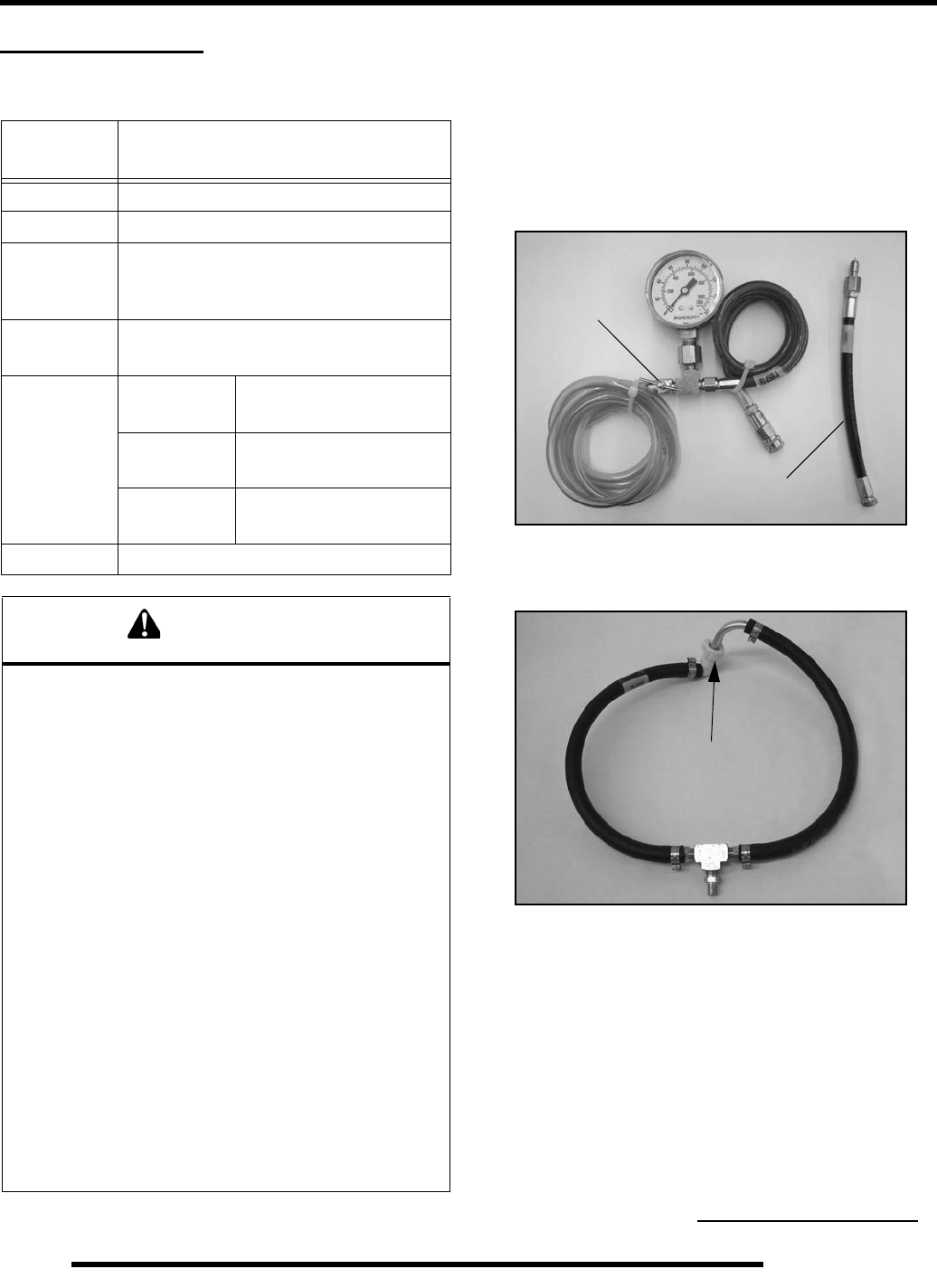
4.2
ELECTRONIC FUEL INJECTION
SPECIAL TOOLS
Part Numbers / Descriptions
Fuel Pressure Gauge Kit - PU-43506-A
IMPORTANT: The EFI fuel system remains under high
pressure, even when the engine is not running.
Before attempting to service any part of the fuel
system, pressure must be relieved (if applicable). The
Fuel Pressure Gauge Kit has an integrated pressure
relief valve that can be used to bleed off pressure once
you have completed the fuel pressure test.
Fuel Pressure Gauge Adaptor - PV-48656
Digital Wrench™ EFI Diagnostic Software
PU-47063
This dealer-only software installs on laptop computers equipped
with a CD drive and serial port connection, and is designed to
replace multiple shop tools often used to test EFI components.
It also includes step-by-step diagnostic procedures to aid
technician repair and troubleshooting.
IMPORTANT: For the most recent information on
Digital Wrench™ software and fileset downloads
please visit the website: www.polaris.diagsys.com
PART
NUMBER TOOL DESCRIPTION
PU-43506-A Fuel Pressure Gauge Kit
PV-48656 Fuel Pressure Gauge Adaptor
PU-47063 Digital Wrench™ Diagnostic Software
(Includes most recent version of software
and a serial number)
PU-47471 Digital Wrench™ SmartLink Module Kit
(PU-47470, PU-47469, PU-47468)
PU-47470 Digital Wrench™
PC Interface Cable
PU-47469 Digital Wrench™
Vehicle Interface Cable
PU-47468 Digital Wrench™
SmartLink Module
2201519 Throttle Position Sensor Tester
WARNING
• Gasoline is extremely flammable and explosive under
certain conditions.
• EFI components are under high pressure. Verify
system pressure has been relieved before
disassembly.
• Never drain the fuel system when the engine is hot.
S e v e r e b u r n s m a y r e s u l t .
• Do not overfill the tank. The tank is at full capacity
when the fuel reaches the bottom of the filler neck.
Leave room for expansion of fuel.
• Never start the engine or let it run in an enclosed area.
Gasoline powered engine exhaust fumes are
poisonous and can cause loss of consciousness and
death in a short time.
• Do not smoke or allow open flames or sparks in or
near the area where refueling is performed or where
gasoline is stored.
• If you get gasoline in your eyes or if you should
swallow gasoline, seek medical attention immediately.
• If you spill gasoline on your skin or clothing,
immediately wash with soap and water and change
clothing.
• Always stop the engine and refuel outdoors or in a
well ventilated area.
Relief Valve
Adaptor shown is
included with kit.
Adaptor works with
PU-43506-A
Disconnect here and connect
in-line w/fuel pump outlet
PartShark.com
877-999-5686
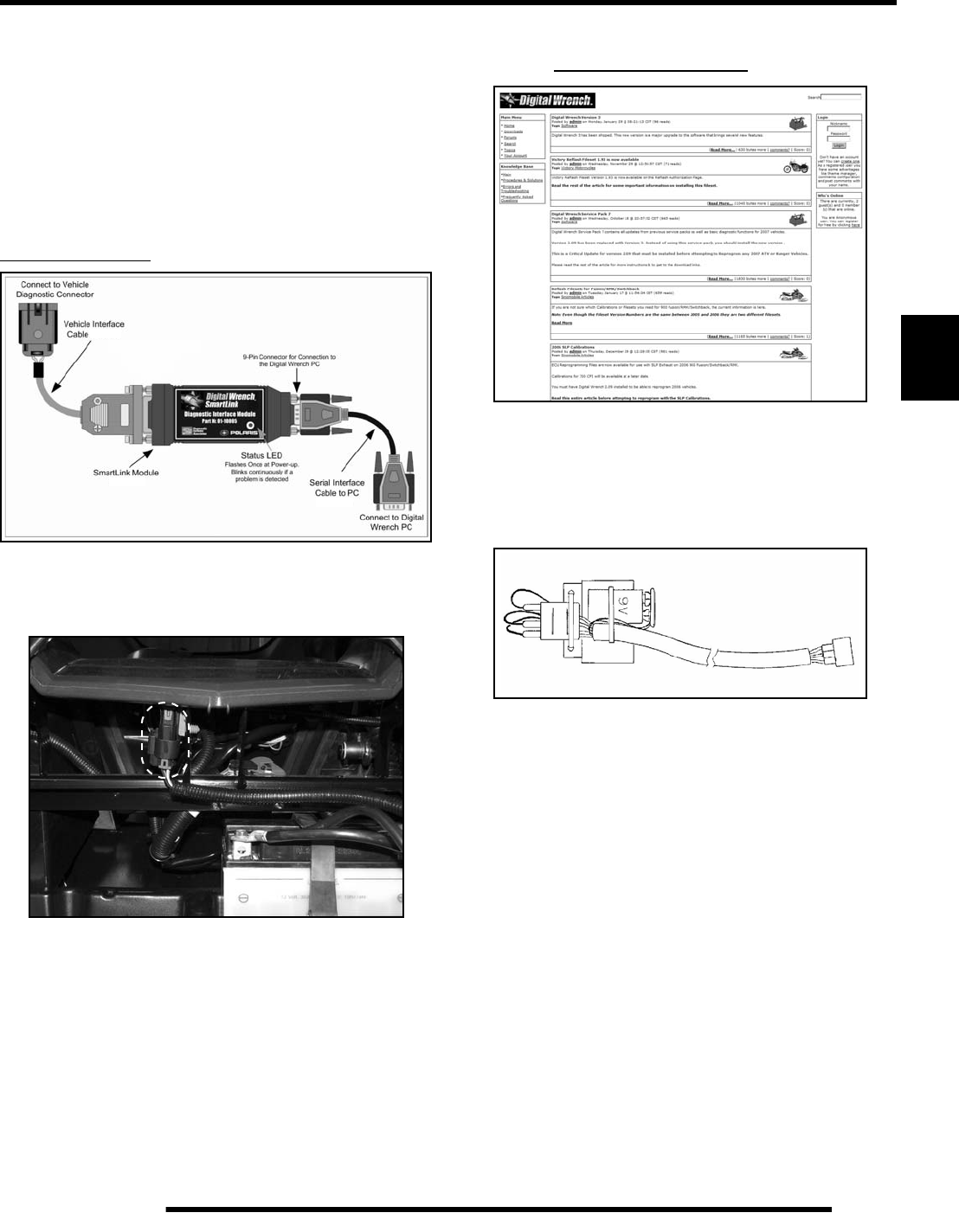
4.3
ELECTRONIC FUEL INJECTION
4
Digital Wrench™
SmartLink Module Kit - PU-47471
This module kit contains the necessary cables and hardware to
communicate between the vehicle ECU and the Digital
Wrench™ diagnostic software. Polaris dealers can also order
the following separately: SmartLink Module PU-47468,
Vehicle Interface Cable PU-47469 and PC Interface Cable
PU-47470. This kit is available to Polaris dealers through SPX
by calling 1-800-328-6657 or by visiting their website:
http://polaris.spx.com.
Digital Wrench™ - Diagnostic Connector
(Located under the hood as shown below)
Digital Wrench™ - Download Website
Located at: www.polaris.diagsys.com
Throttle Position Sensor Tester - 2201519
This tester allows the use of a digital multi-meter to test TPS
function and perform the “TPS Adjustment” procedure. Polaris
Dealers can order special tools from SPX.
PU-47468
PU-47469
PU-47470
PartShark.com
877-999-5686
4.4
ELECTRONIC FUEL INJECTION
EFI SERVICE NOTES
General Service Information
•For more convenient and accurate testing of EFI components, it is recommended dealers utilize the
Digital Wrench™ Diagnostic Software (dealer only), or limited testing may be done manually using
the procedures provided.
•80% of all EFI problems are caused by wiring harness connections. Follow a common sense
approach when diagnosing a potential EFI issue:
1. Disconnect the harness at the suspected sensor connector.
2. Inspect the connector ends for damage or contamination. If damaged, repair; if contaminated, clean. Reconnect and
check function.
3. If the problem persists, perform a sensor bench test according to the specific sensor requirements.
4. If the sensor bench tests pass, disconnect the connector at the ECU and perform a continuity check between the sensor
connector and the appropriate pin at the ECU connector (all connections for that sensor). Wiring resistance should be
less than five (5) ohms.
5. If the resistance is high (or open), a wiring harness inspection is dictated (including a thorough inspection of the ECU
connector for contamination or damage).
6. If the sensor passes and the wiring passes inspection, and reconnecting the ECU does not resolve the issue, then at that
point a known-good ECU (from another 500 EFI) could be connected and tested for problem resolution.
• For the purpose of troubleshooting difficult running issues, a known-good ECU from another Polaris
RANGER 500 EFI system may be used without damaging system or engine components.
• Do not use dielectric grease on sealed connectors (connectors with a rubber grommet), as it may
displace the rubber seal and allow contaminants to enter the connector.
• Never attempt to service any fuel system component while engine is running or ignition switch is
turned to "on".
•USE CARE when removing or installing the ECU connector, as well as all other harness
connections on the unit. Dirt, even in small quantities, can cause significant problems. Clean
connectors thoroughly before opening to prevent dirt from entering. Properly connect and disconnect
the ECU harness to minimize damage to the connector pins and locking mechanism.
• Do not use compressed air if the EFI system is open. Cover any parts removed and wrap any open
joints with plastic if they will remain open for any length of time. New parts should be removed from
their protective packaging just prior to installation.
• Although every precaution has been taken to prevent water intrusion failure, avoid direct water or
spray contact with system components.
• Do not disconnect or reconnect the wiring harness connector to the ECU or any individual components
with the ignition "on." This can send a damaging voltage spike through the ECU.
• Do not allow the battery cables to touch opposing terminals. When connecting battery cables attach the
positive (+) cable to positive (+) battery terminal first, followed by negative (-) cable to negative (-)
battery terminal.
• Never start the engine when the cables are loose or poorly connected to the battery terminals.
• Never disconnect battery while engine is running.
• Never use a quick-start battery charger to start the engine.
•Always unplug ECU from the wire harness before performing any welding on the unit.
PartShark.com
877-999-5686
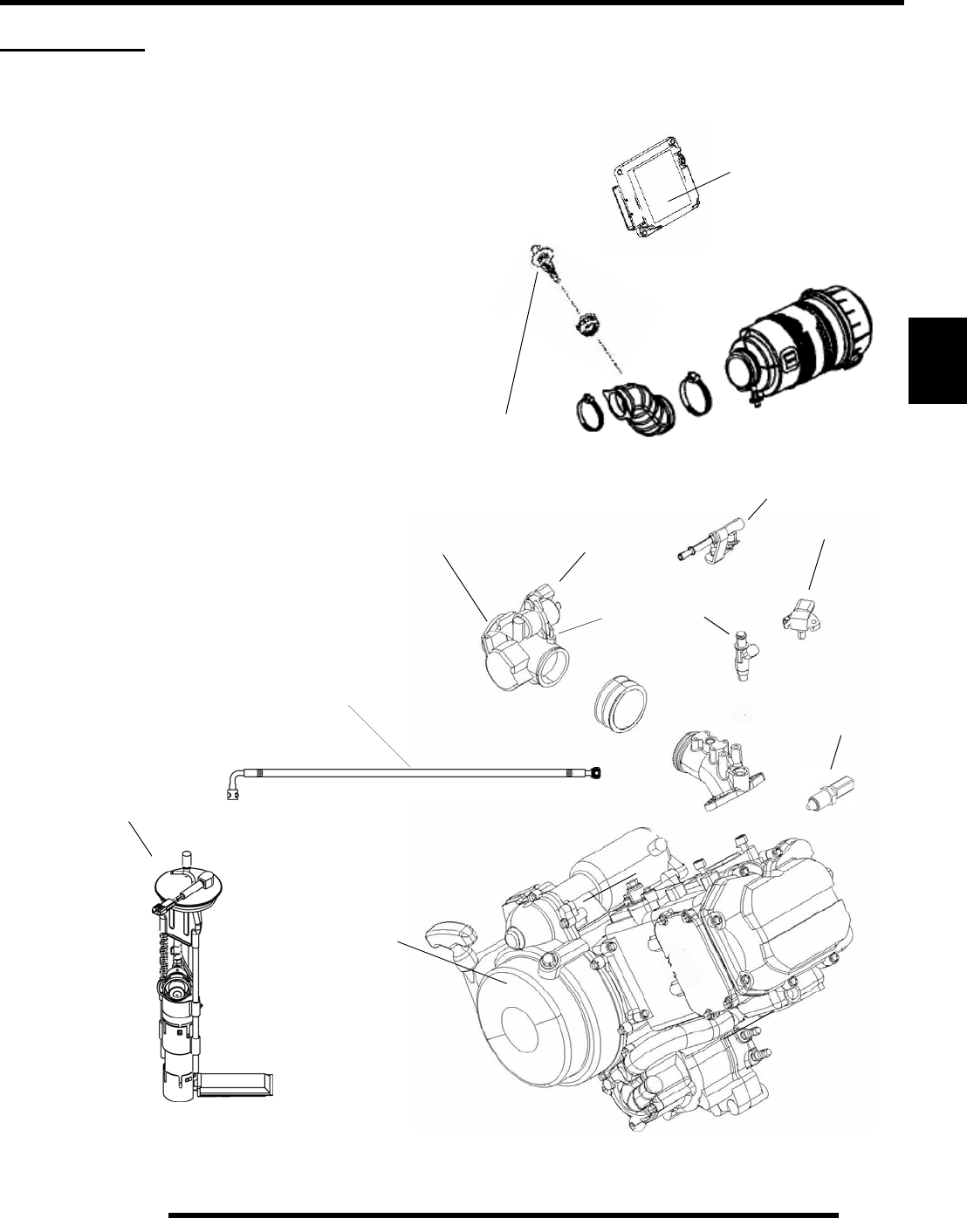
4.5
ELECTRONIC FUEL INJECTION
4
EFI SYSTEM
Exploded View
1. Electronic Control Unit (ECU)
2. Manifold Absolute Pressure Sensor (MAP)
3. Intake Air Temperature Sensor (IAT)
4. Idle Air Control (IAC)
5. Crankshaft Position Sensor (CPS - inside cover)
6. Fuel Injector
7. Fuel Line
8. Fuel Pump / Regulator (inside Fuel Tank Asm)
9. Engine Coolant Temperature Sensor (ECT)
10. Throttle Position Sensor (TPS) LH side of Throttle body
11. Throttle Body
12. Fuel Rail
1
2
3
4
5
6
12
9
11
10
8
3
7
PartShark.com
877-999-5686
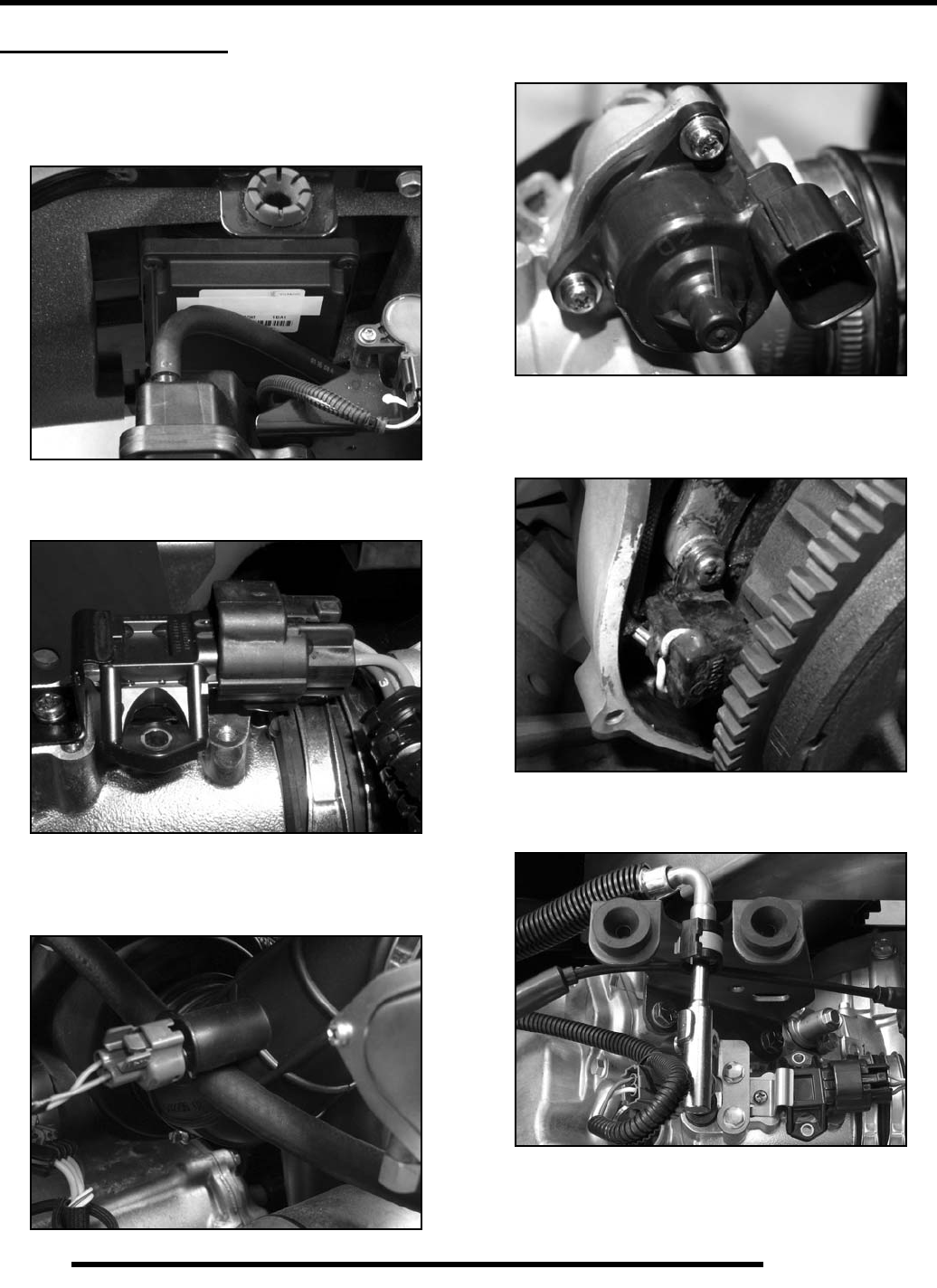
4.6
ELECTRONIC FUEL INJECTION
EFI COMPONENTS
Identification / Location
1. Electronic Control Unit (ECU)
Located under the seat on the driver’s side.
2. Manifold Absolute Pressure Sensor (MAP)
Located on top of the intake manifold.
3. Intake Air Temperature Sensor (IAT)
Located in the rubber intake boot between the air box and
throttle body.
4. Idle Air Control (IAC)
Located on top of the Throttle body
5. Crankshaft Position Sensor (CPS)
Located inside the magneto cover on the right-hand side of
the engine.
6. Fuel Rail
Attached to the fuel injector located in the intake manifold.
PartShark.com
877-999-5686
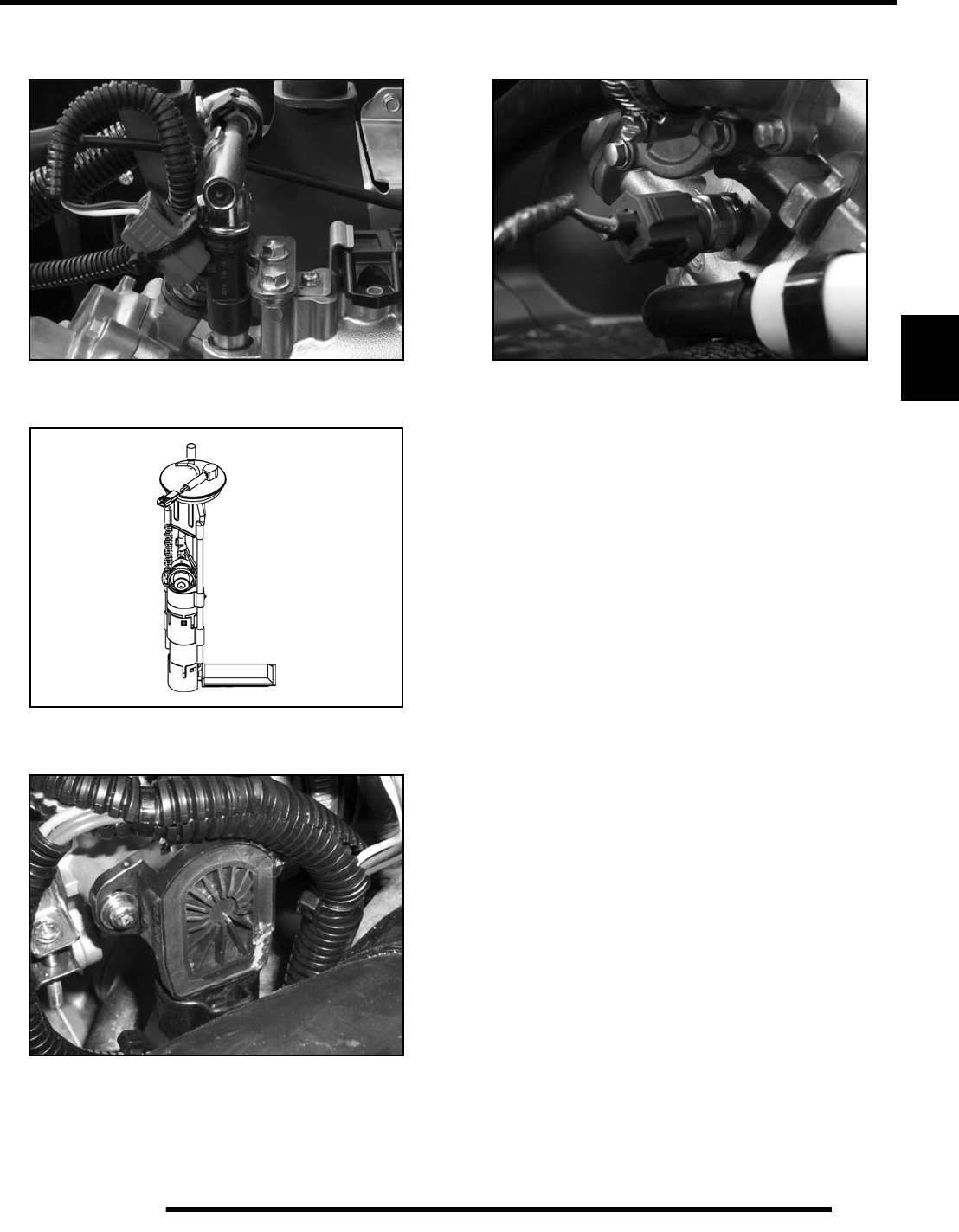
4.7
ELECTRONIC FUEL INJECTION
4
7. Fuel Injector
Located in the intake manifold.
8. Fuel Pump / Regulator Assembly
Located in the fuel tank as an assembly.
9. Throttle Position Sensor (TPS)
Located on the left-hand side of the throttle body.
10. Engine Coolant Temperature Sensor (ECT)
Located in the cylinder head.
4 & 7
2
9 & 10
3
PartShark.com
877-999-5686
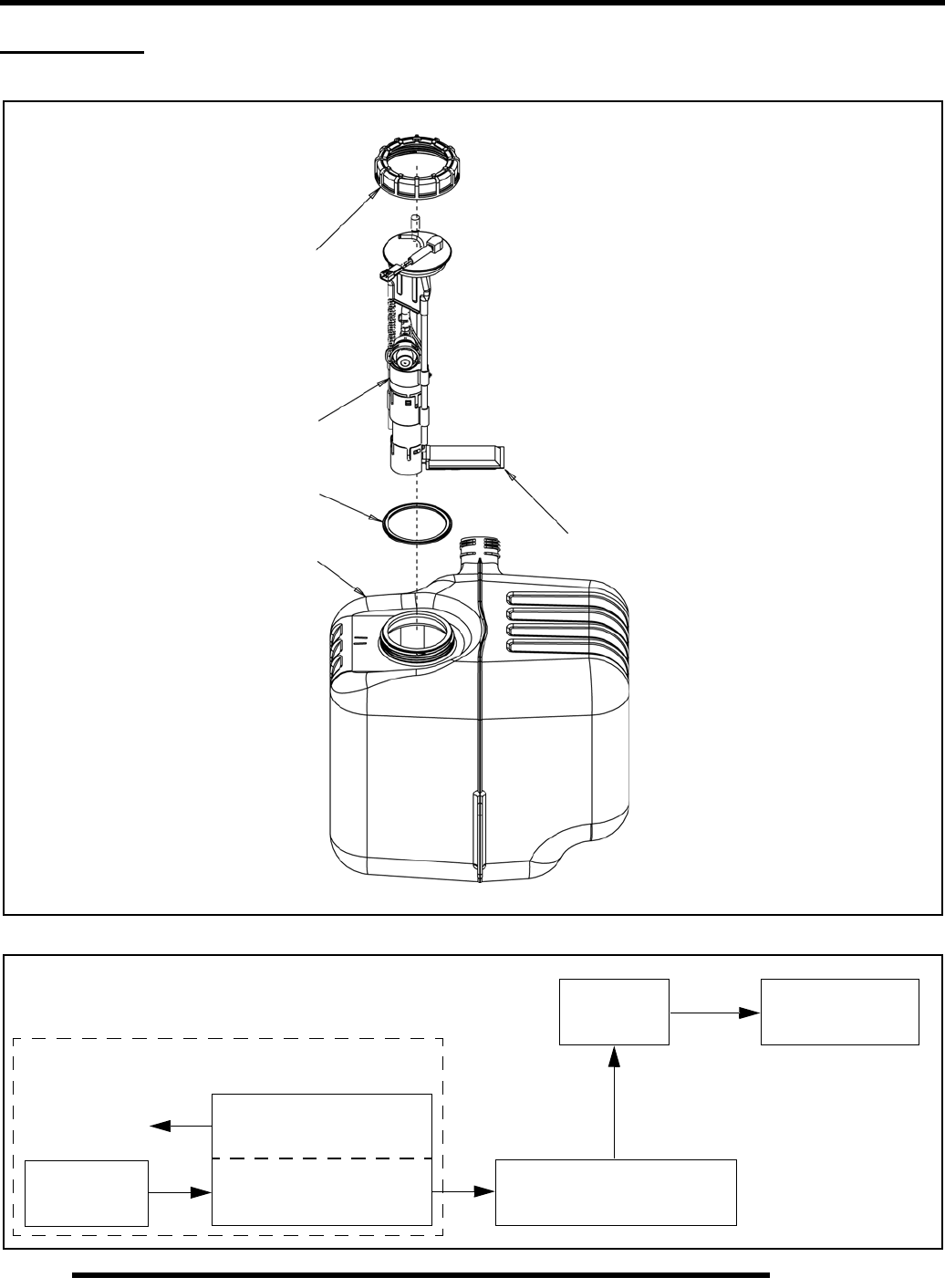
4.8
ELECTRONIC FUEL INJECTION
FUEL TANK
Exploded View
NOTE: Fuel Pump is NOT Serviceable
PFA Nut
Fuel Pump / Regulator
PFA Gasket
Fuel Tank Assembly Preliminary Filter
Fuel Flow
Fuel Filters Fuel Pump Assembly Quick Connect Fuel Line
Fuel Rail Fuel Injector
Pressure Regulator
Fuel Tank
PartShark.com
877-999-5686
4.9
ELECTRONIC FUEL INJECTION
4
ELECTRONIC FUEL INJECTION
General Information
The Electronic Fuel Injection (EFI) system is a complete engine
fuel and ignition management design. This system contains the
following principal components:
• Fuel Pump
• Fuel Rail
• Fuel Line(s)
• Fuel Filter(s)
• Fuel Injector
• Pressure Regulator
• Throttle Body / lntake Manifold
• Electronic Control Unit (ECU)
• Ignition Coil
• Engine Coolant Temperature Sensor (ECT)
• Throttle Position Sensor (TPS)
• Crankshaft Position Sensor (CPS)
• Manifold Absolute Pressure Sensor (MAP)
• Idle Air Control (IAC)
• Intake Air Temperature Sensor (IAT)
• Wire Harness Assembly
•Check Engine Light (MIL)
EFI Operation Overview
The EFI system is designed to provide peak engine performance
with optimum fuel efficiency and lowest possible emissions.
The ignition and injection functions are electronically
controlled, monitored and continually corrected during
operation to maintain peak performance.
The central component of the system is the Visteon Electronic
Control Unit (ECU) which manages system operation,
determining the best combination of fuel mixture and ignition
timing for the current operating conditions.
An in-tank electric fuel pump is used to move fuel from the tank
through the fuel line and in-line fuel filter. The in-tank fuel
pressure regulator maintains a system operating pressure of 39
psi and returns any excess fuel to the tank. At the engine, fuel is
fed through the fuel rail and into the injector, which injects into
the intake port. The ECU controls the amount of fuel by varying
the length of time that the injectors are "on." This can range from
1.5-8.0 milliseconds depending on fuel requirements. The
controlled injection of the fuel occurs every other crankshaft
revolution, or once for each 4-stroke cycle. The total amount of
fuel needed for one firing of a cylinder is injected during each
cycle. When the intake valve opens, the fuel/air mixture is
drawn into the combustion chamber, ignited and burned.
The ECU controls the amount of fuel being injected and the
ignition timing by monitoring the primary sensor signals for air
temperature, manifold absolute pressure, engine temperature,
engine speed (RPM), and throttle position (load). These primary
signals are compared to the programming in the ECU computer
chip, and the ECU adjusts the fuel delivery and ignition timing
to match the values.
During operation, the ECU has the ability to re-adjust
temporarily; providing compensation for changes in overall
engine condition and operating environment, so it will be able
to maintain the ideal air/fuel ratio.
During certain operating periods such as cold starts, warm up,
acceleration, etc., a richer air/fuel ratio is automatically
calculated by the ECU.
Initial Priming / Starting Procedure
NOTE: The injection system must be purged of all
air prior to the initial start up, and/or any time the
system has been disassembled.
If the EFI system is completely empty of fuel or has been
disassembled and repaired:
1. Cycle the key switch from “OFF” to “ON” 6 times,
waiting for approximately 3 seconds at “ON” and 5
seconds at “OFF” in sequence to allow the fuel pump to
cycle and shut down.
2. Once step 1 is completed, turn the key switch to “START”
until the engine starts or 5 seconds has passed.
3. If the engine failed to start, repeat step 1 for 2 more cycles
and attempt to start the engine.
If the engine fails to start, a problem may still exist, and should
be diagnosed.
NOTE: Accurate testing of EFI components is
recommended utilizing the Digital Wrench™
Diagnostic Software (dealer only).
PartShark.com
877-999-5686
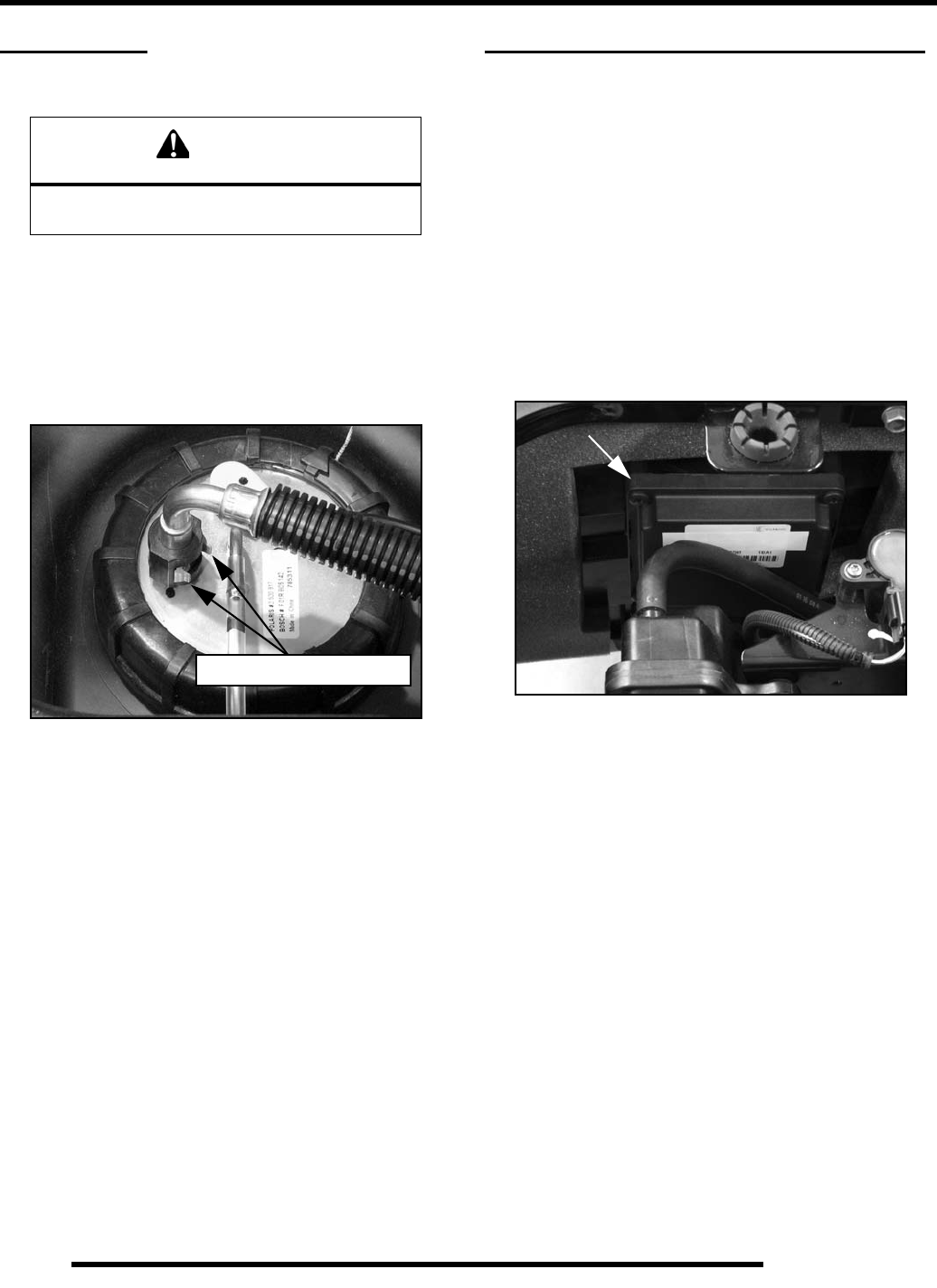
4.10
ELECTRONIC FUEL INJECTION
FUEL LINES
Quick Connect Removal / Installation
RANGER 500 EFI models use quick connect fuel lines. Refer
to the steps for fuel line removal / installation:
1. Thoroughly clean the connector and place a shop towel
around the fuel line to catch any dripping fuel.
2. Squeeze the connector tabs together and slide the green
retainer forward.
3. Lift up on the fuel line to remove from the fuel pump outlet.
4. To install the line, verify the connector and fuel pump outlet
are clean and free of debris.
5. Place the connector end over the fuel pump outlet and push
the green retainer and tabs back into place.
6. Repeat this process to remove the fuel line from the fuel rail.
ELECTRONIC CONTROL UNIT (ECU)
Operation Overview
The ECU is the brain or central processing computer of the
entire EFI fuel / ignition management system. During operation,
sensors continuously gather data which is relayed through the
wiring harness to input circuits within the ECU. Signals to the
ECU include: ignition (on/off), crankshaft position and speed
(RPM), throttle position, engine coolant temperature, air
temperature, intake manifold air pressure and battery voltage.
The ECU compares the input signals to the programmed maps
in its memory and determines the appropriate fuel and spark
requirements for the immediate operating conditions. The ECU
then sends output signals to set the injector duration and ignition
timing.
During operation, the ECU continually performs a diagnostic
check of itself, each of the sensors, and system performance. If
a fault is detected, the ECU turns on the Malfunction Indicator
Light (MIL) (Check Engine Light) on the speedometer and
stores the fault code in its fault memory. A technician can
access the stored fault codes manually using a “blink code”
diagnosis flashed out through the instrument cluster or using the
Digital Wrench™ Diagnostic Software. The ECU requires a
minimum of 7.0 volts to operate. The memory in the ECU is
operational the moment the battery cables are connected.
Depending on the significance or severity of the fault, normal
operation may continue, or a "Fail-Safe" operation may be
initiated. In the event a “Fail-Safe” mode occurs, a base fueling
table is used to determine the injector pulse width. This strategy
will not compensate for engine temperature, intake air
temperature, or altitude change, but instead operates based on
the latest valid information taken from those sensors.
To prevent engine over-speed and possible failure, an RPM-
limiting feature is programmed into the ECU. If the maximum
RPM limit (7000) is exceeded, the ECU will suppress the
ignition signal or injection signal. This process repeats itself in
rapid succession, limiting operation to the preset maximum.
CAUTION
Verify fuel system has been depressurized
before performing this procedure.
Squeeze Connector Tabs
ECU
PartShark.com
877-999-5686
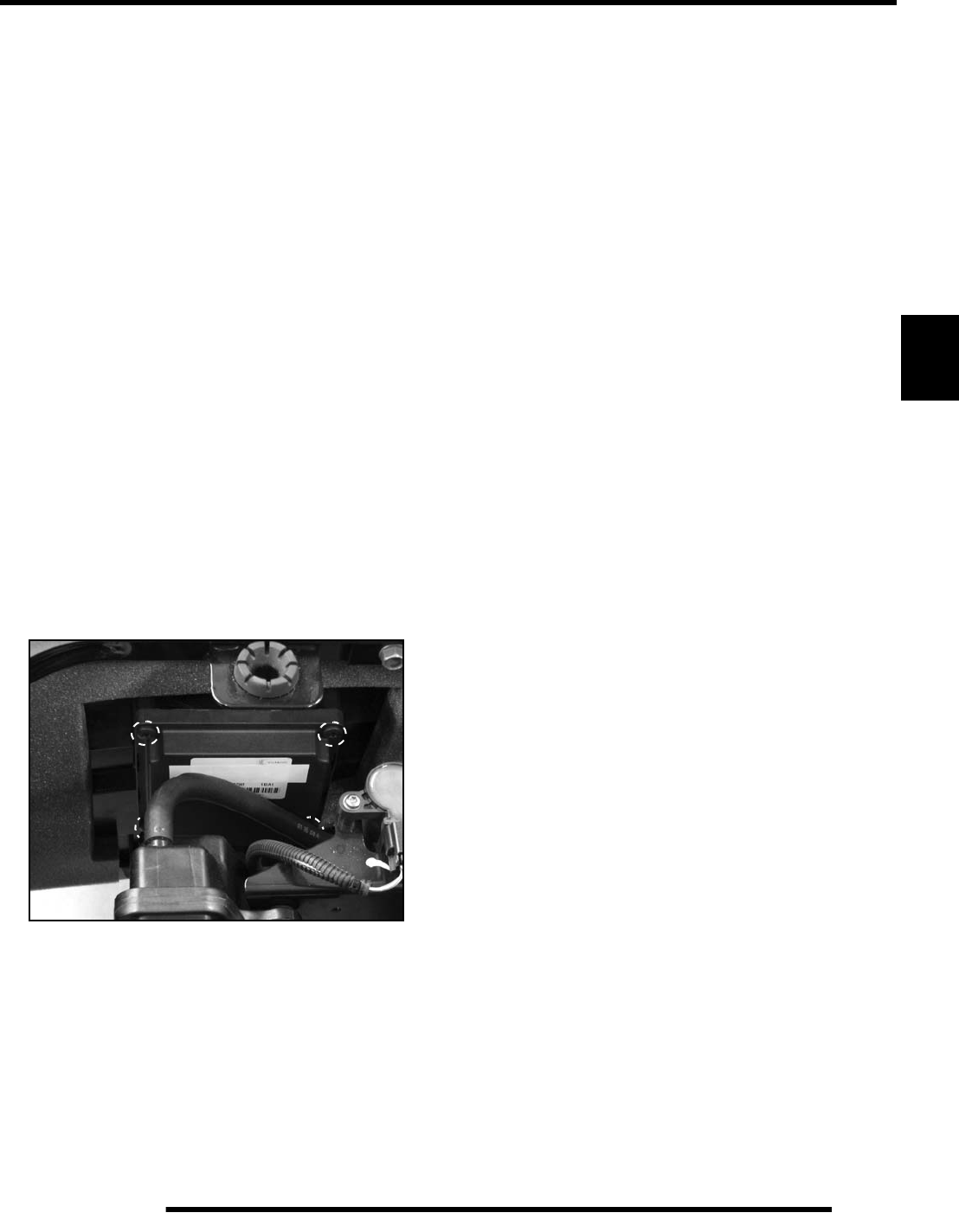
4.11
ELECTRONIC FUEL INJECTION
4
RANGER 500 EFI RPM Limit:
This EFI system utilizes 2 methods -
“Hard” Limit - Ignition suppression occurs when RPM peaks
rapidly:
• High: 7000 RPM
• Returns: 6900 RPM
“Soft” Limit - Injector suppression occurs when RPM reaches
peak gradually:
• High: 7000 RPM
• Returns: 6900 RPM
RPM limits may vary slightly under operating conditions.
ECU Replacement
1. Remove the lower seat base.
2. With the ignition turned off, disconnect the wire harness by
pulling the black slider away from the ECU. Once the slider
is fully extended, pull the connector from the ECU, using
great care not to damage the harness connector or locking
mechanism.
3. Remove the (4) screws retaining the ECU and remove it
from the vehicle.
NOTE: Should the black slider become broken,
replacement parts are available.
4. To install, reverse the procedures, DO NOT apply
dielectric grease to the connector, as it is a sealed connector.
Install the upper-left retaining screw spacer and screws.
Tighten screws to 10 in. lbs. (1.1 Nm).
ECU Service
Never attempt to disassemble the ECU. It is sealed to prevent
damage to internal components. Warranty is void if the case is
opened or tampered with in any way.
All operating and control functions within the ECU are pre-set.
No internal servicing or readjustment may be performed. If a
problem is encountered, and you determine the ECU to be
faulty, contact the Polaris Service Department for specific
handling instructions. Do not replace the ECU without factory
authorization.
The relationship between the ECU and the throttle position
sensor (TPS) is very critical to proper system operation. If the
TPS is faulty, or the mounting position of the TPS is altered, the
TPS must be adjusted.
For the purpose of troubleshooting, a known-good ECU from
another Polaris RANGER 500 EFI may be used without system
or engine component damage.
PartShark.com
877-999-5686
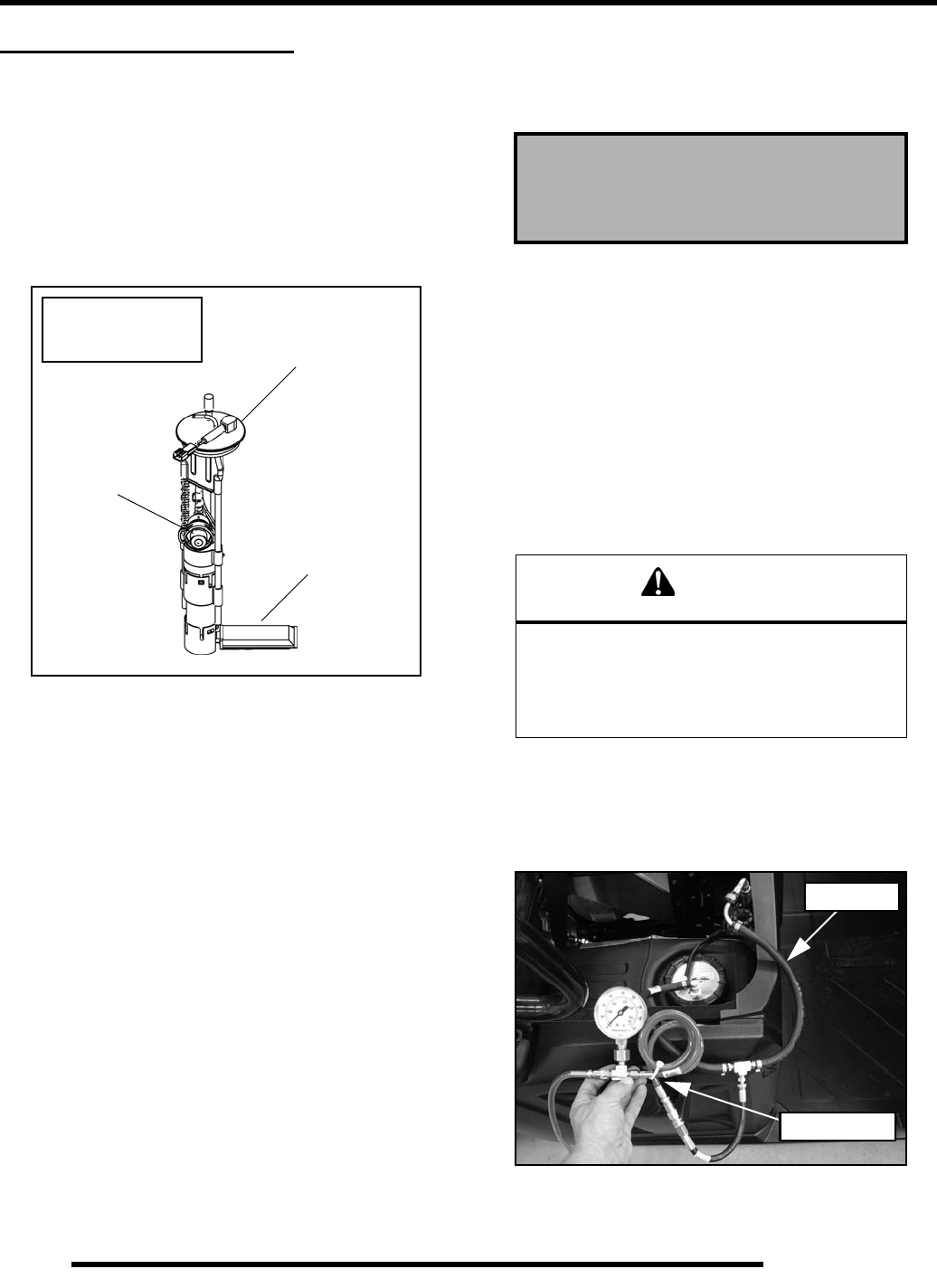
4.12
ELECTRONIC FUEL INJECTION
FUEL PUMP ASSEMBLY
Operation
NOTE: All EFI units utilize quick connect fuel lines.
An electric fuel pump assembly is used to transfer fuel to the EFI
system from inside the fuel tank. This assembly includes the fuel
pump, regulator and fuel gauge sender. The pump is rated for a
minimum output of 25 liters per hour at 39 psi and has a non-
serviceable internal 60-micron filter.
When the key switch is turned to "ON", the ECU activates the
fuel pump, which pressurizes the system for start-up.
The ECU switches off the pump preventing the continued
delivery of fuel in these instances:
• If the key switch is not promptly turned to the "start"
position.
• If the engine fails to start.
• If the engine is stopped with the key switch "ON" (as in
the case of an accident).
In these situations, the “check engine” light will go on, but will
turn off after 4 cranking revolutions if system function is OK.
Once the engine is running, the fuel pump remains on.
Fuel Sender Test
If the fuel gauge reading on the instrument cluster is not
working, or if the display reading differs in large comparison to
the fuel in the tank, perform a resistance test on the fuel sender.
Disconnect the fuel pump / sending unit connection and measure
the resistance between the Purple and Brown wires (see chapter
10 for further details). If out of specification, replace the fuel
pump / tank assembly.
Fuel Pump Test
NOTE: The fuel pump/tank assembly is a non-
serviceable assembly and must be replaced if
determined to be faulty. If a fuel delivery problem is
suspected, make certain the pump is being activated
by the ECU and fuel pump relay, all electrical
connections are properly secured, the fuses are
good, and a minimum of 7.0 volts is being supplied.
If during starting, the battery voltage drops below 7.0
volts, a reduction of fuel pressure may occur
resulting in a lean starting condition.
1. Cover the fuel line connection with a shop towel and
disconnect the fuel line from the fuel pump.
2. Install the Fuel Pressure Gauge Adaptor (PV-48656) in-line
between the fuel pump outlet and fuel line.
Fuel pump is not
serviceable, picture
for reference only. Fuel Pump
Internal 60 Micron
Strainer (Bottom)
Regulator
Fuel Sender Resistance Specifications:
Full: 90 Ω
Empty: 5 Ω
CAUTION
Fuel is extremely flammable and may cause
severe burns, injury, or death.
Do not use any device that produces a flame or
electrical devices that may spark around
fuel or fuel vapors.
PV-48656
PU-43506-A
PartShark.com
877-999-5686
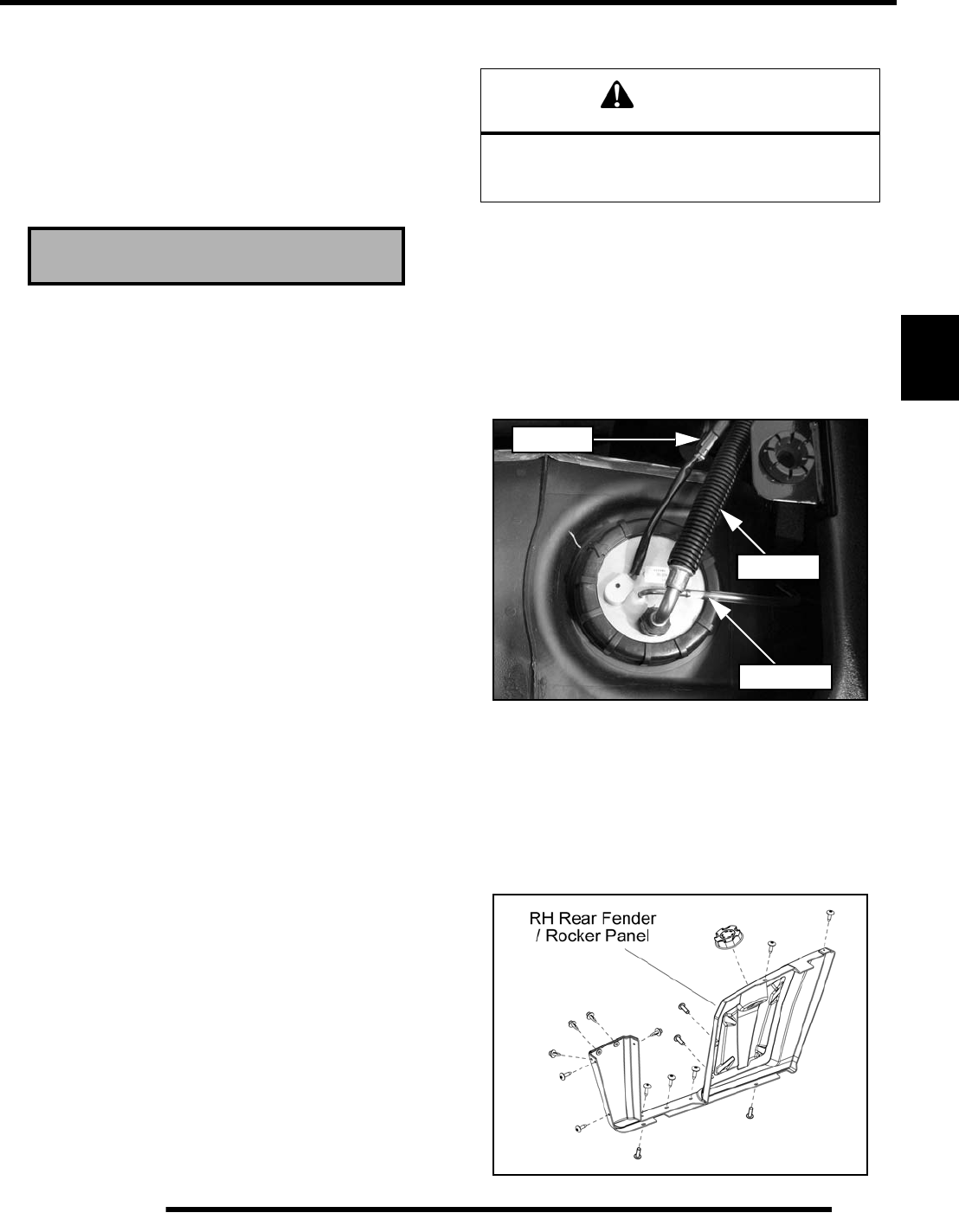
4.13
ELECTRONIC FUEL INJECTION
4
3. Connect the hose from the Fuel Pressure Gauge Kit (PU-
43506-A) to the test valve on the Fuel Pressure Gauge
Adaptor. Route the clear hose into a portable gasoline
container or the vehicle’s fuel tank.
4. Turn on the key switch to activate the pump and check the
system pressure on the gauge. If system pressure of 39 psi
± 3 is observed, turn the key switch “off” and depress the
valve button on the tester to relieve the system pressure.
NOTE: If the pressure is too high or too low, replace
the fuel pump / tank assembly.
5. If the pump did not activate (Step 4), disconnect the plug
from the fuel pump. Connect a DC voltmeter across
terminals “A” and “C” in the plug on the vehicle harness
side. Turn on the key switch and observe voltage to ensure
a minimum of 7 volts is present.
NOTE: If the voltage was below 7 VDC, test battery,
ignition switch, fuel pump relay and wiring harness.
6. If the reading is between 7 and 14 volts, turn key switch off
and connect an ohmmeter between the terminals “A” and
“C”' in the plug on the pump harness to check for continuity
within the fuel pump.
NOTE: If there was no continuity between the pump
terminals, replace the fuel pump / tank assembly.
7. If voltage at the plug was within the specified range, and
there was continuity across the pump terminals, reconnect
the plug to the pump, making sure you have clean
connections. Turn on the key switch and listen for the pump
to activate.
NOTE: If the pump starts, verify you have the
correct amount of fuel pressure.
8. If the pump still does not operate, check ECU operation by
plugging in a known-good ECU of the same model.
NOTE: If the pump still does not operate, replace the
fuel pump / tank assembly.
Fuel Pump / Tank Assembly Replacement
NOTE: The fuel pump cannot be replaced as an
individual part. The entire fuel pump and fuel tank
must be replaced as an assembly. Refer to your
parts book for the proper part number.
1. Open hood and disconnect the negative (-) battery cable.
2. Remove the lower seat base.
3. Disconnect the fuel line and electrical harness from the fuel
pump.
NOTE: A small amount of fuel may come out of the
fuel line or tank. Plug the fuel line and tank inlet or
use a shop towel during removal.
4. Remove the fuel tank vent hose.
5. Remove the right rear fender/rocker panel assembly and the
fuel cap. Reinstall the fuel cap after the fender/rocker panel
has been removed.
Fuel Pump Pressure - 39 psi ± 3
WARNING
Always wear safety goggles when working with
high pressure or flammable fluids. Failure to do so
could result in serious injury or complications.
Harness
Vent Hose
Fuel Line
PartShark.com
877-999-5686
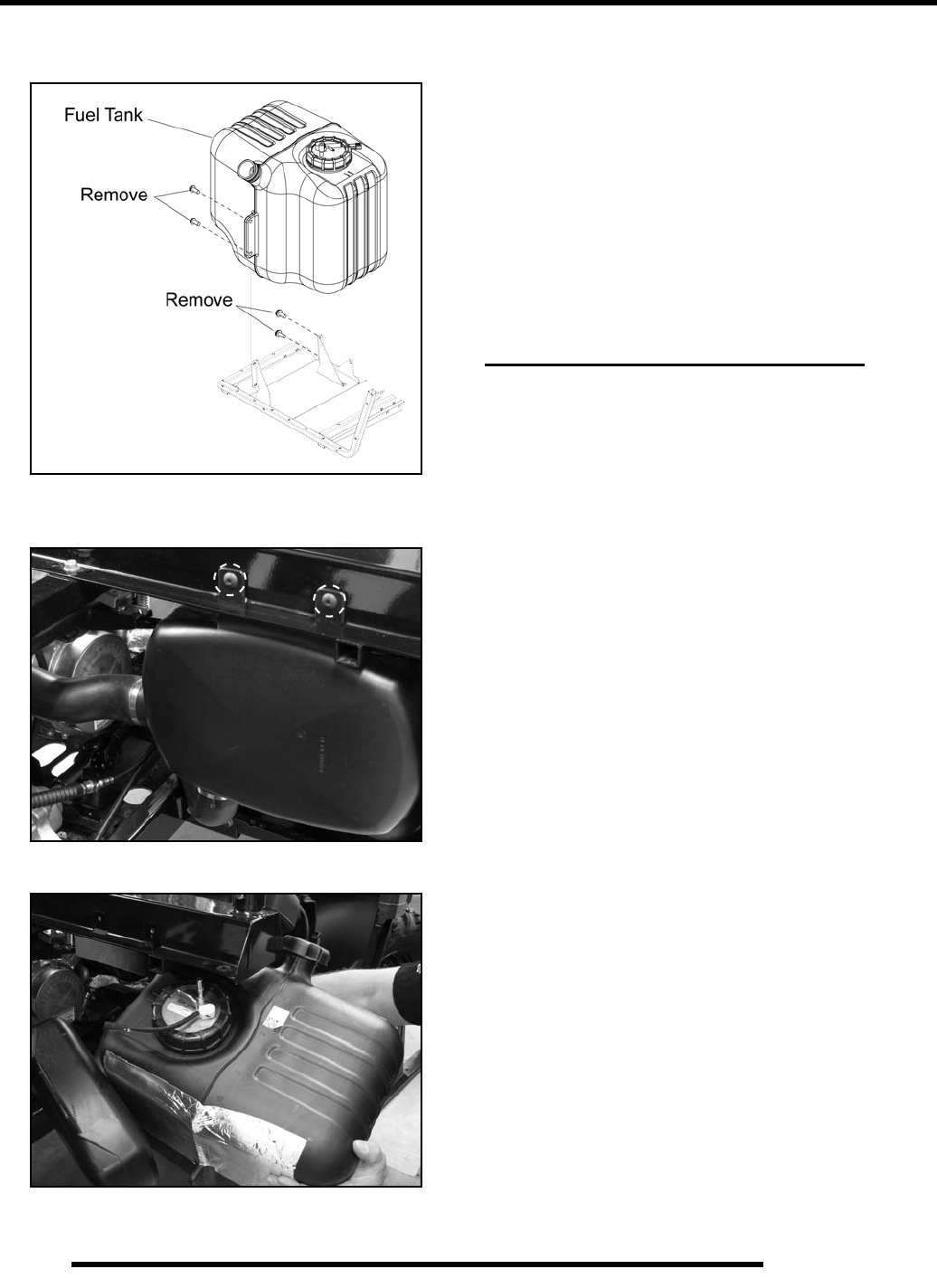
4.14
ELECTRONIC FUEL INJECTION
6. Remove the (4) bolts retaining the fuel tank to the frame
support.
7. Remove the (2) screws retaining the rear engine air intake
baffle box and allow the box to hang down out of the way.
8. Carefully remove the fuel tank out the RH side of the frame.
NOTE: Properly drain fuel into a suitable container.
Fuel Tank Installation
1. Reinstall the fuel pump / tank assembly.
2. Reinstall the (4) fuel tank mounting bolts.
3. Reinstall the baffle box and the (2) retaining screws.
4. Reconnect the fuel pump electrical harness.
5. Install the fuel line and vent line, and verify they are secure.
6. Reinstall the right rear fender/rocker panel assembly.
7. Reconnect the negative battery cable. Test the fuel pump
by turning on the key and listening for the pump to activate.
FUEL PRESSURE REGULATOR
General Information
The fuel pressure regulator maintains the required operating
system pressure of 39 psi ± 3 psi. A rubber-fiber diaphragm
divides the regulator into two separate sections: the fuel
chamber and the pressure regulating chamber. The pressure
regulating spring presses against the valve holder (part of the
diaphragm), pressing the valve against the valve seat. The
combination of atmospheric pressure and regulating spring
tension equals the desired operating pressure. Any time the fuel
pressure against the bottom of the diaphragm exceeds the
desired (top) pressure, the valve opens, relieving the excess
pressure, returning the excess fuel back to the tank.
Fuel Pressure Regulator Test
Refer to the “FUEL PUMP TEST” procedure.
Fuel Pressure Regulator Replacement
The regulator is a sealed, non-serviceable assembly. If it is
faulty, the pump/tank assembly must be replaced. Refer to the
Fuel Pump / Tank Assembly Replacement procedure.
PartShark.com
877-999-5686
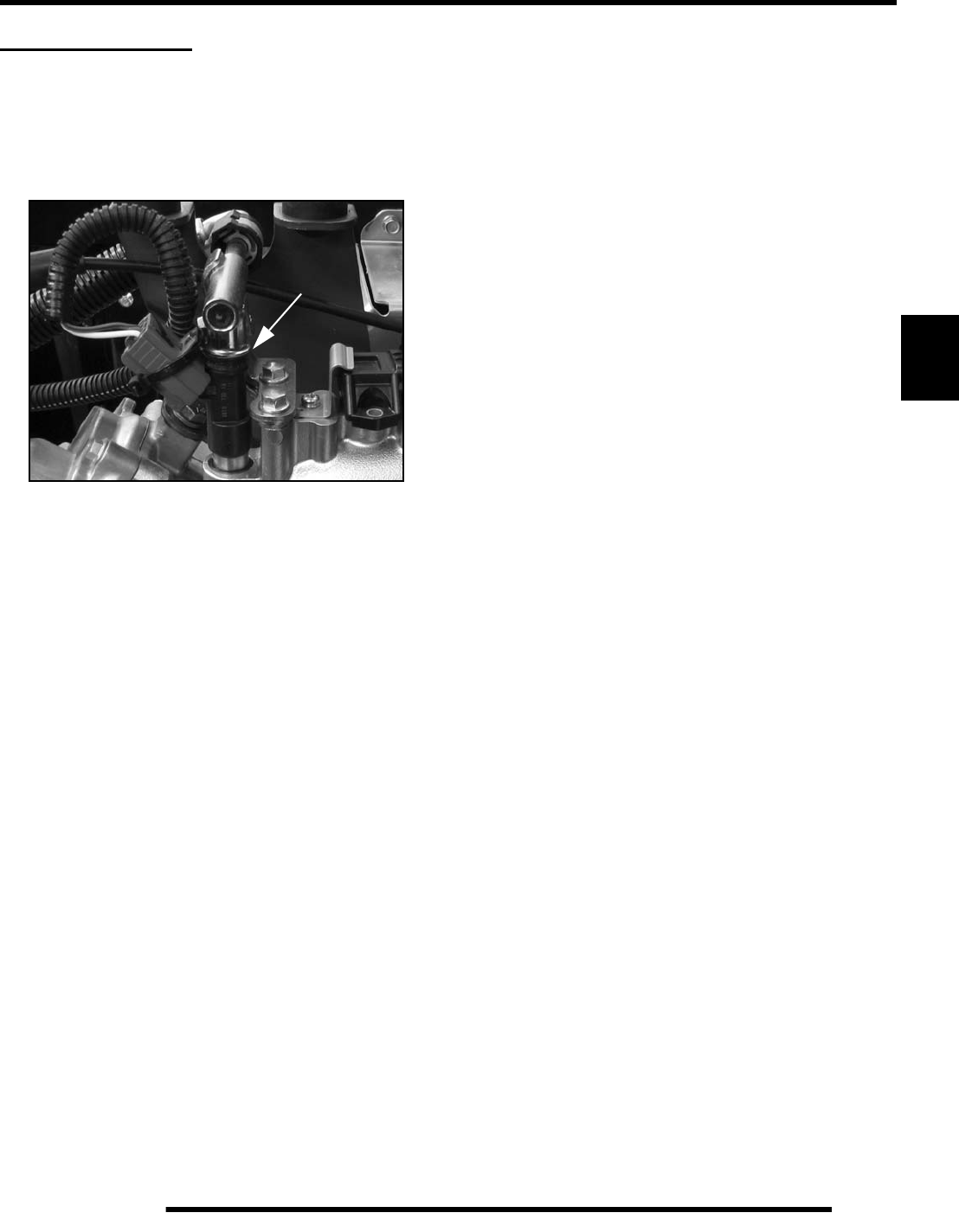
4.15
ELECTRONIC FUEL INJECTION
4
FUEL INJECTOR
General Information
The fuel injector mounts into the intake manifold, and the fuel
rail attaches at the top end. O-rings on both ends ofWKHLQMHFWRU
prevent external fuel leakage and also insulate itIURPKHDW
and vibration.
When the key switch is on, the fuel rail is pressurized. During
engine operation, the ECU completes the ground circuit, and the
ECU relay energizes the injector. The valve needle in the
injector is opened electromagnetically, and the pressure in the
fuel rail forces fuel down through the inside.
The “director plate” at the tip of the injector contains a series of
calibrated openings which directs the fuel into the intake port in
a cone-shaped spray pattern.
The injector is opened and closed once every other crankshaft
revolution. The total amount of fuel needed for one firing is
injected during each opening. The amount of fuel injected is
controlled by the ECU and determined by the length of time the
valve needle is held open, also referred to as the “injection
duration” or “pulse width”. It may vary in length from 1.5-8
milliseconds depending on the speed and load requirements of
the engine.
Fuel Injector Service
Injector problems typically fall into three general categories-
electrical, dirty/clogged, or leakage. An electrical problem
usually causes the injector to stop functioning.
NOTE: Do not apply voltage directly to the fuel
injector(s). Excessive voltage will burn out the
injector(s). Do not ground the injector with the
ignition “on”. lnjector will open/turn on if relay is
energized.
If an injector is not operating, it can indicate either a bad injector,
or a wiring/electrical connection problem. Check as follows:
Injector leakage is very unlikely, but in rare instances it can be
internal (past the tip of the valve needle), or external (weeping
around the injector body). The loss of system pressure from the
leakage can cause hot restart problems and longer cranking
times.
Injector problems due to dirt or clogging are unlikely due to the
design of the injectors, the high fuel pressure, the use of filters
and the detergent additives in the gasoline. However, symptoms
that could be caused by dirty/clogged injectors include rough
idle, hesitation/stumble during acceleration, or triggering of
fault codes related to fuel delivery. Injector clogging is usually
caused by a buildup of deposits on the director plate, restricting
the flow of fuel, resulting in a poor spray pattern. Some
contributing factors to injector clogging include; dirty air filters,
higher than normal operating temperatures, short operating
intervals and dirty, incorrect, or poor quality fuel. Cleaning of
clogged injectors is not recommended; they should be replaced.
Additives and higher grades of fuel can be used as a preventative
measure if clogging has been a problem.
Fuel Injector Test
If an injector is not operating, it can indicate either a bad injector,
or a wiring/electrical connection problem. Check as follows:
• Using an ohmmeter, test for continuity by placing the
test leads on each pin of the injector.
• Resistance specification is 12 Ω ± 0.4 Ω (20°C, 68°F)
Fuel
Injector
PartShark.com
877-999-5686
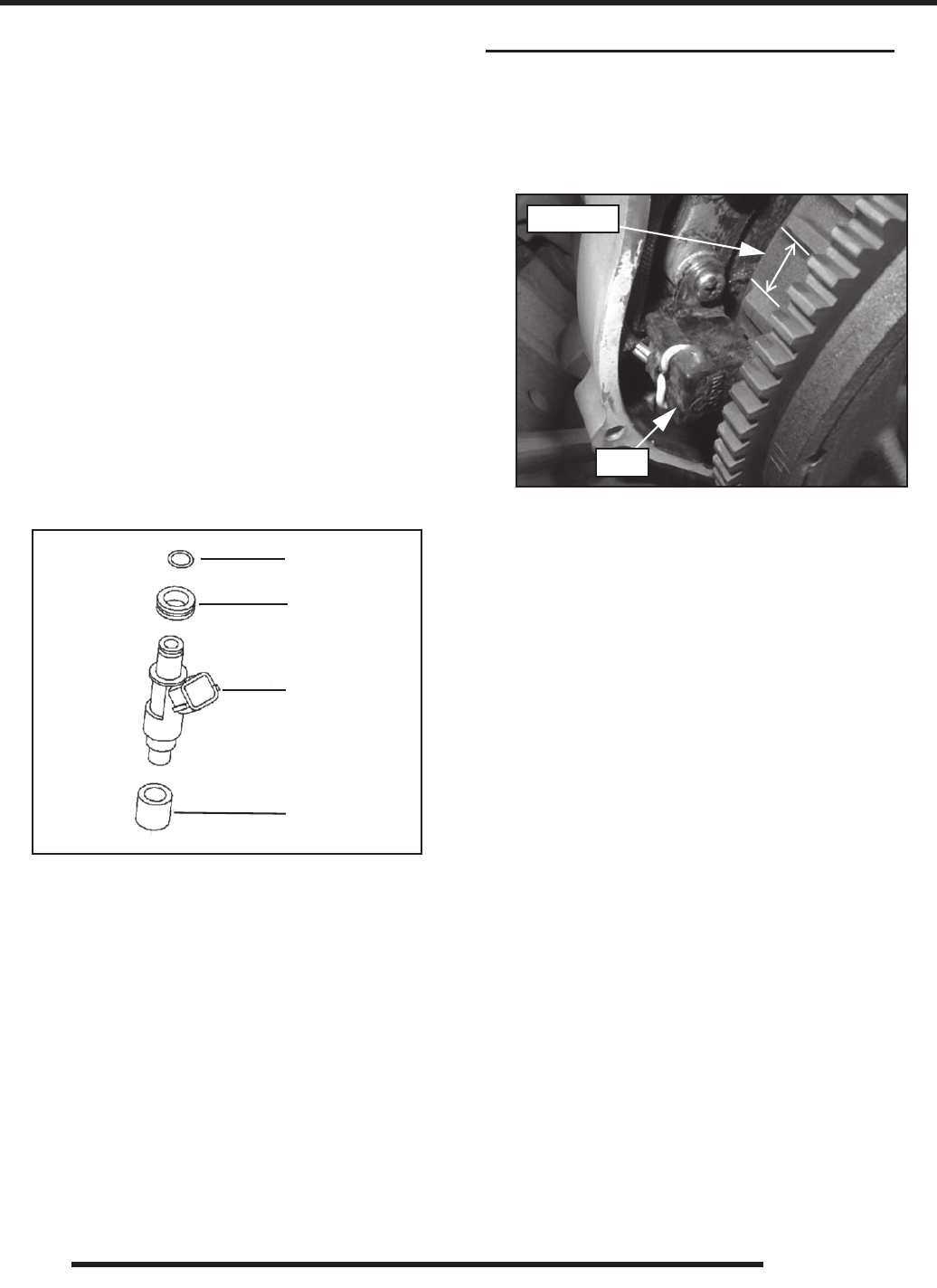
4.16
ELECTRONIC FUEL INJECTION
Fuel Injector Replacement
1. Engine must be cool.
2. Thoroughly clean the area around and including the throttle
body/manifold and the injector.
3. Disconnect the fuel injector harness.
4. Place a catch-container below the fuel line fitting at the fuel
rail and remove the fuel line.
5. Remove the fuel rail mounting screws, doubler plate and
carefully loosen / pull the rail away from the injector.
6. Reverse the procedures to install the new injector and
reassemble.
Lubricate the upper O-ring lightly with soapy water to aid
installation. The lower seal should remain dry.
Torque the fuel rail mounting screws to 5~7 ft. lbs. (6-9
Nm). Install the doubler plate and torque to 8~9.5 ft. lbs.
(11-13 Nm).
CRANK POSITION SENSOR (CPS)
General Information
The engine speed sensor is essential to engine operation,
constantly monitoring the rotational speed (RPM) of the
crankshaft.
A ferromagnetic 36-1 ring gear is cast onto the flywheel. The
inductive crankshaft sensor is mounted 0.4 - 1.2 mm (0.015 -
.047 in.) away from this ring gear. During rotation, an AC pulse
is created within the sensor for each passing tooth. The tooth
gap creates an “interrupt” input signal, corresponding to specific
crankshaft position for PTO cylinder. This signal serves as a
reference for the control of ignition timing by the ECU.
Within one (1) revolution at start-up, the ECU calculates
crankshaft position from the time interval between the
consecutive pulses. Synchronization of the CPS, ECU and MAP
sensor takes place during the first two (2) revolutions each time
the engine is started. Once the engine is started, the ECU
monitors the MAP sensor for the engine intake stroke. The CPS
must be properly connected at all times. If the sensor fails or
becomes disconnected for any reason, the engine will quit
operating.
CPS Test
The crankshaft position sensor is a sealed, non-serviceable
assembly. If fault code diagnosis indicates a problem within this
area, test and correct as follows:
1. Disconnect main harness connector from ECU.
2. Connect an ohmmeter between the pin terminals. A
resistance value of 185 Ω ± 20% at room temperature
(20° C, 68° F) should be obtained. If resistance is correct,
check the mounting, air gap, toothed ring gear (damage,
runout, etc.), and flywheel key.
3. Disconnect crankshaft sensor connector from wiring
harness. Test resistance between the terminals. A reading
of 185 Ω ± 20% at room temperature (20° C, 68° F) should
again be obtained.
Injector
O-Ring
Grommet
Injector
Seal
CPS
Interrupt
PartShark.com
877-999-5686
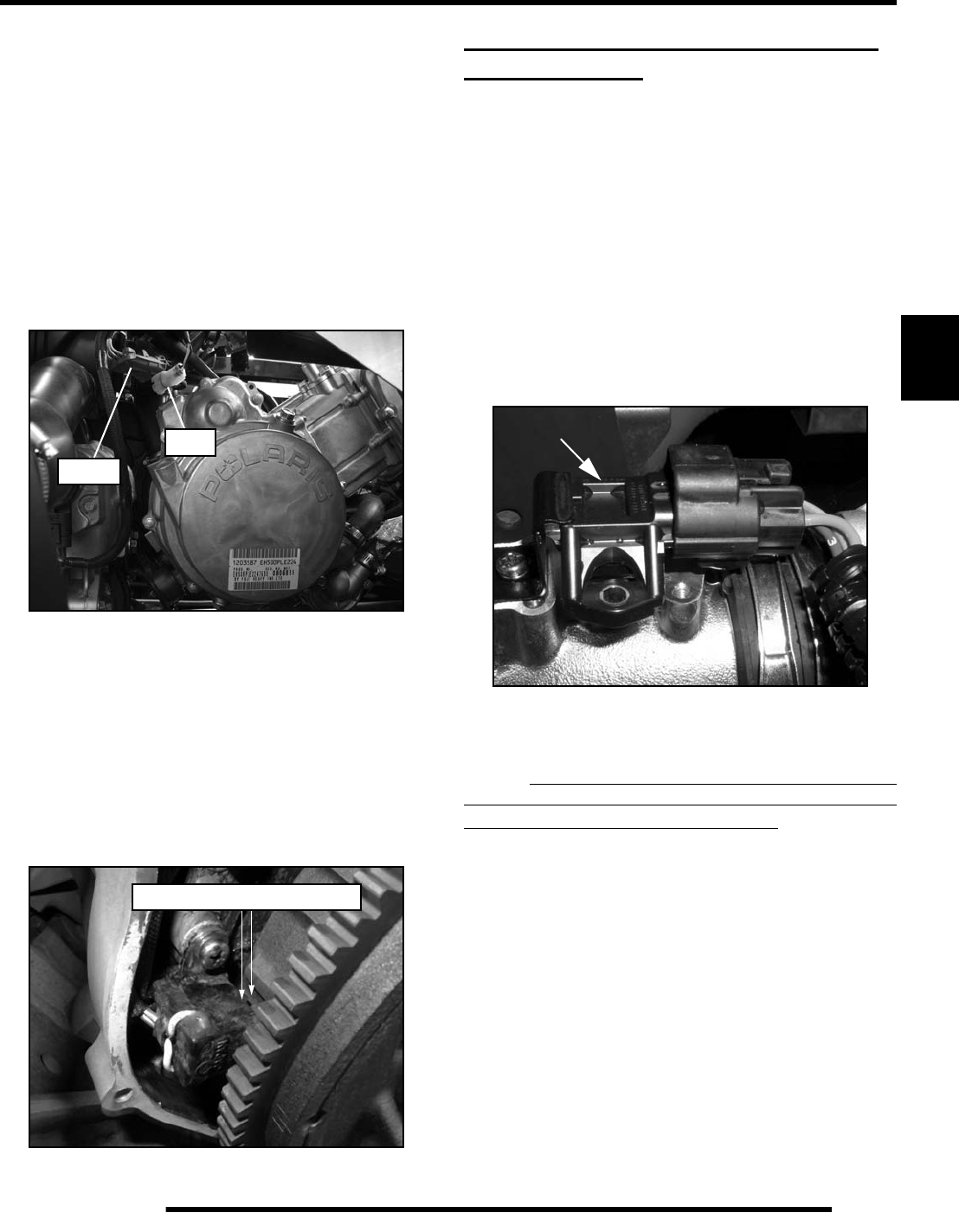
4.17
ELECTRONIC FUEL INJECTION
4
NOTE: If resistance reading is incorrect, replace the
sensor. If resistance in step 2 was incorrect, but
resistance of the sensor alone was correct, test the
main harness circuit between the sensor connector
terminals and the corresponding pin terminals in the
main connector. Correct any observed problem,
reconnect the sensor, and perform step 2 again.
CPS Replacement
1. Remove the (2) screws retaining the rear engine air intake
baffle box and allow the box to hang down out of the way
to gain access to the flywheel housing.
2. Disconnect the CPS and stator harnesses.
3. Using an 8 mm socket, remove the flywheel housing bolts.
Use a soft-faced hammer to loosen and remove the cover.
4. Remove the flywheel (refer to procedure in Chapter 3).
5. Remove the screws securing the CPS and stator and replace
them as a set, routing harness wires through the top of the
case housing as was previously installed.
6. Reinstall the flywheel and torque nut to specification (see
Chapter 3). Set the air gap of the new sensor to 0.015 -
0.047 in. (0.4 - 1.2 mm). Torque the retaining screws to
26-34 in. lbs. (2.9 - 3.92 Nm) and verify the air gap.
7. Reinstall the flywheel cover and reassemble the vehicle.
MANIFOLD ABSOLUTE PRESSURE
SENSOR (MAP)
General Information
Mounted on the throttle body intake, the manifold absolute
pressure sensor (MAP) measures air passing and provides the
ECU with the manifold pressure during engine operation. This
allows the ECU to adjust fueling according to actual engine load
as well as identify which stroke is the intake stroke. The MAP
sensor also provides the ECU with the ability to compensate for
high altitude operation without any recalibration.
During initial start-up, the ECU is in a “waste spark - waste fuel”
mode until the MAP sensor sends a negative pressure reading,
indicating that the engine is on the intake stroke. Once this has
been ‘learned’, the ECU will then monitor the MAP sensor and
cease the initial start-up program.
MAP Sensor Test
The MAP sensor is a non-serviceable item. If faulty, it must be
replaced. This sensor requires a 5 Vdc input to operate, therefore
the MAP sensor should only be tested using the Digital
Wrench™ Diagnostic Software (dealer only).
MAP Sensor Replacement
1. Disconnect sensor from engine harness.
2. Using a suitable tool, remove the retaining screw and
replace the sensor, using a light coating of soapy water on
the grommet to aid installation.
NOTE: Replacement MAP sensors may have an
O-ring installed that must be removed prior to
installing the grommet.
3. Install the sensor by inserting it with a twisting motion to
properly seat the grommet. Verify the connector center line
is aligned with the throttle body centering.
4. Install the retaining bracket. NOTE: Do not allow the
retaining bracket to contact the MAP body. Torque the
retaining screw to 29 in. lbs. (3.3 Nm).
CPS
Stator
0.4 - 1.2 mm (.015 - .047 in)
MAP
PartShark.com
877-999-5686
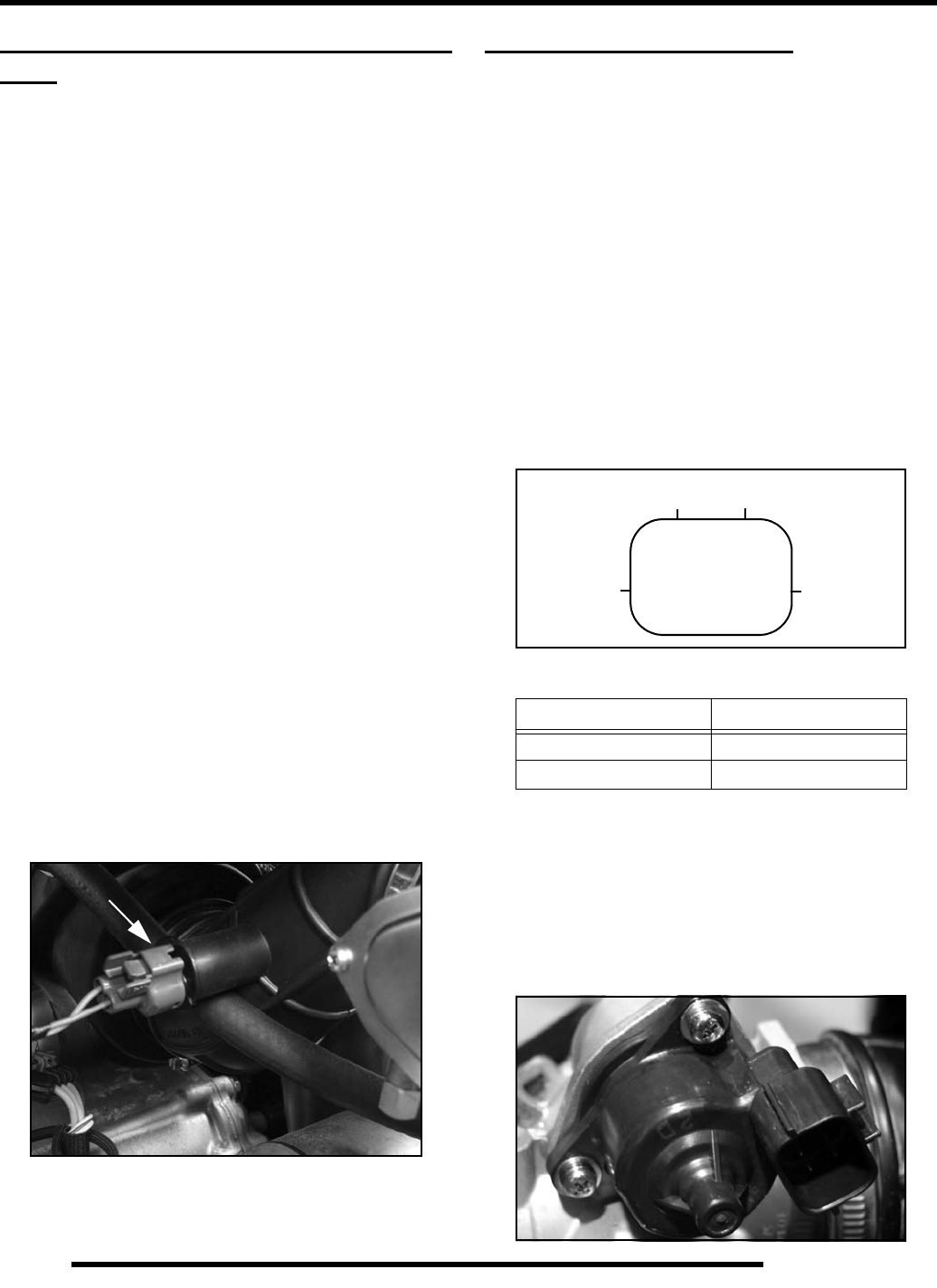
4.18
ELECTRONIC FUEL INJECTION
INTAKE AIR TEMPERATURE SENSOR
(IAT)
General Information
The intake air temperature sensor (IAT) is used to indicate intake
air temperatures to the ECU.
Mounted in the air box boot, the IAT sends a varying voltage
signal to the ECU in direct correlation to the ambient air
temperature. This signal is processed by the ECU and compared
to the internal pre-programmed maps to determine the required
fuel and ignition settings for the amount of engine load.
Intake Air Temperature Sensor Test
The IAT sensor is a non-serviceable item. If it is faulty, it must
be replaced. It can be tested using the following method:
• With the test leads connected and the meter set to the
ohms scale, observe the reading at room temperature
(20°C, 68°F).
• The reading should be: 2.45±0.24Ω (New)
2.45±0.36Ω (Used)
• If the sensor does not read correctly, replace it.
Intake Air Temperature Sensor Replacement
1. Disconnect the vehicle harness from sensor.
2. Remove the sensor from the intake boot.
3. To reinstall, lightly coat the grommet with soapy water and
install a new sensor, using a twisting motion to properly
seat the sensor in the intake boot.
4. Reconnect the vehicle harness.
IDLE AIR CONTROL (IAC)
General Information
The Idle Air Control (IAC) is used to stabilize the idle quality of
the engine at cold start-up and after warm-up operations.
Mounted on the throttle body, the IAC contains 1 stepper motor
which receives varying voltage signal pulses from the ECU.
These pulses determine the IAC plunger setting, thereby
controlling the amount of air bypassing the closed throttle body
for idle control. If the IAC is disconnected or inoperative, it will
remain at it’s last operated position.
IAC Test
The IAC is a non-serviceable item. If it is faulty, it must be
replaced. It can be ‘bench tested’ using the following method:
With the test leads connected and the meter set to the ohms scale,
observe the reading at the following pin locations of the IAC:
If any of the readings are out of specification, replace the IAC.
IAC Replacement
1. Disconnect the vehicle harness from the IAC.
2. Remove the retaining screws and replace the sensor.
3. Torque the retaining screws to 17.7 in lbs. (2 ± 0.5 Nm).
IAT
IAC Resistance Readings
Between Pins Resistance
1-2, 2-3, 4-5, 5-6 30Ω ± 1.2Ω
1-3, 4-6 60Ω ± 2.4Ω
123
456
IAC Sensor Connector
PartShark.com
877-999-5686
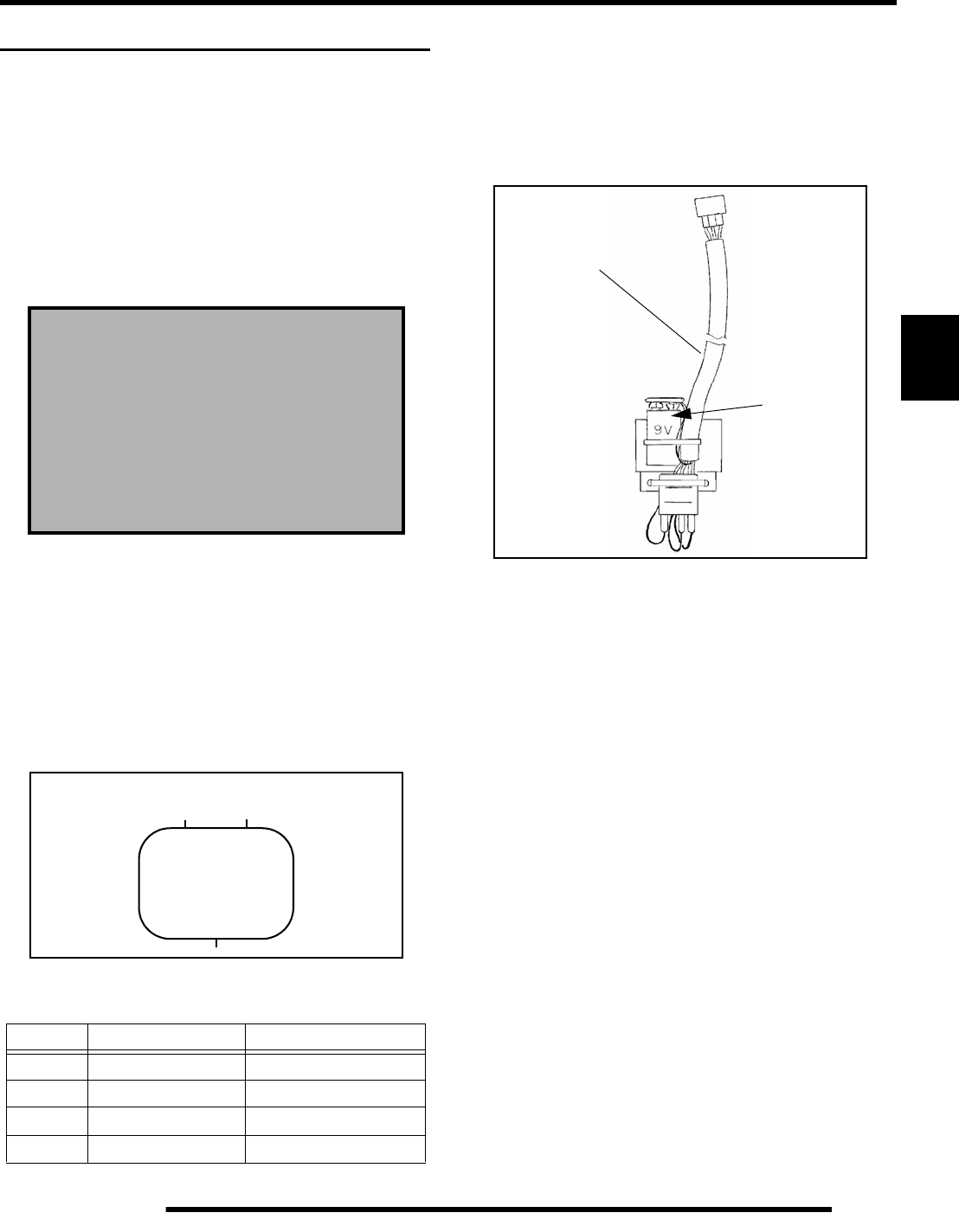
4.19
ELECTRONIC FUEL INJECTION
4
THROTTLE POSITION SENSOR (TPS)
General Information
The throttle position sensor (TPS), mounted to the throttle body,
is used to indicate throttle plate angle to the ECU.
Mounted on the throttle body and operated directly off the end
of the throttle shaft, the TPS works like a rheostat, varying the
voltage signal to the ECU in direct correlation to the angle of the
throttle plate. This signal is processed by the ECU and compared
to the internal pre-programmed “maps” to determine the
required fuel and ignition settings for the amount of engine load.
TPS Resistance Tests
The throttle position sensor (TPS) is a non-serviceable item. If
it is faulty, it must be replaced. It can be tested using the
following method:
Using an Ohm Meter:
With the test leads connected and the meter set to the ohms scale,
observe the reading at the following pin locations of the TPS:
TPS Tester Kit
The throttle position sensor (TPS) reading can be checked by
using the TPS Tester Kit (2201519).
Set-up the TPS Tester Kit (2201519), according to the
instructions that accompanied the tester. Make sure the 9 volt
battery is new.
The correct position of the throttle body
stop screw is established and set at the
factory. DO NOT loosen the throttle body
stop screw or alter its position in any
manner. The stop screw controls the air
flow calibration of the throttle body. If the
stop screw is repositioned or adjusted, the
throttle body assembly must be replaced.
TPS Resistance Readings
Pins Throttle Position Resistance
d-GND ----- ∞
c-dClosed 3kΩ - 4kΩ (reference)
c-dOpen 720Ω - 820Ω (reference)
c-e----- 4kΩ − 6kΩ
123
TPS Connector
TPS Tester
P/N - 2201519
Use a New
9V Battery
PartShark.com
877-999-5686
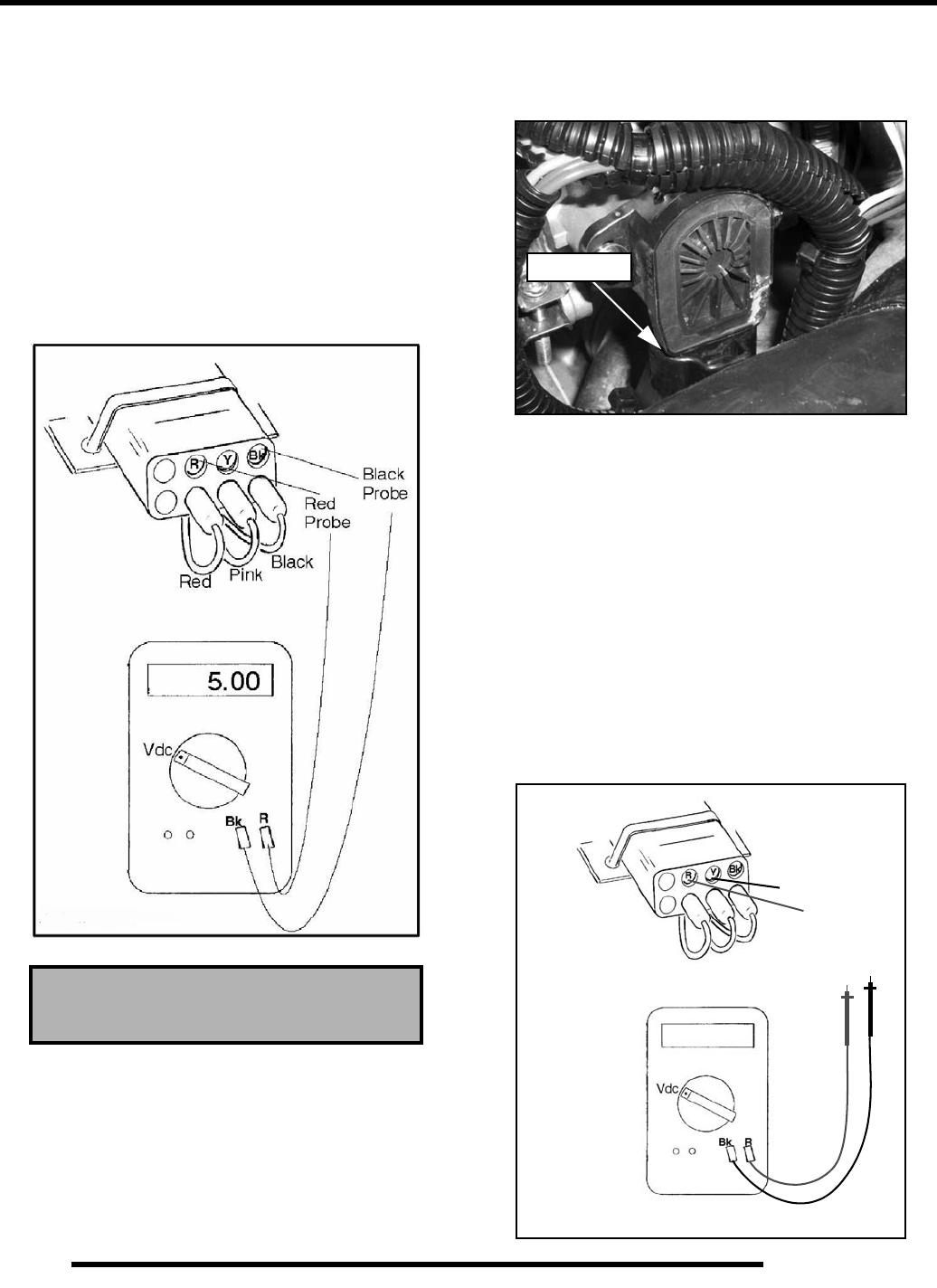
4.20
ELECTRONIC FUEL INJECTION
Verify TPS Tester Reference Voltage
A 5 volt reference voltage signal from the TPS Tester harness is
required for the TPS test to be accurate. Refer to the instructions
provided with the TPS Tester Kit (2201519) or follow the bullet
point steps below to check reference voltage.
Reference Voltage Test:
• Insert black voltmeter probe into the “Bk” test port.
• Connect the red voltmeter probe into the “R” test port
and verify the voltage is 4.99-5.01 Vdc. If this reading
is low, verify the 9 volt battery is good or try a new 9
volt battery.
IMPORTANT: Always use a fresh 9 Volt battery.
Checking TPS Reading
1. Remove the lower seat base and disconnect the vehicle
harness from the TPS.
2. Assemble the TPS Tester according to the instructions.
Refer to “TPS Tester Kit” for proper set-up and testing.
Verify the 9 volt tester battery is new.
3. Plug the TPS Tester harness into the TPS.
4. Set your voltmeter to read Vdc. Connect the red voltmeter
probe into the “R” test port and the black voltmeter probe
into the “Y” test port (see Figure 4-21).
5. Move the throttle open and closed slowly while reading the
display. The voltage should increase and decrease
smoothly without any “jumps” when the throttle is applied.
6. If voltage varies with throttle movement, continue on to the
next step. If the sensor did not function correctly, replace it.
7. Allow the throttle lever to rest in the idle position. The
voltmeter should read 1.12 ± .02 volts.
TPS Reference Voltage
5 Vdc Input
Disconnect
Should Read
1.12
Black Probe
Red Pink Black
Red Probe
1.12 ± .02 Vdc
2201519 Tester
Figure 4-21
PartShark.com
877-999-5686
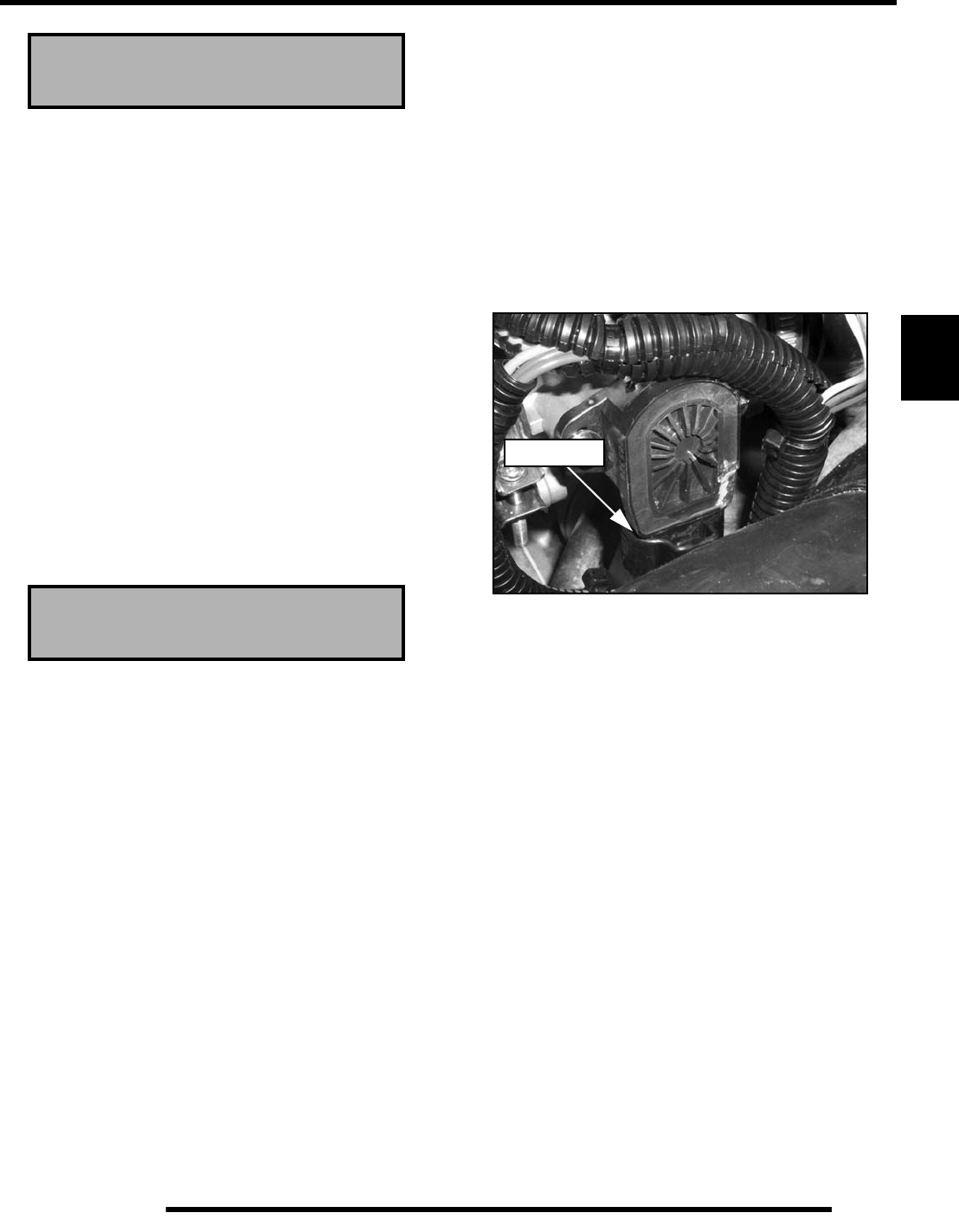
4.21
ELECTRONIC FUEL INJECTION
4
8. If the voltage does not read within the specification,
proceed to the “TPS Adjustment” procedure. If the
voltage reading is within specification, no adjustment is
required.
TPS Adjustment
NOTE: This procedure should be performed after
you have checked the TPS reading. Refer to
“Checking TPS Reading” procedure before making
any adjustments.
1. Make sure the TPS Tester harness is still connected to the
TPS harness.
2. Loosen the hose clamps and rotate the throttle body to gain
access to the retaining screws (if required).
3. Loosen the TPS mounting screws.
4. Rotate the TPS until your voltmeter reads 1.12 ± .02 volts
(see Figure 4-21).
5. Retighten TPS mounting screws and torque to 17.7 in lbs.
(2 ± 0.5 Nm).
6. Verify voltage reading did not change. If voltage reading
changed, repeat steps 2 - 4.
7. Reconnect the vehicle harness to the TPS.
8. Reinstall the lower seat base.
TPS Replacement
NOTE: The correct position of the TPS angle on the
throttle body is established and set at the factory. If
the TPS is replaced, repositioned or loosened it
must be recalibrated. Refer to the “TPS Adjustment”
procedure.
1. Remove the lower seat base.
2. Loosen the hose clamps and rotate the throttle body to gain
access to the retaining screws (if required).
3. Disconnect the harness from the TPS.
4. Remove the (2) Phillips-head mounting screws and replace
the TPS.
IMPORTANT: If replacing the TPS or throttle body,
you must perform the “TPS Adjustment” procedure.
5. Refer to “TPS Adjustment” for setting the TPS voltage.
TPS Output Reading
1.12 ± .02 Vdc
TPS Output Reading
1.12 ± .02 Vdc
Disconnect
PartShark.com
877-999-5686
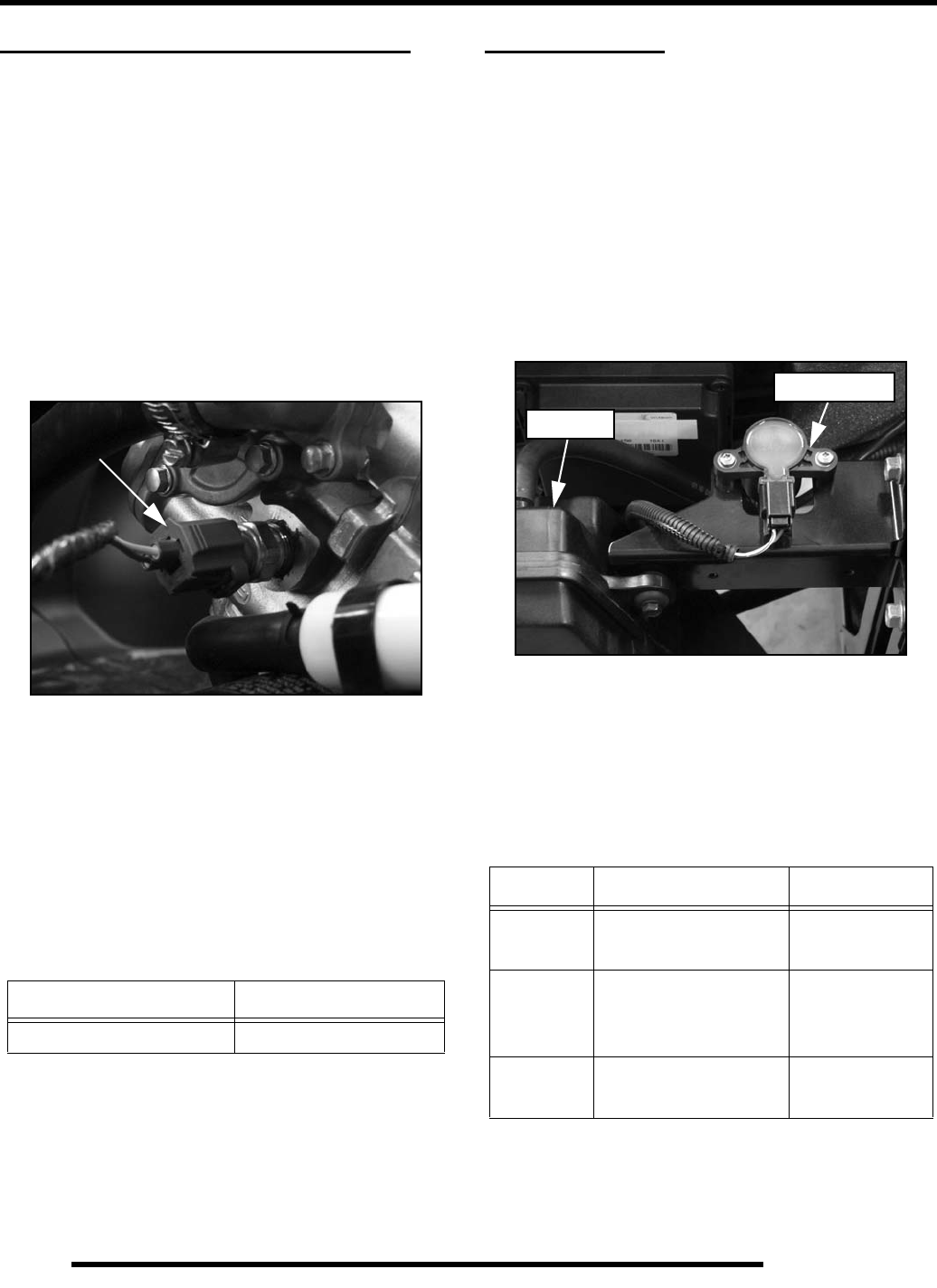
4.22
ELECTRONIC FUEL INJECTION
ENGINE TEMPERATURE SENSOR
General Information
Mounted on the cylinder, the engine temperature sensor
measures coolant temperature. The engine temperature sensor
is a Negative Temperature Coefficient (NTC) type sensor, as the
temperature increases the resistance decreases.
Coolant passes through the cylinder and by the sensor probe,
varying a resistance reading which is relayed to the ECU. This
signal is processed by the ECU and compared to its
programming for determining the fuel and ignition
requirements during operation. The ECU also uses this signal to
determine when to activate the fan during operation. If for any
reason the engine temperature sensor circuit is interrupted, the
fan will default to “ON”.
Engine Temperature Sensor Test
Polaris dealers can test the sensor by using the Digital Wrench™
Diagnostic Software (dealer only). Refer to the Digital
Wrench™ User Guide for more information.
To measure the sensor using an ohmmeter, place the tester leads
on each terminal an read the resistance with the sensor at an
ambient temperature of 68°F (20°C).
Engine Temperature Sensor Replacement
1. Disconnect the vehicle harness from the sensor and drain
coolant so the level is below the sensor.
2. Using a wrench, remove and replace the sensor, applying
a light coating of thread sealant to aid installation.
3. Torque the sensor to 18.5 ft. lbs. (25 Nm).
IGNITION COIL
Operation Overview
The ignition coil is used to provide high voltage to fire the spark
plug. When the ignition key is on, DC voltage is present in
primary side of the ignition coil windings. During engine
rotation, an AC pulse is created within the crankshaft position
sensor for each passing tooth on the flywheel. The two-tooth
gap creates an “interrupt” input signal, corresponding to specific
crankshaft position. This signal serves as a reference for the
control of ignition timing. The ECU then calculates the time
interval between the consecutive pulses, and determines when
to trigger the voltage spike that induces the voltage from the
primary to the secondary coil windings to fire the spark plug.
Ignition Coil Tests
The ignition coil can be tested by using an ohm meter. Use the
following specification table and illustrations to test the ignition
coil.
Resistance Readings
Temperature °F (°C) Resistance
68 °F (20 °C) 37.3k - 39.2k Ω
ECT
Sensor
Ignition Coil Resistance Readings
Test Pin Connection Resistance
Primary Between
(Battery +) & (Coil -) 0.5 Ω ± 10%
Secondary
(Coil)
Between
(Battery +) & Spark
Plug Cap 10.4 k Ω ± 15%
Secondary
(Cap) Spark Plug Cap 5 k Ω
Oil Tank
Ignition Coil
PartShark.com
877-999-5686
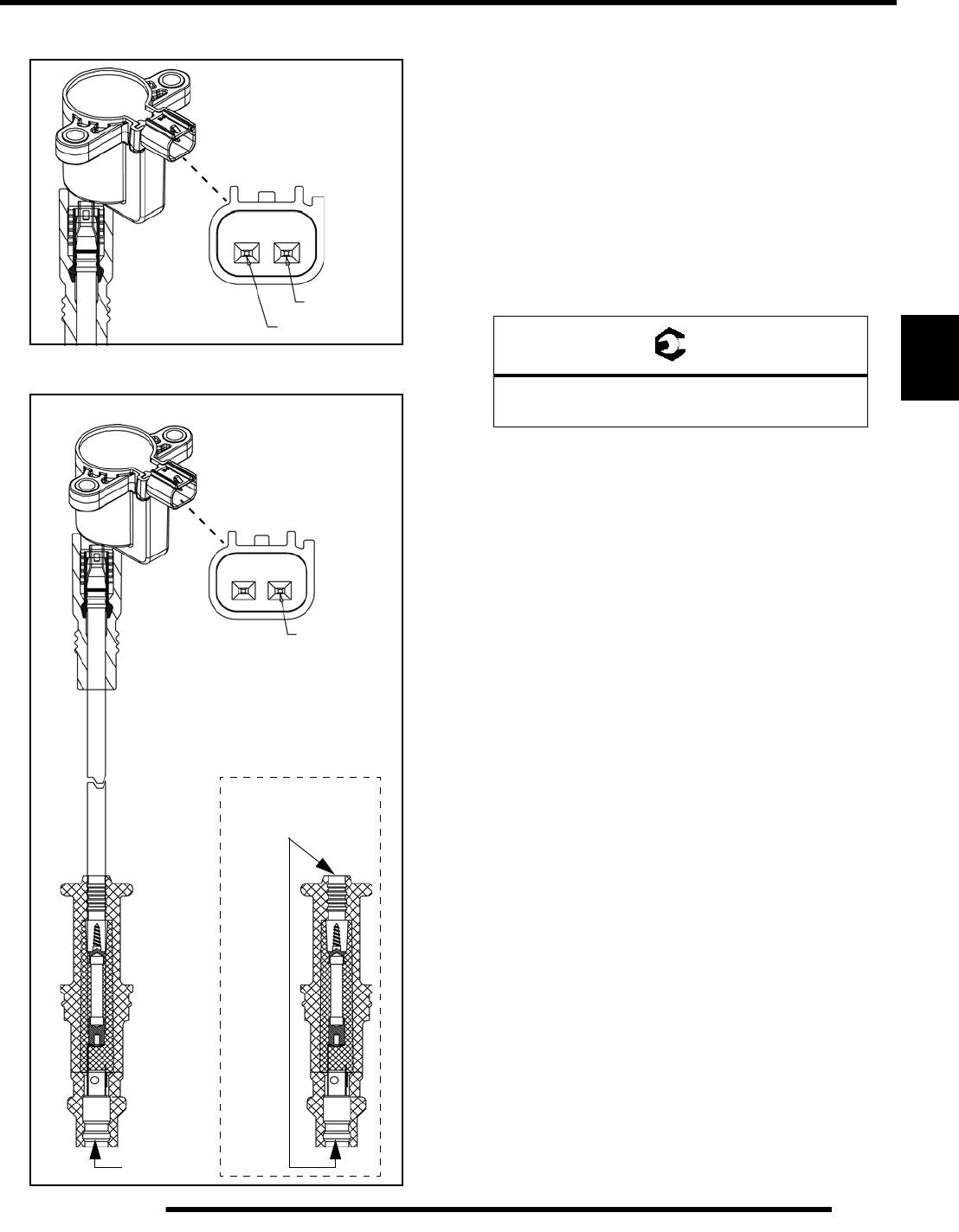
4.23
ELECTRONIC FUEL INJECTION
4
Primary Test
Secondary Tests
Ignition Coil and HT Lead Replacement
1. Remove the seat base to access the ignition coil.
2. Remove the high tension lead cap from the spark plug.
3. Remove the fasteners retaining the ignition coil and remove
the coil assembly from the vehicle.
4. Install the new ignition coil assembly and tighten fasteners
to specification.
NOTE: Be sure to reinstall the coil mounting
spacers upon assembly.
Measure Between
Connector Pins
0.5 Ω
Battery +
Coil -
Measure Between
(Battery +) and
Spark Plug Cap
Battery +
10.4 k Ω
Plug Cap
Measure
Spark Plug Cap
5 k Ω
= T
Ignition Coil Retaining Bolt Torque:
75 in. lbs. (8.5 Nm)
PartShark.com
877-999-5686
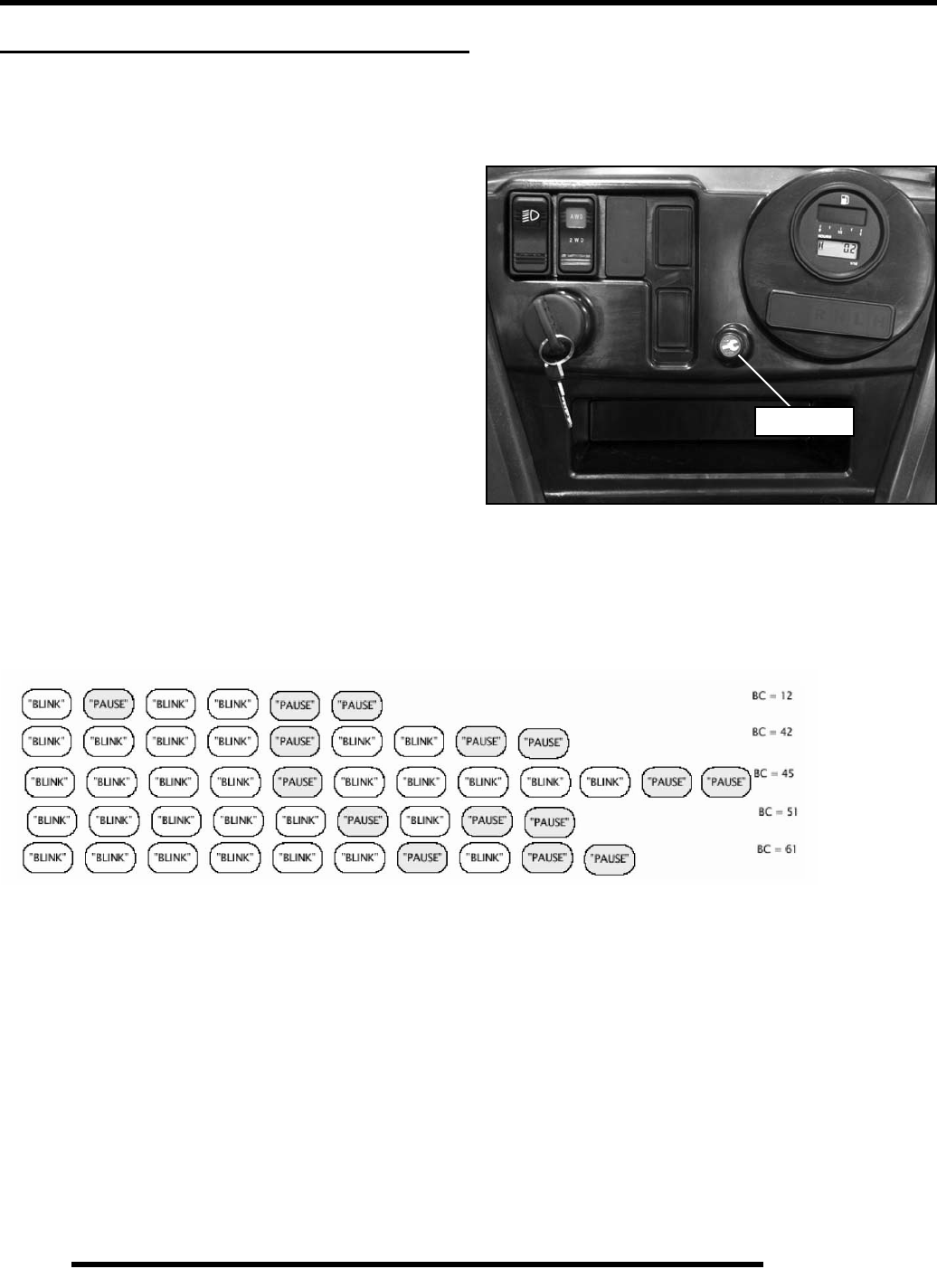
4.24
ELECTRONIC FUEL INJECTION
DIAGNOSTICS USING “BLINK CODES”
Blink Codes - Operation
To enable the blink codes:
1. Turn the ignition from ‘OFF’ to ‘ON’ 3 times, leaving it
‘ON’ the 3rd time, within 5 seconds.
2. The blink codes appear when the orange MIL light blinks
in sequence:
• Count the number of times the orange MIL light
flashes.
• The blink codes are double digit numbers.
• The first digit of the double digit number will flash first,
then a pause and the second digit number will flash.
• Example: For a Code 42 -- The orange MIL light will
flash 4 times, pause, then flash 2 times.
• A code 61 will signal the end of the blink codes.
• The orange MIL light will then remain lit when
finished.
3. When the diagnostic mode is complete, the Orange MIL
light will remain illuminated until the key is switched off.
NOTE: To clear codes manually, disconnect the
positive battery lead for 20 seconds.
MIL Light
Malfunction Indicator Light (MIL) Diagnostic Example
Sequence Begin
Trouble Code
Trouble Code
Trouble Code
Sequence End
PartShark.com
877-999-5686
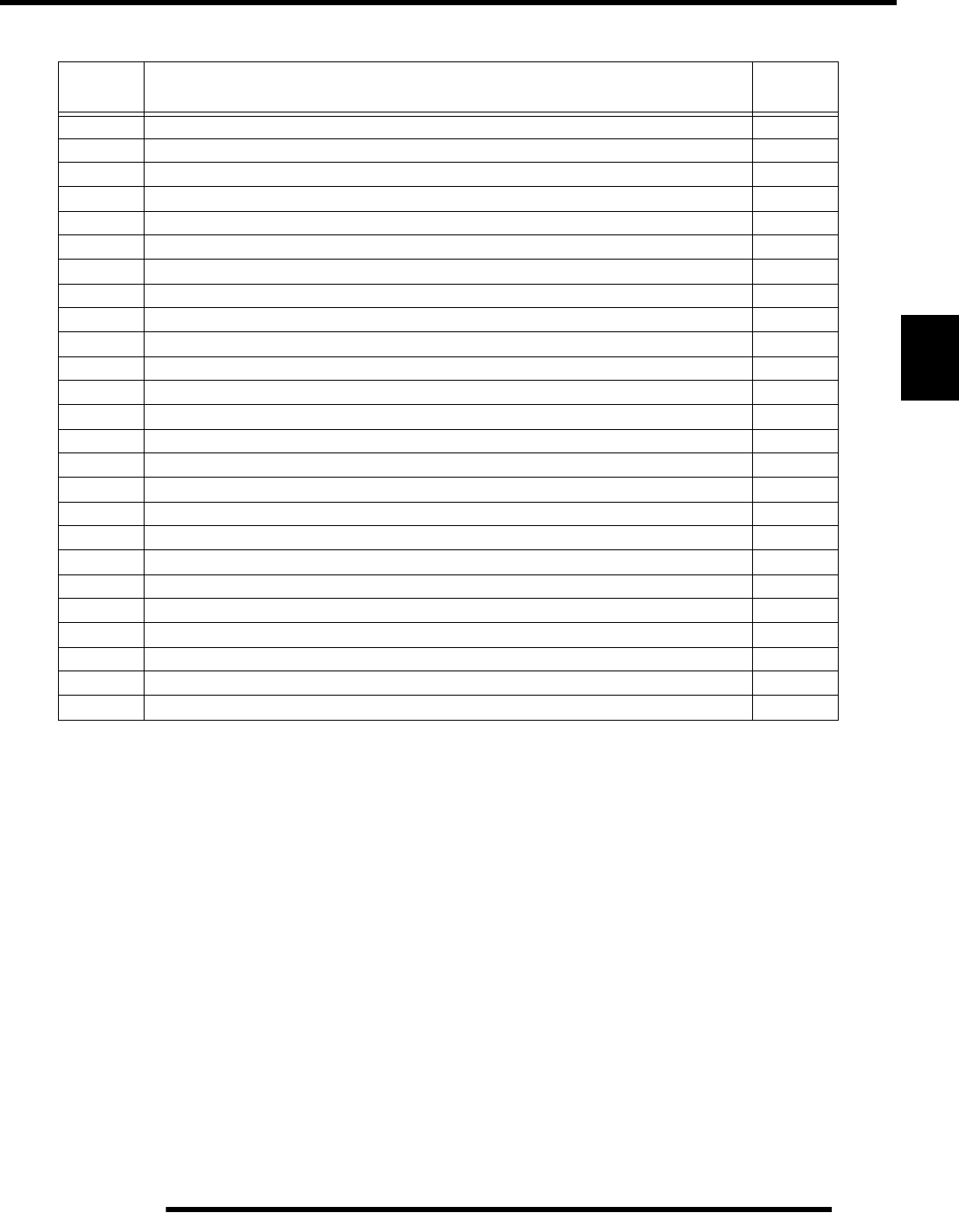
4.25
ELECTRONIC FUEL INJECTION
4
DIAGNOSTIC “BLINK CODES” CHART
Blink
Code Name MIL Light
On?
12 BEGIN SEQUENCE --
21 Loss of Synchronization Yes
22 TPS Circuit: Sensor Low Yes
22 TPS Circuit: Sensor High Yes
31 System Voltage Low Yes
31 System Voltage High Yes
41 Air Temp Sensor (IAT): Low Voltage Yes
41 Air Temp Sensor (IAT): High Voltage Yes
42 Engine Temperature Sensor Circuit (ECT): Low Voltage Yes
42 Engine Temperature Sensor Circuit (ECT): High Voltage Yes
44 CPS Circuit Fault Yes
45 Barometric Pressure Sensor: MAP Circuit Low Input Yes
46 Barometric Pressure Sensor: MAP Circuit High Input Yes
47 IAC: Open Load Yes
47 IAC: Short to Ground Yes
51 Injector 1: Open Load / Short Circuit to Ground Yes
51 Injector 1: Short Circuit to Battery Yes
55 Diagnostic Lamp: Open Load Yes
55 Diagnostic Lamp: Short Circuit to Ground Yes
55 Diagnostic Lamp: Short Circuit To Battery Yes
56 Fuel Pump: Open Load / Short Circuit to Ground Yes
56 Fuel Pump: Short Circuit to Battery Yes
58 Cooling Fan: Open Load / Short Circuit to Ground Yes
58 Cooling Fan: Short Circuit to Battery Yes
61 END SEQUENCE --
PartShark.com
877-999-5686
4.26
ELECTRONIC FUEL INJECTION
FUEL SYSTEM TROUBLESHOOTING
Fuel Starvation / Lean Mixture
Symptoms: Hard start or no start, bog, backfire, popping
through intake / exhaust, hesitation, detonation, low power,
spark plug erosion, engine runs hot, surging, high idle, idle
speed erratic.
• No fuel in tank
• Restricted tank vent, or routed improperly
• Fuel lines or fuel injectors restricted
• Fuel pump inoperative
• Air leak in system
• Intake air leak (throttle shaft, intake boot, gasket or
grommet)
• Throttle stop screw tampering - replace throttle body
• Failed Sensor or disconnected wiring
Rich Mixture
Symptoms: Fouls spark plugs, black, sooty exhaust smoke,
rough idle, poor fuel economy, engine runs rough/ misses, poor
performance, bog, engine loads up, backfire.
• Air intake restricted (inspect intake duct)
• Air filter dirty/plugged
• Poor fuel quality (old fuel)
• Fouled spark plug
• TPS setting incorrect
• Injector failure
• Failed Sensor or disconnected wiring
• Throttle stop screw tampering - replace throttle body
Poor Idle
Symptom: Idle Too High (If greater than 1300 RPM when
engine is warm)
• Throttle stop screw tampering - replace throttle body
• Throttle cable sticking, improperly adjusted, routed
incorrectly
• Failed Sensor or disconnected wiring
• IAC stuck or inoperative
• Intake air leak
Symptom: Idle Too Low (if less than 900 RPM when engine is
warm)
• Plugged air filter
• Leaking injector (rich condition)
• Belt dragging
• Throttle stop screw tampering - replace throttle body
• Failed Sensor or disconnected wiring
Symptom: Erratic Idle
• Throttle cable incorrectly adjusted
• Air Leaks, dirty injector
• TPS damaged or adjusted
• Tight valves
• Belt dragging
• Dirty air cleaner
•Engine worn
• Spark Plug fouled
• Throttle stop screw tampering - replace throttle body
• Failed Sensor or disconnected wiring
The correct position of the throttle body
idle stop is established and set at the
factory. Do not loosen the throttle body
idle stop or alter the stop position in any
fashion. If the stop is repositioned, the
entire throttle body assembly
must be replaced.
PartShark.com
877-999-5686
BODY / STEERING / SUSPENSION
5.1
CHAPTER 5
BODY / STEERING / SUSPENSION
5
TORQUE SPECIFICATIONS. . . . . . . . . . . . . . . . . . . . . . . . . . . . . . . . . . . . . . . . . . . . . . . 5.2
SPECIAL TOOLS . . . . . . . . . . . . . . . . . . . . . . . . . . . . . . . . . . . . . . . . . . . . . . . . . . . . . . . 5.2
CHASSIS / MAIN FRAME . . . . . . . . . . . . . . . . . . . . . . . . . . . . . . . . . . . . . . . . . . . . . . . . . 5.3
CAB FRAME . . . . . . . . . . . . . . . . . . . . . . . . . . . . . . . . . . . . . . . . . . . . . . . . . . . . . . . . . . . 5.4
SEAT BACK / HEADREST / PVT AIR INTAKE BAFFLE BOX . . . . . . . . . . . . . . . . . . . . . 5.5
BODY EXPLODED VIEWS . . . . . . . . . . . . . . . . . . . . . . . . . . . . . . . . . . . . . . . . . . . . . . . . 5.6
DASH INSTRUMENTS / CONTROLS . . . . . . . . . . . . . . . . . . . . . . . . . . . . . . . . . . . . . . . 5.6
HOOD / DASH / FRONT FENDERS / FRONT FASCIA . . . . . . . . . . . . . . . . . . . . . . . . . . 5.7
FLOOR / REAR FENDERS . . . . . . . . . . . . . . . . . . . . . . . . . . . . . . . . . . . . . . . . . . . . . . . 5.8
SEAT MOUNTING / SEAT BELTS. . . . . . . . . . . . . . . . . . . . . . . . . . . . . . . . . . . . . . . . . . 5.9
REAR CARGO BOX . . . . . . . . . . . . . . . . . . . . . . . . . . . . . . . . . . . . . . . . . . . . . . . . . . . . 5.10
CARGO BOX - PANELS. . . . . . . . . . . . . . . . . . . . . . . . . . . . . . . . . . . . . . . . . . . . . . . . . 5.10
CARGO BOX - TAILGATE / BOX SUPPORT. . . . . . . . . . . . . . . . . . . . . . . . . . . . . . . . . 5.11
BOX REMOVAL / INSTALLATION . . . . . . . . . . . . . . . . . . . . . . . . . . . . . . . . . . . . . . . . . 5.12
BODY COMPONENT REMOVAL . . . . . . . . . . . . . . . . . . . . . . . . . . . . . . . . . . . . . . . . . . 5.13
LOWER SEAT BASE . . . . . . . . . . . . . . . . . . . . . . . . . . . . . . . . . . . . . . . . . . . . . . . . . . . 5.13
WHEEL WELL PANELS . . . . . . . . . . . . . . . . . . . . . . . . . . . . . . . . . . . . . . . . . . . . . . . . . 5.13
FRONT BUMPER . . . . . . . . . . . . . . . . . . . . . . . . . . . . . . . . . . . . . . . . . . . . . . . . . . . . . . 5.13
FRONT FASCIA . . . . . . . . . . . . . . . . . . . . . . . . . . . . . . . . . . . . . . . . . . . . . . . . . . . . . . . 5.13
FRONT FENDERS . . . . . . . . . . . . . . . . . . . . . . . . . . . . . . . . . . . . . . . . . . . . . . . . . . . . . 5.14
HOOD / DASH . . . . . . . . . . . . . . . . . . . . . . . . . . . . . . . . . . . . . . . . . . . . . . . . . . . . . . . . 5.14
GLOVE BOX / STORAGE PANEL . . . . . . . . . . . . . . . . . . . . . . . . . . . . . . . . . . . . . . . . . 5.14
REAR FENDERS . . . . . . . . . . . . . . . . . . . . . . . . . . . . . . . . . . . . . . . . . . . . . . . . . . . . . . 5.15
FLOOR . . . . . . . . . . . . . . . . . . . . . . . . . . . . . . . . . . . . . . . . . . . . . . . . . . . . . . . . . . . . . .5.15
STEERING ASSEMBLY . . . . . . . . . . . . . . . . . . . . . . . . . . . . . . . . . . . . . . . . . . . . . . . . . 5.16
EXPLODED VIEW . . . . . . . . . . . . . . . . . . . . . . . . . . . . . . . . . . . . . . . . . . . . . . . . . . . . . 5.16
FRONT A-ARMS . . . . . . . . . . . . . . . . . . . . . . . . . . . . . . . . . . . . . . . . . . . . . . . . . . . . . . . 5.17
REMOVAL / REPLACEMENT . . . . . . . . . . . . . . . . . . . . . . . . . . . . . . . . . . . . . . . . . . . . 5.17
EXPLODED VIEW . . . . . . . . . . . . . . . . . . . . . . . . . . . . . . . . . . . . . . . . . . . . . . . . . . . . . 5.18
BALL JOINT SERVICE . . . . . . . . . . . . . . . . . . . . . . . . . . . . . . . . . . . . . . . . . . . . . . . . . . 5.18
REMOVAL . . . . . . . . . . . . . . . . . . . . . . . . . . . . . . . . . . . . . . . . . . . . . . . . . . . . . . . . . . . 5.18
INSTALLATION . . . . . . . . . . . . . . . . . . . . . . . . . . . . . . . . . . . . . . . . . . . . . . . . . . . . . . . 5.19
REAR A-ARMS . . . . . . . . . . . . . . . . . . . . . . . . . . . . . . . . . . . . . . . . . . . . . . . . . . . . . . . . 5.20
REMOVAL / REPLACEMENT . . . . . . . . . . . . . . . . . . . . . . . . . . . . . . . . . . . . . . . . . . . . 5.20
INSTALLATION . . . . . . . . . . . . . . . . . . . . . . . . . . . . . . . . . . . . . . . . . . . . . . . . . . . . . . . 5.21
EXPLODED VIEW . . . . . . . . . . . . . . . . . . . . . . . . . . . . . . . . . . . . . . . . . . . . . . . . . . . . . 5.21
REAR STABILIZER BAR. . . . . . . . . . . . . . . . . . . . . . . . . . . . . . . . . . . . . . . . . . . . . . . . . 5.22
REMOVAL / INSTALLATION . . . . . . . . . . . . . . . . . . . . . . . . . . . . . . . . . . . . . . . . . . . . . 5.22
EXPLODED VIEW . . . . . . . . . . . . . . . . . . . . . . . . . . . . . . . . . . . . . . . . . . . . . . . . . . . . . 5.22
SHOCKS / SPRINGS. . . . . . . . . . . . . . . . . . . . . . . . . . . . . . . . . . . . . . . . . . . . . . . . . . . . 5.23
EXPLODED VIEW . . . . . . . . . . . . . . . . . . . . . . . . . . . . . . . . . . . . . . . . . . . . . . . . . . . . . 5.23
SHOCK REMOVAL / INSTALLATION . . . . . . . . . . . . . . . . . . . . . . . . . . . . . . . . . . . . . . 5.23
SHOCK REPLACEMENT . . . . . . . . . . . . . . . . . . . . . . . . . . . . . . . . . . . . . . . . . . . . . . . . 5.23
DECAL REPLACEMENT. . . . . . . . . . . . . . . . . . . . . . . . . . . . . . . . . . . . . . . . . . . . . . . . . 5.23
PartShark.com
877-999-5686
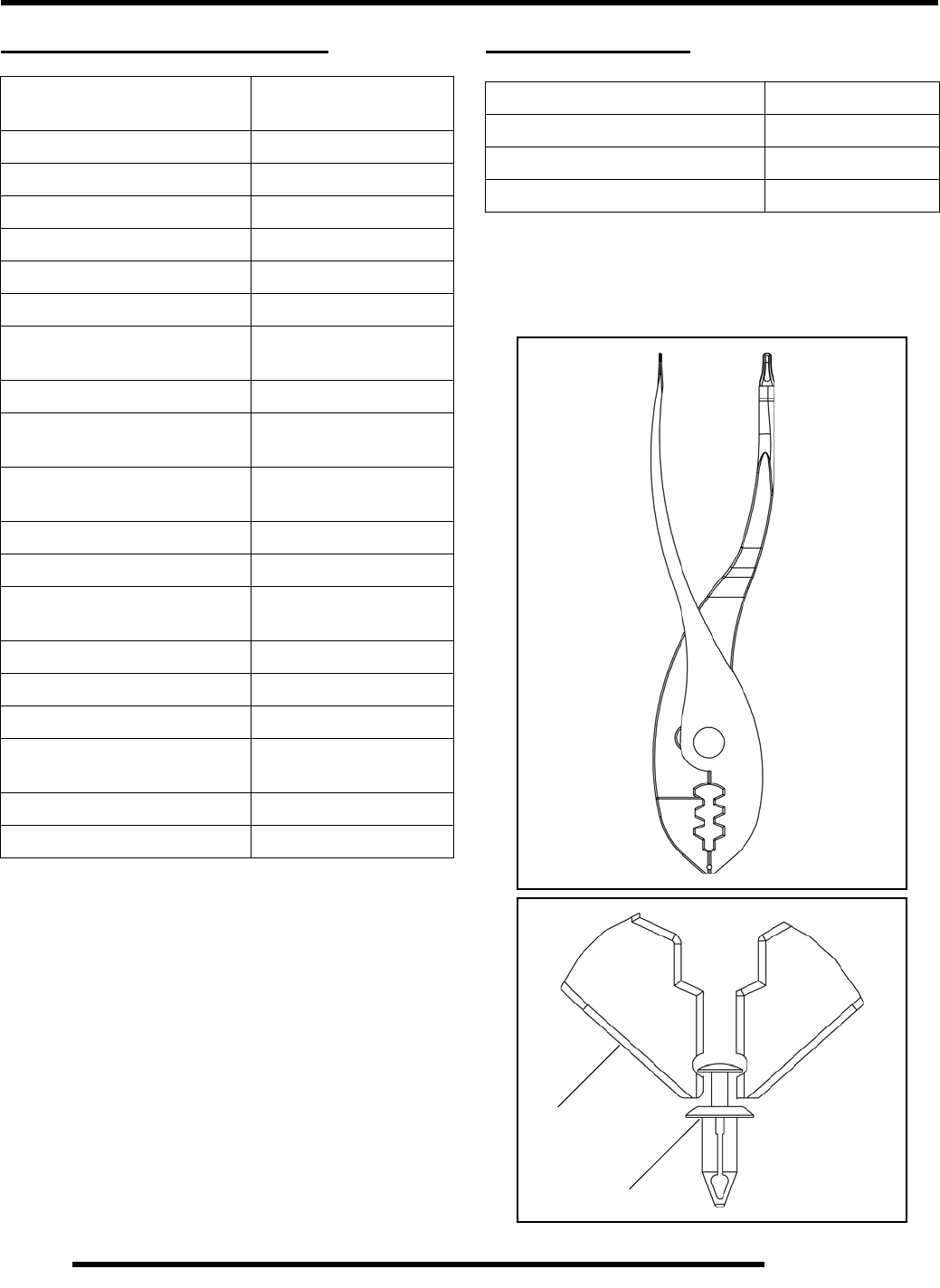
5.2
BODY / STEERING / SUSPENSION
TORQUE SPECIFICATIONS
NOTE: Refer to exploded views throughout this
chapter for more torque specifications, component
identification, and location of components.
SPECIAL TOOLS
Multi-Function Pliers
Included in the tool kit, the multi-function pliers is designed to
remove the plastic push rivets used to fasten body components.
ITEM TORQUE VALUE
ft. lbs. (Nm)
Front Upper A-Arm Bolts 30 ft. lbs. (41 Nm)
Front Lower A-Arm Bolts 30 ft. lbs. (41 Nm)
Rear Upper Control Arm Bolts 30 ft. lbs. (41 Nm)
Rear Lower Control Arm Bolts 30 ft. lbs. (41 Nm)
Lower Rear Bearing Carrier 30 ft. lbs. (41 Nm)
Upper Rear Bearing Carrier 30 ft. lbs. (41 Nm)
Outer Tie Rod to
Bearing Housing 40 ft. lbs. (54 Nm)
Front Ball Joint Pinch Bolts 17 ft. lbs. (23 Nm)
Front Upper / Lower
Shock Bolts 30 ft. lbs. (41 Nm)
Rear Upper / Lower
Shock Bolts 30 ft. lbs. (41 Nm)
Front Wheel Hub Castle Nut 80 ft. lbs. (108 Nm)
Rear Wheel Hub Castle Nut 110 ft. lbs. (150 Nm)
Wheel Nuts (Cast Rims)
Wheel Nuts (Steel Rims) 90 ft. lbs. (122 Nm)
35 ft. lbs. (47 Nm)
Tie Rod End Jam Nut 12-14 ft. lbs. (17-19 Nm
Seat Belt to Seat Base 40 ft. lbs. (54 Nm)
Steering Wheel to Shaft 25-31 ft. lbs. (34-42 Nm)
Upper Steering Shaft to
U-Joint Shaft 15-19 ft. lbs. (20-26 Nm)
Lower Steering Shaft to Box 30 ft. lbs. (41 Nm)
Steering Box 17 ft. lbs. (23 Nm)
TOOL DESCRIPTION PART NUMBER
Shock Spanner Wrench 2870872
Shock Spring Compressor Tool 2870623
Multi-Function Pliers 2876389
Pliers
Push Rivet
PartShark.com
877-999-5686
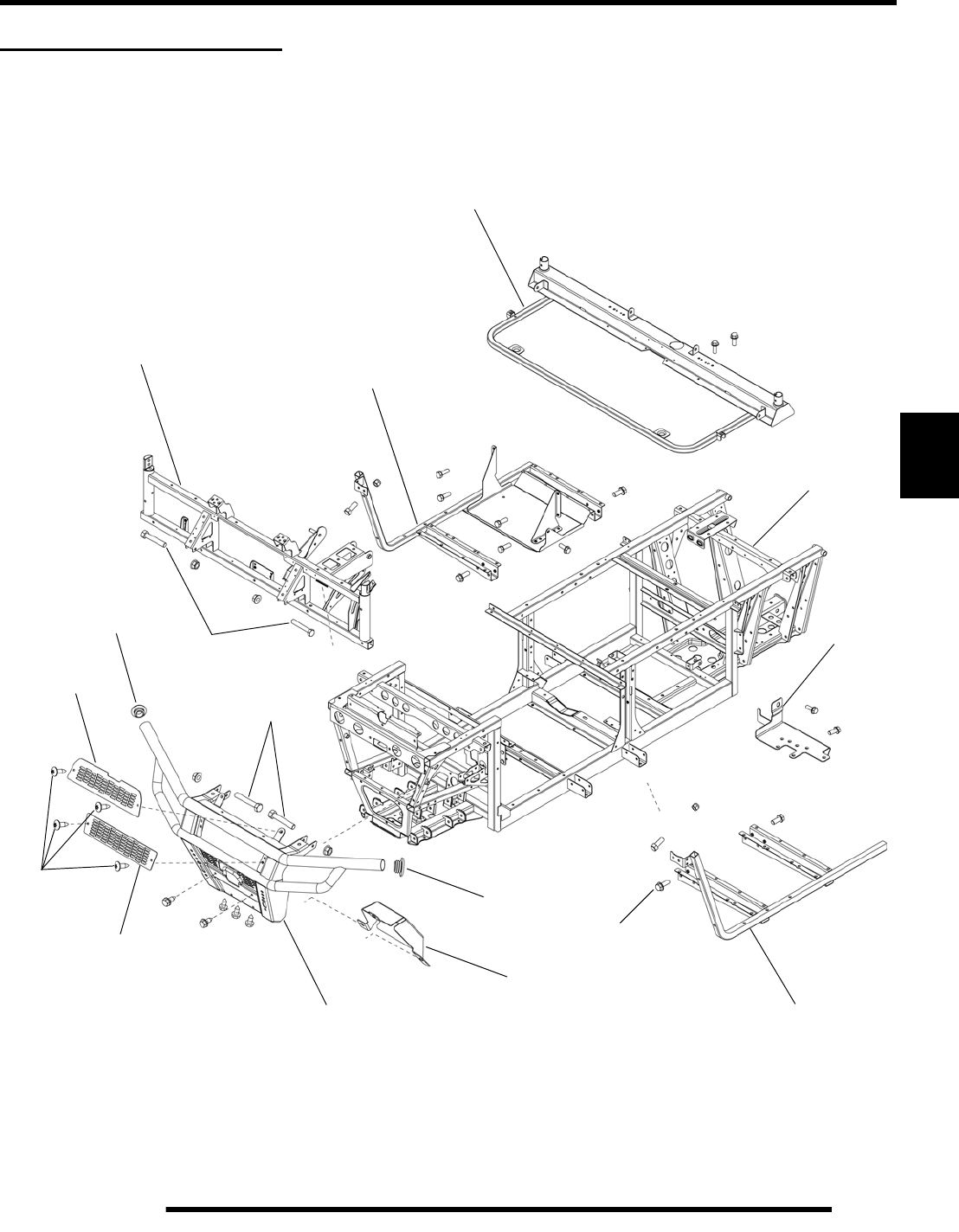
5.3
BODY / STEERING / SUSPENSION
5
CHASSIS / MAIN FRAME
Exploded View
Seat Base
Dash Support
Bumper LH Floor Support
Oil Tank
RH Floor Support
Main Frame
Support
Cap
Cap
Fascia
Screen
Bumper
Screen Bumper Guard
Bracket
T27
Screws
28-32 ft. lbs.
(38-43 Nm)
28-32 ft. lbs.
(38-43 Nm)
4-6 ft. lbs.
(6-8 Nm) 13-15 ft. lbs.
(17-20 Nm)
PartShark.com
877-999-5686
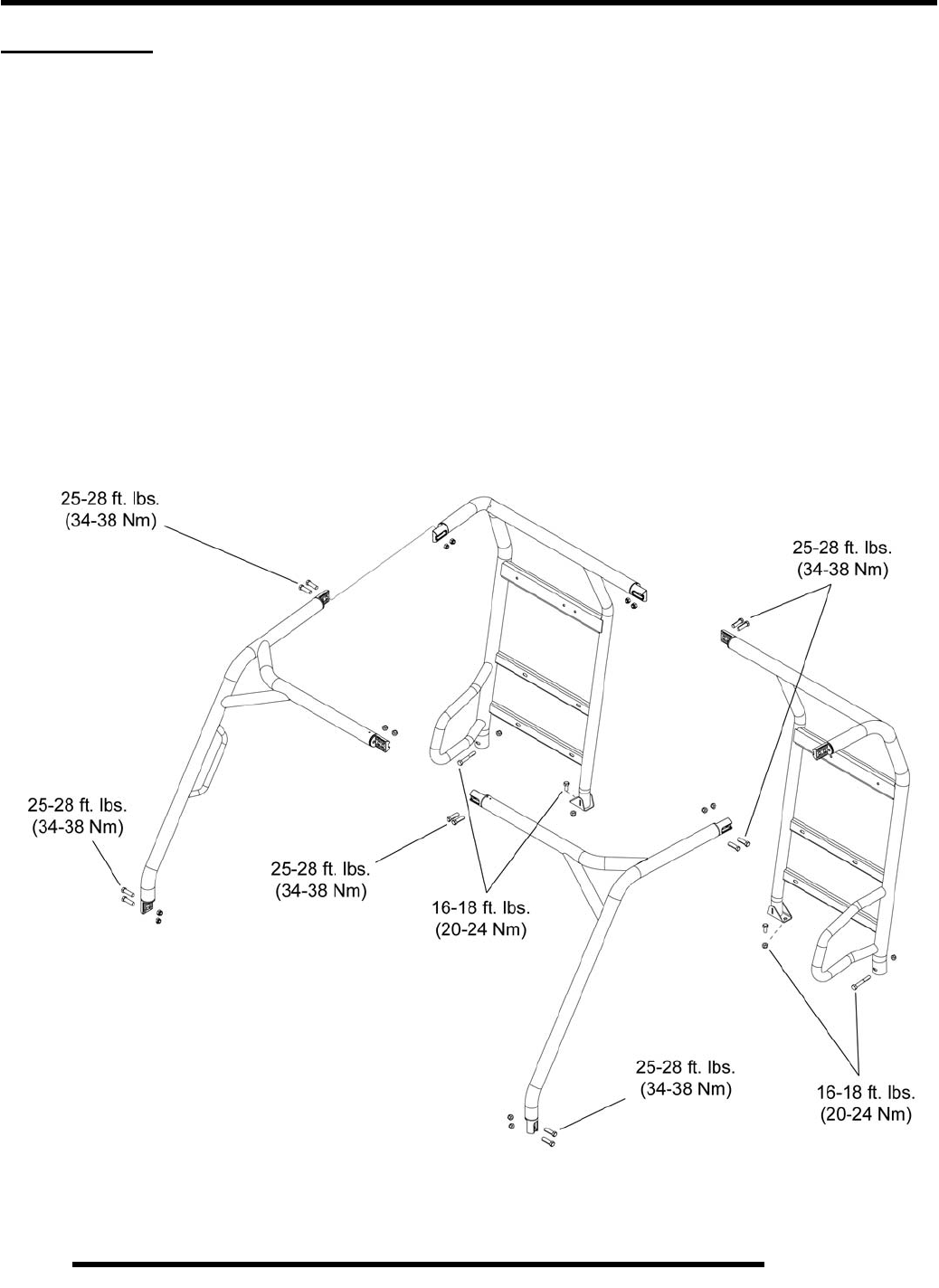
5.4
BODY / STEERING / SUSPENSION
CAB FRAME
Exploded View / Assembly
1. Assemble the two rear cab frames at the coupler joint and secure with (2) 3/8" bolts and nuts. Assemble the two front frame
sections in the same manner. Leave all fasteners finger tight.
2. Assemble the front cab frame to the rear cab frame at both side coupler joints and secure with (4) 3/8” bolts and nuts. Leave
all fasteners finger tight.
3. Place the assembled cab frame onto the vehicle and align the rear mount holes. Secure the rear and center of the cab frame
using the (2) 5/16”-18 x 2.25” bolts and nuts on the outer tubes and the (2) 5/16”-18 x .75” bolts and nuts on the inner mounts.
Tighten all 5/16" fasteners to 16-18 ft. lbs. (20-24 Nm).
4. Secure the front cab frame coupler to the front coupler on the vehicle with (4) 3/8” bolts and nuts.
5. Tighten all 3/8" cab frame bolts to 25-28 ft. lbs. (34-38 Nm). Check all bolts and nuts for proper torque and installation.
PartShark.com
877-999-5686
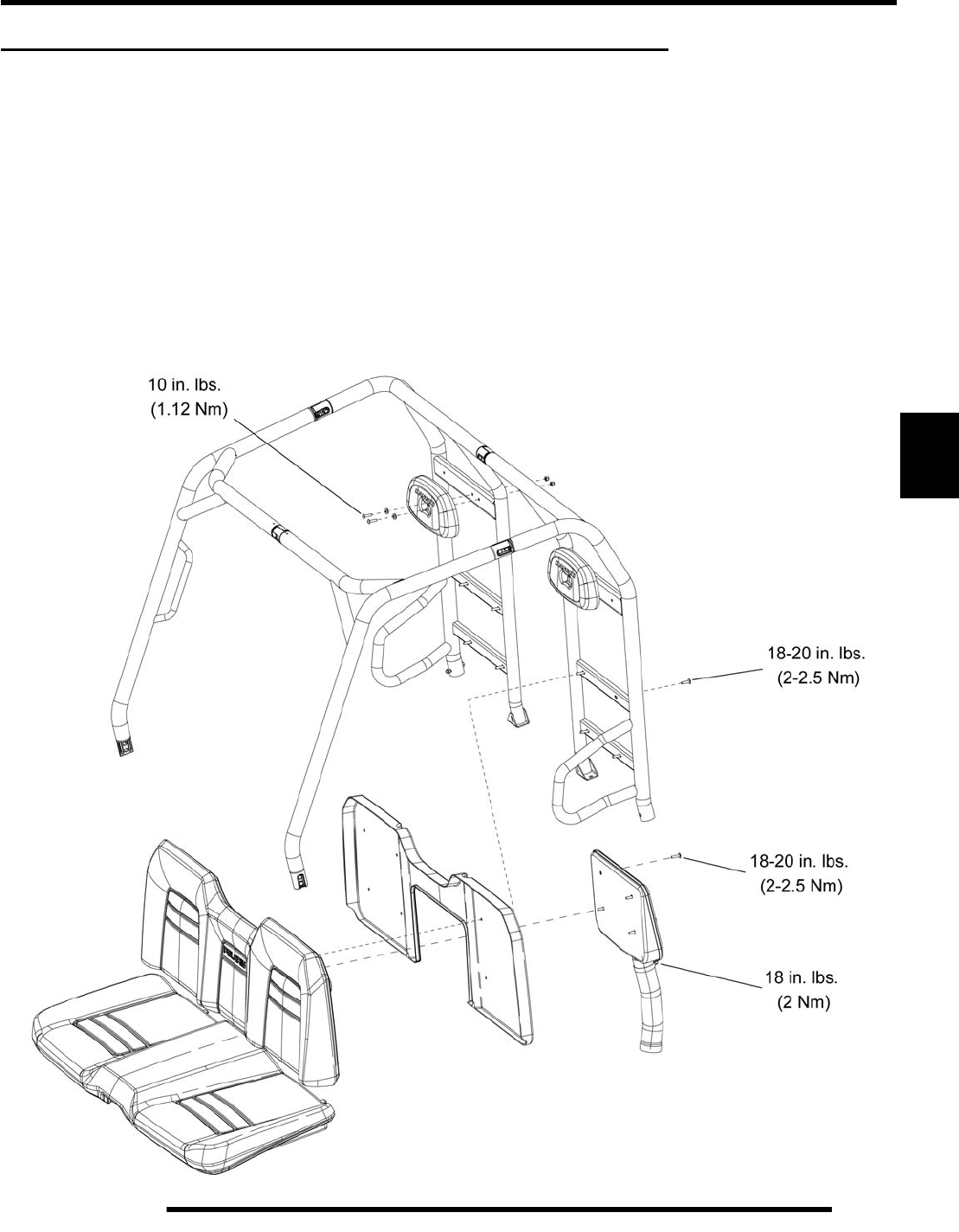
5.5
BODY / STEERING / SUSPENSION
5
SEAT BACK / HEADREST / PVT AIR INTAKE BAFFLE BOX
Exploded View / Assembly
1. Fasten the seat back to the rear cab frame using the (8) Torx-head screws. NOTE: For seats that have staples visible from
the rear, the seat back cover will need to be placed between the rear cab frame and seat back assembly. Tighten all Torx-
head fasteners to 18-20 in. lbs. (2-2.5 Nm).
2. Place the 2.5” hose clamp over the clutch air inlet hose and install the clutch intake box assembly. Attach the box assembly
to the seat back using (4) Torx-head screws. Tighten all Torx-head screws to 18-20 in. lbs. (2-2.5 Nm). Tighten the hose clamp
to 18 in. lbs. (2 Nm).
3. Install the two headrests on the cab frame using (4) 1/4”-20 x 1” bolts, (4) washers, and (4) 1/4”-20 Nyloc nuts. Place the
washers between the bolt heads and headrest as shown below. Torque bolts to 10 in. lbs. (1.1 Nm).
4. Check all screws and fasteners for proper torque and installation.
PartShark.com
877-999-5686
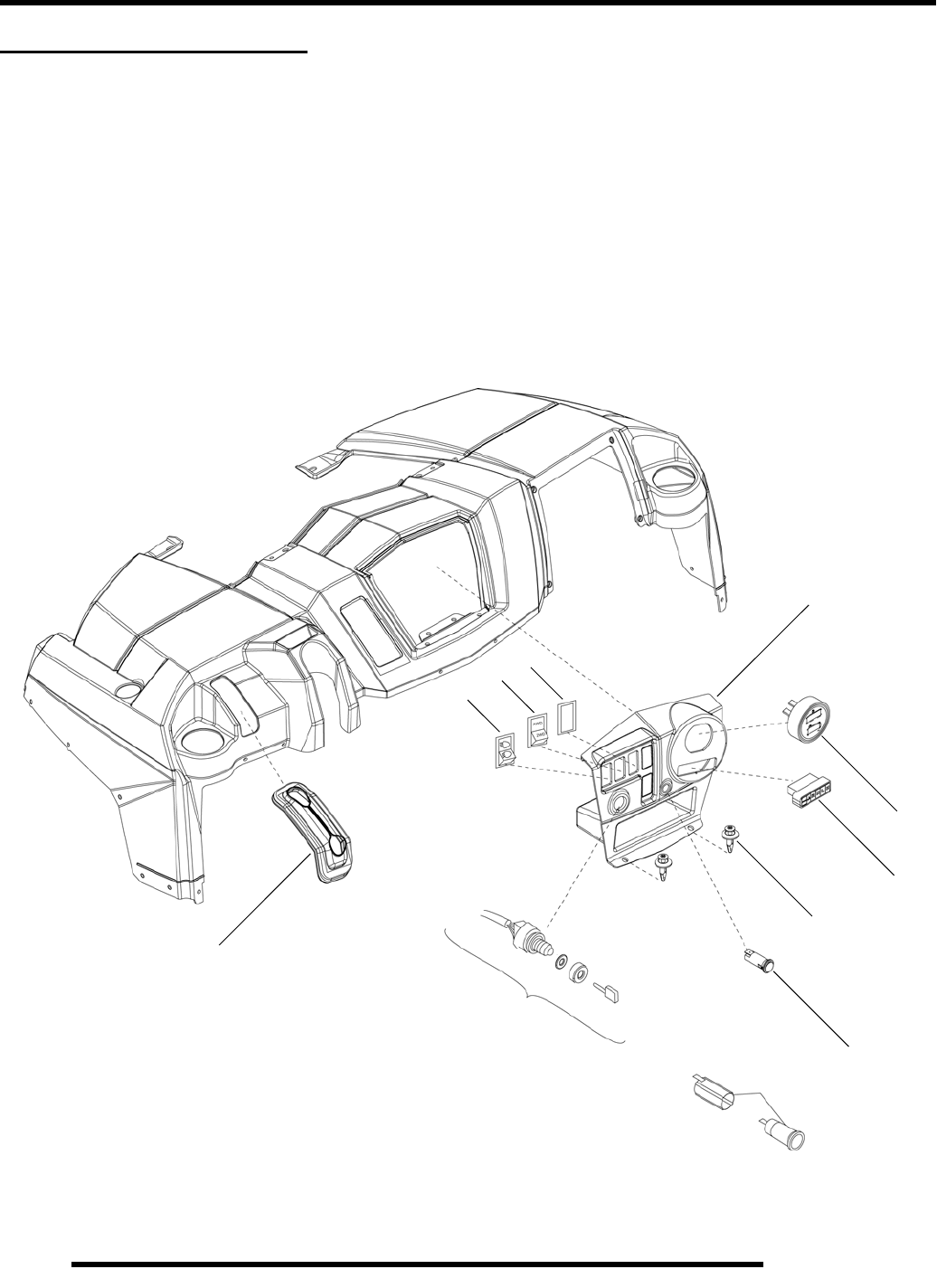
5.6
BODY / STEERING / SUSPENSION
BODY EXPLODED VIEWS
Dash Instruments / Controls
A
B
CD
E
G
A. Indicator Panel
B. Hour Meter / Fuel Gauge
C. Headlight Switch
D. 2WD/AWD Switch
E. 12 Volt Accessory Receptacle (2)
F. Malfunction Indicator Lamp (MIL)
G. Key Switch
H. Grommet
I. Push Rivet
J. Dash Plug
K. Dash Panel
J
F
H
I
K
PartShark.com
877-999-5686
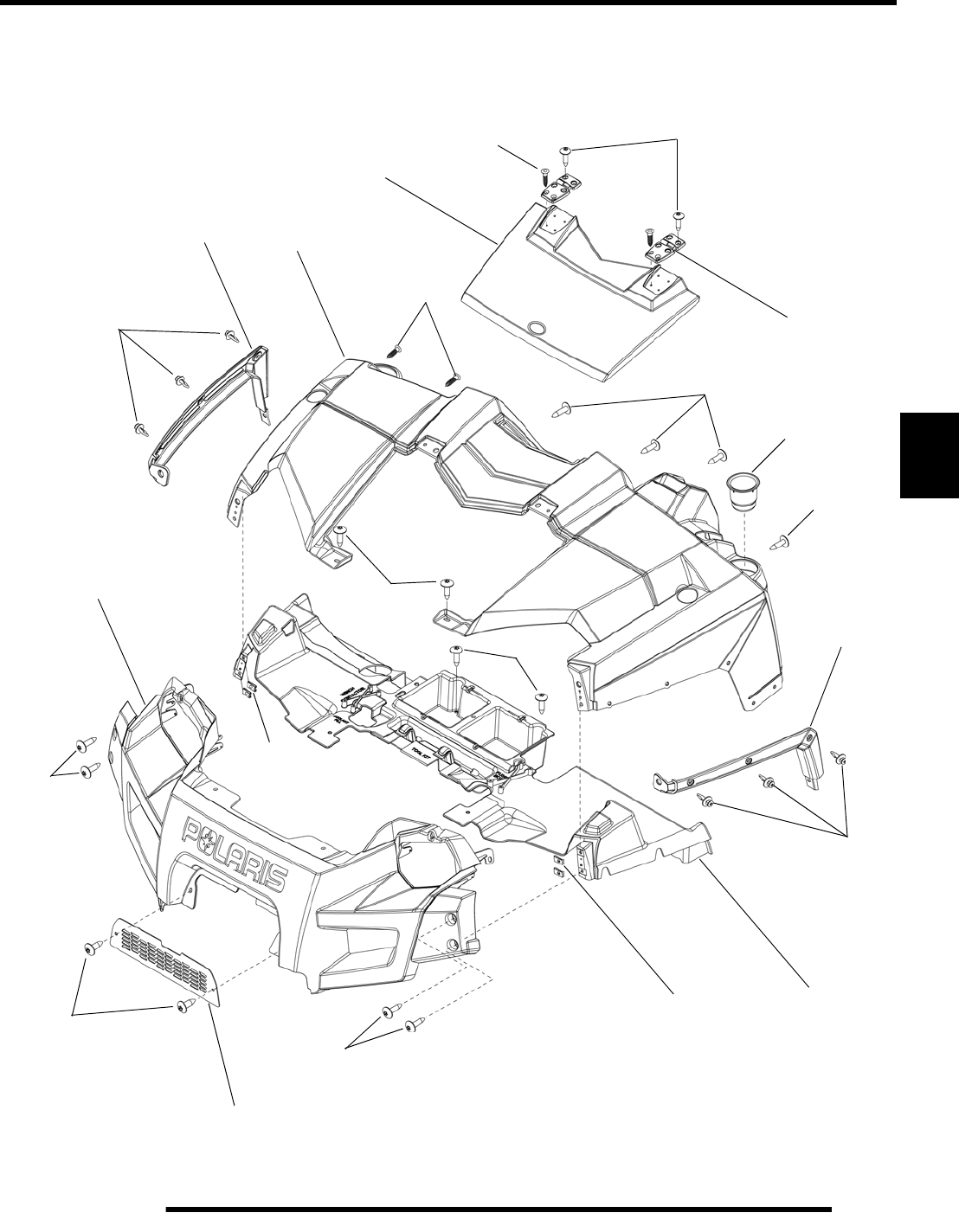
5.7
BODY / STEERING / SUSPENSION
5
Hood / Dash / Front Fenders / Front Fascia
Dash
Hood
Cup Holder
Hood
Liner
Hinge
U-Type
Speed Nut
Front
Fascia
Fascia
Screen
Front
RH Fender
Front
LH Fender
T27
Screw
4-6 ft. lbs.
(6-8 Nm)
T27
Screws
4-6 ft. lbs.
(6-8 Nm)
T27
Screws
4-6 ft. lbs.
(6-8 Nm)
T20
Screws
Push
Rivets
T27
Screws
4-6 ft. lbs.
(6-8 Nm) T27
Screws
Push
Rivets
U-Type
Speed Nut
T27
Screws
4-6 ft. lbs.
(6-8 Nm)
T27
Screws
T27
Screws
T30
Screws
PartShark.com
877-999-5686
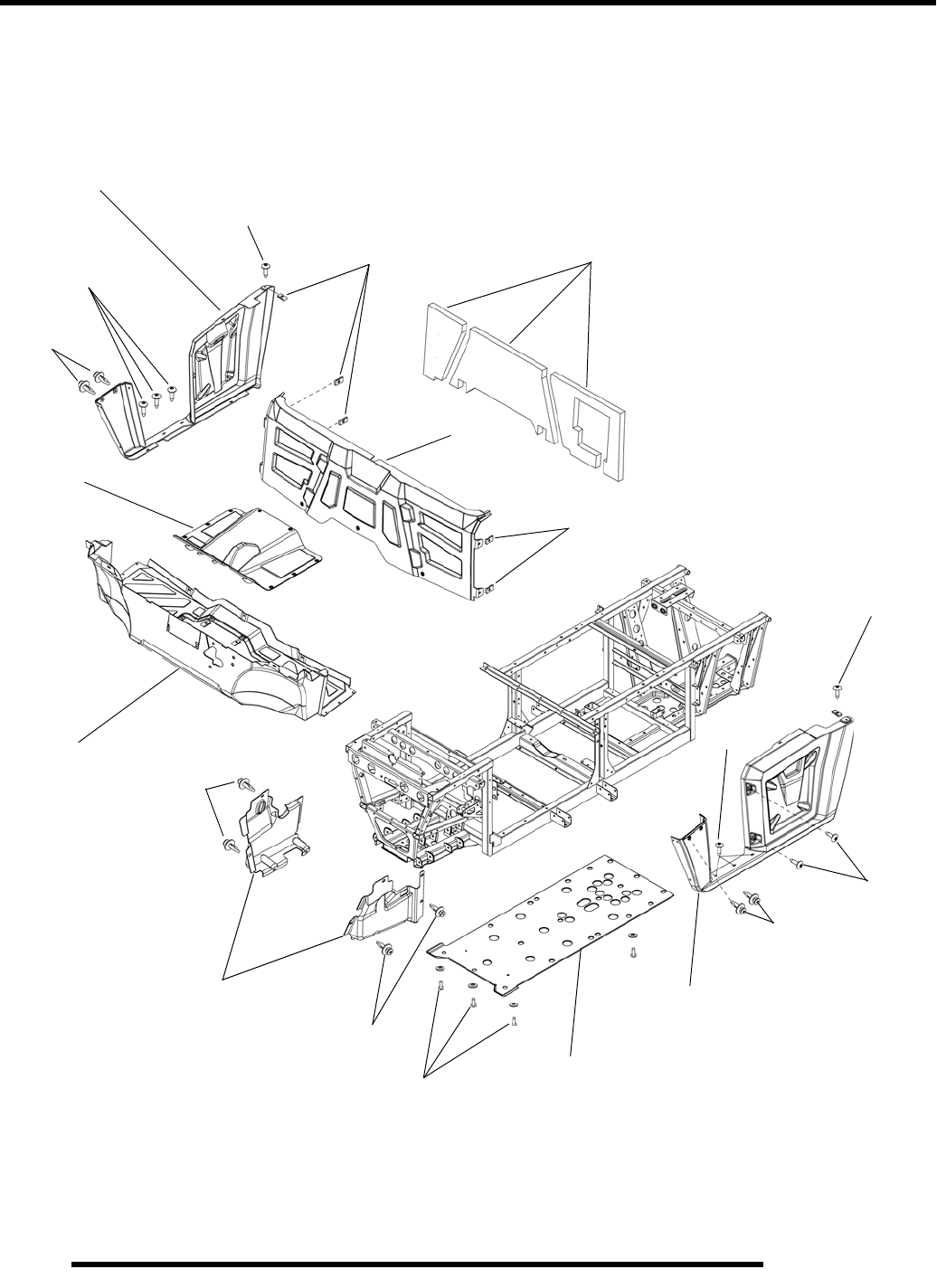
5.8
BODY / STEERING / SUSPENSION
Floor / Rear Fenders
Skid Plate
Floor
Cover
Main
Floor
U-Type
Speed Nut
Rear
Floor
Foam
Wheel Well
Panels
Rear RH Fender
Rocker Panel
Rear LH Fender
Rocker Panel
T27
Screws
4-6 ft. lbs.
(6-8 Nm)
Push
Rivets
Push
Rivets
Push
Rivets
Push
Rivets
T27
Screws
4-6 ft. lbs.
(6-8 Nm)
T27
Screws
4-6 ft. lbs.
(6-8 Nm)
T27
Screws
4-6 ft. lbs.
(6-8 Nm)
Screws
6-8 ft. lbs.
(8-10 Nm)
U-Type
Speed Nut
T27
Screws
PartShark.com
877-999-5686
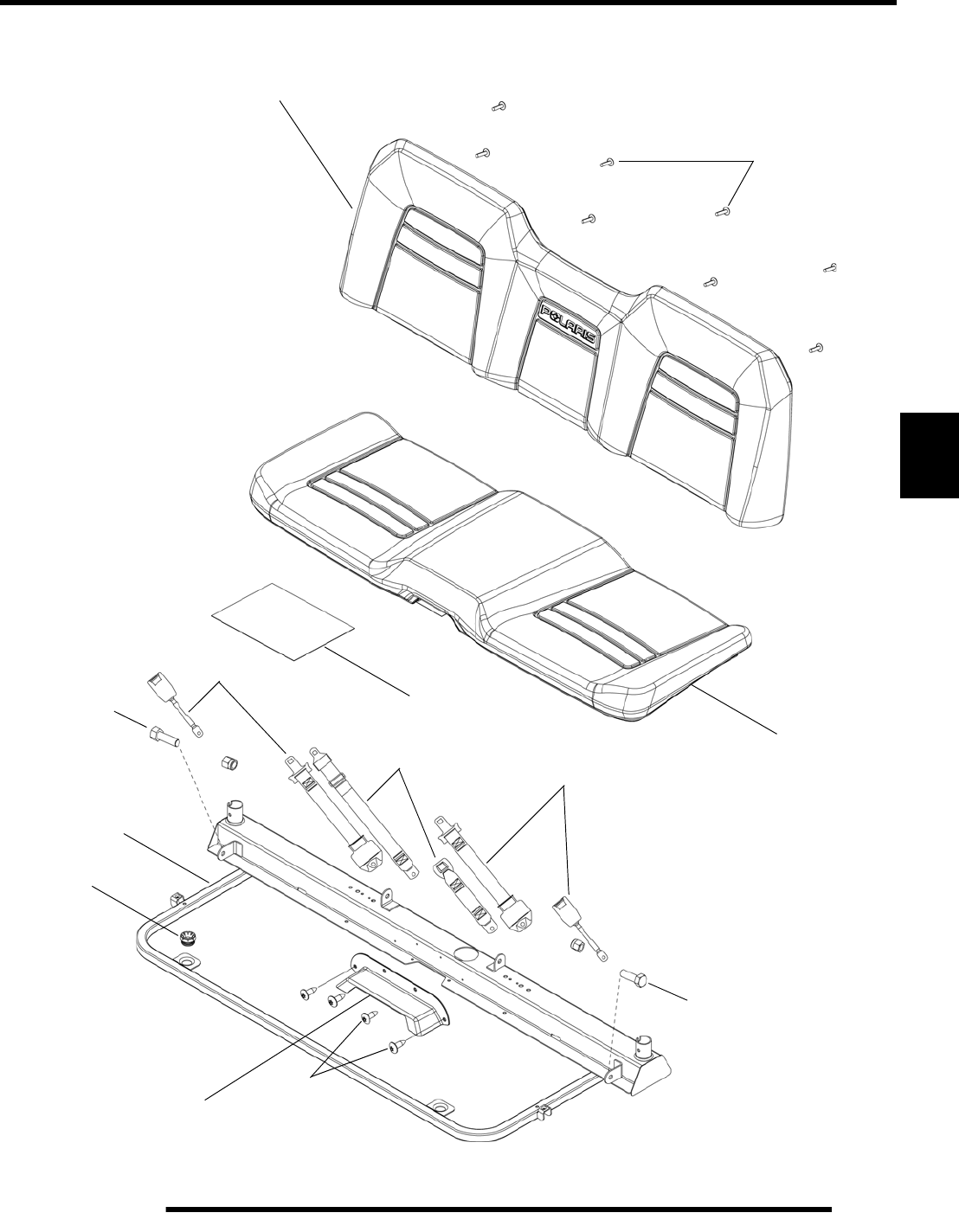
5.9
BODY / STEERING / SUSPENSION
5
Seat Mounting / Seat Belts
Seat Base
Seat Back
Bolt
Foil
Seat Base
Frame
Grommet
Seat Belt
LH Asm
Seat Belt
RH Asm
Seat Belt
Center Asm
Seat Panel
Cover
(54 Nm)
40 ft. lbs.
T30 Screws
(2-2.5 Nm)
18-20 in. lbs.
T25 Screws
Bolt
(54 Nm)
40 ft. lbs.
PartShark.com
877-999-5686
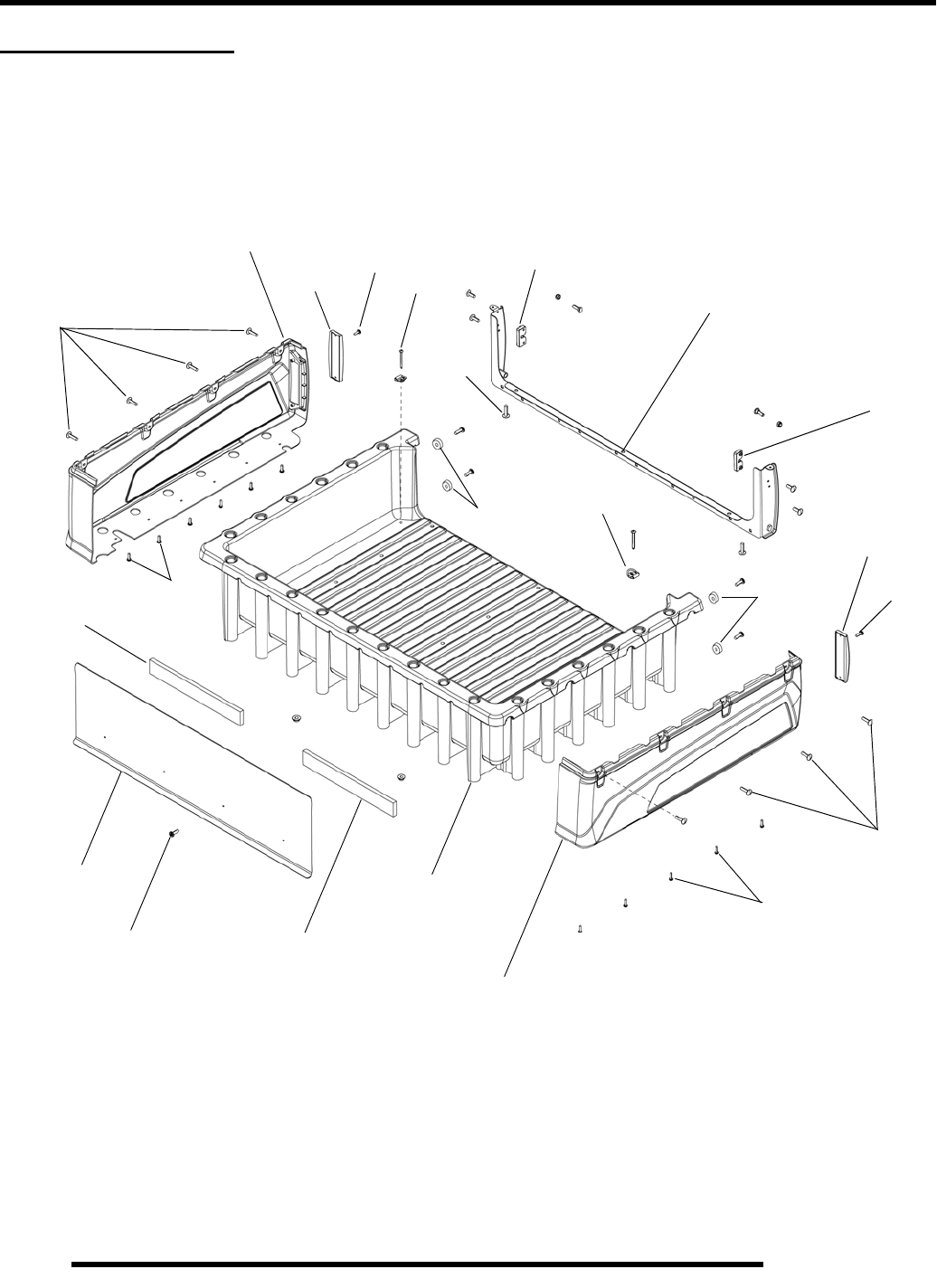
5.10
BODY / STEERING / SUSPENSION
REAR CARGO BOX
Cargo Box - Panels
Taillight
Tailgate Support
Seal Foam
RH Box Panel
Taillight
RH Box Panel
Front
Box Panel
Tie-Down
Ring
Latch
Latch
Bumpers
Bumpers
Cargo Box
Seal Foam
T30
Screws
T20
Screw T27
Screw
T20
Screws
T20
Screws
T20
Screw
T30
Screws
T20
Screw
T30
Screw
PartShark.com
877-999-5686
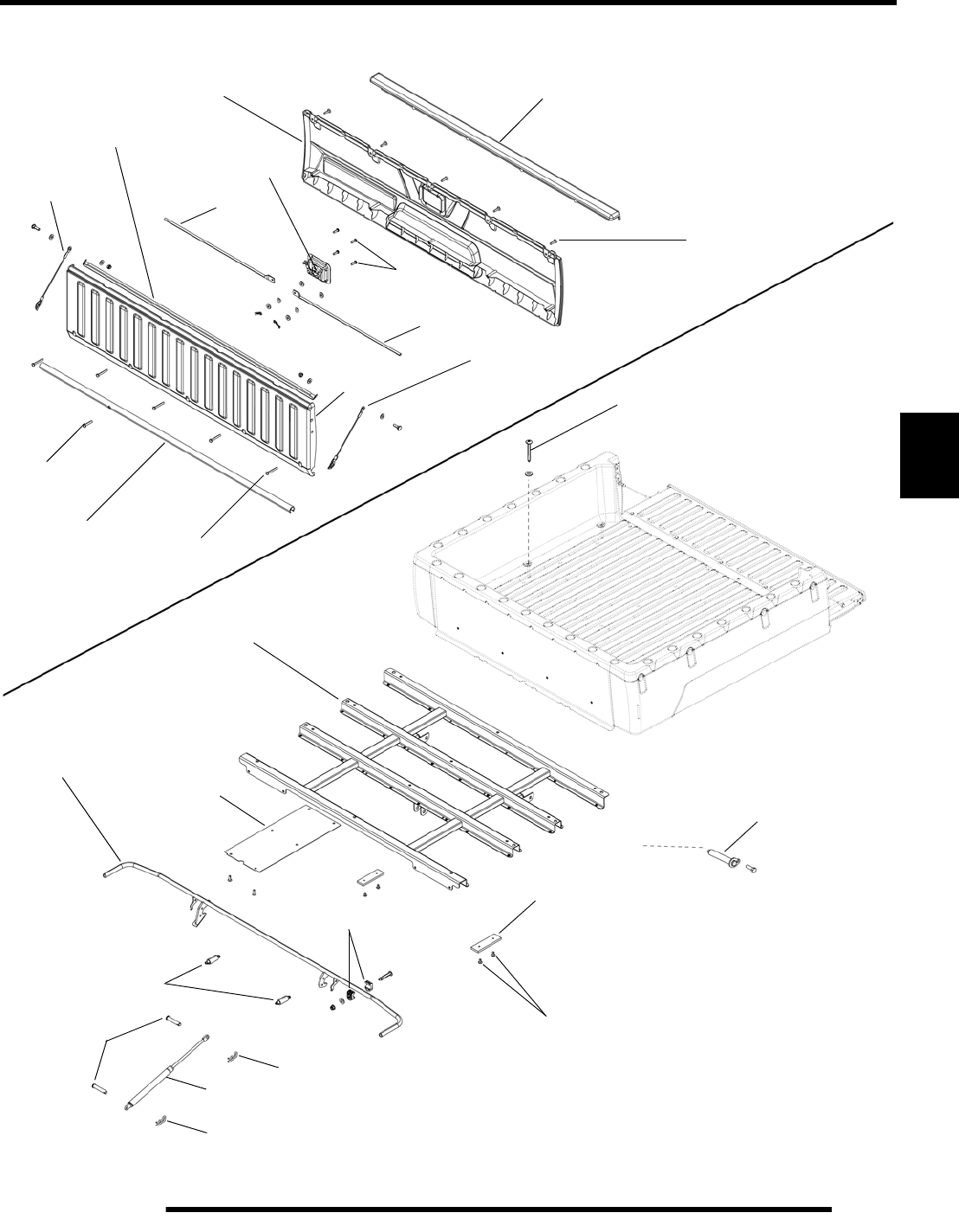
5.11
BODY / STEERING / SUSPENSION
5
Cargo Box - Tailgate / Box Support
Tailgate
Bracket
Tailgate Cap
Latch
Tailgate
Cable
Tailgate Tube
Inner
Rod
Outer Panel
Box Support
Box Latch
Shock Pins
Shock
Heat
Clip
Hinge Pin
Shield
Tailgate
Cable
Rod
Panel
Springs
Clip
Bushings
Rivets
Bumper
T27
Screws
4-6 ft. lbs.
(6-8 Nm)
T20
Screws
T30
Screws
T30
Screws
T27
Screw
PartShark.com
877-999-5686
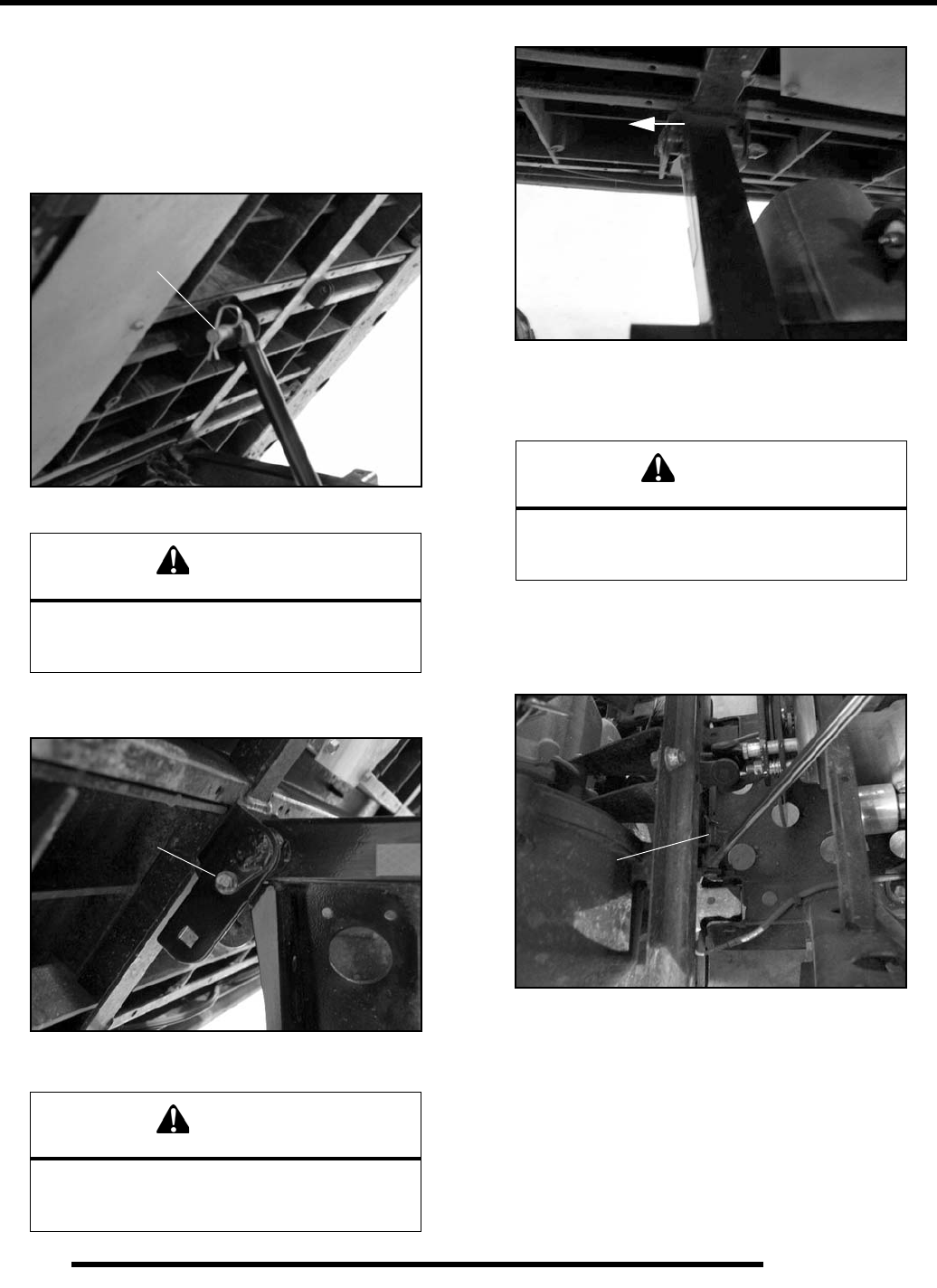
5.12
BODY / STEERING / SUSPENSION
Box Removal
1. Lift the cargo box into the dump position.
2. Disconnect the rear wire harness attached to the tail lights.
3. Remove the upper clip and pin attaching the shock to the
cargo box.
4. Remove the screw (A) that secures the hinge pin to the
frame on both sides.
5. Remove the hinge pin from both sides.
6. With both hinge pins removed, remove the box from the
frame. Two people may be needed to remove the box from
the frame.
Box Installation
1. If the shock was replaced, install the lower portion of the
shock to the frame and secure it with the pin and clip.
2. Place the cargo box onto the frame. Align the hinges of the
box with the bracket on the frame.
3. Install the box hinges on both sides.
4. Secure the box hinges with the hinge screws on both sides.
5. With the hinges installed, attach the shock to the cargo box
by inserting the pin and clip.
6. Lower the box and secure the latch.
CAUTION
Safely support the box during the remainder of
the removal process. The box is not as stable
with the shock removed.
CAUTION
Safely support the box during the remainder of
the removal process. The box is not as stable
with the hinge pins removed.
Shock Pin
A
CAUTION
Use caution when removing the box. It is
recommended to have two people carefully
remove the box from the frame.
Slide Hinge Pin Out
Lower
Shock Pin
PartShark.com
877-999-5686
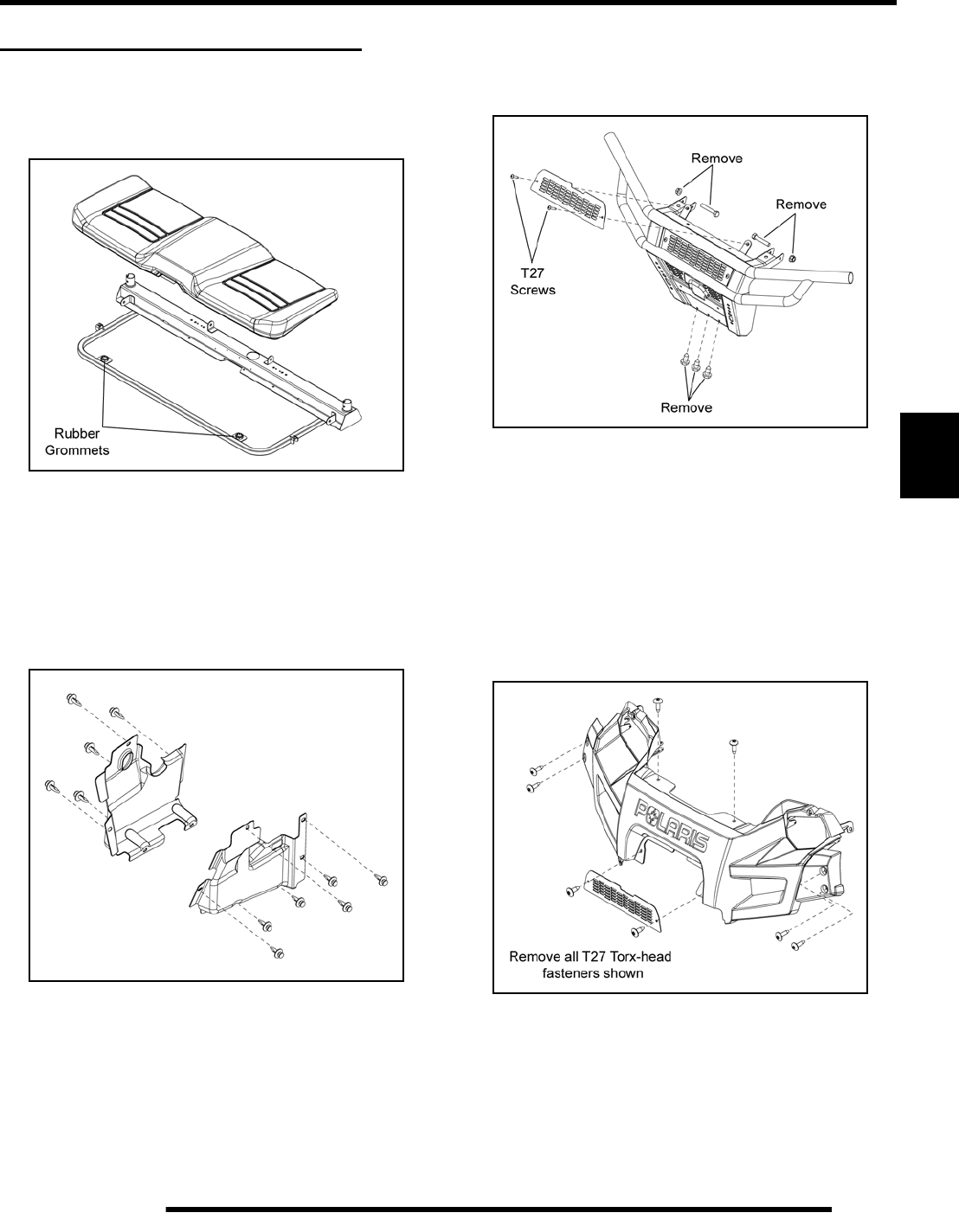
5.13
BODY / STEERING / SUSPENSION
5
BODY COMPONENT REMOVAL
Lower Seat Base
1. Lift up on the front of the seat base to disengage the seat
from the rubber grommets.
2. Pull the seat base forward to disengage the rear tabs and
remove the seat base from the vehicle.
Wheel Well Panels
1. Using the multi-function pliers, remove the (6) push rivets
from the LH panel and the (5) push rivets from the RH
panel.
2. Pull both panels out from the wheel wells.
Front Bumper
1. Remove the (2) T27 Torx-head screws retaining the fascia
screen and remove the screen.
2. Remove the (3) bolts from the lower portion of the bumper.
3. Remove the fasteners from each side of the upper portion
of the bumper.
4. Carefully remove the bumper from the vehicle.
Front Fascia
1. Remove the (2) T27 Torx-head screws retaining the fascia
screen and remove the screen.
2. Remove the remaining T27 Torx-head screws retaining the
front fascia.
3. Turn the headlight bulbs counter-clockwise 90° and
remove the bulbs from the head lamps.
4. Carefully remove the fascia from the vehicle.
PartShark.com
877-999-5686
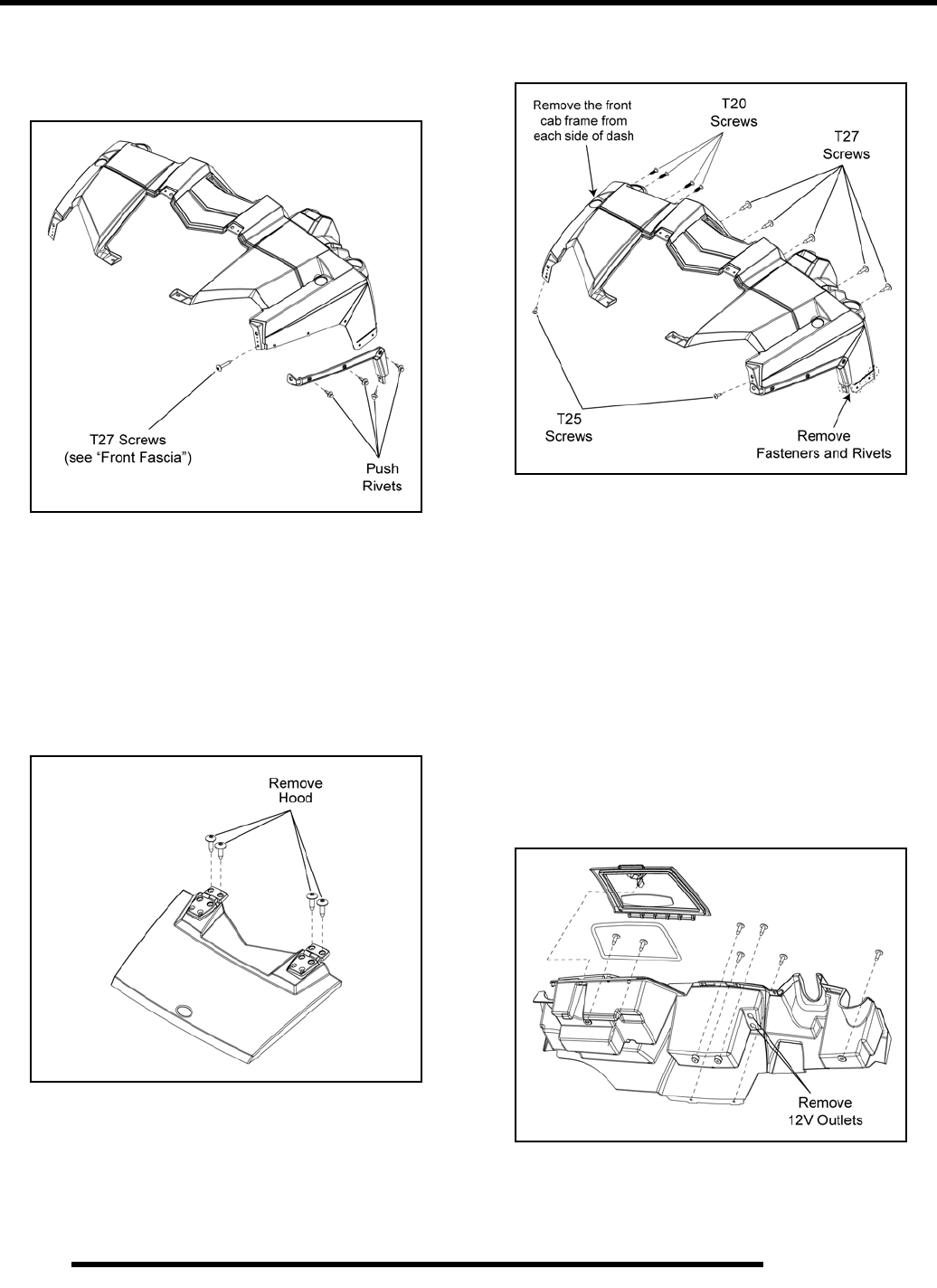
5.14
BODY / STEERING / SUSPENSION
Front Fenders
1. Remove the lower T27 Torx-head screws retaining the
front fascia (see “Front Fascia”).
2. Remove the (4) push rivets retaining the front fender and
remove the fender from the vehicle.
3. Repeat this procedure to remove the other front fender.
Hood / Dash
1. Remove the front fascia (see “Front Fascia” removal).
2. Unlatch the hood and remove the (2) T27 Torx-head screws
to remove the hood assembly.
3. Remove the front portion of the cab frame on each side to
allow dash removal (see “Cab Frame - Exploded View”).
4. Remove the (2) T25 Torx-head screws retaining the front
of the dash to the hood liner.
5. Open the glove box and remove the (4) T20 Torx-head
screws from the dash.
6. Remove the (5) T25 Torx-head screws retaining the rear
portion of the dash.
7. Remove the (8) fasteners from each side of the dash where
it attaches to the front and rear fenders.
8. Remove the rubber boots from around the parking brake
and shift lever.
9. Remove the (2) push rivets from the dash panel (see “Dash
Instruments/Controls”). Unhook all electrical components
to allow the panel to be completely removed.
10. Carefully remove the dash assembly from the vehicle.
Glove Box / Storage Panel
1. Remove the hood / dash (see “Hood / Dash”).
2. Remove the (7) T27 Torx-head screws retaining the glove
box storage panel.
3. Disconnect 12V power outlets and remove the assembly.
PartShark.com
877-999-5686
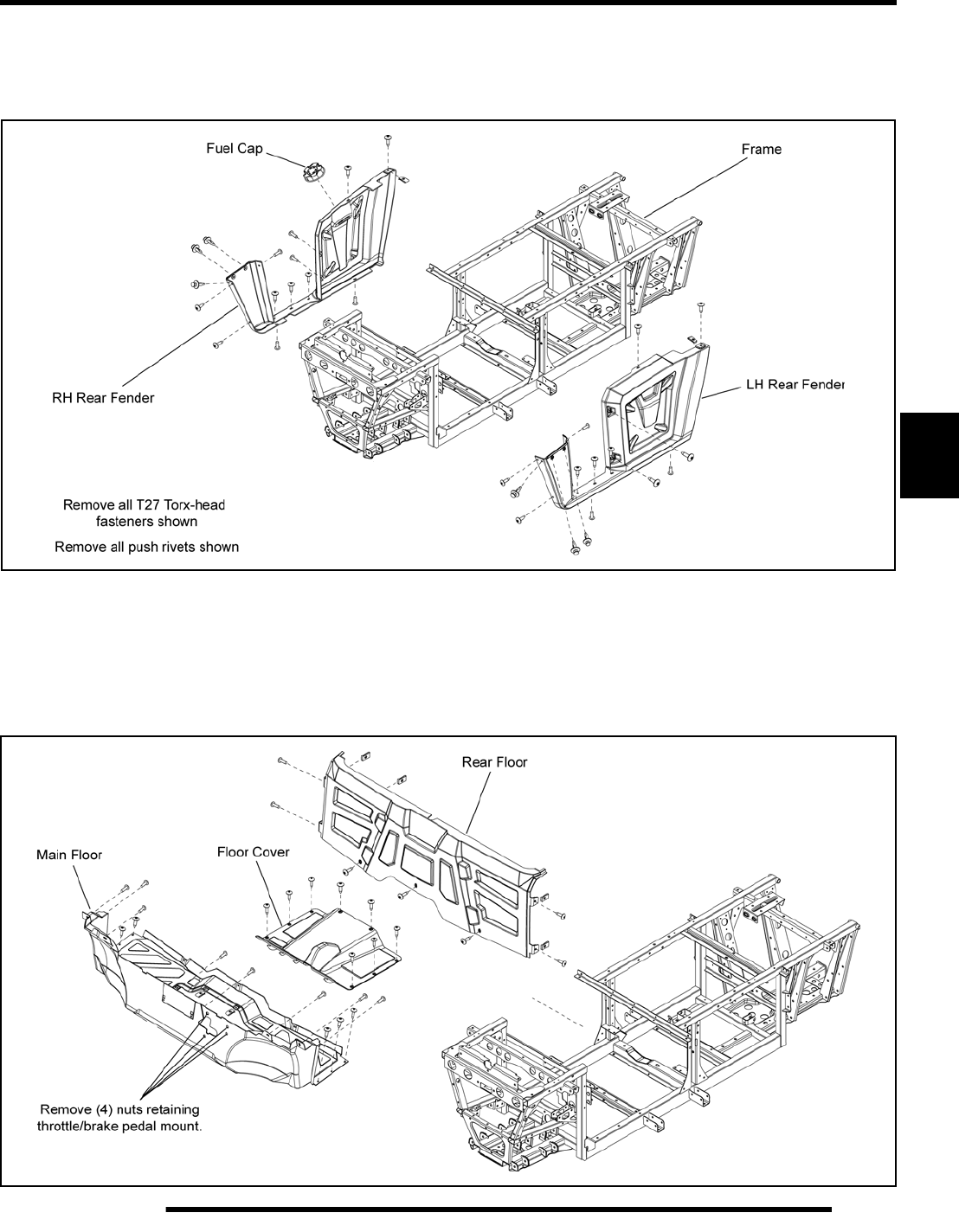
5.15
BODY / STEERING / SUSPENSION
5
Rear Fenders
1. Remove the (11) T27 Torx-head screws and (3) push rivets
retaining the rear fender.
NOTE: If removing the RH side, remove the fuel cap
as well. Reinstall fuel cap after fender removal.
2. Repeat this procedure to remove the other rear fender.
Floor
1. Remove the (7) T27 Torx-head screws retaining the rear
floor. Disconnect ECU harness and remove the rear floor.
2. Remove the (8) T27 Torx-head screws retaining the floor
cover and remove the floor cover from the vehicle.
3. Loosen the glove box/storage panel fasteners to access the
screws retaining the upper portion of the main floor (see
“Glove Box / Storage Panel”).
4. Remove the (14) T27 Torx-head screws retaining the main
floor and remove the (4) nuts retaining the brake/throttle
pedal mount and remove the main floor from the vehicle.
PartShark.com
877-999-5686
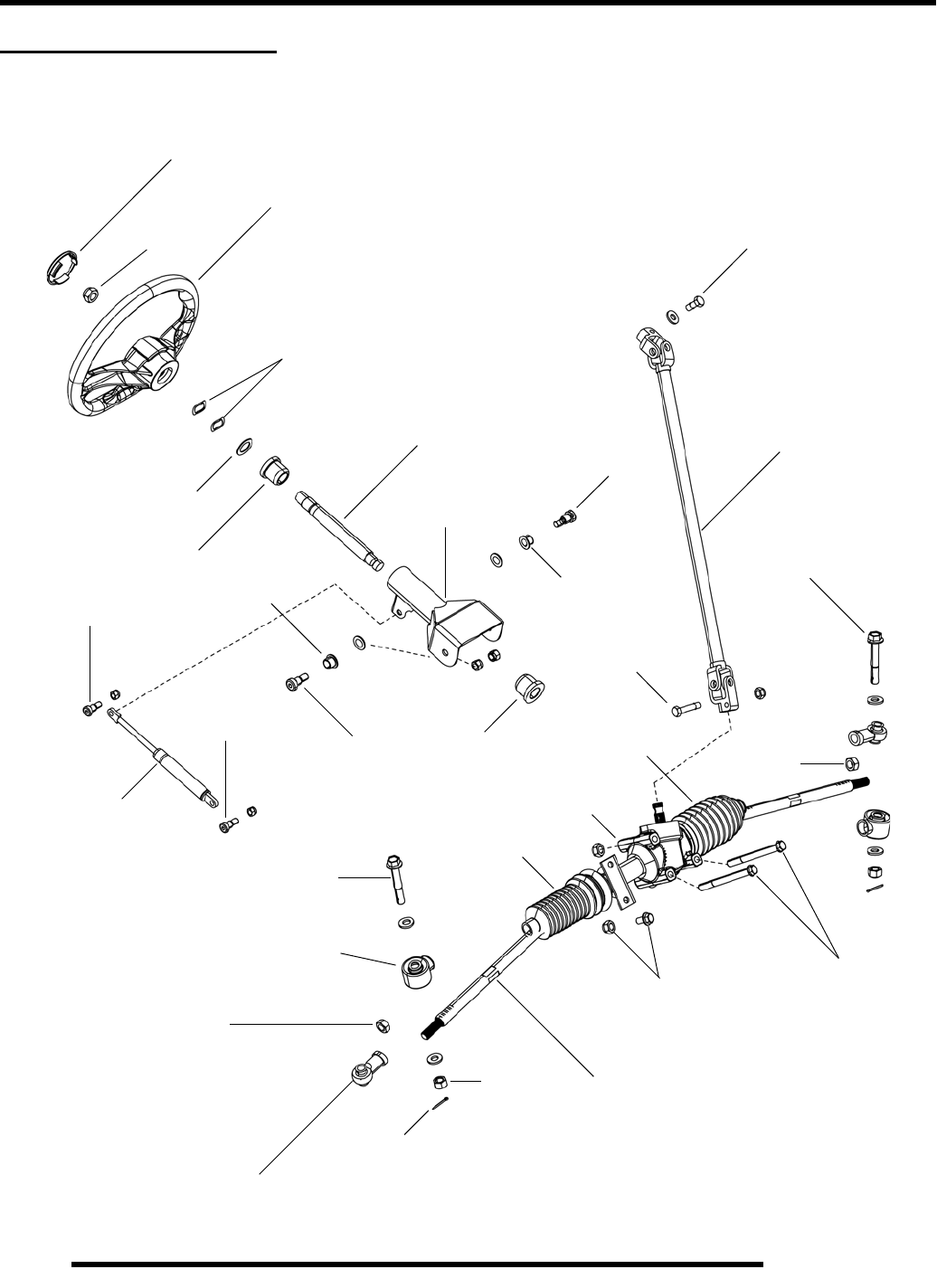
5.16
BODY / STEERING / SUSPENSION
STEERING ASSEMBLY
Exploded View
Boot
Rod End
Tie Rod
RH Boot
LH Boot
Bushing
Bushing
Wave Washers
Steering Wheel
Cap
Pivot Tube
Upper
Steering Shaft Lower
Steering Shaft
Cotter Pin
Gear Box
Bushing
Bushing
Bushing
Oil Locking
Shock Asm.
Asm.
17 ft. lbs.
(23 Nm)
17 ft. lbs.
(23 Nm)
12-14 ft. lbs.
(16-19 Nm)
Nut
40 ft. lbs.
(54 Nm)
40 ft. lbs.
(54 Nm)
12-14 ft. lbs.
(16-19 Nm)
30 ft. lbs.
(41 Nm)
15-19 ft. lbs.
(20-26 Nm)
25-31 ft. lbs.
(34-42 Nm)
23 ft. lbs.
(31 Nm)
23 ft. lbs.
(31 Nm)
12 ft. lbs.
(16 Nm)
12 ft. lbs.
(16 Nm)
PartShark.com
877-999-5686
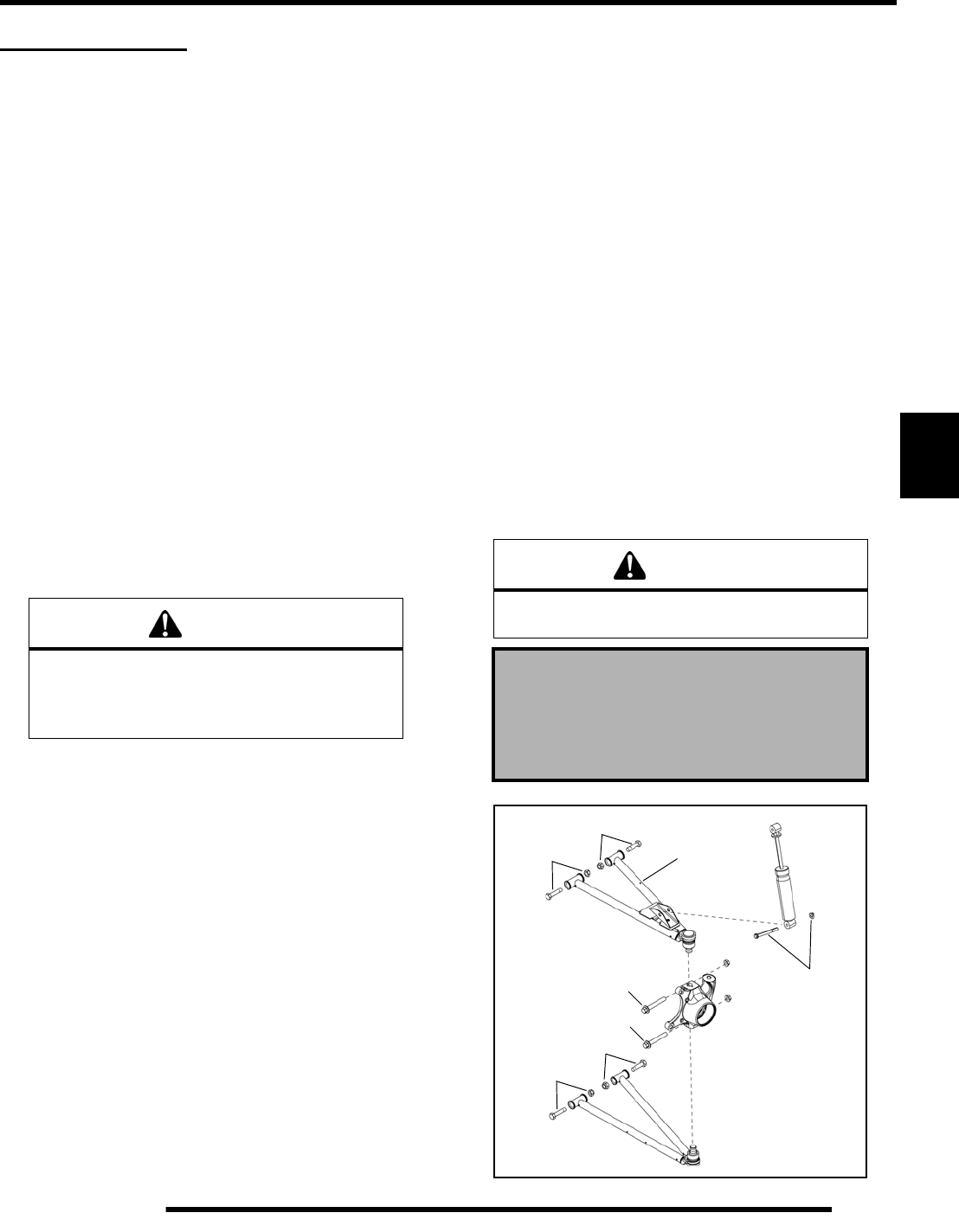
5.17
BODY / STEERING / SUSPENSION
5
FRONT A-ARMS
Removal / Replacement
The following procedure details upper and lower A-arm
removal and replacement on one side of the vehicle.
1. Elevate and safely support the front of the vehicle and
remove the front wheel.
2. Remove the lower shock fastener (A) from the upper A-
arm.
3. Remove the brake line clamp from the A-arm.
4. Remove the upper ball joint pinch bolt (B) from the front
bearing carrier.
5. Using a soft face hammer, tap on bearing carrier to loosen
the upper A-arm ball joint end while lifting upward on the
upper A-arm. Completely remove the ball joint end from
the bearing carrier.
6. Loosen and remove the upper A-arm through-bolt fasteners
(C) and remove the upper A-arm from the vehicle.
7. Examine A-arm bushings and pivot tubes (see “Exploded
View”). Replace if worn. Discard hardware.
8. If not replacing the A-arm, thoroughly clean the A-arm and
pivot tubes.
9. Install new ball joint into A-arm. Refer to “Ball Joint
Replacement” section.
10. Insert new A-arm bushings and pivot tubes into new A-arm.
11. Install new upper A-arm assembly onto vehicle frame.
Torque new bolts to 30 ft. lbs. (41 Nm).
12. Insert upper A-arm ball joint end into the bearing carrier.
Install the upper ball joint pinch bolt (B) into the bearing
carrier and torque bolt to 17 ft. lbs. (23 Nm).
13. Attach shock to A-arm with fastener (A). Torque lower
shock bolt to 30 ft. lbs. (41 Nm).
14. Remove the lower ball joint pinch bolt (D) from the front
bearing carrier.
15. Using a soft face hammer, tap on bearing carrier to loosen
the lower A-arm ball joint end while pushing downward on
the lower A-arm. Completely remove the ball joint end
from the bearing carrier.
16. Loosen and remove the lower A-arm through-bolt fasteners
(E) and remove the lower A-arm from the vehicle.
17. Examine A-arm bushings and pivot tubes (see “Exploded
View”). Replace if worn. Discard hardware.
18. If not replacing the A-arm, thoroughly clean the A-arm and
pivot tubes.
19. Install new ball joint into A-arm. Refer to “Ball Joint
Replacement” section.
20. Insert new A-arm bushings and pivot tubes into new A-arm.
21. Install new lower A-arm assembly onto vehicle frame.
Torque new bolts to 30 ft. lbs. (41 Nm).
22. Insert lower A-arm ball joint end into the bearing carrier.
Install the lower ball joint pinch bolt (D) into the bearing
carrier and torque bolt to 17 ft. lbs. (23 Nm).
WARNING
The locking agent on the existing bolts was
destroyed during removal. DO NOT reuse old
hardware. Serious injury or death could result if
fasteners come loose during operation.
WARNING
Upon A-arm installation completion, test vehicle
at low speeds before putting into service.
Upper / Lower A-arm Bolt Torque:
30 ft. lbs. (41 Nm)
Ball Joint Pinch Bolt Torque:
17 ft. lbs. (23 Nm)
A
D
C
C
B
E
E
Remove
Clamp
PartShark.com
877-999-5686
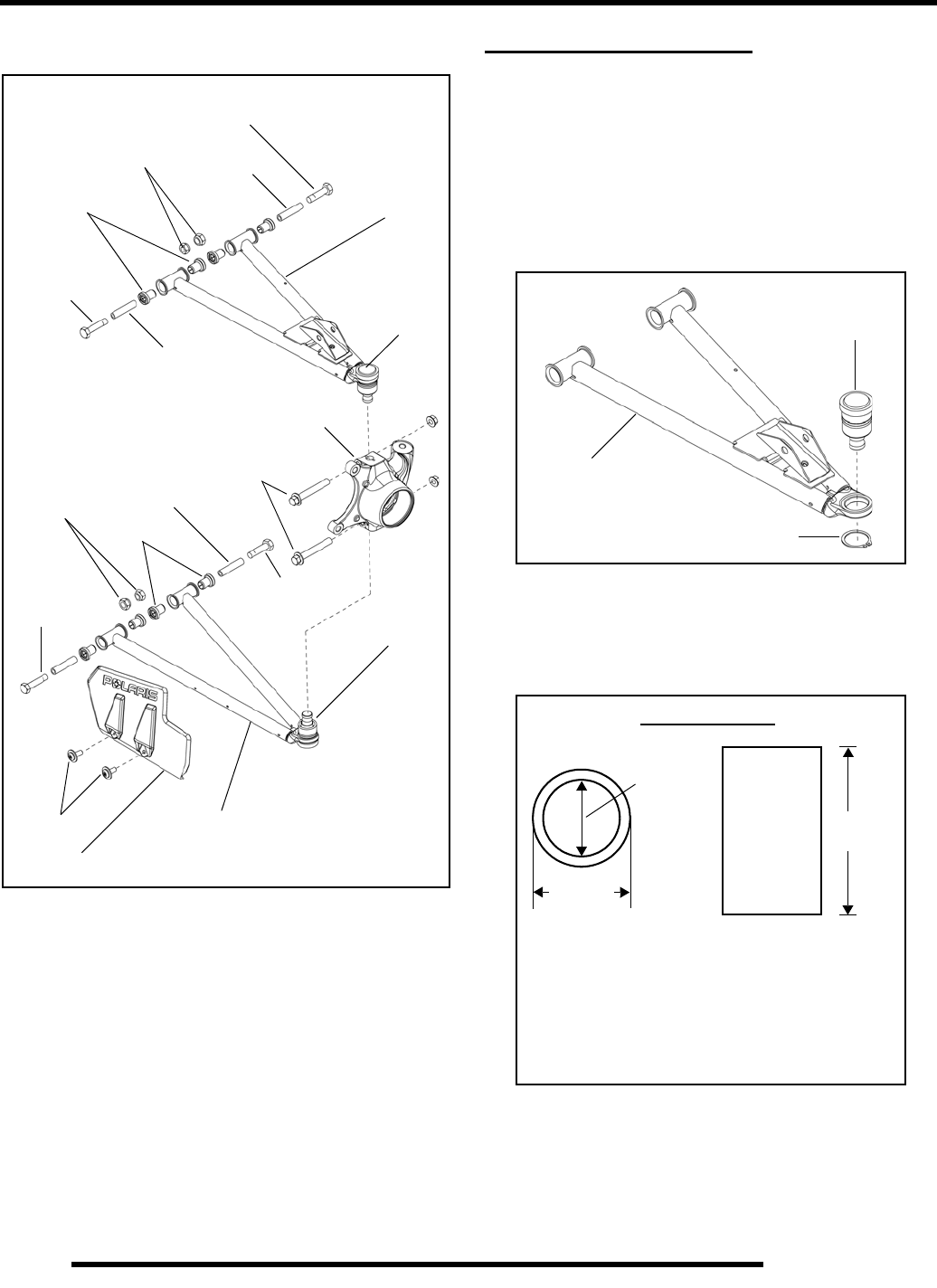
5.18
BODY / STEERING / SUSPENSION
Exploded View BALL JOINT SERVICE
Removal
IMPORTANT: Do not reuse a ball joint if it has been
removed for any reason. If removed, it must be
replaced. Use this removal procedure only when
replacing the ball joint.
1. The A-arm must be removed to perform this procedure
(see “FRONT A-ARMS - Removal / Replacement”).
2. Remove the retaining ring from the ball joint.
3. A driver must be used for the removal of the ball joint. Use
the dimensions below to fabricate or locate the correct size
driver to use in the following process.
Upper
A-arm
Lower
A-arm
Screws
Ball
Pinch
Bearing
CV Shield
Bushings
30 ft. lbs.
(41 Nm)
Pivot
Ball
Carrier
Bolts
17 ft. lbs.
(23 Nm)
30 ft. lbs.
(41 Nm)
Joint
Tube
30 ft. lbs.
(41 Nm)
Pivot
Tube
Nuts
Joint
Bushings
Pivot
Tube
Nuts
30 ft. lbs.
(41 Nm)
Ball Joint
Upper A-arm
Retaining Ring
1.75 in.
1.375 in.
(3.49 cm)
3 in.
(7.62 cm)
Driver Dimensions
- Outside diameter of driver cannot be any
larger than 1.75 in. (4.45 cm).
- Inside diameter cannot be any smaller than
1.375 in. (3.49 cm).
- Driver must be at least 3 in. (7.62 cm) tall.
(4.45 cm)
PartShark.com
877-999-5686
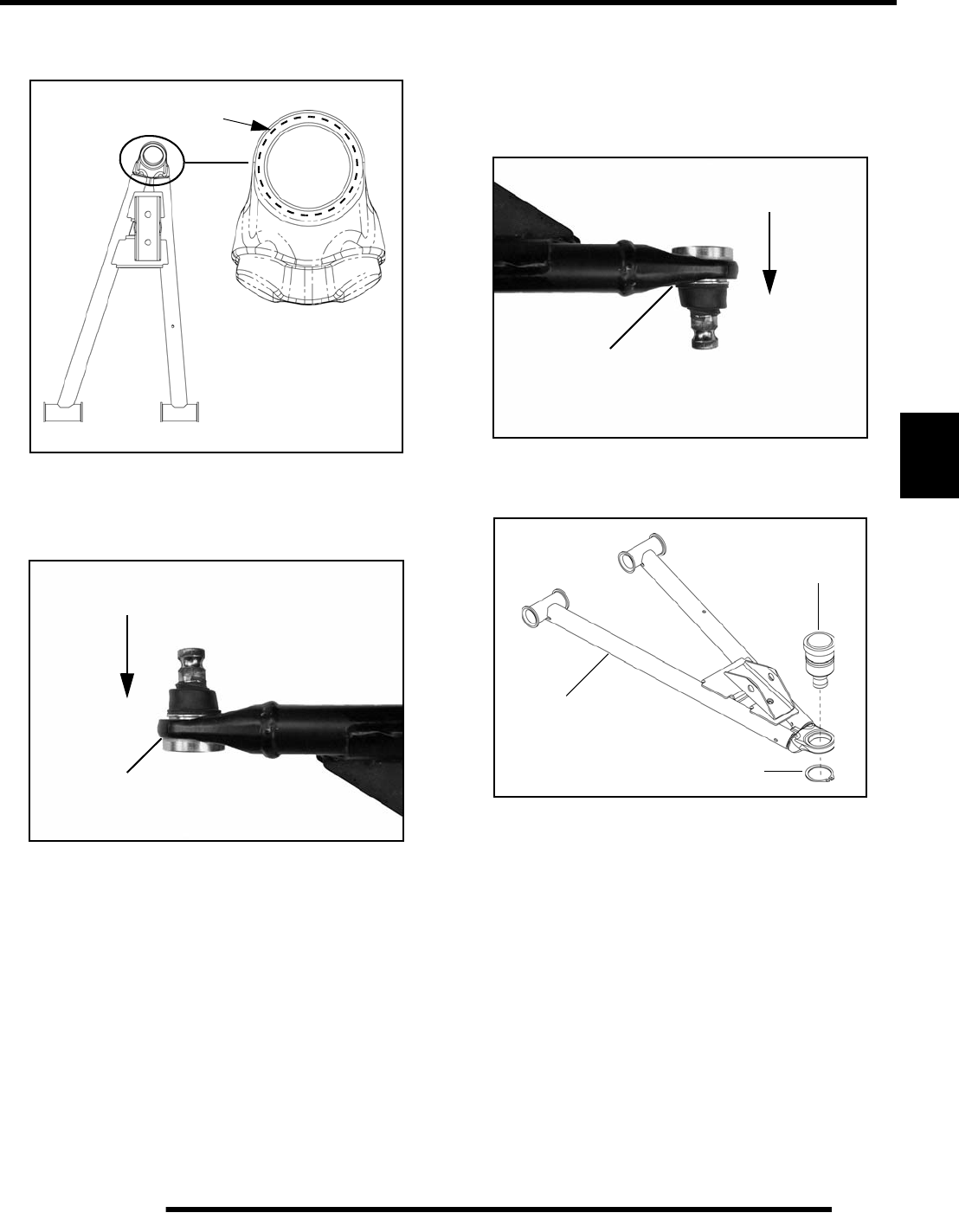
5.19
BODY / STEERING / SUSPENSION
5
4. Use a press and correct size driver to remove the ball joint
from the A-arm.
NOTE: The driver must fit the ball joint housing in
the A-arm. This will allow the ball joint to be properly
pressed out of the A-arm without damaging the A-
arm.
Installation
1. Place the A-arm in the correct position for ball joint
installation. Face the A-arm end flat on top of the driver.
Carefully drive the ball joint into place until the ball joint
is properly seated.
2. After the new ball joint is installed into the A-arm, install
a NEW retaining ring.
3. Reinstall the A-arm (see “FRONT A-ARMS - Removal /
Replacement”).
4. Repeat the ball joint service procedure for any additional
A-arm ball joint replacements.
Correct
Driver Placement
The driver must fit the
inside diameter of the
Upper A-arm Shown
A-arm end.
Press out of the A-arm
in this direction
Upper A-arm Shown
Place driver HERE
to support A-arm
Press into the A-arm
in this direction
Upper A-arm Shown
Place driver HERE
to support A-arm
Ball Joint
Upper A-arm
Retaining Ring
PartShark.com
877-999-5686
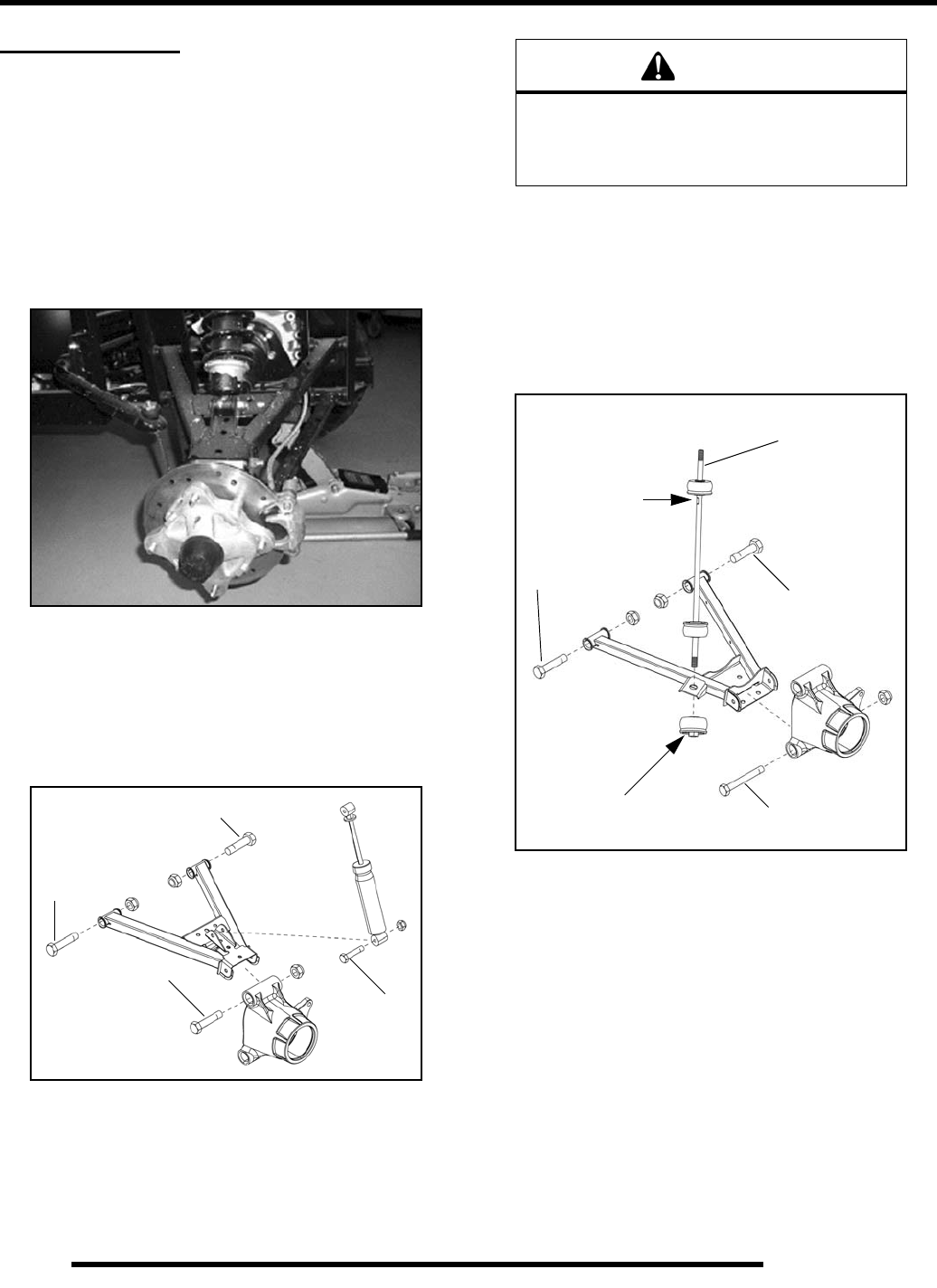
5.20
BODY / STEERING / SUSPENSION
REAR A-ARMS
Removal / Replacement
The following procedure details upper and lower A-arm
removal and replacement on one side of the vehicle. Repeat the
following steps to remove the A-arm(s) from the opposite side.
NOTE: Use the exploded view in this section as a
reference during the procedure.
1. Elevate and safely support the rear of vehicle off the
ground and remove the rear wheel.
Upper A-arm Removal
2. Remove the fastener (A) retaining the lower portion of the
shock to the lower A-arm.
3. Remove the fastener (B) attaching the upper A-arm to the
bearing carrier.
4. Remove the fasteners (C) attaching the upper A-arm to the
frame and remove the upper A-arm from the vehicle.
5. Examine A-arm and bearing carrier bushings and pivot
tubes (see “Exploded View”). Replace if worn. Discard
hardware.
6. If not replacing the A-arm, thoroughly clean the a-arm and
pivot tubes.
7. Insert new A-arm bushings and pivot tubes into new A-arm.
Lower A-arm Removal
8. While holding the stabilizer bar linkage, remove the lower
nut retaining the linkage to the lower A-arm.
9. Remove the fastener (D) attaching the lower A-arm to the
bearing carrier.
10. Remove the fasteners (E) attaching the lower A-arm to the
frame and remove the lower A-arm from the vehicle (see
previous illustration).
11. Examine A-arm and bearing carrier bushings and pivot
tubes (see “Exploded View”). Replace if worn. Discard
hardware.
12. If not replacing the A-arm, thoroughly clean the a-arm and
pivot tubes.
13. Insert new A-arm bushings and pivot tubes into the new
A-arm.
A
B
C
C
WARNING
The locking agent on the existing bolts was
destroyed during removal. DO NOT reuse old
hardware. Serious injury or death could result if
fasteners come loose during operation.
Hold HERE with
Remove lower D
E
open-end wrench
linkage nut
E
Stabilizer Bar
Linkage
PartShark.com
877-999-5686
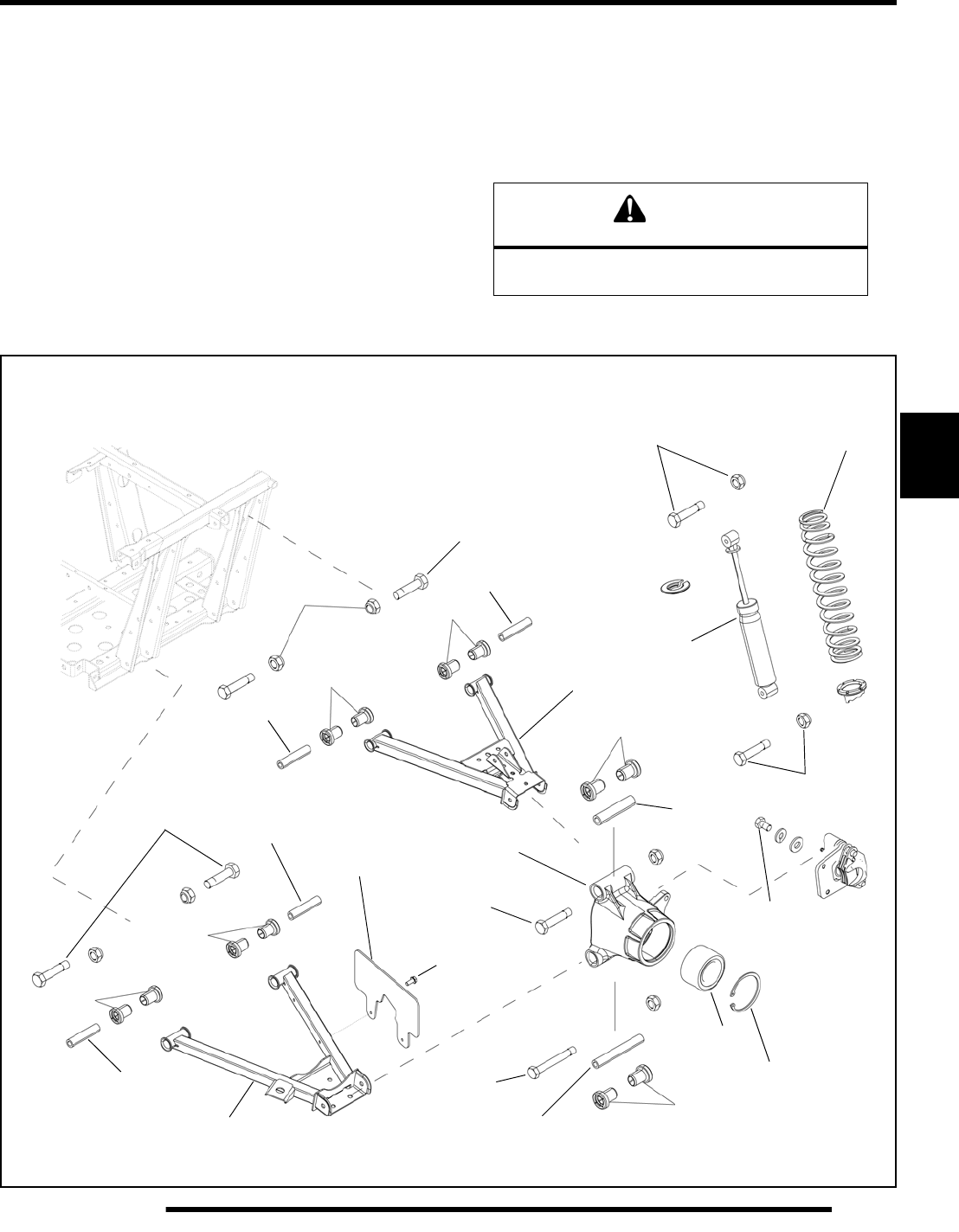
5.21
BODY / STEERING / SUSPENSION
5
Installation
1. Install lower A-arm assembly onto vehicle frame. Torque
new fasteners to 30 ft. lbs. (41 Nm).
2. Attach lower A-arm to bearing carrier. Torque new
fastener to 30 ft. lbs. (41 Nm).
3. Route brake line on top of the lower A-arm.
4. Install upper A-arm assembly onto vehicle frame. Torque
new fasteners to 30 ft. lbs. (41 Nm).
5. Attach upper A-arm to bearing carrier. Torque new
fastener to 30 ft. lbs. (41 Nm).
6. Reinstall the lower portion of the shock to the upper A-arm.
Torque shock fastener to 30 ft. lbs. (41 Nm).
7. Install wheel and torque wheel nuts to specification.
Exploded View
WARNING
Upon A-arm installation completion, test vehicle
at low speeds before putting into service.
Screws
Bearing
CV Carrier
Shield
Shaft
Upper A-arm
Bushings
Spring
Snap Ring
Bushings
Lower A-arm
30 ft. lbs.
Shaft
Nuts
30 ft. lbs.
(41 Nm)
30 ft. lbs.
(41 Nm)
Shock
30 ft. lbs.
(41 Nm)
30 ft. lbs.
(41 Nm)
Bearing
Bushings
Shaft
Shaft
Bushings
30 ft. lbs.
(41 Nm)
Shaft
(41 Nm)
Bushings
30 ft. lbs.
(41 Nm)
Bushings
Shaft
PartShark.com
877-999-5686
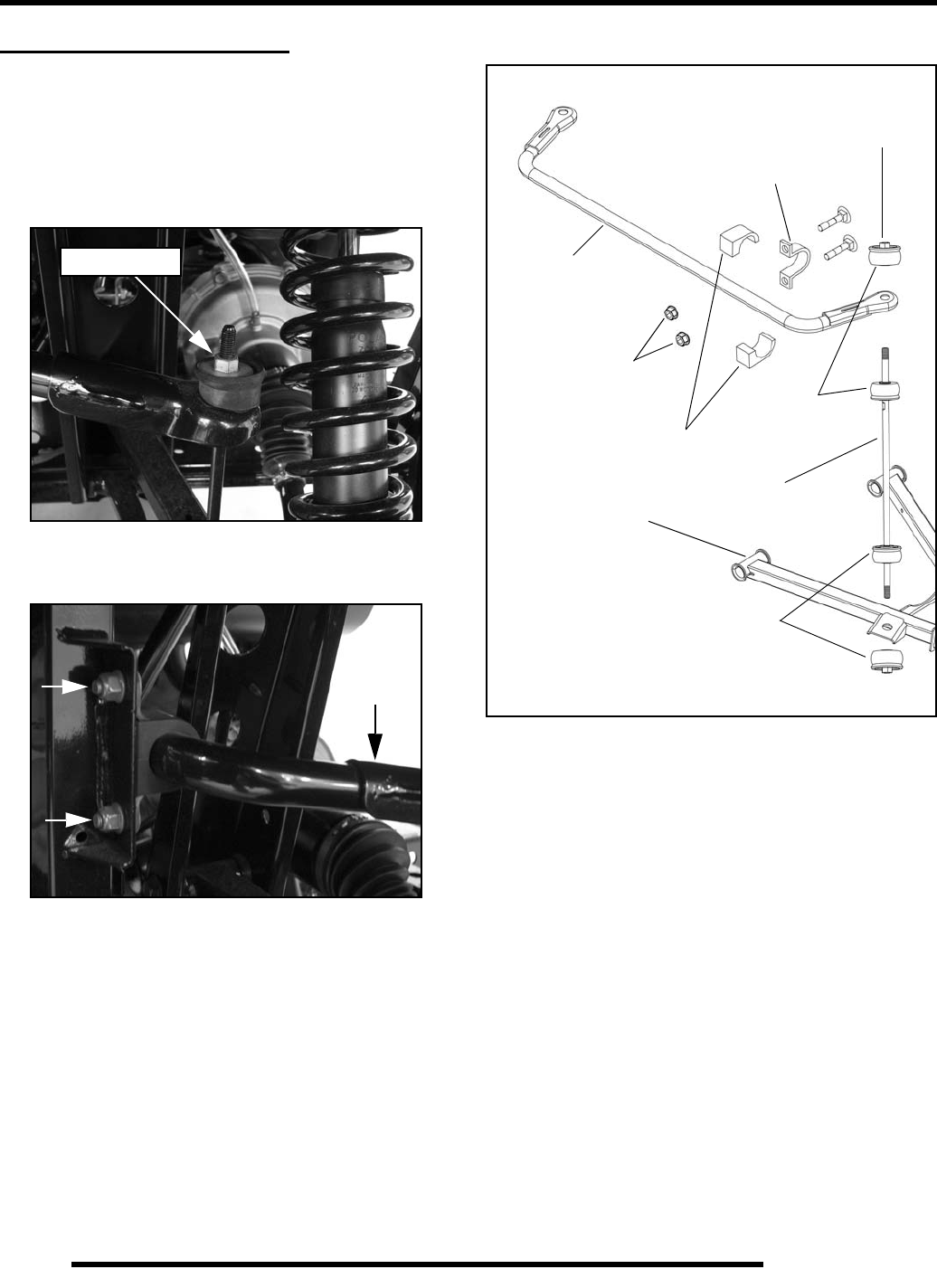
5.22
BODY / STEERING / SUSPENSION
REAR STABILIZER BAR
Removal / Installation
1. Elevate and safely support vehicle with weight removed
from the rear wheel(s).
2. Remove the retaining nut from the upper portion of the
stabilizer bar linkage bushing on each side of the vehicle.
3. Remove the two fasteners that secure the stabilizer bar to
the main frame on each side.
4. Remove the stabilizer bar from the frame.
5. Inspect the stabilizer bar for straightness.
6. Inspect the bushings and replace if needed.
7. Inspect the rubber bushings on the linkage rod and replace
if needed.
8. Reverse the procedure for installation.
9. Torque the stabilizer retaining bolts and rubber bushing
nuts to 17 ft. lbs. (23 Nm).
Exploded View
Remove Nut
Stabilizer
Bar
Bushings
Stabilizer Bar
Rubber
Bushing
Bracket
Bushings
Rubber
Bushings
Lower
A-arm
17 ft. lbs.
(23 Nm)
17 ft. lbs.
(23 Nm)
Linkage
PartShark.com
877-999-5686
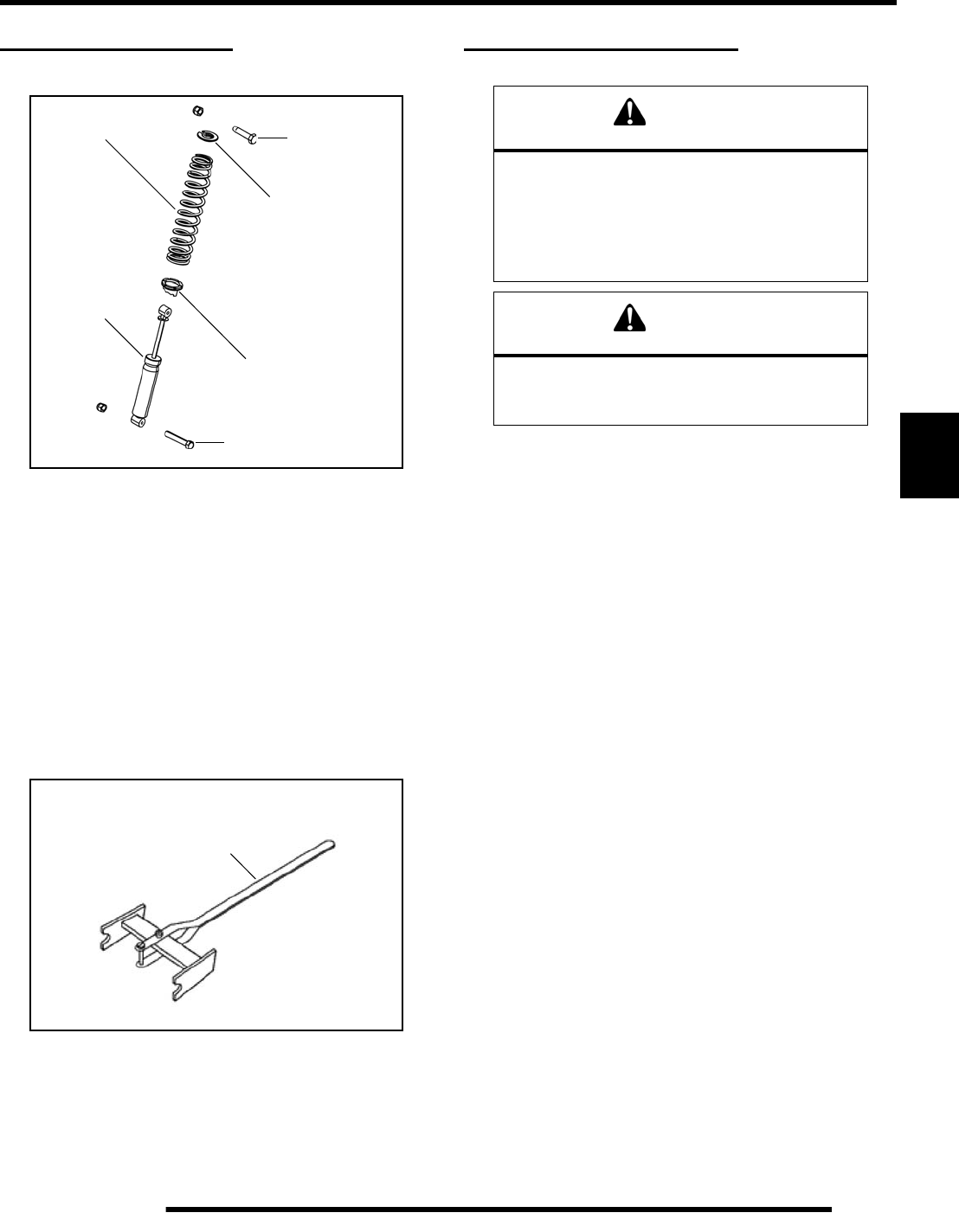
5.23
BODY / STEERING / SUSPENSION
5
SHOCKS / SPRINGS
Exploded View
Shock Removal / Installation
1. Elevate the vehicle off the ground to relieve the suspension
load.
2. Remove the upper and lower fasteners retaining the shock
and remove the shock from the vehicle.
3. Reverse the procedure to reinstall the shock. Torque new
fasteners to 30 ft. lbs. (41 Nm).
Shock Replacement
1. Using a spring compressor, compress the shock spring far
enough to remove the spring retainer.
2. Remove the spring and adjusting cam from the existing
shock and install components onto the new shock.
3. Compress the shock spring and install the spring retainer.
4. Reinstall the shock onto the vehicle and torque new
fasteners to 30 ft. lbs. (41 Nm).
DECAL REPLACEMENT
The side panels, front and rear fender cabs are plastic
polyethylene material. Therefore, they must be “flame treated”
prior to installing a decal to ensure good adhesion. A bonus of
the flame treating procedure is it can be used to reduce or
eliminate the whitish stress marks that are sometimes left after
a fender or cab is bent, flexed, or damaged.
To flame treat the decal area:
1. Pass the flame of a propane torch back and forth quickly
over the area where the decal is to be applied until the
surface appears slightly glossy. This should occur after just
a few seconds of flame treating. Do not hold the torch too
close to the surface (2-3 inches from the flame tip is
recommended). Keep the torch moving to prevent damage.
2. Apply the decal on one edge first. Slowly lay down
remainder of the decal while rubbing lightly over the decal
surface to eliminate any air bubbles during the application.
Spring
Spring
Adjusting Cam
Shock
30 ft. lbs.
(41 Nm)
Retainer
30 ft. lbs.
(41 Nm)
Shock Spring
Compressor Tool
2870623
WARNING
The following procedure involves the use of an
open flame. Perform this procedure in a well
ventilated area, away from gasoline or other
flammable materials. Be sure the area to be
flame treated is clean and free of gasoline
or flammable residue.
WARNING
Do not flame treat components that are installed
on the vehicle. Remove the component from the
vehicle before flame treating.
PartShark.com
877-999-5686
NOTES
BODY / STEERING / SUSPENSION
5.24
PartShark.com
877-999-5686
CLUTCHING
6.1
CHAPTER 6
CLUTCHING
6
SPECIAL TOOLS AND SUPPLIES . . . . . . . . . . . . . . . . . . . . . . . . . . . . . . . . . . . . . . . . . . 6.2
TORQUE SPECIFICATIONS. . . . . . . . . . . . . . . . . . . . . . . . . . . . . . . . . . . . . . . . . . . . . . . 6.2
PVT SYSTEM OVERVIEW . . . . . . . . . . . . . . . . . . . . . . . . . . . . . . . . . . . . . . . . . . . . . . . . 6.2
DRIVE CLUTCH OPERATION . . . . . . . . . . . . . . . . . . . . . . . . . . . . . . . . . . . . . . . . . . . . . 6.2
DRIVEN CLUTCH OPERATION. . . . . . . . . . . . . . . . . . . . . . . . . . . . . . . . . . . . . . . . . . . . 6.3
PVT BREAK-IN (DRIVE BELT / CLUTCHES) . . . . . . . . . . . . . . . . . . . . . . . . . . . . . . . . . 6.3
MAINTENANCE / INSPECTION. . . . . . . . . . . . . . . . . . . . . . . . . . . . . . . . . . . . . . . . . . . . 6.3
OVERHEATING / DIAGNOSIS. . . . . . . . . . . . . . . . . . . . . . . . . . . . . . . . . . . . . . . . . . . . . 6.4
PVT SYSTEM SERVICE . . . . . . . . . . . . . . . . . . . . . . . . . . . . . . . . . . . . . . . . . . . . . . . . . . 6.5
PVT SEALING, GUARD, AND DUCTING COMPONENTS . . . . . . . . . . . . . . . . . . . . . . . 6.5
DISASSEMBLY. . . . . . . . . . . . . . . . . . . . . . . . . . . . . . . . . . . . . . . . . . . . . . . . . . . . . . . . . 6.5
ASSEMBLY . . . . . . . . . . . . . . . . . . . . . . . . . . . . . . . . . . . . . . . . . . . . . . . . . . . . . . . . . . . 6.6
DRIVE BELT . . . . . . . . . . . . . . . . . . . . . . . . . . . . . . . . . . . . . . . . . . . . . . . . . . . . . . . . . . . 6.7
BELT DEFLECTION (TENSION) . . . . . . . . . . . . . . . . . . . . . . . . . . . . . . . . . . . . . . . . . . . 6.7
BELT REMOVAL / INSPECTION / INSTALLATION. . . . . . . . . . . . . . . . . . . . . . . . . . . . . 6.8
PVT BREAK-IN (DRIVE BELT / CLUTCHES) . . . . . . . . . . . . . . . . . . . . . . . . . . . . . . . . . 6.8
CLUTCH ALIGNMENT / OFFSET / CENTER DISTANCE . . . . . . . . . . . . . . . . . . . . . . . . 6.9
DRIVE CLUTCH SERVICE . . . . . . . . . . . . . . . . . . . . . . . . . . . . . . . . . . . . . . . . . . . . . . . 6.10
SPRING SPECIFICATIONS . . . . . . . . . . . . . . . . . . . . . . . . . . . . . . . . . . . . . . . . . . . . . . 6.10
SHIFT WEIGHTS . . . . . . . . . . . . . . . . . . . . . . . . . . . . . . . . . . . . . . . . . . . . . . . . . . . . . . 6.11
EXPLODED VIEW . . . . . . . . . . . . . . . . . . . . . . . . . . . . . . . . . . . . . . . . . . . . . . . . . . . . . 6.12
CLUTCH INSPECTION . . . . . . . . . . . . . . . . . . . . . . . . . . . . . . . . . . . . . . . . . . . . . . . . . 6.12
CLUTCH DISASSEMBLY. . . . . . . . . . . . . . . . . . . . . . . . . . . . . . . . . . . . . . . . . . . . . . . . 6.13
SPIDER REMOVAL . . . . . . . . . . . . . . . . . . . . . . . . . . . . . . . . . . . . . . . . . . . . . . . . . . . . 6.14
ROLLER, PIN, AND THRUST WASHER INSPECTION. . . . . . . . . . . . . . . . . . . . . . . . . 6.14
BUSHING SERVICE. . . . . . . . . . . . . . . . . . . . . . . . . . . . . . . . . . . . . . . . . . . . . . . . . . . . 6.15
MOVEABLE SHEAVE - BUSHING REMOVAL / INSTALLATION . . . . . . . . . . . . . . . . . 6.15
CLUTCH COVER - BUSHING REMOVAL / INSTALLATION. . . . . . . . . . . . . . . . . . . . . 6.16
CLUTCH ASSEMBLY. . . . . . . . . . . . . . . . . . . . . . . . . . . . . . . . . . . . . . . . . . . . . . . . . . . 6.17
DRIVEN CLUTCH SERVICE. . . . . . . . . . . . . . . . . . . . . . . . . . . . . . . . . . . . . . . . . . . . . . 6.18
EXPLODED VIEW . . . . . . . . . . . . . . . . . . . . . . . . . . . . . . . . . . . . . . . . . . . . . . . . . . . . . 6.18
CLUTCH DISASSEMBLY / INSPECTION . . . . . . . . . . . . . . . . . . . . . . . . . . . . . . . . . . . 6.18
BUSHING SERVICE. . . . . . . . . . . . . . . . . . . . . . . . . . . . . . . . . . . . . . . . . . . . . . . . . . . . 6.19
MOVEABLE SHEAVE - BUSHING INSTALLATION . . . . . . . . . . . . . . . . . . . . . . . . . . . 6.20
CLUTCH ASSEMBLY. . . . . . . . . . . . . . . . . . . . . . . . . . . . . . . . . . . . . . . . . . . . . . . . . . . 6.21
TROUBLESHOOTING. . . . . . . . . . . . . . . . . . . . . . . . . . . . . . . . . . . . . . . . . . . . . . . . . . . 6.23
PartShark.com
877-999-5686
6.2
CLUTCHING
SPECIAL TOOLS AND SUPPLIES
TORQUE SPECIFICATIONS
PVT System Fastener Torques
PVT SYSTEM OVERVIEW
General Operation
The Polaris Variable Transmission (PVT) consists of three
major assemblies:
1) The Drive Clutch
2) The Driven Clutch
3) The Drive Belt
The internal components of the drive clutch and driven clutch
control engagement (initial vehicle movement), clutch upshift
and backshift. During the development, the PVT system is
matched first to the engine power curve; then to average riding
conditions and the vehicle’s intended usage. Therefore,
modifications or variations of components at random are never
recommended. Proper clutch setup and careful inspection of
existing components must be the primary objective when
troubleshooting and tuning.
Drive Clutch Operation
Drive clutches primarily sense engine RPM. The two major
components which control its shifting function are the shift
weights and the coil spring. Whenever engine RPM is
increased, centrifugal force is created, causing the shift
weights to push against rollers on the moveable sheave, which
is held open by coil spring preload. When this force becomes
higher than the preload in the spring, the outer sheave moves
inward and contacts the drive belt. This motion pinches the
drive belt between the spinning sheaves and causes it to rotate,
which in turn rotates the driven clutch.
At lower RPM, the drive belt rotates low in the drive clutch
sheaves. As engine RPM increases, centrifugal force causes the
drive belt to be forced upward on drive clutch sheaves.
TOOL DESCRIPTION PART NUMBER
Clutch Puller 2870506
Clutch Holding Wrench 9314177
Clutch Holding Fixture 2871358
Drive Clutch Spider Removal and
Install Tool 2870341
Driven Clutch Puller 2870913
Roller Pin Tool 2870910
Clutch Bushing
Replacement Tool Kit 2871226
Piston Pin Puller 2870386
Clutch Compression Tool 8700220
Clutch Bushing
Replacement Tool Kit 2871025
Standard Clutch Alignment Tool 2870654
SPECIAL SUPPLIES PART NUMBER
Loctite™ 680 N/A
RTV Silicone Sealer 8560054
ITEM TORQUE VALUE
ft. lbs. (Nm)
Drive Clutch Retaining Bolt 47 ft. lbs. (64 Nm)
Driven Clutch Retaining Bolt 17 ft. lbs. (23 Nm)
PVT Inner Cover Bolts 12 ft. lbs. (16 Nm)
PVT Outer Cover Bolts 45-50 in.lbs (5-5.6 Nm)
Drive Clutch Spider 200 ft. lbs. (271 Nm)
Drive Clutch Cover Plate 90 in. lbs. (10 Nm)
WARNING
All PVT maintenance or repairs should be performed by
a certified Polaris Master Service Dealer (MSD)
technician who has received the proper training and
understands the procedures outlined in this manual.
Because of the critical nature and precision balance
incorporated into the PVT components, it is
absolutely essential that no disassembly or repair
be made without factory authorized special tools
and service procedures.
PartShark.com
877-999-5686

6.3
CLUTCHING
6
Driven Clutch Operation
Driven clutches primarily sense torque, opening and closing
according to the forces applied to it from the drive belt and the
transmission input shaft. If the torque resistance at the trans-
mission input shaft is greater than the load from the drive belt,
the drive belt is kept at the outer diameter of the driven clutch
sheaves.
As engine RPM and horsepower increase, the load from the
drive belt increases, resulting in the belt rotating up toward the
outer diameter of the drive clutch sheaves and downward into
the sheaves of the driven clutch. This action, which increases
the driven clutch speed, is called upshifting.
Should the throttle setting remain the same, and the vehicle is
subjected to a heavier load, the drive belt rotates back up toward
the outer diameter of the driven clutch and downward into the
sheaves of the drive clutch. This action, which decreases the
driven clutch speed, is called backshifting.
In situations where loads vary (such as uphill and downhill), and
throttle settings are constant, the drive and driven clutches are
continually shifting to maintain optimum engine RPM. At full
throttle a perfectly matched PVT system should hold engine
RPM at the peak of the power curve. This RPM should be
maintained during clutch upshift and backshift. In this respect,
the PVT system is similar to a power governor. Rather than vary
throttle position, as a conventional governor does, the PVT
system changes engine load requirements by either upshifting or
backshifting.
PVT Break-In (Drive Belt / Clutches)
A proper break-in of the clutches and drive belt will ensure a
longer life and better performance. Break in the clutches and
drive belt by operating at slower speeds during the 10 hour
break-in period as recommended (see Chapter 3 “Engine
Break-In Period” for break-in example). Pull only light loads.
Avoid aggressive acceleration and high speed operation during
the break-in period.
Maintenance / Inspection
Under normal use the PVT system will provide years of trouble
free operation. Periodic inspection and maintenance is required
to keep the system operating at peak performance. The
following list of items should be inspected and maintained to
ensure maximum performance and service life of PVT
components. Refer to the troubleshooting checklist at the end of
this chapter for more information.
1. Belt Tension, Drive to Driven Clutch Alignment/Offset,
and Belt Inspection.
2. Drive and Driven Clutch Buttons and Bushings, Drive
Clutch Shift Weights and Pins, Drive Clutch Spider
Rollers and Roller Pins, Drive and Driven Clutch
Springs.
3. Sheave Faces. Clean and inspect for wear.
4. PVT System Sealing. Refer to appropriate illustrations on
the following pages. The PVT system is air cooled by fins
on the drive clutch stationary sheave. The fins create a low
pressure area in the crankcase casting, drawing air into the
system through an intake duct. The opening for this intake
duct is located at a high point on the vehicle (location varies
by model). The intake duct draws fresh air through a vented
cover. All connecting air ducts (as well as the inner and
outer covers) must be properly sealed to ensure clean air is
being used for cooling the PVT system and also to prevent
water and other contaminants from entering the PVT area.
This is especially critical on units subjected to frequent
water forging.
PartShark.com
877-999-5686
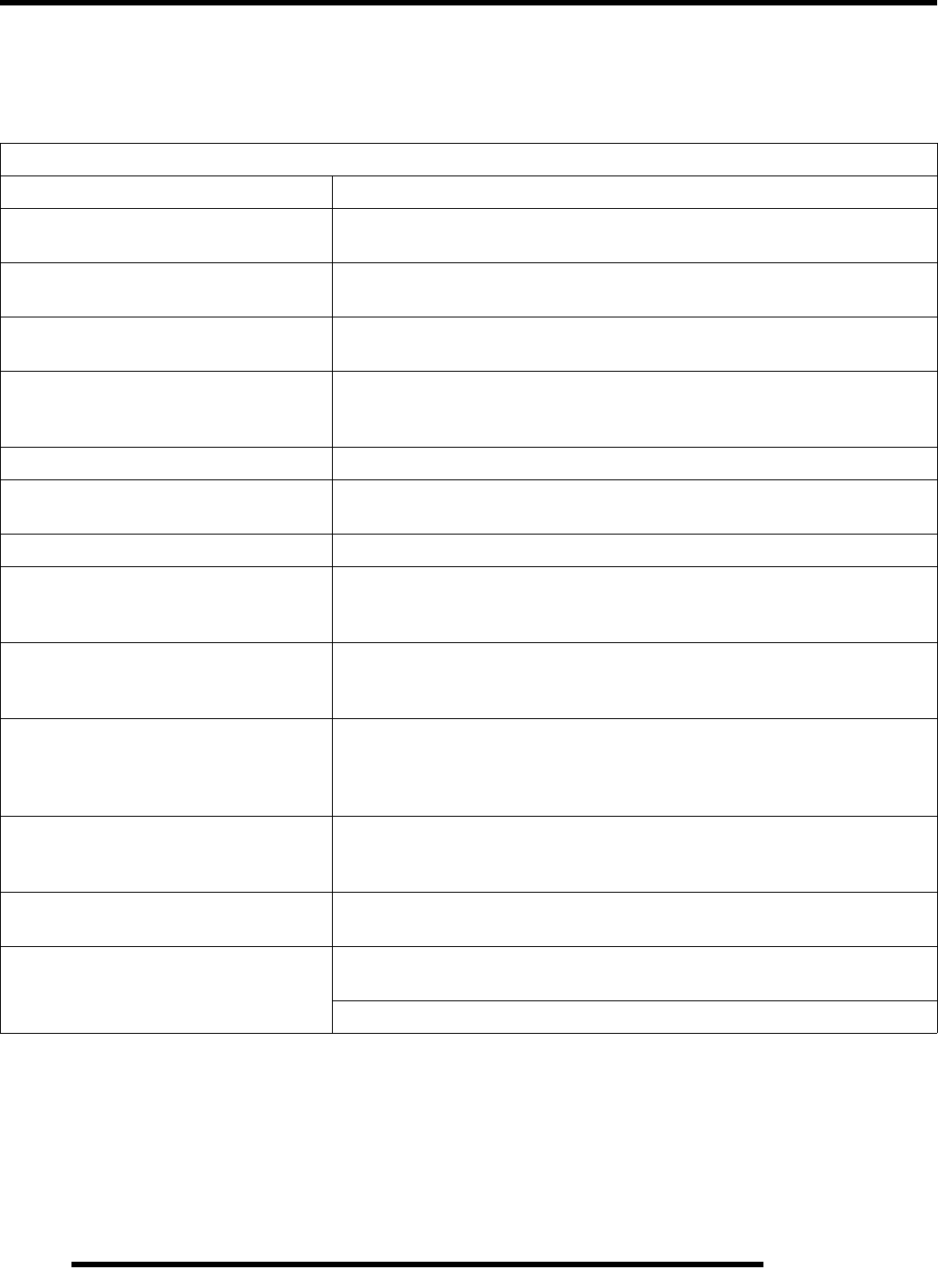
6.4
CLUTCHING
Overheating / Diagnosis
During routine maintenance, or whenever PVT system overheating is evident, it’s important to check the inlet and outlet ducting
for obstructions. Obstructions to air flow through the ducts will significantly increase PVT system operating temperatures. The
vehicle should be operated in Low when plowing or pulling heavy loads, or if extended low speed operation is anticipated.
Operating in Low Gear
Low gear is the primary driving gear range for RANGERs. Low should be used in ALL driving applications except for driving on
hard packed level surfaces with light loads. In this circumstance, High range may be used.
IMPORTANT: Using High range for heavy loads, hilly terrain, or in wet, muddy conditions will increase the
chance of drive belt burning.
CLUTCH DRIVE BELT & COVER RELATED ISSUES: DIAGNOSIS
Possible Causes Solutions / What to do
Loading the vehicle into a truck or tall
trailer when in high range. Shift transmission to Low during loading of the vehicle to prevent belt
burning.
Starting out going up a steep incline from
a stopped position. When starting out on an incline, use Low, or dismount the vehicle after first
applying the park brake and perform the “K” turn.
Driving at low RPM or low ground speed
(at approximately 3-7 MPH). Drive at higher speed or use Low. The use of Low is highly recommended
for cooler PVT operating temperatures and longer component life.
Insufficient warm-up of Utility Task
Vehicles™ exposed to low ambient
temperatures.
Warm engine at least 5 min., then with transmission in neutral, advance
throttle to approx. 1/8 throttle in short bursts, 5 to 7 times. The belt will
become more flexible and prevent belt burning.
Slow and easy clutch engagement. Fast, effective use of the throttle for efficient engagement.
Towing/Pushing at low RPM/low ground
speed. Use Low only.
Plowing snow, dirt, etc./utility use. Use Low only.
Stuck in mud or snow. Shift the transmission to Low, carefully use fast, aggressive throttle
application to engage clutch. WARNING: Excessive throttle may cause loss
of control and vehicle overturn.
Climbing over large objects from a
stopped position.
Shift the transmission to Low, carefully use fast, aggressive, brief throttle
application to engage clutch. WARNING: Excessive throttle may cause loss
of control and vehicle overturn.
Belt slippage from water or snow
ingestion into the PVT system.
Shift the transmission to neutral. Using the throttle, vary the engine rpm from
idle to full throttle. Repeat several times as required. During this procedure,
the throttle should not be held at the full position for more than 10 seconds.
Clutch seals should be inspected for damage if repeated leaking occurs.
Clutch malfunction. For inspection of clutch components, please contact your Polaris dealer.
Shift transmission to Low during loading of the vehicle to prevent belt
burning.
Poor engine performance. Fouled plugs, foreign material in gas tank, fuel lines, or carburetor. Contact
you dealer for further service information.
GENERAL RANGE OPERATION
GUIDELINES:
Low: Heavy pulling, basic operational speeds less than 7 MPH, riding
through rough terrain (swamps, mountains, ect.), low ground speeds.
High: High ground speeds, speeds above 7 MPH.
PartShark.com
877-999-5686
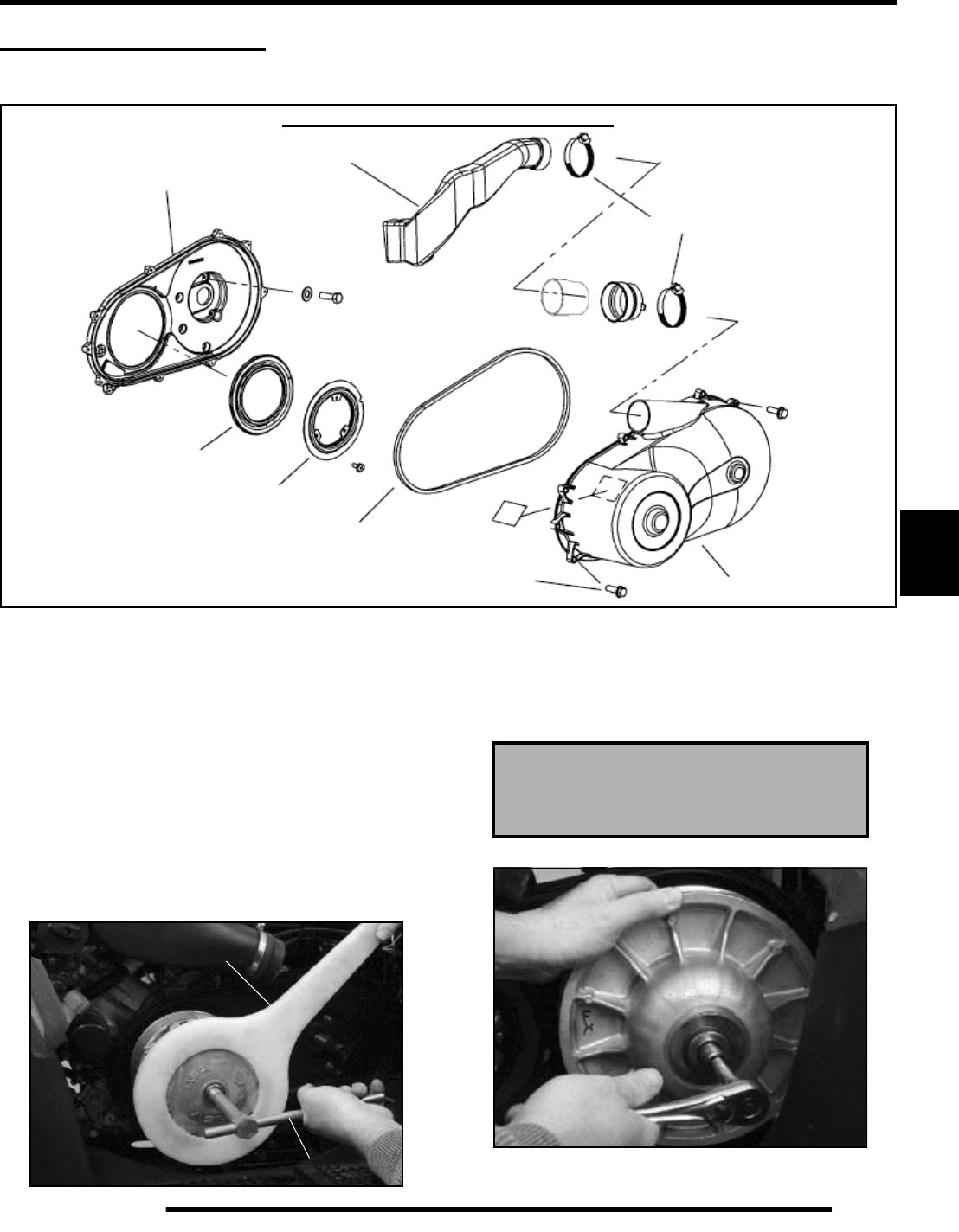
6.5
CLUTCHING
6
PVT SYSTEM SERVICE
PVT Sealing, Guard, and Ducting Components
Disassembly
Some fasteners and procedures will vary. Refer to the
appropriate parts manual for proper fasteners and fastener
placement.
1. Remove seat.
2. Lift up the rear cargo box to gain better access to the outer
PVT cover.
3. Remove PVT air outlet duct hose.
4. Remove outer PVT cover screws and remove cover.
5. Mark the drive belt direction of rotation and remove drive
belt. See “Drive Belt Removal”.
6. Install the Drive Clutch Holder (PN 9314177) (A).
7. Remove drive clutch retaining bolt and remove drive clutch
using the Drive Clutch Puller (PN 2870506) (B).
8. Remove the driven clutch retaining bolt and driven clutch.
Inner Cover
Clutch Outlet Duct
Clamps
Inner Cover Seal
Retainer
Outer Cover Seal
Cover Bolts PVT Outer Cover
SEALING AND DUCTING COMPONENTS
A
B
Drive Clutch Puller (PN 2870506)
Drive Clutch Holder (PN 9314177)
PartShark.com
877-999-5686
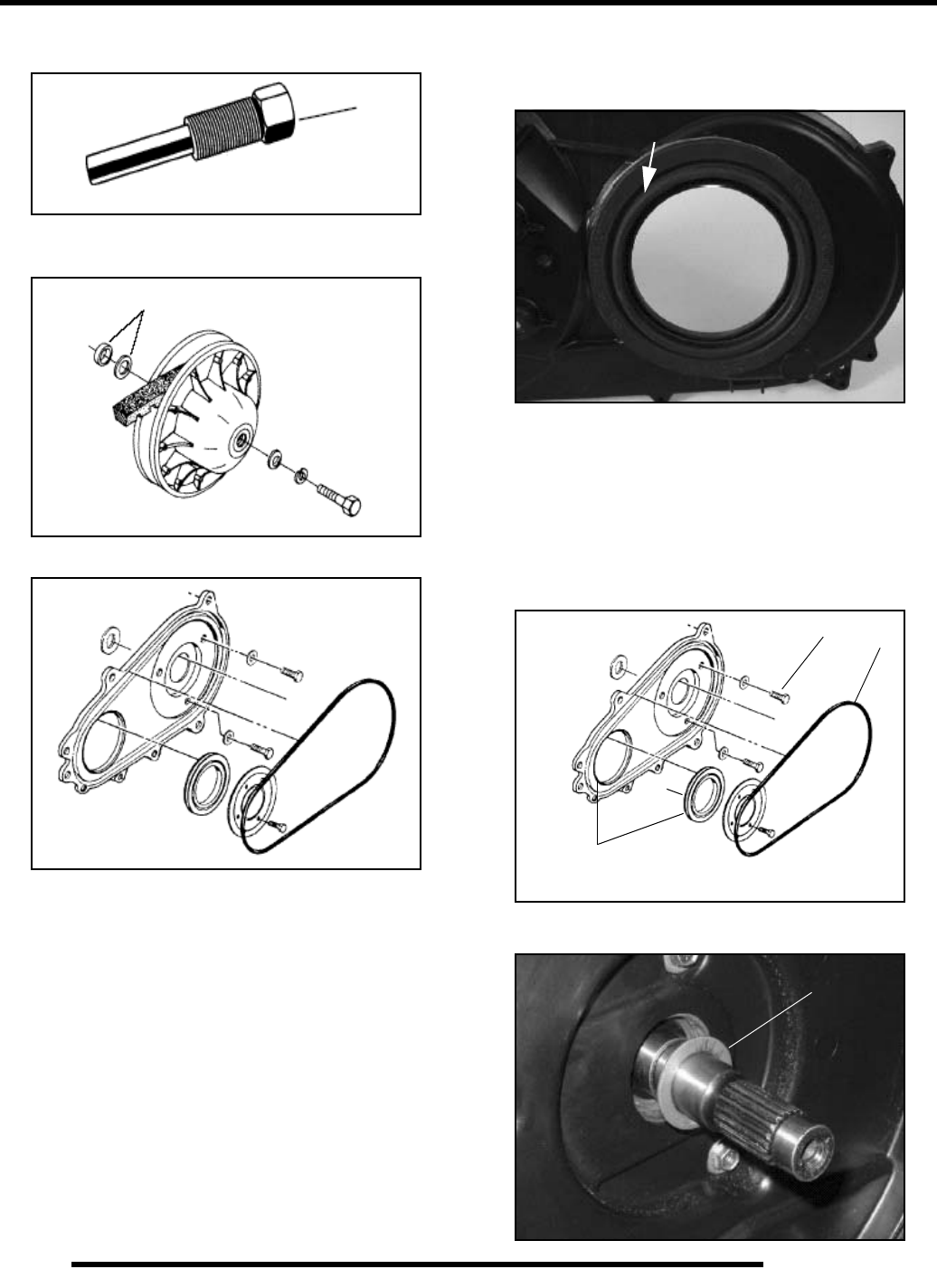
6.6
CLUTCHING
9. Use the Driven Clutch Puller (PN 2870913), (C) if
necessary.
10. Remove driven clutch offset spacers from the transmission
input shaft.
11. Remove screws and retainer plate.
12. Remove inner cover retaining bolts at rear of cover.
13. Remove cover along with foam seal on back of cover or
shaft.
Assembly
1. Inspect PVT inner cover-to engine seal. Replace if cracked
or damaged.
2. Place a new foam seal on transmission input shaft.
3. Apply RTV silicone sealant to outside edge of inner cover-
to-engine seal, to ensure a water tight fit between the seal
and the cover. Surfaces must be clean to ensure adhesion
of silicone sealant.
4. Reinstall cover and tighten rear cover bolts just enough to
hold it in place.
5. Fit lip of inner cover seal (A) to engine. Install seal retainer
plate and tighten screws securely.
6. Torque rear inner cover bolts (B) to specification.
7. Install clutch offset spacers on transmission input shaft.
C
Driven Clutch Puller (PN 2870913)
Keep Spacers In Order
Apply RTV Silicone Here
BC
A
Seal outer edge to cover
with RTV silicone sealant
Offset Spacer(s)
PartShark.com
877-999-5686
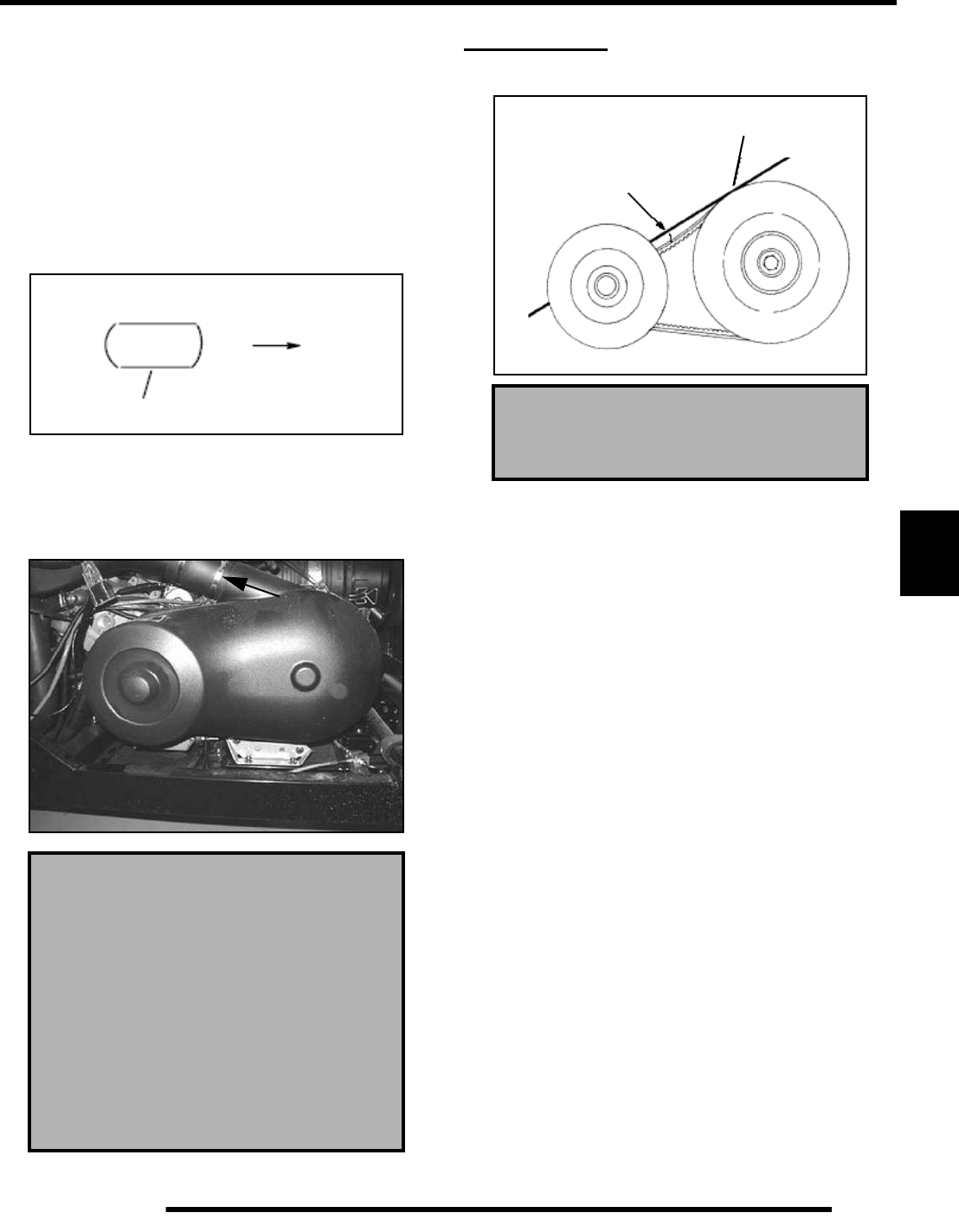
6.7
CLUTCHING
6
8. Clean splines inside driven clutch and on the transmission
input shaft.
9. Apply a light film of grease to the splines on the shaft.
10. Install the driven clutch, washer, lock washer, and retaining
bolt. Torque to specification.
11. Clean end of taper on crankshaft and the taper bore inside
drive clutch.
12. Install drive clutch and torque retaining bolt to
specification.
13. Reinstall drive belt noting direction of rotation. If a new belt
is installed, install so numbers can be easily read.
14. Replace PVT outer cover rubber gasket with the narrow
side out (C).
15. Reinstall PVT outer cover and secure with screws Torque
to 45-50 in. lbs. (5-5.6 Nm).
16. Install the PVT cover outlet duct and tighten the clamps.
DRIVE BELT
Belt Deflection (Tension)
Pinch the sheaves lightly together with clamp to prevent the belt
from being pushed into the driven sheave.
1. Place a straight edge on top of the belt between drive and
driven clutch.
2. Push down on drive belt until it is lightly tensioned.
3. Measure belt deflection as shown in the image above.
If belt deflection is out of specification, adjust by removing or
adding shims between the driven clutch sheaves.
• Remove shims to decrease belt deflection
• Add shims to increase belt deflection
See “Driven Clutch Service”.
At least one shim must remain between the inner and outer
sheave of the driven clutch. If proper belt deflection cannot be
obtained, measure drive belt width, length, and center distance
of drive and driven clutch, outlined in this section; all have an
effect on belt deflection.
Inner Cover Bolt Torque (Rear):
12 ft. lbs. (16.6 Nm)
Outer Cover Bolt Torque:
45-50 in.lbs. (5-5.6 Nm)
Driven Clutch Retaining Bolt Torque:
17 ft. lbs. (23.5 Nm)
Drive Clutch Retaining Bolt Torque:
47 ft. lbs. (64 Nm)
PVT Cover Gasket
Toward outer cover
Belt Deflection (Tension):
1 1/8” (2.9 cm) - 1 1/4” (3.2 cm)
Straight Edge
Deflection Measurement
See Spec Below
PartShark.com
877-999-5686
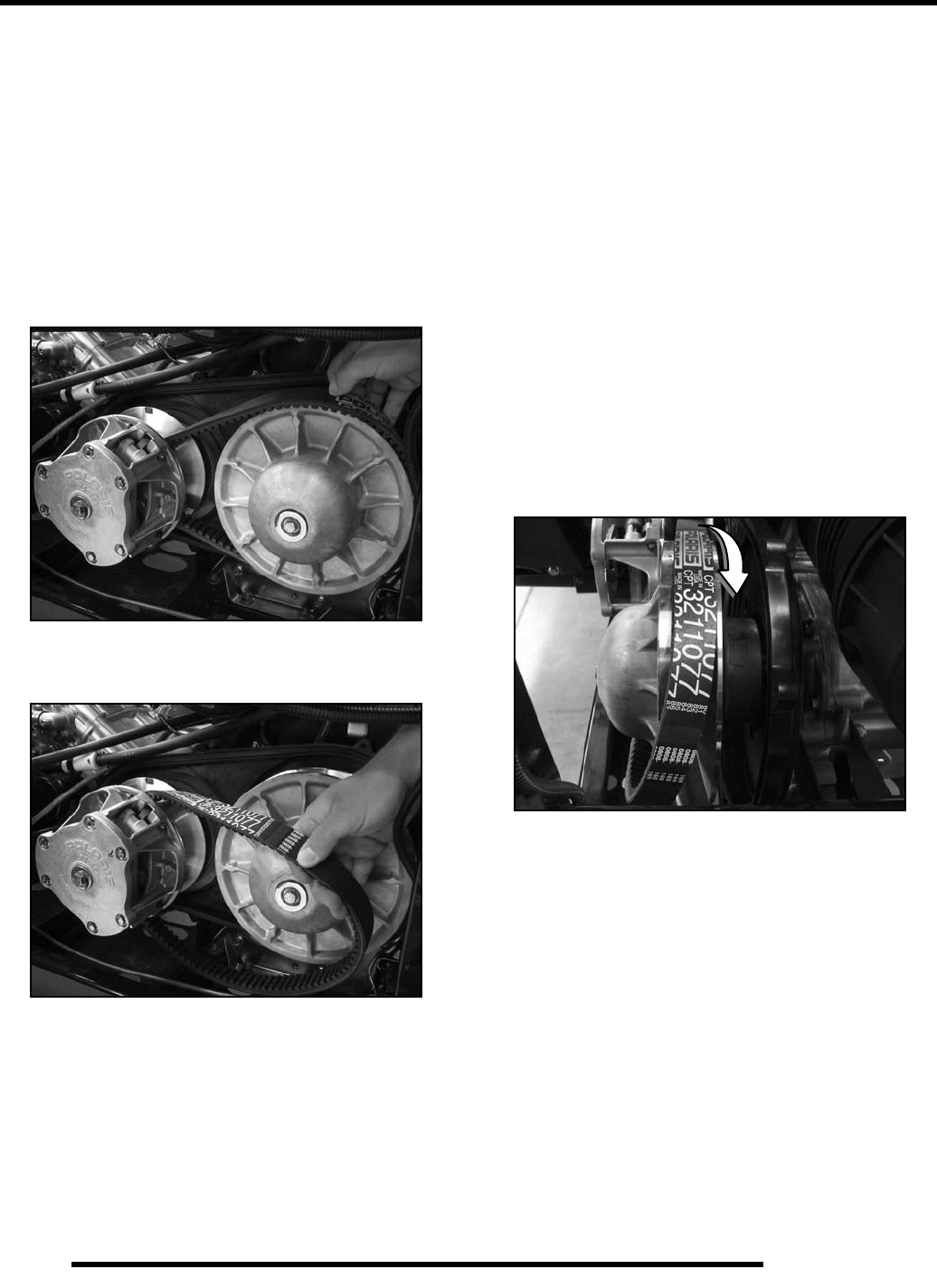
6.8
CLUTCHING
Belt Removal
1. Remove outer PVT cover as described in PVT
Disassembly.
2. Mark the drive belt direction of rotation so that it can be
installed in the same direction.
NOTE: Belt is normally positioned so that part
numbers are easily read.
3. To remove drive belt, put transmission in gear, apply brake,
pull upward and rearward on belt to open driven clutch
sheaves.
4. Pull out and down on the drive belt to slip over the driven
clutch outer sheave.
5. Slip belt over the drive clutch outer sheave and remove the
belt from the vehicle.
Belt Inspection
1. Inspect belt for hour glassing (extreme circular wear in at
least one spot and on both sides of the belt). Hour glassing
occurs when the drive train does not move and the drive
clutch engages the belt.
2. Inspect belt for loose cords, missing cogs, cracks,
abrasions, thin spots, or excessive wear. Compare belt
measurements with a new drive belt. Replace if necessary.
3. Belts with thin spots, burn marks, etc., should be replaced
to eliminate noise, vibration, or erratic PVT operation. See
the Troubleshooting Chart at the end of this chapter for
possible causes.
Belt Installation
1. Loop belt over the drive clutch and over top of the driven
sheave.
2. While pushing down on top of belt, turn the back or
moveable driven sheave clockwise.
3. The belt then should be able to be pushed down into and
between the sheaves.
NOTE: Be sure to position the drive belt so part
number is easily read.
PVT Break-In (Drive Belt / Clutches)
A proper break-in of the clutches and drive belt will ensure a
longer life and better performance. Break in the clutches and
drive belt by operating at slower speeds during the 10 hour
break-in period as recommended (see Chapter 3 “Engine
Break-In Period” for break-in example). Pull only light loads.
Avoid aggressive acceleration and high speed operation during
the break-in period.
PartShark.com
877-999-5686
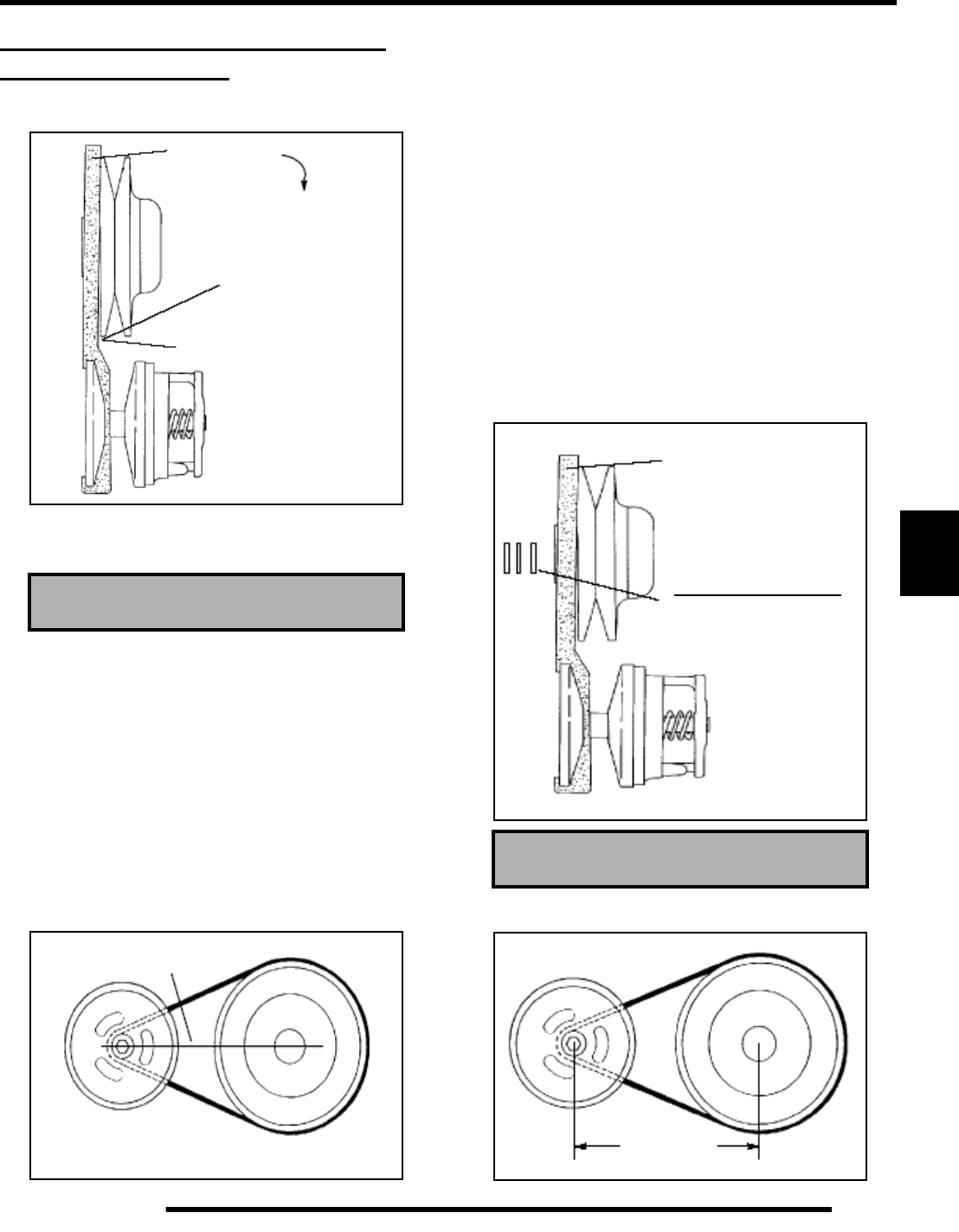
6.9
CLUTCHING
6
CLUTCH ALIGNMENT / OFFSET /
CENTER DISTANCE
Clutch Alignment
1. Remove belt and install the Clutch Alignment Tool as
shown above.
2. With tool touching rear of driven clutch inner sheave, the
distance at point “A” should be 1/8".
If the distance is greater than 1/8" or less than 1/16", clutch
alignment must be adjusted as follows:
3. Remove drive and driven clutch. See “PVT System
Service, Disassembly.”
4. Remove PVT inner cover.
5. Loosen all engine mounts. Move front of engine to the right
or left slightly until alignment is correct.
6. Tighten engine mounts and verify alignment is correct.
7. Measure belt deflection and measure offset both above and
below sheave centerlines. Adjust if necessary.
NOTE: On some models, minor adjustments can be
made by adding shims between the frame and front
lower left engine mount to increase the distance at
point “A”. If a shim is present, it can be removed to
decrease the distance at point “A”.
Clutch Offset
IMPORTANT: Inspect clutch alignment and center
distance before adjusting offset.
1. Install clutch alignment tool as shown.
Offset is correct when rear of tool contacts rear of inner sheave
with driven clutch pushed completely inward on shaft and bolt
torqued. Adjust offset by adding or removing spacer washers
between back of driven clutch and spacer as shown.
Clutch Center Distance
Clutch Alignment Tool PN: 2870654
Clutch Alignment Tool
A
1/8” +0/ - 1/16
3.2 mm +0 / -1.6 mm
(PN 2870654)
Measure offset above and below centerline
Center line
Spacer Washer PN: 7556120
Clutch Alignment Tool
should contact rear edge
of driven clutch sheave
To adjust, add or remove
washers from behind the
driven clutch
Driven Clutch Offset
Center
Distance
10” ± .05” (254 mm ± 1.3 mm)
PartShark.com
877-999-5686
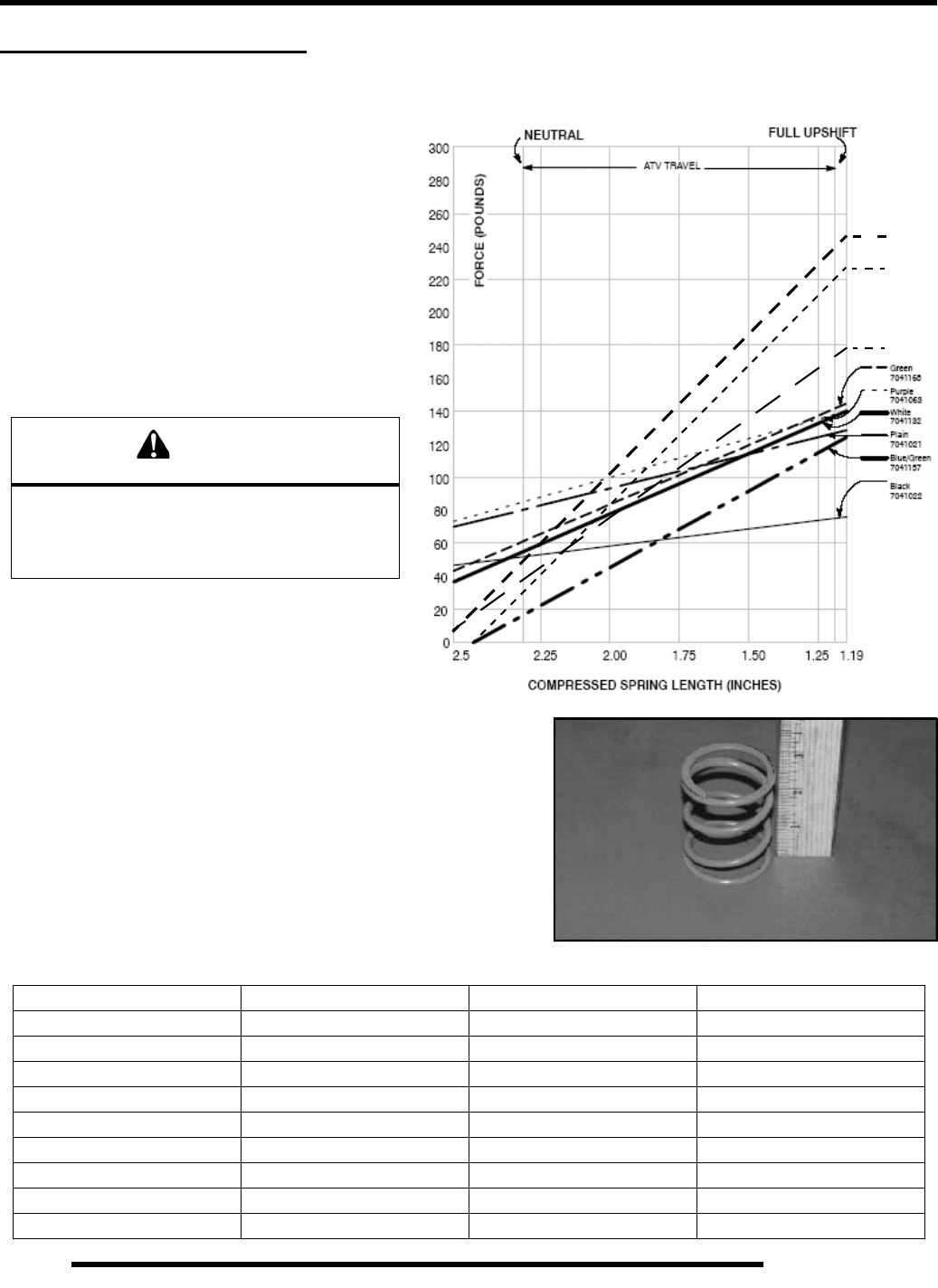
6.10
CLUTCHING
DRIVE CLUTCH SERVICE
Spring Specifications
The drive clutch spring has two primary functions:
1. To control clutch engagement RPM. The springs,
which have a higher rate when the clutch is in
neutral, will increase clutch engagement RPM.
2. To control the rate at which the drive belt moves
upward in the drive clutch sheaves. This is referred
to as drive clutch upshift.
There are other components which control upshift, but the
spring is one of the primary components in insuring
optimum performance. It is very important that the spring
is of the correct design and is in good condition.
The drive clutch spring is one of the most critical components of the PVT
system. It is also one of the easiest to service. Due to the severe relaxation the
spring is subject to during operation, it should always be inspected for
tolerance limits during any clutch operation diagnosis or repair.
With the spring resting on a flat surface, measure its free length from the outer
coil surfaces as shown. Refer to the spring specification chart for specific free
length measurements and tolerances. Also check to see that spring coils are
parallel to one another. Distortion of the spring indicates stress fatigue,
requiring replacement.
CAUTION
Never shim a drive clutch spring to increase its
compression rate. This may result in complete
stacking of the coils and subsequent clutch
cover failure.
Primary Clutch Springs
PART NUMBER COLOR CODE WIRE DIAMETER FREE LENGTH ± .125”
7041021 Plain .157" 4.38"
7041022 Black .140" 4.25"
7041063 Purple .168" 4.37"
7041132 White .177" 2.92"
7041157 Blue / Green .177" 2.53"
7041168 Green .177" 3.05"
7043349 Red / White .200" 2.58"
7043372 Red / Blue .187" 2.56"
7043382 Red / Green .177" 2.63"
Red/White
7043349
Red/Blue
7043372
Red/Green
7043382
PartShark.com
877-999-5686
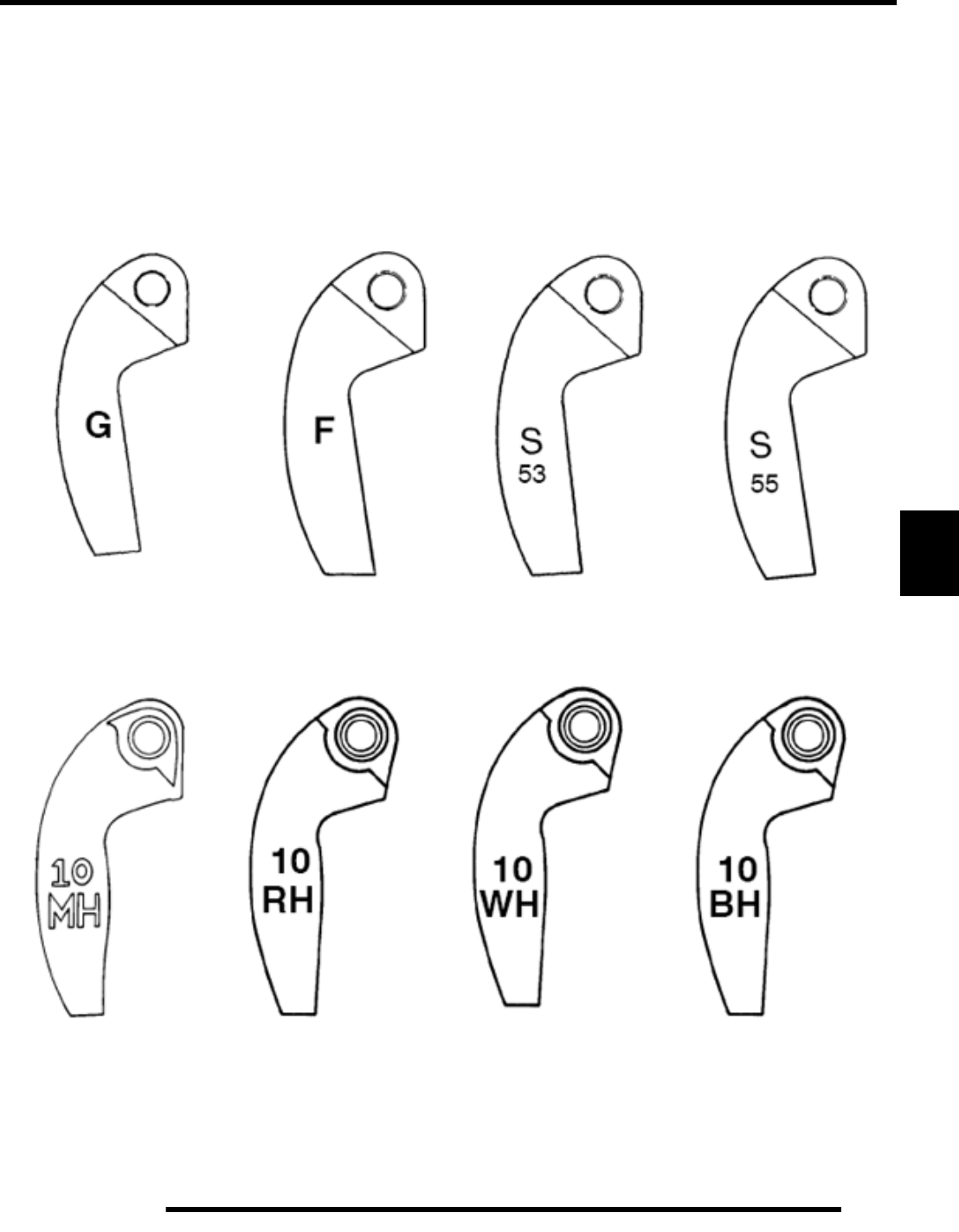
6.11
CLUTCHING
6
Shift Weights
Shown below are the shift weights which have been designed for the PVT system. These shift weights have many factors designed
into them for controlling engagement RPM and shifting patterns. Shift weights should not be changed or altered without first having
a thorough understanding of their positioning and the effects they may have on belt to sheave clearance, clutch balance and shifting
pattern.
PN 5630514 PN 5630515 PN 5630095 PN 5630509
48 gr 45 gr 53 gr 55 gr
PN 5630513 PN 5630709 PN 5630710 PN 5630711
50.5 gr 44 gr 46 gr 47 gr
PartShark.com
877-999-5686
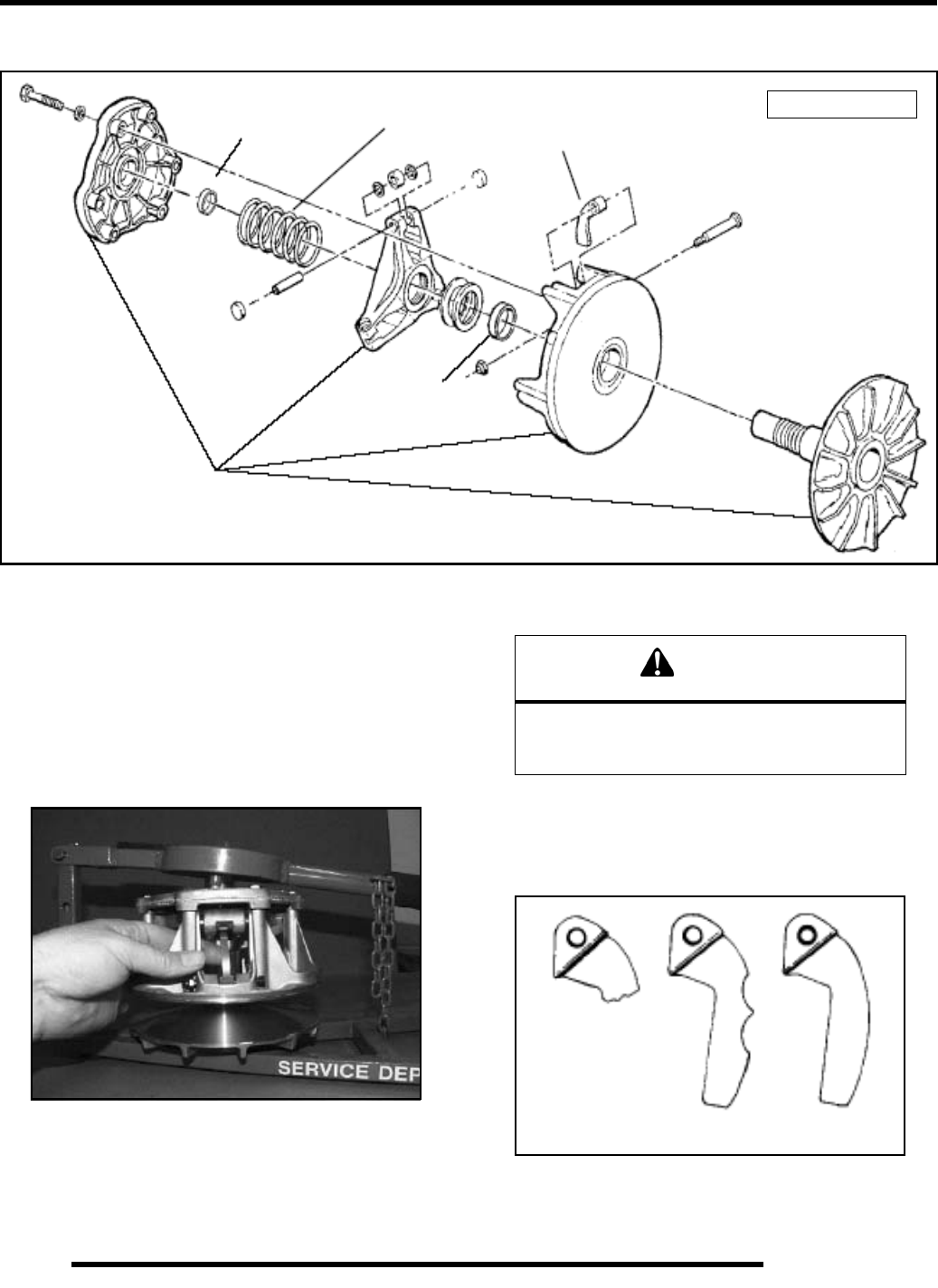
6.12
CLUTCHING
Exploded View
Clutch Inspection
All PVT system maintenance repairs must be performed only by
an authorized Polaris service technician who has attended a
Polaris sponsored service training seminar and understands the
proper procedures as outlined in this manual. Because of the
critical nature and precision balance incorporated into the PVT
system, it is absolutely essential that no attempt at disassembly
or repair be made without factory authorized special tools and
service procedures. 1. Remove shift weight bolts and weights. Inspect as shown.
The contact surface of the weight should be smooth and
free of dents or gall marks. Inspect the weight pivot bore
and pivot bolts for wear or galling. If weights or bolts are
worn or broken, replace in sets of three with new bolts.
NOTE: A damaged shift weight is usually caused by
a damaged or stuck roller in the spider assembly.
See “Roller, Pin and Thrust Washer Inspection”.
TeflonTM coated
brass bushing Shift Weight
Drive Clutch
Spring
Mark with permanent
marker before disassembly
DRIVE CLUTCH
TeflonTM coated
brass bushing
WARNING
The clutch assembly is a precisely balanced
unit. Never replace parts with used parts from
another clutch assembly.
Broken Worn Good
PartShark.com
877-999-5686
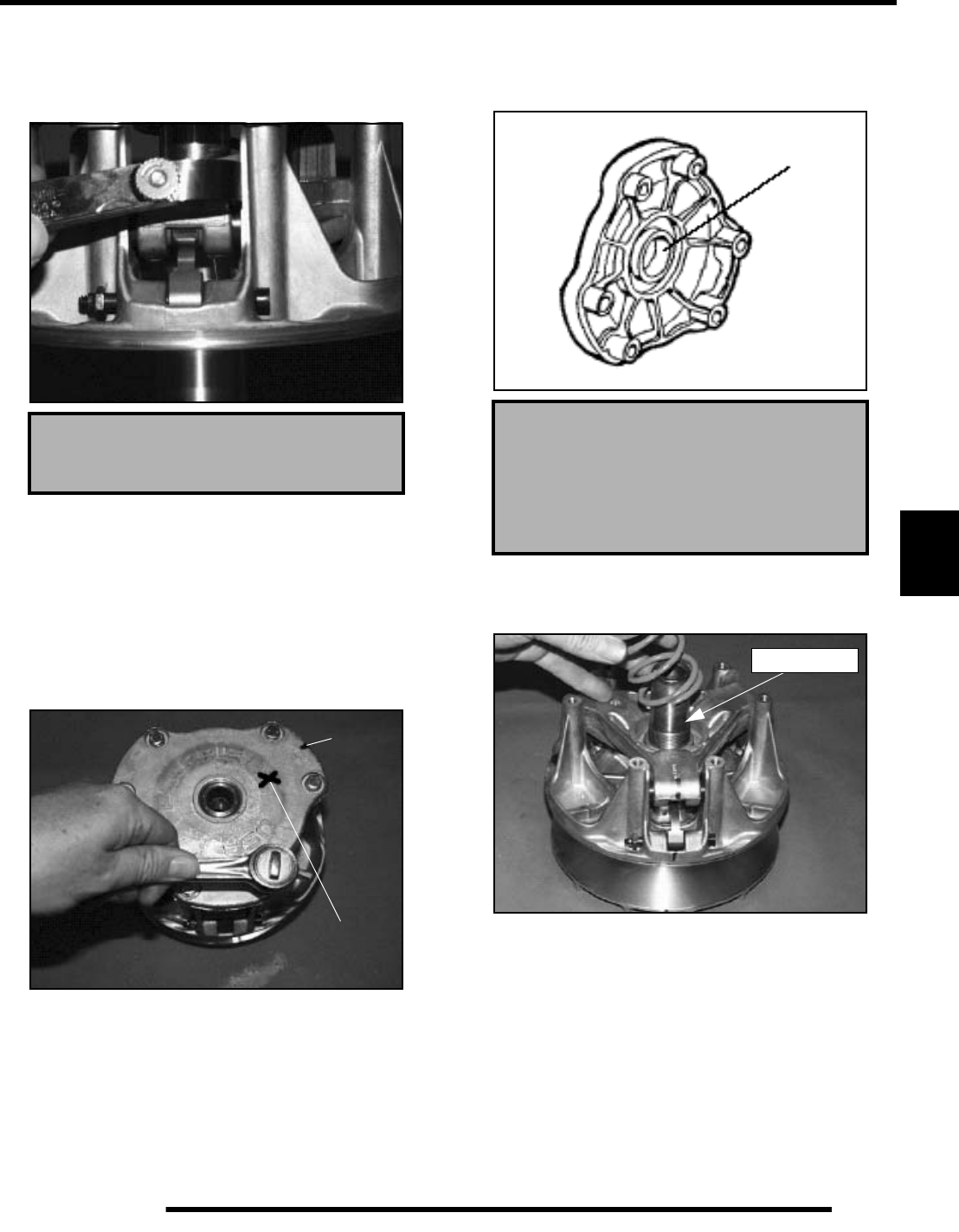
6.13
CLUTCHING
6
Button To Tower Clearance Inspection
1. Inspect for any clearance between spider button to tower.
If clearance exists, replace all buttons and inspect surface
of towers. See “Spider Removal”
2. Inspect sheave surfaces. Replace the entire service clutch
if worn, damaged or cracked.
Clutch Disassembly
1. Using a permanent marker, mark the cover, spider,
moveable and stationary sheaves, and steel post to the
stationary sheave for reference. The X’s may not have
been in alignment before disassembly.
2. Mark the stationary sheave and clutch shaft to verify the
shaft has not turned in the sheave after tightening the spider
during clutch assembly.
3. Remove cover bolts evenly in a cross pattern, and remove
cover plate.
4. Inspect cover bushing (A). The outer cover bushing is
manufactured with a Teflon™ coating. Bushing wear is
determined by the amount of Teflon™ remaining on the
bushing.
5. Inspect area on shaft where bushing rides for wear, galling,
nicks, or scratches. Replace clutch assembly if worn or
damaged.
6. Remove and inspect the clutch spring.
Button to Tower Clearance:
000-.001”
Mark
“X” Mark
Cover Bushing Inspection:
Replace the cover bushing if more brass
than Teflon™ is visible on the bushing.
Refer to bushing replacement
in this chapter.
A
Inspect Shaft
PartShark.com
877-999-5686
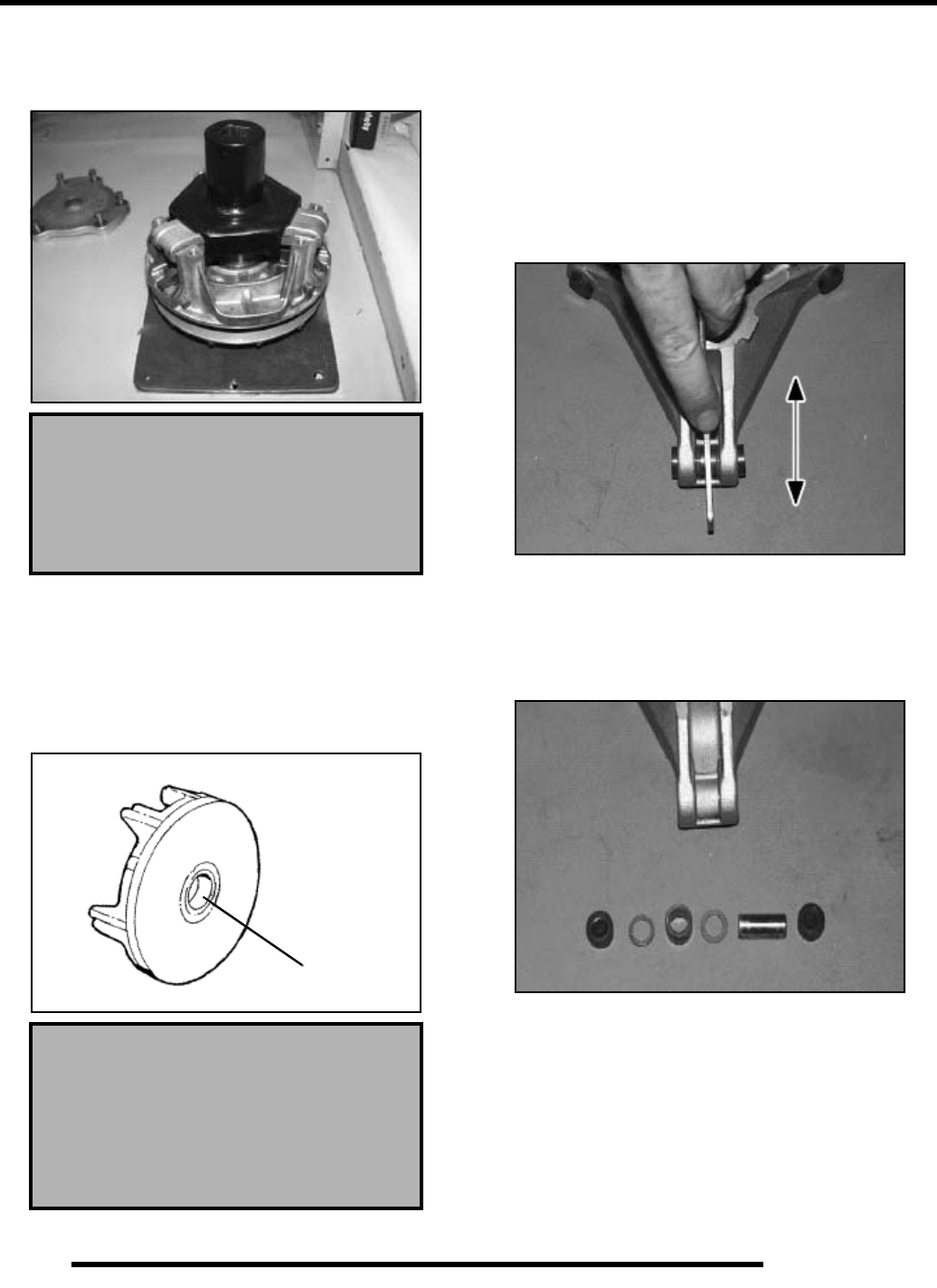
6.14
CLUTCHING
Spider Removal
1. Install clutch in holding fixture and loosen the spider
(counterclockwise) using spider removal tool.
It is important that the same number and thickness of washers
are reinstalled beneath the spider during assembly. Be sure to
note the number and thickness of these washers.
Moveable Sheave Bushing Inspection
2. Inspect the Teflon™ coating on the moveable sheave
bushing.
Roller, Pin, and Thrust Washer Inspection
1. Inspect all rollers, bushings and roller pins by pulling a flat
metal rod across the roller. Turn roller with your finger. If
you notice resistance, galling, or flat spots, replace rollers,
pins and thrust washers in sets of three. Also inspect to see
if roller and bushing are separating. Bushing must fit
tightly in roller. Use the Roller Pin Tool (PN 2870910) to
replace rollers and pins. Take care not to damage roller
bushing or bearing surface of the new pin during
installation.
2. Rubber backed buttons can be used in all ATV/RANGER
clutches if the hollow roller pin is changed to the solid roller
pin.
NOTE: The rubber side of the button is positioned
toward the solid roller pin.
Clutch Holding Fixture:
(PN 2871358)
Spider Removal Tool:
(PN 2870341)
Moveable Sheave Bushing Inspection:
Replace the cover bushing if more brass
than Teflon is visible on the bushing.
Refer to bushing replacement
in this chapter.
TeflonTM
PartShark.com
877-999-5686
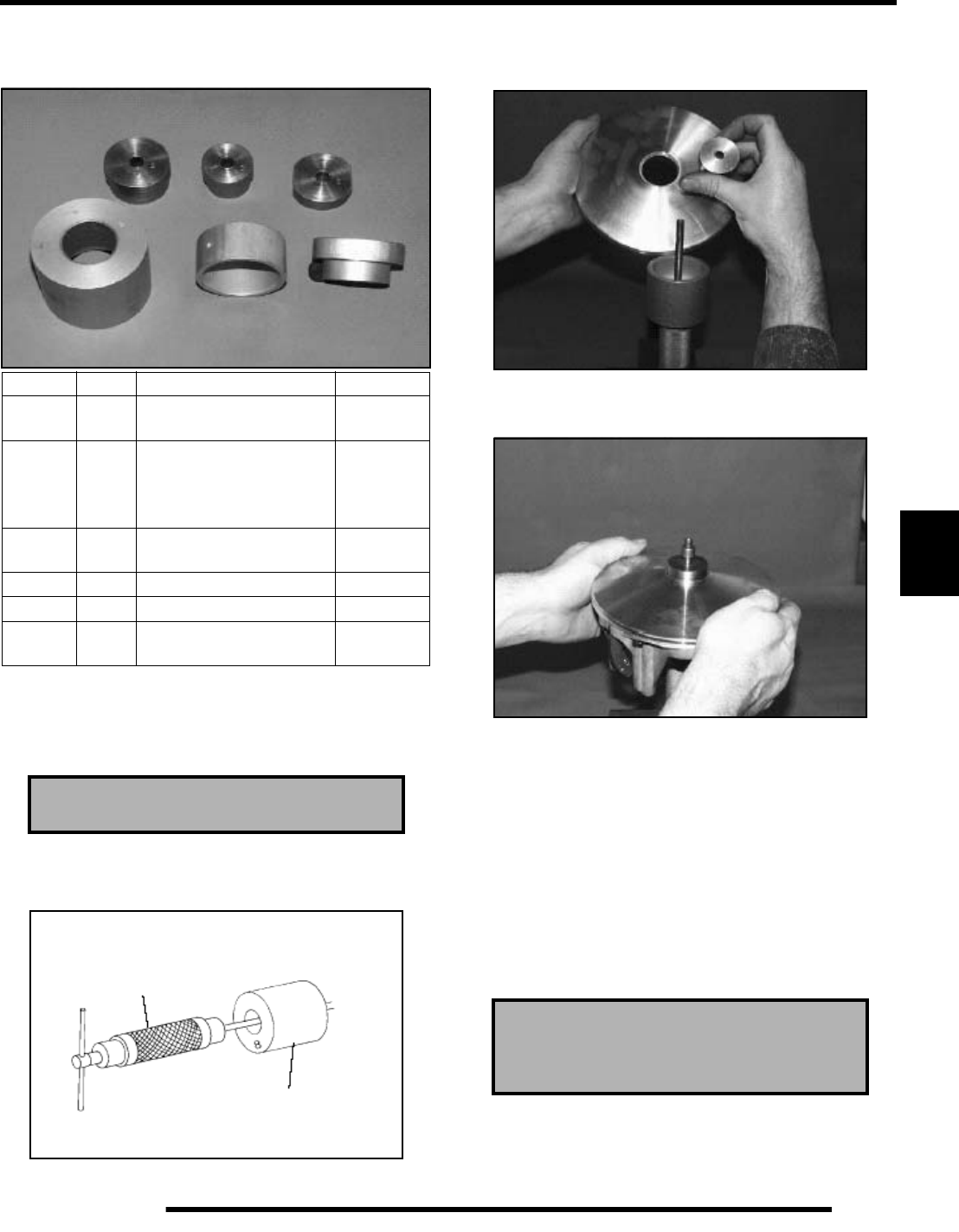
6.15
CLUTCHING
6
Bushing Service
*Clutch Bushing Replacement Tool Kit (PN 2871226)
Moveable Sheave - Bushing Removal
1. Install handle end of the Piston Pin Puller (PN 2870386)
securely into bench vise and lightly grease puller threads.
2. Remove nut from puller rod and set aside.
3. Install the Main Puller Adapter (#8) (PN 5020632) onto the
Piston Pin Puller (PN 2870386).
4. Insert the Number Two Adapter (#10) (PN 5020633) into
the bushing from belt side as shown. With towers pointing
toward vise, slide sheave and bushing onto puller rod.
5. Install the nut removed in Step 2 onto end of puller rod and
hand tighten. Turn puller barrel to increase tension on
sheave if needed. Nut is left hand thread
6. Turn sheave and puller barrel together counterclockwise on
puller rod until bushing is removed.
7. Remove nut from puller rod and set aside.
8. Pull bushing removal tool and adapter from puller rod.
Remove bushing from tool and discard.
Moveable Sheave - Bushing Installation
1. Place the Main Puller Adapter (#8) (PN 5020632) onto the
puller.
2. Apply Loctite™ 680 to the back side of new bushing. Push
bushing into center of sheave on tower side by hand.
3. Insert the Clutch Bushing Installation Tool (#2) (PN
5020628) into center of sheave and with towers pointing
away from vise, slide sheave onto puller rod.
Stamp Qty. Part Description Part #
#2 1 P-90 Drive/Driven Clutch
Bushing Install Tool 5020628
#3 1
Drive Clutch Cover
Bushing Removal/
Installation Tool (all
clutches)
5020629
#5 1 P-90 Driven Clutch Cover
Bushing Removal Tool 5020631
#8 1 Main Puller Adapter 5020632
#9 1 Adapter Reducer 5010279
#10 1 Number Two Puller
Adapter 5020633
Piston Pin Puller (PN 2870386)
#2 #3 #5
#8
#9
#10
Piston Pin Puller
(PN 2870386)
Main Puller Adaptor (#8)
(PN 5020632)
Bushing (PN 3576504)
Loctite™ 680
#10
PartShark.com
877-999-5686
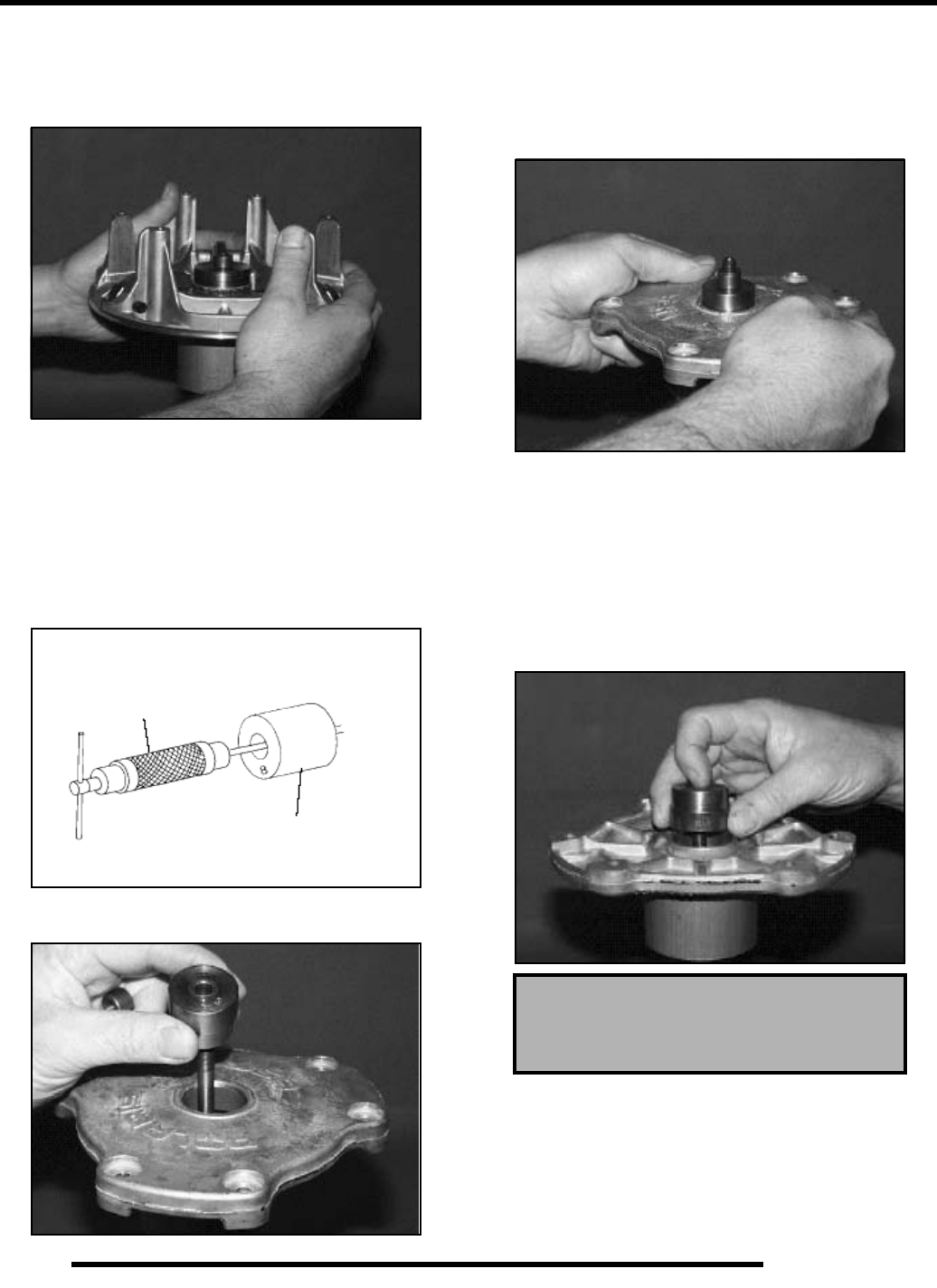
6.16
CLUTCHING
4. Install nut on puller rod and hand tighten. Turn barrel to
apply additional tension if needed.
5. Turn sheave and barrel together counterclockwise until
bushing is seated.
6. Remove nut from puller rod and set aside.
7. Remove sheave from puller.
8. Remove installation tool.
Clutch Cover - Bushing Removal
1. Install the Main Puller Adapter (#8) (PN 5020632) onto
the Piston Pin Puller (PN 2870386).
2. From outside of clutch cover, insert the Drive Cover
Bushing Remover (#3) (PN 5020629) into cover bushing.
3. With inside of cover toward vise, slide cover onto puller.
4. Install nut onto puller rod and hand tighten. Turn puller
barrel to increase tension as needed.
5. Turn clutch cover counterclockwise on puller rod until
bushing is removed.
6. Remove nut from puller rod and set aside.
7. Remove bushing and bushing removal tool from puller.
Discard bushing.
Clutch Cover - Bushing Installation
1. Apply Loctite™ 680 to the back side of new bushing.
Working from inside of cover, insert bushing and bushing
installation tool into center of clutch cover.
2. With the Main Puller Adapter (#8) (PN 5020632) on the
puller, insert cover onto puller rod, placing outside of cover
toward vise.
3. Install nut on rod and hand tighten. Turn puller barrel to
apply more tension if needed.
Piston Pin Puller
(PN 2870386)
Main Puller Adaptor (#8)
(PN 5020632)
#3 Bushing (PN 3576510)
Loctite™ 680
PartShark.com
877-999-5686
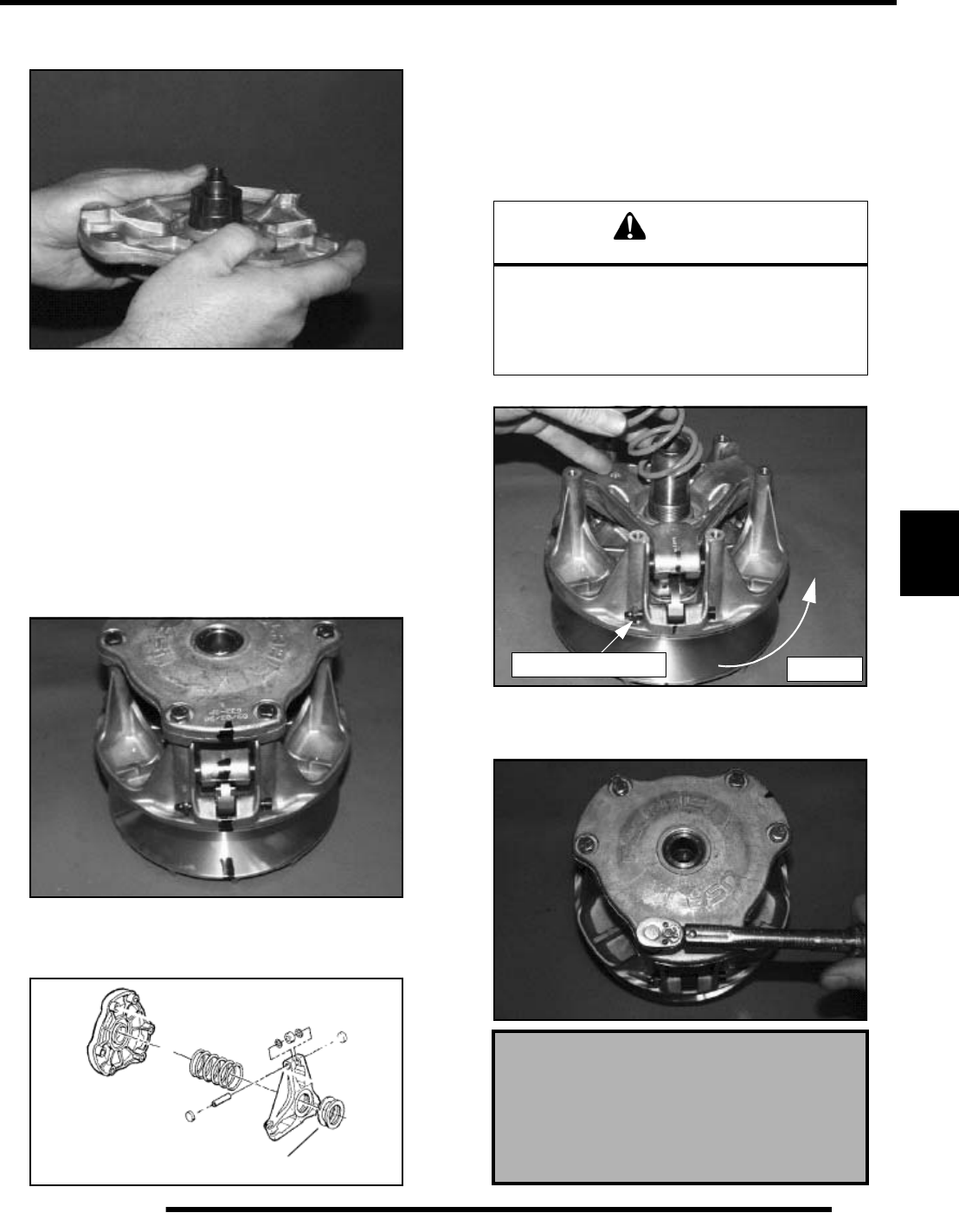
6.17
CLUTCHING
6
4. Turn clutch cover and barrel together counterclockwise on
puller rod until bushing is seated.
5. Remove nut from puller rod and take installation tool and
clutch cover off the rod.
Clutch Assembly
It is important that the same number and thickness of washers
are reinstalled beneath the spider during assembly. The Teflon™
bushings are self-lubricating. Do not apply oil or grease to the
bushings
Reassemble the drive clutch in the following sequence. Be sure
the “X”, or the marks that were made earlier are aligned during
each phase of assembly
1. Install moveable sheave onto fixed sheave.
2. Install spider spacers. Use same quantity and thickness as
were removed.
3. Compress spider buttons for each tower and install spider,
making sure that “X”, or the marks that were made earlier,
on spider aligns with “X”, or the marks that were made
earlier, in moveable sheave.
4. Torque spider to specification using the holding fixture and
spider tool. Torque with smooth motion to avoid damage
to the stationary sheave. Refer to Page 6.2 for torque
specification.
5. Install shift weights using new lock nuts on the bolts.
6. Reinstall clutch spring.
7. Reinstall cover, aligning “X” mark with other marks.
8. Torque cover bolts evenly to specification.
Spacer washers
CAUTION
Be sure the spider spacer washers are fully
seated in the recessed area in the spider.
Any misalignment will alter clutch balance.
Inverting the clutch while initially tightening the
spider will help position the washers.
Spider Torque:
200 ft. lbs. (276 Nm)
Cover Screw Torque:
90 in. lbs. (10.4 Nm)
Rotation
Nut on trailing side
PartShark.com
877-999-5686
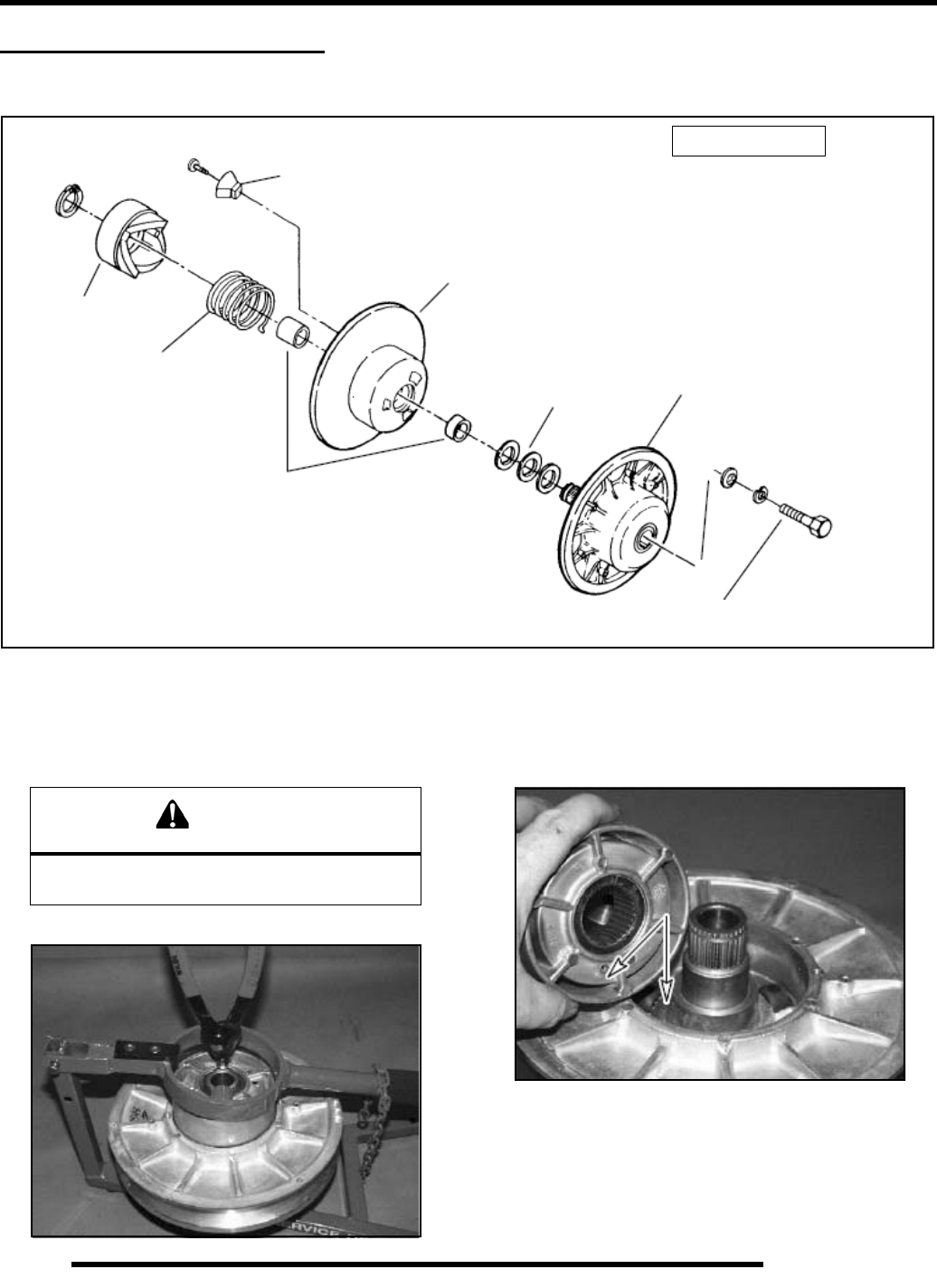
6.18
CLUTCHING
DRIVEN CLUTCH SERVICE
Exploded View
Clutch Disassembly / Inspection
1. Apply and hold downward pressure on the helix, or place
driven clutch in the Clutch Compression Tool
(PN 8700220).
2. Remove snap ring retainer.
3. Note the location of the spring and remove helix.
4. Note the location of the spring in the moveable sheave, and
remove the spring.
5. Check alignment of tabs on spring. Replace the spring if
tabs are misaligned or the spring coils are distorted.
Button Ramp
Inner Sheave
Spacer Shims Outer Sheave
Driven Clutch Bolt
Moveable Bearing
Stationary Ramp
Clutch Spring
DRIVEN CLUTCH
CAUTION
Wear eye protection when removing snap ring to
prevent serious personal injury.
PartShark.com
877-999-5686
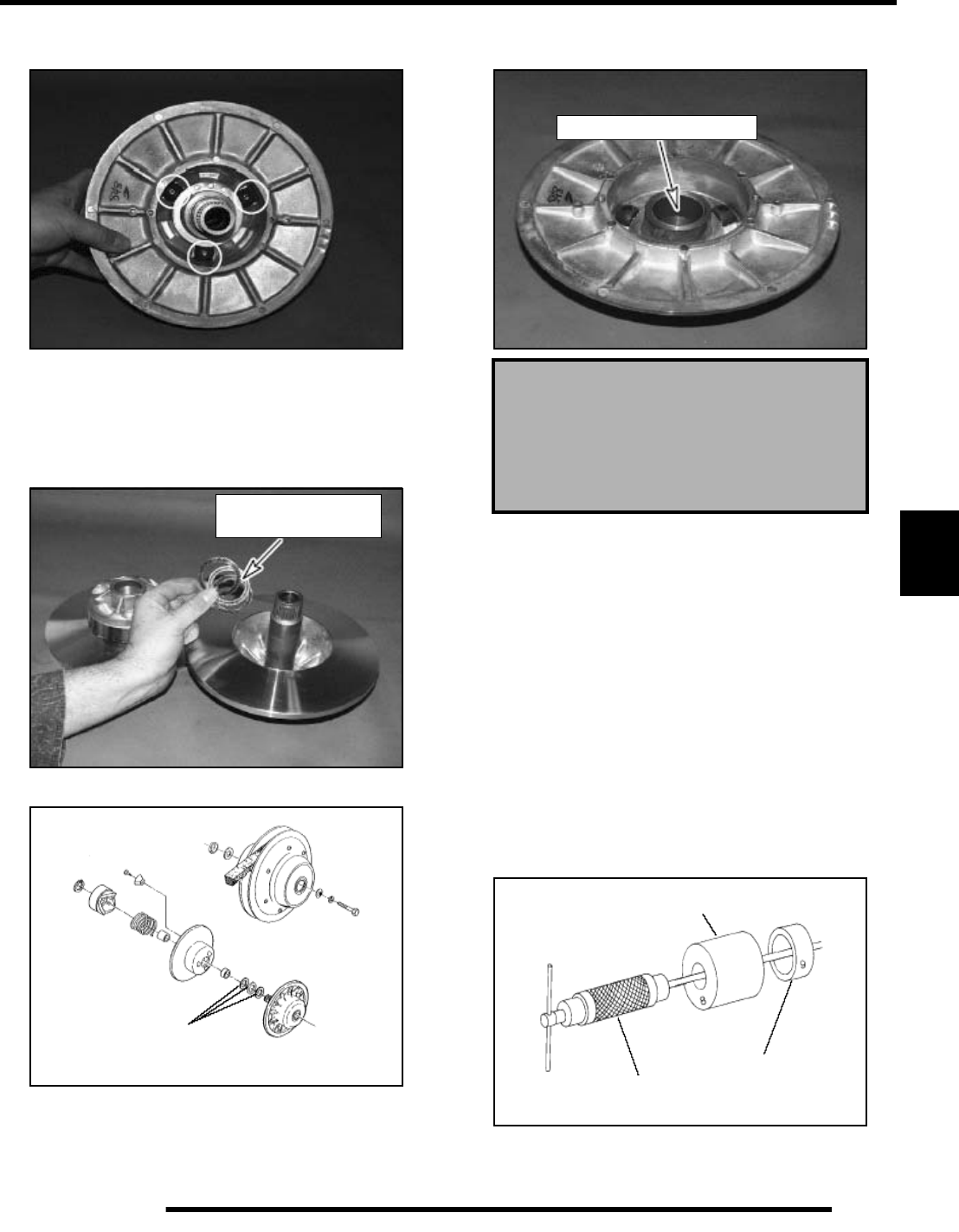
6.19
CLUTCHING
6
6. Inspect ramp buttons in the moveable sheave and replace
if worn.
NOTE: The ramp buttons are secured by Torx™
screws (T20).
7. Remove moveable sheave and note the number of spacer
washers. One spacer must remain between the sheaves
when adjusting belt deflection.
8. Inspect the Teflon™ coating on the moveable sheave
bushing.
9. Inspect driven clutch faces for wear or damage.
10. Clean and inspect splines on helix and transmission input
shaft.
11. Lube splines with a light film of grease. Do not lubricate
the bushings!
Bushing Service
Bushings are installed at the factory using Loctite™. In order
to remove the bushing it will be necessary to apply heat. A press
can be used to remove and install some of the bushings. Be sure
to support the sheave or cover as close as possible to the bushing
bore when using a press.
1. Install Main Puller Adapter (#8) (PN 5020632) onto the
Piston Pin Puller (PN 2870386).
2. Insert Adapter Reducer (#9) (PN 5010279) onto the puller,
sliding it inside the main adapter.
Belt deflection
adjustment washers
Used to adjust
belt tension. One must
always be installed.
Moveable Sheave Bushing Inspection:
Replace the bushing if more brass than
Teflon™ is visible on the bushing. Refer
to bushing replacement in this chapter.
Inspect bushing for wear
Piston Pin Puller
(PN 2870386)
Main Puller Adaptor (#8)
Adapter
Reducer (#9)
PartShark.com
877-999-5686
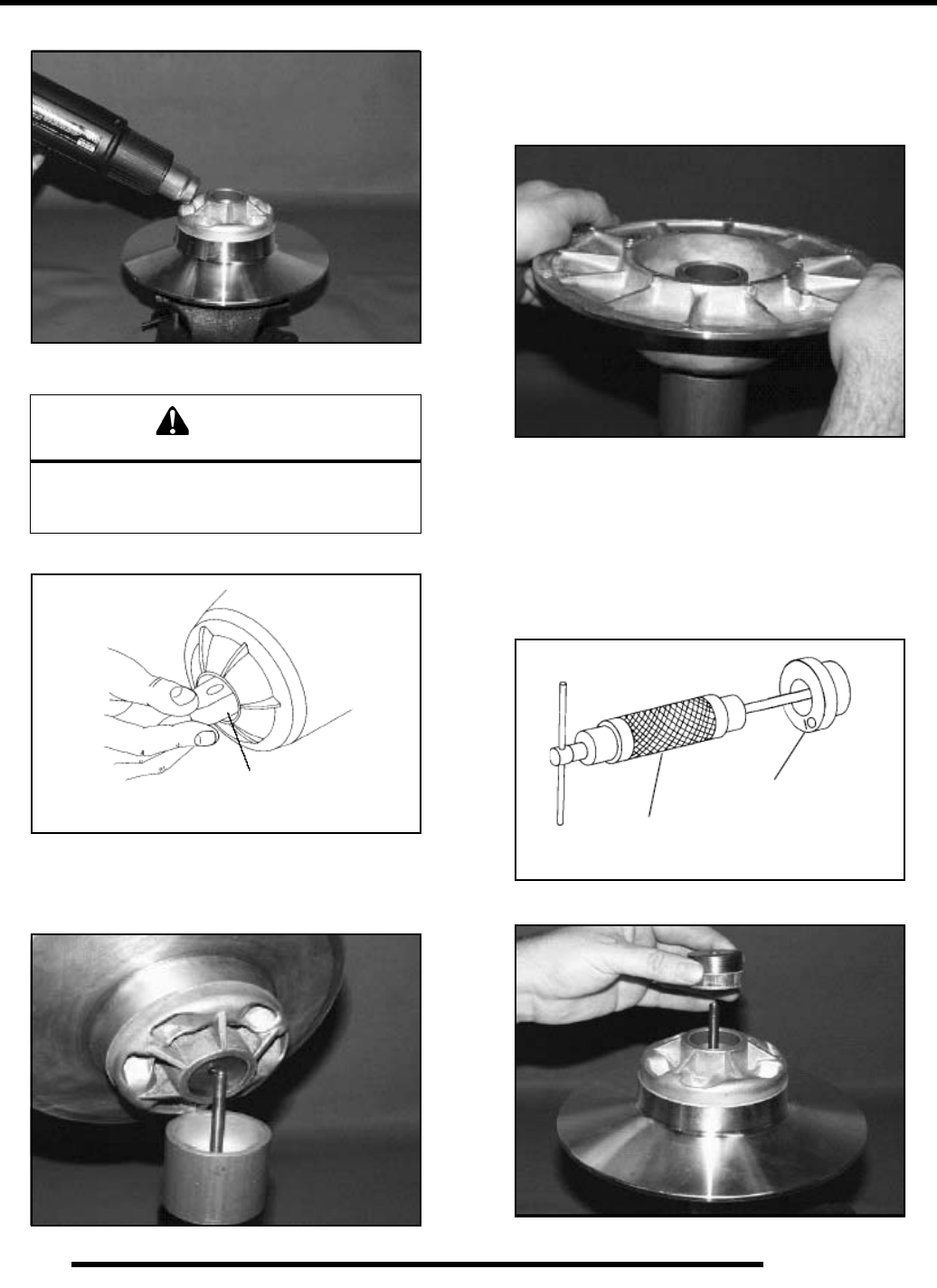
6.20
CLUTCHING
3. Remove ramp buttons from moveable sheave.
4. Using an appropriate heat gun, apply heat directly on
bushing until tiny smoke tailings appear.
5. Working from the top, install Driven Clutch Bushing
Removal Tool (#5) (PN 5020631) into the center of clutch
sheave with smaller diameter toward bushing to be
removed. See illustration.
6. Install sheave onto puller.
7. Install nut onto puller rod and tighten by hand. Turn puller
barrel for further tension if needed.
8. Turn clutch sheave counterclockwise until bushing is
removed. Repeat Steps 5 - 8 for other bushing.
9. Remove nut from puller rod and set aside.
10. Remove adapters from puller.
11. Remove bushing and removal tool from adapters. Discard
bushing.
Moveable Sheave - Bushing Installation
1. Working from the top, insert Puller Adapter (#10)
(PN 5020633) onto the puller.
2. Start new bushing evenly in moveable sheave. Apply
Loctite™ 680 to the back side of new bushing.
CAUTION
Clutch components will be hot! In order to avoid
serious burns, wear heat resistant insulated
gloves for the rest of the removal process.
Clutch Bushing
Removal Tool (#5)
Piston Pin Puller
(PN 2870386)
Number Two Puller
Adapter (#10)
PartShark.com
877-999-5686
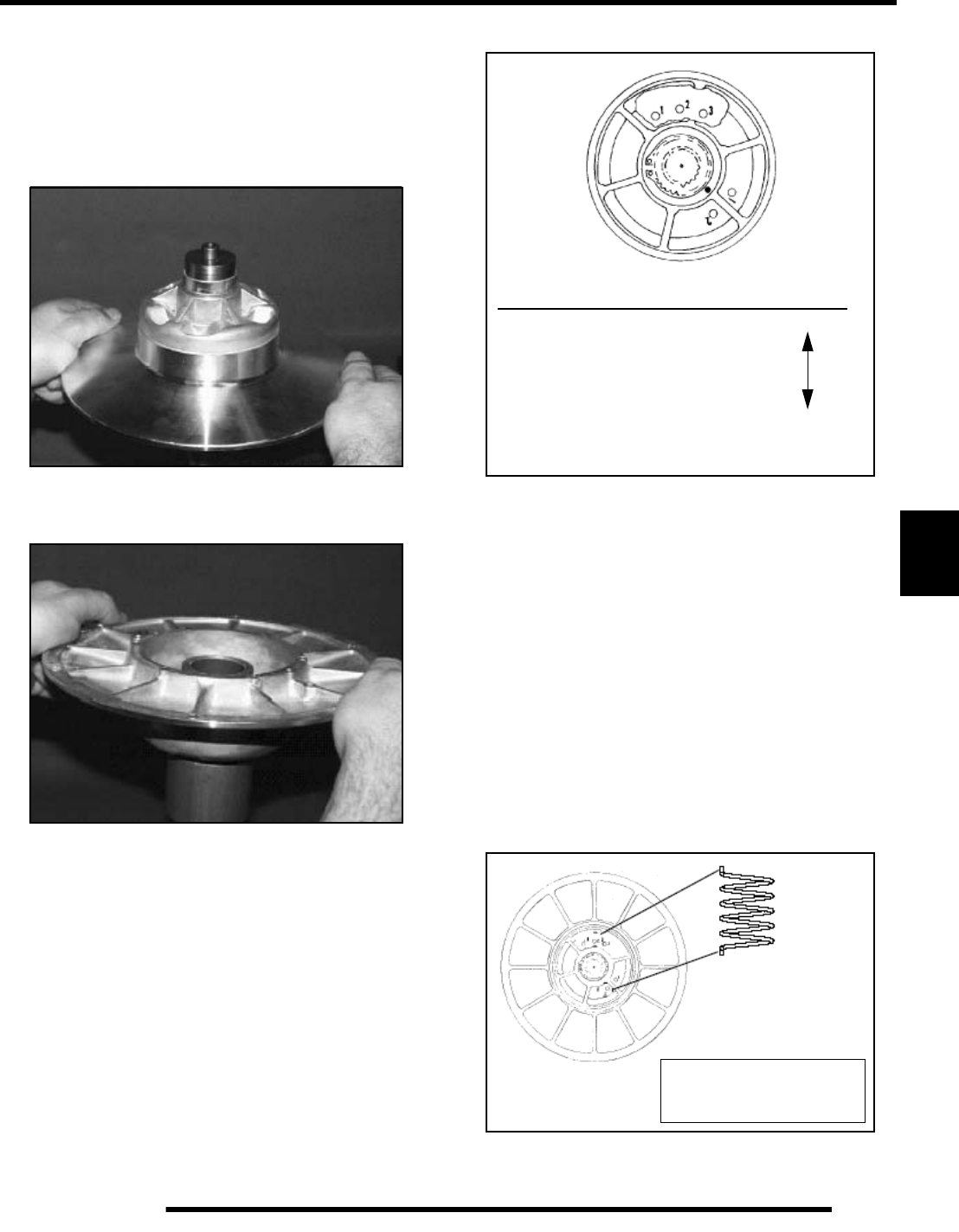
6.21
CLUTCHING
6
3. Install sheave onto puller with new bushing upward as
shown. Install Puller Adapter (#10) (PN 5020633).
4. Install nut onto puller rod and hand tighten against
installation tool.
5. Turn clutch sheave counterclockwise until bushing is
seated.
6. Remove nut from puller rod and set aside.
7. Remove installation tool and clutch sheave from puller.
8. Repeat installation procedure for other moveable bushing.
Clutch Assembly
1. Install moveable sheave with spacer washers. Important:
At least one spacer washer must be installed. Teflon™
bushings are self-lubricating. Do not apply oil or grease to
the bushings.
2. Install spring, inserting spring tab into proper hole in
moveable sheave.
3. Insert spring tab into proper hole in helix. See “Clutch
Chart” of the specifications page in Chapter 1.
The driven clutch, helix/moveable assembly has several
different spring locations which affect clutch shifting and
RPMs. The greatest amount of spring tension will raise engine
RPMs during clutch upshift and allow quicker backshift or
downshift when pulling or negotiating a hill, for example. The
least amount of tension will create a slower downshift and a
harder upshift.
Example: Helix Sheave Tension
2 - 1 Heavy
Spring/ 2 - 2
Position 1 - 1
2 - 3
1 - 2
1 - 3 Soft
Refer to General Information Chapter 1 for
driven clutch spring color and production setting.
Moveable Spring
Driven Clutch
Driven Spring
Driven Spring Placement:
RANGER 500 4x4: 2-2
PartShark.com
877-999-5686
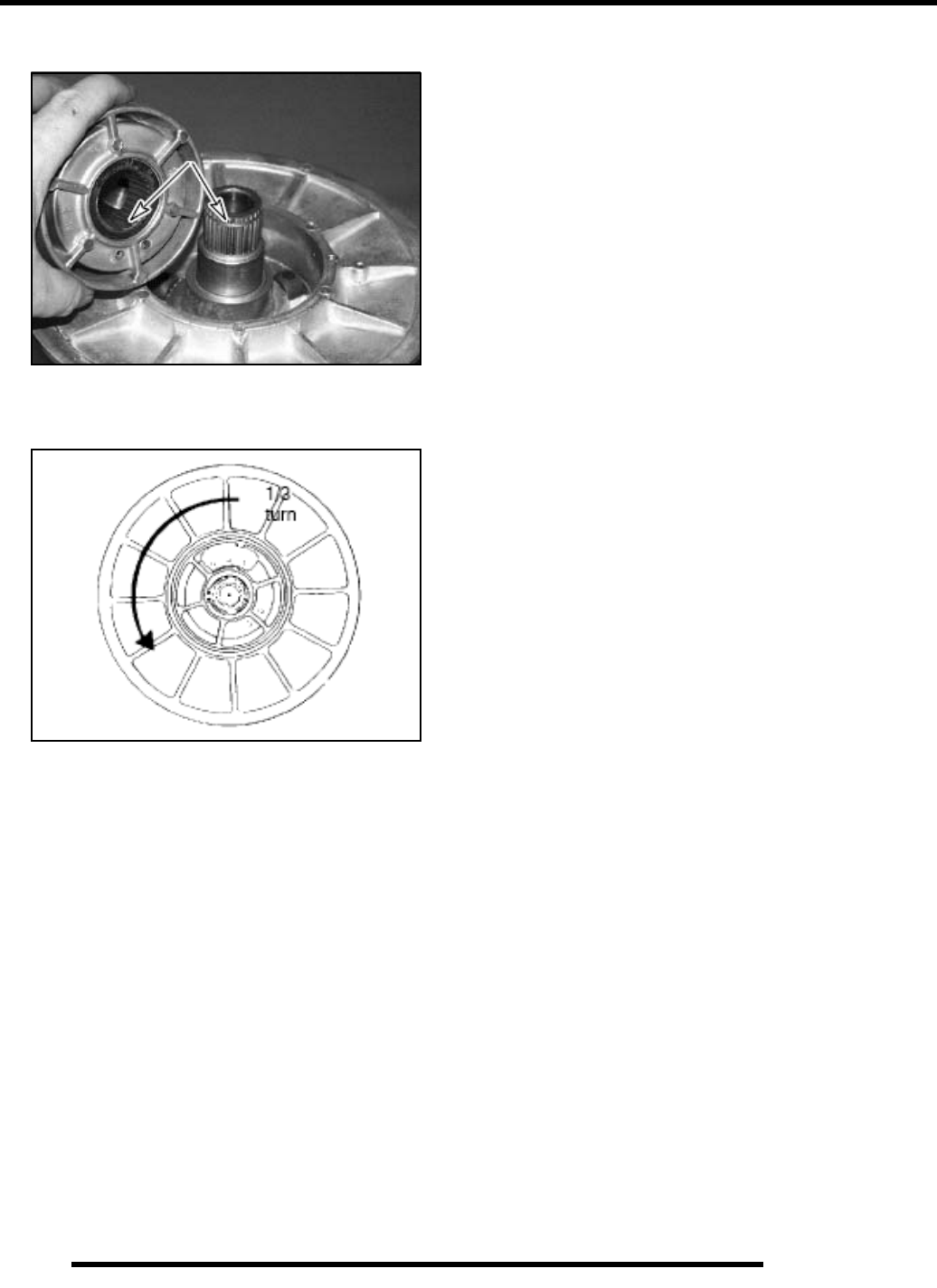
6.22
CLUTCHING
4. Line up boss spline and push helix down until it engages
the splines 1/2" to 3/4".
5. While holding downward pressure on helix, wind
moveable sheave counterclockwise approximately 1/3 turn
(120°).
6. Push helix into place and install snap ring.
PartShark.com
877-999-5686
6.23
CLUTCHING
6
TROUBLESHOOTING
Situation Probable Cause Remedy
Engine RPM below
specified operating
range, although
engine is properly
tuned.
-Wrong or broken drive clutch spring.
-Drive clutch shift weight too heavy.
-Driven clutch spring broken or installed in wrong
helix location.
-Replace with recommended spring.
-Install correct shift weight kit to match engine
application.
-Replace spring; refer to proper installation location.
Erratic engine
operating RPM
during acceleration or
load variations.
-Drive clutch binding.
-Belt worn unevenly - thin / burnt spots.
-Driven clutch malfunction.
-Sheave face grooved.
A. Disassemble drive clutch; inspect shift weights for
wear and free operation.
B. Clean and polish stationary shaft hub; reassemble
clutch without spring to determine problem area.
Replace belt.
A. Replace ramp buttons.
B. Inspect movable sheave for excessive bushing
clearance.
-Replace the clutch.
Engine RPM above
specified operating
range.
-Incorrect drive clutch spring (too high spring rate).
-Drive clutch shift weights incorrect for application
(too light).
-Drive clutch binding.
-Driven clutch binding.
-Converter sheaves greasy; belt slippage.
-Install correct recommended spring.
-Install correct recommended shift weights.
-Disassemble and clean clutch, inspecting shift weights
and rollers. Reassemble without the spring and move
sheaves through entire range to further determine
probable cause.
-Disassemble, clean, and inspect driven clutch, noting
worn sheave bushing and ramp buttons and helix spring
location.
-Clean sheaves with denatured alcohol or brake cleaner,
install new belt.
Harsh drive clutch
engagement.
-Drive belt worn too narrow.
-Excessive belt / sheave clearance with new belt.
-Replace belt.
-Perform belt / sheave clearance adjustment with shim
washers beneath spider.
Drive belt turns over
-Wrong belt for application.
-Clutch alignment out of spec.
-Engine mount broken or loose.
-Replace with correct belt.
-Adjust alignment offset.
-Inspect / adjust or replace.
Belt burnt, thin spots
-Abuse (continued throttle application when
vehicle is stationary, excess load)
-Dragging brake
-Slow, easy clutch engagement
-Caution operator to operate machine within guidelines.
-Vehicle operated with park brake on. Inspect brake
system.
-Fast, effective use of throttle for efficient engagement.
PartShark.com
877-999-5686
6.24
CLUTCHING
Troubleshooting, Continued.....
Situation Probable Cause Remedy
PVT cover
overheating (melting)
-Plugged air intake or outlet.
-Belt slippage due to water, oil, grease, etc., rubbing
on cover.
-Clutches or weight being applied to cover while in
operation.
-High vs. low range.
-Clear obstruction
-Inspect system. Clean , repair or replace as necessary.
Seal PVT system ducts.
-Remove weight. Inform operator.
-Instruct operator on guidelines for operation in proper
driving range for different terrain as outlined in Owner’s
Safety and Maintenance Manual.
Water ingestion
-Cover seals or ducts leaking
-Operator error
-Find leak and repair as necessary.
-Instruct operator on guidelines for operation in wet
terrain as outlined in Owner’s Safety and Maintenance
Manual.
Belt slippage
-Belt worn out
-Water ingestion
-Belt contaminated with oil or grease
-Replace belt.
-Inspect and seal PVT system.
-Inspect and clean.
PVT noise
-Belt worn or separated, thin spots, loose belt
-Broken or worn clutch components, cover hitting
clutches
-Replace belt.
-Inspect and repair as necessary.
Engagement
erratic or stabby
-Thin spots on belt, worn belt
-Drive clutch bushings stick
-Replace belt. Refer to belt burnt troubleshooting and
instruct operator.
-Inspect and repair clutches.
PartShark.com
877-999-5686

FINAL DRIVE
7.1
CHAPTER 7
FINAL DRIVE
7
SPECIAL TOOLS . . . . . . . . . . . . . . . . . . . . . . . . . . . . . . . . . . . . . . . . . . . . . . . . . . . . . . . 7.2
TORQUE SPECIFICATIONS. . . . . . . . . . . . . . . . . . . . . . . . . . . . . . . . . . . . . . . . . . . . . . . 7.2
FRONT BEARING CARRIER . . . . . . . . . . . . . . . . . . . . . . . . . . . . . . . . . . . . . . . . . . . . . . 7.2
BEARING CARRIER INSPECTION / REMOVAL. . . . . . . . . . . . . . . . . . . . . . . . . . . . . . . 7.2
BEARING REPLACEMENT . . . . . . . . . . . . . . . . . . . . . . . . . . . . . . . . . . . . . . . . . . . . . . . 7.3
BEARING CARRIER INSTALLATION . . . . . . . . . . . . . . . . . . . . . . . . . . . . . . . . . . . . . . . 7.4
FRONT DRIVE SHAFT . . . . . . . . . . . . . . . . . . . . . . . . . . . . . . . . . . . . . . . . . . . . . . . . . . . 7.6
REMOVAL / INSTALLATION . . . . . . . . . . . . . . . . . . . . . . . . . . . . . . . . . . . . . . . . . . . . . . 7.6
FRONT PROPSHAFT . . . . . . . . . . . . . . . . . . . . . . . . . . . . . . . . . . . . . . . . . . . . . . . . . . . . 7.7
REMOVAL / INSTALLATION . . . . . . . . . . . . . . . . . . . . . . . . . . . . . . . . . . . . . . . . . . . . . . 7.7
FRONT PROPSHAFT COMPONENTS . . . . . . . . . . . . . . . . . . . . . . . . . . . . . . . . . . . . . . 7.7
PROPSHAFT U-JOINT SERVICE. . . . . . . . . . . . . . . . . . . . . . . . . . . . . . . . . . . . . . . . . . . 7.8
DISASSEMBLY / ASSEMBLY . . . . . . . . . . . . . . . . . . . . . . . . . . . . . . . . . . . . . . . . . . . . . 7.8
FRONT GEARCASE - CENTRALIZED HILLIARD . . . . . . . . . . . . . . . . . . . . . . . . . . . . . 7.10
EXPLODED VIEW . . . . . . . . . . . . . . . . . . . . . . . . . . . . . . . . . . . . . . . . . . . . . . . . . . . . . 7.10
OPERATION. . . . . . . . . . . . . . . . . . . . . . . . . . . . . . . . . . . . . . . . . . . . . . . . . . . . . . . . . . 7.11
AWD DIAGNOSIS. . . . . . . . . . . . . . . . . . . . . . . . . . . . . . . . . . . . . . . . . . . . . . . . . . . . . . 7.12
GEARCASE REMOVAL . . . . . . . . . . . . . . . . . . . . . . . . . . . . . . . . . . . . . . . . . . . . . . . . . 7.13
DISASSEMBLY / INSPECTION . . . . . . . . . . . . . . . . . . . . . . . . . . . . . . . . . . . . . . . . . . . 7.13
REASSEMBLY / INSPECTION. . . . . . . . . . . . . . . . . . . . . . . . . . . . . . . . . . . . . . . . . . . . 7.16
SETTING RING GEAR BACKLASH. . . . . . . . . . . . . . . . . . . . . . . . . . . . . . . . . . . . . . . . 7.17
GEARCASE INSTALLATION . . . . . . . . . . . . . . . . . . . . . . . . . . . . . . . . . . . . . . . . . . . . . 7.18
REAR HUB / BEARING CARRIER . . . . . . . . . . . . . . . . . . . . . . . . . . . . . . . . . . . . . . . . . 7.19
HUB INSPECTION / REMOVAL. . . . . . . . . . . . . . . . . . . . . . . . . . . . . . . . . . . . . . . . . . . 7.19
HUB DISASSEMBLY / ASSEMBLY . . . . . . . . . . . . . . . . . . . . . . . . . . . . . . . . . . . . . . . . 7.20
HUB INSTALLATION . . . . . . . . . . . . . . . . . . . . . . . . . . . . . . . . . . . . . . . . . . . . . . . . . . . 7.21
EXPLODED VIEW . . . . . . . . . . . . . . . . . . . . . . . . . . . . . . . . . . . . . . . . . . . . . . . . . . . . . 7.22
REAR DRIVE SHAFT . . . . . . . . . . . . . . . . . . . . . . . . . . . . . . . . . . . . . . . . . . . . . . . . . . . 7.23
REMOVAL / INSTALLATION . . . . . . . . . . . . . . . . . . . . . . . . . . . . . . . . . . . . . . . . . . . . . 7.23
DRIVE SHAFT SERVICE . . . . . . . . . . . . . . . . . . . . . . . . . . . . . . . . . . . . . . . . . . . . . . . . 7.24
DRIVE SHAFT / CV JOINT HANDLING TIPS . . . . . . . . . . . . . . . . . . . . . . . . . . . . . . . . 7.24
OUTER CV JOINT / BOOT REPLACEMENT. . . . . . . . . . . . . . . . . . . . . . . . . . . . . . . . . 7.24
INNER PLUNGING JOINT / BOOT REPLACEMENT . . . . . . . . . . . . . . . . . . . . . . . . . . 7.26
DRIVE SHAFT EXPLODED VIEW . . . . . . . . . . . . . . . . . . . . . . . . . . . . . . . . . . . . . . . . . 7.28
REAR PROPSHAFT . . . . . . . . . . . . . . . . . . . . . . . . . . . . . . . . . . . . . . . . . . . . . . . . . . . . 7.29
REMOVAL / INSTALLATION . . . . . . . . . . . . . . . . . . . . . . . . . . . . . . . . . . . . . . . . . . . . . 7.29
REAR GEARCASE . . . . . . . . . . . . . . . . . . . . . . . . . . . . . . . . . . . . . . . . . . . . . . . . . . . . . 7.30
GENERAL OPERATION. . . . . . . . . . . . . . . . . . . . . . . . . . . . . . . . . . . . . . . . . . . . . . . . . 7.30
OPERATION MODES. . . . . . . . . . . . . . . . . . . . . . . . . . . . . . . . . . . . . . . . . . . . . . . . . . . 7.31
GEARCASE REMOVAL / DISASSEMBLY. . . . . . . . . . . . . . . . . . . . . . . . . . . . . . . . . . . 7.32
REAR GEARCASE ASSEMBLY. . . . . . . . . . . . . . . . . . . . . . . . . . . . . . . . . . . . . . . . . . . 7.35
REAR GEARCASE INSTALLATION . . . . . . . . . . . . . . . . . . . . . . . . . . . . . . . . . . . . . . . 7.37
REAR GEARCASE EXPLODED VIEW . . . . . . . . . . . . . . . . . . . . . . . . . . . . . . . . . . . . . 7.38
PartShark.com
877-999-5686
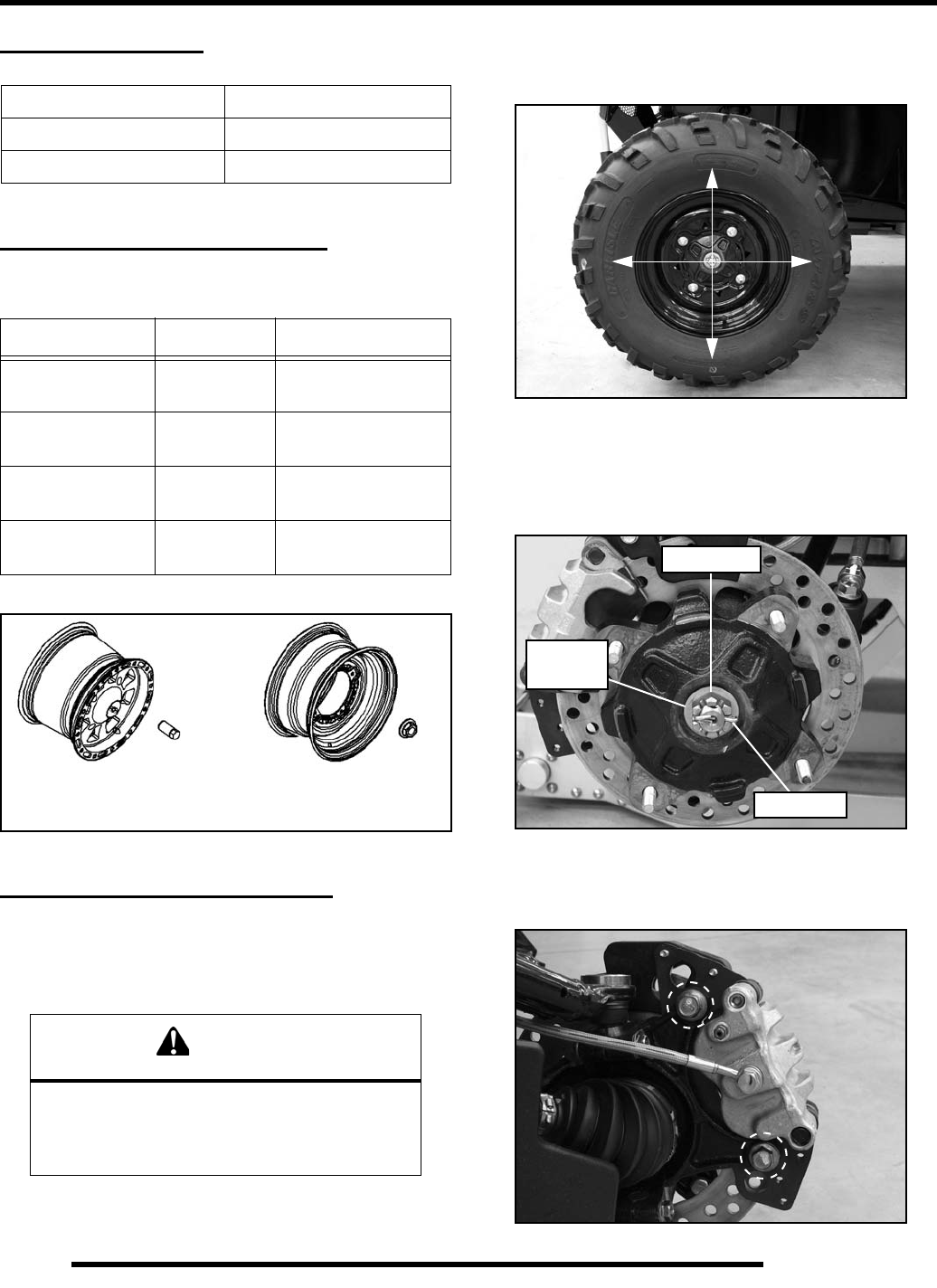
7.2
FINAL DRIVE
SPECIAL TOOLS
TORQUE SPECIFICATIONS
Wheel, Hub, and Spindle Torque Table
FRONT BEARING CARRIER
Bearing Carrier Inspection / Removal
1. Elevate front of vehicle and safely support machine under
the frame area.
2. Check bearings for side play by grasping the top and bottom
of the tire firmly and checking for movement. The tire
should rotate smoothly without binding or rough spots.
3. Remove the (4) wheel nuts and remove the front wheel.
4. Remove the cotter pin and loosen the front wheel hub castle
nut. Remove the nut, and (2) cone washers from the front
wheel hub assembly.
5. Remove the two brake caliper mounting bolts.
CAUTION: Do not hang the caliper by the brake line. Use
wire to hang caliper to prevent damage to the brake line.
PART NUMBER TOOL DESCRIPTION
2872608 Roller Pin Removal Tool
PU-48951 Axle Boot Clamp Tool
ITEM NUT TYPE SPECIFICATION
Aluminum Wheels
(Cast) Lug Nut (1) 90 ft. lbs. (122 Nm)
Steel Wheels
(Black / Camo) Flange Nut (2) 35 ft. lbs. (47 Nm)
Front Hub
Retaining Nut - 80 ft. lbs. (108 Nm)
Rear Hub
Retaining Nut - 110 ft. lbs. (150 Nm)
CAUTION
Serious injury may result if machine tips or falls.
Be sure machine is secure before beginning this
service procedure. Wear eye protection when
removing bearings and seals.
Steel Wheel
(Standard Models)
35 ft. lbs. (47 Nm)
Aluminum Wheel
(LE Models)
90 ft. lbs. (122 Nm)
#1 #2
Castle Nut
Cotter Pin
Cone
Washers
PartShark.com
877-999-5686
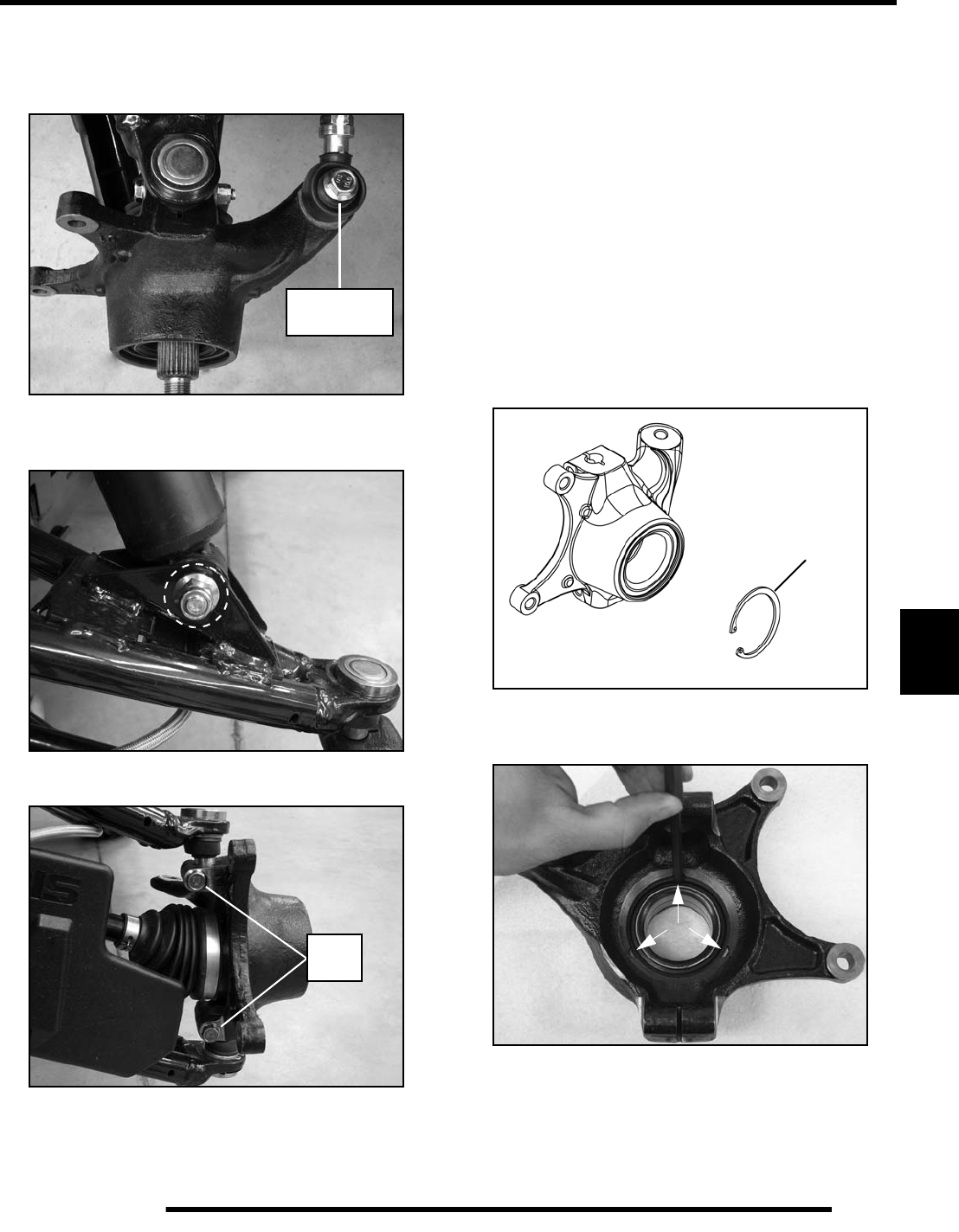
7.3
FINAL DRIVE
7
6. Remove the front wheel hub assembly.
7. Remove the steering tie rod end fastener from the front
bearing carrier.
8. Remove the lower shock mounting fastener attached to the
upper A-arm and remove the shock from the A-arm.
9. Remove the upper and lower ball joint pinch bolts.
10. Using a soft faced hammer, lightly tap on the bearing carrier
while removing the upper and lower ball joint ends.
11. Remove the bearing carrier from the front drive shaft.
12. Rotate bearing by hand and check for smooth rotation.
Visually inspect bearings for moisture, dirt, or corrosion.
NOTE: Due to extremely close tolerances and
minimal wear, the bearing must be inspected
visually, and by feel. While rotating bearings by
hand, inspect for rough spots, discoloration, or
corrosion. The bearings should turn smoothly and
quietly, with no detectable up and down movement
and minimal movement sideways between inner and
outer race.
13. Replace bearing if moisture or corrosion is evident.
Bearing Replacement
Bearing Removal
1. Remove outer snap ring.
2. From the back side of the bearing carrier, tap on the outer
bearing race with a drift punch in the reliefs as shown.
3. Drive bearing out evenly by tapping on outer race only.
Once bearing is at bottom of casting, support casting on
outer edges so bearing can be removed.
4. Inspect the bearing carrier housing for scratches, wear or
damage. Replace front bearing carrier if damaged.
Steering
Tie Rod End
Pinch
Bolts
Snap
Ring
PartShark.com
877-999-5686
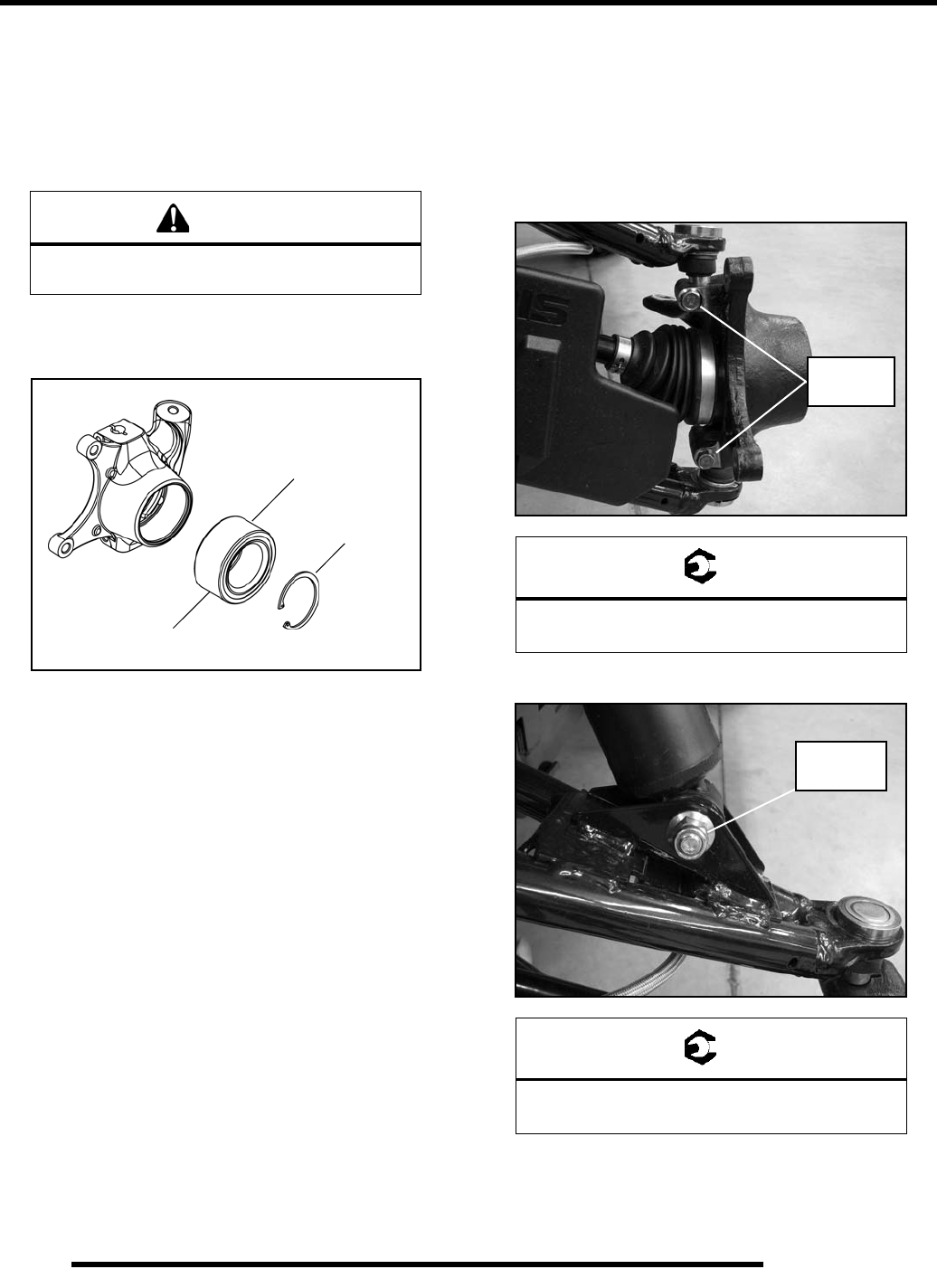
7.4
FINAL DRIVE
Bearing Installation
5. Thoroughly clean the front bearing carrier housing and the
outer race on the new bearing. Be sure that all oil residue
has been removed from each surface.
6. Support the bottom of the bearing carrier housing.
7. Apply Loctite® 603™ retaining compound to the outer
circumference of the new bearing race and carefully press
the new bearing into the bearing carrier housing.
NOTE: Use care to not allow any of the Loctite®
compound to get in the bearing.
8. Wipe the housing clean of any excess compound and install
the snap ring.
Bearing Carrier Installation
1. Install drive shaft axle through the backside of the bearing
carrier.
2. Install the upper and lower ball joint ends into the front
bearing carrier.
3. Install pinch bolts and torque to specification
4. Install shock to A-arm and torque fastener to specification.
5. Apply grease to drive shaft axle splines.
CAUTION
Use an arbor and press only on the outer race,
otherwise bearing damage may occur.
Apply
Loctite® 603™
Bearing
Snap Ring
= T
Pinch Bolts:
17 ft. lbs. (23 Nm)
= T
Shock Mounting Bolts:
30 ft. lbs. (41 Nm)
17 ft. lbs.
(23 Nm)
30 ft. lbs.
(41 Nm)
PartShark.com
877-999-5686
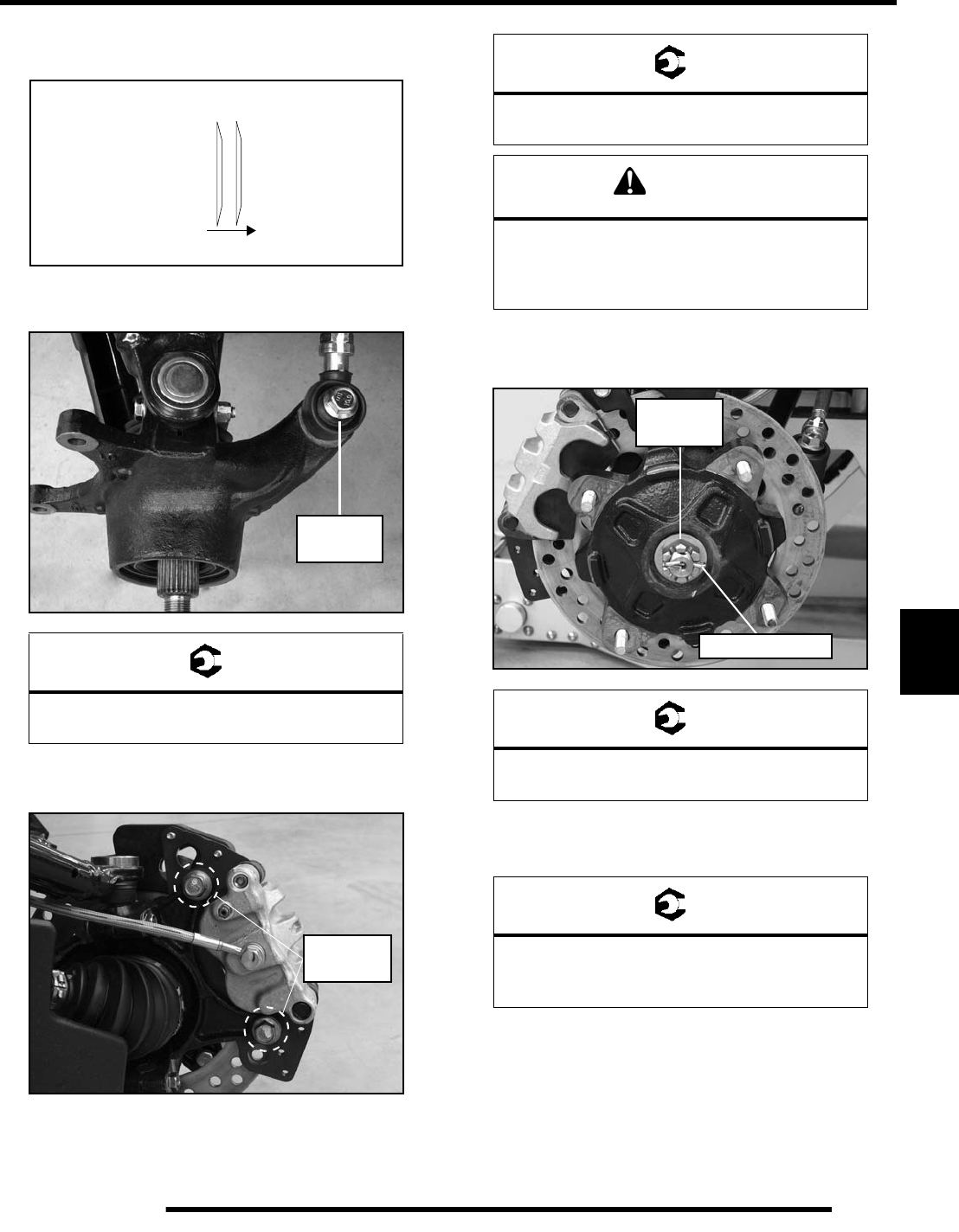
7.5
FINAL DRIVE
7
6. Install front wheel hub assembly, cone washers, and hand
tighten the castle nut. Install washers with domed side out.
7. Install the steering tie rod end onto the front bearing carrier
and torque fastener to 40 ft. lbs. (54 Nm).
8. Install the front brake caliper. Install the mounting bolts
and torque to 30 ft. lbs. (41 Nm).
9. Torque wheel hub nut to 80 ft. lbs. (108 Nm) and install a
NEW cotter pin. Tighten nut slightly if necessary to align
cotter pin holes.
10. Install wheel and (4) wheel nuts. Torque wheel nuts to
specification.
11. Rotate wheel and check for smooth operation. Bend both
ends of cotter pin around end of spindle in different
directions.
= T
Tie Rod End Fastener:
40 ft. lbs. (54 Nm)
Out
Cone Washers
Wheel
Hub
40 ft. lbs.
54 (Nm)
30 ft. lbs.
(41 Nm)
= T
Front Caliper Mounting Bolts:
30 ft. lbs. (41 Nm)
CAUTION
New bolts have a pre-applied locking agent
which is destroyed upon removal. Always use
new brake caliper mounting bolts
upon assembly.
= T
Wheel Hub Castle Nut:
80 ft. lbs. (108 Nm)
= T
Wheel Nuts:
Steel Wheels: 35 ft. lbs. (47 Nm)
Aluminum Wheels: 90 ft. lbs. (122 Nm)
80 ft. lbs.
(108 Nm)
NEW Cotter Pin
PartShark.com
877-999-5686
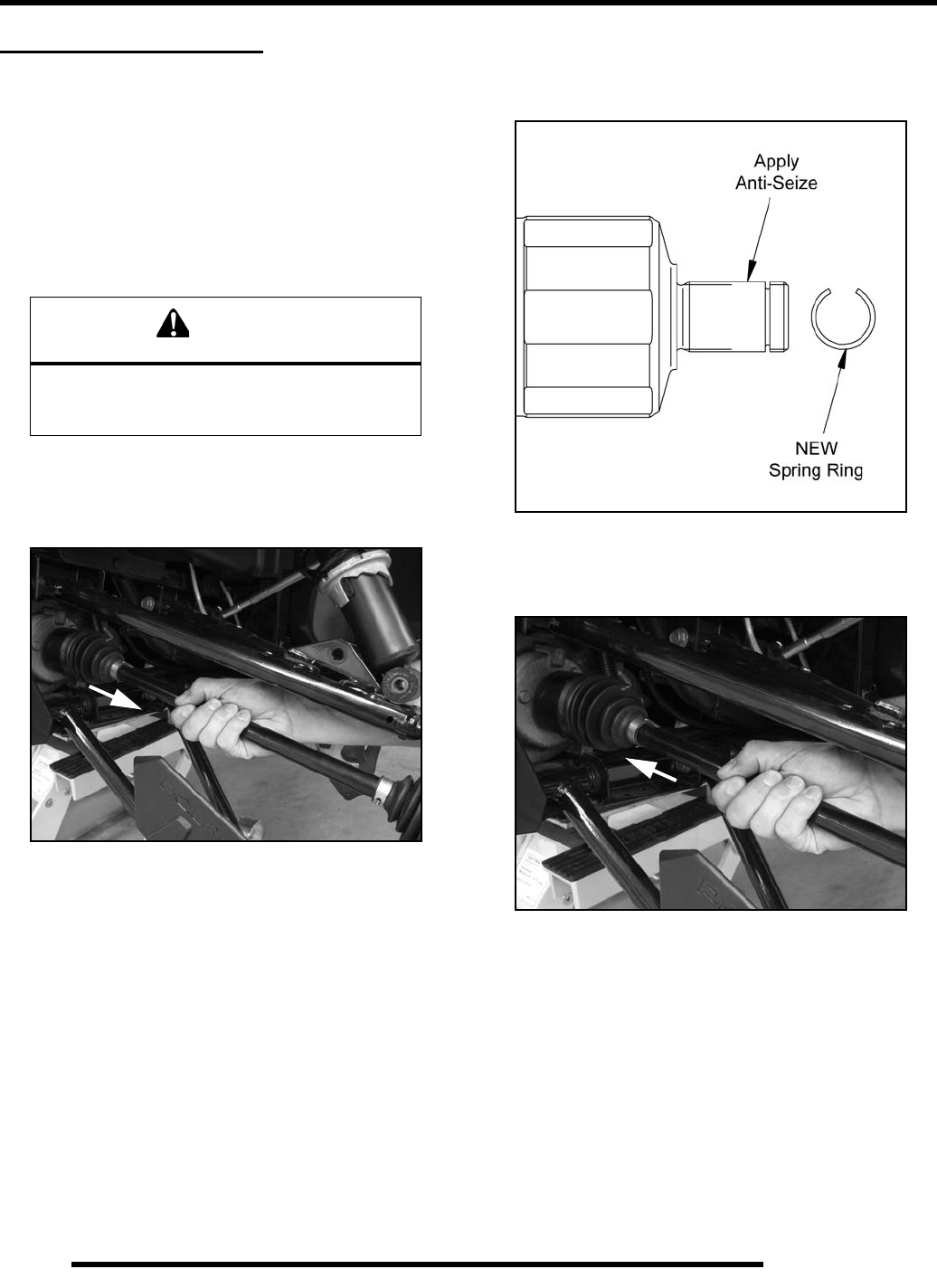
7.6
FINAL DRIVE
FRONT DRIVE SHAFT
Removal
1. Perform the “Bearing Carrier Inspection / Removal”
procedure listed under the “FRONT BEARING
CARRIER” section within this chapter.
NOTE: Perform all removal steps with the exception
of removing the steering tie rod end. It will not be
necessary to remove the tie rod end from the front
bearing carrier when removing the front drive shaft.
2. Remove the drive shaft from the front bearing carrier.
3. With a short, sharp jerk, remove drive shaft from the front
gearcase.
4. Refer to the “DRIVE SHAFT SERVICE” procedure if
repairing the drive shaft.
Installation
1. Install new spring ring on the end of the drive shaft. Apply
an anti-seize compound to splines.
2. Align splines of drive shaft with front gearcase and reinstall
the drive shaft. Use a rubber mallet to tap on the outboard
end of the drive shaft if necessary
3. Install drive shaft into the front bearing carrier.
4. Perform the “Bearing Carrier Installation” procedure listed
under the “FRONT BEARING CARRIER” section within
this chapter.
CAUTION
Serious injury may result if machine tips or falls.
Be sure machine is secure before beginning
this service procedure.
PartShark.com
877-999-5686
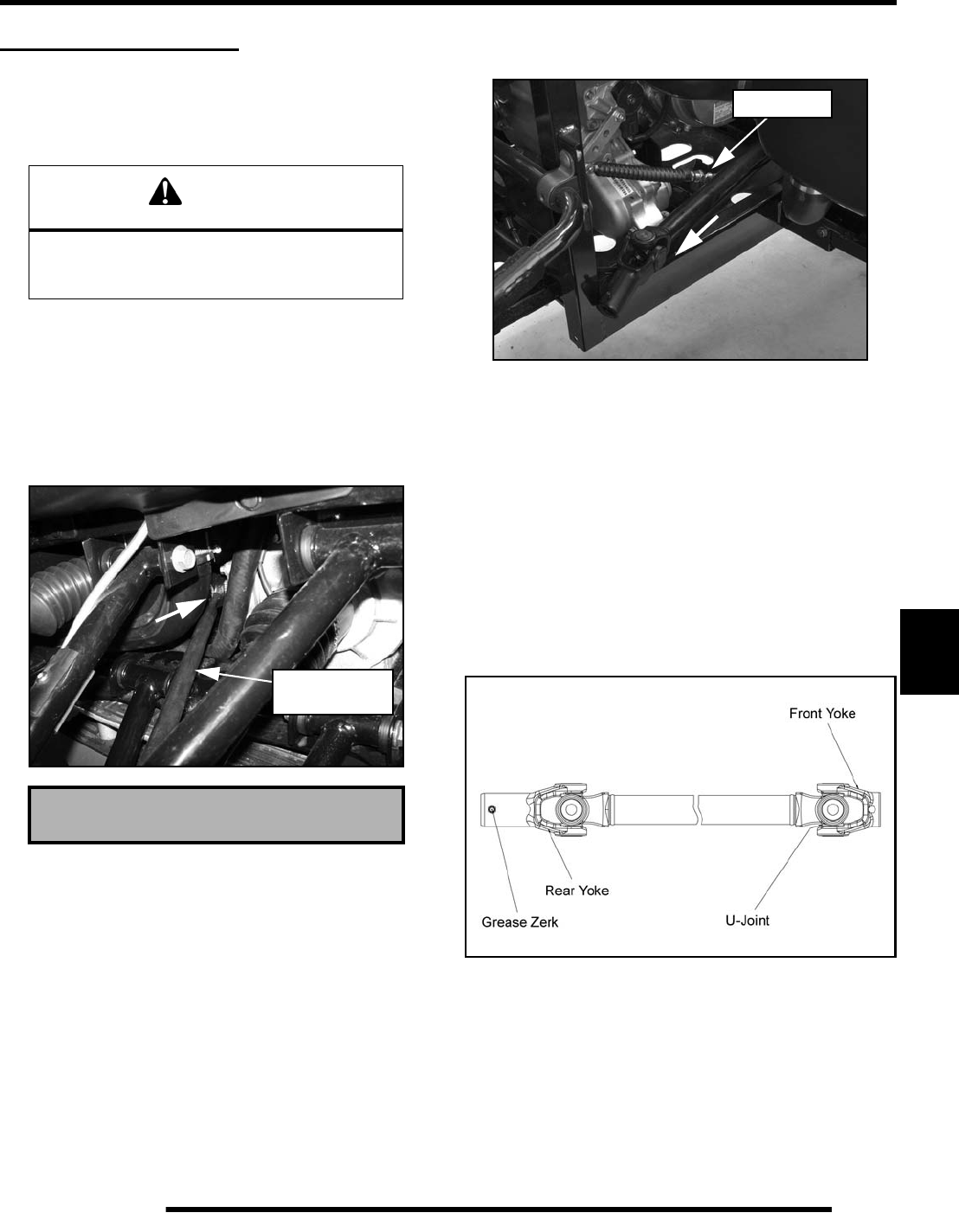
7.7
FINAL DRIVE
7
FRONT PROPSHAFT
Removal
1. Elevate and safely support vehicle under the frame. The
use of a vehicle hoist is recommended for this procedure.
NOTE: To ease roll pin removal, access the roll pin
through the skid plate hole. Proceed to step 4 if you
are able to access the roll pin through the skid plate.
2. Remove wheel nuts and RH wheel to gain access.
3. Use the Roll Pin Removal Tool (PN 2872608), to drive out
the roll pin from prop shaft.
4. Slide prop shaft back and away from front gearcase, then
pull the shaft sharply forward to remove it from the
transmission shaft.
5. Remove the (8) T27 Torx-head screws retaining the floor
cover and remove the cover from the vehicle.
6. Using care, pull the propshaft towards the right side of the
frame and slide it out the right rear portion of the frame.
NOTE: Avoid making contact with the shift cable
and cable mounting tab during removal to prevent
component damage.
Installation
1. Reverse the removal procedure to install the front
propshaft.
2. Use a NEW roll pin upon installation.
Front Propshaft Components
CAUTION
Serious injury may result if machine tips or falls.
Be sure machine is secure before beginning
this service procedure.
Roll Pin Removal Tool (PN 2872608)
Removal Tool
(PN 2872608)
See NOTE
PartShark.com
877-999-5686
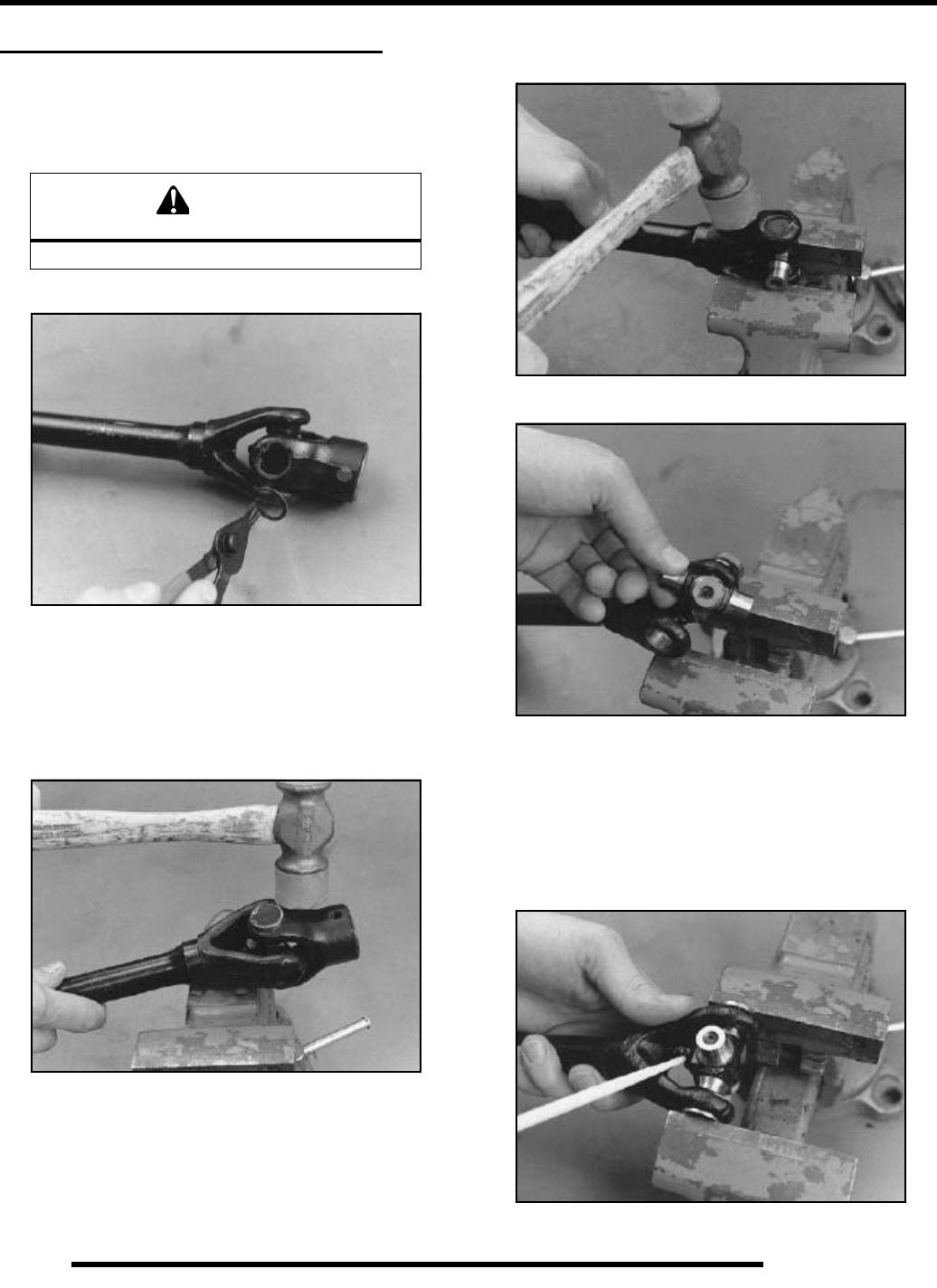
7.8
FINAL DRIVE
PROPSHAFT U-JOINT SERVICE
Disassembly
1. Remove internal or external snap ring from all bearing
caps.
NOTE: If yoke or bearing is removed, cross bearing
must be replaced. Note orientation of grease fitting
and mark inner and outer yoke for correct re-
positioning during installation.
2. Support inner yoke as shown and drive outer yoke down
(bearing cap out) with a soft face hammer.
3. Support U-joint in vise as shown and drive inner yoke down
to remove remaining bearing caps.
4. Force U-joint cross to one side and lift out of inner yoke.
Assembly
1. Install new bearing caps in yoke by hand. Carefully install
U-joint cross with grease fitting properly positioned
inward toward center of shaft. Take care not to dislodge
needle bearings upon installation of cross joint. Tighten
vise to force bearing caps in.
CAUTION
Always wear eye protection.
PartShark.com
877-999-5686
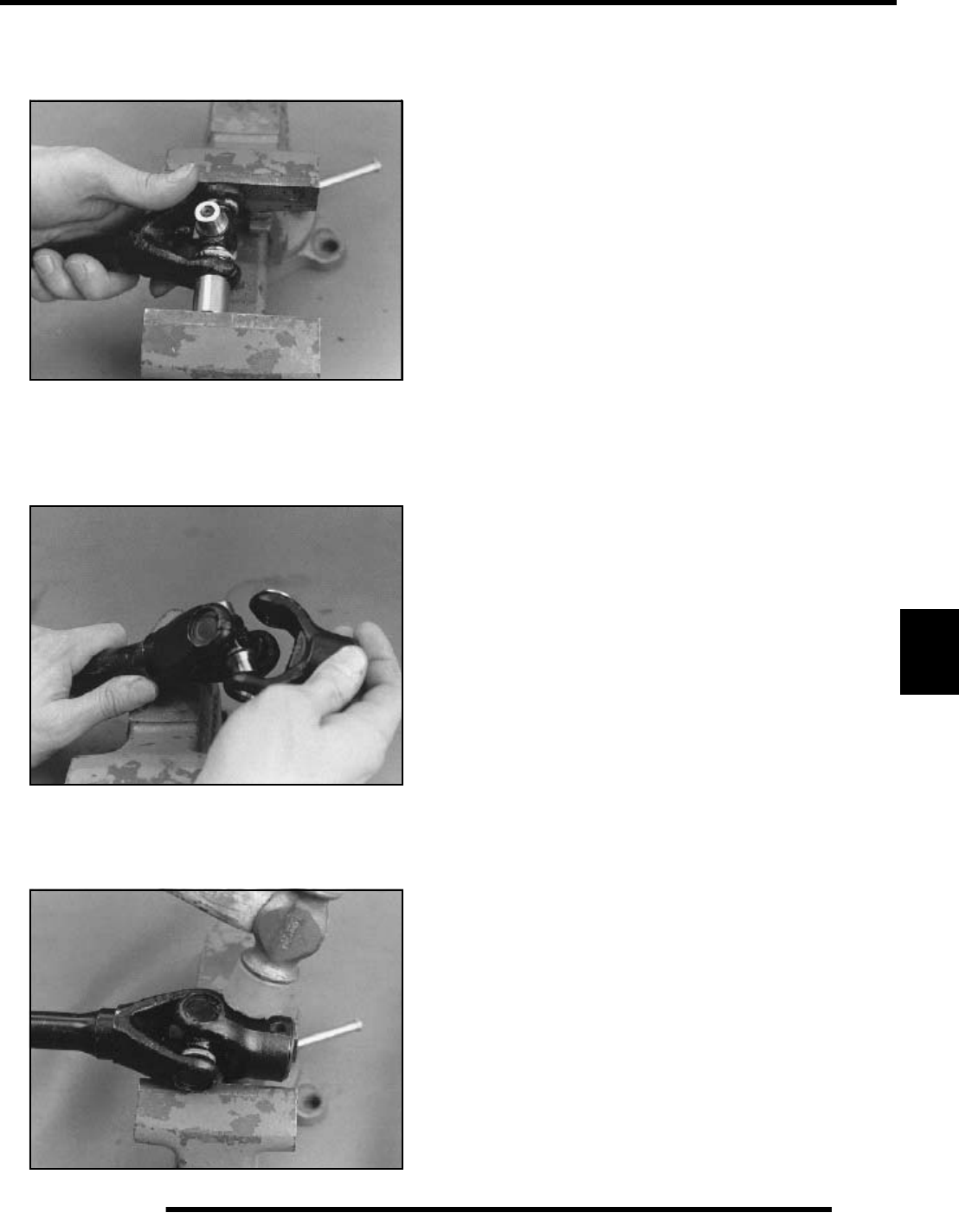
7.9
FINAL DRIVE
7
2. Using a suitable arbor, fully seat bearing cap in one side.
Continually check for free movement of bearing cross as
bearing caps are assembled.
3. Install snap ring to contain bearing cap just installed.
Repeat procedure for other side.
4. Install outer yoke, aligning marks made before
disassembly.
5. Repeat Steps 1-3 to install bearing caps on outer yoke.
6. Seat all bearing caps against snap rings by supporting cross
shaft and tapping on each corner as shown.
7. When installation is complete, yokes must pivot freely in
all directions without binding. If the joint is stiff or binding,
tap the yoke lightly to center the joint until it pivots freely
in all directions.
PartShark.com
877-999-5686
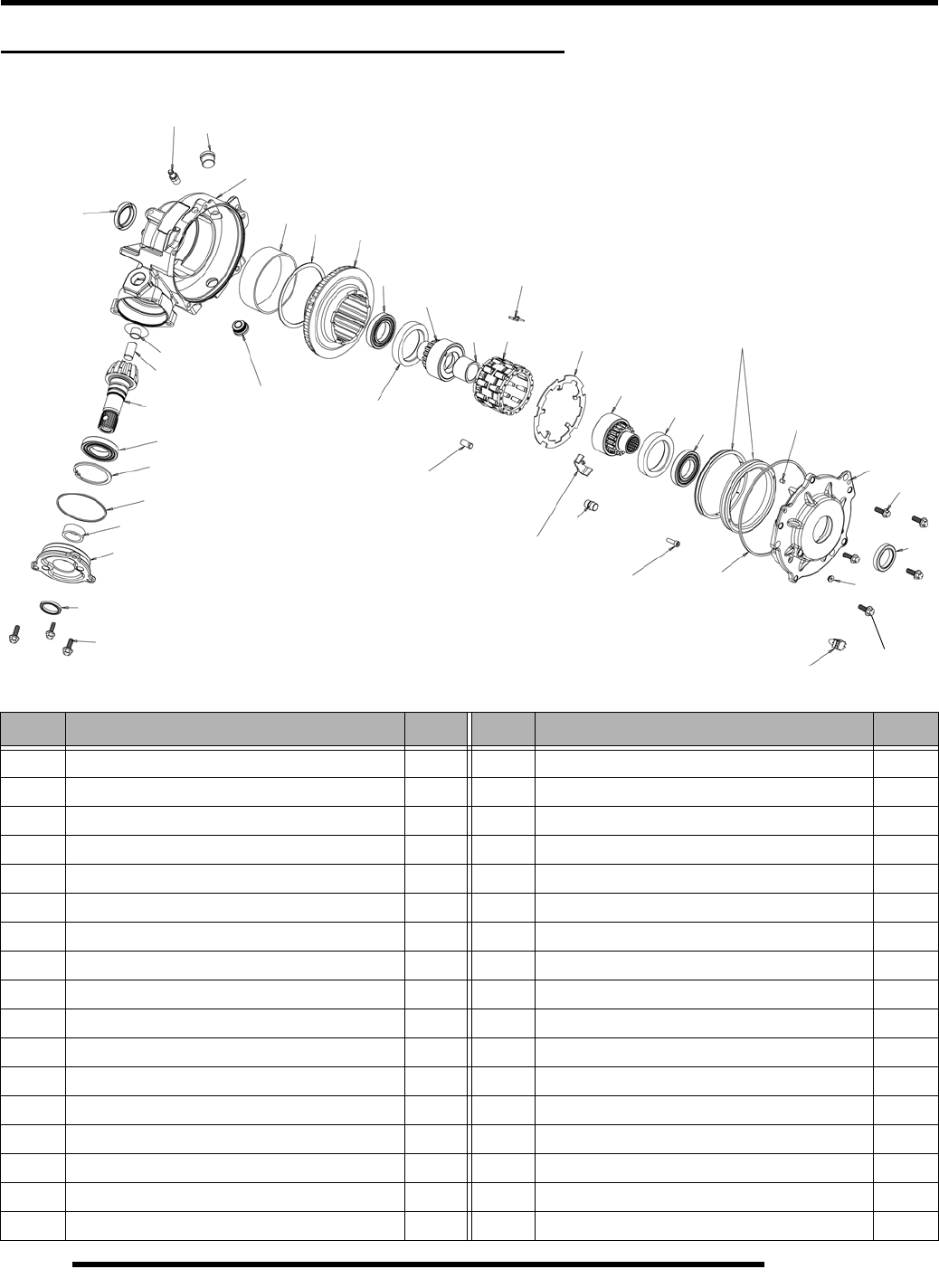
7.10
FINAL DRIVE
FRONT GEARCASE - CENTRALIZED HILLIARD
Exploded View
REF# DESCRIPTION QTY REF# DESCRIPTION QTY
1 Screws, 1/4-20 8 18 Bearing 1
2 Armature Plate 1 19 Thrust Button Asm. 1
3 Bushing 1 20 Fill Plug 1
4 Output Cover 1 21 Vent Tube 1
5 Gearcase 1 22 Nylon Spacer 2
6 Output Hub 2 23 AWD Coil / Coil Pocket Insert 1
7 Plastic Clip 1 24 Thrust Plate 1
8 Roll Cage 1 25 O-Ring 1
9 Spacer, Gear 1 26 Grommet 1
10 Clutch Housing / Ring Gear 1 27 Set Screw 1
11 Bushing 1 28 Oil Seal 2
12 Input Cover 1 29 Rollers 20
13 O-Ring 1 30 H-Clip Springs 20
14 Retaining Ring 1 31 Oil Seal 1
15 Ball Bearing 3 32 Drain Plug Asm. w/Magnet 1
16 Pinion Gear 1 33 Dowel Pin 1
17 Dowel Pin 1 34 Needle Roller Bearing 1
1
2
3
4
5
6
7
8
910
11
12
13
14
16
17
18
19
20
21
22
23
15
24
25 26
8-10 ft. lbs.
(11-14 Nm)
7-11 ft. lbs.
(10-15 Nm)
6
15
15
27
28
30
29
31
32 33
34
8-10 ft. lbs.
(11-14 Nm)
7-11 ft. lbs.
(10-15 Nm)
1
22
PartShark.com
877-999-5686
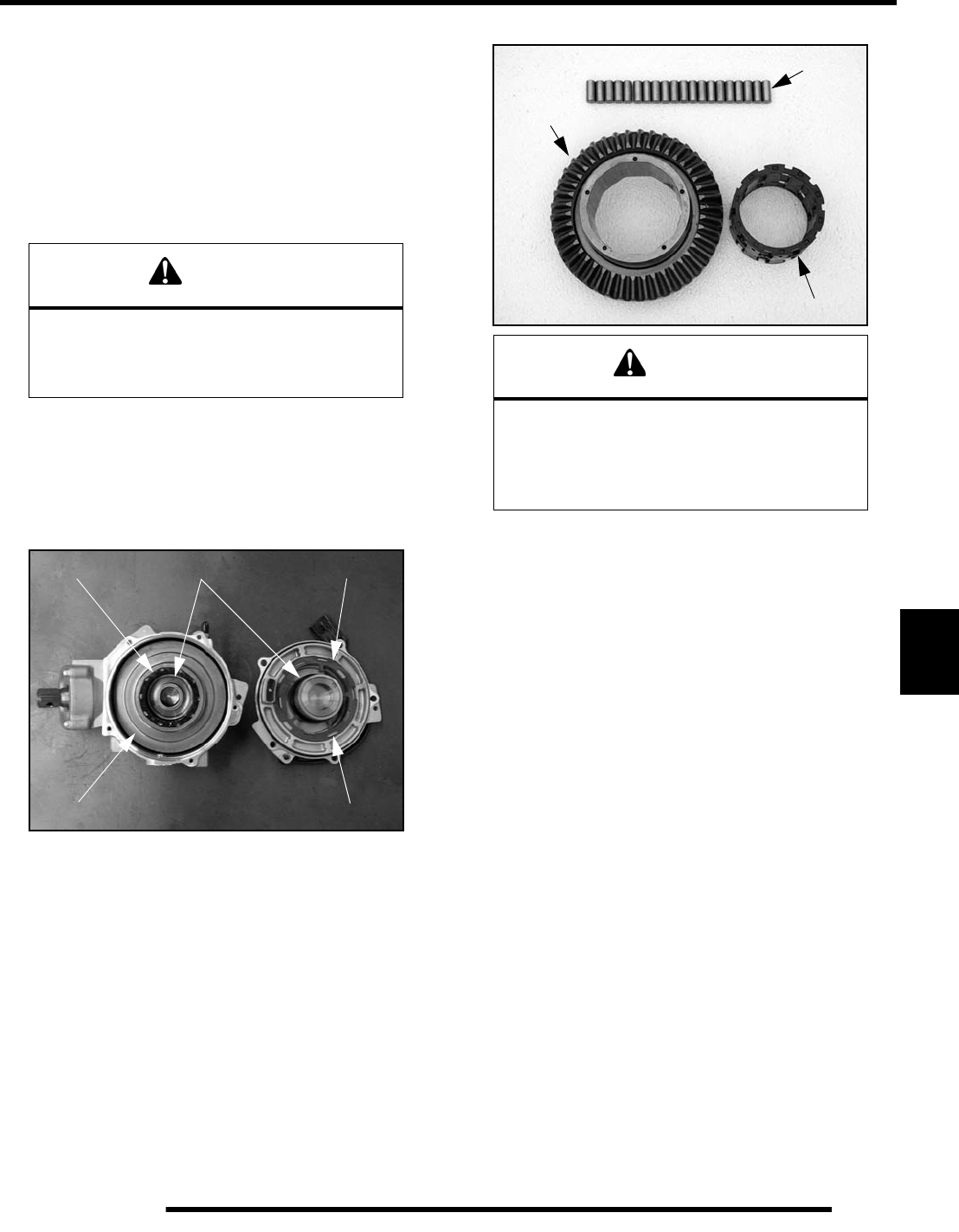
7.11
FINAL DRIVE
7
Operation
The AWD switch may be turned on or off while the vehicle is
moving, however, AWD will not enable until the engine RPM
drops below 3100. Once the AWD is enabled, it remains
enabled until the switch is turned off.
Engage the AWD switch before getting into conditions where
the front wheel drive may be needed. If the rear wheels are
spinning, release the throttle before switching to AWD.
With the AWD switch off, the vehicle drives through the rear
wheels only (2 wheel drive). When the AWD is enabled, the
front drive acts as an on-demand AWD system. This means, the
front drive will engage once the rear wheels have lost traction,
and will remain engaged until the torque requirement goes away
(i.e. rear wheels regain traction).
AWD Engagement: When the AWD switch is activated, the
AWD coil is powered by a 12 Vdc input which creates a
magnetic field. This magnetic field attracts an armature plate
that is keyed to the roll cage. When the ring gear and roll cage
are spinning (vehicle is moving), the energized coil and
armature plate will apply drag to the roll cage that indexes the
rollers inside the ring gear to an engagement position. While in
the engagement position, the front drive will be in an “over-
running” condition (not engaged), until the rear wheels lose
traction. Once the rear wheels begin to lose traction, the front
drive will engage by coupling the output hubs to the ring gear via
the rollers. The front drive will remain engaged until the torque
requirement goes away (i.e. rear wheels regain traction).
AWD Disengagement: Once the rear wheels regain traction,
the front wheels will return to the “over-running” condition.
The vehicle is now back to rear wheel drive until the next loss
of rear wheel traction occurs.
CAUTION
Switching to AWD while the rear wheels are
spinning may cause severe drive shaft and
gearcase damage. Always switch to AWD while
the rear wheels have traction or are at rest.
Armature Plate
Roll Cage Output Hubs
Ring Gear Magnetic Coil
CAUTION
If the rear wheels are spinning, release the
throttle before turning the AWD switch on.
If AWD is engaged while the wheels are
spinning, severe drive shaft and
clutch damage could result.
Ring Gear
Rollers
Roll Cage
PartShark.com
877-999-5686
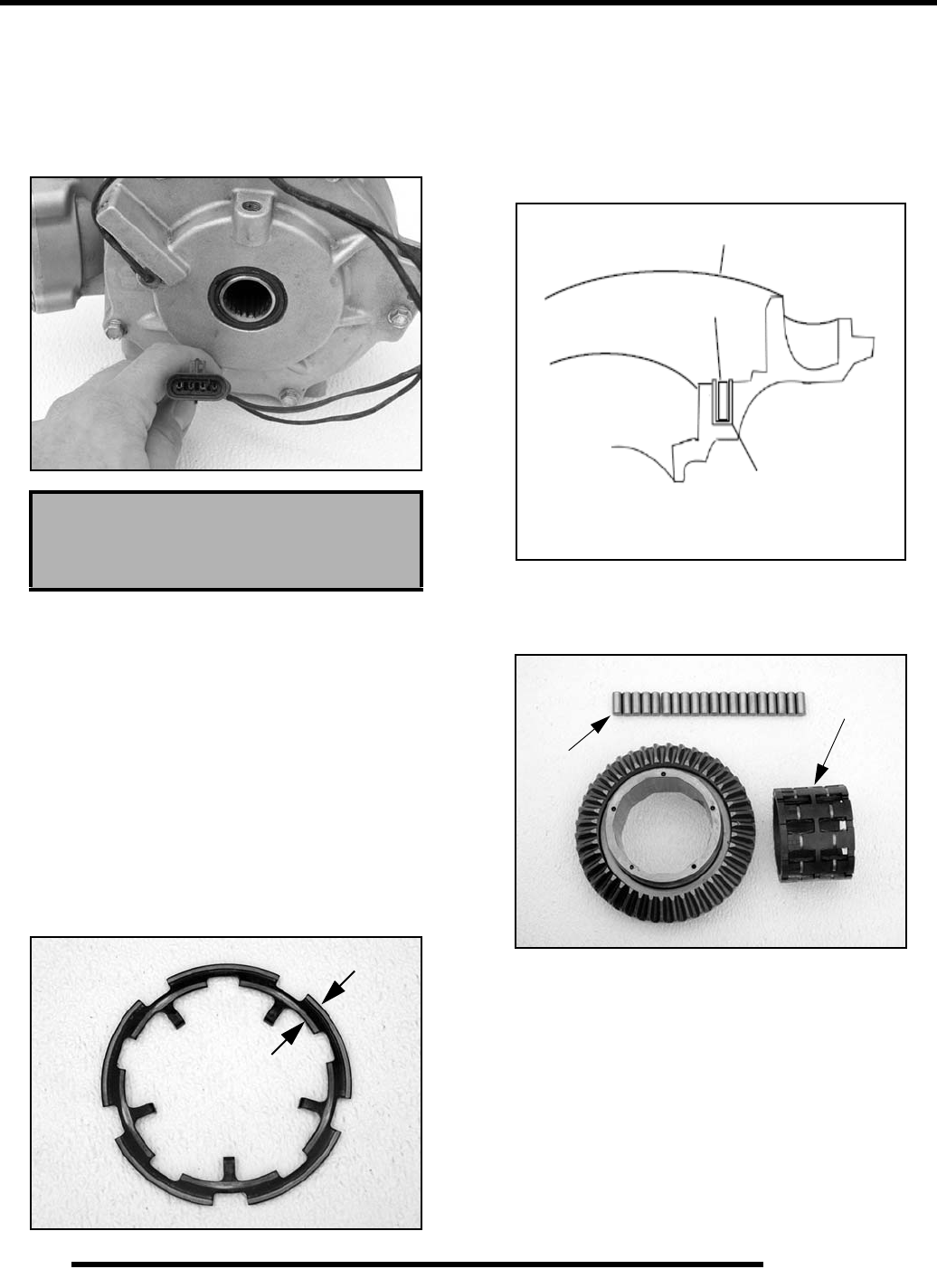
7.12
FINAL DRIVE
AWD Diagnosis
Symptom: AWD Will Not Engage
1. Check the gearcase coil resistance. To test the coil
resistance, measure between the Grey and Brown/White
wires. The measurement should be within specification.
2. Turn the ignition switch and AWD switch on and place gear
selector in High or Low gear. Check for minimum battery
voltage at the Gray and Brown/White chassis wires that
power the coil. A minimum of 11 Vdc should be present.
3. If electrical tests are within specification, remove gearcase
(see “Gearcase Removal”) and inspect components.
4. Inspect the armature plate for a consistent wear pattern.
There should be two distinct wear bands (one band inside
the other). If only one band of wear is present (or if there
is wear between the two bands), inspect the coil area as
indicated in Step 5. A wear band with an interrupted wear
mark may indicate a warped plate, which may cause
intermittent operation.
5. Check to make sure the coil is seated in the U-shaped insert
that is pressed into the gearcase cover. The top of the coil
should be seated below the U-shaped insert. The U-shaped
insert controls the pole gap. If the top of the coil is above
the surface of the U-shaped insert it raises the armature
plate, thereby increasing pole gap. If the pole gap increases,
the coil will not be strong enough to engage the AWD
system. If this is found, replace the cover plate assembly.
6. Inspect the rollers for nicks and scratches. The rollers must
slide up, down, in and out freely within the roll cage sliding
surfaces and H-springs.
7. Inspect the roll cage assembly for cracks or excessive wear.
If damaged, replace the roll cage assembly.
Front Gearcase Coil Resistance:
21.6 - 26.4 Ohms
Armature Plate
Check for Wear Bands
Gearcase Cover Plate Asm.
Coil
U-shaped insert
Side cutaway view of
Centralized Hilliard cover
Rollers
Roll Cage
Assembly
PartShark.com
877-999-5686
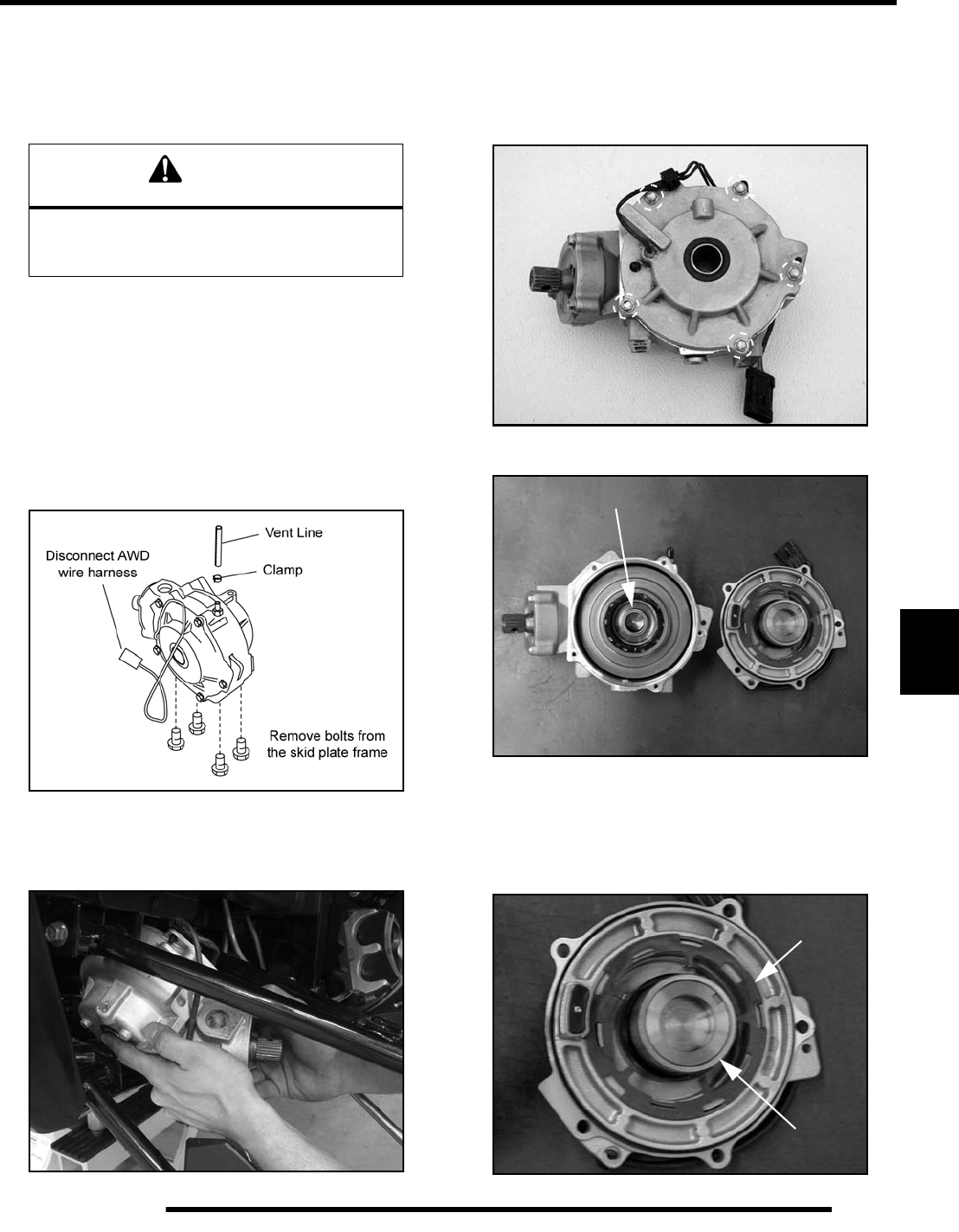
7.13
FINAL DRIVE
7
Gearcase Removal
1. Stop engine, place machine in gear and set parking brake.
2. Elevate front of vehicle and safely support machine under
the frame area.
3. Remove both front drive shafts from the front gearcase
(see “FRONT DRIVE SHAFT - Removal”).
4. Remove the front propshaft from the front gearcase (see
“FRONT PROPSHAFT - Removal”).
5. Remove the LH wheel well panel and disconnect the AWD
wire harness. Cut the plastic tie strap to free the connector
end from the main harness to allow gearcase removal.
6. Remove the (4) bolts securing the bottom of the gearcase
to the skid plate frame.
7. Remove the vent line from the gearcase.
8. Remove the gearcase from the front left-hand wheel well
area and pull it out between the upper and lower A-arms.
Disassembly / Inspection
1. Drain and properly dispose of used lubricant. Remove any
metal particles from the drain plug magnet.
2. Remove the (5) screws retaining the outer cover assembly.
3. Remove the output cover assembly from the gearcase.
NOTE: Thrust bushing located between the two
output hubs is pressed into assembly.
4. Remove the armature plate and RH output hub assembly
from the outer cover plate.
CAUTION
Serious injury may result if machine tips or falls.
Be sure machine is secure before beginning
this service procedure.
Thrust Bushing
Armature
Plate
Output Hub
Assembly
PartShark.com
877-999-5686
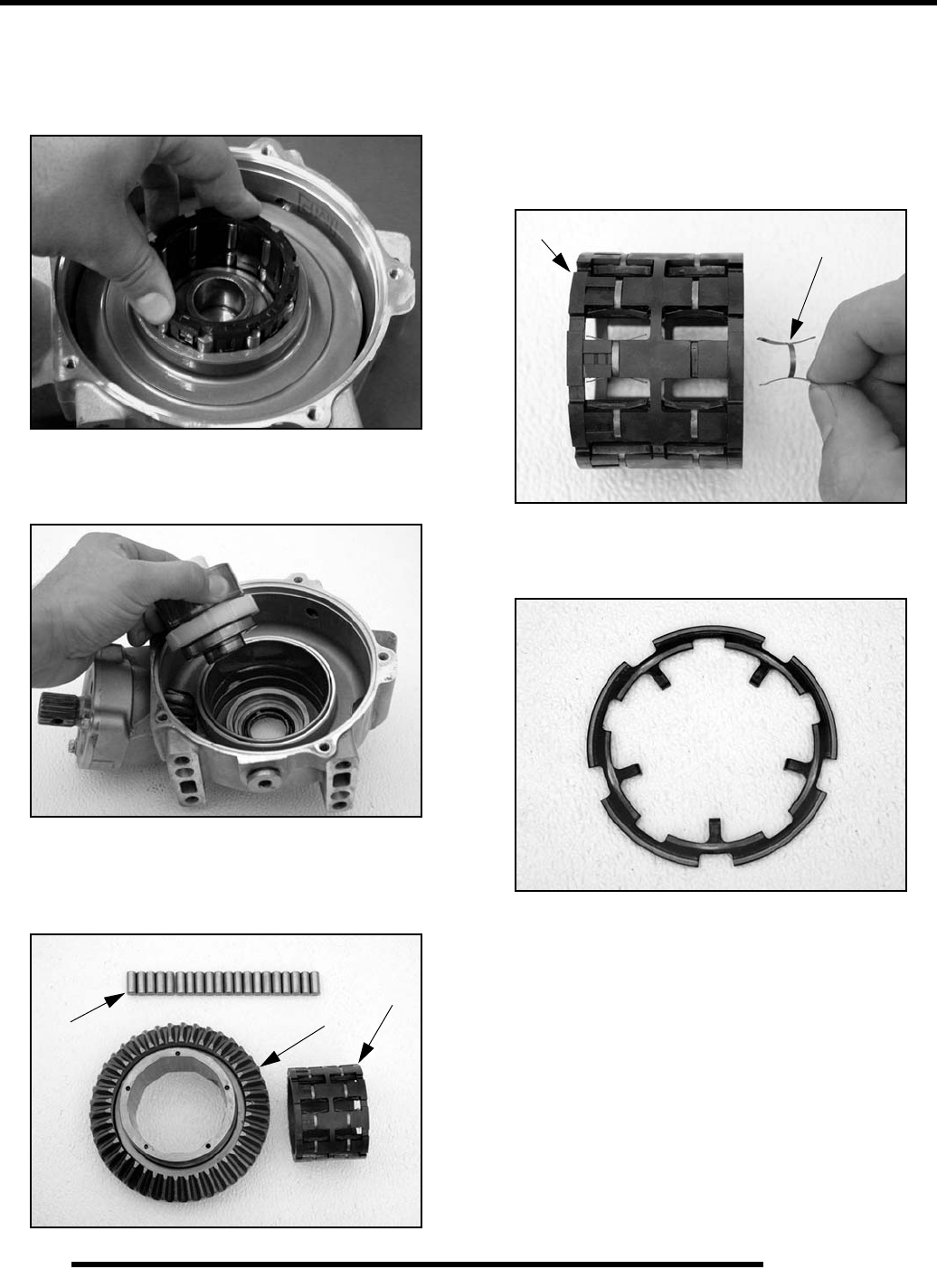
7.14
FINAL DRIVE
5. Inspect the bearing and contact surfaces of the output hub
for signs of wear or damage. Replace component if found
to be worn or damaged
6. Remove the roll cage assembly, rollers, and ring gear.
7. Remove LH output hub. Inspect the bearing and contact
surfaces of the output hub for signs of wear or damage.
Replace component if found to be worn or damaged.
8. Thoroughly clean all parts. Inspect the bearing surfaces of
the output hub. Inspect the rollers (A) for nicks, scratches
and flat spots. Inspect the roll cage (B) for damage or
cracks.
9. The rollers must slide up and down freely within the roller
cage surfaces.
10. Inspect the ring gear (C) for consistent wear patterns. The
surfaces should be free of nicks or burrs.
11. Inspect roll cage (B) sliding surface. This surface must be
clean and free of nicks, burrs or scratches. Inspect the H-
springs, but do not remove them from the roll cage.
12. Inspect the armature plate for a consistent wear pattern.
Uneven wear of the armature plate indicates a warped
plate, which may cause intermittent operation.
NOTE: See “AWD DIAGNOSIS” in this section for
more details.
CB
A
H-Spring
B
PartShark.com
877-999-5686
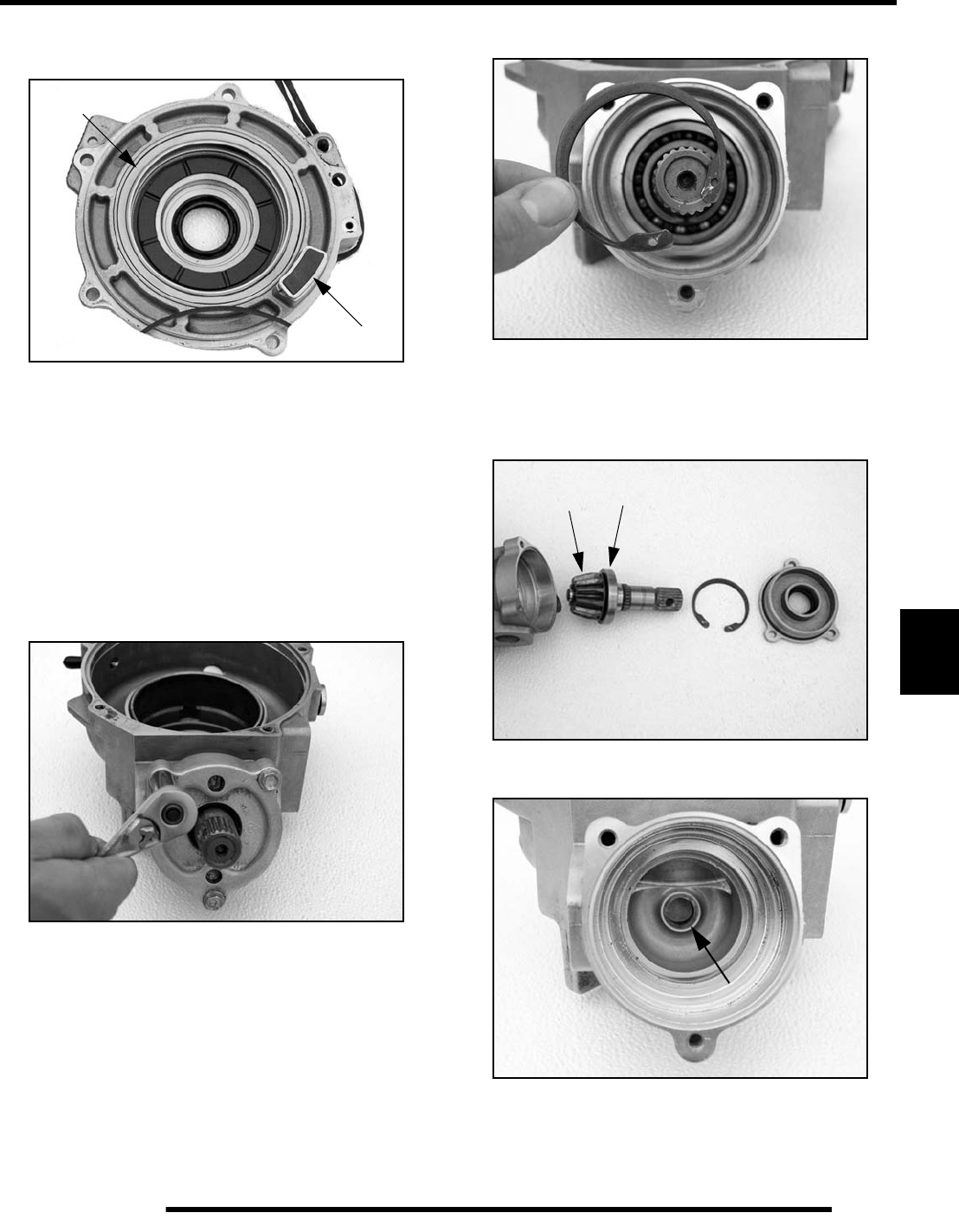
7.15
FINAL DRIVE
7
13. Inspect the magnetic coil (D) in the outer cover plate
assembly. Inspect the backlash pad (E) for excessive wear.
NOTE: See “AWD DIAGNOSIS” in this section for
more details on the coil.
NOTE: The backlash for the centralized hilliard is set
at the factory. No adjustment is required, unless the
front cover needs to be replaced, or the back lash
pad screw is removed. See the “Setting Ring Gear
Backlash” procedure later in this chapter for details
on backlash setting.
14. Remove the bolts retaining the input shaft cover and pinion
gear assembly.
15. Remove the snap ring retaining the input shaft assembly.
16. Remove the input shaft assembly. Inspect the pinion gear
(C) for chipped, broken, or missing teeth. Inspect the input
shaft bearing (D) for signs of wear. Replace the input shaft
cover O-ring prior to reassembly.
17. Inspect the input shaft bushing.
18. Thoroughly clean the gearcase components before
beginning reassembly.
E
D
CD
PartShark.com
877-999-5686
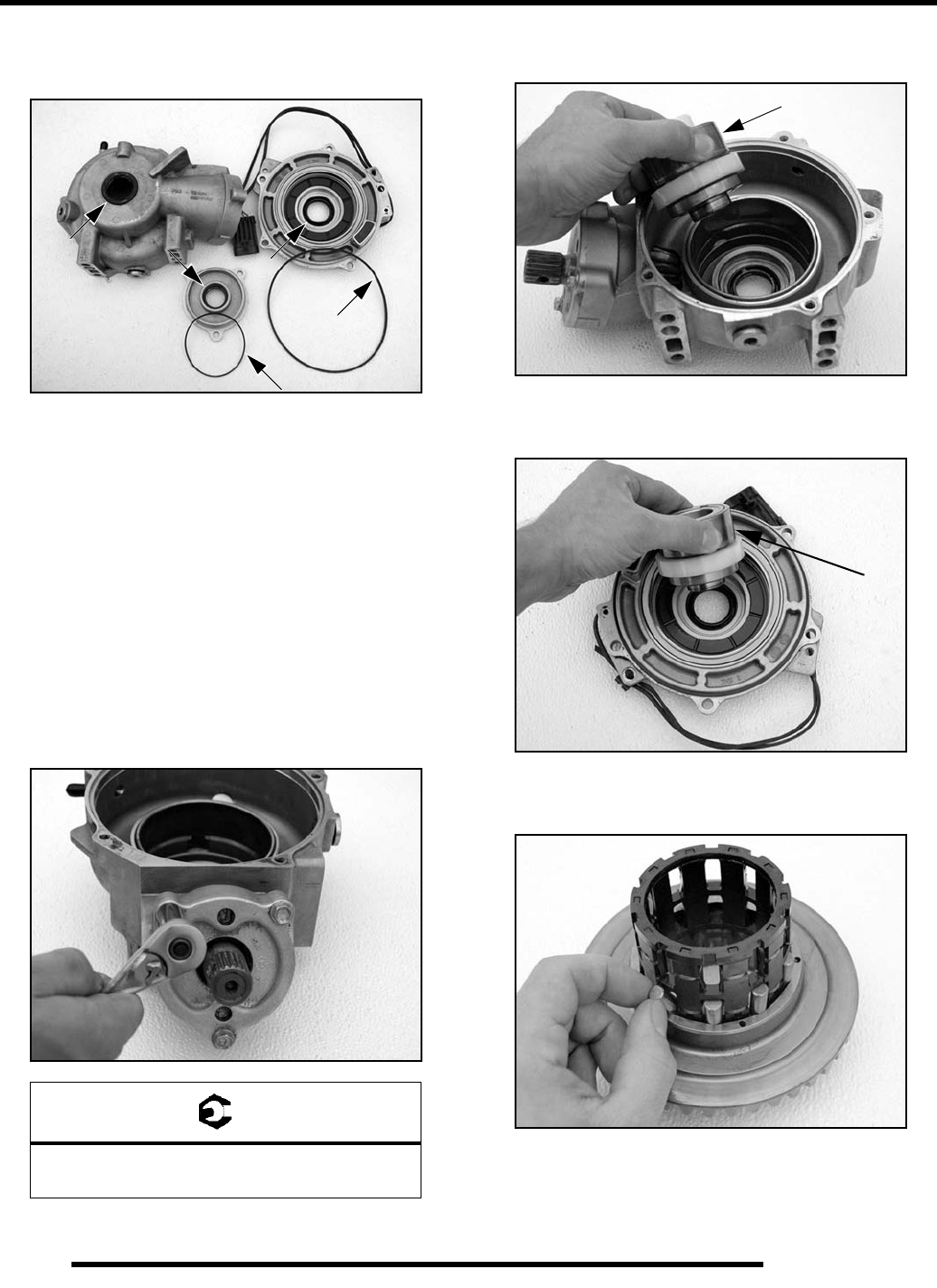
7.16
FINAL DRIVE
Reassembly / Inspection
1. Replace all O-rings, seals, and worn components.
2. Press the pinion shaft seal into the pinion cover, until the
seal is flush with the sealing surface.
3. Inspect bearings on output and pinion shafts. To replace,
press new bearing on to shaft.
NOTE: Due to extremely close tolerances and
minimal wear, the bearings must be inspected
visually, and by feel. While rotating bearings by
hand, inspect for rough spots, discoloration, or
corrosion. The bearings should turn smoothly and
quietly, with no detectable up and down movement
and minimal movement side to side.
4. Install input shaft, bearing, snap ring, and input cover with
new o-ring. Torque screws to specification.
5. Install the LH output hub (A) into the gearcase housing.
The output hub should spin freely.
6. Install the RH output hub (B) into the output cover. The
output hub should spin freely.
7. Install the roll cage and rollers into the ring gear. Insert the
rollers as the roll cage is installed.
8. Install the ring gear and roll cage assembly into the
gearcase housing.
= T
Input Cover Screws:
14 ft. lbs. (19 Nm)
A
B
PartShark.com
877-999-5686
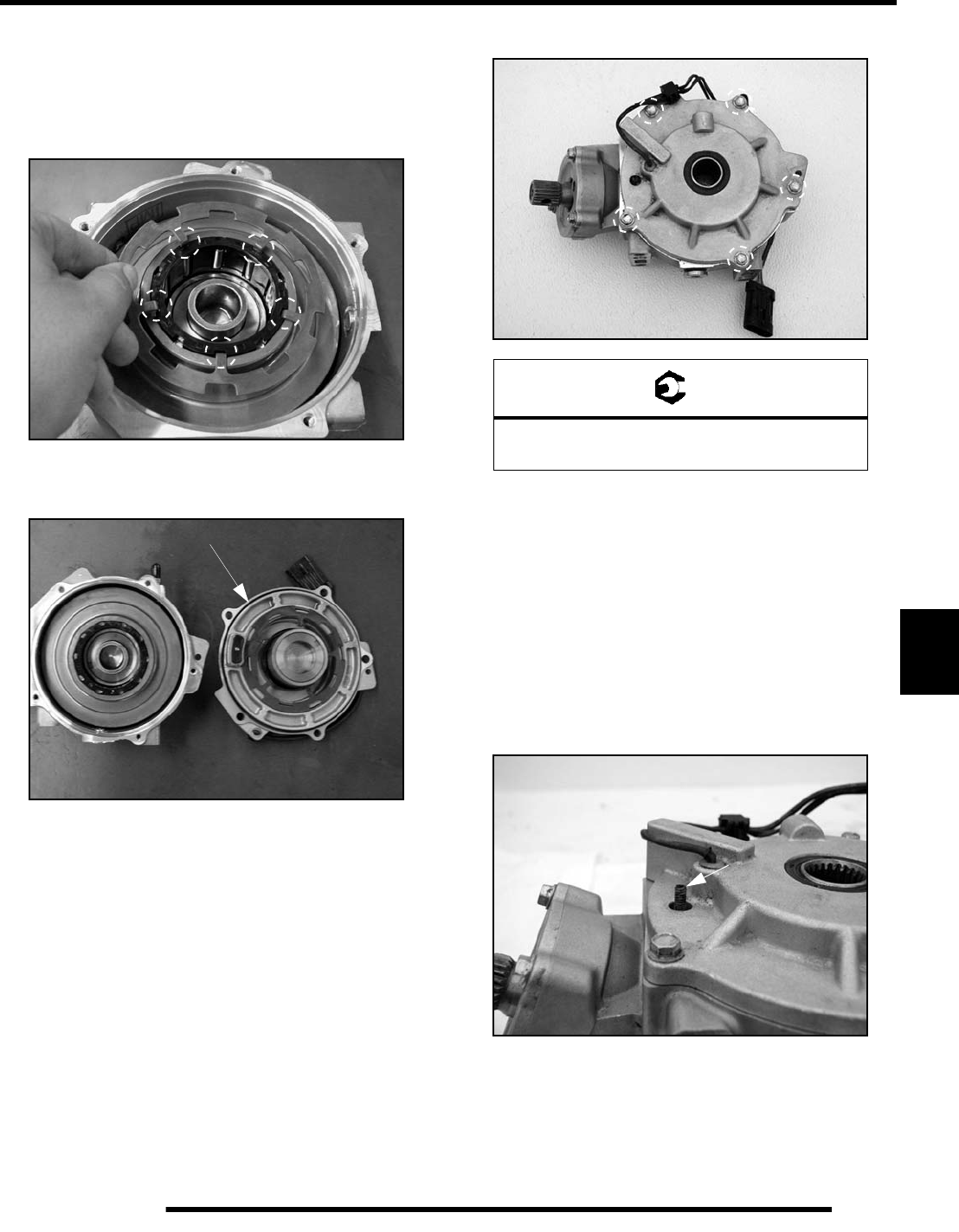
7.17
FINAL DRIVE
7
9. Install the armature plate on top of the roll cage / ring gear
assembly. Be sure that the armature plate tabs are fully
engaged into the roll cage assembly.
NOTE: Verify armature plate tabs are placed into the
slots on roll cage (see photo below).
10. Install the cover plate assembly with new o-ring onto the
main gearcase.
NOTE: Verify the square O-ring (arrow) is placed flat
on the cover surface. If the O-ring is twisted, fluid
leakage may occur.
11. Torque the output cover screws to specification.
Setting Ring Gear Backlash
NOTE: Ring gear backlash is set at the factory. No
adjustment is required, unless the front cover is
replaced or the back lash pad screw is removed.
1. Lay the front gearcase on its side with the output cover
facing up.
2. The backlash screw has locking agent that holds it into
place. Use a heat gun to lightly heat up the locking agent
on the screw.
= T
Output Cover Screws
14 ft. lbs. (19 Nm)
PartShark.com
877-999-5686
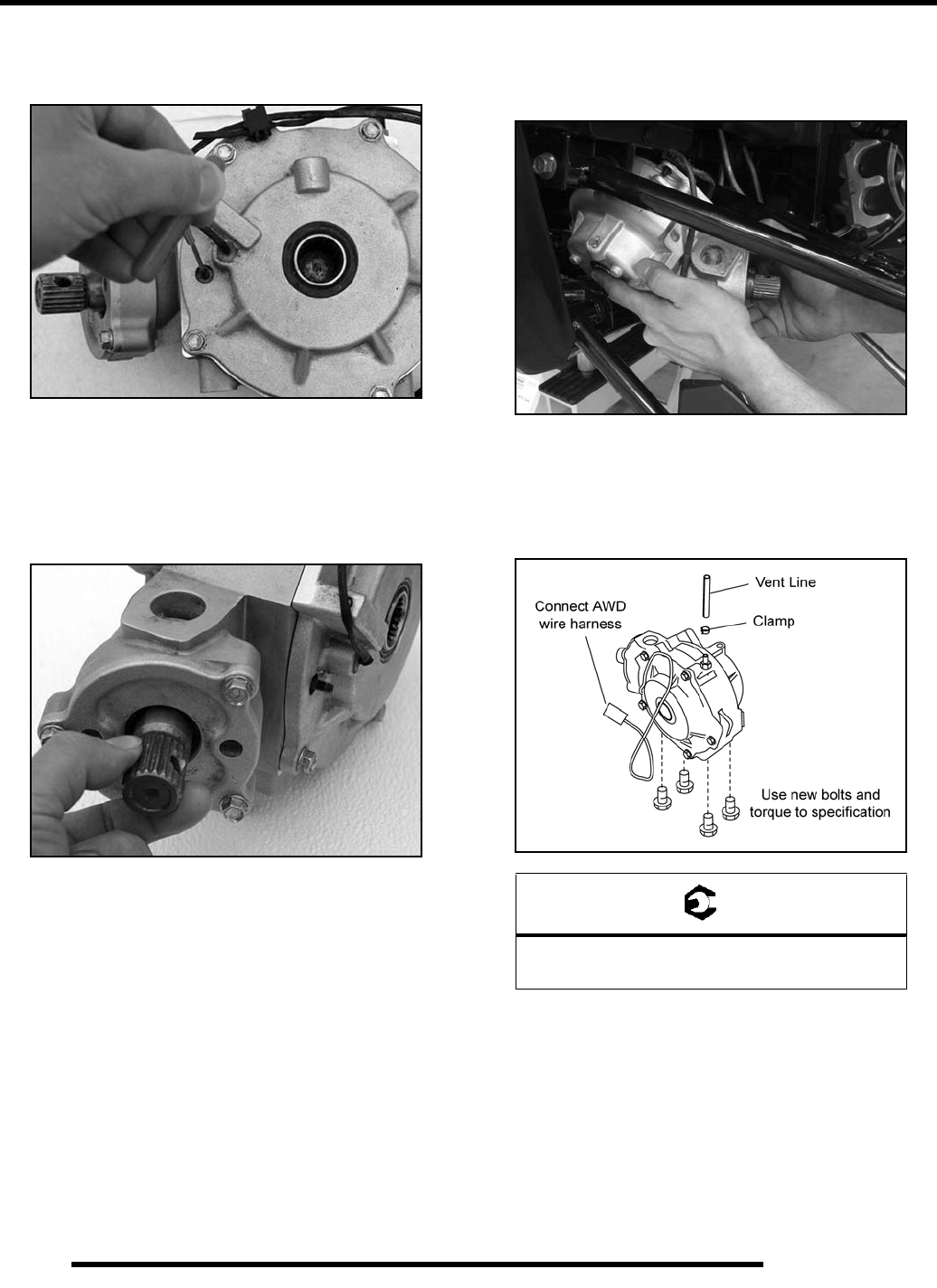
7.18
FINAL DRIVE
3. Using a 3/32 hex wrench, turn the back-lash screw out 3-4
turns. Re-apply Loctite 262™ onto the bottom screw
threads.
4. Turn the screw in until it is lightly seated, then turn the
screw out 1/4 turn.
5. Set the gearcase upright. Rotate the input shaft at least 4
times. This ensures the ring gear completes one full
rotation.
6. If a tight spot is felt during rotation, loosen the backlash
screw another 1/8 turn. Perform step 5 again. Repeat this
procedure until the pinion shaft rotates smoothly 4 times (1
revolution of ring gear).
Gearcase Installation
1. Install the gearcase through the front left-hand wheel well
area between the upper and lower A-arms.
2. Install the vent line to the gearcase and ensure it’s routed
properly up top under the hood.
3. Install propshaft onto the front gearcase.
4. Install new mounting bolts and torque to specification.
5. Drive a new roll pin into the front propshaft (see “FRONT
PROPSHAFT - Installation”).
6. Install the drive shafts into the front gearcase (see “FRONT
DRIVE SHAFT - Installation”).
7. Connect the AWD harness and tie the harness to the main
harness using a plastic tie strap.
8. Reinstall the LH wheel well panel.
9. Add the proper lubricant to the front gearcase. Check drain
plug for proper torque. Refer to Chapter 2 for fluid fill and
change information.
= T
Gearcase Mounting Bolts:
40 ft. lbs. (54 Nm)
PartShark.com
877-999-5686
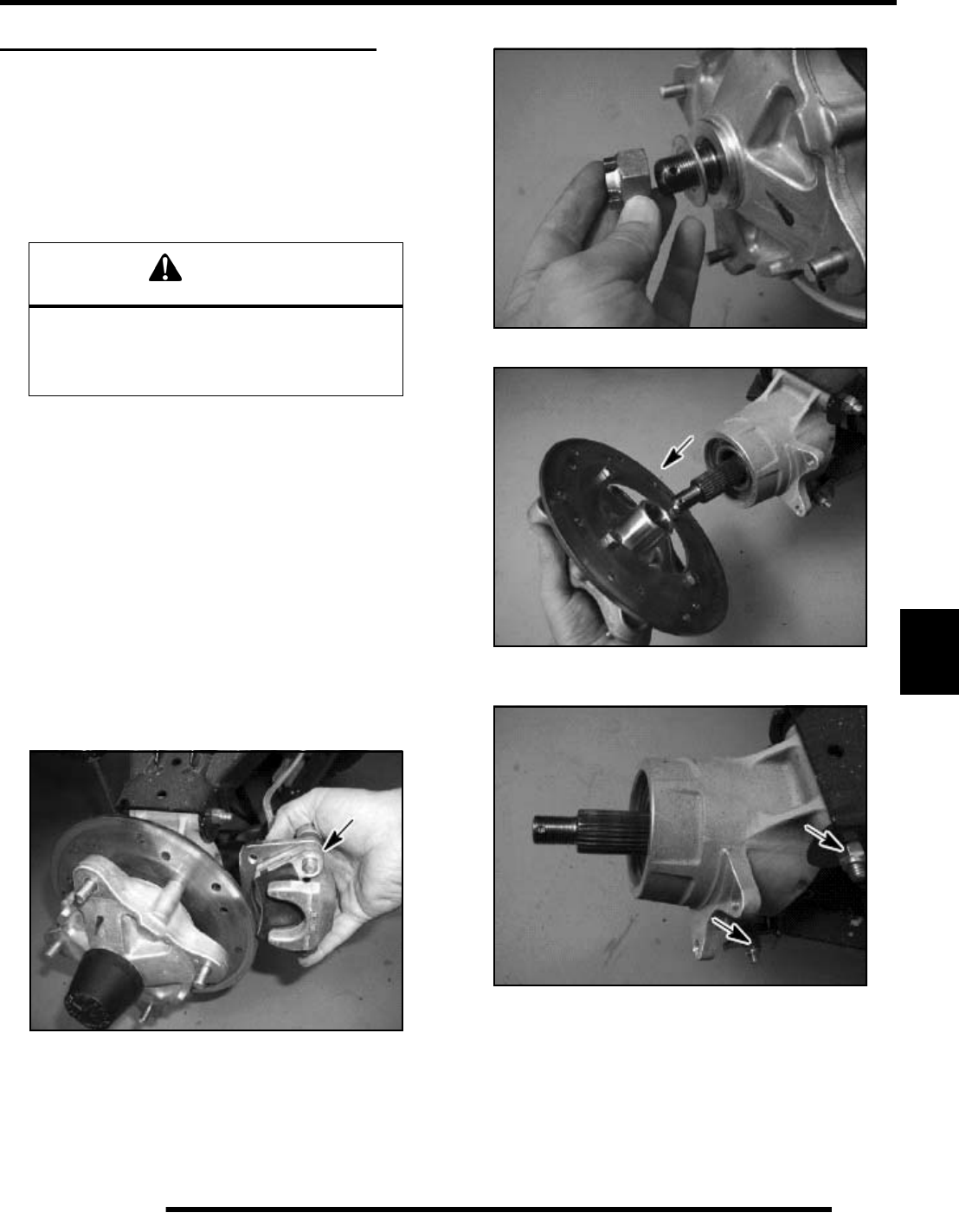
7.19
FINAL DRIVE
7
REAR HUB / BEARING CARRIER
Hub Inspection
1. Support machine securely with rear wheels elevated.
2. Grasp wheel / hub and check for movement.
3. If movement is detected, inspect hub, hub nut torque and
bearing condition and correct as necessary.
Hub Removal
1. Elevate rear end and safely support machine under main
frame area.
2. Check bearings for side play by grasping the tire / wheel
firmly and checking for movement. Grasp the top and
bottom of the tire. The tire should rotate smoothly without
binding or rough spots.
3. Remove wheel nuts and wheel.
4. Remove the two brake caliper attaching bolts.
CAUTION: Do not hang the caliper by the brake line. Use
mechanics wire to hang the caliper to prevent possible
damage to the brake line.
5. Remove the cotter pin, front spindle nut, and washer(s).
6. Slide the rear hub from the rear drive axle.
7. Remove the upper and lower control arm bolts from the rear
hub / bearing carrier.
8. Remove the bearing carrier. Inspect the bearing again for
smoothness and side to side movement, replace as needed.
CAUTION
Serious injury may result if machine tips or falls.
Be sure machine is secure before beginning this
service procedure. Wear eye protection when
removing bearings and seals.
PartShark.com
877-999-5686
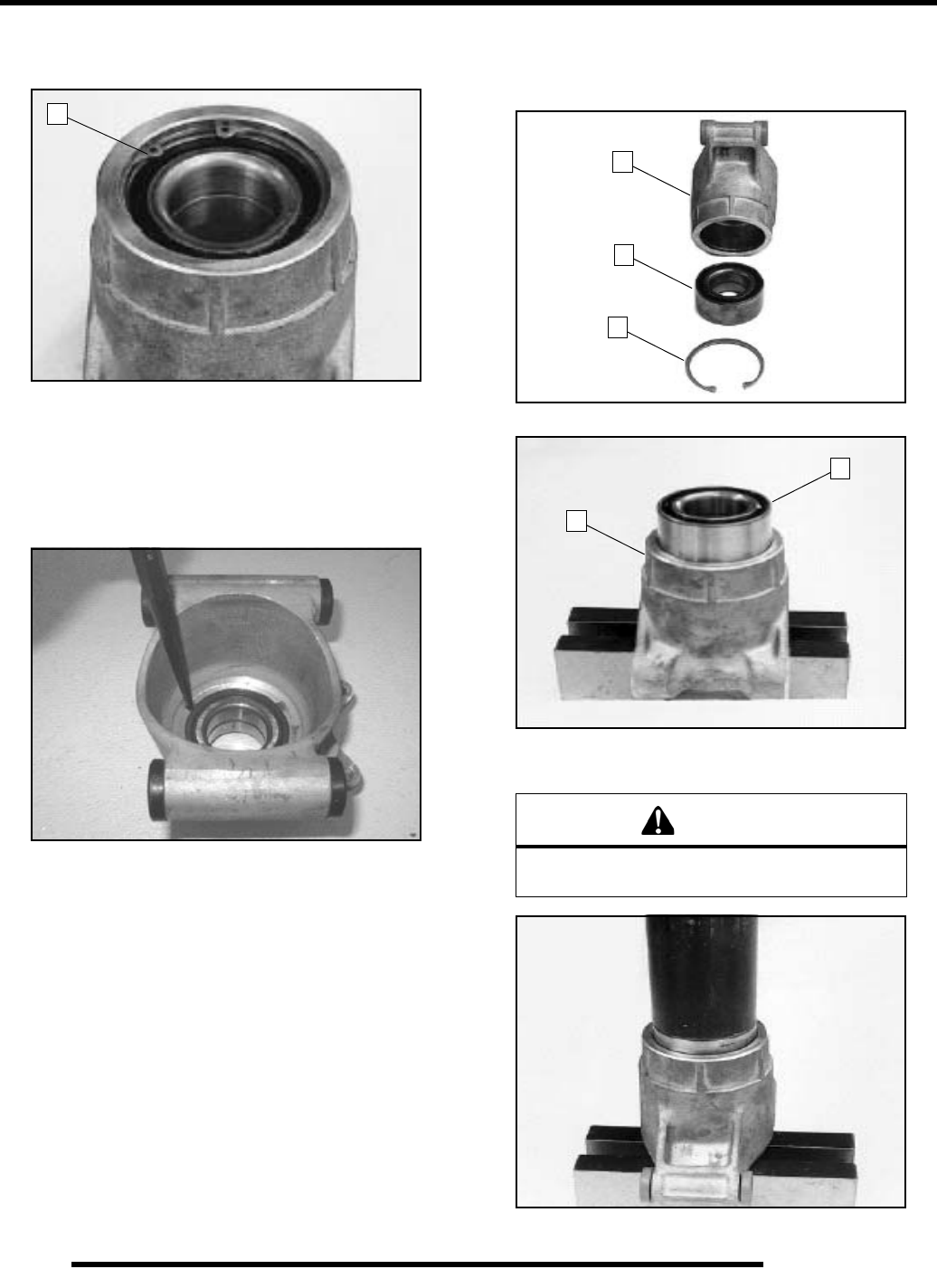
7.20
FINAL DRIVE
Hub Disassembly
1. Remove outer snap ring (A).
2. From the back side, tap on the outer bearing race with a drift
punch in the reliefs as shown.
NOTE: Drive bearing out evenly by tapping on outer
race only. Once bearing is at bottom of casting,
support casting on outer edges so bearing can be
removed.
3. Inspect the bearing.
NOTE: Due to extremely close tolerances and
minimal wear, the bearings must be inspected
visually, and by feel. While rotating bearings by
hand, inspect for rough spots, discoloration, or
corrosion. The bearings should turn smoothly and
quietly, with no detectable up and down movement
and minimal movement sideways between inner and
outer race.
4. Inspect bearing housing for scratches, wear or damage.
Replace housing if damaged.
Hub Assembly
1. Support bottom of bearing carrier housing. (A) Bearing
Carrier Housing; (B) Bearing; (C) Snap Ring
2. Start bearing (B) in housing (A).
3. Press bearing into place until outer race bottoms on
housing.
4. Install snap ring into groove.
A
CAUTION
Use an arbor and press only on the outer race,
as bearing damage may occur.
A
B
C
B
A
PartShark.com
877-999-5686
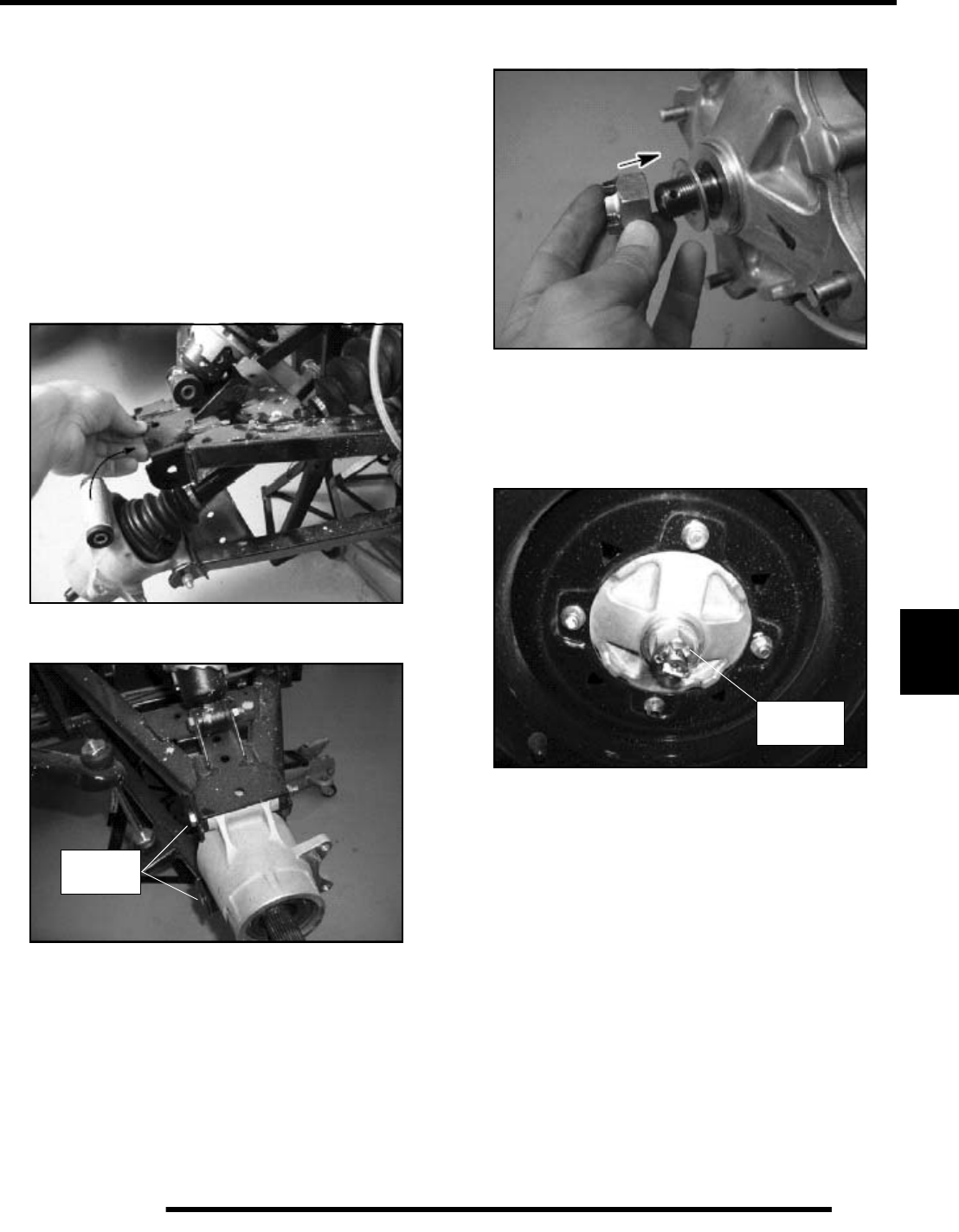
7.21
FINAL DRIVE
7
Hub Installation
1. Start the wheel bearing carrier onto the drive shaft.
2. Align the bottom of carrier housing and lower control arm.
Slide the lower control arm bushings into place. Secure
with the lower control arm bolt.
3. With the drive shaft placed in the wheel bearing carrier,
align the carrier with the top control arm. Secure with the
upper control arm bolt.
NOTE: The lower shock bolt may need to be
removed to allow the upper A-arm to move more
freely.
4. Torque the top and bottom A-arm bolts as shown in the
photo.
5. Install the hub assembly onto the rear drive axle.
6. Install the washer(s) with domed side out. Install the rear
hub retainer nut.
7. Install the wheel, washers, and wheel nuts. Torque wheel
nuts to specification. See “Torque Specifications” table on
page 7.2
8. Lower the vehicle. Torque the rear hub retaining nut to 110
ft. lbs. (150 Nm). Install a new cotter key.
30 ft. lbs.
(41 Nm)
110 ft. lbs
(150 Nm)
PartShark.com
877-999-5686
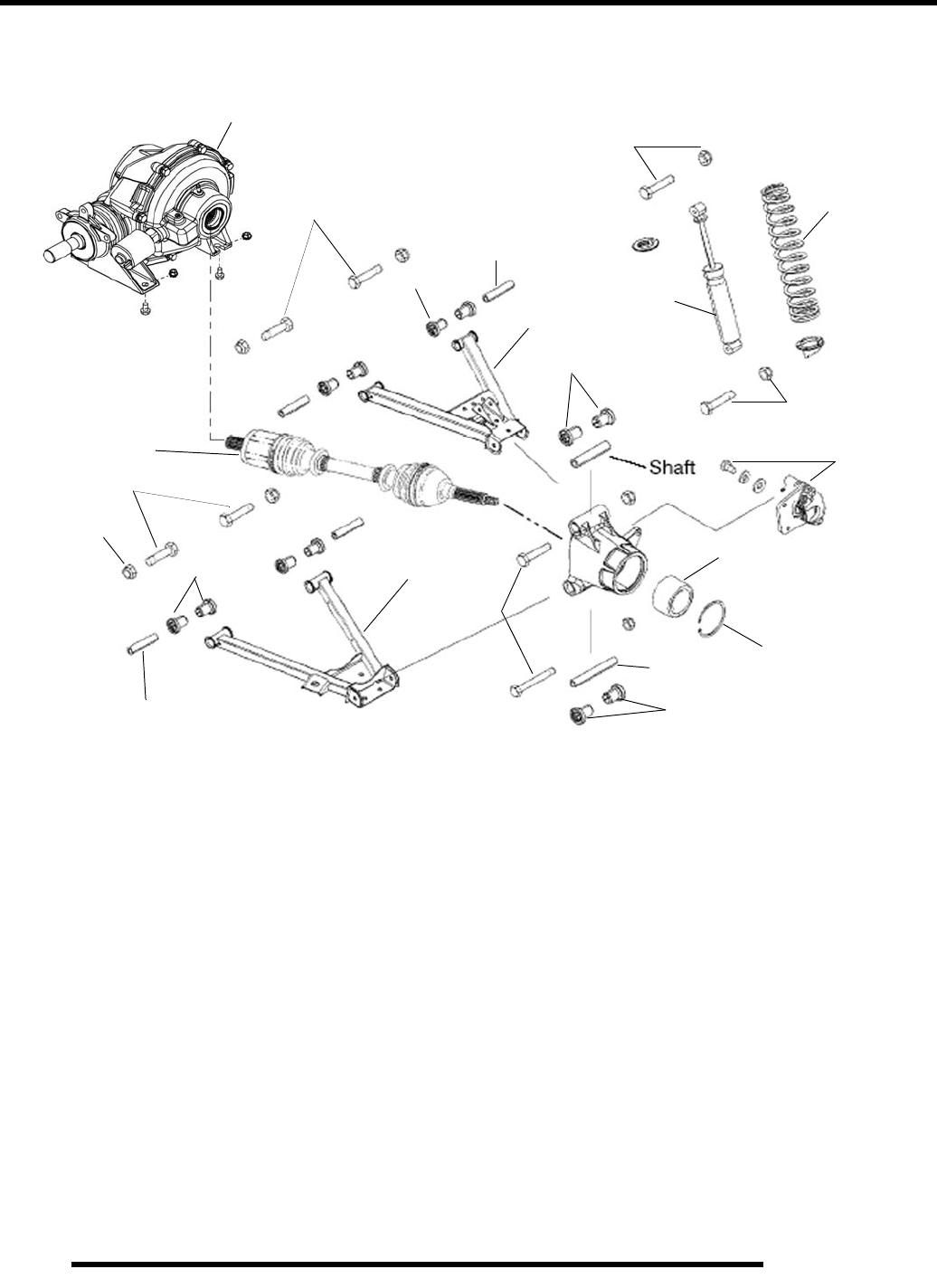
7.22
FINAL DRIVE
Exploded View
Rear Gearcase
A-arm bolts
Rear Drive Axle
A-arm bolts
Nuts
Bushings Lower A-arm
Carrier Bolt
Shaft
Bushings
Snap Ring
Coil
30 ft. lbs.
(41 Nm)
Shock
Shaft
Bearing
Bushings
30 ft. lbs.
(41 Nm)
Bushings
Shaft
Upper A-arm
30 ft. lbs.
(41 Nm)
30 ft. lbs.
(41 Nm)
PartShark.com
877-999-5686
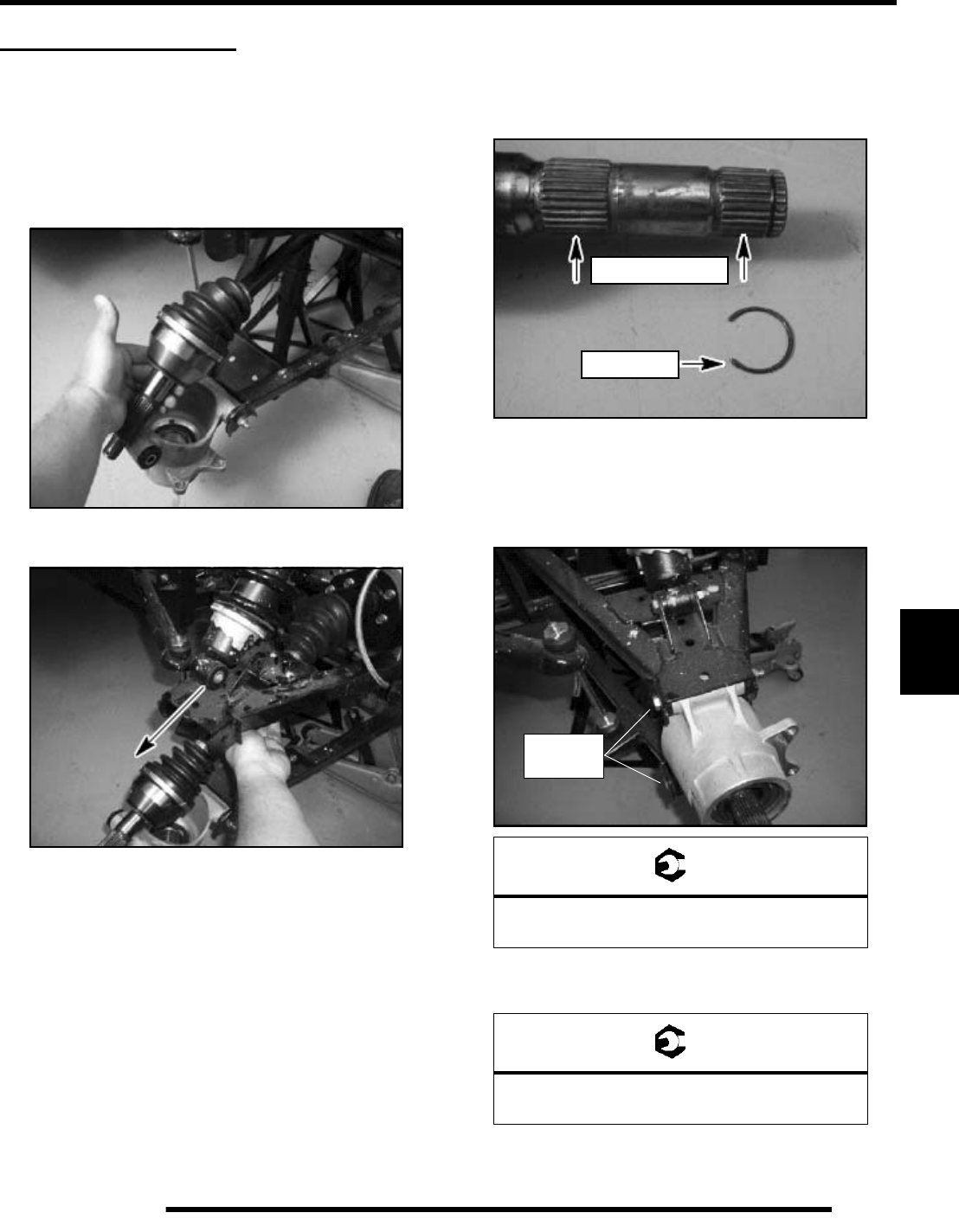
7.23
FINAL DRIVE
7
REAR DRIVE SHAFT
Removal
1. Perform the “REAR HUB / BEARING CARRIER - Hub
Removal” procedure.
2. Remove upper carrier bolt. Slide the rear drive shaft out of
the bearing carrier by pulling the bearing carrier assembly
outward and tipping it down to remove the shaft.
3. Remove the rear drive shaft using short, sharp jerks to free
the circlip from the gearcase.
4. Refer to the “DRIVE SHAFT SERVICE” procedure if
repairing the drive shaft.
Installation
1. Slide the rear drive axle into the bearing carrier hub.
2. Install a new circlip onto the rear drive shaft. Apply Anti-
Seize compound onto the rear drive shaft splines.
3. Install the rear drive shaft into the rear gearcase. Be sure
the circlip is securely fit into the rear gearcase. Use a rubber
mallet to tap on outboard end of the drive shaft if necessary.
4. Lift bearing carrier into place and install the bolt into the
upper control arm. Torque bolt to specification.
5. Install hub, domed washer (domed side out), and nut.
Torque spindle nut to specification. Install new cotter pin.
6. Install rear wheel and washers. Torque wheel nuts to
specification. See “Torque Specifications” on page 7.2.
= T
Upper / Lower Control Arm Mounting Bolts:
30 ft. lbs. (41 Nm)
= T
Rear Hub Nut:
110 ft. lbs. (150 Nm)
Apply Anti-Seize
New Circlip
30 ft. lbs.
(41 Nm)
PartShark.com
877-999-5686
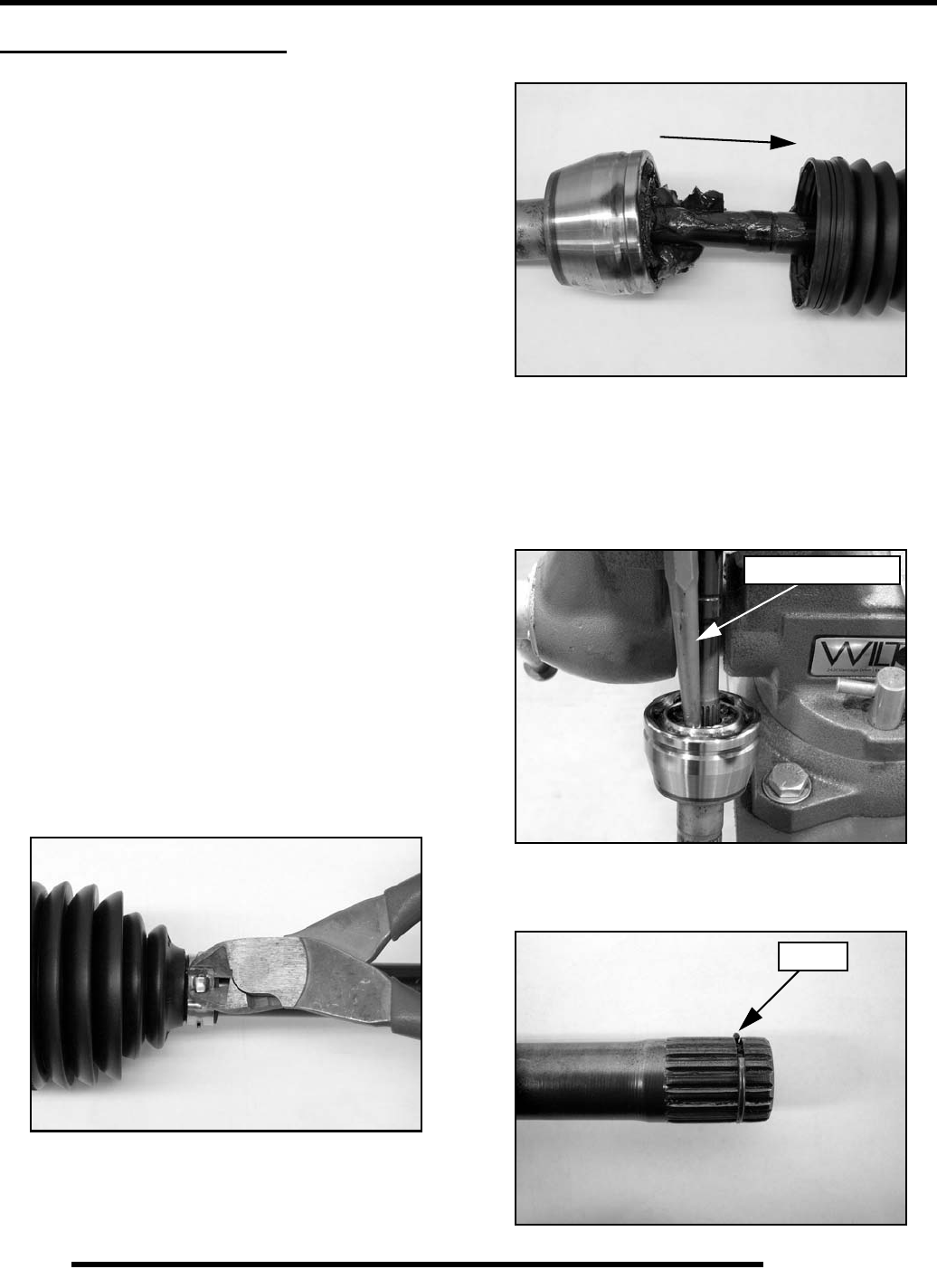
7.24
FINAL DRIVE
DRIVE SHAFT SERVICE
Drive Shaft / CV Joint Handling Tips
Care should be exercised during drive shaft removal or when
servicing CV joints. Drive shaft components are precision parts.
Cleanliness and following these instructions is very important to
ensure proper shaft function and a normal service life.
• The complete drive shaft and joint should be handled by
getting hold of the interconnecting shaft to avoid
disassembly or potential damage to the drive shaft
joints.
• Over-angling of joints beyond their capacity could
result in boot or joint damage.
• Make sure surface-ground areas and splines of shaft are
protected during handling to avoid damage.
• Do not allow boots to come into contact with sharp
edges or hot engine and exhaust components.
• The drive shaft is not to be used as a lever arm to
position other suspension components.
• Never use a hammer or sharp tools to remove or to
install boot clamps.
• Be sure joints are thoroughly clean and that the proper
amount and type of grease is used to refill when joint
boots are replaced and when joints are cleaned. Refer
to text for grease capacity of CV joints and CV joint
boots.
Outer CV Joint / Boot Replacement
1. Using a side cutters, cut away and discard the boot clamps.
2. Remove the large end of the boot from the CV joint and
slide the boot down the shaft.
3. Clean the grease from the face of the joint.
4. Place the drive shaft in a soft-jawed vise.
5. Using a soft-faced hammer, or brass drift, strike the inner
race of the joint to drive the joint off the drive shaft. Be
sure to tap evenly around the joint to avoid binding.
IMPORTANT: Tap on inner race only!
6. Make sure the circlip is on the shaft and not left in the joint.
Brass Drift Shown
Circlip
PartShark.com
877-999-5686
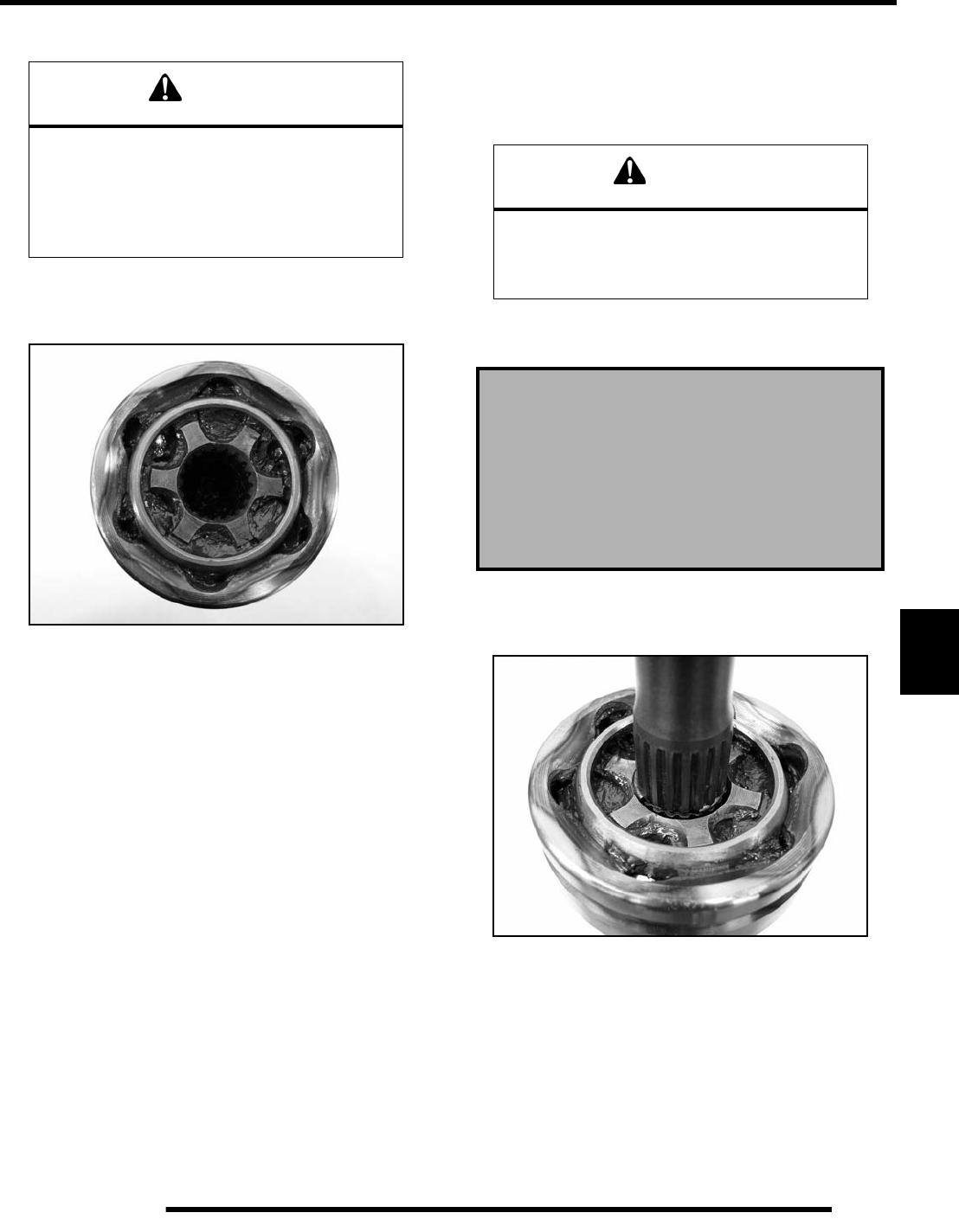
7.25
FINAL DRIVE
7
7. Remove the CV boot from the shaft.
IMPORTANT: If the grease in the joint is obviously
contaminated with water and/or dirt, the joint should
be replaced.
8. Thoroughly clean the joint with an appropriate solvent and
dry the joint to prevent any residual solvent from being left
in the joint upon reassembly.
9. Visually inspect the joint by tilting the inner race to one side
to expose each ball. Severe pitting, galling, play between
the ball and its cage window, any cracking or damage to the
cage, pitting or galling or chips in raceways call for joint
replacement.
NOTE: Shiny areas in ball tracks and on the cage
spheres are normal. Do not replace CV joints
because parts have polished surfaces. Replace CV
joint only if components are cracked, broken, worn
or otherwise unserviceable.
10. Clean the splines on the end of the shaft and apply a light
coat of grease prior to reassembly.
11. Slide the small boot clamp and boot (small end first) onto
the drive shaft and position the boot in it’s groove machined
in the shaft.
12. Install a NEW circlip on the end of the shaft.
13. Grease the joint with the special CV joint grease provided
in the boot replacement kit. Fill the cavity behind the balls
and the splined hole in the joint’s inner race. Pack the ball
tracks and outer face flush with grease. Place any
remaining grease into the boot.
NOTE: The amount of grease that’s provided is pre-
measured, so use all the grease.
14. Slide the joint onto the drive shaft splines and align the
circlip with the lead-in chamfer on the inner race of the
joint.
15. Use a soft-faced hammer to tap the joint onto the drive shaft
until it locks into place.
16. Pull on the joint to make sure it is securely locked in place.
17. Remove excess grease from the CV joint's external surfaces
and place the excess grease in the boot.
18. Pull the boot over the joint and position the boot lips into
the grooves on the joint housing and shaft. Make sure the
boot is not dimpled or collapsed.
CAUTION
Complete disassembly of the CV joint is NOT
recommended. The internal components are a
precision fit and develop their own characteristic
wear patterns. Intermixing the internal
components could result in looseness, binding,
and/or premature failure of the joint.
CAUTION
The grease provided in the replacement kit is
specially formulated for wear resistance and
durability. DO NOT use substitutes
or mix with other lubricants.
Boot Replacement Grease Requirements:
Grease Only Service Kits
PN 1350059 - 20g / PN 1350046 - 30g / PN 1350047 - 50g
Outer CV Joint Capacity:
Front - 74g / Rear - 90g
PartShark.com
877-999-5686
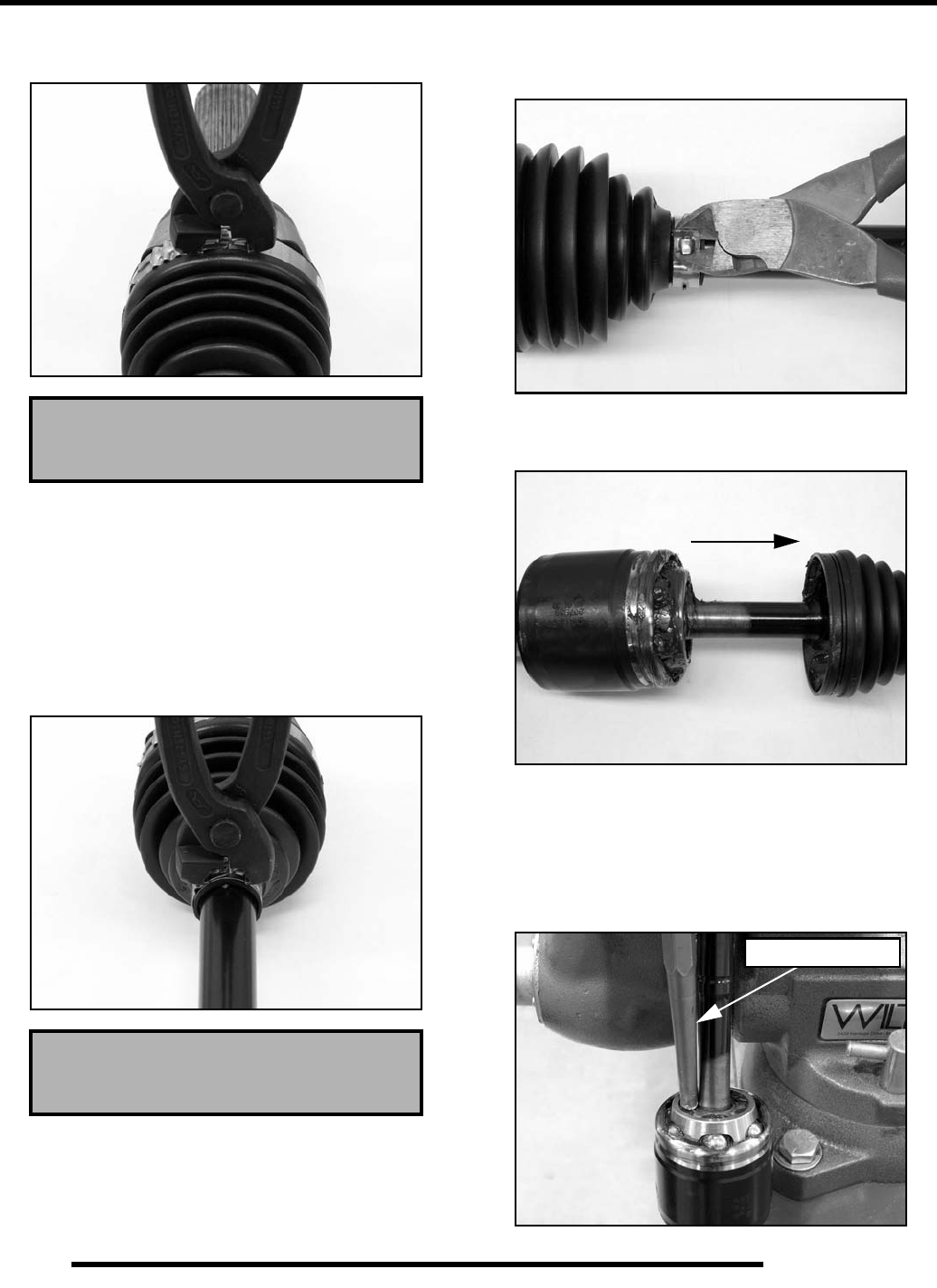
7.26
FINAL DRIVE
19. Install and tighten the large clamp using the Axle Boot
Clamp Tool (PU-48951).
20. While pulling out on the CV shaft, fully extend the CV joint
and slide a straight O-ring pick or a small slotted screw
driver between the small end of the boot and the shaft. This
will allow the air pressure to equalize in the CV boot in the
position that the joint will spend most of its life. Before you
remove your instrument, be sure the small end of the boot
is in its correct location on the shaft.
21. Install and tighten the small clamp on the boot using the
Axle Boot Clamp Tool (PU-48951).
Inner Plunging Joint / Boot Replacement
1. Using a side cutters, cut away and discard the boot clamps.
2. Remove the large end of the boot from the plunging joint
and slide the boot down the shaft.
3. Clean the grease from the face of the joint.
4. Place the drive shaft in a soft-jawed vise.
5. Using a soft-faced hammer, or brass drift, strike the inner
race of the joint to drive the joint off the drive shaft. Be
sure to tap evenly around the joint to avoid binding.
Axle Boot Clamp Tool
PU-48951
Axle Boot Clamp Tool
PU-48951
Brass Drift Shown
PartShark.com
877-999-5686
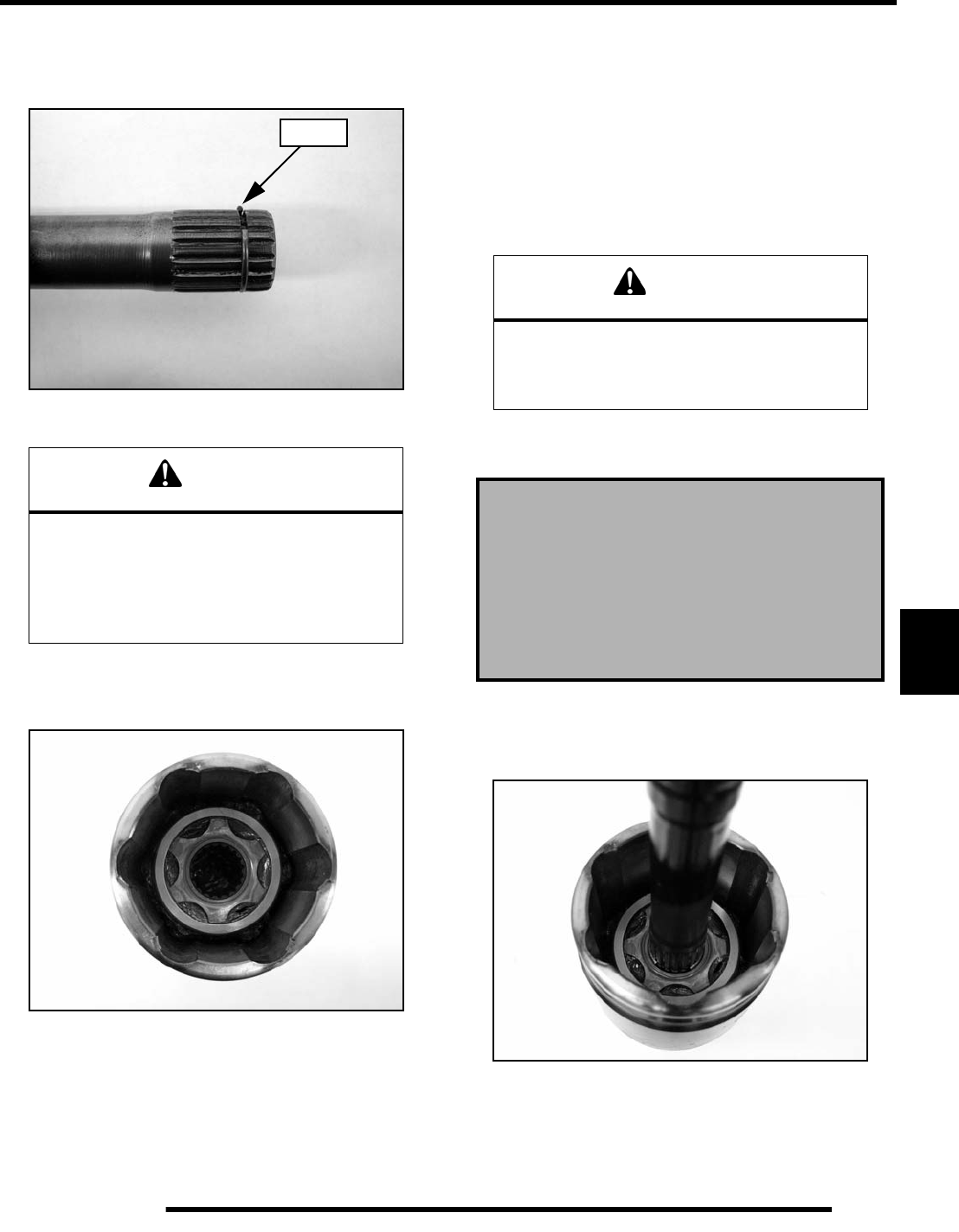
7.27
FINAL DRIVE
7
IMPORTANT: Tap on inner race only!
6. Make sure the circlip is still on the shaft and not left in the
joint.
7. Remove the boot from the shaft.
IMPORTANT: If the grease in the joint is obviously
contaminated with water and/or dirt, the joint should
be replaced.
8. Thoroughly clean the joint with an appropriate solvent and
dry the joint to prevent any residual solvent from being left
in the joint upon reassembly.
9. Visually inspect the joint for damage. Replace if needed.
10. Clean the splines on the end of the shaft and apply a light
coat of grease prior to reassembly.
11. Slide the small boot clamp and boot (small end first) onto
the drive shaft and position the boot in its groove machined
in the shaft.
12. Install a NEW circlip on the end of the shaft.
13. Grease the joint with the special CV joint grease provided
in the boot replacement kit. Fill the cavity behind the balls
and the splined hole in the joint’s inner race. Pack the ball
tracks and outer face flush with grease. Place any
remaining grease into the boot.
NOTE: The amount of grease that’s provided is pre-
measured, so use all the grease.
14. Fully compress the joint and push the drive shaft firmly into
the inner race.
15. Align the circlip with the lead-in chamfer.
16. Use a soft-faced hammer to tap the joint onto the drive shaft
until you reach the end of the splines and the joint locks in
place.
CAUTION
Complete disassembly of the plunging joint is
NOT recommended. The internal components
are a precision fit and develop their own
characteristic wear patterns. Intermixing the
internal components could result in looseness,
binding, and/or premature failure of the joint.
Circlip
CAUTION
The grease provided in the replacement kit is
specially formulated for wear resistance and
durability. DO NOT use substitutes
or mix with other lubricants.
Boot Replacement Grease Requirements:
Grease Only Service Kits
PN 1350059 - 20g / PN 1350046 - 30g / PN 1350047 - 50g
Inner Plunging Joint Capacity:
Front - 60g / Rear - 100g
PartShark.com
877-999-5686
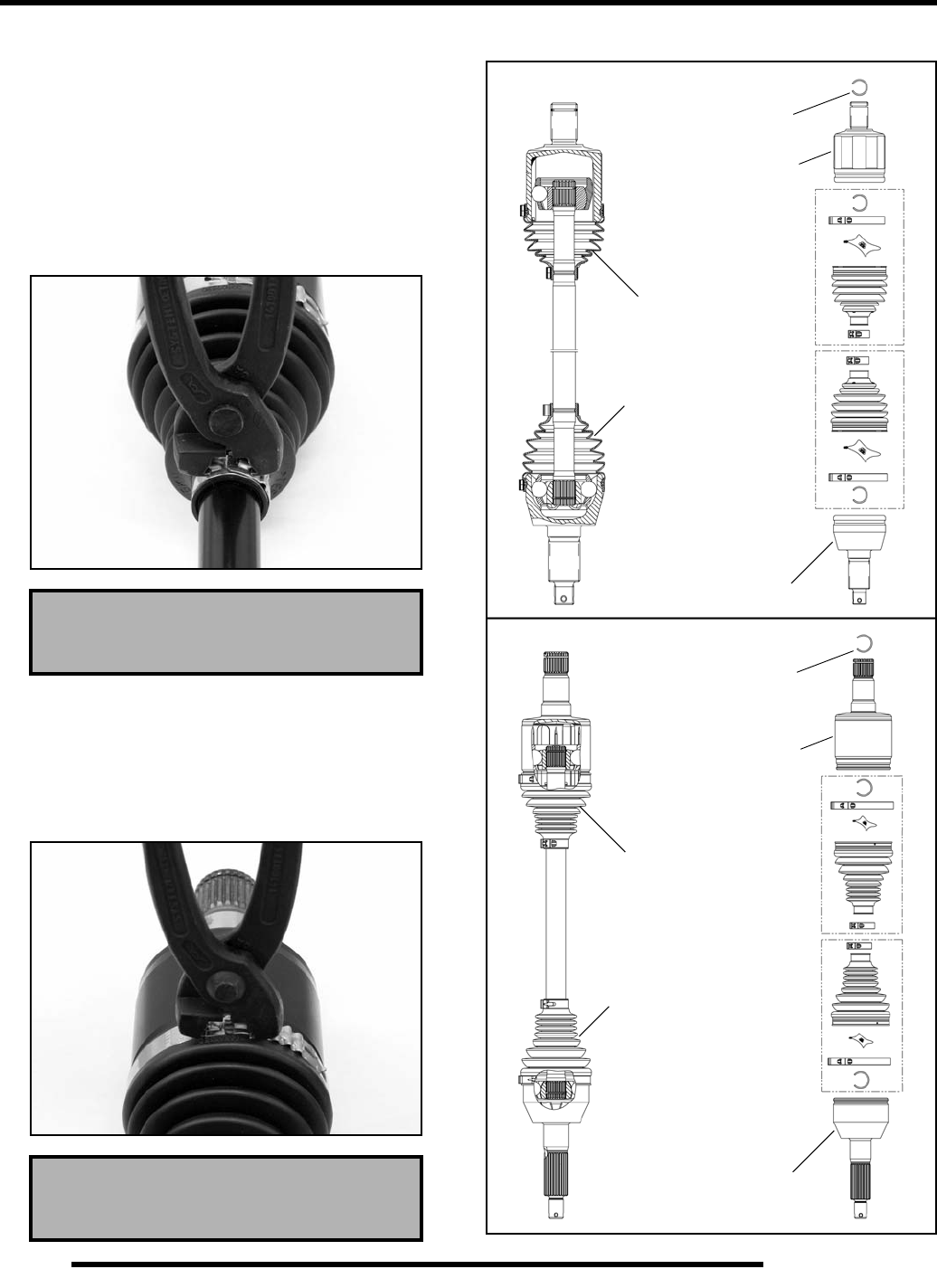
7.28
FINAL DRIVE
17. Pull on the joint to test that the circlip is seated and that the
joint is securely fastened to the shaft.
18. Remove excess grease from the plunging joint’s external
surfaces and place the excess grease in the boot.
19. Pull the boot over the joint and position the boot lips into
the grooves on the joint housing and shaft. Make sure the
boot is not dimpled or collapsed.
20. Install and tighten the small clamp using the Axle Boot
Clamp Tool (PU-48951).
21. Pull out on the drive shaft to center the joint in the housing.
Slide a straight O-ring pick or a small slotted screw driver
between the large end of the boot and the joint housing and
lift up to equalize the air pressure in the boot.
22. Position the boot lip in its groove. Install and tighten the
large clamp using the Axle Boot Clamp Tool (PU-48951).
Drive Shaft Exploded View
Axle Boot Clamp Tool
PU-48951
Axle Boot Clamp Tool
PU-48951
REAR SHAFT
Grease Capacity
74 Grams
Grease Capacity
60 Grams
CV Joint
Plunging
Spring Ring
Gear Side
Boot Kit
Wheel Side
Boot Kit
Joint
FRONT SHAFT
Grease Capacity
90 Grams
Grease Capacity
100 Grams
CV Joint
Plunging
Spring Ring
Gear Side
Boot Kit
Wheel Side
Boot Kit
Joint
PartShark.com
877-999-5686
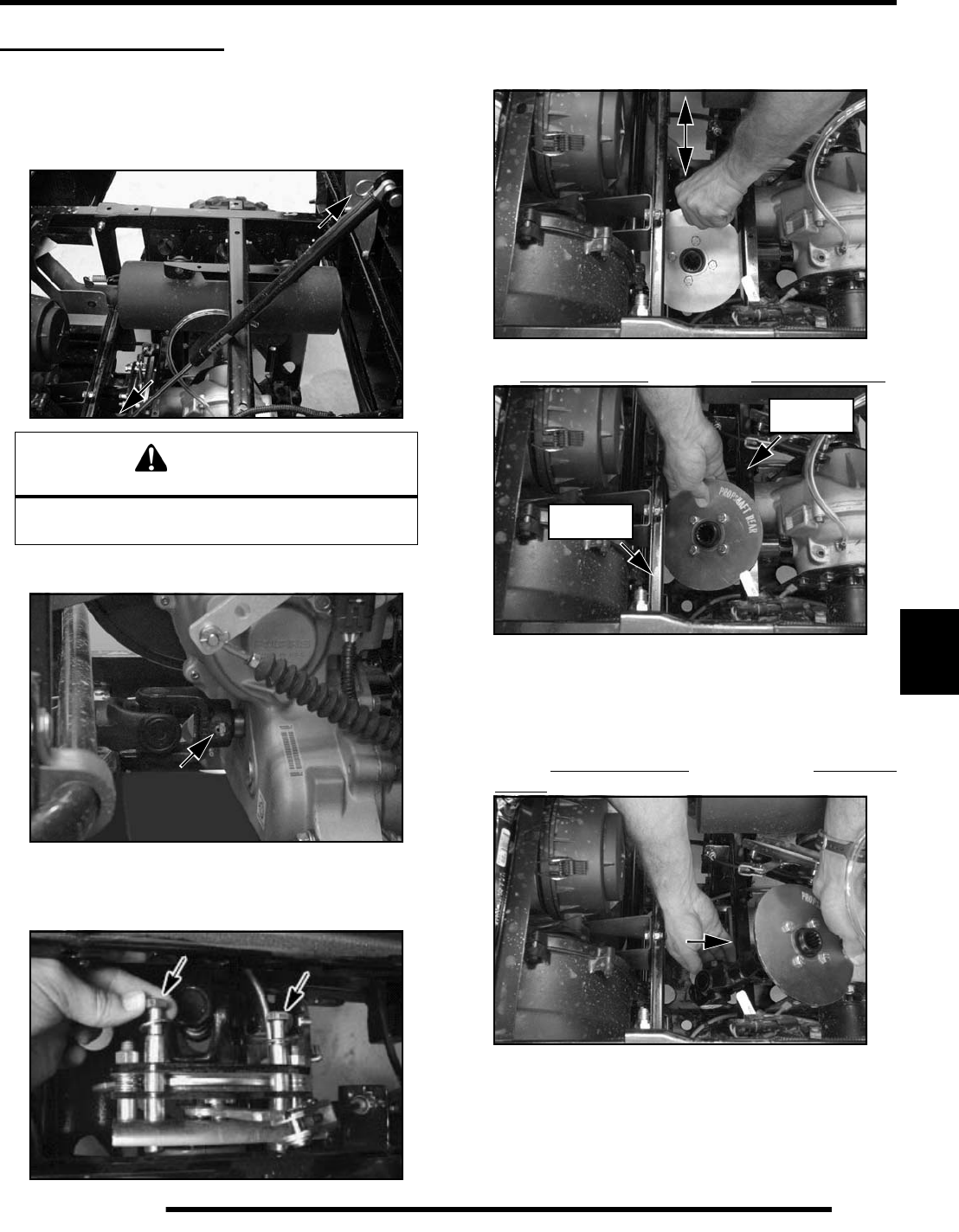
7.29
FINAL DRIVE
7
REAR PROPSHAFT
Removal
1. Remove the pin clips from upper and lower cargo box
shock pins and remove shock. Carefully allow cargo box
to rest in the dump position as you remove the propshaft.
2. Use the Roll Pin Removal Tool (PN 2872608), to remove
the roll pin from prop shaft at rear of transmission.
3. Remove the two bolts that secure the rear parking brake
caliper. Suspend the brake caliper assembly from the frame
with a piece of wire. Refer to Chapter 9 for more
information on the parking brake.
4. Slide the propshaft off the transmission shaft and rear
gearcase input shaft. Orientate the shaft so that it’s parallel
with the frame supports as shown below.
5. Remove the shaft by placing the brake disc over the top of
the rear frame support and under the front frame support.
Installation
1. When installing the propshaft, ensure that the shaft is
touching the rear frame support and reinstall the shaft the
same way it was removed with the brake disc over the top
of the rear frame support and under the front frame
support.
2. Slide the shaft onto the rear gearcase input shaft and then
slide it onto the transmission shaft.
3. Install a new roll pin into the propshaft
4. Install the parking brake caliper and torque mounting bolts
to 18 ft. lbs. (24 Nm).
5. Install cargo box shock, mounting pins and pin clips.
WARNING
Support the cargo box while the shock is removed
to prevent injury or damage. Front Frame
Support
Rear Frame
Support
PartShark.com
877-999-5686
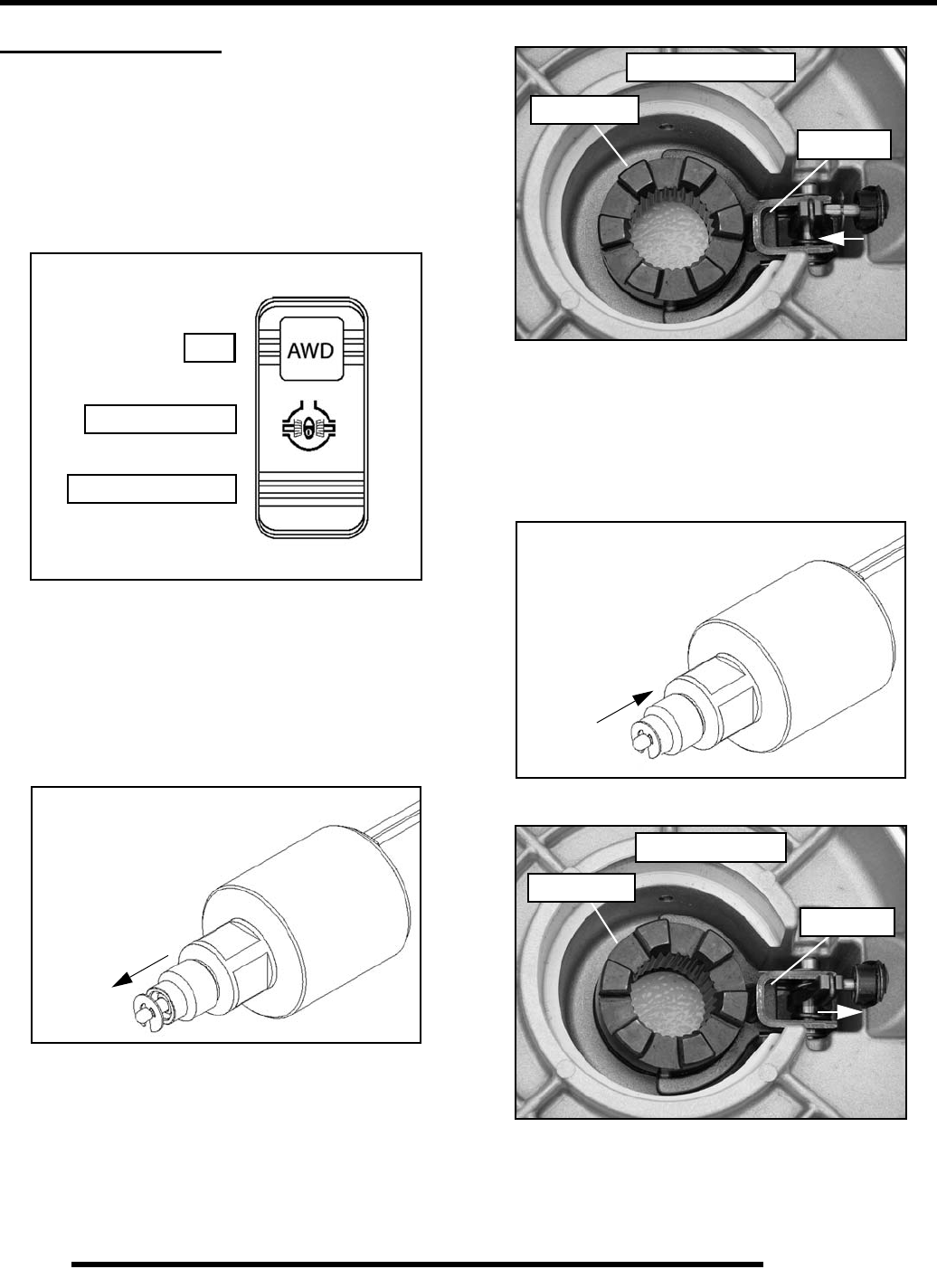
7.30
FINAL DRIVE
REAR GEARCASE
General Operation
The RANGER rear gearcase has three traction operational
modes: AWD, Differential Lock, and Differential Unlock.
Locking the rear differential is beneficial in low traction and
rough terrain conditions. Unlocking the rear differential makes
maneuvering easier and minimizes damage to turf and sensitive
terrains.
When “Differential-Unlock” is selected on the switch, the rear
differential becomes unlocked for tighter turns. An electrical
solenoid mounted in the rear gearcase housing actuates the shift
yoke. The solenoid plunger extends out to move the shift yoke
and slides the clutch gear away from the engagement dogs that
are attached to the differential gear assembly. This unlocks the
rear differential.
When “Differential-Lock” is selected on the switch, power is
removed from the electrical solenoid allowing the solenoid
plunger to retract. Spring tension moves the shift yoke back into
place and engages the clutch gear into the engagement dogs that
are attached to the differential gear assembly, locking the rear
differential as a solid rear axle.
AWD
Differential - Lock
Differential - Unlock
When switch position is set
to “Unlock”, the solenoid is
powered and the
plunger extends
to disengage the
clutch gear and
unlock the
differential.
Clutch Gear
Shift Yoke
Differential - Unlock
When switch position is set
to “Lock”, power is removed
from the solenoid and
the plunger retracts
to engage the
clutch gear
and lock the
differential.
Shift Yoke
Clutch Gear
Differential - Lock
PartShark.com
877-999-5686
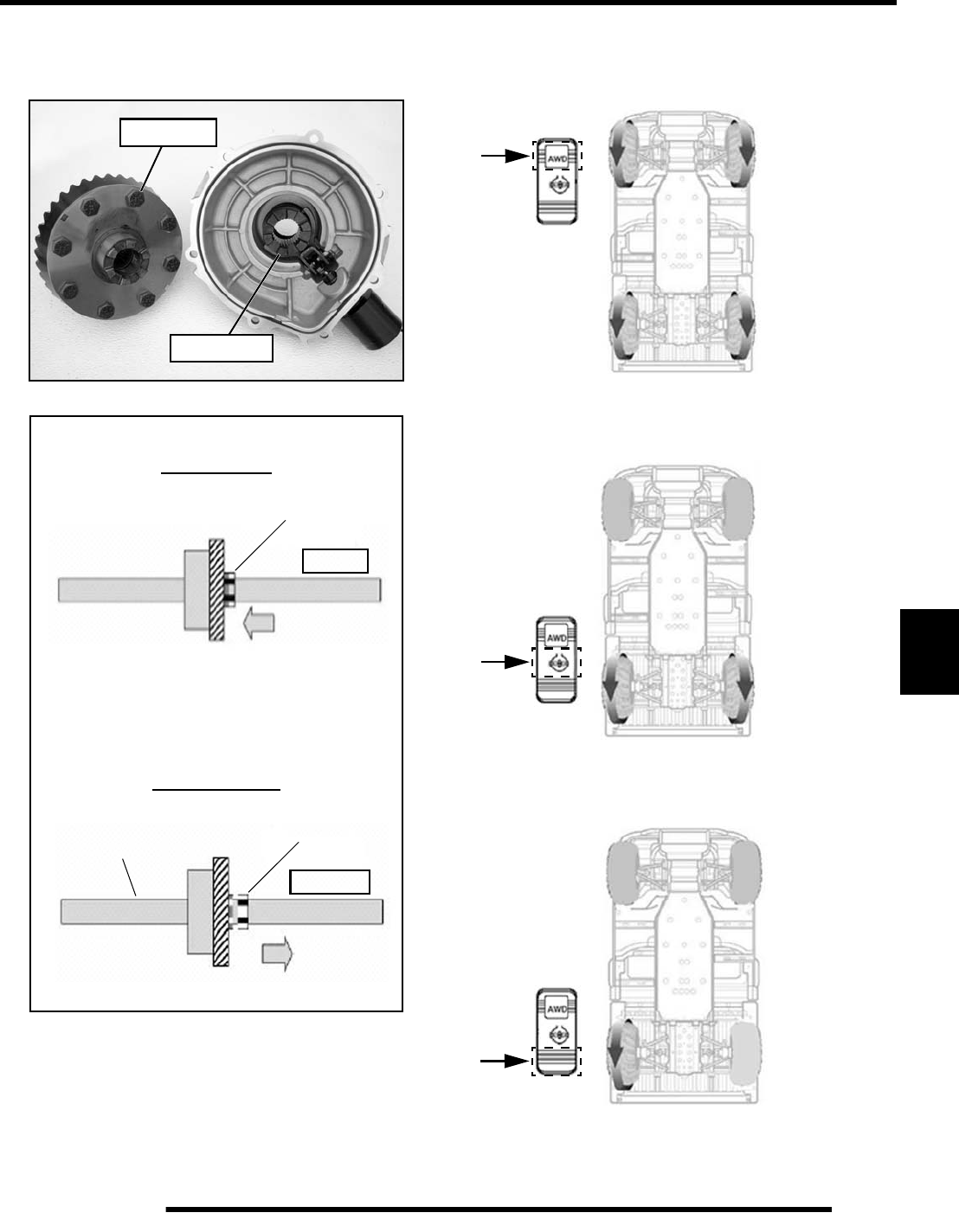
7.31
FINAL DRIVE
7
When the clutch gear is unlocked the rear drive shafts are
dependent on the differential allowing tighter turns. When it’s
locked it becomes a solid rear axle increasing traction.
Operation Modes
Clutch Gear
Differential
IRS Axle Clutch Gear
Unlocked
Locked Mode
Unlocked Mode
Axle Shaft
Clutch Gear
Locked
Axle Shaft
Axle Shaft
Axle Shaft
Differential Locked
Differential Unlocked
AWD Mode
Both rear wheels rotate at same speed.
Rear wheels can rotate at different speeds.
(Allows for sharper turning)
Rear Wheels rotate at same speed.
Front Wheels rotate at same speed when AWD activated.
PartShark.com
877-999-5686
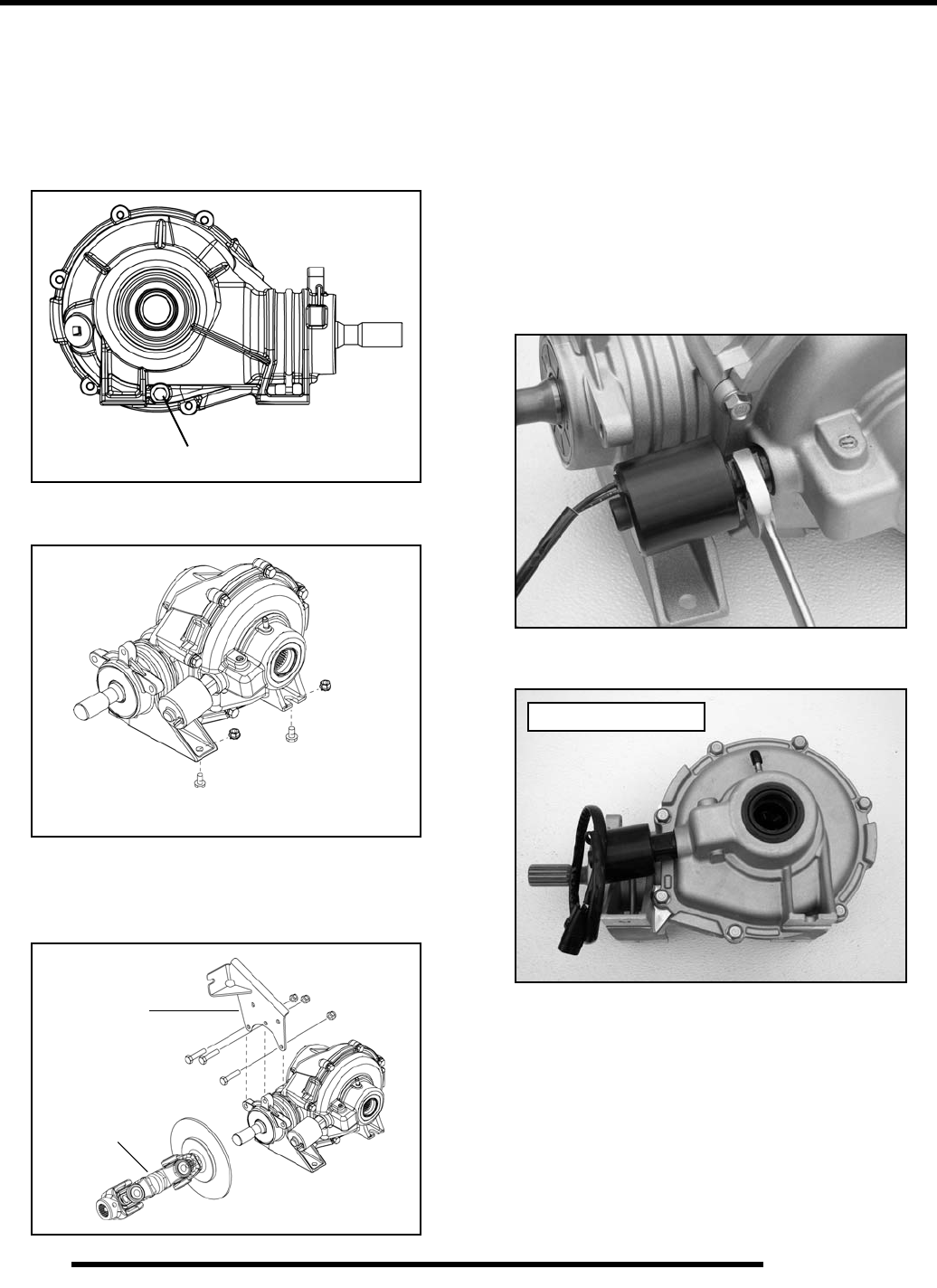
7.32
FINAL DRIVE
Gearcase Removal
1. Follow “Rear Drive Shaft Removal” procedure to remove
the rear drive shafts from each side of the rear differential.
2. Disconnect the differential solenoid 2-wire harness.
3. Completely drain the lubricant from the rear gearcase
4. Remove the four bolts that secure the rear gearcase to the
frame.
5. Remove the (3) fasteners retaining the parking brake
caliper bracket to the rear gearcase and carefully pull the
rear gear case assembly from the frame. Allow the rear
propshaft to slide off of the rear gearcase shaft.
Gearcase Disassembly
IMPORTANT: The pinion gear assembly is NOT
intended to be disassembled from the case, as it
requires special OEM tooling in order to properly
reassemble. If there is any damage to the pinion gear,
bearings or case, the assembly must be replaced.
Pinion and ring gear shimming information is NOT
provided due to OEM manufacturing requirements.
1. Remove the differential solenoid from the gearcase cover
if servicing the solenoid, shift lever, shift lever spring, or
shift yoke. If none of these items are being serviced, the
solenoid can remain installed in the gearcase cover.
2. Remove the (7) bolts that secure the cover to the housing.
Drain Plug
Remove the (2)
fasteners from
each side.
Propshaft
Bracket
(3)
Remove Cover Bolts
PartShark.com
877-999-5686
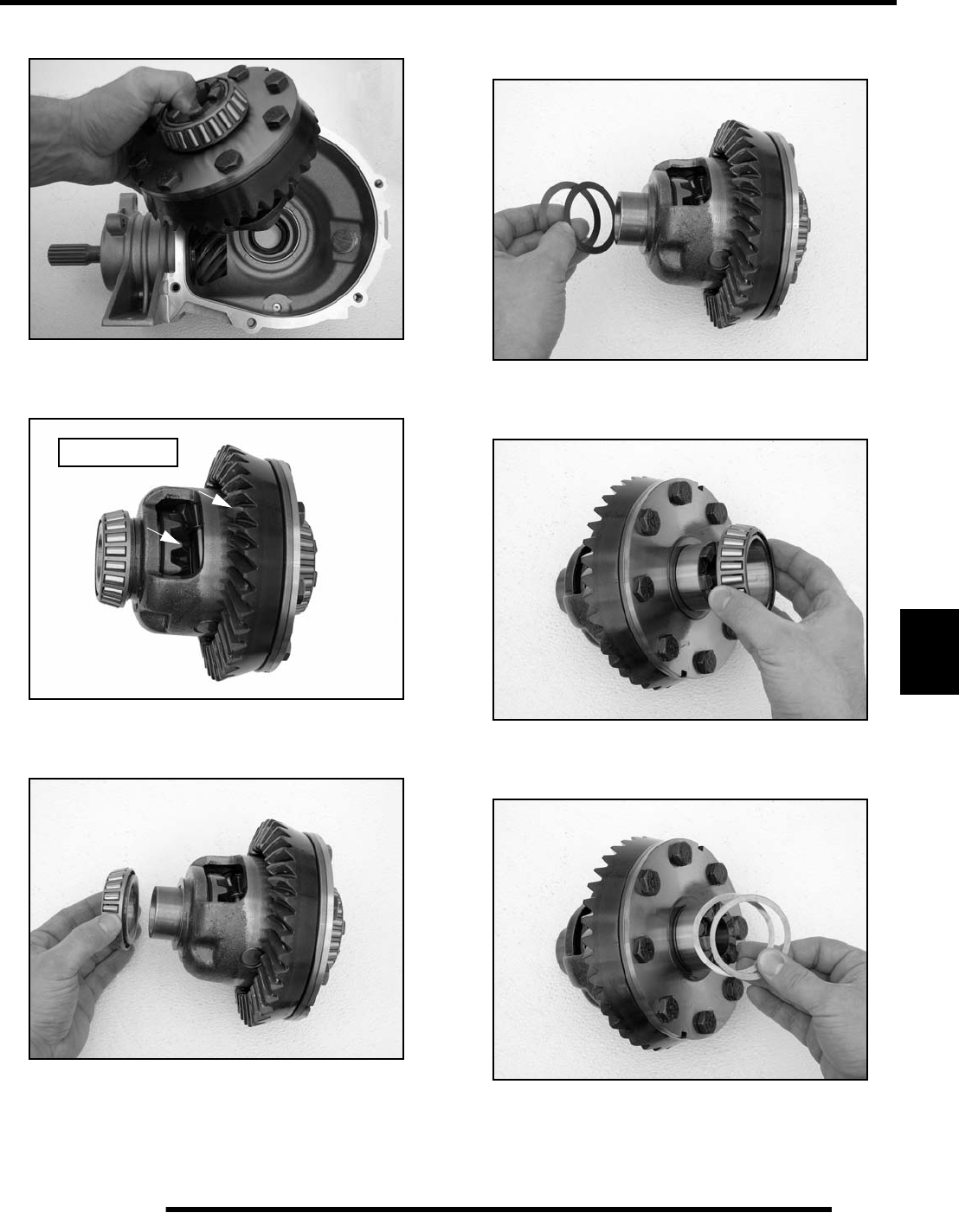
7.33
FINAL DRIVE
7
3. Remove the differential assembly from the housing.
4. Inspect the bevel gear teeth for chipped, worn, or broken
teeth.
5. Remove the small bearing from the differential assembly.
Inspect the bearing for smoothness and wear.
6. Remove the shims from the differential assembly. Be sure
to keep the shims together for reassembly.
7. Remove the large bearing from the differential assembly.
Inspect the bearing for smoothness and wear.
8. Remove the shims from the differential assembly. Be sure
to keep the shims together for reassembly.
Inspect Teeth
PartShark.com
877-999-5686
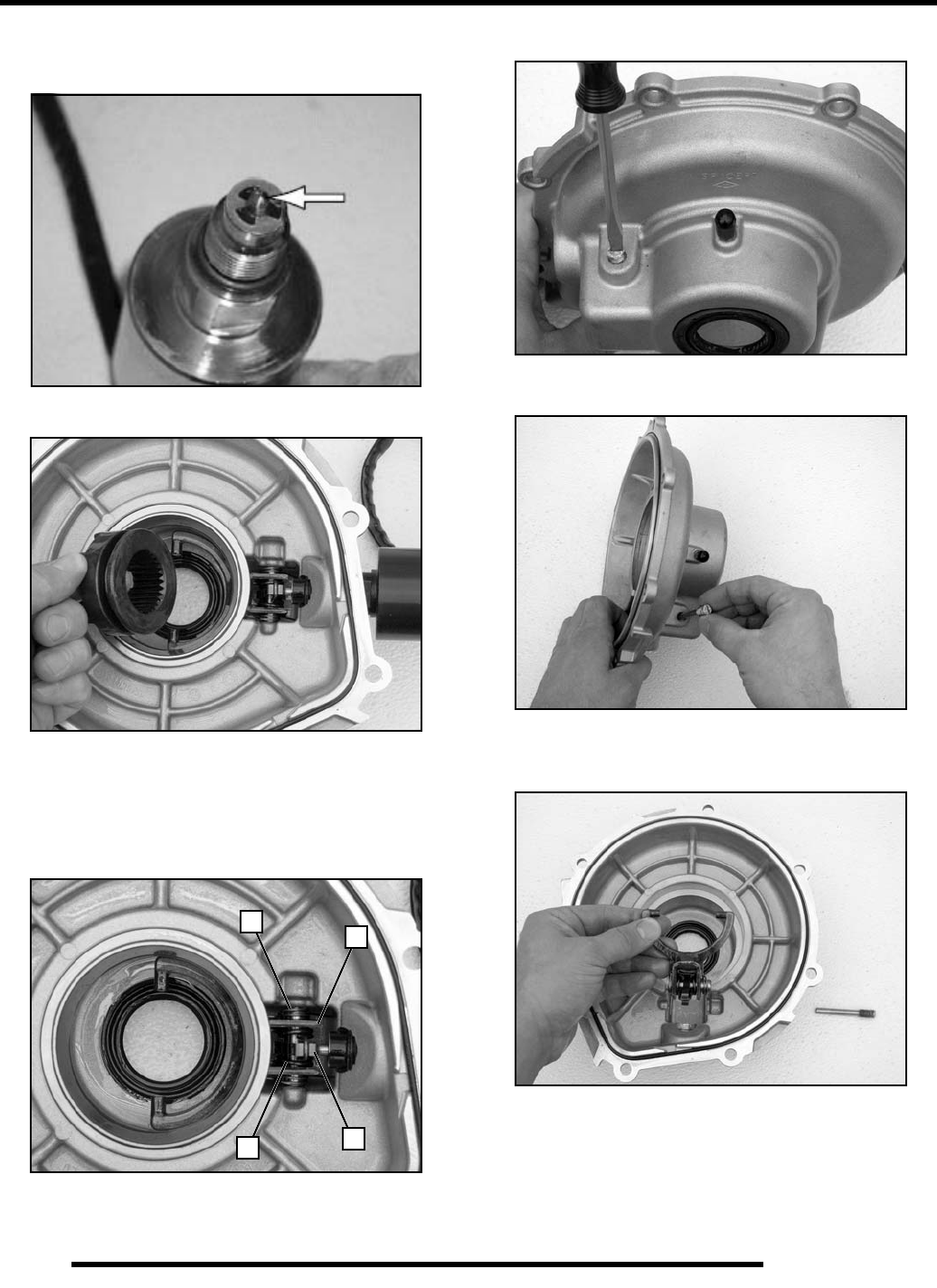
7.34
FINAL DRIVE
9. If the solenoid was removed for servicing, inspect the tip
of the solenoid for wear. If the tip of the solenoid is
flattened the solenoid must be replaced.
10. Remove the clutch gear from the gearcase cover.
11. Inspect the shift lever (A), shift lever spring (B), shift return
springs (C), and shift yoke (D) for excessive wear or
damage. If disassembly is required proceed to the next step.
If no disassembly is required proceed to “Rear Gearcase
Assembly.”
12. Loosen the lock assembly pin.
13. Remove the pin from the gearcase cover.
14. Carefully remove the shift yoke assembly from the
gearcase cover.
A
B
CD
PartShark.com
877-999-5686
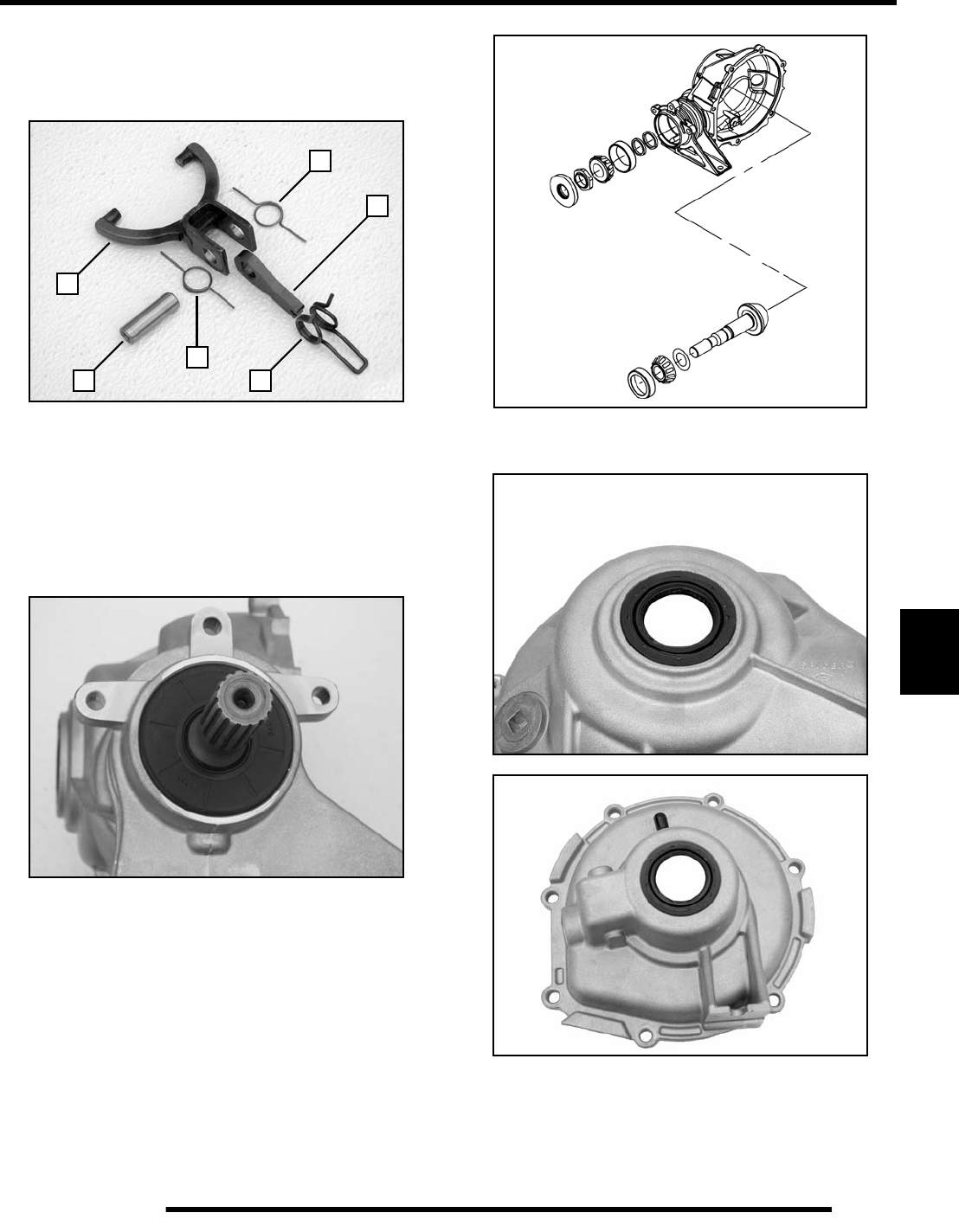
7.35
FINAL DRIVE
7
15. Inspect the shift lever (A), shift lever spring (B), shift return
springs (C), shift yoke (D), and lock pin bushing (E).
Inspect the components for excessive wear or damage and
replace as needed.
Rear Gearcase Assembly
NOTE: Grease all seals and O-rings with Polaris All
Season Grease (PN 2871322) upon assembly.
1. Remove the pinion shaft oil seal using a seal puller and
replace with a new seal.
NOTE: The pinion gear assembly is NOT intended to
be disassembled from the case, as it requires
special OEM tooling in order to properly reassemble.
If there is any damage to the pinion gear, bearings or
case, the assembly must be replaced.
2. Replace the drive shaft oil seals located in the main
gearcase and gearcase cover
3. Replace all worn components.
A
B
C
C
D
E
Do Not Disassemble.
Replace as an assembly
if damaged or worn.
PartShark.com
877-999-5686
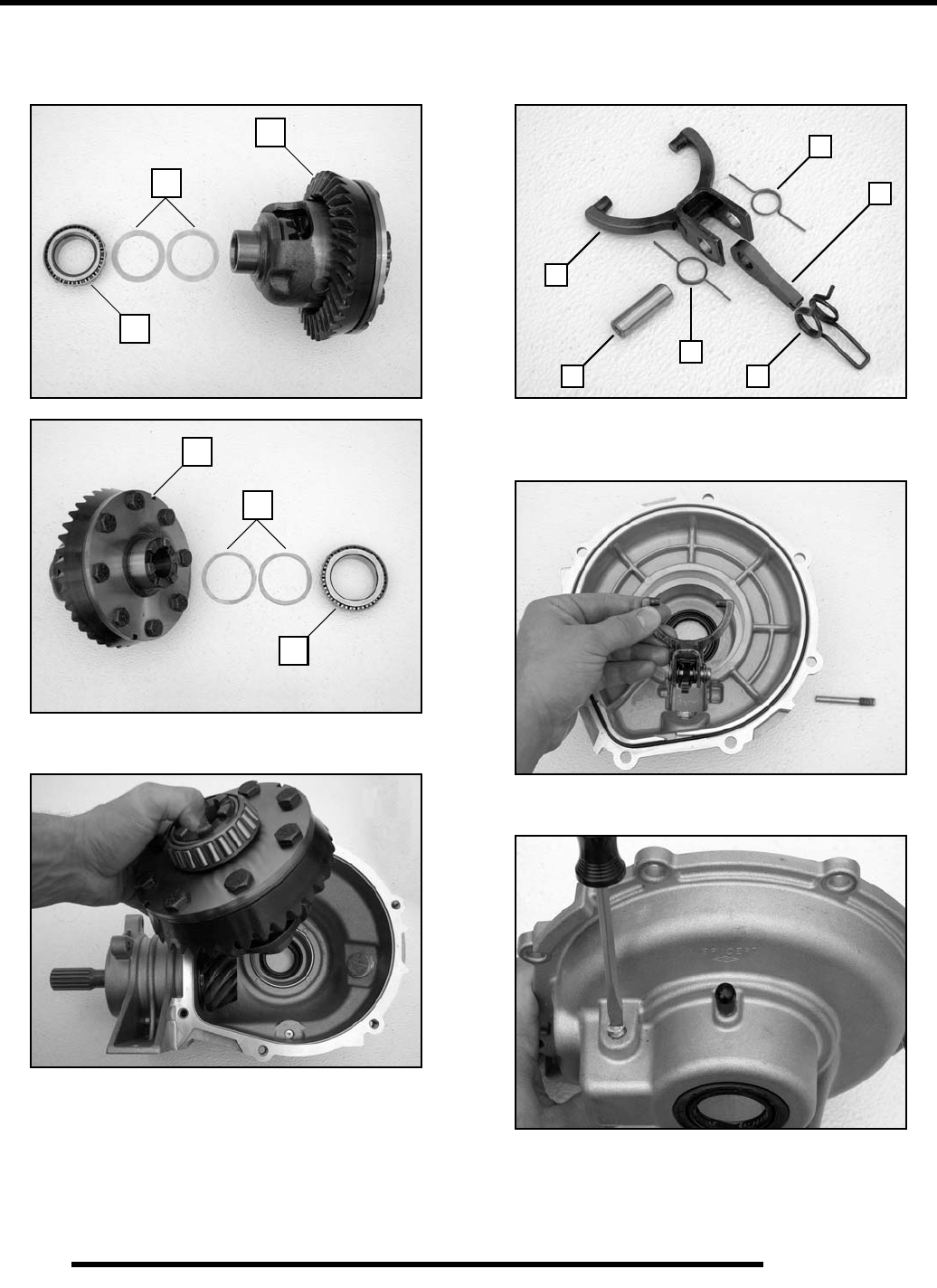
7.36
FINAL DRIVE
4. Install the original shims (A) onto the differential assembly
(B) on both sides. Install the bearings (C), replace with new
bearings if needed.
5. Install the differential assembly into the carrier housing.
6. If previously removed; assembly the shift lever (A), shift
lever spring (B), shift return springs (C), shift yoke (D), and
lock pin bushing (E).
7. Carefully install the shift yoke assembly into the gearcase
cover.
8. Install the lock assembly pin and tighten.
B
A
C
B
A
C
A
B
C
C
D
E
PartShark.com
877-999-5686
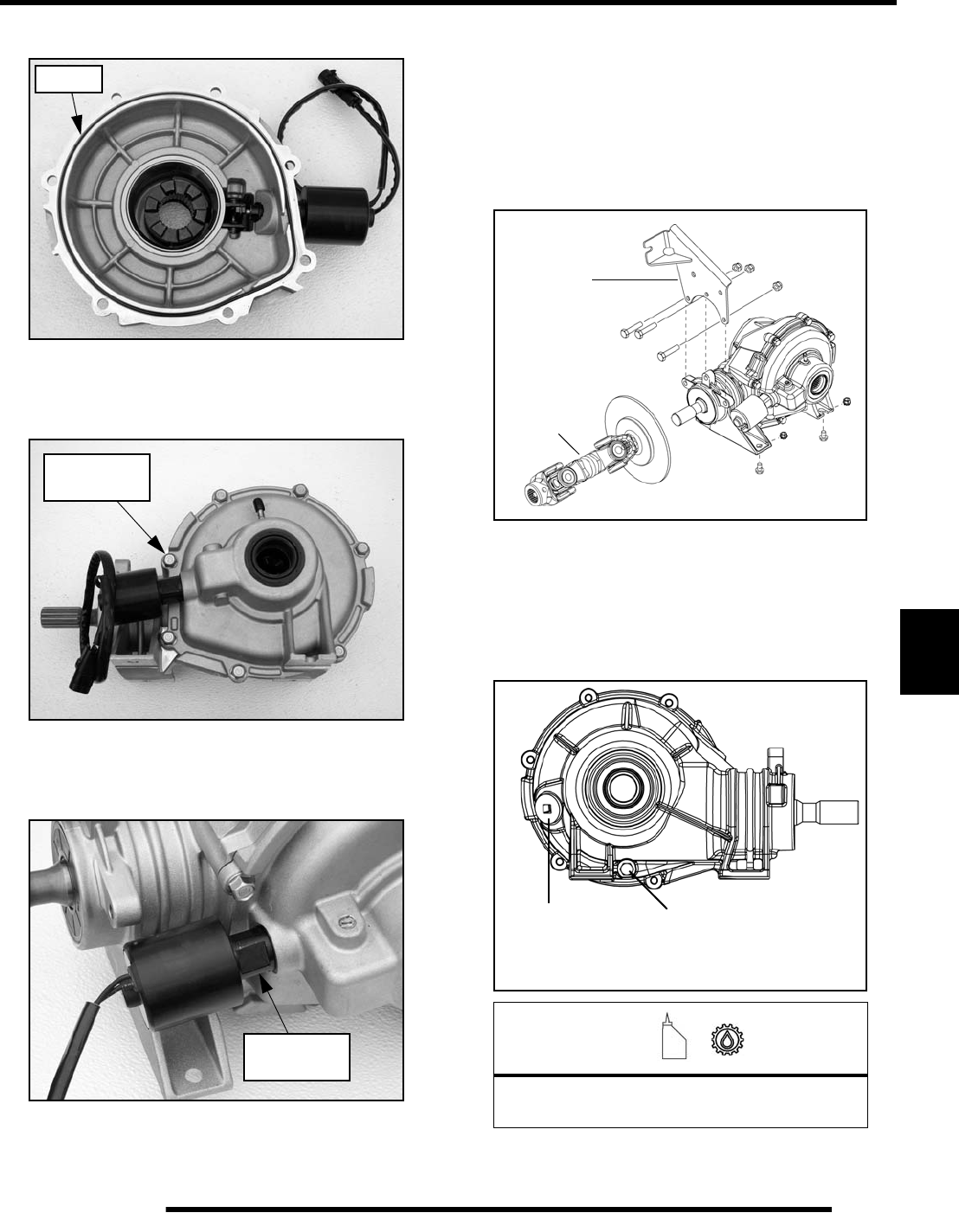
7.37
FINAL DRIVE
7
9. Install the new lightly greased O-ring onto the carrier cover.
10. Assemble the gearcase halves and install the (7) bolts that
secure the cover to the housing. Torque the bolts in a criss
cross pattern to 25-35 ft. lbs. (34-48 Nm).
11. If previously removed, install the differential solenoid into
the carrier cover. Torque solenoid to 30-40 ft. lbs.
(41-54 Nm).
Rear Gearcase Installation
1. Place the differential assembly into the frame. Slide the
rear propshaft onto the rear gearcase input shaft.
2. Install the (4) gearcase mounting fasteners and torque the
fasteners to 40 ft. lbs. (54 Nm).
3. Install the parking brake caliper bracket fasteners and
torque the fasteners to 17 ft. lbs. (23 Nm).
4. Reverse the removal procedure for the rest of the
installation.
5. Add Polaris ATV Angle Drive Fluid (PN 2871653) to rear
carrier. Refer to maintenance information in Chapter 2 for
more details. Torque drain plug to 30-45 in. lbs. (3-5 Nm).
Torque fill plug to 40-50 ft. lbs. (54-68 Nm).
O-Ring
25-35 ft. lbs.
(34-48 Nm)
30-40 ft. lbs.
(41-54 Nm)
=
Rear Gearcase Lubricant / Capacity:
ATV Angle Drive Fluid / 18 fl. oz. (532 ml)
40 ft. lbs.
(54 Nm)
17 ft. lbs.
23 (Nm)
Propshaft
Bracket
Drain Plug
Fill Plug
40-50 ft. lbs.
(54-68 Nm)
30-45 in. lbs.
(3-5 Nm)
PartShark.com
877-999-5686
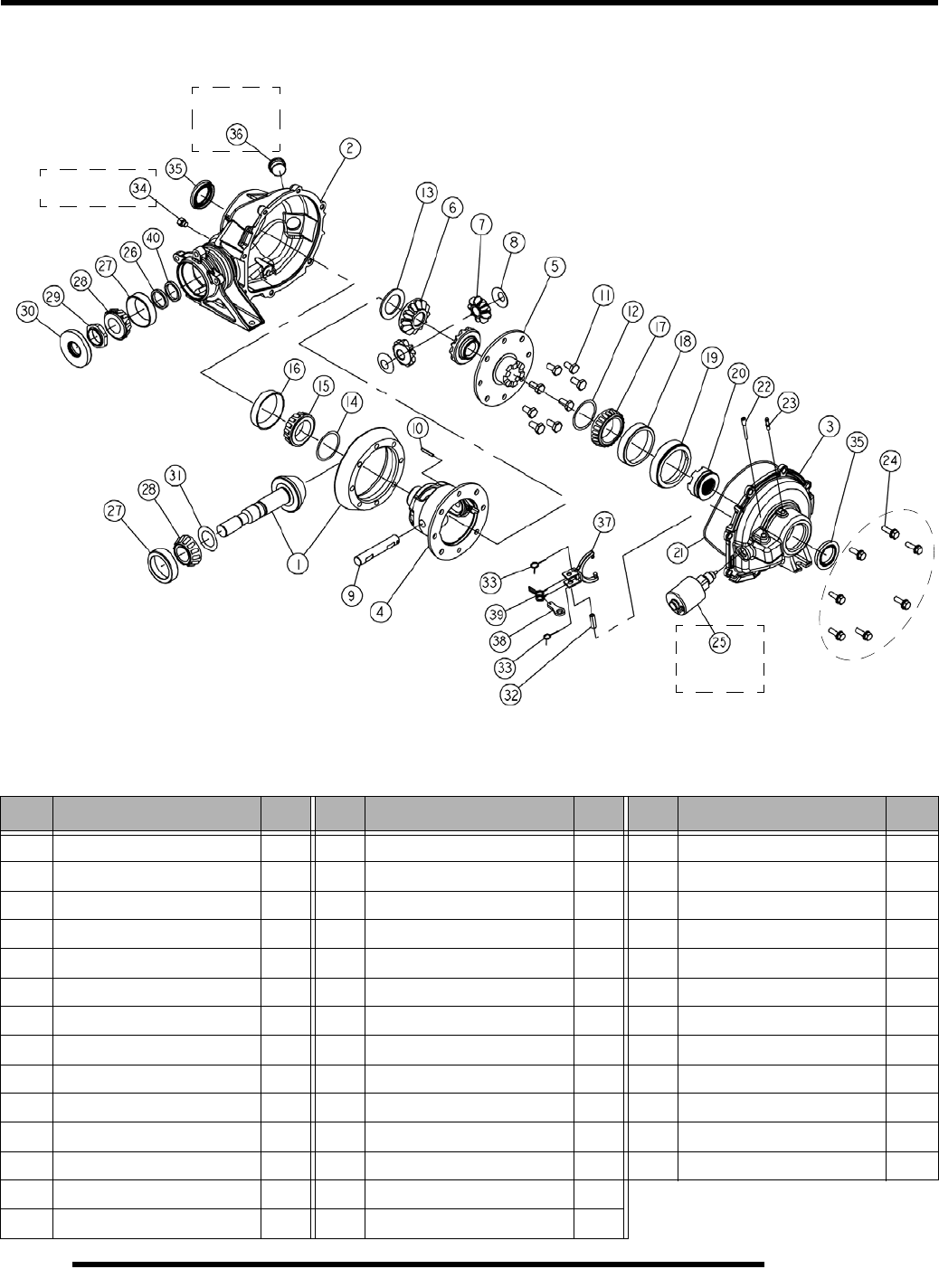
7.38
FINAL DRIVE
Rear Gearcase Exploded View
REF# DESCRIPTION QTY REF# DESCRIPTION QTY REF# DESCRIPTION QTY
1 Hypoid Gear Assembly 1 15 Bearing Cone - Diff 1 29 Pinion Nut 1
2 Carrier Housing Half 1 16 Bearing Cup - Diff 1 30 Oil Seal - Pinion 1
3 Carrier Cover Half 1 17 Bearing - Roller 1 31 Pinion Thrust-Washer AR
4 Diff Case Half 1 18 Bearing - Cup 1 32 Lock Pin Bushing 1
5 Diff Case Cover Half 1 19 Bearing Assembly - Collar 1 33 Shift Return Spring 2
6 Diff Side Gear 2 20 Clutch Gear 1 34 Drain Plug 1
7 Diff Pinion Mate Gear 2 21 O-Ring - Housing Halves 1 35 Oil Seal - Shaft 2
8 Pinion Mate Thrust-Washer 2 22 Lock Assembly Pin 1 36 Fill Plug 1
9 Diff Cross Pin 1 23 Vent Tube 1 37 Shift Yoke 1
10 Diff Roll Pin 1 24 Flanged Hex Bolt - Housing 7 38 Shift Lever 1
11 Hex Bolt - Ring Gear 8 25 Diff Solenoid 1 39 Shift Lever Spring 1
12 Diff Case Thrust-Washer AR 26 Spacer - Kit AR 40 Pinion Spacer 1
13 Side Gear Thrust-Washer 1 27 Bearing Cup - Pinion 2
14 Diff Case Thrust-Washer AR 28 Bearing Cone - Pinion 2
30-45 in. lbs.
(3-5 Nm)
40-50 ft. lbs.
(54-68 Nm)
25-35 ft. lbs.
(34-48 Nm)
30-40 ft. lbs.
(41-54 Nm)
PartShark.com
877-999-5686
TRANSMISSION
8.1
CHAPTER 8
TRANSMISSION
8
TORQUE SPECIFICATIONS. . . . . . . . . . . . . . . . . . . . . . . . . . . . . . . . . . . . . . . . . . . . . . . 8.2
SHIFT LEVER . . . . . . . . . . . . . . . . . . . . . . . . . . . . . . . . . . . . . . . . . . . . . . . . . . . . . . . . . . 8.2
REMOVAL . . . . . . . . . . . . . . . . . . . . . . . . . . . . . . . . . . . . . . . . . . . . . . . . . . . . . . . . . . . . 8.2
INSTALLATION . . . . . . . . . . . . . . . . . . . . . . . . . . . . . . . . . . . . . . . . . . . . . . . . . . . . . . . . 8.2
SHIFT CABLE . . . . . . . . . . . . . . . . . . . . . . . . . . . . . . . . . . . . . . . . . . . . . . . . . . . . . . . . . . 8.2
INSPECTION . . . . . . . . . . . . . . . . . . . . . . . . . . . . . . . . . . . . . . . . . . . . . . . . . . . . . . . . . . 8.2
ADJUSTMENT . . . . . . . . . . . . . . . . . . . . . . . . . . . . . . . . . . . . . . . . . . . . . . . . . . . . . . . . . 8.2
TRANSMISSION SERVICE. . . . . . . . . . . . . . . . . . . . . . . . . . . . . . . . . . . . . . . . . . . . . . . . 8.3
TRANSMISSION REMOVAL . . . . . . . . . . . . . . . . . . . . . . . . . . . . . . . . . . . . . . . . . . . . . . 8.3
TRANSMISSION DISASSEMBLY . . . . . . . . . . . . . . . . . . . . . . . . . . . . . . . . . . . . . . . . . . 8.4
TRANSMISSION ASSEMBLY . . . . . . . . . . . . . . . . . . . . . . . . . . . . . . . . . . . . . . . . . . . . . 8.9
TRANSMISSION INSTALLATION . . . . . . . . . . . . . . . . . . . . . . . . . . . . . . . . . . . . . . . . . 8.14
TROUBLESHOOTING. . . . . . . . . . . . . . . . . . . . . . . . . . . . . . . . . . . . . . . . . . . . . . . . . . . 8.15
TROUBLESHOOTING CHECKLIST. . . . . . . . . . . . . . . . . . . . . . . . . . . . . . . . . . . . . . . . 8.15
TRANSMISSION EXPLODED VIEW. . . . . . . . . . . . . . . . . . . . . . . . . . . . . . . . . . . . . . . . 8.16
EXPLODED VIEW . . . . . . . . . . . . . . . . . . . . . . . . . . . . . . . . . . . . . . . . . . . . . . . . . . . . . 8.16
PartShark.com
877-999-5686
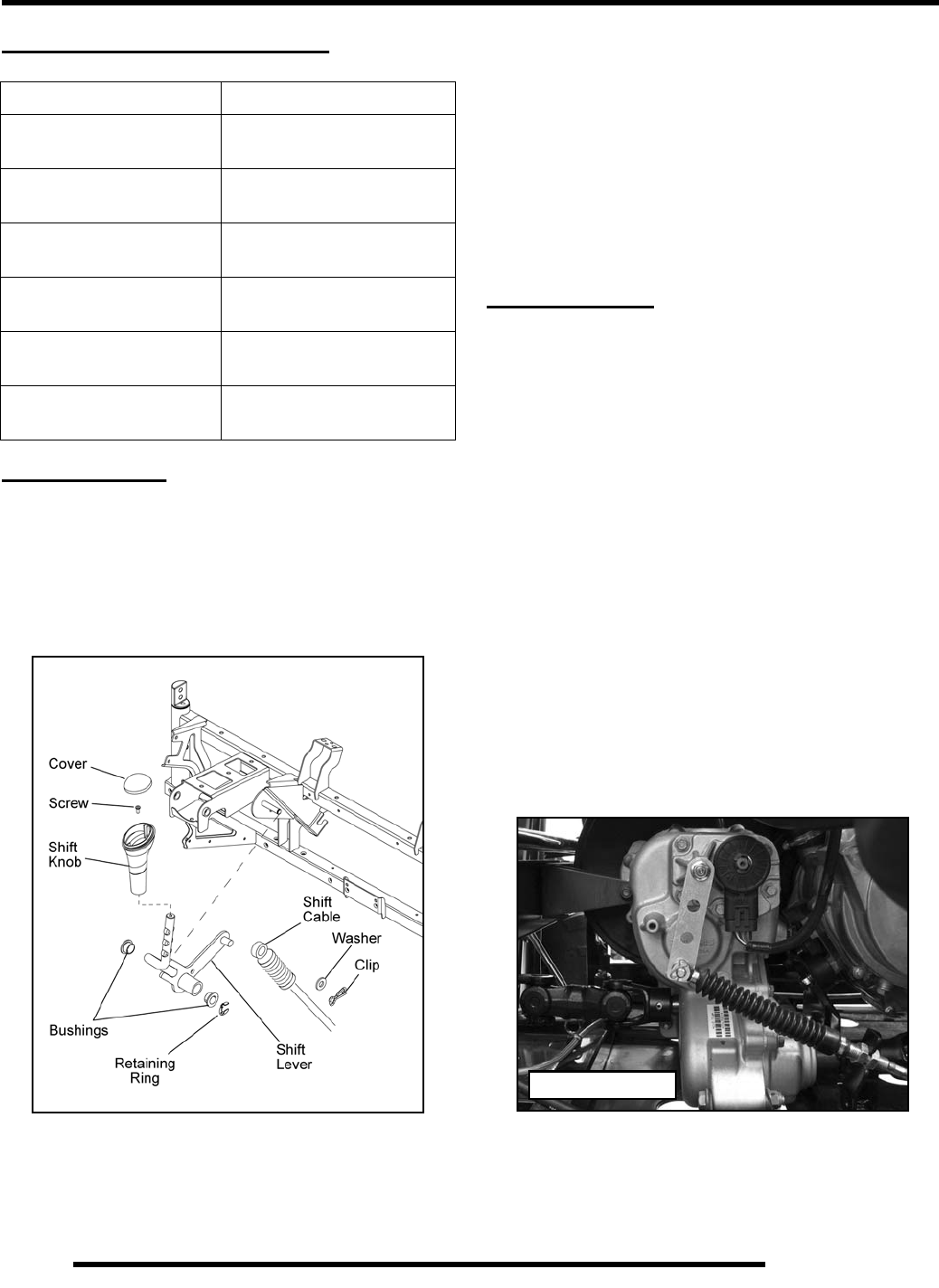
8.2
TRANSMISSION
TORQUE SPECIFICATIONS
SHIFT LEVER
Removal
1. Remove the (2) push rivets retaining the dash panel and
remove the panel from the dash to access the shift lever.
2. Remove the shift knob cover, retaining screw and shift
knob from the shift lever.
3. Remove the grommet around the shift lever from the dash.
4. Remove the clip and washer retaining the shift cable to the
shift lever and disconnect the cable end from the lever.
5. Remove the retaining ring, outer washer, and both bushings
from the shift lever.
6. Slide the shift lever off the mounting bracket and out from
the frame.
Installation
1. Repeat the steps in reverse order to install the gear shift
selector.
SHIFT CABLE
Inspection
Shift cable adjustment is necessary when symptoms include:
• Noise on deceleration
• Inability to engage a gear
• Excessive gear clash (noise)
• Shift selector is moving out of desired range
Inspect shift cable, clevis pins, and pivot bushings and replace
if worn or damaged.
Adjustment
NOTE: The shift cable should be adjusted at the rear
adjustment point located near the transmission. If
adjustment is needed beyond that, remove the dash
panel to access the shift cable adjustment point
located underneath the shift lever.
1. Place gear selector in neutral. Make sure the transmission
bell crank is engaged in the neutral position detents.
ITEM TORQUE VALUE
Transmission Fill Plug 10-14 ft. lbs.
(14-19 Nm)
Transmission Drain Plug 10-14 ft. lbs.
(14-19 Nm)
Transmission Case Bolts 27-34 ft. lbs.
(37-46 Nm)
Bell Crank Nut 12-18 ft. lbs.
(16-24 Nm)
Bell Crank Gear Cover 7-9 ft. lbs.
(10-12 Nm)
Transmission Mounting
Bolts 40 ft. lbs. (54 Nm)
Neutral Position
PartShark.com
877-999-5686
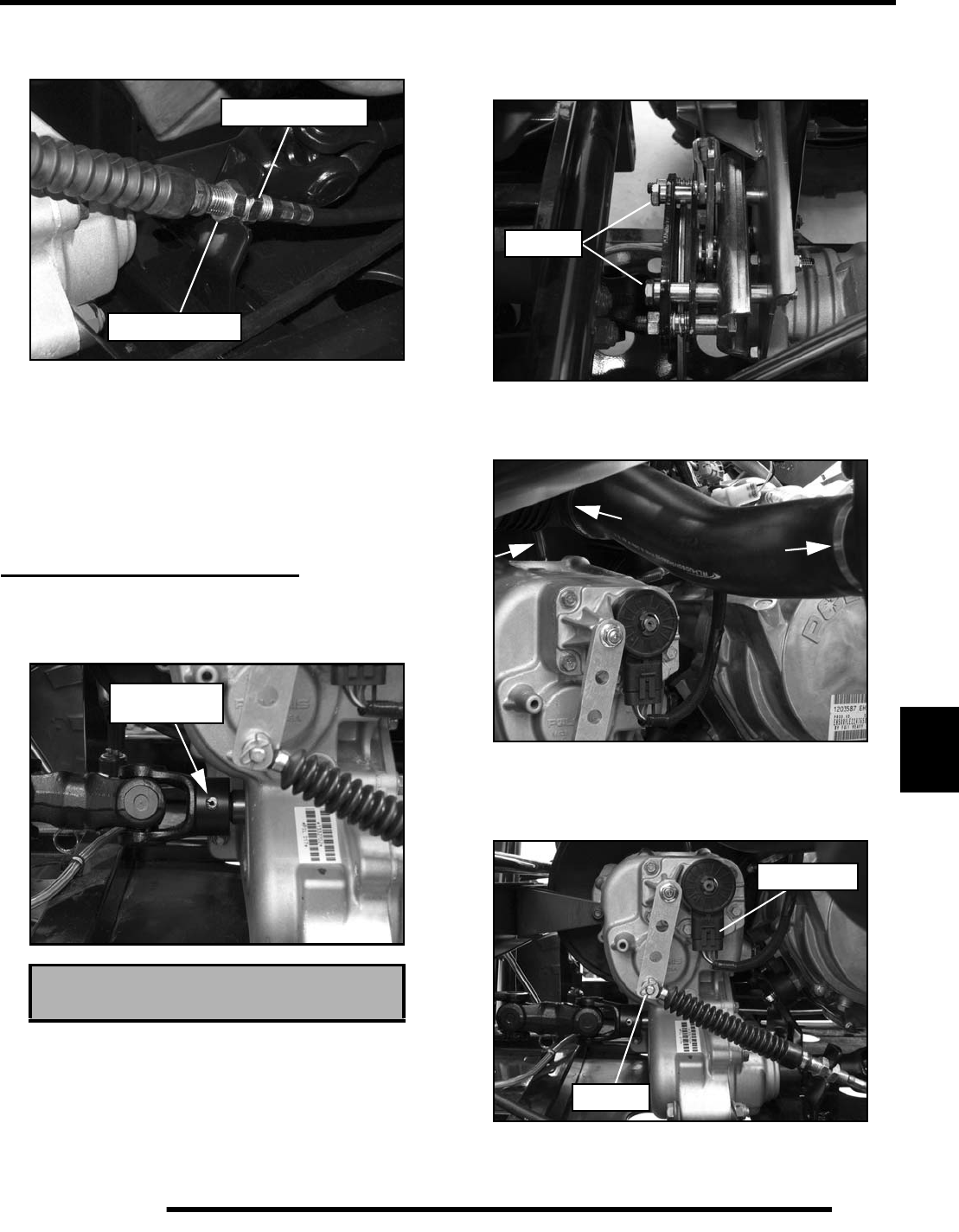
8.3
TRANSMISSION
8
2. With two wrenches loosen the outside jam nut
counterclockwise. Turn the outside jam nut 1 1/2 turns.
3. After turning the outside jam nut 1 1/2 turns. Hold the
outside jam nut with a wrench and tighten the inside jam
nut clockwise, until it is tight against the bracket.
4. Repeat Step 2 and Step 3 until the proper adjustment is
made for the transmission shift cable.
TRANSMISSION SERVICE
Transmission Removal
1. Drive the roll pin from rear drive shaft yoke.
NOTE: The front output shaft yolk slides off during
the transmission removal.
2. Remove the parking brake caliper assembly from the
caliper mount bracket to allow the rear driveshaft to be slid
back on the rear gearcase input shaft during removal.
3. Remove the air intake hose from the air box and air intake
baffle. Remove vent line from the top of transmission.
4. Disconnect the transmission switch and remove the pin clip
from the shift cable end. Remove the washer and shift cable
from the bellcrank.
Roll Pin Removal Tool (PN 2872608)
Inside Jam Nut
Outside Jam Nut
Roll Pin
Removal Tool
Remove
Disconnect
Remove
PartShark.com
877-999-5686
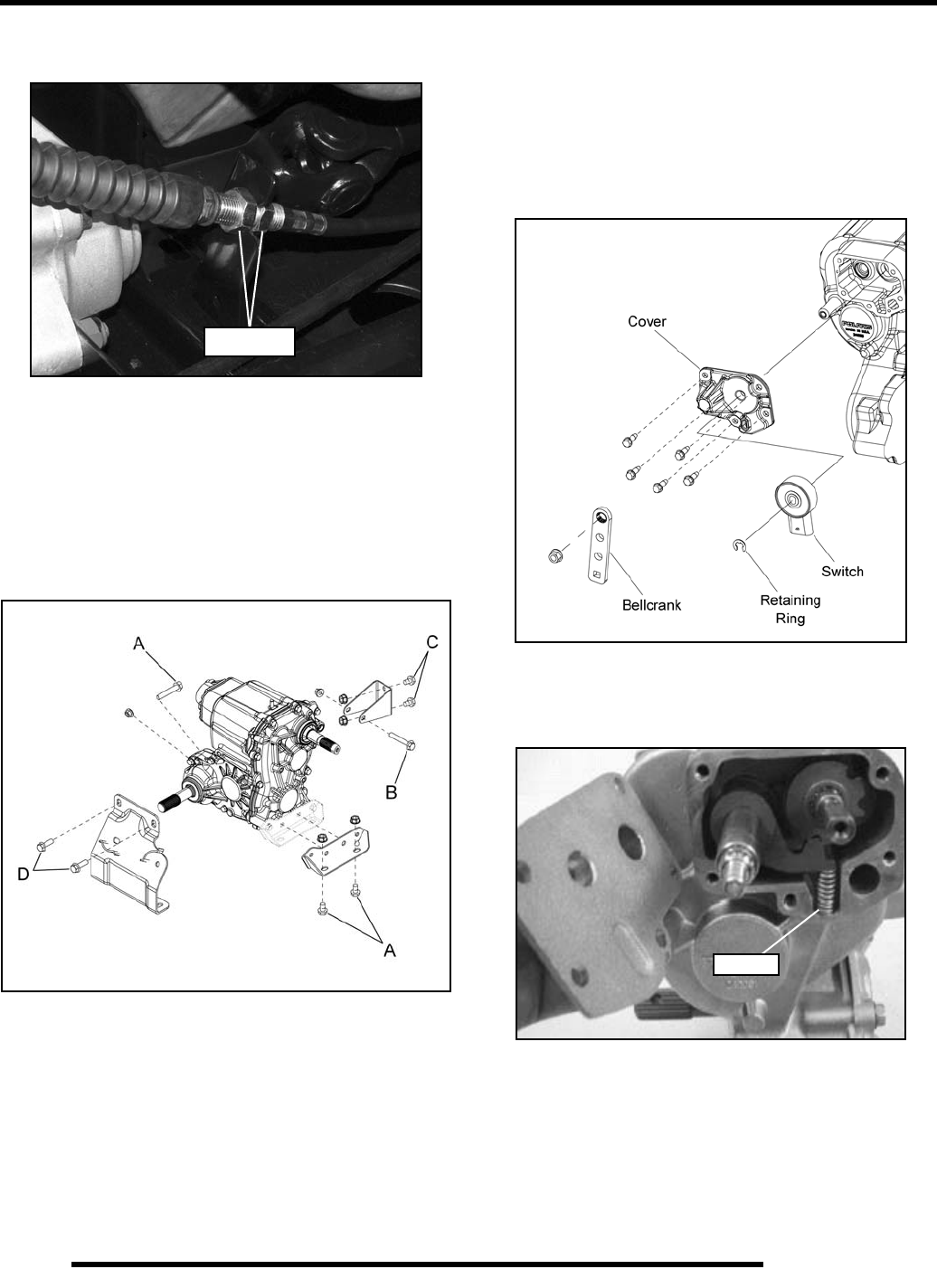
8.4
TRANSMISSION
5. Loosen the transmission shift cable jam nuts. Remove the
cable from the mounting bracket.
6. Remove the PVT system from the left side of the
transmission (see Chapter 6 “Clutching”).
7. Remove the transmission to frame bolts (A).
8. Remove the rear transmission mount bolt (B) and remove
the rear transmission mount bracket bolts (C).
9. Remove the front transmission-to-engine mount bolts (D).
10. Remove transmission from right side of frame.
Transmission Disassembly
NOTE: Refer to the exploded view at the end of this
chapter.
1. Remove the retaining ring and transmission switch.
2. Remove the nut, and washer that secure the bell crank and
remove the bellcrank.
3. Remove the five bolts that secure the cover and remove the
cover from the transmission.
4. Remove the detent spring.
Jam Nuts
Spring
PartShark.com
877-999-5686
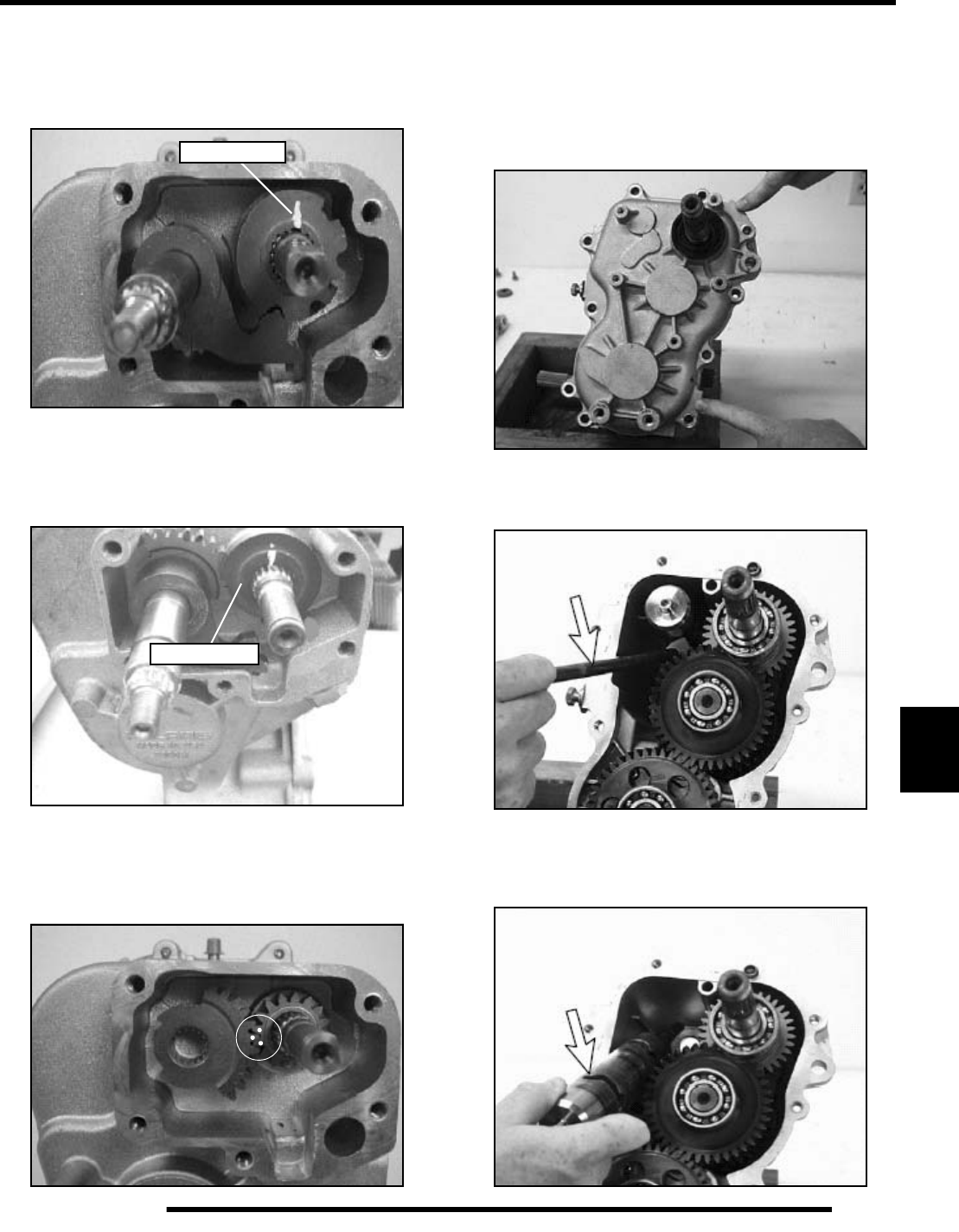
8.5
TRANSMISSION
8
5. Mark the detent gear with a white pen. Remove the detent
gear from the case.
NOTE: It may be helpful to place a mark just above
the keyed spline.
6. Mark the lockout disc, this will indicate which side of the
disc faces outward during assembly. Remove the disc.
NOTE: It may be helpful to place a mark just above
the keyed spline. Note the raised edge on the detent.
7. Remove the shift shaft and detent lever.
8. Note the transmission gear position and mark the two shift
gears before removing them to aid with reassembly.
Remove the shift gears from the case.
NOTE: Depending on what gear the transmission is
in upon disassembly, the stamped timing marks may
not be lined up. To avoid confusion, mark the two
gears as described in Step 8.
9. Remove the bolts on the LH transmission case cover. Tap
the cover off with a soft face hammer if necessary.
10. Lift shift rail 0.5”-1” (12.70-25.40 mm). Then rotate the
shift rail / forks and shift drum, so the forks’ pins disengage
from the drum.
11. Remove the shift drum.
NOTE: You may have to tap the shift drum from the
backside of the case to aid in removal.
Detent Gear
Lockout Disc
PartShark.com
877-999-5686
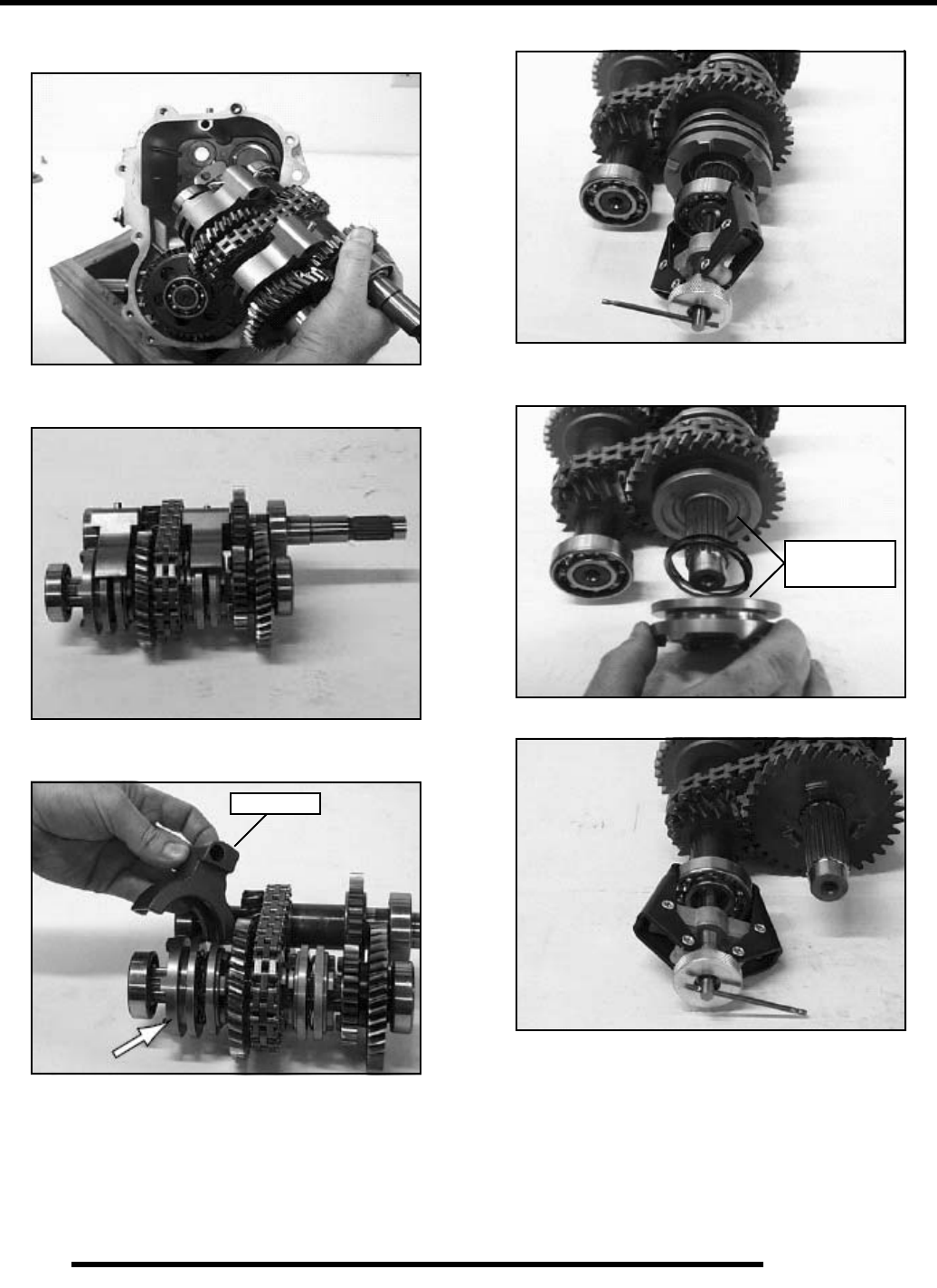
8.6
TRANSMISSION
12. Remove the upper gear cluster and shift forks. You may
need to move the assembly back and forth to aid in removal
13. Set the upper gear cluster on a flat surface and inspect the
components.
14. Remove the shift forks from the assembly. Note the correct
position of each fork.
NOTE: The picture above depicts a transmission
with a “Park” engagement dog on the end of the
shaft instead of a regular engagement dog. The
transmission will have a regular engagement dog in
the location indicated by the arrow in the photo.
15. Remove the bearing from the reverse shaft with a puller.
16. Remove the engagement dog. Remove the wave spring and
reverse engagement dog.
17. Remove the bearing from the input shaft with a puller.
Shift Fork
Engagement
Dogs
PartShark.com
877-999-5686
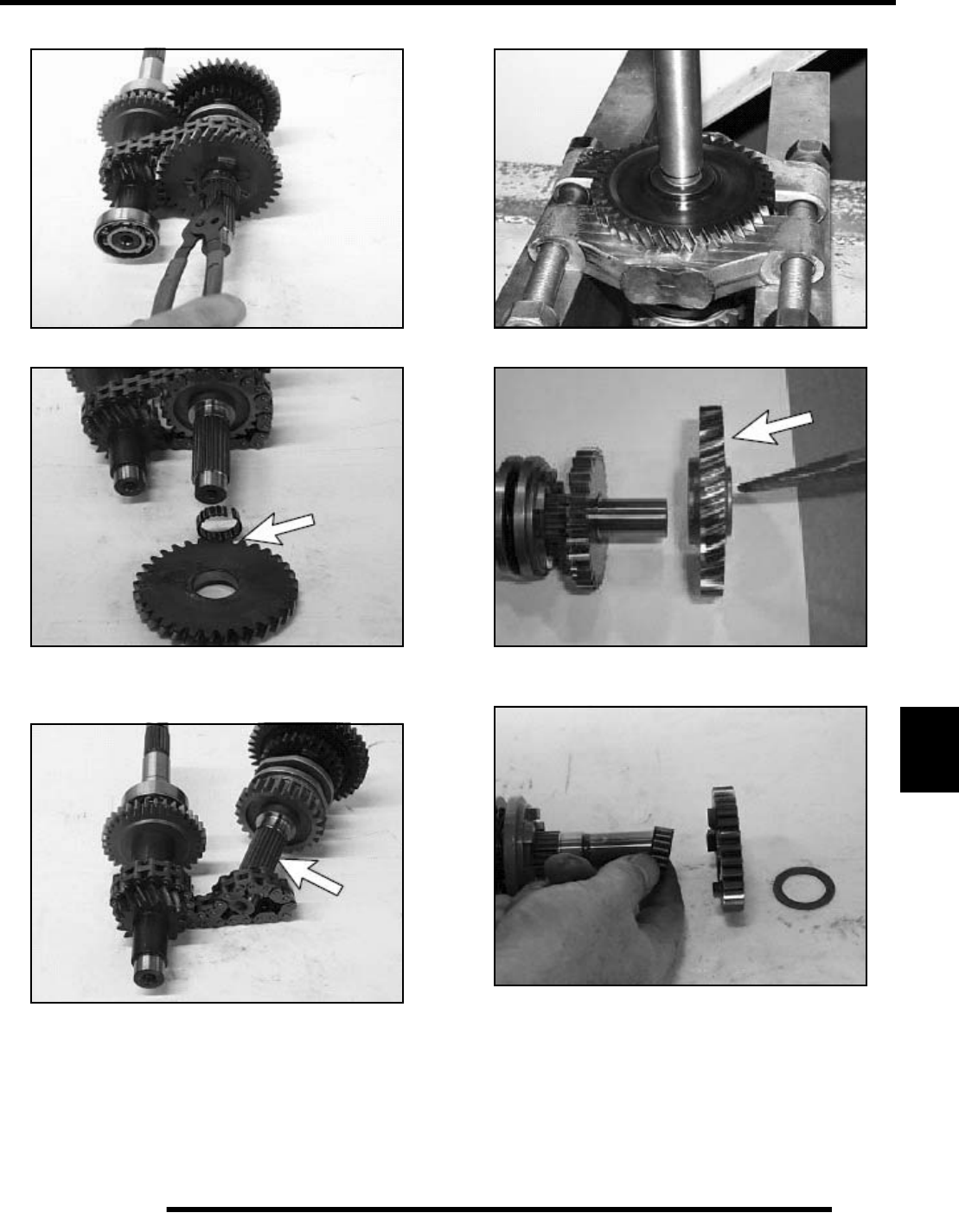
8.7
TRANSMISSION
8
18. Remove the snap ring and washer from the reverse shaft.
19. Remove low gear (33T) and the needle bearing.
20. Remove the reverse gear shaft.
21. Remove the rest of the bearings from the shafts.
22. Use a press to remove the gear from the shaft.
23. Make note of the direction of the gear and hub location.
24. Remove the gear, split bearing, and washer from the reverse
shaft.
PartShark.com
877-999-5686
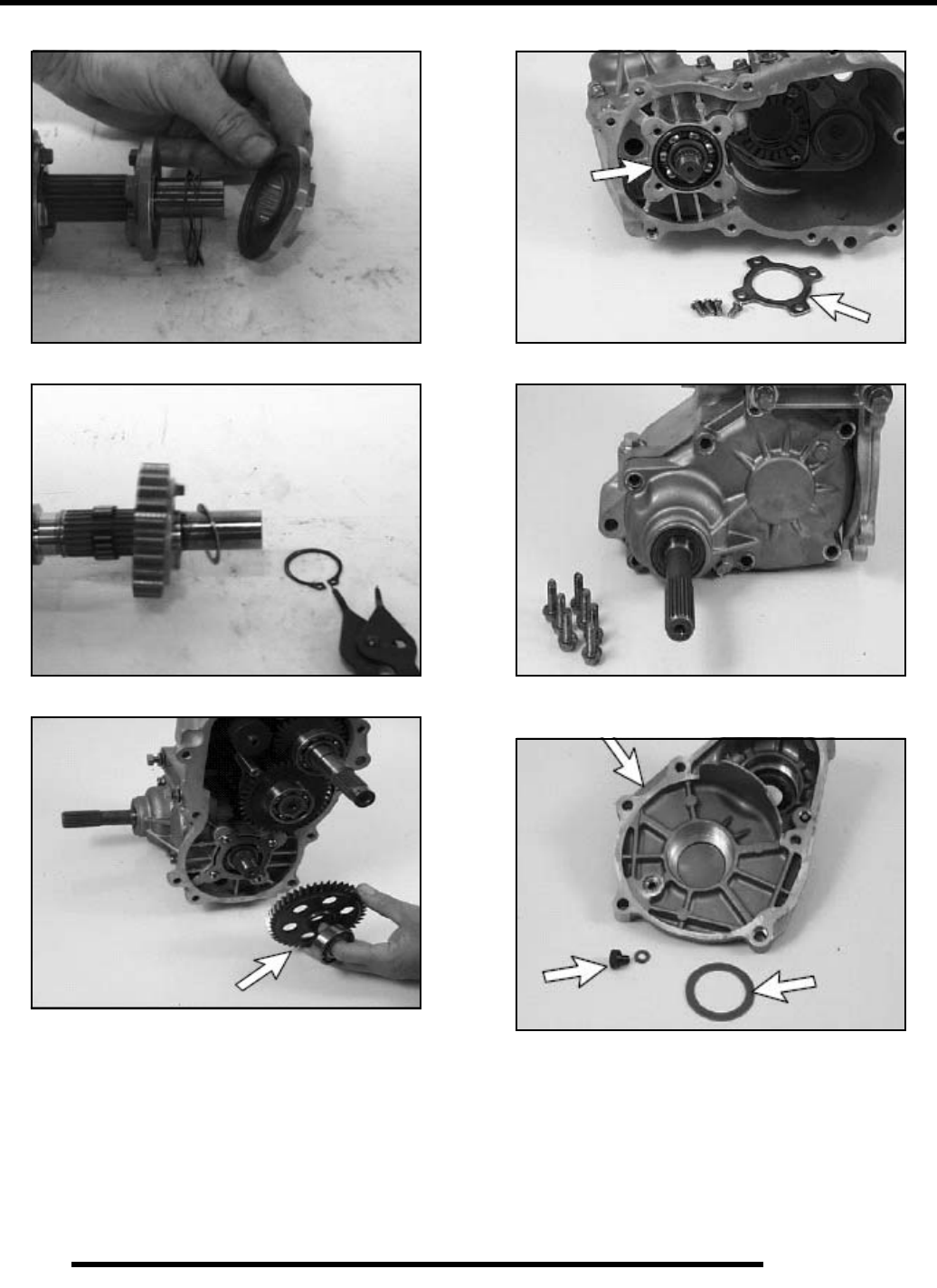
8.8
TRANSMISSION
25. Slide off the shift dogs and wave springs.
26. Remove the snap ring, washer, gear, and split bearing.
27. Remove bearing and the helical gear.
28. Remove the pinion shaft retainer plate and the pinion shaft.
29. Remove the front housing cover screws.
30. Remove the front housing cover, shim, thrust button, and
thrust button shim.
PartShark.com
877-999-5686
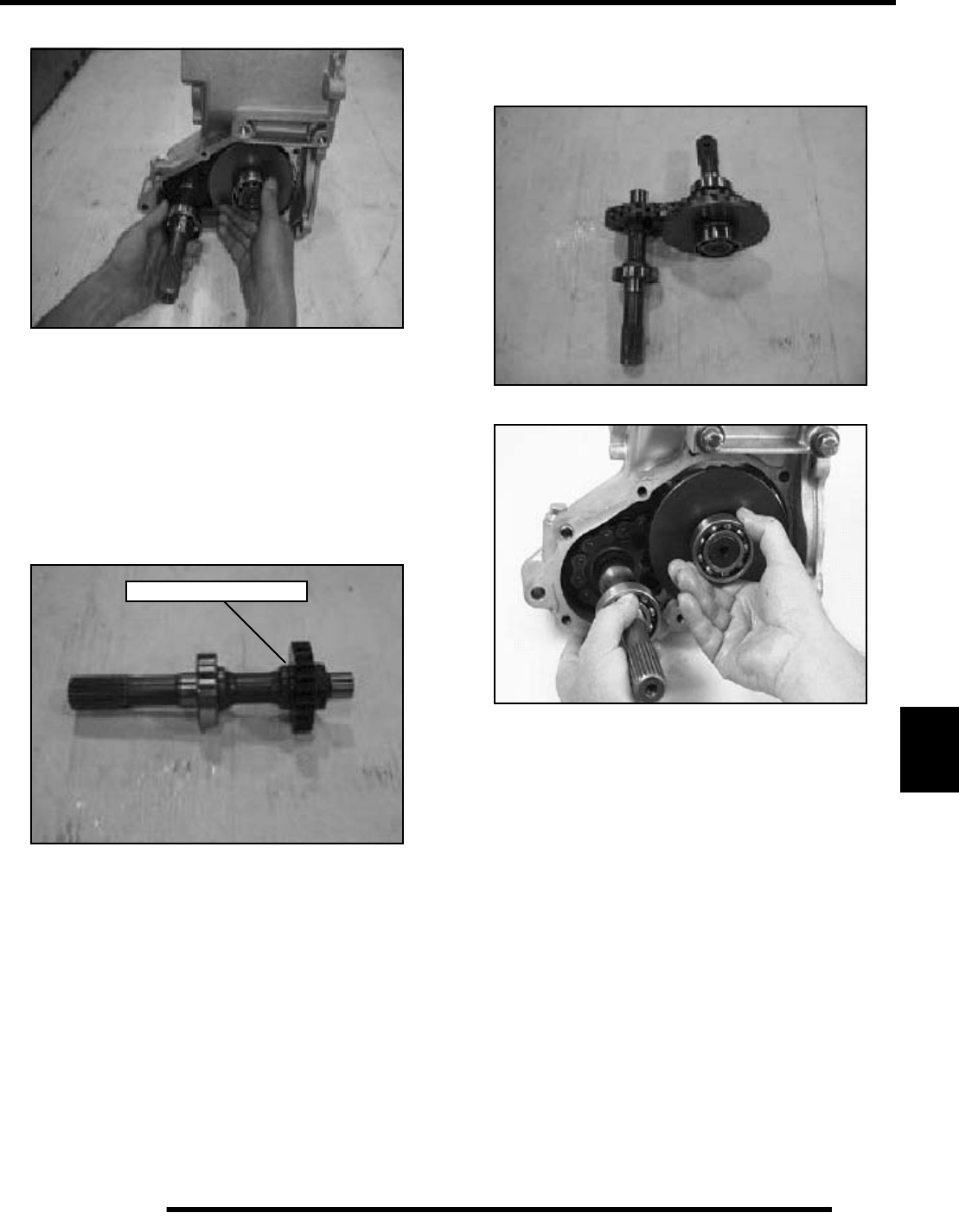
8.9
TRANSMISSION
8
31. Remove the shafts as an assembly.
32. Remove the silent chain from the assembly for shaft
inspection.
33. Clean all components in a parts washer and inspect for
wear.
34. Inspect engagement dogs of gears and replace if edges are
rounded.
35. Inspect gear teeth for wear, cracks, chips or broken teeth.
Note the location of the hubs on the gear.
36. Remove seals from transmission case.
IMPORTANT: New seals should be installed after the
transmission is completely assembled.
37. Inspect bearings for smooth operation. Check for excessive
play between inner and outer race.
Transmission Assembly
1. Reinstall the chain onto the front output shaft and rear
output shaft.
2. Install front and rear output shafts into the case.
Note Location of Hubs
PartShark.com
877-999-5686
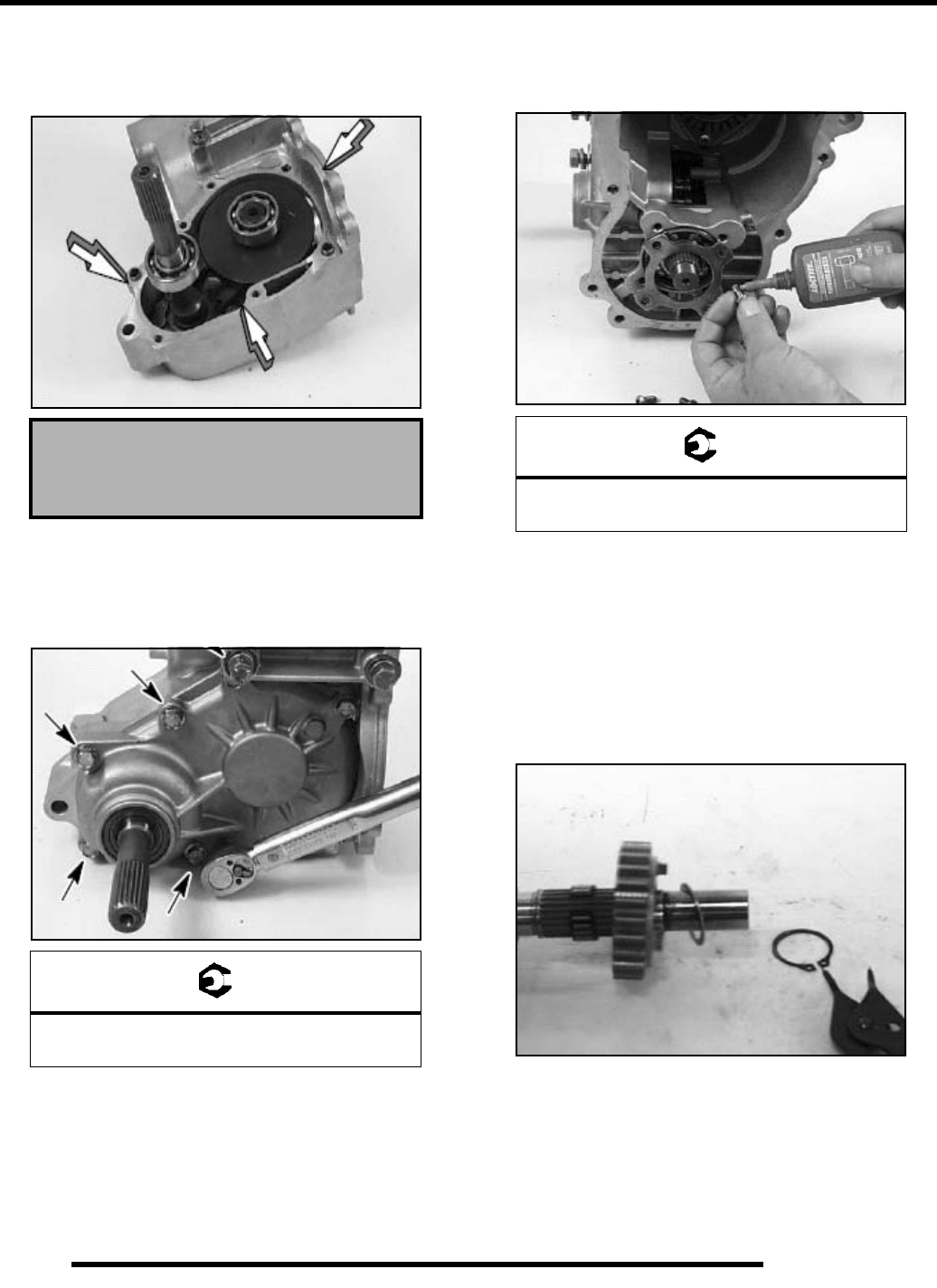
8.10
TRANSMISSION
3. Before installing the cover make sure the sealing surfaces
are clean and dry, and shafts are fully seated in the
transmission case. Apply Polaris Crankcase Sealant to the
mating surfaces.
4. Reinstall the thrust button shim, thrust button, and other
shims into the cover. Reinstall cover and torque bolts in a
criss-cross pattern in 3 steps to 27-34 ft. lbs. (37-46 Nm).
NOTE: Make sure that the case locating pins (knock
pipes) are in place.
5. Apply grease to the seal lips. Apply electricians tape or
somehow cover the splines of the shaft to protect the seal
lips during installation. Install new front and rear output
shaft seals.
6. Install pinion shaft with bearing.
7. Install retainer plate with flat side toward bearing.
8. Apply Loctite™ 262 (Red) (PN 2871951) to screw threads
and torque screws to 6-12 ft. lbs. (8-16 Nm).
9. Install a new needle bearing, the 38T reverse sprocket,
washer, and a new snap ring. Install the shift dogs and wave
spring. Install the washer, a new needle bearing and the high
gear. Install the press fit gear and ball bearing.
10. Install a new snap ring at this time. When installing the new
snap ring, open the snap ring just far enough to go over the
shaft, to avoid stressing the snap ring. If the snap ring is
overstressed it could come off the shaft and cause internal
damage to the transmission.
Crankcase Sealant
(PN 2871557)
= T
Front Cover Bolts:
27-34 ft. lbs. (37-46 Nm)
= T
Pinion Retainer Plate Bolts:
6-12 ft. lbs. (8-16 Nm)
PartShark.com
877-999-5686
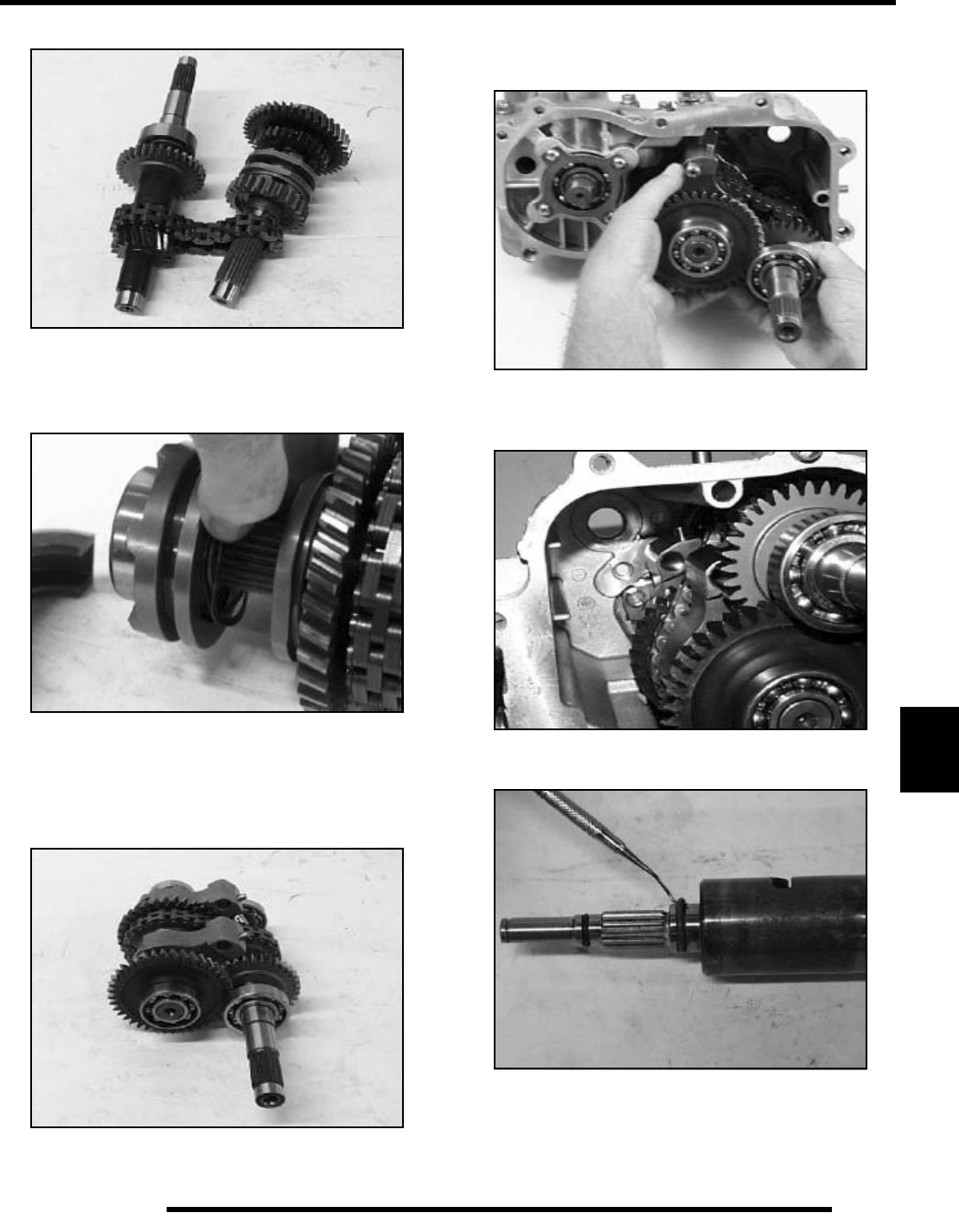
8.11
TRANSMISSION
8
11. Slide the reverse shaft assembly through the silent chain.
12. Install a new needle bearing, the low gear, the thrust washer
and the snap ring. Use of a new snap ring is recommended.
13. Install the engagement dogs, wave springs, and bearing.
14. Install the ball bearing onto the end of the input shaft.
15. As the engagement dogs are installed onto the shaft, place
the wave springs into the spring groove. Keep the spring in
place while the fork is being installed on the shaft and while
placing the shafts into the case.
NOTE: Use caution when installing the fork, the
spring can easily fall out.
NOTE: Installing the shift rail will aid in keeping the
shift forks, shift dogs, and the springs in place.
16. Carefully install the shaft assembly and gear cluster as a
unit into their respective bearing case recesses. Tap with a
soft face hammer to seat shaft assemblies.
17. Position the shift forks up and so the pins point toward the
9 o’clock position, before installing the shift drum
assembly.
18. Replace and grease the O-rings on the shift drum before
installation.
19. Install the shift drum into the case.
NOTE: Make sure shift shaft pins are properly
positioned in the slot on selector arms.
PartShark.com
877-999-5686
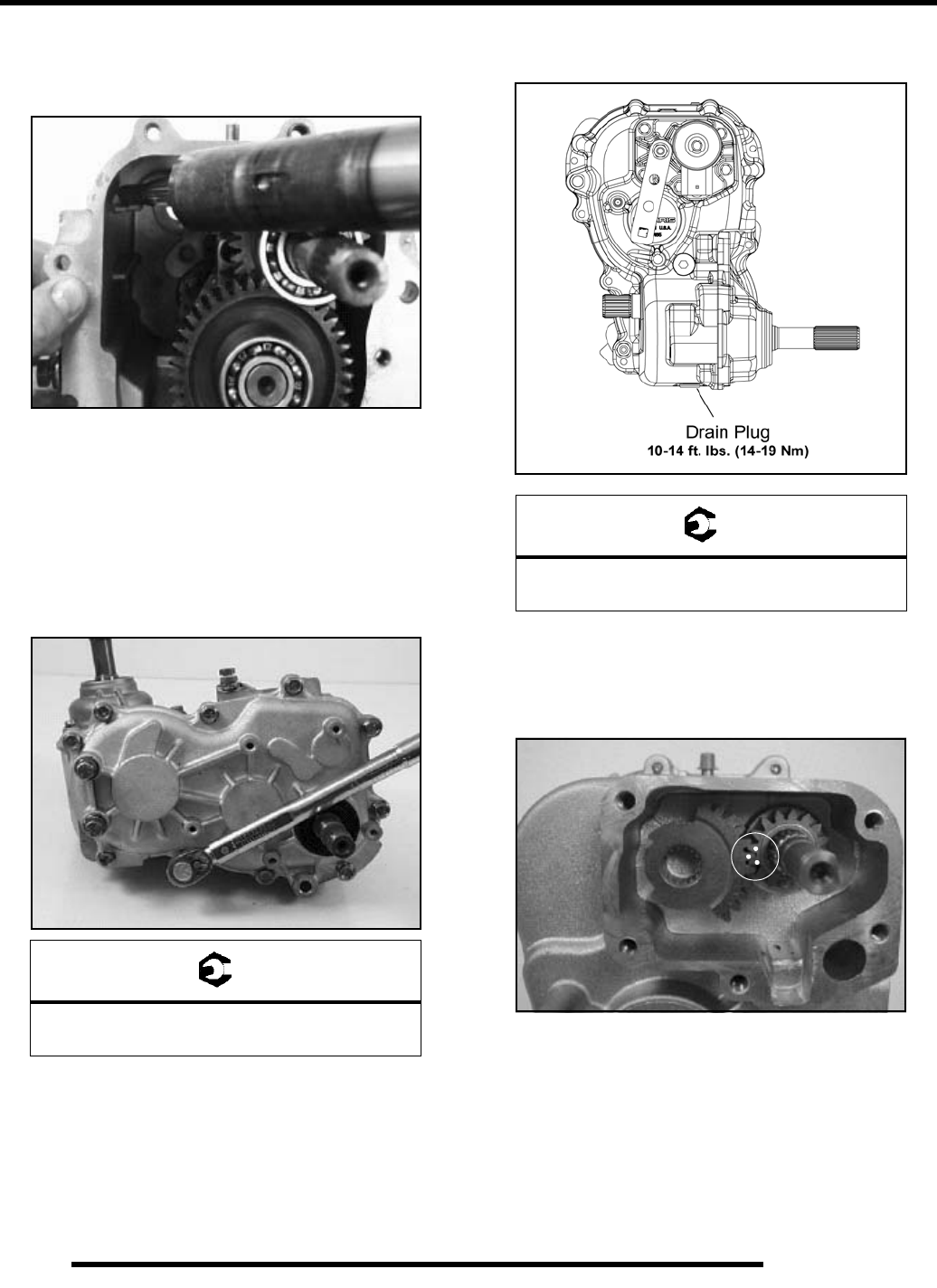
8.12
TRANSMISSION
20. Lift the shift rail slightly and rotate the rail/fork assembly
so it meshes with the tracks on the shift drum. Be sure the
wave springs are properly in place and that the shift rail is
seated into the pocket on the backside of the case.
21. Install the helical gear and bearing onto the pinion shaft.
22. Clean the mating surfaces of the case and cover. Apply
Crankcase Sealant (PN 2871557) to the mating surfaces. Be
sure the locating pins (knock pipes) are in place. Reinstall
cover and torque bolts in a criss-cross pattern in 3 steps to
27-34 ft. lbs. (37-46 Nm).
23. Reinstall the lower left-hand mount bracket if previously
removed.
24. Grease the seal lips of the input shaft seal. Apply
electricians tape or somehow cover the splines of the shaft
to protect the seal lips during installation. Install new input
shaft seal.
25. Install drain plug with a new sealing washer. Torque to
specification.
26. Place a small amount of grease (PN 2871551) into the
pocket before installing the sector gear. Install the shift gear
(16T) on the shift drum shaft. Install the sector gear in the
bushing pocket on the left side. Align the timing marks you
made on the gears during disassembly.
IMPORTANT: Note the location of the skip tooth on
the splines. Apply a light coating of grease on the
gear teeth.
27. Install the shift shaft along with the detent lever.
= T
Front Cover Bolts:
27-34 ft. lbs. (37-46 Nm)
= T
Drain Plug:
10-14 ft. lbs. (14-19 Nm)
PartShark.com
877-999-5686
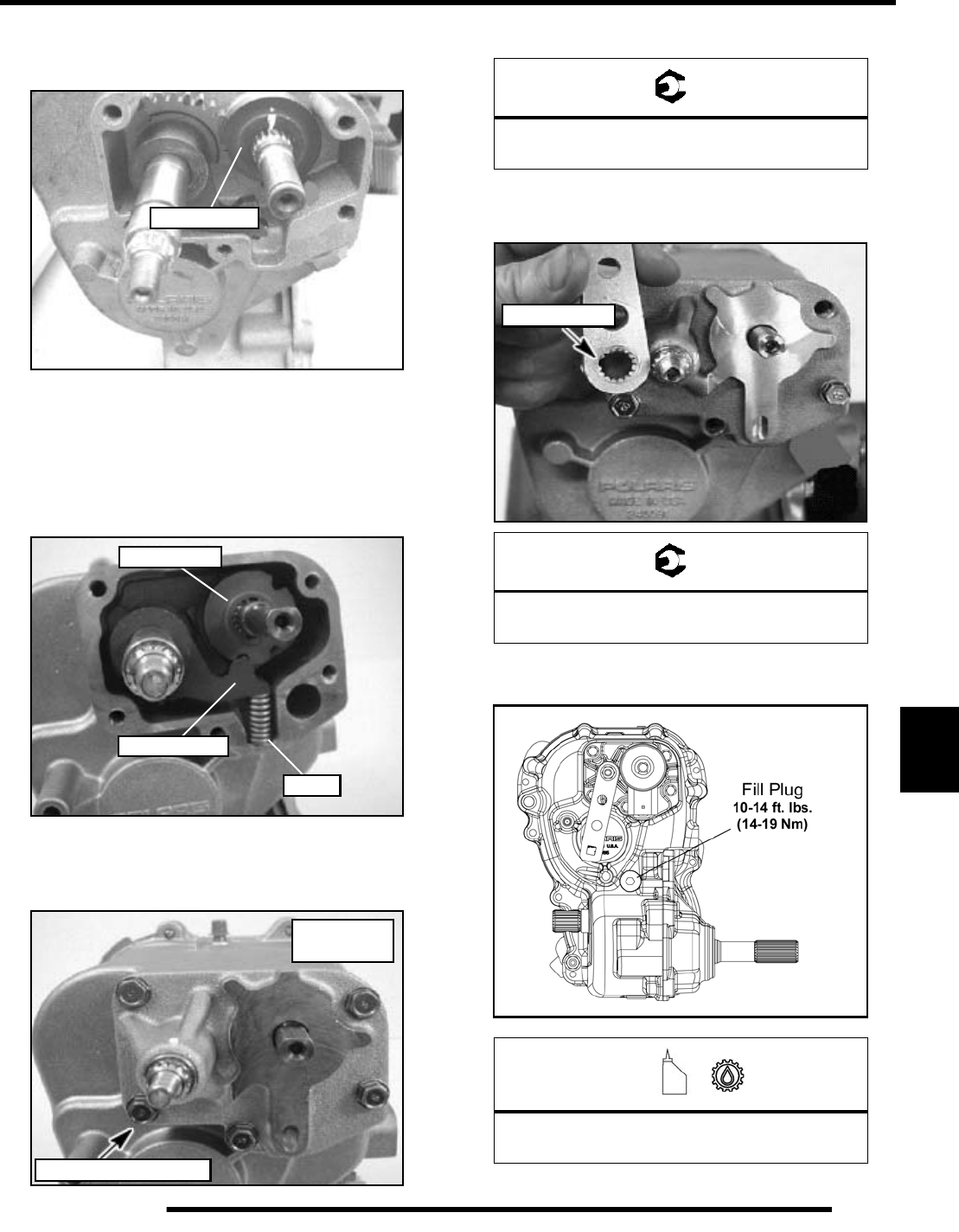
8.13
TRANSMISSION
8
28. Install the lockout disc with the raised edge facing outward.
Use the white mars that was previously applied for
reference.
29. Install the detent gear with the raised edge facing outward.
Note the keyed spline on the end of the shaft.
30. Install the detent lever spring. Install a new o-ring onto the
shift shaft after the detent lever is assembled to the shaft.
Place a small amount of grease on the small O-ring on the
shift shaft and on the detent gear. Grease the o-ring on the
end of the shift drum.
31. Install the cover and hand tighten all of the bolts. Tighten
the bolt indicated in the picture below first and torque the
bolt to 7-9 ft. lbs. (10-12 Nm). This helps to align the cover
and shaft to ensure smoother shifting.
32. Torque the remaining bolts to 7-9 ft.lbs. (10-12 Nm).
33. Install a new bellcrank onto the shift shaft. Note the keyed
spline on the bellcrank and shaft. Install the washer and nut.
Torque the bellcrank nut to 12-18 ft. lbs. (16-24 Nm).
34. Install the transmission and add Polaris AGL Gearcase
Lubricant (PN 2873602). Torque fill plug to specification.
Lockout Disc
Spring
Detent Gear
Detent Lever
7-9 ft. lbs.
Tighten This Bolt First
(10-12 Nm)
= T
Cover Bolts:
7-9 ft. lbs. (10-12 Nm)
= T
Bellcrank Nut:
12-18 ft. lbs. (16-24 Nm)
=
AGL Gearcase Lube
43.6 oz. (1290 ml)
Keyed Spline
PartShark.com
877-999-5686
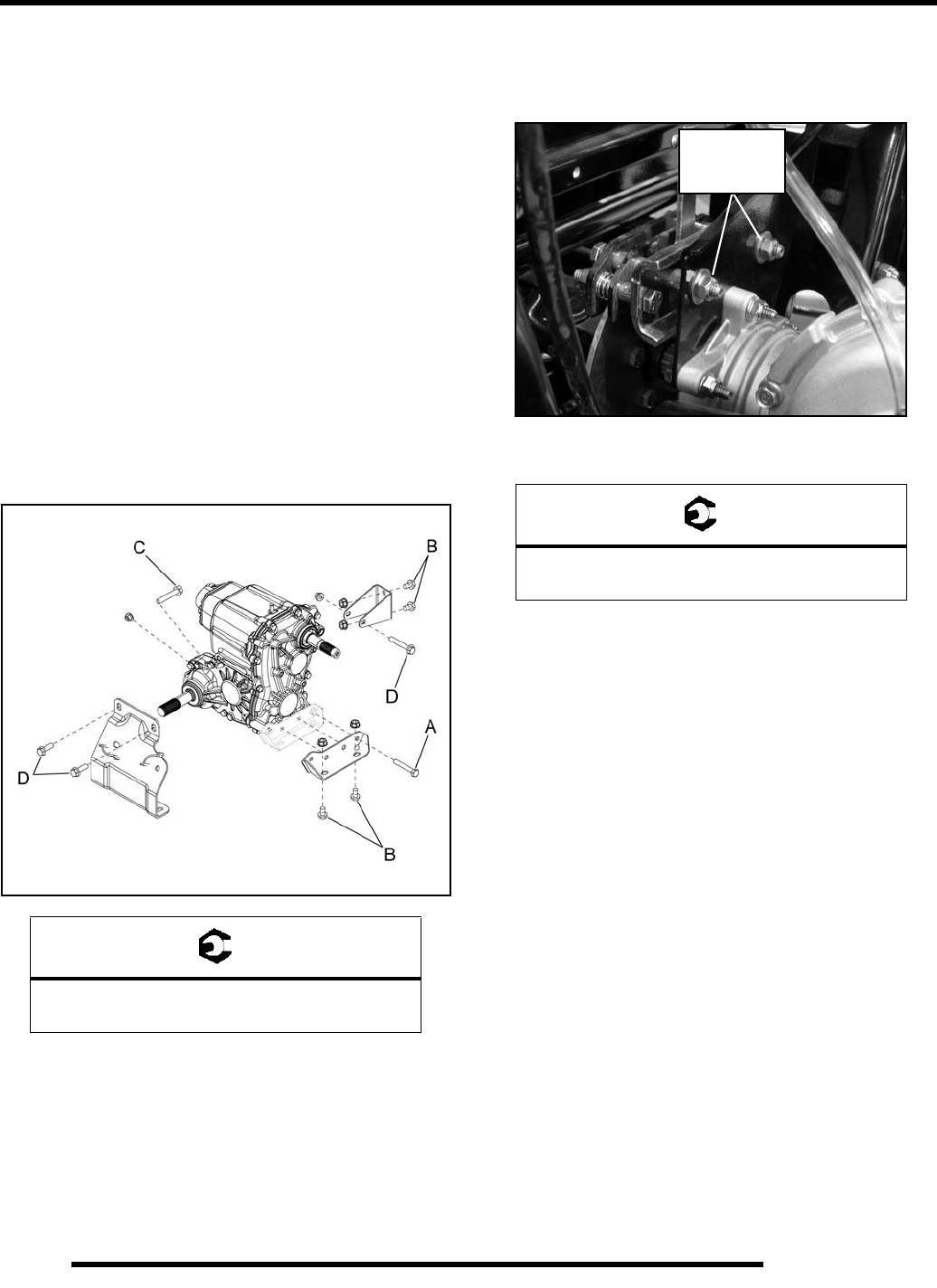
8.14
TRANSMISSION
Transmission Installation
1. Install transmission from right side of vehicle.
2. Align the front output shaft to the front propshaft yoke on
the vehicle and install the propshaft.
3. Align the rear output shaft to the rear propshaft yoke and
roll pin hole.
4. Slide the rear propshaft onto the rear output shaft and drive
a NEW roll pin into the propshaft yoke.
5. Position transmission in frame.
6. Loosely install the front transmission to frame bolts.
7. Loosely install the rear transmission to frame bolt.
8. Loosely install the three bottom transmission to frame
bolts.
9. Tighten mounting fasteners in order A-D as shown.
NOTE: Be sure to tighten the lower transmission
bolts first, this ensures that the transmission is tight
against the lower frame and helps to properly align
the transmission.
10. Reinstall the shift linkage rod, the air intake hose, and the
vent hose on top of the transmission.
11. Refer to Chapter 6 for PVT installation.
NOTE: Align clutches as outlined in Chapter 6.
12. Install the parking brake caliper assembly. Tighten the two
mount bolts in increments for proper installation.
13. Torque the two mount bolts to 18 ft. lbs. (24 Nm).
= T
Transmission Mounting Bolts: B, C, D
40 ft. lbs. (54 Nm)
= T
Parking Brake Caliper - Mounting Bolts:
18 ft. lbs. (24 Nm)
18 ft. lbs.
(24 Nm)
PartShark.com
877-999-5686
8.15
TRANSMISSION
8
TROUBLESHOOTING
Troubleshooting Checklist
Check the following items when shifting difficulty is encountered.
• Shift cable adjustment/condition
• Idle speed (throttle cable routing)
• PVT alignment
• Transmission lubricant type/quality
• Drive belt deflection (where applicable)
• Loose fasteners on rod ends
• Loose fasteners on sector gear cover
• Worn rod ends, clevis pins, or pivot arm bushings
• Linkage rod adjustment and rod end positioning
• Shift selector rail travel
• *Worn, broken or damaged internal transmission components
NOTE: To determine if shifting difficulty or problem is caused by an internal transmission problem, isolate
the transmission by disconnecting linkage rod from transmission bellcrank. Manually select each gear range
at the transmission bellcrank, and test ride vehicle. If it functions properly, the problem is outside the
transmission.
If transmission problem remains, disassemble transmission and inspect all gear dogs for wear (rounding),
damage. Inspect all bearings, circlips, thrust washers and shafts for wear.
PartShark.com
877-999-5686
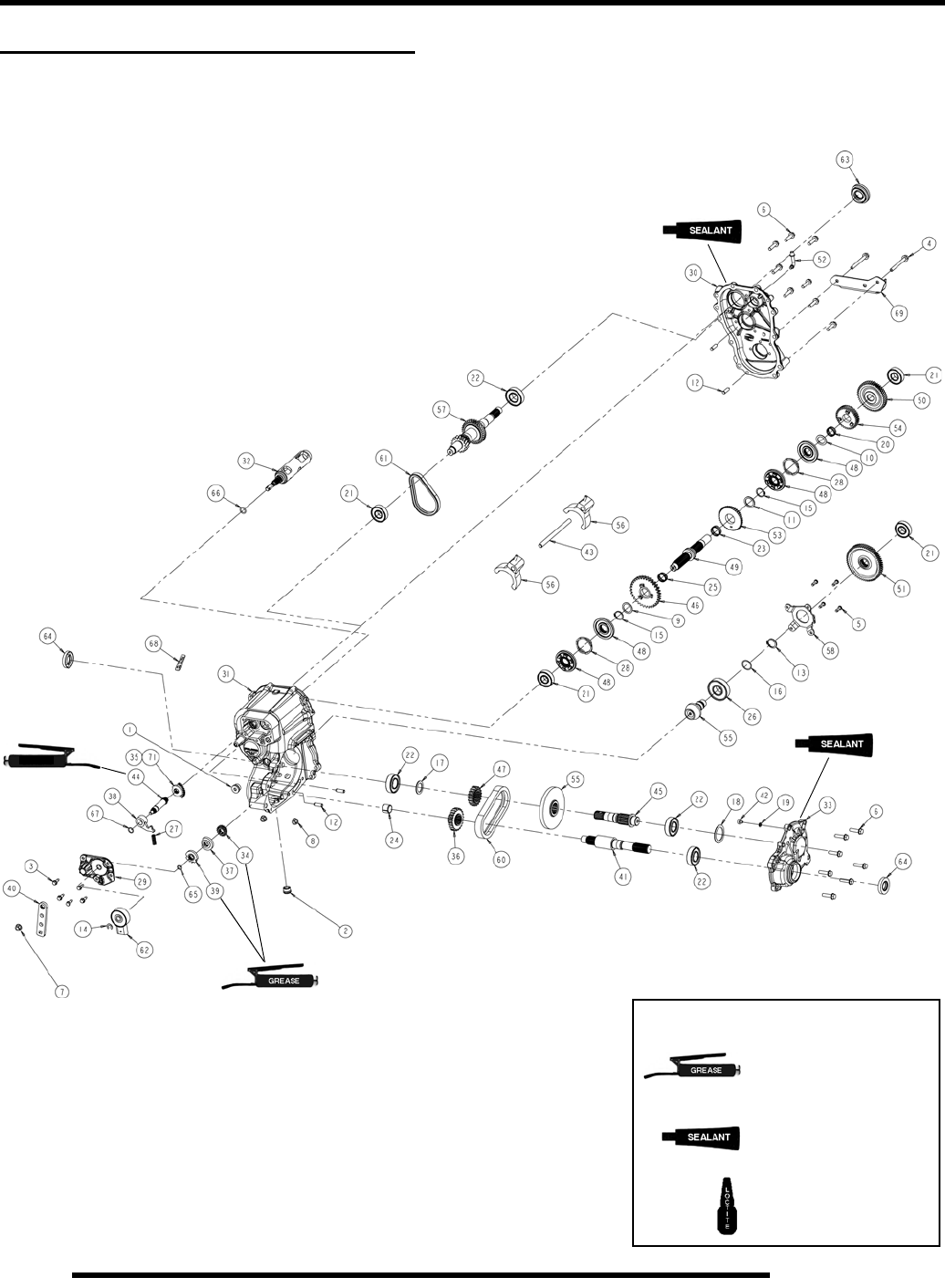
8.16
TRANSMISSION
TRANSMISSION EXPLODED VIEW
Exploded View
FOR REASSEMBLY
Apply White Lithium
Based Grease.
Apply Polaris
Crankcase Sealant.
Apply LoctiteTM 262 to
the bolt threads.
12-18 ft. lbs.
(16-24 Nm)
7-9 ft. lbs.
(10-12 Nm) 15-19 ft. lbs.
(20-26 Nm)
27-34 ft. lbs.
(37-46 Nm)
6-12 ft. lbs.
(8-16 Nm)
GREASE
27-34 ft. lbs.
(37-46 Nm)
10-14 ft. lbs.
(14-19 Nm)
10-14 ft. lbs.
(14-19 Nm)
PartShark.com
877-999-5686
8.17
TRANSMISSION
8
Exploded View, Continued
Ref. Qty. Description Ref. Qty. Description
1. 1 Plug, Fill 36. 1 Sprocket, 22T
2. 1 Plug, Drain, Magnetic 37. 1 Lockout Disc
3. 5 Screw, Self-Tapping 1/4-20 38. 1 Detent Pawl
4. 2 Screw, 5/16-18 39. 1 Detent Star
5. 4 Screw, 1/4-20 40. 1 Bellcrank, Shift Drum
6. 15 Screws, Self-Tapping 5/16-18 41. 1 Output Shaft, Front Main
7. 1 Nut, Nylon Lock 42. 1 Trust Button
8. 2 Nut, Nylon Lock 43. 1 Rail, Shift Shaft
9. 1 Washer 44. 1 Shift Shaft
10. 1 Washer 45. 1 Output Shaft, Rear Main
11. 1 Washer 46. 1 Gear, 33T
12. 4 Dowel Pin 47. 1 Sprocket, 19T
13. 1 Retaining Ring, External 48. 4 Engagement Dog, 6 Face
14. 1 Retaining Ring, External 49. 1 Reverse Shaft
15. 2 Retaining Ring, External 50. 1 Gear, Mid-Output, 47T
16. 1 Spacer 51. 1 Gear, Mid-Output, 60T
17. 1 Thrust Washer 52. 1 Vent Tube
18. 1 Shim 53. 1 Sprocket, 38T
19. 1 Shim 54. 1 Gear, 36T
20. 1 Needle Bearing 55. 1 Gear Set, 10T/31T
21. 4 Ball Bearing 56. 2 Shift Fork w/Pin
22. 4 Ball Bearing 57. 1 Input Shaft, 37/19/15
23. 1 Needle Bearing 58. 1 Cover, Center Drive Bearing
24. 1 Plain Bearing 59. - N/A
25. 1 Needle Bearing 60. 1 Silent Chain, 11W/40P
26. 1 Ball Bearing 61. 1 Chain
27. 1 Spring, Compression 62. 1 Switch, 6-Pin Rotary
28. 2 Spring, Wave 63. 1 Seal, Dual Lip
29. 1 Cover, Sector Gear 64. 2 Seal, Triple Lip
30. 1 Cover, LH Input 65. 1 O-Ring
31. 1 Gearcase, Main 66. 1 O-Ring
32. 1 Shift Drum 67. 1 O-Ring
33. 1 Cover, Output 68. - N/A
34. 1 Sector Gear, 16T 69. 1 Bracket, Transmission Mount
35. 1 Sector Gear, 31T
PartShark.com
877-999-5686
NOTES
TRANSMISSION
8.18
PartShark.com
877-999-5686
BRAKES
9.1
CHAPTER 9
BRAKES
9
GENERAL SPECIFICATIONS. . . . . . . . . . . . . . . . . . . . . . . . . . . . . . . . . . . . . . . . . . . . . . 9.2
TORQUE SPECIFICATIONS. . . . . . . . . . . . . . . . . . . . . . . . . . . . . . . . . . . . . . . . . . . . . . . 9.2
SPECIAL TOOLS . . . . . . . . . . . . . . . . . . . . . . . . . . . . . . . . . . . . . . . . . . . . . . . . . . . . . . . 9.2
BRAKE SYSTEM SERVICE NOTES. . . . . . . . . . . . . . . . . . . . . . . . . . . . . . . . . . . . . . . . . 9.3
BRAKE NOISE TROUBLESHOOTING . . . . . . . . . . . . . . . . . . . . . . . . . . . . . . . . . . . . . . . 9.3
HYDRAULIC BRAKE SYSTEM OPERATION. . . . . . . . . . . . . . . . . . . . . . . . . . . . . . . . . . 9.4
BRAKE SYSTEM EXPLODED VIEW . . . . . . . . . . . . . . . . . . . . . . . . . . . . . . . . . . . . . . . . 9.4
MASTER CYLINDER. . . . . . . . . . . . . . . . . . . . . . . . . . . . . . . . . . . . . . . . . . . . . . . . . . . . . 9.5
REMOVAL / INSTALLATION . . . . . . . . . . . . . . . . . . . . . . . . . . . . . . . . . . . . . . . . . . . . . . 9.5
FOOT BRAKE PEDAL. . . . . . . . . . . . . . . . . . . . . . . . . . . . . . . . . . . . . . . . . . . . . . . . . . . . 9.5
PEDAL REMOVAL / INSTALLATION. . . . . . . . . . . . . . . . . . . . . . . . . . . . . . . . . . . . . . . . 9.5
BRAKE BLEEDING / FLUID CHANGE . . . . . . . . . . . . . . . . . . . . . . . . . . . . . . . . . . . . . . . 9.6
PARKING BRAKE . . . . . . . . . . . . . . . . . . . . . . . . . . . . . . . . . . . . . . . . . . . . . . . . . . . . . . . 9.7
EXPLODED VIEW . . . . . . . . . . . . . . . . . . . . . . . . . . . . . . . . . . . . . . . . . . . . . . . . . . . . . . 9.7
INSPECTION . . . . . . . . . . . . . . . . . . . . . . . . . . . . . . . . . . . . . . . . . . . . . . . . . . . . . . . . . . 9.8
CABLE TENSION ADJUSTMENT . . . . . . . . . . . . . . . . . . . . . . . . . . . . . . . . . . . . . . . . . . 9.8
PARKING BRAKE CALIPER SERVICE . . . . . . . . . . . . . . . . . . . . . . . . . . . . . . . . . . . . . . 9.9
EXPLODED VIEW . . . . . . . . . . . . . . . . . . . . . . . . . . . . . . . . . . . . . . . . . . . . . . . . . . . . . . 9.9
CALIPER REMOVAL . . . . . . . . . . . . . . . . . . . . . . . . . . . . . . . . . . . . . . . . . . . . . . . . . . . . 9.9
CALIPER DISASSEMBLY / INSPECTION . . . . . . . . . . . . . . . . . . . . . . . . . . . . . . . . . . . 9.10
NEW BRAKE PAD INSTALLATION . . . . . . . . . . . . . . . . . . . . . . . . . . . . . . . . . . . . . . . . 9.11
CALIPER INSTALLATION . . . . . . . . . . . . . . . . . . . . . . . . . . . . . . . . . . . . . . . . . . . . . . . 9.11
PARKING BRAKE DISC SERVICE . . . . . . . . . . . . . . . . . . . . . . . . . . . . . . . . . . . . . . . . . 9.11
DISC INSPECTION / REMOVAL . . . . . . . . . . . . . . . . . . . . . . . . . . . . . . . . . . . . . . . . . . 9.11
FRONT BRAKE PADS. . . . . . . . . . . . . . . . . . . . . . . . . . . . . . . . . . . . . . . . . . . . . . . . . . . 9.12
PAD REMOVAL / INSPECTION. . . . . . . . . . . . . . . . . . . . . . . . . . . . . . . . . . . . . . . . . . . 9.12
PAD ASSEMBLY / INSTALLATION . . . . . . . . . . . . . . . . . . . . . . . . . . . . . . . . . . . . . . . . 9.13
BRAKE BURNISHING PROCEDURE . . . . . . . . . . . . . . . . . . . . . . . . . . . . . . . . . . . . . . 9.13
FRONT CALIPER SERVICE . . . . . . . . . . . . . . . . . . . . . . . . . . . . . . . . . . . . . . . . . . . . . . 9.14
CALIPER EXPLODED VIEW . . . . . . . . . . . . . . . . . . . . . . . . . . . . . . . . . . . . . . . . . . . . . 9.14
CALIPER REMOVAL . . . . . . . . . . . . . . . . . . . . . . . . . . . . . . . . . . . . . . . . . . . . . . . . . . . 9.14
CALIPER DISASSEMBLY . . . . . . . . . . . . . . . . . . . . . . . . . . . . . . . . . . . . . . . . . . . . . . . 9.15
CALIPER INSPECTION / ASSEMBLY . . . . . . . . . . . . . . . . . . . . . . . . . . . . . . . . . . . . . . 9.16
CALIPER INSTALLATION . . . . . . . . . . . . . . . . . . . . . . . . . . . . . . . . . . . . . . . . . . . . . . . 9.17
FRONT BRAKE DISC . . . . . . . . . . . . . . . . . . . . . . . . . . . . . . . . . . . . . . . . . . . . . . . . . . . 9.18
DISC RUNOUT / INSPECTION . . . . . . . . . . . . . . . . . . . . . . . . . . . . . . . . . . . . . . . . . . . 9.18
DISC REMOVAL / REPLACEMENT. . . . . . . . . . . . . . . . . . . . . . . . . . . . . . . . . . . . . . . . 9.18
REAR BRAKE PADS. . . . . . . . . . . . . . . . . . . . . . . . . . . . . . . . . . . . . . . . . . . . . . . . . . . . 9.19
PAD REMOVAL . . . . . . . . . . . . . . . . . . . . . . . . . . . . . . . . . . . . . . . . . . . . . . . . . . . . . . . 9.19
PAD INSPECTION / INSTALLATION. . . . . . . . . . . . . . . . . . . . . . . . . . . . . . . . . . . . . . . 9.20
BRAKE BURNISHING PROCEDURE . . . . . . . . . . . . . . . . . . . . . . . . . . . . . . . . . . . . . . 9.20
REAR CALIPER SERVICE . . . . . . . . . . . . . . . . . . . . . . . . . . . . . . . . . . . . . . . . . . . . . . . 9.21
REAR CALIPER EXPLODED VIEW. . . . . . . . . . . . . . . . . . . . . . . . . . . . . . . . . . . . . . . . 9.21
CALIPER REMOVAL . . . . . . . . . . . . . . . . . . . . . . . . . . . . . . . . . . . . . . . . . . . . . . . . . . . 9.21
CALIPER DISASSEMBLY / INSPECTION . . . . . . . . . . . . . . . . . . . . . . . . . . . . . . . . . . . 9.22
CALIPER ASSEMBLY / INSTALLATION . . . . . . . . . . . . . . . . . . . . . . . . . . . . . . . . . . . . 9.23
REAR BRAKE DISC . . . . . . . . . . . . . . . . . . . . . . . . . . . . . . . . . . . . . . . . . . . . . . . . . . . . 9.24
DISC RUNOUT / INSPECTION . . . . . . . . . . . . . . . . . . . . . . . . . . . . . . . . . . . . . . . . . . . 9.24
DISC REMOVAL / REPLACEMENT. . . . . . . . . . . . . . . . . . . . . . . . . . . . . . . . . . . . . . . . 9.24
TROUBLESHOOTING. . . . . . . . . . . . . . . . . . . . . . . . . . . . . . . . . . . . . . . . . . . . . . . . . . . 9.25
PartShark.com
877-999-5686
9.2
BRAKES
GENERAL SPECIFICATIONS
TORQUE SPECIFICATIONS SPECIAL TOOLS
FRONT BRAKE SYSTEM
Item Standard Service Limit
Front Brake Pad Thickness .298 ± .007" / 7.56 ± .178 mm .180" (4.6 mm)
Front Brake Disc Thickness .188" ( 4.78 mm) .170" (3.56mm)
Front Brake Disc Runout - .010" (.254mm)
REAR BRAKE SYSTEM
Item Standard Service Limit
Rear Brake Pad Thickness .298 ± .007"/ 7.56 ± .178 mm .180" (4.6 mm)
Rear Brake Disc Thickness .188" (4.78 mm) .170" (4.32 mm)
Rear Brake Disc Runout - .010" (.254 mm)
PARK BRAKE SYSTEM
Item Standard Service Limit
Park Brake Pad Thickness Inboard - .304” (7.72 mm)
Outboard - .360” (9.14 mm) .240" (6.1 mm)
.310” (7.87 mm)
Park Brake Disc Thickness 0.150” - 0.164” (3.81 - 4.16 mm) .140" (3.56 mm)
Item Torque
ft. lbs. Torque
Nm
Front Caliper Mounting Bolts 30 41
Rear Caliper Mounting Bolts 30 41
Park Brake Caliper Mount Bolts 18 24
Park Brake Assembly Bolts 25 34
Park Brake Lever Mount Bolts 13 18
Brake Line Flare Fittings 12-15 16-20
Brake Line Banjo Bolts
(All) 15 20
Front Brake Disc to Hub Bolts 18 24
Rear Brake Disc to Hub Bolts 28 38
Brake Switch 12-15 16-20
Master Cylinder Mount Bolts 15 20
Part Number Tool Description
2870975 Mity Vac™ Pressure Test Tool
PartShark.com
877-999-5686
9.3
BRAKES
9
BRAKE SYSTEM SERVICE NOTES
Disc brake systems are light weight, low maintenance, and perform well in the conditions this vehicle will routinely encounter. There
are a few things to remember when replacing disc brake pads or performing brake system service to ensure proper system function
and maximum pad service life.
• Optional pads are available to suit conditions in your area. Select a pad to fit riding style and environment.
• Do not over-fill the master cylinder fluid reservoir.
• Make sure the brake pedal returns freely and completely.
• Adjust stop pin on front caliper after pad service.
• Check and adjust master cylinder reservoir fluid level after pad service.
• Make sure atmospheric vent on reservoir is unobstructed.
• Test for brake drag after any brake system service and investigate cause if brake drag is evident.
• Make sure caliper moves freely on guide pins (where applicable).
• Inspect caliper piston seals for foreign material that could prevent caliper pistons from returning freely.
• Perform a brake burnishing procedure after installing new pads to maximize service life.
• DO NOT lubricate or clean the brake components with aerosol or petroleum products. Use only approved brake cleaning
products.
BRAKE NOISE TROUBLESHOOTING
Dirt or dust buildup on the brake pads and disc is the most common cause of brake noise (squeal caused by vibration). If cleaning
does not reduce the occurrence of brake noise, Permatex™ Disc Brake Quiet (PN 2872113) can be applied to the back of the pads.
Follow directions on the package. This will keep pads in contact with caliper piston(s) to reduce the chance of squeaks caused by
dirt or dust.
Brake Noise Troubleshooting
Possible Cause Remedy
Dirt, dust, or imbedded material on pads or disc Spray disc and pads with CRC Brakeleen™ or an equivalent
non-flammable aerosol brake cleaner. Remove pads and/or disc
hub to clean imbedded material from disc or pads.
Pad(s) dragging on disc (noise or premature pad wear) because
of improper adjustment
Master cylinder reservoir overfilled
Master cylinder compensating port restricted
Master cylinder piston not returning completely
Caliper piston(s) not returning
Operator error (riding the brake)
Adjust pad stop (front calipers)
Set to proper level
Clean compensating port
Inspect. Repair as necessary
Clean piston(s) seal
Educate operator
Loose wheel hub or bearings Check wheel and hub for abnormal movement.
Brake disc warped or excessively worn Replace disc
Brake disc misaligned or loose Inspect and repair as necessary
Noise is from other source (axle, hub, disc or wheel) If noise does not change when brake is applied check other
sources. Inspect and repair as necessary
Wrong pad for conditions Change to a softer or harder pad
PartShark.com
877-999-5686
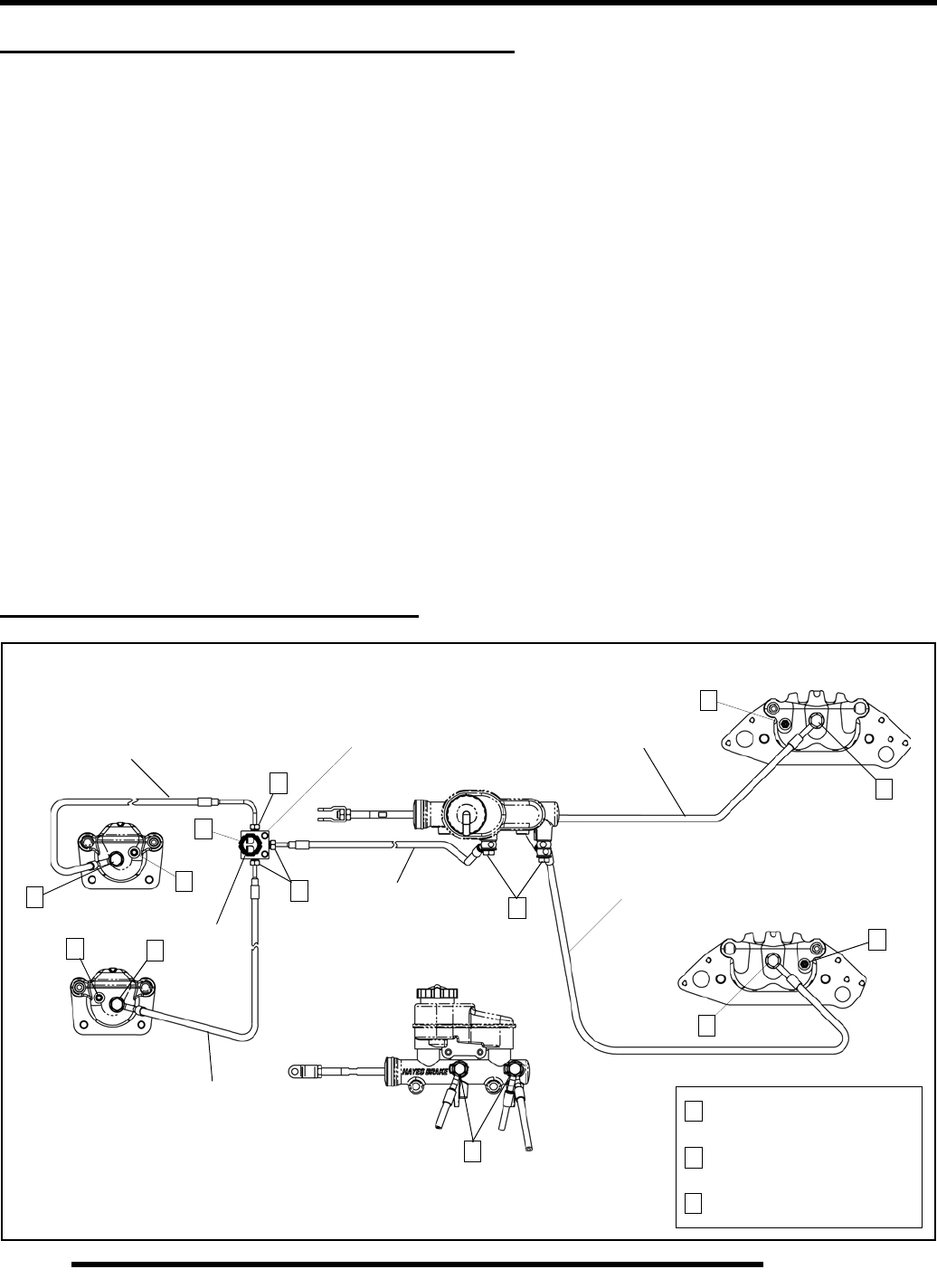
9.4
BRAKES
HYDRAULIC BRAKE SYSTEM OPERATION
The Polaris brake system consists of the following components or assemblies: brake pedal, master cylinder, hydraulic brake lines,
brake calipers, brake pads, and brake discs, which are secured to the drive line.
When the foot activated brake lever is applied it applies pressure on the piston within the master cylinder. As the master cylinder
piston moves inward it closes a small opening (compensating port) within the cylinder and starts to build pressure within the brake
system. As the pressure within the system is increased, the pistons located in the brake calipers move outward and apply pressure
to the moveable brake pads. These pads contact the brake discs and move the calipers in their floating bracket, pulling the stationary
side pads into the brake discs. The resulting friction reduces brake disc and vehicle speed.
The friction applied to the brake pads will cause the pads to wear. As these pads wear, the piston within the caliper moves further
outward and becomes self adjusting. Fluid from the reservoir fills the additional area created when the caliper piston moves outward.
Brake fluid level is critical to proper system operation. Too little fluid will allow air to enter the system and cause the brakes to feel
spongy. Too much fluid could cause brakes to drag due to fluid expansion.
Located within the master cylinder is the compensating port which is opened and closed by the master cylinder piston assembly. As
the temperature within the hydraulic system changes, this port compensates for fluid expansion or contraction. Due to the high
temperatures created within the system during heavy braking, it is very important that the master cylinder reservoir have adequate
space to allow for fluid expansion. Never overfill the reservoir! Do not fill the reservoir beyond the MAX LEVEL line!
When servicing Polaris brake systems use only Polaris DOT 4 Brake Fluid (PN 2872189). WARNING: Once a bottle is opened,
use what is necessary and discard the rest in accordance with local laws. Do not store or use a partial bottle of brake fluid. Brake
fluid is hygroscopic, meaning it rapidly absorbs moisture. This causes the boiling temperature of the brake fluid to drop, which can
lead to early brake fade and the possibility of serious injury.
BRAKE SYSTEM EXPLODED VIEW
Caliper Banjo Style Fittings:
15 ft. lbs. (20 Nm).
All Caliper Bleed Screws:
47 in. lbs. (5.3 Nm)
Master Cylinder Top View
Cross Fitting
MC Rear
Brake Line
RH Rear Line
RH Rear Caliper
RH Front
Brake Line
RH Front Caliper
Brake
Master Cylinder
LH Front
LH Rear Caliper
LH Front Caliper
Brake Line
LH Rear Line
1
2
1
1
2
2
3All Flare Style Fittings:
12-15 ft. lbs. (16-20 Nm)
3
1
1
2
2
3
Switch
1
Side View
1
3
PartShark.com
877-999-5686
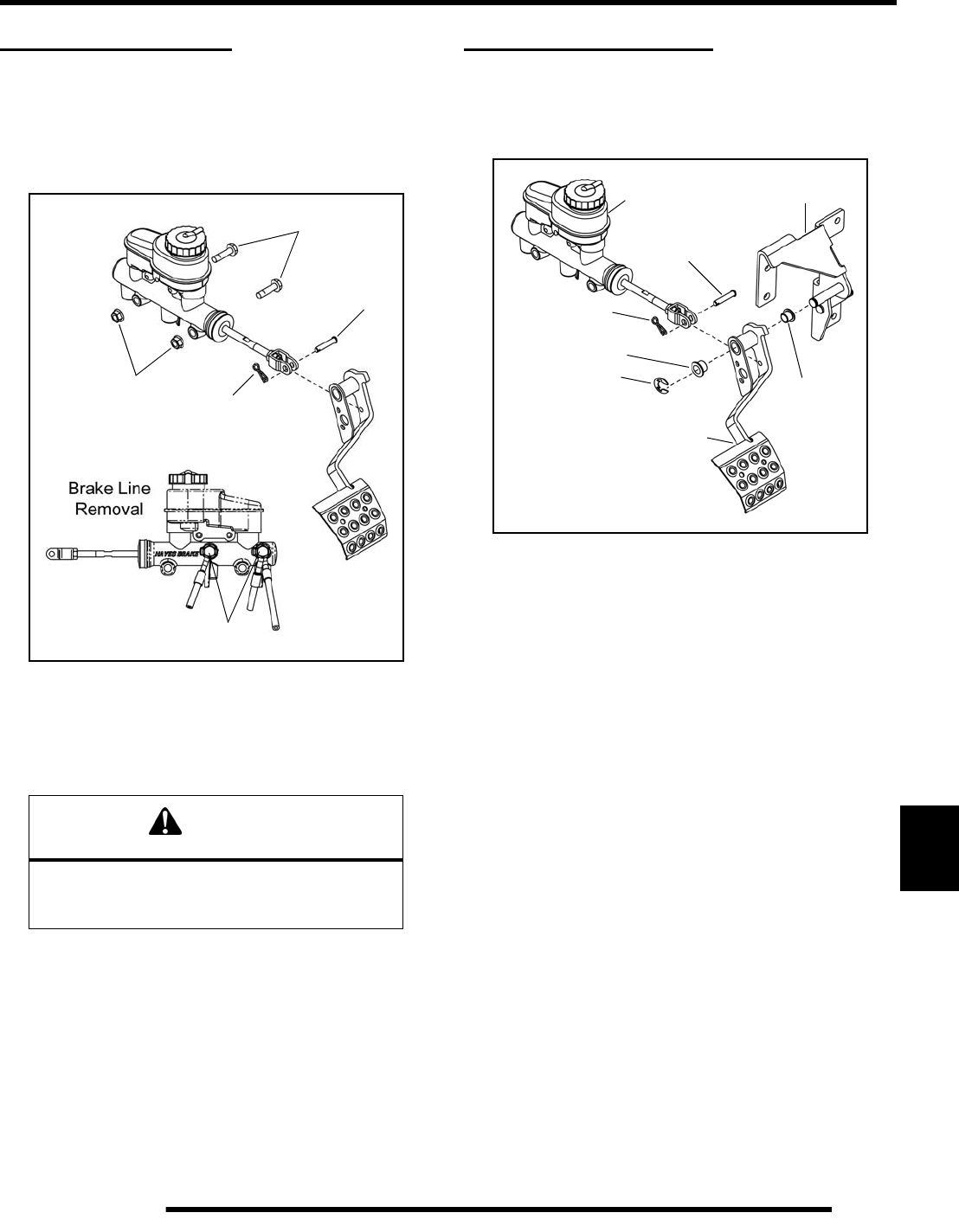
9.5
BRAKES
9
MASTER CYLINDER
Removal
1. Remove the retaining clip (A) from the clevis pin (B) that
attaches the master cylinder to the brake pedal lever.
2. Remove LH wheel well panel to access master cylinder.
3. Remove the two mounting bolts (C) that secure the master
cylinder to the frame.
4. Remove master cylinder and place a fluid catch container
under the master cylinder brake line banjo bolts (D).
5. Loosen the brake line banjo bolts (D) and allow the fluid
to drain.
NOTE: Make note of front and rear brake line
orientation on the master cylinder.
6. Dispose of brake fluid properly and do not re-use.
Installation
1. Reverse Steps 1-5 for master cylinder installation.
Refer to the torque specifications in the illustration.
FOOT BRAKE PEDAL
Pedal Removal
1. Remove the E-clip from the end of the brake pedal mount
bracket.
2. Remove the retaining clip and clevis pin from the master
cylinder to free it from the brake pedal.
3. Slide the brake pedal and bushings off the mount bracket.
Pedal Installation
1. Reverse Steps 1-4 for foot brake installation.
2. Use a new E-clip upon installation.
CAUTION
Brake fluid will damage finished surfaces.
Do not allow brake fluid to come in contact
with finished surfaces.
15 ft. lbs.
(20 Nm) D
A
B
C
15 ft. lbs.
(20 Nm)
Bushing
Clip
Clevis Pin
Brake Pedal
Brake Pedal
Master
Bushing
Mount Bracket
Cylinder
E-Clip
PartShark.com
877-999-5686
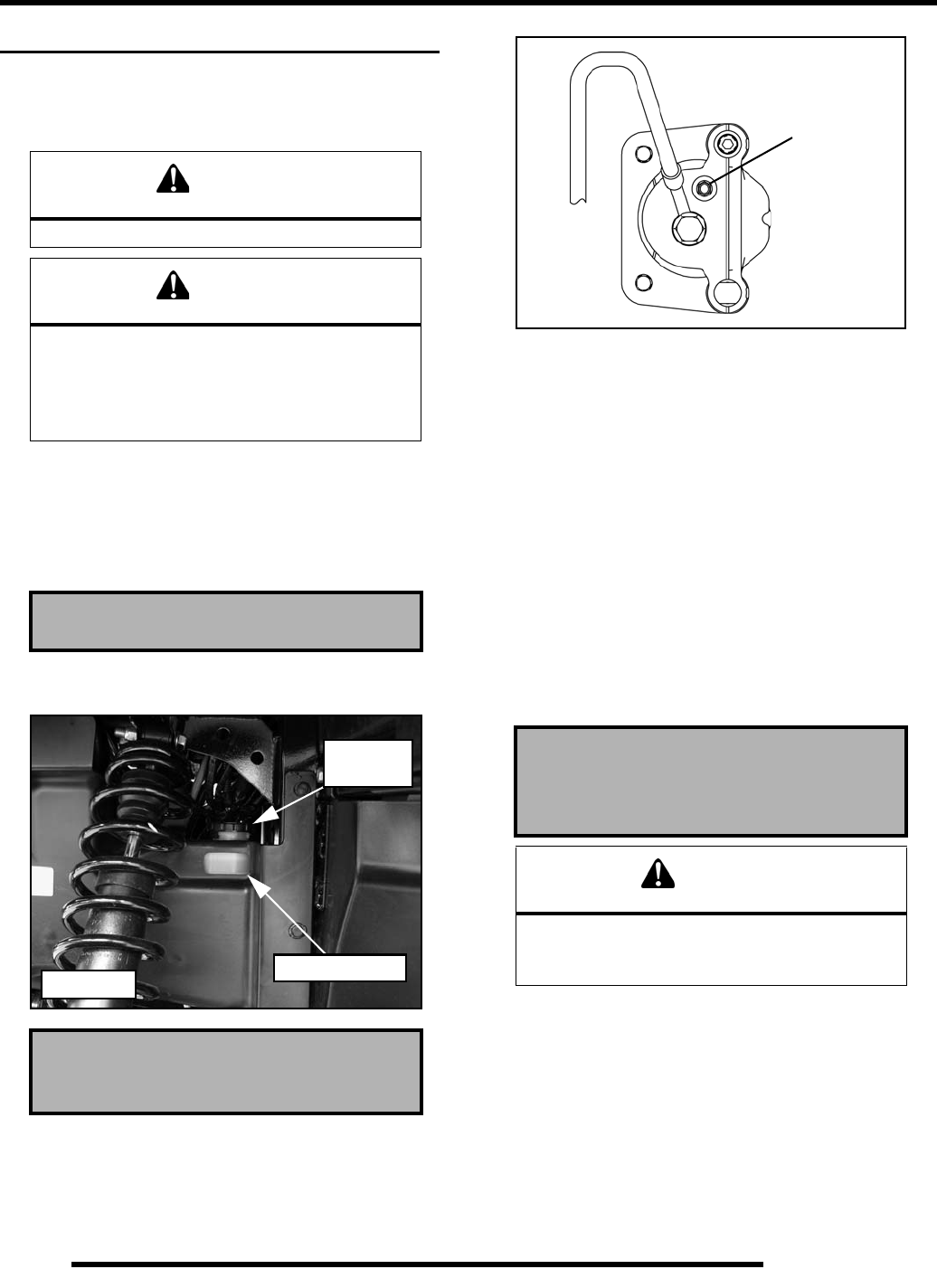
9.6
BRAKES
BRAKE BLEEDING / FLUID CHANGE
NOTE: When bleeding the brakes or replacing the
fluid always start with the furthest caliper from the
master cylinder.
1. Locate master cylinder reservoir in the front LH wheel
well area (Figure 1-6). Clean reservoir cover thoroughly.
2. Remove cover from reservoir.
3. If changing fluid, remove old fluid from reservoir with a
Mity Vac™ pump or similar tool.
4. Add brake fluid to the indicated MAX level of reservoir
(Figure 1-6).
5. Begin bleeding procedure with caliper furthest from master
cylinder.
6. Install a box-end wrench on caliper bleeder screw.
7. Attach a tight-fitting, clear hose to the bleeder fitting.
8. Place a small amount of fresh brake fluid into a small, clear
container and place the other end of bleeder hose into the
container.
9. Have an assistant slowly pump the brake pedal until
pressure builds and then hold.
10. Quickly open and close the bleed screw while holding
pressure on the brake pedal.
NOTE: Do not release brake pedal before bleeder
screw is tight or air may be drawn into master
cylinder.
11. Release brake pedal pressure. Check level of fluid in
reservoir and add if necessary (Figure 1-6).
12. Repeat Steps 9, 10, and 11 until brake pedal is firm and no
air can be seen moving through the clear hose. Add fluid
as necessary to maintain level in reservoir.
13. Tighten bleeder screw and remove bleeder hose. Torque
bleeder screw to 47 in. lbs. (5.3 Nm).
14. Repeat Steps 9 - 13 for the remaining brake calipers.
15. Install master cylinder reservoir cover.
16. Field test machine at low speed before putting into service.
Check for proper braking action and pedal reserve. With
pedal firmly applied, pedal reserve should be no less than
1/2"(1.3 cm).
17. Check brake system for fluid leaks.
CAUTION
Always wear safety glasses.
CAUTION
Brake fluid will damage finished surfaces. Do not
allow brake fluid to come in contact with finished
surfaces. This procedure should be used to
change fluid or bleed brakes during
regular maintenance.
Mity Vac™ (PN 2870975)
Polaris DOT 4 Brake Fluid
(P/N 2872189)
Level Indicator
Add Fluid
HERE
Figure 1-6
Master Cylinder Fluid Level
Between the MIN and MAX line.
CAUTION
Maintain at least 1/2"(1.27 cm) of brake fluid in
the reservoir to prevent air from
entering the master cylinder.
Bleeder
Screw
PartShark.com
877-999-5686
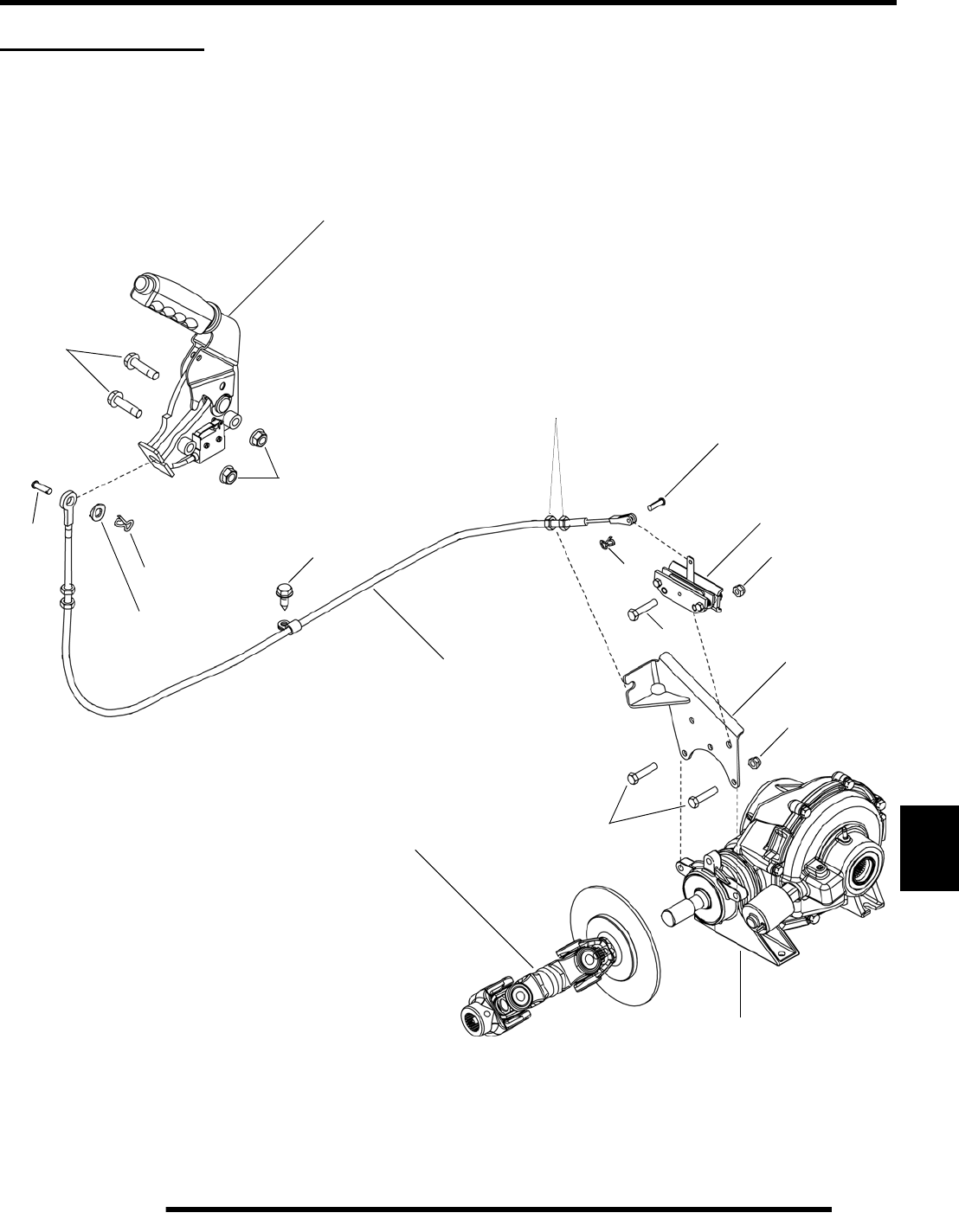
9.7
BRAKES
9
PARKING BRAKE
Exploded View
Parking Brake
Lever
Nuts
Washer
Clip
Screw
Cable
Clevis
Parking Brake
Caliper
Mount Bracket
Bolt
Bolts
Pin
Clevis
Pin
Clip
Nut
Bolts
Nut
Rear Propshaft
w/Parking Brake Disc
Rear Gearcase
13 ft. lbs.
(18 Nm)
14 ft. lbs.
(19 Nm)
18 ft. lbs.
(24 Nm)
18 ft. lbs.
(24 Nm)
PartShark.com
877-999-5686
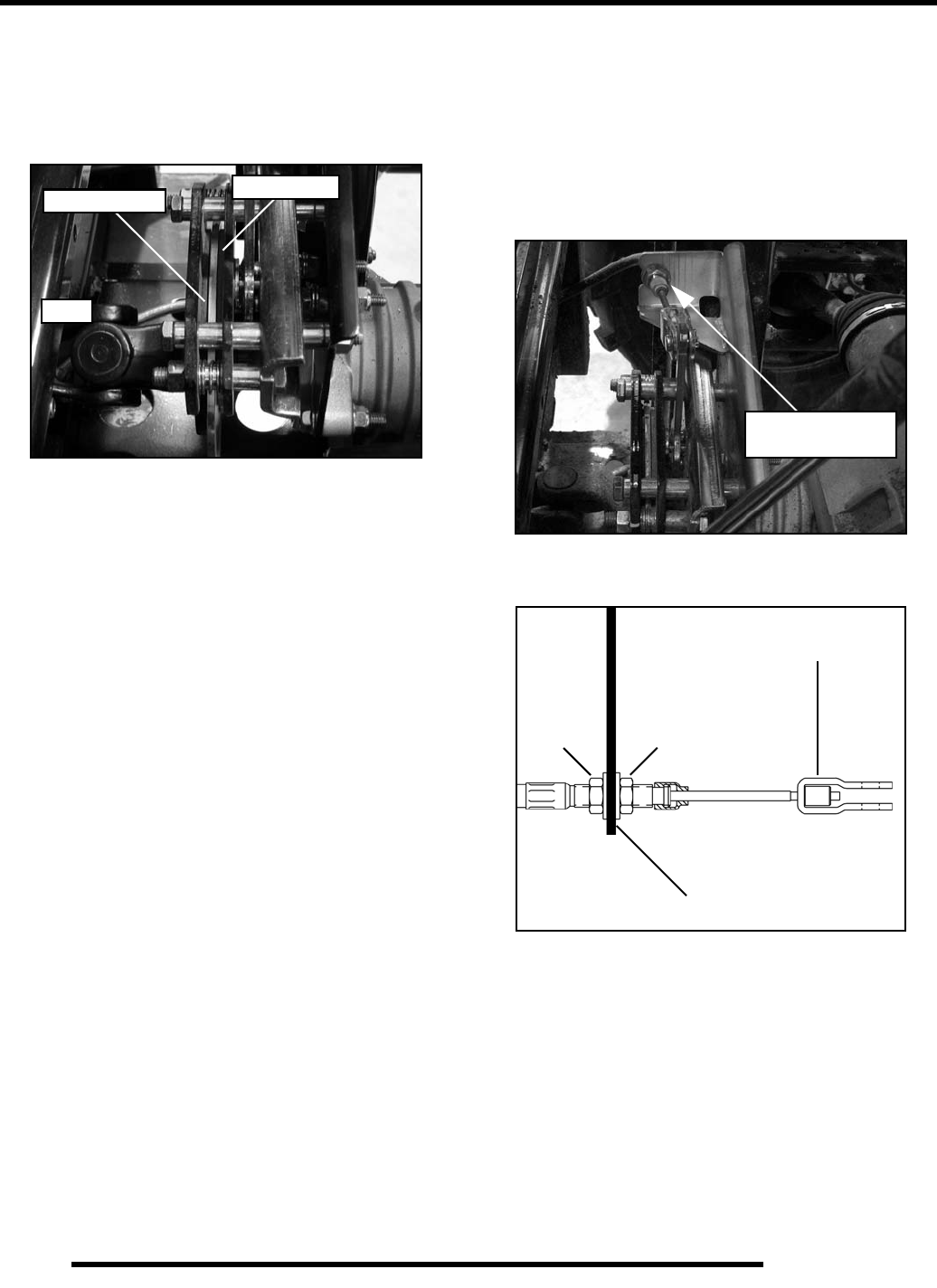
9.8
BRAKES
Inspection
1. Inspect the parking brake cable and brake pads on the
caliper assembly located on the rear propshaft.
See “Parking Brake Caliper Service” for brake pad
replacement information.
Cable Tension Adjustment
When the parking brake is fully engaged and the parking brake
indicator is illuminated, engine speed is limited to 1300 RPM in
all gears, including neutral. If throttle is applied, this limiting
feature prevents operation, which protects the parking brake
pads from excessive wear.
NOTE: Inspect the parking brake cable tension after
the first 25 hours of operation and every 100 hours
of operation afterwards to ensure proper cable
tension.
Loss of tension in the parking brake cable will cause
illumination of the parking brake light and activation of the
limiting feature. If this occurs, inspect and adjust parking brake
cable tension. If performing this service is difficult due to
conditions or location, open the hood and temporarily
disconnect the parking brake connector. Reconnect the parking
brake connector as soon as it is practical and adjust the parking
brake cable to proper tension.
1. Pull back on the parking brake lever (located in the dash).
2. After 3 clicks the “(P)” brake light should illuminate on the
instrument cluster and the wheels of the vehicle should not
rotate when turning by hand. After 8 full clicks of lever
travel, the vehicle should not roll while parked.
3. If the vehicle moves, adjustment is necessary.
4. Adjust the parking brake cable where the cable attaches to
the caliper mount bracket located on the rear gearcase.
Adjustment Procedure
1. Place the vehicle in neutral on a flat level surface.
2. Carefully lift the rear of the vehicle off the ground and
stabilize on jack stands.
3. Locate the parking brake cable adjustment area where the
cable attaches to the caliper mount bracket on the rear
gearcase.
4. Use two open-end wrenches and loosen the outer jam nut
(D). Back out the outer jam nut (D) 1 1/2 turns.
5. Now hold the outer jam nut (D) and turn in the inner jam
nut (C) clockwise, until the jam nut is tight against the
bracket.
6. Repeat Step 4 and Step 5 until the proper adjustment is
obtained for the parking brake.
NOTE: See Chapter 10 for more information on the
parking brake switch.
Front
Inboard Pad
Outboard Pad
Parking Brake
Cable Adjustment
D
C
Mount Bracket
To Parking
Brake Caliper
PartShark.com
877-999-5686
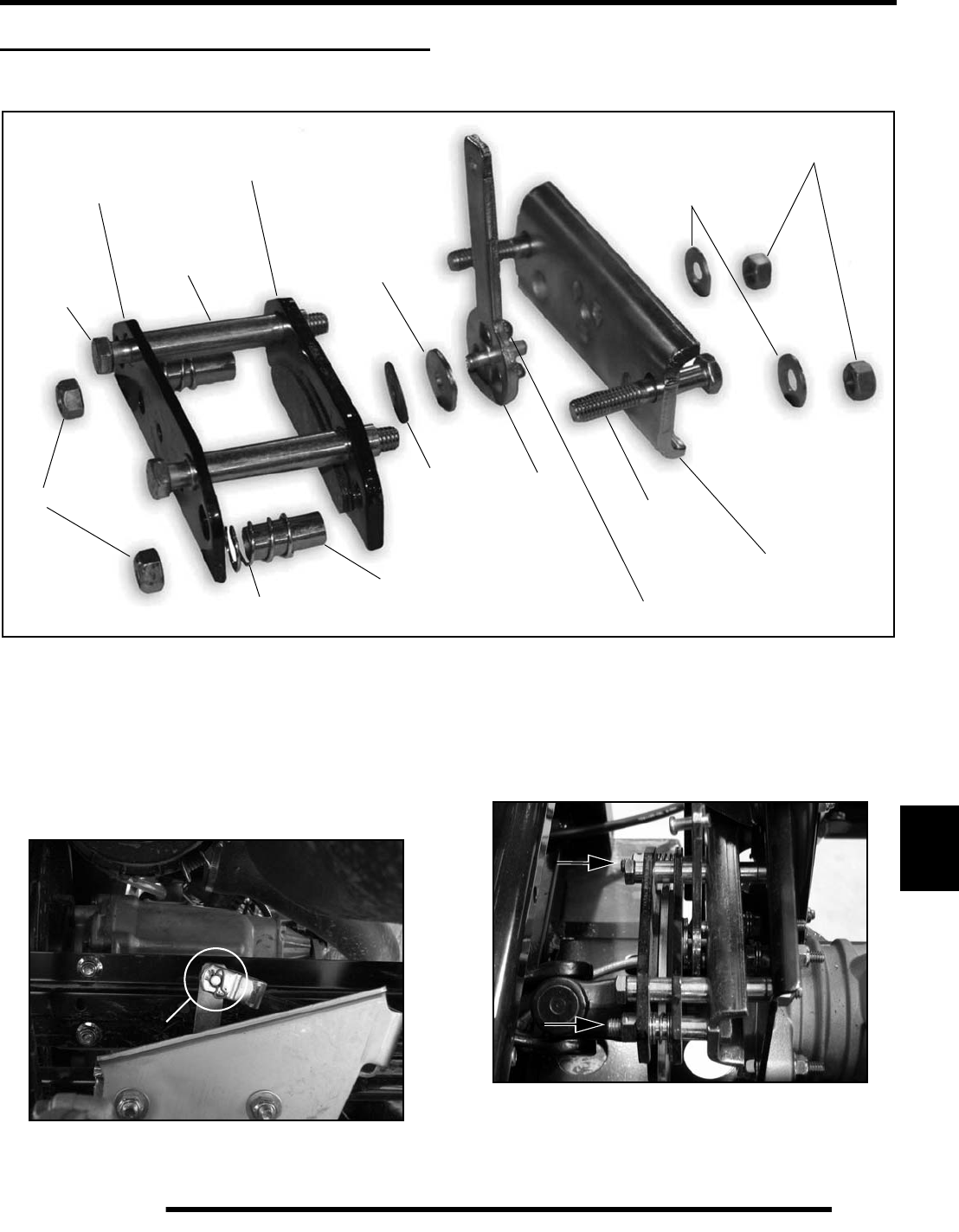
9.9
BRAKES
9
PARKING BRAKE CALIPER SERVICE
Exploded View
Caliper Removal
NOTE: Do not get oil, grease, or fluid on the parking
brake pads. Damage to or contamination of the pads
may cause the pads to function improperly.
1. Remove the clip pin and pin (A) from the parking brake
cable.
NOTE: Be sure the parking brake is not engaged.
2. If replacing the brake pads, slightly loosen the caliper
assembly bolts before removing the complete caliper
assembly. This will ease the caliper disassembly procedure
later.
Pad & Holder
Nut
Hex Head
Mount Bolt
Sleeve Thrust Washer
Shim Pack
(4 Shims)
Pad & Holder
Lever
Asm. Bolt
Steel Balls (3)
Plain Washer
Hex Nut
Stationary Actuator
Compression Spring
Spring Pin
Figure 9.10
18 ft. lbs.
25 ft. lbs.
(24 Nm)
(34 Nm)
A
PartShark.com
877-999-5686
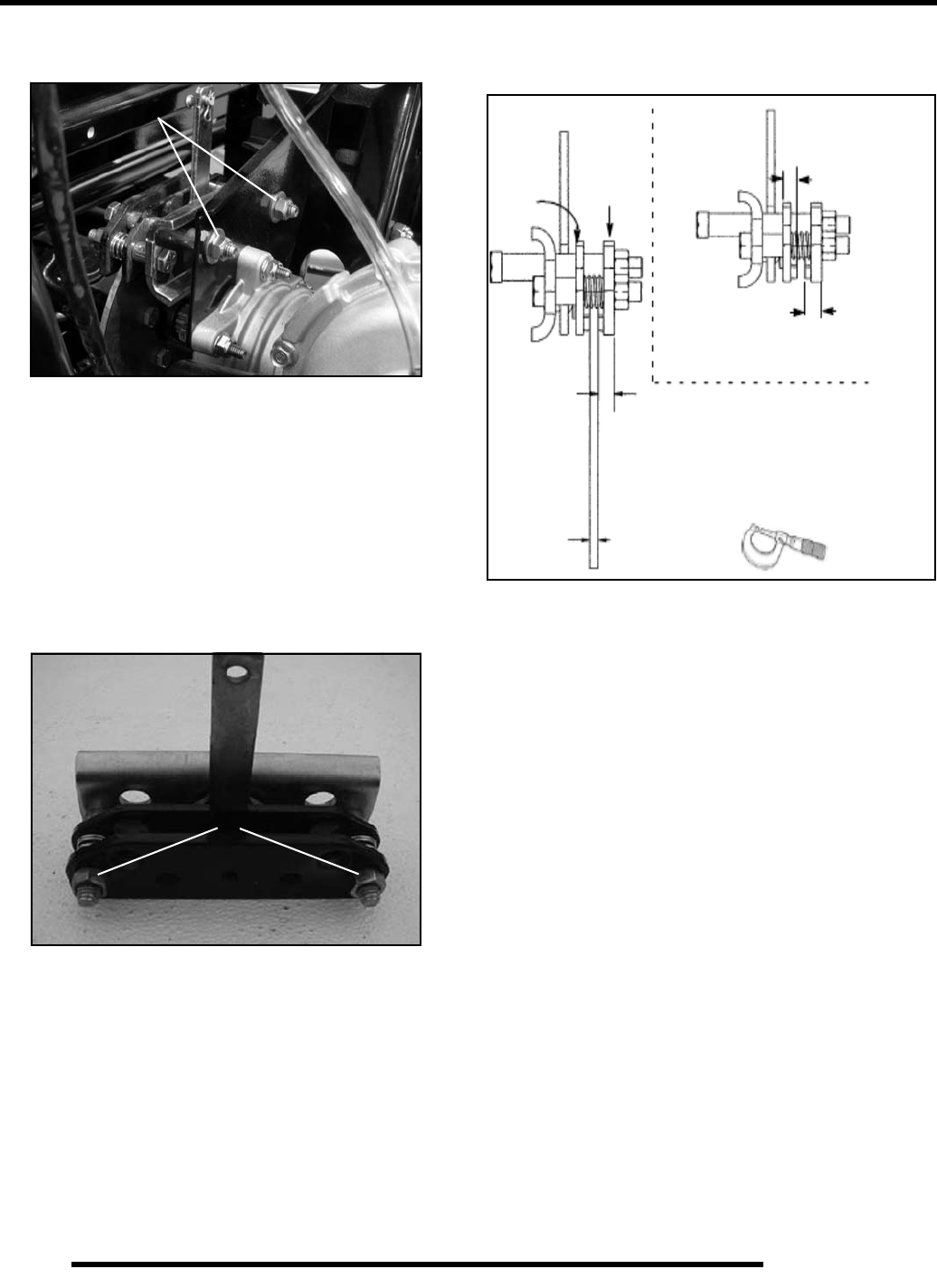
9.10
BRAKES
3. Loosen the two brake caliper mounting bolts (B) in equal
increments.
4. Remove the mounting bolts from the mount bracket and lift
the parking brake caliper assembly out of the vehicle.
Caliper Disassembly / Inspection
NOTE: The parking brake caliper is replaced as an
assembly. Refer to the “Electronic Parts Catalog”
for information.
1. Remove the two caliper assembly nuts (C) that were
previously loosened during Step 2 of “Caliper Removal”.
2. Slide the brake pads and springs from the assembly.
NOTE: Retain the lever and ball bearings for
reassembly.
3. Inspect the brake pads linings for excessive wear. Replace
as needed.
4. Check the three steel balls for any signs of cracking.
Replace as needed.
5. Check ball seats in lever and stationary actuator. If
excessively worn, replace parts as needed.
6. Measure the thickness of the rear caliper parking brake
pads. Replace assembly or pads as needed. See illustration
below for proper readings.
B
C
Inboard
Pad Outboard
Pad
Inboard pad thickness
New .304” (7.72 mm)
Limit: 0.24” (6.1 mm)
Outboard Pad Thickness
New 0.360” (9.14 mm)
Limit: 0.31” (7.87 mm)
Installed Disc to Park Brake
0.375” (0.953 cm)
New Rotor Disc Thickness
0.150” - 0.164”
(3.81 - 4.16 mm)
PartShark.com
877-999-5686
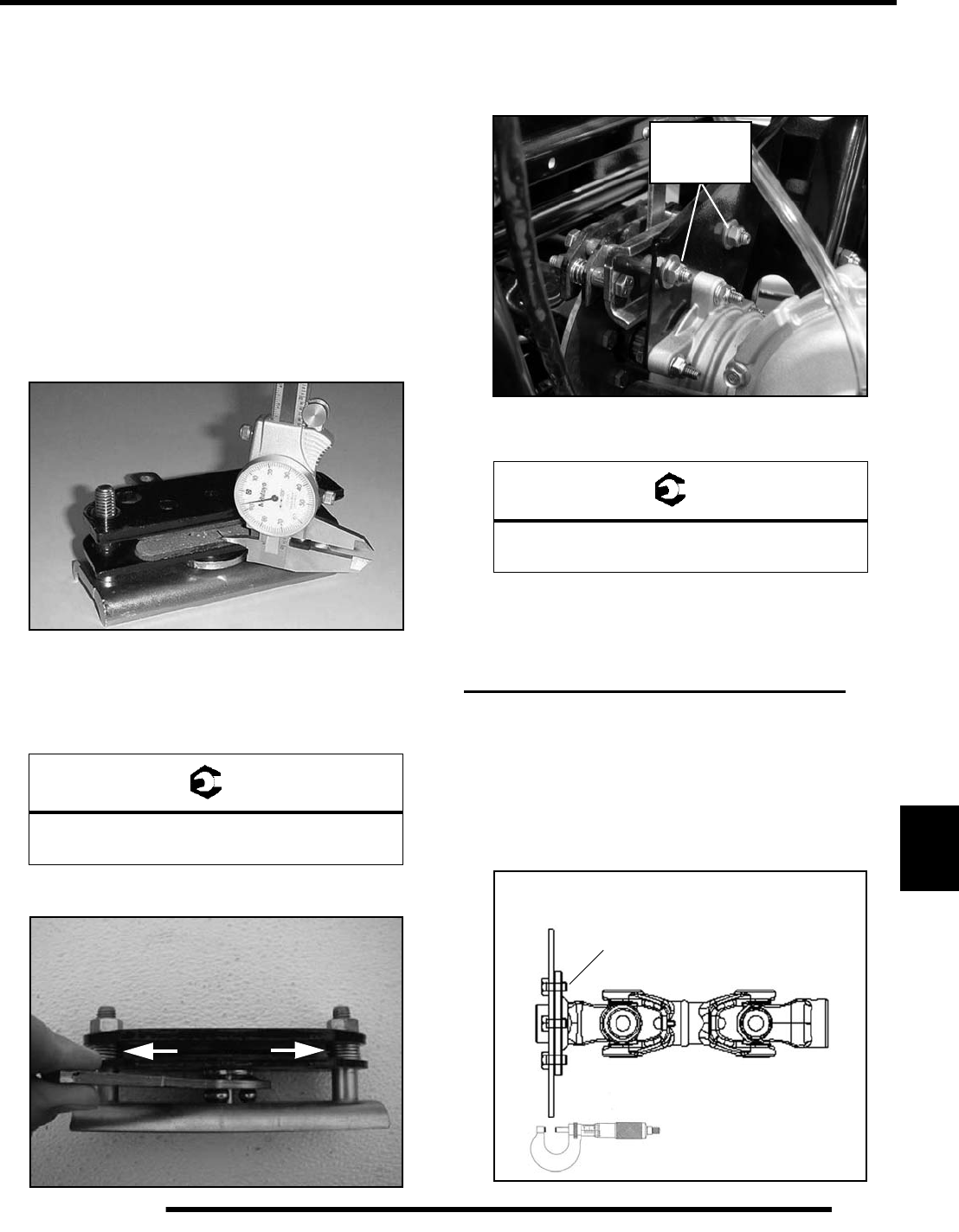
9.11
BRAKES
9
New Brake Pad Installation
NOTE: Parking Brake Pads can be replaced by
ordering one of the following kits:
PN 2203148 - Brake Pad and Shim Kit
PN 2203147 - Brake Pad Kit
There may be more parts in the service kit than your
brake requires. Check the parts list included with
the kit for the exact quantities.
1. Using the stationary actuator, assemble the caliper
components as shown below. Do not install the springs or
shims yet. Measure the gap for the brake disc.
Disassemble and add shims between thrust washer and the
inside brake pad as needed to close the gap to 0.203”-
0.193” (5.156-4.902 mm). For shim location, see Figure
9.10).
2. Once you have determined the correct amount of shims to
use, install the assembly bolts through the sleeves. Install
the nuts and the correct amount of shims, the inner brake
pad, springs, and outer brake pad. Torque the assembly
nuts to 25 ft. lbs. (34 Nm).
3. Ensure the parking brake assembly functions properly by
actuating the lever before reinstallation.
Caliper Installation
1. Install the parking brake assembly into place. Tighten the
two mounting bolts in increments for proper installation.
2. Torque the two mounting bolts to 18 ft. lbs. (24 Nm).
3. Install the cable, pin, and clip pin. Test the park brake for
proper function.
PARKING BRAKE DISC SERVICE
Disc Inspection / Removal
1. Measure the parking brake disc with a micrometer. If the
thickness of the disc is less than specified, replace the rear
propshaft / disc assembly.
2. Follow the rear prop shaft removal procedure listed in
Chapter 7 to remove the rear prop shaft / disc assembly.
= T
Parking Brake Caliper - Assembly Bolts:
25 ft. lbs. (34 Nm)
Add shims until gap
measures 0.203”- 0.193”
(5.156 - 4.902 mm)
= T
Parking Brake Caliper - Mounting Bolts:
18 ft. lbs. (24 Nm)
18 ft. lbs.
(24 Nm)
Remove Bolts
Disc Service Limit: 0.140” (3.56 mm)
New Disc: 0.164” - 0.173” (4.17 - 4.39 mm)
PartShark.com
877-999-5686
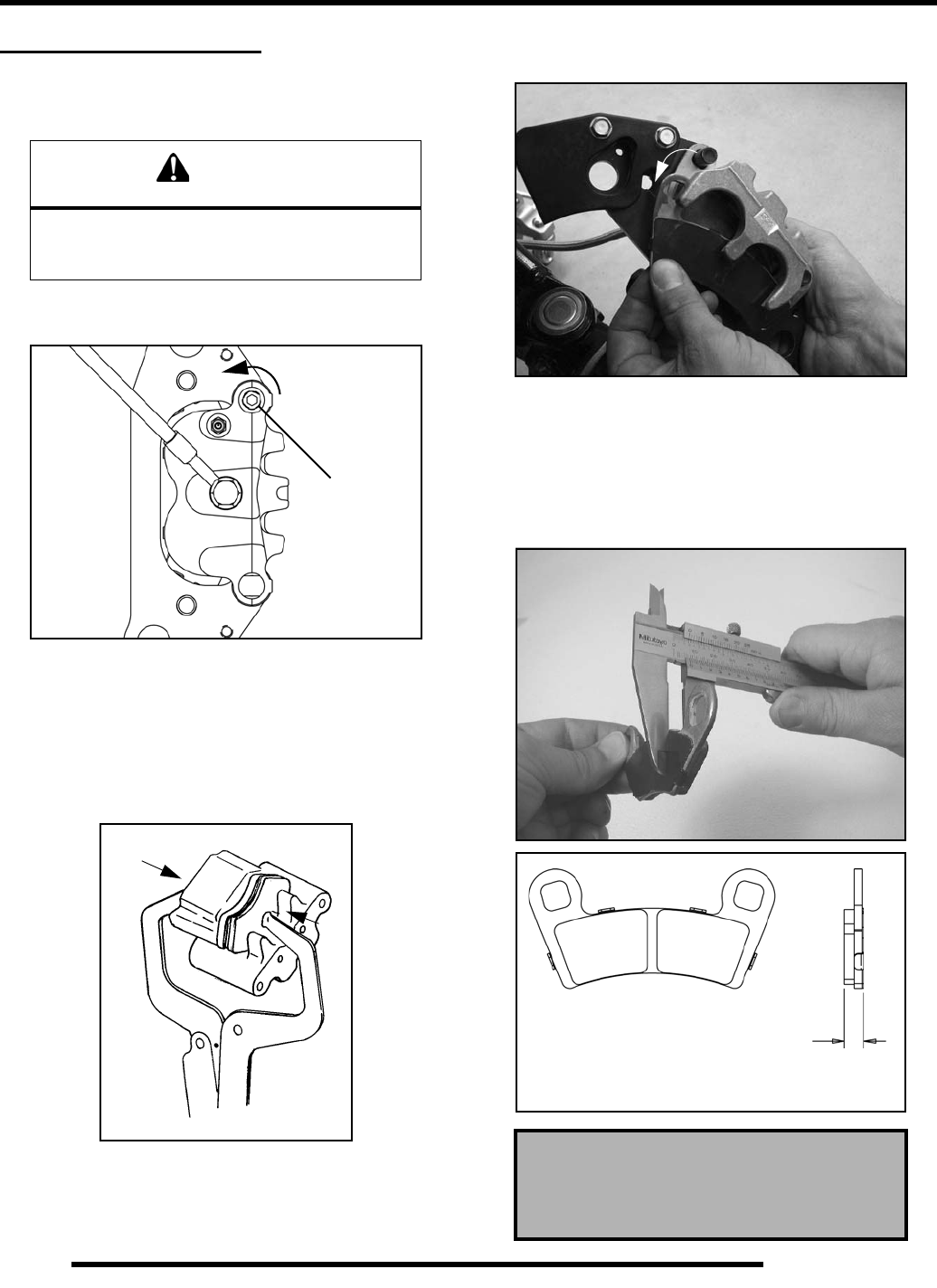
9.12
BRAKES
FRONT BRAKE PADS
Pad Removal
1. Elevate and support front of vehicle.
2. Remove the wheel nuts, washers and front wheel. Loosen
pad adjuster screw.
3. Remove the upper and lower caliper mounting bolts and
remove the caliper from the front hub.
NOTE: When removing caliper, use care not to
damage brake line. Support caliper so to avoid
kinking or bending brake line.
4. Push caliper piston into caliper bore slowly using a
C-clamp or locking pliers with pads installed.
NOTE: Brake fluid will be forced through
compensating port into master cylinder fluid
reservoir when piston is pushed back into caliper.
Remove excess fluid from reservoir as required.
5. Push the mounting bracket inward and the slip outer brake
pad out between the bracket and caliper body.
6. Remove the inner pad from the bracket and caliper.
Pad Inspection
1. Measure the thickness of the pad material. Replace pads if
worn beyond the service limit.
CAUTION
Use care when supporting vehicle so that it
does not tip or fall.
Severe injury may occur if machine tips or falls.
Pad
Adjuster
Front Brake Pad Thickness
New: .298 ± .007” (7.56 ± .178 mm)
Service Limit: .180” (4.6 mm)
Measure
Thickness
PartShark.com
877-999-5686
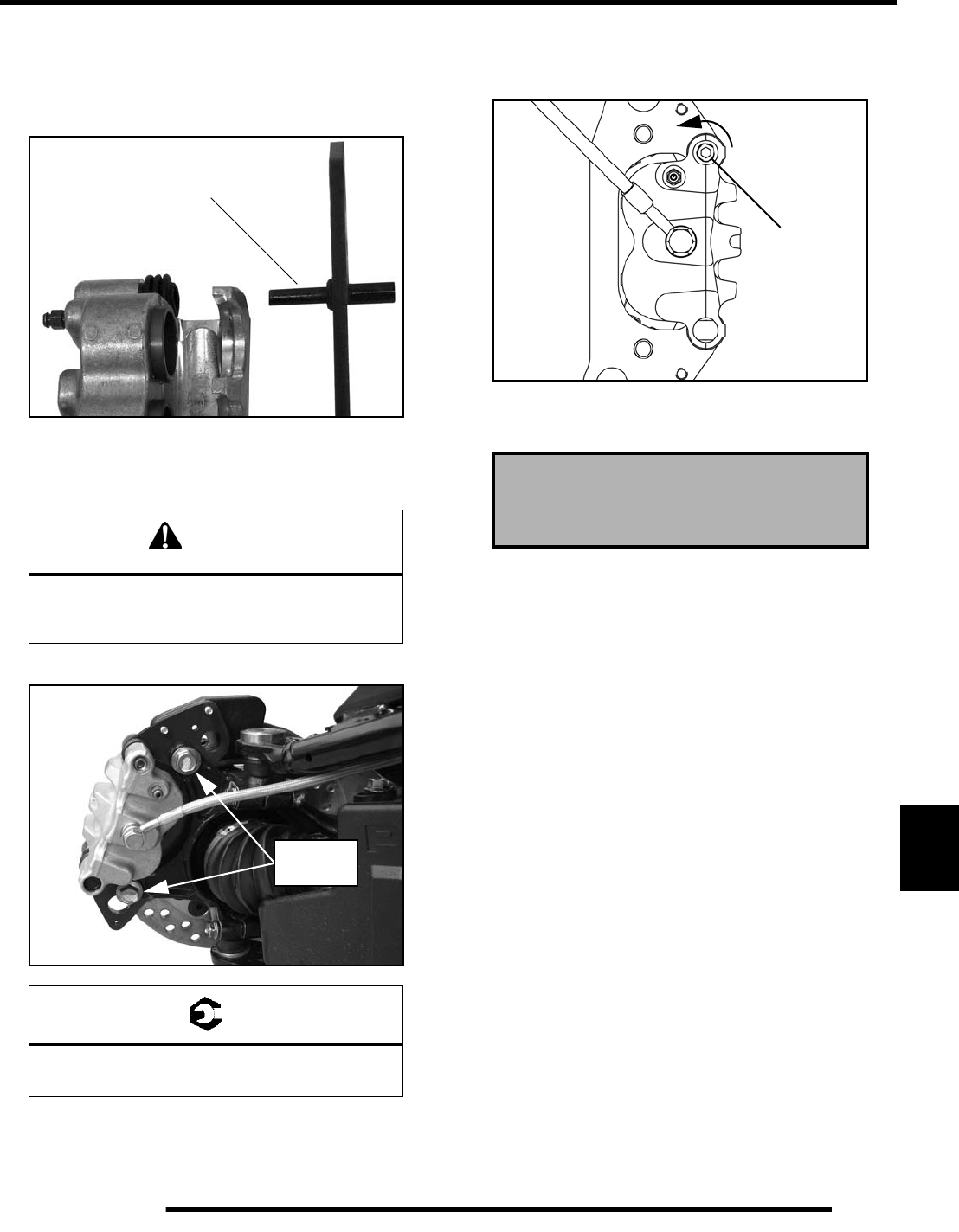
9.13
BRAKES
9
Pad Assembly / Installation
1. Lubricate mounting bracket pins with a light film of
Polaris Premium All Season Grease (PN 2871423), and
install rubber dust boots.
2. Compress mounting bracket and make sure dust boots are
fully seated. Install pads with friction material facing each
other.
3. Install caliper onto front hub and torque mounting bolts.
4. Slowly pump the brake pedal until pressure has been built
up. Maintain at least 1/2, (12.7 mm) of brake fluid in the
reservoir to prevent air from entering the brake system.
5. Install the pad adjuster set screw and turn clockwise until
stationary pad contacts disc, then back off 1/2 turn
(counterclockwise).
6. Verify fluid level in reservoir is up to MAX line inside
reservoir and install reservoir cap.
7. Install wheel and torque wheel nuts to specification (see
“Chapter 2 - Maintenance”).
Brake Burnishing Procedure
It is required that a burnishing procedure be performed after
installation of new brake pads to extend service life and reduce
noise.
Start machine and slowly increase speed to 30 mph. Gradually
apply brakes to stop machine. Allow pads and disc to cool
sufficiently during the procedure. Do not allow pads or disc to
become hot or warping may result. Repeat this procedure 10
times.
WARNING
If brake pads are contaminated with grease, oil,
or liquid soaked do not use the pads.
Use only new, clean pads.
= T
Front Caliper Mounting Bolts:
30 ft. lbs. (41 Nm)
Apply Grease to Each
Bracket Pin
30 ft. lbs.
(41 Nm)
Master Cylinder Fluid
Up to MAX line inside reservoir
Pad
Adjuster
1/2 Turn
PartShark.com
877-999-5686
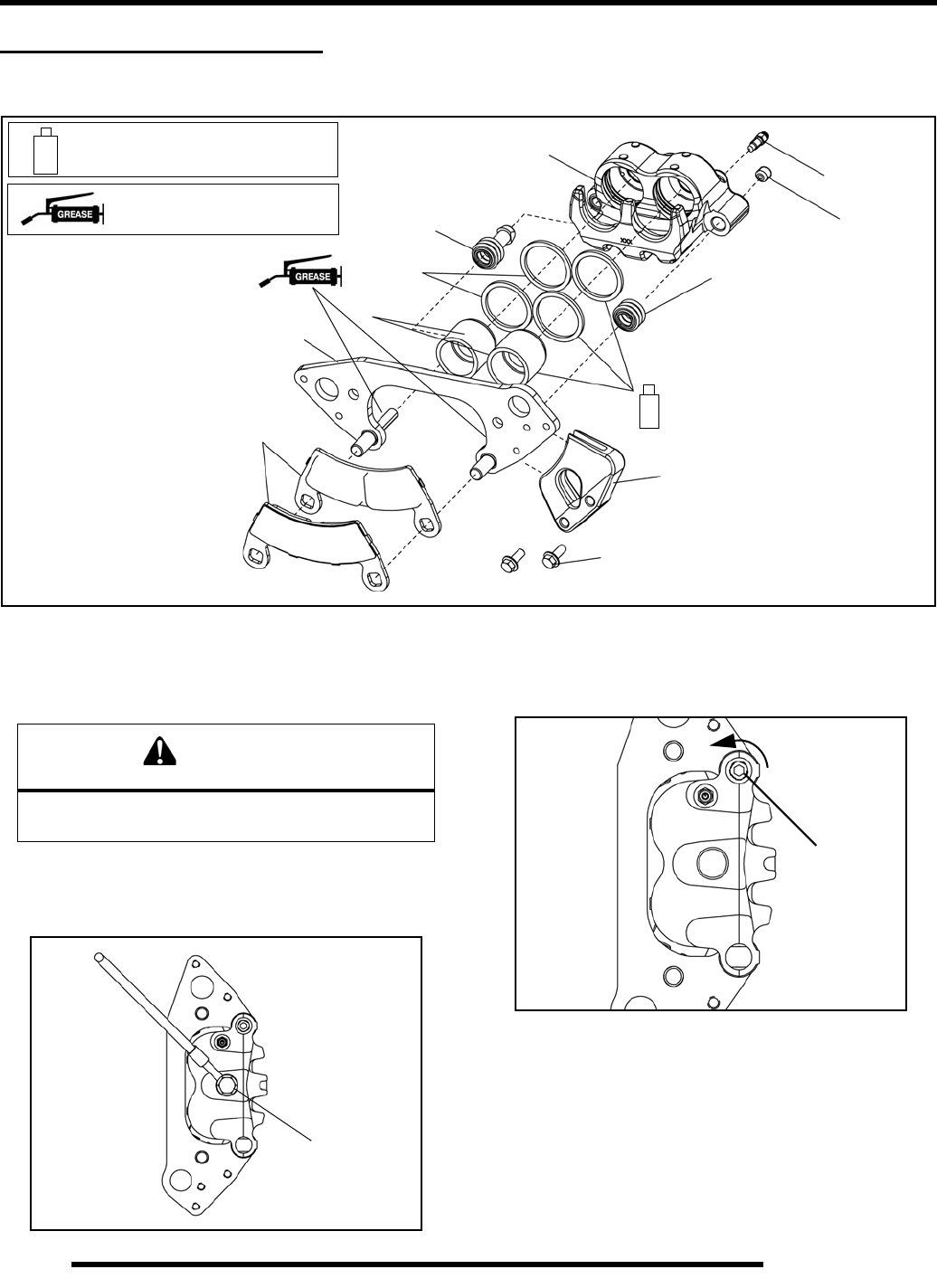
9.14
BRAKES
FRONT CALIPER SERVICE
Caliper Exploded View
Caliper Removal
1. Elevate and safely support the front of the vehicle.
2. Remove the (4) wheel nuts and the front wheel.
3. Clean caliper area before removal.
4. Place a container below the caliper to catch brake fluid
when removing the line. Remove brake line from caliper.
5. Loosen brake pad adjustment set screw to allow brake pad
removal after the caliper is removed.
A. Socket Set Screw
B. Bleeder Screw
C. Caliper Assy.
D. Boots
E. Square O-rings
F. Pistons
G . C a l i p e r M o u n t
H. Brake Pads
I. Brake Scraper
J. Bolts
A
B
C
D
F
G
H
Apply Polaris All Purpose
Grease
Apply Polaris DOT 4 Brake Fluid
to Components 47 in. lbs.
(5.3 Nm)
D
I
E
J
CAUTION
Use care when supporting vehicle so that it does not
tip or fall. Severe injury may occur.
Remove
Brake Line
Pad
Adjuster
PartShark.com
877-999-5686
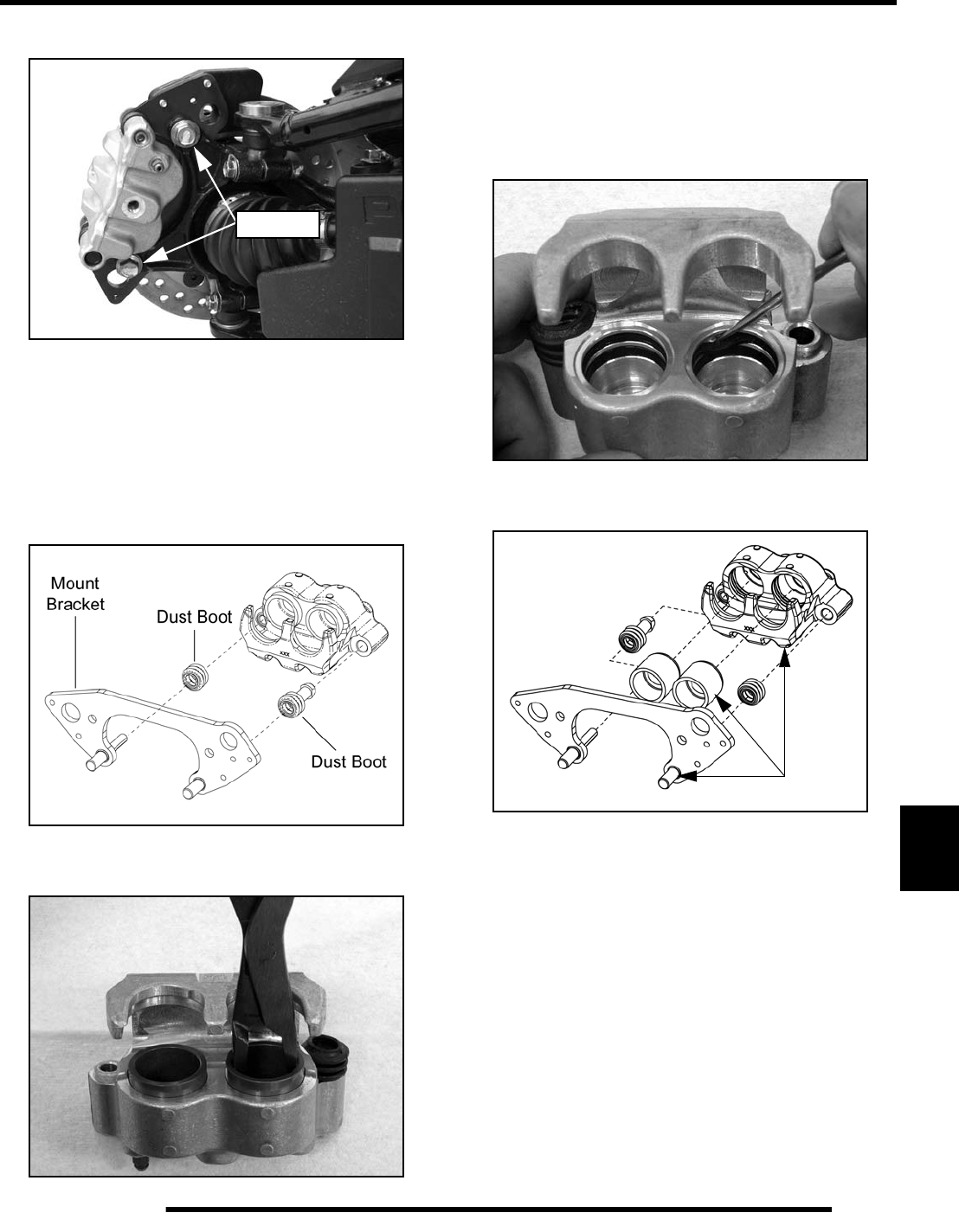
9.15
BRAKES
9
6. Remove the two caliper mounting bolts and the caliper.
Caliper Disassembly
1. Remove both brake pads from the caliper (see “FRONT
BRAKE PADS - Pad Removal”)
2. Remove the mount bracket assembly and the dust boots
from caliper. Thoroughly clean the caliper before
disassembly and prepare a clean work area for disassembly.
3. Use a commercially available caliper piston pliers to extract
the pistons from the caliper.
IMPORTANT: Do not remove the caliper pistons with
a standard pliers. The piston sealing surfaces will
become damaged if a standard pliers is used.
4. Once the pistons are removed, use a pick to carefully
remove the square O-rings from the caliper. O-rings should
be replaced during caliper service.
5. Clean the caliper body, piston, and retaining bracket with
brake cleaner or alcohol.
IMPORTANT: Be sure to clean the seal grooves in
caliper body.
Remove
Clean
Components
PartShark.com
877-999-5686
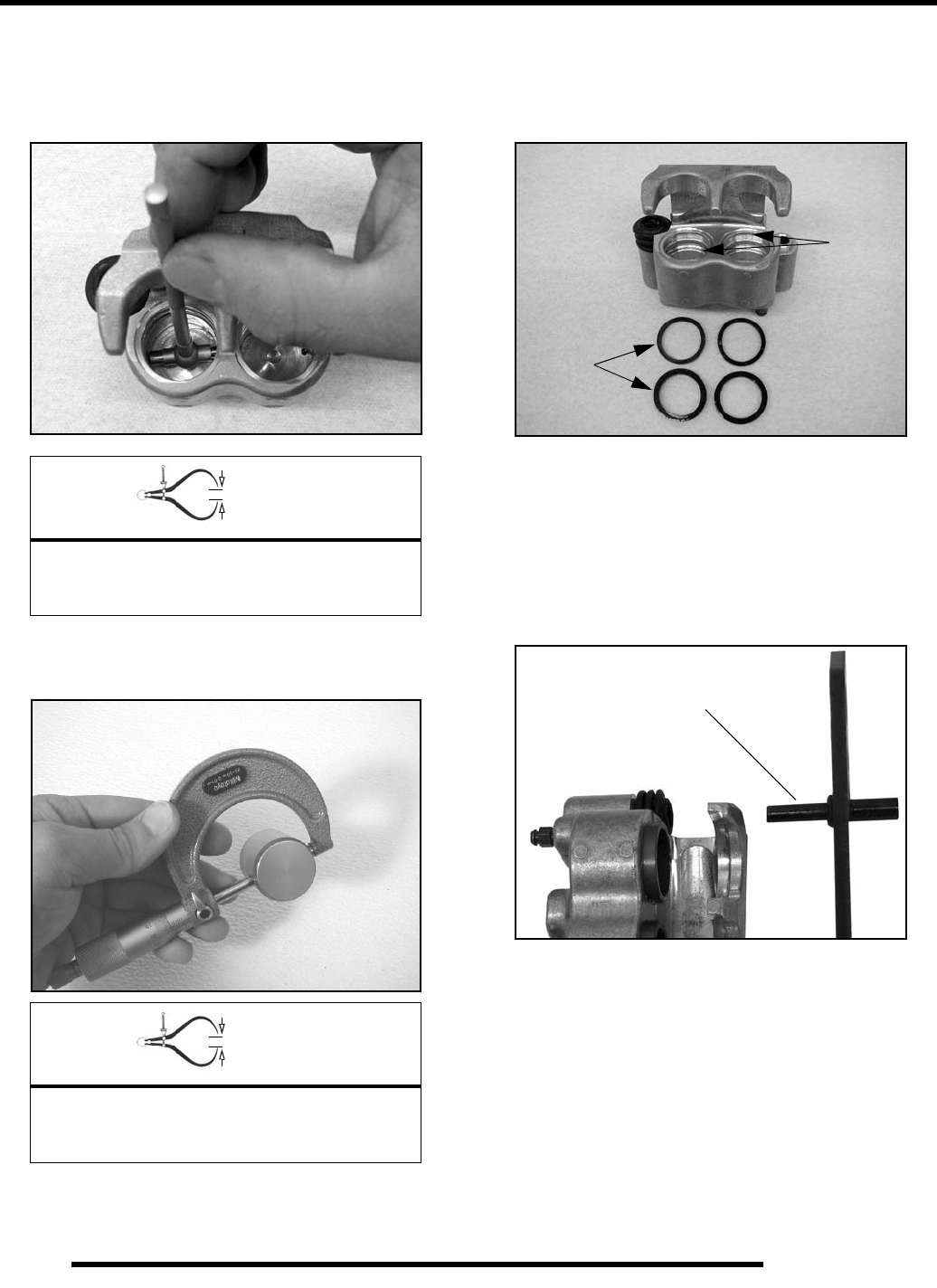
9.16
BRAKES
Caliper Inspection
1. Inspect caliper body for nicks, scratches, pitting or wear.
Measure bore size and compare to specifications. Replace
if damaged or worn beyond service limit.
2. Inspect piston for nicks, scratches, pitting or wear. Measure
piston diameter and replace if damaged or worn beyond
service limit.
3. Inspect the brake disc and pads as outlined in this chapter.
Caliper Assembly
1. Install new O-rings in the caliper body. Be sure the
grooves are clean and free of residue or brakes may drag
upon assembly.
2. Coat pistons with clean Polaris DOT 4 Brake Fluid. Install
pistons with a twisting motion while pushing inward.
Piston should slide in and out of bore smoothly, with light
resistance.
3. Lubricate the mounting bracket pins with Polaris Premium
All Season Grease (PN 2871423), and install the rubber
dust seal boots.
4. Compress the mounting bracket and make sure the dust seal
boots are fully seated. Install the brake pads. Clean the disc
and pads with brake parts cleaner or denatured alcohol to
remove any dirt, oil or grease.
= In. / mm.
Caliper Piston Bore I.D.:
Std: 1.373” (34.87 mm)
Service Limit: 1.375” (34.93 mm)
= In. / mm.
Caliper Piston O.D.:
Std: 1.370” (34.80 mm)
Service Limit: 1.368” (34.75 mm)
New
Seal
Grooves
O-Rings
Apply Grease to Each
Bracket Pin
PartShark.com
877-999-5686
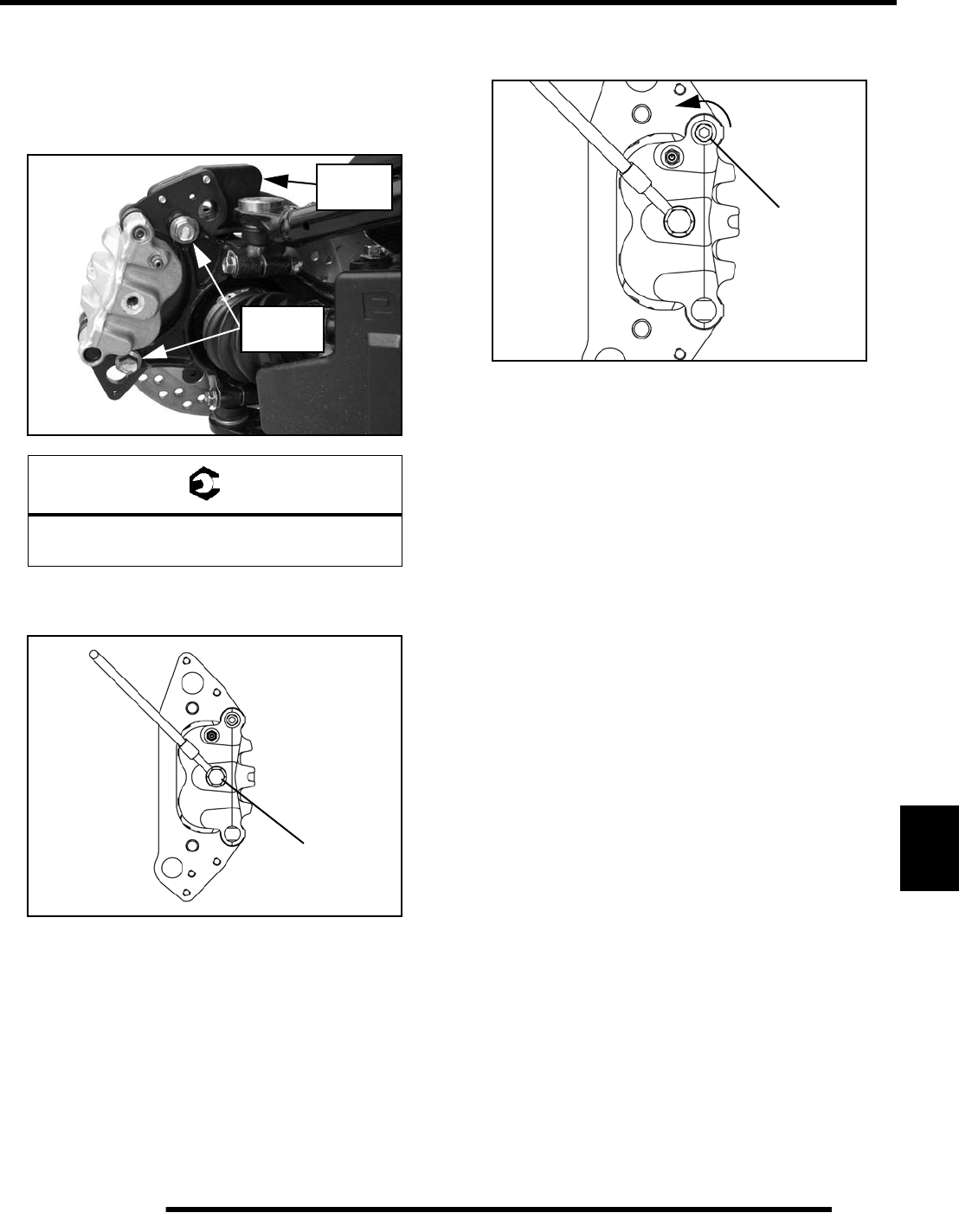
9.17
BRAKES
9
Caliper Installation
1. Install caliper and torque mounting bolts to specification.
IMPORTANT: If brake disc scraper was removed, be
sure to reinstall it upon caliper installation.
2. Install brake line and torque the banjo bolt to the proper
torque specification.
3. Install the pad adjustment screw and turn until stationary
pad contacts disc, then back off 1/2 turn.
4. Perform brake bleeding procedure as outlined earlier in this
chapter.
5. Install wheel and torque wheel nuts to specification (see
Chapter 2).
6. Field test unit for proper braking action before putting into
service. Inspect for fluid leaks and firm brakes. Make sure
the brake is not dragging when pedal is released. If the brake
drags, re-check assembly and installation.
NOTE: If new brake pads are installed, brake
burnishing is recommended (see “FRONT BRAKE
PADS - Brake Burnishing Procedure”).
= T
Front Caliper Mounting Bolts:
30 ft. lbs. (41 Nm)
30 ft. lbs.
(41 Nm)
Disc
Scraper
15 ft. lbs.
(20 Nm)
Pad
Adjuster
1/2 Turn
PartShark.com
877-999-5686
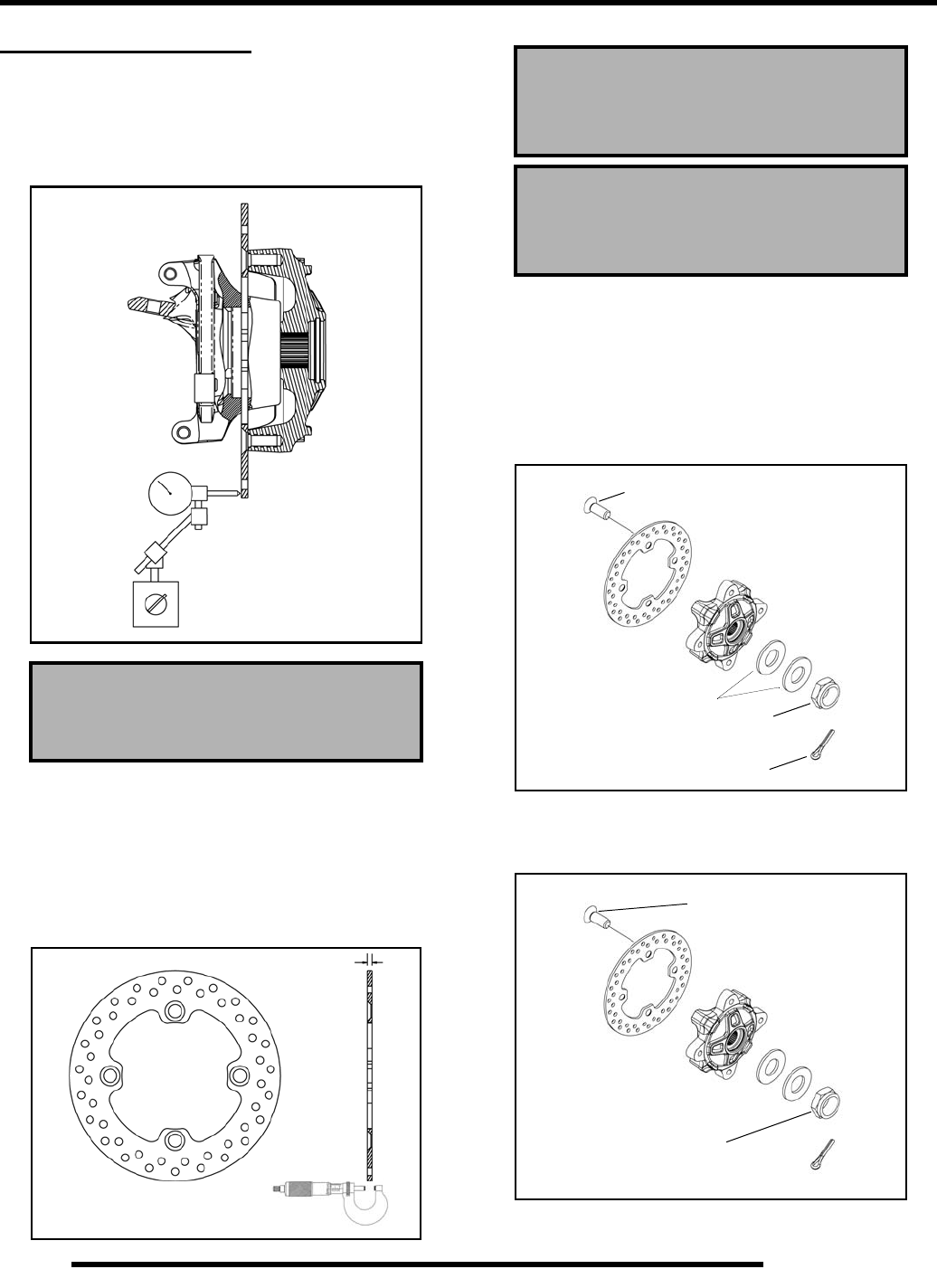
9.18
BRAKES
FRONT BRAKE DISC
Disc Runout
1. Mount dial indicator as shown to measure disc runout.
Slowly rotate the disc and read total runout on the dial
indicator. Replace the disc if runout exceeds specification.
Disc Inspection
1. Visually inspect disc for scoring, scratches, or gouges.
Replace the disc if any deep scratches are evident.
2. Use a 0-1” micrometer and measure the disc thickness at
eight different points around the pad contact surface.
Replace disc if worn beyond service limit.
Disc Removal / Replacement
1. Remove front brake caliper (see “Front Caliper Service”).
2. Remove cotter pin, castle nut and washers.
3. Remove the wheel hub assembly from the vehicle and
remove the (4) bolts retaining the disc to the hub.
4. Clean the wheel hub mating surface and install new disc on
wheel hub. Torque new bolts to 18 ft. lbs. (24 Nm).
Brake Disc Runout
Service Limit .010” (.254 mm)
Measure
Thickness
Front
Disc
Brake Disc Thickness
New .188” (4.78 mm)
Service Limit .170” (4.32 mm)
Brake Disc Thickness Variance
Service Limit: .002” (.051 mm)
difference between measurements
Cotter Pin
Washers Nut
(4) Bolts
18 ft. lbs.
(24 Nm)
80 ft. lbs.
(108 Nm)
PartShark.com
877-999-5686
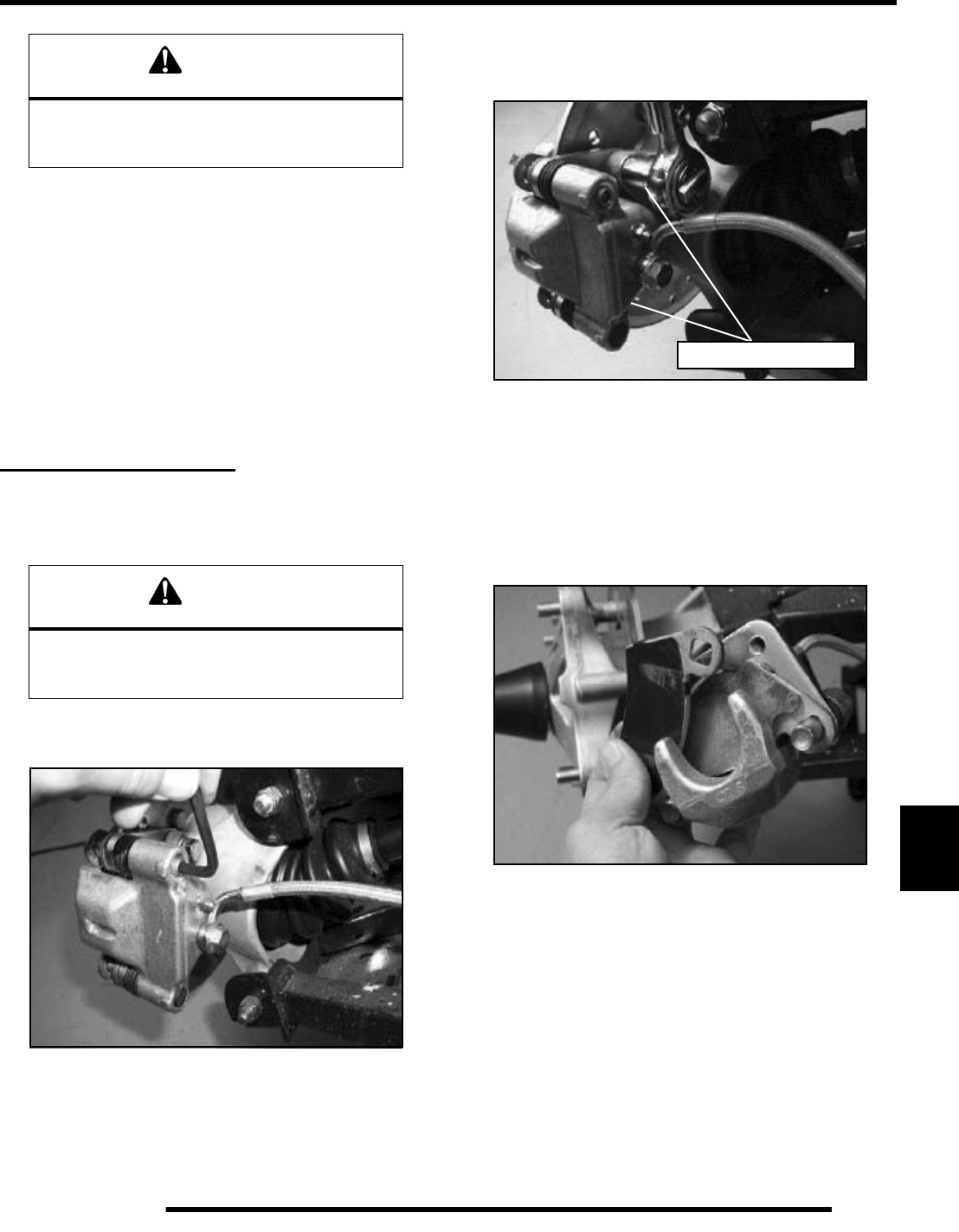
9.19
BRAKES
9
5. Install wheel hub assembly, washers, and castle nut.
Torque castle nut to 80 ft. lbs. (108 Nm) and install a new
cotter pin.
6. Install front brake caliper (see “Front Caliper Service”).
Follow bleeding procedure outlined earlier in this chapter.
7. Field test unit for proper braking action before putting into
service. Inspect for fluid leaks and firm brakes. Make sure
the brake is not dragging when pedal is released. If the brake
drags, re-check assembly and installation.
REAR BRAKE PADS
Pad Removal
1. Elevate and support rear of machine.
2. Remove the rear wheel. Loosen pad adjuster screw 2-3
turns.
3. Clean caliper area before removal.
4. Remove caliper mounting bolts and lift caliper off of disc.
NOTE: When removing caliper, be careful not to
damage brake line. Support caliper so as not to kink
or bend brake line.
5. Push caliper piston into caliper bore slowly with pads
installed.
NOTE: Brake fluid will be forced through
compensating port into master cylinder fluid
reservoir when piston is pushed back into caliper.
Remove excess fluid from reservoir as required.
6. Remove the brake pads.
CAUTION
Always use new brake disc mounting bolts. The
bolts have a pre-applied locking agent which is
destroyed upon removal.
CAUTION
Use care when supporting vehicle so that it does
not tip or fall. Severe injury may occur
if machine tips or falls.
Remove Caliper Bolts
PartShark.com
877-999-5686
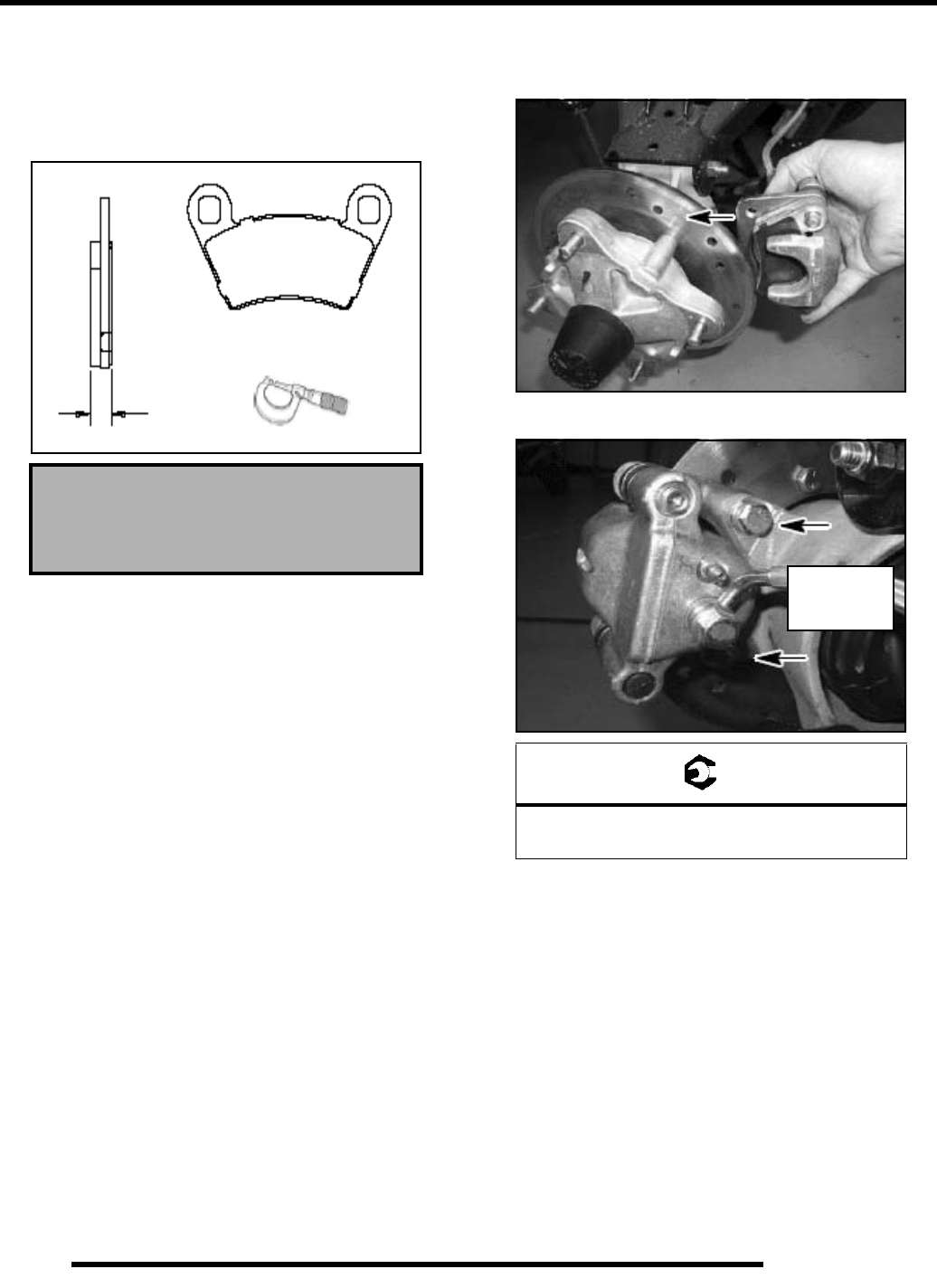
9.20
BRAKES
Pad Inspection
1. Clean the caliper with brake cleaner or alcohol.
2. Measure the thickness of the pad material. Replace pads if
worn beyond the service limit.
Pad Installation
1. Install new pads in caliper body.
2. Install caliper and torque mounting bolts.
3. Turn adjuster screw back in finger tight using a hex wrench.
4. Slowly pump the brake pedal until pressure has been built
up. Maintain at least 1/2"(12.7 mm) of brake fluid in the
reservoir to prevent air from entering the master cylinder.
Brake Burnishing Procedure
It is required that a burnishing procedure be performed after
installation of new brake pads to extend service life and reduce
noise.
Start machine and slowly increase speed to 30 mph. Gradually
apply brakes to stop machine. Allow pads and disc to cool
sufficiently during the procedure. Do not allow pads or disc to
become hot or warping may result. Repeat this procedure 10
times.
Rear Brake Pad Thickness
New .298 + .007” (7.56 + .178 mm)
Service Limit .180” (4.6 mm)
Measure
Thickness
= T
Rear Brake Caliper Mounting Bolts:
30 ft. lbs. (41 Nm)
30 ft. lbs.
(41 Nm)
PartShark.com
877-999-5686
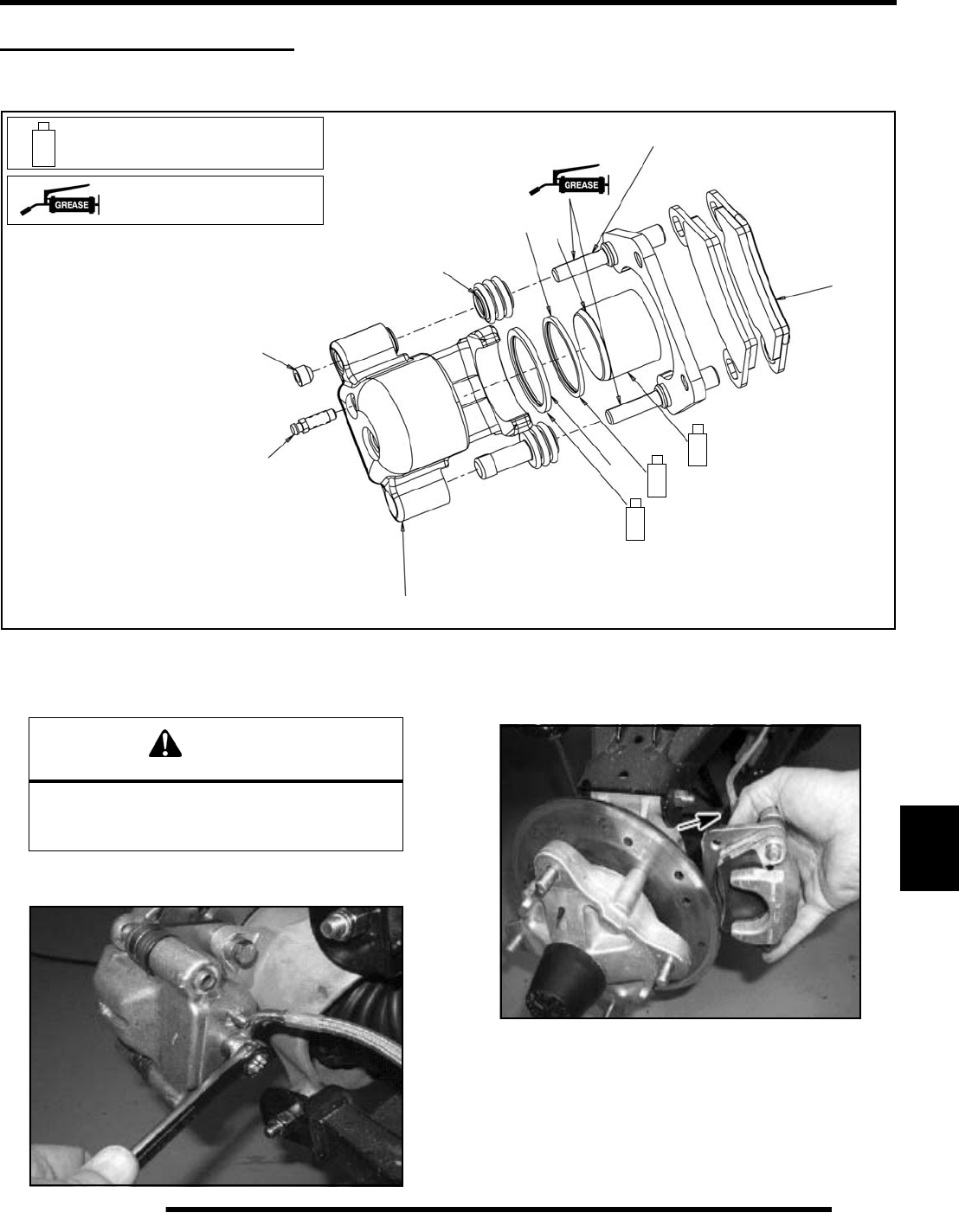
9.21
BRAKES
9
REAR CALIPER SERVICE
Rear Caliper Exploded View
Caliper Removal
1. Safely support the rear of the machine.
2. Use a wrench to remove the brake line. Place a container
to catch brake fluid draining from brake lines.
3. After the fluid has drained into the container, remove the
two caliper mounting bolts and remove caliper.
4. Clean disc, caliper body, and pistons with brake cleaner or
alcohol.
A. Socket Set Screw
B. Bleeder Screw
C. Caliper Assy.
D. Boot
E. Square O-rings
F. Piston
G. Caliper Mount
H. Brake Pads
A
B
C
D
E
F
G
H
Apply Polaris All Purpose
Grease
Apply Polaris DOT 4 Brake Fluid
to Component
47 in. lbs.
(5.3 Nm)
E
CAUTION
Use care when supporting vehicle so that it does
not tip or fall. Severe injury may occur
if machine tips or falls.
PartShark.com
877-999-5686
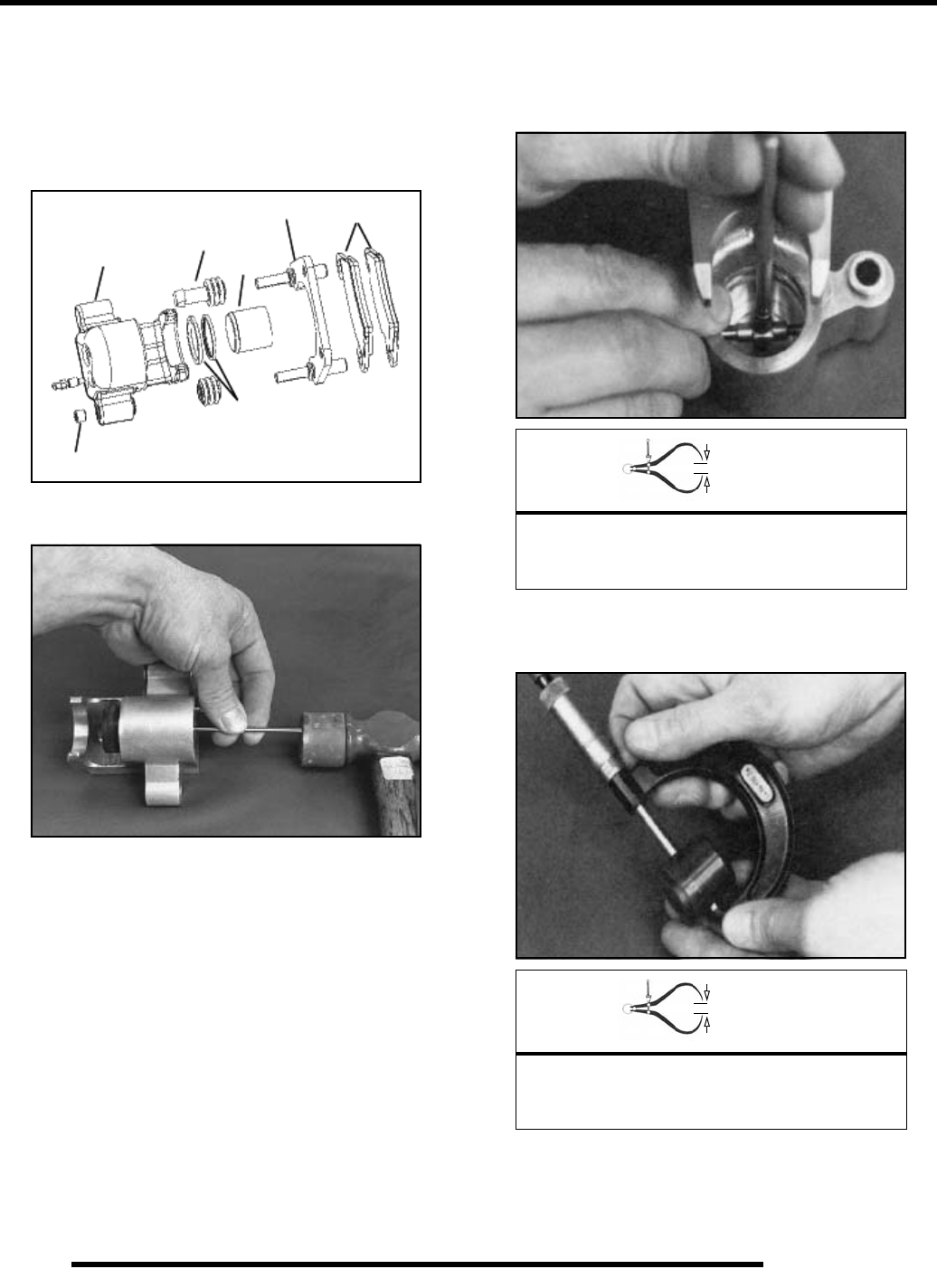
9.22
BRAKES
Caliper Disassembly
1. Remove brake pad adjuster screw (A).
2. Push upper pad retainer pin inward and slip brake pads past
edge, if pads are still installed.
3. Remove mounting bracket (B) and dust boot (C).
4. Remove piston (D) and square O-rings (E) from the caliper
body (F).
5. Clean the caliper body, piston, and retaining bracket with
brake cleaner or alcohol.
NOTE: Be sure to clean seal grooves in caliper
body.
Caliper Inspection
1. Inspect caliper body for nicks, scratches or wear. Measure
bore size and compare to specifications. Replace if damage
is evident or if worn beyond service limit.
2. Inspect piston for nicks, scratches, wear or damage.
Measure diameter and replace if damaged or worn beyond
service limit.
3. Inspect the brake disc and pads as outlined for brake pad
replacement in this chapter.
Pads
A
B
C
D
E
F
= In. / mm.
Caliper Piston Bore I.D.:
Std: 1.505” (38.23 mm)
Service Limit: 1.507” (38.28 mm)
= In. / mm.
Caliper Piston O.D.:
Std: 1.500” (38.10 mm)
Service Limit: 1.498” (38.05 mm)
PartShark.com
877-999-5686
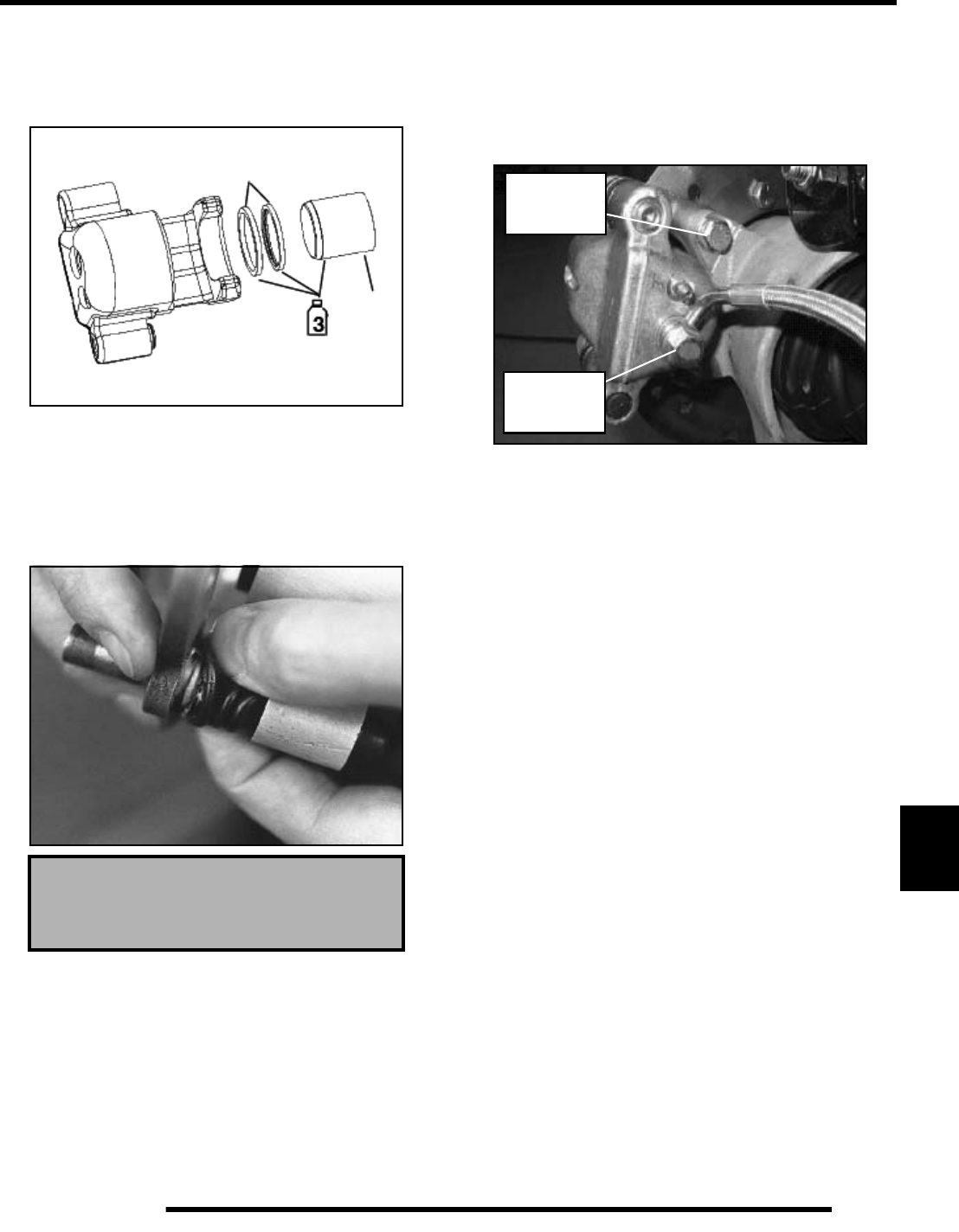
9.23
BRAKES
9
Caliper Assembly
1. Install new square O-rings (A) in the caliper body. Be sure
that the grooves are clean and free of residue or brakes may
drag.
2. Coat the piston with clean DOT 4 Brake Fluid
(PN 2872189). Install piston (B) with a twisting motion
while pushing inward. Piston should slide in and out of bore
smoothly, with light resistance.
3. Lubricate the mounting bracket pins with Polaris Premium
All Season Grease, and install the rubber dust seal boots.
4. Compress the mounting bracket and make sure the dust
seals are fully seated. Install the brake pads. Clean the disc
and pads with brake parts cleaner or denatured alcohol to
remove any dirt, oil or grease.
Caliper Installation
1. Install the rear caliper onto the mounting bolts. Torque
mounting bolts to 30 ft. lbs. (41 Nm).
2. Install brake line banjo bolt. Torque banjo bolt to 15 ft. lbs.
(21 Nm).
3. Install the rear wheel and wheel nuts. Carefully lower the
vehicle.
4. Field test unit for proper braking action before putting into
service. Inspect for fluid leaks and firm brakes. Make sure
the brake is not dragging when pedal is released. If the brake
drags, re-check assembly and installation.
NOTE: If new brake pads are installed, brake
burnishing is recommended (see “REAR BRAKE
PADS - Brake Burnishing Procedure”).
Polaris Premium All Season Grease
(PN 2871423)
A
B
15 ft. lbs.
(21 Nm)
30 ft. lbs.
(41 Nm)
PartShark.com
877-999-5686
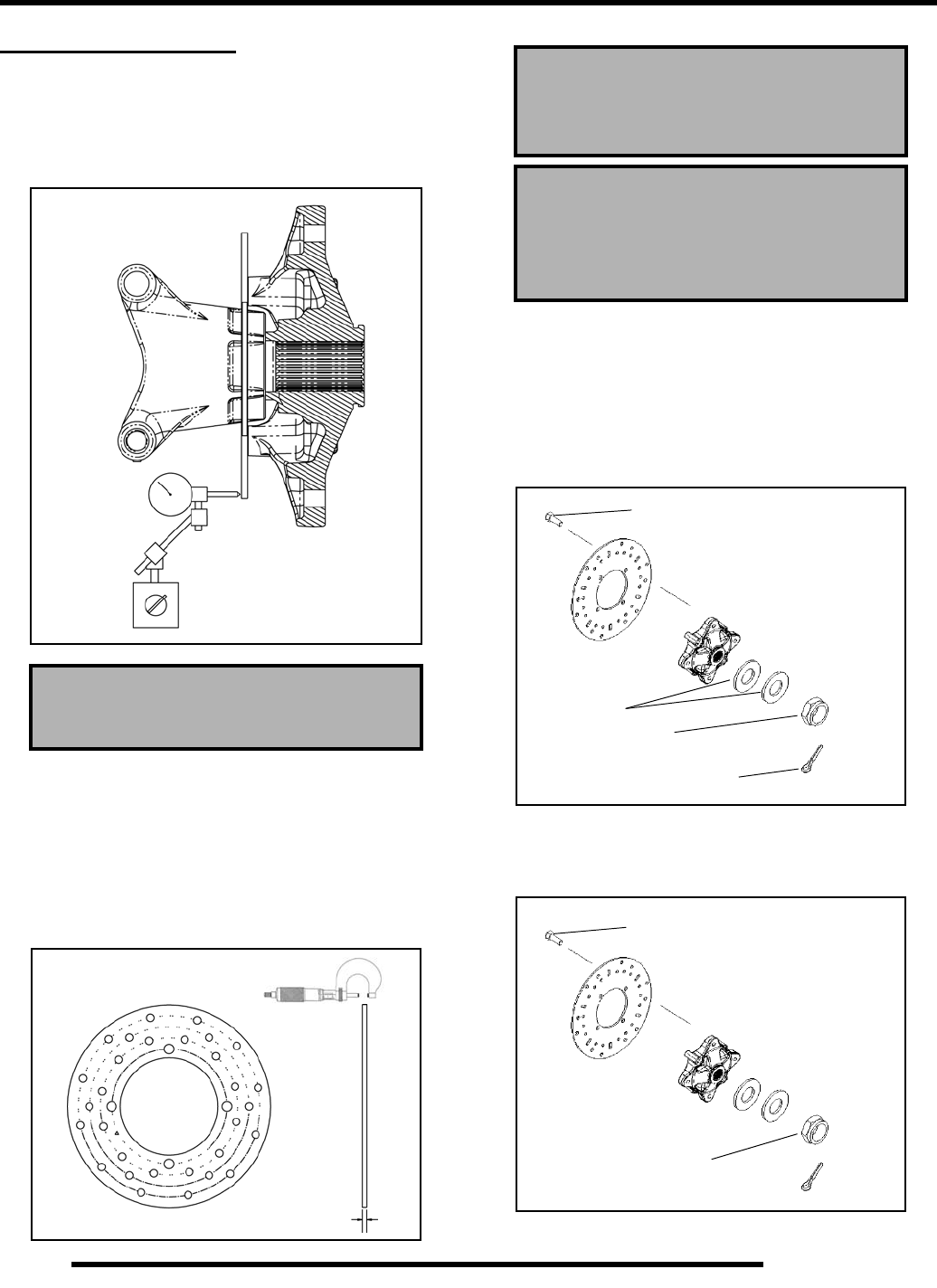
9.24
BRAKES
REAR BRAKE DISC
Disc Runout
1. Mount a dial indicator and measure disc runout. Slowly
rotate the disc and read total runout on the dial indicator.
Replace the disc if runout exceeds specification.
Disc Inspection
1. Visually inspect disc for scoring, scratches, or gouges.
Replace the disc if any deep scratches are evident.
2. Use a 0-1"micrometer and measure disc thickness at 8
different points around perimeter of disc. Replace disc if
worn beyond service limit.
Disc Removal / Replacement
1. Remove rear brake caliper (see “Rear Caliper Service”).
2. Remove cotter pin, castle nut and washers.
3. Remove the wheel hub assembly from the vehicle and
remove the (4) bolts retaining the disc to the hub.
4. Clean the wheel hub mating surface and install new disc on
wheel hub.
5. Install new bolts and torque to 28 ft. lbs. (38 Nm).
Brake Disc Runout
Service Limit .010” (.254 mm)
Measure
Thickness
Rear
Disc
Brake Disc Thickness
New .188” (4.78 mm)
Service Limit .170” (4.32 mm)
Brake Disc Thickness Variance
Service Limit .002” (.051 mm)
difference between measurements
(4) Bolts
Cotter
Pin
Washers
Nut
28 ft. lbs.
(38 Nm)
110 ft. lbs.
(150 Nm)
PartShark.com
877-999-5686
9.25
BRAKES
9
6. Install wheel hub assembly, washers, and castle nut.
Torque castle nut to 110 ft. lbs. (150 Nm) and install a new
cotter pin.
7. Install rear brake caliper (see “REAR CALIPER
SERVICE”). Follow the bleeding procedure outlined
earlier in this chapter.
8. Field test unit for proper braking action before putting into
service. Inspect for fluid leaks and firm brakes. Make sure
the brake is not dragging when pedal is released. If the brake
drags, re-check assembly and installation.
TROUBLESHOOTING
Brakes Squeal / Poor Brake Performance
•Air in system
• Water in system (brake fluid contaminated)
• Caliper/disc misaligned
• Caliper dirty or damaged
• Brake line damaged or lining ruptured
• Worn disc and/or friction pads
• Incorrectly adjusted stationary pad
• Worn or damaged master cylinder or components
• Damaged break pad noise insulator
Pedal Vibration
• Disc damaged
• Disc worn (runout or thickness variance exceeds
service limit)
Caliper Overheats (Brakes Drag)
• Compensating port plugged
• Pad clearance set incorrectly
• Parking brake lever incorrectly adjusted
• Brake pedal binding or unable to return fully
• Parking brake left on
• Residue build up under caliper seals
• Operator riding brakes
Brakes Lock
• Alignment of caliper to disc
• Caliper pistons sticking
• Improper assembly of brake system components
CAUTION
Always use new brake disc mounting bolts. The
bolts have a pre-applied locking agent which is
destroyed upon removal.
PartShark.com
877-999-5686
NOTES
BRAKES
9.26
PartShark.com
877-999-5686

ELECTRICAL
10.1
CHAPTER 10
ELECTRICAL
10
GENERAL INFORMATION . . . . . . . . . . . . . . . . . . . . . . . . . . . . . . . . . . . . . . . . . . . . . . . 10.2
SPECIAL TOOLS / ELECTRICAL SERVICE NOTES . . . . . . . . . . . . . . . . . . . . . . . . . . 10.2
COMPONENTS UNDER HOOD / BEHIND DASH PANEL . . . . . . . . . . . . . . . . . . . . . . 10.2
SWITCHES / CONTROLS . . . . . . . . . . . . . . . . . . . . . . . . . . . . . . . . . . . . . . . . . . . . . . . 10.3
HEADLIGHT SWITCH . . . . . . . . . . . . . . . . . . . . . . . . . . . . . . . . . . . . . . . . . . . . . . . . . . 10.3
AWD / 2WD / TURF SWITCH. . . . . . . . . . . . . . . . . . . . . . . . . . . . . . . . . . . . . . . . . . . . . 10.3
DIFFERENTIAL SOLENOID. . . . . . . . . . . . . . . . . . . . . . . . . . . . . . . . . . . . . . . . . . . . . . 10.3
BRAKE LIGHT SWITCH. . . . . . . . . . . . . . . . . . . . . . . . . . . . . . . . . . . . . . . . . . . . . . . . . 10.4
PARKING BRAKE SWITCH . . . . . . . . . . . . . . . . . . . . . . . . . . . . . . . . . . . . . . . . . . . . . . 10.5
GEAR INDICATOR LIGHT CIRCUIT OPERATION . . . . . . . . . . . . . . . . . . . . . . . . . . . . 10.6
INDICATOR LAMP REPLACEMENT . . . . . . . . . . . . . . . . . . . . . . . . . . . . . . . . . . . . . . . 10.6
FUEL / HOUR GAUGE. . . . . . . . . . . . . . . . . . . . . . . . . . . . . . . . . . . . . . . . . . . . . . . . . . 10.7
ALL WHEEL DRIVE (AWD) COIL . . . . . . . . . . . . . . . . . . . . . . . . . . . . . . . . . . . . . . . . . . 10.8
HEADLIGHTS . . . . . . . . . . . . . . . . . . . . . . . . . . . . . . . . . . . . . . . . . . . . . . . . . . . . . . . . . 10.8
HEADLIGHT ADJUSTMENT . . . . . . . . . . . . . . . . . . . . . . . . . . . . . . . . . . . . . . . . . . . . . 10.8
HEADLIGHT BULB REPLACEMENT / HOUSING REMOVAL. . . . . . . . . . . . . . . . . . . . 10.9
HEADLIGHT HOUSING INSTALLATION. . . . . . . . . . . . . . . . . . . . . . . . . . . . . . . . . . . 10.10
TAIL LIGHT / BRAKE LIGHT. . . . . . . . . . . . . . . . . . . . . . . . . . . . . . . . . . . . . . . . . . . . . 10.11
COOLING SYSTEM. . . . . . . . . . . . . . . . . . . . . . . . . . . . . . . . . . . . . . . . . . . . . . . . . . . . 10.12
COOLING SYSTEM BREAK-OUT DIAGRAM . . . . . . . . . . . . . . . . . . . . . . . . . . . . . . . 10.12
FAN CONTROL CIRCUIT OPERATION / BYPASS TEST. . . . . . . . . . . . . . . . . . . . . . 10.13
EFI DIAGNOSTICS . . . . . . . . . . . . . . . . . . . . . . . . . . . . . . . . . . . . . . . . . . . . . . . . . . . . 10.13
FUEL SENDER . . . . . . . . . . . . . . . . . . . . . . . . . . . . . . . . . . . . . . . . . . . . . . . . . . . . . . . 10.13
RELAYS. . . . . . . . . . . . . . . . . . . . . . . . . . . . . . . . . . . . . . . . . . . . . . . . . . . . . . . . . . . . . 10.14
FUSES / CIRCUIT BREAKER . . . . . . . . . . . . . . . . . . . . . . . . . . . . . . . . . . . . . . . . . . . . 10.15
CHARGING SYSTEM . . . . . . . . . . . . . . . . . . . . . . . . . . . . . . . . . . . . . . . . . . . . . . . . . . 10.16
CURRENT DRAW - KEY OFF . . . . . . . . . . . . . . . . . . . . . . . . . . . . . . . . . . . . . . . . . . . 10.16
CHARGING SYSTEM “BREAK EVEN” TEST . . . . . . . . . . . . . . . . . . . . . . . . . . . . . . . 10.16
CHARGING SYSTEM ALTERNATOR TESTS. . . . . . . . . . . . . . . . . . . . . . . . . . . . . . . 10.17
REGULATOR / RECTIFIER TEST . . . . . . . . . . . . . . . . . . . . . . . . . . . . . . . . . . . . . . . . 10.18
CHARGING SYSTEM TESTING FLOW CHART . . . . . . . . . . . . . . . . . . . . . . . . . . . . . 10.19
BATTERY SERVICE . . . . . . . . . . . . . . . . . . . . . . . . . . . . . . . . . . . . . . . . . . . . . . . . . . . 10.20
BATTERY TERMINALS / BOLTS / TERMINAL BLOCK. . . . . . . . . . . . . . . . . . . . . . . . 10.20
BATTERY ACTIVATION. . . . . . . . . . . . . . . . . . . . . . . . . . . . . . . . . . . . . . . . . . . . . . . . 10.20
BATTERY INSPECTION / REMOVAL / INSTALLATION. . . . . . . . . . . . . . . . . . . . . . . 10.21
CONVENTIONAL BATTERY TESTING . . . . . . . . . . . . . . . . . . . . . . . . . . . . . . . . . . . . 10.22
OCV TEST / SPECIFIC GRAVITY TEST / LOAD TEST . . . . . . . . . . . . . . . . . . . . . . . 10.22
CHARGING PROCEDURE / OFF SEASON STORAGE . . . . . . . . . . . . . . . . . . . . . . . 10.23
STARTER SYSTEM . . . . . . . . . . . . . . . . . . . . . . . . . . . . . . . . . . . . . . . . . . . . . . . . . . . 10.23
TROUBLESHOOTING . . . . . . . . . . . . . . . . . . . . . . . . . . . . . . . . . . . . . . . . . . . . . . . . . 10.23
VOLTAGE DROP TEST . . . . . . . . . . . . . . . . . . . . . . . . . . . . . . . . . . . . . . . . . . . . . . . . 10.24
STARTER MOTOR DISASSEMBLY . . . . . . . . . . . . . . . . . . . . . . . . . . . . . . . . . . . . . . 10.24
BRUSH INSPECTION / REPLACEMENT . . . . . . . . . . . . . . . . . . . . . . . . . . . . . . . . . . 10.24
ARMATURE TESTING . . . . . . . . . . . . . . . . . . . . . . . . . . . . . . . . . . . . . . . . . . . . . . . . . 10.25
STARTER REASSEMBLY . . . . . . . . . . . . . . . . . . . . . . . . . . . . . . . . . . . . . . . . . . . . . . 10.26
STARTER DRIVE . . . . . . . . . . . . . . . . . . . . . . . . . . . . . . . . . . . . . . . . . . . . . . . . . . . . . 10.26
STARTER SOLENOID BENCH TEST / OPERATION . . . . . . . . . . . . . . . . . . . . . . . . . 10.27
STARTING SYSTEM TESTING FLOW CHART . . . . . . . . . . . . . . . . . . . . . . . . . . . . . . 10.28
ELECTRIC BOX LIFT ACTUATOR . . . . . . . . . . . . . . . . . . . . . . . . . . . . . . . . . . . . . . . . 10.29
PartShark.com
877-999-5686
10.2
ELECTRICAL
GENERAL INFORMATION
Special Tools
Electrical Service Notes
Keep the following notes in mind when diagnosing an electrical
problem:
• Refer to wiring diagram for stator and electrical
component resistance specifications.
• When measuring resistance of a component that has a
resistance value under 10 Ohms, remember to subtract
meter lead resistance from the reading. Connect the
leads together and record the resistance. The resistance
of the component is equal to tested value minus the lead
resistance.
• Become familiar with the operation of your meter. Be
sure leads are in the proper jack for the test being
performed (i.e. 10A jack for current readings). Refer to
the Owner’s Manual included with your meter for more
information.
• Voltage, amperage, and resistance values included in
this manual are obtained with a Fluke™ 77 Digital
Multimeter (PV-43568). This meter is used when
diagnosing electrical problems. Readings obtained with
other meters may differ.
• Pay attention to the prefix on the multimeter reading (K,
M, etc.) and the position of the decimal point.
• For resistance readings, isolate the component to be
tested. Disconnect it from the wiring harness or power
supply.
Components Under Hood
The following components can be accessed under the hood.
• Voltage Regulator (in front of radiator)
• Battery
• Battery Cables
• Terminal Block
• Starter Solenoid
• Relays
•Fuses
• Digital Wrench Diagnostic Connector
Components Behind Dash Panel
The following components can be accessed with the dash panel
removed (see Chapter 5 for removal).
• AWD/2WD/TURF Switch
• Headlight Switch
• 12 VDC Accessory Power Points
• Ignition Switch
• Parking Brake Switch
• Fuel / Hour Gauge
• MIL Light
• Indicator Panel
Part Number Tool Description
PV-43568 Fluke™ 77 Digital Multimeter
2870630 Timing Light
2870836 Battery Hydrometer
2460761 Hall Sensor Probe Harness
2871745 Static Timing Light Harness
PU-47063 Digital Wrench™ Diagnostic Software
PU-47471 Digital Wrench™ SmartLink Module Kit
PartShark.com
877-999-5686
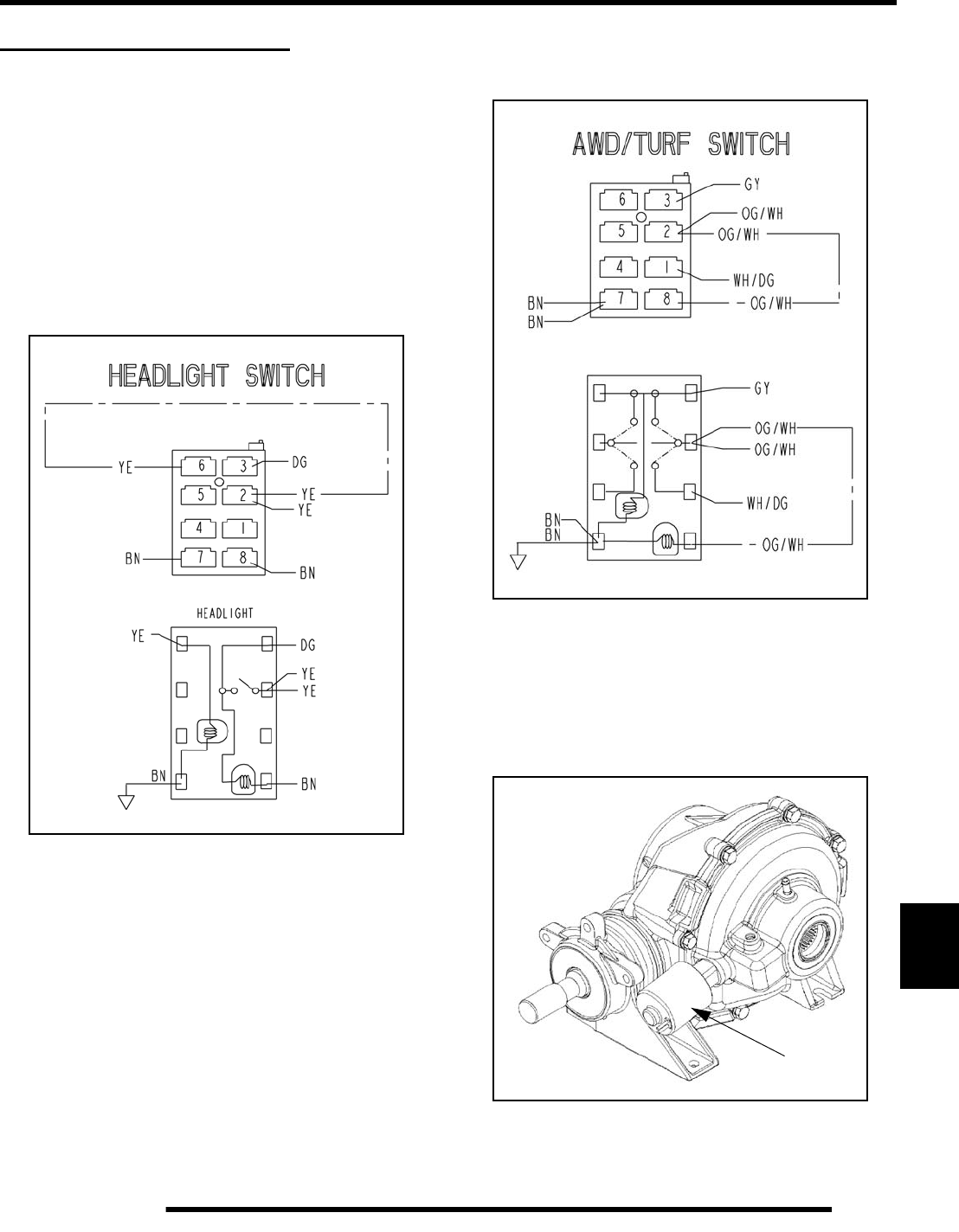
10.3
ELECTRICAL
10
SWITCHES / CONTROLS
Headlight Switch
1. Remove the dash panel from the dash (see Chapter 5).
2. Disconnect the headlight switch harness (Brown, Green,
and Yellow), by depressing the connector lock and pulling
on the connector. Do not pull on the wiring.
3. Inspect the switch connections and test the switch for
continuity.
• When the headlight switch is turned on, there should be
continuity between terminals 2 (Yellow) and 3 (Green).
AWD / 2WD / TURF Switch
1. Remove the dash panel from the dash (see Chapter 5).
2. Disconnect the switch harness (Gray, Orange/White,
Brown, White/Green), by depressing the connector lock
and pulling on the connector. Do not pull on the wiring.
3. Inspect the switch connections and test the switch for
continuity.
• When the AWD/Turf switch is in position #1 (AWD),
there should be continuity between terminals 2
(Orange/White) and 3 (Gray).
• When the AWD/Turf switch is in position #3 (Turf),
there should be continuity between terminals 1 (White/
Green) and 2 (Orange/White).
Differential Solenoid
The differential solenoid is located on the rear gear case. The
solenoid actuates an engagement dog, which locks and unlocks
the rear differential. Refer to Chapter 7 for more information on
rear differential operation.
Solenoid
PartShark.com
877-999-5686
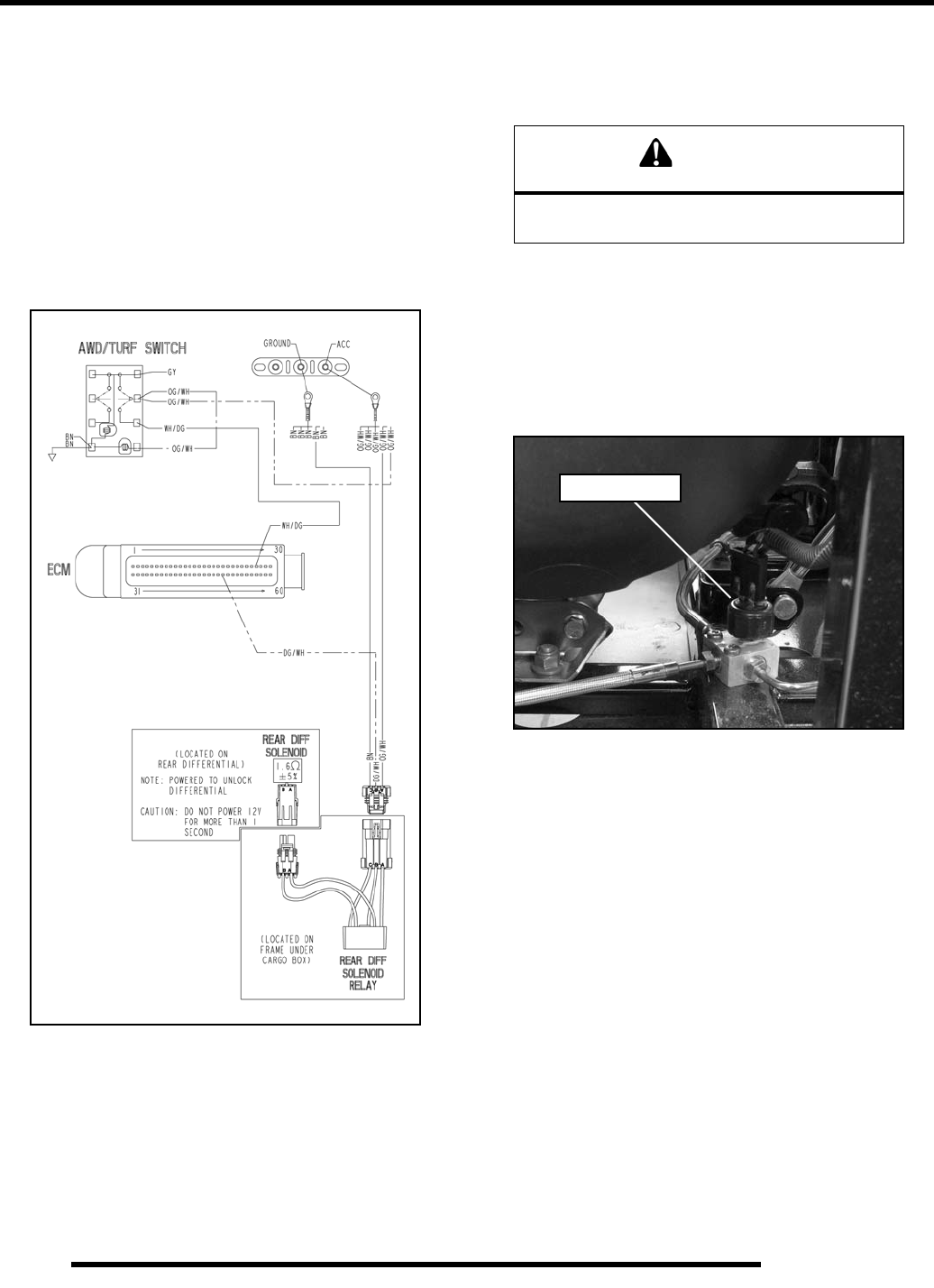
10.4
ELECTRICAL
Rear Differential Solenoid Operation
The Rear Diff Solenoid Relay is located on the frame under the
rear cargo box.
When the switch is pushed to activate “Turf” mode, key-on
accessory battery voltage is sent from the AWD / 2WD / Turf
Switch to the ECU.
Depending on engine speed, gear position criteria and parking
brake input, the ECU energizes the Rear Diff Solenoid Relay
allowing it to enable the differential solenoid. NOTE: The rear
differential will not unlock if the parking brake is set.
If the rear differential fails to switch from operational modes:
• Check the solenoid and relay connectors. Look for
loose wires or bad connections.
• Check for power from the relay connector, to ensure the
solenoid has power to be activated. Check for power at
the ECU and Rear Differential Solenoid Relay.
• Check the switch wires for loose connections.
• Remove solenoid from rear differential and ensure the
solenoid plunger is actuating.
Brake Light Switch
The brake light switch is located on the frame under the rear
portion of the PVT cover. The brake pressure switch is installed
into a junction block.
1. Disconnect the wire harness from the brake switch.
2. Connect an ohmmeter across switch contacts. Reading
should be infinite (OL).
3. Apply foot brake and check for continuity between switch
contacts. If there is no continuity or greater than .5 ohms
resistance when the brake is applied with slight pressure,
first clean the switch contacts and re-test. Replace switch
if necessary.
CAUTION
Do not power the solenoid with 12 Volts for more
than 1 second, or damage may occur to solenoid.
Brake Switch
PartShark.com
877-999-5686
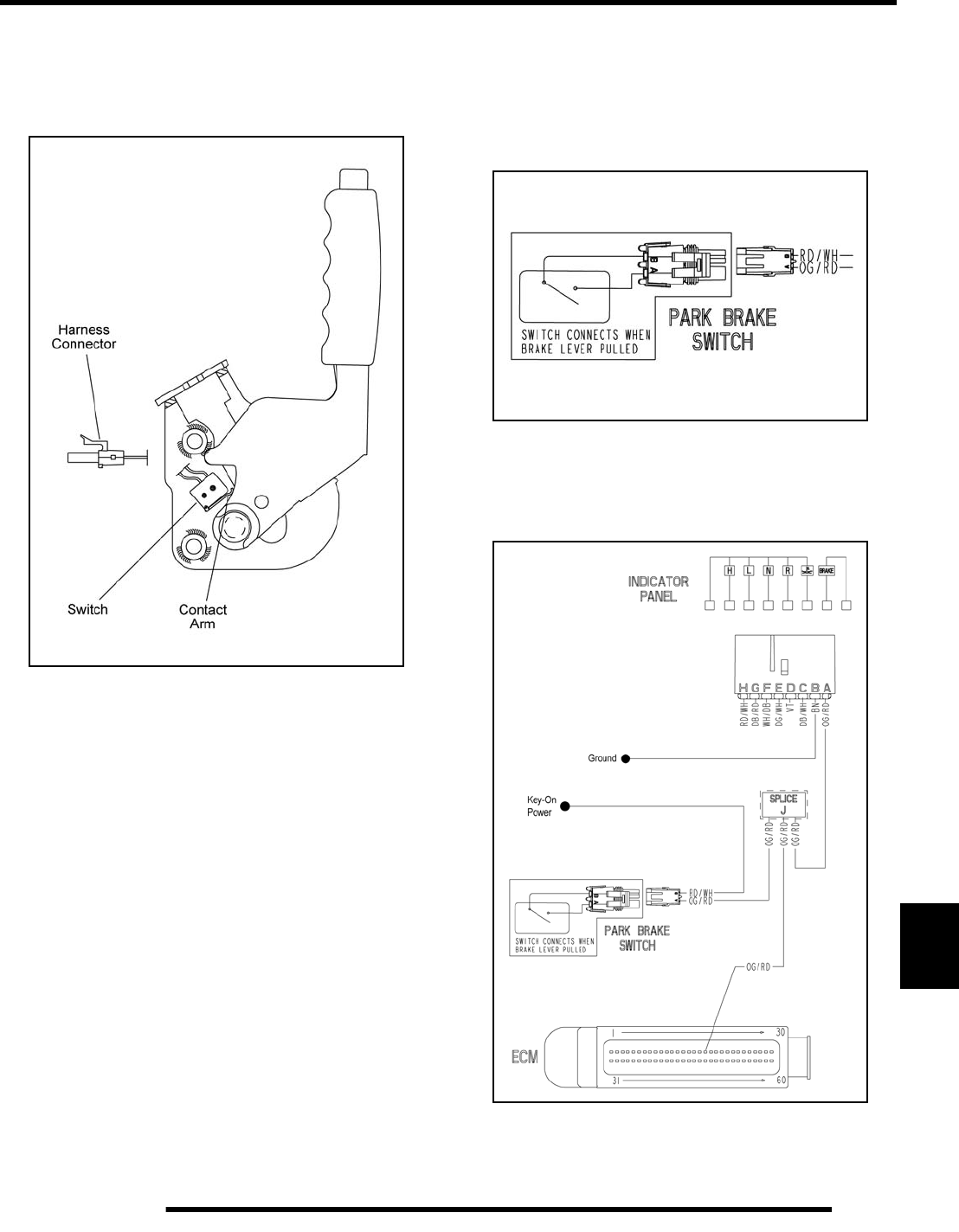
10.5
ELECTRICAL
10
Parking Brake Switch
The parking brake switch is located within the parking brake
lever. Follow the parking brake lever under the dash to locate
the internally mounted switch.
The switch remains in the “open” position when the park brake
lever is not applied.
When the parking brake lever is applied, the switch makes
contact and sends voltage to the ECU and indicator panel to
illuminate the “Brake” light on the indicator panel.
NOTE: If the parking brake is applied the ECU will
rev limit the engine at 1300 RPM until the parking
brake is released. This feature has been added to
prevent drive-away with the parking brake applied.
If trying to perform an engine diagnostic running test
with the parking brake applied, disconnect the
switch harness connector to allow the engine to rev
higher than 1300 RPMs.
Testing The Parking Brake Switch
1. Disconnect the harness connector at the parking brake
switch (Orange/Red and Red/White wires).
2. Place the ohmmeter leads onto the switch terminals. The
reading should be infinite (OL).
3. Apply the parking brake. Continuity should now exist
between the switch terminals. If no continuity exists when
the parking brake is applied, try to clean the switch
terminals and re-test. Replace switch if necessary.
PartShark.com
877-999-5686
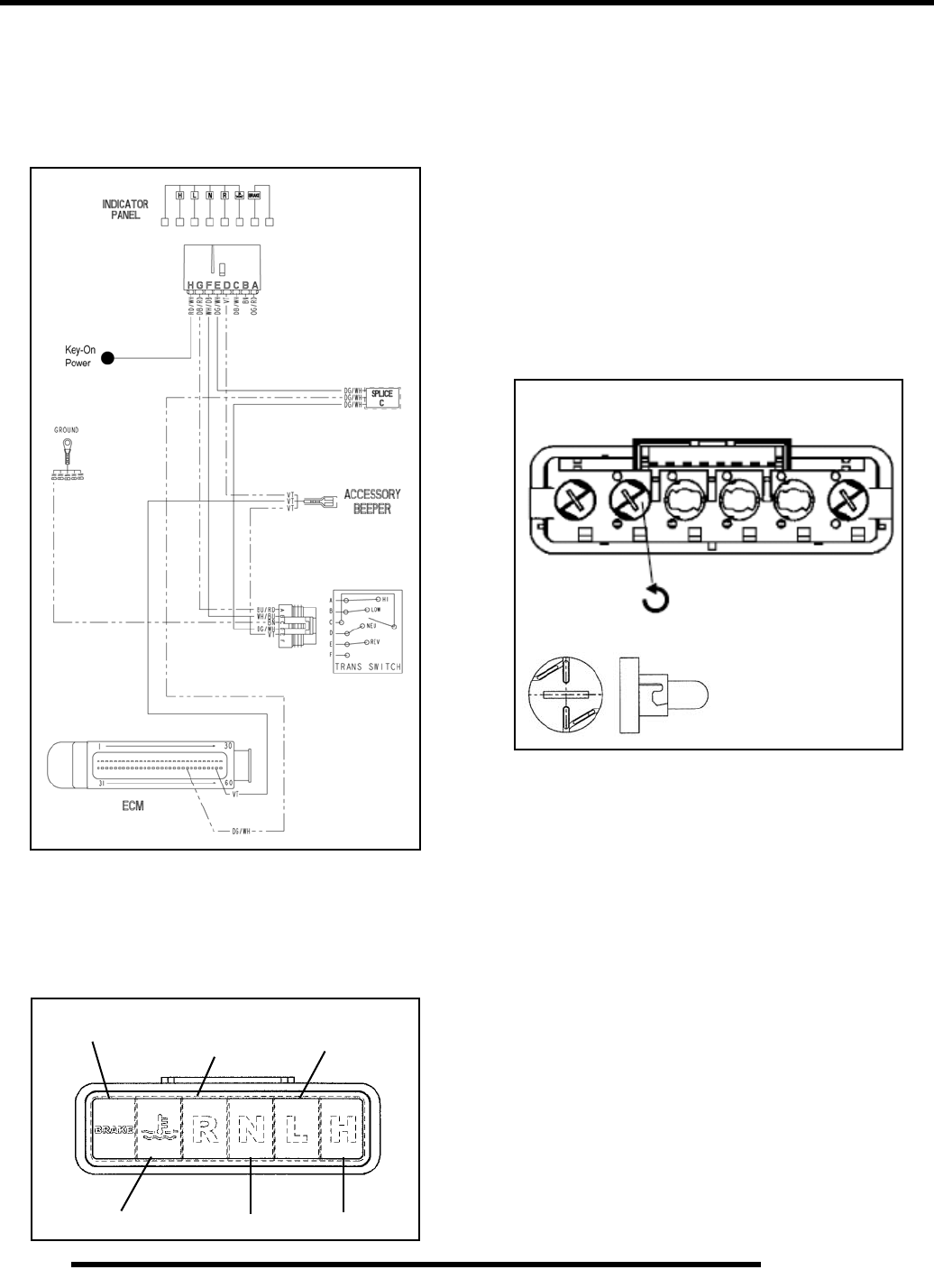
10.6
ELECTRICAL
Gear Indicator Light Circuit Operation
The transmission switch provides the ground path for the
indicator panel lamps located on the dashboard. For example,
when neutral is selected, the DG/WH wire is connected to
ground through the switch and the neutral lamp is illuminated.
If the light does not illuminate when neutral is selected, check
the bulb. If the bulb is good, check the wiring, transmission
switch, and lamp socket source voltage. Perform the same test
for all four gear indicators. Refer to the wire diagram for wire
colors.
Indicator Lamp Replacement
1. Remove the dash panel from the dash (see Chapter 5).
2. Lift on the release to unplug the panel from the harness.
3. Using a small flathead screwdriver, press in the tabs on each
side of the indicator panel to remove it from the dash panel.
4. Use the following procedure to remove a defective lamp.
• Use a small screwdriver and turn lamp holder 1/4 turn
• Pull bulb assembly out with a needle nose pliers
• Replace with a new bulb
5. Reverse disassembly procedure to reinstall indicator panel.
Reverse
High
Brake
Neutral
Low
Temperature
Indicator Panel
Rear View of Indicator Panel
1/4 Turn To Remove
Replacement Bulbs
PN 4010416
PartShark.com
877-999-5686
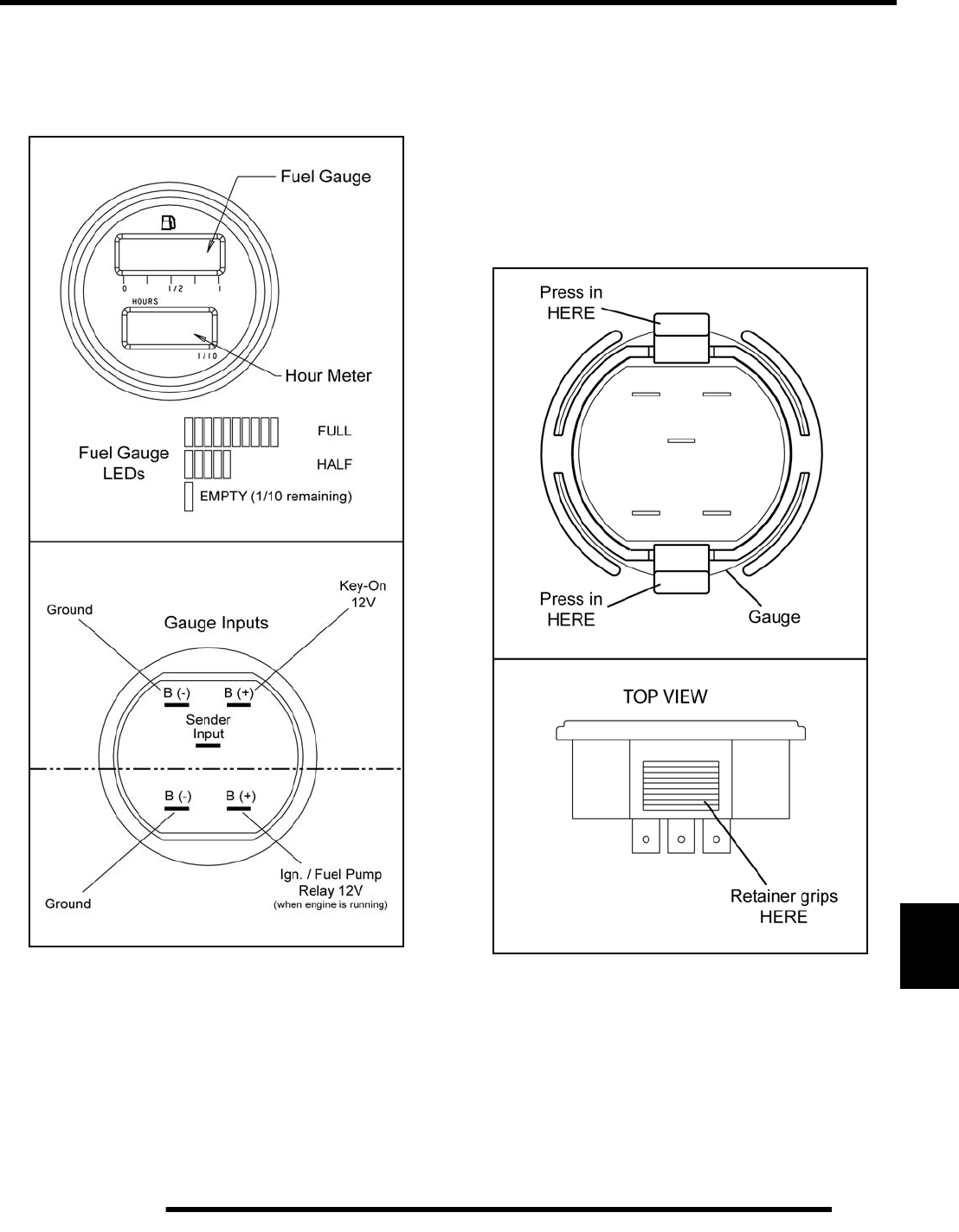
10.7
ELECTRICAL
10
Fuel / Hour Gauge
This vehicle is equipped with a fuel / hour gauge. The gauge
displays fuel tank volume using LED light display and also
engine hours through a digital LCD screen.
Gauge Removal:
1. Remove the dash panel from the dash (see Chapter 5).
2. Remove the hour meter wires and fuel gauge connector
from the back side of the gauge.
3. Locate the two large tabs of the gauge retainer.
4. Press in both tabs while pushing on the backside of the
gauge. Alternate from top to bottom until the gauge has
been removed from the dash panel.
5. Reverse removal procedures to reinstall the gauge.
PartShark.com
877-999-5686
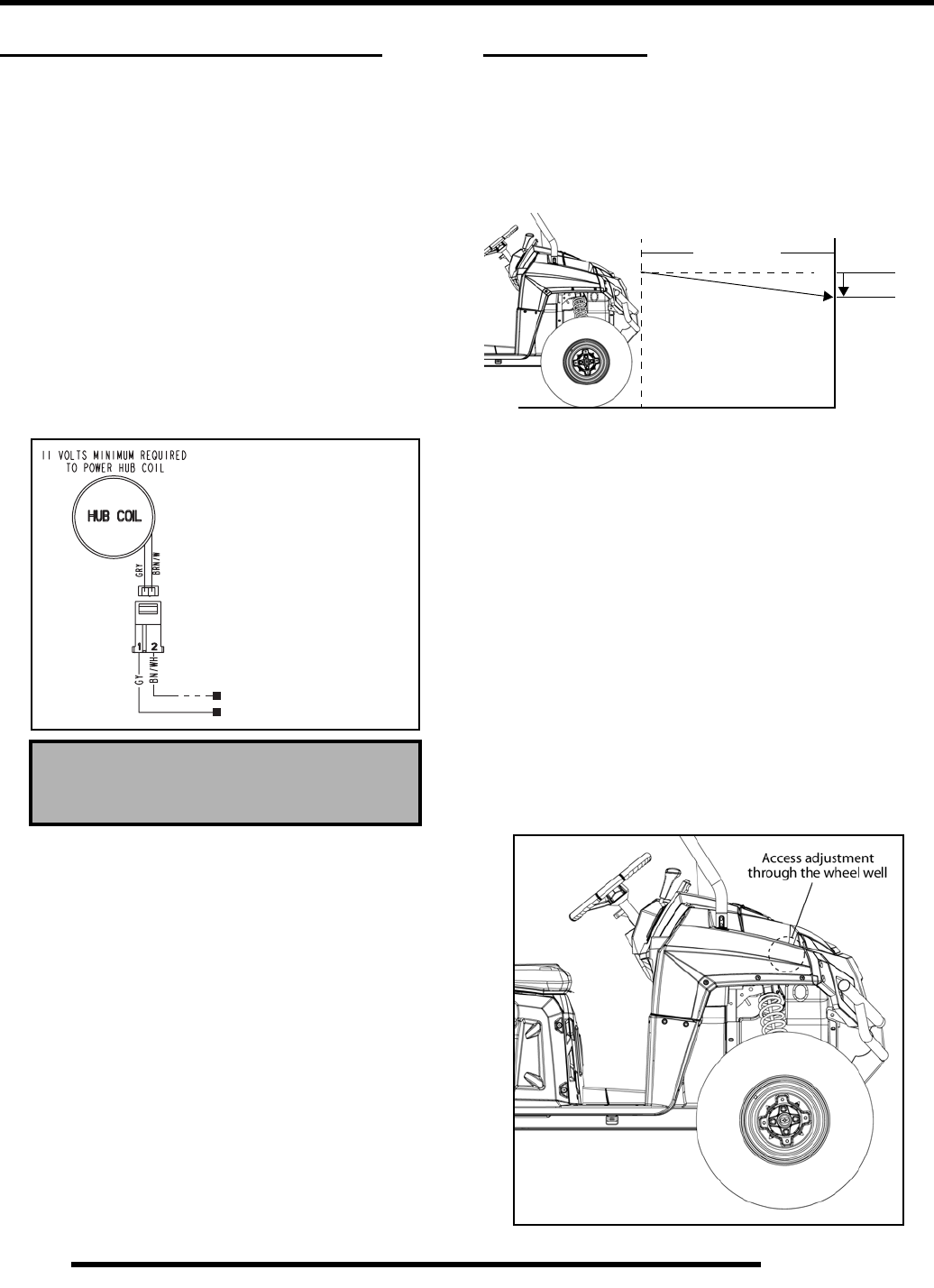
10.8
ELECTRICAL
ALL WHEEL DRIVE (AWD) COIL
Operation Overview
• When the AWD switch is “ON”, 12 VDC power is
present at the hub coil.
• If the criteria is met, the ECU provides a ground path on
the Brown/White wire.
• The AWD system must be grounded to operate.
Diagnosing System Failures
• Verify the AWD switch is functional and that a
minimum of 11 volts is present at the hub coil on the
Gray wire.
• Verify the AWD hub coil is functional. Test the AWD
hub coil using an ohm meter. See specifications below:
• Verify the wiring harness, wiring, connectors,
connector pins and grounds are undamaged, clean and
connected properly.
• Verify continuity of wire connections with a volt/ohm
meter.
IMPORTANT: Verify all wires and wiring connections
have been tested properly with a known good volt/
ohm meter before suspecting a component failure.
80% of all electrical issues are caused by bad/failed
connections and grounds.
HEADLIGHTS
Headlight Adjustment
The RANGER headlights are adjustable.
1. Place the vehicle on a level surface with the headlight
approximately 25 ft. (7.6 m) from a wall.
2. Measure the distance from the floor to the center of the
headlight (X1) and make a mark on the wall at the same
height (X2).
3. With the machine in Neutral and parking brake applied,
start the engine and turn the headlight switch on.
4. The most intense part of the headlight beam should be
aimed 8 in. (20 cm) below the mark placed on the wall in
Step 2.
NOTE: Rider weight must be included in the seat
while performing this procedure.
5. Locate the T25 Torx-head adjustment screw through the
wheel well (see illustration). Adjust the beam to the desired
position by loosening the adjustment screw and moving the
lamp to the appropriate height.
AWD Hub Coil Resistance:
24 Ω ± 5%
7HVW5HVLVWDQFH
5HDGLQJVVKRXOGEH
*<WR%1:+a2KPV
*<WR*URXQG1R&RQQHFWLRQ
25 ft. (7.6 m)
8 in. (20 cm)
X1X2
PartShark.com
877-999-5686
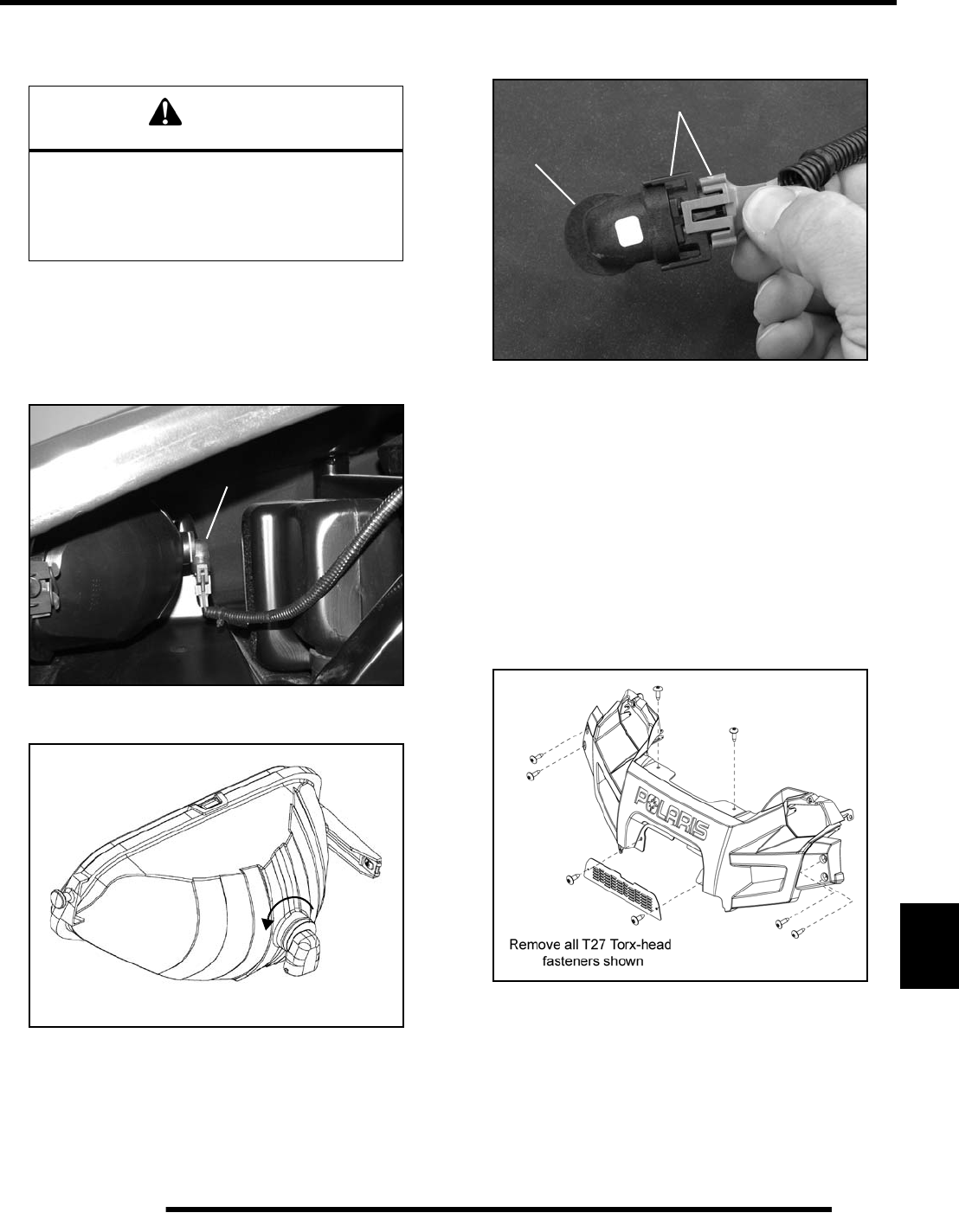
10.9
ELECTRICAL
10
6. Once the beam is set to the position, tighten the adjustment
screw. Repeat the procedure to adjust the other headlight.
Headlight Bulb Replacement
1. Open the hood.
2. Locate the bulb on the back side of headlight.
3. Turn the bulb counterclockwise to remove it.
4. Unplug the headlight bulb from the wiring harness. Be sure
to pull on the connector, not on the wiring.
5. Install the wire harness into the new headlight bulb.
6. Install the bulb into the housing and rotate it clockwise 90°
to lock it in place.
NOTE: Make sure the tab on the bulb locates
properly in the housing.
Headlight Housing Removal
1. Open the hood.
2. Remove the front facia to access the headlight housing.
WARNING
Due to the nature of light utility vehicles and
where they are operated, headlight lenses
become dirty. Frequent washing is necessary to
maintain lighting quality. Riding with poor
lighting can result in severe injury or death.
Bulb
Wire Harness
Bulb
PartShark.com
877-999-5686
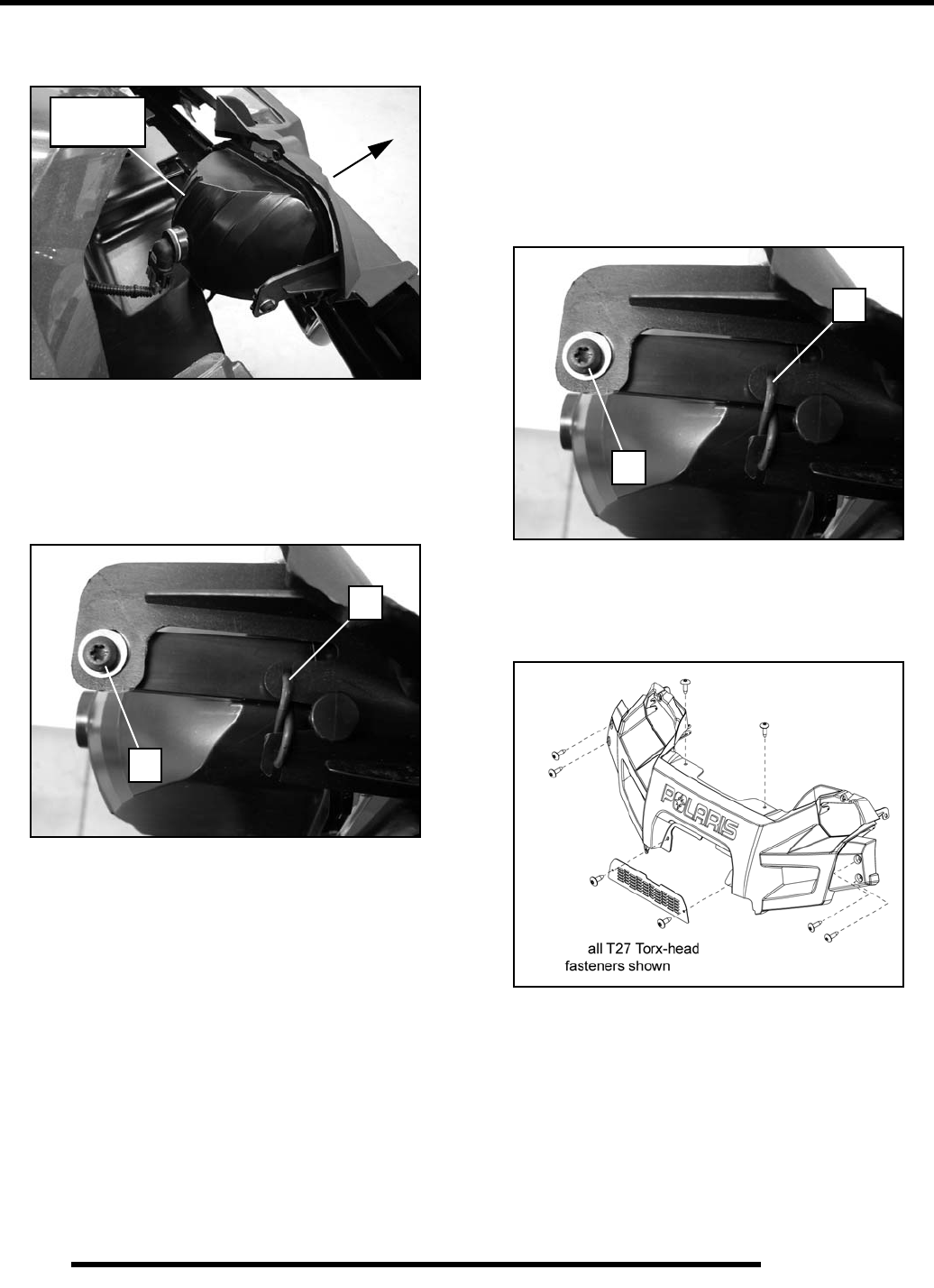
10.10
ELECTRICAL
3. Carefully pull the fascia out far enough to access the
headlight housing.
4. Remove the bulb from the headlight housing (see
“Headlight Bulb Replacement”).
5. Remove the O-rings (A) from each side of the headlight
housing. Remove the adjustment screw (B) and pull the
headlight from the brackets.
Headlight Housing Installation
1. Install the headlight housing by pressing the headlight tabs
back into the brackets.
2. Secure the headlight housing with the rubber O-rings on
each side (A). Install the adjustment screw (B).
NOTE: Be sure to twist the O-rings upon installation
as shown below.
3. Reinstall the bulb into the housing and rotate it clockwise
90° to lock it in place.
4. Reinstall the front fascia and securely tighten all fasteners.
5. Adjust headlights using the “Headlight Adjustment”
procedure.
Headlight
Housing
A
B
A
B
Install
PartShark.com
877-999-5686
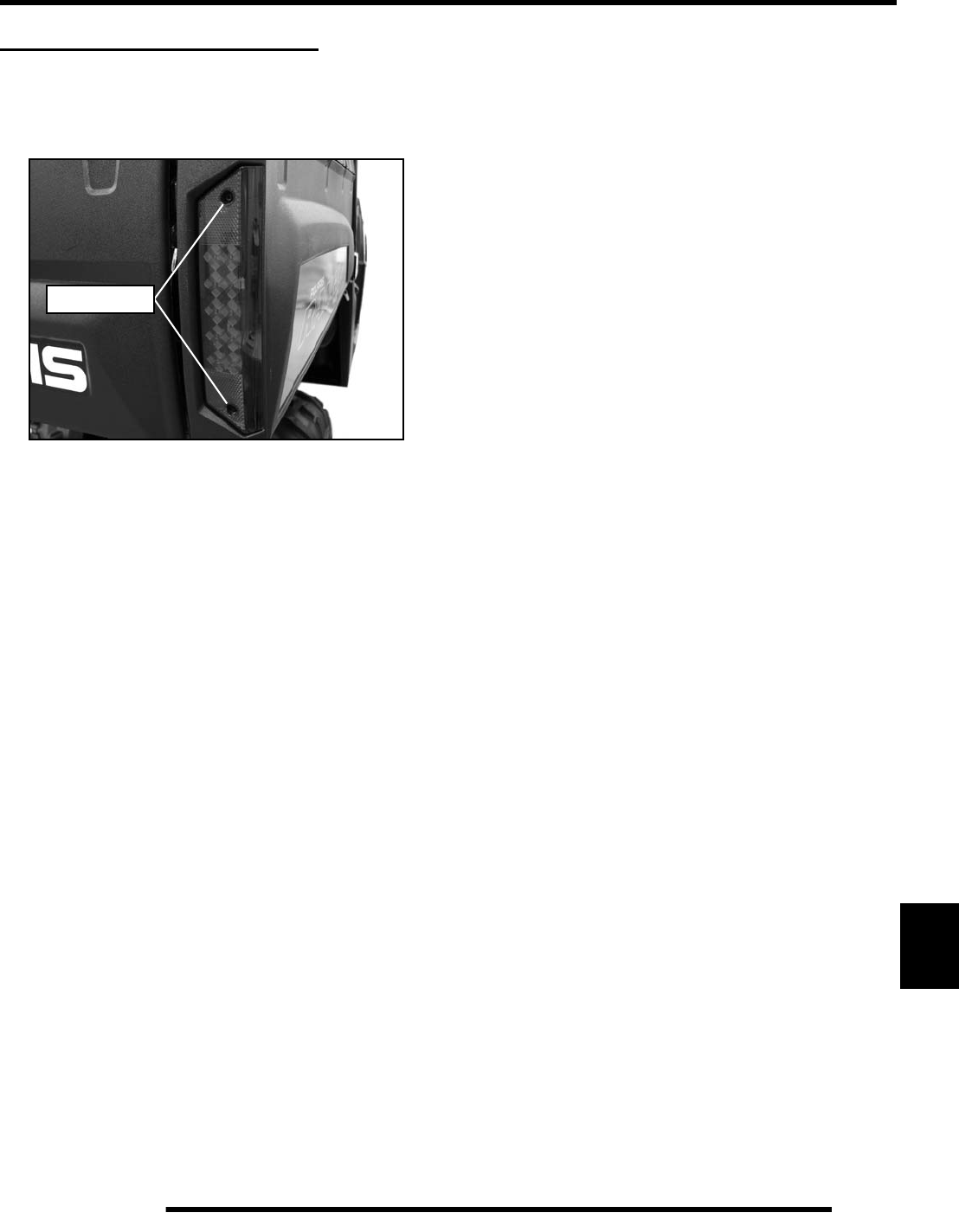
10.11
ELECTRICAL
10
TAIL LIGHT / BRAKE LIGHT
LED Lamp Replacement
1. From the rear of the LED lamp, remove the (2) T20 Torx-
head screws retaining the lamp assembly.
2. Remove the lamp from the cargo box and disconnect the tail
light / brake light wire harness.
NOTE: Before replacing the LED lamp assembly,
use a digital multi-meter to test the harness to
ensure the lamp is receiving 12 volts and that a
ground path is present.
3. If the LED still does not work, replace the LED lamp
assembly with the recommended lamp. Apply dielectric
grease (PN 2871329) to the new lamp connector terminals.
4. Reinstall the assembly by reversing this procedure.
5. Test the tail light / brake light after installation to verify
proper function.
T20 Screws
PartShark.com
877-999-5686
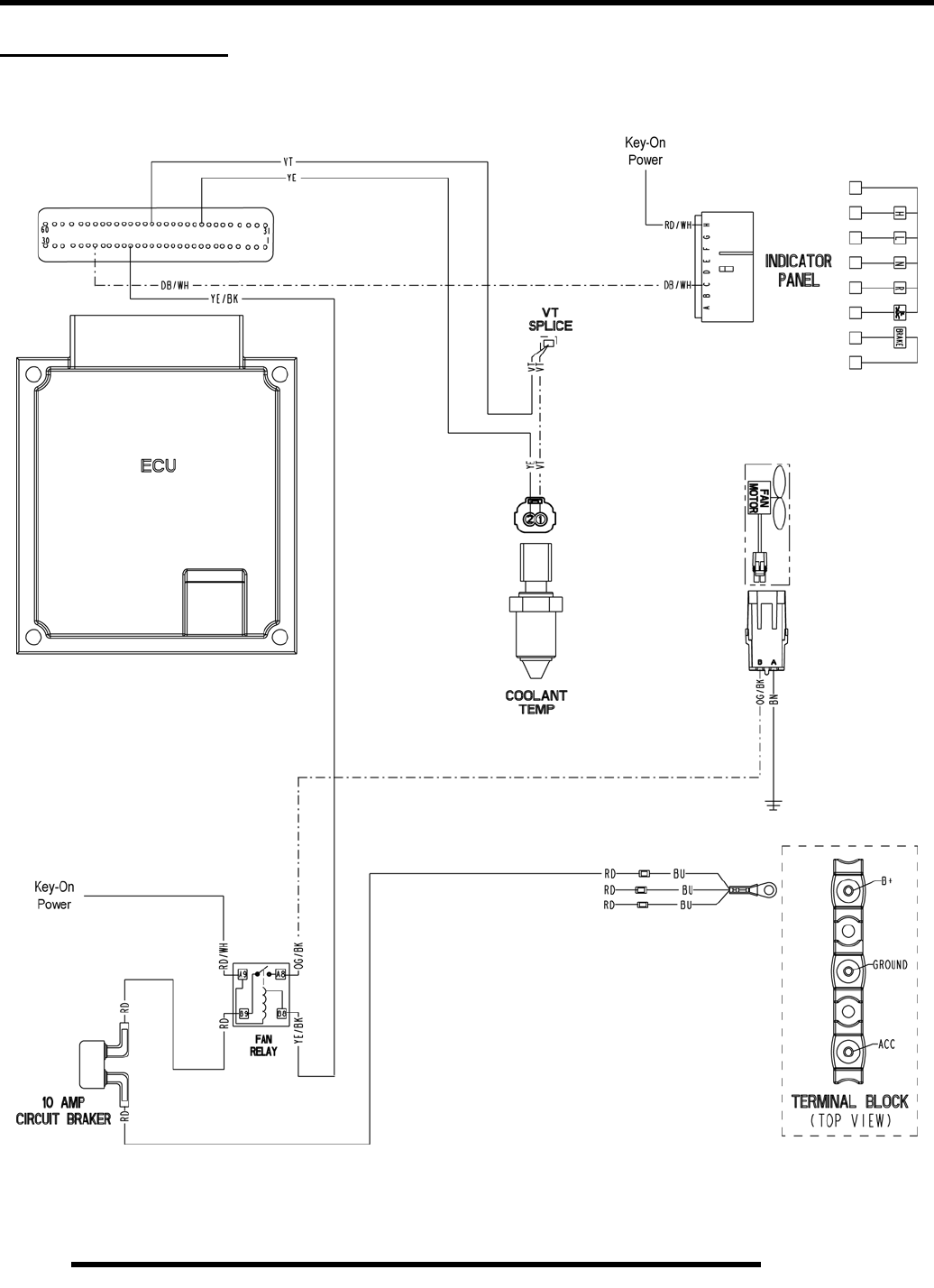
10.12
ELECTRICAL
COOLING SYSTEM
Cooling System Break-Out Diagram
PartShark.com
877-999-5686
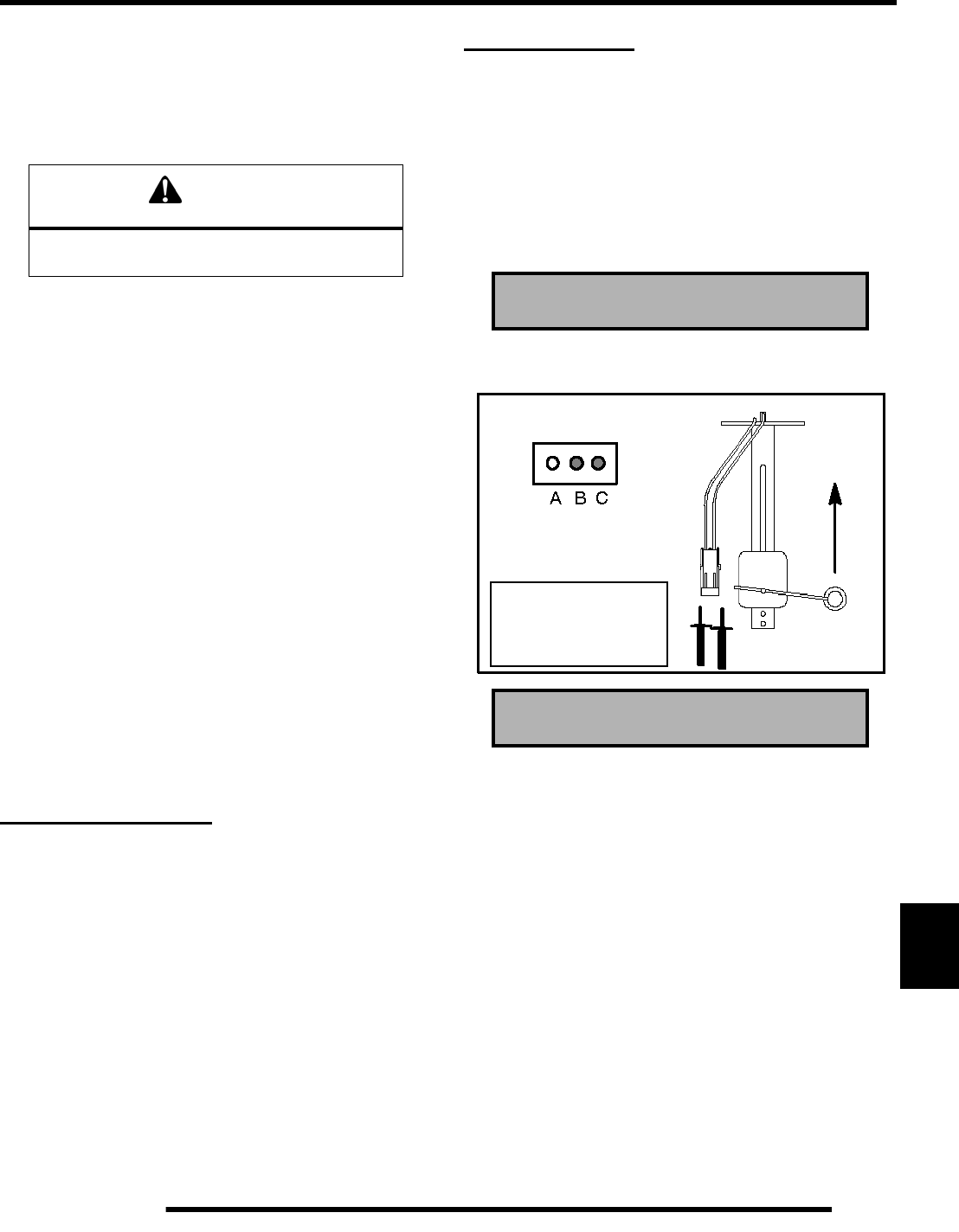
10.13
ELECTRICAL
10
Fan Control Circuit Operation
Power is supplied to the fan via the Orange/Black wire when the
relay is energized. The brown wire provides a ground path for
the fan motor. Refer to “RELAYS” later in this chapter for more
information on fan functions.
NOTE: The fan may not function or operation may
be delayed if coolant level is low or if air is trapped in
the cooling system. Be sure cooling system is full
and purged of air. Refer to Chapter 2 “Maintenance”
for cooling system information.
Fan Control Circuit Bypass Test
1. Disconnect harness from the engine coolant temperature
sensor located in the cylinder head of the engine.
2. With the vehicle in neutral and the parking brake applied,
start the vehicle. While the engine is running you should
hear the cooling fan turn on and remain running.
3. If the fan does not run or runs slowly, check the fan motor
wiring, wire connections, ground path, 12V power input,
and fan motor condition. Repair or replace as necessary.
If the fan runs while the engine is running with the sensor
harness disconnected, but will not turn on when the engine
is hot, verify the coolant level is correct and check the
coolant temperature sensor and connector terminals.
EFI DIAGNOSTICS
EFI Component Testing
All EFI component information and diagnostic testing
procedures are located in Chapter 4.
Refer to Chapter 4 “Electronic Fuel Injection System (EFI)”
when diagnosing an EFI System.
FUEL SENDER
Testing
1. Drain the fuel tank and remove it from the chassis.
2. Set the fuel tank on a flat surface.
3. Attach an ohm meter to the fuel sender harness Violet/
White wire (B) and Brown wire (C).
4. Allow the sender float to sit in the empty position and
compare to specification.
5. Slowly tilt the tank so that gravity moves the sender float
to the full position and compare to specification.
6. If the readings are not to specification, or if the reading is
erratic or LED display “sticks”, check the following before
replacing the fuel pump assembly.
• Loose float
• Float contact with tank
• Bent Float Rod
If none of the conditions exists, the sender assembly is faulty.
Fuel pump/tank assembly replacement is required.
CAUTION
Keep hands away from fan blades during
operation. Serious personal injury could result.
Fuel Sender - Empty: 5 Ω ± 5%
Fuel Sender - Full: 90 Ω ± 5%
Fuel Sender
Empty: 5Ω ± 5%
Half: 57Ω ± 5%
Full: 90Ω ± 5%
PartShark.com
877-999-5686
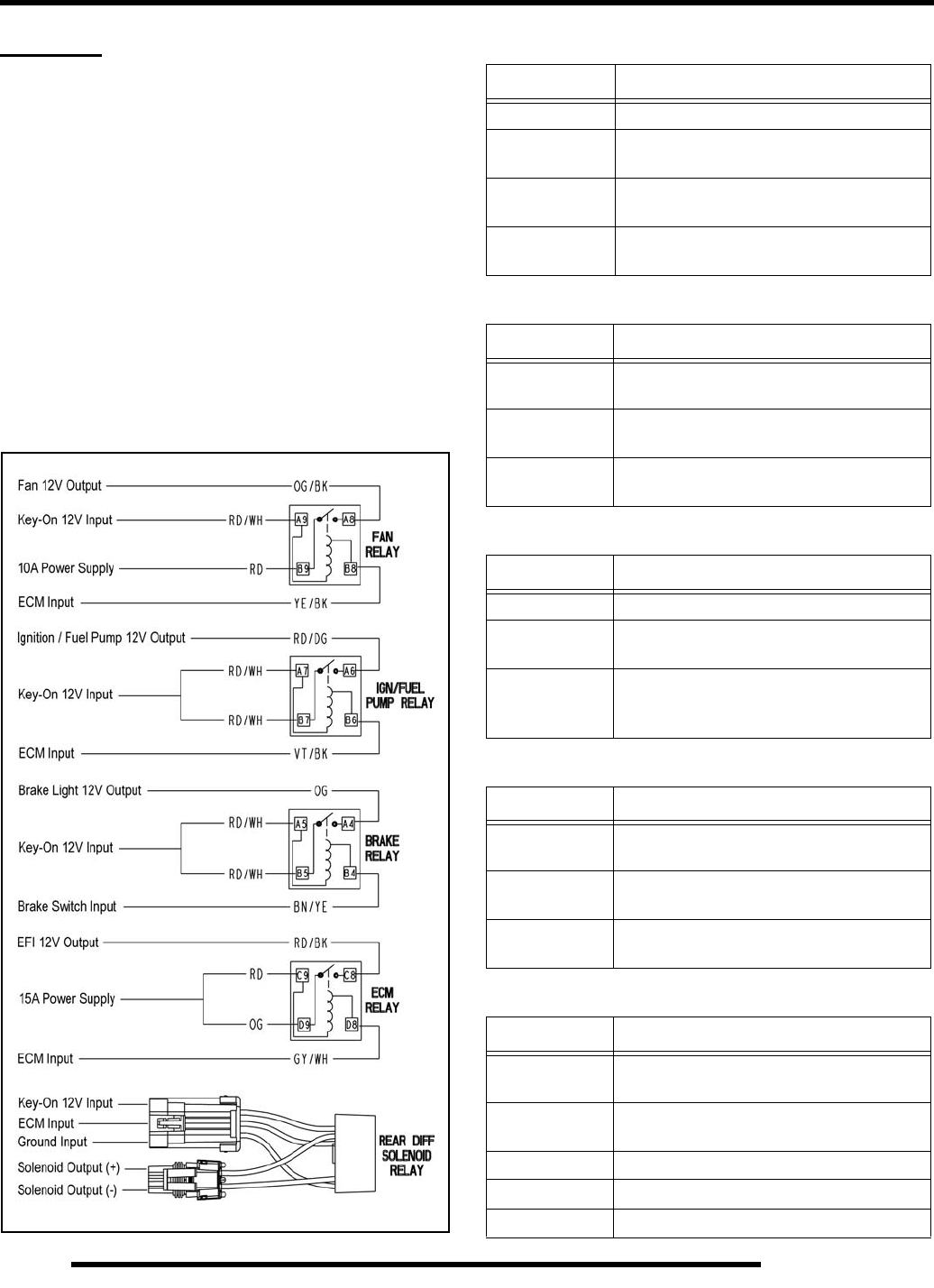
10.14
ELECTRICAL
RELAYS
Operation
The relays assist with fan, ignition coil and fuel pump, brake
light, ECM and rear differential operation.
The Fan Relay, controlled by the ECM and Engine Coolant
Temp Sensor, operates the fan motor.
The Ignition Coil and Fuel Pump Relay, controlled by the
ECM and key switch, powers the fuel pump and ignition coil.
The Brake Light Relay, controlled by the brake pressure switch
and key switch, powers the brake lights.
The ECM Relay, controlled by the ECM, supplies power to EFI
components and sensors.
The Rear Diff Solenoid Relay, controlled by the AWD/2WD/
TURF switch and ECM, operates the differential solenoid.
FAN RELAY
COLOR FUNCTION
Orange / Black Relay switched 12V power to the fan motor.
Red / White Key-On 12V power supply, provides power to
operate the relay.
Red 10 Amp circuit breaker protected, 12V relay
power supply.
Yellow / Black ECM ground input to connect the relay 10 Amp
12V power to the fan motor.
IGNITION COIL & FUEL PUMP RELAY
COLOR FUNCTION
Red / Green Relay switched 12V power to the ignition coil
and fuel pump.
Red / White Key-On 12V power supply, provides the relay
power supply and voltage to operate the relay.
Violet / Black ECM ground input to connect the relay 12V
power supply to the ignition coil and fuel pump.
BRAKE LIGHT RELAY
COLOR FUNCTION
Orange Relay switched 12V power to the brake lights.
Red / White Key-On 12V power supply, provides the relay
power supply and voltage to operate the relay.
Brown / Yellow Brake switch ground input to connect the relay
12V power supply to the brake lights when the
brake pedal is applied.
ECM RELAY
COLOR FUNCTION
Red / Black Relay switched 12V power to the EFI sensors
and components.
Red and Orange 15 Amp fuse protected, 12V relay power supply
and voltage to operate the relay.
Gray / White ECM ground input to connect the relay 15 Amp
12V power to the EFI sensors and components.
REAR DIFF SOLENOID RELAY
COLOR FUNCTION
Orange / White Key-On 12V power supply, provides the relay
power supply and voltage to operate the relay.
Green / White ECM ground input to connect the relay power
supply to the rear diff solenoid.
Brown Ground input to energize the rear diff solenoid.
Red Relay switched power to the rear diff solenoid.
Blue Ground input to energize the rear diff solenoid.
PartShark.com
877-999-5686
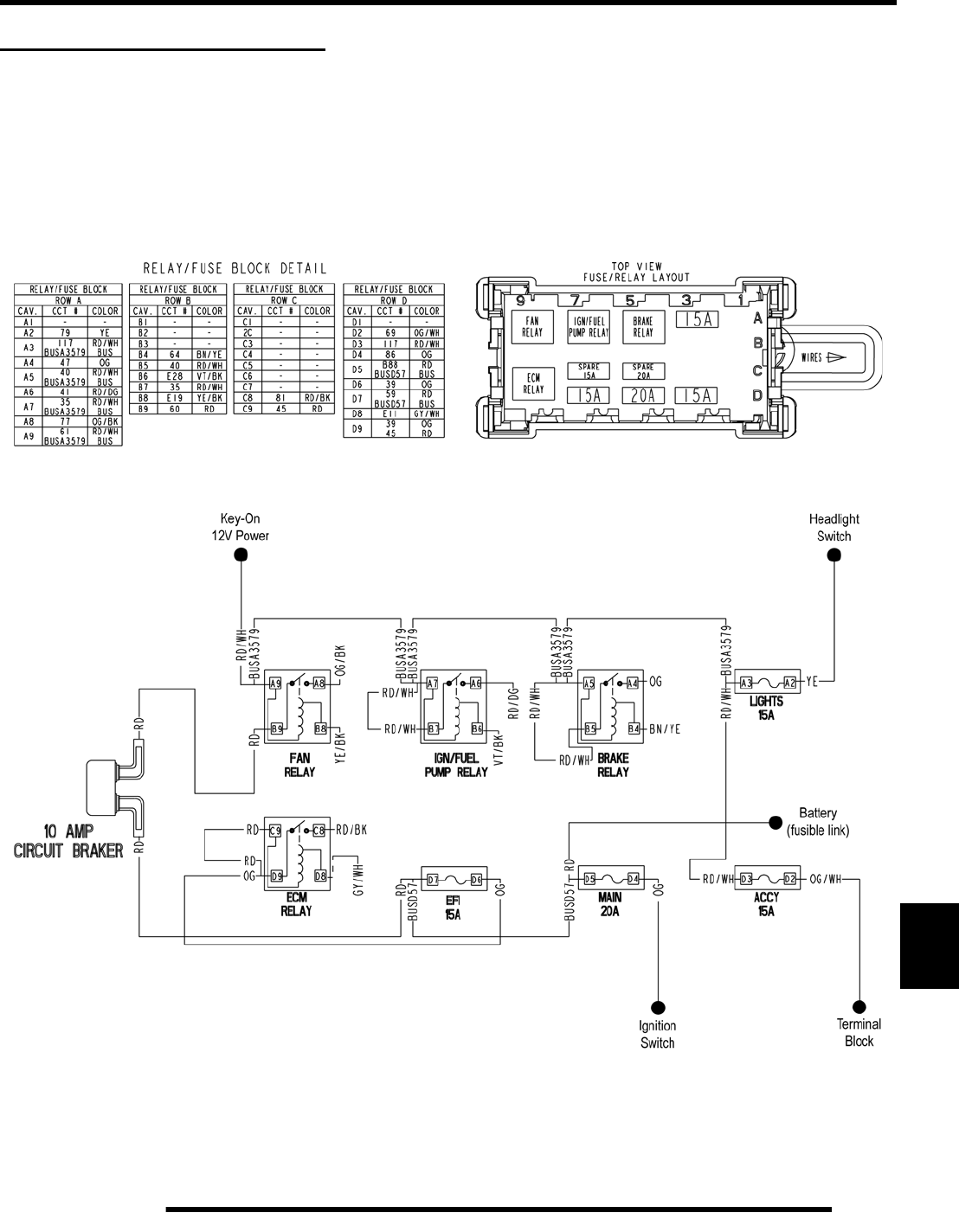
10.15
ELECTRICAL
10
FUSES / CIRCUIT BREAKER
Operation
The fuses, located in the relay/fuse box under the hood, provide current protection for components such as the EFI system, main
harness, lights and accessories.
A 10 Amp circuit breaker, located under the hood near the relay/fuse box, protects the fan motor circuit.
PartShark.com
877-999-5686
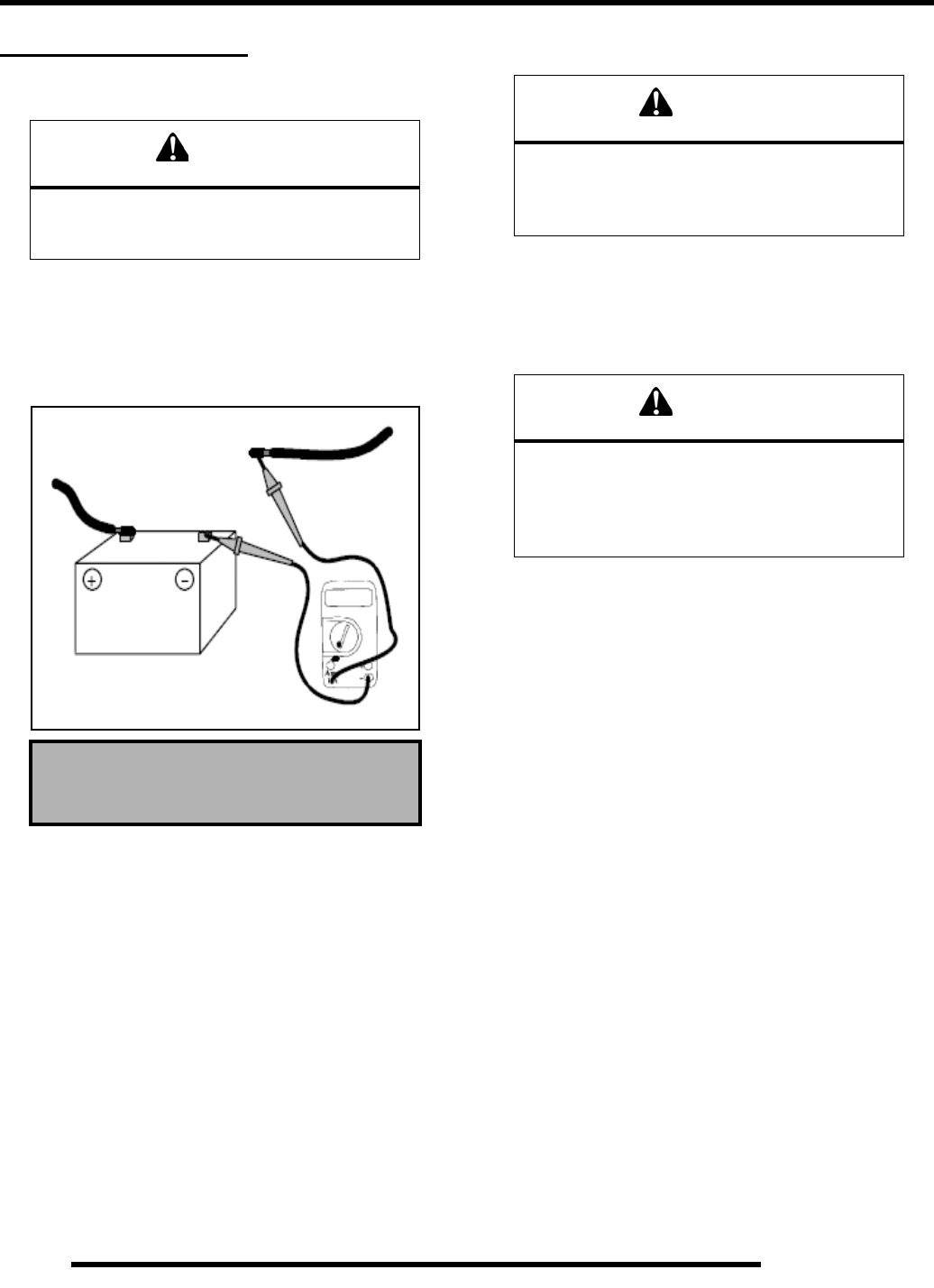
10.16
ELECTRICAL
CHARGING SYSTEM
Current Draw - Key Off
Connect an ammeter in series with the negative battery cable.
Check for current draw with the key off. If the draw is excessive,
loads should be disconnected from the system one by one until
the draw is eliminated. Check component wiring as well as the
component for partial shorts to ground to eliminate the draw.
Charging System “Break Even” Test
The “break even” point of the charging system is the point at
which the alternator overcomes all system loads (lights, etc.)
and begins to charge the battery. Depending on battery condition
and system load, the break even point may vary slightly. The
battery should be fully charged before performing this test.
1. Connect a tachometer to the engine.
2. Using an inductive amperage metering device, (set to DC
amps) connect to the negative battery cable
3. With engine off and the key switch and lights in the “ON”
position, the ammeter should read negative amps (battery
discharge). Reverse meter lead if a positive reading is
indicated.
4. Shift transmission into neutral with the parking brake
applied and start the engine. With the engine running at idle,
observe meter readings.
5. Increase engine RPM while observing ammeter and
tachometer.
6. Note RPM at which the battery starts to charge (ammeter
indication is positive).
7. With lights and other electrical loads off, the “break even”
point should occur at approximately 1500 RPM or lower.
8. With the engine running, turn the lights on and engage
parking brake to keep brake light on.
9. Repeat test, observing ammeter and tachometer. With
lights on, charging should occur at or below 2000 RPM.
CAUTION
Do not connect or disconnect the battery cable
or ammeter with the engine running. Damage will
occur to electrical components.
Current Draw - Key Off:
Maximum of .01 DCA (10 mA)
Current Draw Inspection
Key Off
30 Amp
CAUTION
Do not allow the battery cables to become
disconnected with the engine running. Follow the
steps below as outlined to reduce the chance of
damage to electrical components.
WARNING
Never start the engine with an ammeter
connected in series. Damage to the meter or
meter fuse will result.
Do not run test for extended period of time.
Do not run test with high amperage accessories.
PartShark.com
877-999-5686
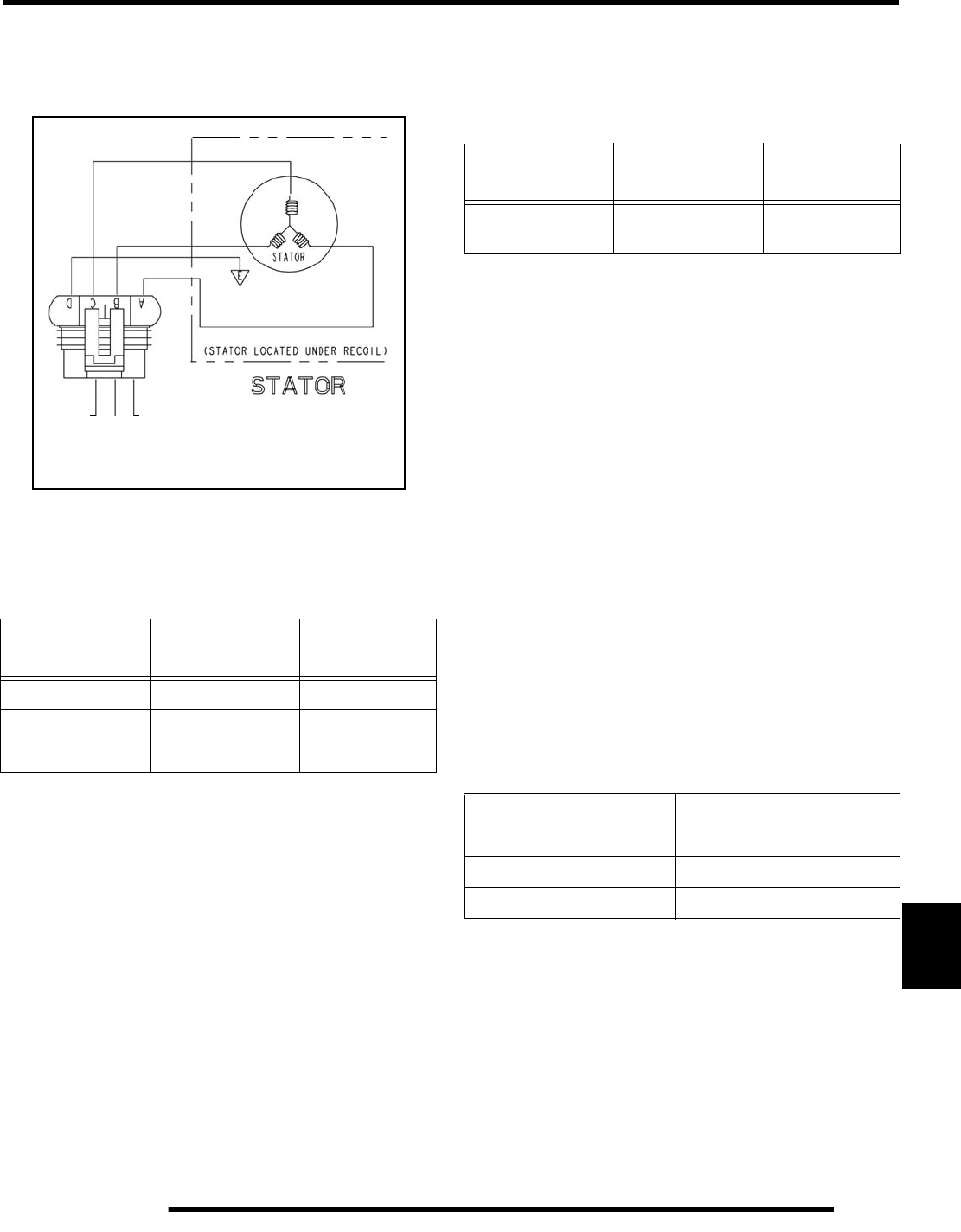
10.17
ELECTRICAL
10
Charging System Alternator Tests
Three tests can be performed using a multimeter to determine
the condition of the stator (alternator).
TEST 1: Resistance Value of Each Stator Leg
1. Measure the resistance value of each of the three stator
legs: Y1 to Y2, Y1 to Y3, and Y2 to Y3.
Each test should measure: 0.43Ω ± 20%
NOTE: If there are any significant variations in ohm
readings between the three legs it is an indication
that one of the three stator legs maybe weak or
failed.
TEST 2: Resistance Value of Each Stator Leg to Ground
1. Measure the resistance value of each of the stator legs to
ground: Y1 to Ground, Y2 to Ground, Y3 to Ground.
Each test should measure: Open Line (OL)
NOTE: Any measurement other than Infinity (open)
will indicate a failed or shorted stator leg.
TEST 3: Measure AC Voltage Output of Each Stator Leg at
Charging RPM
1. Set the selector dial to measure AC Voltage.
2. Start the engine and let it idle.
3. While holding the engine at a specified RPM, separately
measure the voltage across each ‘leg’ of the stator by
connecting the meter leads to the wires leading from the
alternator (Y1 to Y2, Y1 to Y3, Y2 to Y3).
4. Refer to the following table for approximate AC Voltage
readings according to RPM. Test each leg at the specified
RPM in the table.
Example: The alternator current output reading should be
approximately 18 VAC at 1300 RPM between each ‘leg’.
NOTE: If one or more of the stator leg output AC
voltage varies significantly from the specified value,
the stator may need to be replaced.
Test Connect Meter
Leads To: Ohms Reading
Battery Charge Coil Y1 to Y2 0.43Ω ± 20%
Battery Charge Coil Y1 to Y3 0.43Ω ± 20%
Battery Charge Coil Y2 to Y3 0.43Ω ± 20%
Y1 Y2 Y3
Perform tests at
Stator / Regulator connector
Test Connect Meter
Leads To: Ohms Reading
Battery Charge Coil Y1, Y2, or Y3
to Ground Open Line
(Infinity)
RPM Reading AC Voltage (VAC) Reading
1300 18 VAC ± 25 %
3000 42 VAC ± 25 %
5000 64 VAC ± 25 %
PartShark.com
877-999-5686
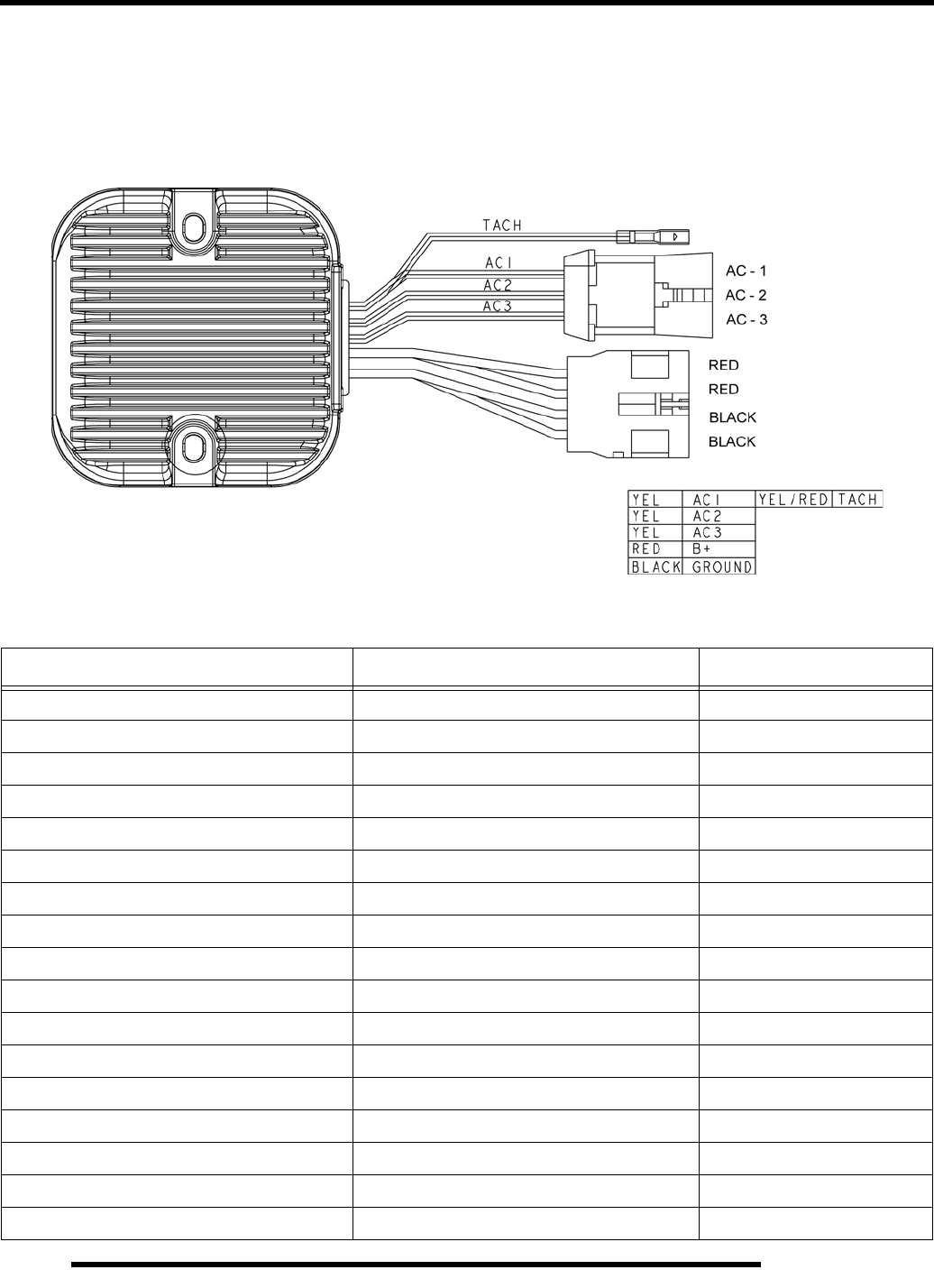
10.18
ELECTRICAL
Regulator / Rectifier Test
• Remove the regulator / rectifier from the vehicle. NOTE: Unit must be cool for accurate testing.
•Use DIODE CHECK function on the Fluke 77 DMM
• Perform all tests described in test table below. Test results describe a properly functioning component.
Regulator / Rectifier Test Table - Set DMM to DIODE CHECK Function
DMM RED LEAD DMM BLACK LEAD RESULT
AC - 1 (3-wire connector) AC - 2 (3-wire connector) Open Circuit
AC - 2 (3-wire connector) AC - 3 (3-wire connector) Open Circuit
AC - 1 (3-wire connector) AC - 3 (3-wire connector) Open Circuit
AC - 2 (3-wire connector) AC - 1 (3-wire connector) Open Circuit
AC - 3 (3-wire connector) AC - 1 (3-wire connector) Open Circuit
AC - 3 (3-wire connector) AC - 2 (3-wire connector) Open Circuit
RED Battery + (4-wire connector) BLACK Ground (4-wire connector) Open Circuit
BLACK Ground (4-wire connector) RED Battery + (4-wire connector) 2300mV to 2400mV
BLACK Ground (4-wire connector) Regulator / Rectifier Case Closed Circuit (continuity)
BLACK Ground (4-wire connector) Any Phase Open Circuit
AC - 1 (3-wire connector) BLACK Ground (4-wire connector) Open Circuit
AC - 2 (3-wire connector) BLACK Ground (4-wire connector) 2200mV to 2300mV
AC - 3 (3-wire connector) BLACK Ground (4-wire connector) Open Circuit
RED Battery + (4-wire connector) Any Phase Open Circuit
AC - 1 (3-wire connector) RED Battery + (4-wire connector) 400mV to 500mV
AC - 2 (3-wire connector) RED Battery + (4-wire connector) 400mV to 500mV
AC - 3 (3-wire connector) RED Battery + (4-wire connector) 400mV to 500mV
PartShark.com
877-999-5686
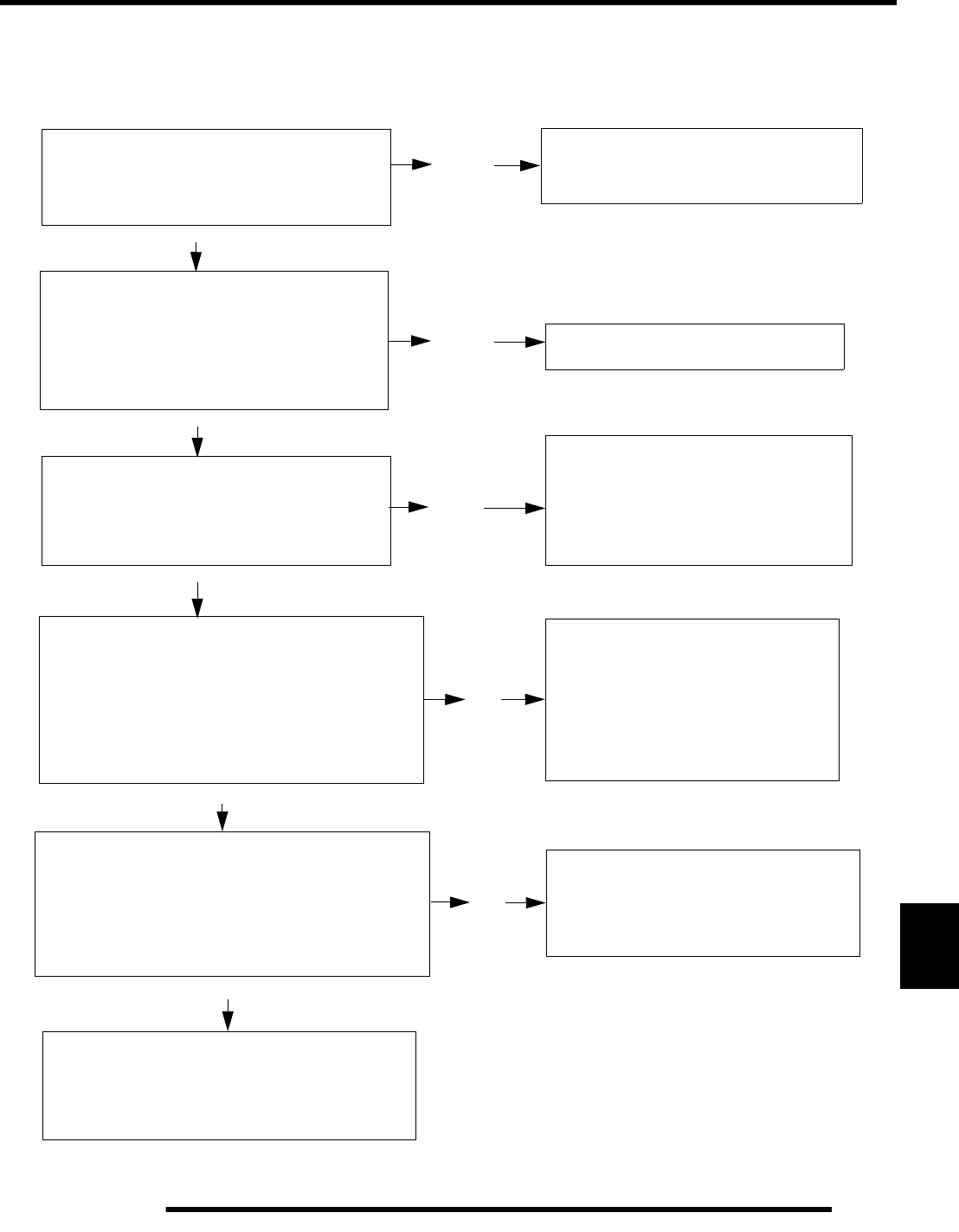
10.19
ELECTRICAL
10
Charging System Testing Flow Chart
Whenever charging system problems are suspected, proceed with the following system check after verifying that all wires are in good
condition, connected and not exposed or pinched.:
Using a multitester set on D.C. volts, mea-
sure the battery open circuit voltage (See
earlier test). It should be 12.4 volts or more.
Is it?
Meter Setting: DC Volts
With the transmission in Neutral, start the
Meter Setting: DC Amps
Perform system “Break Even Amperage”
Meter Setting: DC Volts
Reconnect the alternator wires. Note: Red
wire(s) must be connected to harness. Battery
voltage must be present on red wire terminal
on harness side of voltage regulator connector.
Is voltage present?
If all of the previous tests indicate a good
Yes
No
No
Yes
Yes
Remove the battery and properly ser-
vice. Reinstall the fully charged battery
or a fully charged shop battery.
No
Check Key off Current Draw.
Yes
Check for owner modification, and
discuss operating habits. The battery
will continually discharge if operated
below the “Break Even” RPM. Con-
tinued problems would call for battery
inspection.
Yes
Inspect the wiring harness between
the panel and the stator for
remove the recoil and flywheel.
Inspect the flywheel magnets, stator
coils and stator wires for damage.
No
Check stator, chassis ground, battery,
and battery connections. Also check
wire connections and wire condition.
Repair or replace faulty wiring or
No
engine and increase RPM to between 3000
test outlined in this chapter.
Does charging occur as specified?
Ohm stator wires, if bad replace stator, if good,
continue with alternator output test.
Meter Setting: AC Volts
Disconnect the Yellow wires from the stator connector
Using a multitester, perform an Alternator Output
test. See test procedure on Page 10.17.
damage. If no damage is found,
Repair or replace any damaged
components.
components.
and 4000. Read battery voltage with the
multitester. Readings should increase to
between 13.0 and 14.6 V D.C. Do they?
Does output meet specification?
condition, but the charging voltage does not
rise above battery voltage at the connector
or wire harness, replace the voltage regulator.
PartShark.com
877-999-5686
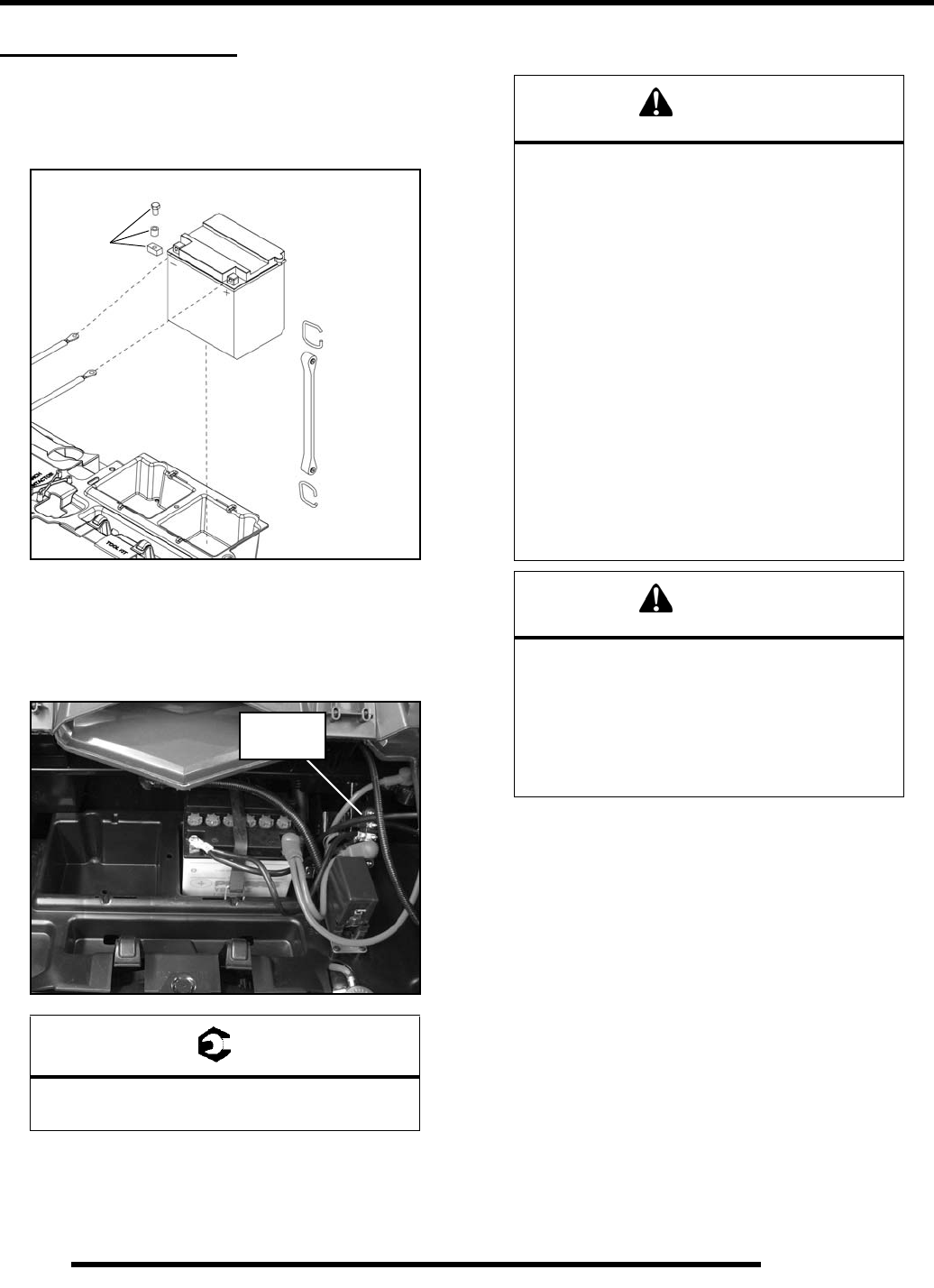
10.20
ELECTRICAL
BATTERY SERVICE
Battery Terminals / Bolts
Use Polaris corrosion resistant Nyogel™ grease (PN 2871329)
on battery terminal bolts.
Battery Terminal Block
The terminal block is located under the hood next to the battery
and fuse box. The terminal block provides easy hookup for
accessories.
Battery Activation
To ensure maximum service life and performance from a new
battery, perform the following steps. NOTE: Do not service the
battery unless it will be put into regular service within 30 days.
After initial service, add only distilled water to the battery.
Never add electrolyte after a battery has been in service.
NOTE: New Battery: Battery must be fully charged
before use or battery life will be significantly
reduced 10-30% of the battery’s full potential.
To activate a new battery:
1. Remove all the filling plugs.
2. Remove the sealing tube (red cap) from vent fitting.
3. Place battery on a level surface. Fill battery with electrolyte
to upper level marks on the battery case.
NOTE: Never activate a battery on the vehicle.
Electrolyte spillage can cause damage.
= T
Terminal Block Nuts:
20-25 in. lbs. (2.3-2.8 Nm)
Apply
Nyogel™
Terminal
Block
WARNING
Battery electrolyte is poisonous. It contains
sulfuric acid. Serious burns can result from
contact with skin, eyes or clothing. Antidote:
External: Flush with water.
Internal: Drink large quantities of water or milk.
Follow with milk of magnesia, beaten egg, or
vegetable oil. Call physician immediately.
Eyes: Flush with water for 15 minutes and get
prompt medical attention.
Batteries produce explosive gases. Keep
sparks, flame, cigarettes etc. away. Ventilate
when charging or using in an enclosed space.
Always shield eyes when working
near batteries.
KEEP OUT OF REACH OF CHILDREN.
WARNING
The gases given off by a battery are explosive.
Any spark or open flame near a battery can
cause an explosion which will spray battery acid
on anyone close to it. Should there be contact
with battery acid, wash the affected area with
large quantities of cool water and seek
immediate medical attention.
PartShark.com
877-999-5686
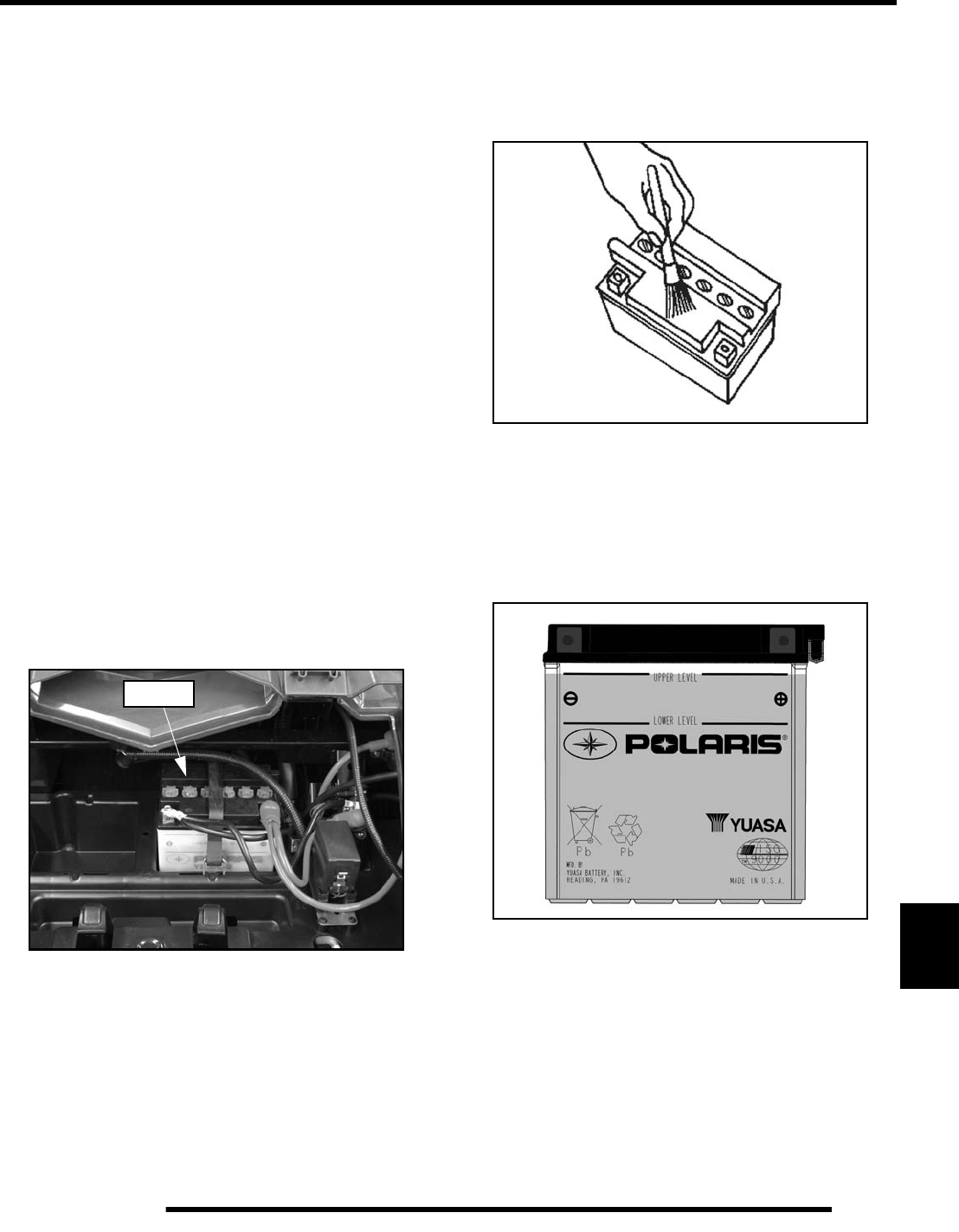
10.21
ELECTRICAL
10
4. Set battery aside to allow for acid absorption and
stabilization for 30 minutes.
5. Add electrolyte to bring the level back to the upper level
mark on the battery case.
6. Charge battery for 3 - 5 hours at 1/10 of its amp/hour rating.
Examples: 1/10 of 9 amp battery = .9 amp; 1/10 of 14 amp
battery = 1.4 amp; 1/10 of 18 amp battery = 1.8 amp
(recommended charging rates).
7. Check during initial charging to see if electrolyte level has
fallen, and if so, fill with acid to the upper level. After
adding, charge for another hour at the same rate.
NOTE: This is the last time that electrolyte should
be added. If the level becomes low after this point,
add only distilled water.
8. When charging is complete, install the filling plugs firmly.
IMPORTANT: Do not apply excessive pressure.
Finger tighten only. Do not over-tighten.
9. Wash off spilled acid with water and baking soda solution,
paying particular attention that any acid is washed off the
terminals. Dry the battery case.
Battery Inspection
The battery is located under the hood.
10. Inspect the battery case for obvious damage such as cracks
or leaks. Look for discoloration, warping or raised top,
which may indicate the battery has overheated or been
overcharged.
11. Make sure the battery top is clean and dry. A dirty battery
actually discharges across the grime on top of the case. Use
a soft brush and a baking soda solution. Make sure plugs
are finger tight so cleaning solution doesn’t get into the cells
and neutralize the acid.
12. Inspect the battery terminals, screws and cables for
breakage, corrosion or loose connections. Clean the
terminals and cable ends with a wire brush and coat
terminals with Nyogel™.
13. Check the electrolyte level and add distilled water if
necessary.
IMPORTANT: Don’t add acid, use distilled water only!
14. Check the vent tube. Make sure it’s not kinked, pinched or
otherwise obstructed.
Battery Removal / Installation
See Chapter 2 “Maintenance” for battery service procedures.
Battery
PartShark.com
877-999-5686
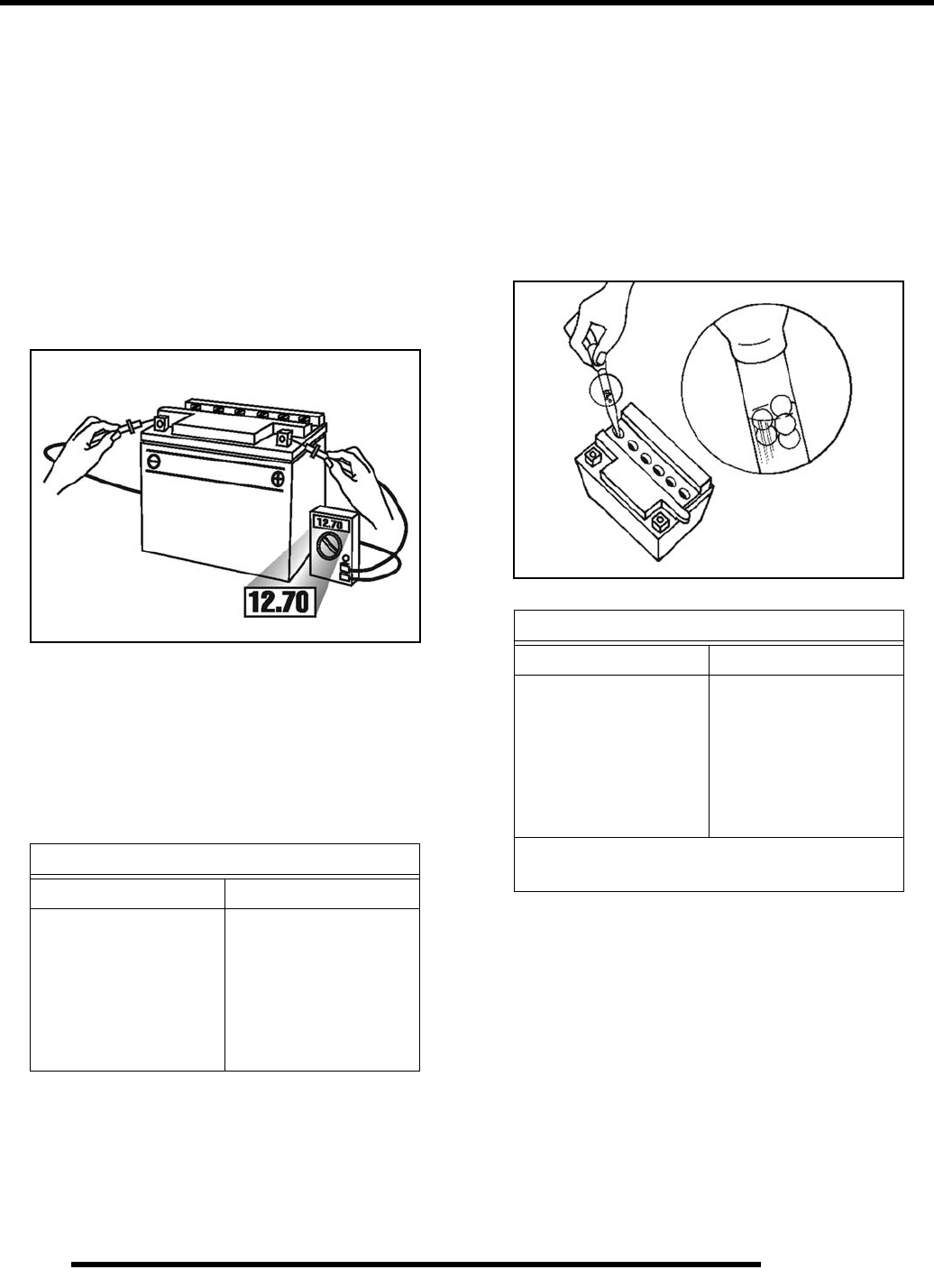
10.22
ELECTRICAL
Conventional Battery Testing
Whenever a service complaint is related to either the starting or
charging systems, the battery should be checked first.
Following are three tests which can easily be made on a battery
to determine its condition: OCV Test, Specific Gravity Test and
Load Test.
OCV - Open Circuit Voltage Test
Battery voltage should be checked with a digital multimeter.
Readings of 12.6 volts or less require further battery testing and
charging. See the following chart.
NOTE: Lead-acid batteries should be kept at or near
a full charge as possible. Electrolyte level should be
kept between the low and full marks. If the battery is
stored or used in a partially charged condition, or
with low electrolyte levels, hard crystal sulfation will
form on the plates, reducing the efficiency and
service life of the battery.
Specific Gravity Test
A tool such as a Battery Hydrometer (PN 2870836) can be used
to measure electrolyte strength or specific gravity. As the
battery goes through the charge/discharge cycle, the electrolyte
goes from a heavy (more acidic) state at full charge to a light
(more water) state when discharged. The hydrometer can
measure state of charge and differences between cells in a multi-
cell battery. Readings of 1.270 or greater should be observed in
a fully charged battery. Differences of more than .025 between
the lowest and highest cell readings indicate a need to replace
the battery.
Load Test
A battery may indicate a full charge condition in the OCV test
and the specific gravity test, but still may not have the storage
capacity necessary to properly function in the electrical system.
For this reason, a battery capacity or load test should be
conducted whenever poor battery performance is encountered.
This is the best test of battery condition under starting load. Use
a load testing device that has an adjustable load. Apply a load
of three times the ampere-hour rating.
At 14 seconds into the test, check battery voltage. A good 12V
battery will have at least 10.5 Volts. If the reading is low, charge
the battery and retest.
OPEN CIRCUIT VOLTAGE
State of Charge YuMicron™ Type
100% Charged 12.70 V
75% Charged 12.50 V
50% Charged 12.20 V
25% Charged 12.0 V
0% Charged 11.9 V or less
SPECIFIC GRAVITY
State of Charge* YuMicron™ Type
100% Charged 1.275
75% Charged 1.225
50% Charged 1.175
25% Charged 1.135
0% Charged 1.115 or less
* At 80° F. NOTE: Subtract .01 from the specific
gravity reading at 40° F.
Battery Hydrometer
(PN 2870836)
PartShark.com
877-999-5686
10.23
ELECTRICAL
10
Charging Procedure
1. Remove the battery to prevent damage from leaking or
spilled acid during charging.
2. Charge the battery with a charging output no larger than 1/
10 of the battery’s amp/hr rating. Charge as needed to raise
the specific gravity to 1.270 or greater.
3. Install battery in vehicle. Coat threads of battery bolt with
a corrosion resistant dielectric grease.
4. Connect battery cables.
5. After connecting the battery cables, install the cover on the
battery and attach the hold down strap.
6. Install clear battery vent tube from vehicle to battery vent.
WARNING: Vent tube must be free from obstructions and
kinks and securely installed. If not, battery gases could
accumulate and cause an explosion. Vent should be routed
away from frame and body to prevent contact with
electrolyte. Avoid skin contact with electrolyte, as severe
burns could result. If electrolyte contacts the vehicle frame,
corrosion will occur.
7. Route cables so they are tucked away in front and behind
battery.
Off Season Storage
See Chapter 2 “Maintenance” for battery service procedures.
STARTER SYSTEM
Troubleshooting
Starter Motor Does Not Run
• Battery discharged - Low specific gravity
• Loose or faulty battery cables or corroded connections
(see Voltage Drop Tests)
• Related wiring loose, disconnected, or corroded
• Poor ground connections at battery cable, starter motor
or starter solenoid (see Voltage Drop Tests)
• Faulty key switch
• Faulty starter solenoid or starter motor
• Engine problem - seized or binding (can engine be
rotated easily)
Starter Motor Turns Over Slowly
• Battery discharged - low specific gravity
• Excessive circuit resistance - poor connections (see
Voltage Drop Test)
• Engine problem - seized or binding (can engine be
rotated easily)
• Faulty or worn brushes in starter motor
Starter Motor Turns - Engine Does Not Rotate
• Faulty starter drive
• Faulty starter drive gears or starter motor gear
• Faulty flywheel gear or loose flywheel
Dielectric Grease
(PN 2871329)
WARNING
To avoid the possibility of explosion, connect
positive (+) cable first and negative (-) cable last.
PartShark.com
877-999-5686
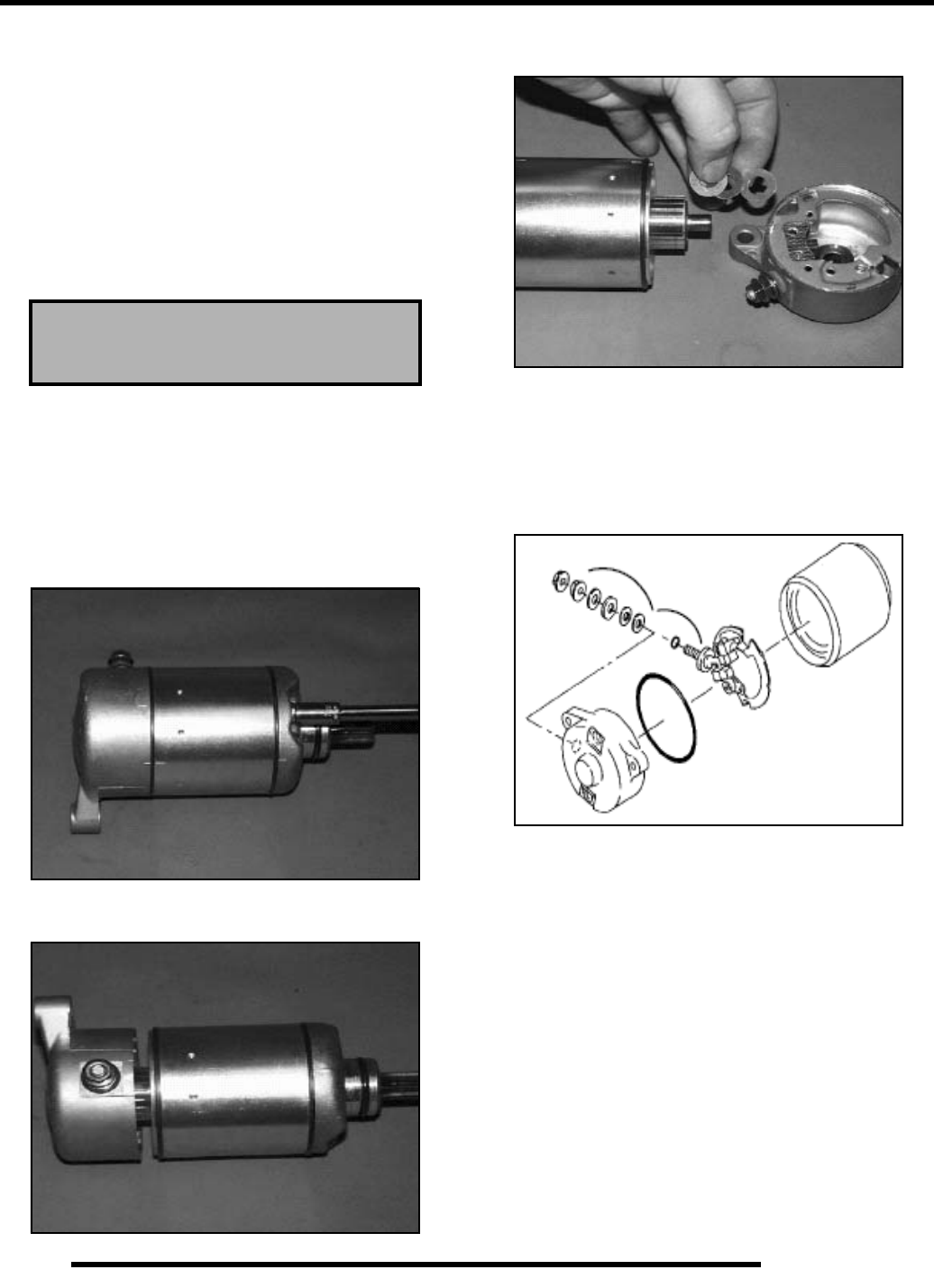
10.24
ELECTRICAL
Voltage Drop Test
The Voltage Drop Test is used to test for bad connections. When
performing the test, you are testing the amount of voltage drop
through the connection. A poor or corroded connection will
appear as a high voltage reading. Voltage shown on the meter
when testing connections should not exceed .1 VDC per
connection or component.
To perform the test, place the meter on DC volts and place the
meter leads across the connection to be tested. Refer to the chart
on 10.27 to perform voltage drop tests on the starter system.
Starter Motor Disassembly
NOTE: Use only electrical contact cleaner to clean
starter motor parts. Some solvents may leave a
residue or damage internal parts and insulation.
1. Note the alignment marks on both ends of the starter motor
casing. These marks must align during reassembly.
2. Remove the two bolts, washers, and sealing O-Rings.
Inspect O-Rings and replace if damaged.
3. Remove brush terminal end of housing while holding other
two sections together.
4. Remove shims from armature shaft.
NOTE: All shims must be replaced during
reassembly.
Brush Inspection / Replacement
1. Using a digital multitester, measure the resistance between
the cable terminal and the insulated brush. The reading
should be .3 ohms or less. Measure the resistance between
the cable terminal and brush housing. Make sure the brush
is not touching the case. The reading should be infinite.
Voltage should not exceed
0.1 DC volts per connection
Brush Set
PartShark.com
877-999-5686
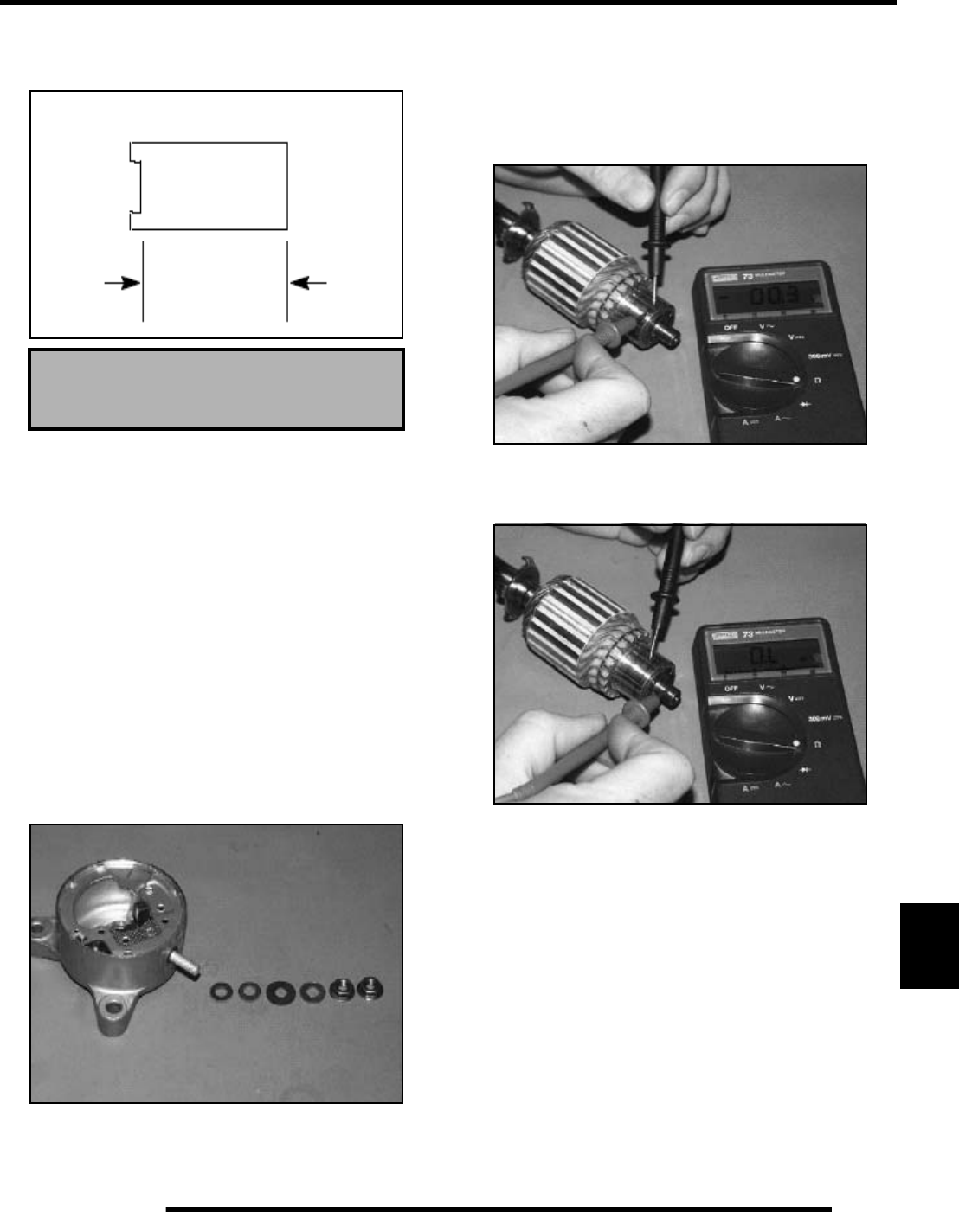
10.25
ELECTRICAL
10
2. Remove nut, flat washer, large phenolic washer, two small
phenolic washers, and O-Ring from brush terminal. Inspect
the O-Ring and replace if damaged.
3. Remove brush plate and brushes. Measure length of
brushes and replace if worn past the service limit. Replace
springs if they are discolored or have inadequate tension.
4. Inspect surface of commutator for wear or discoloration.
See Steps 3-6 of “Armature Testing”.
5. Install a new carbon brush assembly in the brush housing.
NOTE: Be sure that the terminal bolt insulating
washer is properly seated in the housing, and the
tab on the brush plate engages the notch in the
brush plate housing
6. Place a wrap of electrical tape on the threads of the terminal
bolt to prevent O-Ring damage during reinstallation.
7. Install the O-Ring over the bolt. Make sure the O-ring is
fully seated.
8. Remove the electrical tape and reinstall the two small
phenolic washers, the large phenolic washer, flat washer,
and nut.
Armature Testing
1. Remove armature from starter casing. Note order of shims
on drive end for reassembly.
2. Inspect surface of commutator. Replace if excessively
worn or damaged.
3. Using a digital multitester, measure the resistance between
each of the commutator segments. The reading should be
.3 ohms or less.
4. Measure the resistance between each commutator segment
and the armature shaft. The reading should be infinite (no
continuity).
5. Check commutator bars for discoloration. Bars discolored
in pairs indicate shorted coils, requiring replacement of the
starter motor.
6. Place armature in a growler. Turn growler on and position
a hacksaw blade or feeler gauge lengthwise 1/8" (.3 cm)
above armature coil laminates. Rotate armature 360o. If
hacksaw blade is drawn to armature on any pole, the
armature is shorted and must be replaced.
Brush Length Service Limit:
5/16” (.8 cm)
Brush Length
5/16” (.8 cm)
PartShark.com
877-999-5686
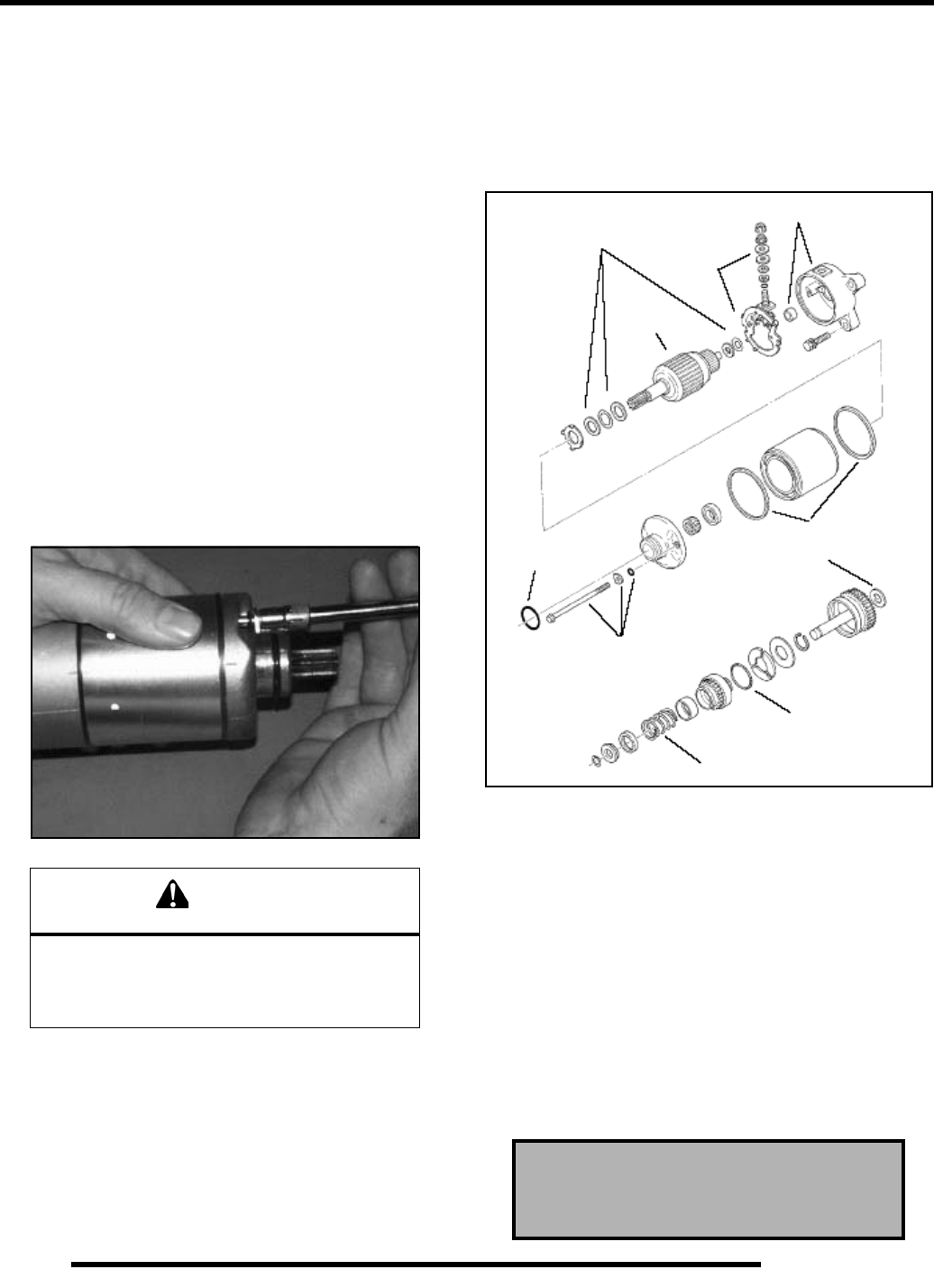
10.26
ELECTRICAL
Starter Reassembly
1. Inspect permanent magnets in starter housing. Make sure
they are not cracked or separated from housing.
2. Place armature in field magnet casing.
3. Place shims on drive end of armature shaft with phenolic
washer outermost on shaft. Engage tabs of stationary
washer in drive end housing, holding it in place with a light
film of grease.
4. Install case sealing O-Ring. Make sure O-Ring is in good
condition and not twisted on the case. Lubricate needle
bearing and oil seal with a light film of grease, and install
housing, aligning marks.
5. Install O-Ring on other end of field magnet casing. Make
sure it is in good condition and not twisted on the case.
6. Align casing marks and install housing, pushing back
brushes while installing shaft in bushing.
7. Reinstall starter motor housing set bolts. Make sure O-
Rings are in good condition and seated in groove.
Starter Drive
Pinion Gear - Anti Kick-out Shoe, Garter Spring Replacement
If the garter spring is damaged, the overrun clutch may fail to
return properly. The replacement spring is (PN 7042039). Use
either of the following methods to remove and install a new
garter spring
1. Screw the overrun clutch out to the engaged position on the
pinion shaft assembly. Use a small piece of wire with the
end bent in a hook and pick the old spring out of its
channel. Slide it off the end of the shaft. Slide the new
spring over the overrun clutch and into the spring groove.
Make sure that the spring is positioned between the shoe
alignment pins and the back flange of the anti kick-out
shoes.
2. Remove the lock ring, end washer, spring retainers and
clutch return spring. Screw the overrun clutch off the end
of the pinion shaft. Remove the old spring and install a new
one. Lightly grease the pinion shaft and reinstall the clutch,
spring, retainers, end washer and lock ring in the reverse
order. Make sure the end washer is positioned properly so
that it will hold the lock ring in its groove
CAUTION
Use care when handling starter housing.
Do not drop or strike the housing as magnet
damage is possible. If magnets are damaged,
starter must be replaced.
Set Bolt Torque: 35-52 in. lbs. (3.9-5.9 Nm)
Polaris Premium Starter Drive Grease
(PN 2871460)
Washer Set
Armature
O-ring
Set Bolt Assy
Weight Spring
Return spring
Rubber Rings
Washer
Rear Brkt Assy
Carbon
Brush
Set
35-52 in. lbs.
(3.9-5.9 Nm)
PartShark.com
877-999-5686
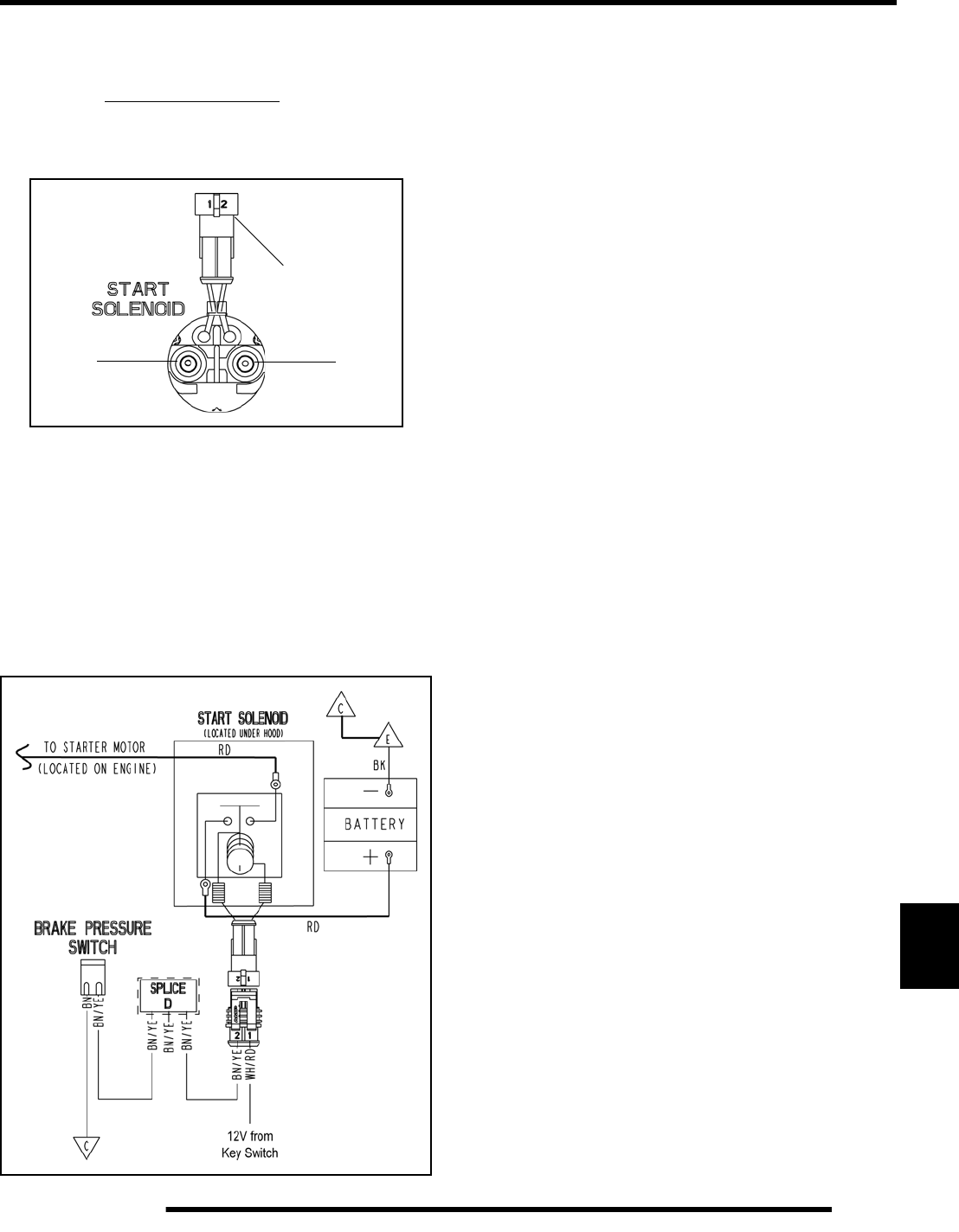
10.27
ELECTRICAL
10
Starter Solenoid Bench Test
Test the start solenoid by powering the solenoid using battery
voltage for a maximum of 5 seconds. With the solenoid
energized, resistance should read about 0.5Ω ± 10% between
terminal (A) and (B). If resistance measurement is out of
specification, replace the starter solenoid.
Starter Solenoid Operation
To energize the starter solenoid the following must occur:
• The brake must be applied to provide a ground path via
the Brown / Yellow wire.
• The key switch must be turned to the “start” position to
provide 12V power via the White / Red wire.
• Once the pull-in coil is energized, the solenoid provides
a current path for 12V power to reach the starter motor.
AB
Energize
Here
Closed when brake
pedal is applied
PartShark.com
877-999-5686
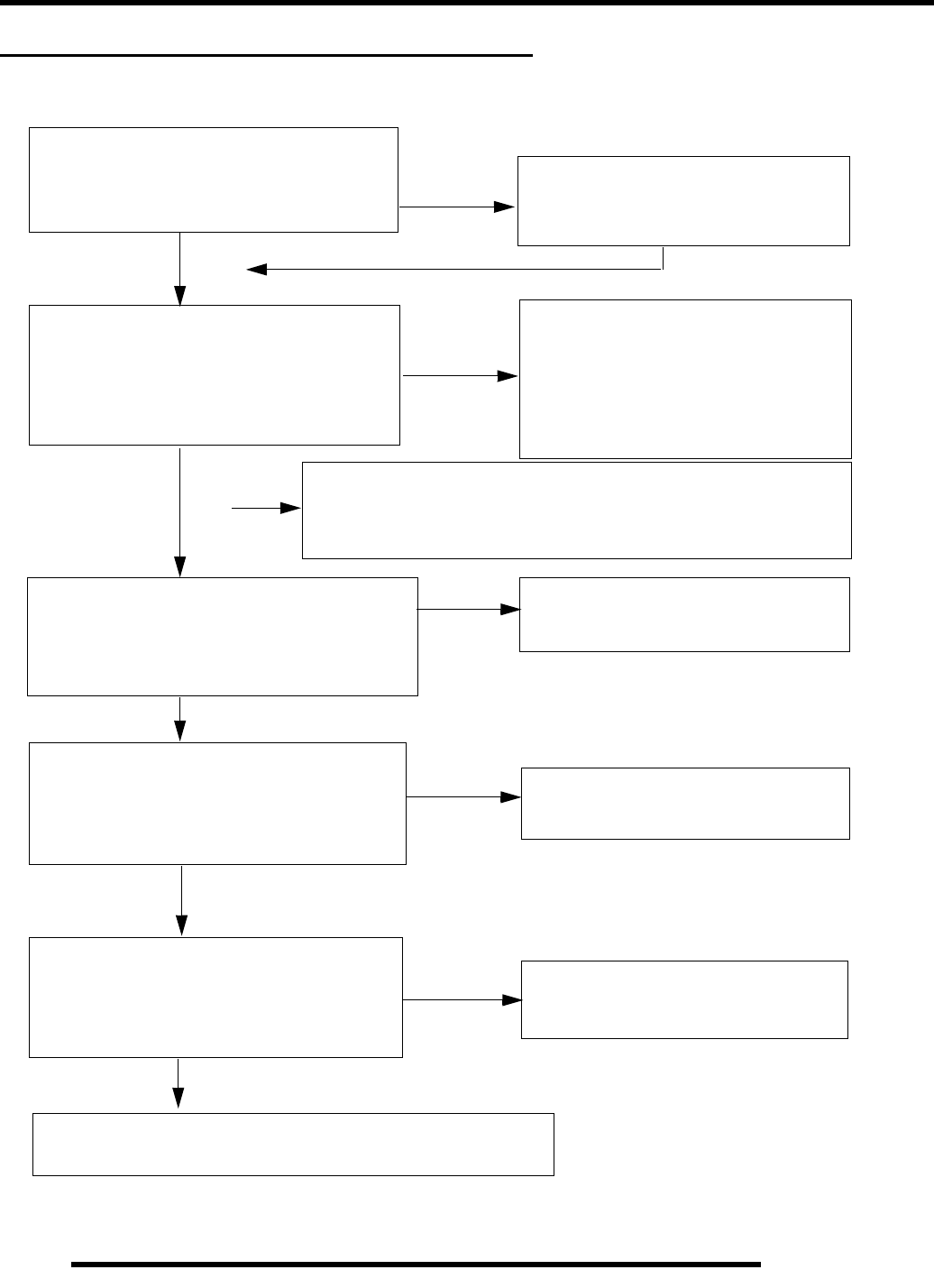
10.28
ELECTRICAL
STARTING SYSTEM TESTING FLOW CHART
Condition: Starter fails to turn over the engine.
With the tester on the VDC position, place the
tester's black lead on the battery negative and the
red lead on the battery positive. Reading should
be 12.4 V D. C. or greater.
Remove battery and properly service. Install
fully charged shop battery to continue test.
Disconnect 2-wire connector at the solenoid.
Using a multi-meter, connect the black meter lead
to the Orange/Green harness wire and the red
meter lead to the White/Red harness wire. Apply
the brake and turn ignition switch to the “start”
position. Meter should read battery voltage.
Check for voltage at the chassis 20 Amp fuse
and then check for voltage entering the
ignition switch. Battery voltage should be
present. If battery voltage is present at the
ignition switch, but not the solenoid, replace
the switch. NOTE: The brake MUST be
applied when performing these tests.
Test the start solenoid by powering the solenoid via the 2-wire connection.
With the solenoid energized, resistance should read about 0.5Ω ± 10%
between the two terminals. If resistance measurement is out of specification,
replace the starter solenoid (see “Starter Solenoid Bench Test”)
Reconnect the solenoid. Connect the tester black lead
to the battery positive and the red lead to the solenoid
end of the battery-to-solenoid wire. Turn the ignition
key to the “start” position. Reading should be less
than .1 V D.C.
Clean the battery-to-solenoid cable ends
or replace the cable.
Connect the black tester lead to solenoid end of
battery-to-solenoid cable. Connect red tester lead
to solenoid end of solenoid-to-starter cable. Turn
the ignition key to the “start” position. Reading
should be less than .1 V D.C.
Replace the starter solenoid.
Connect the black tester lead to the solenoid end of
the solenoid-to-starter cable. Connect the red
tester lead to the starter end of the same cable.
Turn the ignition key to the “start” position. The
reading should be less than .1 V D.C.
Clean the solenoid-to-starter cable ends or
replace the cable.
If all of these indicate a good condition, yet the starter still fails to
turn, the starter must be removed for static testing and inspection.
Yes
Yes
Yes
Yes
No
No
No
Yes
No
No
Voltage Drop
Testing
PartShark.com
877-999-5686
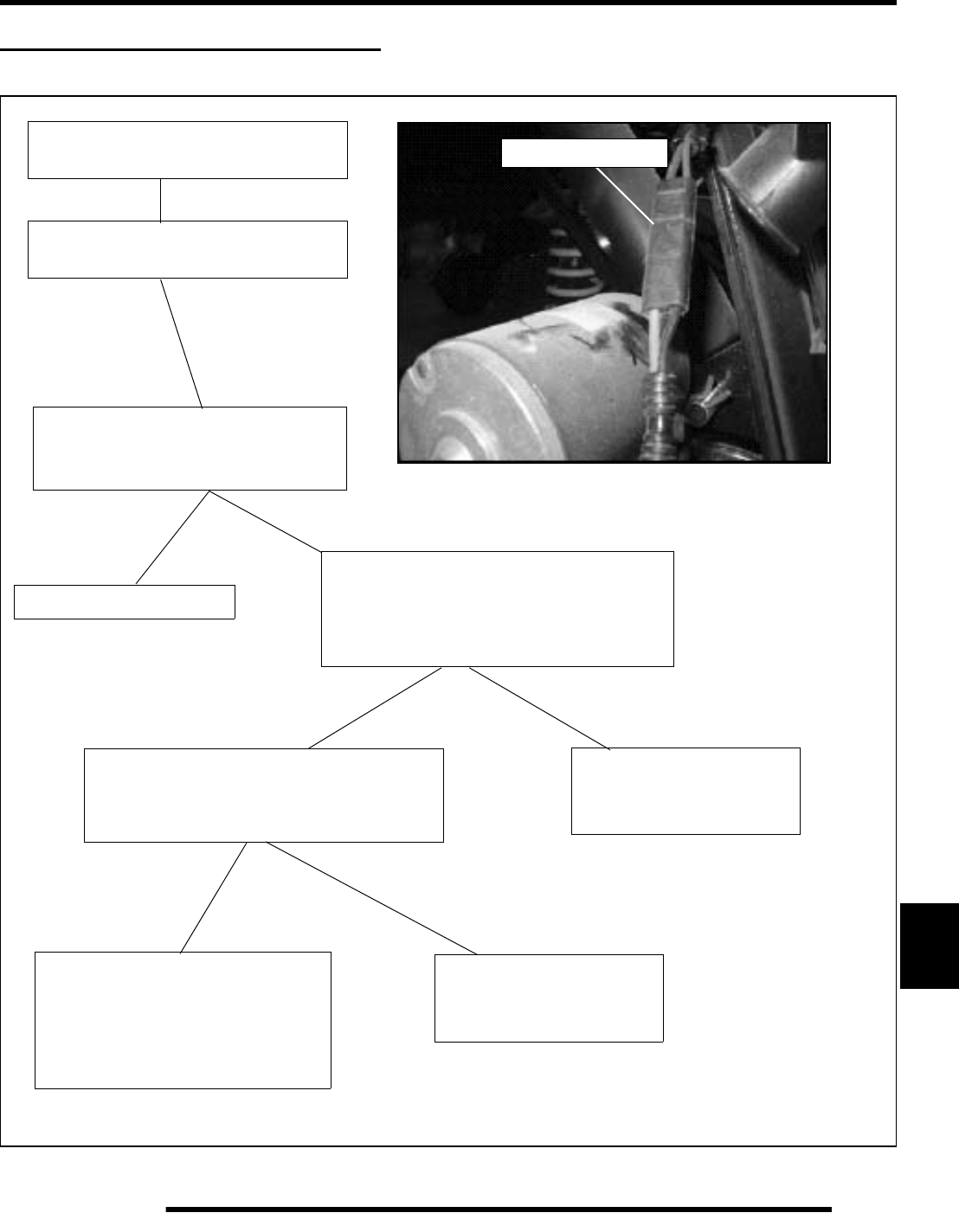
10.29
ELECTRICAL
10
ELECTRIC BOX LIFT ACTUATOR
DIAGNOSIS (if equipped)
1. Disconnect the wiring harness to the
box lift actuator.
2. Connect a multimeter across the
box lift actuator harness connection.
3. Actuate the box lift switch in both
directions. Verify that there is 12 Volts
reaching the box lift actuator. Follow
the diagram below for diagnosis.
YES - (12 Volts at actuator)
(Not 12 Volts at actuator)
Lift the hood. Locate the box lift switch.
Check for 12 Volts between the RED/BLACK
wire terminal on the back of the switch and
the BROWN wire terminal.
On the main connector behind the dashboard,
measure for 12 Volts between RED/BLACK
wire terminal and ground.
(Not 12 Volts between wires)
Test wiring between the main
connector and the circuit
breaker.
(12 Volts between wires)
Test the accessory and wiring circuit
breaker located under the seat.
(Refer to Wiring Schematic)
Test the wiring between the main
connector and the circuit breaker.
(Not 12 Volts between wires)
Check the switch. Check the
wires between the switch
and the actuator motor.
(12 Volts between wires)
YES NO
YES
NO
YES
NO
Disconnect Harness
PartShark.com
877-999-5686
NOTES
ELECTRICAL
10.30
PartShark.com
877-999-5686
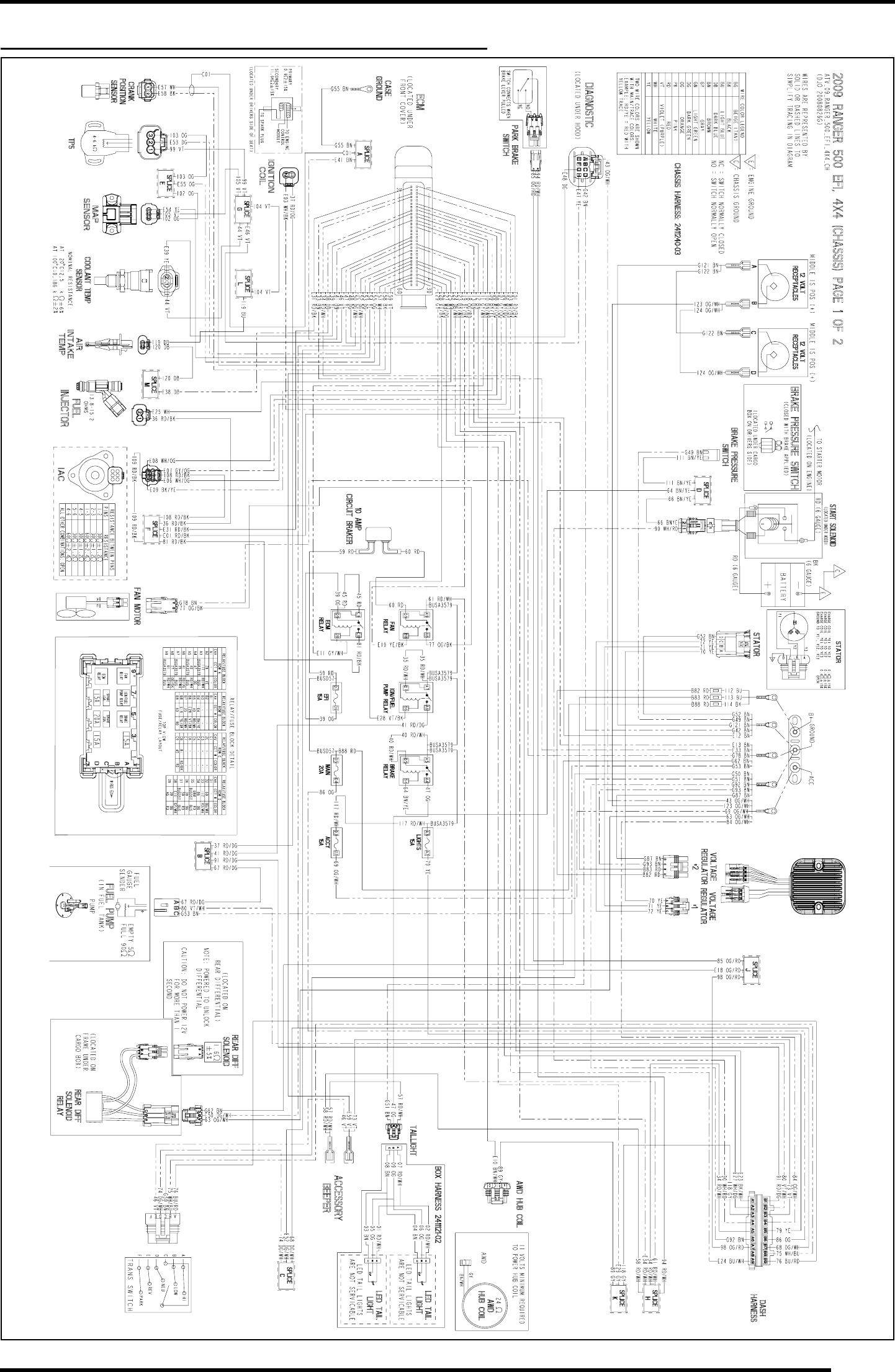
WD-1
WIRE DIAGRAM
2009 RANGER 500 EFI 4X4 (CHASSIS) PAGE 1 OF 2
PartShark.com
877-999-5686
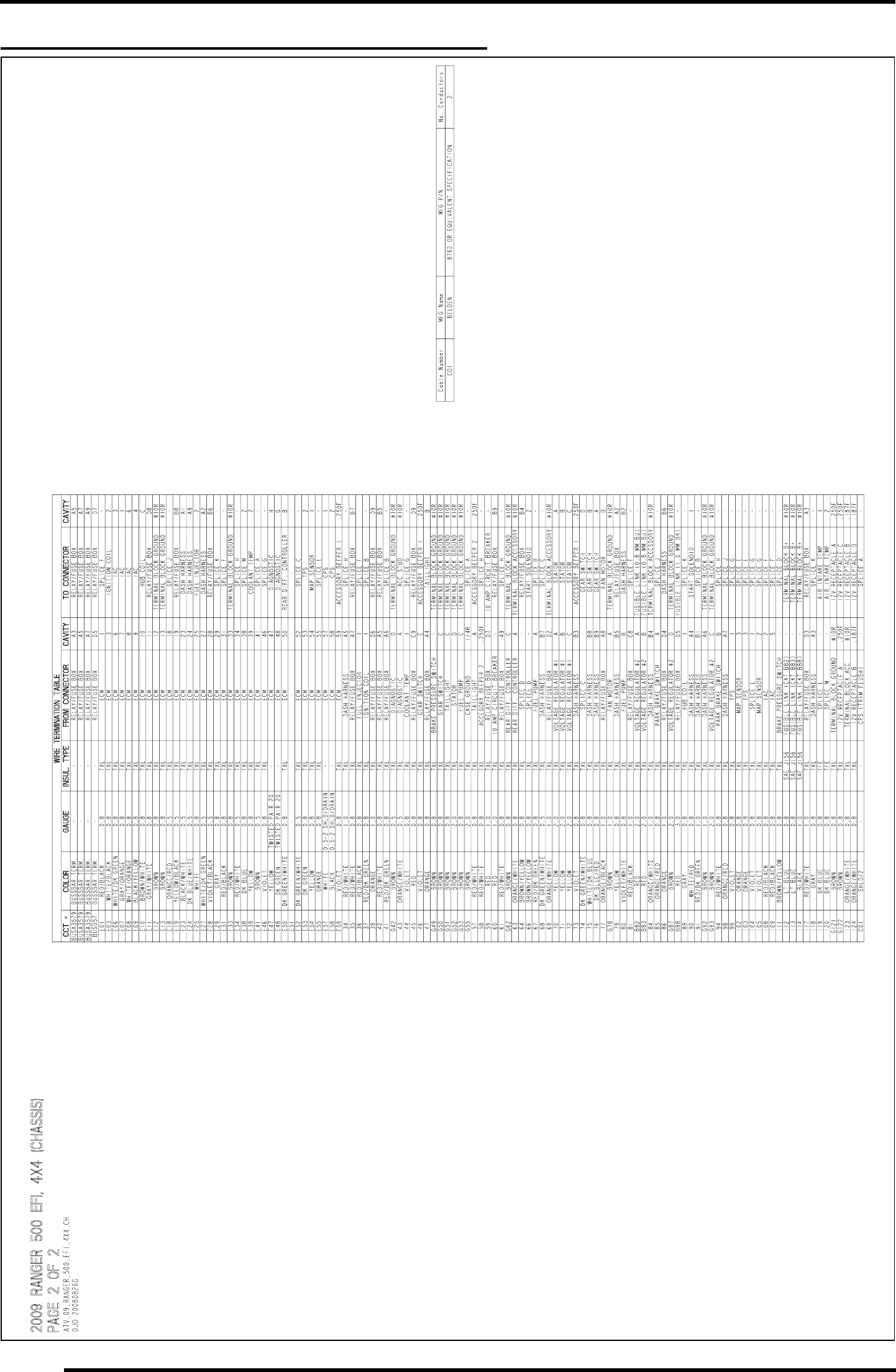
WD-2
WIRE DIAGRAM
2009 RANGER 500 EFI 4X4 (CHASSIS) PAGE 2 OF 2
PartShark.com
877-999-5686
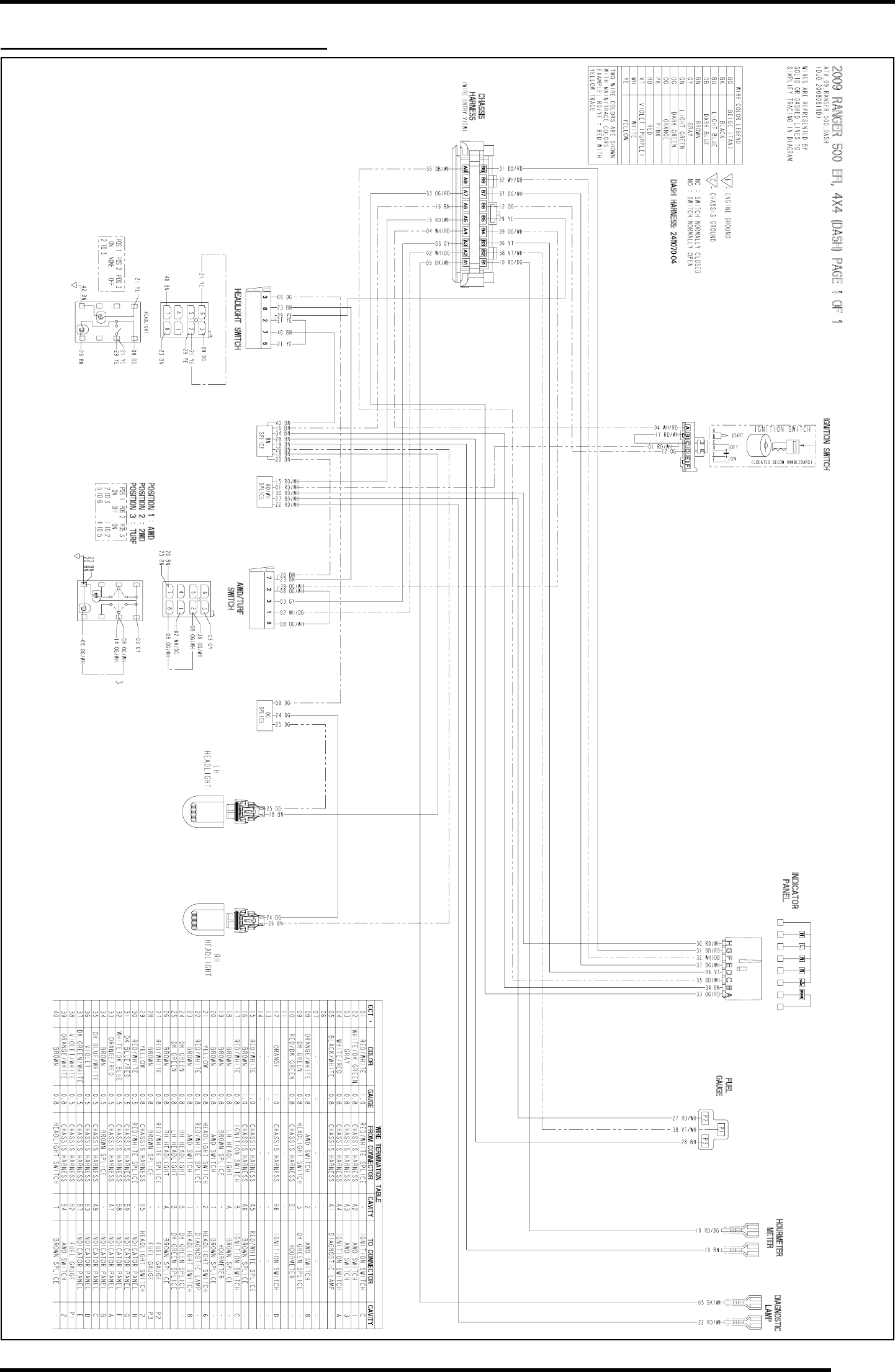
WD-3
WIRE DIAGRAM
2009 RANGER 500 EFI 4X4 (DASH)
PartShark.com
877-999-5686
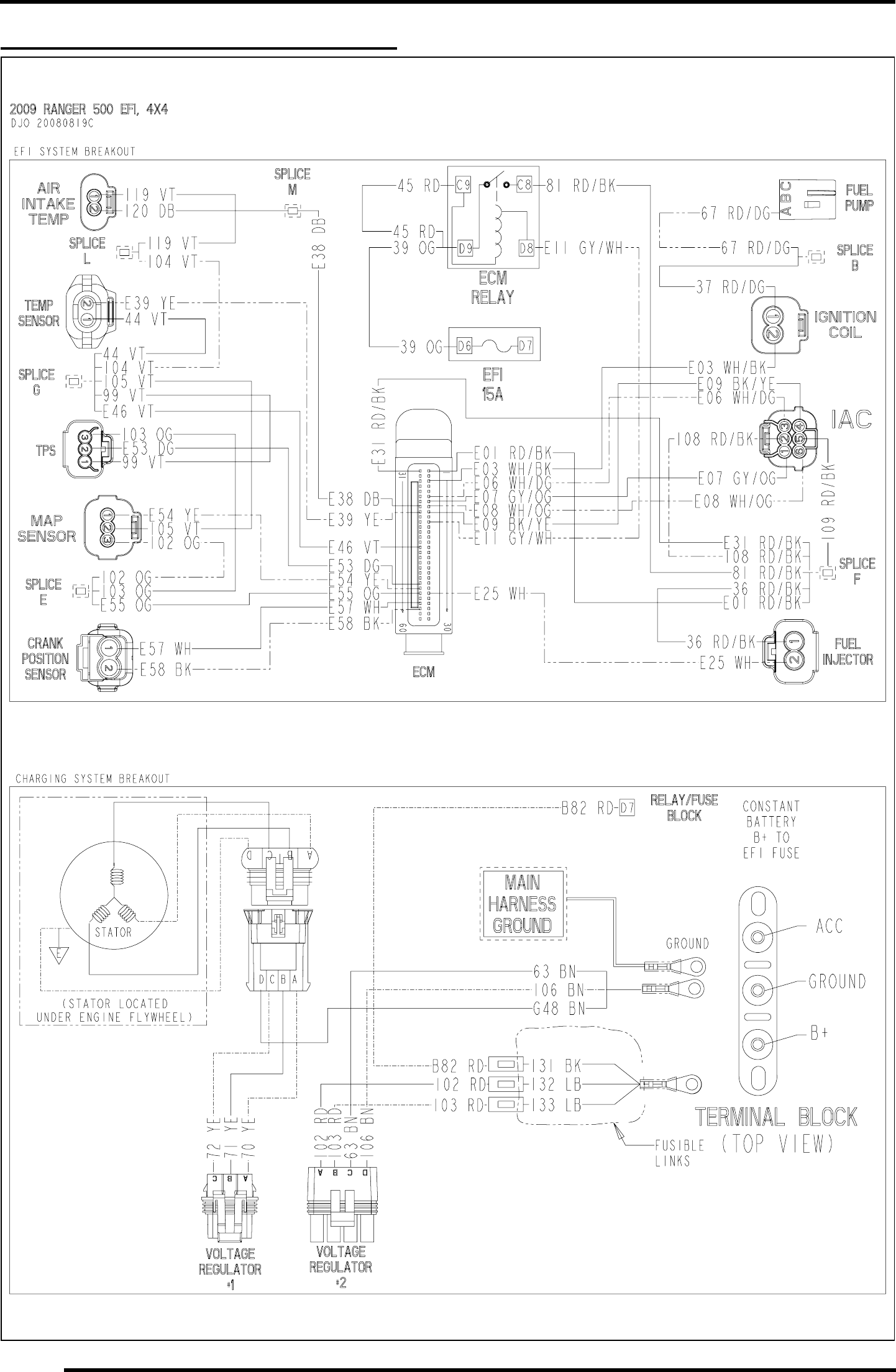
WD-4
WIRE DIAGRAM
2009 RANGER 500 EFI 4X4 (BREAKOUTS)
PartShark.com
877-999-5686
