Intel® 64 And IA 32 Architectures Software Developer’s Manual Volume 2D: Instruction Set Reference 334569 Sdm Vol 2d System Programming Guide P4
Intel%202018-11%20%5BIntel%2064%20and%20IA-32%20Architectures%20Software%20Developer%E2%80%99s%20Manual%20Vol.2D%20-%20Instructi
334569-sdm-vol-2d_system_programming_guide_p4
User Manual:
Open the PDF directly: View PDF  .
.
Page Count: 262 [warning: Documents this large are best viewed by clicking the View PDF Link!]
- Chapter 6 Safer Mode Extensions Reference
- 6.1 Overview
- 6.2 SMX Functionality
- 6.3 GETSEC Leaf Functions
- GETSEC[CAPABILITIES] - Report the SMX Capabilities
- GETSEC[ENTERACCS] - Execute Authenticated Chipset Code
- GETSEC[EXITAC]—Exit Authenticated Code Execution Mode
- GETSEC[SENTER]—Enter a Measured Environment
- GETSEC[SEXIT]—Exit Measured Environment
- GETSEC[PARAMETERS]—Report the SMX Parameters
- GETSEC[SMCTRL]—SMX Mode Control
- GETSEC[WAKEUP]—Wake up sleeping processors in measured environment
- Chapter 7 Instruction Set Reference Unique to Intel® Xeon Phi™ Processors
- PREFETCHWT1—Prefetch Vector Data Into Caches with Intent to Write and T1 Hint
- V4FMADDPS/V4FNMADDPS — Packed Single-Precision Floating-Point Fused Multiply-Add (4-iterations)
- V4FMADDSS/V4FNMADDSS —Scalar Single-Precision Floating-Point Fused Multiply-Add (4-iterations)
- VEXP2PD—Approximation to the Exponential 2^x of Packed Double-Precision Floating-Point Values with Less Than 2^-23 Relative Error
- VEXP2PS—Approximation to the Exponential 2^x of Packed Single-Precision Floating-Point Values with Less Than 2^-23 Relative Error
- VGATHERPF0DPS/VGATHERPF0QPS/VGATHERPF0DPD/VGATHERPF0QPD—Sparse Prefetch Packed SP/DP Data Values with Signed Dword, Signed Qword Indices Using T0 Hint
- VGATHERPF1DPS/VGATHERPF1QPS/VGATHERPF1DPD/VGATHERPF1QPD—Sparse Prefetch Packed SP/DP Data Values with Signed Dword, Signed Qword Indices Using T1 Hint
- VP4DPWSSDS — Dot Product of Signed Words with Dword Accumulation and Saturation (4-iterations)
- VP4DPWSSD — Dot Product of Signed Words with Dword Accumulation (4-iterations)
- VRCP28PD—Approximation to the Reciprocal of Packed Double-Precision Floating-Point Values with Less Than 2^-28 Relative Error
- VRCP28SD—Approximation to the Reciprocal of Scalar Double-Precision Floating-Point Value with Less Than 2^-28 Relative Error
- VRCP28PS—Approximation to the Reciprocal of Packed Single-Precision Floating-Point Values with Less Than 2^-28 Relative Error
- VRCP28SS—Approximation to the Reciprocal of Scalar Single-Precision Floating-Point Value with Less Than 2^-28 Relative Error
- VRSQRT28PD—Approximation to the Reciprocal Square Root of Packed Double-Precision Floating-Point Values with Less Than 2^-28 Relative Error
- VRSQRT28SD—Approximation to the Reciprocal Square Root of Scalar Double-Precision Floating-Point Value with Less Than 2^-28 Relative Error
- VRSQRT28PS—Approximation to the Reciprocal Square Root of Packed Single-Precision Floating-Point Values with Less Than 2^-28 Relative Error
- VRSQRT28SS—Approximation to the Reciprocal Square Root of Scalar Single-Precision Floating- Point Value with Less Than 2^-28 Relative Error
- VSCATTERPF0DPS/VSCATTERPF0QPS/VSCATTERPF0DPD/VSCATTERPF0QPD—Sparse Prefetch Packed SP/DP Data Values with Signed Dword, Signed Qword Indices Using T0 Hint with Intent to Write
- VSCATTERPF1DPS/VSCATTERPF1QPS/VSCATTERPF1DPD/VSCATTERPF1QPD—Sparse Prefetch Packed SP/DP Data Values with Signed Dword, Signed Qword Indices Using T1 Hint with Intent to Write
- Appendix A Opcode Map
- A.1 Using Opcode Tables
- A.2 Key to Abbreviations
- A.3 One, Two, and THREE-Byte Opcode Maps
- A.4 Opcode Extensions For One-Byte And Two-byte Opcodes
- A.5 Escape Opcode Instructions
- A.5.1 Opcode Look-up Examples for Escape Instruction Opcodes
- A.5.2 Escape Opcode Instruction Tables
- A.5.2.1 Escape Opcodes with D8 as First Byte
- A.5.2.2 Escape Opcodes with D9 as First Byte
- A.5.2.3 Escape Opcodes with DA as First Byte
- A.5.2.4 Escape Opcodes with DB as First Byte
- A.5.2.5 Escape Opcodes with DC as First Byte
- A.5.2.6 Escape Opcodes with DD as First Byte
- A.5.2.7 Escape Opcodes with DE as First Byte
- A.5.2.8 Escape Opcodes with DF As First Byte
- Appendix B Instruction Formats and Encodings
- B.1 Machine Instruction Format
- B.2 General-Purpose Instruction Formats and Encodings for Non- 64-Bit Modes
- B.3 Pentium® Processor Family Instruction Formats and Encodings
- B.4 64-bit Mode Instruction Encodings for SIMD Instruction Extensions
- B.5 MMX Instruction Formats and Encodings
- B.6 Processor ExtendeD State INstruction Formats and EncodIngs
- B.7 P6 Family INstruction Formats and Encodings
- B.8 SSE Instruction Formats and Encodings
- B.9 SSE2 Instruction Formats and Encodings
- B.10 SSE3 Formats and Encodings Table
- B.11 SSsE3 Formats and Encoding Table
- B.12 AESNI and PCLMULQDQ INstruction Formats and Encodings
- B.13 Special Encodings for 64-Bit Mode
- B.14 SSE4.1 Formats and Encoding Table
- B.15 SSE4.2 Formats and Encoding Table
- B.16 AVX Formats and Encoding Table
- B.17 Floating-Point Instruction Formats and Encodings
- B.18 VMX Instructions
- B.19 SMX Instructions
- Appendix C Intel® C/C++ Compiler Intrinsics and Functional Equivalents

Intel® 64 and IA-32 Architectures
Software Developer’s Manual
Volume 2D:
Instruction Set Reference
NOTE: The Intel® 64 and IA-32 Architectures Software Developer's Manual consists of ten volumes:
Basic Architecture, Order Number 253665; Instruction Set Reference A-L, Order Number 253666;
Instruction Set Reference M-U, Order Number 253667; Instruction Set Reference V-Z, Order Number
326018; Instruction Set Reference, Order Number 334569; System Programming Guide, Part 1, Order
Number 253668; System Programming Guide, Part 2, Order Number 253669; System Programming
Guide, Part 3, Order Number 326019; System Programming Guide, Part 4, Order Number 332831;
Model-Specific Registers, Order Number 335592. Refer to all ten volumes when evaluating your design
needs.
Order Number: 334569-068US
November 2018

Intel technologies features and benefits depend on system configuration and may require enabled hardware, software, or service activation. Learn
more at intel.com, or from the OEM or retailer.
No computer system can be absolutely secure. Intel does not assume any liability for lost or stolen data or systems or any damages resulting
from such losses.
You may not use or facilitate the use of this document in connection with any infringement or other legal analysis concerning Intel products
described herein. You agree to grant Intel a non-exclusive, royalty-free license to any patent claim thereafter drafted which includes subject
matter disclosed herein.
No license (express or implied, by estoppel or otherwise) to any intellectual property rights is granted by this document.
The products described may contain design defects or errors known as errata which may cause the product to deviate from published specifica-
tions. Current characterized errata are available on request.
This document contains information on products, services and/or processes in development. All information provided here is subject to change
without notice. Contact your Intel representative to obtain the latest Intel product specifications and roadmaps
Copies of documents which have an order number and are referenced in this document, or other Intel literature, may be obtained by calling 1-
800-548-4725, or by visiting http://www.intel.com/design/literature.htm.
Intel, the Intel logo, Intel Atom, Intel Core, Intel SpeedStep, MMX, Pentium, VTune, and Xeon are trademarks of Intel Corporation in the U.S.
and/or other countries.
*Other names and brands may be claimed as the property of others.
Copyright © 1997-2018, Intel Corporation. All Rights Reserved.

Vol. 2D 6-1
CHAPTER 6
SAFER MODE EXTENSIONS REFERENCE
6.1 OVERVIEW
This chapter describes the Safer Mode Extensions (SMX) for the Intel 64 and IA-32 architectures. Safer Mode
Extensions (SMX) provide a programming interface for system software to establish a measured environment
within the platform to support trust decisions by end users. The measured environment includes:
•Measured launch of a system executive, referred to as a Measured Launched Environment (MLE)1. The system
executive may be based on a Virtual Machine Monitor (VMM), a measured VMM is referred to as MVMM2.
•Mechanisms to ensure the above measurement is protected and stored in a secure location in the platform.
•Protection mechanisms that allow the VMM to control attempts to modify the VMM.
The measurement and protection mechanisms used by a measured environment are supported by the capabilities
of an Intel® Trusted Execution Technology (Intel® TXT) platform:
•The SMX are the processor’s programming interface in an Intel TXT platform.
•The chipset in an Intel TXT platform provides enforcement of the protection mechanisms.
•Trusted Platform Module (TPM) 1.2 in the platform provides platform configuration registers (PCRs) to store
software measurement values.
6.2 SMX FUNCTIONALITY
SMX functionality is provided in an Intel 64 processor through the GETSEC instruction via leaf functions. The
GETSEC instruction supports multiple leaf functions. Leaf functions are selected by the value in EAX at the time
GETSEC is executed. Each GETSEC leaf function is documented separately in the reference pages with a unique
mnemonic (even though these mnemonics share the same opcode, 0F 37).
6.2.1 Detecting and Enabling SMX
Software can detect support for SMX operation using the CPUID instruction. If software executes CPUID with 1 in
EAX, a value of 1 in bit 6 of ECX indicates support for SMX operation (GETSEC is available), see CPUID instruction
for the layout of feature flags of reported by CPUID.01H:ECX.
System software enables SMX operation by setting CR4.SMXE[Bit 14] = 1 before attempting to execute GETSEC.
Otherwise, execution of GETSEC results in the processor signaling an invalid opcode exception (#UD).
If the CPUID SMX feature flag is clear (CPUID.01H.ECX[Bit 6] = 0), attempting to set CR4.SMXE[Bit 14] results in
a general protection exception.
The IA32_FEATURE_CONTROL MSR (at address 03AH) provides feature control bits that configure operation of
VMX and SMX. These bits are documented in Table 6-1.
1. See Intel® Trusted Execution Technology Measured Launched Environment Programming Guide.
2. An MVMM is sometimes referred to as a measured launched environment (MLE). See Intel® Trusted Execution Technology Measured
Launched Environment Programming Guide

SAFER MODE EXTENSIONS REFERENCE
6-2 Vol. 2D
•Bit 0 is a lock bit. If the lock bit is clear, an attempt to execute VMXON will cause a general-protection exception.
Attempting to execute GETSEC[SENTER] when the lock bit is clear will also cause a general-protection
exception. If the lock bit is set, WRMSR to the IA32_FEATURE_CONTROL MSR will cause a general-protection
exception. Once the lock bit is set, the MSR cannot be modified until a power-on reset. System BIOS can use
this bit to provide a setup option for BIOS to disable support for VMX, SMX or both VMX and SMX.
•Bit 1 enables VMX in SMX operation (between executing the SENTER and SEXIT leaves of GETSEC). If this bit is
clear, an attempt to execute VMXON in SMX will cause a general-protection exception if executed in SMX
operation. Attempts to set this bit on logical processors that do not support both VMX operation (Chapter 6,
“Safer Mode Extensions Reference”) and SMX operation cause general-protection exceptions.
•Bit 2 enables VMX outside SMX operation. If this bit is clear, an attempt to execute VMXON will cause a general-
protection exception if executed outside SMX operation. Attempts to set this bit on logical processors that do
not support VMX operation cause general-protection exceptions.
•Bits 8 through 14 specify enabled functionality of the SENTER leaf function. Each bit in the field represents an
enable control for a corresponding SENTER function. Only enabled SENTER leaf functionality can be used when
executing SENTER.
•Bits 15 specify global enable of all SENTER functionalities.
6.2.2 SMX Instruction Summary
System software must first query for available GETSEC leaf functions by executing GETSEC[CAPABILITIES]. The
CAPABILITIES leaf function returns a bit map of available GETSEC leaves. An attempt to execute an unsupported
leaf index results in an undefined opcode (#UD) exception.
Table 6-1. Layout of IA32_FEATURE_CONTROL
Bit Position Description
0 Lock bit (0 = unlocked, 1 = locked). When set to '1' further writes to this MSR are blocked.
1 Enable VMX in SMX operation.
2 Enable VMX outside SMX operation.
7:3 Reserved
14:8 SENTER Local Function Enables: When set, each bit in the field represents an enable control for a corresponding
SENTER function.
15 SENTER Global Enable: Must be set to ‘1’ to enable operation of GETSEC[SENTER].
16 Reserved
17 SGX Launch Control Enable: Must be set to ‘1’ to enable runtime re-configuration of SGX Launch Control via the
IA32_SGXLEPUBKEYHASHn MSR.
18 SGX Global Enable: Must be set to ‘1’ to enable Intel SGX leaf functions.
19 Reserved
20 LMCE On: When set, system software can program the MSRs associated with LMCE to configure delivery of some
machine check exceptions to a single logical processor.
63:21 Reserved

SAFER MODE EXTENSIONS REFERENCE
Vol. 2D 6-3
6.2.2.1 GETSEC[CAPABILITIES]
The SMX functionality provides an architectural interface for newer processor generations to extend SMX capabili-
ties. Specifically, the GETSEC instruction provides a capability leaf function for system software to discover the
available GETSEC leaf functions that are supported in a processor. Table 6-2 lists the currently available GETSEC
leaf functions.
.
6.2.2.2 GETSEC[ENTERACCS]
The GETSEC[ENTERACCS] leaf enables authenticated code execution mode. The ENTERACCS leaf function
performs an authenticated code module load using the chipset public key as the signature verification. ENTERACCS
requires the existence of an Intel® Trusted Execution Technology capable chipset since it unlocks the chipset
private configuration register space after successful authentication of the loaded module. The physical base
address and size of the authenticated code module are specified as input register values in EBX and ECX, respec-
tively.
While in the authenticated code execution mode, certain processor state properties change. For this reason, the
time in which the processor operates in authenticated code execution mode should be limited to minimize impact
on external system events.
Upon entry into , the previous paging context is disabled (since the authenticated code module image is specified
with physical addresses and can no longer rely upon external memory-based page-table structures).
Prior to executing the GETSEC[ENTERACCS] leaf, system software must ensure the logical processor issuing
GETSEC[ENTERACCS] is the boot-strap processor (BSP), as indicated by IA32_APIC_BASE.BSP = 1. System soft-
ware must ensure other logical processors are in a suitable idle state and not marked as BSP.
The GETSEC[ENTERACCS] leaf may be used by different agents to load different authenticated code modules to
perform functions related to different aspects of a measured environment, for example system software and
Intel® TXT enabled BIOS may use more than one authenticated code modules.
6.2.2.3 GETSEC[EXITAC]
GETSEC[EXITAC] takes the processor out of . When this instruction leaf is executed, the contents of the authenti-
cated code execution area are scrubbed and control is transferred to the non-authenticated context defined by a
near pointer passed with the GETSEC[EXITAC] instruction.
The authenticated code execution area is no longer accessible after completion of GETSEC[EXITAC]. RBX (or EBX)
holds the address of the near absolute indirect target to be taken.
Table 6-2. GETSEC Leaf Functions
Index (EAX) Leaf function Description
0 CAPABILITIES Returns the available leaf functions of the GETSEC instruction.
1Undefined Reserved
2 ENTERACCS Enter
3EXITAC Exit
4 SENTER Launch an MLE.
5 SEXIT Exit the MLE.
6 PARAMETERS Return SMX related parameter information.
7SMCTRL SMX mode control.
8 WAKEUP Wake up sleeping processors in safer mode.
9 - (4G-1) Undefined Reserved

SAFER MODE EXTENSIONS REFERENCE
6-4 Vol. 2D
6.2.2.4 GETSEC[SENTER]
The GETSEC[SENTER] leaf function is used by the initiating logical processor (ILP) to launch an MLE.
GETSEC[SENTER] can be considered a superset of the ENTERACCS leaf, because it enters as part of the measured
environment launch.
Measured environment startup consists of the following steps:
•the ILP rendezvous the responding logical processors (RLPs) in the platform into a controlled state (At the
completion of this handshake, all the RLPs except for the ILP initiating the measured environment launch are
placed in a newly defined SENTER sleep state).
•Load and authenticate the authenticated code module required by the measured environment, and enter
authenticated code execution mode.
•Verify and lock certain system configuration parameters.
•Measure the dynamic root of trust and store into the PCRs in TPM.
•Transfer control to the MLE with interrupts disabled.
Prior to executing the GETSEC[SENTER] leaf, system software must ensure the platform’s TPM is ready for access
and the ILP is the boot-strap processor (BSP), as indicated by IA32_APIC_BASE.BSP. System software must ensure
other logical processors (RLPs) are in a suitable idle state and not marked as BSP.
System software launching a measurement environment is responsible for providing a proper authenticate code
module address when executing GETSEC[SENTER]. The AC module responsible for the launch of a measured envi-
ronment and loaded by GETSEC[SENTER] is referred to as SINIT. See Intel® Trusted Execution Technology
Measured Launched Environment Programming Guide for additional information on system software requirements
prior to executing GETSEC[SENTER].
6.2.2.5 GETSEC[SEXIT]
System software exits the measured environment by executing the instruction GETSEC[SEXIT] on the ILP. This
instruction rendezvous the responding logical processors in the platform for exiting from the measured environ-
ment. External events (if left masked) are unmasked and Intel® TXT-capable chipset’s private configuration space
is re-locked.
6.2.2.6 GETSEC[PARAMETERS]
The GETSEC[PARAMETERS] leaf function is used to report attributes, options and limitations of SMX operation.
Software uses this leaf to identify operating limits or additional options.
The information reported by GETSEC[PARAMETERS] may require executing the leaf multiple times using EBX as an
index. If the GETSEC[PARAMETERS] instruction leaf or if a specific parameter field is not available, then SMX oper-
ation should be interpreted to use the default limits of respective GETSEC leaves or parameter fields defined in the
GETSEC[PARAMETERS] leaf.
6.2.2.7 GETSEC[SMCTRL]
The GETSEC[SMCTRL] leaf function is used for providing additional control over specific conditions associated with
the SMX architecture. An input register is supported for selecting the control operation to be performed. See the
specific leaf description for details on the type of control provided.
6.2.2.8 GETSEC[WAKEUP]
Responding logical processors (RLPs) are placed in the SENTER sleep state after the initiating logical processor
executes GETSEC[SENTER]. The ILP can wake up RLPs to join the measured environment by using
GETSEC[WAKEUP]. When the RLPs in SENTER sleep state wake up, these logical processors begin execution at the
entry point defined in a data structure held in system memory (pointed to by an chipset register LT.MLE.JOIN) in
TXT configuration space.

SAFER MODE EXTENSIONS REFERENCE
Vol. 2D 6-5
6.2.3 Measured Environment and SMX
This section gives a simplified view of a representative life cycle of a measured environment that is launched by a
system executive using SMX leaf functions. Intel® Trusted Execution Technology Measured Launched Environment
Programming Guide provides more detailed examples of using SMX and chipset resources (including chipset regis-
ters, Trusted Platform Module) to launch an MVMM.
The life cycle starts with the system executive (an OS, an OS loader, and so forth) loading the MLE and SINIT AC
module into available system memory. The system executive must validate and prepare the platform for the
measured launch. When the platform is properly configured, the system executive executes GETSEC[SENTER] on
the initiating logical processor (ILP) to rendezvous the responding logical processors into an SENTER sleep state,
the ILP then enters into using the SINIT AC module. In a multi-threaded or multi-processing environment, the
system executive must ensure that other logical processors are already in an idle loop, or asleep (such as after
executing HLT) before executing GETSEC[SENTER].
After the GETSEC[SENTER] rendezvous handshake is performed between all logical processors in the platform, the
ILP loads the chipset authenticated code module (SINIT) and performs an authentication check. If the check
passes, the processor hashes the SINIT AC module and stores the result into TPM PCR 17. It then switches execu-
tion context to the SINIT AC module. The SINIT AC module will perform a number of platform operations,
including: verifying the system configuration, protecting the system memory used by the MLE from I/O devices
capable of DMA, producing a hash of the MLE, storing the hash value in TPM PCR 18, and various other operations.
When SINIT completes execution, it executes the GETSEC[EXITAC] instruction and transfers control the MLE at the
designated entry point.
Upon receiving control from the SINIT AC module, the MLE must establish its protection and isolation controls
before enabling DMA and interrupts and transferring control to other software modules. It must also wake up the
RLPs from their SENTER sleep state using the GETSEC[WAKEUP] instruction and bring them into its protection and
isolation environment.
While executing in a measured environment, the MVMM can access the Trusted Platform Module (TPM) in locality 2.
The MVMM has complete access to all TPM commands and may use the TPM to report current measurement values
or use the measurement values to protect information such that only when the platform configuration registers
(PCRs) contain the same value is the information released from the TPM. This protection mechanism is known as
sealing.
A measured environment shutdown is ultimately completed by executing GETSEC[SEXIT]. Prior to this step system
software is responsible for scrubbing sensitive information left in the processor caches, system memory.
6.3 GETSEC LEAF FUNCTIONS
This section provides detailed descriptions of each leaf function of the GETSEC instruction. GETSEC is available only
if CPUID.01H:ECX[Bit 6] = 1. This indicates the availability of SMX and the GETSEC instruction. Before GETSEC can
be executed, SMX must be enabled by setting CR4.SMXE[Bit 14] = 1.
A GETSEC leaf can only be used if it is shown to be available as reported by the GETSEC[CAPABILITIES] function.
Attempts to access a GETSEC leaf index not supported by the processor, or if CR4.SMXE is 0, results in the signaling
of an undefined opcode exception.
All GETSEC leaf functions are available in protected mode, including the compatibility sub-mode of IA-32e mode
and the 64-bit sub-mode of IA-32e mode. Unless otherwise noted, the behavior of all GETSEC functions and inter-
actions related to the measured environment are independent of IA-32e mode. This also applies to the interpreta-
tion of register widths1 passed as input parameters to GETSEC functions and to register results returned as output
parameters.
1. This chapter uses the 64-bit notation RAX, RIP, RSP, RFLAGS, etc. for processor registers because processors that support SMX also
support Intel 64 Architecture. The MVMM can be launched in IA-32e mode or outside IA-32e mode. The 64-bit notation of processor
registers also refer to its 32-bit forms if SMX is used in 32-bit environment. In some places, notation such as EAX is used to refer
specifically to lower 32 bits of the indicated register

SAFER MODE EXTENSIONS REFERENCE
6-6 Vol. 2D
The GETSEC functions ENTERACCS, SENTER, SEXIT, and WAKEUP require a Intel® TXT capable-chipset to be
present in the platform. The GETSEC[CAPABILITIES] returned bit vector in position 0 indicates an Intel® TXT-
capable chipset has been sampled present1 by the processor.
The processor's operating mode also affects the execution of the following GETSEC leaf functions: SMCTRL, ENTER-
ACCS, EXITAC, SENTER, SEXIT, and WAKEUP. These functions are only allowed in protected mode at CPL = 0. They
are not allowed while in SMM in order to prevent potential intra-mode conflicts. Further execution qualifications
exist to prevent potential architectural conflicts (for example: nesting of the measured environment or authenti-
cated code execution mode). See the definitions of the GETSEC leaf functions for specific requirements.
For the purpose of performance monitor counting, the execution of GETSEC functions is counted as a single instruc-
tion with respect to retired instructions. The response by a responding logical processor (RLP) to messages associ-
ated with GETSEC[SENTER] or GTSEC[SEXIT] is transparent to the retired instruction count on the ILP.
1. Sampled present means that the processor sent a message to the chipset and the chipset responded that it (a) knows about the
message and (b) is capable of executing SENTER. This means that the chipset CAN support Intel® TXT, and is configured and WILLING
to support it.

GETSEC[CAPABILITIES] - Report the SMX Capabilities
SAFER MODE EXTENSIONS REFERENCE
Vol. 2D 6-7
GETSEC[CAPABILITIES] - Report the SMX Capabilities
Description
The GETSEC[CAPABILITIES] function returns a bit vector of supported GETSEC leaf functions. The CAPABILITIES
leaf of GETSEC is selected with EAX set to 0 at entry. EBX is used as the selector for returning the bit vector field in
EAX. GETSEC[CAPABILITIES] may be executed at all privilege levels, but the CR4.SMXE bit must be set or an unde-
fined opcode exception (#UD) is returned.
With EBX = 0 upon execution of GETSEC[CAPABILITIES], EAX returns the a bit vector representing status on the
presence of a Intel® TXT-capable chipset and the first 30 available GETSEC leaf functions. The format of the
returned bit vector is provided in Table 6-3.
If bit 0 is set to 1, then an Intel® TXT-capable chipset has been sampled present by the processor. If bits in the range
of 1-30 are set, then the corresponding GETSEC leaf function is available. If the bit value at a given bit index is 0,
then the GETSEC leaf function corresponding to that index is unsupported and attempted execution results in a
#UD.
Bit 31 of EAX indicates if further leaf indexes are supported. If the Extended Leafs bit 31 is set, then additional leaf
functions are accessed by repeating GETSEC[CAPABILITIES] with EBX incremented by one. When the most signifi-
cant bit of EAX is not set, then additional GETSEC leaf functions are not supported; indexing EBX to a higher value
results in EAX returning zero.
Opcode Instruction Description
0F 37
(EAX = 0)
GETSEC[CAPABILITIES] Report the SMX capabilities.
The capabilities index is input in EBX with the result returned in EAX.
Table 6-3. Getsec Capability Result Encoding (EBX = 0)
Field Bit position Description
Chipset Present 0 Intel® TXT-capable chipset is present.
Undefined 1 Reserved
ENTERACCS 2 GETSEC[ENTERACCS] is available.
EXITAC 3 GETSEC[EXITAC] is available.
SENTER 4 GETSEC[SENTER] is available.
SEXIT 5 GETSEC[SEXIT] is available.
PARAMETERS 6 GETSEC[PARAMETERS] is available.
SMCTRL 7 GETSEC[SMCTRL] is available.
WAKEUP 8 GETSEC[WAKEUP] is available.
Undefined 30:9 Reserved
Extended Leafs 31 Reserved for extended information reporting of GETSEC capabilities.

GETSEC[CAPABILITIES] - Report the SMX Capabilities
SAFER MODE EXTENSIONS REFERENCE
6-8 Vol. 2D
Operation
IF (CR4.SMXE=0)
THEN #UD;
ELSIF (in VMX non-root operation)
THEN VM Exit (reason=”GETSEC instruction”);
IF (EBX=0) THEN
BitVector← 0;
IF (TXT chipset present)
BitVector[Chipset present]← 1;
IF (ENTERACCS Available)
THEN BitVector[ENTERACCS]← 1;
IF (EXITAC Available)
THEN BitVector[EXITAC]← 1;
IF (SENTER Available)
THEN BitVector[SENTER]← 1;
IF (SEXIT Available)
THEN BitVector[SEXIT]← 1;
IF (PARAMETERS Available)
THEN BitVector[PARAMETERS]← 1;
IF (SMCTRL Available)
THEN BitVector[SMCTRL]← 1;
IF (WAKEUP Available)
THEN BitVector[WAKEUP]← 1;
EAX← BitVector;
ELSE
EAX← 0;
END;;
Flags Affected
None
Use of Prefixes
LOCK Causes #UD
REP* Cause #UD (includes REPNE/REPNZ and REP/REPE/REPZ)
Operand size Causes #UD
Segment overrides Ignored
Address size Ignored
REX Ignored
Protected Mode Exceptions
#UD IF CR4.SMXE = 0.
Real-Address Mode Exceptions
#UD IF CR4.SMXE = 0.
Virtual-8086 Mode Exceptions
#UD IF CR4.SMXE = 0.
Compatibility Mode Exceptions
#UD IF CR4.SMXE = 0.

GETSEC[CAPABILITIES] - Report the SMX Capabilities
SAFER MODE EXTENSIONS REFERENCE
Vol. 2D 6-9
64-Bit Mode Exceptions
#UD IF CR4.SMXE = 0.
VM-exit Condition
Reason (GETSEC) IF in VMX non-root operation.

GETSEC[ENTERACCS] - Execute Authenticated Chipset Code
SAFER MODE EXTENSIONS REFERENCE
6-10 Vol. 2D
GETSEC[ENTERACCS] - Execute Authenticated Chipset Code
Description
The GETSEC[ENTERACCS] function loads, authenticates and executes an authenticated code module using an
Intel® TXT platform chipset's public key. The ENTERACCS leaf of GETSEC is selected with EAX set to 2 at entry.
There are certain restrictions enforced by the processor for the execution of the GETSEC[ENTERACCS] instruction:
•Execution is not allowed unless the processor is in protected mode or IA-32e mode with CPL = 0 and
EFLAGS.VM = 0.
•Processor cache must be available and not disabled, that is, CR0.CD and CR0.NW bits must be 0.
•For processor packages containing more than one logical processor, CR0.CD is checked to ensure consistency
between enabled logical processors.
•For enforcing consistency of operation with numeric exception reporting using Interrupt 16, CR0.NE must be
set.
•An Intel TXT-capable chipset must be present as communicated to the processor by sampling of the power-on
configuration capability field after reset.
•The processor can not already be in authenticated code execution mode as launched by a previous
GETSEC[ENTERACCS] or GETSEC[SENTER] instruction without a subsequent exiting using GETSEC[EXITAC]).
•To avoid potential operability conflicts between modes, the processor is not allowed to execute this instruction
if it currently is in SMM or VMX operation.
•To insure consistent handling of SIPI messages, the processor executing the GETSEC[ENTERACCS] instruction
must also be designated the BSP (boot-strap processor) as defined by IA32_APIC_BASE.BSP (Bit 8).
Failure to conform to the above conditions results in the processor signaling a general protection exception.
Prior to execution of the ENTERACCS leaf, other logical processors, i.e., RLPs, in the platform must be:
•Idle in a wait-for-SIPI state (as initiated by an INIT assertion or through reset for non-BSP designated
processors), or
•In the SENTER sleep state as initiated by a GETSEC[SENTER] from the initiating logical processor (ILP).
If other logical processor(s) in the same package are not idle in one of these states, execution of ENTERACCS
signals a general protection exception. The same requirement and action applies if the other logical processor(s) of
the same package do not have CR0.CD = 0.
A successful execution of ENTERACCS results in the ILP entering an authenticated code execution mode. Prior to
reaching this point, the processor performs several checks. These include:
•Establish and check the location and size of the specified authenticated code module to be executed by the
processor.
•Inhibit the ILP’s response to the external events: INIT, A20M, NMI and SMI.
•Broadcast a message to enable protection of memory and I/O from other processor agents.
•Load the designated code module into an authenticated code execution area.
•Isolate the contents of the authenticated code execution area from further state modification by external
agents.
•Authenticate the authenticated code module.
•Initialize the initiating logical processor state based on information contained in the authenticated code module
header.
•Unlock the Intel® TXT-capable chipset private configuration space and TPM locality 3 space.
Opcode Instruction Description
0F 37
(EAX = 2)
GETSEC[ENTERACCS] Enter authenticated code execution mode.
EBX holds the authenticated code module physical base address. ECX holds the authenticated
code module size (bytes).

GETSEC[ENTERACCS] - Execute Authenticated Chipset Code
SAFER MODE EXTENSIONS REFERENCE
Vol. 2D 6-11
•Begin execution in the authenticated code module at the defined entry point.
The GETSEC[ENTERACCS] function requires two additional input parameters in the general purpose registers EBX
and ECX. EBX holds the authenticated code (AC) module physical base address (the AC module must reside below
4 GBytes in physical address space) and ECX holds the AC module size (in bytes). The physical base address and
size are used to retrieve the code module from system memory and load it into the internal authenticated code
execution area. The base physical address is checked to verify it is on a modulo-4096 byte boundary. The size is
verified to be a multiple of 64, that it does not exceed the internal authenticated code execution area capacity (as
reported by GETSEC[CAPABILITIES]), and that the top address of the AC module does not exceed 32 bits. An error
condition results in an abort of the authenticated code execution launch and the signaling of a general protection
exception.
As an integrity check for proper processor hardware operation, execution of GETSEC[ENTERACCS] will also check
the contents of all the machine check status registers (as reported by the MSRs IA32_MCi_STATUS) for any valid
uncorrectable error condition. In addition, the global machine check status register IA32_MCG_STATUS MCIP bit
must be cleared and the IERR processor package pin (or its equivalent) must not be asserted, indicating that no
machine check exception processing is currently in progress. These checks are performed prior to initiating the
load of the authenticated code module. Any outstanding valid uncorrectable machine check error condition present
in these status registers at this point will result in the processor signaling a general protection violation.
The ILP masks the response to the assertion of the external signals INIT#, A20M, NMI#, and SMI#. This masking
remains active until optionally unmasked by GETSEC[EXITAC] (this defined unmasking behavior assumes
GETSEC[ENTERACCS] was not executed by a prior GETSEC[SENTER]). The purpose of this masking control is to
prevent exposure to existing external event handlers that may not be under the control of the authenticated code
module.
The ILP sets an internal flag to indicate it has entered authenticated code execution mode. The state of the A20M
pin is likewise masked and forced internally to a de-asserted state so that any external assertion is not recognized
during authenticated code execution mode.
To prevent other (logical) processors from interfering with the ILP operating in authenticated code execution mode,
memory (excluding implicit write-back transactions) access and I/O originating from other processor agents are
blocked. This protection starts when the ILP enters into authenticated code execution mode. Only memory and I/O
transactions initiated from the ILP are allowed to proceed. Exiting authenticated code execution mode is done by
executing GETSEC[EXITAC]. The protection of memory and I/O activities remains in effect until the ILP executes
GETSEC[EXITAC].
Prior to launching the authenticated execution module using GETSEC[ENTERACCS] or GETSEC[SENTER], the
processor’s MTRRs (Memory Type Range Registers) must first be initialized to map out the authenticated RAM
addresses as WB (writeback). Failure to do so may affect the ability for the processor to maintain isolation of the
loaded authenticated code module. If the processor detected this requirement is not met, it will signal an Intel®
TXT reset condition with an error code during the loading of the authenticated code module.
While physical addresses within the load module must be mapped as WB, the memory type for locations outside of
the module boundaries must be mapped to one of the supported memory types as returned by GETSEC[PARAME-
TERS] (or UC as default).
To conform to the minimum granularity of MTRR MSRs for specifying the memory type, authenticated code RAM
(ACRAM) is allocated to the processor in 4096 byte granular blocks. If an AC module size as specified in ECX is not
a multiple of 4096 then the processor will allocate up to the next 4096 byte boundary for mapping as ACRAM with
indeterminate data. This pad area will not be visible to the authenticated code module as external memory nor can
it depend on the value of the data used to fill the pad area.
At the successful completion of GETSEC[ENTERACCS], the architectural state of the processor is partially initialized
from contents held in the header of the authenticated code module. The processor GDTR, CS, and DS selectors are
initialized from fields within the authenticated code module. Since the authenticated code module must be relocat-
able, all address references must be relative to the authenticated code module base address in EBX. The processor
GDTR base value is initialized to the AC module header field GDTBasePtr + module base address held in EBX and
the GDTR limit is set to the value in the GDTLimit field. The CS selector is initialized to the AC module header
SegSel field, while the DS selector is initialized to CS + 8. The segment descriptor fields are implicitly initialized to
BASE=0, LIMIT=FFFFFh, G=1, D=1, P=1, S=1, read/write access for DS, and execute/read access for CS. The
processor begins the authenticated code module execution with the EIP set to the AC module header EntryPoint
field + module base address (EBX). The AC module based fields used for initializing the processor state are checked
for consistency and any failure results in a shutdown condition.

GETSEC[ENTERACCS] - Execute Authenticated Chipset Code
SAFER MODE EXTENSIONS REFERENCE
6-12 Vol. 2D
A summary of the register state initialization after successful completion of GETSEC[ENTERACCS] is given for the
processor in Table 6-4. The paging is disabled upon entry into authenticated code execution mode. The authenti-
cated code module is loaded and initially executed using physical addresses. It is up to the system software after
execution of GETSEC[ENTERACCS] to establish a new (or restore its previous) paging environment with an appro-
priate mapping to meet new protection requirements. EBP is initialized to the authenticated code module base
physical address for initial execution in the authenticated environment. As a result, the authenticated code can
reference EBP for relative address based references, given that the authenticated code module must be position
independent.
The segmentation related processor state that has not been initialized by GETSEC[ENTERACCS] requires appro-
priate initialization before use. Since a new GDT context has been established, the previous state of the segment
selector values held in ES, SS, FS, GS, TR, and LDTR might not be valid.
The MSR IA32_EFER is also unconditionally cleared as part of the processor state initialized by ENTERACCS. Since
paging is disabled upon entering authenticated code execution mode, a new paging environment will have to be
reestablished in order to establish IA-32e mode while operating in authenticated code execution mode.
Debug exception and trap related signaling is also disabled as part of GETSEC[ENTERACCS]. This is achieved by
resetting DR7, TF in EFLAGs, and the MSR IA32_DEBUGCTL. These debug functions are free to be re-enabled once
supporting exception handler(s), descriptor tables, and debug registers have been properly initialized following
Table 6-4. Register State Initialization after GETSEC[ENTERACCS]
Register State Initialization Status Comment
CR0 PG←0, AM←0, WP←0: Others unchanged Paging, Alignment Check, Write-protection are
disabled.
CR4 MCE←0: Others unchanged Machine Check Exceptions disabled.
EFLAGS 00000002H
IA32_EFER 0H IA-32e mode disabled.
EIP AC.base + EntryPoint AC.base is in EBX as input to GETSEC[ENTERACCS].
[E|R]BX Pre-ENTERACCS state: Next [E|R]IP prior to
GETSEC[ENTERACCS]
Carry forward 64-bit processor state across
GETSEC[ENTERACCS].
ECX Pre-ENTERACCS state: [31:16]=GDTR.limit;
[15:0]=CS.sel
Carry forward processor state across
GETSEC[ENTERACCS].
[E|R]DX Pre-ENTERACCS state:
GDTR base
Carry forward 64-bit processor state across
GETSEC[ENTERACCS].
EBP AC.base
CS Sel=[SegSel], base=0, limit=FFFFFh, G=1, D=1,
AR=9BH
DS Sel=[SegSel] +8, base=0, limit=FFFFFh, G=1, D=1,
AR=93H
GDTR Base= AC.base (EBX) + [GDTBasePtr],
Limit=[GDTLimit]
DR7 00000400H
IA32_DEBUGCTL 0H
IA32_MISC_ENABLE See Table 6-5 for example. The number of initialized fields may change due to
processor implementation.
GETSEC[ENTERACCS] - Execute Authenticated Chipset Code
SAFER MODE EXTENSIONS REFERENCE
Vol. 2D 6-13
entry into authenticated code execution mode. Also, any pending single-step trap condition will have been cleared
upon entry into this mode.
The IA32_MISC_ENABLE MSR is initialized upon entry into authenticated execution mode. Certain bits of this MSR
are preserved because preserving these bits may be important to maintain previously established platform settings
(See the footnote for Table 6-5.). The remaining bits are cleared for the purpose of establishing a more consistent
environment for the execution of authenticated code modules. One of the impacts of initializing this MSR is any
previous condition established by the MONITOR instruction will be cleared.
To support the possible return to the processor architectural state prior to execution of GETSEC[ENTERACCS],
certain critical processor state is captured and stored in the general- purpose registers at instruction completion.
[E|R]BX holds effective address ([E|R]IP) of the instruction that would execute next after GETSEC[ENTERACCS],
ECX[15:0] holds the CS selector value, ECX[31:16] holds the GDTR limit field, and [E|R]DX holds the GDTR base
field. The subsequent authenticated code can preserve the contents of these registers so that this state can be
manually restored if needed, prior to exiting authenticated code execution mode with GETSEC[EXITAC]. For the
processor state after exiting authenticated code execution mode, see the description of GETSEC[SEXIT].
The IDTR will also require reloading with a new IDT context after entering authenticated code execution mode,
before any exceptions or the external interrupts INTR and NMI can be handled. Since external interrupts are re-
enabled at the completion of authenticated code execution mode (as terminated with EXITAC), it is recommended
that a new IDT context be established before this point. Until such a new IDT context is established, the
programmer must take care in not executing an INT n instruction or any other operation that would result in an
exception or trap signaling.
Prior to completion of the GETSEC[ENTERACCS] instruction and after successful authentication of the AC module,
the private configuration space of the Intel TXT chipset is unlocked. The authenticated code module alone can gain
access to this normally restricted chipset state for the purpose of securing the platform.
Once the authenticated code module is launched at the completion of GETSEC[ENTERACCS], it is free to enable
interrupts by setting EFLAGS.IF and enable NMI by execution of IRET. This presumes that it has re-established
interrupt handling support through initialization of the IDT, GDT, and corresponding interrupt handling code.
Table 6-5. IA32_MISC_ENABLE MSR Initialization1 by ENTERACCS and SENTER
NOTES:
1. The number of IA32_MISC_ENABLE fields that are initialized may vary due to processor implementations.
Field Bit position Description
Fast strings enable 0 Clear to 0.
FOPCODE compatibility mode
enable
2Clear to 0.
Thermal monitor enable 3 Set to 1 if other thermal monitor capability is not enabled.2
2. ENTERACCS (and SENTER) initialize the state of processor thermal throttling such that at least a minimum level is enabled. If thermal
throttling is already enabled when executing one of these GETSEC leaves, then no change in the thermal throttling control settings
will occur. If thermal throttling is disabled, then it will be enabled via setting of the thermal throttle control bit 3 as a result of execut-
ing these GETSEC leaves.
Split-lock disable 4 Clear to 0.
Bus lock on cache line splits
disable
8Clear to 0.
Hardware prefetch disable 9 Clear to 0.
GV1/2 legacy enable 15 Clear to 0.
MONITOR/MWAIT s/m enable 18 Clear to 0.
Adjacent sector prefetch disable 19 Clear to 0.

GETSEC[ENTERACCS] - Execute Authenticated Chipset Code
SAFER MODE EXTENSIONS REFERENCE
6-14 Vol. 2D
Operation in a Uni-Processor Platform
(* The state of the internal flag ACMODEFLAG persists across instruction boundary *)
IF (CR4.SMXE=0)
THEN #UD;
ELSIF (in VMX non-root operation)
THEN VM Exit (reason=”GETSEC instruction”);
ELSIF (GETSEC leaf unsupported)
THEN #UD;
ELSIF ((in VMX operation) or
(CR0.PE=0) or (CR0.CD=1) or (CR0.NW=1) or (CR0.NE=0) or
(CPL>0) or (EFLAGS.VM=1) or
(IA32_APIC_BASE.BSP=0) or
(TXT chipset not present) or
(ACMODEFLAG=1) or (IN_SMM=1))
THEN #GP(0);
IF (GETSEC[PARAMETERS].Parameter_Type = 5, MCA_Handling (bit 6) = 0)
FOR I = 0 to IA32_MCG_CAP.COUNT-1 DO
IF (IA32_MC[I]_STATUS = uncorrectable error)
THEN #GP(0);
OD;
FI;
IF (IA32_MCG_STATUS.MCIP=1) or (IERR pin is asserted)
THEN #GP(0);
ACBASE← EBX;
ACSIZE← ECX;
IF (((ACBASE MOD 4096) ≠ 0) or ((ACSIZE MOD 64 ) ≠ 0 ) or (ACSIZE < minimum module size) OR (ACSIZE > authenticated RAM
capacity)) or ((ACBASE+ACSIZE) > (2^32 -1)))
THEN #GP(0);
IF (secondary thread(s) CR0.CD = 1) or ((secondary thread(s) NOT(wait-for-SIPI)) and
(secondary thread(s) not in SENTER sleep state)
THEN #GP(0);
Mask SMI, INIT, A20M, and NMI external pin events;
IA32_MISC_ENABLE← (IA32_MISC_ENABLE & MASK_CONST*)
(* The hexadecimal value of MASK_CONST may vary due to processor implementations *)
A20M← 0;
IA32_DEBUGCTL← 0;
Invalidate processor TLB(s);
Drain Outgoing Transactions;
ACMODEFLAG← 1;
SignalTXTMessage(ProcessorHold);
Load the internal ACRAM based on the AC module size;
(* Ensure that all ACRAM loads hit Write Back memory space *)
IF (ACRAM memory type ≠ WB)
THEN TXT-SHUTDOWN(#BadACMMType);
IF (AC module header version isnot supported) OR (ACRAM[ModuleType] ≠ 2)
THEN TXT-SHUTDOWN(#UnsupportedACM);
(* Authenticate the AC Module and shutdown with an error if it fails *)
KEY← GETKEY(ACRAM, ACBASE);
KEYHASH← HASH(KEY);
CSKEYHASH← READ(TXT.PUBLIC.KEY);
IF (KEYHASH ≠ CSKEYHASH)
THEN TXT-SHUTDOWN(#AuthenticateFail);
SIGNATURE← DECRYPT(ACRAM, ACBASE, KEY);
(* The value of SIGNATURE_LEN_CONST is implementation-specific*)

GETSEC[ENTERACCS] - Execute Authenticated Chipset Code
SAFER MODE EXTENSIONS REFERENCE
Vol. 2D 6-15
FOR I=0 to SIGNATURE_LEN_CONST - 1 DO
ACRAM[SCRATCH.I]← SIGNATURE[I];
COMPUTEDSIGNATURE← HASH(ACRAM, ACBASE, ACSIZE);
FOR I=0 to SIGNATURE_LEN_CONST - 1 DO
ACRAM[SCRATCH.SIGNATURE_LEN_CONST+I]← COMPUTEDSIGNATURE[I];
IF (SIGNATURE ≠ COMPUTEDSIGNATURE)
THEN TXT-SHUTDOWN(#AuthenticateFail);
ACMCONTROL← ACRAM[CodeControl];
IF ((ACMCONTROL.0 = 0) and (ACMCONTROL.1 = 1) and (snoop hit to modified line detected on ACRAM load))
THEN TXT-SHUTDOWN(#UnexpectedHITM);
IF (ACMCONTROL reserved bits are set)
THEN TXT-SHUTDOWN(#BadACMFormat);
IF ((ACRAM[GDTBasePtr] < (ACRAM[HeaderLen] * 4 + Scratch_size)) OR
((ACRAM[GDTBasePtr] + ACRAM[GDTLimit]) >= ACSIZE))
THEN TXT-SHUTDOWN(#BadACMFormat);
IF ((ACMCONTROL.0 = 1) and (ACMCONTROL.1 = 1) and (snoop hit to modified line detected on ACRAM load))
THEN ACEntryPoint← ACBASE+ACRAM[ErrorEntryPoint];
ELSE
ACEntryPoint← ACBASE+ACRAM[EntryPoint];
IF ((ACEntryPoint >= ACSIZE) OR (ACEntryPoint < (ACRAM[HeaderLen] * 4 + Scratch_size)))THEN TXT-SHUTDOWN(#BadACMFormat);
IF (ACRAM[GDTLimit] & FFFF0000h)
THEN TXT-SHUTDOWN(#BadACMFormat);
IF ((ACRAM[SegSel] > (ACRAM[GDTLimit] - 15)) OR (ACRAM[SegSel] < 8))
THEN TXT-SHUTDOWN(#BadACMFormat);
IF ((ACRAM[SegSel].TI=1) OR (ACRAM[SegSel].RPL≠0))
THEN TXT-SHUTDOWN(#BadACMFormat);
CR0.[PG.AM.WP]← 0;
CR4.MCE← 0;
EFLAGS← 00000002h;
IA32_EFER← 0h;
[E|R]BX← [E|R]IP of the instruction after GETSEC[ENTERACCS];
ECX← Pre-GETSEC[ENTERACCS] GDT.limit:CS.sel;
[E|R]DX← Pre-GETSEC[ENTERACCS] GDT.base;
EBP← ACBASE;
GDTR.BASE← ACBASE+ACRAM[GDTBasePtr];
GDTR.LIMIT← ACRAM[GDTLimit];
CS.SEL← ACRAM[SegSel];
CS.BASE← 0;
CS.LIMIT← FFFFFh;
CS.G← 1;
CS.D← 1;
CS.AR← 9Bh;
DS.SEL← ACRAM[SegSel]+8;
DS.BASE← 0;
DS.LIMIT← FFFFFh;
DS.G← 1;
DS.D← 1;
DS.AR← 93h;
DR7← 00000400h;
IA32_DEBUGCTL← 0;
SignalTXTMsg(OpenPrivate);
SignalTXTMsg(OpenLocality3);
EIP← ACEntryPoint;
END;

GETSEC[ENTERACCS] - Execute Authenticated Chipset Code
SAFER MODE EXTENSIONS REFERENCE
6-16 Vol. 2D
Flags Affected
All flags are cleared.
Use of Prefixes
LOCK Causes #UD.
REP* Cause #UD (includes REPNE/REPNZ and REP/REPE/REPZ).
Operand size Causes #UD.
Segment overrides Ignored.
Address size Ignored.
REX Ignored.
Protected Mode Exceptions
#UD If CR4.SMXE = 0.
If GETSEC[ENTERACCS] is not reported as supported by GETSEC[CAPABILITIES].
#GP(0) If CR0.CD = 1 or CR0.NW = 1 or CR0.NE = 0 or CR0.PE = 0 or CPL > 0 or EFLAGS.VM = 1.
If a Intel® TXT-capable chipset is not present.
If in VMX root operation.
If the initiating processor is not designated as the bootstrap processor via the MSR bit
IA32_APIC_BASE.BSP.
If the processor is already in authenticated code execution mode.
If the processor is in SMM.
If a valid uncorrectable machine check error is logged in IA32_MC[I]_STATUS.
If the authenticated code base is not on a 4096 byte boundary.
If the authenticated code size > processor internal authenticated code area capacity.
If the authenticated code size is not modulo 64.
If other enabled logical processor(s) of the same package CR0.CD = 1.
If other enabled logical processor(s) of the same package are not in the wait-for-SIPI or
SENTER sleep state.
Real-Address Mode Exceptions
#UD If CR4.SMXE = 0.
If GETSEC[ENTERACCS] is not reported as supported by GETSEC[CAPABILITIES].
#GP(0) GETSEC[ENTERACCS] is not recognized in real-address mode.
Virtual-8086 Mode Exceptions
#UD If CR4.SMXE = 0.
If GETSEC[ENTERACCS] is not reported as supported by GETSEC[CAPABILITIES].
#GP(0) GETSEC[ENTERACCS] is not recognized in virtual-8086 mode.
Compatibility Mode Exceptions
All protected mode exceptions apply.
#GP IF AC code module does not reside in physical address below 2^32 -1.
64-Bit Mode Exceptions
All protected mode exceptions apply.
#GP IF AC code module does not reside in physical address below 2^32 -1.

GETSEC[ENTERACCS] - Execute Authenticated Chipset Code
SAFER MODE EXTENSIONS REFERENCE
Vol. 2D 6-17
VM-exit Condition
Reason (GETSEC) IF in VMX non-root operation.

GETSEC[EXITAC]—Exit Authenticated Code Execution Mode
SAFER MODE EXTENSIONS REFERENCE
6-18 Vol. 2D
GETSEC[EXITAC]—Exit Authenticated Code Execution Mode
Description
The GETSEC[EXITAC] leaf function exits the ILP out of authenticated code execution mode established by
GETSEC[ENTERACCS] or GETSEC[SENTER]. The EXITAC leaf of GETSEC is selected with EAX set to 3 at entry. EBX
(or RBX, if in 64-bit mode) holds the near jump target offset for where the processor execution resumes upon
exiting authenticated code execution mode. EDX contains additional parameter control information. Currently only
an input value of 0 in EDX is supported. All other EDX settings are considered reserved and result in a general
protection violation.
GETSEC[EXITAC] can only be executed if the processor is in protected mode with CPL = 0 and EFLAGS.VM = 0. The
processor must also be in authenticated code execution mode. To avoid potential operability conflicts between
modes, the processor is not allowed to execute this instruction if it is in SMM or in VMX operation. A violation of
these conditions results in a general protection violation.
Upon completion of the GETSEC[EXITAC] operation, the processor unmasks responses to external event signals
INIT#, NMI#, and SMI#. This unmasking is performed conditionally, based on whether the authenticated code
execution mode was entered via execution of GETSEC[SENTER] or GETSEC[ENTERACCS]. If the processor is in
authenticated code execution mode due to the execution of GETSEC[SENTER], then these external event signals
will remain masked. In this case, A20M is kept disabled in the measured environment until the measured environ-
ment executes GETSEC[SEXIT]. INIT# is unconditionally unmasked by EXITAC. Note that any events that are
pending, but have been blocked while in authenticated code execution mode, will be recognized at the completion
of the GETSEC[EXITAC] instruction if the pin event is unmasked.
The intent of providing the ability to optionally leave the pin events SMI#, and NMI# masked is to support the
completion of a measured environment bring-up that makes use of VMX. In this envisioned security usage
scenario, these events will remain masked until an appropriate virtual machine has been established in order to
field servicing of these events in a safer manner. Details on when and how events are masked and unmasked in
VMX operation are described in Intel® 64 and IA-32 Architectures Software Developer’s Manual, Volume 3C. It
should be cautioned that if no VMX environment is to be activated following GETSEC[EXITAC], that these events
will remain masked until the measured environment is exited with GETSEC[SEXIT]. If this is not desired then the
GETSEC function SMCTRL(0) can be used for unmasking SMI# in this context. NMI# can be correspondingly
unmasked by execution of IRET.
A successful exit of the authenticated code execution mode requires the ILP to perform additional steps as outlined
below:
•Invalidate the contents of the internal authenticated code execution area.
•Invalidate processor TLBs.
•Clear the internal processor AC Mode indicator flag.
•Re-lock the TPM locality 3 space.
•Unlock the Intel® TXT-capable chipset memory and I/O protections to allow memory and I/O activity by other
processor agents.
•Perform a near absolute indirect jump to the designated instruction location.
The content of the authenticated code execution area is invalidated by hardware in order to protect it from further
use or visibility. This internal processor storage area can no longer be used or relied upon after GETSEC[EXITAC].
Data structures need to be re-established outside of the authenticated code execution area if they are to be refer-
enced after EXITAC. Since addressed memory content formerly mapped to the authenticated code execution area
may no longer be coherent with external system memory after EXITAC, processor TLBs in support of linear to phys-
ical address translation are also invalidated.
Opcode Instruction Description
0F 37
(EAX=3)
GETSEC[EXITAC] Exit authenticated code execution mode.
RBX holds the Near Absolute Indirect jump target and EDX hold the exit parameter flags.

GETSEC[EXITAC]—Exit Authenticated Code Execution Mode
SAFER MODE EXTENSIONS REFERENCE
Vol. 2D 6-19
Upon completion of GETSEC[EXITAC] a near absolute indirect transfer is performed with EIP loaded with the
contents of EBX (based on the current operating mode size). In 64-bit mode, all 64 bits of RBX are loaded into RIP
if REX.W precedes GETSEC[EXITAC]. Otherwise RBX is treated as 32 bits even while in 64-bit mode. Conventional
CS limit checking is performed as part of this control transfer. Any exception conditions generated as part of this
control transfer will be directed to the existing IDT; thus it is recommended that an IDTR should also be established
prior to execution of the EXITAC function if there is a need for fault handling. In addition, any segmentation related
(and paging) data structures to be used after EXITAC should be re-established or validated by the authenticated
code prior to EXITAC.
In addition, any segmentation related (and paging) data structures to be used after EXITAC need to be re-estab-
lished and mapped outside of the authenticated RAM designated area by the authenticated code prior to EXITAC.
Any data structure held within the authenticated RAM allocated area will no longer be accessible after completion
by EXITAC.
Operation
(* The state of the internal flag ACMODEFLAG and SENTERFLAG persist across instruction boundary *)
IF (CR4.SMXE=0)
THEN #UD;
ELSIF ( in VMX non-root operation)
THEN VM Exit (reason=”GETSEC instruction”);
ELSIF (GETSEC leaf unsupported)
THEN #UD;
ELSIF ((in VMX operation) or ( (in 64-bit mode) and ( RBX is non-canonical) )
(CR0.PE=0) or (CPL>0) or (EFLAGS.VM=1) or
(ACMODEFLAG=0) or (IN_SMM=1)) or (EDX ≠ 0))
THEN #GP(0);
IF (OperandSize = 32)
THEN tempEIP← EBX;
ELSIF (OperandSize = 64)
THEN tempEIP← RBX;
ELSE
tempEIP← EBX AND 0000FFFFH;
IF (tempEIP > code segment limit)
THEN #GP(0);
Invalidate ACRAM contents;
Invalidate processor TLB(s);
Drain outgoing messages;
SignalTXTMsg(CloseLocality3);
SignalTXTMsg(LockSMRAM);
SignalTXTMsg(ProcessorRelease);
Unmask INIT;
IF (SENTERFLAG=0)
THEN Unmask SMI, INIT, NMI, and A20M pin event;
ELSEIF (IA32_SMM_MONITOR_CTL[0] = 0)
THEN Unmask SMI pin event;
ACMODEFLAG← 0;
EIP← tempEIP;
END;
Flags Affected
None.

GETSEC[EXITAC]—Exit Authenticated Code Execution Mode
SAFER MODE EXTENSIONS REFERENCE
6-20 Vol. 2D
Use of Prefixes
LOCK Causes #UD.
REP* Cause #UD (includes REPNE/REPNZ and REP/REPE/REPZ).
Operand size Causes #UD.
Segment overrides Ignored.
Address size Ignored.
REX.W Sets 64-bit mode Operand size attribute.
Protected Mode Exceptions
#UD If CR4.SMXE = 0.
If GETSEC[EXITAC] is not reported as supported by GETSEC[CAPABILITIES].
#GP(0) If CR0.PE = 0 or CPL>0 or EFLAGS.VM =1.
If in VMX root operation.
If the processor is not currently in authenticated code execution mode.
If the processor is in SMM.
If any reserved bit position is set in the EDX parameter register.
Real-Address Mode Exceptions
#UD If CR4.SMXE = 0.
If GETSEC[EXITAC] is not reported as supported by GETSEC[CAPABILITIES].
#GP(0) GETSEC[EXITAC] is not recognized in real-address mode.
Virtual-8086 Mode Exceptions
#UD If CR4.SMXE = 0.
If GETSEC[EXITAC] is not reported as supported by GETSEC[CAPABILITIES].
#GP(0) GETSEC[EXITAC] is not recognized in virtual-8086 mode.
Compatibility Mode Exceptions
All protected mode exceptions apply.
64-Bit Mode Exceptions
All protected mode exceptions apply.
#GP(0) If the target address in RBX is not in a canonical form.
VM-Exit Condition
Reason (GETSEC) IF in VMX non-root operation.

GETSEC[SENTER]—Enter a Measured Environment
SAFER MODE EXTENSIONS REFERENCE
Vol. 2D 6-21
GETSEC[SENTER]—Enter a Measured Environment
Description
The GETSEC[SENTER] instruction initiates the launch of a measured environment and places the initiating logical
processor (ILP) into the authenticated code execution mode. The SENTER leaf of GETSEC is selected with EAX set
to 4 at execution. The physical base address of the AC module to be loaded and authenticated is specified in EBX.
The size of the module in bytes is specified in ECX. EDX controls the level of functionality supported by the
measured environment launch. To enable the full functionality of the protected environment launch, EDX must be
initialized to zero.
The authenticated code base address and size parameters (in bytes) are passed to the GETSEC[SENTER] instruc-
tion using EBX and ECX respectively. The ILP evaluates the contents of these registers according to the rules for the
AC module address in GETSEC[ENTERACCS]. AC module execution follows the same rules, as set by
GETSEC[ENTERACCS].
The launching software must ensure that the TPM.ACCESS_0.activeLocality bit is clear before executing the
GETSEC[SENTER] instruction.
There are restrictions enforced by the processor for execution of the GETSEC[SENTER] instruction:
•Execution is not allowed unless the processor is in protected mode or IA-32e mode with CPL = 0 and
EFLAGS.VM = 0.
•Processor cache must be available and not disabled using the CR0.CD and NW bits.
•For enforcing consistency of operation with numeric exception reporting using Interrupt 16, CR0.NE must be
set.
•An Intel TXT-capable chipset must be present as communicated to the processor by sampling of the power-on
configuration capability field after reset.
•The processor can not be in authenticated code execution mode or already in a measured environment (as
launched by a previous GETSEC[ENTERACCS] or GETSEC[SENTER] instruction).
•To avoid potential operability conflicts between modes, the processor is not allowed to execute this instruction
if it currently is in SMM or VMX operation.
•To insure consistent handling of SIPI messages, the processor executing the GETSEC[SENTER] instruction
must also be designated the BSP (boot-strap processor) as defined by A32_APIC_BASE.BSP (Bit 8).
•EDX must be initialized to a setting supportable by the processor. Unless enumeration by the GETSEC[PARAM-
ETERS] leaf reports otherwise, only a value of zero is supported.
Failure to abide by the above conditions results in the processor signaling a general protection violation.
This instruction leaf starts the launch of a measured environment by initiating a rendezvous sequence for all logical
processors in the platform. The rendezvous sequence involves the initiating logical processor sending a message
(by executing GETSEC[SENTER]) and other responding logical processors (RLPs) acknowledging the message,
thus synchronizing the RLP(s) with the ILP.
In response to a message signaling the completion of rendezvous, RLPs clear the bootstrap processor indicator flag
(IA32_APIC_BASE.BSP) and enter an SENTER sleep state. In this sleep state, RLPs enter an idle processor condi-
tion while waiting to be activated after a measured environment has been established by the system executive.
RLPs in the SENTER sleep state can only be activated by the GETSEC leaf function WAKEUP in a measured environ-
ment.
Opcode Instruction Description
0F 37
(EAX=4)
GETSEC[SENTER] Launch a measured environment.
EBX holds the SINIT authenticated code module physical base address.
ECX holds the SINIT authenticated code module size (bytes).
EDX controls the level of functionality supported by the measured environment launch.

GETSEC[SENTER]—Enter a Measured Environment
SAFER MODE EXTENSIONS REFERENCE
6-22 Vol. 2D
A successful launch of the measured environment results in the initiating logical processor entering the authenti-
cated code execution mode. Prior to reaching this point, the ILP performs the following steps internally:
•Inhibit processor response to the external events: INIT, A20M, NMI, and SMI.
•Establish and check the location and size of the authenticated code module to be executed by the ILP.
•Check for the existence of an Intel® TXT-capable chipset.
•Verify the current power management configuration is acceptable.
•Broadcast a message to enable protection of memory and I/O from activities from other processor agents.
•Load the designated AC module into authenticated code execution area.
•Isolate the content of authenticated code execution area from further state modification by external agents.
•Authenticate the AC module.
•Updated the Trusted Platform Module (TPM) with the authenticated code module's hash.
•Initialize processor state based on the authenticated code module header information.
•Unlock the Intel® TXT-capable chipset private configuration register space and TPM locality 3 space.
•Begin execution in the authenticated code module at the defined entry point.
As an integrity check for proper processor hardware operation, execution of GETSEC[SENTER] will also check the
contents of all the machine check status registers (as reported by the MSRs IA32_MCi_STATUS) for any valid
uncorrectable error condition. In addition, the global machine check status register IA32_MCG_STATUS MCIP bit
must be cleared and the IERR processor package pin (or its equivalent) must be not asserted, indicating that no
machine check exception processing is currently in-progress. These checks are performed twice: once by the ILP
prior to the broadcast of the rendezvous message to RLPs, and later in response to RLPs acknowledging the rendez-
vous message. Any outstanding valid uncorrectable machine check error condition present in the machine check
status registers at the first check point will result in the ILP signaling a general protection violation. If an
outstanding valid uncorrectable machine check error condition is present at the second check point, then this will
result in the corresponding logical processor signaling the more severe TXT-shutdown condition with an error code
of 12.
Before loading and authentication of the target code module is performed, the processor also checks that the
current voltage and bus ratio encodings correspond to known good values supportable by the processor. The MSR
IA32_PERF_STATUS values are compared against either the processor supported maximum operating target
setting, system reset setting, or the thermal monitor operating target. If the current settings do not meet any of
these criteria then the SENTER function will attempt to change the voltage and bus ratio select controls in a
processor-specific manner. This adjustment may be to the thermal monitor, minimum (if different), or maximum
operating target depending on the processor.
This implies that some thermal operating target parameters configured by BIOS may be overridden by SENTER.
The measured environment software may need to take responsibility for restoring such settings that are deemed
to be safe, but not necessarily recognized by SENTER. If an adjustment is not possible when an out of range setting
is discovered, then the processor will abort the measured launch. This may be the case for chipset controlled
settings of these values or if the controllability is not enabled on the processor. In this case it is the responsibility of
the external software to program the chipset voltage ID and/or bus ratio select settings to known good values
recognized by the processor, prior to executing SENTER.
NOTE
For a mobile processor, an adjustment can be made according to the thermal monitor operating
target. For a quad-core processor the SENTER adjustment mechanism may result in a more conser-
vative but non-uniform voltage setting, depending on the pre-SENTER settings per core.
The ILP and RLPs mask the response to the assertion of the external signals INIT#, A20M, NMI#, and SMI#. The
purpose of this masking control is to prevent exposure to existing external event handlers until a protected handler
has been put in place to directly handle these events. Masked external pin events may be unmasked conditionally
or unconditionally via the GETSEC[EXITAC], GETSEC[SEXIT], GETSEC[SMCTRL] or for specific VMX related opera-
tions such as a VM entry or the VMXOFF instruction (see respective GETSEC leaves and Intel® 64 and IA-32 Archi-
tectures Software Developer’s Manual, Volume 3C for more details). The state of the A20M pin is masked and
forced internally to a de-asserted state so that external assertion is not recognized. A20M masking as set by

GETSEC[SENTER]—Enter a Measured Environment
SAFER MODE EXTENSIONS REFERENCE
Vol. 2D 6-23
GETSEC[SENTER] is undone only after taking down the measured environment with the GETSEC[SEXIT] instruc-
tion or processor reset. INTR is masked by simply clearing the EFLAGS.IF bit. It is the responsibility of system soft-
ware to control the processor response to INTR through appropriate management of EFLAGS.
To prevent other (logical) processors from interfering with the ILP operating in authenticated code execution mode,
memory (excluding implicit write-back transactions) and I/O activities originating from other processor agents are
blocked. This protection starts when the ILP enters into authenticated code execution mode. Only memory and I/O
transactions initiated from the ILP are allowed to proceed. Exiting authenticated code execution mode is done by
executing GETSEC[EXITAC]. The protection of memory and I/O activities remains in effect until the ILP executes
GETSEC[EXITAC].
Once the authenticated code module has been loaded into the authenticated code execution area, it is protected
against further modification from external bus snoops. There is also a requirement that the memory type for the
authenticated code module address range be WB (via initialization of the MTRRs prior to execution of this instruc-
tion). If this condition is not satisfied, it is a violation of security and the processor will force a TXT system reset
(after writing an error code to the chipset LT.ERRORCODE register). This action is referred to as a Intel® TXT reset
condition. It is performed when it is considered unreliable to signal an error through the conventional exception
reporting mechanism.
To conform to the minimum granularity of MTRR MSRs for specifying the memory type, authenticated code RAM
(ACRAM) is allocated to the processor in 4096 byte granular blocks. If an AC module size as specified in ECX is not
a multiple of 4096 then the processor will allocate up to the next 4096 byte boundary for mapping as ACRAM with
indeterminate data. This pad area will not be visible to the authenticated code module as external memory nor can
it depend on the value of the data used to fill the pad area.
Once successful authentication has been completed by the ILP, the computed hash is stored in a trusted storage
facility in the platform. The following trusted storage facility are supported:
•If the platform register FTM_INTERFACE_ID.[bits 3:0] = 0, the computed hash is stored to the platform’s TPM
at PCR17 after this register is implicitly reset. PCR17 is a dedicated register for holding the computed hash of
the authenticated code module loaded and subsequently executed by the GETSEC[SENTER]. As part of this
process, the dynamic PCRs 18-22 are reset so they can be utilized by subsequently software for registration of
code and data modules.
•If the platform register FTM_INTERFACE_ID.[bits 3:0] = 1, the computed hash is stored in a firmware trusted
module (FTM) using a modified protocol similar to the protocol used to write to TPM’s PCR17.
After successful execution of SENTER, either PCR17 (if FTM is not enabled) or the FTM (if enabled) contains the
measurement of AC code and the SENTER launching parameters.
After authentication is completed successfully, the private configuration space of the Intel® TXT-capable chipset is
unlocked so that the authenticated code module and measured environment software can gain access to this
normally restricted chipset state. The Intel® TXT-capable chipset private configuration space can be locked later
by software writing to the chipset LT.CMD.CLOSE-PRIVATE register or unconditionally using the GETSEC[SEXIT]
instruction.
The SENTER leaf function also initializes some processor architecture state for the ILP from contents held in the
header of the authenticated code module. Since the authenticated code module is relocatable, all address refer-
ences are relative to the base address passed in via EBX. The ILP GDTR base value is initialized to EBX + [GDTBa-
sePtr] and GDTR limit set to [GDTLimit]. The CS selector is initialized to the value held in the AC module header
field SegSel, while the DS, SS, and ES selectors are initialized to CS+8. The segment descriptor fields are initialized
implicitly with BASE=0, LIMIT=FFFFFh, G=1, D=1, P=1, S=1, read/write/accessed for DS, SS, and ES, while
execute/read/accessed for CS. Execution in the authenticated code module for the ILP begins with the EIP set to
EBX + [EntryPoint]. AC module defined fields used for initializing processor state are consistency checked with a
failure resulting in an TXT-shutdown condition.
Table 6-6 provides a summary of processor state initialization for the ILP and RLP(s) after successful completion of
GETSEC[SENTER]. For both ILP and RLP(s), paging is disabled upon entry to the measured environment. It is up to
the ILP to establish a trusted paging environment, with appropriate mappings, to meet protection requirements
established during the launch of the measured environment. RLP state initialization is not completed until a subse-
quent wake-up has been signaled by execution of the GETSEC[WAKEUP] function by the ILP.

GETSEC[SENTER]—Enter a Measured Environment
SAFER MODE EXTENSIONS REFERENCE
6-24 Vol. 2D
Segmentation related processor state that has not been initialized by GETSEC[SENTER] requires appropriate
initialization before use. Since a new GDT context has been established, the previous state of the segment selector
values held in FS, GS, TR, and LDTR may no longer be valid. The IDTR will also require reloading with a new IDT
context after launching the measured environment before exceptions or the external interrupts INTR and NMI can
be handled. In the meantime, the programmer must take care in not executing an INT n instruction or any other
condition that would result in an exception or trap signaling.
Debug exception and trap related signaling is also disabled as part of execution of GETSEC[SENTER]. This is
achieved by clearing DR7, TF in EFLAGs, and the MSR IA32_DEBUGCTL as defined in Table 6-6. These can be re-
enabled once supporting exception handler(s), descriptor tables, and debug registers have been properly re-initial-
ized following SENTER. Also, any pending single-step trap condition will be cleared at the completion of SENTER for
both the ILP and RLP(s).
Performance related counters and counter control registers are cleared as part of execution of SENTER on both the
ILP and RLP. This implies any active performance counters at the time of SENTER execution will be disabled. To
reactive the processor performance counters, this state must be re-initialized and re-enabled.
Since MCE along with all other state bits (with the exception of SMXE) are cleared in CR4 upon execution of SENTER
processing, any enabled machine check error condition that occurs will result in the processor performing the TXT-
Table 6-6. Register State Initialization after GETSEC[SENTER] and GETSEC[WAKEUP]
Register State ILP after GETSEC[SENTER] RLP after GETSEC[WAKEUP]
CR0 PG←0, AM←0, WP←0; Others unchanged PG←0, CD←0, NW←0, AM←0, WP←0; PE←1, NE←1
CR4 00004000H 00004000H
EFLAGS 00000002H 00000002H
IA32_EFER 0H 0
EIP [EntryPoint from MLE header1][LT.MLE.JOIN + 12]
EBX Unchanged [SINIT.BASE] Unchanged
EDX SENTER control flags Unchanged
EBP SINIT.BASE Unchanged
CS Sel=[SINIT SegSel], base=0, limit=FFFFFh, G=1,
D=1, AR=9BH
Sel = [LT.MLE.JOIN + 8], base = 0, limit = FFFFFH, G =
1, D = 1, AR = 9BH
DS, ES, SS Sel=[SINIT SegSel] +8, base=0, limit=FFFFFh, G=1,
D=1, AR=93H
Sel = [LT.MLE.JOIN + 8] +8, base = 0, limit = FFFFFH,
G = 1, D = 1, AR = 93H
GDTR Base= SINIT.base (EBX) + [SINIT.GDTBasePtr],
Limit=[SINIT.GDTLimit]
Base = [LT.MLE.JOIN + 4], Limit = [LT.MLE.JOIN]
DR7 00000400H 00000400H
IA32_DEBUGCTL 0H 0H
Performance
counters and counter
control registers
0H 0H
IA32_MISC_ENABLE See Table 6-5 See Table 6-5
IA32_SMM_MONITOR
_CTL
Bit 2←0 Bit 2←0
NOTES:
1. See Intel® Trusted Execution Technology Measured Launched Environment Programming Guide for MLE header
format.

GETSEC[SENTER]—Enter a Measured Environment
SAFER MODE EXTENSIONS REFERENCE
Vol. 2D 6-25
shutdown action. This also applies to an RLP while in the SENTER sleep state. For each logical processor CR4.MCE
must be reestablished with a valid machine check exception handler to otherwise avoid an TXT-shutdown under
such conditions.
The MSR IA32_EFER is also unconditionally cleared as part of the processor state initialized by SENTER for both the
ILP and RLP. Since paging is disabled upon entering authenticated code execution mode, a new paging environ-
ment will have to be re-established if it is desired to enable IA-32e mode while operating in authenticated code
execution mode.
The miscellaneous feature control MSR, IA32_MISC_ENABLE, is initialized as part of the measured environment
launch. Certain bits of this MSR are preserved because preserving these bits may be important to maintain previ-
ously established platform settings. See the footnote for Table 6-5 The remaining bits are cleared for the purpose
of establishing a more consistent environment for the execution of authenticated code modules. Among the impact
of initializing this MSR, any previous condition established by the MONITOR instruction will be cleared.
Effect of MSR IA32_FEATURE_CONTROL MSR
Bits 15:8 of the IA32_FEATURE_CONTROL MSR affect the execution of GETSEC[SENTER]. These bits consist of two
fields:
•Bit 15: a global enable control for execution of SENTER.
•Bits 14:8: a parameter control field providing the ability to qualify SENTER execution based on the level of
functionality specified with corresponding EDX parameter bits 6:0.
The layout of these fields in the IA32_FEATURE_CONTROL MSR is shown in Table 6-1.
Prior to the execution of GETSEC[SENTER], the lock bit of IA32_FEATURE_CONTROL MSR must be bit set to affirm
the settings to be used. Once the lock bit is set, only a power-up reset condition will clear this MSR. The
IA32_FEATURE_CONTROL MSR must be configured in accordance to the intended usage at platform initialization.
Note that this MSR is only available on SMX or VMX enabled processors. Otherwise, IA32_FEATURE_CONTROL is
treated as reserved.
The Intel® Trusted Execution Technology Measured Launched Environment Programming Guide provides additional details and
requirements for programming measured environment software to launch in an Intel TXT platform.
Operation in a Uni-Processor Platform
(* The state of the internal flag ACMODEFLAG and SENTERFLAG persist across instruction boundary *)
GETSEC[SENTER] (ILP only):
IF (CR4.SMXE=0)
THEN #UD;
ELSE IF (in VMX non-root operation)
THEN VM Exit (reason=”GETSEC instruction”);
ELSE IF (GETSEC leaf unsupported)
THEN #UD;
ELSE IF ((in VMX root operation) or
(CR0.PE=0) or (CR0.CD=1) or (CR0.NW=1) or (CR0.NE=0) or
(CPL>0) or (EFLAGS.VM=1) or
(IA32_APIC_BASE.BSP=0) or (TXT chipset not present) or
(SENTERFLAG=1) or (ACMODEFLAG=1) or (IN_SMM=1) or
(TPM interface is not present) or
(EDX ≠ (SENTER_EDX_support_mask & EDX)) or
(IA32_FEATURE_CONTROL[0]=0) or (IA32_FEATURE_CONTROL[15]=0) or
((IA32_FEATURE_CONTROL[14:8] & EDX[6:0]) ≠ EDX[6:0]))
THEN #GP(0);
IF (GETSEC[PARAMETERS].Parameter_Type = 5, MCA_Handling (bit 6) = 0)
FOR I = 0 to IA32_MCG_CAP.COUNT-1 DO
IF IA32_MC[I]_STATUS = uncorrectable error
THEN #GP(0);
FI;
OD;

GETSEC[SENTER]—Enter a Measured Environment
SAFER MODE EXTENSIONS REFERENCE
6-26 Vol. 2D
FI;
IF (IA32_MCG_STATUS.MCIP=1) or (IERR pin is asserted)
THEN #GP(0);
ACBASE← EBX;
ACSIZE← ECX;
IF (((ACBASE MOD 4096) ≠ 0) or ((ACSIZE MOD 64) ≠ 0 ) or (ACSIZE < minimum
module size) or (ACSIZE > AC RAM capacity) or ((ACBASE+ACSIZE) > (2^32 -1)))
THEN #GP(0);
Mask SMI, INIT, A20M, and NMI external pin events;
SignalTXTMsg(SENTER);
DO
WHILE (no SignalSENTER message);
TXT_SENTER__MSG_EVENT (ILP & RLP):
Mask and clear SignalSENTER event;
Unmask SignalSEXIT event;
IF (in VMX operation)
THEN TXT-SHUTDOWN(#IllegalEvent);
FOR I = 0 to IA32_MCG_CAP.COUNT-1 DO
IF IA32_MC[I]_STATUS = uncorrectable error
THEN TXT-SHUTDOWN(#UnrecovMCError);
FI;
OD;
IF (IA32_MCG_STATUS.MCIP=1) or (IERR pin is asserted)
THEN TXT-SHUTDOWN(#UnrecovMCError);
IF (Voltage or bus ratio status are NOT at a known good state)
THEN IF (Voltage select and bus ratio are internally adjustable)
THEN
Make product-specific adjustment on operating parameters;
ELSE
TXT-SHUTDOWN(#IIlegalVIDBRatio);
FI;
IA32_MISC_ENABLE← (IA32_MISC_ENABLE & MASK_CONST*)
(* The hexadecimal value of MASK_CONST may vary due to processor implementations *)
A20M← 0;
IA32_DEBUGCTL← 0;
Invalidate processor TLB(s);
Drain outgoing transactions;
Clear performance monitor counters and control;
SENTERFLAG← 1;
SignalTXTMsg(SENTERAck);
IF (logical processor is not ILP)
THEN GOTO RLP_SENTER_ROUTINE;
(* ILP waits for all logical processors to ACK *)
DO
DONE← TXT.READ(LT.STS);
WHILE (not DONE);
SignalTXTMsg(SENTERContinue);
SignalTXTMsg(ProcessorHold);
FOR I=ACBASE to ACBASE+ACSIZE-1 DO
ACRAM[I-ACBASE].ADDR← I;
ACRAM[I-ACBASE].DATA← LOAD(I);
OD;

GETSEC[SENTER]—Enter a Measured Environment
SAFER MODE EXTENSIONS REFERENCE
Vol. 2D 6-27
IF (ACRAM memory type ≠ WB)
THEN TXT-SHUTDOWN(#BadACMMType);
IF (AC module header version is not supported) OR (ACRAM[ModuleType] ≠ 2)
THEN TXT-SHUTDOWN(#UnsupportedACM);
KEY← GETKEY(ACRAM, ACBASE);
KEYHASH← HASH(KEY);
CSKEYHASH← LT.READ(LT.PUBLIC.KEY);
IF (KEYHASH ≠ CSKEYHASH)
THEN TXT-SHUTDOWN(#AuthenticateFail);
SIGNATURE← DECRYPT(ACRAM, ACBASE, KEY);
(* The value of SIGNATURE_LEN_CONST is implementation-specific*)
FOR I=0 to SIGNATURE_LEN_CONST - 1 DO
ACRAM[SCRATCH.I]← SIGNATURE[I];
COMPUTEDSIGNATURE← HASH(ACRAM, ACBASE, ACSIZE);
FOR I=0 to SIGNATURE_LEN_CONST - 1 DO
ACRAM[SCRATCH.SIGNATURE_LEN_CONST+I]← COMPUTEDSIGNATURE[I];
IF (SIGNATURE ≠ COMPUTEDSIGNATURE)
THEN TXT-SHUTDOWN(#AuthenticateFail);
ACMCONTROL← ACRAM[CodeControl];
IF ((ACMCONTROL.0 = 0) and (ACMCONTROL.1 = 1) and (snoop hit to modified line detected on ACRAM load))
THEN TXT-SHUTDOWN(#UnexpectedHITM);
IF (ACMCONTROL reserved bits are set)
THEN TXT-SHUTDOWN(#BadACMFormat);
IF ((ACRAM[GDTBasePtr] < (ACRAM[HeaderLen] * 4 + Scratch_size)) OR
((ACRAM[GDTBasePtr] + ACRAM[GDTLimit]) >= ACSIZE))
THEN TXT-SHUTDOWN(#BadACMFormat);
IF ((ACMCONTROL.0 = 1) and (ACMCONTROL.1 = 1) and (snoop hit to modified
line detected on ACRAM load))
THEN ACEntryPoint← ACBASE+ACRAM[ErrorEntryPoint];
ELSE
ACEntryPoint← ACBASE+ACRAM[EntryPoint];
IF ((ACEntryPoint >= ACSIZE) or (ACEntryPoint < (ACRAM[HeaderLen] * 4 + Scratch_size)))
THEN TXT-SHUTDOWN(#BadACMFormat);
IF ((ACRAM[SegSel] > (ACRAM[GDTLimit] - 15)) or (ACRAM[SegSel] < 8))
THEN TXT-SHUTDOWN(#BadACMFormat);
IF ((ACRAM[SegSel].TI=1) or (ACRAM[SegSel].RPL≠0))
THEN TXT-SHUTDOWN(#BadACMFormat);
IF (FTM_INTERFACE_ID.[3:0] = 1 ) (* Alternate FTM Interface has been enabled *)
THEN (* TPM_LOC_CTRL_4 is located at 0FED44008H, TMP_DATA_BUFFER_4 is located at 0FED44080H *)
WRITE(TPM_LOC_CTRL_4) ← 01H; (* Modified HASH.START protocol *)
(* Write to firmware storage *)
WRITE(TPM_DATA_BUFFER_4) ← SIGNATURE_LEN_CONST + 4;
FOR I=0 to SIGNATURE_LEN_CONST - 1 DO
WRITE(TPM_DATA_BUFFER_4 + 2 + I )← ACRAM[SCRATCH.I];
WRITE(TPM_DATA_BUFFER_4 + 2 + SIGNATURE_LEN_CONST) ← EDX;
WRITE(FTM.LOC_CTRL) ← 06H; (* Modified protocol combining HASH.DATA and HASH.END *)
ELSE IF (FTM_INTERFACE_ID.[3:0] = 0 ) (* Use standard TPM Interface *)
ACRAM[SCRATCH.SIGNATURE_LEN_CONST]← EDX;
WRITE(TPM.HASH.START)← 0;
FOR I=0 to SIGNATURE_LEN_CONST + 3 DO
WRITE(TPM.HASH.DATA)← ACRAM[SCRATCH.I];
WRITE(TPM.HASH.END)← 0;
FI;

GETSEC[SENTER]—Enter a Measured Environment
SAFER MODE EXTENSIONS REFERENCE
6-28 Vol. 2D
ACMODEFLAG← 1;
CR0.[PG.AM.WP]← 0;
CR4← 00004000h;
EFLAGS← 00000002h;
IA32_EFER← 0;
EBP← ACBASE;
GDTR.BASE← ACBASE+ACRAM[GDTBasePtr];
GDTR.LIMIT← ACRAM[GDTLimit];
CS.SEL← ACRAM[SegSel];
CS.BASE← 0;
CS.LIMIT← FFFFFh;
CS.G← 1;
CS.D← 1;
CS.AR← 9Bh;
DS.SEL← ACRAM[SegSel]+8;
DS.BASE← 0;
DS.LIMIT← FFFFFh;
DS.G← 1;
DS.D← 1;
DS.AR← 93h;
SS← DS;
ES← DS;
DR7← 00000400h;
IA32_DEBUGCTL← 0;
SignalTXTMsg(UnlockSMRAM);
SignalTXTMsg(OpenPrivate);
SignalTXTMsg(OpenLocality3);
EIP← ACEntryPoint;
END;
RLP_SENTER_ROUTINE: (RLP only)
Mask SMI, INIT, A20M, and NMI external pin events
Unmask SignalWAKEUP event;
Wait for SignalSENTERContinue message;
IA32_APIC_BASE.BSP← 0;
GOTO SENTER sleep state;
END;
Flags Affected
All flags are cleared.
Use of Prefixes
LOCK Causes #UD.
REP* Cause #UD (includes REPNE/REPNZ and REP/REPE/REPZ).
Operand size Causes #UD.
Segment overrides Ignored.
Address size Ignored.
REX Ignored.

GETSEC[SENTER]—Enter a Measured Environment
SAFER MODE EXTENSIONS REFERENCE
Vol. 2D 6-29
Protected Mode Exceptions
#UD If CR4.SMXE = 0.
If GETSEC[SENTER] is not reported as supported by GETSEC[CAPABILITIES].
#GP(0) If CR0.CD = 1 or CR0.NW = 1 or CR0.NE = 0 or CR0.PE = 0 or CPL > 0 or EFLAGS.VM = 1.
If in VMX root operation.
If the initiating processor is not designated as the bootstrap processor via the MSR bit
IA32_APIC_BASE.BSP.
If an Intel® TXT-capable chipset is not present.
If an Intel® TXT-capable chipset interface to TPM is not detected as present.
If a protected partition is already active or the processor is already in authenticated code
mode.
If the processor is in SMM.
If a valid uncorrectable machine check error is logged in IA32_MC[I]_STATUS.
If the authenticated code base is not on a 4096 byte boundary.
If the authenticated code size > processor's authenticated code execution area storage
capacity.
If the authenticated code size is not modulo 64.
Real-Address Mode Exceptions
#UD If CR4.SMXE = 0.
If GETSEC[SENTER] is not reported as supported by GETSEC[CAPABILITIES].
#GP(0) GETSEC[SENTER] is not recognized in real-address mode.
Virtual-8086 Mode Exceptions
#UD If CR4.SMXE = 0.
If GETSEC[SENTER] is not reported as supported by GETSEC[CAPABILITIES].
#GP(0) GETSEC[SENTER] is not recognized in virtual-8086 mode.
Compatibility Mode Exceptions
All protected mode exceptions apply.
#GP IF AC code module does not reside in physical address below 2^32 -1.
64-Bit Mode Exceptions
All protected mode exceptions apply.
#GP IF AC code module does not reside in physical address below 2^32 -1.
VM-Exit Condition
Reason (GETSEC) IF in VMX non-root operation.

GETSEC[SEXIT]—Exit Measured Environment
SAFER MODE EXTENSIONS REFERENCE
6-30 Vol. 2D
GETSEC[SEXIT]—Exit Measured Environment
Description
The GETSEC[SEXIT] instruction initiates an exit of a measured environment established by GETSEC[SENTER]. The
SEXIT leaf of GETSEC is selected with EAX set to 5 at execution. This instruction leaf sends a message to all logical
processors in the platform to signal the measured environment exit.
There are restrictions enforced by the processor for the execution of the GETSEC[SEXIT] instruction:
•Execution is not allowed unless the processor is in protected mode (CR0.PE = 1) with CPL = 0 and EFLAGS.VM
= 0.
•The processor must be in a measured environment as launched by a previous GETSEC[SENTER] instruction,
but not still in authenticated code execution mode.
•To avoid potential inter-operability conflicts between modes, the processor is not allowed to execute this
instruction if it currently is in SMM or in VMX operation.
•To insure consistent handling of SIPI messages, the processor executing the GETSEC[SEXIT] instruction must
also be designated the BSP (bootstrap processor) as defined by the register bit IA32_APIC_BASE.BSP (bit 8).
Failure to abide by the above conditions results in the processor signaling a general protection violation.
This instruction initiates a sequence to rendezvous the RLPs with the ILP. It then clears the internal processor flag
indicating the processor is operating in a measured environment.
In response to a message signaling the completion of rendezvous, all RLPs restart execution with the instruction
that was to be executed at the time GETSEC[SEXIT] was recognized. This applies to all processor conditions, with
the following exceptions:
•If an RLP executed HLT and was in this halt state at the time of the message initiated by GETSEC[SEXIT], then
execution resumes in the halt state.
•If an RLP was executing MWAIT, then a message initiated by GETSEC[SEXIT] causes an exit of the MWAIT state,
falling through to the next instruction.
•If an RLP was executing an intermediate iteration of a string instruction, then the processor resumes execution
of the string instruction at the point which the message initiated by GETSEC[SEXIT] was recognized.
•If an RLP is still in the SENTER sleep state (never awakened with GETSEC[WAKEUP]), it will be sent to the wait-
for-SIPI state after first clearing the bootstrap processor indicator flag (IA32_APIC_BASE.BSP) and any
pending SIPI state. In this case, such RLPs are initialized to an architectural state consistent with having taken
a soft reset using the INIT# pin.
Prior to completion of the GETSEC[SEXIT] operation, both the ILP and any active RLPs unmask the response of the
external event signals INIT#, A20M, NMI#, and SMI#. This unmasking is performed unconditionally to recognize
pin events which are masked after a GETSEC[SENTER]. The state of A20M is unmasked, as the A20M pin is not
recognized while the measured environment is active.
On a successful exit of the measured environment, the ILP re-locks the Intel® TXT-capable chipset private config-
uration space. GETSEC[SEXIT] does not affect the content of any PCR.
At completion of GETSEC[SEXIT] by the ILP, execution proceeds to the next instruction. Since EFLAGS and the
debug register state are not modified by this instruction, a pending trap condition is free to be signaled if previously
enabled.
Opcode Instruction Description
0F 37
(EAX=5)
GETSEC[SEXIT] Exit measured environment.

GETSEC[SEXIT]—Exit Measured Environment
SAFER MODE EXTENSIONS REFERENCE
Vol. 2D 6-31
Operation in a Uni-Processor Platform
(* The state of the internal flag ACMODEFLAG and SENTERFLAG persist across instruction boundary *)
GETSEC[SEXIT] (ILP only):
IF (CR4.SMXE=0)
THEN #UD;
ELSE IF (in VMX non-root operation)
THEN VM Exit (reason=”GETSEC instruction”);
ELSE IF (GETSEC leaf unsupported)
THEN #UD;
ELSE IF ((in VMX root operation) or
(CR0.PE=0) or (CPL>0) or (EFLAGS.VM=1) or
(IA32_APIC_BASE.BSP=0) or
(TXT chipset not present) or
(SENTERFLAG=0) or (ACMODEFLAG=1) or (IN_SMM=1))
THEN #GP(0);
SignalTXTMsg(SEXIT);
DO
WHILE (no SignalSEXIT message);
TXT_SEXIT_MSG_EVENT (ILP & RLP):
Mask and clear SignalSEXIT event;
Clear MONITOR FSM;
Unmask SignalSENTER event;
IF (in VMX operation)
THEN TXT-SHUTDOWN(#IllegalEvent);
SignalTXTMsg(SEXITAck);
IF (logical processor is not ILP)
THEN GOTO RLP_SEXIT_ROUTINE;
(* ILP waits for all logical processors to ACK *)
DO
DONE← READ(LT.STS);
WHILE (NOT DONE);
SignalTXTMsg(SEXITContinue);
SignalTXTMsg(ClosePrivate);
SENTERFLAG← 0;
Unmask SMI, INIT, A20M, and NMI external pin events;
END;
RLP_SEXIT_ROUTINE (RLPs only):
Wait for SignalSEXITContinue message;
Unmask SMI, INIT, A20M, and NMI external pin events;
IF (prior execution state = HLT)
THEN reenter HLT state;
IF (prior execution state = SENTER sleep)
THEN
IA32_APIC_BASE.BSP← 0;
Clear pending SIPI state;
Call INIT_PROCESSOR_STATE;
Unmask SIPI event;
GOTO WAIT-FOR-SIPI;
FI;
END;

GETSEC[SEXIT]—Exit Measured Environment
SAFER MODE EXTENSIONS REFERENCE
6-32 Vol. 2D
Flags Affected
ILP: None.
RLPs: all flags are modified for an RLP. returning to wait-for-SIPI state, none otherwise.
Use of Prefixes
LOCK Causes #UD.
REP* Cause #UD (includes REPNE/REPNZ and REP/REPE/REPZ).
Operand size Causes #UD.
Segment overrides Ignored.
Address size Ignored.
REX Ignored.
Protected Mode Exceptions
#UD If CR4.SMXE = 0.
If GETSEC[SEXIT] is not reported as supported by GETSEC[CAPABILITIES].
#GP(0) If CR0.PE = 0 or CPL > 0 or EFLAGS.VM = 1.
If in VMX root operation.
If the initiating processor is not designated via the MSR bit IA32_APIC_BASE.BSP.
If an Intel® TXT-capable chipset is not present.
If a protected partition is not already active or the processor is already in authenticated code
mode.
If the processor is in SMM.
Real-Address Mode Exceptions
#UD If CR4.SMXE = 0.
If GETSEC[SEXIT] is not reported as supported by GETSEC[CAPABILITIES].
#GP(0) GETSEC[SEXIT] is not recognized in real-address mode.
Virtual-8086 Mode Exceptions
#UD If CR4.SMXE = 0.
If GETSEC[SEXIT] is not reported as supported by GETSEC[CAPABILITIES].
#GP(0) GETSEC[SEXIT] is not recognized in virtual-8086 mode.
Compatibility Mode Exceptions
All protected mode exceptions apply.
64-Bit Mode Exceptions
All protected mode exceptions apply.
VM-Exit Condition
Reason (GETSEC) IF in VMX non-root operation.

GETSEC[PARAMETERS]—Report the SMX Parameters
SAFER MODE EXTENSIONS REFERENCE
Vol. 2D 6-33
GETSEC[PARAMETERS]—Report the SMX Parameters
Description
The GETSEC[PARAMETERS] instruction returns specific parameter information for SMX features supported by the
processor. Parameter information is returned in EAX, EBX, and ECX, with the input parameter selected using EBX.
Software retrieves parameter information by searching with an input index for EBX starting at 0, and then reading
the returned results in EAX, EBX, and ECX. EAX[4:0] is designated to return a parameter type field indicating if a
parameter is available and what type it is. If EAX[4:0] is returned with 0, this designates a null parameter and indi-
cates no more parameters are available.
Table 6-7 defines the parameter types supported in current and future implementations.
Opcode Instruction Description
0F 37
(EAX=6)
GETSEC[PARAMETERS] Report the SMX parameters.
The parameters index is input in EBX with the result returned in EAX, EBX, and ECX.
Table 6-7. SMX Reporting Parameters Format
Parameter
Type EAX[4:0] Parameter Description EAX[31:5] EBX[31:0] ECX[31:0]
0 NULL Reserved (0 returned) Reserved (unmodified) Reserved (unmodified)
1Supported AC module
versions
Reserved (0 returned) Version comparison mask Version numbers
supported
2 Max size of authenticated
code execution area
Multiply by 32 for size in
bytes
Reserved (unmodified) Reserved (unmodified)
3 External memory types
supported during AC mode
Memory type bit mask Reserved (unmodified) Reserved (unmodified)
4Selective SENTER
functionality control
EAX[14:8] correspond to
available SENTER function
disable controls
Reserved (unmodified) Reserved (unmodified)
5 TXT extensions support TXT Feature Extensions
Flags (see Table 6-8)
Reserved Reserved
6-31 Undefined Reserved (unmodified) Reserved (unmodified) Reserved (unmodified)

GETSEC[PARAMETERS]—Report the SMX Parameters
SAFER MODE EXTENSIONS REFERENCE
6-34 Vol. 2D
Table 6-8. TXT Feature Extensions Flags
Supported AC module versions (as defined by the AC module HeaderVersion field) can be determined for a partic-
ular SMX capable processor by the type 1 parameter. Using EBX to index through the available parameters reported
by GETSEC[PARAMETERS] for each unique parameter set returned for type 1, software can determine the complete
list of AC module version(s) supported.
For each parameter set, EBX returns the comparison mask and ECX returns the available HeaderVersion field
values supported, after AND'ing the target HeaderVersion with the comparison mask. Software can then determine
if a particular AC module version is supported by following the pseudo-code search routine given below:
parameter_search_index= 0
do {
EBX= parameter_search_index++
EAX= 6
GETSEC
if (EAX[4:0] = 1) {
if ((version_query & EBX) = ECX) {
version_is_supported= 1
break
}
}
} while (EAX[4:0] ≠ 0)
If only AC modules with a HeaderVersion of 0 are supported by the processor, then only one parameter set of type
1 will be returned, as follows: EAX = 00000001H,
EBX = FFFFFFFFH and ECX = 00000000H.
The maximum capacity for an authenticated code execution area supported by the processor is reported with the
parameter type of 2. The maximum supported size in bytes is determined by multiplying the returned size in
EAX[31:5] by 32. Thus, for a maximum supported authenticated RAM size of 32KBytes, EAX returns with
00008002H.
Supportable memory types for memory mapped outside of the authenticated code execution area are reported
with the parameter type of 3. While is active, as initiated by the GETSEC functions SENTER and ENTERACCS and
terminated by EXITAC, there are restrictions on what memory types are allowed for the rest of system memory. It
is the responsibility of the system software to initialize the memory type range register (MTRR) MSRs and/or the
page attribute table (PAT) to only map memory types consistent with the reporting of this parameter. The reporting
of supportable memory types of external memory is indicated using a bit map returned in EAX[31:8]. These bit
positions correspond to the memory type encodings defined for the MTRR MSR and PAT programming. See
Table 6 - 9 .
The parameter type of 4 is used for enumerating the availability of selective GETSEC[SENTER] function disable
controls. If a 1 is reported in bits 14:8 of the returned parameter EAX, then this indicates a disable control capa-
Bit Definition Description
5 Processor based
S-CRTM support
Returns 1 if this processor implements a processor-rooted S-CRTM capability and 0 if not (S-
CRTM is rooted in BIOS).
This flag cannot be used to infer whether the chipset supports TXT or whether the
processor support SMX.
6Machine Check
Handling
Returns 1 if it machine check status registers can be preserved through ENTERACCS and
SENTER. If this bit is 1, the caller of ENTERACCS and SENTER is not required to clear machine
check error status bits before invoking these GETSEC leaves.
If this bit returns 0, the caller of ENTERACCS and SENTER must clear all machine check error
status bits before invoking these GETSEC leaves.
31:7 Reserved Reserved for future use. Will return 0.

GETSEC[PARAMETERS]—Report the SMX Parameters
SAFER MODE EXTENSIONS REFERENCE
Vol. 2D 6-35
bility exists with SENTER for a particular function. The enumerated field in bits 14:8 corresponds to use of the EDX
input parameter bits 6:0 for SENTER. If an enumerated field bit is set to 1, then the corresponding EDX input
parameter bit of EDX may be set to 1 to disable that designated function. If the enumerated field bit is 0 or this
parameter is not reported, then no disable capability exists with the corresponding EDX input parameter for
SENTER, and EDX bit(s) must be cleared to 0 to enable execution of SENTER. If no selective disable capability for
SENTER exists as enumerated, then the corresponding bits in the IA32_FEATURE_CONTROL MSR bits 14:8 must
also be programmed to 1 if the SENTER global enable bit 15 of the MSR is set. This is required to enable future
extensibility of SENTER selective disable capability with respect to potentially separate software initialization of the
MSR.
If the GETSEC[PARAMETERS] leaf or specific parameter is not present for a given SMX capable processor, then
default parameter values should be assumed. These are defined in Table 6-10.
Operation
(* example of a processor supporting only a 0.0 HeaderVersion, 32K ACRAM size, memory types UC and WC *)
IF (CR4.SMXE=0)
THEN #UD;
ELSE IF (in VMX non-root operation)
THEN VM Exit (reason=”GETSEC instruction”);
ELSE IF (GETSEC leaf unsupported)
THEN #UD;
(* example of a processor supporting a 0.0 HeaderVersion *)
IF (EBX=0) THEN
EAX← 00000001h;
EBX← FFFFFFFFh;
ECX← 00000000h;
ELSE IF (EBX=1)
(* example of a processor supporting a 32K ACRAM size *)
Table 6-9. External Memory Types Using Parameter 3
EAX Bit Position Parameter Description
8 Uncacheable (UC)
9 Write Combining (WC)
11:10 Reserved
12 Write-through (WT)
13 Write-protected (WP)
14 Write-back (WB)
31:15 Reserved
Table 6-10. Default Parameter Values
Parameter Type EAX[4:0] Default Setting Parameter Description
1 0.0 only Supported AC module versions.
2 32 KBytes Authenticated code execution area size.
3 UC only External memory types supported during AC execution mode.
4 None Available SENTER selective disable controls.

GETSEC[PARAMETERS]—Report the SMX Parameters
SAFER MODE EXTENSIONS REFERENCE
6-36 Vol. 2D
THEN EAX← 00008002h;
ESE IF (EBX= 2)
(* example of a processor supporting external memory types of UC and WC *)
THEN EAX← 00000303h;
ESE IF (EBX= other value(s) less than unsupported index value)
(* EAX value varies. Consult Table 6-7 and Table 6-8*)
ELSE (* unsupported index*)
EAX¨ 00000000h;
END;
Flags Affected
None.
Use of Prefixes
LOCK Causes #UD.
REP* Cause #UD (includes REPNE/REPNZ and REP/REPE/REPZ).
Operand size Causes #UD.
Segment overrides Ignored.
Address size Ignored.
REX Ignored.
Protected Mode Exceptions
#UD If CR4.SMXE = 0.
If GETSEC[PARAMETERS] is not reported as supported by GETSEC[CAPABILITIES].
Real-Address Mode Exceptions
#UD If CR4.SMXE = 0.
If GETSEC[PARAMETERS] is not reported as supported by GETSEC[CAPABILITIES].
Virtual-8086 Mode Exceptions
#UD If CR4.SMXE = 0.
If GETSEC[PARAMETERS] is not reported as supported by GETSEC[CAPABILITIES].
Compatibility Mode Exceptions
All protected mode exceptions apply.
64-Bit Mode Exceptions
All protected mode exceptions apply.
VM-Exit Condition
Reason (GETSEC) IF in VMX non-root operation.

GETSEC[SMCTRL]—SMX Mode Control
SAFER MODE EXTENSIONS REFERENCE
Vol. 2D 6-37
GETSEC[SMCTRL]—SMX Mode Control
Description
The GETSEC[SMCTRL] instruction is available for performing certain SMX specific mode control operations. The
operation to be performed is selected through the input register EBX. Currently only an input value in EBX of 0 is
supported. All other EBX settings will result in the signaling of a general protection violation.
If EBX is set to 0, then the SMCTRL leaf is used to re-enable SMI events. SMI is masked by the ILP executing the
GETSEC[SENTER] instruction (SMI is also masked in the responding logical processors in response to SENTER
rendezvous messages.). The determination of when this instruction is allowed and the events that are unmasked
is dependent on the processor context (See Table 6-11). For brevity, the usage of SMCTRL where EBX=0 will be
referred to as GETSEC[SMCTRL(0)].
As part of support for launching a measured environment, the SMI, NMI and INIT events are masked after
GETSEC[SENTER], and remain masked after exiting authenticated execution mode. Unmasking these events
should be accompanied by securely enabling these event handlers. These security concerns can be addressed in
VMX operation by a MVMM.
The VM monitor can choose two approaches:
•In a dual monitor approach, the executive software will set up an SMM monitor in parallel to the executive VMM
(i.e. the MVMM), see Chapter 34, “System Management Mode” of Intel® 64 and IA-32 Architectures Software
Developer’s Manual, Volume 3C. The SMM monitor is dedicated to handling SMI events without compromising
the security of the MVMM. This usage model of handling SMI while a measured environment is active does not
require the use of GETSEC[SMCTRL(0)] as event re-enabling after the VMX environment launch is handled
implicitly and through separate VMX based controls.
•If a dedicated SMM monitor will not be established and SMIs are to be handled within the measured
environment, then GETSEC[SMCTRL(0)] can be used by the executive software to re-enable SMI that has been
masked as a result of SENTER.
Table 6-11 defines the processor context in which GETSEC[SMCTRL(0)] can be used and which events will be
unmasked. Note that the events that are unmasked are dependent upon the currently operating processor context.
Opcode Instruction Description
0F 37 (EAX = 7) GETSEC[SMCTRL] Perform specified SMX mode control as selected with the input EBX.
Table 6-11. Supported Actions for GETSEC[SMCTRL(0)]
ILP Mode of Operation SMCTRL execution action
In VMX non-root operation VM exit
SENTERFLAG = 0 #GP(0), illegal context
In authenticated code execution mode
(ACMODEFLAG = 1)
#GP(0), illegal context
SENTERFLAG = 1, not in VMX operation, not in
SMM
Unmask SMI
SENTERFLAG = 1, in VMX root operation, not in
SMM
Unmask SMI if SMM monitor is not configured, otherwise #GP(0)
SENTERFLAG = 1, In VMX root operation, in SMM #GP(0), illegal context

GETSEC[SMCTRL]—SMX Mode Control
SAFER MODE EXTENSIONS REFERENCE
6-38 Vol. 2D
Operation
(* The state of the internal flag ACMODEFLAG and SENTERFLAG persist across instruction boundary *)
IF (CR4.SMXE=0)
THEN #UD;
ELSE IF (in VMX non-root operation)
THEN VM Exit (reason=”GETSEC instruction”);
ELSE IF (GETSEC leaf unsupported)
THEN #UD;
ELSE IF ((CR0.PE=0) or (CPL>0) OR (EFLAGS.VM=1))
THEN #GP(0);
ELSE IF((EBX=0) and (SENTERFLAG=1) and (ACMODEFLAG=0) and (IN_SMM=0) and
(((in VMX root operation) and (SMM monitor not configured)) or (not in VMX operation)) )
THEN unmask SMI;
ELSE
#GP(0);
END
Flags Affected
None.
Use of Prefixes
LOCK Causes #UD.
REP* Cause #UD (includes REPNE/REPNZ and REP/REPE/REPZ).
Operand size Causes #UD.
Segment overrides Ignored.
Address size Ignored.
REX Ignored.
Protected Mode Exceptions
#UD If CR4.SMXE = 0.
If GETSEC[SMCTRL] is not reported as supported by GETSEC[CAPABILITIES].
#GP(0) If CR0.PE = 0 or CPL > 0 or EFLAGS.VM = 1.
If in VMX root operation.
If a protected partition is not already active or the processor is currently in authenticated code
mode.
If the processor is in SMM.
If the SMM monitor is not configured.
Real-Address Mode Exceptions
#UD If CR4.SMXE = 0.
If GETSEC[SMCTRL] is not reported as supported by GETSEC[CAPABILITIES].
#GP(0) GETSEC[SMCTRL] is not recognized in real-address mode.
Virtual-8086 Mode Exceptions
#UD If CR4.SMXE = 0.
If GETSEC[SMCTRL] is not reported as supported by GETSEC[CAPABILITIES].
#GP(0) GETSEC[SMCTRL] is not recognized in virtual-8086 mode.

GETSEC[SMCTRL]—SMX Mode Control
SAFER MODE EXTENSIONS REFERENCE
Vol. 2D 6-39
Compatibility Mode Exceptions
All protected mode exceptions apply.
64-Bit Mode Exceptions
All protected mode exceptions apply.
VM-exit Condition
Reason (GETSEC) IF in VMX non-root operation.
GETSEC[WAKEUP]—Wake up sleeping processors in measured environment
SAFER MODE EXTENSIONS REFERENCE
6-40 Vol. 2D
GETSEC[WAKEUP]—Wake up sleeping processors in measured environment
Description
The GETSEC[WAKEUP] leaf function broadcasts a wake-up message to all logical processors currently in the
SENTER sleep state. This GETSEC leaf must be executed only by the ILP, in order to wake-up the RLPs. Responding
logical processors (RLPs) enter the SENTER sleep state after completion of the SENTER rendezvous sequence.
The GETSEC[WAKEUP] instruction may only be executed:
•In a measured environment as initiated by execution of GETSEC[SENTER].
•Outside of authenticated code execution mode.
•Execution is not allowed unless the processor is in protected mode with CPL = 0 and EFLAGS.VM = 0.
•In addition, the logical processor must be designated as the boot-strap processor as configured by setting
IA32_APIC_BASE.BSP = 1.
If these conditions are not met, attempts to execute GETSEC[WAKEUP] result in a general protection violation.
An RLP exits the SENTER sleep state and start execution in response to a WAKEUP signal initiated by ILP’s execution
of GETSEC[WAKEUP]. The RLP retrieves a pointer to a data structure that contains information to enable execution
from a defined entry point. This data structure is located using a physical address held in the Intel® TXT-capable
chipset configuration register LT.MLE.JOIN. The register is publicly writable in the chipset by all processors and is
not restricted by the Intel® TXT-capable chipset configuration register lock status. The format of this data structure
is defined in Table 6-12.
The MLE JOIN data structure contains the information necessary to initialize RLP processor state and permit the
processor to join the measured environment. The GDTR, LIP, and CS, DS, SS, and ES selector values are initialized
using this data structure. The CS selector index is derived directly from the segment selector initializer field; DS,
SS, and ES selectors are initialized to CS+8. The segment descriptor fields are initialized implicitly with BASE = 0,
LIMIT = FFFFFH, G = 1, D = 1, P = 1, S = 1; read/write/access for DS, SS, and ES; and execute/read/access for
CS. It is the responsibility of external software to establish a GDT pointed to by the MLE JOIN data structure that
contains descriptor entries consistent with the implicit settings initialized by the processor (see Table 6-6). Certain
states from the content of Table 6-12 are checked for consistency by the processor prior to execution. A failure of
any consistency check results in the RLP aborting entry into the protected environment and signaling an Intel® TXT
shutdown condition. The specific checks performed are documented later in this section. After successful comple-
tion of processor consistency checks and subsequent initialization, RLP execution in the measured environment
begins from the entry point at offset 12 (as indicated in Table 6-12).
Opcode Instruction Description
0F 37
(EAX=8)
GETSEC[WAKEUP] Wake up the responding logical processors from the SENTER sleep state.
Table 6-12. RLP MVMM JOIN Data Structure
Offset Field
0GDT limit
4 GDT base pointer
8 Segment selector initializer
12 EIP

GETSEC[WAKEUP]—Wake up sleeping processors in measured environment
SAFER MODE EXTENSIONS REFERENCE
Vol. 2D 6-41
Operation
(* The state of the internal flag ACMODEFLAG and SENTERFLAG persist across instruction boundary *)
IF (CR4.SMXE=0)
THEN #UD;
ELSE IF (in VMX non-root operation)
THEN VM Exit (reason=”GETSEC instruction”);
ELSE IF (GETSEC leaf unsupported)
THEN #UD;
ELSE IF ((CR0.PE=0) or (CPL>0) or (EFLAGS.VM=1) or (SENTERFLAG=0) or (ACMODEFLAG=1) or (IN_SMM=0) or (in VMX operation) or
(IA32_APIC_BASE.BSP=0) or (TXT chipset not present))
THEN #GP(0);
ELSE
SignalTXTMsg(WAKEUP);
END;
RLP_SIPI_WAKEUP_FROM_SENTER_ROUTINE: (RLP only)
WHILE (no SignalWAKEUP event);
IF (IA32_SMM_MONITOR_CTL[0] ≠ ILP.IA32_SMM_MONITOR_CTL[0])
THEN TXT-SHUTDOWN(#IllegalEvent)
IF (IA32_SMM_MONITOR_CTL[0] = 0)
THEN Unmask SMI pin event;
ELSE
Mask SMI pin event;
Mask A20M, and NMI external pin events (unmask INIT);
Mask SignalWAKEUP event;
Invalidate processor TLB(s);
Drain outgoing transactions;
TempGDTRLIMIT← LOAD(LT.MLE.JOIN);
TempGDTRBASE← LOAD(LT.MLE.JOIN+4);
TempSegSel← LOAD(LT.MLE.JOIN+8);
TempEIP← LOAD(LT.MLE.JOIN+12);
IF (TempGDTLimit & FFFF0000h)
THEN TXT-SHUTDOWN(#BadJOINFormat);
IF ((TempSegSel > TempGDTRLIMIT-15) or (TempSegSel < 8))
THEN TXT-SHUTDOWN(#BadJOINFormat);
IF ((TempSegSel.TI=1) or (TempSegSel.RPL≠0))
THEN TXT-SHUTDOWN(#BadJOINFormat);
CR0.[PG,CD,NW,AM,WP]← 0;
CR0.[NE,PE]← 1;
CR4← 00004000h;
EFLAGS← 00000002h;
IA32_EFER← 0;
GDTR.BASE← TempGDTRBASE;
GDTR.LIMIT← TempGDTRLIMIT;
CS.SEL← TempSegSel;
CS.BASE← 0;
CS.LIMIT← FFFFFh;
CS.G← 1;
CS.D← 1;
CS.AR← 9Bh;
DS.SEL← TempSegSel+8;
DS.BASE← 0;
DS.LIMIT← FFFFFh;
DS.G← 1;

GETSEC[WAKEUP]—Wake up sleeping processors in measured environment
SAFER MODE EXTENSIONS REFERENCE
6-42 Vol. 2D
DS.D← 1;
DS.AR← 93h;
SS← DS;
ES← DS;
DR7← 00000400h;
IA32_DEBUGCTL← 0;
EIP← TempEIP;
END;
Flags Affected
None.
Use of Prefixes
LOCK Causes #UD.
REP* Cause #UD (includes REPNE/REPNZ and REP/REPE/REPZ).
Operand size Causes #UD.
Segment overrides Ignored.
Address size Ignored.
REX Ignored.
Protected Mode Exceptions
#UD If CR4.SMXE = 0.
If GETSEC[WAKEUP] is not reported as supported by GETSEC[CAPABILITIES].
#GP(0) If CR0.PE = 0 or CPL > 0 or EFLAGS.VM = 1.
If in VMX operation.
If a protected partition is not already active or the processor is currently in authenticated code
mode.
If the processor is in SMM.
#UD If CR4.SMXE = 0.
If GETSEC[WAKEUP] is not reported as supported by GETSEC[CAPABILITIES].
#GP(0) GETSEC[WAKEUP] is not recognized in real-address mode.
Virtual-8086 Mode Exceptions
#UD If CR4.SMXE = 0.
If GETSEC[WAKEUP] is not reported as supported by GETSEC[CAPABILITIES].
#GP(0) GETSEC[WAKEUP] is not recognized in virtual-8086 mode.
Compatibility Mode Exceptions
All protected mode exceptions apply.
64-Bit Mode Exceptions
All protected mode exceptions apply.
VM-exit Condition
Reason (GETSEC) IF in VMX non-root operation.

Vol. 2D 7-1
CHAPTER 7
INSTRUCTION SET REFERENCE UNIQUE TO INTEL® XEON PHI™
PROCESSORS
This chapter describes the instruction set that is unique to Intel® Xeon Phi™ Processors based on the Knights
Landing and Knights Mill microarchitectures. The set is not supported in any other Intel processors. Included are
Intel® AVX-512 instructions. For additional instructions supported on these processors, see Chapter 3, “Instruction
Set Reference, A-L”, Chapter 4, “Instruction Set Reference, M-U”, and Chapter 5, “Instruction Set Reference, V-Z”.

PREFETCHWT1—Prefetch Vector Data Into Caches with Intent to Write and T1 Hint
INSTRUCTION SET REFERENCE UNIQUE TO INTEL® XEON PHI™ PROCESSORS
7-2 Vol. 2D
PREFETCHWT1—Prefetch Vector Data Into Caches with Intent to Write and T1 Hint
Instruction Operand Encoding
Description
Fetches the line of data from memory that contains the byte specified with the source operand to a location in the
cache hierarchy specified by an intent to write hint (so that data is brought into ‘Exclusive’ state via a request for
ownership) and a locality hint:
• T1 (temporal data with respect to first level cache)—prefetch data into the second level cache.
The source operand is a byte memory location. (The locality hints are encoded into the machine level instruction
using bits 3 through 5 of the ModR/M byte. Use of any ModR/M value other than the specified ones will lead to
unpredictable behavior.)
If the line selected is already present in the cache hierarchy at a level closer to the processor, no data movement
occurs. Prefetches from uncacheable or WC memory are ignored.
The PREFETCHh instruction is merely a hint and does not affect program behavior. If executed, this instruction
moves data closer to the processor in anticipation of future use.
The implementation of prefetch locality hints is implementation-dependent, and can be overloaded or ignored by a
processor implementation. The amount of data prefetched is also processor implementation-dependent. It will,
however, be a minimum of 32 bytes.
It should be noted that processors are free to speculatively fetch and cache data from system memory regions that
are assigned a memory-type that permits speculative reads (that is, the WB, WC, and WT memory types). A
PREFETCHh instruction is considered a hint to this speculative behavior. Because this speculative fetching can occur
at any time and is not tied to instruction execution, a PREFETCHh instruction is not ordered with respect to the
fence instructions (MFENCE, SFENCE, and LFENCE) or locked memory references. A PREFETCHh instruction is also
unordered with respect to CLFLUSH and CLFLUSHOPT instructions, other PREFETCHh instructions, or any other
general instruction. It is ordered with respect to serializing instructions such as CPUID, WRMSR, OUT, and MOV CR.
This instruction’s operation is the same in non-64-bit modes and 64-bit mode.
Operation
PREFETCH(mem, Level, State) Prefetches a byte memory location pointed by ‘mem’ into the cache level specified by ‘Level’; a request
for exclusive/ownership is done if ‘State’ is 1. Note that the memory location ignore cache line splits. This operation is considered a
hint for the processor and may be skipped depending on implementation.
Prefetch (m8, Level = 1, EXCLUSIVE=1);
Flags Affected
All flags are affected
C/C++ Compiler Intrinsic Equivalent
void _mm_prefetch( char const *, int hint= _MM_HINT_ET1);
Protected Mode Exceptions
#UD If the LOCK prefix is used.
Opcode/
Instruction
Op/
En
64/32 bit
Mode
Support
CPUID Feature
Flag
Description
0F 0D /2
PREFETCHWT1 m8
M V/V PREFETCHWT1 Move data from m8 closer to the processor using T1 hint
with intent to write.
Op/En Operand 1 Operand 2 Operand 3 Operand 4
MModRM:r/m (r) NA NA NA

PREFETCHWT1—Prefetch Vector Data Into Caches with Intent to Write and T1 Hint
INSTRUCTION SET REFERENCE UNIQUE TO INTEL® XEON PHI™ PROCESSORS
Vol. 2D 7-3
Real-Address Mode Exceptions
#UD If the LOCK prefix is used.
Virtual-8086 Mode Exceptions
#UD If the LOCK prefix is used.
Compatibility Mode Exceptions
#UD If the LOCK prefix is used.
64-Bit Mode Exceptions
#UD If the LOCK prefix is used.

V4FMADDPS/V4FNMADDPS — Packed Single-Precision Floating-Point Fused Multiply-Add (4-iterations)
INSTRUCTION SET REFERENCE UNIQUE TO INTEL® XEON PHI™ PROCESSORS
7-4 Vol. 2D
V4FMADDPS/V4FNMADDPS — Packed Single-Precision Floating-Point Fused Multiply-Add
(4-iterations)
Instruction Operand Encoding
Description
This instruction computes 4 sequential packed fused single-precision floating-point multiply-add instructions with a
sequentially selected memory operand in each of the four steps.
In the above box, the notation of “+3” is used to denote that the instruction accesses 4 source registers based on
that operand; sources are consecutive, start in a multiple of 4 boundary, and contain the encoded register operand.
This instruction supports memory fault suppression. The entire memory operand is loaded if any of the 16 lowest
significant mask bits is set to 1 or if a “no masking” encoding is used.
The tuple type Tuple1_4X implies that four 32-bit elements (16 bytes) are referenced by the memory operation
portion of this instruction.
Rounding is performed at every FMA (fused multiply and add) boundary. Exceptions are also taken sequentially.
Pre- and post-computational exceptions of the first FMA take priority over the pre- and post-computational excep-
tions of the second FMA, etc.
Opcode/
Instruction
Op/
En
64/32
bit Mode
Support
CPUID Feature
Flag
Description
EVEX.512.F2.0F38.W0 9A /r
V4FMADDPS zmm1{k1}{z}, zmm2+3,
m128
A V/V AVX512_4FMAPS Multiply packed single-precision floating-point
values from source register block indicated by
zmm2 by values from m128 and accumulate the
result in zmm1.
EVEX.512.F2.0F38.W0 AA /r
V4FNMADDPS zmm1{k1}{z},
zmm2+3, m128
A V/V AVX512_4FMAPS Multiply and negate packed single-precision
floating-point values from source register block
indicated by zmm2 by values from m128 and
accumulate the result in zmm1.
Op/En Tuple Operand 1 Operand 2 Operand 3 Operand 4
A Tuple1_4X ModRM:reg (r, w) EVEX.vvvv (r) ModRM:r/m (r) NA

V4FMADDPS/V4FNMADDPS — Packed Single-Precision Floating-Point Fused Multiply-Add (4-iterations)
INSTRUCTION SET REFERENCE UNIQUE TO INTEL® XEON PHI™ PROCESSORS
Vol. 2D 7-5
Operation
src_reg_id is the 5 bit index of the vector register specified in the instruction as the src1 register.
define NFMA_PS(kl, vl, dest, k1, msrc, regs_loaded, src_base, posneg):
tmpdest ← dest
// reg[] is an array representing the SIMD register file.
FOR j ← 0 to regs_loaded-1:
FOR i ← 0 to kl-1:
IF k1[i] or *no writemask*:
IF posneg = 0:
tmpdest.single[i] ← RoundFPControl_MXCSR(tmpdest.single[i] - reg[src_base + j ].single[i] * msrc.single[j])
ELSE:
tmpdest.single[i] ← RoundFPControl_MXCSR(tmpdest.single[i] + reg[src_base + j ].single[i] * msrc.single[j])
ELSE IF *zeroing*:
tmpdest.single[i] ← 0
dest ← tmpdst
dest[MAX_VL-1:VL] ← 0
V4FMADDPS and V4FNMADDPS dest{k1}, src1, msrc (AVX512)
KL, VL = (16,512)
regs_loaded ← 4
src_base ← src_reg_id & ~3 // for src1 operand
posneg ← 0 if negative form, 1 otherwise
NFMA_PS(kl, vl, dest, k1, msrc, regs_loaded, src_base, posneg)
Intel C/C++ Compiler Intrinsic Equivalent
V4FMADDPS __m512 _mm512_4fmadd_ps( __m512, __m512x4, __m128 *);
V4FMADDPS __m512 _mm512_mask_4fmadd_ps(__m512, __mmask16, __m512x4, __m128 *);
V4FMADDPS __m512 _mm512_maskz_4fmadd_ps(__mmask16, __m512, __m512x4, __m128 *);
V4FNMADDPS __m512 _mm512_4fnmadd_ps(__m512, __m512x4, __m128 *);
V4FNMADDPS __m512 _mm512_mask_4fnmadd_ps(__m512, __mmask16, __m512x4, __m128 *);
V4FNMADDPS __m512 _mm512_maskz_4fnmadd_ps(__mmask16, __m512, __m512x4, __m128 *);
SIMD Floating-Point Exceptions
Overflow, Underflow, Invalid, Precision, Denormal.
Other Exceptions
See Type E2; additionally
#UD If the EVEX broadcast bit is set to 1.
#UD If the MODRM.mod = 0b11.

V4FMADDSS/V4FNMADDSS —Scalar Single-Precision Floating-Point Fused Multiply-Add (4-iterations)
INSTRUCTION SET REFERENCE UNIQUE TO INTEL® XEON PHI™ PROCESSORS
7-6 Vol. 2D
V4FMADDSS/V4FNMADDSS —Scalar Single-Precision Floating-Point Fused Multiply-Add
(4-iterations)
Instruction Operand Encoding
Description
This instruction computes 4 sequential scalar fused single-precision floating-point multiply-add instructions with a
sequentially selected memory operand in each of the four steps.
In the above box, the notation of “+3” is used to denote that the instruction accesses 4 source registers based that
operand; sources are consecutive, start in a multiple of 4 boundary, and contain the encoded register operand.
This instruction supports memory fault suppression. The entire memory operand is loaded if the least significant
mask bit is set to 1 or if a “no masking” encoding is used.
The tuple type Tuple1_4X implies that four 32-bit elements (16 bytes) are referenced by the memory operation
portion of this instruction.
Rounding is performed at every FMA boundary. Exceptions are also taken sequentially. Pre- and post-computa-
tional exceptions of the first FMA take priority over the pre- and post-computational exceptions of the second FMA,
etc.
Operation
src_reg_id is the 5 bit index of the vector register specified in the instruction as the src1 register.
define NFMA_SS(vl, dest, k1, msrc, regs_loaded, src_base, posneg):
tmpdest ← dest
// reg[] is an array representing the SIMD register file.
IF k1[0] or *no writemask*:
FOR j ← 0 to regs_loaded - 1:
IF posneg = 0:
tmpdest.single[0] ← RoundFPControl_MXCSR(tmpdest.single[0] - reg[src_base + j ].single[0] * msrc.single[j])
ELSE:
tmpdest.single[0] ← RoundFPControl_MXCSR(tmpdest.single[0] + reg[src_base + j ].single[0] * msrc.single[j])
ELSE IF *zeroing*:
tmpdest.single[0] ← 0
dest ← tmpdst
dest[MAX_VL-1:VL] ← 0
Opcode/
Instruction
Op/
En
64/32
bit Mode
Support
CPUID Feature
Flag
Description
EVEX.LLIG.F2.0F38.W0 9B /r
V4FMADDSS xmm1{k1}{z},
xmm2+3, m128
AV/V AVX512_4FMAPSMultiply scalar single-precision floating-point
values from source register block indicated by
xmm2 by values from m128 and accumulate the
result in xmm1.
EVEX.LLIG.F2.0F38.W0 AB /r
V4FNMADDSS xmm1{k1}{z},
xmm2+3, m128
AV/V AVX512_4FMAPSMultiply and negate scalar single-precision
floating-point values from source register block
indicated by xmm2 by values from m128 and
accumulate the result in xmm1.
Op/En Tuple Operand 1 Operand 2 Operand 3 Operand 4
A Tuple1_4X ModRM:reg (r, w) EVEX.vvvv (r) ModRM:r/m (r) NA

V4FMADDSS/V4FNMADDSS —Scalar Single-Precision Floating-Point Fused Multiply-Add (4-iterations)
INSTRUCTION SET REFERENCE UNIQUE TO INTEL® XEON PHI™ PROCESSORS
Vol. 2D 7-7
V4FMADDSS and V4FNMADDSS dest{k1}, src1, msrc (AVX512)
VL = 128
regs_loaded ← 4
src_base ← src_reg_id & ~3 // for src1 operand
posneg ← 0 if negative form, 1 otherwise
NFMA_SS(vl, dest, k1, msrc, regs_loaded, src_base, posneg)
Intel C/C++ Compiler Intrinsic Equivalent
V4FMADDSS __m128 _mm_4fmadd_ss(__m128, __m128x4, __m128 *);
V4FMADDSS __m128 _mm_mask_4fmadd_ss(__m128, __mmask8, __m128x4, __m128 *);
V4FMADDSS __m128 _mm_maskz_4fmadd_ss(__mmask8, __m128, __m128x4, __m128 *);
V4FNMADDSS __m128 _mm_4fnmadd_ss(__m128, __m128x4, __m128 *);
V4FNMADDSS __m128 _mm_mask_4fnmadd_ss(__m128, __mmask8, __m128x4, __m128 *);
V4FNMADDSS __m128 _mm_maskz_4fnmadd_ss(__mmask8, __m128, __m128x4, __m128 *);
SIMD Floating-Point Exceptions
Overflow, Underflow, Invalid, Precision, Denormal.
Other Exceptions
See Type E2; additionally
#UD If the EVEX broadcast bit is set to 1.
#UD If the MODRM.mod = 0b11.
VEXP2PD—Approximation to the Exponential 2^x of Packed Double-Precision Floating-Point Values with Less Than 2^-23 Relative Er-
INSTRUCTION SET REFERENCE UNIQUE TO INTEL® XEON PHI™ PROCESSORS
7-8 Vol. 2D
VEXP2PD—Approximation to the Exponential 2^x of Packed Double-Precision Floating-Point
Values with Less Than 2^-23 Relative Error
Instruction Operand Encoding
Description
Computes the approximate base-2 exponential evaluation of the double-precision floating-point values in the
source operand (the second operand) and stores the results to the destination operand (the first operand) using
the writemask k1. The approximate base-2 exponential is evaluated with less than 2^-23 of relative error.
Denormal input values are treated as zeros and do not signal #DE, irrespective of MXCSR.DAZ. Denormal results
are flushed to zeros and do not signal #UE, irrespective of MXCSR.FTZ.
The source operand is a ZMM register, a 512-bit memory location or a 512-bit vector broadcasted from a 64-bit
memory location. The destination operand is a ZMM register, conditionally updated using writemask k1.
EVEX.vvvv is reserved and must be 1111b otherwise instructions will #UD.
A numerically exact implementation of VEXP2xx can be found at https://software.intel.com/en-us/articles/refer-
ence-implementations-for-IA-approximation-instructions-vrcp14-vrsqrt14-vrcp28-vrsqrt28-vexp2.
Operation
VEXP2PD
(KL, VL) = (8, 512)
FOR j 0 TO KL-1
i j * 64
IF k1[j] OR *no writemask* THEN
IF (EVEX.b = 1) AND (SRC *is memory*)
THEN DEST[i+63:i] EXP2_23_DP(SRC[63:0])
ELSE DEST[i+63:i] EXP2_23_DP(SRC[i+63:i])
FI;
ELSE
IF *merging-masking* ; merging-masking
THEN *DEST[i+63:i] remains unchanged*
ELSE ; zeroing-masking
DEST[i+63:i] 0
FI;
FI;
ENDFOR;
Opcode/
Instruction
Op /
En
64/32
bit Mode
Support
CPUID
Feature
Flag
Description
EVEX.512.66.0F38.W1 C8 /r
VEXP2PD zmm1 {k1}{z},
zmm2/m512/m64bcst {sae}
A V/V AVX512ER Computes approximations to the exponential 2^x (with less
than 2^-23 of maximum relative error) of the packed double-
precision floating-point values from zmm2/m512/m64bcst and
stores the floating-point result in zmm1with writemask k1.
Op/En Tuple Type Operand 1 Operand 2 Operand 3 Operand 4
A Full ModRM:reg (r, w) ModRM:r/m (r) NA NA

VEXP2PD—Approximation to the Exponential 2^x of Packed Double-Precision Floating-Point Values with Less Than 2^-23 Relative
INSTRUCTION SET REFERENCE UNIQUE TO INTEL® XEON PHI™ PROCESSORS
Vol. 2D 7-9
Intel C/C++ Compiler Intrinsic Equivalent
VEXP2PD __m512d _mm512_exp2a23_round_pd (__m512d a, int sae);
VEXP2PD __m512d _mm512_mask_exp2a23_round_pd (__m512d a, __mmask8 m, __m512d b, int sae);
VEXP2PD __m512d _mm512_maskz_exp2a23_round_pd ( __mmask8 m, __m512d b, int sae);
SIMD Floating-Point Exceptions
Invalid (if SNaN input), Overflow
Other Exceptions
See Exceptions Type E2.
Table 6-1. Special Values Behavior
Source Input Result Comments
NaN QNaN(src) If (SRC = SNaN) then #I
+∞+∞
+/-0 1.0f Exact result
-∞+0.0f
Integral value N 2^ (N) Exact result
VEXP2PS—Approximation to the Exponential 2^x of Packed Single-Precision Floating-Point Values with Less Than 2^-23 Relative Er-
INSTRUCTION SET REFERENCE UNIQUE TO INTEL® XEON PHI™ PROCESSORS
7-10 Vol. 2D
VEXP2PS—Approximation to the Exponential 2^x of Packed Single-Precision Floating-Point
Values with Less Than 2^-23 Relative Error
Instruction Operand Encoding
Description
Computes the approximate base-2 exponential evaluation of the single-precision floating-point values in the source
operand (the second operand) and store the results in the destination operand (the first operand) using the
writemask k1. The approximate base-2 exponential is evaluated with less than 2^-23 of relative error.
Denormal input values are treated as zeros and do not signal #DE, irrespective of MXCSR.DAZ. Denormal results
are flushed to zeros and do not signal #UE, irrespective of MXCSR.FTZ.
The source operand is a ZMM register, a 512-bit memory location, or a 512-bit vector broadcasted from a 32-bit
memory location. The destination operand is a ZMM register, conditionally updated using writemask k1.
EVEX.vvvv is reserved and must be 1111b otherwise instructions will #UD.
A numerically exact implementation of VEXP2xx can be found at https://software.intel.com/en-us/articles/refer-
ence-implementations-for-IA-approximation-instructions-vrcp14-vrsqrt14-vrcp28-vrsqrt28-vexp2.
Operation
VEXP2PS
(KL, VL) = (16, 512)
FOR j 0 TO KL-1
i j * 32
IF k1[j] OR *no writemask* THEN
IF (EVEX.b = 1) AND (SRC *is memory*)
THEN DEST[i+31:i] EXP2_23_SP(SRC[31:0])
ELSE DEST[i+31:i] EXP2_23_SP(SRC[i+31:i])
FI;
ELSE
IF *merging-masking* ; merging-masking
THEN *DEST[i+31:i] remains unchanged*
ELSE ; zeroing-masking
DEST[i+31:i] 0
FI;
FI;
ENDFOR;
Opcode/
Instruction
Op /
En
64/32
bit Mode
Support
CPUID
Feature
Flag
Description
EVEX.512.66.0F38.W0 C8 /r
VEXP2PS zmm1 {k1}{z},
zmm2/m512/m32bcst {sae}
A V/V AVX512ER Computes approximations to the exponential 2^x (with less
than 2^-23 of maximum relative error) of the packed single-
precision floating-point values from zmm2/m512/m32bcst and
stores the floating-point result in zmm1with writemask k1.
Op/En Tuple Type Operand 1 Operand 2 Operand 3 Operand 4
A Full ModRM:reg (r, w) ModRM:r/m (r) NA NA

VEXP2PS—Approximation to the Exponential 2^x of Packed Single-Precision Floating-Point Values with Less Than 2^-23 Relative Er-
INSTRUCTION SET REFERENCE UNIQUE TO INTEL® XEON PHI™ PROCESSORS
Vol. 2D 7-11
Intel C/C++ Compiler Intrinsic Equivalent
VEXP2PS __m512 _mm512_exp2a23_round_ps (__m512 a, int sae);
VEXP2PS __m512 _mm512_mask_exp2a23_round_ps (__m512 a, __mmask16 m, __m512 b, int sae);
VEXP2PS __m512 _mm512_maskz_exp2a23_round_ps (__mmask16 m, __m512 b, int sae);
SIMD Floating-Point Exceptions
Invalid (if SNaN input), Overflow
Other Exceptions
See Exceptions Type E2.
Table 6-2. Special Values Behavior
Source Input Result Comments
NaN QNaN(src) If (SRC = SNaN) then #I
+∞+∞
+/-0 1.0f Exact result
-∞+0.0f
Integral value N 2^ (N) Exact result
VGATHERPF0DPS/VGATHERPF0QPS/VGATHERPF0DPD/VGATHERPF0QPD—Sparse Prefetch Packed SP/DP Data Values with Signed
INSTRUCTION SET REFERENCE UNIQUE TO INTEL® XEON PHI™ PROCESSORS
7-12 Vol. 2D
VGATHERPF0DPS/VGATHERPF0QPS/VGATHERPF0DPD/VGATHERPF0QPD—Sparse Prefetch
Packed SP/DP Data Values with Signed Dword, Signed Qword Indices Using T0 Hint
Instruction Operand Encoding
Description
The instruction conditionally prefetches up to sixteen 32-bit or eight 64-bit integer byte data elements. The
elements are specified via the VSIB (i.e., the index register is an zmm, holding packed indices). Elements will only
be prefetched if their corresponding mask bit is one.
Lines prefetched are loaded into to a location in the cache hierarchy specified by a locality hint (T0):
• T0 (temporal data)—prefetch data into the first level cache.
[PS data] For dword indices, the instruction will prefetch sixteen memory locations. For qword indices, the instruc-
tion will prefetch eight values.
[PD data] For dword and qword indices, the instruction will prefetch eight memory locations.
Note that:
(1) The prefetches may happen in any order (or not at all). The instruction is a hint.
(2) The mask is left unchanged.
(3) Not valid with 16-bit effective addresses. Will deliver a #UD fault.
(4) No FP nor memory faults may be produced by this instruction.
(5) Prefetches do not handle cache line splits
(6) A #UD is signaled if the memory operand is encoded without the SIB byte.
Operation
BASE_ADDR stands for the memory operand base address (a GPR); may not exist
VINDEX stands for the memory operand vector of indices (a vector register)
SCALE stands for the memory operand scalar (1, 2, 4 or 8)
DISP is the optional 1, 2 or 4 byte displacement
PREFETCH(mem, Level, State) Prefetches a byte memory location pointed by ‘mem’ into the cache level specified by ‘Level’; a request
for exclusive/ownership is done if ‘State’ is 1. Note that the memory location ignore cache line splits. This operation is considered a
hint for the processor and may be skipped depending on implementation.
Opcode/
Instruction
Op/
En
64/32
bit Mode
Support
CPUID
Feature
Flag
Description
EVEX.512.66.0F38.W0 C6 /1 /vsib
VGATHERPF0DPS vm32z {k1}
A V/V AVX512PF Using signed dword indices, prefetch sparse byte
memory locations containing single-precision data
using opmask k1 and T0 hint.
EVEX.512.66.0F38.W0 C7 /1 /vsib
VGATHERPF0QPS vm64z {k1}
A V/V AVX512PF Using signed qword indices, prefetch sparse byte
memory locations containing single-precision data
using opmask k1 and T0 hint.
EVEX.512.66.0F38.W1 C6 /1 /vsib
VGATHERPF0DPD vm32y {k1}
A V/V AVX512PF Using signed dword indices, prefetch sparse byte
memory locations containing double-precision data
using opmask k1 and T0 hint.
EVEX.512.66.0F38.W1 C7 /1 /vsib
VGATHERPF0QPD vm64z {k1}
A V/V AVX512PF Using signed qword indices, prefetch sparse byte
memory locations containing double-precision data
using opmask k1 and T0 hint.
Op/En Tuple Type Operand 1 Operand 2 Operand 3 Operand 4
A Tuple1 Scalar BaseReg (R): VSIB:base,
VectorReg(R): VSIB:index
NA NA NA

VGATHERPF0DPS/VGATHERPF0QPS/VGATHERPF0DPD/VGATHERPF0QPD—Sparse Prefetch Packed SP/DP Data Values with Signed
INSTRUCTION SET REFERENCE UNIQUE TO INTEL® XEON PHI™ PROCESSORS
Vol. 2D 7-13
VGATHERPF0DPS (EVEX encoded version)
(KL, VL) = (16, 512)
FOR j 0 TO KL-1
i j * 32
IF k1[j]
Prefetch( [BASE_ADDR + SignExtend(VINDEX[i+31:i]) * SCALE + DISP], Level=0, RFO = 0)
FI;
ENDFOR
VGATHERPF0DPD (EVEX encoded version)
(KL, VL) = (8, 512)
FOR j 0 TO KL-1
i j * 64
k j * 32
IF k1[j]
Prefetch( [BASE_ADDR + SignExtend(VINDEX[k+31:k]) * SCALE + DISP], Level=0, RFO = 0)
FI;
ENDFOR
VGATHERPF0QPS (EVEX encoded version)
(KL, VL) = (8, 256)
FOR j 0 TO KL-1
i j * 64
IF k1[j]
Prefetch( [BASE_ADDR + SignExtend(VINDEX[i+63:i]) * SCALE + DISP], Level=0, RFO = 0)
FI;
ENDFOR
VGATHERPF0QPD (EVEX encoded version)
(KL, VL) = (8, 512)
FOR j 0 TO KL-1
i j * 64
k j * 64
IF k1[j]
Prefetch( [BASE_ADDR + SignExtend(VINDEX[k+63:k]) * SCALE + DISP], Level=0, RFO = 0)
FI;
ENDFOR
Intel C/C++ Compiler Intrinsic Equivalent
VGATHERPF0DPD void _mm512_mask_prefetch_i32gather_pd(__m256i vdx, __mmask8 m, void * base, int scale, int hint);
VGATHERPF0DPS void _mm512_mask_prefetch_i32gather_ps(__m512i vdx, __mmask16 m, void * base, int scale, int hint);
VGATHERPF0QPD void _mm512_mask_prefetch_i64gather_pd(__m512i vdx, __mmask8 m, void * base, int scale, int hint);
VGATHERPF0QPS void _mm512_mask_prefetch_i64gather_ps(__m512i vdx, __mmask8 m, void * base, int scale, int hint);
SIMD Floating-Point Exceptions
None
Other Exceptions
See Exceptions Type E12NP.
VGATHERPF1DPS/VGATHERPF1QPS/VGATHERPF1DPD/VGATHERPF1QPD—Sparse Prefetch Packed SP/DP Data Values with Signed
INSTRUCTION SET REFERENCE UNIQUE TO INTEL® XEON PHI™ PROCESSORS
7-14 Vol. 2D
VGATHERPF1DPS/VGATHERPF1QPS/VGATHERPF1DPD/VGATHERPF1QPD—Sparse Prefetch
Packed SP/DP Data Values with Signed Dword, Signed Qword Indices Using T1 Hint
Instruction Operand Encoding
Description
The instruction conditionally prefetches up to sixteen 32-bit or eight 64-bit integer byte data elements. The
elements are specified via the VSIB (i.e., the index register is an zmm, holding packed indices). Elements will only
be prefetched if their corresponding mask bit is one.
Lines prefetched are loaded into to a location in the cache hierarchy specified by a locality hint (T1):
• T1 (temporal data)—prefetch data into the second level cache.
[PS data] For dword indices, the instruction will prefetch sixteen memory locations. For qword indices, the instruc-
tion will prefetch eight values.
[PD data] For dword and qword indices, the instruction will prefetch eight memory locations.
Note that:
(1) The prefetches may happen in any order (or not at all). The instruction is a hint.
(2) The mask is left unchanged.
(3) Not valid with 16-bit effective addresses. Will deliver a #UD fault.
(4) No FP nor memory faults may be produced by this instruction.
(5) Prefetches do not handle cache line splits
(6) A #UD is signaled if the memory operand is encoded without the SIB byte.
Operation
BASE_ADDR stands for the memory operand base address (a GPR); may not exist
VINDEX stands for the memory operand vector of indices (a vector register)
SCALE stands for the memory operand scalar (1, 2, 4 or 8)
DISP is the optional 1, 2 or 4 byte displacement
PREFETCH(mem, Level, State) Prefetches a byte memory location pointed by ‘mem’ into the cache level specified by ‘Level’; a request
for exclusive/ownership is done if ‘State’ is 1. Note that the memory location ignore cache line splits. This operation is considered a
hint for the processor and may be skipped depending on implementation.
Opcode/
Instruction
Op/
En
64/32
bit Mode
Support
CPUID
Feature
Flag
Description
EVEX.512.66.0F38.W0 C6 /2 /vsib
VGATHERPF1DPS vm32z {k1}
A V/V AVX512PF Using signed dword indices, prefetch sparse byte
memory locations containing single-precision data using
opmask k1 and T1 hint.
EVEX.512.66.0F38.W0 C7 /2 /vsib
VGATHERPF1QPS vm64z {k1}
A V/V AVX512PF Using signed qword indices, prefetch sparse byte
memory locations containing single-precision data using
opmask k1 and T1 hint.
EVEX.512.66.0F38.W1 C6 /2 /vsib
VGATHERPF1DPD vm32y {k1}
A V/V AVX512PF Using signed dword indices, prefetch sparse byte
memory locations containing double-precision data using
opmask k1 and T1 hint.
EVEX.512.66.0F38.W1 C7 /2 /vsib
VGATHERPF1QPD vm64z {k1}
A V/V AVX512PF Using signed qword indices, prefetch sparse byte
memory locations containing double-precision data using
opmask k1 and T1 hint.
Op/En Tuple Type Operand 1 Operand 2 Operand 3 Operand 4
A Tuple1 Scalar BaseReg (R): VSIB:base,
VectorReg(R): VSIB:index
NA NA NA

VGATHERPF1DPS/VGATHERPF1QPS/VGATHERPF1DPD/VGATHERPF1QPD—Sparse Prefetch Packed SP/DP Data Values with Signed
INSTRUCTION SET REFERENCE UNIQUE TO INTEL® XEON PHI™ PROCESSORS
Vol. 2D 7-15
VGATHERPF1DPS (EVEX encoded version)
(KL, VL) = (16, 512)
FOR j 0 TO KL-1
i j * 32
IF k1[j]
Prefetch( [BASE_ADDR + SignExtend(VINDEX[i+31:i]) * SCALE + DISP], Level=1, RFO = 0)
FI;
ENDFOR
VGATHERPF1DPD (EVEX encoded version)
(KL, VL) = (8, 512)
FOR j 0 TO KL-1
i j * 64
k j * 32
IF k1[j]
Prefetch( [BASE_ADDR + SignExtend(VINDEX[k+31:k]) * SCALE + DISP], Level=1, RFO = 0)
FI;
ENDFOR
VGATHERPF1QPS (EVEX encoded version)
(KL, VL) = (8, 256)
FOR j 0 TO KL-1
i j * 64
IF k1[j]
Prefetch( [BASE_ADDR + SignExtend(VINDEX[i+63:i]) * SCALE + DISP], Level=1, RFO = 0)
FI;
ENDFOR
VGATHERPF1QPD (EVEX encoded version)
(KL, VL) = (8, 512)
FOR j 0 TO KL-1
i j * 64
k j * 64
IF k1[j]
Prefetch( [BASE_ADDR + SignExtend(VINDEX[k+63:k]) * SCALE + DISP], Level=1, RFO = 0)
FI;
ENDFOR
Intel C/C++ Compiler Intrinsic Equivalent
VGATHERPF1DPD void _mm512_mask_prefetch_i32gather_pd(__m256i vdx, __mmask8 m, void * base, int scale, int hint);
VGATHERPF1DPS void _mm512_mask_prefetch_i32gather_ps(__m512i vdx, __mmask16 m, void * base, int scale, int hint);
VGATHERPF1QPD void _mm512_mask_prefetch_i64gather_pd(__m512i vdx, __mmask8 m, void * base, int scale, int hint);
VGATHERPF1QPS void _mm512_mask_prefetch_i64gather_ps(__m512i vdx, __mmask8 m, void * base, int scale, int hint);
SIMD Floating-Point Exceptions
None
Other Exceptions
See Exceptions Type E12NP.

VP4DPWSSDS — Dot Product of Signed Words with Dword Accumulation and Saturation (4-iterations)
INSTRUCTION SET REFERENCE UNIQUE TO INTEL® XEON PHI™ PROCESSORS
7-16 Vol. 2D
VP4DPWSSDS — Dot Product of Signed Words with Dword Accumulation and Saturation
(4-iterations)
Instruction Operand Encoding
Description
This instruction computes 4 sequential register source-block dot-products of two signed word operands with
doubleword accumulation and signed saturation. The memory operand is sequentially selected in each of the four
steps.
In the above box, the notation of “+3” is used to denote that the instruction accesses 4 source registers based on
that operand; sources are consecutive, start in a multiple of 4 boundary, and contain the encoded register operand.
This instruction supports memory fault suppression. The entire memory operand is loaded if any bit of the lowest
16-bits of the mask is set to 1 or if a “no masking” encoding is used.
The tuple type Tuple1_4X implies that four 32-bit elements (16 bytes) are referenced by the memory operation
portion of this instruction.
Operation
src_reg_id is the 5 bit index of the vector register specified in the instruction as the src1 register.
VP4DPWSSDS dest, src1, src2
(KL,VL) = (16,512)
N ← 4
ORIGDEST ← DEST
src_base ← src_reg_id & ~ (N-1) // for src1 operand
FOR i ← 0 to KL-1:
IF k1[i] or *no writemask*:
FOR m ← 0 to N-1:
t ← SRC2.dword[m]
p1dword ← reg[src_base+m].word[2*i] * t.word[0]
p2dword ← reg[src_base+m].word[2*i+1] * t.word[1]
DEST.dword[i] ← SIGNED_DWORD_SATURATE(DEST.dword[i] + p1dword + p2dword)
ELSE IF *zeroing*:
DEST.dword[i] ← 0
ELSE
DEST.dword[i] ← ORIGDEST.dword[i]
DEST[MAX_VL-1:VL] ← 0
Opcode/
Instruction
Op/
En
64/32
bit Mode
Support
CPUID Feature
Flag
Description
EVEX.512.F2.0F38.W0 53 /r
VP4DPWSSDS zmm1{k1}{z},
zmm2+3, m128
A V/V AVX512_4VNNIW Multiply signed words from source register block
indicated by zmm2 by signed words from m128
and accumulate the resulting dword results with
signed saturation in zmm1.
Op/En Tuple Operand 1 Operand 2 Operand 3 Operand 4
A Tuple1_4X ModRM:reg (r, w) EVEX.vvvv (r) ModRM:r/m (r) NA

VP4DPWSSDS — Dot Product of Signed Words with Dword Accumulation and Saturation (4-iterations)
INSTRUCTION SET REFERENCE UNIQUE TO INTEL® XEON PHI™ PROCESSORS
Vol. 2D 7-17
Intel C/C++ Compiler Intrinsic Equivalent
VP4DPWSSDS __m512i _mm512_4dpwssds_epi32(__m512i, __m512ix4, __m128i *);
VP4DPWSSDS __m512i _mm512_mask_4dpwssds_epi32(__m512i, __mmask16, __m512ix4, __m128i *);
VP4DPWSSDS __m512i _mm512_maskz_4dpwssds_epi32(__mmask16, __m512i, __m512ix4, __m128i *);
SIMD Floating-Point Exceptions
None.
Other Exceptions
See Type E4; additionally
#UD If the EVEX broadcast bit is set to 1.
#UD If the MODRM.mod = 0b11.
VP4DPWSSD — Dot Product of Signed Words with Dword Accumulation (4-iterations)
INSTRUCTION SET REFERENCE UNIQUE TO INTEL® XEON PHI™ PROCESSORS
7-18 Vol. 2D
VP4DPWSSD — Dot Product of Signed Words with Dword Accumulation (4-iterations)
Instruction Operand Encoding
Description
This instruction computes 4 sequential register source-block dot-products of two signed word operands with
doubleword accumulation; see Figure 7-1 below. The memory operand is sequentially selected in each of the four
steps.
In the above box, the notation of “+3”' is used to denote that the instruction accesses 4 source registers based on
that operand; sources are consecutive, start in a multiple of 4 boundary, and contain the encoded register operand.
This instruction supports memory fault suppression. The entire memory operand is loaded if any bit of the lowest
16-bits of the mask is set to 1 or if a “no masking” encoding is used.
The tuple type Tuple1_4X implies that four 32-bit elements (16 bytes) are referenced by the memory operation
portion of this instruction.
Opcode/
Instruction
Op/
En
64/32
bit Mode
Support
CPUID Feature
Flag
Description
EVEX.512.F2.0F38.W0 52 /r
VP4DPWSSD zmm1{k1}{z}, zmm2+3,
m128
A V/V AVX512_4VNNIW Multiply signed words from source register block
indicated by zmm2 by signed words from m128
and accumulate resulting signed dwords in zmm1.
Op/En Tuple Operand 1 Operand 2 Operand 3 Operand 4
ATuple1_4XModRM:reg (r, w) EVEX.vvvv (r) ModRM:r/m (r) NA
Figure 7-1. Register Source-Block Dot Product of Two Signed Word Operands with Doubleword Accumulation1
NOTES:
1. For illustration purposes, one source-block dot product instance is shown out of
the four.
b1 b0 b1 b0
c1 c0
c1=c1+a2*b0+a3*b1 c0=c0+a0*b0+a1*b1
a3 a2 a1 a0
16b 16b 16b 16b
32b32b
32b 32b

VP4DPWSSD — Dot Product of Signed Words with Dword Accumulation (4-iterations)
INSTRUCTION SET REFERENCE UNIQUE TO INTEL® XEON PHI™ PROCESSORS
Vol. 2D 7-19
Operation
src_reg_id is the 5 bit index of the vector register specified in the instruction as the src1 register.
VP4DPWSSD dest, src1, src2
(KL,VL) = (16,512)
N ← 4
ORIGDEST ← DEST
src_base ← src_reg_id & ~ (N-1) // for src1 operand
FOR i ← 0 to KL-1:
IF k1[i] or *no writemask*:
FOR m ← 0 to N-1:
t ← SRC2.dword[m]
p1dword ← reg[src_base+m].word[2*i] * t.word[0]
p2dword ← reg[src_base+m].word[2*i+1] * t.word[1]
DEST.dword[i] ← DEST.dword[i] + p1dword + p2dword
ELSE IF *zeroing*:
DEST.dword[i] ← 0
ELSE
DEST.dword[i] ← ORIGDEST.dword[i]
DEST[MAX_VL-1:VL] ← 0
Intel C/C++ Compiler Intrinsic Equivalent
VP4DPWSSD __m512i _mm512_4dpwssd_epi32(__m512i, __m512ix4, __m128i *);
VP4DPWSSD __m512i _mm512_mask_4dpwssd_epi32(__m512i, __mmask16, __m512ix4, __m128i *);
VP4DPWSSD __m512i _mm512_maskz_4dpwssd_epi32(__mmask16, __m512i, __m512ix4, __m128i *);
SIMD Floating-Point Exceptions
None.
Other Exceptions
See Type E4; additionally
#UD If the EVEX broadcast bit is set to 1.
#UD If the MODRM.mod = 0b11.
VRCP28PD—Approximation to the Reciprocal of Packed Double-Precision Floating-Point Values with Less Than 2^-28 Relative Error
INSTRUCTION SET REFERENCE UNIQUE TO INTEL® XEON PHI™ PROCESSORS
7-20 Vol. 2D
VRCP28PD—Approximation to the Reciprocal of Packed Double-Precision Floating-Point Values
with Less Than 2^-28 Relative Error
Instruction Operand Encoding
Description
Computes the reciprocal approximation of the float64 values in the source operand (the second operand) and store
the results to the destination operand (the first operand). The approximate reciprocal is evaluated with less than
2^-28 of maximum relative error.
Denormal input values are treated as zeros and do not signal #DE, irrespective of MXCSR.DAZ. Denormal results
are flushed to zeros and do not signal #UE, irrespective of MXCSR.FTZ.
If any source element is NaN, the quietized NaN source value is returned for that element. If any source element is
±∞, ±0.0 is returned for that element. Also, if any source element is ±0.0, ±∞ is returned for that element.
The source operand is a ZMM register, a 512-bit memory location or a 512-bit vector broadcasted from a 64-bit
memory location. The destination operand is a ZMM register, conditionally updated using writemask k1.
EVEX.vvvv is reserved and must be 1111b otherwise instructions will #UD.
A numerically exact implementation of VRCP28xx can be found at https://software.intel.com/en-us/articles/refer-
ence-implementations-for-IA-approximation-instructions-vrcp14-vrsqrt14-vrcp28-vrsqrt28-vexp2.
Operation
VRCP28PD (EVEX encoded versions)
(KL, VL) = (8, 512)
FOR j 0 TO KL-1
i j * 64
IF k1[j] OR *no writemask* THEN
IF (EVEX.b = 1) AND (SRC *is memory*)
THEN DEST[i+63:i] RCP_28_DP(1.0/SRC[63:0]);
ELSE DEST[i+63:i] RCP_28_DP(1.0/SRC[i+63:i]);
FI;
ELSE
IF *merging-masking* ; merging-masking
THEN *DEST[i+63:i] remains unchanged*
ELSE ; zeroing-masking
DEST[i+63:i] 0
FI;
FI;
ENDFOR;
Opcode/
Instruction
Op /
En
64/32
bit Mode
Support
CPUID
Feature
Flag
Description
EVEX.512.66.0F38.W1 CA /r
VRCP28PD zmm1 {k1}{z},
zmm2/m512/m64bcst {sae}
A V/V AVX512ER Computes the approximate reciprocals ( < 2^-28 relative error)
of the packed double-precision floating-point values in
zmm2/m512/m64bcst and stores the results in zmm1. Under
writemask.
Op/En Tuple Type Operand 1 Operand 2 Operand 3 Operand 4
A Full ModRM:reg (w) ModRM:r/m (r) NA NA

VRCP28PD—Approximation to the Reciprocal of Packed Double-Precision Floating-Point Values with Less Than 2^-28 Relative Error
INSTRUCTION SET REFERENCE UNIQUE TO INTEL® XEON PHI™ PROCESSORS
Vol. 2D 7-21
Intel C/C++ Compiler Intrinsic Equivalent
VRCP28PD __m512d _mm512_rcp28_round_pd ( __m512d a, int sae);
VRCP28PD __m512d _mm512_mask_rcp28_round_pd(__m512d a, __mmask8 m, __m512d b, int sae);
VRCP28PD __m512d _mm512_maskz_rcp28_round_pd( __mmask8 m, __m512d b, int sae);
SIMD Floating-Point Exceptions
Invalid (if SNaN input), Divide-by-zero
Other Exceptions
See Exceptions Type E2.
Table 6-3. VRCP28PD Special Cases
Input value Result value Comments
NAN QNAN(input) If (SRC = SNaN) then #I
0 ≤ X < 2-1022 INF Positive input denormal or zero; #Z
-2-1022 < X ≤ -0 -INF Negative input denormal or zero; #Z
X > 21022 +0.0f
X < -21022 -0.0f
X = +∞+0.0f
X = -∞-0.0f
X = 2-n 2nExact result (unless input/output is a denormal)
X = -2-n -2nExact result (unless input/output is a denormal)
VRCP28SD—Approximation to the Reciprocal of Scalar Double-Precision Floating-Point Value with Less Than 2^-28 Relative Error
INSTRUCTION SET REFERENCE UNIQUE TO INTEL® XEON PHI™ PROCESSORS
7-22 Vol. 2D
VRCP28SD—Approximation to the Reciprocal of Scalar Double-Precision Floating-Point Value
with Less Than 2^-28 Relative Error
Instruction Operand Encoding
Description
Computes the reciprocal approximation of the low float64 value in the second source operand (the third operand)
and store the result to the destination operand (the first operand). The approximate reciprocal is evaluated with
less than 2^-28 of maximum relative error. The result is written into the low float64 element of the destination
operand according to the writemask k1. Bits 127:64 of the destination is copied from the corresponding bits of the
first source operand (the second operand).
A denormal input value is treated as zero and does not signal #DE, irrespective of MXCSR.DAZ. A denormal result
is flushed to zero and does not signal #UE, irrespective of MXCSR.FTZ.
If any source element is NaN, the quietized NaN source value is returned for that element. If any source element is
±∞, ±0.0 is returned for that element. Also, if any source element is ±0.0, ±∞ is returned for that element.
The first source operand is an XMM register. The second source operand is an XMM register or a 64-bit memory
location. The destination operand is a XMM register, conditionally updated using writemask k1.
A numerically exact implementation of VRCP28xx can be found at https://software.intel.com/en-us/articles/refer-
ence-implementations-for-IA-approximation-instructions-vrcp14-vrsqrt14-vrcp28-vrsqrt28-vexp2.
Operation
VRCP28SD ((EVEX encoded versions)
IF k1[0] OR *no writemask* THEN
DEST[63: 0] RCP_28_DP(1.0/SRC2[63: 0]);
ELSE
IF *merging-masking* ; merging-masking
THEN *DEST[63: 0] remains unchanged*
ELSE ; zeroing-masking
DEST[63: 0] 0
FI;
FI;
ENDFOR;
DEST[127:64] SRC1[127: 64]
DEST[MAXVL-1:128] 0
Opcode/
Instruction
Op /
En
64/32
bit Mode
Support
CPUID
Feature
Flag
Description
EVEX.LIG.66.0F38.W1 CB /r
VRCP28SD xmm1 {k1}{z}, xmm2,
xmm3/m64 {sae}
A V/V AVX512ER Computes the approximate reciprocal ( < 2^-28 relative
error) of the scalar double-precision floating-point value
in xmm3/m64 and stores the results in xmm1. Under
writemask. Also, upper double-precision floating-point
value (bits[127:64]) from xmm2 is copied to
xmm1[127:64].
Op/En Tuple Type Operand 1 Operand 2 Operand 3 Operand 4
A Tuple1 Scalar ModRM:reg (w) EVEX.vvvv ModRM:r/m (r) NA

VRCP28SD—Approximation to the Reciprocal of Scalar Double-Precision Floating-Point Value with Less Than 2^-28 Relative Error
INSTRUCTION SET REFERENCE UNIQUE TO INTEL® XEON PHI™ PROCESSORS
Vol. 2D 7-23
Intel C/C++ Compiler Intrinsic Equivalent
VRCP28SD __m128d _mm_rcp28_round_sd ( __m128d a, __m128d b, int sae);
VRCP28SD __m128d _mm_mask_rcp28_round_sd(__m128d s, __mmask8 m, __m128d a, __m128d b, int sae);
VRCP28SD __m128d _mm_maskz_rcp28_round_sd(__mmask8 m, __m128d a, __m128d b, int sae);
SIMD Floating-Point Exceptions
Invalid (if SNaN input), Divide-by-zero
Other Exceptions
See Exceptions Type E3.
Table 6-4. VRCP28SD Special Cases
Input value Result value Comments
NAN QNAN(input) If (SRC = SNaN) then #I
0 ≤ X < 2-1022 INF Positive input denormal or zero; #Z
-2-1022 < X ≤ -0 -INF Negative input denormal or zero; #Z
X > 21022 +0.0f
X < -21022 -0.0f
X = +∞+0.0f
X = -∞-0.0f
X = 2-n 2nExact result (unless input/output is a denormal)
X = -2-n -2nExact result (unless input/output is a denormal)
VRCP28PS—Approximation to the Reciprocal of Packed Single-Precision Floating-Point Values with Less Than 2^-28 Relative Error
INSTRUCTION SET REFERENCE UNIQUE TO INTEL® XEON PHI™ PROCESSORS
7-24 Vol. 2D
VRCP28PS—Approximation to the Reciprocal of Packed Single-Precision Floating-Point Values
with Less Than 2^-28 Relative Error
Instruction Operand Encoding
Description
Computes the reciprocal approximation of the float32 values in the source operand (the second operand) and store
the results to the destination operand (the first operand) using the writemask k1. The approximate reciprocal is
evaluated with less than 2^-28 of maximum relative error prior to final rounding. The final results are rounded to
< 2^-23 relative error before written to the destination.
Denormal input values are treated as zeros and do not signal #DE, irrespective of MXCSR.DAZ. Denormal results
are flushed to zeros and do not signal #UE, irrespective of MXCSR.FTZ.
If any source element is NaN, the quietized NaN source value is returned for that element. If any source element is
±∞, ±0.0 is returned for that element. Also, if any source element is ±0.0, ±∞ is returned for that element.
The source operand is a ZMM register, a 512-bit memory location, or a 512-bit vector broadcasted from a 32-bit
memory location. The destination operand is a ZMM register, conditionally updated using writemask k1.
EVEX.vvvv is reserved and must be 1111b otherwise instructions will #UD.
A numerically exact implementation of VRCP28xx can be found at https://software.intel.com/en-us/articles/refer-
ence-implementations-for-IA-approximation-instructions-vrcp14-vrsqrt14-vrcp28-vrsqrt28-vexp2.
Operation
VRCP28PS (EVEX encoded versions)
(KL, VL) = (16, 512)
FOR j 0 TO KL-1
i j * 32
IF k1[j] OR *no writemask* THEN
IF (EVEX.b = 1) AND (SRC *is memory*)
THEN DEST[i+31:i] RCP_28_SP(1.0/SRC[31:0]);
ELSE DEST[i+31:i] RCP_28_SP(1.0/SRC[i+31:i]);
FI;
ELSE
IF *merging-masking* ; merging-masking
THEN *DEST[i+31:i] remains unchanged*
ELSE ; zeroing-masking
DEST[i+31:i] 0
FI;
FI;
ENDFOR;
Opcode/
Instruction
Op /
En
64/32
bit Mode
Support
CPUID
Feature
Flag
Description
EVEX.512.66.0F38.W0 CA /r
VRCP28PS zmm1 {k1}{z},
zmm2/m512/m32bcst {sae}
A V/V AVX512ER Computes the approximate reciprocals ( < 2^-28 relative
error) of the packed single-precision floating-point values in
zmm2/m512/m32bcst and stores the results in zmm1. Under
writemask.
Op/En Tuple Type Operand 1 Operand 2 Operand 3 Operand 4
A Full ModRM:reg (w) ModRM:r/m (r) NA NA

VRCP28PS—Approximation to the Reciprocal of Packed Single-Precision Floating-Point Values with Less Than 2^-28 Relative Error
INSTRUCTION SET REFERENCE UNIQUE TO INTEL® XEON PHI™ PROCESSORS
Vol. 2D 7-25
Intel C/C++ Compiler Intrinsic Equivalent
VRCP28PS _mm512_rcp28_round_ps ( __m512 a, int sae);
VRCP28PS __m512 _mm512_mask_rcp28_round_ps(__m512 s, __mmask16 m, __m512 a, int sae);
VRCP28PS __m512 _mm512_maskz_rcp28_round_ps( __mmask16 m, __m512 a, int sae);
SIMD Floating-Point Exceptions
Invalid (if SNaN input), Divide-by-zero
Other Exceptions
See Exceptions Type E2.
Table 6-5. VRCP28PS Special Cases
Input value Result value Comments
NAN QNAN(input) If (SRC = SNaN) then #I
0 ≤ X < 2-126 INF Positive input denormal or zero; #Z
-2-126 < X ≤ -0 -INF Negative input denormal or zero; #Z
X > 2126 +0.0f
X < -2126 -0.0f
X = +∞+0.0f
X = -∞-0.0f
X = 2-n 2nExact result (unless input/output is a denormal)
X = -2-n -2nExact result (unless input/output is a denormal)
VRCP28SS—Approximation to the Reciprocal of Scalar Single-Precision Floating-Point Value with Less Than 2^-28 Relative Error
INSTRUCTION SET REFERENCE UNIQUE TO INTEL® XEON PHI™ PROCESSORS
7-26 Vol. 2D
VRCP28SS—Approximation to the Reciprocal of Scalar Single-Precision Floating-Point Value
with Less Than 2^-28 Relative Error
Instruction Operand Encoding
Description
Computes the reciprocal approximation of the low float32 value in the second source operand (the third operand)
and store the result to the destination operand (the first operand). The approximate reciprocal is evaluated with
less than 2^-28 of maximum relative error prior to final rounding. The final result is rounded to < 2^-23 relative
error before written into the low float32 element of the destination according to writemask k1. Bits 127:32 of the
destination is copied from the corresponding bits of the first source operand (the second operand).
A denormal input value is treated as zero and does not signal #DE, irrespective of MXCSR.DAZ. A denormal result
is flushed to zero and does not signal #UE, irrespective of MXCSR.FTZ.
If any source element is NaN, the quietized NaN source value is returned for that element. If any source element is
±∞, ±0.0 is returned for that element. Also, if any source element is ±0.0, ±∞ is returned for that element.
The first source operand is an XMM register. The second source operand is an XMM register or a 32-bit memory
location. The destination operand is a XMM register, conditionally updated using writemask k1.
A numerically exact implementation of VRCP28xx can be found at https://software.intel.com/en-us/articles/refer-
ence-implementations-for-IA-approximation-instructions-vrcp14-vrsqrt14-vrcp28-vrsqrt28-vexp2.
Operation
VRCP28SS ((EVEX encoded versions)
IF k1[0] OR *no writemask* THEN
DEST[31: 0] RCP_28_SP(1.0/SRC2[31: 0]);
ELSE
IF *merging-masking* ; merging-masking
THEN *DEST[31: 0] remains unchanged*
ELSE ; zeroing-masking
DEST[31: 0] 0
FI;
FI;
ENDFOR;
DEST[127:32] SRC1[127: 32]
DEST[MAXVL-1:128] 0
Opcode/
Instruction
Op /
En
64/32
bit Mode
Support
CPUID
Feature
Flag
Description
EVEX.LIG.66.0F38.W0 CB /r
VRCP28SS xmm1 {k1}{z},
xmm2, xmm3/m32 {sae}
A V/V AVX512ER Computes the approximate reciprocal ( < 2^-28 relative
error) of the scalar single-precision floating-point value in
xmm3/m32 and stores the results in xmm1. Under
writemask. Also, upper 3 single-precision floating-point
values (bits[127:32]) from xmm2 is copied to
xmm1[127:32].
Op/En Tuple Type Operand 1 Operand 2 Operand 3 Operand 4
A Tuple1 Scalar ModRM:reg (w) EVEX.vvvv ModRM:r/m (r) NA

VRCP28SS—Approximation to the Reciprocal of Scalar Single-Precision Floating-Point Value with Less Than 2^-28 Relative Error
INSTRUCTION SET REFERENCE UNIQUE TO INTEL® XEON PHI™ PROCESSORS
Vol. 2D 7-27
Intel C/C++ Compiler Intrinsic Equivalent
VRCP28SS __m128 _mm_rcp28_round_ss ( __m128 a, __m128 b, int sae);
VRCP28SS __m128 _mm_mask_rcp28_round_ss(__m128 s, __mmask8 m, __m128 a, __m128 b, int sae);
VRCP28SS __m128 _mm_maskz_rcp28_round_ss(__mmask8 m, __m128 a, __m128 b, int sae);
SIMD Floating-Point Exceptions
Invalid (if SNaN input), Divide-by-zero
Other Exceptions
See Exceptions Type E3.
Table 6-6. VRCP28SS Special Cases
Input value Result value Comments
NAN QNAN(input) If (SRC = SNaN) then #I
0 ≤ X < 2-126 INF Positive input denormal or zero; #Z
-2-126 < X ≤ -0 -INF Negative input denormal or zero; #Z
X > 2126 +0.0f
X < -2126 -0.0f
X = +∞+0.0f
X = -∞-0.0f
X = 2-n 2nExact result (unless input/output is a denormal)
X = -2-n -2nExact result (unless input/output is a denormal)
VRSQRT28PD—Approximation to the Reciprocal Square Root of Packed Double-Precision Floating-Point Values with Less Than 2^-28
INSTRUCTION SET REFERENCE UNIQUE TO INTEL® XEON PHI™ PROCESSORS
7-28 Vol. 2D
VRSQRT28PD—Approximation to the Reciprocal Square Root of Packed Double-Precision
Floating-Point Values with Less Than 2^-28 Relative Error
Instruction Operand Encoding
Description
Computes the reciprocal square root of the float64 values in the source operand (the second operand) and store
the results to the destination operand (the first operand). The approximate reciprocal is evaluated with less than
2^-28 of maximum relative error.
If any source element is NaN, the quietized NaN source value is returned for that element. Negative (non-zero)
source numbers, as well as -∞, return the canonical NaN and set the Invalid Flag (#I).
A value of -0 must return -∞ and set the DivByZero flags (#Z). Negative numbers should return NaN and set the
Invalid flag (#I). Note however that the instruction flush input denormals to zero of the same sign, so negative
denormals return -∞ and set the DivByZero flag.
The source operand is a ZMM register, a 512-bit memory location or a 512-bit vector broadcasted from a 64-bit
memory location. The destination operand is a ZMM register, conditionally updated using writemask k1.
EVEX.vvvv is reserved and must be 1111b otherwise instructions will #UD.
A numerically exact implementation of VRSQRT28xx can be found at https://software.intel.com/en-us/arti-
cles/reference-implementations-for-IA-approximation-instructions-vrcp14-vrsqrt14-vrcp28-vrsqrt28-vexp2.
Operation
VRSQRT28PD (EVEX encoded versions)
(KL, VL) = (8, 512)
FOR j 0 TO KL-1
i j * 64
IF k1[j] OR *no writemask* THEN
IF (EVEX.b = 1) AND (SRC *is memory*)
THEN DEST[i+63:i] (1.0/ SQRT(SRC[63:0]));
ELSE DEST[i+63:i] (1.0/ SQRT(SRC[i+63:i]));
FI;
ELSE
IF *merging-masking* ; merging-masking
THEN *DEST[i+63:i] remains unchanged*
ELSE ; zeroing-masking
DEST[i+63:i] 0
FI;
FI;
ENDFOR;
Opcode/
Instruction
Op /
En
64/32
bit Mode
Support
CPUID
Feature
Flag
Description
EVEX.512.66.0F38.W1 CC /r
VRSQRT28PD zmm1 {k1}{z},
zmm2/m512/m64bcst {sae}
A V/V AVX512ER Computes approximations to the Reciprocal square root (<2^-
28 relative error) of the packed double-precision floating-point
values from zmm2/m512/m64bcst and stores result in
zmm1with writemask k1.
Op/En Tuple Type Operand 1 Operand 2 Operand 3 Operand 4
A Full ModRM:reg (w) ModRM:r/m (r) NA NA

VRSQRT28PD—Approximation to the Reciprocal Square Root of Packed Double-Precision Floating-Point Values with Less Than 2^-28
INSTRUCTION SET REFERENCE UNIQUE TO INTEL® XEON PHI™ PROCESSORS
Vol. 2D 7-29
Intel C/C++ Compiler Intrinsic Equivalent
VRSQRT28PD __m512d _mm512_rsqrt28_round_pd(__m512d a, int sae);
VRSQRT28PD __m512d _mm512_mask_rsqrt28_round_pd(__m512d s, __mmask8 m,__m512d a, int sae);
VRSQRT28PD __m512d _mm512_maskz_rsqrt28_round_pd(__mmask8 m,__m512d a, int sae);
SIMD Floating-Point Exceptions
Invalid (if SNaN input), Divide-by-zero
Other Exceptions
See Exceptions Type E2.
Table 6-7. VRSQRT28PD Special Cases
Input value Result value Comments
NAN QNAN(input) If (SRC = SNaN) then #I
X = 2-2n 2n
X < 0 QNaN_Indefinite Including -INF
X = -0 or negative denormal -INF #Z
X = +0 or positive denormal +INF #Z
X = +INF +0
VRSQRT28SD—Approximation to the Reciprocal Square Root of Scalar Double-Precision Floating-Point Value with Less Than 2^-28
INSTRUCTION SET REFERENCE UNIQUE TO INTEL® XEON PHI™ PROCESSORS
7-30 Vol. 2D
VRSQRT28SD—Approximation to the Reciprocal Square Root of Scalar Double-Precision
Floating-Point Value with Less Than 2^-28 Relative Error
Instruction Operand Encoding
Description
Computes the reciprocal square root of the low float64 value in the second source operand (the third operand) and
store the result to the destination operand (the first operand). The approximate reciprocal square root is evaluated
with less than 2^-28 of maximum relative error. The result is written into the low float64 element of xmm1
according to the writemask k1. Bits 127:64 of the destination is copied from the corresponding bits of the first source operand (the
second operand).
If any source element is NaN, the quietized NaN source value is returned for that element. Negative (non-zero)
source numbers, as well as -∞, return the canonical NaN and set the Invalid Flag (#I).
A value of -0 must return -∞ and set the DivByZero flags (#Z). Negative numbers should return NaN and set the
Invalid flag (#I). Note however that the instruction flush input denormals to zero of the same sign, so negative
denormals return -∞ and set the DivByZero flag.
The first source operand is an XMM register. The second source operand is an XMM register or a 64-bit memory
location. The destination operand is a XMM register.
A numerically exact implementation of VRSQRT28xx can be found at https://software.intel.com/en-us/arti-
cles/reference-implementations-for-IA-approximation-instructions-vrcp14-vrsqrt14-vrcp28-vrsqrt28-vexp2.
Operation
VRSQRT28SD (EVEX encoded versions)
IF k1[0] OR *no writemask* THEN
DEST[63: 0] (1.0/ SQRT(SRC[63: 0]));
ELSE
IF *merging-masking* ; merging-masking
THEN *DEST[63: 0] remains unchanged*
ELSE ; zeroing-masking
DEST[63: 0] 0
FI;
FI;
ENDFOR;
DEST[127:64] SRC1[127: 64]
DEST[MAXVL-1:128] 0
Opcode/
Instruction
Op /
En
64/32
bit Mode
Support
CPUID
Feature
Flag
Description
EVEX.LIG.66.0F38.W1 CD /r
VRSQRT28SD xmm1 {k1}{z},
xmm2, xmm3/m64 {sae}
A V/V AVX512ER Computes approximate reciprocal square root (<2^-28
relative error) of the scalar double-precision floating-point
value from xmm3/m64 and stores result in xmm1with
writemask k1. Also, upper double-precision floating-point
value (bits[127:64]) from xmm2 is copied to
xmm1[127:64].
Op/En Tuple Type Operand 1 Operand 2 Operand 3 Operand 4
A Tuple1 Scalar ModRM:reg (w) EVEX.vvvv (r) ModRM:r/m (r) NA

VRSQRT28SD—Approximation to the Reciprocal Square Root of Scalar Double-Precision Floating-Point Value with Less Than 2^-28
INSTRUCTION SET REFERENCE UNIQUE TO INTEL® XEON PHI™ PROCESSORS
Vol. 2D 7-31
Intel C/C++ Compiler Intrinsic Equivalent
VRSQRT28SD __m128d _mm_rsqrt28_round_sd(__m128d a, __m128d b, int rounding);
VRSQRT28SD __m128d _mm_mask_rsqrt28_round_sd(__m128d s, __mmask8 m,__m128d a, __m128d b, int rounding);
VRSQRT28SD __m128d _mm_maskz_rsqrt28_round_sd( __mmask8 m,__m128d a, __m128d b, int rounding);
SIMD Floating-Point Exceptions
Invalid (if SNaN input), Divide-by-zero
Other Exceptions
See Exceptions Type E3.
Table 6-8. VRSQRT28SD Special Cases
Input value Result value Comments
NAN QNAN(input) If (SRC = SNaN) then #I
X = 2-2n 2n
X < 0 QNaN_Indefinite Including -INF
X = -0 or negative denormal -INF #Z
X = +0 or positive denormal +INF #Z
X = +INF +0
VRSQRT28PS—Approximation to the Reciprocal Square Root of Packed Single-Precision Floating-Point Values with Less Than 2^-28
INSTRUCTION SET REFERENCE UNIQUE TO INTEL® XEON PHI™ PROCESSORS
7-32 Vol. 2D
VRSQRT28PS—Approximation to the Reciprocal Square Root of Packed Single-Precision
Floating-Point Values with Less Than 2^-28 Relative Error
Instruction Operand Encoding
Description
Computes the reciprocal square root of the float32 values in the source operand (the second operand) and store
the results to the destination operand (the first operand). The approximate reciprocal is evaluated with less than
2^-28 of maximum relative error prior to final rounding. The final results is rounded to < 2^-23 relative error
before written to the destination.
If any source element is NaN, the quietized NaN source value is returned for that element. Negative (non-zero)
source numbers, as well as -∞, return the canonical NaN and set the Invalid Flag (#I).
A value of -0 must return -∞ and set the DivByZero flags (#Z). Negative numbers should return NaN and set the
Invalid flag (#I). Note however that the instruction flush input denormals to zero of the same sign, so negative
denormals return -∞ and set the DivByZero flag.
The source operand is a ZMM register, a 512-bit memory location, or a 512-bit vector broadcasted from a 32-bit
memory location. The destination operand is a ZMM register, conditionally updated using writemask k1.
EVEX.vvvv is reserved and must be 1111b otherwise instructions will #UD.
A numerically exact implementation of VRSQRT28xx can be found at https://software.intel.com/en-us/arti-
cles/reference-implementations-for-IA-approximation-instructions-vrcp14-vrsqrt14-vrcp28-vrsqrt28-vexp2.
Operation
VRSQRT28PS (EVEX encoded versions)
(KL, VL) = (16, 512)
FOR j 0 TO KL-1
i j * 32
IF k1[j] OR *no writemask* THEN
IF (EVEX.b = 1) AND (SRC *is memory*)
THEN DEST[i+31:i] (1.0/ SQRT(SRC[31:0]));
ELSE DEST[i+31:i] (1.0/ SQRT(SRC[i+31:i]));
FI;
ELSE
IF *merging-masking* ; merging-masking
THEN *DEST[i+31:i] remains unchanged*
ELSE ; zeroing-masking
DEST[i+31:i] 0
FI;
FI;
ENDFOR;
Opcode/
Instruction
Op /
En
64/32
bit Mode
Support
CPUID
Feature
Flag
Description
EVEX.512.66.0F38.W0 CC /r
VRSQRT28PS zmm1 {k1}{z},
zmm2/m512/m32bcst {sae}
A V/V AVX512ER Computes approximations to the Reciprocal square root
(<2^-28 relative error) of the packed single-precision
floating-point values from zmm2/m512/m32bcst and stores
result in zmm1with writemask k1.
Op/En Tuple Type Operand 1 Operand 2 Operand 3 Operand 4
A Full ModRM:reg (w) ModRM:r/m (r) NA NA

VRSQRT28PS—Approximation to the Reciprocal Square Root of Packed Single-Precision Floating-Point Values with Less Than 2^-28
INSTRUCTION SET REFERENCE UNIQUE TO INTEL® XEON PHI™ PROCESSORS
Vol. 2D 7-33
Intel C/C++ Compiler Intrinsic Equivalent
VRSQRT28PS __m512 _mm512_rsqrt28_round_ps(__m512 a, int sae);
VRSQRT28PS __m512 _mm512_mask_rsqrt28_round_ps(__m512 s, __mmask16 m,__m512 a, int sae);
VRSQRT28PS __m512 _mm512_maskz_rsqrt28_round_ps(__mmask16 m,__m512 a, int sae);
SIMD Floating-Point Exceptions
Invalid (if SNaN input), Divide-by-zero
Other Exceptions
See Exceptions Type E2.
Table 6-9. VRSQRT28PS Special Cases
Input value Result value Comments
NAN QNAN(input) If (SRC = SNaN) then #I
X = 2-2n 2n
X < 0 QNaN_Indefinite Including -INF
X = -0 or negative denormal -INF #Z
X = +0 or positive denormal +INF #Z
X = +INF +0
VRSQRT28SS—Approximation to the Reciprocal Square Root of Scalar Single-Precision Floating-Point Value with Less Than 2^-28 Rel-
INSTRUCTION SET REFERENCE UNIQUE TO INTEL® XEON PHI™ PROCESSORS
7-34 Vol. 2D
VRSQRT28SS—Approximation to the Reciprocal Square Root of Scalar Single-Precision Floating-
Point Value with Less Than 2^-28 Relative Error
Instruction Operand Encoding
Description
Computes the reciprocal square root of the low float32 value in the second source operand (the third operand) and
store the result to the destination operand (the first operand). The approximate reciprocal square root is evaluated
with less than 2^-28 of maximum relative error prior to final rounding. The final result is rounded to < 2^-23 rela-
tive error before written to the low float32 element of the destination according to the writemask k1. Bits 127:32 of
the destination is copied from the corresponding bits of the first source operand (the second operand).
If any source element is NaN, the quietized NaN source value is returned for that element. Negative (non-zero)
source numbers, as well as -∞, return the canonical NaN and set the Invalid Flag (#I).
A value of -0 must return -∞ and set the DivByZero flags (#Z). Negative numbers should return NaN and set the
Invalid flag (#I). Note however that the instruction flush input denormals to zero of the same sign, so negative
denormals return -∞ and set the DivByZero flag.
The first source operand is an XMM register. The second source operand is an XMM register or a 32-bit memory
location. The destination operand is a XMM register.
A numerically exact implementation of VRSQRT28xx can be found at https://software.intel.com/en-us/arti-
cles/reference-implementations-for-IA-approximation-instructions-vrcp14-vrsqrt14-vrcp28-vrsqrt28-vexp2.
Operation
VRSQRT28SS (EVEX encoded versions)
IF k1[0] OR *no writemask* THEN
DEST[31: 0] (1.0/ SQRT(SRC[31: 0]));
ELSE
IF *merging-masking* ; merging-masking
THEN *DEST[31: 0] remains unchanged*
ELSE ; zeroing-masking
DEST[31: 0] 0
FI;
FI;
ENDFOR;
DEST[127:32] SRC1[127: 32]
DEST[MAXVL-1:128] 0
Opcode/
Instruction
Op /
En
64/32
bit Mode
Support
CPUID
Feature
Flag
Description
EVEX.LIG.66.0F38.W0 CD /r
VRSQRT28SS xmm1 {k1}{z},
xmm2, xmm3/m32 {sae}
A V/V AVX512ER Computes approximate reciprocal square root (<2^-28
relative error) of the scalar single-precision floating-point
value from xmm3/m32 and stores result in xmm1with
writemask k1. Also, upper 3 single-precision floating-point
value (bits[127:32]) from xmm2 is copied to
xmm1[127:32].
Op/En Tuple Type Operand 1 Operand 2 Operand 3 Operand 4
A Tuple1 Scalar ModRM:reg (w) EVEX.vvvv (r) ModRM:r/m (r) NA

VRSQRT28SS—Approximation to the Reciprocal Square Root of Scalar Single-Precision Floating-Point Value with Less Than 2^-28 Rel-
INSTRUCTION SET REFERENCE UNIQUE TO INTEL® XEON PHI™ PROCESSORS
Vol. 2D 7-35
Intel C/C++ Compiler Intrinsic Equivalent
VRSQRT28SS __m128 _mm_rsqrt28_round_ss(__m128 a, __m128 b, int rounding);
VRSQRT28SS __m128 _mm_mask_rsqrt28_round_ss(__m128 s, __mmask8 m,__m128 a,__m128 b, int rounding);
VRSQRT28SS __m128 _mm_maskz_rsqrt28_round_ss(__mmask8 m,__m128 a,__m128 b, int rounding);
SIMD Floating-Point Exceptions
Invalid (if SNaN input), Divide-by-zero
Other Exceptions
See Exceptions Type E3.
Table 6-10. VRSQRT28SS Special Cases
Input value Result value Comments
NAN QNAN(input) If (SRC = SNaN) then #I
X = 2-2n 2n
X < 0 QNaN_Indefinite Including -INF
X = -0 or negative denormal -INF #Z
X = +0 or positive denormal +INF #Z
X = +INF +0
VSCATTERPF0DPS/VSCATTERPF0QPS/VSCATTERPF0DPD/VSCATTERPF0QPD—Sparse Prefetch Packed SP/DP Data Values with
INSTRUCTION SET REFERENCE UNIQUE TO INTEL® XEON PHI™ PROCESSORS
7-36 Vol. 2D
VSCATTERPF0DPS/VSCATTERPF0QPS/VSCATTERPF0DPD/VSCATTERPF0QPD—Sparse Prefetch
Packed SP/DP Data Values with Signed Dword, Signed Qword Indices Using T0 Hint with Intent
to Write
Instruction Operand Encoding
Description
The instruction conditionally prefetches up to sixteen 32-bit or eight 64-bit integer byte data elements. The
elements are specified via the VSIB (i.e., the index register is an zmm, holding packed indices). Elements will only
be prefetched if their corresponding mask bit is one.
cache lines will be brought into exclusive state (RFO) specified by a locality hint (T0):
• T0 (temporal data)—prefetch data into the first level cache.
[PS data] For dword indices, the instruction will prefetch sixteen memory locations. For qword indices, the instruc-
tion will prefetch eight values.
[PD data] For dword and qword indices, the instruction will prefetch eight memory locations.
Note that:
(1) The prefetches may happen in any order (or not at all). The instruction is a hint.
(2) The mask is left unchanged.
(3) Not valid with 16-bit effective addresses. Will deliver a #UD fault.
(4) No FP nor memory faults may be produced by this instruction.
(5) Prefetches do not handle cache line splits
(6) A #UD is signaled if the memory operand is encoded without the SIB byte.
Operation
BASE_ADDR stands for the memory operand base address (a GPR); may not exist
VINDEX stands for the memory operand vector of indices (a vector register)
SCALE stands for the memory operand scalar (1, 2, 4 or 8)
DISP is the optional 1, 2 or 4 byte displacement
PREFETCH(mem, Level, State) Prefetches a byte memory location pointed by ‘mem’ into the cache level specified by ‘Level’; a request
for exclusive/ownership is done if ‘State’ is 1. Note that the memory location ignore cache line splits. This operation is considered a
hint for the processor and may be skipped depending on implementation.
Opcode/
Instruction
Op/
En
64/32
bit Mode
Support
CPUID
Feature
Flag
Description
EVEX.512.66.0F38.W0 C6 /5 /vsib
VSCATTERPF0DPS vm32z {k1}
A V/V AVX512PF Using signed dword indices, prefetch sparse byte
memory locations containing single-precision data using
writemask k1 and T0 hint with intent to write.
EVEX.512.66.0F38.W0 C7 /5 /vsib
VSCATTERPF0QPS vm64z {k1}
A V/V AVX512PF Using signed qword indices, prefetch sparse byte
memory locations containing single-precision data using
writemask k1 and T0 hint with intent to write.
EVEX.512.66.0F38.W1 C6 /5 /vsib
VSCATTERPF0DPD vm32y {k1}
A V/V AVX512PF Using signed dword indices, prefetch sparse byte
memory locations containing double-precision data
using writemask k1 and T0 hint with intent to write.
EVEX.512.66.0F38.W1 C7 /5 /vsib
VSCATTERPF0QPD vm64z {k1}
A V/V AVX512PF Using signed qword indices, prefetch sparse byte
memory locations containing double-precision data
using writemask k1 and T0 hint with intent to write.
Op/En Tuple Type Operand 1 Operand 2 Operand 3 Operand 4
A Tuple1 Scalar BaseReg (R): VSIB:base,
VectorReg(R): VSIB:index
NA NA NA

VSCATTERPF0DPS/VSCATTERPF0QPS/VSCATTERPF0DPD/VSCATTERPF0QPD—Sparse Prefetch Packed SP/DP Data Values with
INSTRUCTION SET REFERENCE UNIQUE TO INTEL® XEON PHI™ PROCESSORS
Vol. 2D 7-37
VSCATTERPF0DPS (EVEX encoded version)
(KL, VL) = (16, 512)
FOR j 0 TO KL-1
i j * 32
IF k1[j]
Prefetch( [BASE_ADDR + SignExtend(VINDEX[i+31:i]) * SCALE + DISP], Level=0, RFO = 1)
FI;
ENDFOR
VSCATTERPF0DPD (EVEX encoded version)
(KL, VL) = (8, 512)
FOR j 0 TO KL-1
i j * 64
k j * 32
IF k1[j]
Prefetch( [BASE_ADDR + SignExtend(VINDEX[k+31:k]) * SCALE + DISP], Level=0, RFO = 1)
FI;
ENDFOR
VSCATTERPF0QPS (EVEX encoded version)
(KL, VL) = (8, 256)
FOR j 0 TO KL-1
i j * 64
IF k1[j]
Prefetch( [BASE_ADDR + SignExtend(VINDEX[i+63:i]) * SCALE + DISP], Level=0, RFO = 1)
FI;
ENDFOR
VSCATTERPF0QPD (EVEX encoded version)
(KL, VL) = (8, 512)
FOR j 0 TO KL-1
i j * 64
k j * 64
IF k1[j]
Prefetch( [BASE_ADDR + SignExtend(VINDEX[k+63:k]) * SCALE + DISP], Level=0, RFO = 1)
FI;
ENDFOR
Intel C/C++ Compiler Intrinsic Equivalent
VSCATTERPF0DPD void _mm512_prefetch_i32scatter_pd(void *base, __m256i vdx, int scale, int hint);
VSCATTERPF0DPD void _mm512_mask_prefetch_i32scatter_pd(void *base, __mmask8 m, __m256i vdx, int scale, int hint);
VSCATTERPF0DPS void _mm512_prefetch_i32scatter_ps(void *base, __m512i vdx, int scale, int hint);
VSCATTERPF0DPS void _mm512_mask_prefetch_i32scatter_ps(void *base, __mmask16 m, __m512i vdx, int scale, int hint);
VSCATTERPF0QPD void _mm512_prefetch_i64scatter_pd(void * base, __m512i vdx, int scale, int hint);
VSCATTERPF0QPD void _mm512_mask_prefetch_i64scatter_pd(void * base, __mmask8 m, __m512i vdx, int scale, int hint);
VSCATTERPF0QPS void _mm512_prefetch_i64scatter_ps(void * base, __m512i vdx, int scale, int hint);
VSCATTERPF0QPS void _mm512_mask_prefetch_i64scatter_ps(void * base, __mmask8 m, __m512i vdx, int scale, int hint);
SIMD Floating-Point Exceptions
None
Other Exceptions
See Exceptions Type E12NP.
VSCATTERPF1DPS/VSCATTERPF1QPS/VSCATTERPF1DPD/VSCATTERPF1QPD—Sparse Prefetch Packed SP/DP Data Values with
INSTRUCTION SET REFERENCE UNIQUE TO INTEL® XEON PHI™ PROCESSORS
7-38 Vol. 2D
VSCATTERPF1DPS/VSCATTERPF1QPS/VSCATTERPF1DPD/VSCATTERPF1QPD—Sparse Prefetch
Packed SP/DP Data Values with Signed Dword, Signed Qword Indices Using T1 Hint with Intent
to Write
Instruction Operand Encoding
Description
The instruction conditionally prefetches up to sixteen 32-bit or eight 64-bit integer byte data elements. The
elements are specified via the VSIB (i.e., the index register is an zmm, holding packed indices). Elements will only
be prefetched if their corresponding mask bit is one.
cache lines will be brought into exclusive state (RFO) specified by a locality hint (T1):
• T1 (temporal data)—prefetch data into the second level cache.
[PS data] For dword indices, the instruction will prefetch sixteen memory locations. For qword indices, the instruc-
tion will prefetch eight values.
[PD data] For dword and qword indices, the instruction will prefetch eight memory locations.
Note that:
(1) The prefetches may happen in any order (or not at all). The instruction is a hint.
(2) The mask is left unchanged.
(3) Not valid with 16-bit effective addresses. Will deliver a #UD fault.
(4) No FP nor memory faults may be produced by this instruction.
(5) Prefetches do not handle cache line splits
(6) A #UD is signaled if the memory operand is encoded without the SIB byte.
Operation
BASE_ADDR stands for the memory operand base address (a GPR); may not exist
VINDEX stands for the memory operand vector of indices (a vector register)
SCALE stands for the memory operand scalar (1, 2, 4 or 8)
DISP is the optional 1, 2 or 4 byte displacement
PREFETCH(mem, Level, State) Prefetches a byte memory location pointed by ‘mem’ into the cache level specified by ‘Level’; a request
for exclusive/ownership is done if ‘State’ is 1. Note that the memory location ignore cache line splits. This operation is considered a
hint for the processor and may be skipped depending on implementation.
Opcode/
Instruction
Op/
En
64/32
bit Mode
Support
CPUID
Feature
Flag
Description
EVEX.512.66.0F38.W0 C6 /6 /vsib
VSCATTERPF1DPS vm32z {k1}
A V/V AVX512PF Using signed dword indices, prefetch sparse byte memory
locations containing single-precision data using writemask
k1 and T1 hint with intent to write.
EVEX.512.66.0F38.W0 C7 /6 /vsib
VSCATTERPF1QPS vm64z {k1}
A V/V AVX512PF Using signed qword indices, prefetch sparse byte memory
locations containing single-precision data using writemask
k1 and T1 hint with intent to write.
EVEX.512.66.0F38.W1 C6 /6 /vsib
VSCATTERPF1DPD vm32y {k1}
A V/V AVX512PF Using signed dword indices, prefetch sparse byte memory
locations containing double-precision data using
writemask k1 and T1 hint with intent to write.
EVEX.512.66.0F38.W1 C7 /6 /vsib
VSCATTERPF1QPD vm64z {k1}
A V/V AVX512PF Using signed qword indices, prefetch sparse byte memory
locations containing double-precision data using
writemask k1 and T1 hint with intent to write.
Op/En Tuple Type Operand 1 Operand 2 Operand 3 Operand 4
A Tuple1 Scalar BaseReg (R): VSIB:base,
VectorReg(R): VSIB:index
NA NA NA

VSCATTERPF1DPS/VSCATTERPF1QPS/VSCATTERPF1DPD/VSCATTERPF1QPD—Sparse Prefetch Packed SP/DP Data Values with
INSTRUCTION SET REFERENCE UNIQUE TO INTEL® XEON PHI™ PROCESSORS
Vol. 2D 7-39
VSCATTERPF1DPS (EVEX encoded version)
(KL, VL) = (16, 512)
FOR j 0 TO KL-1
i j * 32
IF k1[j]
Prefetch( [BASE_ADDR + SignExtend(VINDEX[i+31:i]) * SCALE + DISP], Level=1, RFO = 1)
FI;
ENDFOR
VSCATTERPF1DPD (EVEX encoded version)
(KL, VL) = (8, 512)
FOR j 0 TO KL-1
i j * 64
k j * 32
IF k1[j]
Prefetch( [BASE_ADDR + SignExtend(VINDEX[k+31:k]) * SCALE + DISP], Level=1, RFO = 1)
FI;
ENDFOR
VSCATTERPF1QPS (EVEX encoded version)
(KL, VL) = (8, 512)
FOR j 0 TO KL-1
i j * 64
IF k1[j]
Prefetch( [BASE_ADDR + SignExtend(VINDEX[i+63:i]) * SCALE + DISP], Level=1, RFO = 1)
FI;
ENDFOR
VSCATTERPF1QPD (EVEX encoded version)
(KL, VL) = (8, 512)
FOR j 0 TO KL-1
i j * 64
k j * 64
IF k1[j]
Prefetch( [BASE_ADDR + SignExtend(VINDEX[k+63:k]) * SCALE + DISP], Level=1, RFO = 1)
FI;
ENDFOR
Intel C/C++ Compiler Intrinsic Equivalent
VSCATTERPF1DPD void _mm512_prefetch_i32scatter_pd(void *base, __m256i vdx, int scale, int hint);
VSCATTERPF1DPD void _mm512_mask_prefetch_i32scatter_pd(void *base, __mmask8 m, __m256i vdx, int scale, int hint);
VSCATTERPF1DPS void _mm512_prefetch_i32scatter_ps(void *base, __m512i vdx, int scale, int hint);
VSCATTERPF1DPS void _mm512_mask_prefetch_i32scatter_ps(void *base, __mmask16 m, __m512i vdx, int scale, int hint);
VSCATTERPF1QPD void _mm512_prefetch_i64scatter_pd(void * base, __m512i vdx, int scale, int hint);
VSCATTERPF1QPD void _mm512_mask_prefetch_i64scatter_pd(void * base, __mmask8 m, __m512i vdx, int scale, int hint);
VSCATTERPF1QPS void _mm512_prefetch_i64scatter_ps(void *base, __m512i vdx, int scale, int hint);
VSCATTERPF1QPS void _mm512_mask_prefetch_i64scatter_ps(void *base, __mmask8 m, __m512i vdx, int scale, int hint);
SIMD Floating-Point Exceptions
None
Other Exceptions
See Exceptions Type E12NP.

VSCATTERPF1DPS/VSCATTERPF1QPS/VSCATTERPF1DPD/VSCATTERPF1QPD—Sparse Prefetch Packed SP/DP Data Values with
INSTRUCTION SET REFERENCE UNIQUE TO INTEL® XEON PHI™ PROCESSORS
7-40 Vol. 2D

Vol. 2D A-1
APPENDIX A
OPCODE MAP
Use the opcode tables in this chapter to interpret IA-32 and Intel 64 architecture object code. Instructions are
divided into encoding groups:
•1-byte, 2-byte and 3-byte opcode encodings are used to encode integer, system, MMX technology,
SSE/SSE2/SSE3/SSSE3/SSE4, and VMX instructions. Maps for these instructions are given in Table A-2
through Table A-6.
•Escape opcodes (in the format: ESC character, opcode, ModR/M byte) are used for floating-point instructions.
The maps for these instructions are provided in Table A-7 through Table A-22.
NOTE
All blanks in opcode maps are reserved and must not be used. Do not depend on the operation of
undefined or blank opcodes.
A.1 USING OPCODE TABLES
Tables in this appendix list opcodes of instructions (including required instruction prefixes, opcode extensions in
associated ModR/M byte). Blank cells in the tables indicate opcodes that are reserved or undefined. Cells marked
“Reserved-NOP” are also reserved but may behave as NOP on certain processors. Software should not use opcodes
corresponding blank cells or cells marked “Reserved-NOP” nor depend on the current behavior of those opcodes.
The opcode map tables are organized by hex values of the upper and lower 4 bits of an opcode byte. For 1-byte
encodings (Table A-2), use the four high-order bits of an opcode to index a row of the opcode table; use the four
low-order bits to index a column of the table. For 2-byte opcodes beginning with 0FH (Table A-3), skip any instruc-
tion prefixes, the 0FH byte (0FH may be preceded by 66H, F2H, or F3H) and use the upper and lower 4-bit values
of the next opcode byte to index table rows and columns. Similarly, for 3-byte opcodes beginning with 0F38H or
0F3AH (Table A-4), skip any instruction prefixes, 0F38H or 0F3AH and use the upper and lower 4-bit values of the
third opcode byte to index table rows and columns. See Section A.2.4, “Opcode Look-up Examples for One, Two,
and Three-Byte Opcodes.”
When a ModR/M byte provides opcode extensions, this information qualifies opcode execution. For information on
how an opcode extension in the ModR/M byte modifies the opcode map in Table A-2 and Table A-3, see Section A.4.
The escape (ESC) opcode tables for floating point instructions identify the eight high order bits of opcodes at the
top of each page. See Section A.5. If the accompanying ModR/M byte is in the range of 00H-BFH, bits 3-5 (the top
row of the third table on each page) along with the reg bits of ModR/M determine the opcode. ModR/M bytes
outside the range of 00H-BFH are mapped by the bottom two tables on each page of the section.
A.2 KEY TO ABBREVIATIONS
Operands are identified by a two-character code of the form Zz. The first character, an uppercase letter, specifies
the addressing method; the second character, a lowercase letter, specifies the type of operand.
A.2.1 Codes for Addressing Method
The following abbreviations are used to document addressing methods:
A Direct address: the instruction has no ModR/M byte; the address of the operand is encoded in the instruc-
tion. No base register, index register, or scaling factor can be applied (for example, far JMP (EA)).
B The VEX.vvvv field of the VEX prefix selects a general purpose register.

A-2 Vol. 2D
OPCODE MAP
C The reg field of the ModR/M byte selects a control register (for example, MOV (0F20, 0F22)).
D The reg field of the ModR/M byte selects a debug register (for example,
MOV (0F21,0F23)).
E A ModR/M byte follows the opcode and specifies the operand. The operand is either a general-purpose
register or a memory address. If it is a memory address, the address is computed from a segment register
and any of the following values: a base register, an index register, a scaling factor, a displacement.
FEFLAGS/RFLAGS Register.
G The reg field of the ModR/M byte selects a general register (for example, AX (000)).
H The VEX.vvvv field of the VEX prefix selects a 128-bit XMM register or a 256-bit YMM register, determined
by operand type. For legacy SSE encodings this operand does not exist, changing the instruction to
destructive form.
I Immediate data: the operand value is encoded in subsequent bytes of the instruction.
J The instruction contains a relative offset to be added to the instruction pointer register (for example, JMP
(0E9), LOOP).
L The upper 4 bits of the 8-bit immediate selects a 128-bit XMM register or a 256-bit YMM register, deter-
mined by operand type. (the MSB is ignored in 32-bit mode)
M The ModR/M byte may refer only to memory (for example, BOUND, LES, LDS, LSS, LFS, LGS,
CMPXCHG8B).
N The R/M field of the ModR/M byte selects a packed-quadword, MMX technology register.
O The instruction has no ModR/M byte. The offset of the operand is coded as a word or double word
(depending on address size attribute) in the instruction. No base register, index register, or scaling factor
can be applied (for example, MOV (A0–A3)).
P The reg field of the ModR/M byte selects a packed quadword MMX technology register.
Q A ModR/M byte follows the opcode and specifies the operand. The operand is either an MMX technology
register or a memory address. If it is a memory address, the address is computed from a segment register
and any of the following values: a base register, an index register, a scaling factor, and a displacement.
R The R/M field of the ModR/M byte may refer only to a general register (for example, MOV (0F20-0F23)).
S The reg field of the ModR/M byte selects a segment register (for example, MOV (8C,8E)).
U The R/M field of the ModR/M byte selects a 128-bit XMM register or a 256-bit YMM register, determined by
operand type.
V The reg field of the ModR/M byte selects a 128-bit XMM register or a 256-bit YMM register, determined by
operand type.
W A ModR/M byte follows the opcode and specifies the operand. The operand is either a 128-bit XMM register,
a 256-bit YMM register (determined by operand type), or a memory address. If it is a memory address, the
address is computed from a segment register and any of the following values: a base register, an index
register, a scaling factor, and a displacement.
X Memory addressed by the DS:rSI register pair (for example, MOVS, CMPS, OUTS, or LODS).
Y Memory addressed by the ES:rDI register pair (for example, MOVS, CMPS, INS, STOS, or SCAS).
A.2.2 Codes for Operand Type
The following abbreviations are used to document operand types:
a Two one-word operands in memory or two double-word operands in memory, depending on operand-size
attribute (used only by the BOUND instruction).
b Byte, regardless of operand-size attribute.
c Byte or word, depending on operand-size attribute.
d Doubleword, regardless of operand-size attribute.

Vol. 2D A-3
OPCODE MAP
dq Double-quadword, regardless of operand-size attribute.
p 32-bit, 48-bit, or 80-bit pointer, depending on operand-size attribute.
pd 128-bit or 256-bit packed double-precision floating-point data.
pi Quadword MMX technology register (for example: mm0).
ps 128-bit or 256-bit packed single-precision floating-point data.
q Quadword, regardless of operand-size attribute.
qq Quad-Quadword (256-bits), regardless of operand-size attribute.
s 6-byte or 10-byte pseudo-descriptor.
sd Scalar element of a 128-bit double-precision floating data.
ss Scalar element of a 128-bit single-precision floating data.
si Doubleword integer register (for example: eax).
v Word, doubleword or quadword (in 64-bit mode), depending on operand-size attribute.
w Word, regardless of operand-size attribute.
x dq or qq based on the operand-size attribute.
y Doubleword or quadword (in 64-bit mode), depending on operand-size attribute.
z Word for 16-bit operand-size or doubleword for 32 or 64-bit operand-size.
A.2.3 Register Codes
When an opcode requires a specific register as an operand, the register is identified by name (for example, AX, CL,
or ESI). The name indicates whether the register is 64, 32, 16, or 8 bits wide.
A register identifier of the form eXX or rXX is used when register width depends on the operand-size attribute. eXX
is used when 16 or 32-bit sizes are possible; rXX is used when 16, 32, or 64-bit sizes are possible. For example:
eAX indicates that the AX register is used when the operand-size attribute is 16 and the EAX register is used when
the operand-size attribute is 32. rAX can indicate AX, EAX or RAX.
When the REX.B bit is used to modify the register specified in the reg field of the opcode, this fact is indicated by
adding “/x” to the register name to indicate the additional possibility. For example, rCX/r9 is used to indicate that
the register could either be rCX or r9. Note that the size of r9 in this case is determined by the operand size attri-
bute (just as for rCX).
A.2.4 Opcode Look-up Examples for One, Two, and Three-Byte Opcodes
This section provides examples that demonstrate how opcode maps are used.
A.2.4.1 One-Byte Opcode Instructions
The opcode map for 1-byte opcodes is shown in Table A-2. The opcode map for 1-byte opcodes is arranged by row
(the least-significant 4 bits of the hexadecimal value) and column (the most-significant 4 bits of the hexadecimal
value). Each entry in the table lists one of the following types of opcodes:
•Instruction mnemonics and operand types using the notations listed in Section A.2
•Opcodes used as an instruction prefix
For each entry in the opcode map that corresponds to an instruction, the rules for interpreting the byte following
the primary opcode fall into one of the following cases:
•A ModR/M byte is required and is interpreted according to the abbreviations listed in Section A.1 and Chapter
2, “Instruction Format,” of the Intel® 64 and IA-32 Architectures Software Developer’s Manual, Volume 2A.
Operand types are listed according to notations listed in Section A.2.

A-4 Vol. 2D
OPCODE MAP
•A ModR/M byte is required and includes an opcode extension in the reg field in the ModR/M byte. Use Table A-6
when interpreting the ModR/M byte.
•Use of the ModR/M byte is reserved or undefined. This applies to entries that represent an instruction prefix or
entries for instructions without operands that use ModR/M (for example: 60H, PUSHA; 06H, PUSH ES).
Example A-1. Look-up Example for 1-Byte Opcodes
Opcode 030500000000H for an ADD instruction is interpreted using the 1-byte opcode map (Table A-2) as follows:
•The first digit (0) of the opcode indicates the table row and the second digit (3) indicates the table column. This
locates an opcode for ADD with two operands.
•The first operand (type Gv) indicates a general register that is a word or doubleword depending on the operand-
size attribute. The second operand (type Ev) indicates a ModR/M byte follows that specifies whether the
operand is a word or doubleword general-purpose register or a memory address.
•The ModR/M byte for this instruction is 05H, indicating that a 32-bit displacement follows (00000000H). The
reg/opcode portion of the ModR/M byte (bits 3-5) is 000, indicating the EAX register.
The instruction for this opcode is ADD EAX, mem_op, and the offset of mem_op is 00000000H.
Some 1- and 2-byte opcodes point to group numbers (shaded entries in the opcode map table). Group numbers
indicate that the instruction uses the reg/opcode bits in the ModR/M byte as an opcode extension (refer to Section
A.4).
A.2.4.2 Two-Byte Opcode Instructions
The two-byte opcode map shown in Table A-3 includes primary opcodes that are either two bytes or three bytes in
length. Primary opcodes that are 2 bytes in length begin with an escape opcode 0FH. The upper and lower four bits
of the second opcode byte are used to index a particular row and column in Table A-3.
Two-byte opcodes that are 3 bytes in length begin with a mandatory prefix (66H, F2H, or F3H) and the escape
opcode (0FH). The upper and lower four bits of the third byte are used to index a particular row and column in Table
A-3 (except when the second opcode byte is the 3-byte escape opcodes 38H or 3AH; in this situation refer to
Section A.2.4.3).
For each entry in the opcode map, the rules for interpreting the byte following the primary opcode fall into one of
the following cases:
•A ModR/M byte is required and is interpreted according to the abbreviations listed in Section A.1 and Chapter
2, “Instruction Format,” of the Intel® 64 and IA-32 Architectures Software Developer’s Manual, Volume 2A.
The operand types are listed according to notations listed in Section A.2.
•A ModR/M byte is required and includes an opcode extension in the reg field in the ModR/M byte. Use Table A-6
when interpreting the ModR/M byte.
•Use of the ModR/M byte is reserved or undefined. This applies to entries that represent an instruction without
operands that are encoded using ModR/M (for example: 0F77H, EMMS).
Example A-2. Look-up Example for 2-Byte Opcodes
Look-up opcode 0FA4050000000003H for a SHLD instruction using Table A-3.
•The opcode is located in row A, column 4. The location indicates a SHLD instruction with operands Ev, Gv, and
Ib. Interpret the operands as follows:
— Ev: The ModR/M byte follows the opcode to specify a word or doubleword operand.
— Gv: The reg field of the ModR/M byte selects a general-purpose register.
— Ib: Immediate data is encoded in the subsequent byte of the instruction.
•The third byte is the ModR/M byte (05H). The mod and opcode/reg fields of ModR/M indicate that a 32-bit
displacement is used to locate the first operand in memory and eAX as the second operand.
•The next part of the opcode is the 32-bit displacement for the destination memory operand (00000000H). The
last byte stores immediate byte that provides the count of the shift (03H).

Vol. 2D A-5
OPCODE MAP
•By this breakdown, it has been shown that this opcode represents the instruction: SHLD DS:00000000H, EAX,
3.
A.2.4.3 Three-Byte Opcode Instructions
The three-byte opcode maps shown in Table A-4 and Table A-5 includes primary opcodes that are either 3 or 4
bytes in length. Primary opcodes that are 3 bytes in length begin with two escape bytes 0F38H or 0F3A. The upper
and lower four bits of the third opcode byte are used to index a particular row and column in Table A-4 or Table A-5.
Three-byte opcodes that are 4 bytes in length begin with a mandatory prefix (66H, F2H, or F3H) and two escape
bytes (0F38H or 0F3AH). The upper and lower four bits of the fourth byte are used to index a particular row and
column in Table A-4 or Table A-5.
For each entry in the opcode map, the rules for interpreting the byte following the primary opcode fall into the
following case:
•A ModR/M byte is required and is interpreted according to the abbreviations listed in A.1 and Chapter 2,
“Instruction Format,” of the Intel® 64 and IA-32 Architectures Software Developer’s Manual, Volume 2A. The
operand types are listed according to notations listed in Section A.2.
Example A-3. Look-up Example for 3-Byte Opcodes
Look-up opcode 660F3A0FC108H for a PALIGNR instruction using Table A-5.
•66H is a prefix and 0F3AH indicate to use Table A-5. The opcode is located in row 0, column F indicating a
PALIGNR instruction with operands Vdq, Wdq, and Ib. Interpret the operands as follows:
— Vdq: The reg field of the ModR/M byte selects a 128-bit XMM register.
— Wdq: The R/M field of the ModR/M byte selects either a 128-bit XMM register or memory location.
— Ib: Immediate data is encoded in the subsequent byte of the instruction.
•The next byte is the ModR/M byte (C1H). The reg field indicates that the first operand is XMM0. The mod shows
that the R/M field specifies a register and the R/M indicates that the second operand is XMM1.
•The last byte is the immediate byte (08H).
•By this breakdown, it has been shown that this opcode represents the instruction: PALIGNR XMM0, XMM1, 8.
A.2.4.4 VEX Prefix Instructions
Instructions that include a VEX prefix are organized relative to the 2-byte and 3-byte opcode maps, based on the
VEX.mmmmm field encoding of implied 0F, 0F38H, 0F3AH, respectively. Each entry in the opcode map of a VEX-
encoded instruction is based on the value of the opcode byte, similar to non-VEX-encoded instructions.
A VEX prefix includes several bit fields that encode implied 66H, F2H, F3H prefix functionality (VEX.pp) and
operand size/opcode information (VEX.L). See chapter 4 for details.
Opcode tables A2-A6 include both instructions with a VEX prefix and instructions without a VEX prefix. Many entries
are only made once, but represent both the VEX and non-VEX forms of the instruction. If the VEX prefix is present
all the operands are valid and the mnemonic is usually prefixed with a “v”. If the VEX prefix is not present the
VEX.vvvv operand is not available and the prefix “v” is dropped from the mnemonic.
A few instructions exist only in VEX form and these are marked with a superscript “v”.
Operand size of VEX prefix instructions can be determined by the operand type code. 128-bit vectors are indicated
by 'dq', 256-bit vectors are indicated by 'qq', and instructions with operands supporting either 128 or 256-bit,
determined by VEX.L, are indicated by 'x'. For example, the entry "VMOVUPD Vx,Wx" indicates both VEX.L=0 and
VEX.L=1 are supported.

A-6 Vol. 2D
OPCODE MAP
A.2.5 Superscripts Utilized in Opcode Tables
Table A-1 contains notes on particular encodings. These notes are indicated in the following opcode maps by super-
scripts. Gray cells indicate instruction groupings.
A.3 ONE, TWO, AND THREE-BYTE OPCODE MAPS
See Table A-2 through Table A-5 below. The tables are multiple page presentations. Rows and columns with
sequential relationships are placed on facing pages to make look-up tasks easier. Note that table footnotes are not
presented on each page. Table footnotes for each table are presented on the last page of the table.
Table A-1. Superscripts Utilized in Opcode Tables
Superscript
Symbol
Meaning of Symbol
1A Bits 5, 4, and 3 of ModR/M byte used as an opcode extension (refer to Section A.4, “Opcode Extensions For One-Byte
And Two-byte Opcodes”).
1B Use the 0F0B opcode (UD2 instruction), the 0FB9H opcode (UD1 instruction), or the 0FFFH opcode (UD0 instruction)
when deliberately trying to generate an invalid opcode exception (#UD).
1C Some instructions use the same two-byte opcode. If the instruction has variations, or the opcode represents
different instructions, the ModR/M byte will be used to differentiate the instruction. For the value of the ModR/M
byte needed to decode the instruction, see Table A-6.
i64 The instruction is invalid or not encodable in 64-bit mode. 40 through 4F (single-byte INC and DEC) are REX prefix
combinations when in 64-bit mode (use FE/FF Grp 4 and 5 for INC and DEC).
o64 Instruction is only available when in 64-bit mode.
d64 When in 64-bit mode, instruction defaults to 64-bit operand size and cannot encode 32-bit operand size.
f64 The operand size is forced to a 64-bit operand size when in 64-bit mode (prefixes that change operand size are
ignored for this instruction in 64-bit mode).
v VEX form only exists. There is no legacy SSE form of the instruction. For Integer GPR instructions it means VEX
prefix required.
v1 VEX128 & SSE forms only exist (no VEX256), when can’t be inferred from the data size.
Vol. 2D A-7
OPCODE MAP
Table A-2. One-byte Opcode Map: (00H — F7H) *
01 2 3456 7
0ADD PUSH
ESi64 POP
ESi64
Eb, Gb Ev, Gv Gb, Eb Gv, Ev AL, Ib rAX, Iz
1ADC PUSH
SSi64 POP
SSi64
Eb, Gb Ev, Gv Gb, Eb Gv, Ev AL, Ib rAX, Iz
2AND SEG=ES
(Prefix)
DAAi64
Eb, Gb Ev, Gv Gb, Eb Gv, Ev AL, Ib rAX, Iz
3XOR SEG=SS
(Prefix)
AAAi64
Eb, Gb Ev, Gv Gb, Eb Gv, Ev AL, Ib rAX, Iz
4 INCi64 general register / REXo64 Prefixes
eAX
REX
eCX
REX.B
eDX
REX.X
eBX
REX.XB
eSP
REX.R
eBP
REX.RB
eSI
REX.RX
eDI
REX.RXB
5PUSHd64 general register
rAX/r8 rCX/r9 rDX/r10 rBX/r11 rSP/r12 rBP/r13 rSI/r14 rDI/r15
6 PUSHAi64/
PUSHADi64 POPAi64/
POPADi64 BOUNDi64
Gv, Ma
ARPLi64
Ew, Gw
MOVSXDo64
Gv, Ev
SEG=FS
(Prefix)
SEG=GS
(Prefix)
Operand
Size
(Prefix)
Address
Size
(Prefix)
7 Jccf64, Jb - Short-displacement jump on condition
O NO B/NAE/C NB/AE/NC Z/E NZ/NE BE/NA NBE/A
8Immediate Grp 11A TEST XCHG
Eb, Ib Ev, Iz Eb, Ibi64 Ev, Ib Eb, Gb Ev, Gv Eb, Gb Ev, Gv
9NOP
PAUSE(F3)
XCHG r8, rAX
XCHG word, double-word or quad-word register with rAX
rCX/r9 rDX/r10 rBX/r11 rSP/r12 rBP/r13 rSI/r14 rDI/r15
AMOV MOVS/B
Yb, Xb
MOVS/W/D/Q
Yv, Xv
CMPS/B
Xb, Yb
CMPS/W/D
Xv, Yv
AL, Ob rAX, Ov Ob, AL Ov, rAX
BMOV immediate byte into byte register
AL/R8L, Ib CL/R9L, Ib DL/R10L, Ib BL/R11L, Ib AH/R12L, Ib CH/R13L, Ib DH/R14L, Ib BH/R15L, Ib
CShift Grp 21A near RETf64
Iw
near RETf64 LESi64
Gz, Mp
VEX+2byte
LDSi64
Gz, Mp
VEX+1byte
Grp 111A - MOV
Eb, Ib Ev, Ib Eb, Ib Ev, Iz
DShift Grp 21A AAMi64
Ib
AADi64
Ib
XLAT/
XLATB
Eb, 1 Ev, 1 Eb, CL Ev, CL
E LOOPNEf64/
LOOPNZf64
Jb
LOOPEf64/
LOOPZf64
Jb
LOOPf64
Jb
JrCXZf64/
Jb
IN OUT
AL, Ib eAX, Ib Ib, AL Ib, eAX
FLOCK
(Prefix)
INT1 REPNE
XACQUIRE
(Prefix)
REP/REPE
XRELEASE
(Prefix)
HLT CMC Unary Grp 31A
Eb Ev

A-8 Vol. 2D
OPCODE MAP
Table A-2. One-byte Opcode Map: (08H — FFH) *
89ABCDEF
0ORPUSH
CSi64 2-byte
escape
(Table A-3)
Eb, Gb Ev, Gv Gb, Eb Gv, Ev AL, Ib rAX, Iz
1 SBB PUSH
DSi64 POP
DSi64
Eb, Gb Ev, Gv Gb, Eb Gv, Ev AL, Ib rAX, Iz
2 SUB SEG=CS
(Prefix)
DASi64
Eb, Gb Ev, Gv Gb, Eb Gv, Ev AL, Ib rAX, Iz
3 CMP SEG=DS
(Prefix)
AASi64
Eb, Gb Ev, Gv Gb, Eb Gv, Ev AL, Ib rAX, Iz
4DEC
i64 general register / REXo64 Prefixes
eAX
REX.W
eCX
REX.WB
eDX
REX.WX
eBX
REX.WXB
eSP
REX.WR
eBP
REX.WRB
eSI
REX.WRX
eDI
REX.WRXB
5POPd64 into general register
rAX/r8 rCX/r9 rDX/r10 rBX/r11 rSP/r12 rBP/r13 rSI/r14 rDI/r15
6PUSH
d64
Iz
IMUL
Gv, Ev, Iz
PUSHd64
Ib
IMUL
Gv, Ev, Ib
INS/
INSB
Yb, DX
INS/
INSW/
INSD
Yz, DX
OUTS/
OUTSB
DX, Xb
OUTS/
OUTSW/
OUTSD
DX, Xz
7 Jccf64, Jb- Short displacement jump on condition
S NS P/PE NP/PO L/NGE NL/GE LE/NG NLE/G
8MOVMOV
Ev, Sw
LEA
Gv, M
MOV
Sw, Ew
Grp 1A1A POPd64
Ev
Eb, Gb Ev, Gv Gb, Eb Gv, Ev
9CBW/
CWDE/
CDQE
CWD/
CDQ/
CQO
far CALLi64
Ap
FWAIT/
WAIT
PUSHF/D/Q d64/
Fv
POPF/D/Q d64/
Fv
SAHF LAHF
ATESTSTOS/B
Yb, AL
STOS/W/D/Q
Yv, rAX
LODS/B
AL, Xb
LODS/W/D/Q
rAX, Xv
SCAS/B
AL, Yb
SCAS/W/D/Q
rAX, Yv
AL, Ib rAX, Iz
B MOV immediate word or double into word, double, or quad register
rAX/r8, Iv rCX/r9, Iv rDX/r10, Iv rBX/r11, Iv rSP/r12, Iv rBP/r13, Iv rSI/r14, Iv rDI/r15 , Iv
CENTERLEAVE
d64 far RET far RET INT3 INT INTOi64 IRET/D/Q
Iw, Ib Iw Ib
D ESC (Escape to coprocessor instruction set)
Enear CALL
f64 JMP IN OUT
Jz nearf64
Jz
fari64
Ap
shortf64
Jb
AL, DX eAX, DX DX, AL DX, eAX
F CLC STC CLI STI CLD STD INC/DEC INC/DEC
Grp 41A Grp 51A
NOTES:
*All blanks in all opcode maps are reserved and must not be used. Do not depend on the operation of undefined or reserved locations.
Vol. 2D A-9
OPCODE MAP
Table A-3. Two-byte Opcode Map: 00H — 77H (First Byte is 0FH) *
pfx 0 1 2 3 4 5 6 7
0
Grp 61A Grp 71A LAR
Gv, Ew
LSL
Gv, Ew
SYSCALLo64 CLTS SYSRETo64
1
vmovups
Vps, Wps
vmovups
Wps, Vps
vmovlps
Vq, Hq, Mq
vmovhlps
Vq, Hq, Uq
vmovlps
Mq, Vq
vunpcklps
Vx, Hx, Wx
vunpckhps
Vx, Hx, Wx
vmovhpsv1
Vdq, Hq, Mq
vmovlhps
Vdq, Hq, Uq
vmovhpsv1
Mq, Vq
66 vmovupd
Vpd, Wpd
vmovupd
Wpd,Vpd
vmovlpd
Vq, Hq, Mq
vmovlpd
Mq, Vq
vunpcklpd
Vx,Hx,Wx
vunpckhpd
Vx,Hx,Wx
vmovhpdv1
Vdq, Hq, Mq
vmovhpdv1
Mq, Vq
F3 vmovss
Vx, Hx, Wss
vmovss
Wss, Hx, Vss
vmovsldup
Vx, Wx
vmovshdup
Vx, Wx
F2 vmovsd
Vx, Hx, Wsd
vmovsd
Wsd, Hx, Vsd
vmovddup
Vx, Wx
2
MOV
Rd, Cd
MOV
Rd, Dd
MOV
Cd, Rd
MOV
Dd, Rd
3WRMSR RDTSC RDMSR RDPMC SYSENTER SYSEXIT GETSEC
4
CMOVcc, (Gv, Ev) - Conditional Move
O NO B/C/NAE AE/NB/NC E/Z NE/NZ BE/NA A/NBE
5
vmovmskps
Gy, Ups
vsqrtps
Vps, Wps
vrsqrtps
Vps, Wps
vrcpps
Vps, Wps
vandps
Vps, Hps, Wps
vandnps
Vps, Hps, Wps
vorps
Vps, Hps, Wps
vxorps
Vps, Hps, Wps
66 vmovmskpd
Gy,Upd
vsqrtpd
Vpd, Wpd
vandpd
Vpd, Hpd, Wpd
vandnpd
Vpd, Hpd, Wpd
vorpd
Vpd, Hpd, Wpd
vxorpd
Vpd, Hpd, Wpd
F3 vsqrtss
Vss, Hss, Wss
vrsqrtss
Vss, Hss, Wss
vrcpss
Vss, Hss, Wss
F2 vsqrtsd
Vsd, Hsd, Wsd
6
punpcklbw
Pq, Qd
punpcklwd
Pq, Qd
punpckldq
Pq, Qd
packsswb
Pq, Qq
pcmpgtb
Pq, Qq
pcmpgtw
Pq, Qq
pcmpgtd
Pq, Qq
packuswb
Pq, Qq
66 vpunpcklbw
Vx, Hx, Wx
vpunpcklwd
Vx, Hx, Wx
vpunpckldq
Vx, Hx, Wx
vpacksswb
Vx, Hx, Wx
vpcmpgtb
Vx, Hx, Wx
vpcmpgtw
Vx, Hx, Wx
vpcmpgtd
Vx, Hx, Wx
vpackuswb
Vx, Hx, Wx
F3
7
pshufw
Pq, Qq, Ib
(Grp 121A)(Grp 131A)(Grp 141A) pcmpeqb
Pq, Qq
pcmpeqw
Pq, Qq
pcmpeqd
Pq, Qq
emms
vzeroupperv
vzeroallv
66 vpshufd
Vx, Wx, Ib
vpcmpeqb
Vx, Hx, Wx
vpcmpeqw
Vx, Hx, Wx
vpcmpeqd
Vx, Hx, Wx
F3 vpshufhw
Vx, Wx, Ib
F2 vpshuflw
Vx, Wx, Ib

A-10 Vol. 2D
OPCODE MAP
Table A-3. Two-byte Opcode Map: 08H — 7FH (First Byte is 0FH) *
pfx 8 9 A B C D E F
0
INVD WBINVD 2-byte Illegal
Opcodes
UD21B
prefetchw(/1)
Ev
1
Prefetch1C
(Grp 161A)
Reserved-NOP bndldx bndstx Reserved-NOP NOP /0 Ev
66 bndmov bndmov
F3 bndcl bndmk
F2
bndcu bndcn
2
vmovaps
Vps, Wps
vmovaps
Wps, Vps
cvtpi2ps
Vps, Qpi
vmovntps
Mps, Vps
cvttps2pi
Ppi, Wps
cvtps2pi
Ppi, Wps
vucomiss
Vss, Wss
vcomiss
Vss, Wss
66 vmovapd
Vpd, Wpd
vmovapd
Wpd,Vpd
cvtpi2pd
Vpd, Qpi
vmovntpd
Mpd, Vpd
cvttpd2pi
Ppi, Wpd
cvtpd2pi
Qpi, Wpd
vucomisd
Vsd, Wsd
vcomisd
Vsd, Wsd
F3 vcvtsi2ss
Vss, Hss, Ey
vcvttss2si
Gy, Wss
vcvtss2si
Gy, Wss
F2 vcvtsi2sd
Vsd, Hsd, Ey
vcvttsd2si
Gy, Wsd
vcvtsd2si
Gy, Wsd
3
3-byte escape
(Table A-4)
3-byte escape
(Table A-5)
4
CMOVcc(Gv, Ev) - Conditional Move
S NS P/PE NP/PO L/NGE NL/GE LE/NG NLE/G
5
vaddps
Vps, Hps, Wps
vmulps
Vps, Hps, Wps
vcvtps2pd
Vpd, Wps
vcvtdq2ps
Vps, Wdq
vsubps
Vps, Hps, Wps
vminps
Vps, Hps, Wps
vdivps
Vps, Hps, Wps
vmaxps
Vps, Hps, Wps
66 vaddpd
Vpd, Hpd, Wpd
vmulpd
Vpd, Hpd, Wpd
vcvtpd2ps
Vps, Wpd
vcvtps2dq
Vdq, Wps
vsubpd
Vpd, Hpd, Wpd
vminpd
Vpd, Hpd, Wpd
vdivpd
Vpd, Hpd, Wpd
vmaxpd
Vpd, Hpd, Wpd
F3 vaddss
Vss, Hss, Wss
vmulss
Vss, Hss, Wss
vcvtss2sd
Vsd, Hx, Wss
vcvttps2dq
Vdq, Wps
vsubss
Vss, Hss, Wss
vminss
Vss, Hss, Wss
vdivss
Vss, Hss, Wss
vmaxss
Vss, Hss, Wss
F2 vaddsd
Vsd, Hsd, Wsd
vmulsd
Vsd, Hsd, Wsd
vcvtsd2ss
Vss, Hx, Wsd
vsubsd
Vsd, Hsd, Wsd
vminsd
Vsd, Hsd, Wsd
vdivsd
Vsd, Hsd, Wsd
vmaxsd
Vsd, Hsd, Wsd
6
punpckhbw
Pq, Qd
punpckhwd
Pq, Qd
punpckhdq
Pq, Qd
packssdw
Pq, Qd
movd/q
Pd, Ey
movq
Pq, Qq
66 vpunpckhbw
Vx, Hx, Wx
vpunpckhwd
Vx, Hx, Wx
vpunpckhdq
Vx, Hx, Wx
vpackssdw
Vx, Hx, Wx
vpunpcklqdq
Vx, Hx, Wx
vpunpckhqdq
Vx, Hx, Wx
vmovd/q
Vy, Ey
vmovdqa
Vx, Wx
F3 vmovdqu
Vx, Wx
7
VMREAD
Ey, Gy
VMWRITE
Gy, Ey
movd/q
Ey, Pd
movq
Qq, Pq
66 vhaddpd
Vpd, Hpd, Wpd
vhsubpd
Vpd, Hpd, Wpd
vmovd/q
Ey, Vy
vmovdqa
Wx,Vx
F3 vmovq
Vq, Wq
vmovdqu
Wx,Vx
F2
vhaddps
Vps, Hps, Wps
vhsubps
Vps, Hps, Wps

Vol. 2D A-11
OPCODE MAP
Table A-3. Two-byte Opcode Map: 80H — F7H (First Byte is 0FH) *
pfx 0 1 2 3 4 5 6 7
8
Jccf64, Jz - Long-displacement jump on condition
O NO B/CNAE AE/NB/NC E/Z NE/NZ BE/NA A/NBE
9
SETcc, Eb - Byte Set on condition
O NO B/C/NAE AE/NB/NC E/Z NE/NZ BE/NA A/NBE
APUSHd64
FS
POPd64
FS
CPUID BT
Ev, Gv
SHLD
Ev, Gv, Ib
SHLD
Ev, Gv, CL
B
CMPXCHG LSS
Gv, Mp
BTR
Ev, Gv
LFS
Gv, Mp
LGS
Gv, Mp
MOVZX
Eb, Gb Ev, Gv Gv, Eb Gv, Ew
C
XADD
Eb, Gb
XADD
Ev, Gv
vcmpps
Vps,Hps,Wps,Ib
movnti
My, Gy
pinsrw
Pq,Ry/Mw,Ib
pextrw
Gd, Nq, Ib
vshufps
Vps,Hps,Wps,Ib
Grp 91A
66 vcmppd
Vpd,Hpd,Wpd,Ib
vpinsrw
Vdq,Hdq,Ry/Mw,Ib
vpextrw
Gd, Udq, Ib
vshufpd
Vpd,Hpd,Wpd,Ib
F3 vcmpss
Vss,Hss,Wss,Ib
F2 vcmpsd
Vsd,Hsd,Wsd,Ib
D
psrlw
Pq, Qq
psrld
Pq, Qq
psrlq
Pq, Qq
paddq
Pq, Qq
pmullw
Pq, Qq
pmovmskb
Gd, Nq
66 vaddsubpd
Vpd, Hpd, Wpd
vpsrlw
Vx, Hx, Wx
vpsrld
Vx, Hx, Wx
vpsrlq
Vx, Hx, Wx
vpaddq
Vx, Hx, Wx
vpmullw
Vx, Hx, Wx
vmovq
Wq, Vq
vpmovmskb
Gd, Ux
F3 movq2dq
Vdq, Nq
F2 vaddsubps
Vps, Hps, Wps
movdq2q
Pq, Uq
E
pavgb
Pq, Qq
psraw
Pq, Qq
psrad
Pq, Qq
pavgw
Pq, Qq
pmulhuw
Pq, Qq
pmulhw
Pq, Qq
movntq
Mq, Pq
66 vpavgb
Vx, Hx, Wx
vpsraw
Vx, Hx, Wx
vpsrad
Vx, Hx, Wx
vpavgw
Vx, Hx, Wx
vpmulhuw
Vx, Hx, Wx
vpmulhw
Vx, Hx, Wx
vcvttpd2dq
Vx, Wpd
vmovntdq
Mx, Vx
F3 vcvtdq2pd
Vx, Wpd
F2 vcvtpd2dq
Vx, Wpd
F
psllw
Pq, Qq
pslld
Pq, Qq
psllq
Pq, Qq
pmuludq
Pq, Qq
pmaddwd
Pq, Qq
psadbw
Pq, Qq
maskmovq
Pq, Nq
66 vpsllw
Vx, Hx, Wx
vpslld
Vx, Hx, Wx
vpsllq
Vx, Hx, Wx
vpmuludq
Vx, Hx, Wx
vpmaddwd
Vx, Hx, Wx
vpsadbw
Vx, Hx, Wx
vmaskmovdqu
Vdq, Udq
F2 vlddqu
Vx, Mx

A-12 Vol. 2D
OPCODE MAP
Table A-3. Two-byte Opcode Map: 88H — FFH (First Byte is 0FH) *
pfx 8 9 A B C D E F
8 Jccf64, Jz - Long-displacement jump on condition
S NS P/PE NP/PO L/NGE NL/GE LE/NG NLE/G
9
SETcc, Eb - Byte Set on condition
S NS P/PE NP/PO L/NGE NL/GE LE/NG NLE/G
A PUSHd64
GS
POPd64
GS
RSM BTS
Ev, Gv
SHRD
Ev, Gv, Ib
SHRD
Ev, Gv, CL
(Grp 151A)1C IMUL
Gv, Ev
B
JMPE
(reserved for
emulator on IPF)
Grp 101A
Invalid Opcode1B Grp 81A
Ev, Ib
BTC
Ev, Gv
BSF
Gv, Ev
BSR
Gv, Ev
MOVSX
Gv, Eb Gv, Ew
F3 POPCNT
Gv, Ev
TZCNT
Gv, Ev
LZCNT
Gv, Ev
C
BSWAP
RAX/EAX/
R8/R8D
RCX/ECX/
R9/R9D
RDX/EDX/
R10/R10D
RBX/EBX/
R11/R11D
RSP/ESP/
R12/R12D
RBP/EBP/
R13/R13D
RSI/ESI/
R14/R14D
RDI/EDI/
R15/R15D
D
psubusb
Pq, Qq
psubusw
Pq, Qq
pminub
Pq, Qq
pand
Pq, Qq
paddusb
Pq, Qq
paddusw
Pq, Qq
pmaxub
Pq, Qq
pandn
Pq, Qq
66 vpsubusb
Vx, Hx, Wx
vpsubusw
Vx, Hx, Wx
vpminub
Vx, Hx, Wx
vpand
Vx, Hx, Wx
vpaddusb
Vx, Hx, Wx
vpaddusw
Vx, Hx, Wx
vpmaxub
Vx, Hx, Wx
vpandn
Vx, Hx, Wx
F3
F2
E
psubsb
Pq, Qq
psubsw
Pq, Qq
pminsw
Pq, Qq
por
Pq, Qq
paddsb
Pq, Qq
paddsw
Pq, Qq
pmaxsw
Pq, Qq
pxor
Pq, Qq
66 vpsubsb
Vx, Hx, Wx
vpsubsw
Vx, Hx, Wx
vpminsw
Vx, Hx, Wx
vpor
Vx, Hx, Wx
vpaddsb
Vx, Hx, Wx
vpaddsw
Vx, Hx, Wx
vpmaxsw
Vx, Hx, Wx
vpxor
Vx, Hx, Wx
F3
F2
F
psubb
Pq, Qq
psubw
Pq, Qq
psubd
Pq, Qq
psubq
Pq, Qq
paddb
Pq, Qq
paddw
Pq, Qq
paddd
Pq, Qq UD0
66 vpsubb
Vx, Hx, Wx
vpsubw
Vx, Hx, Wx
vpsubd
Vx, Hx, Wx
vpsubq
Vx, Hx, Wx
vpaddb
Vx, Hx, Wx
vpaddw
Vx, Hx, Wx
vpaddd
Vx, Hx, Wx
F2
NOTES:
*All blanks in all opcode maps are reserved and must not be used. Do not depend on the operation of undefined or reserved locations.
Vol. 2D A-13
OPCODE MAP
Table A-4. Three-byte Opcode Map: 00H — F7H (First Two Bytes are 0F 38H) *
pfx012345 6 7
0
pshufb
Pq, Qq
phaddw
Pq, Qq
phaddd
Pq, Qq
phaddsw
Pq, Qq
pmaddubsw
Pq, Qq
phsubw
Pq, Qq
phsubd
Pq, Qq
phsubsw
Pq, Qq
66 vpshufb
Vx, Hx, Wx
vphaddw
Vx, Hx, Wx
vphaddd
Vx, Hx, Wx
vphaddsw
Vx, Hx, Wx
vpmaddubsw
Vx, Hx, Wx
vphsubw
Vx, Hx, Wx
vphsubd
Vx, Hx, Wx
vphsubsw
Vx, Hx, Wx
166
pblendvb
Vdq, Wdq
vcvtph2psv
Vx, Wx, Ib
blendvps
Vdq, Wdq
blendvpd
Vdq, Wdq
vpermpsv
Vqq, Hqq, Wqq
vptest
Vx, Wx
266 vpmovsxbw
Vx, Ux/Mq
vpmovsxbd
Vx, Ux/Md
vpmovsxbq
Vx, Ux/Mw
vpmovsxwd
Vx, Ux/Mq
vpmovsxwq
Vx, Ux/Md
vpmovsxdq
Vx, Ux/Mq
366 vpmovzxbw
Vx, Ux/Mq
vpmovzxbd
Vx, Ux/Md
vpmovzxbq
Vx, Ux/Mw
vpmovzxwd
Vx, Ux/Mq
vpmovzxwq
Vx, Ux/Md
vpmovzxdq
Vx, Ux/Mq
vpermdv
Vqq, Hqq, Wqq
vpcmpgtq
Vx, Hx, Wx
466 vpmulld
Vx, Hx, Wx
vphminposuw
Vdq, Wdq
vpsrlvd/qv
Vx, Hx, Wx
vpsravdv
Vx, Hx, Wx
vpsllvd/qv
Vx, Hx, Wx
5
6
7
866
INVEPT
Gy, Mdq
INVVPID
Gy, Mdq
INVPCID
Gy, Mdq
966 vgatherdd/qv
Vx,Hx,Wx
vgatherqd/qv
Vx,Hx,Wx
vgatherdps/dv
Vx,Hx,Wx
vgatherqps/dv
Vx,Hx,Wx
vfmaddsub132ps/dv
Vx,Hx,Wx
vfmsubadd132ps/dv
Vx,Hx,Wx
A66 vfmaddsub213ps/dv
Vx,Hx,Wx
vfmsubadd213ps/dv
Vx,Hx,Wx
B66 vfmaddsub231ps/dv
Vx,Hx,Wx
vfmsubadd231ps/dv
Vx,Hx,Wx
C
D
E
F
MOVBE
Gy, My
MOVBE
My, Gy
ANDNv
Gy, By, Ey
Grp 171A
BZHIv
Gy, Ey, By
BEXTRv
Gy, Ey, By
66 MOVBE
Gw, Mw
MOVBE
Mw, Gw
ADCX
Gy, Ey
SHLXv
Gy, Ey, By
F3 PEXTv
Gy, By, Ey
ADOX
Gy, Ey
SARXv
Gy, Ey, By
F2 CRC32
Gd, Eb
CRC32
Gd, Ey
PDEPv
Gy, By, Ey
MULXv
By,Gy,rDX,Ey
SHRXv
Gy, Ey, By
66 &
F2
CRC32
Gd, Eb
CRC32
Gd, Ew

A-14 Vol. 2D
OPCODE MAP
Table A-4. Three-byte Opcode Map: 08H — FFH (First Two Bytes are 0F 38H) *
pfx 8 9 A B C D E F
0
psignb
Pq, Qq
psignw
Pq, Qq
psignd
Pq, Qq
pmulhrsw
Pq, Qq
66
vpsignb
Vx, Hx, Wx
vpsignw
Vx, Hx, Wx
vpsignd
Vx, Hx, Wx
vpmulhrsw
Vx, Hx, Wx
vpermilpsv
Vx,Hx,Wx
vpermilpdv
Vx,Hx,Wx
vtestpsv
Vx, Wx
vtestpdv
Vx, Wx
1pabsb
Pq, Qq
pabsw
Pq, Qq
pabsd
Pq, Qq
66 vbroadcastssv
Vx, Wd
vbroadcastsdv Vqq,
Wq
vbroadcastf128v Vqq,
Mdq
vpabsb
Vx, Wx
vpabsw
Vx, Wx
vpabsd
Vx, Wx
266 vpmuldq
Vx, Hx, Wx
vpcmpeqq
Vx, Hx, Wx
vmovntdqa
Vx, Mx
vpackusdw
Vx, Hx, Wx
vmaskmovpsv
Vx,Hx,Mx
vmaskmovpdv
Vx,Hx,Mx
vmaskmovpsv
Mx,Hx,Vx
vmaskmovpdv
Mx,Hx,Vx
366 vpminsb
Vx, Hx, Wx
vpminsd
Vx, Hx, Wx
vpminuw
Vx, Hx, Wx
vpminud
Vx, Hx, Wx
vpmaxsb
Vx, Hx, Wx
vpmaxsd
Vx, Hx, Wx
vpmaxuw
Vx, Hx, Wx
vpmaxud
Vx, Hx, Wx
4
566
vpbroadcastdv
Vx, Wx
vpbroadcastqv
Vx, Wx
vbroadcasti128v
Vqq, Mdq
6
766
vpbroadcastbv
Vx, Wx
vpbroadcastwv
Vx, Wx
866
vpmaskmovd/qv
Vx,Hx,Mx
vpmaskmovd/qv
Mx,Vx,Hx
966
vfmadd132ps/dv
Vx, Hx, Wx
vfmadd132ss/dv
Vx, Hx, Wx
vfmsub132ps/dv
Vx, Hx, Wx
vfmsub132ss/dv
Vx, Hx, Wx
vfnmadd132ps/dv
Vx, Hx, Wx
vfnmadd132ss/dv
Vx, Hx, Wx
vfnmsub132ps/dv
Vx, Hx, Wx
vfnmsub132ss/dv
Vx, Hx, Wx
A66
vfmadd213ps/dv
Vx, Hx, Wx
vfmadd213ss/dv
Vx, Hx, Wx
vfmsub213ps/dv
Vx, Hx, Wx
vfmsub213ss/dv
Vx, Hx, Wx
vfnmadd213ps/dv
Vx, Hx, Wx
vfnmadd213ss/dv
Vx, Hx, Wx
vfnmsub213ps/dv
Vx, Hx, Wx
vfnmsub213ss/dv
Vx, Hx, Wx
B66
vfmadd231ps/dv
Vx, Hx, Wx
vfmadd231ss/dv
Vx, Hx, Wx
vfmsub231ps/dv
Vx, Hx, Wx
vfmsub231ss/dv
Vx, Hx, Wx
vfnmadd231ps/dv
Vx, Hx, Wx
vfnmadd231ss/dv
Vx, Hx, Wx
vfnmsub231ps/dv
Vx, Hx, Wx
vfnmsub231ss/dv
Vx, Hx, Wx
C
sha1nexte
Vdq,Wdq
sha1msg1
Vdq,Wdq
sha1msg2
Vdq,Wdq
sha256rnds2
Vdq,Wdq
sha256msg1
Vdq,Wdq
sha256msg2
Vdq,Wdq
66
D66 VAESIMC
Vdq, Wdq
VAESENC
Vdq,Hdq,Wdq
VAESENCLAST
Vdq,Hdq,Wdq
VAESDEC
Vdq,Hdq,Wdq
VAESDECLAST
Vdq,Hdq,Wdq
E
F
66
F3
F2
66 & F2
NOTES:
*All blanks in all opcode maps are reserved and must not be used. Do not depend on the operation of undefined or reserved locations.

Vol. 2D A-15
OPCODE MAP
Table A-5. Three-byte Opcode Map: 00H — F7H (First two bytes are 0F 3AH) *
pfx012345 6 7
066
vpermqv
Vqq, Wqq, Ib
vpermpdv
Vqq, Wqq, Ib
vpblenddv
Vx,Hx,Wx,Ib
vpermilpsv
Vx, Wx, Ib
vpermilpdv
Vx, Wx, Ib
vperm2f128v
Vqq,Hqq,Wqq,Ib
166 vpextrb
Rd/Mb, Vdq, Ib
vpextrw
Rd/Mw, Vdq, Ib
vpextrd/q
Ey, Vdq, Ib
vextractps
Ed, Vdq, Ib
266 vpinsrb
Vdq,Hdq,Ry/Mb,Ib
vinsertps
Vdq,Hdq,Udq/Md,Ib
vpinsrd/q
Vdq,Hdq,Ey,Ib
3
466 vdpps
Vx,Hx,Wx,Ib
vdppd
Vdq,Hdq,Wdq,Ib
vmpsadbw
Vx,Hx,Wx,Ib
vpclmulqdq
Vdq,Hdq,Wdq,Ib
vperm2i128v
Vqq,Hqq,Wqq,Ib
5
666 vpcmpestrm
Vdq, Wdq, Ib
vpcmpestri
Vdq, Wdq, Ib
vpcmpistrm
Vdq, Wdq, Ib
vpcmpistri
Vdq, Wdq, Ib
7
8
9
A
B
C
D
E
FF2 RORXv
Gy, Ey, Ib

A-16 Vol. 2D
OPCODE MAP
Table A-5. Three-byte Opcode Map: 08H — FFH (First Two Bytes are 0F 3AH) *
pfx 8 9 A B C D E F
0
palignr
Pq, Qq, Ib
66 vroundps
Vx,Wx,Ib
vroundpd
Vx,Wx,Ib
vroundss
Vss,Wss,Ib
vroundsd
Vsd,Wsd,Ib
vblendps
Vx,Hx,Wx,Ib
vblendpd
Vx,Hx,Wx,Ib
vpblendw
Vx,Hx,Wx,Ib
vpalignr
Vx,Hx,Wx,Ib
166
vinsertf128v
Vqq,Hqq,Wqq,Ib
vextractf128v
Wdq,Vqq,Ib
vcvtps2phv
Wx, Vx, Ib
2
366 vinserti128v
Vqq,Hqq,Wqq,Ib
vextracti128v
Wdq,Vqq,Ib
466 vblendvpsv
Vx,Hx,Wx,Lx
vblendvpdv
Vx,Hx,Wx,Lx
vpblendvbv
Vx,Hx,Wx,Lx
5
6
7
8
9
A
B
Csha1rnds4
Vdq,Wdq,Ib
D66 VAESKEYGEN
Vdq, Wdq, Ib
E
F
NOTES:
*All blanks in all opcode maps are reserved and must not be used. Do not depend on the operation of undefined or reserved locations.

Vol. 2D A-17
OPCODE MAP
A.4 OPCODE EXTENSIONS FOR ONE-BYTE AND TWO-BYTE OPCODES
Some 1-byte and 2-byte opcodes use bits 3-5 of the ModR/M byte (the nnn field in Figure A-1) as an extension of
the opcode.
Opcodes that have opcode extensions are indicated in Table A-6 and organized by group number. Group numbers
(from 1 to 16, second column) provide a table entry point. The encoding for the r/m field for each instruction can
be established using the third column of the table.
A.4.1 Opcode Look-up Examples Using Opcode Extensions
An Example is provided below.
Example A-4. Interpreting an ADD Instruction
An ADD instruction with a 1-byte opcode of 80H is a Group 1 instruction:
•Table A-6 indicates that the opcode extension field encoded in the ModR/M byte for this instruction is 000B.
•The r/m field can be encoded to access a register (11B) or a memory address using a specified addressing
mode (for example: mem = 00B, 01B, 10B).
Example A-5. Looking Up 0F01C3H
Look up opcode 0F01C3 for a VMRESUME instruction by using Table A-2, Table A-3 and Table A-6:
•0F tells us that this instruction is in the 2-byte opcode map.
•01 (row 0, column 1 in Table A-3) reveals that this opcode is in Group 7 of Table A-6.
•C3 is the ModR/M byte. The first two bits of C3 are 11B. This tells us to look at the second of the Group 7 rows
in Table A-6.
•The Op/Reg bits [5,4,3] are 000B. This tells us to look in the 000 column for Group 7.
•Finally, the R/M bits [2,1,0] are 011B. This identifies the opcode as the VMRESUME instruction.
A.4.2 Opcode Extension Tables
See Table A-6 below.
mod nnn R/M
Figure A-1. ModR/M Byte nnn Field (Bits 5, 4, and 3)
A-18 Vol. 2D
OPCODE MAP
Table A-6. Opcode Extensions for One- and Two-byte Opcodes by Group Number *
Opcode Group Mod 7,6 pfx
Encoding of Bits 5,4,3 of the ModR/M Byte (bits 2,1,0 in parenthesis)
000 001 010 011 100 101 110 111
80-83 1 mem, 11B ADD OR ADC SBB AND SUB XOR CMP
8F 1A mem, 11B POP
C0,C1 reg, imm
D0, D1 reg, 1
D2, D3 reg, CL
2
mem, 11B ROL ROR RCL RCR SHL/SAL SHR SAR
F6, F7 3mem, 11B TEST
Ib/Iz
NOT NEG MUL
AL/rAX
IMUL
AL/rAX
DIV
AL/rAX
IDIV
AL/rAX
FE 4mem, 11B INC
Eb
DEC
Eb
FF 5mem, 11B INC
Ev
DEC
Ev
near CALLf64
Ev
far CALL
Ep
near JMPf64
Ev
far JMP
Mp
PUSHd64
Ev
0F 00 6mem, 11B SLDT
Rv/Mw
STR
Rv/Mw
LLDT
Ew
LTR
Ew
VERR
Ew
VERW
Ew
0F 01 7
mem SGDT
Ms
SIDT
Ms
LGDT
Ms
LIDT
Ms
SMSW
Mw/Rv
LMSW
Ew
INVLPG
Mb
11B VMCALL (001)
VMLAUNCH
(010)
VMRESUME
(011) VMXOFF
(100)
MONITOR
(000)
MWAIT (001)
CLAC (010)
STAC (011)
ENCLS (111)
XGETBV (000)
XSETBV (001)
VMFUNC
(100)
XEND (101)
XTEST (110)
ENCLU(111)
SWAPGS
o64(000)
RDTSCP (001)
0F BA 8 mem, 11B BT BTS BTR BTC
0F C7 9
mem
CMPXCH8B Mq
CMPXCHG16B
Mdq
VMPTRLD
Mq
VMPTRST
Mq
66 VMCLEAR
Mq
F3 VMXON
Mq
11B
RDRAND
Rv
RDSEED
Rv
F3 RDPID
Rd/q
0F B9 10 mem UD1
11B
C6
11
mem MOV
Eb, Ib
11B XABORT (000) Ib
C7 mem MOV
Ev, Iz
11B XBEGIN (000) Jz
0F 71 12
mem
11B
psrlw
Nq, Ib
psraw
Nq, Ib
psllw
Nq, Ib
66 vpsrlw
Hx,Ux,Ib
vpsraw
Hx,Ux,Ib
vpsllw
Hx,Ux,Ib
0F 72 13
mem
11B
psrld
Nq, Ib
psrad
Nq, Ib
pslld
Nq, Ib
66 vpsrld
Hx,Ux,Ib
vpsrad
Hx,Ux,Ib
vpslld
Hx,Ux,Ib
0F 73 14
mem
11B
psrlq
Nq, Ib
psllq
Nq, Ib
66 vpsrlq
Hx,Ux,Ib
vpsrldq
Hx,Ux,Ib
vpsllq
Hx,Ux,Ib
vpslldq
Hx,Ux,Ib

Vol. 2D A-19
OPCODE MAP
Opcode Group Mod 7,6 pfx
Encoding of Bits 5,4,3 of the ModR/M Byte (bits 2,1,0 in parenthesis)
000 001 010 011 100 101 110 111
0F AE 15
mem fxsave fxrstor ldmxcsr stmxcsr XSAVE XRSTOR XSAVEOPT clflush
11B
lfence mfence sfence
F3 RDFSBASE
Ry
RDGSBASE
Ry
WRFSBASE
Ry
WRGSBASE
Ry
0F 18 16 mem
prefetch
NTA
prefetch
T0
prefetch
T1
prefetch
T2
Reserved NOP
11B Reserved NOP
VEX.0F38 F3 17 mem BLSRv
By, Ey
BLSMSKv
By, Ey
BLSIv
By, Ey
11B
NOTES:
*All blanks in all opcode maps are reserved and must not be used. Do not depend on the operation of undefined or reserved locations.
Table A-6. Opcode Extensions for One- and Two-byte Opcodes by Group Number * (Contd.)
A-20 Vol. 2D
OPCODE MAP
A.5 ESCAPE OPCODE INSTRUCTIONS
Opcode maps for coprocessor escape instruction opcodes (x87 floating-point instruction opcodes) are in Table A-7
through Table A-22. These maps are grouped by the first byte of the opcode, from D8-DF. Each of these opcodes
has a ModR/M byte. If the ModR/M byte is within the range of 00H-BFH, bits 3-5 of the ModR/M byte are used as
an opcode extension, similar to the technique used for 1-and 2-byte opcodes (see A.4). If the ModR/M byte is
outside the range of 00H through BFH, the entire ModR/M byte is used as an opcode extension.
A.5.1 Opcode Look-up Examples for Escape Instruction Opcodes
Examples are provided below.
Example A-6. Opcode with ModR/M Byte in the 00H through BFH Range
DD0504000000H can be interpreted as follows:
•The instruction encoded with this opcode can be located in Section . Since the ModR/M byte (05H) is within the
00H through BFH range, bits 3 through 5 (000) of this byte indicate the opcode for an FLD double-real
instruction (see Table A-9).
•The double-real value to be loaded is at 00000004H (the 32-bit displacement that follows and belongs to this
opcode).
Example A-7. Opcode with ModR/M Byte outside the 00H through BFH Range
D8C1H can be interpreted as follows:
•This example illustrates an opcode with a ModR/M byte outside the range of 00H through BFH. The instruction
can be located in Section A.4.
•In Table A-8, the ModR/M byte C1H indicates row C, column 1 (the FADD instruction using ST(0), ST(1) as
operands).
A.5.2 Escape Opcode Instruction Tables
Tables are listed below.
A.5.2.1 Escape Opcodes with D8 as First Byte
Table A-7 and A-8 contain maps for the escape instruction opcodes that begin with D8H. Table A-7 shows the map if the ModR/M
byte is in the range of 00H-BFH. Here, the value of bits 3-5 (the nnn field in Figure A-1) selects the instruction.
Table A-7. D8 Opcode Map When ModR/M Byte is Within 00H to BFH *
nnn Field of ModR/M Byte (refer to Figure A.4)
000B 001B 010B 011B 100B 101B 110B 111B
FADD
single-real
FMUL
single-real
FCOM
single-real
FCOMP
single-real
FSUB
single-real
FSUBR
single-real
FDIV
single-real
FDIVR
single-real
NOTES:
*All blanks in all opcode maps are reserved and must not be used. Do not depend on the operation of undefined or reserved locations.
Vol. 2D A-21
OPCODE MAP
Table A-8 shows the map if the ModR/M byte is outside the range of 00H-BFH. Here, the first digit of the ModR/M byte selects the
table row and the second digit selects the column.
A.5.2.2 Escape Opcodes with D9 as First Byte
Table A-9 and A-10 contain maps for escape instruction opcodes that begin with D9H. Table A-9 shows the map if the ModR/M
byte is in the range of 00H-BFH. Here, the value of bits 3-5 (the nnn field in Figure A-1) selects the instruction.
.
Table A-8. D8 Opcode Map When ModR/M Byte is Outside 00H to BFH *
01234567
CFADD
ST(0),ST(0) ST(0),ST(1) ST(0),ST(2) ST(0),ST(3) ST(0),ST(4) ST(0),ST(5) ST(0),ST(6) ST(0),ST(7)
DFCOM
ST(0),ST(0) ST(0),ST(1) ST(0),T(2) ST(0),ST(3) ST(0),ST(4) ST(0),ST(5) ST(0),ST(6) ST(0),ST(7)
EFSUB
ST(0),ST(0) ST(0),ST(1) ST(0),ST(2) ST(0),ST(3) ST(0),ST(4) ST(0),ST(5) ST(0),ST(6) ST(0),ST(7)
FFDIV
ST(0),ST(0) ST(0),ST(1) ST(0),ST(2) ST(0),ST(3) ST(0),ST(4) ST(0),ST(5) ST(0),ST(6) ST(0),ST(7)
89ABCDEF
CFMUL
ST(0),ST(0) ST(0),ST(1) ST(0),ST(2) ST(0),ST(3) ST(0),ST(4) ST(0),ST(5) ST(0),ST(6) ST(0),ST(7)
DFCOMP
ST(0),ST(0) ST(0),ST(1) ST(0),T(2) ST(0),ST(3) ST(0),ST(4) ST(0),ST(5) ST(0),ST(6) ST(0),ST(7)
EFSUBR
ST(0),ST(0) ST(0),ST(1) ST(0),ST(2) ST(0),ST(3) ST(0),ST(4) ST(0),ST(5) ST(0),ST(6) ST(0),ST(7)
FFDIVR
ST(0),ST(0) ST(0),ST(1) ST(0),ST(2) ST(0),ST(3) ST(0),ST(4) ST(0),ST(5) ST(0),ST(6) ST(0),ST(7)
NOTES:
*All blanks in all opcode maps are reserved and must not be used. Do not depend on the operation of undefined or reserved locations.
Table A-9. D9 Opcode Map When ModR/M Byte is Within 00H to BFH *
nnn Field of ModR/M Byte
000B 001B 010B 011B 100B 101B 110B 111B
FLD
single-real
FST
single-real
FSTP
single-real
FLDENV
14/28 bytes
FLDCW
2 bytes
FSTENV
14/28 bytes
FSTCW
2 bytes
NOTES:
*All blanks in all opcode maps are reserved and must not be used. Do not depend on the operation of undefined or reserved locations.
A-22 Vol. 2D
OPCODE MAP
Table A-10 shows the map if the ModR/M byte is outside the range of 00H-BFH. Here, the first digit of the ModR/M byte selects
the table row and the second digit selects the column.
A.5.2.3 Escape Opcodes with DA as First Byte
Table A-11 and A-12 contain maps for escape instruction opcodes that begin with DAH. Table A-11 shows the map if the ModR/M
byte is in the range of 00H-BFH. Here, the value of bits 3-5 (the nnn field in Figure A-1) selects the instruction.
Table A-10. D9 Opcode Map When ModR/M Byte is Outside 00H to BFH *
0 12345 6 7
CFLD
ST(0),ST(0) ST(0),ST(1) ST(0),ST(2) ST(0),ST(3) ST(0),ST(4) ST(0),ST(5) ST(0),ST(6) ST(0),ST(7)
DFNOP
E FCHS FABS FTST FXAM
F F2XM1 FYL2X FPTAN FPATAN FXTRACT FPREM1 FDECSTP FINCSTP
89ABCDEF
CFXCH
ST(0),ST(0) ST(0),ST(1) ST(0),ST(2) ST(0),ST(3) ST(0),ST(4) ST(0),ST(5) ST(0),ST(6) ST(0),ST(7)
D
E FLD1 FLDL2T FLDL2E FLDPI FLDLG2 FLDLN2 FLDZ
F FPREM FYL2XP1 FSQRT FSINCOS FRNDINT FSCALE FSIN FCOS
NOTES:
*All blanks in all opcode maps are reserved and must not be used. Do not depend on the operation of undefined or reserved locations.
Table A-11. DA Opcode Map When ModR/M Byte is Within 00H to BFH *
nnn Field of ModR/M Byte
000B 001B 010B 011B 100B 101B 110B 111B
FIADD
dword-integer
FIMUL
dword-integer
FICOM
dword-integer
FICOMP
dword-integer
FISUB
dword-integer
FISUBR
dword-integer
FIDIV
dword-integer
FIDIVR
dword-integer
NOTES:
*All blanks in all opcode maps are reserved and must not be used. Do not depend on the operation of undefined or reserved locations.

Vol. 2D A-23
OPCODE MAP
Table A-12 shows the map if the ModR/M byte is outside the range of 00H-BFH. Here, the first digit of the ModR/M byte selects
the table row and the second digit selects the column.
A.5.2.4 Escape Opcodes with DB as First Byte
Table A-13 and A-14 contain maps for escape instruction opcodes that begin with DBH. Table A-13 shows the map if the ModR/M
byte is in the range of 00H-BFH. Here, the value of bits 3-5 (the nnn field in Figure A-1) selects the instruction.
Table A-12. DA Opcode Map When ModR/M Byte is Outside 00H to BFH *
0 12345 6 7
CFCMOVB
ST(0),ST(0) ST(0),ST(1) ST(0),ST(2) ST(0),ST(3) ST(0),ST(4) ST(0),ST(5) ST(0),ST(6) ST(0),ST(7)
D FCMOVBE
ST(0),ST(0) ST(0),ST(1) ST(0),ST(2) ST(0),ST(3) ST(0),ST(4) ST(0),ST(5) ST(0),ST(6) ST(0),ST(7)
E
F
89ABCDEF
CFCMOVE
ST(0),ST(0) ST(0),ST(1) ST(0),ST(2) ST(0),ST(3) ST(0),ST(4) ST(0),ST(5) ST(0),ST(6) ST(0),ST(7)
DFCMOVU
ST(0),ST(0) ST(0),ST(1) ST(0),ST(2) ST(0),ST(3) ST(0),ST(4) ST(0),ST(5) ST(0),ST(6) ST(0),ST(7)
E FUCOMPP
F
NOTES:
*All blanks in all opcode maps are reserved and must not be used. Do not depend on the operation of undefined or reserved locations.
Table A-13. DB Opcode Map When ModR/M Byte is Within 00H to BFH *
nnn Field of ModR/M Byte
000B 001B 010B 011B 100B 101B 110B 111B
FILD
dword-integer
FISTTP
dword-integer
FIST
dword-integer
FISTP
dword-integer
FLD
extended-real
FSTP
extended-real
NOTES:
*All blanks in all opcode maps are reserved and must not be used. Do not depend on the operation of undefined or reserved locations.
A-24 Vol. 2D
OPCODE MAP
Table A-14 shows the map if the ModR/M byte is outside the range of 00H-BFH. Here, the first digit of the ModR/M byte selects
the table row and the second digit selects the column.
A.5.2.5 Escape Opcodes with DC as First Byte
Table A-15 and A-16 contain maps for escape instruction opcodes that begin with DCH. Table A-15 shows the map if the ModR/M
byte is in the range of 00H-BFH. Here, the value of bits 3-5 (the nnn field in Figure A-1) selects the instruction.
Table A-14. DB Opcode Map When ModR/M Byte is Outside 00H to BFH *
0 12345 6 7
C FCMOVNB
ST(0),ST(0) ST(0),ST(1) ST(0),ST(2) ST(0),ST(3) ST(0),ST(4) ST(0),ST(5) ST(0),ST(6) ST(0),ST(7)
D FCMOVNBE
ST(0),ST(0) ST(0),ST(1) ST(0),ST(2) ST(0),ST(3) ST(0),ST(4) ST(0),ST(5) ST(0),ST(6) ST(0),ST(7)
EFCLEXFINIT
FFCOMI
ST(0),ST(0) ST(0),ST(1) ST(0),ST(2) ST(0),ST(3) ST(0),ST(4) ST(0),ST(5) ST(0),ST(6) ST(0),ST(7)
89ABCDEF
C FCMOVNE
ST(0),ST(0) ST(0),ST(1) ST(0),ST(2) ST(0),ST(3) ST(0),ST(4) ST(0),ST(5) ST(0),ST(6) ST(0),ST(7)
DFCMOVNU
ST(0),ST(0) ST(0),ST(1) ST(0),ST(2) ST(0),ST(3) ST(0),ST(4) ST(0),ST(5) ST(0),ST(6) ST(0),ST(7)
E FUCOMI
ST(0),ST(0) ST(0),ST(1) ST(0),ST(2) ST(0),ST(3) ST(0),ST(4) ST(0),ST(5) ST(0),ST(6) ST(0),ST(7)
F
NOTES:
* All blanks in all opcode maps are reserved and must not be used. Do not depend on the operation of undefined or reserved locations.
Table A-15. DC Opcode Map When ModR/M Byte is Within 00H to BFH *
nnn Field of ModR/M Byte (refer to Figure A-1)
000B 001B 010B 011B 100B 101B 110B 111B
FADD
double-real
FMUL
double-real
FCOM
double-real
FCOMP
double-real
FSUB
double-real
FSUBR
double-real
FDIV
double-real
FDIVR
double-real
NOTES:
*All blanks in all opcode maps are reserved and must not be used. Do not depend on the operation of undefined or reserved locations.
Vol. 2D A-25
OPCODE MAP
Table A-16 shows the map if the ModR/M byte is outside the range of 00H-BFH. In this case the first digit of the ModR/M byte
selects the table row and the second digit selects the column.
A.5.2.6 Escape Opcodes with DD as First Byte
Table A-17 and A-18 contain maps for escape instruction opcodes that begin with DDH. Table A-17 shows the map if the ModR/M
byte is in the range of 00H-BFH. Here, the value of bits 3-5 (the nnn field in Figure A-1) selects the instruction.
Table A-16. DC Opcode Map When ModR/M Byte is Outside 00H to BFH *
0 12345 6 7
CFADD
ST(0),ST(0) ST(1),ST(0) ST(2),ST(0) ST(3),ST(0) ST(4),ST(0) ST(5),ST(0) ST(6),ST(0) ST(7),ST(0)
D
E FSUBR
ST(0),ST(0) ST(1),ST(0) ST(2),ST(0) ST(3),ST(0) ST(4),ST(0) ST(5),ST(0) ST(6),ST(0) ST(7),ST(0)
FFDIVR
ST(0),ST(0) ST(1),ST(0) ST(2),ST(0) ST(3),ST(0) ST(4),ST(0) ST(5),ST(0) ST(6),ST(0) ST(7),ST(0)
89ABCDEF
CFMUL
ST(0),ST(0) ST(1),ST(0) ST(2),ST(0) ST(3),ST(0) ST(4),ST(0) ST(5),ST(0) ST(6),ST(0) ST(7),ST(0)
D
EFSUB
ST(0),ST(0) ST(1),ST(0) ST(2),ST(0) ST(3),ST(0) ST(4),ST(0) ST(5),ST(0) ST(6),ST(0) ST(7),ST(0)
FFDIV
ST(0),ST(0) ST(1),ST(0) ST(2),ST(0) ST(3),ST(0) ST(4),ST(0) ST(5),ST(0) ST(6),ST(0) ST(7),ST(0)
NOTES:
*All blanks in all opcode maps are reserved and must not be used. Do not depend on the operation of undefined or reserved locations.
Table A-17. DD Opcode Map When ModR/M Byte is Within 00H to BFH *
nnn Field of ModR/M Byte
000B 001B 010B 011B 100B 101B 110B 111B
FLD
double-real
FISTTP
integer64
FST
double-real
FSTP
double-real
FRSTOR
98/108bytes
FSAVE
98/108bytes
FSTSW
2 bytes
NOTES:
*All blanks in all opcode maps are reserved and must not be used. Do not depend on the operation of undefined or reserved locations.
A-26 Vol. 2D
OPCODE MAP
Table A-18 shows the map if the ModR/M byte is outside the range of 00H-BFH. The first digit of the ModR/M byte selects the table
row and the second digit selects the column.
A.5.2.7 Escape Opcodes with DE as First Byte
Table A-19 and A-20 contain opcode maps for escape instruction opcodes that begin with DEH. Table A-19 shows the opcode map
if the ModR/M byte is in the range of 00H-BFH. In this case, the value of bits 3-5 (the nnn field in Figure A-1) selects the instruc-
tion.
Table A-18. DD Opcode Map When ModR/M Byte is Outside 00H to BFH *
0 12345 6 7
CFFREE
ST(0) ST(1) ST(2) ST(3) ST(4) ST(5) ST(6) ST(7)
DFST
ST(0) ST(1) ST(2) ST(3) ST(4) ST(5) ST(6) ST(7)
E FUCOM
ST(0),ST(0) ST(1),ST(0) ST(2),ST(0) ST(3),ST(0) ST(4),ST(0) ST(5),ST(0) ST(6),ST(0) ST(7),ST(0)
F
89ABCDEF
C
DFSTP
ST(0) ST(1) ST(2) ST(3) ST(4) ST(5) ST(6) ST(7)
EFUCOMP
ST(0) ST(1) ST(2) ST(3) ST(4) ST(5) ST(6) ST(7)
F
NOTES:
*All blanks in all opcode maps are reserved and must not be used. Do not depend on the operation of undefined or reserved locations.
Table A-19. DE Opcode Map When ModR/M Byte is Within 00H to BFH *
nnn Field of ModR/M Byte
000B 001B 010B 011B 100B 101B 110B 111B
FIADD
word-integer
FIMUL
word-integer
FICOM
word-integer
FICOMP
word-integer
FISUB
word-integer
FISUBR
word-integer
FIDIV
word-integer
FIDIVR
word-integer
NOTES:
*All blanks in all opcode maps are reserved and must not be used. Do not depend on the operation of undefined or reserved locations.
Vol. 2D A-27
OPCODE MAP
Table A-20 shows the opcode map if the ModR/M byte is outside the range of 00H-BFH. The first digit of the ModR/M byte selects
the table row and the second digit selects the column.
A.5.2.8 Escape Opcodes with DF As First Byte
Table A-21 and A-22 contain the opcode maps for escape instruction opcodes that begin with DFH. Table A-21 shows the opcode
map if the ModR/M byte is in the range of 00H-BFH. Here, the value of bits 3-5 (the nnn field in Figure A-1) selects the instruction.
Table A-20. DE Opcode Map When ModR/M Byte is Outside 00H to BFH *
0 12345 6 7
C FADDP
ST(0),ST(0) ST(1),ST(0) ST(2),ST(0) ST(3),ST(0) ST(4),ST(0) ST(5),ST(0) ST(6),ST(0) ST(7),ST(0)
D
E FSUBRP
ST(0),ST(0) ST(1),ST(0) ST(2),ST(0) ST(3),ST(0) ST(4),ST(0) ST(5),ST(0) ST(6),ST(0) ST(7),ST(0)
FFDIVRP
ST(0),ST(0) ST(1),ST(0) ST(2),ST(0) ST(3),ST(0) ST(4),ST(0) ST(5),ST(0) ST(6),ST(0) ST(7),ST(0)
89ABCDEF
CFMULP
ST(0),ST(0) ST(1),ST(0) ST(2),ST(0) ST(3),ST(0) ST(4),ST(0) ST(5),ST(0) ST(6),ST(0) ST(7),ST(0)
DFCOMPP
E FSUBP
ST(0),ST(0) ST(1),ST(0) ST(2),ST(0) ST(3),ST(0) ST(4),ST(0) ST(5),ST(0) ST(6),ST(0) ST(7),ST(0)
FFDIVP
ST(0),ST(0) ST(1),ST(0) ST(2),ST(0). ST(3),ST(0) ST(4),ST(0) ST(5),ST(0) ST(6),ST(0) ST(7),ST(0)
NOTES:
*All blanks in all opcode maps are reserved and must not be used. Do not depend on the operation of undefined or reserved locations.
Table A-21. DF Opcode Map When ModR/M Byte is Within 00H to BFH *
nnn Field of ModR/M Byte
000B 001B 010B 011B 100B 101B 110B 111B
FILD
word-integer
FISTTP
word-integer
FIST
word-integer
FISTP
word-integer
FBLD
packed-BCD
FILD
qword-integer
FBSTP
packed-BCD
FISTP
qword-integer
NOTES:
*All blanks in all opcode maps are reserved and must not be used. Do not depend on the operation of undefined or reserved locations.

A-28 Vol. 2D
OPCODE MAP
Table A-22 shows the opcode map if the ModR/M byte is outside the range of 00H-BFH. The first digit of the ModR/M byte selects
the table row and the second digit selects the column.
Table A-22. DF Opcode Map When ModR/M Byte is Outside 00H to BFH *
0 12345 6 7
C
D
EFSTSW
AX
FFCOMIP
ST(0),ST(0) ST(0),ST(1) ST(0),ST(2) ST(0),ST(3) ST(0),ST(4) ST(0),ST(5) ST(0),ST(6) ST(0),ST(7)
89ABCDEF
C
D
EFUCOMIP
ST(0),ST(0) ST(0),ST(1) ST(0),ST(2) ST(0),ST(3) ST(0),ST(4) ST(0),ST(5) ST(0),ST(6) ST(0),ST(7)
F
NOTES:
*All blanks in all opcode maps are reserved and must not be used. Do not depend on the operation of undefined or reserved locations.

Vol. 2D A-29
OPCODE MAP
This page was
intentionally left
blank.

A-30 Vol. 2D
OPCODE MAP
Vol. 2D B-1
APPENDIX B
INSTRUCTION FORMATS AND ENCODINGS
This appendix provides machine instruction formats and encodings of IA-32 instructions. The first section describes
the IA-32 architecture’s machine instruction format. The remaining sections show the formats and encoding of
general-purpose, MMX, P6 family, SSE/SSE2/SSE3, x87 FPU instructions, and VMX instructions. Those instruction
formats also apply to Intel 64 architecture. Instruction formats used in 64-bit mode are provided as supersets of
the above.
B.1 MACHINE INSTRUCTION FORMAT
All Intel Architecture instructions are encoded using subsets of the general machine instruction format shown in
Figure B-1. Each instruction consists of:
•an opcode
•a register and/or address mode specifier consisting of the ModR/M byte and sometimes the scale-index-base
(SIB) byte (if required)
•a displacement and an immediate data field (if required)
The following sections discuss this format.
B.1.1 Legacy Prefixes
The legacy prefixes noted in Figure B-1 include 66H, 67H, F2H and F3H. They are optional, except when F2H, F3H
and 66H are used in new instruction extensions. Legacy prefixes must be placed before REX prefixes.
Refer to Chapter 2, “Instruction Format,” in the Intel® 64 and IA-32 Architectures Software Developer’s Manual,
Volume 2A, for more information on legacy prefixes.
Figure B-1. General Machine Instruction Format
ModR/M Byte
7 6 5 4 3 2 1 0 7 6 5 4 3 2 1 0
7-6 5-3 2-07-6 5-3 2-0
T T T T T T T T T T T T T T T T
Mod Reg* R/M Scale Index Base d32 | 16 | 8 | Noned32 | 16 | 8 | None
SIB Byte Address Displacement
(4, 2, 1 Bytes or None)
Immediate Data
(4,2,1 Bytes or None)
Register and/or Address
Mode Specifier
Legacy Prefixes REX Prefixes
7 6 5 4 3 2 1 0
T T T T T T T T
(optional)
Grp 1, Grp 2,
Grp 3, Grp 4
NOTE:
* The Reg Field may be used as an
opcode extension field (TTT) and as a
way to encode diagnostic registers
(eee).
1, 2, or 3 Byte Opcodes (T = Opcode
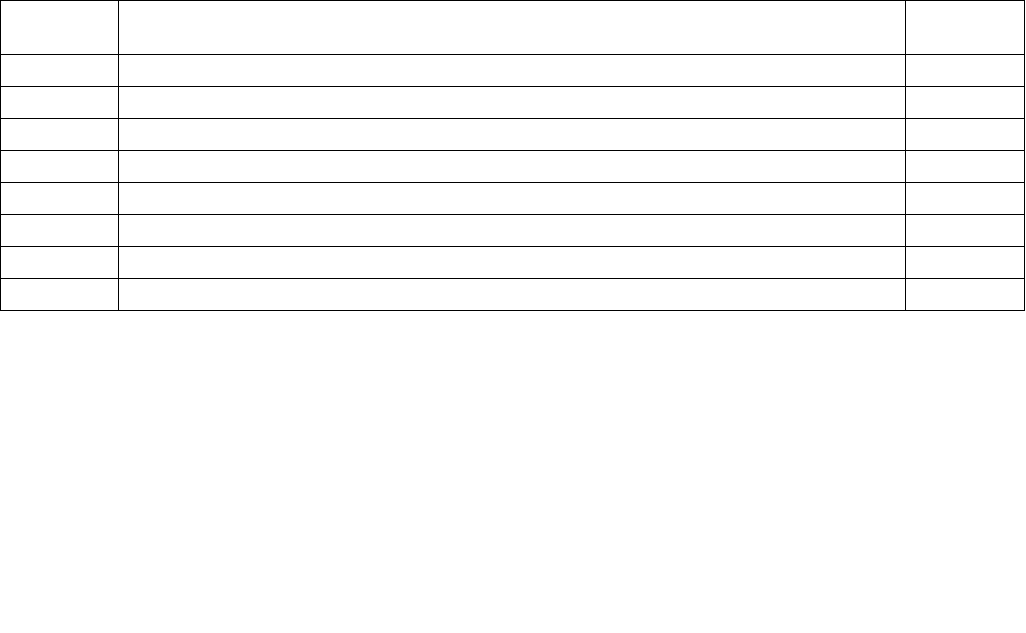
B-2 Vol. 2D
INSTRUCTION FORMATS AND ENCODINGS
B.1.2 REX Prefixes
REX prefixes are a set of 16 opcodes that span one row of the opcode map and occupy entries 40H to 4FH. These
opcodes represent valid instructions (INC or DEC) in IA-32 operating modes and in compatibility mode. In 64-bit
mode, the same opcodes represent the instruction prefix REX and are not treated as individual instructions.
Refer to Chapter 2, “Instruction Format,” in the Intel® 64 and IA-32 Architectures Software Developer’s Manual,
Volume 2A, for more information on REX prefixes.
B.1.3 Opcode Fields
The primary opcode for an instruction is encoded in one to three bytes of the instruction. Within the primary
opcode, smaller encoding fields may be defined. These fields vary according to the class of operation being
performed.
Almost all instructions that refer to a register and/or memory operand have a register and/or address mode byte
following the opcode. This byte, the ModR/M byte, consists of the mod field (2 bits), the reg field (3 bits; this field
is sometimes an opcode extension), and the R/M field (3 bits). Certain encodings of the ModR/M byte indicate that
a second address mode byte, the SIB byte, must be used.
If the addressing mode specifies a displacement, the displacement value is placed immediately following the
ModR/M byte or SIB byte. Possible sizes are 8, 16, or 32 bits. If the instruction specifies an immediate value, the
immediate value follows any displacement bytes. The immediate, if specified, is always the last field of the instruc-
tion.
Refer to Chapter 2, “Instruction Format,” in the Intel® 64 and IA-32 Architectures Software Developer’s Manual,
Volume 2A, for more information on opcodes.
B.1.4 Special Fields
Table B-1 lists bit fields that appear in certain instructions, sometimes within the opcode bytes. All of these fields
(except the d bit) occur in the general-purpose instruction formats in Table B-13.
Table B-1. Special Fields Within Instruction Encodings
Field Name Description
Number of
Bits
reg General-register specifier (see Table B-4 or B-5). 3
w Specifies if data is byte or full-sized, where full-sized is 16 or 32 bits (see Table B-6). 1
s Specifies sign extension of an immediate field (see Table B-7). 1
sreg2 Segment register specifier for CS, SS, DS, ES (see Table B-8). 2
sreg3 Segment register specifier for CS, SS, DS, ES, FS, GS (see Table B-8). 3
eee Specifies a special-purpose (control or debug) register (see Table B-9). 3
tttn For conditional instructions, specifies a condition asserted or negated (see Table B-12). 4
d Specifies direction of data operation (see Table B-11). 1

Vol. 2D B-3
INSTRUCTION FORMATS AND ENCODINGS
B.1.4.1 Reg Field (reg) for Non-64-Bit Modes
The reg field in the ModR/M byte specifies a general-purpose register operand. The group of registers specified is
modified by the presence and state of the w bit in an encoding (refer to Section B.1.4.3). Table B-2 shows the
encoding of the reg field when the w bit is not present in an encoding; Table B-3 shows the encoding of the reg field
when the w bit is present.
Table B-2. Encoding of reg Field When w Field is Not Present in Instruction
reg Field
Register Selected during
16-Bit Data Operations
Register Selected during
32-Bit Data Operations
000 AX EAX
001 CX ECX
010 DX EDX
011 BX EBX
100 SP ESP
101 BP EBP
110 SI ESI
111 DI EDI
Table B-3. Encoding of reg Field When w Field is Present in Instruction
Register Specified by reg Field
During 16-Bit Data Operations
Register Specified by reg Field
During 32-Bit Data Operations
Function of w Field Function of w Field
reg When w = 0 When w = 1regWhen w = 0 When w = 1
000 AL AX 000 AL EAX
001 CL CX 001 CL ECX
010 DL DX 010 DL EDX
011 BL BX 011 BL EBX
100 AH SP 100 AH ESP
101 CH BP 101 CH EBP
110 DH SI 110 DH ESI
111 BH DI 111 BH EDI

B-4 Vol. 2D
INSTRUCTION FORMATS AND ENCODINGS
B.1.4.2 Reg Field (reg) for 64-Bit Mode
Just like in non-64-bit modes, the reg field in the ModR/M byte specifies a general-purpose register operand. The
group of registers specified is modified by the presence of and state of the w bit in an encoding (refer to Section
B.1.4.3). Table B-4 shows the encoding of the reg field when the w bit is not present in an encoding; Table B-5
shows the encoding of the reg field when the w bit is present.
B.1.4.3 Encoding of Operand Size (w) Bit
The current operand-size attribute determines whether the processor is performing 16-bit, 32-bit or 64-bit opera-
tions. Within the constraints of the current operand-size attribute, the operand-size bit (w) can be used to indicate
operations on 8-bit operands or the full operand size specified with the operand-size attribute. Table B-6 shows the
encoding of the w bit depending on the current operand-size attribute.
Table B-4. Encoding of reg Field When w Field is Not Present in Instruction
reg Field
Register Selected during
16-Bit Data Operations
Register Selected during
32-Bit Data Operations
Register Selected during
64-Bit Data Operations
000 AX EAX RAX
001 CX ECX RCX
010 DX EDX RDX
011 BX EBX RBX
100 SP ESP RSP
101 BP EBP RBP
110 SI ESI RSI
111 DI EDI RDI
Table B-5. Encoding of reg Field When w Field is Present in Instruction
Register Specified by reg Field
During 16-Bit Data Operations
Register Specified by reg Field
During 32-Bit Data Operations
Function of w Field Function of w Field
reg When w = 0 When w = 1regWhen w = 0 When w = 1
000 AL AX 000 AL EAX
001 CL CX 001 CL ECX
010 DL DX 010 DL EDX
011 BL BX 011 BL EBX
100 AH1SP 100 AH* ESP
101 CH1BP 101 CH* EBP
110 DH1SI 110 DH* ESI
111 BH1DI 111 BH* EDI
NOTES:
1. AH, CH, DH, BH can not be encoded when REX prefix is used. Such an expression defaults to the low byte.
Table B-6. Encoding of Operand Size (w) Bit
w Bit
Operand Size When
Operand-Size Attribute is 16 Bits
Operand Size When
Operand-Size Attribute is 32 Bits
0 8 Bits 8 Bits
1 16 Bits 32 Bits

Vol. 2D B-5
INSTRUCTION FORMATS AND ENCODINGS
B.1.4.4 Sign-Extend (s) Bit
The sign-extend (s) bit occurs in instructions with immediate data fields that are being extended from 8 bits to 16
or 32 bits. See Table B-7.
B.1.4.5 Segment Register (sreg) Field
When an instruction operates on a segment register, the reg field in the ModR/M byte is called the sreg field and is
used to specify the segment register. Table B-8 shows the encoding of the sreg field. This field is sometimes a 2-bit
field (sreg2) and other times a 3-bit field (sreg3).
B.1.4.6 Special-Purpose Register (eee) Field
When control or debug registers are referenced in an instruction they are encoded in the eee field, located in bits 5
though 3 of the ModR/M byte (an alternate encoding of the sreg field). See Table B-9.
Table B-7. Encoding of Sign-Extend (s) Bit
s
Effect on 8-Bit
Immediate Data
Effect on 16- or 32-Bit
Immediate Data
0 None None
1 Sign-extend to fill 16-bit or 32-bit destination None
Table B-8. Encoding of the Segment Register (sreg) Field
2-Bit sreg2 Field
Segment Register Selected
3-Bit sreg3 Field
Segment Register Selected
00 ES 000 ES
01 CS 001 CS
10 SS 010 SS
11 DS 011 DS
100 FS
101 GS
110 Reserved1
111 Reserved
NOTES:
1. Do not use reserved encodings.
Table B-9. Encoding of Special-Purpose Register (eee) Field
eee Control Register Debug Register
000 CR0 DR0
001 Reserved1DR1
010 CR2 DR2
011 CR3 DR3
100 CR4 Reserved
101 Reserved Reserved
110 Reserved DR6
111 Reserved DR7
NOTES:
1. Do not use reserved encodings.
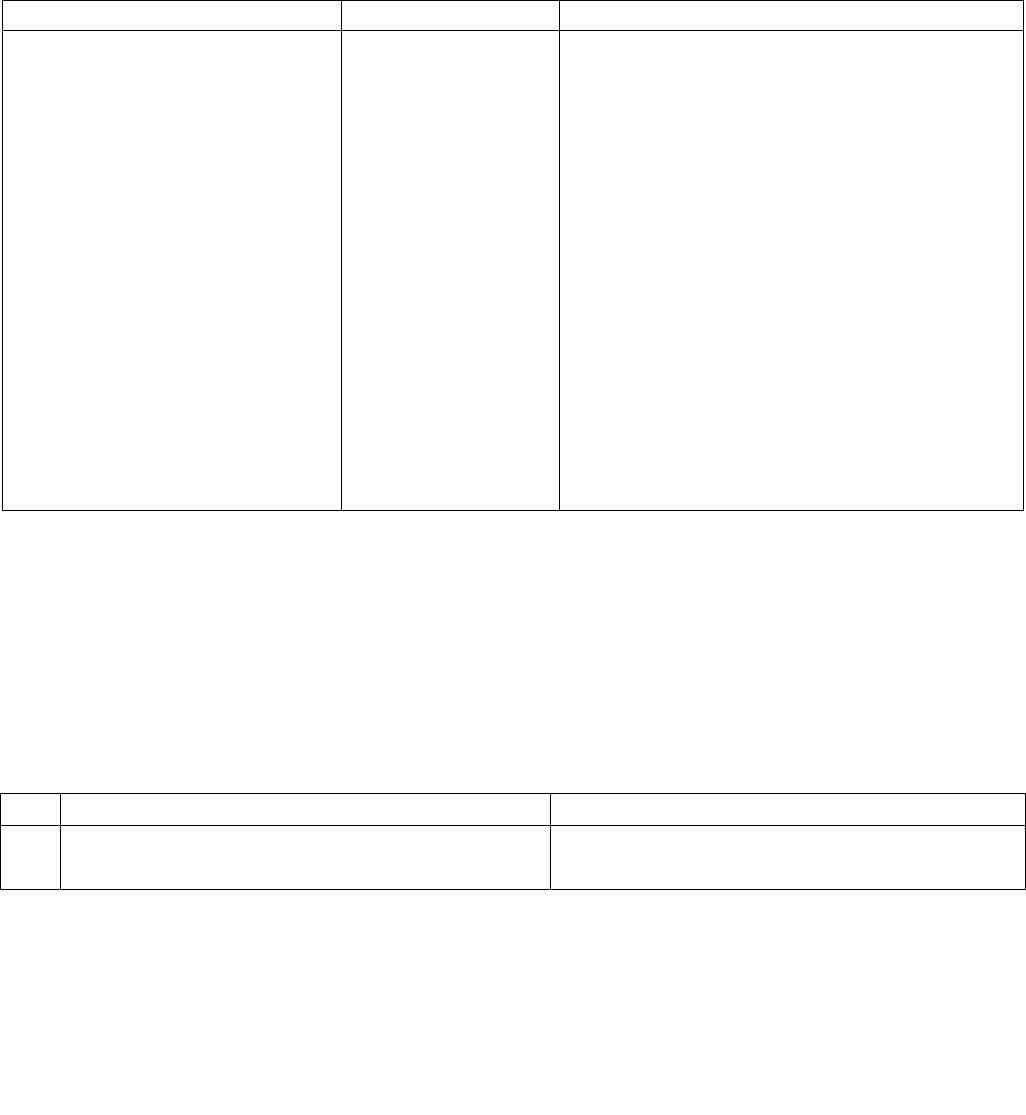
B-6 Vol. 2D
INSTRUCTION FORMATS AND ENCODINGS
B.1.4.7 Condition Test (tttn) Field
For conditional instructions (such as conditional jumps and set on condition), the condition test field (tttn) is
encoded for the condition being tested. The ttt part of the field gives the condition to test and the n part indicates
whether to use the condition (n =0) or its negation (n =1).
•For 1-byte primary opcodes, the tttn field is located in bits 3, 2, 1, and 0 of the opcode byte.
•For 2-byte primary opcodes, the tttn field is located in bits 3, 2, 1, and 0 of the second opcode byte.
Table B-10 shows the encoding of the tttn field.
B.1.4.8 Direction (d) Bit
In many two-operand instructions, a direction bit (d) indicates which operand is considered the source and which
is the destination. See Table B-11.
•When used for integer instructions, the d bit is located at bit 1 of a 1-byte primary opcode. Note that this bit
does not appear as the symbol “d” in Table B-13; the actual encoding of the bit as 1 or 0 is given.
•When used for floating-point instructions (in Table B-16), the d bit is shown as bit 2 of the first byte of the
primary opcode.
B.1.5 Other Notes
Table B-12 contains notes on particular encodings. These notes are indicated in the tables shown in the following
sections by superscripts.
Table B-10. Encoding of Conditional Test (tttn) Field
t t t n Mnemonic Condition
0000 O Overflow
0001 NO No overflow
0010 B, NAE Below, Not above or equal
0011 NB, AE Not below, Above or equal
0100 E, Z Equal, Zero
0101 NE, NZ Not equal, Not zero
0110 BE, NA Below or equal, Not above
0111 NBE, A Not below or equal, Above
1000 S Sign
1001 NS Not sign
1010 P, PE Parity, Parity Even
1011 NP, PO Not parity, Parity Odd
1100 L, NGE Less than, Not greater than or equal to
1101 NL, GE Not less than, Greater than or equal to
1110 LE, NG Less than or equal to, Not greater than
1111 NLE, G Not less than or equal to, Greater than
Table B-11. Encoding of Operation Direction (d) Bit
d Source Destination
0 reg Field ModR/M or SIB Byte
1 ModR/M or SIB Byte reg Field

Vol. 2D B-7
INSTRUCTION FORMATS AND ENCODINGS
B.2 GENERAL-PURPOSE INSTRUCTION FORMATS AND ENCODINGS FOR NON-
64-BIT MODES
Table B-13 shows machine instruction formats and encodings for general purpose instructions in non-64-bit
modes.
Table B-12. Notes on Instruction Encoding
Symbol Note
A A value of 11B in bits 7 and 6 of the ModR/M byte is reserved.
B A value of 01B (or 10B) in bits 7 and 6 of the ModR/M byte is reserved.
Table B-13. General Purpose Instruction Formats and Encodings for Non-64-Bit Modes
Instruction and Format Encoding
AAA – ASCII Adjust after Addition 0011 0111
AAD – ASCII Adjust AX before Division 1101 0101 : 0000 1010
AAM – ASCII Adjust AX after Multiply 1101 0100 : 0000 1010
AAS – ASCII Adjust AL after Subtraction 0011 1111
ADC – ADD with Carry
register1 to register2 0001 000w : 11 reg1 reg2
register2 to register1 0001 001w : 11 reg1 reg2
memory to register 0001 001w : mod reg r/m
register to memory 0001 000w : mod reg r/m
immediate to register 1000 00sw : 11 010 reg : immediate data
immediate to AL, AX, or EAX 0001 010w : immediate data
immediate to memory 1000 00sw : mod 010 r/m : immediate data
ADD – Add
register1 to register2 0000 000w : 11 reg1 reg2
register2 to register1 0000 001w : 11 reg1 reg2
memory to register 0000 001w : mod reg r/m
register to memory 0000 000w : mod reg r/m
immediate to register 1000 00sw : 11 000 reg : immediate data
immediate to AL, AX, or EAX 0000 010w : immediate data
immediate to memory 1000 00sw : mod 000 r/m : immediate data
AND – Logical AND
register1 to register2 0010 000w : 11 reg1 reg2
register2 to register1 0010 001w : 11 reg1 reg2
memory to register 0010 001w : mod reg r/m
register to memory 0010 000w : mod reg r/m
immediate to register 1000 00sw : 11 100 reg : immediate data
immediate to AL, AX, or EAX 0010 010w : immediate data
immediate to memory 1000 00sw : mod 100 r/m : immediate data

B-8 Vol. 2D
INSTRUCTION FORMATS AND ENCODINGS
ARPL – Adjust RPL Field of Selector
from register 0110 0011 : 11 reg1 reg2
from memory 0110 0011 : mod reg r/m
BOUND – Check Array Against Bounds 0110 0010 : modA reg r/m
BSF – Bit Scan Forward
register1, register2 0000 1111 : 1011 1100 : 11 reg1 reg2
memory, register 0000 1111 : 1011 1100 : mod reg r/m
BSR – Bit Scan Reverse
register1, register2 0000 1111 : 1011 1101 : 11 reg1 reg2
memory, register 0000 1111 : 1011 1101 : mod reg r/m
BSWAP – Byte Swap 0000 1111 : 1100 1 reg
BT – Bit Test
register, immediate 0000 1111 : 1011 1010 : 11 100 reg: imm8 data
memory, immediate 0000 1111 : 1011 1010 : mod 100 r/m : imm8 data
register1, register2 0000 1111 : 1010 0011 : 11 reg2 reg1
memory, reg 0000 1111 : 1010 0011 : mod reg r/m
BTC – Bit Test and Complement
register, immediate 0000 1111 : 1011 1010 : 11 111 reg: imm8 data
memory, immediate 0000 1111 : 1011 1010 : mod 111 r/m : imm8 data
register1, register2 0000 1111 : 1011 1011 : 11 reg2 reg1
memory, reg 0000 1111 : 1011 1011 : mod reg r/m
BTR – Bit Test and Reset
register, immediate 0000 1111 : 1011 1010 : 11 110 reg: imm8 data
memory, immediate 0000 1111 : 1011 1010 : mod 110 r/m : imm8 data
register1, register2 0000 1111 : 1011 0011 : 11 reg2 reg1
memory, reg 0000 1111 : 1011 0011 : mod reg r/m
BTS – Bit Test and Set
register, immediate 0000 1111 : 1011 1010 : 11 101 reg: imm8 data
memory, immediate 0000 1111 : 1011 1010 : mod 101 r/m : imm8 data
register1, register2 0000 1111 : 1010 1011 : 11 reg2 reg1
memory, reg 0000 1111 : 1010 1011 : mod reg r/m
CALL – Call Procedure (in same segment)
direct 1110 1000 : full displacement
register indirect 1111 1111 : 11 010 reg
memory indirect 1111 1111 : mod 010 r/m
CALL – Call Procedure (in other segment)
direct 1001 1010 : unsigned full offset, selector
indirect 1111 1111 : mod 011 r/m
Table B-13. General Purpose Instruction Formats and Encodings for Non-64-Bit Modes (Contd.)
Instruction and Format Encoding

Vol. 2D B-9
INSTRUCTION FORMATS AND ENCODINGS
CBW – Convert Byte to Word 1001 1000
CDQ – Convert Doubleword to Qword 1001 1001
CLC – Clear Carry Flag 1111 1000
CLD – Clear Direction Flag 1111 1100
CLI – Clear Interrupt Flag 1111 1010
CLTS – Clear Task-Switched Flag in CR0 0000 1111 : 0000 0110
CMC – Complement Carry Flag 1111 0101
CMP – Compare Two Operands
register1 with register2 0011 100w : 11 reg1 reg2
register2 with register1 0011 101w : 11 reg1 reg2
memory with register 0011 100w : mod reg r/m
register with memory 0011 101w : mod reg r/m
immediate with register 1000 00sw : 11 111 reg : immediate data
immediate with AL, AX, or EAX 0011 110w : immediate data
immediate with memory 1000 00sw : mod 111 r/m : immediate data
CMPS/CMPSB/CMPSW/CMPSD – Compare String Operands 1010 011w
CMPXCHG – Compare and Exchange
register1, register2 0000 1111 : 1011 000w : 11 reg2 reg1
memory, register 0000 1111 : 1011 000w : mod reg r/m
CPUID – CPU Identification 0000 1111 : 1010 0010
CWD – Convert Word to Doubleword 1001 1001
CWDE – Convert Word to Doubleword 1001 1000
DAA – Decimal Adjust AL after Addition 0010 0111
DAS – Decimal Adjust AL after Subtraction 0010 1111
DEC – Decrement by 1
register 1111 111w : 11 001 reg
register (alternate encoding) 0100 1 reg
memory 1111 111w : mod 001 r/m
DIV – Unsigned Divide
AL, AX, or EAX by register 1111 011w : 11 110 reg
AL, AX, or EAX by memory 1111 011w : mod 110 r/m
HLT – Halt 1111 0100
IDIV – Signed Divide
AL, AX, or EAX by register 1111 011w : 11 111 reg
AL, AX, or EAX by memory 1111 011w : mod 111 r/m
Table B-13. General Purpose Instruction Formats and Encodings for Non-64-Bit Modes (Contd.)
Instruction and Format Encoding

B-10 Vol. 2D
INSTRUCTION FORMATS AND ENCODINGS
IMUL – Signed Multiply
AL, AX, or EAX with register 1111 011w : 11 101 reg
AL, AX, or EAX with memory 1111 011w : mod 101 reg
register1 with register2 0000 1111 : 1010 1111 : 11 : reg1 reg2
register with memory 0000 1111 : 1010 1111 : mod reg r/m
register1 with immediate to register2 0110 10s1 : 11 reg1 reg2 : immediate data
memory with immediate to register 0110 10s1 : mod reg r/m : immediate data
IN – Input From Port
fixed port 1110 010w : port number
variable port 1110 110w
INC – Increment by 1
reg 1111 111w : 11 000 reg
reg (alternate encoding) 0100 0 reg
memory 1111 111w : mod 000 r/m
INS – Input from DX Port 0110 110w
INT n – Interrupt Type n 1100 1101 : type
INT – Single-Step Interrupt 3 1100 1100
INTO – Interrupt 4 on Overflow 1100 1110
INVD – Invalidate Cache 0000 1111 : 0000 1000
INVLPG – Invalidate TLB Entry 0000 1111 : 0000 0001 : mod 111 r/m
INVPCID – Invalidate Process-Context Identifier 0110 0110:0000 1111:0011 1000:1000 0010: mod reg r/m
IRET/IRETD – Interrupt Return 1100 1111
Jcc – Jump if Condition is Met
8-bit displacement 0111 tttn : 8-bit displacement
full displacement 0000 1111 : 1000 tttn : full displacement
JCXZ/JECXZ – Jump on CX/ECX Zero
Address-size prefix differentiates JCXZ
and JECXZ
1110 0011 : 8-bit displacement
JMP – Unconditional Jump (to same segment)
short 1110 1011 : 8-bit displacement
direct 1110 1001 : full displacement
register indirect 1111 1111 : 11 100 reg
memory indirect 1111 1111 : mod 100 r/m
JMP – Unconditional Jump (to other segment)
direct intersegment 1110 1010 : unsigned full offset, selector
indirect intersegment 1111 1111 : mod 101 r/m
LAHF – Load Flags into AHRegister 1001 1111
Table B-13. General Purpose Instruction Formats and Encodings for Non-64-Bit Modes (Contd.)
Instruction and Format Encoding

Vol. 2D B-11
INSTRUCTION FORMATS AND ENCODINGS
LAR – Load Access Rights Byte
from register 0000 1111 : 0000 0010 : 11 reg1 reg2
from memory 0000 1111 : 0000 0010 : mod reg r/m
LDS – Load Pointer to DS 1100 0101 : modA,B reg r/m
LEA – Load Effective Address 1000 1101 : modA reg r/m
LEAVE – High Level Procedure Exit 1100 1001
LES – Load Pointer to ES 1100 0100 : modA,B reg r/m
LFS – Load Pointer to FS 0000 1111 : 1011 0100 : modA reg r/m
LGDT – Load Global Descriptor Table Register 0000 1111 : 0000 0001 : modA 010 r/m
LGS – Load Pointer to GS 0000 1111 : 1011 0101 : modA reg r/m
LIDT – Load Interrupt Descriptor Table Register 0000 1111 : 0000 0001 : modA 011 r/m
LLDT – Load Local Descriptor Table Register
LDTR from register 0000 1111 : 0000 0000 : 11 010 reg
LDTR from memory 0000 1111 : 0000 0000 : mod 010 r/m
LMSW – Load Machine Status Word
from register 0000 1111 : 0000 0001 : 11 110 reg
from memory 0000 1111 : 0000 0001 : mod 110 r/m
LOCK – Assert LOCK# Signal Prefix 1111 0000
LODS/LODSB/LODSW/LODSD – Load String Operand 1010 110w
LOOP – Loop Count 1110 0010 : 8-bit displacement
LOOPZ/LOOPE – Loop Count while Zero/Equal 1110 0001 : 8-bit displacement
LOOPNZ/LOOPNE – Loop Count while not Zero/Equal 1110 0000 : 8-bit displacement
LSL – Load Segment Limit
from register 0000 1111 : 0000 0011 : 11 reg1 reg2
from memory 0000 1111 : 0000 0011 : mod reg r/m
LSS – Load Pointer to SS 0000 1111 : 1011 0010 : modA reg r/m
LTR – Load Task Register
from register 0000 1111 : 0000 0000 : 11 011 reg
from memory 0000 1111 : 0000 0000 : mod 011 r/m
MOV – Move Data
register1 to register2 1000 100w : 11 reg1 reg2
register2 to register1 1000 101w : 11 reg1 reg2
memory to reg 1000 101w : mod reg r/m
reg to memory 1000 100w : mod reg r/m
immediate to register 1100 011w : 11 000 reg : immediate data
immediate to register (alternate encoding) 1011 w reg : immediate data
immediate to memory 1100 011w : mod 000 r/m : immediate data
memory to AL, AX, or EAX 1010 000w : full displacement
Table B-13. General Purpose Instruction Formats and Encodings for Non-64-Bit Modes (Contd.)
Instruction and Format Encoding

B-12 Vol. 2D
INSTRUCTION FORMATS AND ENCODINGS
AL, AX, or EAX to memory 1010 001w : full displacement
MOV – Move to/from Control Registers
CR0 from register 0000 1111 : 0010 0010 : -- 000 reg
CR2 from register 0000 1111 : 0010 0010 : -- 010reg
CR3 from register 0000 1111 : 0010 0010 : -- 011 reg
CR4 from register 0000 1111 : 0010 0010 : -- 100 reg
register from CR0-CR4 0000 1111 : 0010 0000 : -- eee reg
MOV – Move to/from Debug Registers
DR0-DR3 from register 0000 1111 : 0010 0011 : -- eee reg
DR4-DR5 from register 0000 1111 : 0010 0011 : -- eee reg
DR6-DR7 from register 0000 1111 : 0010 0011 : -- eee reg
register from DR6-DR7 0000 1111 : 0010 0001 : -- eee reg
register from DR4-DR5 0000 1111 : 0010 0001 : -- eee reg
register from DR0-DR3 0000 1111 : 0010 0001 : -- eee reg
MOV – Move to/from Segment Registers
register to segment register 1000 1110 : 11 sreg3 reg
register to SS 1000 1110 : 11 sreg3 reg
memory to segment reg 1000 1110 : mod sreg3 r/m
memory to SS 1000 1110 : mod sreg3 r/m
segment register to register 1000 1100 : 11 sreg3 reg
segment register to memory 1000 1100 : mod sreg3 r/m
MOVBE – Move data after swapping bytes
memory to register 0000 1111 : 0011 1000:1111 0000 : mod reg r/m
register to memory 0000 1111 : 0011 1000:1111 0001 : mod reg r/m
MOVS/MOVSB/MOVSW/MOVSD – Move Data from String to
String
1010 010w
MOVSX – Move with Sign-Extend
memory to reg 0000 1111 : 1011 111w : mod reg r/m
MOVZX – Move with Zero-Extend
register2 to register1 0000 1111 : 1011 011w : 11 reg1 reg2
memory to register 0000 1111 : 1011 011w : mod reg r/m
MUL – Unsigned Multiply
AL, AX, or EAX with register 1111 011w : 11 100 reg
AL, AX, or EAX with memory 1111 011w : mod 100 r/m
NEG – Two's Complement Negation
register 1111 011w : 11 011 reg
memory 1111 011w : mod 011 r/m
NOP – No Operation 1001 0000
Table B-13. General Purpose Instruction Formats and Encodings for Non-64-Bit Modes (Contd.)
Instruction and Format Encoding

Vol. 2D B-13
INSTRUCTION FORMATS AND ENCODINGS
NOP – Multi-byte No Operation1
register 0000 1111 0001 1111 : 11 000 reg
memory 0000 1111 0001 1111 : mod 000 r/m
NOT – One's Complement Negation
register 1111 011w : 11 010 reg
memory 1111 011w : mod 010 r/m
OR – Logical Inclusive OR
register1 to register2 0000 100w : 11 reg1 reg2
register2 to register1 0000 101w : 11 reg1 reg2
memory to register 0000 101w : mod reg r/m
register to memory 0000 100w : mod reg r/m
immediate to register 1000 00sw : 11 001 reg : immediate data
immediate to AL, AX, or EAX 0000 110w : immediate data
immediate to memory 1000 00sw : mod 001 r/m : immediate data
OUT – Output to Port
fixed port 1110 011w : port number
variable port 1110 111w
OUTS – Output to DX Port 0110 111w
POP – Pop a Word from the Stack
register 1000 1111 : 11 000 reg
register (alternate encoding) 0101 1 reg
memory 1000 1111 : mod 000 r/m
POP – Pop a Segment Register from the Stack
(Note: CS cannot be sreg2 in this usage.)
segment register DS, ES 000 sreg2 111
segment register SS 000 sreg2 111
segment register FS, GS 0000 1111: 10 sreg3 001
POPA/POPAD – Pop All General Registers 0110 0001
POPF/POPFD – Pop Stack into FLAGS or EFLAGS Register 1001 1101
PUSH – Push Operand onto the Stack
register 1111 1111 : 11 110 reg
register (alternate encoding) 0101 0 reg
memory 1111 1111 : mod 110 r/m
immediate 0110 10s0 : immediate data
PUSH – Push Segment Register onto the Stack
segment register CS,DS,ES,SS 000 sreg2 110
segment register FS,GS 0000 1111: 10 sreg3 000
Table B-13. General Purpose Instruction Formats and Encodings for Non-64-Bit Modes (Contd.)
Instruction and Format Encoding

B-14 Vol. 2D
INSTRUCTION FORMATS AND ENCODINGS
PUSHA/PUSHAD – Push All General Registers 0110 0000
PUSHF/PUSHFD – Push Flags Register onto the Stack 1001 1100
RCL – Rotate thru Carry Left
register by 1 1101 000w : 11 010 reg
memory by 1 1101 000w : mod 010 r/m
register by CL 1101 001w : 11 010 reg
memory by CL 1101 001w : mod 010 r/m
register by immediate count 1100 000w : 11 010 reg : imm8 data
memory by immediate count 1100 000w : mod 010 r/m : imm8 data
RCR – Rotate thru Carry Right
register by 1 1101 000w : 11 011 reg
memory by 1 1101 000w : mod 011 r/m
register by CL 1101 001w : 11 011 reg
memory by CL 1101 001w : mod 011 r/m
register by immediate count 1100 000w : 11 011 reg : imm8 data
memory by immediate count 1100 000w : mod 011 r/m : imm8 data
RDMSR – Read from Model-Specific Register 0000 1111 : 0011 0010
RDPMC – Read Performance Monitoring Counters 0000 1111 : 0011 0011
RDTSC – Read Time-Stamp Counter 0000 1111 : 0011 0001
RDTSCP – Read Time-Stamp Counter and Processor ID 0000 1111 : 0000 0001: 1111 1001
REP INS – Input String 1111 0011 : 0110 110w
REP LODS – Load String 1111 0011 : 1010 110w
REP MOVS – Move String 1111 0011 : 1010 010w
REP OUTS – Output String 1111 0011 : 0110 111w
REP STOS – Store String 1111 0011 : 1010 101w
REPE CMPS – Compare String 1111 0011 : 1010 011w
REPE SCAS – Scan String 1111 0011 : 1010 111w
REPNE CMPS – Compare String 1111 0010 : 1010 011w
REPNE SCAS – Scan String 1111 0010 : 1010 111w
RET – Return from Procedure (to same segment)
no argument 1100 0011
adding immediate to SP 1100 0010 : 16-bit displacement
RET – Return from Procedure (to other segment)
intersegment 1100 1011
adding immediate to SP 1100 1010 : 16-bit displacement
Table B-13. General Purpose Instruction Formats and Encodings for Non-64-Bit Modes (Contd.)
Instruction and Format Encoding

Vol. 2D B-15
INSTRUCTION FORMATS AND ENCODINGS
ROL – Rotate Left
register by 1 1101 000w : 11 000 reg
memory by 1 1101 000w : mod 000 r/m
register by CL 1101 001w : 11 000 reg
memory by CL 1101 001w : mod 000 r/m
register by immediate count 1100 000w : 11 000 reg : imm8 data
memory by immediate count 1100 000w : mod 000 r/m : imm8 data
ROR – Rotate Right
register by 1 1101 000w : 11 001 reg
memory by 1 1101 000w : mod 001 r/m
register by CL 1101 001w : 11 001 reg
memory by CL 1101 001w : mod 001 r/m
register by immediate count 1100 000w : 11 001 reg : imm8 data
memory by immediate count 1100 000w : mod 001 r/m : imm8 data
RSM – Resume from System Management Mode 0000 1111 : 1010 1010
SAHF – Store AH into Flags 1001 1110
SAL – Shift Arithmetic Left same instruction as SHL
SAR – Shift Arithmetic Right
register by 1 1101 000w : 11 111 reg
memory by 1 1101 000w : mod 111 r/m
register by CL 1101 001w : 11 111 reg
memory by CL 1101 001w : mod 111 r/m
register by immediate count 1100 000w : 11 111 reg : imm8 data
memory by immediate count 1100 000w : mod 111 r/m : imm8 data
SBB – Integer Subtraction with Borrow
register1 to register2 0001 100w : 11 reg1 reg2
register2 to register1 0001 101w : 11 reg1 reg2
memory to register 0001 101w : mod reg r/m
register to memory 0001 100w : mod reg r/m
immediate to register 1000 00sw : 11 011 reg : immediate data
immediate to AL, AX, or EAX 0001 110w : immediate data
immediate to memory 1000 00sw : mod 011 r/m : immediate data
SCAS/SCASB/SCASW/SCASD – Scan String 1010 111w
SETcc – Byte Set on Condition
register 0000 1111 : 1001 tttn : 11 000 reg
memory 0000 1111 : 1001 tttn : mod 000 r/m
SGDT – Store Global Descriptor Table Register 0000 1111 : 0000 0001 : modA 000 r/m
Table B-13. General Purpose Instruction Formats and Encodings for Non-64-Bit Modes (Contd.)
Instruction and Format Encoding

B-16 Vol. 2D
INSTRUCTION FORMATS AND ENCODINGS
SHL – Shift Left
register by 1 1101 000w : 11 100 reg
memory by 1 1101 000w : mod 100 r/m
register by CL 1101 001w : 11 100 reg
memory by CL 1101 001w : mod 100 r/m
register by immediate count 1100 000w : 11 100 reg : imm8 data
memory by immediate count 1100 000w : mod 100 r/m : imm8 data
SHLD – Double Precision Shift Left
register by immediate count 0000 1111 : 1010 0100 : 11 reg2 reg1 : imm8
memory by immediate count 0000 1111 : 1010 0100 : mod reg r/m : imm8
register by CL 0000 1111 : 1010 0101 : 11 reg2 reg1
memory by CL 0000 1111 : 1010 0101 : mod reg r/m
SHR – Shift Right
register by 1 1101 000w : 11 101 reg
memory by 1 1101 000w : mod 101 r/m
register by CL 1101 001w : 11 101 reg
memory by CL 1101 001w : mod 101 r/m
register by immediate count 1100 000w : 11 101 reg : imm8 data
memory by immediate count 1100 000w : mod 101 r/m : imm8 data
SHRD – Double Precision Shift Right
register by immediate count 0000 1111 : 1010 1100 : 11 reg2 reg1 : imm8
memory by immediate count 0000 1111 : 1010 1100 : mod reg r/m : imm8
register by CL 0000 1111 : 1010 1101 : 11 reg2 reg1
memory by CL 0000 1111 : 1010 1101 : mod reg r/m
SIDT – Store Interrupt Descriptor Table Register 0000 1111 : 0000 0001 : modA 001 r/m
SLDT – Store Local Descriptor Table Register
to register 0000 1111 : 0000 0000 : 11 000 reg
to memory 0000 1111 : 0000 0000 : mod 000 r/m
SMSW – Store Machine Status Word
to register 0000 1111 : 0000 0001 : 11 100 reg
to memory 0000 1111 : 0000 0001 : mod 100 r/m
STC – Set Carry Flag 1111 1001
STD – Set Direction Flag 1111 1101
STI – Set Interrupt Flag 1111 1011
STOS/STOSB/STOSW/STOSD – Store String Data 1010 101w
STR – Store Task Register
to register 0000 1111 : 0000 0000 : 11 001 reg
to memory 0000 1111 : 0000 0000 : mod 001 r/m
Table B-13. General Purpose Instruction Formats and Encodings for Non-64-Bit Modes (Contd.)
Instruction and Format Encoding

Vol. 2D B-17
INSTRUCTION FORMATS AND ENCODINGS
SUB – Integer Subtraction
register1 to register2 0010 100w : 11 reg1 reg2
register2 to register1 0010 101w : 11 reg1 reg2
memory to register 0010 101w : mod reg r/m
register to memory 0010 100w : mod reg r/m
immediate to register 1000 00sw : 11 101 reg : immediate data
immediate to AL, AX, or EAX 0010 110w : immediate data
immediate to memory 1000 00sw : mod 101 r/m : immediate data
TEST – Logical Compare
register1 and register2 1000 010w : 11 reg1 reg2
memory and register 1000 010w : mod reg r/m
immediate and register 1111 011w : 11 000 reg : immediate data
immediate and AL, AX, or EAX 1010 100w : immediate data
immediate and memory 1111 011w : mod 000 r/m : immediate data
UD0 – Undefined instruction 0000 1111 : 1111 1111
UD1 – Undefined instruction 0000 1111 : 0000 1011
UD2 – Undefined instruction 0000 FFFF : 0000 1011
VERR – Verify a Segment for Reading
register 0000 1111 : 0000 0000 : 11 100 reg
memory 0000 1111 : 0000 0000 : mod 100 r/m
VERW – Verify a Segment for Writing
register 0000 1111 : 0000 0000 : 11 101 reg
memory 0000 1111 : 0000 0000 : mod 101 r/m
WAIT – Wait 1001 1011
WBINVD – Writeback and Invalidate Data Cache 0000 1111 : 0000 1001
WRMSR – Write to Model-Specific Register 0000 1111 : 0011 0000
XADD – Exchange and Add
register1, register2 0000 1111 : 1100 000w : 11 reg2 reg1
memory, reg 0000 1111 : 1100 000w : mod reg r/m
XCHG – Exchange Register/Memory with Register
register1 with register2 1000 011w : 11 reg1 reg2
AX or EAX with reg 1001 0 reg
memory with reg 1000 011w : mod reg r/m
XLAT/XLATB – Table Look-up Translation 1101 0111
XOR – Logical Exclusive OR
register1 to register2 0011 000w : 11 reg1 reg2
register2 to register1 0011 001w : 11 reg1 reg2
memory to register 0011 001w : mod reg r/m
Table B-13. General Purpose Instruction Formats and Encodings for Non-64-Bit Modes (Contd.)
Instruction and Format Encoding

B-18 Vol. 2D
INSTRUCTION FORMATS AND ENCODINGS
B.2.1 General Purpose Instruction Formats and Encodings for 64-Bit Mode
Table B-15 shows machine instruction formats and encodings for general purpose instructions in 64-bit mode.
register to memory 0011 000w : mod reg r/m
immediate to register 1000 00sw : 11 110 reg : immediate data
immediate to AL, AX, or EAX 0011 010w : immediate data
immediate to memory 1000 00sw : mod 110 r/m : immediate data
Prefix Bytes
address size 0110 0111
LOCK 1111 0000
operand size 0110 0110
CS segment override 0010 1110
DS segment override 0011 1110
ES segment override 0010 0110
FS segment override 0110 0100
GS segment override 0110 0101
SS segment override 0011 0110
NOTES:
1. The multi-byte NOP instruction does not alter the content of the register and will not issue a memory operation.
Table B-14. Special Symbols
Symbol Application
S If the value of REX.W. is 1, it overrides the presence of 66H.
w The value of bit W. in REX is has no effect.
Table B-15. General Purpose Instruction Formats and Encodings for 64-Bit Mode
Instruction and Format Encoding
ADC – ADD with Carry
register1 to register2 0100 0R0B : 0001 000w : 11 reg1 reg2
qwordregister1 to qwordregister2 0100 1R0B : 0001 0001 : 11 qwordreg1 qwordreg2
register2 to register1 0100 0R0B : 0001 001w : 11 reg1 reg2
qwordregister1 to qwordregister2 0100 1R0B : 0001 0011 : 11 qwordreg1 qwordreg2
memory to register 0100 0RXB : 0001 001w : mod reg r/m
memory to qwordregister 0100 1RXB : 0001 0011 : mod qwordreg r/m
register to memory 0100 0RXB : 0001 000w : mod reg r/m
qwordregister to memory 0100 1RXB : 0001 0001 : mod qwordreg r/m
immediate to register 0100 000B : 1000 00sw : 11 010 reg : immediate
immediate to qwordregister 0100 100B : 1000 0001 : 11 010 qwordreg : imm32
immediate to qwordregister 0100 1R0B : 1000 0011 : 11 010 qwordreg : imm8
Table B-13. General Purpose Instruction Formats and Encodings for Non-64-Bit Modes (Contd.)
Instruction and Format Encoding

Vol. 2D B-19
INSTRUCTION FORMATS AND ENCODINGS
immediate to AL, AX, or EAX 0001 010w : immediate data
immediate to RAX 0100 1000 : 0000 0101 : imm32
immediate to memory 0100 00XB : 1000 00sw : mod 010 r/m : immediate
immediate32 to memory64 0100 10XB : 1000 0001 : mod 010 r/m : imm32
immediate8 to memory64 0100 10XB : 1000 0031 : mod 010 r/m : imm8
ADD – Add
register1 to register2 0100 0R0B : 0000 000w : 11 reg1 reg2
qwordregister1 to qwordregister2 0100 1R0B 0000 0000 : 11 qwordreg1 qwordreg2
register2 to register1 0100 0R0B : 0000 001w : 11 reg1 reg2
qwordregister1 to qwordregister2 0100 1R0B 0000 0010 : 11 qwordreg1 qwordreg2
memory to register 0100 0RXB : 0000 001w : mod reg r/m
memory64 to qwordregister 0100 1RXB : 0000 0000 : mod qwordreg r/m
register to memory 0100 0RXB : 0000 000w : mod reg r/m
qwordregister to memory64 0100 1RXB : 0000 0011 : mod qwordreg r/m
immediate to register 0100 0000B : 1000 00sw : 11 000 reg : immediate data
immediate32 to qwordregister 0100 100B : 1000 0001 : 11 010 qwordreg : imm
immediate to AL, AX, or EAX 0000 010w : immediate8
immediate to RAX 0100 1000 : 0000 0101 : imm32
immediate to memory 0100 00XB : 1000 00sw : mod 000 r/m : immediate
immediate32 to memory64 0100 10XB : 1000 0001 : mod 010 r/m : imm32
immediate8 to memory64 0100 10XB : 1000 0011 : mod 010 r/m : imm8
AND – Logical AND
register1 to register2 0100 0R0B 0010 000w : 11 reg1 reg2
qwordregister1 to qwordregister2 0100 1R0B 0010 0001 : 11 qwordreg1 qwordreg2
register2 to register1 0100 0R0B 0010 001w : 11 reg1 reg2
register1 to register2 0100 1R0B 0010 0011 : 11 qwordreg1 qwordreg2
memory to register 0100 0RXB 0010 001w : mod reg r/m
memory64 to qwordregister 0100 1RXB : 0010 0011 : mod qwordreg r/m
register to memory 0100 0RXB : 0010 000w : mod reg r/m
qwordregister to memory64 0100 1RXB : 0010 0001 : mod qwordreg r/m
immediate to register 0100 000B : 1000 00sw : 11 100 reg : immediate
immediate32 to qwordregister 0100 100B 1000 0001 : 11 100 qwordreg : imm32
immediate to AL, AX, or EAX 0010 010w : immediate
immediate32 to RAX 0100 1000 0010 1001 : imm32
immediate to memory 0100 00XB : 1000 00sw : mod 100 r/m : immediate
immediate32 to memory64 0100 10XB : 1000 0001 : mod 100 r/m : immediate32
immediate8 to memory64 0100 10XB : 1000 0011 : mod 100 r/m : imm8
BSF – Bit Scan Forward
Table B-15. General Purpose Instruction Formats and Encodings for 64-Bit Mode (Contd.)
Instruction and Format Encoding

B-20 Vol. 2D
INSTRUCTION FORMATS AND ENCODINGS
register1, register2 0100 0R0B 0000 1111 : 1011 1100 : 11 reg1 reg2
qwordregister1, qwordregister2 0100 1R0B 0000 1111 : 1011 1100 : 11 qwordreg1
qwordreg2
memory, register 0100 0RXB 0000 1111 : 1011 1100 : mod reg r/m
memory64, qwordregister 0100 1RXB 0000 1111 : 1011 1100 : mod qwordreg r/m
BSR – Bit Scan Reverse
register1, register2 0100 0R0B 0000 1111 : 1011 1101 : 11 reg1 reg2
qwordregister1, qwordregister2 0100 1R0B 0000 1111 : 1011 1101 : 11 qwordreg1
qwordreg2
memory, register 0100 0RXB 0000 1111 : 1011 1101 : mod reg r/m
memory64, qwordregister 0100 1RXB 0000 1111 : 1011 1101 : mod qwordreg r/m
BSWAP – Byte Swap 0000 1111 : 1100 1 reg
BSWAP – Byte Swap 0100 100B 0000 1111 : 1100 1 qwordreg
BT – Bit Test
register, immediate 0100 000B 0000 1111 : 1011 1010 : 11 100 reg: imm8
qwordregister, immediate8 0100 100B 1111 : 1011 1010 : 11 100 qwordreg: imm8 data
memory, immediate 0100 00XB 0000 1111 : 1011 1010 : mod 100 r/m : imm8
memory64, immediate8 0100 10XB 0000 1111 : 1011 1010 : mod 100 r/m : imm8 data
register1, register2 0100 0R0B 0000 1111 : 1010 0011 : 11 reg2 reg1
qwordregister1, qwordregister2 0100 1R0B 0000 1111 : 1010 0011 : 11 qwordreg2
qwordreg1
memory, reg 0100 0RXB 0000 1111 : 1010 0011 : mod reg r/m
memory, qwordreg 0100 1RXB 0000 1111 : 1010 0011 : mod qwordreg r/m
BTC – Bit Test and Complement
register, immediate 0100 000B 0000 1111 : 1011 1010 : 11 111 reg: imm8
qwordregister, immediate8 0100 100B 0000 1111 : 1011 1010 : 11 111 qwordreg: imm8
memory, immediate 0100 00XB 0000 1111 : 1011 1010 : mod 111 r/m : imm8
memory64, immediate8 0100 10XB 0000 1111 : 1011 1010 : mod 111 r/m : imm8
register1, register2 0100 0R0B 0000 1111 : 1011 1011 : 11 reg2 reg1
qwordregister1, qwordregister2 0100 1R0B 0000 1111 : 1011 1011 : 11 qwordreg2
qwordreg1
memory, register 0100 0RXB 0000 1111 : 1011 1011 : mod reg r/m
memory, qwordreg 0100 1RXB 0000 1111 : 1011 1011 : mod qwordreg r/m
BTR – Bit Test and Reset
register, immediate 0100 000B 0000 1111 : 1011 1010 : 11 110 reg: imm8
qwordregister, immediate8 0100 100B 0000 1111 : 1011 1010 : 11 110 qwordreg: imm8
memory, immediate 0100 00XB 0000 1111 : 1011 1010 : mod 110 r/m : imm8
memory64, immediate8 0100 10XB 0000 1111 : 1011 1010 : mod 110 r/m : imm8
register1, register2 0100 0R0B 0000 1111 : 1011 0011 : 11 reg2 reg1
Table B-15. General Purpose Instruction Formats and Encodings for 64-Bit Mode (Contd.)
Instruction and Format Encoding

Vol. 2D B-21
INSTRUCTION FORMATS AND ENCODINGS
qwordregister1, qwordregister2 0100 1R0B 0000 1111 : 1011 0011 : 11 qwordreg2
qwordreg1
memory, register 0100 0RXB 0000 1111 : 1011 0011 : mod reg r/m
memory64, qwordreg 0100 1RXB 0000 1111 : 1011 0011 : mod qwordreg r/m
BTS – Bit Test and Set
register, immediate 0100 000B 0000 1111 : 1011 1010 : 11 101 reg: imm8
qwordregister, immediate8 0100 100B 0000 1111 : 1011 1010 : 11 101 qwordreg: imm8
memory, immediate 0100 00XB 0000 1111 : 1011 1010 : mod 101 r/m : imm8
memory64, immediate8 0100 10XB 0000 1111 : 1011 1010 : mod 101 r/m : imm8
register1, register2 0100 0R0B 0000 1111 : 1010 1011 : 11 reg2 reg1
qwordregister1, qwordregister2 0100 1R0B 0000 1111 : 1010 1011 : 11 qwordreg2
qwordreg1
memory, register 0100 0RXB 0000 1111 : 1010 1011 : mod reg r/m
memory64, qwordreg 0100 1RXB 0000 1111 : 1010 1011 : mod qwordreg r/m
CALL – Call Procedure (in same segment)
direct 1110 1000 : displacement32
register indirect 0100 WR00w 1111 1111 : 11 010 reg
memory indirect 0100 W0XBw 1111 1111 : mod 010 r/m
CALL – Call Procedure (in other segment)
indirect 1111 1111 : mod 011 r/m
indirect 0100 10XB 0100 1000 1111 1111 : mod 011 r/m
CBW – Convert Byte to Word 1001 1000
CDQ – Convert Doubleword to Qword+ 1001 1001
CDQE – RAX, Sign-Extend of EAX 0100 1000 1001 1001
CLC – Clear Carry Flag 1111 1000
CLD – Clear Direction Flag 1111 1100
CLI – Clear Interrupt Flag 1111 1010
CLTS – Clear Task-Switched Flag in CR0 0000 1111 : 0000 0110
CMC – Complement Carry Flag 1111 0101
CMP – Compare Two Operands
register1 with register2 0100 0R0B 0011 100w : 11 reg1 reg2
qwordregister1 with qwordregister2 0100 1R0B 0011 1001 : 11 qwordreg1 qwordreg2
register2 with register1 0100 0R0B 0011 101w : 11 reg1 reg2
qwordregister2 with qwordregister1 0100 1R0B 0011 101w : 11 qwordreg1 qwordreg2
memory with register 0100 0RXB 0011 100w : mod reg r/m
memory64 with qwordregister 0100 1RXB 0011 1001 : mod qwordreg r/m
register with memory 0100 0RXB 0011 101w : mod reg r/m
qwordregister with memory64 0100 1RXB 0011 101w1 : mod qwordreg r/m
immediate with register 0100 000B 1000 00sw : 11 111 reg : imm
Table B-15. General Purpose Instruction Formats and Encodings for 64-Bit Mode (Contd.)
Instruction and Format Encoding

B-22 Vol. 2D
INSTRUCTION FORMATS AND ENCODINGS
immediate32 with qwordregister 0100 100B 1000 0001 : 11 111 qwordreg : imm64
immediate with AL, AX, or EAX 0011 110w : imm
immediate32 with RAX 0100 1000 0011 1101 : imm32
immediate with memory 0100 00XB 1000 00sw : mod 111 r/m : imm
immediate32 with memory64 0100 1RXB 1000 0001 : mod 111 r/m : imm64
immediate8 with memory64 0100 1RXB 1000 0011 : mod 111 r/m : imm8
CMPS/CMPSB/CMPSW/CMPSD/CMPSQ – Compare String
Operands
compare string operands [ X at DS:(E)SI with Y at ES:(E)DI ] 1010 011w
qword at address RSI with qword at address RDI 0100 1000 1010 0111
CMPXCHG – Compare and Exchange
register1, register2 0000 1111 : 1011 000w : 11 reg2 reg1
byteregister1, byteregister2 0100 000B 0000 1111 : 1011 0000 : 11 bytereg2 reg1
qwordregister1, qwordregister2 0100 100B 0000 1111 : 1011 0001 : 11 qwordreg2 reg1
memory, register 0000 1111 : 1011 000w : mod reg r/m
memory8, byteregister 0100 00XB 0000 1111 : 1011 0000 : mod bytereg r/m
memory64, qwordregister 0100 10XB 0000 1111 : 1011 0001 : mod qwordreg r/m
CPUID – CPU Identification 0000 1111 : 1010 0010
CQO – Sign-Extend RAX 0100 1000 1001 1001
CWD – Convert Word to Doubleword 1001 1001
CWDE – Convert Word to Doubleword 1001 1000
DEC – Decrement by 1
register 0100 000B 1111 111w : 11 001 reg
qwordregister 0100 100B 1111 1111 : 11 001 qwordreg
memory 0100 00XB 1111 111w : mod 001 r/m
memory64 0100 10XB 1111 1111 : mod 001 r/m
DIV – Unsigned Divide
AL, AX, or EAX by register 0100 000B 1111 011w : 11 110 reg
Divide RDX:RAX by qwordregister 0100 100B 1111 0111 : 11 110 qwordreg
AL, AX, or EAX by memory 0100 00XB 1111 011w : mod 110 r/m
Divide RDX:RAX by memory64 0100 10XB 1111 0111 : mod 110 r/m
ENTER – Make Stack Frame for High Level Procedure 1100 1000 : 16-bit displacement : 8-bit level (L)
HLT – Halt 1111 0100
IDIV – Signed Divide
AL, AX, or EAX by register 0100 000B 1111 011w : 11 111 reg
RDX:RAX by qwordregister 0100 100B 1111 0111 : 11 111 qwordreg
AL, AX, or EAX by memory 0100 00XB 1111 011w : mod 111 r/m
RDX:RAX by memory64 0100 10XB 1111 0111 : mod 111 r/m
IMUL – Signed Multiply
Table B-15. General Purpose Instruction Formats and Encodings for 64-Bit Mode (Contd.)
Instruction and Format Encoding

Vol. 2D B-23
INSTRUCTION FORMATS AND ENCODINGS
AL, AX, or EAX with register 0100 000B 1111 011w : 11 101 reg
RDX:RAX <- RAX with qwordregister 0100 100B 1111 0111 : 11 101 qwordreg
AL, AX, or EAX with memory 0100 00XB 1111 011w : mod 101 r/m
RDX:RAX <- RAX with memory64 0100 10XB 1111 0111 : mod 101 r/m
register1 with register2 0000 1111 : 1010 1111 : 11 : reg1 reg2
qwordregister1 <- qwordregister1 with qwordregister2 0100 1R0B 0000 1111 : 1010 1111 : 11 : qwordreg1
qwordreg2
register with memory 0100 0RXB 0000 1111 : 1010 1111 : mod reg r/m
qwordregister <- qwordregister withmemory64 0100 1RXB 0000 1111 : 1010 1111 : mod qwordreg r/m
register1 with immediate to register2 0100 0R0B 0110 10s1 : 11 reg1 reg2 : imm
qwordregister1 <- qwordregister2 with sign-extended
immediate8
0100 1R0B 0110 1011 : 11 qwordreg1 qwordreg2 : imm8
qwordregister1 <- qwordregister2 with immediate32 0100 1R0B 0110 1001 : 11 qwordreg1 qwordreg2 : imm32
memory with immediate to register 0100 0RXB 0110 10s1 : mod reg r/m : imm
qwordregister <- memory64 with sign-extended immediate8 0100 1RXB 0110 1011 : mod qwordreg r/m : imm8
qwordregister <- memory64 with immediate32 0100 1RXB 0110 1001 : mod qwordreg r/m : imm32
IN – Input From Port
fixed port 1110 010w : port number
variable port 1110 110w
INC – Increment by 1
reg 0100 000B 1111 111w : 11 000 reg
qwordreg 0100 100B 1111 1111 : 11 000 qwordreg
memory 0100 00XB 1111 111w : mod 000 r/m
memory64 0100 10XB 1111 1111 : mod 000 r/m
INS – Input from DX Port 0110 110w
INT n – Interrupt Type n 1100 1101 : type
INT – Single-Step Interrupt 3 1100 1100
INTO – Interrupt 4 on Overflow 1100 1110
INVD – Invalidate Cache 0000 1111 : 0000 1000
INVLPG – Invalidate TLB Entry 0000 1111 : 0000 0001 : mod 111 r/m
INVPCID – Invalidate Process-Context Identifier 0110 0110:0000 1111:0011 1000:1000 0010: mod reg r/m
IRETO – Interrupt Return 1100 1111
Jcc – Jump if Condition is Met
8-bit displacement 0111 tttn : 8-bit displacement
displacements (excluding 16-bit relative offsets) 0000 1111 : 1000 tttn : displacement32
JCXZ/JECXZ – Jump on CX/ECX Zero
Address-size prefix differentiates JCXZ and JECXZ 1110 0011 : 8-bit displacement
JMP – Unconditional Jump (to same segment)
short 1110 1011 : 8-bit displacement
Table B-15. General Purpose Instruction Formats and Encodings for 64-Bit Mode (Contd.)
Instruction and Format Encoding

B-24 Vol. 2D
INSTRUCTION FORMATS AND ENCODINGS
direct 1110 1001 : displacement32
register indirect 0100 W00Bw : 1111 1111 : 11 100 reg
memory indirect 0100 W0XBw : 1111 1111 : mod 100 r/m
Table B-15. General Purpose Instruction Formats and Encodings for 64-Bit Mode (Contd.)
Instruction and Format Encoding

Vol. 2D B-25
INSTRUCTION FORMATS AND ENCODINGS
JMP – Unconditional Jump (to other segment)
indirect intersegment 0100 00XB : 1111 1111 : mod 101 r/m
64-bit indirect intersegment 0100 10XB : 1111 1111 : mod 101 r/m
LAR – Load Access Rights Byte
from register 0100 0R0B : 0000 1111 : 0000 0010 : 11 reg1 reg2
from dwordregister to qwordregister, masked by 00FxFF00H 0100 WR0B : 0000 1111 : 0000 0010 : 11 qwordreg1
dwordreg2
from memory 0100 0RXB : 0000 1111 : 0000 0010 : mod reg r/m
from memory32 to qwordregister, masked by 00FxFF00H 0100 WRXB 0000 1111 : 0000 0010 : mod r/m
LEA – Load Effective Address
in wordregister/dwordregister 0100 0RXB : 1000 1101 : modA reg r/m
in qwordregister 0100 1RXB : 1000 1101 : modA qwordreg r/m
LEAVE – High Level Procedure Exit 1100 1001
LFS – Load Pointer to FS
FS:r16/r32 with far pointer from memory 0100 0RXB : 0000 1111 : 1011 0100 : modA reg r/m
FS:r64 with far pointer from memory 0100 1RXB : 0000 1111 : 1011 0100 : modA qwordreg r/m
LGDT – Load Global Descriptor Table Register 0100 10XB : 0000 1111 : 0000 0001 : modA 010 r/m
LGS – Load Pointer to GS
GS:r16/r32 with far pointer from memory 0100 0RXB : 0000 1111 : 1011 0101 : modA reg r/m
GS:r64 with far pointer from memory 0100 1RXB : 0000 1111 : 1011 0101 : modA qwordreg r/m
LIDT – Load Interrupt Descriptor Table Register 0100 10XB : 0000 1111 : 0000 0001 : modA 011 r/m
LLDT – Load Local Descriptor Table Register
LDTR from register 0100 000B : 0000 1111 : 0000 0000 : 11 010 reg
LDTR from memory 0100 00XB :0000 1111 : 0000 0000 : mod 010 r/m
LMSW – Load Machine Status Word
from register 0100 000B : 0000 1111 : 0000 0001 : 11 110 reg
from memory 0100 00XB :0000 1111 : 0000 0001 : mod 110 r/m
LOCK – Assert LOCK# Signal Prefix 1111 0000
LODS/LODSB/LODSW/LODSD/LODSQ – Load String Operand
at DS:(E)SI to AL/EAX/EAX 1010 110w
at (R)SI to RAX 0100 1000 1010 1101
LOOP – Loop Count
if count ≠ 0, 8-bit displacement 1110 0010
if count ≠ 0, RIP + 8-bit displacement sign-extended to 64-bits 0100 1000 1110 0010
LOOPE – Loop Count while Zero/Equal
if count ≠ 0 & ZF =1, 8-bit displacement 1110 0001
if count ≠ 0 & ZF = 1, RIP + 8-bit displacement sign-extended to
64-bits
0100 1000 1110 0001
Table B-15. General Purpose Instruction Formats and Encodings for 64-Bit Mode (Contd.)
Instruction and Format Encoding

B-26 Vol. 2D
INSTRUCTION FORMATS AND ENCODINGS
LOOPNE/LOOPNZ – Loop Count while not Zero/Equal
if count ≠ 0 & ZF = 0, 8-bit displacement 1110 0000
if count ≠ 0 & ZF = 0, RIP + 8-bit displacement sign-extended to
64-bits
0100 1000 1110 0000
LSL – Load Segment Limit
from register 0000 1111 : 0000 0011 : 11 reg1 reg2
from qwordregister 0100 1R00 0000 1111 : 0000 0011 : 11 qwordreg1 reg2
from memory16 0000 1111 : 0000 0011 : mod reg r/m
from memory64 0100 1RXB 0000 1111 : 0000 0011 : mod qwordreg r/m
LSS – Load Pointer to SS
SS:r16/r32 with far pointer from memory 0100 0RXB : 0000 1111 : 1011 0010 : modA reg r/m
SS:r64 with far pointer from memory 0100 1WXB : 0000 1111 : 1011 0010 : modA qwordreg r/m
LTR – Load Task Register
from register 0100 0R00 : 0000 1111 : 0000 0000 : 11 011 reg
from memory 0100 00XB : 0000 1111 : 0000 0000 : mod 011 r/m
MOV – Move Data
register1 to register2 0100 0R0B : 1000 100w : 11 reg1 reg2
qwordregister1 to qwordregister2 0100 1R0B 1000 1001 : 11 qwordeg1 qwordreg2
register2 to register1 0100 0R0B : 1000 101w : 11 reg1 reg2
qwordregister2 to qwordregister1 0100 1R0B 1000 1011 : 11 qwordreg1 qwordreg2
memory to reg 0100 0RXB : 1000 101w : mod reg r/m
memory64 to qwordregister 0100 1RXB 1000 1011 : mod qwordreg r/m
reg to memory 0100 0RXB : 1000 100w : mod reg r/m
qwordregister to memory64 0100 1RXB 1000 1001 : mod qwordreg r/m
immediate to register 0100 000B : 1100 011w : 11 000 reg : imm
immediate32 to qwordregister (zero extend) 0100 100B 1100 0111 : 11 000 qwordreg : imm32
immediate to register (alternate encoding) 0100 000B : 1011 w reg : imm
immediate64 to qwordregister (alternate encoding) 0100 100B 1011 1000 reg : imm64
immediate to memory 0100 00XB : 1100 011w : mod 000 r/m : imm
immediate32 to memory64 (zero extend) 0100 10XB 1100 0111 : mod 000 r/m : imm32
memory to AL, AX, or EAX 0100 0000 : 1010 000w : displacement
memory64 to RAX 0100 1000 1010 0001 : displacement64
AL, AX, or EAX to memory 0100 0000 : 1010 001w : displacement
RAX to memory64 0100 1000 1010 0011 : displacement64
MOV – Move to/from Control Registers
CR0-CR4 from register 0100 0R0B : 0000 1111 : 0010 0010 : 11 eee reg (eee = CR#)
CRx from qwordregister 0100 1R0B : 0000 1111 : 0010 0010 : 11 eee qwordreg (Reee
= CR#)
register from CR0-CR4 0100 0R0B : 0000 1111 : 0010 0000 : 11 eee reg (eee = CR#)
Table B-15. General Purpose Instruction Formats and Encodings for 64-Bit Mode (Contd.)
Instruction and Format Encoding

Vol. 2D B-27
INSTRUCTION FORMATS AND ENCODINGS
qwordregister from CRx 0100 1R0B 0000 1111 : 0010 0000 : 11 eee qwordreg
(Reee = CR#)
MOV – Move to/from Debug Registers
DR0-DR7 from register 0000 1111 : 0010 0011 : 11 eee reg (eee = DR#)
DR0-DR7 from quadregister 0100 10OB 0000 1111 : 0010 0011 : 11 eee reg (eee = DR#)
register from DR0-DR7 0000 1111 : 0010 0001 : 11 eee reg (eee = DR#)
quadregister from DR0-DR7 0100 10OB 0000 1111 : 0010 0001 : 11 eee quadreg (eee =
DR#)
MOV – Move to/from Segment Registers
register to segment register 0100 W00Bw : 1000 1110 : 11 sreg reg
register to SS 0100 000B : 1000 1110 : 11 sreg reg
memory to segment register 0100 00XB : 1000 1110 : mod sreg r/m
memory64 to segment register (lower 16 bits) 0100 10XB 1000 1110 : mod sreg r/m
memory to SS 0100 00XB : 1000 1110 : mod sreg r/m
segment register to register 0100 000B : 1000 1100 : 11 sreg reg
segment register to qwordregister (zero extended) 0100 100B 1000 1100 : 11 sreg qwordreg
segment register to memory 0100 00XB : 1000 1100 : mod sreg r/m
segment register to memory64 (zero extended) 0100 10XB 1000 1100 : mod sreg3 r/m
MOVBE – Move data after swapping bytes
memory to register 0100 0RXB : 0000 1111 : 0011 1000:1111 0000 : mod reg r/m
memory64 to qwordregister 0100 1RXB : 0000 1111 : 0011 1000:1111 0000 : mod reg r/m
register to memory 0100 0RXB :0000 1111 : 0011 1000:1111 0001 : mod reg r/m
qwordregister to memory64 0100 1RXB :0000 1111 : 0011 1000:1111 0001 : mod reg r/m
MOVS/MOVSB/MOVSW/MOVSD/MOVSQ – Move Data from
String to String
Move data from string to string 1010 010w
Move data from string to string (qword) 0100 1000 1010 0101
MOVSX/MOVSXD – Move with Sign-Extend
register2 to register1 0100 0R0B : 0000 1111 : 1011 111w : 11 reg1 reg2
byteregister2 to qwordregister1 (sign-extend) 0100 1R0B 0000 1111 : 1011 1110 : 11 quadreg1 bytereg2
wordregister2 to qwordregister1 0100 1R0B 0000 1111 : 1011 1111 : 11 quadreg1 wordreg2
dwordregister2 to qwordregister1 0100 1R0B 0110 0011 : 11 quadreg1 dwordreg2
memory to register 0100 0RXB : 0000 1111 : 1011 111w : mod reg r/m
memory8 to qwordregister (sign-extend) 0100 1RXB 0000 1111 : 1011 1110 : mod qwordreg r/m
memory16 to qwordregister 0100 1RXB 0000 1111 : 1011 1111 : mod qwordreg r/m
memory32 to qwordregister 0100 1RXB 0110 0011 : mod qwordreg r/m
MOVZX – Move with Zero-Extend
register2 to register1 0100 0R0B : 0000 1111 : 1011 011w : 11 reg1 reg2
dwordregister2 to qwordregister1 0100 1R0B 0000 1111 : 1011 0111 : 11 qwordreg1
dwordreg2
Table B-15. General Purpose Instruction Formats and Encodings for 64-Bit Mode (Contd.)
Instruction and Format Encoding

B-28 Vol. 2D
INSTRUCTION FORMATS AND ENCODINGS
memory to register 0100 0RXB : 0000 1111 : 1011 011w : mod reg r/m
memory32 to qwordregister 0100 1RXB 0000 1111 : 1011 0111 : mod qwordreg r/m
MUL – Unsigned Multiply
AL, AX, or EAX with register 0100 000B : 1111 011w : 11 100 reg
RAX with qwordregister (to RDX:RAX) 0100 100B 1111 0111 : 11 100 qwordreg
AL, AX, or EAX with memory 0100 00XB 1111 011w : mod 100 r/m
RAX with memory64 (to RDX:RAX) 0100 10XB 1111 0111 : mod 100 r/m
NEG – Two's Complement Negation
register 0100 000B : 1111 011w : 11 011 reg
qwordregister 0100 100B 1111 0111 : 11 011 qwordreg
memory 0100 00XB : 1111 011w : mod 011 r/m
memory64 0100 10XB 1111 0111 : mod 011 r/m
NOP – No Operation 1001 0000
NOT – One's Complement Negation
register 0100 000B : 1111 011w : 11 010 reg
qwordregister 0100 000B 1111 0111 : 11 010 qwordreg
memory 0100 00XB : 1111 011w : mod 010 r/m
memory64 0100 1RXB 1111 0111 : mod 010 r/m
OR – Logical Inclusive OR
register1 to register2 0000 100w : 11 reg1 reg2
byteregister1 to byteregister2 0100 0R0B 0000 1000 : 11 bytereg1 bytereg2
qwordregister1 to qwordregister2 0100 1R0B 0000 1001 : 11 qwordreg1 qwordreg2
register2 to register1 0000 101w : 11 reg1 reg2
byteregister2 to byteregister1 0100 0R0B 0000 1010 : 11 bytereg1 bytereg2
qwordregister2 to qwordregister1 0100 0R0B 0000 1011 : 11 qwordreg1 qwordreg2
memory to register 0000 101w : mod reg r/m
memory8 to byteregister 0100 0RXB 0000 1010 : mod bytereg r/m
memory8 to qwordregister 0100 0RXB 0000 1011 : mod qwordreg r/m
register to memory 0000 100w : mod reg r/m
byteregister to memory8 0100 0RXB 0000 1000 : mod bytereg r/m
qwordregister to memory64 0100 1RXB 0000 1001 : mod qwordreg r/m
immediate to register 1000 00sw : 11 001 reg : imm
immediate8 to byteregister 0100 000B 1000 0000 : 11 001 bytereg : imm8
immediate32 to qwordregister 0100 000B 1000 0001 : 11 001 qwordreg : imm32
immediate8 to qwordregister 0100 000B 1000 0011 : 11 001 qwordreg : imm8
immediate to AL, AX, or EAX 0000 110w : imm
immediate64 to RAX 0100 1000 0000 1101 : imm64
immediate to memory 1000 00sw : mod 001 r/m : imm
Table B-15. General Purpose Instruction Formats and Encodings for 64-Bit Mode (Contd.)
Instruction and Format Encoding

Vol. 2D B-29
INSTRUCTION FORMATS AND ENCODINGS
immediate8 to memory8 0100 00XB 1000 0000 : mod 001 r/m : imm8
immediate32 to memory64 0100 00XB 1000 0001 : mod 001 r/m : imm32
immediate8 to memory64 0100 00XB 1000 0011 : mod 001 r/m : imm8
OUT – Output to Port
fixed port 1110 011w : port number
variable port 1110 111w
OUTS – Output to DX Port
output to DX Port 0110 111w
POP – Pop a Value from the Stack
wordregister 0101 0101 : 0100 000B : 1000 1111 : 11 000 reg16
qwordregister 0100 W00BS : 1000 1111 : 11 000 reg64
wordregister (alternate encoding) 0101 0101 : 0100 000B : 0101 1 reg16
qwordregister (alternate encoding) 0100 W00B : 0101 1 reg64
memory64 0100 W0XBS : 1000 1111 : mod 000 r/m
memory16 0101 0101 : 0100 00XB 1000 1111 : mod 000 r/m
POP – Pop a Segment Register from the Stack
(Note: CS cannot be sreg2 in this usage.)
segment register FS, GS 0000 1111: 10 sreg3 001
POPF/POPFQ – Pop Stack into FLAGS/RFLAGS Register
pop stack to FLAGS register 0101 0101 : 1001 1101
pop Stack to RFLAGS register 0100 1000 1001 1101
PUSH – Push Operand onto the Stack
wordregister 0101 0101 : 0100 000B : 1111 1111 : 11 110 reg16
qwordregister 0100 W00BS : 1111 1111 : 11 110 reg64
wordregister (alternate encoding) 0101 0101 : 0100 000B : 0101 0 reg16
qwordregister (alternate encoding) 0100 W00BS : 0101 0 reg64
memory16 0101 0101 : 0100 000B : 1111 1111 : mod 110 r/m
memory64 0100 W00BS : 1111 1111 : mod 110 r/m
immediate8 0110 1010 : imm8
immediate16 0101 0101 : 0110 1000 : imm16
immediate64 0110 1000 : imm64
PUSH – Push Segment Register onto the Stack
segment register FS,GS 0000 1111: 10 sreg3 000
PUSHF/PUSHFD – Push Flags Register onto the Stack 1001 1100
RCL – Rotate thru Carry Left
register by 1 0100 000B : 1101 000w : 11 010 reg
qwordregister by 1 0100 100B 1101 0001 : 11 010 qwordreg
memory by 1 0100 00XB : 1101 000w : mod 010 r/m
memory64 by 1 0100 10XB 1101 0001 : mod 010 r/m
Table B-15. General Purpose Instruction Formats and Encodings for 64-Bit Mode (Contd.)
Instruction and Format Encoding

B-30 Vol. 2D
INSTRUCTION FORMATS AND ENCODINGS
register by CL 0100 000B : 1101 001w : 11 010 reg
qwordregister by CL 0100 100B 1101 0011 : 11 010 qwordreg
memory by CL 0100 00XB : 1101 001w : mod 010 r/m
memory64 by CL 0100 10XB 1101 0011 : mod 010 r/m
register by immediate count 0100 000B : 1100 000w : 11 010 reg : imm
qwordregister by immediate count 0100 100B 1100 0001 : 11 010 qwordreg : imm8
memory by immediate count 0100 00XB : 1100 000w : mod 010 r/m : imm
memory64 by immediate count 0100 10XB 1100 0001 : mod 010 r/m : imm8
RCR – Rotate thru Carry Right
register by 1 0100 000B : 1101 000w : 11 011 reg
qwordregister by 1 0100 100B 1101 0001 : 11 011 qwordreg
memory by 1 0100 00XB : 1101 000w : mod 011 r/m
memory64 by 1 0100 10XB 1101 0001 : mod 011 r/m
register by CL 0100 000B : 1101 001w : 11 011 reg
qwordregister by CL 0100 000B 1101 0010 : 11 011 qwordreg
memory by CL 0100 00XB : 1101 001w : mod 011 r/m
memory64 by CL 0100 10XB 1101 0011 : mod 011 r/m
register by immediate count 0100 000B : 1100 000w : 11 011 reg : imm8
qwordregister by immediate count 0100 100B 1100 0001 : 11 011 qwordreg : imm8
memory by immediate count 0100 00XB : 1100 000w : mod 011 r/m : imm8
memory64 by immediate count 0100 10XB 1100 0001 : mod 011 r/m : imm8
RDMSR – Read from Model-Specific Register
load ECX-specified register into EDX:EAX 0000 1111 : 0011 0010
RDPMC – Read Performance Monitoring Counters
load ECX-specified performance counter into EDX:EAX 0000 1111 : 0011 0011
RDTSC – Read Time-Stamp Counter
read time-stamp counter into EDX:EAX 0000 1111 : 0011 0001
RDTSCP – Read Time-Stamp Counter and Processor ID 0000 1111 : 0000 0001: 1111 1001
REP INS – Input String
REP LODS – Load String
REP MOVS – Move String
REP OUTS – Output String
REP STOS – Store String
REPE CMPS – Compare String
REPE SCAS – Scan String
REPNE CMPS – Compare String
REPNE SCAS – Scan String
RET – Return from Procedure (to same segment)
Table B-15. General Purpose Instruction Formats and Encodings for 64-Bit Mode (Contd.)
Instruction and Format Encoding

Vol. 2D B-31
INSTRUCTION FORMATS AND ENCODINGS
no argument 1100 0011
adding immediate to SP 1100 0010 : 16-bit displacement
RET – Return from Procedure (to other segment)
intersegment 1100 1011
adding immediate to SP 1100 1010 : 16-bit displacement
ROL – Rotate Left
register by 1 0100 000B 1101 000w : 11 000 reg
byteregister by 1 0100 000B 1101 0000 : 11 000 bytereg
qwordregister by 1 0100 100B 1101 0001 : 11 000 qwordreg
memory by 1 0100 00XB 1101 000w : mod 000 r/m
memory8 by 1 0100 00XB 1101 0000 : mod 000 r/m
memory64 by 1 0100 10XB 1101 0001 : mod 000 r/m
register by CL 0100 000B 1101 001w : 11 000 reg
byteregister by CL 0100 000B 1101 0010 : 11 000 bytereg
qwordregister by CL 0100 100B 1101 0011 : 11 000 qwordreg
memory by CL 0100 00XB 1101 001w : mod 000 r/m
memory8 by CL 0100 00XB 1101 0010 : mod 000 r/m
memory64 by CL 0100 10XB 1101 0011 : mod 000 r/m
register by immediate count 1100 000w : 11 000 reg : imm8
byteregister by immediate count 0100 000B 1100 0000 : 11 000 bytereg : imm8
qwordregister by immediate count 0100 100B 1100 0001 : 11 000 bytereg : imm8
memory by immediate count 1100 000w : mod 000 r/m : imm8
memory8 by immediate count 0100 00XB 1100 0000 : mod 000 r/m : imm8
memory64 by immediate count 0100 10XB 1100 0001 : mod 000 r/m : imm8
ROR – Rotate Right
register by 1 0100 000B 1101 000w : 11 001 reg
byteregister by 1 0100 000B 1101 0000 : 11 001 bytereg
qwordregister by 1 0100 100B 1101 0001 : 11 001 qwordreg
memory by 1 0100 00XB 1101 000w : mod 001 r/m
memory8 by 1 0100 00XB 1101 0000 : mod 001 r/m
memory64 by 1 0100 10XB 1101 0001 : mod 001 r/m
register by CL 0100 000B 1101 001w : 11 001 reg
byteregister by CL 0100 000B 1101 0010 : 11 001 bytereg
qwordregister by CL 0100 100B 1101 0011 : 11 001 qwordreg
memory by CL 0100 00XB 1101 001w : mod 001 r/m
memory8 by CL 0100 00XB 1101 0010 : mod 001 r/m
memory64 by CL 0100 10XB 1101 0011 : mod 001 r/m
register by immediate count 0100 000B 1100 000w : 11 001 reg : imm8
Table B-15. General Purpose Instruction Formats and Encodings for 64-Bit Mode (Contd.)
Instruction and Format Encoding

B-32 Vol. 2D
INSTRUCTION FORMATS AND ENCODINGS
byteregister by immediate count 0100 000B 1100 0000 : 11 001 reg : imm8
qwordregister by immediate count 0100 100B 1100 0001 : 11 001 qwordreg : imm8
memory by immediate count 0100 00XB 1100 000w : mod 001 r/m : imm8
memory8 by immediate count 0100 00XB 1100 0000 : mod 001 r/m : imm8
memory64 by immediate count 0100 10XB 1100 0001 : mod 001 r/m : imm8
RSM – Resume from System Management Mode 0000 1111 : 1010 1010
SAL – Shift Arithmetic Left same instruction as SHL
SAR – Shift Arithmetic Right
register by 1 0100 000B 1101 000w : 11 111 reg
byteregister by 1 0100 000B 1101 0000 : 11 111 bytereg
qwordregister by 1 0100 100B 1101 0001 : 11 111 qwordreg
memory by 1 0100 00XB 1101 000w : mod 111 r/m
memory8 by 1 0100 00XB 1101 0000 : mod 111 r/m
memory64 by 1 0100 10XB 1101 0001 : mod 111 r/m
register by CL 0100 000B 1101 001w : 11 111 reg
byteregister by CL 0100 000B 1101 0010 : 11 111 bytereg
qwordregister by CL 0100 100B 1101 0011 : 11 111 qwordreg
memory by CL 0100 00XB 1101 001w : mod 111 r/m
memory8 by CL 0100 00XB 1101 0010 : mod 111 r/m
memory64 by CL 0100 10XB 1101 0011 : mod 111 r/m
register by immediate count 0100 000B 1100 000w : 11 111 reg : imm8
byteregister by immediate count 0100 000B 1100 0000 : 11 111 bytereg : imm8
qwordregister by immediate count 0100 100B 1100 0001 : 11 111 qwordreg : imm8
memory by immediate count 0100 00XB 1100 000w : mod 111 r/m : imm8
memory8 by immediate count 0100 00XB 1100 0000 : mod 111 r/m : imm8
memory64 by immediate count 0100 10XB 1100 0001 : mod 111 r/m : imm8
SBB – Integer Subtraction with Borrow
register1 to register2 0100 0R0B 0001 100w : 11 reg1 reg2
byteregister1 to byteregister2 0100 0R0B 0001 1000 : 11 bytereg1 bytereg2
quadregister1 to quadregister2 0100 1R0B 0001 1001 : 11 quadreg1 quadreg2
register2 to register1 0100 0R0B 0001 101w : 11 reg1 reg2
byteregister2 to byteregister1 0100 0R0B 0001 1010 : 11 reg1 bytereg2
byteregister2 to byteregister1 0100 1R0B 0001 1011 : 11 reg1 bytereg2
memory to register 0100 0RXB 0001 101w : mod reg r/m
memory8 to byteregister 0100 0RXB 0001 1010 : mod bytereg r/m
memory64 to byteregister 0100 1RXB 0001 1011 : mod quadreg r/m
register to memory 0100 0RXB 0001 100w : mod reg r/m
byteregister to memory8 0100 0RXB 0001 1000 : mod reg r/m
Table B-15. General Purpose Instruction Formats and Encodings for 64-Bit Mode (Contd.)
Instruction and Format Encoding

Vol. 2D B-33
INSTRUCTION FORMATS AND ENCODINGS
quadregister to memory64 0100 1RXB 0001 1001 : mod reg r/m
immediate to register 0100 000B 1000 00sw : 11 011 reg : imm
immediate8 to byteregister 0100 000B 1000 0000 : 11 011 bytereg : imm8
immediate32 to qwordregister 0100 100B 1000 0001 : 11 011 qwordreg : imm32
immediate8 to qwordregister 0100 100B 1000 0011 : 11 011 qwordreg : imm8
immediate to AL, AX, or EAX 0100 000B 0001 110w : imm
immediate32 to RAL 0100 1000 0001 1101 : imm32
immediate to memory 0100 00XB 1000 00sw : mod 011 r/m : imm
immediate8 to memory8 0100 00XB 1000 0000 : mod 011 r/m : imm8
immediate32 to memory64 0100 10XB 1000 0001 : mod 011 r/m : imm32
immediate8 to memory64 0100 10XB 1000 0011 : mod 011 r/m : imm8
SCAS/SCASB/SCASW/SCASD – Scan String
scan string 1010 111w
scan string (compare AL with byte at RDI) 0100 1000 1010 1110
scan string (compare RAX with qword at RDI) 0100 1000 1010 1111
SETcc – Byte Set on Condition
register 0100 000B 0000 1111 : 1001 tttn : 11 000 reg
register 0100 0000 0000 1111 : 1001 tttn : 11 000 reg
memory 0100 00XB 0000 1111 : 1001 tttn : mod 000 r/m
memory 0100 0000 0000 1111 : 1001 tttn : mod 000 r/m
SGDT – Store Global Descriptor Table Register 0000 1111 : 0000 0001 : modA 000 r/m
SHL – Shift Left
register by 1 0100 000B 1101 000w : 11 100 reg
byteregister by 1 0100 000B 1101 0000 : 11 100 bytereg
qwordregister by 1 0100 100B 1101 0001 : 11 100 qwordreg
memory by 1 0100 00XB 1101 000w : mod 100 r/m
memory8 by 1 0100 00XB 1101 0000 : mod 100 r/m
memory64 by 1 0100 10XB 1101 0001 : mod 100 r/m
register by CL 0100 000B 1101 001w : 11 100 reg
byteregister by CL 0100 000B 1101 0010 : 11 100 bytereg
qwordregister by CL 0100 100B 1101 0011 : 11 100 qwordreg
memory by CL 0100 00XB 1101 001w : mod 100 r/m
memory8 by CL 0100 00XB 1101 0010 : mod 100 r/m
memory64 by CL 0100 10XB 1101 0011 : mod 100 r/m
register by immediate count 0100 000B 1100 000w : 11 100 reg : imm8
byteregister by immediate count 0100 000B 1100 0000 : 11 100 bytereg : imm8
quadregister by immediate count 0100 100B 1100 0001 : 11 100 quadreg : imm8
memory by immediate count 0100 00XB 1100 000w : mod 100 r/m : imm8
Table B-15. General Purpose Instruction Formats and Encodings for 64-Bit Mode (Contd.)
Instruction and Format Encoding

B-34 Vol. 2D
INSTRUCTION FORMATS AND ENCODINGS
memory8 by immediate count 0100 00XB 1100 0000 : mod 100 r/m : imm8
memory64 by immediate count 0100 10XB 1100 0001 : mod 100 r/m : imm8
SHLD – Double Precision Shift Left
register by immediate count 0100 0R0B 0000 1111 : 1010 0100 : 11 reg2 reg1 : imm8
qwordregister by immediate8 0100 1R0B 0000 1111 : 1010 0100 : 11 qworddreg2
qwordreg1 : imm8
memory by immediate count 0100 0RXB 0000 1111 : 1010 0100 : mod reg r/m : imm8
memory64 by immediate8 0100 1RXB 0000 1111 : 1010 0100 : mod qwordreg r/m :
imm8
register by CL 0100 0R0B 0000 1111 : 1010 0101 : 11 reg2 reg1
quadregister by CL 0100 1R0B 0000 1111 : 1010 0101 : 11 quadreg2 quadreg1
memory by CL 0100 00XB 0000 1111 : 1010 0101 : mod reg r/m
memory64 by CL 0100 1RXB 0000 1111 : 1010 0101 : mod quadreg r/m
SHR – Shift Right
register by 1 0100 000B 1101 000w : 11 101 reg
byteregister by 1 0100 000B 1101 0000 : 11 101 bytereg
qwordregister by 1 0100 100B 1101 0001 : 11 101 qwordreg
memory by 1 0100 00XB 1101 000w : mod 101 r/m
memory8 by 1 0100 00XB 1101 0000 : mod 101 r/m
memory64 by 1 0100 10XB 1101 0001 : mod 101 r/m
register by CL 0100 000B 1101 001w : 11 101 reg
byteregister by CL 0100 000B 1101 0010 : 11 101 bytereg
qwordregister by CL 0100 100B 1101 0011 : 11 101 qwordreg
memory by CL 0100 00XB 1101 001w : mod 101 r/m
memory8 by CL 0100 00XB 1101 0010 : mod 101 r/m
memory64 by CL 0100 10XB 1101 0011 : mod 101 r/m
register by immediate count 0100 000B 1100 000w : 11 101 reg : imm8
byteregister by immediate count 0100 000B 1100 0000 : 11 101 reg : imm8
qwordregister by immediate count 0100 100B 1100 0001 : 11 101 reg : imm8
memory by immediate count 0100 00XB 1100 000w : mod 101 r/m : imm8
memory8 by immediate count 0100 00XB 1100 0000 : mod 101 r/m : imm8
memory64 by immediate count 0100 10XB 1100 0001 : mod 101 r/m : imm8
SHRD – Double Precision Shift Right
register by immediate count 0100 0R0B 0000 1111 : 1010 1100 : 11 reg2 reg1 : imm8
qwordregister by immediate8 0100 1R0B 0000 1111 : 1010 1100 : 11 qwordreg2
qwordreg1 : imm8
memory by immediate count 0100 00XB 0000 1111 : 1010 1100 : mod reg r/m : imm8
memory64 by immediate8 0100 1RXB 0000 1111 : 1010 1100 : mod qwordreg r/m :
imm8
register by CL 0100 000B 0000 1111 : 1010 1101 : 11 reg2 reg1
Table B-15. General Purpose Instruction Formats and Encodings for 64-Bit Mode (Contd.)
Instruction and Format Encoding

Vol. 2D B-35
INSTRUCTION FORMATS AND ENCODINGS
qwordregister by CL 0100 1R0B 0000 1111 : 1010 1101 : 11 qwordreg2
qwordreg1
memory by CL 0000 1111 : 1010 1101 : mod reg r/m
memory64 by CL 0100 1RXB 0000 1111 : 1010 1101 : mod qwordreg r/m
SIDT – Store Interrupt Descriptor Table Register 0000 1111 : 0000 0001 : modA 001 r/m
SLDT – Store Local Descriptor Table Register
to register 0100 000B 0000 1111 : 0000 0000 : 11 000 reg
to memory 0100 00XB 0000 1111 : 0000 0000 : mod 000 r/m
SMSW – Store Machine Status Word
to register 0100 000B 0000 1111 : 0000 0001 : 11 100 reg
to memory 0100 00XB 0000 1111 : 0000 0001 : mod 100 r/m
STC – Set Carry Flag 1111 1001
STD – Set Direction Flag 1111 1101
STI – Set Interrupt Flag 1111 1011
STOS/STOSB/STOSW/STOSD/STOSQ – Store String Data
store string data 1010 101w
store string data (RAX at address RDI) 0100 1000 1010 1011
STR – Store Task Register
to register 0100 000B 0000 1111 : 0000 0000 : 11 001 reg
to memory 0100 00XB 0000 1111 : 0000 0000 : mod 001 r/m
SUB – Integer Subtraction
register1 from register2 0100 0R0B 0010 100w : 11 reg1 reg2
byteregister1 from byteregister2 0100 0R0B 0010 1000 : 11 bytereg1 bytereg2
qwordregister1 from qwordregister2 0100 1R0B 0010 1000 : 11 qwordreg1 qwordreg2
register2 from register1 0100 0R0B 0010 101w : 11 reg1 reg2
byteregister2 from byteregister1 0100 0R0B 0010 1010 : 11 bytereg1 bytereg2
qwordregister2 from qwordregister1 0100 1R0B 0010 1011 : 11 qwordreg1 qwordreg2
memory from register 0100 00XB 0010 101w : mod reg r/m
memory8 from byteregister 0100 0RXB 0010 1010 : mod bytereg r/m
memory64 from qwordregister 0100 1RXB 0010 1011 : mod qwordreg r/m
register from memory 0100 0RXB 0010 100w : mod reg r/m
byteregister from memory8 0100 0RXB 0010 1000 : mod bytereg r/m
qwordregister from memory8 0100 1RXB 0010 1000 : mod qwordreg r/m
immediate from register 0100 000B 1000 00sw : 11 101 reg : imm
immediate8 from byteregister 0100 000B 1000 0000 : 11 101 bytereg : imm8
immediate32 from qwordregister 0100 100B 1000 0001 : 11 101 qwordreg : imm32
immediate8 from qwordregister 0100 100B 1000 0011 : 11 101 qwordreg : imm8
immediate from AL, AX, or EAX 0100 000B 0010 110w : imm
immediate32 from RAX 0100 1000 0010 1101 : imm32
Table B-15. General Purpose Instruction Formats and Encodings for 64-Bit Mode (Contd.)
Instruction and Format Encoding

B-36 Vol. 2D
INSTRUCTION FORMATS AND ENCODINGS
immediate from memory 0100 00XB 1000 00sw : mod 101 r/m : imm
immediate8 from memory8 0100 00XB 1000 0000 : mod 101 r/m : imm8
immediate32 from memory64 0100 10XB 1000 0001 : mod 101 r/m : imm32
immediate8 from memory64 0100 10XB 1000 0011 : mod 101 r/m : imm8
SWAPGS – Swap GS Base Register
Exchanges the current GS base register value for value in MSR
C0000102H
0000 1111 0000 0001 1111 1000
SYSCALL – Fast System Call
fast call to privilege level 0 system procedures 0000 1111 0000 0101
SYSRET – Return From Fast System Call
return from fast system call 0000 1111 0000 0111
TEST – Logical Compare
register1 and register2 0100 0R0B 1000 010w : 11 reg1 reg2
byteregister1 and byteregister2 0100 0R0B 1000 0100 : 11 bytereg1 bytereg2
qwordregister1 and qwordregister2 0100 1R0B 1000 0101 : 11 qwordreg1 qwordreg2
memory and register 0100 0R0B 1000 010w : mod reg r/m
memory8 and byteregister 0100 0RXB 1000 0100 : mod bytereg r/m
memory64 and qwordregister 0100 1RXB 1000 0101 : mod qwordreg r/m
immediate and register 0100 000B 1111 011w : 11 000 reg : imm
immediate8 and byteregister 0100 000B 1111 0110 : 11 000 bytereg : imm8
immediate32 and qwordregister 0100 100B 1111 0111 : 11 000 bytereg : imm8
immediate and AL, AX, or EAX 0100 000B 1010 100w : imm
immediate32 and RAX 0100 1000 1010 1001 : imm32
immediate and memory 0100 00XB 1111 011w : mod 000 r/m : imm
immediate8 and memory8 0100 1000 1111 0110 : mod 000 r/m : imm8
immediate32 and memory64 0100 1000 1111 0111 : mod 000 r/m : imm32
UD2 – Undefined instruction 0000 FFFF : 0000 1011
VERR – Verify a Segment for Reading
register 0100 000B 0000 1111 : 0000 0000 : 11 100 reg
memory 0100 00XB 0000 1111 : 0000 0000 : mod 100 r/m
VERW – Verify a Segment for Writing
register 0100 000B 0000 1111 : 0000 0000 : 11 101 reg
memory 0100 00XB 0000 1111 : 0000 0000 : mod 101 r/m
WAIT – Wait 1001 1011
WBINVD – Writeback and Invalidate Data Cache 0000 1111 : 0000 1001
WRMSR – Write to Model-Specific Register
write EDX:EAX to ECX specified MSR 0000 1111 : 0011 0000
write RDX[31:0]:RAX[31:0] to RCX specified MSR 0100 1000 0000 1111 : 0011 0000
Table B-15. General Purpose Instruction Formats and Encodings for 64-Bit Mode (Contd.)
Instruction and Format Encoding

Vol. 2D B-37
INSTRUCTION FORMATS AND ENCODINGS
XADD – Exchange and Add
register1, register2 0100 0R0B 0000 1111 : 1100 000w : 11 reg2 reg1
byteregister1, byteregister2 0100 0R0B 0000 1111 : 1100 0000 : 11 bytereg2 bytereg1
qwordregister1, qwordregister2 0100 0R0B 0000 1111 : 1100 0001 : 11 qwordreg2
qwordreg1
memory, register 0100 0RXB 0000 1111 : 1100 000w : mod reg r/m
memory8, bytereg 0100 1RXB 0000 1111 : 1100 0000 : mod bytereg r/m
memory64, qwordreg 0100 1RXB 0000 1111 : 1100 0001 : mod qwordreg r/m
XCHG – Exchange Register/Memory with Register
register1 with register2 1000 011w : 11 reg1 reg2
AX or EAX with register 1001 0 reg
memory with register 1000 011w : mod reg r/m
XLAT/XLATB – Table Look-up Translation
AL to byte DS:[(E)BX + unsigned AL] 1101 0111
AL to byte DS:[RBX + unsigned AL] 0100 1000 1101 0111
XOR – Logical Exclusive OR
register1 to register2 0100 0RXB 0011 000w : 11 reg1 reg2
byteregister1 to byteregister2 0100 0R0B 0011 0000 : 11 bytereg1 bytereg2
qwordregister1 to qwordregister2 0100 1R0B 0011 0001 : 11 qwordreg1 qwordreg2
register2 to register1 0100 0R0B 0011 001w : 11 reg1 reg2
byteregister2 to byteregister1 0100 0R0B 0011 0010 : 11 bytereg1 bytereg2
qwordregister2 to qwordregister1 0100 1R0B 0011 0011 : 11 qwordreg1 qwordreg2
memory to register 0100 0RXB 0011 001w : mod reg r/m
memory8 to byteregister 0100 0RXB 0011 0010 : mod bytereg r/m
memory64 to qwordregister 0100 1RXB 0011 0011 : mod qwordreg r/m
register to memory 0100 0RXB 0011 000w : mod reg r/m
byteregister to memory8 0100 0RXB 0011 0000 : mod bytereg r/m
qwordregister to memory8 0100 1RXB 0011 0001 : mod qwordreg r/m
immediate to register 0100 000B 1000 00sw : 11 110 reg : imm
immediate8 to byteregister 0100 000B 1000 0000 : 11 110 bytereg : imm8
immediate32 to qwordregister 0100 100B 1000 0001 : 11 110 qwordreg : imm32
immediate8 to qwordregister 0100 100B 1000 0011 : 11 110 qwordreg : imm8
immediate to AL, AX, or EAX 0100 000B 0011 010w : imm
immediate to RAX 0100 1000 0011 0101 : immediate data
immediate to memory 0100 00XB 1000 00sw : mod 110 r/m : imm
immediate8 to memory8 0100 00XB 1000 0000 : mod 110 r/m : imm8
immediate32 to memory64 0100 10XB 1000 0001 : mod 110 r/m : imm32
immediate8 to memory64 0100 10XB 1000 0011 : mod 110 r/m : imm8
Table B-15. General Purpose Instruction Formats and Encodings for 64-Bit Mode (Contd.)
Instruction and Format Encoding

B-38 Vol. 2D
INSTRUCTION FORMATS AND ENCODINGS
B.3 PENTIUM® PROCESSOR FAMILY INSTRUCTION FORMATS AND ENCODINGS
The following table shows formats and encodings introduced by the Pentium processor family.
B.4 64-BIT MODE INSTRUCTION ENCODINGS FOR SIMD INSTRUCTION
EXTENSIONS
Non-64-bit mode instruction encodings for MMX Technology, SSE, SSE2, and SSE3 are covered by applying these
rules to Table B-19 through Table B-31. Table B-34 lists special encodings (instructions that do not follow the rules
below).
1. The REX instruction has no effect:
•On immediates.
•If both operands are MMX registers.
•On MMX registers and XMM registers.
•If an MMX register is encoded in the reg field of the ModR/M byte.
2. If a memory operand is encoded in the r/m field of the ModR/M byte, REX.X and REX.B may be used for
encoding the memory operand.
Prefix Bytes
address size 0110 0111
LOCK 1111 0000
operand size 0110 0110
CS segment override 0010 1110
DS segment override 0011 1110
ES segment override 0010 0110
FS segment override 0110 0100
GS segment override 0110 0101
SS segment override 0011 0110
Table B-16. Pentium Processor Family Instruction Formats and Encodings, Non-64-Bit Modes
Instruction and Format Encoding
CMPXCHG8B – Compare and Exchange 8 Bytes
EDX:EAX with memory64 0000 1111 : 1100 0111 : mod 001 r/m
Table B-17. Pentium Processor Family Instruction Formats and Encodings, 64-Bit Mode
Instruction and Format Encoding
CMPXCHG8B/CMPXCHG16B – Compare and Exchange Bytes
EDX:EAX with memory64 0000 1111 : 1100 0111 : mod 001 r/m
RDX:RAX with memory128 0100 10XB 0000 1111 : 1100 0111 : mod 001 r/m
Table B-15. General Purpose Instruction Formats and Encodings for 64-Bit Mode (Contd.)
Instruction and Format Encoding
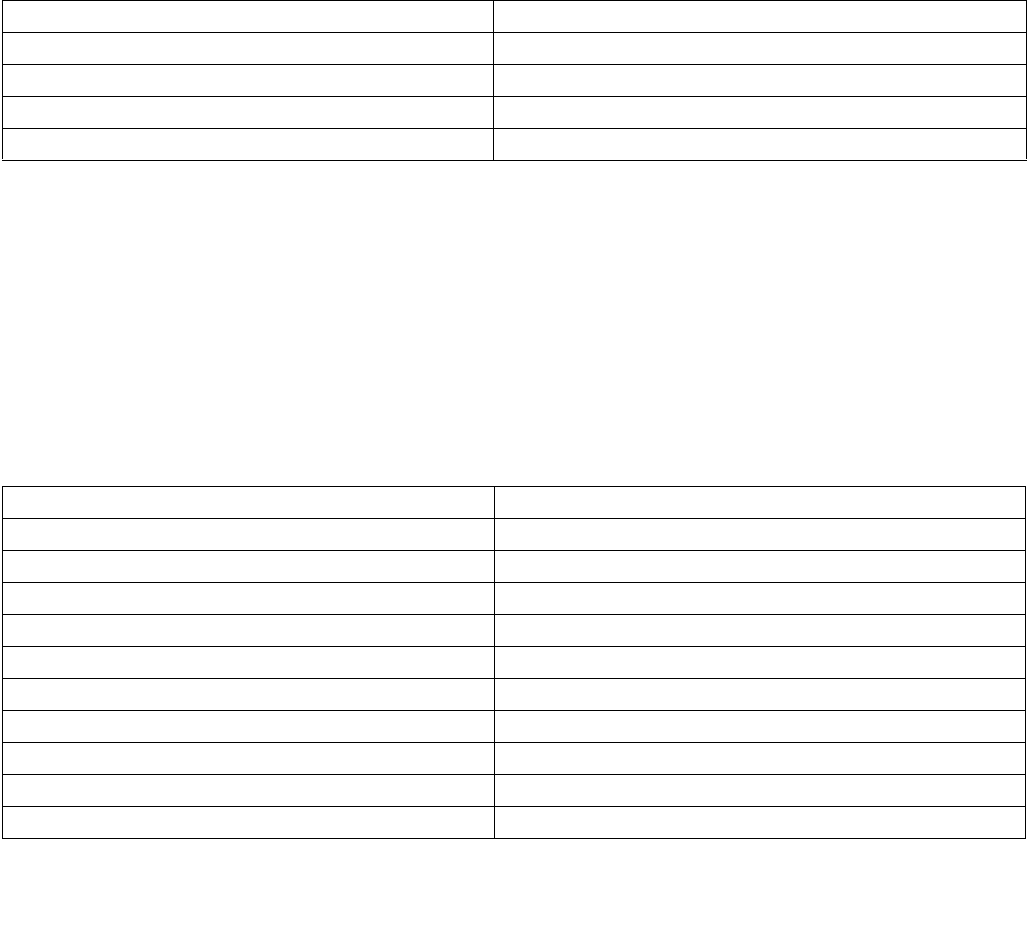
Vol. 2D B-39
INSTRUCTION FORMATS AND ENCODINGS
3. If a general-purpose register is encoded in the r/m field of the ModR/M byte, REX.B may be used for register
encoding and REX.W may be used to encode the 64-bit operand size.
4. If an XMM register operand is encoded in the reg field of the ModR/M byte, REX.R may be used for register
encoding. If an XMM register operand is encoded in the r/m field of the ModR/M byte, REX.B may be used for
register encoding.
B.5 MMX INSTRUCTION FORMATS AND ENCODINGS
MMX instructions, except the EMMS instruction, use a format similar to the 2-byte Intel Architecture integer
format. Details of subfield encodings within these formats are presented below.
B.5.1 Granularity Field (gg)
The granularity field (gg) indicates the size of the packed operands that the instruction is operating on. When this
field is used, it is located in bits 1 and 0 of the second opcode byte. Table B-18 shows the encoding of the gg field.
B.5.2 MMX Technology and General-Purpose Register Fields (mmxreg and reg)
When MMX technology registers (mmxreg) are used as operands, they are encoded in the ModR/M byte in the reg
field (bits 5, 4, and 3) and/or the R/M field (bits 2, 1, and 0).
If an MMX instruction operates on a general-purpose register (reg), the register is encoded in the R/M field of the
ModR/M byte.
B.5.3 MMX Instruction Formats and Encodings Table
Table B-19 shows the formats and encodings of the integer instructions.
Table B-18. Encoding of Granularity of Data Field (gg)
gg Granularity of Data
00 Packed Bytes
01 Packed Words
10 Packed Doublewords
11 Quadword
Table B-19. MMX Instruction Formats and Encodings
Instruction and Format Encoding
EMMS – Empty MMX technology state 0000 1111:01110111
MOVD – Move doubleword
reg to mmxreg 0000 1111:0110 1110: 11 mmxreg reg
reg from mmxreg 0000 1111:0111 1110: 11 mmxreg reg
mem to mmxreg 0000 1111:0110 1110: mod mmxreg r/m
mem from mmxreg 0000 1111:0111 1110: mod mmxreg r/m
MOVQ – Move quadword
mmxreg2 to mmxreg1 0000 1111:0110 1111: 11 mmxreg1 mmxreg2
mmxreg2 from mmxreg1 0000 1111:0111 1111: 11 mmxreg1 mmxreg2
mem to mmxreg 0000 1111:0110 1111: mod mmxreg r/m

B-40 Vol. 2D
INSTRUCTION FORMATS AND ENCODINGS
mem from mmxreg 0000 1111:0111 1111: mod mmxreg r/m
PACKSSDW1 – Pack dword to word data (signed with
saturation)
mmxreg2 to mmxreg1 0000 1111:0110 1011: 11 mmxreg1 mmxreg2
memory to mmxreg 0000 1111:0110 1011: mod mmxreg r/m
PACKSSWB1 – Pack word to byte data (signed with
saturation)
mmxreg2 to mmxreg1 0000 1111:0110 0011: 11 mmxreg1 mmxreg2
memory to mmxreg 0000 1111:0110 0011: mod mmxreg r/m
PACKUSWB1 – Pack word to byte data (unsigned with
saturation)
mmxreg2 to mmxreg1 0000 1111:0110 0111: 11 mmxreg1 mmxreg2
memory to mmxreg 0000 1111:0110 0111: mod mmxreg r/m
PADD – Add with wrap-around
mmxreg2 to mmxreg1 0000 1111: 1111 11gg: 11 mmxreg1 mmxreg2
memory to mmxreg 0000 1111: 1111 11gg: mod mmxreg r/m
PADDS – Add signed with saturation
mmxreg2 to mmxreg1 0000 1111: 1110 11gg: 11 mmxreg1 mmxreg2
memory to mmxreg 0000 1111: 1110 11gg: mod mmxreg r/m
PADDUS – Add unsigned with saturation
mmxreg2 to mmxreg1 0000 1111: 1101 11gg: 11 mmxreg1 mmxreg2
memory to mmxreg 0000 1111: 1101 11gg: mod mmxreg r/m
PAND – Bitwise And
mmxreg2 to mmxreg1 0000 1111:1101 1011: 11 mmxreg1 mmxreg2
memory to mmxreg 0000 1111:1101 1011: mod mmxreg r/m
PANDN – Bitwise AndNot
mmxreg2 to mmxreg1 0000 1111:1101 1111: 11 mmxreg1 mmxreg2
memory to mmxreg 0000 1111:1101 1111: mod mmxreg r/m
PCMPEQ – Packed compare for equality
mmxreg1 with mmxreg2 0000 1111:0111 01gg: 11 mmxreg1 mmxreg2
mmxreg with memory 0000 1111:0111 01gg: mod mmxreg r/m
PCMPGT – Packed compare greater (signed)
mmxreg1 with mmxreg2 0000 1111:0110 01gg: 11 mmxreg1 mmxreg2
mmxreg with memory 0000 1111:0110 01gg: mod mmxreg r/m
PMADDWD – Packed multiply add
mmxreg2 to mmxreg1 0000 1111:1111 0101: 11 mmxreg1 mmxreg2
memory to mmxreg 0000 1111:1111 0101: mod mmxreg r/m
PMULHUW – Packed multiplication, store high word
(unsigned)
mmxreg2 to mmxreg1 0000 1111: 1110 0100: 11 mmxreg1 mmxreg2
Table B-19. MMX Instruction Formats and Encodings (Contd.)
Instruction and Format Encoding

Vol. 2D B-41
INSTRUCTION FORMATS AND ENCODINGS
memory to mmxreg 0000 1111: 1110 0100: mod mmxreg r/m
PMULHW – Packed multiplication, store high word
mmxreg2 to mmxreg1 0000 1111:1110 0101: 11 mmxreg1 mmxreg2
memory to mmxreg 0000 1111:1110 0101: mod mmxreg r/m
PMULLW – Packed multiplication, store low word
mmxreg2 to mmxreg1 0000 1111:1101 0101: 11 mmxreg1 mmxreg2
memory to mmxreg 0000 1111:1101 0101: mod mmxreg r/m
POR – Bitwise Or
mmxreg2 to mmxreg1 0000 1111:1110 1011: 11 mmxreg1 mmxreg2
memory to mmxreg 0000 1111:1110 1011: mod mmxreg r/m
PSLL2 – Packed shift left logical
mmxreg1 by mmxreg2 0000 1111:1111 00gg: 11 mmxreg1 mmxreg2
mmxreg by memory 0000 1111:1111 00gg: mod mmxreg r/m
mmxreg by immediate 0000 1111:0111 00gg: 11 110 mmxreg: imm8 data
PSRA2 – Packed shift right arithmetic
mmxreg1 by mmxreg2 0000 1111:1110 00gg: 11 mmxreg1 mmxreg2
mmxreg by memory 0000 1111:1110 00gg: mod mmxreg r/m
mmxreg by immediate 0000 1111:0111 00gg: 11 100 mmxreg: imm8 data
PSRL2 – Packed shift right logical
mmxreg1 by mmxreg2 0000 1111:1101 00gg: 11 mmxreg1 mmxreg2
mmxreg by memory 0000 1111:1101 00gg: mod mmxreg r/m
mmxreg by immediate 0000 1111:0111 00gg: 11 010 mmxreg: imm8 data
PSUB – Subtract with wrap-around
mmxreg2 from mmxreg1 0000 1111:1111 10gg: 11 mmxreg1 mmxreg2
memory from mmxreg 0000 1111:1111 10gg: mod mmxreg r/m
PSUBS – Subtract signed with saturation
mmxreg2 from mmxreg1 0000 1111:1110 10gg: 11 mmxreg1 mmxreg2
memory from mmxreg 0000 1111:1110 10gg: mod mmxreg r/m
PSUBUS – Subtract unsigned with saturation
mmxreg2 from mmxreg1 0000 1111:1101 10gg: 11 mmxreg1 mmxreg2
memory from mmxreg 0000 1111:1101 10gg: mod mmxreg r/m
PUNPCKH – Unpack high data to next larger type
mmxreg2 to mmxreg1 0000 1111:0110 10gg: 11 mmxreg1 mmxreg2
memory to mmxreg 0000 1111:0110 10gg: mod mmxreg r/m
PUNPCKL – Unpack low data to next larger type
mmxreg2 to mmxreg1 0000 1111:0110 00gg: 11 mmxreg1 mmxreg2
memory to mmxreg 0000 1111:0110 00gg: mod mmxreg r/m
Table B-19. MMX Instruction Formats and Encodings (Contd.)
Instruction and Format Encoding

B-42 Vol. 2D
INSTRUCTION FORMATS AND ENCODINGS
B.6 PROCESSOR EXTENDED STATE INSTRUCTION FORMATS AND ENCODINGS
Table B-20 shows the formats and encodings for several instructions that relate to processor extended state
management.
B.7 P6 FAMILY INSTRUCTION FORMATS AND ENCODINGS
Table B-20 shows the formats and encodings for several instructions that were introduced into the IA-32 architec-
ture in the P6 family processors.
PXOR – Bitwise Xor
mmxreg2 to mmxreg1 0000 1111:1110 1111: 11 mmxreg1 mmxreg2
memory to mmxreg 0000 1111:1110 1111: mod mmxreg r/m
NOTES:
1. The pack instructions perform saturation from signed packed data of one type to signed or unsigned data of the next smaller type.
2. The format of the shift instructions has one additional format to support shifting by immediate shift-counts. The shift operations
are not supported equally for all data types.
Table B-20. Formats and Encodings of XSAVE/XRSTOR/XGETBV/XSETBV Instructions
Instruction and Format Encoding
XGETBV – Get Value of Extended Control Register 0000 1111:0000 0001: 1101 0000
XRSTOR – Restore Processor Extended States10000 1111:1010 1110: modA 101 r/m
XSAVE – Save Processor Extended States10000 1111:1010 1110: modA 100 r/m
XSETBV – Set Extended Control Register 0000 1111:0000 0001: 1101 0001
NOTES:
1. For XSAVE and XRSTOR, “mod = 11” is reserved.
Table B-21. Formats and Encodings of P6 Family Instructions
Instruction and Format Encoding
CMOVcc – Conditional Move
register2 to register1 0000 1111: 0100 tttn : 11 reg1 reg2
memory to register 0000 1111 : 0100 tttn : mod reg r/m
FCMOVcc – Conditional Move on EFLAG Register Condition
Codes
move if below (B) 11011 010 : 11 000 ST(i)
move if equal (E) 11011 010 : 11 001 ST(i)
move if below or equal (BE) 11011 010 : 11 010 ST(i)
move if unordered (U) 11011 010 : 11 011 ST(i)
move if not below (NB) 11011 011 : 11 000 ST(i)
move if not equal (NE) 11011 011 : 11 001 ST(i)
Table B-19. MMX Instruction Formats and Encodings (Contd.)
Instruction and Format Encoding

Vol. 2D B-43
INSTRUCTION FORMATS AND ENCODINGS
B.8 SSE INSTRUCTION FORMATS AND ENCODINGS
The SSE instructions use the ModR/M format and are preceded by the 0FH prefix byte. In general, operations are
not duplicated to provide two directions (that is, separate load and store variants).
The following three tables (Tables B-22, B-23, and B-24) show the formats and encodings for the SSE SIMD
floating-point, SIMD integer, and cacheability and memory ordering instructions, respectively. Some SSE instruc-
tions require a mandatory prefix (66H, F2H, F3H) as part of the two-byte opcode. Mandatory prefixes are included
in the tables.
move if not below or equal (NBE) 11011 011 : 11 010 ST(i)
move if not unordered (NU) 11011 011 : 11 011 ST(i)
FCOMI – Compare Real and Set EFLAGS 11011 011 : 11 110 ST(i)
FXRSTOR – Restore x87 FPU, MMX, SSE, and SSE2 State10000 1111:1010 1110: modA 001 r/m
FXSAVE – Save x87 FPU, MMX, SSE, and SSE2 State10000 1111:1010 1110: modA 000 r/m
SYSENTER – Fast System Call 0000 1111:0011 0100
SYSEXIT – Fast Return from Fast System Call 0000 1111:0011 0101
NOTES:
1. For FXSAVE and FXRSTOR, “mod = 11” is reserved.
Table B-22. Formats and Encodings of SSE Floating-Point Instructions
Instruction and Format Encoding
ADDPS—Add Packed Single-Precision Floating-Point
Values
xmmreg2 to xmmreg1 0000 1111:0101 1000:11 xmmreg1 xmmreg2
mem to xmmreg 0000 1111:0101 1000: mod xmmreg r/m
ADDSS—Add Scalar Single-Precision Floating-Point
Values
xmmreg2 to xmmreg1 1111 0011:0000 1111:01011000:11 xmmreg1 xmmreg2
mem to xmmreg 1111 0011:0000 1111:01011000: mod xmmreg r/m
ANDNPS—Bitwise Logical AND NOT of Packed Single-
Precision Floating-Point Values
xmmreg2 to xmmreg1 0000 1111:0101 0101:11 xmmreg1 xmmreg2
mem to xmmreg 0000 1111:0101 0101: mod xmmreg r/m
ANDPS—Bitwise Logical AND of Packed Single-
Precision Floating-Point Values
xmmreg2 to xmmreg1 0000 1111:0101 0100:11 xmmreg1 xmmreg2
mem to xmmreg 0000 1111:0101 0100: mod xmmreg r/m
CMPPS—Compare Packed Single-Precision Floating-
Point Values
xmmreg2 to xmmreg1, imm8 0000 1111:1100 0010:11 xmmreg1 xmmreg2: imm8
mem to xmmreg, imm8 0000 1111:1100 0010: mod xmmreg r/m: imm8
CMPSS—Compare Scalar Single-Precision Floating-
Point Values
Table B-21. Formats and Encodings of P6 Family Instructions (Contd.)
Instruction and Format Encoding

B-44 Vol. 2D
INSTRUCTION FORMATS AND ENCODINGS
xmmreg2 to xmmreg1, imm8 1111 0011:0000 1111:1100 0010:11 xmmreg1 xmmreg2: imm8
mem to xmmreg, imm8 1111 0011:0000 1111:1100 0010: mod xmmreg r/m: imm8
COMISS—Compare Scalar Ordered Single-Precision
Floating-Point Values and Set EFLAGS
xmmreg2 to xmmreg1 0000 1111:0010 1111:11 xmmreg1 xmmreg2
mem to xmmreg 0000 1111:0010 1111: mod xmmreg r/m
CVTPI2PS—Convert Packed Doubleword Integers to
Packed Single-Precision Floating-Point Values
mmreg to xmmreg 0000 1111:0010 1010:11 xmmreg1 mmreg1
mem to xmmreg 0000 1111:0010 1010: mod xmmreg r/m
CVTPS2PI—Convert Packed Single-Precision Floating-
Point Values to Packed Doubleword Integers
xmmreg to mmreg 0000 1111:0010 1101:11 mmreg1 xmmreg1
mem to mmreg 0000 1111:0010 1101: mod mmreg r/m
CVTSI2SS—Convert Doubleword Integer to Scalar
Single-Precision Floating-Point Value
r32 to xmmreg1 1111 0011:0000 1111:00101010:11 xmmreg1 r32
mem to xmmreg 1111 0011:0000 1111:00101010: mod xmmreg r/m
CVTSS2SI—Convert Scalar Single-Precision Floating-
Point Value to Doubleword Integer
xmmreg to r32 1111 0011:0000 1111:0010 1101:11 r32 xmmreg
mem to r32 1111 0011:0000 1111:0010 1101: mod r32 r/m
CVTTPS2PI—Convert with Truncation Packed Single-
Precision Floating-Point Values to Packed Doubleword
Integers
xmmreg to mmreg 0000 1111:0010 1100:11 mmreg1 xmmreg1
mem to mmreg 0000 1111:0010 1100: mod mmreg r/m
CVTTSS2SI—Convert with Truncation Scalar Single-
Precision Floating-Point Value to Doubleword Integer
xmmreg to r32 1111 0011:0000 1111:0010 1100:11 r32 xmmreg1
mem to r32 1111 0011:0000 1111:0010 1100: mod r32 r/m
DIVPS—Divide Packed Single-Precision Floating-Point
Values
xmmreg2 to xmmreg1 0000 1111:0101 1110:11 xmmreg1 xmmreg2
mem to xmmreg 0000 1111:0101 1110: mod xmmreg r/m
DIVSS—Divide Scalar Single-Precision Floating-Point
Values
xmmreg2 to xmmreg1 1111 0011:0000 1111:0101 1110:11 xmmreg1 xmmreg2
mem to xmmreg 1111 0011:0000 1111:0101 1110: mod xmmreg r/m
LDMXCSR—Load MXCSR Register State
m32 to MXCSR 0000 1111:1010 1110:modA 010 mem
MAXPS—Return Maximum Packed Single-Precision
Floating-Point Values
Table B-22. Formats and Encodings of SSE Floating-Point Instructions (Contd.)
Instruction and Format Encoding

Vol. 2D B-45
INSTRUCTION FORMATS AND ENCODINGS
xmmreg2 to xmmreg1 0000 1111:0101 1111:11 xmmreg1 xmmreg2
mem to xmmreg 0000 1111:0101 1111: mod xmmreg r/m
MAXSS—Return Maximum Scalar Double-Precision
Floating-Point Value
xmmreg2 to xmmreg1 1111 0011:0000 1111:0101 1111:11 xmmreg1 xmmreg2
mem to xmmreg 1111 0011:0000 1111:0101 1111: mod xmmreg r/m
MINPS—Return Minimum Packed Double-Precision
Floating-Point
Values
xmmreg2 to xmmreg1 0000 1111:0101 1101:11 xmmreg1 xmmreg2
mem to xmmreg 0000 1111:0101 1101: mod xmmreg r/m
MINSS—Return Minimum Scalar Double-Precision
Floating-Point Value
xmmreg2 to xmmreg1 1111 0011:0000 1111:0101 1101:11 xmmreg1 xmmreg2
mem to xmmreg 1111 0011:0000 1111:0101 1101: mod xmmreg r/m
MOVAPS—Move Aligned Packed
Single-Precision Floating-Point Values
xmmreg2 to xmmreg1 0000 1111:0010 1000:11 xmmreg2 xmmreg1
mem to xmmreg1 0000 1111:0010 1000: mod xmmreg r/m
xmmreg1 to xmmreg2 0000 1111:0010 1001:11 xmmreg1 xmmreg2
xmmreg1 to mem 0000 1111:0010 1001: mod xmmreg r/m
MOVHLPS—Move Packed Single-Precision Floating-
Point Values High to Low
xmmreg2 to xmmreg1 0000 1111:0001 0010:11 xmmreg1 xmmreg2
MOVHPS—Move High Packed Single-Precision
Floating-Point Values
mem to xmmreg 0000 1111:0001 0110: mod xmmreg r/m
xmmreg to mem 0000 1111:0001 0111: mod xmmreg r/m
MOVLHPS—Move Packed Single-Precision Floating-
Point Values Low to High
xmmreg2 to xmmreg1 0000 1111:00010110:11 xmmreg1 xmmreg2
MOVLPS—Move Low Packed Single-Precision Floating-
Point Values
mem to xmmreg 0000 1111:0001 0010: mod xmmreg r/m
xmmreg to mem 0000 1111:0001 0011: mod xmmreg r/m
MOVMSKPS—Extract Packed Single-Precision Floating-
Point Sign Mask
xmmreg to r32 0000 1111:0101 0000:11 r32 xmmreg
MOVSS—Move Scalar Single-Precision Floating-Point
Values
xmmreg2 to xmmreg1 1111 0011:0000 1111:0001 0000:11 xmmreg2 xmmreg1
mem to xmmreg1 1111 0011:0000 1111:0001 0000: mod xmmreg r/m
Table B-22. Formats and Encodings of SSE Floating-Point Instructions (Contd.)
Instruction and Format Encoding

B-46 Vol. 2D
INSTRUCTION FORMATS AND ENCODINGS
xmmreg1 to xmmreg2 1111 0011:0000 1111:0001 0001:11 xmmreg1 xmmreg2
xmmreg1 to mem 1111 0011:0000 1111:0001 0001: mod xmmreg r/m
MOVUPS—Move Unaligned Packed Single-Precision
Floating-Point Values
xmmreg2 to xmmreg1 0000 1111:0001 0000:11 xmmreg2 xmmreg1
mem to xmmreg1 0000 1111:0001 0000: mod xmmreg r/m
xmmreg1 to xmmreg2 0000 1111:0001 0001:11 xmmreg1 xmmreg2
xmmreg1 to mem 0000 1111:0001 0001: mod xmmreg r/m
MULPS—Multiply Packed Single-Precision Floating-
Point Values
xmmreg2 to xmmreg1 0000 1111:0101 1001:11 xmmreg1 xmmreg2
mem to xmmreg 0000 1111:0101 1001: mod xmmreg r/m
MULSS—Multiply Scalar Single-Precision Floating-Point
Values
xmmreg2 to xmmreg1 1111 0011:0000 1111:0101 1001:11 xmmreg1 xmmreg2
mem to xmmreg 1111 0011:0000 1111:0101 1001: mod xmmreg r/m
ORPS—Bitwise Logical OR of Single-Precision Floating-
Point Values
xmmreg2 to xmmreg1 0000 1111:0101 0110:11 xmmreg1 xmmreg2
mem to xmmreg 0000 1111:0101 0110: mod xmmreg r/m
RCPPS—Compute Reciprocals of Packed Single-
Precision Floating-Point Values
xmmreg2 to xmmreg1 0000 1111:0101 0011:11 xmmreg1 xmmreg2
mem to xmmreg 0000 1111:0101 0011: mod xmmreg r/m
RCPSS—Compute Reciprocals of Scalar Single-
Precision Floating-Point Value
xmmreg2 to xmmreg1 1111 0011:0000 1111:01010011:11 xmmreg1 xmmreg2
mem to xmmreg 1111 0011:0000 1111:01010011: mod xmmreg r/m
RSQRTPS—Compute Reciprocals of Square Roots of
Packed Single-Precision Floating-Point Values
xmmreg2 to xmmreg1 0000 1111:0101 0010:11 xmmreg1 xmmreg2
mem to xmmreg 0000 1111:0101 0010: mode xmmreg r/m
RSQRTSS—Compute Reciprocals of Square Roots of
Scalar Single-Precision Floating-Point Value
xmmreg2 to xmmreg1 1111 0011:0000 1111:0101 0010:11 xmmreg1 xmmreg2
mem to xmmreg 1111 0011:0000 1111:0101 0010: mod xmmreg r/m
SHUFPS—Shuffle Packed Single-Precision Floating-
Point Values
xmmreg2 to xmmreg1, imm8 0000 1111:1100 0110:11 xmmreg1 xmmreg2: imm8
mem to xmmreg, imm8 0000 1111:1100 0110: mod xmmreg r/m: imm8
SQRTPS—Compute Square Roots of Packed Single-
Precision Floating-Point Values
Table B-22. Formats and Encodings of SSE Floating-Point Instructions (Contd.)
Instruction and Format Encoding

Vol. 2D B-47
INSTRUCTION FORMATS AND ENCODINGS
xmmreg2 to xmmreg1 0000 1111:0101 0001:11 xmmreg1 xmmreg2
mem to xmmreg 0000 1111:0101 0001: mod xmmreg r/m
SQRTSS—Compute Square Root of Scalar Single-
Precision Floating-Point Value
xmmreg2 to xmmreg1 1111 0011:0000 1111:0101 0001:11 xmmreg1 xmmreg2
mem to xmmreg 1111 0011:0000 1111:0101 0001:mod xmmreg r/m
STMXCSR—Store MXCSR Register State
MXCSR to mem 0000 1111:1010 1110:modA 011 mem
SUBPS—Subtract Packed Single-Precision Floating-
Point Values
xmmreg2 to xmmreg1 0000 1111:0101 1100:11 xmmreg1 xmmreg2
mem to xmmreg 0000 1111:0101 1100:mod xmmreg r/m
SUBSS—Subtract Scalar Single-Precision Floating-
Point Values
xmmreg2 to xmmreg1 1111 0011:0000 1111:0101 1100:11 xmmreg1 xmmreg2
mem to xmmreg 1111 0011:0000 1111:0101 1100:mod xmmreg r/m
UCOMISS—Unordered Compare Scalar Ordered Single-
Precision Floating-Point Values and Set EFLAGS
xmmreg2 to xmmreg1 0000 1111:0010 1110:11 xmmreg1 xmmreg2
mem to xmmreg 0000 1111:0010 1110: mod xmmreg r/m
UNPCKHPS—Unpack and Interleave High Packed
Single-Precision Floating-Point Values
xmmreg2 to xmmreg1 0000 1111:0001 0101:11 xmmreg1 xmmreg2
mem to xmmreg 0000 1111:0001 0101: mod xmmreg r/m
UNPCKLPS—Unpack and Interleave Low Packed
Single-Precision Floating-Point Values
xmmreg2 to xmmreg1 0000 1111:0001 0100:11 xmmreg1 xmmreg2
mem to xmmreg 0000 1111:0001 0100: mod xmmreg r/m
XORPS—Bitwise Logical XOR of Single-Precision
Floating-Point Values
xmmreg2 to xmmreg1 0000 1111:0101 0111:11 xmmreg1 xmmreg2
mem to xmmreg 0000 1111:0101 0111: mod xmmreg r/m
Table B-22. Formats and Encodings of SSE Floating-Point Instructions (Contd.)
Instruction and Format Encoding

B-48 Vol. 2D
INSTRUCTION FORMATS AND ENCODINGS
Table B-23. Formats and Encodings of SSE Integer Instructions
Instruction and Format Encoding
PAVGB/PAVGW—Average Packed Integers
mmreg2 to mmreg1 0000 1111:1110 0000:11 mmreg1 mmreg2
0000 1111:1110 0011:11 mmreg1 mmreg2
mem to mmreg 0000 1111:1110 0000: mod mmreg r/m
0000 1111:1110 0011: mod mmreg r/m
PEXTRW—Extract Word
mmreg to reg32, imm8 0000 1111:1100 0101:11 r32 mmreg: imm8
PINSRW—Insert Word
reg32 to mmreg, imm8 0000 1111:1100 0100:11 mmreg r32: imm8
m16 to mmreg, imm8 0000 1111:1100 0100: mod mmreg r/m: imm8
PMAXSW—Maximum of Packed Signed Word Integers
mmreg2 to mmreg1 0000 1111:1110 1110:11 mmreg1 mmreg2
mem to mmreg 0000 1111:1110 1110: mod mmreg r/m
PMAXUB—Maximum of Packed Unsigned Byte Integers
mmreg2 to mmreg1 0000 1111:1101 1110:11 mmreg1 mmreg2
mem to mmreg 0000 1111:1101 1110: mod mmreg r/m
PMINSW—Minimum of Packed Signed Word Integers
mmreg2 to mmreg1 0000 1111:1110 1010:11 mmreg1 mmreg2
mem to mmreg 0000 1111:1110 1010: mod mmreg r/m
PMINUB—Minimum of Packed Unsigned Byte Integers
mmreg2 to mmreg1 0000 1111:1101 1010:11 mmreg1 mmreg2
mem to mmreg 0000 1111:1101 1010: mod mmreg r/m
PMOVMSKB—Move Byte Mask To Integer
mmreg to reg32 0000 1111:1101 0111:11 r32 mmreg
PMULHUW—Multiply Packed Unsigned Integers and Store High
Result
mmreg2 to mmreg1 0000 1111:1110 0100:11 mmreg1 mmreg2
mem to mmreg 0000 1111:1110 0100: mod mmreg r/m
PSADBW—Compute Sum of Absolute Differences
mmreg2 to mmreg1 0000 1111:1111 0110:11 mmreg1 mmreg2
mem to mmreg 0000 1111:1111 0110: mod mmreg r/m
PSHUFW—Shuffle Packed Words
mmreg2 to mmreg1, imm8 0000 1111:0111 0000:11 mmreg1 mmreg2: imm8
mem to mmreg, imm8 0000 1111:0111 0000: mod mmreg r/m: imm8

Vol. 2D B-49
INSTRUCTION FORMATS AND ENCODINGS
B.9 SSE2 INSTRUCTION FORMATS AND ENCODINGS
The SSE2 instructions use the ModR/M format and are preceded by the 0FH prefix byte. In general, operations are
not duplicated to provide two directions (that is, separate load and store variants).
The following three tables show the formats and encodings for the SSE2 SIMD floating-point, SIMD integer, and
cacheability instructions, respectively. Some SSE2 instructions require a mandatory prefix (66H, F2H, F3H) as part
of the two-byte opcode. These prefixes are included in the tables.
B.9.1 Granularity Field (gg)
The granularity field (gg) indicates the size of the packed operands that the instruction is operating on. When this
field is used, it is located in bits 1 and 0 of the second opcode byte. Table B-25 shows the encoding of this gg field.
Table B-24. Format and Encoding of SSE Cacheability & Memory Ordering Instructions
Instruction and Format Encoding
MASKMOVQ—Store Selected Bytes of Quadword
mmreg2 to mmreg1 0000 1111:1111 0111:11 mmreg1 mmreg2
MOVNTPS—Store Packed Single-Precision Floating-Point Values Using
Non-Temporal Hint
xmmreg to mem 0000 1111:0010 1011: mod xmmreg r/m
MOVNTQ—Store Quadword Using Non-Temporal Hint
mmreg to mem 0000 1111:1110 0111: mod mmreg r/m
PREFETCHT0—Prefetch Temporal to All Cache Levels 0000 1111:0001 1000:modA 001 mem
PREFETCHT1—Prefetch Temporal to First Level Cache 0000 1111:0001 1000:modA 010 mem
PREFETCHT2—Prefetch Temporal to Second Level Cache 0000 1111:0001 1000:modA 011 mem
PREFETCHNTA—Prefetch Non-Temporal to All Cache Levels 0000 1111:0001 1000:modA 000 mem
SFENCE—Store Fence 0000 1111:1010 1110:11 111 000
Table B-25. Encoding of Granularity of Data Field (gg)
gg Granularity of Data
00 Packed Bytes
01 Packed Words
10 Packed Doublewords
11 Quadword

B-50 Vol. 2D
INSTRUCTION FORMATS AND ENCODINGS
Table B-26. Formats and Encodings of SSE2 Floating-Point Instructions
Instruction and Format Encoding
ADDPD—Add Packed Double-Precision Floating-
Point Values
xmmreg2 to xmmreg1 0110 0110:0000 1111:0101 1000:11 xmmreg1 xmmreg2
mem to xmmreg 0110 0110:0000 1111:0101 1000: mod xmmreg r/m
ADDSD—Add Scalar Double-Precision Floating-Point
Values
xmmreg2 to xmmreg1 1111 0010:0000 1111:0101 1000:11 xmmreg1 xmmreg2
mem to xmmreg 1111 0010:0000 1111:0101 1000: mod xmmreg r/m
ANDNPD—Bitwise Logical AND NOT of Packed
Double-Precision Floating-Point Values
xmmreg2 to xmmreg1 0110 0110:0000 1111:0101 0101:11 xmmreg1 xmmreg2
mem to xmmreg 0110 0110:0000 1111:0101 0101: mod xmmreg r/m
ANDPD—Bitwise Logical AND of Packed Double-
Precision Floating-Point Values
xmmreg2 to xmmreg1 0110 0110:0000 1111:0101 0100:11 xmmreg1 xmmreg2
mem to xmmreg 0110 0110:0000 1111:0101 0100: mod xmmreg r/m
CMPPD—Compare Packed Double-Precision
Floating-Point Values
xmmreg2 to xmmreg1, imm8 0110 0110:0000 1111:1100 0010:11 xmmreg1 xmmreg2: imm8
mem to xmmreg, imm8 0110 0110:0000 1111:1100 0010: mod xmmreg r/m: imm8
CMPSD—Compare Scalar Double-Precision Floating-
Point Values
xmmreg2 to xmmreg1, imm8 1111 0010:0000 1111:1100 0010:11 xmmreg1 xmmreg2: imm8
mem to xmmreg, imm8 11110 010:0000 1111:1100 0010: mod xmmreg r/m: imm8
COMISD—Compare Scalar Ordered Double-Precision
Floating-Point Values and Set EFLAGS
xmmreg2 to xmmreg1 0110 0110:0000 1111:0010 1111:11 xmmreg1 xmmreg2
mem to xmmreg 0110 0110:0000 1111:0010 1111: mod xmmreg r/m
CVTPI2PD—Convert Packed Doubleword Integers to
Packed Double-Precision Floating-Point Values
mmreg to xmmreg 0110 0110:0000 1111:0010 1010:11 xmmreg1 mmreg1
mem to xmmreg 0110 0110:0000 1111:0010 1010: mod xmmreg r/m
CVTPD2PI—Convert Packed Double-Precision
Floating-Point Values to Packed Doubleword
Integers
xmmreg to mmreg 0110 0110:0000 1111:0010 1101:11 mmreg1 xmmreg1
mem to mmreg 0110 0110:0000 1111:0010 1101: mod mmreg r/m
CVTSI2SD—Convert Doubleword Integer to Scalar
Double-Precision Floating-Point Value
r32 to xmmreg1 1111 0010:0000 1111:0010 1010:11 xmmreg r32
mem to xmmreg 1111 0010:0000 1111:0010 1010: mod xmmreg r/m
CVTSD2SI—Convert Scalar Double-Precision
Floating-Point Value to Doubleword Integer

Vol. 2D B-51
INSTRUCTION FORMATS AND ENCODINGS
xmmreg to r32 1111 0010:0000 1111:0010 1101:11 r32 xmmreg
mem to r32 1111 0010:0000 1111:0010 1101: mod r32 r/m
CVTTPD2PI—Convert with Truncation Packed
Double-Precision Floating-Point Values to Packed
Doubleword Integers
xmmreg to mmreg 0110 0110:0000 1111:0010 1100:11 mmreg xmmreg
mem to mmreg 0110 0110:0000 1111:0010 1100: mod mmreg r/m
CVTTSD2SI—Convert with
Truncation Scalar Double-Precision Floating-Point
Value to Doubleword Integer
xmmreg to r32 1111 0010:0000 1111:0010 1100:11 r32 xmmreg
mem to r32 1111 0010:0000 1111:0010 1100: mod r32 r/m
CVTPD2PS—Covert Packed Double-Precision
Floating-Point Values to Packed Single-Precision
Floating-Point Values
xmmreg2 to xmmreg1 0110 0110:0000 1111:0101 1010:11 xmmreg1 xmmreg2
mem to xmmreg 0110 0110:0000 1111:0101 1010: mod xmmreg r/m
CVTPS2PD—Covert Packed Single-Precision
Floating-Point Values to Packed Double-Precision
Floating-Point Values
xmmreg2 to xmmreg1 0000 1111:0101 1010:11 xmmreg1 xmmreg2
mem to xmmreg 0000 1111:0101 1010: mod xmmreg r/m
CVTSD2SS—Covert Scalar Double-Precision
Floating-Point Value to Scalar Single-Precision
Floating-Point Value
xmmreg2 to xmmreg1 1111 0010:0000 1111:0101 1010:11 xmmreg1 xmmreg2
mem to xmmreg 1111 0010:0000 1111:0101 1010: mod xmmreg r/m
CVTSS2SD—Covert Scalar Single-Precision Floating-
Point Value to Scalar Double-Precision Floating-
Point Value
xmmreg2 to xmmreg1 1111 0011:0000 1111:0101 1010:11 xmmreg1 xmmreg2
mem to xmmreg 1111 0011:00001 111:0101 1010: mod xmmreg r/m
CVTPD2DQ—Convert Packed Double-Precision
Floating-Point Values to Packed Doubleword
Integers
xmmreg2 to xmmreg1 1111 0010:0000 1111:1110 0110:11 xmmreg1 xmmreg2
mem to xmmreg 1111 0010:0000 1111:1110 0110: mod xmmreg r/m
CVTTPD2DQ—Convert With Truncation Packed
Double-Precision Floating-Point Values to Packed
Doubleword Integers
xmmreg2 to xmmreg1 0110 0110:0000 1111:1110 0110:11 xmmreg1 xmmreg2
mem to xmmreg 0110 0110:0000 1111:1110 0110: mod xmmreg r/m
Table B-26. Formats and Encodings of SSE2 Floating-Point Instructions (Contd.)
Instruction and Format Encoding

B-52 Vol. 2D
INSTRUCTION FORMATS AND ENCODINGS
CVTDQ2PD—Convert Packed Doubleword Integers
to Packed Single-Precision Floating-Point Values
xmmreg2 to xmmreg1 1111 0011:0000 1111:1110 0110:11 xmmreg1 xmmreg2
mem to xmmreg 1111 0011:0000 1111:1110 0110: mod xmmreg r/m
CVTPS2DQ—Convert Packed Single-Precision
Floating-Point Values to Packed Doubleword
Integers
xmmreg2 to xmmreg1 0110 0110:0000 1111:0101 1011:11 xmmreg1 xmmreg2
mem to xmmreg 0110 0110:0000 1111:0101 1011: mod xmmreg r/m
CVTTPS2DQ—Convert With Truncation Packed
Single-Precision Floating-Point Values to Packed
Doubleword Integers
xmmreg2 to xmmreg1 1111 0011:0000 1111:0101 1011:11 xmmreg1 xmmreg2
mem to xmmreg 1111 0011:0000 1111:0101 1011: mod xmmreg r/m
CVTDQ2PS—Convert Packed Doubleword Integers
to Packed Double-Precision Floating-Point Values
xmmreg2 to xmmreg1 0000 1111:0101 1011:11 xmmreg1 xmmreg2
mem to xmmreg 0000 1111:0101 1011: mod xmmreg r/m
DIVPD—Divide Packed Double-Precision Floating-
Point Values
xmmreg2 to xmmreg1 0110 0110:0000 1111:0101 1110:11 xmmreg1 xmmreg2
mem to xmmreg 0110 0110:0000 1111:0101 1110: mod xmmreg r/m
DIVSD—Divide Scalar Double-Precision Floating-
Point Values
xmmreg2 to xmmreg1 1111 0010:0000 1111:0101 1110:11 xmmreg1 xmmreg2
mem to xmmreg 1111 0010:0000 1111:0101 1110: mod xmmreg r/m
MAXPD—Return Maximum Packed Double-Precision
Floating-Point Values
xmmreg2 to xmmreg1 0110 0110:0000 1111:0101 1111:11 xmmreg1 xmmreg2
mem to xmmreg 0110 0110:0000 1111:0101 1111: mod xmmreg r/m
MAXSD—Return Maximum Scalar Double-Precision
Floating-Point Value
xmmreg2 to xmmreg1 1111 0010:0000 1111:0101 1111:11 xmmreg1 xmmreg2
mem to xmmreg 1111 0010:0000 1111:0101 1111: mod xmmreg r/m
MINPD—Return Minimum Packed Double-Precision
Floating-Point Values
xmmreg2 to xmmreg1 0110 0110:0000 1111:0101 1101:11 xmmreg1 xmmreg2
mem to xmmreg 0110 0110:0000 1111:0101 1101: mod xmmreg r/m
MINSD—Return Minimum Scalar Double-Precision
Floating-Point Value
xmmreg2 to xmmreg1 1111 0010:0000 1111:0101 1101:11 xmmreg1 xmmreg2
mem to xmmreg 1111 0010:0000 1111:0101 1101: mod xmmreg r/m
Table B-26. Formats and Encodings of SSE2 Floating-Point Instructions (Contd.)
Instruction and Format Encoding

Vol. 2D B-53
INSTRUCTION FORMATS AND ENCODINGS
MOVAPD—Move Aligned Packed Double-Precision
Floating-Point Values
xmmreg1 to xmmreg2 0110 0110:0000 1111:0010 1001:11 xmmreg2 xmmreg1
xmmreg1 to mem 0110 0110:0000 1111:0010 1001: mod xmmreg r/m
xmmreg2 to xmmreg1 0110 0110:0000 1111:0010 1000:11 xmmreg1 xmmreg2
mem to xmmreg1 0110 0110:0000 1111:0010 1000: mod xmmreg r/m
MOVHPD—Move High Packed Double-Precision
Floating-Point Values
xmmreg to mem 0110 0110:0000 1111:0001 0111: mod xmmreg r/m
mem to xmmreg 0110 0110:0000 1111:0001 0110: mod xmmreg r/m
MOVLPD—Move Low Packed Double-Precision
Floating-Point Values
xmmreg to mem 0110 0110:0000 1111:0001 0011: mod xmmreg r/m
mem to xmmreg 0110 0110:0000 1111:0001 0010: mod xmmreg r/m
MOVMSKPD—Extract Packed Double-Precision
Floating-Point Sign Mask
xmmreg to r32 0110 0110:0000 1111:0101 0000:11 r32 xmmreg
MOVSD—Move Scalar Double-Precision Floating-
Point Values
xmmreg1 to xmmreg2 1111 0010:0000 1111:0001 0001:11 xmmreg2 xmmreg1
xmmreg1 to mem 1111 0010:0000 1111:0001 0001: mod xmmreg r/m
xmmreg2 to xmmreg1 1111 0010:0000 1111:0001 0000:11 xmmreg1 xmmreg2
mem to xmmreg1 1111 0010:0000 1111:0001 0000: mod xmmreg r/m
MOVUPD—Move Unaligned Packed Double-
Precision Floating-Point Values
xmmreg2 to xmmreg1 0110 0110:0000 1111:0001 0001:11 xmmreg2 xmmreg1
mem to xmmreg1 0110 0110:0000 1111:0001 0001: mod xmmreg r/m
xmmreg1 to xmmreg2 0110 0110:0000 1111:0001 0000:11 xmmreg1 xmmreg2
xmmreg1 to mem 0110 0110:0000 1111:0001 0000: mod xmmreg r/m
MULPD—Multiply Packed Double-Precision Floating-
Point Values
xmmreg2 to xmmreg1 0110 0110:0000 1111:0101 1001:11 xmmreg1 xmmreg2
mem to xmmreg 0110 0110:0000 1111:0101 1001: mod xmmreg r/m
MULSD—Multiply Scalar Double-Precision Floating-
Point Values
xmmreg2 to xmmreg1 1111 0010:00001111:01011001:11 xmmreg1 xmmreg2
mem to xmmreg 1111 0010:00001111:01011001: mod xmmreg r/m
ORPD—Bitwise Logical OR of
Double-Precision Floating-Point Values
xmmreg2 to xmmreg1 0110 0110:0000 1111:0101 0110:11 xmmreg1 xmmreg2
mem to xmmreg 0110 0110:0000 1111:0101 0110: mod xmmreg r/m
Table B-26. Formats and Encodings of SSE2 Floating-Point Instructions (Contd.)
Instruction and Format Encoding

B-54 Vol. 2D
INSTRUCTION FORMATS AND ENCODINGS
SHUFPD—Shuffle Packed Double-Precision
Floating-Point Values
xmmreg2 to xmmreg1, imm8 0110 0110:0000 1111:1100 0110:11 xmmreg1 xmmreg2: imm8
mem to xmmreg, imm8 0110 0110:0000 1111:1100 0110: mod xmmreg r/m: imm8
SQRTPD—Compute Square Roots of Packed Double-
Precision Floating-Point Values
xmmreg2 to xmmreg1 0110 0110:0000 1111:0101 0001:11 xmmreg1 xmmreg2
mem to xmmreg 0110 0110:0000 1111:0101 0001: mod xmmreg r/m
SQRTSD—Compute Square Root of Scalar Double-
Precision Floating-Point Value
xmmreg2 to xmmreg1 1111 0010:0000 1111:0101 0001:11 xmmreg1 xmmreg2
mem to xmmreg 1111 0010:0000 1111:0101 0001: mod xmmreg r/m
SUBPD—Subtract Packed Double-Precision
Floating-Point Values
xmmreg2 to xmmreg1 0110 0110:0000 1111:0101 1100:11 xmmreg1 xmmreg2
mem to xmmreg 0110 0110:0000 1111:0101 1100: mod xmmreg r/m
SUBSD—Subtract Scalar Double-Precision Floating-
Point Values
xmmreg2 to xmmreg1 1111 0010:0000 1111:0101 1100:11 xmmreg1 xmmreg2
mem to xmmreg 1111 0010:0000 1111:0101 1100: mod xmmreg r/m
UCOMISD—Unordered Compare Scalar Ordered
Double-Precision Floating-Point Values and Set
EFLAGS
xmmreg2 to xmmreg1 0110 0110:0000 1111:0010 1110:11 xmmreg1 xmmreg2
mem to xmmreg 0110 0110:0000 1111:0010 1110: mod xmmreg r/m
UNPCKHPD—Unpack and Interleave High Packed
Double-Precision Floating-Point Values
xmmreg2 to xmmreg1 0110 0110:0000 1111:0001 0101:11 xmmreg1 xmmreg2
mem to xmmreg 0110 0110:0000 1111:0001 0101: mod xmmreg r/m
UNPCKLPD—Unpack and Interleave Low Packed
Double-Precision Floating-Point Values
xmmreg2 to xmmreg1 0110 0110:0000 1111:0001 0100:11 xmmreg1 xmmreg2
mem to xmmreg 0110 0110:0000 1111:0001 0100: mod xmmreg r/m
XORPD—Bitwise Logical OR of Double-Precision
Floating-Point Values
xmmreg2 to xmmreg1 0110 0110:0000 1111:0101 0111:11 xmmreg1 xmmreg2
mem to xmmreg 0110 0110:0000 1111:0101 0111: mod xmmreg r/m
Table B-26. Formats and Encodings of SSE2 Floating-Point Instructions (Contd.)
Instruction and Format Encoding

Vol. 2D B-55
INSTRUCTION FORMATS AND ENCODINGS
Table B-27. Formats and Encodings of SSE2 Integer Instructions
Instruction and Format Encoding
MOVD—Move Doubleword
reg to xmmreg 0110 0110:0000 1111:0110 1110: 11 xmmreg reg
reg from xmmreg 0110 0110:0000 1111:0111 1110: 11 xmmreg reg
mem to xmmreg 0110 0110:0000 1111:0110 1110: mod xmmreg r/m
mem from xmmreg 0110 0110:0000 1111:0111 1110: mod xmmreg r/m
MOVDQA—Move Aligned Double Quadword
xmmreg2 to xmmreg1 0110 0110:0000 1111:0110 1111:11 xmmreg1 xmmreg2
xmmreg2 from xmmreg1 0110 0110:0000 1111:0111 1111:11 xmmreg1 xmmreg2
mem to xmmreg 0110 0110:0000 1111:0110 1111: mod xmmreg r/m
mem from xmmreg 0110 0110:0000 1111:0111 1111: mod xmmreg r/m
MOVDQU—Move Unaligned Double Quadword
xmmreg2 to xmmreg1 1111 0011:0000 1111:0110 1111:11 xmmreg1 xmmreg2
xmmreg2 from xmmreg1 1111 0011:0000 1111:0111 1111:11 xmmreg1 xmmreg2
mem to xmmreg 1111 0011:0000 1111:0110 1111: mod xmmreg r/m
mem from xmmreg 1111 0011:0000 1111:0111 1111: mod xmmreg r/m
MOVQ2DQ—Move Quadword from MMX to XMM
Register
mmreg to xmmreg 1111 0011:0000 1111:1101 0110:11 mmreg1 mmreg2
MOVDQ2Q—Move Quadword from XMM to MMX
Register
xmmreg to mmreg 1111 0010:0000 1111:1101 0110:11 mmreg1 mmreg2
MOVQ—Move Quadword
xmmreg2 to xmmreg1 1111 0011:0000 1111:0111 1110: 11 xmmreg1 xmmreg2
xmmreg2 from xmmreg1 0110 0110:0000 1111:1101 0110: 11 xmmreg1 xmmreg2
mem to xmmreg 1111 0011:0000 1111:0111 1110: mod xmmreg r/m
mem from xmmreg 0110 0110:0000 1111:1101 0110: mod xmmreg r/m
PACKSSDW1—Pack Dword To Word Data (signed
with saturation)
xmmreg2 to xmmreg1 0110 0110:0000 1111:0110 1011: 11 xmmreg1 xmmreg2
memory to xmmreg 0110 0110:0000 1111:0110 1011: mod xmmreg r/m
PACKSSWB—Pack Word To Byte Data (signed with
saturation)
xmmreg2 to xmmreg1 0110 0110:0000 1111:0110 0011: 11 xmmreg1 xmmreg2
memory to xmmreg 0110 0110:0000 1111:0110 0011: mod xmmreg r/m
PACKUSWB—Pack Word To Byte Data (unsigned
with saturation)
xmmreg2 to xmmreg1 0110 0110:0000 1111:0110 0111: 11 xmmreg1 xmmreg2
memory to xmmreg 0110 0110:0000 1111:0110 0111: mod xmmreg r/m
PADDQ—Add Packed Quadword Integers
mmreg2 to mmreg1 0000 1111:1101 0100:11 mmreg1 mmreg2

B-56 Vol. 2D
INSTRUCTION FORMATS AND ENCODINGS
mem to mmreg 0000 1111:1101 0100: mod mmreg r/m
xmmreg2 to xmmreg1 0110 0110:0000 1111:1101 0100:11 xmmreg1 xmmreg2
mem to xmmreg 0110 0110:0000 1111:1101 0100: mod xmmreg r/m
PADD—Add With Wrap-around
xmmreg2 to xmmreg1 0110 0110:0000 1111: 1111 11gg: 11 xmmreg1 xmmreg2
memory to xmmreg 0110 0110:0000 1111: 1111 11gg: mod xmmreg r/m
PADDS—Add Signed With Saturation
xmmreg2 to xmmreg1 0110 0110:0000 1111: 1110 11gg: 11 xmmreg1 xmmreg2
memory to xmmreg 0110 0110:0000 1111: 1110 11gg: mod xmmreg r/m
PADDUS—Add Unsigned With Saturation
xmmreg2 to xmmreg1 0110 0110:0000 1111: 1101 11gg: 11 xmmreg1 xmmreg2
memory to xmmreg 0110 0110:0000 1111: 1101 11gg: mod xmmreg r/m
PAND—Bitwise And
xmmreg2 to xmmreg1 0110 0110:0000 1111:1101 1011: 11 xmmreg1 xmmreg2
memory to xmmreg 0110 0110:0000 1111:1101 1011: mod xmmreg r/m
PANDN—Bitwise AndNot
xmmreg2 to xmmreg1 0110 0110:0000 1111:1101 1111: 11 xmmreg1 xmmreg2
memory to xmmreg 0110 0110:0000 1111:1101 1111: mod xmmreg r/m
PAVGB—Average Packed Integers
xmmreg2 to xmmreg1 0110 0110:0000 1111:11100 000:11 xmmreg1 xmmreg2
mem to xmmreg 01100110:00001111:11100000 mod xmmreg r/m
PAVGW—Average Packed Integers
xmmreg2 to xmmreg1 0110 0110:0000 1111:1110 0011:11 xmmreg1 xmmreg2
mem to xmmreg 0110 0110:0000 1111:1110 0011 mod xmmreg r/m
PCMPEQ—Packed Compare For Equality
xmmreg1 with xmmreg2 0110 0110:0000 1111:0111 01gg: 11 xmmreg1 xmmreg2
xmmreg with memory 0110 0110:0000 1111:0111 01gg: mod xmmreg r/m
PCMPGT—Packed Compare Greater (signed)
xmmreg1 with xmmreg2 0110 0110:0000 1111:0110 01gg: 11 xmmreg1 xmmreg2
xmmreg with memory 0110 0110:0000 1111:0110 01gg: mod xmmreg r/m
PEXTRW—Extract Word
xmmreg to reg32, imm8 0110 0110:0000 1111:1100 0101:11 r32 xmmreg: imm8
PINSRW—Insert Word
reg32 to xmmreg, imm8 0110 0110:0000 1111:1100 0100:11 xmmreg r32: imm8
m16 to xmmreg, imm8 0110 0110:0000 1111:1100 0100: mod xmmreg r/m: imm8
PMADDWD—Packed Multiply Add
xmmreg2 to xmmreg1 0110 0110:0000 1111:1111 0101: 11 xmmreg1 xmmreg2
memory to xmmreg 0110 0110:0000 1111:1111 0101: mod xmmreg r/m
Table B-27. Formats and Encodings of SSE2 Integer Instructions (Contd.)
Instruction and Format Encoding

Vol. 2D B-57
INSTRUCTION FORMATS AND ENCODINGS
PMAXSW—Maximum of Packed Signed Word
Integers
xmmreg2 to xmmreg1 0110 0110:0000 1111:1110 1110:11 xmmreg1 xmmreg2
mem to xmmreg 01100110:00001111:11101110: mod xmmreg r/m
PMAXUB—Maximum of Packed Unsigned Byte
Integers
xmmreg2 to xmmreg1 0110 0110:0000 1111:1101 1110:11 xmmreg1 xmmreg2
mem to xmmreg 0110 0110:0000 1111:1101 1110: mod xmmreg r/m
PMINSW—Minimum of Packed Signed Word Integers
xmmreg2 to xmmreg1 0110 0110:0000 1111:1110 1010:11 xmmreg1 xmmreg2
mem to xmmreg 0110 0110:0000 1111:1110 1010: mod xmmreg r/m
PMINUB—Minimum of Packed Unsigned Byte
Integers
xmmreg2 to xmmreg1 0110 0110:0000 1111:1101 1010:11 xmmreg1 xmmreg2
mem to xmmreg 0110 0110:0000 1111:1101 1010 mod xmmreg r/m
PMOVMSKB—Move Byte Mask To Integer
xmmreg to reg32 0110 0110:0000 1111:1101 0111:11 r32 xmmreg
PMULHUW—Packed multiplication, store high word
(unsigned)
xmmreg2 to xmmreg1 0110 0110:0000 1111:1110 0100: 11 xmmreg1 xmmreg2
memory to xmmreg 0110 0110:0000 1111:1110 0100: mod xmmreg r/m
PMULHW—Packed Multiplication, store high word
xmmreg2 to xmmreg1 0110 0110:0000 1111:1110 0101: 11 xmmreg1 xmmreg2
memory to xmmreg 0110 0110:0000 1111:1110 0101: mod xmmreg r/m
PMULLW—Packed Multiplication, store low word
xmmreg2 to xmmreg1 0110 0110:0000 1111:1101 0101: 11 xmmreg1 xmmreg2
memory to xmmreg 0110 0110:0000 1111:1101 0101: mod xmmreg r/m
PMULUDQ—Multiply Packed Unsigned Doubleword
Integers
mmreg2 to mmreg1 0000 1111:1111 0100:11 mmreg1 mmreg2
mem to mmreg 0000 1111:1111 0100: mod mmreg r/m
xmmreg2 to xmmreg1 0110 0110:00001111:1111 0100:11 xmmreg1 xmmreg2
mem to xmmreg 0110 0110:00001111:1111 0100: mod xmmreg r/m
POR—Bitwise Or
xmmreg2 to xmmreg1 0110 0110:0000 1111:1110 1011: 11 xmmreg1 xmmreg2
memory to xmmreg 0110 0110:0000 1111:1110 1011: mod xmmreg r/m
PSADBW—Compute Sum of Absolute Differences
xmmreg2 to xmmreg1 0110 0110:0000 1111:1111 0110:11 xmmreg1 xmmreg2
mem to xmmreg 0110 0110:0000 1111:1111 0110: mod xmmreg r/m
PSHUFLW—Shuffle Packed Low Words
Table B-27. Formats and Encodings of SSE2 Integer Instructions (Contd.)
Instruction and Format Encoding

B-58 Vol. 2D
INSTRUCTION FORMATS AND ENCODINGS
xmmreg2 to xmmreg1, imm8 1111 0010:0000 1111:0111 0000:11 xmmreg1 xmmreg2: imm8
mem to xmmreg, imm8 1111 0010:0000 1111:0111 0000:11 mod xmmreg r/m: imm8
PSHUFHW—Shuffle Packed High Words
xmmreg2 to xmmreg1, imm8 1111 0011:0000 1111:0111 0000:11 xmmreg1 xmmreg2: imm8
mem to xmmreg, imm8 1111 0011:0000 1111:0111 0000: mod xmmreg r/m: imm8
PSHUFD—Shuffle Packed Doublewords
xmmreg2 to xmmreg1, imm8 0110 0110:0000 1111:0111 0000:11 xmmreg1 xmmreg2: imm8
mem to xmmreg, imm8 0110 0110:0000 1111:0111 0000: mod xmmreg r/m: imm8
PSLLDQ—Shift Double Quadword Left Logical
xmmreg, imm8 0110 0110:0000 1111:0111 0011:11 111 xmmreg: imm8
PSLL—Packed Shift Left Logical
xmmreg1 by xmmreg2 0110 0110:0000 1111:1111 00gg: 11 xmmreg1 xmmreg2
xmmreg by memory 0110 0110:0000 1111:1111 00gg: mod xmmreg r/m
xmmreg by immediate 0110 0110:0000 1111:0111 00gg: 11 110 xmmreg: imm8
PSRA—Packed Shift Right Arithmetic
xmmreg1 by xmmreg2 0110 0110:0000 1111:1110 00gg: 11 xmmreg1 xmmreg2
xmmreg by memory 0110 0110:0000 1111:1110 00gg: mod xmmreg r/m
xmmreg by immediate 0110 0110:0000 1111:0111 00gg: 11 100 xmmreg: imm8
PSRLDQ—Shift Double Quadword Right Logical
xmmreg, imm8 0110 0110:00001111:01110011:11 011 xmmreg: imm8
PSRL—Packed Shift Right Logical
xmmreg1 by xmmreg2 0110 0110:0000 1111:1101 00gg: 11 xmmreg1 xmmreg2
xmmreg by memory 0110 0110:0000 1111:1101 00gg: mod xmmreg r/m
xmmreg by immediate 0110 0110:0000 1111:0111 00gg: 11 010 xmmreg: imm8
PSUBQ—Subtract Packed Quadword Integers
mmreg2 to mmreg1 0000 1111:11111 011:11 mmreg1 mmreg2
mem to mmreg 0000 1111:1111 1011: mod mmreg r/m
xmmreg2 to xmmreg1 0110 0110:0000 1111:1111 1011:11 xmmreg1 xmmreg2
mem to xmmreg 0110 0110:0000 1111:1111 1011: mod xmmreg r/m
PSUB—Subtract With Wrap-around
xmmreg2 from xmmreg1 0110 0110:0000 1111:1111 10gg: 11 xmmreg1 xmmreg2
memory from xmmreg 0110 0110:0000 1111:1111 10gg: mod xmmreg r/m
PSUBS—Subtract Signed With Saturation
xmmreg2 from xmmreg1 0110 0110:0000 1111:1110 10gg: 11 xmmreg1 xmmreg2
memory from xmmreg 0110 0110:0000 1111:1110 10gg: mod xmmreg r/m
PSUBUS—Subtract Unsigned With Saturation
xmmreg2 from xmmreg1 0000 1111:1101 10gg: 11 xmmreg1 xmmreg2
memory from xmmreg 0000 1111:1101 10gg: mod xmmreg r/m
Table B-27. Formats and Encodings of SSE2 Integer Instructions (Contd.)
Instruction and Format Encoding

Vol. 2D B-59
INSTRUCTION FORMATS AND ENCODINGS
PUNPCKH—Unpack High Data To Next Larger Type
xmmreg2 to xmmreg1 0110 0110:0000 1111:0110 10gg:11 xmmreg1 xmmreg2
mem to xmmreg 0110 0110:0000 1111:0110 10gg: mod xmmreg r/m
PUNPCKHQDQ—Unpack High Data
xmmreg2 to xmmreg1 0110 0110:0000 1111:0110 1101:11 xmmreg1 xmmreg2
mem to xmmreg 0110 0110:0000 1111:0110 1101: mod xmmreg r/m
PUNPCKL—Unpack Low Data To Next Larger Type
xmmreg2 to xmmreg1 0110 0110:0000 1111:0110 00gg:11 xmmreg1 xmmreg2
mem to xmmreg 0110 0110:0000 1111:0110 00gg: mod xmmreg r/m
PUNPCKLQDQ—Unpack Low Data
xmmreg2 to xmmreg1 0110 0110:0000 1111:0110 1100:11 xmmreg1 xmmreg2
mem to xmmreg 0110 0110:0000 1111:0110 1100: mod xmmreg r/m
PXOR—Bitwise Xor
xmmreg2 to xmmreg1 0110 0110:0000 1111:1110 1111: 11 xmmreg1 xmmreg2
memory to xmmreg 0110 0110:0000 1111:1110 1111: mod xmmreg r/m
Table B-28. Format and Encoding of SSE2 Cacheability Instructions
Instruction and Format Encoding
MASKMOVDQU—Store Selected Bytes of Double
Quadword
xmmreg2 to xmmreg1 0110 0110:0000 1111:1111 0111:11 xmmreg1 xmmreg2
CLFLUSH—Flush Cache Line
mem 0000 1111:1010 1110: mod 111 r/m
MOVNTPD—Store Packed Double-Precision
Floating-Point Values Using Non-Temporal Hint
xmmreg to mem 0110 0110:0000 1111:0010 1011: mod xmmreg r/m
MOVNTDQ—Store Double Quadword Using Non-
Temporal Hint
xmmreg to mem 0110 0110:0000 1111:1110 0111: mod xmmreg r/m
MOVNTI—Store Doubleword Using Non-Temporal
Hint
reg to mem 0000 1111:1100 0011: mod reg r/m
PAUSE—Spin Loop Hint 1111 0011:1001 0000
LFENCE—Load Fence 0000 1111:1010 1110: 11 101 000
MFENCE—Memory Fence 0000 1111:1010 1110: 11 110 000
Table B-27. Formats and Encodings of SSE2 Integer Instructions (Contd.)
Instruction and Format Encoding

B-60 Vol. 2D
INSTRUCTION FORMATS AND ENCODINGS
B.10 SSE3 FORMATS AND ENCODINGS TABLE
The tables in this section provide SSE3 formats and encodings. Some SSE3 instructions require a mandatory prefix
(66H, F2H, F3H) as part of the two-byte opcode. These prefixes are included in the tables.
When in IA-32e mode, use of the REX.R prefix permits instructions that use general purpose and XMM registers to
access additional registers. Some instructions require the REX.W prefix to promote the instruction to 64-bit opera-
tion. Instructions that require the REX.W prefix are listed (with their opcodes) in Section B.13.
Table B-29. Formats and Encodings of SSE3 Floating-Point Instructions
Instruction and Format Encoding
ADDSUBPD—Add /Sub packed DP FP numbers from
XMM2/Mem to XMM1
xmmreg2 to xmmreg1 01100110:00001111:11010000:11 xmmreg1 xmmreg2
mem to xmmreg 01100110:00001111:11010000: mod xmmreg r/m
ADDSUBPS—Add /Sub packed SP FP numbers from
XMM2/Mem to XMM1
xmmreg2 to xmmreg1 11110010:00001111:11010000:11 xmmreg1 xmmreg2
mem to xmmreg 11110010:00001111:11010000: mod xmmreg r/m
HADDPD—Add horizontally packed DP FP numbers
XMM2/Mem to XMM1
xmmreg2 to xmmreg1 01100110:00001111:01111100:11 xmmreg1 xmmreg2
mem to xmmreg 01100110:00001111:01111100: mod xmmreg r/m
HADDPS—Add horizontally packed SP FP numbers
XMM2/Mem to XMM1
xmmreg2 to xmmreg1 11110010:00001111:01111100:11 xmmreg1 xmmreg2
mem to xmmreg 11110010:00001111:01111100: mod xmmreg r/m
HSUBPD—Sub horizontally packed DP FP numbers
XMM2/Mem to XMM1
xmmreg2 to xmmreg1 01100110:00001111:01111101:11 xmmreg1 xmmreg2
mem to xmmreg 01100110:00001111:01111101: mod xmmreg r/m
HSUBPS—Sub horizontally packed SP FP numbers
XMM2/Mem to XMM1
xmmreg2 to xmmreg1 11110010:00001111:01111101:11 xmmreg1 xmmreg2
mem to xmmreg 11110010:00001111:01111101: mod xmmreg r/m
Table B-30. Formats and Encodings for SSE3 Event Management Instructions
Instruction and Format Encoding
MONITOR—Set up a linear address range to be monitored
by hardware
eax, ecx, edx 0000 1111 : 0000 0001:11 001 000
MWAIT—Wait until write-back store performed within the
range specified by the instruction MONITOR
eax, ecx 0000 1111 : 0000 0001:11 001 001

Vol. 2D B-61
INSTRUCTION FORMATS AND ENCODINGS
B.11 SSSE3 FORMATS AND ENCODING TABLE
The tables in this section provide SSSE3 formats and encodings. Some SSSE3 instructions require a mandatory
prefix (66H) as part of the three-byte opcode. These prefixes are included in the table below.
Table B-31. Formats and Encodings for SSE3 Integer and Move Instructions
Instruction and Format Encoding
FISTTP—Store ST in int16 (chop) and pop
m16int 11011 111 : modA 001 r/m
FISTTP—Store ST in int32 (chop) and pop
m32int 11011 011 : modA 001 r/m
FISTTP—Store ST in int64 (chop) and pop
m64int 11011 101 : modA 001 r/m
LDDQU—Load unaligned integer 128-bit
xmm, m128 11110010:00001111:11110000: modA xmmreg r/m
MOVDDUP—Move 64 bits representing one DP data from
XMM2/Mem to XMM1 and duplicate
xmmreg2 to xmmreg1 11110010:00001111:00010010:11 xmmreg1 xmmreg2
mem to xmmreg 11110010:00001111:00010010: mod xmmreg r/m
MOVSHDUP—Move 128 bits representing 4 SP data from
XMM2/Mem to XMM1 and duplicate high
xmmreg2 to xmmreg1 11110011:00001111:00010110:11 xmmreg1 xmmreg2
mem to xmmreg 11110011:00001111:00010110: mod xmmreg r/m
MOVSLDUP—Move 128 bits representing 4 SP data from
XMM2/Mem to XMM1 and duplicate low
xmmreg2 to xmmreg1 11110011:00001111:00010010:11 xmmreg1 xmmreg2
mem to xmmreg 11110011:00001111:00010010: mod xmmreg r/m
Table B-32. Formats and Encodings for SSSE3 Instructions
Instruction and Format Encoding
PABSB—Packed Absolute Value Bytes
mmreg2 to mmreg1 0000 1111:0011 1000: 0001 1100:11 mmreg1 mmreg2
mem to mmreg 0000 1111:0011 1000: 0001 1100: mod mmreg r/m
xmmreg2 to xmmreg1 0110 0110:0000 1111:0011 1000: 0001 1100:11 xmmreg1
xmmreg2
mem to xmmreg 0110 0110:0000 1111:0011 1000: 0001 1100: mod xmmreg r/m
PABSD—Packed Absolute Value Double Words
mmreg2 to mmreg1 0000 1111:0011 1000: 0001 1110:11 mmreg1 mmreg2
mem to mmreg 0000 1111:0011 1000: 0001 1110: mod mmreg r/m
xmmreg2 to xmmreg1 0110 0110:0000 1111:0011 1000: 0001 1110:11 xmmreg1
xmmreg2
mem to xmmreg 0110 0110:0000 1111:0011 1000: 0001 1110: mod xmmreg r/m
PABSW—Packed Absolute Value Words

B-62 Vol. 2D
INSTRUCTION FORMATS AND ENCODINGS
mmreg2 to mmreg1 0000 1111:0011 1000: 0001 1101:11 mmreg1 mmreg2
mem to mmreg 0000 1111:0011 1000: 0001 1101: mod mmreg r/m
xmmreg2 to xmmreg1 0110 0110:0000 1111:0011 1000: 0001 1101:11 xmmreg1
xmmreg2
mem to xmmreg 0110 0110:0000 1111:0011 1000: 0001 1101: mod xmmreg r/m
PALIGNR—Packed Align Right
mmreg2 to mmreg1, imm8 0000 1111:0011 1010: 0000 1111:11 mmreg1 mmreg2: imm8
mem to mmreg, imm8 0000 1111:0011 1010: 0000 1111: mod mmreg r/m: imm8
xmmreg2 to xmmreg1, imm8 0110 0110:0000 1111:0011 1010: 0000 1111:11 xmmreg1
xmmreg2: imm8
mem to xmmreg, imm8 0110 0110:0000 1111:0011 1010: 0000 1111: mod xmmreg r/m:
imm8
PHADDD—Packed Horizontal Add Double Words
mmreg2 to mmreg1 0000 1111:0011 1000: 0000 0010:11 mmreg1 mmreg2
mem to mmreg 0000 1111:0011 1000: 0000 0010: mod mmreg r/m
xmmreg2 to xmmreg1 0110 0110:0000 1111:0011 1000: 0000 0010:11 xmmreg1
xmmreg2
mem to xmmreg 0110 0110:0000 1111:0011 1000: 0000 0010: mod xmmreg r/m
PHADDSW—Packed Horizontal Add and Saturate
mmreg2 to mmreg1 0000 1111:0011 1000: 0000 0011:11 mmreg1 mmreg2
mem to mmreg 0000 1111:0011 1000: 0000 0011: mod mmreg r/m
xmmreg2 to xmmreg1 0110 0110:0000 1111:0011 1000: 0000 0011:11 xmmreg1
xmmreg2
mem to xmmreg 0110 0110:0000 1111:0011 1000: 0000 0011: mod xmmreg r/m
PHADDW—Packed Horizontal Add Words
mmreg2 to mmreg1 0000 1111:0011 1000: 0000 0001:11 mmreg1 mmreg2
mem to mmreg 0000 1111:0011 1000: 0000 0001: mod mmreg r/m
xmmreg2 to xmmreg1 0110 0110:0000 1111:0011 1000: 0000 0001:11 xmmreg1
xmmreg2
mem to xmmreg 0110 0110:0000 1111:0011 1000: 0000 0001: mod xmmreg r/m
PHSUBD—Packed Horizontal Subtract Double Words
mmreg2 to mmreg1 0000 1111:0011 1000: 0000 0110:11 mmreg1 mmreg2
mem to mmreg 0000 1111:0011 1000: 0000 0110: mod mmreg r/m
xmmreg2 to xmmreg1 0110 0110:0000 1111:0011 1000: 0000 0110:11 xmmreg1
xmmreg2
mem to xmmreg 0110 0110:0000 1111:0011 1000: 0000 0110: mod xmmreg r/m
PHSUBSW—Packed Horizontal Subtract and Saturate
mmreg2 to mmreg1 0000 1111:0011 1000: 0000 0111:11 mmreg1 mmreg2
mem to mmreg 0000 1111:0011 1000: 0000 0111: mod mmreg r/m
Table B-32. Formats and Encodings for SSSE3 Instructions (Contd.)
Instruction and Format Encoding

Vol. 2D B-63
INSTRUCTION FORMATS AND ENCODINGS
xmmreg2 to xmmreg1 0110 0110:0000 1111:0011 1000: 0000 0111:11 xmmreg1
xmmreg2
mem to xmmreg 0110 0110:0000 1111:0011 1000: 0000 0111: mod xmmreg r/m
PHSUBW—Packed Horizontal Subtract Words
mmreg2 to mmreg1 0000 1111:0011 1000: 0000 0101:11 mmreg1 mmreg2
mem to mmreg 0000 1111:0011 1000: 0000 0101: mod mmreg r/m
xmmreg2 to xmmreg1 0110 0110:0000 1111:0011 1000: 0000 0101:11 xmmreg1
xmmreg2
mem to xmmreg 0110 0110:0000 1111:0011 1000: 0000 0101: mod xmmreg r/m
PMADDUBSW—Multiply and Add Packed Signed and
Unsigned Bytes
mmreg2 to mmreg1 0000 1111:0011 1000: 0000 0100:11 mmreg1 mmreg2
mem to mmreg 0000 1111:0011 1000: 0000 0100: mod mmreg r/m
xmmreg2 to xmmreg1 0110 0110:0000 1111:0011 1000: 0000 0100:11 xmmreg1
xmmreg2
mem to xmmreg 0110 0110:0000 1111:0011 1000: 0000 0100: mod xmmreg r/m
PMULHRSW—Packed Multiply HIgn with Round and Scale
mmreg2 to mmreg1 0000 1111:0011 1000: 0000 1011:11 mmreg1 mmreg2
mem to mmreg 0000 1111:0011 1000: 0000 1011: mod mmreg r/m
xmmreg2 to xmmreg1 0110 0110:0000 1111:0011 1000: 0000 1011:11 xmmreg1
xmmreg2
mem to xmmreg 0110 0110:0000 1111:0011 1000: 0000 1011: mod xmmreg r/m
PSHUFB—Packed Shuffle Bytes
mmreg2 to mmreg1 0000 1111:0011 1000: 0000 0000:11 mmreg1 mmreg2
mem to mmreg 0000 1111:0011 1000: 0000 0000: mod mmreg r/m
xmmreg2 to xmmreg1 0110 0110:0000 1111:0011 1000: 0000 0000:11 xmmreg1
xmmreg2
mem to xmmreg 0110 0110:0000 1111:0011 1000: 0000 0000: mod xmmreg r/m
PSIGNB—Packed Sign Bytes
mmreg2 to mmreg1 0000 1111:0011 1000: 0000 1000:11 mmreg1 mmreg2
mem to mmreg 0000 1111:0011 1000: 0000 1000: mod mmreg r/m
xmmreg2 to xmmreg1 0110 0110:0000 1111:0011 1000: 0000 1000:11 xmmreg1
xmmreg2
mem to xmmreg 0110 0110:0000 1111:0011 1000: 0000 1000: mod xmmreg r/m
PSIGND—Packed Sign Double Words
mmreg2 to mmreg1 0000 1111:0011 1000: 0000 1010:11 mmreg1 mmreg2
mem to mmreg 0000 1111:0011 1000: 0000 1010: mod mmreg r/m
xmmreg2 to xmmreg1 0110 0110:0000 1111:0011 1000: 0000 1010:11 xmmreg1
xmmreg2
mem to xmmreg 0110 0110:0000 1111:0011 1000: 0000 1010: mod xmmreg r/m
PSIGNW—Packed Sign Words
Table B-32. Formats and Encodings for SSSE3 Instructions (Contd.)
Instruction and Format Encoding

B-64 Vol. 2D
INSTRUCTION FORMATS AND ENCODINGS
B.12 AESNI AND PCLMULQDQ INSTRUCTION FORMATS AND ENCODINGS
Table B-33 shows the formats and encodings for AESNI and PCLMULQDQ instructions.
mmreg2 to mmreg1 0000 1111:0011 1000: 0000 1001:11 mmreg1 mmreg2
mem to mmreg 0000 1111:0011 1000: 0000 1001: mod mmreg r/m
xmmreg2 to xmmreg1 0110 0110:0000 1111:0011 1000: 0000 1001:11 xmmreg1
xmmreg2
mem to xmmreg 0110 0110:0000 1111:0011 1000: 0000 1001: mod xmmreg r/m
Table B-33. Formats and Encodings of AESNI and PCLMULQDQ Instructions
Instruction and Format Encoding
AESDEC—Perform One Round of an AES Decryption Flow
xmmreg2 to xmmreg1 0110 0110:0000 1111:0011 1000:1101 1110:11 xmmreg1
xmmreg2
mem to xmmreg 0110 0110:0000 1111:0011 1000:1101 1110: mod xmmreg r/m
AESDECLAST—Perform Last Round of an AES Decryption
Flow
xmmreg2 to xmmreg1 0110 0110:0000 1111:0011 1000:1101 1111:11 xmmreg1
xmmreg2
mem to xmmreg 0110 0110:0000 1111:0011 1000:1101 1111: mod xmmreg r/m
AESENC—Perform One Round of an AES Encryption Flow
xmmreg2 to xmmreg1 0110 0110:0000 1111:0011 1000:1101 1100:11 xmmreg1
xmmreg2
mem to xmmreg 0110 0110:0000 1111:0011 1000:1101 1100: mod xmmreg r/m
AESENCLAST—Perform Last Round of an AES Encryption
Flow
xmmreg2 to xmmreg1 0110 0110:0000 1111:0011 1000:1101 1101:11 xmmreg1
xmmreg2
mem to xmmreg 0110 0110:0000 1111:0011 1000:1101 1101: mod xmmreg r/m
AESIMC—Perform the AES InvMixColumn Transformation
xmmreg2 to xmmreg1 0110 0110:0000 1111:0011 1000:1101 1011:11 xmmreg1
xmmreg2
mem to xmmreg 0110 0110:0000 1111:0011 1000:1101 1011: mod xmmreg r/m
AESKEYGENASSIST—AES Round Key Generation Assist
xmmreg2 to xmmreg1, imm8 0110 0110:0000 1111:0011 1010:1101 1111:11 xmmreg1
xmmreg2: imm8
mem to xmmreg, imm8 0110 0110:0000 1111:0011 1010:1101 1111: mod xmmreg r/m:
imm8
PCLMULQDQ—Carry-Less Multiplication Quadword
xmmreg2 to xmmreg1, imm8 0110 0110:0000 1111:0011 1010:0100 0100:11 xmmreg1
xmmreg2: imm8
Table B-32. Formats and Encodings for SSSE3 Instructions (Contd.)
Instruction and Format Encoding

Vol. 2D B-65
INSTRUCTION FORMATS AND ENCODINGS
B.13 SPECIAL ENCODINGS FOR 64-BIT MODE
The following Pentium, P6, MMX, SSE, SSE2, SSE3 instructions are promoted to 64-bit operation in IA-32e mode
by using REX.W. However, these entries are special cases that do not follow the general rules (specified in Section
B.4).
mem to xmmreg, imm8 0110 0110:0000 1111:0011 1010:0100 0100: mod xmmreg r/m:
imm8
Table B-34. Special Case Instructions Promoted Using REX.W
Instruction and Format Encoding
CMOVcc—Conditional Move
register2 to register1 0100 0R0B 0000 1111: 0100 tttn : 11 reg1 reg2
qwordregister2 to qwordregister1 0100 1R0B 0000 1111: 0100 tttn : 11 qwordreg1 qwordreg2
memory to register 0100 0RXB 0000 1111 : 0100 tttn : mod reg r/m
memory64 to qwordregister 0100 1RXB 0000 1111 : 0100 tttn : mod qwordreg r/m
CVTSD2SI—Convert Scalar Double-Precision Floating-Point
Value to Doubleword Integer
xmmreg to r32 0100 0R0B 1111 0010:0000 1111:0010 1101:11 r32
xmmreg
xmmreg to r64 0100 1R0B 1111 0010:0000 1111:0010 1101:11 r64
xmmreg
mem64 to r32 0100 0R0XB 1111 0010:0000 1111:0010 1101: mod r32 r/m
mem64 to r64 0100 1RXB 1111 0010:0000 1111:0010 1101: mod r64 r/m
CVTSI2SS—Convert Doubleword Integer to Scalar Single-
Precision Floating-Point Value
r32 to xmmreg1 0100 0R0B 1111 0011:0000 1111:0010 1010:11 xmmreg
r32
r64 to xmmreg1 0100 1R0B 1111 0011:0000 1111:0010 1010:11 xmmreg
r64
mem to xmmreg 0100 0RXB 1111 0011:0000 1111:0010 1010: mod xmmreg
r/m
mem64 to xmmreg 0100 1RXB 1111 0011:0000 1111:0010 1010: mod xmmreg
r/m
CVTSI2SD—Convert Doubleword Integer to Scalar Double-
Precision Floating-Point Value
r32 to xmmreg1 0100 0R0B 1111 0010:0000 1111:0010 1010:11 xmmreg
r32
r64 to xmmreg1 0100 1R0B 1111 0010:0000 1111:0010 1010:11 xmmreg
r64
mem to xmmreg 0100 0RXB 1111 0010:0000 1111:00101 010: mod xmmreg
r/m
Table B-33. Formats and Encodings of AESNI and PCLMULQDQ Instructions
Instruction and Format Encoding

B-66 Vol. 2D
INSTRUCTION FORMATS AND ENCODINGS
mem64 to xmmreg 0100 1RXB 1111 0010:0000 1111:0010 1010: mod xmmreg
r/m
CVTSS2SI—Convert Scalar Single-Precision Floating-Point
Value to Doubleword Integer
xmmreg to r32 0100 0R0B 1111 0011:0000 1111:0010 1101:11 r32
xmmreg
xmmreg to r64 0100 1R0B 1111 0011:0000 1111:0010 1101:11 r64
xmmreg
mem to r32 0100 0RXB 11110011:00001111:00101101: mod r32 r/m
mem32 to r64 0100 1RXB 1111 0011:0000 1111:0010 1101: mod r64 r/m
CVTTSD2SI—Convert with Truncation Scalar Double-Precision
Floating-Point Value to Doubleword Integer
xmmreg to r32 0100 0R0B 11110010:00001111:00101100:11 r32 xmmreg
xmmreg to r64 0100 1R0B 1111 0010:0000 1111:0010 1100:11 r64
xmmreg
mem64 to r32 0100 0RXB 1111 0010:0000 1111:0010 1100: mod r32 r/m
mem64 to r64 0100 1RXB 1111 0010:0000 1111:0010 1100: mod r64 r/m
CVTTSS2SI—Convert with Truncation Scalar Single-Precision
Floating-Point Value to Doubleword Integer
xmmreg to r32 0100 0R0B 1111 0011:0000 1111:0010 1100:11 r32
xmmreg1
xmmreg to r64 0100 1R0B 1111 0011:0000 1111:0010 1100:11 r64
xmmreg1
mem to r32 0100 0RXB 1111 0011:0000 1111:0010 1100: mod r32 r/m
mem32 to r64 0100 1RXB 1111 0011:0000 1111:0010 1100: mod r64 r/m
MOVD/MOVQ—Move doubleword
reg to mmxreg 0100 0R0B 0000 1111:0110 1110: 11 mmxreg reg
qwordreg to mmxreg 0100 1R0B 0000 1111:0110 1110: 11 mmxreg qwordreg
reg from mmxreg 0100 0R0B 0000 1111:0111 1110: 11 mmxreg reg
qwordreg from mmxreg 0100 1R0B 0000 1111:0111 1110: 11 mmxreg qwordreg
mem to mmxreg 0100 0RXB 0000 1111:0110 1110: mod mmxreg r/m
mem64 to mmxreg 0100 1RXB 0000 1111:0110 1110: mod mmxreg r/m
mem from mmxreg 0100 0RXB 0000 1111:0111 1110: mod mmxreg r/m
mem64 from mmxreg 0100 1RXB 0000 1111:0111 1110: mod mmxreg r/m
mmxreg with memory 0100 0RXB 0000 1111:0110 01gg: mod mmxreg r/m
MOVMSKPS—Extract Packed Single-Precision Floating-Point
Sign Mask
xmmreg to r32 0100 0R0B 0000 1111:0101 0000:11 r32 xmmreg
xmmreg to r64 0100 1R0B 00001111:01010000:11 r64 xmmreg
PEXTRW—Extract Word
mmreg to reg32, imm8 0100 0R0B 0000 1111:1100 0101:11 r32 mmreg: imm8
Table B-34. Special Case Instructions Promoted Using REX.W (Contd.)
Instruction and Format Encoding

Vol. 2D B-67
INSTRUCTION FORMATS AND ENCODINGS
B.14 SSE4.1 FORMATS AND ENCODING TABLE
The tables in this section provide SSE4.1 formats and encodings. Some SSE4.1 instructions require a mandatory
prefix (66H, F2H, F3H) as part of the three-byte opcode. These prefixes are included in the tables.
In 64-bit mode, some instructions requires REX.W, the byte sequence of REX.W prefix in the opcode sequence is
shown.
mmreg to reg64, imm8 0100 1R0B 0000 1111:1100 0101:11 r64 mmreg: imm8
xmmreg to reg32, imm8 0100 0R0B 0110 0110 0000 1111:1100 0101:11 r32
xmmreg: imm8
xmmreg to reg64, imm8 0100 1R0B 0110 0110 0000 1111:1100 0101:11 r64
xmmreg: imm8
PINSRW—Insert Word
reg32 to mmreg, imm8 0100 0R0B 0000 1111:1100 0100:11 mmreg r32: imm8
reg64 to mmreg, imm8 0100 1R0B 0000 1111:1100 0100:11 mmreg r64: imm8
m16 to mmreg, imm8 0100 0R0B 0000 1111:1100 0100 mod mmreg r/m: imm8
m16 to mmreg, imm8 0100 1RXB 0000 1111:11000100 mod mmreg r/m: imm8
reg32 to xmmreg, imm8 0100 0RXB 0110 0110 0000 1111:1100 0100:11 xmmreg
r32: imm8
reg64 to xmmreg, imm8 0100 0RXB 0110 0110 0000 1111:1100 0100:11 xmmreg
r64: imm8
m16 to xmmreg, imm8 0100 0RXB 0110 0110 0000 1111:1100 0100 mod xmmreg
r/m: imm8
m16 to xmmreg, imm8 0100 1RXB 0110 0110 0000 1111:1100 0100 mod xmmreg
r/m: imm8
PMOVMSKB—Move Byte Mask To Integer
mmreg to reg32 0100 0RXB 0000 1111:1101 0111:11 r32 mmreg
mmreg to reg64 0100 1R0B 0000 1111:1101 0111:11 r64 mmreg
xmmreg to reg32 0100 0RXB 0110 0110 0000 1111:1101 0111:11 r32 mmreg
xmmreg to reg64 0110 0110 0000 1111:1101 0111:11 r64 xmmreg
Table B-35. Encodings of SSE4.1 instructions
Instruction and Format Encoding
BLENDPD — Blend Packed Double-Precision Floats
xmmreg2 to xmmreg1 0110 0110:0000 1111:0011 1010: 0000 1101:11 xmmreg1
xmmreg2
mem to xmmreg 0110 0110:0000 1111:0011 1010: 0000 1101: mod xmmreg r/m
BLENDPS — Blend Packed Single-Precision Floats
xmmreg2 to xmmreg1 0110 0110:0000 1111:0011 1010: 0000 1100:11 xmmreg1
xmmreg2
mem to xmmreg 0110 0110:0000 1111:0011 1010: 0000 1100: mod xmmreg r/m
BLENDVPD — Variable Blend Packed Double-Precision
Floats
Table B-34. Special Case Instructions Promoted Using REX.W (Contd.)
Instruction and Format Encoding

B-68 Vol. 2D
INSTRUCTION FORMATS AND ENCODINGS
xmmreg2 to xmmreg1 <xmm0> 0110 0110:0000 1111:0011 1000: 0001 0101:11 xmmreg1
xmmreg2
mem to xmmreg <xmm0> 0110 0110:0000 1111:0011 1000: 0001 0101: mod xmmreg r/m
BLENDVPS — Variable Blend Packed Single-Precision Floats
xmmreg2 to xmmreg1 <xmm0> 0110 0110:0000 1111:0011 1000: 0001 0100:11 xmmreg1
xmmreg2
mem to xmmreg <xmm0> 0110 0110:0000 1111:0011 1000: 0001 0100: mod xmmreg r/m
DPPD — Packed Double-Precision Dot Products
xmmreg2 to xmmreg1, imm8 0110 0110:0000 1111:0011 1010: 0100 0001:11 xmmreg1
xmmreg2: imm8
mem to xmmreg, imm8 0110 0110:0000 1111:0011 1010: 0100 0001: mod xmmreg r/m:
imm8
DPPS — Packed Single-Precision Dot Products
xmmreg2 to xmmreg1, imm8 0110 0110:0000 1111:0011 1010: 0100 0000:11 xmmreg1
xmmreg2: imm8
mem to xmmreg, imm8 0110 0110:0000 1111:0011 1010: 0100 0000: mod xmmreg r/m:
imm8
EXTRACTPS — Extract From Packed Single-Precision Floats
reg from xmmreg , imm8 0110 0110:0000 1111:0011 1010: 0001 0111:11 xmmreg reg:
imm8
mem from xmmreg , imm8 0110 0110:0000 1111:0011 1010: 0001 0111: mod xmmreg r/m:
imm8
INSERTPS — Insert Into Packed Single-Precision Floats
xmmreg2 to xmmreg1, imm8 0110 0110:0000 1111:0011 1010: 0010 0001:11 xmmreg1
xmmreg2: imm8
mem to xmmreg, imm8 0110 0110:0000 1111:0011 1010: 0010 0001: mod xmmreg r/m:
imm8
MOVNTDQA — Load Double Quadword Non-temporal
Aligned
m128 to xmmreg 0110 0110:0000 1111:0011 1000: 0010 1010:11 r/m xmmreg2
MPSADBW — Multiple Packed Sums of Absolute Difference
xmmreg2 to xmmreg1, imm8 0110 0110:0000 1111:0011 1010: 0100 0010:11 xmmreg1
xmmreg2: imm8
mem to xmmreg, imm8 0110 0110:0000 1111:0011 1010: 0100 0010: mod xmmreg r/m:
imm8
PACKUSDW — Pack with Unsigned Saturation
xmmreg2 to xmmreg1 0110 0110:0000 1111:0011 1000: 0010 1011:11 xmmreg1
xmmreg2
mem to xmmreg 0110 0110:0000 1111:0011 1000: 0010 1011: mod xmmreg r/m
PBLENDVB — Variable Blend Packed Bytes
xmmreg2 to xmmreg1 <xmm0> 0110 0110:0000 1111:0011 1000: 0001 0000:11 xmmreg1
xmmreg2
mem to xmmreg <xmm0> 0110 0110:0000 1111:0011 1000: 0001 0000: mod xmmreg r/m
Table B-35. Encodings of SSE4.1 instructions
Instruction and Format Encoding

Vol. 2D B-69
INSTRUCTION FORMATS AND ENCODINGS
PBLENDW — Blend Packed Words
xmmreg2 to xmmreg1, imm8 0110 0110:0000 1111:0011 1010: 0001 1110:11 xmmreg1
xmmreg2: imm8
mem to xmmreg, imm8 0110 0110:0000 1111:0011 1010: 0000 1110: mod xmmreg r/m:
imm8
PCMPEQQ — Compare Packed Qword Data of Equal
xmmreg2 to xmmreg1 0110 0110:0000 1111:0011 1000: 0010 1001:11 xmmreg1
xmmreg2
mem to xmmreg 0110 0110:0000 1111:0011 1000: 0010 1001: mod xmmreg r/m
PEXTRB — Extract Byte
reg from xmmreg , imm8 0110 0110:0000 1111:0011 1010: 0001 0100:11 xmmreg reg:
imm8
xmmreg to mem, imm8 0110 0110:0000 1111:0011 1010: 0001 0100: mod xmmreg r/m:
imm8
PEXTRD — Extract DWord
reg from xmmreg, imm8 0110 0110:0000 1111:0011 1010: 0001 0110:11 xmmreg reg:
imm8
xmmreg to mem, imm8 0110 0110:0000 1111:0011 1010: 0001 0110: mod
xmmreg r/m: imm8
PEXTRQ — Extract QWord
r64 from xmmreg, imm8 0110 0110:REX.W:0000 1111:0011 1010: 0001 0110:11 xmmreg
reg: imm8
m64 from xmmreg, imm8 0110 0110:REX.W:0000 1111:0011 1010: 0001 0110: mod
xmmreg r/m: imm8
PEXTRW — Extract Word
reg from xmmreg, imm8 0110 0110:0000 1111:0011 1010: 0001 0101:11 reg xmmreg:
imm8
mem from xmmreg, imm8 0110 0110:0000 1111:0011 1010: 0001 0101: mod xmmreg r/m:
imm8
PHMINPOSUW — Packed Horizontal Word Minimum
xmmreg2 to xmmreg1 0110 0110:0000 1111:0011 1000: 0100 0001:11 xmmreg1
xmmreg2
mem to xmmreg 0110 0110:0000 1111:0011 1000: 0100 0001: mod xmmreg r/m
PINSRB — Extract Byte
reg to xmmreg, imm8 0110 0110:0000 1111:0011 1010: 0010 0000:11 xmmreg reg:
imm8
mem to xmmreg, imm8 0110 0110:0000 1111:0011 1010: 0010 0000: mod xmmreg r/m:
imm8
PINSRD — Extract DWord
reg to xmmreg, imm8 0110 0110:0000 1111:0011 1010: 0010 0010:11 xmmreg reg:
imm8
Table B-35. Encodings of SSE4.1 instructions
Instruction and Format Encoding

B-70 Vol. 2D
INSTRUCTION FORMATS AND ENCODINGS
mem to xmmreg, imm8 0110 0110:0000 1111:0011 1010: 0010 0010: mod xmmreg r/m:
imm8
PINSRQ — Extract QWord
r64 to xmmreg, imm8 0110 0110:REX.W:0000 1111:0011 1010: 0010 0010:11 xmmreg
reg: imm8
m64 to xmmreg, imm8 0110 0110:REX.W:0000 1111:0011 1010: 0010 0010: mod
xmmreg r/m: imm8
PMAXSB — Maximum of Packed Signed Byte Integers
xmmreg2 to xmmreg1 0110 0110:0000 1111:0011 1000: 0011 1100:11 xmmreg1
xmmreg2
mem to xmmreg 0110 0110:0000 1111:0011 1000: 0011 1100: mod xmmreg r/m
PMAXSD — Maximum of Packed Signed Dword Integers
xmmreg2 to xmmreg1 0110 0110:0000 1111:0011 1000: 0011 1101:11 xmmreg1
xmmreg2
mem to xmmreg 0110 0110:0000 1111:0011 1000: 0011 1101: mod xmmreg r/m
PMAXUD — Maximum of Packed Unsigned Dword Integers
xmmreg2 to xmmreg1 0110 0110:0000 1111:0011 1000: 0011 1111:11 xmmreg1
xmmreg2
mem to xmmreg 0110 0110:0000 1111:0011 1000: 0011 1111: mod xmmreg r/m
PMAXUW — Maximum of Packed Unsigned Word Integers
xmmreg2 to xmmreg1 0110 0110:0000 1111:0011 1000: 0011 1110:11 xmmreg1
xmmreg2
mem to xmmreg 0110 0110:0000 1111:0011 1000: 0011 1110: mod xmmreg r/m
PMINSB — Minimum of Packed Signed Byte Integers
xmmreg2 to xmmreg1 0110 0110:0000 1111:0011 1000: 0011 1000:11 xmmreg1
xmmreg2
mem to xmmreg 0110 0110:0000 1111:0011 1000: 0011 1000: mod xmmreg r/m
PMINSD — Minimum of Packed Signed Dword Integers
xmmreg2 to xmmreg1 0110 0110:0000 1111:0011 1000: 0011 1001:11 xmmreg1
xmmreg2
mem to xmmreg 0110 0110:0000 1111:0011 1000: 0011 1001: mod xmmreg r/m
PMINUD — Minimum of Packed Unsigned Dword Integers
xmmreg2 to xmmreg1 0110 0110:0000 1111:0011 1000: 0011 1011:11 xmmreg1
xmmreg2
mem to xmmreg 0110 0110:0000 1111:0011 1000: 0011 1011: mod xmmreg r/m
PMINUW — Minimum of Packed Unsigned Word Integers
xmmreg2 to xmmreg1 0110 0110:0000 1111:0011 1000: 0011 1010:11 xmmreg1
xmmreg2
mem to xmmreg 0110 0110:0000 1111:0011 1000: 0011 1010: mod xmmreg r/m
PMOVSXBD — Packed Move Sign Extend - Byte to Dword
xmmreg2 to xmmreg1 0110 0110:0000 1111:0011 1000: 0010 0001:11 xmmreg1
xmmreg2
Table B-35. Encodings of SSE4.1 instructions
Instruction and Format Encoding

Vol. 2D B-71
INSTRUCTION FORMATS AND ENCODINGS
mem to xmmreg 0110 0110:0000 1111:0011 1000: 0010 0001: mod xmmreg r/m
PMOVSXBQ — Packed Move Sign Extend - Byte to Qword
xmmreg2 to xmmreg1 0110 0110:0000 1111:0011 1000: 0010 0010:11 xmmreg1
xmmreg2
mem to xmmreg 0110 0110:0000 1111:0011 1000: 0010 0010: mod xmmreg r/m
PMOVSXBW — Packed Move Sign Extend - Byte to Word
xmmreg2 to xmmreg1 0110 0110:0000 1111:0011 1000: 0010 0000:11 xmmreg1
xmmreg2
mem to xmmreg 0110 0110:0000 1111:0011 1000: 0010 0000: mod xmmreg r/m
PMOVSXWD — Packed Move Sign Extend - Word to Dword
xmmreg2 to xmmreg1 0110 0110:0000 1111:0011 1000: 0010 0011:11 xmmreg1
xmmreg2
mem to xmmreg 0110 0110:0000 1111:0011 1000: 0010 0011: mod xmmreg r/m
PMOVSXWQ — Packed Move Sign Extend - Word to Qword
xmmreg2 to xmmreg1 0110 0110:0000 1111:0011 1000: 0010 0100:11 xmmreg1
xmmreg2
mem to xmmreg 0110 0110:0000 1111:0011 1000: 0010 0100: mod xmmreg r/m
PMOVSXDQ — Packed Move Sign Extend - Dword to Qword
xmmreg2 to xmmreg1 0110 0110:0000 1111:0011 1000: 0010 0101:11 xmmreg1
xmmreg2
mem to xmmreg 0110 0110:0000 1111:0011 1000: 0010 0101: mod xmmreg r/m
PMOVZXBD — Packed Move Zero Extend - Byte to Dword
xmmreg2 to xmmreg1 0110 0110:0000 1111:0011 1000: 0011 0001:11 xmmreg1
xmmreg2
mem to xmmreg 0110 0110:0000 1111:0011 1000: 0011 0001: mod xmmreg r/m
PMOVZXBQ — Packed Move Zero Extend - Byte to Qword
xmmreg2 to xmmreg1 0110 0110:0000 1111:0011 1000: 0011 0010:11 xmmreg1
xmmreg2
mem to xmmreg 0110 0110:0000 1111:0011 1000: 0011 0010: mod xmmreg r/m
PMOVZXBW — Packed Move Zero Extend - Byte to Word
xmmreg2 to xmmreg1 0110 0110:0000 1111:0011 1000: 0011 0000:11 xmmreg1
xmmreg2
mem to xmmreg 0110 0110:0000 1111:0011 1000: 0011 0000: mod xmmreg r/m
PMOVZXWD — Packed Move Zero Extend - Word to Dword
xmmreg2 to xmmreg1 0110 0110:0000 1111:0011 1000: 0011 0011:11 xmmreg1
xmmreg2
mem to xmmreg 0110 0110:0000 1111:0011 1000: 0011 0011: mod xmmreg r/m
PMOVZXWQ — Packed Move Zero Extend - Word to Qword
xmmreg2 to xmmreg1 0110 0110:0000 1111:0011 1000: 0011 0100:11 xmmreg1
xmmreg2
mem to xmmreg 0110 0110:0000 1111:0011 1000: 0011 0100: mod xmmreg r/m
PMOVZXDQ — Packed Move Zero Extend - Dword to Qword
Table B-35. Encodings of SSE4.1 instructions
Instruction and Format Encoding

B-72 Vol. 2D
INSTRUCTION FORMATS AND ENCODINGS
B.15 SSE4.2 FORMATS AND ENCODING TABLE
The tables in this section provide SSE4.2 formats and encodings. Some SSE4.2 instructions require a mandatory
prefix (66H, F2H, F3H) as part of the three-byte opcode. These prefixes are included in the tables. In 64-bit mode,
some instructions requires REX.W, the byte sequence of REX.W prefix in the opcode sequence is shown.
xmmreg2 to xmmreg1 0110 0110:0000 1111:0011 1000: 0011 0101:11 xmmreg1
xmmreg2
mem to xmmreg 0110 0110:0000 1111:0011 1000: 0011 0101: mod xmmreg r/m
PMULDQ — Multiply Packed Signed Dword Integers
xmmreg2 to xmmreg1 0110 0110:0000 1111:0011 1000: 0010 1000:11 xmmreg1
xmmreg2
mem to xmmreg 0110 0110:0000 1111:0011 1000: 0010 1000: mod xmmreg r/m
PMULLD — Multiply Packed Signed Dword Integers, Store
low Result
xmmreg2 to xmmreg1 0110 0110:0000 1111:0011 1000: 0100 0000:11 xmmreg1
xmmreg2
mem to xmmreg 0110 0110:0000 1111:0011 1000: 0100 0000: mod xmmreg r/m
PTEST — Logical Compare
xmmreg2 to xmmreg1 0110 0110:0000 1111:0011 1000: 0001 0111:11 xmmreg1
xmmreg2
mem to xmmreg 0110 0110:0000 1111:0011 1000: 0001 0111: mod xmmreg r/m
ROUNDPD — Round Packed Double-Precision Values
xmmreg2 to xmmreg1, imm8 0110 0110:0000 1111:0011 1010: 0000 1001:11 xmmreg1
xmmreg2: imm8
mem to xmmreg, imm8 0110 0110:0000 1111:0011 1010: 0000 1001: mod xmmreg r/m:
imm8
ROUNDPS — Round Packed Single-Precision Values
xmmreg2 to xmmreg1, imm8 0110 0110:0000 1111:0011 1010: 0000 1000:11 xmmreg1
xmmreg2: imm8
mem to xmmreg, imm8 0110 0110:0000 1111:0011 1010: 0000 1000: mod xmmreg r/m:
imm8
ROUNDSD — Round Scalar Double-Precision Value
xmmreg2 to xmmreg1, imm8 0110 0110:0000 1111:0011 1010: 0000 1011:11 xmmreg1
xmmreg2: imm8
mem to xmmreg, imm8 0110 0110:0000 1111:0011 1010: 0000 1011: mod xmmreg r/m:
imm8
ROUNDSS — Round Scalar Single-Precision Value
xmmreg2 to xmmreg1, imm8 0110 0110:0000 1111:0011 1010: 0000 1010:11 xmmreg1
xmmreg2: imm8
mem to xmmreg, imm8 0110 0110:0000 1111:0011 1010: 0000 1010: mod xmmreg r/m:
imm8
Table B-35. Encodings of SSE4.1 instructions
Instruction and Format Encoding

Vol. 2D B-73
INSTRUCTION FORMATS AND ENCODINGS
Table B-36. Encodings of SSE4.2 instructions
Instruction and Format Encoding
CRC32 — Accumulate CRC32
reg2 to reg1 1111 0010:0000 1111:0011 1000: 1111 000w :11 reg1 reg2
mem to reg 1111 0010:0000 1111:0011 1000: 1111 000w : mod reg r/m
bytereg2 to reg1 1111 0010:0100 WR0B:0000 1111:0011 1000: 1111 0000 :11
reg1 bytereg2
m8 to reg 1111 0010:0100 WR0B:0000 1111:0011 1000: 1111 0000 : mod
reg r/m
qwreg2 to qwreg1 1111 0010:0100 1R0B:0000 1111:0011 1000: 1111 0001 :11
qwreg1 qwreg2
mem64 to qwreg 1111 0010:0100 1R0B:0000 1111:0011 1000: 1111 0001 : mod
qwreg r/m
PCMPESTRI— Packed Compare Explicit-Length Strings To
Index
xmmreg2 to xmmreg1, imm8 0110 0110:0000 1111:0011 1010: 0110 0001:11 xmmreg1
xmmreg2: imm8
mem to xmmreg 0110 0110:0000 1111:0011 1010: 0110 0001: mod xmmreg r/m
PCMPESTRM— Packed Compare Explicit-Length Strings To
Mask
xmmreg2 to xmmreg1, imm8 0110 0110:0000 1111:0011 1010: 0110 0000:11 xmmreg1
xmmreg2: imm8
mem to xmmreg 0110 0110:0000 1111:0011 1010: 0110 0000: mod xmmreg r/m
PCMPISTRI— Packed Compare Implicit-Length String To
Index
xmmreg2 to xmmreg1, imm8 0110 0110:0000 1111:0011 1010: 0110 0011:11 xmmreg1
xmmreg2: imm8
mem to xmmreg 0110 0110:0000 1111:0011 1010: 0110 0011: mod xmmreg r/m
PCMPISTRM— Packed Compare Implicit-Length Strings To
Mask
xmmreg2 to xmmreg1, imm8 0110 0110:0000 1111:0011 1010: 0110 0010:11 xmmreg1
xmmreg2: imm8
mem to xmmreg 0110 0110:0000 1111:0011 1010: 0110 0010: mod xmmreg r/m
PCMPGTQ— Packed Compare Greater Than
xmmreg to xmmreg 0110 0110:0000 1111:0011 1000: 0011 0111:11 xmmreg1
xmmreg2
mem to xmmreg 0110 0110:0000 1111:0011 1000: 0011 0111: mod xmmreg r/m
POPCNT— Return Number of Bits Set to 1
reg2 to reg1 1111 0011:0000 1111:1011 1000:11 reg1 reg2
mem to reg1 1111 0011:0000 1111:1011 1000:mod reg1 r/m
qwreg2 to qwreg1 1111 0011:0100 1R0B:0000 1111:1011 1000:11 reg1 reg2
mem64 to qwreg1 1111 0011:0100 1R0B:0000 1111:1011 1000:mod reg1 r/m
B-74 Vol. 2D
INSTRUCTION FORMATS AND ENCODINGS
B.16 AVX FORMATS AND ENCODING TABLE
The tables in this section provide AVX formats and encodings. A mixed form of bit/hex/symbolic forms are used to
express the various bytes:
The C4/C5 and opcode bytes are expressed in hex notation; the first and second payload byte of VEX, the modR/M
byte is expressed in combination of bit/symbolic form. The first payload byte of C4 is expressed as combination of
bits and hex form, with the hex value preceded by an underscore. The VEX bit field to encode upper register 8-15
uses 1’s complement form, each of those bit field is expressed as lower case notation rxb, instead of RXB.
The hybrid bit-nibble-byte form is depicted below:
Table B-37. Encodings of AVX instructions
Figure B-2. Hybrid Notation of VEX-Encoded Key Instruction Bytes
Instruction and Format Encoding
VBLENDPD — Blend Packed Double-Precision Floats
xmmreg2 with xmmreg3 into xmmreg1 C4: rxb0_3: w xmmreg2 001:0D:11 xmmreg1 xmmreg3: imm
xmmreg2 with mem to xmmreg1 C4: rxb0_3: w xmmreg2 001:0D:mod xmmreg1 r/m: imm
ymmreg2 with ymmreg3 into ymmreg1 C4: rxb0_3: w ymmreg2 101:0D:11 ymmreg1 ymmreg3: imm
ymmreg2 with mem to ymmreg1 C4: rxb0_3: w ymmreg2 101:0D:mod ymmreg1 r/m: imm
VBLENDPS — Blend Packed Single-Precision Floats
xmmreg2 with xmmreg3 into xmmreg1 C4: rxb0_3: w xmmreg2 001:0C:11 xmmreg1 xmmreg3: imm
xmmreg2 with mem to xmmreg1 C4: rxb0_3: w xmmreg2 001:0C:mod xmmreg1 r/m: imm
ymmreg2 with ymmreg3 into ymmreg1 C4: rxb0_3: w ymmreg2 101:0C:11 ymmreg1 ymmreg3: imm
ymmreg2 with mem to ymmreg1 C4: rxb0_3: w ymmreg2 101:0C:mod ymmreg1 r/m: imm
VBLENDVPD — Variable Blend Packed Double-Precision
Floats
xmmreg2 with xmmreg3 into xmmreg1 using xmmreg4 as
mask
C4: rxb0_3: 0 xmmreg2 001:4B:11 xmmreg1 xmmreg3: xmmreg4
xmmreg2 with mem to xmmreg1 using xmmreg4 as mask C4: rxb0_3: 0 xmmreg2 001:4B:mod xmmreg1 r/m: xmmreg4
ymmreg2 with ymmreg3 into ymmreg1 using ymmreg4 as
mask
C4: rxb0_3: 0 ymmreg2 101:4B:11 ymmreg1 ymmreg3: ymmreg4
ymmreg2 with mem to ymmreg1 using ymmreg4 as mask C4: rxb0_3: 0 ymmreg2 101:4B:mod ymmreg1 r/m: ymmreg4
VBLENDVPS — Variable Blend Packed Single-Precision
Floats
7 6 ----3 2 1 0 hex notation
7-6 5-3 2-0
R srcreg Lp p Opcode byte
Mod
Reg* R/M
C5
7 6 ----3 2 1 0
W srcreg L pp
Two-Byte VEX
hex notation
7 6 5 hex notation
7-6 5-3 2-0
R X B Opcode byte
Mod
Reg R/M
C4
4 ----- 0
0_hex
mmmmm
Three-Byte VEX

Vol. 2D B-75
INSTRUCTION FORMATS AND ENCODINGS
xmmreg2 with xmmreg3 into xmmreg1 using xmmreg4 as
mask
C4: rxb0_3: 0 xmmreg2 001:4A:11 xmmreg1 xmmreg3: xmmreg4
xmmreg2 with mem to xmmreg1 using xmmreg4 as mask C4: rxb0_3: 0 xmmreg2 001:4A:mod xmmreg1 r/m: xmmreg4
ymmreg2 with ymmreg3 into ymmreg1 using ymmreg4 as
mask
C4: rxb0_3: 0 ymmreg2 101:4A:11 ymmreg1 ymmreg3: ymmreg4
ymmreg2 with mem to ymmreg1 using ymmreg4 as mask C4: rxb0_3: 0 ymmreg2 101:4A:mod ymmreg1 r/m: ymmreg4
VDPPD — Packed Double-Precision Dot Products
xmmreg2 with xmmreg3 into xmmreg1 C4: rxb0_3: w xmmreg2 001:41:11 xmmreg1 xmmreg3: imm
xmmreg2 with mem to xmmreg1 C4: rxb0_3: w xmmreg2 001:41:mod xmmreg1 r/m: imm
VDPPS — Packed Single-Precision Dot Products
xmmreg2 with xmmreg3 into xmmreg1 C4: rxb0_3: w xmmreg2 001:40:11 xmmreg1 xmmreg3: imm
xmmreg2 with mem to xmmreg1 C4: rxb0_3: w xmmreg2 001:40:mod xmmreg1 r/m: imm
ymmreg2 with ymmreg3 into ymmreg1 C4: rxb0_3: w ymmreg2 101:40:11 ymmreg1 ymmreg3: imm
ymmreg2 with mem to ymmreg1 C4: rxb0_3: w ymmreg2 101:40:mod ymmreg1 r/m: imm
VEXTRACTPS — Extract From Packed Single-Precision
Floats
reg from xmmreg1 using imm C4: rxb0_3: w_F 001:17:11 xmmreg1 reg: imm
mem from xmmreg1 using imm C4: rxb0_3: w_F 001:17:mod xmmreg1 r/m: imm
VINSERTPS — Insert Into Packed Single-Precision Floats
use imm to merge xmmreg3 with xmmreg2 into xmmreg1 C4: rxb0_3: w xmmreg2 001:21:11 xmmreg1 xmmreg3: imm
use imm to merge mem with xmmreg2 into xmmreg1 C4: rxb0_3: w xmmreg2 001:21:mod xmmreg1 r/m: imm
VMOVNTDQA — Load Double Quadword Non-temporal
Aligned
m128 to xmmreg1 C4: rxb0_2: w_F 001:2A:11 xmmreg1 r/m
VMPSADBW — Multiple Packed Sums of Absolute
Difference
xmmreg3 with xmmreg2 into xmmreg1 C4: rxb0_3: w xmmreg2 001:42:11 xmmreg1 xmmreg3: imm
m128 with xmmreg2 into xmmreg1 C4: rxb0_3: w xmmreg2 001:42:mod xmmreg1 r/m: imm
VPACKUSDW — Pack with Unsigned Saturation
xmmreg3 and xmmreg2 to xmmreg1 C4: rxb0_2: w xmmreg2 001:2B:11 xmmreg1 xmmreg3: imm
m128 and xmmreg2 to xmmreg1 C4: rxb0_2: w xmmreg2 001:2B:mod xmmreg1 r/m: imm
VPBLENDVB — Variable Blend Packed Bytes
xmmreg2 with xmmreg3 into xmmreg1 using xmmreg4 as
mask
C4: rxb0_3: w xmmreg2 001:4C:11 xmmreg1 xmmreg3: xmmreg4
xmmreg2 with mem to xmmreg1 using xmmreg4 as mask C4: rxb0_3: w xmmreg2 001:4C:mod xmmreg1 r/m: xmmreg4
VPBLENDW — Blend Packed Words
xmmreg2 with xmmreg3 into xmmreg1 C4: rxb0_3: w xmmreg2 001:0E:11 xmmreg1 xmmreg3: imm
xmmreg2 with mem to xmmreg1 C4: rxb0_3: w xmmreg2 001:0E:mod xmmreg1 r/m: imm
VPCMPEQQ — Compare Packed Qword Data of Equal
xmmreg2 with xmmreg3 into xmmreg1 C4: rxb0_2: w xmmreg2 001:29:11 xmmreg1 xmmreg3
xmmreg2 with mem to xmmreg1 C4: rxb0_2: w xmmreg2 001:29:mod xmmreg1 r/m:
Instruction and Format Encoding

B-76 Vol. 2D
INSTRUCTION FORMATS AND ENCODINGS
VPEXTRB — Extract Byte
reg from xmmreg1 using imm C4: rxb0_3: 0_F 001:14:11 xmmreg1 reg: imm
mem from xmmreg1 using imm C4: rxb0_3: 0_F 001:14:mod xmmreg1 r/m: imm
VPEXTRD — Extract DWord
reg from xmmreg1 using imm C4: rxb0_3: 0_F 001:16:11 xmmreg1 reg: imm
mem from xmmreg1 using imm C4: rxb0_3: 0_F 001:16:mod xmmreg1 r/m: imm
VPEXTRQ — Extract QWord
reg from xmmreg1 using imm C4: rxb0_3: 1_F 001:16:11 xmmreg1 reg: imm
mem from xmmreg1 using imm C4: rxb0_3: 1_F 001:16:mod xmmreg1 r/m: imm
VPEXTRW — Extract Word
reg from xmmreg1 using imm C4: rxb0_3: 0_F 001:15:11 xmmreg1 reg: imm
mem from xmmreg1 using imm C4: rxb0_3: 0_F 001:15:mod xmmreg1 r/m: imm
VPHMINPOSUW — Packed Horizontal Word Minimum
xmmreg2 to xmmreg1 C4: rxb0_2: w_F 001:41:11 xmmreg1 xmmreg2
mem to xmmreg1 C4: rxb0_2: w_F 001:41:mod xmmreg1 r/m
VPINSRB — Insert Byte
reg with xmmreg2 to xmmreg1, imm8 C4: rxb0_3: 0 xmmreg2 001:20:11 xmmreg1 reg: imm
mem with xmmreg2 to xmmreg1, imm8 C4: rxb0_3: 0 xmmreg2 001:20:mod xmmreg1 r/m: imm
VPINSRD — Insert DWord
reg with xmmreg2 to xmmreg1, imm8 C4: rxb0_3: 0 xmmreg2 001:22:11 xmmreg1 reg: imm
mem with xmmreg2 to xmmreg1, imm8 C4: rxb0_3: 0 xmmreg2 001:22:mod xmmreg1 r/m: imm
VPINSRQ — Insert QWord
r64 with xmmreg2 to xmmreg1, imm8 C4: rxb0_3: 1 xmmreg2 001:22:11 xmmreg1 reg: imm
m64 with xmmreg2 to xmmreg1, imm8 C4: rxb0_3: 1 xmmreg2 001:22:mod xmmreg1 r/m: imm
VPMAXSB — Maximum of Packed Signed Byte Integers
xmmreg2 with xmmreg3 into xmmreg1 C4: rxb0_2: w xmmreg2 001:3C:11 xmmreg1 xmmreg3
xmmreg2 with mem to xmmreg1 C4: rxb0_2: w xmmreg2 001:3C:mod xmmreg1 r/m
VPMAXSD — Maximum of Packed Signed Dword Integers
xmmreg2 with xmmreg3 into xmmreg1 C4: rxb0_2: w xmmreg2 001:3D:11 xmmreg1 xmmreg3
xmmreg2 with mem to xmmreg1 C4: rxb0_2: w xmmreg2 001:3D:mod xmmreg1 r/m
VPMAXUD — Maximum of Packed Unsigned Dword Integers
xmmreg2 with xmmreg3 into xmmreg1 C4: rxb0_2: w xmmreg2 001:3F:11 xmmreg1 xmmreg3
xmmreg2 with mem to xmmreg1 C4: rxb0_2: w xmmreg2 001:3F:mod xmmreg1 r/m
VPMAXUW — Maximum of Packed Unsigned Word Integers
xmmreg2 with xmmreg3 into xmmreg1 C4: rxb0_2: w xmmreg2 001:3E:11 xmmreg1 xmmreg3
xmmreg2 with mem to xmmreg1 C4: rxb0_2: w xmmreg2 001:3E:mod xmmreg1 r/m
VPMINSB — Minimum of Packed Signed Byte Integers
xmmreg2 with xmmreg3 into xmmreg1 C4: rxb0_2: w xmmreg2 001:38:11 xmmreg1 xmmreg3
xmmreg2 with mem to xmmreg1 C4: rxb0_2: w xmmreg2 001:38:mod xmmreg1 r/m
Instruction and Format Encoding

Vol. 2D B-77
INSTRUCTION FORMATS AND ENCODINGS
VPMINSD — Minimum of Packed Signed Dword Integers
xmmreg2 with xmmreg3 into xmmreg1 C4: rxb0_2: w xmmreg2 001:39:11 xmmreg1 xmmreg3
xmmreg2 with mem to xmmreg1 C4: rxb0_2: w xmmreg2 001:39:mod xmmreg1 r/m
VPMINUD — Minimum of Packed Unsigned Dword Integers
xmmreg2 with xmmreg3 into xmmreg1 C4: rxb0_2: w xmmreg2 001:3B:11 xmmreg1 xmmreg3
xmmreg2 with mem to xmmreg1 C4: rxb0_2: w xmmreg2 001:3B:mod xmmreg1 r/m
VPMINUW — Minimum of Packed Unsigned Word Integers
xmmreg2 with xmmreg3 into xmmreg1 C4: rxb0_2: w xmmreg2 001:3A:11 xmmreg1 xmmreg3
xmmreg2 with mem to xmmreg1 C4: rxb0_2: w xmmreg2 001:3A:mod xmmreg1 r/m
VPMOVSXBD — Packed Move Sign Extend - Byte to Dword
xmmreg2 to xmmreg1 C4: rxb0_2: w_F 001:21:11 xmmreg1 xmmreg2
mem to xmmreg1 C4: rxb0_2: w_F 001:21:mod xmmreg1 r/m
VPMOVSXBQ — Packed Move Sign Extend - Byte to Qword
xmmreg2 to xmmreg1 C4: rxb0_2: w_F 001:22:11 xmmreg1 xmmreg2
mem to xmmreg1 C4: rxb0_2: w_F 001:22:mod xmmreg1 r/m
VPMOVSXBW — Packed Move Sign Extend - Byte to Word
xmmreg2 to xmmreg1 C4: rxb0_2: w_F 001:20:11 xmmreg1 xmmreg2
mem to xmmreg1 C4: rxb0_2: w_F 001:20:mod xmmreg1 r/m
VPMOVSXWD — Packed Move Sign Extend - Word to Dword
xmmreg2 to xmmreg1 C4: rxb0_2: w_F 001:23:11 xmmreg1 xmmreg2
mem to xmmreg1 C4: rxb0_2: w_F 001:23:mod xmmreg1 r/m
VPMOVSXWQ — Packed Move Sign Extend - Word to Qword
xmmreg2 to xmmreg1 C4: rxb0_2: w_F 001:24:11 xmmreg1 xmmreg2
mem to xmmreg1 C4: rxb0_2: w_F 001:24:mod xmmreg1 r/m
VPMOVSXDQ — Packed Move Sign Extend - Dword to
Qword
xmmreg2 to xmmreg1 C4: rxb0_2: w_F 001:25:11 xmmreg1 xmmreg2
mem to xmmreg1 C4: rxb0_2: w_F 001:25:mod xmmreg1 r/m
VPMOVZXBD — Packed Move Zero Extend - Byte to Dword
xmmreg2 to xmmreg1 C4: rxb0_2: w_F 001:31:11 xmmreg1 xmmreg2
mem to xmmreg1 C4: rxb0_2: w_F 001:31:mod xmmreg1 r/m
VPMOVZXBQ — Packed Move Zero
Extend - Byte to Qword
xmmreg2 to xmmreg1 C4: rxb0_2: w_F 001:32:11 xmmreg1 xmmreg2
mem to xmmreg1 C4: rxb0_2: w_F 001:32:mod xmmreg1 r/m
VPMOVZXBW — Packed Move Zero
Extend - Byte to Word
xmmreg2 to xmmreg1 C4: rxb0_2: w_F 001:30:11 xmmreg1 xmmreg2
mem to xmmreg1 C4: rxb0_2: w_F 001:30:mod xmmreg1 r/m
VPMOVZXWD — Packed Move Zero
Extend - Word to Dword
Instruction and Format Encoding

B-78 Vol. 2D
INSTRUCTION FORMATS AND ENCODINGS
xmmreg2 to xmmreg1 C4: rxb0_2: w_F 001:33:11 xmmreg1 xmmreg2
mem to xmmreg1 C4: rxb0_2: w_F 001:33:mod xmmreg1 r/m
VPMOVZXWQ — Packed Move Zero
Extend - Word to Qword
xmmreg2 to xmmreg1 C4: rxb0_2: w_F 001:34:11 xmmreg1 xmmreg2
mem to xmmreg1 C4: rxb0_2: w_F 001:34:mod xmmreg1 r/m
VPMOVZXDQ — Packed Move Zero
Extend - Dword to Qword
xmmreg2 to xmmreg1 C4: rxb0_2: w_F 001:35:11 xmmreg1 xmmreg2
mem to xmmreg1 C4: rxb0_2: w_F 001:35:mod xmmreg1 r/m
VPMULDQ — Multiply Packed Signed
Dword Integers
xmmreg2 with xmmreg3 to xmmreg1 C4: rxb0_2: w xmmreg2 001:28:11 xmmreg1 xmmreg3
xmmreg2 with mem to xmmreg1 C4: rxb0_2: w xmmreg2 001:28:mod xmmreg1 r/m
VPMULLD — Multiply Packed Signed
Dword Integers, Store low Result
xmmreg2 with xmmreg3 to xmmreg1 C4: rxb0_2: w xmmreg2 001:40:11 xmmreg1 xmmreg3
xmmreg2 with mem to xmmreg1 C4: rxb0_2: w xmmreg2 001:40:mod xmmreg1 r/m
VPTEST — Logical Compare
xmmreg2 to xmmreg1 C4: rxb0_2: w_F 001:17:11 xmmreg1 xmmreg2
mem to xmmreg C4: rxb0_2: w_F 001:17:mod xmmreg1 r/m
ymmreg2 to ymmreg1 C4: rxb0_2: w_F 101:17:11 ymmreg1 ymmreg2
mem to ymmreg C4: rxb0_2: w_F 101:17:mod ymmreg1 r/m
VROUNDPD — Round Packed Double-
Precision Values
xmmreg2 to xmmreg1, imm8 C4: rxb0_3: w_F 001:09:11 xmmreg1 xmmreg2: imm
mem to xmmreg1, imm8 C4: rxb0_3: w_F 001:09:mod xmmreg1 r/m: imm
ymmreg2 to ymmreg1, imm8 C4: rxb0_3: w_F 101:09:11 ymmreg1 ymmreg2: imm
mem to ymmreg1, imm8 C4: rxb0_3: w_F 101:09:mod ymmreg1 r/m: imm
VROUNDPS — Round Packed Single-Precision Values
xmmreg2 to xmmreg1, imm8 C4: rxb0_3: w_F 001:08:11 xmmreg1 xmmreg2: imm
mem to xmmreg1, imm8 C4: rxb0_3: w_F 001:08:mod xmmreg1 r/m: imm
ymmreg2 to ymmreg1, imm8 C4: rxb0_3: w_F 101:08:11 ymmreg1 ymmreg2: imm
mem to ymmreg1, imm8 C4: rxb0_3: w_F 101:08:mod ymmreg1 r/m: imm
VROUNDSD — Round Scalar Double-
Precision Value
xmmreg2 and xmmreg3 to xmmreg1, imm8 C4: rxb0_3: w xmmreg2 001:0B:11 xmmreg1 xmmreg3: imm
xmmreg2 and mem to xmmreg1, imm8 C4: rxb0_3: w xmmreg2 001:0B:mod xmmreg1 r/m: imm
VROUNDSS — Round Scalar Single-
Precision Value
xmmreg2 and xmmreg3 to xmmreg1, imm8 C4: rxb0_3: w xmmreg2 001:0A:11 xmmreg1 xmmreg3: imm
xmmreg2 and mem to xmmreg1, imm8 C4: rxb0_3: w xmmreg2 001:0A:mod xmmreg1 r/m: imm
Instruction and Format Encoding

Vol. 2D B-79
INSTRUCTION FORMATS AND ENCODINGS
VPCMPESTRI — Packed Compare Explicit Length Strings,
Return Index
xmmreg2 with xmmreg1, imm8 C4: rxb0_3: w_F 001:61:11 xmmreg1 xmmreg2: imm
mem with xmmreg1, imm8 C4: rxb0_3: w_F 001:61:mod xmmreg1 r/m: imm
VPCMPESTRM — Packed Compare Explicit Length Strings,
Return Mask
xmmreg2 with xmmreg1, imm8 C4: rxb0_3: w_F 001:60:11 xmmreg1 xmmreg2: imm
mem with xmmreg1, imm8 C4: rxb0_3: w_F 001:60:mod xmmreg1 r/m: imm
VPCMPGTQ — Compare Packed Data for Greater Than
xmmreg2 with xmmreg3 to xmmreg1 C4: rxb0_2: w xmmreg2 001:28:11 xmmreg1 xmmreg3
xmmreg2 with mem to xmmreg1 C4: rxb0_2: w xmmreg2 001:28:mod xmmreg1 r/m
VPCMPISTRI — Packed Compare Implicit Length Strings,
Return Index
xmmreg2 with xmmreg1, imm8 C4: rxb0_3: w_F 001:63:11 xmmreg1 xmmreg2: imm
mem with xmmreg1, imm8 C4: rxb0_3: w_F 001:63:mod xmmreg1 r/m: imm
VPCMPISTRM — Packed Compare Implicit Length Strings,
Return Mask
xmmreg2 with xmmreg1, imm8 C4: rxb0_3: w_F 001:62:11 xmmreg1 xmmreg2: imm
mem with xmmreg, imm8 C4: rxb0_3: w_F 001:62:mod xmmreg1 r/m: imm
VAESDEC — Perform One Round of an AES Decryption Flow
xmmreg2 with xmmreg3 to xmmreg1 C4: rxb0_2: w xmmreg2 001:DE:11 xmmreg1 xmmreg3
xmmreg2 with mem to xmmreg1 C4: rxb0_2: w xmmreg2 001:DE:mod xmmreg1 r/m
VAESDECLAST — Perform Last Round of an AES Decryption
Flow
xmmreg2 with xmmreg3 to xmmreg1 C4: rxb0_2: w xmmreg2 001:DF:11 xmmreg1 xmmreg3
xmmreg2 with mem to xmmreg1 C4: rxb0_2: w xmmreg2 001:DF:mod xmmreg1 r/m
VAESENC — Perform One Round of an AES Encryption Flow
xmmreg2 with xmmreg3 to xmmreg1 C4: rxb0_2: w xmmreg2 001:DC:11 xmmreg1 xmmreg3
xmmreg2 with mem to xmmreg1 C4: rxb0_2: w xmmreg2 001:DC:mod xmmreg1 r/m
VAESENCLAST — Perform Last Round of an AES Encryption
Flow
xmmreg2 with xmmreg3 to xmmreg1 C4: rxb0_2: w xmmreg2 001:DD:11 xmmreg1 xmmreg3
xmmreg2 with mem to xmmreg1 C4: rxb0_2: w xmmreg2 001:DD:mod xmmreg1 r/m
VAESIMC — Perform the AES InvMixColumn Transformation
xmmreg2 to xmmreg1 C4: rxb0_2: w_F 001:DB:11 xmmreg1 xmmreg2
mem to xmmreg1 C4: rxb0_2: w_F 001:DB:mod xmmreg1 r/m
VAESKEYGENASSIST — AES Round Key Generation Assist
xmmreg2 to xmmreg1, imm8 C4: rxb0_3: w_F 001:DF:11 xmmreg1 xmmreg2: imm
mem to xmmreg, imm8 C4: rxb0_3: w_F 001:DF:mod xmmreg1 r/m: imm
VPABSB — Packed Absolute Value
xmmreg2 to xmmreg1 C4: rxb0_2: w_F 001:1C:11 xmmreg1 xmmreg2
Instruction and Format Encoding

B-80 Vol. 2D
INSTRUCTION FORMATS AND ENCODINGS
mem to xmmreg1 C4: rxb0_2: w_F 001:1C:mod xmmreg1 r/m
VPABSD — Packed Absolute Value
xmmreg2 to xmmreg1 C4: rxb0_2: w_F 001:1E:11 xmmreg1 xmmreg2
mem to xmmreg1 C4: rxb0_2: w_F 001:1E:mod xmmreg1 r/m
VPABSW — Packed Absolute Value
xmmreg2 to xmmreg1 C4: rxb0_2: w_F 001:1D:11 xmmreg1 xmmreg2
mem to xmmreg1 C4: rxb0_2: w_F 001:1D:mod xmmreg1 r/m
VPALIGNR — Packed Align Right
xmmreg2 with xmmreg3 to xmmreg1, imm8 C4: rxb0_3: w xmmreg2 001:DD:11 xmmreg1 xmmreg3: imm
xmmreg2 with mem to xmmreg1, imm8 C4: rxb0_3: w xmmreg2 001:DD:mod xmmreg1 r/m: imm
VPHADDD — Packed Horizontal Add
xmmreg2 with xmmreg3 to xmmreg1 C4: rxb0_2: w xmmreg2 001:02:11 xmmreg1 xmmreg3
xmmreg2 with mem to xmmreg1 C4: rxb0_2: w xmmreg2 001:02:mod xmmreg1 r/m
VPHADDW — Packed Horizontal Add
xmmreg2 with xmmreg3 to xmmreg1 C4: rxb0_2: w xmmreg2 001:01:11 xmmreg1 xmmreg3
xmmreg2 with mem to xmmreg1 C4: rxb0_2: w xmmreg2 001:01:mod xmmreg1 r/m
VPHADDSW — Packed Horizontal Add and Saturate
xmmreg2 with xmmreg3 to xmmreg1 C4: rxb0_2: w xmmreg2 001:03:11 xmmreg1 xmmreg3
xmmreg2 with mem to xmmreg1 C4: rxb0_2: w xmmreg2 001:03:mod xmmreg1 r/m
VPHSUBD — Packed Horizontal Subtract
xmmreg2 with xmmreg3 to xmmreg1 C4: rxb0_2: w xmmreg2 001:06:11 xmmreg1 xmmreg3
xmmreg2 with mem to xmmreg1 C4: rxb0_2: w xmmreg2 001:06:mod xmmreg1 r/m
VPHSUBW — Packed Horizontal Subtract
xmmreg2 with xmmreg3 to xmmreg1 C4: rxb0_2: w xmmreg2 001:05:11 xmmreg1 xmmreg3
xmmreg2 with mem to xmmreg1 C4: rxb0_2: w xmmreg2 001:05:mod xmmreg1 r/m
VPHSUBSW — Packed Horizontal Subtract and Saturate
xmmreg2 with xmmreg3 to xmmreg1 C4: rxb0_2: w xmmreg2 001:07:11 xmmreg1 xmmreg3
xmmreg2 with mem to xmmreg1 C4: rxb0_2: w xmmreg2 001:07:mod xmmreg1 r/m
VPMADDUBSW — Multiply and Add Packed Signed and
Unsigned Bytes
xmmreg2 with xmmreg3 to xmmreg1 C4: rxb0_2: w xmmreg2 001:04:11 xmmreg1 xmmreg3
xmmreg2 with mem to xmmreg1 C4: rxb0_2: w xmmreg2 001:04:mod xmmreg1 r/m
VPMULHRSW — Packed Multiply High with Round and Scale
xmmreg2 with xmmreg3 to xmmreg1 C4: rxb0_2: w xmmreg2 001:0B:11 xmmreg1 xmmreg3
xmmreg2 with mem to xmmreg1 C4: rxb0_2: w xmmreg2 001:0B:mod xmmreg1 r/m
VPSHUFB — Packed Shuffle Bytes
xmmreg2 with xmmreg3 to xmmreg1 C4: rxb0_2: w xmmreg2 001:00:11 xmmreg1 xmmreg3
xmmreg2 with mem to xmmreg1 C4: rxb0_2: w xmmreg2 001:00:mod xmmreg1 r/m
VPSIGNB — Packed SIGN
xmmreg2 with xmmreg3 to xmmreg1 C4: rxb0_2: w xmmreg2 001:08:11 xmmreg1 xmmreg3
Instruction and Format Encoding

Vol. 2D B-81
INSTRUCTION FORMATS AND ENCODINGS
xmmreg2 with mem to xmmreg1 C4: rxb0_2: w xmmreg2 001:08:mod xmmreg1 r/m
VPSIGND — Packed SIGN
xmmreg2 with xmmreg3 to xmmreg1 C4: rxb0_2: w xmmreg2 001:0A:11 xmmreg1 xmmreg3
xmmreg2 with mem to xmmreg1 C4: rxb0_2: w xmmreg2 001:0A:mod xmmreg1 r/m
VPSIGNW — Packed SIGN
xmmreg2 with xmmreg3 to xmmreg1 C4: rxb0_2: w xmmreg2 001:09:11 xmmreg1 xmmreg3
xmmreg2 with mem to xmmreg1 C4: rxb0_2: w xmmreg2 001:09:mod xmmreg1 r/m
VADDSUBPD — Packed Double-FP Add/Subtract
xmmreg2 with xmmreg3 to xmmreg1 C4: rxb0_1: w xmmreg2 001:D0:11 xmmreg1 xmmreg3
xmmreg2 with mem to xmmreg1 C4: rxb0_1: w xmmreg2 001:D0:mod xmmreg1 r/m
xmmreglo21 with xmmreglo3 to xmmreg1 C5: r_xmmreglo2 001:D0:11 xmmreg1 xmmreglo3
xmmreglo2 with mem to xmmreg1 C5: r_xmmreglo2 001:D0:mod xmmreg1 r/m
ymmreg2 with ymmreg3 to ymmreg1 C4: rxb0_1: w ymmreg2 101:D0:11 ymmreg1 ymmreg3
ymmreg2 with mem to ymmreg1 C4: rxb0_1: w ymmreg2 101:D0:mod ymmreg1 r/m
ymmreglo2 with ymmreglo3 to ymmreg1 C5: r_ymmreglo2 101:D0:11 ymmreg1 ymmreglo3
ymmreglo2 with mem to ymmreg1 C5: r_ymmreglo2 101:D0:mod ymmreg1 r/m
VADDSUBPS — Packed Single-FP Add/Subtract
xmmreg2 with xmmreg3 to xmmreg1 C4: rxb0_1: w xmmreg2 011:D0:11 xmmreg1 xmmreg3
xmmreg2 with mem to xmmreg1 C4: rxb0_1: w xmmreg2 011:D0:mod xmmreg1 r/m
xmmreglo2 with xmmreglo3 to xmmreg1 C5: r_xmmreglo2 011:D0:11 xmmreg1 xmmreglo3
xmmreglo2 with mem to xmmreg1 C5: r_xmmreglo2 011:D0:mod xmmreg1 r/m
ymmreg2 with ymmreg3 to ymmreg1 C4: rxb0_1: w ymmreg2 111:D0:11 ymmreg1 ymmreg3
ymmreg2 with mem to ymmreg1 C4: rxb0_1: w ymmreg2 111:D0:mod ymmreg1 r/m
ymmreglo2 with ymmreglo3 to ymmreg1 C5: r_ymmreglo2 111:D0:11 ymmreg1 ymmreglo3
ymmreglo2 with mem to ymmreg1 C5: r_ymmreglo2 111:D0:mod ymmreg1 r/m
VHADDPD — Packed Double-FP Horizontal Add
xmmreg2 with xmmreg3 to xmmreg1 C4: rxb0_1: w xmmreg2 001:7C:11 xmmreg1 xmmreg3
xmmreg2 with mem to xmmreg1 C4: rxb0_1: w xmmreg2 001:7C:mod xmmreg1 r/m
xmmreglo2 with xmmreglo3 to xmmreg1 C5: r_xmmreglo2 001:7C:11 xmmreg1 xmmreglo3
xmmreglo2 with mem to xmmreg1 C5: r_xmmreglo2 001:7C:mod xmmreg1 r/m
ymmreg2 with ymmreg3 to ymmreg1 C4: rxb0_1: w ymmreg2 101:7C:11 ymmreg1 ymmreg3
ymmreg2 with mem to ymmreg1 C4: rxb0_1: w ymmreg2 101:7C:mod ymmreg1 r/m
ymmreglo2 with ymmreglo3 to ymmreg1 C5: r_ymmreglo2 101:7C:11 ymmreg1 ymmreglo3
ymmreglo2 with mem to ymmreg1 C5: r_ymmreglo2 101:7C:mod ymmreg1 r/m
VHADDPS — Packed Single-FP Horizontal Add
xmmreg2 with xmmreg3 to xmmreg1 C4: rxb0_1: w xmmreg2 011:7C:11 xmmreg1 xmmreg3
xmmreg2 with mem to xmmreg1 C4: rxb0_1: w xmmreg2 011:7C:mod xmmreg1 r/m
xmmreglo2 with xmmreglo3 to xmmreg1 C5: r_xmmreglo2 011:7C:11 xmmreg1 xmmreglo3
xmmreglo2 with mem to xmmreg1 C5: r_xmmreglo2 011:7C:mod xmmreg1 r/m
Instruction and Format Encoding

B-82 Vol. 2D
INSTRUCTION FORMATS AND ENCODINGS
ymmreg2 with ymmreg3 to ymmreg1 C4: rxb0_1: w ymmreg2 111:7C:11 ymmreg1 ymmreg3
ymmreg2 with mem to ymmreg1 C4: rxb0_1: w ymmreg2 111:7C:mod ymmreg1 r/m
ymmreglo2 with ymmreglo3 to ymmreg1 C5: r_ymmreglo2 111:7C:11 ymmreg1 ymmreglo3
ymmreglo2 with mem to ymmreg1 C5: r_ymmreglo2 111:7C:mod ymmreg1 r/m
VHSUBPD — Packed Double-FP Horizontal Subtract
xmmreg2 with xmmreg3 to xmmreg1 C4: rxb0_1: w xmmreg2 001:7D:11 xmmreg1 xmmreg3
xmmreg2 with mem to xmmreg1 C4: rxb0_1: w xmmreg2 001:7D:mod xmmreg1 r/m
xmmreglo2 with xmmreglo3 to xmmreg1 C5: r_xmmreglo2 001:7D:11 xmmreg1 xmmreglo3
xmmreglo2 with mem to xmmreg1 C5: r_xmmreglo2 001:7D:mod xmmreg1 r/m
ymmreg2 with ymmreg3 to ymmreg1 C4: rxb0_1: w ymmreg2 101:7D:11 ymmreg1 ymmreg3
ymmreg2 with mem to ymmreg1 C4: rxb0_1: w ymmreg2 101:7D:mod ymmreg1 r/m
ymmreglo2 with ymmreglo3 to ymmreg1 C5: r_ymmreglo2 101:7D:11 ymmreg1 ymmreglo3
ymmreglo2 with mem to ymmreg1 C5: r_ymmreglo2 101:7D:mod ymmreg1 r/m
VHSUBPS — Packed Single-FP Horizontal Subtract
xmmreg2 with xmmreg3 to xmmreg1 C4: rxb0_1: w xmmreg2 011:7D:11 xmmreg1 xmmreg3
xmmreg2 with mem to xmmreg1 C4: rxb0_1: w xmmreg2 011:7D:mod xmmreg1 r/m
xmmreglo2 with xmmreglo3 to xmmreg1 C5: r_xmmreglo2 011:7D:11 xmmreg1 xmmreglo3
xmmreglo2 with mem to xmmreg1 C5: r_xmmreglo2 011:7D:mod xmmreg1 r/m
ymmreg2 with ymmreg3 to ymmreg1 C4: rxb0_1: w ymmreg2 111:7D:11 ymmreg1 ymmreg3
ymmreg2 with mem to ymmreg1 C4: rxb0_1: w ymmreg2 111:7D:mod ymmreg1 r/m
ymmreglo2 with ymmreglo3 to ymmreg1 C5: r_ymmreglo2 111:7D:11 ymmreg1 ymmreglo3
ymmreglo2 with mem to ymmreg1 C5: r_ymmreglo2 111:7D:mod ymmreg1 r/m
VLDDQU — Load Unaligned Integer 128 Bits
mem to xmmreg1 C4: rxb0_1: w_F 011:F0:mod xmmreg1 r/m
mem to xmmreg1 C5: r_F 011:F0:mod xmmreg1 r/m
mem to ymmreg1 C4: rxb0_1: w_F 111:F0:mod ymmreg1 r/m
mem to ymmreg1 C5: r_F 111:F0:mod ymmreg1 r/m
VMOVDDUP — Move One Double-FP and Duplicate
xmmreg2 to xmmreg1 C4: rxb0_1: w_F 011:12:11 xmmreg1 xmmreg2
mem to xmmreg1 C4: rxb0_1: w_F 011:12:mod xmmreg1 r/m
xmmreglo to xmmreg1 C5: r_F 011:12:11 xmmreg1 xmmreglo
mem to xmmreg1 C5: r_F 011:12:mod xmmreg1 r/m
ymmreg2 to ymmreg1 C4: rxb0_1: w_F 111:12:11 ymmreg1 ymmreg2
mem to ymmreg1 C4: rxb0_1: w_F 111:12:mod ymmreg1 r/m
ymmreglo to ymmreg1 C5: r_ F 111:12:11 ymmreg1 ymmreglo
mem to ymmreg1 C5: r_F 111:12:mod ymmreg1 r/m
VMOVHLPS — Move Packed Single-Precision Floating-Point
Values High to Low
xmmreg2 and xmmreg3 to xmmreg1 C4: rxb0_1: w xmmreg2 000:12:11 xmmreg1 xmmreg3
Instruction and Format Encoding

Vol. 2D B-83
INSTRUCTION FORMATS AND ENCODINGS
xmmreglo2 and xmmreglo3 to xmmreg1 C5: r_xmmreglo2 000:12:11 xmmreg1 xmmreglo3
VMOVSHDUP — Move Packed Single-FP High and Duplicate
xmmreg2 to xmmreg1 C4: rxb0_1: w_F 010:16:11 xmmreg1 xmmreg2
mem to xmmreg1 C4: rxb0_1: w_F 010:16:mod xmmreg1 r/m
xmmreglo to xmmreg1 C5: r_F 010:16:11 xmmreg1 xmmreglo
mem to xmmreg1 C5: r_F 010:16:mod xmmreg1 r/m
ymmreg2 to ymmreg1 C4: rxb0_1: w_F 110:16:11 ymmreg1 ymmreg2
mem to ymmreg1 C4: rxb0_1: w_F 110:16:mod ymmreg1 r/m
ymmreglo to ymmreg1 C5: r_F 110:16:11 ymmreg1 ymmreglo
mem to ymmreg1 C5: r_F 110:16:mod ymmreg1 r/m
VMOVSLDUP — Move Packed Single-FP Low and Duplicate
xmmreg2 to xmmreg1 C4: rxb0_1: w_F 010:12:11 xmmreg1 xmmreg2
mem to xmmreg1 C4: rxb0_1: w_F 010:12:mod xmmreg1 r/m
xmmreglo to xmmreg1 C5: r_F 010:12:11 xmmreg1 xmmreglo
mem to xmmreg1 C5: r_F 010:12:mod xmmreg1 r/m
ymmreg2 to ymmreg1 C4: rxb0_1: w_F 110:12:11 ymmreg1 ymmreg2
mem to ymmreg1 C4: rxb0_1: w_F 110:12:mod ymmreg1 r/m
ymmreglo to ymmreg1 C5: r_F 110:12:11 ymmreg1 ymmreglo
mem to ymmreg1 C5: r_F 110:12:mod ymmreg1 r/m
VADDPD — Add Packed Double-Precision Floating-Point
Values
xmmreg2 with xmmreg3 to xmmreg1 C4: rxb0_1: w xmmreg2 001:58:11 xmmreg1 xmmreg3
xmmreg2 with mem to xmmreg1 C4: rxb0_1: w xmmreg2 001:58:mod xmmreg1 r/m
xmmreglo2 with xmmreglo3 to xmmreg1 C5: r_xmmreglo2 001:58:11 xmmreg1 xmmreglo3
xmmreglo2 with mem to xmmreg1 C5: r_xmmreglo2 001:58:mod xmmreg1 r/m
ymmreg2 with ymmreg3 to ymmreg1 C4: rxb0_1: w ymmreg2 101:58:11 ymmreg1 ymmreg3
ymmreg2 with mem to ymmreg1 C4: rxb0_1: w ymmreg2 101:58:mod ymmreg1 r/m
ymmreglo2 with ymmreglo3 to ymmreg1 C5: r_ymmreglo2 101:58:11 ymmreg1 ymmreglo3
ymmreglo2 with mem to ymmreg1 C5: r_ymmreglo2 101:58:mod ymmreg1 r/m
VADDSD — Add Scalar Double-Precision Floating-Point
Values
xmmreg2 with xmmreg3 to xmmreg1 C4: rxb0_1: w xmmreg2 011:58:11 xmmreg1 xmmreg3
xmmreg2 with mem to xmmreg1 C4: rxb0_1: w xmmreg2 011:58:mod xmmreg1 r/m
xmmreglo2 with xmmreglo3 to xmmreg1 C5: r_xmmreglo2 011:58:11 xmmreg1 xmmreglo3
xmmreglo2 with mem to xmmreg1 C5 r_xmmreglo2 011:58:mod xmmreg1 r/m
VANDPD — Bitwise Logical AND of Packed Double-Precision
Floating-Point Values
xmmreg2 with xmmreg3 to xmmreg1 C4: rxb0_1: w xmmreg2 001:54:11 xmmreg1 xmmreg3
xmmreg2 with mem to xmmreg1 C4: rxb0_1: w xmmreg2 001:54:mod xmmreg1 r/m
xmmreglo2 with xmmreglo3 to xmmreg1 C5: r_xmmreglo2 001:54:11 xmmreg1 xmmreglo3
Instruction and Format Encoding

B-84 Vol. 2D
INSTRUCTION FORMATS AND ENCODINGS
xmmreglo2 with mem to xmmreg1 C5: r_xmmreglo2 001:54:mod xmmreg1 r/m
ymmreg2 with ymmreg3 to ymmreg1 C4: rxb0_1: w ymmreg2 101:54:11 ymmreg1 ymmreg3
ymmreg2 with mem to ymmreg1 C4: rxb0_1: w ymmreg2 101:54:mod ymmreg1 r/m
ymmreglo2 with ymmreglo3 to ymmreg1 C5: r_ymmreglo2 101:54:11 ymmreg1 ymmreglo3
ymmreglo2 with mem to ymmreg1 C5: r_ymmreglo2 101:54:mod ymmreg1 r/m
VANDNPD — Bitwise Logical AND NOT of Packed Double-
Precision Floating-Point Values
xmmreg2 with xmmreg3 to xmmreg1 C4: rxb0_1: w xmmreg2 001:55:11 xmmreg1 xmmreg3
xmmreg2 with mem to xmmreg1 C4: rxb0_1: w xmmreg2 001:55:mod xmmreg1 r/m
xmmreglo2 with xmmreglo3 to xmmreg1 C5: r_xmmreglo2 001:55:11 xmmreg1 xmmreglo3
xmmreglo2 with mem to xmmreg1 C5: r_xmmreglo2 001:55:mod xmmreg1 r/m
ymmreg2 with ymmreg3 to ymmreg1 C4: rxb0_1: w ymmreg2 101:55:11 ymmreg1 ymmreg3
ymmreg2 with mem to ymmreg1 C4: rxb0_1: w ymmreg2 101:55:mod ymmreg1 r/m
ymmreglo2 with ymmreglo3 to ymmreg1 C5: r_ymmreglo2 101:55:11 ymmreg1 ymmreglo3
ymmreglo2 with mem to ymmreg1 C5: r_ymmreglo2 101:55:mod ymmreg1 r/m
VCMPPD — Compare Packed Double-Precision Floating-
Point Values
xmmreg2 with xmmreg3 to xmmreg1 C4: rxb0_1: w xmmreg2 001:C2:11 xmmreg1 xmmreg3: imm
xmmreg2 with mem to xmmreg1 C4: rxb0_1: w xmmreg2 001:C2:mod xmmreg1 r/m: imm
xmmreglo2 with xmmreglo3 to xmmreg1 C5: r_xmmreglo2 001:C2:11 xmmreg1 xmmreglo3: imm
xmmreglo2 with mem to xmmreg1 C5: r_xmmreglo2 001:C2:mod xmmreg1 r/m: imm
ymmreg2 with ymmreg3 to ymmreg1 C4: rxb0_1: w ymmreg2 101:C2:11 ymmreg1 ymmreg3: imm
ymmreg2 with mem to ymmreg1 C4: rxb0_1: w ymmreg2 101:C2:mod ymmreg1 r/m: imm
ymmreglo2 with ymmreglo3 to ymmreg1 C5: r_ymmreglo2 101:C2:11 ymmreg1 ymmreglo3: imm
ymmreglo2 with mem to ymmreg1 C5: r_ymmreglo2 101:C2:mod ymmreg1 r/m: imm
VCMPSD — Compare Scalar Double-Precision Floating-Point
Values
xmmreg2 with xmmreg3 to xmmreg1 C4: rxb0_1: w xmmreg2 011:C2:11 xmmreg1 xmmreg3: imm
xmmreg2 with mem to xmmreg1 C4: rxb0_1: w xmmreg2 011:C2:mod xmmreg1 r/m: imm
xmmreglo2 with xmmreglo3 to xmmreg1 C5: r_xmmreglo2 011:C2:11 xmmreg1 xmmreglo3: imm
xmmreglo2 with mem to xmmreg1 C5: r_xmmreglo2 011:C2:mod xmmreg1 r/m: imm
VCOMISD — Compare Scalar Ordered Double-Precision
Floating-Point Values and Set EFLAGS
xmmreg2 to xmmreg1 C4: rxb0_1: w_F 001:2F:11 xmmreg1 xmmreg2
mem to xmmreg1 C4: rxb0_1: w_F 001:2F:mod xmmreg1 r/m
xmmreglo to xmmreg1 C5: r_F 001:2F:11 xmmreg1 xmmreglo
mem to xmmreg1 C5: r_F 001:2F:mod xmmreg1 r/m
VCVTDQ2PD— Convert Packed Dword Integers to Packed
Double-Precision FP Values
xmmreg2 to xmmreg1 C4: rxb0_1: w_F 010:E6:11 xmmreg1 xmmreg2
mem to xmmreg1 C4: rxb0_1: w_F 010:E6:mod xmmreg1 r/m
Instruction and Format Encoding

Vol. 2D B-85
INSTRUCTION FORMATS AND ENCODINGS
xmmreglo to xmmreg1 C5: r_F 010:E6:11 xmmreg1 xmmreglo
mem to xmmreg1 C5: r_F 010:E6:mod xmmreg1 r/m
ymmreg2 to ymmreg1 C4: rxb0_1: w_F 110:E6:11 ymmreg1 ymmreg2
mem to ymmreg1 C4: rxb0_1: w_F 110:E6:mod ymmreg1 r/m
ymmreglo to ymmreg1 C5: r_F 110:E6:11 ymmreg1 ymmreglo
mem to ymmreg1 C5: r_F 110:E6:mod ymmreg1 r/m
VCVTDQ2PS— Convert Packed Dword Integers to Packed
Single-Precision FP Values
xmmreg2 to xmmreg1 C4: rxb0_1: w_F 000:5B:11 xmmreg1 xmmreg2
mem to xmmreg1 C4: rxb0_1: w_F 000:5B:mod xmmreg1 r/m
xmmreglo to xmmreg1 C5: r_F 000:5B:11 xmmreg1 xmmreglo
mem to xmmreg1 C5: r_F 000:5B:mod xmmreg1 r/m
ymmreg2 to ymmreg1 C4: rxb0_1: w_F 100:5B:11 ymmreg1 ymmreg2
mem to ymmreg1 C4: rxb0_1: w_F 100:5B:mod ymmreg1 r/m
ymmreglo to ymmreg1 C5: r_F 100:5B:11 ymmreg1 ymmreglo
mem to ymmreg1 C5: r_F 100:5B:mod ymmreg1 r/m
VCVTPD2DQ— Convert Packed Double-Precision FP Values
to Packed Dword Integers
xmmreg2 to xmmreg1 C4: rxb0_1: w_F 011:E6:11 xmmreg1 xmmreg2
mem to xmmreg1 C4: rxb0_1: w_F 011:E6:mod xmmreg1 r/m
xmmreglo to xmmreg1 C5: r_F 011:E6:11 xmmreg1 xmmreglo
mem to xmmreg1 C5: r_F 011:E6:mod xmmreg1 r/m
ymmreg2 to ymmreg1 C4: rxb0_1: w_F 111:E6:11 ymmreg1 ymmreg2
mem to ymmreg1 C4: rxb0_1: w_F 111:E6:mod ymmreg1 r/m
ymmreglo to ymmreg1 C5: r_F 111:E6:11 ymmreg1 ymmreglo
mem to ymmreg1 C5: r_F 111:E6:mod ymmreg1 r/m
VCVTPD2PS— Convert Packed Double-Precision FP Values
to Packed Single-Precision FP Values
xmmreg2 to xmmreg1 C4: rxb0_1: w_F 001:5A:11 xmmreg1 xmmreg2
mem to xmmreg1 C4: rxb0_1: w_F 001:5A:mod xmmreg1 r/m
xmmreglo to xmmreg1 C5: r_F 001:5A:11 xmmreg1 xmmreglo
mem to xmmreg1 C5: r_F 001:5A:mod xmmreg1 r/m
ymmreg2 to ymmreg1 C4: rxb0_1: w_F 101:5A:11 ymmreg1 ymmreg2
mem to ymmreg1 C4: rxb0_1: w_F 101:5A:mod ymmreg1 r/m
ymmreglo to ymmreg1 C5: r_F 101:5A:11 ymmreg1 ymmreglo
mem to ymmreg1 C5: r_F 101:5A:mod ymmreg1 r/m
VCVTPS2DQ— Convert Packed Single-Precision FP Values
to Packed Dword Integers
xmmreg2 to xmmreg1 C4: rxb0_1: w_F 001:5B:11 xmmreg1 xmmreg2
mem to xmmreg1 C4: rxb0_1: w_F 001:5B:mod xmmreg1 r/m
Instruction and Format Encoding

B-86 Vol. 2D
INSTRUCTION FORMATS AND ENCODINGS
xmmreglo to xmmreg1 C5: r_F 001:5B:11 xmmreg1 xmmreglo
mem to xmmreg1 C5: r_F 001:5B:mod xmmreg1 r/m
ymmreg2 to ymmreg1 C4: rxb0_1: w_F 101:5B:11 ymmreg1 ymmreg2
mem to ymmreg1 C4: rxb0_1: w_F 101:5B:mod ymmreg1 r/m
ymmreglo to ymmreg1 C5: r_F 101:5B:11 ymmreg1 ymmreglo
mem to ymmreg1 C5: r_F 101:5B:mod ymmreg1 r/m
VCVTPS2PD— Convert Packed Single-Precision FP Values
to Packed Double-Precision FP Values
xmmreg2 to xmmreg1 C4: rxb0_1: w_F 000:5A:11 xmmreg1 xmmreg2
mem to xmmreg1 C4: rxb0_1: w_F 000:5A:mod xmmreg1 r/m
xmmreglo to xmmreg1 C5: r_F 000:5A:11 xmmreg1 xmmreglo
mem to xmmreg1 C5: r_F 000:5A:mod xmmreg1 r/m
ymmreg2 to ymmreg1 C4: rxb0_1: w_F 100:5A:11 ymmreg1 ymmreg2
mem to ymmreg1 C4: rxb0_1: w_F 100:5A:mod ymmreg1 r/m
ymmreglo to ymmreg1 C5: r_F 100:5A:11 ymmreg1 ymmreglo
mem to ymmreg1 C5: r_F 100:5A:mod ymmreg1 r/m
VCVTSD2SI— Convert Scalar Double-Precision FP Value to
Integer
xmmreg1 to reg32 C4: rxb0_1: 0_F 011:2D:11 reg xmmreg1
mem to reg32 C4: rxb0_1: 0_F 011:2D:mod reg r/m
xmmreglo to reg32 C5: r_F 011:2D:11 reg xmmreglo
mem to reg32 C5: r_F 011:2D:mod reg r/m
ymmreg1 to reg64 C4: rxb0_1: 1_F 111:2D:11 reg ymmreg1
mem to reg64 C4: rxb0_1: 1_F 111:2D:mod reg r/m
VCVTSD2SS — Convert Scalar Double-Precision FP Value to
Scalar Single-Precision FP Value
xmmreg2 with xmmreg3 to xmmreg1 C4: rxb0_1: w xmmreg2 011:5A:11 xmmreg1 xmmreg3
xmmreg2 with mem to xmmreg1 C4: rxb0_1: w xmmreg2 011:5A:mod xmmreg1 r/m
xmmreglo2 with xmmreglo3 to xmmreg1 C5: r_xmmreglo2 011:5A:11 xmmreg1 xmmreglo3
xmmreglo2 with mem to xmmreg1 C5: r_xmmreglo2 011:5A:mod xmmreg1 r/m
VCVTSI2SD— Convert Dword Integer to Scalar Double-
Precision FP Value
xmmreg2 with reg to xmmreg1 C4: rxb0_1: 0 xmmreg2 011:2A:11 xmmreg1 reg
xmmreg2 with mem to xmmreg1 C4: rxb0_1: 0 xmmreg2 011:2A:mod xmmreg1 r/m
xmmreglo2 with reglo to xmmreg1 C5: r_xmmreglo2 011:2A:11 xmmreg1 reglo
xmmreglo2 with mem to xmmreg1 C5: r_xmmreglo2 011:2A:mod xmmreg1 r/m
ymmreg2 with reg to ymmreg1 C4: rxb0_1: 1 ymmreg2 111:2A:11 ymmreg1 reg
ymmreg2 with mem to ymmreg1 C4: rxb0_1: 1 ymmreg2 111:2A:mod ymmreg1 r/m
VCVTSS2SD — Convert Scalar Single-Precision FP Value to
Scalar Double-Precision FP Value
xmmreg2 with xmmreg3 to xmmreg1 C4: rxb0_1: w xmmreg2 010:5A:11 xmmreg1 xmmreg3
Instruction and Format Encoding

Vol. 2D B-87
INSTRUCTION FORMATS AND ENCODINGS
xmmreg2 with mem to xmmreg1 C4: rxb0_1: w xmmreg2 010:5A:mod xmmreg1 r/m
xmmreglo2 with xmmreglo3 to xmmreg1 C5: r_xmmreglo2 010:5A:11 xmmreg1 xmmreglo3
xmmreglo2 with mem to xmmreg1 C5: r_xmmreglo2 010:5A:mod xmmreg1 r/m
VCVTTPD2DQ— Convert with Truncation Packed Double-
Precision FP Values to Packed Dword Integers
xmmreg2 to xmmreg1 C4: rxb0_1: w_F 001:E6:11 xmmreg1 xmmreg2
mem to xmmreg1 C4: rxb0_1: w_F 001:E6:mod xmmreg1 r/m
xmmreglo to xmmreg1 C5: r_F 001:E6:11 xmmreg1 xmmreglo
mem to xmmreg1 C5: r_F 001:E6:mod xmmreg1 r/m
ymmreg2 to ymmreg1 C4: rxb0_1: w_F 101:E6:11 ymmreg1 ymmreg2
mem to ymmreg1 C4: rxb0_1: w_F 101:E6:mod ymmreg1 r/m
ymmreglo to ymmreg1 C5: r_F 101:E6:11 ymmreg1 ymmreglo
mem to ymmreg1 C5: r_F 101:E6:mod ymmreg1 r/m
VCVTTPS2DQ— Convert with Truncation Packed Single-
Precision FP Values to Packed Dword Integers
xmmreg2 to xmmreg1 C4: rxb0_1: w_F 010:5B:11 xmmreg1 xmmreg2
mem to xmmreg1 C4: rxb0_1: w_F 010:5B:mod xmmreg1 r/m
xmmreglo to xmmreg1 C5: r_F 010:5B:11 xmmreg1 xmmreglo
mem to xmmreg1 C5: r_F 010:5B:mod xmmreg1 r/m
ymmreg2 to ymmreg1 C4: rxb0_1: w_F 110:5B:11 ymmreg1 ymmreg2
mem to ymmreg1 C4: rxb0_1: w_F 110:5B:mod ymmreg1 r/m
ymmreglo to ymmreg1 C5: r_F 110:5B:11 ymmreg1 ymmreglo
mem to ymmreg1 C5: r_F 110:5B:mod ymmreg1 r/m
VCVTTSD2SI— Convert with Truncation Scalar Double-
Precision FP Value to Signed Integer
xmmreg1 to reg32 C4: rxb0_1: 0_F 011:2C:11 reg xmmreg1
mem to reg32 C4: rxb0_1: 0_F 011:2C:mod reg r/m
xmmreglo to reg32 C5: r_F 011:2C:11 reg xmmreglo
mem to reg32 C5: r_F 011:2C:mod reg r/m
xmmreg1 to reg64 C4: rxb0_1: 1_F 011:2C:11 reg xmmreg1
mem to reg64 C4: rxb0_1: 1_F 011:2C:mod reg r/m
VDIVPD — Divide Packed Double-Precision Floating-Point
Values
xmmreg2 with xmmreg3 to xmmreg1 C4: rxb0_1: w xmmreg2 001:5E:11 xmmreg1 xmmreg3
xmmreg2 with mem to xmmreg1 C4: rxb0_1: w xmmreg2 001:5E:mod xmmreg1 r/m
xmmreglo2 with xmmreglo3 to xmmreg1 C5: r_xmmreglo2 001:5E:11 xmmreg1 xmmreglo3
xmmreglo2 with mem to xmmreg1 C5: r_xmmreglo2 001:5E:mod xmmreg1 r/m
ymmreg2 with ymmreg3 to ymmreg1 C4: rxb0_1: w ymmreg2 101:5E:11 ymmreg1 ymmreg3
ymmreg2 with mem to ymmreg1 C4: rxb0_1: w ymmreg2 101:5E:mod ymmreg1 r/m
ymmreglo2 with ymmreglo3 to ymmreg1 C5: r_ymmreglo2 101:5E:11 ymmreg1 ymmreglo3
Instruction and Format Encoding

B-88 Vol. 2D
INSTRUCTION FORMATS AND ENCODINGS
ymmreglo2 with mem to ymmreg1 C5: r_ymmreglo2 101:5E:mod ymmreg1 r/m
VDIVSD — Divide Scalar Double-Precision Floating-Point
Values
xmmreg2 with xmmreg3 to xmmreg1 C4: rxb0_1: w xmmreg2 011:5E:11 xmmreg1 xmmreg3
xmmreg2 with mem to xmmreg1 C4: rxb0_1: w xmmreg2 011:5E:mod xmmreg1 r/m
xmmreglo2 with xmmreglo3 to xmmreg1 C5: r_xmmreglo2 011:5E:11 xmmreg1 xmmreglo3
xmmreglo2 with mem to xmmreg1 C5: r_xmmreglo2 011:5E:mod xmmreg1 r/m
VMASKMOVDQU— Store Selected Bytes of Double
Quadword
xmmreg1 to mem; xmmreg2 as mask C4: rxb0_1: w_F 001:F7:11 r/m xmmreg1: xmmreg2
xmmreg1 to mem; xmmreg2 as mask C5: r_F 001:F7:11 r/m xmmreg1: xmmreg2
VMAXPD — Return Maximum Packed Double-Precision
Floating-Point Values
xmmreg2 with xmmreg3 to xmmreg1 C4: rxb0_1: w xmmreg2 001:5F:11 xmmreg1 xmmreg3
xmmreg2 with mem to xmmreg1 C4: rxb0_1: w xmmreg2 001:5F:mod xmmreg1 r/m
xmmreglo2 with xmmreglo3 to xmmreg1 C5: r_xmmreglo2 001:5F:11 xmmreg1 xmmreglo3
xmmreglo2 with mem to xmmreg1 C5: r_xmmreglo2 001:5F:mod xmmreg1 r/m
ymmreg2 with ymmreg3 to ymmreg1 C4: rxb0_1: w ymmreg2 101:5F:11 ymmreg1 ymmreg3
ymmreg2 with mem to ymmreg1 C4: rxb0_1: w ymmreg2 101:5F:mod ymmreg1 r/m
ymmreglo2 with ymmreglo3 to ymmreg1 C5: r_ymmreglo2 101:5F:11 ymmreg1 ymmreglo3
ymmreglo2 with mem to ymmreg1 C5: r_ymmreglo2 101:5F:mod ymmreg1 r/m
VMAXSD — Return Maximum Scalar Double-Precision
Floating-Point Value
xmmreg2 with xmmreg3 to xmmreg1 C4: rxb0_1: w xmmreg2 011:5F:11 xmmreg1 xmmreg3
xmmreg2 with mem to xmmreg1 C4: rxb0_1: w xmmreg2 011:5F:mod xmmreg1 r/m
xmmreglo2 with xmmreglo3 to xmmreg1 C5: r_xmmreglo2 011:5F:11 xmmreg1 xmmreglo3
xmmreglo2 with mem to xmmreg1 C5: r_xmmreglo2 011:5F:mod xmmreg1 r/m
VMINPD — Return Minimum Packed Double-Precision
Floating-Point Values
xmmreg2 with xmmreg3 to xmmreg1 C4: rxb0_1: w xmmreg2 001:5D:11 xmmreg1 xmmreg3
xmmreg2 with mem to xmmreg1 C4: rxb0_1: w xmmreg2 001:5D:mod xmmreg1 r/m
xmmreglo2 with xmmreglo3 to xmmreg1 C5: r_xmmreglo2 001:5D:11 xmmreg1 xmmreglo3
xmmreglo2 with mem to xmmreg1 C5: r_xmmreglo2 001:5D:mod xmmreg1 r/m
ymmreg2 with ymmreg3 to ymmreg1 C4: rxb0_1: w ymmreg2 101:5D:11 ymmreg1 ymmreg3
ymmreg2 with mem to ymmreg1 C4: rxb0_1: w ymmreg2 101:5D:mod ymmreg1 r/m
ymmreglo2 with ymmreglo3 to ymmreg1 C5: r_ymmreglo2 101:5D:11 ymmreg1 ymmreglo3
ymmreglo2 with mem to ymmreg1 C5: r_ymmreglo2 101:5D:mod ymmreg1 r/m
VMINSD — Return Minimum Scalar Double-Precision
Floating-Point Value
xmmreg2 with xmmreg3 to xmmreg1 C4: rxb0_1: w xmmreg2 011:5D:11 xmmreg1 xmmreg3
xmmreg2 with mem to xmmreg1 C4: rxb0_1: w xmmreg2 011:5D:mod xmmreg1 r/m
Instruction and Format Encoding

Vol. 2D B-89
INSTRUCTION FORMATS AND ENCODINGS
xmmreglo2 with xmmreglo3 to xmmreg1 C5: r_xmmreglo2 011:5D:11 xmmreg1 xmmreglo3
xmmreglo2 with mem to xmmreg1 C5: r_xmmreglo2 011:5D:mod xmmreg1 r/m
VMOVAPD — Move Aligned Packed Double-Precision
Floating-Point Values
xmmreg2 to xmmreg1 C4: rxb0_1: w_F 001:28:11 xmmreg1 xmmreg2
mem to xmmreg1 C4: rxb0_1: w_F 001:28:mod xmmreg1 r/m
xmmreglo to xmmreg1 C5: r_F 001:28:11 xmmreg1 xmmreglo
mem to xmmreg1 C5: r_F 001:28:mod xmmreg1 r/m
xmmreg1 to xmmreg2 C4: rxb0_1: w_F 001:29:11 xmmreg2 xmmreg1
xmmreg1 to mem C4: rxb0_1: w_F 001:29:mod r/m xmmreg1
xmmreg1 to xmmreglo C5: r_F 001:29:11 xmmreglo xmmreg1
xmmreg1 to mem C5: r_F 001:29:mod r/m xmmreg1
ymmreg2 to ymmreg1 C4: rxb0_1: w_F 101:28:11 ymmreg1 ymmreg2
mem to ymmreg1 C4: rxb0_1: w_F 101:28:mod ymmreg1 r/m
ymmreglo to ymmreg1 C5: r_F 101:28:11 ymmreg1 ymmreglo
mem to ymmreg1 C5: r_F 101:28:mod ymmreg1 r/m
ymmreg1 to ymmreg2 C4: rxb0_1: w_F 101:29:11 ymmreg2 ymmreg1
ymmreg1 to mem C4: rxb0_1: w_F 101:29:mod r/m ymmreg1
ymmreg1 to ymmreglo C5: r_F 101:29:11 ymmreglo ymmreg1
ymmreg1 to mem C5: r_F 101:29:mod r/m ymmreg1
VMOVD — Move Doubleword
reg32 to xmmreg1 C4: rxb0_1: 0_F 001:6E:11 xmmreg1 reg32
mem32 to xmmreg1 C4: rxb0_1: 0_F 001:6E:mod xmmreg1 r/m
reg32 to xmmreg1 C5: r_F 001:6E:11 xmmreg1 reg32
mem32 to xmmreg1 C5: r_F 001:6E:mod xmmreg1 r/m
xmmreg1 to reg32 C4: rxb0_1: 0_F 001:7E:11 reg32 xmmreg1
xmmreg1 to mem32 C4: rxb0_1: 0_F 001:7E:mod mem32 xmmreg1
xmmreglo to reg32 C5: r_F 001:7E:11 reg32 xmmreglo
xmmreglo to mem32 C5: r_F 001:7E:mod mem32 xmmreglo
VMOVQ — Move Quadword
reg64 to xmmreg1 C4: rxb0_1: 1_F 001:6E:11 xmmreg1 reg64
mem64 to xmmreg1 C4: rxb0_1: 1_F 001:6E:mod xmmreg1 r/m
xmmreg1 to reg64 C4: rxb0_1: 1_F 001:7E:11 reg64 xmmreg1
xmmreg1 to mem64 C4: rxb0_1: 1_F 001:7E:mod r/m xmmreg1
VMOVDQA — Move Aligned Double Quadword
xmmreg2 to xmmreg1 C4: rxb0_1: w_F 001:6F:11 xmmreg1 xmmreg2
mem to xmmreg1 C4: rxb0_1: w_F 001:6F:mod xmmreg1 r/m
xmmreglo to xmmreg1 C5: r_F 001:6F:11 xmmreg1 xmmreglo
mem to xmmreg1 C5: r_F 001:6F:mod xmmreg1 r/m
Instruction and Format Encoding

B-90 Vol. 2D
INSTRUCTION FORMATS AND ENCODINGS
xmmreg1 to xmmreg2 C4: rxb0_1: w_F 001:7F:11 xmmreg2 xmmreg1
xmmreg1 to mem C4: rxb0_1: w_F 001:7F:mod r/m xmmreg1
xmmreg1 to xmmreglo C5: r_F 001:7F:11 xmmreglo xmmreg1
xmmreg1 to mem C5: r_F 001:7F:mod r/m xmmreg1
ymmreg2 to ymmreg1 C4: rxb0_1: w_F 101:6F:11 ymmreg1 ymmreg2
mem to ymmreg1 C4: rxb0_1: w_F 101:6F:mod ymmreg1 r/m
ymmreglo to ymmreg1 C5: r_F 101:6F:11 ymmreg1 ymmreglo
mem to ymmreg1 C5: r_F 101:6F:mod ymmreg1 r/m
ymmreg1 to ymmreg2 C4: rxb0_1: w_F 101:7F:11 ymmreg2 ymmreg1
ymmreg1 to mem C4: rxb0_1: w_F 101:7F:mod r/m ymmreg1
ymmreg1 to ymmreglo C5: r_F 101:7F:11 ymmreglo ymmreg1
ymmreg1 to mem C5: r_F 101:7F:mod r/m ymmreg1
VMOVDQU — Move Unaligned Double Quadword
xmmreg2 to xmmreg1 C4: rxb0_1: w_F 010:6F:11 xmmreg1 xmmreg2
mem to xmmreg1 C4: rxb0_1: w_F 010:6F:mod xmmreg1 r/m
xmmreglo to xmmreg1 C5: r_F 010:6F:11 xmmreg1 xmmreglo
mem to xmmreg1 C5: r_F 010:6F:mod xmmreg1 r/m
xmmreg1 to xmmreg2 C4: rxb0_1: w_F 010:7F:11 xmmreg2 xmmreg1
xmmreg1 to mem C4: rxb0_1: w_F 010:7F:mod r/m xmmreg1
xmmreg1 to xmmreglo C5: r_F 010:7F:11 xmmreglo xmmreg1
xmmreg1 to mem C5: r_F 010:7F:mod r/m xmmreg1
ymmreg2 to ymmreg1 C4: rxb0_1: w_F 110:6F:11 ymmreg1 ymmreg2
mem to ymmreg1 C4: rxb0_1: w_F 110:6F:mod ymmreg1 r/m
ymmreglo to ymmreg1 C5: r_F 110:6F:11 ymmreg1 ymmreglo
mem to ymmreg1 C5: r_F 110:6F:mod ymmreg1 r/m
ymmreg1 to ymmreg2 C4: rxb0_1: w_F 110:7F:11 ymmreg2 ymmreg1
ymmreg1 to mem C4: rxb0_1: w_F 110:7F:mod r/m ymmreg1
ymmreg1 to ymmreglo C5: r_F 110:7F:11 ymmreglo ymmreg1
ymmreg1 to mem C5: r_F 110:7F:mod r/m ymmreg1
VMOVHPD — Move High Packed Double-Precision Floating-
Point Value
xmmreg1 and mem to xmmreg2 C4: rxb0_1: w xmmreg1 001:16:11 xmmreg2 r/m
xmmreg1 and mem to xmmreglo2 C5: r_xmmreg1 001:16:11 xmmreglo2 r/m
xmmreg1 to mem C4: rxb0_1: w_F 001:17:mod r/m xmmreg1
xmmreglo to mem C5: r_F 001:17:mod r/m xmmreglo
VMOVLPD — Move Low Packed Double-Precision Floating-
Point Value
xmmreg1 and mem to xmmreg2 C4: rxb0_1: w xmmreg1 001:12:11 xmmreg2 r/m
xmmreg1 and mem to xmmreglo2 C5: r_xmmreg1 001:12:11 xmmreglo2 r/m
xmmreg1 to mem C4: rxb0_1: w_F 001:13:mod r/m xmmreg1
Instruction and Format Encoding

Vol. 2D B-91
INSTRUCTION FORMATS AND ENCODINGS
xmmreglo to mem C5: r_F 001:13:mod r/m xmmreglo
VMOVMSKPD — Extract Packed Double-Precision Floating-
Point Sign Mask
xmmreg2 to reg C4: rxb0_1: w_F 001:50:11 reg xmmreg1
xmmreglo to reg C5: r_F 001:50:11 reg xmmreglo
ymmreg2 to reg C4: rxb0_1: w_F 101:50:11 reg ymmreg1
ymmreglo to reg C5: r_F 101:50:11 reg ymmreglo
VMOVNTDQ — Store Double Quadword Using Non-Temporal
Hint
xmmreg1 to mem C4: rxb0_1: w_F 001:E7:11 r/m xmmreg1
xmmreglo to mem C5: r_F 001:E7:11 r/m xmmreglo
ymmreg1 to mem C4: rxb0_1: w_F 101:E7:11 r/m ymmreg1
ymmreglo to mem C5: r_F 101:E7:11 r/m ymmreglo
VMOVNTPD — Store Packed Double-Precision Floating-
Point Values Using Non-Temporal Hint
xmmreg1 to mem C4: rxb0_1: w_F 001:2B:11 r/m xmmreg1
xmmreglo to mem C5: r_F 001:2B:11 r/m xmmreglo
ymmreg1 to mem C4: rxb0_1: w_F 101:2B:11r/m ymmreg1
ymmreglo to mem C5: r_F 101:2B:11r/m ymmreglo
VMOVSD — Move Scalar Double-Precision Floating-Point
Value
xmmreg2 with xmmreg3 to xmmreg1 C4: rxb0_1: w xmmreg2 011:10:11 xmmreg1 xmmreg3
mem to xmmreg1 C4: rxb0_1: w_F 011:10:mod xmmreg1 r/m
xmmreglo2 with xmmreglo3 to xmmreg1 C5: r_xmmreglo2 011:10:11 xmmreg1 xmmreglo3
mem to xmmreg1 C5: r_F 011:10:mod xmmreg1 r/m
xmmreg2 with xmmreg3 to xmmreg1 C4: rxb0_1: w xmmreg2 011:11:11 xmmreg1 xmmreg3
xmmreg1 to mem C4: rxb0_1: w_F 011:11:mod r/m xmmreg1
xmmreglo2 with xmmreglo3 to xmmreg1 C5: r_xmmreglo2 011:11:11 xmmreg1 xmmreglo3
xmmreglo to mem C5: r_F 011:11:mod r/m xmmreglo
VMOVUPD — Move Unaligned Packed Double-Precision
Floating-Point Values
xmmreg2 to xmmreg1 C4: rxb0_1: w_F 001:10:11 xmmreg1 xmmreg2
mem to xmmreg1 C4: rxb0_1: w_F 001:10:mod xmmreg1 r/m
xmmreglo to xmmreg1 C5: r_F 001:10:11 xmmreg1 xmmreglo
mem to xmmreg1 C5: r_F 001:10:mod xmmreg1 r/m
ymmreg2 to ymmreg1 C4: rxb0_1: w_F 101:10:11 ymmreg1 ymmreg2
mem to ymmreg1 C4: rxb0_1: w_F 101:10:mod ymmreg1 r/m
ymmreglo to ymmreg1 C5: r_F 101:10:11 ymmreg1 ymmreglo
mem to ymmreg1 C5: r_F 101:10:mod ymmreg1 r/m
xmmreg1 to xmmreg2 C4: rxb0_1: w_F 001:11:11 xmmreg2 xmmreg1
xmmreg1 to mem C4: rxb0_1: w_F 001:11:mod r/m xmmreg1
Instruction and Format Encoding

B-92 Vol. 2D
INSTRUCTION FORMATS AND ENCODINGS
xmmreg1 to xmmreglo C5: r_F 001:11:11 xmmreglo xmmreg1
xmmreg1 to mem C5: r_F 001:11:mod r/m xmmreg1
ymmreg1 to ymmreg2 C4: rxb0_1: w_F 101:11:11 ymmreg2 ymmreg1
ymmreg1 to mem C4: rxb0_1: w_F 101:11:mod r/m ymmreg1
ymmreg1 to ymmreglo C5: r_F 101:11:11 ymmreglo ymmreg1
ymmreg1 to mem C5: r_F 101:11:mod r/m ymmreg1
VMULPD — Multiply Packed Double-Precision Floating-
Point Values
xmmreg2 with xmmreg3 to xmmreg1 C4: rxb0_1: w xmmreg2 001:59:11 xmmreg1 xmmreg3
xmmreg2 with mem to xmmreg1 C4: rxb0_1: w xmmreg2 001:59:mod xmmreg1 r/m
xmmreglo2 with xmmreglo3 to xmmreg1 C5: r_xmmreglo2 001:59:11 xmmreg1 xmmreglo3
xmmreglo2 with mem to xmmreg1 C5: r_xmmreglo2 001:59:mod xmmreg1 r/m
ymmreg2 with ymmreg3 to ymmreg1 C4: rxb0_1: w ymmreg2 101:59:11 ymmreg1 ymmreg3
ymmreg2 with mem to ymmreg1 C4: rxb0_1: w ymmreg2 101:59:mod ymmreg1 r/m
ymmreglo2 with ymmreglo3 to ymmreg1 C5: r_ymmreglo2 101:59:11 ymmreg1 ymmreglo3
ymmreglo2 with mem to ymmreg1 C5: r_ymmreglo2 101:59:mod ymmreg1 r/m
VMULSD — Multiply Scalar Double-Precision Floating-Point
Values
xmmreg2 with xmmreg3 to xmmreg1 C4: rxb0_1: w xmmreg2 011:59:11 xmmreg1 xmmreg3
xmmreg2 with mem to xmmreg1 C4: rxb0_1: w xmmreg2 011:59:mod xmmreg1 r/m
xmmreglo2 with xmmreglo3 to xmmreg1 C5: r_xmmreglo2 011:59:11 xmmreg1 xmmreglo3
xmmreglo2 with mem to xmmreg1 C5: r_xmmreglo2 011:59:mod xmmreg1 r/m
VORPD — Bitwise Logical OR of Double-Precision Floating-
Point Values
xmmreg2 with xmmreg3 to xmmreg1 C4: rxb0_1: w xmmreg2 001:56:11 xmmreg1 xmmreg3
xmmreg2 with mem to xmmreg1 C4: rxb0_1: w xmmreg2 001:56:mod xmmreg1 r/m
xmmreglo2 with xmmreglo3 to xmmreg1 C5: r_xmmreglo2 001:56:11 xmmreg1 xmmreglo3
xmmreglo2 with mem to xmmreg1 C5: r_xmmreglo2 001:56:mod xmmreg1 r/m
ymmreg2 with ymmreg3 to ymmreg1 C4: rxb0_1: w ymmreg2 101:56:11 ymmreg1 ymmreg3
ymmreg2 with mem to ymmreg1 C4: rxb0_1: w ymmreg2 101:56:mod ymmreg1 r/m
ymmreglo2 with ymmreglo3 to ymmreg1 C5: r_ymmreglo2 101:56:11 ymmreg1 ymmreglo3
ymmreglo2 with mem to ymmreg1 C5: r_ymmreglo2 101:56:mod ymmreg1 r/m
VPACKSSWB— Pack with Signed Saturation
xmmreg2 with xmmreg3 to xmmreg1 C4: rxb0_1: w xmmreg2 001:63:11 xmmreg1 xmmreg3
xmmreg2 with mem to xmmreg1 C4: rxb0_1: w xmmreg2 001:63:mod xmmreg1 r/m
xmmreglo2 with xmmreglo3 to xmmreg1 C5: r_xmmreglo2 001:63:11 xmmreg1 xmmreglo3
xmmreglo2 with mem to xmmreg1 C5: r_xmmreglo2 001:63:mod xmmreg1 r/m
VPACKSSDW— Pack with Signed Saturation
xmmreg2 with xmmreg3 to xmmreg1 C4: rxb0_1: w xmmreg2 001:6B:11 xmmreg1 xmmreg3
xmmreg2 with mem to xmmreg1 C4: rxb0_1: w xmmreg2 001:6B:mod xmmreg1 r/m
Instruction and Format Encoding

Vol. 2D B-93
INSTRUCTION FORMATS AND ENCODINGS
xmmreglo2 with xmmreglo3 to xmmreg1 C5: r_xmmreglo2 001:6B:11 xmmreg1 xmmreglo3
xmmreglo2 with mem to xmmreg1 C5: r_xmmreglo2 001:6B:mod xmmreg1 r/m
VPACKUSWB— Pack with Unsigned Saturation
xmmreg2 with xmmreg3 to xmmreg1 C4: rxb0_1: w xmmreg2 001:67:11 xmmreg1 xmmreg3
xmmreg2 with mem to xmmreg1 C4: rxb0_1: w xmmreg2 001:67:mod xmmreg1 r/m
xmmreglo2 with xmmreglo3 to xmmreg1 C5: r_xmmreglo2 001:67:11 xmmreg1 xmmreglo3
xmmreglo2 with mem to xmmreg1 C5: r_xmmreglo2 001:67:mod xmmreg1 r/m
VPADDB — Add Packed Integers
xmmreg2 with xmmreg3 to xmmreg1 C4: rxb0_1: w xmmreg2 001:FC:11 xmmreg1 xmmreg3
xmmreg2 with mem to xmmreg1 C4: rxb0_1: w xmmreg2 001:FC:mod xmmreg1 r/m
xmmreglo2 with xmmreglo3 to xmmreg1 C5: r_xmmreglo2 001:FC:11 xmmreg1 xmmreglo3
xmmreglo2 with mem to xmmreg1 C5: r_xmmreglo2 001:FC:mod xmmreg1 r/m
VPADDW — Add Packed Integers
xmmreg2 with xmmreg3 to xmmreg1 C4: rxb0_1: w xmmreg2 001:FD:11 xmmreg1 xmmreg3
xmmreg2 with mem to xmmreg1 C4: rxb0_1: w xmmreg2 001:FD:mod xmmreg1 r/m
xmmreglo2 with xmmreglo3 to xmmreg1 C5: r_xmmreglo2 001:FD:11 xmmreg1 xmmreglo3
xmmreglo2 with mem to xmmreg1 C5: r_xmmreglo2 001:FD:mod xmmreg1 r/m
VPADDD — Add Packed Integers
xmmreg2 with xmmreg3 to xmmreg1 C4: rxb0_1: w xmmreg2 001:FE:11 xmmreg1 xmmreg3
xmmreg2 with mem to xmmreg1 C4: rxb0_1: w xmmreg2 001:FE:mod xmmreg1 r/m
xmmreglo2 with xmmreglo3 to xmmreg1 C5: r_xmmreglo2 001:FE:11 xmmreg1 xmmreglo3
xmmreglo2 with mem to xmmreg1 C5: r_xmmreglo2 001:FE:mod xmmreg1 r/m
VPADDQ — Add Packed Quadword Integers
xmmreg2 with xmmreg3 to xmmreg1 C4: rxb0_1: w xmmreg2 001:D4:11 xmmreg1 xmmreg3
xmmreg2 with mem to xmmreg1 C4: rxb0_1: w xmmreg2 001:D4:mod xmmreg1 r/m
xmmreglo2 with xmmreglo3 to xmmreg1 C5: r_xmmreglo2 001:D4:11 xmmreg1 xmmreglo3
xmmreglo2 with mem to xmmreg1 C5: r_xmmreglo2 001:D4:mod xmmreg1 r/m
VPADDSB — Add Packed Signed Integers with Signed
Saturation
xmmreg2 with xmmreg3 to xmmreg1 C4: rxb0_1: w xmmreg2 001:EC:11 xmmreg1 xmmreg3
xmmreg2 with mem to xmmreg1 C4: rxb0_1: w xmmreg2 001:EC:mod xmmreg1 r/m
xmmreglo2 with xmmreglo3 to xmmreg1 C5: r_xmmreglo2 001:EC:11 xmmreg1 xmmreglo3
xmmreglo2 with mem to xmmreg1 C5: r_xmmreglo2 001:EC:mod xmmreg1 r/m
VPADDSW — Add Packed Signed Integers with Signed
Saturation
xmmreg2 with xmmreg3 to xmmreg1 C4: rxb0_1: w xmmreg2 001:ED:11 xmmreg1 xmmreg3
xmmreg2 with mem to xmmreg1 C4: rxb0_1: w xmmreg2 001:ED:mod xmmreg1 r/m
xmmreglo2 with xmmreglo3 to xmmreg1 C5: r_xmmreglo2 001:ED:11 xmmreg1 xmmreglo3
xmmreglo2 with mem to xmmreg1 C5: r_xmmreglo2 001:ED:mod xmmreg1 r/m
Instruction and Format Encoding

B-94 Vol. 2D
INSTRUCTION FORMATS AND ENCODINGS
VPADDUSB — Add Packed Unsigned Integers with
Unsigned Saturation
xmmreg2 with xmmreg3 to xmmreg1 C4: rxb0_1: w xmmreg2 001:DC:11 xmmreg1 xmmreg3
xmmreg2 with mem to xmmreg1 C4: rxb0_1: w xmmreg2 001:DC:mod xmmreg1 r/m
xmmreglo2 with xmmreglo3 to xmmreg1 C5: r_xmmreglo2 001:DC:11 xmmreg1 xmmreglo3
xmmreglo2 with mem to xmmreg1 C5: r_xmmreglo2 001:DC:mod xmmreg1 r/m
VPADDUSW — Add Packed Unsigned Integers with
Unsigned Saturation
xmmreg2 with xmmreg3 to xmmreg1 C4: rxb0_1: w xmmreg2 001:DD:11 xmmreg1 xmmreg3
xmmreg2 with mem to xmmreg1 C4: rxb0_1: w xmmreg2 001:DD:mod xmmreg1 r/m
xmmreglo2 with xmmreglo3 to xmmreg1 C5: r_xmmreglo2 001:DD:11 xmmreg1 xmmreglo3
xmmreglo2 with mem to xmmreg1 C5: r_xmmreglo2 001:DD:mod xmmreg1 r/m
VPAND — Logical AND
xmmreg2 with xmmreg3 to xmmreg1 C4: rxb0_1: w xmmreg2 001:DB:11 xmmreg1 xmmreg3
xmmreg2 with mem to xmmreg1 C4: rxb0_1: w xmmreg2 001:DB:mod xmmreg1 r/m
xmmreglo2 with xmmreglo3 to xmmreg1 C5: r_xmmreglo2 001:DB:11 xmmreg1 xmmreglo3
xmmreglo2 with mem to xmmreg1 C5: r_xmmreglo2 001:DB:mod xmmreg1 r/m
VPANDN — Logical AND NOT
xmmreg2 with xmmreg3 to xmmreg1 C4: rxb0_1: w xmmreg2 001:DF:11 xmmreg1 xmmreg3
xmmreg2 with mem to xmmreg1 C4: rxb0_1: w xmmreg2 001:DF:mod xmmreg1 r/m
xmmreglo2 with xmmreglo3 to xmmreg1 C5: r_xmmreglo2 001:DF:11 xmmreg1 xmmreglo3
xmmreglo2 with mem to xmmreg1 C5: r_xmmreglo2 001:DF:mod xmmreg1 r/m
VPAVGB — Average Packed Integers
xmmreg2 with xmmreg3 to xmmreg1 C4: rxb0_1: w xmmreg2 001:E0:11 xmmreg1 xmmreg3
xmmreg2 with mem to xmmreg1 C4: rxb0_1: w xmmreg2 001:E0:mod xmmreg1 r/m
xmmreglo2 with xmmreglo3 to xmmreg1 C5: r_xmmreglo2 001:E0:11 xmmreg1 xmmreglo3
xmmreglo2 with mem to xmmreg1 C5: r_xmmreglo2 001:E0:mod xmmreg1 r/m
VPAVGW — Average Packed Integers
xmmreg2 with xmmreg3 to xmmreg1 C4: rxb0_1: w xmmreg2 001:E3:11 xmmreg1 xmmreg3
xmmreg2 with mem to xmmreg1 C4: rxb0_1: w xmmreg2 001:E3:mod xmmreg1 r/m
xmmreglo2 with xmmreglo3 to xmmreg1 C5: r_xmmreglo2 001:E3:11 xmmreg1 xmmreglo3
xmmreglo2 with mem to xmmreg1 C5: r_xmmreglo2 001:E3:mod xmmreg1 r/m
VPCMPEQB — Compare Packed Data for Equal
xmmreg2 with xmmreg3 to xmmreg1 C4: rxb0_1: w xmmreg2 001:74:11 xmmreg1 xmmreg3
xmmreg2 with mem to xmmreg1 C4: rxb0_1: w xmmreg2 001:74:mod xmmreg1 r/m
xmmreglo2 with xmmreglo3 to xmmreg1 C5: r_xmmreglo2 001:74:11 xmmreg1 xmmreglo3
xmmreglo2 with mem to xmmreg1 C5: r_xmmreglo2 001:74:mod xmmreg1 r/m
VPCMPEQW — Compare Packed Data for Equal
xmmreg2 with xmmreg3 to xmmreg1 C4: rxb0_1: w xmmreg2 001:75:11 xmmreg1 xmmreg3
xmmreg2 with mem to xmmreg1 C4: rxb0_1: w xmmreg2 001:75:mod xmmreg1 r/m
Instruction and Format Encoding

Vol. 2D B-95
INSTRUCTION FORMATS AND ENCODINGS
xmmreglo2 with xmmreglo3 to xmmreg1 C5: r_xmmreglo2 001:75:11 xmmreg1 xmmreglo3
xmmreglo2 with mem to xmmreg1 C5: r_xmmreglo2 001:75:mod xmmreg1 r/m
VPCMPEQD — Compare Packed Data for Equal
xmmreg2 with xmmreg3 to xmmreg1 C4: rxb0_1: w xmmreg2 001:76:11 xmmreg1 xmmreg3
xmmreg2 with mem to xmmreg1 C4: rxb0_1: w xmmreg2 001:76:mod xmmreg1 r/m
xmmreglo2 with xmmreglo3 to xmmreg1 C5: r_xmmreglo2 001:76:11 xmmreg1 xmmreglo3
xmmreglo2 with mem to xmmreg1 C5: r_xmmreglo2 001:76:mod xmmreg1 r/m
VPCMPGTB — Compare Packed Signed Integers for Greater
Than
xmmreg2 with xmmreg3 to xmmreg1 C4: rxb0_1: w xmmreg2 001:64:11 xmmreg1 xmmreg3
xmmreg2 with mem to xmmreg1 C4: rxb0_1: w xmmreg2 001:64:mod xmmreg1 r/m
xmmreglo2 with xmmreglo3 to xmmreg1 C5: r_xmmreglo2 001:64:11 xmmreg1 xmmreglo3
xmmreglo2 with mem to xmmreg1 C5: r_xmmreglo2 001:64:mod xmmreg1 r/m
VPCMPGTW — Compare Packed Signed Integers for Greater
Than
xmmreg2 with xmmreg3 to xmmreg1 C4: rxb0_1: w xmmreg2 001:65:11 xmmreg1 xmmreg3
xmmreg2 with mem to xmmreg1 C4: rxb0_1: w xmmreg2 001:65:mod xmmreg1 r/m
xmmreglo2 with xmmreglo3 to xmmreg1 C5: r_xmmreglo2 001:65:11 xmmreg1 xmmreglo3
xmmreglo2 with mem to xmmreg1 C5: r_xmmreglo2 001:65:mod xmmreg1 r/m
VPCMPGTD — Compare Packed Signed Integers for Greater
Than
xmmreg2 with xmmreg3 to xmmreg1 C4: rxb0_1: w xmmreg2 001:66:11 xmmreg1 xmmreg3
xmmreg2 with mem to xmmreg1 C4: rxb0_1: w xmmreg2 001:66:mod xmmreg1 r/m
xmmreglo2 with xmmreglo3 to xmmreg1 C5: r_xmmreglo2 001:66:11 xmmreg1 xmmreglo3
xmmreglo2 with mem to xmmreg1 C5: r_xmmreglo2 001:66:mod xmmreg1 r/m
VPEXTRW — Extract Word
xmmreg1 to reg using imm C4: rxb0_1: 0_F 001:C5:11 reg xmmreg1: imm
xmmreg1 to reg using imm C5: r_F 001:C5:11 reg xmmreg1: imm
VPINSRW — Insert Word
xmmreg2 with reg to xmmreg1 C4: rxb0_1: 0 xmmreg2 001:C4:11 xmmreg1 reg: imm
xmmreg2 with mem to xmmreg1 C4: rxb0_1: 0 xmmreg2 001:C4:mod xmmreg1 r/m: imm
xmmreglo2 with reglo to xmmreg1 C5: r_xmmreglo2 001:C4:11 xmmreg1 reglo: imm
xmmreglo2 with mem to xmmreg1 C5: r_xmmreglo2 001:C4:mod xmmreg1 r/m: imm
VPMADDWD — Multiply and Add Packed Integers
xmmreg2 with xmmreg3 to xmmreg1 C4: rxb0_1: w xmmreg2 001:F5:11 xmmreg1 xmmreg3
xmmreg2 with mem to xmmreg1 C4: rxb0_1: w xmmreg2 001:F5:mod xmmreg1 r/m
xmmreglo2 with xmmreglo3 to xmmreg1 C5: r_xmmreglo2 001:F5:11 xmmreg1 xmmreglo3
xmmreglo2 with mem to xmmreg1 C5: r_xmmreglo2 001:F5:mod xmmreg1 r/m
VPMAXSW — Maximum of Packed Signed Word Integers
xmmreg2 with xmmreg3 to xmmreg1 C4: rxb0_1: w xmmreg2 001:EE:11 xmmreg1 xmmreg3
Instruction and Format Encoding

B-96 Vol. 2D
INSTRUCTION FORMATS AND ENCODINGS
xmmreg2 with mem to xmmreg1 C4: rxb0_1: w xmmreg2 001:EE:mod xmmreg1 r/m
xmmreglo2 with xmmreglo3 to xmmreg1 C5: r_xmmreglo2 001:EE:11 xmmreg1 xmmreglo3
xmmreglo2 with mem to xmmreg1 C5: r_xmmreglo2 001:EE:mod xmmreg1 r/m
VPMAXUB — Maximum of Packed Unsigned Byte Integers
xmmreg2 with xmmreg3 to xmmreg1 C4: rxb0_1: w xmmreg2 001:DE:11 xmmreg1 xmmreg3
xmmreg2 with mem to xmmreg1 C4: rxb0_1: w xmmreg2 001:DE:mod xmmreg1 r/m
xmmreglo2 with xmmreglo3 to xmmreg1 C5: r_xmmreglo2 001:DE:11 xmmreg1 xmmreglo3
xmmreglo2 with mem to xmmreg1 C5: r_xmmreglo2 001:DE:mod xmmreg1 r/m
VPMINSW — Minimum of Packed Signed Word Integers
xmmreg2 with xmmreg3 to xmmreg1 C4: rxb0_1: w xmmreg2 001:EA:11 xmmreg1 xmmreg3
xmmreg2 with mem to xmmreg1 C4: rxb0_1: w xmmreg2 001:EA:mod xmmreg1 r/m
xmmreglo2 with xmmreglo3 to xmmreg1 C5: r_xmmreglo2 001:EA:11 xmmreg1 xmmreglo3
xmmreglo2 with mem to xmmreg1 C5: r_xmmreglo2 001:EA:mod xmmreg1 r/m
VPMINUB — Minimum of Packed Unsigned Byte Integers
xmmreg2 with xmmreg3 to xmmreg1 C4: rxb0_1: w xmmreg2 001:DA:11 xmmreg1 xmmreg3
xmmreg2 with mem to xmmreg1 C4: rxb0_1: w xmmreg2 001:DA:mod xmmreg1 r/m
xmmreglo2 with xmmreglo3 to xmmreg1 C5: r_xmmreglo2 001:DA:11 xmmreg1 xmmreglo3
xmmreglo2 with mem to xmmreg1 C5: r_xmmreglo2 001:DA:mod xmmreg1 r/m
VPMOVMSKB — Move Byte Mask
xmmreg1 to reg C4: rxb0_1: w_F 001:D7:11 reg xmmreg1
xmmreg1 to reg C5: r_F 001:D7:11 reg xmmreg1
VPMULHUW — Multiply Packed Unsigned Integers and
Store High Result
xmmreg2 with xmmreg3 to xmmreg1 C4: rxb0_1: w xmmreg2 001:E4:11 xmmreg1 xmmreg3
xmmreg2 with mem to xmmreg1 C4: rxb0_1: w xmmreg2 001:E4:mod xmmreg1 r/m
xmmreglo2 with xmmreglo3 to xmmreg1 C5: r_xmmreglo2 001:E4:11 xmmreg1 xmmreglo3
xmmreglo2 with mem to xmmreg1 C5: r_xmmreglo2 001:E4:mod xmmreg1 r/m
VPMULHW — Multiply Packed Signed Integers and Store
High Result
xmmreg2 with xmmreg3 to xmmreg1 C4: rxb0_1: w xmmreg2 001:E5:11 xmmreg1 xmmreg3
xmmreg2 with mem to xmmreg1 C4: rxb0_1: w xmmreg2 001:E5:mod xmmreg1 r/m
xmmreglo2 with xmmreglo3 to xmmreg1 C5: r_xmmreglo2 001:E5:11 xmmreg1 xmmreglo3
xmmreglo2 with mem to xmmreg1 C5: r_xmmreglo2 001:E5:mod xmmreg1 r/m
VPMULLW — Multiply Packed Signed Integers and Store
Low Result
xmmreg2 with xmmreg3 to xmmreg1 C4: rxb0_1: w xmmreg2 001:D5:11 xmmreg1 xmmreg3
xmmreg2 with mem to xmmreg1 C4: rxb0_1: w xmmreg2 001:D5:mod xmmreg1 r/m
xmmreglo2 with xmmreglo3 to xmmreg1 C5: r_xmmreglo2 001:D5:11 xmmreg1 xmmreglo3
xmmreglo2 with mem to xmmreg1 C5: r_xmmreglo2 001:D5:mod xmmreg1 r/m
Instruction and Format Encoding

Vol. 2D B-97
INSTRUCTION FORMATS AND ENCODINGS
VPMULUDQ — Multiply Packed Unsigned Doubleword
Integers
xmmreg2 with xmmreg3 to xmmreg1 C4: rxb0_1: w xmmreg2 001:F4:11 xmmreg1 xmmreg3
xmmreg2 with mem to xmmreg1 C4: rxb0_1: w xmmreg2 001:F4:mod xmmreg1 r/m
xmmreglo2 with xmmreglo3 to xmmreg1 C5: r_xmmreglo2 001:F4:11 xmmreg1 xmmreglo3
xmmreglo2 with mem to xmmreg1 C5: r_xmmreglo2 001:F4:mod xmmreg1 r/m
VPOR — Bitwise Logical OR
xmmreg2 with xmmreg3 to xmmreg1 C4: rxb0_1: w xmmreg2 001:EB:11 xmmreg1 xmmreg3
xmmreg2 with mem to xmmreg1 C4: rxb0_1: w xmmreg2 001:EB:mod xmmreg1 r/m
xmmreglo2 with xmmreglo3 to xmmreg1 C5: r_xmmreglo2 001:EB:11 xmmreg1 xmmreglo3
xmmreglo2 with mem to xmmreg1 C5: r_xmmreglo2 001:EB:mod xmmreg1 r/m
VPSADBW — Compute Sum of Absolute Differences
xmmreg2 with xmmreg3 to xmmreg1 C4: rxb0_1: w xmmreg2 001:F6:11 xmmreg1 xmmreg3
xmmreg2 with mem to xmmreg1 C4: rxb0_1: w xmmreg2 001:F6:mod xmmreg1 r/m
xmmreglo2 with xmmreglo3 to xmmreg1 C5: r_xmmreglo2 001:F6:11 xmmreg1 xmmreglo3
xmmreglo2 with mem to xmmreg1 C5: r_xmmreglo2 001:F6:mod xmmreg1 r/m
VPSHUFD — Shuffle Packed Doublewords
xmmreg2 to xmmreg1 using imm C4: rxb0_1: w_F 001:70:11 xmmreg1 xmmreg2: imm
mem to xmmreg1 using imm C4: rxb0_1: w_F 001:70:mod xmmreg1 r/m: imm
xmmreglo to xmmreg1 using imm C5: r_F 001:70:11 xmmreg1 xmmreglo: imm
mem to xmmreg1 using imm C5: r_F 001:70:mod xmmreg1 r/m: imm
VPSHUFHW — Shuffle Packed High Words
xmmreg2 to xmmreg1 using imm C4: rxb0_1: w_F 010:70:11 xmmreg1 xmmreg2: imm
mem to xmmreg1 using imm C4: rxb0_1: w_F 010:70:mod xmmreg1 r/m: imm
xmmreglo to xmmreg1 using imm C5: r_F 010:70:11 xmmreg1 xmmreglo: imm
mem to xmmreg1 using imm C5: r_F 010:70:mod xmmreg1 r/m: imm
VPSHUFLW — Shuffle Packed Low Words
xmmreg2 to xmmreg1 using imm C4: rxb0_1: w_F 011:70:11 xmmreg1 xmmreg2: imm
mem to xmmreg1 using imm C4: rxb0_1: w_F 011:70:mod xmmreg1 r/m: imm
xmmreglo to xmmreg1 using imm C5: r_F 011:70:11 xmmreg1 xmmreglo: imm
mem to xmmreg1 using imm C5: r_F 011:70:mod xmmreg1 r/m: imm
VPSLLDQ — Shift Double Quadword Left Logical
xmmreg2 to xmmreg1 using imm C4: rxb0_1: w_F 001:73:11 xmmreg1 xmmreg2: imm
xmmreglo to xmmreg1 using imm C5: r_F 001:73:11 xmmreg1 xmmreglo: imm
VPSLLW — Shift Packed Data Left Logical
xmmreg2 with xmmreg3 to xmmreg1 C4: rxb0_1: w xmmreg2 001:F1:11 xmmreg1 xmmreg3
xmmreg2 with mem to xmmreg1 C4: rxb0_1: w xmmreg2 001:F1:mod xmmreg1 r/m
xmmreglo2 with xmmreglo3 to xmmreg1 C5: r_xmmreglo2 001:F1:11 xmmreg1 xmmreglo3
xmmreglo2 with mem to xmmreg1 C5: r_xmmreglo2 001:F1:mod xmmreg1 r/m
Instruction and Format Encoding

B-98 Vol. 2D
INSTRUCTION FORMATS AND ENCODINGS
xmmreg2 to xmmreg1 using imm8 C4: rxb0_1: w_F 001:71:11 xmmreg1 xmmreg2: imm
xmmreglo to xmmreg1 using imm8 C5: r_F 001:71:11 xmmreg1 xmmreglo: imm
VPSLLD — Shift Packed Data Left Logical
xmmreg2 with xmmreg3 to xmmreg1 C4: rxb0_1: w xmmreg2 001:F2:11 xmmreg1 xmmreg3
xmmreg2 with mem to xmmreg1 C4: rxb0_1: w xmmreg2 001:F2:mod xmmreg1 r/m
xmmreglo2 with xmmreglo3 to xmmreg1 C5: r_xmmreglo2 001:F2:11 xmmreg1 xmmreglo3
xmmreglo2 with mem to xmmreg1 C5: r_xmmreglo2 001:F2:mod xmmreg1 r/m
xmmreg2 to xmmreg1 using imm8 C4: rxb0_1: w_F 001:72:11 xmmreg1 xmmreg2: imm
xmmreglo to xmmreg1 using imm8 C5: r_F 001:72:11 xmmreg1 xmmreglo: imm
VPSLLQ — Shift Packed Data Left Logical
xmmreg2 with xmmreg3 to xmmreg1 C4: rxb0_1: w xmmreg2 001:F3:11 xmmreg1 xmmreg3
xmmreg2 with mem to xmmreg1 C4: rxb0_1: w xmmreg2 001:F3:mod xmmreg1 r/m
xmmreglo2 with xmmreglo3 to xmmreg1 C5: r_xmmreglo2 001:F3:11 xmmreg1 xmmreglo3
xmmreglo2 with mem to xmmreg1 C5: r_xmmreglo2 001:F3:mod xmmreg1 r/m
xmmreg2 to xmmreg1 using imm8 C4: rxb0_1: w_F 001:73:11 xmmreg1 xmmreg2: imm
xmmreglo to xmmreg1 using imm8 C5: r_F 001:73:11 xmmreg1 xmmreglo: imm
VPSRAW — Shift Packed Data Right Arithmetic
xmmreg2 with xmmreg3 to xmmreg1 C4: rxb0_1: w xmmreg2 001:E1:11 xmmreg1 xmmreg3
xmmreg2 with mem to xmmreg1 C4: rxb0_1: w xmmreg2 001:E1:mod xmmreg1 r/m
xmmreglo2 with xmmreglo3 to xmmreg1 C5: r_xmmreglo2 001:E1:11 xmmreg1 xmmreglo3
xmmreglo2 with mem to xmmreg1 C5: r_xmmreglo2 001:E1:mod xmmreg1 r/m
xmmreg2 to xmmreg1 using imm8 C4: rxb0_1: w_F 001:71:11 xmmreg1 xmmreg2: imm
xmmreglo to xmmreg1 using imm8 C5: r_F 001:71:11 xmmreg1 xmmreglo: imm
VPSRAD — Shift Packed Data Right Arithmetic
xmmreg2 with xmmreg3 to xmmreg1 C4: rxb0_1: w xmmreg2 001:E2:11 xmmreg1 xmmreg3
xmmreg2 with mem to xmmreg1 C4: rxb0_1: w xmmreg2 001:E2:mod xmmreg1 r/m
xmmreglo2 with xmmreglo3 to xmmreg1 C5: r_xmmreglo2 001:E2:11 xmmreg1 xmmreglo3
xmmreglo2 with mem to xmmreg1 C5: r_xmmreglo2 001:E2:mod xmmreg1 r/m
xmmreg2 to xmmreg1 using imm8 C4: rxb0_1: w_F 001:72:11 xmmreg1 xmmreg2: imm
xmmreglo to xmmreg1 using imm8 C5: r_F 001:72:11 xmmreg1 xmmreglo: imm
VPSRLDQ — Shift Double Quadword Right Logical
xmmreg2 to xmmreg1 using imm8 C4: rxb0_1: w_F 001:73:11 xmmreg1 xmmreg2: imm
xmmreglo to xmmreg1 using imm8 C5: r_F 001:73:11 xmmreg1 xmmreglo: imm
VPSRLW — Shift Packed Data Right Logical
xmmreg2 with xmmreg3 to xmmreg1 C4: rxb0_1: w xmmreg2 001:D1:11 xmmreg1 xmmreg3
xmmreg2 with mem to xmmreg1 C4: rxb0_1: w xmmreg2 001:D1:mod xmmreg1 r/m
xmmreglo2 with xmmreglo3 to xmmreg1 C5: r_xmmreglo2 001:D1:11 xmmreg1 xmmreglo3
xmmreglo2 with mem to xmmreg1 C5: r_xmmreglo2 001:D1:mod xmmreg1 r/m
xmmreg2 to xmmreg1 using imm8 C4: rxb0_1: w_F 001:71:11 xmmreg1 xmmreg2: imm
Instruction and Format Encoding

Vol. 2D B-99
INSTRUCTION FORMATS AND ENCODINGS
xmmreglo to xmmreg1 using imm8 C5: r_F 001:71:11 xmmreg1 xmmreglo: imm
VPSRLD — Shift Packed Data Right Logical
xmmreg2 with xmmreg3 to xmmreg1 C4: rxb0_1: w xmmreg2 001:D2:11 xmmreg1 xmmreg3
xmmreg2 with mem to xmmreg1 C4: rxb0_1: w xmmreg2 001:D2:mod xmmreg1 r/m
xmmreglo2 with xmmreglo3 to xmmreg1 C5: r_xmmreglo2 001:D2:11 xmmreg1 xmmreglo3
xmmreglo2 with mem to xmmreg1 C5: r_xmmreglo2 001:D2:mod xmmreg1 r/m
xmmreg2 to xmmreg1 using imm8 C4: rxb0_1: w_F 001:72:11 xmmreg1 xmmreg2: imm
xmmreglo to xmmreg1 using imm8 C5: r_F 001:72:11 xmmreg1 xmmreglo: imm
VPSRLQ — Shift Packed Data Right Logical
xmmreg2 with xmmreg3 to xmmreg1 C4: rxb0_1: w xmmreg2 001:D3:11 xmmreg1 xmmreg3
xmmreg2 with mem to xmmreg1 C4: rxb0_1: w xmmreg2 001:D3:mod xmmreg1 r/m
xmmreglo2 with xmmreglo3 to xmmreg1 C5: r_xmmreglo2 001:D3:11 xmmreg1 xmmreglo3
xmmreglo2 with mem to xmmreg1 C5: r_xmmreglo2 001:D3:mod xmmreg1 r/m
xmmreg2 to xmmreg1 using imm8 C4: rxb0_1: w_F 001:73:11 xmmreg1 xmmreg2: imm
xmmreglo to xmmreg1 using imm8 C5: r_F 001:73:11 xmmreg1 xmmreglo: imm
VPSUBB — Subtract Packed Integers
xmmreg2 with xmmreg3 to xmmreg1 C4: rxb0_1: w xmmreg2 001:F8:11 xmmreg1 xmmreg3
xmmreg2 with mem to xmmreg1 C4: rxb0_1: w xmmreg2 001:F8:mod xmmreg1 r/m
xmmreglo2 with xmmreglo3 to xmmreg1 C5: r_xmmreglo2 001:F8:11 xmmreg1 xmmreglo3
xmmreglo2 with mem to xmmreg1 C5: r_xmmreglo2 001:F8:mod xmmreg1 r/m
VPSUBW — Subtract Packed Integers
xmmreg2 with xmmreg3 to xmmreg1 C4: rxb0_1: w xmmreg2 001:F9:11 xmmreg1 xmmreg3
xmmreg2 with mem to xmmreg1 C4: rxb0_1: w xmmreg2 001:F9:mod xmmreg1 r/m
xmmreglo2 with xmmreglo3 to xmmreg1 C5: r_xmmreglo2 001:F9:11 xmmreg1 xmmreglo3
xmmrelog2 with mem to xmmreg1 C5: r_xmmreglo2 001:F9:mod xmmreg1 r/m
VPSUBD — Subtract Packed Integers
xmmreg2 with xmmreg3 to xmmreg1 C4: rxb0_1: w xmmreg2 001:FA:11 xmmreg1 xmmreg3
xmmreg2 with mem to xmmreg1 C4: rxb0_1: w xmmreg2 001:FA:mod xmmreg1 r/m
xmmreglo2 with xmmreglo3 to xmmreg1 C5: r_xmmreglo2 001:FA:11 xmmreg1 xmmreglo3
xmmreglo2 with mem to xmmreg1 C5: r_xmmreglo2 001:FA:mod xmmreg1 r/m
VPSUBQ — Subtract Packed Quadword Integers
xmmreg2 with xmmreg3 to xmmreg1 C4: rxb0_1: w xmmreg2 001:FB:11 xmmreg1 xmmreg3
xmmreg2 with mem to xmmreg1 C4: rxb0_1: w xmmreg2 001:FB:mod xmmreg1 r/m
xmmreglo2 with xmmreglo3 to xmmreg1 C5: r_xmmreglo2 001:FB:11 xmmreg1 xmmreglo3
xmmreglo2 with mem to xmmreg1 C5: r_xmmreglo2 001:FB:mod xmmreg1 r/m
VPSUBSB — Subtract Packed Signed Integers with Signed
Saturation
xmmreg2 with xmmreg3 to xmmreg1 C4: rxb0_1: w xmmreg2 001:E8:11 xmmreg1 xmmreg3
xmmreg2 with mem to xmmreg1 C4: rxb0_1: w xmmreg2 001:E8:mod xmmreg1 r/m
Instruction and Format Encoding

B-100 Vol. 2D
INSTRUCTION FORMATS AND ENCODINGS
xmmreglo2 with xmmreglo3 to xmmreg1 C5: r_xmmreglo2 001:E8:11 xmmreg1 xmmreglo3
xmmreglo2 with mem to xmmreg1 C5: r_xmmreglo2 001:E8:mod xmmreg1 r/m
VPSUBSW — Subtract Packed Signed Integers with Signed
Saturation
xmmreg2 with xmmreg3 to xmmreg1 C4: rxb0_1: w xmmreg2 001:E9:11 xmmreg1 xmmreg3
xmmreg2 with mem to xmmreg1 C4: rxb0_1: w xmmreg2 001:E9:mod xmmreg1 r/m
xmmreglo2 with xmmreglo3 to xmmreg1 C5: r_xmmreglo2 001:E9:11 xmmreg1 xmmreglo3
xmmreglo2 with mem to xmmreg1 C5: r_xmmreglo2 001:E9:mod xmmreg1 r/m
VPSUBUSB — Subtract Packed Unsigned Integers with
Unsigned Saturation
xmmreg2 with xmmreg3 to xmmreg1 C4: rxb0_1: w xmmreg2 001:D8:11 xmmreg1 xmmreg3
xmmreg2 with mem to xmmreg1 C4: rxb0_1: w xmmreg2 001:D8:mod xmmreg1 r/m
xmmreglo2 with xmmreglo3 to xmmreg1 C5: r_xmmreglo2 001:D8:11 xmmreg1 xmmreglo3
xmmreglo2 with mem to xmmreg1 C5: r_xmmreglo2 001:D8:mod xmmreg1 r/m
VPSUBUSW — Subtract Packed Unsigned Integers with
Unsigned Saturation
xmmreg2 with xmmreg3 to xmmreg1 C4: rxb0_1: w xmmreg2 001:D9:11 xmmreg1 xmmreg3
xmmreg2 with mem to xmmreg1 C4: rxb0_1: w xmmreg2 001:D9:mod xmmreg1 r/m
xmmreglo2 with xmmreglo3 to xmmreg1 C5: r_xmmreglo2 001:D9:11 xmmreg1 xmmreglo3
xmmreglo2 with mem to xmmreg1 C5: r_xmmreglo2 001:D9:mod xmmreg1 r/m
VPUNPCKHBW — Unpack High Data
xmmreg2 with xmmreg3 to xmmreg1 C4: rxb0_1: w xmmreg2 001:68:11 xmmreg1 xmmreg3
xmmreg2 with mem to xmmreg1 C4: rxb0_1: w xmmreg2 001:68:mod xmmreg1 r/m
xmmreglo2 with xmmreglo3 to xmmreg1 C5: r_xmmreglo2 001:68:11 xmmreg1 xmmreglo3
xmmreglo2 with mem to xmmreg1 C5: r_xmmreglo2 001:68:mod xmmreg1 r/m
VPUNPCKHWD — Unpack High Data
xmmreg2 with xmmreg3 to xmmreg1 C4: rxb0_1: w xmmreg2 001:69:11 xmmreg1 xmmreg3
xmmreg2 with mem to xmmreg1 C4: rxb0_1: w xmmreg2 001:69:mod xmmreg1 r/m
xmmreglo2 with xmmreglo3 to xmmreg1 C5: r_xmmreglo2 001:69:11 xmmreg1 xmmreglo3
xmmreglo2 with mem to xmmreg1 C5: r_xmmreglo2 001:69:mod xmmreg1 r/m
VPUNPCKHDQ — Unpack High Data
xmmreg2 with xmmreg3 to xmmreg1 C4: rxb0_1: w xmmreg2 001:6A:11 xmmreg1 xmmreg3
xmmreg2 with mem to xmmreg1 C4: rxb0_1: w xmmreg2 001:6A:mod xmmreg1 r/m
xmmreglo2 with xmmreglo3 to xmmreg1 C5: r_xmmreglo2 001:6A:11 xmmreg1 xmmreglo3
xmmreglo2 with mem to xmmreg1 C5: r_xmmreglo2 001:6A:mod xmmreg1 r/m
VPUNPCKHQDQ — Unpack High Data
xmmreg2 with xmmreg3 to xmmreg1 C4: rxb0_1: w xmmreg2 001:6D:11 xmmreg1 xmmreg3
xmmreg2 with mem to xmmreg1 C4: rxb0_1: w xmmreg2 001:6D:mod xmmreg1 r/m
xmmreglo2 with xmmreglo3 to xmmreg1 C5: r_xmmreglo2 001:6D:11 xmmreg1 xmmreglo3
xmmreglo2 with mem to xmmreg1 C5: r_xmmreglo2 001:6D:mod xmmreg1 r/m
Instruction and Format Encoding

Vol. 2D B-101
INSTRUCTION FORMATS AND ENCODINGS
VPUNPCKLBW — Unpack Low Data
xmmreg2 with xmmreg3 to xmmreg1 C4: rxb0_1: w xmmreg2 001:60:11 xmmreg1 xmmreg3
xmmreg2 with mem to xmmreg1 C4: rxb0_1: w xmmreg2 001:60:mod xmmreg1 r/m
xmmreglo2 with xmmreglo3 to xmmreg1 C5: r_xmmreglo2 001:60:11 xmmreg1 xmmreglo3
xmmreglo2 with mem to xmmreg1 C5: r_xmmreglo2 001:60:mod xmmreg1 r/m
VPUNPCKLWD — Unpack Low Data
xmmreg2 with xmmreg3 to xmmreg1 C4: rxb0_1: w xmmreg2 001:61:11 xmmreg1 xmmreg3
xmmreg2 with mem to xmmreg1 C4: rxb0_1: w xmmreg2 001:61:mod xmmreg1 r/m
xmmreglo2 with xmmreglo3 to xmmreg1 C5: r_xmmreglo2 001:61:11 xmmreg1 xmmreglo3
xmmreglo2 with mem to xmmreg1 C5: r_xmmreglo2 001:61:mod xmmreg1 r/m
VPUNPCKLDQ — Unpack Low Data
xmmreg2 with xmmreg3 to xmmreg1 C4: rxb0_1: w xmmreg2 001:62:11 xmmreg1 xmmreg3
xmmreg2 with mem to xmmreg1 C4: rxb0_1: w xmmreg2 001:62:mod xmmreg1 r/m
xmmreglo2 with xmmreglo3 to xmmreg1 C5: r_xmmreglo2 001:62:11 xmmreg1 xmmreglo3
xmmreglo2 with mem to xmmreg1 C5: r_xmmreglo2 001:62:mod xmmreg1 r/m
VPUNPCKLQDQ — Unpack Low Data
xmmreg2 with xmmreg3 to xmmreg1 C4: rxb0_1: w xmmreg2 001:6C:11 xmmreg1 xmmreg3
xmmreg2 with mem to xmmreg1 C4: rxb0_1: w xmmreg2 001:6C:mod xmmreg1 r/m
xmmreglo2 with xmmreglo3 to xmmreg1 C5: r_xmmreglo2 001:6C:11 xmmreg1 xmmreglo3
xmmreglo2 with mem to xmmreg1 C5: r_xmmreglo2 001:6C:mod xmmreg1 r/m
VPXOR — Logical Exclusive OR
xmmreg2 with xmmreg3 to xmmreg1 C4: rxb0_1: w xmmreg2 001:EF:11 xmmreg1 xmmreg3
xmmreg2 with mem to xmmreg1 C4: rxb0_1: w xmmreg2 001:EF:mod xmmreg1 r/m
xmmreglo2 with xmmreglo3 to xmmreg1 C5: r_xmmreglo2 001:EF:11 xmmreg1 xmmreglo3
xmmreglo2 with mem to xmmreg1 C5: r_xmmreglo2 001:EF:mod xmmreg1 r/m
VSHUFPD — Shuffle Packed Double-Precision Floating-
Point Values
xmmreg2 with xmmreg3 to xmmreg1 using imm8 C4: rxb0_1: w xmmreg2 001:C6:11 xmmreg1 xmmreg3: imm
xmmreg2 with mem to xmmreg1 using imm8 C4: rxb0_1: w xmmreg2 001:C6:mod xmmreg1 r/m: imm
xmmreglo2 with xmmreglo3 to xmmreg1 using imm8 C5: r_xmmreglo2 001:C6:11 xmmreg1 xmmreglo3: imm
xmmreglo2 with mem to xmmreg1 using imm8 C5: r_xmmreglo2 001:C6:mod xmmreg1 r/m: imm
ymmreg2 with ymmreg3 to ymmreg1 using imm8 C4: rxb0_1: w ymmreg2 101:C6:11 ymmreg1 ymmreg3: imm
ymmreg2 with mem to ymmreg1 using imm8 C4: rxb0_1: w ymmreg2 101:C6:mod ymmreg1 r/m: imm
ymmreglo2 with ymmreglo3 to ymmreg1 using imm8 C5: r_ymmreglo2 101:C6:11 ymmreg1 ymmreglo3: imm
ymmreglo2 with mem to ymmreg1 using imm8 C5: r_ymmreglo2 101:C6:mod ymmreg1 r/m: imm
VSQRTPD — Compute Square Roots of Packed Double-
Precision Floating-Point Values
xmmreg2 to xmmreg1 C4: rxb0_1: w_F 001:51:11 xmmreg1 xmmreg2
mem to xmmreg1 C4: rxb0_1: w_F 001:51:mod xmmreg1 r/m
xmmreglo to xmmreg1 C5: r_F 001:51:11 xmmreg1 xmmreglo
Instruction and Format Encoding

B-102 Vol. 2D
INSTRUCTION FORMATS AND ENCODINGS
mem to xmmreg1 C5: r_F 001:51:mod xmmreg1 r/m
ymmreg2 to ymmreg1 C4: rxb0_1: w_F 101:51:11 ymmreg1 ymmreg2
mem to ymmreg1 C4: rxb0_1: w_F 101:51:mod ymmreg1 r/m
ymmreglo to ymmreg1 C5: r_F 101:51:11 ymmreg1 ymmreglo
mem to ymmreg1 C5: r_F 101:51:mod ymmreg1 r/m
VSQRTSD — Compute Square Root of Scalar Double-
Precision Floating-Point Value
xmmreg2 with xmmreg3 to xmmreg1 C4: rxb0_1: w xmmreg2 011:51:11 xmmreg1 xmmreg3
xmmreg2 with mem to xmmreg1 C4: rxb0_1: w xmmreg2 011:51:mod xmmreg1 r/m
xmmreglo2 with xmmreglo3 to xmmreg1 C5: r_xmmreglo2 011:51:11 xmmreg1 xmmreglo3
xmmreglo2 with mem to xmmreg1 C5: r_xmmreglo2 011:51:mod xmmreg1 r/m
VSUBPD — Subtract Packed Double-Precision Floating-
Point Values
xmmreg2 with xmmreg3 to xmmreg1 C4: rxb0_1: w xmmreg2 001:5C:11 xmmreg1 xmmreg3
xmmreg2 with mem to xmmreg1 C4: rxb0_1: w xmmreg2 001:5C:mod xmmreg1 r/m
xmmreglo2 with xmmreglo3 to xmmreg1 C5: r_xmmreglo2 001:5C:11 xmmreg1 xmmreglo3
xmmreglo2 with mem to xmmreg1 C5: r_xmmreglo2 001:5C:mod xmmreg1 r/m
ymmreg2 with ymmreg3 to ymmreg1 C4: rxb0_1: w ymmreg2 101:5C:11 ymmreg1 ymmreg3
ymmreg2 with mem to ymmreg1 C4: rxb0_1: w ymmreg2 101:5C:mod ymmreg1 r/m
ymmreglo2 with ymmreglo3 to ymmreg1 C5: r_ymmreglo2 101:5C:11 ymmreg1 ymmreglo3
ymmreglo2 with mem to ymmreg1 C5: r_ymmreglo2 101:5C:mod ymmreg1 r/m
VSUBSD — Subtract Scalar Double-Precision Floating-Point
Values
xmmreg2 with xmmreg3 to xmmreg1 C4: rxb0_1: w xmmreg2 011:5C:11 xmmreg1 xmmreg3
xmmreg2 with mem to xmmreg1 C4: rxb0_1: w xmmreg2 011:5C:mod xmmreg1 r/m
xmmreglo2 with xmmreglo3 to xmmreg1 C5: r_xmmreglo2 011:5C:11 xmmreg1 xmmreglo3
xmmreglo2 with mem to xmmreg1 C5: r_xmmreglo2 011:5C:mod xmmreg1 r/m
VUCOMISD — Unordered Compare Scalar Double-Precision
Floating-Point Values and Set EFLAGS
xmmreg2 with xmmreg1, set EFLAGS C4: rxb0_1: w_F xmmreg1 001:2E:11 xmmreg2
mem with xmmreg1, set EFLAGS C4: rxb0_1: w_F xmmreg1 001:2E:mod r/m
xmmreglo with xmmreg1, set EFLAGS C5: r_F xmmreg1 001:2E:11 xmmreglo
mem with xmmreg1, set EFLAGS C5: r_F xmmreg1 001:2E:mod r/m
VUNPCKHPD — Unpack and Interleave High Packed
Double-Precision Floating-Point Values
xmmreg2 with xmmreg3 to xmmreg1 C4: rxb0_1: w xmmreg2 001:15:11 xmmreg1 xmmreg3
xmmreg2 with mem to xmmreg1 C4: rxb0_1: w xmmreg2 001:15:mod xmmreg1 r/m
xmmreglo2 with xmmreglo3 to xmmreg1 C5: r_xmmreglo2 001:15:11 xmmreg1 xmmreglo3
xmmreglo2 with mem to xmmreg1 C5: r_xmmreglo2 001:15:mod xmmreg1 r/m
ymmreg2 with ymmreg3 to ymmreg1 C4: rxb0_1: w ymmreg2 101:15:11 ymmreg1 ymmreg3
ymmreg2 with mem to ymmreg1 C4: rxb0_1: w ymmreg2 101:15:mod ymmreg1 r/m
Instruction and Format Encoding

Vol. 2D B-103
INSTRUCTION FORMATS AND ENCODINGS
ymmreglo2 with ymmreglo3 to ymmreg1 C5: r_ymmreglo2 101:15:11 ymmreg1 ymmreglo3
ymmreglo2 with mem to ymmreg1 C5: r_ymmreglo2 101:15:mod ymmreg1 r/m
VUNPCKHPS — Unpack and Interleave High Packed Single-
Precision Floating-Point Values
xmmreg2 with xmmreg3 to xmmreg1 C4: rxb0_1: w xmmreg2 000:15:11 xmmreg1 xmmreg3
xmmreg2 with mem to xmmreg1 C4: rxb0_1: w xmmreg2 000:15:mod xmmreg1 r/m
xmmreglo2 with xmmreglo3 to xmmreg1 C5: r_xmmreglo2 000:15:11 xmmreg1 xmmreglo3
xmmreglo2 with mem to xmmreg1 C5: r_xmmreglo2 000:15:mod xmmreg1 r/m
ymmreg2 with ymmreg3 to ymmreg1 C4: rxb0_1: w ymmreg2 100:15:11 ymmreg1 ymmreg3
ymmreg2 with mem to ymmreg1 C4: rxb0_1: w ymmreg2 100:15:mod ymmreg1 r/m
ymmreglo2 with ymmreglo3 to ymmreg1 C5: r_ymmreglo2 100:15:11 ymmreg1 ymmreglo3
ymmreglo2 with mem to ymmreg1 C5: r_ymmreglo2 100:15:mod ymmreg1 r/m
VUNPCKLPD — Unpack and Interleave Low Packed Double-
Precision Floating-Point Values
xmmreg2 with xmmreg3 to xmmreg1 C4: rxb0_1: w xmmreg2 001:14:11 xmmreg1 xmmreg3
xmmreg2 with mem to xmmreg1 C4: rxb0_1: w xmmreg2 001:14:mod xmmreg1 r/m
xmmreglo2 with xmmreglo3 to xmmreg1 C5: r_xmmreglo2 001:14:11 xmmreg1 xmmreglo3
xmmreglo2 with mem to xmmreg1 C5: r_xmmreglo2 001:14:mod xmmreg1 r/m
ymmreg2 with ymmreg3 to ymmreg1 C4: rxb0_1: w ymmreg2 101:14:11 ymmreg1 ymmreg3
ymmreg2 with mem to ymmreg1 C4: rxb0_1: w ymmreg2 101:14:mod ymmreg1 r/m
ymmreglo2 with ymmreglo3 to ymmreg1 C5: r_ymmreglo2 101:14:11 ymmreg1 ymmreglo3
ymmreglo2 with mem to ymmreg1 C5: r_ymmreglo2 101:14:mod ymmreg1 r/m
VUNPCKLPS — Unpack and Interleave Low Packed Single-
Precision Floating-Point Values
xmmreg2 with xmmreg3 to xmmreg1 C4: rxb0_1: w xmmreg2 000:14:11 xmmreg1 xmmreg3
xmmreg2 with mem to xmmreg1 C4: rxb0_1: w xmmreg2 000:14:mod xmmreg1 r/m
xmmreglo2 with xmmreglo3 to xmmreg1 C5: r_xmmreglo2 000:14:11 xmmreg1 xmmreglo3
xmmreglo2 with mem to xmmreg1 C5: r_xmmreglo2 000:14:mod xmmreg1 r/m
ymmreg2 with ymmreg3 to ymmreg1 C4: rxb0_1: w ymmreg2 100:14:11 ymmreg1 ymmreg3
ymmreg2 with mem to ymmreg1 C4: rxb0_1: w ymmreg2 100:14:mod ymmreg1 r/m
ymmreglo2 with ymmreglo3 to ymmreg1 C5: r_ymmreglo2 100:14:11 ymmreg1 ymmreglo3
ymmreglo2 with mem to ymmreg1 C5: r_ymmreglo2 100:14:mod ymmreg1 r/m
VXORPD — Bitwise Logical XOR for Double-Precision
Floating-Point Values
xmmreg2 with xmmreg3 to xmmreg1 C4: rxb0_1: w xmmreg2 001:57:11 xmmreg1 xmmreg3
xmmreg2 with mem to xmmreg1 C4: rxb0_1: w xmmreg2 001:57:mod xmmreg1 r/m
xmmreglo2 with xmmreglo3 to xmmreg1 C5: r_xmmreglo2 001:57:11 xmmreg1 xmmreglo3
xmmreglo2 with mem to xmmreg1 C5: r_xmmreglo2 001:57:mod xmmreg1 r/m
ymmreg2 with ymmreg3 to ymmreg1 C4: rxb0_1: w ymmreg2 101:57:11 ymmreg1 ymmreg3
ymmreg2 with mem to ymmreg1 C4: rxb0_1: w ymmreg2 101:57:mod ymmreg1 r/m
Instruction and Format Encoding

B-104 Vol. 2D
INSTRUCTION FORMATS AND ENCODINGS
ymmreglo2 with ymmreglo3 to ymmreg1 C5: r_ymmreglo2 101:57:11 ymmreg1 ymmreglo3
ymmreglo2 with mem to ymmreg1 C5: r_ymmreglo2 101:57:mod ymmreg1 r/m
VADDPS — Add Packed Single-Precision Floating-Point
Values
xmmreg2 with xmmreg3 to xmmreg1 C4: rxb0_1: w xmmreg2 000:58:11 xmmreg1 xmmreg3
xmmreg2 with mem to xmmreg1 C4: rxb0_1: w xmmreg2 000:58:mod xmmreg1 r/m
xmmreglo2 with xmmreglo3 to xmmreg1 C5: r_xmmreglo2 000:58:11 xmmreg1 xmmreglo3
xmmreglo2 with mem to xmmreg1 C5: r_xmmreglo2 000:58:mod xmmreg1 r/m
ymmreg2 with ymmreg3 to ymmreg1 C4: rxb0_1: w ymmreg2 100:58:11 ymmreg1 ymmreg3
ymmreg2 with mem to ymmreg1 C4: rxb0_1: w ymmreg2 100:58:mod ymmreg1 r/m
ymmreglo2 with ymmreglo3 to ymmreg1 C5: r_ymmreglo2 100:58:11 ymmreg1 ymmreglo3
ymmreglo2 with mem to ymmreg1 C5: r_ymmreglo2 100:58:mod ymmreg1 r/m
VADDSS — Add Scalar Single-Precision Floating-Point
Values
xmmreg2 with xmmreg3 to xmmreg1 C4: rxb0_1: w xmmreg2 010:58:11 xmmreg1 xmmreg3
xmmreg2 with mem to xmmreg1 C4: rxb0_1: w xmmreg2 010:58:mod xmmreg1 r/m
xmmreglo2 with xmmreglo3 to xmmreg1 C5: r_xmmreglo2 010:58:11 xmmreg1 xmmreglo3
xmmreglo2 with mem to xmmreg1 C5: r_xmmreglo2 010:58:mod xmmreg1 r/m
VANDPS — Bitwise Logical AND of Packed Single-Precision
Floating-Point Values
xmmreg2 with xmmreg3 to xmmreg1 C4: rxb0_1: w xmmreg2 000:54:11 xmmreg1 xmmreg3
xmmreg2 with mem to xmmreg1 C4: rxb0_1: w xmmreg2 000:54:mod xmmreg1 r/m
xmmreglo2 with xmmreglo3 to xmmreg1 C5: r_xmmreglo2 000:54:11 xmmreg1 xmmreglo3
xmmreglo2 with mem to xmmreg1 C5: r_xmmreglo2 000:54:mod xmmreg1 r/m
ymmreg2 with ymmreg3 to ymmreg1 C4: rxb0_1: w ymmreg2 100:54:11 ymmreg1 ymmreg3
ymmreg2 with mem to ymmreg1 C4: rxb0_1: w ymmreg2 100:54:mod ymmreg1 r/m
ymmreglo2 with ymmreglo3 to ymmreg1 C5: r_ymmreglo2 100:54:11 ymmreg1 ymmreglo3
ymmreglo2 with mem to ymmreg1 C5: r_ymmreglo2 100:54:mod ymmreg1 r/m
VANDNPS — Bitwise Logical AND NOT of Packed Single-
Precision Floating-Point Values
xmmreg2 with xmmreg3 to xmmreg1 C4: rxb0_1: w xmmreg2 000:55:11 xmmreg1 xmmreg3
xmmreg2 with mem to xmmreg1 C4: rxb0_1: w xmmreg2 000:55:mod xmmreg1 r/m
xmmreglo2 with xmmreglo3 to xmmreg1 C5: r_xmmreglo2 000:55:11 xmmreg1 xmmreglo3
xmmreglo2 with mem to xmmreg1 C5: r_xmmreglo2 000:55:mod xmmreg1 r/m
ymmreg2 with ymmreg3 to ymmreg1 C4: rxb0_1: w ymmreg2 100:55:11 ymmreg1 ymmreg3
ymmreg2 with mem to ymmreg1 C4: rxb0_1: w ymmreg2 100:55:mod ymmreg1 r/m
ymmreglo2 with ymmreglo3 to ymmreg1 C5: r_ymmreglo2 100:55:11 ymmreg1 ymmreglo3
ymmreglo2 with mem to ymmreg1 C5: r_ymmreglo2 100:55:mod ymmreg1 r/m
VCMPPS — Compare Packed Single-Precision Floating-Point
Values
xmmreg2 with xmmreg3 to xmmreg1 C4: rxb0_1: w xmmreg2 000:C2:11 xmmreg1 xmmreg3: imm
Instruction and Format Encoding

Vol. 2D B-105
INSTRUCTION FORMATS AND ENCODINGS
xmmreg2 with mem to xmmreg1 C4: rxb0_1: w xmmreg2 000:C2:mod xmmreg1 r/m: imm
xmmreglo2 with xmmreglo3 to xmmreg1 C5: r_xmmreglo2 000:C2:11 xmmreg1 xmmreglo3: imm
xmmreglo2 with mem to xmmreg1 C5: r_xmmreglo2 000:C2:mod xmmreg1 r/m: imm
ymmreg2 with ymmreg3 to ymmreg1 C4: rxb0_1: w ymmreg2 100:C2:11 ymmreg1 ymmreg3: imm
ymmreg2 with mem to ymmreg1 C4: rxb0_1: w ymmreg2 100:C2:mod ymmreg1 r/m: imm
ymmreglo2 with ymmreglo3 to ymmreg1 C5: r_ymmreglo2 100:C2:11 ymmreg1 ymmreglo3: imm
ymmreglo2 with mem to ymmreg1 C5: r_ymmreglo2 100:C2:mod ymmreg1 r/m: imm
VCMPSS — Compare Scalar Single-Precision Floating-Point
Values
xmmreg2 with xmmreg3 to xmmreg1 C4: rxb0_1: w xmmreg2 010:C2:11 xmmreg1 xmmreg3: imm
xmmreg2 with mem to xmmreg1 C4: rxb0_1: w xmmreg2 010:C2:mod xmmreg1 r/m: imm
xmmreglo2 with xmmreglo3 to xmmreg1 C5: r_xmmreglo2 010:C2:11 xmmreg1 xmmreglo3: imm
xmmreglo2 with mem to xmmreg1 C5: r_xmmreglo2 010:C2:mod xmmreg1 r/m: imm
VCOMISS — Compare Scalar Ordered Single-Precision
Floating-Point Values and Set EFLAGS
xmmreg2 with xmmreg1 C4: rxb0_1: w_F 000:2F:11 xmmreg1 xmmreg2
mem with xmmreg1 C4: rxb0_1: w_F 000:2F:mod xmmreg1 r/m
xmmreglo with xmmreg1 C5: r_F 000:2F:11 xmmreg1 xmmreglo
mem with xmmreg1 C5: r_F 000:2F:mod xmmreg1 r/m
VCVTSI2SS — Convert Dword Integer to Scalar Single-
Precision FP Value
xmmreg2 with reg to xmmreg1 C4: rxb0_1: 0 xmmreg2 010:2A:11 xmmreg1 reg
xmmreg2 with mem to xmmreg1 C4: rxb0_1: 0 xmmreg2 010:2A:mod xmmreg1 r/m
xmmreglo2 with reglo to xmmreg1 C5: r_xmmreglo2 010:2A:11 xmmreg1 reglo
xmmreglo2 with mem to xmmreg1 C5: r_xmmreglo2 010:2A:mod xmmreg1 r/m
xmmreg2 with reg to xmmreg1 C4: rxb0_1: 1 xmmreg2 010:2A:11 xmmreg1 reg
xmmreg2 with mem to xmmreg1 C4: rxb0_1: 1 xmmreg2 010:2A:mod xmmreg1 r/m
VCVTSS2SI — Convert Scalar Single-Precision FP Value to
Dword Integer
xmmreg1 to reg C4: rxb0_1: 0_F 010:2D:11 reg xmmreg1
mem to reg C4: rxb0_1: 0_F 010:2D:mod reg r/m
xmmreglo to reg C5: r_F 010:2D:11 reg xmmreglo
mem to reg C5: r_F 010:2D:mod reg r/m
xmmreg1 to reg C4: rxb0_1: 1_F 010:2D:11 reg xmmreg1
mem to reg C4: rxb0_1: 1_F 010:2D:mod reg r/m
VCVTTSS2SI — Convert with Truncation Scalar Single-
Precision FP Value to Dword Integer
xmmreg1 to reg C4: rxb0_1: 0_F 010:2C:11 reg xmmreg1
mem to reg C4: rxb0_1: 0_F 010:2C:mod reg r/m
xmmreglo to reg C5: r_F 010:2C:11 reg xmmreglo
mem to reg C5: r_F 010:2C:mod reg r/m
Instruction and Format Encoding

B-106 Vol. 2D
INSTRUCTION FORMATS AND ENCODINGS
xmmreg1 to reg C4: rxb0_1: 1_F 010:2C:11 reg xmmreg1
mem to reg C4: rxb0_1: 1_F 010:2C:mod reg r/m
VDIVPS — Divide Packed Single-Precision Floating-Point
Values
xmmreg2 with xmmreg3 to xmmreg1 C4: rxb0_1: w xmmreg2 000:5E:11 xmmreg1 xmmreg3
xmmreg2 with mem to xmmreg1 C4: rxb0_1: w xmmreg2 000:5E:mod xmmreg1 r/m
xmmreglo2 with xmmreglo3 to xmmreg1 C5: r_xmmreglo2 000:5E:11 xmmreg1 xmmreglo3
xmmreglo2 with mem to xmmreg1 C5: r_xmmreglo2 000:5E:mod xmmreg1 r/m
ymmreg2 with ymmreg3 to ymmreg1 C4: rxb0_1: w ymmreg2 100:5E:11 ymmreg1 ymmreg3
ymmreg2 with mem to ymmreg1 C4: rxb0_1: w ymmreg2 100:5E:mod ymmreg1 r/m
ymmreglo2 with ymmreglo3 to ymmreg1 C5: r_ymmreglo2 100:5E:11 ymmreg1 ymmreglo3
ymmreglo2 with mem to ymmreg1 C5: r_ymmreglo2 100:5E:mod ymmreg1 r/m
VDIVSS — Divide Scalar Single-Precision Floating-Point
Values
xmmreg2 with xmmreg3 to xmmreg1 C4: rxb0_1: w xmmreg2 010:5E:11 xmmreg1 xmmreg3
xmmreg2 with mem to xmmreg1 C4: rxb0_1: w xmmreg2 010:5E:mod xmmreg1 r/m
xmmreglo2 with xmmreglo3 to xmmreg1 C5: r_xmmreglo2 010:5E:11 xmmreg1 xmmreglo3
xmmreglo2 with mem to xmmreg1 C5: r_xmmreglo2 010:5E:mod xmmreg1 r/m
VLDMXCSR — Load MXCSR Register
mem to MXCSR reg C4: rxb0_1: w_F 000:AEmod 011 r/m
mem to MXCSR reg C5: r_F 000:AEmod 011 r/m
VMAXPS — Return Maximum Packed Single-Precision
Floating-Point Values
xmmreg2 with xmmreg3 to xmmreg1 C4: rxb0_1: w xmmreg2 000:5F:11 xmmreg1 xmmreg3
xmmreg2 with mem to xmmreg1 C4: rxb0_1: w xmmreg2 000:5F:mod xmmreg1 r/m
xmmreglo2 with xmmreglo3 to xmmreg1 C5: r_xmmreglo2 000:5F:11 xmmreg1 xmmreglo3
xmmreglo2 with mem to xmmreg1 C5: r_xmmreglo2 000:5F:mod xmmreg1 r/m
ymmreg2 with ymmreg3 to ymmreg1 C4: rxb0_1: w ymmreg2 100:5F:11 ymmreg1 ymmreg3
ymmreg2 with mem to ymmreg1 C4: rxb0_1: w ymmreg2 100:5F:mod ymmreg1 r/m
ymmreglo2 with ymmreglo3 to ymmreg1 C5: r_ymmreglo2 100:5F:11 ymmreg1 ymmreglo3
ymmreglo2 with mem to ymmreg1 C5: r_ymmreglo2 100:5F:mod ymmreg1 r/m
VMAXSS — Return Maximum Scalar Single-Precision
Floating-Point Value
xmmreg2 with xmmreg3 to xmmreg1 C4: rxb0_1: w xmmreg2 010:5F:11 xmmreg1 xmmreg3
xmmreg2 with mem to xmmreg1 C4: rxb0_1: w xmmreg2 010:5F:mod xmmreg1 r/m
xmmreglo2 with xmmreglo3 to xmmreg1 C5: r_xmmreglo2 010:5F:11 xmmreg1 xmmreglo3
xmmreglo2 with mem to xmmreg1 C5: r_xmmreglo2 010:5F:mod xmmreg1 r/m
VMINPS — Return Minimum Packed Single-Precision
Floating-Point Values
xmmreg2 with xmmreg3 to xmmreg1 C4: rxb0_1: w xmmreg2 000:5D:11 xmmreg1 xmmreg3
xmmreg2 with mem to xmmreg1 C4: rxb0_1: w xmmreg2 000:5D:mod xmmreg1 r/m
Instruction and Format Encoding

Vol. 2D B-107
INSTRUCTION FORMATS AND ENCODINGS
xmmreglo2 with xmmreglo3 to xmmreg1 C5: r_xmmreglo2 000:5D:11 xmmreg1 xmmreglo3
xmmreglo2 with mem to xmmreg1 C5: r_xmmreglo2 000:5D:mod xmmreg1 r/m
ymmreg2 with ymmreg3 to ymmreg1 C4: rxb0_1: w ymmreg2 100:5D:11 ymmreg1 ymmreg3
ymmreg2 with mem to ymmreg1 C4: rxb0_1: w ymmreg2 100:5D:mod ymmreg1 r/m
ymmreglo2 with ymmreglo3 to ymmreg1 C5: r_ymmreglo2 100:5D:11 ymmreg1 ymmreglo3
ymmreglo2 with mem to ymmreg1 C5: r_ymmreglo2 100:5D:mod ymmreg1 r/m
VMINSS — Return Minimum Scalar Single-Precision
Floating-Point Value
xmmreg2 with xmmreg3 to xmmreg1 C4: rxb0_1: w xmmreg2 010:5D:11 xmmreg1 xmmreg3
xmmreg2 with mem to xmmreg1 C4: rxb0_1: w xmmreg2 010:5D:mod xmmreg1 r/m
xmmreglo2 with xmmreglo3 to xmmreg1 C5: r_xmmreglo2 010:5D:11 xmmreg1 xmmreglo3
xmmreglo2 with mem to xmmreg1 C5: r_xmmreglo2 010:5D:mod xmmreg1 r/m
VMOVAPS— Move Aligned Packed Single-Precision
Floating-Point Values
xmmreg2 to xmmreg1 C4: rxb0_1: w_F 000:28:11 xmmreg1 xmmreg2
mem to xmmreg1 C4: rxb0_1: w_F 000:28:mod xmmreg1 r/m
xmmreglo to xmmreg1 C5: r_F 000:28:11 xmmreg1 xmmreglo
mem to xmmreg1 C5: r_F 000:28:mod xmmreg1 r/m
xmmreg1 to xmmreg2 C4: rxb0_1: w_F 000:29:11 xmmreg2 xmmreg1
xmmreg1 to mem C4: rxb0_1: w_F 000:29:mod r/m xmmreg1
xmmreg1 to xmmreglo C5: r_F 000:29:11 xmmreglo xmmreg1
xmmreg1 to mem C5: r_F 000:29:mod r/m xmmreg1
ymmreg2 to ymmreg1 C4: rxb0_1: w_F 100:28:11 ymmreg1 ymmreg2
mem to ymmreg1 C4: rxb0_1: w_F 100:28:mod ymmreg1 r/m
ymmreglo to ymmreg1 C5: r_F 100:28:11 ymmreg1 ymmreglo
mem to ymmreg1 C5: r_F 100:28:mod ymmreg1 r/m
ymmreg1 to ymmreg2 C4: rxb0_1: w_F 100:29:11 ymmreg2 ymmreg1
ymmreg1 to mem C4: rxb0_1: w_F 100:29:mod r/m ymmreg1
ymmreg1 to ymmreglo C5: r_F 100:29:11 ymmreglo ymmreg1
ymmreg1 to mem C5: r_F 100:29:mod r/m ymmreg1
VMOVHPS — Move High Packed Single-Precision Floating-
Point Values
xmmreg1 with mem to xmmreg2 C4: rxb0_1: w xmmreg1 000:16:mod xmmreg2 r/m
xmmreg1 with mem to xmmreglo2 C5: r_xmmreg1 000:16:mod xmmreglo2 r/m
xmmreg1 to mem C4: rxb0_1: w_F 000:17:mod r/m xmmreg1
xmmreglo to mem C5: r_F 000:17:mod r/m xmmreglo
VMOVLHPS — Move Packed Single-Precision Floating-Point
Values Low to High
xmmreg2 with xmmreg3 to xmmreg1 C4: rxb0_1: w xmmreg2 000:16:11 xmmreg1 xmmreg3
xmmreglo2 with xmmreglo3 to xmmreg1 C5: r_xmmreglo2 000:16:11 xmmreg1 xmmreglo3
Instruction and Format Encoding

B-108 Vol. 2D
INSTRUCTION FORMATS AND ENCODINGS
VMOVLPS — Move Low Packed Single-Precision Floating-
Point Values
xmmreg1 with mem to xmmreg2 C4: rxb0_1: w xmmreg1 000:12:mod xmmreg2 r/m
xmmreg1 with mem to xmmreglo2 C5: r_xmmreg1 000:12:mod xmmreglo2 r/m
xmmreg1 to mem C4: rxb0_1: w_F 000:13:mod r/m xmmreg1
xmmreglo to mem C5: r_F 000:13:mod r/m xmmreglo
VMOVMSKPS — Extract Packed Single-Precision Floating-
Point Sign Mask
xmmreg2 to reg C4: rxb0_1: w_F 000:50:11 reg xmmreg2
xmmreglo to reg C5: r_F 000:50:11 reg xmmreglo
ymmreg2 to reg C4: rxb0_1: w_F 100:50:11 reg ymmreg2
ymmreglo to reg C5: r_F 100:50:11 reg ymmreglo
VMOVNTPS — Store Packed Single-Precision Floating-Point
Values Using Non-Temporal Hint
xmmreg1 to mem C4: rxb0_1: w_F 000:2B:mod r/m xmmreg1
xmmreglo to mem C5: r_F 000:2B:mod r/m xmmreglo
ymmreg1 to mem C4: rxb0_1: w_F 100:2B:mod r/m ymmreg1
ymmreglo to mem C5: r_F 100:2B:mod r/m ymmreglo
VMOVSS — Move Scalar Single-Precision Floating-Point
Values
xmmreg2 with xmmreg3 to xmmreg1 C4: rxb0_1: w xmmreg2 010:10:11 xmmreg1 xmmreg3
mem to xmmreg1 C4: rxb0_1: w_F 010:10:mod xmmreg1 r/m
xmmreg2 with xmmreg3 to xmmreg1 C5: r_xmmreg2 010:10:11 xmmreg1 xmmreg3
mem to xmmreg1 C5: r_F 010:10:mod xmmreg1 r/m
xmmreg2 with xmmreg3 to xmmreg1 C4: rxb0_1: w xmmreg2 010:11:11 xmmreg1 xmmreg3
xmmreg1 to mem C4: rxb0_1: w_F 010:11:mod r/m xmmreg1
xmmreglo2 with xmmreglo3 to xmmreg1 C5: r_xmmreglo2 010:11:11 xmmreg1 xmmreglo3
xmmreglo to mem C5: r_F 010:11:mod r/m xmmreglo
VMOVUPS— Move Unaligned Packed Single-Precision
Floating-Point Values
xmmreg2 to xmmreg1 C4: rxb0_1: w_F 000:10:11 xmmreg1 xmmreg2
mem to xmmreg1 C4: rxb0_1: w_F 000:10:mod xmmreg1 r/m
xmmreglo to xmmreg1 C5: r_F 000:10:11 xmmreg1 xmmreglo
mem to xmmreg1 C5: r_F 000:10:mod xmmreg1 r/m
ymmreg2 to ymmreg1 C4: rxb0_1: w_F 100:10:11 ymmreg1 ymmreg2
mem to ymmreg1 C4: rxb0_1: w_F 100:10:mod ymmreg1 r/m
ymmreglo to ymmreg1 C5: r_F 100:10:11 ymmreg1 ymmreglo
mem to ymmreg1 C5: r_F 100:10:mod ymmreg1 r/m
xmmreg1 to xmmreg2 C4: rxb0_1: w_F 000:11:11 xmmreg2 xmmreg1
xmmreg1 to mem C4: rxb0_1: w_F 000:11:mod r/m xmmreg1
xmmreg1 to xmmreglo C5: r_F 000:11:11 xmmreglo xmmreg1
Instruction and Format Encoding

Vol. 2D B-109
INSTRUCTION FORMATS AND ENCODINGS
xmmreg1 to mem C5: r_F 000:11:mod r/m xmmreg1
ymmreg1 to ymmreg2 C4: rxb0_1: w_F 100:11:11 ymmreg2 ymmreg1
ymmreg1 to mem C4: rxb0_1: w_F 100:11:mod r/m ymmreg1
ymmreg1 to ymmreglo C5: r_F 100:11:11 ymmreglo ymmreg1
ymmreg1 to mem C5: r_F 100:11:mod r/m ymmreg1
VMULPS — Multiply Packed Single-Precision Floating-Point
Values
xmmreg2 with xmmreg3 to xmmreg1 C4: rxb0_1: w xmmreg2 000:59:11 xmmreg1 xmmreg3
xmmreg2 with mem to xmmreg1 C4: rxb0_1: w xmmreg2 000:59:mod xmmreg1 r/m
xmmreglo2 with xmmreglo3 to xmmreg1 C5: r_xmmreglo2 000:59:11 xmmreg1 xmmreglo3
xmmreglo2 with mem to xmmreg1 C5: r_xmmreglo2 000:59:mod xmmreg1 r/m
ymmreg2 with ymmreg3 to ymmreg1 C4: rxb0_1: w ymmreg2 100:59:11 ymmreg1 ymmreg3
ymmreg2 with mem to ymmreg1 C4: rxb0_1: w ymmreg2 100:59:mod ymmreg1 r/m
ymmreglo2 with ymmreglo3 to ymmreg1 C5: r_ymmreglo2 100:59:11 ymmreg1 ymmreglo3
ymmreglo2 with mem to ymmreg1 C5: r_ymmreglo2 100:59:mod ymmreg1 r/m
VMULSS — Multiply Scalar Single-Precision Floating-Point
Values
xmmreg2 with xmmreg3 to xmmreg1 C4: rxb0_1: w xmmreg2 010:59:11 xmmreg1 xmmreg3
xmmreg2 with mem to xmmreg1 C4: rxb0_1: w xmmreg2 010:59:mod xmmreg1 r/m
xmmreglo2 with xmmreglo3 to xmmreg1 C5: r_xmmreglo2 010:59:11 xmmreg1 xmmreglo3
xmmreglo2 with mem to xmmreg1 C5: r_xmmreglo2 010:59:mod xmmreg1 r/m
VORPS — Bitwise Logical OR of Single-Precision Floating-
Point Values
xmmreg2 with xmmreg3 to xmmreg1 C4: rxb0_1: w xmmreg2 000:56:11 xmmreg1 xmmreg3
xmmreg2 with mem to xmmreg1 C4: rxb0_1: w xmmreg2 000:56:mod xmmreg1 r/m
xmmreglo2 with xmmreglo3 to xmmreg1 C5: r_xmmreglo2 000:56:11 xmmreg1 xmmreglo3
xmmreglo2 with mem to xmmreg1 C5: r_xmmreglo2 000:56:mod xmmreg1 r/m
ymmreg2 with ymmreg3 to ymmreg1 C4: rxb0_1: w ymmreg2 100:56:11 ymmreg1 ymmreg3
ymmreg2 with mem to ymmreg1 C4: rxb0_1: w ymmreg2 100:56:mod ymmreg1 r/m
ymmreglo2 with ymmreglo3 to ymmreg1 C5: r_ymmreglo2 100:56:11 ymmreg1 ymmreglo3
ymmreglo2 with mem to ymmreg1 C5: r_ymmreglo2 100:56:mod ymmreg1 r/m
VRCPPS — Compute Reciprocals of Packed Single-Precision
Floating-Point Values
xmmreg2 to xmmreg1 C4: rxb0_1: w_F 000:53:11 xmmreg1 xmmreg2
mem to xmmreg1 C4: rxb0_1: w_F 000:53:mod xmmreg1 r/m
xmmreglo to xmmreg1 C5: r_F 000:53:11 xmmreg1 xmmreglo
mem to xmmreg1 C5: r_F 000:53:mod xmmreg1 r/m
ymmreg2 to ymmreg1 C4: rxb0_1: w_F 100:53:11 ymmreg1 ymmreg2
mem to ymmreg1 C4: rxb0_1: w_F 100:53:mod ymmreg1 r/m
ymmreglo to ymmreg1 C5: r_F 100:53:11 ymmreg1 ymmreglo
Instruction and Format Encoding

B-110 Vol. 2D
INSTRUCTION FORMATS AND ENCODINGS
mem to ymmreg1 C5: r_F 100:53:mod ymmreg1 r/m
VRCPSS — Compute Reciprocal of Scalar Single-Precision
Floating-Point Values
xmmreg2 with xmmreg3 to xmmreg1 C4: rxb0_1: w xmmreg2 010:53:11 xmmreg1 xmmreg3
xmmreg2 with mem to xmmreg1 C4: rxb0_1: w xmmreg2 010:53:mod xmmreg1 r/m
xmmreglo2 with xmmreglo3 to xmmreg1 C5: r_xmmreglo2 010:53:11 xmmreg1 xmmreglo3
xmmreglo2 with mem to xmmreg1 C5: r_xmmreglo2 010:53:mod xmmreg1 r/m
VRSQRTPS — Compute Reciprocals of Square Roots of
Packed Single-Precision Floating-Point Values
xmmreg2 to xmmreg1 C4: rxb0_1: w_F 000:52:11 xmmreg1 xmmreg2
mem to xmmreg1 C4: rxb0_1: w_F 000:52:mod xmmreg1 r/m
xmmreglo to xmmreg1 C5: r_F 000:52:11 xmmreg1 xmmreglo
mem to xmmreg1 C5: r_F 000:52:mod xmmreg1 r/m
ymmreg2 to ymmreg1 C4: rxb0_1: w_F 100:52:11 ymmreg1 ymmreg2
mem to ymmreg1 C4: rxb0_1: w_F 100:52:mod ymmreg1 r/m
ymmreglo to ymmreg1 C5: r_F 100:52:11 ymmreg1 ymmreglo
mem to ymmreg1 C5: r_F 100:52:mod ymmreg1 r/m
VRSQRTSS — Compute Reciprocal of Square Root of Scalar
Single-Precision Floating-Point Value
xmmreg2 with xmmreg3 to xmmreg1 C4: rxb0_1: w xmmreg2 010:52:11 xmmreg1 xmmreg3
xmmreg2 with mem to xmmreg1 C4: rxb0_1: w xmmreg2 010:52:mod xmmreg1 r/m
xmmreglo2 with xmmreglo3 to xmmreg1 C5: r_xmmreglo2 010:52:11 xmmreg1 xmmreglo3
xmmreglo2 with mem to xmmreg1 C5: r_xmmreglo2 010:52:mod xmmreg1 r/m
VSHUFPS — Shuffle Packed Single-Precision Floating-Point
Values
xmmreg2 with xmmreg3 to xmmreg1, imm8 C4: rxb0_1: w xmmreg2 000:C6:11 xmmreg1 xmmreg3: imm
xmmreg2 with mem to xmmreg1, imm8 C4: rxb0_1: w xmmreg2 000:C6:mod xmmreg1 r/m: imm
xmmreglo2 with xmmreglo3 to xmmreg1, imm8 C5: r_xmmreglo2 000:C6:11 xmmreg1 xmmreglo3: imm
xmmreglo2 with mem to xmmreg1, imm8 C5: r_xmmreglo2 000:C6:mod xmmreg1 r/m: imm
ymmreg2 with ymmreg3 to ymmreg1, imm8 C4: rxb0_1: w ymmreg2 100:C6:11 ymmreg1 ymmreg3: imm
ymmreg2 with mem to ymmreg1, imm8 C4: rxb0_1: w ymmreg2 100:C6:mod ymmreg1 r/m: imm
ymmreglo2 with ymmreglo3 to ymmreg1, imm8 C5: r_ymmreglo2 100:C6:11 ymmreg1 ymmreglo3: imm
ymmreglo2 with mem to ymmreg1, imm8 C5: r_ymmreglo2 100:C6:mod ymmreg1 r/m: imm
VSQRTPS — Compute Square Roots of Packed Single-
Precision Floating-Point Values
xmmreg2 to xmmreg1 C4: rxb0_1: w_F 000:51:11 xmmreg1 xmmreg2
mem to xmmreg1 C4: rxb0_1: w_F 000:51:mod xmmreg1 r/m
xmmreglo to xmmreg1 C5: r_F 000:51:11 xmmreg1 xmmreglo
mem to xmmreg1 C5: r_F 000:51:mod xmmreg1 r/m
ymmreg2 to ymmreg1 C4: rxb0_1: w_F 100:51:11 ymmreg1 ymmreg2
mem to ymmreg1 C4: rxb0_1: w_F 100:51:mod ymmreg1 r/m
Instruction and Format Encoding

Vol. 2D B-111
INSTRUCTION FORMATS AND ENCODINGS
ymmreglo to ymmreg1 C5: r_F 100:51:11 ymmreg1 ymmreglo
mem to ymmreg1 C5: r_F 100:51:mod ymmreg1 r/m
VSQRTSS — Compute Square Root of Scalar Single-
Precision Floating-Point Value
xmmreg2 with xmmreg3 to xmmreg1 C4: rxb0_1: w xmmreg2 010:51:11 xmmreg1 xmmreg3
xmmreg2 with mem to xmmreg1 C4: rxb0_1: w xmmreg2 010:51:mod xmmreg1 r/m
xmmreglo2 with xmmreglo3 to xmmreg1 C5: r_xmmreglo2 010:51:11 xmmreg1 xmmreglo3
xmmreglo2 with mem to xmmreg1 C5: r_xmmreglo2 010:51:mod xmmreg1 r/m
VSTMXCSR — Store MXCSR Register State
MXCSR to mem C4: rxb0_1: w_F 000:AE:mod 011 r/m
MXCSR to mem C5: r_F 000:AE:mod 011 r/m
VSUBPS — Subtract Packed Single-Precision Floating-Point
Values
xmmreg2 with xmmreg3 to xmmreg1 C4: rxb0_1: w xmmreg2 000:5C:11 xmmreg1 xmmreg3
xmmreg2 with mem to xmmreg1 C4: rxb0_1: w xmmreg2 000:5C:mod xmmreg1 r/m
xmmreglo2 with xmmreglo3 to xmmreg1 C5: r_xmmreglo2 000:5C:11 xmmreg1 xmmreglo3
xmmreglo2 with mem to xmmreg1 C5: r_xmmreglo2 000:5C:mod xmmreg1 r/m
ymmreg2 with ymmreg3 to ymmreg1 C4: rxb0_1: w ymmreg2 100:5C:11 ymmreg1 ymmreg3
ymmreg2 with mem to ymmreg1 C4: rxb0_1: w ymmreg2 100:5C:mod ymmreg1 r/m
ymmreglo2 with ymmreglo3 to ymmreg1 C5: r_ymmreglo2 100:5C:11 ymmreg1 ymmreglo3
ymmreglo2 with mem to ymmreg1 C5: r_ymmreglo2 100:5C:mod ymmreg1 r/m
VSUBSS — Subtract Scalar Single-Precision Floating-Point
Values
xmmreg2 with xmmreg3 to xmmreg1 C4: rxb0_1: w xmmreg2 010:5C:11 xmmreg1 xmmreg3
xmmreg2 with mem to xmmreg1 C4: rxb0_1: w xmmreg2 010:5C:mod xmmreg1 r/m
xmmreglo2 with xmmreglo3 to xmmreg1 C5: r_xmmreglo2 010:5C:11 xmmreg1 xmmreglo3
xmmreglo2 with mem to xmmreg1 C5: r_xmmreglo2 010:5C:mod xmmreg1 r/m
VUCOMISS — Unordered Compare Scalar Single-Precision
Floating-Point Values and Set EFLAGS
xmmreg2 with xmmreg1 C4: rxb0_1: w_F 000:2E:11 xmmreg1 xmmreg2
mem with xmmreg1 C4: rxb0_1: w_F 000:2E:mod xmmreg1 r/m
xmmreglo with xmmreg1 C5: r_F 000:2E:11 xmmreg1 xmmreglo
mem with xmmreg1 C5: r_F 000:2E:mod xmmreg1 r/m
UNPCKHPS — Unpack and Interleave High Packed Single-
Precision Floating-Point Values
xmmreg2 with xmmreg3 to xmmreg1 C4: rxb0_1: w xmmreg2 000:15:11 xmmreg1 xmmreg3
xmmreg2 with mem to xmmreg1 C4: rxb0_1: w xmmreg2 000:15mod xmmreg1 r/m
ymmreg2 with ymmreg3 to ymmreg1 C4: rxb0_1: w ymmreg2 100:15:11 ymmreg1 ymmreg3
ymmreg2 with mem to ymmreg1 C4: rxb0_1: w ymmreg2 100:15mod ymmreg1 r/m
UNPCKLPS — Unpack and Interleave Low Packed Single-
Precision Floating-Point Value
Instruction and Format Encoding

B-112 Vol. 2D
INSTRUCTION FORMATS AND ENCODINGS
xmmreg2 with xmmreg3 to xmmreg1 C4: rxb0_1: w xmmreg2 000:14:11 xmmreg1 xmmreg3
xmmreg2 with mem to xmmreg1 C4: rxb0_1: w xmmreg2 000:14mod xmmreg1 r/m
ymmreg2 with ymmreg3 to ymmreg1 C4: rxb0_1: w ymmreg2 100:14:11 ymmreg1 ymmreg3
ymmreg2 with mem to ymmreg1 C4: rxb0_1: w ymmreg2 100:14mod ymmreg1 r/m
VXORPS — Bitwise Logical XOR for Single-Precision
Floating-Point Values
xmmreg2 with xmmreg3 to xmmreg1 C4: rxb0_1: w xmmreg2 000:57:11 xmmreg1 xmmreg3
xmmreg2 with mem to xmmreg1 C4: rxb0_1: w xmmreg2 000:57:mod xmmreg1 r/m
xmmreglo2 with xmmreglo3 to xmmreg1 C5: r_xmmreglo2 000:57:11 xmmreg1 xmmreglo3
xmmreglo2 with mem to xmmreg1 C5: r_xmmreglo2 000:57:mod xmmreg1 r/m
ymmreg2 with ymmreg3 to ymmreg1 C4: rxb0_1: w ymmreg2 100:57:11 ymmreg1 ymmreg3
ymmreg2 with mem to ymmreg1 C4: rxb0_1: w ymmreg2 100:57:mod ymmreg1 r/m
ymmreglo2 with ymmreglo3 to ymmreg1 C5: r_ymmreglo2 100:57:11 ymmreg1 ymmreglo3
ymmreglo2 with mem to ymmreg1 C5: r_ymmreglo2 100:57:mod ymmreg1 r/m
VBROADCAST —Load with Broadcast
mem to xmmreg1 C4: rxb0_2: 0_F 001:18:mod xmmreg1 r/m
mem to ymmreg1 C4: rxb0_2: 0_F 101:18:mod ymmreg1 r/m
mem to ymmreg1 C4: rxb0_2: 0_F 101:19:mod ymmreg1 r/m
mem to ymmreg1 C4: rxb0_2: 0_F 101:1A:mod ymmreg1 r/m
VEXTRACTF128 — Extract Packed Floating-Point Values
ymmreg2 to xmmreg1, imm8 C4: rxb0_3: 0_F 001:19:11 xmmreg1 ymmreg2: imm
ymmreg2 to mem, imm8 C4: rxb0_3: 0_F 001:19:mod r/m ymmreg2: imm
VINSERTF128 — Insert Packed Floating-Point Values
xmmreg3 and merge with ymmreg2 to ymmreg1, imm8 C4: rxb0_3: 0 ymmreg2101:18:11 ymmreg1 xmmreg3: imm
mem and merge with ymmreg2 to ymmreg1, imm8 C4: rxb0_3: 0 ymmreg2 101:18:mod ymmreg1 r/m: imm
VPERMILPD — Permute Double-Precision Floating-Point
Values
xmmreg2 with xmmreg3 to xmmreg1 C4: rxb0_2: 0 xmmreg2 001:0D:11 xmmreg1 xmmreg3
xmmreg2 with mem to xmmreg1 C4: rxb0_2: 0 xmmreg2 001:0D:mod xmmreg1 r/m
ymmreg2 with ymmreg3 to ymmreg1 C4: rxb0_2: 0 ymmreg2 101:0D:11 ymmreg1 ymmreg3
ymmreg2 with mem to ymmreg1 C4: rxb0_2: 0 ymmreg2 101:0D:mod ymmreg1 r/m
xmmreg2 to xmmreg1, imm C4: rxb0_3: 0_F 001:05:11 xmmreg1 xmmreg2: imm
mem to xmmreg1, imm C4: rxb0_3: 0_F 001:05:mod xmmreg1 r/m: imm
ymmreg2 to ymmreg1, imm C4: rxb0_3: 0_F 101:05:11 ymmreg1 ymmreg2: imm
mem to ymmreg1, imm C4: rxb0_3: 0_F 101:05:mod ymmreg1 r/m: imm
VPERMILPS — Permute Single-Precision Floating-Point
Values
xmmreg2 with xmmreg3 to xmmreg1 C4: rxb0_2: 0 xmmreg2 001:0C:11 xmmreg1 xmmreg3
xmmreg2 with mem to xmmreg1 C4: rxb0_2: 0 xmmreg2 001:0C:mod xmmreg1 r/m
xmmreg2 to xmmreg1, imm C4: rxb0_3: 0_F 001:04:11 xmmreg1 xmmreg2: imm
Instruction and Format Encoding

Vol. 2D B-113
INSTRUCTION FORMATS AND ENCODINGS
mem to xmmreg1, imm C4: rxb0_3: 0_F 001:04:mod xmmreg1 r/m: imm
ymmreg2 with ymmreg3 to ymmreg1 C4: rxb0_2: 0 ymmreg2 101:0C:11 ymmreg1 ymmreg3
ymmreg2 with mem to ymmreg1 C4: rxb0_2: 0 ymmreg2 101:0C:mod ymmreg1 r/m
ymmreg2 to ymmreg1, imm C4: rxb0_3: 0_F 101:04:11 ymmreg1 ymmreg2: imm
mem to ymmreg1, imm C4: rxb0_3: 0_F 101:04:mod ymmreg1 r/m: imm
VPERM2F128 — Permute Floating-Point Values
ymmreg2 with ymmreg3 to ymmreg1 C4: rxb0_3: 0 ymmreg2 101:06:11 ymmreg1 ymmreg3: imm
ymmreg2 with mem to ymmreg1 C4: rxb0_3: 0 ymmreg2 101:06:mod ymmreg1 r/m: imm
VTESTPD/VTESTPS — Packed Bit Test
xmmreg2 to xmmreg1 C4: rxb0_2: 0_F 001:0E:11 xmmreg2 xmmreg1
mem to xmmreg1 C4: rxb0_2: 0_F 001:0E:mod xmmreg2 r/m
ymmreg2 to ymmreg1 C4: rxb0_2: 0_F 101:0E:11 ymmreg2 ymmreg1
mem to ymmreg1 C4: rxb0_2: 0_F 101:0E:mod ymmreg2 r/m
xmmreg2 to xmmreg1 C4: rxb0_2: 0_F 001:0F:11 xmmreg1 xmmreg2: imm
mem to xmmreg1 C4: rxb0_2: 0_F 001:0F:mod xmmreg1 r/m: imm
ymmreg2 to ymmreg1 C4: rxb0_2: 0_F 101:0F:11 ymmreg1 ymmreg2: imm
mem to ymmreg1 C4: rxb0_2: 0_F 101:0F:mod ymmreg1 r/m: imm
NOTES:
1. The term “lo” refers to the lower eight registers, 0-7
Instruction and Format Encoding
B-114 Vol. 2D
INSTRUCTION FORMATS AND ENCODINGS
B.17 FLOATING-POINT INSTRUCTION FORMATS AND ENCODINGS
Table B-38 shows the five different formats used for floating-point instructions. In all cases, instructions are at
least two bytes long and begin with the bit pattern 11011.
The Mod and R/M fields of the ModR/M byte have the same interpretation as the corresponding fields of the integer
instructions. The SIB byte and disp (displacement) are optionally present in instructions that have Mod and R/M
fields. Their presence depends on the values of Mod and R/M, as for integer instructions.
Table B-39 shows the formats and encodings of the floating-point instructions.
Table B-38. General Floating-Point Instruction Formats
Instruction
First Byte Second Byte Optional Fields
1 11011 OPA 1 mod 1 OPB r/m s-i-b disp
2 11011 MF OPA mod OPB r/m s-i-b disp
3 11011 d P OPA 1 1 OPB R ST(i)
4 11011 0 0 1 1 1 1 OP
5 11011 0 1 1 1 1 1 OP
15–11 10 9 8 7 6 5 4 3 2 1 0
MF = Memory Format
00 — 32-bit real
01 — 32-bit integer
10 — 64-bit real
11 — 16-bit integer
P = Pop
0 — Do not pop stack
1 — Pop stack after operation
d = Destination
0 — Destination is ST(0)
1 — Destination is ST(i)
R XOR d = 0 — Destination OP Source
R XOR d = 1 — Source OP Destination
ST(i) = Register stack element i
000 = Stack Top
001 = Second stack element
⋅
⋅
⋅
111 = Eighth stack element
Table B-39. Floating-Point Instruction Formats and Encodings
Instruction and Format Encoding
F2XM1 – Compute 2ST(0) – 1 11011 001 : 1111 0000
FABS – Absolute Value 11011 001 : 1110 0001
FADD – Add
ST(0) ← ST(0) + 32-bit memory 11011 000 : mod 000 r/m
ST(0) ← ST(0) + 64-bit memory 11011 100 : mod 000 r/m
ST(d) ← ST(0) + ST(i) 11011 d00 : 11 000 ST(i)
FADDP – Add and Pop
ST(0) ← ST(0) + ST(i) 11011 110 : 11 000 ST(i)
FBLD – Load Binary Coded Decimal 11011 111 : mod 100 r/m
FBSTP – Store Binary Coded Decimal and Pop 11011 111 : mod 110 r/m
FCHS – Change Sign 11011 001 : 1110 0000
FCLEX – Clear Exceptions 11011 011 : 1110 0010
FCOM – Compare Real

Vol. 2D B-115
INSTRUCTION FORMATS AND ENCODINGS
32-bit memory 11011 000 : mod 010 r/m
64-bit memory 11011 100 : mod 010 r/m
ST(i) 11011 000 : 11 010 ST(i)
FCOMP – Compare Real and Pop
32-bit memory 11011 000 : mod 011 r/m
64-bit memory 11011 100 : mod 011 r/m
ST(i) 11011 000 : 11 011 ST(i)
FCOMPP – Compare Real and Pop Twice 11011 110 : 11 011 001
FCOMIP – Compare Real, Set EFLAGS, and Pop 11011 111 : 11 110 ST(i)
FCOS – Cosine of ST(0) 11011 001 : 1111 1111
FDECSTP – Decrement Stack-Top Pointer 11011 001 : 1111 0110
FDIV – Divide
ST(0) ← ST(0) ÷ 32-bit memory 11011 000 : mod 110 r/m
ST(0) ← ST(0) ÷ 64-bit memory 11011 100 : mod 110 r/m
ST(d) ← ST(0) ÷ ST(i) 11011 d00 : 1111 R ST(i)
FDIVP – Divide and Pop
ST(0) ← ST(0) ÷ ST(i) 11011 110 : 1111 1 ST(i)
FDIVR – Reverse Divide
ST(0) ← 32-bit memory ÷ ST(0) 11011 000 : mod 111 r/m
ST(0) ← 64-bit memory ÷ ST(0) 11011 100 : mod 111 r/m
ST(d) ← ST(i) ÷ ST(0) 11011 d00 : 1111 R ST(i)
FDIVRP – Reverse Divide and Pop
ST(0) ¨ ST(i) ÷ ST(0) 11011 110 : 1111 0 ST(i)
FFREE – Free ST(i) Register 11011 101 : 1100 0 ST(i)
FIADD – Add Integer
ST(0) ← ST(0) + 16-bit memory 11011 110 : mod 000 r/m
ST(0) ← ST(0) + 32-bit memory 11011 010 : mod 000 r/m
FICOM – Compare Integer
16-bit memory 11011 110 : mod 010 r/m
32-bit memory 11011 010 : mod 010 r/m
FICOMP – Compare Integer and Pop
16-bit memory 11011 110 : mod 011 r/m
32-bit memory 11011 010 : mod 011 r/m
FIDIV – Divide
ST(0) ← ST(0) ÷ 16-bit memory 11011 110 : mod 110 r/m
ST(0) ← ST(0) ÷ 32-bit memory 11011 010 : mod 110 r/m
FIDIVR – Reverse Divide
ST(0) ← 16-bit memory ÷ ST(0) 11011 110 : mod 111 r/m
Table B-39. Floating-Point Instruction Formats and Encodings (Contd.)
Instruction and Format Encoding

B-116 Vol. 2D
INSTRUCTION FORMATS AND ENCODINGS
ST(0) ← 32-bit memory ÷ ST(0) 11011 010 : mod 111 r/m
FILD – Load Integer
16-bit memory 11011 111 : mod 000 r/m
32-bit memory 11011 011 : mod 000 r/m
64-bit memory 11011 111 : mod 101 r/m
FIMUL– Multiply
ST(0) ← ST(0) × 16-bit memory 11011 110 : mod 001 r/m
ST(0) ← ST(0) × 32-bit memory 11011 010 : mod 001 r/m
FINCSTP – Increment Stack Pointer 11011 001 : 1111 0111
FINIT – Initialize Floating-Point Unit
FIST – Store Integer
16-bit memory 11011 111 : mod 010 r/m
32-bit memory 11011 011 : mod 010 r/m
FISTP – Store Integer and Pop
16-bit memory 11011 111 : mod 011 r/m
32-bit memory 11011 011 : mod 011 r/m
64-bit memory 11011 111 : mod 111 r/m
FISUB – Subtract
ST(0) ← ST(0) - 16-bit memory 11011 110 : mod 100 r/m
ST(0) ← ST(0) - 32-bit memory 11011 010 : mod 100 r/m
FISUBR – Reverse Subtract
ST(0) ← 16-bit memory − ST(0) 11011 110 : mod 101 r/m
ST(0) ← 32-bit memory − ST(0) 11011 010 : mod 101 r/m
FLD – Load Real
32-bit memory 11011 001 : mod 000 r/m
64-bit memory 11011 101 : mod 000 r/m
80-bit memory 11011 011 : mod 101 r/m
ST(i) 11011 001 : 11 000 ST(i)
FLD1 – Load +1.0 into ST(0) 11011 001 : 1110 1000
FLDCW – Load Control Word 11011 001 : mod 101 r/m
FLDENV – Load FPU Environment 11011 001 : mod 100 r/m
FLDL2E – Load log2(ε) into ST(0) 11011 001 : 1110 1010
FLDL2T – Load log2(10) into ST(0) 11011 001 : 1110 1001
FLDLG2 – Load log10(2) into ST(0) 11011 001 : 1110 1100
FLDLN2 – Load logε(2) into ST(0) 11011 001 : 1110 1101
FLDPI – Load π into ST(0) 11011 001 : 1110 1011
FLDZ – Load +0.0 into ST(0) 11011 001 : 1110 1110
FMUL – Multiply
Table B-39. Floating-Point Instruction Formats and Encodings (Contd.)
Instruction and Format Encoding

Vol. 2D B-117
INSTRUCTION FORMATS AND ENCODINGS
ST(0) ← ST(0) × 32-bit memory 11011 000 : mod 001 r/m
ST(0) ← ST(0) × 64-bit memory 11011 100 : mod 001 r/m
ST(d) ← ST(0) × ST(i) 11011 d00 : 1100 1 ST(i)
FMULP – Multiply
ST(i) ← ST(0) × ST(i) 11011 110 : 1100 1 ST(i)
FNOP – No Operation 11011 001 : 1101 0000
FPATAN – Partial Arctangent 11011 001 : 1111 0011
FPREM – Partial Remainder 11011 001 : 1111 1000
FPREM1 – Partial Remainder (IEEE) 11011 001 : 1111 0101
FPTAN – Partial Tangent 11011 001 : 1111 0010
FRNDINT – Round to Integer 11011 001 : 1111 1100
FRSTOR – Restore FPU State 11011 101 : mod 100 r/m
FSAVE – Store FPU State 11011 101 : mod 110 r/m
FSCALE – Scale 11011 001 : 1111 1101
FSIN – Sine 11011 001 : 1111 1110
FSINCOS – Sine and Cosine 11011 001 : 1111 1011
FSQRT – Square Root 11011 001 : 1111 1010
FST – Store Real
32-bit memory 11011 001 : mod 010 r/m
64-bit memory 11011 101 : mod 010 r/m
ST(i) 11011 101 : 11 010 ST(i)
FSTCW – Store Control Word 11011 001 : mod 111 r/m
FSTENV – Store FPU Environment 11011 001 : mod 110 r/m
FSTP – Store Real and Pop
32-bit memory 11011 001 : mod 011 r/m
64-bit memory 11011 101 : mod 011 r/m
80-bit memory 11011 011 : mod 111 r/m
ST(i) 11011 101 : 11 011 ST(i)
FSTSW – Store Status Word into AX 11011 111 : 1110 0000
FSTSW – Store Status Word into Memory 11011 101 : mod 111 r/m
FSUB – Subtract
ST(0) ← ST(0) – 32-bit memory 11011 000 : mod 100 r/m
ST(0) ← ST(0) – 64-bit memory 11011 100 : mod 100 r/m
ST(d) ← ST(0) – ST(i) 11011 d00 : 1110 R ST(i)
FSUBP – Subtract and Pop
ST(0) ← ST(0) – ST(i) 11011 110 : 1110 1 ST(i)
FSUBR – Reverse Subtract
ST(0) ← 32-bit memory – ST(0) 11011 000 : mod 101 r/m
Table B-39. Floating-Point Instruction Formats and Encodings (Contd.)
Instruction and Format Encoding

B-118 Vol. 2D
INSTRUCTION FORMATS AND ENCODINGS
B.18 VMX INSTRUCTIONS
Table B-40 describes virtual-machine extensions (VMX).
ST(0) ← 64-bit memory – ST(0) 11011 100 : mod 101 r/m
ST(d) ← ST(i) – ST(0) 11011 d00 : 1110 R ST(i)
FSUBRP – Reverse Subtract and Pop
ST(i) ← ST(i) – ST(0) 11011 110 : 1110 0 ST(i)
FTST – Test 11011 001 : 1110 0100
FUCOM – Unordered Compare Real 11011 101 : 1110 0 ST(i)
FUCOMP – Unordered Compare Real and Pop 11011 101 : 1110 1 ST(i)
FUCOMPP – Unordered Compare Real and Pop Twice 11011 010 : 1110 1001
FUCOMI – Unorderd Compare Real and Set EFLAGS 11011 011 : 11 101 ST(i)
FUCOMIP – Unorderd Compare Real, Set EFLAGS, and Pop 11011 111 : 11 101 ST(i)
FXAM – Examine 11011 001 : 1110 0101
FXCH – Exchange ST(0) and ST(i) 11011 001 : 1100 1 ST(i)
FXTRACT – Extract Exponent and Significand 11011 001 : 1111 0100
FYL2X – ST(1) × log2(ST(0)) 11011 001 : 1111 0001
FYL2XP1 – ST(1) × log2(ST(0) + 1.0) 11011 001 : 1111 1001
FWAIT – Wait until FPU Ready 1001 1011 (same instruction as WAIT)
Table B-40. Encodings for VMX Instructions
Instruction and Format Encoding
INVEPT—Invalidate Cached EPT Mappings
Descriptor m128 according to reg 01100110 00001111 00111000 10000000: mod reg r/m
INVVPID—Invalidate Cached VPID Mappings
Descriptor m128 according to reg 01100110 00001111 00111000 10000001: mod reg r/m
VMCALL—Call to VM Monitor
Call VMM: causes VM exit.00001111 00000001 11000001
VMCLEAR—Clear Virtual-Machine Control Structure
mem32:VMCS_data_ptr 01100110 00001111 11000111: mod 110 r/m
mem64:VMCS_data_ptr 01100110 00001111 11000111: mod 110 r/m
VMFUNC—Invoke VM Function
Invoke VM function specified in EAX 00001111 00000001 11010100
VMLAUNCH—Launch Virtual Machine
Launch VM managed by Current_VMCS 00001111 00000001 11000010
VMRESUME—Resume Virtual Machine
Resume VM managed by Current_VMCS 00001111 00000001 11000011
VMPTRLD—Load Pointer to Virtual-Machine Control
Structure
Table B-39. Floating-Point Instruction Formats and Encodings (Contd.)
Instruction and Format Encoding

Vol. 2D B-119
INSTRUCTION FORMATS AND ENCODINGS
B.19 SMX INSTRUCTIONS
Table B-38 describes Safer Mode extensions (VMX). GETSEC leaf functions are selected by a valid value in EAX on input.
mem32 to Current_VMCS_ptr 00001111 11000111: mod 110 r/m
mem64 to Current_VMCS_ptr 00001111 11000111: mod 110 r/m
VMPTRST—Store Pointer to Virtual-Machine Control
Structure
Current_VMCS_ptr to mem32 00001111 11000111: mod 111 r/m
Current_VMCS_ptr to mem64 00001111 11000111: mod 111 r/m
VMREAD—Read Field from Virtual-Machine Control
Structure
r32 (VMCS_fieldn) to r32
r32 (VMCS_fieldn) to mem32
r64 (VMCS_fieldn) to r64
r64 (VMCS_fieldn) to mem64
00001111 01111000: 11 reg2 reg1
00001111 01111000: mod r32 r/m
00001111 01111000: 11 reg2 reg1
00001111 01111000: mod r64 r/m
VMWRITE—Write Field to Virtual-Machine Control Structure
r32 to r32 (VMCS_fieldn)
mem32 to r32 (VMCS_fieldn)
r64 to r64 (VMCS_fieldn)
mem64 to r64 (VMCS_fieldn)
00001111 01111001: 11 reg1 reg2
00001111 01111001: mod r32 r/m
00001111 01111001: 11 reg1 reg2
00001111 01111001: mod r64 r/m
VMXOFF—Leave VMX Operation
Leave VMX. 00001111 00000001 11000100
VMXON—Enter VMX Operation
Enter VMX. 11110011 000011111 11000111: mod 110 r/m
Table B-41. Encodings for SMX Instructions
Instruction and Format Encoding
GETSEC—GETSEC leaf functions are
selected by the value in EAX on input
GETSEC[CAPABILITIES] 00001111 00110111 (EAX= 0)
GETSEC[ENTERACCS] 00001111 00110111 (EAX= 2)
GETSEC[EXITAC] 00001111 00110111 (EAX= 3)
GETSEC[SENTER] 00001111 00110111 (EAX= 4)
GETSEC[SEXIT] 00001111 00110111 (EAX= 5)
GETSEC[PARAMETERS] 00001111 00110111 (EAX= 6)
GETSEC[SMCTRL] 00001111 00110111 (EAX= 7)
GETSEC[WAKEUP] 00001111 00110111 (EAX= 8)
Table B-40. Encodings for VMX Instructions
Instruction and Format Encoding

B-120 Vol. 2D
INSTRUCTION FORMATS AND ENCODINGS

Vol. 2D C-1
APPENDIX C
INTEL® C/C++ COMPILER INTRINSICS AND FUNCTIONAL EQUIVALENTS
The two tables in this appendix itemize the Intel C/C++ compiler intrinsics and functional equivalents for the Intel
MMX technology, SSE, SSE2, SSE3, and SSSE3 instructions.
There may be additional intrinsics that do not have an instruction equivalent. It is strongly recommended that the
reader reference the compiler documentation for the complete list of supported intrinsics. Please refer to
http://www.intel.com/support/performancetools/.
Table C-1 presents simple intrinsics and Table C-2 presents composite intrinsics. Some intrinsics are “composites”
because they require more than one instruction to implement them.
Intel C/C++ Compiler intrinsic names reflect the following naming conventions:
_mm_<intrin_op>_<suffix>
where:
<intrin_op>Indicates the intrinsics basic operation; for example, add for addition and sub for subtrac-
tion
<suffix>Denotes the type of data operated on by the instruction. The first one or two letters of
each suffix denotes whether the data is packed (p), extended packed (ep), or scalar (s).
The remaining letters denote the type:
s single-precision floating point
d double-precision floating point
i128 signed 128-bit integer
i64 signed 64-bit integer
u64 unsigned 64-bit integer
i32 signed 32-bit integer
u32 unsigned 32-bit integer
i16 signed 16-bit integer
u16 unsigned 16-bit integer
i8 signed 8-bit integer
u8 unsigned 8-bit integer
The variable r is generally used for the intrinsic's return value. A number appended to a variable name indicates the
element of a packed object. For example, r0 is the lowest word of r.
The packed values are represented in right-to-left order, with the lowest value being used for scalar operations.
Consider the following example operation:
double a[2] = {1.0, 2.0};
__m128d t = _mm_load_pd(a);
The result is the same as either of the following:
__m128d t = _mm_set_pd(2.0, 1.0);
__m128d t = _mm_setr_pd(1.0, 2.0);
In other words, the XMM register that holds the value t will look as follows:
0127 64 63
2.0 1.0

C-2 Vol. 2D
INTEL® C/C++ COMPILER INTRINSICS AND FUNCTIONAL EQUIVALENTS
The “scalar” element is 1.0. Due to the nature of the instruction, some intrinsics require their arguments to be
immediates (constant integer literals).
To use an intrinsic in your code, insert a line with the following syntax:
data_type intrinsic_name (parameters)
Where:
data_type Is the return data type, which can be either void, int, __m64, __m128, __m128d, or
__m128i. Only the _mm_empty intrinsic returns void.
intrinsic_name Is the name of the intrinsic, which behaves like a function that you can use in your C/C++
code instead of in-lining the actual instruction.
parameters Represents the parameters required by each intrinsic.
C.1 SIMPLE INTRINSICS
NOTE
For detailed descriptions of the intrinsics in Table C-1, see the corresponding mnemonic in Chapter
3, “Instruction Set Reference, A-L” of the Intel® 64 and IA-32 Architectures Software Developer’s
Manual, Volume 2A, Chapter 4, “Instruction Set Reference, M-U” of the Intel® 64 and IA-32 Archi-
tectures Software Developer’s Manual, Volume 2B, or Chapter 5, “Instruction Set Reference, V-Z,”
of the Intel® 64 and IA-32 Architectures Software Developer’s Manual, Volume 2C.
Table C-1. Simple Intrinsics
Mnemonic Intrinsic
ADDPD __m128d _mm_add_pd(__m128d a, __m128d b)
ADDPS __m128 _mm_add_ps(__m128 a, __m128 b)
ADDSD __m128d _mm_add_sd(__m128d a, __m128d b)
ADDSS __m128 _mm_add_ss(__m128 a, __m128 b)
ADDSUBPD __m128d _mm_addsub_pd(__m128d a, __m128d b)
ADDSUBPS __m128 _mm_addsub_ps(__m128 a, __m128 b)
AESDEC __m128i _mm_aesdec (__m128i, __m128i)
AESDECLAST __m128i _mm_aesdeclast (__m128i, __m128i)
AESENC __m128i _mm_aesenc (__m128i, __m128i)
AESENCLAST __m128i _mm_aesenclast (__m128i, __m128i)
AESIMC __m128i _mm_aesimc (__m128i)
AESKEYGENASSIST __m128i _mm_aesimc (__m128i, const int)
ANDNPD __m128d _mm_andnot_pd(__m128d a, __m128d b)
ANDNPS __m128 _mm_andnot_ps(__m128 a, __m128 b)
ANDPD __m128d _mm_and_pd(__m128d a, __m128d b)
ANDPS __m128 _mm_and_ps(__m128 a, __m128 b)
BLENDPD __m128d _mm_blend_pd(__m128d v1, __m128d v2, const int mask)
BLENDPS __m128 _mm_blend_ps(__m128 v1, __m128 v2, const int mask)
BLENDVPD __m128d _mm_blendv_pd(__m128d v1, __m128d v2, __m128d v3)
BLENDVPS __m128 _mm_blendv_ps(__m128 v1, __m128 v2, __m128 v3)
CLFLUSH void _mm_clflush(void const *p)
CMPPD __m128d _mm_cmpeq_pd(__m128d a, __m128d b)

Vol. 2D C-3
INTEL® C/C++ COMPILER INTRINSICS AND FUNCTIONAL EQUIVALENTS
__m128d _mm_cmplt_pd(__m128d a, __m128d b)
__m128d _mm_cmple_pd(__m128d a, __m128d b)
__m128d _mm_cmpgt_pd(__m128d a, __m128d b)
__m128d _mm_cmpge_pd(__m128d a, __m128d b)
__m128d _mm_cmpneq_pd(__m128d a, __m128d b)
__m128d _mm_cmpnlt_pd(__m128d a, __m128d b)
__m128d _mm_cmpngt_pd(__m128d a, __m128d b)
__m128d _mm_cmpnge_pd(__m128d a, __m128d b)
__m128d _mm_cmpord_pd(__m128d a, __m128d b)
__m128d _mm_cmpunord_pd(__m128d a, __m128d b)
__m128d _mm_cmpnle_pd(__m128d a, __m128d b)
CMPPS __m128 _mm_cmpeq_ps(__m128 a, __m128 b)
__m128 _mm_cmplt_ps(__m128 a, __m128 b)
__m128 _mm_cmple_ps(__m128 a, __m128 b)
__m128 _mm_cmpgt_ps(__m128 a, __m128 b)
__m128 _mm_cmpge_ps(__m128 a, __m128 b)
__m128 _mm_cmpneq_ps(__m128 a, __m128 b)
__m128 _mm_cmpnlt_ps(__m128 a, __m128 b)
__m128 _mm_cmpngt_ps(__m128 a, __m128 b)
__m128 _mm_cmpnge_ps(__m128 a, __m128 b)
__m128 _mm_cmpord_ps(__m128 a, __m128 b)
__m128 _mm_cmpunord_ps(__m128 a, __m128 b)
__m128 _mm_cmpnle_ps(__m128 a, __m128 b)
CMPSD __m128d _mm_cmpeq_sd(__m128d a, __m128d b)
__m128d _mm_cmplt_sd(__m128d a, __m128d b)
__m128d _mm_cmple_sd(__m128d a, __m128d b)
__m128d _mm_cmpgt_sd(__m128d a, __m128d b)
__m128d _mm_cmpge_sd(__m128d a, __m128d b)
__m128 _mm_cmpneq_sd(__m128d a, __m128d b)
__m128 _mm_cmpnlt_sd(__m128d a, __m128d b)
__m128d _mm_cmpnle_sd(__m128d a, __m128d b)
__m128d _mm_cmpngt_sd(__m128d a, __m128d b)
__m128d _mm_cmpnge_sd(__m128d a, __m128d b)
__m128d _mm_cmpord_sd(__m128d a, __m128d b)
__m128d _mm_cmpunord_sd(__m128d a, __m128d b)
CMPSS __m128 _mm_cmpeq_ss(__m128 a, __m128 b)
__m128 _mm_cmplt_ss(__m128 a, __m128 b)
__m128 _mm_cmple_ss(__m128 a, __m128 b)
__m128 _mm_cmpgt_ss(__m128 a, __m128 b)
__m128 _mm_cmpge_ss(__m128 a, __m128 b)
__m128 _mm_cmpneq_ss(__m128 a, __m128 b)
Table C-1. Simple Intrinsics (Contd.)
Mnemonic Intrinsic

C-4 Vol. 2D
INTEL® C/C++ COMPILER INTRINSICS AND FUNCTIONAL EQUIVALENTS
__m128 _mm_cmpnlt_ss(__m128 a, __m128 b)
__m128 _mm_cmpnle_ss(__m128 a, __m128 b)
__m128 _mm_cmpngt_ss(__m128 a, __m128 b)
__m128 _mm_cmpnge_ss(__m128 a, __m128 b)
__m128 _mm_cmpord_ss(__m128 a, __m128 b)
__m128 _mm_cmpunord_ss(__m128 a, __m128 b)
COMISD int _mm_comieq_sd(__m128d a, __m128d b)
int _mm_comilt_sd(__m128d a, __m128d b)
int _mm_comile_sd(__m128d a, __m128d b)
int _mm_comigt_sd(__m128d a, __m128d b)
int _mm_comige_sd(__m128d a, __m128d b)
int _mm_comineq_sd(__m128d a, __m128d b)
COMISS int _mm_comieq_ss(__m128 a, __m128 b)
int _mm_comilt_ss(__m128 a, __m128 b)
int _mm_comile_ss(__m128 a, __m128 b)
int _mm_comigt_ss(__m128 a, __m128 b)
int _mm_comige_ss(__m128 a, __m128 b)
int _mm_comineq_ss(__m128 a, __m128 b)
CRC32 unsigned int _mm_crc32_u8(unsigned int crc, unsigned char data)
unsigned int _mm_crc32_u16(unsigned int crc, unsigned short data)
unsigned int _mm_crc32_u32(unsigned int crc, unsigned int data)
unsigned __int64 _mm_crc32_u64(unsinged __int64 crc, unsigned __int64 data)
CVTDQ2PD __m128d _mm_cvtepi32_pd(__m128i a)
CVTDQ2PS __m128 _mm_cvtepi32_ps(__m128i a)
CVTPD2DQ __m128i _mm_cvtpd_epi32(__m128d a)
CVTPD2PI __m64 _mm_cvtpd_pi32(__m128d a)
CVTPD2PS __m128 _mm_cvtpd_ps(__m128d a)
CVTPI2PD __m128d _mm_cvtpi32_pd(__m64 a)
CVTPI2PS __m128 _mm_cvt_pi2ps(__m128 a, __m64 b)
__m128 _mm_cvtpi32_ps(__m128 a, __m64 b)
CVTPS2DQ __m128i _mm_cvtps_epi32(__m128 a)
CVTPS2PD __m128d _mm_cvtps_pd(__m128 a)
CVTPS2PI __m64 _mm_cvt_ps2pi(__m128 a)
__m64 _mm_cvtps_pi32(__m128 a)
CVTSD2SI int _mm_cvtsd_si32(__m128d a)
CVTSD2SS __m128 _mm_cvtsd_ss(__m128 a, __m128d b)
CVTSI2SD __m128d _mm_cvtsi32_sd(__m128d a, int b)
CVTSI2SS __m128 _mm_cvt_si2ss(__m128 a, int b)
__m128 _mm_cvtsi32_ss(__m128 a, int b)
__m128 _mm_cvtsi64_ss(__m128 a, __int64 b)
CVTSS2SD __m128d _mm_cvtss_sd(__m128d a, __m128 b)
CVTSS2SI int _mm_cvt_ss2si(__m128 a)
int _mm_cvtss_si32(__m128 a)
Table C-1. Simple Intrinsics (Contd.)
Mnemonic Intrinsic

Vol. 2D C-5
INTEL® C/C++ COMPILER INTRINSICS AND FUNCTIONAL EQUIVALENTS
CVTTPD2DQ __m128i _mm_cvttpd_epi32(__m128d a)
CVTTPD2PI __m64 _mm_cvttpd_pi32(__m128d a)
CVTTPS2DQ __m128i _mm_cvttps_epi32(__m128 a)
CVTTPS2PI __m64 _mm_cvtt_ps2pi(__m128 a)
__m64 _mm_cvttps_pi32(__m128 a)
CVTTSD2SI int _mm_cvttsd_si32(__m128d a)
CVTTSS2SI int _mm_cvtt_ss2si(__m128 a)
int _mm_cvttss_si32(__m128 a)
__m64 _mm_cvtsi32_si64(int i)
int _mm_cvtsi64_si32(__m64 m)
DIVPD __m128d _mm_div_pd(__m128d a, __m128d b)
DIVPS __m128 _mm_div_ps(__m128 a, __m128 b)
DIVSD __m128d _mm_div_sd(__m128d a, __m128d b)
DIVSS __m128 _mm_div_ss(__m128 a, __m128 b)
DPPD __m128d _mm_dp_pd(__m128d a, __m128d b, const int mask)
DPPS __m128 _mm_dp_ps(__m128 a, __m128 b, const int mask)
EMMS void _mm_empty()
EXTRACTPS int _mm_extract_ps(__m128 src, const int ndx)
HADDPD __m128d _mm_hadd_pd(__m128d a, __m128d b)
HADDPS __m128 _mm_hadd_ps(__m128 a, __m128 b)
HSUBPD __m128d _mm_hsub_pd(__m128d a, __m128d b)
HSUBPS __m128 _mm_hsub_ps(__m128 a, __m128 b)
INSERTPS __m128 _mm_insert_ps(__m128 dst, __m128 src, const int ndx)
LDDQU __m128i _mm_lddqu_si128(__m128i const *p)
LDMXCSR __mm_setcsr(unsigned int i)
LFENCE void _mm_lfence(void)
MASKMOVDQU void _mm_maskmoveu_si128(__m128i d, __m128i n, char *p)
MASKMOVQ void _mm_maskmove_si64(__m64 d, __m64 n, char *p)
MAXPD __m128d _mm_max_pd(__m128d a, __m128d b)
MAXPS __m128 _mm_max_ps(__m128 a, __m128 b)
MAXSD __m128d _mm_max_sd(__m128d a, __m128d b)
MAXSS __m128 _mm_max_ss(__m128 a, __m128 b)
MFENCE void _mm_mfence(void)
MINPD __m128d _mm_min_pd(__m128d a, __m128d b)
MINPS __m128 _mm_min_ps(__m128 a, __m128 b)
MINSD __m128d _mm_min_sd(__m128d a, __m128d b)
MINSS __m128 _mm_min_ss(__m128 a, __m128 b)
MONITOR void _mm_monitor(void const *p, unsigned extensions, unsigned hints)
MOVAPD __m128d _mm_load_pd(double * p)
void_mm_store_pd(double *p, __m128d a)
MOVAPS __m128 _mm_load_ps(float * p)
void_mm_store_ps(float *p, __m128 a)
Table C-1. Simple Intrinsics (Contd.)
Mnemonic Intrinsic

C-6 Vol. 2D
INTEL® C/C++ COMPILER INTRINSICS AND FUNCTIONAL EQUIVALENTS
MOVD __m128i _mm_cvtsi32_si128(int a)
int _mm_cvtsi128_si32(__m128i a)
__m64 _mm_cvtsi32_si64(int a)
int _mm_cvtsi64_si32(__m64 a)
MOVDDUP __m128d _mm_movedup_pd(__m128d a)
__m128d _mm_loaddup_pd(double const * dp)
MOVDQA __m128i _mm_load_si128(__m128i * p)
void_mm_store_si128(__m128i *p, __m128i a)
MOVDQU __m128i _mm_loadu_si128(__m128i * p)
void_mm_storeu_si128(__m128i *p, __m128i a)
MOVDQ2Q __m64 _mm_movepi64_pi64(__m128i a)
MOVHLPS __m128 _mm_movehl_ps(__m128 a, __m128 b)
MOVHPD __m128d _mm_loadh_pd(__m128d a, double * p)
void _mm_storeh_pd(double * p, __m128d a)
MOVHPS __m128 _mm_loadh_pi(__m128 a, __m64 * p)
void _mm_storeh_pi(__m64 * p, __m128 a)
MOVLPD __m128d _mm_loadl_pd(__m128d a, double * p)
void _mm_storel_pd(double * p, __m128d a)
MOVLPS __m128 _mm_loadl_pi(__m128 a, __m64 *p)
void_mm_storel_pi(__m64 * p, __m128 a)
MOVLHPS __m128 _mm_movelh_ps(__m128 a, __m128 b)
MOVMSKPD int _mm_movemask_pd(__m128d a)
MOVMSKPS int _mm_movemask_ps(__m128 a)
MOVNTDQA __m128i _mm_stream_load_si128(__m128i *p)
MOVNTDQ void_mm_stream_si128(__m128i * p, __m128i a)
MOVNTPD void_mm_stream_pd(double * p, __m128d a)
MOVNTPS void_mm_stream_ps(float * p, __m128 a)
MOVNTI void_mm_stream_si32(int * p, int a)
MOVNTQ void_mm_stream_pi(__m64 * p, __m64 a)
MOVQ __m128i _mm_loadl_epi64(__m128i * p)
void_mm_storel_epi64(_m128i * p, __m128i a)
__m128i _mm_move_epi64(__m128i a)
MOVQ2DQ __m128i _mm_movpi64_epi64(__m64 a)
MOVSD __m128d _mm_load_sd(double * p)
void_mm_store_sd(double * p, __m128d a)
__m128d _mm_move_sd(__m128d a, __m128d b)
MOVSHDUP __m128 _mm_movehdup_ps(__m128 a)
MOVSLDUP __m128 _mm_moveldup_ps(__m128 a)
MOVSS __m128 _mm_load_ss(float * p)
void_mm_store_ss(float * p, __m128 a)
__m128 _mm_move_ss(__m128 a, __m128 b)
Table C-1. Simple Intrinsics (Contd.)
Mnemonic Intrinsic

Vol. 2D C-7
INTEL® C/C++ COMPILER INTRINSICS AND FUNCTIONAL EQUIVALENTS
MOVUPD __m128d _mm_loadu_pd(double * p)
void_mm_storeu_pd(double *p, __m128d a)
MOVUPS __m128 _mm_loadu_ps(float * p)
void_mm_storeu_ps(float *p, __m128 a)
MPSADBW __m128i _mm_mpsadbw_epu8(__m128i s1, __m128i s2, const int mask)
MULPD __m128d _mm_mul_pd(__m128d a, __m128d b)
MULPS __m128 _mm_mul_ss(__m128 a, __m128 b)
MULSD __m128d _mm_mul_sd(__m128d a, __m128d b)
MULSS __m128 _mm_mul_ss(__m128 a, __m128 b)
MWAIT void _mm_mwait(unsigned extensions, unsigned hints)
ORPD __m128d _mm_or_pd(__m128d a, __m128d b)
ORPS __m128 _mm_or_ps(__m128 a, __m128 b)
PABSB __m64 _mm_abs_pi8 (__m64 a)
__m128i _mm_abs_epi8 (__m128i a)
PABSD __m64 _mm_abs_pi32 (__m64 a)
__m128i _mm_abs_epi32 (__m128i a)
PABSW __m64 _mm_abs_pi16 (__m64 a)
__m128i _mm_abs_epi16 (__m128i a)
PACKSSWB __m128i _mm_packs_epi16(__m128i m1, __m128i m2)
PACKSSWB __m64 _mm_packs_pi16(__m64 m1, __m64 m2)
PACKSSDW __m128i _mm_packs_epi32 (__m128i m1, __m128i m2)
PACKSSDW __m64 _mm_packs_pi32 (__m64 m1, __m64 m2)
PACKUSDW __m128i _mm_packus_epi32(__m128i m1, __m128i m2)
PACKUSWB __m128i _mm_packus_epi16(__m128i m1, __m128i m2)
PACKUSWB __m64 _mm_packs_pu16(__m64 m1, __m64 m2)
PADDB __m128i _mm_add_epi8(__m128i m1, __m128i m2)
PADDB __m64 _mm_add_pi8(__m64 m1, __m64 m2)
PADDW __m128i _mm_add_epi16(__m128i m1, __m128i m2)
PADDW __m64 _mm_add_pi16(__m64 m1, __m64 m2)
PADDD __m128i _mm_add_epi32(__m128i m1, __m128i m2)
PADDD __m64 _mm_add_pi32(__m64 m1, __m64 m2)
PADDQ __m128i _mm_add_epi64(__m128i m1, __m128i m2)
PADDQ __m64 _mm_add_si64(__m64 m1, __m64 m2)
PADDSB __m128i _mm_adds_epi8(__m128i m1, __m128i m2)
PADDSB __m64 _mm_adds_pi8(__m64 m1, __m64 m2)
PADDSW __m128i _mm_adds_epi16(__m128i m1, __m128i m2)
PADDSW __m64 _mm_adds_pi16(__m64 m1, __m64 m2)
PADDUSB __m128i _mm_adds_epu8(__m128i m1, __m128i m2)
PADDUSB __m64 _mm_adds_pu8(__m64 m1, __m64 m2)
PADDUSW __m128i _mm_adds_epu16(__m128i m1, __m128i m2)
PADDUSW __m64 _mm_adds_pu16(__m64 m1, __m64 m2)
Table C-1. Simple Intrinsics (Contd.)
Mnemonic Intrinsic

C-8 Vol. 2D
INTEL® C/C++ COMPILER INTRINSICS AND FUNCTIONAL EQUIVALENTS
PALIGNR __m64 _mm_alignr_pi8 (__m64 a, __m64 b, int n)
__m128i _mm_alignr_epi8 (__m128i a, __m128i b, int n)
PAND __m128i _mm_and_si128(__m128i m1, __m128i m2)
PAND __m64 _mm_and_si64(__m64 m1, __m64 m2)
PANDN __m128i _mm_andnot_si128(__m128i m1, __m128i m2)
PANDN __m64 _mm_andnot_si64(__m64 m1, __m64 m2)
PAUSE void _mm_pause(void)
PAVGB __m128i _mm_avg_epu8(__m128i a, __m128i b)
PAVGB __m64 _mm_avg_pu8(__m64 a, __m64 b)
PAVGW __m128i _mm_avg_epu16(__m128i a, __m128i b)
PAVGW __m64 _mm_avg_pu16(__m64 a, __m64 b)
PBLENDVB __m128i _mm_blendv_epi (__m128i v1, __m128i v2, __m128i mask)
PBLENDW __m128i _mm_blend_epi16(__m128i v1, __m128i v2, const int mask)
PCLMULQDQ __m128i _mm_clmulepi64_si128 (__m128i, __m128i, const int)
PCMPEQB __m128i _mm_cmpeq_epi8(__m128i m1, __m128i m2)
PCMPEQB __m64 _mm_cmpeq_pi8(__m64 m1, __m64 m2)
PCMPEQQ __m128i _mm_cmpeq_epi64(__m128i a, __m128i b)
PCMPEQW __m128i _mm_cmpeq_epi16 (__m128i m1, __m128i m2)
PCMPEQW __m64 _mm_cmpeq_pi16 (__m64 m1, __m64 m2)
PCMPEQD __m128i _mm_cmpeq_epi32(__m128i m1, __m128i m2)
PCMPEQD __m64 _mm_cmpeq_pi32(__m64 m1, __m64 m2)
PCMPESTRI int _mm_cmpestri (__m128i a, int la, __m128i b, int lb, const int mode)
int _mm_cmpestra (__m128i a, int la, __m128i b, int lb, const int mode)
int _mm_cmpestrc (__m128i a, int la, __m128i b, int lb, const int mode)
int _mm_cmpestro (__m128i a, int la, __m128i b, int lb, const int mode)
int _mm_cmpestrs (__m128i a, int la, __m128i b, int lb, const int mode)
int _mm_cmpestrz (__m128i a, int la, __m128i b, int lb, const int mode)
PCMPESTRM __m128i _mm_cmpestrm (__m128i a, int la, __m128i b, int lb, const int mode)
int _mm_cmpestra (__m128i a, int la, __m128i b, int lb, const int mode)
int _mm_cmpestrc (__m128i a, int la, __m128i b, int lb, const int mode)
int _mm_cmpestro (__m128i a, int la, __m128i b, int lb, const int mode)
int _mm_cmpestrs (__m128i a, int la, __m128i b, int lb, const int mode)
int _mm_cmpestrz (__m128i a, int la, __m128i b, int lb, const int mode)
PCMPGTB __m128i _mm_cmpgt_epi8 (__m128i m1, __m128i m2)
PCMPGTB __m64 _mm_cmpgt_pi8 (__m64 m1, __m64 m2)
PCMPGTW __m128i _mm_cmpgt_epi16(__m128i m1, __m128i m2)
PCMPGTW __m64 _mm_cmpgt_pi16 (__m64 m1, __m64 m2)
PCMPGTD __m128i _mm_cmpgt_epi32(__m128i m1, __m128i m2)
PCMPGTD __m64 _mm_cmpgt_pi32(__m64 m1, __m64 m2)
PCMPISTRI __m128i _mm_cmpestrm (__m128i a, int la, __m128i b, int lb, const int mode)
int _mm_cmpestra (__m128i a, int la, __m128i b, int lb, const int mode)
Table C-1. Simple Intrinsics (Contd.)
Mnemonic Intrinsic

Vol. 2D C-9
INTEL® C/C++ COMPILER INTRINSICS AND FUNCTIONAL EQUIVALENTS
int _mm_cmpestrc (__m128i a, int la, __m128i b, int lb, const int mode)
int _mm_cmpestro (__m128i a, int la, __m128i b, int lb, const int mode)
int _mm_cmpestrs (__m128i a, int la, __m128i b, int lb, const int mode)
int _mm_cmpistrz (__m128i a, __m128i b, const int mode)
PCMPISTRM __m128i _mm_cmpistrm (__m128i a, __m128i b, const int mode)
int _mm_cmpistra (__m128i a, __m128i b, const int mode)
int _mm_cmpistrc (__m128i a, __m128i b, const int mode)
int _mm_cmpistro (__m128i a, __m128i b, const int mode)
int _mm_cmpistrs (__m128i a, __m128i b, const int mode)
int _mm_cmpistrz (__m128i a, __m128i b, const int mode)
PCMPGTQ __m128i _mm_cmpgt_epi64(__m128i a, __m128i b)
PEXTRB int _mm_extract_epi8 (__m128i src, const int ndx)
PEXTRD int _mm_extract_epi32 (__m128i src, const int ndx)
PEXTRQ __int64 _mm_extract_epi64 (__m128i src, const int ndx)
PEXTRW int _mm_extract_epi16(__m128i a, int n)
PEXTRW int _mm_extract_pi16(__m64 a, int n)
int _mm_extract_epi16 (__m128i src, int ndx)
PHADDD __m64 _mm_hadd_pi32 (__m64 a, __m64 b)
__m128i _mm_hadd_epi32 (__m128i a, __m128i b)
PHADDSW __m64 _mm_hadds_pi16 (__m64 a, __m64 b)
__m128i _mm_hadds_epi16 (__m128i a, __m128i b)
PHADDW __m64 _mm_hadd_pi16 (__m64 a, __m64 b)
__m128i _mm_hadd_epi16 (__m128i a, __m128i b)
PHMINPOSUW __m128i _mm_minpos_epu16( __m128i packed_words)
PHSUBD __m64 _mm_hsub_pi32 (__m64 a, __m64 b)
__m128i _mm_hsub_epi32 (__m128i a, __m128i b)
PHSUBSW __m64 _mm_hsubs_pi16 (__m64 a, __m64 b)
__m128i _mm_hsubs_epi16 (__m128i a, __m128i b)
PHSUBW __m64 _mm_hsub_pi16 (__m64 a, __m64 b)
__m128i _mm_hsub_epi16 (__m128i a, __m128i b)
PINSRB __m128i _mm_insert_epi8(__m128i s1, int s2, const int ndx)
PINSRD __m128i _mm_insert_epi32(__m128i s2, int s, const int ndx)
PINSRQ __m128i _mm_insert_epi64(__m128i s2, __int64 s, const int ndx)
PINSRW __m128i _mm_insert_epi16(__m128i a, int d, int n)
PINSRW __m64 _mm_insert_pi16(__m64 a, int d, int n)
PMADDUBSW __m64 _mm_maddubs_pi16 (__m64 a, __m64 b)
__m128i _mm_maddubs_epi16 (__m128i a, __m128i b)
PMADDWD __m128i _mm_madd_epi16(__m128i m1 __m128i m2)
PMADDWD __m64 _mm_madd_pi16(__m64 m1, __m64 m2)
PMAXSB __m128i _mm_max_epi8( __m128i a, __m128i b)
PMAXSD __m128i _mm_max_epi32( __m128i a, __m128i b)
Table C-1. Simple Intrinsics (Contd.)
Mnemonic Intrinsic

C-10 Vol. 2D
INTEL® C/C++ COMPILER INTRINSICS AND FUNCTIONAL EQUIVALENTS
PMAXSW __m128i _mm_max_epi16(__m128i a, __m128i b)
PMAXSW __m64 _mm_max_pi16(__m64 a, __m64 b)
PMAXUB __m128i _mm_max_epu8(__m128i a, __m128i b)
PMAXUB __m64 _mm_max_pu8(__m64 a, __m64 b)
PMAXUD __m128i _mm_max_epu32( __m128i a, __m128i b)
PMAXUW __m128i _mm_max_epu16( __m128i a, __m128i b)
PMINSB _m128i _mm_min_epi8( __m128i a, __m128i b)
PMINSD __m128i _mm_min_epi32( __m128i a, __m128i b)
PMINSW __m128i _mm_min_epi16(__m128i a, __m128i b)
PMINSW __m64 _mm_min_pi16(__m64 a, __m64 b)
PMINUB __m128i _mm_min_epu8(__m128i a, __m128i b)
PMINUB __m64 _mm_min_pu8(__m64 a, __m64 b)
PMINUD __m128i _mm_min_epu32 ( __m128i a, __m128i b)
PMINUW __m128i _mm_min_epu16 ( __m128i a, __m128i b)
PMOVMSKB int _mm_movemask_epi8(__m128i a)
PMOVMSKB int _mm_movemask_pi8(__m64 a)
PMOVSXBW __m128i _mm_ cvtepi8_epi16( __m128i a)
PMOVSXBD __m128i _mm_ cvtepi8_epi32( __m128i a)
PMOVSXBQ __m128i _mm_ cvtepi8_epi64( __m128i a)
PMOVSXWD __m128i _mm_ cvtepi16_epi32( __m128i a)
PMOVSXWQ __m128i _mm_ cvtepi16_epi64( __m128i a)
PMOVSXDQ __m128i _mm_ cvtepi32_epi64( __m128i a)
PMOVZXBW __m128i _mm_ cvtepu8_epi16( __m128i a)
PMOVZXBD __m128i _mm_ cvtepu8_epi32( __m128i a)
PMOVZXBQ __m128i _mm_ cvtepu8_epi64( __m128i a)
PMOVZXWD __m128i _mm_ cvtepu16_epi32( __m128i a)
PMOVZXWQ __m128i _mm_ cvtepu16_epi64( __m128i a)
PMOVZXDQ __m128i _mm_ cvtepu32_epi64( __m128i a)
PMULDQ __m128i _mm_mul_epi32( __m128i a, __m128i b)
PMULHRSW __m64 _mm_mulhrs_pi16 (__m64 a, __m64 b)
__m128i _mm_mulhrs_epi16 (__m128i a, __m128i b)
PMULHUW __m128i _mm_mulhi_epu16(__m128i a, __m128i b)
PMULHUW __m64 _mm_mulhi_pu16(__m64 a, __m64 b)
PMULHW __m128i _mm_mulhi_epi16(__m128i m1, __m128i m2)
PMULHW __m64 _mm_mulhi_pi16(__m64 m1, __m64 m2)
PMULLUD __m128i _mm_mullo_epi32(__m128i a, __m128i b)
PMULLW __m128i _mm_mullo_epi16(__m128i m1, __m128i m2)
PMULLW __m64 _mm_mullo_pi16(__m64 m1, __m64 m2)
PMULUDQ __m64 _mm_mul_su32(__m64 m1, __m64 m2)
__m128i _mm_mul_epu32(__m128i m1, __m128i m2)
Table C-1. Simple Intrinsics (Contd.)
Mnemonic Intrinsic

Vol. 2D C-11
INTEL® C/C++ COMPILER INTRINSICS AND FUNCTIONAL EQUIVALENTS
POPCNT int _mm_popcnt_u32(unsigned int a)
int64_t _mm_popcnt_u64(unsigned __int64 a)
POR __m64 _mm_or_si64(__m64 m1, __m64 m2)
POR __m128i _mm_or_si128(__m128i m1, __m128i m2)
PREFETCHh void _mm_prefetch(char *a, int sel)
PSADBW __m128i _mm_sad_epu8(__m128i a, __m128i b)
PSADBW __m64 _mm_sad_pu8(__m64 a, __m64 b)
PSHUFB __m64 _mm_shuffle_pi8 (__m64 a, __m64 b)
__m128i _mm_shuffle_epi8 (__m128i a, __m128i b)
PSHUFD __m128i _mm_shuffle_epi32(__m128i a, int n)
PSHUFHW __m128i _mm_shufflehi_epi16(__m128i a, int n)
PSHUFLW __m128i _mm_shufflelo_epi16(__m128i a, int n)
PSHUFW __m64 _mm_shuffle_pi16(__m64 a, int n)
PSIGNB __m64 _mm_sign_pi8 (__m64 a, __m64 b)
__m128i _mm_sign_epi8 (__m128i a, __m128i b)
PSIGND __m64 _mm_sign_pi32 (__m64 a, __m64 b)
__m128i _mm_sign_epi32 (__m128i a, __m128i b)
PSIGNW __m64 _mm_sign_pi16 (__m64 a, __m64 b)
__m128i _mm_sign_epi16 (__m128i a, __m128i b)
PSLLW __m128i _mm_sll_epi16(__m128i m, __m128i count)
PSLLW __m128i _mm_slli_epi16(__m128i m, int count)
PSLLW __m64 _mm_sll_pi16(__m64 m, __m64 count)
__m64 _mm_slli_pi16(__m64 m, int count)
PSLLD __m128i _mm_slli_epi32(__m128i m, int count)
__m128i _mm_sll_epi32(__m128i m, __m128i count)
PSLLD __m64 _mm_slli_pi32(__m64 m, int count)
__m64 _mm_sll_pi32(__m64 m, __m64 count)
PSLLQ __m64 _mm_sll_si64(__m64 m, __m64 count)
__m64 _mm_slli_si64(__m64 m, int count)
PSLLQ __m128i _mm_sll_epi64(__m128i m, __m128i count)
__m128i _mm_slli_epi64(__m128i m, int count)
PSLLDQ __m128i _mm_slli_si128(__m128i m, int imm)
PSRAW __m128i _mm_sra_epi16(__m128i m, __m128i count)
__m128i _mm_srai_epi16(__m128i m, int count)
PSRAW __m64 _mm_sra_pi16(__m64 m, __m64 count)
__m64 _mm_srai_pi16(__m64 m, int count)
PSRAD __m128i _mm_sra_epi32 (__m128i m, __m128i count)
__m128i _mm_srai_epi32 (__m128i m, int count)
PSRAD __m64 _mm_sra_pi32 (__m64 m, __m64 count)
__m64 _mm_srai_pi32 (__m64 m, int count)
PSRLW _m128i _mm_srl_epi16 (__m128i m, __m128i count)
Table C-1. Simple Intrinsics (Contd.)
Mnemonic Intrinsic

C-12 Vol. 2D
INTEL® C/C++ COMPILER INTRINSICS AND FUNCTIONAL EQUIVALENTS
__m128i _mm_srli_epi16 (__m128i m, int count)
__m64 _mm_srl_pi16 (__m64 m, __m64 count)
__m64 _mm_srli_pi16(__m64 m, int count)
PSRLD __m128i _mm_srl_epi32 (__m128i m, __m128i count)
__m128i _mm_srli_epi32 (__m128i m, int count)
PSRLD __m64 _mm_srl_pi32 (__m64 m, __m64 count)
__m64 _mm_srli_pi32 (__m64 m, int count)
PSRLQ __m128i _mm_srl_epi64 (__m128i m, __m128i count)
__m128i _mm_srli_epi64 (__m128i m, int count)
PSRLQ __m64 _mm_srl_si64 (__m64 m, __m64 count)
__m64 _mm_srli_si64 (__m64 m, int count)
PSRLDQ __m128i _mm_srli_si128(__m128i m, int imm)
PSUBB __m128i _mm_sub_epi8(__m128i m1, __m128i m2)
PSUBB __m64 _mm_sub_pi8(__m64 m1, __m64 m2)
PSUBW __m128i _mm_sub_epi16(__m128i m1, __m128i m2)
PSUBW __m64 _mm_sub_pi16(__m64 m1, __m64 m2)
PSUBD __m128i _mm_sub_epi32(__m128i m1, __m128i m2)
PSUBD __m64 _mm_sub_pi32(__m64 m1, __m64 m2)
PSUBQ __m128i _mm_sub_epi64(__m128i m1, __m128i m2)
PSUBQ __m64 _mm_sub_si64(__m64 m1, __m64 m2)
PSUBSB __m128i _mm_subs_epi8(__m128i m1, __m128i m2)
PSUBSB __m64 _mm_subs_pi8(__m64 m1, __m64 m2)
PSUBSW __m128i _mm_subs_epi16(__m128i m1, __m128i m2)
PSUBSW __m64 _mm_subs_pi16(__m64 m1, __m64 m2)
PSUBUSB __m128i _mm_subs_epu8(__m128i m1, __m128i m2)
PSUBUSB __m64 _mm_subs_pu8(__m64 m1, __m64 m2)
PSUBUSW __m128i _mm_subs_epu16(__m128i m1, __m128i m2)
PSUBUSW __m64 _mm_subs_pu16(__m64 m1, __m64 m2)
PTEST int _mm_testz_si128(__m128i s1, __m128i s2)
int _mm_testc_si128(__m128i s1, __m128i s2)
int _mm_testnzc_si128(__m128i s1, __m128i s2)
PUNPCKHBW __m64 _mm_unpackhi_pi8(__m64 m1, __m64 m2)
PUNPCKHBW __m128i _mm_unpackhi_epi8(__m128i m1, __m128i m2)
PUNPCKHWD __m64 _mm_unpackhi_pi16(__m64 m1,__m64 m2)
PUNPCKHWD __m128i _mm_unpackhi_epi16(__m128i m1, __m128i m2)
PUNPCKHDQ ___m64 _mm_unpackhi_pi32(__m64 m1, __m64 m2)
PUNPCKHDQ __m128i _mm_unpackhi_epi32(__m128i m1, __m128i m2)
PUNPCKHQDQ __m128i _mm_unpackhi_epi64(__m128i m1, __m128i m2)
PUNPCKLBW __m64 _mm_unpacklo_pi8 (__m64 m1, __m64 m2)
PUNPCKLBW __m128i _mm_unpacklo_epi8 (__m128i m1, __m128i m2)
PUNPCKLWD __m64 _mm_unpacklo_pi16(__m64 m1, __m64 m2)
Table C-1. Simple Intrinsics (Contd.)
Mnemonic Intrinsic

Vol. 2D C-13
INTEL® C/C++ COMPILER INTRINSICS AND FUNCTIONAL EQUIVALENTS
PUNPCKLWD __m128i _mm_unpacklo_epi16(__m128i m1, __m128i m2)
PUNPCKLDQ __m64 _mm_unpacklo_pi32(__m64 m1, __m64 m2)
PUNPCKLDQ __m128i _mm_unpacklo_epi32(__m128i m1, __m128i m2)
PUNPCKLQDQ __m128i _mm_unpacklo_epi64(__m128i m1, __m128i m2)
PXOR __m64 _mm_xor_si64(__m64 m1, __m64 m2)
PXOR __m128i _mm_xor_si128(__m128i m1, __m128i m2)
RCPPS __m128 _mm_rcp_ps(__m128 a)
RCPSS __m128 _mm_rcp_ss(__m128 a)
ROUNDPD __m128 mm_round_pd(__m128d s1, int iRoundMode)
__m128 mm_floor_pd(__m128d s1)
__m128 mm_ceil_pd(__m128d s1)
ROUNDPS __m128 mm_round_ps(__m128 s1, int iRoundMode)
__m128 mm_floor_ps(__m128 s1)
__m128 mm_ceil_ps(__m128 s1)
ROUNDSD __m128d mm_round_sd(__m128d dst, __m128d s1, int iRoundMode)
__m128d mm_floor_sd(__m128d dst, __m128d s1)
__m128d mm_ceil_sd(__m128d dst, __m128d s1)
ROUNDSS __m128 mm_round_ss(__m128 dst, __m128 s1, int iRoundMode)
__m128 mm_floor_ss(__m128 dst, __m128 s1)
__m128 mm_ceil_ss(__m128 dst, __m128 s1)
RSQRTPS __m128 _mm_rsqrt_ps(__m128 a)
RSQRTSS __m128 _mm_rsqrt_ss(__m128 a)
SFENCE void_mm_sfence(void)
SHUFPD __m128d _mm_shuffle_pd(__m128d a, __m128d b, unsigned int imm8)
SHUFPS __m128 _mm_shuffle_ps(__m128 a, __m128 b, unsigned int imm8)
SQRTPD __m128d _mm_sqrt_pd(__m128d a)
SQRTPS __m128 _mm_sqrt_ps(__m128 a)
SQRTSD __m128d _mm_sqrt_sd(__m128d a)
SQRTSS __m128 _mm_sqrt_ss(__m128 a)
STMXCSR _mm_getcsr(void)
SUBPD __m128d _mm_sub_pd(__m128d a, __m128d b)
SUBPS __m128 _mm_sub_ps(__m128 a, __m128 b)
SUBSD __m128d _mm_sub_sd(__m128d a, __m128d b)
SUBSS __m128 _mm_sub_ss(__m128 a, __m128 b)
UCOMISD int _mm_ucomieq_sd(__m128d a, __m128d b)
int _mm_ucomilt_sd(__m128d a, __m128d b)
int _mm_ucomile_sd(__m128d a, __m128d b)
int _mm_ucomigt_sd(__m128d a, __m128d b)
int _mm_ucomige_sd(__m128d a, __m128d b)
int _mm_ucomineq_sd(__m128d a, __m128d b)
UCOMISS int _mm_ucomieq_ss(__m128 a, __m128 b)
Table C-1. Simple Intrinsics (Contd.)
Mnemonic Intrinsic

C-14 Vol. 2D
INTEL® C/C++ COMPILER INTRINSICS AND FUNCTIONAL EQUIVALENTS
C.2 COMPOSITE INTRINSICS
int _mm_ucomilt_ss(__m128 a, __m128 b)
int _mm_ucomile_ss(__m128 a, __m128 b)
int _mm_ucomigt_ss(__m128 a, __m128 b)
int _mm_ucomige_ss(__m128 a, __m128 b)
int _mm_ucomineq_ss(__m128 a, __m128 b)
UNPCKHPD __m128d _mm_unpackhi_pd(__m128d a, __m128d b)
UNPCKHPS __m128 _mm_unpackhi_ps(__m128 a, __m128 b)
UNPCKLPD __m128d _mm_unpacklo_pd(__m128d a, __m128d b)
UNPCKLPS __m128 _mm_unpacklo_ps(__m128 a, __m128 b)
XORPD __m128d _mm_xor_pd(__m128d a, __m128d b)
XORPS __m128 _mm_xor_ps(__m128 a, __m128 b)
Table C-2. Composite Intrinsics
Mnemonic Intrinsic
(composite) __m128i _mm_set_epi64(__m64 q1, __m64 q0)
(composite) __m128i _mm_set_epi32(int i3, int i2, int i1, int i0)
(composite) __m128i _mm_set_epi16(short w7,short w6, short w5, short w4, short w3, short w2,
short w1,short w0)
(composite) __m128i _mm_set_epi8(char w15,char w14, char w13, char w12, char w11, char w10,
char w9, char w8, char w7,char w6, char w5, char w4, char w3, char w2,char w1, char w0)
(composite) __m128i _mm_set1_epi64(__m64 q)
(composite) __m128i _mm_set1_epi32(int a)
(composite) __m128i _mm_set1_epi16(short a)
(composite) __m128i _mm_set1_epi8(char a)
(composite) __m128i _mm_setr_epi64(__m64 q1, __m64 q0)
(composite) __m128i _mm_setr_epi32(int i3, int i2, int i1, int i0)
(composite) __m128i _mm_setr_epi16(short w7,short w6, short w5, short w4, short w3, short w2, short w,
short w0)
(composite) __m128i _mm_setr_epi8(char w15,char w14, char w13, char w12, char w11, char w10,
char w9, char w8,char w7, char w6,char w5, char w4, char w3, char w2,char w1,char w0)
(composite) __m128i _mm_setzero_si128()
(composite) __m128 _mm_set_ps1(float w)
__m128 _mm_set1_ps(float w)
(composite) __m128cmm_set1_pd(double w)
(composite) __m128d _mm_set_sd(double w)
(composite) __m128d _mm_set_pd(double z, double y)
(composite) __m128 _mm_set_ps(float z, float y, float x, float w)
(composite) __m128d _mm_setr_pd(double z, double y)
(composite) __m128 _mm_setr_ps(float z, float y, float x, float w)
(composite) __m128d _mm_setzero_pd(void)
(composite) __m128 _mm_setzero_ps(void)
Table C-1. Simple Intrinsics (Contd.)
Mnemonic Intrinsic

Vol. 2D C-15
INTEL® C/C++ COMPILER INTRINSICS AND FUNCTIONAL EQUIVALENTS
MOVSD + shuffle __m128d _mm_load_pd(double * p)
__m128d _mm_load1_pd(double *p)
MOVSS + shuffle __m128 _mm_load_ps1(float * p)
__m128 _mm_load1_ps(float *p)
MOVAPD + shuffle __m128d _mm_loadr_pd(double * p)
MOVAPS + shuffle __m128 _mm_loadr_ps(float * p)
MOVSD + shuffle void _mm_store1_pd(double *p, __m128d a)
MOVSS + shuffle void _mm_store_ps1(float * p, __m128 a)
void _mm_store1_ps(float *p, __m128 a)
MOVAPD + shuffle _mm_storer_pd(double * p, __m128d a)
MOVAPS + shuffle _mm_storer_ps(float * p, __m128 a)
Table C-2. Composite Intrinsics (Contd.)
Mnemonic Intrinsic

C-16 Vol. 2D
INTEL® C/C++ COMPILER INTRINSICS AND FUNCTIONAL EQUIVALENTS
Vol. 2D INDEX-1
INDEX
Numerics
0000 B-42
64-bit mode
control and debug registers 2-12
default operand size 2-12
direct memory-offset MOVs 2-11
general purpose encodings B-18
immediates 2-11
introduction 2-7
machine instructions B-1
reg (reg) field B-4
REX prefixes 2-8, B-2
RIP-relative addressing 2-12
SIMD encodings B-38
special instruction encodings B-65
summary table notation 3-8
A
AAA instruction 3-18, 3-20
AAD instruction 3-20
AAM instruction 3-22
AAS instruction 3-24
ADC instruction 3-26, 3-542
ADD instruction 3-18, 3-31, 3-283, 3-542
ADDPD instruction 3-33
ADDPS- Add Packed Single-Precision Floating-Point Values 3-36
Addressing methods
RIP-relative 2-12
Addressing, segments 1-6
ADDSD- Add Scalar Double-Precision Floating-Point Values 3-39
ADDSD instruction 3-39
ADDSS- Add Scalar Single-Precision Floating-Point Values 3-41
ADDSUBPD instruction 3-43
ADDSUBPS instruction 3-45
AESDEC/AESDECLAST- Perform One Round of an AES Decryption
Flow 3-56
AESIMC- Perform the AES InvMixColumn Transformation 3-52
AESKEYGENASSIST - AES Round Key Generation Assist 3-59
AND instruction 3-61, 3-542
ANDNPS- Bitwise Logical AND NOT of Packed Single Precision
Floating-Point Values 3-73
ANDPD- Bitwise Logical AND of Packed Double Precision Float-
ing-Point Values 3-64
ANDPD instruction 3-63
ANDPS- Bitwise Logical AND of Packed Single Precision Float-
ing-Point Values 3-67
Arctangent, x87 FPU operation 3-369
ARPL instruction 3-76
authenticated code execution mode 6-3
B
Base (operand addressing) 2-3
BCD integers
packed 3-283, 3-285, 3-319, 3-321
unpacked 3-18, 3-20, 3-22, 3-24
BEXTR - Bit Field Extract 3-81
Binary numbers 1-6
Bit order 1-4
BLSMSK - Get Mask Up to Lowest Set Bit 3-89
bootstrap processor 6-16, 6-21, 6-29, 6-30
BOUND instruction 3-106
BOUND range exceeded exception (#BR) 3-106
Branch hints 2-2
Brand information 3-220
processor brand index 3-223
processor brand string 3-221
BSF instruction 3-108
BSR instruction 3-110
BSWAP instruction 3-112
BT instruction 3-113
BTC instruction 3-115, 3-542
BTR instruction 3-117, 3-542
BTS instruction 3-119, 3-542
Byte order 1-4
C
C/C++ compiler intrinsics
compiler functional equivalents C-1
composite C-14
description of 3-12
lists of C-1
simple C-2
Cache and TLB information 3-214
Cache Inclusiveness 3-192
Caches, invalidating (flushing) 3-474, 5-552
CALL instruction 3-122
GETSEC 6-3
CBW instruction 3-135
CDQ instruction 3-282
CDQE instruction 3-135
CF (carry) flag, EFLAGS register 3-31, 3-113, 3-115, 3-117, 3-119,
3-137, 3-148, 3-287, 3-448, 3-453, 4-144, 4-519, 4-584, 4-605,
4-608, 4-649
CLC instruction 3-137
CLD instruction 3-138
CLFLUSH instruction 3-139, 3-141
CPUID flag 3-213
CLI instruction 3-143
CLTS instruction 3-145
CMC instruction 3-148
CMOVcc flag 3-213
CMOVcc instructions 3-149
CPUID flag 3-213
CMP instruction 3-153
CMPPD- Compare Packed Double-Precision Floating-Point Values
3-155
CMPPS- Compare Packed Single-Precision Floating-Point Values
3-162
CMPS instruction 3-169, 4-544
CMPSB instruction 3-169
CMPSD- Compare Scalar Double-Precision Floating-Point Values
3-173
CMPSD instruction 3-169
CMPSQ instruction 3-169
CMPSS- Compare Scalar Single-Precision Floating-Point Values
3-177
CMPSW instruction 3-169
CMPXCHG instruction 3-181, 3-542
CMPXCHG16B instruction 3-183
CPUID bit 3-211
CMPXCHG8B instruction 3-183
INDEX
INDEX-2 Vol. 2D
CPUID flag 3-213
COMISD- Compare Scalar Ordered Double-Precision Floating-Point
Values and Set EFLAGS 3-186
COMISS- Compare Scalar Ordered Single-Precision Floating-Point
Values and Set EFLAGS 3-188
Compatibility mode
introduction 2-7
see 64-bit mode
summary table notation 3-9
Compatibility, software 1-5
Condition code flags, EFLAGS register 3-149
Condition code flags, x87 FPU status word
flags affected by instructions 3-14
setting 3-405, 3-407, 3-410
Conditional jump 3-488
Conforming code segment 3-520
Constants (floating point), loading 3-359
Control registers, moving values to and from 4-40
Cosine, x87 FPU operation 3-335, 3-387
CPL 3-143, 5-92
CPUID instruction 3-190, 3-213
36-bit page size extension 3-213
APIC on-chip 3-213
basic CPUID information 3-191
cache and TLB characteristics 3-191
CLFLUSH flag 3-213
CLFLUSH instruction cache line size 3-209
CMPXCHG16B flag 3-211
CMPXCHG8B flag 3-213
CPL qualified debug store 3-210
debug extensions, CR4.DE 3-213
debug store supported 3-214
deterministic cache parameters leaf 3-191, 3-194, 3-196,
3-197, 3-198, 3-199, 3-200, 3-201, 3-205
extended function information 3-205
feature information 3-212
FPU on-chip 3-213
FSAVE flag 3-214
FXRSTOR flag 3-214
IA-32e mode available 3-206
input limits for EAX 3-207
L1 Context ID 3-211
local APIC physical ID 3-209
machine check architecture 3-213
machine check exception 3-213
memory type range registers 3-213
MONITOR feature information 3-218
MONITOR/MWAIT flag 3-210
MONITOR/MWAIT leaf 3-192, 3-193, 3-195, 3-196, 3-202,
3-205
MWAIT feature information 3-218
page attribute table 3-213
page size extension 3-213
performance monitoring features 3-219
physical address bits 3-207
physical address extension 3-213
power management 3-218, 3-219, 3-220
processor brand index 3-209, 3-220
processor brand string 3-206, 3-220
processor serial number 3-191, 3-213
processor type field 3-208
RDMSR flag 3-213
returned in EBX 3-209
returned in ECX & EDX 3-209
self snoop 3-214
SpeedStep technology 3-210
SS2 extensions flag 3-214
SSE extensions flag 3-214
SSE3 extensions flag 3-210
SSSE3 extensions flag 3-210
SYSENTER flag 3-213
SYSEXIT flag 3-213
thermal management 3-218, 3-219, 3-220
thermal monitor 3-210, 3-214
time stamp counter 3-213
using CPUID 3-190
vendor ID string 3-207
version information 3-191, 3-218
virtual 8086 Mode flag 3-213
virtual address bits 3-207
WRMSR flag 3-213
CQO instruction 3-282
CR0 control register 4-624
CS register 3-123, 3-461, 3-481, 3-494, 4-36, 4-385
CVTDQ2PD- Convert Packed Doubleword Integers to Packed Dou-
ble-Precision Floating-Point Values 3-232, 5-24, 5-30, 5-49, 5-51,
5-56, 5-61, 5-76, 5-78
CVTDQ2PD instruction 3-229
CVTDQ2PS- Convert Packed Doubleword Integers to Packed Sin-
gle-Precision Floating-Point Values 3-236
CVTPD2DQ- Convert Packed Double-Precision Floating-Point Val-
ues to Packed Doubleword Integers 3-239
CVTPD2PI instruction 3-243
CVTPD2PS- Convert Packed Double-Precision Floating-Point Val-
ues to Packed Single-Precision Floating-Point Values 3-244
CVTPI2PD instruction 3-248
CVTPI2PS instruction 3-249
CVTPS2DQ- Convert Packed Single Precision Floating-Point Values
to Packed Signed Doubleword Integer Values 3-250
CVTPS2DQ- Convert Packed Single Precision Floating-Point Values
to Packed Singed Doubleword Integer Values 5-46, 5-65, 5-67
CVTPS2PI instruction 3-256
CVTSD2SI- Convert Scalar Double Precision Floating-Point Value
to Doubleword Integer 3-257
CVTSI2SD- Convert Doubleword Integer to Scalar Double-Precision
Floating-Point Value 5-24, 5-51, 5-56, 5-61, 5-78
CVTSI2SS- Convert Doubleword Integer to Scalar Single-Precision
Floating-Point Value 3-263
CVTSS2SD- Convert Scalar Single-Precision Floating-Point Value
to Scalar Double-Precision Floating-Point Value 3-265
CVTSS2SI- Convert Scalar Single-Precision Floating-Point Value to
Doubleword Integer 3-267
CVTTPD2DQ- Convert with Truncation Packed Double-Precision
Floating-Point Values to Packed Doubleword Integers 3-269
CVTTPD2PI instruction 3-273
CVTTPS2DQ- Convert with Truncation Packed Single-Precision
Floating-Point Values to Packed Signed Doubleword Integer Val-
ues 3-274
Vol. 2D INDEX-3
INDEX
CVTTPS2PI instruction 3-277
CVTTSD2SI- Convert with Truncation Scalar Double-Precision
Floating-Point Value to Signed Integer 3-278
CVTTSS2SI- Convert with Truncation Scalar Single-Precision Float-
ing-Point Value to Integer 3-280
CWD instruction 3-282
CWDE instruction 3-135
D
D (default operation size) flag, segment descriptor 4-389
DAA instruction 3-283
DAS instruction 3-285
Debug registers, moving value to and from 4-43
DEC instruction 3-287, 3-542
Denormalized finite number 3-410
Detecting and Enabling SMX
level 2 6-1
DF (direction) flag, EFLAGS register 3-138, 3-170, 3-455,
3-544, 4-107, 4-176, 4-586, 4-638
Displacement (operand addressing) 2-3
DIV instruction 3-289
Divide error exception (#DE) 3-289
DIVPD- Divide Packed Double-Precision Floating-Point Val-
ues 3-292, 5-296
DIVPS- Divide Packed Single-Precision Floating-Point Values
3-295
DIVSD- Divide Scalar Double-Precision Floating-Point Values
3-298
DIVSS- Divide Scalar Single-Precision Floating-Point Values
3-300
DS register 3-169, 3-526, 3-544, 4-107, 4-176
E
EDI register 4-586, 4-638, 4-642
Effective address 3-530
EFLAGS register
condition codes 3-151, 3-327, 3-332
flags affected by instructions 3-14
popping 4-393
popping on return from interrupt 3-481
pushing 4-512
pushing on interrupts 3-461
saving 4-574
status flags 3-153, 3-491, 4-591, 4-673
EIP register 3-123, 3-461, 3-481, 3-494
EMMS instruction 3-307
Encodings
See machine instructions, opcodes
ENTER instruction 3-308
GETSEC 6-3, 6-10
ES register 3-526, 4-176, 4-586, 4-642
ESI register 3-169, 3-544, 4-107, 4-176, 4-638
ESP register 3-123
EVEX.R 3-5
Exceptions
BOUND range exceeded (#BR) 3-106
notation 1-6
overflow exception (#OF) 3-461
returning from 3-481
GETSEC 6-3, 6-5
Exponent, extracting from floating-point number 3-425
Extract exponent and significand, x87 FPU operation 3-425
EXTRACTPS- Extract packed floating-point values 3-311
F
F2XM1 instruction 3-313, 3-425
FABS instruction 3-315
FADD instruction 3-316
FADDP instruction 3-316
Far pointer, loading 3-526
Far return, RET instruction 4-547
FBLD instruction 3-319
FBSTP instruction 3-321
FCHS instruction 3-323
FCLEX instruction 3-325
FCMOVcc instructions 3-327
FCOM instruction 3-329
FCOMI instruction 3-332
FCOMIP instruction 3-332
FCOMP instruction 3-329
FCOMPP instruction 3-329
FCOS instruction 3-335
FDECSTP instruction 3-337
FDIV instruction 3-338
FDIVP instruction 3-338
FDIVR instruction 3-341
FDIVRP instruction 3-341
Feature information, processor 3-190
FFREE instruction 3-344
FIADD instruction 3-316
FICOM instruction 3-345
FICOMP instruction 3-345
FIDIV instruction 3-338
FIDIVR instruction 3-341
FILD instruction 3-347
FIMUL instruction 3-365
FINCSTP instruction 3-349
FINIT instruction 3-350
FINIT/FNINIT instructions 3-380
FIST instruction 3-352
FISTP instruction 3-352
FISTTP instruction 3-355
FISUB instruction 3-399
FISUBR instruction 3-402
FLD instruction 3-357
FLD1 instruction 3-359
FLDCW instruction 3-361
FLDENV instruction 3-363
FLDL2E instruction 3-359
FLDL2T instruction 3-359
FLDLG2 instruction 3-359
FLDLN2 instruction 3-359
FLDPI instruction 3-359
FLDZ instruction 3-359
Floating point instructions
machine encodings B-65
Floating-point exceptions
SSE and SSE2 SIMD 3-16
x87 FPU 3-16
INDEX
INDEX-4 Vol. 2D
Flushing
caches 3-474, 5-552
TLB entry 3-476
FMUL instruction 3-365
FMULP instruction 3-365
FNCLEX instruction 3-325
FNINIT instruction 3-350
FNOP instruction 3-368
FNSAVE instruction 3-380
FNSTCW instruction 3-393
FNSTENV instruction 3-363, 3-395
FNSTSW instruction 3-397
FPATAN instruction 3-369
FPREM instruction 3-371
FPREM1 instruction 3-373
FPTAN instruction 3-375
FRNDINT instruction 3-377
FRSTOR instruction 3-378
FS register 3-526
FSAVE instruction 3-380
FSAVE/FNSAVE instructions 3-378
FSCALE instruction 3-383
FSIN instruction 3-385
FSINCOS instruction 3-387
FSQRT instruction 3-389
FST instruction 3-391
FSTCW instruction 3-393
FSTENV instruction 3-395
FSTP instruction 3-391
FSTSW instruction 3-397
FSUB instruction 3-399
FSUBP instruction 3-399
FSUBR instruction 3-402
FSUBRP instruction 3-402
FTST instruction 3-405
FUCOM instruction 3-407
FUCOMI instruction 3-332
FUCOMIP instruction 3-332
FUCOMP instruction 3-407
FUCOMPP instruction 3-407
FXAM instruction 3-410
FXCH instruction 3-412
FXRSTOR instruction 3-414
CPUID flag 3-214
FXSAVE instruction 3-417, 5-549, 5-550, 5-574, 5-586, 5-591,
5-595, 5-598, 5-601, 5-604, 5-608
CPUID flag 3-214
FXTRACT instruction 3-383, 3-425
FYL2X instruction 3-427
FYL2XP1 instruction 3-429
G
GDT (global descriptor table) 3-535, 3-538
GDTR (global descriptor table register) 3-535, 4-594
General-purpose instructions
64-bit encodings B-18
non-64-bit encodings B-7
General-purpose registers
moving value to and from 4-36
popping all 4-389
pushing all 4-510
GETSEC 6-1, 6-2, 6-5
GS register 3-526
H
HADDPD instruction 3-431, 3-432
HADDPS instruction 3-434
Hexadecimal numbers 1-6
HLT instruction 3-437
HSUBPD instruction 3-438
HSUBPS instruction 3-441
I
IA-32e mode
CPUID flag 3-206
introduction 2-7, 2-13, 2-35
see 64-bit mode
see compatibility mode
IDIV instruction 3-444
IDT (interrupt descriptor table) 3-462, 3-535
IDTR (interrupt descriptor table register) 3-535, 4-620
IF (interrupt enable) flag, EFLAGS register 3-143, 4-639
Immediate operands 2-3
IMUL instruction 3-447
IN instruction 3-451
INC instruction 3-453, 3-542
Index (operand addressing) 2-3
Initialization x87 FPU 3-350
initiating logical processor 6-4, 6-5, 6-10, 6-21, 6-22
INS instruction 3-455, 4-544
INSB instruction 3-455
INSD instruction 3-455
INSERTPS- Insert Scalar Single-Precision Floating-Point Value
3-458
instruction encodings B-61, B-67, B-74
Instruction format
base field 2-3
description of reference information 3-1
displacement 2-3
immediate 2-3
index field 2-3
Mod field 2-3
ModR/M byte 2-3
opcode 2-3
operands 1-5
prefixes 2-1
r/m field 2-3
reg/opcode field 2-3
scale field 2-3
SIB byte 2-3
See also: machine instructions, opcodes
Instruction reference, nomenclature 3-1
Instruction set, reference 3-1
INSW instruction 3-455
INT 3 instruction 3-461
Integer, storing, x87 FPU data type 3-352
Intel 64 architecture
definition of 1-4
instruction format 2-1
relation to IA-32 1-4
Intel NetBurst microarchitecture 1-3
Vol. 2D INDEX-5
INDEX
Intel software network link 1-8
Intel VTune Performance Analyzer
related information 1-7
Intel Xeon processor 1-1
Intel® Trusted Execution Technology 6-3
Inter-privilege level
call, CALL instruction 3-122
return, RET instruction 4-547
Interrupts
returning from 3-481
software 3-461
INTn instruction 3-461
INTO instruction 3-461
Intrinsics
compiler functional equivalents C-1
composite C-14
description of 3-12
list of C-1
simple C-2
INVD instruction 3-474
INVLPG instruction 3-476
IOPL (I/O privilege level) field, EFLAGS register 3-143
IRET instruction 3-481
IRETD instruction 3-481
J
Jcc instructions 3-488
JMP instruction 3-493
Jump operation 3-493
L
L1 Context ID 3-211
LAHF instruction 3-519
LAR instruction 3-520
Last branch
interrupt & exception recording
description of 4-559
LDDQU instruction 3-523
LDMXCSR instruction 3-525, 4-526, 5-554
LDS instruction 3-526
LDT (local descriptor table) 3-538
LDTR (local descriptor table register) 3-538, 4-622
LEA instruction 3-530
LEAVE instruction 3-532
LES instruction 3-526
LFENCE instruction 3-534
LFS instruction 3-526
LGDT instruction 3-535
LGS instruction 3-526
LIDT instruction 3-535
LLDT instruction 3-538
LMSW instruction 3-540
Load effective address operation 3-530
LOCK prefix 3-27, 3-32, 3-61, 3-115, 3-117, 3-119, 3-181, 3-287,
3-453, 3-542, 4-161, 4-164, 4-166, 4-584, 4-649, 5-565, 5-570,
5-578
Locking operation 3-542
LODS instruction 3-544, 4-544
LODSB instruction 3-544
LODSD instruction 3-544
LODSQ instruction 3-544
LODSW instruction 3-544
Log (base 2), x87 FPU operation 3-429
Log epsilon, x87 FPU operation 3-427
LOOP instructions 3-547
LOOPcc instructions 3-547
LSL instruction 3-549
LSS instruction 3-526
LTR instruction 3-552
LZCNT - Count the Number of Leading Zero Bits 3-554
M
Machine check architecture
CPUID flag 3-213
description 3-213
Machine instructions
64-bit mode B-1
condition test (tttn) field B-6
direction bit (d) field B-6
floating-point instruction encodings B-65
general description B-1
general-purpose encodings B-7–B-38
legacy prefixes B-1
MMX encodings B-39–B-42
opcode fields B-2
operand size (w) bit B-4
P6 family encodings B-42
Pentium processor family encodings B-38
reg (reg) field B-3, B-4
REX prefixes B-2
segment register (sreg) field B-5
sign-extend (s) bit B-5
SIMD 64-bit encodings B-38
special 64-bit encodings B-65
special fields B-2
special-purpose register (eee) field B-5
SSE encodings B-43–B-49
SSE2 encodings B-49–B-59
SSE3 encodings B-60–B-61
SSSE3 encodings B-61–B-64
VMX encodings B-118, B-119
See also: opcodes
Machine status word, CR0 register 3-540, 4-624
MASKMOVDQU instruction 4-43
MASKMOVQ instruction 5-291
MAXPD- Maximum of Packed Double-Precision Floating-Point Val-
ues 4-12
MAXPS- Maximum of Packed Single-Precision Floating-Point Val-
ues 4-15
MAXSD- Return Maximum Scalar Double-Precision Floating-Point
Value 4-18
MAXSS- Return Maximum Scalar Single-Precision Floating-Point
Value 4-20
measured environment 6-1
Measured Launched Environment 6-1, 6-25
MFENCE instruction 4-22
MINPD- Minimum of Packed Double-Precision Floating-Point Val-
ues 4-23
MINPS- Minimum of Packed Single-Precision Floating-Point Values
4-26
MINSD- Return Minimum Scalar Double-Precision Floating-Point
INDEX
INDEX-6 Vol. 2D
Value 4-29
MINSS- Return Minimum Scalar Single-Precision Floating-Point Val-
ue 4-31
MLE 6-1
MMX instructions
CPUID flag for technology 3-214
encodings B-39
Mod field, instruction format 2-3
Model & family information 3-218
ModR/M byte 2-3
16-bit addressing forms 2-5
32-bit addressing forms of 2-6
description of 2-3
MONITOR instruction 4-33
CPUID flag 3-210
feature data 3-218
MOV instruction 4-35
MOV instruction (control registers) 4-40
MOV instruction (debug registers) 4-43, 4-53
MOVAPD- Move Aligned Packed Double-Precision Floating-Point
Values 4-45
MOVAPS- Move Aligned Packed Single-Precision Floating-Point
Values 4-49
MOVD instruction 4-53
MOVDDUP- Replicate Double FP Values 4-59
MOVDQ2Q instruction 4-75
MOVDQA- Move Aligned Packed Integer Values 4-62
MOVDQU- Move Unaligned Packed Integer Values 4-67
MOVHLPS - Move Packed Single-Precision Floating-Point Values
High to Low 4-76
MOVHPD- Move High Packed Double-Precision Floating-Point Val-
ues 4-78
MOVHPS- Move High Packed Single-Precision Floating-Point Val-
ues 4-80
MOVLPD- Move Low Packed Double-Precision Floating-Point Val-
ues 4-84
MOVLPS- Move Low Packed Single-Precision Floating-Point Values
4-86
MOVMSKPD instruction 4-88
MOVMSKPS instruction 4-90
MOVNTDQ instruction 4-106
MOVNTDQ- Store Packed Integers Using Non-Temporal Hint 4-94
MOVNTI instruction 4-106
MOVNTPD- Store Packed Double-Precision Floating-Point Values
Using Non-Temporal Hint 4-98
MOVNTPS- Store Packed Single-Precision Floating-Point Values
Using Non-Temporal Hint 4-100
MOVNTQ instruction 4-102
MOVQ instruction 4-53, 4-103
MOVQ2DQ instruction 4-106
MOVS instruction 4-107, 4-544
MOVSB instruction 4-107
MOVSD instruction 4-107
MOVSD- Move or Merge Scalar Double-Precision Floating-Point
Value 4-111
MOVSHDUP- Replicate Single FP Values 4-114
MOVSLDUP- Replicate Single FP Values 4-117
MOVSQ instruction 4-107
MOVSS- Move or Merge Scalar Single-Precision Floating-Point Val-
ue 4-120
MOVSW instruction 4-107
MOVSX instruction 4-124
MOVSXD instruction 4-124
MOVUPD- Move Unaligned Packed Double-Precision Floating-Point
Values 4-126
MOVUPS- Move Unaligned Packed Single-Precision Floating-Point
Values 4-130
MOVZX instruction 4-134
MSRs (model specific registers)
reading 4-528
MUL instruction 3-22, 4-144
MULPD- Multiply Packed Double-Precision Floating-Point Values
4-146
MULPS- Multiply Packed Single-Precision Floating-Point Values
4-149
MULSD- Multiply Scalar Double-Precision Floating-Point Values
4-152
MULSS- Multiply Scalar Single-Precision Floating-Point Values
4-154
Multi-byte no operation 4-161, 4-163, B-13
MULX - Unsigned Multiply Without Affecting Flags 4-156
MVMM 6-1, 6-5, 6-37
MWAIT instruction 4-158
CPUID flag 3-210
feature data 3-218
N
NaN. testing for 3-405
Near
return, RET instruction 4-547
NEG instruction 3-542, 4-161
NetBurst microarchitecture (see Intel NetBurst microarchitecture)
No operation 4-161, 4-163, B-12
Nomenclature, used in instruction reference pages 3-1
NOP instruction 4-163
NOT instruction 3-542, 4-164
Notation
bit and byte order 1-4
exceptions 1-6
hexadecimal and binary numbers 1-6
instruction operands 1-5
reserved bits 1-5
segmented addressing 1-6
Notational conventions 1-4
NT (nested task) flag, EFLAGS register 3-481
O
OF (carry) flag, EFLAGS register 3-448
OF (overflow) flag, EFLAGS register 3-31, 3-461, 4-144, 4-584,
4-605, 4-608, 4-649
Opcode format 2-3
Opcodes
addressing method codes for A-1
extensions A-17
extensions tables A-18
group numbers A-17
integers
one-byte opcodes A-7
two-byte opcodes A-7
key to abbreviations A-1
Vol. 2D INDEX-7
INDEX
look-up examples A-3, A-17, A-20
ModR/M byte A-17
one-byte opcodes A-3, A-7
opcode maps A-1
operand type codes for A-2
register codes for A-3
superscripts in tables A-6
two-byte opcodes A-4, A-5, A-7
VMX instructions B-118, B-119
x87 ESC instruction opcodes A-20
Operands 1-5
OR instruction 3-542, 4-166
ORPS- Bitwise Logical OR of Packed Single Precision Floating-Point
Values 4-171
OUT instruction 4-174
OUTS instruction 4-176, 4-544
OUTSB instruction 4-176
OUTSD instruction 4-176
OUTSW instruction 4-176
Overflow exception (#OF) 3-461
P
P6 family processors
description of 1-1
machine encodings B-42
PABSB instruction 4-180, 4-194, 5-84, 5-405, 5-416, 5-431
PABSD instruction 4-180, 4-194, 5-84, 5-405, 5-416, 5-431
PABSW instruction 4-180, 4-194, 5-84, 5-405, 5-416, 5-431
PACKSSDW instruction 4-186
PACKSSWB instruction 4-186
PACKUSWB instruction 4-199
PADDB/PADDW/PADDD/PADDQ - Add Packed Integers 4-204
PADDSB instruction 4-211
PADDSW instruction 4-211
PADDUSB instruction 4-215
PADDUSW instruction 4-215
PALIGNR instruction 4-219
PAND instruction 4-223
PANDN instruction 4-226
GETSEC 6-4
PAUSE instruction 4-229
PAVGB instruction 4-230
PAVGW instruction 4-230
PCE flag, CR4 register 4-533
PCLMULQDQ - Carry-Less Multiplication Quadword 5-315, 5-324
PCMPEQB instruction 4-244
PCMPEQD instruction 4-244
PCMPEQW instruction 4-244
PCMPGTB instruction 4-257
PCMPGTD instruction 4-257
PCMPGTW instruction 4-257
PDEP - Parallel Bits Deposit 4-270
PE (protection enable) flag, CR0 register 3-540
Pending break enable 3-214
Pentium 4 processor 1-1
Pentium II processor 1-2
Pentium III processor 1-2
Pentium Pro processor 1-2
Pentium processor 1-1
Pentium processor family processors
machine encodings B-38
Performance-monitoring counters
CPUID inquiry for 3-219
PEXT - Parallel Bits Extract 4-272
PEXTRW instruction 4-277
PHADDD instruction 4-280
PHADDSW instruction 4-284
PHADDW instruction 4-280
PHSUBD instruction 4-288
PHSUBSW instruction 4-291
PHSUBW instruction 4-288
Pi 3-359
PINSRW instruction 4-296, 4-423
PMADDUBSW instruction 4-298
PMADDUDSW instruction 4-298
PMADDWD instruction 4-301
PMULHRSW instruction 4-361
PMULHUW instruction 4-365
PMULHW instruction 4-369
PMULLW instruction 4-377
PMULUDQ instruction 4-381
POP instruction 4-384
POPA instruction 4-389
POPAD instruction 4-389
POPF instruction 4-393
POPFD instruction 4-393
POPFQ instruction 4-393
POR instruction 4-397
PREFETCHh instruction 4-400
PREFETCHWT1—Prefetch Vector Data Into Caches with Intent to
Write and T1 Hint 4-404
Prefixes
Address-size override prefix 2-2
Branch hints 2-2
branch hints 2-2
instruction, description of 2-1
legacy prefix encodings B-1
LOCK 2-1, 3-542
Operand-size override prefix 2-2
REP or REPE/REPZ 2-1
REP/REPE/REPZ/REPNE/REPNZ 4-543
REPNE/REPNZ 2-1
REX prefix encodings B-2
Segment override prefixes 2-2
PSADBW instruction 4-404
PSHUFB instruction 4-408
PSHUFD instruction 4-412
PSHUFHW instruction 4-416
PSHUFLW instruction 4-419
PSHUFW instruction 4-422
PSIGNB instruction 4-423
PSIGND instruction 4-423
PSIGNW instruction 4-423
PSLLD instruction 4-429
PSLLDQ instruction 4-427
PSLLQ instruction 4-429
PSLLW instruction 4-429
PSRAD instruction 4-441
PSRAW instruction 4-441
INDEX
INDEX-8 Vol. 2D
PSRLD instruction 4-453
PSRLDQ instruction 4-451
PSRLQ instruction 4-453
PSRLW instruction 4-453
PSUBB instruction 4-465
PSUBD instruction 4-465
PSUBQ instruction 4-472
PSUBSB instruction 4-475
PSUBSW instruction 4-475
PSUBUSB instruction 4-479
PSUBUSW instruction 4-479
PSUBW instruction 4-465
PTEST- Packed Bit Test 3-514
PUNPCKHBW instruction 4-487
PUNPCKHDQ instruction 4-487
PUNPCKHQDQ instruction 4-487
PUNPCKHWD instruction 4-487
PUNPCKLBW instruction 4-497
PUNPCKLDQ instruction 4-497
PUNPCKLQDQ instruction 4-497
PUNPCKLWD instruction 4-497
PUSH instruction 4-507
PUSHA instruction 4-510
PUSHAD instruction 4-510
PUSHF instruction 4-512
PUSHFD instruction 4-512
PXOR instruction 4-514
R
R/m field, instruction format 2-3
RC (rounding control) field, x87 FPU control word 3-352, 3-359,
3-391
RCL instruction 4-517
RCPPS instruction 4-522
RCPSS instruction 4-524
RCR instruction 4-517
RDMSR instruction 4-528, 4-533, 4-539
CPUID flag 3-213
RDPMC instruction 4-531, 4-533, 5-558
RDTSC instruction 4-535, 4-539, 4-541
Reg/opcode field, instruction format 2-3
Related literature 1-7
Remainder, x87 FPU operation 3-373
REP/REPE/REPZ/REPNE/REPNZ prefixes 3-170, 3-456, 4-177,
4-543
Reserved
use of reserved bits 1-5
Responding logical processor 6-4
responding logical processor 6-4, 6-5
RET instruction 4-547
REX prefixes
addressing modes 2-9
and INC/DEC 2-8
encodings 2-8, B-2
field names 2-9
ModR/M byte 2-8
overview 2-8
REX.B 2-8
REX.R 2-8
REX.W 2-8
special encodings 2-11
RIP-relative addressing 2-12
ROL instruction 4-517
ROR instruction 4-517
RORX - Rotate Right Logical Without Affecting Flags 4-557
Rounding
modes, floating-point operations 4-559
Rounding control (RC) field
MXCSR register 4-559
x87 FPU control word 4-559
Rounding, round to integer, x87 FPU operation 3-377
ROUNDPD- Round Packed Double-Precision Floating-Point Values
4-650
RPL field 3-76
RSM instruction 4-568
RSQRTPS instruction 4-570
RSQRTSS instruction 4-572
S
Safer Mode Extensions 6-1
SAHF instruction 4-574
SAL instruction 4-576
SAR instruction 4-576
SBB instruction 3-542, 4-583
Scale (operand addressing) 2-3
Scale, x87 FPU operation 3-383
Scan string instructions 4-586
SCAS instruction 4-544, 4-586
SCASB instruction 4-586
SCASD instruction 4-586
SCASW instruction 4-586
Segment
descriptor, segment limit 3-549
limit 3-549
registers, moving values to and from 4-36
selector, RPL field 3-76
Segmented addressing 1-6
Self Snoop 3-214
GETSEC 6-2, 6-4, 6-5
SENTER sleep state 6-10
SETcc instructions 4-590
GETSEC 6-4
SF (sign) flag, EFLAGS register 3-31
SFENCE instruction 4-593
SGDT instruction 4-594
SHAF instruction 4-574
Shift instructions 4-576
SHL instruction 4-576
SHLD instruction 4-605
SHR instruction 4-576
SHRD instruction 4-608
SHUFPD - Shuffle Packed Double Precision Floating-Point Values
4-611, 4-650
SHUFPS - Shuffle Packed Single Precision Floating-Point Values
4-616
SIB byte 2-3
32-bit addressing forms of 2-7, 2-20
description of 2-3
SIDT instruction 4-594, 4-620
Significand, extracting from floating-point number 3-425
Vol. 2D INDEX-9
INDEX
SIMD floating-point exceptions, unmasking, effects of 3-525,
4-526, 5-554
Sine, x87 FPU operation 3-385, 3-387
SINIT 6-4
SLDT instruction 4-622
GETSEC 6-4
SMSW instruction 4-624
SpeedStep technology 3-210
SQRTPD- Square Root of Double-Precision Floating-Point Values
4-650
SQRTPD—Square Root of Double-Precision Floating-Point Values
4-626
SQRTPS- Square Root of Single-Precision Floating-Point Values
4-629
SQRTSD - Compute Square Root of Scalar Double-Precision Float-
ing-Point Value 4-632, 4-650
SQRTSS - Compute Square Root of Scalar Single-Precision Float-
ing-Point Value 4-634
Square root, Fx87 PU operation 3-389
SS register 3-526, 4-36, 4-385
SSE extensions
cacheability instruction encodings B-49
CPUID flag 3-214
floating-point encodings B-43
instruction encodings B-43
integer instruction encodings B-47
memory ordering encodings B-49
SSE2 extensions
cacheability instruction encodings B-59
CPUID flag 3-214
floating-point encodings B-50
integer instruction encodings B-55
SSE3
CPUID flag 3-210
SSE3 extensions
CPUID flag 3-210
event mgmt instruction encodings B-60
floating-point instruction encodings B-60
integer instruction encodings B-61
SSSE3 extensions B-61, B-67, B-74
CPUID flag 3-210
Stack, pushing values on 4-507
Status flags, EFLAGS register 3-151, 3-153, 3-327, 3-332, 3-491,
4-591, 4-673
STC instruction 4-637
STD instruction 4-638
Stepping information 3-218
STI instruction 4-639
STMXCSR instruction 4-641
STOS instruction 4-544, 4-642
STOSB instruction 4-642
STOSD instruction 4-642
STOSQ instruction 4-642
STOSW instruction 4-642
STR instruction 4-646
String instructions 3-169, 3-455, 3-544, 4-107, 4-176, 4-586,
4-642
SUB instruction 3-24, 3-285, 3-542, 4-648
SUBPD- Subtract Packed Double Precision Floating-Point Values
4-650
SUBPD- Subtract Packed Double-Precision Floating-Point Values
4-650
SUBPS- Subtract Packed Single-Precision Floating-Point Values
4-653
SUBSD- Subtract Scalar Double-Precision Floating-Point Values
4-656
SUBSS- Subtract Scalar Single-Precision Floating-Point Values
4-658
SWAPGS instruction 4-660
SYSCALL instruction 4-662
SYSENTER instruction 4-664
CPUID flag 3-213
SYSEXIT instruction 4-667
CPUID flag 3-213
SYSRET instruction 4-670
T
Tangent, x87 FPU operation 3-375
Task register
loading 3-552
storing 4-646
Task switch
CALL instruction 3-122
return from nested task, IRET instruction 3-481
TEST instruction 4-673, 5-546
Thermal Monitor
CPUID flag 3-214
Thermal Monitor 2 3-210
CPUID flag 3-210
Time Stamp Counter 3-213
Time-stamp counter, reading 4-539, 4-541
TLB entry, invalidating (flushing) 3-476
Trusted Platform Module 6-5
TS (task switched) flag, CR0 register 3-145
TSS, relationship to task register 4-646
TZCNT - Count the Number of Trailing Zero Bits 4-675
U
UCOMISD - Unordered Compare Scalar Double-Precision Float-
ing-Point Values and Set EFLAGS 4-677
UCOMISD instruction 4-675
UCOMISS - Unordered Compare Scalar Single-Precision Float-
ing-Point Values and Set EFLAGS 4-679
UD2 instruction 4-681
Undefined, format opcodes 3-405
Unordered values 3-329, 3-405, 3-407
UNPCKHPD- Unpack and Interleave High Packed Double-Precision
Floating-Point Values 4-682
UNPCKHPS- Unpack and Interleave High Packed Single-Precision
Floating-Point Values 4-686
UNPCKLPD- Unpack and Interleave Low Packed Double-Precision
Floating-Point Values 4-690
UNPCKLPS- Unpack and Interleave Low Packed Single-Precision
Floating-Point Values 4-694
V
VALIGND/VALIGNQ- Align Doubleword/Quadword Vectors 4-697,
5-5
VBLENDMPD- Blend Float64 Vectors Using an OpMask Control 5-9
VCVTPD2UDQ- Convert Packed Double-Precision Floating-Point
Values to Packed Unsigned Doubleword Integers 5-27
INDEX
INDEX-10 Vol. 2D
VCVTPS2UDQ- Convert Packed Single Precision Floating-Point Val-
ues to Packed Unsigned Doubleword Integer Values 5-40
VCVTSD2USI- Convert Scalar Double Precision Floating-Point Val-
ue to Unsigned Doubleword Integer 5-53
VCVTSS2USI- Convert Scalar Single-Precision Floating-Point Value
to Unsigned Doubleword Integer 5-54
VCVTTPD2UDQ- Convert with Truncation Packed Double-Preci-
sion Floating-Point Values to Packed Unsigned Doubleword Inte-
gers 5-58
VCVTTPS2UDQ- Convert with Truncation Packed Single-Precision
Floating-Point Values to Packed Unsigned Doubleword Integer
Values 5-63
VCVTTSD2USI- Convert with Truncation Scalar Double-Precision
Floating-Point Value to Unsigned Integer 5-69
VCVTTSS2USI- Convert with Truncation Scalar Single-Precision
Floating-Point Value to Unsigned Integer 5-70
VCVTUDQ2PD- Convert Packed Unsigned Doubleword Integers to
Packed Double-Precision Floating-Point Values 4-697, 5-72
VCVTUDQ2PS- Convert Packed Unsigned Doubleword Integers to
Packed Single-Precision Floating-Point Values 5-74
VCVTUSI2SD- Convert Unsigned Integer to Scalar Double-Preci-
sion Floating-Point Value 5-80
VCVTUSI2SS- Convert Unsigned Integer to Scalar Single-Precision
Floating-Point Value 5-82
VERR instruction 5-92
Version information, processor 3-190
VERW instruction 5-92
VEX 3-3
VEX.B 3-3
VEX.L 3-3, 3-4
VEX.mmmmm 3-3
VEX.pp 3-3, 3-4
VEX.R 3-4
VEX.W 3-3
VEX.X 3-3
VEXP2PD—Approximation to the Exponential 2^x of Packed Dou-
ble-Precision Floating-Point Values with Less Than 2^-23 Relative
Error 5-94
VEXP2PS—Approximation to the Exponential 2^x of Packed Sin-
gle-Precision Floating-Point Values with Less Than 2^-23 Relative
Error 6-10
VEXTRACTF128- Extract Packed Floating-Point Values 5-94
VFMADD132SS/VFMADD213SS/VFMADD231SS - Fused Multi-
ply-Add of Scalar Single-Precision Floating-Point Values 5-137
VFMADDSUB132PD/VFMADDSUB213PD/VFMADDSUB231PD -
Fused Multiply-Alternating Add/Subtract of Packed Double-Preci-
sion Floating-Point Values 5-140
VFMADDSUB132PS/VFMADDSUB213PS/VFMADDSUB231PS -
Fused Multiply-Alternating Add/Subtract of Packed Single-Preci-
sion Floating-Point Values 5-150
VFMSUB132PS/VFMSUB213PS/VFMSUB231PS - Fused Multi-
ply-Subtract of Packed Single-Precision Floating-Point Values
5-186
VFMSUB132SD/VFMSUB213SD/VFMSUB231SD - Fused Multi-
ply-Subtract of Scalar Double-Precision Floating-Point Values
5-193
VFMSUB132SS/VFMSUB213SS/VFMSUB231SS - Fused Multi-
ply-Subtract of Scalar Single-Precision Floating-Point Values
5-196
VFMSUBADD132PD/VFMSUBADD213PD/VFMSUBADD231PD -
Fused Multiply-Alternating Subtract/Add of Packed Double-Preci-
sion Floating-Point Values 5-159
VFNMADD132PD/VFMADD213PD/VFMADD231PD - Fused Nega-
tive Multiply-Add of Packed Double-Precision Floating-Point Val-
ues 5-199
VFNMADD132PS/VFNMADD213PS/VFNMADD231PS - Fused
Negative Multiply-Add of Packed Single-Precision Floating-Point
Values 5-206
VFNMADD132SD/VFNMADD213SD/VFNMADD231SD - Fused
Negative Multiply-Add of Scalar Double-Precision Floating-Point
Values 5-212
VFNMSUB132SD/VFNMSUB213SD/VFNMSUB231SD - Fused Neg-
ative Multiply-Subtract of Scalar Double-Precision Floating-Point
Values 5-230
VGATHERDPS/VGATHERDPD - Gather Packed Single, Packed Dou-
ble with Signed Dword 5-255
VGATHERDPS/VGATHERQPS - Gather Packed SP FP values Using
Signed Dword/Qword Indices 5-250
VGATHERPF0DPS/VGATHERPF0QPS/VGATHERPF0DPD/VGATHE
RPF0QPD - Sparse Prefetch Packed SP/DP Data Values with
Signed Dword, Signed Qword Indices Using T0 Hint 5-258
VGATHERPF1DPS/VGATHERPF1QPS/VGATHERPF1DPD/VGATHE
RPF1QPD - Sparse Prefetch Packed SP/DP Data Values with
Signed Dword, Signed Qword Indices Using T1 Hint 6-14
VGATHERQPS/VGATHERQPD -Gather Packed Single, Packed Dou-
ble with Signed Qword Indices 5-258
VINSERTF128/VINSERTF32x4/VINSERTF64x4- Insert Packed
Floating-Point Values 5-283
VINSERTI128/VINSERTI32x4/VINSERTI64x4- Insert Packed Inte-
ger Values 5-287
Virtual Machine Monitor 6-1
VM (virtual 8086 mode) flag, EFLAGS register 3-481
VMM 6-1
VPBLENDMD- Blend Int32 Vectors Using an OpMask Control 5-298
VPBROADCASTM—Broadcast Mask to Vector Register 5-20
VPCMPD/VPCMPUD - Compare Packed Integer Values into Mask
5-318
VPCMPQ/VPCMPUQ - Compare Packed Integer Values into Mask
5-321
VPCONFLICTD/Q - Detect Conflicts Within a Vector of Packed
Dword, Packed Qword Values into Dense Memory/Register 5-94
VPERM2I128 - Permute Integer Values 5-336
VPERMI2B - Full Permute of Bytes from Two Tables Overwriting
the Index 5-5, 6-6
VPERMILPD- Permute Double-Precision Floating-Point Values
5-351
VPERMILPS- Permute Single-Precision Floating-Point Values
5-356
VPERMPD - Permute Double-Precision Floating-Point Elements
5-336
VPERMT2W/D/Q/PS/PD—Full Permute from Two Tables Overwrit-
ing one Table 5-370
VPGATHERDD/VPGATHERDQ- Gather Packed Dword, Packed
Qword with Signed Dword Indices 5-385
VPGATHERDQ/VPGATHERQQ - Gather Packed Qword values Using
Signed Dword/Qword Indices 5-388
VPGATHERQD/VPGATHERQQ- Gather Packed Dword, Packed
Qword with Signed Qword Indices 5-392
Vol. 2D INDEX-11
INDEX
VPLZCNTD/Q—Count the Number of Leading Zero Bits for Packed
Dword, Packed Qword Values 5-395
VPMOVDB/VPMOVSDB/VPMOVUSDB - Down Convert DWord to
Byte 5-408
VPMOVDW/VPMOVSDW/VPMOVUSDW - Down Convert DWord to
Word 5-412
VPMOVQB/VPMOVSQB/VPMOVUSQB - Down Convert QWord to
Byte 5-419
VPMOVQD/VPMOVSQD/VPMOVUSQD - Down Convert QWord to
DWord 5-423
VPMOVQW/VPMOVSQW/VPMOVUSQW - Down Convert QWord to
Word 5-427
VPTERNLOGD/VPTERNLOGQ - Bitwise Ternary Logic 5-466
VPTESTMD/VPTESTMQ - Logical AND and Set Mask 5-469
VRCP28PD—Approximation to the Reciprocal of Packed Dou-
ble-Precision Floating-Point Values with Less Than 2^-28 Relative
Error 5-499
VRCP28PS—Approximation to the Reciprocal of Packed Sin-
gle-Precision Floating-Point Values with Less Than 2^-28 Relative
Error 5-499
VRCP28SD—Approximation to the Reciprocal of Scalar Dou-
ble-Precision Floating-Point Value with Less Than 2^-28 Relative
Error 6-22
VRCP28SS—Approximation to the Reciprocal of Scalar Single-Pre-
cision Floating-Point Value with Less Than 2^-28 Relative Error
6-26
VRSQRT28PD—Approximation to the Reciprocal Square Root of
Packed Double-Precision Floating-Point Values with Less Than
2^-28 Relative Error 5-527
VRSQRT28PS—Approximation to the Reciprocal Square Root of
Packed Single-Precision Floating-Point Values with Less Than
2^-28 Relative Error 6-32
VRSQRT28SD—Approximation to the Reciprocal Square Root of
Scalar Double-Precision Floating-Point Value with Less Than
2^-28 Relative Error 6-30
VRSQRT28SS—Approximation to the Reciprocal Square Root of
Scalar Single-Precision Floating-Point Value with Less Than 2^-28
Relative Error 6-34
VSCATTERPF0DPS/VSCATTERPF0QPS/VSCATTERPF0DPD/VSCA
TTERPF0QPD—Sparse Prefetch Packed SP/DP Data Values with
Signed Dword, Signed Qword Indices Using T0 Hint with Intent to
Write 5-541
VSCATTERPF1DPS/VSCATTERPF1QPS/VSCATTERPF1DPD/VSCA
TTERPF1QPD—Sparse Prefetch Packed SP/DP Data Values with
Signed Dword, Signed Qword Indices Using T1 Hint with Intent to
Write 6-38
W
WAIT/FWAIT instructions 5-551
GETSEC 6-4
WBINVD instruction 5-552
WBINVD/INVD bit 3-192
Write-back and invalidate caches 5-552
WRMSR instruction 5-556
CPUID flag 3-213
X
x87 FPU
checking for pending x87 FPU exceptions 5-551
constants 3-359
initialization 3-350
instruction opcodes A-20
x87 FPU control word
loading 3-361, 3-363
RC field 3-352, 3-359, 3-391
restoring 3-378
saving 3-380, 3-395
storing 3-393
x87 FPU data pointer 3-363, 3-378, 3-380, 3-395
x87 FPU instruction pointer 3-363, 3-378, 3-380, 3-395
x87 FPU last opcode 3-363, 3-378, 3-380, 3-395
x87 FPU status word
condition code flags 3-329, 3-345, 3-405, 3-407, 3-410
loading 3-363
restoring 3-378
saving 3-380, 3-395, 3-397
TOP field 3-349
x87 FPU flags affected by instructions 3-14
x87 FPU tag word 3-363, 3-378, 3-380, 3-395
XABORT - Transaction Abort 5-563
XADD instruction 3-542, 5-565
XCHG instruction 3-542, 5-570
XCR0 5-608, 5-609
XEND - Transaction End 5-572
XGETBV 5-574, 5-586, 5-591, B-42
XLAB instruction 5-576
XLAT instruction 5-576
XOR instruction 3-542, 5-578
XORPD- Bitwise Logical XOR of Packed Double Precision Float-
ing-Point Values 5-580
XORPS- Bitwise Logical XOR of Packed Single Precision Float-
ing-Point Values 5-583
XRSTOR B-42
XSAVE 5-574, 5-589, 5-590, 5-593, 5-594, 5-595, 5-596, 5-597,
5-598, 5-599, 5-600, 5-601, 5-602, 5-603, 5-604, 5-606, 5-607,
5-608, 5-609, B-42
XSETBV 5-601, 5-608, B-42
XTEST - Test If In Transactional Execution 5-610
Z
ZF (zero) flag, EFLAGS register 3-181, 3-520, 3-547, 3-549,
4-544, 5-92
INDEX
INDEX-12 Vol. 2D
