MED ATLANTIC ECOBONUS MAE EXTERNAL COST CALCULATOR TOOL V10 2 User Manual
MAE_EXTERNAL_COST_CALCULATOR_TOOL_V10.2_user_manual
User Manual:
Open the PDF directly: View PDF  .
.
Page Count: 10

EXTERNAL COST CALCULATOR TOOL
Version 10.2 / user manual
October 2018

About Med Atlantic Ecobonus externalities calculator
•The calculator compares direct road door to door externalities with the MoS alternative considering the specific vessel
technology, operating profile, port call and port access impact.
•It calculates the external cost of carbon emissions, polluting emissions (SOx, NOx and PM) as well as congestion,
accidents and noise of both ‘road only’ and MoS alternatives
•The calculator is based on best practices and updated so that is possible a fair comparison between road and maritime
transport. Two EU supported studies set the reference to monetize externalities:
•“Handbook on estimating external cost in the transport sector” IMPACT 2008, and
•“Update on the Handbook on External Costs of Transport”, RICARDO-AEA 2014.
•The design of the calculator responds to the MAE case study (for the targeted market taken as example). Unlike the
previous Marco Polo calculator, this tool estimates the socio-environmental impact of each line case by case, considering
the specific technologies and operational performance of the vessels servicing the line.
•The calculator is prepared to measure the main possible actions to be taken by the shipowners to reduce external costs
(technology and not technology based).
•The road behavior is calculated as an average, based on the market mix of the truck fleet operating the routes. This
translates almost into EURO VI specs when considering an implementation beyond 2020.
•The tool also includes an estimation of the port access emissions by trucks as well as the vessel emissions at port. These
feature of the calculator is important as ports are normally located in urban areas. Vessels that have adopted port
emission reduction technologies (batteries, cold ironing, etc.) would reduce their environmental footprint and this will be
calculated.
•In case of ferries or ropax vessels combining freight with passengers (private vehicles), vessel emissions must be allocated
to freight and cars whereas only freight emissions will be considered for the calculation of the environmental merit
(following the eligibility criteria for the MAE case study). For roro vessels, total emissions are divided by the average
number of trucks carried. For ropax vessels, total vessel emissions are divided by the number of trucks equivalent
(estimated as the average trucks carried plus the average passenger (cars) converted into virtual trucks or trucks
equivalent using 10 pax as 1 truck. For new vehicles, also not eligible in the MAE example, a similar calculation is
performed using 6 veh as 1 truck)
2
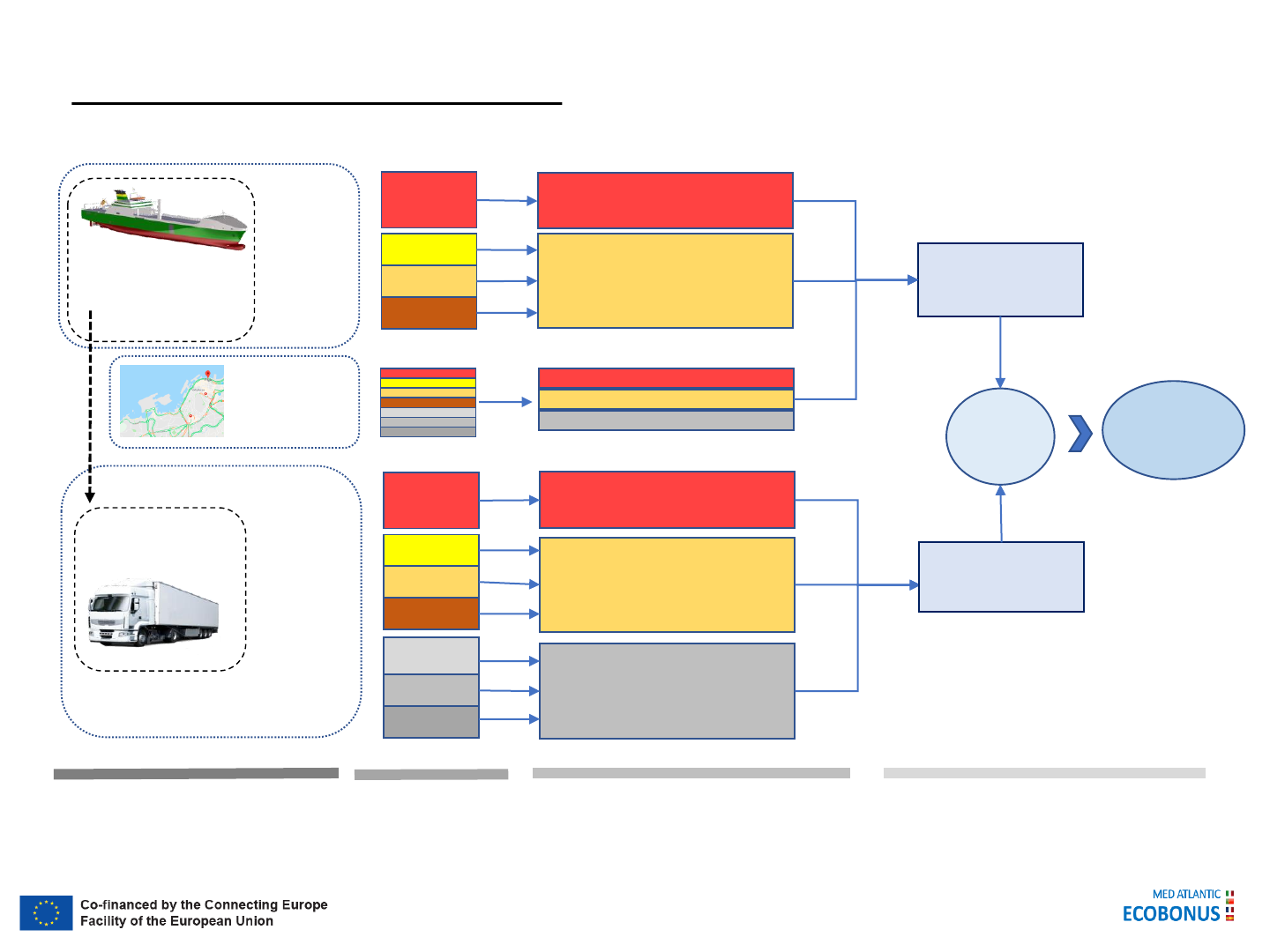
Methodological approach
CO2
SOX
NOX
PM
GW EU Cost €/t
Cost of emissions at sea
€/t
CO2
SOX
NOX
PM
Congest.
Accidents
Noise
Distance
Speed
Fuel type
Technology
Distance
EURO level
Route
GW EU Cost (€/t)
Cost of emissions at land
€/t
Socio-economic costs
€/km
EXTERNAL COST
MARITIME
€/truck
Capacity
Occupation
Passengers
Number of Trucks
EXTERNAL COST
ROAD
€/truck
Savings
€/truck
Eco-
incentive
€/truck
MOS Market Technology EU monetization Eco-incentive
Port Call (time)
Port emissions
Port Access (km)
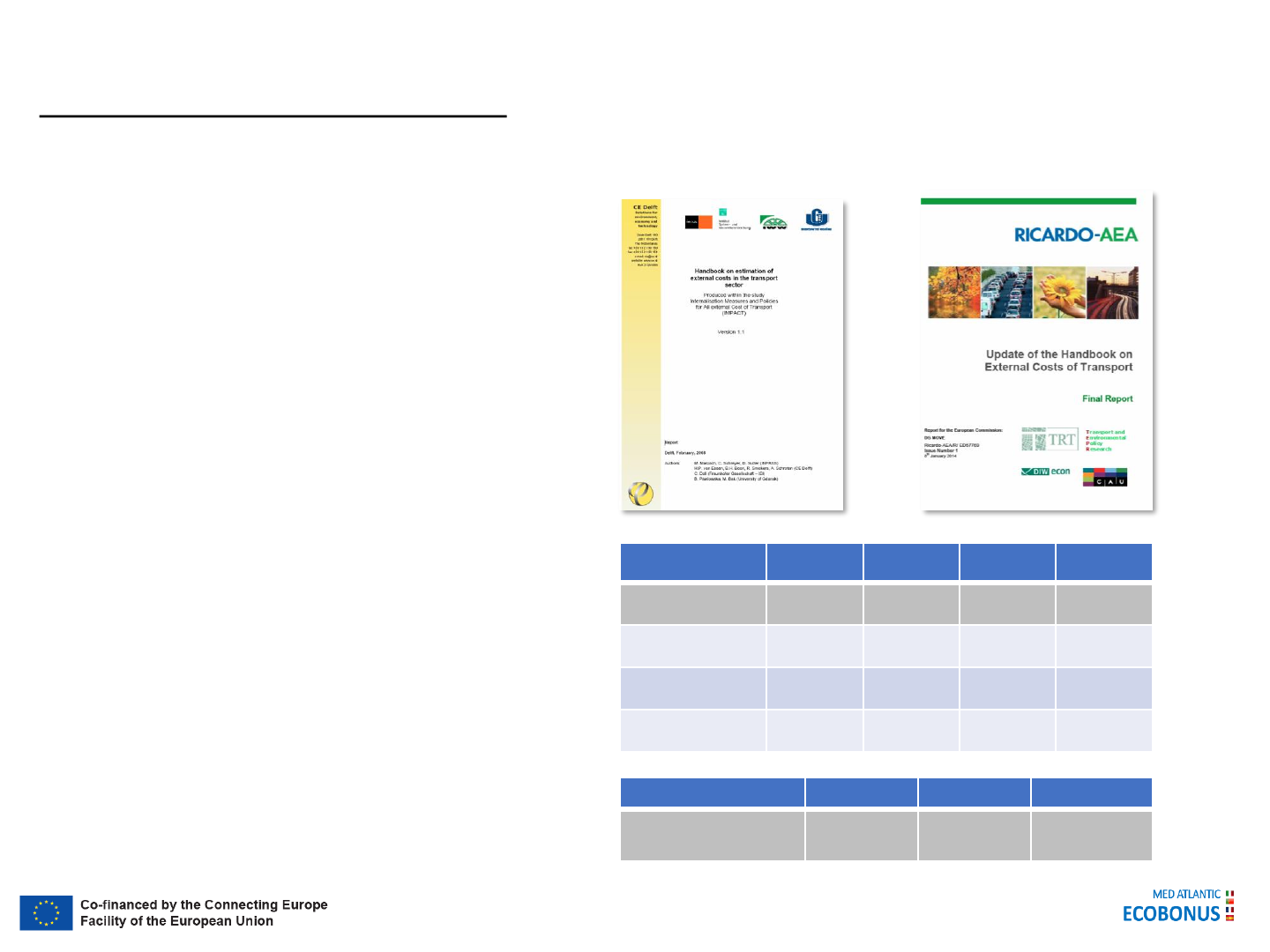
Monetization references
€ pollutant t CO2eq SOxNOxPM
Road
34
11.300
11.700
29.400
Mediterranean
34
6.700
1.850
18.500
Baltic
34
5.250
4.700
13.800
Atlantic
34
2.900
2.250
5.550
4
€ per 1000 km
Noise Accidents Congestion
Road average
2,06 6,03 45,28
Two main references are used to estimate both the
environmental impact and socio-economic cost of freight
transport:
•2008 Handbook on estimation of external costs in
the transport sector. Produced within the study of
Internalization Measures and Policies for All
external Cost of Transport (IMPACT). CE DELFT,
commissioned by: European Commission (DG TREN)
•2014 Update of the Handbook on External Costs of
Transport. Ricardo-AEA, commissioned by :
European Commission (DG Mobility and Transport)
Regarding CO2eq monetization, there is a high discrepancy
amongst the two reports, the 2014 update report raised the
cost per ton from 25€to 90€at 2010 values. Market value
from EU Emission allowances is around 20€/t while IPCC
remedial cost is above 100USD.
MAE figure is taken from the 2008 handbook, 34€in 2016
value, which is aligned with EIB Appraisal Guidelines from
2015.
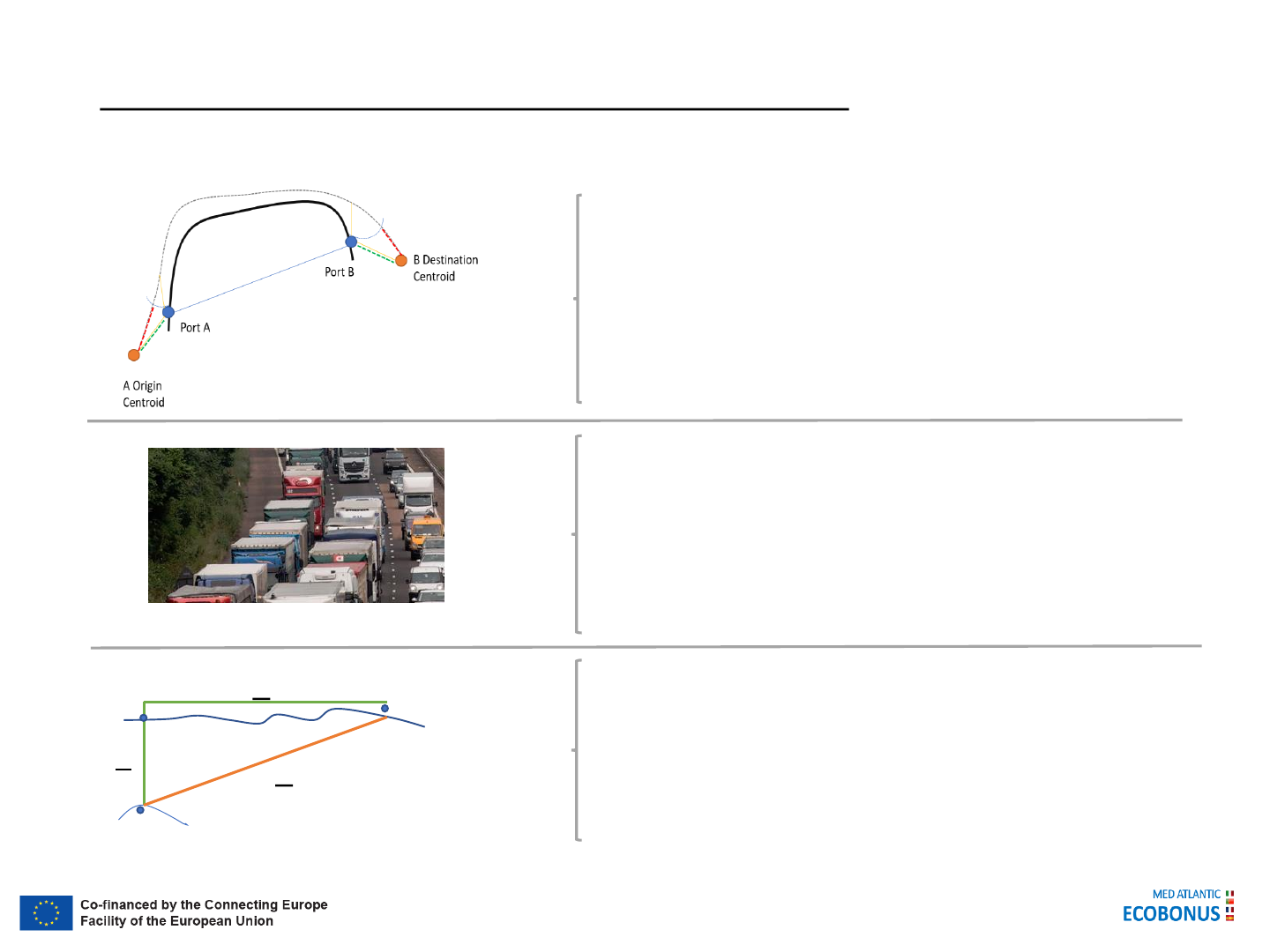
MAE Calculator designing assumptions (1 of 3)
Centroids vs port to port
1. Dynamic, each voyage has its own origin/destination pair
2. Fixed. The shipowner, when submitting his line, declares the
centroids for the calculation.
3. Simplified. Net road distance between the ‘road-only’ and the
MoS alternatives is assumed to be similar to the road
distances between ports of origin and destination, including
port access.
Option 3 is taken
5
Port access
Following the previous assumption, two urban legs will be
considered, one accessing origin port and one leaving destination
port from/to the circumvallating highway. This assumption only
applies for the calculation of the MoS emissions.
Default values set to 9 km + 9 km
Channel crossings
•Direct channel crossing brings no environmental merit for the
MAE example
•Longer maritime relations will be compared with the channel
crossing considered as part of the ‘road only’ alternative.
a
b
c
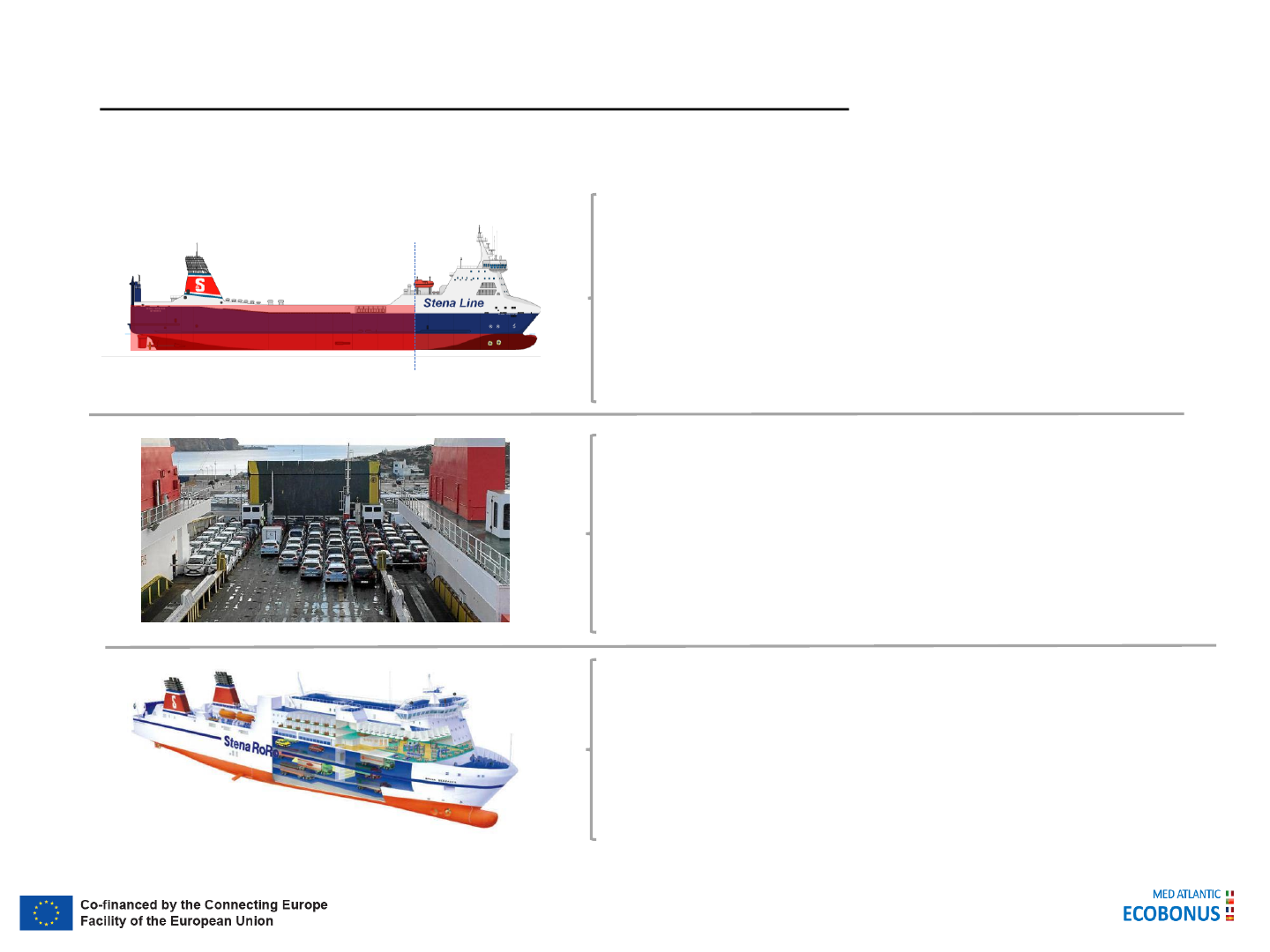
MAE Calculator designing assumptions (2 of 3)
Vessel occupation level
1. Dynamic, each voyage has its own occupation
2. Declared. The shipowner, when submitting or updating his line
to the eco-incentive scheme, declares the actual occupation
levels.
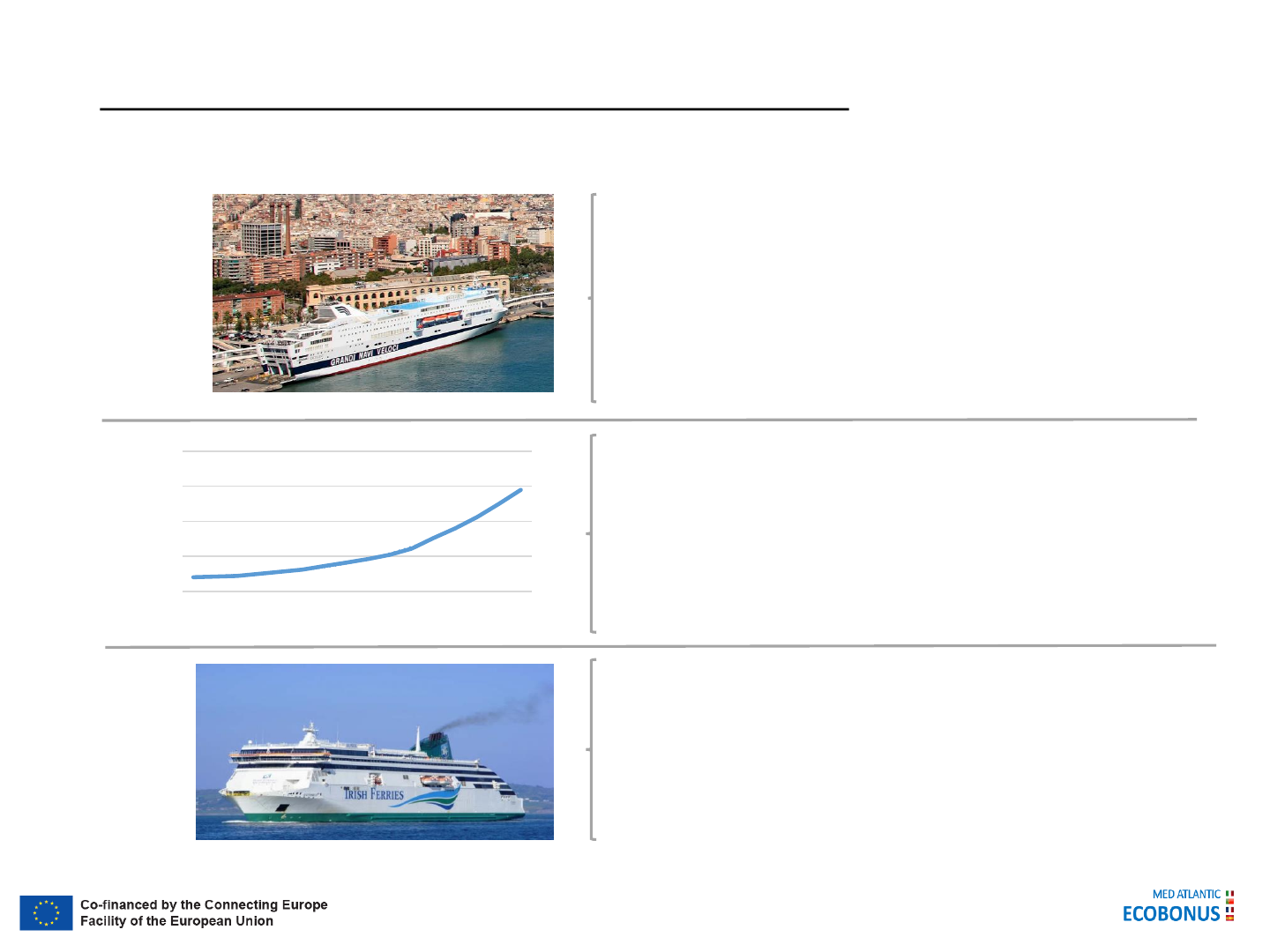
3. Fixed. Establishing a fixed (70%) occupation level for all routes
and for simulation purposes.
Option 3 is taken (for simulation). Lower occupancies are considered to be not
sustainable in the long term whereas higher averages would be rare.
6
New vehicles
Declared. The shipowner, when submitting or updating his line establishes
its average deck occupancy for new vehicles.
Deck footprint: 6 vehicles = 1 truck
New vehicles takes their share of total ship emissions but this traffic is not
eligible under MAE example
ROPAX Vessels
1. CEN Standard 16258
2. Simple ratio: PAX -> VEH -> TRUCKS EQUIVALENT
Option 2 is taken (simpler), calibrated with the CEN Standard
Deck footprint: 10 pax = 1 truck
70%
MAE Calculator designing assumptions (3 of 3)
Emission at port
Port emissions will be calculated and incurred to the total emissions of
the MoS alternative. Main parameters will be call duration, the fuel
consumption and the fuel type. When cold ironing is used, port
emissions will not be considered.
Default call duration 6 hours. Default fuel consumption 8 t/day
7
Vessel fuel consumption
1. Declared. The shipowner, when submitting or updating his
line establishes its actual fuel consumption levels.
2. Fix curved: Use a common emissions curve (tons per day vs
speed) for all vessels.
Option 1 is taken (for simulation purposes). This feature rewards the greats
resource efficient vessels. Real performances would be verified through
mandatory declarations such as the MRVs.
Vessel emissions
1. Declared. The shipowner, when submitting or updating his
line establishes its actual emissions, both sailing and at port.
2. Fix values: Use fixed emission values
Option 1 is taken (intended for implementing actions). For simulation
purposes the vessel emissions will be estimated using previous
assumptions (thus option 2)
0
50
100
150
200
10 11 12 13 14 15 16 17 18 19 20 21 22 23 24 25
MAIN: input variables and detail results
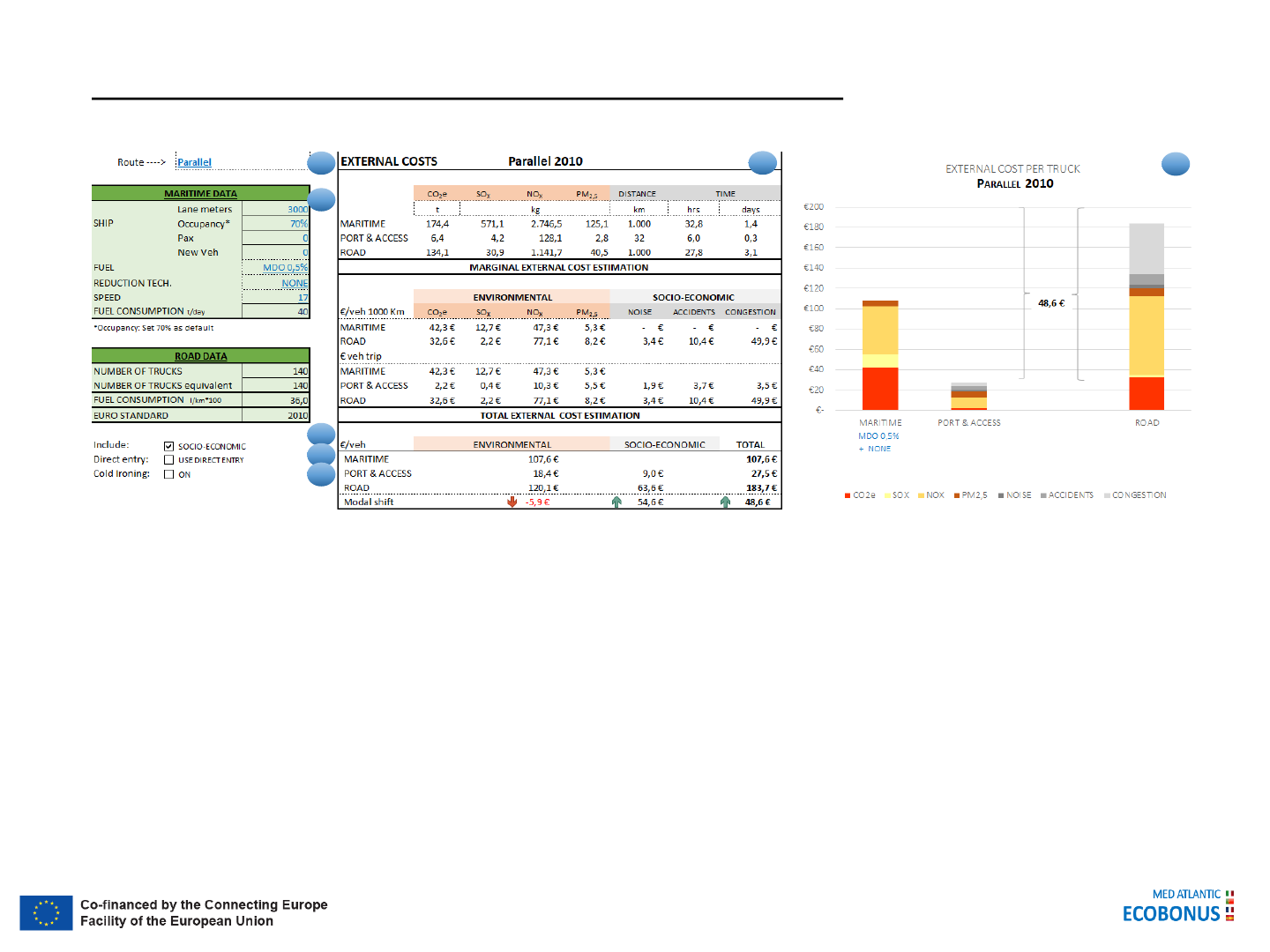
1. Choose a route to be analyzed from the route box, a popup menu should appear. If your route is not shown, you can
manually enter in the MOS page.
2. Choose the vessel/route details: capacity, occupancy (70% suggested), number of passengers and number of new
vehicles (average figures for a sailing). Choose the fuel type, the abatement technology and the vessel speed.
3. Choose whether to include socio-economic factors (congestion, accidents and noise).
4. Choose whether actual emission data for the vessel/route are known (thus entering through the DIRECT ENTRY page)
or let the calculator estimate them for you
5. Choose COLD IRONING to remove ship emission at port from the calculation.
6. Values are compared between the MoS and the ‘road-only’ alternative (maritime and port&access are both incurred to
MoS)
7. Results
8
1
2
3
4
5
67
(*)
(*) Parallel. A route where road only and MoS alternative cover the same distance
PORT & ACCESS
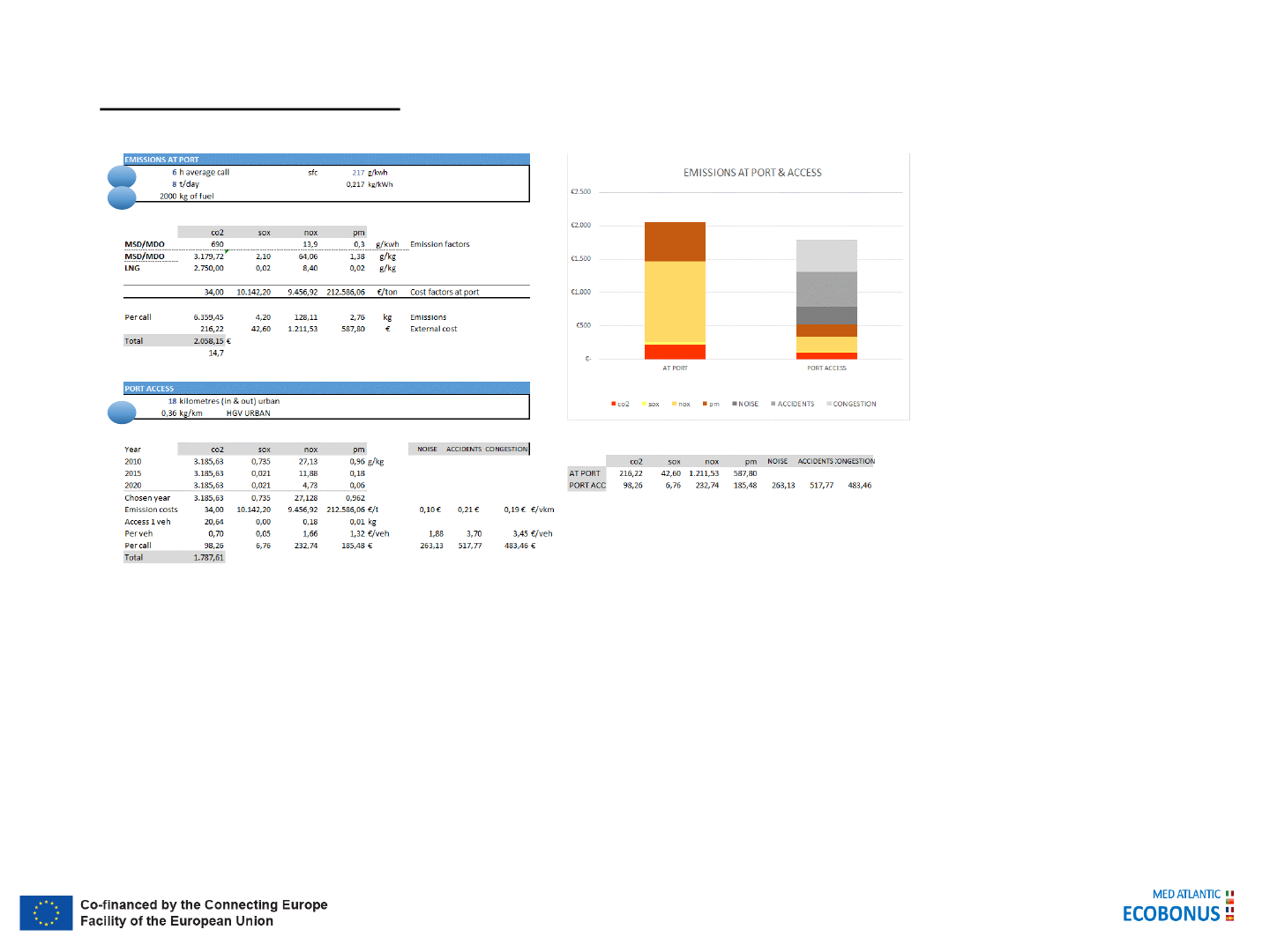
1. Enter the average port call duration in hours
2. Enter the average fuel consumption at port in tons per day
3. Enter the sum of the port access distance from circumvallating road to the port in both origin and
destination
Breakdown of values will be shown on the table and chartered on the figured.
9
1
2
3