PicoZed SDR Z7035/AD9361 User Guide Pico Zed 2x2 SOM User's V1.7 0
User Manual:
Open the PDF directly: View PDF  .
.
Page Count: 67

Version 1.7 Page 1
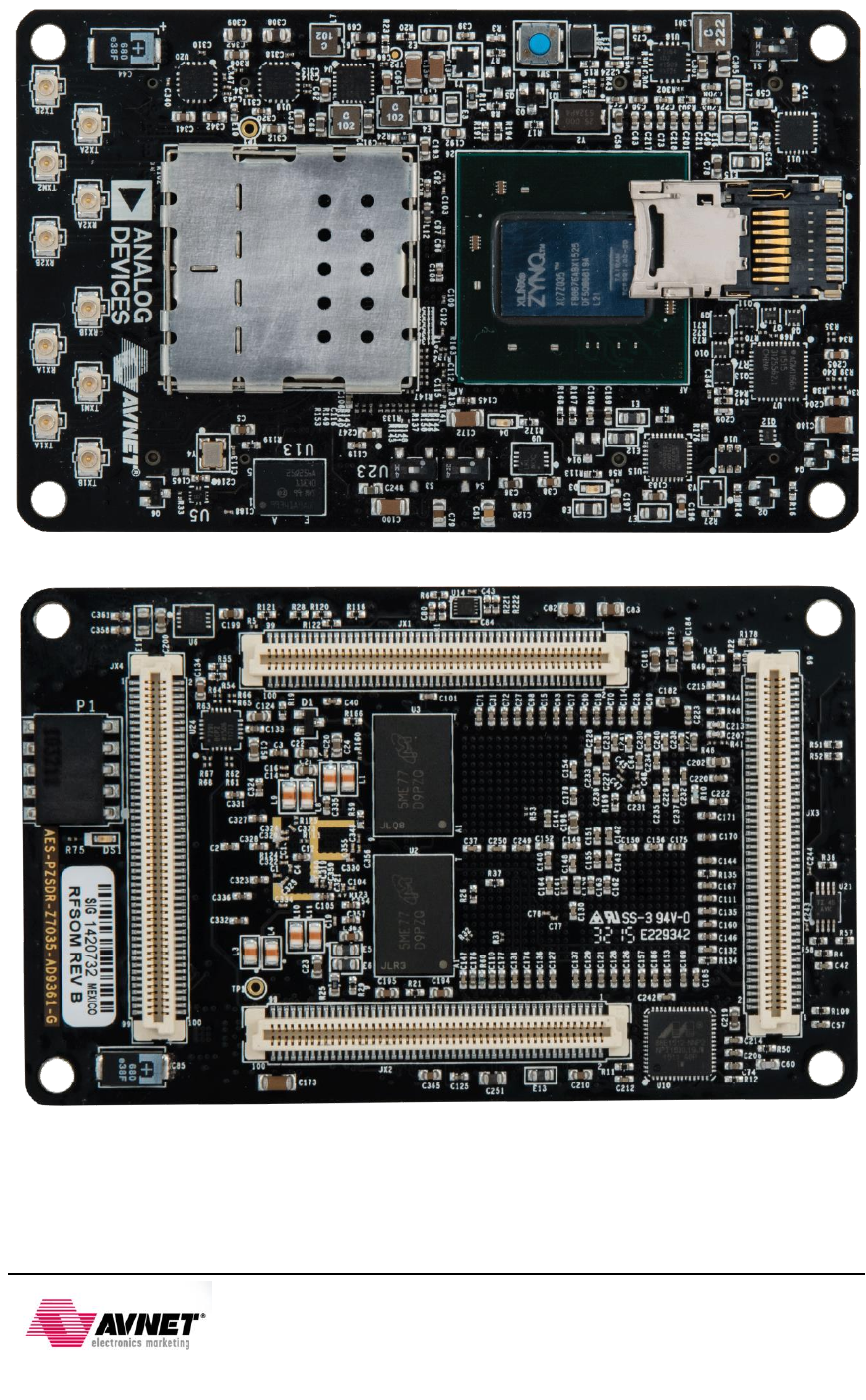
PicoZed™ SDR 2x2 System-on-Module
User Guide
Version 1.7
Version 1.7 Page 2

Version 1.7 Page 3
Table of Contents
1 INTRODUCTION .................................................................................................................................. 7
1.1 KEY FEATURES ................................................................................................................................ 7
1.2 MODULE SPECS ............................................................................................................................... 8
2 SOFTWARE .........................................................................................................................................10
2.1 GETTING STARTED .........................................................................................................................10
2.2 OPERATING SYSTEMS .....................................................................................................................11
2.3 PROTOTYPE AND DEVELOPMENT TOOLS ........................................................................................11
2.3.1 Xilinx Vivado® Design Suite .................................................................................................11
2.3.2 MathWorks Native Support ....................................................................................................11
2.3.3 MathWorks Support by Analog Devices ................................................................................12
2.4 DRIVERS, SOURCE CODE, AND REFERENCE DESIGNS .....................................................................12
2.4.1 Analog Devices AD9361 RF Agile Transceiver .....................................................................12
2.4.2 Xilinx Zynq-7000 AP SoC ......................................................................................................12
2.4.3 MATLAB and Simulink Examples ..........................................................................................12
3 ELECTRICAL SPECIFICATIONS ......................................................................................................14
3.1 XILINX ZYNQ-7000 ALL PROGRAMMABLE SOC .............................................................................15
3.2 ANALOG DEVICES AD9361 RF AGILE TRANSCEIVER ....................................................................16
3.3 AD9361/ZYNQ SOC CONNECTION .................................................................................................17
3.4 MEMORY ........................................................................................................................................19
3.4.1 DDR3 .....................................................................................................................................19
3.4.2 Quad SPI Flash .....................................................................................................................20
3.4.3 Micro SD Card Interface .......................................................................................................21
3.5 USB 2.0 OTG.................................................................................................................................23
3.6 10/100/1000 ETHERNET PHY ........................................................................................................24
3.7 USER I/O ........................................................................................................................................26
3.7.1 AD9361 User Pins .................................................................................................................26
3.7.2 Zynq PS MIO User Pins ........................................................................................................26
3.7.3 Zynq PL SelectIO User Pins ..................................................................................................27
3.8 USER AUXILIARY ADC AND DAC INTERFACES .............................................................................28
3.8.1 AD9361 Auxiliary ADC .........................................................................................................28
3.8.2 AD9361 Auxiliary DACs........................................................................................................28
3.8.3 Zynq SoC ADC.......................................................................................................................28
3.9 ZYNQ MULTI-GIGABIT TRANSCEIVERS (MGTS) ............................................................................29
3.10 CLOCK SOURCES .............................................................................................................................29
3.10.1 Zynq clocks ............................................................................................................................29
3.10.2 AD9361 clocks .......................................................................................................................29
3.10.3 Ethernet Clock .......................................................................................................................31
3.10.4 USB Clock .............................................................................................................................32
3.10.5 SDIO Clock ............................................................................................................................32
3.11 RESET SOURCES .............................................................................................................................32
3.11.1 AD9361 Reset ........................................................................................................................32
3.11.2 Zynq Power
‐
on Reset (PS_POR_B) .......................................................................................32
3.11.3 Zynq PROGRAM_B, DONE, PUDC_B, INIT_B Pins ...........................................................32
3.11.4 Zynq Processor Subsystem Reset ...........................................................................................34
3.12 CONFIGURATION MODES ................................................................................................................35
3.12.1 JTAG Connections .................................................................................................................36
3.13 RF CONNECTIONS ..........................................................................................................................36
3.14 MULTI-SOM SYNCHRONIZATION ...................................................................................................38
3.15 EXPANSION HEADERS ....................................................................................................................38
3.15.1 Micro Header Pin Summary ..................................................................................................38
3.15.2 Micro Header Pin Detail .......................................................................................................41
3.16 POWER ...........................................................................................................................................46

Version 1.7 Page 4
3.16.1 Input Voltages ........................................................................................................................46
3.16.2 Module Power Architecture ...................................................................................................48
3.16.3 Monitor and Sequencing ........................................................................................................49
3.16.4 Power Estimation ..................................................................................................................51
3.16.5 Battery Backup for Device Secure Boot Encryption Key .......................................................52
4 PERFORMANCE..................................................................................................................................53
4.1 ERROR VECTOR MAGNITUDE (EVM) .............................................................................................53
4.1.1 Tests Parameters ...................................................................................................................53
4.1.2 Results....................................................................................................................................53
4.2 TEMPERATURE ...............................................................................................................................55
4.2.1 Zynq Heat Sink.......................................................................................................................55
4.3 SHOCK, VIBRATION, AND THERMAL TESTS ....................................................................................56
5 MECHANICAL ....................................................................................................................................57
6 REFERENCES ......................................................................................................................................59
7 ADDITIONAL INFORMATION .........................................................................................................60
7.1 ADDITIONAL POWER SPECS ............................................................................................................60
7.1.1 SOM Voltage Regulators and Rails .......................................................................................60
7.2 UPDATING THE ADM1166 SEQUENCER FIRMWARE .......................................................................61
7.2.1 Automated Update Procedure ...............................................................................................61
7.2.2 Manual Update Procedure ....................................................................................................62
7.2.3 Standalone Programming with USB Adapter ........................................................................62
7.3 USB POWER ...................................................................................................................................63
7.4 XADC POWER CONFIGURATION ....................................................................................................63
7.5 RESTORING THE ANALOG DEVICES SD CARD IMAGE .....................................................................64
7.6 BOARD REVISIONS .........................................................................................................................65
7.6.1 Rev A ......................................................................................................................................65
7.6.2 Rev B ......................................................................................................................................65
7.6.3 Rev C .....................................................................................................................................65
7.6.4 Rev D .....................................................................................................................................66
7.7 DDR3L TRACE LENGTH.................................................................................................................66
8 REVISION HISTORY ..........................................................................................................................67

Version 1.7 Page 5
Table of Figures
FIGURE 1 - SIMPLIFIED SYSTEM DIAGRAM ..................................................................................................... 9
FIGURE 2 - PICOZED SDR SOM DEVICE CALLOUT............................................................................................ 9
FIGURE 3 – ADI GITHUB HDL REPOSITORY ................................................................................................... 10
FIGURE 4 - DETAILED SYSTEM DIAGRAM...................................................................................................... 14
FIGURE 5 - ZYNQ-7000 AP SOC BLOCK DIAGRAM ........................................................................................ 15
FIGURE 6 - AD9361 BLOCK DIAGRAM ........................................................................................................... 16
FIGURE 7 - AD9361 RECEIVE DATA PATH, LVDS ........................................................................................... 17
FIGURE 8 - AD9361/ZYNQ Z-7035 INTERFACE .............................................................................................. 18
FIGURE 9 - SD CARD MULTIPLEXED ARCHITECTURE ..................................................................................... 21
FIGURE 10 – MICRO SD CAGE AND SELECT SWITCH ..................................................................................... 22
FIGURE 11 - 10/100/1000 ETHERNET INTERFACE ........................................................................................ 25
FIGURE 12 - AD9361 CLOCK INPUT OPTIONS ............................................................................................... 30
FIGURE 13 - SYSTEM READY LEDS ................................................................................................................. 34
FIGURE 14 - ZYNQ BOOT SWITCHES ............................................................................................................. 35
FIGURE 15 - U.FL PLUG TOOLS (HIROSE) ...................................................................................................... 37
FIGURE 16 - RF TX CONNECTION .................................................................................................................. 37
FIGURE 17 - RF RX CONNECTION .................................................................................................................. 37
FIGURE 18 - POWER SCHEME ....................................................................................................................... 48
FIGURE 19 – SOM VOLTAGE REGULATION ................................................................................................... 49
FIGURE 20 - POWER SEQUENCING (REV D FIRMWARE) ............................................................................... 51
FIGURE 21 - IIO SYSTEM OBJECT ................................................................................................................... 53
FIGURE 22 - EVM RESULTS............................................................................................................................ 54
FIGURE 23 - ZYNQ FAN/HEAT SINKS ............................................................................................................. 55
FIGURE 24 - FCI BERGSTAK RECEPTACLE LOCATOR PEG .............................................................................. 57
FIGURE 25 - MECHANICAL DIMENSIONS ...................................................................................................... 58
FIGURE 26 - USB-SDP-CABLEZ ....................................................................................................................... 62
FIGURE 27 - ADM1166 PROGRAMMING PORT (P1) ..................................................................................... 62
FIGURE 28 - XADC POWER CONFIGURATION ............................................................................................... 63
FIGURE 29 - REV B SOM LABEL ..................................................................................................................... 65
FIGURE 30 - DDR3L TRACE LENGTHS ............................................................................................................ 66

Version 1.7 Page 6
Table of Tables
TABLE 1 - DDR3 CONNECTIONS .................................................................................................................... 20
TABLE 2 - QSPI FLASH PIN ASSIGNMENT AND DEFINITIONS ........................................................................ 21
TABLE 3 - SETTING SD CARD SELECT (S1) ...................................................................................................... 22
TABLE 4 - ZYNQ PS SDIO CONNECTIONS....................................................................................................... 22
TABLE 5 - USB 2.0 JX3 PIN ASSIGNMENTS .................................................................................................... 23
TABLE 6 - USB HOST PIN ASSIGNMENT AND DEFINITIONS ........................................................................... 24
TABLE 7 - ZYNQ PS ETHERNET PHY PIN ASSIGNMENT AND DEFINITIONS .................................................... 25
TABLE 8 - ZYNQ PS MIO BANK SUMMARY .................................................................................................... 26
TABLE 9 - ZYNQ PL USER I/O BANK SUMMARY ............................................................................................ 27
TABLE 10 - ZYNQ GTX CONNECTOR ASSIGNMENTS ..................................................................................... 29
TABLE 11 - ZYNQ POWER UP / RESET SIGNALS............................................................................................. 33
TABLE 12 - ZYNQ CONFIGURATION MODES ................................................................................................. 35
TABLE 13 - JTAG PIN CONNECTIONS ............................................................................................................. 36
TABLE 14 - MICRO HEADER JX1 PIN SUMMARY ........................................................................................... 39
TABLE 15 - MICRO HEADER JX2 PIN SUMMARY ........................................................................................... 39
TABLE 16 - MICRO HEADER JX3 PIN SUMMARY ........................................................................................... 40
TABLE 17 - MICRO HEADER JX4 PIN SUMMARY ........................................................................................... 40
TABLE 18 - JX1 CONNECTIONS ...................................................................................................................... 42
TABLE 19 - JX2 CONNECTIONS ...................................................................................................................... 43
TABLE 20 - JX 3 CONNECTIONS ..................................................................................................................... 44
TABLE 21 - JX4 CONNECTIONS ...................................................................................................................... 45
TABLE 22 – SUPPLY VOLTAGE REQUIREMENTS ............................................................................................ 47
TABLE 23 - POWER GOOD LED STATUS ........................................................................................................ 50
TABLE 24 - OPERATING TEMPERATURE ........................................................................................................ 55
TABLE 25 - REGULATED VOLTAGE RAILS....................................................................................................... 60
Version 1.7 Page 7
1 Introduction
Avnet's PicoZed™ SDR 2x2 is a Software Defined Radio (SDR) that combines the Analog
Devices AD9361 integrated RF Agile Transceiver™ with the Xilinx Z7035 Zynq®-7000 All
Programmable SoC in a small system-on-module (SOM) footprint suitable for end-product
integration.
PicoZed SDR carrier cards are available for fast prototype and are supported by robust simulation
and code generation tools that integrate seamlessly with Xilinx Vivado® Design Suite. The final
step for most applications includes designing a custom carrier card to mate with the PicoZed SDR
SOM for end product deployment.
1.1 Key Features
Low-power Designed with a -2LI version of the Zynq SoC (low power, mid speed,
industrial temp), DDR3L, and high-efficiency voltage regulators with margining
capability to scale power with performance. Built-in sequencing and monitoring make it
easy to power to the module.
High bandwidth data connectivity Move data quickly with dual Gigabit Ethernet,
USB2.0, four 6.6 Gb/s serial links (PCIe x4, SFP+, others), and high-speed LVDS I/O
for custom interfaces.
Wideband, frequency agile RF Uses the AD9361 to provide a highly integrated radio
that enables wideband 2x2 MIMO receive and transmit paths from 70 MHz to 6.0 GHz
with tunable channel bandwidth <200kHz to 56MHz.
Programmable SoC Embedded processing with the Zynq Z-7035 SoC provides a Dual
ARM® Cortex™-A9 MPCore™ running at 800MHz, with built in peripherals like USB,
Gigabit Ethernet, and memory interfaces.
Small form factor 100mm x 62mm footprint, compliant with DP10062 “Sick of Beige
v1.0” enclosures from dangerousprototypes.com.
Production-ready module System-on-Module designed for immediate prototype and
quick integration in your end application. Industrial temperature rated and tested
against MIL-STD 202G methods for Thermal, Vibration, and Shock.
Operating systems Comes with Analog Devices Linux reference design for Zynq,
bootable from an SD card. Also supports Linux, Android, FreeRTOS, eCos, VxWorks,
and others listed here.
Development tools A broad range of SDR prototype and development environments
are supported, including Analog Devices Linux Applications, and MATLAB® and
Simulink® for data streaming and Zynq targeting.
Open-source code Analog Devices provides precompiled reference designs on their
PicoZed SDR wiki page and a source code support package hosted on Github,
including the HDL and software code (except non-ADI).
Version 1.7 Page 8
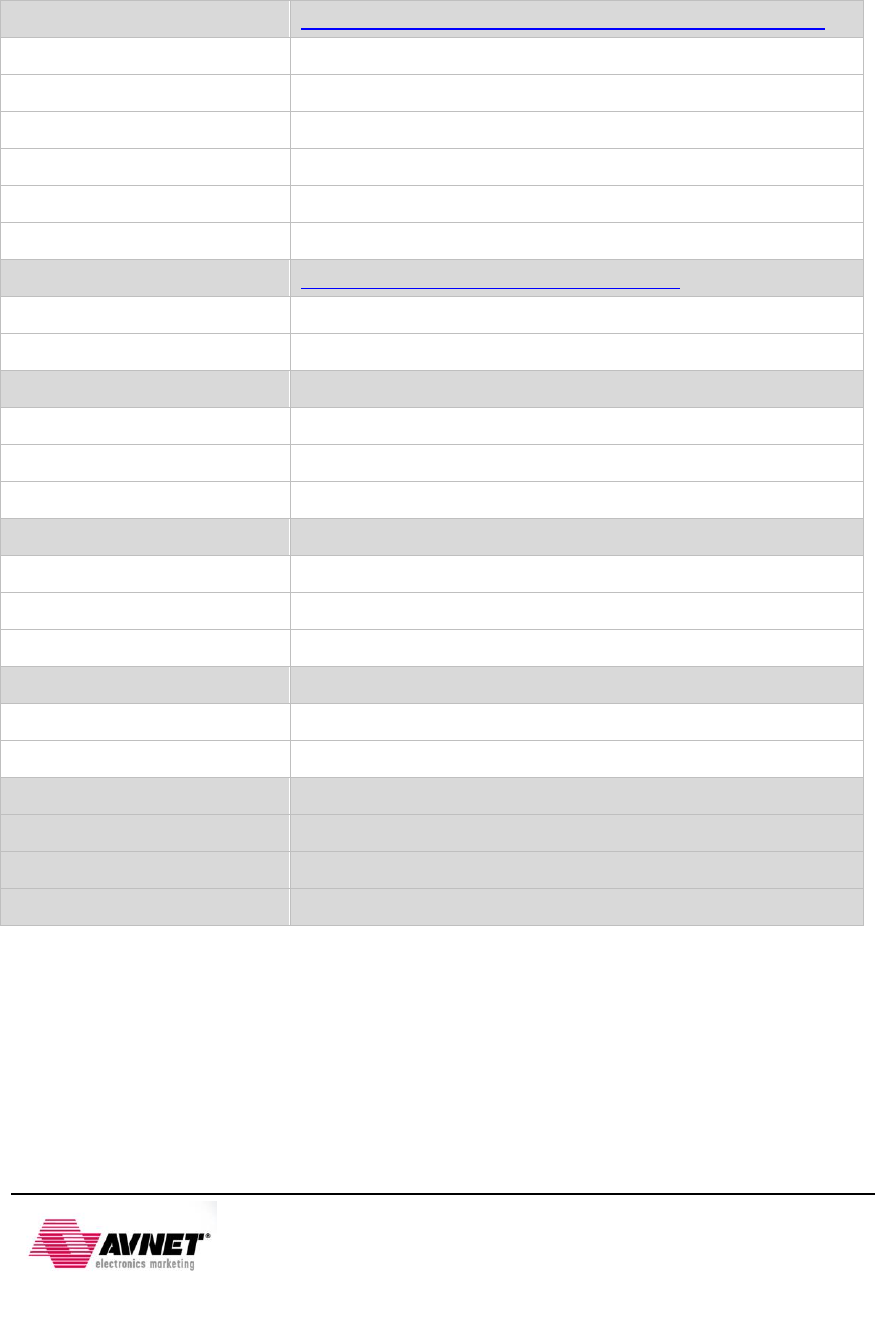
1.2 Module Specs
The module specifications are summarized below. The rest of the document provides details.
Radio
Analog Devices AD9361 integrated RF Agile Transceiver™
RF Band
70MHz to 6.0GHz
Tunable Channel BW
<200kHz to 56MHz
RF Connections
4 TX, 4RX, 2 TX monitor
Max output power
6.5 – 8.0 dBm (typical) – see AD9361 datasheet for details
Max input power (RX)
2.5 dBm (peak)
Max input power (TX mon.)
9 dBm (peak)
Processing
Xilinx Zynq XC7Z035-L2 FBG676I AP SoC
Processor
Dual ARM® Cortex™-A9 MPCore™ running at 800MHz
Programmable Logic
275K Kintex-7 logic cells with 900 DSP48 slices
Interface
Four 100-pin Micro Headers
Peripherals
ARM: Gigabit Ethernet, USB2.0, UART, SDIO
User I/O
209 single-ended or 93 LVDS (up to 1250 or 1400 Mb/s DDR)
Serial transceivers
4 Zynq GTX channels @ 6.6Gb/s
Memory
DDR3L
1GB DDR3L (low power) @ 1,066 Mb/s
Flash
256 Mb QSPI Flash (bootable) @ 400Mb/s
SD card
Lockable Micro SD Card cage (bootable) @ 25MB/s
Power Consumption
< 5Watts (typical)
Main Module Supply
4.5V – 5.5V (5.0V nominal)
Module I/O Supplies
1.0V – 3.3V
Operating system support
Linux, Android, FreeRTOS, eCos, VxWorks, and others
Debug
JTAG
Dimensions
100mm x 62mm
Operating Temp
Industrial -40°C to +85°C (1)
(1) uSD cage rated to -25°C to +85°C operating temperature
Important! PicoZed SDR is not pin compatible with standard PicoZed (non-SDR) carrier cards.
New pinouts were required mainly for the Zynq Z-7035 and AD9361 digital I/O.
Version 1.7 Page 9
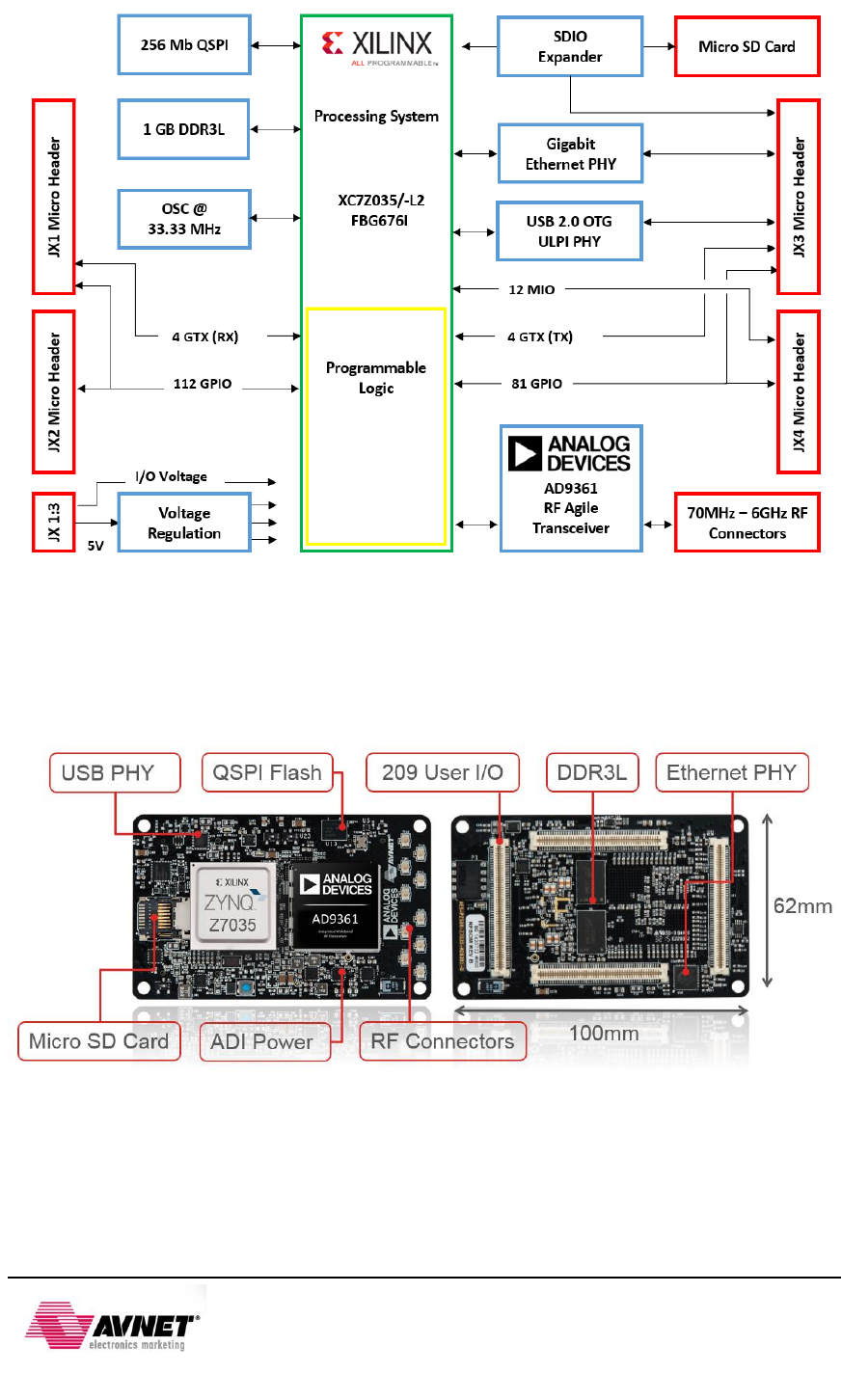
Figure 1 - Simplified System Diagram
Figure 2 - PicoZed SDR SOM Device Callout
Version 1.7 Page 10
2 Software
The Zynq SoC onboard PicoZed SDR 2X2 contains Dual ARM® Cortex™-A9 MPCore™
processors capable of running a variety of operating systems and is supported by an ecosystem
of development tools.
2.1 Getting Started
Avnet offers several carrier cards for PicoZed SDR SOMs to help you start development
immediately. We recommend using the Getting Started Guide for those carriers in order to learn
how to setup the hardware and run the base reference design. Find carriers and Getting Started
Guides at www.picozed.org.
To quickly explore the reference design, here are some resources:
The SD card image used to boot the reference design
The Analog Devices PicoZed SDR Wiki provides details about reference designs
The HDL, no-OS and Linux sources are hosted on GitHub
o For HDL, we highly recommend cloning from the latest official tag (released twice
per year), not the development branch.
https://github.com/analogdevicesinc/hdl/releases
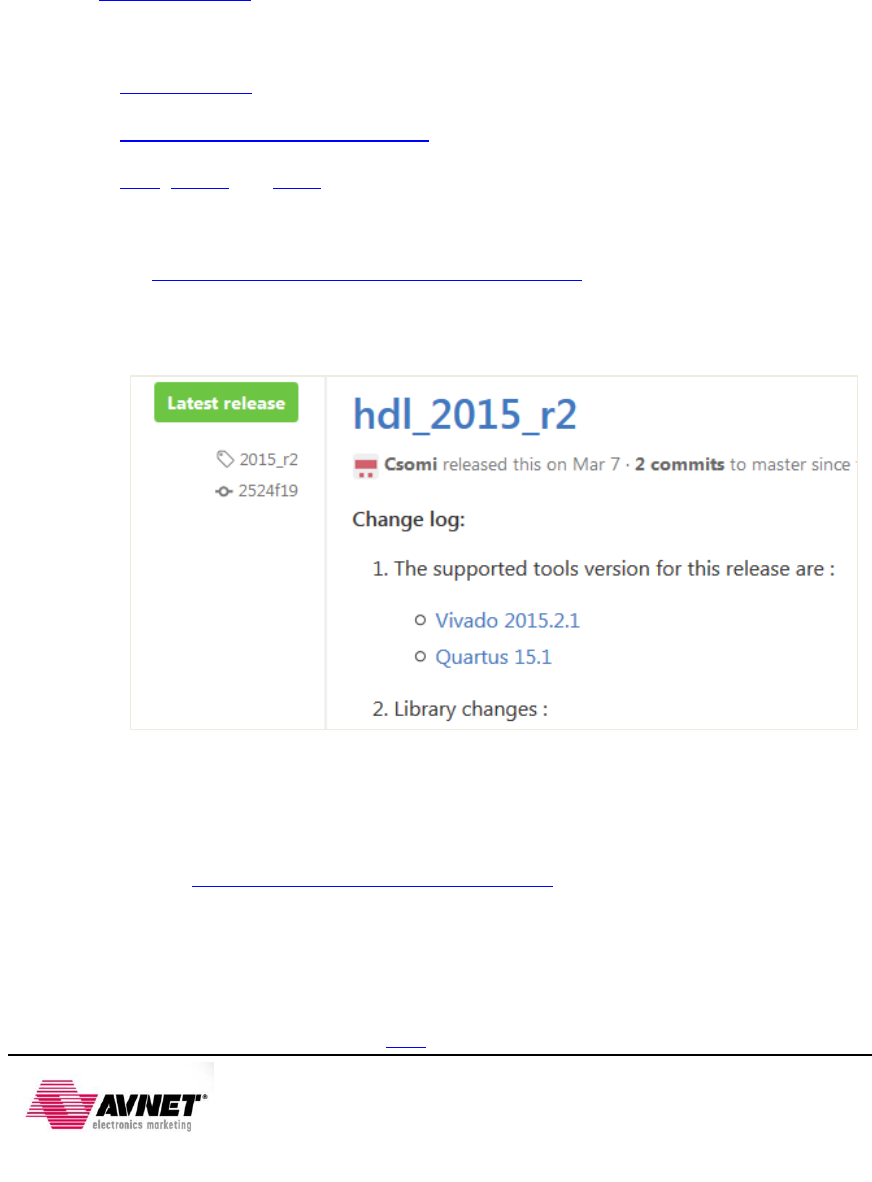
For example, choose branch hdl_2015_r2 to get the second release of 2015. Notice
the support Xilinx Vivado tool version.
Figure 3 – ADI GitHub HDL repository
o The TCL scripts to build the Vivado project for this carrier are located in
/projects/pzsdr/ccfmc
o The ADI Reference Designs HDL User Guide explains how to rebuild the FPGA
project.
NOTE: The reference design is based on the HDL code maintained by Analog Devices. To
manage dependencies in the build process for Vivado projects, Analog Devices provides Linux-
based makefiles. We recommend that Windows users build Vivado projects using ‘make’ under
CYGWIN. Instructions to install a minimal version of CYGWIN that will provide a Linux-like
environment under Windows are available here.

Version 1.7 Page 11
2.2 Operating Systems
The following operating Systems are supported on the Zynq ARM processors. The most up-to-date
and comprehensive list can be found here on the Xilinx web site, however the following section will
give you an idea of the popular options.
Most software developers will start with the Linux reference design and drivers provided by
Analog Devices at the GitHub page listed below. Analog Devices also have a wiki page that
provides details of their Linux reference design for PicoZed SDR here.
Non-Commercial OS
Linux, uBoot, and more on Xilinx GIT and Analog Devices GIT
PetaLinux tools here
Android
Commercial OS
Wind River Linux
RTOS
eCos
FreeRTOS
Micrium uC/OS-II/III
QNX
Wind River VxWorks
2.3 Prototype and Development Tools
2.3.1 Xilinx Vivado® Design Suite
o Download a free evaluation from www.xilinx.com/support/download.html.
o Purchase a license at Avnet Express.
2.3.2 MathWorks Native Support
Communications System Toolbox™ Support Package for Xilinx® Zynq®-Based Radios enables
you to use MATLAB® and Simulink® to prototype and verify practical wireless systems. Using this
support package with PicoZed SDR, you can transmit and receive RF signals right out-of-the-box.
This enables you to quickly test your design under real world conditions.
Some useful links for more information are provided as follows:
o Zynq SDR Support from Communications System Toolbox
www.mathworks.com/hardware-support/zynq-sdr.html
o Free Trial Software for Software-Defined Radio Design Using PicoZed SDR
www.mathworks.com/picozedsdr-trial
o MATLAB Filter Design Wizard for AD9361
wiki.analog.com/resources/eval/user-guides/ad-fmcomms2-ebz/software/filters
o SimRF Models of the AD9361 Agile RF Transceiver
www.mathworks.com/hardware-support/analog-devices-rf-transceivers.html

Version 1.7 Page 12
2.3.3 MathWorks Support by Analog Devices
Analog Devices works closely with MathWorks to develop custom capabilities for the PicoZed SDR.
For example, MathWorks HDL Workflow Advisor support plus MATLAB and Simulink data exchange
over Ethernet with IIO System Object.
Some useful links for more information are provided as follows:
o Analog Devices BSP for MathWorks HDL Workflow Advisor
wiki.analog.com/resources/eval/user-guides/ad-fmcomms2-ebz/software/matlab_bsp
o MATLAB and Simulink data exchange over Ethernet with IIO System Object
https://wiki.analog.com/resources/tools-software/linux-
software/libiio/clients/matlab_simulink?s[]=system&s[]=object
2.4 Drivers, Source Code, and Reference Designs
Analog Devices provides a comprehensive set of drivers, source code, reference designs, and
other technical resources for PicoZed SDR. More information may be found on their PicoZed
SDR wiki page. A source code support package is hosted on GitHub, including the HDL and
software code (except non-ADI).
2.4.1 Analog Devices AD9361 RF Agile Transceiver
Analog Devices provides complete drivers for the AD9361 for both bare metal/No-OS and
operating systems (Linux). The AD9361 and AD9364 share the same API. The AD9361 and
AD9364 drivers can be found at:
Linux wiki page
No-OS wiki page
Support for these drivers can be found at:
Linux engineer zone page
No-OS engineer zone page
In addition, Analog Devices provides FPGA HDL source code for the Xilinx Zynq SoC.
2.4.2 Xilinx Zynq-7000 AP SoC
Analog Devices provides complete drivers for the Zynq SoC ARM peripherals, including those
implemented on the PicoZed SDR 2X2 module.
Ethernet Linux MDIO driver
USB Linux driver
SDIO Linux driver
These are included in the Linux kernel images provided at the Zynq Images wiki page.
2.4.3 MATLAB and Simulink Examples
These designs, provided by Analog Devices, demonstrate high bandwidth data transfer between
PicoZed SDR and MATLAB or Simulink running on a host PC. They also provide examples of
designing custom baseband functions in the Zynq SoC.
Stream data into/out of MATLAB
Beacon Frame Receiver Example

Version 1.7 Page 14
3 Electrical Specifications
Designing with the PicoZed SDR 2X2 SOM requires an understanding of the system I/O that are
available, how they are powered, and where the signals connect on the SOM. Those details are
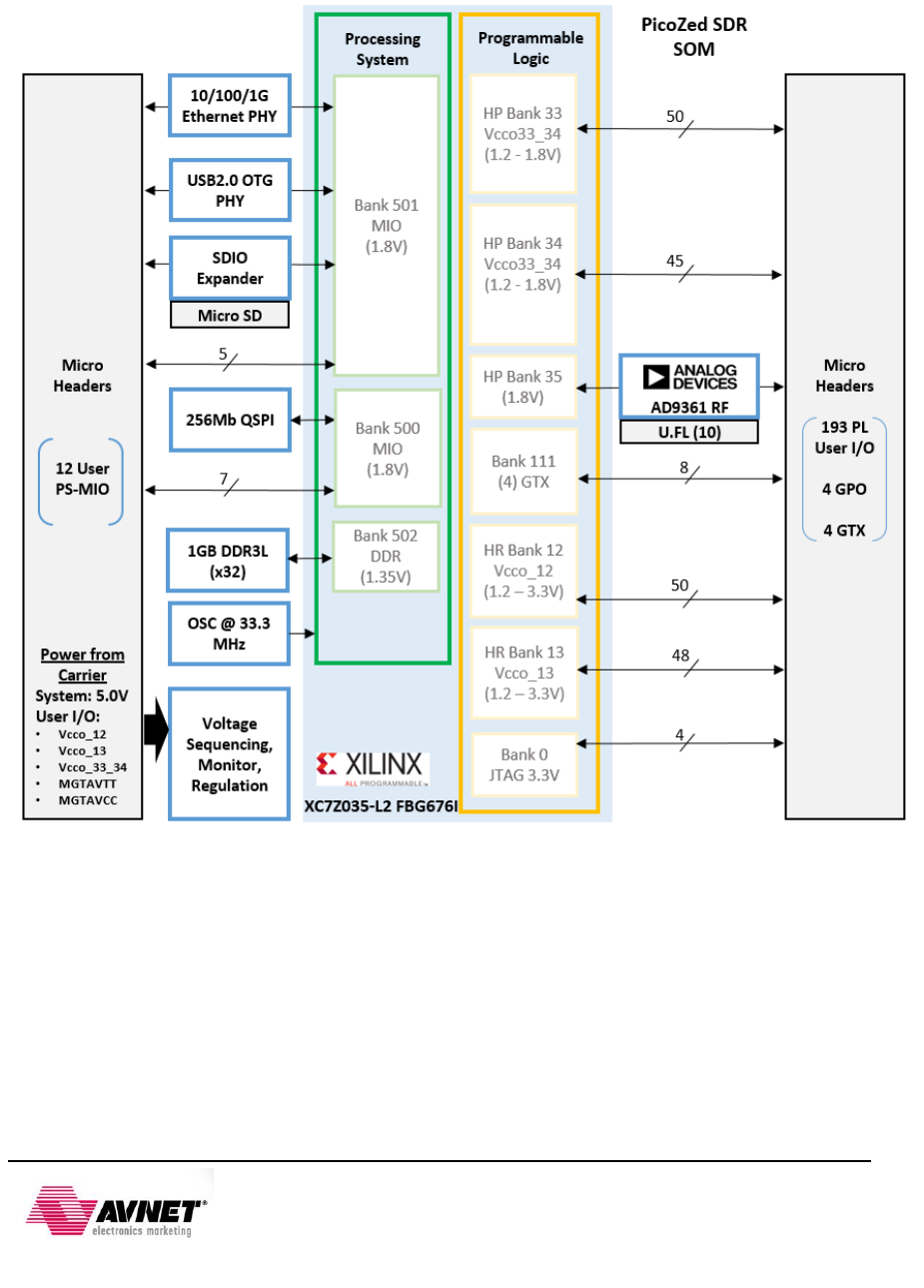
covered in the remaining sections. This diagram shows a summary of all system peripherals and
user I/O available.
Figure 4 - Detailed System Diagram
Version 1.7 Page 15
3.1 Xilinx Zynq-7000 All Programmable SoC
PicoZed SDR 2X2 includes a Xilinx Zynq XC7Z035-L2 FBG676I AP SoC. Tight integration
between the ARM-based processing system and the on-chip programmable logic creates
unlimited possibilities for designers to add virtually any peripheral or create custom accelerators
that extend system performance and suit unique application requirements.
This is a -2 speed grade and low power (-L) binned device. All SOM memory and digital
interfaces connect to Zynq through the Processing System (PS) or Programmable Logic (PL).
The Analog Devices AD9361 connects through Zynq PL.
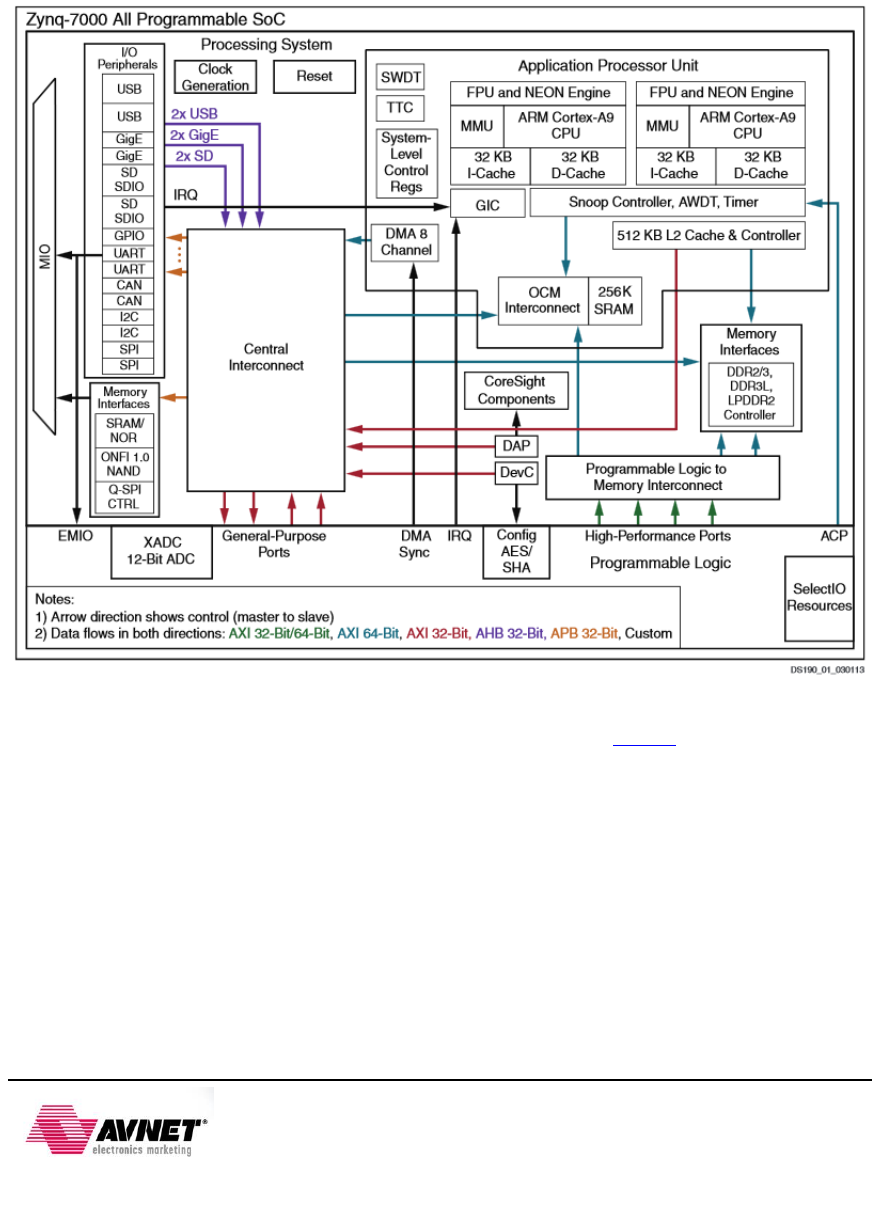
Figure 5 - Zynq-7000 AP SoC Block Diagram
Consult the Xilinx Zynq-7000 AP SoC Technical Reference Manual (UG585) for more information.
Version 1.7 Page 16
3.2 Analog Devices AD9361 RF Agile Transceiver
PicoZed SDR 2X2 includes an Analog Devices AD9361 RF Agile Transceiver™. The AD9361 is a
high performance, highly integrated RF Agile Transceiver™. Its programmability and wideband
capability make it ideal for a broad range of transceiver applications. The device combines an RF
front-end with a flexible mixed-signal baseband section and integrated frequency synthesizers.
The AD9361 operates in the 70 MHz to 6.0 GHz range, covering most licensed and unlicensed
bands. Channel bandwidths from less than 200 kHz to 56 MHz are supported.
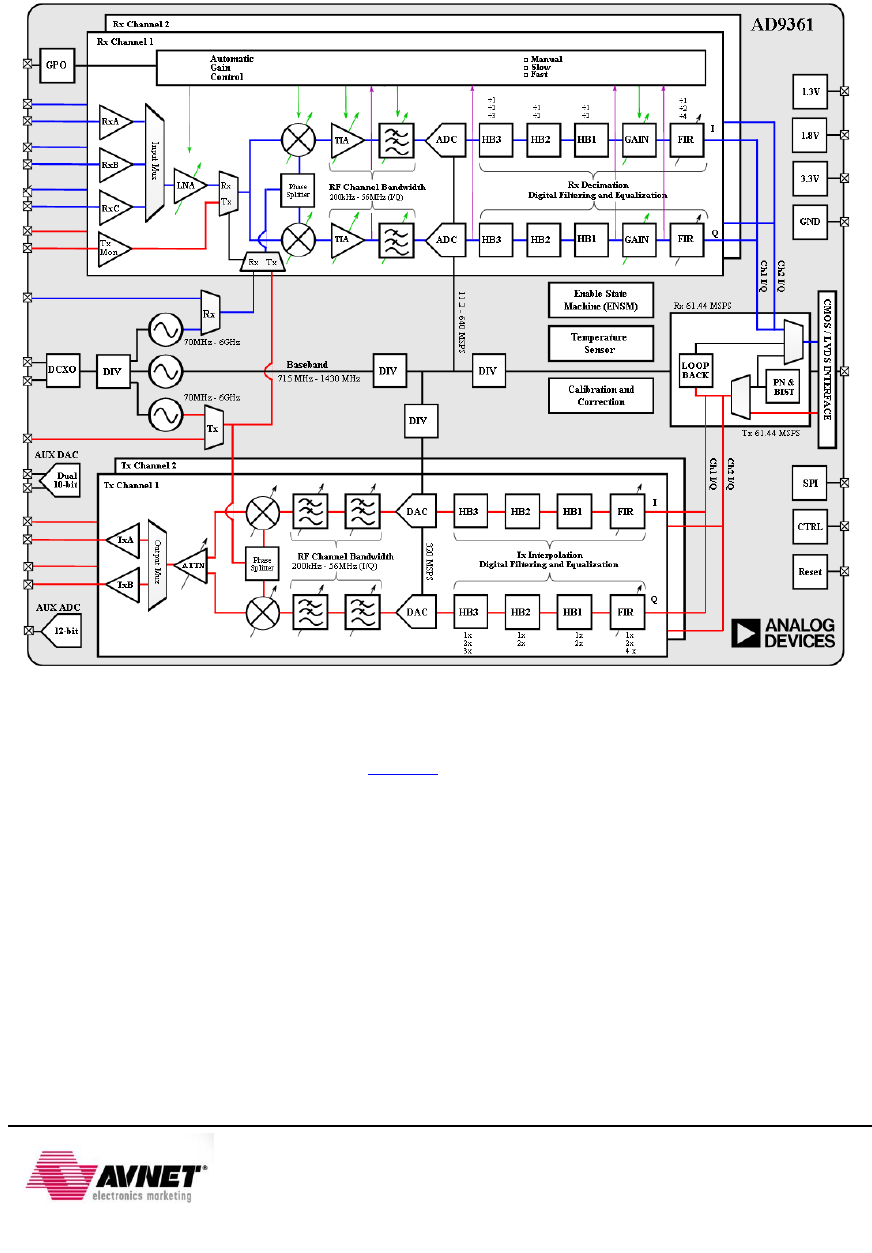
Figure 6 - AD9361 Block Diagram
Consult the AD9361 Reference Manual (UG-570) for more details.
Version 1.7 Page 17
3.3 AD9361/Zynq SoC Connection
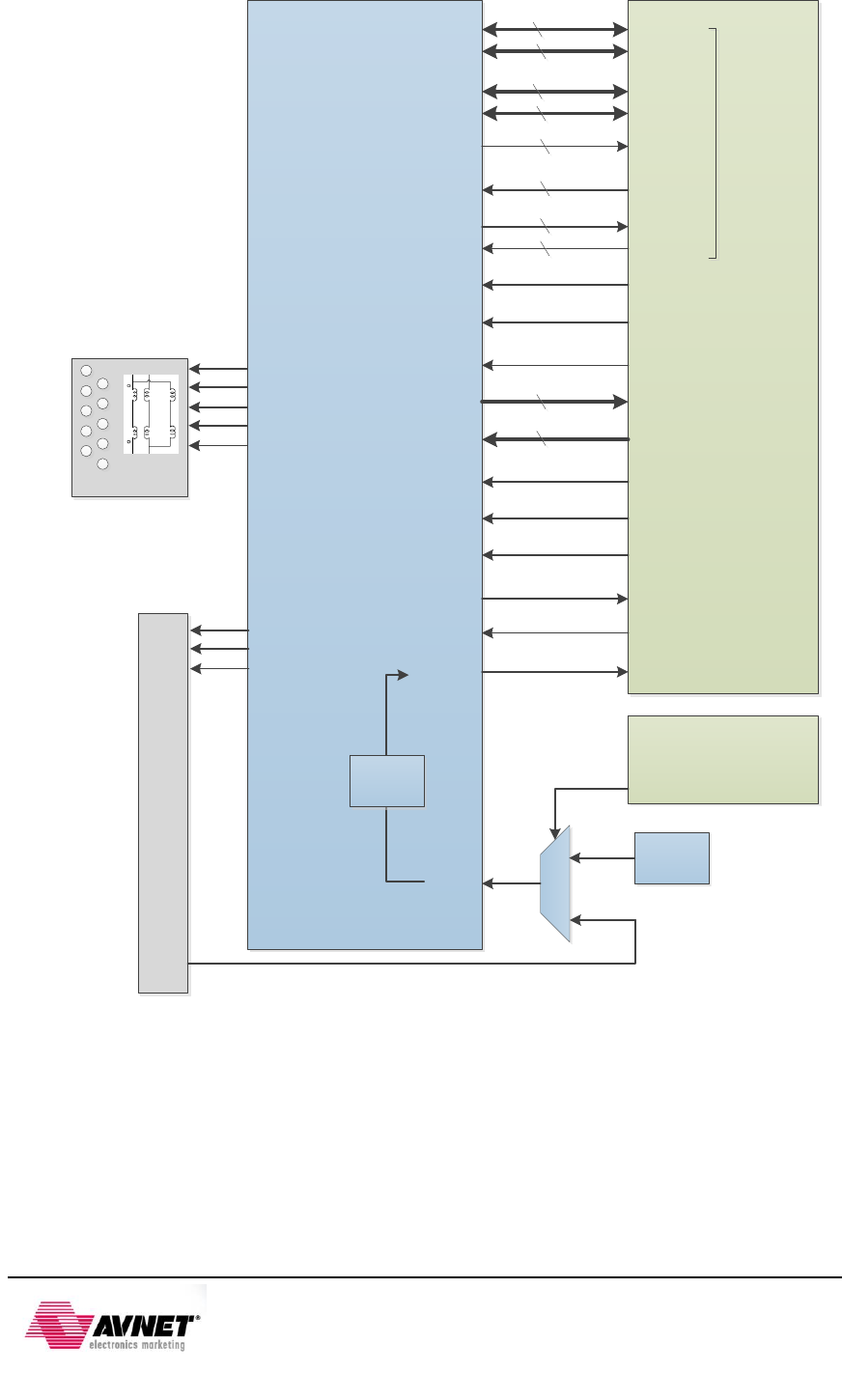
PicoZed SDR 2X2 connects the Xilinx Zynq Z-7035 SoC directly to the AD9361 RF Agile
Transceiver with dedicated high bandwidth data ports and clocks, an SPI control interface, and
other control and framing signals as shown in Figure 7.
The AD9361 digital interface is comprised of two parallel data ports (P0 and P1) and several
clock, synchronization, and control signals to transfer samples between the AD9361 and the Zynq
SoC. These signals can be configured as single-ended CMOS signals or as Low Voltage
Differential Signal (LVDS, ANSI-644 compatible) signals for systems that require high speed, low
noise data transfer. The system level reference designs that exist for the PicoZed SDR all use
LVDS, to achieve the maximum data throughput, but can be configured in CMOS mode to better
prototype a different hardware subsystem.
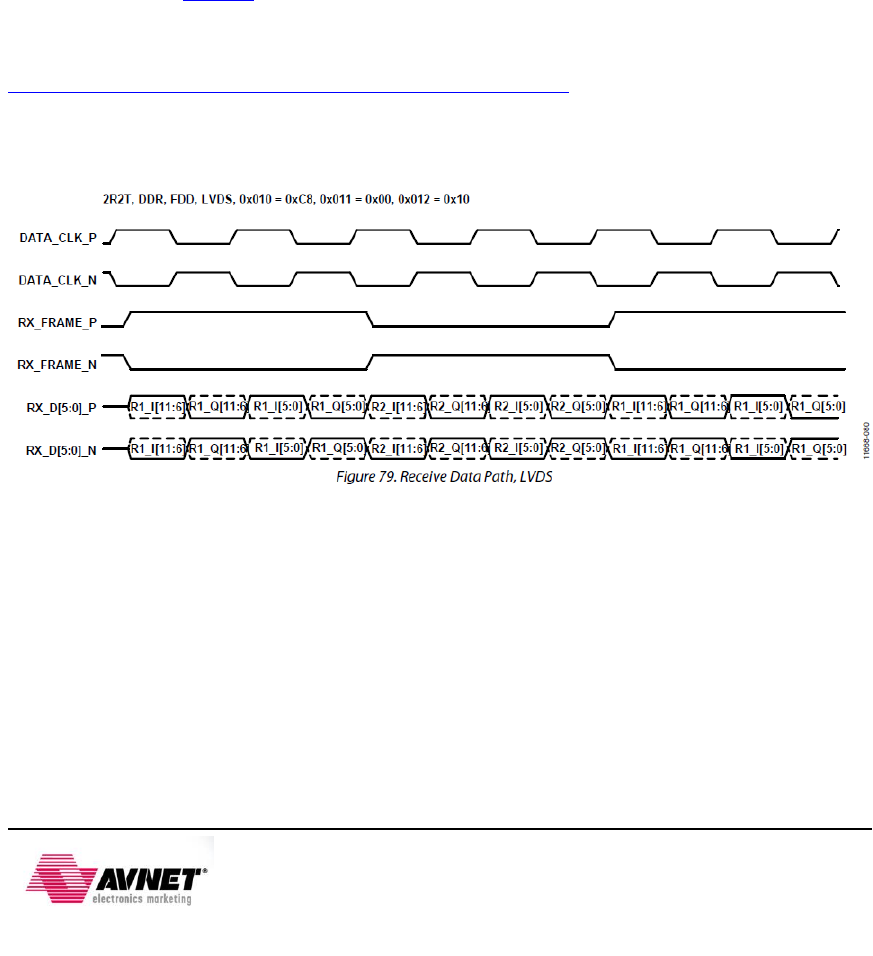
In LVDS mode, the interface is operated in double-data rate (DDR) mode. Therefore, 12-bit
samples to/from the AD9361 are sent across two 6-bit lanes on differential pairs.
Maximum rate across the Zynq-AD9361 data interface is limited by AD9361 max data rate
(122.88MSPS).
The timing diagram below is included for illustration of the data interface. Consult the AD9361
Reference Manual (UG-570) for more details.
Analog Devices provides Zynq HDL source code and Linux drivers for the AD9361. Designers are
encouraged to reuse them. More information can be found at their PicoZed SDR wiki page
https://wiki.analog.com/resources/eval/user-guides/picozed_sdr.
Figure 7 - AD9361 Receive Data Path, LVDS
Version 1.7 Page 18
P0_D[0:5]N
P0_D[0:5]P
P1_D[0:5]N
P1_D[0:5]P
DATA_CLK
FB_CLK
RX_FRAME
TX_FRAME
TXNRX
ENABLE
EN_AGC
CTRL_OUT
CTRL_IN
SPI_ENB
SPI_CLK
SPI_DI
SPI_DO
SYNC_IN
CLK_OUT
AUX_ADC
AUX_DAC[0:1]
GPO
Zynq Z-7035
(PL Bank 35)
6
6
6
6
8
4
2
2
2
2
MMRC
AD9361
7
8,10
[1:4]
U.FL
70MHz-
6GHz
Micro Header
TX1A/B
TX2A/B
RX1A/B
RX2A/B
TX_MON1/2
AD9361_CLK
XTALN
Zynq Z-7035
(PL Bank 34)
40MHz
XTAL
RF Interface
63
K11
AD9361_CLKSEL
PLL
JX4
LVDS
Figure 8 - AD9361/Zynq Z-7035 Interface

Version 1.7 Page 19
3.4 Memory
Zynq contains a hardened PS memory interface unit. The memory interface unit includes a
dynamic memory controller and static memory interface modules. PicoZed SDR takes
advantage of these interfaces to provide system RAM as well as non-volatile memory.
3.4.1 DDR3
PicoZed SDR includes two Micron MT41K256M16HA-125 DDR3L low power memory
components creating a 256M x 32-bit interface, totaling 1 GB of random access memory. The
DDR3L memory is connected to the hard memory controller in the PS of the Zynq AP SoC. The
PS incorporates both the DDR controller and the associated PHY, including its own set of
dedicated I/Os.
Speed of up to 1,066 Mb/s for DDR3L is supported.
The DDR3L interface uses 1.35V SSTL-compatible inputs by default.
DDR3L termination is utilized on PicoZed SDR and configured for fly-by routing topology, as
recommended in Xilinx UG933. Additionally the board trace lengths are matched,
compensating for the XC7Z035- FBG676 internal package flight times, to meet the
requirements listed in the Zynq-7000 AP SoC PCB Design and Pin Planning Guide (UG933).
The Zynq digitally controlled impedance (DCI) reference resistors (VRP/VRN) are 240Ω. The
differential clock DDR3_CK pair is terminated with 80Ω. The DDR3-CKE0 is terminated through
120 ohms to VTT_0P75. The DDR3-ODT has the same 120 ohm to VTT_0P75 termination.
This implementation departs from the Xilinx recommendations in UG933. Termination values
for PicoZed SDR are based on data from Micron and chosen to significantly reduce
power consumption. Each DDR3 chip has its own 240-ohm pull-down on ZQ.
Note: DDR-VREF is not the same as DDR-VTT.
Version 1.7 Page 20
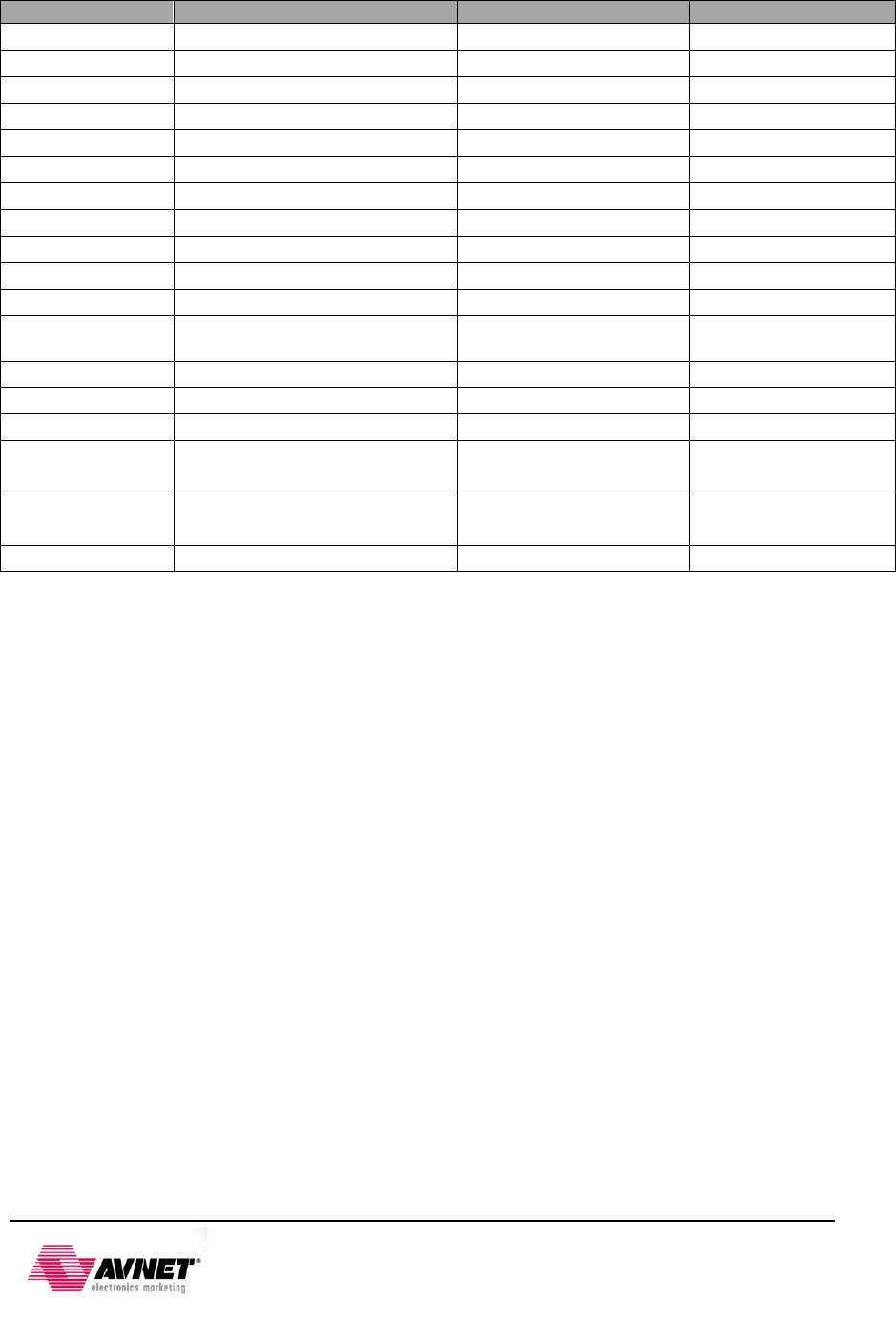
Table 1 - DDR3 Connections
Signal Name
Description
Zynq AP SOC pin
DDR3 pin
DDR_CK_P
Differential clock output
R21
J7
DDR_CK_N
Differential clock output
P21
K7
DDR_CKE
Clock enable
U21
K9
DDR_CS_B
Chip select
Y21
L2
DDR_RAS_B
RAS row address select
V23
J3
DDR_CAS_B
RAS column address select
Y23
K3
DDR_WE_B
Write enable
V22
L3
DDR_BA[2:0]
Bank address
PS_DDR_BA[2:0]
BA[2:0]
DDR_A[14:0]
Address
PS_DDR_A[14:0]
A[14:0]
DDR_ODT
Output dynamic termination
Y22
K1
DDR_RESET_B
Reset
H22
T2
DDR_DQ[31:0]
I/O Data
PS_DDR_DQ[31:0]
DDR3_DQ pins [15:0]
x2
DDR_DM[3:0]
Data mask
PS_DDR_DM[3:0]
LDM/UDM x2
DDR_DQS_P[3:0]
I/O Differential data strobe
PS_DDR_DQS_P[3:0]
UDQS/LDQS x2
DDR_DQS_N[3:0]
I/O Differential data strobe
PS_DDR_DQS_N[3:0]
UDQS#/LDQS# x2
DDR_VRP
I/O Used to calibrate input
termination
W21
N/A
DDR_VRN
I/O Used to calibrate input
termination
V21
N/A
DDR_VREF[1:0]
I/O Reference voltage
M21, K21
VTTREF
3.4.2 Quad SPI Flash
PicoZed SDR features a 4-bit SPI (quad-SPI) serial NOR flash. The Micron N25Q256A11E1240
is used on this board. Flash memory is used to provide non-volatile boot, application code, and
data storage. It can be used to initialize the Zynq PS subsystem as well as configure the PL
subsystem (bitstream). The relevant device attributes are as follows:
256Mbit
x1, x2, and x4 support
Speeds up to 108 MHz, supporting Zynq configuration rates @ 100 MHz
o In Quad-SPI mode, this translates to 400Mb/s
Powered from 1.8V
The SPI Flash connects to the Zynq PS QSPI interface. Booting from SPI Flash requires
connection to specific pins in MIO Bank 0/500, specifically MIO[1:6,8] as outlined in the Zynq
TRM. Quad-SPI feedback mode is used, thus qspi_sclk_fb_out/MIO[8] is connected to a
20K pull-up resistor to 1.8V. This allows a QSPI clock frequency greater than FQSPICLK2.
The 20K pull-ups on MIO[7:8] strap VMODE[0:1], setting Bank 0 an Bank 1 voltage to 1.8V.
Version 1.7 Page 21
Table 2 - QSPI Flash Pin Assignment and Definitions
Signal Name
Description
Zynq Pin
MIO
Quad-SPI Pin
CS
Chip Select
D26 (MIO Bank 0/500)
1
C2
DQ0
Data0
E25 (Bank MIO0/500)
2
D3
DQ1
Data1
D25 (MIO Bank 0/500)
3
D2
DQ2
Data2
F24 (MIO Bank 0/500)
4
C4
DQ3
Data3
C26 (MIO Bank 0/500)
5
D4
SCK
Serial Data Clock
F23 (MIO Bank 0/500)
6
B2
FB Clock
QSPI Feedback
A24 (MIO Bank 0/500)
8
N/A
PS-SRST#
Zynq PS Reset
A22 (Bank 501)
N/A
A4
Note: The QSPI data and clock pins are shared with the VMODE and BOOT_MODE jumpers S3
and S4.
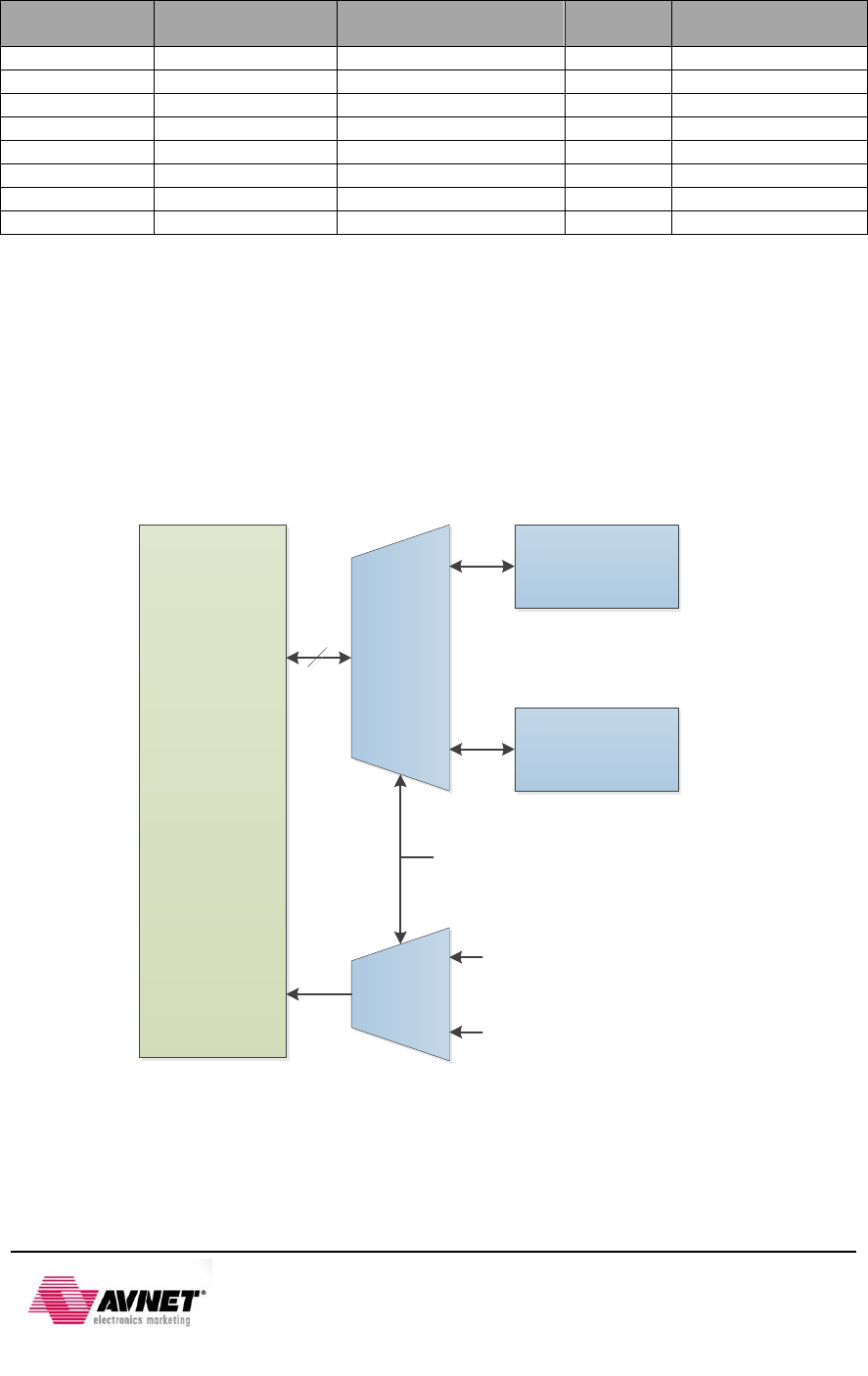
3.4.3 Micro SD Card Interface
The Micro SD card can be used for non-volatile external memory storage as well as booting the
Zynq-7000 AP SoC. The Zynq PS SD/SDIO peripheral is connected to a TI TXS02612 SDIO Port
Expander With Voltage-Level Translation and ESD protection (U11), providing connectivity to the
micro SD interface on the PicoZed SDR SOM or a carrier card through the bottom-side micro
header receptacles (JX3).
SD_SEL (S1)
MIO40
MIO41
MIO42
MIO43
MIO44
MIO45
MIO50
Micro SD
Card (J3)
Micro Header
JX3[34, 36:39, 43]
6
SOM Card Detect (J3-9)
Carrier Card Detect (JX3-41)
Zynq 7Z035
SDIO
Expander
Dual 2:1
MUX
Figure 9 - SD Card Multiplexed Architecture
For example, the PicoZed SDR FMC Carrier implements a standard SD card interface as an
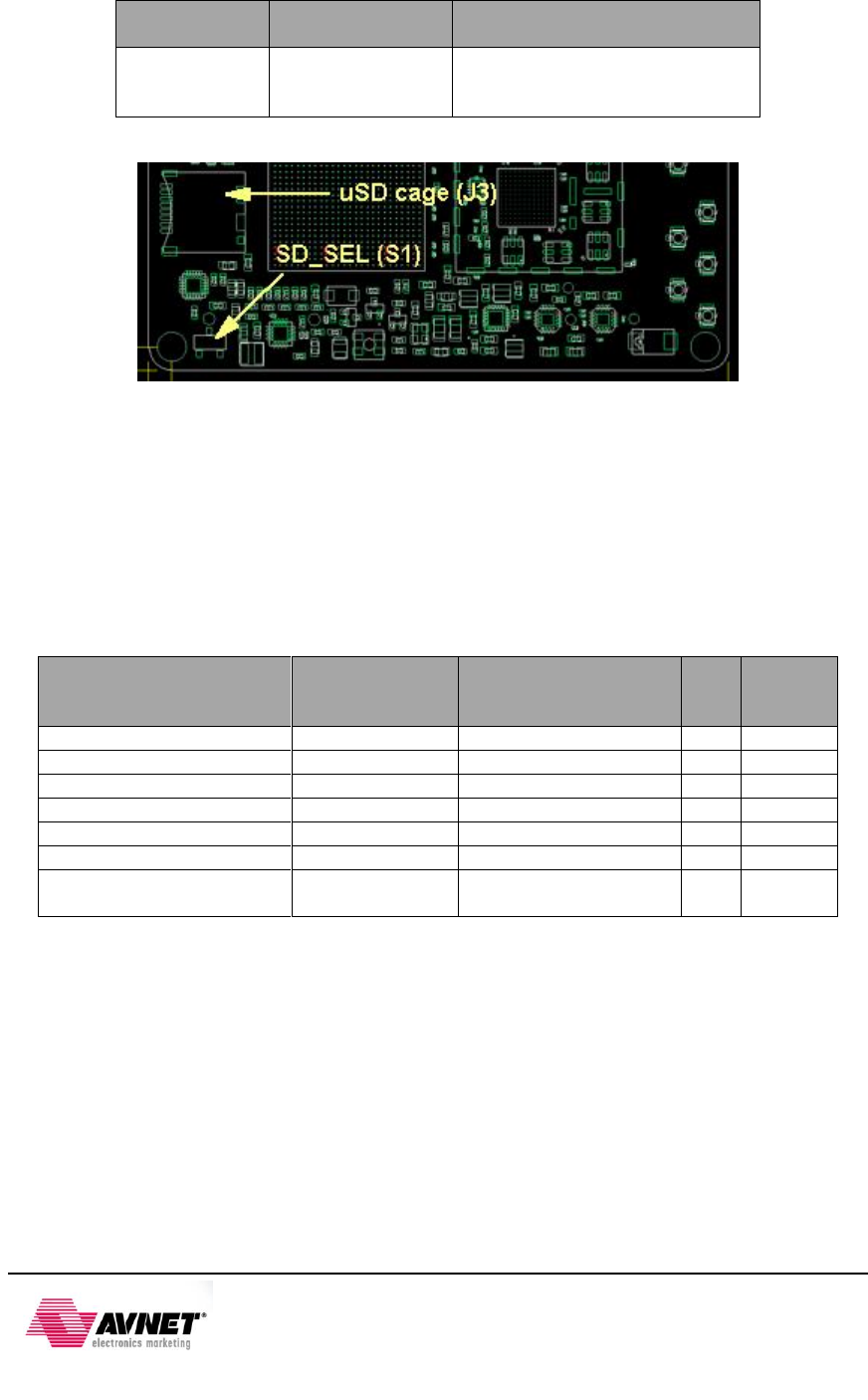
alternative to using the micro SD card on the SOM. Switch S1 on the SOM selects the SD source
connected to Zynq, as explained below.
Version 1.7 Page 22
Table 3 - Setting SD Card Select (S1)
Signal
Description
Settings
SD_SEL
SOM switch S1
(SD Card Select)
0 = SOM micro SD;
1 = Carrier SD;
(white dot on switch is logic 0)
Figure 10 – Micro SD Cage and Select Switch
The Zynq PS peripheral sd0 is connected through Bank 1/501 MIO[40-45]. The Card Detect
signals from the SOM (J3-9) and carrier (JX3_SD1_CDN) are multiplexed on the SOM with the
ADG772 dual 2:1 MUX (U5), onto one signal connected to Zynq PS MIO50.
Table 4 - Zynq PS SDIO Connections
Signal Name
Description
Zynq Pin
MIO
2nd SD
channel
on JX3
SD0_CLK
Clock
C22 (MIO Bank 1/501)
40
JX3-43
SD0_CMD
Command
C19 (MIO Bank 1/501)
41
JX3-34
SD0_DATA0
Data[0]
F17 (MIO Bank 1/501)
42
JX3-37
SD0_DATA1
Data[1]
D18 (MIO Bank 1/501)
43
JX3-36
SD0_DATA2
Data[2]
E18 (MIO Bank 1/501)
44
JX3-39
SD0_DATA3
Data[3]
C18 (MIO Bank 1/501)
45
JX3-38
PS_MIO50_501_SD0_CD
Shared Card
Detect signal
B22 (MIO Bank 1/501)
50
JX3-41
The micro SD Card is a 3.3V interface but is connected through MIO Bank 1/501 which is set to
1.8V. Therefore, the SDIO expander device performs voltage translation. As stated in the Zynq
Technical Reference Manual (TRM), host mode is the only mode supported configuration.
The micro SD Card connector is located at J3 on the SOM (see
Figure 10). If you are using the SD Card for a file system a Class 10 card or better is
recommended. We use SanDisk and Delkin. Other vendor cards may work as well, however
we’ve experience issues with a few brands.
Version 1.7 Page 23
3.5 USB 2.0 OTG
The Zynq Z-7035 PS contains two hardened USB 2.0 high speed controllers with on-the-go (OTG)
dual role USB host controller or USB device controller operation using the same hardware.
PicoZed SDR uses one of these Zynq PS peripherals, in combination with a USB2.0 UTMI+ low pin
interface (ULPI) PHY device, to provide USB 2.0 OTG signaling to the JX3 connector.
The external Microchip USB3320 PHY presents an 8-bit ULPI interface to the Zynq PS MIO[28:39]
pins in Bank 1/501, corresponding to the Zynq PS USB0 peripheral. The USB PHY Reset signal is
connected to Zynq PS MIO[7] Bank 0/500. Signal PS_MIO7 is a 1.8V signal with a pull-up resistor
which instructs VMODE[0] to set MIO[0:15] to LVCMOS18 signal standard up boot time.
The USB3320 PHY features a complete HS-USB Physical Front-End supporting speeds of up to
480Mbs. VDDIO for this device can be 1.8V or 3.3V, and on the PicoZed SDR it is powered at
1.8V. The PHY is connected to MIO Bank 1/501, which is also powered at 1.8V. This is critical
since a level translator cannot be used as it would impact the tight ULPI timing required between
the PHY and the Zynq device.
Additionally, the USB PHY must clock the ULPI interface which requires a 24 MHz crystal or
oscillator (configured as ULPI Output Clock Mode). On the PicoZed SDR module, the 24 MHz
oscillator is an Abracon ASDMB CMOS oscillator. The oscillator may be powered down using the
STANDBY pin, which is controlled by the Zynq PS MIO[9] pin in Bank1/500.
The PicoZed SDR module does not include the USB connector. The SOM is designed to have
the USB connector reside on the mating carrier card. The four USB connector signals
(USB_OTG_P, USB_OTG_N, USB_ID, and USB_OTG_CPEN) are connected to the JX3 micro
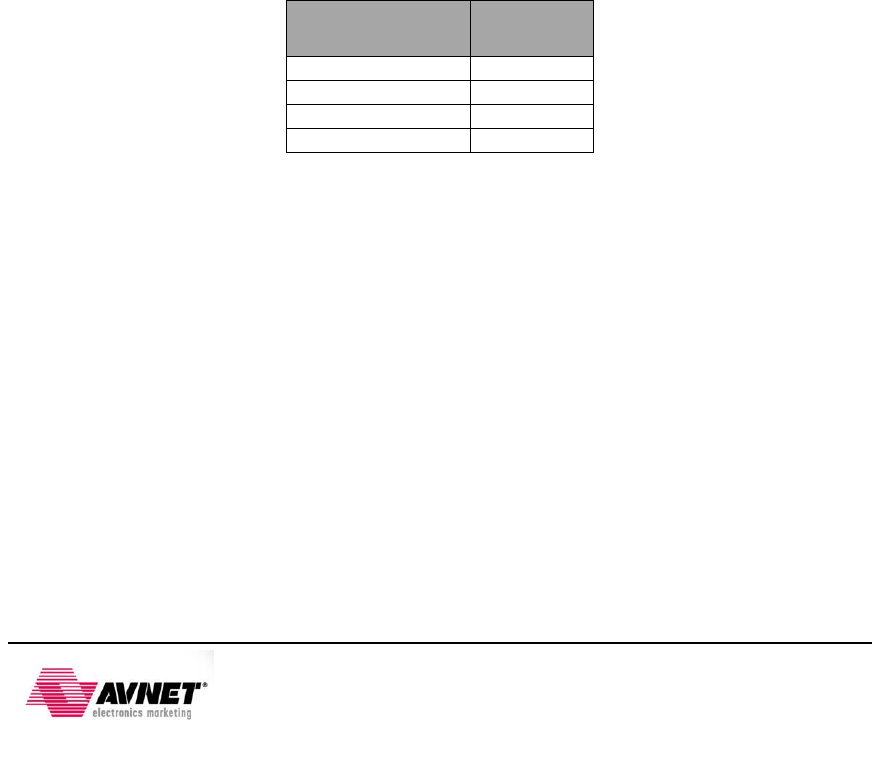
header receptacle. The table below shows the connections of these four signals at JX3.
Table 5 - USB 2.0 JX3 Pin Assignments
Signal Name
JX3 Pin
USB_OTG_N
69
USB_OTG_P
67
USB_ID
63
USB_OTG_CPEN
70
If using the Avnet PicoZed SDR FMC Carrier Card as the mating carrier card, the USB signals
are routed to a Micro-AB connector.
The PicoZed SDR module is configured such that either Host Mode (OTG) or Device Mode can
be used depending on the circuitry of the carrier card. With a standard connection to a baseboard
(no power supply used to provide USB power to the connector), the device will operate in Device
Mode. Using the USB_OTG_CPEN signal on JX3 allows you to control an external power source
for USB VBUS on the carrier board. Other considerations need to be made to accommodate Host
Mode. Refer to the Avnet PicoZed SDR FMC Carrier Card design for an example design for
configuring the carrier card for either Host Mode or Device Mode.

Version 1.7 Page 24
Table 6 - USB Host Pin Assignment and Definitions
Signal Name
Description
Zynq Bank
MIO
SMSC
3320 Pin
SOM JX3
pins
Data[7:0]
USB Data lines
MIO Bank 1/501
28:39
Data[7:0]
N/A
REFCLOCK
USB Clock
MIO Bank 1/501
26
N/A
DIR
ULPI DIR output signal
MIO Bank 1/501
31
N/A
STP
ULPI STP input signal
MIO Bank 1/501
29
N/A
NXT
ULPI NXT output signal
MIO Bank 1/501
2
N/A
REFSEL[2:0]
USB Chip Select
N/C
N/C
8,11,14
N/A
DP
DP pin of USB Connector
18
67
DM
DM pin of USB Connector
19
69
ID
Identification pin of the
USB connector
23
63
CPEN
5V external Vbus power
switch
N/C
N/C
17
70
RESET_B
Reset
MIO Bank 0/500
7
27
N/A
3.6 10/100/1000 Ethernet PHY
The Zynq PS includes two 10/100/1000 hardened Ethernet MAC ports. PicoZed SDR implements
one Zynq PS 10/100/1000 Ethernet port (Eth0) for network connection using a Marvell 88E1512
PHY. A unique MACID for this port is provided with each SOM as a printed label on the module. It
must be manually entered in Linux or included in the boot files for Zynq. A second Ethernet
interface can be implemented by using the spare user I/O available on PicoZed SDR.
The Marvell PHY operates at 1.8V. The PHY connects to Zynq PS MIO Bank 1/501 (1.8V) with
an RGMII interface. The PHY reset connects to Zynq PS MIO[8] Bank 0/500.
The PicoZed SDR module does not include the RJ-45 interface. The signals are connected to the
JX3 micro header receptacle. The intent is that the magnetics and RJ-45 jack are located on the
carrier card. An example design enabling two Ethernet ports with RJ-45 connectors can be found
in the Avnet PicoZed SDR FMC Carrier Card.
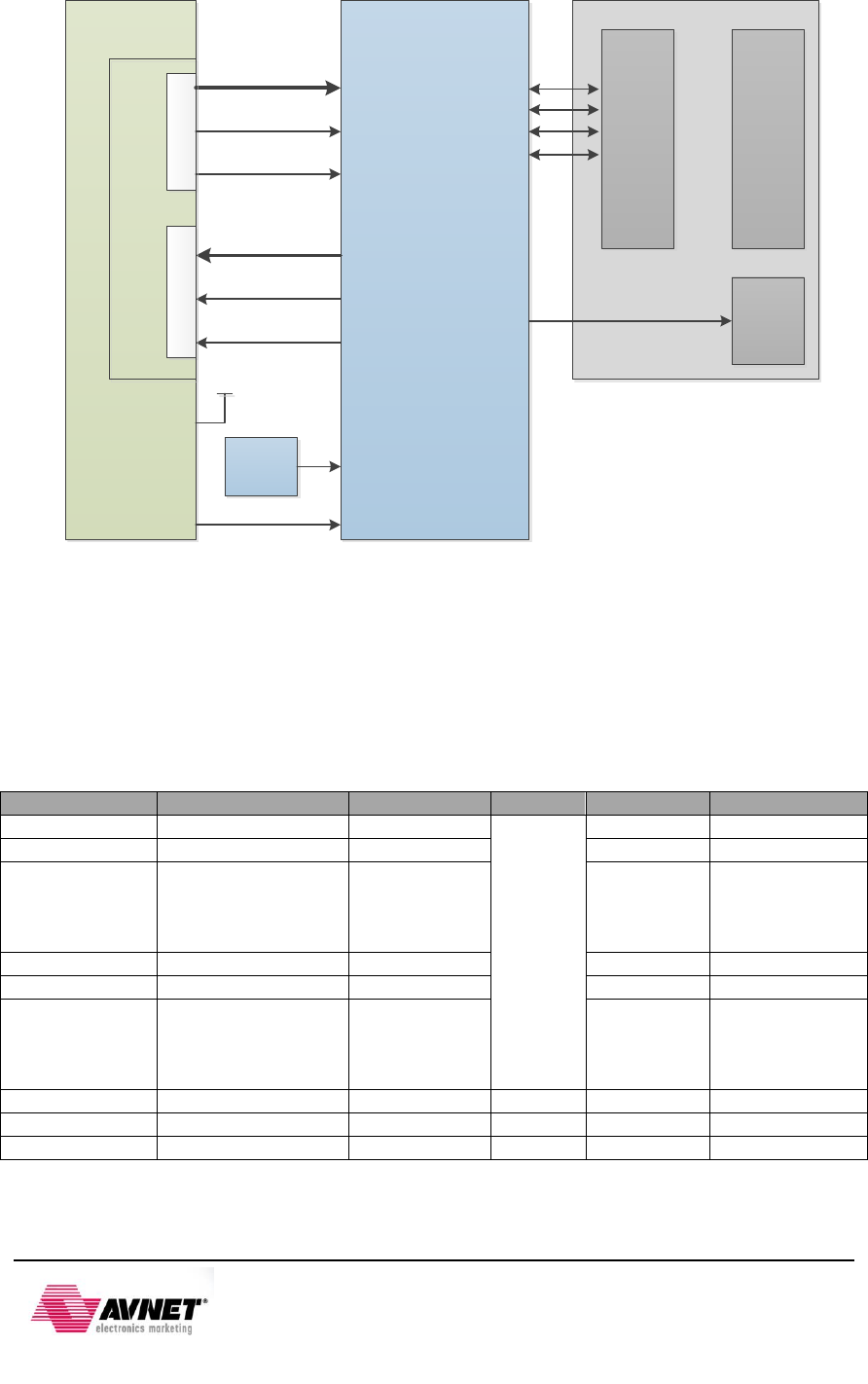
A high-level block diagram the 10/100/1000 Ethernet interface is shown in Figure 11.
Version 1.7 Page 25
Marvell 88E1512
Ethernet PHY
Zynq 7Z035
TransmitReceive
PS_MIO_VREF
phy_reset
PS-MIO[8]
data_tx[3:0]
clk_tx
control_tx
data_rx[3:0]
clk_rx
control_rx
10/100/1000 Mbps
Magneticss
RJ-45
Connector
TD_P
TD_N
RD_P
RD_N
LEDs
25MHz
Oscillator
Required on Carrier Card
RGMII
PS-MIO[16:27]
(Eth0)
0.9V
Figure 11 - 10/100/1000 Ethernet Interface
Zynq requires a voltage reference for RGMII interfaces. Thus PS_MIO_VREF, Zynq pin H18, is
tied to 0.9V, half the bank voltage of MIO Bank 1/501. The 0.9V reference is generated through a
resistor divide circuit. The 88E1512 also requires a 25 MHz input clock. A FOX ABM8G-
25.000MHZ-18-D2Y-T crystal is used as this reference.
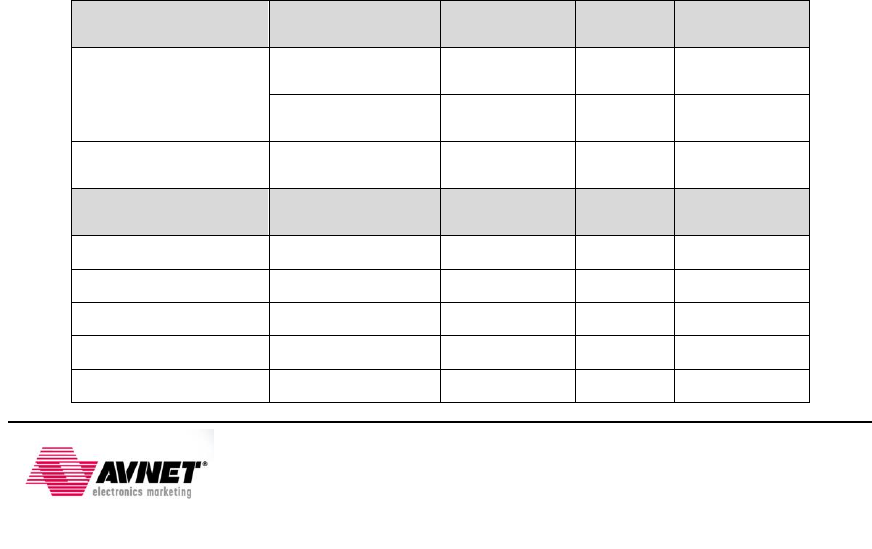
Table 7 - Zynq PS Ethernet PHY Pin Assignment and Definitions
Signal Name
Description
Zynq pin
MIO
Zynq Bank
88E1512 pin
RX_CLK
Receive Clock
G22
16:27
1 / 501
46
RX_CTRL
Receive Control
F18
1 / 501
43
RXD[3:0]
Receive Data
RXD0: F20
RXD1: J19
RXD2: F19
RXD3: H17
1 / 501
44
45
47
48
TX_CLK
Transmit Clock
G21
1 / 501
53
TX_CTRL
Transmit Control
F22
1 / 501
56
TXD[3:0]
Transmit Data
TXD0: G17
TXD1: G20
TXD2: G19
TXD3: H19
1 / 501
50
51
54
55
MDIO
Management Data
A19
53
1 / 501
8
MDC
Management Clock
A20
52
1 / 501
7
ETH_RST_N
PHY Reset
A24
47
0 / 500
16
Note: The datasheet for the Marvell 88E1512 is not available publicly. An NDA is required for this
information. Contact your local Avnet or Marvell representative for assistance.
Version 1.7 Page 26
3.7 User I/O
This section describes the various I/O available for use on the PicoZed SDR 2X2 SOM. Pin out
details of the available I/O are included in Section 3.15 Expansion Headers.
PicoZed SDR 2X2 SOM features four 100-pin micro header receptacles (FCI, 61082-103400LF)
for compact connection to carrier cards. The connector makes available 193 Zynq PL user
SelectIO pins, 12 Zynq PS MIO pins, and 4 AD9361 GPO pins – a total of 209 available user I/O.
In addition, four Zynq GTX gigabit serial transceiver ports are brought to the micro headers, each
comprised of one TX and one RX lane and capable of speeds up to 6.6Gbps. Inputs for two GTX
reference clocks are also available at the micro header. Finally, auxiliary data converters provide
analog signal interface outside of the AD9361 primary RF path, as described in Section 3.8 User
Auxiliary ADC and DAC Interfaces.
3.7.1 AD9361 User Pins
PicoZed SDR 2X2 provides access to four general purpose output pins GPO[3:0] from the
AD9361. These pins are normally controlled by the AD9361 state machine, and can be linked to
the TDD block (for controlling external Tx/Rx switches), or the AD9361 automatic gain control
(ACG) block (for external LNA control), or optionally by registers, accessed through an SPI
interface between the Zynq SoC and the AD9361.
The four AD9361 GPO signals are output only. The PicoZed SDR SOM sets the VDDA_GPO
voltage level for these pins at 2.5V, but this can be overridden (voltage can be increased up to
3.3V) by placing a higher voltage on the VDDA_GPO_PWR pin on JX4.9
3.7.2 Zynq PS MIO User Pins
The Zynq Z-7035 SoC has 54 PS-MIO pins that connect to the Zynq Processor Sub-System (PS).
PicoZed SDR makes 12 of these pins available as general purpose I/O while the remaining 42
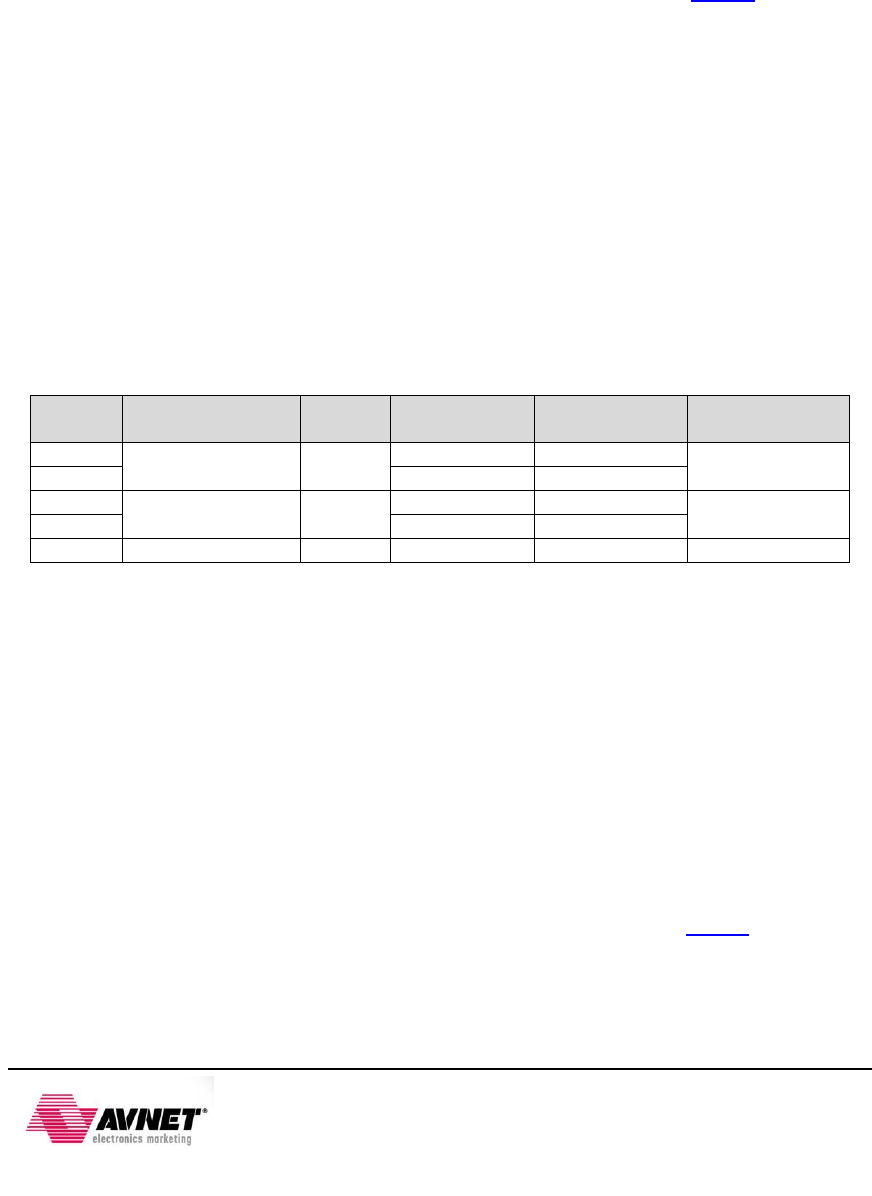
are dedicated to peripheral and memory interfaces. Table 8 summarizes these signals.
The 12 available MIO pins can be used to implement of a variety of digital peripherals such as
SPI, SDIO, CAN, UART, and I2C. These I/O pins can also be used as general purpose IO to
connect push buttons, LEDs, and/or switches to the Zynq from the carrier card.
Note: The PS MIO banks are powered at 1.8V.
Table 8 - Zynq PS MIO Bank Summary
Interface
MIO Signals
Bank
Bank
Voltage
Available
Pins
Available
User MIO
0,10-15
500
1.8V
7
46-49, 51
501
1.8V
5
Total
12
Interface
MIO Signals
Bank
Bank
Voltage
Dedicated
Pins
QSPI_0 FLASH
1-6, 8
500
1.8V
7
USB_0
7, 28-39
500/501
1.8V
13
ETHERNET_0
16-27, 47, 52-53
500/501
1.8V
15
SDIO_0
40-45, 50
501
1.8V
7
Total
42
Version 1.7 Page 27
3.7.3 Zynq PL SelectIO User Pins
PicoZed SDR 2X2 provides 193 user SelectIO pins which connect to the Zynq Programmable
Logic (PL). The voltage for these PL user I/O are set by the carrier card; supplied to the SOM
through the JX micro header receptacles. This creates a highly flexible architecture for custom
user functions and interfaces implemented in the Zynq Programmable Logic.
All Zynq SelectIO pins can be configured as either Input or Output with voltage signaling standards
compliant with their bank voltage. The bank voltages must be delivered by the mating carrier card
and within the ranges specified in
Table 9. Consult the Xilinx 7 Series FPGAs SelectIO Resources User Guide (UG471) for
information about supported I/O signaling standards.
The PL I/O pins are routed with matched lengths to each of the JX connectors. The matched
pairs, denoted by an N/P suffix (e.g. IO_L01_13_JX2_P, IO_L01_13_JX2_N) may be used as
either single ended I/O or differential pairs depending on the end user’s design requirements.
Differential LVDS pairs on a -2L speed grade device are capable of DDR data rates up to
1250Mbps for High Range (HR) banks and 1400 Mbps for High Performance (HP) banks.
Additionally, eight of these I/O can be connected as clock inputs (i.e., four MRCC and four SRCC
inputs). Each Zynq PL bank can also be configured to be a memory interface with up to four
dedicated DQS data strobes and data byte groups. One of the differential pairs
(IO_L03_34_JX4_P) in Zynq Bank 34 (Zynq pin H9) is shared with the Zynq “PUDC_B” signal.
See Section 3.11.3 Zynq PROGRAM_B, DONE, PUDC_B, INIT_B Pins for more information.
Table 9 - Zynq PL User I/O Bank Summary
Bank
Bank Voltage
Type
Available
Pins
Available as
LVDS pairs
Max DDR
LVDS rate
12
Set by carrier
(1.2 – 3.3V)
HR
50
24
1250 Mbps
13
48
23
33
Set by carrier
(1.2 – 1.8V)
HP
50
24
1400 Mbps
34
45
22
Total
193
94
A detailed mapping of user I/O to the SOM micro header receptacle pins can be found in Section
3.15 Expansion Headers
When using the PL I/O pins care must be taken to ensure that any external signal interface
adheres to the respective Zynq PL bank voltages. The carrier card provides the I/O VCCO
voltages for the banks shown in
Table 9. Therefore a custom carrier card can support mixed I/O voltage interfaces to the Zynq PL.
Note: The following are restrictions of the PicoZed SDR Zynq Z-7035 SelectIO banks:
Banks 33 and 34 are high performance (HP) I/O with support for I/O voltage from 1.2 to 1.8V.
Banks 12 and 13 are high range (HR) I/O with support for I/O voltage from 1.2V to 3.3V
and Digitally Controlled Impedance (DCI).
All 4 banks support LVDS.
Consult the Xilinx 7 Series FPGAs SelectIO Resources User Guide (UG471) for more
information.
It is recommended any custom interface is run through the Xilinx Vivado™ tool suite for a design rule
check on place and route and timing closure in advance of end user carrier card manufacturing.

Version 1.7 Page 28
3.8 User Auxiliary ADC and DAC Interfaces
In addition to the data converters included inside of the AD9361 primary signal chain, PicoZed
SDR provides access to auxiliary data converters in the AD9361 and Zynq SoC.
3.8.1 AD9361 Auxiliary ADC
The AD9361 contains an auxiliary ADC that can be used to monitor system functions such as
temperature or power output. The converter is 12 bits wide and has an input range of 0.05 V to
1.25 V. When enabled, the ADC is free running. SPI reads provide the last value latched at the
ADC output. A multiplexer in front of the ADC allows you to select between the AUXADC input pin
and a built-in temperature sensor. Both the Linux IIO device driver for the AD9361 and the no-OS
driver for the AD9361 expose the built-in temperature sensor and external ADC channel with
easy to use entries in sysfs or standard APIs.
PicoZed SDR wires the AD9361 single-ended AUXADC pin to the JX micro header receptacle
JX4-7.
3.8.2 AD9361 Auxiliary DACs
The AD9361contains two identical auxiliary DACs that can provide power amplifier (PA) bias or
other system functionality. The auxiliary DACs are 10 bits wide, have an output voltage range of
0.5 V to VDD_GPO − 0.3 V, a current drive of 10 mA, and can be directly controlled by the
internal enable state machine.
PicoZed SDR wires the AD9361 single-ended AUXDAC1 and AUXDAC2 pins to the JX micro
header receptacle JX4-8 and JX4-10 respectively.
More information on the AD9361 auxiliary data converters can be found in Analog Devices
document UG570.
3.8.3 Zynq SoC ADC
The Zynq SoC includes the Xilinx Analog-to-Digital Converter (XADC) which contains two 12-bit
1MSPS ADCs with separate track and hold amplifiers, an on-chip analog multiplexer (up to
17 external analog input channels supported), and on-chip thermal and supply sensors. The two
ADCs can be configured to simultaneously sample two external-input analog channels. The track
and hold amplifiers support a range of analog input signal types, including unipolar, bipolar, and
differential. The analog inputs can support signal bandwidths of at least 500 KHz at sample rates
of 1MSPS. More information on the XADC can be found in Xilinx document UG480.
PicoZed SDR provides access to the primary XADC differential analog input on Zynq pins
VP_0/VN_0, sampled by Zynq ADC_A. The differential pins are wired to PicoZed SDR JX micro
header receptacle pins JX3-1 (V_0_P) and JX3-3 (V_0_N).
A Zynq internal multiplexer allows sampling of the following:
External analog signals at VP_0/VN_0 pins
Internal die temp sensor
External thermal diode connected to DXP_0/DXN_0 (SOM pin JX1-98, JX1-100)
Version 1.7 Page 29
3.9 Zynq Multi-Gigabit Transceivers (MGTs)
PicoZed SDR 2X2 enables four of the eight gigabit full-duplex GTX transceiver lanes that reside
on Bank 111 (SOM Rev A-C) or Bank 112 (SOM Rev D and beyond) of the Zynq XC7Z035-L2
FBG676I device. These high speed transceivers can be used to interface to multiple high speed
interface protocols such as PCI Express, Ethernet, Serial ATA, and more.
The Xilinx XC7Z035-L2 FBG676I is enabled with GTX transceivers which are capable of a
transceiver data rate up to 6.6 Gb/s.
Two differential MGT reference clock inputs are available for use with the GTX lanes. Either clock
input can be used as the clock reference for any one of the GT lanes in the bank. This allows you
to implement various protocols requiring different line rates. The SOM implements
dc-blocking capacitors in series with these GTX reference clocks, but not on the data signals.
Gigabit transceiver lanes and their associated reference clocks are connected to the carrier board
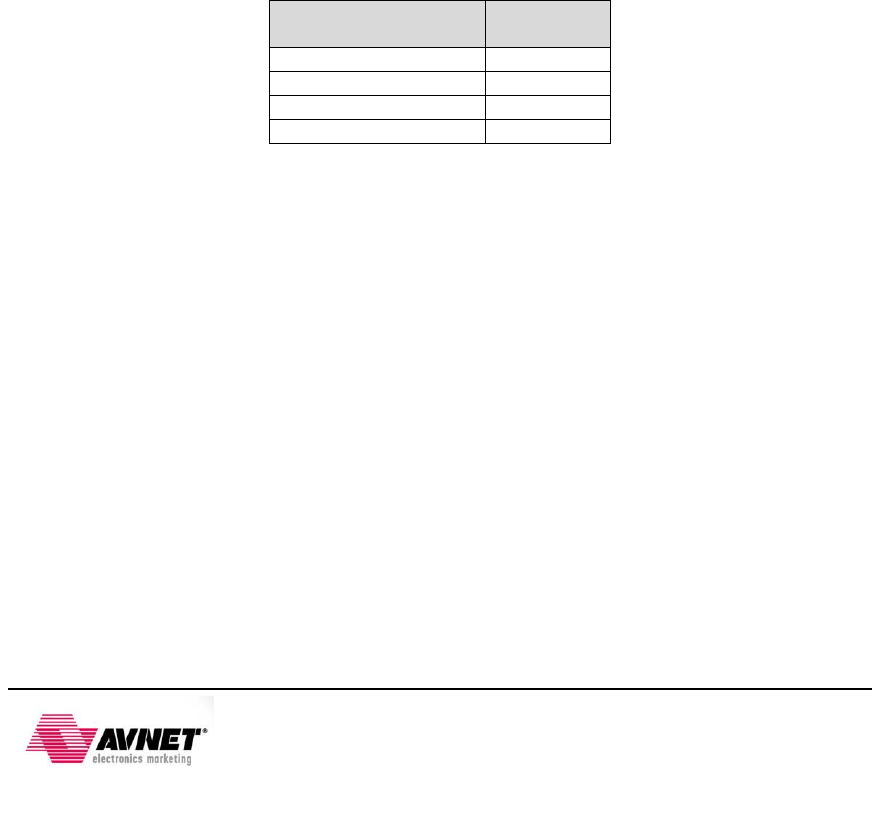
via the JX micro header receptacles. Table 10 shows the connections between the Zynq device
and the JX micro header. Pin assignments can be found in Table 18 - JX1 Connections and
Table 20 - JX 3 Connections.
Performance of the four GTX lanes implemented on PicoZed SDR was validated to run at the
rated maximum rate of 6.6GB/s. Tests were performed by using the Xilinx Vivado™ serial I/O
analyzer software with the Xilinx LogiCORE™ IP Integrated Bit Error Ratio Test (IBERT) core for
7 series FPGA GTX transceivers.
Table 10 - Zynq GTX Connector Assignments
GTX
JX
connector
MGTREFCLK0_N/P
JX1
MGTXRX [3:1] _N/P
JX1
MGTXTX [3:1] _N/P
JX3
MGTREFCLK1_N/P
JX3
3.10 Clock sources
High performance RF designs require knowledge of the digital clocks in the system because they
can impart unwanted spurs into the RF signal chain. This section details the clocks used on the
PicoZed SDR 2X2 SOM and indicates which can be disabled in case of undesired spurs or to
implement the lowest power design.
3.10.1 Zynq clocks
PicoZed SDR 2X2 connects a dedicated 33.3333 MHz clock source to the Zynq SoC Processor
Subsystem (PS). An ABRACON ASDMB-33.333MHZ-LC-T with 40-ohm series termination is used.
The Zynq PS infrastructure can generate up to four PLL-based clocks for the Zynq Programmable
Logic (PL) system. The Zynq Z-7035 PL has eight clock management tiles (CMTs), each consisting of
one mixed-mode clock manager (MMCM) and one phase-locked loop (PLL).
3.10.2 AD9361 clocks
The AD9361 operates using a reference clock that can be provided by two different sources. This
reference clock is used to supply the synthesizer blocks that generate all data clocks, sample
clocks, and local oscillators inside the device.
Version 1.7 Page 30
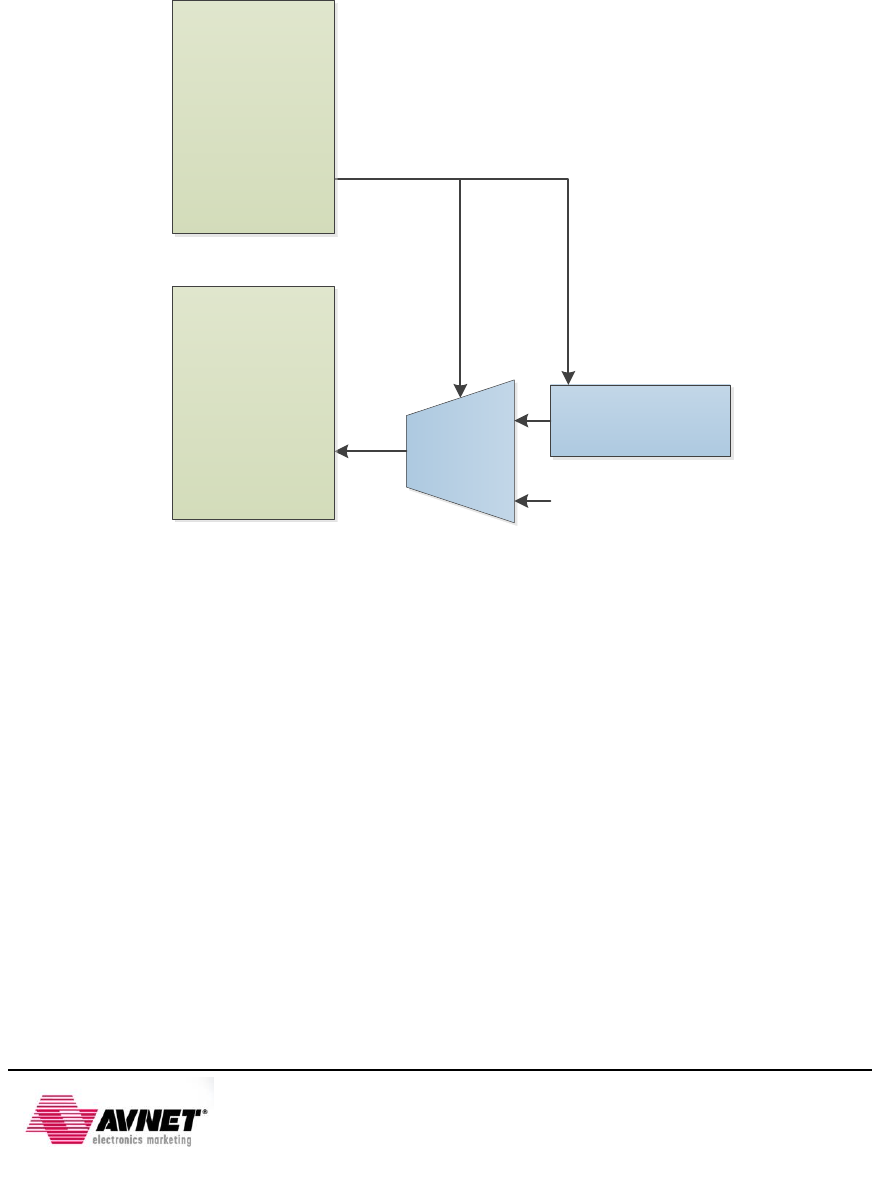
PicoZed SDR provides an on-board 40MHz crystal and an external clocking option by using an
analog multiplexor (ADG772). The on-board 40MHz crystal is from Rakon (MFR part # 513371). If
an external oscillator is used, the frequency can vary between 10 MHz and 80 MHz. The
selection between the two clock sources is under control of a Zynq PL pin in Bank 34 (K11).
The ability to use an external clock source for the AD9361 enables multi-SOM synchronization
when used in conjunction with the SYNC_IN signal connected to the Zynq SoC. See Section 3.14
Multi-SOM Synchronization.
Figure 12 provides detail of the clock architecture, signal names, and pin connections.
AD9361_CLK (JX4-63)
40MHz Crystal
Dual 2:1
MUX
AD9361
XTALN
IO_00_34_AD9361_CLKSEL
E/D
ADG772 (U5)
Z-7035
(Bank 34)
IO_0_VRN_34
(K11)
Figure 12 - AD9361 Clock Input Options
In addition to these clocks, the AD9361 creates an output data clock for the Zynq PL.
For more information, see Section 0

Version 1.7 Page 31
AD9361/Zynq SoC Connection.
3.10.3 Ethernet Clock
The Marvell 88E1512 Ethernet PHY onboard PicoZed SDR 2X2 receives a 25 MHz input
reference clock from a FOX ABM8G-25.000MHZ-18-D2Y-T crystal. This reference cannot be
disabled.
The PHY RX_CLK may be disabled through the MDIO management interface. The PHY TX_CLK
is supplied by the Zynq PS Ethernet controller and may be disabled in software.
See Section 3.6 10/100/1000 Ethernet PHY for details and a diagram of the interface.

Version 1.7 Page 32
3.10.4 USB Clock
PicoZed SDR 2X2 uses the Microchip USB3320 Transceiver. The device receives a 24.00MHz
clock from a CMOS oscillator which may be powered down with the PS_MIO09_500_USB_CLK_PD
signal, controlled by software on the Zynq PS.
The USB3320 transceiver uses an internal PLL to generate a 60MHz clock for the ULPI interface to
Zynq. If the 24MHz reference clock is stopped while 60MHz CLKOUT is running, the PLL will come
out of lock and the frequency of the CLKOUT signal will decrease to the minimum allowed by the
PLL design. This may cause the USB session to drop. Alternatively, the link controller (Zynq PS)
can send a command to enter low power mode thereby disabling the USB3320 60MHz CLKOUT
signal.
3.10.5 SDIO Clock
The Zynq SoC provides an SDIO clock for the SD card interface. The SDIO clock frequency and
output buffer can be controlled by software using the Zynq PS MIO registers. Consult the Xilinx
Zynq-7000 Technical Resource Manual (UG585) for more information.
3.11 Reset Sources
3.11.1 AD9361 Reset
The AD9361 has a single asynchronous reset pin (RESETB) that is connected directly to the
Zynq SoC on Bank 35 – pin H16. Asserting this signal to logic low resets the device and triggers
the automatic initialization calibrations. This is managed by the AD9361 device driver, and should
not be managed by the end user.
3.11.2 Zynq Power‐on Reset (PS_POR_B)
The Zynq PS supports an external power-on reset signal. The power-on reset is the master reset
of the entire chip. This signal resets every register in the device capable of being reset. On
PicoZed SDR, this pin is connected to the power-good output of the final stage of the power
regulation circuitry (PWR_GD_1.35V) which holds the Zynq PS_POR_B signal low until the
output voltage is valid. In addition, a push button switch (SW1) is connected to PS_POR_B and
GND to allow a manual hard reset of the Zynq device.
3.11.3 Zynq PROGRAM_B, DONE, PUDC_B, INIT_B Pins
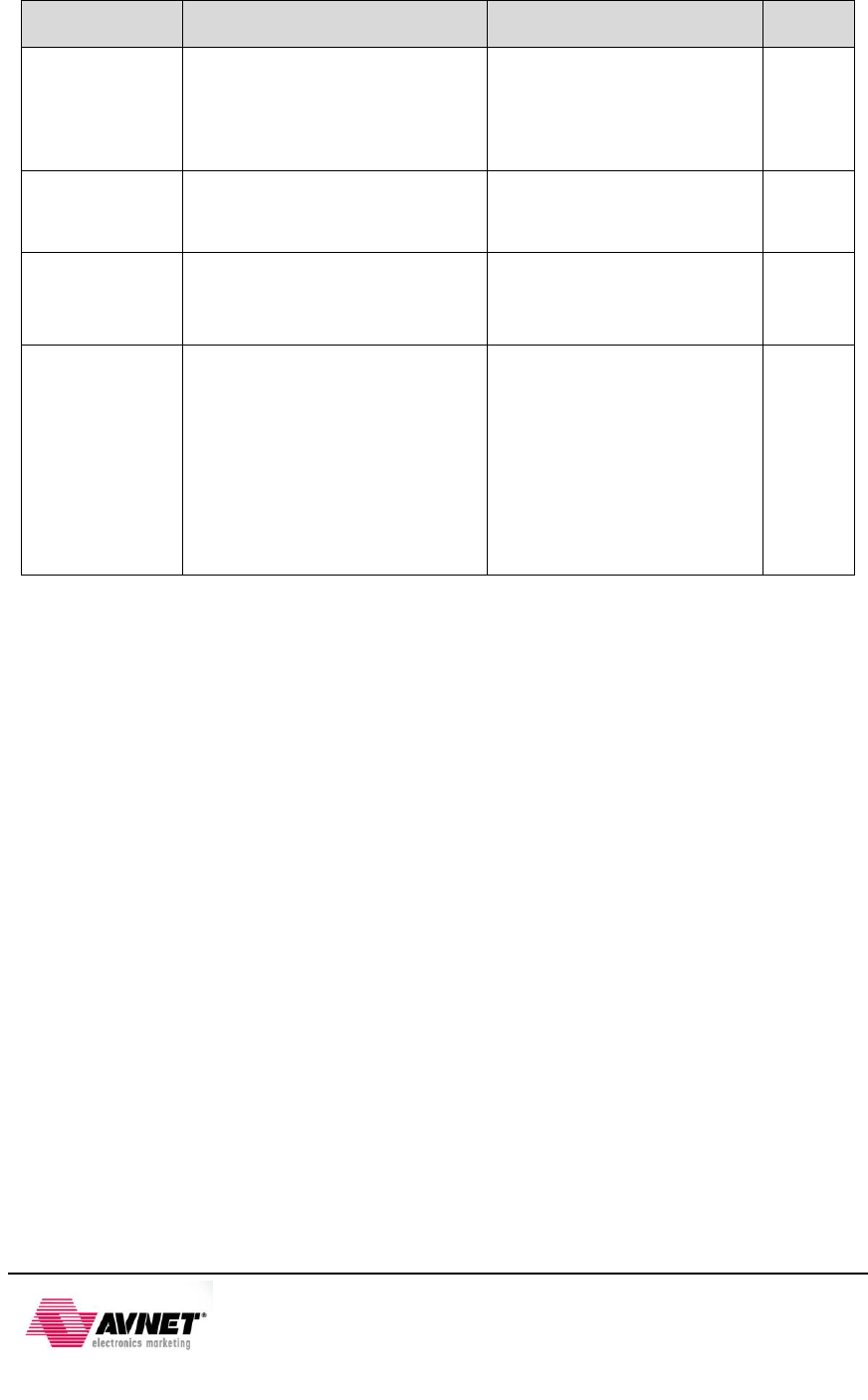
The Zynq SoC includes several signals related to power up, programming, and reset. This section
explains how these signals have been implemented on PicoZed SDR 2X2. Consult Xilinx UG585
for an explanation of these signals.
Version 1.7 Page 33
Table 11 - Zynq Power Up / Reset Signals
Zynq Signal
Description
PicoZed SDR
User
Access
INIT_B
Zynq open-drain I/O used to
indicate when the PL is
initializing or when a
configuration error has occurred
Wired to 3.3V with a 4.7kΩ
resistor and accessible as a
user signal
JX2-9
PROGRAM_B
Zynq input used to reset the PL
Wired to 3.3V with a 4.7kΩ
resistor and not accessible
as a user signal
N/A
DONE
Zynq drives the
DONE signal Low until the PL is
successfully configured
Wired to a green LED (D4)
turns OFF when the PL is
successfully configured.
DO NOT LOAD SIGNAL
JX1-8
PUDC_B
Zynq pin controls the state of all
Zynq PL SelectIO pins during
power up
1kΩ pull-down resistor and
the accessible as user I/O.
During power up and
configuration the Zynq PL
SelectIO pins will have
internal pull-up resistors
enabled until the device
comes out of power-on reset
(POR)
JX4-25
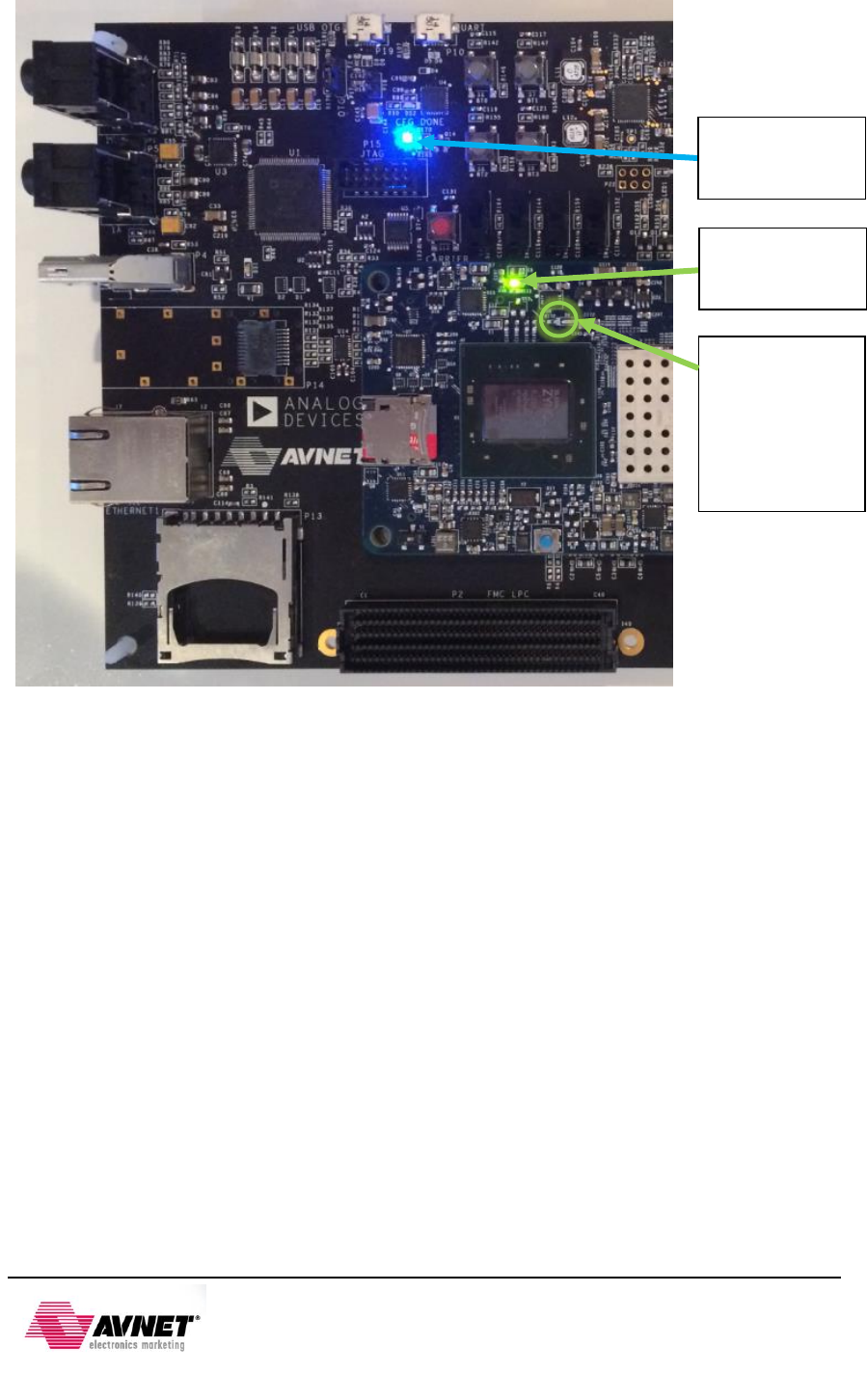
The Zynq SoC provides a DONE signal to indicate when the PL has been successfully
programmed. PicoZed SDR 2X2 uses this signal to control an LED on the SOM. The green LED
D4 turns on when the SOM is powered and turns off when the Zynq PL is successfully
configured. The signal is routed to the micro header receptacle JX1-8 (FPGA_DONE) for
connection to the carrier card if needed for any additional startup logic.
Important! Do not load the FPGA_DONE signal on your carrier. It is sampled internally by the
Zynq device. Loading the signal may delay the signal rise/fall times and cause errors during
startup.
When mating the SOM to the Avnet PicoZed SDR FMC Carrier Card, a blue LED labeled “CFG
DONE” will illuminate when configuration is complete.
Version 1.7 Page 34
SOM
“FPGA_DONE”
LED (D4)
Turns *OFF* with
successful
configuration of
Zynq PL
Figure 13 - System Ready LEDs
3.11.4 Zynq Processor Subsystem Reset
System reset, labeled PS_SRST_B, resets the processor as well as erases all debug configurations.
This external system reset allows you to reset all the functional logic within the device without
disturbing the debug environment. For example, the previous break points you set remain valid after
system reset. While PS_SRST_B is held Low, all PS I/Os are held in 3-state.
Due to security concerns, system reset erases all memory content within the PS, including the
OCM. The PL is also reset in system reset. System reset does not re-sample the boot mode
strapping pins.
This active-low signal can be asserted via the carrier card through the micro header interface at
JX1-6. If it is not used on a carrier card, this signal should be tied high.
Note: This signal cannot be asserted while the boot ROM is executing following a POR reset. If
PS_SRST_B is asserted while the boot ROM is running through a POR reset sequence it will
trigger a lock-down event preventing the boot ROM from completing. To recover from lockdown
the device either needs to be power cycled or PS_POR_B needs to be asserted.
FMC Carrier
“CFG_DONE”
LED (DS7)
SOM
“PG_MODULE”
LED (D3)
Version 1.7 Page 35
3.12 Configuration Modes
The Zynq-7000 AP SoC has seven boot mode strapping pins that are hardware programmed on
the SOM using MIO pins [8:2]. They are sampled by the hardware soon after PS_POR_B
deasserts and their values are written to software readable registers for use by the Boot ROM
and user software.
Zynq-7000 AP SoC devices use a multi-stage boot process that supports both non-secure and
secure boot. The Zynq PS is the master of the boot and configuration process. Upon reset,
MIO[5:3] pins are read to determine the primary boot device to be used: NOR, NAND, Quad-SPI,
SD Card, or JTAG. PicoZed SDR 2X2 enables three of those boot devices: QSPI, SD Card, and
JTAG. The SOM contains switches to easily switch settings.
The Zynq PS SD/SDIO peripheral is connected to an SDIO expander chip (U11), providing
connectivity to the micro SD interface on the PicoZed SDR SOM or a carrier card through the
bottom-side micro header receptacle (JX3). Zynq can boot from either SD interface. The selection
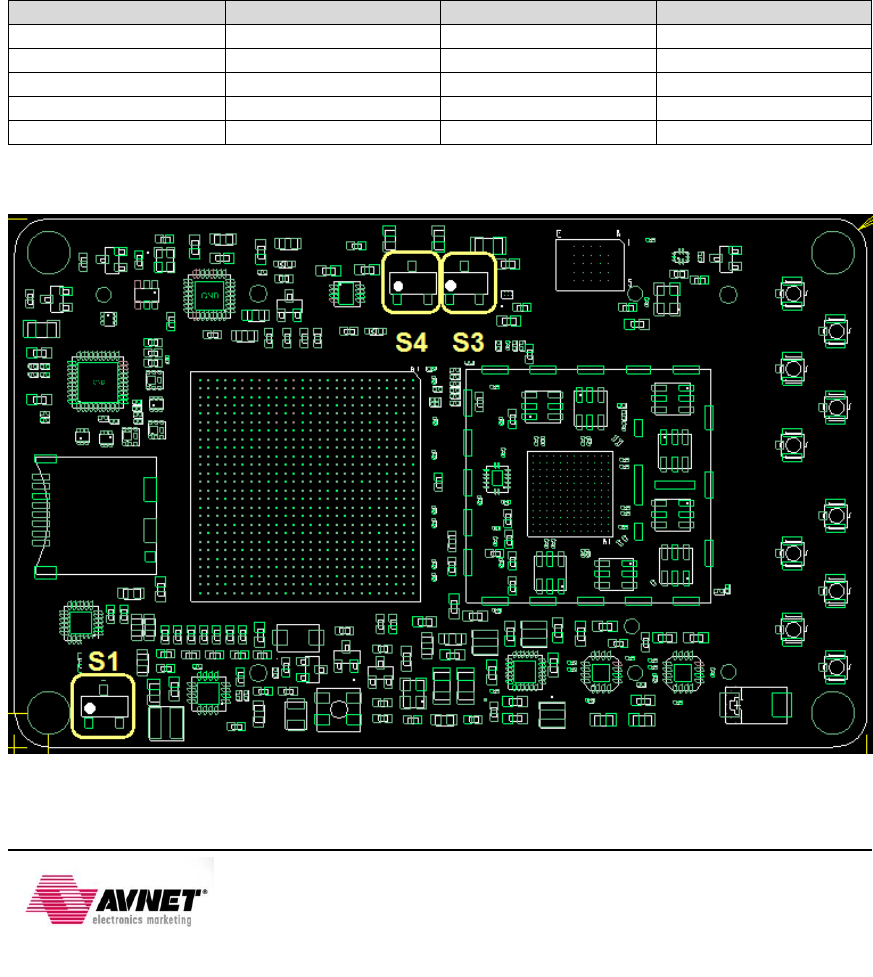
is made with switch S1 on the SOM. Table 12 shows the available boot mode configuration
setting using switches S1, S3 and S4 on the SOM.
Table 12 - Zynq Configuration Modes
BOOT MODE
S4 (MIO4)
S3 (MIO3)
S1
CASCADE JTAG
0
0
x
NAND (n/a)
0
1
x
QSPI
1
0
x
SD Card (SOM)
1
1
0
SD Card (Carrier)
1
1
1
Note: White dot on switch is logic 0
Figure 14 - Zynq Boot Switches
Version 1.7 Page 36
PicoZed SDR powers the Zynq Bank 0 VCCO_0 at 3.3V. The configuration voltage select pin
(CFGBVS) is pulled high with a 4.7KΩ resistor to set the JTAG I/O in Bank 0 for 3.3V/2.5V.
For information on how configuration signals PROGRAM_B, INIT_B, FPGA_DONE, and
PUDC_B are implemented on PicoZed SDR, see Section 3.11.3 Zynq PROGRAM_B, DONE,
PUDC_B, INIT_B Pins.
The Zynq PS is responsible for reconfiguring the PL. Zynq will not automatically reconfigure the
PL as in standard FPGAs by toggling PROG. Likewise, it is not possible to hold off Zynq boot up
with INIT_B as this is now done with POR. If the application needs to reconfigure the PL, the
software design must do this, or you can toggle PS_POR_B to restart everything.
3.12.1 JTAG Connections
PicoZed SDR 2X2 requires an external JTAG cable connector populated on the carrier card for
JTAG operations. JTAG signals are routed from Bank 0 of the Zynq to the micro header
receptacle JX1. Table 13 shows the JTAG signal connections between the Zynq and the micro
header receptacle.
The Zynq Bank 0 reference voltage, Vcco_0, is connected to 3.3V. The JTAG Vref on the End
User Carrier Card should be connected to 3.3V to ensure compatibility between the interfaces.
For reference, see the PicoZed SDR FMC Carrier Card schematics.
Table 13 - JTAG Pin Connections
SoC Pin #
PicoZed SDR
Z7035/AD9316 Net
JX1 Pin #
W12
JTAG_TCK
1
W11
JTAG_TMS
2
W10
JTAG_TDO
3
V11
JTAG_TDI
4
3.13 RF Connections
The PicoZed SDR SOM connects four RX and four TX analog RF channels to the AD9361, plus
two TX Monitor inputs. The TX/RX analog RF signals have series RF differential-to-single ended
transformers from Mini Circuits (TCM1-63AX+). These are 50Ω transformers featuring a
wideband frequency range of 10MHz to 6.0GHz, enabling the full supported bandwidth of the
AD9361. The single-ended signals are connected to U.FL miniature coaxial connectors. This
creates a compact interface to external modules for amplification and antennae mating on a
carrier card.
Important! Take care when plugging and unplugging cables from the U.FL connectors to avoid
damaging the surface mount connectors on the SOM. U.FL connectors were designed to connect
to cables, not PCBs. It is not recommended to attempt a direct PCB-to-PCB mount with male
connectors.
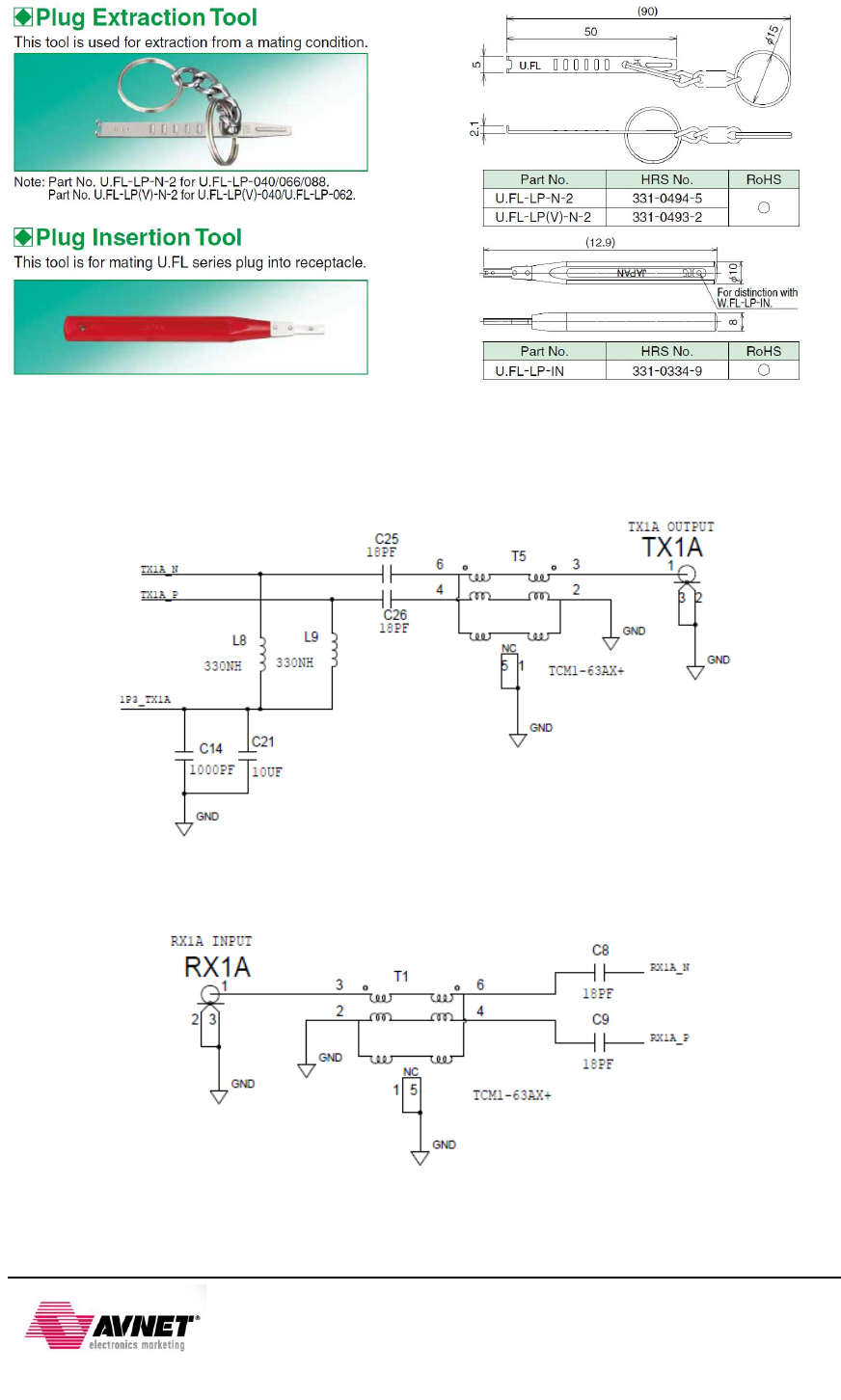
Plug insertion and extraction tools are recommended. An example from Hirose is shown in Figure
15. Details can be found in the Hirose catalog and ordered at Avnet Express.
Version 1.7 Page 37
Figure 15 - U.FL Plug Tools (Hirose)
Sample transmit and receive circuits are shown in Figure 16 and Figure 17.
Figure 16 - RF TX Connection
Figure 17 - RF RX Connection
These are designed for wide band (70 MHz to 6 GHz) operation, and it is expected that a small
external filter may be required to attenuate undesired signals.

Version 1.7 Page 38
3.14 Multi-SOM Synchronization
For MIMO systems requiring more than two input or two output channels, multiple PicoZed SDR
modules and a common reference oscillator are required. The common reference oscillator can
be provided from a customer carrier card. In addition, a logic pulse must be delivered to all
AD9361 SYNC_IN inputs to align each device’s data clock with a common reference. On PicoZed
SDR, the SYNC_IN signal is connected directly to the Zynq PL. Again, a customer carrier card
could route this signal to additional PicoZed SDR SOMs through any available user I/O.
To learn more about the AD9361 synchronization mechanism, consult the AD9361 Reference
Manual (UG570).
3.15 Expansion Headers
Important! PicoZed SDR is not pin compatible with standard PicoZed (non-SDR) carrier cards.
The following tables summarize bank and signal assignments on the JX connectors. Detailed pin
assignments are listed later in this section. Some of the connector pins are used for various
power and ground assignments, and some pins are reserved for dedicated peripheral functions
such as the Gigabit Ethernet, USB2.0 OTG, and SDIO ports of the PicoZed SDR SOM.
3.15.1 Micro Header Pin Summary
All Zynq PS-MIO and PL SelectIO pins can be configured as either Input or Output with voltage
signaling standards compliant with their bank voltage. The bank voltages must be delivered by
the mating carrier card and within the ranges specified in the following tables. Consult the Xilinx 7
Series FPGAs SelectIO Resources User Guide (UG471) for information on supported I/O
signaling standards.
The connectors are FCI 0.8mm Bergstak®, 100 Position, Dual Row, BTB Vertical Receptacles
(part # 61082-103400LF). These have variable stack heights from 5mm to 16mm, making it easy
to connect to a variety of carrier or system boards. Each pin can carry 500mA of current.
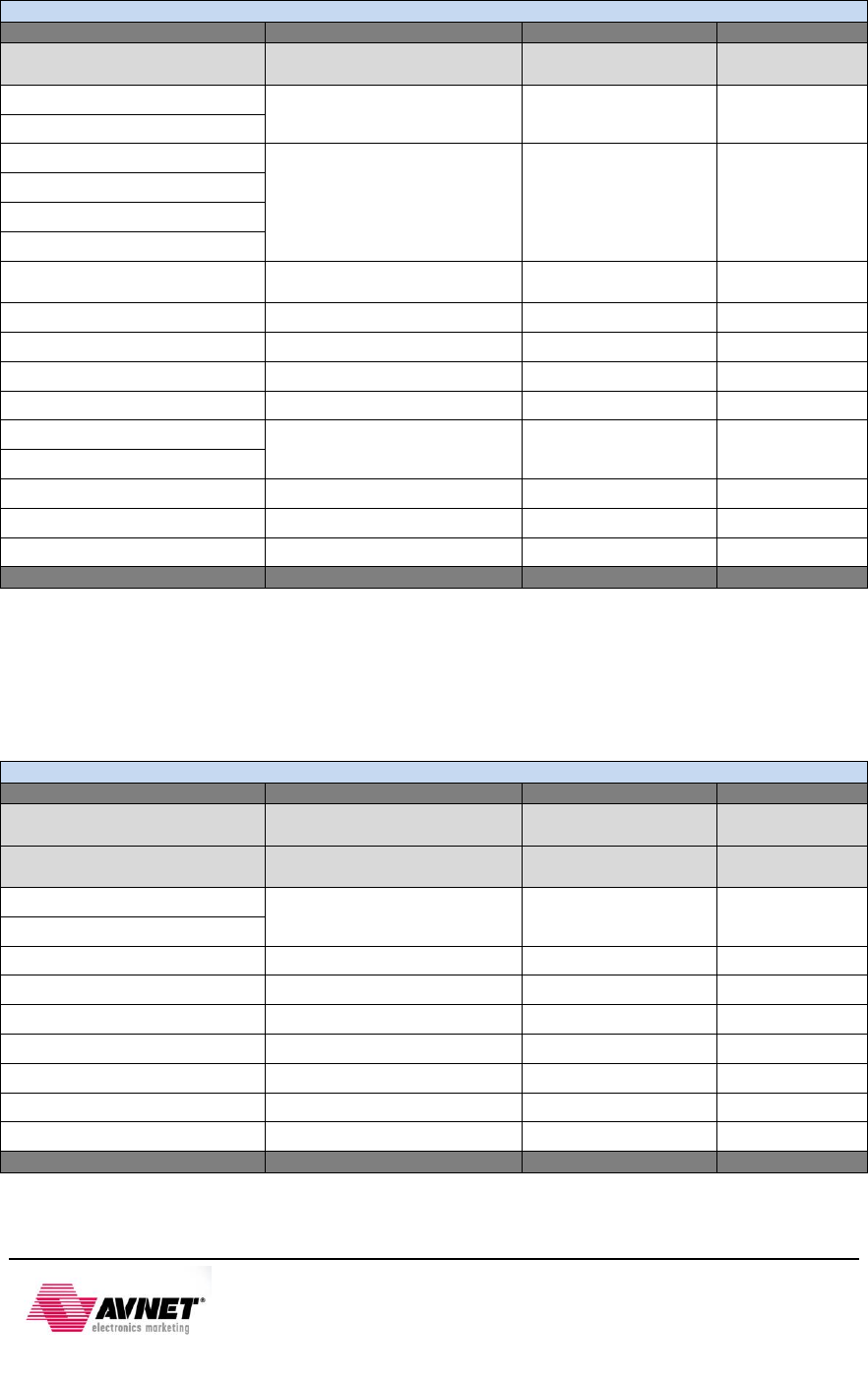
Version 1.7 Page 39
Table 14 - Micro Header JX1 Pin Summary
JX1 Pin Summary
Signals
Source
I/O Voltage
Pins
Bank 33 User I/O
Zynq PL - Bank 33 (HP)
Set by carrier
1.2V to 1.8V
50
(24 LVDS pairs)
MGTREFCLK0_P/N
Zynq Bank 111/1122
Set by carrier
10
MGTRX_P/N[3:0]
JTAG_TMS
Zynq Bank 0
3.3V
4
JTAG_TDI
JTAG_TCK
JTAG_TDO
CARRIER_RESET
(PS_SRST_B)
Zynq Bank 501
1.8V
1
FPGA_DONE
Zynq Bank 0
3.3V
1
FPGA_VBATT(1)
Carrier
See Zynq datasheet
1
PWR_ENABLE
Carrier
5.0V max
1
DXP_0
Zynq Bank 0
See Zynq datasheet
2
DXN_0
JX_VIN
Carrier
5.0V
4
JX_VCCO_12
Carrier
1.2 to 3.3V
3
GND
Carrier
GND
23
Total
100
(1) FPGA_VBATT (VCCBATT) is required only when using bitstream encryption. If battery is not used,
connect VCCBATT to either ground or VCCAUX.
(2) Rev C SOMs implement Zynq MGTs in Bank 111. Rev D and later SOMs use Bank 112.
Table 15 - Micro Header JX2 Pin Summary
JX2 Pin Summary
Signals
Source
I/O Voltage
Pins
Bank 12 User I/O
Zynq PL - Bank 12 (HR)
Set by carrier
1.2V to 3.3V
14
(7 LVDS pairs)
Bank 13 User I/O
Zynq PL - Bank 13 (HR)
Set by carrier
1.2V to 3.3V
48
(23 LVDS pairs)
SCL(1)
Zynq PL – Bank 13 (HR)
Set by carrier
1.2V to 3.3V
2
SDA(1)
INIT_B
Zynq Bank 0
3.3V
1
PG_MODULE
SOM
VIN
1
PG_1P8V
SOM
1.8V
1
JX_VIN
Carrier
5.0V
5
JX_VCCO_13
Carrier
1.2V to 3.3V
1
JX_VCCO_33_34
Carrier
1.2V to 1.8V
3
GND
Carrier
GND
23
Total
99
(1) See Section 3.16.3 for information on using these I2C signals to program the SOM power
sequencing devices.
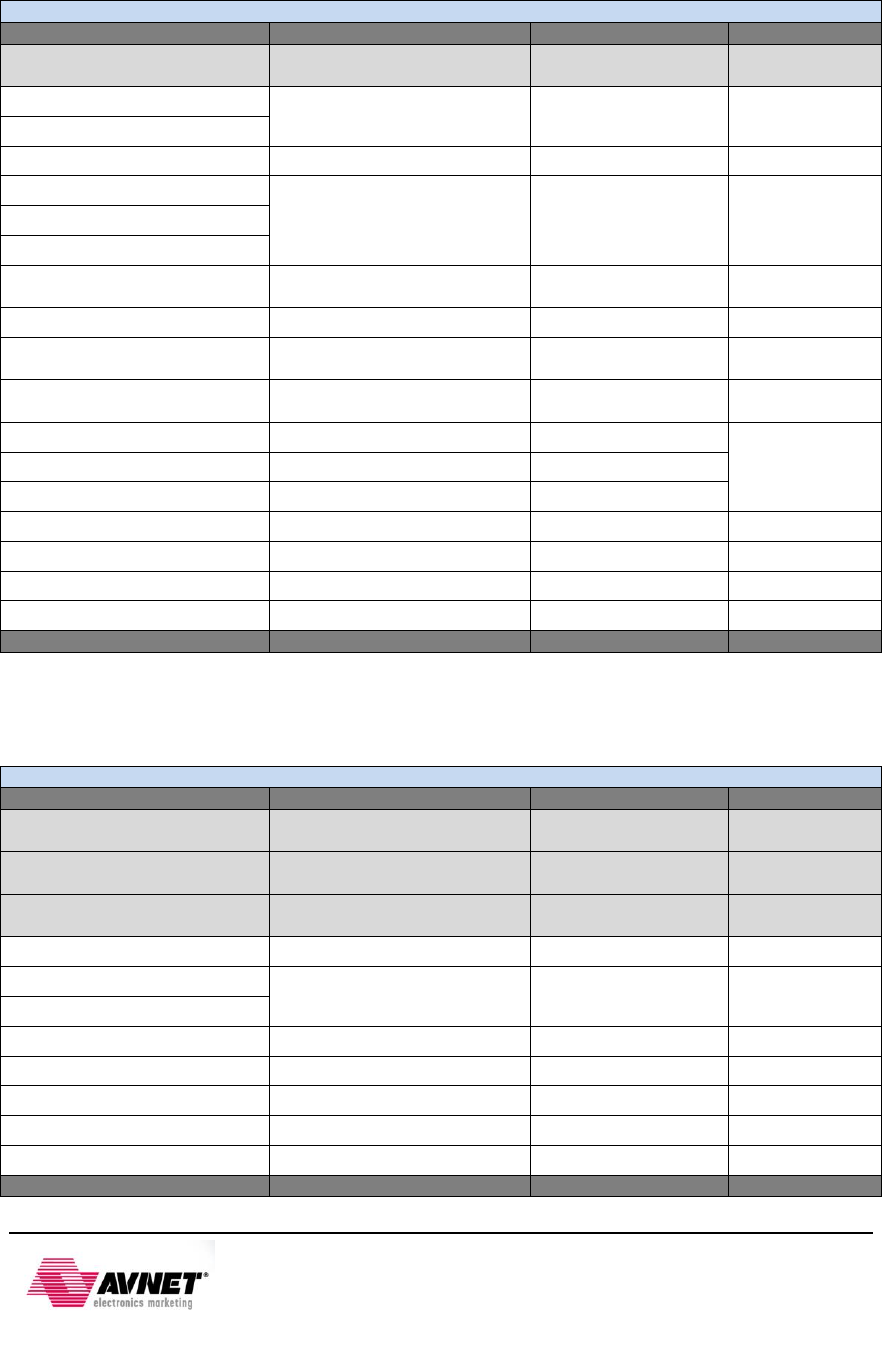
Version 1.7 Page 40
Table 16 - Micro Header JX3 Pin Summary
JX3 Pin Summary
Signals
Source
I/O Voltage
Pins
Bank 12 User I/O
Zynq PL – Bank 12 (HR)
Set by carrier
1.2V to 3.3V
32
(16 LVDS pairs)
MGTREFCLK1_P/N
Zynq Bank 111/1121
Set by carrier
10
MGTTX_P/N[3:0]
V0_N/P
Zynq Bank 0
See Zynq datasheet
2
SDIO_DATA_B1 [3:0]
Zynq PS – Bank 501
3.3V thru
SDIO expander /
translator
6
SDIO_CLKB1
SDIO_CMDB1
JX3_SD1_CDN
Zynq PS – Bank 501
1.8V thru
Analog switch
1
ETH_PHY_LED [1:0]
Marvell 88E1512 PHY
Open drain circuit
2
ETHERNET MD [3:0]
Zynq PS – Bank 501
(via Ethernet PHY)
Set by SOM Ethernet
PHY
8
USB_OTG_P/N
Zynq PS – Bank 501
(via USB PHY)
Set by SOM
USB PHY
2
USB_ID
Carrier
0 to 3.3V
3
USB_VBUS_OTG
Carrier
5.0V
USB_OTG_CPEN
SOM USB PHY
3.3V
JX_VCCO_13
Carrier
1.2V to 3.3V
2
JX_MGTAVCC
Carrier
1.05V
4
JX_MGTAVTT
Carrier
1.2V
2
GND
Carrier
GND
26
Total
100
(1) Rev C SOMs implement Zynq MGTs in Bank 111. Rev D and later SOMs use Bank 112.
Table 17 - Micro Header JX4 Pin Summary
JX4 Pin Summary
Signals
Source
I/O Voltage
Pins
Bank 12 User I/O
Zynq PL – Bank 12 (HR)
Set by carrier
1.2V to 3.3V
4
(1 LVDS pair)
Bank 34 User I/O
Zynq PL – Bank 34 (HP)
Set by carrier
1.2V to 1.8V
44
(22 LVDS pairs)
PUDC_B / User I/O (1)
Zynq PL – Bank 34 (HP)
Set by carrier
1.2V to 1.8V
1
AD9361 GPO [3:0]
AD9361
2.5V
4
AD9361 AUXADC
AD9361
See AD9361
datasheet
3
AD9361 AUXDAC [1:0]
AD9361_CLK
AD9361
1.3Vp-p
1
PS_MIO [0,10:15]
Zynq PS – Bank 500
1.8V
7
PS_MIO [46:49, 51]
Zynq PS – Bank 501
1.8V
5
VDDA_GPO_PWR
AD9361
2.5V
1
GND
Carrier
GND
28
Total
98

Version 1.7 Page 41
(1) PUDC_B is a configuration pin for Zynq PL SelectIO during power on. The SOM implements a 1kΩ
pulldown on this signal to enable internal pull-up resistors on each SelectIO pin.
3.15.2 Micro Header Pin Detail
The section gives the detailed connection of all signals to the four micro header receptacle (JX)
connector pins located on the bottom of the PicoZed SDR SOM. These connectors are used to
connect the PicoZed SDR SOM to a carrier card. The carrier card powers the SOM and accesses
all user I/O and dedicated peripherals through these micro headers located on the bottom of the
SOM.
Important! PicoZed SDR is not pin compatible with standard PicoZed (non-SDR) carrier cards.
The PicoZed SDR product website has the following time saving resources.
SOM schematic symbol
Zynq master constraints file for Vivado Design Suite (XDC)
Important! The following tables are for reference. In case of discrepancies, use the software-
generated files listed above.
The signals names in the table below use the following nomenclature:
Zynq PL signals : IO_L##_<BANK#>_JX#_<N/P>
o IO : Zynq Programmable Logic SelectIO input/output
o L## : signal number within bank
o BANK# : bank number
o JX# : JX connector (1-4)
o N/P : differential capable signal; otherwise single-ended
Zynq PS signals: PS_MIO##_<BANK #>_JX#
o PS : Zynq Processor Subsystem input/output
o MIO : Zynq PS MIO assignment
o JX# : JX connector (1-4)
Other signals, such as USB_OTG_P, indicate connection to a dedicated peripheral
interface on the SOM. In this case, a USB data signal that originates from the on-board
USB2.0 PHY, which is controlled by the Zynq PS USB peripheral.
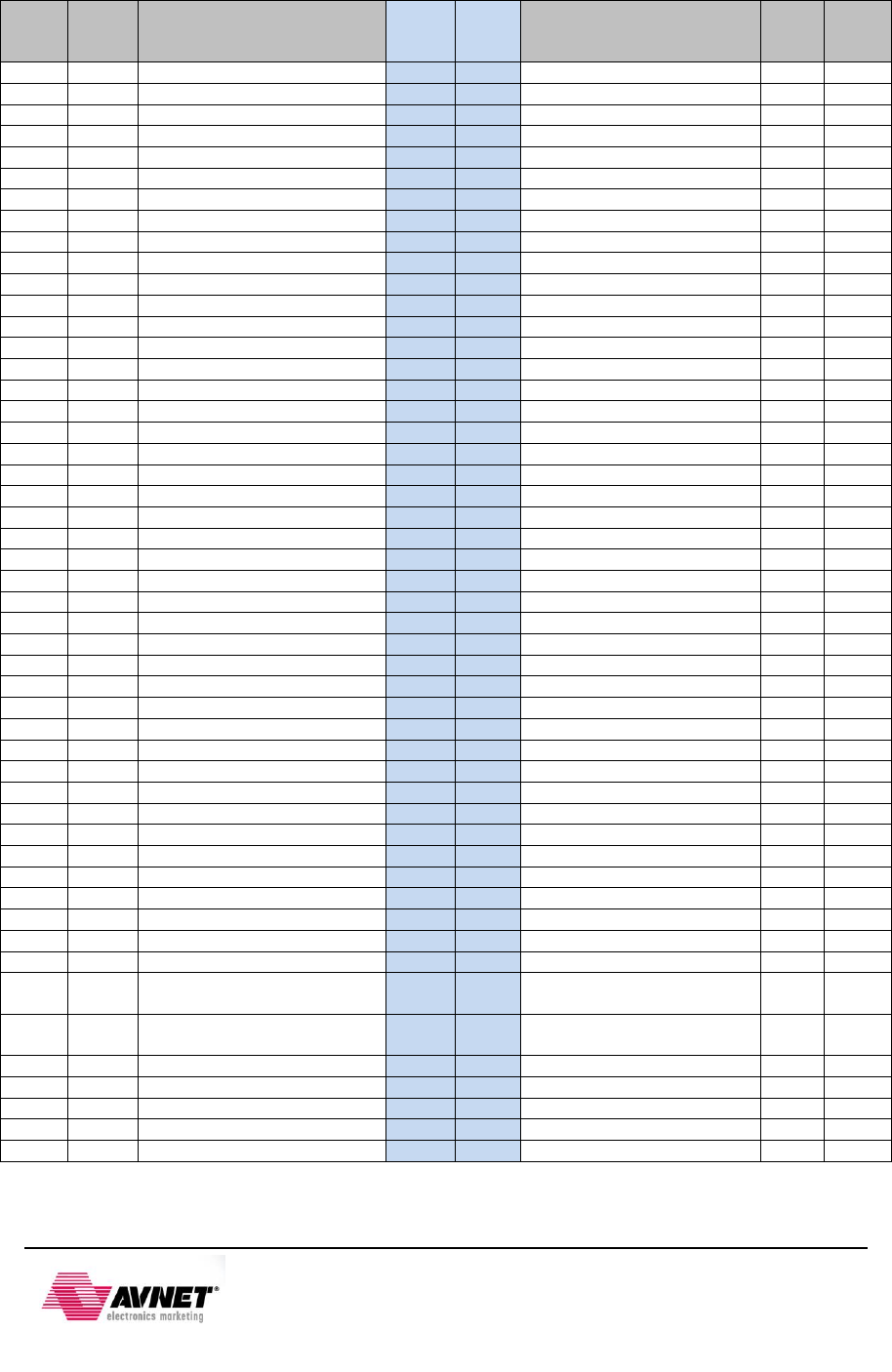
Version 1.7 Page 42
Table 18 - JX1 Connections
Zynq
Bank
Zynq
Pin #
PicoZed SDR 2X2 Net
JX1
Pin #
JX1
Pin #
PicoZed SDR 2X2 Net
Zynq
Pin
#
Zynq
Bank
0
W12
JTAG_TCK
1
2
JTAG_TMS
W11
0
0
W10
JTAG_TDO
3
4
JTAG_TDI
V11
0
n/a
n/a
PWR_ENABLE(1)
5
6
CARRIER_RESET(2)
A22
501
0
V15
FPGA_VBATT
7
8
FPGA_DONE
W9
0
33
L9
IO_00_33_JX1
9
10
IO_25_33_JX1
N8
33
33
M2
IO_L16_33_JX1_P
11
12
IO_L17_33_JX1_P
N4
33
33
L2
IO_L16_33_JX1_N
13
14
IO_L17_33_JX1_N
M4
33
GND
15
16
GND
33
N1
IO_L18_33_JX1_P
17
18
IO_L19_33_JX1_P
M7
33
33
M1
IO_L18_33_JX1_N
19
20
IO_L19_33_JX1_N
L7
33
GND
21
22
GND
33
K5
IO_L20_33_JX1_P
23
24
IO_L21_33_JX1_P
M8
33
33
J5
IO_L20_33_JX1_N
25
26
IO_L21_33_JX1_N
L8
33
GND
27
28
GND
33
K6
IO_L22_33_JX1_P
29
30
IO_L23_33_JX1_P
N7
33
33
J6
IO_L22_33_JX1_N
31
32
IO_L23_33_JX1_N
N6
33
GND
33
34
GND
33
G4
IO_L01_33_JX1_P
35
36
IO_L24_33_JX1_P
K8
33
33
F4
IO_L01_33_JX1_N
37
38
IO_L24_33_JX1_N
K7
33
GND
39
40
GND
33
D4
IO_L02_33_JX1_P
41
42
IO_L03_33_JX1_P
G2
33
33
D3
IO_L02_33_JX1_N
43
44
IO_L03_33_JX1_N
F2
33
GND
45
46
GND
33
D1
IO_L04_33_JX1_P
47
48
IO_L14_SRCC_33_JX1_P
L5
33
33
C1
IO_L04_33_JX1_N
49
50
IO_L14_SRCC_33_JX1_N
L4
33
GND
51
52
GND
33
N3
IO_L15_33_JX1_P
53
54
IO_L05_33_JX1_P
E2
33
33
N2
IO_L15_33_JX1_N
55
56
IO_L05_33_JX1_N
E1
33
n/a
JX_VIN
57
58
JX_VIN
n/a
n/a
JX_VIN
59
60
JX_VIN
n/a
33
F3
IO_L06_33_JX1_P
61
62
IO_L07_33_JX1_P
J1
33
33
E3
IO_L06_33_JX1_N
63
64
IO_L07_33_JX1_N
H1
33
GND
65
66
GND
33
H4
IO_L08_33_JX1_P
67
68
IO_L09_33_JX1_P
K2
33
33
H3
IO_L08_33_JX1_N
69
70
IO_L09_33_JX1_N
K1
33
GND
71
72
GND
33
H2
IO_L10_33_JX1_P
73
74
IO_L11_SRCC_33_JX1_P
L3
33
33
G1
IO_L10_33_JX1_N
75
76
IO_L11_SRCC_33_JX1_N
K3
33
GND
77
78
JX_VCCO_12
n/a
n/a
JX_VCCO_12
79
80
JX_VCCO_12
n/a
33
J4
IO_L12_MRCC_33_JX1_P
81
82
IO_L13_MRCC_33_JX1_P
M6
33
J3
IO_L12_MRCC_33_JX1_N
83
84
IO_L13_MRCC_33_JX1_N
M5
33
GND
85
86
GND
111
W6
MGTREFCLK0_111_JX1_P(
3)
87
88
MGTXRX0_111_JX1_P
AD8
111
111
W5
MGTREFCLK0_111_JX1_N(
3)
89
90
MGTXRX0_111_JX1_N
AD7
111
111
AE6
MGTXRX1_111_JX1_P
91
92
MGTXRX2_111_JX1_P
AC6
111
111
AE5
MGTXRX1_111_JX1_N
93
94
MGTXRX2_111_JX1_N
AC5
111
GND
95
96
GND
111
AD4
MGTXRX3_111_JX1_P
97
98
DX_0_P
R14
0
111
AD3
MGTXRX3_111_JX1_N
99
100
DX_0_N
R13
0
(1) Has 10kΩ pull-up up resistor to VIN.
(2) Connected to Zynq PS-SRST# signal through MOSFET switch enabled by VCCPCOM-1P8V.
(3) Connected to Zynq pin with series dc-blocking capacitor.
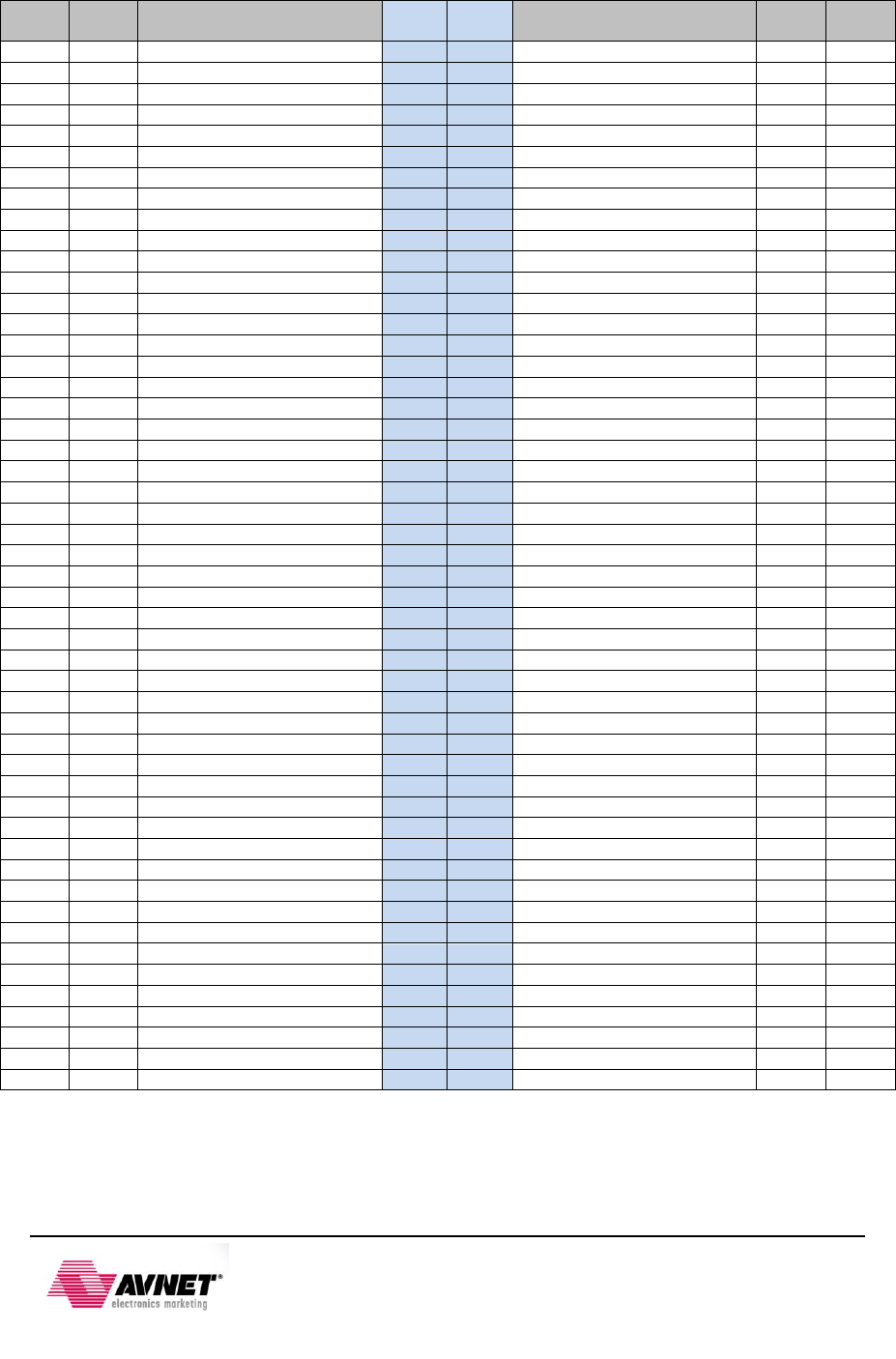
Version 1.7 Page 43
Table 19 - JX2 Connections
Zynq
Bank
Zynq
Pin #
PicoZed SDR 2X2 Net
JX2
Pin #
JX2
Pin #
PicoZed SDR 2X2 Net
Zynq
Pin #
Zynq
Bank
13
AA25
IO_L01_13_JX2_P
1
2
IO_L02_13_JX2_P
AB26
13
13
AB25
IO_L01_13_JX2_N
3
4
IO_L02_13_JX2_N
AC26
13
13
AE25
IO_L03_13_JX2_P
5
6
IO_L04_13_JX2_P
AD25
13
13
AE26
IO_L03_13_JX2_N
7
8
IO_L04_13_JX2_N
AD26
13
0
INIT_B_0_JX2_09
9
10
PG_1P8V
n/a
n/a
n/a
n/a
PG_MODULE(1)
11
12
JX_VIN
n/a
13
V19
IO_00_13_JX2
13
14
IO_25_13_JX2
V18
13
GND
15
16
GND
13
AF24
SCL
17
18
IO_L06_13_JX2_P
AA24
13
13
AF25
SDA
19
20
IO_L06_13_JX2_N
AB24
13
GND
21
22
GND
13
AE22
IO_L07_13_JX2_P
23
24
IO_L08_13_JX2_P
AE23
13
13
AF22
IO_L07_13_JX2_N
25
26
IO_L08_13_JX2_N
AF23
13
GND
27
28
GND
13
AB21
IO_L09_13_JX2_P
29
30
IO_L10_13_JX2_P
AA22
13
13
AB22
IO_L09_13_JX2_N
31
32
IO_L10_13_JX2_N
AA23
13
GND
33
34
GND
13
AD23
IO_L11_SRCC_13_JX2_P
35
36
IO_L12_MRCC_13_JX2_P
AC23
13
13
AD24
IO_L11_SRCC_13_JX2_N
37
38
IO_L12_MRCC_13_JX2_N
AC24
13
GND
39
40
GND
13
AD20
IO_L13_MRCC_13_JX2_P
41
42
IO_L14_SRCC_13_JX2_P
AC21
13
13
AD21
IO_L13_MRCC_13_JX2_N
43
44
IO_L14_SRCC_13_JX2_N
AC22
13
GND
45
46
GND
13
AF19
IO_L15_13_JX2_P
47
48
IO_L16_13_JX2_P
AE20
13
13
AF20
IO_L15_13_JX2_N
49
50
IO_L16_13_JX2_N
AE21
13
GND
51
52
GND
13
AD18
IO_L17_13_JX2_P
53
54
IO_L18_13_JX2_P
AE8
13
13
AD19
IO_L17_13_JX2_N
55
56
IO_L18_13_JX2_N
AF18
13
n/a
JX_VIN
57
58
JX_VIN
n/a
n/a
JX_VIN
59
60
JX_VIN
n/a
13
W20
IO_L19_13_JX2_N
61
62
IO_L20_13_JX2_P
AA20
13
13
Y20
IO_L19_13_JX2_P
63
64
IO_L20_13_JX2_N
AB20
13
GND
65
66
GND
13
AC18
IO_L21_13_JX2_P
67
68
IO_L22_13_JX2_P
AA19
13
13
AC19
IO_L21_13_JX2_N
69
70
IO_L22_13_JX2_N
AB19
13
GND
71
72
GND
13
W18
IO_L23_13_JX2_P
73
74
IO_L24_13_JX2_P
Y18
13
13
W19
IO_L23_13_JX2_N
75
76
IO_L24_13_JX2_N
AA18
13
GND
77
78
JX_VCCO_33_34
n/a
n/a
JX_VCCO_33_34
79
80
JX_VCCO_33_34
n/a
12
AE17
IO_L18_12_JX2_P
81
82
IO_L17_12_JX2_P
AE16
12
12
AF17
IO_L18_12_JX2_N
83
84
IO_L17_12_JX2_N
AE15
12
GND
85
86
GND
12
AB17
IO_L20_12_JX2_P
87
88
IO_L19_12_JX2_P
Y17
12
12
AB16
IO_L20_12_JX2_N
89
90
IO_L19_12_JX2_N
AA17
12
GND
91
92
GND
12
AC17
IO_L21_12_JX2_P
93
94
IO_L22_12_JX2_P
AA15
12
12
AC16
IO_L21_12_JX2_N
95
96
IO_L22_12_JX2_N
AA14
12
12
Y16
IO_L23_12_JX2_P
97
98
JX_VCCO_13
n/a
12
Y15
IO_L23_12_JX2_N
99
100
open
(1) Has 10kΩ pull-up up resistor to VIN.
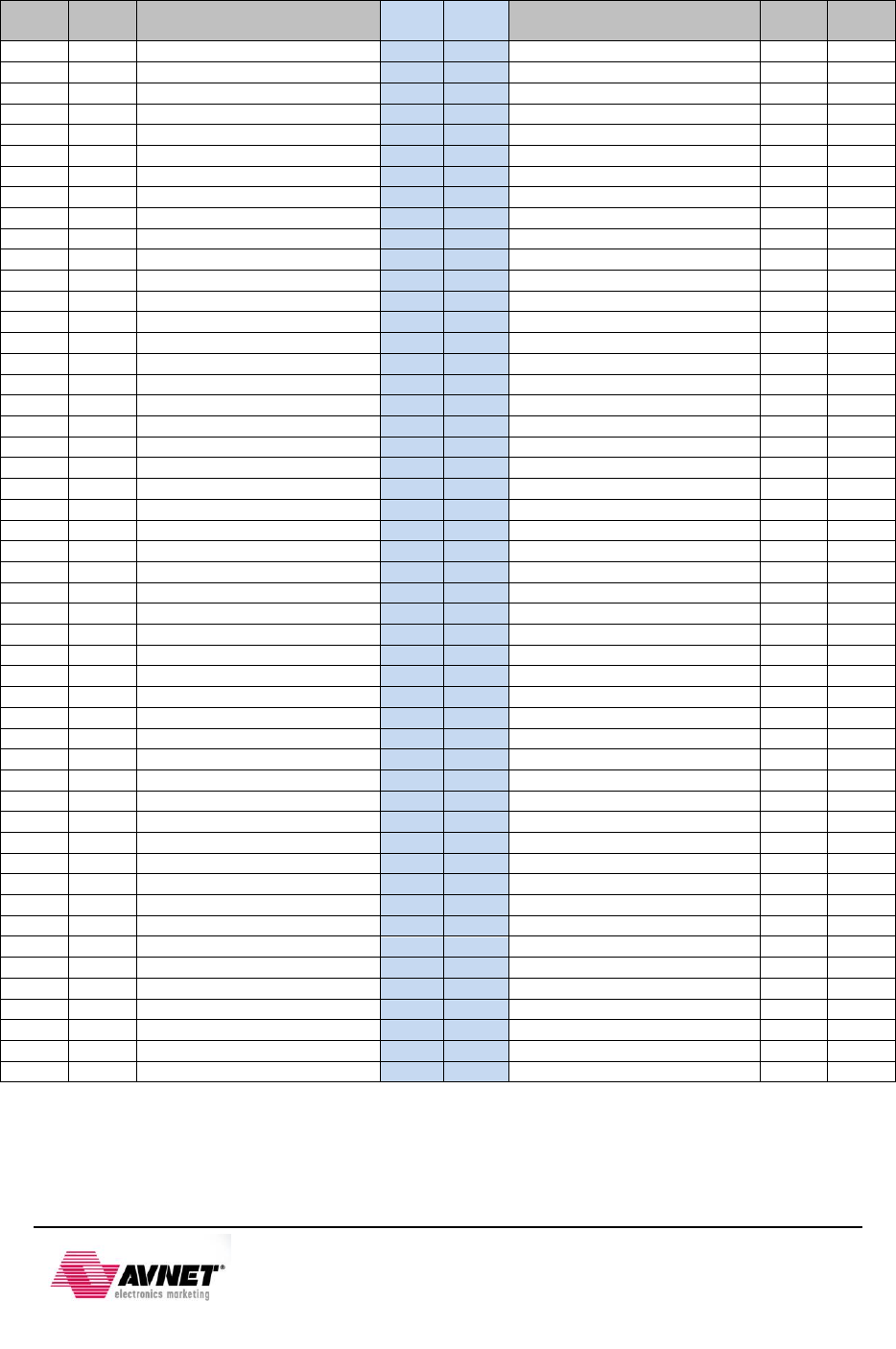
Version 1.7 Page 44
Table 20 - JX 3 Connections
Zynq
Bank
Zynq
Pin #
PicoZed SDR 2X2 Net
JX3
Pin #
JX3
Pin #
PicoZed SDR 2X2 Net
Zynq
Pin #
Zynq
Bank
0
N14
V_0_P
1
2
MGTREFCLK1_111_JX3_P(1)
AA6
111
0
P13
V_0_N
3
4
MGTREFCLK1_111_JX3_N(1)
AA5
111
n/a
JX_MGTAVCC
5
6
GND
n/a
JX_MGTAVCC
7
8
MGTXTX0_111_JX3_P
AF8
111
n/a
JX_MGTAVCC
9
10
MGTXTX0_111_JX3_N
AF7
111
n/a
JX_MGTAVCC
11
12
GND
111
AF4
MGTXTX1_111_JX3_P
13
14
MGTXTX2_111_JX3_P
AE2
111
111
AF3
MGTXTX1_111_JX3_N
15
16
MGTXTX2_111_JX3_N
AE1
111
GND
17
18
GND
111
AC2
MGTXTX3_111_JX3_P
19
20
IO_L01_12_JX3_P
Y12
12
111
AC1
MGTXTX3_111_JX3_N
21
22
IO_L01_12_JX3_N
Y11
12
GND
23
24
GND
12
AB12
IO_L02_12_JX3_P
25
26
IO_L03_12_JX3_P
Y10
12
12
AC11
IO_L02_12_JX3_N
27
28
IO_L03_12_JX3_N
AA10
12
GND
29
30
JX_MGTAVTT
n/a
12
AB11
IO_L04_12_JX3_P
31
32
JX_MGTAVTT
n/a
12
AB10
IO_L04_12_JX3_N
33
34
SDIO_CMDB1
n/a
n/a
GND
35
36
SDIO_DATB1
n/a
n/a
n/a
n/a
SDIO_DATB1
37
38
SDIO_DATB1
n/a
n/a
n/a
n/a
SDIO_DATB1
39
40
GND
n/a
n/a
JX3_SD1_CDN
41
42
IO_L05_12_JX3_P
W13
12
n/a
n/a
SDIO_CLKB1
43
44
IO_L05_12_JX3_N
Y13
12
n/a
JX_VCCO_13
45
46
JX_VCCO_13
n/a
n/a
n/a
ETH_PHY_LED0
47
48
ETH_PHY_LED1
n/a
n/a
GND
49
50
GND
n/a
n/a
ETH_MD1_P
51
52
ETH_MD2_P
n/a
n/a
n/a
n/a
ETH_MD1_N
53
54
ETH_MD2_N
n/a
n/a
GND
55
56
GND
n/a
n/a
ETH_MD3_P
57
58
ETH_MD4_P
n/a
n/a
n/a
n/a
ETH_MD3_N
59
60
ETH_MD4_N
n/a
n/a
GND
61
62
GND
n/a
n/a
USB_ID
63
64
IO_L06_12_JX3_P
AA13
12
GND
65
66
IO_L06_12_JX3_N
AA12
12
n/a
n/a
USB_OTG_P
67
68
USB_VBUS_OTG
n/a
n/a
n/a
n/a
USB_OTG_N
69
70
USB_OTG_CPEN
n/a
n/a
GND
71
72
GND
12
AE10
IO_L07_12_JX3_P
73
74
IO_L08_12_JX3_P
AE12
12
12
AD10
IO_L07_12_JX3_N
75
76
IO_L08_12_JX3_N
AF12
12
GND
77
78
GND
12
AE11
IO_L09_12_JX3_P
79
80
IO_L10_12_JX3_P
AE13
12
12
AF10
IO_L09_12_JX3_N
81
82
IO_L10_12_JX3_N
AF13
12
GND
83
84
GND
12
AC12
IO_L11_SRCC_12_JX3_P
85
86
IO_L12_MRCC_12_JX3_P
AC13
12
12
AD12
IO_L11_SRCC_12_JX3_N
87
88
IO_L12_MRCC_12_JX3_N
AD13
12
GND
89
90
GND
12
AC14
IO_L13_MRCC_12_JX3_P
91
92
IO_L14_SRCC_12_JX3_P
AB15
12
12
AD14
IO_L13_MRCC_12_JX3_N
93
94
IO_L14_SRCC_12_JX3_N
AB14
12
GND
95
96
GND
12
AD16
IO_L15_12_JX3_P
97
98
IO_L16_12_JX3_P
AF15
12
12
AD15
IO_L15_12_JX3_N
99
100
IO_L16_12_JX3_N
AF14
12
(1) Connected to Zynq pin with series dc-blocking capacitor.
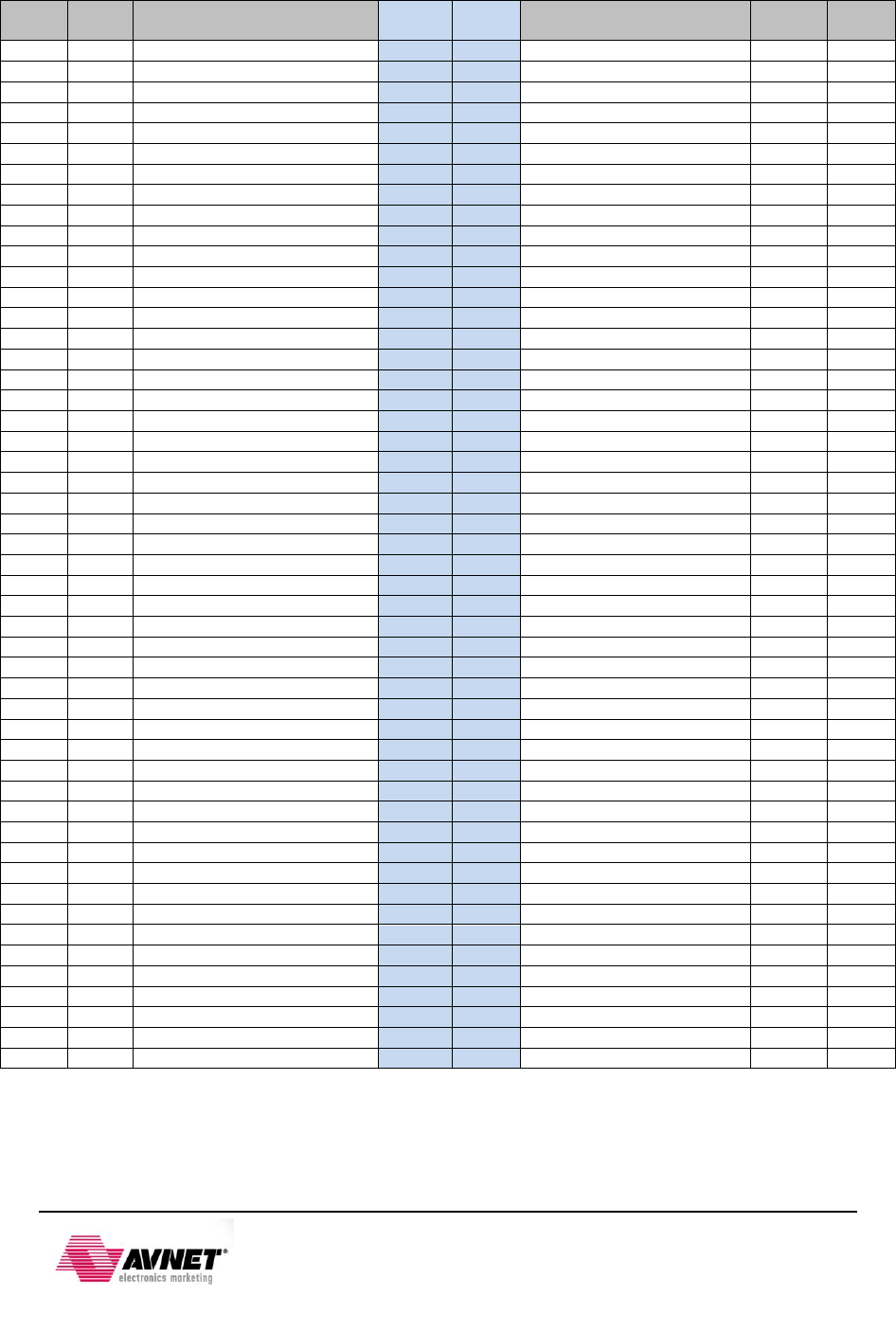
Version 1.7 Page 45
Table 21 - JX4 Connections
Zynq
Bank
Zynq
Pin #
PicoZed SDR 2X2 Net
JX4
Pin #
JX4
Pin #
PicoZed SDR 2X2 Net
Zynq
Pin #
Zynq
Bank
n/a
n/a
GPO_0
1
2
GPO_1
n/a
n/a
n/a
n/a
GPO_2
3
4
GPO_3
n/a
n/a
GND
5
6
GND
n/a
n/a
AUXADC
7
8
AUXDAC1
n/a
n/a
n/a
n/a
VDDA_GPO_PWR
9
10
AUXDAC2
n/a
n/a
GND
11
12
GND
12
W16
IO_L24_12_JX4_P
13
14
IO_00_12_JX4
W14
12
12
W15
IO_L24_12_JX4_N
15
16
IO_25_12_JX4
W17
12
GND
17
18
GND
34
J11
IO_L01_34_JX4_P
19
20
IO_L02_34_JX4_P
G6
34
34
H11
IO_L01_34_JX4_N
21
22
IO_L02_34_JX4_N
G5
34
GND
23
24
GND
34
H9
IO_L03_34_JX4_P(PUDC_B)
25
26
IO_L04_34_JX4_P
H7
34
34
G9
IO_L03_34_JX4_N
27
28
IO_L04_34_JX4_N
H6
34
GND
29
30
GND
34
J10
IO_L05_34_JX4_P
31
32
IO_L06_34_JX4_P
J8
34
34
J9
IO_L05_34_JX4_N
33
34
IO_L06_34_JX4_N
H8
34
34
F5
IO_L07_34_JX4_P
35
36
IO_L08_34_JX4_P
D9
34
34
E5
IO_L07_34_JX4_N
37
38
IO_L08_34_JX4_N
D8
34
GND
39
40
GND
34
F9
IO_L09_34_JX4_P
41
42
IO_L10_34_JX4_P
E6
34
34
E8
IO_L09_34_JX4_N
43
44
IO_L10_34_JX4_N
D5
34
34
F8
IO_L11_SRCC_34_JX4_P
45
46
IO_L12_MRCC_34_JX4_P
G7
34
34
E7
IO_L11_SRCC_34_JX4_N
47
48
IO_L12_MRCC_34_JX4_N
F7
34
GND
49
50
GND
34
C8
IO_L13_MRCC_34_JX4_N
51
52
IO_L14_SRCC_34_JX4_P
D6
34
34
C7
IO_L13_MRCC_34_JX4_P
53
54
IO_L14_SRCC_34_JX4_N
C6
34
GND
55
56
GND
34
C9
IO_L15_34_JX4_P
57
58
IO_L16_34_JX4_P
B10
34
34
B9
IO_L15_34_JX4_N
59
60
IO_L16_34_JX4_N
A10
34
GND
61
62
GND
n/a
n/a
AD9361_CLK
63
64
IO_25_34_JX4
K10
34
GND
65
66
GND
34
A9
IO_L17_34_JX4_P
67
68
IO_L18_34_JX4_P
B7
34
34
A8
IO_L17_34_JX4_N
69
70
IO_L18_34_JX4_N
A7
34
GND
71
72
GND
34
C4
IO_L19_34_JX4_P
73
74
IO_L20_34_JX4_P
B5
34
34
C3
IO_L19_34_JX4_N
75
76
IO_L20_34_JX4_N
B4
34
34
B6
IO_L21_34_JX4_P
77
78
IO_L22_34_JX4_P
A4
34
34
A5
IO_L21_34_JX4_N
79
80
IO_L22_34_JX4_N
A3
34
n/a
n/a
3V3_I2C
81
82
open
GND
83
84
GND
500
C24
PS_MIO15_500_JX4
85
86
PS_MIO12_500_JX4
A23
500
500
A25
PS_MIO10_500_JX4
87
88
PS_MIO11_500_JX4
B26
500
GND
89
90
GND
500
B25
PS_MIO13_500_JX4
91
92
PS_MIO46_501_JX4
E17
501
500
D23
PS_MIO14_500_JX4
93
94
PS_MIO47_501_JX4
B19
501
GND
95
96
GND
500
E26
PS_MIO00_500_JX4
97
98
PS_MIO49_501_JX4
A18
501
501
B21
PS_MIO48_501_JX4
99
100
PS_MIO51_501_JX4
B20
501
(1) On PicoZed SDR, the PUDC_B signal has a 1kΩ pull-down resistor. Therefore, during power-up
and configuration the Zynq PL SelectIO pins will have internal pull-up resistors enabled until the
device comes out of power-on reset (POR).

Version 1.7 Page 46
3.16 Power
The PicoZed SDR 2X2 SOM was designed to reduce power consumption at every angle. The
major features of the power system are as follows:
The -2LI Xilinx Z-7035 is a low-power, mid-speed grade device that offers 40% lower
static power and 10% lower dynamic power than a standard -2I device. (Reference)
See Section 3.16.4 for information about power estimation.
Low power DDR3L Micron SDRAM provides 15% or more power savings over standard
DDR3 devices. (Reference)
High efficiency voltage regulation with built-in sequencing and monitoring. See Sections 0
and 7.1.1.
Voltage supplies for unused Zynq I/O banks may be powered down. See section 3.16
Power.
The Zynq SoC and AD9361 subsystems may be powered down to reach maximum
power savings for some use cases. See the device datasheets and product websites for
guidance and tutorials.
Peripheral clocks may be disabled to reduce power consumption. See Section 3.10.
The following sections provide guidance for powering the SOM.
3.16.1 Input Voltages
The PicoZed SDR 2X2 SOM is powered from the carrier card through micro headers JX1, JX2,
and JX3. A user-programmable power sequencing device orchestrates power up and monitor of
voltage rails (see section 3.16.3).
The sequencer is programmed such that only a single 5.0V supply (VIN) is required to
successfully power up the SOM. In addition, the sequencer monitors all Zynq SoC user bank
voltage rails and will power down the SOM if an overvoltage condition is detected.
This scheme allows a carrier to provide voltage only to the banks that are being used, but ground
the other unused bank rails. The programmable sequencer also makes it possible to create
custom sequencing and monitoring schemes. See section 7.2 Updating the ADM1166 Sequencer
Firmware.
For example, if you plan to use a Zynq High Range (HR) bank powered at 3.3V, you can modify
the firmware to power down the SOM if the bank voltage deviates from a certain margin around
the nominal 3.3V potential. This can help you protect your system from driving signals into an I/O
bank when the voltage supply on your carrier has failed.
See Table 22 – Supply Voltage Requirements for a summary of acceptable ranges for banks that
will be powered.

Version 1.7 Page 47
Table 22 – Supply Voltage Requirements
Voltage Input
Nominal
(V)
Range (V)
SOM Pins
Notes
VIN1
5.0
4.500 – 5.500
JX1 [57:60]
JX2 [12, 57:60]
Main SOM supply.
JX_VCCO_12
1.8 – 3.3
1.140 – 3.465
JX1 [78:80]
Zynq PL HR Bank 12
Optional (GND if unused)
JX_VCCO_13
1.8 – 3.3
1.140 – 3.465
JX2 [98]
JX3 [45:46]
Zynq PL HR Bank 13
Optional (GND if unused)
JX_VCCO_33_344
1.2 – 1.8
1.140 – 1.890
JX2 [78:80]
Zynq PL HP Banks 33/34
Optional (GND if unused)
JX_MGTAVTT2,3,4
1.2
1.171 – 1.230
JX3 [30, 32]
Zynq MGT Bank 111/112
Optional (GND if unused)
JX_MGTAVCC2,3,4
1.0
0.972 – 1.079
JX3 [5,7,9,11]
Zynq MGT Bank 111/112
Optional (GND if unused)
1.05
0.972 – 1.079
For QPLL > 10.3123 GHz
(1) VIN is the only required voltage, unused banks should be grounded on your carrier.
(2) Xilinx recommends less 10mV peak-to-peak voltage from 10 kHz – 80 MHz on MGAVTT and
MGAVCC supplies (Xilinx UG476). MGAVCC power consumption can be reduced when the Zynq
internal PLL is operated below 10.3123GHz.
(3) Rev A-C SOMs implement Zynq MGTs in Bank 111. Rev D and later SOMs use Bank 112.
(4) Deviation from the Zynq datasheet recommended range is a result of the ADM1166 ADC precision.
In addition, you can supply a higher voltage for the AD9361 GPO signals. By default the SOM
regulates a 2.5V rail (VDDA_GPO) for these signals indirectly from the system 5.0V rail. However
this can be overridden (voltage can be increased up to 3.3V) by placing a higher voltage on the
VDDA_GPO_PWR pin (JX4.9). This is an optional input to the SOM from your carrier.
The SOM itself gates the input voltage rails in Table 22, placing them under control of its on-
board sequencer. This makes it easy to design your carrier power supplies because the voltages
may be applied to the SOM in any order.
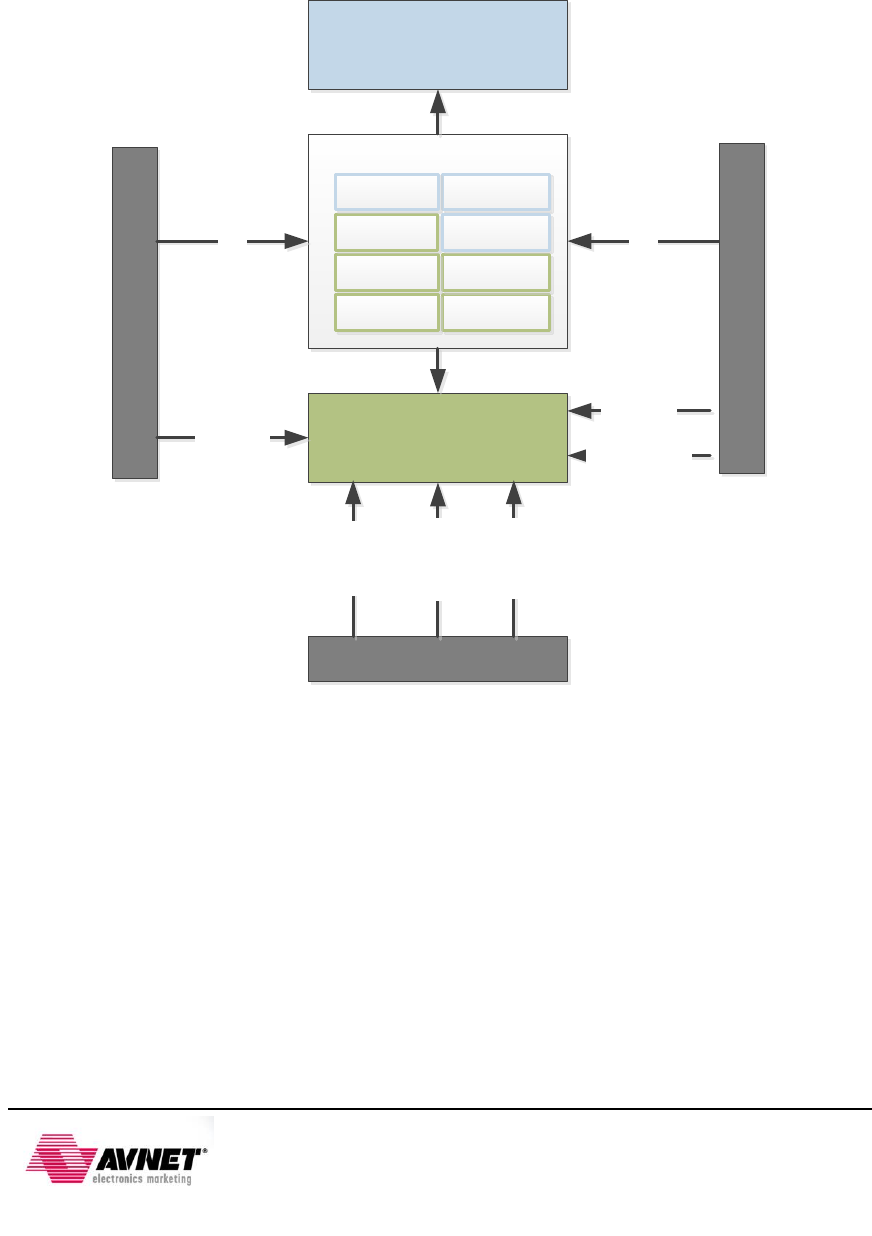
Version 1.7 Page 48
3.16.2 Module Power Architecture
Eight regulators reside on the PicoZed SDR SOM that provide a variety of voltage rails required
for the Zynq SoC, the AD9361, and their supporting circuitry. These regulators are powered from
the end user carrier card through the VIN pins on the SOM Micro Headers – either by direct
connection to VIN or derived by cascaded regulators on the SOM.
Figure 18 shows a simplified view of the overall power scheme, while Figure 19 summarizes the
voltage regulation and connections.
Regulators
ZYNQ Z-7035
JX1
JX3
VIN
VCCO_12
VIN
VCCO_13
VCCO_33_34
VCCO_13
MGTAVCC
MGTAVTT
AD9361
0.95V
1.0V
1.3V
3.3V
JX2
1.8V
2.5V
1.35V
1.8V
Figure 18 - Power Scheme
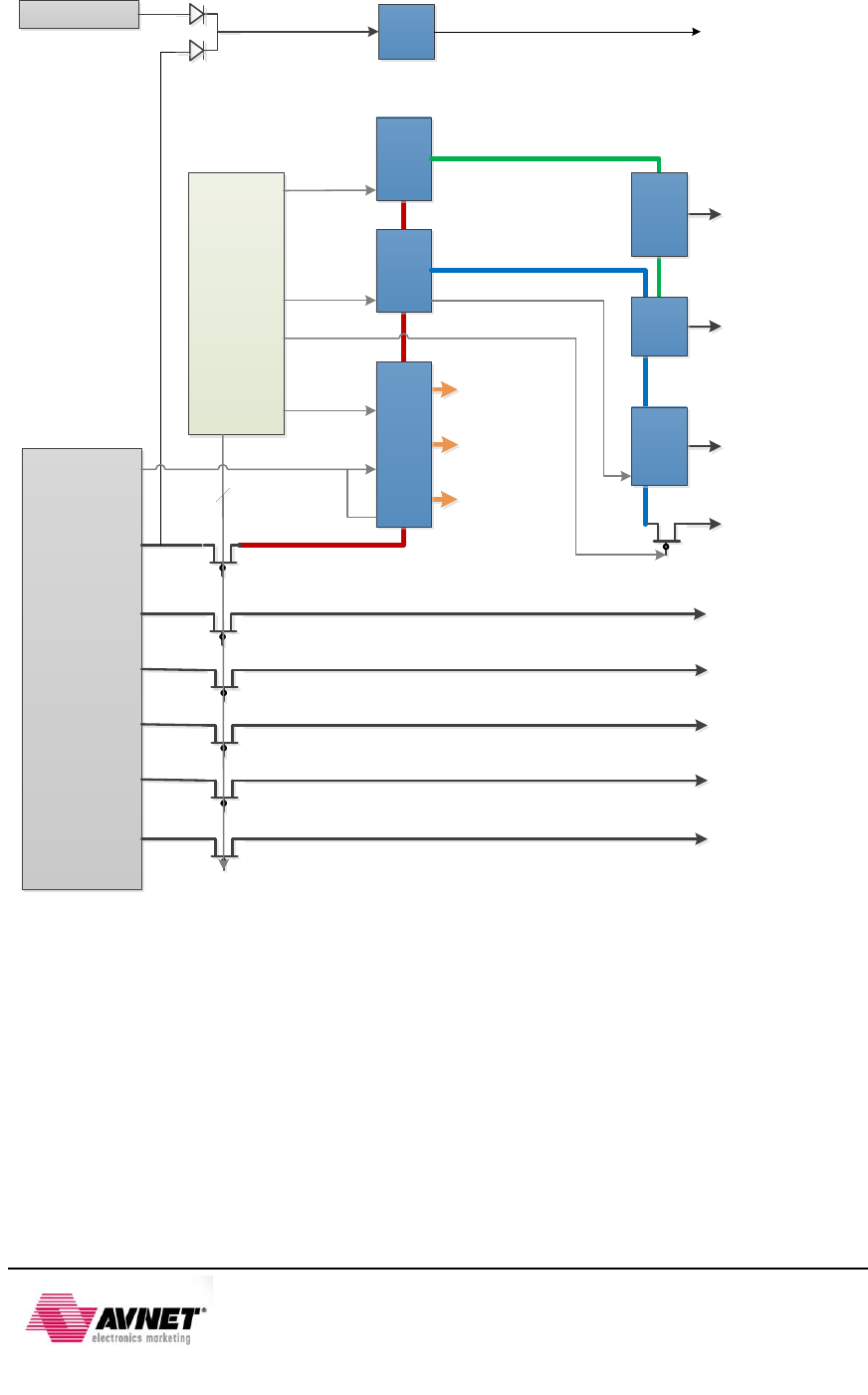
Version 1.7 Page 49
VBUS
3.3V
1.8V
JX_VIN
VIN (5V)
AD9361 Analog
DDR3L
3.3V
1.35V
0.95V
1.0V Zynq
VCCPINT
Zynq DDR,
Micron DDR3L
Zynq BRAM,
Zynq VCCINT
Zynq Bank 0
Zynq MIO/Vccaux,
AD9361 Data Path
AD9361 GPO
VH (5V)
VBUS circuit enables ADM1166
programming without a mated
carrier card
U9
U18
U4
U6
U14
U19/U20
U23
Zynq Bank 35
[AD9361 interface]
JX_VCCO_12
JX_VCCO_13
JX_VCCO_33_34
JX_MGTAVTT
JX_MGTAVCC
Zynq Bank 12 (HR)
Zynq Bank 13 (HR)
Zynq Banks 33/34 (HP)
Zynq Bank 111 (GTX)
Zynq Bank 111 (GTX)
1.2 – 3.3V
1.2 – 3.3V
1.2 – 1.8V
1.2V
1.0V
ADM1166
Super
Sequencer
U7
EN
PGEN
EN
EN
EN
Micro Headers
I2C Prog. Header
P1
6
I2C level translators
2.5V
1.3V
EN
VTT/
VREF
PWR_ENABLE
Figure 19 – SOM Voltage Regulation
3.16.3 Monitor and Sequencing
PicoZed SDR 2X2 uses the ADM1166 Super Sequencer (U7) to implement a complete
supervisory and sequencing system to ensure all power rails are energized in the required order
and maintain regulation. If the SOM detects any of its voltage rails are outside of normal
regulation, it will disable all regulators to protect the module from damage.
This functionality is also valuable for designers needing built-in self-test (BIST) capabilities for the
SOM once deployed in an end product. The system also makes available supply margining
capabilities using the Analog Devices ADM1166. Margining can be useful for testing system regulation
and for reducing voltage to certain components during low activity to reduce system power.
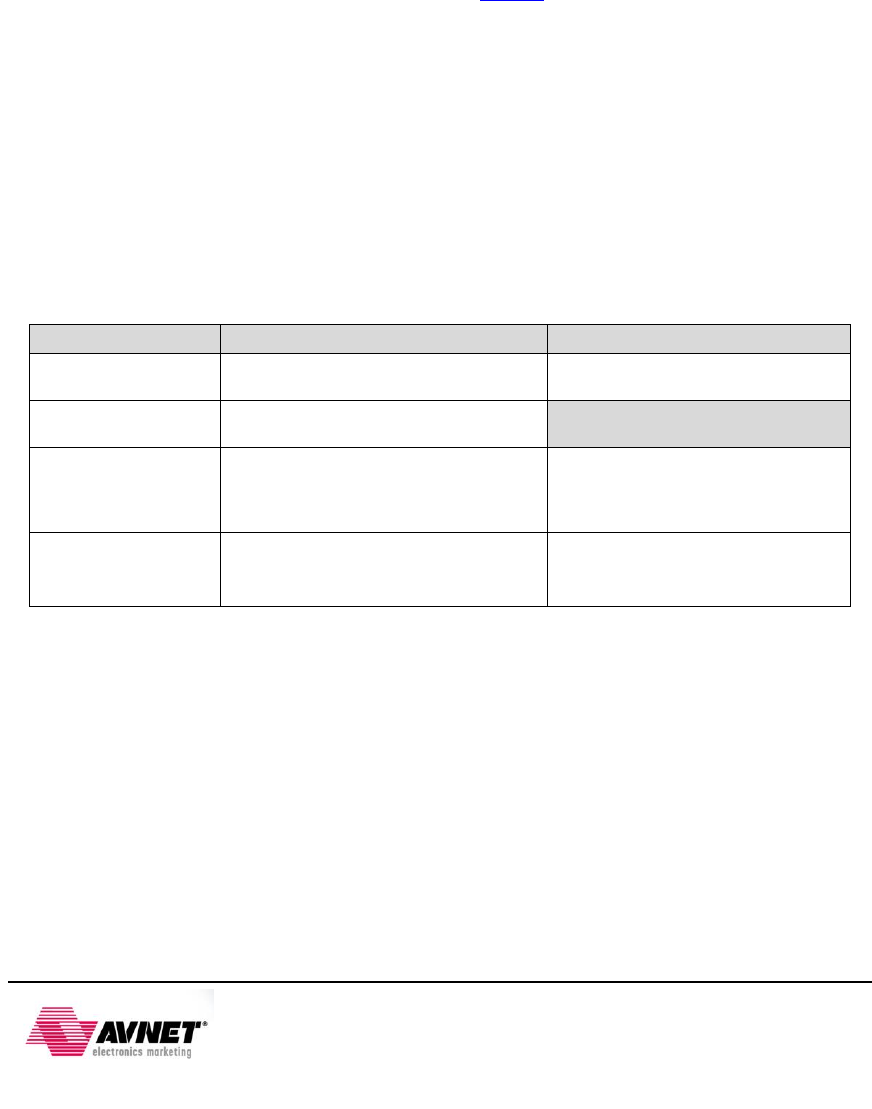
Version 1.7 Page 50
While the ADM1166 continuously monitors the critical SOM voltage rails, those not monitored
directly by the ADM1166 are measured by an AD7291 ADC (U24). Both devices are connected
via I2C to Zynq PL Bank 13 for monitor of all voltage rails with an embedded application. The I2C
signals are also brought to the SOM JX micro headers for connection to a carrier card.
The ADM1166 non-volatile memory can be re-programmed. See Section 7.2 Updating the
ADM1166 Sequencer Firmware for details.
Figure 20 provides a detailed timing diagram of the system voltage sequencing, but rest assured
that the carrier may supply voltages to the SOM in any order.
Zynq Power Supply Sensors: The Zynq SoC on-chip XADC includes a temperature sensor and
power supply sensors that capture the voltage level of VCCINT, VCCAUX, VCCBRAM,
VCCPINT, VCCPAUX, and VCCO_DDR. These values are captured in registers that may be
read by the Zynq ARM processors. Please see Xilinx UG480 for details.
Power Good Signal: The SOM provides a PG_MODULE signal to the JX micro headers for use
on the carrier card to indicate when all of the SOM power supplies are on line. For example, this
may be used to enable other power supply circuits on the carrier. The PG_MODULE signal has a
10kΩ pull-up to VIN on the SOM. When PG_MODULE is released by the ADM1166 (U7), a
power good LED (D3) will illuminate on the SOM. See Figure 13 - System Ready LEDs.
Power Good LED: The SOM uses the PG_MODULE signal to illuminate a green LED (D3) to
provide visual status information about the ADM1166 sequencer state machine. See Figure 13 -
System Ready LEDs for help locating the Power Good LED. Table 23 provides descriptions of the
various states.
Table 23 - Power Good LED Status
LED pattern
Description
Suggested Action
OFF
SOM is not powered
Supply system power to
JX_VIN pins
ON Solid
SOM is powered and all voltage
rails are within range
n/a
Blinking Slowly (1)
SOM system input voltage
(JX_VIN) is out of range
Verify that system input voltage
on JX_VIN is within range
Blinking Fast(1)
SOM powered successfully and
later observed a voltage rail out of
range
Power cycle the board to reset
the ADM1166 state machine
(1) Feature included on Rev D and later
Note: The toggling feature for PG_MODULE was introduced with REV D modules. If the toggling
behavior of PG_MODULE is undesirable in your system, the ADM1166 firmware may be modified
to remove it. See Section 7.2 Updating the ADM1166 Sequencer Firmware.
Power Enable Signal: The carrier card can provide a PWR_ENABLE signal to the module
(a so-called “C2M” signal). When the SOM observes that this signal is pulled low, the ADM1166
state machine will not enable any power supplies. Only VIN will be energized on the module, but
no downstream regulators will be enabled until PWR_ENABLE is released. This signal has a
10kΩ pull-up to VIN on the SOM.
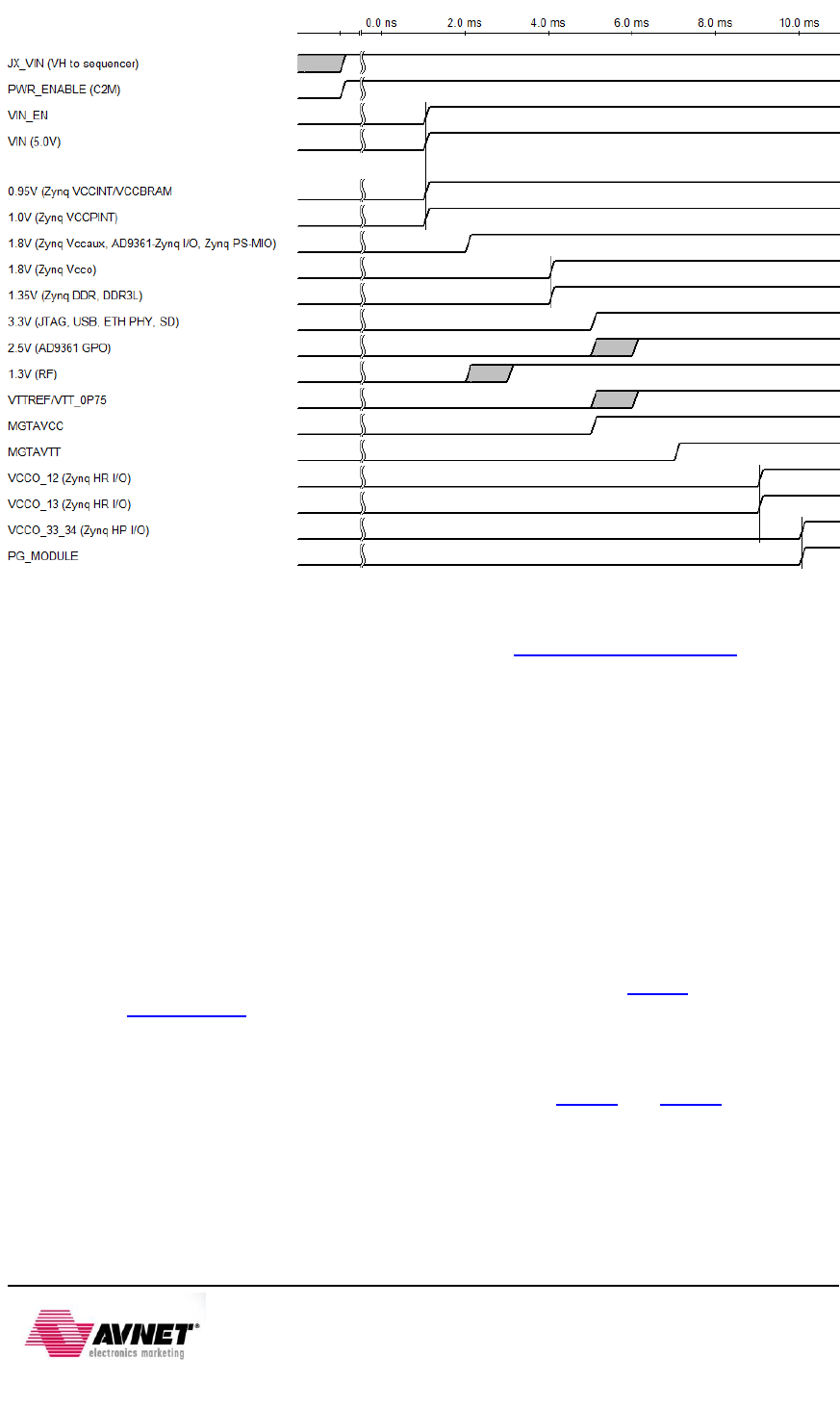
Version 1.7 Page 51
Figure 20 - Power Sequencing (Rev D firmware)
For a more detailed timing diagram, visit the Analog Devices wiki site.
3.16.4 Power Estimation
The total power consumption of the PicoZed SDR 2X2 SOM depends on many factors, but not
surprisingly the dependencies are mostly related to the way the Zynq SoC and AD9361 are
programmed. The most difficult to predict is the Zynq SoC power consumption, which can vary
widely depending upon the configuration of the Zynq PS and its peripherals, and the Zynq PL
logic utilization and frequency of operation. Xilinx provides a suite of software tools and
documentation to help you evaluate the thermal and power supply requirements of the entire
Zynq SoC.
The Xilinx Power Estimator (XPE) is a spreadsheet-based tool that estimates the power
consumption of your design. It accepts design information through simple design wizards, analyzes
them, and provides a detailed power and thermal information. See Xilinx UG440 for details and
download the XPE tool here.
The Xilinx Vivado Design Suite power analysis feature performs power estimation automatically
based on your implemented design. In addition, it can use simulation results to more accurately
estimate power based on your expected toggle rates. See Xilinx UG907 and UG997.
The SOM power system was designed to supply sufficient power to the Zynq Z-7035 SoC, the
AD9361, and all on-board peripherals using demanding radio use case scenarios, including
implementation of a full LTE Media Access Controller (MAC) in the Zynq PL. Of course, the
carrier must supply VIN (5.0V) to power the SOM regulators, and therefore must be sized
according to the demand of your design. The Zynq user bank I/O voltages are powered from the
carrier, but only as needed by your design.

Version 1.7 Page 52
3.16.5 Battery Backup for Device Secure Boot Encryption Key
Zynq power rail VCCBATT is a 1.0V to 1.89V voltage typically supplied by a battery. This supply is
used to maintain an encryption key in battery-backed RAM for device secure boot. The encryption
key can alternatively be stored in eFuse which does not require a battery.
As specified in the Zynq TRM, if the battery is not used, connect VCCBATT to either ground or
VCCAUX. On PicoZed SDR 2X2 VCCBATT is connected through a 0 Ω resistor (R9) to the PicoZed
SDR VCCAUX supply (VCCPCOM-1P8V), which is 1.8V. In parallel, the net FPGA_VBATT
connects to the VCCBATT pin and is extended to the JX1 micro header for connection on a carrier
card.
Important! To apply an external VCCBATT battery to Zynq from the end user carrier card, remove
R9 from the PicoZed SDR System-On-Module.
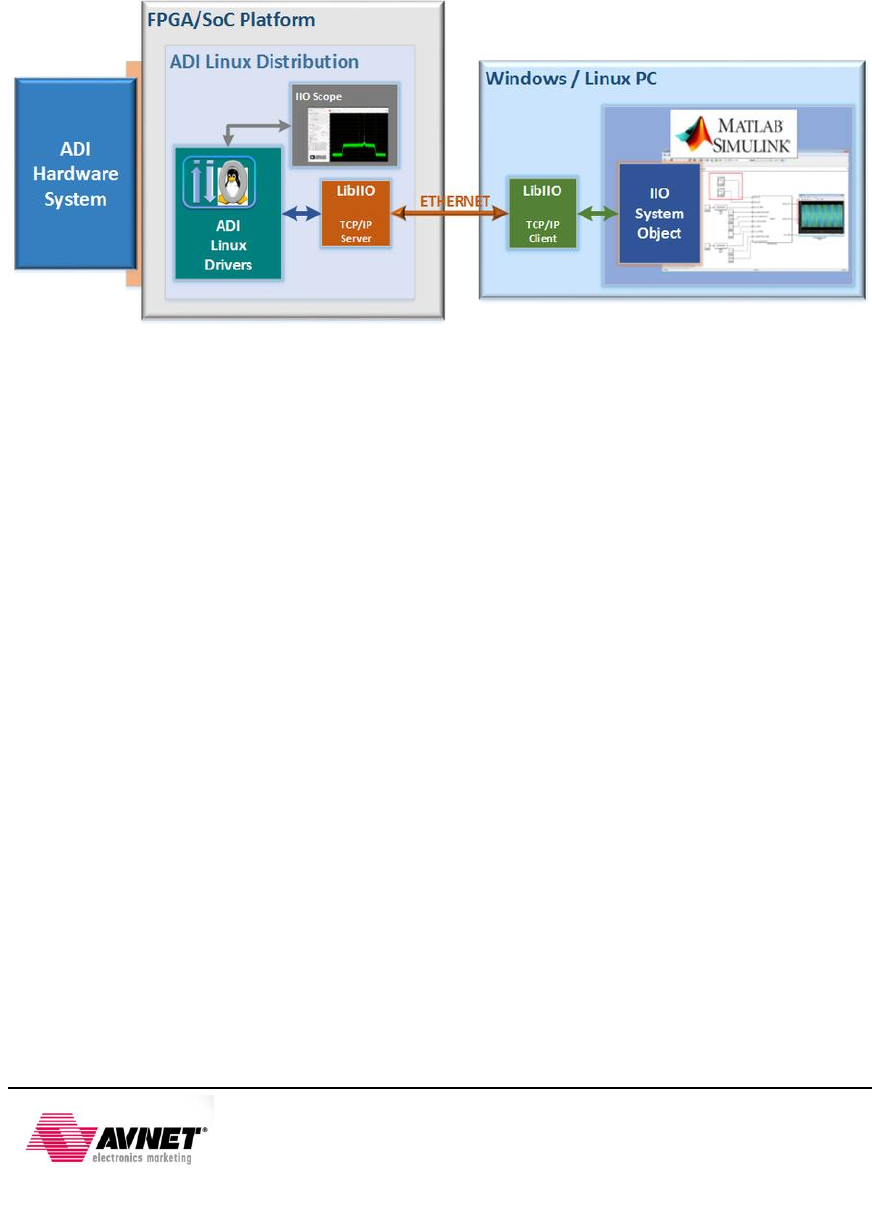
Version 1.7 Page 53
4 Performance
4.1 Error Vector Magnitude (EVM)
This section reports the EVM results for PicoZed SDR 2X2 SOM. The general test setup is shown
below. In this test, the block labeled “ADI Hardware System” represents the AD9361 on the SOM;
the FPGA/SoC is the Zynq Z-7035 SoC on the SOM.
Figure 21 - IIO System Object
4.1.1 Tests Parameters
a) LTE10 (64-QAM) waveform (I&Q) generated from the MathWorks LTE System Toolbox.
b) This dataset is sent to the AD9361 via the Analog Devices IIO System Object in MATLAB
and transmitted through the AD9361 TX signal chain, at various RF frequencies.
c) The AD9361 TX is connected to the AD9361 RX with U.FL-to-U.FL loopback cables on
the SOM.
d) The AD9361 RX signal chain captures the AD9361 LTE 10 transmitted signal, and sends
samples back to the IIO system object.
e) The IIO System object sends the received I&Q waveforms to the LTE toolbox, where
analysis is done.
f) This analysis (EVM) is captured and stored, and the RF is changed, and the test
continues.
g) The tests were performed from 70MHz – 6 GHz in 100MHz steps.
h) This test is nominal – test done at room temperature, in lab settings.
4.1.2 Results
All EVM measurements were under ~2.5%. This works out to about -32dB for the accumulation of
RX and TX.
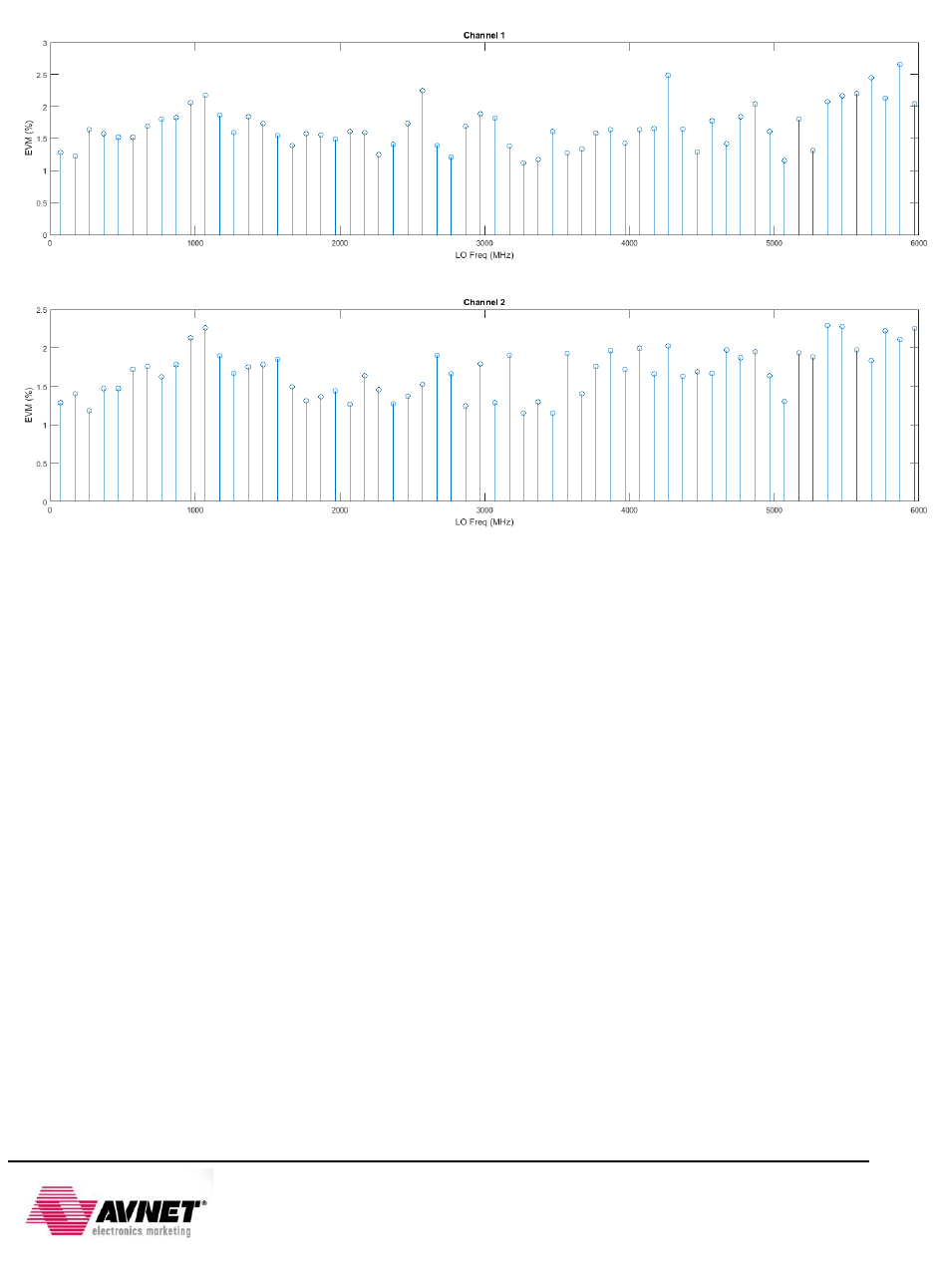
Version 1.7 Page 54
The AD9361 datasheet specs are ~ −37.782 dB for TX and −37.462 dB for RX (or about 1.4%
each). It is an RMS sum, so we would expect about 1.86% (-34.6dB) based on the datasheet.
The datasheet uses narrowband baluns, and derives some gain from this. Since this test is using
the wideband baluns on PicoZed SDR 2X2, that gain is not seen. Therefore we consider the SOM
to perform close enough to the AD9361 datasheet, with a difference of 0.6%.
Figure 22 - EVM Results
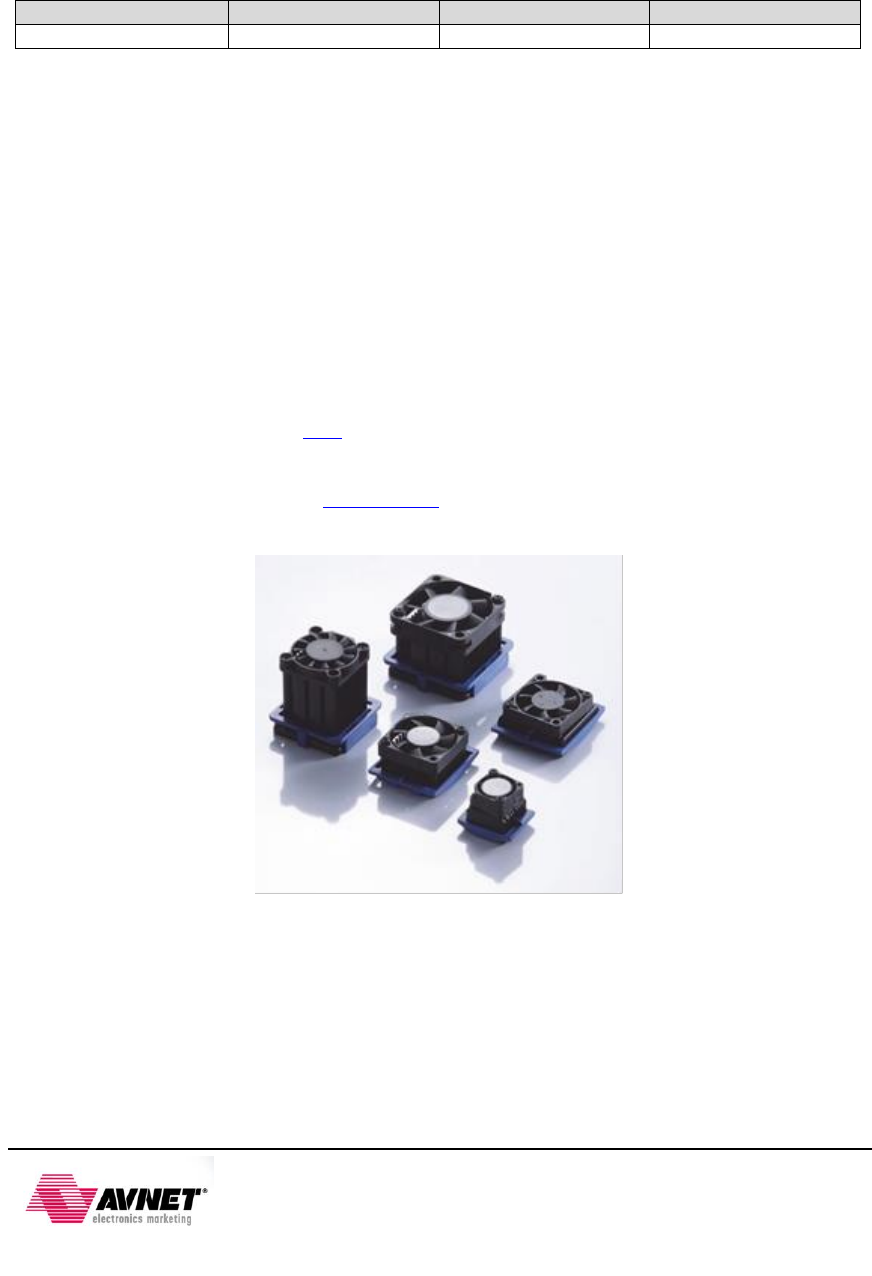
Version 1.7 Page 55
4.2 Temperature
The PicoZed SDR 2X2 is rated for operation in the industrial temperature range. Please take care
to respect the individual device maximum die temperatures over your operating range with your
specific design running on the SOM.
Table 24 - Operating Temperature
Specification
Min
Max
Units
Industrial Temp(1)
-40
85
°C
(1) All devices on the SOM are rated for this temperature range, with the exception of the Micro SD card
cage, which is rated for operation from -25°C to +85°C; with storage over the full range listed in the table.
The SOM has been validated to work reliably over the full industrial temp range as reported in Section 0.
Both the Zynq SoC and the AD9361 have the ability to measure and report their internal die
temperature using their built-in data converters. These can be used to monitor the real-time
temperature of these devices and, when necessary, start a fan wired to the carrier. In addition, for
further heat dissipation, a heat sink may be attached directly to the package of the Zynq SoC on
the SOM itself.
4.2.1 Zynq Heat Sink
Selecting heat sinks for Xilinx All-Programmable FPGAs, 3G ICs, and SoCs depends upon many
variables including chip size, device utilization, the ambient environment, and other criteria. Avnet
and CTS® have created technical aids to ease this process of heat sink identification. For more
information, visit Avnet’s website here.
PicoZed SDR 2X2 uses the Zynq XC7Z035-2LI device in the FBG676 package. The package
outline measures 27 x 27 mm. See Xilinx UG865 for information on package size, thermal
resistance, and recommendations for safely attaching heat sinks.
Figure 23 - Zynq Fan/Heat Sinks

Version 1.7 Page 56
4.3 Shock, Vibration, and Thermal Tests
MIL-STD-202G Method 201A - Sinusoidal Vibration
Note: Sine Sweep: 10-55-10Hz Traversed in 1 minute; Amplitude: 0.03in (0.06in max total excursion);
this motion shall be applied for a period of 2 hours in each of 3 mutually perpendicular directions.
Note: The test was performed with the unit electrically operating.
MIL-STD-202G Method 214A - Random Vibration
Note: Frequency Range: 50-2000Hz; Amplitude: 5.35g rms
Duration: 1.5 hours/Axis; 3 mutually perpendicular directions.
Note: The test was performed with the unit electrically operating.
MIL-STD-202G Method 213B - Shock
Note: Pulse Shape: Half-Sine; Amplitude: 20g half-sine, 11 msec
Note: 3 shocks positive, 3 shocks negative in 3 mutually perpendicular directions. (Total of 18 shocks)
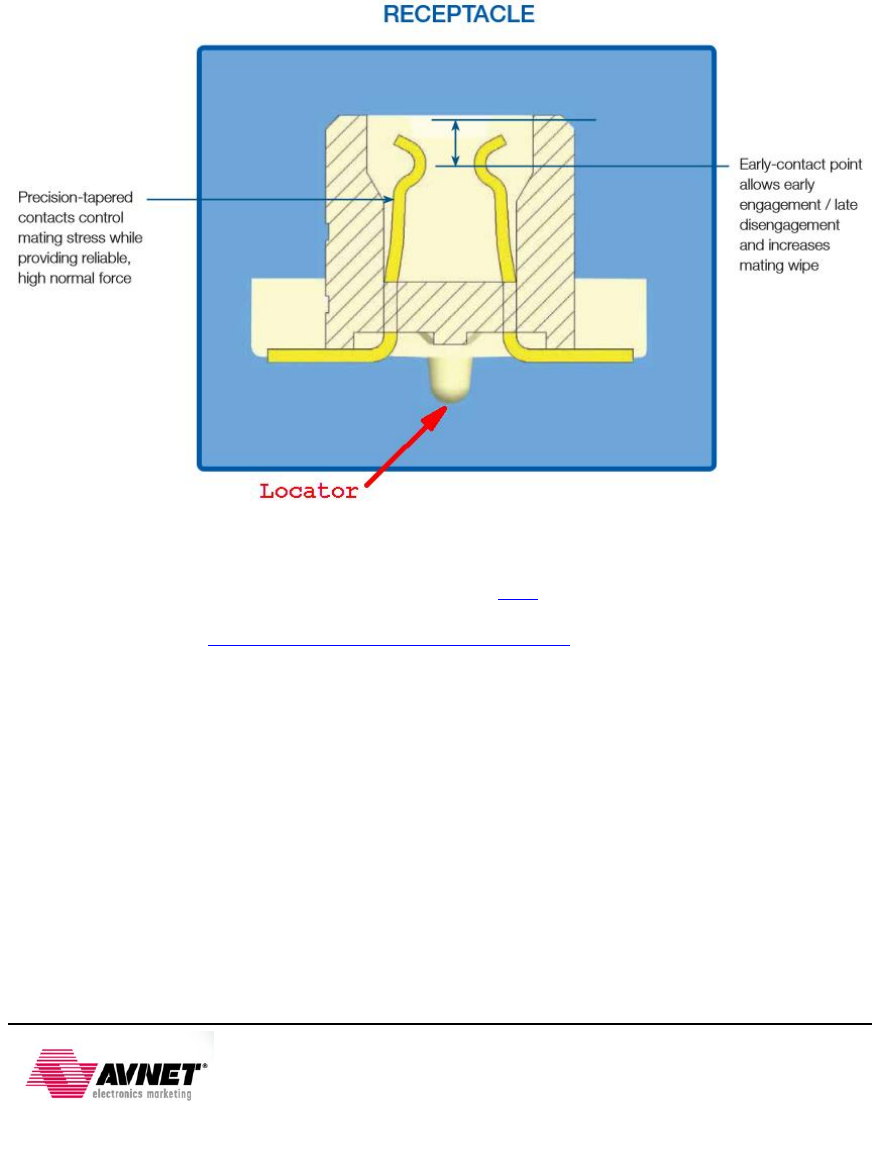
Version 1.7 Page 57
5 Mechanical
PicoZed SDR 2X2 SOM uses a 20 layer PCB that measures 2.440” x 3.937” (62 mm x 100 mm).
The 62mm x 100mm form factor is compatible with the DP10062 “Sick of Beige v1.0”
specification from dangerousprototypes.com.
The MicroHeaders used on PicoZed SDR are FCI 0.8mm BergStak®100-position Dual Row, BTB
Vertical Receptacles (61082-101400LF). These receptacles mate with any of the FCI 0.8mm
BergStak® 100-position Dual Row BTB Vertical Plugs (61083-10x400LF) to provide variable
stack heights of 5mm, 6mm, 7mm or 8mm. The SOM uses the FCI “receptacle” while carrier
cards use the “plug”. Both receptacle and plug include a PCB locator peg that can be used to
design precisely mated SOM and carrier layouts.
Figure 24 - FCI BergStak receptacle locator peg
More information about these connectors can be found here.
Figure 25 can be downloaded from the PicoZed SDR documentation page in PDF and Cadence
Allegro (.brd) formats (http://picozed.org/support/documentation).
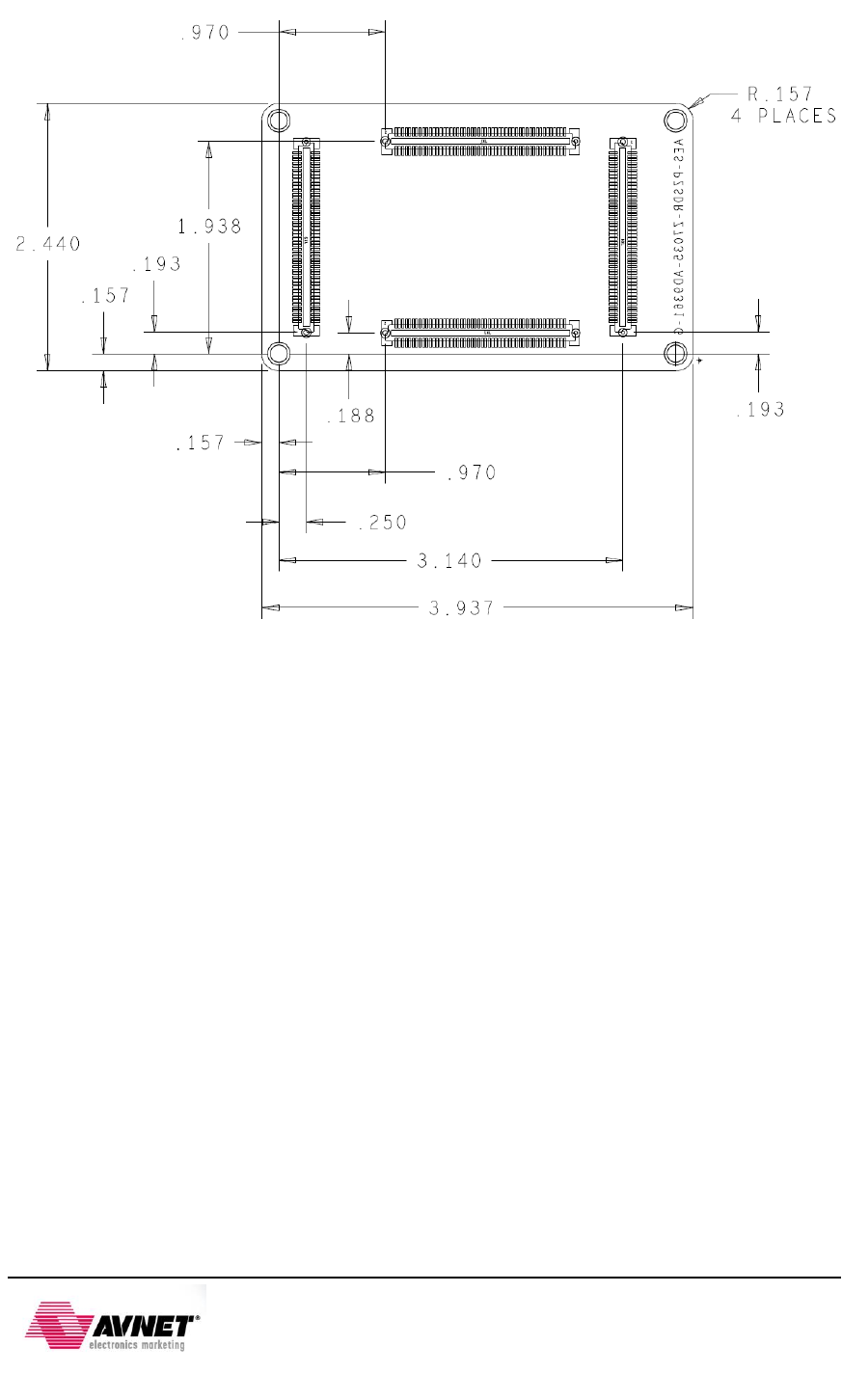
Version 1.7 Page 58
Figure 25 - Mechanical Dimensions

Version 1.7 Page 59
6 References
The following resources may be useful when designing with the PicoZed SDR module:
Analog Devices AD9361 RF Agile Transceiver™ Data Sheet
http://www.analog.com/media/en/technical-documentation/data-sheets/AD9361.pdf
Analog Devices AD9361 and AD9364 Integrated RF Agile Transceiver Design Resources
(including AD9361 Reference Manual UG570)
http://www.analog.com/en/design-center/landing-pages/001/ad9361-ad9364-integ-rf-agile-
transceiver-design-res.html
Xilinx Zynq-7000 All Programmable SoC Overview (DS190)
http://www.xilinx.com/support/documentation/data_sheets/ds190-Zynq-7000-Overview.pdf
Xilinx Zynq-7000 All Programmable SoC Technical Reference Manual (UG585)
http://www.xilinx.com/support/documentation/user_guides/ug585-Zynq-7000-TRM.pdf
Zynq-7000 All Programmable SoC (Z-7030, Z-7035, Z-7045, and Z-7100) : DC and AC
Switching Characteristics
http://www.xilinx.com/support/documentation/data_sheets/ds191-XC7Z030-XC7Z045-data-
sheet.pdf
Xilinx 7 Series FPGAs and Zynq-7000 All Programmable SoC XADC Dual 12-Bit 1 MSPS
Analog-to-Digital Converter User Guide (UG480)
http://www.xilinx.com/support/documentation/user_guides/ug480_7Series_XADC.pdf
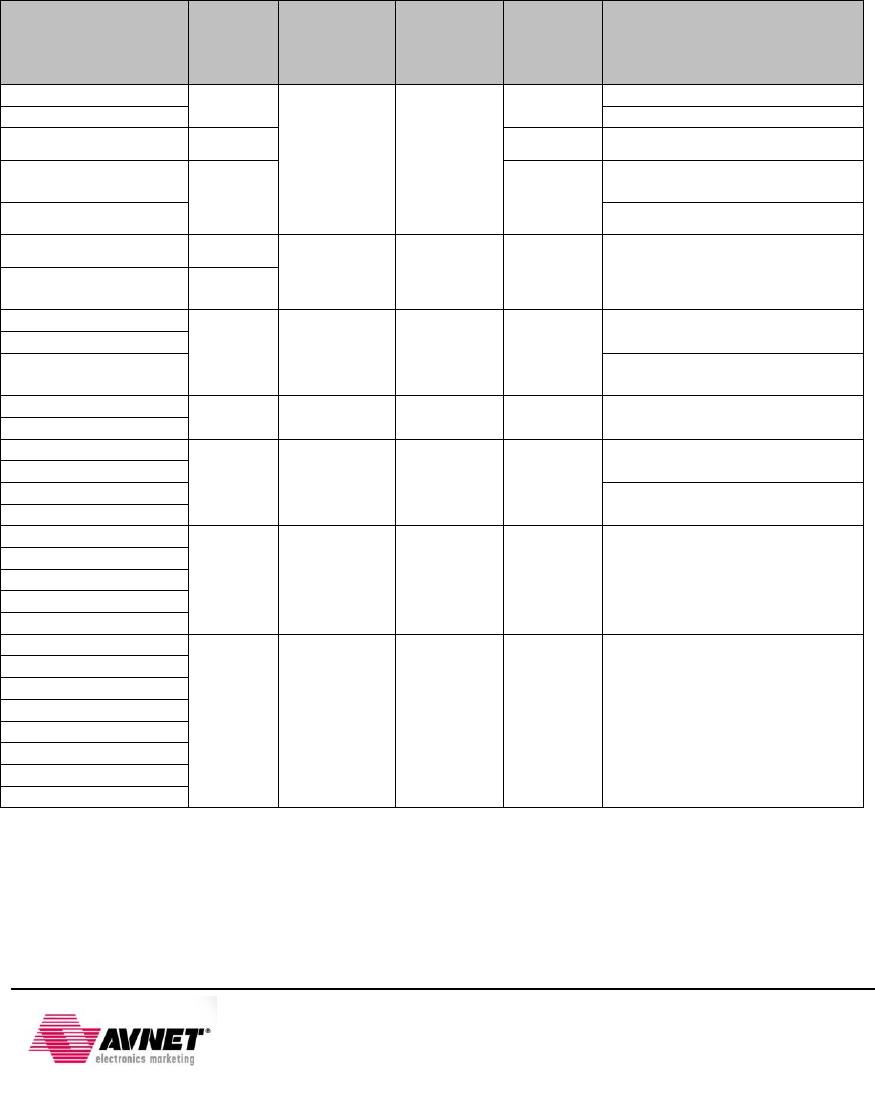
Version 1.7 Page 60
7 Additional Information
7.1 Additional Power Specs
Designers may find the following additional information valuable when considering a power
scheme for the PicoZed SDR 2X2.
7.1.1 SOM Voltage Regulators and Rails
In addition to the voltages supplied to the SOM on the micro headers, the module uses the 5.0V
VIN input to regulate a variety of other voltages required by the system, summarized in the
following table.
Table 25 - Regulated Voltage Rails
Schematic Voltage
Name
Voltage
(V)
Schematic
Symbol
Device
Max
Output
Current
(A)
Notes
VCCINT-0P95V
0.95
U4
ADP5135
1.8
VCCINT
VCC-BRAM
VCCBRAM
VCCPINT
1.0
1.8
VCCPINT
VCC-1P35
1.35
1.8
DDR3L
Zynq DDR Bank 502
VCCO-DDR
Zynq DDR Bank 502
VTT_0P75
U14
TPS51206
2.0
DDR termination/reference
VTTVREF
½ VCC-
1P35
VCCPCOM-1P8V
1.8
U18
ADP2164
4.0
Zynq PL Bank 35, Vccaux
Zynq PS Bank 500/501,
VCCO_1P8V
VDD_INTERFACE
AD9361 Data Interface to
Zynq
VDDA_GPO
2.5
U6
ADP7102
0.3
AD9361 General Purpose
Outputs
VDDA_GPO_PWR
VCC-3P3V
3.3
U9
ADP7104
0.5
Zynq Bank 0,
USB, SDIO
VCC-3P3V-IO
PHY1_VDD_3V3
Ethernet PHYs
PHY2_VDD_3V3
1P3_SUPPLY_A
1.3
U19
ADP1754
1.2
AD9361 Analog Supplies
VDDA_TX_LO
VDDA_RX_LO
VDDA_TX_SYNTH
VDDA_RX_SYNTH
1P3_SUPPLY_B
1.3
U20
ADP1754
1.2
AD9361 Analog Supplies
VDDA_BB
VDDA_DIG
VDDA_RX_TX
1P3_TX1A
1P3_TX2A
1P3_TX1B
1P3_TX2B
Version 1.7 Page 61
7.2 Updating the ADM1166 Sequencer Firmware
Your system requirements may call for alternate timing, sequencing, and/or monitoring of the
SOM power supplies. The ADM1166 Super Sequencer firmware may be updated to
accommodate these changes. Be advised that a number factors must be considered, including:
Resistor dividers (and their tolerances) at ADM1166 inputs
ADM1166 programmable input ranges
ADM1166 input impedance (voltage dependent)
Analog Devices provide an in depth analysis for calculating ADM1166 thresholds for PicoZed
SDR on their wiki page – https://wiki.analog.com/resources/eval/user-guides/pzsdr/power-and-
sequencing
Designers are strongly encouraged to start with the latest ADM166.txt file (on GitHub) and make
changes using the Analog Devices Super Sequencer Configuration Tool. Consult the Xilinx Zynq
datasheet before making any changes.
Important! Consult the Zynq AP SoC and AD9361 datasheets before updating threshold
windows for SOM voltage rails. Sequencing changes are strongly discouraged.
Download the latest ADM1166 firmware repository from the GitHub link below. It’s important to
either clone or download the zip archive.
https://github.com/analogdevicesinc/PicoZed-SDR.
Once you have made updates to the ADM1166 firmware file using the configuration tool, there
are two methods for programming the device.
Program the ADM1166 using the Zynq SoC to execute a Linux command line script
(See the automated and manual update descriptions starting in section 7.2.1)
Purchase a USB-SDP-CABLEZ Serial I/O Interface cable to program the SOM directly
(See section 7.2.3 Standalone Programming with USB AdapterStandalone Programming
with USB Adapter)
Also note that Avnet can provide SOM programming services for your custom ADM1166
firmware. Send an email to Avnet Engineering Services at customize@avnet.com for a quote.
7.2.1 Automated Update Procedure
Analog Devices provides a simple Linux script executed on Zynq to download the latest
ADM1166 firmware and program the SOM. See Section 3.16.3 Monitor and Sequencing for more
information about the ADM1166.
You will need a networked router with DHCP capability. Follow the instructions at the wiki site
listed below. Look for the section “Programming the ADM1166 Power Sequencer – Using Linux
or HyperTerminal Program”.
https://wiki.analog.com/resources/eval/user-guides/pzsdr/power-and-sequencing

Version 1.7 Page 62
This method clones the Analog Devices GIT repository to obtain the latest version of the HEX file
for the ADM1166. Note that you need to login as root or use the ‘sudo’ command to execute the
update. The GitHub repository for these files is at the following URL.
https://github.com/analogdevicesinc/PicoZed-SDR
Alternatively, you may use the Manual Update Procedure.
7.2.2 Manual Update Procedure
This is an optional “manual” method to update the ADM1166 firmware, provided if you are unable
to connect your development kit to a DHCP networked router.
This method can also be used to program your own custom ADM1166 firmware, however
consider whether your custom thresholds will be compatible with the carrier you are using during
this process. Upon completion the board may shutdown. The only way to recover from this
situation is to use the USB adapter to program the SOM standalone. If this occurs, see section
7.2.3 Standalone Programming with USB Adapter.
7.2.3 Standalone Programming with USB Adapter
The ADM1166 Super Sequencer non-volatile memory can be programmed by connecting an
Analog Devices USB-SDP-CABLEZ I2C/SMBus programmer to the SOM 5-pin P1 connector.
Supplying 5.0V to VBUS pin P1-1 allows the device to be powered and programmed without
mating the SOM to a carrier (see U23 in Figure 19). Software support for the programmer can be
found on the ADM1166 product page.
Figure 26 - USB-SDP-CABLEZ
Important! Damage may occur to the SOM if the ADM1166 sequencing state machine is
reprogrammed without regard for the required sequencing of the system. Consult the Zynq-7000
SoC and Analog Devices AD9361 datasheets before modifying the sequencing scheme.
VBUS
GND
SDA
SCL
NC
Figure 27 - ADM1166 Programming Port (P1)
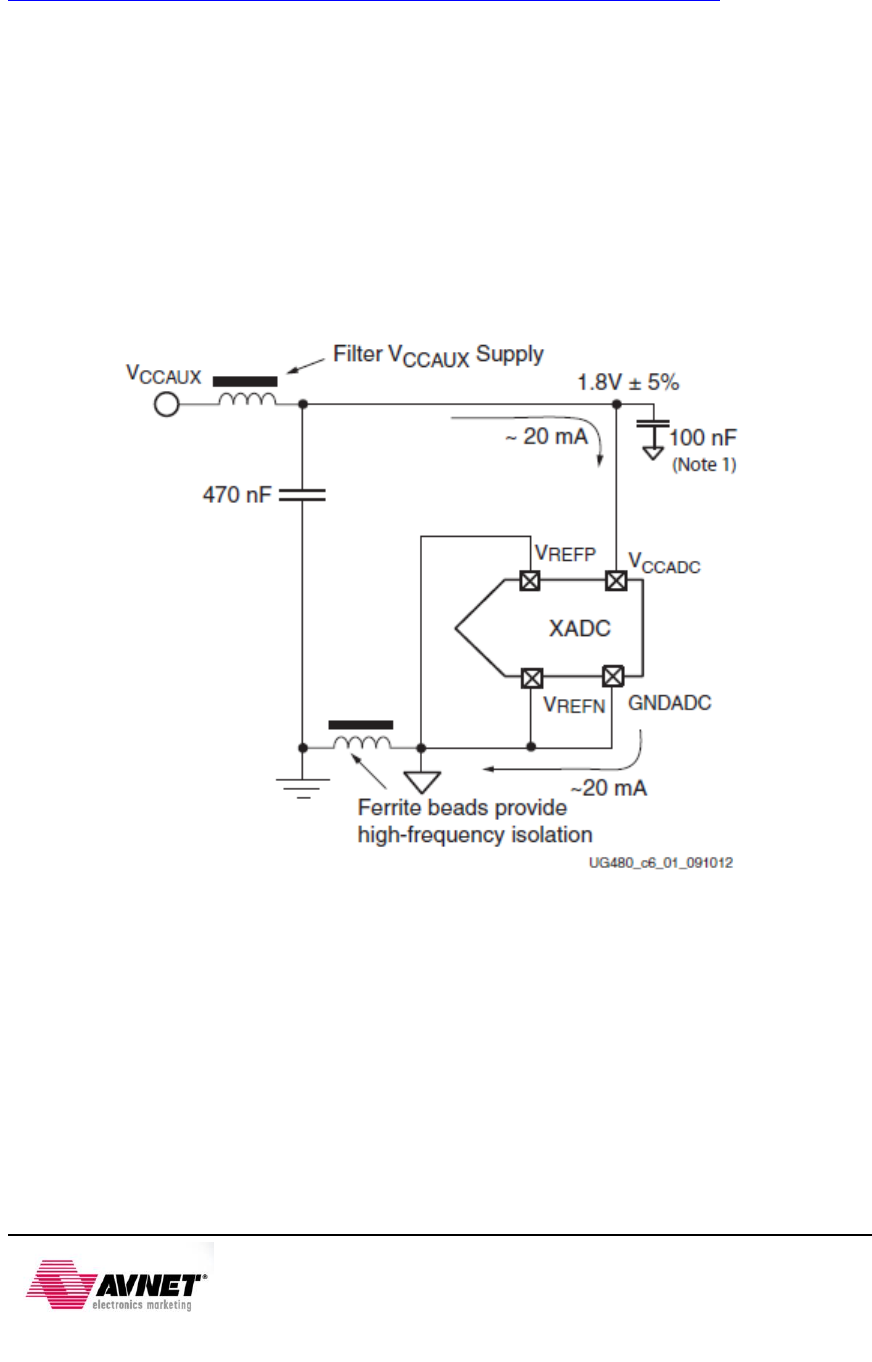
Version 1.7 Page 63
Instructions for programming are on the Analog Devices wiki:
https://wiki.analog.com/resources/eval/user-guides/pzsdr/power-and-sequencing
Look for the section titled “Using the USB-SDP-CABLEZ Serial I/O Interface”.
7.3 USB Power
The PicoZed SDR 2X2 SOM cannot supply USB power. The USB PHY (U15) on the SOM
includes a CPEN signal which is brought to a micro header pin for use as an enable for a USB 5V
power supply on the carrier card.
7.4 XADC Power Configuration
The Zynq SoC’s XADC component is powered from the filtered 1.8V VCCaux supply
(VCCPCOM-1P8V) utilizing the on-chip reference as shown below:
Figure 28 - XADC Power Configuration
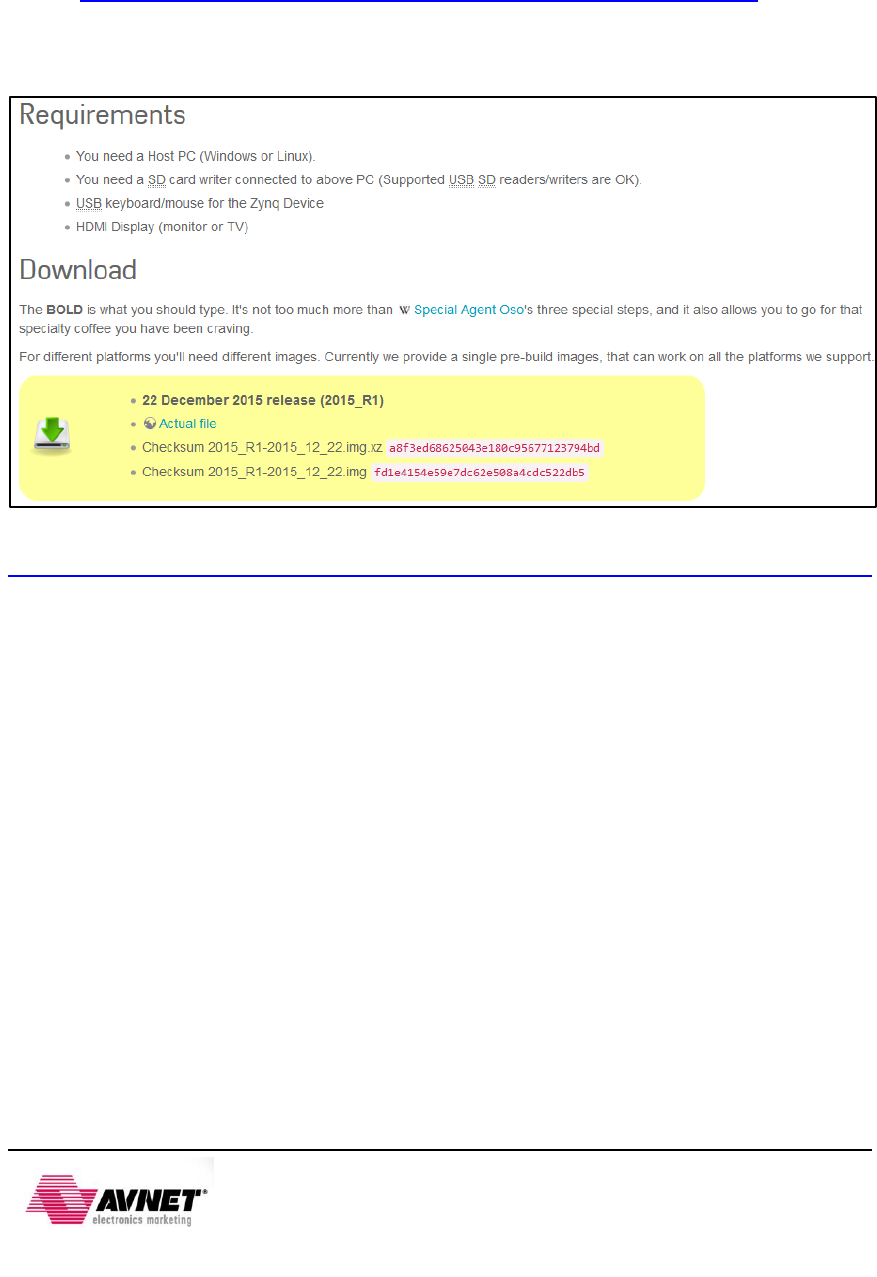
Version 1.7 Page 64
7.5 Restoring the Analog Devices SD Card Image
During the course of development with the Analog Devices Linux reference design, should your
8 GB SD card become corrupted or otherwise need to be updated, the directions below will restore
the system to the latest version. Instructions are provided for both Linux and Windows hosts.
If you wish to completely overwrite the SD card, you may download the latest image
https://wiki.analog.com/resources/tools-software/linux-software/zynq_images
Important! These steps will overwrite the contents of the SD card, so be certain there is no
existing data that needs to be retrieved from the SD card prior to following these steps.
Otherwise, you may simply run the update scripts at the command line of PicoZed SDR:
https://wiki.analog.com/resources/tools-software/linux-software/zynq_images#staying_up_to_date
As a final step, make sure to copy the contents of the ‘zynq-picozed-sdr2’ folder to the BOOT
partition of the SD card. PicoZed SDR is now fully updated and ready to re-boot.
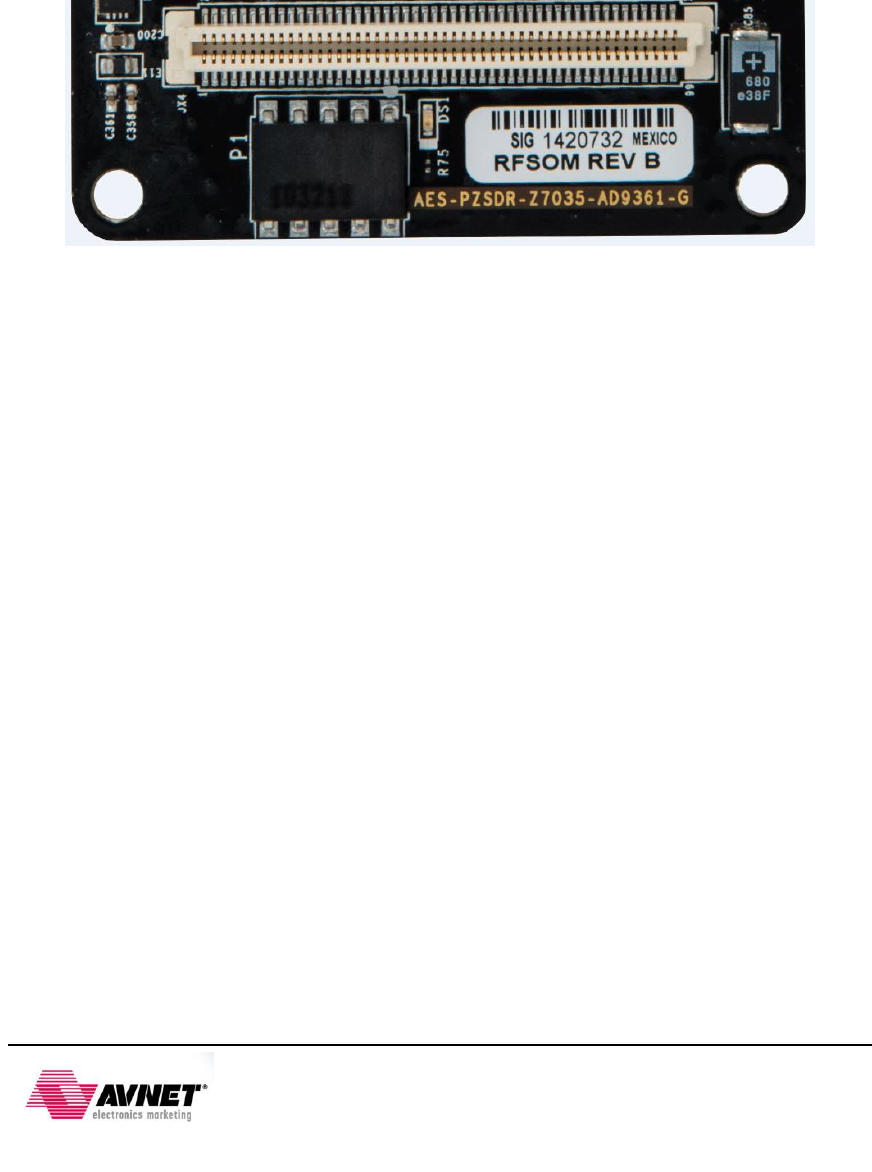
Version 1.7 Page 65
7.6 Board Revisions
7.6.1 Rev A
Description – Internal only. None released.
Identification – REV A printed in copper.
7.6.2 Rev B
Description – First hardware shipped to customers.
Identification – Sticker printed with RFSOM REV B located on the bottom side just above the
copper etch AES-PZSDR-Z7035-AD9361-G.
Figure 29 - Rev B SOM Label
7.6.3 Rev C
Description – Small updates. Functionally is equivalent to Rev B (see list of changes below).
Identification – Initial builds used a sticker printed with an Sxx-xxxx designator and an
enumerated SN:xxxxxxx serial number, but no revision printed. Subsequent builds add a REVC
revision text to the label.
Changes from Rev B to Rev C
1. Replaced on the schematic the Y1 crystal with equivalent part and added a pull-up and
pull-down.
2. Replaced the 2 pin Ethernet Phy crystal (Y2) with a 4 pin.
3. Improved PCB layout of address lines between the FPGA and two DDR3 memory chips.
4. Replaced the six pin BGA (U23) ADP7112-3.3 with ADP7118 sot-23.
5. Pull up/down resistors (R26, R37) are now DNP.
6. 50 ohm series (R60) is now 0ohm.
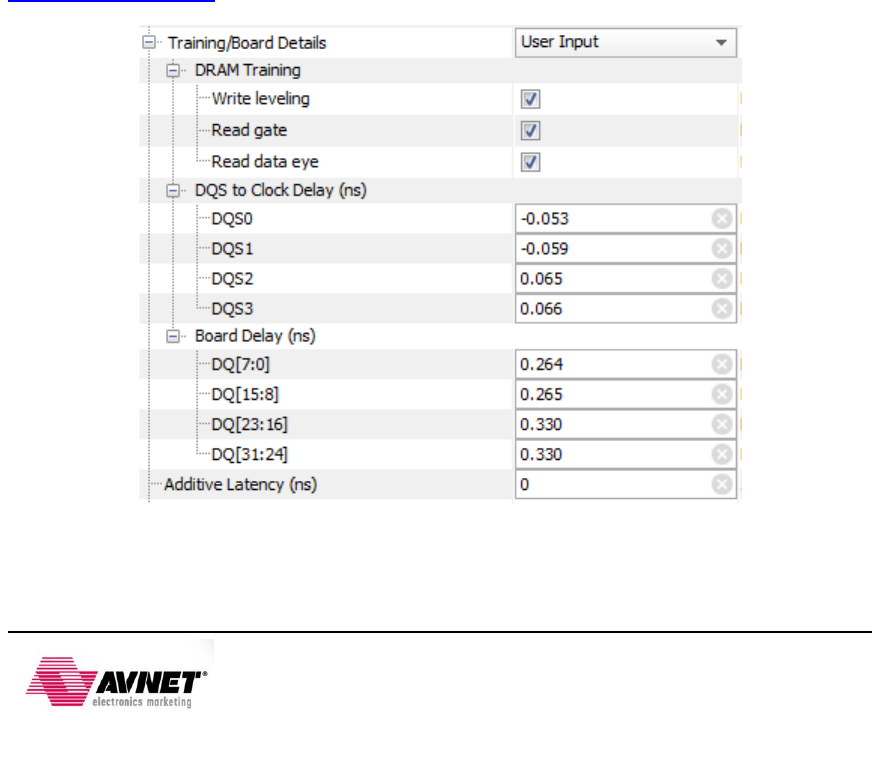
Version 1.7 Page 66
7.6.4 Rev D
Description – Moved GTX ports from Bank 111 to Bank 112 on the Zynq SoC, and modified the
control for PG_MODULE. Otherwise, functionally is equivalent to Rev B and Rev C (see list of
changes below).
Identification – Sticker printed with an Sxx-xxxx designator, an enumerated SN:xxxxxxx serial
number, board part number, and revision REVD.
Changes from Rev C to Rev D
1. Moved all (4) GTX ports from Bank 111 to Bank 112 on the Zynq SoC in order to be in
compliance with Xilinx recommended PCIe design rules. The GTX signal assignments at
the JX micro headers were unchanged in order to maintain compatibility with existing
carrier boards.
2. Added revision and part number to the silkscreen and copper.
3. The LED (D3), used to illuminate when PG_MODULE is asserted, now has its anode
connected to the 3V3_I2C supply (formerly connected to 3.3V supply). This was done to
allow the LED to be used as a visual state indicator during SOM power up, reflecting
different states of the ADM1166 sequencer. In addition, the ADM1166 firmware was
updated to include LED toggling (slow/fast), corresponding to specific power up states.
See “Power Good LED” in Section 3.16.3 Monitor and Sequencing.
7.7 DDR3L Trace Length
The Xilinx Vivado tools allow entry of the DDR3L trace lengths in order to optimize timing and
performance of the PS-based memory controller. The trace lengths for PicoZed SDR 2X2 are
listed below. These are also found in the reference design TCL build scripts available on the
Analog Devices GitHub repository.
Figure 30 - DDR3L Trace Lengths
Version 1.7 Page 67
8 Revision History
Rev date
Rev #
Reason for change
12/08/2015
1.0
Initial release
01/18/2016
1.1
Added section 4.2.1 Zynq Heat Sink. Added warning in section
3.11.3 about loading FPGA_DONE. Added note about Ethernet
MACID in 3.6; corrected signal names in Table 20; added better
descriptions to section 2.3; added reference to IIO System Object in
section 2.3; updated
Figure 20 - Power Sequencing; added section 0
Restoring the Analog Devices SD Card Image; removed “ADM1166
Power Sequencer State Machine” section; updated 0
Shock, Vibration, and Thermal Tests;
02/17/2016
1.2
Add connector info and updated diagrams in Mechanical section.
03/10/2016
1.3
Updated
Figure 20 - Power Sequencing; Added 0
Board Revisions; Added “Power Good LED” details to section
3.16.3 Monitor and Sequencing; Updated VIN range in 3.16 and 1.2
Module Specs; Added major section 7.2 Updating the ADM1166
Sequencer Firmware; Added sub-section 7.2.1 Automated Update
Procedure
3/17/2016
1.4
Updated 1.2 Module Specs; Added Figure 6 - AD9361 Block
Diagram; Added Figure 5 - Zynq-7000 AP SoC Block Diagram
5/11/2016
1.5
Edited by technical writer; standardizations; Added max power
numbers to 1.2 Module Specs; Added 7.7 DDR3L Trace Length
09/08/2016
1.6
Corrected Zynq part # to XC7Z035-L2 FBG676I; Updated
references for GTX to include banks 111 (Rev C) and bank 112
(Rev D); major updates to Power section.
09/23/2016
1.7
Updates to Table 22 – Supply Voltage Requirements;
Replaced “PicoZed SDR Z7035/AD9361” with “PicoZed SDR 2x2”
