Fego Precision Co TP36RF315 Transmitter User Manual TP36 RF

Fego Precision Industrial Co Ltd Transmitter TP36 RF

Users Manual

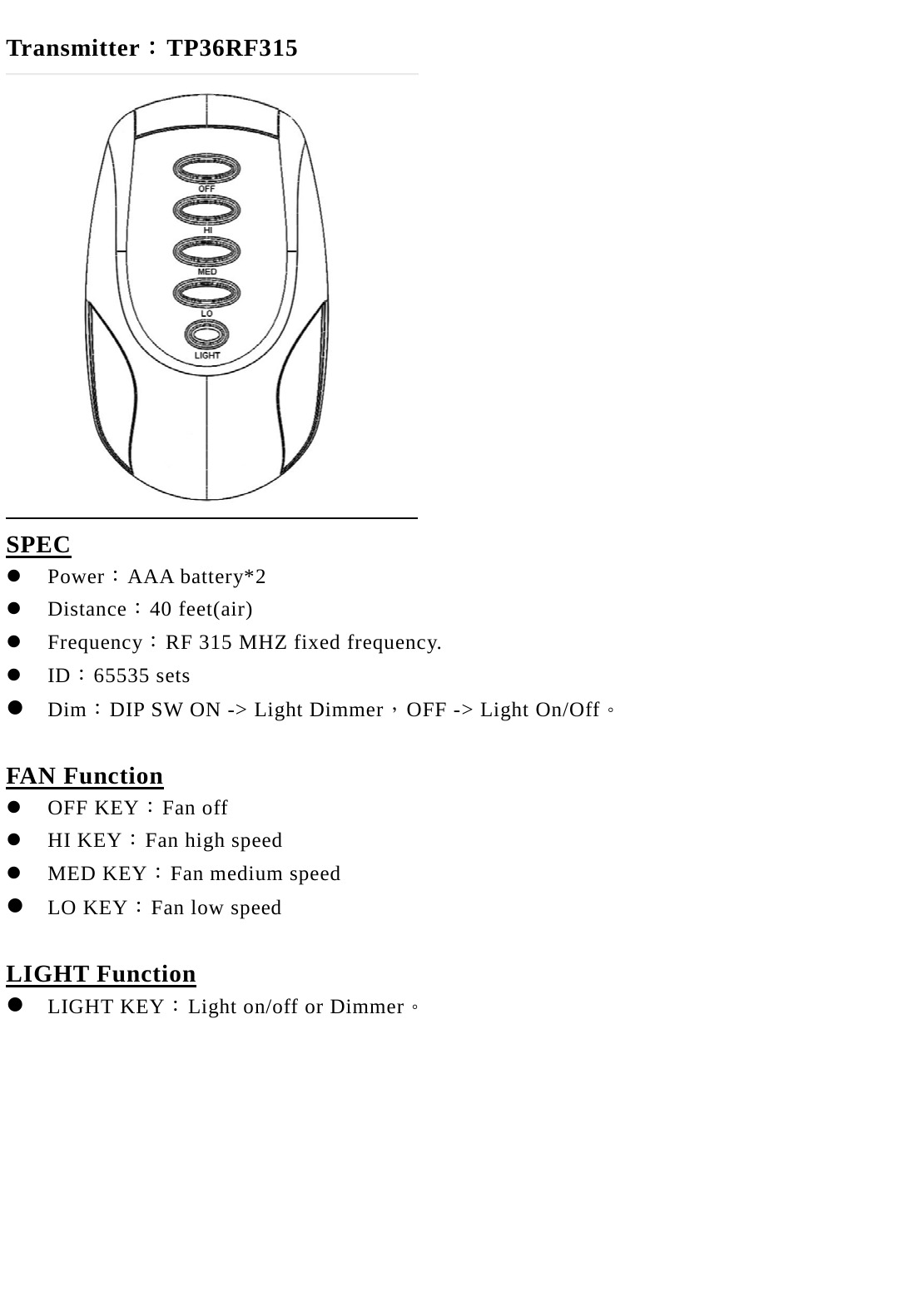
 Transmitter:TP36RF315  SPEC  Power:AAA battery*2  Distance:40 feet(air)  Frequency:RF 315 MHZ fixed frequency.  ID:65535 sets    Dim:DIP SW ON -> Light Dimmer,OFF -> Light On/Off。  FAN Function  OFF KEY:Fan off  HI KEY:Fan high speed  MED KEY:Fan medium speed  LO KEY:Fan low speed  LIGHT Function  LIGHT KEY:Light on/off or Dimmer。
Receiver:RL-142  Spec  Power:120V/60HZ  Frequency:RF 315MHZ.  FAN:Hi-Med-Lo 3 speeds.  LIGHT:Light On/Off or dim is controlled by Transmitter DIP SW.  FAN Function  HI:Fan runs in high speed and the receiver long beeps for 3 times.  Med:Fan runs in medium speed and the receiver long beeps for 2 times.  Low:Fan runs in low speed and the receiver long beeps for 1 times.  Off :Fan stops running and the receiver beeps for 4 times.  LIGHT Function  Non-dim mode:Light runs only full On and Off. The receiver short beeps for one time. This mode is only used for CFL bulb.  Dim Mode:Light can be dimmed. It dims from lightest to lowest back and forth. When the light is the brightest or lowest, it short beeps for 2 times. This mode is not suitable for CFL bulb.    FAN & LIGHT Memory Function  The Receiver would memorize the FAN speed and Bulb brightness. If in Dim mode, the brightness of the bulb would be memorized in the receiver. When the AC power is turned off for more than 2 seconds and then back to work, the FAN speed and bulb will recover.  Automatic Pairing  The receiver and transmitter pair each other automatically. By learning process, the receiver memorize the transmitter code in build-in memory automatically.  Learning process: in one minute when the receiver first time gets powered, press and hold the Off button on the transmitter for about 5 seconds. The receiver beeps for 4 times to complete the learning process. The pairing is done and you can start to use it.
FCC ID : M8CTP36RF315 This device complies with Part 15 of the FCC Rules. Operation is subject to the following two conditions: (1) this device may not cause harmful interference, and (2) this device must accept any interference received, including interference that may cause undesired operation. “Changes or modifications not expressly approved by the party responsible for compliance could void the user's authority to operate the equipment.”

Navigation menu