KAIJET TECHNOLOGY JUE301 Wireless 11N USB mini Adapter User Manual V1 JUE301 302 QIG D out
KaiJet Technology International Limited Wireless 11N USB mini Adapter V1 JUE301 302 QIG D out
Users Manual
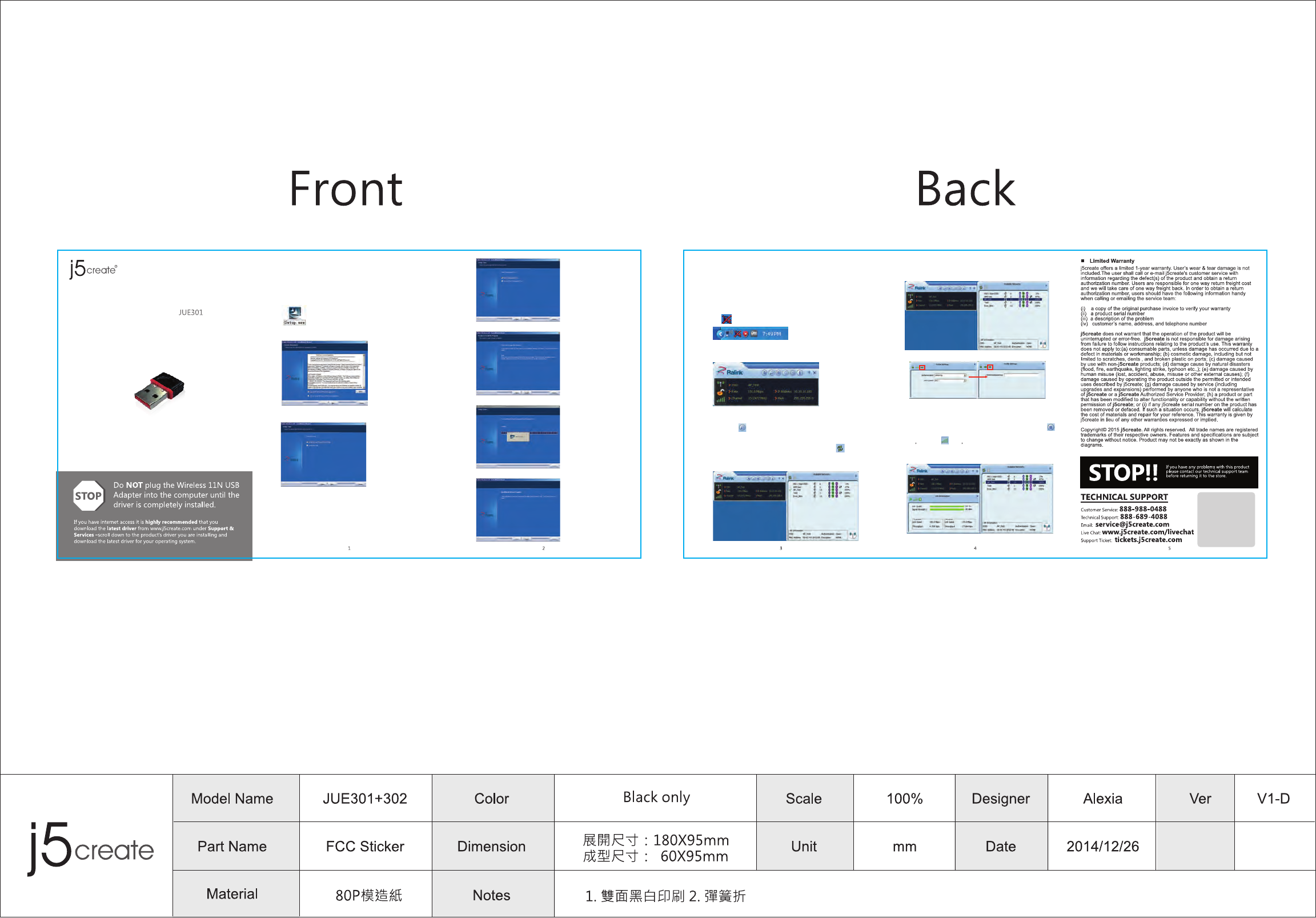
� Windows Driver Installation
Please follow the steps below to install your new wireless network
card:
1. Insert the device driver CD into the CDROM drive on your
computer, double-click the Setup.exe icon and run the
Setup.exe program.
2. SelectI accept the terms of the license agreement and then
click Next.
3. Select the setup type that best suits your needs, Install driver
and Ralink WLAN Utilityis recommended.
4. Click Next, the Select Configuration Tool window will
appear,you can manage this wireless adapter by either
theRalink Configuration Toolor theMicrosoft Zero
Configuration Tool.
5. Click Next,the ready to installwindow will appear.
6. Click Install, and wait while the installation is in process.
7. Finally, click Finish to complete the driver installation.
� Connect to a Wireless Access Point
1. After installation has finished, it will automatically try to connect
to any unencrypted wireless access point. If you want to
connect to a specific wireless access point, or the access point
you want to connect to uses encryption, you have to configure
the wireless network card and input the correct password to
connect to the wireless access point. To do this, double-click
the icon.
2. The following window will appear:
3. Click the icon to scan available wireless access points.
Scan results will display in the Network zone. If you can't find
the access point you want to connect to, click the refresh
button, until yourwireless access point is displayed.
4. Double-click the wireless access point’s SSID you want to use.If
the access point is encrypted, you should follow the prompts to
select the appropriate encryption type and enter your password.
5. After you have connected to the wireless access point
successfully, you can get detailed information on the connected
access point such as status, IP address, speed, etc. Click the
icon then the icon here you will see the signal quality and
signal strength information.
This equipment has been
tested and found to comply
with the limits for a Class B
digital device,
pursuant to part 15 of the FCC
Rules.
These limits are designed to
provide reasonable protection
against harmful interferece in a
residential installation.
Wireless 11N USB mini Adapter

FCC Information and Copyright
This equipment has been tested and found to comply with the limits for a Class B digital device,
pursuant to part 15 of the FCC Rules.
These limits are designed to provide reasonable protection against harmful interference in a residential
installation. This equipment generates,
uses and can radiate radio frequency energy and, if not installed and used in accordance with the
instructions, may cause harmful interference
to radio communications. However, there is no guarantee that interference will not occur in a particular
installation. If this equipment does
cause harmful interference to radio or television reception, which can be determined by turning the
equipment off and on, the user is
encouraged to try to correct the interference by one or more of the following measures:
—Reorient or relocate the receiving antenna.
—Increase the separation between the equipment and receiver.
—Connect the equipment into an outlet on a circuit different from that to which the receiver is
connected.
—Consult the dealer or an experienced radio/TV technician for help.
15.19 Labelling requirements.
This device complies with part 15 of the FCC Rules. Operation is subject to the
following two conditions:
(1)This device may not cause harmful interference, and
(2) this device must accept any interference received, including interference that may
cause undesired operation.
changes or modifications not expressly approved by the party responsible for compliance could
void the user's authority to operate the equipment.
FCC RF warning statement: the device has been evaluated to meet general RF exposure
requirement , The device can be used in portable exposure condition without restriction.